Bollywood star Alia Bhatt, World Bank President Ajay Banga, Microsoft CEO Satya Nadella, and British actor with Indian roots, Dev Patel have made it to Time magazine’s ‘100 Most Influential People’ list for 2024.
Another prominent Indian who features in the list is wrestler Sakshi Malik, India’s only female Olympic medallist who led the protest against the alleged sexual harassment of female grapplers by former Wrestling Federation of India (WFI) chief Brij Bhushan Sharan Singh.
“Proud to be included in the 2024 #TIME100 list,” Sakshi wrote on X.
Tom Harper, the director of the streaming film ‘Heart of Stone’, Alia’s first Hollywood project, heaped praises on the actress, calling her a “truly international star”.
“Despite her fame, Alia is self-effacing and funny on sets. There is a grace to the way she goes about her work: focused, open to ideas, and willing to take creative risks. One of my favourite moments in the film came from an improvisation at the end of a take where she took the emotional thread and ran with it.
“Alia’s superpower is her ability to mix movie-star magnetism with authenticity and sensitivity. As an actor, she is luminous, and as a person, she brings the grounded assurance and creativity that make a truly international star.” Alia is the only Bollywood actor to feature in the Time magazine list.
The other names with an India connect featured in the list include astronomer Priyamvada Natarajan, senior US Department of Energy official Jigar Shah, and chef and rights activist Asma Khan.
The also features singer-songwriter Dua Lipa, Oscar-awardee American actress Da’Vine Joy Randolph, and Oscar-nominated actors Jeffrey Wright and Colman Domingo.
Also featured in the list are film personalities Taraji P Henson, Elliot Page, Michael J. Fox, Sofia Coppola, and Hayao Miyazaki.
British actor Dev Patel, whose parents are Indian, also finds himself on the list. Patel, who rose to fame in “Slumdog Millionaire,” recently made his directorial debut with “Monkey Man.” Oscar-winning actor Daniel Kaluuya praised Patel in his TIME profile, calling him “limitless” and “fearless.”
Ajay Banga, the current President of the World Bank, is commended for his transformative leadership in tackling global poverty and climate change. U.S. Treasury Secretary Janet Yellen lauded Banga’s “skill and drive” in transforming the World Bank.
Jigar Shah, Director of the US Department of Energy’s Loan Programs Office, is recognized for his role in spearheading global economic development initiatives. Richard Branson noted that Shah leads “one of the largest economic-development programs the world has ever seen.”
On October 7th, a tragic event unfolded as Hamas militants breached Israel’s borders from Gaza, resulting in approximately 1,200 casualties, mostly civilians, and the capture of over 250 individuals, initiating a harrowing conflict. In the subsequent six months, Israel retaliated by launching incursions and airstrikes on Gaza, reportedly claiming the lives of around 33,000 Palestinians, predominantly women and children, as documented by the United Nations. Moreover, Israel’s military actions and control over humanitarian aid entering Gaza have led to a dire situation, with an estimated one million people teetering on the edge of famine.
This crisis has elicited widespread condemnation and legal challenges, notably a case brought forth by South Africa at the United Nations’ highest court. In January, the court issued an interim order suggesting the plausibility of Israel engaging in acts of genocide, a claim vehemently denied by Israel. Consequently, pressure from Israel’s allies has intensified, particularly following an incident on April 2nd when Israeli military strikes resulted in the deaths of seven aid workers, including six foreign nationals affiliated with the NGO World Central Kitchen, deemed by the military as a “grave mistake.”
Following these tragic events, President Joe Biden issued a stern ultimatum to Israeli Prime Minister Benjamin Netanyahu, urging immediate measures to safeguard civilians and facilitate the delivery of food aid into Gaza. Failure to comply would prompt a reassessment of the United States’ military support, which amounts to billions of dollars annually. In response, Israel initiated the opening of new aid channels into Gaza.
Internally, Netanyahu faces significant domestic unrest, with mass protests demanding a resolution to the hostage situation involving the remaining 133 captives. Some demonstrators have joined anti-government rallies, advocating for Netanyahu’s resignation. Addressing the six-month milestone of the conflict, Netanyahu emphasized the perceived achievements of the war, asserting determination to secure a comprehensive victory, secure the release of all hostages, eradicate Hamas across Gaza, and ensure Israel’s long-term security. Netanyahu reiterated to the international community that no ceasefire would be entertained without the return of the hostages.
Reportedly, negotiations between Israel and Hamas are ongoing through intermediaries, with hopes of reaching a resolution.
Reflecting on the six-month mark of the conflict, various world leaders have voiced their perspectives:
U.K. Prime Minister Rishi Sunak described October 7th as a “most appalling attack” in Israel’s history, emphasizing the need for an end to the conflict, the release of hostages, and immediate humanitarian intervention in Gaza.
German Foreign Minister Annalena Baerbock condemned Hamas’ actions and reiterated the call for the release of hostages and cessation of violence.
The Ministry of Foreign Affairs of Jordan stressed the imperative of halting Israel’s military operations in Gaza and ensuring compliance with international humanitarian law, including the protection of civilians and the facilitation of humanitarian aid.
U.K. Foreign Minister David Cameron demanded the release of hostages by Hamas, advocated for Israel’s right to self-defense within the bounds of international law, and urged for increased humanitarian aid and a temporary ceasefire.
U.K. Deputy Prime Minister Oliver Dowden acknowledged Israel’s mistakes while upholding high standards for accountability, amidst public and legislative pressure to suspend arms sales to Israel.
U.N. Secretary-General António Guterres mourned the loss of life on both sides and condemned Hamas’ actions, calling for the unconditional release of hostages and a humanitarian ceasefire.
Irish Minister for Foreign Affairs and Minister for Defense Micheál Martin honored the victims of the conflict while calling for an immediate ceasefire, the release of hostages, and enhanced humanitarian aid efforts.
The global response underscores the urgency of ending the violence, addressing humanitarian concerns, and pursuing a sustainable resolution to the protracted conflict, prioritizing the well-being and security of both Israelis and Palestinians.
The arrest of Delhi Chief Minister Arvind Kejriwal by the Enforcement Directorate (ED) in the Delhi excise policy case is garnering more and more international reactions. This time, the United Nations (UN) has commented on Kejriwal’s arrest.
The United Nations Secretary-General Antonio Guterres hopes that in India’s elections, “everyone’s rights are protected”, his spokesperson Stephane Dujarric has said. “What we very much hope that in India, as in any country that is having elections, that everyone’s rights are protected, including political and civil rights, and everyone is able to vote in an atmosphere that is free and fair”, he said on Thursday in response to a question from a Bangladeshi journalist at his daily briefing.
In making a general statement, Dujarric did not directly react to the journalist’s assertion that India was at a “crisis point” mentioning the arrest of Delhi Chief Minister Arvind Kejriwal and what he said were the freezing of Congress Party funds.
Stephane Dujarric, a spokesperson for UN Secretary-General Antonio Guterres was responding to a question on the “political unrest” in India ahead of the upcoming general elections in the wake of the arrest of Delhi Chief Minister Arvind Kejriwal and the freezing of the opposition Congress Party’s bank accounts.
“What we very much hope that in India, as in any country that is having elections, that everyone’s rights are protected, including political and civil rights, and everyone can vote in an atmosphere that is free and fair,” Dujarric said at a press conference here.
The UN spokesperson’s reaction comes days after the United States (US) and Germany reacted to the Delhi chief minister’s arrest. On Monday (March 25), a US State Department spokesperson said that it was closely following reports on Kejriwal’s arrest, and urged a fair, transparent, and legal process for him.
Germany, meanwhile, said that like anyone facing accusations, Kejriwal was “entitled to a fair and impartial trial, this includes he can make use of all available legal avenues without restrictions.”
(IPS) – The IMF no. 2 recommends non-alignment as the best option for developing countries in the second Cold War as geopolitics threatens already dismal prospects for the world economy and wellbeing.
IMF warning
Ominously, International Monetary Fund (IMF) First Deputy Managing Director Gita Gopinath warns, “With the weakest world growth prospects in decades – and…the pandemic and war slowing income convergence between rich and poor nations – we can little afford another Cold War”.
While recognizing globalization is over, she appeals to governments to “preserve economic cooperation amid geoeconomic fragmentation” due to the second Cold War.
Picture: Reuters
Growing US-China tensions, the pandemic, and war have changed international relations. The US calls for ‘friend-shoring’ while its European allies claim they want to ‘de-risk’. While still pleading for ‘globalization’, China realistically stresses ‘self-reliance’.
Multilateral rules were rarely designed to address such international conflicts as ostensible ‘national security’ concerns rewrite big powers’ economic policies. Hence, geoeconomic conflicts have few rules and no referee!
Historical perspective
After the Second World War, the US and USSR soon led rival blocs in a new bipolar world. After Bandung (1955) and Belgrade (1961), non-aligned countries have rejected both camps. This era lasted four decades.
World trade-to-GDP rose with post-war recovery and, later, trade liberalisation. With the first Cold War, geopolitical considerations shaped trade and investment flows as economic relations between the blocs shrank.
According to her, such flows increased after the Cold War, “reaching almost a quarter of world trade” during the “hyper-globalization” of the 1990s and 2000s.
However, globalization has stagnated since 2008. Later, about “3,000 trade restricting measures were imposed” in 2022 – nearly thrice those imposed in 2019!
Cold War economics
Gopinath sees “ideological and economic rivalry between two superpowers” as driving both Cold Wars. Now, China – not the Soviet Union – is the US rival, but things are different in other respects too.
In 1950, the two blocs accounted for 85% of world output. Now, the global North, China and Russia have 70% of world output but only a third of its population.
Economic interdependence grew among countries as they became “much more integrated”. International trade-to-output is now 60% compared to 24% during the Cold War. This inevitably raises the costs of what she terms economic ‘fragmentation’ due to geopolitics.
With the Ukraine war, trade between blocs fell from 3% pre-war to -1.9%! Even trade growth within blocs fell to 1.7% – from 2.2% pre-war. Similarly, FDI proposals “between blocs declined more than those within blocs…while FDI to non-aligned countries sharply increased.”
China is no longer the US’s largest trading partner, as “its share of US imports has fallen” from 22% in 2018 to 13% in early 2023. Trade restrictions since 2018 have cut “Chinese imports of tariffed products” as US FDI in China fell sharply.
However, indirect links are replacing direct ties between the US and China. “Countries that have gained the most in US import shares…have also gained more in China’s export shares” and FDI abroad.
A BIS study found “supply chains have lengthened in the last two years”, especially between “Chinese suppliers and US customers”. Hopefully, Gopinath suggests, “despite efforts by the two biggest economies to cut ties, it is not yet clear how effective they will be”.
For Gopinath, trade restrictions “diminish the efficiency gains from specialisation, limit economies of scale due to smaller markets, and reduce competitive pressures.”
She reports IMF research suggesting “the economic costs of fragmentation… could be significant and weigh disproportionately on developing countries”, with losses around 2.5% of world output.
Losses could be as high as 7% of GDP depending on the economy’s resilience: “Losses are especially large for lower income and emerging market economies.”
Much will depend on how things unfold. She warns, “Fragmentation would also inhibit our efforts to address other global challenges that demand international cooperation.”
Policy options
Policymakers face difficult trade-offs between minimizing the costs of fragmentation and vulnerabilities, and maximizing security and resilience.
Gopinath recognizes her ‘first best solution’ – to avoid geoeconomic hostilities – is remote at best, given current geopolitical hostilities and likely future trends. Instead, she urges avoiding “the worst-case scenario” and protecting “economic cooperation” despite polarization.
She wants adversaries to “target only a narrow set of products and technologies that warrant intervention on economic security grounds”. Otherwise, she advocates a “non-discriminatory plurilateral approach” to “deepen integration, diversify, and mitigate resilience risks”.
Despite the odds, Gopinath appeals for a “multilateral approach…for areas of common interest” to “safeguard the global goals of averting climate change devastation, food insecurity and pandemic-related humanitarian disasters”.
Finally, she wants to restrict “unilateral policy actions – such as industrial policies”. They should only address “market failures while preserving market forces”, which she insists always “allocate resources most efficiently”.
Not recognising the double standards involved, she wants policymakers “to carefully evaluate industrial policies in terms of their effectiveness” But, she is less cautious and uncritical in insisting on neoliberal conventional wisdom despite its dubious track record.
Unsurprisingly, two IMF staffers felt compelled to write in 2019 of ‘The Return of the Policy That Shall Not Be Named’. Despite much earlier extensive European and Japanese use and US President Biden’s recent embrace of industrial policy, the Fund seems caught in an ideological trap and time warp of its own making.
While making excessive claims about gains from globalisation, Gopinath acknowledges “economic integration has not benefited everyone”.
Thankfully, she urges developing countries to remain non-aligned and “deploy their economic and diplomatic heft to keep the world integrated” as the new Cold War sets the world further back.
Pragmatically, Gopinath observes, “If some economies remain non-aligned and continue engaging with all partners, they could benefit from the diversion of trade and investment.”
By 2022, “more than half of global trade involved a non-aligned country…They can benefit directly from trade and investment diversion”, reducing the Cold War’s high costs. (IPS UN Bureau)
The Asia Society Policy Institute’s Center for China Analysis has published China’s ‘New Era’ Changes the Game for Global Actors. Authored by Senior Fellow on Chinese Economy Diana Choyleva, the paper is the second in a two part series exploring how Chinese President Xi Jinping’s vision for a “new era,” as decreed at the 19th Party Congress in 2017, has changed incentives for key groups in China and beyond.
According to the report, Deng Xiaoping believed in a low-profile “hide and bide” strategy for China, but Xi has coined a new doctrine for Chinese foreign policy: “dare to fight.”
“China’s economy is now the largest in the world by some measures, which has emboldened Beijing to become more assertive in challenging U.S. ‘hegemony’ in Asia and around the world,” writes Choyleva. “China has called into question the validity of the U.S.-led global order, undermining U.S. credibility where it can and offering alternatives to the international order on its own terms.”
As China has sought to reshape the international order, they have stepped up their diplomatic outreach to the Global South: “China strives to be an ‘ideologically-neutral trading partner,’ in contrast with the United States, which has historically been vocal and interventionist in support of human rights and freedom of speech.”
The most prominent shift has been China’s embrace of Russia. “The more China challenges the West and rallies the Global South with its confrontational stance and economic support, the more authoritarian regimes will be emboldened to pursue their idiosyncratic policy goals,” writes Choyleva.
The report notes that the West has rebuilt strategic alliances, such as the Quad, in response to China’s “bumptious” behavior. Furthermore, “the rapid evolution of China’s military and Xi’s aggressive assertion of its sovereignty claims over Taiwan and the South China Sea, where it has ramped up gray-zone activity over the past few years, have prompted the U.S. military to redouble its efforts to secure a free and open Indo-Pacific and invest heavily in changing its way of war, adopting a more dispersed and resilient form of power projection.”
As both China and the United States pour money and resources into achieving independent technological dominance, multinational companies have struggled to understand how economic decoupling might work in practice. “As China and the United States rewrite the rules of their economic and financial engagement and global conflicts mushroom, companies with operations that straddle the two worlds will find it hard to avoid picking a side,” writes Choyleva.
Both countries recognize that decoupling in today’s highly interconnected world will be costly, but are working hard to reduce their interdependence and turn the global system in their favor. “The global economy is becoming less efficient and less productive as national security is prized over economic gains,” Choyleva concludes.
Read the full report here. Members of the media interested in connecting with Choyleva should email pr@asiasociety.org.
China has criticized the United States for interfering in its border disagreement with India, following Washington’s assertion that it recognizes the contested Arunachal Pradesh as a part of Indian territory.
“China strongly deplores and firmly opposes this,” remarked Lin Jian, a spokesperson for the Chinese Foreign Ministry, during a press conference in Beijing on Thursday. “The China-India boundary question is a matter between the two countries and has nothing to do with the US side.”
This reaction comes in response to the U.S. dismissing China’s “unilateral attempts” to push forward its territorial claims and intervening in a dispute between New Delhi and Beijing after Prime Minister Narendra Modi inaugurated a tunnel in Arunachal Pradesh.
This development adds to the escalating tensions between neighboring India and China, which have a shared border spanning 3,500 kilometers. China, known as Zangnan, asserts that Arunachal Pradesh is part of southern Tibet, a claim India vehemently rejects, maintaining that Arunachal Pradesh has always been an integral part of its territory.
The U.S. State Department intervened on Wednesday, stating, “The United States recognizes Arunachal Pradesh as Indian territory and we strongly oppose any unilateral attempts to advance territorial claims by incursions or encroachments, military or civilian, across the Line of Actual Control,” according to spokesperson Vedant Patel.
The Line of Actual Control (LAC) demarcates India-controlled territory from that controlled by China. China reiterated its claims over Arunachal Pradesh on Thursday, asserting, “Zangnan has always been China’s territory, a basic fact that is undeniable.”
“It is known to all that the US has consistently spared no efforts to provoke and take advantage of other countries’ conflicts to serve its selfish geopolitical interests,” Lin added.
Michael Kugelman, director of the South Asia Institute at the Wilson Center, highlighted the U.S.’s consistent efforts to align itself with India in its competition with China, indicating that U.S. support for India in this border dispute reflects this alignment.
Kugelman noted that while the U.S. typically refrains from commenting on certain Indian border disputes, such as the one with Pakistan over Kashmir, in this case, it is signaling its solidarity with New Delhi, akin to its efforts, including intelligence-sharing, to assist India in deterring Chinese aggressions on its northern border.
Earlier this month, Indian Prime Minister Narendra Modi inaugurated the “Sela Tunnel,” the world’s longest bi-lane tunnel situated at an altitude above 13,000 feet in Arunachal Pradesh, eliciting strong reactions from Chinese officials.
Border tensions between India and China have intensified in recent years, with a major escalation in 2020 resulting in a clash that claimed the lives of 20 Indian soldiers and four Chinese troops. Last year, China renamed 11 places in Arunachal Pradesh, a move vehemently opposed by India.
Senior Colonel Zhang Xiaogang, deputy director-general of the Information Office of China’s Ministry of National Defense, stated days after the road tunnel inauguration that “China never recognizes and firmly opposes India’s illegal establishment of the so-called ‘Arunachal Pradesh.'”
China’s defense ministry reiterated its claim over the northeastern state of Arunachal Pradesh last week. In response, India’s foreign ministry reiterated that Arunachal Pradesh “was, is, and will always be an integral and inalienable part of India.”
Regarding the U.S. siding with India, Harsh V. Pant, vice president for studies and foreign policy at Observer Research Foundation, noted the significant progress in India-U.S. relations. He remarked, “It shows how far India-U.S. relations have come. Even when it comes to the matter, which has been very sensitive, such as the India-China border dispute, the U.S. today is openly standing with India.
Happiness, like love, is perhaps one of the least understood and most sought-after emotions and experiences in human life.
And while many inspiring teachings exist about attaining individual happiness, it’s worthwhile to consider how happy entire countries are on a collective scale.
We visualize the findings from the World Happiness Report 2024, an enduring attempt to measure, quantify, and compare happiness levels around the world, sourcing data from Gallup.
The Gallup World Poll surveys approximately 1,000 respondents in nearly every country on a variety of issues, one of which is to evaluate their current life on a scale from 0–10.
The World Happiness Report then averages the score from life evaluations per country over a three-year period (2021–2023 for this year’s edition) and ranks from highest to lowest. For a full breakdown of how this works, please see the end of this article.
Ranked: The Most & Least Happy Countries in 2024
The top 10 happiest countries—led by Finland, Denmark, and Iceland—have remained largely unchanged since 2023’s findings.
Rank
Country
Region
Average Happiness
Score (2021–2023)
1
🇫🇮 Finland
Europe
7.7
2
🇩🇰 Denmark
Europe
7.6
3
🇮🇸 Iceland
Europe
7.5
4
🇸🇪 Sweden
Europe
7.3
5
🇮🇱 Israel
Middle East
7.3
6
🇳🇱 Netherlands
Europe
7.3
7
🇳🇴 Norway
Europe
7.3
8
🇱🇺 Luxembourg
Europe
7.1
9
🇨🇭 Switzerland
Europe
7.1
10
🇦🇺 Australia
Oceania
7.1
11
🇳🇿 New Zealand
Oceania
7.0
12
🇨🇷 Costa Rica
Central America
7.0
13
🇰🇼 Kuwait
Middle East
7.0
14
🇦🇹 Austria
Europe
6.9
15
🇨🇦 Canada
North America
6.9
16
🇧🇪 Belgium
Europe
6.9
17
🇮🇪 Ireland
Europe
6.8
18
🇨🇿 Czechia
Europe
6.8
19
🇱🇹 Lithuania
Europe
6.8
20
🇬🇧 UK
Europe
6.7
21
🇸🇮 Slovenia
Europe
6.7
22
🇦🇪 UAE
Middle East
6.7
23
🇺🇸 U.S.
North America
6.7
24
🇩🇪 Germany
Europe
6.7
25
🇲🇽 Mexico
North America
6.7
26
🇺🇾 Uruguay
South America
6.6
27
🇫🇷 France
Europe
6.6
28
🇸🇦 Saudi Arabia
Middle East
6.6
29
🇽🇰 Kosovo
Europe
6.6
30
🇸🇬 Singapore
Asia
6.5
However the top 20 has some new entrants—Costa Rica and Kuwait—matched by the departures of the U.S. and Germany from the same ranks.A correlation between population size and happiness can be seen clearly when looking at the first 20 spots on the happiness rankings.
In the top 10 only the Netherlands and Australia have populations over 15 million. In the top 20, only Canada and the UK have populations over 30 million.
Afghanistan, ranked last, has the lowest happiness on the scale (1.7) and is the only Asian country in the bottom 10, which is mostly populated by nations in Africa.
We explore some regional highlights as well:
Happiness Levels in North & South America and Europe
Previously mentioned Costa Rica, ranked 12th, is North and Central America’s happiest country, beating Canada by a 0.1 score, or three ranks.
The report highlights an interesting phenomenon for the two most developed economies in the region, the U.S., (23rd) and Canada (15th), where the old are significantly more happy than the young, a pattern seen in Nordic Europe as well.
The Dominican Republic continues to be the least happy country in the region, but it’s worthwhile noting it’s still happier than more than half of the other nations in the dataset.
Uruguay, ranked 26th, once again leads South America’s happiest countries, and is in the fifth-happiest in the entire Americas, beaten only by Mexico, the U.S., Canada, and Costa Rica.
And, once again, ranked 79th, is South America’s unhappiest country, despite climbing more than 29 spots in the last two editions of this report.
While recent trends are encouraging, the Venezuelan populace is still significantly unhappier than in 2010, a full point lower on the scale, and the fourth-worst fall in the dataset.
Aside from the top happiness ranks populated by small, wealthy European nations, the report also notes that the continent is seeing a convergence in happiness levels between Central & Eastern Europe and Western Europe—when in previous decades Western Europe was significantly happier.
In fact those under the age of 30 are equally happy across the continent, with only the older age groups seeing a gap.
Ukraine, now with two full years of battling the Russian invasion, is the unhappiest country in Europe, ranked 105th overall.
Happiness Levels in Asia, the Middle East, Oceania and Africa
In the Middle East and Central Asia, Israel, at fifth place, leads the region’s happiness levels, dropping one spot since 2023.
The report notes that Gallup’s survey in Israel occurred after October 7th, but before much of the subsequent warfare. Thus, life evaluations fell by 0.9 for the year, of which only one-third impacted their final score.
However, the survey in Palestine (ranked 103rd globally) took place earlier in the year, before October 7th.
In Central Asia, Afghanistan’s happiness is not only the lowest measured in the world, its score has also halved since 2010, the worst of all countries in the same time period.
Meanwhile, in South and East Asia, Singapore (30th) and Taiwan (31st), are well ahead of regional economic heavyweights, China (60th), Japan (51st), and India (126th), when it comes to happiness levels.
In Oceania, Australia (10th) and New Zealand (11th), happiness dispersion mirrors the U.S., Canada, and the Nordics, in that the old are much happier than the young.
The world’s second largest continent, Africa, accounts for nine of the bottom 10 least happiest countries in the world, many of them clustered around Africa’s Great Lakes.
Lesotho is the unhappiest country in Africa and third-worst overall. The country’s residents often immigrate to neighboring South Africa, both in search of opportunities as well as escaping persistent food insecurity from recurring droughts.
On the other hand, Africa’s happiest country, Libya has seen a resurgence in political stability recently. The country’s second civil war ended in 2020, and recently the three main ruling factions have agreed on a framework for a unified government.
The UK’s Opposition Labour Party has introduced a new diaspora organization, Labour Indians, to enhance its outreach to British Indians and fortify connections with India in anticipation of forthcoming general elections in both countries.
The inauguration took place at the Houses of Parliament complex, London. The newly formed group seeks to bolster engagement with the 1.8-million-strong Indian diaspora residing in the UK.
The launch was spearheaded by David Lammy, the party’s shadow foreign secretary. Reflecting on his recent visit to India, Lammy shared on X, “My recent visit to India reminded me of the wealth of culture and opportunity across the country – and the huge potential of our relationship moving forward.”
Labour Indians, chaired by Krish Raval and supported by British-Indian vice-chairs Councillor Shama Tatler and Kanishka Narayan, Labour’s prospective parliamentary candidate from Wales, aims to bridge the gap between the party and the British-Indian communities.
Nikita Ved, co-founder of the British Indian think tank 1928 Institute and associated with Labour Indians, emphasized the organization’s adaptability and focus on addressing the evolving needs of progressive British-Indians.
This initiative follows the recent appointment of a dedicated India Engagement Organiser by the Labour Party, specifically tasked with engaging the 1.8-million-strong Indian diaspora in preparation for the general elections later this year.
The health of democracy has declined significantly in many nations over the past several years, but the concept of representative democracy continues to be popular among citizens across the globe.
Solid majorities in each of the 24 countries surveyed by Pew Research Center in 2023 describe representative democracy, or a democratic system where representatives elected by citizens decide what becomes law, as a somewhat or very good way to govern their country.
However, enthusiasm for this form of government has slipped in many nations since 2017. And the survey highlights significant criticisms of the way it’s working. Across the countries included in the study:
A median of 59% are dissatisfied with how their democracy is functioning.
74% thinkelected officials don’t care what people like them think.
42% say nopolitical party in their country represents their views.
What is a median?
Throughout this report, median scores are used to help readers see overall patterns in the data. The median percentage is the middle number in a list of all percentages sorted from highest to lowest.
What – or who – would make representative democracy work better?
Many say policies in their country would improve if more elected officials were women, people from poor backgrounds and young adults.
Electing more women is especially popular among women, and voting more young people into office is particularly popular among those under age 40.
Views are more mixed on the impact of electing more businesspeople and labor union members.
Overall, there is less enthusiasm for having more elected officials who are religious, although the idea is relatively popular in several middle-income nations (Argentina, Brazil, India, Indonesia, Kenya, Mexico, Nigeria and South Africa, as defined by the World Bank).
For this report, we surveyed 30,861 people in 24 countries from Feb. 20 to May 22, 2023. In addition to this overview, the report includes chapters on:
How do views of democracy stack up against nondemocratic approaches?
Even though most people believe representative democracy is a good way to govern, many are open to other forms of government as well.
Direct democracy – a system where citizens, rather than elected officials, vote directly on major issues – is also viewed favorably by majorities in nearly all countries polled.
In most countries, expert rule – in which experts, not elected officials, make key decisions – is also a popular alternative.
And there is notable support for more authoritarian models of government.
In 13 countries, a quarter or more of those surveyed think a system in which a strong leader can make decisions without interference from parliament or the courts is a good form of government. In four of the eight middle-income nations in the study, at least half of respondents express this view.
Even military rule has its supporters, including about a third or more of the public in all eight middle-income countries. There is less support in high-income nations, although 17% say military rule could be a good system in Greece, Japan and the United Kingdom, and 15% hold this view in the United States.
Views on representative democracy
Strong support for representative democracy has declined in many nations since we last asked the question in 2017.
The share of the public describing representative democracy as a very good way to govern is down significantly in 11 of the 22 countries where data from 2017 is available (trends are not available in Australia and the U.S.).
For instance, 54% of Swedes said representative democracy was a very good approach in 2017, while just 41% hold this view today.
In contrast, strong support for representative democracy has risen significantly in three nations (Brazil, Mexico and Poland).
Views on autocratic leadership
Support for a government where a strong leader can make decisions without interference from courts or parliaments has increased in eight of 22 nations since 2017.
It is up significantly in all three Latin American nations polled, as well as in Kenya, India, South Korea, Germany and Poland.
Support for a strong leader model is especially common among people with less education and those with lower incomes.
People on the ideological right are often more likely than those on the left to support rule by a strong leader.
Views on expert rule
Support for a system where experts, not elected officials, make key decisions is up significantly in most countries since 2017, and current views of this form of government may be tied at least in part to the COVID-19 pandemic. For example, in the U.S., 59% of those who believe public health officials have done a good job of responding to the coronavirus outbreak think expert rule is a good system, compared with just 35% among those who say public health officials have done a bad job of dealing with the pandemic.
Widespread belief that elected officials are out of touch
One factor driving people’s dissatisfaction with the way democracy is functioning is the belief that politicians are out of touch and disconnected from the lives of ordinary citizens.
In every country surveyed, people who feel politicians don’t care about people like them are less satisfied with democracy.
Across 24 nations, a median of 74% say elected officials in their country don’t care what people like them think.
At least half of those surveyed hold this view in all countries but one (Sweden). Opinions about elected officials are particularly negative in Argentina, Greece, Nigeria, Spain and the U.S., where at least eight-in-ten believe elected officials don’t care what people like them think.
Many don’t think political parties represent them
While a median of 54% across the 24 countries surveyed say there is at least one party that represents their views well, 42% say there is no party that represents their views.
Israelis, Nigerians and Swedes are the most likely to say at least one party represents their opinions – seven-in-ten or more express this view in each of these countries.1 In contrast, about four-in-ten or fewer say this in Argentina, France, Italy and Spain. Americans are evenly divided on this question.
In 18 countries where we asked about ideology, people who place themselves in the center are especially likely to feel unrepresented. And in some countries, those on the right are particularly likely to say there is at least one party that represents their views.
The U.S. illustrates this pattern: 60% of American conservatives say there is a party that represents their opinions, compared with 52% of liberals and just 40% of moderates.
People rate their country’s leaders, parties and overall state of democracy poorly
The survey asked respondents how well they feel democracy is working in their country, and it also asked them to rate major national leaders and parties. Opinions on these questions may have shifted since the survey was conducted in spring 2023, but the overall results provide a relatively grim picture of the political mood in many nations. (Refer to Appendix A for details about the specific leaders and parties we asked about.)
There are only seven countries where half or more are satisfied with the way democracy is working.
Among the 24 national leaders included on the survey, just 10 are viewed favorably by half or more of the public.
Opposition leaders fare even worse – only six get favorable reviews.
Across the countries polled, we asked about 87 different political parties. Just 21 get a positive rating.
Opinions vary greatly across regions and countries, but to some extent, we see more positive views about leaders and parties in middle-income nations.
How ideology relates to views of representation
This report highlights significant ideological differences on many questions, including preferences regarding the characteristics of people who serve as elected officials.
Those on the political left are generally much more likely than those on the right to favor electing more labor union members, young adults, people from poor backgrounds and women.
Meanwhile, those on the right are more likely to say policies would improve if more religious people and businesspeople held elective office.
Ideological divisions on these topics are often especially sharp in the U.S. There are also very large partisan differences.
Democrats and Democratic-leaning independents are much more likely than Republicans and Republican leaners to favor having more women, young adults, people from poor backgrounds and labor union members in office.
Meanwhile, Republicans are more likely to endorse electing more religious people and businesspeople.
In their own words: Ideas for improving democracy
The survey also included the following open-ended question: “What do you think would help improve the way democracy in this country is working?” Respondents describe a wide variety of ideas for making democracy work better, but a few common themes emerge:
Improving political leadership:Respondents want politicians who are more responsive to the public’s needs, more attentive to the public’s voice, less corrupt and more competent. Many would also like political leaders to be more representative of their country’s population in terms of gender, age, race and other factors.
Government reform:Many believe improving democracy will require significant political reform in their country. Views about what reform should look like vary considerably, but suggestions include changing electoral systems, shifting the balance of power between institutions, and placing limits on how long politicians and judges can serve. In several countries, people express a desire for more direct democracy.
Expecting more from citizens: Respondents also emphasize that citizens have an important role to play in making democracy work better. They argue that citizens need to be more informed, engaged, tolerant and respectful of one another.
Improving the economy: Many people – and especially those in middle-income nations – emphasize the link between a healthy economy and a healthy democracy. Respondents mention creating jobs; curbing inflation; changing government spending priorities; and investing more in infrastructure, such as roads, hospitals, water, electricity and schools.
Pew Research Center regularly explores public attitudes toward democracy and related issues around the world. The Center also regularly examines U.S. public opinion on topics related to democracy. Some of the most recent releases include:
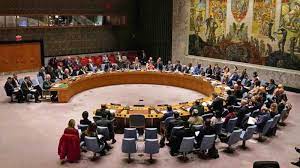
(IPS) – The myriads of proposals for the reform of the much-maligned Security Council have been kicked around the United Nations for more than two decades—with no significant progress.
Speaking at the General Assembly’s (GA) annual debate, GA President Dennis Francis told delegates last November that without structural reform, the Council’s performance and legitimacy will inevitably continue to suffer.
“Violence and war continue to spread in regions across the world, while the United Nations seems paralyzed due largely to the divisions in the Security Council,” he said.
With the world changing quickly, the Council is “dangerously falling short” of its mandate as the primary custodian for the maintenance of international peace and security, he said.
Meanwhile, a proposed new model for reforms, initiated by the Group of Four (G4: Brazil, Germany, India, and Japan), has been doing the rounds.
Not surprisingly, all four countries have been longstanding contenders for permanent seats (P5s) which have remained the privilege of five countries since the creation of the world body 79 years ago: the US, UK, France, China and the Russian Federation (replacing the USSR of a bygone era).
The G4 is calling for a total of 11 permanent members (P11): China, France, The Russian Federation, UK and the US, plus six others.
In the event of possible expansion, and upon the adoption of a comprehensive framework resolution on Security Council reform, interested Member States prepared to assume the functions and responsibilities of permanent members of the Security Council would submit their candidatures in writing to the President of the General Assembly.
The General Assembly will then proceed, as soon as possible, at a date to be determined by the President, to the election of six new permanent members, by a vote of two thirds of the members of the General Assembly. through a secret ballot. The rules of procedure of the General Assembly will be applied to the election of the new permanent members.
The criteria of Article 23 (1) should also apply to the election of the new permanent members: “due regard shall be paid, in the first instance to their contributions to the maintenance of international peace and security and to the other purposes of the Organization, and also to equitable geographical distribution”.
The non-permanent members with a two-year term, currently at 10, will be increased to a total of 14/15 seats – The election process for non-permanent members will follow current practices.
According to the G4 proposal, the six new permanent members of the Security Council shall be elected according to the following pattern: (i) Two from African Member States: (ii) Two from Asia-Pacific Member States, (iii) One from Latin American and Caribbean Member States; (iv) One from Western European and Other Member States.
The four/five new non-permanent members of the Security Council shall be elected according to the following pattern; (i) One/Two from African Member States: (ii) One from Asia-Pacific Member States: (iii) One from Eastern European Member States; (iv) One from Latin American and Caribbean Member States.
Member States should give due consideration during the nomination and election of non-permanent members to adequate and continuing representation of small and medium size Member States, including Small Island Developing States (SIDS).
Andreas Bummel, Executive Director, Democracy Without Borders, told IPS any reconfiguration of the Security Council would have to be adopted in line with Article 108 of the Charter, which means it requires the support of two thirds of UN members and the P5.
“Given the fact that Security Council reform has been discussed for decades, I think it is legitimate to pursue such a vote instead of consensus. Whether it is politically wise is a different question.”
In essence, he said, the G4 are not willing to compromise. “If they can mobilize a two thirds majority and the P5, fine. But if not, it’s finally game over for them. I can’t see how a broad agreement is possible without introducing new concepts that go beyond today’s permanent and non-permanent seats.”
Re-electable seats rotating among the membership of certain regions is a good approach, in my mind. New permanent seats vested with a veto will make the Security Council even more unworkable.
This option should be off the table. Delaying a decision for fifteen years does not solve this, he declared.
On the question of the veto, the G4 says Member States should be invited to continue discussions on the use of the veto in certain circumstances.
The new permanent members, would as a principle, have the same responsibilities and obligations as current permanent members.
However, the new permanent members shall not exercise the veto-right until a decision on the matter has been taken during a review, to be held fifteen years after the coming into force of the reform.
Amendments to the charter shall reflect the fact that the extension of the right of veto to the new permanent members will be decided upon in the framework of a review.
The enlarged Security Council would be encouraged to, inter alia, hold regular consultations with the President of the General Assembly; submit an analytical and comprehensive evaluation of the Council’s work in the annual report to the General Assembly; submit more frequently special reports to the General Assembly in accordance with Articles 15 (1) and 24 (3) of the Charter, improve participation of the Chair of the Peacebuilding Commission and the chairs of the country-specific configurations of the Commission in relevant debates and, in an appropriate format, in informal discussions
Asked for her comments, Barbara Adams, Senior Policy Analyst, Global Policy Forum, told IPS: Surely, now 11 (not 5) veto-wielding powers, will not correct the inability of P5 or P11 to put their chartered responsibility for international peace and security above their national security interests.
She pointed out that the G4 proposal for a 15-year pause on use of the veto acknowledges the tension between expanding the number of permanent members and the veto.
Re the proposal for seats for developing countries, and countries from other regions, they should not need to be justified by the concept of regional representation, she argued.
“The privilege of permanency in the Security Council extends beyond the use of veto. The “chill factor” of this privilege reaches into many parts of the UN system in ways formal and informal such as preferential treatment for senior UN positions,” Adams declared.
Joseph Chamie, a consulting international demographer and a former director of the UN Population Division, told IPS reform of the United Nations Security Council is not a new proposal; it’s been around for decades.
Despite committees, discussions and calls by many Member States for reform of the Council, he pointed out, little progress has been achieved towards equitable representation, inclusiveness and legitimacy.
“Increasing numbers of both governments and people consider the Council to be ineffectual and unjust and require reform, including expanding membership and restricting vetoes”.
While enormous changes have occurred in the world over the past eight decades, he said, the Council continues to have the same five permanent members.
When established, the five permanent members accounted for about 35 percent of the world’s population. Today, they represent 25 percent and by mid-century they are expected to represent 20 percent of the world’s population, said Chamie, author of numerous publications on population and related issues.
In brief, the desire for reform of the Security Council is both understandable and reasonable and despite the geo-political challenges, reform should be undertaken without further delays, he declared.
Numerous individuals, including reporters from international media outlets, have been apprehended in Moscow following a crackdown on demonstrators at the election headquarters of Russian President Vladimir Putin, according to reports from independent sources on Saturday.
The demonstration was orchestrated by the spouses of deployed men amidst a growing movement of women demanding the return of their husbands and sons from Ukraine. Video footage reviewed by CNN depicts Russian authorities arresting several individuals wearing “Press” vests in the vicinity of Red Square.
The protest, dubbed “500 days of mobilization,” attracted women to the Kremlin walls before progressing to Putin’s nearby election headquarters, as per reports. SOTAvision, an independent Russian news source, shared on their Telegram channel that a correspondent witnessed security forces “grabbing random individuals from the crowd, targeting only men.”
OVD-info, a watchdog group monitoring Russian repression, stated that at least 27 people, with only one identified as a protester, were transported in a police van to Kitay-Gorod station, where they are presently detained. Despite OVD-info’s attempts to send a lawyer to visit the detainees, access was denied.
Mediazona, an independent Russian media organization, reported on Saturday that among those detained are journalists employed by Kommersant, France Press, and Spiegel, as well as human rights activists. Furthermore, OVD-info mentioned that seven journalists covering the rally were taken to the Basmanny police station, including Andrei Zaiko from the Japanese television company “Fuji.”
According to OVD-info’s Telegram update, one employee from state media has been released from Kitay-Gorod along with three minors. The update stated, “Police officers informed them that they intend to release the remaining federal and foreign media personnel soon, but will retain ‘foreign agents’ media representatives at the police station. All detainees also had their phones confiscated.”
Russia’s foreign agents law, expanded in late 2022 to encompass individuals or groups deemed to “receive support and/or be under foreign influence,” has drawn criticism as a Kremlin maneuver to silence critics of its actions in Ukraine, including journalists.
The highest court of the United Nations on Friday issued a directive to Israel, urging it to take all possible measures to prevent fatalities, devastation, and any acts of genocide in Gaza. However, the panel refrained from mandating an end to the military offensive devastating the Palestinian territory.
Court President Joan E. Donoghue expressed profound concern over the ongoing loss of life and human suffering in the region. This ruling, arising from a genocide case initiated by South Africa, constitutes a significant censure of Israel’s conduct during wartime, escalating international pressure to cease the nearly four-month-long offensive that has resulted in over 26,000 Palestinian casualties and displaced around 85% of Gaza’s population.
Israeli Prime Minister Benjamin Netanyahu denounced the court’s willingness to address genocide charges as a lasting disgrace, vowing to persist with the war effort. The timing of the ruling, coinciding with International Holocaust Remembrance Day, amplified its impact.
U.N. Secretary-General Antonio Guterres emphasized the legally binding nature of the court’s decisions, expressing trust in Israel’s compliance. Former Israeli Defense Minister Benny Gantz urged a focus on prosecuting Hamas militants responsible for deadly attacks on Israeli civilians.
The court also called for the release of hostages still held by Hamas and urged international pressure on Israel to adhere to its directives. While most measures received overwhelming judicial support, Israeli Judge Aharon Barak endorsed two orders, emphasizing their potential to mitigate tensions and alleviate suffering.
Although legally binding, compliance with these provisional measures remains uncertain. Netanyahu affirmed Israel’s determination to defend itself, employing a more defiant tone in Hebrew for domestic audiences.
The court mandated Israel to prevent genocide and refrain from harming Palestinians, facilitate urgent humanitarian aid to Gaza, and address any incitement to genocide, among other measures. Israel is required tosubmit a report on its actions within a month, with potential consequences for non-compliance.
Legal experts anticipate years of proceedings to address South Africa’s genocide allegations fully. The U.N. Security Council is slated to convene to discuss the ruling’s implications.
In Israel, commentators expressed relief over the absence of a cease-fire mandate, which could have led to a clash with the U.N. Palestinians and their supporters welcomed the court’s decision as a step towards holding Israel accountable.
The U.S. reiterated its stance on minimizing harm to civilians, increasing humanitarian aid, and curtailing dehumanizing rhetoric but maintained that allegations of genocide are baseless.
The South African government hailed the ruling as implicating Israel in potentially genocidal actions, refuting Israel’s claims of compliance with international law.
While Israel often boycotts international tribunals, it sent a high-level legal team in recognition of the case’s gravity. The Health Ministry in Gaza, under Hamas control, reports a death toll without distinguishing between combatants and civilians, with a significant proportion being women and children.
Israeli military sources assert that a substantial number of casualties were Hamas militants. U.N. officials fear further loss of life due to disease and malnutrition, with a significant portion of Gaza’s population facing starvation.
Law professor Yuval Shany opined that the court’s decision, though concerning, falls short of Israel’s worst fears and is unlikely to significantly alter military operations.
The court’s ruling represents a significant condemnation of Israel’s actions in Gaza, adding pressure to cease hostilities and address humanitarian concerns, while legal proceedings are expected to continue in the coming years.
Accused of committing genocide against Palestinians, Israel staunchly defended its military operations in Gaza at the United Nations’ highest court on Friday. A day prior, Prime Minister Benjamin Netanyahu vehemently dismissed the allegations as hypocritical, decrying them as an “upside-down world” while facing charges of genocide. Israel, established in the aftermath of the Holocaust, faced the accusations brought by South Africa in one of the largest cases before an international court, drawing global attention and protesters from both sides.
South African lawyers urged the court on Thursday to immediately halt Israeli military operations in Gaza, home to 2.3 million Palestinians. While a decision on this request is expected in the coming weeks, the full case may extend over several years.
“We live at a time when words are cheap in an age of social media and identity politics. The temptation to reach for the most outrageous term to vilify and demonize has become, for many, irresistible,” expressed Israeli legal advisor Tal Becker at the Palace of Peace in The Hague.
Becker highlighted, “South Africa has regrettably put before the court a profoundly distorted, factual, and legal picture. The entirety of its case hinges on a deliberately curated, decontextualized, and manipulative description of the reality of current hostilities.”
While Israel commonly boycotts international tribunals, citing unfairness and bias, it has taken the unusual step of sending a high-level legal team to address the gravity of the accusations.
At the core of the case are Israel’s actions in Gaza, where a massive air and ground assault followed the crossing of Hamas militants into Israel on Oct. 7. The assailants killed around 1,200 people, mostly civilians, and abducted over 250 individuals, with more than half still in captivity. According to Gaza’s Health Ministry, over 23,000 people have been killed during the military campaign, with nearly 85% of Gaza’s population displaced, a quarter facing starvation, and significant areas reduced to rubble.
South Africa contends that Israel’s actions amount to genocide and are part of decades of oppression against Palestinians. Lawyer TembekaNgcukaitobi asserted, “The scale of destruction in Gaza, the targeting of family homes and civilians, the war being a war on children — all make clear that genocidal intent is both understood and has been put into practice. The articulated intent is the destruction of Palestinian life.”
Netanyahu rejected these claims, stating, “This is an upside-down world — the state of Israel is accused of genocide while it is fighting genocide. The hypocrisy of South Africa screams to the heavens.”
Contrary to South Africa’s allegations, Israel argues that it is acting in legitimate self-defense. The court must assess whether Israel’s operations comply with international agreements governing the conduct of war, even in response to severe attacks.
While the court’s findings are binding, it remains uncertain if Israel would comply with any order to halt military operations. Non-compliance could lead to U.N. sanctions, potentially vetoed by the United States, Israel’s steadfast ally. The White House refrained from commenting on potential responses if the court determines Israel committed genocide, with National Security Council spokesperson John Kirby dismissing the allegations as “unfounded.”
The case delves into one of the world’s most intractable conflicts, prompting protests for a second consecutive day outside the court. Pro-Israeli demonstrators commemorated hostages held by Hamas, while over 100 pro-Palestinian protesters voiced their concerns.
This case strikes at the core of Israel’s national identity, founded as a Jewish state in the aftermath of the Nazi Holocaust. Israel contends it is combating a formidable enemy responsible for the deadliest attack on its territory since its establishment in 1948. The nation asserts adherence to international law and efforts to minimize harm to civilians, attributing the high death toll to Hamas militants operating in residential areas.
South Africa seeks to broaden the case beyond the Israel-Hamas war, highlighting a history of systematic oppression and violence against Palestinians over the last 76 years. Justice Minister Ronald Lamola emphasized, “Mothers, fathers, children, siblings, grandparents, aunts, cousins are often all killed together. This killing is nothing short of destruction of Palestinian life. It is inflicted deliberately. No one is spared. Not even newborn babies.”
Approximately two-thirds of the casualties in Gaza are women and children, according to health officials. The case, unprecedented in its scope, raises questions about the responsibilities of nations in situations resembling genocide. The world court, which adjudicates disputes between nations, has never previously held a country responsible for genocide, with the closest instance being in 2007 when it ruled that Serbia “violated the obligation to prevent genocide” during the Bosnian enclave massacre in Srebrenica.
In a significant legal battle, the International Court of Justice (ICJ) commenced two days of hearings on Thursday, where South Africa accuses Israel of genocide in connection to its Gaza war. Israel vehemently rejects these allegations.
Lawyers representing South Africa urged the judges to issue binding preliminary orders against Israel, demanding an immediate cessation of its military campaign in Gaza. ICJ President Joan E. Donoghue outlined South Africa’s claims, stating that the country argues Israeli actions post the Oct. 7 attacks by Hamas “are genocidal in character” and that Israel “failed to prevent genocide and is committing genocide.” Donoghue added that South Africa contends Israel violates “other fundamental obligations under the (U.N.) Genocide Convention.”
Pro-Israeli protesters, advocating for the release of hostages held by Hamas, gathered near the courthouse with banners reading “Bring them home.” Among the crowd, individuals waved Israeli and Dutch flags. Simultaneously, outside the court, protesters waved the Palestinian flag in support of South Africa’s stance.
The dispute strikes at the core of Israel’s national identity, being a Jewish state formed in the aftermath of the Holocaust. Additionally, it delves into South Africa’s identity, with the African National Congress comparing Israel’s policies to its own history under the apartheid regime.
Despite its usual skepticism toward U.N. and international tribunals, Israel assembled a robust legal team to defend its military operations launched after the Oct. 7 attacks by Hamas. Juliette McIntyre, an international law expert, noted, “I think they have come because they want to be exonerated and think they can successfully resist the accusation of genocide.”
Israeli Prime Minister Benjamin Netanyahu released a video statement defending his country’s actions, emphasizing that Israel has no intention of permanently occupying Gaza or displacing its civilian population. He asserted that Israel is targeting Hamas terrorists and operating in compliance with international law, accusing Hamas of using Palestinian civilians as human shields.
In response to the case filed last year, the Palestinian Authority’s foreign ministry urged the court to take immediate action to protect the Palestinian people and call on Israel to halt its onslaught. The two days of preliminary hearings began with South Africa’s lawyers explaining the accusations against Israel and why they are calling for an immediate halt to military actions.
According to the Health Ministry in Hamas-run Gaza, Israel’s offensive has resulted in the deaths of over 23,200 Palestinians, with about two-thirds being women and children. The death toll does not distinguish between combatants and civilians. In the Oct. 7 attack, Hamas fighters killed approximately 1,200 people in several Israeli communities and abducted around 250 others.
During a visit to Tel Aviv, U.S. Secretary of State Antony Blinken dismissed the case as “meritless,” emphasizing the ongoing threats against Israel from groups like Hamas, Hezbollah, the Houthis, and Iran.
The ICJ, responsible for resolving disputes between nations, has never ruled a country responsible for genocide. The closest instance was in 2007 when it determined that Serbia “violated the obligation to prevent genocide” in the 1995 massacre in Srebrenica.
The case hinges on the 1948 genocide convention, a response to World War II and the Holocaust, with both Israel and South Africa as signatories. South Africa’s detailed 84-page document argues that Israel has demonstrated intent to commit genocide.
South Africa seeks the court’s establishment of Israel’s responsibility for violations of the Genocide Convention, holding it fully accountable under international law, and ensuring protection for Palestinians in Gaza. A team of South African lawyers presented three hours of arguments, and Israel’s legal team will respond on the following day.
Human Rights Watch views these hearings as an opportunity to scrutinize Israel’s actions. Balkees Jarrah, the group’s associate international justice director, stated, “South Africa’s genocide case unlocks a legal process at the world’s highest court to credibly examine Israel’s conduct in Gaza in the hopes of curtailing further suffering.”
Israel will face another ICJ session next month, where hearings will open into a U.N. request for a non-binding advisory opinion on the legality of Israeli policies in the West Bank and east Jerusalem.
In a multipolar, multi-discipline, multisource, and multi-requirement world, torque will play a predominant role in stability in international relations more than the centre of gravity.
The world has come to be defined as a global village. A village being the smallest social community living space, the world view of the day is significant in defining the close interactions in international relations at all levels. With such close cohabitation, interdependency cannot be homogenous across the spectrum and will be defined by specific requirements of nations leading to multipolarity.
World is One Family
“Vasudeva Kudumbakam” is a Sanskrit phrase found in Indian texts such as the Upanishads, of the Vedic era, which means “The World Is One Family”. The idea of the phrase remains relevant today as it emphasizes a global perspective, prioritizing collective well-being over individual or family interests. It encourages thinking about the welfare of others, fostering global solidarity. This ancient Indian concept is all the more relevant today when the world, in addition to the usual issues, is grappling to address crucial issues like climate change, sustainable development, and tolerance of diversity.
Global communications
Global communication such as satellites and the internet are redefining power in world politics in ways that traditional theories of international relations have not yet seriously considered. The most telling effect is the increased forced transparency in interactions between Nations. Information technologies since decades and Artificial Intelligence presently, have profoundly transformed the nature of military power because of emerging weapons systems dependent on laser and information processing.
Picture: TheUNN
Then there are the satellites. The worries expressed by the West, on the recent launching of spy satellites by North Korea, is an example of how digital footprints have established an information power and deterrence similar to the nuclear power and deterrence of an earlier era.
Emerging technologies in communications have also had a profound impact on soft power such as ideological, cultural, or moral appeals. Although there is no hard or soft theoretical evidence on the dynamics, trends indicate that the latter is assuming increasing traction and importance.
Communities of affinity
International relations in politics and cooperation in security and economics, through government, businesses and nonprofits develop cooperative exchanges between nations and benefit commerce, security, quality of life, and the environment. Today’s world is richly connected and complex and for stability, there is a need for a globally oriented perspective on issues that transcend international boundaries. Exceptional economic integration, unprecedented threats to peace and security, and an international focus on human rights and environmental protection all are subject to the complexity of international relations in the twenty-first century.
Global communications, powered digitally, are empowering hitherto dormant groups and voices in the international community. Their voices have created an ecosystem for the contestation of new political, economic, and, more tellingly, cultural boundaries. The interactive and instant nature of these communications has created large perceived moral spaces for exploring changing values among communities of affinity rather than geography.
Surge of nationalism
Nationalism is both omnipresent and elusive. It pervades global behavior and can be seen as both a conservative and a revolutionary force. It attacks the status quo such as populism and authoritarianism. Nationalism calls for allegiance in a nation greater than other groups that may be based on religion, political leaning, or other socio-economic groups.
Nationalism is perceived as seeking distinction from other nations. It gives preference to political representation striving to preserve the nation by the nation for the nation. Nationalism can be dormant including legal immigrants and minorities or a problematic, infectious, escalatory, and overtly violent nationalism to exclude minorities, endangering stability. At the end of the day, the fresh thought of nations for the nation with slogans such as “America for Americans” and “Make in India’ and the spirit behind them in vibrant democracies cannot be faulted.
Conflicting relationships
As late as the end of the Second World War, the world was divided into two camps – the Allied and the Axis. In the succeeding decades, the Cold War set in and the communist bloc came into being as a powerful section under the leadership of the erstwhile USSR. On the opposite side was the West, including the vanquished in war, under the economically fast-growing influence of the growing [power of the USA.
Over the last few years, all of this changed, especially after the disintegration of the erstwhile USSR. Here are a few samples of conflicting relationships in the world today, if you may. Iran and Türkiye are together against Israel but on opposing sides against Armenia. Türkiye, while spewing venom against Israel, does not want to cut economic ties with it. China is “neutral” in the matter of the Russian invasion of Ukraine but wants a close economic relationship with the USA who, as part of NATO, are wholly behind Ukraine.
Issue-based relationships
A system is said to be in stable equilibrium if, when displaced from equilibrium, it experiences a net force or torque in a direction opposite to the direction of the displacement. By the laws of physics, there can be no stability without tension. Would you say that going forward the world will see stability in contradictory multilateral relations rather than gravitating towards any particular permanent bloc?
In an environment where the practice of international relations is valuable in their own respective space, in a wide array of settings, and differing players distinct from each other, the requirement for stability is varied and independent of each other. The kaleidoscope of such relations is explicit in areas of trade policies between nations, travel related to business, tourism, and immigration, providing people with opportunities to enhance their lives. These different spaces help nations to cooperate to pool resources, and share information as a way to face global issues that go beyond any particular country or region in that particular space.
In a multipolar world, the relationships will be defined by the requirements in each separate space like security, economy, etc rather than gravitating wholesome to defined blocs.
(The author is an Indian Army veteran and a contemporary affairs commentator. Views are personal. He can be reached at vishkl@gmail.com )
Experiencing the grandeur of some of the world’s most beautiful churches transcends religious boundaries. The intricate details and awe-inspiring architecture of these structures go beyond mere places of worship, becoming powerful testaments to human strength and creativity.
Duomo di Milano – Milan:
Milan’s central cathedral, the Duomo di Milano, is a colossal masterpiece that has dominated the cityscape since construction began in 1386. Commissioned by Milan’s ruler Gian Galeazzo Visconti, the Gothic-style cathedral aimed to symbolize the grandeur of the city. While the nave was consecrated in 1418, the construction continued for over 200 years, involving thousands of artisans, sculptors, and workers, making it an ongoing testament to human dedication.
Interesting Facts:
The Duomo is the world’s fifth-largest Christian church, covering an entire city block.
Adorned with 135 gargoyles, 700 figures, and 3,400 statues, it boasts more statues than any other building globally.
A sundial placed in 1768 by astronomers on the main entrance’s floor, using a hole in the wall, still precisely regulates clocks today.
La Sagrada Familia – Barcelona:
Barcelona’s La Sagrada Familia, a uniquely designed cathedral by Antoni Gaudí, has been under construction since 1882. Gaudí, inspired by nature, dedicated 43 years of his life to this cathedral before his untimely demise. Consecrated as a minor basilica by Pope Benedict XVI in 2010, it continues to attract over 4.5 million visitors annually.
Interesting Facts:
At Gaudí’s death, only one tower, the crypt, the apse walls, and one portal were complete.
The interior features a “forest” supporting the ceiling, with pillars resembling colorful trees.
The cathedral boasts 17 towers, symbolizing the Apostles, Virgin Mary, and evangelists.
St. Basil’s Cathedral – Moscow:
Moscow’s St. Basil’s Cathedral, a vibrant testament to Russian architecture, commenced and concluded construction in the mid-1500s under the rule of Ivan the Terrible. Initially named the Church of the Intercession, its current moniker honors Basil the Blessed, buried in the cathedral in 1557.
These magnificent churches, from Milan’s Duomo di Milano to Barcelona’s La Sagrada Familia and Moscow’s St. Basil’s Cathedral, stand as living testaments to the artistic prowess and dedication of generations past. Whether it’s the ongoing construction of La Sagrada Familia or the vibrant history of St. Basil’s Cathedral, these architectural marvels continue to inspire awe and wonder, transcending time and beliefs.
United Nations Secretary-General Antonio Guterres emphasized on Sunday his unwavering commitment to seeking a humanitarian ceasefire in Gaza, asserting that the ongoing conflict undermined the credibility and authority of the Security Council. Guterres made these remarks at the Doha Forum conference, where he addressed the recent veto by Washington on a proposed U.N. Security Council resolution calling for an immediate humanitarian ceasefire in the Israel-Hamas war.
“I urged the Security Council to press to avert a humanitarian catastrophe, and I reiterated my appeal for a humanitarian ceasefire to be declared,” Guterres stated. Despite the disappointing outcome, he emphasized the continued necessity of such a ceasefire, stating, “Regrettably, the Security Council failed to do it, but that does not make it less necessary. I will not give up.”
Qatar’s Prime Minister, Sheikh Mohammed bin Abdulrahman Al Thani, affirmed Doha’s commitment to exerting pressure on both Israel and Hamas for a truce, even as the chances for success appeared to be diminishing. Qatar, serving as a key mediator with several political leaders of Hamas based in the country, has actively facilitated negotiations between the Palestinian group and Israel.
Sheikh Mohammed underscored the impact of diplomatic efforts, noting that hostages were released from Gaza due to negotiations, not solely as a result of Israel’s military actions. Despite the challenges, he maintained Qatar’s resolve in pursuing a peaceful resolution to the conflict.
The head of UNRWA, the U.N. aid agency for Palestinians, Philippe Lazzarini, decried the dehumanization of Palestinians, asserting that it has allowed the international community to tolerate Israel’s sustained attacks on Gaza. Lazzarini emphasized the urgent need for a humanitarian ceasefire, stating, “There is no doubt that a humanitarian ceasefire is needed if we want to put an end to hell on earth right now in Gaza.”
The opposition to a ceasefire from the United States and Israel stems from their belief that it would primarily benefit Hamas. Instead, Washington advocates for intermittent pauses in fighting to safeguard civilians and facilitate the release of hostages taken by Hamas in a deadly October 7 attack on Israel.
In addition to addressing the Gaza conflict, Secretary-General Guterres used the platform to appeal to leaders attending the COP28 climate conference. He urged them to reach a consensus on substantial emissions reductions to prevent global warming from exceeding 1.5 degrees Celsius (2.7 degrees Fahrenheit). Despite previous commitments, Guterres highlighted that emissions are currently at a record high, with fossil fuels identified as the primary contributor.
At the climate summit in Dubai, tensions escalated as oil-producing nations clashed with other countries over a potential agreement to phase out fossil fuels. This discord jeopardizes the prospects of achieving a historic commitment to end the use of oil and gas in the context of 30 years of global warming talks.
“I urge leaders at COP28 in Dubai to agree on deep cuts to emissions, in line with the 1.5-degree limit,” Guterres urged. He further called upon fossil fuel companies and their supporters to leverage their significant resources to spearhead the transition to renewable energy, emphasizing the critical role they play in the global shift toward sustainable practices.
In a historic invocation of Article 99, UN Secretary-General Antonio Guterres has urged the UNSC to take urgent action and call for a human ceasefire in Gaza. Article 99 allows the Secretary-General to bring to the Security Council’s attention any pressing international security issue.
With an intensifying Israeli offensive and escalating civilian casualties, U.N. Secretary-General Antonio Guterres invoked a rarely exercised power this week to warn the Security Council of an impending “humanitarian catastrophe” in Gaza. He urged members to demand an immediate humanitarian cease-fire.
Article 99 of the U.N. Charter is a provision of the United Nations Constitution. It states that the secretary-general — the U.N.’s top diplomat — may bring to the attention of the Security Council “any matter which, in his opinion, may threaten the maintenance of international peace and security.”
It was last used over half a century ago — which says the secretary-general may inform the council of matters he believes threaten international peace and security. This gives an important additional power to the secretary-general, since the real power at the U.N. is held by its 193 member nations and especially the 15 countries that serve on the Security Council.
Taking to X (formerly Twitter) Guterres shared a letter addressed to the UN Security Council and wrote, “I’ve just invoked Art. 99 of the UN Charter – for the 1st time in my tenure as Secretary-General. Facing a severe risk of collapse of the humanitarian system in Gaza, I urge the Council to help avert a humanitarian catastrophe and appeal for a humanitarian ceasefire to be declared.”
Article 99 of the UN Charter grants the Secretary-General the authority to bring to the Security Council’s attention any matter that, in his judgment, poses a threat to international peace and security.
This unprecedented move comes after the Security Council’s delay in adopting a resolution supporting a ceasefire. In the letter, Guterres conveyed the grim reality of more than eight weeks of conflict, emphasizing the “appalling human suffering, physical destruction, and collective trauma across Israel and the Occupied Palestinian Territory.”
The Secretary General further emphasized the devastating toll of the military operation, revealing that over 15,000 people, with over 40% being children, had lost their lives. Thousands were injured, more than half of all homes were destroyed, and 80% of the 2.2 million population of what??? were forcibly displaced into increasingly confined areas.
In his letter, Guterres also painted a dire picture of the healthcare system in Gaza, which is on the brink of collapse, with hospitals transformed into battlegrounds. He warned that with constant bombardment and a lack of shelter and essentials for survival, the breakdown of public order in Gaza was imminent.
Guterres believes that the humanitarian system and the humanitarian operations in Gaza are collapsing. He also warns in his letter that in the current situation, “amid constant bombardment by the Israeli Defense Forces and without shelter or essentials to survive, I expect public order to completely break down soon due to the desperate conditions, rendering even limited humanitarian assistance impossible.”
Guterres concluded the letter by stating that the international community has a responsibility to use all its influence to prevent further escalation and end this crisis. He urged the Security Council to take decisive action to avert an impending humanitarian catastrophe.
The United States on Friday, December 8th, 2023 vetoed a proposed United Nations Security Council demand for an immediate humanitarian ceasefire in the war between Israel and Palestinian militant group Hamas in Gaza, diplomatically isolating Washington as it shields its ally.
Thirteen other members voted in favor of a brief draft resolution, put forward by the United Arab Emirates, while Britain abstained. The vote came after U.N. Secretary-General Antonio Guterres made the rare move to formally warn the 15-member council of a global threat from the two-month long war.
“What is the message we are sending Palestinians if we cannot unite behind a call to halt the relentless bombardment of Gaza?” Deputy UAE U.N. Ambassador Mohamed Abushahab asked the council. “Indeed, what is the message we are sending civilians across the world who may find themselves in similar situations?”
The United States and Israel oppose a ceasefire because they believe it would only benefit Hamas. Washington instead supports pauses in fighting to protect civilians and allow the release of hostages taken by Hamas in a deadly Oct. 7 attack on Israel.
Deputy U.S. Ambassador to the U.N. Robert Wood told the Security Council that the draft resolution was a rushed, imbalanced text “that was divorced from reality, that would not move the needle forward on the ground in any concrete way. We do not support this resolution’s call for an unsustainable ceasefire that will only plant the seeds for the next war.”
Israel’s relationship with the United Nations has reached a historic low following an escalation in tensions between the two entities this week. UN Secretary-General Antonio Guterres invoked Article 99 of the UN Charter, a seldom-used but potent tool, in his determined effort to secure a ceasefire in Gaza. This move, however, sparked outrage among Israeli diplomats who vehemently opposed calls for a ceasefire, asserting the need to continue their offensive against Hamas.
Guterres’ employment of Article 99 marked the seventh instance in the UN’s 78-year history and the first since 1989. The article empowers the UN chief to bring to the Security Council’s attention any issue that could exacerbate existing threats to international peace and security. In a letter to the council, Guterres urged for unified action to avert a humanitarian catastrophe, stating, “We are at a breaking point…there is a high risk of the collapse of the humanitarian support system in Gaza, which would have devastating consequences.”
Israeli Foreign Minister Eli Cohen criticized Guterres, labeling the UN chief’s tenure as a “danger to world peace” and accusing him of siding with Hamas. Cohen argued that the call for a ceasefire endorsed the October 7 attack by Hamas, where militants killed 1,200 people and took over 240 hostages. Israel’s offensive in Gaza, according to the Palestinian Health Ministry in Ramallah, has resulted in over 16,000 deaths.
Guterres’ unprecedented use of Article 99 was described as a “symbolic punch” by Daniel Forti, a senior UN analyst at the International Crisis Group. Forti emphasized that, while unlikely to shift political dynamics within the Security Council, the rare utilization of this tool had a moral impact due to its infrequency.
Israeli Ambassador to the United Nations Gilad Erdan argued against a ceasefire, contending that it would solidify Hamas’ control of Gaza and prolong suffering for all. He criticized Guterres for invoking Article 99, highlighting the contrast with other global conflicts that did not prompt a similar response.
The United States later vetoed a resolution calling for an immediate ceasefire in Gaza, referencing Guterres’ use of Article 99. Drafted by the United Arab Emirates and co-sponsored by at least 97 other countries, the resolution received majority support from thirteen Security Council members, with the UK abstaining. The US, exercising its veto power, emphasized Israel’s right to self-defense and criticized the resolution for overlooking Hamas’ attacks on October 7.
Gabriela Shalev, former Israeli ambassador to the UN, asserted that Israel-UN relations were at a historic low. Shalev, noting strained ties since Israel’s establishment in 1947, criticized the UN for not understanding Israel’s existential threat. Israeli diplomats, led by Erdan and Cohen, openly denounced the UN, with Erdan wearing a yellow Star of David to protest alleged inaction.
The ongoing conflict has strained not only relations with Guterres but extended to various UN agencies, including the World Health Organization, UN Women, and the UN’s Special Rapporteur for the Occupied Palestinian Territories, Francesca Albanese. Over 100 UN staffers have been killed in Gaza, marking the largest loss in the organization’s history, with UNRWA facing criticism from Israel.
Israeli media has amplified stories questioning UNRWA’s role in the war, with allegations of complicity in Hamas’ militancy. Albanese, the UN’s Special Rapporteur, faced accusations of being a “shameless Hamas-complicit official,” prompting her to defend her work and criticize the attacks as baseless.
Despite distrust, Shalev cautioned against anti-UN rhetoric, urging a focus on presenting the facts of the October 7 attack. She emphasized the need for a measured approach rather than emotional declarations to convey Israel’s perspective.
Can there be a Permanent Solution to the Plight of Palestinians and Israelis?
The recent release of a number of Israeli and Palestinian hostages and the temporary week long truce, which ended on December 1st should have been an occasion for the global community to reflect on how we could try to strive for not just a cease-fire but for long-lasting peace and economic development in the region.
While on the one hand, Israel has achieved significant economic development despite being surrounded by Islamic countries, on the other hand, Gaza remains backward and dependent primarily on Israel for even its basic needs of water, electricity, fuel, and employment for quite a few of its residents.
The attack by Hamas on Israel on October 7 demonstrated to the world the brutality and the barbarism of the terrorists. The reprisals by Israel have resulted in a lot of destruction, death, and misery for the people of Gaza in the West Bank. There is a much greater sense of insecurity for both the Israelis and the Palestinians.
This has also led to a very significant surge in anti-Semitic and anti-Muslim hate crimes not only in the region but in the US, Europe, and other countries.
Is the world destined to continue down the spiral of more wars, hatred, death, and destruction? Or is there an alternative vision or path possible?
Brief background
A lot has already been written and discussed about the conflict’s historical evolution and origins. The Israel-Palestine issue has persisted for decades and has resulted in considerable human suffering. Resolving the plight of the Palestinians and Israelis is of utmost importance for regional peace. Focusing on economic empowerment, employment opportunities, and education for the Palestinians could perhaps serve as a powerful tool to counter the allure of extremist ideologies and promote peace. The acceptance by the Islamic countries of the right of Israel to exist as a free country is also an essential requirement.
The dust of war eventually settles, but its scars are often long-lasting, especially in regions plagued by protracted conflicts like the Middle East. Yet, as daunting as the task of rebuilding might seem, the post-war era can serve as an inflection point, an opportunity to sow seeds of lasting peace and prosperity.
War robs individuals, particularly youth, of their aspirations, thrusting them into a vortex of despair and, often, extremist ideologies. So, the question is, how can we pivot from devastation to a renaissance in the post-war Middle East?
How can we aspire for a prosperous Palestinian and Israeli population living in peace and harmony, reaping the benefits of regional economic cooperation, and providing a model for conflict resolution worldwide?
Economic Integration: The Power of Unity
The prospect of the India-Middle East Europe Economic Corridor (IMEEEC) need not be seen only as an economic initiative but also as a gesture for peace in a conflict-prone region. By linking Bharat to Europe via the Middle East, we’re not merely talking about trade and investment; we’re fostering an environment where economies are interdependent, thus making conflict detrimental to all.
The India-Middle East Europe Economic Corridor (IMEEEC) can possibly bring significant investments and trade opportunities for Palestinians and others in the region. Developing Special Economic Zones (SEZ) within Palestine in collaboration with Israel and other countries involved in IMEEEC would focus on manufacturing, technology, and services, drawing investment from nations. This would be a win-win situation, as the corridor will bolster the economies of all participant countries.
Imagine the ripple effects of infrastructure projects intertwining Gaza, the West Bank, and Israel into this corridor. These aren’t just roads, ports, and rails but lifelines of hope, conduits of opportunity.
Investing in Youth and Women: The Beacon of Hope
Youth and women are the torchbearers of our future. However, radical voices can seductively intercept a future shadowed by unemployment. By aligning with nations like Bharat, known for its prowess in the IT sector, we can equip the youth and women with sought-after skills. The twofold vision is to reduce unemployment and nurture ambassadors of peace, who have far more to lose in times of conflict. Bharat has already been extending phenomenal support under the ITEC (Indian Technical and Economic Cooperation) Program to the citizens of many of these countries for many decades now. Bharat, therefore, has the experience and the expertise in this regard.
Moreover, let’s incentivize peace. If companies from the IMEEEC region employ Palestinian youths, they should benefit from tax breaks and other incentives.
Skill Development: Collaborate with international agencies to establish vocational training centers. Partner with countries like India, which has vast experience in IT and service sectors, to train youth in these domains.
Job Fairs and Employment Drives: Regularly organize job fairs featuring companies from Israel, Saudi Arabia, and other Middle Eastern countries to promote employment among Palestinian youths.
Incentives for Employers: Provide tax breaks and financial incentives to companies from the IMEEEC region that employ a significant percentage of Palestinians.
Education: The Pillar of Progress
Schools must become the sanctuaries of hope and enlightenment in our quest for lasting peace. Through partnerships with global universities, we can elevate academic standards and instill values of coexistence and unity. When children are taught stories of camaraderie, not conflict, they’ll pen a different, peaceful chapter for the region.
Educational Exchange Programs: Collaborate with universities in Israel, India, Europe, and the Middle East to offer scholarships for Palestinian students.
Upgraded Curriculum: Ensure that the curriculum in Palestinian schools is in line with international standards. Focus on teaching critical thinking, STEM, peace education, and coexistence.
Teacher Training Programs: Collaborate with international educational organizations to train teachers, ensuring high academic standards.
Promoting Peace, Countering Terrorism, and Anti-Semitism:
Bharat has always condemned terrorism in the strongest terms and has shown zero tolerance for terrorism in any shape or form. Promoting peace, countering terrorism, and addressing anti-Semitism requires a multi-pronged approach, encompassing education, dialogue, policy reform, and community engagement.
Media and Education: Promote peace, unity, and coexistence narratives in Palestinian media and educational content. Counter any narratives of hatred and division. Incorporate lessons on the Holocaust, the history of Jews, and the contributions of diverse groups to human civilization to foster understanding and dispel myths.
Youth Engagement: Establish peace clubs in schools and universities that organize events promoting peace and understanding. Promote exchange programs where individuals can immerse themselves in different cultures and religions to foster understanding.
Interfaith Dialogues: Encourage interfaith dialogues within Palestine and between Palestinians and Israelis to foster understanding and unity. Set up interfaith discussions where religious leaders can address common misconceptions about their beliefs and highlight similarities.
Hate Crime Legislation: Strengthen laws that penalize hate crimes, ensuring they are adequately enforced.
Counter-radicalization Programs: Develop programs explicitly targeting individuals at risk of radicalization, offering them support, education, and alternative perspectives.
Ambassador Pradeep Kapur is an acknowledged “luminary diplomat,” with a distinguished career working with leaders and policymakers in different continents of the world: Asia, Africa, Europe, North America, and South America. He was the author and editor of many books. Kapur was Ambassador of India to Chile and Cambodia and Secretary at the Indian Ministry of External Affairs before joining as an academic in reputed universities in the USA and India. A graduate of the globally acclaimed Indian Institute of Technology, Delhi (IIT-D), he is Executive Director of Smart Village Development Fund (SVDF); International Economic Strategic Advisor, Intellect Design Arena; and Chairman, Advisory Council, DiplomacyIndia.com. His healthcare contributions include setting up of BP Koirala Institute of Health Sciences in Eastern Nepal, which is acclaimed as an exemplary bilateral India Nepal initiative.
Dr. Joseph M. Chalil, Chief Medical Officer at Novo Integrated Sciences, Inc., is a renowned physician executive with international recognition for his extensive contributions to healthcare innovation and research. Currently pursuing an LLM in Medical Law and Ethics at the University of Edinburgh Law School, he holds influential roles as Chairman of the Complex Health Systems Advisory Board and Adjunct Professor at Nova Southeastern University, Florida. Dr. Chalil, a U.S. Navy Medical Corps veteran, also serves as Chief Strategic Advisor for the American Association of Physicians of Indian Origin (AAPI) and is a Fellow of the American College of Healthcare Executives. His impactful book, “Beyond the Covid-19 Pandemic,” reflects his commitment to transforming global healthcare systems. A respected figure in healthcare and media, Dr. Chalil is known for his leadership in healthcare administration, balanced media representation, and insightful discussions on Indian TV news channels, showcasing his expertise in areas such as US-India relations, geopolitical issues, and public policy.
The Abraham Accords 2.0: A New Dawn in Middle Eastern Diplomacy
The Middle East, often perceived as a complex web of animosities and alliances, witnessed a historical turn with the signing of the Abraham Accords in 2020. These agreements, brokered with the significant involvement of the United States, marked a paradigm shift in the diplomatic relations between Israel and several Arab nations.
Named after the patriarch Abraham, a revered figure in Judaism, Christianity, and Islam, the Abraham Accords are a series of normalization agreements between Israel and various Arab countries, including the United Arab Emirates (UAE), Bahrain, Sudan, and Morocco.
Before 2020, only two Arab nations—Egypt (1979) and Jordan (1994)—had established full diplomatic relations with Israel. The Abraham Accords, therefore, represent a significant expansion of Israel’s formal recognition within the Arab world.
The Accords entail the establishment of full diplomatic ties, including the opening of embassies, direct flights, trade deals, and broader cooperation in sectors such as technology, energy, and medicine.
The stymied Israel-Saudi Arabia Peace Accord needs to be restarted. This isn’t just about peace agreements; it’s a cultural and economic confluence. We’re not just linking economies; we’re linking destinies. Mutual investments and cultural exchanges between nations have historically proven to be robust peacekeepers.
Picture: PMO India
India/Bharat: A Potential Peace Broker in the Middle East
India’s unique positioning in global politics and its historical ties and soft power make it a potential mediator in the volatile Middle East, particularly between Arabs and Israelis. Bharat has managed to maintain cordial relations with both Arab nations and Israel. Historically, Bharat has supported the Palestinian cause, while in recent decades, it has fostered robust ties with Israel, particularly in the defense, agriculture, and technology sectors. This dual affinity ensures that India is seen as a neutral player, which is essential for effective mediation.
The significant Indian diaspora in the Middle East, especially in the Gulf countries, strengthens Bharat’s cultural and economic ties with the region. This diaspora contributes to their resident countries’ economies and acts as a bridge between their homeland and the Middle East. Their presence can be leveraged as they symbolize the mutual respect and shared values between Bharat and the Middle East.
Every brick we lay in the post-war Middle East can be a stepping stone towards an enduring peace or another block in an endless maze of conflicts. By integrating our economies, investing in the youth and women, and reimagining education, we don’t just rebuild post-war Palestine and ensure the future security of Israel; we revive hope, unity, and a promise of a brighter, peaceful tomorrow.
A prosperous and peaceful Palestinian society living in peace with Israel can be realized through a combination of regional cooperation, economic initiatives, and education. A focus on these areas will provide Palestinian youth with hope and purpose, making the ideologies of hate and extremism less attractive. Bharat has emerged as an essential global player, as was apparent during the G20 Summit and the Voice of Global South Summit recently in Bharat. Due to the high stakes for all countries and its greater acceptance as an essential global entity, Bharat can endeavor to line up the support of the USA, Europe, Japan, South Korea, Australia, New Zealand, and other like-minded countries in these efforts. With the cooperation of regional powers and the international community, a brighter future for Palestine, Israel, and the entire region is within reach.
Given its deep-rooted connections, neutrality, and the respect it commands in the Middle East, Bharat can play a pivotal role in fostering peace in the region. While the challenges in the Middle East are complex, Bharat’s involvement can provide a fresh perspective and a neutral ground for dialogue. As the world’s largest democracy, Bharat can be a beacon of hope for a peaceful Middle East.
A Bill aimed at strengthening US efforts to push China to negotiate with the Dalai Lama’s envoys and resolve the ongoing Tibet-China dispute can now proceed to the House floor, following a unanimous vote by the US House Foreign Affairs Committee on Wednesday, November 29, 2023.
The bipartisan legislation, known as the Resolve Tibet Act, received approval at a markup meeting attended by Tibetan Americans, according to the Washington-based advocacy group International Campaign for Tibet (ICT).
The Resolve Tibet Act establishes official US policy that China must resume dialogue with the Dalai Lama’s envoys, emphasizing the unresolved conflict between Tibet and China and Tibet’s undetermined legal status under international law.
Additionally, the US could also explore activities to improve prospects for dialogue leading to a negotiated agreement on Tibet and coordinate with other governments in multilateral efforts towards the goal of a negotiated agreement on Tibet. Furthermore, it should encourage the Chinese government to address the aspirations of the Tibetan people regarding their distinct historical, cultural, religious and linguistic identity.
The repression in Tibet has intensified over the decades and China’s constant attacks have constantly deteriorated the lives of Tibetan people, Voice Against Autocracy reported.
The bill, an amended House version of the legislation, was introduced last year; however, the dialogue process has been stalled since 2010. The bill aims to pressure China to resume negotiations with the Dalai Lama’s envoys or democratically elected Tibetan leaders, according to the International Campaign for Tibet (ICT).
The bill also seeks to dismiss as inaccurate the Chinese claim that Tibet has been part of China since antiquity, and it will empower the State Department to actively counter China’s disinformation about Tibetan history, people and institutions.
According to the Resolve Tibet Act, China’s policies are “systematically suppressing the ability of the Tibetan people to preserve their religion, culture, language, history, way of life and environment.”
The Resolve Tibet Act states that Tibetans “are a people with a distinct religious, cultural, linguistic and historical identity,” as per the ICT.
The approval of the bill comes just days after President Joe Biden met Chinese President Xi Jinping on the sidelines of the Asia-Pacific Economic Cooperation summit in San Francisco, where the White House said that Biden raised concerns about China’s human rights abuses in Tibet.
The Promoting a Resolution to the Tibet-China Dispute Act states that it is US policy that the dispute between Tibet and China must be resolved in accordance with international law, including the UN Charter, by peaceful means through dialogue and without preconditions, the ICT stated.
According to the legislation, the US should promote substantive dialogue without preconditions between the Chinese government and the Dalai Lama, his representatives or the democratically elected leaders of the Tibetan community.
Additionally, the US could also explore activities to improve prospects for dialogue leading to a negotiated agreement on Tibet and coordinate with other governments in multilateral efforts towards the goal of a negotiated agreement on Tibet.
Furthermore, it should encourage the Chinese government to address the aspirations of the Tibetan people regarding their distinct historical, cultural, religious and linguistic identity.
Many countries turned to the scientific method and embraced atheism, nontheism, and apatheism. As you will notice, there is no clear pattern, though European studies suggest that countries with economic growth are losing their religion more rapidly. The situation in the East is just as interesting, so with that in mind, take a look at some of the most atheistic countries in the world.
People’s Republic of China
The country that gave the world Buddhism, Taoism, and Confucianism is mostly unreligious. Partly, that is due to China’s unitary one-party ruled by the Chinese Communist Party. This does not mean that the people of China do not cherish their spirituality, though in much less obvious ways than people in other countries.
Japan
The third largest economy’s population is primarily irreligious. Many Japanese people hold onto their traditional philosophies, but the majority are not religious in the Western sense of the word.
Republic of Estonia
The Baltic country is consistent with its no religious affiliation. Around 60 percent of people do not practice religion, and those who do are primarily Christians. The country is doing reasonably well despite being one of the smallest economies in the world.
Democratic People’s Republic of Korea
Around 70 percent of North Koreans are not religious. The rest are divided between Chondoism, Shamanism, and a small percentage of Buddhism. According to one of the State Department reports, Christians were considered the “most dangerous political class of people, and the persecution is violent and intense.”
Czech Republic
This Central European country enjoys a relatively high per capita income due to the car industry and nuclear power plants. In the first half of the XX century, around 90 percent of the population were Christians. As of 2021, less than 12% of the population identified with Christianity, mainly Catholicism, while another 10 percent belonged to other religions. Around seven in ten Czechs are religiously unaffiliated.
South Korea
This highly developed country has seen a rise in Christianity and a revival of Buddhism. However, 60% of its citizens identify with no religion. Like many countries in this region, spirituality is present in everyday life, but it is more about upholding traditions than believing in one religion.
Netherlands
Several of the happiest nations in the world are also mostly atheists or hold little regard for religion. The Netherlands is one of them, with 58% of its people labeling themselves as irreligious. The Dutch, however, believe in ecology, work-life balance, strong family ties, and acceptance of diversity.
France
One of the largest economies and the most developed countries, France has a rich history, but when it comes to religion, things are only going downhill. Projections show that the irreligious population will continue its growth in the upcoming decades.
United Kingdom
The United Kingdom of Great Britain and Northern Ireland is also a European country with a rich history and powerful impact worldwide. Over 31 percent of its people are religiously unaffiliated, and that comes as no surprise if you look at the country’s history and relationship with the Catholic church. The British royals are the head of the Church of England, a Protestant Anglican church, and they’ve been a part of this religion since the XVI century.
Australia
The country embraces diversity, so it comes as no surprise that Australians are not that invested in religion. The believers are primarily members of Anglican and Catholic churches, though the country recognizes over 100 religions.
Germany
Around 42 percent of Germans are non-religious, and among them, 12 percent are atheists. Most Germans say religion has no significance in their lives, with only 33 percent believing that higher powers have an effect on their lives.
Sweden
Irreligion is common in Sweden, and a 2023 Gallup International Survey 2023 confirmed the nation has the highest percentage of citizens who do not believe in God. For most citizens, religion is not important, so much so that in 2016, Sweden became the first country to open neutral cemeteries.
Denmark
Around 50 percent of Danish people are not religious, with only 30 percent stating they believe in God or a higher power. Approximately 20 percent are undecided, though over 70 percent are registered at the Church of Denmark. Denmark is open to all religions, and like other Scandinavian countries, it prides itself on being open-minded and accepting.
What happens in COP28 on Dubai’s climate conference battleground in the first half of December 2023 may not result in bloodshed but its consequences could be drenched in blood, mass migration, and starvation.
Happily, about 70,000 participants including political leaders, diplomats, business managers, academicians, and researchers will be participating in COP28. The COP -Conference of Parties – is held annually by the United Nations Framework Convention on Climate Change (UNFCCC). This is the 28th COP scheduled to start in Dubai, United Arab Emirates, known as the expo-city, ever happy to welcome tourists and visitors.
Picture: Yahoo
Sadly, it is the time when the number of battlegrounds around the world is on the rise without any end in sight! Ukraine and Russia in northern Europe; Israel and Palestine in the Middle East; internal wars in Syria, Sudan and Sahel. United Nations Security Council, which is charged with ensuring international peace and security, continues the efforts to stall the battles but has not succeeded in ensuring the peace.
One more battleground, on the Gulf of Oman and the Persian Gulf, is opening from 30th November to 12th December in the expo-city of Dubai. The battleground will be over on 12th December, but the planetary-level war will certainly continue. It has the potential to be termed World War III, the war between humanity and nature. The UN Security Council is not charged to even start a dialogue for a ceasefire and making peace in that war. It is left to Bonn, Germany-based UNFCCC to fight the cause of WWII!
Categorically, all humans to varying degrees are responsible for starting and continuing this war. The choice of path to human development has now caused nearly irreversible damage to nature. It is the turn of nature now to hit back. Nature is reacting by causing droughts, floods, landslides, and wildfires that have started affecting human society across the borders of the countries. The hostages are poor of the world and they are rising in numbers.
World caught in a vicious cycle of chaos
As per a UN report released this year, extreme weather has caused the deaths of two million people and $4.3 trillion in economic damage over the past 50 years. The tragedy is that the poor suffer the most in extreme weather. Rich people have economic muscles, not only to ensure their survival but continue their onslaught on nature by emitting greenhouse gases. The richest one percent of the global population is responsible for the same amount of carbon emissions as the world’s poorest two-thirds, or five billion people, according to the research results released in November 2023. The worst is that rich people continue to invest their money more in polluting industries.
The planet is caught in a vicious circle of chaos in which even the rich would perish. We do not know when but perish they will. Because the rich depend on the market consisting of these five billion people to make their money. As the market starts suffering the rich would suffer too! As the doomsday scenario says, ‘sixth planetary extinction’ is on the way. The fifth extinction was 65 million years ago when dinosaurs and the ecosystem vanished.
To use the United Nations term used in Agenda 21, rather sarcastically, ‘No one is left behind’ by nature in its climate onslaught. And nature has been literally ‘inclusive’ in the destruction of human habitats! But let us not make a mistake, this larger war is also the result of the battles between factions. Factions include global south and global north, developed and developing countries. The list of factions also includes small-island-developing countries (SIDS), least developed countries (LDCs), indigenous groups, powerful fossil fuel businesses, farmers, and so on.
What happens in COP28 on Dubai’s climate conference battleground in the first half of December 2023 may not result in bloodshed but its consequences could be drenched in blood, mass migration, and starvation. COP after COP, the post-Paris Climate Agreement in 2015, the pledges and promises made by 198 countries that are party to climate conventions. 195 countries that are Parties to the Paris Climate Agreement committed through Nationally Determined Contributions NDCs to reduce emissions of greenhouse gases. What is more, the commitments are made by the developed countries to provide USD 100 billion to the developing countries for reducing emissions. But the promises and pledges are not met, and implementation is not only slow but miserable and inadequate and almost suicidal.
The decade from 2010 to 2019 had the highest increase in greenhouse gas emissions in human history; the last four months of 2023 are the hottest on record; the last 11 months have caused the highest economic losses due to extreme climate events. The window to limit warming to 1.5°C, the target set by the world leaders in the Paris Climate Agreement, is rapidly closing; and the gap between where emissions should be and where they are is widening fast as per the UNEP Emission Gap Report (EGR) released recently.
So what one should expect from 2023
Experts have stated over the last year the expectations: strong action-oriented negotiations; making mitigation and adaptation finance available to developing countries as a matter of emergency; operationalizing loss and damage fund; focussing on non-CO2 greenhouse gases like methane; community-based and sub-national climate actions; undertaking out-of-box technologies, including carbon dioxide removal (CDR); space reflected solar electricity and so on.
And what is NOT expected from COP28
Firstly, the world is not expecting non-verified claims by countries, particularly by world leaders in COP28. Such claims promote greenwashing – misleading the public to believe that climate action is being taken for net zero. There is more risk from greenwashing than the climate crisis itself, as stated by UN Secretary-General Antonio Guterres.
Secondly, the world is NOT expecting that the vital issues related to mitigation, adaptation and finance are sidelined and duped by conned climate diplomacy. Recently, we have witnessed commotions like denouncing UAE’s presidency as ‘oil nation’s presidency’; prioritizing the action on mitigating fugitive methane by ignoring the reduction of emissions of carbon dioxide; including private finance in meeting the governmental public finance pledge of USD100 billion annually from 2020; asking China to contribute to the finances to developing countries; prioritizing carbon-offset; changing the definitions of developing countries to ‘least-developing-countries; uncertain schemes like carbon-trading and carbon removal by overlooking the mitigation through lifestyle change.
Thirdly, the world is NOT expecting speeches by world leaders with deceptive declarations and diplomacy-coated false promises delivered in the COP. In this context decision of President Joe Biden not to attend COP28 is indeed welcome. Better not to be there than tricking the world with fake pledges!
Fourthly, the world is NOT expecting alternative technologies like battery-operated EVs and solar panels to be considered climate-friendly unless the environmentally friendly reuse, recycling and disposal of panels and batteries are integral parts of such technologies.
Fifthly, the world is not expecting the issue of climate justice to be discussed without historical context. Recently, the report has revealed that carbon emissions during colonial rules of Europeans and Japanese were assigned to the countries that were engaged in colonial rules after the industrial revolutions. The world, in this context, is not expecting to keep the International Court of Justice excluded from the issue of climate crimes during World War III. Punitive measures could range from exposing the countries by ‘naming and shaming’ to more serious ‘climate-sanctions’.
Can Dubai succeed in meeting these expectations? Let us wait to see by the end of COP28 if the negotiators are serious about delivering what the world is expecting and also not expecting.
(The author is a noted environmentalist, former Director UNEP, and Founder Director, Green TERRE Foundation, Pune, India. Views are personal)
Read more at: https://www.southasiamonitor.org/spotlight/hopes-and-expectations-cop28-world-tipping-point-climate-change
The recently concluded week-long cease-fire, aimed at exchanging hostages held by Hamas for Palestinian prisoners in Israeli custody, has given way to renewed hostilities between Israel and Hamas. Amidst efforts by mediators to broker another swap, concerns arise about the remaining captives in the besieged enclave.
In the deadly October 7 attack by Hamas and other militants on southern Israel, approximately 247 hostages were seized, resulting in over 1,200 casualties. In retaliation, Israel has pounded the Gaza Strip, claiming the lives of at least 13,300 individuals, with two-thirds being women and children, as reported by health authorities in the Hamas-ruled territory.
Examining the current status of hostages, Israel stated on Friday that 136 individuals remain captive in Gaza, comprising 119 men and 17 women and children. Notably, around 10 hostages are aged 75 and older. Among the captives, 11 are foreign nationals, including eight from Thailand, one each from Nepal and Tanzania, and one with French-Mexican citizenship.
Highlighting the plight of those still in captivity, families anxiously await the return of their loved ones, expressing concerns about the challenging conditions and inadequate access to food, water, and medicine. The uncertainty surrounding the fate of hostages, such as 10-month-old Kfir Bibas and his family, adds to the anguish of their relatives.
Despite the cease-fire, reports indicate that four hostages, including the oldest captive, have died in captivity. The military confirmed the deaths of Maya Goren (56), Arye Zalmanovich (86), Ronan Engel (54), and Eliyahu Margalit (75). Kibbutz Nir Oz, home to these individuals, suffered significant losses during the attack, with a quarter of its population killed or kidnapped.
Little information has been provided about the circumstances of the hostages’ deaths, but the military claims to have gained valuable insights from returned hostages. The grieving families mourn the loss of their loved ones, with the death of Arye Zalmanovich, a founding member of Kibbutz Nir Oz, and Maya Goren, a mother of four and kindergarten teacher, being particularly poignant.
Despite the grim news, there were moments of relief during the cease-fire, as 110 hostages held by Hamas were released. These included 86 Israeli citizens and 24 foreign nationals, primarily Thais. While the returnees generally appeared in stable health, some experienced weight loss, and one 84-year-old hostage returned in critical condition due to inadequate medical care during captivity.
Families celebrated the return of their loved ones, yet doctors emphasized the psychological toll of captivity, cautioning that recovery would be a lengthy process. The government, meanwhile, urged those released to refrain from disclosing details of their time as prisoners to ensure the safety of those still held captive. The lack of in-depth narratives about the hostages’ ordeals reflects this cautious approach.
Today marks 365 days since India assumed the G20 Presidency. It is a moment to reflect, recommit, and rejuvenate the spirit of ‘Vasudhaiva Kutumbakam, ‘One Earth, One Family, One Future.’
As we undertook this responsibility last year, the global landscape grappled with multifaceted challenges: recovery from the Covid-19 pandemic, looming climate threats, financial instability, and debt distress in developing nations, all amid declining multilateralism. In the midst of conflicts and competition, development cooperation suffered, impeding progress.
Assuming the G20 Chair, India sought to offer the world an alternative to status quo, a shift from a GDP-centric to human-centric progress. India aimed to remind the world of what unites us, rather than what divides us. Finally, the global conversation had to evolve – the interests of the few had to give way to the aspirations of the many. This required a fundamental reform of multilateralism as we knew it.
Inclusive, ambitious, action-oriented, and decisive—these four words defined our approach as G20 president, and the New Delhi Leaders’ Declaration (NDLD), unanimously adopted by all G20 members, is testimony to our commitment to deliver on these principles.
Inclusivity has been at the heart of our presidency. The inclusion of the African Union (AU) as a permanent member of the G20 integrated 55 African nations into the forum, expanding it to encompass 80% of the global population. This proactive stance has fostered a more comprehensive dialogue on global challenges and opportunities.
The first-of-its-kind ‘Voice of the Global South Summit,’ convened by India in two editions, heralded a new dawn of multilateralism. India mainstreamed the Global South’s concerns in international discourse and has ushered in an era where developing countries take their rightful place in shaping the global narrative.
Inclusivity also infused India’s domestic approach to G20, making it a People’s Presidency that befits that world’s largest democracy. Through “Jan Bhagidari” (people’s participation) events, G20 reached 1.4 billion citizens, involving all states and Union Territories (UTs) as partners. And on substantive elements, India ensured that international attention was directed to broader developmental aims, aligning with G20’s mandate.
At the critical midpoint of the 2030 Agenda, India delivered the G20 2023 Action Plan to Accelerate Progress on the Sustainable Development Goals (SDGs), taking a cross-cutting, action-oriented approach to interconnected issues, including health, education, gender equality and environmental sustainability.
A key area driving this progress is robust Digital Public Infrastructure (DPI). Here, India was decisive in its recommendations, having witnessed the revolutionary impact of digital innovations like Aadhaar, UPI, and Digilocker first-hand. Through G20, we successfully completed the Digital Public Infrastructure Repository, a significant stride in global technological collaboration. This repository, featuring over 50 DPIs from 16 countries, will help the Global South build, adopt, and scale DPI to unlock the power of inclusive growth.
For our One Earth, we introduced ambitious and inclusive aims to create urgent, lasting, and equitable change. The Declaration’s ‘Green Development Pact’ addresses the challenges of choosing between combating hunger and protecting the planet, by outlining a comprehensive roadmap where employment and ecosystems are complimentary, consumption is climate conscious, and production is planet-friendly. In tandem, the G20 Declaration calls for an ambitious tripling of global renewable energy capacity by 2030. Coupled with the establishment of the Global Biofuels Alliance and a concerted push for Green Hydrogen, the G20’s ambitions to build a cleaner, greener world is undeniable. This has always been India’s ethos, and through Lifestyles for Sustainable Development (LiFE), the world can benefit from our age-old sustainable traditions.
Further, the Declaration underscores our commitment to climate justice and equity, urging substantial financial and technological support from the Global North. For the first time, there was a recognition of the quantum jump needed in the magnitude of development financing, moving from billions to trillions of dollars. G20 acknowledged that developing countries require $5.9 trillion to fulfil their Nationally Determined Contributions (NDCs) by 2030.
Given the monumental resources required, G20 emphasised the importance of better, larger, and more effective Multilateral Development Banks. Concurrently, India is taking a leading role in UN reforms, especially in the restructuring of principal organs like the UN Security Council, that will ensure a more equitable global order.
Gender equality took centre stage in the Declaration, culminating in the formation of a dedicated Working Group on the Empowerment of Women next year. India’s Women’s Reservation Bill 2023, reserving one-third of India’s Parliament and state legislative assembly seats for women epitomizes our commitment to women-led development.
The New Delhi Declaration embodies a renewed spirit of collaboration across these key priorities, focusing on policy coherence, reliable trade, and ambitious climate action. It is a matter of pride that during our Presidency, G20 achieved 87 outcomes and 118 adopted documents, a marked rise from the past.
During our G20 Presidency, India led deliberations on geopolitical issues and their impact on economic growth and development. Terrorism and the senseless killing of civilians is unacceptable, and we must address it with a policy of zero-tolerance. We must embody humanitarianism over hostility and reiterate that this is not an era of war.
I am delighted that during our Presidency India achieved the extraordinary: it revitalised multilateralism, amplified the voice of the Global South, championed development, and fought for the empowerment of women, everywhere.
As we hand over the G20 Presidency to Brazil, we do so with the conviction that our collective steps for people, planet, peace, and prosperity, will resonate for years to come.
In the early hours of the truce between Israel and Hamas, Israa, named after her mother, was born in a crowded shelter, signaling hope for peace. Israa abu Aaser, cradling her newborn, expressed relief, “Her arrival was an omen of peace—there was quiet and no bombings.” The family, sheltered due to their apartment being destroyed, faced challenges. Bilal abu Aaser crafted a crib from wood scraps for his 3-day-old daughter, acknowledging, “The cold and hunger made her cry; I had to do something.”
Israa’s mother worried about the harsh conditions, stating, “I’m afraid for my daughter in a place like this; I can barely keep her clean and warm.” As the truce’s final day approached, the new parents pondered the uncertain future, hoping for an extension. Their wish was granted temporarily when, after mediation by Qatar and Egypt, Hamas declared a two-day extension.
This extension aimed to facilitate the release of hostages taken by Hamas on Oct. 7 from Israel and Palestinian women and teenagers in Israeli prisons. Approximately a quarter of the 240 hostages were freed in exchange for over 100 Palestinians during the truce. In Gaza, the extension brought relief from the relentless Israeli military campaign, which local health authorities reported to have claimed over 13,300 lives.
During the pause, aid groups intensified humanitarian efforts, and Gaza’s 2.3 million inhabitants reflected on their losses while stocking up on essentials. Many prayed for a longer-lasting ceasefire, hoping it would evolve into a durable peace. Tahani Haboush, assisting her husband undergoing dialysis, emphasized the need for the truce to persist, recalling past conflicts when life was less disrupted.
For Ahmad Mughrabi, the truce offered a temporary reprieve. Fleeing south with his family, an Israeli tank’s shell caused severe injuries, forcing him to endure a painful wait for medical attention. Lack of supplies and relentless bombing delayed treatment, but ultimately, a surgeon at Al Aqsa Martyrs Hospital, despite challenging circumstances, managed to stabilize his arm with a platinum bar.
Respondents from India, China, and Russia expressed optimism about their country’s future, in contrast to Western nations’ pessimism
A global survey conducted by the European Council on Foreign Relations (ECFR), in collaboration with Oxford University’s ‘Europe in a Changing World’ project, exposed significant shifts in attitudes towards the future world order.
The survey included responses from people in 21 different countries, including India and the United States, providing valuable insight into a dynamic geopolitical scene.
Picture: Parag Khanna
This departure from traditional power alliances is reflected in respondents’ views of the current international system, which is an intriguing aspect of the survey. It shows that countries are increasingly choosing issue-based alliances rather than full allegiance to the United States or China.
A sizable percentage of respondents still favored closer security cooperation with the United States over China, despite the poll’s split results. The majority of respondents from Brazil, India, and South Africa supported the United States. A significant number of respondents from India, Russia, China and Saudi Arabia foresaw European Union’s potential collapse within the next 20 years.
The survey also delved into perceptions about ongoing global conflicts, notably the war in Ukraine. Non-Western countries, including India, had a higher percentage of respondents who predicted Russia would win within the next five years. The report suggested that European countries would view such a development as an existential threat.
Notably, respondents from India, China, and Russia expressed optimism about their country’s future, in contrast to Western nations’ pessimism.
US authorities have thwarted a conspiracy to assassinate a Sikh separatist on American soil and issued a warning to India over concerns that it was involved in the plot, according to multiple people familiar with the case, a media report said.
The target of the plot was Gurpatwant Singh Pannun, an American and Canadian citizen who is the general counsel for Sikhs for Justice (SFJ), a US-based group that is part of a movement pushing for an independent Sikh state called “Khalistan”, Financial Times reported.
People familiar with the case, who requested anonymity because of the sensitive nature of the intelligence that prompted the warning, did not say whether the protest to New Delhi led the plotters to abandon their plan, or whether the FBI intervened and foiled a scheme already in motion, Financial Times reported.
The US informed some allies about the plot following the murder of Hardeep Singh Nijjar, a Canadian Sikh separatist killed in Vancouver in June. In September, Canada’s Prime Minister Justin Trudeau had said there were “credible allegations” linking New Delhi to Nijjar’s fatal shooting.
One person familiar with the situation said the US protest was issued after Prime Minister Narendra Modi made a high-profile state visit to Washington in June. Separate from the diplomatic warning, US federal prosecutors have filed a sealed indictment against at least one alleged perpetrator of the plot in a New York district court, according to people familiar with the case, Financial Times reported.
The US justice department is debating whether to unseal the indictment and make the allegations public or wait until Canada finishes its investigation into Nijjar’s murder.
Further complicating the case, one person charged in the indictment is believed to have left the US, according to people familiar with the proceedings.
The US justice department and FBI declined to comment on the matter. The National Security Council said the US does “not comment on ongoing law enforcement matters or private diplomatic discussions with our partners” but added: “Upholding the safety and security of US citizens is paramount,” Financial Times reported.
Washington shared details of the Pannun case with a wider group of allies after Trudeau went public with details of the Vancouver killing, the combination of which sparked concern among allies about a possible pattern of behaviour. (IANS)
The United States Ambassador to India, Eric Garcetti, said that the United States views India as a “strategic partner” and “crucial player” in the “global discussion” to help resolve critical issues and usher in lasting peace.
The ambassador highlighted the increasing cooperation between the two countries under various initiatives. Speaking at a session organized by the Observer Research Foundation on the recently held India- US 2+2 Ministerial dialogue and the road ahead, Garcetti said that a large part of the discussions focused on peace.
“I think the joint statements reflect that both countries resolved to promote a resilient, rules- based international order to safeguard free, open, inclusive Indo Pacific through the Quad, and other mechanisms,” he said.
“On global issues, the ministers discussed the tragic humanitarian consequences of the conflict in Ukraine and in the Middle East, reiterating their stance with Israel against terrorism, but also seeking to alleviate civilian suffering and adherence to international humanitarian law,” he added.
“The importance of it continues even in the most challenging modern times, that we are faced, with two wars globally, among others, with tensions diplomatically, with economic challenges. That the United States continues to prioritize India and that India continues to prioritize the United States speaks volumes, first and foremost, of the friendship that underpins our relationship, and the importance that we place upon this relationship.”
The ambassador highlighted the increasing cooperation between the two countries, under initiatives like the Roadmap for U.S.- India Industrial Cooperation, U.S.- India Defense Acceleration Ecosystem, and the U.S. India Initiative on Critical Emerging Technology, or iCET.
“The 2+2 was still centered as something critical, important, and that he wanted to do speaks volumes of this relationship. Secretary Blinken had engaged with counterparts across the Middle east and in the Indo Pacific before coming here, to make headway on some of the world’s most urgent issues and I think that positioned him for a very good discussion with his Indian friends here. And New Delhi’s inclusion in this ambitious diplomatic agenda is a clear sign not just of India’s importance to us as America, but also to the global conversation, at a moment when we need to continue to have Indian leadership in the world,” the Ambassador pointed out.
“Our countries discussed ways to deepen our science and our technology partnerships to harness technology for the global good instead of technology that harms us and divides us, technology that can connect us and protect us. And these efforts are moving forward at a record-breaking speed under iCET,” he asserted.
Highlighting the recent collaborations between high ranking officials between the two nations, he pointed to how “a little over a week ago, we welcomed Secretary Blinken and Secretary Austin here. It was Secretary Austin’s third time in India, second this year, and Secretary Blinken’s third time this year alone. There are all sorts of metrics I point out to, like for instance, our Secretary of Treasury, Jan Yellen. This was the number one country she went to in the world, outside of the United States, four times. And this is unprecedented, to see the level of engagement of higher-level officials from both sides in each other’s countries.”
The ambassador asked, “How do you build, sustain, establish peace in the world? And how can we have durable peace that the United States and India work on across the world in the face of new and existing threats? And by those threats, I don’t just mean war. A peace that’s threatened by health challenges, by climate challenges, by poverty, by perceived or real divisions between geography, North, South, East, West. The joint statements reflect that both countries resolved to promote a resilient, rules- based international order to safeguard free, open, inclusive Indo Pacific through the Quad, and other mechanisms.”
On US investment in India, Garcetti said he looks forward to welcoming additional visitors around December and January on the iCET themes, which will be a major investment in Indian technology by US private companies.
In conclusion, he said that the US-India 2+2 is deeper than a usual bilateral meeting. “Increasingly, the United States and India really see each other as collaborators in figuring out the global architecture and the global solutions to some of the toughest things that we face, and that work to promote peace, to promote more prosperity, to protect our planet and our people,” the Ambassador noted.
In a strategic move five years ago, Yahya Sinwar, the leader of Hamas in Gaza, penned a note urging Israeli Prime Minister Benjamin Netanyahu to take a “calculated risk” on a ceasefire, as revealed by former National Security Adviser Meir Ben-Shabbat. Speaking to an Italian journalist, Sinwar expressed a desire for peace, stating, “I don’t want war anymore. I want a ceasefire,” envisioning a prosperous Gaza akin to Singapore or Dubai.
Recent events, particularly Hamas’s orchestrated assault on Israel on October 7, prompt a reassessment of Sinwar’s words. Israeli officials now admit to a lapse in vigilance, with reduced surveillance along the Gaza border and a shift in focus toward Iran and Syria. Chen Artzi Sror, an Israeli analyst, highlights the perception that Hamas had been deterred, leading to a sense of complacency.
Michael Milshtein, former head of Palestinian research for the military’s intelligence department, notes Sinwar’s success in shaping the Israeli consciousness. “He wanted Israel to believe that Hamas was concentrating on stability in Gaza, promoting civil affairs. He planted this wrong idea in the minds of Israelis.”
As the Israeli military responds to the October 7 attacks, targeting Hamas, Sinwar emerges as the alleged mastermind and a prime assassination target, thought to be hiding in a Gaza tunnel. The conflict has claimed over 11,000 lives, according to the Hamas-run health ministry.
The roots of this confrontation trace back decades, with Sinwar, born in a poor neighborhood in Khan Younis, playing a pivotal role in founding Hamas’s military wing during the first Palestinian uprising in the late 1980s. He later led efforts to eliminate Palestinian collaborators with Israel, resulting in a life sentence in 1989. Sinwar’s time in prison provided an opportunity for him to gain deep insight into Hebrew, Israeli society, and the dynamics of the region.
Described as a cold-blooded and magnetic leader, Sinwar faced a health crisis in the early 2000s when a brain tumor threatened his life. Despite attempts to recruit him as an agent after Israel saved him through surgery, Sinwar remained committed to his cause.
Released in a 2011 exchange involving over 1,000 Palestinian prisoners for Israeli soldier Gilad Shalit, Sinwar quickly resumed his activities within Hamas. By 2017, he assumed leadership for all of Gaza, replacing Ismail Haniyeh.
According to Akram Atallah, a Gaza-based columnist, and Ali Baraka, a senior Hamas official, Sinwar and Hamas strategically misled Israel. They created a misinformation campaign, convincing Israel that their focus was on peace, workers, and economic development for Gaza residents. Baraka revealed that the October 7 attack had been in planning for two years, during which Israel was led to believe that Hamas was primarily governing Gaza.
A 2021 conference titled “The Promise of the End of Days,” where Sinwar delivered the keynote address, shed light on Hamas’s post-conflict plans. The conference discussed the fate of Israeli experts after the defeat, suggesting the retention of Jewish scientists and experts in various fields.
Despite no direct communication between Hamas officials and Israeli authorities, Sinwar collaborated with intermediaries to convey benign intentions. Notably, Hamas worked with the Palestinian Authority to secure Israeli work permits for around 18,000 Gazans, ostensibly for employment in Israel. Israeli security officials claim that some of these workers contributed to the tactical preparation for the October 7 assault.
Following the attacks, Sinwar has maintained silence, refraining from issuing statements or engaging with the press. Meanwhile, a poster in the Tel Aviv defense ministry features Hamas commanders, with lines drawn across the faces of those killed, symbolizing a plan to mark the poster as the conflict progresses.
As the region grapples with the aftermath of the October 7 assault, the intricate dance between Sinwar and the Israeli security establishment continues, marking a pivotal chapter in their decades-long history of monitoring and analyzing each other’s moves.
The Strategic Deception of Hamas: Unraveling the Enigma of Yahya Sinwar
In a strategic move five years ago, Yahya Sinwar, the leader of Hamas in Gaza, penned a note urging Israeli Prime Minister Benjamin Netanyahu to take a “calculated risk” on a ceasefire, as revealed by former National Security Adviser Meir Ben-Shabbat. Speaking to an Italian journalist, Sinwar expressed a desire for peace, stating, “I don’t want war anymore. I want a ceasefire,” envisioning a prosperous Gaza akin to Singapore or Dubai.
Recent events, particularly Hamas’s orchestrated assault on Israel on October 7, prompt a reassessment of Sinwar’s words. Israeli officials now admit to a lapse in vigilance, with reduced surveillance along the Gaza border and a shift in focus toward Iran and Syria. Chen Artzi Sror, an Israeli analyst, highlights the perception that Hamas had been deterred, leading to a sense of complacency.
Michael Milshtein, former head of Palestinian research for the military’s intelligence department, notes Sinwar’s success in shaping the Israeli consciousness. “He wanted Israel to believe that Hamas was concentrating on stability in Gaza, promoting civil affairs. He planted this wrong idea in the minds of Israelis.”
As the Israeli military responds to the October 7 attacks, targeting Hamas, Sinwar emerges as the alleged mastermind and a prime assassination target, thought to be hiding in a Gaza tunnel. The conflict has claimed over 11,000 lives, according to the Hamas-run health ministry.
The roots of this confrontation trace back decades, with Sinwar, born in a poor neighborhood in Khan Younis, playing a pivotal role in founding Hamas’s military wing during the first Palestinian uprising in the late 1980s. He later led efforts to eliminate Palestinian collaborators with Israel, resulting in a life sentence in 1989. Sinwar’s time in prison provided an opportunity for him to gain deep insight into Hebrew, Israeli society, and the dynamics of the region.
Described as a cold-blooded and magnetic leader, Sinwar faced a health crisis in the early 2000s when a brain tumor threatened his life. Despite attempts to recruit him as an agent after Israel saved him through surgery, Sinwar remained committed to his cause.
Released in a 2011 exchange involving over 1,000 Palestinian prisoners for Israeli soldier Gilad Shalit, Sinwar quickly resumed his activities within Hamas. By 2017, he assumed leadership for all of Gaza, replacing Ismail Haniyeh.
According to Akram Atallah, a Gaza-based columnist, and Ali Baraka, a senior Hamas official, Sinwar and Hamas strategically misled Israel. They created a misinformation campaign, convincing Israel that their focus was on peace, workers, and economic development for Gaza residents. Baraka revealed that the October 7 attack had been in planning for two years, during which Israel was led to believe that Hamas was primarily governing Gaza.
A 2021 conference titled “The Promise of the End of Days,” where Sinwar delivered the keynote address, shed light on Hamas’s post-conflict plans. The conference discussed the fate of Israeli experts after the defeat, suggesting the retention of Jewish scientists and experts in various fields.
Despite no direct communication between Hamas officials and Israeli authorities, Sinwar collaborated with intermediaries to convey benign intentions. Notably, Hamas worked with the Palestinian Authority to secure Israeli work permits for around 18,000 Gazans, ostensibly for employment in Israel. Israeli security officials claim that some of these workers contributed to the tactical preparation for the October 7 assault.
Following the attacks, Sinwar has maintained silence, refraining from issuing statements or engaging with the press. Meanwhile, a poster in the Tel Aviv defense ministry features Hamas commanders, with lines drawn across the faces of those killed, symbolizing a plan to mark the poster as the conflict progresses.
As the region grapples with the aftermath of the October 7 assault, the intricate dance between Sinwar and the Israeli security establishment continues, marking a pivotal chapter in their decades-long history of monitoring and analyzing each other’s moves.
Breaking a deadlock, the UN Security Council adopted a Malta-drafted resolution urging humanitarian pauses and corridors in Gaza. The 15-nation Council adopted a resolution with 12 votes in favour and abstentions from Russia, the UK, and the US.
The UNSC resolution, the fifth attempt on the Israel-Hamas war, calls for the immediate release of all hostages held by Hamas and for urgent and extended humanitarian corridors throughout the enclave to save and protect civilian lives. The affirmative vote came after four unsuccessful efforts to take action last month.
HIGHLIGHTS
The UN Security Council succeeds in finding unity, adopting resolution 2712 on the Israel-Palestine crisis that began on 7 October, with 12 members voting in favour, none against and three abstentions (Russia, United Kingdom, United States), calling for “urgent and extended humanitarian pauses and corridors” in Gaza for “a sufficient number of days” to allow full, rapid, safe and unhindered access for UN agencies and partners
The Council “calls for the immediate and unconditional release of all hostages held by Hamas and other groups, especially children, as well as ensuring immediate humanitarian access”, by the terms of the resolution
The Council, by additional provisions in the text, calls on all parties to refrain from depriving the civilian population in Gaza of basic services and aid indispensable to their survival, consistent with international humanitarian law
The resolution does not condemn the Hamas attacks of 7 October which began the current wave of violence and battle for control of Gaza
The Council rejected an amendment proposed by Russia, with five votes in favour, one against and nine abstentions
“Our vote today translates into real human lives,” said the ambassador of Malta, penholder of the newly adopted resolution
Ambassadors from the UK and US separately regretted to note that the draft failed to condemn Hamas and voiced support for civilian protection and rapid aid delivery measures
Russia’s ambassador said a real ceasefire is needed and “the Council will need to make a decision on further steps”, including what observers to send to the conflict area and which UN contingent will be involved
“This madness must be brought to an end,” said Palestine’s Permanent Observer to the UN, adding that: “It is time for peace”
Israel’s Ambassador said the crisis could be brought to an immediate end if all Israeli hostages are returned unscathed and Hamas laid down their arms and turned themselves in
Reasons for abstention
US ambassador Linda Thomas-Greenfield noted the resolution’s unique mention of Hamas but highlighted the lack of the Hamas condemnation.
Picture: TheUNN
UK Ambassador Woodward regretted the resolution’s failure to explicitly condemn Hamas, leading to a UK abstention.
Russian Ambassador Nebenzia stated Moscow’s abstention was in response to regional calls for humanitarian action, emphasising the need for an immediate ceasefire as a precondition for effective humanitarian measures.
Earlier attempts
The adoption of the resolution came after four failed attempts last month in the Council to take action on allowing humanitarian access in the Israel-Hamas conflict that broke out after the militant group attacked Israel on October 7.
Earlier, Russia and China vetoed a US resolution affirming the right to self-defence against terrorist threats. A Brazilian text proposing humanitarian pauses was vetoed by the US.
Resolution ‘detached from reality’: Israel
Israel’s Deputy Permanent Representative, Brett Jonathan Miller, was the last to speak at the meeting.
He said the resolution was “detached from the reality on the ground” and “falls on deaf ears when it comes to Hamas and other terrorist organizations”.
He noted that the Council has met nearly 10 times in the six weeks since Hamas’s “barbaric invasion” of Israel, which it still has not condemned as the world’s premier body for peace and security.
“The resolution focuses solely on the humanitarian situation in Gaza. It makes no mention of what led up to this moment,” he said. “The resolution makes it seem as if what we are witnessing in Gaza happened of its own accord.”
He added that Israel’s top priority is to bring the hostages home, “and seeing as Security Council resolutions hold no sway with terrorists, Israel will continue to do whatever it takes to accomplish this goal.”
Mr. Miller said the war would end immediately “should Hamas choose to lay down their arms, turn themselves in and handover the hostages unscathed”.
Israeli Foreign Ministry spokesperson Lior Haiat insists that extended humanitarian pauses are unfeasible as long as Hamas holds 239 hostages, calling on the UN Security Council to condemn Hamas.
Simultaneously, Israel resumed its military operation at Gaza’s Al-Shifa hospital, claiming a Hamas command center located below. The US and Israel allege tunnels exist, which Hamas and hospital directors deny.
Israeli forces also drop leaflets warning Palestinians to evacuate southern Gaza, hinting at a potential expansion of operations.
A 12-member group of countries known as Uniting for Consensus, which is led by Italy and has Pakistan as a leading member, has used procedural tactics to prevent the adoption of a negotiating text because they oppose expanding the permanent membership of the Council, a demand of the majority of UN’s 193 members.
With the UN Security Council “crumbling under the weight of 21st-century geopolitical realities”, India has said that “naysayers” should be stopped from blocking its reform. The negotiations for reforming the Council that was started 14 years ago should be made to deliver concrete outcomes within a fixed time frame, Pratik Mathur, a counsellor at India’s Mission, said on Tuesday at a meeting on revitalising the 193-member General Assembly.
“Naysayers cannot be allowed to hold the intergovernmental negotiations (IGN) process hostage in perpetuity”, he said referring to the machinery set up by the Assembly for Council reform. He said that the reform negotiations should adopt a text-based process and not be blocked by procedural tactics.
The IGN is stalled because it has been prevented from adopting a negotiating text that would form the basis of discussions to progress by setting a firm agenda and recording the points of convergence and divergence that need to be worked on.
A 12-member group of countries known as Uniting for Consensus, which is led by Italy and has Pakistan as a leading member, has used procedural tactics to prevent the adoption of a negotiating text because they oppose expanding the permanent membership of the Council, a demand of the majority of UN’s 193 members.
Picture: Indian Defence Resrach Wing
Mathur said that there was “widespread recognition that the current architecture is anachronistic, and indeed ineffective” and in a reference to the exclusion of Africa and Latin America from permanent membership he said that it was “deeply unfair” as it denied “entire continents and regions of voice in a forum that deliberates their future”.
“We need an all-encompassing comprehensive reform process, which includes expansion of categories, both permanent as well as non-permanent seats in the Security Council”, he said.
The basic architecture of the Council is stuck in the post-World War II scenario when the five victors assumed permanent membership and veto powers that came with it for themselves and the UN’s membership was 51 while most of the world was under the colonial yoke of two permanent members.
The Council’s veto and the relationship between the Assembly and the Council should also be considered against “the backdrop of the prevailing global scenario”, he said.
The Council is ineffective in the two major contemporary conflicts, Ukraine and Gaza, unable to even demand a cease-fire because of the veto powers of the permanent members.
The Council is “crumbling” and it “has turned some of the tides towards the General Assembly, giving us more face time and traction, where the voice of Global South is a formidable force, unlike what is the case in the Security Council”, Mathur said.
Even though the Assembly has no enforcement powers, took steps to make the permanent members of the Council morally answerable for the exercise of veto powers.
Whenever a permanent member vetoes resolutions at the Council, it now has to appear before the Assembly and explain its action while also facing criticism from other UN members.
The Asia Society Policy Institute(ASPI) hosted Secretary of the Treasury Janet Yellen to deliver an address outlining the Biden administration’s economic strategy toward the Indo-Pacific this afternoon on Thursday, November 2.
Below is the transcript of the opening speech delivered by Wendy Cutler, Vice President of the Asia Society Policy Institute, who introduced Secretary Yellen, as well as quotes from a brief Q&A session between Ms. Cutler and on-site reporters directly after the event. Additionally, two photos from the event are included below, and can be used with credit to Asia Society/Leigh Vogel.
TRANSCRIPT: Wendy Cutler’s Opening Speech
Good afternoon, everyone. Thank you for joining us today – in person and online. I’m Wendy Cutler, Vice President at the Asia Society Policy Institute and I run our D.C. office. Our institute is part of the broader Asia Society, and we focus on tackling policy challenges in the Indo-Pacific region and advancing solutions to these problems. We work with policy makers in both the United States and throughout Asia to promote fresh thinking on critical and emerging matters.
It is in this spirit that we are so delighted to be able to welcome Janet Yellen, the U.S. Secretary of Treasury, to our stage.
Secretary Yellen is a world-renowned economist, a widely-cited academic, a consummate public servant, an inspirational leader, and I also hear she’s great to work for and work with. As the only person in history to head the Treasury Department, the Federal Reserve Board and the Council of Economic Advisors, she has been a pioneer in her professional accomplishments and pursuits, and she heads the department at a time when Treasury’s role could not be more important with respect to domestic and international challenges.
Today, we are fortunate that she will share her insights and vision on the Biden administration’s economic strategy in the Indo-Pacific region, the fastest-growing and most dynamic region in the world.
The Treasury Department in particular has played a key role in developing and implementing the Biden administration’s economic agenda in this vital region. She and her colleagues have clearly heard the voices in the region that have pressed the U.S. to augment our security presence with a robust economic agenda.
Under her leadership and in close collaboration with other agencies, we have witnessed stepped up engagement on the economic front through bilateral initiatives, with allies and partners, through existing international and regional organizations like the G20 and APEC, as well as through new groupings like the Quad and IPEF.
The Secretary’s recent visit to China has helped stabilize our bilateral relationship and has re-opened important channels of communication.
But importantly, China has not been her sole focus. Her recent travels have taken her all over the region, including India, where I think she’s made four trips in the past year, Vietnam, Indonesia, Japan and Korea. These visits have underscored the administration’s commitment to promoting an affirmative economic agenda in the region, and not just one that is viewed through the prism of China.
This month’s going to be a very busy month for U.S.-Indo Pacific economic engagement with President Biden hosting APEC, with expected announcements to be announced under IPEF, and through a possible Biden and Xi summit that looks more likely every day.
But our regional economic engagement must not stop there. It will be important to build on these initiatives, and by doing so, we will leave no doubt in the minds of our regional allies and partners that the U.S. will continue to be an important and reliable financial trade, investment and supply chain partner, as we promote an economic security agenda that takes their concerns and interests into account.
Enough from me. I am delighted to turn the podium over to Secretary Yellen. Please join me in giving her a warm welcome.
Wendy Cutler’s Post-Speech Analysis
The Asia Society Policy Institute was honored to host U.S. Treasury Secretary Janet Yellen for a major speech today describing the Biden administration’s economic objectives, engagements, and initiatives in the Indo-Pacific region.
While a number of Cabinet officials have discussed U.S.-China relations, today’s speech refreshingly and crucially broadened the focus to the entire Indo-Pacific region. Her remarks explained how U.S. interests in the broader region are served by cultivating and building an affirmative economic agenda with countries, such as India and Vietnam, and by reinforcing economic ties with stalwart allies, such as Japan and South Korea.
I was pleased that the speech highlighted the mutual benefits of increasing trade and investment between the United States and its Indo-Pacific partners.
Secretary Yellen pointed to the rapid growth in trade and investment flows between the United States and the Indo-Pacific, which is a promising but not entirely unexpected development in light of the dynamism in the region. She did not signal, however, an interest pursuing market opening agreements, which is unfortunate given that these deals are being concluded between others without us.
Secretary Yellen provided several promising examples of how the administration is engaging in the region through bilateral initiatives with Vietnam and India, for example, and multilaterally through the G20, APEC, IPEF, the QUAD, and other channels.
If there was anything left unaddressed that the audience was eager to hear, it was probably the scarcity of details on next steps both during the APEC Leaders week, but also beyond then. In light of the upcoming APEC Summit in San Francisco this month, I had hoped to hear a general preview of the anticipated “deliverables” to be announced there, both with respect to APEC and IPEF. But, I’m sure we will be hearing more on this in the weeks ahead.
Finally, while the Secretary highlighted US-Vietnam economic ties, it would have been welcome to learn more about our ongoing and new intiaitives with other countries in Southeast Asia, an extremely innovative and fast growing sub-region of the broader Indo-Pacific.
On her assessment of Yellen’s speech:
Given my background, I couldn’t help but applaud the emphasis she put on bolstering trade and investment in the region and her making the case for why trade is important. You don’t hear that a lot in Washington these days, and I thought she was pretty forthcoming. She also very skillfully focused on the issues of tomorrow, including climate and supply chains. She’s a trooper — when you look at her travels over the past year or so, she’s probably been to Asia more than I have.
On Yellen’s engagement with the Chinese in setting up new consultation groups:
Those groups met for the first time this past week. My understanding was it was virtual and more of a discussion. I think these discussions on these Treasury-led issues are increasingly important, particularly given what’s going on in the global economy. But I would give this time, because maybe we will see modest deliverables coming out of not only these working groups but also out of the working groups that the Commerce Department is leading as well.
On how the message of Yellen’s speech might impact the state of US-China relations:
I think we are seeing a stabilization of the relationship. Remember, after her visit, we saw Secretary Raimondo and other high-level and working-level engagements, and obviously, we’re all anticipating the summit meeting between President Biden and Xi. So I think we’re in a different phase of US-China relations.
But our relations with China are strained. It took a while for them to get to this low and you’re not going to turn them around overnight. So in my view, we should have low expectations and really look to modest steps which over time could help build trust and maybe deliver some outcomes that are mutually beneficial.
On the potential Biden-Xi summit:
We should not have high expectations of major announcements coming out of this meeting. I don’t think there’ll be any breakthroughs. But as Secretary Yellen said, I think this continued engagement at all levels is extremely important. Even if we don’t see eye to eye on many issues, sitting down and talking is important not only to deepen our understanding of each other’s positions, but also hopefully to avert any mishaps that can happen and lead to an escalation in tensions between our two countries.
On IPEF negotiations:
My understanding is that there will be announcements made on specific outcomes and specific pillars in IPEF, and it’s quite possible that the pillars led by the Commerce Department will announce substantial conclusion. They’ve already concluded the supply chain pillar. The two other pillars might also be substantially concluded.
The trade pillar is facing some challenges. I’m not surprised by that. Trade negotiations take a long time, even when you’re offering market access. When you’re not offering market access, the onus is more on the demander – in this case, the United States — to show these other countries that there are benefits. But I do expect that coming out of the trade pillar, we’ll see certain chapters of the trade pillar substantially concluded, such as good regulatory practices or trade facilitation or inclusivity.
As I see it, there are currently three sticking points in the trade pillar: labor, environment and digital. On labor and the environment, my understanding is the U.S. is making robust requests to other countries and many are just not prepared at this juncture to agree. They just they need more time. With respect to digital, we may see some aspects of digital announced – for example, the aspects dealing with what I would call the trade facilitation aspects of digital, like promoting e-invoices, e-signatures, things like that. These are important frankly, and they’re important for businesses in the region, so I wouldn’t discount them. Obviously, there’s a lot of concern in our business community about the US position on data flows, source codes and localization. The administration needs more time to work those issues out.
On what up-and-coming topics she feels will emerge in the U.S. economic policy as pertaining to China:
I don’t discount that we may announce new restrictions through our export control policy or through our entity list in the coming months. There are some rumors of additional things that are being worked on. But from my perspective, I think the issue of excess capacity that particularly now we’re seeing in electric vehicles is an issue that the US, Europe, Japan, Korea and other countries are going to need to deal with, because the Chinese companies that are highly subsidized are changing the international landscape.
China is going to be the largest exporter of vehicles this year. This has happened very quickly. Companies are subsidized. Europe’s looking at restrictions through its countervailing duty law. In the US, we already have high tariffs and we also have restrictions under the IRA.
I was just in Japan and had some discussions on where Japan is headed in this area, and I’ve had similar discussions with Korea, so I think this is an area that we may be hearing a lot more about. I spent a lot of my career negotiating auto market access with respect to Japan and Korea, and even with our allies, those issues were so sensitive and so difficult to negotiate. So I think with respect to China, this is going to be an issue of growing concern.
Justifiably, India and Sri Lanka are unhappy that the Canadian government is giving the freedom to operate to separatist movements in Canada and is keeping its eyes and ears closed to the violent objectives of the separatists.
It is evident that a large majority of the people living in India and Canada are highly concerned about the ongoing diplomatic friction between India and Canada and want the traditionally good relationship between both countries to be restored as early as possible.
While it serves no purpose at this stage to discuss who is responsible for developing such friction between these two democratic countries, many people in India and Canada think that Canadian Prime Minister Pierre Trudeau may have acted and spoken somewhat carelessly, attributing the death of a Sikh political leader in Canada to the machination of the Indian government. He has said this without adequate proof and that too in Canadian parliament. This statement has naturally irked India, as it would spoil the reputation of the country around the world.
After this, one event followed another with Trudeau staying firm in his views. In the process, he has done enormous damage to the relationship with India and the Indian government too seems to have overreacted to the accusation.
The fact that many people in Canada too are unhappy about the state of affairs became evident when Canada’s opposition leader said that he would work to restore a “professional relationship” with India if his party were to come to office in the next elections in Canada. The question now is how to restore the relations between both countries to the traditional level.
Migrant population with twin loyalties
During the last several decades, Canada has been welcoming the migrant population liberally and has been providing citizenship to migrants from all over the world, probably without adequate checks and control from the point of view of national security. In the process, Canada has a mixed population from various countries who have become citizens and belong to different religions including Christians, and Muslims. Sikhs, Hindus, Buddhists and so on. Further, it appears that some of these migrant-turned-citizens have twin loyalties in their mindset to Canada as well as the country from which they have migrated.
Picture: The Guardian
With such a large influx of migrants over the years and with an almost unchecked level of freedom given to the people in Canada, some of the migrants have been tempted to organise movements from Canadian soil to “fight “ for a separate state for a particular group in their original country. An immediate example is the LTTE movement freely operating in Canada to split Sri Lanka and the Khalistan movement freely operating in Canada to split India.
Justifiably, India and Sri Lanka are unhappy that the Canadian government is giving the freedom to operate to separatist movements in Canada and is keeping its eyes and ears closed to the violent objectives of the separatists. Probably, a few other countries too are unhappy with Canada for allowing separatist movements on its soil threatening the territorial integrity of those countries.
In the process of massive migration of people from different countries with varied traditional and cultural standards and value systems, the demographic structure of Canada is constantly changing with the migrant population getting considerable space in the Canadian parliament and government. In the process, the political and electoral power of such migrants has also become strong, influencing Canadian politics.
Short-sighted policies
Probably, Trudeau feels that keeping the migrant Sikh population supporting the Khalistan movement in good humour would help him politically and hence made such a statement against India. The twin loyalties of a section of the Canadian population became evident when the recent visit of Trudeau to a mosque in Canada was reportedly objected to by a section of Muslims living in Canada.
Obviously, Trudeau cannot afford now to backtrack since it would amount to eating his own words. However, there is concern in Canada that the country can suffer due to such short-sighted policies as the large student population from India going for higher education to Canada may start looking elsewhere. There could be a loss of business opportunities for Canada just as it is for India too
What should be done now is that the spokespersons from both countries should remain silent for some time so that the dust settles down and saner voices can be heard from both countries.
(The author is a commentator on current affairs and a Trustee, NGO Nandini Voice for the Deprived, Chennai. Views are personal. He can be contacted at nsvenkatchennai@gmail.com)
Networking, learning and sharing of knowledge, great and highly acclaimed speakers, insightful workshops, collaborating with one another, strengthening bonds, cultural and fun events, awards ceremony, showcasing of business booths and products, and delicious and multi-ethnic cuisine were the highlights of the ITServe Alliance’s flagship Synergy 2023 held from October 26th to 27th, 2023 at the popular Harrahs Resort in Atlantic City, NJ. Attended by over 2,200 members of ITServe Alliance, who are small and medium size companies of Information Technology, the annual event was a way of celebrating ITServe Members’ achievements and accomplishments.
In his address to the membership, Vinay K. Mahajan, National President of ITServe Alliance highlighted how under his able leadership, ITServe has grown and strengthened in its mission in protecting members interest, enhancing membership benefits, empowering local employment, empowering local community through various CSR programs including STEM education, and empowering ecosystem of innovation and thus maintaining the leadership of US in Technology.
“Travelling to all the 21 Chapters across the United States in 8 months after I assumed office, I was instrumental in achieving membership to newer heights with more than 700+ new members added in 2023. Two new Chapters were launched. IT Serve Alliance is led by highly talented individuals, phenomenally successful entrepreneurs, and Innovators who are enthusiastic about giving back to the community.” He strengthened STEM Education program by adding STEM Training and Internship programs and enhancing STEM scholarships program.”
Venu Sangani, Director of Synergy 2023, who led a dedicated and visionary team organizing this historic event said, “Synergy 2023 is our landmark flagship gathering, you have opportunities for growth and learning, forging a path with connections, with featuring seven keynote sessions from seven different domain panels, panel discussions, interactive breakout sessions. The essence of Synergy lies not only knowledge exchanges but inspiring one another. Let the success stories of fellow entrepreneurs ignite your ambitions.”
Vinodbabu Uppu, Governing Board Chair of ITServe said, “Synergy 2023 is the only one-of-a-kind conference delivering innovative strategies, unique insights, and proven tactics for success, exclusively for IT service companies and individuals. Synergy 2023 focused on developing strategic relationships with our partner organizations, sponsors, and supporters to work for a better technology environment by building greater understanding.”
Venu Sangani, Director of Synergy 2023, who led a dedicated and visionary team in organizing this historic event said, “Synergy 2023 is our landmark flagship gathering, with opportunities for growth and learning, forging a path with connections, featuring seven keynote sessions from seven different domain panels, panel discussions, and interactive breakout sessions. The essence of Synergy lies not only in knowledge exchanges but inspiring one another. Let the success stories of fellow entrepreneurs ignite your ambitions.”
Secretary of State Hillary Rodham Clinton, the Chief Guest at ITServe Alliance’s Synergy 2023, shared with the audience about her life and aspirations, expressed appreciation for the contributions of the high skilled immigrant community and urged them to play an active role in the society. Ms. Clinton, the 67th Secretary of State of the United States has dedicated over four decades of her life in public service, serving as an advocate, attorney, First Lady, and US Senator.
Secretary Clinton praised the contributions and accomplishments of the high-skilled immigrants to this country. She said, “I’m so proud of the many accomplishments of the ITServe member companies in the United States. I really want to thank you and commend you for the extraordinary contributions to the nation. I was so impressed by the many contributions you’ve made, in addition to building your businesses and providing employment for people.”
Secretary Clinton stressed the importance of Health Insurance program particularly for the children. When it comes to US immigration issues, she advocated for reforming our immigration system to attract the most talented individuals from around the globe. This, in turn, would drive innovation and foster growth in our nation. Additionally, she advocated for a bipartisan approach to address this issue.
ITServe members were filled with immense pride as they welcomed distinguished guests to their Synergy events. In 2021, they were honored to host President George W. Bush in Dallas, followed by President Bill Clinton and a former US Ambassador to the UN Nikki Haley in 2022 in Orlando. The pinnacle of their achievements came in 2023, as they were graced by the presence of Secretary Ms. Clinton at Synergy in Atlantic City.
These momentous occasions were a testament to the organization’s commitment to excellence and its ability to attract influential figures to its gatherings. These remarkable leaders graced the Synergy events with their presence, making each gathering a memorable and prestigious occasion for ITServe and its members.
Founded in 2010, ITServe Alliance is the largest association of Information Technology Services organizations functioning across the United States. Established to be the voice of all prestigious Information Technology companies functioning with similar interests across the United States, ITServe Alliance has evolved as a resourceful and respected platform to collaborate and initiate measures in the direction of protecting common interests and ensuring collective success. ITServe Alliance now has 21 Chapters in several states across the United States, bringing the Synergy Conference to every part of this innovation country. For more information, please visit: www.itserve.org
Since 1947, when the UN General Assembly endorsed the partitioning of Palestine into Jewish and Arab states, the Middle East has been a focal point of UN deliberations. In the ongoing Israeli-Palestinian conflict, the UN has followed a consistent pattern: the US employs its veto to thwart criticism of Israel at the Security Council, while Arab states rally developing nations to support the Palestinians. Recent discussions at the UN after Hamas’s October 7 attack on Israel have adhered to this familiar script. The US vetoed a Security Council resolution urging a cease-fire in Gaza, but a General Assembly resolution for a “humanitarian truce” passed overwhelmingly in late October.
However, diplomats at UN offices in New York and Geneva express a sense that this crisis is distinct and could have repercussions beyond Israel and Gaza, impacting the UN’s integrity. Their concerns stem not only from the brutality of Hamas, the mounting casualties in Gaza, and the potential for regional escalation but also from a broader loss of confidence in the UN. Doubts about the effectiveness of an institution designed for twentieth-century power dynamics to address postwar challenges are not new. In the past year, the UN has appeared particularly adrift, failing to respond effectively to crises in Sudan, Nagorno-Karabakh, and the coup in Niger. Tensions between Russia and the West over Ukraine have further hindered UN discussions on unrelated issues in Africa and the Middle East. UN Secretary-General António Guterres warned of a “great fracture” in the global governance system at the annual General Assembly meeting in September.
The conflict between Israel and Hamas could exacerbate the erosion of the UN’s credibility in crisis response. This situation prompts a crucial reckoning for national governments and UN officials on how the UN can contribute to peace and security in a world where common ground among major powers is shrinking. The post-Cold War era witnessed calls for the UN to address conflicts as a matter of routine, but now the institution seems to be confronting its geopolitical limitations.
A revamped UN, suitable for the contemporary age, must adjust its ambitions. On security matters, the organization should prioritize a limited set of key issues and delegate crisis management responsibilities when possible. Some international problems will still necessitate the coordination uniquely possible at the UN. Even when diplomatic efforts among nations falter, the institution remains a platform where adversaries can negotiate differences and identify opportunities for collaboration. Rather than allowing ongoing conflicts to fracture the UN, both national governments and UN officials must collaborate to preserve its essential functions.
STARTING TO SPIRAL
The crisis of confidence in the UN has been escalating since Russia’s full-scale invasion of Ukraine. Initially, diplomats feared that tensions among major powers would paralyze the UN. However, despite intense debates over the war in Ukraine, Russia, the US, and European allies continued to coordinate on other matters. The Security Council imposed new sanctions on criminal gangs in Haiti and agreed on a mandate for the UN to collaborate with the Taliban government in Kabul to provide aid to suffering Afghans. Both Russia and the West demonstrated a willingness to use the UN for residual cooperation.
This delicate balance began to unravel in the spring. Russia increasingly acted as a spoiler at the UN, withdrawing UN peacekeepers from Mali and vetoing the renewal of a mandate for aid agencies in rebel-held parts of Syria. Moscow also exited the Black Sea Grain Initiative, disrupting a deal brokered by the UN and Turkey in 2022. The war in the Middle East highlighted this more aggressive approach to UN diplomacy. While China maintained a relatively neutral stance, Russia capitalized on the situation, criticizing the US for vetoing a resolution on humanitarian aid to Gaza and implying American complicity in fueling the conflict.
The US’s unwavering support for Israel has compounded diplomatic challenges, particularly in the General Assembly. The coalition of states supporting Ukraine fractured over Gaza, leading to a resolution for a “humanitarian truce” passing with a divided vote. The US voted against the resolution, citing its failure to condemn Hamas, causing a ripple effect. Diplomats from developing countries hinted at rejecting future UN resolutions supporting Ukraine due to perceived Western disregard for Palestinian concerns.
This recent division may undermine the US’s efforts to improve relations with the global South at the UN. The Biden administration’s push for Security Council reforms and promises to collaborate with financial institutions for developing countries now faces headwinds, as its stance on Israel and Gaza risks undoing progress made with these nations before the current conflict.
The wars in Ukraine and the Middle East have intensified diplomatic tensions among UN member states and placed significant strain on UN Secretary-General Guterres and the organization’s conflict-management system. The absence of unified support from the Security Council has hindered the UN’s ability to effectively manage conflicts, with trouble spots like Sudan, Mali, and the Democratic Republic of the Congo experiencing challenges in cooperation and peacekeeping efforts.
Governments and warring parties in these regions have resisted collaboration with UN mediators, and demands for the withdrawal of UN peacekeepers have been made without facing substantial consequences. Despite maintaining a humanitarian presence in places like Afghanistan, the UN is grappling with funding shortfalls due to reduced aid budgets from Western donors allocating significant resources to military and humanitarian assistance for Ukraine.
Guterres has become entangled in diplomatic disputes, particularly concerning events in the Middle East. His remarks on Hamas’s attack on Israel led to calls for his resignation from Israel, affecting cooperation with UN humanitarian officials. The incident underscores the vulnerability of UN aid operations to political discord, with tragic consequences on the ground, including the death of nearly 100 UN employees in Gaza.
The future of the UN’s presence in the Middle East hinges on the duration and extent of the conflict between Israel and Hamas. In a post-conflict scenario, the UN may play a significant role in recovery efforts or even be tasked with administering Gaza after the removal of Hamas. However, an extended and broader regional war could jeopardize the UN’s longstanding peacekeeping missions in southern Lebanon and the Golan Heights.
Regardless of the outcomes in the Middle East and Ukraine, ongoing trends at the UN signal future challenges. Diplomatic divisions and operational vulnerabilities are likely to persist or worsen as global rifts deepen. While the UN may not return to its Cold War-era prominence, it can adapt to a diminished role. Guterres’s “New Agenda for Peace” emphasizes a reduced focus on peacekeeping missions and encourages member states to address new security threats.
The UN could shift from deploying its own forces to supporting other crisis managers, including regional organizations and individual countries. This approach is already being tested, such as Kenya leading a multinational security assistance mission in Haiti. Despite current disagreements, the Security Council could find a new equilibrium, serving as a venue for resolving conflicts among major powers and addressing shared interests in cooperation.
Even with the Security Council facing challenges, the wider UN system retains a substantial role in international conflict management. UN relief agencies possess unique capacities to mitigate violence’s effects, and efforts are underway to explore conflict prevention methods independent of Security Council oversight, such as utilizing World Bank funds to support basic services in vulnerable states. In a period of geopolitical tension, the UN may not lead in resolving major crises, but it can contribute significantly to protecting vulnerable populations.
Networking, learning and sharing of knowledge, great and highly acclaimed speakers, insightful workshops, collaborating with one another, strengthening bonds, cultural and fun events, awards ceremony, showcasing of business booths and products, and delicious and multi-ethnic cuisine were the highlights of the ITServe Alliance’s flagship Synergy 2023 held from October 26th to 27th, 2023 at the popular Harrahs Resort in Atlantic City, NJ. Attended by over 2,200 members of ITServe Alliance, who are small and medium size companies of Information Technology, the annual event was a way of celebrating ITServe Members’ achievements and accomplishments.
In his address to the membership, Vinay K. Mahajan, National President of ITServe Alliance highlighted how under his able leadership, ITServe has grown and strengthened in its mission in protecting members’ interest, enhancing membership benefits, empowering local employment, empowering local community through various CSR programs including STEM education, and empowering the ecosystem of innovation and thus maintaining the leadership of US in Technology.
“Travelling to all the 21 Chapters across the United States in 8 months after I assumed office, I was instrumental in achieving membership to newer heights with more than 700+ new members added in 2023. Two new Chapters were launched. IT Serve Alliance is led by highly talented individuals, phenomenally successful entrepreneurs, and Innovators who are enthusiastic about giving back to the community.” He strengthened STEM Education program by adding STEM Training and Internship programs and enhancing STEM scholarships program.”
Venu Sangani, Director of Synergy 2023, who led a dedicated and visionary team organizing this historic event said, “Synergy 2023 is our landmark flagship gathering, you have opportunities for growth and learning, forging a path with connections, with featuring seven keynote sessions from seven different domain panels, panel discussions, interactive breakout sessions. The essence of Synergy lies not only knowledge exchanges but inspiring one another. Let the success stories of fellow entrepreneurs ignite your ambitions.”
Vinodbabu Uppu, Governing Board Chair of ITServe said, “Synergy 2023 is the only one-of-a-kind conference delivering innovative strategies, unique insights, and proven tactics for success, exclusively for IT service companies and individuals. Synergy 2023 focused on developing strategic relationships with our partner organizations, sponsors, and supporters to work for a better technology environment by building greater understanding.”
Venu Sangani, Director of Synergy 2023, who led a dedicated and visionary team in organizing this historic event said, “Synergy 2023 is our landmark flagship gathering, with opportunities for growth and learning, forging a path with connections, featuring seven keynote sessions from seven different domain panels, panel discussions, and interactive breakout sessions. The essence of Synergy lies not only in knowledge exchanges but inspiring one another. Let the success stories of fellow entrepreneurs ignite your ambitions.”
Secretary of State Hillary Rodham Clinton, the Chief Guest at ITServe Alliance’s Synergy 2023, shared with the audience about her life and aspirations, expressed appreciation for the contributions of the high skilled immigrant community and urged them to play an active role in the society. Ms. Clinton, the 67th Secretary of State of the United States has dedicated over four decades of her life in public service, serving as an advocate, attorney, First Lady, and US Senator.
Secretary Clinton praised the contributions and accomplishments of the high-skilled immigrants to this country. She said, “I’m so proud of the many accomplishments of the ITServe member companies in the United States. I really want to thank you and commend you for the extraordinary contributions to the nation. I was so impressed by the many contributions you’ve made, in addition to building your businesses and providing employment for people.
Secretary Clinton stressed the importance of Health Insurance program particularly for the children. When it comes to US immigration issues, she advocated for reforming our immigration system to attract the most talented individuals from around the globe. This, in turn, would drive innovation and foster growth in our nation. Additionally, she advocated for a bipartisan approach to address this issue.
ITServe members were filled with immense pride as they welcomed distinguished guests to their Synergy events. In 2021, they were honored to host President George W. Bush in Dallas, followed by President Bill Clinton and a former US Ambassador to the UN Nikki Haley in 2022 in Orlando. The pinnacle of their achievements came in 2023, as they were graced by the presence of Secretary Ms. Clinton at Synergy in Atlantic City.
These momentous occasions were a testament to the organization’s commitment to excellence and its ability to attract influential figures to its gatherings. These remarkable leaders graced the Synergy events with their presence, making each gathering a memorable and prestigious occasion for ITServe and its members.
Founded in 2010, ITServe Alliance is the largest association of Information Technology Services organizations functioning across the United States. Established to be the voice of all prestigious Information Technology companies functioning with similar interests across the United States, ITServe Alliance has evolved as a resourceful and respected platform to collaborate and initiate measures in the direction of protecting common interests and ensuring collective success. ITServe Alliance now has 21 Chapters in several states across the United States, bringing the Synergy Conference to every part of this innovation country. For more information, please visit: www.itserve.org
Should Bharat reconsider landing rights for Qatar Airways? A Test of Strategic Resolve
By: Amb. Pradeep Kapur & Dr. Joseph M. Chalil
The recent sentencing of eight Indian Navy veterans, including the highly respected Cmdr. Purnendu Tiwari (Retd), by a Qatari court on espionage charges, is a moment of deep introspection for India’s foreign policy machinery. With bilateral ties between Qatar and India already hanging in the balance, this event marks a significant, potentially disruptive moment in their shared history.
Cmdr. Tiwari, a previous recipient of the Pravasi Bharatiya Samman, has been honored by India for his remarkable contributions to bilateral ties with Qatar. The naval officers were in Kotász to provide training to the Qataris. They are respected and enabled officers, and they are not terrorists. Thus, the sentencing of eight Indian naval officers to death on charges of spying for Israel poses severe questions about trust, respect, and the future trajectory of Indo-Qatari relations.
Qatar and Bharat used to enjoy good bilateral relations. Of late, these relations have come under severe stress as Qatar’s policies have become more closely aligned with Türkiye and Iran due to Qatar’s support and funding of terrorist organizations, including some such organizations within Bharat. Also, the media channel Al Jazeera operates freely from Qatar, with its bias against Bharat.
However, the economic ties and bilateral trade are significant. Qatar is an important source of oil for Bharat. On the other hand, the 800,000 migrant workers from Bharat constitute the most significant component of foreign workers in Qatar, and they contribute significantly to the Qatari economy, along with the 6,000 Indian companies operating in Qatar. Under normal circumstances, the Indian envoy in Doha has a lot of access and clout within the Qatari establishment, and this issue could perhaps have been resolved without it escalating to this level.
Implementing the IMEC (India-Middle East-Europe Economic Corridor), which was already under stress due to the continuing Russia-Ukraine war and has also been impacted by the Middle East conflict between Israel and Hamas, will be further delayed.
Diplomatic Channels and Open Dialogue
Bharat’s first line of action should continue to be diplomatic. The primary objective should be securing the safe return of the detained individuals, especially given the potentially politically motivated nature of the verdict. India must invoke the Vienna Convention on Consular Relations to ensure regular consular access and a fair appeal process for the detained veterans.
Further, a lower court in Qatar has given the death sentence. An appeal must be made to a higher court. An appeal can also be made to the Emir for pardoning the Indian naval officers. So far, in the last 20 years, only one Nepali migrant worker has been executed in Qatar.
New Delhi must open communication channels at the highest levels, possibly involving Prime Ministerial or Presidential diplomacy. A direct conversation between leaders can often break the ice and prevent a full-blown crisis.
Bilateral Talks and Strategic Diplomacy
While securing the safety and well-being of its nationals is paramount, India must also address the core allegations which link it to Israel. India could propose a joint bilateral committee to investigate the charges independently. This gesture would show India’s commitment to transparency and respect for Qatar’s concerns while upholding its interests.
If Qatar delayed the resolution of the case and set free the former naval officers, Bharat would have to think about the various options, which it could communicate privately to Qatar.
Rethinking Qatar Airways’ Landing Rights
India could reconsider landing rights for Qatar Airways, a major connector between the two countries. One of the significant sources of revenue for Qatar Airways is the Indian diaspora. Qatar Airways has been given rights to many Indian airports. While this move might strain the relationship further, it would be a strong statement about the seriousness with which India views the detentions.
Collaborative Engagement with Israel
Given the alleged Israeli connection, India can deepen its ties with Israel on intelligence-sharing and defense cooperation, signaling a shift in its strategic alignment. While this doesn’t mean outright siding against Qatar, it indicates a diversified strategic partnership beyond traditional alliances. India could list Hamas as a terrorist organization. This will put Qatar under notice as a state sponsor of terrorism.
Economic Leverage: A Double-Edged Sword
Qatar has significant resources for oil. It is also one of the richest per capita GDP countries. Qatar and India have a robust trade relationship. Qatar is one of India’s critical natural gas suppliers and is essential to India’s energy security. Conversely, India is one of Qatar’s largest trading partners. While using economic leverage, such as trade restrictions or curbing investments, is tempting, this tactic can backfire.
Instead of immediately resorting to sanctions or trade curbs, India could consider a phased approach. An initial step might be to review ongoing projects and investments in Qatar, signaling the potential economic consequences of strained relations.
Internationalizing the Issue
If bilateral channels fail to yield satisfactory outcomes, India could consider raising the matter on international platforms. This could include discussions in the United Nations, Commonwealth, or other international forums where both nations participate. By internationalizing the issue, India can rally support from like-minded countries and build pressure on Qatar.
The US had declared Qatar as a Major Non-NATO Ally (MNNA). The US has a major base in Qatar with 10,000 US army personnel. It also carries out a lot of its air force operations and drone attacks in the region from its base in Qatar. This base was also used extensively for the evacuation of Afghans when the Taliban took over.
On the other hand, Qatar provides a haven to representatives and leadership of the Muslim Brotherhood, Hamas, Taliban, and Al-Qaeda. Thus, Qatar is said to run with the hare and hunt with the hounds.
Engaging the Indian Diaspora
With a significant Indian expatriate community in Qatar, their well-being and sentiments become pivotal in such a crisis. Engaging with the diaspora, ensuring their safety, and leveraging their influence in Qatar can be crucial in resolving the situation.
The Indian diaspora in the US can also play an essential role by leveraging their connections within the US administration to seek the urgent release of the Indian naval officers.
Exploring Alternative Energy Partnerships
While disrupting the energy trade between Qatar and India could immediately impact India’s economy, the long-term strategy might include diversifying energy sources. India can reduce its dependency on Qatari gas by exploring deeper partnerships with other Gulf nations or looking towards non-traditional partners.
India’s initiatives to create the International Global Solar Alliance (GSA) and, more recently, the Global Biofuel Alliance and its impetus to renewable energy will contribute significantly to energy security. These initiatives need to be expedited.
Approach the International Court of Justice (ICJ)
India should approach the International Court of Justice (ICJ) concerning the detention and sentencing of its Navy veterans in Qatar, which can be strategically framed by focusing on international legal principles, especially regarding the right to a fair trial and human rights considerations. Here’s how India can approach the ICJ to block the execution:
As seen in the case between India and Pakistan concerning Kulbhushan Jadhav, India invoked the ICJ’s jurisdiction based on alleged violations of the VCCR. The Convention outlines consular officials’ rights to visit, converse with, and ensure legal representation for their citizens detained abroad. India can argue that its rights under the VCCR were breached if they were not given appropriate consular access. Both India and Qatar are also parties to the ICCPR. Article 14 of the Covenant guarantees the right to a fair trial. If India believes the Navy veterans didn’t receive a fair trial in Qatar, it can base its arguments on violations of this treaty.
Humanitarian Grounds:
While legal arguments will form the core of India’s case, the country can also emphasize the humanitarian aspects, especially given the irreversibility of the death penalty. This can build international pressure, making it more than just a legal issue but a global concern.
Seeking Provisional Measures:
Once the case is brought before the ICJ, India can seek provisional measures, effectively an interim order, to prevent Qatar from executing the Navy veterans until the issue is conclusively decided. This ensures that no irreversible action is taken during the court’s proceedings.
Conclusion:
The ICJ’s involvement can be a double-edged sword, as it can help bring attention to the matter and potentially halt executions. Still, it also requires substantial evidence and solid legal arguments. It is crucial for India to meticulously prepare its case, ensuring that it stands on firm legal and moral grounds. Moreover, the entire process can be time-consuming and has no guaranteed outcome. With the right strategy, India can use the ICJ as a critical platform to seek justice for its veterans.
Declaring a state as a sponsor of terrorism is a significant and severe diplomatic move, and it’s essential to understand the complexities and implications of such an action. India could consider declaring Qatar as a state sponsor of terrorism based on alleged support for Hamas. It would likely strain bilateral ties considerably, impact regional geopolitics, and could lead to retaliatory measures by the designated state.
India’s response to this crisis will test its foreign policy’s resilience, maturity, and strategic depth. While the immediate priority is securing the release of the detained veterans, New Delhi must also ensure its actions maintain the delicate balance in West Asia and its strategic interests.
Economic and diplomatic actions should be measured and phased, ensuring room for de-escalation. At its heart, diplomacy is about dialogue, trust-building, and finding common ground. It’s time for India and Qatar to navigate this challenging moment and forge a path of mutual respect and understanding.
Ambassador Pradeep Kapur is an acknowledged “luminary diplomat,” with a distinguished career working with leaders and policymakers in different continents of the world: Asia, Africa, Europe, North America, and South America. He was the author and editor of many books. Kapur was Ambassador of India to Chile and Cambodia and Secretary at the Indian Ministry of External Affairs before joining as an academic in reputed universities in the USA and India. A graduate of the globally acclaimed Indian Institute of Technology, Delhi (IIT-D), he is Executive Director of Smart Village Development Fund (SVDF); International Economic Strategic Advisor, Intellect Design Arena; and Chairman, Advisory Council, DiplomacyIndia.com. His healthcare contributions include setting up of BP Koirala Institute of Health Sciences in Eastern Nepal, which is acclaimed as an exemplary bilateral India Nepal initiative.
Dr. Joseph M. Chalil, Chief Medical Officer at Novo Integrated Sciences, Inc., is a renowned physician executive with international recognition for his extensive contributions to healthcare innovation and research. Currently pursuing an LLM in Medical Law and Ethics at the University of Edinburgh Law School, he holds influential roles as Chairman of the Complex Health Systems Advisory Board and Adjunct Professor at Nova Southeastern University, Florida. Dr. Chalil, a U.S. Navy Medical Corps veteran, also serves as Chief Strategic Advisor for the American Association of Physicians of Indian Origin (AAPI) and is a Fellow of the American College of Healthcare Executives. His impactful book, “Beyond the Covid-19 Pandemic,” reflects his commitment to transforming global healthcare systems. A respected figure in healthcare and media, Dr. Chalil is known for his leadership in healthcare administration, balanced media representation, and insightful discussions on Indian TV news channels, showcasing his expertise in areas such as US-India relations, geopolitical issues, and public policy.
Pope Francis is urging Catholic theologians to align their work with the everyday struggles of ordinary people and to foster dialogues not only among believers but also with non-believers and those of different faiths.
In a document signed on November 1 and released by the Vatican, Pope Francis addressed the need to update the statutes governing the Pontifical Academy of Theology. The last revision was made almost 25 years ago during the papacy of his predecessor, John Paul II.
The Pope emphasized the necessity for theologians to grapple with “profound cultural transformations” without specifying particular issues. Instead, he encouraged them to embrace “openness to the world, to humanity in its concrete existential conditions, with all its complexities, wounds, challenges, and potentialities.”
This, Pope Francis asserted, represents a “paradigm shift” for theological reflection, enabling it to “interpret the Gospel within the contexts of people’s daily lives in diverse geographical, social, and cultural settings.” He stressed the importance of theologians immersing themselves in the cultures, worldviews, and religious traditions of different communities.
Theology, according to Pope Francis, must evolve within a culture of dialogue that encompasses “various Christian confessions and different religions” and engages openly with both believers and non-believers. He cautioned against theologians isolating themselves and becoming insignificant by turning inward.
Pope Francis also called for theology to be “attentive to the voices of the people,” promoting a “popular” theology that addresses the wounds of humanity, creation, and human history. This approach should prioritize knowledge derived from the “common sense of people.”
Four months ago, when selecting a theological advisor from his native Argentina to lead the Vatican’s doctrinal orthodoxy watchdog office, Pope Francis emphasized the department’s central purpose: safeguarding church teachings to provide hope and understanding, rather than condemning or pointing fingers. The Dicastery for the Doctrine of the Faith has the authority to discipline theologians whose work deviates from Catholic doctrine.
Throughout his ten-year papacy, Pope Francis has consistently advocated for the Catholic Church to exhibit greater compassion, especially toward those living on the fringes of society, and to adopt a more merciful perspective.
The Pontifical Academy of Theology, established in the early 18th century, serves as an advisory body that occasionally hosts conferences and other events.
In 2016, the European Commission introduced a concept resembling a tourist visa, called the European Travel Information and Authorisation System (ETIAS). This program was initially set to launch in early 2024 but has faced multiple delays. The EU’s Justice and Home Affairs Council announced on October 19th that the timeline had been adjusted again, pushing the launch to Spring 2025, citing the need for new technology. Initially, ETIAS was planned to be active in 2021 and was then rescheduled for November 2023.
The primary reason for these delays is the construction of another significant IT infrastructure in Europe, the Entry/Exit System (EES), intended to replace manual passport stamping with electronic registration. According to European Commission Spokesperson Anitta Hipper, ETIAS cannot launch until EES is fully operational, as it relies on EES data to identify potential risks. The contractor responsible for these IT systems, eu-LISA, estimates EES will launch in autumn 2024, with ETIAS following approximately six months later.
The delay is attributed to various factors, including delays in system development by the contractor and EU Member States’ preparations for the necessary equipment at border crossing points. The Commission is working closely with Member States and eu-LISA to minimize the impact of these delays and ensure interoperability.
When ETIAS is eventually implemented, travelers from visa-exempt countries, including the US, Canada, Australia, and New Zealand, will need to apply online before traveling to Europe. The application process for ETIAS is relatively quick and straightforward, costing only €7 (about $8) for a three-year approval. Travelers will complete an online form with their biographical information, travel history, and answer security questions. Most travelers will receive approval within an hour, although some may undergo additional security checks, which could take up to 96 hours.
Sojourner White, a remote social worker and travel content creator, who has lived in Europe and plans to return, sees ETIAS as a minor inconvenience, particularly for US citizens who enjoy passport privileges. However, she acknowledges that the constant rescheduling of the program’s launch may confuse travelers. She recommends that travelers stay informed through the US Department of State website and enroll in the Smart Travelers Enrollment Program (STEP) to receive notifications of travel-related changes while abroad.
Israel’s leadership has issued strong statements regarding their intentions in the conflict with Hamas in Gaza. Prime Minister Benjamin Netanyahu has declared, “Every Hamas member is a dead man,” in response to a brutal attack by the militant group that left over 1,400 people dead. The Israeli government aims to dismantle Hamas’s “terror machine” and political structure. The military operation, known as Operation Swords of Iron, is expected to be more ambitious and lengthy than previous engagements in Gaza.
Picture: BBC News
The operation’s goals, however, raise questions about their feasibility and the potential risks involved. To fully dismantle Hamas, a group rooted in extremist Islamic ideology and part of the Muslim Brotherhood, is seen as highly complex. Amir Bar Shalom, a military analyst, suggests that the more realistic objective may be weakening Hamas to limit its operational capabilities.
Hamas is not just a military organization; it also has a significant social welfare infrastructure with tens of thousands of members. Destroying Hamas entirely would mean uprooting an ideological idea that has influenced Islamist movements globally. The primary aim for Israel is to disable Hamas’s military capacity, preventing it from threatening or harming Israeli civilians.
Picture: BBC News
The ground invasion poses numerous challenges and risks. Hamas’s armed wing, the Izzedine al-Qassam Brigades, is prepared for Israeli offensive actions with explosive devices, ambush plans, and a network of tunnels for attacks. Previous conflicts in Gaza have resulted in heavy losses for Israeli infantry battalions and civilian casualties.
The Israeli government has demanded the evacuation of the northern half of the Gaza Strip as a precaution. International pressure for a ceasefire is growing as the conflict continues, leading to a rising death toll, shortages of essential resources, and UN warnings of a potential humanitarian catastrophe.
Yossi Melman, a prominent security and intelligence journalist, notes that Israel currently believes it has international support but acknowledges that this might change if the situation deteriorates. He suggests that Israel’s allies might intervene if the conflict leads to mass starvation or an extended occupation of Gaza.
The operation’s complexity is heightened by the presence of hostages, including both Israelis and foreign citizens. The release of these hostages is a matter of concern for several governments, including the US, France, and the UK. The Israeli government faces the difficult choice of prioritizing hostage safety or causing as much harm as possible to Hamas.
The pressure on Israel’s leaders is mounting as families of hostages make emotional appeals. It’s worth noting that a previous prisoner exchange in 2011 led to the release of Yahya Sinwar, who has since become Hamas’s political leader in Gaza. This experience might influence Israel’s decisions regarding future prisoner releases.
Picture: BBC News
The duration and outcome of a ground offensive in Gaza are closely watched not only by Israel but also by its neighbors. Egypt, in particular, is under pressure due to the humanitarian crisis at the Rafah border crossing with Gaza, where limited aid is entering while foreign nationals and Palestinians with foreign passports seek to leave.
Ofir Winter from Israel’s Institute for National Security Studies points out that as Gazans suffer from the Israeli military campaign, Egypt is compelled to appear supportive of Palestinians. However, this doesn’t translate into Egypt allowing a mass influx of Gazans into northern Sinai. President Abdul Fattah al-Sisi has warned against such a move, as it could trigger massive protests in Egypt.
Jordan’s King Abdullah has also drawn a “red line” concerning any attempt to push Palestinian refugees out of Gaza, asserting that there would be no acceptance of refugees in Jordan or Egypt.
On Israel’s northern border with Lebanon, there have been cross-border attacks involving Hezbollah, an Islamist militant group. Communities on both sides have been evacuated, but it hasn’t escalated into a new front against Israel.
Iran, Hezbollah’s primary sponsor, is threatening to open “new fronts” against Israel, prompting a warning from US President Joe Biden against exploiting the situation.
The US has deployed two aircraft carriers, the USS Gerald Ford and USS Eisenhower, to the eastern Mediterranean, and placed 2,000 troops on alert to respond to unfolding events.
The question of Israel’s endgame for Gaza looms if Hamas were significantly weakened. Israel withdrew its army and settlers from Gaza in 2005, and it has no intention of returning as an occupying force. President Joe Biden emphasizes that this would be a mistake.
However, a power vacuum in Gaza could pose serious risks. Shifting power could potentially pave the way for the gradual return of the Palestinian Authority (PA), which was ousted from Gaza by Hamas in 2007. While the PA currently controls parts of the West Bank, its presence is weak there, and persuading it to return to Gaza would be highly complicated.
The international community might provide an interim solution, similar to when the UN administered Kosovo after Serbian forces withdrew in 1999. However, the UN faces significant mistrust in Israel.
Another option is to establish an administration in Gaza, managed by mayors, tribes, clans, and non-governmental organizations, with the involvement of Egypt, the US, the PA, and other Arab states.
Egypt’s president has shown little interest in controlling Gaza but has emphasized that if a “demilitarized Palestinian state had been created long ago in negotiations, there would not be a war now.”
Rebuilding Gaza’s devastated infrastructure will be a pressing issue. Israel will likely seek tighter restrictions on “dual-use goods” entering Gaza, items with both military and civilian purposes. There are also calls for an expanded buffer zone along the Gaza fence to enhance the protection of Israeli communities.
Regardless of the war’s outcome, Israel will be determined to prevent a similar attack in the future.
Recent weeks have witnessed a surge in deadly violence in the West Bank as the Israeli military takes action against Palestinian militants in the aftermath of the Hamas attack from Gaza. During this period, more than 90 Palestinians have lost their lives in the Israeli-occupied territory, primarily in clashes with Israeli forces.
This surge in violence has the potential to open another front in the ongoing conflict and places additional pressure on the internationally recognized Palestinian Authority. This authority administers portions of the West Bank but faces widespread unpopularity among Palestinians due to its cooperation with Israel on security matters.
The toll of casualties includes six Palestinians who lost their lives in various incidents on a recent Sunday, including two individuals who perished in an airstrike on a mosque located in the volatile Jenin refugee camp. Israel’s justification for the airstrike was that the mosque was allegedly being used by militants. Another airstrike occurred during a battle in a different West Bank refugee camp last week, resulting in the deaths of 13 Palestinians, including five minors, as well as a member of Israel’s paramilitary Border Police.
It’s worth noting that Israel seldom deploys air power in the occupied West Bank, despite its use in the ongoing bombardment of Hamas-controlled Gaza since the militant group’s cross-border incursion on October 7.
The overall death toll in Israel since the conflict’s initiation exceeds 1,400 individuals, with the majority being civilians who tragically lost their lives during the initial Hamas assault. According to the Hamas-run Health Ministry in Gaza, over 4,300 Palestinians have perished.
In the West Bank, the Palestinian Health Ministry reports that 91 Palestinians have been killed since October 7. In the year leading up to the Hamas attack, 197 Palestinians lost their lives.
In addition to military operations, Palestinians have also been killed during anti-Israel protests marked by violence and, in some instances, by attacks from Jewish settlers.
In response to the Hamas assault, Israel swiftly tightened its control over the region, closing crossings and checkpoints between Palestinian communities. According to Israel, its security forces have detained over 700 suspects in the West Bank, including 480 Hamas members, since the conflict’s onset.
The recent resumption of aerial attacks by Israel, which reached a level of intensity in Jenin not seen since the Palestinian uprising against Israel two decades ago, suggests a shift in military tactics.
The Israeli military has described the Al-Ansar Mosque in Jenin as a militant compound linked to Hamas and Islamic Jihad, a smaller but more radical Palestinian militant group. They claim that these militants have conducted multiple attacks in recent months and were planning another imminent assault.
This escalation of violence follows more than a year of increasing raids and arrests in the West Bank and deadly Palestinian attacks on Israelis.
Israel took control of the West Bank, along with Gaza and east Jerusalem, during the 1967 war. The Palestinians aspire to have all three of these regions as part of a future state. However, over 500,000 Israelis reside in settlements across the West Bank, which are considered illegal by most of the international community. More than 2.5 million Palestinians in the West Bank live under Israeli military rule.
The settlements are viewed by Palestinians as the principal obstacle to resolving the conflict with Israel. The last significant peace negotiations, addressing substantive issues, broke down over a decade ago.
Settler violence against Palestinians has also increased since the Hamas attack. According to Palestinian authorities, at least five Palestinians have been killed by settlers, and human rights organizations report incidents of settlers torching vehicles and assaulting small Bedouin communities, leading to their evacuation to other areas.
The West Bank Protection Consortium, a coalition of non-governmental organizations and donor countries, including the European Union, has reported that at least 470 Palestinians in the West Bank have been forcibly displaced due to settler violence since October 7. This is in addition to the more than 1,100 who were displaced since 2022.
A recent study conducted by Climate Central has unveiled the ramifications of escalating temperatures in the year 2023 and has emphasized the role of humanity in exacerbating this issue. The discoveries are truly enlightening and serve as a poignant reminder of the collective responsibility we all share in addressing the underlying causes of global warming.
So, what precisely did this study reveal? In accordance with the research group Climate Central, this peer-reviewed investigation, as summarized by Euronews Green and Reuters, has brought to light a startling statistic. It was determined that a staggering 98% of the global populace encountered temperatures higher than the norm between the months of June and August in the current year. Moreover, these elevated temperatures were found to be twice as likely to be attributable to human-induced pollution.
This study delved into global heat events and employed advanced modeling techniques to eliminate the influence of pollution, enabling a determination of the potential high temperatures in a world untouched by human factors. By analyzing data from 180 countries and 22 territories, it was estimated that approximately 6.2 billion individuals endured at least one day of substantially high average temperatures that would have been extremely improbable to attain in the absence of carbon pollution.
The influence of human activities made these temperatures five times more likely to occur.
The Vice President for Science at Climate Central, Andrew Pershing, emphasized the far-reaching impact of global warming during the past three months, stating, “Virtually no one on Earth escaped the influence of global warming during the past three months.”
One of the most disconcerting revelations of this study pertains to the month of July, which emerged as the hottest on record. Additionally, August witnessed an average temperature increase of 2.7 degrees Fahrenheit when compared to the same month before the onset of widespread industrial activities.
The gravity of this situation becomes even more apparent when considering that these concerning heat trends were observed not only in traditionally warmer regions but globally. As Andrew Pershing noted, “In every country we could analyze, including the Southern Hemisphere, where this is the coolest time of year, we saw temperatures that would be difficult — and in some cases nearly impossible — without human-caused climate change.” This statement raises significant concerns, particularly in light of the devastating heatwaves and wildfires that have ravaged the United States and Southern Europe in 2023.
In examining isolated heatwaves, climate scientist Friederike Otto from the Grantham Institute for Climate Change and the Environment underscored that these extreme events had become “infinitely more likely” due to the planet’s rising temperatures, as reported by Euronews Green.
So, what actions can we take to mitigate the human impact on our climate? This study consistently points to human-induced pollution as the driving force behind the alarming heat trends. In light of this, it is imperative that we work towards reducing the harmful gases released into the atmosphere.
Initiating changes in our daily lives, such as opting for eco-friendly modes of transportation like walking, biking, or using public transit instead of relying on fossil fuel-powered vehicles, can be a significant step forward. Additionally, making a conscious effort to reduce meat consumption in our weekly diets can contribute positively to the environment. It is worth noting that the agricultural processes associated with beef, pork, and chicken supply chains make substantial contributions to global pollution and deforestation, as highlighted by the Organisation for Economic Co-operation and Development.
Given that 98% of the global population has experienced elevated temperatures in the year 2023, it is in the best interest of everyone to collectively address the root causes of this phenomenon. Each of us plays a crucial role in preventing further exacerbation of this issue and safeguarding the planet for future generations.
On October 7th, Israel experienced a shockingly unexpected attack, reminiscent of the 1973 October War, which brought the nation to the brink 50 years ago. This recent assault by Hamas from the Gaza Strip, occurring on a holiday morning and taking Israel off guard, draws parallels with historical conflicts that reshaped their respective landscapes. Similar to the Tet Offensive during the Vietnam War, the Hamas attack demonstrated unforeseen capacities, briefly overwhelming a superior military, and prompting a reevaluation of the conflict’s nature.
The prevailing assumption in Israel that the Palestinian conflict could be “managed” rather than resolved is now in question. Prime Minister Benjamin Netanyahu discarded this notion, declaring that the country was “at war,” not engaged in a mere operation or round of conflict. This shift in perspective has far-reaching implications, not only for Israel but also for global political and military leaders who must reconsider the potential outcomes of this conflict.
This attack has cast doubt on a potential peace deal between Israel and Saudi Arabia that hinged on the presumed acceptance of the status quo by the occupied Palestinians. It also challenges America’s longstanding hope to shift its focus away from the Middle East and rekindles the competition between global powers in the region. Once again, Israel and the Palestinians become pivotal players in the near future of geopolitics.
Israel had grown accustomed to brief, one-sided battles with Gaza militants, often fought using drones or fighter jets. Israeli officials even humorously referred to these encounters as “cutting the grass.” This routine became a stark military aspect of “managing the conflict,” a strategy that has dominated for decades. It operates on the assumption that there is no political solution to the contest for land between Jewish Israelis and Palestinians, both of whom lay claim to the same territory.
In the West Bank, home to 3 million Palestinians and around 500,000 Jewish settlers, much of the management falls under the purview of a robust internal security apparatus overseen by Palestinian National Authority President Mahmoud Abbas, also known as Abu Mazen. Abbas wagered that quelling violent resistance, including from Hamas, a rival to his Fatah party, would lead to negotiations resulting in a Palestinian state. However, this bet has not paid off.
TOPSHOT – Palestinians run for cover from tear gas during clashes with Israeli security forces near the border between Israel and the Gaza Strip, east of Jabalia on May 14, 2018, as Palestinians protest over the inauguration of the US embassy following its controversial move to Jerusalem. (Photo by MOHAMMED ABED / AFP) (Photo credit should read MOHAMMED ABED/AFP via Getty Images)
Unlike the West Bank, the Gaza Strip, housing 2.2 million Palestinians, saw the departure of Jewish settlers and the Israeli military in 2005. Since then, it has been governed by Hamas, or the Islamic Resistance Movement, and sealed off by Israel. While Israel exerts control over Gaza’s power supply, telephone systems, and much of its economy, managing it has proven more challenging. Poverty is widespread, and the young population has limited options for leaving. Israeli security relied heavily on fences and walls, which Hamas guerrillas tunneled under in 2014 and demolished on October 7th, using paragliders.
The events that followed have left a deep impact on Israelis, who, in addition to possessing the region’s most powerful military, carry a reservoir of trauma. In the chaotic hours of that Sabbath morning, everything was overwhelmed: the Israel Defense Force, the Iron Dome missile defense system, and the sense of security that had led hundreds of young people to an overnight rave in the desert where the paragliders landed and opened fire. Some of these terrified revelers became among the approximately 100 hostages, including Israelis and foreign citizens, taken into Gaza.
The abduction of individuals, including the bodies of soldiers, has been a recurring tactic in the asymmetrical warfare faced by Israel. It provides bargaining leverage following hit-and-run operations. These actions, along with civilian casualties, ensure sympathy for Israel and afford it latitude in its responses. Prime Minister Netanyahu vowed to turn parts of Gaza “to rubble,” but doing so while dozens of Israeli hostages are in harm’s way presents a complex challenge.
The surprise attack by Hamas on Israel has shattered assumptions about managing the Israeli-Palestinian conflict. It has led to a shift in perspective from “management” to being officially “at war.” This development has far-reaching implications, influencing not only the regional dynamics but also global politics. The events that unfolded on that fateful day have left deep scars on the collective psyche of Israelis, and the situation remains fluid, with complex challenges ahead.
India is aiming to urge developed nations to embrace a more ambitious target of becoming carbon negative rather than merely carbon neutral by 2050. This move is rooted in the argument that this approach would provide emerging economies with additional time to utilize fossil fuels to meet their developmental needs. Two sources within the Indian government revealed that India, which has been resisting calls to commit to a specific deadline for phasing out coal and other fossil fuels, plans to present this proposal at the COP28 climate summit in Dubai later this year.
“One of the government officials said, ‘The rich countries should become net negative emitters before 2050 to enable the world to achieve the target of global net-zero by that year while allowing developing nations to use the available natural resources for growth,'” according to one of the government officials.
As it currently stands, developed countries, including the United States, Britain, Canada, and Japan, are targeting achieving net zero emissions by 2050. China has committed to reaching net zero emissions by 2060, while India has set a target of achieving this goal by 2070. Net zero or carbon neutrality denotes a scenario in which the volume of carbon dioxide released into the atmosphere through human activities is offset by corresponding activities designed to remove an equivalent amount. In contrast, being carbon negative is a more ambitious undertaking that requires a nation to remove more carbon dioxide from the atmosphere than it emits.
The discussions at COP28 are unfolding against a backdrop of extreme weather events, such as heatwaves and unpredictable monsoons, which have underscored the urgency of taking immediate action on climate change.
India, in its approach, intends to persist in resisting the pressure from developed economies to establish a concrete deadline for phasing down the use of fossil fuels. Instead, it is advocating for a shift in focus towards reducing overall carbon emissions through the use of “abatement and mitigation technologies.” These insights were provided by the two officials, and a third government official, who opted to remain anonymous as these discussions are confidential, and a definitive stance has not yet been established.
Efforts to obtain comments from India’s environment, external affairs, and prime minister’s offices through email inquiries were unsuccessful.
India has already committed to operating 50% of its installed power capacity using non-fossil energy sources and reducing its greenhouse emissions-to-GDP ratio to 45% of the 2005 level by 2030.
During a summit held in New Delhi just last month, the G20 countries acknowledged the necessity of reducing unabated coal power, although they did not specify a timeline or set emission reduction targets. This declaration marked a positive step in global climate negotiations, with these 20 nations, which collectively account for over 80% of global emissions, agreeing to phase out coal for the first time. This development was particularly notable as coal-dependent economies, including China, India, and Indonesia, have previously resisted discussions about transitioning away from coal and instead called for developed economies to cease using gas.
One official emphasized that it is currently unfeasible for India to commit to a timeline for ending coal usage, as coal is anticipated to remain a fundamental component of the country’s energy mix in the foreseeable future, even if energy storage and abatement technologies become viable in a hypothetical scenario.
Statistics reveal that thermal power stations continue to supply 73% of the electricity consumed in India, despite the country increasing its non-fossil energy capacity to constitute 44% of its total installed power generation capacity.
COP28 is scheduled to be held between November 30 and December 12, providing a significant platform for discussions on these crucial matters of global climate action.
Amid the ongoing conflict between Israel and Gaza, a concerning message has surfaced from Hamas Commander Mahmoud al-Zahar, expressing his group’s aspirations for global dominance.
A video clip, lasting over a minute, featuring the senior Hamas official has gone viral on the internet. In the footage, he claims that Israel is just the initial target and that their goal is to expand their influence worldwide. This ominous warning comes as Israel has declared war on Hamas following a shocking attack that claimed the lives of hundreds of Israelis.
Zahar stated in the video, “Israel is only the first target. The entire planet will be under our rule.”
He continued, “The entire 510 million square kilometres of Planet Earth will be subject to a system devoid of injustice, oppression, and the kind of violence and crimes witnessed against Palestinians and Arabs in various Arab countries, including Lebanon, Syria, Iraq, and others.”
Shortly after the video emerged, Israeli Prime Minister Benjamin Netanyahu released a statement reaffirming his commitment to the ongoing fight against Hamas, declaring that every member of the Palestinian group was a target.
“Hamas is equivalent to Daesh (the Islamic State group), and we will dismantle them just as the world did with Daesh,” he stated during a brief televised address.
Meanwhile, Hamas members holding Israeli soldiers and civilians captive have issued a threat to execute a hostage for each Gaza home struck by Israel without warning. At the time, there was no confirmation of Hamas carrying out this threat.
In response to the escalating crisis, Israel has formed an emergency unity government, with Prime Minister Benjamin Netanyahu working alongside former Defense Minister Benny Gantz in a war cabinet.
This development comes as the Israeli military intensifies its operations in Gaza, aiming to eradicate the Palestinian group Hamas before a potential ground offensive in the Palestinian coastal enclave.
Comparing Hamas to ISIS, Netanyahu outlined some of the horrific acts committed during the recent attacks, including the burning of individuals alive. He highlighted that nearly every Israeli family has a connection to a victim of these attacks.
“We will unite to protect our homeland,” Netanyahu declared and expressed appreciation for the “unprecedented” support Israel has received from global leaders. “We are on the offensive… Every Hamas member is a target,” he asserted.
Netanyahu concluded by emphasizing that all of Israel stands behind its soldiers, assuring that Israel will emerge victorious.
“We are all one; we are all enlisted in this fight,” proclaimed Benny Gantz. He added, “There is only one camp, the camp of the Nation of Israel,” emphasizing that the partnership with Netanyahu is not political but one of fate. “All of Israel is under Order Number 8 (the order sent to reservists for an emergency wartime call-up),” Gantz noted.
For centuries, Tibetan Buddhism has been guided by the Dalai Lama, an 88-year-old spiritual leader who sought refuge in India in 1959 and has since lived in exile. However, Beijing views the Dalai Lama as a separatist figure and insists that only the Communist Party, an avowedly atheist organization, possesses the authority to designate his next reincarnation, as well as that of other prominent lamas. This control over religious leadership is part of China’s strategy to diminish the Dalai Lama’s influence in Tibet and suppress any challenges to the Communist Party’s dominance. As the Dalai Lama advances in age, tensions escalate over the eventual struggle between Tibetan exiles and Beijing for the legitimate succession of his reincarnation.
Mongolia’s Complicated Role in the Tibetan Buddhist Leadership
Mongolia plays a pivotal role in this complex narrative due to the significant following the Dalai Lama enjoys within its borders. Nearly half of Mongolia’s 3.4 million population identifies as Buddhist. The roots of Tibetan Buddhism in Mongolia run deep, with a history spanning over seven centuries. Nevertheless, the faith faced severe suppression for more than seven decades during Mongolia’s socialist rule, which began in 1924. The resurgence of Buddhism only occurred following democratic reforms in the 1990s.
The veneration of the Dalai Lama has created a challenging situation for the Mongolian government. Mongolia heavily relies on China for virtually all its trade, which puts them in a vulnerable position. Beijing responded to the Dalai Lama’s 2016 visit to Mongolia by closing border crossings, imposing tariffs, and canceling bilateral talks, signaling the consequences of any association with the spiritual leader in the eyes of China.
Mongolia’s Spiritual Leader: The Bogd
The spiritual leader of Tibetan Buddhism in Mongolia is known as the Bogd, formally addressed as the Jebtsundamba Khutughtu. This position boasts a rich history dating back nearly four centuries to the descendants of the Mongol emperor Kublai Khan. Currently, an 8-year-old boy represents the 10th incarnation of the Bogd, succeeding the previous one who passed away in 2012.
Although Tibetan Buddhism does not adhere as rigidly to hierarchical structures as some organized religions, such as the Roman Catholic Church, the Bogd holds one of the most esteemed senior positions in Tibetan Buddhism, ranking after the Dalai Lama and the Panchen Lama. Notably, the Panchen Lama, who was appointed by the Dalai Lama in 1995, was abducted by China and replaced with a monk chosen by Beijing, illustrating China’s aggressive interference in Tibetan religious affairs.
The Enigmatic Process of Lama Selection
The selection process for high lamas is shrouded in mystery. Tibetan Buddhist leaders claim to follow an ancient tradition involving mystical visions and astrology to guide their search. Candidates are subjected to tests to determine if they exhibit qualities considered exceptionally holy. In the case of the boy chosen as the next Bogd, religious officials disclosed that he underwent a secret test as a toddler and successfully identified personal artifacts belonging to the previous Bogd.
Throughout history, this process has been criticized for being influenced by politics and, at times, corruption. In the late 18th century, Emperor Qianlong of China attempted to address these concerns by introducing a system where lots were drawn from a golden urn to select lamas. The Chinese Communist Party has revived this “golden urn” system as part of its efforts to control the appointment of senior monks. However, this system is widely viewed as illegitimate by those outside China.
The intricate relationship between Mongolia, Tibetan Buddhism, and China reflects the challenges and complexities surrounding religious leadership, succession, and external influence. As the Dalai Lama’s advancing age raises questions about his reincarnation, the dynamics between these key players will continue to shape the future of Tibetan Buddhism in the region.
Iran’s most prominent human rights advocate, Narges Mohammadi, who is currently imprisoned in Evin Prison, was awarded the 2023 Nobel Peace Prize in an effort by the Norwegian Nobel Committee to support women’s rights in Iran.
Ms. Mohammadi, aged 51, has spent the majority of the past decade in and out of prison, facing charges of “spreading anti-state propaganda” and is currently serving a 10-year sentence, as part of Iran’s ongoing campaign to suppress her activism.
Despite her incarceration, she has remained one of the most vocal critics of Iran’s government. She organized protests within the prison, penned opinion pieces, and conducted weekly workshops for female inmates on their rights, particularly in response to a significant uprising led by women in Iran last year after the death of Mahsa Amini, a 22-year-old who died in the custody of the country’s morality police.
Ms. Mohammadi’s family released a statement on her behalf, vowing to continue her activism within Iran even if it meant spending the rest of her life in captivity. She stated, “Standing alongside the brave mothers of Iran, I will continue to fight against the relentless discrimination, tyranny, and gender-based oppression by the oppressive religious government until the liberation of women.”
The Nobel committee not only recognized Ms. Mohammadi’s efforts but also acknowledged the hundreds of thousands of people who have protested against Iran’s discriminatory policies against women. Berit Reiss-Andersen, who leads the committee, noted, “Her struggle has come at tremendous personal cost.”
Iranian authorities remained silent in response to the news of Ms. Mohammadi’s award, with state-affiliated media dismissing it as a Western plot to incite further unrest. However, her family, human rights activists, and supporters celebrated the recognition.
Kenneth Roth, former executive director of Human Rights Watch, praised Ms. Mohammadi’s resilience, stating, “She even treats prison as an opportunity to document and publicize that repression.”
While the international attention may eventually lead to Ms. Mohammadi’s release, her family expects Iran to increase pressure on her in captivity in the short term.
Ms. Mohammadi’s activism has focused on various issues, including Iran’s hijab law, violence and sexual harassment against women, the status of women under the religious government, the rights of death row prisoners, and the transition to democracy in Iran.
She is the 19th woman to be awarded the Nobel Peace Prize since its inception in 1901 and the second Iranian woman to win, following Shirin Ebadi in 2003. Ms. Ebadi, a human rights lawyer and Ms. Mohammadi’s mentor, expressed hope that the recognition would lead to the release of political prisoners and bring freedom and democracy to Iran.
Narges Mohammadi’s journey began in her hometown of Zanjan, Iran, where she was born into a middle-class family. Her activism started with childhood memories of her mother visiting her uncle in prison and listening to the names of executed prisoners on television. She pursued a degree in physics in college and quickly became involved in activism, founding women’s hiking and civic engagement groups.
Picture: NYT
Her activism intensified after her employer was forced to terminate her in 2008, and she was banned from working in engineering. She authored the book “White Torture,” which documented psychological torture and abuse of prisoners in Iran. Earlier this year, she received PEN America’s Barbey Freedom to Write Award and was named one of the recipients of the United Nations’ World Press Freedom Prize.
Last year, Ms. Mohammadi’s activism gained renewed urgency following the nationwide uprising triggered by the death of Mahsa Amini in the custody of the morality police. The Iranian government responded with force, resulting in numerous deaths, arrests, and protests. Despite the government’s actions, Ms. Mohammadi remained steadfast in her commitment to change within Iran.
The Nobel Peace Prize recognizes Narges Mohammadi’s unwavering dedication to human rights and women’s rights in Iran, even in the face of adversity and imprisonment. Her story serves as an inspiration to those fighting for justice and freedom around the world.
On October 7th, Israel experienced a shockingly unexpected attack, reminiscent of the 1973 October War, which brought the nation to the brink 50 years ago. This recent assault by Hamas from the Gaza Strip, occurring on a holiday morning and taking Israel off guard, draws parallels with historical conflicts that reshaped their respective landscapes. Similar to the Tet Offensive during the Vietnam War, the Hamas attack demonstrated unforeseen capacities, briefly overwhelming a superior military, and prompting a reevaluation of the conflict’s nature.
The prevailing assumption in Israel that the Palestinian conflict could be “managed” rather than resolved is now in question. Prime Minister Benjamin Netanyahu discarded this notion, declaring that the country was “at war,” not engaged in a mere operation or round of conflict. This shift in perspective has far-reaching implications, not only for Israel but also for global political and military leaders who must reconsider the potential outcomes of this conflict.
This attack has cast doubt on a potential peace deal between Israel and Saudi Arabia that hinged on the presumed acceptance of the status quo by the occupied Palestinians. It also challenges America’s longstanding hope to shift its focus away from the Middle East and rekindles the competition between global powers in the region. Once again, Israel and the Palestinians become pivotal players in the near future of geopolitics.
Picture: France 24
Israel had grown accustomed to brief, one-sided battles with Gaza militants, often fought using drones or fighter jets. Israeli officials even humorously referred to these encounters as “cutting the grass.” This routine became a stark military aspect of “managing the conflict,” a strategy that has dominated for decades. It operates on the assumption that there is no political solution to the contest for land between Jewish Israelis and Palestinians, both of whom lay claim to the same territory.
In the West Bank, home to 3 million Palestinians and around 500,000 Jewish settlers, much of the management falls under the purview of a robust internal security apparatus overseen by Palestinian National Authority President Mahmoud Abbas, also known as Abu Mazen. Abbas wagered that quelling violent resistance, including from Hamas, a rival to his Fatah party, would lead to negotiations resulting in a Palestinian state. However, this bet has not paid off.
Unlike the West Bank, the Gaza Strip, housing 2.2 million Palestinians, saw the departure of Jewish settlers and the Israeli military in 2005. Since then, it has been governed by Hamas, or the Islamic Resistance Movement, and sealed off by Israel. While Israel exerts control over Gaza’s power supply, telephone systems, and much of its economy, managing it has proven more challenging. Poverty is widespread, and the young population has limited options for leaving. Israeli security relied heavily on fences and walls, which Hamas guerrillas tunneled under in 2014 and demolished on October 7th, using paragliders.
The events that followed have left a deep impact on Israelis, who, in addition to possessing the region’s most powerful military, carry a reservoir of trauma. In the chaotic hours of that Sabbath morning, everything was overwhelmed: the Israel Defense Force, the Iron Dome missile defense system, and the sense of security that had led hundreds of young people to an overnight rave in the desert where the paragliders landed and opened fire. Some of these terrified revelers became among the approximately 100 hostages, including Israelis and foreign citizens, taken into Gaza.
The abduction of individuals, including the bodies of soldiers, has been a recurring tactic in the asymmetrical warfare faced by Israel. It provides bargaining leverage following hit-and-run operations. These actions, along with civilian casualties, ensure sympathy for Israel and afford it latitude in its responses. Prime Minister Netanyahu vowed to turn parts of Gaza “to rubble,” but doing so while dozens of Israeli hostages are in harm’s way presents a complex challenge.
The surprise attack by Hamas on Israel has shattered assumptions about managing the Israeli-Palestinian conflict. It has led to a shift in perspective from “management” to being officially “at war.” This development has far-reaching implications, influencing not only the regional dynamics but also global politics. The events that unfolded on that fateful day have left deep scars on the collective psyche of Israelis, and the situation remains fluid, with complex challenges ahead.
India is learnt to have told Canada to withdraw around 40 diplomats from the country by October 10 amid worsening ties between the two nations, according to reports. The reports have said that New Delhi has conveyed to Canada that if the diplomats are not withdrawn by the deadline, they will lose their diplomatic immunity.
There are more than 60 Canadian diplomats posted in India.
Last month, after Canadian Prime Minister Justin Trudeau had alleged in Parliament that Indian intelligence agents may have been involved in the murder of Sikh pro-Khalistan hardliner Hardeep Singh Nijjar, the diplomatic relations have hit an all time low between the two nations. Following Trudeau’s allegations, both the countries had expelled a diplomat each. India had also termed Canada’s allegations as “politically driven”.
External Affairs Ministry spokesperson Arindam Bagchi had said: “Yes, we’ve informed the government of Canada that there should be parity in strength in our mutual diplomatic presence. Their number is very much higher than ours in Canada… I assume there will be a reduction from the Canadian side.”
The 2023 United Nations General Assembly, much like the previous year, has been engaged in discussions concerning the role of the United Nations and its member nations in addressing the crisis in Ukraine.
The United States and its allies continue to assert that the UN Charter mandates countries to support Ukraine in the conflict until its pre-2014 internationally recognized borders are restored. They argue that this obligation stems from Article 2:4 of the UN Charter, which prohibits the threat or use of force against a state’s territorial integrity or political independence in international relations.
According to their interpretation, Russia’s invasion of Ukraine constitutes a violation of Article 2:4, making any compromise or negotiated settlement unacceptable, regardless of the consequences of prolonging the war.
In contrast, other nations have advocated for a peaceful diplomatic resolution of the Ukraine conflict, emphasizing Article 2:3 of the UN Charter, which encourages members to settle international disputes through peaceful means to preserve international peace, security, and justice.
They also point to the UN’s purposes, outlined in Article 1:1, which include the resolution of international disputes through peaceful means, highlighting the urgency of diplomacy to swiftly end the war, given the risks of escalation and nuclear conflict.
The Amir of Qatar expressed this sentiment to the General Assembly, stating, “A long-term truce has become the most looked-for aspiration by people in Europe and all over the world. We call on all parties to comply with the UN Charter and international law and resort to a radical peaceful solution based on these principles.”
This year’s General Assembly has also addressed various other global crises, such as the failure to address climate change, the limited progress on the Sustainable Development Goals established in 2000, the persisting neocolonial economic system, and the pressing need for reform of the UN Security Council, which has fallen short of its primary duty to maintain peace and prevent conflict.
Leaders from different nations have raised concerns about abuses of power by the United States and Western nations. These include the occupation of Palestine, controversial and unlawful U.S. sanctions against countries like Cuba, Western exploitation of Africa, and a global financial system that exacerbates wealth and power inequalities worldwide.
Brazil’s President Lula da Silva addressed the Ukraine crisis, emphasizing the importance of dialogue and the UN’s role in promoting peace. He said, “The war in Ukraine exposes our collective inability to enforce the purposes and principles of the UN Charter. I have reiterated that work needs to be done to create space for negotiations… The international community must choose between the expansion of conflicts, furthering inequalities, and the renewal of multilateral institutions dedicated to promoting peace.”
President Biden’s speech at the General Assembly received criticism for being unclear and disjointed. President Gustavo Petro of Colombia highlighted the irony of humanity’s focus on war and conflict instead of working to extend life beyond Earth. He called for an end to wars in Ukraine, Palestine, and elsewhere and proposed two peace conferences, one for Ukraine and one for Palestine, to guide global peace efforts.
Other leaders, such as Prime Minister Ralph Gonsalves of St. Vincent and the Grenadines, rejected the notion that the central global struggle is between democracies and autocracies. He argued that the real conflict revolves around control, ownership, and distribution of the world’s resources. Gonsalves also urged Russia, NATO, and Ukraine to embrace peace to avoid a potential nuclear catastrophe.
Some NATO members, including Bulgaria, Hungary, and Spain, combined their denunciations of Russian aggression with pleas for peace, emphasizing the need to end the killing and destruction.
African leaders also took the opportunity to call for peace in Ukraine, highlighting the stark contrast between the world’s attention to the Ukraine conflict and its neglect of Africa’s challenges. They stressed the importance of ending the Ukraine conflict for global peace, energy security, and food security.
Leaders from approximately 50 countries voiced their support for peace in Ukraine at the 2023 UN General Assembly. They emphasized the principles of the UN Charter, the urgency of diplomatic solutions, and the need to prevent further violence in Ukraine. The international community appears united in its commitment to preserving territorial integrity, sovereignty, and peace.
(RNS) — In an online conversation with former U.S. President Bill Clinton on Monday (Sept. 18), Pope Francis stressed the importance of people and nations coming together to care for the environment and to put an end to global conflicts.
“It’s time to shift toward peace and brotherhood. It’s time to put down the weapons and return to dialogue, to diplomacy. Let us cease the pursuit of conquest and military aggression. That’s why I repeat: no to war!” the pope said, answering a question by the former U.S. president.
The conversation between the political and spiritual leaders was livestreamed at the 2023 meeting of the Clinton Global Initiative, taking place in New York City Sept. 18-19. The event seeks to address urgent global issues, such as climate change and the flow of refugees.
To these challenges, Francis added another: “the wind of war that blows throughout the world,” fueling what he described as “the Third World War, fought piecemeal.”
The pope urged all nations to take responsibility and stressed that “no challenge can be faced alone — only together, sisters and brothers, children of God,” he said.
Pope Francis has been a vocal advocate for peace following the Russian invasion of Ukraine and has sought a diplomatic resolution to the conflict. He appointed Cardinal Matteo Zuppi as a peace envoy to meet with the main stakeholders in the war, including President Joe Biden in July.
In his message, the pope also stated that “it is time to work together to stop the ecological catastrophe, before it is too late,” and repeated his intention to publish a new version of his “green” encyclical, “Laudato Si,” for the care and protection of the environment.
Clinton said he had a “wonderful meeting” with the pope at the Vatican in early July.
“You make us all feel empowered and that is perhaps your greatest power as the pope,” Clinton said during the conference. “You make everybody, even those who aren’t members of the Catholic Church, feel like they have power and share in the responsibility.”
The Clinton Global Initiative was created by Bill Clinton in 2005 and collaborates with over 10,000 organizations aiming to provide actionable solutions to global challenges.
Among the main reasons for the online meeting was raising awareness for the Pediatric Hospital Bambino Gesù, commonly referred to as the “pope’s hospital.” The pope spoke of the care that the hospital provides despite its small size, including helping Ukrainian children fleeing the conflict.
“There are illnesses that cannot be cured, but there are no children that cannot be cared for,” he said.
The United Nations nuclear watchdog, International Atomic Energy Agency (IAEA) has condemned Iran’s move to withdraw accreditation for several of its most experienced inspectors as “disproportionate and unprecedented”.
U.N. nuclear chief Rafael Grossi said in an interview Monday, Sep. 18, 2023 with the media that the Iranian government’s removal of many cameras and electronic monitoring systems installed by the International Atomic Energy Agency make it impossible to give assurances about the country’s nuclear program. Grossi has previously warned that Tehran has enough enriched uranium for “several” nuclear bombs if it chose to build them.
Picture : VOA
Grossi said the experts who lost accreditation had “unique knowledge in enrichment technology” and had previously conducted essential verification work at Iranian enrichment facilities under IAEA safeguards. Grossi said Iran’s move “constitutes an unnecessary blow to an already strained relationship between the IAEA and Iran”.
The IAEA director general also said he asked to meet Iran’s President Ebrahim Raisi to try to reverse Tehran’s uncalled for ban on “a very sizable chunk” of the agency’s inspectors.
The deal
In 2015, major world powers reached a deal with Iran under which it was to check its nuclear programme in exchange for relief from crippling economic sanctions. But in 2018, then-US President Donald Trump unilaterally withdrew from the deal and reimposed sanctions.
Iran’s response
The strongly worded statement came amid longstanding tensions between Iran and the IAEA, which is tasked with monitoring Iran’s nuclear programme that western nations suspected is aimed at developing nuclear weapons. Iran insists the programme is peaceful.
Iran’s foreign ministry criticised the IAEA’s approach, linking it to an alleged attempt by the US, France, Germany and Britain to misuse the UN’s nuclear agency “for their own political purposes” and in retaliation for “political abuses”.
The Vienna-based IAEA reported earlier this month that Iran had slowed the pace at which it was enriching uranium to nearly weapons-grade levels. That was seen as a sign that Iran was trying to ease tensions after years of strain in its relationship with the US.
A top Pentagon official had reported that Iran could make the nuclear material for a device in about 12 days if it wanted to do so. The International Atomic Energy Agency also stated its monitors had detected that Iran now had the capability of enriching uranium to close to 84%, which is on the verge of making weapons-grade uranium.
Colin Kahl, the Pentagon’s top policy official, when asked to describe Iran’s nuclear progress since then-President Donald Trump pulled the U.S. out of the Iran nuclear deal, known as the Joint Comprehensive Plan of Action, or JCPOA.
“Iran’s nuclear progress since we left the JCPOA has been remarkable,” Kahl said. “Back in 2018, when the previous administration decided to leave the JCPOA, it would have taken Iran about 12 months to produce one bomb’s worth of fissile material,” said Kahl about Iran’s so called “breakout time. “Now it would take about 12 days.”
Kahl said he still thinks going back to the deal is better than not having any deal because he said it could “put constraints” on Iran. At the same, he acknowledged that isn’t likely, given that efforts to go back to the deal are “on ice” since Iran turned down a U.S. offer last summer.
“Of course, Iran’s behavior has changed since then, not the least of which there’s support for Russia and Ukraine, which is the subject of the conversation here today,” he told lawmakers. “So, I don’t think we’re on the precipice of reentering the JCPOA.”
Meanwhile, Iran’s President Ebrahim Raisi said Tuesday that his country will never give up its right “to have peaceful nuclear energy” and urged the United States “to demonstrate in a verifiable fashion” that it wants to return to the 2015 nuclear deal. Addressing the annual high-level meeting of the U.N. General Assembly on Wednesday, September 20, 2023, Raisi said the American withdrawal from the deal trampled on U.S. commitments and was “an inappropriate response” to Iran’s fulfillment of its commitments.
Raisi made no mention of the IAEA inspectors but the European Union issued a statement late Tuesday saying its top diplomat, Josep Borrell, met Iran’s Foreign Minister on Tuesday and raised the nuclear deal and the inspectors as well as Iran’s arbitrary detention of many EU citizens including dual nationals.
During his speech at the 78th session of the United Nations General Assembly (UNGA), in New York, US President Joe Biden reaffirmed the unwavering commitment of the United States to reform the United Nations Security Council membership, thus supporting India’s primary goal of a permanent seat on UNSC. Biden emphasized support for other key US-India strategic endeavors including strengthening of the Quad partnership, advancing Partnership for Global Infrastructure and Investment (PGII), and welcoming the African Union’s inclusion in the G20, accomplished during India’s leadership in that forum.
Addressing world leaders during the UN general debate, President Biden recalled, “In my address to this body, last year, I announced the United States to support expanding the Security Council, increasing the number of permanent and non-permanent members. The United States has undertaken serious consultation with many Member States and will continue to do our part to push more reform efforts forward…”
Biden noted, “This month we strengthened the G20 as a vital forum welcoming the African Union as a permanent member by upgrading and strengthening our institutions… That’s only half of the picture. We must also forge new partnerships, confront new challenges…” adding “In the Indo Pacific, we’ve elevated our Quad partnership with India, Japan, and Australia, to deliver concrete progress to people of the region on everything from vaccines to maritime security.”
“Similarly groundbreaking efforts were announced at the G20 [in New Delhi] connecting India to Europe, through the UAE, Saudi Arabia, Jordan, and Israel – will spur opportunities investment across two continents…” Biden added about the PGII initiative.
Picture : TheUNN
Over 151 Heads of State and Government are participating in the high-level week in New York, where four of the five permanent members of UNSC – Russia, China, France, and the United Kingdom will be absent. US President Joe Biden is the only permanent member of UNSC who participated and addressed global leaders as well.
PM Modi, who successfully hosted the G20 Summit in New Delhi, will not be traveling to New York to address the UNGA session. Instead, India’s Foreign Minister S. Jaishankar will address the session on September 26 and is expected to reaffirm India’s commitment to several vital issues including the Global South.
On the eve of the UNGA session, Permanent Representative of India to the United Nations, Ambassador Ruchira Kamboj said that India’s participation during the current session will underscore its steadfast dedication to the “global cooperation, peace, and sustainable development.” This commitment is rooted in the vision of a unified global family and resonates with the sentiments articulated by PM Modi, according to Kamboj.
Emphasizing India’s focus during the UNGA session, Kamboj noted, “Firstly, as the current President of the G20, India will continue to emphasize issues that are vital to the Global South countries including climate action, finance, and the sustainable development goals. We proudly opened the doors for the African Union to join the G20 recognizing the importance of global collaboration to address contemporary challenges.”
Kamboj pointed out that the G20 New Delhi Leaders’ Declaration underscores India’s dedication to fostering sustainable economic growth and promoting environmentally friendly initiatives. This commitment is exemplified by the collective focus on an inclusive and action driven G20 agenda under PM Modi’s guidance.
On human rights and social issues, Kamboj added “We stand firmly for women’s rights, constructive human rights dialogues, and an intercultural dialogue for peace. India will Chair the 62nd session of the UN Commission for Social Development, the first time since 1975, that India holds this esteemed position.”
About UN reforms, Kamboj said India actively engages in discussion surrounding UNSC reforms with a primary goal of securing permanent membership and emphasizing the need for expansion of both permanent and non-permanent member categories. Furthermore, India will prioritize efforts to revitalize the Non-Aligned Movement.
On September 18, two members of G4 nations, Japan and Brazil met on the sidelines of the UNGA session in New York and discussed ways to carry forward the G20 agenda under India’s Presidency.
“The two Ministers shared the view that Japan and Brazil will continue to strengthen cooperation as ‘strategic global partners’ and that they will work together towards the G20 Rio de Janeiro Summit next year, building on the achievements that led from the G7 Hiroshima Summit to the G20 New Delhi Summit,” Minister for Foreign Affairs of Japan, Kamikawa Yoko, and Minister of Foreign Affairs of the Federative Republic of Brazil, Mauro Vieira said in their joint statement.
The Joint Communiqué of the Fourth Trilateral Meeting of the African Union, the European Union and the United Nations on September 17 also reaffirmed their leaders “commitment to promote effective multilateralism and welcomed the extension of G20 membership to the African Union.” Notably, the African Union was inducted as a permanent member during the recently concluded G20 Leaders’ Summit under India’s Presidency in New Delhi.
(IPS) – Politically, the United Nations has largely been described as a monumental failure —with little or no progress in resolving some of the world’s past and ongoing military conflicts and civil wars, including Palestine, Western Sahara, Kashmir, and more recently, Ukraine, Yemen, Afghanistan, Syria, Sudan and Myanmar, among others.
Still, to give the devil its due, the UN has made some remarkable progress providing food, shelter and medical care to millions of people caught in military conflicts, including in Ukraine, Sudan, Syria, Libya and Somalia. Has the UN been gradually transformed into a humanitarian aid organization — diplomats without borders?
How fair are these characterizations?
Meanwhile, during the high-level meeting of the UN General Assembly beginning September 18, some of the world’s political leaders, representing four of the five permanent members (P5) of the Security Council, were MIAs (missing in action): Prime Minister Rushi Sunak of UK, President Emmanuel Macron of France, President Vladimir Putin of Russia and President Xi Jinping of China.
The only P5 member present was US President Joe Biden. Prime Minister Narendra Modi of India, a country described as one of the world’s rising political and economic powers willing to lead the Global South, was also missing.
Picture: FP
Is there a hidden message here for the UN? And is the UN beginning to outlive its usefulness–politically?
Asked about the absence of four P-5 members of the Security Council, Secretary-General Antonio Guterres was blunt when he told reporters: “I don’t think it is because we have or we have not a leader of a country that the high-level week is more relevant or less relevant. What’s important is the commitments that Governments are ready to make in relation to the SDGs, in relation to many other aspects of this week. So, this is not a vanity fair… What matters is not the presence of this or that leader. What matters is the commitment of the respective government in relation to the objectives of the summit.
Meanwhile, the reform of the UN – including the revitalization of the General Assembly, the increase in the number of permanent members of the Security Council and the lack of gender empowerment at the highest echelons of the UN hierarchy, with nine all-male Secretaries-General and only 4 women out of 78 presidents of the General Assembly – has been discussed for decades. But still these issues have never got off the ground. Or will they ever?
In an interview with IPS, Natalie Samarasinghe, Global Director, Advocacy, Open Society Foundations, said change is challenging at the UN. The organization is predicated on balancing principle with politics — and the former prevails only when it can be aligned with the latter. It has been subversive, supporting the fight against colonialism and apartheid, and helping the marginalized to advance their cause through development and human rights.
At the same time, it has helped to maintain the power structures of 1945. That is reflected in the UN’s priorities,programming and personnel. And this formula seems weaker now, with the UN now seemingly peripheral in the peace and security realm, and struggling to coordinate global responses to the shocks of recent years.
This does not mean the organization cannot change. Today’s UN would be unrecognisable to its founders: with its strong focus on sustainable development, nearly four times the number of member states, and bodies devoted to almost every dimension of human endeavour.
The UN’s charter does not mention the iconic blue helmets or UNICEF — perhaps the organization’s best-known ‘brand’, nor does it allude to the role of the Secretary-General as the world’s top diplomat. The Intergovernmental Panel of Climate Change and GAVI, the multistakeholder vaccine alliance — inconceivable seven decades ago — are further examples of the UN’s ability to adapt to new realities.
A wide view of the General Assembly Hall at the start of the Assembly’s seventy-first annual general debate.
Yet, other parts of the organization seem frozen in time, most obviously the Security Council. So, is change possible? It is depressing that the prospect of a female Secretary-General still feels remote, or that only four of the 78 presidents of the General Assembly have been women. This should not be our ceiling for reform but our floor.
We have regional rotation for positions. Why not gender rotation? This is surely as achievable a change as it is necessary.
The Security Council, meanwhile, is probably the least likely area of movement. But its gridlock — on substance and reform — has increased the appetite for the General Assembly to act as a counterweight to exclusive clubs.
The closest thing we have to a world parliament, the importance of the Assembly has grown as lower-income countries become increasingly frustrated at shouldering the brunt of global shocks without any real say in solutions.
This is part of a broader trend. At the UN, it encompasses improvements to the Secretary-General selection process in 2016, Liechtenstein’s success in ensuring that a Council veto automatically triggers a debate in the Assembly, and the Syria investigative mechanism.
But the real action is likely to be outside the New York. Leaders like Biden and Macron seem to have taken up the calls of Mottley, Akufo-Addo and others to reform the international financial architecture. The G20 in New Delhi echoed language in the Bridgetown Initiative and V20 Agenda on issues such as debt and access to capital.
All of this shows that we may have finally reached a point where smaller, more vulnerable countries can no longer tolerate the status quo, and where larger, richer countries realise that interdependence is not just a concept.
Q: At a press conference last month, Barbara Woodward, Britain’s ambassador to the UN, emphasized the “UK’s ambition to drive forward reform of the multilateral system,” saying, “We want to see expansion of the Council’s permanent seats to include India, Brazil, Germany, Japan and African representation.” But even if this proposal is adopted by the GA and the UNSC, it has to be followed up with an amendment to the UN charter. How arduous and long-drawn-out is the process of amending the charter?
A: Even in 1945, the composition of the Security Council was a compromise, with permanent membership and vetoes intended to encourage the five powers of the time to serve as guardians of the international order. That illusion was shattered before the ink had dried on the charter, as the Cold War cut short the organization’s honeymoon.
Today, our multipolar and polarised world is better described as a hot mess. Longstanding conflicts such as Palestine and Kashmir remain intractable, while crises pile up: Afghanistan, Ethiopia, Haiti, Myanmar, Sudan, Syria, Ukraine.
Some commentators argue that Russia’s wanton aggression is not the first time one of the five permanent members (P5) has invaded a country. Others adopt a reductionist view of the Council’s role: preventing conflict between the P5 rather than maintaining peace and security. But after 18 months of genocidal acts, it’s hard not to see it as emblematic of the UN’s failures and constraints.
Even areas where the UN previously banked successes are flagging. Most people go back two decades to Liberia or Sierra Leone when asked to cite successful peace operations. Until its collapse, the Black Sea grain deal was a rare example of mediation gone right.
Invariably, debates on how to strengthen the UN’s peace and security capacity focus on the Security Council. Since Russia’s full-scale invasion of Ukraine, states including the US have been more vocal on the need for change. Yet renewed interest has not made reform more likely.
Procedurally, reform requires amending the UN charter. This needs approval by two-thirds of the General Assembly’s members and ratification by their legislatures, including the all of the P5. It has happened only once in relation to the Council (in 1965, when the number of members was raised from 11 to 15, and the voting threshold increased accordingly). Politically, one of the biggest hurdles is the lack of agreement within regions on who should get a seat.
Council reform is a prize worth pursuing — and one that merits more creativity, on the role of regional organisations, for instance. But it may be better to channel this energy into how to leverage the collective power of the UN system as a whole.
From sanctions to investigations, there is much more the General Assembly could do on peace and security, including by building on Liechtenstein’s proposal. The Peacebuilding Commission, too, could become more central, for example by bringing in actors such as the international financial institutions. And it is worth looking at how mediation could be done differently, with more resources and a more diverse pool of negotiators.
Q: Civil society organizations (CSOs) have played a significant role in UN’s mandate to provide international peace and security, protect human rights and deliver humanitarian aid. Has the UN given CSOs, their rightful place?
A: Over 200 civil society organizations were at the birth of the UN. Their presence helped to secure references in the Charter to human rights, gender equality and social justice.
Seventy-eight years on, thousands will come to New York for the opening of the General Assembly. Even more work with the UN every day, as its development and humanitarian activities have mushroomed. These areas now account for over 70 percent of its funds and roughly two-thirds of its staff.
But many CSOs engage from the sidelines. Only a fraction will be allowed into UN Headquarters, while those on the ground often face steep barriers to cooperation. For all the talk about partnerships, a similar situation exists for other actors, from local governments to business.
This ignores that perhaps the most profound transformation of the ‘‘international community’ in recent decades has not been geopolitical realignment but the rise of non-state actors.
We live in a world where private sector profits eclipse GDP, where social movements can mobilise millions of people, and influencers can wipe out billions with a single post; and where a girl sitting outside her school with a sign can change the global conversation. And yet the international system remains stubbornly state-centric.
Instead, partnerships should be the norm. CSOs are critical to achieving the Sustainable Development Goals and addressing climate change. They provide essential assistance in humanitarian crises and step into the breach in conflict zones. They stand up for those who are ignored and abused, serving both as the UN’s partners and its conscience.
Their contributions should be valued and harnessed, through a high-level champion for civil society, greater resourcing of grassroots groups; and an overarching strategy for engagement. As concerns around legitimacy and power grow, this strategy should include a gradual transfer of the UN’s development and humanitarian functions to local partners.
This would foster a greater sense of ownership, agency and accountability. It could also breathe new life into the SDGs. From the UN’s vantage point, it would help to alleviate the unsustainable growth in its workload, free up limited resources and mitigate the incompatibility on the ground of various functions it is expected to perform – political, humanitarian, development and human rights.
Such a move is likely to meet with considerable resistance, including from inside the UN. It is easier to cite the number schools built or refugees rescued as evidence of success, especially when geopolitical tensions make advances in areas such as norm-setting and mediation more challenging.
But it is precisely in those areas where the UN is most needed: functions that cannot easily be fulfilled by others — even with two regional organisations on board, the G20 is not the G193; and where it is uniquely placed to make a difference — from emergency coordination to global solidarity.
That should be the guiding spirit leading up to next year’s Summit of the Future: a realistic task list for the UN, greater responsibility for partners, and higher ambition for the world’s people.
(Natalie Samarasinghe has also served as CEO of the United Nations Association – UK, becoming the first woman appointed to that role; she was speechwriter to the 73rd President of the General Assembly; and chief of strategy for the UN’s 75th-anniversary initiative.
A frequent commentator on UN issues, she has edited publications on sustainable development, climate change and conflict; written for Routledge and OUP on human rights; and co-edited the SAGE Major Work on the UN. She has also supported a number of civil society coalitions, including the 1 for 7 Billion campaign to improve the Secretary-General selection process, which she co-founded. IPS UN Bureau Report)
The G20 New Delhi Leaders’ Declaration, which was agreed on Saturday (9 September), reiterated the group’s commitment to promoting respect for all religions and condemned all acts of religious hatred, including those committed against holy texts and symbols.
The declaration noted the July 25 United Nations General Assembly resolution on “promoting interreligious and intercultural dialogue and tolerance in countering hate speech” and stated: “In this regard, we strongly deplore all acts of religious hatred against persons, as well as those of a symbolic nature without prejudice to domestic legal frameworks, including against religious and holy books.”
Narender Nagarwal, who teaches Law at the Delhi University, while speaking on the G-20 joint declaration, said, “I do believe that the G20 New Delhi declaration of September 9, 2023, which denounces all forms of discrimination, hatred, and violence towards vulnerable ethnic groups, is a remarkable accomplishment of the conference. The G20 countries have always been at the forefront in tackling global issues, and the New Delhi Conference of world leaders has reinforced its commitment to confronting targeted violence and hatred on the basis of religion, caste or language against minorities as a critical issue that demands immediate attention and action.”
He added, “This declaration is a clear indication of the Group of 20’s collective determination to combat all hate crimes, including Islamophobic violence, against minorities. I welcome this initiative of the leading players of global politics and treat the declaration as a powerful message to those who overtly or covertly instigate Islamophobic hatred and other sorts of bigotry against ethnic and vulnerable groups.”
On the way forward, Nagarwal urged the G-20 leaders by saying, “I would appreciate if the G-20 secretariat established an observatory commission to investigate reports of hate and targeted violence against ethnic and vulnerable groups and submit progress reports to member states on a regular basis. The adoption of collective action sends a powerful message of unity, solidarity, and hope to the people of Indian society who have endured the burdens of hate crimes, discrimination and Islamophobic violence for far too long.”
Michael Williams, founder and president of the United Christians Forum, said, “Religious tolerance has been a part of the UN Charter, the Indian Constitution, and now our Prime Minister has reiterated this in the G20 Joint Declaration. I only hope that Mr. Modi will ensure its speedy implementation akin to the Demonetisation urgency and will continue to see it through like the GST policy.”
Williams added, “Prime Minister must ensure that anyone who indulges in hate speeches, religious violence, and religious bullying are brought to account so that such Joint Declarations actually have meaning and impact on the lives of citizens. They say that the road to hell is paved with good intentions, but, with true implementation, this intent of the Summit is something India needs right now.”
Dr. Prem Chand, Assistant Professor, Department of Political Science, ARSD College, University of Delhi, observed: “Unity in Diversity is not only a line but it is the virtue which is inherently reflected in each aspect of our great country India. Historically and culturally, India has been nurtured by different religions and cultures. The spirit of the Constitution of India is secular and secularism is being practised by the India Government. Religious freedom is one of the fundamental rights given by the Constituent Assembly of India to its Citizens. In this backdrop it’s a welcome step that G20 agenda has deplored the religious hatred and considered equality of all religions.”
Dr. Prem Chand added, “India is a multi-religious country but unfortunately some political parties are doing communal politics and they divide people only to grab power. In this scenario India should respect what is inherited and keep it to the values of the Constitution of India.”
John Dayal, a noted social and human rights activist, opined: “G-20 was sitting at a time when religious discord, sponsored mostly by ruling groups in India and in most other countries, have brought the world to the brink. Many Peoples Summits preceding G-20 had, in their call to put people first, highlighted the threat to the world leaders, it seems, successfully prevented any discussion on this issue. It was not high on the agenda anyway.”
Dayal said, “Big countries have lost whatever moral authority they ever had in naming and shaming regimes with a track record of religious bigotry and ill treatment of minorities. Apart from their own records in condoning the burning of the Qur’ān, for instance, in several European cities, the G-20 have turned a blind eye to infringements and absolute ignoring of the United Nations Charter and its focus on religious freedom and freedom of expression as the core values of a shared humanity.”
The G20, or Group of Twenty, is a coalition of nations that convenes regularly to deliberate on global economic and political matters. Together, these G20 countries contribute to a staggering 85% of the world’s economic output and over 75% of worldwide trade, housing two-thirds of the global population. Comprising the EU and 19 individual nations, including Argentina, Australia, Brazil, Canada, China, France, Germany, India, Indonesia, Italy, Japan, Mexico, Russia, Saudi Arabia, South Africa, South Korea, Turkey, the UK, and the US, the G20 holds a unique position on the world stage.
Established in 1999, the G20 emerged in response to the Asian financial crisis with the primary goal of providing finance ministers and officials a platform to strategize methods for restoring economic stability. In 2008, the group elevated its stature, hosting its inaugural leaders’ summit as a response to the global financial turmoil that year, with the aim of promoting international cooperation.
In recent years, the G20 has widened its purview, incorporating subjects like climate change and sustainable energy into its discussions. Each year, one of the G20 member states takes on the presidency and sets the agenda for the leaders’ summit.
The 2023 G20 summit, presided over by India, will spotlight critical topics such as sustainable development, the pursuit of just and equitable global growth, and debt forgiveness for developing countries. Additionally, US President Joe Biden is expected to engage with leaders from developing nations to propose reforms for the World Bank, potentially unlocking more funds for infrastructure development and climate change mitigation.
Picture : AlJazeera
Crucially, much of the negotiation and diplomacy will occur behind the scenes, in one-on-one meetings between leaders held on the sidelines of the main summit hall. India’s Prime Minister Narendra Modi intends to use the summit as a platform to elevate his country’s global standing and establish himself as a significant world leader, particularly in the run-up to the spring 2024 general election. Modi is keen to ensure that the summit doesn’t get bogged down in disputes over the ongoing conflict in Ukraine, which marred the 2022 summit in Bali, Indonesia. Discord around this issue even prevented the issuance of a joint statement following the G20 foreign ministers’ meeting in Delhi in March.
Remarkably, both Russia’s President Vladimir Putin and China’s President Xi Jinping will be absent from the summit. Putin will be represented by his foreign minister, Sergei Lavrov, while China will send Premier Li Qiang in Xi’s stead.
Aside from the Ukraine conflict, other contentious matters could emerge at the summit. In May 2023, China and Saudi Arabia boycotted a G20 meeting on tourism held in Indian-administered Kashmir, as this region includes territory claimed by both Pakistan and India. Another source of tension has arisen between India and China after Beijing published a map asserting Chinese ownership of Arunachal Pradesh and the Aksai Chin plateau, both disputed territories. The US has urged China to put aside its differences with India and adopt a “constructive role” at the summit.
The G20 has experienced varying degrees of success since its inception. During the 2008 and 2009 leaders’ summits, held in the midst of the financial crisis, leaders reached consensus on numerous measures to salvage the global economic system. However, critics argue that subsequent summits have been less productive, often due to discord between rival global powers. Nevertheless, the one-on-one meetings between leaders have frequently yielded positive outcomes. For instance, at the 2019 summit in Osaka, then-US President Donald Trump and Chinese President Xi Jinping concurred to recommence talks to resolve a major trade dispute.
Security is always a paramount concern at G20 summits, given their propensity to attract anti-globalization protests. The Indian government has taken extensive security measures ahead of the Delhi event, including road closures around the venue and deploying 130,000 security personnel across the city. Unique measures have also been introduced to deter troublesome monkeys from disrupting the summit, as Delhi has a substantial monkey population that authorities wish to keep at bay.
The 2023 G20 summit promises to be a pivotal event, with India at the helm emphasizing sustainable development, equitable global growth, and debt relief for developing nations. While the specter of the Ukraine conflict looms, leaders will engage in discreet discussions to address a range of pressing issues, including World Bank reform and climate change.
The absence of key leaders like Putin and Xi adds an intriguing dimension to the proceedings. However, the G20’s track record, marked by both achievements and challenges, underscores the importance of these high-level diplomatic gatherings in shaping the global agenda. Amidst stringent security measures and innovative tactics to deal with local fauna, the world will be watching closely as the G20 nations convene to chart the course of the global economy and address pressing international concerns.
Xi Jinping’s decision to stay away from the Group of 20 summit may have been intended to deny India its moment. Instead, Prime Minister Narendra Modi — along with the U.S. and Europe — figured out how to more effectively counter China on the world stage.
Fellow G20 nations hailed India’s success in reaching an agreement on a joint communiqué that remained in doubt just days before world leaders gathered in New Delhi for their most significant annual diplomatic event. Apart from finding consensus on Russia’s war in Ukraine, the most difficult issue, they also elevated the African Union as a full G20 member and took action on issues like climate change and debt sustainability that are priorities of emerging markets.
The final outcome irked Ukraine, which saw the compromise on war language as weaker than what leaders produced just 10 months ago in Bali, Indonesia. But for the U.S. and its allies, criticism of a communiqué that on substance was similar to Bali and has little impact on the ground is a small price to pay for giving Modi a win that bolsters India’s status as a rising power capable of blunting China’s global influence.
U.S. President Joe Biden led the charge, seeing in India his administration’s best hope of isolating China and Russia — and providing a booster shot to the U.S.-led world order. The result showed that Washington is finally learning the language of the so-called Global South, with India as its principle guide.
“Some commentators are pointing to watered-down language on Russia-Ukraine as a sign of Western ‘climbdown,’” said Milan Vaishnav, director of the South Asia Program at the Carnegie Endowment for International Peace. “But there’s another way of looking at it: The West is also invested in making sure India got a win. A lack of consensus would have been a huge disappointment for India.”
If there was a moment that illustrated the summit dynamics, it was Biden’s meeting on Saturday to discuss White House-led efforts to deliver more financing to developing nations.
Along with World Bank President Ajay Banga, the first Indian American to hold the role, Biden was pictured with Modi, Brazil’s Luiz Inacio Lula da Silva and Cyril Ramaphosa of South Africa — key members of the BRICS grouping, minus China and Russia. That bloc expanded earlier this month, posing a challenge for the Group of Seven advanced economies.
Earlier in the day, U.S. Deputy National Security Advisor Jon Finer swiped at China by referring to those nations as “the three democratic members of the BRICS,” saying they and the U.S. were all committed to the G20’s success. “And if China is not, that’s unfortunate for everyone,” Finer said. “But much more unfortunate, we believe, for China.”
And the U.S. didn’t stop there. It separately announced a deal with India, the European Union, Saudi Arabia, Israel and other Middle Eastern countries to develop an ambitious rail and maritime network across the region. Biden hailed it as a “game-changing regional investment,” cementing the deal with a three-way handshake that included Modi and Crown Prince Mohammed bin Salman, who the U.S. president had cast as a “pariah” ahead of the last American election.
That kind of pronouncement is more likely to appeal to Middle East interests than badgering over human rights, even if the project’s time line and funding remains vague. The U.S. denied it was meant to counter China’s growing influence in the Gulf, but a French official acknowledged it was designed to provide competition for Xi’s Belt and Road Initiative (BRI), saying that wasn’t a bad thing.
“I want to see China succeed economically,” Biden told reporters Sunday in Hanoi, Vietnam, where he flew after the G20. “But I want to see them succeed by the rules.”
Xi’s move to skip the G20 summit for the first time since he became president in 2013 marked a shift in behavior from last November, when he cast himself as a statesman with a responsibility to “get along with other countries.” China’s negotiators also risked appearing petty in looking to thwart India’s progress, taking a stand on minor issues like Modi’s use of a Sanskrit phrase and the U.S.’s bid to host the G20 gathering in 2026. The Global Times, a newspaper affiliated with the Communist Party, called the U.S. “just a copycat” for its Mideast infrastructure plan.
In a further blow to Beijing, Italian Prime Minister Giorgia Meloni told Premier Li Qiang on the sidelines of the summit that her nation plans to withdraw from the BRI while still looking to maintain friendly relations, according to a person familiar with the matter who asked not to be named. At a press conference after the G20, Meloni said she spoke to Li, representing China in Xi’s absence, about the BRI but a decision had yet to be made.
Going into the summit, British Prime Minister Rishi Sunak accused China of acting as a brake on progress toward a joint statement. At one point in the deliberations behind closed doors, Beijing raised the issue of access to semiconductors in a discussion of climate action, people familiar with the talks said. That prompted National Security Advisor Jake Sullivan — a leading advocate of U.S. export controls on chips and chip technology to China — to decry “the idea of holding climate hostage” to unrelated issues.
China’s Li told leaders that the G20 “needs unity instead of division, cooperation instead of confrontation,” the official Xinhua News Agency reported. That followed a commentary posted hours earlier by a Chinese think tank affiliated with the country’s top spy agency, which criticized India for having “sabotaged the atmosphere for cooperation” at the G20 by pushing its own agenda.
But China relented on its opposition to the communiqué, and India drew praise from all camps for negotiating a compromise. People familiar with the discussions said the breakthrough occurred after India, Indonesia, Brazil and South Africa jointly put forward a proposal on language describing the war.
“This consensus itself shows the cemented role of India as a trustworthy fulcrum of a world bitterly divided on geopolitical issues like the Ukraine war,” said Swasti Rao, an associate fellow at the Europe and Eurasia Center at the Manohar Parrikar Institute for Defense Studies and Analyses. “There is little doubt that middle order powers wish to keep the global economic order multipolar and not fall into the Chinese game of dominating it.”
While the final language on Ukraine made some U.S. allies uneasy, supporting the compromise presented a bigger opportunity to align more closely with major democracies in the Global South that ultimately serve as key swing nations when it comes to Russia’s war and other world issues. G7 leaders publicly praised the outcome, with Sunak insisting that the language adopted was “very strong” and that “Russia is completely isolated.”
‘Just and durable’
For the U.S., any move that bolsters India and amplifies other democracies in the Global South helps to counter China and Russia’s influence, particularly when it comes to bringing about the G20’s call for a “comprehensive, just and durable peace” in Ukraine. Back in May at the G7 summit in Japan, the U.S. and its allies struggled to convince Modi, Lula and Indonesia’s Joko Widodo to side with them on Ukraine, even after President Volodymyr Zelenskiy made a surprise appearance. Zelenskiy wasn’t invited to address India’s G20.
A senior European Union official said the agreement effectively saved the G20 as the last global forum bringing together the world’s major powers. Moreover, the official said, it helped bridge the gap between the G-7 and emerging markets, who would now be partners in holding Russia to account if it doesn’t follow through on seeking a just peace in line with UN principles.
Other senior European officials said China shot itself in the foot by staying away from the summit, allowing India to cement its leadership of the Global South and providing the U.S. and Europe a clear path to strengthen ties with emerging markets.
Even Russia, represented by Foreign Minister Sergei Lavrov after Vladimir Putin stayed home, saw the agreement as a win. Moscow was pleased that BRICS democracies served as interlocutors with the G7, according to a person familiar with the situation, underscoring China’s status as an outsider looking in.
The U.S., of course, could yet stumble in its bid to appeal more to the Global South. Ahead of the G20, Biden skipped a summit in Indonesia hosted by the Association of Southeast Asian Nations, a move that appeared like a snub to Widodo. The U.S. president sought to do damage control in Delhi, meeting the Indonesian leader briefly and pledging to meet him at the White House in November, when world leaders head to the U.S. for the APEC summit.
More significantly, however, was India’s ability to grasp the moment to assert a global leadership role. Modi — who is on pace to extend his decade in power next year — declared that “history has been created” while his chief negotiator, Amitabh Kant, called India “the spokesperson of all the Global South.”
“More than anything else, it has amplified the voice of Global South,” Kant said of the summit outcome. “It has also demonstrated that India has a huge capacity of bringing the world together and leading the world. (TIME.COM)
The US conceded space to the host India in the wording of the final Delhi Declaration of G20 on Russia’s invasion of Ukraine and lauded Indian Prime Minister Narendra Modi’s diplomatic skills that virtually represented a coup as the final document came out despite fractures in the group.
The declaration earned the praise of the US.
US National Security Adviser Jake Sullivan called the statement a “significant milestone for India’s chairmanship and a vote of confidence that the G20 can come together to address a pressing range of issues.”
“The G20 statement includes a set of consequential paragraphs on the war in Ukraine. And from our perspective, it does a very good job of standing up for the principle that states cannot use force to seek territorial acquisition,” Sullivan told newspersons.
Still, the language differed from last year’s G20 declaration, which stated “most members strongly condemned the war in Ukraine.” So, in a way, it was a diplomatic coup for India as the host country took a softer line than the Bali G20 one by not calling it a war but saying, “All states must refrain from the threat or use of force to seek territorial acquisition.”
US and western nations wanted stronger language to condemn the aggression on Ukraine as they succeeded in the Bali G20 conference. The Russian invasion was described as a war in the declaration then.
Picture : Sakshi Post
The softer tone in the Delhi declaration showed that US and western allies yielded space to India, the host country, to word it differently which still had the same effect but also gave India the leverage with its long term ally Russia, whose leader Vladimir Putin did not attend, balancing its equations with US and Russia at the same time – a feat pilled of by the foreign office officials under foreign minister S Jaishankar along with trusted allies .
Russia, as a member of the G20, would have to agree on any consensus statement on Ukraine. Russia and China had resisted stronger language in a final statement, making any kind of agreement difficult. No G20 summit has concluded without a joint declaration of some type, media reports said.
Leaders gathered here for the annual Group of 20 summit managed to agree on a joint statement laying out shared views on climate change and economic development but showed the fractures within the group by stopping short of explicitly condemning Russia’s invasion of Ukraine, CNN reported .
Diplomats virtually burnt the midnight oil to sort out what sort of language and phraseography the final draft joint statement required in the lead-up to the summit . Anticipating snags, Indian foreign office officials along with its allies managed to play down the Ukraine situation as a war.
The eventual compromise statement amounted to a coup for the summit’s host, Prime Minister Modi, but still reflected a position far softer than those the US and its Western allies have adopted individually, CNN reported.
US President Joe Biden’s hopes of convincing the world’s largest economies to rally behind Ukraine during his two-night stay in India for the summit did not bear fruit in the way he wanted, but he still liked the final wording. He also pressed his case for American investment in the developing world.
Even as the summit was midway through on Saturday, the leaders agreed to the joint declaration acknowledging the situation in Ukraine while not papering over the group’s major divides on the issue.
“All states must refrain from the threat or use of force to seek territorial acquisition,” the declaration read, without explicitly singling out Russia for its invasion. The document also stated opposition to the use of nuclear weapons and highlighted the economic effects of the war in an indirect reference to Putin’s threat of using nuclear weapons if NATO allies intervened militarily to help Ukraine.
In a reflection of the deep fractures among the G20 nations, the statement acknowledged “there were different views and assessments of the situation”, US media reports noted.
Ukraine’s Foreign Ministry spokesperson Oleg Nikolenko however criticised the declaration. Kiev was not invited by India to the G20 summit.
“Ukraine is grateful to its partners who tried to include strong wording in the text,” he wrote on Facebook. “At the same time, the G20 has nothing to be proud of in the part about Russia’s aggression against Ukraine. Obviously, the participation of the Ukrainian side would have allowed the participants to better understand the situation. The principle of ‘nothing about Ukraine without Ukraine’ remains as key as ever,” media reports said.
The absence of Chinese leader Xi Jinping and Russian President Vladimir Putin – US President Biden’s arch rivals – provided opportunities for Biden to make a more affirmative case at the summit, White House officials said during the summit.
Biden said Saturday he would have welcomed the presence of his Chinese counterpart at the summit, but that positive outcomes were still possible. “It would be nice to have him here but, no, the summit is going well,” Biden said when questioned about the impact of Xi’s absence.
Biden hoped to leverage on the two leaders absence at the summit to portray the US as a credible counterweight to China’s economic outreach.He announced new plans partnering Europe, the Middle East and Asia to construct a major new transit corridor connecting the regions, thus challenging Beijing’s own efforts at expanding global trade with its belt road initiatives.
“India calls upon the world to come together to transform the global trust deficit into one of trust and reliance. This is the time for all of us to move together,” Prime Minister Modi said as the gathering got underway.
“Be it the divide between North and South, the distance between the East and West, management of food and fuel, terrorism, cyber security, health, energy or water security, we must find a solid solution to this for future generations,” he emphasised. It was a message of unity at a markedly fractured moment for the grouping, the US media observed.
While Biden enjoyed success at other summits convincing European leaders and NATO allies to step up their military support for Ukraine and tighten their punishment of Russia, many nations, particularly in the Global South, weren’t convinced. They viewed the billions of dollars in Western assistance pouring into Ukraine sceptically, and sought a more balanced relationship with Moscow, CNN said.
Biden’s aides claimed the president welcomed the opportunity to make the case for Ukraine, including to audiences that aren’t necessarily on the same page. “Part of what makes the G20 an appealing format for the United States is it gives us a chance to interact with and work with and take constructive steps with a wider range of countries, including some, frankly, that we don’t see eye to eye with on every issue,” US deputy national security adviser Jon Finer told reporters on Saturday.
G20 Leaders Declaration adopted in New Delhi
Prime Minister Narendra Modi while addressing the second session of the G20 Leaders Summit, announced that the leaders declaration has been officially adopted by the member states at the New Delhi Summit.
“There is good news. With everyone’s cooperation, consensus has been reached on New Delhi G20 Leadership Declaration…I announce the adoption of this declaration,” PM Modi told the gathering amid loud applause.
The official document contains 112 outcomes on various developmental and geo-political issues. It mainly focuses on Strong, sustainable, balanced, and inclusive Growth; Accelerating progress on SDGs; Green development pact for a sustainable future; Multilateral institutions for the 21st Century and Reinvigorating multilateralism.
“The #NewDelhiLeadersDeclaration has been officially adopted at the #G20India Leaders’ Summit! Today’s era must be marked as the golden age of human-centric globalisation & India’s G20 Presidency under the leadership of PM @narendramodi has worked tirelessly towards this goal,” G20 Sherpa Amitabh Kant wrote on X.
In the context of the Russia-Ukraine war, the declaration reads, “Concerning the war in Ukraine, while recalling the discussion in Bali, we reiterated our national positions and resolutions adopted at the UN Security Council and the UN General Assembly and underscored that all states must act in a manner consistent with the Purposes and Principles of the UN Charter in its entirety. In line with the UN Charter, all states must refrain from the threat or use of force to seek territorial acquisition against the territorial integrity and sovereignty or political independence of any state. The use or threat of use of nuclear weapons is inadmissible.”
Drawing on Prime Minister Narendra Modi’s earlier statement that ” Today’s era must not be one of war,” the declaration states that all member states will work together to mitigate the war’s negative impact on the global economy and welcome all relevant and constructive initiatives that support a comprehensive, just, and lasting peace in Ukraine.
Canadian Prime Minister Justin Trudeau will visit India to attend the G20 Summit in New Delhi from September 9 to 10, where he will join fellow world leaders to engage in discussions on global economic and political matters.. Prior to his visit to New Delhi, Trudeau will travel to Indonesia to participate in the ASEAN Summit and thereafter head to Singapore for a bilateral visit.
“The Prime Minister, Justin Trudeau, today announced that he will travel to Jakarta, Indonesia to participate in the ASEAN Summit from September 5 to 6, 2023. This will be followed by a bilateral visit to Singapore from September 7 to 8, 2023. He will then participate in the G20 Summit in New Delhi, India, from September 9 to 10, 2023,” Prime Minister’s Office said in a statement.
The G20 Summit comprises 19 countries, collectively representing 85% of the world’s GDP, two-thirds of its population, and 75% of global trade. This summit serves as a vital platform for prominent world leaders to come together with a shared aim of fostering global economic cooperation. Operating under the theme ‘One Earth – One Family – One Future,’ the summit seeks to address global challenges and work toward a better tomorrow for people worldwide. During his visit, Prime Minister Trudeau aims to bolster bilateral relations between Canada and India.
At the G20 Summit in New Delhi, Trudeau will work with international partners to tackle global crises to build a better tomorrow for people around the world. He will promote the United Nations (UN) Sustainable Development Goals (SDGs) in his role as co-chair of the SDG Advocates group.
Canada Prime Minister’s Office in the statement said, “Canada is, and will always be, a champion of the rules-based international order, and the global trade and economic progress that depend on those rules. Russia’s brutal war of aggression in Ukraine is an attack on the rules that all countries rely on to do business, trade, grow, and improve life for their citizens.”
It further said, “That’s why, at the G20, Prime Minister Trudeau will continue to advocate for collective action to hold Putin accountable for his illegal war and to secure a just and durable peace that starts with Russia’s immediate withdrawal from Ukraine. Working collaboratively to tackle global crises while holding Russia accountable is essential to maintaining the integrity and effectiveness of the G20.”
US President Joe Biden will travel to India on Thursday to attend the G20 summit. He will also have a meeting with Prime Minister Narendra Modi, on the sidelines of the summit, the White House has announced.
India, President of G20, will host global leaders at the summit, which will take place on September 9 and 10 in New Delhi. On Thursday (September 7), the US President will travel to New Delhi to attend the G20 Leaders’ Summit, the White House said in a statement.
On September 8, he will participate in a bilateral meeting with Prime Minister Modi. On Saturday and Sunday, Biden will participate in the G20 summit, where the US President and G20 partners will discuss a range of joint efforts to tackle global issues, including clean energy transition and combating climate change.
Picture : The Guardian
They will also discuss ways to mitigate the economic and social impact of Russian President Vladimir Putin’s war in Ukraine and increase the capacity of multilateral development banks, including World Bank, to better fight poverty and address global challenges.
The President will participate in the G20 Summit on Saturday and Sunday where he and G20 partners will discuss a range of joint efforts to tackle global issues which include clean energy transition and combating climate change.
They will also mitigate the economic and social impacts of Russia’s war in Ukraine and boost the capacity of multilateral development banks, including the World Bank, to better fight poverty, including by addressing global challenges, the White House said.
“While in New Delhi, the President will also commend Prime Minister Modi’s leadership of the G20 and reaffirm the US commitment to the G20 as the premier forum of economic cooperation, including by hosting it in 2026,” it added.
Earlier, amid the reports of Chinese President Xi Jinping skipping the G20 Summit in New Delhi, Biden had said that he hoped that Xi would attend the meeting in India.
While in New Delhi, the US President will reaffirm the United States’ commitment to the G20 as the premier forum of economic cooperation. The G20 or Group of 20 is an intergovernmental forum of the world’s major developed and developing economies.
If BRICS can truly identify issues of larger common interest and move forward on the basis of consensus, it can become the new leader of the post-Western world order where the NDB will be the primary competitor of the World Bank and IMF.
The collapse of the Soviet Union brought about a dramatic social and economic restructuring that had numerous long-lasting impacts on both the global economy and the population. At that time, the nations that held the titles of “Great Power” and “Super Power” used different tricks to establish their own Shadow Governance over the undeveloped, least-developed, and developing nations. Radical institutionalism supported this neo-colonialism as well. Some international organizations have, by their policies and actions, used developing countries as pawns in imperialist geopolitics, where the sovereignty of weak governments was in jeopardy and their freedom of statehood was constrained.
Picture : China Daily
The BRICS ((Brazil, Russia, India, China and South Africa) – which is having its 15th summit August 22-24 in Johannesburg – has emerged in this context with the goal of establishing a new global balance through leadership in a world torn apart by geopolitical conflict, inequality, and insecurity. The grouping’s primary and secondary goals are to create a sustainable and alternative financial lending system, with the potential to coalesce into a platform that echoes the concerns of the Global South. In the distant future, it might take on the role of promoting and regulating a more balanced world order.
Particularly impressive are the bloc’s integrated fiscal policies and strategies in the fields of trade and investment. The New Development Bank (NDB), which was established with an initial capital of $100 billion, heralds the financial potential of the BRICS. In 2021, the group contributed 31.5 per cent of the global GDP, amounting to $26.03 trillion, surpassing that of the G7 (30.7per cent). The bloc is expected to contribute more than 50% of the world’s GDP by 2030, and the bloc’s intended expansion will likely accelerate this trend.
The use of unilateral economic coercive measures like boycotts, embargos, and sanctions as well as the global economic depression brought on by the COVID pandemic and the Russia-Ukraine war have increased the relevance of the BRICS, particularly for emerging economies. It is quite likely that the New Development Bank (NDB) will weaken the monopolistic dominance of the World Bank and the IMF as it finances infrastructure projects, regional connectivity initiatives, and sustainable development programs in member countries.
Economic decentralisation strategy
The bank’s smartest innovation, in my opinion, is the Contingent Reserve Arrangement (CRA), whose main function is to protect member countries from global liquidity stress and to provide liquidity support during challenging economic times.
Apart from the financial safety net, it is important to examine the member nations’ interconnected populations, vast territories, rapidly expanding economies, and capacity for strategic autonomy when evaluating the geopolitical possibilities of the BRICS. Anil Sooklal, South Africa’s top diplomat to the bloc, said more than 40 countries have expressed their interest in joining BRICS, including all the major Global South nations. If the new members are accepted, the total population of the BRICS countries—which currently stands at 3.42 billion, or 42 per cent of the world’s population—will increase to over 3.95 billion, or over 50 per cent of the world’s population.
The economic decentralization strategy to create a multipolar world has given BRICS salience and popularity. The alliance is understood to respect the economic independence of the member countries, as stated in the leaders’ initial statement and action plan. Additionally, the NDB will release at least 30 per cent of loans in the member states’ own currencies as opposed to US dollars, which will play a crucial role in safeguarding the countries’ reserves.
The BRICS members have access to the biggest market thanks to China, a crucial partner of this bloc. For instance, as consumer goods exporting countries, Russia and Brazil would sell their products to China, a consumer goods importing nation. A new BRICS-centered market system will emerge from this commercial interaction, and the adoption of its own currency will lessen the influence of the dollar in the global financial system.
In addition to their economic activity, the BRICS countries are working together on coordinated projects in the areas of climate change, defense, education, energy, and health security. Currently, BRICS countries are emphasizing the clean energy transition. The International Energy Agency reports that China and India are aggressively investing in solar and wind energy. As a result, they are able to simultaneously safeguard their international climate pledges while also reducing their reliance on imports and energy costs.
A new leader of post-Western world?
The collective aim is to create a more just and equitable global order, according to BRICS leaders. It is obvious that if member nations view one another as allies, they have a bright possibility of sharing expertise and mutual assistance in a variety of disciplines, including defense, education, health, and climate.
However, BRICS is facing certain challenges along the way, which could prove to be significant roadblocks to their success. Western scholars believe that the diverse financial and governance systems of the group’s members, historical geopolitical rivalry, and India’s perceived West-centric policies may create an unfavorable atmosphere for the alliance’s future cohesion and growth.
If BRICS can truly identify issues of larger common interest and move forward on the basis of consensus, it can become the new leader of the post-Western world order where the NDB will be the primary competitor of the World Bank and IMF. As a result, a balanced, autonomous, and libertarian global order can truly emerge.
In a comprehensive study, it has been revealed that a significant portion of firearm-related fatalities in the year 2016 were concentrated in six nations located in the Americas. These nations include Brazil, the United States, Mexico, Colombia, Venezuela, and Guatemala. The findings underscore the critical issue of gun violence as a severe public health crisis, prompting a need for heightened awareness and intervention. The study, which assessed mortality data from 1990 to 2016 across 195 countries and territories globally, spotlighted the grave impact of gun-related incidents on communities.
Brazil stood out with the highest number of gun-related deaths, with over 43,000 individuals losing their lives due to firearm injuries in 2016. The United States followed closely, reporting 37,200 gun-related deaths during the same period. Mexico, Colombia, Venezuela, and Guatemala were among the countries with the highest gun death tolls. Collectively, these six nations accounted for a staggering 50.5% of the quarter-million firearm-related deaths in 2016. This statistic encompasses various causes of gun fatalities, including homicides, suicides, and accidental injuries.
CDC
Dr. Mohsen Naghavi, the lead author of the study, emphasized the magnitude of the gun violence crisis, stating, “Gun violence is one of the greatest public health crises of our time.” This statement was made upon the study’s release in August of that year. The study’s focus on a wide range of countries and territories offered insights into the global prevalence of firearm-related deaths.
Delving into regional trends, the study pinpointed El Salvador as the country with the highest gun death rate per 100,000 inhabitants in 2016. The complexities of the Latin American region’s high homicide and violent crime rates are multifaceted, varying across different locales. For instance, a 2016 report from the Inter-American Development Bank identified four key factors influencing crime rates in the region’s cities: economic deprivation, residential instability, disruptions in family structures, school absenteeism, and demographic composition, as well as alcohol consumption.
The study unearthed that nearly two-thirds of global gun deaths in 2016 resulted from homicides, while slightly over a quarter were attributed to suicides, and less than 10% were categorized as accidental injuries due to firearms. This underscores the predominant role of homicides in contributing to firearm-related fatalities. A striking observation was that in 2016, nearly 90% of those killed by guns were men. Moreover, the age group most affected by firearm-related deaths was individuals aged 20 to 24. This demographic experienced the highest number of fatalities, with young men constituting the majority of victims.
Assessing whether the situation had improved over time, the study presented a nuanced perspective. While the absolute number of deaths from firearm injuries increased from 209,000 in 1990 to 251,000 in 2016, there was a slight decrease in the overall death rate during the same period. However, except for 1994 – the year of the Rwandan genocide – firearm-related deaths consistently surpassed deaths caused by global conflict and terrorism in every other year. The sobering reality of nearly 700 daily deaths resulting from firearm-related injuries underscores the pressing need for substantial progress in curbing gun violence.
The study’s revelations highlight the concentrated nature of firearm-related deaths in a handful of countries in the Americas. This pattern underscores the urgent need for comprehensive interventions to address the alarming public health crisis posed by gun violence. The study’s global scope further emphasizes the significance of this issue across different regions and cultures. While incremental progress has been made, the high prevalence of firearm-related deaths, especially among young men, necessitates sustained efforts to create safer communities worldwide.
Explaining the Hindu divide at the Parliament of the World’s Religions
It shouldn’t be hard to see why fusing of religious and national identity causes anxiety and fear.
Leaders of the BRICS — Brazil, Russia, India, China and South Africa — decided last week to expand the grouping and admit six new members. Saudi Arabia, Iran, UAE, Egypt, Ethiopia and Argentina will become part of BRICS with effect from January 1, 2024.
BRICS expands from 5 to 11, Modi says it’s a message to all global bodies
There are about 23 countries which have formally applied so far for membership of the grouping.
At a joint media briefing in Johannesburg, South African President and Summit host Cyril Ramaphosa, along with Prime Minister Narendra Modi, Chinese President Xi Jinping and Brazilian President Luiz Inacio Lula da Silva, said, “We have consensus on the first phase of this BRICS expansion process…
“We have decided to invite Argentina, Egypt, Ethiopia, Iran, Saudi Arabia and the United Arab Emirates to become full members of BRICS. We value the interests of other countries in building partnership with BRICS and have tasked our Foreign Ministers to further develop the BRICS partnership model and list of prospective countries (which want to join the grouping),” Ramaphosa said.
FP
He said the decision on the new members was agreed upon after firming up the guiding principles, criteria and procedure for the expansion process. There are about 23 countries which have formally applied so far for membership of the grouping.
Prime Minister Modi, in a tweet, said, “On the occasion of the 15th anniversary of BRICS, we have taken the decision to expand this forum. India has always fully supported this expansion. Such an expansion will make BRICS stronger and more effective. In that spirit, India welcomes Argentina, Egypt, Ethiopia, Iran, Saudi Arabia and UAE into the BRICS family.”
He said the “expansion and modernisation” of BRICS is a message that all institutions in the world need to mould themselves according to changing times.
“India has always fully supported the expansion of the BRICS membership. India has been of the view that the addition of new members will further strengthen BRICS as an organisation, and give a new impetus to all our common endeavours,” he said.
Modi said the decision to expand the bloc will further strengthen the faith of many countries in the multipolar world order.
The BRICS, in its declaration, said, “We have decided to invite the Argentine Republic, the Arab Republic of Egypt, the Federal Democratic Republic of Ethiopia, the Islamic Republic of Iran, the Kingdom of Saudi Arabia and the United Arab Emirates to become full members of BRICS from 1 January 2024.”
The grouping was formed in September 2006 and it originally comprised Brazil, Russia, India and China (BRIC). It was renamed as BRICS after South Africa was accepted as a full member in September 2010.
At present, the BRICS represents 41 per cent of the global population, 24 per cent of the global GDP and 16 per cent of the global trade.
Chinese President Xi described the expansion of BRICS as a “new starting point” for cooperation in the grouping. “It will bring new vigour to the BRICS cooperation mechanism, further strengthening a force for world peace and development,” he said.
Speaking via virtual mode, Russian President Vladimir Putin hailed the expansion.
Ramaphosa said, “Through this Summit, BRICS has embarked on a new chapter in its effort to build a world that is fair, a world that is just, a world that is also inclusive and prosperous.”
He said the BRICS is ready to explore opportunities for improving the “stability, reliability and fairness of the global financial architecture”.
This strategic move aims to bolster the economic prowess and global influence of the BRICS bloc, countering the influence of the United States and its Western allies. The expansion carries noteworthy implications in terms of augmenting trade participation and political representation for the member nations. Notably, India stands to gain from this expansion due to its escalating prominence within the group.
This expansion, however, raises pertinent questions about the bloc’s political aspirations and its capacity to effectively advocate for the interests of the Global South. The inclusion of the six new members underscores the BRICS’ evolving nature, potentially shifting its initial economic focus towards broader geopolitical ambitions.
Initially coined by British economist Jim O’Neill, the BRICS acronym underscored emerging investment opportunities rather than political objectives. The establishment of the BRICS in 2014, which later incorporated South Africa, centered on fostering economic engagement. However, the subsequent additions suggest a broader vision, which may divert the bloc from its original purpose.
While the expansion of the BRICS appears promising on the surface, it carries inherent complexities. The decision-making process within such a diverse coalition is fraught with challenges. Prior to this expansion, the bloc already grappled with differing foreign policy and economic goals among its founding members. The inclusion of nations with distinct economies and geopolitical stances could exacerbate these existing challenges.
For instance, India’s evolving relationship with Western powers and its well-known tensions with China highlight the disagreements within the group. Furthermore, while the intention to expand the BRICS is evident and several countries have expressed interest, the bloc’s overarching vision remains unclear. This lack of clarity poses a significant threat to the group’s ability to maintain unity and exert influence.
Projected to collectively account for $27.6 trillion in GDP, representing 26.3% of the global total, the initial BRICS members are set to welcome the new entrants, elevating the anticipated GDP to $30.8 trillion, with a 29.3% share of the global market.
The strength of the BRICS alliance has traditionally rested on its significant share of the world’s population, largely attributed to China and India, the only two countries with populations exceeding one billion. Notably, the alliance’s demographic weight will increase further with the inclusion of Ethiopia, boasting a population of 126.5 million, and Egypt, with 112.7 million residents.
A prominent question surrounds the potential for the BRICS to achieve “de-dollarization.” Despite claims of reducing dependence on the US dollar, the BRICS’ own New Development Bank, established to rival Western institutions like the IMF, remains significantly tied to the dollar. A comprehensive shift away from the dollar would necessitate a radical transformation of the entire financial ecosystem, which has relied on the dollar for decades.
While some member nations, such as Russia, have initiated trade in alternative currencies, a complete overhaul seems distant. Additionally, while the integration of affluent oil-producing nations contributes financial assets, a cohesive economic strategy demands more than just monetary input. Achieving cohesion involves sharing a vision, purpose, and compatible economic strategies, elements that the BRICS alliance has historically struggled to unify.
Despite the apparent benefits of BRICS’ rapid expansion, challenges accompanying such growth should not be overlooked. While attaining supremacy in the global commodities market holds promise, it does not automatically translate into geopolitical significance or an immediate shift away from the US dollar. Many of the participating countries maintain substantial economic ties with the West, making a swift separation difficult and potentially detrimental to their own economies.
Furthermore, although there is growing public interest in commodities, as evidenced by increased Google searches, this doesn’t always correlate with a genuine comprehension or willingness to deviate from existing trade norms. Hastily altering global economic institutions without well-defined strategies can result in economic instability.
The expanded membership of the BRICS alliance undoubtedly has the potential to reshape global economic discourse. However, this potential is countered by inherent challenges arising from the diverse economic objectives, geopolitical affiliations, and historical conflicts among the member nations. To truly challenge Western dominance and the supremacy of the US dollar, the BRICS bloc requires not only expansion but also cohesion, a clearly defined vision, and time.
According to a Reuters report, more than 40 nations have expressed their interest in joining the BRICS alliance. Among them, a subset of 16 countries has formally submitted applications for membership, including Algeria, Cuba, Indonesia, Palestine, and Vietnam.
China entered a period of deflation in July, intensifying the pressure on policymakers to enhance both monetary and fiscal support. This imperative arises despite indications that the decline in prices may be transitory, potentially limiting the effectiveness of any stimulus measures.
According to the National Bureau of Statistics, the consumer price index experienced a 0.3% decrease last month compared to the previous year, marking its first descent since February 2021. The forecast by economists surveyed by Bloomberg had anticipated a 0.4% drop in prices. In parallel, producer prices continued to decline for the tenth consecutive month, contracting by 4.4% in July year-on-year, slightly worse than anticipated. This is the initial occurrence since November 2020 in which both consumer and producer prices have experienced contractions.
The National Bureau of Statistics attributed the decrease in consumer prices to a high base of comparison with the previous year, emphasizing that this contraction is expected to be temporary, and consumer demand improved during July. Dong Lijuan, the chief statistician at the NBS, stated, “With the impact of a high base from last year gradually fading, the CPI is likely to rebound gradually.” However, these comments are noteworthy as Chinese authorities have recently discouraged economists from discussing deflation to bolster positive narratives about the economy.
China, which initially experienced an upsurge in consumer and business demand following the lifting of pandemic restrictions, is now grappling with an unusual period of declining prices. Factors such as a prolonged downturn in the property market, diminished export demand, and subdued consumer spending are impeding the nation’s economic recovery. Robin Xing, the chief China economist at Morgan Stanley, commented, “China is in deflation for sure… The question is how long. It’s up to the policymakers — will they react with coordinated fiscal and monetary easing.”
Picture : Reuters
In response to the weak inflation data, the Hang Seng China Enterprises Index and the onshore benchmark CSI 300 Index experienced slight declines. Investors are anticipating that the People’s Bank of China may increase monetary stimulus, including interest rate cuts. However, the central bank faces several constraints, including a weaker yuan and elevated levels of debt in the economy. Fiscal support has been relatively restrained due to financial pressures confronting local governments.
To overcome these challenges, Xing emphasized the necessity of accelerating government spending, increasing government debt, and implementing coordinated monetary and fiscal easing measures. However, concerns persist about the effectiveness of releasing money into the banking system, as some companies appear hesitant to expand production amid softening profit expectations.
Chinese regulators have attempted to downplay deflation risks, instructing analysts and companies not to publicly discuss the matter. PBOC officials have asserted that China will steer clear of deflation in the second half of the year, with consumer price growth anticipated to approach 1% by year-end.
The decline in prices also implies a rise in real financing costs within the economy, a factor that some economists argue should intensify the urgency for the PBOC to take action to prevent further weakening of growth momentum. Bruce Pang, head of research and chief economist for greater China at Jones Lang LaSalle Inc., indicated that addressing reserve requirements (RRR) might be more necessary than reducing interest rates in the short term, as various structural monetary policy tools and policy bank financing tools remain available.
The core inflation measure, which excludes volatile food and energy costs, saw an increase to 0.8% from 0.4%, indicating underlying albeit subdued demand in the economy. Within the consumer inflation data, prices for household goods, food, and transportation experienced contractions, while prices for service spending, such as recreation and education, climbed.
“We expect CPI will be negative only for the short term, like for one to two months,” said Ding Shuang, chief economist for Greater China and North Asia at Standard Chartered Plc. “Food and energy prices are more likely to go up instead of going down in the second half of the year. That means the drag on CPI seen in the first half from food and fuel will like ease.”
While PPI has likely bottomed out, “it will be rather hard to emerge from deflation in the rest of the year,” he said.
Indian-origin former minister Tharman Shanmugaratnam and two others have been issued the certificates of eligibility for Singapore’s presidential election slated to take place on September 1, the Elections Department said in a statement on Friday.
At the close of applications for a Certificate of Eligibility on Thursday, the Presidential Elections Committee (PEC) received a total of six applications.
Out of these, the PEC qualified 66-year-old Tharman, former GIC investment chief Ng Kok Song, 75, and former National Trades Union Congress Income chief Tan Kin Lian, 75.
The committee, headed by Public Service Commission chairman Lee Tzu Yang and two Supreme Court judges, found that all three men were of integrity, good character and reputation.
“Based on the information available to the Committee, it is satisfied that Mr Tharman is a man of integrity, good character and reputation,” the Election Department said in a statement.
“The Committee is also satisfied that Mr Tharman has met the public sector service requirement under Article 19(3)(a), having held office for a period of 3 or more years as Minister,” the statement added.
Tharman, who had formally launched his presidential campaign last month with a pledge to evolve the country’s culture, filed his application for a certificate of eligibility on August 7.
In Singapore, candidates must apply for the Certificate of Eligibility if they wish to enter the presidential contest.
It is given to those who meet public or private sector requirements, among other criteria.
In addition, there is a community declaration, which allows candidates to declare if they are from the Chinese, Malay, Indian or “Other Minority” communities.
The ELD said it has notified all individuals on the outcome of their applications, and also told the unsuccessful applicants the reasons for rejecting them.
However, it added that the PEC will not publish the names of the unsuccessful candidates and the reasons for rejecting them.
The decision was taken after concern was expressed in the Report of the Constitutional Commission 2016 that potential applicants may be dissuaded from stepping forward to contest the elections for fear of embarrassment.
Tharman announced his intent to run in the city-state’s presidential election in June, after giving 22 years to active politics.
Prior to joining politics, Tharman was an economist and a civil servant at the Monetary Authority of Singapore.
Singapore will hold its first Presidential Election since 2011, after eighth and first female president, Halimah Yacob, announced this year that she will not seek a second term. (IANS)
(RNS) — Thousands of religious leaders — from Buddhists to Zoroastrians — gathered at Chicago’s cavernous McCormick Place conference center on Monday, August 14th for the opening day of the Parliament of the World’s Religions, a historic and influential gathering.
Picture : RNS
More than 6,500 religious leaders from 95 countries who had gathered in Chicago, urged attendees to appreciate both the uniqueness of their own spiritual traditions as well as the traditions of their neighbors — and to work together to address the world’s biggest problems.
The Rev. Vance Henry, the chief of faith engagement for Chicago’s mayor, told attendees that the world remains filled with darkness and division. But that darkness, he said, can be overcome if people of faith work together.
He drew on a story from his childhood and from a parable of Jesus to make his point — saying it is better to light a candle than to curse the darkness. “If we decided to put our lights together — we can force the darkness away,” he said.
The Rev. Asayo Horibe, president of the Buddhist Council of the Midwest, described the Parliament as both a spiritual event and a gathering of friends. Horibe, who greeted attendees in English, Spanish and Hawaiian, said she first attended a Parliament gathering in 1993, the last time it was held in Chicago. The Parliament traces its history to an event in 1893, also in Chicago, which is credited with inspiring the interfaith movement in the United States.
“I am so grateful for the friendships that have come my way since the beginning of this journey,” Horibe said. She urged attendees to learn from each other — and to share what they learn. Talk to everyone,” she said. “Greet everyone. And go home with the treasures you have received at this gathering.”
The Rev. Selena Fox of Circle Sanctuary greets another participant in the Parade of Faiths in downtown Chicago on Aug. 13, 2023. The parade preceded the Parliament of the World’s Religions, which began Aug. 14. Photo by Lauren Pond for RNS
Eboo Patel, the founder of Chicago-based Interfaith America, told Religion News Service that much of the nation’s interfaith movement, including the organization he leads, was inspired by the work of the Parliament. “This week it gives a profound gift to the world: demonstration that faith is a source of inspiration, not domination; a bridge of cooperation, not a barrier of division,” he said.
As of Monday afternoon, more than 6,500 attendees from 95 countries, representing 212 spiritual traditions, had registered for the Parliament, with more attending online.
Along with plenary sessions about climate change and defending human rights, the Parliament’s meeting offers hundreds of workshops and panels — as well as networking opportunities.
In her remarks during the Parliament’s opening session, Barbara Abrajano, president of the Council of Religious Leaders of Metropolitan Chicago, reminded attendees of the power of interfaith cooperation.
“No single community of faith working alone can resolve the challenges that all of us face together,” she told attendees. “But if we stand together for all we believe, then our diversity is our greatest strength. We show people that there is another, better way.”
Rashad Hussain, the U.S. ambassador-at-large for religious freedom, echoed the idea that religious diversity is a source of strength. “We don’t seek uniformity,” he told attendees. “But we must have a unity in purpose.”
Hussain, who is Muslim, also stressed the importance of protecting religious freedom for all. During his comments, he pointed out that he succeeded former Ambassador Sam Brownback, who is Christian, and Rabbi David Saperstein, who is Jewish.
In an interview after the opening session, Hussain said he continues to work with his predecessors on matters of religious freedom, which remains a bipartisan issue. Their collaboration and their differing faith backgrounds serve as an example of interfaith cooperation.
“It sends a powerful signal to the world that we will stand up for the rights of all people,” Hussain said. He also said the Parliament can be an example of the way religious communities can help address global challenges.
“Religion can be such a powerful force for good all around the world in bringing us together and addressing some of the challenges that we face,” he said. “And it should always be a force for good. It should never be used to harm people or oppress people.”
Speakers at the Parliament’s opening sessions spoke openly about the ways religion can be viewed with suspicion or used to harm others. That makes the Parliament’s work all the more important, said the Rev. Paul Raushenbush, president of the Interfaith Alliance.
Raushenbush, who was to give a plenary address on Tuesday, told RNS the Parliament’s focus on both religious freedom and human rights is essential, especially at a time when authoritarian forms of organized religion are on the rise.
“The reason the interfaith movement was born was because people decided they were not going to kill each other because they believe different things,” he said. “And we still have people killing each other for believing different things.”
In his address later this week, Raushenbush said, he plans to challenge attendees to put their beliefs and their cooperation into action to counter authoritarian political and religious groups.
“We are really focusing on the rise of authoritarianism and the rise of the threat of a certain elevation of one religious tradition over others,” he said. “And this is happening around the world working in concert with political and other kinds of power.”
Questions about the role of religion in the world drew a small group of students and staff from Queens University in Charlotte, North Carolina, to the Parliament.
“We’re here to really ask some serious questions about working together to build a thriving world community,” said Queens University chaplain Adrian Bird.
Katie Pittman, a senior religion major at Queens, said the Parliament was a chance for her to experience a wide range of religious diversity in person. “I’m really here to just soak everything up and learn.”
A new Task Force on U.S.-China Policy report, Prioritizing Southeast Asia in American China Policy, lays out reasons why Southeast Asia is a critically important but under-appreciated region when it comes to U.S. interests and U.S. competition with China, and recommends actions for the U.S. government, in the face of China’s growing influence in the region.
Southeast Asia has, in recent decades, become an engine of growth for the global economy, with a combined GDP among its 11 nations of more than $3.6 trillion. Much of the world’s trade moves through Southeast Asia’s strategically important waters – the South China Sea and the Malacca Strait.
China is now the region’s top trading partner and one of its top investors. While many Southeast Asians view their region’s economic relationship with China favorably, concern is growing about how China uses its economic clout for political leverage and strategic positioning, sometimes at the expense of Southeast Asian interests. In response, Southeast Asians are increasingly seeking ways to counterbalance China’s growing influence in the region.
Picture : RAND Corporation
The report explains why there is room, and good reason, for the United States to strengthen its already considerable economic, political, and strategic ties with the region. It includes perspectives shared by Southeast Asian policy experts from each of the 10 Association of Southeast Asian Nations (ASEAN) countries, in two days of closed-door dialogue with the Task Force on U.S.-China Policy’s Working Group on Southeast Asia, hosted by the ISEAS-Yusof Ishak Institute in Singapore in May 2023, under the Chatham House Rule.
The Task Force on U.S.-China Policy is co-chaired by Asia Society Vice President and Arthur Ross Director of the Center on U.S.-China Relations Orville Schell, and by Susan Shirk, the founding chair of the University of California, San Diego’s 21st Century China Center.
The report gives recommendations for U.S. policy both from the perspective of the Working Group’s Southeast Asian dialogue partners, and from the Working Group itself.
Southeast Asian recommendations include:
Be consistent in the U.S. approach to the region. Episodic, inconsistent and self-serving governmental engagement has been America’s greatest failing and weakness, leading to a perception that the U.S. may not be a reliable long-term partner.
Forget about American “primacy.” The region is now genuinely multipolar. America is only one of several regional actors.
Get in the regional economic game. Joining regional economic organizations is imperative. If you can’t join CPTPP or RCEP, give serious thought to negotiating a regional U.S.-ASEAN foreign trade agreement.
Significantly improve U.S. diplomacy, and public diplomacy. Show Southeast Asians that they matter to the United States, and get better at telling what the U.S. is already doing to help them.
Take ASEAN seriously as an organization. Increase U.S. Mission to ASEAN staff and develop ASEAN-wide initiatives, rather than merely pursuing bilateral relationships.
The Working Group’s recommendations include:
Resist viewing the region only or mostly through the lens of competition with China
Increase top-level U.S. governmental visits to Southeast Asia
Strengthen U.S. embassy capacities throughout the region
Create a Regional Development Initiative that offers aid and other assistance to improve public health, food and water security, environmental sustainability, and more.
Increase U.S. public diplomacy, and strengthen U.S. soft power and influence
Upgrade diplomatic relations and interactions with ASEAN
Play to American strengths in commerce, with U.S. as part of the regional economic architecture
Strengthen US intelligence and counter-intelligence cooperation with Southeast Asian counterparts
Continue the full range of in-country military/security assistance programs
The Working Group on Southeast Asia was led by David Shambaugh, Gaston Sigur Professor of Asian Studies, Political Science & International Affairs and Director, China Policy Program, George Washington University, who was also the report’s lead author.
Other Working Group members were:
Orville Schell, Vice-President and Arthur Ross Director, Center on US-China Relations, Asia Society
Daniel Russel, Vice-President for International Security and Diplomacy, Asia Society Policy Institute, and former Assistant U.S. Secretary of State for East Asian and Pacific Affairs (2013–2017)
Ambassador Charlene Barshefsky, Chair, Parkside Global Advisors & former U.S. Trade Representative (1997–2001)
Professor Steven F. Jackson, Fellow, Woodrow Wilson International Center for Scholars
Mary Kay Magistad, Deputy Director, Center on US-China Relations, Asia Society, and former NPR Southeast Asia correspondent
Zack Cooper, Senior Fellow, American Enterprise Institute
Gen. (Rtd.), Karl W. Eikenberry, former U.S. Ambassador to Afghanistan (2009–2011).
To connect with any of the speakers directly for an interview, please reach out to pr@asiasociety.org.
Pakistan and India cannot be “normal neighbours” if they do not communicate, said Pakistan Prime Minister Shehbaz Sharif.
Pakistan Prime Minister Shehbaz Sharif said the country is ready to hold “peaceful and meaningful discussions” with India to address all serious and outstanding issues. The PM made the comments at the inaugural session of the Pakistan Minerals Summit in Islamabad on August 1, 2023.
Sharif expressed that communication was key if Pakistan and India were to be “normal neighbours”. His comments come a little over a month since India’s External Affairs Minister Dr S. Jaishankar said India couldn’t have normal relations with Pakistan until they shun the policy of cross-border terrorism.
“We are prepared to talk with everyone, even with our neighbour, provided the neighbour is serious to talk serious matters on the table because war is no more an option,” the Prime Minister said, in a discernible reference to India, as per media reports.
Bilateral relations between India-Pakistan have remained strained since August 5, 2019, when the Narendra Modi government bifurcated the state of Jammu and Kashmir into two union territories. Sharif said relations would not become normal until the “abnormalities” are removed and “serious issues are understood.”
The Pakistani leader also spoke about the history of war between India and Pakistan saying it impacted the overall well-being of both countries and the people. India and Pakistan are nuclear powers, with the latter having a larger arsenal. While the countries have not engaged in nuclear warfare with each other yet, experts have predicted that the ongoing tensions could reach a point where things are escalated beyond the use of conventional weapons.
India has declared a No First Use policy meaning it will never use nuclear weapons first if a conflict arises. While Pakistan has not declared the same, in his recent address, “War is no longer an option,” Sharif said stressing that “Pakistan is a nuclear power, not for aggression but for our defence purposes.”
Angus Maddison, the esteemed economic historian, estimated that India held the position of the world’s largest economy for an astonishing period of one and a half millennia. However, by 1820, China surpassed India, and the two countries continued to dominate the global economy until 1870 when the Industrial Revolution in the West and European colonization began to take effect. Consequently, Britain emerged as the leading economic power, but by 1900, the United States took over this mantle. Nevertheless, with the growing discussion about Asia’s rise, there is speculation that the world economy might be returning to its historical norm.
The potential for such a shift cannot be underestimated. China, with an economy already at 70% of the U.S. and a growth rate more than double that of the latter, is poised to become the world’s largest economy between 2035 and 2040. Yet, the focus now shifts to whether India’s economy will also surpass that of the U.S. and when this might occur.
Several factors work in favor of India. To begin with, its GDP per capita is currently less than 20% of China’s and merely 5% of the U.S.’s. However, this productivity gap presents significant opportunities for India to catch up. By accumulating capital and imparting skills to its workforce, the country can achieve substantial productivity increases simply by deploying existing superior technologies.
Picture : India CSR
India’s young and sizable population provides a dual advantage. Firstly, a larger workforce translates into potentially higher output per capita. Secondly, as the young tend to save for old age, this leads to higher savings and consequently increased investment. These factors not only contribute directly to output but also facilitate the adoption of advanced technology. Additionally, a younger population injects more energy and dynamism into the nation, fostering innovation.
To fully leverage its young population, India must focus on raising its labor participation rate, particularly among women. Currently, less than one-quarter of women aged 15 and above are part of India’s workforce, whereas in China and the U.S., three-fifths of women participate. Improving education at all levels will play a crucial role in achieving this objective.
Population size is another advantage for India, which likely surpassed China to become the world’s most populous country. This population advantage leads to economies of scale in the provision of public goods. For instance, India’s digital payments infrastructure built on the Aadhaar biometric identity system and the UPI platform benefits from a larger user base, reducing the per-capita cost of building the infrastructure. The same principle applies to other sectors like transportation, electricity, and water supply.
The larger population also aids in creating supply chains, allowing for agglomeration and cost efficiencies. With increasing risks in China, multinational corporations are adopting the “China+1” strategy, seeking an alternative, less risky, and cost-effective location for investments. India stands out as a strong contender for this strategy due to its substantial single market size, enabling smoother movement of components without customs barriers. Moreover, the large internal labor market enhances the potential for a better match between required skills and available workforce.
To realize its potential, India needs to reduce trade protectionism, which remains relatively high. Sustaining growth rates of at least 8% to overtake the U.S. economy requires embracing globalization. Lowering tariffs, engaging in more free trade agreements with major economies and trade blocs, and reducing the use of anti-dumping measures are crucial steps.
Additionally, India must address certain areas of concern. Swift privatization of public sector enterprises, particularly banks with a history of low or negative returns, is essential. Tax reform is another priority, as businesses, especially small- and medium-sized ones, have voiced complaints about overzealous tax authorities and a complex system.
Ultimately, India should hark back to the spirit of its economic reforms in 1991, which emphasized liberalization, privatization, and globalization, and have already contributed to accelerated growth. If India aims to regain its position among the world’s top two economies in the next 50 years, it must deepen and broaden the reforms initiated three decades ago.
The ongoing ethnic/religious violence in the northeastern Indian state of Manipur and the lack of adequate response from the state have been condemned by people and organizations around the world.
The violence erupted on May 3 after the Kuki-Zomi community protested against the Meitei demand for Scheduled Tribe (ST) status. The majority Meiteis account for about 53 per cent of Manipur’s population and live mostly in the Imphal Valley, while tribals, which include Nagas and Kukis, constitute 40 percent and reside mostly in the hill districts.
Reports of tribal Kuki attacks on ethnic Meiteis circulated immediately after the protest, which in turn plunged the Imphal Valley which accommodates 90% of Manipur’s population into an outburst of violence against Kuki tribal Christians. At the same time, ethnic Meitei settlements in the Kuki-dominated hills surrounding the valley also were the targets of violence.
While the official death count now totaling around 150, with the overwhelming majority of the victims being Kuki Christians, human rights observers estimate the figure to be underestimated.
Nearly 60,000 people, most of them Kuki Christians, now have fled their homes to the Kuki-dominated hills and to other states to escape the arson attacks, and more than 300 churches have been burned and destroyed.
According to multiple media reports, a clear anti-Christian political agenda is in play in the strife, with the Hindu nationalist BJP state government condoning the targeted violence by Meitei groups.
The unprecedented attacks on Christian targets in Manipur have galvanized Christians across the country to participate in the street protests, including at the parish level in the southern Christian heartland of Kerala, where Hindu nationalists led by Modi have been trying to woo Christians to support the BJP by assuring them of “security.”
The situation in Manipur has also provoked international concerns. On July 13, the European Union parliament passed a resolution urging India to “take all necessary measures and make the utmost effort to promptly halt the ongoing ethnic and religious violence, to protect all religious minorities, such as Manipur’s Christian community, and to pre-empt any further escalation.”
The US is “shocked and horrified” by the video of an extreme attack on two women in Manipur and supports the Indian Government’s efforts to seek justice for them, Vedant Patel, Deputy Spokesperson of the State Department. a senior Biden administration official said.
The video showing two women being paraded naked and molested by a group of men on May 4 in Kangpokpi district surfaced on July 19, attracting condemnation countrywide.
“We were shocked and horrified by the video of this extreme attack on two women in Manipur. We convey our profound sympathies to the survivors of this act of gender-based violence and support the Indian Government’s efforts to seek justice for them,” Vedant Patel, Deputy Spokesperson of the State Department, told reporters at his daily news conference on Tuesday, July 25th.
Picture : Prokerala
The Executive Committee of the Supreme Court Bar Association of India has expressed its deep concern and condemnation regarding the several incidents of violence in Manipur, including the recent incidents involving women being paraded naked by a group of armed men. “Such incidents in Manipur, which have been taking place, since have not only brought suffering among the people of Manipur, but also have led to the loss of several lives,” a statement issued by the SC Bar Association led by its President Dr. Adish C. Agarwala, Sr., stated. “The Executive Committee expresses its deep concern over the incidents which have tarnished the humanitarian ethics to its core. We categorically condemn the gender-based violence and humiliation as it has far-reaching consequences on the victims’ physical and psychological well-being.”
It is noteworthy to state that from its very inception, the Supreme Court Bar Association has been in the vanguard of the movement for upholding, maintaining and consolidation of the constitutional values of democracy, the rule of law and the independence of the Judiciary. In its meeting dated 4th May 1951, the Executive Committee of the Bar Association consisting of legal luminaries like M. C. Setalvad, C. K. Daphtary and K. M. Munshi spoke of their deep concern against the first amendment of the Indian Constitution.
The prestigious and top Bar Association in the nation also condemned “the inaction of the state police in bringing the culprits to book for a long period of two months and the inability to generally tackle the debilitating violence in the state of Manipur. We call upon the state government and the central government to immediately take action to punish the perpetrators and prevent other acts of violence in the state, which are still continuing,” the statement signed by Rohit Pandey, Honorary Secretary of the Supreme Court Bar Association.
Indian Americans and allies have held protests in the US states of California, New Jersey, and Massachusetts throughout the past weekend to condemn the ongoing ethnic violence in Manipur, which has left hundreds of people dead and thousands displaced. The protests were in part a response to a horrific video last week, showing two young tribal women being paraded naked while being molested by a group of men in the violence-hit state.
Other protest rallies and prayer vigils have been planned across several states including infront of the United Nations, condemning the government’s inaction and in solidarity with the suffering Manipuri people.
Pieter Friedrich, a well-known freelance journalist, has been on hunger strike since July 25 with a call on Representative Ro Khanna to speak about the Manipur issue in US Congress. ‘One thing I know about Ro is that he’s passionate about human rights. It’s close to his heart and he has always been swift to speak about it, even on international issues, except when it comes to India. I want to stand in solidarity with Ro’s grandfather, Amarnath Vidyalankar, who struggled for the freedom of India. I hope that Ro chooses to follow his grandfather’s example by taking this one very small, easy step of speaking on the House floor against the anti-Christian violence which is still happening in Manipur,’ Friedrich told the media. “What is happening in Manipur is far more awful than my experience of not eating. I hope and pray Khanna speaks out,” he said. Two other people have also joined the fast in solidarity as of the 25th, he said.
“The Prime Minister’s reaction has come too late. He should have spoken out when the bloodshed started but just kept quiet all through,” Archbishop Dominic Lumon of Imphal, who heads the Catholic Church in the strife-torn state, told the media. “Fear is pervasive even now [after 79 days] and peace remains a dream for us. Everyone is living in fear as violence keeps erupting in the [Imphal] Valley and its peripheries frequently,” added Archbishop Lumon, who heads the 100,000-member local Catholic Church in the tiny state in northeast India, which has a total population of less than four million people.
A new report from the Asia Society Center on U.S.-China Relations and the Hoover Institution identifies U.S. dependence on Taiwan for semiconductors as “a considerable strategic and economic risk,” and states that “mitigating this risk must be an urgent priority for U.S. policy.”
Taiwan produces most of the world’s semiconductors, which run everything from mobile phones to advanced weapons system. “Semiconductors link our geopolitics, our ongoing economic prosperity, and our technological competitiveness,” the report states.
The report offers recommendations for how the United States and its allies can ensure a reliable supply of semiconductors. “It is not enough to simply constrain China,” the report says. “It is not even enough to innovate in design. The United States must run faster, harder, and with longer-term vision.”
Drawing on the shared thinking of a working group of senior former U.S. government officials and military leaders, technologists, economists, military strategists, industry players, and regional policy experts that met together over 18 months, the report’s recommendations include that the U.S. increase domestic capability to manufacture semiconductors and:
Invest in education on semiconductors within the United States, starting in K-12.
Increase Research & Development funding in both basic and applied research.
Set immigration rules that welcome and retain top scientists and engineers in this field.
Use a market-oriented, government-led industrial policy to strengthen the semiconductor sector within the United States.
The working group is co-chaired by the Arthur Ross Director of the Asia Society Center on U.S.-China Relations Orville Schell, Hoover Institution Senior Fellow Larry Diamond, and retired U.S. Navy Admiral Jim Ellis, Hoover Institution Annenberg Distinguished Fellow. A Foreign Affairs article by the co-chairs, lays out the report’s key recommendations.
Some highlights from the report:
“Restoring U.S. leadership requires close cooperation with reliable partner countries. It also requires an international talent pool of scientists and engineers from around the world, with immigration rules that welcome and retain this talent.”
“Taiwan is one of Asia’s most prosperous and successful liberal democracies, the world’s leading innovator in and producer of semiconductors, and a trusted partner in critical supply chains.”
“We believe it is in the interest not only of Taiwan’s twenty-four million people, but also of the United States and the entire Indo-Pacific region to deter PRC aggression against the island.”
“The United States should pursue comprehensive, market-oriented industrial policy measures as part of a long-term critical-technology global competitiveness agenda.”
“The United States should ensure that its imports of finished semiconductors and key inputs in the supply chain come from reliable and broadly ideologically compatible trading partners, such as current foreign industry leaders Taiwan, South Korea, and Japan.”
“The United States should increase federal R&D funding in basic and applied research that spans established fields such as conventional semiconductors as well as frontier fields.”
“The long-term solution to the critical shortage of home-grown science and engineering talent in the United States must include substantial enhancements of K–12 education. Students should be exposed to high-tech industries, including semiconductors, at an early age.”
“We urge corporations, government agencies, universities, and society at large to make the pursuit of engineering and careers in critical technologies as rewarding, well compensated, and esteemed as pathways as possible. Put simply, we must retain our own talent once they are trained, while attracting as much international talent as we can.”
The third assembly of the G20 Finance Ministers and Central Bank Governors (FMCBG) in Gandhinagar concluded last week with a Chair Summary and Outcome Document due to the absence of a consensus on the “language” to be used in a communique concerning the Russia-Ukraine conflict. As the host country, India faced challenges in reconciling differing views, particularly regarding the characterization of the conflict as a “war.”
Following the two-day meeting, Union Finance Minister Nirmala Sitharaman addressed the media, explaining, “We have issued a chair statement because we have not yet arrived at a common language regarding the Russia-Ukraine conflict. We are bound by the language agreed upon at the Bali Leaders’ Summit and cannot unilaterally change it. Consequently, the final decision on this matter will be left to the leaders during the G20 Leaders’ Summit scheduled for September. We deemed it inappropriate to make alterations without proper authorization.”
As the host country, India struggled to find a consensus among the participating nations, as some insisted on categorizing the Ukraine conflict as a “war” and demanded that it be mentioned as such in the final communique.
Indian officials emphasized that the Russia-Ukraine conflict lay beyond the purview of the G20. Sitharaman noted, “While there was agreement on several issues, there was a need for more time to determine the appropriate language to use.”
During the discussions, numerous G20 nations also expressed condemnation of Russia’s decision to suspend a critical deal that permitted the export of grain from Ukraine by sea. Sitharaman further elaborated, stating, “Several members voiced their disapproval and raised concerns about the disruption of food shipments through the Black Sea.”
The Outcome Document and Chair Summary released after the G20 meeting conveyed the following, “A majority of members strongly condemned the ongoing war in Ukraine and emphasized its devastating impact on human lives, exacerbation of global economic vulnerabilities, hampering of growth, rise in inflation, disruption of supply chains, escalation of energy and food insecurity, and elevation of risks to financial stability. While differing opinions and assessments of the situation and the implementation of sanctions were expressed, it was acknowledged that the G20 is not the appropriate platform for resolving security issues. Nonetheless, the assembly recognized that security concerns can have significant ramifications for the global economy.”
On July 16, Janet Yellen, United States Secretary of the Treasury, pledged “equivocal support for Ukraine”, saying “Another key priority this week is to redouble our support to Ukraine as it continues to defend itself against Russia’s illegal and unprovoked attack… Ending this war is first and foremost a moral imperative and the single best thing we can do for the global economy.”
The FMCBG meeting concluded with a Chair Summary and Outcome Document comprising 26 paragraphs and two annexures. “We ended with a rich Chair Summary which reflects the deliberations held during the meeting and conveys the wide support that the Indian G20 Presidency received for various deliverables envisaged for 2023,” Sitharaman said.
The Outcome Document released after the meeting emphasized the condemnation of the war and its far-reaching consequences on human suffering, global economy, and various aspects of international stability. The matter is now set to be discussed at the G20 Leaders’ Summit in September, where the leaders will have the authority to make the final decision on the language used in addressing the Russia-Ukraine conflict. While recognizing the limitations of the G20 in resolving security matters, it was acknowledged that such issues could have significant implications for the global economy.
Prime Minister Narendra Modi has been awarded the Grand Cross of the Legion of Honour, the highest civilian and military honor in France. The prestigious award was presented to Modi by President Emmanuel Macron during a private dinner at the Élysée Palace in Paris. This marked the final engagement on the first day of Modi’s two-day visit to France.
Modi’s reception of the Grand Cross of the Legion of Honour is a historic moment as he becomes the first Indian Prime Minister to receive this distinction. The honor has previously been bestowed upon notable global leaders and eminent personalities, including Nelson Mandela, Angela Merkel, and Boutros Boutros-Ghali. This recognition further solidifies the strong partnership and camaraderie between India and France.
The dinner at the Élysée Palace was a significant occasion where President Macron and his wife warmly hosted Prime Minister Modi. The External Affairs Ministry spokesperson, Arindam Bagchi, described the award as a “warm gesture embodying the spirit of India-France partnership.” Bagchi’s statement emphasizes the significance of this honor in strengthening the bond between the two nations.
Prime Minister Modi’s recognition by France adds to the list of prestigious awards and honors he has received from various countries. In June, Egypt bestowed upon him the Order of the Nile, highlighting his contributions to international diplomacy. Additionally, Bhutan awarded him the Order of the Druk Gyalpo in 2021, the United States honored him with the Legion of Merit in 2020, and Russia presented him with the Order of St. Andrew in 2019. Moreover, the United Arab Emirates conferred the Order of Zayed in 2019, and Saudi Arabia granted him the Order of Abdulaziz Al Saud in 2016.
Modi’s international recognition through these honors reflects his significant contributions and influence on the global stage. These awards not only acknowledge his diplomatic efforts but also demonstrate the respect and admiration he has garnered from various countries. As India’s Prime Minister, his leadership and commitment to strengthening bilateral relations have played a pivotal role in forging alliances and partnerships worldwide.
In conclusion, Prime Minister Narendra Modi’s receipt of the Grand Cross of the Legion of Honour from France signifies a momentous occasion in India-France relations. The honor, conferred during a private dinner hosted by President Emmanuel Macron, serves as a testament to the strong partnership between the two nations. Modi’s recognition as the first Indian Prime Minister to receive this prestigious distinction highlights his significant contributions to international diplomacy. Furthermore, his collection of awards and honors from various countries further solidifies his stature as a respected global leader.
World Population Day, an annual designation by the United Nations, serves as a moment to acknowledge the ever-evolving world around us. The global population has recently surpassed 8 billion people, with India surpassing China as the most populous country. However, amidst these milestones, concerns about the “Great People Shortage” have emerged, with countries like China, Japan, Germany, and the US potentially facing population decline by 2100, which could have significant economic implications.
“In just the past 12 months, the world’s population topped 8 billion people for the first time,” highlighted UN Secretary-General António Guterres. “It’s a chance to take stock at just how rapidly the world around us is shifting.”
While some nations grapple with the possibility of an aging and shrinking population, other regions are poised for significant population growth. Nigeria stands out as one of the most prominent examples. Just four decades ago, Nigeria’s population was under 80 million, ranking outside the top ten most populous countries. Since then, its population has nearly tripled to 225 million, propelling it to sixth place.
“Nigeria will nearly double its population again by 2050 to an estimated 377 million,” according to the most recent UN projections, noted Guterres. “That’s incredible for a country that is just a bit bigger than the area of Texas.”
This remarkable growth reflects the broader expansion of the African continent. According to UN estimates, five out of the eight countries expected to account for half of the world’s population growth over the next 27 years are in Africa. The Deputy Director of the Africa Programme Chatham House in London, Tighisti Amare, highlights that Africa is the fastest-growing and youngest continent, with 70% of the population being under 30.
“The population growth is, of course, partly explained by improvement in level and access to public health,” stated Amare. “That has led to a decrease in child mortality. And that by itself is good news.”
Amare also pointed out that Africa’s young population offers advantages, as most African nations do not face the burden of a large elderly population reliant on taxes and pensions. This demographic advantage can be beneficial for the economy as well.
“The other good news is that also by having a young population, most African nations do not have the burden of a large elderly population that relies on taxes and pensions, which can be a strain on the economy as well,” Amare explained.
She further emphasized that the youth demographic fosters the production of more workers in the tech industry. This development increases the likelihood of domestically-driven solutions to issues like climate change, benefiting Africa as a whole.
“Because of such a young population, countries like Nigeria are producing more workers in the tech industry,” Amare stated. “This increases the possibility that the solutions for issues that impact Africa, such as climate change, are developed domestically.”
While these population dynamics present advantages, rapid population growth also brings challenges. Michael Herrmann, an economic adviser with the United Nations Population Fund, warned about the need for proper planning to address the needs of a rapidly expanding population.
“They have decided to meet the needs of people in terms of education, of health care, housing, food, water, energy, security,” Herrmann explained. “They want to create full employment for the people, and a growing population can raise the stakes in these efforts.”
Herrmann emphasized that meeting these objectives to achieve social progress becomes more difficult with a growing population. Furthermore, it may lead to growing pressures on the environment, necessitating comprehensive planning and efforts.
“It makes it harder to achieve these objectives, to achieve social progress, and also it might come with growing pressures on the environment,” Herrmann cautioned.
Regardless of how Nigeria and other fast-growing African nations handle their explosive growth, World Population Day gives us a chance to reflect on the dramatic human shifts that will reshape our globe in the decades to come. These shifts include both opportunities and challenges, highlighting the need for sustainable and inclusive approaches to ensure a prosperous future for all.
Modi welcomed the bilateral agreements finalized in defense, digital technology visas, and other sectors during his trip. France is an important partner in Make in India and Aatmanirbhar Bharat, Prime Minister Modi said on July 14 in a joint press briefing with French President Emmanuel Macron. The Indian leader who was on a state visit to France thanked Macron for his cooperation and hospitality during the visit.
Sharing the outcomes of his visit, Modi said that both countries have agreed on the importance of enhancing cooperation in diverse fields such as renewable energy, artificial intelligence (AI), semiconductors, and digital technology. He welcomed the agreement signed between Indian Oil and France’s Total for export of LNG and the agreement to launch India’s Unified Payment Interface (UPI) in France.
Hailing France as a natural partner in India’s developmental journey, the PM said, “We are celebrating 25 years of our strategic partnership. We are making a roadmap for the next 25 years on the basis of the strong foundation of the previous 25 years.”
In his address, President Macron mentioned the agreement on visa regulations. “We will work on our visa policies so that more students from India can study in France,” he said adding “By 2030, we want to send 30,000 French students to India.” PM Modi reiterated that all conflicts should be resolved through dialogue and diplomacy. “India and France have a special responsibility to ensure peace and stability in the Indo-Pacific region,” he said and highlighted that both countries are working together for peace and believe that stringent measures should be taken to counter cross-border terrorism.
Further, the PM highlighted the strong people-to-people ties that bind India and France. He welcomed the decision to set up a new Indian consulate in Marseille and France joining as a partner for the upcoming National Museum in New Delhi. Concluding his address, Modi extended his best wishes to the President for the 2024 Paris Olympics and invited him to attend the G20 summit in India.
While in Paris, PM Modi met with Leena Nair, the global CEO of fashion brand Chanel, Thomas Pesquet, a French aerospace engineer, pilot, European Space Agency astronaut and actor and Charlotte Chopin, renowned French yoga teacher. He invited Nair and Pesquet to explore investment opportunities and collaboration potential in India in the area of their expertise.
Prime Minister Narendra Modi highlighted the strong “people-to-people connect” between India and France during his hour-long speech to the Indian diaspora at the La Seine Musicale in Paris on July 13. “Wherever we go, we create a “mini-India”,” the Prime Minister said thanking the community for the warm welcome that made him feel like he is in India.
Sharing the importance of his visit Modi said that the world is moving towards a new world order. “Be it climate change, supply chains, counter-terrorism or counter-radicalism, the world is looking to India,” he maintained.
During his speech, the Indian leader made significant announcements, including the extension of India’s Unified Payment System (UPI) to France. “In the coming days, UPI will begin from the Eiffel Tower, which means Indian tourists will now be able to pay in rupees,” he said.
The move will simplify financial transactions for Indian travelers in France, eliminating the need to carry foreign currency or forex cards. France joins the UAE, Nepal, and Bhutan as countries that have already adopted India’s UPI.
The Prime Minister further announced that Indian students pursuing master’s degrees in France. will be granted a five-year post-study work visa, an increase from the previous two-year visa. “The last time I came to France, it was decided that Indian students studying here would be given a two-year post-study work visa. Now, it has been decided that Indian students pursuing a Master’s degree will be given a long-term study visa of five years,” he said amid loud applause.
In a move to strengthen diplomatic ties and facilitate services for the Indian community, Modi announced the opening of a new consulate in Marseille, France. Addressing concerns regarding the Overseas Citizen of India (OCI) cards, he informed the audience that the issues in Reunion Island have been resolved, and OCI cards are now being issued there. Similar efforts will be made in Martinique and Guadeloupe.
In his speech, the Prime Minister also urged the Indian community residing abroad to invest in India, which is rapidly progressing toward becoming a developed nation. He stated, “Today, every rating agency is saying that India is a bright spot. You invest in India now. This is the opportune time. Those who invest early will reap benefits.” He also invited the diaspora to visit India.
During his state visit to France, Prime Minister Narendra Modi was conferred with the Grand Cross of the Legion of Honour, the country’s highest award by President Emmanuel Macron. With this honour, PM Modi becomes the first Indian state head to receive the highest French honour in military or civilian orders.
“It is with great humility that I accept the Grand Cross of the Legion of Honor. This is an honour for the 140 crore people of India. I thank President @EmmanuelMacron, the French Government and people for this gesture. It shows their deep affection towards India and resolve for furthering friendship with our nation,” Modi tweeted on receiving the honor.
President Macron said, “India and France are celebrating 25 years of strategic partnership made of trust and friendship, which are only getting stronger with time. “
The award ceremony took place at the Elysee Palace in Paris, where President Macron welcomed Modi and hosted a dinner in his honor, the Ministry of External Affairs (MEA) said in a statement. In the past, this highest honour has been received by few prominent leaders from across the world including former South African President Nelson Mandela and former German Chancellor Angela Merkel among others.
United Nations Secretary-General Antonio Guterres has denounced the international financial system as a relic of the colonial past and said that the G20 Summit in India offers an opportunity to start moving on reforming it.
The debt crisis faced by 40 per cent of the developing is because of the “inequality built into our outdated global financial system, which reflects the colonial power dynamics of the era when it was created”, Guterres said on Wednesday.
He referred to the recent international initiatives on dealing with the crisis and said, “The upcoming G20 Summit is an opportunity to take these ideas forward”.
The summit in September in New Delhi the G20, which is made up of industrialised and major emerging economies will be presided over by Prime Minister Narendra Modi.
Setting the tone ahead of the summit at a meeting of the G20 finance ministers earlier this year, Modi called urgent action to reform the international financial institutions asserting that trust in them was eroding.
Picture : Mint
Even though India itself is not facing a debt crisis, it has taken up the cause of countries affected by it during its leadership of the G20 and was reported to be preparing a proposal in the context of the group to help the countries facing the worst debt crisis by taking drastic actions, including lenders taking “haircuts” or forgiving substantial portions of the loans.
The main international financial institutions were created in the aftermath of World War II.
Guterres, who was speaking at the release of the report on the international debt problem by the UN Global Crisis Response Group (GCRG), said, “Half our world is sinking into a development disaster, fuelled by a crushing debt crisis”.
The markets may not be feeling the impact of the crisis “because most of these unsustainable debts are concentrated in poor countries [and] they are not judged to pose a systemic risk to the global financial system,” he said.
But that is a “mirage” and even if markets aren’t, the 3.3 billion people are, Guterres said.
Explaining how the debt burden affects the development programmes of countries, the GCRG showed that the burden of interest payments for India was 1.2 times what the country spent on education and 5.2 times what it spent on health.
Highlighting the inequalities in the global financial system, the GCRG report said that developing countries have to pay much higher interest rates compared to developed countries.
Rebecca Grynspan, the coordinator of the GCRG, said that credit rating agencies made the problems worse for developing countries that receive lower ratings, which translate to higher interest rates.
Without reference to the fundamental indicators of the economies, credit rating agencies are “punishing” developing countries, said Grynspan, who is also the secretary-general of the UN Conference on Trade and Development (UNCTAD).
Asked about what can be done by the G20 to help deal with the crisis, she suggested increasing the capitalisation of the International Monetary Fund (IMF) and the World Bank (WB).
She noted that the size of the WB’s capital was now one-fifth of what it was in 1960 in relation to the size of the global GDP.
Asked about the need for debts for development and the risk of their non-productive use, Grynspan said that to make up for their lack of capital, countries have to incur debts for the investments they need.
“When the debt is well used to expand the productive capacity of the countries the infrastructure and the basic needs of its people”, she said, and it “has a very high return”.
“The problem is, when you have done that, and suddenly that [interest rate] has become much more expensive and so you are no longer in a sustainable path because you have to dedicate a lot of your revenues inside the country or the revenues from export to pay your debt”, she said.
But “if it is ill-used, you can be in trouble”, she said adding that it was not the case for most countries and they “are in trouble because of systemic shocks, not because of the of the country’s individual decisions”.
“The Covid pandemic, climate change and the cost of living crisis have put a very heavy burden on the sustainability of the debt of the developing countries”, she said.
The conditions for the loans also matter and the private sector is reluctant to finance loans for development that require long periods, according to her.
“And that’s why we are insisting that the development banks have to be recapitalised and they have to use the resources to scale up the support for developing countries”, she added.
India’s position in America’s China strategy is growing as a result of mistrust of Beijing. In the meantime, the relationship between the United States and India has become fueled by cooperation on technological and geoeconomic issues.
For India’s part, public outrage has been sparked by China’s salami-slicing strategies to seize territory along the long Himalayan border between the two countries. New Delhi’s natural partner to counter China’s military advantages is the United States.
India has the potential to be a useful partner for the United States in the fight against China’s efforts to drive Washington out of the Indo-Pacific region and in restoring strategic equilibrium there.
As a result, pragmatism is in charge. Technological cooperation has benefited greatly from the easing of inhibitions between the United States and India that existed during the Cold War. Washington and Delhi have begun to collaborate on a comprehensive partnership that includes semiconductors, supply chains, defense coproduction, and digital public goods.
Given the growing landscape of geoeconomic rivalry between major powers, such cooperation is essential. China and Russia have intensified their geoeconomic ties ever since the Ukraine conflict began. New Delhi naturally feels constrained by the fusion of Eurasian energies to its north, given its historical reliance on Russian defense technologies and border issues with China.
India and the United States see each other as important players in their respective geopolitical and economic strategies.
Washington is establishing a new economic system based on cutting-edge technologies with countries like India and others who share its values. In the coming years, technology appears to be going to be the driving force behind relations between the United States and India. This will lead to enormous economic opportunities, increased national security for both countries, and the formation of a new geoeconomic global order.
The “new Washington consensus” was outlined by Jake Sullivan, the U.S. National Security Advisor, in April.
Restructuring supply chains through “friend-shoring” and “de-risking,” creating economic frameworks to avoid dependence on individual nations, and forming advanced technology coalitions are all essential components of this initiative.
“The Biden administration’s international economic vision is centered on a deeper partnership between the U.S. and India,” Sullivan stated to an Indian newspaper last month.
In May 2022, the U.S. and Indian efforts in quantum computing, artificial intelligence, space, telecommunications, biotechnology, defense, and semiconductors were announced as part of the Initiative on Critical and Emerging Technologies.
During Top state leader Narendra Modi’s visit to Washington last month, he joined an “India-U.S. Greetings Tech Handshake” occasion to encourage associations between the startup biological systems of the two nations. The importance of the relationship to young entrepreneurs is demonstrated by the fact that Zerodha’s co-founder, Nikhil Kamath, was invited to the prestigious White House state dinner for Modi.
Another area in which the partnership is reaching its peak is semiconductors. India is seen as a crucial counterweight as the United States blocks the flow of technology that China needs to support advanced chipmaking.
While Modi was in Washington, U.S. chipmaker Micron Innovation reported that it would contribute $825 million to construct a semiconductor gathering and test plant in Gujarat, the top state leader’s home state. By the year 2020, the brand-new facility should be operational. Applied Materials, another key American chip tech organization, said it would set up a designing place in Bengaluru zeroed in on growing new advances for semiconductor fabricating hardware.
India was also welcomed into the Minerals Security Partnership, a crucial minerals coalition that included Australia, Japan, South Korea, and seven Western allies to support supply line diversification and security. In order to facilitate private investment and public financing, the purpose of this group is to share information on crucial opportunities in the mineral sector.
Several Indian businesses made investments in support of Washington’s efforts to increase domestic production of green technologies while Modi was in Washington. Epsilon Carbon will invest $650 million in a battery component factory in the United States for electric vehicles. VSK Energy said it would put up to $1.5 billion in sunlight based charger producing in Colorado and other U.S. areas. The Ohio foundry of JSW Steel will be upgraded for $145 million to support the production of offshore wind energy platforms.
Strangely, Modi likewise endorsed on to the Artemis Accords, a U.S.- drove astropolitical alliance to advance space participation. India attempted to reconcile the Artemis Accords with the China and Russia-led International Lunar Research Station effort for some time.
A lot of technical talent is required for the rapid advancement of advanced technology. Anecdotal evidence indicates that Silicon Valley is largely supported by Indian-born tech professionals and executives. India is a treasure trove of such talent. Modi and U.S. President Joe Biden have subsequently been coaxing the Indian American people group to get a sense of ownership with coordinating the tech areas of California and Bengaluru.
India and the United States are becoming increasingly entwined on a geopolitical and economic level. By building tough innovative establishments, the two nations can each propel their plans for Indo-Pacific security.
Every nation ought to settle its sovereign debt. We are informed that default is not an option. Yet, has anybody told China? The People’s Republic of China owes the United States approximately $850 billion in interest. However, American bondholders hold China’s sovereign debt, which is currently in default.
This fact has been ignored by subsequent administrations in the United States, allowing normal trade and business with China to continue. Policymakers ought to reconsider this appalling failure of justice now that the relationship with China has soured and the People’s Republic of China has emerged as the greatest adversarial threat to Western and American security.
It’s time for some history. Prior to 1949, the Republic of China (ROC) issued a large quantity of long-term sovereign gold-denominated bonds to private investors and governments for the construction of infrastructure and financing of governmental activities. These bonds were secured by Chinese tax revenues. Set forth plainly, the China we realize today could never have been conceivable missing these bond contributions.
The ROC defaulted on its sovereign debt in 1938, during the conflict it was having with Japan. The ROC government fled to Taiwan after the communists won their military victory. In the end, the People’s Republic of China gained international recognition as China’s new government. The “successor government” doctrine holds that the current Chinese government, led by the Chinese Communist Party, is responsible for repaying the defaulted bonds in accordance with established international law.
These gold-denominated bonds are held by a small group of private Americans. The American Bondholders Foundation (ABF), a group led by citizens, is the trustee with power of attorney for around 20,000 bondholders whose bonds are worth well over $1 trillion.
A British settlement agreement on the same Chinese bonds was reached in 1987 as a result of Margaret Thatcher, the then-prime minister of the United Kingdom,’s tough negotiation stance regarding the return of Hong Kong to China. Thatcher stated that China needed to honor the Chinese sovereign debt held by British subjects that had defaulted in order to gain access to the capital markets in the United Kingdom. China agreed when presented with that stark choice.
Sadly, the United States did not adopt such a sensible stance. Despite publicly rejecting its sovereign debt obligations to American bondholders, China continues to have access to U.S. capital markets today.
It doesn’t matter how old these bonds are, just in case anyone is curious. The fact that this is a sovereign obligation is what matters. In 2015, Great Britain made payments on bonds issued in the 18th century, and the German government made its final payment for World War I reparations in 2010.
The Biden administration and the Congress of the United States have a one-of-a-kind opportunity to uphold the internationally recognized principle that governments must pay their debts. The United States must view the repayment of China’s sovereign debt as essential to its interests in national security, just as the United Kingdom did in 1987. The United States government ought to take one, both, or neither of the two actions that are currently being discussed by members of Congress.
The first would be to acquire the Chinese bonds held by the ABF and use them to offset (partially or completely) China’s ownership of more than $850 billion in U.S. Treasury securities, thereby lowering the amount of daily interest paid to China by up to $95 million. The national debt would be reduced, and the United States’ financial situation would improve globally.
The second is pass regulation that expects China to keep worldwide standards and rules of money, exchange and business. This would include adhering to the rules governing capital markets and exchanges’ transparency, ending its practices of exclusionary settlement, discriminatory payments, selective default, and rejecting the doctrine of settled international law that the successor government has adopted. All U.S. dollar-denominated bond markets and exchanges would be closed to China and its state-controlled entities if those obligations are not met.
Again, this is just common sense, and the Chinese government would do exactly this if the situation were reversed. Throughout the course of recent many years, there has been repetitive bipartisan help in Congress for bondholders to address China’s default with a few legislative goals. Notwithstanding this, progressive U.S. organizations have been quiet on this issue, deciding to put the issue off indefinitely, expecting that China would ultimately change and embrace Western standards and values.
This inaction must end immediately.
This issue can finally be addressed by both Congress and the Biden administration due to the deterioration of relations with China and the consensus among both parties regarding the threat posed by China. Not only is it right and just for bondholders to get a settlement for this defaulted debt, but if done correctly, it could also be a huge win for the taxpayers of the United States.
During her visit to China, Treasury Secretary Janet L. Yellen expressed the hope that the United States and China could rekindle a relationship that had been in decline for a number of years and had recently veered off course due to significant points of tension, such as the conflict in Ukraine, a Chinese spy balloon that flew over U.S. territory and was shot down by the American military, and the escalating exchange of trade restrictions between the two countries.
Ms. Yellen stated at a news conference on Sunday that she believed the United States and China were on a steadier footing despite their “significant disagreements” after meeting for ten hours over two days in Beijing. “We accept that the world is large enough for both of our nations to flourish,” Ms. Yellen said.
Ms. Yellen said that the two sides would try to talk to each other more often at the highest levels. She said that better communication would stop mistrust from growing in a relationship that she called “one of the most consequential of our time.” Secretary of State Antony J. Blinken made a similar excursion a few weeks earlier. Also, not long from now, John Kerry, the exceptional official emissary for environmental change, will visit China to restart a worldwide temperature alteration talks.
However, a significant decrease in economic tension may not be possible. On Sunday, when Ms. Yellen returned to Washington, she did not make any announcements about any breakthroughs or agreements to close the ever-widening rifts that exist between the two countries. Additionally, Ms. Yellen made it abundantly clear that the Biden administration has serious concerns regarding a number of China’s commercial practices, including the country’s treatment of foreign businesses and policies that the United States regards as attempts at economic coercion.
On her outing, the first by a U.S. Depository secretary in four years, Ms. Yellen met with four of the most remarkable Chinese pioneers engaged with financial policymaking under President Xi Jinping, who is toward the beginning of his third term in office: China’s No. 1 leader, Premier Li Qiang two official Ms. Yellen’s partner, Bad habit Chief He Lifeng; Liu Kun, the minister of finance; what’s more, the recently introduced party head of Individuals’ Bank of China, Skillet Gongsheng.
Xinhua, China’s official news agency, published a report on Ms. Yellen’s visit a few hours before her news conference. The report praised the talks as productive while also reiterating China’s key points of contention. The report communicated China’s proceeded with issues with the Biden organization’s accentuation on saving American public safety through exchange limitations.
According to Xinhua, “China believes that generalizing national security is not conducive to normal trade and economic exchanges.” The Chinese side communicated worry about U.S. sanctions and prohibitive measures against China.”
The U.S.- China relationship is immensely noteworthy. Together, their economies, the two largest in the world, account for 40% of global output and remain important partners in many ways. They sell and purchase basic items from one another, finance each other’s organizations, and make applications and motion pictures for crowds in the two nations.
Chinese authorities raised their own interests with Ms. Yellen. The secretary of the Treasury claimed that they discussed the still-in-place tariffs that the Trump administration imposed on Chinese imports. While Ms. Yellen has reprimanded duties as ineffectual, she proposed that the organization wouldn’t arrive at any conclusion about the tolls until a continuous inside audit of them was closed, emphasizing the place of the organization since President Biden got down to business.
She additionally recognized Chinese worries about approaching U.S. limitations on interest in China and said that she attempted to make sense of that such measures would be barely focused on at specific areas and wouldn’t be planned to comprehensively affect China’s economy. Experts and officials in China are also concerned that the administration’s efforts to restrict China’s access to certain technologies may impede the growth of high-potential industries like quantum computing and artificial intelligence.
Ms. Yellen stated on Sunday’s episode of CBS’s “Face the Nation” that “I explained that President Biden is examining potential controls on outbound investment in certain very narrow high technology areas.” She added that such restrictions “should not be something that will have a significant impact on the investment climate between our two countries.”
Since 2015, China has imposed additional, more stringent restrictions on foreign investment. The country has been encouraging Chinese households and businesses to invest abroad in strategic value sectors like aircraft production, heavy manufacturing, and cybersecurity rather than in overseas real estate speculation.
Wu Xinbo, the senior member of global examinations at Fudan College in Shanghai, forewarned that Ms. Yellen’s outing wouldn’t bring about a meaningful improvement in relations except if it was joined by changes in the Biden organization’s strategies toward China.
“Up to this point, we haven’t seen any sign that Biden will reexamine his financial approach toward China,” he said. Some analysts saw the desire for more dialogue as a significant development, with both nations finally discussing their disagreements after months of silence.
He Weiwen, a previous authority at China’s Service of Trade who is presently a senior individual at the Middle for China and Globalization in Beijing, invited Ms. Yellen’s remark that both China and the US could flourish. ” Because of the profound differences that exist between China and the United States, regular, open exchanges are not only beneficial but of crucial importance, he stated.
The Treasury Department, which has historically valued China as a significant investor in American bonds and as a potential market for American financial services, has a long history of working more closely with Chinese economic policymakers. The Business Division and the Workplace of the US Exchange Agent, with their more noteworthy accentuation on encouraging business and modern independence, have would in general have more peevish associations with their Chinese partners.
This was especially true during the time that Trump was in charge. Before he took over as vice premier four months ago, Liu He was in charge of international economic policy. He made numerous attempts to compromise with Steven Mnuchin, who was the Treasury Secretary under former President Donald J. Trump. In any case, Mr. Mnuchin couldn’t convince Mr. Trump, who wound up monumental levies on a large number of Chinese commodities as reprisal for what he said were unreasonable strategic policies.
Numerous U.S. organizations with binds to China, alongside Chinese authorities, had expected more amicable relations under Mr. Biden. Instead, since the spy balloon incident in February, tensions between the United States and China have only intensified over the past two years.
While Ms. Yellen’s visit was viewed as a positive step, numerous specialists in both China and the US forewarned against anticipating that a ton should change.
According to Mark Sobel, a former longtime Treasury official, “Yellen’s trip will likely turn down the temperature on the economic relationship for a bit and remind the U.S. and China that they share some commercial interests, even if they are waning, and they need to talk through thick and thin — perhaps business conditions will improve at the margins.”
Yet, given public safety worries in the two nations, a discernment in China that the U.S. looks to contain its financial progression and hawkish political language on the two sides, he said, “Yellen’s outing will scarcely adjust the basic dynamic and direction of the monetary relationship.”
Regardless of the conflicts between the U.S. what’s more, China, Ms. Yellen was welcomed energetically during her most memorable visit to Beijing as Depository secretary.
He mentioned that a rainbow had appeared overhead upon her arrival during a meeting with China’s second-highest official, Premier Li Qiang, and suggested that it was a sign of hope that ties between the two countries could be repaired.
After Ms. Yellen was spotted feasting at an eatery that serves food from the territory of Yunnan, Chinese state media expounded on her noteworthy utilization of chopsticks and revealed that appointments at the café were up after she was seen eating mushroom dishes via virtual entertainment.
Ms. Yellen also had lunch with a group of Chinese women who are economists and business owners and met with Chinese experts on climate finance. She recommended that there are numerous regions where the US and China can track down understanding.
Ms. Yellen stated at the lunch that “our people share many things in common — far more than our differences.”
The UN General Assembly passed a draft oral decision to continue the intergovernmental negotiations on Security Council reform at the 78th session
India has expressed its disappointment in the United Nations General Assembly’s (UNGA) decision to roll over the Intergovernmental Negotiations on Security Council reform to its next session. Terming it as‘yet another wasted opportunity’, India’s permanent representative to the UN, Ambassador Ruchira Kamboj said the process could well go on for another 75 years without achieving genuine progress.
Concluding Intergovernmental Negotiations (IGN) for the current 77th session, The UN General Assembly passed a draft oral decision to continue the intergovernmental negotiations on Security Council reform at the 78th session, that will commence in September 2023, an official release stated.
Picture : TheUNN
Kamboj emphasized that the roll-over decision of the IGN simply cannot be reduced to a mindless technical exercise. Highlighting development over the UN Security Council reforms, the Indian envoy added, “Even with these so-called changes, there has been no breakthrough whatsoever that may be described as progress. This state of affairs is clearly in the interest of those who seek a status quo, to keep this process frozen in repetitive cycles.”
The Ambassador maintained that as a responsible and constructive member of the United Nations, India will continue to engage in the process alongside reform-minded partners, and make continued efforts to move from repetitive speeches to text-based negotiations.
In her address, Kamboj praised the proactive and consultative approach demonstrated by the UNGA Co-Chairs on its functioning. She concluded, “However, for those of us who truly wish to fulfill our leaders’ commitment towards an early and comprehensive reform of the UN Security Council, looking beyond the IGN looks increasingly to us as the only viable pathway to a future UN Security Council that would better reflect the world of today.”
Prime Minister Narendra Modi and US President Joe Biden held a series of high-level meetings with American and Indian technology CEOs during Modi’s four-day visit to the United States. The leaders convened at the White House and later attended a luncheon at the State Department hosted by Vice-President Kamala Harris and Secretary of State Antony Blinken. As part of his visit, Modi also addressed business leaders at the Kennedy Center for Performing Arts, emphasizing his “Make in India” initiative.
The meetings between Biden, Modi, and the CEOs aimed to strengthen cooperation on various fronts, including artificial intelligence, semiconductor production, and space exploration. Both leaders emphasized the significance of the “Innovation Handshake” initiative, which seeks to address regulatory challenges hindering collaboration between the two countries and foster job growth in emerging technologies.
During the discussions, President Biden expressed his optimism about the future of technological advancements, stating, “We’re going to see more technological change … in the next 10 years than we’ve seen in the last 50 years.” Modi echoed this sentiment and highlighted the importance of merging talent and technology for a brighter future. He stated, “The coming together of talent and technology guarantees a brighter future.”
Modi had the opportunity to interact with prominent figures in the technology and business world, including Microsoft CEO Satya Nadella, Google CEO Sundar Pichai, NASA astronaut Sunita Williams, Mahindra Group chairman Anand Mahindra, Reliance Industries chairman and MD Mukesh Ambani, and Zerodha & True Beacon co-founder Nikhil Kamath. Modi commended President Biden for recognizing India’s potential and expressed confidence in the future of the bilateral relationship.
At the luncheon hosted by Vice-President Harris and Secretary Blinken, Modi acknowledged the strengthened trust between India and the United States in the field of emerging technologies. He expressed his gratitude to the American leadership for the warm welcome he received during his visit. Modi also took the opportunity to appreciate Vice-President Harris and her family’s connection to India, recounting the story of her mother, Dr. Shyamala Gopalan, who maintained her ties with India despite being thousands of miles away.
In response, Vice-President Harris expressed her appreciation for Prime Minister Modi’s commitment to strengthening US-India ties. She acknowledged the significant contributions of Indian Americans across various sectors in the United States, remarking on their extraordinary impact. Harris also shared her personal connection to India, mentioning her mother’s roots in Chennai and her own deep ties to the country.
Secretary of State Blinken highlighted the indispensable partnership between the United States and India, emphasizing their mutual influence on each other’s cultures. He cited examples such as the popularity of Indian-American comedian Mindy Kaling’s work and the enthusiasm for Indian musician Diljit Dosanjh’s performances at events like Coachella.
In conclusion, Prime Minister Narendra Modi’s visit to the United States culminated in productive discussions and engagements with American and Indian technology leaders. The meetings underscored the commitment of both countries to deepen cooperation in critical areas of innovation and technology. The exchanges between the leaders and CEOs have laid the groundwork for future collaborations, fostering a stronger relationship between India and the United States in the ever-evolving digital age.
Indian Prime Minister Narendra Modi received a rousing welcome as he delivered a speech to Congress on Thursday, June 22, 203 celebrating the growing ties and shared ambitions of the world’s two largest democracies.
Modi made the rare address to a joint meeting of Congress on the same day President Joe Biden and first lady Jill Biden hosted him for a state dinner, an honor reserved for the closest allies of the U.S.
Picture : TheUNN
“Now, when our era is at a crossroads, I am here to speak about our calling for this century,” Modi told lawmakers, drawing applause in the House chamber. “I can relate to the battles of passion, persuasion and policy. I can understand the debate of ideas and ideology. But I am delighted to see you come together today to celebrate the bond between the world’s two great democracies: India and the United States. I agree with President Biden that this is a defining partnership of this century,” he said. “Because it serves a larger purpose. Democracy, demography and destiny give us that purpose.”
While Modi has faced criticism from some U.S. lawmakers and advocates over human rights and his country’s reluctance to break with Russia in its war in Ukraine, the Biden administration and leaders of both major parties are unified in their belief that India is a vital ally for Washington’s top foreign policy goal — containing the rise of China — and a partner on defense, technology and energy.
Modi — who has dealt with violentclashes with China on the border it shares with India — visited at a time of rising U.S.-China tensions. “The dark clouds of coercion and confrontation are casting their shadow in the Indo-Pacific,” he told Congress. “The stability of the region has become one of the central concerns of our partnership. We share a vision of a free, open and inclusive Indo-Pacific.
Picture : TheUNN
“Now, the United States has become one of our most important defense partners,” he said to a standing ovation from lawmakers. Modi alluded to the “millions” of Americans of Indian origin, including Vice President Kamala Harris, who sat on the dais with him alongside House Speaker Kevin McCarthy, R-Calif. Others in attendance were Indian American members of Congress such as the Progressive Caucus chair, Rep. Pramila Jayapal, D-Wash.; Rep. Ro Khanna, D-Calif., a Biden surrogate; and Rep. Raja Krishnamoorthi, D-Ill., the ranking member of the House’s select committee on China.
Before the speech, Sens. Mark Warner, D-Va., and John Cornyn, R-Texas, the co-chairs of the Senate India Caucus, introduced a bill to add India to the list of favored nations for U.S. arm sales under the Arms Export Control Act, alongside NATO members and Australia, Japan, Israel, New Zealand and South Korea.
“In the face of rising global authoritarianism, it is more important than ever for our countries — as the world’s two largest democracies — to respect and reaffirm the shared values that are the foundation of both of our countries, and to bolster democracy, universal human rights, tolerance and pluralism, and equal opportunity for all citizens,” Warner said in a statement.
Part of their goal is to cultivate closer U.S.-India ties that would help New Delhi break its dependence on Moscow for military equipment. The senators hope to add it to the annual defense authorization bill.
“We need to continue to encourage India to align itself with the democracies in the world and not the autocracies,” Cornyn said. “And obviously, history is a big influence here, because since — what, 1947? — the United States has been more aligned with Pakistan, and India was then forced in the arms of Russia. And obviously, they’re very dependent, still, on Russian weapons.”
Senate Finance Committee Chair Ron Wyden, D-Ore., and ranking member Mike Crapo, R-Idaho, called on Biden to “prioritize the elimination of India’s significant barriers to U.S. trade and investment on the Indian subcontinent.”
The invitation for Modi to speak on Capitol Hill was signed by the top Democrat and the top Republican in both the House and the Senate, who mounted a show of bipartisanship to praise “the enduring friendship between the United States and India.”
Modi told the Congress members who gave multiple standing ovations: “Today, we stand at a new dawn in our relationship that will not only shape the destiny of our two nations, but also that of the world.”
India has clarified that it has no plans to join the Western-led North Atlantic Treaty Organization (NATO). Speaking at a press conference in New Delhi marking the completion of Prime Minister Narendra Modi’s government, External Affairs Minister S Jaishankar stated that the military alliance is “not suitable for India.” NATO is an intergovernmental military alliance comprising 31 member states – 29 European and two North American – with its primary objective being the protection of its members’ freedom and security through political and military means.
India’s critical stance comes just weeks after a prominent Congressional Committee suggested enhancing NATO Plus by incorporating India into the group. Currently consisting of NATO Plus 5, this security arrangement unites NATO with five aligned nations – Australia, New Zealand, Japan, Israel, and South Korea – in an effort to strengthen global defense cooperation. Including India would enable smooth intelligence sharing among these countries, allowing India to access cutting-edge military technology more quickly.
Despite these potential benefits, Jaishankar dismissed the proposal, stating, “NATO template doesn’t apply to India.” Notably, this suggestion from the United States emerged shortly before Prime Minister Narendra Modi’s scheduled visit to the country.
Why India should join NATO?
As per the US perspective, India should join NATO to protect its borders from neighboring China and bolster global security by countering the Chinese Communist Party’s (CCP) aggressive actions in the Indo-Pacific region.
The Select Committee emphasized that “winning the strategic competition with the Chinese Communist Party and ensuring the security of Taiwan demands the United States strengthen ties to our allies and security partners, including India.” By incorporating India into NATO Plus security arrangements, the US and India could build upon their close partnership to enhance global security and deter CCP aggression across the Indo-Pacific region.
What does India believe?
India, on the other hand, believes that it does not need to join the alliance, as it is capable of countering any Chinese aggression on its own. This is currently possible given the separation between the two countries by the Himalayan region.
Furthermore, China is presently grappling with a looming economic crisis. Recent datashowed a decline in China’s exports and imports, suggesting an economic rebound following the end of anti-virus controls is slowing due to weakened global demand and higher interest rates. China’s global trade surplus has also narrowed.
The US Congressional Committee recommends that the United States “should strengthen the NATO Plus arrangement to include India” and “strengthen diplomatic deterrence by supporting Taiwan’s participation in international organizations.” Additionally, they suggest amending the TAIPEI Act to ensure the US and its allies publicly oppose any attempts by the CCP to manipulate the status of Taiwan’s sovereignty through the misuse of UN Resolution 2758 or the US’ One China Policy.
The Irish government has launched a scheme to revive more than 20 islands off the country’s western coastline, including Inis Mór and 10 Irish-speaking Gaeltacht islands. Grants of up to €84,000 will be offered to those who are willing to restore and live in derelict or vacant homes.
A team of Vacant Home Officers has already begun identifying eligible properties. Though there are no restrictions on who can purchase property in Ireland, owning a home is not enough to ensure one’s right to live on the island.
The government’s website provides information on the Our Living Islands policy as well as the existing refurbishment scheme. The program aims to attract residents to the islands and support local communities.
Inis Mór’s rugged landscape was featured in the film “The Banshees of Inisherin.” The Irish government hopes this initiative will provide new opportunities for those seeking to reside in peaceful, rural communities. Minister for Culture, Heritage and the Gaeltacht, Josepha Madigan, believes the scheme will “enhance the social, cultural and economic development of island communities.”
Défense deals and tech ties underpin Modi’s visit to Washington.
“My dream is that in 2020, the two closest nations in the world will be India and the United States,” then-Sen. Joe Biden said on a visit to New Delhi in 2006. They may not be quite there yet, but Biden is doing everything to ensure they end up much closer—especially economically and militarily—after Indian Prime Minister Narendra Modi visits next week.
Washington is rolling out the red carpet for Modi, hosting him for a state dinner, the Biden administration’s third such visit after welcoming French President Emmanuel Macron and South Korean President Yoon Suk-yeol within the past year. Modi will also address a joint session of Congress, his second time doing so as Indian prime minister.
It’s not just pomp and symbolism, however. The United States wants to bring India deeper into its manufacturing and defense orbit, with the added benefit of helping wean New Delhi’s military off Russia and U.S. supply chains off China. Although both sides have been tight-lipped on planned announcements, a number of expected agreements on semiconductor chips and fighter jet engines have been in the works for months, bolstered by visits to New Delhi by Secretary of Defense Lloyd Austin and National Security Advisor Jake Sullivan in the weeks leading up to Modi’s trip. This week, the two sides reportedly sealed a deal for India to buy more than two dozen American drones.
“While I will not spill the beans, I can tell you that the ceremonial and substantive parts of the visit will fully complement each other and will be unparalleled,” Taranjit Singh Sandhu, India’s ambassador to Washington, said at a recent event.
The India-U.S. relationship hasn’t always been smooth sailing, and potential frictions remain, but the two countries have increasingly zeroed in on an arena where they can achieve symbiosis. “If you ask me what I would bet on the most, what is that one force multiplier for this relationship, it is tech,” Sandhu said. “It is the master key to unlock the real potential in the relationship.”
Officials from both sides have spent months laying the groundwork—and acronyms. An initiative on critical and emerging technology (iCET), launched in late January by Sullivan and his Indian counterpart, Ajit Doval, commits to cooperation in areas such as artificial intelligence, quantum computing, space exploration, semiconductors, and defense technology. There has been more movement on the last two in particular: U.S. Secretary of Commerce Gina Raimondo and Indian Commerce Minister Piyush Goyal inked a bilateral semiconductor supply chain partnership in New Delhi in March, while Austin’s visit to New Delhi earlier this month yielded INDUS-X, or the India-U.S. Defense Acceleration Ecosystem, described by the Pentagon as a “new initiative to advance cutting-edge technology cooperation” between the two militaries.
The most significant developments are likely to take place on the defense front, particularly if recent discussions on jointly producing jet engines, long-range artillery, and military vehicles come to fruition next week, product of a yearslong rapprochement on sharing defense technology with India. “This is not just manufacturing in India, this is genuine tech transfer,” said Rudra Chaudhuri, director of New Delhi-based think tank Carnegie India. “That’s a big deal.”
In some ways, it is an opportunity for a marriage of convenience. About half of India’s military equipment is Russian-made, and although New Delhi has spent years trying to diversify that supply, Russia’s protracted war in Ukraine has increased the urgency of finding new bedfellows. Washington sees an opening.
“The one relationship which the U.S. has traditionally been wary of in closer defense ties with India has been the India-Russia partnership,” said Aparna Pande, director of the India Initiative at the Hudson Institute. “This is one chance where if India can be weaned away because of a lack of supply parts, problematic equipment, or Russia getting closer to China, [you can] maybe convince India to purchase more from the United States and U.S. partners and allies.”
China is another major source of mutual concern pushing Washington and New Delhi closer together. India’s relationship with China deteriorated earlier and far more dramatically, with military clashes on their shared border leading to an Indian purge of Chinese technology (including, notably, a TikTok ban) nearly three years ago. Chinese naval expansion into the Indian Ocean has also spooked India and reinforced the importance of the so-called Quad group of countries. The United States and its allies, meanwhile, are urgently trying to reorient and “friendshore” global tech supply chains to reduce dependence on China, which has spent years establishing itself as the world’s factory floor.
India presents a ready replacement in many ways, much of it stemming from its new status as the world’s most populous country. That means a large (and youthful) labor force, millions of whom are skilled engineers, and relatively low manufacturing costs that the Modi government is further bolstering with tax incentives under its signature “Make in India” program. Like China, India’s sheer size also presents a huge potential domestic market for U.S. companies, an advantage over other alternatives such as Vietnam and Mexico. If for decades dollars and cents determined the landscape of global technology production, geopolitics have become supreme.
“There’s a sense of Balkanization taking place” in the global tech supply chain, said Mukesh Aghi, CEO of the U.S.-India Strategic Partnership Forum, a Washington-based business advocacy group. “Geopolitical stress points are driving the tech agenda.”
There are still hurdles that need to be overcome, including India’s history of protectionism and red tape that has burned U.S. companies in the past and made it difficult to create the kind of manufacturing infrastructure required to rival what China has built. One large semiconductor push, a $19 billion joint venture between Indian conglomerate Vedanta and Taiwanese manufacturer Foxconn, has reportedly already been stymied by a denial of government incentives.
And while companies will ultimately have to vote with their checkbooks, Biden and Modi are sending nothing but boosterish signals.
“Remember the old saying that trade follows the flag—I think the two governments are waving the flag very mightily to show which direction industry and business ought to be going,” said Atul Keshap, a former diplomat who heads the U.S. Chamber of Commerce’s U.S.-India Business Council. “The two governments tried for a long time to figure out what government-to-government interaction would look like, and now I think they’re realizing the value of letting the private sector collaborate,” he added.
But one casualty of the Modi visit and his newfound status will likely be U.S. willingness to call out concerns about the health of India’s democracy, at least publicly. The Biden administration has been increasingly reluctant to call out Modi’s crackdowns on free speech and violence against minorities, and experts say the strategic imperatives are too great to afford antagonizing a vital partnership.
“There is a desire to emphasize the strategic and the national security imperative over the domestic imperative,” Pande said. “In the current context, India is important, and so what the U.S. is preferring to do is convey a lot of what it wants to say in private and not in public.”
(Rishi Iyengar is a reporter at Foreign Policy. Twitter: @Iyengarish)
The United States is keen to woo India ahead of Indian Prime Minister Narendra Modi’s visit to Washington. US Ambassador to India Eric Garcetti has hailed New Delhi as “one of Washington’s closest allies” and highlighted the need to deepen defence cooperation. However, some experts suggest that the US is more interested in shaping public opinion in favour of its own Indo-Pacific security architecture.
Furthermore, they warn that if India were to lean towards NATO membership, it would have a detrimental impact on its strategic autonomy and its relations with neighbouring countries.
Although India’s official stance on NATO Plus membership remains unknown, the US House Committee has passed a policy proposal to include India in NATO Plus in order to “deter China’s aggression” towards Taiwan. The alliance aims to strengthen defence and intelligence ties between NATO and five aligned nations: Australia, New Zealand, Japan, Israel and South Korea.
Qian Feng, Director of the Research Department at the National Strategy Institute at Tsinghua University, has suggested that the US wants to replicate its confrontation with Russia through the NATO framework in the Asia-Pacific region, using India as a crucial link in its Indo-Pacific strategy. India may want to increase its influence through the use of the US and NATO framework. However, India is wary of being pushed into direct confrontation with China by the US, even though relations between China and India are currently strained due to a border standoff.
The US’ moves to woo India come ahead of Modi’s state visit to Washington on 22 June. US Defense Secretary Lloyd Austin will also meet with his Indian counterpart Rajnath Singh in New Delhi on 5 June in order to “further deepen” defence partnership between the two nations. Although the possibility of closer India-NATO cooperation is not to be ruled out, India may be reluctant to become involved in a direct confrontation with China by aligning itself with a US-led alliance.
Li Haidong, a professor at the China Foreign Affairs University, has suggested that the US is attempting to create a favourable political environment ahead of a possible establishment of a closer relationship between India and the NATO mechanism in the future. However, it is in India’s best interests to maintain a moderate balance among the great powers in order to maintain strategic autonomy and not take sides.
Moreover, if India were to become part of the US entourage by leaning towards the NATO mechanism, it would have a significant impact on India’s global leadership ambitions, its position as a major power, and its diplomatic manoeuvring.
All eyes will be on Modi’s visit to Washington and the potential for further cooperation between India and the US. However, it remains to be seen whether India will choose to become part of the US-led NATO alliance or whether it will maintain its strategic independence.
Indian opposition leader Rahul Gandhi has continued his criticism of the country’s leadership, calling for Indians in the US and back home to stand up for democracy and the Indian constitution. Speaking at the Indian Overseas Congress USA event, Gandhi accused Prime Minister Narendra Modi and his Bharativa Janata Party (BJP) of dividing the country and failing to focus on critical issues such as unemployment and education. He called for a stronger partnership between India and the US to offset China’s influence, saying, “One of the things we have to think about is the bridge between India and the United States. How do we compete with the challenge that the Chinese have placed on the table?”
Gandhi has been on a three-city tour of the United States, which included speaking engagements at Stanford University in California and the National Press Club in Washington, DC. He has been calling for India to stand up against what he sees as dangerous policies of the BJP, including the divisive Citizenship Amendment Act (CAA). “To be nasty to people, to be arrogant, to be violent, these are not Indian values,” he said.
Gandhi, who is a member of the Indian National Congress party, said: “Modern India cannot exist without our constitution and our democracy”. He is considered to be Modi’s main challenger in the upcoming 2024 elections. However, Gandhi suffered a significant setback in March when a court convicted him in a criminal defamation case for mocking Modi’s surname, a decision that led to him being expelled from parliament. The conviction came in connection with a speech he gave in 2019. He could lose his eligibility to run for a parliamentary seat for the next eight years if an appeals court doesn’t overturn his conviction.
Despite this setback, the Congress Party has shown some strength recently, defeating the BJP in state elections in the Himachal Pradesh and Karnataka states. The wins came after a series of state election defeats since Modi became India’s prime minister in 2014. While Gandhi now holds no official position in his party, his supporters hope the more recent results will impact the country’s 2024 national elections, which are likely to be held before May.
US congressional leaders have invited Modi to address a joint meeting of Congress later in September. The House Speaker Kevin McCarthy, Senate Majority Leader Chuck Schumer and other leaders announced the address as an “opportunity to share your vision for India’s future and speak to the global challenges our countries both face”. It is unclear whether Modi will accept the invitation, as it comes at a time when relations between India and the US have been strained over trade and diplomatic issues.
Gandhi’s speeches have focused on the need to preserve democracy in India. He believes that the country is moving towards an authoritarian state where individual freedoms and rights are being eroded. This sentiment resonates with many Indians who feel that Modi’s policies are threatening their religious, social and economic freedoms. Amid concerns over a declining economy and rising unemployment, Gandhi is urging Modi to refocus his efforts on creating jobs and improving access to education.
Speaking about the recent train derailment in eastern India that killed 275 people and injured hundreds more, Gandhi expressed his condolences and observed a minute of silence. He also invoked the name of the assassinated Indian leader, Mahatma Gandhi, several times during his speech, praising his model of non-violence. “To be nasty to people, to be arrogant, to be violent, these are not Indian values,” he said.
Gandhi’s speeches in the US are seen as a platform to highlight some of the issues he has with the Modi government. The BJP rejects his accusations, saying they are baseless and that Modi’s policies have brought significant change to the country. As India continues its journey towards becoming a global superpower, the upcoming 2024 national elections will be critical in determining what kind of political future the country wants. For now, Gandhi’s message is clear: preserving democracy and individual freedoms is essential to India’s progress.
Rahul Gandhi’s US Speech Attracts Former Modi Supporters and Highlights Indian Unity
As Rahul Gandhi concluded his tribute to Non-Resident Indians (NRIs) at New York’s Javits Convention Center, the enthusiastic audience of over 2,000 people responded with affection, reciprocating the Congress leader’s sentiment. In a lighthearted moment, Gandhi asked, “Do you ever hear anyone say ‘I love you’ at BJP rallies?”
Gandhi’s speech aimed to appeal to NRIs by connecting their success in the US to the ongoing ideological clash in India. He attributed the accomplishments of Indian immigrants in the US to their humility, lack of arrogance, and willingness to embrace the diverse culture of their host country, declaring them ambassadors of India.
According to Gandhi, the current conflict in India can be summarized as a struggle “between Gandhi and Godse.” He praised Mahatma Gandhi, saying, “Gandhiji was an NRI like you, humble, simple, one who believed in India, in her future… That’s the ideology we follow.” Conversely, he described Godse as “angry, violent, unable to face reality,” and someone who targeted “the man who represented the essence of India.”
Rahul Gandhi, in his speech, highlighted the humility and simplicity of India’s greatest leaders, mentioning figures from various states such as Basavanna from Karnataka, Narayana Guru from Kerala, and Guru Nanak from Punjab. He also discussed the significant role of NRIs in India’s history, including leaders like Nehru and Patel, and claimed that the “Indian independence movement started in South Africa.”
Gandhi criticized the BJP and RSS for being “incapable of looking at the future” and continually blaming the Congress for past issues. Using an analogy, he asked, “Would you be able to drive if you constantly looked at the rearview mirror?” He contrasted this approach with the Congress party’s willingness to take responsibility for mistakes.
Expressing a desire to visit more cities in the US next time, Gandhi emphasized the importance of maintaining a relationship with the NRI community and understanding their concerns. He stated, “I’m not interested in doing mann ki baat,” which was met with laughter from the audience.
Addressing the issue of violence in India, Gandhi claimed it was not an Indian value but had become a new trend to “express Indianness by being hateful, by beating others.” However, he remained optimistic, citing the thousands who still believed in the idea of India and the support he witnessed among NRIs.
The diverse audience at the Javits Center represented a microcosm of India, with people from various backgrounds expressing their hope that Rahul would become the next prime minister and restore the country’s secular character. One attendee, Tom George Kollath, shared his perspective: “If someone prevents me from worshipping my god and eating what I like in my own country, I see it as a violation of my fundamental rights.”
Many attendees at the event were traditional Congress supporters, like Amrik Singh Pehowa, who identified himself as a “3rd generation Congressi.” Others, such as Vijay Reddy, acknowledged the Congress’s role in India’s independence and technological development under Rajiv Gandhi, which enabled numerous Indians to come to the US.
Interestingly, several individuals at the gathering revealed that they had once been Modi supporters. What changed their minds was the perceived centralization of power. Jagadeeshan from Telangana humorously recalled chanting “Modi, Modi” during the Prime Minister’s visit to the USA, but now believes, “A democracy cannot mean the rule of just two people.”
Vijay Reddy also shared his disappointment with Modi’s policies, viewing them as anti-farmer and feeling “cheated” by the sale of Indian assets. Anirudh Parupalli, a master’s student from Telangana, expressed concern about the growing privatization of public sector enterprises, mounting debt, and increasing poverty under the current government.
Ganesh Gandam, another attendee, highlighted unemployment as a significant issue that the present administration is not addressing. Interestingly, none of these Hindu attendees were enthusiastic about the rising saffronization of Indian politics. Reddy emphasized the importance of constitutional equality, stating that Rahul Gandhi’s Bharat Jodo Yatra demonstrated his ability to achieve unity and inclusiveness in India.
India has expressed its support for efforts aimed at bringing an end to the conflict in Ukraine, emphasizing the importance of diplomacy and dialogue, according to Arindam Bagchi, the spokesperson for the external affairs ministry. This statement comes as the Brics nations (Brazil, Russia, India, China, and South Africa) showed their backing for mediation proposals during a meeting of their foreign ministers in Cape Town.
The joint statement issued after the meeting appreciated “relevant proposals of mediation and good offices” that aim for a peaceful resolution of the conflict. When questioned about whether this statement endorsed a specific peace plan put forth by China, Bagchi responded, “I would not be sure whether to characterize the peace plan you have referred to as a mediation effort or not.” He went on to say that India has consistently supported mediation efforts and believes in “finding a way forward through diplomacy and dialogue.” He also mentioned, “Any mediation effort that works in that direction would be welcome.”
In the joint statement, the Brics foreign ministers discussed their individual stances on the Ukraine situation, as expressed at international forums like the UN Security Council and General Assembly. They emphasized the need for “full and effective implementation” of initiatives such as the Black Sea Grain Initiative and a memorandum of understanding between Russia and the UN Secretariat to promote Russian food products and fertilizers in global markets.
In addition to advocating for UN reforms, the statement highlighted the significance of allowing grains and fertilizers to reach those most in need. The Brics foreign ministers also condemned terrorism in all forms, stressing the necessity for a comprehensive approach to effectively curb terrorist activities and rejecting double standards in countering terrorism and extremism.
As the G7 aims to address Russia’s invasion of Ukraine at the G20, the Brics foreign ministers underscored the importance of the G20 acting as the primary multilateral forum for economic cooperation and joint problem-solving on a global scale.
India’s permanent representative to the UN, reiterated the need for a Council that represents the changing reality and advocated for UNSC changes.
India’s permanent representative to the United Nations, Ruchira Kamboj, called for immediate reform of the UN Security Council, stating that the body’s existing makeup no longer reflects the reality of an interconnected and multipolar globe.
According to Khamboj, there is an urgent need for a Council that is more inclusive, effective, and representative in preserving international peace and security. She made the remarks during a Roundtable on Security Council Reform at the UN’s headquarters hosted by the Permanent Missions of Brazil, India, South Africa, Saint Vincent and the Grenadines. India has advocated for multilateralism on several occasions and asked for the UNSC to be more inclusive of all nations.
“We are reminded of the world’s evolving challenges and the pressing need for a Council that is more representative, more inclusive, and effective in maintaining global peace and security,” the envoy said. She stressed that it is important to acknowledge the contributions made by nations that have proven capable of fostering peace, advancing development, and addressing global issues.
India’s top diplomat maintained that the Security Council’s legitimacy, credibility, and efficacy might all be improved by enlarging its membership in both the permanent and non-permanent categories. “More voices at the table means a broader range of perspectives, experiences, and expertise to guide decision-making processes,” she added.
“The urgency of reform is also underscored by the unprecedented global challenges that transcend borders, climate change, terrorism, pandemics and humanitarian crises and require collective efforts and shared responsibilities,” she said. A reformed Security Council would enable a pool of resources, expertise and perspectives from a wider range of countries empowering us to confront these issues with greater effectiveness and unity.
IMA India recently disclosed through its 2023 Global Operations Benchmarking survey that nearly 80 percent of global CEOs choose India as their top destination over China.
The 2023 Global operations benchmarking survey, conducted by IMA India, showed the country as an emerging destination for MNCs. A poll of 100 CEOs who largely represent international B2B-focused companies stated that India is the top destination that multinational enterprises are looking for as an alternative to China.
As per the study, 88 per cent of CEOs who surveyed companies with a presence in India, chose India as their top option over China due to its growing geopolitical aggressiveness, dubious trade and commercial practices, and rising labour prices.
“In the last five years, foreign MNCs have increased their on-ground presence in India, partly as a result of diversification away from China. In particular, the IT & ITES companies are ramping up the share of their global workforce that is based in India,” said Suraj Saigal, Research Director, IMA India.
In the last three years, over 70 per cent of the companies, according to a study based on the poll, have seen significant changes in their business strategy based on-the-ground operations in China. Comparatively speaking, the industrial sector exhibits a more pronounced pullback than the services sector. The percentage of people making adjustments has declined in 41 per cent of cases, while 56 per cent have cut down on investments and sourced less from China.
While a handful of enterprises have quit the industry, 6 per cent have reduced their market participation. In addition, taking into consideration recent changes in commercial and geopolitical tactics, the study looked at how corporations are recognising and seizing India’s business possibilities.
India’s predicted worldwide workforce share climbed from 22.4 per cent to 24.9 per cent between FY18 and FY23 in mean percentage terms, while its revenue share increased from 14.8 per cent to 15.8 per cent. These numbers show India’s gradual rise in the world scene throughout this time.
However, even those that choose India listed infrastructure, legal restrictions, and skill-related problems as major obstacles. The study determined that the worldwide trend away from multilateral commerce towards bilateral trade connections was the cause for the rising popularity of friend-shoring. The emergence of ‘deglobalization,’ protectionism, and nationalism has forced governments to cooperate with nations with which they already have cordial bilateral connections rather than depending on international or regional trade accords.
“We need to build a modern India with love and affection, not with anger and hatred,” said Rahul Gandhi during a reception attended by nearly 4,000 Non-Resident Indians at the Javits Center in New York. Currently on Sunday, June 4th, 20023.
“There is a fight going on in our country: a fight between two ideologies. One we represent, and the other is represented by the BJP. On one side is Mahatma Gandhi, and on the other is Nathuram Godse. Gandhiji was modern, forward-looking, and open-minded. However, Godse spoke of the past, never spoke about the future but was filled with anger and hatred and was a coward, who was unable to deal with his life.”
Rahu Gandhi was on a six-day tour of the United States, having visited San Francisco, Washington D.C, and attended this grand finale of the meeting of an enthusiastic crowd, who received him with thunderous applauses, during the reception organized by the Indian Overseas Congress of USA (IOCUSA).
Indian opposition leader Rahul Gandhi pressed his criticism of the country’s leadership in a speech Sunday, calling for Indians in the U.S. and back home to stand up for democracy and the Indian constitution.
“To be nasty to people, to be arrogant, to be violent, these are not Indian values,” Gandhi, 52, told an enthusiastic crowd at the Indian Overseas Congress USA event at the Jacob Javits Center in Manhattan. He spoke just after a minute of silence recognizing a massive train derailment in eastern India that killed 275 people and injured hundreds more.
Gandhi has been on a three-city tour of the United States, including speaking engagements at Stanford University in California and the National Press Club in Washington, D.C.
“Modern India cannot exist without our constitution and our democracy,” he said Sunday. He also urged a stronger partnership between India and the U.S. to offset China’s influence.
“One of the things we have to think about is the bridge between India and the United States,” he said. “How do we compete with the challenge the Chinese have placed on the table,” he asked, specifically citing issues of mobility and the world’s energy supply.
“RSS and BJP are incapable of looking at the future. They are driving the ‘car of India’ and looking in the rear-view mirror. They will always find someone else to blame. They may even blame the British for a train crash. Instead of blaming, we must find solutions for issues like Youth unemployment. We need to build a bridge between India and the United States, focus on the partnership, and deal with the challenges we face from the Chinese. Are we focusing on the revolution that is taking place in the fields of mobility, data and connectivity, and transformation in the energy sector”? he asked.
“There is a full-scale attack on the democratic structure and institutions in India, including the judiciary and the media, and that is an attack on the very idea of India. Modern India cannot exist without its constitution and democracy. It is our job to defend it, and one thing that excites me when I meet thousands of you is that you, too, believe in that very idea of India where people would love each other.” he added.
Gandhi concluded by saying that Indian values aren’t nasty, arrogant, or violent. I intend to build an affectionate relationship with you all where you can tell me what you think and effectively interact with while promoting a nation where we can live with love and affection.
George Abraham, Vice-Chairman of the IOCUSA, opened the meeting by lauding Rahul Gandhi as a profile in courage. “When others remain silent, he is willing to stick his neck out despite threats or intimidation even at the cost of his esteemed positions or even his own dwelling. He is indeed a ray of hope for all of us who are yearning for peace and harmony for our mother land.”
Mohinder Singh Gilzian, President of the IOCUSA praised Rahul Gandhi’s Bharat Jodo Yatra and said, “It has inspired millions and once again provided hope for all of us who aspire for democracy and freedom. Yatra has indeed bridged gaps between communities and promoted mutual understanding”. He expressed his gratitude for the opportunity to host him today and wished him great success in the future.
Sam Pitroda, the global chairman, spoke about the need to awaken and work with vigilance for a better future for India. He said, “IOC is in 30 countries now. We will continue to talk to the global community despite the misinformation, propaganda, and lies emanating from the other side. Future belongs to science, and efforts by the Government to remove evolution and periodic tables are not in the best interests of our next generation”. He also led the meeting to observe a minute of silence in memory of those who perished in the Odisha train collision.
Pradeep Samala, who was the General Convenor of the meeting, thanked Rahul Gandhi along with all the dignitaries who were present on the dais. He expressed special gratitude to all the IOC officials and volunteers who made the meeting successful. He especially thanked John Joseph, who was the Chairman of the Hospitality committee for the grand reception accorded to Rahul Gandhi on June 3rd at the Terrace on the Park in Flushing meadow in Queens, New York.
The meeting was further enriched by the presence of many Congress leaders from India who also spoke at the event, including Deependar Hooda, Mani Shankar Iyer, Revanth Reddy, Vijender Singh, Rudra Raju Guduru, Madhu Yakshi, Amarinder Singh Warring, Venkat Reddy, Komati Reddy, Arathi Krishna, Punnala Lakshmaya, Neelima Kota, Alka Lamba. Dilip Chouhan, the Deputy Commissioner of New York City, also spoke.
IOC leaders John Joseph, Phuman Singh, Leela Maret, Thomas Mathew, Rajeshwar Reddy, Ram Gadula, Peter Kothari, Harkesh Thakur, Amar Singh Gulshan, Gurpeet Singh, Kulraj Grewal, Baljinder Singh Kundu, Gurmeet Singh Gill, Gurmit Singh Buttar, Rajinder Dichpally, Nikhil Thagadur, Pawan Darsi, Kawaljit Kaur and Sandeep Vangala, Sharath Chandra Vemuguti, were also present on the dais. Sophia Sharma, General Secretary of IOCUSA, was the Emcee.
During his upcoming state visit to the United States, Indian Prime Minister Narendra Modi has been invited to address a joint session of the U.S. Congress on June 22. The bipartisan invitation was extended by the leaders of both the U.S. House of Representatives and the U.S. Senate, who have asked Mr. Modi to discuss his vision for India’s future as well as the global challenges confronting both nations.
This will not be the first time Mr. Modi addresses the U.S. legislative bodies; he previously did so in June 2016 during an earlier trip to Washington. The current invitation was co-signed by House Speaker Kevin McCarthy (Republican), Senate Majority Leader Chuck Schumer (Democrat), Senate Republican Leader Mitch McConnell, and House Democratic Leader Hakeem Jeffries.
The letter from the U.S. lawmakers states, “Your historic address to a Joint Meeting of Congress seven years ago left a lasting impression and greatly deepened the friendship between the United States and India.” They also emphasize that the growing bilateral partnership is based on the two countries’ “shared values and commitment to global peace and prosperity.”
The letter expresses the lawmakers’ eagerness to continue collaborating, saying, “We look forward to continuing to work together to build a brighter future for our countries and for the world.”
U.S. Secretary of State Antony Blinken and External Affairs Minister S. Jaishankar met in Hiroshima on Sunday to discuss plans for Prime Minister Narendra Modi’s upcoming visit to the United States in June. The discussions included possible plans for a “short retreat” outside Washington. While there is no clarity on whether a large diaspora event on the lines of the 2018 “Howdy Modi” address in Houston would be included, the Prime Minister is expected to address a large gathering of U.S. CEOs and Chambers of Commerce, and attend a reception for the Indian diaspora organised by the Indian Embassy.
During their meeting, Secretary Blinken wrote in a tweet, “We look forward to hosting Indian Prime Minister Narendra Modi in June, whose visit will celebrate the deep partnership between the United States and India,” which Mr. Jaishankar thanked him for. U.S. President Biden also reportedly referred to the upcoming visit during the Quad meeting held on the sidelines of the G-7 summit on Saturday. According to reports from media agencies, President Biden had joked that he should seek PM Modi’s “autograph” because there is a “huge demand from people across U.S. to attend the State dinner next month.” However, neither the Ministry of External Affairs nor the U.S. Embassy in Delhi confirmed these remarks.
While the state visit will include a ceremonial welcome at the White House and a state banquet, the visiting dignitaries are also often accorded a lunch at the State Department to meet with the Vice-President and Secretary of State. Moreover, the two governments are discussing a short trip outside Washington by Mr. Biden and Mr. Modi, where officials have discussed the possibility of the two leaders travelling to the U.S. Presidential retreat for hosting foreign dignitaries at Camp David, or Mr. Biden’s private vacation home at Rehoboth beach.
Sources say that a number of possible plans for the visit are still being finalized, including a possible “short retreat.” Mr. Modi has previously shared such “retreat” sojourns with German Chancellor Angela Merkel at the Schloss Meseberg palace outside Berlin, U.K. Prime Minister David Cameron in Chequers, Russian President Vladimir Putin at his Dacha in Sochi, and Chinese President Xi Jinping in Wuhan.
India Caucus co-chair Ro Khanna also confirmed that he was writing to the U.S. Speaker to request that PM Modi also address the U.S. Congress. The Prime Minister is expected to reach Washington on June 22, ahead of the official events on June 23.
Furthermore, President Biden is set to visit India in September this year for the G-20 summit and in 2024, when it will be India’s turn to host the next Quad Summit. PM Modi will be the third State Guest that U.S. President Biden will host during his presidency, after French President Emmanuel Macron in December 2022 and South Korean President Yoon Suk Yeol.
Regarding the U.S. State Department report on international religious freedom that criticised the Modi government for the “continued targeting of minorities” in India, India had sharply rejected the report a week earlier. When asked on Thursday, MEA officials had sidestepped a question on whether the issue would be raised during the India-US bilateral meeting as well.
In conclusion, the visit of Prime Minister Modi to the United States in June is expected to include a number of possible plans and events, including a state banquet, a lunch at the State Department, a large gathering of U.S. CEOs and Chambers of Commerce, and a reception for the Indian diaspora. While details are still being finalized, a possible “short retreat” outside Washington is also being discussed, which could include travelling to the U.S Presidential retreat at Camp David or Mr. Biden’s private vacation home at Rehoboth beach. The visit is expected to celebrate the deep partnership between the United States and India.
The G20 tourism conference is taking place in the Indian-controlled region of Kashmir under heavy security measures, drawing criticism from both China and Pakistan for hosting the event in the contentious area. The ongoing dispute between India and Pakistan over the Himalayan territory of Kashmir has lasted 75 years since their independence, with both nuclear powers claiming the entire region but only governing parts of it. Two out of the three full-scale wars fought between these nations have been over this territory.
The Indian-administered part of Kashmir, which is the nation’s sole Muslim-majority region, has experienced an armed uprising for decades as rebels demand either independence or unification with Pakistan. This conflict has resulted in the deaths of tens of thousands of civilians, soldiers, and Kashmiri insurgents. Authorities mentioned that security was heightened last week “to avoid any chance of terrorist attack during the G20” meeting, marking the first diplomatic event in the disputed area since New Delhi abolished its limited autonomy and assumed direct control in 2019.
Taking place on the banks of Dal Lake in Srinagar, the main city of the region, the three-day event commences Monday at a highly secured and expansive venue. Officials have prepared the area to demonstrate what they describe as “normalcy and peace returning” to the region by resurfacing roads leading to the site and illuminating electricity poles with the colors of India’s national flag.
On Monday, Srinagar seemed peaceful, with most security checkpoints either removed or disguised using G20 signage to create cubicle-like stations for security personnel. Authorities have also trained hundreds of officers in what they refer to as “invisible policing” for the event.
‘Graveyard calm’
However, officials closed the primary road leading to the convention center for civilian traffic and shut down numerous schools in the city. The security measures on Monday were in stark contrast to those implemented in the days preceding the event. A large security perimeter was established around the venue by the Dal Lake, with elite naval commandos patrolling the water in rubber boats.
Picture : TheUNN
India has been advocating for tourism within its part of Kashmir, attracting over a million visitors last year. Indian authorities hope that the G20 meeting will demonstrate how the 2019 alterations brought “peace and prosperity” to the region. Delegates will explore topics such as sustainable tourism and destination management. Additionally, side events focusing on ecotourism and the role of films in promoting tourist destinations are planned.
Harshvardhan Shringla, India’s chief coordinator for the G20, told reporters on Sunday, “We have the making of a unique meeting.” He highlighted that the event would feature the highest number of foreign delegates compared to previous tourism meetings held in West Bengal and Gujarat earlier this year.
However, Dr. Sheikh Showkat Hussain, a political analyst based in the region, told Al Jazeera that the G20 meeting would only hold significance for the people of Kashmir if there were a sense of normalcy. He stated, “Now, normalcy does not mean normalcy of a graveyard where you have restrictions on media, restrictions on people and people languishing in jails.” He added, “And at the same time you want to project to the world that everything is normal.”
China opts out No Chinese representatives will be present at the event. India and China are currently engaged in a military standoff along their mostly undefined border in the Ladakh region. Beijing lays claim to the entirety of the Indian state of Arunachal Pradesh as part of its Tibet province and regards Kashmir as a disputed territory. “China firmly opposes holding any form of G20 meeting in disputed territory and will not attend such meetings,” foreign ministry spokesman Wang Wenbin informed reporters on Friday.
Turkey, Saudi Arabia, and Indonesia are also reportedly unlikely to participate, according to an AFP news agency report. India, which holds the G20 presidency for 2023, has scheduled over 100 meetings across the nation. China has already abstained from attending events in Ladakh and Arunachal Pradesh.
Pakistan, a non-G20 member that governs a smaller portion of Kashmir, argued that hosting the tourism meeting in the territory contravenes international law, United Nations Security Council resolutions, and bilateral agreements. Pakistan’s Foreign Minister Bilawal Bhutto Zardari stated last week that India was showcasing its “arrogance to the world” and that “it shows their pettiness,” eliciting a strong response from New Delhi. India accuses Pakistan of training and supporting armed insurgents in Kashmir, which Islamabad refutes.
Since India’s 2019 constitutional amendments, the rebellion in Kashmir has been largely suppressed, although young men continue to join the cause. However, dissent has been criminalized, media freedoms restricted, and public protests limited, leading critics to argue that India has severely curtailed civil liberties. Last week, UN Special Rapporteur on Minority Issues, Fernand de Varennes, said that New Delhi was attempting to use the G20 meeting to “portray an international seal of approval” on a situation that “should be decried and condemned.” India dismissed those remarks.
The increased security measures have caused frustration among residents, with hundreds detained in police stations and thousands, including shopkeepers, receiving calls from officials warning them against any “signs of protest or trouble.”
Zimbabwe has earned the unfortunate distinction of being the globe’s most miserable nation, according to Hanke’s Annual Misery Index (HAMI). This southern African country has been grappling with soaring inflation rates, which reached 243.8 percent in the previous year.
The index reveals that President Emmerson Mnangagwa’s policies and those of his ZANU-PF party have significantly contributed to the immense suffering experienced by Zimbabwe’s population.
Economist Steve Hanke determined the 2022 rankings for Hanke’s Annual Misery Index by considering factors such as unemployment, inflation, bank lending rates, and the percentage change in GDP. Out of the 157 countries assessed, Switzerland was deemed the least miserable nation worldwide.
The 15 most miserable countries included Zimbabwe, Venezuela, Syria, Lebanon, Sudan, Argentina, Yemen, Ukraine, Cuba, Turkey, Sri Lanka, Haiti, Angola, Tonga, and Ghana. India was ranked 103rd on the list of the world’s most miserable countries, with unemployment identified as the primary cause of misery in the country.
India performed better in terms of misery compared to countries like Brazil (ranked 27th), Pakistan (35th), Nepal (63rd), and Sweden (88th).
Finland, which has consistently topped the World Happiness Report as the happiest country for six consecutive years, was placed 109th on the misery index. Meanwhile, the United States secured a position among the least miserable nations, ranking 134th.
Former Congress chief Rahul Gandhi arrived in the United States (US), landing in San Francisco on May 30th where he was received by Sam Pitroda, who handles the party’s overseas affairs. Pitroda is credited to be the father of India’s telecom revolution.
Rahul Gandhi is on a 10 days visit to the US. Gandhi is scheduled to interact with students at the prestigious Stanford University in San Francisco. He will address a press conference and have meetings with lawmakers and think tanks in Washington DC.
He is also likely to address Indian Americans and interact with Wall Street executives and university students during his week-long tour of the USA. He is slated to conclude his trip with a public gathering in New York on June 4. The interaction would take place at the Javits Center in New York.
The Congress leader is slated to meet technology executives from Silicon Valley to discuss artificial intelligence, as per The Quint report.
He will also deliver a lecture at California’s Stanford University on ‘The New Global Equilibrium’.
Gandhi will also interact with venture capitalists, academics, intellectuals and activists during his San Francisco trip, the report added.
On the first two days of June, the 52-year-old former Wayanad MP will be visiting Washington DC.
Speaking about how the idea for the six-day trip was conceived, Praveen Chakravarty, Congress’ Data Analytics department chairman and Rahul Gandhi’s close aide, told The Quint that it started when the Gandhi scion received an invitation from Stanford University last month to deliver a lecture.
Chakravarty said while the origin of the visit was an invitation for an “intellectual discussion,” it became “more about diaspora outreach, as well as meeting local think tanks, thinkers and academics – to discuss global affairs.”
Notably, Gandhi’s trip has come just weeks before Prime Minister Narendra Modi is set to arrive for a state visit to the White House.
Last week, Indian Overseas Congress chairperson Sam Pitroda said Gandhi’s visit is aimed at promoting shared values and a vision of “real democracy”. “The purpose of his (Gandhi’s) trip is to connect, interact and begin a new conversation with various individuals, institutions, and media, including the Indian diaspora that is growing in numbers in the United States and abroad to promote the shared values and vision of the real democracy with a focus on freedom, inclusion, sustainability, justice, peace, and opportunities world over,” Pitroda said in a statement.
Rahul Gandhi received a new ordinary passport on Sunday, two days after a local court granted its no objection to the issuance of the same, the news agency PTI reported citing sources. The passport office had assured Gandhi in the morning that the passport would be issued to him on Sunday and he got it in the afternoon, the report said. The former Congress chief had applied for an ordinary passport after surrendering the old diplomatic passport issued to him when he was a member of parliament.
Indian Prime Minister Narendra Modi has spoken out on the conflict in Ukraine, describing the situation as an issue of humanity and human values, rather than politics or economics. Speaking at a G7 Working Session in Hiroshima, Modi called for a collective raising of voice against attempts to change the status quo, saying that all tensions and disputes should be resolved peacefully through dialogue. Modi’s comments came after meeting with Ukrainian President Volodymyr Zelensky the previous day and hearing him seeking global support against Russian aggression. The war in Ukraine had been the focus of the three-day summit.
The Indian Prime Minister said that India would do anything possible to help resolve the conflict, including strong advocacy for dialogue and diplomacy. Modi also called for all countries to respect the international law, territorial integrity of nations, and the UN Charter. He also referred to the border row between India and China in Eastern Ladakh and to Russia’s invasion of Ukraine.
The Prime Minister sought to address the issue of the profound effects of the food, fuel and fertilizer crisis on developing countries, which have limited resources. He said that global peace, stability and prosperity must be a common objective for all nations. Modi also referred to Lord Buddha and his teachings, saying that there was no problem in the modern age that Buddha’s teachings could not resolve, echoing his call for peaceful resolution and rejecting any attempts to change the status quo unilaterally.
The G7 countries represent the richest democracies of the world, and the summit held in Japan invited India and seven other countries. As part of his contribution to the summit, Modi set out India’s view on the Ukraine conflict, believing that it should be seen in a broader context of humanity and human values, rather than political or economic self-interest.
India has consistently pursued a diplomatic solution to conflicts. Following its independence in 1947, India became a leader in the non-aligned movement, which advocated neutrality in international affairs. It has been involved in many peacekeeping operations under the auspices of the UN, sending over 200,000 soldiers and providing aid to countries in need. Modi’s emphasis on peaceful resolution and respect for international law and the UN Charter reflects India’s long-held commitment to global peace and stability. “In India, and here in Japan too, Lord Buddha has been followed for thousands of years. There is no problem in the modern age, whose solution we cannot find in the teachings of Buddha,” said Modi.
The G7 countries discussed various issues at the summit, including the impact of Covid-19 on the global economy, climate change, and partnerships between the member nations on global issues. Japan invited India and seven other countries to the summit, as part of its effort to engage with the wider world and promote cooperation between nations. The G7 Presidency rotates annually among the member countries. Japan hosted the summit in 2016 and will do so again in 2021.
The Ukraine conflict remains unresolved, and Modi’s speech at the G7 highlights the need to address the issues underlying the conflict in a broader context of international relations and human values. By calling on all countries to respect international law and territorial integrity, Modi echoed India’s long-held commitment to peaceful resolution and global cooperation. The speech marks India’s contribution to tackling one of the world’s most pressing conflicts. “We have said from the beginning, that dialogue and diplomacy are the only way. And to solve this situation, we will try as much as possible, whatever can be done from India,” said Modi.
On August 6, 1945, following President Harry Truman’s orders, the Enola Gay, a B-29 aircraft, released an atomic bomb on Hiroshima, Japan. This event led to the deaths of over 100,000 people, the city’s devastation, and accelerated the conclusion of World War II. As the 75th anniversary of the bombing approached, Joe Biden, who was campaigning for the presidency at the time, reflected on the horrifying images from Hiroshima and Nagasaki, stating that they “still horrify us.”
He emphasized that these events serve as a reminder of “the hideous damage nuclear weapons can inflict, and our collective responsibility to ensure that such weapons are never again used.” Now-President Biden is set to visit Hiroshima during the G-7 summit, where he and other global leaders will address various issues, including Russia’s invasion of Ukraine, climate change, and the worldwide economy.
Japanese Prime Minister Fumio Kishida, who represents Hiroshima in Japan’s legislature, expressed his hope that the summit’s location would draw attention to the nuclear weapons threat. In this context, the leader of the nation behind the bombing will undoubtedly play a significant role in any commemorative activities. Former President Barack Obama was the first sitting U.S. president to visit the city in 2016, speaking at its Peace Memorial.
Although he did not apologize for the use of atomic weapons, he honored the victims and highlighted the importance of human institutions’ progress alongside technological advancements. He said, “Hiroshima teaches us this truth.” Jon Wolfsthal, who worked on nuclear proliferation during the Obama Administration, shared his experience of planning Obama’s trip and its emotional impact on the people of Hiroshima.
Biden’s visit, though different due to the G-7 context, still holds symbolic importance. As Wolfsthal noted, “You have a sitting U.S. president, a man with control over the world’s most powerful nuclear arsenal, going to the place where nuclear weapons were first used. That has impact.” This visit comes at a time when nuclear tension is at its highest since the Cold War. North Korea’s missile tests and threats towards South Korea have led Biden to reiterate the U.S.’ commitment to defending South Korea with nuclear weapons. Additionally, China is expanding its nuclear arsenal, Iran is pursuing nuclear weaponry, and Russia remains a significant concern.
Since Russia’s invasion of Ukraine, the relationship between the U.S. and Russia has worsened, putting the future of the New START nuclear arms control treaty, set to expire in early 2026, in jeopardy. Furthermore, President Vladimir Putin and other high-ranking Russian officials have consistently threatened to use nuclear weapons in Ukraine, prompting Biden to warn Putin of severe consequences.
Nuclear experts are stunned by this ongoing nuclear posturing. Susan Burk, who worked on nuclear issues at the State Department for decades and is currently on the board of the Center for Arms Control and Non-Proliferation, said that even during the coldest days of the Cold War, the U.S. and Soviets maintained a substantive dialogue on nonproliferation issues. She finds it alarming that Putin frequently references Hiroshima and Nagasaki to highlight that the United States was the first to use nuclear weapons against another nation, stating, “The fact that it was done once doesn’t mean that it would be OK for someone to do it again.”
Burk is among those who have signed a letter urging Biden to seize the opportunity of his visit to Hiroshima to deliver a significant speech on nuclear threats. Jon Wolfsthal argued that regardless of when or where it occurs, Biden must soon outline a clear policy for de-escalating the various growing nuclear threats the world faces. He questioned, “What is the policy that is going to tie these different pieces together? On China, on Russia, on North Korea, on Iran? On our own nuclear arsenal?”
A National Security Council spokesperson downplayed the possibility of a major nuclear speech during Biden’s visit, stating that he plans to “pay his respects to the innocent who lost their lives” and “reaffirm the U.S.’s commitment to nuclear nonproliferation.” However, they noted that the broader G-7 agenda remains the primary focus.
(IPS) – Half a century ago, the dominance of the United States dollar in the international finance and trade system was indisputable.
By 1977, the US dollar reached a peak of 85 per cent as the prevailing currency in foreign exchange reserves; in 2001, this position was still around 73 per cent. But today, it is at approximately 58 per cent.
The dominance of the dollar and the hegemonic position of the United States have for long been intertwined. And the recent global transformations are affecting American’s ability to sustain this: the gradual movement of the centre of gravity from the West to the East, the unravelling complexities of US domestic politics, the growing muscle of the international projection of China and an international assertiveness among the countries of the Global South have restrained the American dollar’s supremacy and status.
And yet, the currency still holds by far the largest share of global trade, foreign exchange transactions, SWIFT payments and debt issued outside the United States. In fact, Western financial agents, government officials and renowned experts tend to downplay the so-called de-dollarization arguing that a relatively debilitated dollar doesn’t necessarily mean its demise.
Notwithstanding controversial standpoints, it is undeniable that the world system faces more complex, diverse and plural challenges that involve currency competition and new inventive financial pathways.
Resistance against the US Dollar
The so-called de-dollarization in global finance has its landmarks. The launch of the Euro in 1999 was crucial since the European currency, by now, represents 20 per cent of the global foreign exchange reserves. By the dawn of the 21st century, an Asian Currency Unit came to life as well: it represented a salad bowl of 13 currencies from East Asian nations (ASEAN 10 plus Japan, China and South Korea).
Along with the successful spill overs of economic regionalisation, Western-led geopolitics also came to be a source of global financial novelties that affected the US dollar’s pre-eminence.
The growing recourse to a sanction regime against countries such as Iran, especially since 2006, and Russia after the 2014 annexation of Crimea, encouraged alternative currency arrangements. As of today, Washington’s sanctions policy punishes 22 nations.
The invasion of Ukraine by Russia in 2022 and the extension of sanctions hampering the use of the US dollar encouraged even more de-dollarized practices. In response to the decision to disconnect Russia from SWIFT, Moscow advanced bilateral fuel transactions with partial payment in Rubles.
Simultaneously, Russia and a group of African countries initiated talks to establish settlements in national currencies, discontinuing both the US dollar and the Euro. Meanwhile, China is trying to insulate itself from the West and is attempting to internationalise the Renminbi, even though it represents less than 3 per cent of the official reserves worldwide.
Moscow and Beijing are coming closer in terms of financial cooperation, France and Saudi Arabia agreed to use the Renminbi in certain oil and gas deals, while Bangladesh became the 19th country to commerce with India in Rupees.
Last but not least, a gold rush is also picking up. As Ruchir Sharma has recently observed, key buyers are now central banks, which are procuring ‘more tons of gold now than at any time since data begins in 1950 and currently account for a record 33 per cent of monthly global demand for gold […] and 9 of the top 10 are in the developing world.’
Besides, some African nations seem willing to trade in currencies backed by rare-earth metals. In the Global South, in fact, there is a growing perception that de-dollarization is a step towards a multipolar world in which new actors, interests and rules interplay. In that sense, it is becoming evident that a multi-currency trading regime is slowly emerging.
How Brazil ‘de-dollarizes’
De-dollarization has been included in Brazil’s foreign policy strategy. Since the inauguration of his third mandate, President Lula da Silva rapidly disclosed the intention of overcoming his discrepancies with Western rule-setting. An adjourned narrative that contests the Global North’s preponderance in the World Order has resurfaced.
Demands for inclusive reforms in global governance, the condemnation of geopolitical worldviews leading to securitised methods and military escalation, and the questioning of the Dollar’s dominance in international trade and finance have arisen. In the present context of tensions and rivalries between the Great Powers, Brazil strives to speak of an autonomous voice of the Global South.
And thus, Lula has tried to promote peace in Ukraine on the basis of negotiations that recognize the voices of all parties involved in the war.
Lula’s de-dollarization standing has been stimulated by Brazil’s association with the BRICS, as well as its expanded bilateralism with China. The continuously record-breaking Brazilian-Chinese trade relationship reached a peak of $150,5 bn in 2022 (while the Russia-China trade relationship for the same year was $190,2 bn).
As bilateral ties are expanding further, during Lula’s recent state visit to China, novel settlements are being negotiated, aiming to put trade and financial operations on track directly with Chinese Renminbi and Brazilian Reais.
Concurrently, the Brazilian government has decided to use the New Development Bank (NDB), the BRICS’ multilateral bank, as a platform to defend a de-dollarized trade system among its members and with the countries that benefit from NDB credit lines.
By positioning former Brazilian President Dilma Rousseff as the head of the bank, Lula has upgraded the Brazilian political commitment to this frontline. Most certainly, this will become a reiterated pledge in Brazil’s performance in global governance arenas, with mention to its 2024 presidency of the G20.
It is remarkable how the Lula government has sought a prudent strategy balancing its anti-dollar hegemony signals among its BRICS partners with a constructive presence in a dollar-dominating terrain such as the Interamerican Development Bank (IDB).
By holding the presidency of the IDB since last December, supporting the candidacy of Brazilian ex-IMF official Illan Goldfajn, Brazil has stretched its footprint in international finance from Washington to Shanghai.
Beyond Brazil
Brazil has made a first attempt to bring in the de-dollarization card to its South American neighbourhood, particularly together with Argentina. Last February, bilateral talks took off to begin working on a common currency project that could reduce reliance on the US dollar. This could mean ingraining de-dollarization within the MERCOSUR area.
Following Brazil’s example, Argentina has started to consider the use of the Renminbi in its trade with Beijing. For Brazil, these are moves that could, step-by-step, lead to a regional financial terrain with relative distance from US dollar dominance. However, ongoing macroeconomic turbulences in Argentina, together with an extremely low level of foreign exchange reserves, will surely obstruct these plans in the short term.
Besides, more than two will be needed to tango. If a sustained economic recovery of Argentina takes place, Brazil will need to assure the support of extra-regional, heavyweight, non-Western actors, particularly China and India, in investment and trade flows to trigger a renewed insertion of MERCOSUR into the world economy.
De-dollarization could become a part, among others, of a dynamic reconfiguration of financial and productive intersections of Brazil and its neighbours with other regions and economic powerhouses of the global economy. Needless to say, this is a long-term strategy. The key consideration is the role of South America, that, in the near future, may play into the promotion of a multi-currency trading regime.
For now, while a strident flag of Lula’s presidential diplomacy, Brazilian ties with the US Dollar can be reduced but remain of unquestionable relevance. Decision-making in Brazil is conducted by a complex inter-ministerial web responsible for the states’ international sector that cannot avoid the influence of key production segments in the private sector.
Thus, transforming the Brazilian international financial modus operandi will depend on major accommodations that cannot overlook a broad domestic negotiation process, particularly if conjoined with the strengthening of democracy.
Monica Hirst is a research fellow at the National Institute for Science and Technology Studies in Brazil; Juan Gabriel Tokatlian is Provost at the Torcuato Di Tella University, Buenos Aires, Argentina.
Source: International Politics and Society (IPS), published by the Global and European Policy Unit of the Friedrich-Ebert-Stiftung, Hiroshimastrasse 28, D-10785 Berlin. (IPS UN Bureau)

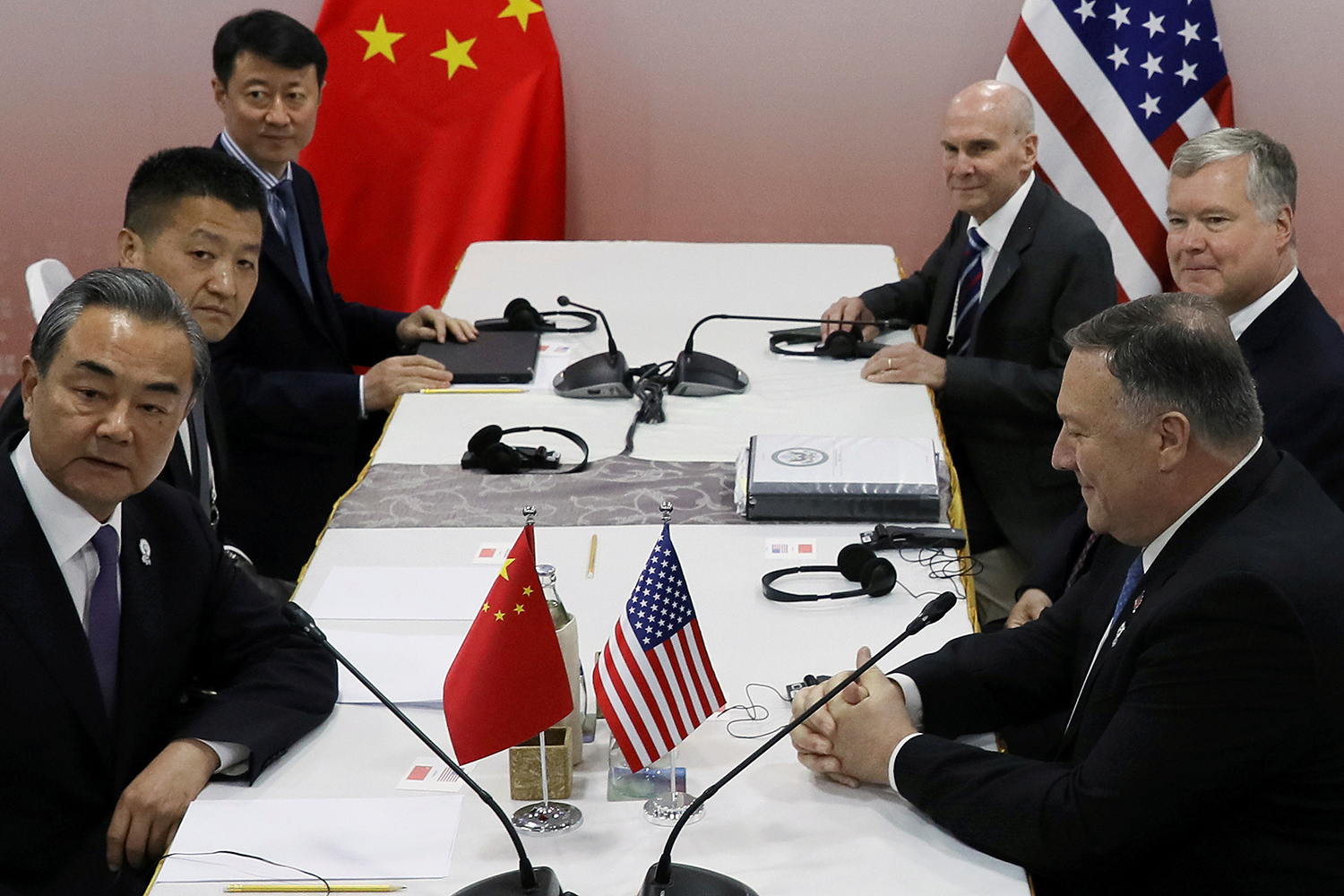

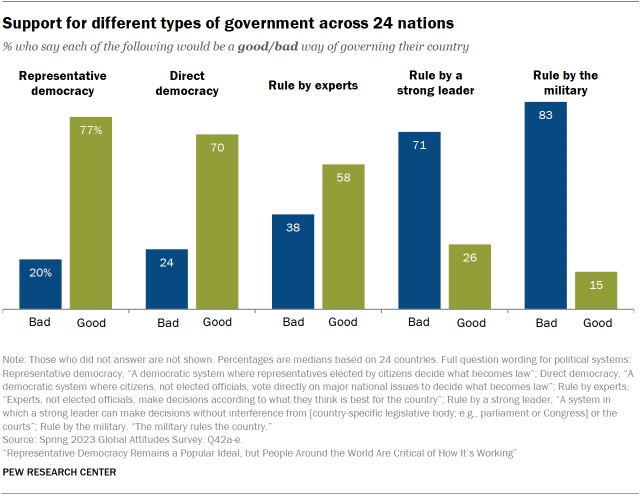 Views on representative democracy
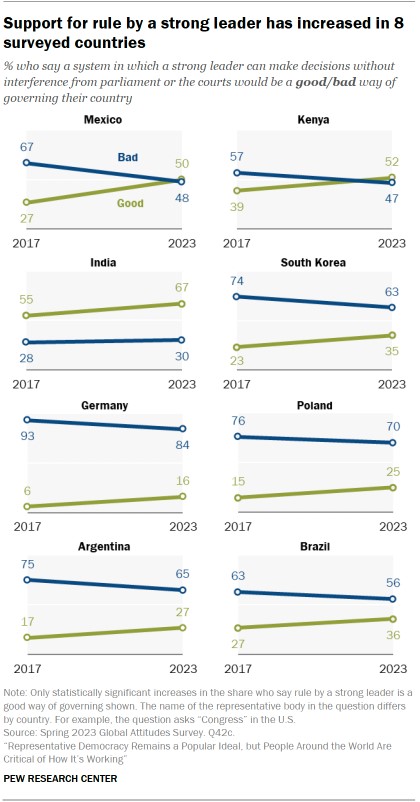 Support for a government where a strong leader can make decisions without interference from courts or parliaments has increased in eight of 22 nations since 2017.
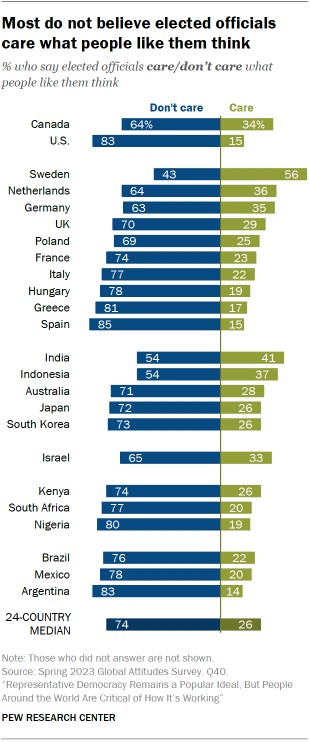 One factor driving people’s dissatisfaction with the way democracy is functioning is the belief that politicians are out of touch and disconnected from the lives of ordinary citizens.
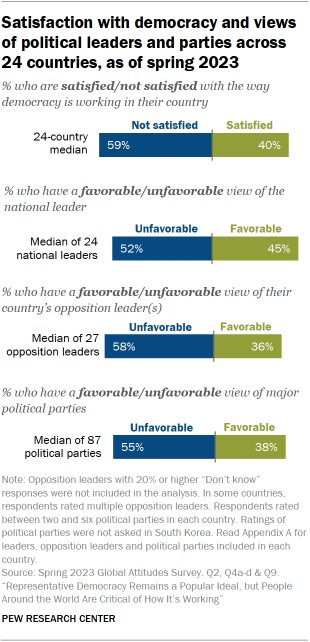 rate major national leaders and parties. Opinions on these questions may have shifted since the survey was conducted in spring 2023, but the overall results provide a relatively grim picture of the political mood in many nations. (Refer to
 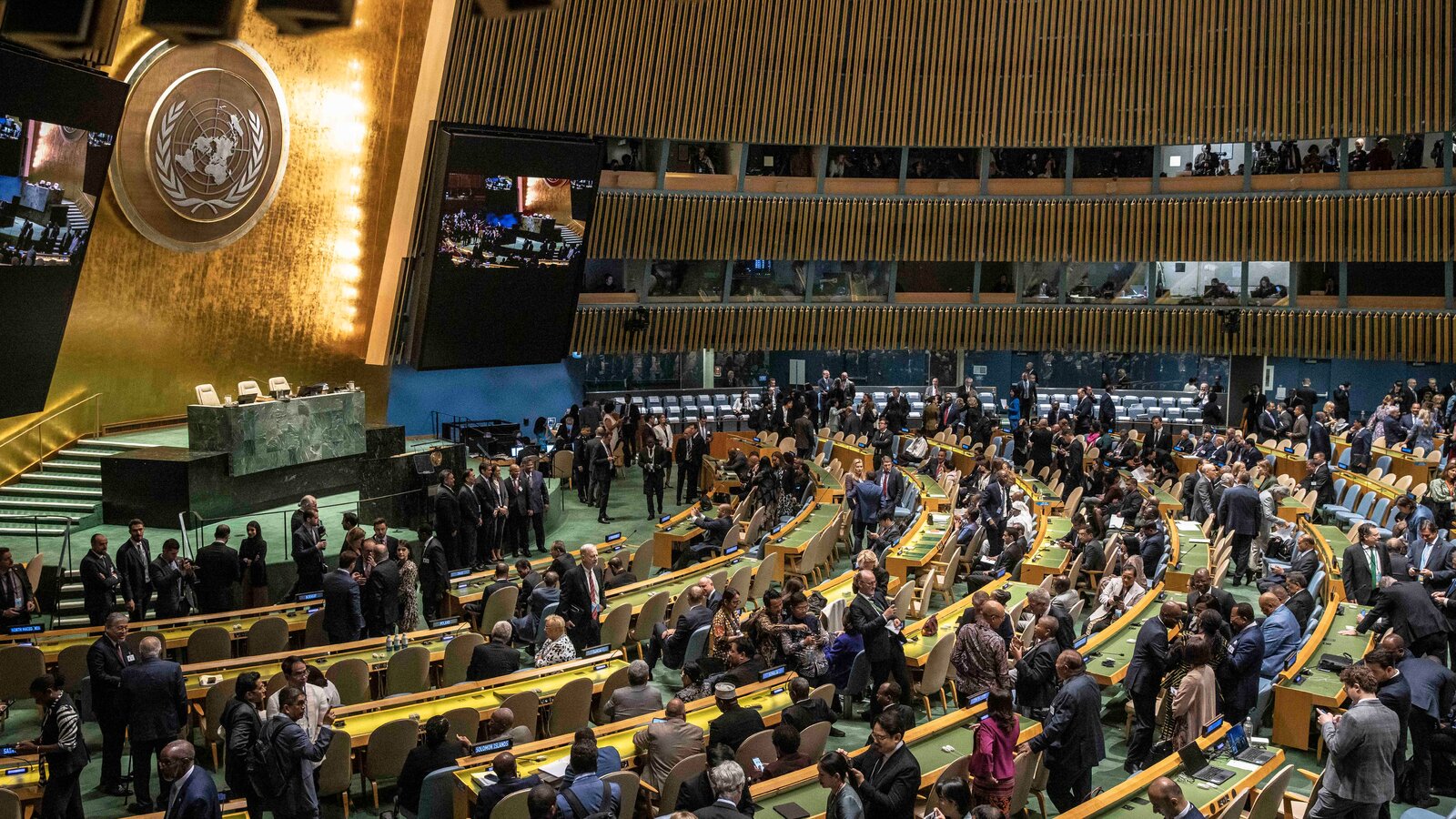 The criteria of Article 23 (1) should also apply to the election of the new permanent members: “due regard shall be paid, in the first instance to their contributions to the maintenance of international peace and security and to the other purposes of the Organization, and also to equitable geographical distribution”.
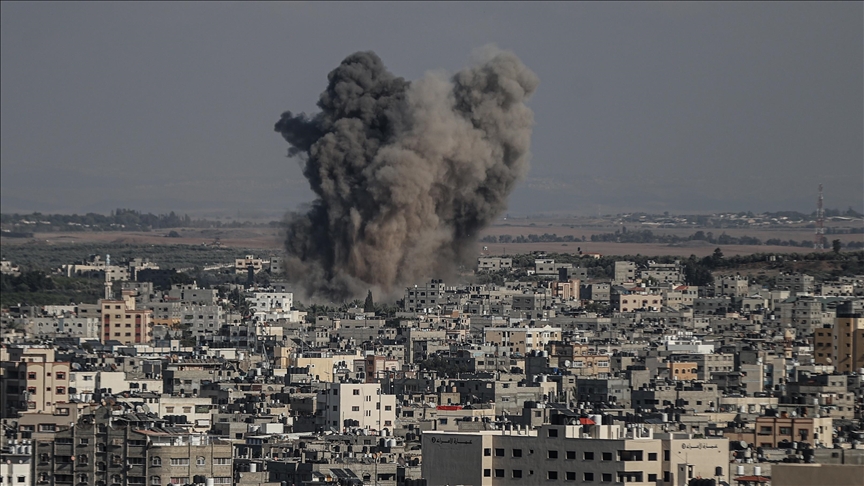 This unprecedented move comes after the Security Council’s delay in adopting a resolution supporting a ceasefire. In the letter, Guterres conveyed the grim reality of more than eight weeks of conflict, emphasizing the “appalling human suffering, physical destruction, and collective trauma across Israel and the Occupied Palestinian Territory.”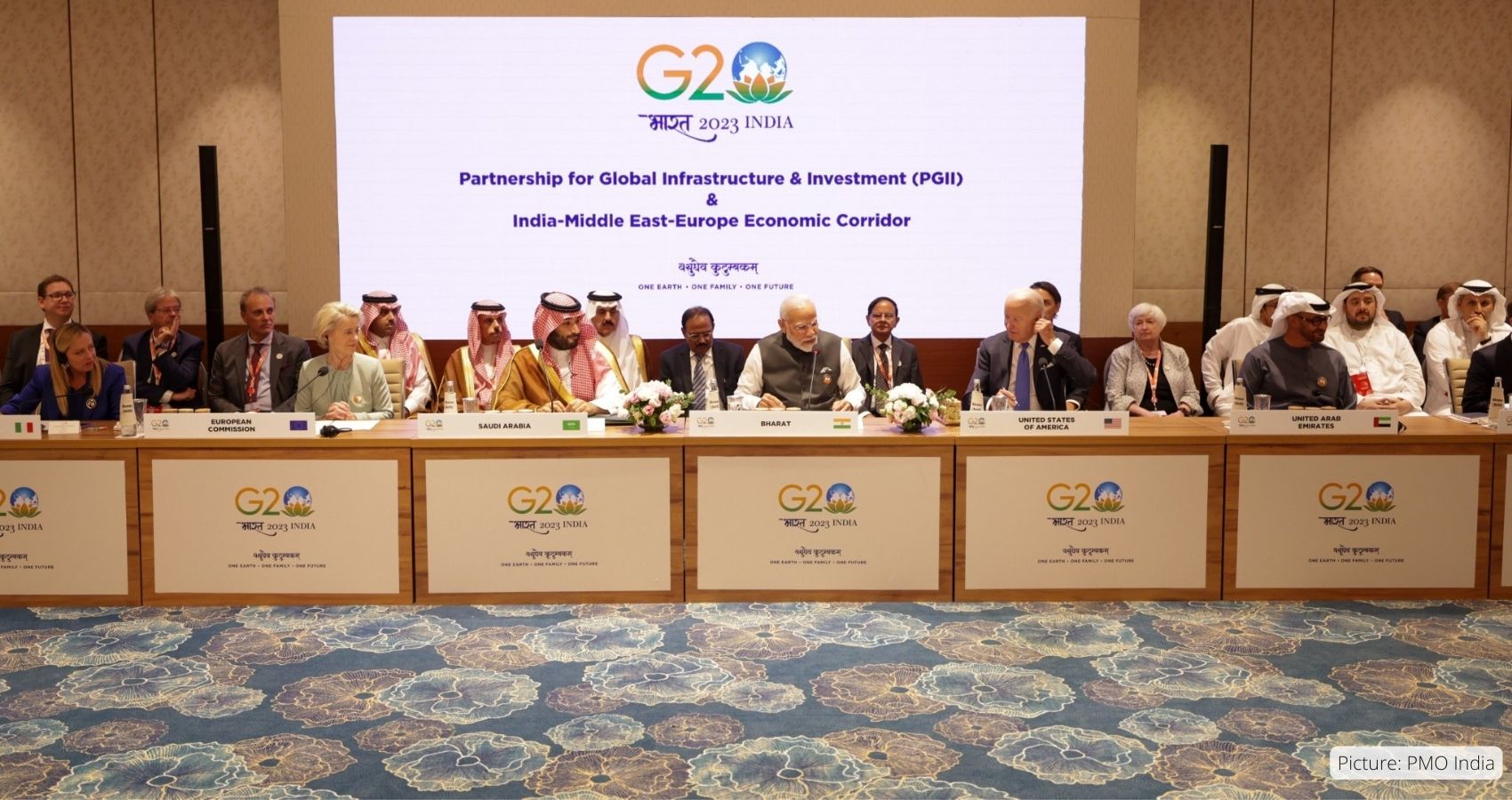
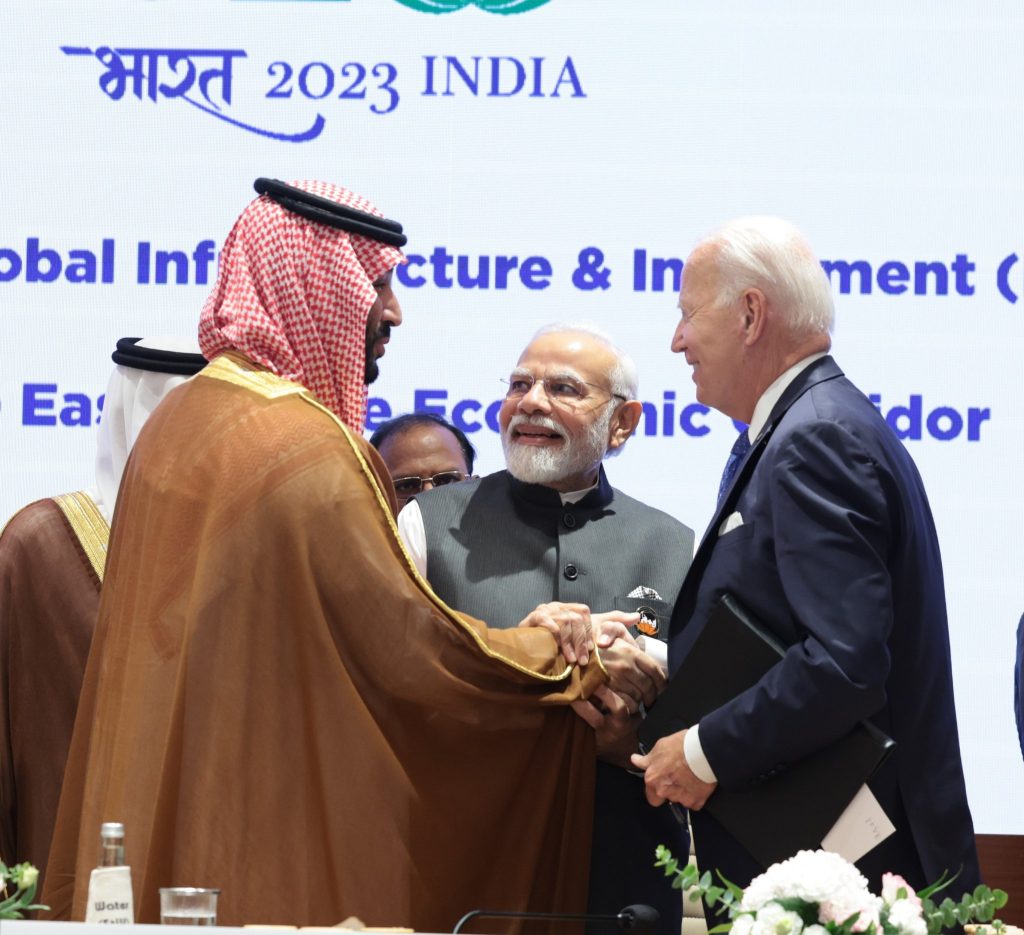
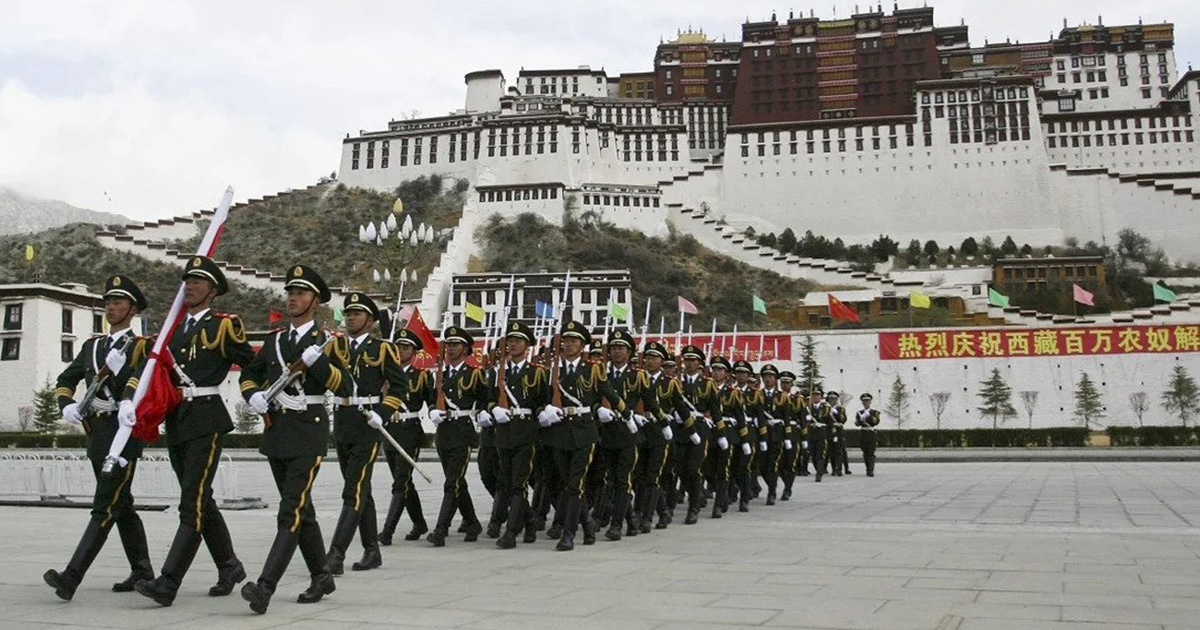 Additionally, the US could also explore activities to improve prospects for dialogue leading to a negotiated agreement on Tibet and coordinate with other governments in multilateral efforts towards the goal of a negotiated agreement on Tibet. Furthermore, it should encourage the Chinese government to address the aspirations of the Tibetan people regarding their distinct historical, cultural, religious and linguistic identity.
 Japan
Japan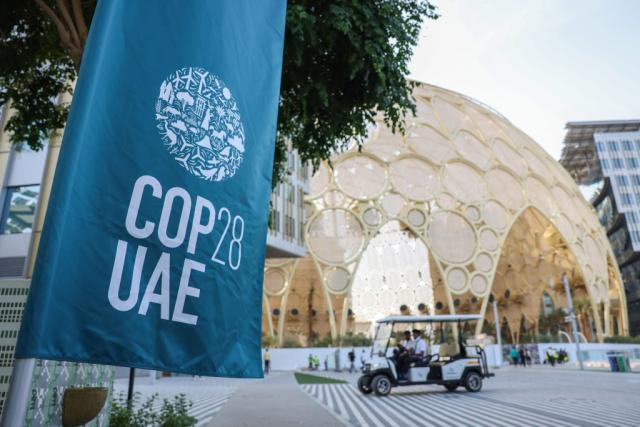
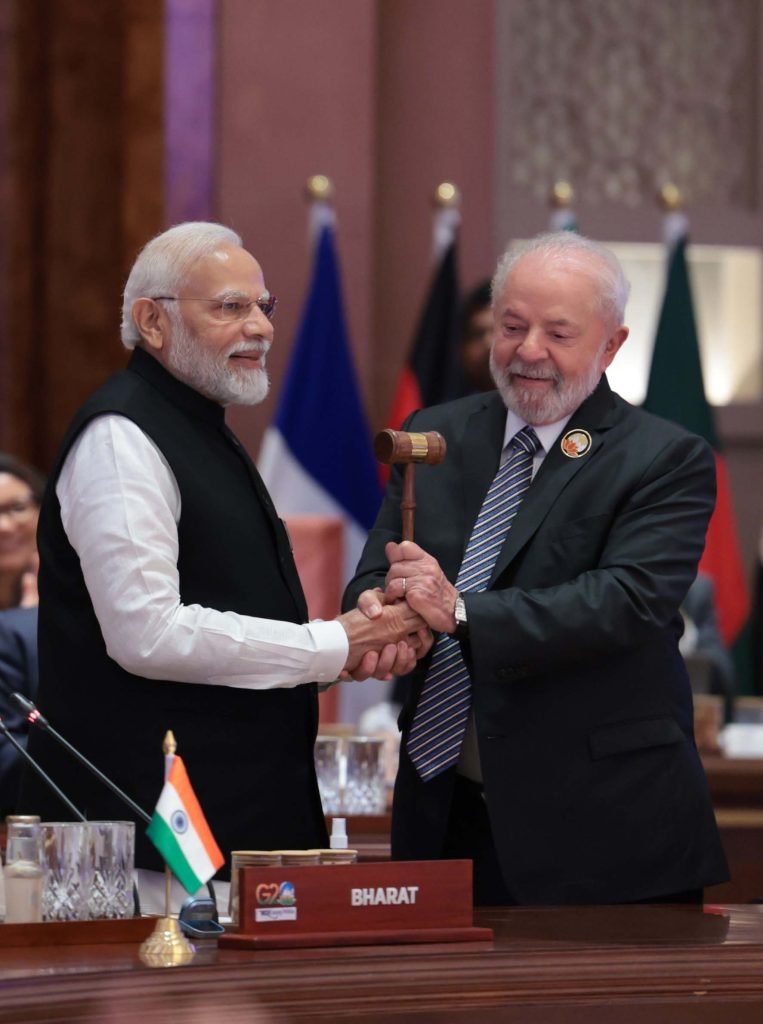 Inclusive, ambitious, action-oriented, and decisive—these four words defined our approach as G20 president, and the New Delhi Leaders’ Declaration (NDLD), unanimously adopted by all G20 members, is testimony to our commitment to deliver on these principles.
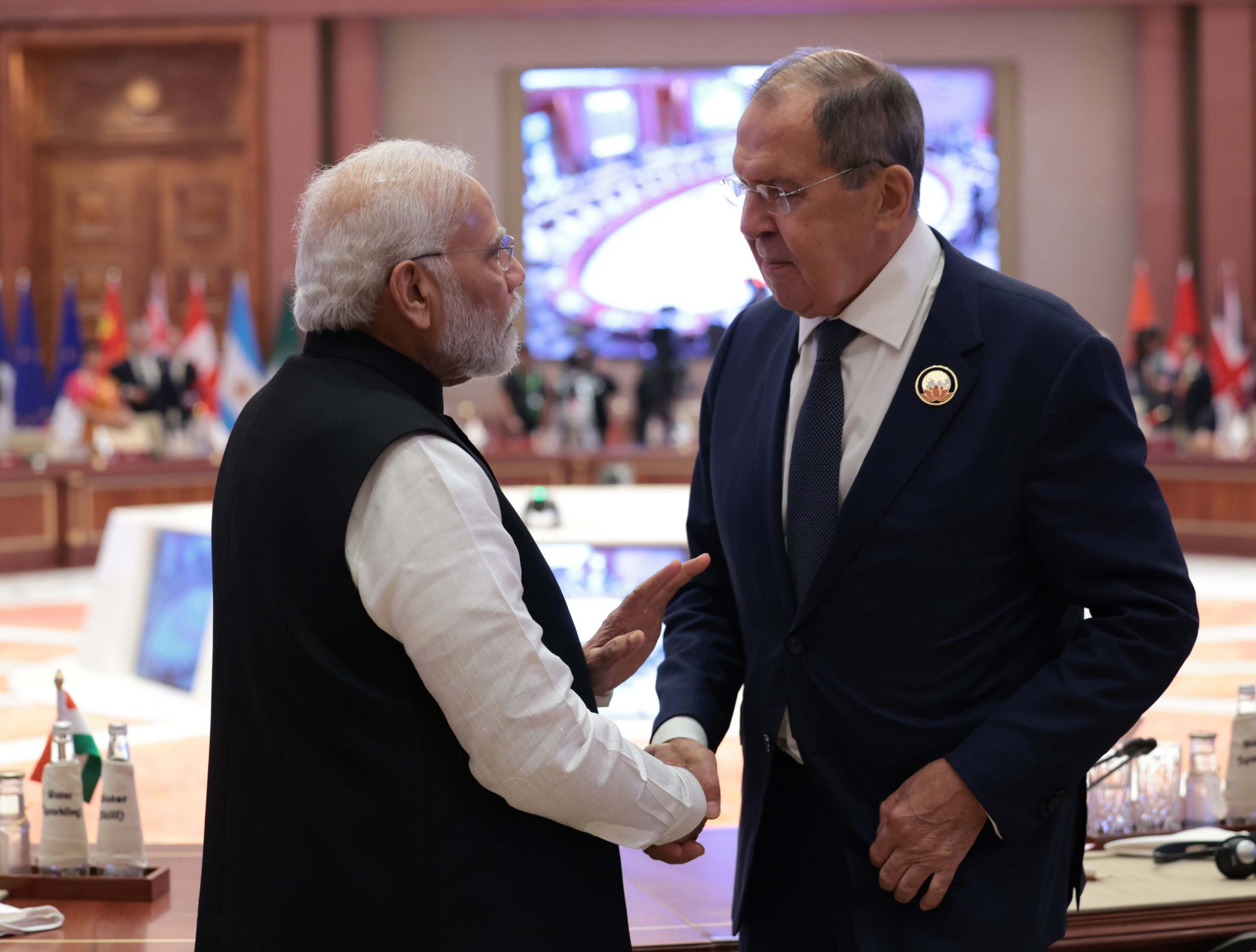 Given the monumental resources required, G20 emphasised the importance of better, larger, and more effective Multilateral Development Banks. Concurrently, India is taking a leading role in UN reforms, especially in the restructuring of principal organs like the UN Security Council, that will ensure a more equitable global order.
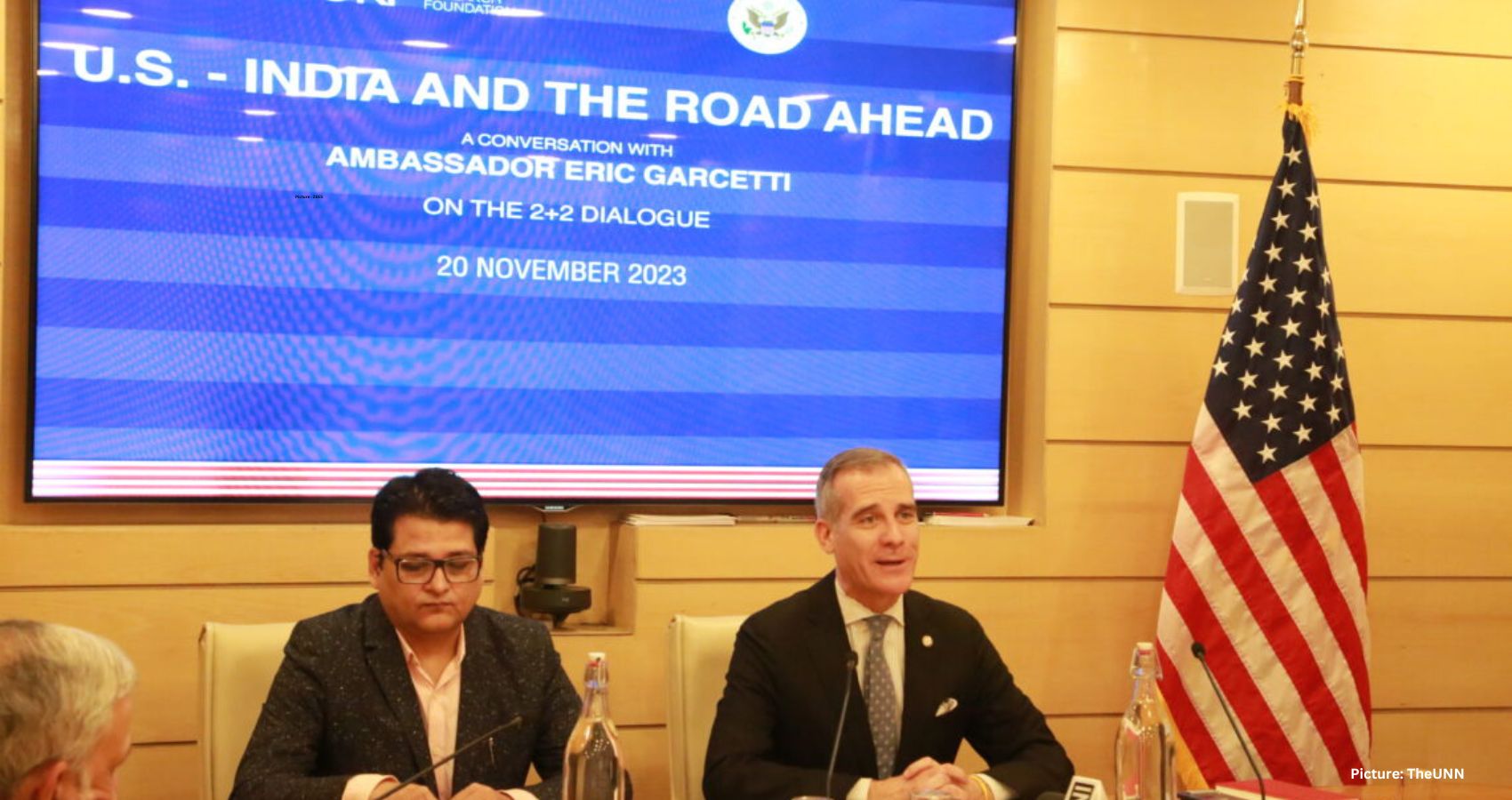 “On global issues, the ministers discussed the tragic humanitarian consequences of the conflict in Ukraine and in the Middle East, reiterating their stance with Israel against terrorism, but also seeking to alleviate civilian suffering and adherence to international humanitarian law,” he added.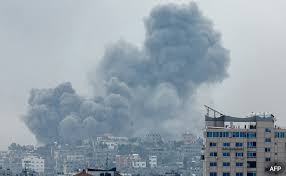
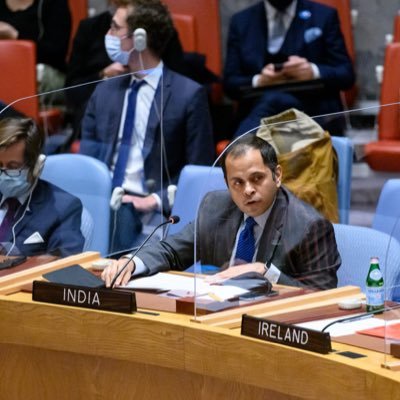
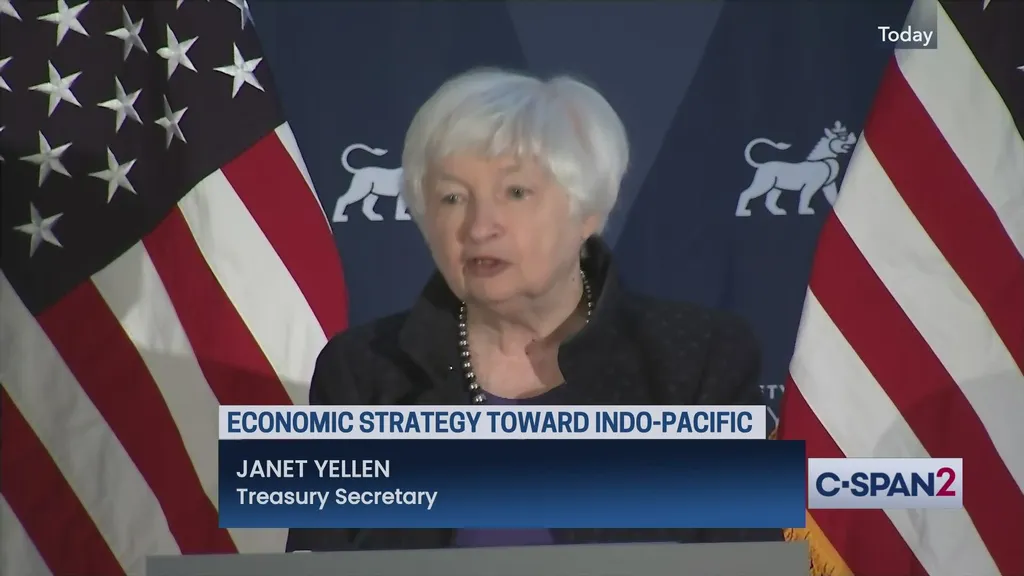 The Treasury Department in particular has played a key role in developing and implementing the Biden administration’s economic agenda in this vital region. She and her colleagues have clearly heard the voices in the region that have pressed the U.S. to augment our security presence with a robust economic agenda.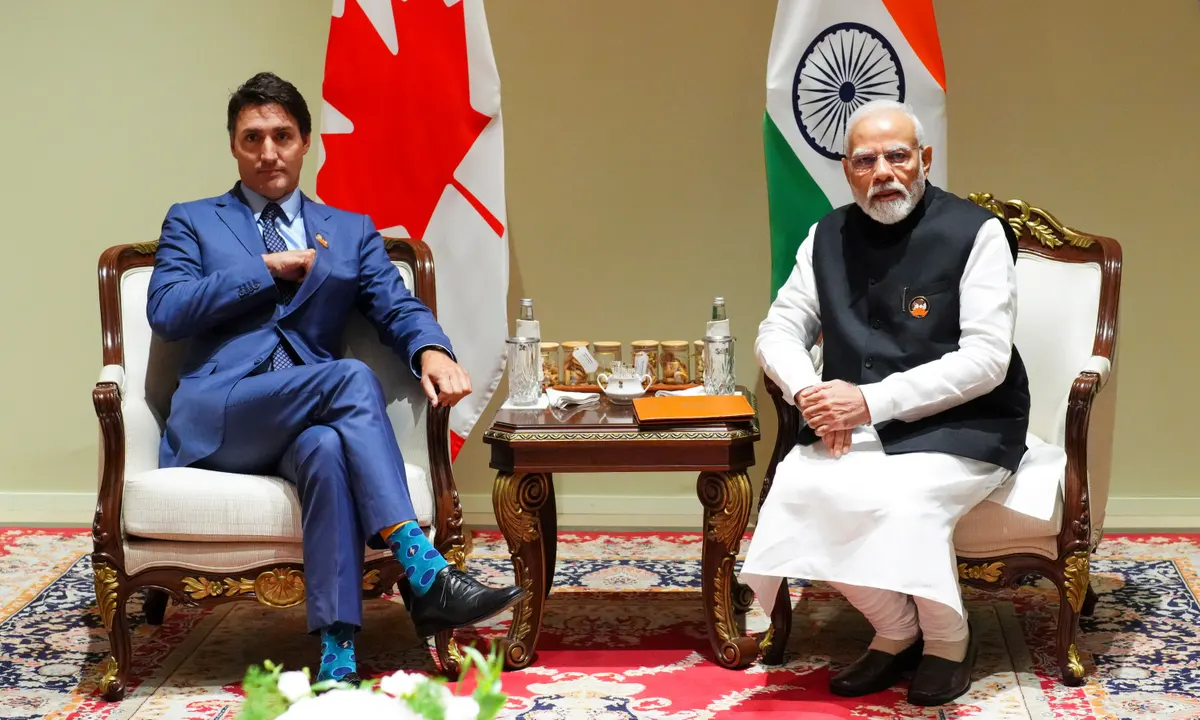
 “Travelling to all the 21 Chapters across the United States in 8 months after I assumed office, I was instrumental in achieving membership to newer heights with more than 700+ new members added in 2023. Two new Chapters were launched. IT Serve Alliance is led by highly talented individuals, phenomenally successful entrepreneurs, and Innovators who are enthusiastic about giving back to the community.” He strengthened STEM Education program by adding STEM Training and Internship programs and enhancing STEM scholarships program.”
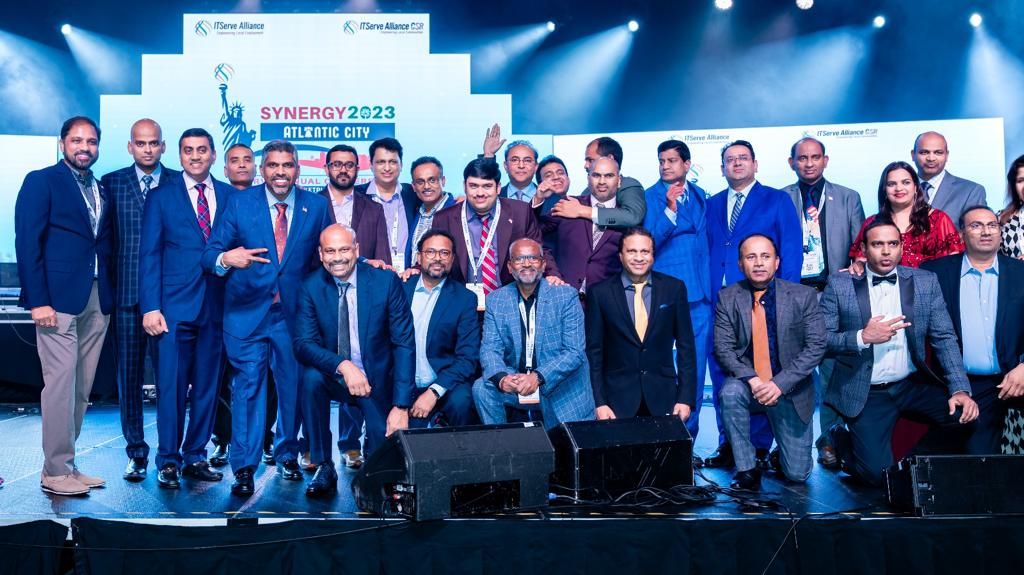 delivering innovative strategies, unique insights, and proven tactics for success, exclusively for IT service companies and individuals. Synergy 2023 focused on developing strategic relationships with our partner organizations, sponsors, and supporters to work for a better technology environment by building greater understanding.”
 Secretary of State Hillary Rodham Clinton, the Chief Guest at ITServe Alliance’s Synergy 2023, shared with the audience about her life and aspirations, expressed appreciation for the contributions of the high skilled immigrant community and urged them to play an active role in the society. Ms. Clinton, the 67th Secretary of State of the United States has dedicated over four decades of her life in public service, serving as an advocate, attorney, First Lady, and US Senator.
 to US immigration issues, she advocated for reforming our immigration system to attract the most talented individuals from around the globe. This, in turn, would drive innovation and foster growth in our nation. Additionally, she advocated for a bipartisan approach to address this issue.
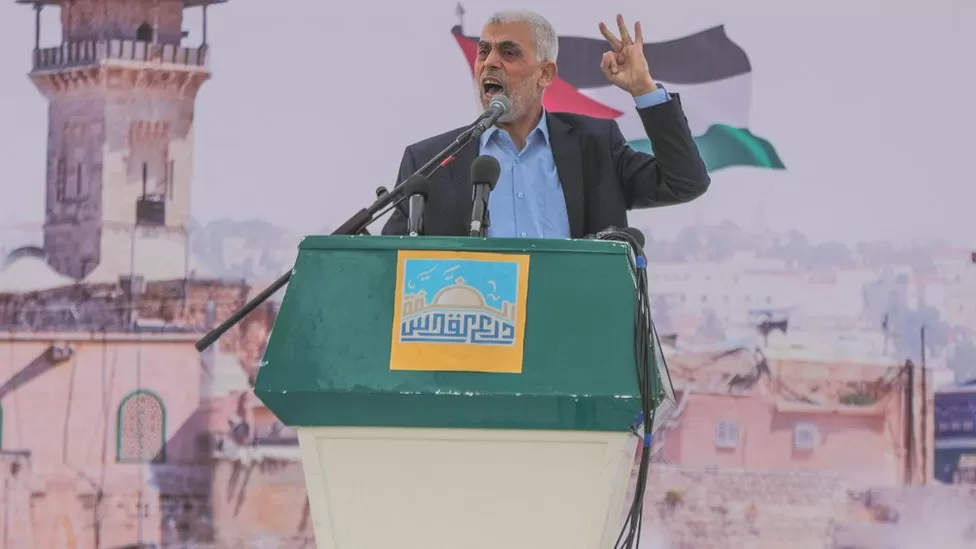
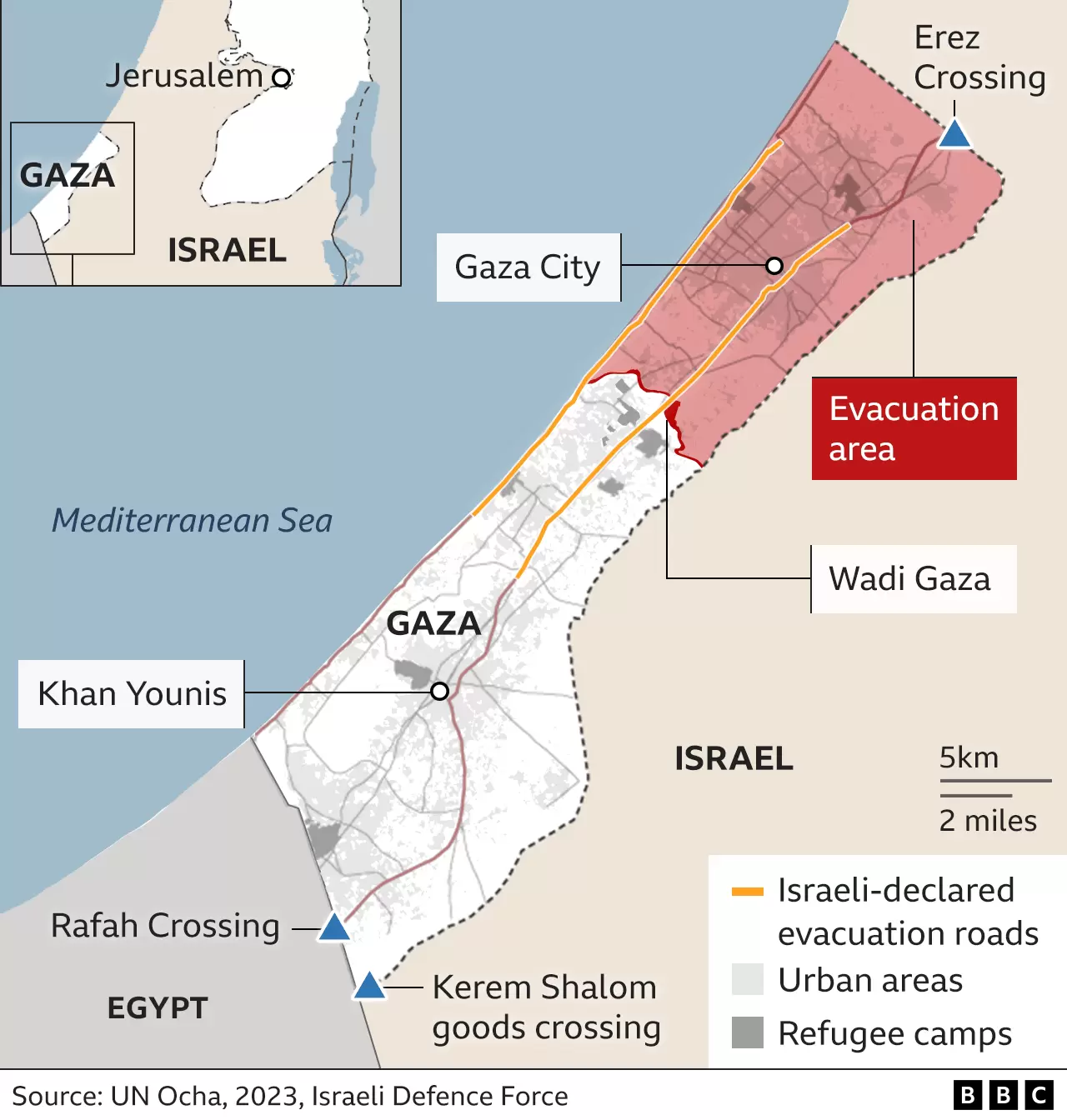
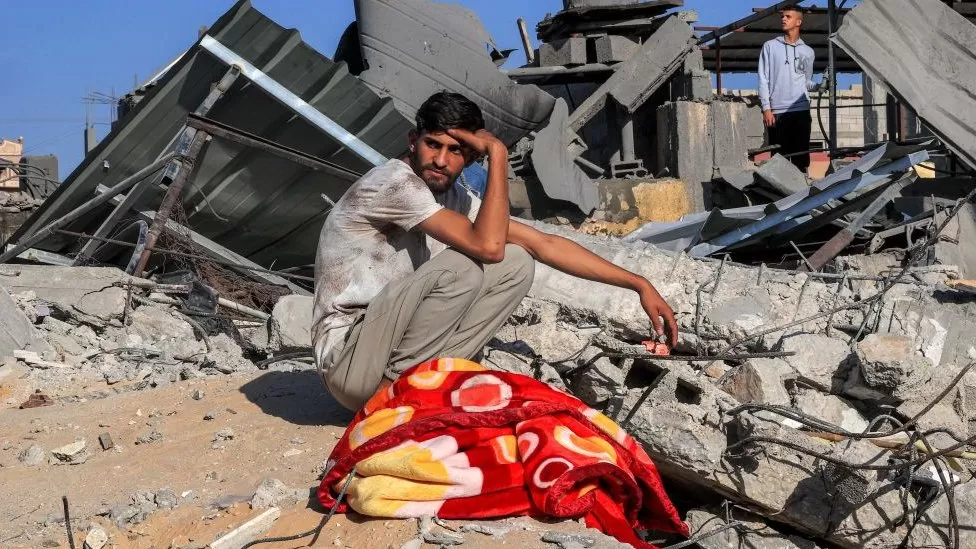

 India, in its approach, intends to persist in resisting the pressure from developed economies to establish a concrete deadline for phasing down the use of fossil fuels. Instead, it is advocating for a shift in focus towards reducing overall carbon emissions through the use of “abatement and mitigation technologies.” These insights were provided by the two officials, and a third government official, who opted to remain anonymous as these discussions are confidential, and a definitive stance has not yet been established.
 In response to the escalating crisis, Israel has formed an emergency unity government, with Prime Minister Benjamin Netanyahu working alongside former Defense Minister Benny Gantz in a war cabinet.
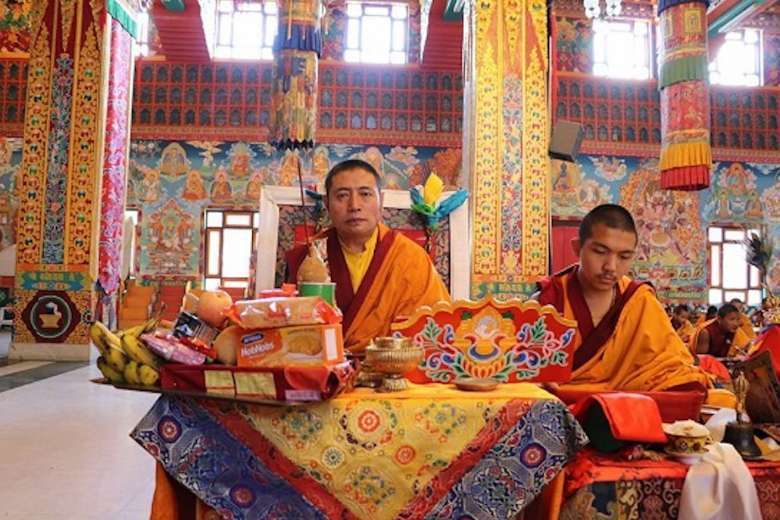 The veneration of the Dalai Lama has created a challenging situation for the Mongolian government. Mongolia heavily relies on China for virtually all its trade, which puts them in a vulnerable position. Beijing responded to the Dalai Lama’s 2016 visit to Mongolia by closing border crossings, imposing tariffs, and canceling bilateral talks, signaling the consequences of any association with the spiritual leader in the eyes of China.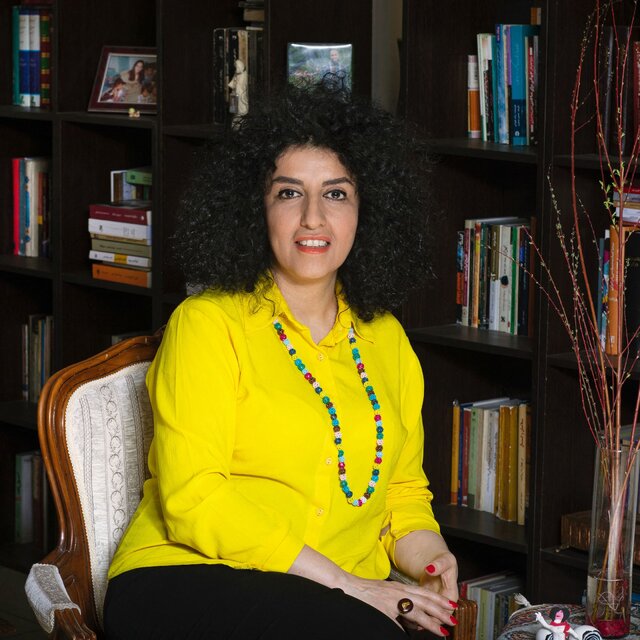
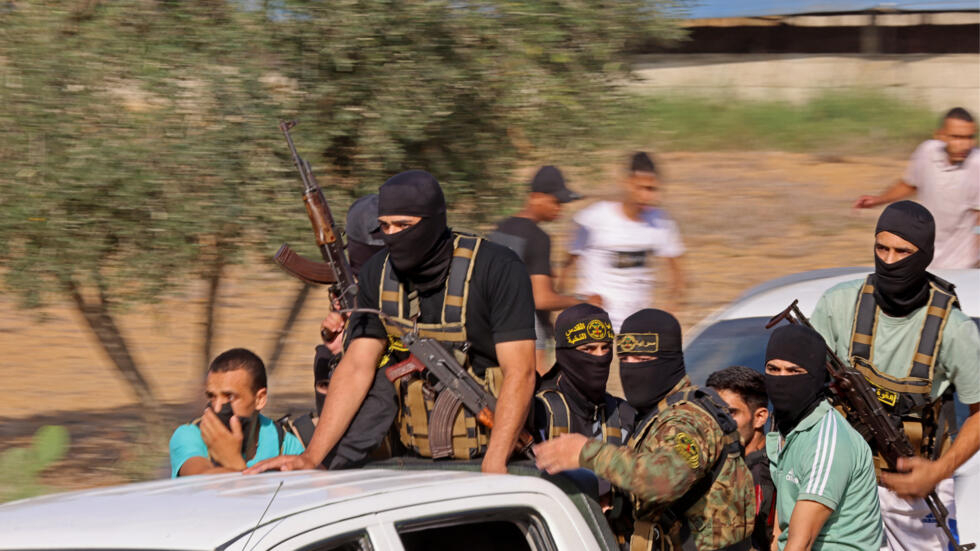
 The Amir of Qatar expressed this sentiment to the General Assembly, stating, “A long-term truce has become the most looked-for aspiration by people in Europe and all over the world. We call on all parties to comply with the UN Charter and international law and resort to a radical peaceful solution based on these principles.”
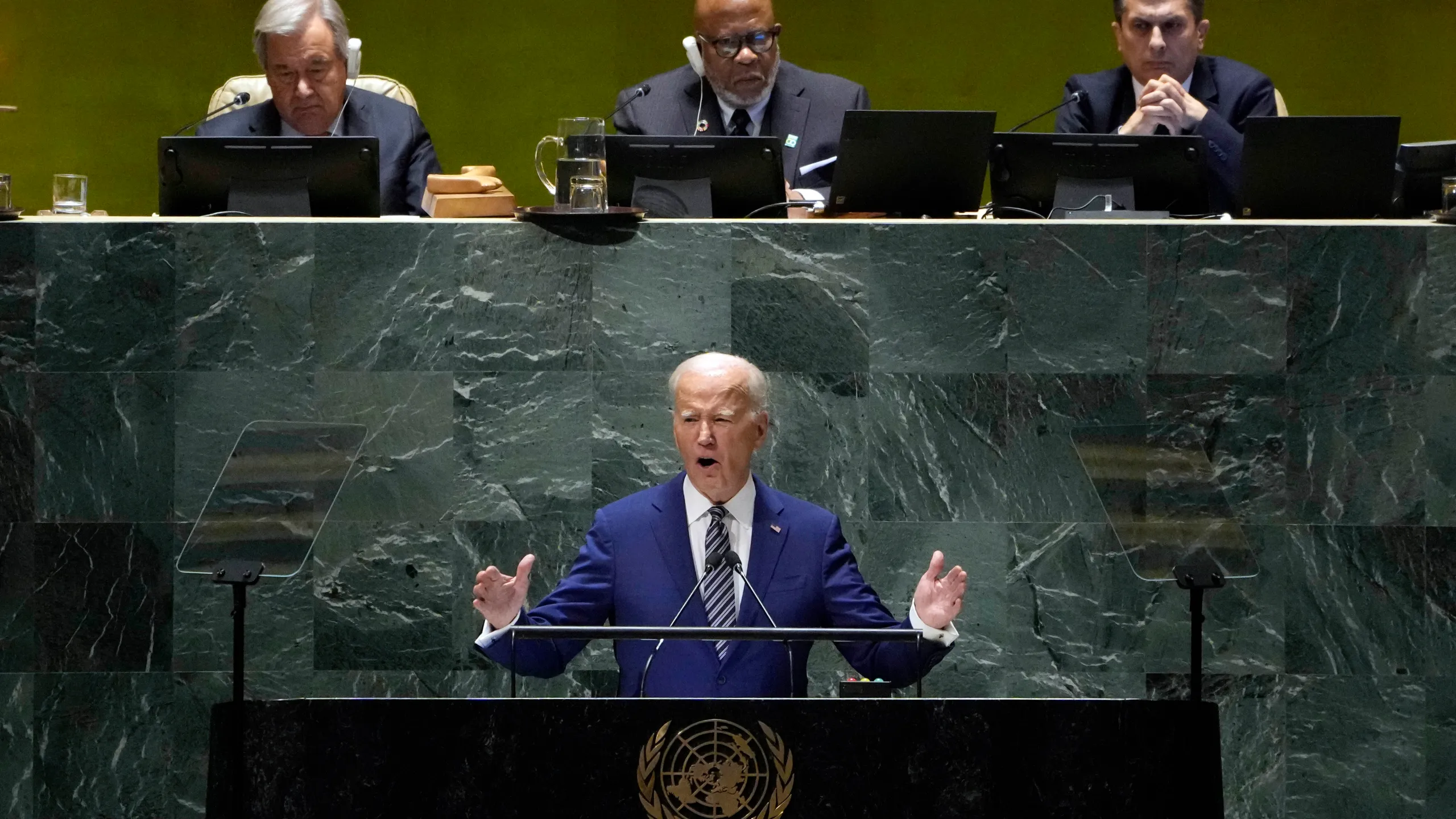
 On the way forward, Nagarwal urged the G-20 leaders by saying, “I would appreciate if the G-20 secretariat established an observatory commission to investigate reports of hate and targeted violence against ethnic and vulnerable groups and submit progress reports to member states on a regular basis. The adoption of collective action sends a powerful message of unity, solidarity, and hope to the people of Indian society who have endured the burdens of hate crimes, discrimination and Islamophobic violence for far too long.”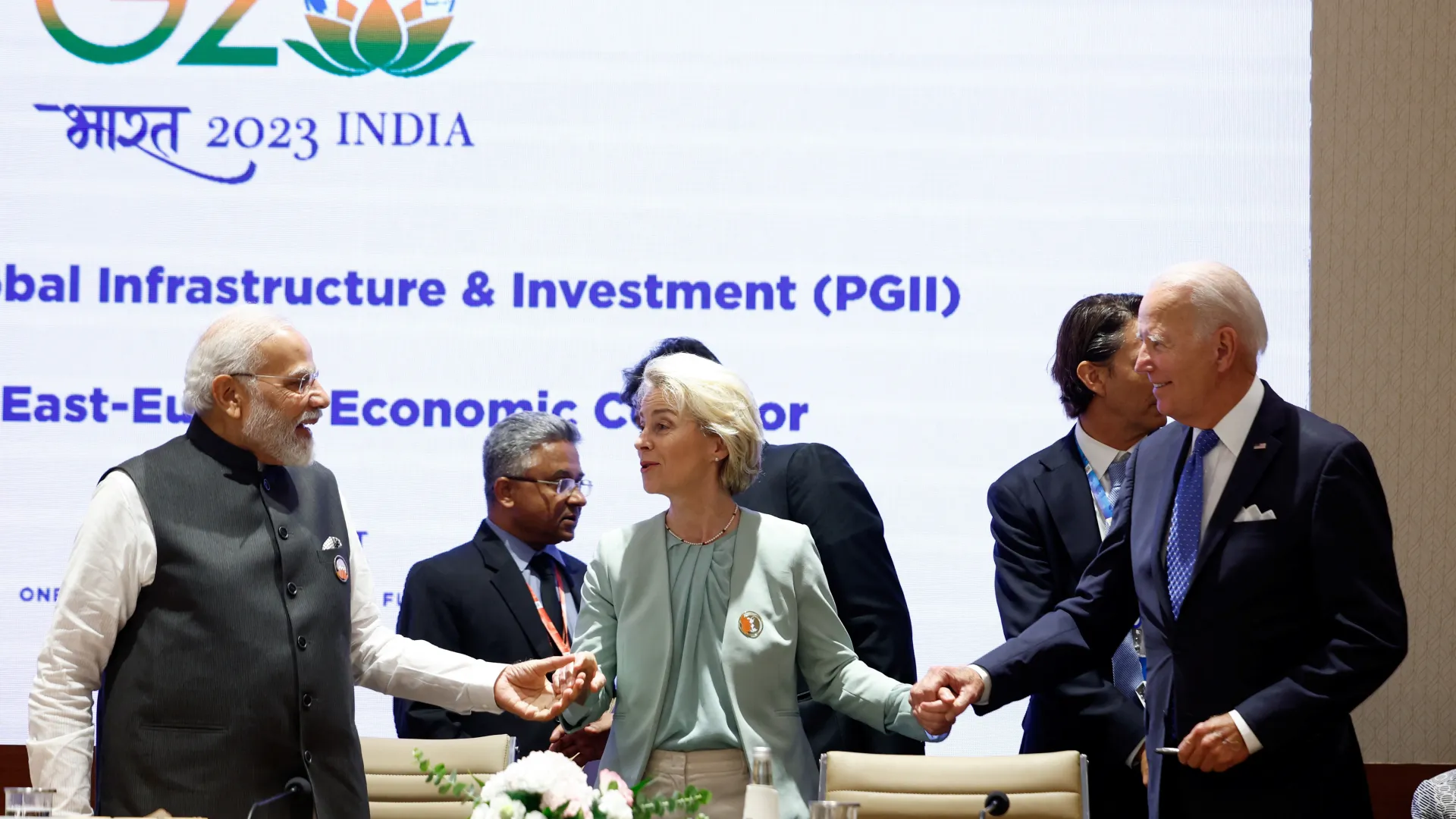
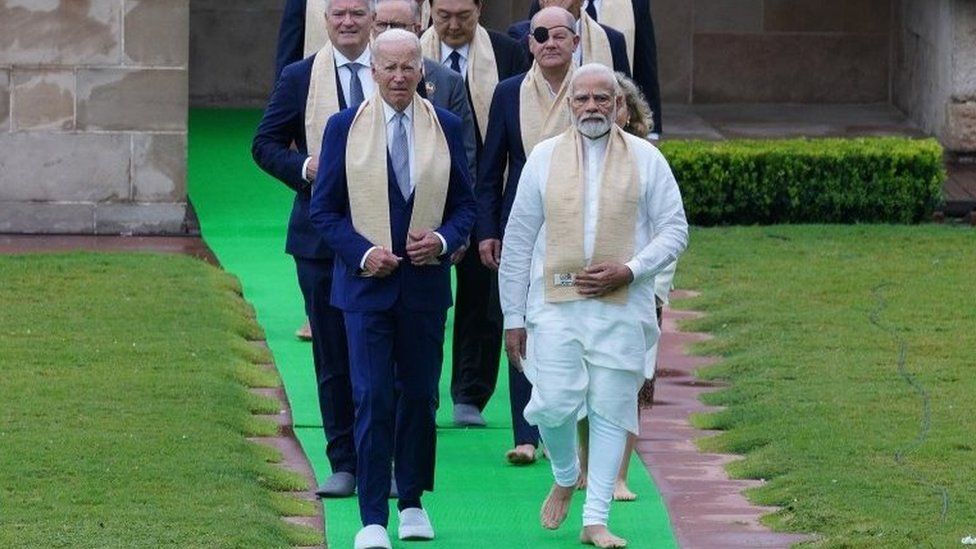
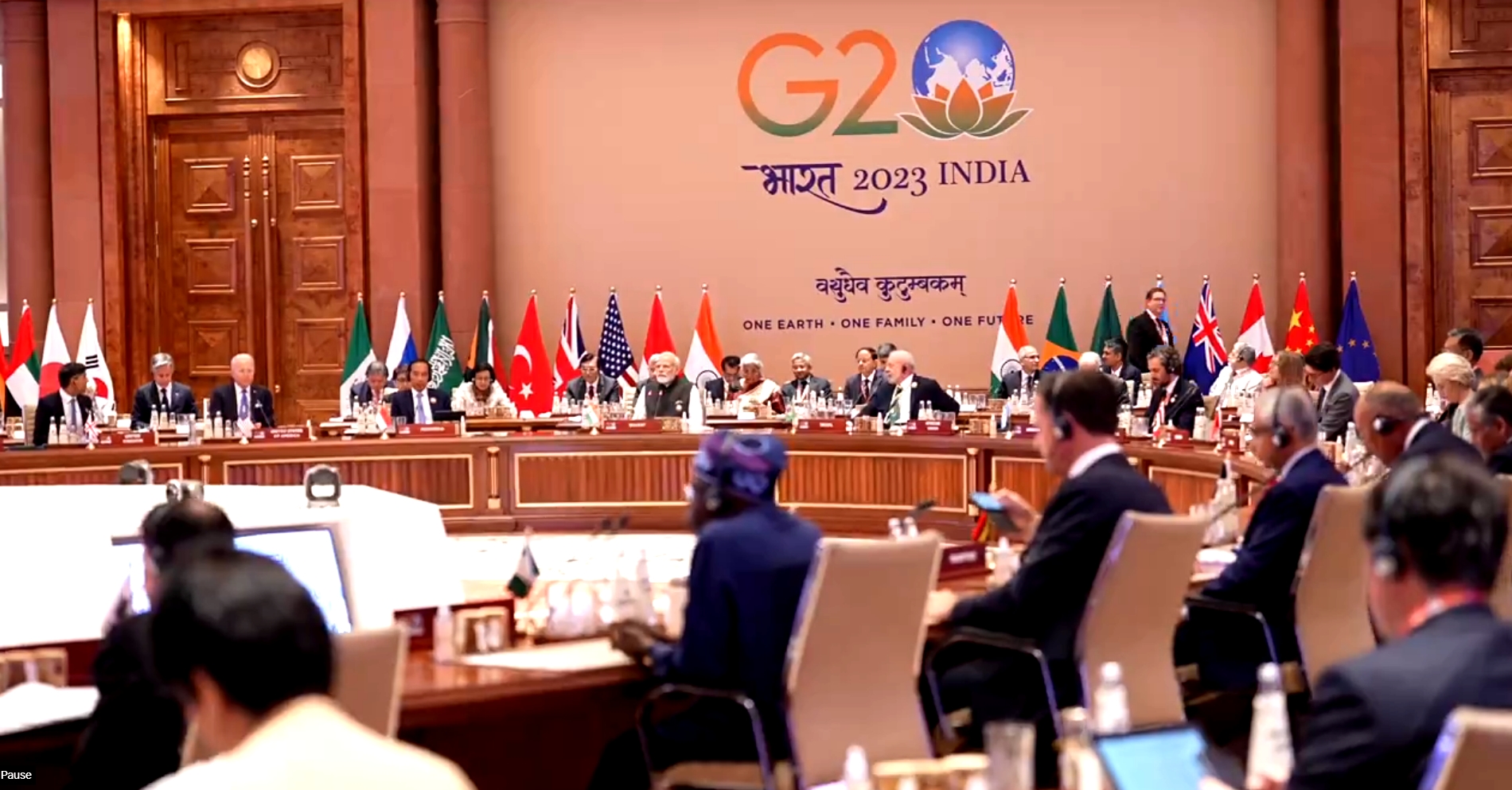
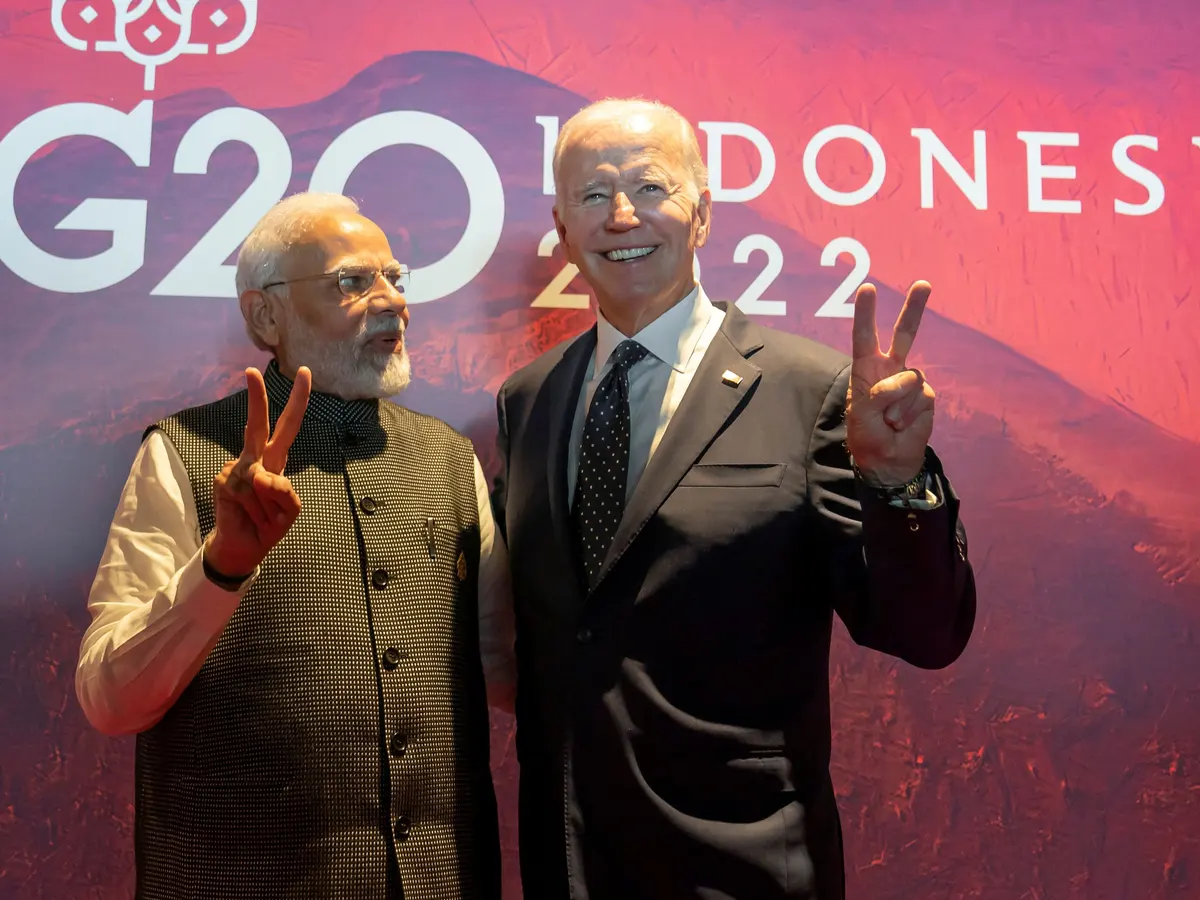
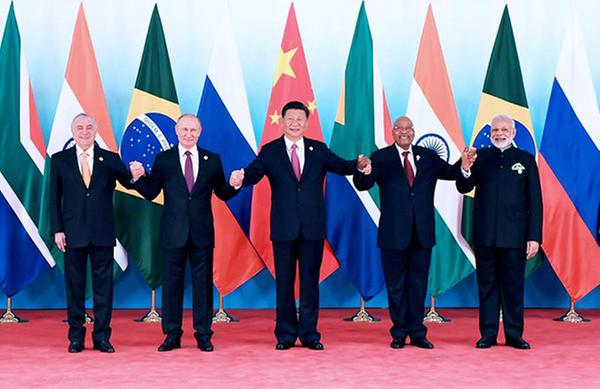
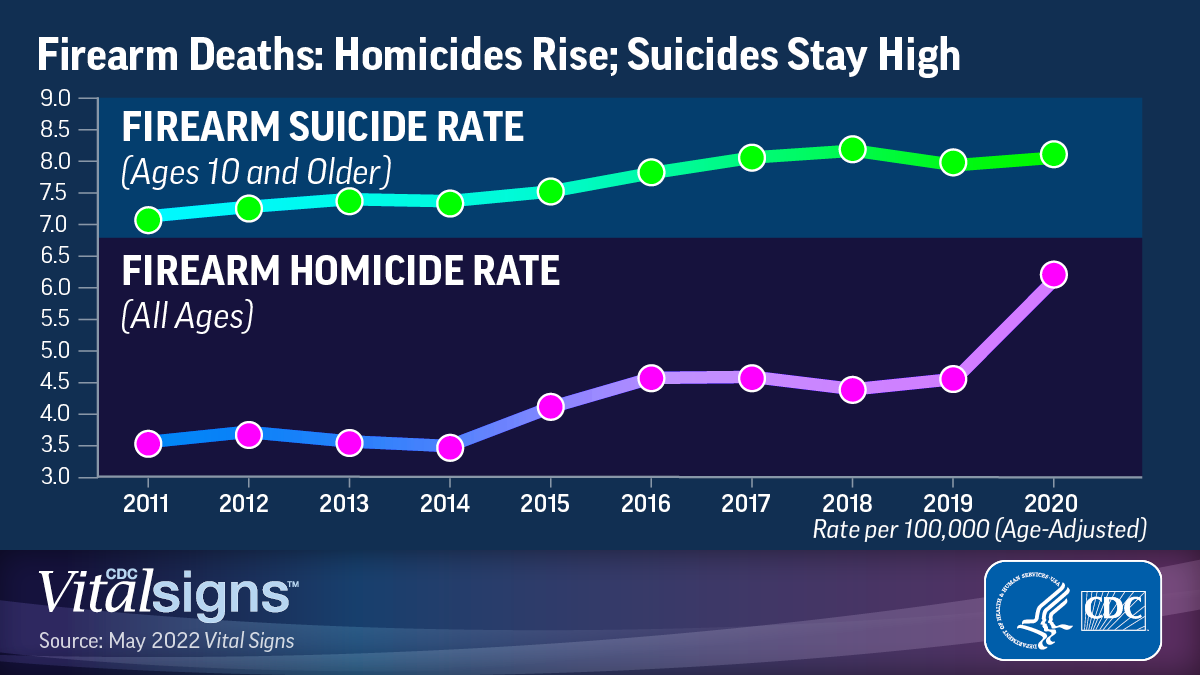
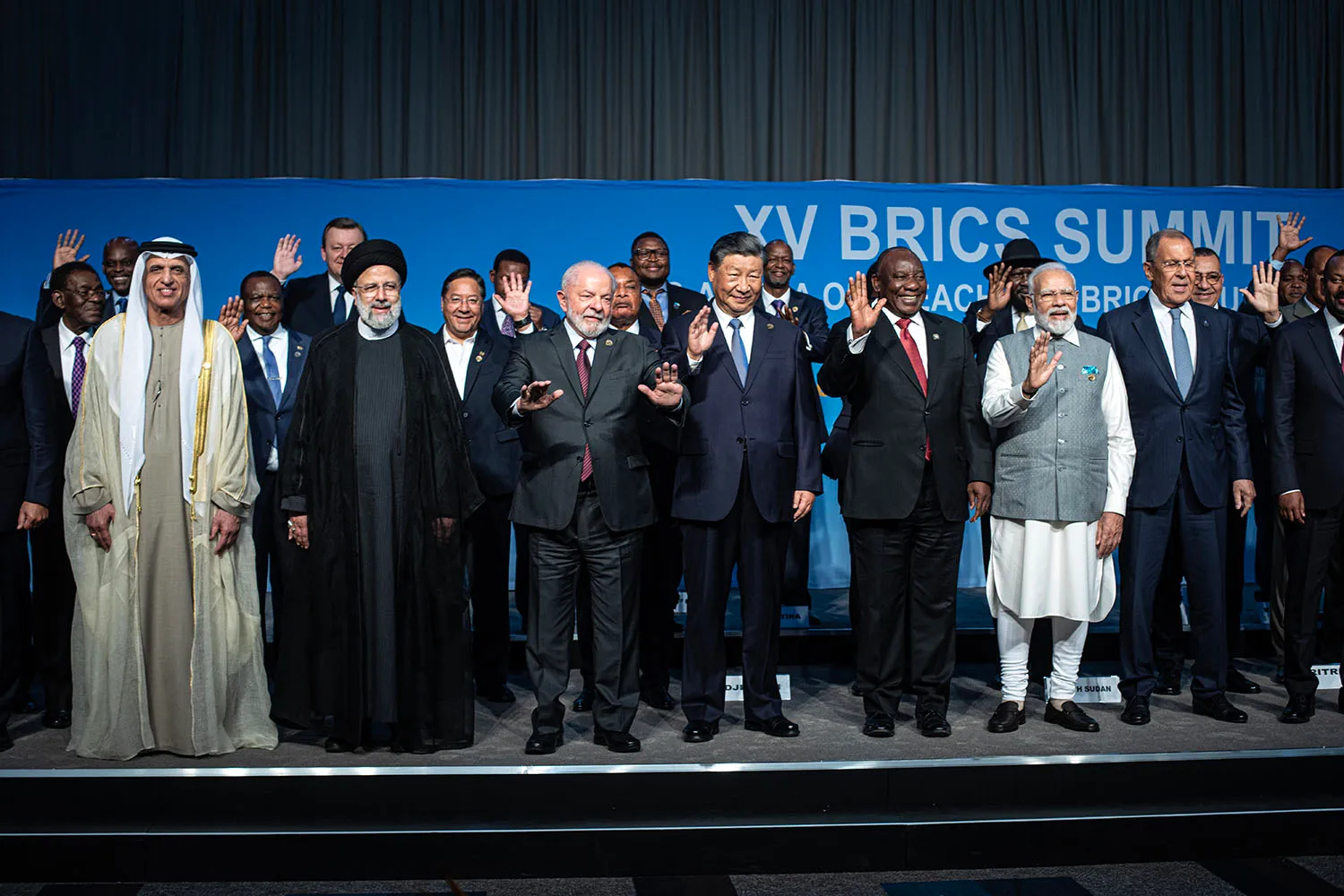
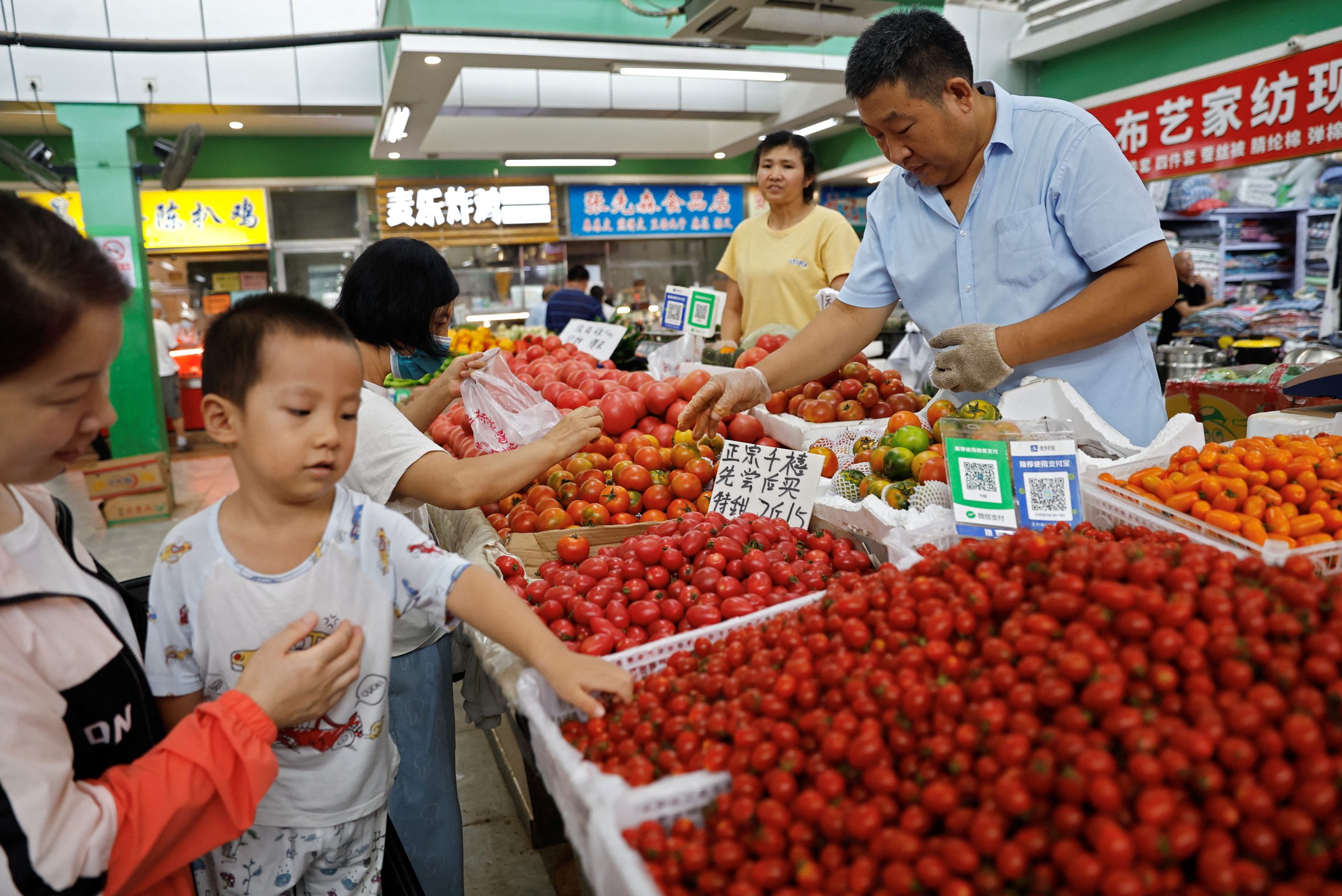
 The committee, headed by Public Service Commission chairman Lee Tzu Yang and two Supreme Court judges, found that all three men were of integrity, good character and reputation.
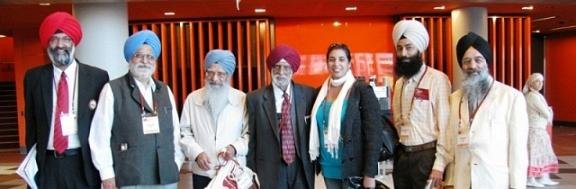
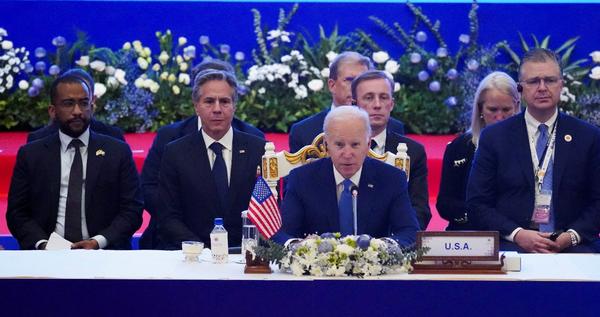
 The ongoing ethnic/religious violence in the northeastern Indian state of Manipur and the lack of adequate response from the state have been condemned by people and organizations around the world.