FBI Assists in Dismantling AI-Driven Phishing Operation

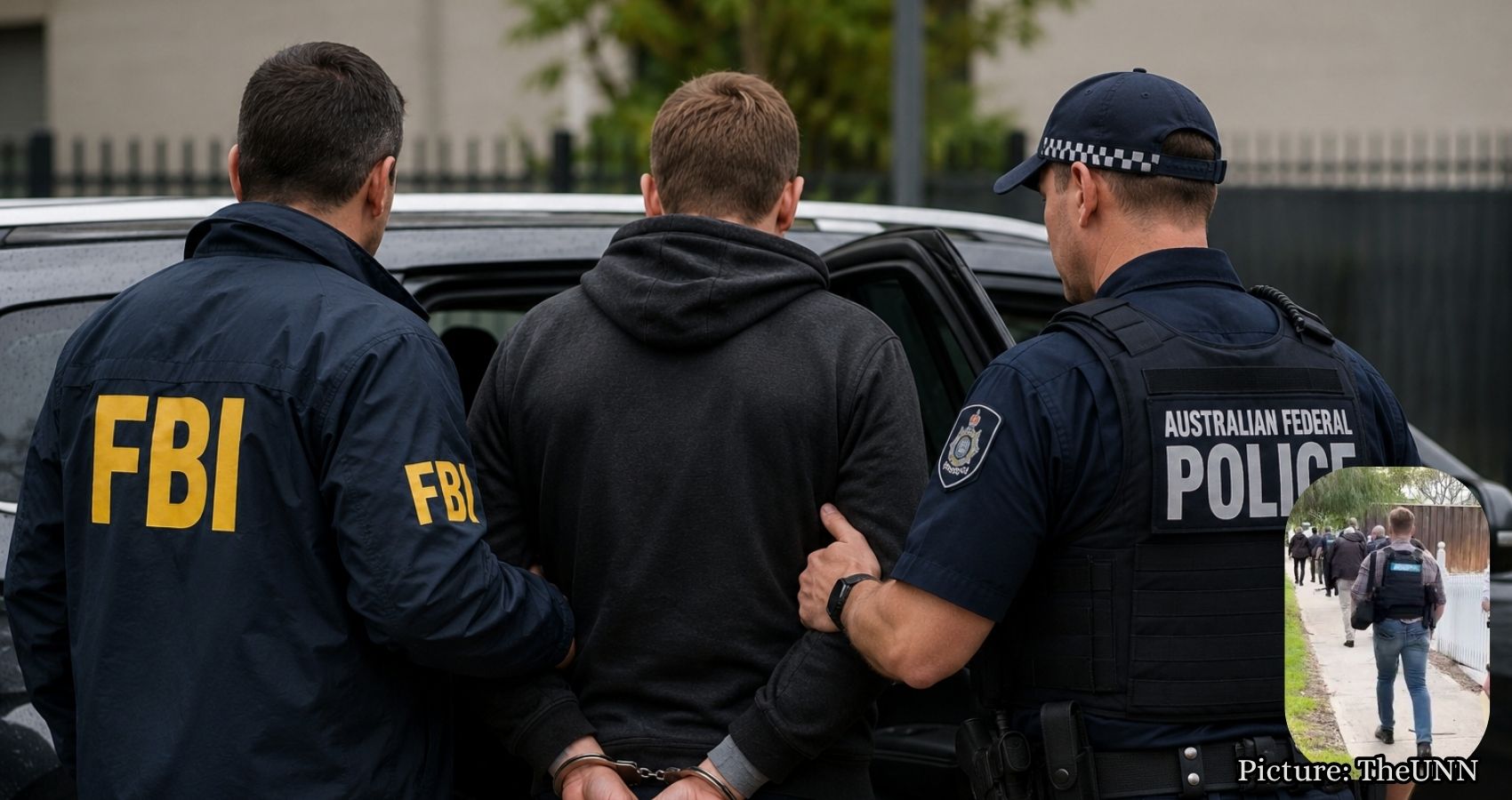
The FBI and Google have successfully disrupted Outsider Enterprise, a sophisticated phishing-as-a-service operation based in China, linked to millions of stolen credit cards and significant financial losses.

The FBI, in collaboration with Google and Black Lotus Labs, has taken significant action against Outsider Enterprise, a China-based phishing-as-a-service operation that has been linked to approximately 3.87 million stolen credit cards and an estimated $1.9 billion in losses. This operation has raised alarms due to its professional and polished approach to scamming unsuspecting individuals.

Phishing scams often begin with seemingly innocuous text messages about package deliveries, toll bills, or account issues. These messages may appear harmless at first glance, especially when they feature familiar brand names. However, a quick tap on such links can lead victims directly into a sophisticated scam funnel.

Outsider Enterprise operated like a criminal software business, providing tools and infrastructure that enabled other criminals to execute scams. Instead of relying on individual scammers to craft poorly written messages, this operation offered phishing kits and fake websites that impersonated trusted brands. Google reported that the network was associated with over 9,000 fake websites and more than 1 million fraudulent URLs, all designed to deceive individuals into entering sensitive information such as credit card numbers and passwords.

The scams typically began with text messages that appeared to come from major wireless carriers, delivery services, or other well-known companies. This familiarity is what makes these attacks particularly dangerous, as they often arrive in the same messaging channels where individuals receive legitimate alerts from their banks or service providers.

Artificial intelligence (AI) played a crucial role in enhancing the efficiency and effectiveness of Outsider Enterprise’s operations. In a civil lawsuit filed in federal court in New York, Google alleged that the phishing kits utilized AI tools, including Gemini, to create fraudulent sites and scam content. This technological advantage allowed scammers to produce cleaner messages and more convincing websites, significantly increasing the speed and scale of their operations.

According to Google, during a two-week period in May, approximately 2.5 million messages were sent to Android users from Outsider Enterprise’s infrastructure, with 55,000 of those messages flagged as fraudulent by users. Brett Leatherman, Assistant Director of the FBI’s Cyber Division, noted that the infrastructure was tied to a staggering number of stolen credit cards, underscoring the organized nature of this criminal enterprise.

The takedown of Outsider Enterprise involved both technical and legal actions, referred to as Operation Ghost Hook. This initiative was part of a broader FBI campaign known as Operation Riptide, aimed at disrupting various cybercrime operations. The FBI and its partners seized administration servers, phishing domains, a Shopify storefront, and approximately $100,000 from payment wallets associated with the operation.

In addition to the legal actions, Google is actively working with major telecommunications companies, including AT&T, T-Mobile, and Verizon, to block fraudulent messages before they reach subscribers. The company has also implemented Android protections designed to detect suspicious calls and block malicious messages, although no filter is foolproof.

Phishing scams often exploit moments of distraction. Individuals may receive messages while preoccupied with work or personal tasks, prompting them to react quickly without fully questioning the legitimacy of the message. Scammers rely on this split-second panic to lure victims into their traps.

To protect against these types of scams, individuals are advised to treat unexpected links as warning signs, even if the message appears official. It is safer to navigate directly to the company’s app or website rather than clicking on links. Users should also carefully examine domain names before entering sensitive information, as scam sites may contain slight variations that can easily go unnoticed.

Legitimate companies typically do not request sensitive information, such as one-time codes or credit card numbers, via text. If a message requests such information, it is advisable to assume it is a scam. Additionally, utilizing spam protection features on mobile devices can help filter out suspicious texts before they reach the main inbox.

Implementing strong passwords and enabling two-factor authentication (2FA) on important accounts can further enhance security. Regularly monitoring accounts for unauthorized charges and considering a credit freeze can also help mitigate potential damage from identity theft.

While the disruption of Outsider Enterprise is a significant victory in the fight against cybercrime, experts caution that scammers will continue to evolve. The increasing sophistication of phishing scams, aided by AI, poses a persistent threat to individuals. Therefore, it is crucial for users to remain vigilant and exercise caution when interacting with unexpected messages or links.

As the battle against cybercrime continues, it is essential to stay informed and proactive in protecting personal information. For further insights and updates on cybersecurity, individuals can visit Cyberguy.com.

According to Google, the disruption of Outsider Enterprise highlights the ongoing challenges posed by organized cybercrime and the need for continued vigilance in safeguarding personal information.

U.S.-Iran Preliminary Agreement at G7 Summit Addresses Nuclear and Strait of Hormuz Concerns

A preliminary agreement between the United States and Iran was announced at the G7 summit, aiming to reopen the Strait of Hormuz and address concerns over Iran’s nuclear program.

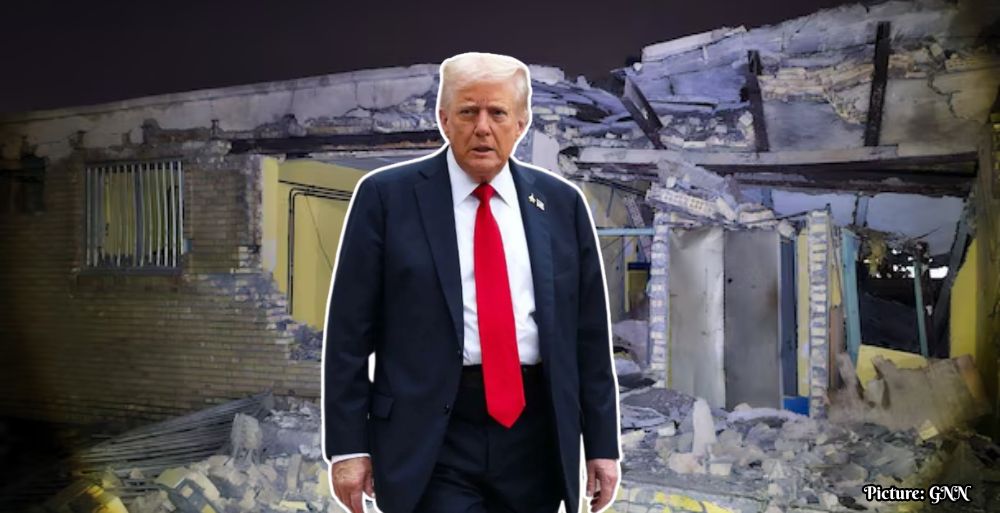
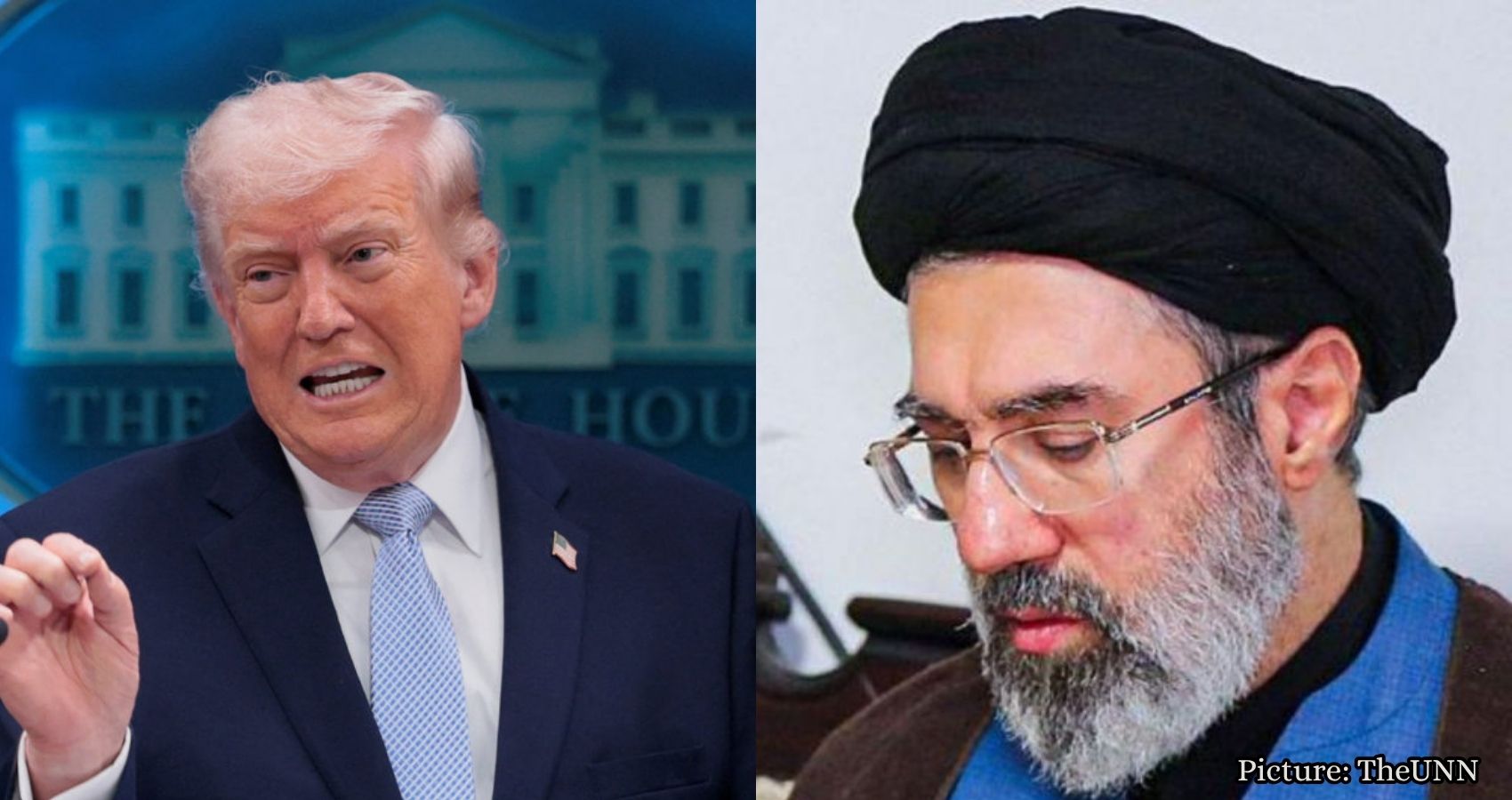
ÉVIAN-LES-BAINS, France – On the final day of the Group of Seven (G7) summit, President Donald Trump unveiled a preliminary agreement with Iran, designed to reopen the Strait of Hormuz, lift sanctions on Iran’s oil exports, and initiate a 60-day negotiation period concerning Iran’s nuclear program. This announcement was made as leaders convened in this picturesque French resort town, where discussions centered on global economic stability and security.

A senior U.S. official, speaking on the condition of anonymity, disclosed that the agreement includes a significant $300 billion reconstruction plan for Iran, although details regarding funding sources remain unclear. The text of the agreement specifies that Iran will reaffirm its commitment not to develop nuclear weapons. Additionally, it calls for a cessation of military operations in Lebanon, where Israel has been engaged in conflict with Hezbollah, although Israel has indicated it is not a party to this agreement.

According to the disclosed terms, the United States will work to make available Iran’s frozen assets and will seek to terminate all sanctions against the country in a phased manner, contingent upon Iran’s compliance with the agreement. President Trump emphasized that the U.S. will not be directly funding Iran but will allow the country to engage in oil sales and access financial investments as long as it adheres to the agreed-upon conditions. “We’re not doing anything, we’re not putting up money,” Trump stated, indicating that investment would come from other nations or private entities.

The agreement stipulates that for 60 days, ships passing through the Strait of Hormuz will not incur any charges, although Iranian officials hinted that fees could be implemented after this initial period. The Strait, a critical shipping lane for global oil supply, has been a focal point of tension between Iran and the U.S. since the onset of hostilities.

President Trump indicated that if the negotiations do not yield satisfactory results within the 60-day window, he is prepared to resume military actions against Iran. “If it doesn’t get done in 60 days, that’s all right, we’ll go back to bombing,” he remarked. However, he later clarified that he did not view the timeline as a hard deadline, suggesting flexibility in the negotiations.

The G7 leaders issued a joint statement expressing support for Trump’s leadership in securing the agreement while also emphasizing the need for comprehensive diplomatic follow-up to address the complex issues surrounding Iran’s nuclear program. Critics within the U.S. have raised concerns about the concessions being offered to Iran, with some members of Congress, including Republican Senator Bill Cassidy, labeling the agreement as a significant foreign policy misstep.

In a related development, former President Barack Obama commented on the ongoing negotiations, reflecting skepticism about the potential for a deal significantly different from the 2015 nuclear agreement he brokered. He expressed hopes that hostilities would cease, stating, “I’m hopeful that bombing stops and ordinary people are no longer suffering as a consequence of the war.” Obama criticized the notion that military intimidation could lead to diplomatic resolutions, suggesting that patience and dialogue might yield better outcomes.

As the world awaits the formal signing of the memorandum of understanding, scheduled for Friday in Switzerland, uncertainties remain regarding the implications of the agreement and the extent of Iran’s cooperation. The G7 leaders have stressed the necessity for robust oversight to ensure that Iran adheres to its commitments.

Despite the optimistic tone from Trump and other leaders at the summit, analysts warn that the complexities surrounding Iran’s nuclear ambitions and regional activities could complicate the negotiations. The preliminary agreement is intended to serve as a foundation for further discussions, but the historical mistrust between the U.S. and Iran poses significant challenges.

Furthermore, the geopolitical ramifications of lifting sanctions and allowing Iran to re-enter global markets could provoke reactions from regional allies, particularly Israel, which has voiced concerns about Iran’s influence in the Middle East. As the situation develops, the international community will be closely monitoring the outcomes of this unprecedented diplomatic endeavor.

The negotiations between the U.S. and Iran come on the heels of heightened tensions and military actions following the collapse of the Joint Comprehensive Plan of Action (JCPOA) in 2018, when President Trump withdrew from the multilateral agreement aimed at curbing Iran’s nuclear program. The JCPOA had provided Iran with substantial sanctions relief in exchange for limits on its nuclear activities, a deal that Trump has consistently criticized as ineffective. The new agreement seeks to provide a more comprehensive approach to Iran’s nuclear capabilities and regional activities, aiming to prevent the escalation of military conflict in the region.

The potential lifting of sanctions against Iran’s oil industry is particularly significant given the country’s economic reliance on oil exports, which have been severely restricted in recent years. Analysts suggest that re-engaging Iran in the global economy could stabilize oil prices, which have been volatile due to geopolitical tensions. However, there are concerns that renewed financial resources could also allow Iran to further its regional ambitions, particularly in supporting proxy groups across the Middle East.

As the U.S. navigates this complex diplomatic landscape, the implications of the agreement will extend beyond the immediate parties involved. The degree to which Iran adheres to its commitments, coupled with the responses from other regional powers, will shape the future of U.S.-Iran relations and broader security dynamics in the Middle East for years to come, according to Source Name.

U.S. Removes Indonesia from Pacific Command Structure

The U.S. Department of War has reverted the name of the Indo-Pacific Command back to the Pacific Command, a change that does not affect its mission or operations.

WASHINGTON, D.C. — On June 16, the U.S. Department of War announced a significant change regarding its military command structure. The U.S. Indo-Pacific Command (USINDOPACOM) will now be referred to as the U.S. Pacific Command (USPACOM), reversing a name change that took place in 2018.

This reversion does not impact the command’s mission, military operations, personnel, resources, or area of responsibility. The jurisdiction of the command will continue to encompass the waters off the U.S. West Coast to the western border of India.

Despite the name change, the command will maintain its commitment to collaborating with regional allies and partners. This was emphasized in a statement from the Department of War, which noted that the change restores the command’s historic identity.

“Restoring the legacy USPACOM designation honors the command’s deep historical roots, fostering a sense of pride and collective spirit among all who serve in the Pacific,” the statement read.

The U.S. Pacific Command was originally established by President Harry S. Truman on January 1, 1947. For over 70 years, it operated under the USPACOM designation before being renamed in 2018. It remains the oldest and largest of the United States’ unified combatant commands.

The command was renamed to U.S. Indo-Pacific Command in May 2018 by then-U.S. Defense Secretary Jim Mattis. At that time, Mattis stated that the change recognized the growing strategic connection between the Indian and Pacific Oceans. He remarked, “Relationships with our Pacific and Indian Ocean allies and partners have proven critical to maintaining regional stability.”

Mattis added, “In recognition of the increasing connectivity between the Indian and Pacific Oceans, today we rename the U.S. Pacific Command to U.S. Indo-Pacific Command.”

According to the Department of War, the latest change is largely symbolic and does not alter the command’s structure, responsibilities, or regional focus. The reversion to the Pacific Command name reflects a historical legacy while continuing to address contemporary strategic needs.

This decision underscores the U.S. commitment to its longstanding relationships in the region, ensuring that the command remains a pivotal player in maintaining stability across the Pacific and Indian Oceans.

For further details, refer to the official statement from the Department of War.

Democrats Assess Platner’s Rise and Its Impact on Party Standards

Graham Platner’s victory in Maine’s Democratic Senate primary, despite numerous scandals, raises questions about the party’s commitment to its values and the implications for future elections.

Graham Platner’s recent win in Maine’s Democratic Senate primary has sparked significant debate within the Democratic Party, particularly regarding the implications of his scandal-plagued rise. Several Democratic strategists have expressed concerns about the long-term effects of the party’s support for Platner, who has faced serious allegations from former partners and scrutiny over his past behavior.

Michael LaRosa, a former press secretary to First Lady Jill Biden, highlighted the contradictions within the party’s stance on the #MeToo movement. “Anyone paying attention to the intersection of culture and politics knows that my party pushed #MeToo well beyond the bounds of common sense long before Graham Platner’s rise,” LaRosa stated. He criticized the party’s instinct to support Platner despite his controversies, suggesting that this could undermine the credibility of Democrats as advocates for women’s rights. “If the standards disappear the moment they’re politically inconvenient, they were never standards at all,” he added.

Doug Schoen, a former adviser to President Bill Clinton, echoed LaRosa’s sentiments, arguing that the Democratic Party is prioritizing power and Senate control over addressing serious concerns about Platner’s past. “In the short term, for some Democrats, those on the progressive left, it’s the right decision, a practical decision,” Schoen remarked. “To me, it’s a very sad one and certainly undermines the moral legitimacy of the Democratic Party as a whole.” He pointed out that Platner’s extreme left-wing positions and troubling personal history could create vulnerabilities for the party in future elections.

Platner has denied allegations from former girlfriends, which include claims of discussing rape fantasies, heavy drinking, and violent behavior. He has also faced criticism for sending sexually explicit messages shortly after his marriage, as well as for a Nazi-linked tattoo and derogatory comments about a Purple Heart veteran. Despite these controversies, Platner secured more primary votes than any Democrat in Maine’s history.

Mally Smith, another Democratic strategist, suggested that while Platner’s campaign may not signify the end of the #MeToo movement, it complicates the party’s ability to advocate for women’s rights. “Democrats who have more fully embraced his campaign are going to have some trouble when it comes to making the case on the Epstein files or any general claims of ‘believe all women,'” Smith noted. She added that voters may perceive both parties as willing to overlook the baggage of their candidates.

Looking ahead to the 2028 elections, LaRosa warned that Democrats could face lasting repercussions from their association with Platner. “If he wins, you’ll still have to explain why you stood with him,” he said. “If he loses, you’ll have nothing to show for it except the association. Either way, he’s someone you’ll be answering for.” Smith pointed out that voter dissatisfaction with the status quo is driving support for candidates like Platner, suggesting that some voters may view attacks on him as evidence of his authenticity.

However, many strategists believe that Platner’s controversies are too significant for voters to overlook. LaRosa emphasized that voters “reward guts, not willful blindness,” particularly when it comes to candidates with troubling pasts. He criticized Democratic leaders for lacking the courage to confront these issues, stating, “We look pretty vapid, unprincipled, and hypocritical to look the other way when it comes to any candidate accused of any level of violence against women just because it is politically inconvenient.” He argued that principles must be applied consistently, even when it is uncomfortable.

The Democratic Party has long used accusations of Nazi affiliations as a political weapon against opponents, particularly against former President Donald Trump. However, Trump’s recent comments about Platner’s tattoo highlight the potential for backlash against Democrats who support him. “They’re seeing all of these lunatics, like the guy in Maine…for ten years they’ve been calling me a ‘Nazi,’ and now they have a Nazi running,” Trump remarked during a news conference.

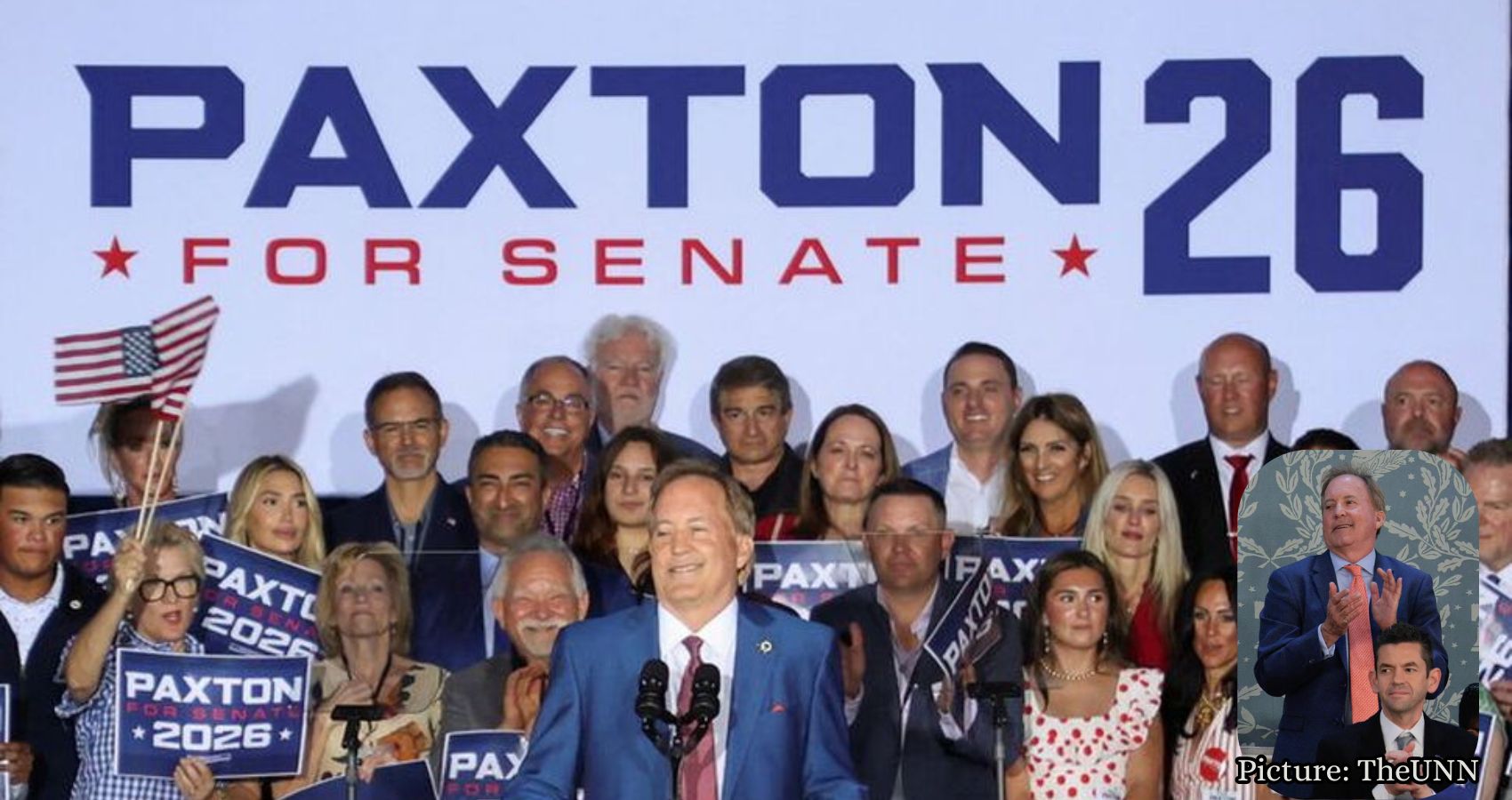
Schoen pointed out that the party’s support for Platner could weaken their criticisms of Republican scandals, such as those surrounding Texas Attorney General Ken Paxton. “For every criticism that they level at Ken Paxton in Texas, they will be greeted by criticism of Graham Platner in Maine, which to me makes their job more difficult,” he said. Smith echoed this sentiment, noting that both parties are grappling with candidates who present significant challenges.

As the political landscape evolves, the focus may shift back to economic issues, with Smith suggesting that Maine voters are primarily concerned about the economy. “Voters are unhappy with the economy, and I think most people are going to be voting on whether they believe the economy is better than when Trump was inaugurated,” she said. “So I think as much as news stations like to talk about Graham Platner and what this means for Democrats overall, most voters are not going to think about Graham Platner’s Nazi tattoo outside of Maine.” This perspective indicates that while Platner’s controversies may dominate headlines, they may not significantly impact voter sentiment beyond state lines.

As the situation unfolds, the Platner campaign has not yet responded to requests for comment, leaving many questions about the implications of his candidacy unanswered.

According to Fox News Digital, the ramifications of Platner’s rise could resonate within the Democratic Party for years to come.

Is Donald Trump in Possession of the FIFA World Cup Trophy?

Speculation surrounds President Donald Trump’s involvement with the FIFA World Cup Trophy as the U.S. prepares to host the majority of the 2026 tournament.

As the 2026 FIFA World Cup approaches, the focus is on the United States, which will host the majority of the matches alongside Canada and Mexico. This has led to renewed interest in President Donald Trump’s potential role in the event, particularly regarding the FIFA World Cup Trophy.

Recent reports have suggested that the original Club World Cup Trophy was displayed in Trump’s Oval Office, prompting questions about whether he might also keep the FIFA World Cup Trophy. During a recent visit to the White House, Trump reportedly made a sarcastic remark about wanting to keep the prestigious trophy.

Despite the speculation, the FIFA World Cup Trophy is strictly under the supervision of FIFA and cannot be kept by any individual, including the President. However, Trump is expected to have the opportunity to lift the trophy on stage alongside the winning team following the final match at MetLife Stadium in New Jersey.

Sources indicate that White House insiders believe Trump will remain on stage to celebrate with the World Cup champions. Additionally, he is likely to attend several matches throughout the tournament, which is set to be the first World Cup featuring 48 teams.

While Trump’s access to the trophy is confirmed, it remains unclear whether officials from Mexico and Canada will have similar privileges during the closing ceremony. Recently, Trump has been seen at various sporting events, including Game 3 of the NBA Finals at Madison Square Garden and the US Open men’s final between Carlos Alcaraz and Jannik Sinner in 2025.

The 2026 FIFA World Cup has already begun with thrilling matches, showcasing unexpected performances from underdog teams. Notable footballing nations such as Brazil, Portugal, Spain, and Belgium faced challenges in their opening games, with several matches ending in draws. The most exciting match thus far featured England and Croatia, who were tied 2-2 at halftime before England pulled ahead to win 4-2, thanks to goals from Jude Bellingham and Marcus Rashford.

As the tournament progresses, the spotlight will remain on both the teams competing for glory and the high-profile figures, including President Trump, who will be part of this historic event.

For more details on the tournament, including squads, schedules, and live streaming information, stay tuned to updates.

According to TalkSport, the excitement surrounding the World Cup and its accompanying events continues to build as fans eagerly await the matches ahead.

Finland’s Parliament Votes to Lift Ban on Nuclear Weapons

Finland’s parliament has voted to lift a decades-old ban on nuclear weapons, marking a significant shift in its defense policy to align more closely with NATO.

On Wednesday, Finland’s parliament approved a pivotal amendment to the Nuclear Energy Act, effectively lifting a long-standing ban on nuclear weapons. This decision represents a significant defense policy shift aimed at aligning the country more closely with the North Atlantic Treaty Organization (NATO) deterrence strategy.

Defense Minister Antti Häkkänen hailed the amendment as a “historic reform” that enhances both Finland’s security and that of the NATO alliance. He noted that the parliament approved the amendment with a strong two-thirds majority. “This historic reform strengthens the security of Finland and of NATO as a whole,” Häkkänen stated in a post on X.

This legislative change comes in the wake of Finland’s accession to NATO in April 2023, a move prompted by Russia’s full-scale invasion of Ukraine. Joining NATO effectively doubled the alliance’s border with Russia, marking a decisive end to Finland’s decades of military non-alignment.

The debate surrounding nuclear weapons policy has been one of the most complex issues faced by the Finnish Ministry of Defence during this parliamentary term. Häkkänen explained that the decision followed years of study, discussions with nuclear-armed states and other allies, and assessments of how Finland’s security could be best reinforced within NATO.

The newly approved measure repeals provisions in Finland’s 1987 Nuclear Energy Act that prohibited the import, production, possession, and detonation of nuclear explosives. If enacted, this legislation would permit the transportation, supply, or possession of nuclear weapons in Finland, contingent upon the needs of the country’s military defense.

According to Euro News, the vote saw 125 deputies in favor of the government proposal, while 61 opposed it and 13 abstained. The bill will now proceed to the president for final approval.

Häkkänen expressed gratitude to the members of parliament who supported the legislative proposal, thanking them for their strong backing. He also acknowledged the expertise of defense professionals both at home and abroad who contributed to this initiative.

Despite the bill’s passage, it has faced criticism from opposition lawmakers. They have raised concerns that the decision could escalate tensions, potentially making Finland a primary target and deviating from regional norms. Several neighboring countries have historically rejected hosting or permitting nuclear weapons.

The introduction of this proposed law also elicited a strong reaction from Russia last March. Kremlin spokesman Dmitry Peskov remarked that the decision could lead to increased tensions on the European continent. “This statement adds to Finland’s vulnerability, a vulnerability provoked by the actions of the Finnish authorities,” Peskov stated. He further warned that if Finland were to deploy nuclear weapons on its territory, it would be perceived as a threat, prompting Russia to take appropriate measures.

As Finland navigates this historic shift in its defense policy, the implications for regional security and international relations remain to be seen. The decision underscores a broader trend among NATO allies to bolster their defense capabilities in response to evolving geopolitical challenges.

According to Euro News, the move marks a significant moment in Finland’s military history, reflecting a growing alignment with NATO’s strategic objectives.

Texas Voters Reject Anti-Muslim Candidate in Mayoral Election

A Texas mayoral election saw voters favor a unity-focused candidate, rejecting anti-Muslim rhetoric and signaling a shift in the political landscape of the rapidly growing city of Frisco.

A divisive mayoral race in Frisco, Texas, concluded with the election of a candidate who emphasized unity, marking a significant setback for a rival whose campaign was characterized by anti-Muslim rhetoric and culture-war messaging.

Frisco, a suburb located north of Dallas, has emerged as one of the fastest-growing cities in the United States, becoming a focal point for discussions surrounding immigration, religion, and demographic change. In a runoff election held on Saturday, voters chose Mark Hill, a conservative attorney and former school board member, over Rod Vilhauer. The contest garnered statewide attention amid broader political battles unfolding across Texas.

This election was viewed as a litmus test for the appeal of increasingly aggressive anti-Muslim and anti-immigrant rhetoric that has gained traction in certain segments of Texas politics. Frisco, known for its diversity and economic dynamism, presented a contrasting backdrop to these divisive themes.

The political climate in Frisco has become increasingly tense over the past year, as the city has grappled with rapid population growth and changing demographics. Heated debates surrounding immigration and local governance have led to public meetings becoming contentious, prompting outgoing city leaders to temporarily suspend public comment sessions to restore civility.

The mayoral contest unfolded against the backdrop of a high-profile criminal trial that attracted national attention and heightened racial tensions within the city. Activists and social media influencers from outside the community amplified divisions, transforming local issues into national political flashpoints.

Hill’s campaign focused on lowering the political temperature and redirecting city government efforts toward economic development, infrastructure, and public services. He argued that ongoing culture-war battles could jeopardize Frisco’s reputation as a desirable destination for businesses, families, and major employers.

The election results contrast with recent Texas Republican contests where candidates employing hardline immigration rhetoric have found success. Notably, elements targeting Islamic practices and sharia law were incorporated into the Texas Republican Party’s platform during its recent state convention, underscoring the broader political environment surrounding the Frisco race.

Frisco’s decision may indicate the limits of such divisive messaging in affluent, rapidly growing suburban communities where economic growth has been driven by increasingly diverse populations. The city has attracted corporate headquarters, professional sports organizations, and residents from across the United States and abroad, making it a microcosm of the demographic shifts reshaping many American suburbs.

For immigrant communities, this election is likely to serve as a barometer for how suburban voters respond to identity-based political campaigns. As immigration and cultural issues remain central themes in national politics, the outcome in Frisco offers a reminder that economic growth, demographic change, and political polarization continue to intersect in communities across America.

According to The American Bazaar, the results reflect a growing desire among voters for unity over division in local governance.

Labor Department Addresses States on Unemployment Benefit Fraud Issues

The U.S. Department of Labor has mandated states to enhance unemployment verification processes, warning of potential funding cuts due to ongoing fraud issues.

The U.S. Department of Labor has issued a directive to governors across all 50 states and three territories, urging them to strengthen identity verification measures in their unemployment insurance programs. This warning comes with the potential for significant federal funding cuts for jurisdictions that fail to address persistent fraud.

This initiative is part of the Trump administration’s intensified efforts to recover billions of dollars lost to fraudulent and improper unemployment claims that surged during the COVID-19 pandemic. Labor officials have indicated that inadequate verification systems have allowed criminals to exploit stolen identities, enabling them to collect benefits across multiple states, which has cost taxpayers billions.

Acting Labor Secretary Keith Sonderling stated that letters sent to governors require states to verify claimants’ identities before payments are issued. This new approach replaces the previous “pay first, verify later” method, which has been criticized for facilitating widespread abuse.

“The Department of Labor is going to take unprecedented action to stop this fraud,” Sonderling emphasized. He added that the agency would utilize every available enforcement tool, including the possibility of withholding administrative funding from states that do not comply with federal requirements.

The department’s proposed safeguards will include confirming the identities of claimants, ensuring that benefits are not being sent to criminal organizations or overseas recipients, and verifying the genuine eligibility of applicants for unemployment assistance.

Federal officials estimate that improper unemployment insurance payments reached approximately 14% nationwide during the surge in claims associated with the pandemic. In some instances, the same Social Security number was reportedly used to obtain benefits in multiple states.

Several large states have been singled out for increased scrutiny. According to Sonderling, New York is currently issuing more than $2 million a day in improper unemployment-related payments, while California reportedly owes more than $20 billion to the federal unemployment trust fund.

Additionally, Sonderling highlighted that New York, New Jersey, Pennsylvania, Massachusetts, and Illinois collectively made more than $2.5 billion in improper unemployment payments last year.

This crackdown is being coordinated through Vice President JD Vance’s anti-fraud task force, which administration officials claim has already recovered over $512 million in improperly distributed funds from Maryland alone.

“One of the most basic ways to stop fraud is to verify that public benefits are actually flowing to the intended recipients,” Vance remarked, commending the Labor Department’s efforts to enhance oversight of benefit programs.

The administration maintains that unemployment insurance should serve as a temporary safety net for workers who lose their jobs, rather than a system susceptible to fraud and abuse. State governments are now expected to implement stronger verification procedures or risk losing federal administrative support, marking what labor officials describe as the most aggressive federal enforcement effort against unemployment insurance fraud in the program’s history.

According to The American Bazaar, this initiative reflects a significant shift in the administration’s approach to managing unemployment benefits and safeguarding taxpayer dollars.

The Angel, the Killer, and the Indian-American Diplomat’s Role

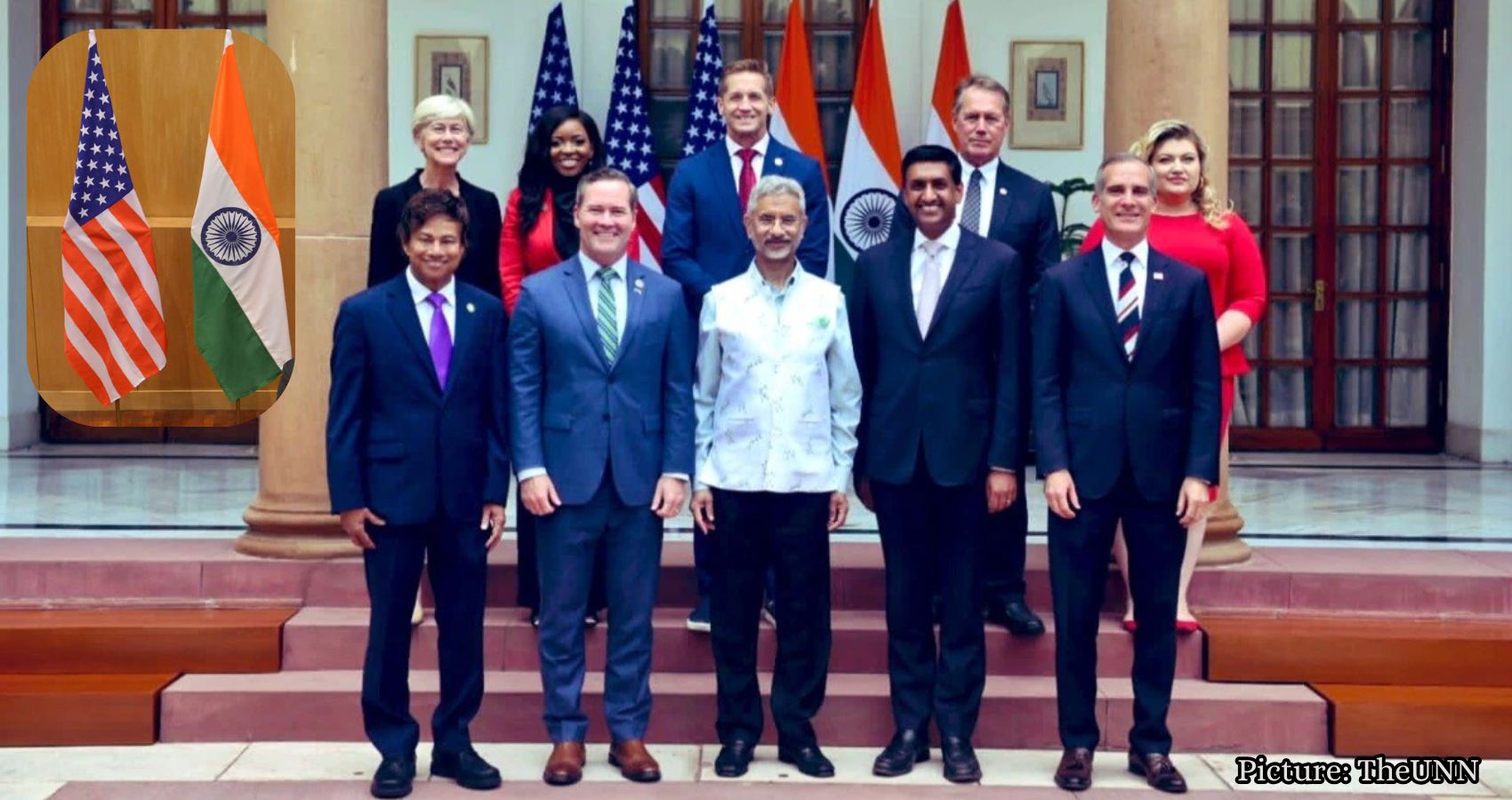
At the G7 summit in Évian, the dynamics of U.S.-India relations shifted as President Trump and Prime Minister Modi engaged in a complex diplomatic exchange.

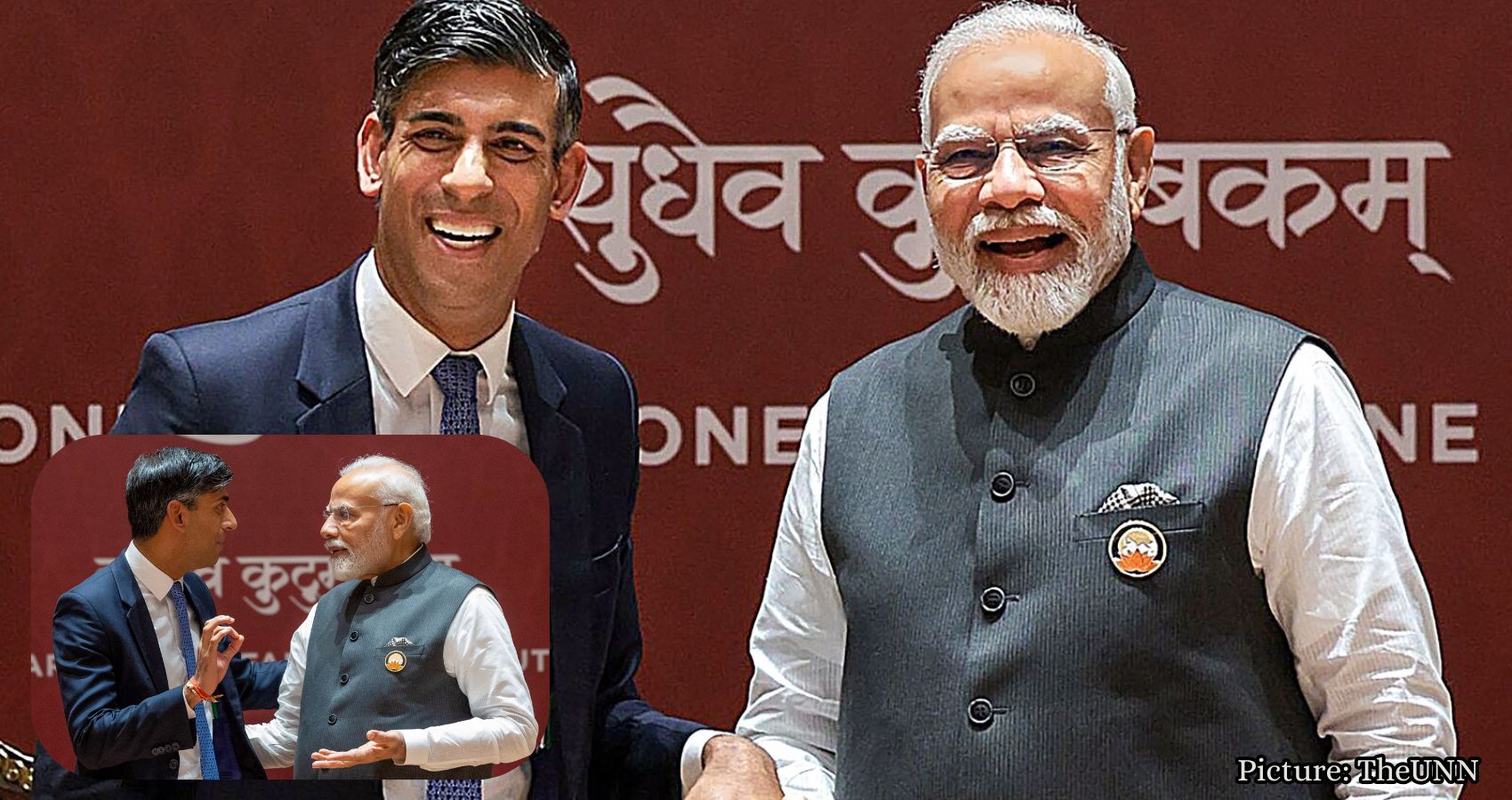
During the recent G7 summit in Évian, France, the meeting between U.S. President Donald Trump and Indian Prime Minister Narendra Modi revealed evolving realities in their bilateral relationship.

Trump entered the meeting with his characteristic blend of flattery and theatrics, while Modi appeared to adopt a more assertive stance. Gone were the days of Modi referring to Trump as “my friend Donald,” a phrase that had characterized their previous interactions. Instead, Modi addressed Trump formally as “His Excellency President Trump,” signaling a shift in their rapport.

Trump, seemingly oblivious to this change, offered a peculiar compliment, stating, “He’s the most beautiful-looking man. He looks so nice, like an angel. But actually, he’s as tough as he is a killer.” This remark, which could be interpreted as a diplomatic faux pas, was met with Modi’s understated response: “Don’t go by the looks.” This retort suggested that Modi was aware of Trump’s tactics and was not easily swayed.

Despite the awkwardness, it is important to acknowledge Trump’s awareness of India and its political landscape. He understands Modi’s voter base and the significance of the Indian diaspora. His comments, though unconventional, were likely intended to resonate with audiences in both India and the United States.

Trump’s declaration that “as long as I am President, India has a great friend in the White House” carried an underlying warning. The phrasing emphasized his personal connection to India rather than a broader commitment from the United States. This statement could be interpreted as a reminder that the friendship is contingent upon Trump’s presidency, which is set to end in January 2028.

The meeting took a somber turn when Modi raised the issue of three Indian sailors who were killed in the Strait of Hormuz, a situation linked to a U.S.-Israeli military operation. Modi approached the topic delicately, expressing concern for the safety of Indian seafarers while hoping for a resolution through the Iran deal. However, Trump’s response was dismissive, moving on to the next question without addressing the gravity of the situation.

In a different context, Modi’s mention of the sailors’ deaths would have sparked significant media coverage in India, potentially leading to accusations of national betrayal. Yet, in Évian, the lack of substantial dialogue on the matter was framed as a diplomatic success.

The conversation then shifted to Iran, a critical issue for India, which imports 55% of its liquefied petroleum gas (LPG) through the Strait of Hormuz. Modi hinted at India’s potential role as a back-channel to Iran, given the country’s historical ties and trade relationships. However, Trump’s response indicated that the U.S. would handle Iran independently, effectively sidelining India from the discussions.

The exchange left many questions unanswered. Trump’s characterization of Modi as a friend contrasted sharply with Modi’s formal address, suggesting a growing distance between the two leaders. Trump’s assurance of support for India was conditional, and his evasiveness regarding the sailors’ deaths highlighted a lack of accountability.

As Modi navigates the complexities of international diplomacy, the question remains: does New Delhi have a contingency plan for the future? With Trump’s presidency set to conclude in two years, the dynamics of U.S.-India relations may shift dramatically, especially if a successor is less familiar with India’s geopolitical concerns.

Ultimately, the Strait of Hormuz and its implications for India’s economy will persist, regardless of who occupies the Oval Office. The evolving relationship between Trump and Modi reflects broader uncertainties in international politics, leaving both nations to reconsider their strategies moving forward.

The post originally appeared on The American Bazaar.

The Father’s Day Gift Helping Dads Protect Against Scammers

The FBI reports that elder fraud losses exceeded $7.7 billion in 2025, highlighting the importance of protecting personal information from scammers this Father’s Day.

As Father’s Day approaches, many people are contemplating the usual gift options: a golf shirt, a grill tool set, or perhaps another gift card that feels convenient but lacks a personal touch. This year, consider a gift that goes beyond the ordinary—one that could help safeguard your dad from potential scams.

Your father’s name, home address, phone number, and even your name may already be exposed on numerous people-search websites, accessible to anyone with an internet connection. Scammers are not merely browsing these sites; they are actively using them to construct detailed profiles. This means they could know where your dad lives, who his relatives are, and how to fabricate a convincing emergency scenario.

One of the most valuable gifts you can offer this Father’s Day may not come wrapped in a box. Instead, it involves dedicating 30 minutes of your time to implement a few smart privacy measures and utilizing services designed to protect him throughout the year.

To understand the extent of the issue, visit sites like Spokeo, WhitePages, or BeenVerified and enter your dad’s name. The results may be shocking. A typical profile might reveal personal details such as age, current and previous addresses, phone numbers, email addresses, and a list of relatives—including your name. This information serves as a starting point for scammers who can then connect the dots to create a more convincing narrative.

Once a scammer has your father’s basic profile, the potential for damage escalates quickly. Data broker sites do more than provide current contact information; they can also disclose address history, estimated household income, property ownership, and familial connections. For instance, a phone call could begin with, “Hey Dad, it’s me. I’m in serious trouble, and I can’t tell Mom yet.” The scammer may know your name, your city, and even that he is your father. Suddenly, the call feels less like a scam and more like a family crisis.

Many banks and financial institutions still rely on knowledge-based verification, which often includes answers to personal questions like a mother’s maiden name or previous addresses. Unfortunately, these answers may already be available on public data broker profiles. A scammer could impersonate your dad and answer these questions correctly without needing his password.

Data broker profiles often contain estimated home values and income ranges derived from public records and marketing databases. If your father’s profile indicates a paid-off home and a long history of stable residence, he may appear to be an attractive target for investment fraud, fake Medicare schemes, and government impersonation scams. The exposure of one person’s profile can jeopardize the entire family network, linking your dad’s data to yours and potentially to his grandchildren’s.

According to the FBI’s Internet Crime Complaint Center, complaints from victims over 60 years old exceeded 201,000 in 2025, with reported losses surpassing $7.7 billion—a staggering 59% increase compared to the previous year. The average reported loss for older victims was over $38,000. Unlike a stolen credit card charge, which banks can often reverse, losses for many older adults stem from retirement accounts or home equity accumulated over decades. Once that money is lost, recovery can be challenging, if not impossible.

The Federal Trade Commission (FTC) has documented a more than fourfold increase since 2020 in reports from older adults claiming to have lost $10,000 or more to impersonation scams. The combined losses reported by older adults who lost more than $100,000 increased eightfold, from $55 million in 2020 to $445 million in 2024. Given that most elder fraud goes unreported due to embarrassment, confusion, or lack of knowledge on how to report it, the FTC estimates that the actual losses experienced by older adults in 2024 could be as high as $81.5 billion.

Your dad is not careless or naive; he is simply exposed and often unaware of the risks. He did not consent to having his information listed on these sites. Data brokers acquire information from various sources, including voter registration records, property tax filings, court documents, marketing survey responses, loyalty program memberships, and phone directories. Once this information is in the system, it is continuously bought, sold, and resold.

Even if your dad has never heard of Spokeo or BeenVerified, his profile may already exist online. Social media can exacerbate the problem; a Facebook account, tagged photos, or public family connections can provide scammers with additional clues. Combined with a data broker profile, this information can give them enough detail to impersonate family members and target his finances.

You can conduct a quick free scan at CyberGuy.com to see how much of your father’s information is already available online. Results typically arrive via email within an hour, and many people are surprised by what they find.

Consider this process as something to do together with your dad, rather than just for him. It takes about 30 minutes and can be more meaningful than any store-bought gift. Begin by visiting Spokeo.com, Whitepages.com, and BeenVerified.com. Enter his name and state, and take screenshots of what you find. This will serve as a baseline for what is currently visible to anyone searching.

Once you have identified the data broker sites, each should have an opt-out or “Remove My Information” link, often located in the page footer. Submit removal requests for the profiles you discover. Some sites may require email verification, and others may relist the same information weeks later. Despite potential frustrations, walking through the process together can help your dad understand the risks and why ongoing protection is essential.

Additionally, you should call his bank together to update the knowledge-based security verification on his account. If the bank still uses questions like a mother’s maiden name or previous address, those answers are likely already available on a data broker site. A simple solution is to replace them with nonsensical answers only he knows, such as “Mother’s maiden name: BlueTractor62.” This way, scammers cannot easily find the answer.

Establishing a family code word can also be a crucial step. Agree on a word or short phrase that only your immediate family knows. If he receives a call from someone claiming to be you or discussing you, he should ask for the code word. If the caller cannot provide it, he should hang up and call you directly. With advancements in AI, scammers can now clone voices, making impersonation calls even harder to detect. A pre-agreed family code word can cut through the confusion.

It is important to note that while these steps are effective, they are only a snapshot in time. Data brokers constantly refresh their databases, meaning information you remove today may reappear in the future without any action on your part. Therefore, the most beneficial Father’s Day gift is not a one-time cleanup but ongoing protection that operates in the background.

A data removal service can send removal requests to hundreds of data brokers on your dad’s behalf and continuously monitor for his information, sending new requests when it reappears. A family plan may be the most prudent option, as your exposure is linked to his. Covering several family members under one plan can help protect everyone simultaneously.

Before concluding your visit, leave him with a memorable instruction: “If anyone ever calls claiming to be me and asking for money, hang up and call me back directly. I will never reach out through an unknown number.” Reiterate this message to ensure he understands its importance.

Your dad’s personal information may already be on people-search sites, and he may be unaware of its presence. Scammers can leverage this data to make their communications feel more personal, potentially leading to financial exploitation. This Father’s Day, consider giving the gift of security. Spend time with your dad to search for his information, remove what you can, update his bank security answers, and create a family code word. Additionally, consider automated data removal services to ensure his information does not resurface later. The best gift may be one that helps him avoid the call, text, or email that could cost him far more than money in the long run.

Have you ever searched your dad’s name or your own on a people-search site and been surprised by the results? Share your experiences with us at CyberGuy.com.

According to CyberGuy.com.

Eligible Immigrant Voters Influence Elections in Key Swing Districts

Millions of immigrant voters are poised to significantly influence elections in 284 congressional districts, according to a new analysis from the American Immigration Council.

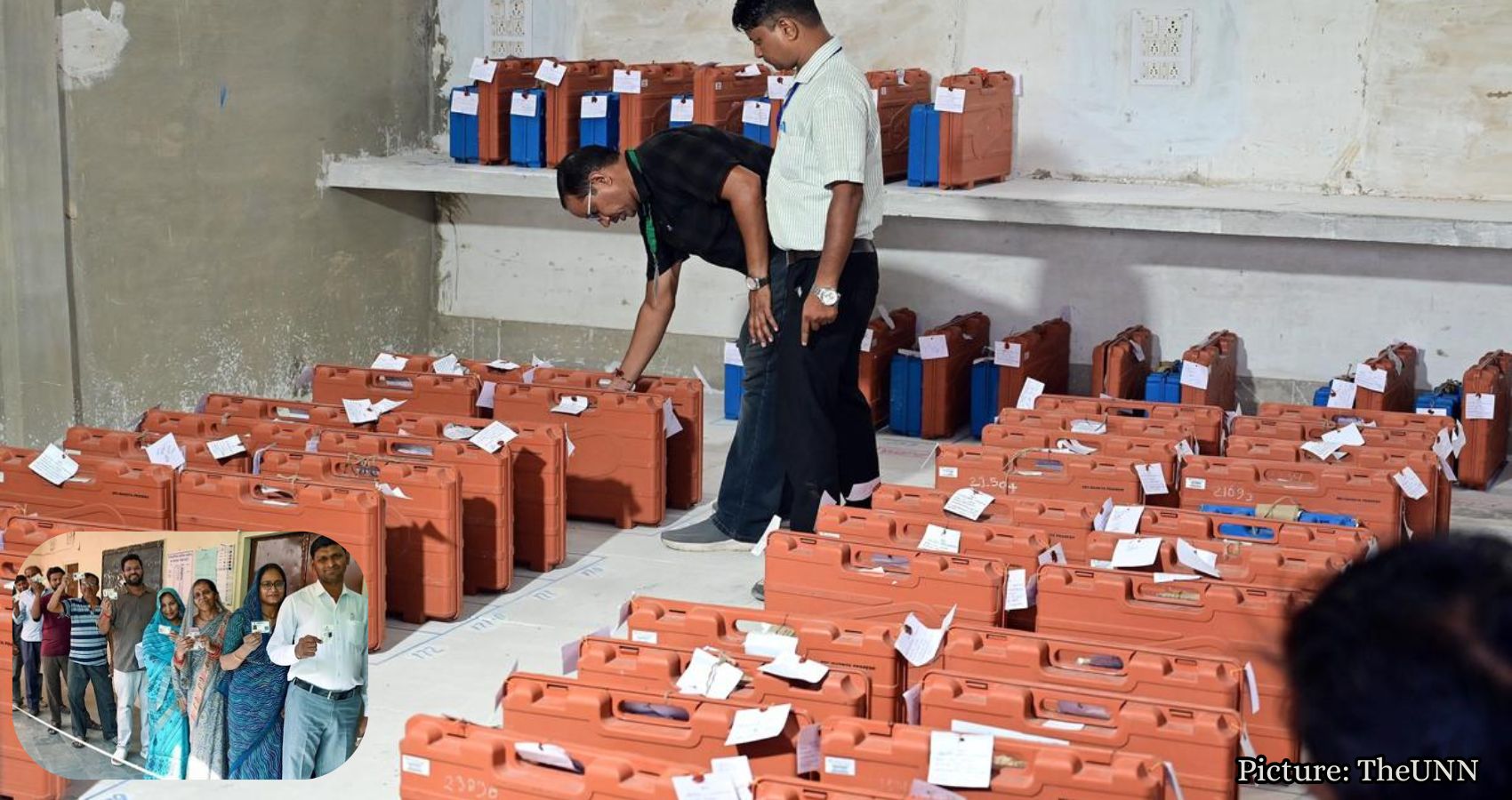
April 16, Washington, D.C. — A recent analysis by the American Immigration Council reveals that millions of immigrant voters who are U.S. citizens play a crucial role in the electorate across 284 congressional districts where elections will occur this year.

This analysis focuses on voting data that includes only eligible and registered voters, as federal law permits only U.S. citizens to participate in federal elections.

Utilizing the latest data from the 2024 American Community Survey, the report indicates that immigrants constitute nearly one in five residents in the districts studied. Their presence significantly impacts the workforce, tax base, and local economies, which in turn shape the priorities of voters.

Key findings from the analysis highlight the potential influence of immigrant voters in close elections. There are approximately 16 million registered immigrant voters—naturalized U.S. citizens eligible and registered to vote—across the analyzed districts. Notably, in 44 percent of these districts (126 out of 284), the number of eligible immigrant voters surpasses the margin of victory anticipated in the 2024 elections.

For instance, Florida’s 25th congressional district is home to an estimated 135,500 immigrant voters. This district notably flipped from Republican to Democratic control in 2022, with Democrats winning again in 2024 by a narrow margin of just 30,700 votes.

Similarly, in New Jersey’s 9th district, Democrats secured victory by a margin of just over 12,600 votes in 2024. This district boasts nearly 165,000 immigrants who are U.S. citizens aged 18 and older, thus eligible to vote.

The analysis also emphasizes the importance of language and outreach efforts. On average, 83.1 percent of immigrants in these districts speak a language other than English at home, underscoring the need for outreach that reflects the diverse communities within these areas.

Moreover, immigrants play a vital role in local communities. Across the 284 districts analyzed, immigrants make up nearly 20 percent of the population, with some districts reporting that they represent more than half of the residents.

“Immigrant voters who are U.S. citizens are a meaningful part of the electorate in many communities, especially in close races,” said Nan Wu, director of research at the American Immigration Council. “Like other voters, they care about jobs, housing, and the economy, and they are deeply embedded in the communities they help sustain.”

The analysis further illustrates that the influence of immigrants extends beyond the electoral process. In the districts studied, immigrants contribute to economic growth, support key industries, and shape the pressing issues that dominate elections, including inflation, housing, and workforce shortages.

Overall, the findings indicate that immigrants are not merely a niche population but rather a fundamental component of the communities, economies, and electorates that characterize many congressional districts.

These insights are crucial as the nation approaches the upcoming elections, highlighting the importance of recognizing and engaging immigrant voters in the democratic process, according to American Immigration Council.

U.S. Viewed Less Favorably for Immigrants by AAPI Adults in Poll

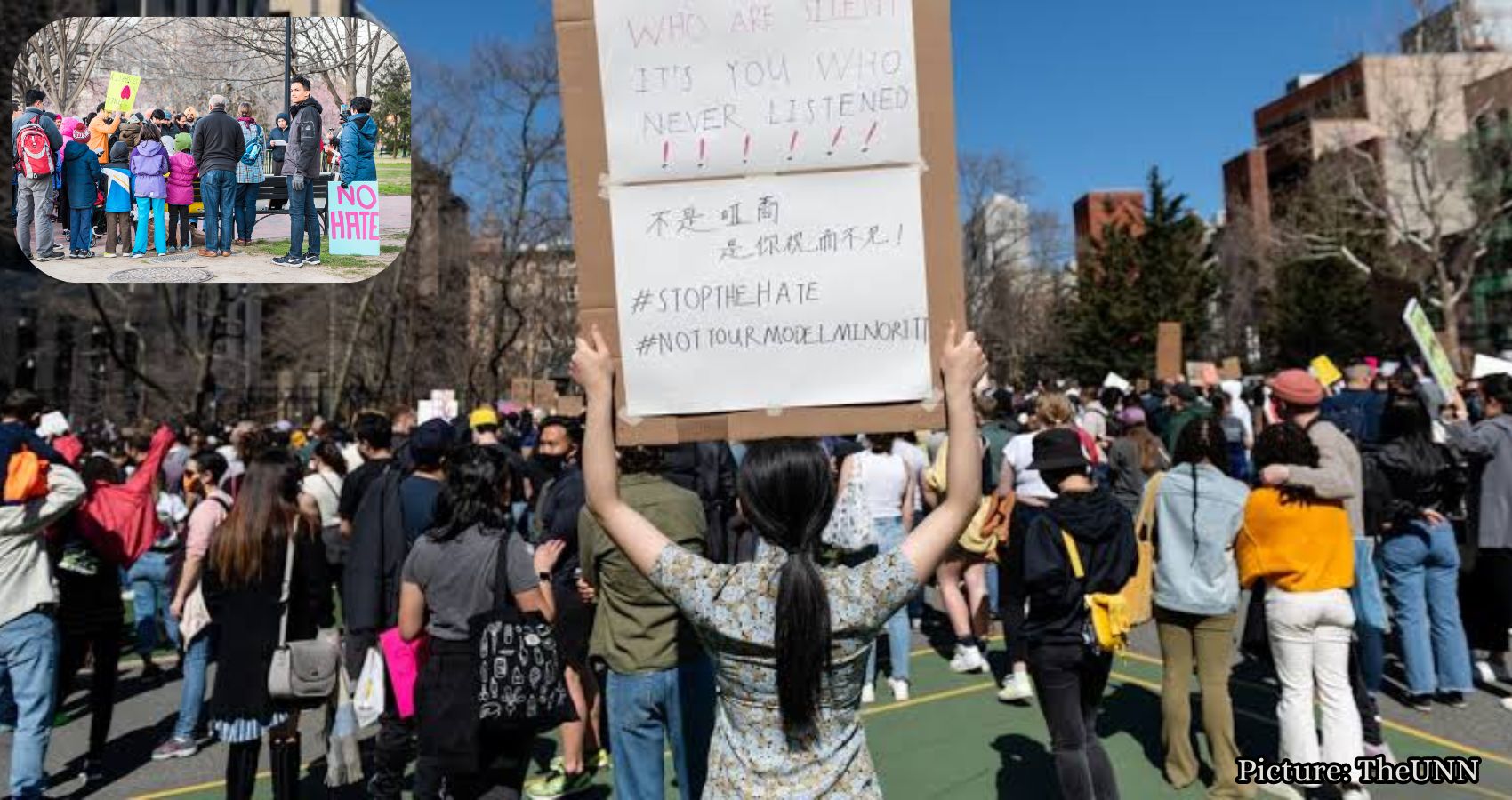
Many Asian American and Pacific Islander adults believe the U.S. is no longer a great country for immigrants, according to a recent poll highlighting the impact of immigration policies.

Many Asian American and Pacific Islander (AAPI) adults have reported experiencing significant upheaval due to the Trump administration’s stringent immigration policies, according to a new poll conducted by AAPI Data and The Associated Press-NORC Center for Public Affairs Research. The survey reveals that a majority of AAPI adults feel the United States is no longer the land of opportunity for immigrants.

Released on Monday, the poll indicates that nearly half of AAPI adults either personally know someone who has been detained or deported in the past year or have altered their own behaviors—such as carrying proof of immigration status or U.S. citizenship—due to concerns about their immigration status. Additionally, many have changed travel plans or routines as a precaution.

The findings come in the wake of more than a year of intensified immigration crackdowns, which have sparked numerous protests and confrontations between demonstrators and enforcement officers. This aggressive approach has contributed to a shift in perception among immigrant-heavy communities regarding the U.S. as a welcoming nation.

According to the poll, approximately 60% of AAPI adults believe that the U.S. was once a great country for immigrants, but that sentiment has diminished significantly. Only about 30% of respondents currently view America as a great place for immigrants, while a mere 5% believe it has never been a great destination for newcomers.

AAPI adults, who represent one of the fastest-growing demographics in the country, were predominantly born outside the U.S. The survey highlights that they are more likely than the general American population to view the blending of cultures and values from around the world as central to the national identity.

“America’s success story has depended critically on the role of Asian Americans, but also immigrants in general,” said Karthick Ramakrishnan, founder and executive director of AAPI Data. “When you have people who have been here for decades expressing uncertainty about the country’s status as a land of opportunity, that’s a warning sign.”

The impact of the Trump administration’s policies has even reached immigrants with legal status. Recently, a federal court blocked a proposed increase in fees for certain visa types, while another ruling overturned a policy that barred immigrants from 39 countries from receiving final decisions on asylum, work permits, green cards, and citizenship applications.

Khoa Tran, a 27-year-old from San Antonio, Texas, who immigrated from Vietnam in 2015, shared his experience of adapting to the current climate. After gaining citizenship four years later, he sponsored his wife from Vietnam. However, he became increasingly concerned when social media posts emphasized the importance of carrying documentation, prompting him and his wife to always have her green card on hand.

“It seemed like we needed to do it. It’s literally become like a second form of identification in addition to the driver’s license,” Tran explained.

He also noted that international students in his community have postponed trips to visit family abroad due to fears surrounding student visa regulations. “They’re just scared. They don’t know the law around that,” Tran said. “Better safe than sorry.”

The survey found that about half of South Asian adults know someone who has begun carrying proof of legal status or citizenship in the past year, a higher percentage than the overall AAPI demographic. Many of these individuals may hold green cards or be naturalized citizens, yet they still feel their presence and status in the U.S. are under scrutiny.

When it comes to personal identity, AAPI adults place significant importance on their family’s ancestry or country of origin, often more so than their American identity. Just over half of AAPI respondents indicated that their heritage is crucial to their sense of self, while 44% expressed similar sentiments about being American. This trend extends to U.S.-born AAPI adults, with 59% valuing their family’s heritage and 47% identifying strongly with being American.

In contrast, a separate AP-NORC survey conducted in April found that 55% of U.S. adults consider being American important to their identity, while only 37% prioritize their family’s ancestry.

Abigail Jeyaraj, a 22-year-old from South Hadley, Massachusetts, emphasized the significance of her Indian heritage in shaping her identity. “Especially as a South Asian woman, I’m very sensitive to the fact that I have opportunities that my mother and my grandmother didn’t,” she said. “I really try to honor that culture and maintain strong connections to my family in India.”

Similarly, Soonho Kwon, a 30-year-old from La Mirada, California, who immigrated from Korea, expressed a strong connection to his roots. “I think I still feel more Korean. I came right around the age where I had very solid memories from growing up in Korea,” he noted. “I’m a naturalized citizen. I’m committed to living here, but identity is a different question.”

As the nation approaches its 250th anniversary, many AAPI adults feel ambivalent about the celebration. A significant 73% believe that the mixing of cultures and values is essential to the U.S. identity, compared to only 55% of U.S. adults in the earlier survey.

Jeyaraj, who grew up in Texas, reflected on her diverse upbringing and the empathy it fostered in her. However, she expressed concern over current immigration restrictions and diversity initiatives, which leave her conflicted about celebrating the anniversary. “I’m proud we made it this far as a country,” she said. “But recent actions seem to be undoing that progress.”

Tran, a math teacher, shared a more philosophical view on the anniversary. “I don’t think this country is ‘founded’ at some point in time. It just changes from one form to another,” he remarked. “Even the Native Americans have been here for a long time. I’m pretty sure that was more than 250 years.”

The poll, which surveyed 1,075 U.S. adults who identify as Asian American, Native Hawaiian, or Pacific Islander, was conducted from April 20 to 28. The sample was drawn from NORC’s probability-based Amplify AAPI Panel, designed to represent the AAPI population. The margin of sampling error for all respondents is plus or minus 4.4 percentage points. This survey is part of an ongoing project aimed at exploring the views of Asian Americans, Native Hawaiians, and Pacific Islanders, who are often underrepresented in other surveys due to small sample sizes and lack of linguistic representation, according to AAPI Data.

India and U.S. Schedule Talks to Finalize Trade Deal in June

India and the United States are set to hold high-level trade talks on June 23-24 to finalize the first phase of a proposed interim trade agreement.

NEW DELHI – India and the United States will engage in another round of high-level trade discussions on June 23-24 as both nations strive to finalize the initial tranche of a proposed interim trade agreement.

Senior officials from the Office of the United States Trade Representative (USTR) are scheduled to visit New Delhi for talks with Union Commerce and Industry Minister Piyush Goyal and other senior Indian government officials.

During a recent monthly trade data briefing, Commerce Secretary Rajesh Agrawal expressed optimism about the upcoming discussions. He stated, “Our expectation is that the discussions will be centered around giving final touches to the first tranche of the deal as well as the larger Bilateral Trade Agreement (BTA) that has been under discussion.”

This upcoming visit follows a previous round of negotiations held in New Delhi from June 2-4, where USTR officials and Indian negotiators addressed various topics, including trade in goods, non-tariff measures, customs and trade facilitation, and economic security alignment, among other areas of mutual interest.

In February, India and the United States outlined a framework for an interim agreement in a joint statement, reaffirming their commitment to negotiating a comprehensive bilateral trade agreement.

The ongoing discussions reflect both countries’ dedication to enhancing their trade relationship and addressing key issues that impact economic cooperation.

According to IANS, the outcome of these talks could significantly influence the trajectory of U.S.-India trade relations in the coming months.

Trump’s DNI Nominee Prepares for Senate Hearing Amid Democratic Pressure

Former SEC chairman Jay Clayton is set to face a challenging Senate confirmation hearing for the role of director of national intelligence amid Democratic concerns over President Trump’s temporary pick, Bill Pulte.

Former Securities and Exchange Commission (SEC) chairman Walter “Jay” Clayton is preparing for a tense Senate confirmation hearing on Wednesday as he seeks to become the next director of national intelligence (DNI). This hearing comes in the wake of growing Democratic concerns regarding President Donald Trump’s temporary appointment of Bill Pulte, the director of the Federal Housing Finance Agency and a prominent homebuilder.

Currently serving as the U.S. attorney for the Southern District of New York, Clayton’s position is one of the most significant national posts, with a history of notable alumni, including Rudy Giuliani and Preet Bharara. His nomination has drawn attention, particularly as Democrats have expressed frustration over Pulte’s qualifications and potential influence on the intelligence community.

Senator Mark Kelly, a Democrat from Arizona and a vocal critic of Trump, shared his concerns about Pulte during a press briefing on Tuesday. He suggested that the controversy surrounding Pulte could inadvertently benefit Clayton’s confirmation process. “I would love to hear some reassurance from the White House that Bill Pulte is not going to take over as DNI, even for a very short period of time, but that I don’t anticipate that coming,” Kelly stated. He added that Pulte’s presence might serve as an “incentive” to expedite Clayton’s confirmation.

Democrats have raised alarms about Pulte’s alleged partisanship and lack of intelligence credentials, fearing that his leadership could jeopardize the integrity of the DNI role. In response to these concerns, Trump dismissed the criticisms, claiming that Democrats are excessively “afraid” of Pulte’s appointment.

Clayton, on the other hand, enters the confirmation process with a resume that may be more palatable to Senate Democrats, particularly in the narrowly divided chamber. Although he does not hail from the intelligence community, Clayton’s background as a federal prosecutor may help assuage some critics. As the top federal prosecutor in the Southern District of New York, he has managed cases involving violent crime, drug trafficking, and national security, while largely avoiding the public controversies that have plagued other Trump nominees.

Senate Majority Leader John Thune of South Dakota expressed confidence in Clayton’s qualifications, stating, “Jay Clayton is an eminently qualified individual to become the new director of national intelligence. And so we are looking forward to processing him this week.” Thune noted that Clayton’s experience in SDNY intersects with intelligence matters, which could further bolster his case for confirmation.

As the Senate Intelligence Committee prepares for Clayton’s confirmation hearing, Thune acknowledged that cooperation from the minority party would be essential to fast-track the nomination. The outcome of the hearing will reveal whether bipartisan support can be achieved for Clayton’s appointment.

The confirmation process for Clayton is poised to be a pivotal moment in the ongoing debate over national intelligence leadership and the broader implications of Trump’s appointments. As the hearing approaches, all eyes will be on the Senate to see how they navigate the challenges presented by Pulte’s temporary role and the contentious political landscape.

According to Fox News, the outcome of Clayton’s confirmation could set the tone for future appointments within the intelligence community.

Erling Haaland’s Norway Achieves Unique Family Record at World Cup

Norway made history in their FIFA World Cup 2026 opener by fielding three sons of former World Cup players, led by Erling Haaland, who scored twice in a 4-1 victory over Iraq.

Norway kicked off their FIFA World Cup 2026 campaign with an impressive 4-1 victory over Iraq, showcasing a dominant performance led by Erling Haaland. The Manchester City striker made a memorable tournament debut, scoring two goals in the first half to help secure the win.

Haaland opened the scoring in the 28th minute, capitalizing on a low cross from David Møller Wolfe. Just before halftime, he doubled Norway’s lead after pressing Iraq’s goalkeeper, Jalal Hassan, into a mistake that allowed the ball to find the net. Despite a spirited effort from Iraq, which included a goal from Aymen Hussein, Norway maintained control of the match.

This match was historic for Norway, as they became the first team in FIFA World Cup history to field three players who are sons of former World Cup participants. Alongside Haaland, Alexander Sørloth and Kristian Thorstvedt also took to the field, marking a unique generational milestone in the tournament held across the United States, Canada, and Mexico.

The significance of this achievement is amplified when considering that 32 years earlier, during the 1994 FIFA World Cup in the United States, the fathers of these players—Alf-Inge Haaland, Goran Sørloth, and Erik Thorstvedt—competed together in the same tournament. This connection underscores a remarkable family legacy that has transcended generations.

Norway’s victory against Iraq was not just about the historical context; it also demonstrated their readiness for the challenges ahead in Group I. After Haaland’s two goals, Leo Østigard added a third in the 76th minute, heading in from a corner following a shot from Thorstvedt. The match concluded with an own goal from Hussein, who inadvertently redirected a late header from Haaland into his own net during stoppage time.

Despite Norway’s commanding performance, Iraq started the match brightly, creating several early chances. However, as the game progressed, Norway’s experience and skill began to shine through, allowing them to assert their dominance and secure a comfortable win.

With this victory, Norway not only made a strong statement in their World Cup opener but also etched their name in the tournament’s history books. The combination of Haaland’s standout performance and the unique familial connections among the players adds a compelling narrative to their journey in the 2026 World Cup.

As the tournament unfolds, Norway will look to build on this momentum and continue their pursuit of success on football’s biggest stage, inspired by the legacy of their fathers and the promise of their future.

According to The Sunday Guardian, Norway’s historic achievement is a testament to the enduring connections within the sport, bridging generations of talent and passion.

The Role of Venezuela in Achieving Lasting Peace This November

As the geopolitical landscape shifts, the implications of U.S. control over Venezuelan oil may significantly impact the upcoming November 2026 elections and the global economy.

In the intricate web of global politics and economics, the unfolding events surrounding Venezuela and Iran are poised to have profound implications for the United States, particularly as the November 2026 elections approach. The strategic maneuvers initiated by the Trump administration may hold the key to understanding how these developments will influence both the political landscape and the global economy.

Previously, it was posited that the Iran war was a premeditated strategy designed to address inflation, attract Gulf capital into American markets, and create a peace dividend that would bolster Republican prospects in the upcoming midterms. However, a recent observation has added a crucial layer to this analysis, suggesting that the timeline of events is far from coincidental.

In January 2025, just nine days after taking office, Trump initiated military operations that led to the ousting of Venezuelan President Nicolás Maduro. This pivotal moment marked the beginning of a strategy that would allow the United States to effectively control Venezuela’s vast oil reserves, the largest in the world. Rather than allowing the Venezuelan government to benefit from oil sales, revenues would flow into a special U.S.-controlled account, positioning America to manage the cash flow from these resources.

This sequence of events—first Venezuela, then Iran—was not accidental but rather a calculated approach to establishing a new paradigm in global oil management. By securing Venezuelan oil, the U.S. aimed to mitigate its dependence on OPEC+ for oil price management, especially as tensions with Iran escalated.

With Venezuela under American control, the U.S. could strategically manipulate oil supply to influence global prices. Should oil prices rise too high, the U.S. could increase Venezuelan production; conversely, if prices fell too low, production could be curtailed. This ability to manage the global oil market from outside the traditional OPEC framework represents a significant shift in power dynamics.

As the Iran war commenced on February 28, 2025, oil prices surged to $115 per barrel, prompting Gulf sovereign wealth funds to invest heavily in American markets. In just three months, these funds deployed nearly $26 billion, primarily into U.S. equities, as regional instability rendered Gulf investments less attractive. This influx of capital became a hidden driver of the American bull market in 2026, propelling the S&P 500 to record highs.

However, the anticipated peace deal with Iran poses a paradox that could jeopardize the Republican strategy leading into November. As oil prices begin to stabilize, expectations of a deal have already led to a decline in prices, which could diminish Gulf capital inflows into American markets. Should the Strait of Hormuz reopen and Iranian oil re-enter the market, Gulf nations may redirect their investments back home, where regional projects become viable again.

The implications for American equities could be dire. With the S&P 500 currently priced for perfection, a slowdown in Gulf capital could lead to a significant market correction. Investors may seek better opportunities in cheaper European and Asian markets, leading to a potential sell-off in U.S. stocks. If this occurs, American households may face disappointing 401(k) statements just as the elections approach, potentially jeopardizing Republican control of the House.

In this context, Venezuela’s role becomes critical. As Iranian oil returns to the market, U.S.-controlled Venezuelan oil production could ramp up, providing a counterbalance to falling prices. However, experts indicate that meaningful increases in Venezuelan output may not materialize until mid to late 2027, after the November elections. This timing presents a challenge for the Trump administration’s strategy.

The success of this plan hinges on the timing of the Iran deal. A deal signed in late July or early August could allow for a gradual adjustment in oil prices, providing a narrative of recovery for American markets. If inflation data reflects a decline in September and October, the Federal Reserve may cut rates, further supporting equity valuations. This scenario could create a compelling political narrative for November, portraying Trump as a leader who navigated a crisis successfully.

However, if the deal is delayed, the capital flow problem may exacerbate, leading to a sell-off in American equities before the Venezuelan solution is fully operational. The narrow window for success underscores the precariousness of the current situation.

Moreover, the geopolitical landscape is evolving. The global economy that existed prior to the Iran war is unlikely to return. Instead, three distinct economic spheres are emerging: the U.S., with its AI-driven growth and Gulf capital inflows; Europe, grappling with rising rates and contracting growth; and Asia, divided between AI winners and the rest. These shifts will have lasting implications for global capital flows, supply chains, and economic relationships.

As the situation unfolds, the U.S. must navigate these complexities carefully. The peace that is anticipated may not only influence the outcome of the November elections but also shape the global economy for years to come. The management of oil resources will be pivotal, and whether the Trump administration’s strategy can withstand the pressures of this evolving landscape remains to be seen.

Ultimately, the key to understanding these developments lies in the oil markets. Venezuela’s role in this intricate strategy has been significant, and the outcomes of these geopolitical maneuvers will determine not only the political landscape in the U.S. but also the broader economic realities of the coming decade, according to The American Bazaar.

eBay Layoffs Occur Amid New H-1B Hiring Initiatives

eBay is facing scrutiny after announcing significant layoffs while simultaneously seeking to hire foreign workers through the H-1B visa program.

E-commerce giant eBay is under increased scrutiny regarding its workforce strategy following the filing of WARN notices indicating plans to lay off 639 U.S. employees in 2026. This announcement comes at a time when the company is also seeking approval for 429 H-1B visa hires.

Data from workforce tracker Cutoffs.io reveals that eBay submitted applications for 360 H-1B positions during the second quarter of fiscal 2026, in addition to 69 applications in the first quarter. This brings the total number of prospective foreign-worker hires to 429. Meanwhile, the WARN notices indicate that 639 U.S.-based workers will be affected by layoffs this year.

The juxtaposition of layoffs and new visa applications has reignited a broader debate surrounding the H-1B visa program, particularly among major technology companies. Critics argue that firms should prioritize retaining or hiring domestic workers before expanding their recruitment of visa-sponsored employees. On the other hand, supporters of the program assert that H-1B hiring is often necessary for specialized roles where employers face talent shortages.

These latest developments occur as eBay reports strong business performance. Chief Executive Officer Jamie Iannone noted last month that the company exceeded expectations for its first-quarter 2026 results, attributing this success to momentum in its marketplace operations and the increasing integration of artificial intelligence tools.

eBay has a history of significant workforce reductions. In early 2024, the company announced plans to eliminate approximately 1,000 jobs, representing about 9% of its workforce, as part of efforts to streamline operations and align expenses with growth.

It is important to note that the WARN filings and H-1B applications do not necessarily indicate that the positions overlap in terms of location, timing, or job function. However, the simultaneous occurrence of layoffs and visa hiring has become a focal point of scrutiny within the technology sector as companies navigate the complexities of cost-cutting measures while simultaneously recruiting specialized talent.

According to Cutoffs.io, the situation at eBay exemplifies the ongoing challenges and discussions surrounding employment practices in the tech industry.

Former Meta Employee Discusses AI Impact on Job Security

Moyan Chen, a former Meta data scientist, reflects on how AI-driven layoffs have reshaped her career outlook and the job market for technology professionals.

Moyan Chen, a 24-year-old former data scientist at Meta, has experienced a significant shift in her perspective on career stability within the technology sector following her layoff after less than a year with the company. Living in New York City, Chen believes that the rapid rise of artificial intelligence (AI) is compelling workers across the industry to reevaluate their professional futures.

According to a report from Business Insider, Chen was among those affected by Meta’s layoffs in May, a decision that followed months of uncertainty regarding potential job cuts. She described the lead-up to the layoffs as more challenging than the layoffs themselves, as employees grappled with anxiety about their job security.

Reflecting on her experience, Chen stated, “Ultimately, it feels like I lost my job to AI.” The months of uncertainty leading to the layoffs proved to be a source of significant stress for her. Rumors of impending workforce reductions began circulating within Meta as early as March, leaving employees in the dark about when cuts would occur or who would be impacted. This lack of clarity created a tense atmosphere.

“Some of my colleagues and I were dreading Wednesdays because Meta has sometimes laid people off on those days. So every Tuesday night when I left work, I wondered if I was coming back,” she recalled. As speculation grew, Chen developed a routine of checking her email early on Wednesday mornings, hoping for updates about her employment status. After weeks of waiting, the company finally announced that job cuts were scheduled for May 20.

When the day arrived, Chen’s reaction surprised her. “When the day finally came, and I got laid off, I was like, ‘This is it.’ It was a sense of relief, not of hurt.” This experience challenged the widely held belief that securing a position at a major technology company guarantees long-term job security.

Many of Chen’s colleagues who were also laid off are now actively seeking new employment, utilizing professional networks and social media platforms to connect with potential employers. “A lot of my coworkers were also impacted, and they’re trying to find jobs. They are making posts on LinkedIn and asking for new opportunities,” she noted.

Chen likened the current state of the tech industry to passengers aboard a fast-moving ship navigating uncertain waters. “It feels like we are all sailing on the sea, and Meta is a huge ship that’s moving very fast. When the AI storm comes, is your next move to jump to a smaller, slower ship?” she pondered. While some professionals view sectors like finance as potentially offering greater stability due to a more gradual AI adoption, Chen questioned whether any industry could remain untouched by the technology’s growing influence.

Despite her job loss, Chen has not felt overwhelming financial pressure. As a single person without family obligations in the United States, she believes she has more flexibility than many others facing similar situations. Although she enjoys living in New York City, she mentioned that returning to China remains an option if necessary.

The layoff prompted Chen to reconsider the value of pursuing a traditional corporate career. After years of working and interning at major technology firms, she no longer views large employers as the safest route to long-term stability. Previously, concerns about financial security kept her committed to the corporate path. “How am I going to feed myself if I don’t work for a big company?” she questioned. However, her experience has altered that perspective. “Now I feel like it’s not safe anymore, like I can get laid off at any time.”

For the time being, Chen is utilizing Meta’s severance package to give herself some breathing room as she evaluates her next steps. Before her layoff, she worked as a data scientist on Instagram, where she witnessed firsthand how AI tools were beginning to transform daily work. She observed that many routine responsibilities traditionally handled by data scientists are becoming increasingly automated. Tasks such as writing database queries, generating visualizations, and performing basic data analysis no longer provide the same career advantages they once did.

“If you only know how to code, that’s not enough. If you’re just writing SQL queries, using Python, or tracking and analyzing metrics, it’s not a very promising career anymore,” she explained. Chen believes that the next generation of data scientists will need a broader skill set that extends beyond technical expertise. Professionals who can integrate data knowledge with business strategy, product thinking, and decision-making will be better positioned as AI takes over more routine tasks. “It got to the point where I wouldn’t check AI-generated queries because they have gotten so accurate,” she added.

At the same time, she acknowledged that AI still struggles with more complex work that requires judgment, context, and strategic thinking. This experience has also shifted her personal interests. Rather than focusing solely on AI as a technological breakthrough, Chen has become increasingly interested in its impact on careers and workplace dynamics.

Since leaving Meta, she has been documenting her career transition online and sharing insights about how AI is reshaping employment. She is also exploring career coaching as a means to assist others navigating similar disruptions. “I’m still in a transition period and don’t have all the answers. Seeing how AI is changing things makes me rethink the type of job I might want,” she said.

Looking ahead, Chen expressed interest in joining an AI startup if she finds a company that aligns with her values and interests. While she recognizes that startups come with their own uncertainties, she believes that remaining in traditional analytics-focused roles may pose a greater long-term risk as automation accelerates across the industry. “Those companies can be risky, but staying at a big company doing traditional data analytics and reporting jobs just feels like I will be left behind. That’s riskier in the long term,” she concluded.

Chen’s reflections highlight the evolving landscape of the tech industry and the pressing need for professionals to adapt to the rapid advancements in AI technology, as well as the shifting perceptions of job security in this dynamic environment.

According to Business Insider, Chen’s experience is emblematic of a broader trend affecting workers in the technology sector.

India Edges Past USA 3-2 in Nations Cup Opener

The Indian women’s hockey team rallied from a two-goal deficit to defeat the United States 3–2 in their opening match of the FIH Women’s Nations Cup.

AUCKLAND – The Indian women’s hockey team showcased remarkable resilience as they came from behind to defeat the United States 3–2 in their opening Pool A match of the FIH Women’s Nations Cup on June 15.

The match began with the United States taking an early lead. Ashley Sessa opened the scoring in the fourth minute, followed by Madeleine Zimmer, who converted a penalty corner just three minutes later, putting the U.S. ahead 2–0.

However, India responded strongly in the second quarter. Drag-flicker Deepika initiated the comeback by converting a penalty corner in the 17th minute. She followed this up with another successful penalty corner in the 24th minute, leveling the score at 2–2.

Just before halftime, Navneet Kaur scored from yet another penalty corner in the 28th minute, giving India a 3–2 lead.

After the break, neither team was able to find the back of the net. Both India and the United States earned six penalty corners each, but strong defensive efforts from both sides kept the score unchanged through the final two quarters.

This victory propelled India into second place in Pool A with three points, tied with Japan, which leads the standings on goal difference.

The Nations Cup winner will secure promotion to the FIH Pro League, a competition India was relegated from last season, according to IANS.

Sourav Ganguly Files Police Complaint Over Defamatory Social Media Posts

Sourav Ganguly has filed a police complaint against a social media page for allegedly posting defamatory content aimed at damaging his reputation.

Former Indian cricket captain Sourav Ganguly has taken legal action against a social media page that he claims has been disseminating defamatory posts about him. In his complaint, Ganguly alleges that the page has been continuously sharing content designed to tarnish his reputation and create a negative perception among the public.

Ganguly’s concerns center around the impact of these posts on his public image. He believes that the ongoing nature of the content shared by the page is not only damaging but also intended to mislead the audience regarding his character and contributions.

As a prominent figure in Indian cricket, Ganguly has been in the public eye for decades, both as a player and as an administrator. His reputation is built on his achievements on the field and his subsequent role in promoting the sport in India. Therefore, he is particularly sensitive to any attempts to undermine his standing.

The former cricketer’s complaint highlights the growing issue of online defamation and the challenges faced by public figures in managing their reputations in the digital age. Social media platforms have become a double-edged sword, offering a space for engagement while also serving as a breeding ground for misinformation and harmful narratives.

Ganguly’s legal action underscores the importance of accountability in online discourse. By filing a police complaint, he aims to address the issue head-on and seek justice for what he perceives as an attack on his character.

This incident serves as a reminder of the responsibilities that come with social media usage, both for individuals and platforms. As the lines between personal expression and defamation blur, it becomes increasingly crucial for users to consider the potential consequences of their posts.

In an era where public perception can be shaped by a single post, the need for responsible sharing and fact-checking is more important than ever. Ganguly’s case may prompt discussions about the need for stricter regulations governing online content and the protection of individuals from defamatory statements.

As the situation develops, it will be interesting to see how the legal proceedings unfold and what implications they may have for social media accountability in India.

According to NDTV, Ganguly is determined to protect his reputation and ensure that such defamatory actions do not go unchecked.

Trump’s Endorsement Power Tested in Georgia and Alabama GOP Runoffs

Trump-endorsed candidates are facing critical tests in Georgia and Alabama’s GOP runoff elections, which could significantly impact the party’s future in key races this Tuesday.

As President Donald Trump remains off the ballot, his influence over the Republican Party is being put to the test in high-stakes runoff elections in Georgia and Alabama. Candidates endorsed by Trump are vying for the GOP gubernatorial and Senate nominations in these pivotal states, which are crucial for the party’s strategy leading into the midterm elections.

The contests in Georgia and Alabama coincide with primary elections in Oklahoma and the District of Columbia, as well as a special election in California’s 14th Congressional District to fill the seat left vacant by former Democratic Rep. Eric Swalwell. However, the primary focus is on Georgia, where Trump made a last-minute endorsement in the Senate race over the weekend, a move that could influence the GOP’s slim majority in the Senate.

Trump endorsed Republican Rep. Mike Collins, a staunch supporter of the president, who is competing against former college football coach Derek Dooley, backed by popular conservative Georgia Governor Brian Kemp. Collins expressed gratitude for Trump’s endorsement, stating, “It’s an honor to have that endorsement. It just shows that he has confidence that we know how to win this race, we know we’re in the lead in this thing.”

When asked if Trump’s endorsement came too late to make a difference, Collins asserted, “I don’t think President Trump ever is too late. He has this impeccable ability of putting his thumb right on the scale at the right time with whatever he wants to do.” In contrast, Dooley, who is positioning himself as an outsider, downplayed the impact of Trump’s support, emphasizing his commitment to the people of Georgia and his endorsement from Governor Kemp.

Collins, representing Georgia’s 10th Congressional District, is the son of the late Rep. Mac Collins and co-owns a trucking company. Dooley, a lawyer and former football coach, is the son of the legendary University of Georgia head football coach Vince Dooley. The two candidates emerged as the top finishers in a crowded primary last month, necessitating the runoff after no candidate secured more than 50% of the vote.

The winner of the GOP Senate nomination in Georgia will face Democratic Sen. Jon Ossoff in the general election. Republicans view Ossoff as a vulnerable incumbent, and they are keenly targeting him as they prepare for the midterms. However, Ossoff has built a substantial fundraising advantage that could prove significant as the general election approaches.

In addition to the Senate race, Trump’s endorsement is also being tested in Georgia’s gubernatorial runoff, where he previously supported Lt. Gov. Burt Jones. Jones is competing against billionaire businessman Rick Jackson, who has invested over $100 million of his own money into his campaign. The winner will face former Atlanta Mayor Keisha Lance Bottoms, who won a majority in the Democratic primary without needing a runoff.

Jones and Jackson were the top two finishers in a competitive GOP gubernatorial primary that included state Attorney General Chris Carr and Georgia Secretary of State Brad Raffensperger. Since no candidate received more than 50% of the vote, they advanced to the runoff.

Jones highlighted the significance of Trump’s endorsement, stating, “The president’s endorsement carries a lot of weight here in Georgia.” Kemp endorsed Jones shortly before the election, emphasizing the importance of having strong candidates to lead the party into the general election. “When you think about the direction of the state and the great things that we’ve been able to do, I think he’s best suited to move the state forward,” Kemp remarked.

Jackson, who was relatively unknown before launching his campaign, has gained recognition through extensive advertising that highlights his personal story of overcoming adversity. He has positioned himself as a business-minded outsider, stating, “I’m going to be Trump’s favorite governor because we’re just alike on the way that we handle business and handle problems.”

In Alabama, Trump is backing Rep. Barry Moore in the GOP Senate runoff against former Navy SEAL sniper Jared Hudson. Moore, who has a background in waste management and has served in the U.S. House since 2020, was one of Trump’s earliest supporters during the 2016 campaign. He is also endorsed by Vice President JD Vance and Senate Majority Leader John Thune.

Hudson, who has a diverse background as a combat veteran, sheriff’s deputy, and small business owner, edged out state Attorney General Steve Marshall to advance to the runoff. He has received endorsements from several notable figures, including former Sen. Markwayne Mullin and conservative activist Riley Gaines.

The winner of the Moore-Hudson runoff will be favored in the general election against the Democratic nominee, who will emerge from a runoff between small business owner Dakarai Larriett and attorney Everett Wess.

In Oklahoma, Trump is supporting Mike Mazzei in the GOP gubernatorial primary and minister Jackson Lahmeyer in the Republican primary for the 1st Congressional District. Meanwhile, in Washington D.C., the Democratic primary to succeed outgoing Mayor Muriel Bowser will effectively determine her successor.

Trump’s endorsement power has been evident in recent GOP primaries, where his candidates have successfully ousted incumbents in various states, including Indiana, Louisiana, Kentucky, and Texas. However, his endorsement streak faced a setback two weeks ago when his support for Rep. Randy Feenstra in Iowa did not secure victory in a competitive primary.

Despite this, Trump rebounded last week when his endorsed candidate in South Carolina’s gubernatorial primary, Lt. Gov. Pamela Evette, finished first in a crowded field. Additionally, longtime ally Sen. Lindsey Graham won a majority in his Senate primary, avoiding a runoff.

As the results from Georgia and Alabama unfold, the implications of Trump’s endorsements will be closely scrutinized, potentially shaping the future of the Republican Party in these critical races, according to Fox News.

Russia Allegedly Linked to Arson Attacks on Properties of UK PM Starmer

Police allege that Russian operatives orchestrated a series of arson attacks targeting properties linked to U.K. Prime Minister Keir Starmer, recruiting Ukrainian nationals for the operation.

New details have emerged regarding a series of arson attacks on properties associated with U.K. Prime Minister Keir Starmer, with authorities alleging that the suspects were recruited and directed by a Russian-speaking handler.

On Monday, police and court reports indicated that the suspects were promised payment for their involvement in a coordinated campaign that took place in London in May 2025. This campaign included attacks on a vehicle and two properties linked to Starmer.

According to the Kyiv Post, the handler is believed to be a diplomat trained in information warfare and part of a broader Russian sabotage and disinformation operation orchestrated by Moscow.

Two individuals, Ukrainian national Roman Lavrynovych, 22, and Romanian national Stanislav Carpiuc, 27, were convicted in connection with the arson plot. Lavrynovych was reportedly recruited through Telegram by a Russian-speaking handler known as “El Money.” Court reports also noted that Carpiuc was born in Ukraine.

A third defendant, Petro Pochynok, 35, was acquitted of the charges.

British police are actively investigating the incidents, which targeted Starmer’s properties. The first attack occurred on May 8, 2025, when a Toyota vehicle previously owned by Starmer was set on fire. A second fire was ignited on May 11 at the entrance of a residential property managed by a company where Starmer had previously served as a director and shareholder. The third attack took place on May 12 at a house owned by the prime minister.

Police reports indicate that Lavrynovych was recruited through Telegram by the handler, who was saved in his contacts as “El Money.” This handler allegedly directed Lavrynovych through a series of increasingly serious tasks while promising financial compensation.

In one message cited by investigators, the handler reportedly wrote, “Look, you attacked the home of a very high-ranking person in Britain. I’ll send you the money you need to leave the city.”

Furthermore, the handler allegedly offered Lavrynovych Russian citizenship in exchange for carrying out the attacks and frequently expressed support for Russian President Vladimir Putin.

Evidence suggests that “El Money” was trained in information warfare by propagandists and intelligence operatives. Investigators believe that Russian operatives coordinated the campaign remotely through social media platforms and Telegram, utilizing fake far-right and Muslim online communities to incite division and fear within the U.K.

The Russian Embassy has denied any involvement in the attacks, rejecting “any attempt to associate Russia or its foreign ministry with unlawful activities,” according to reports.

Commander Helen Flanagan, head of Counter Terrorism Policing London, commented on the reckless nature of the arson attacks, stating, “The actions of the two men involved in these arson attacks were incredibly reckless, and it was sheer luck that nobody was killed or injured.”

Lavrynovych was arrested on May 13, 2025, after detectives linked him to the attacks through CCTV footage and phone records that indicated he had conducted reconnaissance prior to the fires. Carpiuc was apprehended on May 17 at Luton Airport, moments before he was set to board a flight to Romania.

These developments highlight the ongoing concerns regarding foreign interference and the use of disinformation tactics in the U.K., particularly in relation to high-profile political figures.

According to the Kyiv Post, the investigation continues as authorities seek to uncover the full extent of the operation and its connections to broader geopolitical tensions.

Sriram Krishnan’s Next Move Sparks Speculation in AI Industry

Speculation intensifies around former White House AI adviser Sriram Krishnan as he prepares for his next role in shaping U.S. artificial intelligence policy following his recent departure.

Former White House AI adviser Sriram Krishnan is once again at the center of attention as speculation mounts regarding his next career move. Just days after announcing his departure from the White House, Krishnan has become a trending topic among technology and policy circles.

Krishnan, an Indian American technology executive, revealed earlier this month that he would step down from his position as Senior White House Policy Adviser on Artificial Intelligence at the end of June. His announcement has sparked discussions among industry leaders, investors, and policymakers about his future plans.

Born in Chennai, Krishnan played a pivotal role in shaping the Trump administration’s AI agenda. His contributions included efforts to accelerate AI infrastructure development, reduce regulatory barriers, and enhance America’s competitive edge in the global AI landscape. He was also instrumental in the administration’s broader AI Action Plan and international AI diplomacy initiatives.

In his departure announcement, Krishnan indicated that he intends to take a brief hiatus before addressing “large challenges facing America on AI,” although he did not provide specific details. This statement has led to widespread speculation about whether he will return to venture investing, establish a new policy organization, or assume a leadership position within the rapidly evolving AI sector.

Reports from both Washington and Silicon Valley suggest that Krishnan may continue to play a significant role in federal AI policymaking, even after leaving government service. Some sources indicate that he is considering the establishment of an external institution aimed at influencing technology and AI policy, which would allow him to shape the national conversation from outside the White House.

Krishnan’s departure marks the conclusion of an 18-month tenure that has positioned him as one of the most influential Indian Americans in U.S. technology policy. Prior to his role in the administration, he held senior positions at major technology firms, including Microsoft, Facebook, Snap, and Twitter, and later became a partner at the venture capital firm Andreessen Horowitz.

His appointment in late 2024 garnered national attention, igniting discussions about immigration, technology talent, and the increasing influence of Silicon Valley in Washington. Despite facing initial political opposition, Krishnan emerged as a key figure in the administration’s efforts to align government policy with advancements in artificial intelligence.

For Indian Americans in technology and public policy, Krishnan’s ascent has been closely monitored as a reflection of the growing influence of Indian-origin leaders in shaping emerging technologies and national strategy. His next move is anticipated to be scrutinized not only by insiders in Washington but also by the broader AI industry.

While Krishnan has yet to reveal his plans, the renewed focus on his departure highlights the escalating significance of AI policy in Washington and the prominent role that a select group of technology leaders now play in guiding governmental responses to one of the century’s most transformative technologies. This ongoing narrative underscores the critical intersection of technology and policy in shaping the future of artificial intelligence in the United States.

According to The American Bazaar, the anticipation surrounding Krishnan’s next steps reflects the increasing importance of AI policy in the current political landscape.

Deepak Hathiramani’s Insights for Indian-American Entrepreneurs in GovCon

Deepak Hathiramani shared valuable insights on scaling businesses and achieving successful exits for entrepreneurs in the government contracting sector during a recent event at the University of Maryland.

At the recent “Startup Bazaar: GovCon” event held at the University of Maryland in College Park, Deepak Hathiramani, founder of Vistronix Intelligence and Technology Solutions, offered a wealth of knowledge for aspiring entrepreneurs in the government contracting sector. Speaking on June 13, Hathiramani shared his experiences and lessons learned from over three decades of building, scaling, and eventually exiting businesses.

The fireside chat, moderated by Michael Hoffmeyer, managing director of the Dingman-Lamone Center for Entrepreneurship at the university’s Robert H. Smith School of Business, addressed a critical question for entrepreneurs: What does it take to build a company that can successfully scale and achieve a meaningful exit?

Hathiramani emphasized a fundamental principle for entrepreneurs: “There is no right way of doing the wrong thing.” He underscored the importance of integrity in business, stating, “Creating a culture with unquestionable integrity and ethics is absolutely paramount.” His insights were shaped by both successes and setbacks throughout his career.

Originally from Africa and raised in India, Hathiramani moved to the United States with dreams of entrepreneurship. After gaining experience at various startups, including one that successfully exited and another that went public before collapsing, he founded a government contracting company in 1990. However, the path was fraught with challenges.

Hathiramani recounted how he grew his business to approximately $30 million, only to face near bankruptcy due to strategic missteps. The company ultimately survived, he noted, thanks to a strong culture and a solid financial foundation. In 2016, Vistronix was acquired by ASRC Federal Holding Company.

Reflecting on his journey, Hathiramani identified several key lessons that shaped his entrepreneurial philosophy. One of the most significant was the importance of surrounding oneself with talented individuals who can challenge conventional thinking. “You always want to surround yourself with people who are smarter than you and give them the flexibility to challenge the status quo,” he advised. “That’s how the best idea wins.”

He also highlighted a crucial reality for founders: the team that helps a company reach one stage of growth may not be the right fit for the next phase. “The people who get you from A to B may not be the same people who get you from B to C,” he said, stressing the need for swift decision-making in personnel changes.

Another vital insight from Hathiramani involved the nature of capital. He pointed out that “capital comes in different shades of green,” cautioning entrepreneurs against focusing solely on securing funding without considering the value that investors can bring beyond financial support. This sentiment resonated with Hoffmeyer, who noted the distinction between ordinary capital and “smart money,” which includes strategic guidance and industry expertise.

Hathiramani argued that selecting capital partners is one of the most consequential decisions founders face. “Ensuring that they bring more than just financial capital and bring strategic capital is another important factor,” he said. “The least valuable thing they bring is the capital.”

The discussion also touched on the unique challenges of scaling government contracting businesses. Hathiramani noted that many GovCon firms encounter predictable growth plateaus, often experiencing rapid growth to certain revenue levels before stalling. Vistronix itself reached approximately $200 million in annual revenue, at which point leadership faced a pivotal decision: to pursue aggressive growth or capitalize on favorable market conditions through a sale.

“The next step was, do we take it to $500 million to $1 billion?” Hathiramani recalled. Ultimately, they opted for an exit, weighing the risks associated with further scaling against the strong acquisition interest they were receiving.

Despite having planned to sell the company from the outset, Hathiramani acknowledged the emotional challenges of the process. “It still is a very difficult and emotional process,” he said. “As an entrepreneur, as the leader of a company, you’ve got to be able to separate your emotions from the decisions that drive the business and create value.”

Preparing for life after the sale eased the transition for Hathiramani. Instead of immediately launching another venture, he chose to return to school full-time for about 18 months before pursuing new opportunities.

During the acquisition process, Hathiramani also prioritized ensuring that the acquiring company aligned culturally and strategically with Vistronix. “We wanted to ensure that the employees would be taken care of, their culture aligned with our culture, and that we knew what the long-term strategic plan was,” he explained.

The conversation shifted to the current state of the government contracting market. Hathiramani argued that the era of broad-based IT contracting is coming to an end. “If you look at where the government is emphasizing and spending dollars, being a generalist or a pure IT company is not going to survive in the next five years,” he said. He advised entrepreneurs to become “six inches wide and a mile deep,” focusing on developing deep expertise in specific mission areas rather than trying to serve a broad audience.

As consolidation accelerates across the industry, Hathiramani pointed to long-term trends driving investment in defense and national security technologies, including rising global instability and increasing defense budgets. “The world is not getting any safer,” he remarked. “Most future wars are going to be autonomous.”

Audience members also sought Hathiramani’s insights on trust, leadership, and company culture. He emphasized that trust must be cultivated from the top down, requiring leaders to establish clear expectations and accountability. “Trust starts at the very top,” he said, noting that leaders must demonstrate integrity through their actions.

As the session concluded, entrepreneurs in attendance sought advice on transitioning from subcontractor status to becoming prime contractors and building enterprise value. Hathiramani described subcontracting as a common entry point for GovCon firms but stressed the importance of reinvesting in capabilities and relationships rather than settling for a lifestyle business.

“Our objective was to continue to invest in the business, recruit the right people, develop the relationship with the right customers, understand their mission, and then position ourselves with the right contracts,” he explained.

In closing, Hathiramani reiterated key themes from the discussion: integrity, culture, focus, and the importance of surrounding oneself with talented individuals. For founders contemplating their own exits in the future, he offered a succinct summary: “Integrity and ethics are paramount. Culture is absolutely critical. And surrounding yourself with people who are smarter than you is absolutely critical.”

The event marked the third annual Startup Bazaar at UMD, building on the success of previous gatherings and featuring a keynote address by Atif Chaudhry, Maryland’s Secretary of General Services, who discussed how businesses can collaborate with government agencies.

These insights from Hathiramani provide a roadmap for entrepreneurs navigating the complex landscape of government contracting, grounded in decades of hard-earned experience, according to The American Bazaar.

FBI Reports Russian Hackers Compromised Outdated Wi-Fi Routers

The FBI has warned that Russian hackers exploited outdated TP-Link routers to conduct espionage and steal sensitive information, urging users to check their devices for vulnerabilities.

The FBI has issued a warning regarding Russian hackers who have taken advantage of vulnerable TP-Link home routers to conduct espionage and steal login credentials. This alert highlights the importance of router security, particularly for users of older models.

Wi-Fi routers, often overlooked in the realm of home technology, play a crucial role in managing internet connectivity. According to the FBI and the Justice Department, a Russian military intelligence hacking group, known as APT28, Fancy Bear, or Forest Blizzard, has exploited weaknesses in small office and home office (SOHO) routers to facilitate their operations. This group is linked to Russia’s GRU military intelligence agency.

The hackers manipulated router settings to redirect internet traffic through servers they controlled. This allowed them to monitor valuable targets, intercept data, and steal sensitive login information. Fortunately, the FBI and Justice Department reported that they disrupted the U.S. segment of this network in April, but users must take proactive steps to secure their devices.

Many individuals may not realize the potential risks associated with their routers. Routers can age like any other electronic device, and many people continue to use them long after manufacturers have ceased support. This can leave known security vulnerabilities unaddressed. Additionally, many users fail to change the default admin username and password, which can provide hackers with an easier entry point into their networks.

For instance, the FBI specifically mentioned the TP-Link WR841N in its advisory. The UK National Cyber Security Centre has also identified other TP-Link models that may be at risk. Users should take these warnings seriously, especially since many of the affected routers are older and may no longer receive regular security updates.

A spokesperson from TP-Link acknowledged awareness of the recent reports regarding legacy consumer routers, including those mentioned in the advisory. The spokesperson noted that these models reached their End of Service and Life status several years ago. However, TP-Link has developed security updates for select legacy models where feasible and encourages users to upgrade to currently supported hardware that receives regular updates.

To enhance router security, users should take immediate precautions. Updating to the latest firmware, disabling remote management, and restricting device access to trusted internal networks are essential steps. The security of customers is a top priority for TP-Link, and they have provided detailed mitigation guidance on their official security advisory page.

It is crucial to remember that a compromised router can affect all connected devices, including laptops, smartphones, tablets, and smart TVs. This is particularly concerning for those working from home, as a weak router can jeopardize both personal and workplace accounts.

Fortunately, users do not need to be cybersecurity experts to improve their router security. Simple checks can significantly reduce risks. First, locate the model number on the bottom or back of the router. If it matches one of the affected models, check the manufacturer’s support page for firmware updates. If the device is no longer supported, it is advisable to replace it.

Firmware is the software that operates the router, and updates often address security vulnerabilities. Users should log in to their router’s admin page and look for a firmware update section. Enabling automatic updates, if available, or setting reminders to check for updates regularly can help maintain security.

Changing the default admin username and password is another critical step. Users should create a long, unique password that is not used elsewhere. A password manager can assist in generating and storing a strong router password. Additionally, if the Wi-Fi password has been widely shared or remains unchanged for years, it should be updated as well.

Remote management features can provide attackers with another avenue to access the router. Unless necessary, it is advisable to disable this feature. Users should look for options labeled “remote management,” “remote access,” or “WAN access” in their router settings.

While rebooting the router can help clear temporary malicious activity, it is not a substitute for updates, stronger passwords, or replacing outdated devices. Users should also be cautious of browser warnings regarding invalid or unsafe site certificates, as these can indicate interference with secure connections.

For those handling sensitive work files from home, utilizing a company-approved VPN can help protect traffic when connecting to workplace systems. However, a VPN should not replace the need for regular router updates and secure practices.

Strong antivirus software can provide an additional layer of protection against malware and phishing attempts. While it cannot fix a vulnerable router, it can help safeguard devices from malicious activity. Users should consider reputable antivirus solutions that offer comprehensive protection.

If hackers manage to steal login credentials, the repercussions can extend beyond the home network. Identity theft protection services can monitor for signs of misuse of personal information, alerting users to suspicious activity involving their accounts.

Ultimately, if a router no longer receives security updates, it is essential to replace it. While purchasing a new router may not be as exciting as acquiring a new smartphone, it is a necessary investment in securing the home network.

The recent FBI warning serves as a reminder for every home and small business owner to assess their router’s security. The ordinary nature of these devices makes them appealing targets for cybercriminals. Users should check their router models, update firmware, change admin passwords, disable remote management, and replace outdated devices. By taking these steps, users can significantly enhance their network security and protect their personal information.

For further information and guidance on securing your router, consider visiting reputable cybersecurity resources.

According to Fox News, the FBI’s warning underscores the importance of proactive measures in safeguarding home networks.

U.S. and Iran Reach Agreement to Cease Military Hostilities

A deal has been reached between the U.S. and Iran to end military hostilities, confirmed by President Trump and Pakistani mediators.

A significant agreement has been reached between the United States and Iran to end military hostilities, as confirmed by President Donald Trump and Pakistani mediators. The deal includes the lifting of the U.S. naval blockade in the strategically vital Strait of Hormuz.

On June 8, 2023, President Trump announced via social media that the agreement had been finalized, stating, “The Deal with the Islamic Republic of Iran is now complete. Congratulations to all!” He emphasized the lifting of the naval blockade, which is crucial for global oil shipping, with approximately 20% of the world’s oil supply passing through the Strait of Hormuz.

Prime Minister Shehbaz Sharif of Pakistan, who played a pivotal role in mediating the negotiations, confirmed the details of the agreement. He stated, “Both sides have declared the immediate and permanent termination of military operations on all fronts, including in Lebanon.” This broad declaration suggests that the agreement may pave the way for a wider peace initiative, potentially encompassing various aspects of military engagement in the Middle East beyond just the U.S.-Iran dynamic.

Sharif also announced that an official signing ceremony is scheduled for Friday in Switzerland, marking a formal step in the agreement process. The involvement of Pakistan as a mediator highlights its strategic position in the region and its historical relationships with both the United States and Iran, which date back to the Cold War when Pakistan served as a conduit for U.S. interests in the area.

This announcement comes amid escalating tensions between the U.S. and Iran, particularly following the U.S. withdrawal from the Joint Comprehensive Plan of Action (JCPOA) in 2018. Since that time, hostilities have intensified, leading to military confrontations, the imposition of severe economic sanctions, and a significant deterioration in diplomatic relations. The naval blockade of the Strait of Hormuz has been one of the most contentious points of conflict, affecting global oil prices and maritime security.

The reported agreement has the potential to signify a major shift in U.S. foreign policy toward Iran, especially if it establishes a framework for diplomatic engagement and the alleviation of sanctions. Following the announcement, Iranian Deputy Foreign Minister Kazem Gharibabadi expressed optimism regarding the deal, suggesting that Iran views this agreement as a diplomatic victory that could enhance its international standing and alleviate economic strain.

The announcement has elicited a range of reactions from political analysts and international observers. Some experts see this deal as a possible turning point that could foster greater stability in a region characterized by conflict and volatility. However, skepticism remains regarding the longevity of such agreements, particularly given the historical context of failed negotiations between the two nations.

Critics of the Trump administration’s approach to Iran have emphasized that the successful implementation of any agreement will require careful monitoring and compliance from both parties. The Iranian government, facing significant domestic pressures related to its foreign policy, may find public reception of the deal a critical factor in its sustainability. The agreement’s acceptance by Iranian citizens, who have endured considerable economic hardship due to sanctions, could heavily influence its success.

As the situation develops, analysts will closely monitor any further announcements leading up to the signing ceremony in Switzerland. The implications of this agreement extend beyond U.S.-Iran relations, potentially affecting regional dynamics involving key players such as Saudi Arabia and Israel, both of whom have historically opposed rapprochement with Iran. The regional balance of power could shift significantly depending on how the agreement is perceived and acted upon by these nations.

In conclusion, while the announcement of this agreement represents a potential milestone in U.S.-Iran relations, the coming days and weeks will be critical in determining its effectiveness and sustainability. Stakeholders from both the United States and Iran, along with international observers, will be keenly interested in the specific terms of the agreement and the subsequent actions taken by both governments.

Should the agreement hold, it may signal a new chapter in U.S.-Iran relations, one that could facilitate further diplomatic engagements not just between the U.S. and Iran, but also among other nations in the region. However, the historical context of negotiation breakdowns looms large, and the path forward will require careful navigation of both domestic and international political landscapes, according to GlobalNet News.

Trump’s Tariff Strategy Failed to Revive American Manufacturing Jobs

New analysis reveals that President Trump’s “Liberation Day” tariffs may have suppressed job growth by up to 1 million positions and increased costs for American families by approximately $1,000 in 2025.

A recent report challenges the effectiveness of President Donald Trump’s “Liberation Day” tariffs, suggesting that the sweeping trade policy not only failed to revive American manufacturing but also hindered job creation across the country. The analysis, first obtained by Fox News Digital, comes in the wake of a Supreme Court ruling that struck down significant tariffs, prompting businesses to seek billions in refunds.

Trump’s global tariff rollout in April 2025 marked the most substantial increase in U.S. tariffs in decades. The policy was intended to fulfill a key economic promise: to stimulate a manufacturing renaissance, bring factory jobs back to American soil, and reduce dependence on foreign goods. However, researchers at the Advancing American Freedom Foundation argue that these objectives were not realized. Their report estimates that the tariffs resulted in up to 1 million fewer jobs nationwide than would have been expected based on pre-tariff trends.

The manufacturing sector, which the tariffs were designed to support, experienced particularly adverse effects. According to the report, approximately 75,000 manufacturing jobs were lost during the first year of the policy, translating to about 6,250 jobs per month. Richard Stern, vice president of the Plymouth Institute for Free Enterprise at Advancing American Freedom, stated, “We can say with an over 90% confidence level that manufacturing lost jobs because of the tariffs.”

Stern further explained that the tariffs backfired because many American manufacturers depend on imported components and equipment. “Most of the Americans that are importing are American businesses, especially American manufacturers and producers,” he noted. “So the tariffs really ended up being a tax on high-end American manufacturing.”

Despite the negative impact on employment, the tariffs generated significant revenue for the federal government. Duties collected surged from $9.6 billion in March 2025 to $23.9 billion by May, according to Treasury data. By the end of the 2025 fiscal year, tariff collections reached $215.2 billion, nearly three times the amount collected before the tariffs were implemented. In January alone, duties totaled $30.4 billion, a staggering increase of about 242% from the previous year.

However, the report from the Advancing American Freedom Foundation, founded by former Vice President Mike Pence in 2021, argues that the revenue success came at a steep cost. The analysis found that employment growth weakened across most sectors after the tariffs were enacted, with manufacturing and trade-related industries suffering the most. Researchers concluded that there was a 99.9% probability that job growth slowed following the policy change.

When approached for comment regarding the report’s findings, White House spokesman Kush Desai did not address the claims directly. Instead, he criticized the organization, stating, “Another useless memo is still not going to make Mike Pence relevant again.”

Beyond the employment issues, the report highlights the increased financial burden on American households and businesses. Approximately 90% of the tariff burden fell on U.S. importers rather than foreign producers. The authors estimate that the average American family incurred about $1,000 in additional costs related to tariffs in 2025.

While businesses are pursuing refunds following the Supreme Court’s ruling, Stern emphasized that such repayments cannot undo the broader economic damage inflicted during the tariff period. “You can’t undo the damage. You can’t undo a factory,” he remarked. “There are many that closed in America because they couldn’t get their hands on products used for manufacturing.”

The report ultimately concludes that the tariffs “unlawfully taxed American families, wiped out nearly a million jobs, and were ultimately ruled illegal.” These findings contribute a new perspective to the ongoing debate surrounding Trump’s trade agenda, challenging the assertion that higher tariffs would successfully revive domestic manufacturing and create American jobs.

According to Fox News Digital, the implications of this analysis may resonate as discussions about trade policies continue in the political arena.

EPFO Updates: Essential Information for New Employees on PF and Benefits

EPFO 3.0 introduces significant enhancements to India’s Provident Fund system, streamlining processes for new employees regarding withdrawals, claims, and account management.

The Employees’ Provident Fund Organisation (EPFO) has launched EPFO 3.0, a major upgrade aimed at modernizing the Provident Fund system in India. This initiative is designed to make the management of Provident Fund (PF) withdrawals, claims, and account handling faster, more digital, and paperless, particularly benefiting new employees entering the workforce.

For those who have recently started their careers, the Provident Fund is a mandatory long-term savings program. A portion of your monthly salary is deducted and matched by your employer, contributing to a fund that grows with interest. This fund can be accessed during retirement or in specific situations such as job loss, medical emergencies, or other urgent needs.

With the rollout of EPFO 3.0, the process of claiming benefits has become more automated, allowing for quicker settlements and significantly reducing the amount of paperwork involved. In many instances, online claims can be processed without the need for employer approval, expediting the entire process.

The new platform also emphasizes user-friendly navigation and enhanced digital tools, including UPI (Unified Payments Interface) for transactions. This allows employees to track their claims and withdrawals more effectively, making the PF system more transparent and accessible for newcomers to the job market.

EPFO 3.0 represents a significant shift towards a more efficient, paperless Provident Fund system in India. The primary objective is to speed up claim settlements by minimizing manual intervention and streamlining verification processes. As a result, online withdrawal requests can often be processed without requiring employer approval, which helps eliminate delays and enhances efficiency for employees.

Moreover, the system is gradually integrating modern digital solutions, such as UPI-based transfers and ATM-style access to PF funds. These improvements aim to make withdrawals more convenient and closer to real-time access in the future. Overall, these upgrades are intended to reduce paperwork, improve transparency, and provide salaried employees with quicker and easier access to their savings while maintaining a secure retirement benefit structure.

New employees may wonder about the rules surrounding PF withdrawals. Yes, it is possible to withdraw funds from your EPF account, but only under specific conditions. For instance, if you lose your job, you can withdraw up to 75% of your PF balance immediately, while the remaining amount can be accessed after a waiting period.

Partial withdrawals during employment are also permitted, but only for designated reasons such as medical emergencies, housing-related expenses, or other special circumstances. This system is designed to ensure that employees can access their savings when necessary while still safeguarding their long-term retirement funds.

Additionally, active EPF members benefit from automatic life insurance coverage under the Employees’ Deposit Linked Insurance (EDLI) scheme, which provides a tax-free benefit of up to ₹7 lakh at no extra cost. The employer’s contribution to the Provident Fund is divided into two parts: the Employees’ Pension Scheme (EPS), which is capped at ₹1,250 per month, and the remaining amount that goes directly into the employee’s retirement fund.

The EPF is recognized as one of the most reliable long-term savings instruments for salaried employees, continuing to offer an interest rate of 8.25% per annum for the fiscal year 2025–26. Interest is credited directly into the PF account and can be monitored through the EPFO passbook portal.

It is important for users to remain vigilant and avoid sharing sensitive information such as their Universal Account Number (UAN), Aadhaar, or PAN details over calls or messages, as this can lead to fraud.

For new employees, here are some frequently asked questions regarding the EPF:

Can I opt out of EPF? Yes, but only if your basic salary exceeds ₹15,000 and you have never been enrolled before. You must submit Form 11 before payroll begins.

What is the EPS pension cap? The employer’s pension contribution is capped at ₹1,250 per month, based on the ₹15,000 wage ceiling.

How do I check PF deposits? You can log in to the EPFO Member Passbook portal using your UAN to track monthly credits.

Is EPF tax-free? Yes, contributions qualify under Section 80C, and interest is tax-free within certain limits.

What happens when I change jobs? Your UAN remains the same for life, and you can transfer your PF to your new employer online.

It is essential to note that the information provided is for general educational and informational purposes only. EPFO rules, withdrawal conditions, interest rates, and scheme benefits are subject to periodic updates and official notifications issued by the Employees’ Provident Fund Organisation and the Government of India.

For more information, refer to the official EPFO resources.

Violent Protests Erupt During G7 Summit, Targeting Tesla and UN Office

Protests against the upcoming G7 summit in France escalated in Geneva, resulting in a Tesla being set ablaze and windows smashed at a UN office.

Protesters in Geneva expressed their discontent with the upcoming Group of Seven (G7) summit by setting a Tesla vehicle on fire and vandalizing a United Nations office on Sunday. The demonstration, which attracted around 20,000 participants, began peacefully but later devolved into violence as some individuals targeted what they deemed symbols of capitalism and multilateralism.

As the march progressed, demonstrators threw bricks at police, prompting law enforcement to respond with tear gas in the streets of Geneva. Witnesses reported a tense atmosphere as the protest unfolded, highlighting the growing frustration among some groups regarding global economic disparities.

The G7 summit is set to take place from Monday to Wednesday in Évian-les-Bains, located just across the border in France. Leaders from France, Britain, Canada, Germany, Italy, Japan, and the United States, along with representatives from the European Union, will convene to discuss pressing global issues, including the ongoing conflicts in the Middle East and Ukraine.

Protesters voiced their opposition to the G7, viewing it as a gathering of the wealthy that perpetuates inequality. One demonstrator, Pippa Saugy, criticized the summit, stating, “To me, it’s a meeting of the rich that shows once again how the rich can become even richer while the poor are left behind.” Her sentiments reflect a broader critique of the perceived disconnect between political leaders and the struggles faced by ordinary citizens.

The protests were fueled in part by recent news that Tesla owner Elon Musk became the world’s first trillionaire, which further intensified feelings of frustration among demonstrators regarding wealth concentration.

In anticipation of potential violence, businesses in Geneva took precautions by boarding up their windows, and hundreds of riot police were deployed throughout the city. Protester Mattia Piccard expressed concerns about the heavy police presence, suggesting it was intended to intimidate demonstrators and discourage public dissent. “This is an attempt to frighten demonstrators, to frighten people and discourage them from coming out to protest,” he stated.

Another protester, Clélia Colin, emphasized the need to address gender inequality, asserting that the values represented by the G7 contribute to systemic disparities. “The values represented by the G7 are completely misogynistic, and they contribute to inequality,” she remarked.

Historically, G7 gatherings have been met with protests, as activists seize the opportunity to voice their concerns about capitalism, globalization, and social justice issues. The upcoming summit is expected to draw significant attention, both from world leaders and demonstrators alike.

As the situation in Geneva continues to develop, the eyes of the world will be on the G7 summit and the discussions that arise from it, particularly in light of the ongoing global challenges.

According to Reuters, the protests underscore the deep-seated frustrations surrounding economic inequality and the perceived elitism of international summits.

Sejal Patel Daswani Appointed to Lead People Strategy at Ayar Labs

Sejal Patel Daswani has been appointed Chief People and Operations Officer at Ayar Labs, where she will oversee the company’s global expansion and operational strategies.

Ayar Labs, a leading provider of co-packaged optics (CPO) solutions for artificial intelligence (AI) scale-ups, has appointed Sejal Patel Daswani as its Chief People and Operations Officer. This newly created position will see Daswani overseeing the company’s people strategy and operations as Ayar Labs continues to expand its global footprint and enhance its technology to meet the demands of hyperscaler deployments.

With over 20 years of leadership experience in people management, operations, and corporate innovation across the technology, cleantech, and software sectors, Daswani is well-equipped for her new role. Her extensive background includes leading large-scale global growth initiatives, building high-performing teams, and guiding organizations through significant operational transitions, according to a company release.

At Ayar Labs, Daswani’s primary focus will be on developing the people, systems, and operational discipline necessary for the company’s next phase of growth. Her key priorities include scaling global operations, enhancing talent and organizational infrastructure, and integrating AI into business processes as the company prepares to bring its technology to market at scale.

“Sejal stood out immediately for her ability to connect company strategy with the people, systems, and operating model required to scale,” said Mark Wade, CEO and co-founder of Ayar Labs. “That is exactly what Ayar Labs needs as we move from breakthrough innovation to commercial scale and expand our global operations.”

Daswani expressed her enthusiasm for the role, stating, “Solving the AI infrastructure bottleneck requires a rigorous operating model to match world-class innovation. I am thrilled to join Ayar Labs at this critical inflection point. I look forward to scaling our global workforce and building the disciplined operational framework needed for our next phase of hyper-growth.”

Before joining Ayar Labs, Daswani served as the Chief People Officer at Deputy, a global HR technology software company, where she was responsible for leading the global people strategy and spearheading future-of-work initiatives. Her previous experience includes a tenure as Chief Human Resources Officer at Sunrun, where she played a pivotal role in the company’s rapid growth from 4,000 to 14,000 employees and was instrumental in the $3.2 billion acquisition of Vivint Solar. Additionally, she has held senior leadership positions at Visa and Pfizer and currently advises SemperVirens Venture Capital, PeopleTech Partners, and Kindred Minds.

Daswani holds a dual MBA/MPA from the Massachusetts Institute of Technology (MIT) and Harvard University, along with degrees in Biology and International Affairs from Columbia University.

This appointment comes at a time when momentum is building to integrate co-packaged optics into AI infrastructure. Ayar Labs has recently joined NVIDIA’s NVLink Fusion ecosystem and partnered with Wiwynn to implement CPO in rack-scale AI systems. In her dual role overseeing people and operations, Daswani will be crucial in scaling teams, systems, and execution across global markets.

Ayar Labs is rapidly expanding its engineering and operations teams to meet the growing demand for co-packaged optics solutions.

According to The American Bazaar, Daswani’s leadership is expected to significantly contribute to the company’s strategic objectives and operational efficiency.

Trump Celebrates Birthday Amid Iran Deal Discussions and UFC Event

Donald Trump celebrated his 80th birthday with a preliminary Iran peace agreement and a UFC championship event on the White House lawn, blending diplomacy with entertainment.

Former President Donald Trump marked his 80th birthday on Saturday with a unique combination of diplomatic efforts and entertainment: a preliminary agreement aimed at easing tensions with Iran, followed by a UFC championship event held on the South Lawn of the White House.

The White House announced that negotiators had reached a framework agreement with Iran, which could potentially reduce hostilities in the Middle East and reopen commercial shipping through the Strait of Hormuz, a crucial route for global energy supplies. This development provided Trump with a notable foreign policy achievement as his administration sought to stabilize oil markets and alleviate regional uncertainties.

Hours after the diplomatic announcement, attention shifted to the entertainment sector as thousands gathered for “UFC Freedom 250,” a groundbreaking mixed martial arts event staged on the White House grounds. The event featured seven fights inside a specially constructed arena known as “The Claw,” which was erected as part of broader celebrations leading up to America’s 250th anniversary.

This event highlighted Trump’s long-standing relationship with the UFC and its president, Dana White. Trump was one of the earliest high-profile supporters of the organization, having hosted UFC events at his casinos during a time when the sport was still striving for mainstream acceptance. White has since become one of Trump’s most visible allies, endorsing him during multiple presidential campaigns.

While supporters hailed the occasion as a distinctive American blend of sports, patriotism, and entertainment, critics voiced concerns that utilizing the White House for a professional sporting event blurred the lines between public office and private interests. Several advocacy groups organized protests near the White House, accusing the administration of transforming a national symbol into a political stage. A federal judge ultimately declined to block the event, allowing it to proceed as planned.

Questions also arose regarding potential conflicts of interest. Reports indicated that the UFC’s parent company, TKO Group Holdings, covered the costs of the event, and financial disclosures revealed that Trump had recently purchased shares in the company. Critics argued that this arrangement raised ethical concerns, while supporters dismissed these objections as politically motivated.

The birthday celebration occurred during a politically sensitive time, as Trump faced scrutiny over inflation, foreign policy challenges, and voter concerns regarding his age and fitness for office. The administration’s breakthrough with Iran served as a counterpoint to these criticisms, allowing Trump to frame the day around both diplomatic achievements abroad and a highly visible public event at home.

Whether remembered for the Iran agreement or for transforming the White House lawn into a championship fight venue, the day exemplified Trump’s unconventional approach to politics: merging headline-grabbing spectacle with efforts to project strength on the global stage. The juxtaposition of diplomacy and entertainment on such a significant occasion underscores the unique nature of Trump’s presidency.

According to The American Bazaar, the events of the day encapsulated Trump’s distinctive style, blending serious political maneuvering with the flair of a public spectacle.

‘The Office’ Star Critiques Political Hypocrisy in Today’s TV Landscape

Rainn Wilson, known for his role in “The Office,” discusses the impact of cancel culture on comedy and criticizes political hypocrisy from both parties, emphasizing the need for common ground.

Rainn Wilson, who gained fame as Dwight Schrute on the beloved sitcom “The Office,” has voiced concerns about the current state of comedy and political discourse in America. He argues that cancel culture has made it nearly impossible to create a show like “The Office” in today’s environment.

In an interview with Fox News Digital, Wilson expressed that the growing political divisions in the country have stifled the kind of humor that characterized the early 2000s sitcom. “I do feel like you couldn’t make The Office today,” he said. “I think that would be too hard to be as politically incorrect as the show was. And I do, I do kind of miss that.”

Wilson elaborated on how both his character and Steve Carell’s portrayal of Michael Scott were intentionally designed to lack “self-awareness.” He noted that the humor derived from their obliviousness would likely not be accepted in contemporary society. “We milked that for a lot of great, really inappropriate stuff,” he remarked. “But even with the fact that painting that character as just an idiot, I don’t think you could get away with it today.”

Beyond the realm of comedy, Wilson pointed to partisan hypocrisy as a significant contributor to America’s political dysfunction. He criticized both Republicans and Democrats for quickly condemning misconduct from the opposing party while ignoring similar behavior within their own ranks.

As an example, Wilson referenced the controversies surrounding Maine Democratic Senate nominee Graham Platner, particularly the backlash over his Nazi tattoo. “The political right is all up in arms about that ‘Oh, he’s a racist, see,’” Wilson explained. “But they won’t look at their own side when people show racist tendencies or say racist things. And it’s the same on the left. They’re willing to overlook the Platner Nazi tattoo, but if it was someone from the other side that had a tattoo that was questionable, they would be all over MSNBC about it.”

Wilson’s frustration with political hypocrisy is palpable. “It’s the hypocrisy that gets me the most,” he stated. “It’s the hypocrisy of like, both sides need to have, kind of, equal standards of behavior.”

Despite his concerns about the deepening political divide, Wilson believes that faith and spirituality could serve as a foundation for common ground among Americans. “There’s not any topic that has more commonality and mutuality than spiritual ideas,” he said. “The ideas around spirituality have kind of been weaponized in terms of the national discussion, but actually the two sides have more in common than you would think.”

Wilson made these remarks during an event on Capitol Hill, where he joined Representatives Brendan Boyle (D-Pa.) and Gus Bilirakis (R-Fla.), along with religious leaders, to publicly release “A Common Endeavor: Realizing the Promise of America.” This five-part letter, supported by leaders of the Baha’i faith, aims to bridge political polarization and emphasize shared American values.

“The partisan divide and toxic partisanship, and corruption in partisanship, is something that the American people are very passionate about,” Wilson said. “The people want this fixed. There is an outcry from people. They want it fixed.”

As the conversation around comedy and politics continues to evolve, Wilson’s insights highlight the challenges faced by creators and the importance of fostering dialogue that transcends partisan lines. His call for equal standards of behavior and a focus on shared values serves as a reminder of the potential for unity in a divided landscape.

According to Fox News, Wilson’s reflections resonate with many who feel that the current climate stifles creativity and open discussion.

Honey Chicken Basmati Flatbread with Whipped Goat Cheese Gains Popularity

This honey chicken basmati and whipped goat cheese flatbread offers a colorful, flavorful dish perfect for any weekend gathering.

Indulge in a delightful culinary experience with this honey chicken basmati and whipped goat cheese flatbread. This dish combines the aromatic flavors of basmati rice, tender chicken, and a creamy goat cheese spread, making it an ideal choice for a weekend meal.

To begin, gather the following ingredients:

1 cup of Royal basmati rice

1 tablespoon of unsalted butter

½ teaspoon of lightly crushed fennel seeds

1½ teaspoons of salt (divided)

1 cup of sliced carrots

1 cup of chopped zucchini

1 small red onion, sliced

4 tablespoons of olive oil (divided)

1 teaspoon of black pepper (divided)

4 tablespoons of honey (divided)

1 pound of boneless, skinless chicken thighs or breasts, cut into 1-inch cubes

1 tablespoon of dark soy sauce

1 teaspoon of minced garlic

6 ounces of softened goat cheese

2–3 tablespoons of heavy cream or milk

1–2 pinches of turmeric

¼ cup of torn fresh basil leaves

4 oblong flatbreads

Start by rinsing the basmati rice under cold water until the water runs clear. Soak the rice in water for 15 to 20 minutes. In a saucepan, combine the soaked rice with 1¼ cups of water, butter, fennel seeds, and ½ teaspoon of salt. Bring the mixture to a boil, then reduce the heat to low. Cover and cook for 12 to 14 minutes, or until the rice is tender. Fluff the rice with a fork and set it aside.

Next, preheat your oven to 425°F. In a bowl, toss the sliced carrots, chopped zucchini, and red onion with 2 tablespoons of olive oil, ½ teaspoon of salt, and ½ teaspoon of black pepper. Spread the vegetables evenly on a baking sheet and roast for 18 to 20 minutes, until they are lightly caramelized and tender.

While the vegetables are roasting, heat the remaining 2 tablespoons of olive oil in a skillet over medium-high heat. Add the chicken cubes, seasoning them with the remaining ½ teaspoon of salt and ½ teaspoon of black pepper. Cook the chicken for about 6 to 8 minutes, or until browned and cooked through. Stir in the minced garlic, dark soy sauce, and 2 tablespoons of honey, ensuring the chicken is well-coated. Continue cooking for an additional 1 to 2 minutes until the chicken is glazed.

In a separate bowl or food processor, blend the softened goat cheese, heavy cream or milk, turmeric, and the remaining 2 tablespoons of honey until the mixture is smooth and airy.

To prepare the flatbreads, warm them in the oven or in a dry skillet until they are soft and pliable. Once warmed, spread a generous layer of the whipped goat cheese across each flatbread, leaving some areas visible for a rustic look. Spoon the fluffy basmati rice over the cheese, followed by the honey-glazed chicken and roasted vegetables. To finish, sprinkle torn basil leaves on top and drizzle with a little extra honey for added sweetness.

This honey chicken basmati and whipped goat cheese flatbread is not only visually appealing but also packed with flavor, making it a perfect centerpiece for your weekend table. Enjoy this nutritious and delicious dish that beautifully blends Indian and global culinary influences.

For more healthy food recipes inspired by Indian and global cuisine, explore options that feature nutritious meals and easy cooking ideas designed for everyday life, according to India West.

Tommy Robinson Detained at Heathrow Under Counter-Terror Laws After Russia Trip

Tommy Robinson, a controversial British far-right activist, was detained at Heathrow Airport under counter-terrorism laws after returning from a trip to Russia amid rising racial tensions in the UK.

Tommy Robinson, whose real name is Stephen Yaxley-Lennon, is a prominent British far-right activist known for his anti-Islam rhetoric and as a co-founder of the now-defunct English Defence League (EDL). Born in Luton, England, in 1982, Robinson has become a polarizing figure in the UK, leading nationalist movements and anti-immigration rallies that often incite widespread counter-protests and legal scrutiny.

On June 13, 2026, Robinson was detained at Heathrow Airport for approximately three hours under Section 3 of the Counter-Terrorism and Border Security Act 2019. During this time, police seized his iPhone and Samsung Galaxy devices, which he later used to appeal to his followers for legal funds via social media.

His detention coincided with a surge in his social media activity during a week marked by heightened racial tensions and clashes across the UK. Robinson had been actively promoting protests in Southampton related to the death of 18-year-old Henry Nowak and sharing information about demonstrations in Britain and Northern Ireland following a knife attack in Belfast.

Robinson is scheduled to speak at an upcoming Oxford Union debate on June 17, 2026, where he will argue in favor of the motion, “This house believes the West is right to be suspicious of Islam.” This invitation has drawn significant criticism from various political figures and faith leaders, including the Bishop of Oxford, who has formally requested that the invitation be rescinded.

Robinson’s political history includes a brief association with the British National Party (BNP) from 2004 to 2005 before he adopted the alias “Tommy Robinson” to lead the EDL from 2009 to 2013. Since then, he has been linked with several other right-wing political factions, including Advance UK.

In late 2025 and mid-2026, Robinson organized large “Unite the Kingdom” nationalist rallies in central London, attracting tens of thousands of supporters. These events focused on anti-immigration and anti-Islam sentiments, often accompanied by displays of Christian nationalism.

Throughout his career, Robinson has faced numerous legal challenges, including convictions for contempt of court and public order offenses. He has also been stopped at the border under counter-terrorism laws. Critics and watchdog organizations consistently label him as an agitator, accusing him of inciting Islamophobia, xenophobia, and public disorder.

Robinson’s recent detention at Heathrow Airport underscores the ongoing tensions surrounding his activities and the broader societal issues related to race and immigration in the UK. His ability to mobilize large crowds and influence public discourse continues to make him a contentious figure in British politics.

According to The Sunday Guardian, Robinson’s actions and the reactions they provoke highlight the complexities of free speech, national security, and the social fabric of contemporary Britain.

Germany Commits to Strengthening Military Amid NATO Allies’ Response to Trump

Germany is set to strengthen its military capabilities within NATO, aiming to become Europe’s leading conventional army amid evolving security challenges.

Germany has announced its commitment to becoming the strongest conventional military force in Europe as part of NATO, with its ambassador to the United States indicating that Berlin is prepared to take on a greater role in European security. This shift comes after years of reliance on U.S. military support, particularly in light of recent geopolitical tensions.

In an exclusive interview with Fox News Digital, German Ambassador to the U.S. Jens Hanefeld stated, “Germany is stepping up — we heard the call!” This declaration aligns with the vision of Chancellor Friedrich Merz, who has emphasized the need for Germany’s armed forces to lead in Europe, a goal now supported by Berlin’s new military strategy.

Hanefeld pointed to Russia’s ongoing aggression as a catalyst for this transformation. “Russia’s illegal war of aggression has shaken old certainties in Europe and Germany as the international rules we have relied on are being challenged,” he remarked. “This changes the strategic environment we operate in.”

Germany has emerged as Ukraine’s largest supporter in the conflict, with Hanefeld asserting that the nation’s commitment to becoming Europe’s strongest conventional army is firmly anchored in the NATO alliance. This marks a significant departure from Germany’s post-World War II military identity, which was characterized by restraint and a focus on collective defense within NATO.

After the reunification of Germany, the country continued to depend heavily on the U.S. security umbrella, often falling short of NATO’s defense spending targets. This reliance has been a point of contention, particularly in light of American criticisms that Europe’s largest economy was not contributing its fair share.

The full-scale invasion of Ukraine in 2022 prompted a reevaluation of Germany’s defense posture. Former Chancellor Olaf Scholz referred to this shift as a “Zeitenwende,” or turning point, and Merz is now working to translate this phrase into a long-term military buildup.

However, Hanefeld acknowledged that the changes are not without challenges, given Germany’s historical context. The ongoing transformation is also occurring against a backdrop of public friction between President Donald Trump and Merz. This tension has raised concerns among defense experts about its potential impact on critical security decisions regarding Russia.

Retired Rear Admiral Mark Montgomery, a senior fellow at the Foundation for Defense of Democracies, criticized Merz’s comments about Trump, suggesting that they could undermine Germany’s need for U.S. support. “Talking trash about the president at a meeting with school kids in Germany is not professional diplomacy,” Montgomery stated. He emphasized that Germany must navigate its relationship with the U.S. carefully, especially given the current geopolitical climate.

Montgomery also expressed disappointment over recent U.S. decisions to delay or potentially cancel the deployment of long-range strike systems to Germany, which he believes are crucial for deterring Russian aggression. He noted that the goal is not to engage Russia in conflict but to prevent such an escalation from occurring in the first place.

Despite concerns about U.S. troop levels and involvement, a source familiar with the situation indicated that the U.S.-Germany defense relationship remains robust, with ongoing cooperation between the two nations.

Germany’s development of a strong defense industrial base is seen as beneficial for NATO and Western security, with Montgomery arguing that Germany is well-positioned to become the “beating heart” of Europe’s future defense capabilities.

Hanefeld highlighted Germany’s strategic importance to the U.S. military presence in Europe, citing key facilities such as Ramstein Air Base and Landstuhl Regional Medical Center as vital to American power projection and NATO deterrence efforts. “These facilities serve U.S. national security interests and further NATO’s ability to deter and defend,” he said.

At the 2025 NATO summit in The Hague, allies agreed to invest 5% of their GDP annually in defense and related spending by 2035. Merz stated that this decision was aimed at safeguarding “freedom, security, and prosperity.” Hanefeld confirmed that Germany is already taking steps to meet this commitment, planning to increase defense spending to 5% of GDP “well before” 2035 and to recruit nearly 100,000 new active-duty soldiers into the Bundeswehr.

In response to criticisms regarding defense spending, Hanefeld noted that Germany has signed over 380 contracts worth more than $33 billion with U.S. defense companies for the procurement and manufacturing of military equipment, including fighter jets and air defense systems. “It’s a down payment on the transatlantic future and on our political commitment to shift the burden for deterrence and defense to Europe,” he asserted.

One of Germany’s most notable commitments is its permanent brigade in Lithuania, which is expected to include around 5,000 military and civilian personnel. The Bundeswehr aims to make this force fully operational for the defense of NATO’s eastern flank in the Baltic region within three years. Hanefeld described the brigade as one of Germany’s “signature efforts” to reassure Baltic allies of NATO’s commitment to defend every inch of allied territory.

For Germany, this shift represents not just an increase in military spending but a significant political and cultural departure from decades of caution regarding military power. For the United States, it serves as a test of whether Germany can fulfill its role as the European backbone that Washington has long sought.

As Hanefeld concluded, “NATO will remain transatlantic at its core, but will become more European over the next decade,” signaling a new era for Germany and its role within the alliance.

According to Fox News Digital, this commitment marks a pivotal moment in Germany’s military evolution and its relationship with NATO allies.

American India Foundation Hosts Gala, Raises Record $3.8 Million

The American India Foundation celebrated its 25th anniversary by raising a record $3.8 million at its annual New York Gala, honoring notable leaders in business and community impact.

The American India Foundation (AIF) celebrated its 25th anniversary at its annual New York Gala on June 9, 2023, attracting over 600 guests to Cipriani Wall Street. The event raised an impressive $3.8 million to support AIF’s initiatives in public health, education, and economic opportunity in India.

More than $1 million of the total amount was generated through the gala’s pledge drive, which included a significant leadership contribution of $300,000 from Global Board member Saira Lal. Since its inception in 2001, AIF has impacted the lives of over 23 million people across 35 Indian states and union territories, focusing on improving health outcomes, expanding access to education, and strengthening livelihoods.

The gala honored several distinguished individuals and organizations for their contributions to business, innovation, and community service. Recognized were Bharat Masrani, former CEO of TD Bank Group; Salil Parekh, CEO of Infosys; and BNY, a financial services company.

Among the attendees were corporate executives, philanthropists, and members of the Indian diaspora, all gathered to support AIF’s mission and learn more about its impactful work. The evening was hosted by comedian and former venture capitalist Dhaya Lakshminarayanan and featured a performance by the Young People’s Chorus of New York City.

Guests also experienced a virtual reality presentation showcasing AIF’s Learning and Migration Program (LAMP), which aims to improve educational outcomes for children affected by migration. The evening included a dinner curated by Chef Gaurav Anand, adding a culinary highlight to the event.

Bharat Masrani reflected on the mentors who shaped his career and connected those experiences to AIF’s mission. “We all had someone in our lives who believed in us… Someone who looked at us and saw—not what we were at that moment, but what we could become. AIF’s mission makes this possible for millions, and it’s why we are all here tonight,” Masrani stated.

Salil Parekh also shared his thoughts during the event, emphasizing AIF’s role in creating opportunities and the responsibilities of business and technology leaders in an age increasingly influenced by artificial intelligence. “I am deeply honored by this recognition from AIF. Over the past 25 years, AIF has transformed countless lives by creating opportunities where they are needed most. Infosys and I are proud to be part of this journey. As we navigate an AI-first era, our shared responsibility is to ensure that technology expands human potential, broadens access to opportunity, and creates meaningful impact for communities around the world,” Parekh remarked.

BNY was also recognized at the gala, with Chief Data & AI Officer Sarthak Pattanaik accepting the honor on behalf of the company. Pattanaik discussed the potential of technology to address longstanding social and economic challenges and highlighted BNY’s partnership with AIF. “We are at an inflection point where technology has the power to rewrite systems and eliminate long-held socio-economic barriers, with people at the center. BNY supports AIF at its own historic moment, leveraging 25 years of service and partnership for a tomorrow we can truly be proud of,” Pattanaik said.

AIF CEO Nishant Pandey reflected on the organization’s growth over the past quarter-century and its aspirations for the future. “AIF at 25 shows that enduring impact is possible when people come together across borders, sectors, and communities. Our success is driven by visionary philanthropy, strategic partnerships, and the ability to scale, and I cannot be more excited about the next 25 years,” Pandey stated.

The evening concluded with a heartfelt recognition of the donors, longtime partners, staff members, and communities that have supported and benefited from AIF’s work throughout its 25-year journey.

According to The American Bazaar, the gala exemplified the commitment and collaboration necessary to drive meaningful change in India.

The Legacy of Martin Nesbitt and the Obama Presidential Center

The Obama Presidential Center embodies a vision of civic engagement and leadership, with Martin Nesbitt playing a pivotal role in its realization.

The Obama Presidential Center, set to open on June 19 on Chicago’s South Side, represents much more than a mere collection of buildings. It symbolizes a profound idea about civic engagement, leadership, and the potential for ordinary citizens to contribute to something greater than themselves. While much attention has been directed toward the legacy of President Barack Obama, the architecture of the Center, and its mission, one individual has quietly played a crucial role in transforming this ambitious vision into reality: Martin Nesbitt.

History often remembers the names of buildings while overlooking the people who made their construction possible. Founders, presidents, and public figures occupy prominent positions in our collective memory, yet behind every enduring institution lies a small group of individuals whose contributions are fundamental to its existence. Their work is rarely dramatic, and their influence is often measured not by public accolades but by the lasting impact of what they leave behind.

As the Obama Presidential Center prepares to welcome visitors, it is essential to recognize the significance of stewardship in leadership. This form of leadership requires a willingness to prioritize a larger mission over personal recognition, a quality that defines Nesbitt more than any title could. His character, marked by dignity and humanity, stands out in a culture increasingly dominated by self-promotion.

Nesbitt’s ability to engage with others on a personal level is a rare trait. He listens carefully, responds thoughtfully, and treats everyone with respect, regardless of their status. In a world where judgment often prevails, he demonstrates empathy and extends grace, embodying the qualities that help institutions serve their communities rather than become monuments to ego.

The Obama Presidential Center is not just about its architectural design; it is about the values and aspirations it represents. These ideals cannot be constructed from concrete and steel alone; they require the dedication and vision of individuals like Nesbitt, who have invested countless hours in planning, negotiation, fundraising, and problem-solving to bring the Center to fruition.

The friendship between Barack Obama and Martin Nesbitt has been well-documented, and it is a testament to the strength of their bond that has endured over the years. This relationship exemplifies how the strongest institutions are built on solid foundations of trust and collaboration.

When millions of visitors walk through the Obama Presidential Center, they will admire its design, engage with its exhibits, and reflect on the history it preserves. However, most will remain unaware of the extensive efforts that went into making this vision a reality. They will see the finished product but may not grasp the years of dedication that made it possible.

In an era that often equates visibility with significance, Nesbitt serves as a reminder that some of the most impactful contributions occur quietly behind the scenes. While the Center will bear President Obama’s name, it will also reflect the character of the man who helped guide its creation. Nesbitt’s grace, empathy, humility, and humanity are not merely personal attributes; they are qualities that shape the culture of organizations and the legacy of institutions.

Long after today’s political debates have faded into history, the Obama Presidential Center will endure. Future generations may never fully understand the stories of the individuals who brought it to life, but they will experience the values embedded within its walls. These values were not accidental; they were cultivated and advanced by individuals who believed in the importance of service, institutions, and character.

Among those individuals, few have played a more significant role than Martin Nesbitt, the quiet steward whose greatest achievement may not be the Center itself but the example he sets of how leadership can be exercised with dignity, grace, and profound humanity.

According to American Bazaar, the Obama Presidential Center stands as a testament to the enduring impact of character-driven leadership.

Bangladesh Cricket Board Condemns Alleged Police Harassment of Star Cricketer

Nayeem Hasan, a prominent Bangladeshi cricketer, has accused police officers of harassment and assault in his hometown of Chattogram.

Bangladesh cricketer Nayeem Hasan has made serious allegations against members of a law enforcement agency, claiming he was harassed and assaulted in his hometown of Chattogram on Saturday.

The incident reportedly occurred when Nayeem was confronted by police officers. He alleges that they grabbed him by the throat during the encounter, which has sparked outrage among fans and the cricket community.

Following the allegations, the Bangladesh Cricket Board (BCB) expressed its anger over the incident. The board is reportedly looking into the matter and has called for a thorough investigation into the claims made by the young cricketer.

Nayeem, who has represented Bangladesh in international cricket, took to social media to share his experience, which has since garnered significant attention. His post detailed the alleged assault and called for accountability from the authorities.

The incident has raised concerns about the treatment of athletes and the conduct of law enforcement in Bangladesh. Many fans and fellow cricketers have rallied around Nayeem, expressing their support and condemning the actions of the police.

As the situation unfolds, the BCB is expected to take a firm stance on the issue, advocating for the rights and safety of its players. The board’s response will be closely watched by both the cricketing community and the public.

According to NDTV, the allegations have ignited a broader conversation about police conduct and the treatment of citizens in Bangladesh.

Deadline Extended for 2026 TiE Women Boston Pitch Competition to June 22

The application deadline for the 2026 TiE Women Boston Pitch Competition has been extended to June 22, 2026, offering women entrepreneurs a chance to showcase their startups.

BOSTON (June 12, 2026) — TiE Boston has announced an extension of the application deadline for the 2026 TiE Women Boston Pitch Competition. The new deadline is now set for June 22, 2026.

The TiE Women Pitch Competition is a global initiative aimed at supporting and showcasing women entrepreneurs. It provides participants with access to mentorship, visibility, investor connections, and the opportunity to compete on a larger stage through the TiE global network. Women founders from all industries and sectors are encouraged to apply.

Once the shortlist of participating companies and founders is announced, selected participants will receive mentorship to prepare for the competition. The first-place winner will earn the opportunity to compete at the TiE Women Global Finals scheduled for December 2026.

To be eligible for the competition, applicants must meet specific criteria. Only female-founded or co-founded startups will be considered, with the pitch opportunity reserved for the female founder or co-founder. Additionally, female co-founders must hold a minimum of 33% equity in the company.

Companies must have been in business for less than seven years at the time of application, meaning they should have been registered after January 1, 2019. Preference will be given to startups that are actively raising funds, while idea-stage startups will not qualify for screening.

For more information about the 2026 TiE Women Boston Pitch Competition and to join a vibrant community of founders, mentors, and startup leaders dedicated to fostering the growth of women-led companies, please visit TiE Boston’s official website.

About TiE Boston: Founded in 1997, TiE Boston connects aspiring founders with experienced entrepreneurs, executives, and venture capitalists to fulfill its mission of fostering entrepreneurship. Over the past 28 years, the organization has established a robust network of successful serial entrepreneurs who are committed to giving back. Through mentorship, tactical advice, educational programming, and signature events, TiE Boston supports emerging founders as they launch, scale, and sustain impactful businesses.

For additional information, visit TiE Boston’s website.

According to TiE Boston.

Subhash Ghai Recognized with Prestigious Awards in Indian Cinema

Subhash Ghai, a revered figure in Indian cinema, has been honored with the Dadasaheb Phalke Award and the Padma Vibhushan for his significant contributions to the film industry and cultural narrative.

Subhash Ghai, a stalwart of Indian cinema known for his impactful storytelling and significant contributions to the film industry, has received the prestigious Dadasaheb Phalke Award and the Padma Vibhushan. These accolades recognize his lifelong dedication to enriching India’s cultural narrative.

On February 25, 2026, Prime Minister Narendra Modi’s visit to Tel Aviv was marked by a warm welcome, which included an Israeli band performing the song “I Love My India” from Ghai’s iconic film, Pardes. This moment underscored Ghai’s profound influence on Indian culture, illustrating how his cinematic creations have transcended borders and become emblematic of Indian identity on the global stage.

Born into a family affected by the partition of India, Ghai’s upbringing was steeped in the complexities of a nation undergoing transformation. His early life experiences contributed to the thematic richness of his films, which often reflect the duality of tradition and modernity. After graduating from Pune’s Film and Television Institute of India, Ghai embarked on a journey that would see him become one of the most influential figures in Hindi cinema.

Throughout his nearly sixty-year career, Ghai directed a multitude of successful films that resonated with the cultural ethos of India. His works are characterized not only by their commercial success but also by their deep-rooted connections to Indian heritage and values. Ghai’s directorial debut, Kalicharan, set the tone for a career defined by bold storytelling and a focus on the human experience.

In Karz, Ghai deftly intertwined the concept of reincarnation into a contemporary thriller, a narrative that has since gained a cult following. The film’s music, still celebrated decades later, exemplifies Ghai’s ability to fuse storytelling with powerful musical scores, a hallmark of his filmmaking style.

With Hero, Ghai introduced archetypes of youth, rebellion, and romance that have become ingrained in Indian popular culture. His film Karma addressed themes of patriotism and national unity, showcasing a narrative where a principled jailer unites a group of convicts to combat terrorism. Ram Lakhan further solidified Ghai’s reputation, painting a vivid picture of brotherhood and justice within the framework of dharma.

Pardes presented a poignant exploration of Indian family values amidst the challenges posed by Western modernization. Ghai’s visionary storytelling extended beyond the Indian context; he wrote the script for Khalnayak while in Los Angeles, attracting attention from Hollywood and demonstrating his ambition to bridge the gap between Indian and global cinema.

Arguably, Ghai’s most acclaimed work is Taal, a film that not only achieved commercial success but also marked a significant cultural milestone in Indian cinema. Featuring the evocative music of A.R. Rahman, Taal was the first Indian film to reach the Top 10 in the U.S. Box Office, showcasing the potential for Indian narratives to resonate with international audiences. Film critic Roger Ebert noted the film’s joyful, classic Hollywood-style music, reflecting Ghai’s unique ability to blend Indian storytelling with universal themes.

Ghai’s influence extends beyond his films; he is credited with shaping the careers of numerous iconic actors, including Dilip Kumar, Raaj Kumar, and Sanjeev Kumar. His mentorship transformed aspiring talents like Jackie Shroff and Anil Kapoor into megastars, emphasizing Ghai’s role as a significant figure in the Indian film industry.

In addition to his film work, Ghai established Whistling Woods International, a prominent film and media school in Asia. Under the guidance of his daughter Meghna, the institution has become a beacon for nurturing creative talent, ranking among the world’s top twenty film schools. Ghai’s commitment to education reflects his desire to invest in the future of Indian storytelling, ensuring that the legacy of his artistic vision continues through new generations of filmmakers.

Today, Subhash Ghai is recognized as one of the foremost architects of India’s soft power, contributing significantly to the global perception of Indian cinema. His ambition has always extended beyond mere box office success; he sought to elevate Indian storytelling on the world stage, enriching the cultural narrative of India and carrying its essence to a diverse audience.

Ghai’s films have become an integral part of the collective memories and experiences of millions. His characters, dialogues, and melodies have woven themselves into the fabric of Indian society. The recent accolades of the Dadasaheb Phalke Award and the Padma Vibhushan serve as fitting tributes to a career dedicated to the exploration and celebration of Indian culture.

Subhash Ghai’s contributions to Indian cinema and culture are unparalleled, marking him as a legendary figure whose influence is felt across generations. As his daughter Muskaan embarks on her own creative journey, the legacy of Ghai continues to inspire and shape the future of Indian cinema, according to GlobalNet News.

Republican Steve Hilton and Democrat Xavier Becerra Compete in California Governor’s Race

The upcoming California gubernatorial race will see Republican Steve Hilton challenge Democrat Xavier Becerra, highlighting contrasting visions for the state’s future.

SACRAMENTO, Calif. (AP) — This fall, California will witness a significant gubernatorial race between a Democrat aiming to reinforce the state’s liberal policies and a Republican determined to shift its political landscape.

Republican Steve Hilton, a former Fox News commentator endorsed by President Donald Trump, has secured enough votes to advance to the general election, as confirmed by The Associated Press on Tuesday. He will face off against Democrat Xavier Becerra, who previously served as the state attorney general and health secretary under President Joe Biden.

The victor will succeed Democratic Governor Gavin Newsom, leading a state of approximately 39 million residents, known for its entertainment industry, thriving tech sector, and extensive agricultural land that contributes significantly to the nation’s food supply. California stands as one of the largest economies globally.

The next governor will confront persistent challenges, including a high cost of living, housing shortages, and homelessness.

In a state where Democrats outnumber Republicans, Hilton is banking on voter dissatisfaction to break a two-decade trend of Democrats holding statewide office. The last Republican to win such a position was Governor Arnold Schwarzenegger, who completed his second term in 2006. Hilton presents himself as an outsider who promises change after years of one-party governance.

“If you’re happy with the way that California is being run, Xavier Becerra is your guy,” Hilton stated in a recent interview. “If you want change, vote for me.”

However, Hilton faces an uphill battle, as registered Republicans comprise only about 25% of the electorate, compared to 45% for Democrats. While Trump’s endorsement may have bolstered Hilton’s support among GOP voters during the primary, it could also pose a challenge in the general election.

Becerra has positioned himself as a key figure in the state’s resistance to Trump’s policies during the former president’s initial years in office. Appointed attorney general by then-Governor Jerry Brown in 2017, Becerra initiated over 120 legal actions against the federal government.

In his campaign, Becerra emphasizes his commitment to countering Trump’s actions, which have included attempts to undermine California’s environmental policies, restrict wildfire recovery aid, and challenge state regulations supporting transgender student-athletes.

“Donald Trump is doubling down on decline and counting on people being too fearful, distracted, or gullible to fight back,” Becerra declared on primary night. “As governor, I will never back down from the threats of small cowards in big offices.”

Determining the general election matchup took nearly a week due to California’s notoriously slow vote-counting process. Ballots are mailed to all eligible voters, and those postmarked by Election Day must arrive at election offices within seven days to be counted. Counties process mail ballots in the order they are received, meaning the last ballots returned are counted last.

The AP confirmed on Friday that Becerra had garnered enough votes to advance to November. Hilton was competing for the second spot against Democrat Tom Steyer, a billionaire hedge fund manager and climate activist who invested $215 million of his own money into the campaign and saturated the airwaves with advertisements.

Steyer consistently narrowed the gap with Hilton in the days following the June 2 Election Day, but he was unable to fully close it. The AP determined that Hilton would advance to the general election after concluding there were not enough outstanding votes for Steyer to surpass him.

Election data indicated that many Democratic voters held onto their ballots until the final days of the election, which likely contributed to Steyer’s stronger performance in the later counts.

Steyer conceded on Tuesday, urging his supporters to back Becerra. “It would be a travesty for Steve Hilton to win the governorship, and Californians must unite behind Xavier Becerra to ensure he does not,” he stated.

Affordability emerged as a central theme throughout the primary campaign. Hilton proposed exempting Californians’ first $100,000 from income tax, establishing a loan program for first-time homebuyers, and freezing in-state tuition at public colleges. In contrast, Becerra pledged to declare states of emergency to tackle high energy costs and housing shortages, as well as to freeze home insurance rates.

Interestingly, both candidates share immigrant backgrounds. Hilton moved to California from the United Kingdom in 2012 and became a citizen in 2021. Prior to his political career, he advised Conservative Party officials, including former Prime Minister David Cameron.

Hilton has humorously acknowledged his British accent, likening himself to the Austria-born Schwarzenegger. “I know that some of you may be watching and saying, ‘Who is this guy with a funny accent?’” he remarked on election night. “Well, you know there was actually an immigrant who was governor of California not that long ago.”

Becerra, born to Mexican immigrant parents in Sacramento, also draws on his family’s story as a reflection of his “underdog” campaign for governor. “Like my parents, I never gave up,” he told supporters on election night. “I never stopped believing in the beaconlike goodness of California. And thankfully, neither did you.”

If elected, Becerra would become the state’s first Latino governor since the late 1800s.

According to The Associated Press, the race is set to be a pivotal moment for California as both candidates present starkly different visions for the state’s future.

India Criticizes U.S. Attacks as Trump Warns of Threat to Indian Ships

U.S. President Donald Trump claimed a foiled drone attack on Indian ships in the Strait of Hormuz, prompting India to protest U.S. naval actions that have endangered Indian seafarers.

In a recent statement, U.S. President Donald Trump announced that an attempted drone attack on Indian ships departing from the Strait of Hormuz had been thwarted. He described the alleged incident as “totally unacceptable,” raising alarms about the safety of commercial shipping in the Gulf region.

Trump made these comments on June 12 via a post on Truth Social, stating that the drone attack against “Indian Ships leaving the Hormuz Strait” had been “totally rebuffed.” However, he did not specify which vessels were involved nor provided any evidence to support his claim. As of now, there has been no immediate response from Iranian authorities regarding the incident.

These remarks come at a time of heightened concerns regarding maritime security in the region. In response, India has lodged a formal diplomatic protest with the United States over recent attacks on commercial vessels that were carrying Indian seafarers.

On the same day, India summoned U.S. Charge d’Affaires Jason Meeks for the second time within a week to express its strong objections to U.S. naval forces’ actions in the Gulf of Oman, which included an incident that resulted in the deaths of three Indian nationals.

The Ministry of External Affairs (MEA) of India issued a sharply worded statement, voicing its concerns over the ongoing attacks on vessels carrying Indian mariners. “A strong protest was lodged regarding the continuing attacks by U.S. naval forces on commercial vessels carrying Indian mariners in the Gulf of Oman, which have already resulted in the tragic and avoidable loss of three Indian lives,” the MEA stated.

The ministry emphasized that the use of lethal force against civilian shipping is “unacceptable” and undermines the safety, security, and stability of international maritime commerce.

This diplomatic protest coincided with the U.S. acknowledgment of its military action against the MT Jalveer, a Guinea-Bissau-flagged vessel that was reportedly carrying 20 Indian crew members. According to U.S. Central Command (CENTCOM), a U.S. aircraft fired two Hellfire missiles into the vessel’s engine room after the crew allegedly failed to comply with directives from American forces. CENTCOM stated that the tanker was attempting to transport Iranian oil in violation of an ongoing U.S. naval blockade.

The attack on the MT Jalveer followed earlier incidents involving Palau-flagged vessels, MT Settebello and MT Marivex. Tragically, three Indian seafarers lost their lives aboard the MT Settebello. Fortunately, all 20 crew members aboard the MT Jalveer were rescued safely with assistance from Omani authorities.

In response to India’s protest, a U.S. State Department official indicated that Washington is maintaining communication with New Delhi regarding the situation. “The Department of State is in direct contact with the Indian government regarding this matter,” the official stated.

India has called for an immediate cessation of attacks on commercial vessels and reiterated that dialogue and diplomacy are the most effective means to restore peace and stability in the region. The Indian government has also stressed the importance of ensuring unimpeded access through the Strait of Hormuz in accordance with international law.

As concerns mount over the safety of Indian crews operating in conflict-prone waters, the Indian government is coordinating with the MEA, Indian Navy, overseas missions, and other stakeholders to support seafarers. The Seafarers Welfare Fund Society has pledged to provide Rs 10 lakh each to the families of the three deceased sailors. Additionally, authorities have placed maritime agencies on heightened alert and have advised seafarers and vessel operators to exercise maximum caution in their operations.

According to IANS, the situation continues to evolve as both nations navigate the complexities of maritime security in the region.

House Democrats Criticize Jury Composition Following Karmelo Anthony Verdict

House Democrats are voicing concerns about racial bias in the criminal justice system following Karmelo Anthony’s guilty verdict, citing the composition of the jury and its implications.

House Democrats are raising alarms about the potential impact of race and jury selection on the guilty verdict in the Karmelo Anthony case. Several lawmakers argue that the verdict underscores systemic racism within the criminal justice system.

“A travesty, two lives ruined, and what struck me most is that you had an all-White jury,” said Rep. Christian Menefee, D-Texas, when discussing the guilty verdict. “You had preemptive strikes that were used in order to achieve an all-White jury.”

Anthony was sentenced to 35 years in prison on Tuesday for the stabbing and killing of 17-year-old Austin Metcalf during a high school track event. In the wake of the verdict, numerous activists and Democratic lawmakers have labeled the trial as unfair and racially biased.

Many critics claim that the all-White jury played a significant role in the rejection of Anthony’s self-defense argument. “Juries should represent the diversity of this country, and if a White kid was convicted of murder and it was an all-Black jury that did the conviction, people would say this is patently unfair,” Menefee stated. “So why should it be fair if it’s the other way around?”

However, sources close to the trial informed Fox News Digital that three jurors were racial minorities. Of the 18 jurors, including alternates, six were identified as minorities. Furthermore, four Black men testified in defense of Metcalf, asserting that Anthony was not provoked to justify the stabbing.

Supporters of Anthony maintain that he acted in self-defense and contend that he did not receive a fair trial. Some activists and Democratic lawmakers are calling for a thorough review of the case and have encouraged Anthony to pursue an appeal.

“Here is a case where a young man certainly appears to have been being attacked and defended himself,” remarked Rep. Troy Carter, D-La. “It does bring to light the imbalance in our judicial system as it relates to African Americans and people of color.” He expressed hope for an opportunity to appeal and engage in further discussions about the case.

Menefee added, “Case after case, after case you see that if it is a young Black person, they’re not allowed to be fearful, they’re not allowed self-defense, they don’t get the same stand-your-ground opportunities that other people get. But then other races do.”

While some lawmakers refrained from directly attributing the trial’s outcome to racial bias, they expressed sympathy for Anthony and did not oppose further examination of the evidence despite the verdict. “We’ve got to stop this loss and the killing of these young children, number one,” stated Rep. Jonathan Jackson, D-Ill. “First of all, they need to reopen it and all the evidence needs to come forward.”

Rep. Shomari Figures, D-Ala., described the situation as “an unfortunate circumstance all the way around.” He noted, “You have one young man who was killed. His family will never get to be with him again. You have another young man who, for all intents and purposes, has lost a lot of years of his life. If he serves 35 years, he’ll be in his 50s when he gets out. And it’s just totally unfortunate.”

Throughout their critiques of the verdict, several lawmakers framed the case within the broader context of race, self-defense claims, and the quest for equitable treatment of minorities under the law. “The American justice system does not work equally for everybody,” Menefee concluded.

According to Fox News, the ongoing discussions surrounding this case reflect a larger societal debate about race and justice in America.

Great American State Fair Prepares for America’s 250th Anniversary

The Great American State Fair is set to celebrate the United States’ 250th anniversary, despite some states opting out due to concerns over costs and political implications.

The Trump administration’s Freedom 250 initiative is advancing with plans for the Great American State Fair, a key event in the celebrations marking the 250th anniversary of the United States. This fair is scheduled to take place from June 25 through July 10 on the National Mall in Washington, D.C.

Promoted as a nationwide showcase of American culture, history, and innovation, the fair will feature pavilions representing all 50 states and U.S. territories. Attendees can expect a variety of attractions, including concerts, carnival rides, historical exhibits, and educational programming.

The Great American State Fair is part of the Freedom 250 initiative, a White House-backed effort aimed at commemorating the nation’s semi-quincentennial. President Donald Trump has prioritized the anniversary celebrations during his second term, viewing them as an opportunity to highlight American achievements and foster patriotism.

Despite the ambitious plans, the event has encountered challenges in recent weeks. At least seven states—Connecticut, Illinois, Maine, Massachusetts, North Carolina, Oregon, and Washington—have withdrawn from participation. Officials from these states cited concerns over the costs associated with the event and the increasingly political nature of the celebrations.

Organizers have assured that these states will still be represented through alternative means, such as tourism organizations, businesses, and cultural exhibits. This approach aims to ensure that the spirit of all states is included in the fair, despite their official withdrawal.

The entertainment lineup for the fair has also seen changes, as several performers have canceled their scheduled appearances. In light of this, President Trump announced that he would personally help kick off the event, confirming his participation in the opening festivities on June 24.

The fair will span from the U.S. Capitol to the Washington Monument, featuring daily themes that focus on various aspects of American life, including arts and culture, agriculture, military service, innovation, and history. Organizers have described the event as a “World’s Fair-scale” celebration, designed to attract visitors from across the country.

In addition to the Great American State Fair, the broader Freedom 250 program includes a series of events throughout the year, encompassing sports, military, and cultural celebrations tied to the anniversary.

As the nation prepares for this significant milestone, the Great American State Fair aims to unite Americans in a celebration of their shared history and achievements, despite the hurdles it faces.

According to USA Today, the fair’s organizers remain optimistic about the event’s potential to foster a sense of unity and pride among citizens as the country approaches its 250th birthday.

Beware of Fake ‘Account Recovery’ Emails Targeting Amazon Users

Fake Amazon emails are targeting shoppers with phishing scams ahead of Prime Day, requesting document uploads to steal login and identity details.

As Amazon prepares for its highly anticipated Prime Day, scammers are ramping up their efforts to exploit unsuspecting shoppers. Recently, a fake email masquerading as an account recovery notice caught attention, claiming there was unusual activity on the recipient’s account and urging them to “Sign In to Verify.”

This type of message can easily induce anxiety, especially with a major sale on the horizon. Who wouldn’t be concerned about losing access to their account just before a big shopping event? However, the email’s request for document uploads to confirm the account was the key red flag that revealed its fraudulent nature.

While legitimate deals can save you money, falling for a phishing scam can lead to the loss of your login credentials, payment information, and even your identity. Understanding how these scams operate, recognizing the warning signs, and knowing the steps to take before clicking on any account-related emails is crucial.

The timing of this phishing attempt made it particularly convincing. With Prime Day approaching, many customers are already on high alert for Amazon communications, checking for delivery updates, deal alerts, and order confirmations. This creates an ideal environment for scammers to launch their deceptive tactics.

The email employed familiar phishing techniques, including claims of account issues, urgent language, and a prominent sign-in button. Scammers aim to provoke immediate reactions, encouraging users to sign in before they have a chance to scrutinize the message.

Several warning signs indicated that the email was not legitimate. First, it landed in the junk folder, which, while not definitive proof of fraud, should raise suspicions. Second, the subject line was awkwardly phrased: “Account Recovery: Sign-in and Verify your Amazon account,” which felt unnatural. Third, the greeting was generic, addressing the recipient as “Dear Customer” rather than using their name, which is a common practice in legitimate communications.

Additionally, the email created a sense of urgency by claiming that the account was on hold and that orders or subscriptions had already been canceled. The sender’s display name appeared as “Amazon,” but the actual email address was account_update@amazon.com. While this may seem official, scammers can easily spoof sender names and create convincing email addresses.

Another concerning aspect was the message’s instruction to upload a document for account verification. This should raise immediate alarms, as scammers may seek more than just your Amazon password; they could be after sensitive information such as your driver’s license, passport, address, phone number, or payment details.

This scam preys on a very real fear: the desire to maintain access to online shopping accounts, especially during significant sales events. The email also mimicked Amazon’s branding, using familiar logos and a yellow sign-in button, along with a footer that appeared to contain an Amazon.com link. This can create a false sense of security.

However, it is essential to remember that visible link text can be misleading. A link may appear to direct you to Amazon while actually leading to a fraudulent site. Clicking such a link could result in landing on a fake Amazon sign-in page, designed to capture your email and password. Once scammers have this information, they may attempt to access your real Amazon account, checking your saved payment methods, shipping addresses, and order history. They may even try the same password on other websites, increasing the risk if you reuse passwords.

The document request adds another layer of danger. If a fake page prompts you for identification, scammers could use that information for identity theft, account takeovers, or other forms of fraud. A single click can lead to a much larger problem.

To protect yourself from falling victim to such scams, it is crucial to slow down and conduct simple checks before clicking, signing in, or sharing any information. Avoid buttons like “Sign In to Verify,” “View details,” or “Restore access.” Instead, open the Amazon app or type Amazon.com directly into your browser.

After signing in directly, navigate to Your Account > Message Center. If the alert is legitimate, you should find a corresponding message there. Scammers often use tactics that claim your account is locked, your orders have been canceled, or that immediate action is required. This pressure is designed to prompt hasty clicks without careful consideration.

If an email requests sensitive documents such as a passport or driver’s license, halt any further action. Instead, contact Amazon through the app or website before providing any information. Using a password manager can also help identify fake login pages, as your saved Amazon password typically will not autofill on fraudulent sites.

Furthermore, installing robust antivirus software on your devices can help detect malicious links, phishing pages, and other threats before they can cause harm. This is especially important if you have clicked on a suspicious link or downloaded anything from a dubious email.

Scammers often enhance their attacks with personal information they find online, including your name, address, phone number, and other details. Utilizing a data removal service can help eliminate your personal information from various sites, making it more difficult for scammers to personalize their phishing attempts.

If you encounter suspicious Amazon emails, forward them to reportascam@amazon.com and delete them from your inbox or junk folder.

As Prime Day approaches, shoppers should remain vigilant against fake Amazon emails. Scammers are aware that customers are eagerly checking for updates and discounts, making it easier for them to exploit fears of losing account access. The safest approach is to take your time before clicking on any links or buttons, verify the sender, and check your account directly through the official Amazon app or website.

Have you ever received an email that seemed legitimate enough to prompt a click? Share your experiences by reaching out to us at CyberGuy.com.

According to CyberGuy.com.

Trump Will Not Attend World Cup Opening Match Due to Diplomatic Issues

President Donald Trump will miss the World Cup opening match in Los Angeles due to ongoing diplomatic challenges, raising questions about the U.S. administration’s international relations management.

President Donald Trump has announced that he will not attend the opening match of the World Cup, where the United States is set to face Paraguay. This decision comes as his administration grapples with various diplomatic and logistical challenges related to the prestigious tournament.

The World Cup, one of the most celebrated sporting events globally, attracts millions of viewers and significant international attention. It not only showcases athletic talent but also serves as a platform for cultural exchange and diplomacy among participating nations. The 2023 World Cup, hosted in the United States, is especially significant as it marks the country’s efforts to reestablish itself as a prominent player in international sports, alongside the upcoming 2028 Olympics in Los Angeles.

Trump has previously highlighted the importance of such events, viewing them as opportunities to demonstrate American strength and hospitality on the global stage. However, the current challenges surrounding the World Cup’s organization complicate this narrative. The administration’s choice to forgo the opening match may reflect broader concerns about its ability to effectively manage the complexities of international diplomacy.

Reports indicate that several countries are facing visa issues that could prevent their athletes and officials from attending the tournament. These logistical challenges are not mere administrative hurdles; they threaten to tarnish the United States’ image as a capable host for international events. The ramifications of these issues extend beyond the World Cup, potentially impacting future diplomatic relationships and international cooperation.

The visa complications highlight ongoing tensions in U.S. foreign policy, particularly concerning immigration and international relations. These difficulties have raised skepticism about the administration’s capacity to create a welcoming environment for foreign dignitaries and athletes, which is crucial for the success of the World Cup.

In contrast to Trump’s absence, Mexican President Andrés Manuel López Obrador, commonly known as Peña, is scheduled to arrive in Los Angeles on Thursday for a four-day visit coinciding with the World Cup opener. Peña’s participation underscores the event’s significance for both the United States and Mexico, which shares a close cultural and economic relationship with its northern neighbor.

Peña’s attendance at the World Cup events highlights the potential for sports to act as a diplomatic bridge between nations. His presence may not only strengthen ties between the U.S. and Mexico but also convey the importance of international collaboration in addressing shared challenges, such as immigration and trade. This contrast between Trump’s absence and Peña’s presence could further amplify discussions about U.S.-Mexico relations within the global sporting context.

The decision for Trump to skip the World Cup opener has sparked speculation regarding its implications for his administration’s priorities. Some analysts suggest that his absence may indicate a strategic shift toward domestic issues that currently dominate the political landscape. Recent polling data shows that American voters are increasingly focused on issues such as the economy, healthcare, and immigration, which may explain the administration’s cautious approach to international events.

Furthermore, Trump’s non-attendance might signal a broader trend of disengagement from global events that do not align with his administration’s agenda. Observers note that this trend could affect public perceptions of the United States on the international stage, particularly as the country seeks to assert its influence amid rising global competition.

The World Cup is projected to attract millions of visitors and viewers, presenting a crucial opportunity for the United States to demonstrate its capability to host major international events. The challenges faced in the lead-up to the tournament, particularly concerning visa issues and other logistical hurdles, could serve as a litmus test for the administration’s foreign policy and domestic priorities.

As the tournament progresses, all eyes will be on how the U.S. administration addresses both the sporting and diplomatic aspects of the World Cup. The effectiveness with which the administration navigates these challenges will significantly shape the narrative surrounding the event and its implications for future international engagements. The World Cup serves not only as a sporting competition but also as a chance for the United States to reaffirm its commitment to global leadership.

In conclusion, while President Trump will not be present at the opening match against Paraguay, the event remains a focal point for international relations and an opportunity for the United States to project its values and capabilities on the world stage. The unfolding situation will likely influence how the U.S. is perceived by the international community, especially as it seeks to manage existing challenges and capitalize on the opportunities presented by this global event, according to GlobalNet News.

Forecaster Adjusts Senate Ratings, Creating Narrow Path for Democrats

A prominent nonpartisan election forecaster has shifted its ratings for three key U.S. Senate races toward Democrats, signaling a potential path to reclaiming the majority in the upcoming midterm elections.

A leading nonpartisan election handicapper has updated its ratings for three significant U.S. Senate races, favoring Democrats and reshaping the landscape for the 2026 midterm elections. The latest analysis from Larry Sabato’s Crystal Ball at the University of Virginia Center for Politics has moved competitive Republican-held seats in Alaska, Ohio, and North Carolina toward the minority party. While this adjustment offers Democrats a clearer statistical path to reclaiming the Senate this November, analysts caution that Republicans still hold a substantial structural advantage.

The battle for control of the Senate has intensified as the political forecast shifts. In a comprehensive update published Thursday, the Crystal Ball reclassified the Senate races in Alaska and Ohio from “Leans Republican” to “Toss-up.” Additionally, the open-seat race in North Carolina has been adjusted from “Toss-up” to “Leans Democratic.”

These changes target three seats currently held by Republicans. In Alaska and Ohio, incumbent Republican Senators Dan Sullivan and Jon Husted are facing tough reelection campaigns. Meanwhile, North Carolina is witnessing a high-stakes contest to succeed retiring Republican Senator Thom Tillis.

Despite the positive momentum for Democrats, the mathematical realities of the Senate present a challenging road ahead. Currently, Republicans hold a 53-47 majority. With the executive branch under Republican control, Vice President JD Vance serves as the constitutional tiebreaker in the event of a 50-50 split, allowing the GOP to maintain functional control with just 50 seats.

To secure an outright 51-49 majority, Democrats must achieve a net gain of four seats. Following the recent adjustments, the Crystal Ball now identifies four seats nationwide as pure “Toss-ups”: Alaska, Ohio, Maine, and Michigan.

To capture the majority, Democrats face a stringent mathematical requirement: they must retain all their vulnerable seats, including highly competitive defenses in states like Michigan and Maine, win the newly tilted open seat in North Carolina, and sweep all four designated Toss-up states. If Republicans succeed in winning even one Toss-up race, they will effectively block the Democratic path to a majority.

According to the Crystal Ball’s editorial team, led by analysts Kyle Kondik and J. Miles Coleman, the decision to adjust the race ratings is primarily influenced by overarching political indicators rather than isolated campaign developments.

Among the key national factors is the low public approval rating of President Donald Trump. The latest polling average compiled by Decision Desk HQ shows the president’s approval at 40.1 percent, with a disapproval rating of 56.7 percent.

Historically, midterm elections serve as a referendum on the sitting president’s administration, often resulting in significant losses for the party in power—a phenomenon known as the “midterm penalty.” Analysts note that the current political climate bears similarities to the 2018 midterm cycle, when deep disapproval of the president led to substantial legislative shifts. In North Carolina, Trump’s low favorability numbers have further complicated Republican efforts to mobilize voters.

The three races that have seen shifts in ratings each present unique demographic, financial, and procedural dynamics that will influence the final months of campaigning.

In North Carolina, the race to succeed Senator Thom Tillis, who is retiring amid criticism from the White House regarding his legislative votes, features a stark contrast in name recognition and institutional support. The matchup pits former two-term Democratic Governor Roy Cooper against former Republican National Committee Chairman Michael Whatley.

Cooper, a well-known figure in North Carolina politics, has consistently led in public polling since the March primaries, maintaining a steady single- to double-digit advantage. He has also significantly outpaced Whatley in fundraising.

However, forecasters caution that North Carolina has historically been a challenging state for federal Democrats. In 2020, Democratic challenger Cal Cunningham led in nearly every public poll before ultimately losing to Tillis by just under two percentage points. To counter Cooper’s financial edge, the Senate Leadership Fund—a super PAC aligned with Senate Majority Leader John Thune (R-S.D.)—has committed a substantial $71 million advertising reserve to bolster Whatley’s profile and target Cooper’s gubernatorial record.

In Ohio, appointed incumbent Senator Jon Husted is vying for a full term after being elevated to the position by Governor Mike DeWine following JD Vance’s election to the vice presidency. Husted faces a formidable challenge from former Democratic Senator Sherrod Brown, who is seeking a return to the Senate after losing a costly race to Republican Bernie Moreno in 2024.

While Ohio has trended conservative in recent federal elections—Trump carried the state by 11.3 percentage points in 2024—Brown retains high favorability and significant crossover appeal among working-class voters. A recent Fox News poll of 1,015 registered voters in Ohio indicated Brown leading Husted by 8 percentage points, a margin that exceeds the poll’s 3-point margin of error.

Although national forecasters express skepticism regarding the accuracy of Brown’s lead in a fundamentally red state, the data confirms he is ahead of the incumbent. Republicans plan to counter this by launching aggressive advertising campaigns framing Brown as a career politician representing outdated ideals.

In Alaska, the race has emerged as a key battleground. Incumbent Republican Senator Dan Sullivan is seeking a third term, facing a strong challenge from former Democratic U.S. Representative Mary Peltola.

Public polling in Alaska is limited, but recent state-level surveys conducted by Alaska Survey Research show Peltola leading Sullivan in head-to-head matchups, reversing the leads Sullivan held last summer before Peltola announced her candidacy. Peltola’s campaign has focused on local economic issues, including declining commercial fish populations and rising living costs, while criticizing Sullivan’s alignment with federal energy policies amid ongoing global supply disruptions.

The outcome of the race will be heavily influenced by Alaska’s unique electoral system, which includes an open primary on August 18, allowing the top four vote-getters, regardless of party affiliation, to advance to the November ballot. The general election will then utilize ranked-choice voting, a format that historically favors candidates with broad, cross-partisan appeal and high secondary-preference positioning—an advantage that previously benefited Peltola during her successful 2022 congressional bids.

With less than five months remaining until Election Day, these ratings adjustments highlight a shifting national environment that has compelled national Republican groups to allocate defensive resources to states once considered securely in their column, according to Source Name.

Three Indian Mariners Killed in US Strike on Tanker in Gulf of Oman

Three Indian sailors were confirmed dead following a U.S. military strike on the tanker MT Settebello in the Gulf of Oman, raising concerns over maritime safety amid rising tensions in the region.

Three Indian sailors were confirmed dead after the U.S. military struck the tanker MT Settebello in the Gulf of Oman on Wednesday, according to reports from AP News. The vessel was carrying 24 Indian crew members at the time of the incident, with 21 of them successfully rescued.

India’s Shipping Minister, Sarbananda Sonowal, announced on social media platform X that the bodies of the deceased sailors would be repatriated to India shortly.

According to India’s Ministry of Ports, Shipping and Waterways, the sailors who lost their lives were identified as Aditya Sharma, a cadet; Shivanand Chaurashiya, a fitter; and Patnala Suresh, a chief engineer.

In a statement released by the U.S. Central Command (Centcom), it was reported that one of its aircraft fired “precision munitions” into the tanker’s engine room after the crew “repeatedly failed” to comply with instructions from U.S. forces.

Earlier in the week, U.S. forces also targeted the Palau-flagged oil tanker Marivex in the Gulf of Oman. Indian authorities confirmed that all 24 crew members aboard were rescued by the Omani military before the vessel sank.

On Thursday, India’s Ministry of External Affairs reported that the Guinea-Bissau-flagged MT Jalveer also came under attack near Oman’s Shinas port. Additional Secretary Aseem Mahajan stated that the Royal Navy of Oman was assisting with the evacuation, and all 20 crew members were confirmed safe.

In response to the strike on the Settebello, the Ministry of External Affairs spokesperson Randhir Jaiswal indicated that India lodged a strong protest with the United States. “We called in the American chargé d’affaires and informed them of our deepest concerns about the ongoing incidents of attacks,” Jaiswal said.

Although the vessels involved were foreign-flagged, the majority of their crew members were Indian nationals, raising further concerns about the implications of such military actions.

Rajesh Sharma, the father of deceased sailor Aditya Sharma, expressed his grief and confusion over the incident. He revealed that his son was expected to return home in May, but his assignment had been extended. “Who is responsible for the deaths of the three Indian sailors? The circumstances that led to the deaths must be investigated,” he stated.

The strikes occurred amid heightened tensions between the United States and Iran. The U.S. has imposed a blockade on Iranian ports following Iran’s effective closure of the Strait of Hormuz, a crucial shipping route that carries approximately 20% of the world’s oil and gas supplies.

According to Centcom, U.S. forces conducted additional self-defense strikes against multiple targets in Iran on June 10, following orders from the Commander in Chief.

India has consistently maintained that the targeting of commercial shipping and civilian infrastructure in the region must cease. Manoj Yadav, general secretary of the Forward Seamen’s Union of India (FSUI), stated that the union has begun reaching out to the families of the deceased sailors. He expressed disbelief that U.S. authorities were unaware of the nationalities of those aboard the vessels. “If the ships failed to heed their instructions, detaining them was a viable alternative,” Yadav remarked.

The ongoing tensions between the U.S. and Iran have escalated, with both nations exchanging strikes for a second consecutive day, despite a ceasefire that was reached in April.

According to India’s shipping ministry, there are currently 562 Indian seafarers on Indian-flagged vessels in the region, including 329 in the Persian Gulf and 233 in the Gulf of Oman. Additional Secretary Mukesh Mangal noted that there are “more than 18,000 Indian seafarers in total in the whole Gulf region.”

On Wednesday, U.S. President Donald Trump issued a warning that Iran would face severe consequences if it delayed signing a peace agreement, accusing Tehran of taking advantage of American negotiations.

The current conflict escalated on February 28 after U.S. and Israeli strikes in Iran resulted in the death of the country’s supreme leader. In retaliation, Iran launched attacks on Israel and U.S.-aligned states in the Gulf, leading to a broader regional conflict.

As the situation develops, the implications for maritime safety and international relations remain a pressing concern.

According to AP News, the incident highlights the precarious nature of shipping in a region fraught with geopolitical tensions.

U.S. Military Action Targets Ships With Indian Nationals On Board

Three Indian seafarers have been confirmed dead following a U.S. attack on the Palau-flagged tanker MT Settebello off the coast of Oman, amid rising maritime tensions in the region.

MUSCAT/NEW DELHI – In a tragic escalation of maritime tensions, three Indian seafarers have been confirmed dead following an attack on the Palau-flagged tanker MT Settebello off the coast of Oman. This incident marks the deadliest of three recent maritime emergencies involving vessels carrying Indian crew members in the region.

Union Minister for Ports, Shipping and Waterways Sarbananda Sonowal confirmed the fatalities, stating that the three sailors, initially reported missing, had been located and identified. “It is deeply unfortunate to learn of the tragic incident aboard the Palau-flagged MT Settebello. Sadly, three Indian seafarers initially reported missing are now confirmed dead,” Sonowal remarked.

The MT Settebello was carrying a total of 28 crew members, 24 of whom were Indian nationals. Following the attack, 21 Indian crew members were rescued. The Indian government is currently arranging the repatriation of both the survivors and the remains of the deceased sailors.

According to the U.S. Central Command (CENTCOM), U.S. forces disabled the tanker in the Gulf of Oman after the crew failed to comply with orders from American forces. CENTCOM reported that a U.S. military aircraft fired precision munitions into the tanker’s engine room, leading to the incident.

This attack on the Settebello is part of a troubling pattern of maritime incidents in the region. Earlier in the week, the MT Marivex, another Palau-flagged tanker carrying 24 Indian seafarers, suffered a fire south of the Strait of Hormuz. Fortunately, all crew members were reported safe, although reports later suggested that this incident was also linked to U.S. military action in the Gulf of Oman.

Additionally, on June 11, the MT Jalveer, a Guinea-Bissau-flagged vessel with 20 Indian crew members, came under attack near Oman’s Shinas Port. All crew members were evacuated safely, with assistance from the Royal Navy of Oman.

In total, the three vessels involved in these incidents carried 68 Indian seafarers. While 65 were rescued without injury, the loss of three lives aboard the MT Settebello has raised significant concerns.

The Indian government has strongly condemned the attack on the commercial vessel, expressing deep concern over the ongoing incidents affecting shipping in the region. Ministry of External Affairs spokesperson Randhir Jaiswal stated, “The continuing attacks on shipping in the region are deeply worrisome and are a direct consequence of the ongoing conflict there. These attacks must cease, and we also call for dialogue and diplomacy to ensure an early return to peace and stability in the region.”

The Ministry of External Affairs has reiterated its call for immediate de-escalation and has appealed for a diplomatic solution to restore peace and stability in the area.

The International Maritime Organization (IMO) has also expressed alarm over the increasing number of incidents affecting shipping in and around the Strait of Hormuz. The organization has called for a full and transparent investigation into the Settebello incident, highlighting the need for accountability in maritime operations.

According to the IMO, dozens of attacks on international shipping have been recorded in the region since late February, underscoring the growing risks for commercial vessels caught in geopolitical tensions.

In light of these developments, Indian officials have emphasized that the safety and welfare of Indian seafarers remain a top priority. The government is actively monitoring the situation and is committed to ensuring the protection of its nationals at sea.

As the situation continues to evolve, the international community is urged to address the underlying issues contributing to maritime insecurity in the region, fostering dialogue and cooperation to prevent further tragedies.

According to IANS, the implications of these incidents extend beyond the immediate loss of life, highlighting the urgent need for enhanced maritime security and diplomatic engagement in the region.

Jermaine Jenas Discusses BBC Sacking and Inappropriate Messages in First Interview

Jermaine Jenas reflects on his BBC sacking and personal turmoil in his first television interview since the scandal, expressing feelings of loss and regret over his actions.

Former football star and television presenter Jermaine Jenas made his first live television appearance on Friday since his abrupt dismissal from the BBC. During an interview on ITV’s *Good Morning Britain*, the 43-year-old confronted the text-messaging scandal that derailed his broadcasting career, leading to a tense exchange with hosts Ranvir Singh and Kate Garraway.

For those unfamiliar with the situation, Jermaine Jenas was a well-known figure on British television. A former midfielder for Tottenham Hotspur and the England national team, he successfully transitioned into media, becoming a regular football pundit on *Match of the Day* and a permanent co-host of the BBC’s flagship evening program, *The One Show*.

However, his career took a dramatic turn in August 2024 when the BBC terminated his contract following an internal investigation. The inquiry revealed that Jenas had sent unsolicited and inappropriate explicit text messages to female colleagues. The fallout from this scandal not only cost him his job but also led to the end of his 16-year marriage to Ellie Penfold, leaving him sidelined from public life.

The interview quickly became heated when presenter Ranvir Singh pressed Jenas about his previous public apologies. Singh noted that while Jenas had expressed regret, he had not directly apologized to the women who received his inappropriate messages.

“I notice you don’t mention the women who you were texting and who accused you of sending unsolicited, perhaps even videos or text messages that they did not want and did not expect from you. Do you have an apology for them?” Singh asked.

Jenas appeared visibly frustrated by the line of questioning. He responded by stating that he had already apologized to “everybody that was involved” and acknowledged that his behavior was entirely inappropriate, especially given his position of power as a prominent presenter.

“I’ve always apologized. I don’t think that’s something I’ve not done. I’ve always apologized to everybody who was involved,” he asserted.

Singh pressed further, asking, “Do you recognize that you were in the wrong in that way?” Jenas replied, “In the way that I was in a position of power in my role in my job, it was something that I shouldn’t have been doing.”

Despite acknowledging his mistakes, Jenas shifted the focus away from his former colleagues, emphasizing that his primary apology should be directed toward his ex-wife, Ellie. He expressed concern over the pain and public embarrassment the scandal had caused his family.

“But also, this was a marital thing and more than anything, I need to apologize to my wife over everything. I’m not here begging for a job; I’m not here because I want to be back in television. That’s not where I’m at,” he said.

Jenas acknowledged the nature of the questioning, stating, “I understand why you have come in with this line of questioning, and that’s completely fine. If you feel like I’ve not been punished enough, then go ahead.”

Throughout the interview, Jenas made it clear that he did not intend to plead for his former roles or attempt to revive his television career. Instead, he argued that he has already faced significant consequences for his actions.

“I’ve lost everything, essentially,” Jenas stated defensively during the broadcast. “My job, my family, everything was kind of taken away from me.” He suggested that the extensive media coverage and public criticism of his actions, combined with nearly two years of isolation, served as a sufficient punishment for his workplace misconduct.

As Jenas continues to navigate the aftermath of the scandal, his reflections during this interview reveal the profound impact of his actions on both his professional and personal life. The former athlete’s journey serves as a cautionary tale about the consequences of inappropriate behavior in the workplace.

According to *Good Morning Britain*, Jenas’s story highlights the importance of accountability and the lasting effects of one’s actions on relationships and careers.

Sensex Jumps Over 1,500 Points Amid Geopolitical Peace Hopes

Indian equity markets experienced a significant rally today, with the Sensex surging over 1,500 points and the Nifty reclaiming the 23,600 mark amid hopes for geopolitical peace.

Indian equity markets opened on a strong note today, buoyed by positive global cues. The Sensex surged by 910.22 points, or 1.23%, reaching 74,742.77. Meanwhile, the Nifty advanced by 259.95 points, or 1.12%, trading above the 23,400 mark at 23,421.55.

Market breadth was decisively positive, with 531 stocks advancing compared to 72 that declined, while 21 remained unchanged. Investor sentiment was broadly optimistic, driven by buying interest in select heavyweights.

Among the top gainers on the Nifty were Shriram Finance, Trent, Hindalco, L&T, and Eternal, all reflecting strong momentum across key sectors. In contrast, ONGC emerged as the sole laggard, resisting the otherwise cheerful tone of the market.

The rally in the stock market comes amid hopes for geopolitical peace, which has contributed to a more favorable investment climate. Investors are closely monitoring global developments that could impact market dynamics.

As the trading day progressed, the positive momentum continued, suggesting a robust recovery in investor confidence. Analysts believe that the current market trends may pave the way for further gains in the coming sessions.

It is important for investors to remain cautious and informed, as market conditions can change rapidly. Consulting with a certified financial advisor is recommended before making any investment decisions.

According to The Sunday Guardian, the overall sentiment in the market reflects a growing optimism among traders and investors alike.

Former South Korean President Yoon Suk Yeol Receives 30-Year Sentence

Former South Korean President Yoon Suk Yeol has been sentenced to 30 years in prison for allegedly orchestrating drone flights over North Korea to justify a declaration of martial law.

A South Korean court has sentenced former President Yoon Suk Yeol to 30 years in prison, following accusations that he ordered drone flights over North Korea to legitimize his declaration of martial law. The ruling was delivered by the Seoul Central District Court on Friday.

Yoon, who is 65 years old, was sentenced alongside former Defense Minister Kim Yong Hyun. This latest ruling comes after Yoon was previously handed a life sentence for leading an insurrection related to his martial law declaration in December 2024.

In October 2024, North Korea accused South Korea of conducting drone flights over Pyongyang, claiming that the drones were used to drop propaganda leaflets on three separate occasions. The allegations intensified tensions between the two Koreas, although the drone flights did not result in any military confrontations.

Prosecutors have alleged that Yoon sought to create a crisis with North Korea as part of a broader plan to consolidate power and eliminate political adversaries. They contend that his actions were aimed at establishing an authoritarian regime.

Prior to declaring martial law, Yoon made a televised address in which he accused liberal lawmakers of being sympathetic to North Korea. He has defended his decision to impose martial law, asserting that he acted within his constitutional authority and that the declaration was meant to highlight what he perceived as obstruction from opposition parties.

The martial law declaration was short-lived, lasting approximately six hours before it was overturned by lawmakers amid widespread public protests.

Yoon was arrested in July 2025 and is currently facing multiple criminal proceedings. The verdict regarding his insurrection has been appealed by both Yoon and the prosecutors, who had originally sought the death penalty for his actions.

This case has drawn significant attention both domestically and internationally, reflecting the ongoing tensions on the Korean Peninsula and the complex political landscape in South Korea.

According to The Associated Press, the implications of this ruling may reverberate throughout South Korean politics as the nation grapples with its relationship with North Korea and the legacy of Yoon’s presidency.

Smaller Lenders Left Behind as SpaceX Prepares for Historic IPO

As SpaceX approaches a potentially record-setting IPO, smaller lenders express frustration over their limited roles in the high-profile transaction.

As SpaceX gears up for what could be the largest initial public offering (IPO) in history, tensions are surfacing among the banks involved in the deal. Several smaller firms are reportedly dissatisfied with their limited roles in this high-profile listing.

The aerospace and satellite company has assembled a syndicate of over 20 banks to support its anticipated stock market debut, which is expected to raise approximately $75 billion and value the company at around $1.75 trillion. Goldman Sachs and Morgan Stanley have secured the most prominent positions in the underwriting lineup, while other major Wall Street institutions also hold significant assignments.

Reports indicate that several junior banks participating in the offering have been assigned responsibilities that come with relatively small fees and minimal public recognition. While some of these firms are involved in marketing the shares, they will not receive the same visibility or deal credit typically associated with major IPO assignments.

This situation highlights the intense competition among investment banks to secure roles in landmark transactions. Even secondary roles in a deal of this magnitude can enhance relationships with major corporate clients and potentially lead to future business opportunities. However, the limited influence and lower compensation tied to some assignments have left certain firms feeling dissatisfied.

SpaceX’s IPO has already deviated from several Wall Street conventions. The company set a fixed share price of $135 before completing its investor roadshow, which reduces the traditional role banks play in determining demand and pricing. Industry observers have noted that this shift gives the company and its founder, Elon Musk, greater control over the offering.

Despite the complaints, the allure of participating in the listing remains strong. Analysts anticipate that the transaction will generate substantial underwriting fees and provide significant prestige for the firms involved. Goldman Sachs holds the coveted “lead-left” position on the prospectus, while Morgan Stanley also occupies a prominent role. Other major banks, including Bank of America, Citigroup, and JPMorgan Chase, are part of the leading group.

Investor demand for the offering has reportedly been robust ahead of the expected market debut. If completed as planned, the listing would surpass previous IPO records and further solidify SpaceX’s status as one of the world’s most valuable companies, according to The American Bazaar.

Texas Mother Arrested for Facebook Post About Contaminated Water

Jennifer Combs, a Texas mother, was arrested over a Facebook post regarding contaminated water, sparking a broader conversation about free speech and community accountability.

Jennifer Combs never intended to become a symbol of the struggle for free speech in her small town of Trinidad, Texas. Her aim was simple: to help residents report issues with their water supply, which had been plagued by complaints of discoloration, sediment, odors, and health concerns.

Using her Southern Belle Watch Facebook page, Combs began collecting reports from locals to relay to state authorities. However, her efforts took an unexpected turn when she was arrested on a felony warrant related to a Facebook post. “I’ve never even had a speeding ticket,” Combs remarked. “I’m a mom of four kids. I have one grandbaby right now and two more on the way.” What began as a community initiative quickly escalated into a significant legal battle.

Combs became involved in the water issue after reading a post from an elderly woman who needed assistance purchasing bottled water due to health concerns about the tap water. The woman, living on a fixed income, claimed her doctor advised her against using the municipal water for drinking or cooking. This plea resonated with Combs, prompting her to take action.

“I’m a firm believer in transparency,” Combs stated. “If you’re in government, there should be zero reasons for you not to be transparent with your constituents.” She began gathering complaints from residents, aiming to compile a comprehensive report to send to state inspectors.

According to Combs, the water quality issues had persisted for years in Trinidad. “That’s real. That’s not AI. That is absolutely very real,” she insisted, referring to the troubling images of the water. Many residents were hesitant to speak out publicly due to fears of retaliation. “A lot of them wanted to be able to message me anonymously because the retaliation in Trinidad is very, very real,” Combs explained.

To facilitate this, she created a platform where people could share their concerns discreetly. In her Facebook post, she highlighted reports of residents being hospitalized due to bacteria in the water, labeling it “a serious public health concern that deserves immediate attention.” She requested that residents message her with details about their water issues, including photos and specific locations.

However, the post was eventually removed by Facebook after being flagged by a select group of individuals from the community. Combs noted that the then-Trinidad Police Chief, Charles Gregory, had taken a screenshot of her post and accused her of making a false report on the police department’s Facebook page. “I never filed a report with the police department,” Combs clarified. “I only filed a report with the state of Texas regarding the water.” This distinction raises questions about why a public health complaint on social media escalated to a police matter.

Combs revealed that the complaint leading to her arrest came from the very contractor hired by the city to address the water issues. “Do you want to know who that someone is?” Combs asked. “That someone that made the call report is the contractor that’s paid by the city to fix the water.” This revelation adds another layer of complexity to her story.

The situation culminated on April 6, when two officers arrived at Combs’ home in Kearns, Texas, approximately eight miles from Trinidad. They informed her of a felony arrest warrant from Henderson County. “I said, ‘Oh, what? What do you mean?'” Combs recalled. She was handcuffed in her front yard and taken to Navarro County Jail, where she spent 23 hours before being released. “To be handcuffed in my front yard and taken to jail was very traumatic,” she said. “It was insane.”

Combs faced charges of making a false report that allegedly incited public panic over the water system. “I was just in disbelief,” she said. Following her arrest, Gregory defended the decision on social media, but Combs noted that some residents who had previously contacted her commented on the police department’s post, affirming the validity of her reports. “They never even interviewed them,” Combs pointed out, questioning the rationale behind treating her as a criminal.

The financial repercussions of her arrest were significant. Combs’ husband had to bail her out, incurring costs of approximately $2,500, along with mounting legal fees. Ultimately, the case went before a grand jury, which no-billed her, indicating insufficient evidence for an indictment. “The grand jury said no bill. Absolutely no part of this,” Combs recounted. However, the damage to her reputation and the stress of the ordeal lingered.

Combs also highlighted the fallout from her arrest, noting that a man identified as Otto the Watchdog protested outside Trinidad City Hall and was subsequently handcuffed for disorderly conduct. “The water clerk is fired because she would not sign a statement that said she was offended,” Combs stated, adding that the judge who dropped the charges against Otto was later dismissed as well.

In response to inquiries about the incident, Zachary Smith, an associate attorney representing the City of Trinidad, acknowledged the public’s desire for answers but stated that the city could not comment on specifics due to ongoing litigation. “The claims against the City of Trinidad will be answered where they belong, in a court of law,” Smith said.

Combs emphasized the importance of community members feeling empowered to voice their concerns. “You have the right to question what anybody is doing,” she asserted. “I’m never going to tell people, ‘Oh, just keep your mouth shut. Don’t say anything and just be quiet.’ That’s not me.” She believes that the water issue in Trinidad still requires external attention, urging for support and intervention.

Reflecting on her experience, Combs encouraged others to speak out about local issues, asserting that those who advocate for their communities are courageous. “You can’t let what happened to me prevent you from standing up and doing what’s right,” she advised. “If people are afraid to speak up about water, what else will they stay quiet about?”

Jennifer Combs’ story raises critical questions about accountability and the treatment of citizens who dare to challenge local authorities. As she continues to advocate for clean water and transparency, her experience serves as a reminder of the potential consequences of speaking out in small-town America. For more insights into Combs’ ordeal, listeners can tune into The CyberGuy Report podcast.

According to CyberGuy, the implications of this case extend beyond Combs, highlighting the need for community members to feel safe in voicing their concerns without fear of retribution.

Public Support for Mass Deportation Declines Amid New Immigration Proposal

Amid declining public support for mass deportation, the American Immigration Council has proposed a new framework aimed at reforming the U.S. immigration enforcement system to prioritize fairness and accountability.

Washington, D.C., May 12 – The American Immigration Council has unveiled a new framework advocating for a comprehensive overhaul of the United States immigration enforcement system. This proposal highlights the disconnect between current enforcement practices and public safety, arguing that the immigration debate has been reduced to a false dichotomy of either mass deportation or no enforcement at all.

Titled “Restoring Credibility and Humanity: A New Framework for Immigration Enforcement,” the document outlines a roadmap designed to replace indiscriminate mass deportation with a system that emphasizes compliance with the law, prioritizes genuine public safety threats, and ensures proportionate consequences along with meaningful accountability for government abuses.

The proposal emerges in the wake of increasing backlash against the mass deportation agenda implemented during the Trump administration, which has adversely affected long-term residents, families, business owners, and individuals actively seeking lawful status.

“Mass deportation has eroded public trust in the federal government by treating every immigrant as a violent criminal,” stated Nayna Gupta, national policy director and co-author of the report. “A credible system should provide a pathway for those who wish to follow the rules and impose consequences that are proportional to the actual violation. The Trump administration weaponized outdated laws, using detention and deportation as a one-size-fits-all punishment, even for individuals with deep community ties who pose no public safety threat.”

The framework proposes significant reforms across four key pillars:

First, it suggests creating a new process that allows long-term undocumented residents to obtain lawful permanent status through alternatives such as fines, community service, and probation-like systems, rather than facing deportation.

Second, it calls for revising outdated laws to concentrate enforcement efforts on individuals convicted of violent or particularly serious recent crimes, while also professionalizing the enforcement process.

Third, the proposal advocates for legislating new, proportionate consequences for violations of immigration law, moving away from the current practice of subjecting all immigration violators to detention and deportation.

Finally, it emphasizes the need for independent oversight and enhanced court authority to hold immigration agencies and agents accountable for any abuses of power.

The framework contends that immigration enforcement should not be measured solely by the number of deportations executed, but rather by the consistency, fairness, and humanity with which laws are enforced.

“The whole goal when all this immigration stuff started ramping up about a year and a half ago was to get violent offenders off the street. And no one has any problem with that,” remarked Joseph Kennedy, sheriff of Dubuque County, Iowa. “The issue is you have people who are here and they are following the rules—people who are reporting to their regular check-ins and being taken into custody at those check-ins. Such practices erode trust and ultimately make it more dangerous for everyone when law enforcement cannot be trusted.”

The framework also emphasizes the necessity of sweeping accountability reforms, asserting that public confidence in immigration enforcement cannot be restored without meaningful oversight and consequences for abuses of power. This includes proposals for expanding judicial authority to review unlawful enforcement actions, establishing an independent immigration accountability commission, strengthening internal oversight offices within the Department of Homeland Security (DHS), and allowing victims of civil rights violations to pursue legal action.

“Building a credible and humane immigration enforcement system depends on establishing that enforcement agencies are accountable both to the public and other branches of government,” said Aaron Reichlin-Melnick, senior fellow and co-author of the report. “No law enforcement agency can maintain legitimacy if abuses of power carry no consequences. A credible enforcement system must empower courts and Congress to intervene when federal agencies and officers exceed their authority.”

The framework warns that the United States has reached a critical juncture after decades of immigration policymaking overly focused on punishment rather than long-term compliance and public safety. The report cautions that continuing down the path of indiscriminate enforcement risks entrenching the country in a permanent system of mass detention and social disruption.

“We are facing a choice between indiscriminate enforcement that destabilizes communities and diverts resources from genuine public safety threats, versus credible enforcement that is targeted, proportional, and capable of delivering actual public safety,” Gupta added. “The question is not whether immigration laws should be enforced. The question is whether enforcement will be smart, focused, and humane, or driven by fear, quotas, and political theater.”

The full framework is available for review on the American Immigration Council’s website.

According to American Immigration Council.

Indo-American Press Club Announces Board of Directors for 2026

The Indo-American Press Club has announced its Board of Directors for 2026, uniting distinguished journalists and community leaders to enhance ethical reporting and digital outreach across North America.

The Indo-American Press Club (IAPC), the largest professional organization representing journalists, broadcasters, and media professionals of Indian origin in the United States and Canada, has officially unveiled its Board of Directors for the 2026 term. This new leadership team comprises a diverse group of veteran journalists, media executives, literary figures, and accomplished academics, setting the stage for a year dedicated to advancing community-centered journalism, improving medical and science reporting, and fostering cross-continental digital collaborations.

At the helm of the executive leadership is Dr. Satheesh Kathula, who has been appointed Chairman of the Board of Directors. Dr. Kathula is a distinguished oncologist and Clinical Professor of Medicine at Wright State University’s Boonshoft School of Medicine in Dayton, Ohio. He recently completed a notable tenure as President of the American Association of Physicians of Indian Origin (AAPI). As Chair of the IAPC, Dr. Kathula aims to modernize the organization’s digital outreach while promoting ethical media practices and enhancing the quality of health and science journalism within the North American diaspora.

Supporting him is Ginsmon Zacharia, the Founder Chairman and Board Secretary, who brings over 24 years of media experience across Europe and the United States. Zacharia is the CEO of The Asian Era, Inc. and Publisher of Jaihind Vartha, and has played a pivotal role in expanding the reach of Malayalam and English diaspora media networks globally.

The leadership team is further strengthened by Dr. Matthew Joys from Nevada, who serves as Vice Chairman. Dr. Joys has a rich background as a financial analyst for the central government in India and is a seasoned columnist and author, previously serving as executive vice president on the board. Founding President Ajay Ghosh from Connecticut also plays a key role, bringing three decades of experience in major ethnic publications, including The Indian Express (North American Edition) and The Global Net News. Ghosh balances his media advisory work with his role as a Licensed Clinical Social Worker at Yale New Haven Hospital.

Kamlesh Mehta, a media executive from New York and founder of the Forsyth Media Group, oversees the regional enterprise and community development portfolio. He is known for his previous role as director of business and economic development for the Nassau County administration. The board also benefits from the ongoing engagement of Past President Parveen Chopra, founder of the wellness and spirituality web publication ALotusInTheMud.com and former editor of India Today magazine, along with Korason Varghese, a seasoned international representative, cartoonist, and columnist.

Reji Philip from Pennsylvania represents the visual and investigative media sectors, bringing extensive creative and editorial expertise from his time with the Global Reporter channel. From Canada, Ashley Joseph joins the national leadership, contributing a wealth of experience in community organizing and editorial management for prominent Malayalam publications across Florida, western Canada, and the United States.

The board’s multi-disciplinary approach is further enriched by Dr. Renee Mehrra, a broadcasting veteran based in Chicago, who has provided media coverage on politics, health, and current affairs since 1990. Azad Jayan, Editor-in-Chief of Can Malayali and a director for MC News and CIAL FM, represents Canadian broadcast journalism, having previously covered significant national political events.

From the Southern region, Houston-based author and amateur photographer C G Daniel joins the national board, bringing expertise in uncovering governmental inefficiencies and telling community-driven stories. Cultural and literary perspectives are represented by Michigan’s James Kureekattil, a prominent orator and author known for his thought-provoking short stories and poetry collections. He is joined by Joji Kavanal from New York, a legal practitioner and founding director of the IAPC.

Dr. P V Baiju (Dr. Baiju Vareed), an Associate Professor and Director of the School of Social Work at MacEwan University in Edmonton, continues his long-standing tenure on the board, contributing to the Canadian academic presence. Atlanta-based developer and philanthropist Jomy George, founder of J&P Development, brings his corporate and mentoring expertise to the board, alongside Milly Philip, an accomplished broadcast anchor and current President of the Philadelphia IAPC Chapter.

The 2026 organizational framework also emphasizes technological leadership to support its digital initiatives. Abhishek Mishra, a New Jersey technology architect with over two decades of experience at major companies like IBM and AT&T, collaborates with Shan Justus, a Software Engineering Manager at H-E-B in San Antonio, Texas. Justus’s role involves bridging enterprise software engineering with modern news delivery, providing technical consulting to various independent digital media platforms.

Completing the board is veteran media producer Thampanoor Mohan from British Columbia, whose television program Canadian Connection TV has spanned five decades. National Vice President Patricia Umashankar (Meera Shankar) from Dallas is a multimedia entrepreneur and host of the diaspora podcast Beyond Borders.

The board also honors the contributions of Kandiah Sivasothy (Ilaibharthy) from Toronto, owner of the Canadian Tamil Broadcasting Corporation, who will receive the prestigious IAPC Media & Community Award 2025 for his extensive legacy in broadcasting and community service.

Other notable members include Dr. Eapen Daniel, a genomics integration researcher at the University of Pennsylvania, and Dr. Cini Mathew John, a senior scientist and educational columnist from Calgary. Together, this diverse board unites scientific precision, technological innovation, and decades of ethical journalism, positioning the Indo-American Press Club to effectively navigate the evolving digital media landscape and amplify the narratives of the South Asian diaspora.

Report by: Shan Justus, General Secretary, IAPC

Proposed USPS Mandate Creates Challenges for State Election Officials

A proposed U.S. Postal Service regulation threatens to reshape mail-in voting by requiring states to submit voter data, igniting legal battles and raising concerns over election integrity and access.

A newly unveiled regulatory proposal from the U.S. Postal Service (USPS) aims to enforce President Donald Trump’s controversial executive order on mail-in voting, sparking a fierce legal and administrative battle across the United States. The draft rules present state election officials with an unprecedented ultimatum: provide proprietary voter data and registries to the federal government or face a complete shutdown of Postal Service delivery for mail-in ballots ahead of the November midterm elections. This initiative has prompted 23 Democratic-led states to file lawsuits, revealing significant infrastructure challenges, funding uncertainties, and a profound constitutional conflict regarding control over American elections.

State and local election administrators are scrambling to block the proposed USPS framework, which could fundamentally alter how Americans vote by mail. The regulations threaten to withhold ballot delivery services from states that refuse to submit comprehensive lists of voters scheduled to receive mail-in ballots to the federal government.

This policy shift represents the Trump administration’s most aggressive attempt to inject federal oversight into local election administration. If upheld by the courts, it would grant federal agencies unprecedented authority to monitor, track, and potentially restrict mail-in voting workflows under the guise of combating voter fraud—a phenomenon that independent experts and historical audits maintain is virtually non-existent.

The fallout from this proposal has been swift. A coalition of 23 Democratic-led states, the District of Columbia, national Democratic Party committees, and non-partisan voting rights organizations have initiated a series of emergency lawsuits. This legal maneuvering sets the stage for a contentious summer in the appellate courts, with litigants warning that millions of voters could be disenfranchised this autumn if the rules are not decisively blocked.

In a recent ruling, U.S. District Court Judge Carl Nichols declined an initial request to block the executive order, stating it was too early for judicial intervention as the federal government had not yet finalized its implementation strategy. This decision allowed the Postal Service to roll out its formal draft regulations, prompting immediate backlash from opponents. Democratic legal groups have since petitioned the D.C. Circuit Court of Appeals for an expedited review, emphasizing that time is running out before the printing and distribution deadlines for the November midterms.

Maine Secretary of State Shenna Bellows, a Democrat involved in a parallel legal challenge filed in Boston, expressed concern that the policy could dismantle traditional balloting. “Then you will see a virtual elimination of mail-in voting, unless the states supply voter lists to the federal government,” she stated.

The Trump administration remains steadfast in its timeline. White House spokeswoman Abigail Jackson defended the initiative, asserting that the administration is committed to enacting the agenda President Trump was elected to implement, which includes ensuring the safety and security of American elections. Jackson expressed confidence that the executive order would be implemented by the November election, which was always the intent when it was signed.

The draft rules require states to submit their complete mail-voting registries through a new, yet-to-be-built USPS digital portal. Once submitted, each voter would receive a unique federal barcode identifier to be printed on their ballot envelopes. While the proposal includes minor concessions—such as allowing states to update their voter lists as the election approaches—the underlying data collection has raised significant privacy and systemic concerns. Critics view the mandate as an attempt to circumvent the judiciary, noting that the Department of Justice has previously sued 30 states to secure sensitive voter registries, only to be rejected by eight separate courts.

Amanda Gonzalez, the county clerk for Jefferson County, Colorado, and a Democratic candidate for Colorado Secretary of State, criticized the initiative, stating, “We already told the Trump administration that they couldn’t have our voter data. This is just a poorly disguised ploy to get it another way.”

Compounding these concerns, the executive order instructs the Department of Homeland Security (DHS) to aggregate data from various federal agencies to create proprietary, state-by-state “citizenship lists” of eligible voters. The Justice Department confirmed in recent court filings that DHS is moving forward with making this citizenship information accessible to states, while also exploring how the voter data submitted to the USPS can be used to monitor mail-in and absentee ballot flows, identify anomalies that may suggest voter fraud or misuse, and generate authorized investigative leads.

Local election administrators are also expressing skepticism about the technical feasibility of the Postal Service’s plan. The USPS has been struggling with multi-billion-dollar budget deficits, widespread processing slowdowns, and severe staffing shortages. Matt Crane, executive director of the Colorado County Clerks Association, questioned how the USPS could expand its mission when it lacks the funding to fulfill its current obligations. “Focus on their day job and let us do ours,” he said.

A significant point of concern is the data portal itself, which currently does not exist. Jeff Ellington, whose firm manages ballot printing and mailing logistics for major jurisdictions like Maricopa County, Arizona, noted, “The real problem is, to my knowledge, this portal doesn’t exist yet.”

The proposed regulations are expected to impact smaller, rural, and underfunded jurisdictions the hardest. While larger counties in mail-reliant states like Colorado and Arizona already use standardized barcode tracking on ballot envelopes, thousands of smaller jurisdictions lack the budget or administrative capacity to redesign their election mail materials. Many states have rigid statutory guidelines governing ballot envelope design, meaning local clerks cannot legally alter their layouts to comply with USPS demands without state legislative intervention.

How states format, compile, and clean their internal voter data varies significantly from county to county, creating a logistical challenge for a single federal portal trying to process it all. Tammy Patrick, chief programs officer at the non-profit Election Center, remarked, “Across the states, it’s been a challenge for local officials to make sure their data can be ingested and read by the states. And now we are asking all 50 states to have information that can be aligned for the Postal Service.”

The proposed rule has also generated friction within the Postal Service itself. Frontline worker organizations warn that the policy compromises the agency’s strict mandate of political neutrality and risks turning mail carriers into reluctant gatekeepers of the ballot box. Former USPS Board of Governors Vice Chair Anton Hajjar stated, “If proper postage is paid on a mail piece, the USPS should deliver it.” He added that the proposed rule effectively regulates elections, despite the administration’s claims to the contrary.

Brian Renfroe, president of the National Association of Letter Carriers, expressed concern over the practical implications of enforcing non-delivery commands. “As we read this draft, if a state does not comply with it, if they don’t provide the information or the right format, then the Postal Service is going to simply refuse all of those ballots or whatever election mail it is, and that is very, very concerning.”

As the public comment period on the USPS proposal continues, voting rights groups are urging citizens to familiarize themselves with early voting alternatives, anticipating significant operational disruptions in mail streams this November, according to Global Net News.

Nirav Shah Leads Maine Democratic Governor Primary Race

Nirav Shah is leading the Democratic primary for governor in Maine, with significant support as the ranked-choice voting process unfolds.

Nirav Shah is currently leading the Democratic primary for governor in Maine, participating in a ranked-choice runoff that has garnered considerable attention.

As of the latest count, with 86% of the votes tallied, Shah, the former director of the Maine Center for Disease Control and Prevention, holds 26.9% of the votes. He is closely followed by former Maine House Speaker Hannah Pingree, who has secured 23.2%. Troy Jackson, the former president of the Maine Senate, is in third place with 21%, while Secretary of State Shella Bellows trails slightly behind at 20.7%.

Shah currently maintains a lead of 6,969 votes over Pingree, which could prove crucial as the ranked-choice voting process continues.

Maine’s unique ranked-choice voting system allows voters to rank candidates in order of preference. If no candidate receives a majority of votes, the candidate with the fewest votes is eliminated, and their votes are redistributed to the remaining candidates based on voters’ next choices. This process continues until a candidate achieves more than 50% of the votes.

In a collaborative effort, Pingree, Jackson, and Bellows have campaigned together, encouraging voters to rank them in the order of their preference—1, 2, and 3. In response, Shah released a video urging voters to consider ranking him as their second choice if they prefer another candidate as their top pick.

The candidates are vying to succeed Governor Janet Mills, who is unable to run for re-election due to term limits. Mills previously attempted to secure a position in the U.S. Senate but was unsuccessful in the Democratic primary.

On the Republican side, former assistant secretary of state Robert Charles leads the field with 37.2% of the votes, followed by conservative businessman Benjamim Midgley at 20.3%. Technology entrepreneur Jonathan Bush is close behind with 20.2%. Similar to the Democratic primary, the Republican winner will also be determined through ranked-choice voting.

Maine is notable for being the first state in the nation to implement ranked-choice voting for both state and federal elections, a system that aims to provide a more representative outcome in the electoral process.

This primary election is a significant event in Maine’s political landscape, reflecting the evolving dynamics of voter preferences and the impact of ranked-choice voting on candidate strategies.

According to AsAmNews, the outcome of this primary could set the stage for a competitive gubernatorial race in the upcoming general election.

Indian-American Innovator Vibhav Altekar Develops Drone Boat for US Army

An autonomous drone boat named Corsair has achieved a historic rescue of US Army personnel, marking a significant advancement in military maritime operations.

AUSTIN, TX — An innovative autonomous drone boat, known as the Corsair, has successfully executed the first-ever personnel rescue by an uncrewed surface vessel for the United States military. This groundbreaking operation took place near the Strait of Hormuz, where the Corsair recovered two crew members following the crash of a US Army Apache helicopter off the coast of Oman. Remarkably, the rescue was completed within approximately two hours, and the personnel have since been reported to be in stable condition.

The successful deployment of the Corsair has brought attention to Vibhav Altekar, an Indian-American technology executive and the co-founder and chief technology officer of Saronic Technologies, the firm responsible for developing the vessel. Altekar oversees the software architecture, machine learning, and navigation systems at the Austin-based company. A graduate of the University of California with a background in perception engineering, Altekar previously worked as a foundational engineer at the defense firm Anduril. During his time there, he contributed to various projects, including the Royal Australian Navy’s Ghost Shark autonomous submarine program, and was involved in multiple technology initiatives for the US Department of Defense.

Saronic Technologies, founded in September 2022, is a Texas-based defense company co-established by Altekar, former Navy SEAL Dino Mavrookas, and partners Doug Lambert and Rob Lehman. The company currently holds a substantial $392 million production contract with the US Navy. The Corsair vessel, which played a pivotal role in the recent rescue, is a 24-foot craft designed for long-endurance missions. It boasts the capability to travel over 1,000 nautical miles at speeds exceeding 35 knots, along with a payload capacity of 1,000 pounds.

This mission represents a significant milestone in the US military’s ongoing efforts to integrate autonomous technology into its maritime operations. By successfully managing the recovery of human personnel, the Corsair has demonstrated that uncrewed surface vessels can effectively perform life-saving tasks, thereby expanding their utility beyond traditional roles in surveillance and reconnaissance.

The implications of this achievement extend beyond the immediate rescue, as it showcases the potential for autonomous vessels to enhance operational efficiency and safety in military missions. As the technology continues to evolve, the military may increasingly rely on such innovations to support personnel in high-risk situations.

According to India West, the Corsair’s successful operation is a testament to the advancements in autonomous maritime technology and its growing importance in defense strategies.

Missouri Senator Warns Immigration Policies Threaten Western Civilization

Senator Eric Schmitt of Missouri warns that Democratic immigration policies threaten Western civilization, following the inclusion of his $350 million funding provision for ICE in a recent reconciliation package.

Senator Eric Schmitt, a Republican from Missouri, has issued a stark warning regarding the implications of Democratic immigration policies, claiming they pose a threat to Western civilization. His remarks follow the inclusion of a $350 million funding provision for Immigration and Customs Enforcement (ICE) in a recent reconciliation package aimed at addressing the issue of sanctuary cities.

In an interview with Fox News Digital on Tuesday, Schmitt criticized what he termed the Democrats’ “suicidal empathy” regarding immigration, asserting that their approach is driven by political self-interest rather than a genuine desire for moral high ground. “There’s an electoral play here. It’s about raw power,” he stated.

Schmitt’s provision, which was part of the House-passed funding package, is designed to allocate resources for ICE agents to arrest criminal illegal immigrants upon their release from state or local custody. This initiative comes in response to the ongoing refusal of law enforcement in sanctuary states and cities to cooperate with federal immigration officials.

The senator emphasized the importance of asserting national sovereignty in the face of what he perceives as a growing threat. “I think it’s a very important time for Western civilization, honestly, to stand up and say, ‘no, we actually believe in sovereignty. We believe that a country can decide who can come and who has to go,'” he said. “And the easiest of low-hanging fruit is to say that when you’re here illegally and you’ve committed a violent act, when you’re released from prison, we’re actually going to send you back home, and that’s what this legislation does.”

Schmitt pointed out that many sanctuary cities and states actively disregard federal immigration laws, opting instead to release criminal illegal aliens back into their communities rather than facilitating their deportation. “And I know that sounds crazy, but that’s the practical implication,” he explained, noting that there were approximately 18,000 such cases in 2025 alone.

Highlighting the dangers posed by this approach, Schmitt stated, “These violent rapists or other violent criminals are just being let loose into the community.” He further argued that the mere act of being in the country illegally, even without committing a violent crime, should warrant deportation. “But these sanctuary jurisdictions have decided that they would rather let these criminal illegal aliens back in the community than have them deported. That’s how inverted the morality is on all this,” he continued. “And so this sets to right that wrong. It says that these sanctuary jurisdictions… you don’t want to cooperate? Okay, well we’re going to have the resources to go do it on our own with ICE.”

Schmitt’s successful provision comes amid ongoing discussions about the funding bill and the broader implications of immigration policy. Recent incidents involving criminal illegal aliens have reignited public concern. For instance, four members of the Venezuelan Tren de Aragua street gang recently pleaded guilty to the murder of two Americans, while another illegal alien in California was accused of killing a two-month-old baby.

Schmitt expressed confusion over the Democratic Party’s stance on immigration, stating, “I can’t explain why they wanted an open border. I can’t explain why they don’t want criminals deported from this country. I can’t explain why they don’t want people denaturalized who have committed terrorist acts in this country.” He added, “That’s on them, but we’ve got a job to do, which is to make the American people more safe.”

In addition to the moral implications, Schmitt argued that arresting criminal illegal aliens upon their release from jail is a safer approach than conducting immigration raids. He expressed disbelief that such a policy had not been implemented sooner. “I can’t believe it hadn’t happened before, but I also don’t know that we’ve really been confronted with political leaders on the other side here who just don’t believe in the sovereignty of our country,” he said. “I mean, they wanted to defund ICE. They don’t really want enforcement of our federal immigration laws, and I think the American people do.”

As the debate over immigration policy continues, Schmitt’s provision represents a significant step in addressing concerns about public safety and the enforcement of immigration laws, particularly in sanctuary jurisdictions.

According to Fox News, Schmitt’s stance underscores the growing divide between political parties on the issue of immigration and the challenges faced in ensuring national security.

LinkedIn Introduces Initiative to Attract More Business Advertisers

LinkedIn has launched BrandWorks, a new initiative aimed at enhancing advertising campaigns for businesses, with expectations of generating significant revenue in the coming fiscal year.

LinkedIn has introduced BrandWorks, a dedicated team designed to assist businesses in creating more effective advertising campaigns. This initiative was announced on Monday and is part of LinkedIn’s strategy to attract more business advertisers.

“We’re developing services that are designed to meet the marketer where they are,” said Alex Josephson, Vice President of BrandWorks. Josephson previously led a similar initiative at Twitter called Twitter Next.

According to reports, LinkedIn anticipates that BrandWorks will achieve an annualized run rate of $100 million in the next fiscal year. The platform has established a niche by catering to businesses seeking enterprise clients, although it remains considerably smaller than major advertising firms like Meta Platforms.

BrandWorks was internally launched in March and has expanded its team by approximately 60% over recent months, actively recruiting talent from companies such as TikTok, Meta, and X. The team is currently overseeing a program called Top Voices 360, which connects advertisers with creators for sponsored content. This initiative has reportedly generated over $20 million in revenue from May 2025 to May 2026, with notable clients including SAP, IBM, and ServiceNow.

In addition to BrandWorks, LinkedIn has rolled out a program called BrandLink, which allows publishers and creators to share more video content on the platform. Advertisers can run campaigns alongside this content. The company projects that revenue from BrandLink will nearly triple in the current fiscal year, although specific figures have not been disclosed.

“We estimate that 80% of B2B budgets go into search and social media, with Google and LinkedIn being the primary beneficiaries of those B2B dollars,” said Luke Stillman, managing director at trend advisory firm Madison and Wall.

There is a growing trend among LinkedIn users, particularly younger professionals, to engage with video content. “Gen Z is our fastest-growing demographic on the platform. They are our fastest-growing in terms of engagement with content,” Josephson noted.

Moreover, there has been a notable increase in video posts from executives, with CEO video content rising by 68% on LinkedIn over the past two years. This trend reflects a shift towards direct engagement with audiences by company leaders.

Despite these initiatives, LinkedIn has also been undergoing significant changes, including layoffs across multiple divisions and a reduction in spending on office space, marketing, and events. These cuts are part of a broader restructuring effort by its parent company, Microsoft, which is focusing on artificial intelligence investments and operational efficiency. The layoffs reportedly impact teams within LinkedIn’s Global Business Organization, marketing, engineering, and product divisions.

As LinkedIn continues to evolve its advertising strategies and expand its offerings, the company remains focused on meeting the needs of modern marketers while navigating the challenges of a competitive landscape.

According to Reuters, these developments mark a significant step for LinkedIn as it seeks to solidify its position in the advertising market.

Gautam Gambhir Overlooked as Indian Seniors Seek BCCI’s ODI Future

India’s senior players are reportedly seeking clarity from the BCCI regarding the future of the ODI team, bypassing head coach Gautam Gambhir in the process.

India’s senior cricket players are reportedly reaching out to the Board of Control for Cricket in India (BCCI) to gain clarity on the future direction of the One Day International (ODI) team. This development comes as a surprise, given that Gautam Gambhir has been serving as the head coach for the past two years.

While Gambhir has managed to exert significant influence over the Test and T20I formats, his control over the ODI team appears to be less pronounced. This discrepancy has raised concerns among senior players, prompting them to take the initiative and seek answers directly from the BCCI.

The situation highlights a growing tension within the team dynamics, as players feel the need for more guidance and clarity regarding their roles and the team’s strategy moving forward in the ODI format.

As the cricketing landscape continues to evolve, the need for cohesive leadership becomes increasingly critical. The senior players’ decision to bypass Gambhir indicates a desire for a more unified approach as they navigate the challenges ahead.

According to reports, the players are looking for reassurance and a clearer vision from the BCCI, which they believe is essential for the team’s success in upcoming international competitions.

This move underscores the importance of communication and collaboration within the team, particularly as they prepare for future tournaments. The players’ actions may reflect their confidence in the BCCI’s ability to provide the necessary support and direction.

As the cricketing community watches closely, it remains to be seen how the BCCI will respond to the players’ concerns and what implications this will have for Gambhir’s coaching tenure and the team’s overall performance.

In a sport where teamwork and strategy are paramount, the need for a strong and cohesive leadership structure cannot be overstated. The coming weeks will be crucial for both the players and the coaching staff as they work to align their goals and expectations.

According to NDTV Sports, the outcome of this situation could significantly impact the future of India’s ODI team as they strive to reclaim their position among the world’s best.

Primary Elections in Maine and South Carolina: Key Takeaways

Graham Platner secures the Democratic Senate nomination in Maine amidst controversies, while Trump-backed candidates perform well in South Carolina’s GOP primaries, shaping the midterm election landscape.

Graham Platner, a progressive candidate and military combat veteran, has emerged victorious in the Maine Democratic Senate primary, setting the stage for a pivotal midterm battle against incumbent Republican Senator Susan Collins. Despite facing numerous controversies, Platner’s win marks a significant moment for the left in a race that could influence the balance of power in the Senate.

In South Carolina, former President Donald Trump’s influence was evident as his endorsed candidates performed strongly in the GOP primaries. Senator Lindsey Graham secured a majority of the vote in his Senate primary, avoiding a runoff against a right-wing challenger. Additionally, Lt. Gov. Pamela Evette, who received Trump’s endorsement in the gubernatorial primary, topped a crowded field and will advance to a runoff election against South Carolina Attorney General Alan Wilson.

Platner’s victory in Maine is seen as a boost for the progressive wing of the Democratic Party, particularly as he was backed by prominent figures such as Senators Bernie Sanders and Elizabeth Warren, as well as Representative Ro Khanna. His campaign, which promotes an economically populist agenda, has resonated with voters seeking to challenge corporate influences and advocate for the working class.

“The Democratic establishment and powerful interests spent months trying to stop Graham Platner. Instead, they demonstrated that voters in Maine and across America want to elect shake-up-the-system outsiders,” said Adam Green, co-founder of the Progressive Change Campaign Committee. He emphasized that Platner’s win should serve as a wake-up call for the Democratic establishment, which has underestimated the appeal of economic populism and outsider politics.

However, Platner’s path to the nomination has not been without its challenges. In the weeks leading up to the primary, he faced a barrage of controversies, including inflammatory comments made online, a tattoo that resembled a Nazi symbol, and allegations of inappropriate behavior during his marriage. Despite these issues, Platner expressed gratitude to Maine voters for their continued support, framing the election as a movement focused on the collective struggles of working-class individuals.

“In trying so hard to understand me, they failed to understand that this is not about me at all,” Platner stated in his victory speech. “This is a movement about us, about the far too many working far too hard and struggling far too much.”

In South Carolina, Trump’s endorsement was a significant factor in the outcomes of the GOP primaries. His backing of Evette in the gubernatorial race proved effective, as she finished first in a competitive field. Evette will now face Wilson in a runoff scheduled for June 23, with the winner likely to be favored in the general election in the Republican stronghold.

Senator Lindsey Graham’s victory in the Senate primary also underscores Trump’s continued influence within the party. Graham, who faced challenges from five candidates, managed to secure a majority of the votes, thus avoiding a runoff. His campaign, bolstered by nearly $20 million in spending to highlight Trump’s support, reflects the former president’s enduring power in GOP primaries.

Trump’s endorsement strategy has been a focal point in recent Republican primaries, with several of his candidates successfully ousting incumbents in various states. However, not all endorsements have resulted in victories; for instance, Trump’s late endorsement of Republican Representative Randy Feenstra in Iowa did not secure him a win, as he was narrowly defeated by businessman Zach Lahn.

As the midterm elections approach, the results from Maine and South Carolina signal a shifting landscape within both parties. For Democrats, Platner’s nomination represents a significant moment for the progressive movement, while for Republicans, Trump’s influence remains a powerful force shaping candidate selections and campaign strategies.

As the political climate continues to evolve, both parties will be closely watching the outcomes of upcoming elections, particularly in battleground states where the stakes are high. The primaries have set the stage for a contentious and pivotal midterm election season.

According to Fox News, the implications of these primary results will resonate throughout the election cycle, influencing strategies and voter engagement as candidates prepare for the general elections ahead.

West Bengal Cabinet Portfolios Announced Under Suvendu Adhikari Government

West Bengal’s new cabinet under Chief Minister Suvendu Adhikari has unveiled its portfolio allocations, with 35 ministers sworn in and key departments assigned.

The West Bengal government has officially announced the allocation of portfolios in the newly formed cabinet under Chief Minister Suvendu Adhikari. This announcement follows the swearing-in of 35 ministers on June 1, as detailed in a notification issued by the state secretariat, Nabanna.

The new cabinet comprises 35 ministers, which includes 13 Cabinet Ministers, 3 Ministers of State with Independent Charge, and 19 Ministers of State. The allocation of these portfolios was conducted under Article 166(3) of the Constitution.

Chief Minister Suvendu Adhikari has retained several key departments, maintaining control over critical areas such as Home and Hill Affairs, Land and Land Reforms, Refugee Relief and Rehabilitation, Power, Information and Cultural Affairs, and Personnel and Administrative Reforms. Additionally, he will oversee any department not assigned to other ministers, ensuring that vital sectors like Home, Power, and Land Revenue remain under his direct supervision.

In a significant move, former Rajya Sabha MP Swapan Dasgupta has been appointed as the Finance Minister. His role will be crucial in managing the state’s financial planning and budgetary processes.

Several senior leaders from the Bharatiya Janata Party (BJP) have been entrusted with major portfolios in the new cabinet. Tapas Roy has been assigned the responsibilities of Industry, Commerce and Enterprises, Public Enterprises and Industrial Reconstruction, and Renewable Energy. Dr. Sharadwat Mukherjee will oversee Health and Family Welfare, while Jagannath Chattopadhyay has been given charge of Higher Education, Technical Education, and Skill Development. Dipak Barman will manage School Education, Housing, MSME, and Textiles, and Dr. Shankar Ghosh will be responsible for Parliamentary Affairs and Tourism. Manoj Kumar Oraon has been appointed to handle Forests and Environment.

Three ministers have been granted Independent Charge, including Malati Rava Roy, who will oversee Women and Child Development, Social Welfare, and Self Help Groups. Rajesh Mahata will manage Fisheries and Animal Resources Development, while Dr. Indranil Khan will handle Youth Services and Sports, as well as Consumer Affairs.

The remaining 19 Ministers of State have been assigned various responsibilities across departments such as transport, agriculture, education, rural development, urban development, power, law, and minority affairs. This distribution reflects a broad administrative approach aimed at addressing diverse governance needs.

The government has stated that the portfolio allocation aims to strike a balance between experienced leaders and new faces, ensuring representation across different regions and sectors. The reshuffle is intended to streamline governance and prepare for immediate administrative priorities.

According to The Sunday Guardian, the cabinet’s formation and portfolio distribution signal a strategic approach to governance in West Bengal, as the new administration seeks to address pressing issues and enhance administrative efficiency.

Serbian President Vučić Invites Trump to Visit Belgrade Amid Support Surge

Serbian President Aleksandar Vučić highlights the transformation of U.S.-Serbia relations under Donald Trump, emphasizing economic cooperation and inviting Trump to visit Belgrade.

Serbian President Aleksandar Vučić has expressed that relations between Serbia and the United States have undergone a significant transformation during Donald Trump’s presidency. This shift, he asserts, has positively influenced public perceptions in Serbia, a country still grappling with the memories of the 1999 NATO bombing campaign.

In an exclusive interview with Fox News Digital, Vučić praised Trump’s approach to the Balkans, noting that the administration’s emphasis on economic cooperation rather than political pressure has resonated with many Serbs. “President Trump and his team so far were working very diligently and dedicatedly on the Western Balkans,” Vučić stated. He added that many Serbs view Trump’s administration in a markedly different light compared to previous U.S. governments. “If you ask people in Serbia just to make a comparison between Clinton and Trump’s administration, or Democrats to Republicans, you wouldn’t believe it,” he remarked. “It would be 90 to 10 or 95 to 5.”

This stark contrast is particularly notable in Serbia, where the legacy of the NATO bombing campaign during the Kosovo conflict still looms large. Vučić recently extended an invitation to Trump to visit Serbia, predicting that the American president would receive a warm welcome. “I hope that we’ll be able to host him,” Vučić said. “More people will be ready to greet him and wait for him than he might even expect… I dare to say even more than hundreds of thousands of people.”

The improving relationship between Washington and Belgrade is increasingly focused on economic ties, investment, and shared conservative values. Vučić indicated that Serbia and the United States are preparing to launch a strategic dialogue centered on energy, infrastructure, artificial intelligence, defense cooperation, and investment opportunities. Discussions are underway regarding projects related to energy infrastructure, liquefied natural gas cooperation, data centers, and advanced computing technologies.

As Serbia seeks to establish itself as a regional economic hub, it also aspires to join the European Union. Vučić highlighted preparations for Expo 2027 in Belgrade, which will feature nearly 150 participating countries, as a testament to Serbia’s growing international profile and economic ambitions.

Vučić, who has been a dominant political figure in Serbia since becoming prime minister in 2014 and president in 2017, pointed to the country’s economic growth as evidence of its transformation. “Our GDP was 32 billion euros when I became the prime minister,” he noted. “This year it’s going to be over 100 billion euros, which is $120 billion.”

The Serbian president’s relationship with Trump dates back to the latter’s first term, during which the White House facilitated a series of economic normalization agreements between Serbia and Kosovo. Rather than prioritizing the politically sensitive issue of Kosovo’s status, the Trump administration focused on infrastructure projects and investment aimed at improving relations between the two sides. In September 2020, Vučić and then-Kosovo Prime Minister Avdullah Hoti signed U.S.-brokered economic agreements at the White House, which included commitments to enhance rail and highway connections and promote investment. Trump characterized the deal as a breakthrough achieved by concentrating on “job creation and economic growth” rather than long-standing political disputes.

When asked about the possibility of recognizing Kosovo, which declared independence from Serbia in 2008 and has been recognized by the United States and most European countries, Vučić pushed back against the premise. He argued that economic cooperation and improved relations should precede discussions about political status. “I’m not saying that I’m ready to violate my constitution… I have always been open to talks or compromising solutions,” he stated. “But I was not speaking about recognition of someone’s independence.”

While Serbia continues to pursue EU membership, it has also maintained ties with Russia and China, a balancing act that has drawn scrutiny amid the ongoing war in Ukraine and rising geopolitical tensions. Vučić dismissed the notion that countries must choose between competing geopolitical camps, instead advocating for a pragmatic approach focused on national interests. He cited both his own visit to China and Trump’s engagement with Beijing as examples of this diplomacy.

“President Trump didn’t go there because of his vanity,” Vučić said of Trump’s visit to China. “He brought with him all the leading people of the United States of America for making better businesses, for earning more money for their companies.” Vučić expressed a similar sentiment during his own visits, emphasizing the need for leaders to prioritize economic opportunities for their citizens over ideological alignments.

He also addressed ongoing conflicts in Ukraine and the Middle East, advocating for dialogue over warfare. “It’s always better to have thousands of days of negotiations than one day of war,” he remarked. Regarding tensions involving Iran and the broader Middle Eastern conflict, Vučić reiterated Serbia’s support for Israel, a stance that sets Belgrade apart from some European governments. “I am the president of the country that is one of the very rare countries in Europe that is not hesitating to cooperate and collaborate with Israel,” he stated. “And it is proud to say this publicly and openly.”

Vučić expressed concern about rising antisemitism globally, stating, “From time to time, I’m very much afraid to see a lot of antisemitic slogans and antisemitic banners.” He assured that Serbia has resisted these trends and will continue to do so under his leadership. “It does not happen in Serbia, and it won’t happen as long as I’m the president,” he concluded.

According to Fox News, Vučić’s insights reflect a significant shift in Serbia’s foreign relations, particularly with the United States, as both countries explore new avenues for cooperation.

New Report Highlights Immigrants’ Economic Contributions to Ohio’s Workforce

New research reveals that immigrants in Ohio earned $27.3 billion and contributed $7.3 billion in taxes in 2023, highlighting their vital role in the state’s economy.

Ohio, April 9, 2026 – A new report from the American Immigration Council emphasizes the significant impact immigrants have on Ohio’s economy, showcasing their contributions in filling essential jobs, bolstering the workforce, and generating billions in tax revenue each year. This report was developed in collaboration with Ohio Business for Immigration Solutions, a statewide coalition of over 100 businesses dedicated to advocating for immigration reform.

“Immigrants are essential to Ohio’s future, powering the state’s workforce, strengthening critical industries, and paying billions in taxes that communities depend on every day,” stated Rich André, Director of State and Local Initiatives at the American Immigration Council.

Jaclyn Ringstmeier, Executive Director of the Greater Medina Chamber of Commerce, added, “Ohio’s workforce shortages are placing real strain on businesses across the state, and as this new report highlights, immigrants play a vital role in driving economic growth and sustaining Ohio’s future.”

The report outlines several key findings regarding the contributions of immigrants to Ohio’s economy:

Immigrants are playing a crucial role in addressing workforce shortages in Ohio. Between 2019 and 2024, the number of online job postings in the state increased by 8.2 percent. In 2023, 75.5 percent of immigrants were active participants in the labor force. Furthermore, immigrants were found to be 29.4 percent more likely to be of working age compared to their U.S.-born counterparts, indicating their significant role in meeting the growing demand for workers.

In terms of economic contributions, immigrants in Ohio earned $27.3 billion in income and paid $7.3 billion in taxes in 2023. This left them with approximately $20 billion in spending power, which supports local businesses and communities. The consumer spending by immigrant households is vital for stimulating growth and maintaining vibrant local economies.

Additionally, immigrants are uniquely equipped to meet the increasing demand for multilingual skills in the workforce. From 2019 to 2024, the number of job postings in Ohio that required or prioritized bilingual skills surged by 39.2 percent. Immigrants often possess these multilingual capabilities, making them valuable assets in filling these positions.

However, the report also highlights that Ohio is not fully utilizing its immigrant talent. Many immigrants with specialized training and skills acquired abroad face barriers such as relicensing and language proficiency issues, preventing them from working in their respective fields. As a result, in 2023, 43.7 percent of immigrants with a college education were employed in jobs that did not require a college degree.

For more detailed information on how immigrants are bolstering Ohio’s workforce, tax base, and overall economic growth, readers can access the full factsheet.

About the American Immigration Council: The American Immigration Council is dedicated to creating a more welcoming and equitable immigration system. Through litigation, research, and initiatives that enhance access to legal assistance, the Council strives to ensure that immigrants are embraced, communities thrive, and justice prevails for all.

About Ohio Business for Immigration Solutions: Ohio Business for Immigration Solutions (OBIS) is a coalition of over 100 businesses, trade associations, chambers of commerce, and economic development organizations advocating for the modernization of the immigration system to foster economic growth in the state. Launched on December 10, 2020, OBIS introduced the Ohio Compact on Immigration, a set of principles aimed at promoting immigration reforms that will strengthen the economy, attract global talent, and encourage new business development in Ohio.

According to the American Immigration Council.

India’s Fertility Rate Falls to 1.9, Below Replacement Level in Most States

India’s Total Fertility Rate has dropped to 1.9 children per woman, falling below the replacement level across most states, according to the latest demographic data from the 2024 Sample Registration System.

Fresh data from the 2024 Sample Registration System (SRS) report reveals that India’s Total Fertility Rate (TFR) has declined from 2.1 to 1.9 children per woman, officially pushing the world’s most populous nation below the standard replacement threshold. The comprehensive findings indicate a significant demographic shift, with only six states remaining above the 2.1 benchmark, while urban centers like Delhi have plummeted to a TFR of 1.2. This transition toward smaller family sizes and an aging population presents complex economic and policy challenges for India’s long-term workforce and social welfare systems, even as population momentum keeps the nation’s total citizenry growing in the immediate term.

India’s population trajectory has reached a pivotal turning point as official data confirms the national fertility rate has slipped below the replacement threshold required to maintain a stable population across generations. According to the newly released 2024 Sample Registration System (SRS) report, India’s Total Fertility Rate (TFR) has fallen to 1.9 children per woman, down from the previous marker of 2.1.

The data highlights a profound geographic and socioeconomic divide across the country. Only six states—Bihar, Uttar Pradesh, Madhya Pradesh, Rajasthan, Chhattisgarh, and Jharkhand—continue to record fertility rates above the replacement level. Conversely, urban regions and affluent states are experiencing unprecedented declines, with the National Capital Territory of Delhi registering the lowest TFR in the country at just 1.2 births per woman.

Demographers define replacement-level fertility as the average number of children a woman must have to precisely replace herself and her partner in the population, accounting for infant mortality and natural gender ratios at birth. Globally, a TFR of 2.1 is recognized as the standard benchmark for population stabilization in the absence of migration.

When a nation’s TFR drops below 2.1 and remains there for consecutive decades, the demographic structure undergoes a fundamental inversion. The immediate result is a contracting base of young dependents, followed sequentially by a shrinking working-age demographic and an expanding proportion of elderly citizens.

The policy implications of this shift are drawing global attention. Tech entrepreneur and global industrialist Elon Musk commented on the findings via the social media platform X, stating, “India’s birth rate has fallen below replacement. Among those most educated, India’s birth rate fell below replacement many years ago.” Musk’s observations align with long-term demographic research showing a strong inverse correlation between rising female literacy, urbanization, economic independence, and family size.

The SRS dataset underscores a stark divergence between northern and southern states, as well as urban and rural boundaries. The six states maintaining a TFR above 2.1 are concentrated primarily in the northern and central Hindi-speaking heartlands.

Bihar and Uttar Pradesh, historically driving India’s population growth, continue to sit above the threshold due to larger rural populations and varying access to healthcare and education. In contrast, states like Kerala, Tamil Nadu, and Karnataka, alongside major metropolitan territories like Delhi, have seen their TFR drop well below 2.1 over the last decade. Delhi’s rate of 1.2 mirrors the ultra-low fertility dynamics currently seen in East Asian nations like South Korea and Japan.

Experts note that the sharp decline in urban centers is driven by escalating living costs, high real estate prices, increased female labor force participation, and the financial demands of child-rearing and education.

The findings of the domestic SRS report are corroborated by international bodies. The United Nations Population Fund’s (UNFPA) 2025 State of World Population Report similarly estimated India’s TFR at 1.9 births per woman.

The UNFPA analysis emphasized that while India remains the world’s most populous nation—surpassing China in 2023 and currently sustaining a population of approximately 1.46 to 1.47 billion people—the era of rapid exponential expansion has concluded. The country has formally entered a late-stage demographic transition characterized by sub-replacement fertility, longer life expectancies, and decelerating growth rates.

Despite the sustained drop in fertility, India’s total population will not begin shrinking immediately. Demographers point to a phenomenon known as “population momentum” to explain why the country will continue to add millions of citizens annually for the next few decades.

Because previous generations experienced high fertility rates, India currently possesses the largest cohort of young people in its history. As this massive generation moves through their reproductive years, the absolute number of births will remain high enough to outpace the death rate, ensuring positive population growth until roughly the middle of the 21st century, at which point the population is projected to peak and gradually decline.

The long-term contraction of the fertility rate presents serious challenges for India’s policymakers, who must balance current developmental goals with a rapidly shifting demographic landscape.

First, the “demographic dividend”—the economic growth potential resulting from a high ratio of working-age citizens relative to dependents—presents a closing window of opportunity. Economists warn that if India does not successfully transition its current youth bulge into highly skilled, formal employment within the next two decades, it risks “getting old before it gets rich.”

Second, an aging population will place immense structural strain on the nation’s fiscal frameworks. Unlike Western nations or East Asian economies that built robust social safety nets before their fertility rates collapsed, India’s public pension systems, senior healthcare infrastructure, and localized elder-care networks remain largely underdeveloped or reliant on informal family structures. As family sizes shrink to one or two children, traditional multi-generational care models face severe logistical constraints, necessitating a major expansion of state-funded welfare systems, according to Source Name.

Supreme Court Rules Consensual Pre-Marital Relationships Do Not Affect Character

The Supreme Court of India has ruled that consensual pre-marital relationships should not negatively impact an individual’s character assessment, reflecting evolving societal norms.

The Supreme Court of India delivered a landmark ruling on June 8, 2026, asserting that consensual pre-marital relationships should not be viewed as a blemish on an individual’s character. This decision emerged from a bench comprising Justices Manoj Misra and Manmohan, who emphasized the necessity of adapting to changing societal values regarding personal relationships, particularly in the context of recruitment for disciplined forces.

The court’s judgment stemmed from a case involving a police constable candidate whose application was rejected by the Telangana State Level Police Recruitment Board due to his past involvement in a criminal case linked to a romantic relationship. The candidate had disclosed the case during his application process, which arose from allegations made by a woman who claimed he had promised to marry her but subsequently married another woman instead. This led the woman to file a First Information Report (FIR), resulting in a chargesheet against the candidate and his parents for cheating and criminal intimidation.

Notably, the case did not include any allegations of rape. Before it could proceed to trial, the matter was resolved at a Lok Adalat, where both parties reached a compromise. Despite this resolution and the candidate’s full disclosure of the allegations, the recruitment authorities deemed him unsuitable for appointment. They argued that the compromise indicated an admission of guilt, which they claimed did not equate to a clean exoneration.

The Supreme Court sharply criticized the recruitment board’s reasoning as “perverse” and noted that it “defied logic.” The justices remarked that the board failed to adequately consider the nature of the allegations and the context of the relationship. They referenced prior judicial decisions that annulled criminal proceedings based on claims of false promises in long-term relationships, highlighting the presumption of valid consent that such relationships typically embody.

“Not every relationship culminates in marriage. Therefore, merely because the relationship did not culminate in marriage is no ground to believe that one party has cheated the other,” stated the bench. They emphasized that there was no substantial evidence to suggest that the compromise was coerced from the alleged victim, further undermining the recruitment board’s position. The court reiterated a fundamental principle of criminal law: an individual is presumed innocent until proven guilty in a court of law.

This ruling has significant implications for recruitment practices, particularly within sectors such as law enforcement where character assessments are crucial. While the court acknowledged that employers retain the right to scrutinize a candidate’s criminal history—even post-acquittal—it asserted that any adverse decisions should be grounded in objective evidence demonstrating both the commission of an offense and the candidate’s involvement in it.

The Supreme Court’s decision reflects a judicial shift toward a more progressive understanding of personal relationships in modern society. By affirming that consensual relationships should not serve as grounds for disqualification in professional settings, the court is likely to influence how character assessments are conducted across various sectors, potentially leading to more inclusive hiring practices.

The ruling also comes at a time when societal norms regarding relationships are evolving. In contemporary India, pre-marital relationships are increasingly accepted, particularly among younger generations. The court’s acknowledgment of this reality highlights the need for legal frameworks to adapt to changing social landscapes. The implications of this ruling extend beyond recruitment practices; it represents a broader recognition of individual autonomy and the right to choose one’s personal relationships without fear of adverse repercussions in professional contexts.

Furthermore, this case reiterates the judiciary’s role in addressing the intersection of personal life and professional opportunities, particularly within fields that require high ethical standards. The decision serves as a reminder that allegations, especially those arising from personal relationships, must be approached with care and a comprehensive understanding of the nuances involved.

As this ruling sets a precedent for how consensual relationships are perceived in the context of recruitment, it raises questions about the future of character assessments in hiring processes across various sectors. Employers may need to reassess their criteria for evaluating candidates, ensuring that they align with contemporary societal values and legal standards.

The Supreme Court’s emphasis on objectivity and fairness in recruitment processes could pave the way for a more equitable approach to hiring, where individuals are evaluated based on their qualifications and competencies rather than personal relationships. This evolution in legal interpretation not only reflects changing societal attitudes but also reinforces the principles of justice and fairness that are foundational to democratic governance, according to Source Name.

Federal Judge Overturns $100,000 Fee on New H-1B Visas

A federal judge has ruled against a $100,000 fee imposed on new H-1B visas, siding with states that argued the fee hindered their ability to hire essential workers.

BOSTON (AP) — A federal judge has struck down the Trump administration’s controversial $100,000 fee on new H-1B visas, reversing an earlier court ruling that upheld the fee increase.

The administration had introduced the steep fee as a measure to curb foreign workers’ access to American jobs. However, U.S. District Court Judge Leo Sorokin in Boston ruled in favor of 20 states, declaring that the executive branch had overstepped its authority and violated the Administrative Procedure Act, which outlines the proper processes for federal agencies to create and implement regulations.

Judge Sorokin stated, “The Court finds that the Policy imposes a tax on H-1B petitions without the requisite delegation by Congress.”

The H-1B visa program is designed for high-skilled positions that are hard to fill with American workers. Technology companies, which are the primary users of these visas, account for nearly three-quarters of approvals, with a significant portion going to workers from India. The states involved in the lawsuit argued that the increased fee made it even more challenging to utilize the H-1B program to fill critical roles, such as doctors and teachers, which were already difficult to fill.

Prior to the fee hike, most H-1B visa applications cost several thousand dollars. The announcement of the new fee caused widespread concern among employers, students, and workers both in the U.S. and abroad, leading to multiple lawsuits, including one in Boston.

The U.S. Chamber of Commerce also filed a lawsuit in federal court in Washington, D.C., appealing a denial of a summary judgment against the fee increase. This left the higher fee in effect until its scheduled expiration in September 2026. However, Monday’s ruling serves as a summary judgment that contradicts the previous ruling. Additionally, another lawsuit has been filed in federal court in San Francisco by religious groups and labor organizations, raising the potential for conflicting rulings across three appellate court circuits.

In the Boston case, the states contended that the fee policy would hinder their efforts to hire primary and secondary school educators, staff public colleges and universities, and negatively impact academic research and the availability of medical professionals.

Massachusetts Attorney General Andrea Joy Campbell hailed the ruling as a significant victory, stating, “Today’s victory protects the integrity of the H-1B visa program as a tool to address severe labor shortages in vital industries like education, healthcare, and medical research. In Massachusetts, this win will ensure we can fill critical vacancies and hire world-class faculty and researchers at colleges and universities across the Commonwealth.”

Bobby Mukkamala, president of the American Medical Association, also praised the ruling, calling it “a victory for patients.” He emphasized the importance of removing barriers to attract talented physicians, particularly in underserved and rural areas, stating, “At a time when communities across the country face physician shortages and growing barriers to care, we should be removing obstacles — not creating new ones — to attract talented physicians and other highly skilled professionals.”

In response to the ruling, a spokesperson for the Department of Homeland Security expressed disagreement, labeling the decision as “blatant judicial activism dismantling President Trump’s historic efforts for immigration reform.”

The spokesperson continued, “Under President Trump and Secretary Mullin, our immigration system is being reformed to serve American citizens, American workers, and American families and to preserve our national identity — not to rapidly import foreigners who take American jobs, commit crimes, burden our welfare system, and erode our cultural and social fabric.”

White House spokesperson Taylor Rogers also weighed in, expressing confidence that the ruling would be overturned on appeal.

This ruling marks a significant moment in the ongoing debate over immigration policy and the H-1B visa program, which has long been a focal point for discussions about foreign labor and its impact on the American job market, according to The Associated Press.

Nithya Raman Jumps to Second Place in Los Angeles Mayor’s Race

Nithya Raman has surged into second place in the Los Angeles mayoral race, positioning herself for a potential runoff against incumbent Karen Bass.

LOS ANGELES (AP) — In the aftermath of California’s primary election, Nithya Raman has moved into second place in the race for Los Angeles mayor, trailing only incumbent Karen Bass. As of Sunday, the vote tally indicated that Raman, a progressive city council member, surpassed Spencer Pratt, a former reality television star known for his role on “The Hills.”

Raman had initially been in third place, but with each update from election officials, she gained more votes than Pratt. The counting process in California is notoriously slow, governed by state laws that require a meticulous tallying of ballots. All eligible voters receive mail-in ballots, which must be postmarked by Election Day and arrive at election offices within seven days to be counted.

Los Angeles, like other counties in California, processes mail ballots in the order they are received, meaning that the last ballots returned are the last to be counted. On election night, the city released results from early mail ballots and votes cast on the day of the primary. Since then, the county has continued to process and release results from later-arriving mail ballots.

Election data indicates that many Democratic voters held onto their mail ballots until the final days of the election, contributing to the stronger performance of Bass and Raman compared to Pratt. The mayoral race is nonpartisan, so candidates do not have party affiliations listed on the ballot. Both Raman and Bass are Democrats, while Pratt is a Republican.

On election night, Bass led Pratt by 4.4 percentage points, while Pratt held an 8.1-point lead over Raman. As of the latest counts, Bass’s lead over Pratt has expanded to nearly 8 points, while Raman now leads Pratt by approximately 0.4 points, equating to about 3,100 votes. The Associated Press estimates that there are still around 150,000 ballots left to be counted.

The slow counting process has led to unfounded claims of fraud from some Republicans, including former President Donald Trump, who suggested that the state’s Democrats were manipulating the election to exclude candidates he supports. Trump indicated that his Department of Justice would investigate these allegations.

In the governor’s race, Democrat Xavier Becerra has advanced to the general election, but the second slot remains uncalled. Republican Steve Hilton currently leads Democrat Tom Steyer by 4.3 points, although his lead has diminished since election night.

The general election in Los Angeles is shaping up to be a referendum on Bass’s leadership, regardless of whether she faces Raman or Pratt. However, the two candidates would approach the campaign from markedly different perspectives.

Pratt, a conservative, aims to challenge the liberal governance that dominates Los Angeles. He has made addressing homelessness a central theme of his campaign and has criticized Bass’s leadership, particularly during the January 2025 wildfires that devastated his home and many others in the Pacific Palisades neighborhood. His celebrity status has garnered significant attention, but it remains uncertain whether this will translate into sufficient voter support for a runoff.

In contrast, Raman is positioning herself as a progressive alternative to Bass. She has pledged to expedite housing construction, revive jobs in the entertainment industry, and enhance city services in a city often criticized for its neglected infrastructure. Raman was initially elected to the city council with support from the Democratic Socialists of America, although the group did not formally endorse her in the mayoral race. Her candidacy came as a surprise after she had previously endorsed Bass for reelection.

As the election progresses, the dynamics of the race will continue to evolve, with both candidates seeking to solidify their positions ahead of the November runoff.

According to The Associated Press.

US Army Helicopter Crashes; President Trump Reports Pilots Safe

A U.S. Army Apache helicopter went down near the Strait of Hormuz, but President Donald Trump confirmed that the pilots are safe and unharmed.

A U.S. Army Apache helicopter went down near the Strait of Hormuz on Monday, with both pilots successfully rescued, according to a report by The New York Times. President Donald Trump addressed the incident on Tuesday, stating, “The pilots are fine. Nobody injured.” He also mentioned that a report regarding the incident would be issued the following day.

The helicopter incident occurs amid ongoing tensions in the region, where U.S. forces are actively engaged in a blockade against Iran. This blockade has been part of the broader strategy to counter Iranian influence and activities in the Gulf.

In a related context, U.S. Central Command (CENTCOM) has been involved in various operations aimed at enforcing maritime security. On June 8, CENTCOM reported the disabling of an unladen oil tanker in the Gulf of Oman after it attempted to breach the blockade by heading toward an Iranian port. The vessel, identified as the Palau-flagged M/T Marivex, was targeted by an F/A-18 Super Hornet from the USS Abraham Lincoln (CVN 72), which fired a precision munition into the ship’s engineering and steering spaces after the crew did not comply with U.S. directives.

Since the initiation of the blockade on April 13, CENTCOM has reported disabling seven non-compliant vessels, redirecting 134 ships that adhered to the blockade, and allowing 42 vessels carrying humanitarian aid to pass through the region.

The situation in the Strait of Hormuz remains critical, as it is a vital corridor for global oil shipments and has been a flashpoint for U.S.-Iran relations. The U.S. military continues to monitor the area closely, ensuring the safety of its personnel and the enforcement of maritime laws.

As tensions persist, President Trump has vowed to achieve “total victory” over Iran within weeks, further emphasizing the U.S. commitment to maintaining stability in the region.

For more details on the ongoing situation, refer to The New York Times.

Finland’s Foreign Minister: Ukraine ‘Holding the Cards’ Amid Russia Talks

Finnish Foreign Minister Elina Valtonen asserts that Ukraine has gained significant leverage over Russia as negotiations are reconsidered amid Kyiv’s military advancements.

Finnish Foreign Minister Elina Valtonen has stated that Ukraine is currently in a position of strength against Russia, as Moscow has resumed discussions about potential negotiations following Kyiv’s recent military successes.

In an exclusive interview with Fox News Digital at the United Nations headquarters in New York, Valtonen emphasized that Ukraine has significantly bolstered its military, political, and diplomatic standing in recent months. This shift in dynamics, she argues, presents a crucial opportunity for advancing peace talks.

“Ukraine certainly is now holding the cards,” Valtonen remarked. “They have strengthened themselves immensely over the course of the past three, four months, both militarily and politically, diplomatically. And I think this opens a great window of opportunity for actually advancing the peace talks.”

Valtonen’s comments come on the heels of reports indicating that Ukraine’s top military commander announced the recapture of over 600 square kilometers (approximately 230 square miles) of territory in 2026. This marks a significant change after years of slow Russian territorial gains. Additionally, renewed diplomatic efforts have surfaced, including Ukrainian President Volodymyr Zelenskyy’s expressed willingness to halt fighting along current lines as a precursor to talks, while Russian President Vladimir Putin has publicly dismissed the idea of a direct meeting for the time being.

Finland shares an extensive border of approximately 820 miles with Russia, positioning it as one of NATO’s most strategically vulnerable members. Valtonen pointed out that Moscow has shown little inclination to make concessions, asserting that the onus for ending the war lies squarely with the Kremlin.

“So far, Russia hasn’t been willing to make any concessions, and essentially Russia could end the war today if they wanted to, because it was their war in the first place,” she stated. “So I’m hopeful that this could be the right time to relaunch those talks.”

Efforts to negotiate peace remain stalled due to a fundamental divide that has persisted throughout the conflict: Ukraine demands a ceasefire and negotiations without ceding territory, while Russia insists on maintaining control over occupied Ukrainian regions. In early June, Putin remarked that there was “no point” in meeting with Zelenskyy at that time, reiterating Moscow’s broader war objectives.

When asked about U.S.-led initiatives to negotiate an end to the conflict, Valtonen commended Washington’s involvement but underscored that Ukraine must ultimately decide whether to accept any concessions, particularly regarding territorial integrity.

“I think the U.S. involvement in this entire process has been a very good one, and it’s important that the U.S. stays engaged, because at the end of the day, it’s about freedom, it’s the future of not only Europe, but also of global peace,” she explained.

Valtonen also stressed the necessity for Europe to be involved in the negotiations, given that Russia’s aggression directly impacts the continent’s security landscape. She asserted that any serious discussions would require Russia’s commitment to a full ceasefire.

“First and foremost, we would need Russia at the table willing to end the war,” Valtonen said. “And that would need to happen through a full ceasefire, because only that would open the possibility for true negotiations.”

Additionally, Valtonen acknowledged former President Donald Trump’s role in urging European allies to increase their defense spending, noting that this pressure has positively influenced NATO’s balance after years of inequity. Finland has also taken significant steps to enhance its defense capabilities, planning to raise its defense spending to 3.2% of GDP by 2030, up from 2.5% in 2025.

During a recent Senate Foreign Relations Committee hearing, Secretary of State Marco Rubio praised Finland and Sweden for their contributions to NATO, highlighting their advanced defense industries and technologies. He described them as “extraordinary partners” in strengthening the alliance.

Valtonen emphasized that Finland’s approach to security is deeply influenced by its historical experiences with Russia, particularly its lengthy border with the country.

“Finland obviously has taken the Russian threat extremely seriously because we have the longest border with them,” she noted. “We certainly cherish our status as the happiest country in the world, i.e., democracy, the rule of law, and human rights, which we hold dear as values over anything that Russia could offer.”

Reflecting on Finland’s history during World War II, when the Soviet Union invaded, Valtonen underscored the importance of deterrence in maintaining national security.

“The last time the Soviet Union, i.e., Russia, tried to invade us was during the Second World War,” she recalled. “Happily, we were able to fend them off, but of course at a massive cost to society. For us, it has been clear that if we invest in our deterrence, then that’s a signal to Russia — do not come here.”

On the topic of Iran, Valtonen clarified that Finnish President Alexander Stubb’s earlier comments, which suggested that the conflict was not a NATO issue, should not imply that Europe is disengaging from the crisis.

“I don’t think our president meant that this has nothing to do with European countries or NATO allies,” she stated. “I think what he probably meant more is that NATO obviously is not directly involved as an organization, which is true.”

Her remarks followed a weekend of escalated tensions in the Iran conflict, with Tehran launching missiles at Israel and Israel retaliating against military targets in Iran. This escalation occurs amid ongoing efforts by the U.S. and its allies to prevent Iran from becoming a nuclear power and to address threats to Israel and regional shipping.

Valtonen noted that Finland has participated in efforts led by France and the United Kingdom to ensure the safety of the Strait of Hormuz, a vital global energy route.

“It’s so important that such straits are not weaponized by any country around the world,” she asserted.

When questioned about European countries’ responses to U.S. requests for military support during the Iran crisis, Valtonen explained that while Finland does not host U.S. bases, many European allies have been supportive of Washington’s requests.

“Finland has been helping the U.S. through so many ways,” she said. “We don’t have any U.S. bases in Finland, so there’s nothing we can shut down. But having said this, the vast majority of European countries have said yes to everything that the U.S. has asked during the past couple of months when this war effort has been ongoing.”

Valtonen concluded by emphasizing the commitment of NATO allies to assist the U.S., demonstrating their willingness to support Washington even when the alliance is not formally involved in the conflict.

Her insights reflect the ongoing complexities of international diplomacy and the evolving landscape of security in Europe and beyond, as nations navigate the challenges posed by both Russia and Iran.

According to Reuters, Valtonen’s remarks underscore the critical role of diplomatic engagement in addressing global security concerns.

SpaceX IPO Buzz Faces Investor Caution Amid Market Uncertainty

As SpaceX gears up for a historic IPO, experts advise caution amid strong investor interest and concerns over valuation.

As Elon Musk’s SpaceX prepares for what is anticipated to be the largest initial public offering (IPO) in history, investment professionals are divided on whether retail investors should rush to buy shares when trading begins.

The company is targeting a valuation of approximately $1.75 trillion and aims to raise around $75 billion in its public debut, positioning it as one of the most closely watched IPOs in recent years. The offering has sparked significant interest among investors, drawn to SpaceX’s leadership in satellite communications, rocket launches, and ambitious plans for future space exploration.

Despite the excitement surrounding the IPO, many market professionals are urging investors to proceed with caution. A survey conducted by Business Insider involving eight investment professionals revealed that only two would consider purchasing SpaceX shares at the IPO price, and even then, only with limited exposure. Most experts recommend waiting until the stock begins trading publicly and the initial enthusiasm subsides.

The structure of SpaceX’s IPO has also garnered attention. Unlike traditional offerings, the company has set a fixed share price prior to completing investor roadshows. According to reports from Reuters, SpaceX is allocating an unusually large portion of shares to retail investors while implementing governance provisions that ensure Musk retains control over the company.

This IPO is expected to test what some analysts refer to as the “founder premium,” which is the additional value investors assign to companies led by high-profile entrepreneurs. Supporters of Musk argue that his successful track record at Tesla and SpaceX justifies the enthusiasm from investors. However, critics question whether the current expectations have become overly optimistic.

Some valuation experts contend that SpaceX’s target valuation may be challenging to justify based on its current financial performance. Independent estimates cited in recent reports suggest that SpaceX’s fair value is significantly lower than its proposed IPO valuation.

The debate surrounding the IPO has also reached retirement investors and financial advisers. While some retirees express concern that SpaceX’s massive market debut could impact broader portfolios, advisers note that most retirement accounts will initially have limited exposure, as major indexes typically add newly listed companies gradually.

For now, the consensus among many investment professionals is clear: while SpaceX may be one of the world’s most influential private companies, excitement alone is not a sufficient reason to buy at any price.

With trading expected to commence this month, investors will soon find out whether the enthusiasm for Musk’s vision can sustain one of the most ambitious valuations ever assigned to a newly public company, according to Business Insider.

Trump Administration Expands Efforts to Revoke Citizenship for Some Individuals

The Trump administration has initiated a significant denaturalization effort, targeting 17 naturalized citizens accused of fraud and other serious offenses.

The Trump administration has embarked on what officials are calling the largest denaturalization initiative in U.S. history, aiming to revoke the citizenship of 17 naturalized Americans accused of fraud, serious crimes, or immigration violations.

The Department of Justice (DOJ) announced that it has filed legal actions in federal courts across the nation against individuals whom officials allege obtained U.S. citizenship unlawfully or concealed critical information during the naturalization process. This move significantly expands a policy that has become a cornerstone of the administration’s immigration enforcement agenda.

According to the DOJ, those targeted include individuals accused or convicted of a range of crimes, including child sexual abuse, fraud, and immigration-related offenses. Among the cases is an Indian-born naturalized citizen accused of submitting fraudulent H-1B visa petitions, alongside individuals allegedly involved in money laundering, wire fraud, and identity-related crimes.

Acting Attorney General Todd Blanche emphasized the administration’s commitment to a “zero-tolerance” policy regarding individuals who purportedly obtained citizenship through deception. “Criminal aliens are lying about their past crimes, including drug dealers, sexual predators, and fraudsters,” Blanche stated during the announcement of the initiative.

This latest round of actions follows a previous announcement in May, when the DOJ unveiled denaturalization proceedings against approximately a dozen naturalized citizens linked to crimes, fraud, or terrorism. Officials indicate that the administration has broadened the categories of cases prioritized for denaturalization since President Donald Trump returned to office.

Under U.S. law, denaturalization is a rare legal process that can only occur through federal court proceedings. The government must persuade a judge that citizenship was obtained illegally or through fraud, such as concealing criminal conduct or providing false information during the immigration process. Individuals facing denaturalization have the right to contest the government’s claims in court.

If citizenship is revoked, individuals typically revert to their previous immigration status, often lawful permanent residency, and may subsequently be subject to deportation proceedings.

The administration argues that this effort is designed to uphold the integrity of the naturalization process. As these cases progress through the federal courts, they are expected to test the legal boundaries of one of the administration’s most aggressive immigration enforcement initiatives, according to American Bazaar.

Federal Judge Rules Trump’s $100,000 H-1B Visa Fee Unlawful

A federal judge has ruled that a $100,000 fee imposed on H-1B visa applications by the Trump administration is an unlawful tax that lacked congressional authorization.

A federal judge has struck down a controversial $100,000 fee imposed on new H-1B visa applications by the Trump administration, declaring it an unlawful tax that was never authorized by Congress.

U.S. District Judge Leo Sorokin issued the ruling on Monday in response to a lawsuit filed by 20 Democratic state attorneys general. The fee, announced by President Donald Trump in September 2025, significantly increased the cost for employers seeking to hire highly skilled foreign workers through the H-1B visa program.

The H-1B program traditionally issues 65,000 visas annually, along with an additional 20,000 visas for workers holding advanced degrees. Prior to the implementation of the $100,000 fee, employers typically paid between $2,000 and $5,000 in fees to sponsor an H-1B worker.

According to court filings, the exorbitant fee discouraged many employers from applying for H-1B visas. As of February 15, U.S. Citizenship and Immigration Services reported that only 85 payments of the $100,000 fee had been received, highlighting the fee’s unpopularity.

In a separate case in California, Justice Department lawyer Tiberius Davis argued that the low number of applicants indicated the fee was not intended to generate revenue. “The small number of fee payers goes to show it’s not a tax because it’s not raising revenue,” Davis stated.

Opponents of the fee, including nurse recruitment firm Global Nurse Force, contended that the charge effectively barred smaller employers from participating in the H-1B program. They argued that Congress had authorized immigration fees solely to recover administrative costs, not to impose financial barriers on employers.

The Trump administration defended the fee as a lawful penalty aimed at restricting the entry of certain foreign nationals under federal immigration law. However, Judge Sorokin disagreed, asserting that the payment functioned as a tax rather than a penalty.

“Here, the substance and application of the $100,000 payment reveal that it is a tax, regardless of what the payment is called,” Sorokin wrote in his decision.

This ruling adds to the ongoing uncertainty surrounding the H-1B program and broader U.S. immigration policies, as employers continue to navigate a complex regulatory landscape.

The decision highlights the challenges faced by the Trump administration’s immigration policies and their impact on the labor market, particularly in sectors reliant on skilled foreign workers.

As the legal battles over immigration fees and policies continue, the implications of this ruling will likely resonate throughout the business community and influence future immigration reforms.

According to Reuters, the ruling underscores the importance of congressional authorization in setting immigration fees and the need for a balanced approach to immigration policy that supports both employers and foreign workers.

GOPIO-CT Participates in 30th Cancer Walk, Celebrating Two Decades of Service

The 2026 Cancer Walk raised over $502,000 for cancer patient services, with GOPIO-CT participating for the 18th consecutive year, reinforcing its commitment to community support.

The Connecticut Chapter of the Global Organization of People of Indian Origin (GOPIO-CT) recently participated in the 30th Annual Cancer Walk, benefiting the Bennett Cancer Center at Stamford Hospital. This event underscores the organization’s long-standing commitment to community service and healthcare support.

This year marked the 18th consecutive year that GOPIO-CT has contributed to the Cancer Walk. Fourteen chapter members and supporters helped raise $2,925 for programs that assist cancer patients and their families. Overall, the 2026 Cancer Walk generated more than $502,000 to support essential patient services.

The funds raised through the walk provide a variety of quality-of-life programs at no cost to patients undergoing cancer treatment. These services include complimentary lunches during chemotherapy sessions, Reiki and reflexology treatments, massage and yoga sessions, post-treatment exercise programs, transportation assistance, and financial grants to help cover non-medical expenses.

Anita Mathur, a board member of GOPIO-CT, coordinated the chapter’s participation in this year’s event. Her leadership reflects the organization’s dedication to supporting the Bennett Cancer Center, which has been a cornerstone of GOPIO-CT’s community engagement since its founding in 2006.

Over the past two decades, GOPIO-CT has supported numerous charitable organizations across Connecticut, organized fundraising initiatives for cancer patients, and regularly hosted soup kitchens at the New Covenant Center in Stamford to assist vulnerable community members.

GOPIO-CT was established in 2006 at the initiative of Dr. Thomas Abraham, the GOPIO International Chairman. Reflecting on the chapter’s progress a year after its launch, Abraham noted, “In one year, GOPIO-CT has become a very active and dynamic organization hosting interactive sessions with many policymakers, youth mentoring and networking, parent’s day, and health awareness series.”

As it celebrates its 20th anniversary, GOPIO-CT remains one of the most active chapters within the global GOPIO network. The organization regularly conducts cultural, educational, civic engagement, youth mentoring, leadership development, and community service programs aimed at strengthening ties between the Indian diaspora and local communities.

The chapter’s contributions have garnered recognition from local leaders. Stamford Mayor Caroline Simmons described GOPIO-CT as “a vibrant organization that brings rich contributions for Stamford spanning education to business, innovation, arts, and culture” during the oath-taking ceremony of the chapter’s executive council and board of trustees in 2023.

In celebration of its 20th anniversary, GOPIO-CT is preparing to host its Annual Awards Banquet on June 13 at Water’s Edge Banquet Hall in Darien, Connecticut. The event will honor distinguished members of the Indian American community for their professional achievements and public service. This year’s honorees include Connecticut State Senator and Quinnipiac University professor Sujata Gadkar-Wilcox for Political Leadership; NanoViricides founder Dr. Anil Diwan for Entrepreneurship and Business Achievement; veteran journalist and Indo-American Press Club founder Ajay Ghosh for Journalism; First County Bank CEO Nitin Mhatre for Corporate Leadership; and University of Hartford professor Hemchandra Shertukde for Achievement in Engineering and Applied Sciences. Several Connecticut lawmakers are expected to attend the celebration.

Founded to promote the interests and global engagement of people of Indian origin, GOPIO-CT has established a reputation for combining cultural outreach with public service initiatives. In addition to charitable activities, the chapter organizes educational forums, networking events, heritage celebrations, and dialogues with policymakers and community leaders.

The chapter’s ongoing participation in the Cancer Walk highlights its commitment to serving not only the Indian American community but also supporting healthcare initiatives that benefit residents across Connecticut. As the Bennett Cancer Center marks the 30th edition of its annual fundraising walk, GOPIO-CT’s involvement underscores nearly two decades of sustained support for cancer patients and their families in the region, according to Source Name.

Advocates Raise Concerns Over Rights Violations Ahead of World Cup

As the FIFA World Cup approaches, advocates raise alarms over potential human rights violations, warning that the tournament may not be as inclusive as promised.

With the FIFA World Cup set to kick off on June 11, civil advocates are sounding the alarm about the potential for serious human rights violations during an event that is being promoted as the most inclusive in history. The tournament, which will see the United States host 78 of the 104 matches, is expected to attract up to 10 million visitors across 11 cities, raising significant concerns about immigration enforcement, travel bans, and the overall human rights framework surrounding the event.

Minky Worden, director of global initiatives at Human Rights Watch (HRW), contextualized the upcoming tournament by referencing the human rights crises that marred previous World Cups in Russia and Qatar. “The human rights catastrophes around the World Cup in 2018 in Russia and 2022 in Qatar, that is the right place to start,” she stated.

The 2018 World Cup in Russia was characterized by what HRW described as “the worst human rights crisis in Russia since the Soviet era.” Violations included a crackdown on political dissent, arbitrary detention of activists and journalists, forced labor in hazardous conditions, and numerous fatalities among construction workers. Qatar’s 2022 tournament proved even more catastrophic, with a 2021 investigation by the Guardian revealing that over 6,500 migrant workers died during the construction of World Cup venues. The conditions faced by these workers were exacerbated by extreme heat, poor living conditions, and a restrictive visa system.

Despite FIFA’s adoption of a human rights framework requiring host cities to implement tailored human rights action plans, Worden criticized the effectiveness of these measures, describing them as a “beautiful yet meaningless document.” She noted that as many as five of the 16 host cities had yet to publish their action plans, including New Jersey, Philadelphia, and Miami, where FIFA is headquartered.

Worden also highlighted the contradiction between FIFA President Gianni Infantino’s claims of an inclusive World Cup and the reality of travel bans affecting 39 countries, including qualifying nations such as Senegal, Côte d’Ivoire, Haiti, and Iran. “These mega-events shouldn’t happen to a community; they should happen with a community,” she emphasized. “This World Cup is not a World Cup for the world.”

The situation for the Iranian team exemplifies this contradiction. Although they qualified for the tournament, players will not be allowed to remain in U.S. territory and will instead cross the border nightly from Tijuana to compete in matches in Los Angeles and Seattle. Historically, the World Cup has served as a platform for Iranian civil rights, particularly for women’s rights activists who have used the event to protest gender-based restrictions in their home country. However, current visa restrictions are hindering advocates from exercising their right to free speech during the tournament.

Ariel G. Ruiz Soto, a senior policy analyst at the Migration Policy Institute, provided insight into the uneven landscape facing international visitors. Travelers from countries participating in the U.S. Visa Waiver Program will encounter relatively simple entry conditions, while those from the 39 countries under travel bans will be barred from entry altogether. Additionally, the Trump administration’s imposition of a World Cup visa bond of up to $15,000 for certain visitors has created further barriers, with the bond waived only for those who secured tickets or travel plans before April 15.

While the Trump administration and FIFA have agreed that Immigration and Customs Enforcement (ICE) operations will not take place at stadiums or fan zones, activists have received conflicting information regarding ICE arrests in surrounding areas. Over 120 civil society groups have issued a travel warning about “serious rights violations” for the tournament’s potential visitors. A labor union representing hospitality employees at Los Angeles’ SoFi Stadium has even threatened to strike if ICE agents are deployed at the venue.

HRW, along with the Sport and Rights Alliance and the coalition Dignity 2026, has called for an “ICE Truce” to suspend enforcement operations during the tournament, similar to the Olympic Truce. Worden noted that many immigrant families cherish the World Cup, recounting stories of individuals who expressed their willingness to risk arrest or deportation to support their teams. “When we hear that, it’s very concerning,” she said.

Katherine La Puente, senior children’s rights coordinator at HRW, highlighted the troubling enforcement landscape, citing data from the Deportation Data Project that revealed over 167,000 arrests in the 11 U.S. host cities since January 2025, with particularly high numbers in Miami, Dallas, and Houston. She recounted a distressing case involving a father seeking asylum who was arrested by ICE agents while attending a FIFA event with his children, leaving them traumatized and separated from him.

La Puente expressed concerns about FIFA’s child safeguarding policies, stating that while the organization adopted a child safeguarding statement last March, it may be too little and too late. She fears that staff may not be adequately trained to respond to risks faced by children during the tournament.

Jamal R. Watkins, senior vice president of strategy and advancement at the NAACP, echoed these sentiments, emphasizing that assurances regarding ICE presence have offered little comfort given the history of enforcement actions in the U.S. He argued that supporting the fans, players, and workers who make the World Cup possible requires resisting the political interests that prioritize profits over people.

As the World Cup approaches, advocates continue to call for attention to these pressing human rights concerns, urging that the tournament should be a celebration for all, rather than a backdrop for violations.

According to Human Rights Watch, the implications of these issues could significantly impact the experience of millions during the tournament.

Democrat Xavier Becerra Advances to November Election for California Governor

Democrat Xavier Becerra has advanced to the general election for California governor, positioning himself as a seasoned leader ready to succeed outgoing Governor Gavin Newsom.

SACRAMENTO, Calif. (AP) — Democrat Xavier Becerra has officially advanced to the general election for California governor, following a campaign that emphasized his extensive experience in public service. Becerra, who previously served as the state attorney general and U.S. health secretary, aims to lead the nation’s most populous state after the tenure of Democratic Governor Gavin Newsom.

In a statement celebrating his advancement, Becerra expressed gratitude to California voters, saying, “The people of the great state of California, in the greatest nation on earth, have spoken — loudly and proudly. We are never backing down. November, here we come.”

As the race progresses, it remains uncertain who Becerra will face in the general election. His main competitors include Republican Steve Hilton, a former Fox News commentator who has garnered support from former President Donald Trump, and Democrat Tom Steyer, a billionaire climate activist who has invested $215 million of his own funds into his campaign.

Becerra’s roots run deep in California; he was born and raised in Sacramento by Mexican immigrant parents. He is married and has three daughters. He has often highlighted his family’s immigrant background, which he believes resonates with his “underdog” gubernatorial campaign. Initially facing challenges in gaining traction, Becerra has surged in popularity in recent months.

The dynamics of the race shifted significantly when one of the leading Democratic contenders, Rep. Eric Swalwell, was accused of sexual assault and subsequently withdrew from the race. This development allowed Becerra to consolidate Democratic support, leading to key endorsements from labor organizations and Latino legislative leaders.

Throughout his campaign, Becerra has positioned himself as a staunch opponent of the Trump administration. During his tenure as attorney general, he filed over 120 legal actions against the administration on various issues, including immigration and climate policy. His commitment to maintaining California’s status as a counterbalance to federal policies has been a cornerstone of his platform.

In recent days, tensions have escalated between the state and the former president, who has made unfounded claims regarding election fraud. Following these claims, federal prosecutors announced investigations into allegations of election misconduct. Hilton has called for California to limit mail-in ballots to those who specifically request them, rather than distributing them to all registered voters.

During the campaign, Becerra’s opponents have scrutinized his leadership as health secretary, particularly during the COVID-19 pandemic and the crisis involving unaccompanied migrant children in 2021. Critics have raised concerns about the conditions in shelters managed by his department and the vetting process for sponsors of the children.

If elected governor, Becerra has pledged to declare states of emergency to tackle high energy costs and housing shortages, as well as to freeze home insurance rates to protect residents.

Should he win the election, Becerra would make history as the first Latino governor of California since the late 1800s. Governor Newsom is unable to seek a third term due to state-imposed term limits.

As the election date approaches, Becerra’s campaign continues to gain momentum, positioning him as a formidable candidate in California’s political landscape, according to The Associated Press.

Noncitizens Found on Voter Rolls in Democrat-Controlled State

Noncitizens have been discovered on New Jersey’s voter rolls for years, with some having participated in elections, raising concerns about election integrity, according to documents from the RNC and NJGOP.

Noncitizens have been found on the voter rolls in New Jersey for several years, with some individuals reportedly voting in past elections. This revelation comes from documents obtained through a public records request by the New Jersey Republican Party (NJGOP) and the Republican National Committee (RNC).

The investigation revealed that noncitizens, who were in the process of seeking naturalization, requested to be removed from the voter rolls, claiming they had been unknowingly registered to vote. Notably, many of these individuals were registered as Democrats.

Under state and federal law, noncitizens are prohibited from voting, and those seeking citizenship expressed concern that their registration could jeopardize their applications. Official correspondence from Atlantic County, specifically from Superintendent of Elections and Commissioner of Registration Maureen Bugdon, confirmed that noncitizens approached her office to request their removal from the voter rolls.

One typical letter from the office stated, “Please allow this letter to confirm that on today’s date, the below referenced individual came before this office to confirm her registration and voter status. She relayed that she did not wish to be a New Jersey registered voter and does not understand how she became registered through the Department of Motor Vehicles, allegedly.”

While most of the letters indicated that the noncitizens did not have a voting record, there were exceptions. One individual, removed from the rolls in 2015, had voted multiple times in the years 2000 and 2001, as well as in the 2008 general election. Another noncitizen participated in a primary election in 2005 and a municipal election in 2000.

Additional documents revealed that noncitizens directly requested to be removed from the voter rolls using a state voter registration cancellation form. When asked why they wanted to be removed, most checked a box labeled “other” and noted that they were not citizens.

In Atlantic County alone, Fox News Digital reviewed over 50 documents from noncitizens affirming that they were registered to vote without their knowledge.

RNC Chairman Joe Gruters stated that the organization uncovered hundreds of noncitizen registrants in New Jersey, suggesting that this may only represent a fraction of the total. He criticized New Jersey and other Democrat-led states for their reluctance to disclose information regarding their voter registration maintenance processes. The RNC has requested this information from 48 states.

“It’s really incredible because here the Democrats are saying that noncitizens never vote, that this is a non-issue, but every county we’re finding people that are self-reporting now,” Gruters told Fox News Digital. “I’m glad we’re doing these records requests because it’s really eye-opening, because this is just the people that have self-reported.”

Gruters emphasized the importance of ensuring a secure democracy and elections that inspire public confidence. The RNC has been actively pursuing election integrity initiatives, a campaign that has continued into 2024.

He noted that the organization is “bringing the hammer down” and has “boots on the ground” in 17 states to ensure diligence in the upcoming elections. “We have staffers already in 17 states working on these issues to make sure that, like I said, it goes back to having a safe and secure election that’s free and fair,” he added.

In addition to these efforts, the RNC is also involved in a legal battle regarding election integrity. The Supreme Court is set to hear the case of Watson vs. RNC, which challenges laws allowing ballots to be cast by mail on election day but counted days later. Gruters expressed optimism about the potential outcome, suggesting that a victory could represent a significant achievement for election integrity.

“I mean, just what’s happened with [Los Angeles Mayoral Candidate] Spencer Pratt should open your eyes, and you should be sick to your stomach,” he remarked. “This should not be allowed in America.”

He cautioned that elections with “open-ended target dates” could lead to potential manipulation and emphasized the RNC’s commitment to ensuring that election day means exactly that—election day.

As of now, the office of Democratic New Jersey Governor Mickie Sherrill has not responded to requests for comment, nor have officials from the New Jersey Motor Vehicle Commission or Atlantic County.

For further details, see the full cache of documents here.

According to Fox News Digital, the implications of these findings could have significant ramifications for future elections in New Jersey and beyond.

China and North Korea Strengthen Ties Ahead of Xi-Kim Talks

Chinese President Xi Jinping’s state visit to North Korea marks a significant step in strengthening ties between the two nations amid ongoing tensions with the United States.

Chinese President Xi Jinping has arrived in Pyongyang for a rare state visit, where he is set to meet with North Korean leader Kim Jong Un. This visit, Xi’s first to North Korea in seven years, is seen as an effort to restore the traditional alliance between the two countries.

The meeting comes at a time when both China and North Korea are looking to bolster their relations, particularly in light of their shared adversities with the United States. This summit marks the first time Xi and Kim have met since their encounter in September, which took place in Beijing during a military parade attended by Russian President Vladimir Putin and other foreign dignitaries.

While no specific agenda has been disclosed for the upcoming talks, analysts predict that the discussions will significantly impact bilateral relations. Both nations are eager to fully restore their alliance, which has faced challenges in recent years due to North Korea’s increasing cooperation with Russia.

Xi’s visit follows a series of high-profile summits, including meetings with U.S. President Donald Trump and Putin in Beijing last month. Xi is also scheduled to meet Trump again in September during a visit to the United States.

Historically, China has served as North Korea’s primary economic lifeline and diplomatic supporter. The Chinese government has been known to refrain from fully enforcing U.N. sanctions against North Korea and has provided clandestine aid to its impoverished neighbor. This year marks the 65th anniversary of the mutual defense treaty signed between the two nations.

Despite this long-standing relationship, there have been growing concerns about the nature of their ties. North Korea has increasingly prioritized its cooperation with Russia, supplying troops and weapons to support Moscow’s ongoing war in Ukraine while receiving military and economic assistance in return.

Experts suggest that restoring China’s exclusive influence over North Korea could provide Xi with leverage in his dealings with Trump, who has expressed a desire to rekindle diplomatic discussions with Kim. Analysts anticipate that Xi may offer Kim economic aid packages, including shipments of rice and fertilizers, a resumption of Chinese group tourism to North Korea, and joint economic projects.

It is also expected that Xi may sidestep the contentious issue of North Korea’s denuclearization during the talks. North Korea seeks international recognition as a nuclear weapons state and has called for the lifting of U.N. sanctions. Following last month’s summit between Trump and Xi, the U.S. government indicated that both leaders reaffirmed their commitment to denuclearizing North Korea. However, China only stated that the leaders discussed the nuclear issue on the Korean Peninsula, a characterization that was dismissed by Kim’s sister and senior official, Kim Yo Jong, as “false information.”

Recently, Kim Jong Un has made headlines by unveiling a new facility for producing nuclear materials and pledging to enhance the country’s nuclear capabilities “at an exponential rate.” He has also expressed intentions to accelerate the development of a nuclear-armed navy. Kim Yo Jong has criticized U.S. proposals for North Korea’s denuclearization, labeling them as an “escapist and anachronistic dream.”

As tensions continue to rise, Kim Jong Un has rejected U.S. and South Korean overtures for dialogue, focusing instead on expanding and modernizing his nuclear arsenal. In September, he urged the U.S. to abandon its demand for North Korea’s denuclearization as a prerequisite for resuming diplomatic talks.

As Xi and Kim prepare for their discussions, the international community watches closely, aware that the outcomes of this summit could have far-reaching implications for regional stability and global security, particularly in relation to the ongoing tensions with the United States.

According to The Associated Press, the developments from this meeting will be pivotal in shaping the future dynamics of the region.

Concerns Rise Over 100,000 Fake Degrees Linked to H-1B Visa Program

Authorities in India have uncovered a network of nearly 100,000 fake university degrees, raising significant concerns about the integrity of the H-1B visa system in the United States.

A recent investigation in India has revealed a vast academic fraud network involving counterfeit university degrees, prompting renewed scrutiny of credential verification processes within the U.S. H-1B visa system. This discovery raises alarms for employers, immigration authorities, and the broader Indian diaspora.

According to a report by The Financial Express, citing Insider Wire and Indian law enforcement officials, investigators have seized nearly 100,000 fake degree certificates and forged academic documents linked to at least 28 universities across India. Authorities allege that some of these fraudulent credentials may have been used to support applications for U.S. H-1B visas, which serve as a primary pathway for highly skilled foreign workers seeking employment in America.

The investigation is being described as one of the largest education fraud probes in recent history. Officials reportedly recovered counterfeit university seals, fabricated transcripts, and forged certificates across various professional fields, including engineering, medicine, and nursing. Notably, one institution is accused of issuing more than 36,000 fraudulent degrees.

Indian authorities are currently tracing the usage of these documents to determine whether they supported employment applications, professional licensing requests, or visa petitions, both domestically and internationally. Investigators have found that some fake degrees were sold for as little as $1,400, a small fraction of the earning potential associated with overseas employment opportunities.

The implications of these findings could be significant for the H-1B program, which allows U.S. employers to hire foreign workers in specialty occupations that typically require at least a bachelor’s degree or its equivalent. The authenticity of educational credentials is a central component of H-1B eligibility, making it critical to maintain the integrity of the system.

For Indian Americans and the hundreds of thousands of Indian professionals who have entered the United States through employment-based immigration pathways, this case underscores a sensitive issue. Indian nationals consistently account for the majority of approved H-1B visas. Immigration advocates argue that isolated fraud cases should not tarnish the reputation of the broader community of highly qualified workers who contribute significantly to the U.S. economy. However, experts warn that large-scale document fraud can undermine confidence in legitimate applicants and increase calls for stricter verification procedures.

This current investigation has reignited discussions surrounding past allegations of abuse within the H-1B system. However, reports indicate that widely circulated claims suggesting that most Indian H-1B applications contain fraudulent information are unrelated to this investigation and stem from older, disputed assessments rather than current government findings.

As of now, no U.S. agency has announced a formal review related to the Indian investigation. However, immigration attorneys suggest that this case could lead to increased scrutiny of foreign academic credentials, additional verification requirements, and heightened compliance expectations for employers sponsoring foreign workers.

As investigations by Indian and U.S. authorities continue, this episode highlights the growing importance of credential verification in a global labor market where education, immigration, and technology increasingly intersect. The outcome may influence not only future visa adjudications but also broader discussions about trust, transparency, and accountability in international talent recruitment.

According to The Financial Express, the ramifications of this investigation could extend far beyond the immediate concerns of fraud, potentially reshaping the landscape of foreign employment in the United States.

The Misguided Inquiry Surrounding Rahul Gandhi’s Political Aspirations

The ongoing debate about Rahul Gandhi’s leadership overlooks a crucial question: does he truly understand power, and can he transform moral authority into effective political action?

The discussion surrounding Rahul Gandhi’s suitability for the prime ministership has taken an interesting turn, particularly in the exchange between historians Ramachandra Guha and Shashi Tharoor. Both individuals are respected figures in their own right, yet their debate seems to be missing a fundamental question that goes beyond mere qualifications for office.

Guha questions whether Gandhi has the necessary experience and proven track record to hold high office. Tharoor counters this by asserting that democratic leadership cannot be solely defined by an administrative résumé, pointing out that many influential leaders throughout history have ascended to power without prior governmental experience. While both perspectives have merit, they miss the deeper inquiry: does Rahul Gandhi truly understand the nature of power?

When examining the essence of authority, it becomes clear that history is often shaped not just by governments, but by the individuals who have influenced them. Leaders like Mahatma Gandhi, Nelson Mandela, Václav Havel, and Martin Luther King Jr. did not necessarily rise through conventional political channels. Instead, they had the ability to articulate a collective yearning before the public had even found the words to express it. Their authority stemmed not from formal credentials but from an innate understanding of the political landscape and the aspirations of their constituents.

This context is often overlooked in Guha’s argument. The path to national leadership is not solely paved with demonstrated executive competence; it is also about the ability to clarify a political moment, to resonate with the fears and hopes of the populace, and to offer a vision for the future. Voters are drawn not just to a candidate’s résumé but to the narrative and direction they provide.

The notion of dynastic politics complicates Guha’s stance further. If Rahul Gandhi is indeed a product of a political dynasty, he inherits not just a name but a wealth of institutional knowledge—decades of victories and failures, relationships built and broken, and a unique education in the intricacies of power. Growing up in the Nehru-Gandhi family has immersed him in the workings of the Indian state, its challenges, and its vulnerabilities.

Conversely, if he is to be judged solely as an individual, then his character, instincts, judgment, and political vision must come under scrutiny. Critics cannot simultaneously argue that he is a novice constrained by his lineage while also denying that this lineage provides valuable political insight. The critique shifts depending on the narrative that needs to be supported at any given moment.

Yet, the more pressing question remains: what has Rahul Gandhi actively chosen to do with the inheritance he has received?

For over a decade, Rahul Gandhi has occupied a unique position in Indian politics, functioning less as a traditional politician and more as a moral critic of the existing order. He has raised concerns about economic inequality, questioned institutional integrity, and highlighted the need for democratic accountability. Regardless of one’s agreement with his views, it is evident that a coherent moral framework underpins his critiques.

However, morality and power operate under different principles, and conflating the two can lead to significant political missteps. A moral actor seeks truth and clarity, exposing contradictions and valuing principles. In contrast, a political actor aims for authority and consensus, navigating contradictions to achieve effectiveness, and building coalitions to translate ideas into tangible outcomes.

This is where Rahul Gandhi faces his greatest challenge. His political journey has not lacked convictions; rather, it has been marked by an uncertain relationship with power—its demands, complexities, and necessary compromises. For years, his approach resembled that of a witness rather than a contender for power. While this garnered admiration from a segment of the electorate, it did not translate into electoral success.

Interestingly, a comparison can be drawn with Narendra Modi, who, prior to 2014, was viewed by many intellectuals as unsuitable for national leadership due to his divisive nature and provincial instincts. However, history revealed that Modi’s instincts from Gujarat were scalable, and they became the foundation for his governance of India. His character, once established, persisted and evolved into policy and institutional frameworks.

What, then, does Rahul Gandhi’s behavior indicate about his political instincts? For a long time, his inclination towards consultation and skepticism of centralized authority suggested uncertainty about his desire for power and the sacrifices it demands.

However, a notable shift has occurred. Through extensive efforts like the Bharat Jodo Yatras and the challenges of recent elections, Gandhi has undergone a visible transformation. He is no longer just a distant intellectual or a reluctant heir; he is actively engaging with the electorate, attempting to build a grassroots narrative and establish a direct connection with the people.

This evolution marks a significant psychological transition. It moves from merely witnessing political contradictions to actively mobilizing support and seeking power. Gandhi is beginning to understand that opposition requires not just identifying problems but also proposing solutions. A leader cannot solely highlight issues; they must also provide a clear path forward.

The broader implications of this discussion extend beyond Rahul Gandhi himself and touch upon the health of Indian democracy. A thriving democracy requires both critics of power and those capable of wielding it. The crisis emerges when these two roles fail to understand each other. India currently faces this tension, raising the critical question of whether it can still produce leaders who embody both moral legitimacy and political effectiveness.

Ultimately, the future will judge Rahul Gandhi not by the surname he bears or the criticisms he has faced, but by his ability to complete the transition he has begun. He must demonstrate that morality, when coupled with the willingness to seek, organize, and exercise power, can transform into meaningful action that shapes the world.

According to The American Bazaar, the real test lies in whether Gandhi can bridge the gap between conscience and authority, ensuring that those who see clearly can also act decisively.

Ozempic’s Potential Impact on AI and Social Media Addiction

Recent research suggests that GLP-1 drugs like Ozempic may not only aid in weight loss but also help combat addiction to AI and social media by reshaping attention and behavior.

Artificial intelligence (AI) was developed to mimic the human brain, yet this innovation has inadvertently led to a decline in our attention and cognitive abilities. Meanwhile, GLP-1 receptor agonists, such as Ozempic, which are widely used for diabetes management and weight loss, may enhance our focus by acting on the brain, potentially reducing cravings and addictions to substances like drugs, alcohol, and even AI and social media.

Neural networks, the backbone of contemporary AI systems, were loosely modeled after the communication and connection processes of neurons in the brain. As we increasingly rely on algorithms to guide our lives and decisions, many of these technologies are designed to exploit the very reward pathways they were modeled after.

With the rise of AI and social media, our attention spans have shortened, sustained concentration has become more challenging, and boredom has become intolerable. Social media platforms, short-form video applications, recommendation engines, and generative AI systems are all vying aggressively for our cognitive attention.

Recent studies involving GLP-1 receptor agonists, including semaglutide and tirzepatide (marketed as Ozempic, Wegovy, and Mounjaro), indicate that these drugs may have effects beyond appetite and blood sugar regulation. They appear to influence brain regions associated with craving, impulsivity, reward processing, attention, and executive control.

Interestingly, compulsive behaviors related to food, alcohol, nicotine, gambling, and potentially even social media and AI may share overlapping reward pathways in the brain. Many patients using GLP-1 and GIP agonists report more than just reduced appetite; they often experience diminished cravings, fewer intrusive thoughts, reduced impulsivity, and a “quieting” of persistent mental noise. While these observations were initially focused on food cravings, their implications may extend to how the brain processes reinforcement, attention, and compulsive behavior.

Human attention operates similarly to an addictive system. Features like endless scrolling feeds, intermittent notifications, algorithmically amplified outrage, social validation loops, and personalized recommendation systems continuously exploit the brain’s attraction to novelty and unpredictability. Our nervous systems have evolved to prioritize emotionally significant or rewarding stimuli, which historically served survival purposes.

The outcome is a population increasingly conditioned to distraction, fragmented attention, compulsive checking behaviors, and a diminished capacity for delayed gratification. Many individuals instinctively reach for their phones during moments of silence, uncertainty, discomfort, or boredom, as their brains have adapted to continuous external stimulation.

AI may further accelerate this trend, as generative systems reduce the cognitive friction traditionally associated with thinking. While these technologies offer significant benefits, they may gradually weaken some mental processes that are typically strengthened through effort, repetition, uncertainty, and intellectual struggle.

The neuroscience surrounding GLP-1 therapies becomes particularly relevant here, suggesting that many modern compulsive behaviors may share common biological foundations. Contemporary algorithms learn human preferences, emotional triggers, attentional vulnerabilities, and behavioral patterns with remarkable precision. Recommendation systems optimize engagement in real-time, adapting dynamically to psychological behavior and often shaping attention more effectively than individuals can consciously regulate.

This creates a conflict: while humans generally believe that conscious choice governs behavior, neuroscience increasingly indicates that external systems like AI and social media can exploit these vulnerabilities and shape human behavior in ways that often go unnoticed.

Researchers suspect that GLP-1 medications influence dopaminergic reward pathways and executive control systems responsible for assigning importance to various behaviors and stimuli. This raises a critical question about the future relationship between technology and medicine.

If digital environments increasingly dysregulate attention and reward systems through constant behavioral reinforcement, while pharmacological therapies emerge that may recalibrate those same systems, society may eventually seek to medically manage vulnerabilities that technology itself has intensified.

At the heart of this discussion lies a fundamental scientific reality: neither neuroscience nor artificial intelligence has fully unraveled the complexities of how the human brain generates thought, attention, craving, consciousness, or decision-making. AI can imitate aspects of human thought without possessing consciousness, while neuroscience can observe brain activity without fully explaining why certain thoughts become compulsive or why cravings can overpower rational thinking.

This overlap between AI and GLP-1 research is significant. One field seeks to recreate intelligence artificially, while the other reveals how vulnerable and easily influenced human intelligence and behavior can be. Together, they expose an uncomfortable truth: human thinking and behavior may be far less independent and stable than previously believed.

The irony is that humanity constructed artificial neural networks by studying the human brain while simultaneously creating digital environments that disrupt the very biological systems those technologies were designed to imitate. Medicine may eventually be used to restore balance to cognitive systems that technology has destabilized.

The ongoing debate surrounding Ozempic, Mounjaro, and similar therapies extends beyond obesity and diabetes. It raises broader questions about the future of human agency, attention, and independent thinking in a world increasingly shaped by algorithms, AI systems, and engineered digital stimulation.

According to The American Bazaar, the implications of these developments could reshape our understanding of addiction and attention in the digital age.

Peru’s 2026 Presidential Election: Fujimori and Sánchez in Close Contest

Peru is poised for a pivotal presidential runoff between Keiko Fujimori and Roberto Sánchez, as voters confront rising crime, political instability, and a deepening distrust in their leaders.

Peru is gearing up for a significant presidential runoff election that could influence the nation’s trajectory following years of political upheaval. Voters will decide between conservative politician Keiko Fujimori and left-wing congressman Roberto Sánchez in a contest that highlights the profound divisions within the South American country.

This election occurs amidst widespread frustration among Peruvians over escalating crime rates, corruption scandals, and frequent changes in government. Over the past decade, the country has witnessed eight different presidents, fostering uncertainty and eroding public trust in political institutions. Current polls indicate a tightly contested race, with both candidates virtually tied.

The presidential runoff is scheduled for June 7, 2026, after no candidate secured more than 50 percent of the vote in the initial round held in April. Electoral authorities have confirmed Fujimori and Sánchez as the two candidates advancing to this critical second round.

More than 27 million Peruvians are eligible to participate in the election, including citizens residing abroad. Officials anticipate that the close nature of the race may prolong the outcome, with potential recount requests likely to follow.

The runoff features two candidates with starkly contrasting political ideologies. Keiko Fujimori, the leader of the Fuerza Popular (Popular Force) party, is a conservative politician and the daughter of former President Alberto Fujimori. This marks her fourth attempt to secure the presidency, having finished first in the initial round with just over 17 percent of the vote.

Roberto Sánchez, a left-wing congressman and former minister under ex-President Pedro Castillo, secured second place in the first round with just over 12 percent of the vote. He has garnered support from rural communities and those aligned with Castillo.

The 2026 election is drawing international attention due to Peru’s status as one of Latin America’s largest mining economies and a key supplier of copper and other essential minerals. Investors and foreign governments are closely monitoring the election, as both candidates have proposed divergent approaches to economic policy, governance, and foreign relations. The outcome could significantly impact investment, trade, and political stability in the region.

Many voters are expressing disillusionment after years of political instability. The country has experienced a cycle of multiple presidents, corruption investigations, and ongoing confrontations between Congress and the executive branch. Political analyst Santiago Pedraglio encapsulated the public sentiment, stating, “Politicians have lost a lot of credibility, and very few people trust them anymore.”

This lack of confidence was evident during the first round of voting, where millions of Peruvians either abstained or intentionally spoiled their ballots, despite mandatory voting laws.

Public safety has emerged as a central issue in the election. Surveys indicate that many citizens fear becoming victims of crime, particularly extortion and violent attacks. Fujimori has centered her campaign on promises to combat crime through stricter law enforcement measures, often referencing her father’s record against insurgent groups during the 1990s. She argues that Peru requires stronger security policies.

In contrast, Sánchez has proposed police reforms and increased support for security forces while also emphasizing social and economic reforms.

Fujimori remains one of Peru’s most recognizable political figures, but her candidacy is deeply polarizing. Supporters credit her father with stabilizing the country and defeating insurgent groups, while critics highlight human rights abuses and corruption linked to his administration. Analysts suggest that many voters harbor concerns that a Fujimori presidency could undermine democratic institutions.

Pedraglio noted that some Peruvians fear “authoritarian government and that the separation of powers won’t be respected.”

Recent polling indicates that neither candidate holds a clear advantage. An Ipsos survey released prior to the runoff showed Sánchez receiving 43.8 percent support, while Fujimori stood at 43.2 percent, placing both candidates within the margin of error and effectively tied. These close numbers reflect a deeply divided electorate and suggest that voter turnout could play a crucial role in determining the next president.

The winner of the runoff will inherit a nation grappling with significant challenges, including public distrust, economic concerns, and ongoing political instability. Regardless of who prevails, the next president will face immense pressure to restore confidence in government and address the issues that have long frustrated Peruvians. As voters prepare to head to the polls, this election represents not only a choice between two candidates but also a critical test of Peru’s ability to move beyond a decade of political turbulence.

According to The Sunday Guardian, the stakes are high as Peruvians prepare to make their voices heard in this pivotal election.

Indian-American Community Reacts to Controversy Over Indian Mangoes

Comments by conservative commentator Sara Gonzales about Indian mangoes have ignited a backlash among Indian Americans, highlighting ongoing debates over immigration and cultural identity.

Recent remarks by conservative commentator Sara Gonzales regarding Indian mangoes have triggered a significant backlash from members of the Indian diaspora. Many have accused her of perpetuating stereotypes and promoting xenophobic rhetoric.

The controversy erupted when Gonzales discussed the popularity of Indian mangoes on her program, specifically mentioning WhatsApp groups used by Indian-American communities to coordinate the purchase of seasonal fruit imports. She questioned the enthusiasm for varieties such as Banganapalli mangoes, suggesting that the fruit’s popularity was primarily driven by immigrants rather than mainstream American consumers.

In her comments, Gonzales also referenced Japan’s recent suspension of fresh Indian mango imports, claiming that the fruit posed health risks. However, reports indicate that Japan’s decision was based on deficiencies in fumigation and phytosanitary procedures at certain export facilities, rather than concerns about contamination.

The remarks quickly spread across social media, where Indian-American users condemned Gonzales’s comments as culturally insensitive and indicative of broader hostility toward Indian immigrants and H-1B visa holders.

This debate comes at a time when Indian mangoes are gaining increased visibility in the United States. Retailers such as Costco have expanded their offerings of imported Indian varieties, while community groups frequently organize seasonal purchases through local networks and messaging platforms.

Indian diplomatic missions have also been active in promoting the fruit as part of broader trade outreach efforts. For instance, the Consulate General of India in Seattle has collaborated with India’s Agricultural and Processed Food Products Export Development Authority (APEDA) to host mango promotion events in the Pacific Northwest, showcasing varieties like Dussehri, Langra, Chausa, and Banganapalli.

Demand for Indian mangoes has steadily increased among both Indian-origin consumers and food enthusiasts seeking specialty imports. Industry groups view the fruit as a vital agricultural export and a cultural connection for overseas Indian communities.

For many Indian Americans, the dispute surrounding Gonzales’s comments extends beyond the realm of fruit. Community advocates argue that the reaction reflects ongoing tensions related to immigration, skilled-worker visas, and the growing visibility of Indian Americans in business, technology, and public life.

As the debate continues online, supporters of the Indian mango community assert that criticism of trade or import regulations should be distinguished from attacks on communities that have played a significant role in making Indian mangoes a sought-after seasonal product across the United States.

The controversy highlights the complexities of cultural identity and the challenges faced by immigrant communities in navigating public discourse. The ongoing discussions surrounding Indian mangoes serve as a microcosm of broader societal issues, illustrating how food can become a focal point for discussions about immigration and identity.

As the conversation evolves, it remains to be seen how these dynamics will influence perceptions of Indian culture and the role of Indian Americans in the broader American landscape, according to The American Bazaar.

Kanwal Rekhi Discusses Risk and Resilience in AI at TiE DC Event

Silicon Valley pioneer Kanwal Rekhi shared insights on entrepreneurship, risk-taking, and the future of artificial intelligence during a recent TiE DC event in Washington, D.C.

WASHINGTON, D.C. — Few individuals have significantly influenced the Indian American entrepreneurial narrative like Kanwal Rekhi. An immigrant who arrived in the United States in the late 1960s, Rekhi co-founded one of the first Indian American-led technology companies to go public on NASDAQ. He also became a pioneering investor in Silicon Valley and played a crucial role in establishing The Indus Entrepreneurs (TiE), which has grown into one of the world’s largest entrepreneurial networks.

Rekhi recently recounted his journey in his memoir, “The Groundbreaker: Entrepreneurship, the American Dream, and the Rise of Modern India,” released in February. Many of the themes from his memoir were brought to life on June 4, when entrepreneurs, investors, professionals, and members of the Indian American community gathered at the Georgetown Marriott for a conversation with Rekhi, hosted by TiE DC.

The event was moderated by journalist and author Meena Ahmed, who guided the discussion through Rekhi’s experiences as an immigrant entrepreneur, the challenges of building a company in Silicon Valley, and the importance of risk-taking and mentorship, as well as the opportunities and disruptions presented by artificial intelligence.

Ahmed, who profiled Rekhi in her book “Indian Genius,” described him as one of the most transformative figures in the technology industry. She noted that Rekhi’s career unfolded during a time when Indian immigrants faced considerable skepticism in corporate America and Silicon Valley.

Rekhi recalled that this skepticism stemmed partly from perceptions of India at the time of his arrival. While America viewed itself at the peak of its global influence, India was often associated with poverty and underdevelopment. Consequently, many Americans struggled to envision Indians leading major businesses or serving as chief executives.

Instead of succumbing to discrimination, Rekhi framed these experiences as challenges to overcome. “We just had to prove it to them,” he stated.

This determination became especially crucial when Rekhi and his partners sought venture capital funding for their startup, Excelan, in the early 1980s. Despite having a working product and paying customers, investors often questioned whether Indian founders could serve as CEOs or manage growing businesses. While they acknowledged the technical skills of Indian entrepreneurs, skepticism remained regarding their leadership capabilities.

Eventually, one venture capitalist decided to take a chance, leading to a historic investment. Excelan became one of the first Indian American-founded companies to go public on NASDAQ, paving the way for future generations of entrepreneurs.

Reflecting on that time, Rekhi expressed that he was less concerned about valuation and financial terms than about the opportunity to prove that Indian founders could succeed. “I just wanted a chance,” he said. “I just wanted a chance to prove it to them.”

The success of entrepreneurs like Rekhi has transformed perceptions of Indians in business and technology. Today, Indian-origin executives lead some of the world’s largest corporations, including Microsoft, Google, IBM, and Adobe. Ahmed noted that attitudes have shifted so dramatically that one board member reportedly asked during a challenging period at IBM, “Where is our Indian CEO right now?”—a testament to the strong association between Indian executives and corporate leadership.

Throughout the discussion, Rekhi emphasized the significance of risk-taking. Referencing a quote from India’s first Prime Minister, Jawaharlal Nehru, which appears on the cover of his book, Ahmed asked Rekhi about the role of risk in his success. For Rekhi, risk is not something to fear but to embrace. “The only way to move forward is to take risk,” he asserted.

While acknowledging that many prefer stable careers, he argued that those aspiring to build companies or create significant change must be willing to venture into uncertainty. Interestingly, Rekhi suggested that risk often depends on perspective. He believed so deeply in his abilities that he never viewed entrepreneurship as recklessly dangerous; instead, he saw each opportunity as a chance to prove himself and advance. “The notion of risk is in the eye of the beholder,” he said.

This mindset helped him navigate setbacks that might have discouraged others. One of the evening’s most compelling segments focused on Rekhi’s childhood. Born in India, he described himself as a shy and awkward child who often felt underestimated. His father, a military veteran, struggled to recognize his potential and initially failed to appreciate the significance of Rekhi’s admission to the prestigious Indian Institutes of Technology (IIT).

At that time, IITs had not yet gained the global reputation they enjoy today. His father questioned why anyone would pay tuition for four years without a guaranteed government job at the end. It was only after speaking with senior officials that he began to understand the achievement.

While his father doubted him, Rekhi noted that his mother never did. “My mother was very sure that I was going to make it,” he recalled, emphasizing her encouragement as a vital support during his formative years.

Rekhi also discussed taking on adult responsibilities at a young age, managing household finances and family duties while his father was often stationed away from home. These experiences, he suggested, instilled in him accountability, discipline, and financial awareness long before he entered the business world.

Ahmed also explored a more personal aspect of Rekhi’s life: his marriage to his late wife, Anne. Rekhi spoke candidly about her struggles with depression and the challenges their family faced over the years. He described Anne as a loving partner who believed deeply in his abilities, while also acknowledging the emotional difficulties she endured due to traumatic experiences in her past.

Over time, Rekhi educated himself about mental health and sought professional support for her. Their marriage lasted 54 years until her passing last year, revealing a side of Rekhi rarely visible in discussions focused solely on entrepreneurship and investing.

As the conversation shifted toward artificial intelligence, Rekhi offered an optimistic perspective amid growing public concern over AI’s impact on jobs and society. He argued that technological disruptions have occurred throughout history, and fears surrounding AI mirror concerns raised during previous waves of innovation.

While acknowledging that AI will eliminate certain jobs, he believes it will ultimately create far more opportunities. “This wave is a bigger wave than any other wave we have seen,” he stated. Rekhi pointed out that productivity gains have historically led to greater prosperity, not less. Advances in agriculture, manufacturing, and computing have all displaced workers initially but ultimately created entirely new industries and professions.

He expects AI to follow a similar trajectory, asserting that it will not only enhance productivity but also empower individuals to accomplish tasks that previously required large teams and specialized expertise. For entrepreneurs, this could dramatically lower barriers to entry and accelerate innovation.

Concluding the discussion, Rekhi shared insights into his investment philosophy. Over the years, he has mentored and funded numerous entrepreneurs, earning a reputation for identifying talented founders before others recognize their potential. His approach, however, is surprisingly straightforward. “I never bet on technology or the market,” he said. “The bet has to be on the person.”

Rekhi looks for entrepreneurs who adapt to changing conditions, accept responsibility for failures, remain humble, and possess the energy to inspire others. He identified blaming others for setbacks as a significant warning sign, while entrepreneurs who take ownership of their mistakes are more likely to learn, improve, and ultimately succeed.

For Rekhi, leadership begins with accountability. “The guy who owns that is the guy who will do it right next time,” he said.

As the audience applauded at the conclusion of the event, the themes emerging from Rekhi’s life story were clear: resilience in the face of doubt, a willingness to take risks, confidence without bitterness, and an enduring belief in the power of entrepreneurship. More than four decades after breaking barriers for Indian Americans in Silicon Valley, Rekhi remains focused on the same mission that defined much of his career—helping others find their opportunities and proving that talent, determination, and character matter more than assumptions or stereotypes.

Earlier in the evening, Sundi Natarajan, co-founder of Sparksoft Corporation and a member of the TiE Global Board of Trustees, introduced Rekhi and reflected on his contributions to entrepreneurship and the Indian American community.

According to The American Bazaar, the event highlighted Rekhi’s enduring influence and commitment to fostering the next generation of entrepreneurs.

Indian Student in Coma After Fall at Chicago Transit Station

A 22-year-old Indian student from Telangana is in a coma after a 25-foot fall at a Chicago transit station, prompting her family to seek urgent assistance.

A 22-year-old Indian student from Telangana is currently fighting for her life in the United States after suffering a severe fall at a Chicago-area transit station. The incident has led her family to urgently seek financial and travel assistance.

Lagishetti Spandana, a master’s student at Elmhurst University in Illinois, reportedly fell nearly 25 feet from a staircase connected to Chicago’s elevated transit system, known as the “L,” on May 30. Authorities and family members confirmed that she sustained multiple serious injuries as a result of the fall.

Originally from Nagarjuna Colony in Naspur, Mancherial district, Telangana, Spandana was quickly transported to Advocate Lutheran General Hospital in Park Ridge, Illinois. Medical professionals have indicated that she suffered from multiple hemorrhages, fractures, spinal injuries, bone dislocations, liver lacerations, and other traumatic injuries. She remains in intensive care and is currently in a coma.

The accident occurred just months before Spandana was expected to complete her degree. Her father, Lagishetti Srinivas, shared that she traveled to the United States in early 2025 to pursue higher education and had only a few months left before graduation.

The devastating news has left her family in Telangana grappling with the situation. Srinivas and his wife, Sunitha, do not possess passports or U.S. visas, which complicates their ability to travel to America to be by their daughter’s side. Local media reports indicate that the family has reached out to government authorities for assistance in obtaining emergency travel documents and financial support.

A letter from a trauma surgeon at Advocate Lutheran General Hospital has reportedly urged authorities to expedite visa approvals for Spandana’s parents, allowing them to visit her during this critical time.

In response to the family’s plight, community members and friends have initiated fundraising efforts to help cover the mounting medical and travel expenses. A GoFundMe campaign created by supporters had raised over $44,000 as of late Friday, highlighting the community’s solidarity during this challenging time.

The incident has garnered attention across the Indian diaspora, particularly among Telugu-speaking communities in both the United States and India. Many individuals have expressed their concern and support for Spandana’s family as they await updates on her condition.

According to The American Bazaar, the family continues to seek assistance while hoping for a recovery for their daughter.

Carnival Data Breach Raises Concerns Over Travel Information Security

Carnival Corporation has confirmed a significant data breach affecting nearly 6 million individuals, raising concerns about the security of personal travel information.

Carnival Corporation has announced a data breach that impacts nearly 6 million people, potentially affecting travelers who may not consider themselves direct customers of the cruise line. The breach stemmed from a social engineering attack that compromised a single user account, allowing an unauthorized individual to access a limited portion of Carnival’s IT system.

The company has stated that it acted swiftly to mitigate the situation, blocking the unauthorized access, engaging third-party security experts, and notifying law enforcement. A spokesperson for Carnival Corporation expressed regret over the incident, emphasizing the company’s commitment to protecting personal data and enhancing security measures in response to evolving threats.

According to state breach reporting, a total of 5,995,277 individuals were affected. The compromised data varies by individual but is known to include names, addresses, email addresses, phone numbers, dates of birth, and government-issued identification numbers, such as driver’s license and passport numbers.

In addition, the data analysis platform Have I Been Pwned found that the leaked information, published by the hacking group ShinyHunters, contained approximately 8.7 million records, including 7.5 million unique email addresses. This data appears to be linked to Holland America’s Mariner Society loyalty program and includes personal details such as names, dates of birth, genders, geographic locations, and loyalty program information.

This breach poses a risk even to those who identify solely as Holland America customers, as the stolen information can be used by scammers to craft convincing phishing messages. For instance, a scammer might reference loyalty points, an upcoming trip, or a refund, leveraging familiar details to entice victims into clicking on malicious links.

While Carnival has not publicly confirmed that ShinyHunters was responsible for the attack, the group claimed responsibility in April 2026, asserting it had stolen millions of records and internal corporate data. ShinyHunters has been linked to various data theft and extortion activities, including incidents involving Salesforce customers. The FBI has advised victims against paying ransom demands, as doing so does not guarantee the deletion of stolen data and may lead to further extortion attempts.

As the situation unfolds, the primary concern for affected individuals is the potential misuse of their data. Once personal information is leaked, scammers may attempt to exploit it through emails, texts, or phone calls that appear more credible than typical spam.

Travel scams often capitalize on moments of excitement or distraction, such as when individuals are preparing for a cruise. Even if a customer booked a cruise years ago or joined a loyalty program and forgot about it, their old account can still be valuable to criminals.

Carnival has faced several cybersecurity incidents in the past, including breaches disclosed in March 2020 and June 2021, where attackers accessed employee email accounts. Ransomware attacks in August and December 2020 also resulted in the exposure of personal information belonging to Carnival customers and employees. While this history does not guarantee that every Carnival customer will experience fraud, it underscores the importance of monitoring old travel accounts.

Loyalty accounts can reveal more than just points; they can connect names, emails, birthdays, travel histories, and brand preferences, providing scammers with additional tools to create convincing narratives. For example, a fraudulent email might claim that loyalty points are expiring, while a text message could state that a refund is available, or a caller might insist that account verification is necessary. Such tactics can lead to stolen passwords, malware infections, fake payment pages, or identity theft.

To protect yourself in light of the Carnival breach, it is essential to take proactive steps. If you receive a notice regarding the breach, read it carefully to understand what information may have been compromised. Some affected data may include government-issued identification numbers, prompting you to take additional precautions.

Carnival is offering eligible U.S. individuals two years of complimentary credit monitoring. If you receive a notice, use the contact information provided or visit Carnival’s official breach webpage. Avoid clicking on random links in emails, texts, or search ads that claim to assist with enrollment; instead, go directly to the official website or app.

Utilizing strong, unique passwords for each travel account is crucial. A password manager can help create and store secure passwords. Additionally, enabling two-factor authentication (2FA) adds an extra layer of security, requiring a second form of verification even if a password is compromised.

Be wary of messages regarding refunds, loyalty points, upgrades, cancellations, or account verification. Scammers often use urgent language to prompt quick action. Instead of clicking on links, visit the company’s official website or app to check your account.

While a data removal service cannot reverse the Carnival breach, it can assist in removing your personal information from data broker and people-search sites, making it more difficult for scammers to combine leaked data with other personal details available online.

Maintaining strong antivirus protection is also important, as it can help block malicious websites and malware. Regularly updating your devices ensures that security vulnerabilities are addressed.

If you receive a phone call from someone claiming to represent a cruise line, do not share personal information such as your date of birth, payment details, or login credentials. Instead, hang up and contact the company using a number from its official website.

Monitoring your financial statements for unfamiliar charges is essential. Small test charges may indicate larger fraud attempts. Report any suspicious activity immediately, and consider freezing your credit to prevent criminals from opening new accounts in your name.

Given that some of the compromised data may include driver’s license or passport numbers, exercise caution with messages requesting identity verification. Avoid uploading photos of your ID through links in emails or texts; instead, visit official websites directly.

Identity theft protection services can help monitor your personal information and alert you to potential fraud. Some plans also offer dark web monitoring, notifying you if your email address or other details appear in known leaks.

Keep a copy of any notice you receive from Carnival, as it may provide details on the information involved and the support offered by the company. Be cautious of fake settlement or claim websites that may emerge following major breaches.

The Carnival data breach highlights the importance of treating travel accounts with the same vigilance as banking, shopping, and email accounts. While a cruise may last a week, the data shared can have long-lasting implications. Taking time now to secure your accounts, change reused passwords, and remain vigilant against cruise-themed scams can help protect your personal information.

As the conversation around data privacy continues, it raises questions about whether travel companies should be trusted with extensive personal data or if loyalty programs should reconsider their data collection practices. For further insights, readers are encouraged to share their thoughts with us at Cyberguy.com.

According to CyberGuy.

Johns Hopkins Scholar Anand Pandian Awarded 2026 Zócalo Book Prize

Anand Pandian, an Indian American anthropologist, has been awarded the 2026 Zócalo Book Prize for his work, ‘Something Between Us: The Everyday Walls of American Life, and How to Take Them Down.’

LOS ANGELES, CA — Indian American anthropologist Anand Pandian has been recognized as the recipient of the 2026 Zócalo Book Prize for his insightful book, Something Between Us: The Everyday Walls of American Life, and How to Take Them Down.

Pandian will receive this honor at Zócalo Public Square’s annual Book Prize event, scheduled for June 25 at the ASU California Center Broadway in Los Angeles. The event, titled America, Can We Take Down the Walls Between Us?, will feature a lecture by Pandian, followed by a discussion with political strategist Mike Madrid, co-founder of The Lincoln Project.

The book emerged from Pandian’s travels across the United States, which he undertook in response to the increasing divisions in American public life that became evident during the 2016 election year. Through his visits to various communities, he aimed to understand the underlying forces contributing to social and political polarization, as well as the initiatives aimed at bridging these divides.

“Some years ago, I realized I barely knew this country where I was born and where I’ve spent most of my life,” Pandian stated in a release from Zócalo Public Square. “I set out to understand the impasses that we remain caught in as a country as well as what it would take to work beyond inherited histories of violence and indifference.”

He emphasized that his project introduced him to individuals striving for “a more just and humane future,” remarking, “There’s a reason yet for hope in these United States.”

The Zócalo Book Prize, which includes a $10,000 award, is presented annually to a nonfiction book published in the United States that enhances understanding of community, social cohesion, and the dynamics that either strengthen or weaken human connections.

Pandian joins a distinguished list of previous recipients, which includes notable figures such as Danielle Allen, Jonathan Haidt, Héctor Tobar, and Jean-Martin Bauer.

Currently, Pandian serves as the Krieger-Eisenhower Professor of Anthropology at Johns Hopkins University. He is also the author of A Possible Anthropology: Methods for Uneasy Times. In addition to his recent work, he is engaged in a project focused on global efforts to create a zero-waste future, which includes research initiatives in India.

According to Zócalo Public Square, Pandian’s work is a vital contribution to understanding the complexities of American life and the potential pathways toward unity.

GOP Senators Reject Trump-Backed Voter ID Law, Sparking Hawley’s Anger

Senator Josh Hawley expressed frustration after four Republican senators voted with Democrats to block the SAVE Act, a Trump-backed voter ID amendment, during a recent Senate vote.

Senator Josh Hawley, a Republican from Missouri, voiced his discontent with four of his GOP colleagues who sided with Democrats to defeat the Safeguarding American Voter Eligibility (SAVE) Act. This amendment aimed to enhance voter ID requirements and was part of the Senate’s reconciliation package.

During a vote-a-rama on Thursday, Senators Susan Collins of Maine, Lisa Murkowski of Alaska, Mitch McConnell of Kentucky, and Thom Tillis of North Carolina joined Democrats in rejecting the amendment. Hawley expressed his bewilderment at their decision, stating, “You can’t explain it to me why you wouldn’t vote for voter ID.”

Hawley elaborated on his frustration in an interview with Fox News Digital, emphasizing that voter ID laws have been successfully implemented in Missouri, where they are enshrined in the state constitution. “Voter ID is the most popular thing out there,” he asserted. “There’s a reason for that. People want their elections to be safe, they want them to be fair. And to me, you can’t explain it to me why you wouldn’t vote for voter ID. I just don’t understand it.”

Despite months of debate surrounding the importance of the SAVE Act, Republicans were unable to pass the legislation during the Senate vote on Thursday night. The amendment was intended to be attached to a budget reconciliation package that allocated approximately $70 billion for Immigration and Customs Enforcement (ICE) and Border Patrol.

Opponents of the SAVE Act, including some of the Republican senators who voted against it, argued that voter ID laws and election integrity measures should be determined at the state level rather than through federal legislation. However, Hawley countered this perspective, asserting that Congress has historically played a significant role in regulating federal elections.

“We make federal rules all the time for elections, you know,” Hawley stated. “I mean all the time we do. And there’s nothing more basic than protecting the integrity of the ballot, and that’s what this is about.”

He also pointed out that Congress has enacted various election-related laws over the years, including the bipartisan Electoral Count Reform Act of 2022, which revised the procedures for certifying presidential election results. The SAVE Act would require voters to provide documentary proof of U.S. citizenship when registering to vote in federal elections and mandate that voters present photo identification when casting their ballots.

“Thirty-seven states have voter ID already, including several blue states,” Hawley remarked, addressing the argument that election rules should be left solely to the states. “So I think this idea that this is like ‘this is weird, this is exotic, this is out there,’ no it’s not. Like most of our states do it.” He concluded by expressing confidence that the American public would eventually demand such measures, stating, “Sooner or later this is going to happen because I think the American people are going to demand it.”

According to Fox News, the ongoing debate over voter ID laws continues to be a contentious issue within the political landscape, reflecting broader discussions about election integrity and access across the United States.

Royal Mail Issues Delay Alert for 35 UK Postcodes

Royal Mail has issued a disruption alert affecting 35 postcode areas in the UK, resulting in delayed mail deliveries this weekend.

Royal Mail has announced a disruption alert for this weekend, indicating that 35 postcode areas across the UK will experience delays in mail deliveries. The postal service aims to deliver letters six days a week, along with parcel services on Sundays, but certain local issues will hinder timely deliveries.

The delays are expected to occur on Saturday, June 6, and Sunday, June 7. Royal Mail has stated that while they strive to deliver to all addresses, some local offices may face challenges due to factors such as high levels of sick absence and resourcing issues.

In a recent statement, Royal Mail emphasized their commitment to minimizing disruptions. “We aim to deliver to all addresses we have mail for, six days a week. In a small number of local offices, this may temporarily not be possible due to local issues,” the statement read. They further assured customers that they would rotate deliveries to reduce the impact on individual recipients and provide targeted support to affected offices.

Royal Mail expressed their apologies for any inconvenience caused by these delays and thanked customers for their understanding during this time.

The areas impacted by the delivery disruptions include Nottingham, Oxfordshire, Ashington, Ilfracombe, and Pontyclun, among others. The specific postcode areas experiencing delays are as follows:

Aberdare DO (CF44, CF45)

Ashington DO (NE22, NE62 – NE64)

Banbury DO (OX15 – OX17)

Bicester DO (OX25, OX26, OX27)

Bridge Of Don DO (AB22, AB23)

Chipping Norton DO (OX7)

Flint DO (CH6 and CH8)

Huntingdon DO (PE26 – PE29)

Ilfracombe DO (ME13)

Lydney DO (GL15)

Nottingham City DO (NG1, NG3)

Oxford East DO (OX3, OX4, OX33, OX44, OX49)

Pontyclun DO (CF72)

Portslade DO (BN41, BN42)

Tarporley DO (CW6)

Tobermory SPDO (PA75)

This year, Royal Mail has set ambitious targets to improve their service, aiming for 85% of First Class Next Day deliveries to be met within nine months, with a goal of reaching 90% as mandated by the regulator Ofcom within a year.

For more information on the delivery disruptions, customers are encouraged to check the Royal Mail website or contact their local postal office.

According to The Sunday Guardian, Royal Mail is actively working to address these challenges and restore their service to the high standards expected by customers.

Raúl Castro Reemerges Publicly Following Murder Charges from Trump Administration

Former Cuban leader Raúl Castro made his first public appearance since being indicted for murder related to a 1996 incident involving the shoot-down of planes operated by a Cuban exile group.

Raúl Castro, the former leader of Cuba, made his first public appearance on Friday since the Trump administration charged him with murder in connection to the 1996 shoot-down of planes operated by the Cuban exile group Brothers to the Rescue. Castro appeared on state television during a celebration hosted by the Interior Ministry in Havana, as reported by Reuters.

This appearance comes just weeks after the U.S. Department of Justice unsealed an indictment accusing Castro of conspiracy to kill U.S. nationals, destruction of aircraft, and four counts of murder. The charges stem from a tragic incident that occurred nearly 30 years ago, when Cuban military aircraft allegedly shot down two unarmed civilian planes, resulting in the deaths of four men: Carlos Costa, Armando Alejandre Jr., Mario de la Peña, and Pablo Morales.

Castro, who recently celebrated his 95th birthday, had not been seen publicly since May Day celebrations in Havana, which took place just days before the indictment was made public. Prior to that, he had largely remained out of the public eye for several months, making only a brief appearance in January at a ceremony honoring 32 Cuban soldiers who were killed during a U.S. military operation that led to the capture of Venezuelan President Nicolás Maduro.

The indictment alleges that the aircraft operated by Brothers to the Rescue were flying outside Cuban territory when they were shot down. This legal action coincides with heightened tensions in the Caribbean and a series of statements from former President Donald Trump and his associates suggesting potential regime change in Cuba.

Trump expressed support for the indictment, stating that Cuban Americans whose families suffered under the Castro regime had awaited accountability for decades. “We have big news on Cuba, as you know, with the indictment of Castro,” he said. “A lot of people have suffered very big, very, very, at levels that few people would understand.” He also indicated that tensions with Cuba would not escalate following the indictment, asserting, “There won’t be escalation. We won’t have to.”

The decision to indict Castro has drawn comparisons to the pressure campaign Trump previously employed against Maduro. Christine Balling, a Cuba expert at the Institute of World Politics and a former advisor to U.S. Special Operations Command South, noted that the indictment symbolically positions Castro similarly to Maduro. The U.S. has previously indicted Maduro on narco-terrorism charges and has tightened sanctions on Venezuela’s oil sector while supporting opposition efforts to remove him from power.

Balling remarked, “I don’t think that we are necessarily going to conduct the same operation. Raúl Castro is 94 years old. It might not be worth the trouble.” Nonetheless, she emphasized that the indictment sends a clear message of U.S. support for the downfall of the Castro regime.

As the situation continues to develop, the implications of the indictment and Castro’s public appearance remain to be seen, particularly in the context of U.S.-Cuba relations and the broader geopolitical landscape in the Caribbean.

According to Reuters, the unfolding events highlight the ongoing complexities of U.S. foreign policy towards Cuba and the legacy of the Castro regime.

Pete Hegseth Warns of Narco-Terrorism Amid U.S. Support for Bolivia

The U.S. is reaffirming its support for Bolivia’s government amid rising tensions and warnings of a coup, as social unrest continues over economic issues and fuel prices.

War Secretary Pete Hegseth announced on Thursday that the United States is committed to defending Bolivia’s government, which is facing significant unrest and coup warnings. In a post on X, Hegseth emphasized that the War Department and the Americas Counter Cartel Coalition (A3C), a newly formed multinational military and political alliance, reject any attempts to destabilize the administration of President Rodrigo Paz Pereira, who has been in office for just six months.

“The United States is watching. Bolivia must not allow itself to fall prey to the old status quo of narco-terrorist dominance in the region,” Hegseth stated. “We will continue to support our A3C partners like Bolivia to ensure that narco-terrorists are deterred from profiting on death and destruction in our hemisphere.”

Bolivia’s capital, La Paz, has experienced weeks of social unrest, with mass protests disrupting daily life in major cities. The unrest has been fueled by economic inflation and a sharp increase in fuel prices. Recently, Bolivian Defense Minister Marcelo Salinas resigned amid the escalating crisis.

Upon taking office, President Paz introduced a land reform bill aimed at boosting agribusiness, which Indigenous farmers have criticized as a threat to their livelihoods. Additionally, the government eliminated fuel subsidies, resulting in prices surging by nearly 90%. Many motorists have reported issues with contaminated gasoline damaging their vehicles.

The Trump administration has attributed the ongoing unrest to drug traffickers, suggesting that they are inciting the protests. Secretary of State Marco Rubio reinforced this stance on Wednesday, stating on X, “Let there be no mistake: the United States stands squarely in support of Bolivia’s legitimate constitutional government. We will not allow criminals and drug traffickers to overthrow democratically elected leaders in our hemisphere.”

Deputy Secretary of State Christopher Landau echoed these sentiments, describing the protests as part of a broader “coup d’état” fueled by a “perverse alliance between politics and organized crime across the region.”

In the midst of this turmoil, former President Evo Morales, who served as Bolivia’s first Indigenous president for 14 years, has called for early elections. He remarked on X, “Paz only has two paths left: a suicidal decision like militarization or … an election in the next 90 days.”

Morales has been living in hiding in Bolivia’s central coca-growing Chapare region for nearly two years, evading an arrest warrant related to human trafficking charges. He has consistently denied the allegations, claiming they are politically motivated.

The situation in Bolivia continues to evolve, with international observers closely monitoring the developments as the U.S. maintains its position of support for the current government amid rising tensions.

According to Fox News, the U.S. government is taking a strong stance against the potential for a coup and the influence of narco-terrorists in the region.

The India Story Teaser Highlights Food Adulteration Crisis in India

The teaser for *The India Story*, featuring Kajal Aggarwal and Shreyas Talpade, highlights the urgent issue of food adulteration in India, sparking conversations about food safety.

The highly anticipated teaser for *The India Story*, starring Kajal Aggarwal and Shreyas Talpade, has made waves online with its unsettling focus on food adulteration and chemical contamination in everyday groceries. Unlike the typical high-energy action sequences or romantic montages that often characterize movie promotions, this teaser leaves viewers grappling with a more uncomfortable reality: the safety of the food on their plates.

Set to release in theaters on July 24, 2026, *The India Story* delves into the disturbing world of food adulteration, exploring contaminated produce and chemically altered everyday essentials. The film is presented by Zee Studios in collaboration with MIG Production & Studios.

What makes the teaser particularly impactful is its ability to resonate with a growing anxiety that has taken root in millions of Indian households. Over recent years, discussions surrounding food quality in India have surged, fueled by viral videos exposing fake paneer and synthetic milk, as well as debates about pesticide-laden fruits and vegetables. This rising distrust regarding daily consumption has become a national concern, and *The India Story* taps into this fear effectively.

The teaser employs jarring imagery, showcasing chemically injected fruits, adulterated dairy products, and suspiciously polished vegetables, prompting viewers to question the safety of modern food systems. While films often exaggerate for dramatic effect, the reality of food adulteration has made headlines across India through raids, lab reports, and consumer complaints, making the film’s premise feel alarmingly familiar.

What sets this promotional material apart is its refusal to preach. Instead, it presents a socially relevant issue within the framework of a tense, investigative thriller, making it accessible to mainstream audiences. The film seems poised to provoke discomfort and discussion, encouraging viewers to rethink everyday systems such as supermarkets, packaged food brands, dairy supply chains, and local produce markets.

Is Bollywood making a return to socially driven storytelling? For years, issue-based cinema carved out a significant niche in Hindi films, addressing topics ranging from sanitation and education to healthcare and corruption. However, recent trends have leaned heavily towards spectacle-driven franchises, mythology-inspired epics, and mass entertainers. This makes *The India Story* feel refreshingly different, as it seeks to engage audiences on a deeper level rather than merely providing escapism.

The teaser hints at a narrative that challenges viewers to confront uncomfortable truths about the systems they often take for granted. The filmmakers appear to be aware that contemporary audiences are more engaged with stories that reflect their real fears and lived experiences.

As for the performances of Kajal Aggarwal and Shreyas Talpade, both actors seem to portray characters caught in a web of uncomfortable truths. While specific character arcs remain undisclosed, the teaser suggests an investigation-driven plot where hidden networks and overlooked realities gradually come to light. Kajal’s presence adds an emotional depth to the teaser, while Shreyas brings a sense of grounded realism to the narrative.

Interestingly, the promo avoids over-stylized hero moments, opting instead for a focus on atmosphere, tension, and urgency. This choice may resonate with viewers seeking substance-led storytelling.

Can *The India Story* spark a larger conversation about food safety? While it remains to be seen whether the film will fulfill its promise, the teaser has already succeeded in making audiences pause and reflect. In an age where consumers are increasingly scrutinizing labels, ingredients, and food sourcing, *The India Story* arrives at a moment when awareness, anxiety, and curiosity about food quality are at an all-time high.

Backed by Zee Studios and MIG Production & Studios, the film features cinematography by Nishant Bhagwat, editing by Ashish Mhatre, music by Mangesh Dhakde, lyrics by Shakeel Azami, and sound design by Anmol Bhave. The movie will be released in Hindi, Telugu, and Tamil on July 24, 2026.

If the teaser is any indication, *The India Story* aims not only to entertain but also to unsettle its audience, prompting them to confront the uncomfortable truths surrounding food safety.

According to The Sunday Guardian, the film’s approach to a pressing social issue may resonate deeply with viewers seeking more than just entertainment.

Xavier Becerra Promises Housing, Healthcare, and Immigrant Protections in Governor’s Race

Xavier Becerra, a leading Democratic candidate for California governor, has outlined his plans to address the housing crisis, expand healthcare, and protect immigrant rights in the upcoming election.

Xavier Becerra, the current California Attorney General and a prominent Democratic candidate for governor, has made tackling the state’s severe housing crisis a central focus of his campaign. He proposes declaring a state of emergency for housing immediately upon taking office.

“There are currently about 40,000 housing units that are shovel-ready. They just lack the financing. I will immediately work with the legislature to see if we can find the resources that would let us have those projects move forward,” Becerra stated during a press briefing organized by the American Community Media (ACoM) on May 27.

Recent polls indicate that Becerra and former Fox News host Steve Hilton, who has received an endorsement from former President Donald Trump, are the frontrunners in California’s highly competitive gubernatorial race, which features 61 candidates. The primaries are scheduled for June 2.

As part of his housing emergency plan, Becerra aims to freeze utility rates and home insurance premiums, emphasizing the need for transparency regarding rising costs and policy cancellations.

Addressing California’s homelessness crisis, Becerra expressed a commitment to prevention and accountability. He plans to demand documented outcomes from cities and counties that receive state funding for services aimed at helping the homeless.

“It costs so much more money to pick someone off the street than trying to help someone who’s on the verge of losing their home stay in it,” he said. “Whether it’s because of a medical emergency or loss of a job, I’m going to do everything I can to keep them housed rather than see them become homeless.”

On the topic of healthcare, Becerra firmly denied any claims that he has softened his support for a single-payer healthcare system. He reiterated his commitment to healthcare for all, highlighting his role in drafting, passing, and defending President Obama’s Affordable Care Act. As Secretary of Health and Human Services under President Joe Biden, he has worked to cap prices for medications like insulin, negotiate lower drug prices for Medicare, and expand coverage through the Affordable Care Act.

“I believe the most efficient way to deliver care is to remove as many of the middlemen and unnecessary moving parts in the healthcare system,” Becerra said. He emphasized that while progress towards Medicare for all has been challenging, it remains a goal worth pursuing.

Becerra also pledged to protect healthcare access for undocumented immigrants, stating, “If you’re working hard, you deserve to have access to the healthcare that you need.” He pointed out that if three million Californians were to lose their Medi-Cal coverage, they would still seek healthcare, often resorting to emergency rooms, which are the most expensive option for treatment.

When asked about a recent Trump administration policy memo that could complicate the green card application process, Becerra labeled it “un-American” and disruptive. He argued that such policies unfairly target immigrants who meet the qualifications to remain in the country.

“Immigrant families are some of the most successful Americans in the country and they have created millions of jobs,” he said, vowing to fight against any policies that threaten their status.

Criticizing the federal immigration crackdown, Becerra described the Immigration and Customs Enforcement (ICE) under Trump as a “mercenary force” that violates the rights of U.S. citizens. If elected, he promised to ensure that immigrant families know they are protected.

“I’ll do it not just because I’ve done it as attorney general, but because I know what it feels like as a son of immigrants when your rights are not respected,” he said.

Despite his strong platform, Becerra faces a challenge in garnering endorsements from the Democratic Party establishment, which has yet to endorse any candidate for governor. Notably, outgoing Governor Gavin Newsom and President Biden have refrained from backing any candidate, as has Vice President Kamala Harris.

Becerra has received support from several local South Asian leaders, including Assemblymember Dr. Darshana Patel, Elk Grove Mayor Bobbi Singh Allen, San Carlos Mayor Pranita Venkatesh, and San Mateo Deputy Mayor Nicole Fernandez. However, Congressman Ro Khanna and Assemblymember Ash Kalra have endorsed fellow candidate Tom Steyer.

Distinguishing himself from billionaire candidate Tom Steyer, who has run one of the most expensive campaigns in California history, Becerra emphasized his grassroots support from working families, including teachers, nurses, and union workers. “It’s people like teachers and nurses and union workers who are supporting this campaign and helping us fuel us to victory,” he stated.

Becerra also addressed allegations from Steyer regarding corporate funding for independent expenditure committees supporting his campaign. He defended his record, noting his legal battles against the fossil fuel industry and his efforts to uphold environmental protections during his tenure as attorney general.

Reflecting on his upbringing, Becerra shared his story as the son of immigrant parents in Sacramento. His father was a union worker with limited education, and his mother immigrated to the U.S. with just $12. Becerra was the first in his family to attend college.

“Working hard should be enough to help you build something that lasts,” he said. “We have to restore those days when people would come to California believing that if they worked hard, they could accomplish much more for their kids.”

This article is supported by an American Community Media fellowship, according to India Currents.

NASA Chief Credits Trump for Enabling Artemis II Mission

NASA Administrator Jared Isaacman credits President Trump for the success of the Artemis II mission, which is set to pass the far side of the Moon, marking a historic milestone for space exploration.

NASA Administrator Jared Isaacman has stated that the ongoing Artemis II mission would not be possible “if it wasn’t for President Trump.” As the Orion spacecraft prepares to pass beyond the far side of the Moon, Isaacman discussed the mission’s progress and the technological advancements that have contributed to its success during an interview with Fox News Digital.

“I want to be incredibly clear, we would not be at this moment right now with Artemis II if it wasn’t for President Trump,” Isaacman emphasized. “And we certainly would not have an achievable path now to get back to the lunar surface and build that enduring presence.”

Isaacman recalled that on his first day in office during President Trump’s second term, he was presented with a national space policy that mandated frequent lunar missions, the construction of a Moon base, and the exploration of nuclear power and propulsion technologies. This vision aims to enable American astronauts to eventually plant the Stars and Stripes on Mars.

The Artemis II mission successfully launched from Cape Canaveral, Florida, last week. This mission is set to send humans farther from Earth than ever before, with the goal of circling the Moon and returning to Earth, landing in San Diego later this week. “In the next 24 hours or so, they’re gonna pass behind the far side of the Moon,” Isaacman explained. “These four astronauts will have traveled farther away from Earth than any humans ever before, about 250,000 miles away.” He noted that the spacecraft is undergoing extensive testing of its various systems, including manual controls.

Isaacman expressed confidence in the spacecraft’s performance, stating it is “performing better than we would have expected” prior to launch. Once the astronauts have completed their pass over the far side of the Moon, they will begin their journey back to Earth. He drew a comparison between Artemis II and the Apollo programs of the 1960s and 1970s, highlighting the significant technological advancements available to NASA today.

“It is not even a close comparison,” Isaacman remarked. “The operator consoles or flight controllers have multiple screens, lots of computing power that’s available to them right now. I mean there is certainly an army here supporting NASA, or an army at NASA that’s supporting this mission, but not the hundreds of thousands of people that you would have had during the Apollo era that had to bubble into that enormous endeavor.”

Isaacman further elaborated on the mission’s objectives, stating, “That’s why when we pick up where Apollo 17 left off with this mission, it is not to return to the Moon to plant the flag and leave the footprints, but to build an enduring presence, to build a Moon base where we will turn the south pole of the Moon into a scientific and technological proving ground for the capabilities we will need to master.” He expressed hope that this groundwork would eventually allow astronauts to travel to Mars and return home with their experiences.

At 43 years old, Isaacman was sworn in as NASA administrator in December 2022. A longtime space enthusiast, he previously commanded the first-ever commercial spacewalk in September 2024. When asked about the personal significance of the Artemis II mission, Isaacman credited the NASA workforce and the team behind him for the agency’s successes.

While acknowledging the contributions of his team, Isaacman also emphasized the importance of looking ahead to the Artemis III mission, scheduled for mid-2027. This mission aims to test docking capabilities in preparation for a return to the lunar surface in 2028. “For everybody else, we got to start working on Artemis III,” he explained. “You go back to the Apollo era, Apollo 10, as those astronauts were orbiting in lunar orbit, just miles above the surface, two months later, Apollo 11 launched where Neil and Buzz walked on the Moon. That means we have to be able to do multiple world-changing missions in near parallel.”

Isaacman’s remarks underscore the ambitious goals of NASA’s Artemis program and the pivotal role that past leadership has played in shaping the future of space exploration, according to Fox News Digital.

Dark Web Monitoring: Assessing Risks to Your Personal Data

Dark web monitoring services do not expose your personal information but instead help detect if it has already been compromised, providing an essential layer of protection against data breaches.

The term “dark web monitoring” often raises concerns about the safety of personal information. Many individuals wonder if the act of scanning the darker corners of the internet for their data inadvertently increases their exposure. This question was recently posed by Joyce from Fanning Springs, Florida, who expressed a common apprehension: “When companies scan the dark web for your data, doesn’t that put you at risk? Your information is now out there. Please explain what that really means.”

Joyce, that’s an excellent question. A prevalent misconception is that these monitoring services are somehow disseminating your data further into the web. However, the reality is quite different. The short answer is no; dark web monitoring does not put your information at risk. Let’s explore what these services actually do and how they function.

Dark web monitoring services do not upload or distribute your data. Instead, they act as vigilant observers, scanning for signs that your personal information has already been compromised. Think of it like monitoring a stolen credit card. The service is not making your card available to others; it is simply checking to see if it is being used without your consent.

Reputable dark web monitoring services employ secure methods to check for your data, ensuring that your information remains protected throughout the process. They are not participants in any illicit activities; they merely observe and report on potential threats to your data.

While the concept of dark web monitoring is inherently safe, the choice of provider is crucial. Risks can arise if you opt for less reputable services. Therefore, it is essential to stick with well-known providers that have established a strong track record in data protection.

Without monitoring, you may remain unaware that your data has been exposed. This lack of awareness can lead to significant consequences. In contrast, dark web monitoring provides an early warning system, allowing you to take proactive measures, such as changing passwords, locking accounts, and preventing fraud before it escalates. In many cases, this early alert can mean the difference between a minor inconvenience and a substantial financial loss.

Even with dark web monitoring in place, there are additional steps you can take to further protect yourself. Utilizing a data removal service can help reduce your exposure over time by working to eliminate your personal information from data broker sites. This proactive approach minimizes the amount of your data circulating online.

Choosing an identity theft protection service with robust security practices and clear privacy policies is also advisable. These services monitor your personal information and provide timely alerts if it appears in data breaches or suspicious activities. They often include identity theft protection tools, consolidating essential resources in one place.

If you receive a breach alert, it is crucial to change your password immediately. Avoid reusing passwords across different accounts; a password manager can assist in managing your passwords securely. Additionally, implementing two-factor authentication (2FA) adds an extra layer of protection, even if your password is compromised.

A credit freeze can also be an effective measure to prevent criminals from opening new accounts in your name without your approval. Regularly checking your bank and credit card statements can help you catch any suspicious activity early on.

In summary, dark web monitoring does not expose your data; rather, it serves as a radar system that scans for potential threats, allowing you to respond swiftly to any issues. In an era where data breaches are increasingly common, having access to early warning systems can be invaluable.

If your personal data were already compromised, would you prefer to remain unaware or take action? Share your thoughts with us at Cyberguy.com.
For more information on protecting your identity and data, consider signing up for the FREE CyberGuy Report.
Copyright 2026 CyberGuy.com. All rights reserved.
Controversies Surrounding Democrat Graham Platner’s Maine Senate Campaign

Maine Senate candidate Graham Platner faces a series of controversies that could impact his campaign as he seeks to challenge incumbent Senator Susan Collins.

Maine Democratic Senate candidate Graham Platner has garnered national attention as one of the party’s rising stars, known for his populist message and outsider image. However, as his profile has increased, so has scrutiny of his past conduct, leading to a series of controversies that have raised questions about his candidacy.

Platner’s campaign has been marred by allegations ranging from sexually explicit messages and offensive social media posts to a tattoo linked to Nazi symbolism and internal staff issues. In an effort to address these controversies, Platner traveled to Washington, D.C., to meet with party leaders at the Democratic Senatorial Campaign Committee headquarters just a week before the primary election.

The Marine veteran and oyster farmer has defended himself against the criticisms and retains the backing of prominent Democrats, including Senate Minority Leader Chuck Schumer, D-N.Y., and Senators Bernie Sanders, I-Vt., and Elizabeth Warren, D-Mass. Nonetheless, some party members are concerned that these allegations could hinder efforts to unseat Senator Susan Collins, R-Maine, in what is considered one of the most closely watched Senate races in the country.

One of the most significant controversies surrounding Platner involves reports that he exchanged sexually explicit messages with multiple women during his marriage. According to a report by The Wall Street Journal, Platner’s wife, Amy Gertner, informed a campaign aide about these text exchanges shortly after he launched his Senate bid. Gertner discovered the messages months after their marriage in 2024 and disclosed their existence before Platner held a campaign rally alongside Senator Sanders. The campaign later confirmed the existence of the text exchanges, stating that the aide viewed the matter as a private issue between the couple.

In a statement, Platner acknowledged the difficulties in his marriage, expressing gratitude for Gertner’s support. “Amy and I went through something hard — because of me. We did the work, and I’m grateful for her every hour of every day,” he said. He emphasized that voters are more concerned with substantive issues than personal gossip, stating, “Our opponents want politics to be empty of content and empty of actual change — and beating that is exactly what our movement is about.”

Gertner also criticized the public disclosure of their private issues, stating that she had shared “deeply personal details” with someone she considered a friend. She revealed that they attended couples counseling and have since emerged stronger. “I know who Graham is. I know the man I married and the husband he has been to me on the best and the worst days of my life,” she said. “That hasn’t changed, and it won’t.”

Another controversy arose when it was revealed that Platner had once sported a skull-and-crossbones tattoo resembling the “Totenkopf” symbol associated with Hitler’s SS paramilitary forces. Platner stated that he got the tattoo during a “night of drinking” while on leave in Croatia in 2007 and claimed he was unaware of its meaning at the time. In a May Instagram video, he explained that he chose the design from a flash tattoo wall while “carousing” with fellow Marines, downplaying its significance.

After learning of the tattoo’s implications, Platner expressed his dismay, asserting that his life and career have been defined by opposition to fascism, racism, and Nazism. He noted that he was never questioned about the tattoo during his military service. Instead of removing the tattoo, he opted to cover it up due to the lack of tattoo removal services in his rural Maine community. The original design was replaced with a tattoo featuring a Celtic knot and images of dogs, which he said were meant to honor his family pets.

Platner has also faced scrutiny for past social media posts that resurfaced after he announced his Senate candidacy. Under the now-retired username “P-hustle,” Platner made thousands of posts on Reddit, where he referred to himself as a “communist” and “socialist,” and endorsed the slogan “all cops are b—–ds.” In other posts, he suggested that those who expect to fight fascism without a semi-automatic rifle should “do some reading of history,” and argued that “an armed working class is a requirement for economic justice.”

These posts, which included crude comments and controversial opinions, were deleted prior to his campaign launch in August. Platner has since addressed the posts, stating that he was “f—ing around on the internet” during a time when he felt disillusioned with the government. “I made dumb jokes and picked fights,” he said. “But of course I’m not a socialist. I’m a small business owner, a Marine Corps veteran, and a retired s—poster.”

Despite these controversies, Platner’s standing within the Democratic Party remains strong. He continues to attract national attention and grassroots support as he campaigns to challenge Senator Collins. Following the withdrawal of former Democratic Maine Governor Janet Mills from the race in April, much of the party establishment has rallied behind Platner, and national Democrats have maintained their support despite the ongoing scandals.

The controversies surrounding Platner have also highlighted a little-known provision in Maine election law that allows political parties to replace a nominee under certain circumstances after a primary election. According to state law, a candidate who wins a primary and subsequently withdraws by 5 p.m. on July 13 can be replaced by a nominee selected by party officials. Any replacement candidate must be chosen by 5 p.m. on July 27. However, there is currently no indication that Platner plans to withdraw from the race, and he has repeatedly vowed to continue his campaign.

As the primary election approaches, questions remain about whether additional revelations could complicate Platner’s candidacy further. His campaign did not immediately respond to requests for comment.

U.S. Seeks To Terminate Russian Oil Waiver Benefiting India

The U.S. administration is pushing to end sanctions waivers that have allowed India to purchase Russian oil, a move that could impact energy security and diplomatic relations.

WASHINGTON, D.C. — The Trump administration is actively seeking to terminate the sanctions waivers that have permitted India and several other countries to continue importing Russian oil. This development revives a longstanding issue in U.S.-India relations.

During a Senate Foreign Relations Committee hearing on June 2, U.S. Secretary of State Marco Rubio stated that the administration aims to eliminate these exemptions “as soon as we possibly can.” He emphasized that U.S. policy is focused on sanctioning Russian oil exports.

Rubio explained that the waivers were initially introduced as temporary measures designed to boost global oil supplies and alleviate the impact of rising energy prices on economies worldwide. “We would like to end it as soon as we possibly can because the underlying policy of this country has been to sanction their oil,” he told lawmakers.

The United States first granted the waiver in March and has since extended it twice, most recently on May 17 for an additional month. India has been one of the primary beneficiaries of this arrangement, which has allowed it to secure discounted Russian crude amid the ongoing conflict in Ukraine.

This issue is particularly significant for India, which relies on imports for nearly 90 percent of its oil needs. Since the onset of the Ukraine conflict in 2022, India has notably increased its purchases of Russian crude, making Moscow one of its largest energy suppliers.

Data from energy intelligence firm Kpler indicates that India imported a record 2.3 million barrels per day of Russian crude last month, a trend supported by the continued waiver.

Analysts have suggested that these purchases have helped stabilize global energy markets during the conflict with Iran and disruptions to shipping through the Strait of Hormuz. If the waiver is allowed to expire, Indian refiners may be compelled to seek more expensive sources of crude oil.

Throughout much of the conflict, Western governments have criticized the purchase of Russian oil while simultaneously acknowledging the role these supplies play in stabilizing global markets. Analysts have pointed out that continued purchases by countries like India have helped maintain the flow of Russian crude into international markets, thereby mitigating the risk of sharper increases in energy prices.

Rubio’s comments come as the Trump administration seeks to conclude the temporary exemptions. At the same time, Washington has made efforts to reassure New Delhi that these measures are not specifically targeting India.

Last week, Rubio emphasized that sanctions were “never aimed at India per se,” as the administration attempts to balance pressure on Moscow with its broader strategic partnership with New Delhi.

India has consistently asserted that its energy purchases are driven by national interest, affordability, and energy security. Indian leaders have repeatedly defended the country’s right to procure oil from suppliers that best meet its needs, emphasizing that such decisions are made independently by New Delhi.

This issue has also sparked discussions among some Indian analysts, who note that China remains a significant buyer of Russian energy. They argue that broader strategic and economic considerations often influence how sanctions policies are implemented.

As the situation evolves, it remains to be seen how the potential end of the waivers will affect India’s energy strategy and its diplomatic relations with the United States.

Stay informed with the latest U.S.-India news, covering diplomacy, business, technology, culture, and developments shaping relations between the two nations. Explore America news, breaking updates, and in-depth coverage of the stories impacting communities in the United States and beyond, according to India-West.

Albino Buffalo Nicknamed ‘Donald Trump’ Gains Popularity at Bangladesh Zoo

A rare albino buffalo nicknamed “Donald Trump” has become a sensation at Bangladesh’s national zoo due to its striking blond hair, drawing crowds and sparking debate over its unusual name.

A rare albino buffalo, affectionately dubbed “Donald Trump,” has captured the attention of visitors at Bangladesh’s national zoo. The animal’s distinctive blond tuft of hair has drawn comparisons to the former U.S. president’s signature hairstyle.

The buffalo first gained notoriety when a local farmer noticed its resemblance to Trump. A video showcasing the pale, horned creature quickly went viral on social media, leading to an influx of visitors to the farm located just outside Dhaka.

Originally, the buffalo was sold and intended for slaughter during Eid al-Adha, the Muslim “Feast of Sacrifice.” However, government officials intervened, ordering the animal’s transfer to the national zoo in the capital to ensure its safety.

Since its arrival at the zoo, the buffalo has become a major attraction, drawing large crowds and igniting discussions about its controversial nickname. Many visitors have embraced the comparison, with some noting the buffalo’s eyes, hairstyle, and skin color as reminiscent of Trump.

“There is a resemblance to Donald Trump in its eyes, hairstyle, and skin color,” said Mohammed Nasim, a student from Dhaka, in comments to the Associated Press. “And just as Donald Trump has a distinctive personality and lifestyle, this buffalo, after going viral, is now living a similar kind of life, enjoying a lot of attention and special treatment.”

Local media reports indicate that the exhibit initially featured a sign identifying the buffalo as “Donald Trump,” although this sign has since been removed. Following the animal’s rise to fame, the zoo’s curator was dismissed, though officials have not publicly clarified the reasons behind the termination.

As visitors flock to the enclosure, many have taken the opportunity to snap photos and videos of the increasingly famous buffalo. However, not everyone agrees with the animal’s name. Some local residents have expressed concerns about the appropriateness of naming a farm animal after a prominent political figure.

“Giving a farm animal the name of one of the world’s most influential leaders was certainly the wrong thing to do,” said local resident Mohammad Joynal Adedin, who visited the zoo to see the buffalo for himself. “It seems disrespectful. I think the farmer who did this made a poor decision.”

Despite the mixed reactions, the buffalo continues to draw attention, becoming a unique symbol of both admiration and controversy at the national zoo.

According to the Associated Press, the buffalo’s fame has sparked conversations about the intersection of culture, politics, and animal welfare in Bangladesh.

-+=