
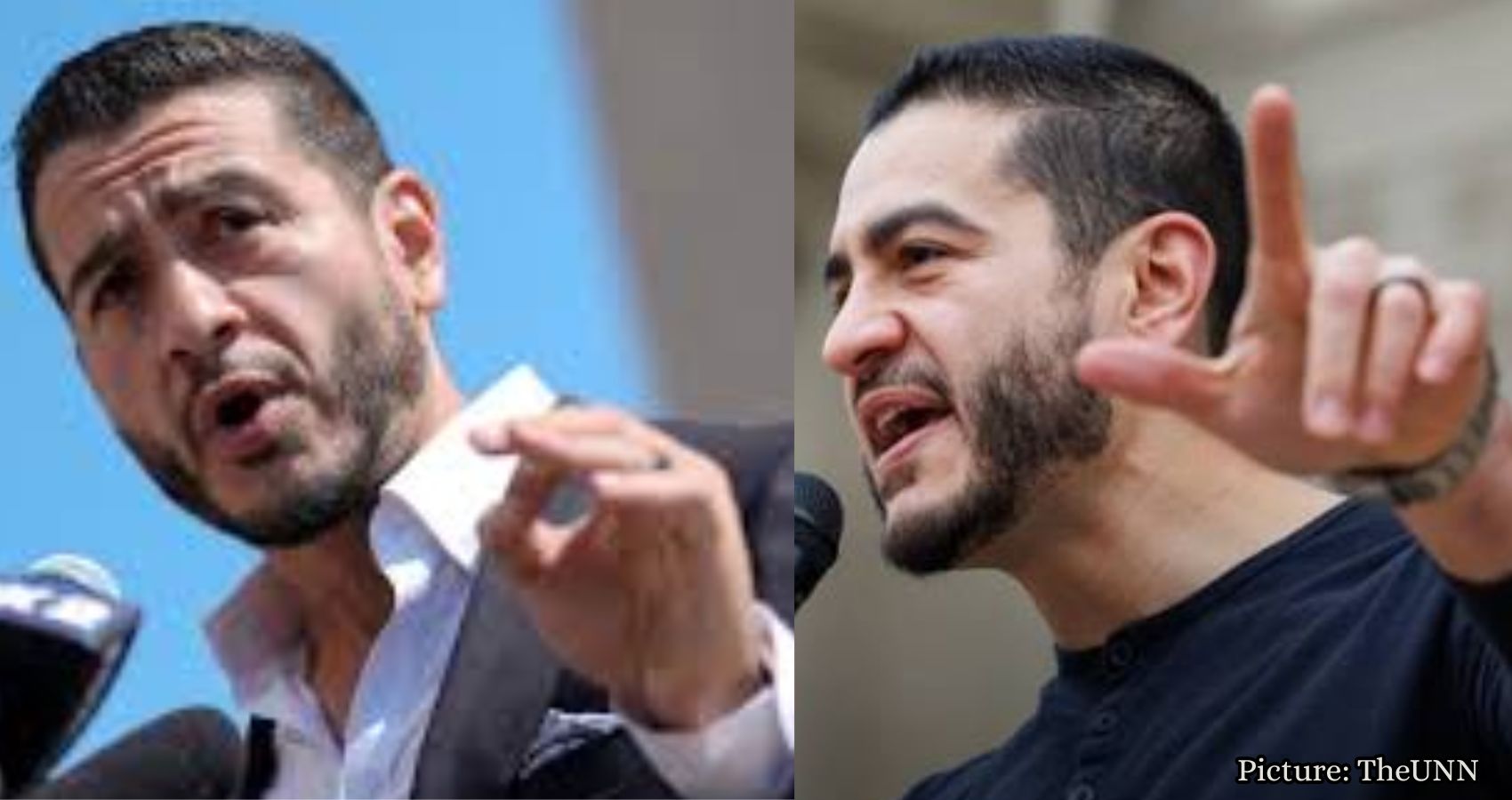
Michigan Senate candidate Abdul El-Sayed faces criticism over his Medicare for All platform and disputed claims regarding his citizenship status as the election approaches.
Abdul El-Sayed, a Democratic candidate for the U.S. Senate from Michigan, is encountering intensified scrutiny from conservative commentators regarding his support for Medicare for All and questions surrounding his citizenship status. With the election set for November 3, the race has become increasingly contentious.
El-Sayed, a former public health official in Detroit and Wayne County, has made Medicare for All a cornerstone of his campaign. His official website highlights this policy as one of his primary objectives, emphasizing his commitment to expanding government-backed health coverage for all Americans.
Criticism of El-Sayed’s healthcare proposal has escalated, particularly following a video released by social media influencer Priya Patel. In the video, Patel labels El-Sayed a “socialist jihadi” and accuses him of attempting to eliminate private health insurance. She argues that a single-payer system would result in a significant shift of healthcare financing to the federal government, leading to increased taxes for citizens.
While the video presents a strong political stance, it does not provide an independent assessment of El-Sayed’s ideology. The candidate has consistently advocated for Medicare for All, asserting at a rally in August at the University of Michigan that the system would decouple health coverage from employment and lower out-of-pocket expenses for individuals.
El-Sayed’s campaign website further underscores Medicare for All as one of his three major priorities, alongside efforts to reduce the influence of money in politics and to enhance the financial well-being of Michiganders.
The video also references a Congressional Budget Office (CBO) analysis to support claims that a single-payer system would lead to a substantial increase in federal healthcare spending. This assertion aligns with a 2020 CBO report, which estimated that federal subsidies for healthcare could rise by $1.5 trillion to $3 trillion by 2030 under a single-payer model. However, it is important to note that the CBO examined various hypothetical single-payer options rather than El-Sayed’s specific proposal. The report indicated that total national health expenditures could either decrease by $700 billion or increase by $300 billion, depending on the system’s design.
In addition to the healthcare debate, the video cites Canadian healthcare wait times as a critique of government-run healthcare. A 2025 survey by the Fraser Institute revealed a median wait time of 28.6 weeks from a general practitioner referral to treatment in Canada, with even longer waits for specialized procedures. However, these statistics pertain specifically to the Canadian system and do not necessarily reflect the potential outcomes of a U.S. Medicare for All initiative.
Further complicating El-Sayed’s campaign are allegations regarding his wife, psychiatrist Sarah Jukaku. Critics have pointed out that Jukaku does not accept Medicare or private insurance in her Ann Arbor practice, having opted out of Medicare in 2025. This has led to accusations of hypocrisy against El-Sayed, who is advocating for a universal healthcare system.
Another layer of controversy surrounds El-Sayed’s citizenship status. Nalin Haley, the son of former South Carolina Governor Nikki Haley, recently expressed on social media that dual citizens should not be permitted to run for office in the United States. This statement followed claims that El-Sayed had acknowledged holding Egyptian dual citizenship.
Reports indicate that El-Sayed has previously described himself as a dual citizen. A video from a 2016 medical conference surfaced, showing him stating, “I carry dual citizenship” while discussing his childhood visits to Egypt. Additionally, an academic résumé from 2014 listed his citizenships as “USA, Egypt.”
However, El-Sayed’s campaign has contested the assertion that he ever legally held Egyptian citizenship. Campaign spokeswoman Roxie Richner stated that El-Sayed is “not a dual citizen by any verifiable metric and never has been.” She explained that while El-Sayed was informed as a child that his grandfather had pursued Egyptian citizenship for him due to his parents’ origins, the family later could not find documentation to substantiate this claim.
This situation leaves the public with conflicting narratives regarding El-Sayed’s citizenship status. While he has previously identified as a dual citizen, his campaign now disputes that he was ever legally recognized as such. The ongoing debate is unfolding in a closely watched Senate race against Republican candidate Mike Rogers, with national attention focused on the stark differences between the candidates’ healthcare and economic proposals as the election date approaches.
As the Michigan Senate race intensifies, the implications of these controversies could play a significant role in shaping voter perceptions and influencing the outcome of the election, according to The American Bazaar.