
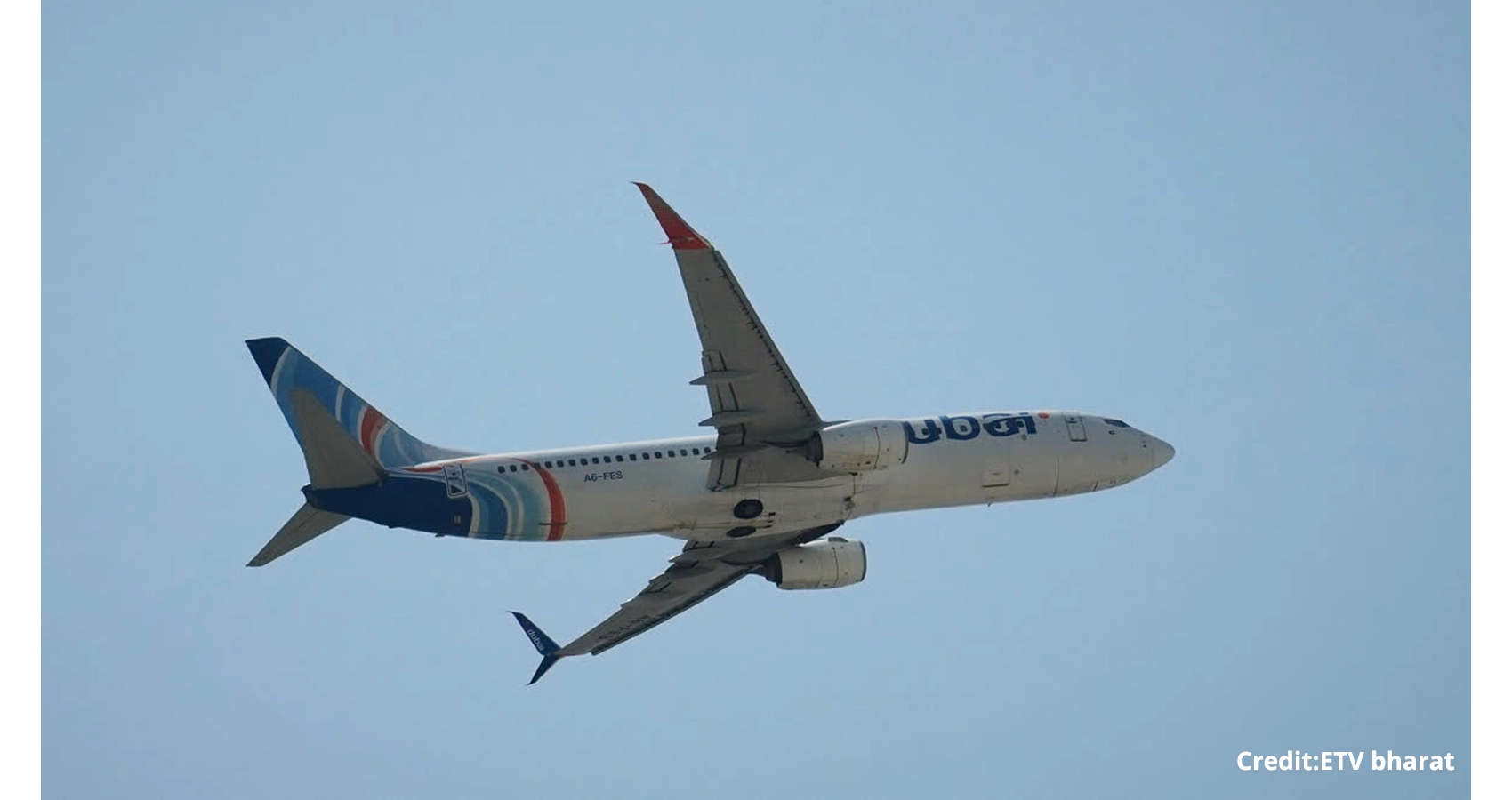
A Flydubai flight from Dubai to Tel Aviv made an emergency landing in Saudi Arabia after a cockpit altercation between pilots triggered hijack alerts, raising concerns among passengers and authorities.
A Flydubai flight traveling from Dubai to Tel Aviv was diverted to Saudi Arabia on Wednesday following a serious incident that prompted emergency alerts and briefly raised fears of a hijacking. Flight FZ1073, operated by a Boeing 737, landed safely at Tabuk Airport after Israeli authorities scrambled fighter jets due to a loss of contact with the aircraft and signals indicating potential unlawful interference.
The incident reportedly involved a physical confrontation between the two pilots, rather than a conventional hijacking scenario. The aircraft had departed from Dubai International Airport for Ben Gurion Airport in Tel Aviv on Wednesday morning. Approximately two hours into the flight, the aircraft transmitted squawk 7700, the international transponder code used to indicate a general emergency. Flight-tracking data subsequently showed the plane changing course while flying over Saudi Arabia.
Shortly after, the aircraft transmitted squawk 7500, a code associated with unlawful interference and commonly linked to hijacking situations. This unusual development prompted Israeli authorities to respond, with fighter jets dispatched to assess the situation as officials considered the possibility of an attempted hijacking.
Passenger accounts described a violent confrontation involving the pilots. One passenger recounted hearing screams coming from the cockpit before witnessing blood. Another account suggested that a pilot had been injured with a pocketknife. Passengers reported seeing blood after the cockpit door was opened, although these accounts have not been independently verified. Officials have confirmed that an altercation occurred between the pilots but have not yet clarified the circumstances surrounding the confrontation.
Images that surfaced following the incident depicted a passenger wearing a blood-stained shirt, further corroborating reports of a struggle on board. Some Hebrew-language media reports suggested that one of the pilots attempted to deliberately crash the aircraft before being restrained by the other pilot and passengers. Other reports have proposed different possible intentions, including an attempt to take control of the aircraft. However, these claims remain unverified.
Authorities have not publicly established the reason for the confrontation, who initiated it, or the exact events that transpired in the cockpit prior to the emergency landing. The aircraft’s transmission of the hijack code 7500 significantly escalated concerns about a potential hijacking. It remains unclear whether the code was intentionally entered by one of the pilots, transmitted during the physical struggle, or triggered under circumstances that investigators have yet to determine.
The combination of emergency signals, the aircraft’s unusual flight path, and difficulties in establishing contact with the crew led Israeli authorities to prepare for a possible hijacking. Given that Israeli citizens were believed to be among the passengers, security officials treated the situation as a serious threat. The aircraft ultimately diverted to Tabuk Airport in northwestern Saudi Arabia, where it landed safely. The Israeli Prime Minister’s Office later stated that the incident was not believed to have been a hijacking.
All passengers were reported safe after the aircraft landed in Tabuk. Flydubai confirmed that FZ1073 experienced an incident while en route to Tel Aviv and had diverted to Saudi Arabia. The airline stated it was coordinating with authorities and later arranged for another aircraft to transport the stranded passengers from Tabuk to Tel Aviv. The incident caused considerable concern due to the initial hijack alert and reports of a confrontation inside the cockpit.
The investigation into the Flydubai FZ1073 incident is ongoing. The aircraft left Dubai for Tel Aviv, issued a general emergency alert, and subsequently transmitted the hijacking-related 7500 code before diverting from its planned route and landing safely in Tabuk. Officials have linked the emergency to an altercation involving the pilots, but several key questions remain unanswered, including what caused the confrontation, why the hijack code was transmitted, and whether any attempt was made to deliberately alter the aircraft’s course or endanger passengers.
The situation continues to develop as authorities work to uncover the full details of the incident, and further updates are expected in the coming days, according to The Sunday Guardian.