
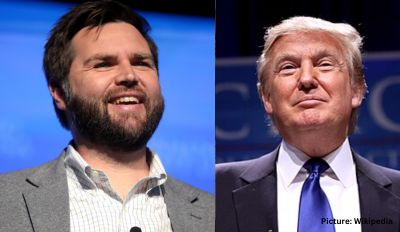
Vice President JD Vance has expressed his disagreements with former President Donald Trump regarding the Iran conflict, as the U.S. considers military action against Tehran’s fortified nuclear facility.
Vice President JD Vance has publicly acknowledged differences with former President Donald Trump concerning the ongoing conflict with Iran. This revelation comes as Washington contemplates further military action against Tehran, particularly targeting its fortified Pickaxe Mountain nuclear site.
In an interview aired on Friday on Sean Spicer’s talk show, Vance addressed criticisms surrounding the Iran war, including those voiced by former Trump ally Tucker Carlson. “I think I have had that disagreement,” Vance remarked, highlighting the internal divisions within the administration regarding the approach to Iran.
Vance’s comments are particularly significant as Trump considers possible strikes on the heavily fortified Pickaxe Mountain facility, which is associated with Iran’s nuclear program. The U.S. has been ramping up military pressure on Tehran, and Vance’s remarks indicate a rare moment of dissent within the administration.
During the interview, Vance discussed Carlson’s strong opposition to the U.S. military campaign against Iran. He acknowledged that they had engaged in discussions about their differing perspectives both privately and publicly. However, Vance rejected the notion that their disagreements should compel him to distance himself from Carlson entirely.
Despite acknowledging Carlson’s criticisms, Vance challenged the argument that the war violates international law, questioning how such a stance aligns with the America First approach. His comments reflect a broader debate within Trump’s political circle, although Vance did not propose specific policy alternatives during the interview.
Meanwhile, Trump has indicated that the U.S. could target the Pickaxe Mountain site. In a recent interview with Newsmax, he described the facility as being buried beneath millions of tons of mountain and suggested that military action was under consideration. Trump emphasized that he would not resort to nuclear weapons, asserting that conventional weapons would suffice for the operation he envisioned.
When asked about his trust in Israeli Prime Minister Benjamin Netanyahu, Trump responded candidly, stating that he does not trust anyone in politics.
In response to the escalating tensions, Iran’s acting Defence Minister, Brigadier General Seyed Majid Ibn-al-Reza, criticized Washington’s approach, warning that military action would have significant repercussions for America’s international standing, economy, and domestic political landscape.
U.S. Central Command (CENTCOM) has reported that American forces have disrupted Iranian maritime trade, claiming to have prevented at least $25 billion in Iranian crude oil exports. CENTCOM chief Admiral Brad Cooper stated that, aside from humanitarian assistance permitted by Washington, Iran has had no exports or imports by sea.
Cooper also noted that the Strait of Hormuz remains open for commercial shipping, with approximately 400 merchant vessels having transited the waterway in the past week. However, tensions in maritime navigation persist as Washington and Tehran continue to clash over access to this strategic passage, which is crucial for global energy supplies.
The conflict between the U.S. and Iran has escalated significantly since February 28, when U.S. and Israeli forces launched attacks on Iran. A ceasefire was briefly established in April, but fighting resumed as negotiations stalled, despite both sides signing a memorandum of understanding in June.
Disagreements over maritime navigation and control of the Strait of Hormuz have remained central to the ongoing confrontation. Tehran asserts its authority over passage through Iranian waters and has issued warnings to vessels regarding unauthorized routes. Conversely, Washington insists on the principle of freedom of navigation through the strait.
Recent attacks on commercial vessels have heightened concerns over maritime security, while Trump’s latest comments suggest that further military action against Iran is still on the table. As the situation continues to evolve, the implications of these disagreements within the U.S. administration may play a crucial role in shaping future policy.
According to The Sunday Guardian, the dynamics of the U.S.-Iran conflict remain fluid, with significant developments expected in the coming days.