On World Mental Health Day, Indian American families are urged to reconsider the mantra of “grin and bear it” and embrace open conversations about emotional well-being.
Today marks World Mental Health Day, a timely reminder for Indian American families to engage in conversations that are often overlooked. While there is a strong emphasis on academic achievement, professional success, and financial stability, the emotional realities of growing up in America are frequently neglected.
Children in these families are expected to excel, make their parents proud, and validate the sacrifices made for their futures. When they face challenges, the common advice tends to be to work harder, stop worrying, or simply move on. This pervasive message, whether intentional or not, is a familiar refrain: “grin and bear it.”
This mantra, inherited by many Indian parents, warrants a critical reassessment. While resilience is undoubtedly important, it can become a demand for silence when not accompanied by emotional support. This silence risks conflating a child’s ability to hide their distress with genuine coping skills.
The issue is particularly complex in Indian American households, where parents often hail from India and their children are growing up in the United States. While these parents may grasp the significance of education, discipline, and hard work, they may lack an understanding of the social environment their children navigate daily.
Many parents have not experienced the American high school landscape, where students may encounter drugs, alcohol, bullying, and the pervasive influence of social media. They may not fully comprehend how swiftly a teenager’s social standing can shift or the immense pressure to conform to peer expectations. Those who deviate from societal norms often find themselves ostracized, yet the reasons behind such behaviors are seldom explored.
Moreover, the cultural tension of straddling two worlds can be overwhelming. Children may feel American at home but Indian among peers, leading to a struggle to meet conflicting expectations. Ignoring uncomfortable topics does not shield children from their realities; it may only exacerbate their struggles.
Discussions surrounding drugs, relationships, mental health, and emotional distress often become taboo in some families. Many Indian parents may feel ill-equipped to address these issues, leading to avoidance. Some fear that acknowledging a child’s struggles could invite scrutiny or gossip from relatives and friends, which can further discourage families from seeking help.
Research indicates that stigma surrounding mental health services is prevalent among Asian Indian parents in the U.S., more so than among their European American and Latino counterparts. Although a small study highlighted this barrier, it underscores a significant issue that merits attention. Interestingly, parents who have previously utilized psychotherapy tend to have more favorable views on mental health services for children, suggesting that familiarity can foster acceptance.
Despite this, many families still view counseling as a last resort, only to be pursued when a child can no longer function. Some perceive seeking help as a sign of weakness, believing that faith, family support, or sheer willpower should suffice. While these sources can be invaluable, they should not replace professional care. Just as we would not advise a child with vision problems to rely solely on determination, we should not assume that emotional suffering can be resolved without expert intervention.
There exists a broader cultural contradiction worth examining. While the achievements of Indian Americans in fields like medicine, engineering, and business are celebrated, the importance of understanding human behavior and emotional health is often overlooked. Conversations about mental health careers and treatment are less common in families that prioritize certain professional paths. This raises an essential question: do our professional aspirations leave room for valuing disciplines that enhance our understanding of mental health?
The pressure cooker environment created for children is not merely filled with academic expectations; it is also laden with comparisons, demands, and the fear of disappointing loved ones. Children may internalize the belief that they are never good enough, that their feelings are burdensome, or that failure will lead to familial disgrace. This mindset can lead them to conceal their mistakes rather than learn from them.
The language we use carries more weight than we often realize. Words like “should,” “always,” and “never” can create rigid thinking and unrealistic expectations. Cognitive behavioral therapy encourages individuals to recognize and challenge these patterns rather than accept every thought as truth.
For instance, consider the difference between telling a child, “You should never disappoint us,” and saying, “We want you to succeed, but we also want you to share when you’re struggling.” The former frames disappointment as a moral failure, while the latter maintains expectations while fostering openness.
Similarly, labeling a teenager as someone who “always makes bad decisions” reduces their character to a single mistake. Instead, asking, “What happened, and what can we learn from it?” allows for constructive dialogue without defining the child by their actions. This distinction is crucial; we can hold individuals accountable without reducing them to their mistakes.
Parents who use rigid language are not necessarily irrational, and children do not develop mental health issues solely due to a parent’s words. However, repeated patterns of criticism, comparison, and conditional approval can contribute to a stressful family atmosphere. It is vital to assess how we communicate, especially when certain conversations lead to fear or withdrawal.
The solution is not to abandon discipline or cultural traditions but to create an environment where children feel safe sharing their struggles without fear of losing parental support. Children need boundaries and guidance, but they also need to know they can be honest about their challenges.
On this World Mental Health Day, Indian American families are encouraged to reflect on what success truly means for their children. While prestigious degrees and high incomes are visible markers of achievement, emotional stability, healthy relationships, and the ability to seek help are equally important, albeit less visible.
We must not assume that good grades equate to emotional well-being, nor should we interpret withdrawal as laziness or anxiety as weakness. It is crucial to foster an environment where children feel safe discussing their lives without waiting for a crisis to prompt such conversations.
Parents must learn to listen without immediately correcting or offering advice. Schools, healthcare providers, and community organizations can play a role by making culturally relevant mental health resources accessible. Indian American leaders should also engage in open discussions about these issues rather than waiting for a tragedy to ignite the conversation.
Most importantly, we must stop allowing the fear of community gossip to dictate how we care for our children. The opinions of friends and relatives should not outweigh a child’s emotional health. Seeking professional help is not a sign of failure; it is a recognition that some issues require expertise beyond parental guidance.
Our children do not need parents who understand every facet of American youth culture; they need parents willing to learn about it. They do not need us to have all the answers; they need to feel that asking difficult questions will not jeopardize our love and support. They should not inherit another generation’s confusion of silence with strength.
The mantra “grin and bear it” may have served previous generations well, but it is not a substitute for understanding the psychological pressures facing today’s youth. We can honor our parents’ sacrifices while acknowledging that our children’s world presents unique challenges that require different responses.
Ultimately, the measure of our success as parents should not solely hinge on whether our children meet every expectation we set. It should be about whether they trust us enough to confide in us when they are struggling.
On this October 10, let us commit to teaching our children that resilience does not mean suffering in silence, that asking for help is a responsible act, and that no family reputation is worth more than a child’s well-being. We have spent generations preparing our children to succeed; now it is time to learn how to help them truly live in this world.
According to The American Bazaar.






























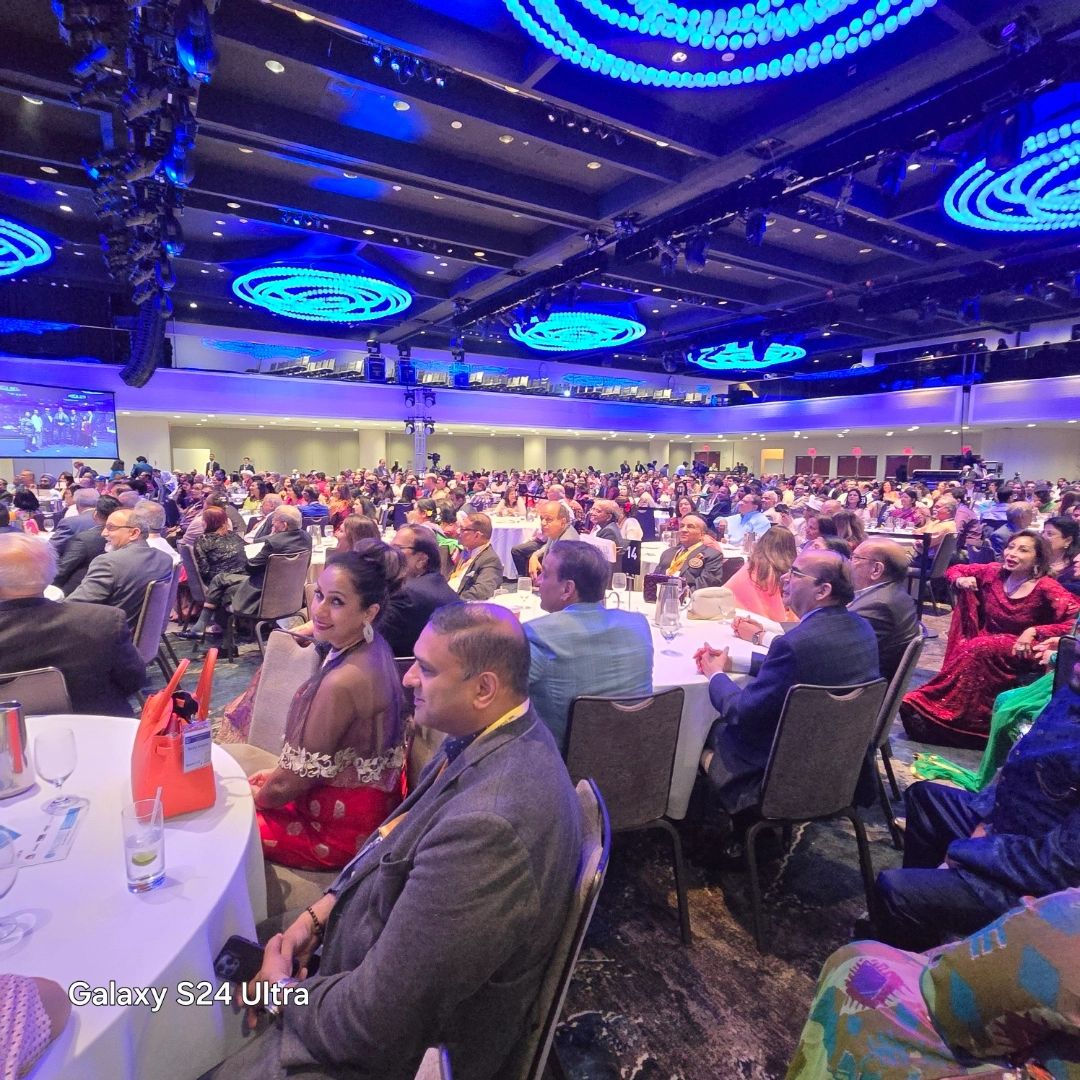
 The World Health Congress, which began on July 18th with the cutting of the Ribbon by the Mayor of New York City, Eric Adams is being attended by over 1,000 physicians and has over ing80 speakers and CEOs from around the globe, provide the delegates with an unparalleled opportunity to network, learn, and explore groundbreaking advancements across healthcare disciplines.
 The CEO Forum was moderated by Dr. Achintya Moulick, Chair of the AAPI World Health Congress. In his opening remarks, Dr. Moulick said, “The first World Congress of AAPI signals the beginning of a new chapter for the organization which has had a significant impact on American healthcare. The goal for me as the first convention chair of the World Congress is to bring healthcare providers, entrepreneurs, financial bodies and policymakers together and create a perfect gathering of first, second and third generation physicians and other healthcare providers of Indian origin lead the way for the future of global health.”
 AAPI’s Legislative Day discussed the need to regulate healthcare, visa, physician-patient relationship, insurance issues and was moderated by Dr. Sumul Raval, national Secretary of AAPI. He said, “AAPI’s lobbying efforts on some of the issues affecting the broader Indian American community and other immigrant groups is also a testament to its growth and reach. Being one of the oldest Indian American organizations, it’s also among the most influential, as was evident from the lawmakers who took time out of their busy schedule to address the group.”
 Dr. Anjana Samadder, president of AAPI said, “The growing influence of doctors of Indian heritage is evident, as increasingly physicians of Indian origin hold critical positions in the healthcare, academic, research and administrative positions across the nation. With their hard work, dedication, compassion, and skills, they have thus carved an enviable niche in the American medical community. AAPI’s role has come to be recognized as vital among members and among lawmakers.”
 Dr. Lokesh Edara, Chair, AAPI Board of Trustees said, “The growing influence of doctors of Indian heritage is evident, as increasingly physicians of Indian origin hold critical positions in the healthcare, academic, research and administrative positions across the nation. With their hard work, dedication, compassion, and skills, they have thus carved an enviable niche in the American medical community. AAPI’s role has come to be recognized as vital among members and among lawmakers.”