
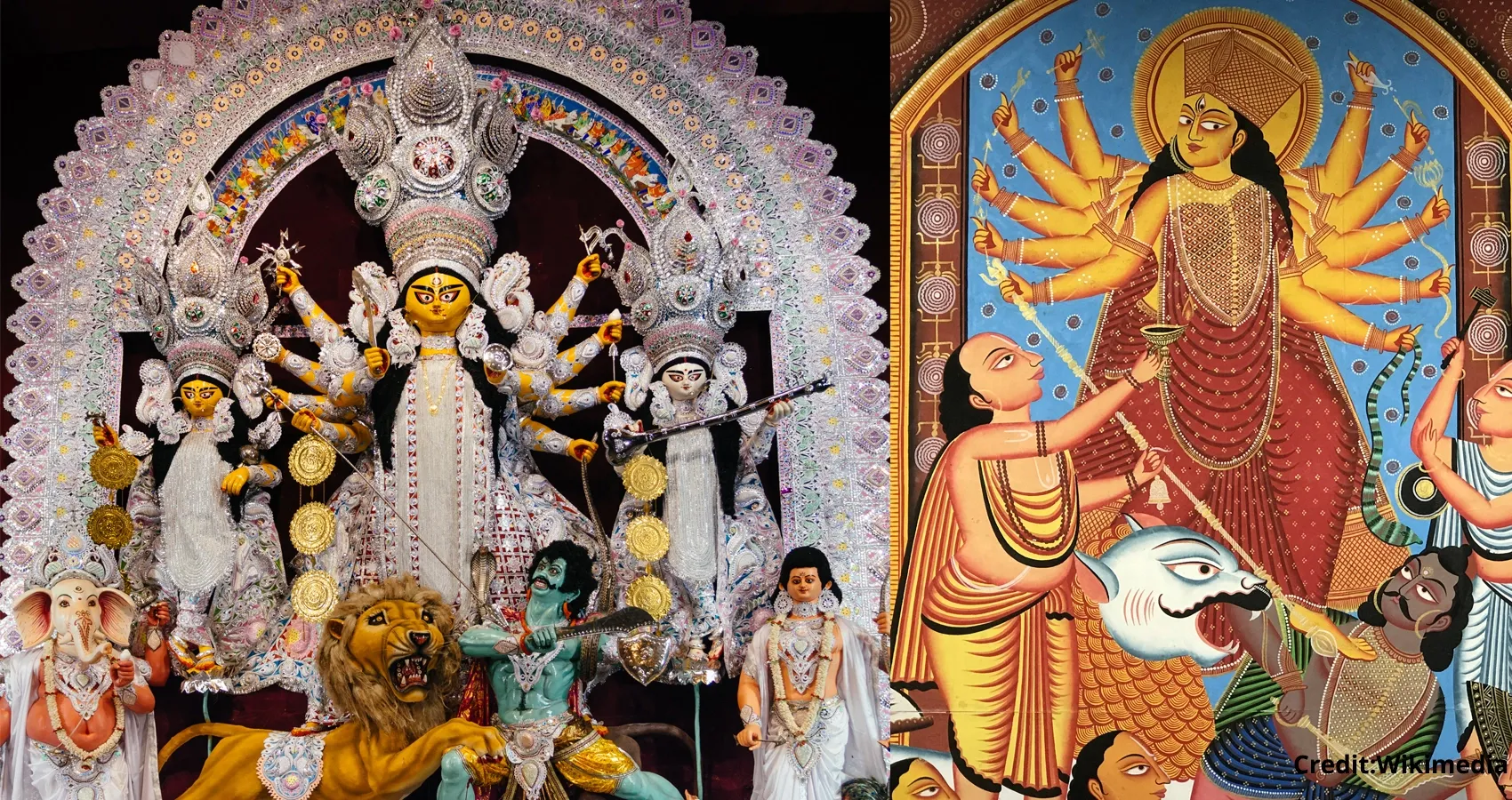
The eighth day of Navaratri emphasizes that inner peace is achieved not by erasing the past, but by transforming our relationship with it.
The eighth day of Navaratri is a time for introspection, reminding us that true inner peace is not about making the past disappear. Instead, it involves changing how we relate to our experiences.
Navaratri serves as a journey inward, with each form of Goddess Durga offering unique insights into our understanding of ourselves and our connections with others. On this day, we honor Goddess Mahagauri, a serene and radiant embodiment of the divine feminine associated with purity, peace, and the alleviation of suffering. Her name translates to “the supremely radiant one,” and she is traditionally depicted dressed in white and riding a bull, symbols of tranquility and clarity. These attributes prompt us to reflect on a vital question: after enduring life’s challenges, how can we regain the clarity needed to perceive ourselves and others without being overshadowed by past pain?
In one traditional narrative, Parvati undergoes intense austerities in her devotion to Shiva, resulting in a darkened complexion. Later, Shiva restores her radiant appearance, and she becomes known as Mahagauri. While interpretations of her origins and symbolism vary, this story serves as a metaphor for the human experience. We face hardships, carry the impressions they leave, and sometimes allow these experiences to cloud the qualities that once brought us peace. Mahagauri’s radiance symbolizes the restoration of clarity following suffering, a return to the ability to see beyond the burdens of our past.
Life inevitably brings disappointment. Misunderstandings, changing relationships, unmet expectations, and unintended consequences shape our worldview. While recalling these experiences can help us learn and recognize patterns, it is crucial to understand that remembering does not equate to allowing them to define our future.
Letting go does not mean denying past events, excusing harmful behavior, or pretending that consequences no longer matter. It does not require reconciliation with those who have caused us harm. Instead, it involves acknowledging that we cannot alter the past by continuously reliving it. We can recognize injustices, seek accountability when appropriate, establish boundaries, and still choose not to let those experiences dictate our lives. Inner peace does not hinge on declaring everything acceptable; it relies on regaining the ability to choose our responses to what has happened.
The Ramayana provides a poignant reflection through the character of Bharata, Rama’s younger brother. When Kaikeyi’s actions lead to Rama’s exile, Bharata is positioned to inherit the kingdom. However, he refuses to accept a throne gained through unjust circumstances. Instead, he seeks Rama’s return and, when Rama insists on honoring their father’s command, Bharata agrees to govern as a caretaker, placing Rama’s sandals on the throne as a symbol of his brother’s rightful place. Bharata’s actions illustrate that disappointment and injustice need not define our identity. He acknowledges wrongdoing without allowing personal gain or resentment to shape his decisions. His story is not about ignoring injustice but about maintaining his principles in the face of adversity.
Mahagauri’s symbolism also encourages us to examine the judgments we hold about ourselves. Often, the hardest burdens to release are not anger toward others but shame regarding our own past. We may remember a failure and begin to see ourselves as failures, or regret a decision and allow that regret to undermine our confidence in future choices. Accountability requires us to recognize our mistakes and learn from them, but it does not necessitate that we remain permanently defined by them. Just as Mahagauri’s radiance represents the restoration of purity and serenity, we can strive for a state where regret becomes a source of understanding rather than a permanent judgment on our worth.
This distinction is particularly relevant for young people navigating a world where mistakes can be recorded, shared, and judged long after the circumstances have changed. A careless remark, a failed exam, or a poor decision can become part of a public narrative that feels inescapable. Yet, growth comes through experience. The ability to learn hinges on acknowledging mistakes without allowing them to define our worth. We should hold ourselves accountable for our actions while remaining open to the possibility of growth and wisdom.
The same principle applies to how we perceive others. When we reduce someone to their worst actions, we overlook the complexity of human behavior. This does not mean abandoning judgment or removing consequences; rather, it involves distinguishing between holding someone accountable and allowing our anger to become the sole narrative we tell about them. Clarity requires us to recognize the harm that has occurred without assuming it defines the entirety of a person, just as self-awareness necessitates acknowledging our own mistakes without believing they encapsulate who we are.
The eighth day of Navaratri serves as a reminder that inner peace is not achieved by erasing the past. Instead, it comes from transforming our relationship with it. Mahagauri’s radiance symbolizes the clarity that emerges when resentment, shame, and the desire to rewrite history no longer obscure our view of the present. While we cannot always choose what happens to us, we can gradually reclaim the freedom to determine what those experiences will mean for our future.
We honor the lessons of the past, but we do not have to carry its burdens into tomorrow.
The post Navaratri Day 8: The wisdom of restoring inner clarity appeared first on The American Bazaar.