Sreedhareeyam Ayurvedic Eye Hospital, located strategically in the picturesque town of Koothattukulam, nestled amidst the serene beauty of Kerala’s countryside, was established in the year 1931 by Vaidya Thrivikraman Namboothiri and his brother Vaidya Parameswaran Namboothiri, where Ayurveda Ophthalmology services were provided at their ancestral home of Nelliakattu Mana. It was then known not as Sreedhareeyam, but was called Shridhari Vaidyasala.
Thrivikraman Namboothiri practiced Medicine and Parameswaran Namboothiri would prepare and manufacture the medications, which were in very small quantities for the patients. Often medications were prescribed by the Vaidyas (Doctors), and patients would go to Koothattukulam Vaidyasala or other ayurvedic stores, where they could purchase the 10-20 ingredients and prepare the medications at home.
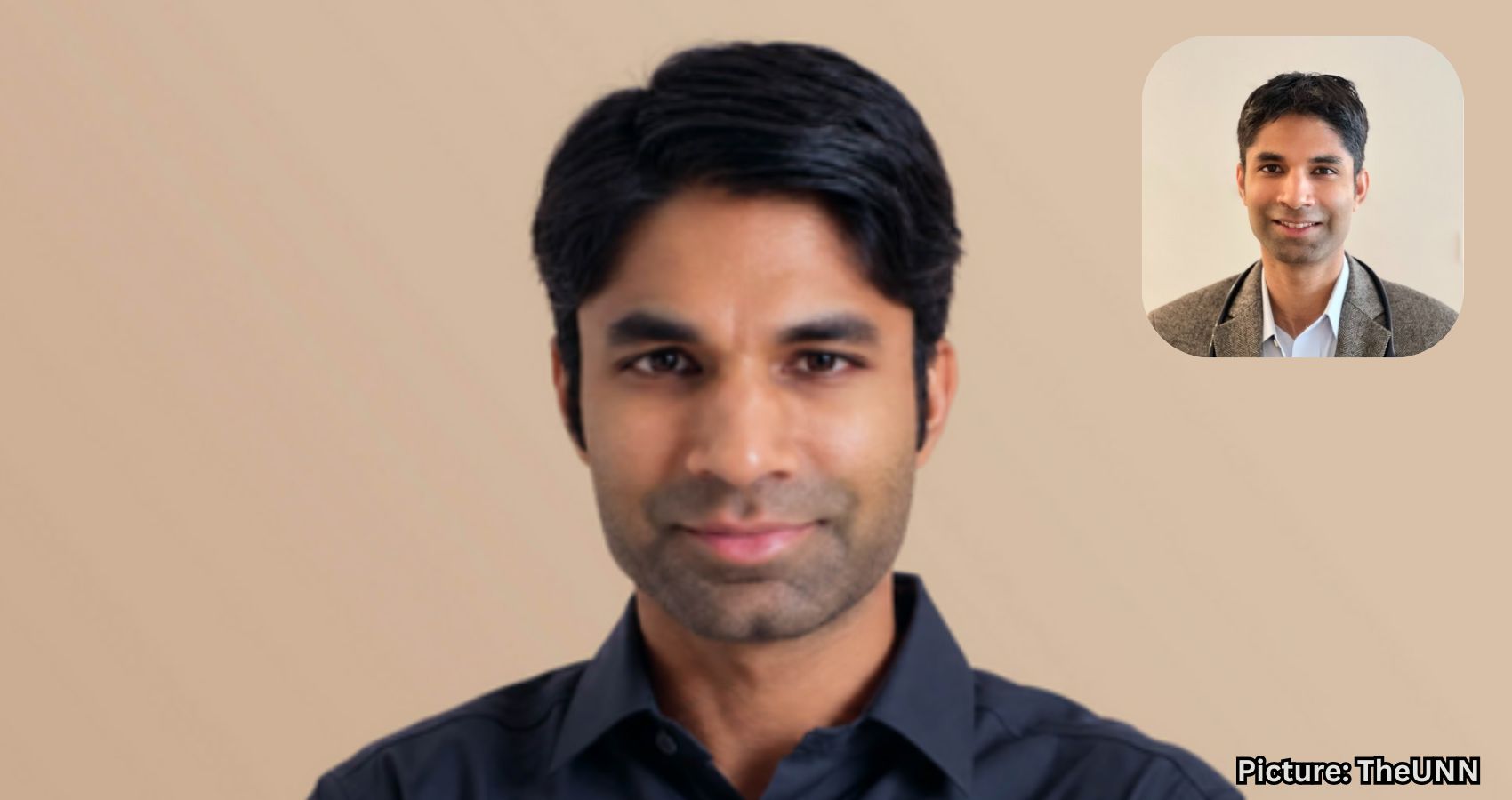
 Continuing these ancient Indian principles and focusing on the assessment and treatment of the eyes, Sreedhareeyam was taken to the next level through the dynamic leadership of Dr. NPP Namboothiri, who was trained under the guidance of Vaidyan Trivikraman Namboodiri and other eminent ophthalmology practitioners in Kerala. After his passing away in 2021, Dr. Narayanan Namboothiri has been entrusted with the role of Medical Director and has been leading this prestigious Eye Hospital to newer heights.
In an exclusive interview with this writer, Dr. Namboothiri, who sees patients in the same house that he was born decades ago, says Ayurveda places a strong emphasis on the diagnosis of the disease. And those who practice Ayurveda use three tools: seeing, touching and assessing, and often do not use any instruments for the diagnosis of one’s illness. For Vata, Pitta, and Kapha disorders, the doctor would carefully monitor the patient’s pulse at the onset and diagnose the illness.
The ancient Indian classicals have described the ways to diagnose the severity of one’s illness by placing the fingers on the wrist area, and a physician can measure through the “Nadi Pariksha” that is pulse reading and one is able to assess and evaluate a person’s body, mind, soul, and spirit. Thus, Nadi Pariksha serves as a critical tool for diagnosis, prognosis, and determination of the Physiological and Pathological State of the Patient’s Body through the Science of Nadi Vigyan.
 As per Dr. Namboothiri, there are about 40 to 45 Doctors in addition to hundreds of supporting staff here working at Sreedhareeyam and its branches across India and abroad, who are led and trained by some senior Doctors, who are also assisting in the treatment of patients here and other branches.
Dr. Narayanan Namboothiri, who used to personally meet and treat every patient who visited the hospital during the initial years, gives credit to the “dedication and commitment” of the staff for the success and growth of Sreedhareeyam. “Even though I cannot see everyone, the Senior Doctors, whom I had the privilege of training are now able to train other Doctors and every one of them helps realize the mission of Sreedhareeyam.”
Unlike in the past, where fresh medical ingredients were prepared by hand, now Sreedhareeyam boasts of its highly advanced medicines factory that prepares and manufactures medicines in large quantities that meets the growing demands for the thousands of its own patients and supplying them to several other hospitals.
Sreedhareeyam, in its mission to share the ancient knowledge in Ayurveda has its Research Wing that closely monitors and documents the impact of the treatment for other facilities and future generations to emulate from its own success stories of the thousands of patients who benefit from the treatment.
“Led by a team of Doctors, our Research Team has published scientific articles in renowned research journals which is an effective way of sharing ancient knowledge and wisdom and its impact on current population, Dr. Namboothiri says. “When people read and hear about these concrete and evidence-based success stories, they come to Sreedhareeyam,” states Dr. Namboothiri, who does not believe in paid marketing campaigns to promote Sreedhareeyam and its impact on restoring vision to people.
 Among the thousands of successful cases, Dr. Narayanan recalls how Sreedhareeyam could help restore the vision for Rose Mary Odinga, the daughter of Raila Odinga, former Prime Minister of Kenya in 2023. After being diagnosed with a brain tumor in 2017, Odinga’s daughter had undergone surgery in Nairobi. But in the post-operative period, Rosemary had complained of severe loss of eyesight. She travelled to India in 2019 and underwent treatment at Sreedhareeyam, which helped her vision to restore.
Rose Mary said, in 2018, she suffered from aneurysm, and subsequently her eyesight became weak. For treatment, she went to Germany, Japan and South Africa. “I also went to China two times, where I received treatment using acupuncture,” she said. Having not received much success, Rosemary Odinga finally came to India, where she underwent treatment at Sreedhareeyam, where she was treated in two sessions of three weeks each.
Dr. Namboothiri says, “When she came to us two years ago, she was totally blind with some light perception with no clear visibility. She came after having undergone several treatments in other countries. She had suffered loss of eyesight due to aneurysm and atrophy in the optic nerve.”
Rose Mary received Ayurvedic treatment, involving oral medication as well as rejuvenation therapy of the nervous system, “After the first session itself she showed signs of improvement,” he said. “When she first came, she was only left with some perception of light, and her field of vision was completely lost. Now, she is moving around,” Dr Namboothiri added. Rosemary said she was happy and excited to finally see Dr. Namboothiri clearly. “(When I first met him), I could not see him, I could just hear his voice…follow his instructions. But now I can see him,” she said.
“I guess it is a testimony that AYUSH has helped someone else, other than India, from another part of the world. It is a testimony that it is universal, that solutions of AYUSH are universal, and I am proud to be part of this story,” said Rosemary Odinga. AYUSH’ denotes Ayurveda, Yoga, Naturopathy, Unani, Siddha and Homoeopathy. India has a federal ministry dedicated to these alternative medicine systems.
Mr. Odinga was all praise for the medical services rendered by the Sreedhareeyam, helping his daughter regain her eyesight.
India’s Prime Minister Narendra Modi, during his weekly “Man Ki Bhaat” mentioned Rosemary Odinga’s story and, while no medical treatment was helping her regain eyesight, Sreedhareeyam helped her. “She was treated in many countries but did not regain her eyesight. At last, she found success in India, that too after Ayurveda treatment. Rosemary’s eyesight returned, and she can see now. Her father told me that when she saw her children for the first time after the treatment, it was a golden moment of her life,” Modi said.
 Similar stories by people from abroad and in India are not uncommon. Ralitsa Dutch, a 37-year-old patient from the Netherlands shared about her experience at Sreedhareeyam and Ayurveda this way: “I experienced optic neuritis, an inflammation of the optic nerve in relation to a Multiple Sclerosis (MS) relapse. Since then, my right eye has been heavily impaired. In 2013, when allopathic medicine deemed my case as “hopeless,” I started looking at alternative treatments and got to know about Ayurveda. The decision to come to India and undergo Ayurvedic treatment turned out to be life changing. After a three month stay at a specialized Ayurvedic MS center, my right eye “woke up” for the first time. After three consecutive stays, my MS stabilized, and I have not had any relapses ever since.”
Ralitsa went on to state that even though her MS stabilized, her vision did not come back to normal. It was in early 2023 “when I got to know about Sreedhareeyam, where I stayed for a two-week treatment. A year later, the test results showed improvement in the thickness of both the eye nerve and retina, indicating that 1) despite the 10-year gap, the nerve and retina are capable of regenerating and 2) there is a possibility of further regeneration followed by improvements of my eyesight. And I believe, Ayurveda is a synonym of hope and I encourage anyone who feels hopeless to give it a try.”
Dr. Namboothiri says, many come to Sreedhareeyam as the last resort, where all other options, including most modern medicines have failed them. According to him, in modern allopathic medicine, for each disease there may be multiple medications prescribed, with several side effects. However, in Ayurveda, such concept is not there. But, in ayurveda, Doctors prescribe medications that target holistically, and are treating the basic cause for any disease.
On the connection between vegetarian food and ayurvedic medicine, Dr. Namboothiri says, “Food is at the center of the medicines we give to our patients. And it’s preferred that we eat food that is easily digestible. In addition, vegetables contain lots of ingredients, including vitamins and the minerals our bodies need. Carbohydrates and protein, which are non-vegetarian items won’t digest easily, and will add to the increase of fat in our body, which contributes to collapsing of the circulation of blood. Whenever the blood is not flowing and its pathway is getting obstructed, that leads to problems in the brain, and to the upper limbs or lower limbs everywhere. It is very difficult to treat a patient with obesity and is a major challenge.”
Regarding the growing interest now in Ayurveda his thoughts for the upcoming Doctors and medical students who want to be “Another Dr. Narayanan,” Dr. Namboothiri says, people coming from outside of Kerala are not getting sufficient exposure in other ayurveda systems and its ways of treatment. Here in Kerala, there are several Ayurvedic hospitals, where thousands of patients are being treated and medical students have direct knowledge and exposure. “My suggestion to those doctors is that it is important to practice medicine with a very good understanding of Ayurveda, so that they can provide good relief to the patients with the Ayurvedic system of medicines. For instance, if someone has a fever, one should know that it can be resolved even with the one day of fasting itself. Follow the Panchakarma procedure with which they can do wonders,” he added.
Dr. Namboothiri gives credit to “My Gurus in Ayurveda, my uncle NPP Namboothiri, and Dr. B Vaidyanadhan who was in Chennai and was a famous ayurvedic doctor, with whom I had the privilege of working with for about a year. But quite often I used to go to him and learn from his approaches. He used to examine patients using the nadi parikshanam. He used to give only limited medicines, which are pinpointed and treat the ailments in his patients. I learnt a lot from him and his approach to treating patients.”
 Dr. Namboothiri thanked the Modi government in India, saying “It is very helpful that the Modi Government promotes Ayurveda. The government is doing many things, and he is a very good ambassador for Ayurveda as well as Yoga. An All-India Institute of Ayurveda has been started in Delhi with centers in Gujarat and Goa. The creation of Ayush Ministry is a big boost for the ancient medical traditions of Inda.”
While describing the secret to the success and growth of Sreedhareeyam, especially in the past quarter century, Dr. Namboothiri says, “I am grateful to the Divine power of the Bhagavathi, who is in front of the hospital and the divine power of Mahadeva, who is behind the hospital.”
The treatment for every patient at Sreedhareeyam begins with praying and offerings to the Divine. The staff here gather before the Bhagavathi every morning at the “Naalukattu” where the hospital originated, seeking her blessings on every patient and staff. Dr. Narayanan says, “It’s the Prakasam, that is the lighting of the lamp all night and day before the Divine” that helps sustain the vision for all of our patients.” In addition, he says, “It’s not only that I feel the power of the Divine while entering the Hospital, but there are others who feel and share the same,” which is the secret to the success of the mission of Sreedhareeyam, which is “restoring the vision for all.”
Sreedhareeyam’s commitment to the fusion of traditional Ayurveda with modern technology results in effective, safe, and reliable treatments for eye ailments. Sreedhareeyam has expanded and grown tremendously in its headquarters at Koothatukulam and having opened several new centers across many states in India and abroad. New sections are being constructed at Sreedhareeyam and there plans to open new centers in other states across India and abroad.
When asked about the future of Sreedhareeyam, Dr. Namboothiri says, “At Sreedhareeyam, our major objective is that every patient should receive maximum benefit from the treatment we provide. We are not looking at having more patents each day, but we want to provide quality care to all those who come here seeking treatment.”