
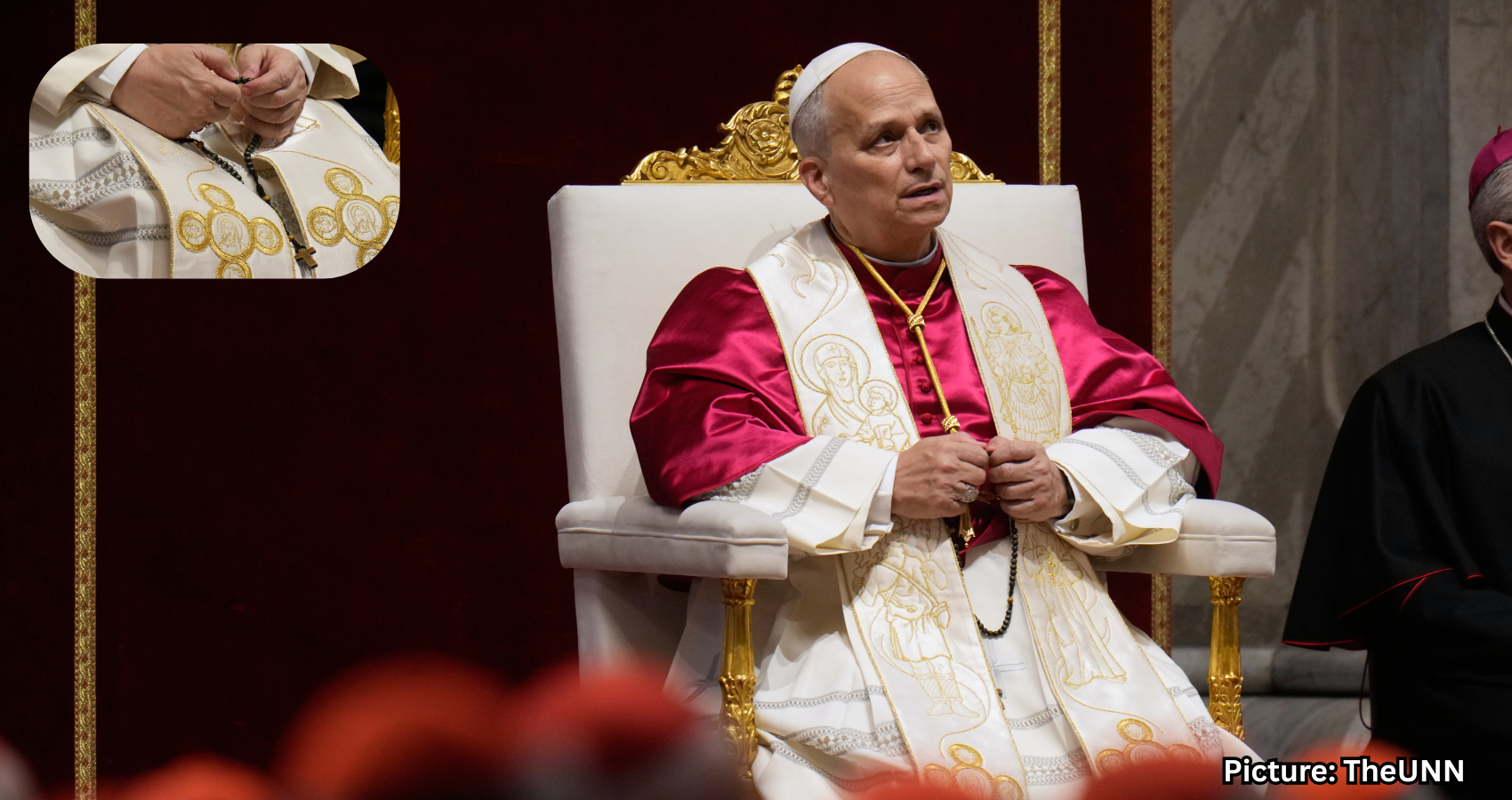
Pope Leo XIV has declared the death penalty “inadmissible,” coinciding with the Pentagon’s controversial plans to livestream an upcoming execution.
Pope Leo XIV has publicly condemned the death penalty as “inadmissible,” coinciding with the Pentagon’s announcement of plans to livestream an execution later this year. This statement was made on World Day Against the Death Penalty, highlighting the pope’s strong opposition to capital punishment.
In a social media post on Saturday, Leo, the first American pope, expressed his views against the death penalty, referencing Catholic doctrine that was revised under his predecessor, Pope Francis. He emphasized that capital punishment undermines human dignity.
“The death penalty is inadmissible because it is an attack on the inviolability and dignity of the person,” Leo stated. “The common good can be safeguarded and the requirements of justice can be met without recourse to capital punishment: effective systems of detention have been developed that protect citizens while at the same time do not completely deprive those who are guilty of the possibility of redemption,” he added, concluding with the hashtag “#NoDeathPenalty.”
This condemnation follows a significant shift in the Catholic Church’s stance on capital punishment, which was formally revised in 2018 by Pope Francis. The updated Catechism asserts that the death penalty is “inadmissible” in all circumstances, framing it as an affront to human dignity.
Prior to this revision, the Church had allowed the death penalty in cases deemed necessary to protect human life from dangerous offenders. However, previous popes, including John Paul II, had increasingly advocated for an end to capital punishment, stressing that convicted individuals retain their human dignity.
While Pope Leo did not directly reference the U.S. government’s plans in his statement, his remarks come in the wake of the Pentagon’s announcement that it has scheduled a firing squad execution for Nidal Malik Hasan, a former Army psychiatrist. Hasan was convicted of killing 13 people and injuring 32 others during a mass shooting at Fort Hood military base in 2009. His execution is set for December 3, marking the first military execution by firing squad in the U.S. since 1945.
President Donald Trump stated on Saturday that he had not yet made a decision regarding the livestreaming of the execution, a plan advocated by Pentagon chief Pete Hegseth. Vice President JD Vance, who is Catholic, expressed skepticism about whether the Pentagon would proceed with a public execution, stating that he would not watch the livestream if it were to take place.
Several lawmakers, including members of the Republican Party, have voiced their opposition to the plans for a public execution. Senator Thom Tillis of North Carolina remarked, “Public executions are what oppressive dictatorships like Iran and Afghanistan do. It should not be happening in America.”
Cardinal Pietro Parolin, the Vatican’s Secretary of State, also criticized the proposed broadcast, calling it “truly incomprehensible” and warning against turning death into a spectacle. “The Church’s position is one of total opposition to the death penalty; it is incompatible with human dignity and serves as no deterrent,” Parolin told reporters on Friday. He further stated, “It is certainly unacceptable to turn death into a spectacle; even if the person is guilty, of course, there are other methods.”
Archbishop Paul Coakley, the head of the U.S. bishops’ conference, expressed “shock” and “great sorrow” regarding the public execution plan, urging the U.S. to reconsider its decision. “In no way can Hasan’s actions be condoned, but this decision is a barbaric promotion of a culture of death and must be reconsidered,” he stated. He added that the public execution of even those who have committed grave harm would further undermine the moral fabric of the nation and tarnish the conscience of its people.
Pope Leo’s statement did not address the recent case of Christa Gail Pike, who survived a botched lethal injection in Tennessee. Pike was administered two doses of pentobarbital last month but did not die as intended.
These developments highlight the ongoing debate surrounding the death penalty in the United States, particularly in light of the Catholic Church’s evolving stance on capital punishment and the ethical implications of public executions.
According to The Associated Press and Reuters, the conversation surrounding the death penalty continues to evoke strong reactions from various sectors of society.