SAYA Celebrates 28 Years of Empowering NYC Youth, Raises $750,000 at Annual Gala

South Asian Youth Action (SAYA.org) celebrated its 28th anniversary on May 18, 2024, during its annual gala, which highlighted nearly 30 years of connecting underserved youth in New York City to vital opportunities and advocating for educational equity.

Held at Tribeca 360° in New York City, the event attracted nearly 400 guests who came together for an evening of philanthropy, inspiration, and celebration, according to a press release from the organizers.

The gala acknowledges the significant contributions and achievements of community members who use their privilege and platforms to drive positive societal change. This year, three exemplary individuals were honored for their dedication to these ideals: Sonny Kalsi, co-CEO of BentallGreenOak; Priya Parker, a renowned author; and Anand Giridharadas, an acclaimed writer.

Entertainment for the evening was provided by the celebrated musician Ali Sethi.

Actress, author, and SAYA board member Sheetal Sheth served as the event’s host.

The evening’s highlight was the personal stories shared by SAYA youth, which vividly illustrated the profound impact the organization has had on young lives throughout New York City.

Organizers proudly announced that “thanks to the altruism of attendees and supporters, the gala raised over $750,000, which will directly benefit SAYA’s programs and initiatives aimed at empowering youth and fostering their academic, social, and personal development.”

Executive Director of SAYA, Sonia B. Sisodia, expressed deep gratitude for the dedication shown by those in attendance. She stated, “The powerful stories shared by our youth highlight our history and the far-reaching impact of our programming.”

SAYA Board Chair Samidh Guha emphasized the importance of the support received, including a remarkable $1 million donation from Mackenzie Scott earlier this year. “The generosity of our supporters, along with the incredible $1 million gift from Mackenzie Scott SAYA received earlier this year, will advance SAYA’s important work in a profound and transformative way. Together we are creating a lasting impact in our communities,” he said.

Senate Democrats Question Justice Alito’s Impartiality Over Upside-Down Flag Incident

Senate Democrats are publicly challenging Supreme Court Justice Samuel Alito’s impartiality after reports emerged that an upside-down American flag flew outside his home during the days surrounding January 6, 2021, and President Biden’s inauguration. Alito, known for his conservative stance on the Court, is under intense scrutiny as the justices prepare to rule on key decisions related to the January 6 attack.

Alito has stated that he had no involvement with the flag, which symbolizes distress and has been adopted by the “stop the steal” movement claiming former President Trump did not lose the 2020 election. He explained that his wife hung the flag amid a dispute with neighbors. However, this explanation has not quelled the Democrats’ concerns, who are deeply troubled by the incident amidst an ongoing debate over judicial ethics.

Sen. Brian Schatz (D-Hawaii) expressed grave concern, saying, “Terribly, terribly alarming. To fly the flag upside down means a very specific thing. … It is not enough to just say, ‘My wife got mad.’ Consider me as alarmed as I possibly could be.” Historically, an upside-down flag has signified distress, such as a ship in trouble. Schatz added, “I never thought he was impartial, but appearing to be impartial is also important. I’d be less alarmed if he had a Trump flag. ‘Nation in distress’ is a very specific thing people do with the American flag. It’s in the U.S. flag code; it means a specific thing. He’s not merely expressing his political preference — he’s saying something that’s borderline revolutionary.”

Led by Senate Judiciary Committee Chair Dick Durbin (D-Ill.), Democrats are calling for Alito to recuse himself from upcoming rulings on January 6-related cases, notably the decision on whether Trump is immune from prosecution for his actions. However, further action seems unlikely. Durbin noted that the Judiciary panel has no plans to investigate or hold a hearing on the incident, stating that there’s “not much to be gained at this point” by doing so. The only potential recourse if Alito does not recuse himself would be impeachment, which Durbin indicated is not currently being considered.

The news has reignited long-standing Democratic grievances with Alito, particularly following his majority opinion in the Dobbs decision that overturned national abortion rights and reports of him receiving gifts and vacations from wealthy GOP donors. Sen. Debbie Stabenow (D-Mich.), the No. 3 Senate Democrat, expressed her outrage, stating, “I think that’s outrageous. I think that’s absolutely outrageous,” and further questioning his judicial impartiality. “Without a doubt,” she said. “I don’t know what to say. I find it appalling.”

Durbin has been advocating for a new ethics code for justices, following revelations that both Alito and fellow conservative Justice Clarence Thomas have accepted lavish gifts and vacations from wealthy benefactors. Thomas has also faced criticism for his wife Virginia Thomas’s involvement in efforts to overturn the 2020 election result. Despite this, he has not recused himself from January 6-related cases.

Republicans, however, are largely supporting Alito. Sen. John Cornyn (R-Texas) dismissed the Democrats’ calls for recusal as the latest form of “harassment” against conservative justices, dating back to Thomas’s confirmation hearings in 1991. Sen. Chuck Grassley (R-Iowa) echoed this sentiment, calling the recusal demands “an idiotic thing to think that has nothing to do with what’s going on with the flag.”

Some Republican senators did express discomfort with the situation. Sen. Lindsey Graham (R-S.C.) acknowledged that it wasn’t a wise decision, despite the high tensions around the Alito residence. “Emotions are apparently high in that neighborhood. But no, it’s not good judgment to do that,” Graham said. “He said his wife was insulted and got mad. I assume that to be true, but he’s still a Supreme Court justice, and people have to realize that [at] moments like that to think it through.”

Sen. Mike Rounds (R-S.D.) found the decision to hoist the upside-down flag disappointing and peculiar. “To have it happen at all was really strange. … It’s just weird,” Rounds remarked. “I would expect that he would be professional enough to where it would not cloud his judgment or his ability to make impartial decisions.” He added, “I was [disappointed]. I was, yeah. Just simply having that symbol flown in that way by anybody to me is disappointing.”

Others defended Alito’s account, emphasizing that despite his role on the court, his wife should be free to express herself. Sen. John Kennedy (R-La.) stated, “I don’t think justices should express political opinions. But Justice Alito didn’t say anything to anybody. He didn’t put the flag up, his spouse did. And I don’t think you can tell spouses that they have to forfeit their right to say what they believe.”

The controversy surrounding Justice Alito’s upside-down flag has intensified the debate over judicial impartiality and ethics. While Democrats call for recusal and express deep concern, Republicans largely defendAlito, viewing the issue as an extension of ongoing partisan battles over the judiciary.

Congressman Suozzi Joins India Caucus, Highlights Growing US-India Relations

Congressman Thomas Suozzi, a Democrat from New York, has officially joined the Congressional Caucus on India and Indian Americans. Suozzi made this announcement at an event hosted by Varinder and Ratna Bhalla, where he was joined by Consul General Binaya Srikanta Pradhan and various community leaders.

At the event, Suozzi recognized Varinder Bhalla for his longstanding service to the community, noting their relationship dates back to the 1990s. He extended a warm welcome to Consul General Pradhan, expressing confidence that Pradhan would have a positive experience in New York.

Addressing the audience, Suozzi highlighted the remarkable talent within the Indian American community. He noted, “There’s such incredible talent in this room alone. In the US, 60 percent do not have a degree from a college, while most Indian Americans graduate from college. A lot of Indians move to Long Island for the better schools there.” Suozzi voiced optimism about the future of US-India relations, calling it crucial for the next 50 years. Despite political divisions in the US, he emphasized his commitment to bipartisan cooperation to strengthen the relationship with India.

“India is going to play a major role in international affairs. It has kind of been in the middle, not only geographically, but certainly in some of the way it’s conducted itself,” Suozzi remarked. He believes that the ties between the US and India will promote democracy and free markets globally. “I’m excited to work on enhancing that relationship and will do everything that I can to try and build [it],” he added. “The India Caucus will be a part of that. I’m actually officially joined the India Caucus, and I will work to get more people.”

Reflecting on the past challenges faced by the Indian American community, Suozzi mentioned the racism from the ‘dot busters’ in the 90s and the discrimination against Sikhs. He acknowledged the efforts of many who fought against this prejudice and helped elevate the community.

Varinder Bhalla, upon receiving the Congressional recognition, attributed his success to his wife’s support.

Consul General Pradhan admitted he was unaware of the extent of Indian Americans’ political involvement until his recent arrival in the US. “But when we started seeing Indian Americans playing well in the politics of this country, we started noticing it,” he said. “I could find many who are in the state assemblies or state senates. When Rep. Suozzi got elected, the Indian media headlined it, saying a friend of India got elected to Congress.”

Pradhan emphasized the intertwined growth of the US-India relationship and the Indian American community, which goes beyond governmental and business engagements. He noted that 45 percent of the 2.5 million Indian Americans reside under the New York consulate’s jurisdiction. “Thousands of Indian students come to the US and we can estimate at least $20 billion is spent by them here,” he stated. Pradhan highlighted the consulate’s focus on trade, technology, tourism, and talent, underscoring the importance of talent in the US-India relationship.

He cited the dramatic growth in trade between India and the US, which has increased from $2 billion three decades ago to around $200 billion today. “We are now cooperating on critical technologies like space exploration, AI, etc,” he added. Pradhan shared an anecdote about establishing an expensive IIT campus in Tanzania, where he served as high commissioner. The Tanzanian president, Samia Suluhu Hassan, inspired by a BBC documentary on Indian American tech CEOs, wanted to replicate the success of IITs in Africa.

Dr. Thomas Abraham, chairman of the Global Organization of People of Indian Origin (GOPIO), traced the origins of the India Caucus. He noted that although Dilip Singh Saund became the first Congressman of Indian origin in 1957, there was a gap in representation until Bobby Jindal’s tenure from 2005 to 2008. The Indian American community began efforts to establish a Congressional Caucus on India and Indian Americans in 1993, which eventually became a formal caucus with over 200 members. NJ Democratic Congressman Frank Pallone and Florida Republican Congressman Bill McCollum were the initial co-chairs, with subsequent leadership including Gary Ackerman, Jim Greenwood, Jim McDermott, Ed Royce, Joseph Crawley, and Joe Wilson.

In 2004, Republican Senator John Cornyn of Texas and New York Democrat Senator Hillary Clinton launched the Senate India Caucus. “I was present at the launch at Capitol Hill. It was the first time a country-focused caucus was established in the Senate,” Abraham recalled.

The event saw the presence of distinguished individuals, including Padma Shri awardees Dr. Sudhir Parekh and Dr. Dattathreyudu Nori, along with Rajeev Bhambri and Gary Sikka.

Pope Francis Inspires Loyola University Delegation with a Call to Embrace Roots, Justice, and Hope

On the morning of Monday, April 20th, Pope Francis welcomed a delegation from Loyola University, Chicago, in the Hall of the Popes at Vatican City. Below is a translated summary of his address delivered in Italian:

Pope Francis began by greeting the President and members of the Board of Trustees of Loyola University in Chicago, who were on a pilgrimage to the birthplace and formative grounds of Saint Ignatius of Loyola. He emphasized the significance of journeys in the human quest for life’s meaning, urging the delegation to maintain a continuous desire for pilgrimage. This visit to the origins of Saint Ignatius’ life and spirituality, he noted, should enrich and inspire their academic and personal growth. The Pope stressed the importance of returning to one’s roots to draw strength and progress, reiterating that the roots of Loyola University lie in the experiences of Saint Ignatius, who prioritized God and sought His will, thereby striving for service. He encouraged the delegation to let Ignatius’ path of discernment and commitment to justice guide their lives and activities, as Loyola University is deeply rooted in the Jesuit tradition of discernment and action.

Pope Francis called on the university to seek truth through deep reflection, attentive listening, and courageous action, urging them to persevere in being witnesses of hope in a world rife with division and conflict. He noted that conflicts, while inevitable, should be resolved from a higher level, fostering cooperation rather than confusion. The Pope highlighted the need for cultivating critical thinking, discernment, and sensitivity to global challenges, constantly questioning how the university can contribute to making the world a better place.

In an era of rapid changes and complex challenges, the Pope underscored the essential role of academic institutions. He stated that their task extends beyond forming fine minds to developing generous hearts and consciences that respect the dignity of every person. Education, he explained, involves the head, heart, and hands, emphasizing harmony between thought, feeling, and action. Education is not merely about knowledge transmission but about forming individuals who embody reconciliation and justice in every aspect of their lives. He encouraged forming “hard-working dreamers,” as dreams are vital for creativity and life’s poetry.

The Pope urged the delegation to nurture intellectual curiosity, cooperation, and sensitivity to contemporary challenges, carrying forward Saint Ignatius’ legacy. He stressed the need for people ready to serve others, work towards a future where everyone can achieve their potential, live with dignity, and find peace. Reflecting on the current global crises, Pope Francis highlighted the importance of hope as an anchor, without which we cannot live. “Hope never disappoints!” he remarked.

He particularly commended intercultural and interreligious dialogue for fostering mutual understanding, cooperation, and building bridges between different traditions, cultures, and worldviews. Concluding his address, Pope Francis blessed the delegation and their journey of knowledge and service, asking them to pray for him due to the challenges of his role. He assured them of his prayers and requested theirs in return. “Thank you!” he said, closing his heartfelt message.

Trump Alleges DOJ Plot to Kill Him, Stoking Political Tensions Ahead of 2024 Election

In a recent series of social media posts and a fundraising email sent on Tuesday, Donald Trump made an alarming accusation, claiming that the Department of Justice (DoJ) was poised to kill him. This inflammatory assertion comes amid his ongoing hush-money trial in New York and growing concerns about political violence leading up to the 2024 presidential election, particularly from far-right factions. These comments reinforce a narrative that Trump and his supporters have been promoting, which paints him as a patriotic figure besieged by anti-democratic deep-state operatives.

Such incendiary claims are likely to inflame his supporters’ anger and perpetuate conspiracy theories. The fundraising email, ostensibly signed by Trump, stated, “You know they’re just itching to do the unthinkable… Joe Biden was locked & loaded ready to take me out & put my family in danger.”

On Truth Social, Trump reiterated his claims, alleging, “Crooked Joe Biden’s DoJ, in their Illegal and UnConstitutional Raid of Mar-a-Lago, AUTHORIZED THE FBI TO USE DEADLY (LETHAL) FORCE.” This statement appears to reference the search warrant executed in August 2022, when FBI agents, seeking classified documents that Trump had allegedly withheld, raided his Mar-a-Lago estate.

In a May court filing, Trump’s legal team highlighted a section titled “The Illegal Raid” and quoted a line from the search warrant. They stated, “The Order contained a ‘Policy Statement’ regarding ‘Use Of Deadly Force,’ which stated, for example, ‘Law enforcement officers of the Department of Justice may use deadly force when necessary.’” This language is part of the DoJ’s policy on the use of force during search warrants, which specifies, “Law enforcement officers and correctional officers of the Department of Justice may use deadly force only when necessary, that is, when the officer has a reasonable belief that the subject of such force poses an imminent danger of death or serious physical injury to the officer or to another person.”

The FBI executed the search warrant at Trump’s Florida residence while he was in New York and coordinated with Secret Service agents to ensure the operation proceeded smoothly. An FBI statement clarified that the language in the warrant was “a standard policy statement limiting the use of deadly force. No one ordered additional steps to be taken and there was no departure from the norm in this matter.”

Reports from The Washington Post corroborate that FBI agents chose a day for the raid when Trump would not be at Mar-a-Lago and informed the Secret Service in advance.

Trump’s exaggerated statements have sparked a strong reaction. Christina Bobb, a Trump attorney who had signed documents before the search asserting Trump’s compliance with the subpoena for documents, responded with disbelief on social media. She wrote on X, “WTF?!! They were prepared to kill me?! A few dozen FBI agents v. me and they were ready to kill me?!!! What in the world happened to the United States of America?!”

Similarly, Paul Gosar, an Arizona congressman and Trump ally, expressed his outrage on X, writing, “These people are sick.” He later added, “Biden ordered the hit on Trump at Mar-A-Lago.”

These rhetorical shifts—from the substance of Trump’s various legal troubles, which include allegations of financial misconduct, mishandling classified documents, and attempts to overturn the 2020 election—are part of a broader strategy employed by Trump and his supporters as the 2024 election approaches. This strategy involves redirecting accusations of anti-democratic behavior back at Trump’s critics, whom he labels as “enemies.” According to Trump, it is the DoJ, media, Democrats, and so-called RINOs (Republicans in name only) who are the true threats to democracy.

Despite Trump’s warnings of “death and destruction” if he is charged with crimes and his defense of supporters who called for the execution of former Vice President Mike Pence for not participating in the plan to overturn the election, he continues to position himself as a victim. In his post accusing the DoJ of planning to use lethal force, Trump asserted, “NOW WE KNOW, FOR SURE, THAT JOE BIDEN IS A SERIOUS THREAT TO DEMOCRACY.”

Trump’s escalating rhetoric and dramatic claims about threats to his life highlight the tense and polarized political climate in the United States. As the 2024 presidential election draws nearer, these statements are likely to further energize his base, potentially increasing the risk of political violence and deepening the divide within the country.

Aashna Patel, Indian-American Producer and Performer, Nominated for 51st Daytime Emmy Award

Indian-American television producer and versatile artist, Aashna Patel, has earned a nomination for the 51st Daytime Emmy Award, 2024, in the Legal/Courtroom Program category. The ceremony will be broadcast on June 7 on CBS.

Patel has been recognized for her contributions to the syndicated shows “Justice For the People with Judge Milian” and “We The People with Judge Lauren Lake.” Her illustrious career spans television, film, theater, and voiceover work.

In under two years, Patel has produced 405 episodes across nine court shows, collaborating with renowned networks and platforms such as NBC, CNN, Disney, Warner Brothers, E! Entertainment, and the Travel Channel.

As a host, Patel has explored diverse topics including entertainment, food, lifestyle, wellness, fitness, and travel, with her work featured on airline channels such as American Airlines, United Airlines, Virgin America, and Air Canada.

Patel has also interviewed numerous celebrities on the red carpet, including Tom Hanks, Jennifer Aniston, and Dwayne Johnson, and has emceed various charity events.

Beyond television and film, Patel’s musical talents include releasing a pop album with Universal Music, Canada, and performing national anthems at NBA and MLB games.

Additionally, she is a performance coach for executives at major companies like Google and Facebook, and serves as a spokesperson for brands in health, wellness, beauty, and technology.

Her voice-over work includes projects for Warner Bros and Disney. Currently, Patel is writing her first children’s book.

Addressing the Demographic Challenges: The Misleading Notion of a “Timebomb”

The first aspect to grasp about the demographic challenges faced by countries like the UK and US is to avoid the term “demographic timebomb.” This phrase, though tempting given the ongoing decline in birth rates, is strongly opposed by demographers, who study population changes.

“Number one, I hate the phrase,” states Sarah Harper, professor of gerontology at the University of Oxford. She elaborates, “I do not think there is a demographic timebomb, it is part of the demographic transition. We knew this was going to happen, and happen across the 21st Century. So, it is not unexpected, and we should have been preparing for this for some time.”

The challenge is indeed substantial. In developed countries, maintaining or growing the population requires a birth rate of 2.1 children per woman, known as the “replacement rate.” However, recent data shows a stark decline: in England and Wales, the total fertility rate fell to 1.49 children per woman in 2022 from 1.55 in 2021. This decline has been ongoing since 2010 and is mirrored in Scotland and Northern Ireland. Similarly, the US saw its fertility rate drop to a record low of 1.62 last year, a significant decrease from 3.65 in 1960.

“Two thirds of the world’s countries now have childbirth rates below the replacement rate,” adds Prof Harper. “Japan is low, China is low, South Korea is the lowest in the world.” Population growth is now primarily confined to sub-Saharan Africa.

The concern over declining birth rates stems from the economic issues they can trigger. Aging and shrinking populations result in a reduced workforce, which struggles to support a growing number of retirees. This raises pressing questions for government economists: how will economic growth be sustained if companies can’t find enough workers? How can a smaller workforce fund pensions for a larger retired population?

To counteract declining birth rates, nations can facilitate childbearing through enhanced childcare support, such as tax incentives and extended, fully-paid maternity leave. Companies could also offer flexible working hours and workplace childcare facilities. However, these measures may only slow the decline rather than reverse it.

The core issue is that as women’s education and workforce participation increase, their quality of life improves, leading them to prioritize their careers and financial stability over having more children. Consequently, they often opt for fewer children or none at all.

Countries facing declining birth rates have two primary strategies: extending the working life of the population or increasing immigration. Singapore, one of the fastest-aging countries, is pursuing the first option. “There is a lot of effort being put into raising the retirement age, training in middle life, and encouraging companies—which have to offer you re-employment up to the age of 69—to hire older workers,” says Prof Angelique Chan, executive director of Singapore’s Centre for Ageing Research & Education. Currently, Singapore’s retirement age is 63, set to rise to 64 by 2026 and 65 by 2030, with re-employment options extending to 70.

The Singaporean government is also enhancing healthcare to ensure older citizens can remain in the workforce. Prof Chan highlights, “Singapore is spending a huge amount of money so we have the healthiest kind of population, giving people the opportunity to work [in their old age].”

In the US, many elderly individuals are working to cover their living expenses. Ronald Lee, emeritus professor of economics at the University of California, notes, “If we look at the proportion of consumption of 65-year-olds and older in the USA that is funded by continuing to work, it is significantly higher than in other developed countries.” He argues this is not necessarily negative, suggesting, “People are healthier, vigorous, cognitively sharper, and ready to go on at much older ages than used to be the case. I hope to see retirement ages rising well into the 70s.”

Currently, Americans receive a full social security pension at 66 years and two months, gradually rising to 67. Prof Lee’s viewpoint, though potentially unpopular, reflects economic realities: as life expectancy increases, funding longer retirements becomes increasingly difficult, necessitating extended working years.

Alternatively, increased immigration could address falling birth rates, though this remains politically contentious. “Migration could easily solve the problem of lower birth rates from a demographic point of view,” says Prof Harper. “There are political and policy issues, but demographically what we should be doing is allowing those countries with huge child-bearing rates, and with huge numbers of workers for maybe the next four decades, to be able to flow across the world and make up the slack.”

Despite the potential of immigration to alleviate demographic challenges, it faces significant resistance. For instance, Hungary publicly adopts a zero-tolerance stance towards migrants. However, Elizabeth Kuiper, associate director of the European Policy Centre, notes, “We know that while these countries will not admit it publicly, in sectors like care and health care they have developed unspoken strategies for selective migration.”

The broader issue is that immigration levels in most developed nations are insufficient to compensate for aging populations, and the concept remains deeply unpopular. To address this, countries must find a balance between extending working lives and increasing immigration. Achieving this requires political consensus, yet advocating for increased immigration and extended working years is not typically popular with voters.

The demographic challenges facing countries like the UK and US are complex but not insurmountable. They necessitate a nuanced understanding and a multifaceted approach involving both policy reforms and societal shifts. The term “demographic timebomb” oversimplifies these challenges and overlooks the strategic adaptations necessary to navigate this demographic transition effectively.

Iranian President Ebrahim Raisi Killed in Helicopter Crash, Sparking Political Uncertainty

Iranian President Ebrahim Raisi died in a helicopter crash on May 19, 2024, in the mountainous region of Varzaqan in northwestern Iran. The crash, which also claimed the lives of other officials aboard, has sent shockwaves throughout Iran and the international community.

Raisi, who had a controversial career, was serving as Iran’s president since 2021. Before his presidency, he held significant positions within Iran’s judiciary, including the role of Chief Justice. Raisi was infamously known as the “Butcher of Tehran” for his involvement in the 1988 mass executions of political prisoners, a period during which he was part of a so-called “death committee” responsible for sending thousands to their deaths. This legacy had drawn severe criticism from human rights organizations globally, and he was under U.S. sanctions for his role in these human rights abuses.

His presidency was marked by an increase in Iran’s uranium enrichment activities, a cessation of international inspections, and strong support for Russia during the Ukraine conflict. Raisi’s government also played a significant role in regional conflicts, particularly in supporting groups like Hezbollah and the Houthis, and in the Gaza conflict against Israel.

Raisi’s death has left Iran at a political crossroads, with the constitution mandating a new presidential election within 50 days. This sudden power vacuum raises questions about the future direction of Iranian politics, especially concerning the balance between hardline and more moderate factions within the government. According to experts, the upcoming election will be a crucial indicator of the regime’s priorities and the political climate in Iran.

Reactions within Iran have been mixed. While official mourning was declared, there were also celebrations among segments of the population who viewed Raisi’s death as the end of an era marked by repression and strict enforcement of Islamic laws, particularly those affecting women’s rights. The brutal crackdown on protests following the death of Mahsa Amini in 2022, under Raisi’s orders, had left deep scars among many Iranians.

Internationally, Raisi’s death has implications for Iran’s foreign policy, particularly its interactions with Western countries and its involvement in regional conflicts. His leadership was characterized by a hardline stance against Western sanctions and a firm commitment to Iran’s nuclear program, which had escalated tensions with the U.S. and its allies.

President Ebrahim Raisi’s death in a helicopter crash is a significant event in Iranian and international politics. It opens up a period of uncertainty and potential change in Iran’s domestic and foreign policy directions, as the country prepares for a new presidential election and navigates the complex legacy left by Raisi’s tenure.

ICC Seeks Arrest Warrants for Hamas Leader and Israeli PM Netanyahu Over War Crimes and Crimes Against Humanity

The International Criminal Court (ICC) is pursuing arrest warrants for Hamas leader in Gaza, Yahya Sinwar, and Israeli Prime Minister Benjamin Netanyahu on charges of war crimes and crimes against humanity in relation to the October 7 attacks on Israel and the subsequent conflict in Gaza. This announcement was made by ICC prosecutor Karim Khan during an exclusive interview with CNN’s Christiane Amanpour.

Khan revealed that the ICC’s prosecution team is also seeking warrants for Israel’s Defense Minister Yoav Gallant, as well as two other prominent Hamas leaders — Mohammed Diab Ibrahim al-Masri, known as Mohammed Deif, the leader of the Al Qassem Brigades, and Ismail Haniyeh, Hamas’ political leader. The targeting of Israeli officials marks a significant moment, as it is the first time the ICC has sought to arrest the top leader of a US ally. This decision places Netanyahu alongside figures like Russian President Vladimir Putin and the late Libyan leader Moammar Gadhafi, both of whom faced ICC arrest warrants for alleged war crimes.

Issuing arrest warrants for Israeli and Hamas leaders in the same action could attract criticism, potentially equating a terror organization with an elected government. A panel of ICC judges will now evaluate Khan’s application for the warrants.

Khan outlined the charges against Sinwar, Haniyeh, and al-Masri, which include “extermination, murder, taking of hostages, rape, and sexual assault in detention.” He highlighted the horrific events of October 7, stating, “The world was shocked… when people were ripped from their bedrooms, from their homes, from the different kibbutzim in Israel… people have suffered enormously.” On that day, Hamas militants killed approximately 1,200 people across southern Israel and took around 250 hostages into Gaza. Many of these hostages remain captive, with Khan noting that crimes continue to be committed against “so many innocent Israelis… that are held hostage by Hamas and families that are waiting for their return.”

Khan emphasized that his team has substantial evidence to support the arrest warrants, including authenticated video footage, photographs, and testimonies from eyewitnesses and survivors. While acknowledging Israel’s right to rescue hostages, Khan stressed, “you must do so by complying with the law.”

In response, Hamas condemned the ICC’s move, stating it “strongly condemns the attempts of the ICC Prosecutor to equate victims with aggressors by issuing arrest warrants against a number of Palestinian resistance leaders without legal basis.” Hamas also urged the ICC to issue warrants against “all war criminals among the occupation leaders, officers, and soldiers who participated in crimes against the Palestinian people.”

The charges against Netanyahu and Gallant are similarly severe, including “causing extermination, causing starvation as a method of war, including the denial of humanitarian relief supplies, deliberately targeting civilians in conflict.” Khan remarked, “The fact that Hamas fighters need water doesn’t justify denying water from all the civilian population of Gaza.”

The conflict has resulted in devastating casualties in Gaza, with over 35,500 Palestinians killed and more than 79,000 wounded since October 7, according to Gaza’s Ministry of Health, though CNN could not independently verify these figures. Netanyahu denounced the ICC’s decision as “a political outrage,” vowing, “They will not deter us and we will continue in the war until the hostages are released and Hamas is destroyed.”

Other Israeli officials echoed Netanyahu’s condemnation. Benny Gantz, a member of Israel’s war cabinet, criticized Khan’s decision, asserting that Israel fights “with one of the strictest moral codes in history, while complying with international law and boasting a robust independent judiciary.” He described the comparison between Israel’s leaders and Hamas as “a deep distortion of justice and blatant moral bankruptcy,” labeling the prosecutors’ decision as “a crime of historic proportion.”

Opposition leader Yair Lapid also rebuked the application for arrest warrants, calling it “a complete moral failure.” He stated, “We cannot accept the outrageous comparison between Netanyahu and Sinwar… We will not remain silent.” Israel’s President Isaac Herzog called the decision “beyond outrageous.”

Netanyahu had previously declared that any ICC arrest warrants against senior Israeli officials would be “an outrage of historic proportions,” insisting that Israel’s independent legal system rigorously investigates all legal violations. In response to these comments, Khan stated, “Nobody is above the law,” urging Israel to challenge the ICC’s jurisdiction in court if it disagreed.

Although Israel and the United States are not ICC members, the court claims jurisdiction over Gaza, East Jerusalem, and the West Bank since Palestinian leaders accepted the court’s founding principles in 2015. This latest announcement is separate from an ongoing case at the International Court of Justice (ICJ), where South Africa has accused Israel of committing genocide against Palestinians.

This is not the first ICC action involving Israel; in March 2021, Khan’s office launched an investigation into possible crimes committed in Gaza and the West Bank since June 2014. The ICC, located in The Hague and established by the Rome Statute, operates independently with 124 member countries. Should the court grant the arrest warrants, any member country would be obliged to arrest and extradite the individuals to The Hague. This could significantly limit Netanyahu and Gallant’s international travel, including to countries closely allied with Israel.

Sinwar, Haniyeh, and al-Masri, designated as global terrorists by the US, face travel bans, asset freezes, and sanctions. Hamas as an organization is similarly designated by several countries, including the US, the UK, Japan, Canada, and the European Union, which imposes sanctions on its leaders.

Shifting Economic Powerhouses: U.S. Resilience, China’s Rise, and Japan’s Decline from 1980 to 2024

Over the decades, the distribution of global GDP among the world’s largest economies has experienced dynamic shifts, reflecting changes in economic policies, technological advancements, and demographic trends.

To illustrate these changes, we visualized the world’s top six economies by their share of global GDP from 1980 to 2024.

U.S. Resilience

The United States’ share of global GDP has shown significant fluctuations over time. After reaching a low point of 21.1% in 2011, the U.S. economy rebounded, increasing its share by several percentage points. The IMF estimates that by 2024, the U.S. will account for 26.3% of global GDP.

This trend indicates that the U.S. has managed a robust recovery from the COVID-19 pandemic, as evidenced by its rising share of global GDP since 2020. In contrast, China, the EU, and Japan have seen their relative shares decline during the same period.

China’s Incredible Rise

The chart highlights China’s period of rapid economic growth, which began in the early 2000s. A significant milestone was China joining the World Trade Organization (WTO) in 2001, which facilitated its integration into the global economy.

Japan Falls From the #2 Spot

Japan was once the world’s second-largest economy after the U.S., accounting for 17.8% of the global economy in 1994 and 1995. However, economic stagnation and an aging population have led to a relative decline in Japan’s economic influence.

Malayalam Cinema Soars to New Heights in 2024, Surpassing Rs 1,000 Crore Worldwide While Bollywood, Tollywood, and Kollywood Struggle

As India’s major film industries such as Bollywood, Telugu, and Tamil struggle with a trend of films failing at the box office despite star-studded casts and high budgets, the Malayalam film industry is flourishing, generating substantial revenue with a series of successful films. While other industries strive to recover, the Malayalam film sector has already seen multiple blockbusters and superhits, surpassing the Rs 1,000 crore mark at the global box office.

A significant portion of this success comes from just three films. “Manjummel Boys,” “Aadujeevitham (The Goat Life),” and “Aavesham” collectively contributed approximately 55 percent of the total revenue, earning Rs 240.94 crore, Rs 157.44 crore, and Rs 153.52 crore, respectively, as reported by industry tracker Sacnilk. Before the release of Vipin Das’ “Guruvayoorambala Nadayil,” featuring Prithviraj Sukumaran, Basil Joseph, Nikhila Vimal, and Anaswara Rajan, Mathrubhumi noted that Malayalam cinema’s total earnings from January to April 2024 had reached Rs 985 crore. Adding Sacnilk’s report that “Guruvayoorambala Nadayil” has grossed over Rs 30 crore globally, the industry’s worldwide gross surpasses Rs 1,000 crore, marking 2024 as a milestone year in its history.

Last year, according to Mathrubhumi, the Malayalam film industry had a global gross of about Rs 500 crore, bolstered by the successes of films like “2018,” “Kannur Squad,” “RDX,” “Neru,” and “Romancham.” So far in 2024, Malayalam cinema has accounted for 20 percent of India’s total box office collection, while Bollywood has contributed 38 percent. Remarkably, five of the top ten highest-grossing films in Malayalam cinema’s history— “Manjummel Boys,” “Aadujeevitham,” “Aavesham,” “Premalu,” and “Bramayugam”— were released in 2024.

Domestically, the Malayalam film industry’s net earnings have exceeded Rs 500 crore, with “Manjummel Boys” contributing Rs 141.99 crore, “Aadujeevitham” Rs 85.08 crore, “Aavesham” Rs 84.73 crore, “Premalu” Rs 75.64 crore, and “Bramayugam” Rs 27.03 crore.

In contrast, Bollywood, which had two Rs 1,000 crore grossers last year due to Shah Rukh Khan’s major comeback and several Rs 500 crore grossers, is struggling in 2024. The industry has failed to maintain last year’s success streak following a prolonged downturn. As of now, director Siddharth Anand’s “Fighter,” starring Hrithik Roshan and Deepika Padukone, is Bollywood’s highest-grossing film of 2024, earning Rs 358.89 crore. Other films that have crossed the Rs 100 crore mark this year include “Shaitaan” (Rs 213.64 crore), “Crew” (Rs 151.35 crore), “Teri Baaton Mein Aisa Uljha Jiya” (Rs 146.26 crore), and “Article 370” (Rs 105.15 crore).

Tollywood, once a dominant force in Indian cinema, has seen only two successful films this year: “Hanu-Man” and “Tillu Square.” Most of its highly anticipated releases, including Mahesh Babu’s “Guntur Kaaram,” Nagarjuna’s “Naa Saami Ranga,” Ravi Teja’s “Eagle,” Venkatesh’s “Saindhav,” and Vijay Deverakonda’s “The Family Star,” have performed poorly at the box office.

Kollywood is facing an even more challenging year, with just one film, “Captain Miller,” crossing the Rs 100 crore mark. Other notable releases like “Ayalaan” and “Aranmanai 4” have not made a significant impact.

While other major Indian film industries grapple with box office challenges, the Malayalam film industry stands out with its series of successful releases, significantly contributing to the overall revenue. The industry’s ability to produce consecutive hits and superhits has propelled it to new heights in 2024, achieving a remarkable milestone by surpassing the Rs 1,000 crore mark at the worldwide box office.

IMF Warns AI Could Impact 40% of Global Jobs, Deepen Inequality

The International Monetary Fund (IMF) has issued a stark warning about the impact of artificial intelligence (AI) on the global labor market, suggesting that nearly 40% of jobs worldwide could be affected. The institution, based in Washington, D.C., highlighted that high-income economies are at a higher risk compared to emerging markets and low-income countries.

The IMF’s analysis, released on Sunday, emphasized that AI is likely to exacerbate overall inequality in most scenarios. Kristalina Georgieva, the IMF chief, called on policymakers to address this “troubling trend” and to take proactive measures to “prevent the technology from further stoking social tensions.”

Georgieva elaborated on the dual potential of AI, stating, “We are on the brink of a technological revolution that could jumpstart productivity, boost global growth and raise incomes around the world. Yet it could also replace jobs and deepen inequality.”

According to the IMF, approximately 60% of jobs in high-income countries could be impacted by AI, with around half of these jobs potentially benefiting from AI integration through enhanced productivity. In contrast, the exposure to AI in emerging markets is estimated at 40%, and in low-income countries, it is around 26%.

The IMF’s findings indicate that emerging markets and low-income countries might experience fewer disruptions from AI in the short term. However, these nations often lack the skilled workforce and infrastructure necessary to immediately capitalize on AI’s benefits, which could lead to increased inequality.

The IMF also cautioned that AI could deepen income and wealth disparities within countries, warning of potential “polarization within income brackets.” Workers who can leverage AI to boost their productivity and earnings are likely to see significant benefits, while those unable to adapt may fall further behind.

In a related warning, Goldman Sachs previously projected that generative AI could affect up to 300 million jobs globally. Despite this, the investment bank acknowledged that AI has the potential to enhance labor productivity, spur economic growth, and increase gross domestic product (GDP) by as much as 7%.

The release of the IMF’s report coincides with the annual World Economic Forum (WEF) meeting in Davos, Switzerland, where global business and political leaders are gathered. This year’s WEF meeting, which runs through to Friday, is centered on the theme of “Rebuilding Trust.” The Davos program is described by WEF as embodying a “back to basics” spirit, promoting open and constructive dialogue among policymakers, business leaders, and civil society. The benefits and drawbacks of AI are expected to be a significant topic of discussion.

Despite its prestigious history, the WEF has faced criticism in recent years for being perceived as out of touch, ineffective, and irrelevant. This year’s focus on AI, in the context of rebuilding trust, underscores the importance of addressing both the opportunities and challenges posed by rapid technological advancements.

Indian Consulate in New York Enhances Accessibility and Services for Students and Citizens

In response to recent troubling events involving Indian students in the United States, the Consul General of India in New York, Binaya Srikanta Pradhan, emphasized the consulate’s commitment to being accessible to all Indian citizens in need. He outlined the consulate’s goals, focusing on improving connections with Indian students in the region.

“Our visa services are quite smooth and user-friendly. Ninety percent of visas issued are now electronic. The Indian community finds the consulate and VFS responsive. But we are focusing on four priorities now. First is availability to every Indian citizen, second is better connect with Indian students, third is to increase the number of OCI cards and lastly, of course, improving the ease of services,” Pradhan told New India Abroad during a panel discussion featuring VFS Global’s America head Amit Kumar Sharma.

Pradhan recently introduced a significant initiative: the Consulate General of India in New York will now provide emergency services 365 days a year. This move is designed to ensure that support is available continuously, including weekends and national holidays.

In another key announcement, Pradhan revealed faster processing times for Tatkal passports. “At the moment if you are asking for an appointment under the TATKAL passport provision, you might get an appointment in three to five days. VFS Global has agreed to increase its resources, dedicate more people, and increase the number of slots. So, applicants can get an appointment for a TATKAL passport on the same day,” said Pradhan.

Addressing the challenges faced by Indian students, Pradhan explained that the consulate is leveraging Indian-origin influencers to reach out to students and is actively engaging with Indian student associations to understand their concerns. A portal has also been created to offer internships to Indian students in American companies.

“We recently came across a case where an Indian student was repatriated back from the airport because in his browsing history, he was found searching for jobs. The visa status doesn’t allow him to go for employment in the first year of education. This is the new legal system the students are entering in,” Pradhan said, stressing the need to educate students about the Do’s and Don’ts in the US.

Another priority is to increase the issuance of OCI cards. “We want to issue OCIs in the community so that they can remain better connected with their motherland. We encourage the Indian origin people here to have an OCI card,” Pradhan assured.

Amit Sharma from VFS Global, which handles administrative and non-discretionary tasks for visa and passport issuance for various governments worldwide, highlighted their role in enhancing consular services. “Over the years, we have worked with the Embassy and the consulate of India in the United States to conduct various consular camps. In 2021, we did about 20 consular camps across the US. In 2022 and 2023, we did more than 30 consular camps. And in 2024 till date, we have done 20 consular camps,” said Sharma at New India Abroad’s inaugural ‘Travel and Diplomacy’ discussion event.

Sharma elaborated on the organization of consular camps, noting their convenience. “Consular camps are well planned, coordinated and announced in advance. They are usually done over the weekends. So, people don’t have to take a day off. Consular camps are a success and it is one of the critical methods for us to engage with the Indian diaspora,” he added.

Regarding data security, Sharma emphasized, “VFS doesn’t retain any data of applicants. Data and information security is very critical to us.”

VFS Global, launched in Mumbai in 2001, has been instrumental in managing consular services and ensuring the smooth operation of visa and passport issuance processes. Their collaboration with the Indian consulate has been crucial in maintaining service efficiency and security.

Pradhan’s initiatives and the support from VFS Global aim to address the specific needs of the Indian community in the US, especially students. By enhancing accessibility, expediting services, and ensuring continuous support, the consulate is working to provide a reliable safety net for Indian citizens abroad.

Sports Illustrated Celebrates 60th ‘Swimsuit Edition’ with Diverse Lineup and ‘Legends’ Reunion

Three of the many notable models who have appeared on the cover of Sports Illustrated’s renowned — and occasionally controversial — “Swimsuit Edition” are Kate Upton, Chrissy Teigen, and Hunter McGrady. To commemorate the special issue’s 60th anniversary, the magazine has introduced seven new covers featuring 27 women and has reunited former cover models for a “Legends” photo shoot.

This year’s issue includes solo covers featuring Kate Upton, Chrissy Teigen, plus-size model Hunter McGrady, and CBS News host Gayle King. Notably, this is Upton’s fourth cover appearance and Teigen’s second.

The three “Legends” covers highlight past cover models such as Chanel Iman, Maye Musk, Megan Rapinoe, Winnie Harlow, Paralympian snowboarder Brenna Huckaby, the first amputee model to appear in the “Swimsuit Edition,” and Halima Aden, the first hijabi model.

In a news release, Sports Illustrated editor-in-chief MJ Day remarked that the “Swimsuit Edition” has “transcended its origins,” evolving from a “mere diversion in the winter months when the sports calendar was relatively empty” to becoming “a global symbol of empowerment, diversity and positivity.”

“We’ve done our best to honor women of all shapes, sizes, ages and backgrounds,” Day stated. “We’ve strived to reshape societal norms and redefine the standards of beauty. This year’s issue does just that.”

The inaugural “Swimsuit Edition” of Sports Illustrated was published in 1963, featuring a young German model named Babette March on the cover, captured playing on a beach in Mexico in a white bikini. Since its inception, the annual special issue has become a staple, although it has sometimes faced criticism for its focus on women’s bodies.

In recent years, the magazine has included a broader array of fashion models, such as trans models Leyna Bloom and Valentina Sampaio, and trans singer Kim Petras. It has also featured older models like Maye Musk and plus-size models like Ashley Graham and Hunter McGrady. The publication’s roster of cover stars has expanded to include musicians, athletes, and celebrities such as Beyoncé, Kim Kardashian, Naomi Osaka, and Megan Thee Stallion.

“With each passing year, we have challenged ourselves to push boundaries and redefine what it means to be Sports Illustrated Swimsuit,” Day mentioned in the news release.

“While this year’s issue is a tribute to the recent past, it’s also a reminder of the work we must continue to do. We must remind women to challenge the status quo, to celebrate strength and confidence, and to inspire those around us to embrace their uniqueness and pursue their passions fearlessly.

Geologist Uncovers Possible Location of Leonardo da Vinci’s Mona Lisa in Lake Como’s Lecco

Leonardo da Vinci’s Mona Lisa is one of the most enigmatic paintings in history, raising questions about the identity of the figure and her mysterious expression. Recently, one of the painting’s secrets might have been uncovered, according to an Italian geologist.

Ann Pizzorusso, a geologist and art historian who specializes in Leonardo and the Renaissance, claims she has pinpointed the location depicted in the Mona Lisa through her geological expertise. Thirty years ago, Pizzorusso visited Lecco, a town on the southeastern shore of Lake Como in Italy, suspecting it to be the backdrop of the famous painting. She retraced Leonardo’s steps using his diary entries and drawings. “In his notebook, he mentions being in Lecco,” Pizzorusso shared in a phone interview with CNN. “He was working as an engineer.”

Although the project Leonardo was working on in Lecco was canceled, his geological field sketches survived. One such drawing, in red chalk, shows a mountain range near Lecco and is part of the Royal Collection at Windsor, London.

Pizzorusso is not the first to propose a location for the Mona Lisa’s background. In 2011, an art historian suggested the scenery was from Bobbio, while another pointed to Arezzo. However, Pizzorusso claims she is the first geologist to make such a claim. She argues that previous theories focused on the arched bridge over Mona Lisa’s right shoulder, but she believes the unique rock formations in the horizon are more revealing. “Bridges are fungible,” she stated. “If you look in the background, you’ll see pinnacles. It’s a type of erosion that happens in limestone that has fractures in it and breaks off in blocks, almost like a sawtooth pattern… We can show limestone exists in (Lecco). When you look at the Mona Lisa, there’s a series of mountains in the background that have this sawtooth pattern.”

Moreover, Pizzorusso suggests that the body of water behind Mona Lisa is Lake Como, a subalpine glacial lake dating back about 10,000 years. “If you look behind her you have the elongated glacial lakes that have a particular form like fingers,” she explained. “Because when the glacier moved it scoured out certain pieces of land.”

Despite her conviction, Pizzorusso kept her theory to herself for 30 years, only discussing it casually with other Leonardo scholars. She recently returned to Lecco, still confident that “everything added up,” and plans to present her findings at a geology conference in the town.

Pizzorusso argues that combining earth science with art history can enhance our understanding of Leonardo’s work. She pointed out that other Renaissance artists, like Botticelli and Michelangelo, often neglected their backgrounds because they prioritized their figures. “If the background is painted right, it gives you more of an appreciation for nature,” she said. Pizzorusso also expressed surprise at the widespread interest in her findings. “Maybe (Leonardo) was trying to channel me for the environmental movement or something,” she joked. “It’s a testament to how much people love this painting.”

However, identifying Lecco as the Mona Lisa’s setting could raise more questions than answers. If Leonardo did indeed choose Lecco, the mystery deepens as to why he picked that particular location for the portrait. “We don’t know who (Mona Lisa) is; some believe she was a rich Tuscan merchant’s wife,” Pizzorusso mentioned, referring to a common theory that the figure represents Lisa Gherardini, an Italian noblewoman. “Why did he put her in this wild, untamed environment? This is not Tuscany. What was he trying to tell us by putting this serene, enigmatic lady in this rugged, alpine environment?”

Pizzorusso is captivated by the potential message behind Leonardo’s choice. “I’m really intrigued as to what his message was to us,” she mused.

Indian-American Lawmakers Advocate Constructive Dialogue on Human Rights with India

Indian-American lawmakers reaffirmed on Thursday their commitment to addressing human rights issues in India with its leadership but cautioned that lecturing New Delhi is counterproductive. They advocated for a constructive dialogue on these concerns.

“India was colonized for over 100 years,” said Congressman Ro Khanna, speaking to the Indian American community during the ‘Desi Decides’ Summit of Indian American Impact. “When discussing human rights with figures like External Affairs Minister S. Jaishankar, you have to understand that just coming in from the perspective of lecturing India… it is not going to be productive.”

Khanna, who co-chairs the Congressional India Caucus, was joined by Indian American lawmakers Shri Thanedar, Pramila Jayapal, and Dr. Ami Bera. The panel discussion, moderated by ABC national correspondent Zohreen Shah, addressed Prime Minister Narendra Modi’s relationship with the Muslim community.

“Having a conversation saying, here are the imperfections in our democracy, what are the imperfections in your democracy, and how do we collectively advance democracy and human rights, I think is a more constructive approach,” Khanna said.

Bera agreed with Khanna’s approach, emphasizing the importance of India maintaining its secular identity. “If India loses its secular nature, it changes who she is as a country and how the rest of the world views it,” he said. Bera drew a distinction between Modi’s leadership and a potential Trump presidency in the U.S., underscoring the resilience of American democracy. “Because we still have a vibrant democracy here. We have a vibrant opposition party in the Democratic Party. We still believe in the freedom of the press and those are all things that I worry about for India’s future.”

Bera expressed concerns about press freedom and the state of opposition in India. “You’re not really seeing a viable opposition party or it’s being dismantled. The vibrant democracy has to have all of those things, freedom of speech, freedom of the press, the ability to push back. I hope you don’t ever see a second Trump presidency. But if that were to happen, you will see our democracy survive the first time, push back, and our democracy will survive. I certainly hope India’s democracy survives.”

Jayapal concurred with both Bera and Khanna, emphasizing the importance of addressing imperfections both in the U.S. and globally. “The only thing I would add is that I think we have to be able to critique our own country’s imperfections and any other country’s imperfections. That’s actually our job in Congress. We shouldn’t lecture, I agree with Ro (Khanna). But we do have to think about all of the United States’ interests. That is economic, for sure. India is an important partner for us. It’s an important partner because of other regional dynamics as well and global dynamics.”

She stressed that holding India accountable does not contradict the U.S. values of promoting human rights and democracy. “It is also important for us to think about our values. Just like we criticize the Chinese government for the treatment of Uyghurs or any other country in the world, we have to be able to also look at what’s happening in India and call attention to it.”

Jayapal shared her personal experiences facing criticism for her stance on these issues. “I know that I have been called a bad Indian and all kinds of other things for raising these. But I would just say I’m not backing away from that because those are the values of the United States. Those are my values. I don’t think it means that you don’t appreciate or like or want a partnership between India and the United States to raise legitimate concerns about freedom of religion, freedom of the press, and all of the other things that we are seeing in India any more than if we raise it here it means somehow that we’re bad Americans. No, that is our job to be moving towards a more perfect union in the United States and with all of our global partnerships.”

Thanedar emphasized the strategic importance of a robust India-U.S. relationship, particularly in countering Chinese aggression. “We need a strong US-India relationship. India historically has been playing both sides, Russia and US. But it’s time for India to commit to a strong friendship with the United States, and that’s something that I want to work on. The United States has to recognize India’s power, its economic power, and India remains the best solution to counteract China’s aggression. So, I’m just working on a strong India-US relationship.”

Indian-American lawmakers are urging a balanced approach to discussing human rights with India, one that recognizes the historical context and promotes mutual democratic values. They stress the importance of maintaining a strong bilateral relationship while addressing issues like press freedom and secularism.

Third Annual Gold House Gold Gala Celebrates Asian Pacific Icons with Star-Studded Event in Los Angeles

The third annual Gold House Gold Gala took place at The Music Center in Los Angeles on May 11, earning its reputation as the “Asian Met Gala.” This notable event honors icons and trailblazers from the Asian and Pacific Islander communities across various industries.

The evening was a memorable celebration of the most impactful Asian Pacific leaders featured on Gold House’s ‘A100’ list, recognizing their achievements over the past year. The gala was hosted by Bing Chen, co-founder and CEO of Gold House.

Among the prestigious honorees were Lucy Liu, Bang Si-hyuk (noted for launching BTS among others), Padma Lakshmi, and Karan Johar, who received the Gold Legend Awards. Other notable figures, such as Saweetie, Cynthia Erivo, and Hoa Xuande, were also acknowledged for their contributions.

Rohini Iyer, head of Hindi film PR at Raindrop Media, made a notable appearance on the gold carpet. She was one of the few Indian entrepreneurs invited to the exclusive event, fresh from her high-profile appearances at prestigious New York events. The gala also saw attendance from major icons and emerging talents from Hollywood and Asia, including Michelle Yeoh, Ok Taecyeon, Miky Lee (vice-chair of CJ Group and producer of the Oscar-winning film Parasite), Lilly Singh, Jay Shetty, Maithreyi Ramakrishnan, Darren Barnet, Halsey, Avantika, Poorna Jagannathan, Rupi Kaur, and Bela Bajaria.

Forbes highlighted the expansive reach of Gold House, stating, “Gold House has always been cross-industry, cross-generational, and cross-continental. However, our roots are in Hollywood and Silicon Valley. Our flagship events like the Gold Gala increasingly reflect our expansion to be even more inclusive of various industries and communities. We know it takes several industries to rebalance true socioeconomic opportunities, and we are here to welcome, partner with, and invest in those who have been doing remarkable work in their own fields,” shared Bing Chen.

Chen further elaborated, “The amount of heart layered in every detail is endless; nothing went untouched. Our priority is not just to continue delivering the seminal Asian Pacific gathering but to create a seminal cultural gathering that moves and ignites with every step. Every element of the Gold Gala is inspired by an experience or identity of our community: from my personal favorites of honoring Hello Kitty (and having her on the carpet) to the Michelin South Indian cuisine from Semma’s Vijay Kumar and Padma Lakshmi, to the first time the 2022 Gold Olympians will be recognized for their reclamation, to having Saweetie perform just days before she releases her first single in years, to opening the Billboard Founders Party dance floor with RuPaul’s Drag Race’s recent winner Nymphia Wind and Steve Aoki, to the karaoke room and late night Panda bites. It is heart over hand to every corner of this Golden New World.”

This year’s Gold Gala continued to build on its legacy of honoring significant contributions and achievements from the Asian Pacific community. Lucy Liu, a celebrated actress and advocate, received accolades alongside Bang Si-hyuk, the mastermind behind BTS, who has revolutionized the music industry. Padma Lakshmi, known for her culinary prowess and advocacy, and Karan Johar, a film industry titan, were also honored, receiving widespread applause.

The presence of prominent figures such as Saweetie and Cynthia Erivo added to the evening’s prestige. Hoa Xuande, recognized for his work in entertainment, further highlighted the diverse talent celebrated at the gala.

Rohini Iyer’s presence underscored the global reach of the event, as she represented a significant figure from the Indian entertainment industry. Her inclusion among the attendees emphasized the gala’s inclusivity and recognition of diverse entrepreneurial contributions.

The Gold Gala’s guest list featured a mix of established stars and emerging talent. Michelle Yeoh, an acclaimed actress known for her work in both Hollywood and Asian cinema, graced the event. Ok Taecyeon, a South Korean actor and singer, represented the growing influence of K-pop and Korean entertainment on the global stage. Miky Lee, a notable figure in the entertainment industry, highlighted the evening’s star power.

Other influential attendees included Lilly Singh, a renowned comedian and content creator, Jay Shetty, a motivational speaker and author, and Maithreyi Ramakrishnan, a rising star in Hollywood. Darren Barnet, known for his roles in popular series, Halsey, a chart-topping musician, Avantika, a young actress, Poorna Jagannathan, an accomplished actress, Rupi Kaur, a celebrated poet, and Bela Bajaria, a significant figure in the entertainment industry, also attended the gala.

Gold House CEO Bing Chen emphasized the event’s commitment to inclusivity and cross-industry representation. “Gold House has always been cross-industry, cross-generational, and cross-continental. However, our roots are in Hollywood and Silicon Valley,” he stated. Chen’s remarks highlighted the gala’s evolution into a broader celebration of diverse communities and industries.

Chen’s detailed overview of the gala’s elements showcased the event’s dedication to honoring Asian Pacific culture. The inclusion of Hello Kitty on the carpet and the Michelin-starred South Indian cuisine from Vijay Kumar and Padma Lakshmi exemplified the cultural richness celebrated at the gala. The recognition of the 2022 Gold Olympians for their achievements added a significant milestone to the event.

Saweetie’s performance, just days before the release of her new single, brought an exciting musical element to the evening. The opening of the Billboard Founders Party dance floor by RuPaul’s Drag Race winner Nymphia Wind and DJ Steve Aoki added a vibrant and energetic atmosphere to the gala. The karaoke room and late-night Panda bites further enhanced the celebratory mood, making it a night to remember.

The Gold House Gold Gala not only celebrated the achievements of the Asian Pacific community but also highlighted the cultural contributions that resonate across various industries. With its inclusive approach and dedication to recognizing diverse talents, the gala continues to be a significant cultural gathering that honors and inspires.

Turning Invasives into Fashion: How Sustainable Fabrics are Revolutionizing the Industry

Each year, Aarav Chavda, a former McKinsey analyst and mechanical engineer, goes scuba diving in the same Florida reefs. Over time, he has observed the corals turning white and species dwindling, except for the invasive lionfish. Local and federal authorities have tried various methods to eradicate the lionfish, a beautifully striped and spiny species with no natural predators in the Atlantic and Caribbean waters that preys on many other fish.

Chavda had a unique idea: turning the lionfish into a fashion statement. Along with two other diving enthusiasts, he founded Inversa, a start-up that transforms lionfish skin into attractive, supple leather. They expanded their efforts to include two other invasive species – Burmese pythons from the Florida Everglades and carp from the Mississippi River. Their innovative leather has been used by brands like Piper and Skye and Rex Shoes for products such as wallets, footballs, flip-flops, and a stylish python dagger and sheath.

The fashion industry’s environmental impact, including the companies that produce fabrics and clothing, is well-known. It’s responsible for up to 4 percent of global climate emissions and a significant amount of global water pollution, according to a McKinsey report. This presents a daunting challenge as humans need clothing and derive meaning from our fashion choices.

“It’s two sides of the coin,” says Monica Buchan-Ng, a sustainability expert at the London College of Fashion’s Centre for Sustainable Fashion. “[Clothes] can be this incredible creative force of self-expression and identity. But also we know that the way the fashion system works at present, it’s just destruction after destruction.”

Despite the industry’s negative impacts, its vast reach offers immense potential for innovation and change. Chavda is optimistic, stating that Inversa has removed 50,000 lionfish, Burmese pythons, and carp so far, and he hopes to increase this to tens of millions in the coming years. “I’m bullish,” Chavda says, “because I think the consumer cares.”

Julia Marsh, CEO of Sway, a company that makes seaweed-based plastic for companies like J.Crew, emphasizes the importance of “reuse and thrifting” in eco-friendly fashion. While cultural shifts towards lower consumption and stricter regulations are crucial, developing new, sustainable fabrics is also vital.

Fabric waste is a growing environmental issue. Clothing purchases nearly doubled from 2000 to 2015, with much of it ending up in landfills. Fast-fashion brands like Shein produce cheap, disposable clothing that exacerbates global waste. Many fabrics are harmful even before disposal. Synthetic fabrics like polyester shed microplastics into water systems when washed, and cotton farming often involves high pesticide use and forced labor. Leather production contributes to deforestation, water pollution, and high carbon emissions, while “vegan” leather often relies on fossil fuels.

Buying new, environmentally friendly clothing is currently difficult and expensive, but awareness is growing, leading to innovative solutions. Governments, especially in the EU, are starting to regulate fabric waste, pollution, and emissions. Efforts to create better recycling systems, repurpose old clothing, and develop non-toxic dye processes are emerging. Material development has also seen exciting advancements.

Uyen Tran, from Danang, Vietnam, grew up aware of the global impact of fashion waste. Her family shopped for brand-name clothing discarded by Westerners. After moving to the U.S. and studying at Parsons School of Design, she became interested in sustainable fabric manufacturing. Tran researched chitin, a natural polymer from shrimp shells, which she transforms into a leather-like material. Her company, TômTex, also uses chitin from mushrooms, which are popular among sustainable fabric innovators for their low environmental impact. TômTex has partnered with luxury brands like Peter Do to showcase its fully biodegradable fabric. “Waste is something that humans created,” Tran says. “For me, if we create something, it should biodegrade and decompose as nutrients back to the soil, so animals can feed on it, a tree can grow on it.”

Tran aims to scale up production to replace traditional materials significantly, needing substantial investment to build a factory. “Even brands that want to put in money … it’s not going to be $20 million,” she says. She is working on building brand relationships and pursuing venture capital.

Other sustainable fabric start-ups also seek capital, ranging from simple innovations like adding sustainably farmed nettle fiber to cotton blends, to complex bioengineering processes. Suzanne Lee, founder of Biofabricate, a consultancy for companies developing new materials, highlights the potential of biomaterials to have lower carbon footprints and less environmental impact. “We are at the frontier of new biomaterials,” Lee says, “which have the potential to have a lower carbon footprint, to use much less water and much less chemicals, and potentially biodegrade naturally at the end of their life, depending on how they’re treated.”

Some companies are succeeding. Japanese company Spiber raised about $64 million to mass-produce its plant-based, spider-silk-inspired fibers. However, others face challenges. Dan Widmaier, CEO of Bolt Threads, had to pause production on a mushroom-based leather alternative called Mylo due to fundraising issues. “The thing you learn about all these advanced materials is they always are super promising in the beginning, in the lab,” Widmaier says. “Can it work reproducibly at scale, meeting quality specs of the customer as they actually need them, meet their timelines and deliverables? Can it be financed to that scale? Those are the things that break all these.”

Earlier this year, Renewcell, a Swedish fabric recycling company, declared bankruptcy, causing concern in the industry. Renewcell had developed a process to turn old clothes into new cotton and had partnerships with major brands like H&M. Despite raising $10.6 million and opening a factory, it faced quality issues and insufficient orders to sustain production.

Lee believes the Renewcell failure might motivate brands to invest more in similar products. “We actually really need to back these things if we want them to happen,” she says.

Sustainable fabric companies are working to increase awareness. Finnish company Spinnova turns cellulose from wood pulp into biodegradable fiber, used by brands like Marimekko and Adidas. CEO Tuomas Oijala says, “I think that’s actually the thing that speaks best for itself: having brands publish actual product and being able to show that, hey, look, this is real. It works, it meets the needs of consumers and by the way, it’s also a good value for money deal.”

Inversa aims to reach a broader audience, confident their story will resonate with consumers. “I think when you tell the consumer, like, ‘Oh, buy this, you’re sustainable,’ you have to force them to acknowledge the guilt or the karma or whatever they were doing before,” Chavda says. “If you just tell them, ‘Hey, this wallet has saved these animals,’ or ‘You’re protecting these coral reefs,’ you just skip that whole piece.”

Inversa is also exploring other invasive species for their fabrics while maintaining partnerships with local fishing collectives, governments, and conservation NGOs to source invasive species responsibly. Chavda is optimistic about the future of sustainable fabrics. “We have different methodologies of doing it, but … whether that’s fiber made from seaweed or polyester spun in a different way that’s biodegradable, we’re all trying to do the same thing – make the planet a better place,” he says.

Vice President Harris Honors Her Mother and Denounces Division at White House AANHPI Celebration

On May 13, 2024, Vice President Kamala Harris spoke at a White House Rose Garden reception celebrating Asian American, Native Hawaiian, and Pacific Islander Heritage (AANHPI) Month, where she highlighted her mother Shyamala Gopalan’s profound impact on her life. Gopalan, born in Chennai, India, immigrated to the U.S. alone at 19, aiming to raise her daughters and combat breast cancer as a researcher. Harris attributed her success to her mother’s unwavering determination, stating, “My mother never asked anyone’s permission to pursue her dreams. And it is because of her character, strength, and determination that within one generation, I stand before you as Vice President.”

Harris also warned about current extremist efforts to foster division in the country, using positions of influence to incite “xenophobia and hate, including anti-Asian hate.” She emphasized the importance of strength in uplifting others and condemned attacks on fundamental freedoms such as voting rights, safety from gun violence, freedom from hate and bigotry, and women’s rights over their own bodies. “We see a full-on assault, state by state on our most fundamental freedoms and rights,” she said.

President Joe Biden humorously introduced himself, “My name is Joe Biden. I work for Kamala Harris,” and highlighted the nation’s identity as a land of immigrants and dreamers. He emphasized the progress made together and promoted his comprehensive immigration reform bill, which includes a pathway to citizenship for Dreamers and an expansion of green cards. Biden urged Congress to act, stressing the need for unity against the divisive rhetoric of former President Donald Trump. Biden criticized Trump’s derogatory statements about immigrants, saying, “He [Trump] calls immigrants’ rapists and murderers… He says immigrants are poisoning the blood of our country.” Biden stressed his vision of a country inclusive of all people.

The reception featured patriotic songs and Indian cuisine, such as Paani puri and Khoya. Additionally, a special celebration, ‘Lasting Legacies,’ was held at the Andrew W. Mellon Auditorium to mark the 25th anniversary of the White House Initiative and President’s Advisory Commission on AANHPI.

At the event, Xavier Becerra, Secretary of the U.S. Department of Health and Human Services, discussed the importance of disaggregating data for the AANHPI community and addressed rising hate crimes. He remarked, “We always have known that there is always hate out there and that sometimes it translates to criminal conduct… This commission has taken with a vengeance to address [it].”

Ambassador Katherine Tai, U.S. Trade Representative, acknowledged AANHPI leaders in the Biden administration, including Vice President Harris and others, while recalling pioneers like Representatives Dalip Singh Saund and Patsy Mink, and Secretary Norman Mineta, the first Asian American in a President’s Cabinet. Tai emphasized, “Our administration is fighting against anti AANHPI hate and violence… We are empowering members of our community… to succeed.”

Neera Tanden, Chair of the President’s Domestic Policy Council, emphasized her commitment to representing all Americans, ensuring AANHPI voices are heard in government policies on education, health care, crime, and immigration. She stated, “A priority for us is to make sure the government really represents the needs and views of all Americans.”

Surgeon General Dr. Vivek Murthy shared his parents’ story of overcoming hardships to immigrate to the U.S., illustrating the promise of America. Reflecting on his grandfather, a poor farmer in South India, he said, “My grandfather… could never have dreamed that one day his grandson, would be asked by the President to look out for the health of an entire nation.”

Ajay Bhutoria, AANHPI Commissioner, highlighted the commission’s advocacy on economic equality, data disaggregation, language access, and immigration issues, praising the efforts of key figures like Krystal Ka‘ai and Erika Moritsugu. Bhutoria told News India Times, “The Commission has been advocating for issues important to the community around advancing economic equality, data disaggregation, language access, Green Card backlog, H1B visa stamping.”

Kamala Harris Encourages Indian American Political Participation at “Desis Decide” Summit

Speaking at “Desis Decide”—an annual summit organized by a Democratic Party think tank—Vice President Kamala Harris emphasized the increasing involvement of Indian Americans in the political process. “Over the years, we’ve had so much more participation by Indian Americans in the electoral process running for office. But the numbers are still not reflective of the size of the growing population,” she stated.

Currently, there are five Indian American members in Congress: Dr. Ami Bera, Raja Krishnamoorthi, Ro Khanna, Pramila Jayapal, and Shri Thanedar. Despite this progress, Harris believes the representation still falls short relative to the population size.

Highlighting the efforts of Impact, an organization dedicated to empowering Indian Americans in politics, Harris remarked, “It really is extraordinary. I wanted to stop by to thank of course the organization for everything and for all that it represents, but also to say especially to those who have run for office or aspire to run for office, that you must run.”

Harris also reminisced about her mother, who immigrated to the U.S. from India at 19 and actively participated in the Civil Rights Movement in Berkeley. Reflecting on her childhood visits to India, she shared that she would visit every two years, recalling morning walks with her grandfather. “And I remember as a young girl… hearing them discuss the importance of standing for what is right and fairness,” she added.

Joyalukkas Embarks on USA Expansion with Five Grand Openings and Reopenings

Joyalukkas, the renowned jewelry brand, has announced the upcoming openings and reopening celebrations of five of its outlets in the USA. This initiative, led by Mr. Joy Alukkas, Chairman of Joyalukkas Group, signifies a pivotal step in the brand’s expansion strategy within the American market. The events will include the unveiling of new stores in Dallas and Atlanta, alongside the reopening of renovated outlets in Houston, Chicago, and New Jersey.

The celebrations will commence with the reopening of the refurbished store in Houston on Saturday, May 18th. This will be followed by the inauguration of the new store in Dallas on May 26th. On June 2nd, Joyalukkas will unveil its new outlet in Atlanta. The festivities will continue with the reopening of the renovated Chicago store on June 9th, and the renovated New Jersey outlet on June 15th, 2024.

To mark these special occasions, Joyalukkas is offering exclusive promotions at all its USA outlets. Customers who purchase gold jewelry worth USD 1,000 or more will receive a complimentary 0.200 gm gold coin. Additionally, those who spend USD 2,000 or more on diamond and polki jewelry will be gifted a free 1 gm gold coin. These attractive offers are available only during the inauguration period, highlighting Joyalukkas’ commitment to providing exceptional value to its customers.

Mr. John Paul, Managing Director of Joyalukkas Group, who has been instrumental in the expansion plan, expressed his excitement about the USA expansion. He stated, “We are thrilled to roll-out our new and revamped outlets in the USA. With our exquisite jewelry collections and unparalleled customer service, we aim to cater to the discerning tastes of our American clientele. These inaugurations signify our dedication to growth and excellence as we continue to elevate the jewelry shopping experience for our valued customers. We are committed to serving our loyal customers in the USA with the world’s best shopping experience.”

The inauguration ceremonies will be conducted by high-ranking delegates, along with Mr. Joy Alukkas, the visionary founder of the brand. Joyalukkas invites all jewelry enthusiasts to visit and celebrate the grand inauguration of its USA outlets. Attendees can experience the allure of fine jewelry and take advantage of Joyalukkas’ exclusive promotions for a limited time only.

AIF Raises Over $4.2 Million at Record-Breaking New York Gala to Empower Women and Girls in India

The American India Foundation (AIF) has successfully raised over $4.2 million at its recent annual New York Gala held at Cipriani Wall Street. These funds are earmarked for AIF’s initiatives aimed at empowering women through job acquisition, financial literacy, maternal health, and careers in STEM. AIF collaborates with various levels of government—central, state, and local—to effectively implement its health, education, and livelihood programs.

The gala was hosted by Indian American comedian Zarna Garg and honored two notable individuals: Michael Miebach, CEO of Mastercard, and Falguni Nayar, founder and CEO of Nykaa, a prominent Indian beauty and wellness brand.

Recognizing their outstanding contributions, AIF CEO Nishant Pandey stated, “Michael and Falguni are true exemplars of inspirational, passionate leaders who advance AIF’s mission to drive sustainable, social and economic change. We are ever grateful for their partnership and to the generosity of all our supporters, corporate and government partners, donors, and friends, thanks to whom, AIF has reached 18.88 million lives across 35 states and union territories of India.”

During the event, Michael Miebach emphasized the beneficial collaboration between AIF and Mastercard, which has positively influenced over 220,000 Indian students through STEM education initiatives. “Our goal is to extend Girls4Tech to 500,000 girls across India by 2027, translating ideas into concrete actions,” Miebach said.

Falguni Nayar unveiled a new three-year partnership between AIF and Nykaa focused on advancing STEM education for girls. “With India’s female literacy rate significantly trailing behind that of males, this collaboration seeks to provide girls with the resources to pursue their passions and dreams,” Nayar explained.

The gala also showcased compelling videos and speeches that highlighted AIF’s impactful work. The 2024 New York Gala, noted as AIF’s most successful to date, received major support from sponsors such as Goldman Sachs Gives, Mastercard, and Salesforce.

Ro Khanna Advocates Constructive Dialogue for India-US Relations, Speculation Arises on Presidential Run

Indian-American Congressman Ro Khanna emphasized the importance of constructive dialogue over admonishment in bolstering relations between India and the United States. Speaking at the Desis Decide summit, Khanna addressed recent criticisms voiced by Indian External Affairs Minister S Jaishankar regarding Western attempts to lecture India on human rights issues.

Reflecting on India’s colonial history, Khanna stressed the necessity of approaching discussions with sensitivity. “India was colonized for over 100 years,” Khanna remarked, cautioning against a patronizing attitude. “When we’re having a conversation about human rights… you have to understand… just coming in from a perspective of lecturing India is not going to be productive.”

Khanna advocated for a collaborative approach, suggesting that acknowledging mutual imperfections in democracy and human rights could lead to progress. He urged for a shift in the US government’s strategy when addressing Indian leadership.

Agreeing with Khanna’s sentiments, Congresswoman Pramila Jayapal highlighted the multifaceted nature of US interests, encompassing economic and geopolitical considerations. She emphasized the importance of holding all nations accountable for human rights violations while maintaining diplomatic relationships.

Congressman Shri Thanedar echoed the call for a robust India-US alliance, emphasizing India’s strategic significance in countering global challenges, particularly China’s assertiveness. Thanedar urged for a commitment from India to strengthen ties with the United States.

Turning to the Israel-Palestine conflict, Khanna expressed optimism about the prospects of a two-state solution under the Biden administration. He referenced a 1990 law that could impede US support for Palestine’s UN membership and anticipated a more nuanced approach from President Biden.

During a panel discussion, speculation arose about Khanna’s potential presidential candidacy, met with laughter from the congressman himself. When asked about the timeline for an Indian-American president, panelists offered varying predictions, with Dr. Bera suggesting it could happen within a decade, Jayapal expressing optimism for a swifter timeline, and Thanedar boldly asserting it could occur within four years.

India Shines at 77th Cannes Film Festival: Bharat Pavilion Showcases Cinematic Brilliance and Cultural Richness

The Indian Ministry of Information and Broadcasting unveiled the Bharat Pavilion at the 77th Cannes Film Festival on May 15, aiming to highlight India’s cinematic contributions on a global platform.

The Bharat Pavilion is a staple at Cannes, and its inauguration was attended by key figures such as Secretary Sanjay Jaju of the Ministry of Information and Broadcasting, and Jawed Ashraf, India’s Ambassador to France. Filmmaker Richie Mehta was among the prominent industry representatives present.

Secretary Sanjay Jaju expressed satisfaction with India’s growing representation in the official Cannes selection this year. He emphasized the government’s commitment to supporting Indian projects at the festival, noting the pavilion’s pivotal role in fostering networking and collaboration. “The pavilion is a hub for networking and collaboration, elevating the visibility and accessibility of Indian cinema worldwide,” Jaju highlighted.

Ambassador Jawed Ashraf discussed India’s rising global importance, particularly in cinema, as a vehicle for showcasing its cultural depth and storytelling capabilities. He elaborated, “India is gaining attention worldwide, both geopolitically and economically, due to its philosophical contributions, thoughts, and ideas. Its role in a multipolar world of great uncertainty is significant as we transition from the existing international order into a new one. All these aspects are interconnected, making it increasingly important for us to have a greater presence abroad, particularly in cinema.”

Filmmaker Richie Mehta expressed his pride in bringing Indian narratives to an international audience. He shared, “It’s such a momentous occasion of Indian cinema here. One of my missions as a Canadian Indian has been to export the best of Indian storytelling, not just from a film standpoint, but from the stories, from people on the ground, from the amazing culture that we have to show the world. It’s a real honour to be a part of this inaugural.”

The participation of various Indian states, including Jammu & Kashmir, Karnataka, Goa, and Maharashtra, in the Cannes Film Market, was another highlight. These states showcased India’s diverse filming locations and state-level incentives for international film production. Notably, three films facilitated by India’s Film Facilitation Office (FFO) were shortlisted in different sections of this year’s festival.

The Bharat Pavilion hosted numerous panel discussions and networking sessions throughout the festival. These events provided insights into Indian films, talent, and industry opportunities, fostering greater international collaboration.

Renowned Indian actresses Aishwarya Rai Bachchan and Aditi Rao Hydari returned to the Cannes red carpet, representing L’Oréal Paris, the official Makeup Partner of the Festival de Cannes. Other Indian actors, including Kiara Advani, Shohita Dhulipala, Jacqueline Fernandez, Urvashi Rautela, and Deepti Sadhwani, were also featured on the red carpet.

The Bharat Pavilion at Cannes remains a crucial initiative, reinforcing India’s cinematic presence on the world stage and promoting its rich cultural heritage through the medium of film.

Global Leaders and Pope Francis to Tackle Contemporary Issues at Vatican’s International Meeting of Sens

Scholas Occurrentes, in collaboration with CAF – the Development Bank of Latin America and the Caribbean – is organizing the International Meeting of Sense from May 21-23. This significant event will gather rectors from the world’s leading universities, esteemed academics, and notable global cultural figures, with Pope Francis making an appearance on the final day. Participants, including influential young leaders, artists, and experts in culture, politics, and technology, will convene in Vatican City to develop practical solutions to the challenges facing the University of Sense. This initiative, overseen by Pope Francis and managed by the Scholas Occurrentes International Educational Movement, aims to address various critical issues exacerbated by the global crisis in contemporary meaning, such as technology, the environment, and mental health.

The concluding session will occur on Thursday, May 23, at 3 p.m. in the Old Synod Hall, where the participants will present their findings and recommendations to Pope Francis. This event continues the traditional collaboration between Scholas and CAF, which has included notable educational initiatives such as the launch of the first Laudato Sí School in May 2022. This initiative saw 50 young representatives from various Latin American and Caribbean countries come together to discuss pressing environmental and social issues.

Additionally, the International Meeting of Eco-Educational Cities, held in May 2023, brought together 40 mayors from the region in Rome to enhance their leadership and management skills for promoting sustainable development. These previous initiatives’ progress and outcomes will be shared at this upcoming meeting.

Pope Francis Calls for Urgent Global Action on Climate Resilience at Vatican Summit

On the morning of Thursday, May 16th, in the Clementine Hall of the Apostolic Palace, Pope Francis addressed participants of a summit on “From Climate Crisis to Climate Resilience,” organized by the Pontifical Academy of Sciences and the Pontifical Academy of Social Sciences. Here is a paraphrase of his speech, preserving the original quotes.

Pope Francis welcomed members of the Pontifical Academies of Science and Social Sciences, as well as the mayors and governors from around the world who attended the summit. He acknowledged the growing severity of climate change and the urgent need for action to protect people and nature, commending the Academies for their leadership and efforts in drafting a universal document on resilience.

He highlighted the plight of the world’s poor, who contribute the least to environmental pollution but suffer the most. “The destruction of the environment is an offense against God, a sin that is not only personal but also structural, one that greatly endangers all human beings, especially the most vulnerable in our midst, and threatens to unleash a conflict between generations” (Address to COP28, Dubai, 2 December 2023). The Pope urged everyone to choose sustainable human development and heed the cry of the earth, the plea of the poor, and the aspirations of the young and children.

Pope Francis emphasized the interconnectedness of climate change, biodiversity loss, environmental decay, global disparities, food insecurity, and threats to human dignity. He warned that without urgent collective action, these issues pose existential threats to humanity, other living beings, and ecosystems. The Pope pointed out that the world’s poor suffer disproportionately despite contributing the least to these problems. Wealthier nations, representing about one billion people, produce more than half of the heat-trapping pollutants, while the poorest three billion people contribute less than 10% yet suffer 75% of the damage. He noted that 46 of the least developed countries, mostly in Africa, account for only 1% of global CO2 emissions, whereas G20 nations are responsible for 80%.

Research presented at the summit revealed the tragic fact that women and children bear a disproportionate burden. Women often lack the same access to resources as men, and their roles in household maintenance and childcare can prevent them from migrating during disasters. However, women also play a crucial role in resilience and adaptation. Nearly one billion children live in countries highly susceptible to climate-related disasters, making them particularly vulnerable to the physical and psychological impacts of climate change.

Pope Francis condemned the failure to protect the most vulnerable from human-caused climate change, calling it a serious offense and a grave violation of human rights. He criticized the pursuit of short-term profits by polluting industries and the spread of disinformation that hinders collective efforts for change. “Brothers and sisters, the road ahead is uphill and not without danger,” he said, noting the summit’s data showing that climate change affects all aspects of life, including water, air, food, and energy systems, as well as public health and welfare. He lamented the forced migration of communities and families due to climate change, with atmospheric pollution causing millions of premature deaths annually. Over 3.5 billion people live in areas highly susceptible to climate devastation, driving them to migrate. Defending the dignity and rights of climate migrants involves upholding the sacredness of each human life and respecting the divine command to care for our common home.

In response to the planetary crisis, the Pope called for a universal approach and rapid, decisive action to effect changes and political decisions. He stressed the need to halve the rate of global warming within a quarter-century, aim for global decarbonization, and eliminate dependence on fossil fuels. Additionally, he urged the elimination of large quantities of carbon dioxide through a multigenerational environmental management program, highlighting nature’s regenerative powers. He advocated for the protection of natural resources like the Amazon and Congo basins, peat bogs, mangroves, oceans, coral reefs, farmlands, and glacial icecaps for their role in reducing global carbon emissions.

The Pope emphasized a holistic approach to combat climate change, addressing the dual crises of biodiversity loss and inequality by nurturing ecosystems that sustain life. He called for cooperation and global solidarity, highlighting the need for a coordinated effort involving emissions reduction, lifestyle education, innovative financing, and nature-based solutions to reinforce resilience, particularly to drought.

Finally, Pope Francis urged the development of a new financial architecture to meet the needs of the global South and island states severely affected by climate catastrophes. He advocated for debt restructuring and reduction, alongside the creation of a new global financial charter by 2025, recognizing an “ecological debt.” “We must work

on this term: ecological debt,” he emphasized, suggesting that acknowledging and addressing it can significantly aid in mitigating climate change.

The Pope expressed gratitude for the participants’ efforts and encouraged continued collaboration to transition from the current climate crisis to climate resilience, emphasizing equality and social justice. He stressed the urgency, compassion, and determination required for this task, as the stakes could not be higher. Pope Francis concluded his speech by blessing the attendees, assuring them of his prayers, and requesting their prayers for him.

Dow Jones Hits 40,000: Milestone Highlights Evolution and Declining Relevance of the Historic Index

The Dow Jones Industrial Average has surpassed 40,000 for the first time, marking a significant milestone in what has been a surprisingly strong year for Wall Street.

However, much like how New Year’s Day is merely an arbitrary point in the Earth’s orbit around the sun, such milestones for the Dow don’t hold inherent significance. This is because the Dow, comprising only 30 companies, represents a very small segment of Corporate America. Furthermore, most individual 401(k) accounts are not directly influenced by the Dow, which is increasingly viewed as a relic for historical comparisons.

Here’s an examination of what the Dow is, how it reached this point, and its declining relevance among investors:

What is the Dow?

The Dow is an index of 30 established, well-known companies often referred to as “blue chips,” implying they are on the steadier and safer side of Wall Street.

What’s in the Dow?

Despite its name, the Dow doesn’t only include industrial companies like Caterpillar and Honeywell. Since its inception in 1896, the roster has evolved in tandem with the U.S. economy. Out went companies like Standard Rope & Twine, and in came major technology companies such as Apple, Intel, and Microsoft. The financial sector is well-represented with American Express, Goldman Sachs, JPMorgan Chase, and Travelers, while the healthcare sector includes Amgen, Johnson & Johnson, Merck, and UnitedHealth Group.

What’s all the hubbub now?

The Dow recently crossed the 40,000-point threshold during midday trading on Thursday. It took approximately three and a half years to rise from 30,000 points, a milestone first reached in November 2020. This growth has persisted despite the worst inflation in decades, high interest rates aimed at controlling inflation, and fears that such rates would lead to a U.S. recession. Currently, companies are reporting their best profit growth in nearly two years, and the economy has managed to avoid a recession thus far.

Is the Dow the main measure of Wall Street?

No. The Dow represents a narrow segment of the economy. Professional investors prefer broader market measures like the S&P 500 index, which encompasses nearly 17 times more companies. As of the end of 2019, more than $11.2 trillion in investments were benchmarked to the S&P 500, compared to only $32 billion to the Dow Jones Industrial Average. Investors’ 401(k) accounts are much more likely to include an S&P 500 index fund than anything linked to the Dow. The S&P 500 recently surpassed its own milestone, topping 5,300 points for the first time. “That’s what more investors care about,” notes the article, highlighting the relative importance of the S&P 500’s performance compared to the Dow.

How different are the Dow and the S&P 500?

Historically, the performances of the Dow and the S&P 500 have been quite similar, though recently the S&P 500 has outperformed the Dow. Over the last 12 months, the S&P 500 rose by 29.3%, easily outpacing the Dow’s 21.1% gain. This disparity is partly because the S&P 500 has a heavier emphasis on Big Tech stocks, which have driven much of its gains in the past year. Hopes for a reduction in Federal Reserve interest rates and enthusiasm around artificial-intelligence technology have elevated these stocks to high levels. The Dow, in contrast, does not include marquee stocks like Alphabet, Meta Platforms, or Nvidia.

Is that it?

No, the Dow and the S&P 500 also differ in their methodologies for measuring index movements. The Dow assigns more weight to stocks with higher price tags, meaning stocks with larger dollar changes impact the index more significantly. For example, UnitedHealth Group, with its $523 stock price, exerts a greater influence on the Dow than Walmart, whose stock is priced at about $63. Conversely, the S&P 500 gives more weight to stocks based on their overall market size. Thus, a 1% move in Walmart carries more weight than a 1% move in UnitedHealth Group because Walmart has a larger total market value.

So why care about the Dow?

Due to its long history, the Dow provides a longer track record than other market measures. Historically, a triple-digit move in the Dow offered a straightforward way to gauge whether the stock market was experiencing a significant day. However, this is now less meaningful. “A 100 point swing for the Dow means a move of less than 0.3%,” reflecting its diminished relevance in the context of the broader market.

Overdose Deaths Fall for First Time in Five Years

Newswise — In recent data shared by the Centers for Disease Control and Prevention, overdose deaths involving opioids fell in 2023; it’s the first decrease the agency has reported in five years. While the decline is encouraging, experts are still concerned as more than 100,000 individuals in the United States died of drug overdose last year. Daniel Lasoff, MD, emergency medicine physician with UC San Diego Health is available to discuss the decrease in deaths, as well as provide information on measures in place to treat opioid addiction and prevent overdose.

Biography :

Daniel Lasoff, MD, is a board-certified emergency medicine physician who treats patients of all ages, including those with life-threatening or critical conditions, at UC San Diego Health Emergency Departments in Hillcrest and La Jolla.

As an assistant professor at UC San Diego School of Medicine, Lasoff trains medical students, residents and fellows in the Department of Emergency Medicine, where he serves as medical director of the medical toxicology fellowship program. His research interests include drugs of abuse and resuscitation.

Clash of Civilizations: Which will be the best-placed to lead the world?

The phrase “The Clash of Civilizations”      was first used by Albert Camus in 1946, by Times of India editor Girilal Jain in his analysis of the Ayodhya dispute in 1988, and by many others subsequently. It was much later that the phrase came to be widely discussed.

The “Clash of Civilizations” is a thesis by the American political scientist Samuel P Huntington in which he argues people’s cultural and religious identities will be the primary source of conflict in the post–Cold War world and followed up in a lecture in 1992 at the American Enterprise Institute,  that future wars would be fought not between countries, but between cultures. It was later developed in a 1993 article titled “The Clash of Civilizations?”, in response to his former student Francis Fukuyama’s 1992 book “The End of History and the Last Man”. But it was only years later when the world took a fancy to the phrase when Huntington expanded his thesis in a 1996 book “The Clash of Civilizations and the Remaking of World Order”. At the end of his 1993 Foreign Affairs article, “The Clash of Civilizations?”, Huntington writes, “This is not to advocate the desirability of conflicts between civilizations. It is to set forth a descriptive hypothesis as to what the future may be like.”

Many of the individual arguments about the specifics of the “clash of civilizations” didn’t get at the larger point, which is really about how much culture matters as opposed to geopolitics or economics or ideology. Nor do civilizations appear to have an important indirect influence on interstate conflict through the realist or liberal variables. Except to loosely predict alliance patterns it makes little contribution to explaining political institutions or commercial interactions. Huntington challenged us to consider the role that civilizations might play in international relations, but there is little evidence that they define the fault lines along which international conflicts are occurring.

1.     The USA-Iran is not a clash of civilizations more than the USA not wanting Iran to have nukes and have a say in the geopolitics of Central Asia, a confluence of warm waters, Europe and Asia, so important for economic activities.

2.     The Russian–Ukraine conflict is obviously for territory and not a clash of civilizations.

3.     The Israel- Arab (Hamas, Hezbollah, Iran or whoever) is more as Palestinians against Israel (occupier) as also Israel is perceived as a hindrance to Iran’s hegemony in the area (with the nukes when it gets)

4.     Neither are conflicts in Sudan, Libya, Syria, Iraq etc. clash of civilizations.

5.     The Indo-China conflicts, Indo-Pak wars, the Korean War, China’s predatory eye on Taiwan, South China Sea are all not a clash of civilizations.

Real clash of civilizations

The differences among civilizations are too basic in that civilizations are differentiated from each other by history, language, culture, tradition, and, most importantly, religion. These fundamental differences are the product of centuries and the foundations of different civilizations, meaning they will not be gone soon. The world is becoming a smaller place.   Due to economic modernization and social change, people are separated from long-standing local identities. Interactions between civilizations are increasing with commitments that transcend national boundaries and unite civilizations.  Economic regionalism is increasing. Successful economic regionalism will reinforce civilization-consciousness. Yet, economic regionalism may succeed only when it is rooted in a common civilization.

By this logic, the four prominent civilizations to be reckoned with today are the West (led by the USA), India, China and Islam.

Western: The Western civilization has been largely shaped by ancient Greece and Rome which spread to Europe and after evolving took roots in the colonies of America which became the center of gravity of the West. West also includes Latin America, Russia and Australia though Australia is changing ethnically. The USA is a declining power which too will become a nonwhite majority state in a few decades. The non-white USA will continue to follow a foreign policy of ruthless self-interest in Asia to secure its geopolitical goals. Western leaders wedded to democracy at home and cozying up to pliant dictators abroad to find a moral escape route in the Middle East on the fraudulent pretext of preserving the region’s historical stability are treading on thin ice. Though the influence and economy of the USA are on the decline, the West will continue to influence.

India: India is deeply rooted in history and is a growing hard and soft power. India has a widely dispersed diaspora with the center of gravity geographically well set in India, with a strong demographics of the working population; soon to be third largest economy; a confluence of cultures as nowhere else, diversity and democracy. Amidst a challenging global scenario, India has emerged as a significant economic and geopolitical power. Its actions in the coming year could lay the groundwork for the country to become the world’s third-largest economy in the next five years and a developed nation by 2047, setting an example of inclusive, sustainable economic growth, digital development and climate action. This is the time for India to strike – diplomatically – Africa Latin America, Russia etc

China: China deeply rooted in history, will continue to rise, influencing from the Pacific to Africa. It is the second largest economy with the center of gravity being China. China’s economy is going through a rough time, given its resilience it has the potential to recover. China’s recovery, though,  is built on quite shaky foundations. There is a weakness in domestic real estate investment. There is a fear exports will not increase due to uncertain global demand and ongoing trade frictions with the US. Domestically, the Chinese government has started to use monetary policy to generate growth.  Given the headwinds ranging from lower productivity to an aging population, China’s financial system simply won’t be able to generate the same levels of credit growth that it has in previous years. Therefore, Beijing will have far less control over the direction of its economy than it has in the past. The IMF has said it expected China’s growth rate to reach 5.4 per cent in 2023, and gradually decline to 3.5 per cent in 2028. China is also sitting on a tinderbox of suppressed people’s freedom.

Islam: Unlike the other civilizations discussed here, Islam does not have a center of gravity and though united by religion, the Islamic Umma is spread over many polities, each with its own agenda.  There are deep-rooted sectarian differences within. The economy of Islamic states, with the exception of Indonesia, is largely based on oil. Most states are ruled by undemocratic monarchs or sheikhs. Islam has to compete for salience and space in the multifarious economic world.  More importantly, Islam will have to modernize and adapt and change from within to compete. It is a big ask in the current circumstances.

India and China represent the future, America (West) the present, and Europe the past; Islam has a long way to go. With the headwinds in the Chinese economy, the best-placed civilization to advance to become a developed nation to lead the world is India. With Japan competing in the economic area, the future will be with a non-white West, India, China, and Japan.

(The author is an Indian Army veteran and a contemporary affairs commentator. The views are personal. He can be reached at  kl.viswanathan@gmail.com)

Read more at: https://www.southasiamonitor.org/spotlight/clash-civilizations-which-will-be-best-placed-lead-world

Sky Islands by Susie Ibarra Held in New York

Sky Islands features the Extended Talking Gong Ensemble, with percussionist Ibarra, Claire Chase on flute, Alex Peh on piano, and Levy Lorenzo on percussion alongside the Bergamot String Quartet comprising violinists Ledah Finck and Sarah Thomas, violist Amy Huimei Tan and cellist Irène Han.

This preview performance is followed by a panel discussion with the performers and climate scientist Daniel Ibarra on the real-life ecosystems or “sky islands” that inspired Ibarra’s composition and exploring how art and science can amplify the urgency in the fight against climate change. The event will be held on Tue, May 28 at 6:30 p.m. at Asia Society New York.

A musical call to action, Sky Islands draws awareness to dwindling biodiversity, changing climate, and global community practices.

“Sky islands” are distinct ecosystems at high altitude ranges, known for becoming hotspots for biodiversity and unusual forms of life. Geographically isolated with few or no outside predators, sky islands are home to many species of small mammals that don’t exist anywhere else in the world, making them wondrous areas where we can see evolution “sped up”.

Ibarra was intrigued by the “sky islands” on the mountain tops of rainforests in her home region of Luzon, Philippines, home to the world’s largest number of unique mammal species. In this latest musical work commissioned by Asia Society, Ibarra captures, through sound and sculpture, the beautiful and somewhat magical existence of sky islands.

Sky Islands takes inspiration from the musical traditions of Luzon’s sky islands and features Philippine Northern style interlocking rhythms and melodies found in bamboo and gong and flute music of the Kalinga and Cordilleras Region in Luzon. Highlighting Luzon’s rainforests—an endangered region with 31 endemic species, including the Philippine Eagle, and a region that has both volcanic and non-volcanic mountains amidst diverse fauna—Sky Islands aims to connect audiences to these fragile and beautiful ecosystems.

Sky Islands is commissioned by Asia Society, with support from Fromm Music Foundation at Harvard University, NYSCA, and NYFA Anonymous Was A Woman Environmental Artists Grants. This program is part of the COAL + ICE exhibition and series of programs at Asia Society, Feb. 13-Aug. 11, 2024, designed to provoke thought and action on climate change.

Tickets for the May 28 performance and panel discussion are $8 Asia Society Members, $15 Nonmembers. Students/Seniors may use coupon SENSTU at check out. Tickets may be purchased at here or by calling the Asia Society Box office at 212-517-ASIA (2742).

The world premiere of Sky Islands will be presented at Asia Society New York on Thu, Jul 18 and Sat, Jul 20 at 7:15 to 9:00 p.m. Tickets for the July performances are $20 Asia Society Members, $30 Nonmembers. Students and seniors: use coupon code SENSTU at checkout. Tickets may be purchased at AsiaSociety.org/NY or by calling the Asia Society Box office at 212-517-ASIA (2742).

Members of the media interested in complimentary tickets to the May 28 work in progress performance and discussion or the July performances should email pr@asiasociety.org

The Role of Health Care Workforce Education in Southeast Asia for Greater Cancer Control

Asia Society Policy Institute (ASPI) recently released The Role of Health Care Workforce Education in Southeast Asia for Greater Cancer Control, authored by Alexandra Zenoff, ASPI’s Research Associate on Global Health. In this new report, Zenoff argues that investing in primary health care systems is crucial for improving health equity in Southeast Asia, where many rural populations don’t have access to specialized treatments like cancer care.

“In 2019, noncommunicable diseases accounted for approximately 40 million deaths—mostly in low-and-middle-income countries — with that number expected to surpass 100 million deaths per year by 2025,” writes Zenoff. With an aging population, Southeast Asia will see an increase in the prevalence of chronic diseases and an increased demand for long-term care to address them.

Cancer has been Thailand’s leading cause of death since 2000. “While the proportion of the population in Thailand that has access to the package of basic essential services is high, there is not necessarily a high proportion of the population that can access all relevant specialized services needed for cancer care,” says Zenoff.

To address this, Thailand established the Thai Foundation of National Health Professional Education Reform and has begun investing in a variety of workforce training programs to improve the ability of primary care providers to address noncommunicable diseases, like cancer, through integrated care. According to the report, preliminary research has shown a positive association between some of the of these training programs and health-related quality of life of patients with multiple chronic conditions.

The World Health Organization believes that up to 60 million lives could be saved globally by 2030 through expanding primary health care in low-and-middle income countries. “Within larger efforts to modernize primary health care systems in Southeast Asia, innovations in health workforce training are a key opportunity to expand and improve equitable access to cancer care,” notes Zenoff.

According to the report, “Improving health care workforce training to expand equitable access to cancer care requires a high-level multisectoral effort to consider the health care system as a whole to ensure alignment between updated training and how the system operates, including standards, available technologies, responsibilities of different players, accreditation, and accountability mechanisms.”

Asia Society New York Hosts the 16th Annual Global Talent Symposium

Asia Society New York hosted the 16th annual Global Talent Symposium on March 15, 2024, bringing together leaders in the AAPI professional community to discuss how companies and individuals can prioritize diversity, equity, and inclusion. Asia Society President and CEO Dr. Kyung-wha Kang provided opening remarks for the event, noting the need, during this period of intense societal division, for “workplaces and professional communities that enable the human potential to be fully unlocked.”

Bloomberg’s Scarlet Fu moderated the first panel, which featured Susan Reid, Managing Director and Global Head of Talent at Morgan Stanley; Jeanine Conley Daves, Office Managing Shareholder, Littler; and Joy Chen, CEO, Multicultural Leadership Institute. The four panelists discussed the state of diversity initiatives in the U.S. after a series of blows to decades of progress, including the Supreme Court’s ruling on affirmative action last summer, conservative legal challenges to corporate diversity initiatives, and several high-profile dissolutions of DEI departments in higher ed and the corporate sector.

Joy Chen noted that members of the AAPI community are often excluded from DEI efforts because of the “model minority” trope. “Asians are very successful at getting education and great entry level jobs, but when it comes to getting promotions, they are often left behind. Just when it is time for Asians to reap the benefits of their work and soar, they plummet,” she said, emphasizing the need for DEI programs elevate members of the AAPI community in the corporate world.

MSNBC and NBC breaking news anchor Richard Lui moderated the second panel of the morning, interviewing Betty Ng, Founder and CEO, Inspiring Diversity LLC; Ingrid Giordano, Managing Director, Global Head of Early Career Talent Acquisition and Program Management, Citi; Christina Poon, General Manager, W New York; and Linda Yoon, Therapist and Founder of the Yellow Chair Collective.

Lui asked how the panelists navigate their careers as women of color. Like those on the first panel, Christina Poon emphasized the need for intersectional inclusivity in DEI. “Introducing the concept of belonging reduces the feeling that taking a space at the table means that someone is losing a seat. Instead, the idea of belonging opens up a space at the table for all,” she shared.

After the morning session, attendees gathered for the awards luncheon and a fireside chat with ABC’sJuju Chang and Jenny Kim Park, Chief Diversity and Inclusion Officer at Bank of America. The two discussed the importance of finding a mentor early in one’s career, especially for those who are often “the only ones” that look like them in the room.

Park shared about a time that she was called out by a mentor for sitting in the back of a room during a meeting and letting another colleague take credit for her idea. After the mentor said that she wouldn’t let that happen again, Park was so afraid of being called out that she advocated for herself at the next meeting. “Right now, if I see someone else who is the ‘only one’, my job is to give them a voice,” she said.

The winner of the 2024 Outstanding Corporate Citizenship Award, presented for work in support of AAPI employees in the corporate sector and greater community, was Bank of America. Marriott International was honored as the runner-up.

Lisa Leongof Chevron was awarded the Most Innovative AAPI Rising Star Award, which is presented to mid-career professionals who have made impactful and timely contributions to AAPI causes in either their workplaces or their communities. Leong was recognized for her mentorship, coaching, conference organizing, and other ways of bringing inclusion to Chevron as the Senior Program Integration Manager of Diversity and Inclusion.

The Most Inspiring AAPI Leader Award was presented to two late career professionals who have made impactful and timely contributions to AAPI causes in their workplaces or communities. The Community Award was given toLisa Gold,the Executive Director at Asian American Arts Alliance, who is known for her advocacy work on behalf of AAPI artists, including a recent campaign to foster Black and Asian solidarity. The Corporate Award was presented toAkiko Yamahara, Citi Global Wealth’s General Counsel and the Board Overseer for Temple University. Yamahara is a steering committee member of the Asian Heritage Network and has facilitated mentorship for Asian lawyers and law students throughout Citi’s global network.

“It’s an honor to be Asian,” gushed Lisa Gold as she addressed the audience.

Google Unveils Cutting-Edge AI Upgrades Amid Competition with OpenAI

Google is poised to introduce fresh artificial intelligence (AI) functionalities across its search features and other services, as it competes head-to-head with OpenAI, the creator of ChatGPT, to maintain its position at the forefront of AI advancement.

The tech giant’s latest AI advancements, under the banner of Google’s AI Oversights, leveraging its revamped Gemini model, promise users more comprehensive responses to inquiries — even those posed via video, as revealed by the company on Tuesday during its annual developers conference.

The unveiling of Google’s AI updates, a central focus of the conference, occurred hot on the heels of OpenAI’s introduction of GPT-4o during a live showcase. Both companies have been pivotal players in the rapidly evolving landscape of generative AI technology.

Liz Reid, Google’s head of search, characterized the updates as a “glimpse of how we are reimagining search in the Gemini era.”

One of the showcased advancements demonstrated how a single query could enable users to explore yoga studios in their vicinity, while simultaneously providing detailed breakdowns of pricing, reviews, and distance within AI Oversights. This enhancement harnesses multistep reasoning capabilities newly integrated into the AI’s functionalities.

Another instance highlighted how users could diagnose the issue of a malfunctioning record player by capturing a video of the broken device, rather than articulating the problem.

Beyond the enhancements to search functionality, Google also lifted the curtain on Project Astra, an AI agent fueled by Gemini. During a demonstration, Google exhibited an employee navigating the DeepMind office in London, with Project Astra adeptly identifying items, equations, and the office’s precise location through the lens of a smartphone camera.

Additionally, Google announced plans to integrate AI-powered search features into Android smartphones, with Gemini slated to become the new AI assistant for Android devices.

Turning Waste into Energy: India’s Biogas Revolution Gains Momentum

Rukmini Baburao Kumbhar, a member of a spiritual community in Maharashtra, India, diligently gathers approximately 50kg of fresh cow dung every day. The cow dung serves a unique purpose in their small ashram: it’s utilized to produce biomethane, a sustainable fuel source. Ms. Kumbhar elaborates on their motivation, stating, “Fuel has become extremely expensive. Biogas was a good option. The only requirement was space and cows. We had both.” This initiative has replaced the monthly purchase of 20 liters of natural gas, significantly reducing their dependence on external energy sources.

Ms. Kumbhar’s daily routine involves collecting cow dung, a task she doesn’t find burdensome due to the prevalent agricultural lifestyle in rural India. She remarks, “In most of the rural parts of India, agriculture is the main occupation. So, touching the cow dung is not a big deal.” However, not all guests share her enthusiasm initially, particularly those from urban backgrounds. Ms. Kumbhar acknowledges their initial reluctance but notes that they gradually acclimate to the practice. She assures, “The cows are of good quality, so the cow dung does not smell.”

India’s abundant cattle population generates approximately three million tonnes of cow dung daily, according to NITI Aayog, the government’s policy body. Recognizing the potential of cow dung and agricultural waste, the government aims to harness them for methane production through biogas plants. These facilities employ anaerobic digestion, a process involving the breakdown of organic matter by bacteria in airtight containers, yielding primarily methane and carbon dioxide.

India’s heavy reliance on imported natural gas prompts governmental efforts to promote domestic energy production. Mandates have been issued to blend natural gas with biomethane, starting with 1% by 2025 and escalating to 5% by 2028. Beyond reducing gas imports, biogas production offers environmental benefits by curbing air pollution, particularly from agricultural residue burning, and providing a valuable fertilizer byproduct.

Government support has facilitated the construction of larger biogas facilities across the country. Notably, the largest compressed biogas (CBG) plant in Asia, located in Lehragaga, Punjab, converts paddy straw into biogas. Although the plant currently operates below its capacity due to limited demand, efforts continue to expand its reach. Similarly, in Ludhiana, Punjab, where cow dung disposal poses challenges, a significant portion is diverted to a biogas reactor, mitigating river pollution.

Rajiv Kumar, tasked with cow dung collection in Ludhiana, recalls initial skepticism from farmers regarding the waste’s value. However, with time, cow dung has evolved into a lucrative income source for them, fostering community benefit amidst the challenges of handling the malodorous substance. Baljit Singh, inspired by the burgeoning biogas industry, has built a thriving business by collecting agricultural residue for biogas production, offering economic opportunities for farmers across multiple villages.

Despite these successes, obstacles persist in mainstreaming biogas as a fuel source. Kiran Kumar Kudaravalli from SKG Sangha highlights challenges such as space constraints and odor issues in urban areas. Additionally, affordability remains a concern in impoverished rural regions where free fuel sources are readily available. Overcoming these barriers requires innovative solutions and sustained efforts to promote the adoption of biogas technology.

The utilization of cow dung and agricultural waste for biogas production represents a promising avenue for sustainable energy in India. While significant strides have been made, addressing logistical and economic challenges will be crucial in realizing the full potential of biogas as a mainstream fuel source.

Prostate Cancer: From Controversy to Clarity, Unveiling Revolutionary Advances in Diagnosis and Treatment

Diagnosing and treating prostate cancer has long stirred controversy and ambiguity. One focal point of debate involves prostate-specific antigen (PSA) testing, a blood examination identifying a distinctive protein that may unveil cancer even in asymptomatic patients. Since its inception in the early 1990s, PSA testing garnered widespread acceptance with millions conducted annually in the U.S. Nonetheless, in 2012, a government task force cautioned that this test might lead to overtreating cancers of minimal threat, advocating for a more restrained approach.

While the discourse surrounding PSA testing oscillates, the field has made significant strides in understanding the factors driving rapid growth in certain prostate cancers. These insights have contributed to improved patient prognoses across all disease stages, even in advanced cases. Today, prostate cancer specialists wield an enhanced arsenal of treatment tools and can judiciously assess when intervention is warranted.

The significance of these advancements cannot be overstated, considering prostate cancer remains one of the most prevalent malignancies. Beyond some skin cancers, prostate cancer ranks among the most common cancers affecting men in the U.S. Each year, nearly 270,000 Americans receive a prostate cancer diagnosis, making it the fourth most common cancer globally. Fortunately, most patients diagnosed with prostate cancer can expect to live for many years post-diagnosis, more likely succumbing to unrelated causes.

At its core, prostate cancer manifests as a malignancy within the prostate gland, responsible for producing fluid that mixes with sperm to form semen. Situated in front of the rectum, below the bladder, and above the penis, the prostate cancer spectrum encompasses four major stages.

Initially, localized tumors confine themselves within the prostate gland. Subsequently, a “regionally advanced” variant of the disease remains in close proximity to the prostate. Metastatic prostate cancers extend beyond the gland, spreading to other body parts. The advent of enhanced diagnostic imaging tests has facilitated the characterization of oligometastatic prostate cancer, marking a stage between localized and widely dispersed metastatic disease. Noteworthy discoveries over the past decade have revolutionized the approach to each prostate cancer type, with ongoing advancements anticipated for years to come.

In terms of treatment, the initial steps for individuals with localized cancer involve risk assessment. Physicians gauge the potential for eliminating or curing cancer through local treatments, typically surgery or radiation, and the likelihood of recurrence. This assessment relies on PSA results, physical prostate gland examinations, and tumor cell inspection from biopsies.

The approach to elevated PSA levels in patients continues to evolve. Traditionally, physicians conducted rectal examinations followed by needle biopsies to procure prostate tissue snippets. However, technological advancements now allow for perineal biopsies, conducted outpatient without general anesthesia, mitigating infection risks and antibiotic needs. Notably, MRI scans are increasingly replacing biopsies, aiding in identifying clinically significant cancers while sparing patients unnecessary treatment for clinically insignificant ones.

Following a prostate cancer diagnosis, treatment decisions have historically sparked contentious debates akin to those surrounding diagnosis. Recent research from the U.K. sheds light on this matter, with findings suggesting that “active surveillance,” involving delayed or avoided treatment, is increasingly offered post-diagnosis. Rigorous monitoring, including PSA testing, physical prostate examinations, and urinary symptom assessments, is now common practice, even for patients with more concerning tumors.

For cancers displaying intermediate- or high-risk features, monitoring disease progression entails bone and abdominal-pelvic CT scans, though these may miss small metastatic areas, leading to understaging. Advanced scanning techniques combining PET and CT are addressing this issue, allowing for more precise diagnostic testing.

Such scans, particularly PSMA PET-CT scans, enable the identification of small metastatic deposits, paving the way for metastasis-directed therapy (MDT). MDT targets cancer-containing lymph nodes or bony areas with radiation or surgical removal, yielding promising outcomes, including long-term remission in some cases.

Additionally, advancements in hormone therapy for advanced disease are noteworthy. Traditional androgen deprivation therapy (ADT) mainly targets testosterone produced by the testicles, but newer approaches aim to block androgen production by the adrenal glands or cancer cells, substantially improving survival rates.

Moreover, targeted therapies, such as lutetium-177-PSMA-617, show promise in treating prostate cancer resistant to conventional ADT and chemotherapy. Genetic and genomic testing further enhance treatment efficacy, guiding specific therapies tailored to patients’ mutations for improved outcomes.

These remarkable advances, achieved within a decade, mark a significant stride in prostate cancer oncology. From offering conservative choices for early-stage cancers to managing metastatic diseases with fewer systemic side effects, these innovations are transforming prostate cancer into a manageable chronic condition, prolonging patients’ life expectancy.

Heeremandi: The Diamond Bazaar – A Grand Saga of Passion, Betrayal, and Redemption Unfolds in Sanjay Leela Bhansali’s Web Debut

Heeremandi: The Diamond Bazaar, Sanjay Leela Bhansali’s foray into the world of web series, offers a rich tapestry of intrigues, conspiracies, and complex emotions, all wrapped in the grandiose style typical of the filmmaker. Drawing inspiration from a story by Moin Beg, Bhansali weaves together a narrative that mirrors his signature blend of opulence, intense human drama, and historical backdrop, reminiscent of his acclaimed films like Bajirao Mastani, Padmaavat, and Gangubai Kathiawadi. Set against the backdrop of Heeramandi, a fictionalized version of Lahore’s famed Heera Mandi, the series transports viewers to a bygone era of cultural richness and social intricacies.

Originally known as Heera Mandi, the real-life locale was a vibrant center of art and culture during Maharaja Ranjit Singh’s reign, attracting courtesans renowned for their mastery of classical arts. These women, known as tawaifs, were not merely entertainers but also intellectuals, influencers, and even revolutionaries, leaving an indelible mark on the socio-cultural landscape of their time. However, the decline of Heera Mandi, attributed partly to British colonization and Victorian morality, saw the fading of its once-thriving arts scene.

Bhansali’s narrative ingeniously intertwines fictional characters with real historical figures, offering a dramatic reinterpretation of their lives and motivations. Mallikajaan, portrayed by Manisha Koirala, emerges as the central figure—a formidable courtesan whose past sins and familial ties catalyze a series of tragic events. Sonakshi Sinha delivers a compelling performance in a dual role, embodying the cunning and vengeful Fareedajaan and the tragic figure of Rehana. Adhyayan Suman’s portrayal of Zoravar, Mallikajaan’s estranged son, adds depth to the narrative, while Sharmin Segal’s Alamzeb grapples with her desire for love and freedom amidst familial discord.

At the heart of the story lies the forbidden romance between Alamzeb and Nawab Tajdar, played by Taaha Shah Badussha, whose union becomes a symbol of defiance against societal norms and political upheaval. As the characters navigate a landscape fraught with betrayal and intrigue, their destinies become intertwined in the backdrop of India’s struggle for independence.

Bhansali’s meticulous attention to detail is evident in every aspect of production, from the lavish sets and costumes to the evocative cinematography. While the music may not reach the heights of Bhansali’s previous works, the stellar performances and riveting script captivate the audience throughout the near-eight-hour runtime. Notable performances include Sanjeeda Sheikh’s portrayal of the conflicted Waheeda and Richa Chadha’s poignant turn as Laddo.

While the series boasts a stellar cast, including veterans like Manisha Koirala and Sonakshi Sinha, as well as promising newcomers, some performances fall short of expectations. Aditi Roy Hydari shines in her role as Bibbojan, while Sharmin Segal’s portrayal of Alamzeb leaves room for improvement.

Despite its flaws, Heeremandi: The Diamond Bazaar is a testament to Bhansali’s vision and ambition, offering viewers a sumptuous feast of storytelling and spectacle. As the series unfolds against the backdrop of Heeramandi’s fading glory, it invites audiences to immerse themselves in a world of passion, betrayal, and redemption—a quintessential Bhansali experience not to be missed.

FBI Warns of Targeted Extortion Scheme Against Individuals of Indian Descent, Urges Vigilance

The FBI has issued a warning to individuals of Indian descent regarding a targeted extortion scheme that poses potential violence. The FBI’s Sacramento office is actively investigating this scheme, which involves threats of violence or death unless a significant sum of money is paid. The interactions typically commence with phone calls containing demands and threats, but they can escalate to in-person confrontations. Some victims have even experienced “targeted shootings at their residences and vehicles,” according to FBI reports.

While many are accustomed to more conventional scams perpetrated through calls, texts, or emails from individuals posing as someone else to solicit money, Special Agent Sid Patel of the Sacramento FBI office emphasizes that this scheme differs significantly. Patel clarifies, “This is not fraud. This is true extortion.” The perpetrators demand money and resort to threats of violence to coerce compliance.

Although no specific number of reports has been disclosed, officials note that the targets are primarily individuals of Indian descent, particularly “business owners, influential members, or individuals with what is perceived to be large amounts of money,” Patel stated. He further highlights a recent surge in crimes against individuals of Indian descent globally over the past six months to a year. Patel suggests that Sacramento may be experiencing targeted incidents partly due to its sizable Sikh community.

Patel emphasizes the underreporting of such cases and urges anyone with relevant information to contact the FBI at 1-800-225-5324 or submit a tip online. He stresses the importance of seeking immediate assistance by calling 911 if one believes their life is in danger.

In a call to action, Patel asserts, “If you see something, say something. We will do something. We’re here to protect you and our communities.” He underscores the illegality of extortion in the United States, urging victims to report such incidents promptly to the authorities.

Unlocking the Power of Handwriting: The Cognitive Benefits Beyond the Screen

In our increasingly digital world, the act of handwriting seems to have become a relic of the past for many of us who are adept at navigating screens. Instead of penning handwritten notes or letters, we rely on text messages and digital lists. The efficiency offered by electronic keyboards is undeniable, revolutionizing how we communicate and organize our thoughts. Yet, as schools integrate computers into education from an early age, the traditional practice of handwriting is fading.

However, recent research sheds light on the cognitive benefits of handwriting, both for children and adults. Studies indicate that handwriting, compared to typing, enhances letter recognition and understanding in children, leading to better literacy skills and memory retention. Similarly, adults who take handwritten notes during lectures tend to have a deeper conceptual grasp of the material.

Neuroscientists delve into the underlying mechanisms that make handwriting a powerful cognitive tool. Unlike typing, which involves relatively simple finger movements, handwriting demands intricate coordination between motor and visual systems. This complexity engages various brain areas simultaneously, facilitating learning and memory formation.

According to Marieke Longcamp, a cognitive neuroscientist, handwriting is among the most intricate motor skills, requiring precise finger movements to reproduce letters accurately. This intricate process involves constant adjustment of finger pressure and real-time comparison with mental letter models.

Research shows that when individuals write by hand, brain regions responsible for motor and visual processing synchronize with those crucial for memory formation, enhancing learning. This synchronization is absent in typing, indicating that handwriting offers unique cognitive advantages.

Educational neuroscientist Sophia Vinci-Booher highlights the significance of handwriting in learning letter recognition, particularly during early childhood. The variability inherent in handwritten letters aids in solidifying conceptual understanding, promoting neural communication patterns essential for future learning.

Recognizing the potential consequences of abandoning handwriting instruction, some states mandate cursive education in schools. California, for instance, recently introduced a requirement for elementary students to learn cursive, emphasizing the importance of handwriting in cognitive development.

For adults, writing by hand compels a slower processing of information compared to typing. This deliberate pace encourages deeper engagement with the material, leading to better comprehension and retention. While typing allows for faster transcription, it may result in passive data entry without meaningful processing.

Despite the convenience of digital tools, concerns linger regarding the broader implications of relying solely on screens for writing. Neuroscientist Ramesh Balasubramaniam suggests that while digital devices expand cognitive capabilities, they might also diminish the immersive experiences that foster deep learning and critical thinking.

Balasubramaniam emphasizes that leveraging the benefits of handwriting doesn’t necessitate abandoning digital technology altogether. Research indicates that using a stylus on a screen activates similar brain pathways as traditional handwriting, emphasizing the importance of physical movement in cognitive processes.

While digitalization offers undeniable advantages, preserving the practice of handwriting is crucial for optimal cognitive development. Whether pen meets paper or stylus meets screen, the act of physically engaging with writing remains a fundamental aspect of human cognition.

President Biden Halts Arms Shipment to Israel Amid Gaza Crisis, Signals Shift in US-Israel Relations

President Joe Biden made a significant move this week that shook up a key global relationship. During a TV interview, he responded to a question about Israel’s potential invasion of Rafah by stating, “I’m not supplying the weapons.” This statement marked a departure from the long-standing tradition of arms shipments being central to the US-Israel alliance. It was the first time in forty years such a crack had appeared. Biden faced pressure from both domestic and international fronts to prevent further civilian casualties and alleviate the worsening humanitarian crisis in Gaza. Consequently, he took the unprecedented step of withholding arms shipments to Israel, a move not seen since President Ronald Reagan in the 1980s.

Aaron David Miller, a former State Department analyst, noted Biden’s reluctance to take actions that might harm the US-Israel relationship but highlighted a shift in Biden’s stance due to concerns about Israel’s potential invasion of Rafah.

Israel’s announcement of ground forces beginning “targeted activity” in Rafah, coupled with the looming threat of a full-scale invasion, prompted Biden’s decision. The situation in Rafah had led to over 100,000 people fleeing the fighting, facing dire shortages of basic necessities. Prime Minister Benjamin Netanyahu’s insistence on launching a full ground invasion exacerbated concerns, despite Washington’s urging for a more targeted approach against Hamas in Rafah.

Biden’s primary concern was de-escalating the conflict and avoiding a crisis with neighboring Egypt while minimizing divisions within the Democratic Party. The temporary halt in arms shipments, including high payload weapons like 2,000-pound bombs and JDAM kits, reflected Biden’s attempt to signal his concerns about the situation in Rafah. However, the impact of this pause on Israel’s military capabilities was deemed inconsequential by some experts.

Nonetheless, Biden’s move sparked strong reactions, with Republicans condemning it as outrageous and a sign of weakness, while Democrats viewed it as a necessary step to address humanitarian concerns. The rift between Biden and Netanyahu comes at a critical juncture in ceasefire negotiations, with disagreements over Hamas’ demands for a permanent end to the war.

The longstanding relationship between Biden and Netanyahu has been characterized by turbulence, with occasional praise from Netanyahu but frequent disagreements over Palestinian policy. Despite historical support for Israel, Biden’s recent actions signal a potential shift in US-Israel relations. Netanyahu’s defiant response to Biden’s move underscores his willingness to resist US pressure, while Democratic senators emphasize the importance of minimizing civilian casualties in any military action by Israel.

Cartier’s Enduring Legacy: A Journey of Cultural Fusion and Artistic Mastery

A sunlit, sepia-toned image depicts a stylish European gentleman, complete with a handkerchief peeking out of his pocket and a cigarette poised between his fingers, amidst a group of men garbed in bisht and keffiyeh. This snapshot freezes a moment from Jacques Cartier’s inaugural voyage to the Persian Gulf in 1911, marking his return journey to London from Delhi—a business venture instigated by his father, Alfred, who then helmed the Cartier enterprise. The waning power of the Ottoman Empire and the Persian Constitutional Revolution of 1905 had inundated Europe’s artistic hubs with novel influences, birthing an aesthetic christened as “the Muslim arts.” Driven by an insatiable curiosity, Jacques embarked on a four-month odyssey across Asia and the Middle East, delving into bustling bazaars, engaging with high society, and immersing himself in the cultural tapestry.

Fast forward over a century, and the enduring impact of Jacques’s expedition—and his enduring fascination with Islamic and Indian artistry—finds expression in a freshly minted tome, “Cartier: Islamic Inspiration and Modern Design,” birthed from exhibitions held in Abu Dhabi, Dallas, and Paris. Within its pages lies a homage to the maison’s enduring fusion of quintessential French craftsmanship with the intricate beauty of Islamic art, chronicling the transformative influence of Jacques’s voyages across the landscapes of India, Bahrain, Egypt, Oman, and what is now Dubai—altering the trajectory of Cartier’s jewelry craftsmanship irreversibly.

Louis, Jacques’s elder sibling, emerged as a fervent aficionado of Persian miniatures, Islamic relics, and Asian artistry, traversing Indian locales such as Kolkata and Hyderabad in pursuit of treasures, while cultivating a distinguished clientele among the ruling maharajahs.

Meanwhile, Jacques set sail across the Arabian Sea to Bahrain, questing for pearls to adorn opulent tiaras and embellish vanity cases and brooches destined for Indian royalty, European aristocracy, and the crème de la crème of American high society. Consequently, Cartier garnered renown for its masterful interpretations of Persian gardens, Kashmiri and Egyptian motifs, and the mesmerizing complexity of Islamic geometric designs—a natural consequence of the maison’s embrace of global cultural currents.

Google CEO Sunder Pichai Discusses AI Competition and Strategy Amidst Rivalry with Microsoft

In a recent interview with Bloomberg, Sunder Pichai, the Indian American CEO of Google, delved into the fierce competition within the realm of artificial intelligence (AI) and articulated strategies for navigating this landscape. Pichai highlighted the importance of remaining focused amidst external noise, cautioning against the temptation to mimic competitors. He emphasized, “One of the ways you can do the wrong thing is by listening to noise out there and playing someone else’s dance music.”

Pichai’s commentary serves as a rebuttal to statements made by Microsoft CEO Satya Nadella in the previous year. Nadella had expressed his desire for the “new Bing” to prompt Google to “come out and show that they can dance.” Reflecting on the launch of the revamped Bing search engine developed in collaboration with OpenAI, Nadella remarked, “And I want people to know that we made them dance, and I think that’ll be a great day.”

Acknowledging the rapid pace of technological evolution, Pichai remarked, “It’s happening at a faster pace, but you know technology changes tend to get faster over time.” Despite this accelerated rate of change, Pichai expressed confidence in Google’s direction, stating, “I think we have a clear sense of what we need to do.”

Despite Microsoft’s efforts with Bing, Google continues to maintain its dominance in the realm of search. Nadella himself recognized this fact subsequent to his earlier comments about challenging Google, underscoring Google’s steadfast position in the market.

ZEE5 Global Gears Up For The Digital Premiere Of The Gripping Movie Bastar: The Naxal Story

ZEE5 Global, the world’s largest streaming platform for South Asian content, announces the digital premiere of the hard-hitting crime drama produced by Sunshine Pictures Pvt Ltd – ‘Bastar: The Naxal Story’. Post the success of The Kerala Story, the core team of director Sudipto Sen, producer Vipul Amrutlal Shah, Sunshine Productions and lead actor Adah Sharma have created yet another intense and thought-provoking narrative. The film, inspired by true events, centers on the Naxal insurgency in the Indian state Chhattisgarh and the extraordinary efforts of a single police officer to quell the threat. Along with Adah Sharma, the movie also features Indira Tiwari, Vijay Krishna, Shilpa Shukla, Yashpal Sharma, Subrat Dutta, and Raima Sen in prominent roles. Viewers can stream ‘Bastar’ from May 17 onwards, exclusively on ZEE5 Global!

‘Bastar’ is a gripping tale that sheds light on the Naxal menace that has claimed thousands of lives and caused immense destruction in the region. Drawing inspiration from actual events, the film follows the journey of a dedicated police officer who goes above and beyond to combat the Naxal insurgency in Chhattisgarh. With intense moments that will shake you to the core, ‘Bastar’ offers an unflinching look at the complexities of this issue.

Watch Bastar on ZEE5 Global to witness the unsung heroes fight terrorism and delve deeper into the personal challenges of officers and their courageous battle against the Naxal community. The film will be available in Hindi and Telugu languages starting May 17, 2024.

Archana Anand, Chief Business Officer at ZEE5 Global said, “At ZEE5 Global, we believe in curating a diverse library of content that sparks conversation and widens perspectives. Bastar is a powerful film that tackles the complexities of the Naxal insurgency, offering a raw and thought-provoking exploration of a sensitive topic. Its addition to our platform adds a powerful global narrative to our ever-expanding entertainment landscape.”

Producer Vipul Amrutlal Shah said, “This is our second collaboration after “The Kerala Story” and I am proud to be the Producer of Bastar: The Naxal Story. With ‘Bastar,’ we wanted to shed light on the Naxal insurgency in Chhattisgarh, an issue that has impacted countless lives. This film talks about the bravery of those who have fought against this threat, and we hope it serves as a reminder of the importance of addressing such critical societal issues. Exploring this subject was a risky terrain, but I hope viewers appreciate our efforts in bringing this powerful story to the forefront. Sudipto, Adah, and the entire team have worked tirelessly to create a thought-provoking and we are delighted that ZEE5 Global is platforming this authentic portrayal of the Naxal conflict.”

Director Sudipto Sen recollects, “Directing ‘Bastar’ was a challenging yet rewarding experience. We aimed to present a very realistic side of the Naxal conflict, drawing inspiration from real-life events and characters. Adah Sharma has done a fabulous job once again, and the great performances from the entire cast make the film even more interesting and convincing. Making ‘Bastar’ was very important for me; it is something I have felt, lived, and understood since my childhood. While the subject matter is intense, we hope this film encourages dialogue and understanding about this terrifying issue. I am looking forward to the film’s digital premiere on ZEE5 Global and taking this lesser-known story to the masses.”

Actor Adah Sharma mentioned, “Bastar is a powerful film that tackles a sensitive and important issue. I’m overwhelmed by the love and appreciation that fans have showered upon my character during its theatrical release. With the digital premiere on ZEE5 Global, I feel the film will reach an even wider audience and hope that they continue to shower their love and support. I’m grateful for the opportunity and it was an intense and challenging experience.

ZEE5 Global is the digital entertainment destination launched by Zee Entertainment Enterprises Limited (ZEEL), a global Media and Entertainment powerhouse. The platform launched across 190+ countries in October 2018 and has content across 18 languages: Hindi, English, Bengali, Malayalam, Tamil, Telugu, Kannada, Marathi, Oriya, Bhojpuri, Gujarati, Punjabi, including six international languages Malay, Thai, Bahasa, Urdu, Bangla and Arabic. ZEE5 Global is home to 200,000+ hours of on-demand content. The platform brings together the best of Originals, Movies and TV Shows, Music, Health and Lifestyle content in one destination. In addition, ZEE5 Global offers features like 15 navigational languages, content download options, seamless video playback and Voice Search. The platform also recently launched ZEE5 Global Add-ons in the US where one can access and subscribe to multiple South Asian streaming platforms like Chaupal, Oho Gujarati, NammaFlix, Simply South and iStream all in one single destination, ZEE5.

Trump Leads Biden in Battleground States Amidst Calls for Change and Economic Concerns

Donald J. Trump leads President Biden in five pivotal battleground states, according to fresh polls, amid a growing desire for change and dissatisfaction over economic issues and the conflict in Gaza, particularly among young, Black, and Hispanic voters, posing a threat to the Democratic coalition.

The recent surveys conducted by The New York Times, Siena College, and The Philadelphia Inquirer indicate that Mr. Trump holds the lead among registered voters in five out of six key states: Michigan, Arizona, Nevada, Georgia, and Pennsylvania, with Mr. Biden only leading in Wisconsin among registered voters.

Among likely voters, the race is tighter, with Mr. Trump leading in five states, but Mr. Biden pulling ahead in Michigan and closely trailing in Wisconsin and Pennsylvania. Despite Mr. Biden’s victories in these states in 2020, winning Pennsylvania, Michigan, and Wisconsin would be sufficient for his re-election, provided he secures victories elsewhere as he did four years ago.

These findings remain largely consistent since the last series of Times/Siena polls in battleground states in November, despite various developments such as a 25% increase in the stock market, the commencement of Mr. Trump’s criminal trial in Manhattan, and significant campaign advertisements by the Biden camp across these states.

However, there’s little indication from the polls that these developments have swayed voter sentiment in favor of Mr. Biden or against Mr. Trump. Economic concerns, immigration, the conflict in Gaza, and a desire for change persist as factors affecting the president’s standing. Though Mr. Biden saw a surge in momentum following his State of the Union address in March, he continues to lag behind in national and battleground state polls.

The polls reveal a widespread dissatisfaction with the country’s current state and skepticism regarding Mr. Biden’s capacity to effect substantial improvements. While a majority of voters crave a return to the normalcy promised by Mr. Biden, those in battleground states are particularly anxious for change, with nearly 70% believing that significant changes are needed in the political and economic systems.

Only a small fraction of Mr. Biden’s supporters anticipate major changes in his second term, while even some who oppose Mr. Trump concede that he might disrupt the unsatisfactory status quo.

Mr. Trump’s appeal among young and nonwhite voters seems to have shifted the electoral landscape temporarily, particularly in diverse Sun Belt states like Arizona, Georgia, and Nevada, where Black and Hispanic voters played a pivotal role in Mr. Biden’s previous victories.

Nonetheless, Mr. Biden remains competitive, especially among older and white voters who prioritize democracy as the most crucial issue. This demographic provides him with support in the relatively white Northern swing states.

Economic concerns, including the cost of living, remain paramount for a quarter of voters and pose a significant challenge to Mr. Biden’s prospects. Despite improvements in certain economic indicators, a considerable portion of voters still perceive the economy as poor, impacting their perceptions of the current administration’s performance.

For voters like Jennifer Wright, a registered nurse in Michigan, and Jacob Sprague, a systems engineer in Nevada, economic factors heavily influence their electoral decisions, with both expressing dissatisfaction with the current state of affairs.

Despite Mr. Biden’s assertions about the economy’s health, many voters, like Sprague, remain unconvinced, citing personal experiences of rising expenses.

With less than six months until the election, there remains the possibility of an economic upturn bolstering Mr. Biden’s standing. Historically, early-stage polls haven’t always accurately predicted outcomes, and Mr. Trump’s recent gains among traditionally Democratic demographics may not be solidified, especially among disengaged voters.

Additionally, a significant portion of voters blame Mr. Biden more than Mr. Trump for the Supreme Court’s decision to overturn Roe v. Wade, presenting an opportunity for the Biden campaign to sway voters as the election approaches.

Abortion emerges as a significant vulnerability for Mr. Trump, with a majority of voters in battleground states supporting its legality. Despite the Biden campaign’s efforts to highlight Mr. Trump’s stance on abortion, voters still prefer Mr. Biden to handle the issue by a significant margin.

However, Mr. Biden’s main challenge may lie in appealing to disaffected voters who desire fundamental changes in American society, a demographic that has traditionally leaned Democratic but has been swayed by Mr. Trump’s anti-establishment brand of conservatism.

Seventy percent of voters believe Mr. Trump will either enact major changes or dismantle the current systems, compared to only 24 percent who expect the same from Mr. Biden. Despite reservations about Mr. Trump personally, a significant portion of voters view him as a force for positive change.

Mr. Trump’s appeal is particularly strong among voters who advocate for substantial systemic changes, a group he leads by a considerable margin. On the other hand, Mr. Biden retains much of his support from voters who believe minor changes suffice.

In conclusion, the polls highlight Mr. Biden’s challenges in retaining support among crucial demographics while also appealing to voters disillusioned with the current state of affairs. As the election nears, economic conditions and the candidates’ ability to address voter concerns will likely play decisive roles in determining the outcome.

Maharaja Sawai Padmanabh Singh Crowned Newest Icon of India by The Leela

The Leela, a prestigious hotel chain, has bestowed the title of the newest Icon of India upon Maharaja Sawai Padmanabh Singh, a renowned polo player and scion of the royal family of Jaipur. Hailing from a lineage steeped in history, Padmanabh Singh, affectionately known as Pacho, is the great-grandson of Sawai Man Singh II, the last ruler of Jaipur, and the son of Divya Kumar, Rajasthan’s Deputy Chief Minister, and her husband, Narendra Singh. The Leela Palaces, Hotels and Resorts, recognized his contributions and influence by conferring this honor upon him.

Padmanabh Singh’s journey in competitive polo began in 2015 during his time as a student in England, where he was associated with the Guards Polo Club, renowned for its longstanding connections with the British royal family. Despite his young age of 25, he has already etched his name in the annals of polo history. He holds the distinction of being the youngest winner of the Indian Open Polo Cup and the youngest captain of the Indian polo team. This accolade places him among illustrious company, joining previous recipients such as sarod virtuosos Amaan Ali Bangash and Ayaan Ali Bangash, Nobel Peace Laureate Kailash Satyarthi, Miss World 2017 and Bollywood actress Manushi Chhillar, and prominent woman cricketer Smriti Mandhana.

Anuraag Bhatnagar, the Chief Executive Officer of The Leela Palaces, Hotels and Resorts, underscored the significance of this award, emphasizing the chain’s commitment to engaging with India’s youthful demographic, who are deeply rooted in their heritage and possess a forward-looking perspective. He stated in a press release that the recognition of Padmanabh Singh as an Icon of India aligns with their vision to embrace a dynamic future.

In response to this honor, Padmanabh Singh expressed his gratitude towards The Leela for their longstanding association, which commenced in 2022 with the inception of “The Leela Maharaja Sawai Man Singh Polo Cup,” where he has led The Leela team for two consecutive years. He articulated his eagerness to collaborate with The Leela to create meaningful opportunities that showcase the essence and opulence of India to the world.

In conclusion, The Leela’s designation of Maharaja Sawai Padmanabh Singh as the newest Icon of India signifies not only his individual achievements but also celebrates the rich cultural heritage and promising future of the nation. Through his endeavors in polo and his collaboration with The Leela, Padmanabh Singh embodies the spirit of excellence and represents a beacon of inspiration for the younger generation.

US Denies Meddling in India’s Elections Amid Accusations, Refrains from Comment on Assassination Plot Investigation

The United States has firmly denied any involvement in India’s Lok Sabha elections, asserting a consistent approach of non-interference in electoral processes globally.

“In India, as elsewhere in the world, we maintain a policy of non-involvement in elections. These decisions rest solely with the Indian people,” remarked Matthew Miller, spokesperson for the US State Department, during a press briefing in Washington on Thursday.

Miller’s remarks came in response to queries regarding accusations made by Russian Foreign Ministry spokesperson Maria Zakharova, who alleged on Wednesday that the US was seeking to disrupt India’s Lok Sabha elections by issuing baseless claims regarding religious freedom threats within the nation.

Furthermore, when pressed for comment on the ongoing investigation concerning an alleged conspiracy to assassinate Sikh separatist leader Gurpatwant Singh Pannun, the US State Department representative declined to engage, citing the sensitivity of the legal proceedings.

“There is an indictment publicly available which presents alleged facts. However, these remain allegations until substantiated in a court of law. As this is an ongoing legal matter, I refrain from discussing it further,” Miller stated.

In essence, the United States reaffirmed its commitment to non-interference in India’s democratic processes, reiterating that electoral decisions ultimately reside within the purview of the Indian populace. Additionally, the State Department opted for cautious silence regarding the ongoing legal investigation, emphasizing the importance of due process.

Women Who Win Announces Inaugural Summit: Empowering Leadership, Mental Health Advocacy, and Community Engagement

Women Who Win is gearing up for its inaugural summit on CEO Leadership, Mental Health, Male Allyship, Storytelling, and Community Connections, scheduled to take place on June 2, 2024, at the Academy of Creative Arts in Burlington, MA, running from 1:00 PM to 5:00 PM.

According to Co-Founder Dr. Manju Sheth, MD, the summit has been meticulously crafted based on input from their readership, focusing on the most compelling topics. “This event has been conceptualized solely based on the feedback from our readers, and the topics they are most interested in,” she stated, emphasizing the organization’s commitment to diversity and inclusion. “Diversity & Inclusion are at the core of Women Who Win, and we believe empowerment and educational forums are the key facets of that.”

The centerpiece of the event will be the keynote session titled “CEO Connection: Navigating C-Suite & Executive Realms,” where a distinguished panel of female leaders will share their invaluable insights and experiences in corporate leadership. The aim is to inspire attendees to apply these lessons in their own professional environments, fostering a culture of mentorship and support.

The esteemed panelists include Dr. Abha Agarwal, CEO of Lawrence General Hospital; Denella J. Clark, President & CEO of Boston Arts Academy Foundation & Commissioner – Massachusetts Commission on the Status of Women; Priya Iyer, Chairman and CEO of Concertiv, and Dr. Maha Radhakrishnan, former CMO of Biogen. Rita Advani, a member of Women Who Win’s Advisory Board, will moderate the discussion.

Expressing her enthusiasm, Co-Founder Dr. Deepa Jhaveri remarked, “We are honored and privileged to have these amazing women, community advocates and leaders in their fields talk about navigating to and within leadership at the C suite level, the impact they have had, their struggles and advice on the elusive work-life balance.”

Another focal point of the summit will be the “Mental Health & Wellbeing” session, led by Dr. Shalini Mansharamani, which aims to address the growing mental health crisis, particularly in the aftermath of the pandemic. Dr. Mansharamani will facilitate a panel discussion featuring experts in psychiatry, therapy, and nursing, covering topics such as coping mechanisms for anxiety and depression, the influence of culture and family on mental health, and the role of cognitive behavioral therapy.

Dr. Sheth emphasized the urgency of addressing mental health concerns, stating, “As a healthcare provider, I have seen how mental health issues have reached a crisis state and an all-time high, particularly post-pandemic.” She expressed optimism about the impact of the session in fostering ongoing dialogue and support.

Throughout the afternoon, attendees will have the opportunity to engage with authors who have contributed to Women Who Win’s platform, as they share their personal journeys and insights. These sessions, led by Jharna Madan and Ruchika Yadav, will provide a deeper dimension to the stories featured online and in the organization’s recently released book.

Reflecting on the significance of these sessions, Co-founder Shaleen Sheth remarked, “We have shared 500+ stories on our website since we launched almost four years ago on our digital platforms and in our book. I am excited for these sessions to bring these beautiful and relatable journeys to the stage, and give them that extra dimension that the live in-person setting offers.”

Additionally, the summit will feature a panel discussion on “Male Allyship,” led by Preetesh Srivastava, highlighting the crucial role men play in advancing gender equity in both societal and corporate settings.

As part of its commitment to community engagement, the event will conclude with a “Meet the Community Organizations” session, providing local organizations with an opportunity to showcase their initiatives and recruit volunteers. Notable organizations include IMANE, Saheli, Vision Aid, and PAGB.

The summit will also incorporate creative elements, including poetry readings by Sunayna Kachroo and a themed dance performance. Manisha Jain will present a captivating poem on the art of storytelling, adding a touch of creativity to the proceedings.

The event has received support from various quarters, including the Academy of Creative Arts founders Java and Hetal Joshi, along with Ruchika Arora, Ramila Thakkar, Lucy Karis, and Rama Penumarthy.

While the event is free of charge, registration is required. Interested individuals can register at womenwhowin100.com/summersummit2024. Light refreshments will be provided to attendees.

Phase Four of 2024 Lok Sabha Elections: Key Battles and Controversies Unfold Across States

The fourth phase of the 2024 Lok Sabha election commenced today with voting underway for 96 seats across 10 states and union territories, alongside balloting for all 175 seats of the Andhra Pradesh Assembly and 28 of 147 in Odisha. As stated by the original article, “The Lok Sabha seats in play today are all 25 in Andhra Pradesh and 17 in Telangana, in addition to 13 in Uttar Pradesh, 11 in Maharashtra, eight each in Bengal and Madhya Pradesh, five in Bihar, four in Odisha and Jharkhand, and Jammu and Kashmir’s Srinagar.” With today’s voting, the Lok Sabha election 2024 marks its halfway point, having concluded polling for 381 of the Lower House’s 543 seats.

The electoral landscape features prominent figures, including Akhilesh Yadav of the Samajwadi Party vying from Kannauj and Mahua Moitra from the Trinamool Congress defending her Krishnanagar seat. Omar Abdullah, leader of the National Conference, stands from Srinagar, continuing the legacy of his father, Farooq Abdullah. The Congress’ Bengal chief, Adhir Ranjan Chowdhury, contests from Bahrampur against Trinamool’s Yusuf Pathan, a former Indian cricketer. Meanwhile, Dilip Ghosh of the BJP faces Kirti Azad, another ex-cricketer, in Bardhaman-Durgapur, reflecting the intense political dynamics in Bengal, where rivalries unfold amid the overarching narrative of the INDIA opposition bloc.

In Telangana, Asaduddin Owaisi of AIMIM faces BJP’s Madhavi Latha for the Hyderabad seat, continuing a long-standing political legacy. And in Andhra Pradesh, YS Sharmila, sister of Chief Minister Jagan Reddy, leads the Congress’ campaign from Kadapa, challenging her cousin, sitting MP YS Avinash Reddy. The BJP’s Giriraj Singh contests against Awadesh Kumar Rai in Begusarai, while Ajay Mishra Teni, also of the BJP, runs from UP’s Lakhimpur Kheri, a constituency that gained prominence during the 2021 farmers’ protest due to Teni’s son’s involvement in a controversial case.

In the 2019 elections, the BJP secured only 42 of the 96 seats up for grabs today, encountering challenges particularly in Telangana and Andhra Pradesh. The lead-up to this phase has been marked by controversies, with the Election Commission drawing attention for various issues, including notices to Mallikarjun Kharge and JP Nadda of the Congress and BJP respectively, following Prime Minister Narendra Modi’s comments on Muslims and wealth redistribution. The Election Commission also sent a notice to Kharge after his criticism of the commission’s credibility. Additionally, contentious remarks by Congress leader Sam Pitroda regarding inheritance taxes and racial diversity, along with the release of Delhi Chief Minister Arvind Kejriwal on bail, have contributed to the election narrative.

The voting process for the Lok Sabha elections of 2024 commenced today, encompassing 96 seats across various states and union territories, alongside elections for the Andhra Pradesh Assembly and a portion of seats in Odisha. This phase marks a significant milestone, with half of the Lok Sabha seats having completed the polling process. Notable contenders include Akhilesh Yadav from the Samajwadi Party, Mahua Moitra from the Trinamool Congress, and Omar Abdullah from the National Conference, each contesting from their respective strongholds. The electoral battleground in Bengal features intense rivalries, with key players from different political parties, including the Congress, BJP, and Trinamool, engaging in high-stakes contests. Telangana witnesses a high-profile clash between Asaduddin Owaisi of AIMIM and Madhavi Latha of the BJP for the Hyderabad seat. Meanwhile, in Andhra Pradesh, familial ties intertwine with political ambitions as YS Sharmila of the Congress challenges her cousin, sitting MP YS Avinash Reddy, in Kadapa. The BJP faces its own challenges, with Giriraj Singh contesting in Begusarai and Ajay Mishra Teni in Lakhimpur Kheri, amidst controversies surrounding the latter’s son. The BJP’s performance in the 2019 elections sets the backdrop for this phase, with the party striving to improve its standing in states like Telangana and Andhra Pradesh. Leading up to this phase, the Election Commission has been under scrutiny for various issues, including notices to key political figures and controversies surrounding remarks made by leaders from different parties.

Indian Cinema’s Heritage Shines Bright: Shyam Benegal’s ‘Manthan’ Set for Cannes Revival

During the filming of ‘Manthan’ in the remote Gujarat village Sanganva, director Shyam Benegal instructed his actors, including Naseeruddin Shah, Smita Patil, Girish Karnad, and Amrish Puri, to wear the same clothes for the entire 40-45 day shoot, reflecting the locals’ reality of enduring days without bathing due to water scarcity. Benegal humorously remarked, “if they stank, they would stink jointly!”

The 77th Cannes Film Festival, set to take place from May 14-25, presents an Indian showcase with ‘Manthan’ among the eagerly-awaited films. Payal Kapadia’s ‘All We Imagine As Light’ joins the Competition section, marking 30 years since Shaji N Karun’s ‘Swaham,’ bringing a full Indian summer to the Croisette.

Several other Indian entries grace the festival: Sandhya Suri’s ‘Santosh’ in Un Certain Regard, Karan Kandhari’s ‘Sister Midnight’ in the Director’s Fortnight, Maisam Ali’s ‘In Retreat’ in the ACID program, Chidananda Naik’s ‘Sunflowers Were The First To Know’ in La Cinef competition, and ‘The Shameless’ by Bulgarian director Konstantin Bojanov. Additionally, ‘Sauna Day’ directed by Anna Hints and Tushar Prakash features in Critics’ Week.

Beyond screenings, renowned cinematographer Santosh Sivan receives the Pierre Angenieux award and conducts a masterclass, highlighting the diverse talent representing independent Indian cinema.

‘Manthan,’ Benegal’s third feature, portrays a fictionalized account of India’s successful co-operative movement in milk production, commissioned by Dr. Verghese Kurien, the visionary behind Amul. The film garnered National Awards and served as India’s Oscar submission in 1977, embodying the essence of India’s ‘White Revolution.’

Now, ‘Manthan’ receives a grand revival, presented in the Classics Section of the festival in a restored version, much to Benegal’s delight. Despite health reasons preventing his attendance, Benegal’s wife and key cast members, including Naseeruddin Shah and Prateik Babbar, will be present, alongside Nirmala Kurien, daughter of Dr. Verghese Kurien.

The film’s restoration by Shivendra Dungarpur brings it back to its original brilliance, ensuring its legacy endures. Plans are underway for a wide release across India post-Cannes.

Dungarpur, known for his preservation efforts, continues his Cannes streak with ‘Manthan,’ India’s first crowd-funded film, reflecting the communal effort of 500,000 farmers from Kheda district.

Reflecting on the shoot, Benegal fondly recalls the cast’s immersion in village life, despite the challenges, emphasizing their commitment and camaraderie. The experience, though rugged, remains a cherished memory for Benegal, epitomizing their collective achievement.

‘Manthan’ stands as a testament to India’s cinematic heritage, its restoration and Cannes screening symbolizing its enduring impact and relevance.

Legal Battle Escalates: TikTok Challenges New Law Amid National Security Concerns

TikTok and its parent company, ByteDance, are facing a significant challenge to their operations in the U.S., prompting them to resort to legal action, once again invoking the First Amendment. The company has filed a lawsuit against a new bipartisan law that mandates it to divest TikTok or face a ban in the country. This law, known as the Protecting Americans From Foreign Adversary Controlled Applications Act, is designed to address national security concerns arising from TikTok’s ties to China. Despite TikTok’s past successes in court using First Amendment arguments, this new law presents additional hurdles, as it is specifically tailored to address national security threats.

Sarah Kreps, director of the Tech Policy Institute at Cornell Brooks School of Public Policy, noted the ongoing efforts to ensure the constitutionality of such measures, emphasizing the evolving legal landscape since the Trump administration’s initial attempts to ban TikTok in 2020. The swift passage of the recent law, signed by President Biden, underscores the bipartisan consensus on the perceived national security risks posed by TikTok.

The law gained momentum in Congress, receiving bipartisan support and advancing rapidly through the legislative process. It was championed by members of the Select Committee on the Chinese Communist Party and eventually incorporated into a broader package of foreign aid bills. Despite previous legislative efforts targeting TikTok, this new law distinguishes itself by providing ByteDance with an opportunity to sell TikTok before facing a ban and by authorizing the president to designate other apps with ties to adversarial nations.

However, TikTok remains steadfast in its First Amendment defense, arguing that the law unfairly targets the company and imposes an unattainable deadline for divestment. TikTok contends that the mandated divestiture is not feasible and represents an unconstitutional overreach by the government. While TikTok has successfully defended itself against previous bans using First Amendment arguments, the focus of the new law on national security presents a unique challenge.

The Knight First Amendment Institute has voiced opposition to both the federal law and previous state-level attempts to ban TikTok. According to George Wang, a staff attorney at the institute, any restriction on free speech must be justified by compelling evidence of harm, which the government has yet to provide convincingly.

The passage of the law was facilitated by a classified briefing to lawmakers from the intelligence community, highlighting potential security threats posed by TikTok. Despite some dissenting voices, the bill garnered broad bipartisan support, signaling a rare consensus on the perceived national security risks associated with TikTok.

Kreps observed that such broad bipartisan support lends credence to the notion of TikTok as a national security threat, given the typically polarized political climate. This unanimity among lawmakers and the executive branch strengthens the perception of TikTok as a significant security concern.

TikTok and ByteDance are challenging a new law aimed at addressing national security threats posed by the app’s Chinese ownership. Despite TikTok’s history of successfully using First Amendment arguments in court, the specific focus of this law on national security presents fresh challenges. The bipartisan support for the law underscores the widespread concern over TikTok’s potential risks, as perceived by both lawmakers and the intelligence community.

First Recipient of Genetically Modified Pig Kidney Transplant Passes Away: Medical Milestone and Family Gratitude Highlight Legacy

The primary recipient of a genetically modified pig kidney transplant has passed away nearly eight weeks following the procedure, as announced by his family and the hospital where the operation was conducted, on Saturday.

Richard “Rick” Slayman, aged 62, underwent the transplant at Massachusetts General Hospital in March. The surgical team had expressed confidence that the pig kidney would remain functional for a minimum of two years.

In their statement, the transplant team at Massachusetts General Hospital expressed deep sorrow at Slayman’s demise and extended condolences to his family. They emphasized that there were no indications suggesting his demise was linked to the transplant.

Hailing from Weymouth, Massachusetts, Slayman marked history as the inaugural living recipient of such a procedure. Formerly, pig kidneys were transplanted into brain-dead donors on a temporary basis. There had been instances where two individuals received heart transplants from pigs, albeit both succumbed within months.

Slayman had previously undergone a kidney transplant at the same hospital in 2018. However, he had to revert to dialysis last year when signs of failure appeared in his transplanted kidney. Subsequent complications with dialysis, necessitating frequent procedures, prompted his medical team to recommend a pig kidney transplant.

Expressing gratitude, Slayman’s family conveyed appreciation to his medical caregivers. According to their statement, “Their enormous efforts leading the xenotransplant gave our family seven more weeks with Rick, and our memories made during that time will remain in our minds and hearts.”

They highlighted that Slayman opted for the surgery partly to instill hope in the thousands awaiting transplants to prolong their lives. “Rick accomplished that goal and his hope and optimism will endure forever,” the statement asserted.

Xenotransplantation denotes the practice of utilizing cells, tissues, or organs from animals to treat human patients. Historically, such endeavors faced setbacks due to immediate rejection by the human immune system of foreign animal tissue. Recent advances have focused on modifying pigs to render their organs more akin to human physiology.

Over 100,000 individuals are currently listed on the national transplant waiting roster, with a majority requiring kidney transplants. Tragically, thousands succumb annually before their opportunity arises.

Tharoor Foresees Leadership Change: Modi’s Term to End in June, Asserts Congress Leader

Senior Congress leader Shashi Tharoor remarked on Sunday that there’s no need to wait until September 2025 for a change in leadership, asserting that Prime Minister Narendra Modi will no longer be in charge after the declaration of Lok Sabha poll results on June 4.

In response to AAP leader Arvind Kejriwal’s assertion that Modi is seeking votes for Home Minister Amit Shah as his successor post-September 2025, Tharoor stated, “A new government will come to power at the Centre in June. There is no need to wait till September 2025.”

During a press conference in Mumbai, Tharoor criticized Modi for diminishing the quality of public discourse and employing language unsuitable for the nation. He defended the Congress’ refusal to attend the consecration ceremony of the Lord Ram temple in Ayodhya, stating that Lord Ram is not under BJP’s exclusive domain. Tharoor emphasized, “I visit temples to pray, not to engage in politics. The ‘pran pratishtha’ ceremony in Ayodhya is being exploited for political gains. Should I relinquish Lord Ram to the BJP?”

Tharoor further accused the BJP of neglecting crucial issues such as inflation, unemployment, the failure to double farmers’ income, and the dwindling income of 80% of the population. Responding to Kejriwal’s comments about Modi’s “retirement age,” Tharoor questioned whether the BJP would make an exception for one individual, reiterating that Modi’s tenure as PM would end after the June 2024 elections.

Regarding the absence of Muslim candidates from Maharashtra in the Lok Sabha polls, Tharoor cited “compulsions of coalition politics,” explaining that in such scenarios, parties contest fewer seats. He emphasized that making concessions for the greater benefit of the alliance shouldn’t be viewed as surrender.

Tharoor highlighted the inclusive nature of the Maha Vikas Aghadi (MVA) alliance in Maharashtra, comprising the Congress, Shiv Sena, and NCP, contrasting it with the BJP-led NDA where allies like Akali Dal and BJD have distanced themselves from the BJP. He praised former PMs Atal Bihari Vajpayee and Manmohan Singh for their adept handling of coalition governments, implying that Modi’s approach leans toward a presidential style of governance, deviating from the parliamentary system.

Asserting the Congress’ commitment to preserving Mumbai’s cosmopolitan essence, Tharoor noted a noticeable shift in sentiment after three phases of polling. He campaigned for Congress candidates Varsha Gaikwad and Bhushan Patil contesting from Mumbai North Central and Mumbai North constituencies, respectively, against BJP’s Ujjwal Nikam and Union Minister Piyush Goyal. Tharoor expressed confidence in favorable outcomes for the Congress in the upcoming elections on May 20.

Overall, Tharoor’s statements reflect his conviction in the impending change in leadership at the national level and his party’s strategic positioning within coalitions while advocating for inclusive governance and addressing pressing socioeconomic concerns.

Federal Judge Blocks Biden’s Credit Card Late Fee Regulation Amidst Legal Battle

A federal judge in Fort Worth, Texas, issued an injunction on Friday, halting a recent Biden administration regulation that aimed to cap late fees charged by credit card companies at $8.

The ruling by US District Judge Mark T. Pittman, a nominee of former President Donald Trump, granted a preliminary injunction requested by various business and banking entities who contended that the new regulation infringed upon several federal laws.

These entities, spearheaded by the conservative-leaning US Chamber of Commerce, initiated legal action against the Consumer Financial Protection Bureau (CFPB) subsequent to the finalization of the regulation in March. The regulation, slated for implementation on Tuesday, was forecasted by the CFPB to save consumers approximately $10 billion annually by reducing fees from an average of $32.

A preliminary injunction effectively stalls the implementation of the regulation until a hearing can be convened to delve into the case with more depth.

“The credit card lobby’s lawsuit is an attempt to derail a rule that will save families $10 billion each year in order to continue making tens of billions of dollars in profits by charging borrowers late fees that far exceed their actual costs,” stated a spokesperson for the CFPB in a communication with CNN. “Consumers will shoulder $800 million in late fees every month that the rule is delayed — money that pads the profit margins of the largest credit card issuers. We will continue to defend this rule so that working families can stop paying excessive late fees that Congress banned more than a decade ago.”

The US Chamber of Commerce declined to comment in response to CNN’s inquiry.

“It is disappointing that the court has granted this last-ditch effort by the banks to prevent these critical limits on credit card late fees from going into effect next week,” remarked Chuck Bell, advocacy program director for non-profit Consumer Reports. “Credit card companies have been bilking consumers out of billions of dollars in excessive late fees for far too long.”

The regulation, initially proposed in February 2023, forms part of a broader initiative by the Biden administration to eradicate “junk fees,” which are regarded as concealed or deceptive charges imposed on consumers.

The newly established regulation would be applicable to major credit card issuers — those with over 1 million accounts. Such companies account for over 95% of the total outstanding credit card debt, according to the CFPB.

The endeavor to target credit card fees aligns with the Biden administration’s endeavors to alleviate financial strains for numerous Americans. Over the past couple of years, high inflation has caused some borrowers, particularly millennials and individuals with lower incomes, to fall behind on their credit card debt.

Furthermore, the regulation aimed to close a loophole from 2010 that the CFPB alleges has been “exploited” by credit card companies to escalate fees on overdue payments.

Based on a national survey conducted by Consumer Reports and published in September, one out of five American adults disclosed that they had incurred a credit card late fee within the preceding 12 months. Eighty-two percent of respondents expressed support for lowering the maximum late fee.

UN Resolution Advances Palestinian Membership Amidst Global Debate

The United Nations passed a resolution in support of Palestinian membership, marking a significant step in granting new privileges to the Palestinian Authority as a non-member observer state. With a decisive majority of 143 votes in favor, the resolution gained traction despite objections from nine nations including Czechia, Hungary, Argentina, Micronesia, Nauru, Palau, Papua New Guinea, Israel, and the United States.

Proposed by the United Arab Emirates, the resolution urges the UN Security Council to reconsider Palestinian membership favorably, affirming that “The State of Palestine is qualified for membership in the United Nations.” Emotions ran high as over 100 national representatives expressed their views on the resolution, with many voicing support for Palestinian statehood regardless of their voting stance.

Palestinian ambassador Riyad Mansour passionately addressed the assembly before the vote, highlighting the dire situation in Gaza and expressing gratitude to global demonstrators. Meanwhile, Israeli Foreign Minister Israel Katz criticized the resolution, denouncing it as unjust and accusing the UN of bias.

Although a General Assembly vote cannot grant UN membership, the approved resolution grants the Palestinian Authority new rights and privileges. While unable to vote, they can now sit among member states, submit proposals, co-sponsor initiatives, make statements, and request items for the UN’s agenda. Mansour announced plans to seek full membership from the Security Council, a move anticipated to face US opposition.

Following the vote, US Deputy Ambassador Robert Wood criticized the resolution, emphasizing the need for a comprehensive peace solution in the Middle East. He stressed the importance of Gaza not being a haven for terrorism and advocated for direct negotiations between Israel and the Palestinian Authority.

Israel’s Ambassador to the UN, Gilad Erdan, condemned resolution supporters, accusing them of promoting terrorism and undermining the UN charter. He symbolically shredded a piece of the charter during his impassioned speech. UN spokesman Farhan Haq later defended the charter’s integrity, asserting the organization’s commitment to upholding it.

The Palestinian Authority’s journey toward UN recognition has seen significant developments since its failed bid for independent membership in 2011. In 2012, its status evolved from a “non-member observer entity” to a “non-member observer state,” akin to the Vatican’s status at the UN.

Controversy Unveiled: Miss USA Organization Under Fire After Back-to-Back Resignations of Titleholders Spark Allegations of Mismanagement and Silence

Amid the glitz and glamor of pageantry, reigning queens are typically seen as symbols of grace and advocacy, their crowns signifying a year-long commitment to representing their titles with poise and purpose. However, the recent back-to-back resignations of Miss USA 2023 Noelia Voigt and Miss Teen USA 2023 UmaSofia Srivastava have thrown the Miss USA organization into a maelstrom of controversy, shedding light on a purportedly dysfunctional environment and a culture of silence.

Voigt, 24, representing Utah, and Srivastava, 16, representing New Jersey, departed from their roles citing personal reasons, yet behind their statements lies a narrative of discontent and disarray within the organization. Voigt’s resignation, ostensibly due to mental health concerns, hinted at deeper issues with her post spelling out “I am silenced” in its initial letters, suggesting a hidden message.

The Miss USA organization responded to Voigt’s departure with a statement emphasizing her well-being and the importance of self-prioritization. However, the organization’s silence on further inquiries raises questions about the extent of their awareness and accountability.

Voigt’s resignation letter, obtained by CNN, detailed a litany of grievances, ranging from managerial incompetence to allegations of bullying and harassment by the organization’s CEO, Laylah Rose. Voigt described a toxic work environment and a lack of support, including instances of neglect regarding travel arrangements and prize package entitlements.

Denise White, a PR representative for both Voigt and Srivastava, revealed that the contestants were bound by stringent non-disclosure agreements, preventing them from publicly elaborating on their reasons for resignation. Efforts to seek redress from the Miss Universe organization, which oversees Miss USA, proved fruitless, leaving the former titleholders unsupported in their struggles.

Thom Brodeur, Voigt’s pageant coach, lamented the unprecedented loss of both Miss USA and Miss Teen USA within a short span, signaling a crisis within the organization. Claudia Engelhardt, the former social media director for Miss USA, echoed these sentiments, citing a pervasive atmosphere of disrespect and mismanagement.

Engelhardt’s account shed light on the turmoil within the organization, revealing a dwindling team size and a lack of infrastructure to support its operations effectively. She described an absence of contracts, onboarding processes, and guidance, painting a picture of chaos and neglect.

Voigt’s ordeal, as described by Engelhardt, paints a stark contrast to the glamorous image associated with pageantry. Despite her title, Voigt allegedly had minimal public engagements, her potential squandered due to organizational mismanagement.

In a bid to restore stability, the Miss USA pageant announced Savannah Gankiewicz, the first runner-up to Voigt, as the new Miss USA 2023. Gankiewicz expressed her commitment to mental health awareness and unity within the pageant community, aiming to steer the organization towards a brighter future.

While public figures, including former pageant directors, have rallied behind the resigned titleholders, Engelhardt and White advocate for greater transparency and accountability within the organization. They urge others to speak out against what they perceive as a stifling culture, hoping to initiate positive change and uphold the integrity of pageantry.

U.S. State Department Report Suggests Potential Israeli Violations in Gaza Conflict: Review Sparks Debate on Policy Shifts

A recent assessment from the U.S. State Department suggests that Israel may have breached international humanitarian law during its military actions in Gaza, though the report refrains from making definitive judgments about Israeli conduct in its conflict with Hamas.

The Biden administration initiated this review of Israel and six other nations receiving U.S. arms. While facing criticism domestically and internationally, this evaluation does not mandate any specific responses.

The report reflects a growing level of scrutiny towards Israel within the administration, coupled with frustration over its handling of the conflict. Despite this, President Biden maintains his support for Israel’s efforts to combat Hamas in Gaza.

The investigation focused on two main inquiries: whether Israel misused U.S. weapons in violation of international law and whether it hindered humanitarian aid.

Regarding the former, the report stated, “It is reasonable to assess that [U.S.] defense articles … have been used by Israeli security forces since October 7 in instances inconsistent with its [International Humanitarian Law] obligations or with established best practices for mitigating civilian harm.” Although numerous instances of civilian casualties in Israeli airstrikes raised serious concerns, conclusive evidence was lacking.

Palestinian health officials claim that over 34,000 Palestinians, mostly women and children, have died in Gaza, while Israel asserts it has killed more than 13,000 Hamas fighters.

On the matter of humanitarian aid, the report initially criticized Israel for impeding aid efforts, but acknowledged subsequent cooperation. However, recent disruptions at the Rafah border crossing have severely impacted aid delivery.

The Biden administration’s decision to withhold a shipment of over 3,000 large bombs to Israel indicates a shift in approach, though it is unlikely to significantly affect Israeli operations in Gaza.

While the U.S. supports Israel’s goal of defeating Hamas in Rafah, it opposes a full-scale assault due to concerns about civilian casualties. The lack of a credible plan to protect civilians in Rafah is a point of contention.

A national security memorandum issued in February mandated the report, prompted by congressional Democrats’ concerns about potential violations of international law.

Although the report does not legally obligate the U.S. to cease arms transfers, it may influence future policy decisions. However, analysts doubt significant changes will occur, noting President Biden’s reluctance to alter his stance on Rafah.

Israeli Prime Minister Benjamin Netanyahu has reiterated his resistance to external pressure, including from the White House, highlighting potential challenges in U.S.-Israel relations.

The report raises questions about how President Biden will manage his relationship with Netanyahu, particularly regarding Gaza. Despite threats of policy adjustments, little substantive change has materialized, leaving uncertainty about the administration’s red lines.

Glitz, Glamour, and Giving: Inside the Enigmatic World of the Met Gala

The Metropolitan Museum of Art in New York City sparkled with star-studded glamour as it hosted the annual Met Gala on Monday evening, drawing celebrities and fashion icons to what’s often dubbed “fashion’s biggest night.” The gala, renowned for its eclectic array of outfits ranging from the exquisite to the eccentric, poses questions about its essence, purpose, and significance.

At its core, the Met Gala, formally known as the Metropolitan Museum of Art Costume Institute benefit, serves as a vital fundraising affair for the museum’s Costume Institute. Held typically on the first Monday of May, the event stands out as the sole occasion where the Costume Institute generates funds, doing so with grandeur and panache.

This invitation-only extravaganza boasts a guest list comprising luminaries from various domains, each year tasked with interpreting a predetermined theme through their attire, echoing the theme of the concurrent Costume Institute exhibition. The gala’s thematic focus injects creativity into the sartorial landscape, driving attendees to push the boundaries of fashion and innovation, thereby igniting both admiration and amusement across the internet.

The Costume Institute itself houses a rich repository of over thirty-three thousand artifacts spanning seven centuries of fashion history, catering to men, women, and children alike. Originating as the Museum of Costume Art in 1937 before merging with The Metropolitan Museum of Art in 1946, it has evolved into a distinguished curatorial department, chronicling the evolution of style through the ages.

Financially, the Met Gala thrives on sponsorship from various entities, with prominent names such as TikTok, Loewe, and Condé Nast lending support. Revenue streams primarily stem from ticket sales and table reservations, the latter commanding exorbitant prices, with tables starting at $350,000, attracting major brands and fashion conglomerates.

The Met Gala’s ascent to global prominence wasn’t immediate, tracing its roots back to a modest fundraising dinner in 1948 orchestrated by fashion publicist Eleanor Lambert. It was under the stewardship of fashion doyenne Diana Vreeland, who assumed consultancy in 1972, that the gala transcended its local confines, embracing an ethos of thematic storytelling and inviting a constellation of luminaries to grace its halls.

While the gala’s evolution owes much to luminaries like Vreeland, many attribute its modern-day eminence to Anna Wintour, the influential editor-in-chief of Vogue and Condé Nast’s Global Chief Content Officer. Wintour’s tenure as the event’s chief orchestrator since 1999 has elevated it to a coveted societal milestone, with her discerning curation of the guest list endowing the gala with an aura of exclusivity. Notably, Wintour’s decisive stance in 2017 to eschew inviting former President Donald Trump, a once-regular attendee, underscored her influence in shaping the gala’s guest roster.

This year, notable Indian presence at the gala included actress Alia Bhatt, adding a touch of global diversity to the event’s milieu. With each edition, the gala appoints official hosts, with this year’s cohort featuring luminaries such as Bad Bunny, Jennifer Lopez, Zendaya, and Chris Hemsworth, alongside Wintour.

Beyond the spectacle of the red carpet and the gracious welcome by the hosts lies a shroud of mystery enveloping the guests’ activities. Prohibited from carrying phones, attendees embark on an evening veiled in secrecy, partaking in exclusive exhibitions curated by the Costume Institute before indulging in a sumptuous dinner. High-profile performances punctuate the evening, further enhancing its allure and mystique.

US Explores Indian Doctors to Bridge Healthcare Gap in Underserved Areas

In a bid to enhance healthcare access in remote and economically disadvantaged regions, the United States is turning its attention towards educated and qualified Indian doctors, encouraging them to practice and offer medical services in underserved areas. By 2034, the US is projected to face a shortage of at least one hundred thousand physicians. To address this looming deficit, Indian doctors are being considered under a specialized J1 visa category, which is set to grant entry to at least five thousand doctors into the US.

Research conducted by the University of California San Diego’s School of Global Policy and Strategy highlights the significance of relaxed visa regulations in facilitating the practice of foreign-trained doctors in remote and low-income regions, while not impeding the employment opportunities for domestically trained physicians. The study indicates that due to the limited number of physicians graduating from medical schools within the US, foreign-born doctors educated abroad could serve as a vital resource in areas with inadequate medical services.

According to information provided by the US embassy in New Delhi to ETV Bharat, the Conrad 30 Waiver program has been in operation for some time with the aim of addressing medical service gaps in underserved regions. This program offers a waiver for graduates holding J1 visas, permitting them to return to their home countries. Established in 1994, the Conrad 30 waiver program allows foreign medical graduates on J-1 visas to request a waiver of the two-year foreign residence requirement upon fulfilling the J-1 exchange visitor program.

A majority of participants in the Conrad 30 program are deployed in Health Professional Shortage Areas (HPSAs), which are regions lacking a sufficient number of primary care physicians, dentists, or mental health care providers.

It has been reported that the waiver of visa requirements for Indian doctors under the Conrad 30 program will be implemented in thirty out of the fifty states in the US. This move aims to streamline the visa application process for Indian students pursuing medical studies in the US. Currently, approximately one hundred and twenty-five thousand Indian doctors are actively serving in the US.

The J1 visa for physicians is specifically tailored for exchange visitors, including a designated category for physicians. It allows foreign medical graduates to partake in medical training programs, fellowships, or academic research endeavors in the US.

As for the J-1 Visa Waiver, physicians arriving in the US on a J-1 visa are obligated to fulfill a two-year home residency requirement. However, they have the option to seek a waiver for this requirement. In exchange for the waiver, the physician is required to commit to working for a sponsoring healthcare organization in the US for a period of three years. This provision not only enables doctors to gain valuable experience but also serves the underserved populations in need of medical attention.

India Leads Global Remittances, Surpasses $100 Billion Mark: UN Report

India Leads Global Remittances, Surpassing $100 Billion Mark

India emerged as the global leader in remittances in 2022, surpassing the unprecedented $100 billion milestone, as reported by the United Nations migration agency. The International Organization for Migration (IOM), in its World Migration Report 2024, unveiled India’s remarkable achievement, alongside insights into the broader landscape of international migration.

According to the report, India, Mexico, China, the Philippines, and France stood out as the top recipients of remittances in 2022. India’s towering figure of over $111 billion marked a historic feat, solidifying its position as the foremost beneficiary. Notably, Mexico secured the second spot, a position it has maintained since 2021, overtaking China, which historically held the second-largest recipient status after India.

The report traces India’s journey as a remittance powerhouse, highlighting its consistent dominance over the years. India had previously topped remittance receipts in 2010, 2015, and 2020, with figures steadily climbing to culminate in the record-breaking $111.22 billion in 2022. This trend underscores the crucial role of Southern Asia as a significant hub for migrant workers, with India, Pakistan, and Bangladesh ranking among the top ten global recipients of remittances.

While celebrating India’s milestone, the report sheds light on the challenges faced by migrant workers from the region. Despite being a lifeline for many, remittances often come with risks such as financial exploitation, excessive debt due to migration costs, xenophobia, and workplace abuses. These issues underscore the importance of safeguarding the rights and well-being of migrant workers, especially in Gulf Cooperation Council (GCC) states, which continue to rely heavily on migrant labor.

The report emphasizes the profound impact of the COVID-19 pandemic on international migration patterns, particularly affecting low-skilled and undocumented workers. Loss of jobs, wage theft, and lack of social security have exacerbated vulnerabilities among Indian migrants, plunging many into debt and insecurity. Furthermore, the pandemic has reshaped labor dynamics, leading to a significant decline in urban migration and a surge in reverse internal migration.

Beyond remittances, the report delves into the broader landscape of international migration, highlighting key trends and challenges. It underscores the importance of Asia as a major source of internationally mobile students, with China leading in outbound student mobility. Meanwhile, countries like the US, the UK, Australia, Germany, and Canada remain prominent destinations for international students, shaping global education flows.

The report also addresses the evolving dynamics of irregular migration, particularly at the United States-Mexico border. While traditional source countries like Mexico and Central American nations continue to contribute to irregular migration, there has been a notable shift in origin countries, with increased arrivals from Venezuela, Cuba, Nicaragua, Haiti, Brazil, India, and Ukraine. This shift is attributed to various factors, including policy changes like Title 42, aimed at curbing the spread of COVID-19.

The World Migration Report 2024 offers a comprehensive overview of the complex landscape of international migration, with India’s remarkable remittance achievement serving as a focal point. As the global community grapples with the challenges and opportunities of migration, ensuring the rights and well-being of migrant workers remains paramount in shaping a more inclusive and sustainable future.

Japan’s Vacant Housing Crisis: Nine Million Homes Empty as Population Decline Continues

The count of unoccupied residences in Japan has surged to an unprecedented nine million, exceeding the population of New York City, a reflection of the ongoing struggle with Japan’s dwindling population.

In Japan, deserted houses are commonly referred to as “akiya,” a term typically associated with dilapidated residential properties found in rural areas. However, the prevalence of akiya is expanding in major urban centers like Tokyo and Kyoto, posing a significant challenge for a nation already contending with an aging demographic and a declining birth rate.

Jeffrey Hall, a lecturer at Kanda University of International Studies in Chiba, remarked, “This is a symptom of Japan’s population decline…It’s not really a problem of building too many houses, but a problem of not having enough people.”

Official data compiled by the Ministry of Internal Affairs and Communications reveals that 14% of all residential properties in Japan stand vacant. These figures encompass second homes as well as properties left unoccupied for various reasons, including owners working abroad temporarily.

However, not all vacant properties deteriorate like traditional akiya, which present a range of issues for the government and local communities. These problems include impeding efforts to revitalize declining towns, posing potential hazards due to neglect, and exacerbating risks for emergency responders during natural disasters in a country susceptible to earthquakes and tsunamis.

The issue of a surplus of homes stems from various factors. Akiya are often passed down through generations, but with Japan’s plummeting fertility rate, many lack heirs or are inherited by younger generations disinterested in rural living. Additionally, some houses remain in administrative limbo due to poor record-keeping by local authorities.

Consequently, the government faces challenges in rejuvenating rapidly aging rural communities, hindering initiatives to attract younger residents seeking alternative lifestyles or investors seeking bargains.

Under Japan’s tax policies, some owners find it economically favorable to retain properties rather than demolish them for redevelopment. Furthermore, even if owners wish to sell, they may struggle to find buyers, particularly for houses lacking access to public amenities.

While social media trends depict foreigners purchasing inexpensive Japanese houses for conversion into trendy guesthouses and cafes, Jeffrey Hall cautioned that the reality is more complex. He emphasized the administrative hurdles and language barriers foreigners face in navigating the process, suggesting that acquiring these houses inexpensively is unlikely.

Japan’s population decline has persisted for years, with the latest data indicating a decrease of over 800,000 individuals since the previous year, totaling 125.4 million in 2022. The birth rate, which has remained around 1.3 for an extended period, is far below the 2.1 required to sustain a stable population. Furthermore, the number of children under 15 has declined for the 43rd consecutive year, reaching a record low.

The imbalance between housing availability and population size is poised to persist. Yuki Akiyama, a professor at Tokyo City University’s faculty of architecture and urban design, highlighted the repercussions of vacant houses, citing their obstruction of evacuation routes during disasters like earthquakes and tsunamis.

Akiyama underscored the challenges faced in post-disaster reconstruction due to unclear ownership of damaged properties. In rural areas with a surplus of vacant houses, development initiatives have stalled, leading to diminished real estate values and perceptions of devaluation within communities.

Although Akiyama developed an AI program to predict areas vulnerable to akiya, he noted that this issue extends beyond Japan, with similar phenomena observed in the US and parts of Europe. However, Japan’s unique architectural history and cultural attitudes exacerbate the situation, as newer houses command higher prices, and historical buildings are not widely valued for residential purposes.

Japan’s surplus of vacant houses underscores the complex interplay between demographic trends, urbanization, and cultural attitudes toward property. Addressing this issue will require multifaceted solutions that consider economic, social, and administrative factors to revitalize communities and mitigate risks associated with abandoned properties.

Indian-American Community Urged by FBI to Report Extortion Cases Promptly

The FBI’s Sacramento Field Office is calling upon the Indian-American community to report cases of extortion, emphasizing the importance of timely reporting to aid in apprehending perpetrators. Several incidents targeting individuals of Indian origin are currently under FBI investigation, with extortionists demanding significant sums of money. When these demands are not met, the perpetrators resort to violence, including targeted shootings at victims’ homes and vehicles.

Acting Special Agent in Charge Mark Remily, leading the FBI Sacramento Field Office, expressed concern over these criminal activities, stating, “Criminals are targeting hard-working, law-abiding business owners and are using thug tactics to extort them in clear violation of the law. We are deeply concerned for the safety and economic security of our neighbors of Indian descent who have been targeted.”

The FBI stresses that such incidents are likely underreported and urges victims to step forward promptly. By doing so, they not only seek justice for themselves but also contribute to the apprehension of those responsible for these crimes.

Renewable Energy Shines Bright: 2023 Marks Record Year, but Challenges Persist

In a recent report unveiled by Ember, a London-based think tank, it was highlighted that 2023 witnessed an unprecedented surge in the utilization of renewable energy sources worldwide, marking a significant milestone in the global energy landscape. The report underscores that a remarkable 30% of the electricity generated globally originated from clean energy sources, which do not discharge greenhouse gases such as carbon dioxide and methane into the atmosphere. This surge in clean energy adoption was primarily propelled by the rapid proliferation of solar and wind farms across various regions.

Despite the dominance of hydroelectric dams in clean energy generation, as observed in previous years, the debilitating impact of droughts in key regions like India, China, North America, and Mexico led to a notable decline in hydropower production, hitting a five-year low. Such adverse climatic conditions, exacerbated by the effects of climate change, underscore the urgency for transitioning towards more sustainable energy alternatives.

The escalating demand for electricity, which escalated by approximately 2% compared to the previous year, equivalent to the annual electricity consumption of Canada, was largely fueled by burgeoning adoption of technologies such as heat pumps for efficient building heating and cooling, electric vehicles, and electrolyzers utilized for hydrogen production from water—an essential step towards mitigating climate change impacts.

Furthermore, the burgeoning demand for electricity was propelled by the proliferation of data centers and the increased use of air conditioning systems, particularly in regions experiencing rising temperatures. Solar energy emerged as the frontrunner among clean energy sources, accounting for the largest share of new clean energy additions, surpassing coal power by more than double. Notably, this marked the 19th consecutive year of solar energy being the fastest-growing source of electricity generation, with a notable surge in solar installations towards the end of the year, foreshadowing even more substantial growth projections for 2024.

China emerged as a global leader in renewable energy adoption, accounting for a significant portion of new solar and wind power installations, followed by the European Union, the United States, and Brazil. However, despite these strides in renewable energy adoption, China remained heavily reliant on coal for electricity generation, contributing to a substantial portion of global coal generation and overall electricity production.

The report also highlights a concerning trend of increasing electricity generation from fossil fuels, primarily driven by countries like China, India, Vietnam, and Mexico, which compensated for the shortfall in hydropower caused by drought-induced reservoir depletion by resorting to coal-based electricity generation. This underscores a concerning feedback loop wherein climate change-induced events prompt further reliance on fossil fuels, exacerbating the very issue they aim to address.

Despite the significant growth in renewable energy adoption, fossil fuels retained their dominance in global electricity generation, resulting in a 1% increase in global power sector emissions. Scientists emphasize that even if all greenhouse gas emissions were halted immediately, the planet would continue to experience warming due to the cumulative effects of pollutants already present in the atmosphere.

Looking ahead, analysts anticipate a further surge in global electricity demand in 2024. However, the forecast also suggests an accelerated growth trajectory for renewable energy generation, potentially leading to a 2% reduction in energy generated from fossil fuels, signaling a positive shift towards a more sustainable energy paradigm.

Unlocking Restful Sleep: Strategies to Combat Nighttime Phone Use and Improve Sleep Quality

Jessica Peoples, like many individuals today, is no stranger to the cautionary tales surrounding excessive screen time before bed. Despite this awareness, she admits to spending between 30 to 60 minutes on her phone before drifting off to sleep, often engrossed in social media feeds. Peoples, employed as a discrimination investigator with the state of New Jersey, acknowledges the impact of her screen time on her sleep, noting, “Recently, I’ve been trying to limit the amount… I do notice that how much time I spend affects how long it takes to fall asleep.”

The prevalence of this behavior extends beyond just Peoples. A survey conducted by the National Sleep Foundation revealed that over half of Americans engage with their phones within an hour of bedtime, prompting experts to highlight this hour as the cutoff point for device usage. Melissa Milanak, an associate professor at the Medical University of South Carolina specializing in sleep health, underscores the necessity for the brain to unwind well before bedtime to facilitate restorative deep sleep. Drawing an analogy, she compares the brain’s need to cool down before sleep to letting a casserole cool before refrigerating, emphasizing the importance of this preparatory phase for optimal sleep quality.

While altering bedtime habits may pose challenges, the consequences of insufficient sleep are well-documented, ranging from heightened anxiety to obesity. Research underscores the disruptive impact of smartphones on the body’s circadian rhythm, crucial for regulating sleep and hormone functions. Lisa Strauss, a licensed psychologist focusing on cognitive behavioral treatment of sleep disorders, elucidates the multifaceted ways in which screens impede sleep. Beyond the widely discussed blue light emitted by smartphones, even minimal exposure to bright light in bed can disrupt melatonin production, thus delaying the onset of deep sleep.

However, it’s not merely the light emissions that disrupt sleep patterns; the activities conducted on screens also play a significant role. From endlessly scrolling through news updates to succumbing to the allure of personalized social media content, engaging with digital devices at night carries its own set of repercussions. Technostress, induced by the constant influx of information, can trigger heightened arousal, potentially activating the brain’s fight-or-flight response. Additionally, algorithmically curated content often leads users into prolonged scrolling sessions, far beyond their intended duration.

Despite much of the existing research on digital media’s impact on sleep focusing on younger demographics, Strauss notes that a substantial portion of her clients grappling with insomnia are middle-aged individuals. She observes a trend wherein individuals immerse themselves in online content, spiraling down addictive rabbit holes, irrespective of age.

Breaking the cycle of nighttime phone usage necessitates a holistic approach, encompassing not just restricting phone usage in bed but also revamping evening routines. This entails cultivating alternative activities that provide fulfillment and relaxation. Suggestions include indulging in reading physical books (preferably over e-readers), listening to podcasts, engaging in household chores, spending quality time with family, or connecting with loved ones. Milanak emphasizes the importance of utilizing the pre-sleep hour for tasks devoid of screen involvement, recommending the creation of to-do lists as a means of diverting attention away from rumination in bed.

Moreover, it’s crucial to establish a mental association between the bed and sleep by performing non-screen-related activities in another room. Strauss advocates for delineating distinct microenvironments for wakefulness and sleep, even if it entails minor adjustments like altering one’s seating position or facing a different direction. Placing the phone out of reach, preferably in another room, serves as a practical measure to minimize the temptation of late-night screen usage.

For those finding complete cessation of nighttime phone usage unfeasible, there are strategies to mitigate the adverse effects. Implementing night mode settings on devices or gradually reducing screen brightness can help attenuate the impact of artificial light on sleep quality. Minimizing disruptive notifications by activating “do not disturb” mode, with exceptions for essential contacts, offers a compromise between connectivity and sleep hygiene. However, Strauss cautions against viewing these measures as a carte blanche for unrestricted nocturnal screen time, encouraging individuals to reflect on the underlying reasons driving their late-night digital habits.

In essence, addressing the pervasive issue of nighttime phone usage necessitates a comprehensive overhaul of bedtime routines and digital habits. By fostering alternative pre-sleep activities and implementing practical strategies to minimize screen exposure, individuals can reclaim restful sleep and mitigate the detrimental effects of excessive screen time on sleep quality and overall well-being.

President Biden’s Warning to Israel: A Delicate Balancing Act in Gaza

President Biden’s firm stance against a significant Israeli military operation in Rafah has put Israeli Prime Minister Benjamin Netanyahu in a difficult position. Launching a major offensive to crush Hamas in southern Gaza risks rupturing ties with the U.S., while failure to act decisively could weaken Netanyahu’s domestic political coalition.

According to White House national security communications adviser John Kirby, the U.S. acknowledges Israel’s need to make its own decisions regarding military actions. However, Biden made it clear that a major invasion of Rafah would prompt significant consequences, including withholding offensive arms transfers to Israel.

Biden’s warning comes amid growing criticism of Israel’s military conduct, particularly concerning civilian casualties in Gaza. Despite emphasizing support for Israel’s security, Biden stated that the U.S. opposes Israel’s ability to wage war in civilian areas.

Netanyahu hinted at Israel’s readiness to confront Hamas in Rafah independently, irrespective of U.S. warnings. Meanwhile, opposition leader Benny Gantz stressed Israel’s duty to defend itself, underscoring the U.S.’s obligation to support Israel’s security.

While some Israeli leaders criticized Biden’s stance, Netanyahu has shown a degree of compliance with U.S. demands behind closed doors. However, he faces pressure from his right-wing base, necessitating a delicate balancing act.

Despite Biden’s frustration over Gaza’s humanitarian crisis, his administration aims to secure the release of hostages held by Hamas and negotiate a ceasefire to end the conflict. A key aspect of Biden’s Middle East strategy involves brokering a deal for Saudi Arabia to normalize ties with Israel, contingent upon ending the Gaza war.

Saudi Arabia insists on a pathway to a Palestinian state before establishing relations with Israel. Although Israeli public support for a Palestinian state is mixed, it becomes more acceptable within the context of a broader U.S.-brokered agreement.

The Biden administration envisions post-war Gaza being overseen by the Palestinian Authority, supported by a coalition of Arab security forces. However, Israel asserts the need to defeat Hamas before such arrangements can be implemented.

Israeli Ambassador to the U.S., Michael Herzog, emphasized the necessity of neutralizing Hamas’s military capabilities in Rafah to prevent its resurgence. He underscored the importance of Arab forces intervening only after Hamas is decisively defeated.

“AstraZeneca Pulls Oxford-AstraZeneca COVID-19 Vaccine Globally Amid Legal Battles and Rare Side Effect Concerns”

AstraZeneca has declared the withdrawal of the Oxford-AstraZeneca COVID-19 vaccine globally, weeks after acknowledging its potential rare side effects. The decision, highlighted by The Telegraph, stems from commercial motives, indicating that the vaccine is no longer in production or distribution due to newer versions designed to combat emerging variants.

The withdrawal entails the cessation of the vaccine’s usage within the European Union as AstraZeneca voluntarily revoked its marketing authorization, effective from Tuesday. The application for withdrawal, filed on March 5, has now taken effect, signaling the end of an era for the vaccine developed in collaboration with the University of Oxford.

Legal battles loom for the pharmaceutical giant as it faces a class-action lawsuit alleging severe adverse effects, including Thrombosis with Thrombocytopenia Syndrome (TTS), a condition associated with blood clotting and low platelet levels. Despite mounting legal pressure, AstraZeneca maintains that the timing of the withdrawal isn’t connected to ongoing court proceedings or the acknowledgment of TTS risks, dismissing any correlation as coincidental.

The vaccine’s journey, marked by highs and lows, saw its development in partnership with the University of Oxford as AZD1222, later known as Covishield in India and other economically disadvantaged nations, manufactured and supplied by the Serum Institute of India under license.

Acknowledging the vaccine’s rare side effects, AstraZeneca conceded to the High Court in February that TTS could occur in very limited instances. This admission fueled legal claims branding the vaccine as “defective” and challenging its efficacy, a stance vehemently opposed by AstraZeneca, which refuted allegations of overstated effectiveness.

The legal battle intensifies with 51 cases filed in the High Court, seeking substantial damages, estimated at £100 million, as reported by The Telegraph. Sarah Moore, a partner at Leigh Day law firm representing claimants, criticized AstraZeneca and the government for allegedly prioritizing legal maneuvers over addressing the profound impact of the vaccine on affected individuals.

In response, AstraZeneca reiterated its commitment to patient safety, expressing condolences to those affected while emphasizing adherence to rigorous regulatory standards ensuring the safe usage of medicines, including vaccines.

In essence, AstraZeneca’s decision to withdraw the Oxford-AstraZeneca COVID-19 vaccine globally reflects a strategic shift driven by commercial considerations and the emergence of updated vaccine formulations. Amid legal challenges and controversies surrounding rare side effects, the pharmaceutical giant maintains its stance on prioritizing patient safety and compliance with regulatory protocols.

Sam Pitroda Resigns as Indian Overseas Congress Chairman Amid Controversial Remarks

Amid a flurry of contentious statements, Sam Pitroda voluntarily resigned on Wednesday from his position as Chairman of the Indian Overseas Congress. His decision to step down was confirmed by Jairam Ramesh, the Congress General Secretary in-charge of Communications, who stated, “Mr. Sam Pitroda has decided to step down as Chairman of the Indian Overseas Congress of his own accord. The Congress President has accepted his decision.”

This move followed Pitroda’s latest remarks during an interview with The Statesman, where he sought to underscore India’s diversity by saying, “people in the East look Chinese, people on West look like Arab, people on North like, maybe, White, and people in the South look like African.” These comments triggered sharp criticism, notably from Prime Minister Narendra Modi who led the BJP’s condemnation.

In response to the uproar, the Congress swiftly distanced itself from Pitroda’s remarks. Jairam Ramesh stated, “The analogies drawn by Mr. Sam Pitroda in a podcast to illustrate India’s diversity are most unfortunate and unacceptable. The Indian National Congress completely dissociates itself from these analogies.”

Pitroda had courted controversy previously when he commented on the US inheritance tax, calling it “an interesting law and could be among issues that people in India debate and discuss.” Prime Minister Modi seized on these remarks during a rally in Chhattisgarh, targeting the Gandhi family and the Congress, suggesting that the party was eyeing the wealth of all Indians. Modi remarked, “The advisor to the royal family prince, and advisor to the father of the prince, has said more taxes should be imposed on the middle class. Now these people have gone a step further. The Congress now says it will impose an inheritance tax. That it will impose tax on the inheritance received from parents. The property you have accumulated through your hard work will not be given to your children. The Congress claws will snatch that too from you.”

FBI Exposes Extortion Scam Targeting Indian Community; Urges Public Vigilance

A recent revelation by the Federal Bureau of Investigation (FBI) Sacramento Field Office has shed light on a public extortion scheme targeting individuals with ties to India, whether personal or professional.

The field office, which oversees a 34-county area, has been closely monitoring numerous incidents involving extortion and violent threats. Experts note that many of these illicit activities often go unreported. To combat this alarming trend, the FBI and its law enforcement partners urge the public to come forward with any information regarding these crimes.

Mark Remily, the acting special agent in charge at the FBI Sacramento Field Office, has voiced serious concerns regarding the safety and economic well-being of the targeted individuals of Indian descent. He condemned the use of thuggish tactics by criminals in their unlawful attempts to extort law-abiding business owners. Remily emphasized the importance of promptly reporting any instances of attempted extortion to authorities, as it can aid in identifying and disrupting the operations of these criminals.

Reports indicate that individuals involved in recent extortion attempts have demanded large sums of money while threatening physical harm or even death if their demands are not met. Those who have refused to comply with these demands have faced violent repercussions, including shootings at their homes or vehicles.

In the event of imminent danger, individuals are advised to call 911. Additionally, reports of violent threats with the intent to extort money can be made to local field offices, tips.fbi.gov, or by calling 1-800-CALL-FBI (1-800-225-5324). The FBI offers language services to assist individuals in communicating effectively when reporting such incidents over the phone.

Celebrating 20 Years of Director Sukumar’s Journey in the Film Industry

It’s been two decades since director Sukumar marked his entry into the film fraternity, making his debut on May 7, 2004, with the film “Arya.” Over the years, Sukumar has crafted a path of success with notable films like “100% Love” and “Pushpa: The Rise.” Reflecting on the journey and success of his debut film, “Arya,” Allu Arjun, who starred in the lead role, took to X (formerly Twitter) to share nostalgic moments.

In a heartfelt post, Allu unveiled a new poster commemorating the 20th anniversary of “Arya,” emphasizing that the film was more than just a cinematic creation; it was a transformative moment that altered the course of his life. Expressing perpetual gratitude, he shared throwback pictures featuring co-stars Anuradha Mehta, Siva Balaji, and a youthful Sukumar. Accompanying the images was the caption “Sweet Memories” accompanied by a heart emoji. Among the captured moments was a snapshot of the actor-director duo engaged in discussion with crew members, reminiscing about the making of the film. The bond between them endured over the years, leading to their collaboration once again in the 2022 blockbuster “Pushpa: The Rise.”

“Arya,” featuring Allu, Anuradha, and Siva in pivotal roles, narrates the tale of unrequited love, portraying the plight of a lovelorn protagonist enamored with a girl who reciprocates affection for another. The film’s narrative resonated with audiences, prompting a Tamil remake titled “Kutty” in 2010, starring Dhanush, Sriya Saran, and Dhyan. Additionally, “Arya 2” emerged as a spiritual successor to its predecessor, with Allu portraying a fresh character alongside Kajal Aggarwal and Navdeep.

Looking ahead, Sukumar’s directorial venture “Pushpa 2: The Rule” is highly anticipated, with Allu, Rashmika, and Fahadh reprising their roles as Pushpa Raj, Srivalli, and Bhanwar Singh Shekawat, respectively. Joining them in the cast are Jagapathi Babu, Brahmaji, Anasuya Bharadwaj, and others. Serving as a sequel to the 2021 hit “Pushpa: The Rise,” the film is slated for release on August 15th of this year.

Young Indian Chess Prodigy Gukesh D Makes History, Set to Challenge World Champion in 2024 Championship

Teenage chess sensation Gukesh Dommaraju, known as Gukesh D, clinched victory at the men’s Candidates Tournament held in Toronto, Canada, making history as the youngest player to achieve this feat. The 17-year-old grandmaster’s triumph paves the way for a potential showdown with current world champion Ding Liren of China at the upcoming 2024 World Chess Championship. Should Gukesh emerge victorious against Ding, who has faced recent struggles with his performance, he will shatter the longstanding record held by Garry Kasparov, becoming the youngest world champion at the age of 22.

Ranked 16th globally by the International Chess Federation (FIDE), Gukesh secured his title with a comfortable draw against world number 3 Hikaru Nakamura, a seasoned player more than twice his age. Gukesh’s achievement positions him as the youngest contender ever to vie for the world chess championship, a milestone he acknowledged with mixed emotions, stating, “I was completely emotional but after the game I’m feeling quite good. I don’t really care about [being] the youngest and all these records, but it’s a nice thing to say.”

Gukesh’s success drew jubilant crowds of Indian fans outside his hotel, underscoring the celebration of yet another rising star in the nation’s chess scene. Expressing his anticipation for the forthcoming championship, Gukesh remarked, “I’m very excited to play in the world championship and really looking forward to all the preparations,” noting that his journey is “only halfway through.”

The previous youngest winner of a Candidates tournament was Russian prodigy Kasparov, who claimed victory at the age of 20 in 1984. Kasparov, renowned for his subsequent multiple world championships, commended Gukesh and the burgeoning influx of chess talent from Asia and Asian diaspora communities, particularly in nations like the United States and Britain. Reflecting on the significance of Gukesh’s achievement, Kasparov remarked, “The Indian earthquake in Toronto is the culmination of the shifting tectonic plates in the chess world.”

Indian Prime Minister Narendra Modi also lauded Gukesh’s remarkable feat, praising his exceptional talent and dedication. Gukesh is poised to challenge Ding, the 31-year-old Chinese star who ascended to the world championship in 2023, succeeding Magnus Carlsen. The exact details regarding the date and venue of the 2024 World Chess Championship clash between Ding and Gukesh are yet to be disclosed.

In the women’s Challenger category, China’s Tan Zhongyi emerged victorious, earning the opportunity to contend for the world title against compatriot and reigning champion Ju Wenjun, with the specifics of the match also awaiting announcement. Meanwhile, India continues to showcase its wealth of young chess talent, with Rameshbabu Praggnanandhaa (R Praggnanandhaa), aged 18, making waves after his remarkable victory against Carlsen in 2022.

Affectionately known as “Pragg” among fans, he achieved the title of youngest international chess master at age 10, followed by becoming the world’s second-youngest grandmaster at 12. Notably, he and his sister, 22-year-old Rameshbabu Vaishali (R Vaishali), made history as the first sibling duo to attain grandmaster titles. Gukesh follows in the footsteps of legendary Indian player Viswanathan “Vishy” Anand, becoming the second Indian to compete in a world championship.

In a gesture of support, Anand expressed his pride in Gukesh’s performance, commending his resilience in navigating challenging situations. With these rising talents, India’s presence in the global chess arena continues to grow, fueled by a new generation of players poised to make their mark on the world stage.

Yuzvendra Chahal Makes History: First Indian Bowler to Reach 350 T20 Wickets

Yuzvendra Chahal, recently included in the Indian T20 World Cup squad for June, made history at the Arun Jaitley Stadium during an IPL 2024 clash against Delhi Capitals by dismissing their captain, Rishabh Pant. This pivotal wicket marked Chahal’s attainment of a remarkable milestone as the first Indian bowler to achieve 350 wickets in the shortest format of the game.

Heading into the match against Delhi Capitals, Chahal needed just one wicket to reach this landmark, and he accomplished it by dismissing Pant, who appeared to struggle against a fuller delivery, resulting in an uncharacteristically poor shot selection. Remarkably, this marked the third time Chahal had dismissed Pant in their IPL encounters.

With this significant dismissal, Chahal etched his name in the record books as the first Indian bowler to accumulate 350 wickets in T20 cricket, achieving this feat in his 301st appearance in the format. Piyush Chawla, a seasoned bowler from Mumbai Indians, trails him as the next best Indian on the list with 310 wickets. Overall, Chahal ranks 11th in the all-time list, which is topped by former West Indies cricketer Dwayne Bravo, boasting an impressive tally of 625 wickets in 574 matches. Notably, Chahal is the fifth spinner and the sixth Asian bowler to reach this milestone.

Breaking down his impressive tally of 350 wickets, Chahal has claimed 96 wickets while representing Team India, the highest by any bowler for the national side. Additionally, he has bagged 201 wickets in his IPL career, setting a new record for the most wickets by any cricketer in the league.

In the ongoing IPL 2024 tournament, Chahal has emerged as the leading spin bowler from India, scalping 14 wickets in 12 appearances. His stellar performance throughout the season not only propelled his team but also caught the attention of the selectors, earning him a spot in the Indian T20 World Cup squad. The selectors opted for spin bowlers like Chahal, anticipating the conditions likely to be encountered in the USA and the West Indies.

Reflecting on the match itself, Delhi Capitals set a challenging target of 222 runs after opting to bat first. Their innings was highlighted by a rapid 19-ball fifty from Jake Fraser-McGurk, supported by a solid knock of 65 from Abishek Porel and a blazing cameo from Tristan Stubbs, who scored 41 off just 20 deliveries. Among the Rajasthan Royals bowlers, Ravichandran Ashwin stood out with figures of 3 for 24.

TikTok Challenges U.S. Law Targeting Its Ownership

TikTok and its parent company ByteDance have taken legal action against a U.S. law aimed at compelling the divestment of the popular social media app from its Chinese-based ownership or facing a ban in the United States. The lawsuit, filed on Tuesday against the U.S. government, contends that the law, known as the Protecting Americans From Foreign Adversaries Act, infringes upon the First Amendment rights.

The legislation grants ByteDance a 270-day window to offload TikTok to a new entity that would oversee its operations in the U.S. Failure to comply would result in the app being barred from American networks and online platforms. Additionally, the president has the authority to grant ByteDance an extra 90 days if deemed necessary.

TikTok and ByteDance argue that a “qualified divestiture” is unattainable, citing commercial, technological, and legal challenges. They assert that such a move would inevitably lead to the shutdown of the app in the U.S., impacting millions of daily users. Furthermore, TikTok criticizes the law for singling out the app by name, while the president is granted the power to identify other applications falling under similar regulations, though TikTok and ByteDance are the sole entities explicitly mentioned in the legislation.

Even if a sale were feasible, TikTok maintains that the law represents an “extraordinary and unconstitutional assertion of power.” It contends that the legislation sets a dangerous precedent, allowing Congress to circumvent First Amendment protections by invoking national security concerns to compel the divestment of any media outlet.

This legal challenge represents the latest and most significant threat to TikTok’s presence in the U.S., although it is not the first time the company has faced such peril. Previously, the Trump administration attempted to enact a ban on TikTok, which was thwarted by federal courts. Additionally, TikTok has successfully navigated challenges at the state level, including a Montana law that was later blocked by a judge.

However, the current law poses a formidable obstacle to TikTok’s future operations in the U.S., particularly given its national security underpinnings, which may complicate legal defenses. The legislation garnered swift approval in Congress, with overwhelming bipartisan support. The House passed the bill with a decisive 352-65 vote in March, less than a week after its introduction. Subsequently, the measure was included in a broader foreign aid package that President Biden signed into law last month.

What does the success of a marriage depend on? Pope Francis answers What does the success of a marriage depend on? Pope Francis answers | ZENIT – English

Speech to the international leaders of the Equipes Notre-Dame Movement
(ZENIT News / Vatican City, 05.04.2024).- On the morning of Saturday, May 4th, Pope Francis received in audience the international leaders of the Equipes Notre-Dame Movement. This is a Catholic Church movement that brings together married couples who wish to fully experience the riches of their sacrament of marriage. The Equipes Notre-Dame were recognized by the Vatican’s International Catholic Association in 1975 and by the International Private Association of the Faithful in 2002.
I am pleased to meet you, international leaders of the Équipes Notre-Dame Movement. Thank you for coming and above all thank you for your commitment to families.

You are an expanding movement: thousands of équipes spread throughout the world, many families who are seeking to live Christian marriage as a gift.

The Christian family is going through a genuine “cultural storm” in this changing era, and is threatened and tempted on various fronts. Your work, therefore, is valuable for the Church. You closely accompany married couples so that they do not feel alone in the difficulties of life and in their marital relationship. In this way, you are an expression of the “outbound” Church, which is close to the situations and problems of the people and unreservedly committed to the good of the families of today and tomorrow.

MARRIAGE AND FAMILY, POPE FRANCIS The Equipes Notre-Dame Were Recognized By The Vatican’s International Catholic Association In 1975 Photo: Vatican Media What does the success of a marriage depend on? Pope Francis answers Speech to the international leaders of the Equipes Notre-Dame Movement MAY 04, 2024 01:49ZENIT STAFFMARRIAGE AND FAMILY, POPE FRANCIS WhatsAppMessengerFacebookTwitterShare Share this Entry (ZENIT News / Vatican City, 05.04.2024).- On the morning of Saturday, May 4th, Pope Francis received in audience the international leaders of the Equipes Notre-Dame Movement. This is a Catholic Church movement that brings together married couples who wish to fully experience the riches of their sacrament of marriage. The Equipes Notre-Dame were recognized by the Vatican’s International Catholic Association in 1975 and by the International Private Association of the Faithful in 2002. *** I am pleased to meet you, international leaders of the Équipes Notre-Dame Movement. Thank you for coming and above all thank you for your commitment to families. You are an expanding movement: thousands of équipes spread throughout the world, many families who are seeking to live Christian marriage as a gift. The Christian family is going through a genuine “cultural storm” in this changing era, and is threatened and tempted on various fronts. Your work, therefore, is valuable for the Church. You closely accompany married couples so that they do not feel alone in the difficulties of life and in their marital relationship. In this way, you are an expression of the “outbound” Church, which is close to the situations and problems of the people and unreservedly committed to the good of the families of today and tomorrow. It is a true mission to accompany married couples today! Protecting marriage indeed means protecting an entire family, it means saving all the relationships generated by marriage: the love between couples, between parents and children, grandparents and grandchildren; it means saving that witness of a love that is possible and forever, which young people struggle to believe in. Indeed, children need to receive from their parents the certainty that God created them out of love, and that one day they too will be able to love and be loved as their mother and father did. Be sure that the seed of love, sown in their hearts by their parents, will germinate sooner or later.

I see a great urgency today: to help young people to discover that Christian marriage is a vocation, a specific calling that God addresses to a man and a women so that they can fully realize themselves as generative, becoming a father and a mother, and bringing the Grace of their Sacrament into the world. This Grace is the love of Christ united with that of the married couple, His presence between them, it is God’s fidelity to their love: it is He who gives them the strength to grow together every day and to remain united.

Today, it is thought that the success of a marriage depends only on the willpower of the people. It does not. If it were so, it would be a burden, a yoke placed on the shoulders of two poor creatures. Marriage, on the other hand, is a “three-way step”, in which Christ’s presence between the bride and groom makes the journey possible, and the yoke is transformed into a game of glances: a glance between the bride and groom, a glance between the bride and groom and Christ. It is a game that lasts a lifetime, which can be won together if one takes care of one’s relationship, if one cherishes it like a precious treasure, helping each other to pass through each day, even in married life, that gateway that is Christ. He said: “I am the gate. Whoever enters by me will be saved” (Jn 10:9). And, speaking of glances, once, during a General Audience, there was a couple, married for sixty years; she was 18 when she got married, and he was 21. They were therefore 78 and 81 years old. And I asked them, “And now, do you still love each other?”. And they looked at each other, then they came to me, with tears in their eyes: “We still love each other!” Beautiful!

Therefore, I would like to leave you with two brief reflections: the first relates to newly-wed couples. Take care of them! It is important that newly-weds experience a nuptial mystagogy, that will help them to live the beauty of their Sacrament and a spirituality of the couple. In the first years of marriage, it is necessary above all to discover faith within the couple, to taste it, to savour it by learning to pray together. Many people marry today without understand how faith enters into their married life, perhaps because no-one bore witness to it before them prior to their marriage. I invite you to help them with a “catechumenal” journey – let’s call it that – of rediscovery of the faith, both personal and as a couple – so that they learn straight away to make room for Jesus and, with Him, succeed in taking care of their marriage.

MARRIAGE AND FAMILY, POPE FRANCIS The Equipes Notre-Dame Were Recognized By The Vatican’s International Catholic Association In 1975 Photo: Vatican Media What does the success of a marriage depend on? Pope Francis answers Speech to the international leaders of the Equipes Notre-Dame Movement MAY 04, 2024 01:49ZENIT STAFFMARRIAGE AND FAMILY, POPE FRANCIS WhatsAppMessengerFacebookTwitterShare Share this Entry (ZENIT News / Vatican City, 05.04.2024).- On the morning of Saturday, May 4th, Pope Francis received in audience the international leaders of the Equipes Notre-Dame Movement. This is a Catholic Church movement that brings together married couples who wish to fully experience the riches of their sacrament of marriage. The Equipes Notre-Dame were recognized by the Vatican’s International Catholic Association in 1975 and by the International Private Association of the Faithful in 2002. *** I am pleased to meet you, international leaders of the Équipes Notre-Dame Movement. Thank you for coming and above all thank you for your commitment to families. You are an expanding movement: thousands of équipes spread throughout the world, many families who are seeking to live Christian marriage as a gift. The Christian family is going through a genuine “cultural storm” in this changing era, and is threatened and tempted on various fronts. Your work, therefore, is valuable for the Church. You closely accompany married couples so that they do not feel alone in the difficulties of life and in their marital relationship. In this way, you are an expression of the “outbound” Church, which is close to the situations and problems of the people and unreservedly committed to the good of the families of today and tomorrow. It is a true mission to accompany married couples today! Protecting marriage indeed means protecting an entire family, it means saving all the relationships generated by marriage: the love between couples, between parents and children, grandparents and grandchildren; it means saving that witness of a love that is possible and forever, which young people struggle to believe in. Indeed, children need to receive from their parents the certainty that God created them out of love, and that one day they too will be able to love and be loved as their mother and father did. Be sure that the seed of love, sown in their hearts by their parents, will germinate sooner or later. I see a great urgency today: to help young people to discover that Christian marriage is a vocation, a specific calling that God addresses to a man and a women so that they can fully realize themselves as generative, becoming a father and a mother, and bringing the Grace of their Sacrament into the world. This Grace is the love of Christ united with that of the married couple, His presence between them, it is God’s fidelity to their love: it is He who gives them the strength to grow together every day and to remain united. Today, it is thought that the success of a marriage depends only on the willpower of the people. It does not. If it were so, it would be a burden, a yoke placed on the shoulders of two poor creatures. Marriage, on the other hand, is a “three-way step”, in which Christ’s presence between the bride and groom makes the journey possible, and the yoke is transformed into a game of glances: a glance between the bride and groom, a glance between the bride and groom and Christ. It is a game that lasts a lifetime, which can be won together if one takes care of one’s relationship, if one cherishes it like a precious treasure, helping each other to pass through each day, even in married life, that gateway that is Christ. He said: “I am the gate. Whoever enters by me will be saved” (Jn 10:9). And, speaking of glances, once, during a General Audience, there was a couple, married for sixty years; she was 18 when she got married, and he was 21. They were therefore 78 and 81 years old. And I asked them, “And now, do you still love each other?”. And they looked at each other, then they came to me, with tears in their eyes: “We still love each other!” Beautiful! Therefore, I would like to leave you with two brief reflections: the first relates to newly-wed couples. Take care of them! It is important that newly-weds experience a nuptial mystagogy, that will help them to live the beauty of their Sacrament and a spirituality of the couple. In the first years of marriage, it is necessary above all to discover faith within the couple, to taste it, to savour it by learning to pray together. Many people marry today without understand how faith enters into their married life, perhaps because no-one bore witness to it before them prior to their marriage. I invite you to help them with a “catechumenal” journey – let’s call it that – of rediscovery of the faith, both personal and as a couple – so that they learn straight away to make room for Jesus and, with Him, succeed in taking care of their marriage. Your work, next to priests, in this sense, is valuable; you can do a great deal in parishes and in communities, opening up to welcome the youngest families. We must start out again from the new generations to make the Church fruitful: to generate many domestic Churches in which a Christian style of life is lived, where one feels familiar with Christ, where one learns how to listen to those who are next to you, just as Christ listens to us. You can be like flames that kindle other flames to faith, especially among the youngest couples: do not let them accumulate sufferings and wounds in the solitude of their homes. Help them to discover the oxygen of faith gently, patiently, and trusting in the action of the Holy Spirit.

The second reflection is on the importance of co-responsibility between married couples and priests within your movement. You have understood and live tangibly the complementarity of the two vocations: I encourage you to take this into the parishes, so that the laypeople and priests discover its richness and necessity. This helps to overcome that clericalism that prevents the Church from being fruitful – beware of clericalism! – and this will also help married couples to discover that, with marriage, they are called to a mission. Indeed, they too have the gift and the responsibility of building the ecclesial community, alongside ordained ministers.

Without Christian communities, families feel alone, and loneliness does a great deal of harm! With your charism, you can become rescuers attentive towards those who are in need, those who are alone, those who have family problems and do not know how to talk about them because they are ashamed or have lost hope. In your dioceses, you can make families understand the importance of helping each other and forming a network; building communities where Christ can “dwell” in the homes and in family relations.

Dear brothers and sisters, next July you will have your international gathering in Turin. In the midst of the synodal journey that we are undertaking, may it be for you a time of listening to the Spirit and fruitful planning for the Kingdom of God.

I entrust your mission and all your families to the Virgin Mary, so that She may protect you, keep you steadfast in Christ, and always make you witnesses of His love. In this year dedicated to prayer, may you discover and rediscover the joy of praying, praying together at home, with simplicity and in daily life. This time I will not say anything about mothers-in-law, because there are some here! I bless you from my heart. And I ask you to please pray for me. Thank you!

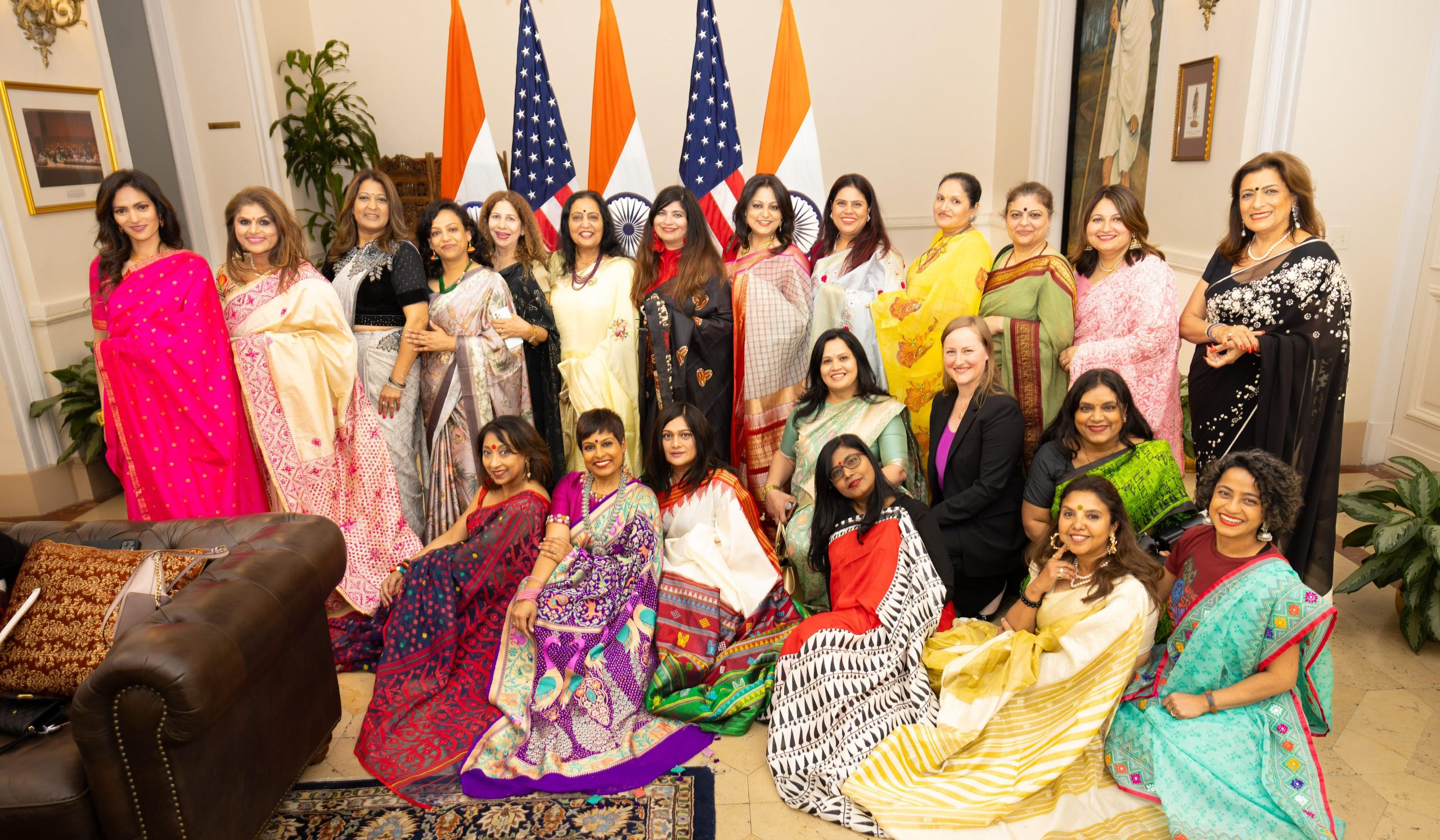
**SAREE GOES GLOBAL: CELEBRATING CULTURAL DIVERSITY IN THE HEART OF TIMES SQUARE, NEW YORK CITY**

*New York, May 4th, 2024* – Saturday, in the bustling heart of Times Square, New York City, cultural diversity took center stage as British Women in Sarees partnered with Uma to host the iconic Saree Goes Global event. This celebration, held at Father Duffy Square, Times Square, showcased the timeless elegance of the saree through music, dance, and a vibrant Saree Walkathon. This event was supported by the Consulate General of India in New York, Mr. Binaya Srikanta Pradhan.

1 (1)
The Saree Goes Global US host committee with Dr. Jessica Sims from the St. George’s Society of New York at the Press Briefing at the Consul General of India in New York

Building on the success of internationally acclaimed events like the Royal Ascot Ladies’ Day and the historic Saree Walkathon at Trafalgar Square in London, the Saree Goes Global event brought together over 500 participants from at least nine different saree-wearing countries. This spectacle was not just a celebration of cultural diversity but also a platform to support artisans in rural India, preserving traditional craftsmanship.

Speaking at the pre-event press briefing hosted by the Consul General of India in New York, Deputy Commissioner Dilip Chauhan of the Mayor’s Office of International Affairs expressed his gratitude to Dr. Rita Kakati-Shah and Dr. Dipti Jain for their dedication and leadership in organizing this magnificent event. He emphasized the significance of the saree in promoting heritage and cultural exchange, echoing the city’s commitment to inclusivity and economic growth, particularly for Minority and Women-Owned Businesses (MWBEs).

2 (1)
Deputy Commissioner Dilip Chauhan addressing the audience at the Press Briefing at the Consul General of India in New York

Dr. Dipti Jain, Chairperson of British Women in Sarees, and Dr. Rita Kakati-Shah, President of Uma Global, also provided remarks, highlighting the importance of the saree as a symbol of unity and the empowerment of women worldwide.

Dr. Jain, a Geriatrician by profession, shared her passion for sarees and her commitment to raising awareness of this garment globally. Dr. Kakati-Shah, a medic turned entrepreneur and philanthropist, emphasized Uma’s dedication to empowering underprivileged girls, youth, and women, both in New York City and beyond.

Other dignitaries present at the event included Ms. Shruti Pandey, Consul (Political, Press, Information and Culture) at the Consulate General of India in New York, who shared that the saree transcends borders with its versatility and beauty, not just in India, but across the globe. Dr. Jessica Sims who represented the British charity, St. George’s Society of New York, which was founded in 1770 predating the American Revolution, commented on the importance of the saree to promote cultural diversity, which is aligned to the work St. George’s Society of New York does to support students, families and seniors from Commonwealth backgrounds in New York City.  

5
Jessica Sims, Dipti Jain, Deputy Commissioner Dilip Chauhan, Rita Kakati-Shah with participants at the Saree Goes Global Event in Times Square

This event was made possible through the support of the Consul General of India in New York, The Mayor’s Office of New York City, Times Square Alliance, NYC Department of Parks, and numerous local cultural and community groups.

In an exciting addition to the event, Deputy Commissioner Dilip Chauhan of the Mayor’s Office of International Affairs honored Dr. Rita Kakati-Shah and Dr. Dipti Jain on behalf of New York City Mayor Eric Adams, with a Proclamation for their work, further highlighting the significance of their contributions.

As the vibrant pulse of Times Square beat to the rhythm of the Saree Walkathon, participants and spectators alike embraced the spirit of unity and collaboration. In a world often divided, events like Saree Goes Global serve as a powerful reminder of the strength found in our diversity.

**About the Organizations:**

British Women in Sarees is dedicated to raising awareness of the saree while supporting handloom artisans in India through high-profile events.

4
Citation presented to Dr. Rita Kakati-Shah by Deputy Commissioner Dilip Chauhan on behalf of New York City Mayor Eric Adams at Times Square

Uma is a leading organization empowering underprivileged girls, youth, and women through educational and cultural resources, with a global presence headquartered in New York City.

**About the Organizers:**

Dr. Dipti Jain, a passionate saree lover, is Chairperson of British Women in Sarees and works as a Geriatrician in the UK.

Dr. Rita Kakati-Shah, President of Uma Global, is an entrepreneur and philanthropist dedicated to empowering women globally.

*For additional information please contact the Media and PR Team at Uma: pr@beboldbeuma.com

Putin’s Fifth Term: Kremlin Ceremony Marks Renewed Authority Amidst Escalating Tensions with the West

Vladimir Putin took the oath for his fifth term as Russia’s leader on Tuesday, reinforcing his authority over the nation in a grand ceremony held in the Kremlin amidst the backdrop of escalating tensions with the West due to Russia’s military activities in Ukraine. The 71-year-old Putin’s reelection in March, characterized by the suppression of political opposition, marked a continuation of his uninterrupted 25-year rule and heralded the onset of Russia’s heightened global isolation and domestic authoritarianism.

Asserting his commitment to serving the Russian people, Putin placed his hand on the Russian Constitution during the ceremony, declaring, “We are a united and great people and together we will overcome all obstacles, realize all our plans. Together we will win!” The inauguration, boycotted by the United States and several other Western nations, followed Putin’s recent nuclear rhetoric, intensifying tensions further.

Russian state television broadcasted the ceremony live, capturing Putin’s entrance into the Kremlin amidst falling snow. The event was attended by dignitaries, including Cabinet members, lawmakers, and celebrities such as American actor Steven Seagal, a longtime supporter of Putin, who lauded the ceremony as “the best.” After greeting attendees, Putin emphasized Russia’s sovereignty in determining its future and expressed openness to dialogue with Western nations on revised terms.

Addressing the audience, Putin paid tribute to those involved in Russia’s military operations, referring to them as heroes fighting for the motherland. He framed Russia’s actions in Ukraine as a response to perceived Western aggression, presenting the conflict as an existential struggle for Russian sovereignty. High-ranking officials from Russian-annexed Ukrainian regions praised Putin’s leadership and speech, highlighting the significance of the event.

The absence of numerous foreign dignitaries underscored the deteriorating relations between Russia and Western powers, particularly over the conflict in Ukraine. Putin’s directive for tactical nuclear weapons drills prior to the inauguration was seen as a message to Western adversaries, responding to perceived threats and provocative statements from Western officials, including French President Emmanuel Macron and British Foreign Secretary David Cameron.

While Putin faces minimal domestic opposition, speculation persists regarding potential government reshuffling following the ceremony. Attention is focused on key positions such as the prime minister, currently held by loyal technocrat Mikhail Mishustin, and the defense minister, occupied by longtime ally Sergei Shoigu, who faced recent scrutiny over corruption allegations involving his deputy. Analysts are monitoring for signs of succession planning, although Putin shows no indication of relinquishing power, poised to become Russia’s longest-serving modern leader, potentially extending his tenure until 2030.

Trump Faces Prospect of Rikers Island Imprisonment Amid Trial: Experts Weigh In

In the event that Donald Trump continues to test the patience of the judge overseeing his hush money trial, there’s a possibility he might find himself back in his native New York City borough of Queens – more precisely, within the confines of the prison on Rikers Island, as indicated by experts on Monday.

Judge Juan Merchan, in response to Trump’s repeated breaches of a gag order prohibiting him from disparaging witnesses or the jury, cautioned the former president about the potential for imprisonment “if necessary” for further infractions.

While Merchan did not specify the exact facility, inquiries regarding Trump’s possible detention at Rikers prompted Frank Dwyer, the jail’s chief spokesperson, to assert that suitable accommodations would be arranged by the department.

Trump has persistently argued that he is a victim of a skewed justice system, claiming unfair treatment compared to others. Conversely, critics argue the opposite, suggesting that Trump’s public statements would have led any other defendant to incarceration by now.

The notion of Trump facing imprisonment while under trial is bound to evoke intense reactions from both his supporters and detractors. Trump’s repeated attempts to leverage the specter of imprisonment for fundraising underscore the potent emotional response it elicits from his base.

Mike Lawlor, an expert in criminal justice at the University of New Haven, outlined Rikers as the probable destination should Merchan pursue this course of action. Lawlor, a Democrat and former Connecticut House member, emphasized Merchan’s aim to curb contempt and prevent Trump from intimidating witnesses and jurors.

Lawlor elaborated on the objective of isolating Trump from his social media platform through incarceration, suggesting that imprisonment would achieve this end. He mentioned that Trump would be placed in protective custody, precluding interaction with other inmates, and limiting contact to corrections officers and his Secret Service detail.

Although Trump’s potential detention would mark an unprecedented occurrence at Rikers, Lawlor noted that the facility has experience housing high-profile individuals, including the elderly like Trump.

The former president’s former chief financial officer, Allen Weisselberg, currently serves time at Rikers, having been sentenced last month for perjury during Trump’s civil fraud trial.

Moreover, Trump would undergo standard intake procedures, including physical measurements publicly recorded, Lawlor explained.

Regarding the Secret Service’s role, Lawlor emphasized their primary duty of protecting Trump from harm, suggesting that a prison setting might streamline their responsibilities.

Martin F. Horn, a professor emeritus at John Jay College of Criminal Justice, echoed Lawlor’s sentiments, envisioning Trump’s confinement in a facility separate from other inmates to accommodate his security detail.

Nonetheless, ensuring a former president’s safety behind bars presents an unprecedented challenge for the Secret Service, according to a spokesperson for the agency.

Merchan may hesitate to incarcerate Trump for another reason, suggested Dave Aronberg, a state attorney for Palm Beach County. Aronberg implied that imprisonment might align with Trump’s narrative of victimhood, potentially bolstering his support base.

An alternative to imprisonment, proposed by former federal prosecutor Michael Zeldin, involves confining Trump to a cell near the New York City courtroom where his trial unfolds, serving as a symbolic reminder of the consequences of breaching court orders.

House arrest remains a feasible option, though Merchan retains considerable discretion in determining Trump’s confinement location, Horn remarked.

Lawlor dismissed the possibility of Trump being confined to his opulent Manhattan residence, citing concerns about continued access to electronics and aides, thus facilitating defiance of court orders.

Ultimately, Merchan faces a weighty decision regarding Trump’s punishment for his repeated violations, with potential implications for both the trial’s proceedings and the broader political landscape.

Police Probe BJP Leaders Over Controversial Social Media Post

Indian authorities are investigating senior figures from the ruling Bharatiya Janata Party (BJP) following a controversial social media post that has stirred accusations of anti-Muslim sentiment.

The contentious animated video portrays senior leaders from the opposition Congress party favoring Muslims over marginalized communities. The depiction sparked outrage, prompting swift action from law enforcement.

Shortly after the police initiated their inquiry, the Election Commission intervened, directing the social media platform X (formerly Twitter) to remove the video, citing a breach of Indian laws. Despite this, there has been no immediate response from either X or the BJP.

The Election Commission’s intervention came after its electoral officer in Karnataka, where the video originated, had previously instructed X to take down the post. However, this directive was not promptly executed. Notably, the video surfaced just days before voting in Karnataka, which concluded recently.

This is not the first instance of such divisive content from the BJP. Prime Minister Narendra Modi himself has echoed similar sentiments during campaign rallies, alleging preferential treatment towards Muslims by opposition parties.

As India progresses through a general election cycle, regulations prohibit political parties from exploiting religious issues for electoral gains. Nonetheless, critics argue that PM Modi and his Hindu nationalist party are resorting to blatant Islamophobia, flouting the electoral code of conduct.

India, with its substantial Muslim population of around 200 million, has witnessed a surge in anti-Muslim rhetoric since the BJP ascended to power in 2014.

The video, initially shared on the BJP’s social media platform in Karnataka, has garnered widespread attention, accumulating over nine million views on X. It depicts caricatures of prominent Congress leaders, Rahul Gandhi and Karnataka Chief Minister K Siddaramaiah, allegedly favoring Muslims over other marginalized groups.

Following a formal complaint lodged by the Congress party with the Election Commission, the Karnataka police registered a case against BJP President JP Nadda, the party’s Karnataka chief, BY Vijayendra, and the head of its IT department, Amit Malviya.

Criticism of the video has poured in from various quarters. Congress MP Manickam Tagore condemned the BJP’s tactics, urging the Election Commission to intervene and uphold the principles of unity in a democratic setup.

British academic Nitasha Kaul likened the video to propaganda reminiscent of 1930s Germany, emphasizing its violation of election regulations.

Opposition leaders and civil society groups have decried BJP’s campaign tactics as divisive and unacceptable. Trinamool Congress MP Saket Gokhale lamented the erosion of ethical standards in the ongoing election.

Congress leader Salman Anees Soz lamented the blatant anti-Muslim sentiment propagated by the BJP.

This incident follows a similar episode where the BJP posted a misleading video on Instagram accusing the Congress of favoring Muslims over non-Muslims, further exacerbating communal tensions.

Despite facing backlash, PM Modi continues to make controversial remarks, including accusations of “vote jihad” and insinuations aligning the Congress with Pakistan’s interests.

Critics argue that such rhetoric not only violates electoral norms but also exacerbates communal tensions in the diverse fabric of Indian society.

Third Phase of Lok Sabha Polls Sees High-Stakes Voting Across 10 States and Union Territory

Voting is underway in 93 constituencies spread across 10 states and a Union Territory in the third phase of the staggered seven-round Lok Sabha polls. However, the election in the Anantnag-Rajouri constituency in Jammu and Kashmir has been postponed to May 25.

Here’s a concise rundown of the key highlights in this significant event:

Prime Minister Narendra Modi exercised his franchise this morning at a polling booth in Ahmedabad. Alongside him, Union Home Minister Amit Shah, Congress president Mallikarjun Kharge, Health Minister Mansukh Mandaviya, and Gujarat Chief Minister Bhupendra Patel also cast their votes. The Election Commission reported a turnout of 61.45 percent as of 8 pm, although this figure is provisional and subject to change.

This phase of the election marks the conclusion of polling for more than half of the 543 parliamentary seats and could potentially signify the country’s verdict. Notably, the BJP has secured victory in the Surat seat uncontested, following the rejection of the Congress candidate’s nomination and the withdrawal of other contenders.

The Phase 3 election primarily covered areas known as BJP strongholds. In the previous 2019 elections, the BJP clinched 72 out of the 92 seats contested today, with 26 of them located in Gujarat alone.

Karnataka, another state where the BJP historically performed well, has faced challenges amidst a significant sex scandal involving its ally Janata Dal Secular. The BJP has sought to distance itself from this controversy.

In Maharashtra, where 11 out of 48 seats were up for grabs, political dynamics have been complex due to seismic shifts in recent years. Notably, the key battles included familial conflicts within the Pawar clan in Baramati, with uncle Sharad Pawar and nephew Ajit Pawar striving for dominance.

The states participating in the Phase 3 elections comprised Assam (4 seats), Bihar (5), Chhattisgarh (7), Goa (2), Gujarat (25), Karnataka (14), Madhya Pradesh (8), Maharashtra (11), Uttar Pradesh (10), West Bengal (4), and Dadra and Nagar Haveli and Daman and Diu (2).

Additionally, polling occurred in Betul, Madhya Pradesh, where the election initially scheduled for Phase 2 was postponed due to the demise of a candidate from Mayawati’s Bahujan Samaj Party.

The postponement of the election in Jammu and Kashmir’s Anantnag-Rajouri constituency stemmed from concerns raised by the BJP regarding adverse weather conditions. The closure of a tunnel connecting both ends of the constituency posed significant hurdles to campaigning, particularly for the BJP, which opted not to contest from this seat.

Key candidates in this phase included Union ministers Amit Shah from Gujarat’s Gandhinagar, Jyotiraditya Scindia from Guna, Madhya Pradesh, Pralhad Joshi from Karnataka’s Dharwad, and former Chief Minister Shivraj Singh Chouhan from Vidisha, Madhya Pradesh.

Opposition stalwarts in the fray comprised Samajwadi Party’s Dimple Yadav from Mainpuri in Uttar Pradesh; Congress’s Adhir Ranjan Chowdhury from Baharampur, West Bengal, and Digvijaya Singh from Rajgarh, Madhya Pradesh, along with NCP’s Supriya Sule from Maharashtra’s Baramati. AIDUF’s Badruddin Ajmal contested from Assam’s Dhubri.

The next phase of the election is scheduled for May 13, with the counting of votes set for June 4 following the conclusion of the final phase on June 1.

Concerns Mount as US Pandemic Savings Deplete, Buffett Warns of AI Risks, and Boeing Faces Inspection Probe

Americans managed to accumulate a substantial amount of savings during the pandemic, totaling a whopping $2.1 trillion. This surplus of funds provided a safety net, allowing consumers to maintain their spending habits even as interest rates climbed and inflation persisted. However, with this financial cushion now depleted, economists are expressing concerns about the future economic landscape.

The latest assessments of excess pandemic savings in the US economy have taken a worrying turn, with estimates indicating a negative balance. Economists Hamza Abdelrahman and Luiz Edgard Oliveira from the San Francisco Federal Reserve highlighted this shift, suggesting that as of March 2024, many Americans have more debt than savings. This depletion of pandemic-era savings could have detrimental effects on consumer spending, a vital driver of economic growth in the United States.

Furthermore, there’s a troubling trend of mounting debt. Austan Goolsbee, President of the Chicago Federal Reserve, expressed apprehension about the increasing rate of consumer delinquencies, signaling potential economic downturns. The recent performance of the US economy reflects these concerns, with first-quarter real GDP growth falling short of expectations, prompting analysts to revise their growth forecasts downward.

Retailers are feeling the pinch as well, as consumers are showing reluctance to spend as freely as before. To counteract this, many retailers have resorted to price cuts in an attempt to lure customers back into stores. Sarah Wyeth, managing director of retail and consumer at S&P Global Ratings, noted a year-long trend of decreased consumer spending, attributed to rising costs and stagnant incomes.

Earnings calls from major corporations further underscore the challenges facing the economy. Companies like Tyson Foods and Starbucks have reported declines in sales, citing inflation and changing consumer behaviors. McDonald’s CEO highlighted consumers’ cautious spending habits in the face of elevated prices, indicating broader industry pressure.

While excess savings from 2020 and 2021 provided a temporary boost to the economy, economists Abdelrahman and Oliveira emphasize that it was just one factor among many sustaining consumer spending. They point to the strength of the US labor market as another crucial element, suggesting that continued robust employment could help mitigate the impact of depleted savings.

Looking ahead, investors are eagerly awaiting reports from major companies like Disney, Airbnb, and Uber, hoping for insights into how consumer spending patterns are shaping revenue forecasts for 2024.

In a separate development, Warren Buffett, the chairman and CEO of Berkshire Hathaway, raised concerns about the rise of artificial intelligence (AI) during his annual shareholder meeting. Drawing parallels to the dangers of nuclear weapons, Buffett warned of the potential risks associated with AI technology, particularly the proliferation of convincing deep fakes used for scams.

Buffett’s cautionary remarks come amid the rapid integration of AI into various industries, with nearly 40% of global employment at risk of disruption according to the International Monetary Fund. While acknowledging AI’s potential for positive impact, Buffett remains apprehensive about its unknown consequences.

Berkshire Hathaway itself has begun utilizing AI to improve operational efficiency, although specifics about its implementation remain scarce. Buffett’s designated successor, Greg Abel, emphasized the need to balance labor displacement with new opportunities created by AI.

Meanwhile, Boeing faces scrutiny over potential quality inspection lapses on its 787 Dreamliner jets. The Federal Aviation Administration (FAA) is investigating whether Boeing employees neglected required inspections and falsified aircraft records. Boeing has initiated internal inspections and corrective measures in response to the investigation, with company executives affirming that the issue does not pose an immediate safety risk.

Modi Administration’s Global Image Management: A Struggle Against Rising Criticism

In the lead-up to the G20 summit, the Narendra Modi administration frequently employed the phrases ‘mother of democracy’ and ‘vishwaguru’.

The term ‘mother of democracy’ seemed to be introduced as a counter to India’s swift decline in the global democracy index.

‘Vishwaguru’ aimed to convey the message that Modi is a global leader whose presence cannot be overlooked any longer.

India’s presidency of the G20 rotates, and last year it was India’s turn to host the summit. Yashwant Sinha reminisced about his chairing of the G20 during Atal Bihari Vajpayee’s tenure, noting that Vajpayee didn’t utilize it for cult-building purposes. However, the current government’s focus during the G20, symbolized by a globe resting on a lotus, was centered on projecting India as a robust democracy with Modi as its singular leader. This shift prompts the question: why has the BJP manifesto now replaced ‘Vishwaguru’ with ‘Vishwabandhu’?

Recently, several Western nations have expressed concerns about events in India. The US, for instance, has raised issues regarding communal tensions, religious freedom, and the arrests of political figures:

The US State Department’s annual human rights assessment highlighted “significant” abuses in Manipur;

  • It also voiced concerns about communal violence in Gurugram;
  • The US Commission on International Religious Freedom noted a ‘decline in religious freedom’ in India and urged the Modi government to release 37 individuals of various faiths detained for the ‘peaceful exercise of their freedom of religion or belief’.
  • State Department spokesperson Matthew Miller stated that the US closely monitored the arrest of Delhi Chief Minister Arvind Kejriwal and the freezing of Congress party bank accounts, emphasizing the need for fair, transparent, and timely legal processes.
  • A State Department official called on India to uphold its human rights obligations.

President Joe Biden’s absence as the chief guest at the Republic Day parade, the postponement of the Quad summit, and NSA Jake Sullivan’s cancellation of visits to India have been interpreted by some as indications of US disapproval. The latest negative comment was Biden’s labeling of India as ‘xenophobic’.

Even during the G20 summit in New Delhi, a resolution was passed advocating for religious freedom, freedom of peaceful assembly, and condemning all acts of religious hatred.

In response to criticism, the Modi government’s initial reaction has been to dismiss it as Western propaganda and minimize its impact on domestic politics. Television channels and print media have cooperated, often presenting carefully curated versions of reports that cast the government in a favorable light. Frequently, the mainstream media leads such stories with official denials before briefly acknowledging the criticism and dismissing it.

This age-old tactic, reminiscent of the Cold War era, was employed recently when Germany and the US commented on Kejriwal’s arrest. Envoys were summoned to the External Affairs Ministry and handed formal protests against ‘interference’ in India’s internal affairs. Simultaneously, the government launched a robust diplomatic offensive against what it deemed ‘disinformation’.

One strategy borrowed from the US involves leveraging trade and arms purchases as diplomatic tools, with mixed success. While France, India’s defense collaborator, and Gulf countries have remained relatively silent, India’s External Affairs Minister S. Jaishankar has defended India’s democracy in foreign capitals, and Indian embassies have been tasked with countering ‘Western propaganda’.

The Modi government’s unease with foreign criticism is understandable. Initially, the domestic media highlighted such criticism. However, within the first three years of Modi’s tenure, negative news was largely suppressed in mainstream media. Nonetheless, strategies like ‘sam, dam, dand, bhed’ have failed to silence external critics.

The BBC underwent tax raids and faced FDI inquiries, leading it to separate its Indian newsroom into a distinct company. Emily Schmall of The New York Times recounted being invited to meetings with the government, during which ministers would criticize foreign correspondents. At one such meeting, the “minister of information” read aloud headlines from articles written by the gathered correspondents in a seemingly random manner, with a hint of sarcasm. At least 13 journalists, nine of whom were Muslims in Kashmir, have been booked under the anti-terror Unlawful Activities Prevention Act. Schmall emphasized that journalism is under threat in India.

Last year, Information and Broadcasting Minister Anurag Thakur accused The New York Times of spreading lies after it published an article on press freedom in Kashmir. His response mirrored the government’s tendency to dismiss negative reports as false.

When Lancet questioned the accuracy and transparency of Indian healthcare data, the government dismissed it. Similarly, a Harvard study indicating 6.7 million malnourished children in India was labeled as fake news.

To refute the IMF’s lower GDP prediction, former Chief Economic Adviser Krishnamurthy Subramaniam criticized the IMF’s estimates as consistently inaccurate. Incumbent CEA Anantha Nageswaran has also questioned the metrics of ratings agencies like Fitch, Moody’s, and S&P.

Union Minister Rajiv Chandrasekhar described as ‘half-truths’ a report by The Washington Post claiming that India had requested Apple to ‘soften’ its hacking alert.

Despite these efforts, negative news about India continues to surface:

Reporters Without Borders stated that India’s ranking in the World Freedom Index for 2024 is 159 out of 176 countries, compared to 150 in 2022.

India ranked 111 out of 125 countries in the Global Hunger Index 2023, with the highest rate of child wasting at 18.7%. In the previous year, its ranking was 107 out of 121 countries.

India topped the Global Slavery Index for 2023 among G20 countries, followed by China, Russia, Indonesia, and the US.

Youth unemployment in India in 2022 was 23.22%, higher than in Pakistan (11.3%), Bangladesh (12.9%), China (13.2%), and Bhutan (14.4%), according to World Bank data.

Human Rights Watch, Amnesty International, and 10 other international rights groups have criticized the misuse of laws like UAPA and financial regulations to silence journalists, human rights activists, and government critics.

Accordingly, an all-out mobilization effort is underway by the Modi regime to counteract this negative narrative. To counter organizations like Freedom House, V-Dem, and the Economic Intelligence Unit, the government-run Niti Ayog has engaged the Modi-friendly Observer Research Foundation to create India’s own democracy index. The Adani group has announced the establishment of a new think-tank. Additionally, pro-government voices, including academic groups, intellectuals, lawyers, and retired judges associated with the Sangh Parivar, are encouraged to issue statements and contribute articles to the media.

The PMO is coordinating the media response, both in print and digital formats. It appears that Vishwabandhu feels he has nothing to lose but his world.

Google Layoffs Shift Hundreds of Jobs Overseas, Amplifying Concerns for American Workers Amid Global Economic Shifts

U.S. Google recently implemented significant layoffs, affecting more than 200 ‘core’ employees, with plans to relocate these positions to foreign countries as part of cost-cutting measures. The job positions from Google’s U.S. headquarters are slated to move to Mexico and India, a BRICS nation. This move follows a trend of outsourcing jobs from the U.S. to developing countries that began in the 1990s due to the availability of similar talent at lower wage costs.

The outsourcing of American jobs, particularly in the technology sector, has escalated since the early 2000s, with Mexico and India emerging as key destinations for such endeavors. Google’s recent layoffs coincide with a broader pattern of job cuts in the U.S. following the COVID-19 lockdowns, disproportionately impacting American workers.

India, as a BRICS member, offers a vast pool of talent in various fields, including technology and software development, often at salaries significantly lower than those paid in the U.S. Consequently, while Google and similar companies benefit from cost savings, American employees bear the brunt of outsourcing.

This shift in employment practices by Google comes at a time when BRICS nations are actively leveraging their talent pools to drive economic growth. However, while companies like Google prioritize profits and seek cheaper labor, the implications extend beyond corporate interests, affecting the livelihoods of U.S. workers.

Mexico’s potential inclusion in BRICS reflects broader global economic shifts, including efforts to reduce reliance on the U.S. dollar. Despite these geopolitical changes, American workers facing job displacement due to outsourcing find themselves without significant government assistance.

The situation underscores the challenges faced by U.S. workers in an increasingly globalized economy, where job opportunities in sectors like technology are dwindling while the financial industry experiences growth. As businesses pursue strategies aimed at maximizing profits, the consequences for American workers remain a pressing concern, with no clear solution in sight.

Hamas Agrees to Temporary Ceasefire with Israel Amid Hostage Negotiations and Diplomatic Tensions

Hamas has reportedly agreed to a temporary cessation of hostilities with Israel amidst ongoing diplomatic maneuvers aimed at securing the release of Israeli hostages held by the group and preventing an Israeli military intervention in the southern Gaza city of Rafah.

According to Basem Naim, Hamas’s head of political and international relations, the group has communicated its acceptance of a ceasefire proposal to mediators from Egypt and Qatar. This comes after weeks of intensive diplomatic efforts by the United States, Egypt, and Qatar to broker a truce between Israel and Hamas.

While Israel has indicated its willingness to send a delegation for negotiations on a temporary ceasefire, it has expressed reservations about Hamas’s proposal, deeming it insufficient to meet Israel’s demands. The Israeli government, in a statement from the prime minister’s office, asserted that Hamas’s proposal falls short of their requirements.

Simultaneously, Israel’s wartime Cabinet has unanimously decided to continue military operations targeting Hamas positions in Rafah. Despite efforts by the Biden administration to dissuade Israeli Prime Minister Benjamin Netanyahu from launching an offensive in Rafah, the White House remains cautious about Hamas’s ceasefire offer.

President Biden held discussions with Netanyahu, although the conversation occurred prior to Hamas’s announcement. John Kirby, the White House national security communications adviser, emphasized the administration’s commitment to securing the release of Israeli hostages through a temporary ceasefire, as well as safeguarding the lives of over a million Palestinians in Rafah.

Rafah, located on Gaza’s southern border with Egypt, serves as a crucial entry point for humanitarian aid into the besieged territory. Following Hamas’s October 7 attack on Israel, which resulted in numerous casualties and the abduction of over 250 individuals, Israel has been engaged in a protracted conflict with the group.

A brief ceasefire in November facilitated the release of more than 100 hostages, a precedent that the administration seeks to replicate in ongoing negotiations. However, the specific details of the proposed truce have not been publicly disclosed by mediators, and Hamas has refrained from elaborating on the terms.

Nonetheless, the tentative agreement reportedly involves a six-to-eight week cessation of hostilities, during which Hamas would gradually release Israeli hostages, starting with the most vulnerable among them. In return, Israel is expected to release an unspecified number of Palestinian prisoners, withdraw troops from select areas of Gaza, and permit movement for Palestinians within the territory.

Additionally, the ceasefire would enable a significant influx of humanitarian aid into Gaza, where the population has endured displacement, casualties, and dire humanitarian conditions due to the prolonged conflict.

Enhance Mental Resilience and Revitalize Metabolism with a 30-Minute Weight-Free Walking Routine

In a bid to cultivate mental fortitude and invigorate metabolic activity, a 30-minute walking workout devoid of weights emerges as a versatile regimen accessible to all, irrespective of location or fitness level.

Collaborating with outdoor footwear giant Merrell, Goop introduces a mindful walking meditation aimed at fostering an enhanced connection with nature while promoting mindfulness. The session, spearheaded by Mel Mah, serves as a guided practice tailored for outdoor environments, be it a hike, beach stroll, park visit, or even a simple backyard excursion. “Developing a deep connection with nature is a matter of getting out in it,” underscores the team. With just half an hour dedicated to this endeavor, participants are encouraged to immerse themselves in the present moment.

For those venturing into public spaces, outfitting with premium workout headphones ensures privacy during this introspective journey. Time spent amidst nature yields multifaceted benefits, ranging from improved sleep and stress reduction to lowered heart rates. Furthermore, research suggests that exposure to outdoor settings, particularly natural landscapes, fosters heightened creativity.

Mah emphasizes the significance of connection in facilitating a deceleration of pace. “Let’s begin by slowing down the mind and body,” she suggests. Commencing with a series of preparatory steps involving closing one’s eyes, elongating the spine, and tuning into bodily sensations through mindful breathing sets the tone for the session.

A notable aspect of Mah’s approach is the delayed introduction of walking, accommodating individuals not solely focused on physical exertion. To fully leverage the 30-minute walking workout, initiating the walk prior to commencing the session is advised.

The Physical and Mental Perks of Outdoor Walking

From a physical standpoint, brisk walking proves instrumental in sustaining a robust metabolism, curbing sedentary behavior, and contributing to Non-Exercise Activity Thermogenesis (NEAT), which encompasses calorie expenditure beyond formal workouts. While the session is framed as a walking meditation, it can seamlessly transition into a workout by incorporating light handheld weights, ankle or wrist weights, amplifying pace, or tackling undulating terrains to elevate heart rate, introduce resistance, and intensify muscle engagement.

However, weighted accessories are not indispensable for reaping rewards. Mental resilience can be honed concurrently with physical conditioning, utilizing body weight to fortify muscles, joints, bones, and ligaments. Moreover, the session underscores a strong emphasis on mindfulness, allowing for moments of silence for personal exploration or heightened intensity if desired.

It is noteworthy that any form of exercise, including walking, contributes positively to overall well-being, with a daily target of 7,000 steps recommended. Individuals pursuing weight loss objectives may find the session’s intensity insufficient and may opt for alternative routines geared towards this goal.

In addition to uplifting mood and mindfulness, walking fosters strength in lower body musculature and vital joints such as hips, knees, and ankles, crucial for preserving muscle mass and bone density with advancing age. This aligns with osteogenic loading, a process wherein bones undergo stimulation for growth and reinforcement.

During the walking session, participants are encouraged to immerse themselves in their surroundings, keenly observing scents, sounds, and tactile sensations. Conscious engagement with foot movements and rhythmic breathing serves to tether the mind to the present, fostering a deeper connection with the sensory experience.

First-of-its-kind Ram Lalla Music Concert in the USA

For Immediate Release

May 5, 2023

The following press release was issued by Deepti Mahajan, Coordinator, SF Bay Area, World Hindu Council of America (VHPA)

On May 18th, 2024, Hindus of Northern California are celebrating Shri Ram Lalla’s (Baby Shree Rama’s) homecoming with the largest Music concert for Shri Rama. The concert, like the VHPA Ram Rath Yatra, the monumental journey of Ram Rath visiting around 850 temples in North America, will bring Akshath and Prasad from January 22nd. Pran Pratishthan (consecration ceremony) held in Ayodhya.

This will be a first-of-its-kind music concert on the Shri Ram theme. The chants of Hanuman Chalisa and Ram ji songs will reverberate through the Bay Area.   World-renowned religious troupe ‘Kirtaniyas’,  will add a divine touch to the celebrations. The echoes of Shri Ram’s glory will resonate, filling the audience’s soul with peace, love, and reverence.

Deepti Mahajan, the coordinator of VHPA in the SF Bay Area, member of the National Governing Council, and co-convener of HinduPACT, expressed, “This enchanting evening of musical devotion to our beloved Shri Rama is a unique opportunity for all Hindus of North California to come together, celebrate, and partake in a truly transcendental experience. This ‘RELIGIOUS MUSIC CONCERT’ is not just a musical event, but a small step towards fostering unity and celebrating the spirit of Ram Janma Bhumi within the Bay area Hindu community.”

The organizers, Deepti Mahajan, Daipayan Deb, Bimal Bhagwat, Deepak Bajaj, Param Desai and Rohit Sharma- are thrilled to bring this event to California, aiming to further strengthen the Hindu community. This same group had orchestrated the bay area car rally on January 22nd, a resounding success that drew over 2000 Hindus and 1000 cars. Many dedicated volunteers like Raj Nanduri, Atul Shah, Chinmayi Vyas, Pankaj Kushwaha, Rupal Asodaria, Sangeetha Shankar, Mukul Sinvhal, Adhiraj Lahiri, Himanshu Sharma and Srinivasan Venkataraman are also working tirelessly to ensure the event is a memorable and successful one.

To learn more about the event and to get tickets, please go to:

https://tinyurl.com/RamLallaConcert

For further information, please contact: Deepti.Mahajan@hindupact.org

Thank you!

Deepti Mahajan

8482281416

Republican Officials Unite to Restore Trust in Elections Amidst Growing Doubt

Amidst the buzz of Election Day last November, an incident involving a voting machine glitch in an eastern Pennsylvania county caught the attention of Gabriel Sterling, a prominent Republican election official from Georgia. With a social media following of nearly 71,000 on X platform, Sterling felt compelled to address the issue and reassure the public about the integrity of the electoral process. However, his actions were met with mixed reactions, including criticism for intervening in another state’s affairs and the perpetuation of baseless claims regarding widespread electoral fraud in the 2020 presidential election.

Despite the backlash, Sterling remained steadfast in his belief that it was the right course of action for Republican officials to defend the electoral process, emphasizing the importance of dispelling misinformation and standing up for the integrity of elections across state lines. He stressed the necessity for continuous affirmation of the legitimacy of elections, particularly in the face of mounting skepticism, especially among Republican voters, fueled by unsubstantiated allegations of fraud.

As the specter of the upcoming presidential rematch between Democratic President Joe Biden and former Republican President Donald Trump looms large, concerns persist among election officials regarding public trust in the electoral system. Trump’s repeated claims of election rigging without evidence only serve to exacerbate these concerns, further eroding confidence in the electoral process.

A poll conducted by the Associated Press-NORC Center for Public Affairs Research last year revealed that only 22% of Republicans expressed high confidence in the accuracy of vote counting. Against this backdrop, there is a growing recognition among Republican officials of the need to rebuild trust in the electoral process, not only as a moral imperative but also as a strategic necessity to ensure voter turnout.

Initiated approximately 18 months ago, a collaborative effort spearheaded by the SNF Agora Institute at Johns Hopkins University and the center-right think tank R Street Institute seeks to address these challenges by fostering dialogue and developing a set of guiding principles to restore faith in elections, particularly among conservative circles. Contrary to misconceptions, the endeavor is not centered around any individual, including Trump, but rather focuses on upholding democratic values and the rule of law.

A key tenet of this initiative is the public affirmation by Republican officials of the security and integrity of elections nationwide, coupled with a commitment to refrain from sowing doubt about electoral processes in other jurisdictions. This approach is endorsed by figures like Kim Wyman, a former top election official from Washington state, who emphasizes the importance of emphasizing commonalities in election procedures across states rather than dwelling on differences.

However, navigating the delicate balance between promoting confidence in elections and respecting jurisdictional boundaries poses a challenge for some officials. While there is consensus on the need to reinforce general principles of election integrity, there is hesitation among some to comment directly on the affairs of other states, fearing that such actions may undermine trust in their own state’s electoral process.

This cautious approach is echoed by officials like Scott Schwab, the secretary of state for Kansas, who underscores the importance of maintaining trust among constituents by adhering to the confines of their role. Schwab emphasizes the critical link between public trust and the perceived integrity of elections, urging officials to exercise prudence in their public statements.

Conversely, there are voices within the Republican ranks advocating for a more proactive stance on election-related issues. Secretary of State Mac Warner of West Virginia advocates for policy reforms, such as the implementation of voter ID requirements, as a means to bolster confidence in the electoral process. Warner argues that genuine confidence stems from robust protocols rather than stifling dissent.

Similarly, Ohio Secretary of State Frank LaRose criticizes what he views as politically motivated legal challenges and attempts to circumvent legislative frameworks governing elections. LaRose contends that transparency is key in addressing electoral shortcomings, cautioning against sensationalized narratives that undermine public trust.

Amidst these differing perspectives, Utah Lt. Gov. Deidre Henderson highlights the broader ramifications of partisan discord surrounding elections, particularly the toll it takes on election workers. Henderson stresses the importance of constructive dialogue over unfounded accusations, emphasizing the need for mutual respect and civility in public discourse.

The efforts of Republican officials to uphold the integrity of elections and restore public trust represent a multifaceted endeavor encompassing both principled advocacy and pragmatic considerations. As the nation braces for another contentious presidential election, the success of these efforts hinges on a collective commitment to democratic values and the rule of law, transcending partisan divides for the greater good of the electoral process.

Indian-American Groups Oppose Kashmiri Flag Display at Rutgers University Amidst Gaza Conflict Protests

Prominent Indian-American community organizations have appealed to Rutgers University Chancellor in New Jersey to refrain from allowing the exhibition of a separatist Kashmiri flag on its campus. They argue that such an act would convey a misleading message amid the ongoing turmoil at prominent US educational institutions over Israel’s conflict in Gaza.

Leading universities across the US are witnessing protests against Israeli military action in Gaza. The conflict was instigated by unprecedented attacks against Israel by Hamas militants on October 7, resulting in the deaths of over 1,400 people. In response, Israel has initiated a significant counter-offensive against the Islamic militant group governing Gaza since 2007.

On Friday, a group representing protesting students claimed that eight out of their ten demands had been met by the Rutgers University administration. However, the ninth demand, which proposed the display of flags of occupied peoples, including Palestine, Kurds, and Kashmiris, across Rutgers campuses, did not receive approval. The university administration stated that it would assess the flags exhibited on the New Brunswick Campus to ensure appropriate representation of enrolled students.

This refusal to meet the demand angered several Indian American groups, including the Hindu American Foundation (HAF) and the Coalition of Hindus of North America (CoHNA). They criticized Rutgers University for what they perceived as giving in to hate by approving the display of a Kashmiri separatist flag, which they associated with terror and the displacement of Kashmiri Hindus.

Some individuals, like Dharma Viveka, criticized Rutgers University for what they saw as capitulating to the demands of protesting students and failing to uphold equitable resource allocation. Additionally, the university’s decision sparked concern among Indian American communities, given the significant number of Indian students at Rutgers and the large Indian American population in New Jersey.

Thomas Abraham, Chairman of the Global Organization of People of Indian Origin (GOPIO), expressed surprise and dismay over Rutgers’ consideration of the demand to display flags of occupied peoples. He argued that such actions would call into question India’s integrity, asserting that Kashmir is an integral part of India and not a separate entity. Abraham cautioned against Rutgers’ involvement in internal conflicts of other countries, emphasizing its role as a public educational institution belonging to everyone.

The controversy surrounding Rutgers University’s handling of demands for flag displays reflects broader tensions over international conflicts within US educational institutions and the complexities of representing diverse student populations while navigating geopolitical sensitivities.

Apple CEO Teases Early AI Plans Ahead of Let Loose Event

Apple’s plans regarding artificial intelligence (AI) may be unveiled sooner than anticipated, with CEO Tim Cook hinting at a potential reveal of the company’s AI developments ahead of schedule. Initially speculated to be showcased during the Worldwide Developers Conference slated for June 10, insights into generative AI could be shared with users sooner than expected, as per reports. The upcoming Let Loose event scheduled for May 7 leaves a slight possibility for Apple to provide hints regarding the forthcoming features set to debut later in the year.

During the company’s quarterly earnings call, Cook reportedly disclosed these intentions. Despite a reported 4 percent year-on-year revenue decline, bringing it to $90.8 billion, Cook expressed optimism about Apple’s prospects in generative AI, emphasizing significant investments and the anticipation of unveiling exciting developments to customers imminently.

This announcement underscores Apple’s commitment to capitalizing on the AI trend. Cook underscored the company’s innovation in processors and neural engines, asserting a strategic advantage over competitors in integrating AI technology into its devices. Furthermore, he hinted at an enduring commitment to privacy, suggesting that AI features are likely to be powered on-device.

In recent months, Apple’s AI aspirations have garnered significant attention. The tech giant has acquired two AI-focused companies, Darwin AI and Datakalab. Additionally, its researchers have published numerous papers on AI models, encompassing computer vision, on-device operations, and multimodal capabilities.

Previous reports have hinted at potential AI-powered features slated for release later this year. Notably, the Safari browser may play a pivotal role, with rumors circulating about an ‘Intelligent Search’ feature capable of summarizing articles and web pages. Another speculated feature is an AI-powered web eraser, designed to eliminate banner ads and other elements on web pages based on user preferences. These features are anticipated to be unveiled at WWDC 24, coinciding with the launch of iOS 18 and macOS 15.

Tory Turmoil: Sunak Stands Firm Despite Election Setbacks

Rishi Sunak has rebuffed calls for a change in direction following disappointing local election outcomes, asserting his ability to foster “progress” among voters prior to a general election.

In his initial response since the extent of Tory setbacks became evident, the prime minister lamented the loss of 470 councillors as “deeply disappointing”.

Critics within the Tory party have urged Sunak to steer towards the right.

However, Sunak expressed to The Times his determination to unify the party, stating, “I am determined that we will come together as a party.”

The Conservative party is reeling from a series of defeats in local elections. After the final tally on Sunday, they relinquished control of 10 councils, over 470 council seats, and suffered the symbolic defeat of West Midlands mayor Andy Street.

Additionally, the party ceded 10 Police and Crime Commissioners to Labour, posing a potentially significant setback for the Conservatives if they intend to focalize their next general election campaign on law and order.

Acknowledging for the first time that his party might be on course to lose its majority, Sunak conceded, “The local election results suggest we are heading for a hung parliament with Labour as the largest party.”

In an interview with The Times, he cautioned against the prospect of Keir Starmer leading a government backed by the SNP, Liberal Democrats, and the Greens, deeming it disastrous for Britain.

Sunak emphasized the necessity for action, asserting, “There is work to do and more progress to be made, and I am determined that we will come together as a party and show the British people we are delivering for them.”

His remarks parallel the analysis by leading psephologist Prof Michael Thrasher for Sky News, which projected that Labour would secure 294 seats in a general election.

The projection, though contested by some polling experts, extrapolated the nationwide vote share at a general election from the local election results. It operated on the assumption that voting patterns in the local elections would mirror those in a general election, notwithstanding the usual stronger performance of smaller parties and independent candidates in local elections.

Moreover, it did not factor in potential developments in Scotland, relying instead on the 2019 general election results, despite expectations of a stronger showing for Labour there this year.

Polling expert Prof Sir John Curtice noted that winning more seats in Scotland alone probably wouldn’t suffice for Labour to secure a majority. Nonetheless, he observed that the impact of Reform UK was subdued in the local elections as they contested only one in six wards. Where they did contest, there was a significant decline in the Conservative vote, indicating that they could wield greater influence in a general election, given their pledge to field candidates in every seat across England, Scotland, and Wales.

Health Minister Maria Caulfield acknowledged the caveats surrounding the projection. However, she asserted that last week’s results indicated former Conservative voters were abstaining rather than defecting to Labour, emphasizing, “they want a reason to vote for us.”

Labour refuted claims of planning alliances with other parties to form a government in the forthcoming general election, expected in the latter half of the year.

Speaking on BBC’s Sunday with Laura Kuenssberg, Labour’s election coordinator Pat McFadden expressed confidence in his party’s prospects, citing a growing belief in victory. He hailed the party’s remarkable election outcomes, particularly the unexpected triumph in the West Midlands mayoral race.

Former Home Secretary Suella Braverman criticized Sunak’s strategy as ineffective, acknowledging the dismal election results for the Conservatives. However, while advocating for a rightward shift in policies to recapture disenchanted Tory voters, she stopped short of calling for Sunak’s replacement, deeming it impractical so close to a general election.

Braverman is among several conservative voices advocating for a shift to the right following the bleak local election results. Miriam Cates, co-chair of the New Conservatives group primarily comprising “red wall” MPs from the 2019 intake, urged the party to emphasize “patriotism and national security” to avoid decline.

In an op-ed for the Telegraph, Cates urged Sunak to prioritize policies that resonate domestically over those catering to an international elite, proposing measures such as substantial immigration reduction and planning law reforms to stimulate house-building.

Former lead Brexit negotiator Lord David Frost expressed skepticism about rescuing the Conservative Party from electoral defeat in the next general election, contending that Sunak must implement “more tax cuts, more spending cuts,” and a “serious assault on the burden of net zero” to salvage the party’s prospects.

Contrarily, Damian Green, chairman of the centrist One Nation Group of Conservative MPs, criticized calls for a rightward shift as irrational, pointing out that recent losses were to parties on the left.

Conservative Party chairman Richard Holden stressed the need for the party to articulate a clear vision for the country rather than engaging in internal discussions, deeming it self-indulgent in the current climate

India Dismisses USCIRF Report, Labels Accusations of Discrimination as Biased

India has firmly dismissed the recent findings of the US Commission on International Religious Freedom (USCIRF), accusing the Bharatiya Janata Party (BJP) of promoting discriminatory nationalist policies. The Ministry of External Affairs (MEA) spokesperson, Randhir Jaiswal, labeled the USCIRF as biased and propagandist, expressing little hope for the organization to grasp India’s diverse, pluralistic, and democratic essence. Jaiswal emphasized this stance during a press briefing, asserting, “We really have no expectation that USCIRF will even seek to understand India’s diverse, pluralistic and democratic ethos. Their efforts to interfere in the largest electoral exercise of the world will never succeed.”

USCIRF, established by the International Religious Freedom Act of 1998, comprises Commissioners appointed by the President and bipartisan leadership from both chambers of Congress. The Commission’s recent report accused India’s government, particularly the BJP, of exacerbating communal tensions and neglecting to address violence disproportionately impacting various religious and ethnic communities.

“In 2023, religious freedom conditions in India continued to deteriorate,” the USCIRF report stated. It criticized the BJP-led government for reinforcing discriminatory policies, fostering divisive rhetoric, and failing to address communal violence, particularly affecting Muslims, Christians, Sikhs, Dalits, Jews, and indigenous Adivasi communities. The report highlighted the continued enforcement of laws such as the Unlawful Activities Prevention Act (UAPA), Foreign Contribution Regulation Act (FCRA), Citizenship Amendment Act (CAA), and anti-conversion and cow slaughter laws, which allegedly led to the arbitrary detention and targeting of religious minorities and their advocates.

Moreover, USCIRF’s report raised concerns about media and NGO freedom, citing instances of strict monitoring under FCRA regulations. It pointed to the suspension of the FCRA license of the Centre for Policy Research, an NGO focused on social issues and minority discrimination, as well as raids on the offices and homes of journalists, including Teesta Setalvad, known for her reporting on anti-Muslim violence during the 2002 Gujarat riots.

India’s response to the USCIRF report underscores the ongoing tensions between the Indian government and international organizations regarding religious freedom and human rights. The rejection of USCIRF’s findings reflects India’s assertion of sovereignty and resistance to external scrutiny, particularly from entities perceived as biased or politically motivated. As India continues to navigate complex religious and social dynamics, its relationship with international bodies like USCIRF remains contentious, with divergent perspectives on issues of religious freedom and minority rights.

USCIRF Urges State Department to Include India in Religious Freedom Violator List Amidst National Elections

India is currently amidst a significant national election spanning six weeks, and amid this democratic process, the U.S. Commission on International Religious Freedom (USCIRF) has urged the U.S. State Department to include India in its roster of countries with severe violations of religious freedom. This bipartisan commission, established under the International Religious Freedom Act in 1998, holds the authority to recommend countries for special designations to the State Department. This year, in its 25th annual report, the commission called for India’s inclusion due to escalating hate speech, particularly targeting Muslims, in the lead-up to the elections.

According to the USCIRF report, hate speech has seen a surge in India, especially directed towards Muslims, ahead of the national elections. Commissioner David Curry highlighted instances where Prime Minister Narendra Modi and his Hindu-nationalist Bharatiya Janata Party have been accused of exacerbating tensions by making statements targeting religious minorities. In the northeastern state of Manipur, clashes between Hindu and Christian communities have resulted in the destruction of numerous places of worship.

The commission’s concerns extend beyond India. It has recommended that Afghanistan, Azerbaijan, Nigeria, and Vietnam be designated as “countries of particular concern” (CPC) due to their poor records on religious freedom. Additionally, the commission called for the retention of CPC designation for countries like China, Cuba, Iran, and Russia, among others.

In Nigeria, religious freedom conditions have remained dire, with thousands of Christians participating in protests following deadly attacks over the Christmas season. Commissioner Eric Ueland criticized the State Department for its failure to recognize Nigeria as one of the worst violators of religious freedom, emphasizing the government’s consistent failure to prevent or punish religiously motivated violence.

Azerbaijan and Kyrgyzstan have also come under scrutiny, with the former being recommended for CPC designation for the first time due to its refusal to register non-Muslim religious communities and its targeting of ethnic Armenians in disputed regions. Kyrgyzstan has been added to the special watch list for its strict penalties against religious practices.

The report also flagged China and India for engaging in “transnational repression,” with governments increasingly using digital surveillance to monitor religious minorities. However, there was a positive note regarding Syria, which was moved from the worst violators list to the special watch list due to changes in the nature of violations.

Commissioner Frank Wolf emphasized the need for meaningful consequences for governments designated as CPCs, suggesting that waivers based on other U.S. interests should not be reissued for countries like Pakistan, Saudi Arabia, Tajikistan, and Turkmenistan, which have avoided penalties for their abuses in the past.

Small U.S. Banks Under Stress: Threat of Failures Looms Amid Economic Challenges

Numerous small and regional banks throughout the United States are experiencing significant strain, with concerns rising about potential repercussions.

According to Christopher Wolfe, managing director and head of North American banks at Fitch Ratings, some banks could face dire circumstances, potentially failing or falling below their minimum capital thresholds.

Klaros Group, a consulting firm, conducted an analysis of approximately 4,000 U.S. banks, identifying 282 institutions confronting a double jeopardy scenario involving commercial real estate loans and the specter of losses linked to escalating interest rates.

The affected banks predominantly consist of smaller financial entities with assets totaling less than $10 billion.

Brian Graham, co-founder and partner at Klaros Group, clarified that while many of these banks aren’t insolvent or on the brink of insolvency, they are undoubtedly under pressure. This pressure, he emphasized, may result in fewer bank failures but could still have adverse effects on communities and customers.

Graham elaborated that communities may experience subtle ramifications due to banks opting out of investments in endeavors such as establishing new branches, embracing technological advancements, or expanding their workforce.

The ramifications of small bank failures are more tangential for individual depositors. As Sheila Bair, former chair of the U.S. Federal Deposit Insurance Corp., explained, there’s no immediate impact for depositors if banks fall below the insured deposit limits, which are presently set at $250,000. In the event of a bank failure insured by the FDIC, all depositors are entitled to receive compensation “up to at least $250,000 per depositor, per FDIC-insured bank, per ownership category.”

Analysis: Declining US Birth Rate Not the Economic Disaster Some Fear, Says Fisher Investments

Recent analysis from Fisher Investments suggests that the declining birth rate in the United States, though significant, may not spell the economic catastrophe that some anticipate. The advisory firm highlights a global trend of falling birth rates, with the US experiencing its lowest rate in decades, according to data from the Centers for Disease Control.

This downward trend in birth rates is not a new phenomenon. World Bank data indicates a consistent decline since the 1960s. Despite these numbers, Fisher Investments argues that a shrinking population may not be detrimental to the economy, citing previous instances in the 1980s and 1990s when economic growth persisted despite declining fertility rates.

The correlation between falling birth rates and economic prosperity is not straightforward. Wealthier nations tend to have lower birth rates due to factors such as improved healthcare leading to lower infant mortality rates and longer life expectancies, allowing individuals to delay or choose not to have children.

While acknowledging potential long-term implications of declining birth rates on human capital and other factors, Fisher Investments remains cautiously optimistic about the future. They emphasize the unpredictability of future developments and the potential for technological advancements, such as AI, to mitigate the effects of a smaller workforce.

Economists have also speculated on the impact of technological innovations like AI on the labor force. Goldman Sachs estimates that AI could disrupt millions of jobs worldwide, potentially offsetting the effects of a declining workforce.

Moreover, Fisher Investments suggests that any economic repercussions from declining birth rates would likely unfold gradually over time rather than having an immediate impact. Founder and co-chief investment officer Ken Fisher remains bullish on the stock market, downplaying concerns about a recession or prolonged periods of high-interest rates. He asserts that the recent fluctuations in the market do not signify the beginning of a bear market, as bear markets typically manifest through a gradual decline rather than sudden drops like those observed recently.

JPMorgan Stays Cautious on Cryptocurrencies Amid Lack of Bullish Catalysts

JPMorgan, a leading US bank, has expressed a cautious outlook towards cryptocurrencies in its recent report released on April 23rd. The report highlights several factors contributing to the current state of the cryptocurrency market. One notable observation is the absence of bullish catalysts following a decline in ETF inflows. Analysts at the bank point to various factors amplifying the bearish sentiment, including high market positioning, disappointing venture capital funding, and the associated production costs.

In a previous assessment, JPMorgan suggested that the impact of the Bitcoin halving had already been factored into the market, which tempered optimistic forecasts. This sentiment was echoed back in February when the bank projected a potential drop in Bitcoin’s value post-halving, envisioning a figure as low as $42,000 per coin. Additionally, JPMorgan foresaw a doubling in the production cost of individual coins. During this period, Bitcoin advocate Mike Novogratz also cautioned against an overheated market.

Despite hitting an all-time high of $73,737 in March and achieving eight consecutive months of gains, Bitcoin faced a significant downturn in April, followed by continued declines into May. This downward trajectory was attributed to substantial outflows from ETFs and broader macroeconomic uncertainties. As of the latest update, Bitcoin is trading at $59,110.

Meanwhile, Jamie Dimon, the CEO of JPMorgan, reiterated his longstanding skepticism toward Bitcoin, labeling it as “a fraud” and likening it to a “Ponzi scheme.” Dimon maintained his stance that Bitcoin lacks the fundamental qualities of a viable currency. However, he acknowledged the potential value of blockchain technology despite his reservations about cryptocurrencies.

Renowned Trader Peter Brandt Sparks Controversy with Bold Bitcoin Price Prediction

Renowned trader Peter Brandt has ignited yet another fervent discussion within the cryptocurrency community with his most recent Bitcoin price forecast. In a recent social media update, Brandt put forth the notion that should Bitcoin sustain its current price levels and persist on its upward path, it could adhere to a conventional pattern indicative of a continuation in the bull market.

Brandt’s analysis, coupled with an illustrative chart portraying his perspective, indicates that notwithstanding recent fluctuations, Bitcoin might be on the brink of a substantial surge towards the $74,000 threshold, potentially revisiting its prior all-time pinnacle. This buoyant prognosis, however, hasn’t garnered unanimous acceptance.

Some skeptics have cast doubt on Brandt’s credibility, pointing to his earlier prognostications which oscillated between predicting a downturn to $40,000 per BTC and speculating that Bitcoin had already peaked. Nevertheless, Brandt remains steadfast in his conviction that the cryptocurrency is amidst a bullish phase, underscoring the significance of adaptability in proficient trading.

In response to the criticism levied against him, Brandt dismissed detractors, underscoring his extensive decades-long experience in trading and stressing the indispensability of agility in maneuvering through volatile markets. Engaging in a direct confrontation with one skeptic, Brandt assertively proclaimed his readiness to capitalize on their skepticism, cautioning them against the risk of jeopardizing their capital in the process.

The veracity of whether Bitcoin will indeed adhere to Brandt’s envisaged trajectory remains uncertain, yet one aspect is indisputable: the esteemed trader has once again kindled deliberation and captured the attention of investors.

Americans Remain Concerned About Inflation: Gallup Survey Reveals Financial Worries

In the latest survey unveiled on Thursday, inflation maintains its prominent position as a foremost concern among Americans regarding their financial challenges.

Gallup’s findings reveal that 41 percent of Americans pinpoint inflation or a high cost of living as “the most important financial problem facing” their families, surpassing concerns such as taxes and energy expenses. This marks the third consecutive year where inflation has led the list, showcasing a marginal uptick from the previous year’s 35 percent, as per the survey.

The report from Gallup researchers emphasizes the significance of inflation as a domestic worry, standing just behind immigration, government affairs, and the broader economy when Americans identify the paramount issues confronting the nation.

Despite a robust labor market and a notable increase in inflation, the Federal Reserve opted to uphold interest rates at a 23-year peak.

Data disclosed by the Commerce Department last week underscores a rise in inflation for March, attributed to escalated spending and augmented incomes. The personal consumption expenditures price index, a preferred gauge of inflation by the Fed, exhibited a 0.3 percent surge in March and a 2.7 percent increment over the preceding year.

Additionally, the survey divulges a minor decline in individuals who perceive their overall financial situation as deteriorating, dropping from 50 percent to 47 percent compared to the previous year. Conversely, the proportion of those expressing an improvement in their financial circumstances rose from 37 percent to 43 percent in comparison to last year.

The poll highlights other significant financial concerns, including excessive debt (8 percent), healthcare expenses (7 percent), insufficient income or low wages (7 percent), and energy costs or gasoline prices (6 percent).

Examining responses by age, older adults manifest a greater tendency to identify inflation as a primary impediment to their financial well-being. Notably, 46 percent of adults aged 50 or above cited inflation, contrasting with 36 percent among those under 50.

Furthermore, individuals with higher incomes exhibit a heightened propensity to perceive inflation as a financial burden, according to the survey’s findings.

The Gallup poll, conducted from April 1-22 with a sample size of 1,001 individuals, carries a margin of error of 4 percentage points.

Report Reveals Surge in Democratic Support for Abortion Rights Post-Dobbs Decision

A recent report from the Public Religion Research Institute (PRRI) reveals a significant shift in Democratic voters’ attitudes towards abortion rights. Since the U.S. Supreme Court’s decision in Dobbs v. Jackson Women’s Health Organization, which enabled abortion restrictions nationwide, more Democrats are considering abortion a crucial voting issue.

PRRI CEO Melissa Deckman emphasized this transformation, stating, “So the salience of abortion as an issue is really different for Democratic voters this election cycle,” attributing it directly to the political and policy aftermath of Dobbs. The report also highlights a widening disparity between Republicans and Democrats regarding abortion views.

Deckman noted that the growing partisan gap is primarily driven by Democrats’ increasing support for abortion rights over the past decade, contrasting with relatively stable Republican sentiments. The study reveals a substantial rise in Democratic backing for abortion rights, with 86% of surveyed Democrats in 2023 expressing support, up from 71% in 2010. Independent voters also show growing support.

Exit polls following the Dobbs decision confirm these trends, indicating widespread backing for abortion rights across various states and an escalating number of voters prioritizing abortion as a key voting factor. Notably, women and younger voters, particularly those aged 18 to 29, exhibit heightened motivation on the issue, especially within the Democratic demographic.

Nationwide, the survey indicates that 64% of voters advocate for abortion to be mostly or always legal, while 35% favor making it mostly or always illegal. Even in states with Republican-dominated governments, the majority of voters support legal abortion, with minimal backing for complete bans.

Deckman highlighted the inconsistency between state policies and public opinion, stating, “In no state does anywhere near a majority of state residents support the banning of abortions, yet we have a policy landscape in which some states have effectively made the procedure almost impossible to access.” She underscored that the restrictive measures enacted in many Republican-controlled state legislatures do not align with the preferences of their citizens.

NASA’s Psyche Mission: Deep Space Signal Interception Marks Milestone in Laser Communication

NASA has disclosed that Earth has intercepted an enigmatic signal from the depths of space, originating from its recently dispatched spacecraft, “Psyche,” situated approximately 140 million miles away.

In October 2023, NASA embarked on a pioneering space mission, dispatching a spacecraft towards an asteroid known as ‘Psyche 16,’ believed to be primarily constructed of metal, a peculiarity within our solar system. This asteroid is positioned within the asteroid belt flanked by Mars and Jupiter.

Dubbed Psyche, in homage to the asteroid it’s destined for, this robotic explorer harbored an additional objective – to evaluate laser communications.

Psyche is armed with the Deep Space Optical Communications (DSOC) system, devised to facilitate laser communication over expansive interstellar distances, promising significantly swifter connections compared to prevailing methods.

Despite Psyche predominantly employing radio frequency communication, the optical communications technology has showcased its prowess. In a notable accomplishment, the laser communications demonstration effectively relayed engineering data from over 140 million miles away, a distance 1.5 times the span between Earth and the sun, subsequent to engaging with Psyche’s radio frequency transmitter.

Moreover, DSOC seamlessly interfaced with Psyche’s radio transmitter, enabling the direct transmission of spacecraft information and engineering data back to Earth.

Meera Srinivasan, overseeing operations for the project at NASA’s Jet Propulsion Laboratory (JPL) in Southern California, elucidated that during a pass on April 8, they downlinked roughly 10 minutes of replicated spacecraft data. This duplicated data underwent transmission via laser communications, while the original Psyche data was routed to ground control using conventional radio-frequency communication channels on NASA’s Deep Space Network (DSN). The aim was to gauge whether laser communications could match, if not surpass, traditional methods in performance.

NASA’s optical communications demonstration has validated its capacity to transmit test data at a maximum speed of 267 Mbps employing the flight laser transceiver’s near-infrared downlink laser, akin to broadband internet velocities. Nonetheless, due to the spacecraft’s increased distance, the data transmission rate has decreased.

During an assessment on April 8, the spacecraft proficiently relayed test data at a peak rate of 25 Mbps, surpassing the project’s objective of establishing that at least 1 Mbps was attainable at that distance.

As Psyche advances towards the Psyche 16 asteroid situated between Mars and Jupiter, reports indicate that it remains stable and in good health.

Police Dismantle Pro-Palestinian Encampment at UCLA Amid Nationwide Campus Protests

Police dismantled the fortified encampment of pro-Palestinian demonstrators at the University of California, Los Angeles (UCLA) early Thursday, following the defiance of evacuation orders by hundreds of protesters. Some formed human chains as police employed flash-bangs to disperse the crowds, leading to detentions and tense confrontations. The crackdown ensued after prolonged warnings through loudspeakers. Over 1,000 individuals had congregated both within and outside the barricaded tent encampment in solidarity. The clashes echoed historic crackdowns on Vietnam War protests.

The incident garnered global attention, with live coverage by Iranian state television, Qatar’s Al Jazeera, and Israeli networks. California Highway Patrol officers, clad in protective gear, arrived en masse to the campus, facing off against demonstrators donning helmets and gas masks. The dismantling of barricades, comprised of plywood, pallets, metal fences, and dumpsters, commenced, accompanied by the removal of tents and canopies. As the morning progressed, the protester numbers dwindled, with some leaving voluntarily and others being detained.

Contrastingly, Tuesday night witnessed a tepid response from authorities as counterdemonstrators attacked the pro-Palestinian encampment, resulting in injuries and property damage. Criticism mounted over the delayed law enforcement intervention. Chancellor Gene Block pledged a review of the events, following condemnation by California Governor Gavin Newsom. The University of California system initiated an independent review, aiming to address concerns about law enforcement’s role.

Elsewhere, similar protest encampments faced police clearance or voluntary closures at various U.S. universities, including those in New York, Oregon, New Hampshire, Arizona, and Louisiana. Incidents of police intervention, such as at Columbia University and the University of Wisconsin, resulted in injuries and arrests. Amidst the unrest, some universities negotiated agreements with protest leaders to mitigate disruptions.

The protests, which commenced at Columbia University on April 17 in response to Israel’s offensive in Gaza, have spread nationwide. The movement aims to defend Palestinian rights and denounce the conflict’s toll, characterized by civilian casualties. However, allegations of antisemitism have surfaced, countered by assertions of peaceful advocacy by protest organizers, including Jewish individuals.

Since April 18, at least 38 campus protests across the U.S. have led to over 1,600 arrests, reflecting the escalating tensions surrounding the Israeli-Palestinian conflict.

Alleged Indian Intelligence Operations Abroad Stir Tensions with Western Allies

US and Australian media reports on alleged overseas operations by Indian “intelligence officials” have caught New Delhi off-guard, stirring disquiet within the establishment. Sources suggest a perceived “concerted pushback” from key Western strategic allies. According to the Australian Broadcasting Corporation (ABC), Indian operatives were expelled from Australia for attempting to pilfer sensitive defense and airport security information, along with classified data on trade relationships. The Australian and the Sydney Morning Herald confirmed the expulsion of two Indian “spies.”

The ABC highlighted a foreign “nest of spies” dismantled by the Australian Security Intelligence Organisation (ASIO) in 2020, alleging surveillance on Indian expatriates and forging close ties with current and former politicians. The Washington Post, a day prior, identified an Indian intelligence official implicated in a plot to assassinate pro-Khalistan Sikh separatist Gurpatwant Singh Pannun, seeking connections with senior Indian intelligence and security figures.

Randhir Jaiswal, spokesperson for the Ministry of External Affairs, denounced The Washington Post’s report, labeling it as containing “unwarranted and unsubstantiated imputations” on a serious matter. He referenced an ongoing high-level investigation addressing security concerns shared by the US government regarding organized crime and terrorism networks.

ABC disclosed that ASIO Director-General Mike Burgess had hinted at the spy network during his 2021 annual threat assessment, without divulging the country involved. Burgess reportedly detailed how the spies recruited an Australian government security clearance holder with access to sensitive defense technology information. The Indian government has yet to respond to ABC’s revelations, given the lack of official endorsement from the Australian government.

When questioned about allegations linking the Indian government to the “nest of spies,” Australian Foreign Minister Penny Wong refrained from commenting on intelligence matters but emphasized democratic principles and the resilience of Australian democracy against foreign interference. Sources indicate a shared sentiment in South Block and North Block, housing the Ministries of External and Home Affairs, that Western agencies aim to establish boundaries with India, a key Quad grouping partner.

The timing, amidst a heated election season in India, bolsters New Delhi’s belief that Western partners prefer a more “sensitive” approach from the next government regarding overseas operations, particularly in certain countries.

India’s T20 World Cup Squad Unveiled

India’s squad for the forthcoming ICC Men’s T20 World Cup 2024 has been unveiled by the Board of Control for Cricket in India (BCCI), with Yuzvendra Chahal and Shivam Dube securing spots among the 15-member team. Rohit Sharma will lead the team, with Hardik Pandya serving as vice-captain.

Chahal, the leg-spinner, who was left out of India’s recent T20 fixtures, earned his place on the back of impressive performances for Rajasthan Royals in the ongoing IPL season. Notably, he stands as the solitary right-arm spinner in the squad, complemented by left-arm spinners Ravindra Jadeja, Axar Patel, and Kuldeep Yadav.

The pace battery comprises Jasprit Bumrah, Arshdeep Singh, and Mohammed Siraj, while K.L. Rahul of Lucknow Super Giants and Dinesh Karthik of Royal Challengers Bengaluru find themselves among the notable exclusions. Karthik, who exhibited promising form as a finisher for RCB, had hoped for a spot on the roster.

In a shuffle for the opener slot, Shubman Gill conceded ground to Yashasvi Jaiswal, with Gill and lower-order batsman Rinku Singh securing spots in the reserves. Dube, known for his ability to deliver big hits, replaced Singh in the final squad.

The T20 World Cup marks the return of wicketkeeper-batsman Rishabh Pant to the international arena after a hiatus since December 2022 due to a car accident. Pant, who has showcased his prowess with the bat for Delhi Capitals (DC) in IPL 2024, brings his dynamic batting and adept wicketkeeping skills to the fold.

Sanju Samson, the skipper of Rajasthan Royals, earns his place as the second wicketkeeper. Samson has dazzled with the bat, boasting a strike-rate of 161.08 and an impressive average of 77 for RR.

Despite recent criticisms regarding his strike-rate, Virat Kohli retains his place in the squad, with selectors expressing confidence in his abilities. Kohli addressed concerns about his performance by emphasizing the importance of contributing to the team’s victory, following his stellar 44-ball 70 for Royal Challengers Bangalore against Gujarat Titans.

Similarly, trust remains vested in Hardik Pandya, despite his struggles in his inaugural season as captain of Mumbai Indians. Hardik has faced criticism from MI supporters for his lackluster performances with both bat and ball, compounded by the team’s disappointing run under his leadership.

India will kick off their World Cup campaign against Ireland on June 5 at the Nassau County International Cricket Stadium (New York), followed by a highly-anticipated showdown against Pakistan on June 9 at the same venue. Subsequent matches will see India facing off against USA and Canada on June 12 and 15, respectively.

The full squad includes: Rohit Sharma (Captain), Hardik Pandya (Vice Captain), Yashasvi Jaiswal, Virat Kohli, Suryakumar Yadav, Rishabh Pant (WK), Sanju Samson (WK), Shivam Dube, Ravindra Jadeja, Axar Patel, Kuldeep Yadav, Yuzvendra Chahal, Arshdeep Singh, Jasprit Bumrah, and Mohammed Siraj.

Reserves comprise: Shubman Gill, Rinku Singh, Khaleel Ahmed, and Avesh Khan.

Unlocking the Promise of Genetic Therapies: Advances and Challenges in Treating Rare Disorders

In the realm of medical research, there is a profound exploration into the intricacies of cellular processes and the potential implications for various health conditions. One such focus lies on calcium signaling, a fundamental process within cells, which has garnered attention due to its association with Timothy syndrome and its possible relevance to more prevalent disorders such as schizophrenia, bipolar disorder, and autism spectrum disorder. As elucidated by the original article, “It is also studying how calcium signaling — the cellular process affected in Timothy syndrome — may play a role in much more common conditions, including schizophrenia, bipolar disorder, and autism spectrum disorder.”

Simultaneously, within the scientific community, efforts are underway to develop antisense drugs tailored for rare genetic conditions impacting brain development. Among these conditions are Angelman syndrome and Dravet syndrome. These endeavors signify a concerted effort towards addressing the specific needs of individuals grappling with these genetic anomalies. The original article encapsulates this notion, stating, “Meanwhile, scientists are working on antisense drugs for other rare genetic conditions that affect brain development. These include Angelman syndrome and Dravet syndrome.”

Highlighting a significant milestone in medical advancement, the Food and Drug Administration (FDA) granted approval for an antisense drug designed for spinal muscular atrophy in 2016. This drug offers hope to individuals grappling with the challenges posed by this genetic disorder, which undermines muscle strength. The original text underscores this development, noting, “An antisense drug for spinal muscular atrophy, a genetic disease that affects muscle strength, was approved by the Food and Drug Administration in 2016.”

Central to these advancements is the identification of genetic mutations underlying various conditions. Many rare disorders, including Timothy syndrome, Angelman syndrome, and Dravet syndrome, stem from mutations in a single gene. However, the road to developing antisense treatments for conditions influenced by multiple genes, such as certain forms of autism, schizophrenia, and epilepsy, presents formidable challenges. Dr. Huda Zoghbi, a prominent figure in this field, acknowledges this complexity, as articulated in the original article: “All of those conditions are caused by mutations to a single gene. Antisense treatments for conditions that involve multiple genes – like most forms of autism, schizophrenia, and epilepsy — are likely to be much harder to develop, Zoghbi says.”

Nevertheless, amidst these challenges, there exists a burgeoning optimism within the scientific community regarding the prospect of treating these complex diseases. Dr. Zoghbi reflects on the evolution of her journey in medical research, tracing back to 1985 when she transitioned from clinical practice as a child neurologist to delve into research. She recalls a time when the understanding of devastating genetic disorders like Rett syndrome and spinocerebellar ataxia was rudimentary, stating, “In 1985, Zoghbi left her practice as a child neurologist to do research because ‘we could offer nothing’ to patients with devastating genetic disorders like Rett syndrome and spinocerebellar ataxia. ‘We didn’t know what caused the diseases,’ she says.”

Over the years, significant strides have been made, with scientists unraveling the genetic underpinnings of numerous childhood conditions, paving the way for the development of targeted treatments. The realization of this progress is particularly poignant for Dr. Zoghbi, who expresses, “Now, scientists know the genetic changes responsible for hundreds of childhood conditions, and they are beginning to develop treatments for some, including Timothy syndrome. ‘That’s a dream come true for me,’ Zoghbi says.”

The landscape of medical research is characterized by both challenges and triumphs. From the elucidation of cellular processes to the development of targeted therapies, the journey towards understanding and treating genetic disorders is multifaceted. As scientists continue to unravel the complexities of these conditions, there is an ever-growing sense of hope for individuals and families impacted by rare and complex diseases.

Supreme Court Emphasizes Life and Liberty in Kejriwal Arrest Case Amidst Election Timing Concerns

The Supreme Court emphasized the paramount importance of life and liberty during a hearing regarding Delhi Chief Minister Arvind Kejriwal’s challenge against his arrest by the Enforcement Directorate (ED) in a money laundering case related to the alleged Delhi excise policy scam. Justices Sanjiv Khanna and Dipankar Datta directed the central agency to delve into the timing of Kejriwal’s arrest, particularly concerning the ongoing Lok Sabha elections. The bench adjourned the matter till May 3.

Senior advocate Abhishek Manu Singhvi argued during the proceedings that the ED had not recovered any “proceeds of crime” and emphasized the high threshold for arrest under the Prevention of Money Laundering Act, 2002 (PMLA). He asserted that mere non-cooperation should not warrant Kejriwal’s incarceration.

In response, the ED contended in its affidavit before the Supreme Court that arresting politicians who are involved in criminal activities does not impede free and fair elections.

Meanwhile, the Delhi High Court stated on Monday that Kejriwal’s decision to continue as Chief Minister despite his arrest was his personal choice. However, the court emphasized that this should not obstruct the provision of free textbooks, writing material, and uniforms to underprivileged school children.

The Delhi High Court had previously ruled on April 9 that there was no illegality in Kejriwal’s arrest by the ED, citing sufficient evidence including statements from approvers, involvement of middlemen, and indications of cash exchanges for the 2022 Goa elections.

Currently, Kejriwal is in judicial custody at Tihar jail in New Delhi, with his detention extended until May 7 by a Delhi court on April 23.

During the hearing, the Supreme Court delved into various aspects of the case. Justice Khanna raised concerns about the timing of Kejriwal’s arrest, particularly in the context of ongoing elections, highlighting the significance of life and liberty. Singhvi, representing Kejriwal, referred to safeguards outlined in the PMLA against vexatious arrests and the lack of proceeds of crime recovered by the ED.

Singhvi also highlighted discrepancies in the statements of approvers and witnesses, arguing that they were hearsay and lacked direct evidence against Kejriwal. He pointed out instances where bail was granted to co-accused after they made incriminating statements against Kejriwal, suggesting coercion.

Additionally, Singhvi emphasized the subjective evaluation criteria for arrest under Section 19 of the PMLA, asserting that it requires the probe officer to have a reason to believe in the accused’s guilt, not just suspicion.

The Supreme Court will resume hearing the matter on May 3, as the legal battle surrounding Kejriwal’s arrest continues amidst political and legal intricacies.

-+=