
Hamas is contemplating a fresh framework put forth by Egypt, aiming at the release of around 33 hostages abducted from Israel in exchange for a temporary halt in hostilities in Gaza, sources told CNN, including an Israeli insider familiar with the negotiations and a foreign diplomatic source.
The recent proposal, jointly crafted with Israel’s involvement but not entirely endorsed yet, unfolds in two stages. The initial phase entails releasing 20 to 33 hostages over several weeks in return for the cessation of hostilities and the liberation of Palestinian detainees. The subsequent phase, labeled as the “restoration of sustainable calm,” envisions the exchange of remaining hostages, Israeli prisoners, and deceased hostages’ bodies for additional Palestinian detainees.
A diplomatic insider, acquainted with the discussions, explained that the reference to sustainable calm serves as a veiled agreement towards a permanent ceasefire. This potential agreement marks a significant stride towards ending the conflict after months of stalemate. However, failing to reach an accord could lead to an escalated Israeli presence in Gaza. In the absence of a deal, Israel might initiate a large-scale ground invasion into Rafah, a southern Gaza city harboring over a million Palestinians. Such an operation has drawn warnings from Israel’s allies, including the United States, due to the risk of extensive civilian casualties.
Israeli Prime Minister Benjamin Netanyahu cautioned that Israel would proceed with an operation in Rafah, irrespective of a deal. Hamas is currently reviewing the proposal following discussions with Egyptian and Qatari mediators in Cairo. Israel awaits Hamas’s response, anticipated within days.
The duration of the initial ceasefire phase would correlate with the number of hostages released, with the latest plan suggesting a one-day cessation for each hostage, though this parameter might evolve during further negotiations. Previously, negotiations centered on releasing 40 hostages in exchange for a six-week ceasefire, but Israel has shown flexibility by accepting fewer hostages for the initial phase following Hamas’s revised offer earlier this month.
US Secretary of State Antony Blinken described Israel’s ceasefire proposal as “extremely generous,” placing the onus on Hamas to make a prompt decision. Egyptian Foreign Minister Sameh Shoukry expressed optimism regarding both sides’ acceptance of the proposal, emphasizing the goal of a permanent ceasefire and addressing humanitarian concerns.
Israel has signaled openness to negotiate sustainable calm as part of a comprehensive agreement, involving Israeli troop withdrawal from Gaza and the release of all remaining hostages and bodies. Hamas, however, insists on a permanent ceasefire and complete Israeli withdrawal from Gaza, while Israel maintains its stance on continuing operations until Hamas is dismantled.
In a significant concession, Israel has agreed to unrestricted movement for Palestinians in northern Gaza, addressing a key demand by Hamas that had previously hindered negotiations.
Negotiations are shadowed by the looming threat of an Israeli offensive in Rafah, which Israeli sources portray as a last resort, pending the outcome of negotiations. Netanyahu’s statement on potential military action in Rafah underscores the seriousness of the situation. While the US and other allies urge caution, emphasizing civilian safety, preparations for a possible offensive are reportedly underway.
The escalating death toll in Gaza underscores the urgency of reaching a resolution. Israeli airstrikes have claimed numerous lives, including women and children, prompting international concern and calls for a swift end to the violence.
As the situation remains precarious, diplomatic efforts continue amidst mounting humanitarian concerns and the risk of further escalation in the conflict.
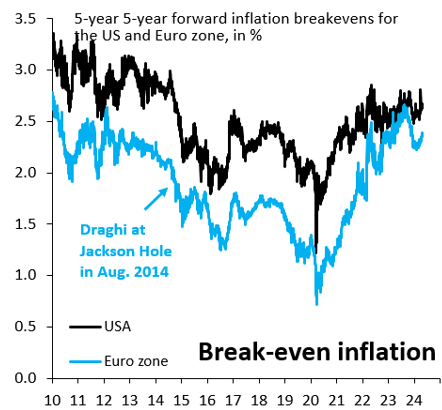
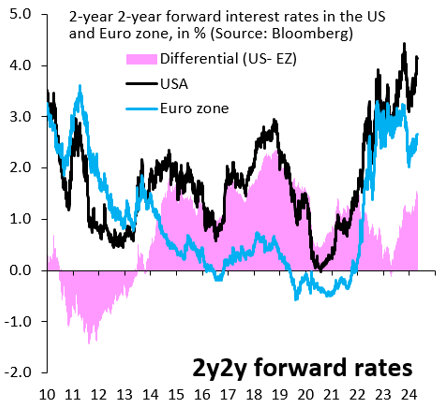
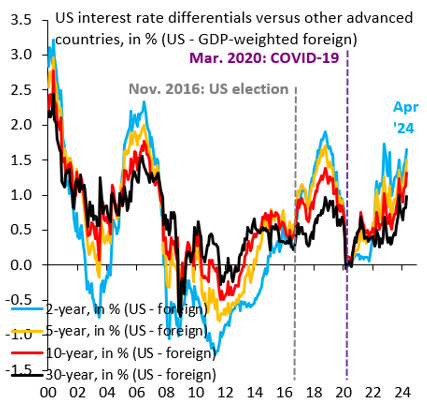
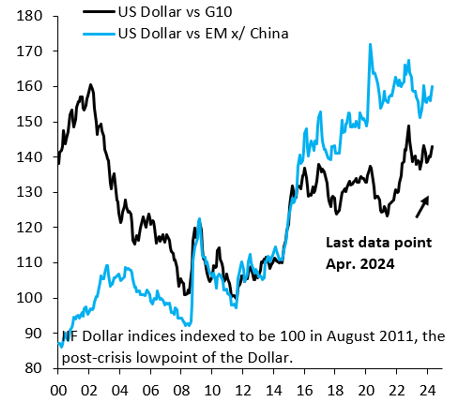
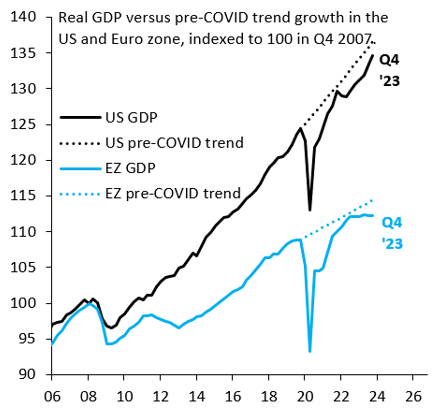 A stylized fact following the 2008 crisis is that U.S. growth substantially outperformed the rest of the advanced world. This again looks to be true in the aftermath of COVID-19 (Figure 1), with lots of debate on the underlying drivers. Some argue that this outperformance reflects loose fiscal policy and rapid immigration, while others see a productivity boom linked to tight labor markets. Whatever the source, cyclical outperformance may keep U.S. inflation stickier than elsewhere. There are some signs of this. Figure 2 shows the combined weight of items in the U.S. consumer price index (CPI) with month-over-month inflation above 2% (on a seasonally adjusted, annualized basis), alongside the same measure for the eurozone’s harmonized index of consumer prices (HICP). This metric is noisier than if we used year-over-year inflation, but it has the advantage of focusing on recent inflation dynamics, since there are no base effects to muddy the picture. Elevated inflation remains relatively broad-based in the U.S., consistent with strong growth, while inflation momentum is clearly fading in the eurozone.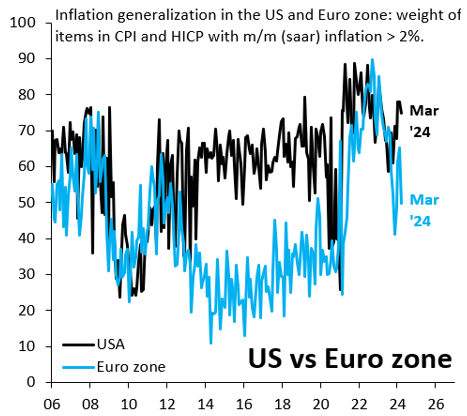

 Municipalities of Santa Cruz Naranjo and Santa Rosa Lima. COOITZA, established in 2019 with the objective of the social and economic improvement and focused on the development and improvement of life, through health products, was instrumental in providing invaluable logistical support to arrange the health camp.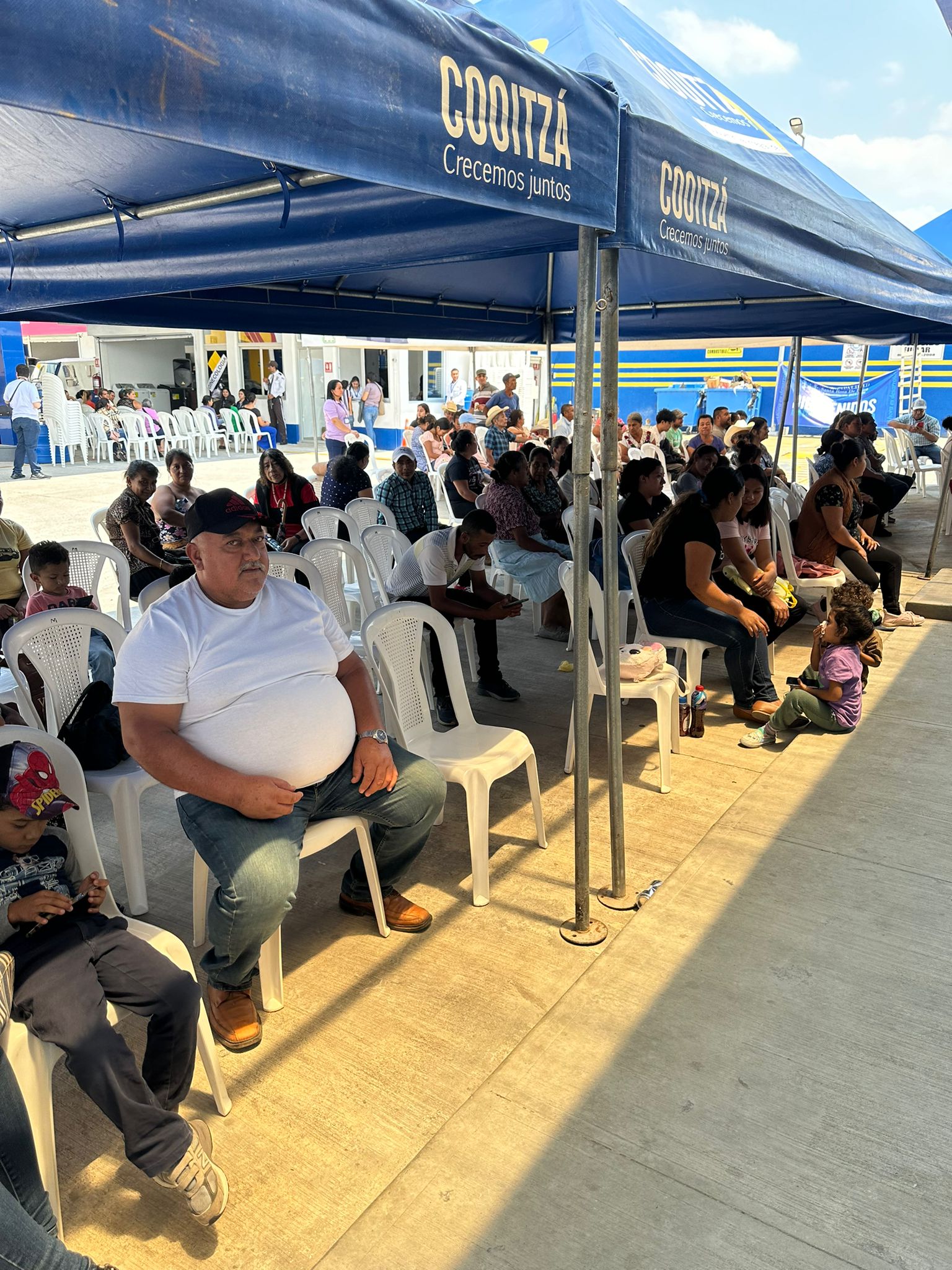




 She is known for her celebrity interview series Chai with Manju, which recently celebrated its 10 year anniversary and has received millions of views and featured esteemed guests including Indra Nooyi, Sadhguru, Elizabeth Warren, and Joe Kennedy to name a few. Her passion for empowering women is reflected in her work as the Director of Woman of the Year Award Gala for the past 12 years, and her previous work as Chair of the Advisory board of Saheli and with Asian Task Force [ATASK] over the years.