US Ambassador Garcetti Foresees Bright Future for India-US Relations: A Multiplicative Force for Global Good

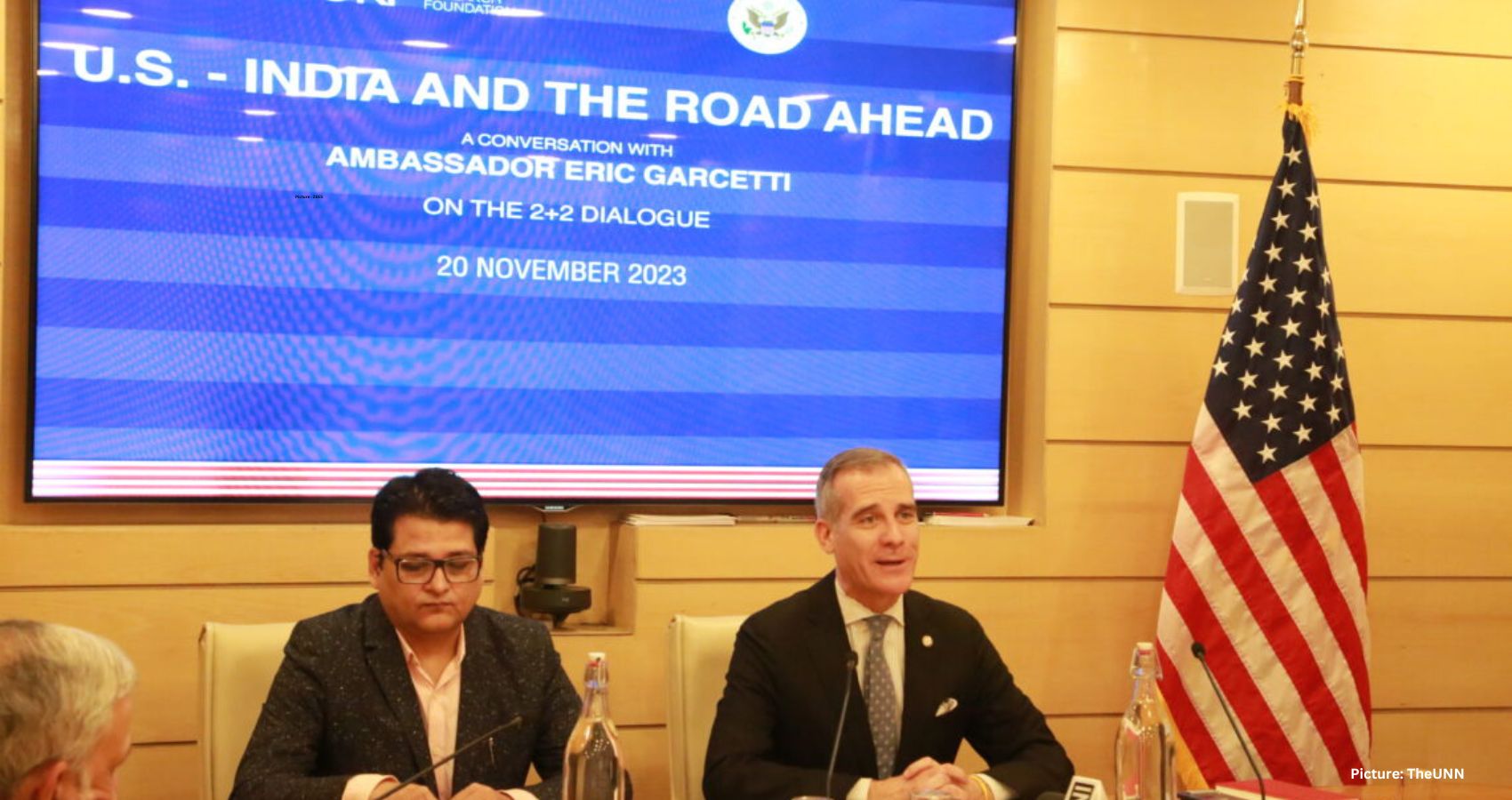
The US ambassador to India, Eric Garcetti, expressed optimism about the India-US relationship, stating that it is a “force of good for the world” with a “positive romantic ambiguity” for the future. Speaking at Carnegie’s Global Tech Summit 2023, Garcetti highlighted the growing breadth and depth of ties between the two nations, emphasizing efforts to negotiate differences and plan for the future.

In his address, Garcetti humorously likened the historical status of the relationship to a Facebook status of “It’s complicated,” suggesting that it has evolved into a phase resembling dating. He remarked on the complexities of merging habits, symbolizing the ongoing efforts to understand and navigate the partnership’s direction. Despite the uncertainties, he underscored a shared desire on both sides to advance the relationship.

Quoting Garcetti, “There’s a positive romantic ambiguity about where this will ultimately lead… But there’s a strong desire on both [sides to take the relationship forward].”

Reflecting on the partnership’s effectiveness, Garcetti pointed to the G20 Summit as a notable example. He commended the collaboration between India and the US, emphasizing how their joint efforts surpassed a simple additive relationship, producing a historic consensus involving 20 countries.

Quoting Garcetti, “India-US relationship is not additive, its multiplicative. We demonstrated that at G20, where it was more than just 1+1 equals 2 countries, 1+1 actually produced 20 countries together with a historic and strongest, deepest statement ever put forward by a G20.”

The ambassador highlighted Prime Minister Narendra Modi’s state visit to the United States as a significant milestone in the relationship’s growth. He noted the extensive discussions and numerous deliverables, emphasizing the unprecedented nature of the continued communication between the two nations.

Quoting Garcetti, “if you get three to five deliverables, that’s a strong state dinner. The week before [the state dinner], we were ploughing through 123 different deliverables.”

Garcetti concurred with External Affairs Minister Jaishankar’s perspective that the state dinner should be viewed not as the pinnacle but as a new base for US-India relations. He emphasized President Joe Biden’s recognition of the relationship as the most consequential in the world.

Quoting Garcetti, “[President Joe Biden] is the very first president to say this is most consequential relationship in the world.”

Addressing the role of China in the bilateral ties, Garcetti acknowledged its importance but refuted the notion that the relationship was primarily centered around China. He asserted that 95% of the relationship was fundamentally about other matters, characterizing China as a component related to deterrence.

Quoting Garcetti, “Peace is critical, but deterring war, respecting borders and sovereignty, making sure that we don’t have people who steal intellectual property, that we are not overly dependent on any one place for a supply chain, is a deterrent peace.”

Responding to concerns about India’s ability to absorb the impact of US-China derisking, Garcetti emphasized that missing this opportunity would be a loss. He also addressed challenges hindering the desired flow of Foreign Direct Investment, pointing to India’s status as the “highest taxed input major economy in the world.”

Quoting Garcetti, “It’s not a criticism…but it’s harming your own internal capacity to be the manufacturing powerhouse that India should be. That we want it to be. That it is starting to accelerate to become but it will require some fundamentally deeper changes.”

G20 Chief Coordinator Harsh Vardhan Shringla, participating in the discussions, echoed the sentiment that the relationship is multifaceted and constantly evolving. He emphasized the collaborative role of the US and India as a force for good in the world beyond their individual interests.

Quoting Shringla, “The relationship is amazingly multifaceted, but it’s also constantly evolving. US and India are a force for good in the world together, not just for our countries.”

UK Government Nominates Samir Shah as New BBC Chairman Amid Financial Challenges and Strategic Shifts

The UK government, on Wednesday, revealed its selection for the new BBC chairman, a decision prompted by the departure of the previous chair earlier this year due to involvement in a loan to then-Prime Minister Boris Johnson. The Conservative government nominated seasoned TV executive Samir Shah to succeed Richard Sharp, who resigned in April as the head of the publicly funded broadcaster.

This appointment is expected to receive approval from a parliamentary committee and is crucial for the BBC, currently grappling with heightened funding challenges. With the goal of achieving £500 million in savings, the corporation recently announced cutbacks to its flagship “Newsnight” program.

Samir Shah, aged 71, will be entrusted with the task of negotiating an increase in the license fee, the primary source of funding for the BBC. Recent reports from UK media suggest that Prime Minister Rishi Sunak intends to block a proposed nine percent increase in the annual fee, currently set at £159 ($200) per household.

With a career spanning over 40 years in television, including various roles at the BBC such as head of current affairs, Samir Shah expressed his delight at being named the government’s preferred candidate in a statement. A BBC spokesperson welcomed the announcement, stating, “We welcome the announcement that Samir Shah has been selected as the Government’s preferred candidate to take up the role of BBC chair and look forward to him joining the board once the formal process has been complete.”

The backdrop to this appointment is the departure of Richard Sharp, a former executive at investment bank Goldman Sachs. Sharp resigned after it was revealed that he acted as an intermediary in facilitating an £800,000 ($1 million) loan for Boris Johnson.

In essence, the UK government, facing the aftermath of Sharp’s resignation, has chosen Samir Shah to take the helm of the BBC. Shah’s extensive experience in television, particularly at the BBC, positions him to lead the broadcaster through a challenging period marked by financial constraints and the need for strategic decision-making.

As the new chair, Shah is poised to play a pivotal role in negotiations with the government regarding an increase in the license fee. This fee, constituting a significant portion of the BBC’s funding, is under scrutiny as reports circulate that Prime Minister Rishi Sunak plans to oppose a proposed nine percent hike, challenging the broadcaster to navigate financial uncertainties.

Shah’s career trajectory, spanning four decades, underscores his wealth of experience, including key roles in current affairs at the BBC. His statement expressing delight at the government’s preference for him as the new chair reflects his readiness to assume this responsibility.

The BBC, through a spokesperson, conveyed its anticipation of Shah officially joining the board, emphasizing the importance of completing the formal process. This signals a degree of alignment between the government’s choice and the broadcaster’s outlook on the future leadership.

The departure of Richard Sharp, who had a background in investment banking, added a layer of complexity to the dynamics surrounding the BBC. Sharp’s resignation was tied to his involvement in facilitating a substantial loan for Boris Johnson. The transition to Samir Shah marks a shift in leadership and a potential course correction for the BBC in light of recent challenges.

The appointment of Samir Shah as the new BBC chairman comes at a critical juncture for the broadcaster. His role in negotiating the license fee increase, navigating financial pressures, and steering the organization through cutbacks will be closely watched. As the government’s preferred candidate, Shah brings a wealth of experience to the position, and the outcome of this transition will shape the future trajectory of one of the UK’s most prominent media institutions.

Indian Trailblazers Shine on Forbes’ 2023 List of World’s Most Powerful Women

Forbes, the renowned business magazine, has unveiled its annual compilation of the World’s Most Powerful Women for the year 2023, spotlighting four exceptional Indian women. These dynamic individuals have not only shattered glass ceilings but have also left an indelible mark on the global stage, underscoring the diverse and influential voices emerging from India. Forbes employed four key metrics — money, media, impact, and spheres of influence — to ascertain the rankings.

As the world applauds their remarkable achievements, these four Indian women emerge as potent symbols of resilience, leadership, and excellence on the global platform:

Nirmala Sitharaman (Ranked 32)

Nirmala Sitharaman, a stalwart at 64, holds a prominent position in the Bharatiya Janata Party (BJP) and has been serving as India’s Minister of Finance and Minister of Corporate Affairs since 2019. Notably, she previously served as the 28th Defence Minister from 2017 to 2019, marking her as India’s second female to hold both the defense and finance portfolios after Indira Gandhi. In the 2022 Forbes list of the world’s most powerful women, she secured the 36th position, and this year, she climbs to the 32nd spot.

Ms Sitharaman’s journey is indeed a testament to her multifaceted leadership, having navigated both financial and defense realms.

Roshni Nadar Malhotra (Ranked 60)

Roshni Nadar Malhotra, aged 42, stands as an Indian billionaire and philanthropist of significant acclaim. As the chairperson of HCL Technologies, she etched her name in history as the first woman to lead a listed IT company in India. Being the only child of HCL founder Shiv Nadar, she holds the distinction of being recognized as the richest woman in India, according to the IIFL Wealth Hurun India Rich List (2019). Forbes consistently acknowledges her influence, with rankings at 54th in 2019, 55th in 2020, and 60th in 2023.

Ms Malhotra’s journey reflects not only her business acumen but also her commitment to philanthropy.

Soma Mondal (Ranked 70)

Soma Mondal, at the age of 60, currently serves as the Chairperson of the Steel Authority of India, achieving a historic milestone as the first woman in this role since January 2021. Born in Bhubaneswar, she graduated in Electrical Engineering in 1984 and has amassed over 35 years of experience in the metal industry. Rising from her beginnings at NALCO, she became Director (Commercial) before joining SAIL in 2017. Noteworthy career milestones include being the first woman Functional Director and Chairman at SAIL. Beyond corporate achievements, she holds the prestigious position of Chairperson of SCOPE and received the ‘CEO of the Year’ honor at the ETPrime Women Leadership Awards in 2023. Her ranking on the Forbes list is 70th.

Ms Mondal’s journey underscores her trailblazing path in the male-dominated steel industry, coupled with her commitment to leadership beyond corporate borders.

Kiran Mazumdar-Shaw (Ranked 76)

Kiran Mazumdar-Shaw, aged 70, stands as a prominent Indian billionaire entrepreneur renowned for founding and leading Biocon Limited and Biocon Biologics Limited in Bangalore, India. Apart from her pivotal role in the biotechnology sector, she previously chaired the Indian Institute of Management, Bangalore. Her numerous accolades include the Othmer Gold Medal in 2014 for significant contributions to science and chemistry. Recognized on the Financial Times’ Top 50 Women in Business list in 2011, Forbes positioned her as the 68th most powerful woman globally in 2019. In 2020, she received the esteemed title of EY World Entrepreneur Of The Year. Her current rank in the Forbes List of powerful women for 2023 is 76th.

Ms Mazumdar-Shaw’s journey is a narrative of entrepreneurial prowess and steadfast dedication to advancements in science and business.

These four exceptional Indian women, Nirmala Sitharaman, Roshni Nadar Malhotra, Soma Mondal, and Kiran Mazumdar-Shaw, have not only earned their places on the prestigious Forbes list but have also become emblematic figures, embodying the strength, leadership, and excellence emanating from India on the global stage.

Cyclone Michaung Leaves Chennai in Deluge Crisis: Rescuers Battle Flooding as City Grapples with Devastation

In the aftermath of Cyclone Michaung’s assault on India’s southern coast, the city of Chennai faced widespread flooding on Wednesday, compelling rescuers to employ boats to reach stranded individuals in their inundated homes. The cyclone, accompanied by heavy rain and powerful winds, uprooted trees, and inflicted damage on roads, resulting in the loss of an estimated 13 lives, particularly in the manufacturing hub of Tamil Nadu. The flooding, triggered by torrential rains preceding the cyclone’s landfall in Andhra Pradesh on Tuesday afternoon, prompted rescuers to utilize inflatable rafts and ropes for evacuations in Chennai, a city with a population exceeding 6 million, renowned for its status as a major automobile and technology manufacturing center.

As Greater Chennai Corporation Commissioner Dr. J. Radhakrishnan highlighted, “There are pockets of low lying areas.” The efforts of rescue workers were vividly captured by local media, showcasing their determination as they waded through waist-deep water and engaged in the retrieval of stranded individuals. Additionally, air force helicopters played a crucial role by airdropping food rations to those marooned in flooded homes.

The impact of the deluge extended beyond immediate human consequences, affecting industrial operations. Notably, Taiwan’s Foxconn and Pegatron had temporarily halted Apple iPhone production at their Chennai facilities due to the rains, with Foxconn resuming operations on Tuesday.

In the state of Andhra Pradesh, which bore the brunt of Cyclone Michaung, damage was relatively contained, primarily manifesting as road impairments and uprooted trees from the force of crashing waves along the coast. This calamity evoked memories of a devastating flood eight years prior, claiming around 290 lives, raising questions among residents about the city’s infrastructure resilience in the face of extreme weather events.

State Chief Minister M K Stalin expressed concern by writing to Prime Minister Narendra Modi, seeking 50.6 billion rupees ($607.01 million) for the extensive damage. However, civil engineer and geo-analytics expert Raj Bhagat P emphasized that even with improved stormwater drainage systems in the city, preventing flooding in the face of very heavy and extremely heavy rains would have remained a challenge.

Bhagat P noted, “This solution would have helped a lot in moderate and heavy rainfall, but not in very heavy and extremely heavy rains.” Despite these challenges, the spirit of resilience prevailed as rescue efforts persisted amidst the adversity, emphasizing the need for both short-term relief and long-term infrastructure improvements to fortify Chennai against the unpredictable forces of nature.

Delhi Police Ramp Up Security Amidst Threats to Parliament’s Foundation on Anniversary of 2001 Attack

The Delhi Police have heightened their vigilance in response to a video message from Gurpatwant Singh Pannu, a Khalistani supporter based in the United States. In the video, Pannu issued a threat to “shake the very foundation of Parliament” on December 13, coinciding with the anniversary of the 2001 terrorist attack on the Indian Parliament. The authorities are taking the threat seriously, with a senior police officer confirming the implementation of enhanced security measures in and around Parliament.

The senior officer emphasized the commitment to maintaining law and order, stating, “No one will be allowed to disturb law and order. When Parliament is in session, we remain alert.” These assurances were accompanied by a clear message that all necessary precautionary measures are being taken to prevent any untoward incidents. Security has been bolstered not only in the vicinity of Parliament but throughout the entire city of Delhi.

The video message, delivered by Pannu, who is the chief of the banned organization Sikhs for Justice, also featured a photograph of Afzal Guru, the convict in the 2001 Parliament attack. In the video, Pannu made serious allegations against the Narendra Modi government, claiming an attempt on his life and vowing to respond on December 13. His ominous promise asserted that his retaliation would “shake the very foundation of the Indian Parliament.”

The threat issued by Pannu has raised concerns and prompted a proactive response from law enforcement agencies. The reference to the 2001 Parliament attack, a dark chapter in India’s history, adds gravity to the situation. Authorities are not taking any chances, and the increased security measures are indicative of the seriousness with which they are approaching this potential threat.

While the specific nature of Pannu’s allegations against the Modi government remains unclear, the mere mention of an attempt on his life suggests a heightened level of tension and animosity. Such claims, when made by individuals with affiliations to proscribed organizations, demand thorough investigation and a robust security response.

The timing of the threat, coinciding with the anniversary of the 2001 Parliament attack, adds a layer of historical significance to the situation. December 13 is a solemn day in the memory of the brave individuals who lost their lives in the 2001 attack. The threat to disrupt Parliament on this particular day is not only a security concern but also a potential attempt to exploit the emotional resonance associated with the anniversary.

As the authorities work to ensure the safety and security of Parliament and the people of Delhi, the larger question looms regarding the motivations and objectives behind such threats. Pannu’s affiliation with Sikhs for Justice, an organization that has been banned in India, raises questions about the broader implications of the threat and its potential impact on the socio-political landscape.

The heightened security measures in response to Gurpatwant Singh Pannu’s video threat reflect the seriousness with which law enforcement is treating the situation. The anniversary of the 2001 Parliament attack adds historical significance to the threat, emphasizing the need for a robust and comprehensive security response. As the authorities remain vigilant, the coming days will be crucial in determining the credibility of the threat and ensuring the safety of Parliament and the citizens of Delhi.

Al Gore Challenges COP28 Host UAE’s Leadership, Exposes Rising Emissions, and Slams Fossil Fuel Companies at Climate Summit

Former U.S. Vice President and climate advocate Al Gore criticized the United Arab Emirates (UAE), host of the COP28 climate summit, for what he deemed an abuse of public trust in overseeing international negotiations on global warming. Speaking to Reuters at the conference in Dubai, Gore expressed skepticism about COP28 President Sultan al-Jaber, who heads the UAE’s national oil company ADNOC, being an impartial broker of a climate deal.

Gore remarked, “They are abusing the public’s trust by naming the CEO of one of the largest and least responsible oil companies in the world as head of the COP.”

During a presentation at the COP’s main plenary hall, Gore revealed data indicating a 7.5% increase in the UAE’s greenhouse gas emissions in 2022 compared to the previous year, contrasting with a 1.5% global rise. This data, sourced from the Climate TRACE coalition—a group Gore co-founded—utilizes artificial intelligence and satellite data to monitor carbon emissions from specific companies.

The UAE did not immediately respond to Gore’s comments or the TRACE data.

Gore, who previously ran for the U.S. presidency in 2000 as the Democratic Party’s nominee, criticized the presence of oil and gas companies at the annual climate summit. He particularly opposed their endorsement of technologies like carbon capture as a means of mitigating fossil fuel emissions.

Addressing the first-ever appearance of Exxon Mobil CEO Darren Woods at a COP conference, Gore dismissed the significance, asserting that the oil giant’s engagement doesn’t negate its historical resistance to climate policies. Gore stated, “He should not be taken seriously. He’s protecting his profits and placing them in a higher priority than the survival of human civilization.”

Exxon Mobil declined to provide a comment on Gore’s remarks.

In urging summit delegates, Gore emphasized the need for language in the final text that commits to phasing out fossil fuels without conditional statements or references to carbon capture technology. He criticized the current state of carbon capture and direct air capture technology as a long-term research project, highlighting a lack of cost reduction over the past 50 years. Gore accused fossil fuel companies of falsely presenting these technologies as readily available and economically viable.

“The current state of the technology for carbon capture and direct air capture is a research project,” Gore said. “There’s been no cost reduction for 50 years, and there is a pretense on the part of the fossil fuel companies that it is a readily available, economically viable technology.”

Reliance Industries Chairman Mukesh Ambani Envisions India as a $40 Trillion Economy by 2047, Emphasizes Clean Energy Transition and Youth’s Role in a Sustainable Future

Reliance Industries Chairman Mukesh Ambani has expressed unwavering confidence in the trajectory of the Indian economy, projecting its ascent to a staggering $40 trillion by 2047, a substantial leap from its current standing at $3.5 trillion, according to reports from PTI.

Ambani, speaking at the convocation of Pandit Deendayal Energy University (PDEU) in Gandhinagar, Gujarat, highlighted India’s position as the world’s third-largest energy consumer. He foresaw a doubling of the country’s energy needs by the close of this decade. Emphasizing the necessity for copious amounts of energy to propel this growth, he underscored the imperative nature of ensuring it is clean and green, safeguarding the environment in the pursuit of human progress.

“In fact, India’s energy requirement is set to double just by the end of this decade,” Ambani asserted, addressing the audience at PDEU. He envisioned an unparalleled explosion of economic growth in the next 25 years, portraying it as a crucible for transforming the vision of a cleaner, greener, and sustainable future into a tangible reality.

Ambani posed three pivotal questions as India races to fortify its energy infrastructure: How can universal access to affordable energy be ensured for every citizen and economic activity? How can a swift transition from fossil fuel-based energy to clean and green alternatives be accomplished? And, crucially, how can the expanding needs of the fast-growing economy be shielded from the volatility of the external environment? He coined these queries as the “Energy Trilemma.”

The business magnate, also the wealthiest individual in India, contended that the transition of energy sources holds the utmost significance in propelling India towards becoming a global leader in green, sustainable, and inclusive development.

Demonstrating faith in India’s capability to navigate this trilemma with smart and sustainable solutions, Ambani credited the nation’s exceptionally talented youth for their commitment to combat the climate crisis. He envisioned these young minds designing breakthrough energy solutions that would not only contribute to a robust and self-reliant India but also foster a safer and healthier planet.

Addressing the students, Ambani imparted a message of fearlessness and unwavering confidence in their abilities. “Courage is the ship that can safely sail you across the stormiest seas. You will commit mistakes. But let that not worry or deter you. The one who succeeds in life is the one who corrects his mistakes and continues on his mission boldly,” he asserted.

Reflecting on his own journey, Ambani attributed his success to India, to Bharat. He urged the graduates to contribute wholeheartedly to the greatness and glory of the country, emphasizing that being young in today’s India is a true blessing. He concluded on an optimistic note, proclaiming that the 21st Century is unequivocally poised to be India’s Century as the nation strides forward with confidence.

The Genesis of India’s Caste System: Unraveling Theories and Historical Dynamics

The origin of the caste system in India is subject to various theories. According to the religious perspective, the Varnas were created from Brahma’s body, with Brahmanas from his naval, Kshatriyas from his hands, Vaishyas from his thighs, and Sudras from his feet.

The social historical theory attributes the caste system’s emergence to the arrival of Aryans in 1500 BC. Disregarding local cultures, they conquered northern regions, displacing locals southwards. Aryans divided into warriors (Rajanya or later Kshatriyas), priests (Brahmanas), and farmers/craftsmen (Vaisyas). Brahmanas emerged politically victorious, while conquered locals and Aryans’ descendants formed the Sudra Varna, representing society’s simple workers.

Hindu religious stories depict conflicts between Aryans and dark-skinned demons/devils, with gods having dark-skinned slaves. These tales involve demon women attempting to deceive Aryan men and marriages between Aryan heroes and demon women. Some believe these stories reflect actual events, portraying Aryans as positive heroes and the indigenous population as monsters, devils, demons, and slaves.

Inheritance of professions continued from father to son, evolving into family-based professions. As these families grew, they formed communities or Jatis. The caste system expanded as Aryans integrated non-Aryans, placing different Jatis into Varnas based on their professions. Foreign invaders, particularly those creating kingdoms, were integrated into the Kshatriya Varna, while many pre-Aryan aristocratic and warrior communities did not attain Kshatriya status.

Rep. Jayapal Urges US-Israel-Arab Coalition Against Hamas, Stresses Long-Term Political Solution for Middle East Stability

In a recent interview on CNN’s “State of the Union,” Representative Pramila Jayapal (D-Wash.) emphasized the importance of a coalition involving the United States, Israel, and Arab countries to address the threat posed by Hamas and to establish long-term stability in the region.

Jayapal reiterated her call for a cease-fire while dismissing the idea that it would perpetuate the existence of the “brutal terrorist regime in place in Gaza.” She asserted that Hamas, being a terrorist organization, needs to be dealt with, and the key lies in forming a durable coalition within the Middle East. According to Jayapal, terrorism experts advocate for this approach, emphasizing collaboration with the United States and Israel to foster a lasting political solution and provide an alternative leadership for Gaza, ultimately leading to the creation of a Palestinian state.

Addressing the ongoing conflict, Jayapal condemned both Hamas and Israel, attributing the lack of progress toward a long-term solution to Israel’s “indiscriminate bombing” in Gaza. She underscored the need for accountability, stating, “We have to condemn what Hamas did on October 7. We cannot allow for 15,000 Palestinians to date to have been killed, three-quarters of whom are women and children, and say that that is going to help us in the long term.”

Jayapal highlighted the moral and strategic imperative for Israel to pursue a political solution that includes the establishment of both a Palestinian and Israeli state. She expressed concern that a lasting coalition, essential for ending the war, would not materialize if Israel continued its current military actions, asserting, “The United States cannot be backers of this kind of indiscriminate bombing.”

The representative’s call for a coalition coincides with Israel’s resumption of its offensive in Gaza, following a seven-day temporary cease-fire. This pause in hostilities resulted in the release of dozens of Israeli hostages in exchange for three times that number of Palestinian prisoners from Israeli custody.

To encapsulate Jayapal’s position, she advocates for a comprehensive coalition approach involving the United States, Israel, and Arab nations to counter Hamas, condemning both indiscriminate actions and calling for a political solution that addresses the needs of both Palestinians and Israelis for long-term stability in the region.

Neha Mahajan, Ilayas Quraishi Elected To Asian Indian Chamber Of Commerce BOD For 2024-2025

Ilayas Quraishi, COO at the Parikh Media and Neha Mahajan, Business development and Outreach manager at Chugh are among those elected to the Borad of Directors of The Asian Indian Chamber of Commerce (AICC) after the elections held on November 29, 2023 at the prestigious Mogul Ballroom in Edison, NJ.

Other newly elected Board of Directors for the term 2024-25 include: Rajeev Krishna, Rekha Sarathy, Chetan Wattamwar,  Harry Mehta, Komal Dangi, Ajay Kumar, Parag Nevatia, and Shachi Rai Gupta.

This term marks the inclusion of three new faces, Neha Mahajan, Shachi Rai Gupta, and Ajay Kumar, bringing fresh perspectives and energy to the AICC leadership, the organization said. “Each member of the newly elected board brings a wealth of experience and enthusiasm, and their leadership is expected to contribute significantly to the growth and success of the chamber,” a press release isued here stated.

Addressing the gathering, current President Rajeev Krishna,  highlighted the accomplishments of the last two years under his leadership. He expressed gratitude to the dedicated Board members who he said, worked tirelessly to elevate the organization.  He said he expected AICC to achieve new heights, and hoped to organize AI technology seminars to impact small businesses positively. He encouraged Board members to share their ideas and actively participate in implementing them.

“I am thrilled to share the exciting news ablut the newly concluded elections for AICC. Each member to the BOD brings a wealth of experience and enthusiasm to the table, and I am confident that their leadership will significantly to the growth and success of our chanmber,” wrote Ilayas Quraishi after being elected to the Board.

Neha Mahajan in her remarks after being elected to the BOD said, “Super excited and thankful to be voted and appointed to the Borad of Directors of The Asian Indian Chamber of Commerce. Looking forward to serving the community at large, one step at a time, creating newer heights for the business community.’

Anil Bansal and Priti Pandya Patel, past presidents of AICC,  conducted the election process efficiently, in their positions as  election committee members. They announced the results, and extended heartfelt congratulations to the new board.

As a gesture of appreciation to the members, Kunal Lamba, a well-known singer from New Jersey, entertained the audience with Bollywood melodies at the event.

US House Foreign Affairs Committee Approves Bill Seeking To End Tibet-China Dispute

A Bill aimed at strengthening US efforts to push China to negotiate with the Dalai Lama’s envoys and resolve the ongoing Tibet-China dispute can now proceed to the House floor, following a unanimous vote by the US House Foreign Affairs Committee on Wednesday, November 29, 2023.

The bipartisan legislation, known as the Resolve Tibet Act, received approval at a markup meeting attended by Tibetan Americans, according to the Washington-based advocacy group International Campaign for Tibet (ICT).

The Resolve Tibet Act establishes official US policy that China must resume dialogue with the Dalai Lama’s envoys, emphasizing the unresolved conflict between Tibet and China and Tibet’s undetermined legal status under international law.

US House Foreign Affairs Committee Approves Bill Seeking To End Tibet China DisputeAdditionally, the US could also explore activities to improve prospects for dialogue leading to a negotiated agreement on Tibet and coordinate with other governments in multilateral efforts towards the goal of a negotiated agreement on Tibet. Furthermore, it should encourage the Chinese government to address the aspirations of the Tibetan people regarding their distinct historical, cultural, religious and linguistic identity.

The repression in Tibet has intensified over the decades and China’s constant attacks have constantly deteriorated the lives of Tibetan people, Voice Against Autocracy reported.

The bill, an amended House version of the legislation, was introduced last year; however, the dialogue process has been stalled since 2010. The bill aims to pressure China to resume negotiations with the Dalai Lama’s envoys or democratically elected Tibetan leaders, according to the International Campaign for Tibet (ICT).

The bill also seeks to dismiss as inaccurate the Chinese claim that Tibet has been part of China since antiquity, and it will empower the State Department to actively counter China’s disinformation about Tibetan history, people and institutions.

According to the Resolve Tibet Act, China’s policies are “systematically suppressing the ability of the Tibetan people to preserve their religion, culture, language, history, way of life and environment.”

The Resolve Tibet Act states that Tibetans “are a people with a distinct religious, cultural, linguistic and historical identity,” as per the ICT.

The approval of the bill comes just days after President Joe Biden met Chinese President Xi Jinping on the sidelines of the Asia-Pacific Economic Cooperation summit in San Francisco, where the White House said that Biden raised concerns about China’s human rights abuses in Tibet.

The Promoting a Resolution to the Tibet-China Dispute Act states that it is US policy that the dispute between Tibet and China must be resolved in accordance with international law, including the UN Charter, by peaceful means through dialogue and without preconditions, the ICT stated.

According to the legislation, the US should promote substantive dialogue without preconditions between the Chinese government and the Dalai Lama, his representatives or the democratically elected leaders of the Tibetan community.

Additionally, the US could also explore activities to improve prospects for dialogue leading to a negotiated agreement on Tibet and coordinate with other governments in multilateral efforts towards the goal of a negotiated agreement on Tibet.

Furthermore, it should encourage the Chinese government to address the aspirations of the Tibetan people regarding their distinct historical, cultural, religious and linguistic identity.

ZEE5 Global Strengthens US Presence With Aggregation Of Leading South Asian Streaming Platforms

ZEE5 Global, the world’s largest streaming service for South Asian content, announced a strategic move to aggregate multiple South Asian streaming platforms within the ZEE5 Global platform with the launch of Add-ons in the US. ZEE5 Global Add-ons will offer subscribers in the US a single-window to access their favorite South Asian entertainment platforms on the ZEE5 Global platform itself, with Add-ons pricing starting from just $1.49 onwards.

ZEE5 Global Add-ons was unveiled by Amit Goenka, president, Digital Businesses and Platforms, and Archana Anand, chief business officer, ZEE5 Global, at an event at Mumbai’s Hotel Taj Land’s End on November 28. The show was attended by various Hindi film, TV and web series celebs as well as regional names. Subhash Ghai, Anu Malik, Gulshan Grover, Amisha Patel, Luv Sinha, Aamir Ali, Rohitashv Gaur, Aasif Shaikh, Shubhangi Atre Poorey, Sharad Kelkar and others were spotted at the launch.

Said Goenka: “We have become No. 1 in the US market, and also Europe, Australia and Middle-East and more, that too within a short span of four years, Our user base is 15 times that of our nearest competitor. And because we have reached  this pinnacle, we thought we can go further.”

ZEE5 Global Strengthens US Presence With Aggregation Of Leading South Asian Streaming Platforms 2“The launch of Add-ons on ZEE5 Global is a significant milestone, further cementing our leadership position as the No.1 South Asian streaming platform,” said Anand. “Add-ons will bring the best of South Asian content from multiple streaming platforms within ZEE5 Global for the diaspora in the US and soon globally, and at the best possible value.”

ZEE5 Global Add-ons currently offers content across languages from streaming platforms like Simply South (all South Indian languages), Oho Gujarati (Gujarati), Chaupal (Punjabi, Bhojpuri and Haryanvi), NammaFlix (Kannada), EPIC ON (Hindi) and iStream (Malayalam) with at least six more about to join. As a first for ZEE5 Global, Gujarati content will be available on the platform to delight the huge Gujarati-speaking population in the US.

ZEE5 Global Add-ons partner titles will further add to the platform’s huge catalogue of over 250,000 hours of movies, TV shows, and originals across languages. Currently, audience fragmentation looms large, their being over 30 South Asian streaming platforms.

Goenka added, “As digital entertainment consumption and delivery models evolve in the global landscape, addressing the growing consumer demand for engaging content and a seamless, personalized experience that combines accessibility and affordability is the need of the hour. With the launch of our aggregator platform, ZEE5 Add-ons, we aim to unite the entertainment ecosystem for the discerning viewer to build a robust monetization opportunity for multiple players in the global markets. We are pleased to have on board some of the most renowned names offering South Asian content to the diaspora, and we look forward to building a healthy partnership by enhancing capabilities in the realm of content creation and distribution by establishing ZEE5 Global Add-ons as the single destination for all South Asian content.”

Sharing her vision for ZEE5 Global Add-ons, Anand added, “As the foremost South Asian streaming platform in the United States, ZEE5 Global has played a crucial role in connecting the South Asian diaspora with their cultural roots. Building on our leadership, the natural progression was to evolve into the premier aggregator for South Asian entertainment. Add-ons will help address challenges such as content and consumer fragmentation and empower subscribers to effortlessly access their preferred content at one destination. It also benefits our partners, who can bank on our extensive reach in the US and save on customer acquisition and marketing costs.”

Users will now have just one app to download, only one login and a single password to remember. Billing and payment is also simplified through a single platform for all streaming subscriptions. Personalized recommendations across languages, unified user interface and search across platforms, and an ad-free viewing experience are just some of the other key benefits for consumers in the US.

In addition to Add-ons, ZEE5 Global is set to launch the largest consumer giveback program, the Great ZEE5 GiveAway, for its US consumers over the next few weeks in association with multiple partners like Quicklly, the leading online South Asian marketplace in the US, wherein with every purchase of ZEE5 or any Add-On pack, all new or existing subscribers will stand to win guaranteed gifts with sweepstakes ranging from gift cards to all-expenses-paid trips to destinations like Hawaii, Las Vegas and more.

A unique India-to-US Referral Program will also be rolled out shortly. Subscribers in India will be able to share their unique referral link with friends or family in the US and earn Rs.500 for each successful referral. The best part is: no capping on the number of referrals, so there is no upper limit to how much one can get.

Speaking at the event, Anand also announced a massive campaign against global piracy to be launched soon with ZEE5 Global, offering a logical and legitimate option for consumers tempted by the content variety and low costs offered by pirate platforms.

Tied in with her aspiration around ZEE5 Global being at the forefront of making South Asian entertainment larger on the global stage, the launch event also featured a panel discussion titled “The Coming of Age of South Asian Entertainment: The Time is Now.” The panel discussion, moderated by Anupama Chopra, featured Manoj Bajpayee, Guneet Monga, Vishal Bhardwaj and Pratik Gandhi besides Anand. The panelists discussed a range of topics around the subject covering how South Asian content is finally taking centrestage, their own perspectives about the South Asian audience, how storytelling has evolved and whether crossing over was a personal aspiration for them.

Indian-American Doctor Pledges $4M for Hindu Advocacy in the US

Hinduism is not just a religion, it’s a way of life, a prominent Indian-American physician, who has committed $4 million to advocate Hindu advocacy and awareness causes in the United States, has said.

Emergency care physician Mihir Meghani, who founded the Hindu America Foundation along with his friends two decades ago, has pledged to donate $1.5 million more to the Hindu cause over the next eight years.This contribution will raise his total donations for the cause to $4 million in two decades. He ecognize the pledge early this month at the Hindu America Foundation Gala at the annual Silicon Valley.

Stressing that Hinduism is more than a religion, he aimed to increase understanding and appreciation of Hindu identity among Americans, especially those with a Christian background.

Indian American Doctor Pledges $4M for Hindu Advocacy in the USMeghani emphasized the importance of Hindu Americans being proud of their heritage while actively engaging with others to foster better understanding. The Hindu American Foundation, initially volunteer-driven, has now expanded significantly, with plans for further growth to continue advocating for Hindu causes and enhancing awareness of Hinduism in American society.

The announcement by Dr Meghani pos”Ibly’gives him the distinction of being the biggest Indian American donor for the Hindu cause in the United States.

“My wife, Tanvi and I, have contributed $1.5 million to the Hindu American Foundation thus far. We’ve also contributed a million dollars more over the last 15 years to other Hindu and Indian organisations and causes. Over the next eight years, we’re making a pledge of $1.5 million to pro-India and Hindu organisations,” Dr Meghani told PTI in a recent interview.

“I say this to all of you who are viewing this to realise that I don’t have a startup company. I don’t have any side businesses. I’m an emergency doctor on a salary. My wife is a fitness instructor and a jewellery designer. We’re not making millions of dollars a year. We don’t have stock options. We’re doing this because it’s our Dharma, it’s our duty,” he said.

Just out of university, Dr Meghani and three of his friends Aseem Shukla, an associate professor in urologic surgery; Suhag Shukla, an attorney and Nikhil Joshi, a labour law attorney co-founded the Hindu American Foundation (HAF) in September 2003, the first of its kind Hindu advocacy group in the US.

Responding to a question, Dr Meghani said Hinduism is not as easily understood by most Americans because most Americans are Christian. “They come from an Abrahamic background. When they look at different religions, they can’t understand that Hinduism is not just a religion, it’s a way of life. It’s a way of thinking about life,” he said.

Hindus who are coming from India don’t quite understand that they have a Hindu identity and an Indian national identity, he said, adding: “We need to talk about that”.

“What we need are Hindus to be strong in the Bharatiya or Indian identity, which is the political identity for our ecognizedn, but also they should be very proud and open about their Hindu identity. And when they have that, their coworkers, their friends, and neighbours will understand us better,” he said.

One of the early successes of HAF in Washington DC, he said, was to get Diwali ecognized in the US.

“Now you can see that Diwali is celebrated at the White House, with the Vice President, in the US Congress and all across different state and local governments across the country. But it took time to get there,” he said about the three-year effort by them.

The Hindu American Foundation, which in its initial years was all based on volunteerism, now has an annual budget of $2.5 million and has several full-time staffers. Its goal is to increase its budget to $5 million next year and $20 million by the end of the decade, he said.

US Launches Visa Renewal Program for Indian Tech Workers

The United States is launching a domestic visa renewal program for certain H-1B visas in December, mainly benefiting Indian technology professionals.

The initiative aims to alleviate long wait times for visa appointments, particularly in India, initially issuing 20,000 visas to foreign nationals already in the US, with a focus on Indians due to their significant skilled workforce presence.

This move, announced during Prime Minister Narendra Modi’s visit and formally endorsed later, has received positive feedback from the Indian community in the US. Indian-American community leader Ajay Jain Bhutoria praised the program’s implementation, highlighting its positive impact on over a million H-1B visa holders and advocating for further policy changes to support legal immigrants.

Highlights: US to begin H-1B visa renewals starting from December

US to launch a pilot program for H1-B visa renewals which is an advantage for Indian tech professionals.

The focus is on reducing waiting times, easing the process of renewals, and eradicating the need for individuals going back to their home country for appointments.

The program aims on covering 20,000 work visa renewals starting from 1st of December and looks forward on extending the program plan in 2024.

Pilot program details and objectives

US Launches Visa Renewal Program for Indian Tech Workers 2The program which started 0n December 1st, aims to have around 20,000 work visa renewals, constituting approximately 10% of the anticipated 583,420 H-1B visa holders. The program was initially proposed in February gained formal announcement and recognition during PM Modi’s visit to the US in September.

Presently, visa applicants must wait for an average period of 130 days, which is equivalent to 6–8 weeks for appointments in their home country. Moreover, individuals are restricted from traveling abroad until their visa has been renewed every three years.

Deputy Assistant Secretary of State for Visa Services, Julie Stufft, acknowledged the high demand in India for US visas and that the existing waiting times are unnecessary. She highlighted the program’s focus on simplifying the renewal process by aiming on easing it for Indians by enabling them to schedule appointments promptly.

Positive impact and future prospects

The program will be benefitting India, and will reduce the need for individuals to travel back to their home country for visa appointments. The streamlined renewal process also intends to free up valuable time for US missions in India in order to concentrate on new candidates.

A formal notice in the federal register which details the procedures, requirements, and guidelines for the first round of applicants is expected to be released shortly. The program covering 20,000 cases from December to February, paves the way for the State Department’s plan to extend the program for more employment categories in 2024.

Ajay Jain Bhutoria, a prominent figure in the Indian-American community, expressed happiness with the outcome, highlighting the positive impact on over a million H-1B holders, many of whom are Indian.

Immigration laws are seen becoming more inclusive, which is viewed as a positive development with commitment to easing restrictions on lawful immigrants. The evolving landscape aims to create a more accessible and accommodating environment for skilled professionals seeking opportunities in the United States.

PEW Study Says, Nearly 50% Of Asian Americans Face Discrimination In US

Most Asian Americans experience discrimination in many parts of their day-to-day lives. In the survey, we asked Asian American adults if they have ever experienced discrimination or been treated unfairly because of their race or ethnicity.

In addition to this broad question, we also asked whether they have experienced specific discrimination incidents in their everyday life. These include incidents in interpersonal encounters with strangers; at security checkpoints; with the police; in the workplace; at restaurants or stores; and in their neighborhoods.

A recent report from the Pew Research Center reveals that encountering prejudice is a commonplace experience for the majority of Asian Americans living in the US.

About 58 percent of Asian individuals have experienced racial discrimination or unfair treatment because of their race or ethnicity, according to the report, which was based on a poll of more than 7,000 participants. Of those, 53 percent said they encounter racial discrimination sometimes and 5 percent say it happens very often.

PEW Study Says Nearly 50% Of Asian Americans Face Discrimination In US (VOA)
Picture: VOA

The prevalence of reported racial discrimination among Asian adults varies across demographic groups, particularly concerning ethnic origin. In this context, 67 percent of Korean adults recall experiencing racial discrimination, a higher percentage compared to Vietnamese adults at 57 percent, Filipino adults at 55 percent, and Indian adults at 50 percent. According to the report, U.S.-born Asian adults are more inclined to acknowledge experiencing racial discrimination compared to their immigrant counterparts, with 65 percent of U.S.-born individuals reporting such experiences, as opposed to 55 percent among immigrants.

The report also found that 57 percent of U.S.-born Asian adults have been called offensive names by strangers, almost twice the rate of Asian immigrants at 30 percent. Among Indian adults, 26 percent report that strangers have used offensive names to refer to them, a percentage lower than that reported by individuals from other ethnic origin groups.

About six-in-ten Asian adults (58%) say they have ever experienced racial discrimination or been treated unfairly because of their race or ethnicity. This includes 53% of Asian adults who say they have experienced racial discrimination from time to time and 5% who say they experience it regularly.

Whether Asian adults say they have experienced racial discrimination varies across some demographic groups:

  • Ethnic origin:67% of Korean adults say they have experienced racial discrimination, higher than the shares among Vietnamese (57%), Filipino (55%) and Indian (50%) adults.
  • Nativity:S.-born Asian adults are more likely than immigrants to say they have experienced racial discrimination, 65% versus 55%.
  • Immigrant generation:69% of Asian immigrants who are 1.5 generation – those who came to the U.S before they were 18 years old – say they have ever experienced racial discrimination. About half of immigrants who traveled to the U.S. as adults (first generation) say the same.
  • Years in U.S.:45% of immigrants who arrived in the U.S. in the last decade say they have experienced racial discrimination, compared with 60% of those who have been in the U.S. for more than 20 years.12

Discrimination in interpersonal encounters with strangers

In the survey, we asked Asian adults whether they have experienced discrimination incidents in their daily interpersonal encounters with strangers.

  • 37% of Asian adults say strangers have called them offensive names.
  • 18% say strangers have acted as if they thought they were dishonest.
  • 12% say people have acted as if they were afraid of them.

About 37% of Asian adults say that in day-to-day encounters in the U.S., strangers have called them offensive names. Whether Asian adults say they have had this experience is associated with their experiences with immigration:

  • 57% of U.S.-born Asian adults say strangers have called them offensive names. They are nearly twice as likely as Asian immigrants (30%) to say this.
  • Among immigrants, 54% of Asian adults who immigrated as children (1.5 generation) say they have been called offensive names by strangers, while 20% of those who immigrated as adults (first generation) say the same.
  • 39% of immigrants who have been in the U.S. for more than two decades say they have been called offensive names. By contrast, 16% of those who immigrated 10 years ago or less say the same.

Responses also vary across other demographic groups:

  • Ethnic origin:26% of Indian adults say strangers have called them offensive names, a lower share than other origin groups.
  • Regional origin: This pattern is also echoed among regional origin groups. Among South Asian adults overall, 29% say they have been called offensive names, compared with higher shares of East (41%) and Southeast (39%) Asian adults.
  • Age:About four-in-ten Asian adults under 50 years old say they have been called offensive names, compared with 33% of those 50 to 64 and 25% of those 65 and older.
  • Race:50% of Asian adults who identify with two or more races – that is, those who identify as Asian in addition to at least one other race – say they have been called offensive names by strangers during day-to-day encounters. In comparison, 36% of those who are single race – those who identify as Asian and no other race – say the same.

In the survey, we also asked Asian Americans whether they have ever hidden part of their heritage – including cultural customs, food, clothing or religious practices – from non-Asians. Whether Asian Americans have hidden their culture is associated with their experiences of being called offensive names:

  • 60% of Asian adults who have hidden their heritage say they have also been called offensive names by strangers, compared with 32% of those who have not hidden part of their heritage.

US State Dept Highlights Record 600,000 Student Visas, The Highest In Any Year Since FY 2017

The US State Department has highlighted that it has given out record number of visas during the previous financial year. From October 2022 through September 2023, the Department has achieved a near-record level of nonimmigrant visas, surpassing 10 million globally.

Notably, half of the U.S. embassies and consulates have adjudicated more nonimmigrant visas than ever before during this period. In addition to the nearly historic total of over 10.4 million nonimmigrant visas issued worldwide, the department has issued nearly eight million visitor visas for business and tourism, marking the highest number in any fiscal year since 2016.

International students at U.S. colleges and universities contribute up to $38 billion annually to the U.S. economy, with the department issuing more than 600,000 student visas, the highest in any year since FY 2017. The embassy and consulates in India have issued an all-time record of more than 140,000 student visas.

In recent years, international visitors have made significant contributions, providing as much as $239 billion in annual spending to the U.S. economy and supporting an estimated 9.5 million American jobs, the Department noted. It has issued a record-breaking 442,000 visas to temporary and seasonal workers, specifically addressing the demand for workers in agriculture and other sectors where there is a shortage of available U.S. workers.

The Department issued 590,000 nonimmigrant visas to high-skilled workers and executives, enabling them to work alongside American experts. Additionally,  nearly 365,000 nonimmigrant visas were issued to airline and shipping crew members, recognizing their essential role in maintaining global transportation networks.

Losing Their Religion, These 13 Countries Are The World’s Most Atheistic

Many countries turned to the scientific method and embraced atheism, nontheism, and apatheism. As you will notice, there is no clear pattern, though European studies suggest that countries with economic growth are losing their religion more rapidly. The situation in the East is just as interesting, so with that in mind, take a look at some of the most atheistic countries in the world.

People’s Republic of China

The country that gave the world Buddhism, Taoism, and Confucianism is mostly unreligious. Partly, that is due to China’s unitary one-party ruled by the Chinese Communist Party. This does not mean that the people of China do not cherish their spirituality, though in much less obvious ways than people in other countries.

Losing Their Religion These 13 Countries Are The World’s Most Atheistic 2Japan

The third largest economy’s population is primarily irreligious. Many Japanese people hold onto their traditional philosophies, but the majority are not religious in the Western sense of the word.

Republic of Estonia

The Baltic country is consistent with its no religious affiliation. Around 60 percent of people do not practice religion, and those who do are primarily Christians. The country is doing reasonably well despite being one of the smallest economies in the world.

Democratic People’s Republic of Korea

Around 70 percent of North Koreans are not religious. The rest are divided between Chondoism, Shamanism, and a small percentage of Buddhism. According to one of the State Department reports, Christians were considered the “most dangerous political class of people, and the persecution is violent and intense.”

Czech Republic

This Central European country enjoys a relatively high per capita income due to the car industry and nuclear power plants. In the first half of the XX century, around 90 percent of the population were Christians. As of 2021, less than 12% of the population identified with Christianity, mainly Catholicism, while another 10 percent belonged to other religions. Around seven in ten Czechs are religiously unaffiliated.

South Korea

This highly developed country has seen a rise in Christianity and a revival of Buddhism. However, 60% of its citizens identify with no religion. Like many countries in this region, spirituality is present in everyday life, but it is more about upholding traditions than believing in one religion.

Netherlands

Several of the happiest nations in the world are also mostly atheists or hold little regard for religion. The Netherlands is one of them, with 58% of its people labeling themselves as irreligious. The Dutch, however, believe in ecology, work-life balance, strong family ties, and acceptance of diversity.

France

One of the largest economies and the most developed countries, France has a rich history, but when it comes to religion, things are only going downhill. Projections show that the irreligious population will continue its growth in the upcoming decades.

United Kingdom

The United Kingdom of Great Britain and Northern Ireland is also a European country with a rich history and powerful impact worldwide. Over 31 percent of its people are religiously unaffiliated, and that comes as no surprise if you look at the country’s history and relationship with the Catholic church. The British royals are the head of the Church of England, a Protestant Anglican church, and they’ve been a part of this religion since the XVI century.

Australia

The country embraces diversity, so it comes as no surprise that Australians are not that invested in religion. The believers are primarily members of Anglican and Catholic churches, though the country recognizes over 100 religions.

Germany

Around 42 percent of Germans are non-religious, and among them, 12 percent are atheists. Most Germans say religion has no significance in their lives, with only 33 percent believing that higher powers have an effect on their lives.

Sweden

Irreligion is common in Sweden, and a 2023 Gallup International Survey 2023 confirmed the nation has the highest percentage of citizens who do not believe in God. For most citizens, religion is not important, so much so that in 2016, Sweden became the first country to open neutral cemeteries.

Denmark

Around 50 percent of Danish people are not religious, with only 30 percent stating they believe in God or a higher power. Approximately 20 percent are undecided, though over 70 percent are registered at the Church of Denmark. Denmark is open to all religions, and like other Scandinavian countries, it prides itself on being open-minded and accepting.

Alarming Rise Of Heart-Related Out-Of-Hospital Deaths In India: Time For Immediate Action

A recent Newspaper report from Gujarat highlighted the increasing incidence of heart-attack-related deaths in India. 1,052 persons died due to heart-related conditions in the past 6 months. Most of the victims are in the 11-25 age group. Sudden injuries of the chest sustained in sports such as Cricket (“Commotio Cordis”) are lethal if not managed immediately with on-the-spot Cardiopulmonary Resuscitation (CPR) by any nearby bystander.

As announced by the State education minister, the decision to provide CPR training to nearly two lakhs of schoolteachers and college professors is commendable as it might save thousands of lives annually that would otherwise could be lost with no emergency intervention.

According to Chicago-based Indo-US Resuscitation Training Expert Dr. Vemuri S Murthy, the simple technique of hands-only (compressions-only) CPR is easy to learn. Many organizations, such as the American Heart Association and American Red Cross, have in-person training programs in addition to CPR promotional videos.  CPR training is mandatory for high schools in most of the states in USA currently.

Alarming Rise Of Heart Related Out Of Hospital Deaths In IndiaDr. Murthy, an Honorary Advisor to the Government of Odisha (Health and Family Welfare), recommends that all the State Governments in India initiate statewide Community, Police, and High-school CPR programs to “Save Lives” in Sudden Cardiac Arrests due to any cause. Odisha was the first state in India to implement statewide CPR programs among Odisha communities. The Hon’ble Chief Minister of Odisha, Mr. Naveen Patnaik, officially launched the governmental “Saving Lives with Bystander CPR Training” project on February 1,2023 at the Kalinga Stadium, Bhubaneswar. The project’s key players include service-oriented Sri Sathya Sai Seva Organizations, Odisha, and Sri Jagannatha Service Foundation. The ongoing community programs have trained so far, a few thousands of community members and students, including 1000 police personnel. Dr. Murthy hopes to see all the states in India initiate community CPR training programs in the near future with support from their respective state governments and non-governmental organizations.

Dr. Murthy, who has been actively involved with community CPR programs in the USA and India for about two decades, stresses the critical need to train the public in   “AEDs”(Automated External Defibrillators) also along with hands-only CPR to save many more lives than with Hands-only CPR alone before the arrival of EMS (Emergency Medical Services). He recommends public access to AEDs in places such as health clubs, shopping malls, train and bus stations, and at all community, religious, and sports events.

Dr. Murthy, an Associate Professor (Adjunct) in the Department of Emergency Medicine at the University of Illinois College of Medicine, Chicago, Illinois, is establishing a state-of-the-art Community CPR Training Center with multi-organizational support at the National India Hub in Schaumburg, Illinois. In addition to training communities, the center will initiate “Training the Trainers in CPR” program in High Schools and plan evidence-based research in Resuscitation Medicine involving Medical Students and Residents at the Hub.

Hands-only CPR and early Access to AED (Automated External Defibrillator) can save many lives in Sudden Cardiac arrests

BJP Wins In 3 Hindi Heartland States in India, Congress Wins In Telangana

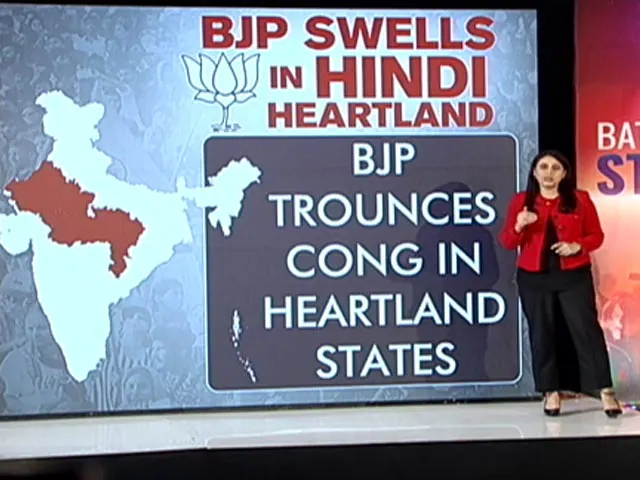
India’s ruling nationalist Bharatiya Janata Party (BJP) won big in the Hindi heartland, wresting Rajasthan and Chhattisgarh from the Congress while comprehensively beating anti-incumbency in Madhya Pradesh. The Congress party failed to retain its bastions in the three states. However, the grand old party achieved significant success in southern India, wresting Telangana from K Chandrashekar Rao’s Bharat Rashtra Samithi. The Northeastern state of Mizoram has elected a regional party, the Mizo National Front, where the ruling BJP came a distant third. The elections results were announced on Sunday, December 3, 2023.

Of 90 assembly constituencies in Chhattisgarh, the BJP bagged 54 while the Congress won 35. In Rajasthan, the BJP got 115 of 199 seats.

The right-wing party was also likely to be re-elected in Madhya Pradesh for a record fifth term by winning 163 of 230 seats.

The Congress comfortably won Telangana state, which was ruled by the Bharat Rashtra Samithi party, formerly known as the Telangana Rashtra Samithi. Of 119 seats in the southern state, the Congress won 64, while the BRS got 39. The BJP won eight seats in the state.

Elections in the five states were held last month and more than 160 million people, or a sixth of India’s electorate, were eligible to vote. Polling in India is generally done in phases owing to the large population. “We always said we will win the heartland states,” BJP President Jagat Prakash Nadda told the media. “The results are the outcome of our finest political strategy and work on the ground.”

Congress president Mallikarjun Kharge said the party should not get “disheartened by this defeat” and should start preparing for the general elections with INDIA parties with “double enthusiasm”.

Modi and leaders of Congress, led by Gandhi, criss-crossed the states, addressing campaign rallies and promising cash payouts, farm loan waivers, subsidies and insurance cover, among other incentives, to woo voters.

The election results indicate the voter mood ahead of the national elections in May in which Modi is eyeing a third consecutive term. At the BJP headquarters in New Delhi on Sunday evening, party members and supporters lined up on the two sides and Modi walked between them, waving. The activists showered him with flower petals, chanting “Long live Mother India” and other slogans.

BJP Wins In 3 Hindi Heartland States in India, Congress Wins In Telangana (NDTV)
Picture: NDTV

BJP’s performance was better than widely expected as opinion and exit polls had suggested a close contest between Modi’s party and Congress. Modi remains widely popular after a decade in power and surveys suggest he will win again next year. However, a 28-party opposition alliance led by the Congress has come together to jointly fight the BJP, posing a renewed challenge.

Modi told jubilant BJP members at the party headquarters the results suggested a third term next year was guaranteed.

“The results in Chhattisgarh, Madhya Pradesh and Rajasthan indicate that the people of India are firmly with politics of good governance and development, which the @BJP4India stands for,” Modi wrote on X, formerly known as Twitter.

BJP had suffered a setback itself when it lost the big southern state of Karnataka to Congress this year, as Rahul Gandhi, Congress Party leader worked hard to revive the party since its drubbing in the 2019 election and went on a 135-day march across the country covering more than 4,000 km (2,500 miles).

Rahul Gandhi has been instrumental in building the united opposition alliance, called the Indian National Developmental Inclusive Alliance or INDIA, after the Karnataka victory and his temporary disqualification from parliament after being convicted in a defamation case. Gandhi posted on X “the battle of ideology will continue.”

Politicians and analysts say state elections do not always influence the outcome of the general elections or accurately indicate national voter mood. Results of the last round of state elections before national elections have been misleading in the past.

The 2024 general election to India’s Parlaiument comes at a time when India is facing multiple challenges, including rising unemployment, attacks by Hindu nationalists against the country’s minorities, and a shrinking space for dissent and free media.

Modi Announces Green Credit Initiative At COP28

Prime Minister Narendra Modi said on December 1, 2023 that India has shown the world the perfect balance of ecology and economy. He made the remarks while delivering an address at the high-level segment of COP28 in Dubai.

“Despite India having 17 percent of the world’s population, our share in global carbon emissions is only less than 4 percent. India is one of the few economies in the world that is on track to meet the NDC targets,” the PM said adding that his country is continuously making progress to achieve the goal of reaching net zero by 2070.

He highlighted that targets related to emissions intensity were achieved 11 years ago while non-fossil fuel targets were achieved nine years ahead of schedule. Additionally, the PM underscored that efforts are being made to reduce emission intensity to 45 percent by 2030 and increase the share of non-fossil fuel to 50 percent.

“India has consistently given importance to the issue of climate in its G-20 Presidency with the spirit of One Earth, One Family, One Future,” Modi said enumerating the various green initiatives launched by India, including the Global Biofuels Alliance and Mission LiFE – Lifestyle for Environment.

Modi Announces Green Credit Initiative At COP28 (FE)
Picture: FE

Urging participation from the COP states, Modi announced the launch of the Green Credits initiative, a campaign that aims to facilitate mass participation as an effective response to the challenge of climate change. The program’s long-term goal is to restore degraded and abandoned land and river catchment areas through the issuance of green credits to plant trees there.

At a joint session, the United Arab Emirates and India officially launched the Green Credits initiative and unveiled a website that would compile policies and best practices that encourage eco-friendly behaviors.

The Prime Minister concluded his address by expressing India’s commitment to the UN Framework for Climate Change Process and proposed to host the COP-33 summit in India in 2028. In the hopes of a successful COP28, he advocated for an inclusive and equitable energy transition, as well as the continuous development of innovative technologies and their transfer to other countries, to propel collective progress toward a secure future.

Asserting that the world does not have much time to correct the mistakes of the last century, PM Narendra Modi on Friday announced a ‘Green Credit Initiative’ focused on creating carbon sinks through people’s participation and also proposed to host the UN climate conference in 2028, or COP33, in India.

Carbon sinks are essentially anything that absorbs more carbon from the atmosphere than it releases.

What is it?

Addressing the high-level segment for heads of states and governments during the UN climate conference (COP28) in Dubai, Modi called for a pro-planet, proactive and positive initiative.

He further said the Green Credits Initiative goes beyond the commercial mindset associated with carbon credits, which are essentially permits that allow entities to emit certain amount of carbon dioxide or other greenhouse gases.

The Green Credit Initiative is similar to the Green Credit Programme, notified domestically in October. It is an innovative, market-based mechanism designed to reward voluntary environmental actions in different sectors by individuals, communities and the private sector.

‘India has walked the talk’

Asserting that India has presented a great example to the world of striking balance between development and environment conservation, PM Modi said India is among the only few countries in the world on track to achieve the national action plans to restrict global warming to 1.5C, the guardrail to avoid worsening of the impact of the changing climate.

Modi called for maintaining a balance between mitigation and adaptation and said that energy transition across the world must be “just and inclusive.” He also urged rich countries to transfer technologies to help developing nations combat climate change.

Meetings that matter

On the sidelines of the COP28 summit, Modi met with the King of Bahrain, Hamad bin Isa Al Khalifa, and said that India deeply values its strong ties with the Gulf nation.

Modi also met Ethiopian PM Abiy Ahmed Ali, UAE Vice President Sheikh Mohammed bin Rashid Al Maktoum and Israeli President Isaac Herzog.

While Israel has a war going on with Hamas, the other countries (Bahrain, Ethiopia and UAE) have deep economic ties with India.

Pope Francis Urges World Religions To Unite Against Environmental Devastation

(Reuters) – Pope Francis said on Sunday that it was essential for all world religions to unite in opposing the “rapacious” devastation of the environment.

The 86-year-old pope had planned to preside at the opening of the Faith Pavilion at the C0P28 climate conference in Dubai but a lung inflammation forced him to remain in the Vatican.

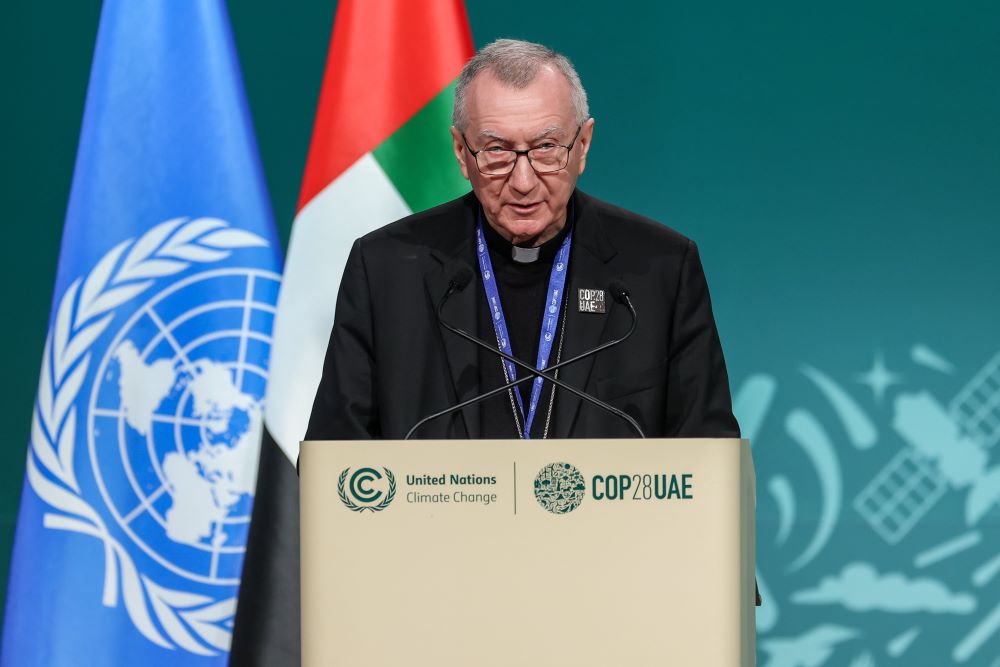
Secretary of State Cardinal Pietro Parolin read the pope’s message in his place, as he did with Francis’ main address to the conference on Saturday.

“Religions, as voices of conscience for humanity, remind us that we are finite creatures, possessed of a need for the infinite,” the pope said, noting that a Faith Pavilion was a first at a COP conference.

“For we are indeed mortal, we have our limits, and protecting life also entails opposing the rapacious illusion of omnipotence that is devastating our planet,” he said.

Pope Francis Urges World Religions To Unite Against Environmental Devastation (NCR)
Picture: NCR

Religions, he said, “need, urgently, to act for the sake of the environment”, educate their members to “sober and fraternal lifestyles” instead of wasteful ones and work for a return to the individual contemplation of nature’s grandeur.

“This is an essential obligation for religions, which are called to teach contemplation, since creation is not only an ecosystem to preserve, but also a gift to embrace,” Francis said.

“A world poor in contemplation will be a world polluted in soul, a world that will continue to discard people and produce waste,” he said.

In his main address to the conference on Saturday, Francis repeated his call for the elimination of fossil fuels.

Hundreds of Catholic institutions around the globe have announced plans to divest from them.

But a Reuters investigation found that in the United States, the world’s top oil and gas producer and where about a quarter of the population is Catholic, not a single diocese has announced it has let go of its fossil fuel assets.

In his address to faith leaders, Francis also said peace and stewardship of the planet were interdependent.

“Before our very eyes, we can see how wars and conflicts are harming the environment and dividing nations, hindering a common commitment to addressing shared problems like the protection of the planet,” he said

(Reporting by Philip Pullella; Editing by Bernadette Baum)

Youth Heartbreak: Gujarat Launches Massive CPR Training Initiative as 1,052 Young Lives Lost to Heart Attacks in Six Months

In the past half-year, Gujarat has witnessed a tragic toll of 1,052 lives claimed by heart attacks, a revelation shared by State Education Minister Kuber Dindor on Friday. Shockingly, 80% of the victims fall within the 11-25 age bracket, a demographic that typically evades the specter of heart-related issues. Dindor, during a media address in Gandhinagar, underscored the urgency of the situation, emphasizing that these young individuals, despite lacking obesity concerns, succumbed to cardiac events. Disturbingly, the 108 ambulance service fields an alarming average of 173 cardiac emergency calls daily.

Expressing concern over the palpable fear gripping youngsters due to the prevalence of heart attacks in their peer group, Minister Dindor urged teachers to partake in a vital initiative. This initiative, spearheaded by the State Education Department, seeks to equip nearly two lakh school and college educators with the skills needed for cardiopulmonary resuscitation (CPR), a critical intervention that can be life-saving during such medical emergencies.

Dindor lamented the unfortunate incidents where individuals met their demise due to heart attacks while engaging in seemingly innocuous activities like playing cricket or participating in garba, a traditional dance form synonymous with Navratri festivities. In response to this distressing trend, he called upon educators to actively engage in CPR training camps, highlighting the potential for them to become lifesavers.

To address this pressing need, the Education Department’s initiative entails organizing CPR training camps across 37 medical colleges between December 3 and 17. The ambitious goal is to train nearly two lakh school and college teachers during this period. A cadre of 2,500 medical experts and doctors will be on hand to impart essential knowledge and skills at these training camps. Participants in the program will also receive certificates acknowledging their completion of the training.

Minister Dindor emphasized the precedence of such training, citing instances where Bharatiya Janata Party workers and police personnel in the state had previously undergone similar programs. The scale of this initiative reflects a proactive response to the alarming surge in heart attacks among the youth, underscoring the gravity of the situation and the need for a collective effort to mitigate its impact.

Justice Sandra Day O’Connor: Pioneering Legacy, Pragmatic Jurist, and Trailblazer for Equality

Justice Sandra Day O’Connor, the first female justice on the US Supreme Court, faced a mix of admiration and skepticism when her successor was nominated, with her historic appointment in 1981 carrying the weight of expectations throughout her 26-year term. Despite being a self-professed “cowgirl from the Arizona desert,” O’Connor, a conservative justice, had to continually prove her worth against gender biases.

Quoting O’Connor’s sentiments, “Good in every way, except he’s not a woman,” encapsulated her ambivalence toward her successor. This echoed her consistent effort to demonstrate that she was not just as good as men but also an advocate for women’s rights, a balancing act she accomplished with political acumen gained as a Republican activist and state senator.

While ideologically a moderate, O’Connor often held the decisive swing vote in a sharply divided Supreme Court. Her consequential votes spanned contentious issues such as abortion rights and the disputed 2000 presidential election. As a trailblazer for gender equality, O’Connor paved the way for the second female justice, Ruth Bader Ginsburg, earning the title of the “queen of the court.”

O’Connor’s upbringing on Lazy B, a cattle ranch in the Arizona desert, shaped her independent and hard-working character. Despite facing gender bias in her legal career, she navigated through challenges, even setting up her own legal practice when law firms wouldn’t hire women. A brief hiatus to focus on family was followed by a remarkable return to public life, with O’Connor breaking gender barriers in Arizona’s Senate.

Her journey to the Supreme Court aligned with President Ronald Reagan’s commitment to appoint the first woman to the bench. O’Connor’s nomination was supported by Justice William Rehnquist, her old flame, and she secured an emphatic 99-0 confirmation vote. She became a symbol of progress for women but was also known for her pragmatic approach on legal matters.

O’Connor’s tenure saw her as a core member of the conservative bloc, but she later broke ranks on matters of equality and civil rights. Notably, in the 1992 case Planned Parenthood v Casey, she joined a majority in affirming Roe v Wade, a decision that conflicted with her personal views on abortion. However, her legacy was tarnished by the controversial Bush v Gore decision in 2000, where she voted to halt legal challenges, putting George W. Bush in the White House.

Upon her retirement in 2006, O’Connor dedicated herself to a second career focused on civic education. She expressed regret for leaving the court, but her efforts, including the iCivics initiative, left a lasting impact on educating young Americans. In 2018, O’Connor revealed her diagnosis of the beginning stages of dementia, emphasizing her gratitude for a fulfilling life.

Justice Sandra Day O’Connor’s legacy extends beyond her role as the first woman on the Supreme Court. Her impact on gender equality, constitutional law, and civic education reflects a genuine desire to be a good person and do good things. As she expressed at her confirmation hearings, she hoped her tombstone would read, “Here lies a good judge.”

Antarctic Ice Shelves Release Trillions of Tons: Widespread Melting Raises Alarming Concerns for Global Ocean Circulation

Antarctica has witnessed the release of around 66.9 trillion tons of freshwater into the oceans over the last 25 years, according to scientists from the University of Leeds. The research indicates that nearly 67 trillion tons of ice have melted into the ocean during this period, with 59 trillion tons added back to the ice shelves. Despite this, there is a net loss of 7.5 trillion tons. The western side of Antarctica’s ice shelves, in particular, has been heavily impacted, with human-induced global warming identified as the likely culprit.

In the analysis of 162 ice shelves surrounding Antarctica, 71 have seen a reduction in volume from 1997 to 2021. The study highlights that most ice shelves on the western side have experienced loss, while those on the eastern side have generally remained unchanged or even expanded in volume. The research involved examining over 100,000 satellite radar images to comprehensively evaluate the “health” of the ice shelves.

The potential repercussions of ice shelf loss or reduction are substantial for Antarctica’s ice system and global ocean circulation. This could impact the vital “conveyor belt” responsible for transporting nutrients, heat, and carbon throughout the polar ecosystem. Dr. Benjamin Davison, the lead researcher from the University of Leeds, explains the varying conditions around Antarctica: “The western half is exposed to warm water, which can rapidly erode the ice shelves from below, whereas much of East Antarctica is currently protected from nearby warm water by a band of cold water at the coast.”

The study’s findings challenge expectations, with almost half of the ice shelves shrinking without signs of recovery. Dr. Davison notes the impact of ocean temperature and currents, emphasizing that the susceptibility of the western side to warm waters beneath the ice shelves contributes to their erosion.

The researchers attribute these changes to global warming, arguing that if natural climate fluctuations were responsible, there would have been indications of ice regrowth, especially on the western ice shelves.

Ice shelves, acting as extensions of the continental ice sheet, float on the surrounding seas, serving as significant barriers that regulate the pace of glacier ice flowing into the oceans. As these barriers diminish or weaken, the acceleration of glacial ice loss occurs.

Notable ice losses were observed on the Getz Ice Shelf, with a total of 1.9 trillion tons of ice lost during the study period. Calving, where large ice portions detach and drift into the sea, accounted for only five percent of this loss, while the remainder was attributed to base melting. The Pine Island Ice Shelf experienced a loss of 1.3 trillion tons, with approximately 450 billion tons due to calving and the rest from base melting. Conversely, the Amery Ice Shelf on Antarctica’s eastern side gained 1.2 trillion tons, attributed to its colder surrounding waters.

This influx of freshwater can alter the density of salty ocean water, potentially disrupting the global ocean conveyor belt—an essential component for global ocean circulation. A separate study in the journal Nature Climate Change suggests that this disruption may already be underway.

Professor Anna Hogg, a co-author of the study, comments on the consistent losses observed through melting and calving, stating, “With 48 shelves losing over 30% of their original mass in just a quarter-century, it’s clear evidence of Antarctica’s response to a warming climate.” The ongoing research underscores the urgency of addressing climate change to mitigate the far-reaching impacts on Antarctica’s ice shelves and the global climate system.

UN Climate Summit in Dubai: Analysis Warns Past Host Cities Face Inundation as Planet Approaches 3-Degree Warming

As leaders and delegates converge in Dubai for the annual UN climate summit, an analysis by Climate Central, a nonprofit climate research group, reveals the vulnerability of host cities from past summits to rising ocean waters. The escalating levels of planet-warming pollution have led to severe droughts, deadly floods, and the rapid melting of glaciers and ice worldwide. The analysis employs peer-reviewed sea level rise projections and local elevation data to visually depict a stark contrast between the present and a potential high-tide future if global temperatures rise to 3 degrees Celsius above pre-industrial levels.

“Decisions made at COP28 will shape the long-term future of Earth’s coast cities, including Dubai,” emphasizes Benjamin Strauss, Chief Scientist, and CEO of Climate Central. This urgency stems from the recent UN report indicating that the world is on track to warm up to 2.9 degrees. Climate scientists underscore the critical threshold of 1.5 degrees beyond which both humans and ecosystems will face challenges in adaptation.

Although the Paris Agreement, established in 2015 at COP21, aimed to limit global warming to below 2 degrees Celsius, with a preferable target of 1.5 degrees, the current trajectory risks making coastal communities, low-lying nations, and small islands uninhabitable. Strauss highlights the dependence of these places on swift and substantial carbon pollution reductions to cap global warming at 1.5 degrees Celsius.

A report from the World Meteorological Organization predicts 2023 to be the hottest year on record. Monthly temperatures from June to October have consistently set new global records, accompanied by unprecedented ocean temperatures. This global warming contributes to accelerated melting of glaciers and ice sheets, even in Antarctica, with potentially devastating implications for global sea level rise.

Climate Central estimates that approximately 385 million people reside in areas prone to eventual inundation by ocean water at high tide, even with substantial reductions in planet-warming pollution. Restricting warming to 1.5 degrees would still affect land inhabited by 510 million people today. However, if global temperatures breach 3 degrees, more than 800 million people could find themselves living in areas threatened by high-tide encroachment, as per a recent study.

While these scenarios may unfold over centuries, scientists emphasize that every fraction of a degree of warming exacerbates the consequences of climate change. The upcoming COP28 discussions will center on strategies to curtail fossil fuel use to avert the escalating risk of an underwater future. This year’s climate talks introduce a new scorecard, revealing countries’ progress on their climate targets and underscoring the urgency of addressing climate pollution, as the window for action is “rapidly narrowing.”

House Republicans Rally for Impeachment Inquiry into President Biden, Asserting Sufficient Votes Amidst White House Opposition

House Speaker Mike Johnson expressed confidence on Saturday that Republicans possess adequate votes to initiate a formal impeachment inquiry into President Joe Biden. In an interview with Fox News, Johnson stated, “I believe we will. I suspect no Democrats will assist in this effort, but they should.”

He emphasized the GOP’s obligation to proceed with the inquiry, asserting, “we cannot stop the process.” Johnson, joined by House GOP conference chair Elise Stefanik, contended that the inquiry wouldn’t be wielded as a partisan political tool, drawing a distinction from past instances.

“Elise and I both served on the impeachment defense team of Donald Trump twice, when the Democrats used it for brazen partisan political purposes. We decried that use of it. This is very different,” Johnson remarked.

He pointed out impediments faced by the Republicans, asserting, “Now we’re being stalled by the White House because they’re preventing at least two to three DOJ witnesses from coming forward” and withholding evidence from the National Archives. Johnson proposed that a formal impeachment inquiry vote would propel the process forward, deeming it a necessary step.

In response, a spokesman for the White House counsel’s office, Ian Sams, criticized the move, stating, “This is a baseless, politically-motivated attempt to smear President Biden with lies, and it reflects how this chaotic House GOP is focused on the wrong priorities, when they should be working on real issues Americans actually care about like the President is.”

As of now, House Republicans have been striving to formalize their impeachment inquiry into Biden but have encountered challenges in securing sufficient votes. Former House Speaker Kevin McCarthy had urged his committees in September to launch a formal impeachment inquiry into Biden, facing mounting pressure from the right flank. However, the conference remains divided over the existence of evidence warranting the president’s impeachment.

Addressing the issue of Hunter Biden’s lawyers seeking an open hearing instead of a deposition, Stefanik deemed the request “unacceptable” and emphasized, “the only correct response to a subpoena is a deposition.” She reasoned that an open hearing might devolve into a mere public spectacle, advocating for a legal and factual approach through a deposition.

“It’s the precedent,” Johnson added. “Every investigation of Congress in the modern era, the deposition has come first, and the public testimony follows. Why would we break that precedent now?”

This paraphrased rendition maintains the key elements and quotes from the original article while presenting the information in a slightly rephrased manner. The focus remains on the statements of House Speaker Mike Johnson, the White House’s response, and the broader context of the Republicans’ push for a formal impeachment inquiry into President Joe Biden.

Indian Boxers Shine at IBA Junior World Boxing Championships 2023

In a stellar display of skill and determination, reigning Asian Junior champions Nisha (52kg) and Akansha (70kg) secured medals, leading a formidable contingent of Indian pugilists who confirmed their places on the podium during the seventh day of the IBA Junior World Boxing Championships 2023 in Yerevan, Armenia.

The Indian girls showcased their dominance as all five boxers in action emerged victorious, advancing to the semifinals. Akansha (70kg) started the day aggressively, but her Uzbekistan counterpart, Kurbonboeva Rayhona, posed a challenge with a counterattack. Despite the setback, Akansha claimed victory with a 4-1 split decision. Nisha (52kg) exhibited her strength against Grace Conway of Ireland, securing a unanimous 5-0 decision. Shrushti displayed prowess in the 63kg category, winning comfortably as the referee stopped the contest in round two against Mariia Kazaova of Russia. Kritika (75kg) mirrored the dominance, preventing Melendez Sanchez of Mexico from settling down and winning the bout by referee stopping the contest in round one. Vini (57kg) advanced to the semis with a walkover as her opponent Nunez Naiomi of Trinidad and Tobago conceded.

While the girls excelled, the boys had a mixed day. Three out of the five competing boxers progressed to the final four. Hemant Sangwan (80+kg) and Sikandar (48kg) exhibited exceptional performances, winning with identical 5-0 decisions against Bachevvski Roselin of Bulgaria and Urmanov Ramzidin of Kyrgyzstan, respectively. In the 75kg quarterfinals, Sahil faced a tough challenge from Ruslan Esanov of Uzbekistan but secured a 3-2 split decision victory, showcasing impressive quick movements and decision-making. However, M. Kabiraj Singh (63kg) and Rahul Kundu (70kg) faced defeats in the quarterfinals.

With eight more medals added, India’s total medal count now stands at an impressive 17, with Megha (80kg) having already confirmed a medal after receiving a bye in the initial two rounds. A total of 17 Indian boxers, including 12 girls, are set to compete in the semifinals, reflecting the nation’s prowess on the international boxing stage.

DeSantis vs. Newsom: Fiery Clash in Fox News Debate Underscores Contrasts in Leadership and Ideology

In a Fox News debate, Florida Gov. Ron DeSantis (R) and California Gov. Gavin Newsom (D) engaged in a heated exchange over their records and policies. The 90-minute debate, titled “The Great Red vs. Blue State Debate” and moderated by Sean Hannity, delved into key issues such as the COVID-19 pandemic, crime, and abortion. Personal attacks, with both governors labeling each other as bullies, added intensity to the discussion. DeSantis, initially a threat to Donald Trump in the presidential race, now lags behind, while Newsom, despite denying interest in challenging President Biden, gains attention as a potential contender.

Five Takeaways from the Debate:

1.Newsom’s Resilience: Despite a challenging media environment, Newsom maintained composure, deflecting DeSantis’s attacks and launching counterarguments. Notably, he defended California’s COVID-19 response, citing differences in approach and challenging DeSantis’s claims about Florida’s measures.

Newsom responded to DeSantis: “Let’s talk about your record on COVID… Donald Trump laid you out on this.”

2.DeSantis’s Performance:As a GOP presidential primary candidate, DeSantis held his ground, showcasing research and using visual aids, including a map of San Francisco’s issues. Despite impactful moments, the debate felt somewhat biased, with Hannity’s questions often portraying California negatively.

DeSantis labeled Newsom a “liberal bully” and mocked his “shadow campaign” for the 2024 Democratic nomination.

3.Raucous Atmosphere: Hannity’s intent to let the debate flow led to a lively exchange, with frequent interruptions and bickering between DeSantis and Newsom. The lack of an in-person audience allowed for a more direct confrontation without the need for applause pauses.

Hannity remarked on the chaos: “I’m not a potted plant,” expressing frustration during the governors’ back-and-forth.

4.Biden as a Focal Point: DeSantis positioned President Biden as a central theme, connecting Newsom to the Biden-Harris administration. Newsom defended the Democratic agenda, emphasizing the contrast between parties.                                                                                                                                                                                                    DeSantis portrayed California as the epitome of the “Biden-Harris agenda on steroids,” predicting disaster for the nation.

5. Limited Impact on Both: Despite the fiery exchanges, the debate is unlikely to significantly alter the political landscape for either governor. DeSantis continues to struggle against Trump in the GOP primary, while Newsom’s boosted national profile may not sway conservative opinions in the hyper-partisan environment.

The debate, though intense, is unlikely to alter the trajectory for either candidate significantly.

The Fox News debate between DeSantis and Newsom provided a platform for a fierce exchange, showcasing their contrasting approaches and political ideologies. While both governors received praise from their respective sides, the event’s broader impact on their political trajectories remains limited.

Closing the Gap: Navigating the Tension Between Lifespan and Healthspan in Pursuit of a Healthier Future

In 2014, Dr. Ezekiel Emanuel, a bioethicist, gained notoriety for his essay titled “Why I Hope to Die at 75,” asserting that pursuing maximum human lifespan isn’t worthwhile if it results in additional decades marred by disease and poor health. Almost a decade later, Emanuel maintains his stance, expressing his intent to forego most life-extending medical care at the age of 75, emphasizing the quality of life over mere longevity. The disparity between the average life expectancy in the U.S. (77.5 years) and the years lived in full health (66.1 years) remains, highlighting the distinction between “lifespan” and “healthspan.”

Tim Peterson, CEO of Healthspan Technologies, underscores the importance of focusing on “healthspan,” stating that living to 100 is commendable but less so if the last decades are plagued by poor health. The COVID-19 pandemic and increased rates of suicide and drug overdoses led to a temporary decline in U.S. life expectancy, which rebounded in 2022. Despite this, the substantial increase in life expectancy over the past century, from 59.6 years in 1922 to 77.5 years in 2022, is not mirrored in healthspan improvements.

Persistent challenges in healthspan result from high rates of age-related chronic conditions such as cancer, dementia, and heart disease. Lifestyle factors, including insufficient sleep, exercise, and poor nutrition, contribute to diminished well-being. This issue isn’t exclusive to the U.S., as global life expectancy reaches 73.4 years, while healthy lifespan lags behind at 63.7 years, as per the World Health Organization’s 2019 estimates.

Dr. Andre Terzic, a regenerative medicine specialist at the Mayo Clinic, acknowledges the prolonged life but emphasizes the potential trade-off—extended life without necessarily enhanced health. Bridging the gap between lifespan and healthspan becomes a lofty goal for researchers, policymakers, and entrepreneurs. The United Nations designates 2021-2030 as “the decade of healthy aging,” with the American Heart Association striving to increase U.S. healthy life expectancy by at least two years during the same period.

Numerous startups offer consumer-focused solutions, including DNA tests providing personalized recommendations for nutrition and exercise. Some caution against these approaches, stating they might be ahead of the scientific understanding. Concurrently, companies are developing therapies to counter the effects of aging, aiming to extend healthspan.

In a 2021 paper, Dr. Terzic and colleagues propose strategies for closing the healthspan gap, from global tobacco cessation to drugs eliminating damaged cells accumulated during aging. Other avenues involve gene therapy and restoring protective caps on DNA strands. Encouraging developments, such as cancer immunotherapy and genetic testing, suggest progress in the medical field. New diabetes drugs like Ozempic and Mounjaro, along with potential longevity-enhancing effects of metformin and rapamycin, provide additional optimism, though some individuals adopt these drugs off-label ahead of conclusive scientific evidence.

The U.S. Food and Drug Administration (FDA) recently acknowledged a drug potentially extending canine lifespans, signaling a willingness to consider drugs targeting aging itself rather than accompanying diseases. This development holds significance for humans, indicating a shift in approach.

Emanuel aligns with the goal of expanding healthspan but proposes a different focus. Instead of prioritizing new aging-reversal drugs, he advocates addressing prevalent health issues like hypertension, diabetes, and maternal and infant mortality, particularly in underserved populations. The 2022 data reveals lower life expectancies for Black and American Indian/Alaska Native individuals, underscoring health disparities.

Emanuel emphasizes the role of behaviors in lifelong health, citing the importance of a nutritious diet, sufficient sleep, exercise, and social support. He contends that promoting these habits universally and maximizing existing medical treatments takes precedence over the “pipe dream” of a future where aging is optional.

Cease-Fire’s Fragile End: Resumed Hostilities Raise Concerns for Captives as Israel and Hamas Grapple with Ongoing Hostage Crisis

The recently concluded week-long cease-fire, aimed at exchanging hostages held by Hamas for Palestinian prisoners in Israeli custody, has given way to renewed hostilities between Israel and Hamas. Amidst efforts by mediators to broker another swap, concerns arise about the remaining captives in the besieged enclave.

In the deadly October 7 attack by Hamas and other militants on southern Israel, approximately 247 hostages were seized, resulting in over 1,200 casualties. In retaliation, Israel has pounded the Gaza Strip, claiming the lives of at least 13,300 individuals, with two-thirds being women and children, as reported by health authorities in the Hamas-ruled territory.

Examining the current status of hostages, Israel stated on Friday that 136 individuals remain captive in Gaza, comprising 119 men and 17 women and children. Notably, around 10 hostages are aged 75 and older. Among the captives, 11 are foreign nationals, including eight from Thailand, one each from Nepal and Tanzania, and one with French-Mexican citizenship.

Highlighting the plight of those still in captivity, families anxiously await the return of their loved ones, expressing concerns about the challenging conditions and inadequate access to food, water, and medicine. The uncertainty surrounding the fate of hostages, such as 10-month-old Kfir Bibas and his family, adds to the anguish of their relatives.

Despite the cease-fire, reports indicate that four hostages, including the oldest captive, have died in captivity. The military confirmed the deaths of Maya Goren (56), Arye Zalmanovich (86), Ronan Engel (54), and Eliyahu Margalit (75). Kibbutz Nir Oz, home to these individuals, suffered significant losses during the attack, with a quarter of its population killed or kidnapped.

Little information has been provided about the circumstances of the hostages’ deaths, but the military claims to have gained valuable insights from returned hostages. The grieving families mourn the loss of their loved ones, with the death of Arye Zalmanovich, a founding member of Kibbutz Nir Oz, and Maya Goren, a mother of four and kindergarten teacher, being particularly poignant.

Despite the grim news, there were moments of relief during the cease-fire, as 110 hostages held by Hamas were released. These included 86 Israeli citizens and 24 foreign nationals, primarily Thais. While the returnees generally appeared in stable health, some experienced weight loss, and one 84-year-old hostage returned in critical condition due to inadequate medical care during captivity.

Families celebrated the return of their loved ones, yet doctors emphasized the psychological toll of captivity, cautioning that recovery would be a lengthy process. The government, meanwhile, urged those released to refrain from disclosing details of their time as prisoners to ensure the safety of those still held captive. The lack of in-depth narratives about the hostages’ ordeals reflects this cautious approach.

WhatsApp Introduces ‘Secret Code’ Feature to Enhance User Privacy in Chats

WhatsApp has introduced an innovative ‘Secret Code’ feature geared towards enhancing user privacy in sensitive conversations. This complements their existing Chat Lock tool, enabling users to password-protect specific chats.

The Secret Code feature allows users to establish a distinct password, separate from their phone’s lock code, to access locked chats. This introduces an additional layer of security in the event that someone gains unauthorized access to the user’s phone. Moreover, the Locked Chats folder now has the option to be completely concealed from the main chat list. The exclusive means of accessing locked chats is by entering the secret code into WhatsApp’s search bar.

Mark Zuckerberg, the CEO of Meta, expressed, “Rolling out secret code to Chat Lock on WhatsApp so you can protect your chats with a unique password. Now you can set your locked chats to only appear when you type the secret code in the search bar, so no one can unintentionally discover your most private conversations.”

In addition to bolstering security, the new feature streamlines the process of locking new chats. Users can now effortlessly lock any chat by long-pressing on it, eliminating the need to navigate through settings.

The global rollout of this feature commences this week, with the aim of reaching all WhatsApp users in the coming months. This development is part of a series of privacy-centric updates from the Meta-owned app, showcasing its commitment to reassuring users. In a landscape where chat privacy holds significant importance, the introduction of innovative tools like the Secret Code could potentially set WhatsApp apart from its competitors.

Novavax’s Enhanced COVID-19 Vaccine Gains WHO Emergency-Use Approval for Ages 12 and Up, Marking a Milestone in Global Immunization Efforts

Novavax has secured emergency-use authorization from the World Health Organization (WHO) for its updated COVID-19 vaccine, extending its eligibility to individuals aged 12 and older. This approval, granted on Tuesday, follows the previous authorization the vaccine received in the United States just last month. The enhanced Novavax shot is designed to combat a variant stemming from the XBB lineage of the coronavirus, which held global prominence earlier this year.

The World Health Organization’s emergency use listing serves the crucial purpose of expediting regulatory approvals for the importation and administration of these vaccines by member states. This streamlined process is fundamental in ensuring a swift and efficient response to the ongoing challenges posed by the COVID-19 pandemic, allowing for more expedited deployment of the Novavax vaccine.

Novavax faced setbacks during the initial stages of the pandemic, missing out on the vaccine success experienced by mRNA counterparts. Manufacturing issues hampered the company’s ability to file for regulatory approval during the peak of the pandemic. As a result, its original COVID-19 vaccine obtained authorization in the United States in July 2022, a considerable delay compared to the earlier approvals granted to Pfizer and Moderna vaccines.

In contrast to the mRNA-based vaccines developed by Pfizer and Moderna, Novavax’s updated shot employs a more conventional protein-based technology. This marks a departure from the innovative mRNA approach that has characterized many of the widely used COVID-19 vaccines.

The market responded positively to Novavax’s recent developments, with shares of the Maryland-based vaccine maker experiencing a 1.8% rise to $5.6 in premarket trading. This increase reflects the optimism surrounding the expanded authorization and the potential impact of Novavax’s vaccine on a broader age range.

In reflecting on the journey of Novavax, the challenges it faced in manufacturing, and the subsequent delay in regulatory approval, the company has now taken a significant step forward with the WHO’s emergency-use authorization. This approval not only validates the safety and efficacy of the updated Novavax vaccine but also facilitates a more efficient global response to the ongoing COVID-19 crisis.

As we delve into the details of Novavax’s updated vaccine, it is crucial to highlight the technology behind it. While Pfizer and Moderna relied on mRNA-based approaches, Novavax has opted for a more traditional protein-based technology. This choice comes with its own set of advantages and considerations, contributing to the diversity of strategies employed in the fight against COVID-19.

The importance of WHO’s emergency use listing cannot be overstated, particularly in the context of a global health crisis. By streamlining the regulatory processes for member states, the WHO enables a more rapid deployment of vaccines, thereby enhancing the collective effort to curb the spread of the virus. Novavax’s inclusion in this list underscores its role as a valuable tool in the global vaccination strategy.

Novavax’s updated vaccine receiving emergency-use authorization from the World Health Organization signifies a pivotal moment in the ongoing battle against COVID-19. The extended eligibility to individuals aged 12 and older expands the reach of this vaccine, while the more traditional protein-based technology adds a distinctive element to the array of vaccination strategies. As the world grapples with the challenges of the pandemic, such developments underscore the resilience of scientific innovation and global collaboration in the pursuit of public health

Global Electoral Landscape 2024: From Biden-Trump Rematch to Putin’s Prolonged Reign and Modi’s Bid for a Third Term, Key Elections Define a Pivotal Year

In anticipation of the 2024 elections, the global political landscape is poised for significant shifts. As we approach November 5, millions of Americans will cast their votes, potentially deciding whether incumbent Joe Biden will secure another term at the age of 86. Despite concerns about Biden’s age, a majority of voters view him as the favored candidate, setting the stage for a potential rematch with former President Donald Trump. However, echoes of disinformation from the previous contentious election, marked by the storming of the US Capitol, are likely to linger.

“Disinformation looks set to be a feature of the campaign,” reflecting the challenges of the past, where misinformation played a role in the polarized political climate. Trump, despite facing multiple criminal trials, stands as the standout favorite for the Republican party nomination.

Across the globe, another enduring political figure, Vladimir Putin, has been at Russia’s helm for 23 years, making him one of the longest-serving leaders. The constitutional amendment in 2020 allows him to extend his rule until 2036, potentially surpassing even Joseph Stalin’s reign. With the war in Ukraine quelling dissent and imprisoning opponents, Putin’s path to another six years seems unhindered, particularly with key challengers like Alexei Navalny and Igor Girkin detained.

Moving to India, where nearly a billion voters are gearing up for the April-May elections, Prime Minister Narendra Modi and his nationalist BJP party aim for a third term. Modi’s political strategy, criticized for stoking tensions with the Muslim minority, has garnered substantial support from the majority Hindu population. Despite concerns about civil liberties, Modi is the clear favorite, credited with elevating India’s global standing, notably achieving milestones in space exploration.

In June, the European Union will witness its largest transnational election, involving over 400 million eligible voters across 27 countries. This election will be a pivotal moment for right-wing populists, testing the momentum gained from recent successes in Dutch and Italian elections. The outcome will influence decisions on issues ranging from mobile phone roaming charges to online data privacy, reflecting the broad impact of the EU Parliament’s decisions.

Meanwhile, in Mexico, the June elections hold the promise of historic change. Two women, former Mexico City mayor Claudia Sheinbaum and businesswoman Xochitl Galvez, are vying to become the first female president in a country with a history of machismo. Sheinbaum, representing the Morena party, leads early polls, while Galvez, part of an opposition coalition, brings a diverse perspective to the race. Samuel Garcia, a young governor, adds another dimension to the electoral landscape.

As the world watches these elections unfold, the political dynamics are undoubtedly complex, with implications reaching far beyond national borders. The challenges of disinformation, power consolidation, and the push for historic milestones underscore the significance of these electoral events on the global stage.

Americans for Prosperity Action Endorses Nikki Haley as Republican Alternative to Trump in 2024, Shifting Dynamics in GOP Primary Race

Americans for Prosperity Action, a prominent advocacy organization supported by billionaire Charles Koch and his coalition of wealthy conservatives, has officially thrown its weight behind Nikki Haley as the preferred Republican alternative to Donald Trump in the upcoming 2024 primary, set to kick off in less than 50 days with the Iowa caucus.

According to a memo circulated by Emily Seidel, the CEO of Americans for Prosperity, Haley, a former U.N. ambassador and ex-governor of South Carolina, is seen as offering “America the opportunity to turn the page on the current political era.” Seidel emphasized Haley’s capability to lead a policy agenda that addresses the nation’s major challenges, expressing confidence that the organization’s grassroots and data capabilities uniquely position them to support Haley effectively.

Michael Palmer, a senior adviser to AFP Action, noted that Haley’s policies closely align with the group’s free market ideology, acknowledging that while disagreements on specific issues exist, Haley represents the best chance to enhance the lives of all Americans.

In response to the endorsement, Haley expressed her gratitude, stating, “AFP Action’s members know that there is too much at stake in this election to sit on the sidelines,” underscoring the importance of saving the country and expressing appreciation for AFP Action’s support.

Notably, the Koch-backed group refrained from involvement in the 2016 and 2020 presidential cycles but is now poised to channel significant resources into boosting Haley’s campaign. Although the exact amount of spending remains undisclosed, AFP Action, having raised over $70 million, including substantial contributions from Charles Koch and his nonprofit groups, aims to make a substantial impact.

The organization initially signaled opposition to Trump in February, citing concerns about his ability to defeat President Joe Biden. However, despite these reservations, Trump has strengthened his position within the Republican base, leading his closest primary rival, Florida Gov. Ron DeSantis, by nearly 50 points in national polls. In contrast, Haley trails DeSantis in the national average.

The dynamics shift in early-voting states, where Trump faces a relatively weaker position. DeSantis, Haley, and former New Jersey Gov. Chris Christie are banking on potential upsets in Iowa, New Hampshire, or South Carolina to position themselves as viable alternatives, although their campaigns have yet to significantly erode Trump’s standing.

AFP Action, optimistic about its potential impact, revealed internal memos suggesting that a substantial portion of GOP voters in Iowa and New Hampshire are undecided or believe the primary campaign has just begun. Furthermore, the organization believes that a significant majority of Republicans are open to a Trump alternative if they perceive a better chance of victory.

Following the Tuesday endorsement, AFP Action plans to transition from identifying wavering Trump voters to persuading against him. Their strategy involves concentrated efforts on behalf of their chosen candidate, accompanied by a new ad spot released alongside the endorsement. Large-scale events and efforts to drive turnout are also in the works.

In response to the endorsement, DeSantis’ campaign sought to downplay its significance, labeling Haley as a “moderate” without a viable path to defeating the former president. The Trump campaign, in its statement, characterized AFP Action as part of an “America Last movement” but remained resolute that Washington’s “swamp creatures” would not impede Trump’s bid for the Republican nomination.

The endorsement of Haley introduces a potentially pivotal development in the 2024 race. While no candidate with leads as substantial as Trump’s in the primary has failed to secure their party’s nomination, Trump’s campaign faces unprecedented legal challenges, adding a layer of complexity with court appearances and trial dates.

Seidel, CEO of Americans for Prosperity, highlighted that early in the election cycle, 70% of Americans expressed a preference for neither Trump nor Biden to run. The organization’s endorsement aims to prevent squandering this opportunity for a different political trajectory.

Hope Amidst Hardship: New Life in Gaza During Truce as Families Grapple with Uncertainty

In the early hours of the truce between Israel and Hamas, Israa, named after her mother, was born in a crowded shelter, signaling hope for peace. Israa abu Aaser, cradling her newborn, expressed relief, “Her arrival was an omen of peace—there was quiet and no bombings.” The family, sheltered due to their apartment being destroyed, faced challenges. Bilal abu Aaser crafted a crib from wood scraps for his 3-day-old daughter, acknowledging, “The cold and hunger made her cry; I had to do something.”

Israa’s mother worried about the harsh conditions, stating, “I’m afraid for my daughter in a place like this; I can barely keep her clean and warm.” As the truce’s final day approached, the new parents pondered the uncertain future, hoping for an extension. Their wish was granted temporarily when, after mediation by Qatar and Egypt, Hamas declared a two-day extension.

This extension aimed to facilitate the release of hostages taken by Hamas on Oct. 7 from Israel and Palestinian women and teenagers in Israeli prisons. Approximately a quarter of the 240 hostages were freed in exchange for over 100 Palestinians during the truce. In Gaza, the extension brought relief from the relentless Israeli military campaign, which local health authorities reported to have claimed over 13,300 lives.

During the pause, aid groups intensified humanitarian efforts, and Gaza’s 2.3 million inhabitants reflected on their losses while stocking up on essentials. Many prayed for a longer-lasting ceasefire, hoping it would evolve into a durable peace. Tahani Haboush, assisting her husband undergoing dialysis, emphasized the need for the truce to persist, recalling past conflicts when life was less disrupted.

For Ahmad Mughrabi, the truce offered a temporary reprieve. Fleeing south with his family, an Israeli tank’s shell caused severe injuries, forcing him to endure a painful wait for medical attention. Lack of supplies and relentless bombing delayed treatment, but ultimately, a surgeon at Al Aqsa Martyrs Hospital, despite challenging circumstances, managed to stabilize his arm with a platinum bar.

A New World Order Emerging?

Respondents from India, China, and Russia expressed optimism about their country’s future, in contrast to Western nations’ pessimism

A global survey conducted by the European Council on Foreign Relations (ECFR), in collaboration with Oxford University’s ‘Europe in a Changing World’ project, exposed significant shifts in attitudes towards the future world order.

The survey included responses from people in 21 different countries, including India and the United States, providing valuable insight into a dynamic geopolitical scene.

A New World Order Emerging (Parag Khanna)
Picture: Parag Khanna

This departure from traditional power alliances is reflected in respondents’ views of the current international system, which is an intriguing aspect of the survey. It shows that countries are increasingly choosing issue-based alliances rather than full allegiance to the United States or China.

A sizable percentage of respondents still favored closer security cooperation with the United States over China, despite the poll’s split results. The majority of respondents from Brazil, India, and South Africa supported the United States. A significant number of respondents from India, Russia, China and Saudi Arabia foresaw European Union’s potential collapse within the next 20 years.

The survey also delved into perceptions about ongoing global conflicts, notably the war in Ukraine. Non-Western countries, including India, had a higher percentage of respondents who predicted Russia would win within the next five years. The report suggested that European countries would view such a development as an existential threat.

Notably, respondents from India, China, and Russia expressed optimism about their country’s future, in contrast to Western nations’ pessimism.

Senators Introduce Legislation to Eliminate Ineffective Per-Country Visa Caps, Prioritize Merit-Based Immigration

U.S. Senators Kevin Cramer (R-ND) and John Hickenlooper (D-CO) introduced the Equal Access to Green Cards for Legal Employment (EAGLE) Act legislation November 14th, 2023, which would allow employers in the United States to focus on hiring immigrants based on their merits, rather than their birthplace.

Most prospective employment-based immigrants currently live and work in America on temporary visas while waiting for a visa to become available. Some of these individuals remain in temporary status for several years due to the caps applied to their country of nationality.

Senators Introduce Legislation to Eliminate Ineffective Per Country Visa Caps Prioritize Merit Based Immigration (Fwd us)This legislation would ease the backlog for those who wait the longest. Specifically, the EAGLE Act would phase out the 7% per-country limit on employment-based immigrant visas, while raising the 7% per-country limit on family-sponsored visas to 15%.

“In rural states like North Dakota, highly skilled immigrant doctors and nurses play a critical role in our healthcare workforce, sometimes providing the only specialty care available in the area,” said Senator Cramer. “Per-country caps are nonsensical, and it’s past time our immigration policies reflected a skills-based approach.”

Arbitrary caps on employment-based visas are holding back our economy when so many industries are hurting for workers,” said Senator Hickenlooper. “This bill is a commonsense fix to our immigration system that will reduce visa backlogs, and fill gaps in our workforce.” 

“The EAGLE Act is a win-win for America and Americans. Similar common-sense provisions passed both bodies of Congress with broad bipartisan support in 116th Congress. This bill makes the system more merit based. The bill transitions the allocation of employment based green cards to a first-come, first served application while not unduly burdening foreign nationals from countries that were accustomed to special treatment and having no wait time at all to receive green cards due to discriminatory per country limits. The bill ensures that American workers are made the top-priority for hiring by all U.S. companies such that no foreign worker can undercut an American worker for a U.S. job. We are incredibly grateful to Senator Cramer and Senator Hickenlooper for leading the bill and urge its swift passage in Congress,” said Aman Kapoor, Immigration Voice.

The Act, if enacted, would impose requirements to ensure that immigrants receiving these visas do not displace American workers.  The bipartisan legislation is aimed at addressing crucial healthcare workforce shortages and eliminating arbitrary and ineffective per-country visa caps.

Legislation To Address Health Care Workforce Shortages, Prioritize Merit-Based Immigration Introduced

U.S. Senators Mike Rounds (R-S.D.) and Kevin Cramer (R-N.D.) introduced legislation to address health care workforce shortages by recapturing previously authorized Green Cards that simply went unused. The senators’ bill introduced on November 7th, 2023, also establishes merit-based immigration policies.

“Legal immigration is a critical part of our workforce,” said Rounds. “As the health care worker shortage continues to impact South Dakota and other rural states, we are in need of qualified, hard-working nurses and physicians to fill positions in hospitals, clinics and nursing homes. I’m pleased to join Senator Cramer on this legislation that would increase our ability to provide timely, quality health care to South Dakotans.”

“In rural states like North Dakota, highly skilled immigrant doctors and nurses play a critical role in our healthcare workforce, sometimes providing the only specialty care available in the area,” said Cramer. “Our open borders and per-country caps are nonsensical and chaotic. It’s long-past time our immigration policies reflected a skills-based approach, welcoming hard-working immigrants who help fill the labor and service gaps in the U.S.”

Legislation To Address Health Care Workforce Shortages Prioritize Merit Based Immigration Introduced (Getty Images)
Picture: Getty Images

The Healthcare Workforce Resilience Act would make a limited number of Green Cards available to qualified immigrant nurses and physicians to address critical health care workforce shortages. The bill would also allow the “recapture” of Green Cards already authorized by Congress but unused in previous years, allotting up to 25,000 immigrant visas for nurses and up to 15,000 immigrant visas for physicians. This bill does not authorize any new visas.

This legislation would require employers to attest that immigrants from overseas who receive these visas will not displace an American worker. Additionally, it would necessitate eligible immigrant medical professionals to meet licensing requirements, pay filing fees and clear rigorous national security and criminal history background checks before they can receive recaptured Green Cards.

The Healthcare Workforce Resilience Act is supported by the South Dakota Association of Healthcare Organizations, Sanford Health and Avera Health.

“The South Dakota Association of Healthcare Organizations (SDAHO) fully supports any effort to strengthen the healthcare workforce as staffing shortages continue to be the number one problem for our members across the continuum of care, from hospitals to nursing homes,” said Tammy Hatting, Chief Operating Officer of SDAHO.

“We need to streamline and expedite the hiring and placement of qualified immigrants in our healthcare facilities, and we are thankful to our South Dakota Senator, Mike Rounds, for cosponsoring this very important bill.”

“Sanford Health is grateful for the support from Senator Rounds as a sponsor of the Healthcare Workforce Resilience Act,” said Corey Brown, System Vice President, Government Affairs of Sanford Health. “Workforce is a critical challenge in healthcare, especially in rural areas. Recapturing unused VISAs is a commonsense measure that allows us to employ internationally educated nurses and physicians who are an integral and important part of our workforce.”

“Maintaining a highly skilled workforce is vital to providing care across our rural footprint, which covers 72 thousand square miles” said Kim Jensen, Chief Human Resources Officer of Avera Health. “Often there are not enough nurses and physicians available to recruit to fill our workforce needs. The Healthcare Workforce Resilience Act would help fill critical positions and offer meaningful work experiences for those who want to practice in the United States.”

Both bills advocate for the establishment of merit-based immigration policies.  The Healthcare Workforce Resilience Act, spearheaded by Senators Kevin Cramer and Dick Durbin, is designed to alleviate healthcare workforce shortages by providing a set number of green cards for qualified immigrant doctors and nurses. The legislation proposes the “recapture” of green cards previously authorized by Congress but left unused in past years.

Specifically, the bill allocates up to 25,000 immigrant visas for nurses and up to 15,000 immigrant visas for physicians, addressing critical gaps in the healthcare workforce. The Act, if enacted, would impose requirements to ensure that immigrants receiving these visas do not displace American workers.

Employers would be obligated to attest to this condition. Moreover, eligible immigrant medical professionals seeking recaptured green cards would need to meet licensing requirements, pay filing fees, and successfully undergo rigorous national security and criminal history background checks.

The Act addresses the challenges faced by many prospective employment-based immigrants who, due to per-country caps, endure lengthy waits for visa availability. Often, these individuals live and work in the U.S. on temporary visas while awaiting permanent residency. The legislation aims to alleviate the backlog, particularly for those who face extended waiting periods, by phasing out the per-country limit on employment-based immigrant visas.

Manipal Hospitals Launch Training Program With BAPIO

Manipal Hospitals, a prominent healthcare provider in India, has  announced its collaboration with the British Association of Physicians of Indian Origin (BAPIO) and the British Training Academy (BTA). The partnership was formalized through the signing of an agreement by Dr. Manish Rai, hospital director of Manipal Hospital Old Airport Road and professor Parag Singhal, chief executive officer of BAPIO UK.

Manipal Hospitals has partnered with BAPIO- training academy to establish avenues for young pediatricians in India to access high-quality training in super-specialty fields. The program involves a comprehensive one-year pediatric post-graduation and super-specialty training within Manipal Hospitals.

The program involves a comprehensive one-year pediatric post-graduation and super-specialty training within Manipal Hospitals. Furthermore, it offers participants the opportunity to enhance their skills through additional training in various hospitals in the UK over three subsequent years.

The selected doctors for the program will receive a general medicine council license, enabling them to practice in the UK. They will undergo training under the guidance of highly experienced and skilled faculty members from both Indo-UK sources, representing Manipal Hospitals and BAPIO, respectively.

Both BAPIO and BTA are affiliated with the UK’s National Health Service and actively collaborate to support the recruitment and retention of medical staff, advocate for diversity and equality, and facilitate knowledge exchange through research and innovation.

Singhal, CEO of BAPIO UK, said, “We are deeply honored for this opportunity to collaborate with one of the leading Healthcare hospitals in India with state-of-the-art facilities and highly skilled expert doctors.”

“With this association, the focus of BAPIO and BTA is to provide the doctors of the Indian Subcontinent with unique opportunities to facilitate a two-way flow of knowledge and expertise between overseas colleagues and the NHS, thereby building strong Indo-UK relationships. We look forward to creating new avenues for academic collaboration, innovation, and clinical excellence, benefiting patients and healthcare professionals,” he added.

Indian Overseas Congress New Jersey Ignites Spirit with Mega Event

The Indian Overseas Congress New Jersey recently orchestrated a monumental event, drawing over 500 individuals from the vibrant New Jersey and Tri-state area. This gathering marked the triumphant relaunch of the Indian Overseas Congress New Jersey, encapsulating three pivotal focal points: the ongoing elections in five states, the kickoff campaign for the 2024 elections, and a poignant Diwali celebration, symbolizing the triumph of light over darkness.

Indian Overseas Congress New Jersey Ignites Spirit with Mega Event 2Under the distinguished leadership of Indian Overseas Congress New Jersey President Pradip (Peter) Kothari and Chairman Harkesh Thakur, the event hosted esteemed guests, including the chief guest Sam Pitroda, Global Chairman of the Indian Overseas Congress. Notable leaders of Indian Overseas Congress such as Vice Chairman George Abraham, Secretary General Harbachan Singh, and Working President Pradeep Samla also graced the occasion along with other IOC office bearers.

Mr. Sam Pitroda captivated the audience as he took the stage, recounting his inspiring journey from India to the USA and back. With a spotlight on his significant contributions to shaping India’s IT and telecom industry, Pitroda addressed pressing challenges, including communal disharmony and threats to constitutional values. Drawing poignant parallels with global crises in Ukraine, Israel, and Palestine, he underscored the divisive nature of contemporary society. In his concluding remarks, Pitroda emphasized the paramount importance of upholding Gandhian principles, advocating for their role in fostering a more harmonious world.

In a passionate address, Peter Kothari inspired the audience to embrace their rights and freedoms, firmlyIndian Overseas Congress New Jersey Ignites Spirit with Mega Event 4 denouncing hate and divisive politics. Advocating for active participation in the Indian National Congress, he stressed its role in championing the rights of the deprived and oppressed. Kothari highlighted the profound impact of adhering to Gandhian ideology for positive societal change. Acknowledging the pivotal contributions of leaders like Jawaharlal Nehru and Sardar Patel, he underscored their role in laying the foundation of modern India, creating institutions that provided free education to many abroad. Kothari also lauded Ms. Indira Gandhi’s support during Bangladesh’s Liberation War and Rajiv Gandhi’s efforts to propel India into the digital revolution through advancements in science and technology. Urging those aligned with Congress ideology to join the movement, he emphasized the principles of secularism, humanity, and democracy, welcoming everyone who shares these values.

Chairman IOC NJ Harkesh Thakur conveyed his wishes and support, encouraging widespread participation to ensure the success of Congress events. The gathering concluded with a shared commitment to uphold democracy and the principles outlined in the Indian constitution.

The proceedings were overseen by Qayam Mausmi, Secretary of Indian Overseas Congress New Jersey, focusing on the Congress themes of fostering unity across India. The Bharat Jodo Movement, aimed at bringing together people from all states and walks of life in India, served as the cornerstone of the event. Mr. Mausmi eloquently delved into the rich history of the Indian National Congress, emphasizing its profound significance as a symbol of India’s democratic ethos. Arjumand Juweria, Joint Secretary, voiced concerns about escalating disharmony in India, underscoring the imperative for collective attention and concerted efforts to address this pressing issue.

Indian Overseas Congress New Jersey Ignites Spirit with Mega Event 1Ram Gadula, Chairman of the Telangana Chapter, played  a pivotal force in orchestrating a seamlessly coordinated event. He played a crucial role in bringing together chapter heads from Kerala, Punjab, Telangana, Haryana, Andhra and other chapters of the Indian Overseas Congress in New Jersey. The event, a culmination of collective efforts, saw Sam Pitroda and Peter Kothari graciously acknowledging Chapter Heads. This celebration of unity and acknowledgment of leadership from diverse chapters marked a significant moment in the Indian Overseas Congress’s New Jersey chapter’s journey.

In a spirit of camaraderie and enthusiasm, the Indian Overseas Congress (IOC) New Jersey Chapter witnessed a momentous event as Sam Pitroda, Peter Kothari, and Harkesh Thakur warmly greeted all members and office bearers. Vice Chairman Bharat Patel and Mr. Mukesh Maid, along with Vice President Manmitsing Vasdev, Tanzeem Ansari, and Mahesh Patel, added their support, further contributing to the event’s resounding success.

Qayam Masumi, a seasoned and dedicated member, has taken on the role of New Jersey Chapter Secretary, demonstrating the chapter’s trust in his capabilities. Raj Desai has assumed the position of Treasurer, while Dipak Valsadia and Harvender Singh have been appointed as Public Relations Officers. Pamposh Shaikh joins as Joint Treasurer, emphasizing the chapter’s dedication to effective communication and outreach. Together, these key figures embody the unity that is a hallmark of the IOC, showcasing their collaborative efforts and commitment to the organization’s objectives.

The spotlight of the event shone on the newly formed Executive Committee, a dynamic group comprising Raj Macwan, Vihari Patel, Neeraj Gamadia, Kirit Jakaria, Nandini Kothari, Nina Thakur, Jyoti Ruben, Dave Makkar, Chandrakant Bhatt Basha Syed and Ashish Master. Their diverse expertise, acknowledged and celebrated at the event, promises to be a driving force, enriching both the IOC NJ Chapter and the overarching Indian Overseas Congress.

The grand event, held in New Jersey by the Indian Overseas Congress, served as a powerful rallying point for the diaspora, promoting unity, peace, and a steadfast commitment to democratic values. The gathering resonated with enthusiasm and optimism, with participants expressing their fervent wishes for the Indian National Congress to triumph in all state elections and the upcoming 2024 elections.

Rishi Kumar, Silicon Valley Hi-Tech Executive To Run For Congress

Rishi Kumar, a Silicon Valley hi-tech executive and mechanical engineer has announced his intention to run for U.S. Congress (CA-16). As a Saratoga councilmember, he was elected with the most votes in Saratoga’s history for getting things done.

The Indian American is hoping to win the seat held by U.S. Rep. Anna G. Eshoo (CA-16), who has announced that she will not seek reelection in 2024, after 42 years in public service, including 32 years in Congress and ten years on the San Mateo County Board of Supervisors.

Rishi Kumar Silicon Valley Hi Tech Executive To Run For Congress 2Rep. Eshoo will serve out her term through January of 2025 with the same vigor and commitment she is known for by her constituents, colleagues and staff. She is recognized as a national leader on healthcare, technology, and environmental policy. Rep. Eshoo was named one of the most powerful women in Silicon Valley by the Mercury News, and one of the 100 most influential people in Artificial Intelligence by Time Magazine.

She is one of the most effective Democratic Members of Congress known as a consensus builder and proficient legislator. During her tenure, 66 of her bills were signed into law by five Presidents, despite serving two thirds of her tenure in Congress in the minority.

Rishi Kumaris a Silicon Valley hi-tech executive and mechanical engineer running for U.S. Congress (CA-16). As a Saratoga councilmember, he was elected with the most votes in Saratoga’s history for getting things done.

He has served on Governor Brown’s UC Regents committee and California’s K-12 public school computer science implementation panel. Rishi has been elected and served multiple terms as the Executive Board and Delegate to the California Democratic Party. He brings tech industry experience and a track record of people-centric public service.

Rishi Kumar Said:

  • I am grateful for the overwhelming support we have received in the last few hours. Our campaign – that never stopped after the November 2022 election – has now propelled forward, and we will together secure a win next year!
  • I respect Rep. Eshoo’s five decades of public service. I will certainly miss her anticipated contributions to the world of Artificial Intelligence.
  • I am ready to accept the torch. The time has come to pass the torch to a new generation. I will foreverreject the special interest group, the dark tainted money and our district will never subvert the interest of the American people…. I will always fight for the people!”

Rishi’s technology expertise as a C-suite executive
Rishi’s expertise from more than two decades in the software industry – working for a few AI companies –  gives him the unique expertise to strategically guide Silicon Valley into the future.

We need new leadership, not “recycled” establishment & career politicians.
Recycled Water – Yes! Recycled Politicians – No!
Now more than ever, we need leaders who understand technology and those who are able to grapple with the upcoming automation and prepare American workers and our economy for the future.  This is our opportunity to leave an enduring mark on the district for years to come..for our children and our future.

Over the past decade, Rishi has served in various influential roles
Rishi has served as an Executive Board member of the California Democratic Party, and has served on California Governor’s University of California Regents Selection Committee. As a panelist on the California Department of Education’s Computer Science Implementation panel, Rishi is proud to have implemented California’s K-12 Computer Science curriculum.

As an elected leader, Rishi has led with commonsense
Rishi successfully tackled significant challenges such as reducing crime, utility bills, and taxes in his city and regionally. Rishi’s reelection with record-breaking votes – highest votes in 66 years of my city –  is a testament to his problem-solving capabilities and commitment to effective leadership.

A historical election performance last year
Our campaign in 2022 achieved a historic milestone, garnering 42% or 102,000 votes – the highest ever for a challenger in this district.  We won many cities and precincts in the congressional district – that had never been accomplished by any Rep. Eshoo challenger, and we were encouraged by hundreds of our neighbors to run again in 2024.

About Rishi

  • Rishi was only 21 when he stepped off a packed red bus, passport-in-hand and ran towards the American consulate in Mumbai.
  • He grew up in a middle class suburb apartment in Mumbai with no air conditioning, my dad worked extremely hard in the cryogenics industry, and my mom herded three boys.
  • Rishi Kumar is a Silicon Valley hi-tech executive and mechanical engineer running for U.S. Congress. As a Saratoga councilmember, he was elected with the most votes in Saratoga’s history for getting things done.
  • Rishi has been elected and served multiple terms as the Executive Board and Delegate to the California Democratic Party.
  • Rishi Kumar secured 102,000 votes, receiving a historic 42.2% of the total vote share – winning many cities and precincts in the congressional district.
  • Rishi’s motivation is to change the broken sold out Washington culture by bringing a new brand of people-driven, rather than lobbyist-driven, politics. Rishi’s run is for the people.
  • As an immigrant and an engineer working for IBM, Rishi found his calling as an activist stepping up for complex community challenges that he couldn’t ignore.

US Thwarted India’s Plan To Assassinate Sikh Separatist Leader

US authorities have thwarted a conspiracy to assassinate a Sikh separatist on American soil and issued a warning to India over concerns that it was involved in the plot, according to multiple people familiar with the case, a media report said.

The target of the plot was Gurpatwant Singh Pannun, an American and Canadian citizen who is the general counsel for Sikhs for Justice (SFJ), a US-based group that is part of a movement pushing for an independent Sikh state called “Khalistan”, Financial Times reported.

People familiar with the case, who requested anonymity because of the sensitive nature of the intelligence that prompted the warning, did not say whether the protest to New Delhi led the plotters to abandon their plan, or whether the FBI intervened and foiled a scheme already in motion, Financial Times reported.

The US informed some allies about the plot following the murder of Hardeep Singh Nijjar, a Canadian Sikh separatist killed in Vancouver in June. In September, Canada’s Prime Minister Justin Trudeau had said there were “credible allegations” linking New Delhi to Nijjar’s fatal shooting.

One person familiar with the situation said the US protest was issued after Prime Minister Narendra Modi made a high-profile state visit to Washington in June. Separate from the diplomatic warning, US federal prosecutors have filed a sealed indictment against at least one alleged perpetrator of the plot in a New York district court, according to people familiar with the case, Financial Times reported.

The US justice department is debating whether to unseal the indictment and make the allegations public or wait until Canada finishes its investigation into Nijjar’s murder.

Further complicating the case, one person charged in the indictment is believed to have left the US, according to people familiar with the proceedings.

The US justice department and FBI declined to comment on the matter. The National Security Council said the US does “not comment on ongoing law enforcement matters or private diplomatic discussions with our partners” but added: “Upholding the safety and security of US citizens is paramount,” Financial Times reported.

Washington shared details of the Pannun case with a wider group of allies after Trudeau went public with details of the Vancouver killing, the combination of which sparked concern among allies about a possible pattern of behaviour. (IANS)

725,000 Indians Listed As Illegal, 3rd Largest Illegal Immigrant Population In US

Numbering around 725,000, Indians form the third largest population of illegal immigrants in the US after Mexico and El Salvador, according to new Pew Research Center estimates.

As of 2021, the country’s 10.5 million unauthorised immigrants represented about three per cent of the total US population and 22 per cent of the foreign-born population, the research said.

Mexico, which accounted for 39 per cent of the nation’s unauthorized immigrants in 2021 numbering around 4.1 million, was followed by El Salvador (800,000); India (725,000); and Guatemala (700,000).

While the number from Mexico dropped by 900,000 from 2017 to 2021, the number of illegal immigrants from other countries grew rapidly at the same time. In 2021, this population was 6.4 million, up by 900,000 from 2017.

India, Brazil, Canada and former Soviet Union countries all experienced growth from 2017 to 2021.

According to new data from US Customs and Border Protection, an unprecedented number of undocumented Indian immigrants are crossing the US borders on foot.

From October 2022 to September 2023, 96,917 Indians were apprehended, expelled or denied entry for having entered the US without papers.

Since borders opened after Covid, the number of undocumented Indians in the US went up with 30,662 encountered in the 2021 fiscal year and 63,927 in the 2022 fiscal year.

Out of the nearly 97,000 encounters this year, 30,010 were at the Canadian border and 41,770 at the Southern border.

The Pew research also found that overall, about 7.8 million illegal immigrants were in the US labour force in 2021.

Among the US states, only Florida and Washington witnessed increases to their unauthorised immigrant populations, while California and Nevada saw decreases.

Meanwhile, the lawful immigrant population grew by more than eight million — a 29 per cent increase, and the number of naturalised US citizens grew by 49 per cent in 2021. (IANS)

A R Rahman’s Daughter To Make International Debut As Composer In ‘Lioness’

Singer and musician Khatija Rahman is set to make her international debut as a composer with the UK-India co-production film Lioness, the makers announced last week. The film is backed and supported by India’s National Film. ‘Lioness’, which is an India-UK co-production is directed by filmmaker Kajri Babbar.

Starring Paige Sandhu and Aditi Rao Hydari, the film narrates the story of two women who lived a century apart. The first story in Lioness will revolve around Sophia Duleep Singh, the daughter of Maharaja Duleep Singh — the last ruler of the Sikh empire — and the goddaughter of Queen Victoria. Sophia was among the leading suffragettes who fought for women’s right to vote in 1900s Britain.

A R Rahman’s Daughter To Make International Debut As Composer In ‘Lioness’ (Metro Vartha) avifMaking her debut as a film composer in the upcoming Tamil film ‘Minmini’ which is currently in-the-works, Music maestro A.R Rahman’s daughter has released her first single ‘Farishton’ in 2020, which was composed and produced by her Oscar-winning father.

She later featured on Grammy Award-winning composer and environmentalist Ricky Kej’s song ‘Iltaja’ and collaborated with Tamil rapper-playback singer Arivu on his track ‘Sagavaasi’.

‘Lioness’ is a drama film centered around the lives of two completely different women who lived a 100 years away from each other, according to Variety.

The first story revolves around the suffragette (women’s protest for the right to vote) by Princess Sophia Duleep Singh, the granddaughter of the legendary king Maharaja Ranjit Singh and the god-daughter of Queen Victoria, which will be played by Paige Sandhu.

The second story introduces a fictional character, Simranjeet Kaur, living in London’s Southall Asian suburb in the early 1990s, to be played by Aditi Rao Hydari.

Speaking to the outlet, Khatija said: “Thrilled and honored to be a part of ‘Lioness.’ I connected deeply with the film’s values from the moment I heard its compelling story and the reason behind bringing her story to life. Our aspiration is to ensure that Princess Sophia’s struggle receives the long-overdue recognition it truly deserves.”

A.R Rahman told Variety: “I’m always proud of her. She is herself. She’s not under the shadow of me or anything. She never played any song to me. And I didn’t even ask her. So she released it (‘Sagavaasi’) and then people sent me the song. And it’s doing well now, it’s number six on the charts. I think we’re in for surprises, what she’s gonna do”.

The upcoming singer-composer was noted for opting to wear the niqab on her own. Talking about this, A.R Rahman said: “She has a very strong mind. And she’s a rebel. What she has done by wearing the niqab, standing for it and standing for all the people who wear the niqab as a statement – she got more attention than not wearing it.”

The film is written and directed by Kajri Babbar, who unveiled the first poster of the movie, at the ongoing International Film Festival of India (IFFI), Film Bazaar, in Panaji. The event was attended by Prithul Kumar, Joint Secretary Films and NFDC; Agnieszka Moody, head of International Relations at BFI; and Hydari during the ‘Knowledge Series’ panel discussion on the co-production journey of both countries. ‘Lioness’ will commence production in the first quarter of 2024, with a global release planned for early 2025.

India Abstains from Vote On UNGA Resolution On ‘Better World Through Sports’

Two days after the Cricket World Cup final, India has absented itself from voting on a General Assembly resolution on sports promoting “understanding among peoples and nations”.

Being absent during the voting on Tuesday does not amount to a formal abstention as it is not put on record.

The resolution, “Building a Peaceful and Better World through Sport and the Olympic Ideal”, was adopted with 118 votes while only Russia and Syria formally abstained.

India’s UN Mission did not respond to an IANS query about the absence.

The Assembly session was sparsely attended and 73 countries had stayed away.

The resolution said, “Sports can contribute to an atmosphere of tolerance and understanding among peoples and nations.”

Sponsored by France, it tied the resolution to the Paris Olympics next year and called for an international truce for the event in a tradition going back to 776 BCE when the ancient Greeks stopped fighting during the games.

The truce is “to ensure the safe passage, access and participation of athletes, officials and all other accredited persons” attending the “Olympics and the Paralympic Games,” the resolution said.

It also called for ensuring the safety of the Games.

“Sports can play to prevent and counter-terrorism and violent extremism” and build “resilience against radicalisation to violence and terror recruitment,” it added.

Introducing the resolution on behalf of France, Tony Estanguet, the President of the Paris 2024 Olympic Organising Committee, said, “The games are the best incarnation of the powers of sport because they bring together tolerance, respect and sharing as values throughout the world.”

The Olympics show that “it is possible to live in harmony and in respect of other people,” said Estanguet, a former Olympic athlete. However, rancour and politics crept in.

Russia’s delegate complained that there was a “dangerous trend of political interference in sport and of turning it into an instrument for exerting political pressure”.

“Our Olympic and Paralympic athletes are being stripped of their dreams for which they’ve lived and worked” of competing under their own country’s flag, she said.

International Olympic Committee President Thomas Bach said that ensuring non-discrimination and political neutrality in international sports competitions is “crucial for building a better and more peaceful world through sport”.

But he countered Russia’s complaint, saying that it was suspended because it violated the Olympic Charter by including athletes from regions of Ukraine it had invaded and infringing on the territorial integrity of that country’s Olympic committee. (IANS)

5 Wedding Destinations In India

Undoubtedly, one of the most wonderful days in anyone’s life is getting married; it’s the moment when you and your spouse can celebrate your new beginning as a couple. And what better way to capture this unique moment in time than choose a beautiful location for the wedding?

Udaipur, Rajasthan

Because of the lakes and palaces scattered across the vast metropolis, this lovely location is appreciated by both Indians and visitors from other countries. Few cities can match the charm that Udaipur exudes thanks to its magnificent royal structures. Weddings in Udaipur are said to resemble magnificent fairy tales. Offering a hint of splendour, opulence, and monarchy, the Oberoi-Udai Vilas or the Jag Mandir palace are among the best venues for a marriage celebration. It easily becomes one of the most sought-after locations for Indian weddings.

The Backwaters of Kerala – Go A Little Offbeat

5 Wedding Destinations In India 2This kind and pleasant location Kerala is the destination for people who would rather have a small, intimate ceremony than a large, busy one. The tranquil, picturesque backwaters offer a view that will likely stay in your mind for a very long time. The ideal vacation for an Indian destination wedding. Imagine the backwaters, the gorgeous houseboats, and the beaches blanketed in coconut palm palms. Verdant!

Andaman and Nicobar Islands

Want to exchange vows under the sky blue skies, crystal clear lakes, and golden dunes, distant from the mainland? Consider the Nicobar and Andaman Islands. There are plenty of beachside resorts on Havelock Island where you can get married, even if the majority of the island is off-limits to visitors. It’s true that you may reserve an entire island resort and say your vows with the Indian Ocean as your backdrop. You should get married in the Andaman and Nicobar Islands all the more because of their pleasant climate.

Neemrana Fort – Just A Stone Throw Away From Delhi

This historic fort outside of Delhi is ideal for a photo session because of its striking architecture and the “shock and awe” factor that not many locations can match. Over the years, the Neemrana Fort Palace has gained a lot of popularity as a weekend retreat from Delhi to host a magnificent wedding ceremony and provide the bride and groom some priceless moments (and pictures). This location in India offers all you need for a destination wedding that will be remembered.

Goa – Wedding and Partying Hand In Hand

It’s impossible to consider being married by the sea without considering marrying your special someone in Goa. You can have a wide range of photos for your pre-wedding shoot because there are so many different locations to choose from, including immaculate beaches, spectacular sunsets, old churches, gorgeous resorts, and lush forests. Organizing haldi and mehndi celebrations by the pool, rain dances in the middle of the sea, or an endless night of cocktails on the beach are other ways to take advantage of Goa’s party atmosphere.

Vir Das Calls Johnny Lever His Inspiration

Vir Das made history by taking home the trophy for the best unique comedy at the 2023 International Emmy’s, for his comedy special ‘Vir Das: Landing.’

Comedian-actor Vir Das made history by bagging the prestigious Emmy Awards for best unique comedy for his Netflix show ‘Vir Das: Landing’. After accepting the honor in New York City, Vir returned to India on Wednesday. During an interaction with the media at the New Delhi airport, he talked about his experience of winning the trophy.

He said, “I am very happy to bring this home. Now, I have a show in Panchkula so I will go to Panchkula and then to Benagluru. This award will tour India like me and I am very excited. We are here because of the people who have come before us, like Johnny Lever.This is the first award for Indian comedy internationally but hopefully not the last, hopefully, many comedians can win it.”

Johnny Lever is an Indian film actor and one of the most noted comedians in Hindi cinema. Lever is one of the first stand up comedians in India.

Das added, “There is love for India in every joke of mine and there will be love in every joke in the future as well. If you love your nation, write about it.”
The award for the Comedy Category was a tie, with ‘Derry Girls Season 3’ also receiving the recognition.

‘Vir Das: Landing’ marks his fourth Netflix comedy special that presents a show about what it means to be truly global while looking for a home. To carry your country across the world with you, whatever that country is, and to find your feet.

A show about growing up in India, seeing the globe, love troubles, colossal failures, social media madness, the perils of outrage, unplanned drugs, war-zone boarding schools, metaphorical mathematical equations, the current state of comedy, getting nominated, getting intoxicated, and ultimately just getting situated.

‘Vir Das: Landing’ which premiered on the OTT platform Netflix, was competing with Le Flambeau from France, El Encargado from Argentina, and Derry Girls Season 3 from the UK.

Earlier, Vir’s third standup special ‘Vir Das: For India’ received a 2021 International Emmy Nomination for “Best Comedy.”

As the comedian received the prestigious award which he shared with UK comedy series ‘Derry Girls’, Vir Das shared his vote of thanks.

In his statement, the Indian comedian said, “This moment is truly surreal – an incredible honor that feels like a dream.  Winning an Emmy for ‘Vir Das: Landing’ in the ‘Comedy Category’ is not just a milestone for me but for Indian comedy as a whole. It’s heartening to see ‘Vir Das: Landing’ resonate globally, thanks to Netflix, Akash Sharma and Reg Tigerman who made it special. My journey from crafting local stories to receiving a global accolade has been both challenging and rewarding, and Netflix has been instrumental in that growth. I’m excited about the continued exploration of diverse narratives, from Noida to the International Emmys – India gets you there.”

Indian Nun Among 3 Receive English Recognition For Their Fight Against Human Trafficking

Sister Seli Thomas, SMI, from India; Sister Patricia Ebegbulem, SSL, from Nigeria; and Sister Francoise Jiranonda, SPC, from Thailand, experts and strong advocates in the fight against slavery have been recognized for their fight against human trafficking during a solemn ceremony held on October 31st, 2023 in London at the inaugural Sisters Anti-Trafficking Awards.

Rt. Hon. Theresa May MP and Sir Mo Farah drew global attention for their exceptional contribution and services to the anti-trafficking movement. Emceed by broadcaster, journalist and writer, Adrian Chiles, the event honored three sisters, who have demonstrated courage, creativity, collaboration and achievement in the protection of their communities from human trafficking:

  • Sr Seli Thomas SMI from India,
  • Sr Patricia Ebegbulem SSL from Nigeria and
  • Sr Francoise Jiranonda SPC from Thailand

All three sisters are highly-experienced, accomplished anti-slavery advocates.

Sr Patricia Ebegbulem SSL from Nigeria won the Human Dignity Award, for lifetime achievement in addressing exploitation. 

Sr Patricia’s contribution includes establishing and running a shelter for victims of human trafficking, organising support services for returning survivors of sex trafficking. She runs mass awareness programmes across high-risk rural areas and schools, and is a national leader on the issue of trafficking.

Sr Seli Thomas SMI from India won the Common Good Award, for courage and creativity in addressing exploitation. 

Sr Seli aims to prevent young people being exploited by reaching out to the children of the brothel district, as well as running awareness camps and training women. She provides free legal aid, and conducts seminars and workshops for the villages, school teachers, and students on safe migration and human trafficking. She has helped rescue exploited girls and prosecute traffickers.

Sr Francoise Jiranonda SPC from Thailand won the Servant Leadership Award, for excellence in network building.  

Sr Francoise has opened two schools, which protect vulnerable young Thai women from sex trade. Sr Francoise’s operations teach young women vocational skills for free after high school, and raise awareness. She was the Director of Talitha Kum Thailand, who were recognised by the Thai Government for their prevention and advocacy work.

5 Indian-Americans In Top 25 Women Leaders In Biotechnology List

The Healthcare Technology Report has published its list of the Top 25 Women Leaders in Biotechnology for 2023. They were recognized for their leadership which influenced corporate strategies and helped make real-world impact.

Brinda Balakrishna, Rachna Khosla, Avni Santani, Sulagna Bhattacharya, and Shreya Jani were among the five Indian-Americans on the list. They were recognised for their efforts in steering their biotech companies to success and making important contributions to international health programs.

Balakrishnan, currently serving as chief business development officer at BioMarin Pharmaceutical, has played a crucial role in its global biotech initiatives, dedicated to transforming lives through genetic discovery.

She has experience in licensing, fundraising, and program advancement through her work with Vision Medicines, a company she co-founded that specializes in treating rare ophthalmic diseases. With a background at McKinsey & Company and Genzyme, Dr. Balakrishnan holds degrees from MIT and Harvard Medical School.

Since September 2021, Khosla has served as Amgen’s senior vice president of business development, where she has been instrumental in leading the company to success through strategic partnerships, collaborations, and acquisitions.

She has previously held roles at Lazard, Credit Suisse Healthcare M&A, Sanofi Aventis, JP Morgan Chase, and Salomon Brothers. She has a BA from Barnard College and an MBA from Columbia Business School.

Santani is the chief genomics officer at LetsGetChecked, a global digital healthcare solutions company. Formerly the CMO at Veritas Genetics, she played a crucial role in clinical development plans.

She specializes in crafting innovative product portfolios through sequencing, informatics, and AI, ensuring swift and effective disease diagnosis. With a PhD in genetics from Texas A&M University, she holds board certification in clinical laboratory genetics and genomics from the American Board of Medical Genetics and Genomics (ABMGG).

Bhattacharya is the co-founder and chief executive officer of Nanoscope Therapeutics, a clinical-stage biotechnology company specializing in gene therapies for retinal degenerative diseases. With a background in management consulting at Deloitte and Hitachi Consulting, Bhattacharya has experience in business intelligence, risk management, market research, and product development.

In addition to holding international patents and publishing extensively, Bhattacharya is also a co-founder of a number of successful biotech and biomedical device/diagnostic companies.

Jani became the senior vice president of corporate affairs at BeiGene in 2021, overseeing a corporate affairs function aligned with BeiGene’s vision for accessible cancer medicines. In 2023, she spearheaded the Global Health Equity initiative, partnering with the Max Foundation to provide BRUKINSA, BeiGene’s BTKi inhibitor, to patients in 29 under-served countries.

Currently serving on the Board of the National Partnership for Women and Families, Jani earned her Bachelor of Arts and Master of Public Health from New York University and has a history of advocacy with non-profits on HIV/AIDS and reproductive health issues.

India Resumes  E-Visa Services For Canadians

The visa services are being resumed after a pause of almost two months

The Indian consulate in Canada has resumed e-visa services for Canadian residents. The announcement came on November 22, after a suspension that lasted over two months.

“Indian eVisa facility has been restored w.e.f. 22 November 2023, for all eligible Canadian citizens holding Regular/Ordinary Canadian passports. Holder of any other category of Canadian passport will need to apply for regular paper visa, in accordance with the existing modalities ,” read the statement issued by High Commission of India in Ottawa.

India had temporarily suspended the issuance of visas on September 21 after a diplomatic row with Canada erupted following Prime Minister Justin Trudeau’s allegation about India’s involvement in killing a Canadian national. Hardeep Singh Nijjar, a designated criminal in India, and supporter of the Khalistani movement was killed on June 18 in Surrey, Vancouver.

The issuance of visas to certain categories of visa-seekers like students, tourists, and journalists was completely stopped. However, in October, India resumed visa services for some categories like entry visas, medical visas, and conference visas.

Trudeau double-downed on the allegations made about India’s involvement in Nijjar’s killing on November 12 saying Canada had reached out to India after learning about the allegations, for “getting to the bottom of this matter.” India’s Minister of External Affairs S Jaishankar recently asked Canada to share evidence to back their allegations.

“And we have told them, if you have a reason to make such an allegation, please share the evidence with us. We are not ruling out an investigation and looking at anything which they may have to offer. They haven’t done so,” Jaishankar told veteran journalist Lionel Barber in a conversation titled ‘How a Billion People See the World’, during his recent visit to London.

3 Indian Restaurants In US Get Michelin One-Star

The 3 restaurants are run by Chefs Vijay Kumar, Chetan Shetty, and Sujan Sarkar

Three Indian eateries received one-star ratings at the first-ever Michelin Guide Ceremony, which was held in New York City and brought together attendees from Chicago, Washington, and New York.

Semma in New York City, Rania in Washington, DC, and Indienne in Chicago were given a one-star rating, which means “high quality cooking, worth a stop,” according to the Michelin guide.

3 Indian Restaurants In US Get Michelin One Star (The Indian Express)Chef Vijay Kumar, renowned for his innovative spin on regional South Indian cuisine, moved from Rasa in San Francisco to run “Semma” in New York. Noting that the restaurant’s “authentic Indian cooking does not pander to American expectations,” the guide advises guests who are not familiar with the flavors and specific dishes to “lean on the staff who know their stuff and are eager to share.”

“Rania” in Washington, DC’s Penn Quarter, is home to Chef Chetan Shetty, who “delivers something entirely enticing here with his inventive menu,” according to the Michelin Guide. “Rania” translates to “queen” in both Sanskrit and Hindi.

According to the guide, Rania’s menu features “plenty of contemporary touches along with a few surprises,” like the braised pig belly vindaloo. Other dishes, like ghee-roasted lamb with a delicate lentil cheela and a buttermilk mousse, have a spicy kick that is balanced with a buttermilk mousse. And finally, there is shiso leaf chaat, which has a playful spirit but elegant overtones.

The guide states that “Indienne” in Chicago is where Chef Sujan Sarkar first gained recognition. For first-timers, it recommends the tasting menu, where Sarkar presents a fresh and contemporary take on Indian cuisine, although there is also an à la carte option.

” Although Sarkar’s cuisine “may seem like works of art, it tastes like well-known favorites from throughout his colorful homeland.” The meal is occasionally infused with a touch of French sensibility, as the guide describes it as “deftly spiced and elegantly presented.”

Global Community Should Realize Futility Of War: Usher In Era Of Coexistence And Conflict Management

The post-Cold War era witnessed two distinct phases following the dismemberment of the USSR in 1991 and another significant shift a decade after the events of 9/11 in 2001. After looking at the current geo-political developments, the emergence of a new phase seems inevitable, i.e., the era of co-existence and conflict management. The crucial moment for the start of this phase was the withdrawal of US forces from Afghanistan in 2021 and the Taliban regaining control there in the same year.

The dissolution of the USSR marked the end of a bipolar power structure, and despite the US aspiration to maintain sole supremacy, the dynamics of global power have evolved into a more balanced and multipolar landscape. The geopolitical landscape has become more complex, with multiple centers of influence shaping international affairs.

Israeli attacks continue on the 27th day in Gaza
Picture: Middle East Monitor

Despite the US’s determined efforts to assert itself as the singular global superpower, events unfolded in a manner contrary to its aspirations, contributing to the emergence of a more interdependent and distributed power structure on the world stage.

The contemporary global landscape is marked by several competitors to the “once considered” sole superpower, the USA, with China taking the lead, alongside contenders such as India, and Japan, and robust European economies like Germany. Notably, in the realm of international conflicts, the US has adopted a strategy of collaborative engagement rather than unilateral action. Instances such as Afghanistan and Iraq demonstrate a reliance on alliances, reflecting the evolving nature of global collaboration.

Avoiding armed conflicts:

The concept of coexistence has found resonance, especially in regions where armed conflicts were avoided or approached diplomatically. Take the Arab Spring, for instance, where the USA supported a revolutionary uprising without being overtly involved in any armed conflict.

A critical case is Syria, where the USA navigated complex dynamics without directly confronting Russia in armed conflict. This exemplifies a shift towards a new phase of global interactions, one characterized by a subtle management of relationships. Instead of plunging into crises—be they political, economic, or security-related—the world appears to be steering towards a more measured and cooperative mode of coexistence.

Another illustration is the aftermath of the Taliban’s takeover of Afghanistan. The United States, having experienced a previous intervention in Afghanistan, opted not to reengage militarily. This strategic decision reflects a recognition by other powers that nations have the right to determine their own path, and imposing Western values may not be feasible. The focus has shifted from attempting to Westernize or modernize every inch of the world to respecting diverse ways of life and letting nations pursue their chosen paths without interference. This marks a departure from previous interventionist approaches.

Normalizing various long-standing conflicts:

Examining various sectors of global relations reveals a noteworthy trend in handling political crises—a shift toward coexistence. One compelling example is the diplomatic breakthrough in Arab-Israeli relations, where several Arab countries have embraced a coexistent approach with Israel and have started to develop diplomatic relations with it.

In the case of the long-standing conflict between Pakistan and India over Kashmir, a significant development occurred when India revoked Article 370 which gave special status to Jammu and Kashmir in its constitution. Surprisingly, Pakistan’s response was quite passive, avoiding any massive escalation. This demonstrated a nuanced approach, allowing India to proceed with the reconfiguration of Kashmir’s administration without triggering a full-scale crisis.

Incidents like the murder of Jamal Khashoggi, a Saudi American at the Saudi embassy in Istanbul and in Saudi Arabia the execution of a Shia cleric Sheikh Nimr al-Nimr, popular in Iran, led to a diplomatic crisis but were resolved by compromises without any escalation. The recent case of the murder of a Sikh separatist leader in Canada shall also close without any serious and long-term diplomatic deadlock between India and Canada.

Economic Interdependency:

A necessity of coexistence and interdependency has evolved even in the realm of economy. The ascendant economic competency of China drew considerable attention and, at times, frustration from Western powers, particularly the US. In response, the US deployed sanctions to bolster its own local economy and counteract China’s growth. However, the reality unfolded differently—China not only weathered these sanctions but continued to flourish economically.

A standout illustration is the China-Pakistan Economic Corridor (CPEC), a flagship project of the Belt and Road Initiative. Despite initial concerns and attempts to limit China’s economic influence, the US acknowledged the impracticality of halting the economic rollercoaster that China has become. The coexistence principle became evident as the US shifted focus from attempting to stifle others’ growth to nurturing its own economic development.

Similarly, the world’s dependence on Asia, particularly in terms of manpower and being a global production factory, is undeniable.

The emergence of BRICS (Brazil, Russia, India, China, and South Africa) further exemplifies this era of coexistence. Despite being serious economic competitors and occasional clashes at the border, India and China, in particular, recognized the mutual benefits of collaboration. The formation of BRICS underscores the understanding that joining forces, rather than impeding one another, fosters collective growth and prosperity. This cooperative approach reflects a departure from confrontational economic strategies and emphasizes the importance of shared prosperity in the global economic landscape.

Common threats

The world is demonstrating a united front in facing common threats like terrorism, climate change,  pandemic, etc. After 9/11, terrorism was seen as a preserve of Muslim communities. However witnessing examples of incidents like the Christchurch shooting in New Zealand, Quran burnings in European cities, and persecution and harassment of minorities in Myanmar and India, terrorism is now recognized as a global concern transcending religious boundaries.

The COVID-19 crisis has showcased global cooperation and a shared sense of humanity. Nations collaboratively navigated the pandemic, emphasizing a collective response and coexistence during challenging times. This solidarity highlights the interconnectedness of the world, emphasizing a shared responsibility for each other’s well-being in the face of calamities like epidemics or natural disasters.

Another common thread unifying humanity is the urgent battle against climate change. Every country is actively addressing and managing this threat to avert serious damage to the planet. The commitment to tackling climate change underscores a collective understanding that environmental challenges require global cooperation and joint efforts to ensure the well-being of the entire world and humanity.

Global cultural connectedness

The global embrace of modernization and, to a certain extent, Westernization signifies a collective willingness to coexist amid diverse cultures. While not an absolute adoption of Western values, this acceptance is evident in the migration of Muslims and Arabs to Western countries in search of economic opportunities and a good standard of living. The welcoming of refugees from various parts of the world by developed nations exemplifies a broader acceptance, demonstrating that advanced societies acknowledge and accommodate individuals from developing nations. This trend reflects a growing understanding of the interconnectedness of the world and a shared commitment to fostering inclusivity.

Similarly, the welcome of non-Muslims in oil-rich Middle Eastern countries is another example of acceptance and harmony on the basis of merit and equal participation in the required fields.

Red Zones, turbulent realms

However, this perspective doesn’t imply that the world will turn into heaven—there will still persist conflict zones that the world must learn to navigate and live with. Regions like Israel, Palestine, Iran, and North Korea present ongoing challenges of potential confrontation for the rest of the world. The key emphasis lies in developing strategies to coexist with these ‘angry birds’ rather than allowing them to escalate into major catastrophes. While acknowledging the existence of conflict zones, the predominant trend is toward global efforts to avoid catastrophic events such as world wars. It’s a pragmatic view that recognizes the complexities of international relations and strives for a balanced and peaceful cohabitation on a global scale.

The ongoing conflict between Ukraine and Russia demands attention, yet there’s a notable absence of its escalation into other regions. Instead, the conflict seems to be eroding Russia’s strength, pointing towards a potential resolution soon. It’s anticipated that Russia, too, will evolve to embrace a coexistence mindset rather than persisting in a confrontational stance.

The only viable solution to the Palestine-Israel conflict is to declare it a global zone accessible by everyone and not ruled by anyone, administered by the United Nations and secured by the UN peacekeeping force.

War is not a solution

Efficient diplomacy, characterized by across-the-table talks, negotiations, and compromises, emerges as the optimal approach to overcome conflicts in the current multipolar world. Drawing lessons from history, such as the aftermath of World War II, where the devastation led European powers to unite in the form of the European Union for enduring peace, reinforces the idea that cooperation is the pathway to prosperity and development.

The notion here is clear: war is not a solution. The global community should learn from the lessons of the past and realize that managing differences through dialogue is the only sustainable way forward. Reflecting this mindset, there may come a time when even nuclear powers decide to diminish their reliance on nuclear weapons. The ultimate blessing for the world would be the dismantling of these destructive arsenals, signaling a commitment to peaceful coexistence and conflict management without resorting to a scenario like Armageddon.

(The author is an entrepreneur and a lecturer in history and development studies at Iqra University, Army Public School And College (COD), Karachi, Pakistan. Views are personal. He can be contacted at kishwer@hotmail.com)

Read more at: https://www.southasiamonitor.org/spotlight/global-community-should-realise-futility-war-usher-era-coexistence-and-conflict

Iranian-American Doctor Born 61 Years Ago In US Has Citizenship Stripped Over Rarely Used Law

A 61-year-old doctor from Virginia, born in the US, has shockingly been stripped of his citizenship due to his late father’s status as an Iranian diplomat at the time of his birth in a shocking upset.

Siavash Sobhani found himself stateless when he attempted to renew his passport in June this year, with officials claiming he should never have been granted American citizenship in 1960, reports the Washington Post.

The State Department explained that children born in the US to parents with diplomatic immunity, like his father had as an Iranian Embassy employee, shouldn’t automatically acquire citizenship. This is despite the usual rule that all babies born in the US are given citizenship.

Although Sobhani is a respected doctor with 3,000 active patients and degrees from prestigious universities, the State Department still took this action. Sobhani has lived in the US for his entire life, except for a brief period during his childhood when his family moved to Turkey.

His brother Rob Sobhani, 63, even ran for Senate in Maryland in 2012. Sobhani expressed that he can’t safely live in Iran due to his brother’s political ties to the US and because he has spoken out against the government.

The State Department sent a letter to Sobhani, which read: “As a member of your parent’s household at the time of your birth, you also enjoyed full diplomatic immunity from the jurisdiction of the United States. Therefore, you did not acquire US citizenship at birth.” Sobhani was left puzzled by this letter, which led him to delve into his family history.

He found out that his older brother, born in Kansas when their father was a military student, had an illness that required surgery as a baby. Their father secured a temporary job at the Iranian Embassy to extend their stay in the US through October and November 1961 – the month Sobhani was born at Walter Reed Army Medical Center.

They later lived in Turkey for several years, before returning to DC where Sobhani attended Georgetown Preparatory School. Sobhani has written letters to Virginia Sen. Mark R Warner and Rep. Gerald E Connolly asking for their assistance.

In his letter, he expressed his deep respect for the laws governing the country and highlighted his commitment to helping people in Virginia and the DC region.

Sobhani, who has been “directly involved in the care of tens of thousands of lives, currently with an active patient panel of over 3,000 patients,” expressed his hope that his service to the community would influence the decision about his citizenship.

In response, Connolly expressed his sympathies and promised to prioritise Sobhani’s case. He wrote: “I trust that you can imagine how difficult it must be to believe that you were a citizen of the U.S. your entire life, just to find out you actually were not.”

Despite this, Sobhani remains uncertain about when or if he will regain his citizenship.

This is not the first time someone has lost their US citizenship due to their parent’s diplomatic status. A US-born Yemini woman was recently denied citizenship after she ran off to Syria to join ISIS in 2014.

After marrying an Australian jihadist and advocating for terror attacks against civilians in the US, she sought to return following the death of her husband and after remarrying and having a child with a Tunisian fighter.

In January 2016, the Obama administration revoked Muthana’s passport and citizenship, claiming her father was a Yemeni diplomat when she was born in 1994.

Due to a clerical error, Muthana, now 28, went unnoticed as her father’s diplomatic status wasn’t officially ended until February 1995.

Muthana’s dad, Ahmed Ali Muthana, filed a lawsuit demanding his daughter and grandson be granted US citizenship and returned to the US. However, a judge denied this in 2019, ruling Muthana wasn’t an American citizen.

Ali Muthana appealed, but it was rejected by the DC Circuit Court in 2021 and the US Supreme Court also declined to hear the case.

The family argued that her father’s diplomatic status had ended before her birth, making her automatically a citizen. But the authorities proved otherwise, and she will stay overseas. (Courtesy: The Mirror)

Ambassador Garcetti Describes U.S-India Relationship As “Multiplicative, Not Additive”

The United States Ambassador to India, Eric Garcetti, said that the United States views India as a “strategic partner” and “crucial player” in the “global discussion” to help resolve critical issues and usher in lasting peace.

The ambassador highlighted the increasing cooperation between the two countries under various initiatives. Speaking at a session organized by the Observer Research Foundation on the recently held India- US 2+2 Ministerial dialogue and the road ahead, Garcetti said that a large part of the discussions focused on peace.

“I think the joint statements reflect that both countries resolved to promote a resilient, rules- based international order to safeguard free, open, inclusive Indo Pacific through the Quad, and other mechanisms,” he said.

Featured & Cover Ambassador Garcetti Describes U S India Relationship As “Multiplicative Not Additive”“On global issues, the ministers discussed the tragic humanitarian consequences of the conflict in Ukraine and in the Middle East, reiterating their stance with Israel against terrorism, but also seeking to alleviate civilian suffering and adherence to international humanitarian law,” he added.

“The importance of it continues even in the most challenging modern times, that we are faced, with two wars globally, among others, with tensions diplomatically, with economic challenges. That the United States continues to prioritize India and that India continues to prioritize the United States speaks volumes, first and foremost, of the friendship that underpins our relationship, and the importance that we place upon this relationship.”

The ambassador highlighted the increasing cooperation between the two countries, under initiatives like  the Roadmap for U.S.- India Industrial Cooperation, U.S.- India Defense Acceleration Ecosystem, and the U.S. India Initiative on Critical Emerging Technology, or iCET.

“The 2+2 was still centered as something critical, important, and that he wanted to do speaks volumes of this relationship.  Secretary Blinken had engaged with counterparts across the Middle east and in the Indo Pacific before coming here, to make headway on some of the world’s most urgent issues and I think that positioned him for a very good discussion with his Indian friends here. And New Delhi’s inclusion in this ambitious diplomatic agenda is a clear sign not just of India’s importance to us as America, but also to the global conversation, at a moment when we need to continue to have Indian leadership in the world,” the Ambassador pointed out.

“Our countries discussed ways to deepen our science and our technology partnerships to harness technology for the global good instead of technology that harms us and divides us, technology that can connect us and protect us. And these efforts are moving forward at a record-breaking speed under iCET,” he asserted.

Highlighting the recent collaborations between high ranking officials between the two nations, he pointed to how “a little over a week ago, we welcomed Secretary Blinken and Secretary Austin here. It was Secretary Austin’s third time in India, second this year, and Secretary Blinken’s third time this year alone. There are all sorts of metrics I point out to, like for instance, our Secretary of Treasury, Jan Yellen. This was the number one country she went to in the world, outside of the United States, four times. And this is unprecedented, to see the level of engagement of higher-level officials from both sides in each other’s countries.”

The ambassador asked, “How do you build, sustain, establish peace in the world? And how can we have durable peace that the United States and India work on across the world in the face of new and existing threats? And by those threats, I don’t just mean war. A peace that’s threatened by health challenges, by climate challenges, by poverty, by perceived or real divisions between geography, North, South, East, West. The joint statements reflect that both countries resolved to promote a resilient, rules- based international order to safeguard free, open, inclusive Indo Pacific through the Quad, and other mechanisms.”

On US investment in India, Garcetti said he looks forward to welcoming additional visitors around December and January on the iCET themes, which will be a major investment in Indian technology by US private companies.

In conclusion, he said that the US-India 2+2 is deeper than a usual bilateral meeting. “Increasingly, the United States and India really see each other as collaborators in figuring out the global architecture and the global solutions to some of the toughest things that we face, and that work to promote peace, to promote more prosperity, to protect our planet and our people,” the Ambassador noted.

NAMAM Excellence Awards 2023 Recognize Achievements Of Indian Americans

The North American Malayalee Association (NAMAM) has announced the winners of the NAMAM Excellent Awards 2023 for Indian Americans who have excelled in their respective fields, who will be honored at the 2023 NAMAM Excellence Awards Gala at the Knanaya Catholic Center in New York City on December 2nd 2023. Organized under the auspices of the MBN Foundation, the annual awards recognize the achievements and contributions of Indian American community members from across North America.

Literature: Lakshmi M Nair

Lakshmi M Nair, a dynamic writer recognized by her pen name Amy Lakshmi, has been chosen to be awarded with the 2023 NAMAM Excellence Award for Literature. Her proficiency in both English and Malayalam is evident in her published short stories, articles, and translations, which have graced major Malayalam periodicals. Lakshmi’s travelogue, “Latin American Travels,” earned her the S K Pottakad Award for the Best Travelogue from FOKANA.

Karma Shresta

NAMAM Excellence Awards 2023 Recognize Achievements Of Indian Americans 2

: Anil Kumar Pillai

Anil Kumar Pillai, Commissioner of Consumer Affairs in Chicago and a former President of Kerala Hindus of North America (KHNA), is being honored with the 2023 NAMAM Karma Shresta Excellence Award. His more than four decades of service, including work at Quest Diagnostics, and continued dedication to social activities, mark him as an exemplary leader in the community.

Art & Culture: Mitrahs Group

Mitrahs Rajan and Mitrahs Shiraz, founders of Mitrahs Group will receive the 2023 NAMAM Excellence Awards for Arts and Culture. This recognition underscores their significant contributions in promoting and preserving Indian arts and culture in North America. Through Mitrahs Arts, established in 2011, they have provided a platform for talented artists, fostering creativity and innovation.

Community Service: A. K. Vijayakrishnan

  1. K. Vijayakrishnan, serving as a diplomat in the Indian Ministry of External Affairs, is the recipient of the 2023 NAMAM Community Excellence Award. His extensive 33-year career has seen him shoulder challenging responsibilities, including serving as the Community Affairs Consul at the Indian Embassy in New York since December 2019.

Medical Administration: Dr. Jacob Eapen

Dr. Jacob Eapen, a respected pediatrician and public health expert will be honored with the 2023 NAMAM Excellence Award for Medical Administration. His contributions, including serving on the State Health Care Board of California and securing a general election victory to the Board of Directors of the Washington Hospital Health Care System, showcase his dedication to healthcare leadership.

Politics: Legislator Dr. Aney Paul

Legislator Dr. Aney Paul, the first Malayalee legislator in New York State and a four-term elected official will receive the 2023 NAMAM Excellence Award for Political Leadership. Her notable achievements include initiating the Tobacco-21 Law and driving the recognition of August as the Indian Heritage month in NY State.

Young Entrepreneur: Akhil Suresh Nair

Akhil Suresh Nair, a distinguished marketing and e-commerce professional has been chosen to  receive the 2023 NAMAM Excellence Award for Young Entrepreneurship. Currently leading XENA Intelligence, Akhil has transformed the venture from a consulting firm into a thriving technology powerhouse. XENA is pioneering the industry with precise algorithms designed to scale e-commerce companies on platforms such as Amazon and Walmart.

Business: Dr. Mukund Thakar

Dr. Mukund Thakar, Founder and President of Aristacare, an esteemed Indian nursing home will be honored with the 2023 NAMAM Business Excellence Award. With over 19 years of medical experience, Dr. Thakar’s vision has led to the establishment of twelve facilities across New Jersey and New York, providing specialized rehabilitation and long-term care for elderly Indians.

Yuvadeepthi: Dr. Cilgy Abraham

Dr. Cilgy Abraham, a remarkable individual with a background in healthcare and law will be  honored with NAMAM Yuvadeepthi Excellence Award. Currently, she is serving as a research associate at Rutgers University RWJ Medical School and a law student at Georgetown University. In addition, she is actively engaged in an internship within the Executive Office of the President’s Office of Management and Budget within the White House, showcasing her commitment to multifaceted professional growth.

Visual & Social Media: Shijo Paulose

Shijo Paulose, a well-known journalist and blogger will be awarded with the 2023 NAMAM Visual and Social Media Excellence Award. With two decades of active presence in American media and captivating content on platforms like YouTube, Shijo stands out as a rare Malayali media personality with accreditation from important institutions, including the US State Department and the United Nations.

NAMAM President, Madhavan B Nair, expressed excitement about the upcoming awards night, celebrating individuals who have excelled in art, literature, science, medicine, humanitarian service, and business. Dr. Asha Menon, NAMAM President, and Paul Karukappilli, Program Coordinator and Managing Director of Kerala Times Online News Channel are pivotal figures in making this event a success. For more information, please visit www.namam.org

Shahina K.K Receives CPJ International Press Freedom Award

Shahina K.K, an Indian journalist was among the four recipients of the Committee to Protect Journalists’ (CPJ) International Press Freedom Awards. The awards ceremony held in New York City was chaired by Meredith Kopit Levien, president and CEO of The New York Times Company, who recognized Shahina for her undying commitment to journalism despite facing legal challenges and harassment. She has dedicated her career to shedding light on critical issues such as gender, human rights, and marginalized communities.

Shahina, also known as Shahini Nafeesa is a veteran Indian journalist who has worked across print and broadcast media to shed light on issues such as gender, human rights, and marginalized communities, along with the injustices they face. CPJ has been documenting the myriad ways in which she has been attacked and intimidated since at least 2010.

Shahina, currently a senior editor for Outlook magazine, was one of the first journalists in India to be charged under the Unlawful Activities (Prevention) Act, or UAPA, a draconian anti-terror law extensively weaponized against journalists in the country for over a decade.

She has continued her reporting in various posts despite awaiting trial for a case opened in 2010, when localShahina K K Receives CPJ International Press Freedom Award 2 government officials in Karnataka state sought to criminalize her reporting published in Tehelka, a prominent investigative magazine where she worked at the time. Her report cast doubt on a police investigation into 2008 bomb blasts in Bengaluru, alleging that the police had fabricated witness statements to arrest a local Muslim cleric.

She faces three charges under the penal code, including criminal intimidation, intent to commit a criminal act, and criminal conspiracy, and one count under UAPA pertaining to threatening witnesses. As of June 2023, Shahina is out on bail pending trial. If convicted, she faces a maximum of three years in prison and a fine.

A Muslim by birth, Shahina has also been subjected to extensive harassment by Indian right-wing groups seeking to silence her reporting on religious minorities and vulnerable caste groups. She has faced persistent online harassment and lewd threats, and in 2020, several right-wing publications falsely implicated her in that Bengaluru bombing.

Based in Kochi, in the southern state of Kerala, Shahina has worked as a reporter, production associate, and news anchor with well-known news outlets including Asianet News, Janayugom, Open, and The Federal. She also has contributed to The Washington Post.

By honoring Shahina with this year’s IPFA, CPJ shines a spotlight on India’s increasingly repressive environment for press freedom, with the targeting of journalists under draconian security laws, and toxic online campaigns particularly aimed at vilifying women journalists and ethnic or religious minorities.

Shahina stands out as one of the first journalists in India to face charges under a draconian anti-terror law. Despite the ongoing trial since 2010, she has continued reporting on exposing injustices and holding authorities accountable. nThe case against Shahina stems from her reporting on a questionable police investigation, where local government officials sought to criminalize her work. As of June 2023, Shahina is out on bail, awaiting trial. If convicted, she could face up to three years in prison with an additional fine.

Besides being held in court, Shahina has been subjected to harassment by political groups in India. These groups have reportedly tried to suppress her reporting on religious minorities and vulnerable caste groups. The International Press Freedom Award acknowledged Shahina’s resilience in the face of adversity, honoring her dedication to the principles of free and unbiased journalism.

Shahina is the fourth Indian to achieve this recognition, with notable contributions to OPEN magazine, Tehelka, and Asianet News. She was awarded the Chameli Devi Jain Award for Outstanding Women Mediapersons in 2011. Moreover, she was an activist in the 2014 fight against moral policing, the ‘Kiss of Love’ movement.

In her acceptance speech, Shahina said, “As time went on I made a conscious effort to derive more from my courtroom experiences. I met many people who had unusual encounters with the legal system, with a significant number of them being victims of fabricated cases. This resulted in a series of articles that illuminated the challenges endured by the marginalized population in the state of Karnataka in India. As I sought to understand legal abuse, I pursued a law degree ultimately I earned.”

SRK Tops IMDb List Of 2023’s Most Popular Indian Stars

Bollywood superstar Shah Rukh Khan is leading the pack in the 2023 IMDb top 10 list of most popular Indian stars. In 2023, the Badshah of Bollywood gave two major blockbusters, Jawan and Pathaan, which are respectively the No. 2 and 3 biggest Hindi movies ever worldwide.

Riding high on the back-to-back success of “Pathaan” and “Jawan”, superstar Shah Rukh Khan has emerged as numero uno on IMDb’s top 10 list of most popular Indian stars of 2023, which is otherwise dominated by female stars like Alia Bhatt, Deepika Padukone and Wamiqa Gabbi.

IMDb has announced its list of the year’s most popular Indian stars, with Shah Rukh Khan landing in first place. IMDb determines the star rankings by page views worldwide. Scroll down for the full list.

Also making the cut high on the list are Alia Bhatt and Deepika Padukone. Bhatt, whose credits include Oscar winner RRR, this year starred in Netflix’s Heart of Stone with Gal Gadot and Jamie Dornan, and Karan Johar’s Rocky Aur Rani Kii Prem Kahaani.

SRK Tops IMDb List Of 2023’s Most Popular Indian Stars (The Hindu)
Picture: The Hindu

Veteran actress Padukone was seen this year with Shah Rukh Khan in both Jawan and Pathaan. On deck, she has Siddharth Anand’s Fighter also starring Hrithik Roshan, and Rohit Shetty’s Singham Again with Akshay Kumar (who appears at No. 9 on the list released today).

Alia said: “I thank my audience for bringing me to the position that I am at. While I hope to continue entertaining them, I am filled with only love and gratitude. I also promise to keep working hard and bringing more inspiring stories and characters on screen.”

In the fourth position is actress Wamiqa Gabbi, who said: “This is my debut on the IMDb Most Popular Indian Stars list, and I am delighted! The fact that IMDb represents the sentiment of the global audience makes this even more special for me. I’ve had a busy year working across genres and languages, and it makes me happy and grateful that my fans have appreciated that. I look forward to working with the same dedication on my upcoming projects and returning the love showered upon me,” she added.

The talented actress has had an outstanding year, marked by the success of four massively popular projects that have firmly established her as one of the most sought-after new faces in the entertainment industry. Wamiqa has showcased her versatility, leaving audiences and critics alike calling her one of the most promising new talents that has made it big in 2023.

Notably, Wamiqa has emerged as a powerful force, trailing only behind the trio of Shah Rukh Khan, Alia Bhatt and Deepika Padukone. Her meteoric rise in 2023 has solidified her status, with fans eagerly anticipating her every move.

“I am truly humbled and elated to find myself among the esteemed names on IMDb’s Annual 10 Most Popular Celebrities List for 2023. This journey has been nothing short of a dream, and the love and support from audiences around the world have been overwhelming. This year has been a whirlwind of opportunities and learning, and I am immensely grateful for the chance to collaborate with incredibly talented individuals and especially all my directors. To be ranked as the 4th most popular celebrity of the year is both an honor and a responsibility,” said an elated Wamiqa.

She added, “This is my debut on the IMDb Most Popular Indian Stars list, and I am delighted! The fact that IMDb represents the sentiment of the global audience makes this even more special for me. From Vishal Bhardwaj’s spy thriller Khufiya and detective drama Charlie Chopra & the Mystery of Solang Valley and Vikramaditya Motwane’s period drama Jubilee, to the heartwarming web series Modern Love Chennai, and as well as the Punjabi film Kali Jotta, I’ve had a busy year working across genres and languages, and it makes me happy and grateful that my fans have appreciated that. I look forward to working with the same dedication on my upcoming projects and returning the love showered upon me.”

Looking ahead to 2024, Wamiqa shows no signs of slowing down, gearing up for her next venture alongside Varun Dhawan in a film produced by Atlee. Additionally, she is set to star in Shiddat 2 and a major South Indian project titled Genie. With this promising lineup ahead, Wamiqa is poised to continue her ascent as one of the industry’s brightest new stars.

Shah Rukh’s “Jawan” co-stars Nayanthara, who features in the fifth spot, and Vijay Sethupathi also feature in the list. Nayanthara made her Hindi cinema debut with the movie, while Sethupathi (who is on number 10) was the main antagonist. He also played a cop in the Prime Video series “Farzi”.

Nayanthara, Tamannaah Bhatia, Kareena Kapoor Khan and Sobhita Dhulipala are placed on the fifth, sixth, seventh and eighth spots respectively. Then comes Bollywood’s ‘Khiladi’ Akshay Kumar, who stands ninth. After Akshay, in the tenth spot is star Vijay Sethupathi.

All the three stars had major wins on streaming platforms — Tamannaah in “Lust Stories 2”, Kareena in “Jaane Jaan” and Sobhita in “Made in Heaven 2”.

Actor Akshay Kumar’s much-discussed cameo in “OMG 2”, “Mission Raniganj” and “Selfiee” helped him land in the ninth spot on the ranking by the website, a go-to place for information on movies, TV and celebrities.

“From Shah Rukh Khan’s return to the big screen with two blockbusters, to Alia Bhatt starring in international thriller ‘Heart of Stone’, the IMDb Most Popular Indian Stars of 2023 list reveals the Indian stars who generated the most fan excitement and engagement across the IMDb global audience this year,” said Yaminie Patodia, head of IMDb India, in a statement.

“Our unique year-end top 10 list is compiled based on the page views of hundreds of millions of fans globally who rely on IMDb to discover, decide what to watch, and learn more about their favorite stars,” Patodia added.

Bhatt, who came in second after her “Dear Zindagi” co-star Shah Rukh, thanked her fans.

“The IMDb Most Popular Indian Stars of 2023 list reveals the Indian stars that generated the most fan excitement and engagement across the IMDb global audience this year,” said Yaminie Patodia, head of IMDb India. “Our unique year-end top 10 list is compiled based on the page views of hundreds of millions of fans globally who rely on IMDb to discover, decide what to watch, and learn more about their favorite stars.”

IMDb Top 10 Most Popular Indian Stars of 2023

  1. Shah Rukh Khan
  2. Alia Bhatt
  3. Deepika Padukone
  4. Wamiqa Gabbi
  5. Nayanthara
  6. Tamannaah Bhatia
  7. Kareena Kapoor Khan
  8. Sobhita Dhulipala
  9. Akshay Kumar
  10. Vijay Sethupathi

Indian Community Bids Farewell to Ambassador Randhir Kumar Jaiswal

The Indian American community in the New York region organized a farewell dinner in honor of India’s Consul General in New York Randhir Jaiswal, who returns to India soon to take over another important assignment as spokesperson for the Ministry of External Affairs. Held at the Moghul restaurant’s banquet hall in Edison, NJ on November 20, 202 hundreds of Indian Americans and leaders representing several community organizations attended the event, sharing of their fond memories of their close association with the Consul General of India.

Indian Community Bids Farewell to Ambassador Randhir Kumar Jaiswal 2Nearly 400 people attended the Federation of Indian Association’s farewell for one of the most memorable diplomats in recent history from India, one who had weathered the storm of COVID, brought the diaspora of Indian Americans closer to the Consulate, and who oversaw the delivery of consular services to the doors of many communities in the 10 states of the United States which were under his jurisdiction – for a period of 3 years.

In addition to Consul General Jaiswal and his wife Abha, the leadership and executive committee of FIA-NYNJCT, there were several high-profile guests who came to bid a fond farewell, among them Dr. Sudhir Parikh, advisor to FIA and chairman of Parikh Worldwide Media, Deputy Consul General Dr. Varun Jeph, Mayor of Edison Sam Joshi, Mayor of West Windsor Hemant Marathe, and H.R. Shah of TV Asia, to name a few. Edison, NJ, which boasts possibly the highest number of people of Indian origin, presented a proclamation in the name of CG Jaiswal, to him, at the event.

In all the speeches delivered at the event, the departing Consul General was recognized for his easy accessibility toIndian Community Bids Farewell to Ambassador Randhir Kumar Jaiswal those in his jurisdiction. Whether it was opening the Consulate to numerous community events, or going to many other events where he was honored and where he was making the presence of India felt in the diaspora.

Dr. Sudhir Parikh said CG Jaiswal was the “exceptional” person for exceptional times, when Covid hit, and India celebrated its 75th independence year. As soon as he landed, “he right away recognized the plight of the Indian students. … he did such an excellent handling of the situation,” Dr. Parikh recalled. He also helped many Indian organizations channel their assistance to India including the FIA, to help victims there; He took the Consulate to the community, holding consular camps all over the 10-state jurisdiction. “Jaiswalji has broken the record with events every other day. I have seen the last 23 Consuls General work here, and I can tell,” Dr. Parikh said.

Describing him as a “people person” – “calm, cool, always smiling,” Dr. Parikh said, whose quality of making one feel he or she is the center of his attention – “I really appreciate that quality.”

Edison Mayor Sam Joshi speaking at the farewell function for Indian Consl General in New York Randhir Jaiswal, hosted by FIA Nov. 20, at Edison, NJ. PHOTO ITV Gold

Edison’s Mayor Joshi said he had come to see CG Jaiswal not only as a diplomat but as a friend. He recounted an instance of when a building burnt down in Edison and most of those affected were Indian origin. He called CG Jaiswal about their passports etc., and they got the help needed.

“On behalf of all of Edison, thank you so much,” the Mayor said, and he read out from a special proclamation issued for the time and effort the Indian diplomat had given to help Edison citizens, and for his “superior leadership.”

Consul General Jaiswal in his speech, praised the Indian community for helping and supporting him and his team to carry out their duties. “In this 3 years, we have received excellent support in meeting our responsibilities,” he said, describing it as a “very healthy relationship” between the Consulate and the people it served. He added that he is most impressed by the achievements of the Indian American community and the second generation.

After Covid hit, “Since May of 2020, the Indian Consulate has been open every day of the week,” CG Jaiswal told the audience, something not seen in any other consulate around the world. He recounted some highlights during his tenure – such a the raising of the Indian flag at Times Square; people coming at 2 am at night to listen to Prime Minister Narendra Modi’s telecast speech; and the 8,000 who came to the White House to welcome PM Modi during his state visit to Washington, which he said, speaks volumes for the community’s achievements and recognition.

Deputy Consul General Jeph spoke of how the Consular team worked diligently under CG Jaiswal’s leadership, and how community engagement was the departing diplomat’s primary objective.

Ankur Vaidya, chairman of FIA, spoke emotionally about how CG Jaiswal had served his Motherland in taking up the diplomatic path of the Indian Foreign Service. “You have championed the diaspora,” Vaidya noted, adding, that the farewell was more to recognize and salute the journey to serve their nation. He also recognized Abha Jaiswal for her steadfast support without which the hard task would not have been possible.
Vaidya recalled the millions and millions of dollars in aid sent by organizations from the US and how the CG facilitated all that. “Kudos for putting that effort … to you and your team.”

From a time when going to the Consulate was intimidating, Vaidya said, today, people want to visit the building and see for themselves. “May your career shine…” to bring India and US closer together, he added.

Ambassador Randhir Kumar Jaiswal , on July 19, assumed charge as Consul General of India in New York . He succeeded Ambassador Sandeep Chakravorty  who remained Consul General from April 2017 to June 2020. Ambassador Jaiswal ‘s last posting was as  Joint Secretary cum Social Secretary to the President of India Ramnath Kovind . A 1998 Indian Foreign Service officer, Jaiswal headed the foreign affairs office of the Rashtrapati Bhavan and advised  the President on India’s foreign policy. He had earlier served as Consul General of India in Johannesburg ,South Africa.

Jaiswal is no stranger to New York. He had earlier worked as a Counselor at the Permanent Mission of India to the United Nations in New York. Jaiswal, an officer of the 1998 batch of the Indian Foreign Service, will succeed the current spokesperson, Arindam Bagchi, who has been appointed India’s permanent representative to the United Nations (UN) in Geneva.

During his diplomatic career of more than two decades, Jaiswal has served in Portugal, Cuba, South Africa and at India’s permanent mission to the UN in New York. Jaiswal has also served in the external affairs ministry as the deputy secretary, looking after relations with the US and as joint secretary managing ties with countries in western Europe. In mid-2017, he was deputed to serve the President as the joint secretary responsible for international relations. He was appointed in his current position of consul general in New York in July 2020.

Jaiswal has also been part of the Indian delegation at climate change conferences. He has a masters degree in history from Delhi University.

Scientists Uncover Primate-Specific Gene Cluster with Potential Cancer Insights: A Breakthrough in Human Genome Biology

In a groundbreaking discovery, researchers led by Ali Shilatifard, Ph.D., the Robert Francis Furchgott Professor and chair of Biochemistry and Molecular Genetics, have identified a novel repeat gene cluster sequence exclusively expressed in both humans and non-human primates. This significant finding, outlined in a study featured in Science Advances, marks a pivotal moment in human genome biology, offering far-reaching implications for future investigations into transcriptional regulation, human evolution, and the exploration of repetitive DNA sequences.

Shilatifard, also the director of the Simpson Querrey Institute for Epigenetics and a professor of Pediatrics, expressed the magnitude of this breakthrough, stating, “This is an unbelievable discovery of the first elongation factor that is repeated within the human genome and is very primate-specific.”

The evolution of genome sequencing technologies over the past two decades has facilitated in-depth exploration of the genetic landscape within various regions of the human genome. Previously elusive large sections, often composed of repetitive DNA sequences referred to as genetic “dark matter,” have become identifiable through recent advancements in long-read DNA sequencing.

During the investigation of a cancer-inhibitor compound in human cell lines, Shilatifard’s team serendipitously uncovered a cluster of previously uncharacterized genes responsible for encoding the Elongin A3 (ELOA3) protein. This protein, closely linked to the previously studied ELOA protein, plays a crucial role in regulating RNA polymerase II (RNAPII) transcription, a fundamental process in gene expression.

Marc Morgan, Ph.D., former Associate Research Professor in Shilatifard’s laboratory and co-lead author of the study, emphasized the uniqueness of the ELOA3 gene cluster. Unlike the conventional scenario where a single human protein is encoded by a single gene, the ELOA3 cluster features multiple genes located in the same genetic locus encoding identical proteins, presenting an intriguing subject for investigation.

Collaborating with Evan Eichler, Ph.D., professor of Genome Sciences at the University of Washington School of Medicine, the researchers found that the ELOA3 gene cluster is exclusive to humans and non-human primates. Furthermore, the number of ELOA3 gene repeats varies among individuals and across primate species, suggesting a dynamic element in its evolutionary history.

Shilatifard highlighted the variability in repeat units among individuals, stating, “You may have 52 copies, I may have 27 copies, somebody else may have 32 copies. We don’t know why, but we know that there are different repeat units in every individual, and this repeat unit is highly conserved among primates.”

The research team proposed that the ELOA3 gene cluster has undergone concerted evolution and gene homogenization within the examined primate species, a conclusion drawn from observations of its consistency among primates.

Utilizing protein biochemistry techniques, the researchers demonstrated that ELOA3 forms a distinct protein complex from the ELOA protein, employing unique biochemical mechanisms to regulate RNAPII transcription. This discovery not only advances our understanding of human genome biology but also provides insights that could lead to targeted drug design in cancer.

Saeid Mohammad Parast, Ph.D., a postdoctoral fellow in the Shilatifard laboratory and co-lead author, emphasized the significance of ELOA3 in understanding gene expression variability, stating, “The dynamic nature of the ELOA3 repeat cluster could be a reflection of its unique role in regulating gene expression variability among individuals.”

The researchers’ future endeavors include determining the expression patterns of ELOA3 in the genomes of humans and non-human primates, exploring its potential role in developmental disorders and diseases, including cancer. Morgan emphasized the evolutionary conservation of this gene cluster among primates, suggesting it could unveil unique gene regulatory mechanisms specific to the human evolutionary lineage.

Unlocking Longevity: The Blueprint for a Happier and Healthier Life

For two decades, I’ve embarked on a global journey exploring the enigmatic Blue Zones—regions where inhabitants enjoy remarkably prolonged lives: Okinawa, Japan; Sardinia, Italy; Nicoya, Costa Rica; Ikaria, Greece; and Loma Linda, California.

In my extensive dialogues with 263 centenarians, a set of principles emerged, forming what I term the “Power 9.” These non-negotiables serve as the backbone for those who have mastered the art of longevity. Let’s delve into these transformative guidelines.

1.Move Naturally

The longevity elites don’t engage in rigorous workouts; instead, they inhabit environments that seamlessly encourage physical activity. Whether it’s tending to gardens or relishing in joyous walks to work or social gatherings, constant movement is embedded in their daily lives.

“The world’s longest-lived people don’t pump iron, run marathons or join gyms. Instead, they live in environments that constantly nudge them into moving.”

2.Purpose

Referred to as “ikigai” in Okinawa and “plan de vida” in Nicoya, a sense of purpose beyond mere employment pervades the lives of these individuals. Research underscores that having a clear purpose can extend one’s lifespan by up to seven years.

“Residents in every Blue Zone I visited had something to live for beyond just work. Research even shows that knowing your sense of purpose can add up to seven years to your life.”

3.Downshift

Acknowledging stress as a potential harbinger of age-related ailments, Blue Zone residents adopt routines to alleviate stress. From Okinawans remembering ancestors to Ikarians indulging in a nap, these practices counteract chronic inflammation.

“But they have routines that shed stress: Okinawans take a few moments each day to remember their ancestors, Adventists pray, Ikarians take a nap, and Sardinians have happy hour.”

4.The 80% Rule

Guided by the ancient Confucian mantra “hara hachi bu,” Blue Zone dwellers practice mindful eating, stopping when their stomachs are 80% full. Meals are smaller in the late afternoon or early evening, with no further intake for the rest of the day.

“Hara hachi bu” — the 2,500-year-old Confucian mantra that Okinawans say before meals — reminds people to stop eating when their stomachs are 80% full.”

5.Plant Slant

Central to Blue Zone diets are beans—fava, black, soy, and lentils—while meat consumption is limited to about five times per month, in small three to four-ounce servings.

6.Wine at 5 p.m.

Moderate and regular alcohol consumption, even among some Adventists, is a common thread. The key lies in enjoying one to two glasses per day with companions or meals.

“People in Blue Zones, even some Adventists, drink alcohol moderately and regularly. Moderate drinkers outlive nondrinkers.”

7.Belong

A striking majority of the centenarians I interviewed belonged to faith-based communities, irrespective of denomination. Regular attendance at faith-based services has been linked to an increase of four to 14 years in life expectancy.

“All but five of the 263 centenarians I talked to belonged to a faith-based community. Denomination doesn’t seem to matter. Research shows that attending faith-based services four times per month can add four to 14 years of life expectancy.”

8.Put Loved Ones First

In Blue Zones, centenarians maintain close proximity to aging relatives, reducing disease and mortality rates for their offspring. Committing to a life partner and showering children with time and love are additional longevity-boosting practices.

“Centenarians in the Blue Zones keep aging parents and grandparents nearby or in the home, which studies show can lower the disease and mortality rates of their children.”

9.Find the Right Tribe

The world’s longest-lived individuals consciously select or are born into social circles that promote healthy habits. In Okinawa, this takes the form of “moais”—groups of five friends committed to a lifelong bond.

“The world’s longest-lived people choose (or were born into) social circles that support healthy behaviors. Okinawans create “moais” — groups of five friends that commit to each other for life.”

While adherence to these principles doesn’t guarantee a century of life, it certainly enhances the likelihood of a more joyful and prolonged existence.

A Positive Outlook on Climate Change: Progress, Challenges, and the Path Forward

As authorities in the field of climate change, we are frequently questioned about the state of our planet, and surprisingly, our response leans more towards optimism than despair. There is a crucial but often overlooked energy transition in progress, coupled with increasing investments in adaptation measures to enhance resilience against extreme weather events. While global efforts to meet climate goals are falling short, recent developments indicate a potential for substantial change and lay the groundwork for broader initiatives.

In the midst of escalating climate-related disasters, there is a noteworthy achievement in the United States, where greenhouse gas emissions decreased by 17 percent between 2005 and 2021, despite the economy doubling in size. The costs of solar and wind energy have plummeted by 70 percent and 90 percent, respectively, in the last decade, constituting 80 percent of new electricity generating capacity this year. The sale of electric vehicles is also on the rise, with over 1 million units sold in 2023, marking a 50 percent increase from the previous year and accounting for one in every ten new vehicle purchases.

These positive trends are further supported by favorable public policies at the state level and the federal level’s Inflation Reduction Act (IRA). The IRA aims to reduce the costs of renewables, electric vehicles, heat pumps, and other low-emission technologies, with projections indicating a potential halving of U.S. emissions by 2035, accompanied by significant cost savings for households.

The combined effect of declining clean energy costs and additional climate policies is contributing to a reduction in the anticipated global warming from 3.5 degrees Celsius to 2.4 degrees this century. While this progress falls short of meeting the Paris Agreement target, it reflects a significant step forward in making climate action more economically viable worldwide.

However, acknowledging these advancements does not diminish the alarming impacts of climate change. The consequences of historical emissions are increasingly evident, with climate-fueled events occurring more frequently and with greater severity. Records for global surface temperatures, Antarctic sea ice loss, ocean temperatures, extreme flooding, heatwaves, and wildfires have been shattered, causing substantial adverse effects on individuals, assets, ecosystems, and institutions.

In the U.S., households are grappling with climate-related increases in medical expenses, food prices, insurance premiums, and home repair costs. Research has also shed light on less-appreciated impacts on mental health, school performance, and crime. Government resources are stretched thin by spending on disaster response and wildfire suppression, further compounded by decreased tax revenue.

The magnitude of these impacts hinges on uncertainties related to climate variability, technological advancements, behavioral responses, and differential vulnerability, posing an economic burden on a generally risk-averse society. Additionally, there are stark disparities in the distribution of harm and benefit concerning climate change responses, with marginalized communities facing increased risks due to unequal exposure and fewer resources for adaptation.

Effectively mitigating climate impacts requires an accelerated transition of energy and food systems, coupled with investments in infrastructure and nature-based solutions that promote resilience. Despite emissions reduction efforts, adaptation remains essential, especially as the U.S. warms 60 percent faster than the global average. Adaptation initiatives hold the potential to safeguard lives, improve quality of life, and restore vital natural ecosystems.

Engaging affected communities through participatory processes can advance more equitable adaptation decision-making. Climate-informed markets may further support these efforts, emphasizing the importance of accurate risk information to protect homeowners and municipalities from equity loss and price deflation due to climate-driven housing bubble risks.

While incremental adaptation measures are underway, addressing severe impacts may necessitate transformative actions such as redesigning buildings and updating infrastructure standards. In 2020, global spending on adaptation efforts amounted to only one-tenth of what was allocated for emission reductions. Thoughtful investments in public infrastructure, community resilience, and adaptation serve as crucial complements to decarbonization efforts.

The future of our climate is in our hands. We are in a narrow window where the severity of the problem is known, yet there is still time to act. The reason for optimism lies in our ability to collaboratively work towards reducing emissions, strengthening resilience, motivating adaptation, and advancing equity.

Navigating Holiday Spirits: The Impact of Alcohol Consumption, Choosing Healthier Options, and Embracing Small-Batch Mezcal

Recent medical studies indicate that while 70% of Americans consume alcohol, these numbers surge during specific seasons, particularly around holidays like Thanksgiving, Christmas, and New Year. As the festive season approaches, it’s crucial to consider the implications of alcohol consumption.

Holidays, especially Thanksgiving Day, exhibit noteworthy changes in sleep quality associated with increased alcohol use. Adult behavioral shifts during public holidays continue to be under examination. Although not groundbreaking, it’s essential to recognize that alcohol, even in moderate amounts, is not conducive to good health. Registered Dietitian Megan DeChatelets emphasizes the impact of drink choices on negative physical effects.

In Megan DeChatelets’ words, “It’s the first question I ask my patients: What do they drink and how often?” Ms. DeChatelets, a registered dietitian consultant for Hilma, a natural remedy brand, highlights the importance of opting for beverages with a single ingredient, drawing parallels with food choices. Despite the perception that tequila is a safer choice, the Tequila Regulatory Council allows additives in tequila labeled “100% agave,” outraging purists who prefer additives-free options.

Unlike tequila, mezcal’s additives must be labeled, including unique ingredients like pechuga added during distillation. Ms. DeChatelets emphasizes the importance of pure ingredients, aligning with her dietary practice of advocating for clean labels. To mitigate the impact of alcohol, especially during the holidays, Ms. DeChatelets recommends Hilma’s Stomach Recover + Hydrate supplement.

Christina Miller, lead certified Ayurvedic practitioner, suggests neat mezcal for clients unwilling to give up alcohol, emphasizing sustainability in dietary choices. Supporting small-batch brands and smaller manufacturers is advised to maintain label and product purity, according to Ms. Miller.

Highlighted mezcal brands include Dos Perros Mezcal, favored in Hollywood circles and found in exclusive members clubs and high-end retailers. Olvido Divino 30-Year Mezcal is an extreme rarity with batch provenance paperwork, albeit at a high price. For those daring enough to try pechuga mezcal, Siete Misterios is recommended as a small-batch luxury brand.

As the holiday season approaches, it’s essential to be mindful of alcohol consumption trends, make informed drink choices, and consider alternatives like mezcal with transparent labeling and pure ingredients. Supporting small-batch brands ensures a commitment to label and product purity, aligning with a growing awareness of the impact of alcohol on health during festive occasions.

Revolutionary Telescope Discovers Cosmic Plasma Rope, Challenging Decades-Old Theories

In a groundbreaking discovery, a telescope surpassing the size of Earth has detected a plasma rope in the vastness of the Universe. Utilizing a network of radio telescopes both on Earth and in space, astronomers have unveiled the most intricate view ever captured of a plasma jet emanating from a supermassive black hole situated at the center of a remote galaxy.

The jet originates from the heart of a distant blazar known as 3C 279, hurtling through space at nearly the speed of light and revealing intricate, twisted patterns near its source. Surprisingly, these patterns challenge the conventional theory that has stood for four decades, attempting to explain the formation and evolution of such jets over time.

The Max Planck Institute for Radio Astronomy in Bonn, Germany, played a pivotal role in these observations. The institute facilitated the combination of data from all participating telescopes, creating a virtual telescope with an effective diameter of approximately 100,000 kilometers.

Blazars, a subclass of active galactic nuclei, are the brightest and most powerful sources of electromagnetic radiation in the cosmos. They consist of galaxies with a central supermassive black hole accreting matter from a surrounding disk. About 10% of active galactic nuclei, classified as quasars, generate relativistic plasma jets. Blazars specifically belong to a small fraction of quasars where these jets point almost directly at the observer.

Recently, a team of researchers, including scientists from the Max Planck Institute for Radio Astronomy, imaged the innermost region of the jet in the blazar 3C 279 with unprecedented angular resolution. They detected remarkably regular helical filaments, suggesting a need for a reevaluation of the theoretical models used thus far to explain the processes behind jet production in active galaxies.

Antonio Fuentes, a researcher at the Institute of Astrophysics of Andalusia in Granada, Spain, and leader of the research, expressed gratitude for the RadioAstron space mission, which enabled the highest-resolution image of a blazar’s interior to date.

The new insights into the plasma jet of 3C 279, facilitated by the RadioAstron mission, reveal previously unseen details. The jet, extending over 570 light-years from the center, displays at least two twisted filaments of plasma. Eduardo Ros, a member of the research team, highlighted the complementary role of different telescopes, noting that the GMVA and the EHT observed the inner jet at shorter wavelengths but couldn’t detect the filamentary shapes due to their faintness and size.

Contrary to the previous belief that plasma jets from blazars are straight and uniform, the twists and turns observed in 3C 279, referred to as helical filaments, indicate the influence of forces around the black hole. This led to the realization that the existing theory explaining jet evolution over time is no longer sufficient. Consequently, the astronomers emphasize the necessity for new theoretical models to elucidate the formation and evolution of helical filaments near the jet’s origin.

Guang-Yao Zhao, affiliated with the MPIfR, pointed out an intriguing aspect suggesting the presence of a helical magnetic field confining the jet. This magnetic field, rotating clockwise around the jet in 3C 279, might play a role in directing and guiding the jet’s plasma, moving at an astonishing 0.997 times the speed of light.

Andrei Lobanov, another scientist from MPIfR, highlighted the novelty of the study, connecting these filaments to intricate processes in the immediate vicinity of the black hole producing the jet.

The study, featured in the latest issue of Nature Astronomy, contributes to a better understanding of the role of magnetic fields in the initial formation of relativistic outflows from active galactic nuclei. It underscores the challenges in current theoretical modeling and emphasizes the need for advancements in radio astronomical instruments and techniques for imaging distant cosmic objects at record angular resolutions.

The technological advancements that enabled this discovery relied on Very Long Baseline Interferometry (VLBI), creating a virtual telescope by combining data from different radio observatories. Yuri Kovalev, the RadioAstron project scientist, emphasized the importance of international collaboration, with observatories from twelve countries synchronized to form a virtual telescope the size of the distance to the Moon.

Anton Zensus, director of the MPIfR and a key figure behind the RadioAstron mission, highlighted the exceptional achievements resulting from international scientific collaboration, spanning decades of planning and execution. The success of the mission underscores the significance of connecting large ground-based telescopes and meticulous data analysis for unlocking the mysteries of the cosmos.

NASA’s Psyche Spacecraft Achieves Milestone in Deep Space Communication: Laser Beams Transmit Data 40 Times Farther Than Moon to Earth

In a groundbreaking achievement, an experiment conducted aboard NASA’s Psyche spacecraft has utilized deep space optical communications (DSOC) to transmit a laser-encoded message to Earth from a distance unprecedented in space exploration. The DSOC, part of a two-year tech demonstration riding alongside the Psyche mission en route to the asteroid Psyche, successfully beamed a near-infrared laser carrying test data from a position approximately 16 million kilometers away—about 40 times farther than the Moon is from Earth. This remarkable feat marks a significant milestone in optical communication technology and has the potential to revolutionize spacecraft communication methods.

The Deep Space Optical Communications (DSOC) achieved “first light” on November 14, as reported by NASA’s Jet Propulsion Laboratory (JPL), the entity overseeing both missions. This accomplishment resulted from a precise maneuver where the DSOC’s laser transceiver locked onto JPL’s powerful uplink laser beacon at the Table Mountain Observatory. This alignment enabled the DSOC’s transceiver to direct its downlink laser to the Hale Telescope at Caltech’s Palomar Observatory in California, located 130 kilometers away.

Trudy Kortes, Director of Technology Demonstrations at NASA HQ, highlighted the significance of this achievement, stating, “Achieving first light is one of many critical DSOC milestones in the coming months, paving the way toward higher-data-rate communications capable of sending scientific information, high-definition imagery, and streaming video in support of humanity’s next giant leap: sending humans to Mars.”

While optical communications have been employed in Earth’s orbit previously, this marks the farthest-ever distance covered by laser beams. Laser communication involves the transmission of a beam of photons moving in the same direction at the same wavelength. The advantage lies in the ability to pack vast amounts of data into tight waves, allowing for unprecedented data transmission speeds. The DSOC tech demo aims to demonstrate transmission rates 10-100 times greater than current top radio communication systems, offering the potential for missions to carry higher-resolution scientific instruments and enabling faster communication for deep space missions, such as live video streams from the surface of Mars.

Dr. Jason Mitchell, Director of the Advanced Communications and Navigation Technologies Division within NASA’s Space Communications and Navigation program, emphasized the benefits of optical communication for scientists and researchers, stating, “Optical communication is a boon for scientists and researchers who always want more from their space missions and will enable human exploration of deep space. More data means more discoveries.”

Despite the success of this record-breaking technology demonstration, challenges remain. The precision required to point the laser beam increases with greater distances, and the signal’s photons become fainter, leading to potential lag times in communication. During the November 14 test, the photons took approximately 50 seconds to travel from Psyche to Earth. As Psyche reaches its farthest distance, this travel time is expected to extend to around 20 minutes, necessitating adjustments in the laser positions on both Earth and the spacecraft to account for changes in position.

Meera Srinivasan, Operations Lead for DSOC at JPL, acknowledged the formidable challenge faced by the DSOC and Psyche operations teams, stating, “[The] test was the first to fully incorporate the ground assets and flight transceiver, requiring the DSOC and Psyche operations teams to work in tandem. It was a formidable challenge, and we have a lot more work to do, but for a short time, we were able to transmit, receive, and decode some data.”

Abi Biswas, Project Technologist for DSOC at JPL, encapsulated the achievement by stating, “[We] were able to exchange ‘bits of light’ from and to deep space.” This exchange of bits of light holds the potential to redefine how we communicate in the realm of space exploration, opening up new frontiers for data transmission and scientific discovery.

What is the cause of the increase in Indian migrants without proper documentation entering the United States by foot?

In recent data released by U.S. Customs and Border Protection, an unprecedented surge in the number of undocumented Indian immigrants crossing U.S. borders on foot has been reported. The migration trend, which has been on the rise for several years, has witnessed a dramatic spike, with 96,917 Indians encountered – whether apprehended, expelled, or denied entry – from October 2022 to September 2023, marking a fivefold increase compared to the period from 2019 to 2020, when the figure stood at 19,883.

Experts in immigration attribute this surge to various factors, including the overall increase in global migration post-pandemic, the oppression of minority communities in India, the utilization of more sophisticated smuggling methods, and extreme visa backlogs. The number of undocumented Indians in the U.S. has steadily risen since the borders reopened after the COVID-19 pandemic, with 30,662 encounters in the 2021 fiscal year and 63,927 in the 2022 fiscal year.

Out of the nearly 97,000 encounters in the current year, 30,010 occurred at the Canadian border, and 41,770 took place at the Southern border. Muzaffar Chishti, the director of the Migration Policy Institute’s New York office, noted that the Southern border has become a preferred staging ground for migrants worldwide, as it allows for a quicker entry into the U.S. compared to waiting for a visitor visa in Delhi.Gaurav Khanna, an economics professor at the University of California, San Diego, highlighted the relatively unguarded stretches at the Canadian border, making it an attractive entry point. The migration route from India to the U.S. typically involves multiple legs, with migrants passing through various facilitators and regions like the Middle East, Europe, Africa, and South America before reaching the U.S.

Despite the challenges faced by migrants on these long and treacherous journeys, the overwhelmed immigration systems often leave them in limbo. Customs and Border Protection (CBP) emphasized that families entering the U.S. illegally would face removal, but experts argue that deporting individuals to faraway places is not as straightforward, as countries like Mexico may not readily accept them.

Pawan Dhingra, a professor of American studies at Amherst College, noted that the number of undocumented Indians crossing U.S. borders has been growing for years, reaching an unprecedented level in the current fiscal year. Concerns arise that the spike may be linked to worsening conditions for minorities, such as Muslims, Sikhs, and Christians, in India under Prime Minister Narendra Modi’s government, which has faced criticism for human rights violations.

Dhingra pointed to the agricultural sector deregulation in India in 2020 as a potential trigger, leading to massive protests and unrest, especially in the state of Punjab. While the bills were repealed in December 2021, the destabilization and protests may still constitute grounds for asylum claims.

The promised new life in the U.S. appears ideal to migrants compared to perceived challenges in India, with success stories of Indian Americans and previous migrants serving as attractive factors. Decades-long visa backlogs and the aftermath of COVID-19 have created desperate migrants in India, who, with the help of social media-savvy groups posing as travel agencies, often pay their life savings for the perilous journey.

Gaurav Khanna and Muzaffar Chishti emphasized that misinformation, circulated on platforms like Facebook and WhatsApp, further complicates the situation. The treacherous nature of the journey is not always fully understood by migrants, contributing to the dangers they face. Last year, a tragic incident involved a lower-income family of four found dead near the U.S.-Canada border, underscoring the risks associated with these journeys.

Chishti concluded that the journey is extremely difficult, requiring individuals to either mortgage their life savings or take on significant risks, emphasizing the desperation for economic or political change among those willing to undergo such challenges.

Upon reaching the U.S. border, individuals who have embarked on journeys spanning multiple continents often encounter a disorganized immigration system that lacks the capacity to provide clear answers, according to Chishti. The Southern border processes have historically been designed with the assumption that single Mexican men are entering the country for work. However, the evolving dynamics, including the presence of more families and non-Mexican or Central American migrants, have outpaced the system’s ability to adapt to the new volume and challenges.

The current immigration system struggles to cope with the increased diversity of arrivals, primarily driven by asylum claims. Chishti highlighted the insufficient number of beds and Border Patrol officers to screen individuals, leading to a practice of allowing people in various categories. A spokesperson for U.S. Immigration and Customs Enforcement emphasized that each case is individually assessed, considering the circumstances in accordance with U.S. law and Department of Homeland Security policy.

However, Chishti pointed out that returning asylum-seekers is diplomatically complex and necessitates agreements between countries. The absence of such agreements between the U.S. and India often results in Indian migrants being issued notices to appear before judges, contributing to the existing backlog in immigration courts. Without legal representation, migrants may face significant delays in their hearing dates, exacerbating the strain on the immigration system.

Chishti described the system as buckling under its own weight, and he noted that smugglers exploit this information, using it as part of their marketing strategy.

While other destinations like Europe or the U.K. may be logistically easier for migrants, the U.S. holds a distinct allure for Indian nationals, according to experts. Dhingra emphasized that the perception of the U.S. as a highly developed country with abundant opportunities makes it an attractive destination. Despite the logistical challenges and the strained immigration system, the U.S. remains a promised land for many in the South Asian diaspora.

As the number of undocumented Indian immigrants continues to rise, questions arise about how the Indian American community will respond to this growing group of lower-income immigrants. Dhingra pondered whether the community would advocate for acceptance and support for these migrants or adopt a stance focused on “law and order” with little sympathy for those crossing without full documents. The outcome, he noted, is challenging to predict.

ChatGPT Dominates AI Chatbot Landscape with 14.6 Billion Visits in the Last Year, Capturing 60% of Top 50 Tools’ Traffic

Over the past year, ChatGPT has solidified its position as the leading AI chatbot, dominating the landscape and garnering an impressive 14.6 billion total visits between September 2022 and August 2023, as per a recent study. This staggering number represents 60% of the total traffic directed to the top 50 AI tools during the same period. On average, ChatGPT received 1.5 billion visits per month, surpassing the combined traffic of its nearest competitors.

To contextualize ChatGPT’s success, its closest rival, Character AI, secured a distant second place with 3.8 billion total visits over the year. While commendable, this figure is dwarfed by ChatGPT’s nearly 15 billion visits. Interestingly, a previous study indicated that Character AI boasted higher engagement, with users spending nearly 8 times more time on the platform compared to ChatGPT.

Major players in the industry, such as Google’s Bard and Microsoft’s Bing Chat, lagged significantly behind in the past 12 months. Google Bard, launched earlier in the year, secured the sixth position with 241 million total visits, while Microsoft’s Bing Chat failed to make the top 10 list.

The gap between ChatGPT and its competitors is poised to widen further, given the explosive 10.7 times year-over-year growth observed in the overall AI industry, largely fueled by ChatGPT’s viral popularity.

The data for this analysis was sourced from writerbuddy.ai, which utilized SEMrush to compile information from AI tool directories. The top 10 most visited AI tools over the last 12 months are listed as follows:

  1. ChatGPT
  2. Character AI
  3. QuillBot
  4. Midjourney
  5. Hugging Face
  6. Google Bard
  7. NovelAI
  8. CapCut
  9. Janitor AI
  10. Civitai

Notwithstanding ChatGPT’s dominance, the broader trend indicates a steady influx of traffic to AI tools, with monthly average visits skyrocketing from 241 million in September 2022 to over 4 billion at its peak in May 2023. The cumulative visits for the top 50 AI tools during this period surpassed 24 billion.

However, not all AI tools experienced growth; some, including Craiyon, Midjourney, and Quillbot, witnessed a significant decline in traffic despite maintaining high rankings.

ChatGPT has achieved remarkable success with its viral launch and user-friendly conversational AI. The landscape of AI is dynamic, and it remains to be seen whether established tech giants like Google and Microsoft will catch up in 2024 or if a surprise contender from a new AI startup will emerge.

The Strategic Deception of Hamas: Unraveling the Enigma of Yahya Sinwar

In a strategic move five years ago, Yahya Sinwar, the leader of Hamas in Gaza, penned a note urging Israeli Prime Minister Benjamin Netanyahu to take a “calculated risk” on a ceasefire, as revealed by former National Security Adviser Meir Ben-Shabbat. Speaking to an Italian journalist, Sinwar expressed a desire for peace, stating, “I don’t want war anymore. I want a ceasefire,” envisioning a prosperous Gaza akin to Singapore or Dubai.

Recent events, particularly Hamas’s orchestrated assault on Israel on October 7, prompt a reassessment of Sinwar’s words. Israeli officials now admit to a lapse in vigilance, with reduced surveillance along the Gaza border and a shift in focus toward Iran and Syria. Chen Artzi Sror, an Israeli analyst, highlights the perception that Hamas had been deterred, leading to a sense of complacency.

Michael Milshtein, former head of Palestinian research for the military’s intelligence department, notes Sinwar’s success in shaping the Israeli consciousness. “He wanted Israel to believe that Hamas was concentrating on stability in Gaza, promoting civil affairs. He planted this wrong idea in the minds of Israelis.”

As the Israeli military responds to the October 7 attacks, targeting Hamas, Sinwar emerges as the alleged mastermind and a prime assassination target, thought to be hiding in a Gaza tunnel. The conflict has claimed over 11,000 lives, according to the Hamas-run health ministry.

The roots of this confrontation trace back decades, with Sinwar, born in a poor neighborhood in Khan Younis, playing a pivotal role in founding Hamas’s military wing during the first Palestinian uprising in the late 1980s. He later led efforts to eliminate Palestinian collaborators with Israel, resulting in a life sentence in 1989. Sinwar’s time in prison provided an opportunity for him to gain deep insight into Hebrew, Israeli society, and the dynamics of the region.

Described as a cold-blooded and magnetic leader, Sinwar faced a health crisis in the early 2000s when a brain tumor threatened his life. Despite attempts to recruit him as an agent after Israel saved him through surgery, Sinwar remained committed to his cause.

Released in a 2011 exchange involving over 1,000 Palestinian prisoners for Israeli soldier Gilad Shalit, Sinwar quickly resumed his activities within Hamas. By 2017, he assumed leadership for all of Gaza, replacing Ismail Haniyeh.

According to Akram Atallah, a Gaza-based columnist, and Ali Baraka, a senior Hamas official, Sinwar and Hamas strategically misled Israel. They created a misinformation campaign, convincing Israel that their focus was on peace, workers, and economic development for Gaza residents. Baraka revealed that the October 7 attack had been in planning for two years, during which Israel was led to believe that Hamas was primarily governing Gaza.

A 2021 conference titled “The Promise of the End of Days,” where Sinwar delivered the keynote address, shed light on Hamas’s post-conflict plans. The conference discussed the fate of Israeli experts after the defeat, suggesting the retention of Jewish scientists and experts in various fields.

Despite no direct communication between Hamas officials and Israeli authorities, Sinwar collaborated with intermediaries to convey benign intentions. Notably, Hamas worked with the Palestinian Authority to secure Israeli work permits for around 18,000 Gazans, ostensibly for employment in Israel. Israeli security officials claim that some of these workers contributed to the tactical preparation for the October 7 assault.

Following the attacks, Sinwar has maintained silence, refraining from issuing statements or engaging with the press. Meanwhile, a poster in the Tel Aviv defense ministry features Hamas commanders, with lines drawn across the faces of those killed, symbolizing a plan to mark the poster as the conflict progresses.

As the region grapples with the aftermath of the October 7 assault, the intricate dance between Sinwar and the Israeli security establishment continues, marking a pivotal chapter in their decades-long history of monitoring and analyzing each other’s moves.


The Strategic Deception of Hamas: Unraveling the Enigma of Yahya Sinwar

In a strategic move five years ago, Yahya Sinwar, the leader of Hamas in Gaza, penned a note urging Israeli Prime Minister Benjamin Netanyahu to take a “calculated risk” on a ceasefire, as revealed by former National Security Adviser Meir Ben-Shabbat. Speaking to an Italian journalist, Sinwar expressed a desire for peace, stating, “I don’t want war anymore. I want a ceasefire,” envisioning a prosperous Gaza akin to Singapore or Dubai.

Recent events, particularly Hamas’s orchestrated assault on Israel on October 7, prompt a reassessment of Sinwar’s words. Israeli officials now admit to a lapse in vigilance, with reduced surveillance along the Gaza border and a shift in focus toward Iran and Syria. Chen Artzi Sror, an Israeli analyst, highlights the perception that Hamas had been deterred, leading to a sense of complacency.

Michael Milshtein, former head of Palestinian research for the military’s intelligence department, notes Sinwar’s success in shaping the Israeli consciousness. “He wanted Israel to believe that Hamas was concentrating on stability in Gaza, promoting civil affairs. He planted this wrong idea in the minds of Israelis.”

As the Israeli military responds to the October 7 attacks, targeting Hamas, Sinwar emerges as the alleged mastermind and a prime assassination target, thought to be hiding in a Gaza tunnel. The conflict has claimed over 11,000 lives, according to the Hamas-run health ministry.

The roots of this confrontation trace back decades, with Sinwar, born in a poor neighborhood in Khan Younis, playing a pivotal role in founding Hamas’s military wing during the first Palestinian uprising in the late 1980s. He later led efforts to eliminate Palestinian collaborators with Israel, resulting in a life sentence in 1989. Sinwar’s time in prison provided an opportunity for him to gain deep insight into Hebrew, Israeli society, and the dynamics of the region.

Described as a cold-blooded and magnetic leader, Sinwar faced a health crisis in the early 2000s when a brain tumor threatened his life. Despite attempts to recruit him as an agent after Israel saved him through surgery, Sinwar remained committed to his cause.

Released in a 2011 exchange involving over 1,000 Palestinian prisoners for Israeli soldier Gilad Shalit, Sinwar quickly resumed his activities within Hamas. By 2017, he assumed leadership for all of Gaza, replacing Ismail Haniyeh.

According to Akram Atallah, a Gaza-based columnist, and Ali Baraka, a senior Hamas official, Sinwar and Hamas strategically misled Israel. They created a misinformation campaign, convincing Israel that their focus was on peace, workers, and economic development for Gaza residents. Baraka revealed that the October 7 attack had been in planning for two years, during which Israel was led to believe that Hamas was primarily governing Gaza.

A 2021 conference titled “The Promise of the End of Days,” where Sinwar delivered the keynote address, shed light on Hamas’s post-conflict plans. The conference discussed the fate of Israeli experts after the defeat, suggesting the retention of Jewish scientists and experts in various fields.

Despite no direct communication between Hamas officials and Israeli authorities, Sinwar collaborated with intermediaries to convey benign intentions. Notably, Hamas worked with the Palestinian Authority to secure Israeli work permits for around 18,000 Gazans, ostensibly for employment in Israel. Israeli security officials claim that some of these workers contributed to the tactical preparation for the October 7 assault.

Following the attacks, Sinwar has maintained silence, refraining from issuing statements or engaging with the press. Meanwhile, a poster in the Tel Aviv defense ministry features Hamas commanders, with lines drawn across the faces of those killed, symbolizing a plan to mark the poster as the conflict progresses.

As the region grapples with the aftermath of the October 7 assault, the intricate dance between Sinwar and the Israeli security establishment continues, marking a pivotal chapter in their decades-long history of monitoring and analyzing each other’s moves.

Travis Head’s Heroics Lead Australia to Sixth Men’s Cricket World Cup Title

In a thrilling finale in Ahmedabad, Travis Head’s sensational century propelled Australia to a historic sixth men’s Cricket World Cup title, securing a six-wicket victory over the tournament hosts, India. Head’s remarkable knock of 137 runs off 120 deliveries proved to be the game-changer, rescuing Australia from a precarious position of 47-3 in their pursuit of 241.

“Travis Head struck a magnificent, match-winning hundred as Australia claimed a record-extending sixth men’s Cricket World Cup title, breaking Indian hearts with a six-wicket win over the tournament hosts in the final in Ahmedabad.”

Australia faced early setbacks as Mohammed Shami dismissed David Warner (7) with his first ball, while Mitchell Marsh (15) and Steve Smith (4) fell victim to Jasprit Bumrah’s superb opening spell (2-43). However, Head, in a display of resilience, joined forces with the watchful Marnus Labuschagne (58 not out off 110 balls) to steer Australia away from trouble. Their remarkable 192-run partnership laid the foundation for victory, with Glenn Maxwell hitting the winning runs after Head’s departure.

“Head’s superb 137, off 120 deliveries, helped rescue Australia from 47-3 early on in their chase of 241 to win as he became only the sixth player to score a century in a men’s World Cup final.”

India’s innings, though initially promising with a blistering start from Rohit Sharma (47), lost its way after his departure. KL Rahul (66 off 107) top-scored, and Virat Kohli (54 off 63) contributed a half-century. However, the dismissal of key batsmen and the lack of all-round options in the lower order hindered India’s progress. Pat Cummins (2-34) dismissed Kohli, leading to a cautious approach from Ravindra Jadeja, Suryakumar Yadav, and Rahul.

“Earlier, KL Rahul (66 off 107) top-scored for India, while Virat Kohli (54 off 63) chipped in with a half century but the innings lost its way after a blistering, boundary-laden 31-ball cameo from skipper Rohit Sharma (47) at the top of the order.”

As Australia’s seamers exploited reverse-swing, Josh Hazlewood (2-60) and Mitchell Starc (3-55) secured crucial wickets. India’s total surpassed 200 when Rahul departed, leaving the tail with the task of reaching a competitive score. However, Australia’s bowlers maintained control, and India was eventually bowled out for 240 in the final over.

“With Kohli’s dismissal coming in the 29th over of the innings, and given India’s lack of all-round options in their lower order, Ravindra Jadeja and Suryakumar Yadav, along with Rahul, were forced to bat cautiously.”

In Australia’s reply, Bumrah’s early double-wicket burst, combined with Shami’s dismissal of Warner, initially tilted the game in India’s favor. However, each breakthrough had an element of luck, with Warner and Marsh falling to short, wide deliveries. Head weathered the storm, survived against the seamers, and capitalized on the ineffective spinners to achieve his fifth ODI century.

“Early in Australia’s reply, Bumrah’s double-wicket opening burst, along with Shami’s first-ball dismissal of Warner, appeared to swing the game firmly back in India’s favour.”

Head’s century, marked by powerful strokes and strategic shot selection, played a pivotal role in Australia’s successful pursuit. Labuschagne’s half-century and Maxwell’s timely contributions secured the title with seven overs to spare.

“Shortly after smashing the returning Bumrah back out of the attack with three boundaries in an over, Head’s magic moment arrived in the 34th over, while he celebrated by smacking Jadeja into the stands in the next for the second of his four maximums (to go with 15 boundaries) in the innings.”

Australia’s captain, Pat Cummins, praised the team’s bravery and character, especially highlighting Head’s contribution. Rohit Sharma, the Indian captain, acknowledged Australia’s superior performance, stating that India tried everything but fell short in the final.

“We saved our best for last. The players stood up and were pretty chuffed. This is a year we will remember for a long, long time. My heart was fluttering [at 47-3] but Marnus (Labuschagne) had a cool head straightaway and Trav [Head] did what he does. He is really brave, takes the game on, puts the pressure back on the bowlers, and to do it on the biggest stage shows a lot of character. I couldn’t be happier for Trav. He is a legend.” – Australia captain Pat Cummins

“We were not good enough today but I am really proud of the way we have played since day one. Today was not our day. We tried everything but it wasn’t supposed to be. We got early wickets but Australia stitched a partnership and took the game away from us.” – India captain Rohit Sharma

Sky Sports Cricket’s Nasser Hussain praised Australia’s victory as one of the great World Cup wins, highlighting Cummins’ brave decision to bowl first and the team’s exceptional performance in all aspects of the game.

“Australia always find a way and this has to go down as one of the great World Cup wins. India were undefeated and playing the best cricket in the tournament, all their players were in form, and 120,000 fans were expecting to turn up and watch India stroll to their third World Cup win. That was some performance. It was a brave decision from Cummins to bowl first at the toss. A weak captain would make a decision that, if it goes wrong and you lose, it makes you look less bad. But he made a really brave decision and the right decision. He absolutely nailed it. He nailed everything today: field placements, bowling changes. Everything was spot on.” – Sky Sports Cricket’s Nasser Hussain.

Women Who Win Co-Founder Shaleen Sheth Among BostInno 25 Under 25 2023 List

The honorees for BostInno’s 25 Under 25 for 2023 include several South Asians, including Women Who Win Co-founder Shaleen Sheth.

The class of 2023 includes a nonprofit leader supporting refugees and immigrants in their entrepreneurial ventures; a high schooler bringing virtual reality to the elderly; a university founder building a platform to connect students across college campuses; and recent graduates who are already leaders in local institutions like Greentown Labs and Techstars Boston, Bostinno said in releasing the winners of this year.

This year’s honorees also include Women Who Win co-founder Shaleen Sheth. Ms. Sheth founded Women Who Win with Dr. Manju Sheth, MD and Dr. Deepa Jhaveri, president of Indian Medical Association of New England.

“A graduate of Babson College, Sheth wanted to use her background in entrepreneurship to amplify the voices of women and minority communities. Women Who Win has conducted hundreds of interviews with female leaders across the world. This includes notable Boston figures such as Dr. Reshma Kewalramani, CEO of Vertex Pharmaceuticals,” said Bostinno, a digital publication of the Boston Business Journal.

Bostinno said that Ms. Sheth, 25, is also an advocate for the Asian American and Pacific Islander (AAPI) community, and has received the Massachusetts Commission for Asian Americans & Pacific Islanders’ Unsung Hero award earlier this year and was appointed as the youngest advisory council member for Saheli Boston, a nonprofit which supports South Asian and Arab survivors of domestic violence.

Shaan Arora, 22; Cory Gill, 22; co-founders of Alia Software Inc.: Shaan Arora and Cory Gill have been hustlers since they started as freshmen at Northeastern University. They are the co-founders of Alia Software, an embedded Shopify app for ecommerce retailers. The app allows shoppers to learn more about the business’ story and products and get rewarded for doing so, helping to increase conversions and sales, according to Bostinno.

Arora dreamed up the idea for Alia in December 2021 to help his mom tell her own brand’s story on her Shopify store and assembled a team to help him live out the idea. On top of his busy schedule with Alia, he graduated from Northeastern in May 2023 with a degree in computer science and business. Gill is graduating this December from Northeastern with a degree in finance and economics. Both will be working on Alia full-time, said Bostinno.

Johar Singh, 22; Taha Moukara, 21; Josh Bruehwiler, 22; co-founders of Astra Wellbeing: The three co-founders of Astra Wellbeing all had their own brushes with the hospital system, from surviving severe medical conditions and injuries to seeing their family members serve on the frontlines during the Covid-19 pandemic, said Bostinno. These experiences gave the three a personal appreciation for healthcare workers and a glimpse into some of the challenges they face — namely, burnout and turnover.

As students at Boston University, Johar Singh, Josh Bruehwiler, and Taha Moukara founded Astra Wellbeing, an SMS-based wellness platform that they say can improve the wellbeing of frontline healthcare employees through positive reinforcement. One year in, Astra Wellbeing has rolled out pilots of its platform to thousands of employees at Boston hospitals, won Boston University’s two biggest student innovation competitions and been accepted into MassChallenge, according to Bostinno.

Venkat Sundaram, 18, founder of Andover Alumni Angels: Venkat Sundaram founded Andover Alumni Angels (AAA) as a rising-senior at Phillips Academy in June 2022, said Bostinno. Sundaram says AAA is the first high school alumni angel investment group. It’s made of Phillips Academy alumni who invest in Phillips Academy alumni-affiliated startups. This summer Andover Alumni Angels celebrated its first anniversary. In its first fifteen months, the group has raised $1.4 million, made 24 individual investments and brought together a group of more than 120 angel investors, according to Bostinno. “While Sundaram is now a student at The University of Texas at Austin, he continues to lead AAA. He hopes AAA inspires people of all ages to explore angel investing and invest in entrepreneurs and businesses around the world,” said Bostinno.

Neena Tarafdar, 17, founder of the Lotus Project: Neena Tarafdar is the founder of the Lotus Project, a volunteer organization that pairs Massachusetts high schoolers with Tibetan students for individualized English tutoring and cultural exchange. Tarafdar is half Tibetan and her mom’s side of the family lives in Tibet, according to Bostinno. The Tibetan students range from kindergarten to college age.

Tarafdar said she wanted to help connect the students, who are often isolated and underserved, with the broader global community. Today, the organization has taught more than 500 classes and has its own English curriculum tailored for students of all levels, according to Bostinno. Tarafdar is a senior at Newton South High School where she is varsity captain of the debate team and president of three other clubs. She was also the only high schooler working in the Sherwood laboratory shared by Harvard Medical School and Brigham and Women’s Hospital this past summer.

Vivek Udaykumar, 21, project manager at Banyan Tree Global and lead organizer at Techstars Startup Weekend Boston 2023: Vivek Udaykumar is an international student from India who is working towards his master’s in project management at Northeastern University, while also pursuing his interest in community building.

After arriving in the U.S. in January, he quickly immersed himself in the startup space. He hosts startup and tech events in Boston with partners such as Techstars, Boston New Technology and Startup Boston, Bostoninno said. Udaykumar is also the lead organizer for Techstars Startup Weekend Boston, which took place in September. It was a hackathon-like global entrepreneurship event and Boston founders and investors networked with entrepreneurs from different countries. He is also developing a platform to unite the Indian community in the U.S. with the entrepreneurship community through events, podcasts, and informative panel discussions, according to Bostinno.

Diwali Celebration at BAPS Shri Swaminarayan Mandir, Chicago

The celebrations of culture, spirituality, and community that began with the opening of BAPS Swaminarayan Akshardham in New Jersey continue to resonate in all BAPS Mandirs throughout North America this Diwali. The BAPS Shri Swaminarayan Mandir in Chicago, IL hosted a grand Diwali celebration on November 13, 2023, allowing the local community to immerse themselves in the deep-rooted traditions of this beloved Festival of Lights.

Diwali, the revered Hindu ‘festival of lights’, celebrates the triumph of light over darkness, and good over evils a time for reflection, rejuvenation, and celebration for millions across the world. This year, the local BAPS Mandir presented an experience that seamlessly wove age-old traditions with contemporary expressions of faith, culture, and community.

“I just love the fact that this is such a family and community-oriented space. I think that often times when you are out in the world, you can feel disconnected or that you do not belong anywhere. Spaces like this bring people together and remind them that they are connected, and that there are people out there that share the same traditions and values. That is really important especially for the youth,” shared Karina Villa, IL State Senator representing the 25 th District.

Devotees and visitors were welcomed with a vibrant and traditional reception at the Mandirs entrance, where colorful decorations, including a beautifully intricate rangoli, an ornate floor design crafted from colored powder. This artistic display not only added to the festive atmosphere, but also served as a fitting introduction to the rich cultural heritage celebrated locally and nationally at the BAPS Swaminarayan Akshardham in Robbinsville, NJ, a landmark of Hindu architecture and culture.

Another awe-inspiring feature was the Annakut, where hundreds of vegetarian dishes were offered as a token of gratitude to the divine, symbolizing abundance and the community’s unwavering devotion for God and for the New Year, celebrated by some Indian Americans from the northern and western regions of India. Devotees, young and old, had poured weeks of preparation into ensuring the Annakut was a feast for both the eyes and the soul. “The Annakut preparation begins very early in the morning for us,” explained Jasmine Patel, a BAPS youth volunteer. The vegetarian food is traditionally arranged in tiers or steps in front of the sacred images of God. Today over 1,000 food items have been offered on this day of celebration and appreciation.”

For families, volunteers organized an array of children's activities, allowing younger generations to

bond with their cultural roots while partaking in the festivities. These encompassed storytelling sessions, craft workshops, and traditional games to engage all that took part in the celebrations. Similar to this local community celebration, BAPS mandirs across North America welcomed visitors with the glow of lights, bright colors, and a festive ambiance as they took in the colorful and joyful spirit of Diwali. The multiple days of Diwali are steeped in traditions and rituals that symbolize new beginnings and a renewed commitment to family.

The spiritual head of BAPS, His Holiness Mahant Swami Maharaj sent blessings to all devotees and well-wishers for Diwali. He encouraged all to find the light within them and make it shine brighter by incorporating unity, values, spirituality, and a spirit of giving.

Reflecting on the day, the spirit of Diwali was palpably felt not just in the surroundings of the mandir, but in the hearts and souls of every visitor. The celebration marked a renewal of finding the good within and maintaining goodwill towards all around us. The BAPS Shri Swaminarayan Mandir remains a pillar of culture, community unity, and spiritual enrichment. As the lights of Diwali continue to glow within our memories, the mandir extends its deepest gratitude to all who made this celebration a cherished moment in time.

About BAPS

BAPS Swaminarayan Sanstha (B.A.P.S) is a volunteer-driven spiritual organization committed to fostering individual growth through Hindu values of faith, service, and harmony. It enriches society with the devoted efforts of tens of thousands of volunteers from diverse professional and social backgrounds, contributing millions of volunteer hours annually. Under the spiritual leadership of His Holiness Mahant Swami Maharaj, BAPS nurtures Hindu traditions in over 100 North American and 3,500 communities worldwide. Through these communities, it champions holistic personal growth, promotes social progress, and encourages diversity by embracing all. For more details, please visit www.baps.org.

About Mahant Swami Maharaj

His Holiness Mahant Swami Maharaj is the sixth and current spiritual successor of Bhagwan Swaminarayan. He was ordained a swami by Yogiji Maharaj in 1961 and named Sadhu Keshavji vandas. As he was appointed the head (Mahant) of the Mandir in Mumbai, he became known as Mahant Swami. His devout, humble, and service-focused life earned him the innermost blessings of Yogiji Maharaj and Pramukh Swami Maharaj. Mahant Swami Maharaj travels throughout the world inspiring people through his insightful spiritual discourses and disciplined conduct. His virtuous lifestyle and profound devotion to Bhagwan Swaminarayan and gurus are ideals toward which devotees strive. Mahant Swami Maharaj became the guru and President of BAPS upon Pramukh Swami Maharaj’s passing in 2016.

Preet Bharara and June Kwan Receive CACF’s 2023 Catalyst for Change Awards 2023

The Coalition for Asian American Children and Families (CACF) this week hosted the 2023 Catalyst for Change Awards to honor leaders who are a force for positive change in the AAPI community. The event raised over $340,000 for the organization and was held at Tribeca 360° in Manhattan.

The Coalition for Asian American Children and Families is the only pan-Asian children and families’ advocacy organization in the United States which brings together community-based organizations as well as youth and community allies to fight for equity for Asian Americans and Pacific Islanders.

CACF honored June Kwan, entrepreneur, philanthropist, and mother of Academy Award-winner Daniel Kwan, who presented her with the award, and Preet Bharara, former U.S. Attorney for the Southern District of New York.

Preet Bharara and June Kwan Receive CACF’s 2023 Catalyst for Change Awards 2023 3Attendees included NYC Comptroller Brad Lander, NYC Public Advocate Jumaane Williams, NYS Senator Brian Kavanaugh, NYC Councilmembers Shekar Krishnan and Linda Lee, and former NYS Assemblymember Yuh-Line Niou. NYS Attorney General Letitia James joined via video. The program was hosted by journalist and host/reporter of CUNY-TV’s Emmy-award winning “Asian American Life” Ernabel Demillo, Sesame Street star Alan Muraoka, and Emmy-winning TV journalist Vivian Lee, in addition to auctioneer Paul Florez-Taylor.

CACF Chair Art Chang greeted the guests and thanked all those in attendance for their help in growing the work of CACF. “CACF believes in love and action. Our vision is for all children and families including Asian Americans and Pacific Islanders in New York to be safe, healthy, and able to reach their full potential in life. Much of our success depends on our elected officials in New York State and New York City who have championed major legislative and budgetary wins for our communities, including passing data disaggregation laws in both New York City and New York State and getting almost $75 million for AAPI-serving community groups over the past three years,” said Chang.

Co-Executive Director Anita Gundanna expressed how proud CACF is to have won $35 million from the City andPreet Bharara and June Kwan Receive CACF’s 2023 Catalyst for Change Awards 2023 2 State this year and to have been entrusted to fund over 120 AAPI-serving community organizations. “We continue to be motivated by the real impact our budget wins are having on communities facing bias and hate. As a unified community, we are a powerful force for action to create an equitable New York,” said Gundanna.
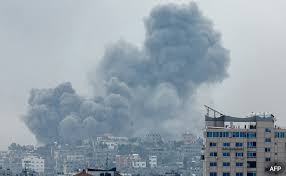
Co-Executive Director Vanessa Leung echoed those sentiments and added “For every organization that is able to access funds to support their communities, we know we are sustaining life-affirming services and programs on the ground,” said Leung. “We hear back from our members that CACF reminded us of the importance of building together, to continue to share our stories, to help one another address immediate needs and create long-lasting change for our communities. We are energized by our coalition-members’ desires to learn to advocate together.”

Past honorees include AAPI leaders in media, education, business, philanthropy, arts and culture, and leadership development. The evening drew over 300 diverse and influential New Yorkers, many who are leaders, innovators and changemakers themselves, who are interested in investing in the AAPI community.

Republicans Form Congressional Hindu Caucus

House Republican Conference Chair, Congresswoman Elise Stefanik officially launched the Congressional Hindu Caucus (CHC), in the presence of fellow Republican lawmakers and 600 Hindu American Leaders from around the country, on November 15, 2023, at The Hyatt Regency Capitol Hill.

The event hosted by the Republican Hindu Coalition (RHC) and its Chairman and CHC’s Policy Advisor, Shalabh “Shalli” Kumar, also celebrated Diwali along with CHC’s Co-Chairs Elise Stefanik and Pete Sessions, along with lawmakers and community members.

“And for each of you here from the Republican Hindu Caucus, your core values of free enterprise, fiscal discipline, family values, and a firm foreign policy not only guide the Hindu American community, but our central tenets shared and fought by House Republicans and Republicans across America,” noted Stefanik while adding “That is why, today, I am so excited to announce the official launch of the Congressional Hindu Caucus in the United States Congress with my good friend and Co-Chair Pete Sessions.”

Stefanik said, “As we conclude Diwali festivities, we have the joyous reminder of the victory of light over darkness, good over evil, and knowledge over ignorance. This guidance must remain at the core of our mission each and every day as we tackle the very great challenges in front of us,” and reminded everyone of the ongoing battle between Israel and Hamas.

Commending the role of Hindu Americans for their support to Israeli and Jewish friends, she said both India and the United States form a “unified force to counter terrorism.” “Countering communist China’s malign influence, collaborating on technological development and security cooperation, and supporting a free and open Indo-Pacific must remain top priorities,” added Stefanik while talking about US-India jointly tackling China. “To do so, we will continue to pursue policies that encourage and enhance trade between the United States and India, decrease India’s reliance on Russian and Chinese made defense equipment and increase collaboration and joint quad and bilateral military exercises.”

Republicans Form Congressional Hindu Caucus

She urged that the “United States and India can continue to pursue a strong foreign policy [stance] to combat aggression, discourage authoritarian regimes and contain territorial expansions,” adding House Republicans and CHC should join forces with millions of Hindu Americans nationwide and lawmakers on Capitol Hill. It is also vital to fortify connections and further amplify the considerable achievements established by Shalli, RHC, President Trump, and Prime Minister Modi, she added.

Stefanik also recalled that President Trump was the first Presidential candidate to acknowledge the noteworthy achievements of Hindu Americans during a 2016 rally in New Jersey. She noted that during the rally Trump said in Hindi “Ab Ki Baar Trump Sarkar” which went viral with 1.2 billion views around the world. She went on to say “Ab Ki Baar Republican Sarkar,” on behalf of the House Republicans.

Commending second-generation Hindu Americans for their “significant impact on American society, business, culture, and American history,” she continued “From all over the world your unique experiences have shaped and influenced our country, continuing the time-honored tradition of American exceptionalism and the American dream.”

CHC’s Co-chair, Congressman Pete Sessions, said, “The things that the Republican Party teaches today are the same things that Ronald Reagan taught also… that we will stand with our allies. And America will stand with its allies like we’re doing not just with India, but also with Israel.

Praising the work of Hindu Americans, Sessions said “Shalli Kumar, Elise Stefanik, and I will be taking our message around the United States. And we intend to take not only our candidates, but we intend to take our members, some 150, who represent people [from] all over this country and include Hindu Americans in that political relationship to reshape our world and our country,” while asking the help of Hindu Americans to share and spread the message.

Kumar emphasized, “This will be one of the largest caucuses in the US Congress that would be actively engaged in enacting legislation and passing resolutions important to the Hindu American community,” while highlighting the “impressive educational and professional achievements of the Hindu American community,” said a press statement from RHC.

Notably, Congressman Shri Thanedar also launched a Hindu, Buddhist, Sikh, and Jain American Congressional Caucus on September 29, 2023. “We should really fight against hatred in the world. We should fight against bigotry, and we need to unite and lift people. We need to foster understanding, promote inclusion, and take affirmative policy actions” Thanedar said after launching the Caucus.

A congressional caucus is a group of members of the United States Congress that meet to pursue common legislative objectives. Shalabh “Shalli” Kumar, an Indian-American is the founder of the Republican Hindu Coalition. Shalabh Kumar said more than 150 members of the US House of Representatives have committed to becoming members of the Congressional Hindu Caucus.

This would make it one of the largest caucuses in the US Congress that would be actively engaged in enacting legislation and passing resolutions important to the Hindu American community, Kumar added.

Will Israel Pay Heed To UNSC Resolution On Gaza?

Breaking a deadlock, the UN Security Council adopted a Malta-drafted resolution urging humanitarian pauses and corridors in Gaza. The 15-nation Council adopted a resolution with 12 votes in favour and abstentions from Russia, the UK, and the US.

The UNSC resolution, the fifth attempt on the Israel-Hamas war, calls for the immediate release of all hostages held by Hamas and for urgent and extended humanitarian corridors throughout the enclave to save and protect civilian lives. The affirmative vote came after four unsuccessful efforts to take action last month.

HIGHLIGHTS

  • The UN Security Council succeeds in finding unity, adopting resolution 2712 on the Israel-Palestine crisis that began on 7 October, with 12 members voting in favour, none against and three abstentions (Russia, United Kingdom, United States), calling for “urgent and extended humanitarian pauses and corridors” in Gaza for “a sufficient number of days” to allow full, rapid, safe and unhindered access for UN agencies and partners
  • The Council “calls for the immediate and unconditional release of all hostages held by Hamas and other groups, especially children, as well as ensuring immediate humanitarian access”, by the terms of the resolution
  • The Council, by additional provisions in the text, calls on all parties to refrain from depriving the civilian population in Gaza of basic services and aid indispensable to their survival, consistent with international humanitarian law
  • The resolution does not condemn the Hamas attacks of 7 October which began the current wave of violence and battle for control of Gaza
  • The Council rejected an amendment proposed by Russia, with five votes in favour, one against and nine abstentions
  • “Our vote today translates into real human lives,” said the ambassador of Malta, penholder of the newly adopted resolution
  • Ambassadors from the UK and US separately regretted to note that the draft failed to condemn Hamas and voiced support for civilian protection and rapid aid delivery measures
  • Russia’s ambassador said a real ceasefire is needed and “the Council will need to make a decision on further steps”, including what observers to send to the conflict area and which UN contingent will be involved
  • “This madness must be brought to an end,” said Palestine’s Permanent Observer to the UN, adding that: “It is time for peace”
  • Israel’s Ambassador said the crisis could be brought to an immediate end if all Israeli hostages are returned unscathed and Hamas laid down their arms and turned themselves in

Reasons for abstention

US ambassador Linda Thomas-Greenfield noted the resolution’s unique mention of Hamas but highlighted the lack of the Hamas condemnation.

Will Israel Pay Heed To UNSC Resolution On Gaza (NDTV)
Picture: TheUNN

UK Ambassador Woodward regretted the resolution’s failure to explicitly condemn Hamas, leading to a UK abstention.

Russian Ambassador Nebenzia stated Moscow’s abstention was in response to regional calls for humanitarian action, emphasising the need for an immediate ceasefire as a precondition for effective humanitarian measures.

Earlier attempts

The adoption of the resolution came after four failed attempts last month in the Council to take action on allowing humanitarian access in the Israel-Hamas conflict that broke out after the militant group attacked Israel on October 7.

Earlier, Russia and China vetoed a US resolution affirming the right to self-defence against terrorist threats. A Brazilian text proposing humanitarian pauses was vetoed by the US.

Resolution ‘detached from reality’: Israel

 Israel’s Deputy Permanent Representative, Brett Jonathan Miller, was the last to speak at the meeting.

He said the resolution was “detached from the reality on the ground” and “falls on deaf ears when it comes to Hamas and other terrorist organizations”.

He noted that the Council has met nearly 10 times in the six weeks since Hamas’s “barbaric invasion” of Israel, which it still has not condemned as the world’s premier body for peace and security.

“The resolution focuses solely on the humanitarian situation in Gaza. It makes no mention of what led up to this moment,” he said. “The resolution makes it seem as if what we are witnessing in Gaza happened of its own accord.”

He added that Israel’s top priority is to bring the hostages home, “and seeing as Security Council resolutions hold no sway with terrorists, Israel will continue to do whatever it takes to accomplish this goal.”

Mr. Miller said the war would end immediately “should Hamas choose to lay down their arms, turn themselves in and handover the hostages unscathed”.

Israeli Foreign Ministry spokesperson Lior Haiat insists that extended humanitarian pauses are unfeasible as long as Hamas holds 239 hostages, calling on the UN Security Council to condemn Hamas.

Simultaneously, Israel resumed its military operation at Gaza’s Al-Shifa hospital, claiming a Hamas command center located below. The US and Israel allege tunnels exist, which Hamas and hospital directors deny.

Israeli forces also drop leaflets warning Palestinians to evacuate southern Gaza, hinting at a potential expansion of operations.

“EID MUBARAK,” A Short Film Feasts Its Eyes On The Oscars Race

Director Mahnoor Euceph’s interest in exploring entertaining stories about the South Asian diaspora through the female gaze, led her to direct the live action short film Eid Mubarak. In this award-winning film, a privileged six-year-old Pakistani girl embarks on a mission to save her beloved pet goat from being eaten on the Muslim holiday of Eid al-Azha, only to learn the meaning of sacrifice.

Eid Mubarak won the Jury Award for Live Action Short at the New York International Children’s Film Festival, qualifying the film for Oscars consideration this year. It has played over 40 film festivals including CAAMFest, SXSW Sydney, Tasveer, Atlanta ShortFest, and ShortShorts Film Festival & Asia. It won both the Jury Award for Narrative Short and the Audience Award for Short Film at the 2023 Austin Asian American Film Festival. It took the prize for Best Short at Big Eyes, Big Minds Singapore International Children’s Film Festival 2023, and three top awards including the jury award for Best Live Action Short at the 2023 Children’s Film Festival Seattle. It took home the Best Film award at both Mosquers Film Festival and Centre Film Festival this fall. The film currently holds a total of 13 wins.

Euceph’s work is injected with humor and features a hyper stylized sensibility informed by design and fine art. Her films seek to decolonize the mind and encourage audiences to engage in radical self love.

Ouat Media announced today that Eid Mubarak will be available in select territories on KIS KIS – keep it short, which will launch the film on YouTube on November 18, 2023, and in early 2024 on the streaming service Kanopy, the on-demand streaming video platform for public and academic libraries. Based out of Toronto, Canada, Ouat Media, a wholly owned subsidiary of the independent Canadian media group Channel Zero, specializes in distribution and worldwide sales of short films with a particular focus on titles by industry’s rising stars. Celebrating its 17th anniversary this year, Ouat Media has represented three Oscar® winners and 12 Oscar® nominees.

Eid Mubarak has a high-profile Los Angeles special screening set for Friday, November 17 at WME Screening Room presented by Gold House, the preeminent community for Asian Pacific creatives, entrepreneurs, and social impact leaders as well as partners South Asians in Entertainment, Rickshaw Film Foundation and 1497.

Additionally, the film has an awards campaign led by Adam Segal of The 2050 Group, the publicity agency that had 20 Oscar shortlisted and 7 Oscar nominated films in the 2022-23 awards season. Rohi Mirza Pandya is an executive producer on the film with her leading industry consultancy Box Office Guru Media. She is an award-winning Creative Producer in film, television, and theater for over twenty years.

In Eid Mubarak, Iman, a privileged Pakistani girl, goes with her family to buy a goat, as is the tradition in Pakistan before the Muslim holiday of Eid al-Azha. She picks the cutest one, and takes it home. She spends all of her time with the goat, whom she names Barfi, after her favorite Pakistani dessert. Soon, however, she realizes that Barfi is not a pet, but a goat being raised for slaughter. She makes a plan to save Barfi’s life before he can be sacrificed on Eid. Along the way, through the help of her family and friends, she learns the true meaning of sacrifice, and the reason behind Eid al-Azha.

Director Mahnoor Euceph said: “I made this film as a love letter to the country I once called home, to the religion that taught me how to be a human with humanity, and to my family who are the beginning and end of everything. For non-Muslims, I hope this film is educational. For Muslims, I hope it is reflective. And I hope, for everyone, it is a reminder of childhood, and that magical, wondrous world we leave behind when we grow up.”

“EID MUBARAK ” A Short Film Feasts Its Eyes On The Oscars Race

Euceph is a Pakistani-American writer and director. She immigrated to Los Angeles from Pakistan when she was eight years old. She graduated Summa Cum Laude from UCLA in 2017, with a major in Design | Media Arts and a minor in Film, TV, and Digital Media. During her BA, she traveled abroad to work with Pakistan’s sole Oscar-winner, filmmaker Sharmeen Obaid Chinoy.

In 2021, she received her Master’s of Fine Arts from USC’s School of Cinematic Arts in Film and Television Production, with an emphasis in comedy writing and directing, and production design. During her MFA, she worked as Art Director on American Eid, Disney’s first ever Muslim story, which is currently streaming on Disney+. In 2022, she participated in the Islamic Scholarship Fund’s inaugural Muslim Centered Writers’ Lab, with support from Extracurricular and The Black List, for her feature film, Queen of Diamonds.

Her professional directorial debut, Eid Mubarak, was produced by Creator+ as part of their inaugural Flip the Script Short Film Fund, and is screening in festivals all over the country. It won the Jury Award for Live Action Short at the New York International Children’s Film Festival, making the film Oscar-qualifying. Eid Mubarak is currently in consideration for Best Live Action Short Film at the 96th Academy Awards.

Eid Mubarak is written, directed and produced by Mahnoor Euceph, Producers Kamil Chima, Ben O’Keefe and Selena Leoni. Executive producer Rohi Mirza Pandya. Director of photography Arlene Müller. Production designer Hashim Ali.

‘Masterchef India’ Adds Healthy Twist To Culinary Art With Nutritionist Pooja Makhija

The new episode of the cooking reality show ‘MasterChef India’ sees renowned nutritionist Pooja Makhija gracing the kitchen. She introduces a challenge that tests the culinary talent of the contestants and adds a nutritional dimension to their creations.

The ‘Health Challenge’ will require contestants to create a healthy dish by incorporating essential elements like fibre, vitamins, protein, and carbs. There’s also a mid-challenge twist awaiting them as they will need to incorporate two more ingredients in their dishes – moringa leaves and flaxseeds.

Talking about the challenge, Pooja said: “Bringing the ‘Health Challenge’ to the ‘MasterChef India’ kitchen has been incredibly rewarding. It was exciting to witness the passion these home cooks exhibited while balancing the nutritional aspects of their creations. The challenge was a reminder that great cooking goes beyond taste – it is about nourishing the body as well.”

Amidst the challenge, contestant Kriti Dhiman finds herself in a tricky situation as incorporating dark chocolate proves to be a daunting task for her.

Sharing her experience, Kriti said: “Working with dark chocolate was definitely a challenge. Its intense flavour required a delicate balance to ensure it complemented the overall dish. This challenge has taught me the importance of experimenting with diverse ingredients to create a balanced blend of flavours.”

‘MasterChef India’ on Sony LIV. (IANS)

Loneliness A Global Health Threat

Loneliness is a pressing health threat, with serious consequences for the health and mental well-being of the elderly and young people worldwide, said the World Health Organisation (WHO) on Friday.

Social isolation — having an insufficient number of social connections, and loneliness — and the social pain of not feeling connected are widespread.

Loneliness A Global Health ThreatContrary to the perception that isolation and loneliness primarily affect older people in high-income countries, they impact the health and well-being of all age groups across the world.


According to research, social isolation is common among one in four older people and in five to 15 per cent adolescents. However, these figures are likely to be underestimations.

To address it, the UN health body announced a new Commission on Social Connection which will promote social connection as a priority and accelerate the scaling up of solutions in countries of all incomes.

“High rates of social isolation and loneliness around the world have serious consequences for health and well-being. People without enough strong social connections are at higher risk of stroke, anxiety, dementia, depression, suicide and more,” said WHO Director-General Dr Tedros Adhanom Ghebreyesus, in a statement.

“This WHO Commission will help establish social connection as a global health priority and share the most promising interventions,” he added.

The Commission, to be co-chaired by US Surgeon General, Dr Vivek Murthy, and African Union Youth Envoy, Chido Mpemba, will have 11 leading policy-makers, thought leaders and advocates.

Running for three years, it will analyse the central role social connection plays in improving health for people of all ages and outline solutions to build social connections at scale.

The Commission will consider how connection enhances the well-being of our communities and societies and helps foster economic progress, social development, and innovation.

Studies show that lack of social connection carries an equivalent, or even greater, risk of early death as other better-known risk factors – such as smoking, excessive drinking, physical inactivity, obesity, and air pollution.

Social isolation also has a serious impact on physical and mental health; studies show that it has been linked to anxiety and depression and can increase risk of cardiovascular disease by 30 per cent.

The Commission on Social Connection, supported by a Secretariat based at WHO, will hold its first leadership-level meeting from December 6 to 8, the WHO said. (IANS)

The Macallan 1926 Single Malt Breaks Auction Records, Fetching $2.7 Million

In a historic moment for the world of spirits, a rare bottle of The Macallan 1926 single malt whisky has shattered records, fetching an astounding $2.7 million (£2.1 million) at a recent Sotheby’s auction. This sale not only establishes a new benchmark for the most expensive wine or spirit ever sold at auction but also highlights the unparalleled allure of this sought-after Scotch whisky.

Sotheby’s, the renowned auction house, orchestrated the sale on a Saturday, with the Macallan 1926 single malt exceeding its estimated price, selling for more than double the initial valuation. Jonny Fowle, the head of whisky at Sotheby’s, provided a tantalizing preview of the prized bottle, revealing, “It’s very rich, it’s got a lot of dried fruit as you would expect, a lot of spice, a lot of wood,” according to statements made to the AFP news agency.

This particular Macallan 1926 single malt spent an impressive 60 years maturing in dark oak sherry casks before being bottled in 1986, adding to its mystique and rarity. Only 40 bottles were produced, and these were reportedly not made available for public purchase. Instead, select bottles were offered exclusively to The Macallan’s top clients. Over the years, whenever these elusive bottles have surfaced at auctions, they have consistently generated extraordinary results. In a comparable instance in 2019, a similar bottle commanded an impressive £1.5 million.

Expressing the significance of The Macallan 1926, Mr. Fowle emphasized, “It is the one whisky that every auctioneer wants to sell and every collector wants to own,” underscoring its iconic status in the world of rare spirits.

Sotheby’s provided additional insights into the distinctive labeling of the 40 bottles from the 1926 cask. The bottles were marked in various ways, with two lacking any labels, up to 14 adorned with the iconic Fine and Rare labels, and 12 receiving labels designed by renowned pop artist Sir Peter Blake. Another set of 12 bottles, including the record-breaking one sold recently, featured labels crafted by Italian painter Valerio Adami.

The Adami-designed bottles, known as The Macallan Adami 1926, hold particular intrigue. The article notes that it remains uncertain how many of these 12 bottles still exist today. One was reportedly lost in a devastating earthquake in Japan in 2011, and there are indications that at least one more has been opened and enjoyed, adding an element of mystery to the limited availability of this prized whisky.

The sale of The Macallan 1926 single malt at a staggering $2.7 million not only sets a new record for the most expensive wine or spirit sold at auction but also underscores the enduring fascination and desirability of this exceptional Scotch whisky. With its rich history, unique maturation process, and limited availability, each bottle of The Macallan 1926 represents a rare and coveted piece of spirits history.

NBC Poll Signals Historic Shift: Trump Surpasses Biden in 2024 General Election Preference, Likability Gap Narrows

In a recent NBC national poll gauging sentiments for the 2024 general election, former President Donald Trump has emerged ahead of President Joe Biden for the “first time” in the history of the network’s polling, as revealed by NBC host Kristen Welker. During a segment on the network’s “Meet the Press,” Welker, accompanied by national correspondent Steve Kornacki, delved into the latest polling data, indicating that Trump currently maintains a 2-point lead over Biden, holding at 46 percent.

“This is the first time in the history of our poll that former President Trump beats President Biden – still within the margin of error, but still significant,” acknowledged Welker in response to the noteworthy development. The survey, conducted between November 10 and November 14 among 1,000 registered voters, carries a margin of error ranging from 5.5 to 5.6 percentage points.

Highlighting the shift in dynamics, Kornacki pointed out, “In 2019, 2020 when Trump was president, he [Biden] trailed all of them. This year he’s trailed all of them in our poll. First time in more than a dozen polls we’ve seen a result like this.”

Biden, traditionally buoyed by his perceived likability compared to Trump, is now facing a leveled playing field, according to the poll. NBC News initially reported Biden’s likability at 39 percent and Trump’s at 32 percent in January. However, the current figures show both candidates at 36 percent, accompanied by a notable increase in Biden’s disapproval rating, climbing from 46 percent in January to 53 percent.

The younger demographic, aged 18 to 35, is demonstrating a noteworthy tilt towards the former president. The poll indicates Trump garnering 46 percent support among this age group, with Biden trailing at 42 percent.

Recognizing the electorate’s expressed dissatisfaction with the current candidates, the network conducted a hypothetical test pitting Biden against a “generic Republican candidate.” Surprisingly, the results showed that in this scenario, a “generic” Republican would outperform Biden by nearly 11 points, whereas Trump, in a similar matchup against a “generic” Democrat candidate, would lag behind by approximately 6 points.

Amidst these shifting dynamics, Democrats and liberal figures have begun voicing concerns regarding Biden’s viability as the party’s nominee for the 2024 presidential elections. Democratic Minnesota Representative Dean Phillips, for instance, recently challenged Biden for the nomination, emphasizing that it’s time for the president to “pass the torch.”

The evolving landscape of public opinion, as reflected in the NBC poll, suggests a departure from the conventional narrative that favored Biden’s likability over Trump. As the political landscape continues to evolve, the dynamics of the 2024 presidential race are becoming increasingly uncertain, with the emergence of new contenders and shifting voter preferences challenging the established political order.

Indian Government Spurs Domestic Manufacturing with IT Hardware Production Incentives

The Indian government has taken a significant leap forward in bolstering domestic manufacturing by approving Production Linked Incentive (PLI) schemes in the IT hardware sector. Ashwini Vaishnaw, the Minister for Electronics and Information, announced that 27 companies have received approval, marking a crucial milestone in the country’s quest for self-reliance in the technology industry.

Vaishnaw highlighted that among the approved companies, 23 are set to commence manufacturing operations immediately, while an additional four will initiate within the next 90 days. This move is expected to infuse a substantial Rs 3,000 crore into the industry, generating direct employment for 50,000 individuals and indirect opportunities for 150,000 more.

The initiative attracted applications from a diverse pool of 40 companies, including industry giants such as Dell, HP, and Lenovo. Their commitment involves the production of personal computers, laptops, tablets, servers, and assorted equipment, with an estimated value of Rs 4.65 lakh crore during the scheme’s tenure.

Vaishnaw reassured that companies not yet approved are actively assessing the scheme and are expected to join the initiative soon. This signals a positive trend, indicating broader industry participation in the transformative phase of domestic manufacturing.

The genesis of this monumental step traces back to May when the Cabinet approved a revamped IT hardware PLI scheme worth Rs 17,000 crore. Spanning six years, this initiative aims to significantly boost domestic manufacturing in laptops, tablets, all-in-one PCs, servers, and ultra-small form factor devices. Projections suggest that it will trigger incremental production worth Rs 3.35 lakh crore and create approximately 200,000 job opportunities.

In contrast to the previous scheme, which offered incentives of up to 2 percent of net sales for domestically manufactured goods, the revised version substantially elevates the basic incentive to over 5 percent. This strategic adjustment aims to provide more attractive benefits to companies participating in the scheme, thereby encouraging greater involvement in domestic manufacturing.

Moreover, the revamped scheme places a strong emphasis on catalyzing local manufacturing of smaller components in computing devices. Additional incentives, reaching up to 3 percent, are introduced for companies procuring domestically-produced components such as memory chips, printed circuit board assemblies, solid-state drives, chassis, power supply components, and adaptors. This multifaceted approach is designed to address challenges faced by the industry, including inadequate infrastructure, domestic supply chain and logistics issues, high financial costs, power quality limitations, limited industry focus on research and development, and skill development gaps.

The Ministry of Electronics and Information Technology (MeitY) acknowledges that the industry grapples with significant challenges, experiencing setbacks ranging from 8.5% to 11%. The National Policy on Electronics 2019 (NPE 2019) underscores the overarching goal of establishing India as a paramount hub for Electronics System Design and Manufacturing (ESDM). This vision seeks to foster indigenous capabilities in developing core components, creating a conducive environment that empowers the industry to compete fiercely on the global stage.

In the words of Minister Vaishnaw, “This development is a crucial stride towards realizing the goals set by the NPE 2019. The approval of PLI schemes for the IT hardware sector underscores the government’s commitment to boosting domestic manufacturing and creating a self-reliant ecosystem in the technology industry.”

The approved entities, including well-known names such as Dell, Foxconn, HP, Lenovo Flextronics, VVDL, Neolink, Bhagwati, Netweb, Sahasra, ILP, and Optimus, represent a diverse consortium of manufacturers entering this transformative phase. Their participation is expected to not only contribute significantly to the Indian economy but also strengthen the country’s position in the global technology landscape.

As the approved companies gear up to initiate manufacturing operations, the ripple effect of this government initiative is poised to stimulate economic growth, create job opportunities, and position India as a key player in the IT hardware manufacturing sector. The success of the revamped IT hardware PLI scheme hinges on sustained industry participation, effective implementation, and continued government support, marking a pivotal moment in India’s journey towards technological self-sufficiency.

Nine Indians On ‘TIME’s 100 Climate’ List

The Times has published its annual list of influential business executives who have embedded climate goals into their initiatives. Nine prominent leaders hailing from India have been named to the ‘Time 100 Climate’, the magazine’s first-ever list of the world’s most influential leaders driving business to real climate action.

The list, which includes CEOs, founders, philanthropists, musicians, policymakers and government officials from across the world, comes ahead of the 2023 UN Climate Change Conference, scheduled to take place in the United Arab Emirates (UAE) from November 30.

“It’s fair to say climate leadership is ­embedded across all of our coverage today. But we believe more could be done to draw attention to the people who are shaping and leading climate action,” Time said, releasing the list last week.

Ajay Banga, who assumed the role of president of the World Bank Group in June, has been named one of the 100 Most Influential Climate Leaders in Business for 2023. Speaking at the 2023 World Bank Group-IMF Annual Meetings in Morocco, Banga stated, “If you can’t breathe and you can’t drink clean water, there’s very little point in eradicating poverty.”

In October 2023, Banga highlighted the urgency of the situation, stating, “Time is of the essence.” His commitment to aligning financial incentives and loans with climate-friendly initiatives shows a proactive approach to tackling global challenges. Banga works for a sustainable and equitable future.

Geeta Aiyer, founder of Boston Common Asset Management, is among the five Indian Americans on the list. Leading a firm with over $5 billion in assets, Aiyer works to address biodiversity loss and invest in earth renewal. Emphasizing their impact on global food supply, water access, and technology development, Aiyer called for swift government legislation to guide corporate company policies. Moreover, she also stressed the intersectionality of climate change and human rights, urging activists to advocate for stricter policies.

Nine Indians On ‘TIME’s 100 Climate’ List

Rajiv J. Shah, president of The Rockefeller Foundation, spearheaded climate-focused initiatives. Notably, the foundation launched the Coal to Clean Credit Initiative, aiming to shift from coal to renewable energy in emerging economies.

Rajiv advocated for expanding access to renewable electricity, emphasizing its potential to improve lives and avert a climate crisis. He urges climate activism to prioritize vulnerable populations and calls for wealthy countries to fulfill and exceed their climate financing commitments.

Jigar Shah, Director of the U.S. Department of Energy Loan Programs Office, led the public investment of hundreds of billions into clean infrastructure and energy projects. He works to meet the 2030 climate goals using cost-effective technologies.

Moreover, Jigar tries to implement solutions that save money. He also identified climate technologies deserving more attention and funding, including enhanced geothermal, low-impact hydro, small modular nuclear reactors, carbon sequestration, hydrogen, and long-duration energy storage.

Manoj Sinha, CEO of Husk Power Systems, made it on the list. He achieved profitability with 200 minigrids across Asia and Africa. Advocating for long-term systemic change, he calls for a carbon tax, corporate emission offsets, and investor support for renewable innovations.

Nine Indians On ‘TIME’s 100 Climate’ List 2

Sinha emphasizes solarizing the agricultural value chain and underscores the need for a uniform carbon tax, considering cumulative emissions and societal equity. His vision reflects a holistic approach to sustainable solutions.

Sanjayan is a conservation scientist and CEO of Conservation International (CI), a non-profit working with governments and companies to conserve nature, primarily in the Global South.

Sanjayan’s skills as a science communicator have helped CI facilitate powerful partnerships for environmental protection.

The organisation created the Restore Fund in 2021 alongside Apple, which this year pledged $200 million in additional funding to support nature-based carbon removal technologies.

Seema Wadhwa is executive director for environmental stewardship for Kaiser Permanente, one of the largest health care providers in the US.

By 2050, it aims to be net zero. Under Wadhwa’s leadership, this year Kaiser Permanente’s office in Santa Rosa, California, was recognised as the country’s first net-zero medical facility.

Amit Kumar Sinha is managing director and CEO of Mahindra Lifespaces, the real estate and infrastructure development arm of Indian conglomerate company Mahindra Group.

Since 2013, Mahindra Lifespaces says it has had an entirely green portfolio, prioritizing water efficiency, passive energy design, renewables, and more.

In January of 1938, TIME’s editors considered how the sun might become a future energy source. A year later, TIME observed that scientists were seeing evidence of a warming planet. In 1953, TIME cautioned that an “invisible blanket” of greenhouse gases, at its present rate of increase, would “raise the earth’s average temperature 1.5° Fahrenheit every 100 years.”

The term ­climate change, as we currently understand it, was first used by TIME when the editors named the “Endangered Planet” the Person of the Year for 1988.

Much great work engaging with the climate story has been created by TIME journalists in the years since, and this year is no exception. It’s fair to say climate leadership is ­embedded across all of our coverage today. But we believe more could be done to draw attention to the people who are shaping and leading climate action. That is why we’ve created the inaugural TIME100 Climate list.

The TIME100 Climate is not only a community, it is an argument for how we see the future: we are recognizing those who are connecting climate action and business value, because we believe progress for the planet will come from the engagement with and leadership by the business world.

To assemble this list, TIME tried to capture the latest economic and scientific thinking by selecting individuals who are leading change across five critical areas: energy, nature, finance, culture, and health. Our reporters, editors, and colleagues at TIMECO2 sought out measurable, scalable achievements and prioritized recent action.

“Our hope is that decades from now, the creation of the TIME100 Climate will be seen as another watershed moment for TIME and our coverage of the planet,” Time wrote. .

Hindus In The US Celebrate Ancient Sun Festival

(RNS) — An ancient ritual as old as Hinduism itself has traveled through time and space all the way to the waters of California’s Bay Area.

Starting at sundown on Friday (Nov. 17), hundreds of Hindus will wade into the waters of Quarry Lakes, a manmade lake in Fremont, California, to express reverence to nature, which they believe to be God manifest.

The festival of Chhath, which originated in the Indian state of Bihar, is devoted to Surya, the god of the sun. Worshippers thank Surya for providing light, warmth and life by fasting for three days and offering solitary prayers and fruits.

The ritual celebrating the rising and setting sun predates the Hindu gods that are more commonly known today, and stems from the earliest tradition of Hinduism, known as Vedic Hinduism.

But Chhath’s rituals, stemming from the earliest roots of Hinduism, known as Vedic Hinduism, which was prevalent in India more than 3,000 years ago, predate the Hindu gods we know today by some 1,400 years.

With a focus on meditation and gratitude, the Vedic tradition, named for the Vedas, its sacred texts, is still present in yoga’s Sun Salutation, or suryanamaskar.

“What I really value in Chhath is a connection to my roots and to an ancient tradition,” said Pushpita Prasad, a Bihari Californian who has participated in the festival in recent years. “It makes me feel very powerful to be a part of something that my ancestors might have been doing thousands of years ago.”

While it began with a single family’s observance in 2011, the Quarry Lakes Chhath has turned into an event that will draw 1,700 people this year — a number limited by the Quarry Lakes park authority’s cap on attendance. With more than 4,000 Hindus expressing interest, the event is sold out in minutes after word spreads that registration is open.

“People become very nostalgic about this,” said Sunil Singh, who founded the Quarry Lakes celebration with his wife, Shalini. “It is the holiest and most auspicious festival in Bihar. “My goal is to encourage the next generation, so they get engaged and they know what Chhath is.”

In India, families celebrating Chhath will travel to the holy waters of the Ganges and Yamuna rivers, considered by many Hindus to be blessed with spiritual properties from their namesake goddesses. They will break their three-day fast with a particular type of wheat that they have grown in a way that ensures it is untouched by birds. They also use a special set of utensils to break the fast.

While details like these are not always the same here in the States, to the Singhs, having the community eagerly show up to perform an ancient practice aimed at being one with nature is enough.

“The puja is not only doing the formalities,” said Shalini, using the Sanskrit word for an act of worship. “The real prayer is how you connect with God. It’s better to do whatever little modifications you can do to keep the culture, and keep your heart clean and pure.”

Hindus In The US Celebrate Ancient Sun Festival

When the couple started the Quarry Lakes Chhath, their daughter was just 4 years old. This year she wrote about her family’s mark on the Bay Area in her college applications.

“Because it’s so big now, it’s not possible for just two people to handle it,” said Shalini. “We are very thankful for our community and our friends for engaging with us from end to end.”

When she came to the U.S. from Bihar, Shalini said, she never expected to celebrate Chhath in a bigger way than she did at home. “My prayers were heard,” she said.

For Manisha Pathak, founder of the Overseas Organization for Better Bihar, the festival creates an awareness about Bihari culture beyond its attendees. “Chhath is so relatable because it’s all about nature, and nature is for everyone,” said Pathak. “It is not just for Biharis.”

A Silicon Valley software engineer, Pathak began performing the ritual herself about 10 years ago. As the puja requires only meditation on the self, it doesn’t require a priest, a rarity in Hinduism.

As with many of the spiritual philosophies of Hinduism, Chhath is said to offer health benefits: The vitamin D from the sun radiates energy within the observer and can be passed along to anyone who is touched by the vrati, or person performing the puja.

“At the end of the puja and the sun rises, when I am gazing at the sun with water in my hands, that is a burst of energy that I absorb,” said Pathak. “It feels like I can move mountains.”

The tradition requires one member of a family to maintain a strict fast from sundown on Friday to sunrise on Sunday. At the end, everyone is fed Thekhua, a famous Bihari treat made of wheat, jaggery (made from cane sugar) and clarified butter, or ghee.

“Chhath puja is an experience of union with God,” said Pathak. “What is God according to Hindu belief? It is nature, the energy, the vibration. You experience that unity when you are standing in water just with your eyes closed. There is stillness there, and it is so amazing.”

Prasad, an advocate for Hindu Americans and board member of the Coalition of Hindus of North America, said the power of this ancient tradition lies in its ability to be celebrated just as fervently in modern times. As a lesser-known festival, she added, Chhath is emblematic of the sheer diversity of beliefs that are honored from every Indian state.

“This is a beautiful ecosystem that has nourished and cherished diversity for thousands of years. It has allowed massively different beliefs to coexist,” she said.

Pathak, who is a Hindustani classical vocalist, posts covers of traditional Chhath folk songs in the Bhojpuri dialect on YouTube for audiences of hundreds of thousands. Many of the songs are dedicated to Chatthi Maya, the goddess associated with Chhath, said to be the protector of children. “As a kid, I used to go to a river and see my whole family doing the puja together,” said Pathak. “And the same feeling comes up here. When I see other people doing it at the same time, those same memories come alive.”

Australia Stun India, Lifts Cricket World Cup 2023

The much anticipated and unbeaten winning spree of the Indian cricket team in the current tournament fell short of the hope and hype Team India had created leading up to the final match of the One Day International World Cup Cricket Tournament on Sunday, November 19, 2023

India’s rivals, Australia won a record-extending sixth men’s Cricket World Cup on Sunday, defying the odds and a partisan home crowd in Ahmedabad, India to defeat host nation  by six wickets.

India failed to live upto the expectations after it had dominated much of this tournament, cruising to 10 consecutive wins and ratcheting up the pressure in this cricket-obsessed nation that has waited 12 years for another one-day trophy.

But its near impregnable batting line-up faltered in the face of Australia’s savvy bowling while Travis Head’s spectacular 137 off 120 balls anchored Australia’s run chase as it cantered towards victory and another World Cup trophy.

Australia quietened the wild support from the 130,000-strong home crowd by dismissing their previously unbeaten opponents for 240 before Travis Head’s sensational century meant they romped to victory with seven overs to spare. After their bowlers expertly took advantage of a slow pitch, Australia were themselves reduced to 47-3 as India hit back in an electric new-ball spell.

But Head and Marnus Labuschagne calmly weathered the storm with a stand of 192 as Indian hope drifted away from the world’s largest cricket stadium. Head was caught for 132 from 120 balls with just two runs needed, but Glenn Maxwell flogged the winning runs a ball later while Labuschagne ended 58 not out from 110.

The superb victory means Australia extend their record as the most successful side in 50-over World Cup history and now sit four titles clear of the rest of the pack. It also caps a six-month period in which they beat India to win the World Test Championship and retained the Ashes in England.

India, meanwhile, were left crestfallen as their bid for a first white-ball title since 2011 – an achievement which looked unstoppable as they made rampant progress through the semi-final and group stage – fell at the final hurdle.

One of Australia’s greatest nights

This was supposed to be India’s day in front of an enormous home crowd with their prime minister Narendra Modi, who this stadium is named after, up in the stands. Instead, it ended in crushing disappointment as Head produced one of the great World Cup knocks and Australia ran out surprise and comfortable winners.

By the time 29-year-old Head reached his century, some in the vast stands had already made their exit, while seamer Mohammed Siraj was in tears at the end.

Australia were contenders when this tournament began, without being tipped by many to go all of the way, just like when they won the 2021 T20 World Cup. Their campaign hit serious jitters early on with defeats in their opening two games, first by India and then South Africa, but they have won the title with nine consecutive victories, beating every team in the tournament in a row. Australia may have won it all before, but this ranks as one of their greatest nights.

Australia Stun India Lifts Cricket World Cup 2023

Indeed, Australia and India opened their campaigns against each other in Chennai on October 8, when star India batter Virat Kohli combined with KL Rahul to steer his team’s chase of a moderate total and get their first win of the tournament.

India were in a similar situation in Ahmedabad, where Kohli (54) and Rahul (66) once again came together for a rescue act. However, India’s batting collapse on the biggest stage saw them put up a paltry target of 241 at the end of 50 overs.

Australia’s bowlers, led by Mitchell Starc’s brilliant display of fast bowling with figures of 3-55 in his 10 overs, kept the Indian batting powerhouse at bay with regular dismissals. Captain Cummins ended with figures of 2-34 in 10 overs, while fellow seamer Josh Hazlewood had 2-60 in his 10 overs.

Head ends India’s dream

Head did not play in the first four games of Australia’s campaign because of a broken hand, but Australia kept him in their squad, knowing the match-winning quality he possesses. He scored 109 in his first appearance against New Zealand but this innings was on another level as he first dealt with intense pressure before punishing the bowling.

After his opening partner Warner nicked the first ball of the chase through the slips, Head crashed two boundaries to settle Australian nerves. Warner then edged a wide ball to slip for seven off Mohammed Shami, while Mitchell Marsh and Steve Smith both fell to the brilliant Jasprit Bumrah.

The crowd was alive again at that stage, although Smith’s lbw decision would have been overturned had he reviewed. Those wickets came in a manic opening period in which India took the upper hand but also gave up 15 extras in the powerplay alone, those in blue seemingly too eager to defend their low score.

content Australia Stun India Lifts Cricket World Cup 2023

Batting became easier on a slow pitch that had offered more turn in the day, and Head took advantage. He cracked 14 fours and four sixes, with the sixes all pumped high over mid-wicket. On 99 he would have been run out as he scampered to three figures, had Ravindra Jadeja’s throw hit from cover.

He was finally out for 137, caught at deep mid-wicket attempting to finish in style. As he left the field he was embraced by Labuschagne and was congratulated by the Indians with the result already decided.

Superb Aussies tie down India

Head’s innings will take the headlines, but this victory was built on a sensational performance with the ball and a brave decision to bowl first at the toss by Pat Cummins.

Captain Rohit Sharma gave India a rapid start with 47 from 31 balls, but from 76-1 in the 10th over, Australia applied a stranglehold on India’s star-studded batting line-up and did not let go.

Head played a crucial hand too, brilliantly catching Rohit as he ran back from cover, before Shreyas Iyer was caught behind off Cummins four balls later to leave the hosts 81-3.

That left Virat Kohli and KL Rahul to attempt a rebuild, but the canny Australia bowlers kept the scoring to a crawl through a mix of short, slower balls and athletic fielding, all while captain Cummins mixed his pack to great effect.

Kohli and Rahul put on 67 in 109 balls before the former captain played on to Cummins for 54 in the 29th over to leave the vast stadium stunned in silence. Rahul then nicked a beauty from Starc, ending any real hope of a significant India score.

India’s lower order had hardly been needed in this tournament, and when finally called upon, Ravindra Jadeja managed only nine and Suryakumar Yadav 18 with just four boundaries coming after the first 10 overs.

India’s worst performance with the bat came at the worst possible time in the tournament, but huge credit must go to Cummins and his champion attack.

‘We saved our best for last’ – what they said

 Australia captain Pat Cummins: “We saved our best for last and a couple of big-match players stood up and we’re pretty chuffed. We were desperate in the field, I thought it all started against South Africa last week. The boys were fantastic. We’ve got an ageing squad but we are still throwing ourselves around. We were really chuffed with 240 because we were happy with anything under 300.”

India captain Rohit Sharma: “We were not good enough today but I’m really proud of the team and how we played from game one. We tried everything we could from our side but it wasn’t supposed to be. We were looking at 270 or 280 but then we kept losing wickets. We couldn’t get a partnership together and that is exactly what Australia did to win the game, they stitched a good partnership after they lost three wickets.”

Player of the match, Australia’s Travis Head:

“Not in a million years did I think that would happen [being man of the match today and in the World Test Championship final]. What an amazing day. I’m just thrilled to be a part of it. It is a lot better than being sat on the couch at home! I’m very lucky that everything went well and I was able to get back and the support that the boys showed, I didn’t think this would happen. I was nervous in the first 20 balls but Marnus [Labuschagne] batted brilliantly and it is great to bat with him. It was an amazing partnership.”

Nikki Haley ‘Most Favored’ Probable, After Trump For US Presidency In 2024

Former UN Ambassador Nikki Haley has been rising in the polls in early voting states, especially after her strong performances in the three GOP sponsored presidential debates – Milwaukee, San Francisco and Florida. Though she still lags far behind Donald Trump, she argues she’s strongest nominee to take on President Joe Biden, US media reports said.

Her latest debate performance prompted more than $1 million in donations — and drew in Ray Hunt, a billionaire backer. She’s still banking on a breakthrough to catch up to the front-runner. Over the course of the two-hour face-off, Ms. Haley displayed her foreign policy credentials, parried attacks on her record and even transformed her shoes into a campaign weapon.

The Wall Street Journal (WSJ) says she’s what the US “needs to take on Trump and Biden in the 2024 presidential race”. “I don’t think you need to be 80 years old to go be a leader in D.C.,” she told Fox News in January. “It’s time for a new generation of leadership,” she said in the campaign video she released recently.

According to Policitco, “the pioneering former governor of South Carolina and Trump’s first United Nations ambassador, the 51-year-old daughter of Indian immigrants, was a Trump critic who became a Trump appointee who now officially is a Trump rival. Throughout her compelling, nearly two-decade-long political ascent, she has been nimble, or as her critics would say, uncommonly calculating. People who know her call her ambitious because she is.”

Haley was born to Indian Sikh parents who immigrated to the US from Canada. Her father is a biologist and her mother a lawyer turned boutique shop owner, that’s now a million dollar franchise. They came with $8 dollars in their pockets.

At 13, Haley began overseeing the store’s financial books, and after graduating from Clemson in 1994 with a bachelor’s degree in accounting, she became the company’s Chief Financial Officer. Haley met her husband William Michael Haley in the college, and got married in 1996. They have two children.Nikki Haley ‘Most Favored’ Probable After Trump For US Presidency In 2024

Haley’s career in politics began in 2004 when she defeated a longstanding incumbent to win a seat in the South Carolina House. Haley then ran for Governor in 2009, making her the first person to be elected the Governor of South Carolina who wasn’t a white. It has been a gradula rise to her prominence to national stage for this talented Indian American presidential candidate.

However, months of campaigning, a series of strong debate performances, healthy campaign accounts and rising numbers in surveys of early voting states haven’t been enough to put Ms. Haley within striking distance of Mr. Trump, who remains the dominant front-runner. While Ms. Haley’s support has increased, particularly in Iowa, voters have yet to flock to her candidacy in overwhelming numbers. One recent poll of Iowa had Ms. Haley tied at 16 percent support with Gov. Ron DeSantis of Florida — with Mr. Trump 27 points ahead.

There are some signs major donors are turning their attention to her. Harlan Crow, a wealthy real estate developer, hosted a fund-raiser for her in October with well-connected real estate and oil and gas donors in attendance. Former Gov. Bruce Rauner of Illinois, a top giver to Mr. DeSantis, transferred his allegiance to Ms. Haley after the first debate. Last week, one of former Vice President Mike Pence’s top donors — the Arkansas poultry magnate Ron Cameron — said he would back her, after Mr. Pence dropped out of the race.

Haley, who served in Trump’s Cabinet as the U.S. ambassador to the United Nations, has said frequently on the campaign trail that Trump is unlikely to beat President Joe Biden in a general election, citing his four criminal indictments and mounting legal troubles.

If Trump becomes the nominee, she said, Republicans could see more losses on down-ballot races. Haley argued she could lead the party to “win up and down the ticket, governor’s races, congressional seats, all of those seats.”

“It’s not just the presidential. We’re trying to win across the board. I can do that,” she added

ITServe’s Women’s Panel Discusses ‘Direct Client Engagement in the World of Contingent Workforce’

A panel of distinguished women leaders from across the United States were part of a high-powered discussion on ‘Direct Client Engagement in the World of Contingent Workforce’ on the final day of ITServe Alliance’s flagship Synergy 2023 at the world-famous Harrah’s Resort in Atlantic City in New Jersey on Friday, October 27, 2023.

ITServe womenKeisha Stephens, CCWP, Director of People Operations, Empowering Employees for Success & Driving Operational Excellence, SIA DE&I Influencer and Contingent Workforce Program Game Changer; Pamela Randall, CCWP, a Talent Solution Strategist, Change Agent with Sustainable Results and Making Possible a Better Future; Jamhali Portus, a Global Contingent Workforce Management Professional, who is passionate about creating the best-in-class contingent workforce management program with a focus on Quality, Efficiency, Cost and Risk; and, Semonie Kong, a CWP Program Manager, Atlassian, were the panelists at the lively and enlightening discussion that focussed on empowering women.

Moderated by Shabana Siraj and Lavanya Poosarla, the distinguished speakers on the panel shared with the audience a wealth of knowledge about this crucial topic, and it was heartening to see a packed audience who found it to be one of the standout sessions.

“Personally, one of the event’s highlights for me was moderating the panel discussion titled ‘Direct Client Engagement in the World of Contingent Workforce,” said Siraj. “What made this event more special was that it was an all women’s panel, highlighting the diverse perspectives and talents that are driving innovation in our industry.”

ITServe women leadersITServe Alliance Synergy 2023 has marked a significant milestone in its 13-year history, and one couldn’t be more thrilled with the outcome. This event brought together an impressive lineup of keynote speakers who covered a diverse array of topics, ranging from leadership and technology to startups, immigration, PAC, M&A, and the CIO & CTO Forum.

ITServe had esteemed speakers such as @Steve Forbes from Forbes, @Jack Kass from OpenAI, Kevin O’Leary from Shark Tank, @Sheila Blair from FDIC, former Secretary of State Hillary Clinton, and @Praneesh Murthy, former CEO of IGATE, sharing their valuable insights and expertise.

“Thank you to everyone who made ITServe Alliance Synergy 2023 a resounding success. Looking forward to continued collaboration and growth in the years to come, particularly for all the efforts by Vinay Mahajan, President of ITServe; Venu Sangani, Synergy Director; Jagadeesh Mosali, President-Elect ITSErve; and Vinay Parachuri,” said  Poosarla.

ITServe Women's panelKey ITServe members who were instrumental in organizing the discussions included;  Hima Kolanagireddy, Deepali Sontakke, Jyoti Vazirani, Pushyami Duvvuri, Divya Bala, Ruchi(Joshi) Anand, Anna Kolluri, Ranjani Mohana, Nazeera Dawood, and Sangita Datta.

Founded in 2010, ITServe Alliance is the largest association of Information Technology Services organizations functioning across the United States. Established to be the voice of all prestigious Information Technology companies functioning with similar interests across the United States, ITServe Alliance has evolved as a resourceful and respected platform to collaborate and initiate measures in the direction of protecting common interests and ensuring collective success. ITServe Alliance now has 21 Chapters in several states across the United States, bringing the Synergy Conference to every part of this innovation country. For more information, please visit: www.itserve.org

Gurdev Singh Hehar Appointed as President of IOCUSA’s Southwest Chapter

In a significant show of solidarity and commitment, the Indian Overseas Congress, USA (IOCUSA) conducted a landmark membership drive at the ‘Our Place Indian Cuisine’ in Dallas, Texas. The event, characterized by spirited discussions, united prominent community leaders and political figures in their vision for a stronger, more inclusive Indian community.

The drive was kick-started with a stirring address by Mr. Mohinder Singh Gilzian, President of the IOCUSA. Mr. Gilzian’s message resonated deeply with the attendees, emphasizing the crucial need for active political participation in the upcoming elections in India.

He said, “Our engagement in the democratic process is essential to safeguarding the unity and progress of our motherland. Let us unite to ensure a future where diversity and harmony would triumph.”

Sam Pitroda, the Chairman of IOC, and a renowned innovator, joined the meeting through Zoom. He touched upon his connections to Dallas and the broader role of the Indian diaspora. “Our roots here in Dallas are just as important as our ties to India. By harnessing our collective strengths, we can significantly contribute to India’s journey towards modernization and inclusivity,” Pitroda said. He then reminded the audience of the pivotal role of the diaspora in shaping India’s future.

IOC USA established the Southwest Chapter and appointed Mr. Gurdev Singh Hehar as President. In his address, Mr. Gurdev Singh emphasized the significance of unity and collective efforts. He said, “Our strength lies in our diversity and ability to work together, transcending religious and cultural differences, towards a common goal – a thriving and united India, reaffirming the ethos of the IOC.”

Avi Dandiya, the Global Social Media Chief for the IOC, played a key role in the local coordination and setup of the event. His efforts in leveraging social media platforms greatly enhanced the membership drive and brought many community leaders to the event.

The membership drive by the Indian Overseas Congress in Dallas marks a new chapter in the annals of Indian diasporic engagement. It was an event that echoed the sentiments of unity, attention, and proactive participation, critical tenets in shaping a future that the Indian community across the globe aspires for.

Ms. Sophia Sharma, General Secretary of the IOCUSA, moderated the event.

The Indian Overseas Congress is a platform for Non-Resident Indians to participate actively India’s growth and development. It seeks to bridge the gap between the Indian diaspora and their homeland, fostering democratic principles and inclusive development. (www.iocusa.org)

ZEE5 Global Announces The World Digital Premiere Of Shiva Rajkumar Starrer Kannada Blockbuster ‘Ghost’

Global, 15th November 2023:  ZEE5 Global, the world’s largest streaming platform for South Asian content,  announced the world digital premiere of the recently released Kannada movie, ‘Ghost’ today. After creating a resounding impact in theatres last month, ‘Ghost’ has garnered praise from both audiences and critics for its dynamic storyline and powerhouse performances.

The highest grosser of the year in Kannada revolves around an exciting chase between a cunning criminal and a determined police officer. It has spared no effort in entertaining viewers with its non-linear screenplay, breathtaking elevation scenes, and top-notch action sequences that showcase the renowned actor Shiva Rajkumar in a compelling new light. The highly acclaimed movie that collected over 3M USD at the box office is now set to have its digital premiere on November 17th exclusively on ZEE5 Global.

ZEE5 Global Announces The World Digital Premiere Of Shiva Rajkumar Starrer Kannada Blockbuster ‘Ghost’
Picture: ZEE5

‘Ghost’ envelopes the details of a prison hijack in Karnataka led by a mysterious criminal named Dalavayi Muddanna (Shiva Rajkumar) while following an intense chase between Dalavayi and the determined ACP Chengappa (Jayaram). With hidden gold bars, unexpected twists, and an engrossing storyline, the film keeps its viewers engaged as the characters navigate through a complex web of suspense and betrayal, leading to an exciting climax.

Directed by M. G. Srinivas and produced by Sandesh Productions, the film stars Shiva Rajkumar in the lead role alongside Jayaram and Prashant Narayanan in other prominent roles. The film also boasts noteworthy cameo appearances by Dattanna, Archana Jois, and veteran actor Anupam Kher, adding depth and nuance to this thrilling narrative.

Archana Anand, Chief Business Officer, ZEE5 Global, said, “We’ve seen great success with thrillers globally, thanks to stories deeply rooted in South Asian culture that offer an exciting cinematic experience. Our new addition, ‘Ghost,’ is a thrilling Kannada chase drama Packed with excitement, it’s a complete must-watch entertainer that we’re proud to add into our bouquet.”

Director M.G. Srinivas mentioned, “I am overwhelmed by the incredible response ‘Ghost’ has received in theatres, and I am delighted that the film’s reach will now expand globally through ZEE5 Global. The exceptional performances by Shiva Rajkumar, Prashanth Narayan, Jayaram, and other talented ensemble, along with the remarkable contribution of Anupam Kher, have truly brought the vision of ‘Ghost’ to life. I am thrilled to share our labour of love with audiences worldwide and look forward to the film’s continued success on the digital platform.”

Actor Shiva Rajkumar who is seen in the role of Ghost, said, “Since the movie’s release, I’ve experienced a whirlwind of emotions within me. Initially, I was anxious about how my performance would be perceived by the audience, but I am elated to see the kind of reviews the film has received. ‘Ghost’  has a unique narrative with a fresh perspective to the thrilling tale. My character in ‘Ghost’ embodies multiple shades, each serving a different purpose. While the term ‘ghost’ often evokes fear, the film presents a nuanced play on the concepts of good, bad, and the complexities in between. I am excited to know that the film is now available to an even wider audience on ZEE5 Global.”

Jayaram who is seen in the role of ACP Chengappa, said, “Being a part of ‘Ghost’ working with a powerhouse of talents like Shiva Rajkumar, Director Srinivas has been an exciting journey for me, and I am happy to see the movie being appreciated by critics and fans alike. The interesting story and the relationships between the characters have made this film a special project for me. The way the movie explores human emotions is fascinating, and I am thrilled that more people can now enjoy it on ZEE5 Global.”

India Ranks Second In Global Estimates Of Diabetes

It is estimated that 422 million people live with diabetes across the world and India with 101 million diabetics ranks second.

India also has 315 million people with high blood pressure. According to healthcare professionals, the culture of eating out, industrialisation, migrating to urban areas and other relevant factors make Indians more susceptible to diabetes.

Diabetes is a chronic disease that is caused when pancreas does not produce enough insulin or body cannot use the insulin it produces. It can be treated and prevented by diet, exercise and medications.

Every year, World Diabetes Day is observed on November 14 to mark the people who suffer from diabetes and prevent the delay of deaths caused by the disease.

India Ranks Second In Global Estimates Of Diabetes (Nagaland Post)
Picture: Nagaland Post

This year, the theme is ‘Access to Diabetic Care’, which means providing required care for diabetic patients to support and manage their complications. It is also a day when increase in awareness, healthy practices and new medical treatments to cure diabetes are brought to light.

According to Praveen Kumar Kulkarni, Senior Consultant and Internal Medicine Specialist, KIMS Hospitals, Hyderabad, “Diabetes is a major case of kidney failure, heart attacks, stroke and lower limb amputation. Diabetes may occur suddenly and can damage eyes, blood vessels, kidneys and nerves. It can also cause permanent vision loss by damaging the blood vessels in the eyes.

“Globally, it is estimated that 422 million people live with diabetes. The figures have doubled over the past decade which results in risk factors such as overweight or obesity. Though insulin was discovered over 100 years ago, it’s access to people that require them is scarce. When people are educated about this disease, they can avoid certain lifestyle patterns that might result in this disease.”

G Sandeep Reddy, Consultant Endocrinologist, Kamineni Hospitals, said the symptoms of diabetes may occur suddenly.

“Usually, in type 2 diabetes, the symptoms are mild and will take a longer time to notice. These include: feeling thirsty, needing to urinate, blurred vision, weight loss and feeling tired. In type 1 diabetes, it is characterized by insulin deficiency and it requires daily administration of insulin to track the severity of the disease. There were 9 million people with type 1 diabetes in 2017, it’s means to prevent are still unknown.

“But Type 2 diabetes is different, it affects how your body used sugar for energy which stops the body from using insulin and leads to high level of blood sugar if not treated. Type 2 diabetes is preventable, recognizing the early signs can prevent the worst effects.”

According to Parveen Sultana, Consultant General Physician, Century Hospital, “There is also a gestational diabetes that occurs mostly during pregnancy. Women with this type of diabetes are at an increased risk of complications during birth. The child can also have an increased risk of type 2 diabetes in the future. Gestational diabetes can be identified through prenatal screening rather than reporting symptoms. Lifestyle changes are the best way to prevent type 2 diabetes.

“Keeping healthy body weight, exercising regularly for 30 minutes, eating healthy diet, avoiding sugars and tobacco. Early diagnosis is done though testing the blood glucose level. People with type 2 diabetes use certain injections such as metformin, inhibitors and sulfonylureas. Using foot care to treat ulcers, screening kidneys and eyes can help maintain health.”

Speaking about the treatment options for diabetes, Lingaiah Miryala, Consultant General Physician & Diabetologist, Amor Hospital, mentioned that early diagnosis is important to prevent the effects of type 2 diabetes.

“Regular check-ups, blood tests can help recognize traces of diabetes in the body. Symptoms of type 2 diabetes can be mild, but they increase over time and may take several years to get noticed. The symptoms here are similar to type 1 diabetes but often less marked.

“As a result, the disease may be several years onset, but can be diagnosed only at a later stage. More than 90% of people have type 2 diabetes, it is also called non-insulin diabetes that is most observed in adults. But nowadays, young people are also having increased cases of diabetes,” Miryala said. (IANS)

New York Governor Signs Legislation Making Diwali Public School Holiday

New York Governor Kathy Hochul on Wednesday signed a historic legislation making Diwali a school holiday in public schools.

The legislation requires that all public schools in the city be closed on the “15th day of the eighth month of the Indian calendar in each year, which is known as Diwali”.

“New York City is rich in different religions and cultures, and we’re taking an important step to recognize and celebrate this diversity in the school calendar,” Governor Hochul said in a press statement.

New York Governor Signs Legislation Making Diwali Public School Holiday“This legislation to designate Diwali as a New York City school holiday is an opportunity for our children to learn about and celebrate traditions from across the world,” she added.
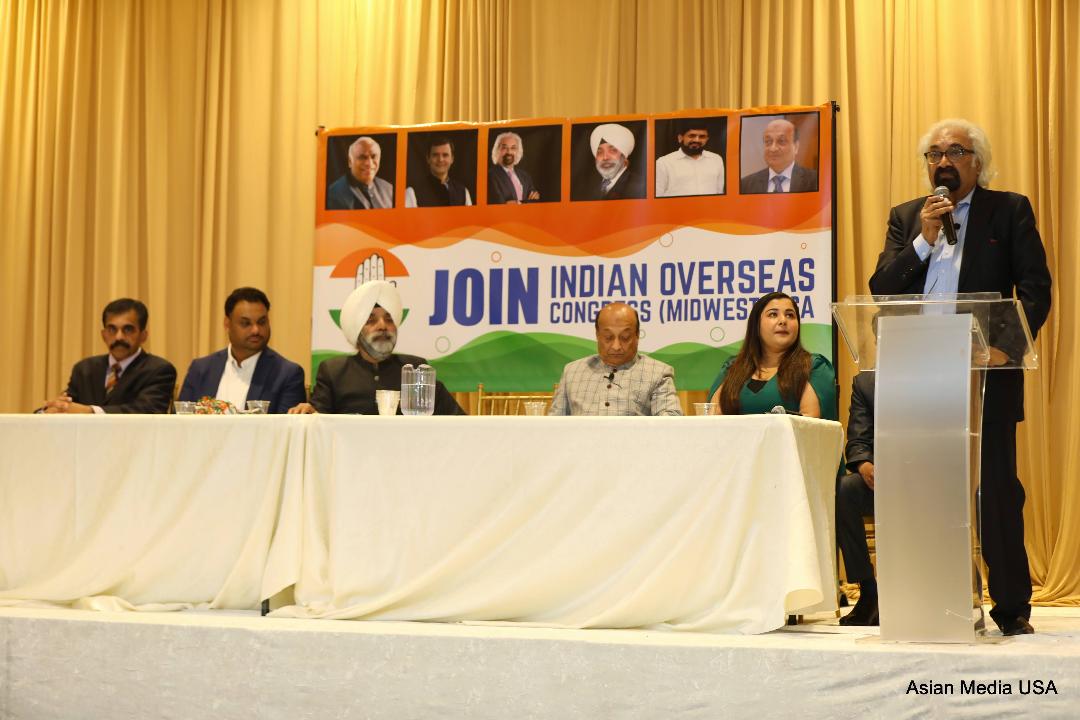
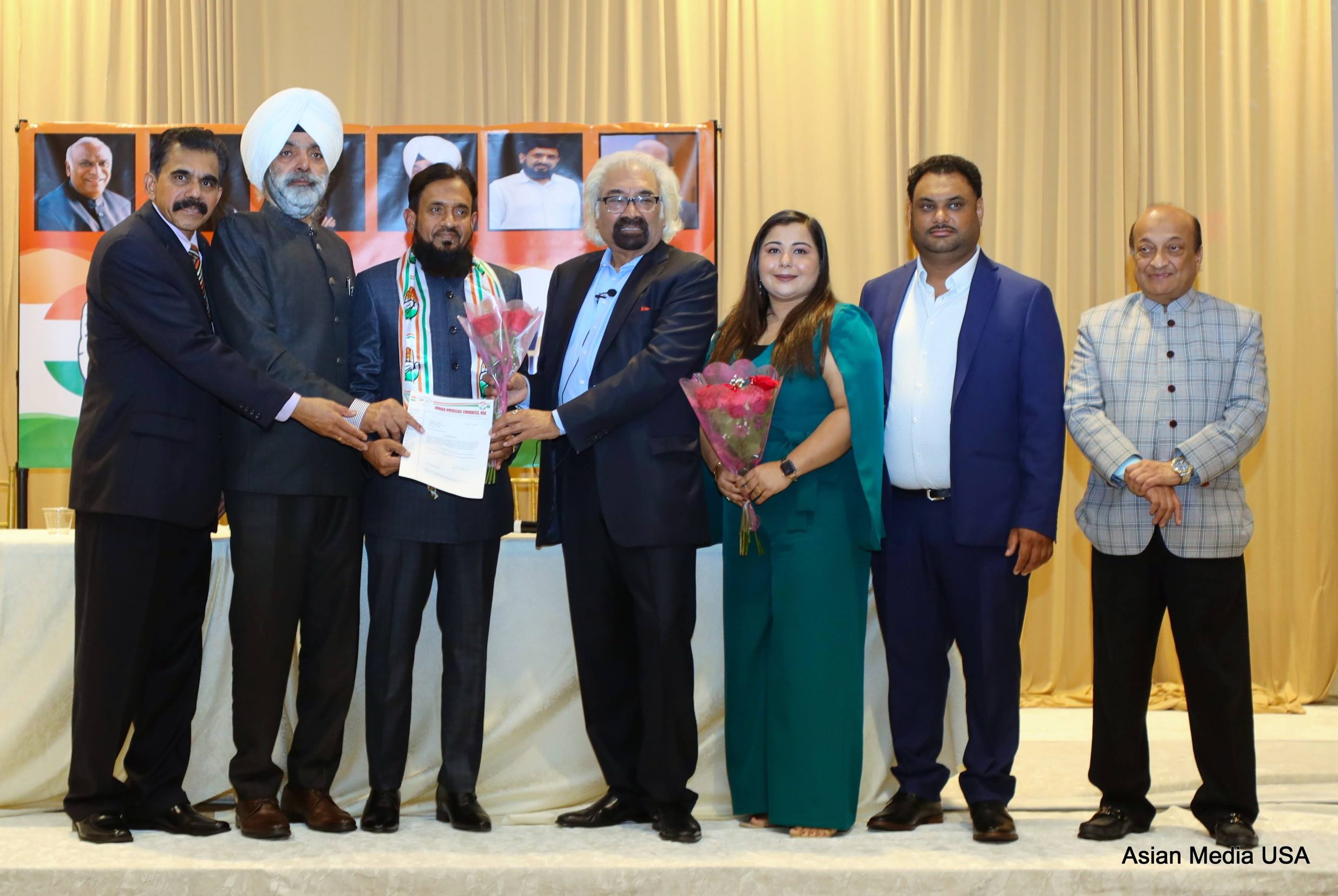

The legislation was signed during a special reception at the Hindu Temple Society of North America in Flushing during Diwali celebrations.

“I believe that a celebration of light should not be commemorated in the dark. That’s why tonight, we took action to bring people together,” Hochul wrote on X.

The press statement from Hochul’s office said that the legislation “amends the education law to declare Diwali a holiday for New York City public schools”.

“Many people of the Hindu, Sikh, Jain, and Buddhist faiths in New York City and throughout the state observe the festival of Diwali and more than 1 billion people around the world celebrate this holiday,” the statement read.

The move came after the New York State legislature on June 9 passed a Bill to make Diwali a school holiday in the city with efforts from NYC Mayor Eric Adams and Indian-origin Assemblywoman Jenifer Rajkumar.

“With the signing of my bill, we have lit an everlasting lamp in the hearts and minds of all New Yorkers… By signing my bill, we say to over 600,000 Hindu, Sikh, Jain, and Buddhist New Yorkers, ‘We see you, we ecognize you, and Diwali is an American holiday,’” Rajkumar, the first Hindu American and first South Asian American woman elected to New York state office, said.

Rajkumar said that for over two decades, the South Asian community has lobbied for the Diwali holiday. Two earlier attempts to pass the legislation in 2021 and 2022 did not succeed.

“In this time of local and global racism and anger, Diwali’s message is critically important and needed. The Diwali celebration not only represents the rich cultural heritage of our diverse community, but also serves as a reminder of the values that bind us together,” State Senator Joseph Addabbo said, thanking Hochul.

According to city officials, more than two lakh New York residents celebrate Diwali which is observed by Hindus, Sikhs, Jains, and some Buddhists.

Earlier this year, Pennsylvania became the first US state to officially ecognize Diwali as a public holiday.
(IANS)

Indian Overseas Congress, USA Appoints Mr. Minhaj Akhtar As The Working President, IOCUSA Midwest Region

The Indian Overseas Congress, USA (IOCUSA) proudly hosted a Membership Drive on 19th October 2023 at the Shalimar Banquet in Chicago, Illinois, where it appointed Mr. Minhaj Akhtar as the working President for the Midwest Region. This event echoed the organization’s continuous mission to galvanize the Indian diaspora toward active socio-political participation.

Indian Overseas Congress USA Appoints Mr Minhaj Akhtar As The Working President IOCUSA Midwest Region 3
Picture: Asian Media USA

The Membership Drive was a hub of insightful dialogues and vibrant discussions, reflecting the IOC, USA’s core tenets of democracy, inclusivity, and celebration of Indian heritage. Over the years, the organization has established a legacy of fostering dialogues between India and its overseas community that have significantly impacted policies and their proper implementation.

The event’s centerpiece was the keynote address by Mr. Sam Pitroda, a distinguished political and technology thought leader. Mr. Pitroda’s political acumen, reflected in his tenure as an advisor to former Indian Prime Minister Rajiv Gandhi and his instrumental role in India’s telecommunication revolution, aligned seamlessly with the event’s essence and the broader objectives of the IOC, USA.

Indian Overseas Congress USA Appoints Mr Minhaj Akhtar As The Working President IOCUSA Midwest Region 1
Picture: Asian Media USA

Mr. Pitroda said, ‘India is all about diversity, inclusion, love, democracy, and all these things are being attacked systematically under the current governance. Congress is an idea that fought for an independent India, and it’s under attack. It is time for us to raise our voices and preserve democracy.” Following his address, Mr. Pitroda engaged in an interactive session, addressing queries from the Indian diaspora present, further enriching the discourse.

The panel featured an array of distinguished and seasoned leaders within the IOC, USA, and the broader community. Mr. Mohinder Singh Gilzian, President of IOCUSA, said in his address, “We are on our way to establishing a team in all the states of the USA and uniting the Indian Diaspora to support freedom and justice for everyone back in our motherland.”

Ms. Sophia Sharma General Secretary IOCUSA, was the moderator of the event. Mr. Gurpreet Singh, Chairman IOCUSA Haryana Chapter, Mr. Satheesan Nair, Executive Vice-President of the Kerala Chapter and Senior Leader of IOCUSA, and Mr. Iftekhar Sharif, a prominent community member, seasoned businessman, and philanthropist, were also present at the event.

This illustrious panel delved into pertinent discussions resonating with the event’s theme, further cementing IOC, USA’s credibility, and the collective endeavor towards a robust India-US partnership. With over 100 attendees, the event provided a rich networking platform and fostered a collaborative spirit amongst like-minded individuals. The Membership Drive was not just a means to augment IOCUSA’s membership but also became a celebration of the diaspora’s collective achievements and aspirations.

About Indian Overseas Congress, USA:

Indian Overseas Congress, USA, is a vanguard in fostering social, economic, and political engagement among the Indian diaspora in the United States. Through various initiatives and events, IOCUSA is committed to crafting a vibrant platform for dialogue and action that propels a stronger India-US alliance.

For those inspired by the event’s objectives and looking to join the Indian Overseas Congress, USA, you are encouraged to contact 646-732-5119 for more information on membership and upcoming events. (www.iocusa.org)

Indigo And Qantas To Extend Codeshare Partnership

The partnership signifies the strengthening of the relationship between the two countries, as a part of Australia-India Economic Cooperation and Trade Agreement.

IndiGo has announced an extension of its codeshare  agreement with Australia’s national airline, Qantas through which IndiGo customers will now be  able to access four new destinations – Sydney, Melbourne, Perth and Brisbane in Australia.

Indigo And Qantas To Extend Codeshare Partnership 2With the new codeshare  routes, passengers can now also fly to Singapore and connect seamlessly to Qantas’ flights between  Singapore and Melbourne, an official statement noted.
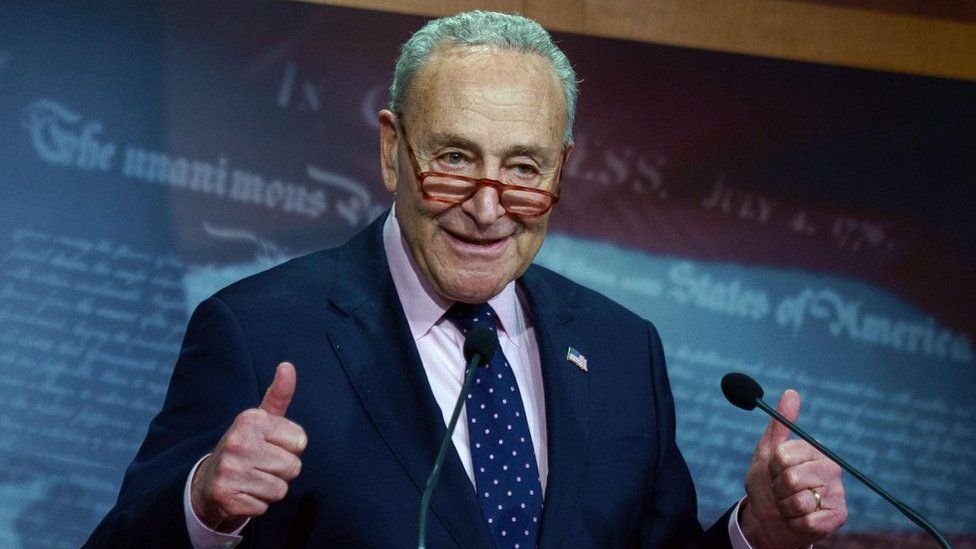

According to a release by Indigo this partnership signifies the strengthening of the relationship between the two countries, as a part of  Australia-India Economic Cooperation and Trade Agreement.

In 2022, Qantas and IndiGo had finalized  codeshare partnership enabling Qantas customers flying on non-stop flights between Australia and India to  connect to 21 destinations in India on IndiGo.

Commenting on the partnership  Pieter Elbers, chief executive officer, IndiGo, said, “The two airlines are the market


leaders in their respective countries and this  agreement will strengthen the bond between the two countries. For IndiGo, placing its code on another  airline and connecting over a mid-point (Singapore) is only the 2nd one of its kind. With this we are now  enabling the vast IndiGo network to connect with Qantas’ unmatched reach, we create more opportunities  for trade and tourism between both nations.”

“With the thriving growth of the Indian aviation industry, this  agreement will also enhance our international connectivity and remain committed to our promise of  providing on-time, affordable, courteous, and hassle-free travel experiences to our customers across our  wide network,” he added.

NFT Exhibition By Indian-American Girl Enthralls Kerala Kids

An exhibition of non-fungible token (NFT) digital paintings by an Indian American girl Teresa Melvin has captured the imagination of art enthusiasts here. The 14-year-old girl, originally from Kerala, lives in Texas.

She is also conducting a workshop on NFT art for children in the age group of 8-12 as part of the expo. Teresa has by now sold more than 1000 digital art works as NFT worth Rs 3 million. The show titled ‘Coming Home’ features over 100 works done by Teresa in a span of two years and is being displayed on 11 screens.

The workshop focuses on character art besides she also explains the process of converting digital art into derivative art.

Teresa is the daughter of Palakkad native Melvin and Nimmy. Both of her parents have been trained in painting at RLV College, Tripunithura.

Teresa is renowned for her creation of the unique characters Ava Ramona. She has created and sold over 1,000 artworks on prominent platforms.

She is a recipient of the ‘Creator of the Year’ award by Met Ams, an international web3 event in Amsterdam. Her artworks have been exhibited at major international events across India, the UK, Dubai, Bali, Canada, and the US. (IANS)

US Averts Government Shutdown With Stopgap-Funding Bill

The U.S. Congress passed a stopgap funding bill late on Saturday with overwhelming Democratic support after Republican House Speaker Kevin McCarthy backed down from an earlier demand by his party’s hardliners for a partisan bill.

The Democratic-majority Senate voted 88-9 to pass the measure to avoid the federal government’s fourth partial shutdown in a decade, sending the bill to President Joe Biden, who signed it into law before the 12:01 a.m. ET (0401 GMT) deadline.

McCarthy abandoned party hardliners’ insistence that any bill pass the House with only Republican votes, a change that could cause one of his far-right members to try to oust him from his leadership role.

The House voted 335-91 to fund the government through Nov. 17, with more Democrats than Republicans supporting it.

US Averts Government Shutdown With Stopgap Funding Bill (BBC)
Picture: BBC

That move marked a profound shift from earlier in the week, when a shutdown looked all but inevitable. A shutdown would mean that most of the government’s 4 million employees would not get paid – whether they were working or not – and also would shutter a range of federal services, from National Parks to financial regulators.

Federal agencies had already drawn up detailed plans that spell out what services would continue, such as airport screening and border patrols, and what must shut down, including scientific research and nutrition aid to 7 million poor mothers.

“The American people can breathe a sigh of relief: there will be no government shutdown tonight,” Democratic Senate Majority Leader Chuck Schumer said after the vote. “Democrats have said from the start that the only solution for avoiding a shutdown is bipartisanship, and we are glad Speaker McCarthy has finally heeded our message.”

DEMOCRATS CALL IT A WIN

Some 209 Democrats supported the bill, far more than the 126 Republicans who did so, and Democrats described the result as a win.

“Extreme MAGA Republicans have lost, the American people have won,” top House Democrat Hakeem Jeffries told reporters ahead of the vote, referring to the “Make America Great Again” slogan used by former President Donald Trump and many hardline Republicans.

Democratic Representative Don Beyer said: “I am relieved that Speaker McCarthy folded and finally allowed a bipartisan vote at the 11th hour on legislation to stop Republicans’ rush to a disastrous shutdown.”

McCarthy’s shift won the support of top Senate Republican Mitch McConnell, who had backed a similar measure that was moving through the Senate with broad bipartisan support, even though the House version dropped aid for Ukraine.

Democratic Senator Michael Bennet held the bill up for several hours trying to negotiate a deal for further Ukraine aid.

“While I would have preferred to pass a bill now with additional assistance for Ukraine, which has bipartisan support in both the House and Senate, it is easier to help Ukraine with the government open than if it were closed,” Democratic Senator Chris Van Hollen said in a statement.

McCarthy dismissed concerns that hardline Republicans could try to oust him as leader.

“I want to be the adult in the room, go ahead and try,” McCarthy told reporters. “And you know what? If I have to risk my job for standing up for the American public, I will do that.”

He said that House Republicans would push ahead with plans to pass more funding bills that would cut spending and include other conservative priorities, such as tighter border controls.

CREDIT CONCERNS

The standoff comes just months after Congress brought the federal government to the brink of defaulting on its $31.4 trillion debt. The drama has raised worries on Wall Street, where the Moody’s ratings agency has warned it could damage U.S. creditworthiness.

Congress typically passes stopgap spending bills to buy more time to negotiate the detailed legislation that sets funding for federal programs.

This year, a group of Republicans has blocked action in the House as they have pressed to tighten immigration and cut spending below levels agreed to in the debt-ceiling standoff in the spring.

The McCarthy-Biden deal that avoided default set a limit of $1.59 trillion in discretionary spending in fiscal 2024. House Republicans are demanding a further $120 billion in cuts.

The funding fight focuses on a relatively small slice of the $6.4 trillion U.S. budget for this fiscal year. Lawmakers are not considering cuts to popular benefit programs such as Social Security and Medicare.

“We should never have been in this position in the first place. Just a few months ago, Speaker McCarthy and I reached a budget agreement to avoid precisely this type of manufactured crisis,” Biden said in a statement after the vote. “House Republicans tried to walk away from that deal by demanding drastic cuts that would have been devastating for millions of Americans. They failed.”

Reporting by David Morgan, Makini Brice and Moira Warburton, additional reporting by Kanishka Singh, writing by Andy Sullivan; Editing by Scott Malone, Andrea Ricci and William Mallard

Nikki Haley Dismisses Donald Trump’s Lead In Presidential Polls: Says, GOP Has To “Pay The Price” For The Former President’s Presence In The Party

Indian American presidential primary candidate Nikki Haley attached little importance to her opponent Donald Trump’s lead among voters in the upcoming elections. In an interview with Fox News on November 12, Haley admitted that Trump has “strong support” but he is followed by “drama and negativity” and that Republicans will fail to win if he wins the GOP nomination.

Former President Trump has emerged as the GOP frontrunner, and polls have found him to be ahead of reigning President Joe Biden, but Haley believes the party will not benefit from his victory in the primary. “I think certainly Trump has some strong support. I’ve always said he was the right president at the right time and I agree with a lot of his policies,” she told Fox News. “The problem is, drama and chaos follow him, whether fairly or not, it is constantly following him and Americans feel it,” she added.

Haley further blamed Trump for the losses faced by GOP candidates recently and the party’s negatively impacted performance. Haley said the GOP has to “pay the price” for the former president’s presence in the party, as per a report. Haley said the Republican party should brace itself for more losses on the ballot races if Trump becomes the nominee for the Presidential elections, and endorsed herself as the better candidate.

“We need to make sure we have a new conservative leader. Republicans have lost the last seven out of eight popular votes for president. The way you do that is you send someone in there that doesn’t just beat Biden by two or three points like Trump does, you get somebody that beats Biden between nine and 13 points,” she said. Haley’s campaign had received a significant boost after the initial debates and polls suggested she could defeat President Biden by a wider margin than her primary rivals.

Haley also said she could be the candidate to lead the GOP to “win up and down the ticket, governor’s races, congressional seats, all of those seats.” She added, “It’s not just the presidential. We’re trying to win across the board. I can do that.”

Lack of Support Among South Asian Americans

Despite being prominently known as Indian American candidates in the race to the Oval Office in 2024, Republicans Vivek Ramaswamy and Nikki Haley are not as popular among or known to Asian Americans, a new poll conducted by AAPI Data and the Associated Press-National Opinion Research Center (NORC) at the University of Chicago revealed.

According to the results, while more AAPI adults have unfavorable views than favorable views of Haley and Ramaswamy, a large proportion of them said they did not know enough about the two candidates to form an opinion.

The study found that only 18 percent and 23 percent of Asian American and Pacific Islander adults had favorable views of Ramaswamy and Haley, respectively, and 36 percent viewed both candidates as unfavorable. 40 percent of the respondents said they were not familiar with Haley, while Ramaswamy is unfamiliar to 46 percent of them.

“This is the first nationally representative survey that includes the views of Asian Americans and Pacific Islanders about the major presidential candidates,” said Karthick Ramakrishnan, founder and director of AAPI Data. “Rather than speculate about where AAPIs stand on candidates like Nikki Haley and Vivek Ramaswamy, we have timely and reliable data that we will continue to follow through the rest of the presidential primary season.

The survey also dug into the political inclination of AAPI communities, with about half identifying as Democrats, over a quarter identifying as Republican, and about one in five identifying as independent or having no attachment to any party.

The current President Joe Biden and Vice President Kamala Harris are viewed more favorably among the AAPI communities, while former President and current contender for the Republican nomination for the upcoming presidential elections, Donald Trump, is viewed unfavorably, as is Florida Gov. Ron DeSantis.

Diwali Celebrations Held At BAPS Swaminarayan Akshardham

Diwali was celebrated with grandeur at BAPS Swaminarayan Akshardham, featuring an Annakut with hundreds of food items, intricate rangoli designs, 2,700 diyas, and festive lights on Sunday, November 12, 2023.

The largest Hindu mandir in the USA, Akshardham is an iconic testament to Hindu art, architecture, and spirituality, offering profound insights into Hindu traditions and teachings.

Diwali Celebrations Held At BAPS Swaminarayan AkshardhamThe BAPS Swaminarayan Akshardham drew thousands of worshippers throughout the day. There was a long line to take part in the Ceremony of Light, a practice of waving a lighted wick before the sacred image of God. The food symbolizes devotion.

“Families will come together to bake what they like. You’ll see cookies and traditional Indian sweets and delicacies. Because we celebrate the mountain of food, you’ll see many items stacked like a mountain,” said Viren Shah, who is among the many celebrating the festival.

Billions of people around the world are celebrating Diwali, the Hindu festival of lights. The holiday is bringing people together across Central Illinois, too. The Hindu, Jain and Sikh faiths are the primary faiths that celebrate Diwali. The festivities span multiple days before and after the official date.

The holiday marks new beginnings for Hindus and a chance to enter their Lunar New Year with fortuitous blessings from the goddess of wealth. It’s their biggest celebration, and is akin to a mix of winter holidays and New Years.

As Indian immigrants have crossed oceans and borders for new countries, the holidays and traditions they brought with them have both endured and evolved with the next generation. Diwali – a festival with various meanings, histories and names depending on the region and religion observing it – is no exception.

Every corner of Akshardham invites everyone to embark on a transformative journey that guides them toward the radiant joy of the Divine. BAPS Swaminarayan Akshardham is a spiritual campus created by the BAPS Swaminarayan Sanstha.

Over 12,500 people volunteered in the creation of BAPS Swaminarayan Akshardham. Students, parents,Diwali Celebrations Held At BAPS Swaminarayan Akshardham 3 professionals, and more, dedicated their time and effort—for two weeks, six months, two years, or even more than a decade—to make Akshardham a reality.

The volunteers came to help build the mandir but discovered transformative experiences. Following are a few stories highlighting the devotion and sacrifice of the volunteers excerpted from the book, People of Akshardham: Stories Beyond the Stones.

Akash Patel, a 39-year-old from Charlotte, North Carolina, reflects on his upbringing and the importance of leaving a meaningful legacy for his daughter. Despite facing financial challenges, Akash worked his way up the corporate ladder, eventually joining Ernst & Young. He decided to volunteer at Akshardham, a spiritual place, during a two-week vacation. This experience led him to realize that material wealth alone wasn’t enough to provide purpose and meaning. Inspired by the spiritual atmosphere, he and his wife, Vandana, made a life-changing decision to move to NJ and volunteer at Akshardham while raising their daughter, Prapti. Akash’s journey highlights the importance of imparting moral and spiritual values to the next generation, valuing inner peace, and leaving a lasting legacy beyond material wealth.

Harmiksha Patel, a 24-year-old registered nurse from Brampton, Ontario, lost her father, Snehal, to cancer in 2020. When presented with an opportunity to serve in the Akshardham construction project, she initially hesitated but ultimately chose to volunteer, as she felt that her dad would be so happy if he knew I was volunteering at Akshardham. For nearly a year, she served in the Akshardham’s inner sanctum, cleaning, treating, repairing, and grouting stones. Harmiksha worked with a sense of reverence that expanded over time. “Every stone, every part of this mandir is touched by God, and so are the people building it: these volunteers have done so much for my guru, and we are all connected because of him. Volunteering in Akshardham has lessened the gap between me and the people around me.” She wishes to bring this attitude home and learn to recognize the beauty in all people.

Yesha Shah, 27, of Skokie, Illinois, volunteered for three days in 2019 but when she returned to pharmacy school, she missed the fulfillment she had felt while volunteering. She took a 1.5-year leave to continue volunteering to be part of this once-in-alifetime opportunity. She served as co-lead of the rebar team. Inspired by the virtues of her teammates, Yesha strove to serve humbly, accept criticism positively, and develop patience. Reflecting on the impact of her time volunteering, Yesha said, “I used to get very easily hurt if someone pointed out my mistakes. Over the last year, I stopped dwelling so much on the external factors I can’t change and chose to focus on things that I can change in myself. This has helped me feel more at peace with myself.”

As a 10-year-old,Nilkanth Rao, 40, accompanied his father, Ramesh, to Kandla, Gujarat, where artisans carved stones for the BAPS mandir in London. Pramukh Swami Maharaj was visiting, and he addressed the artisans, which Nilkanth remembers vividly. Inspired by his father’s years of volunteering in mandir construction, Nilkanth began serving on the Akshardham site in 2012 and joined full-time in January 2022, taking a year’s sabbatical from his work as a manager at Accenture Federal Service. He weatherproofed, cut, clamped, placed, and repaired stones throughout the Akshardham campus. Nilkanthʼs volunteering has taught him to imbue all his actions with spirituality. “With the right sentiments, there is no real difference between physical service on site and devotion we offer in the mandir. Every stone we place, every stone we dip, is an offering to God.” (Courtesy: News India Times)

Sleep Duration Affects Diabetes Risk in Women, Study Reveals

A recent study conducted by researchers at Columbia University has highlighted the potential connection between inadequate sleep and an increased risk of diabetes in women, particularly in postmenopausal individuals. The findings emphasize the importance of sufficient sleep in maintaining optimal health, shedding light on the impact of even a mild sleep deficit over a six-week period.

Lead researcher Marie-Pierre St-Onge, director of the Center of Excellence for Sleep and Circadian Research at Columbia University, explained the significance of the study, stating, “Throughout their lifespan, women face many changes in their sleep habits due to childbearing, child-rearing, and menopause. And more women than men have the perception they aren’t getting enough sleep.”

The study enrolled 38 healthy women, 11 of whom had undergone menopause. All participants consistently slept for at least seven hours each night, falling within the recommended range of seven to nine hours for optimal health. However, a substantial portion of the American population fails to meet this guideline.

In a randomized order, the women participated in two phases of the study. In one phase, they maintained their regular sleep duration, while in the other phase, they delayed bedtime by an hour and a half, resulting in a total sleep duration of around six hours. Each phase spanned six weeks.

The results of the study indicated that reducing sleep by just 90 minutes over six weeks led to a notable increase in insulin resistance, particularly among women accustomed to adequate sleep. Fasting insulin levels rose by over 12% overall and 15% among premenopausal women. Insulin resistance increased by nearly 15% overall and exceeded 20% in postmenopausal women.

Surprisingly, the study found that the impact of sleep loss on insulin resistance was not associated with an increase in belly fat, a known driver of insulin resistance. St-Onge remarked on this, stating, “The fact that we saw these results independent of any changes in body fat, which is a known risk factor for type 2 diabetes, speaks to the impact of mild sleep reduction on insulin-producing cells and metabolism.”

Although average blood sugar levels remained stable for all participants during the study, the researchers cautioned that changes in insulin resistance could lead to long-term increases in blood sugar levels.

The study, published in the journal Diabetes Care on Nov. 13, marks the first instance where a mild sleep deficit maintained for six weeks has been shown to elevate the risk of diabetes. This novel insight prompts further investigation into the potential benefits of improved sleep on blood sugar control and glucose metabolism.

St-Onge and her team are now set to explore whether enhancing sleep quality can positively influence blood sugar control and glucose metabolism. This avenue of research could provide valuable insights into preventive measures against diabetes and the role of adequate sleep in overall metabolic health.

The study underscores the importance of recognizing sleep as a crucial factor in maintaining women’s health, particularly in the context of diabetes risk. The findings advocate for prioritizing sufficient sleep, especially considering the challenges women face in various life stages that can disrupt their sleep patterns. As research continues, a clearer understanding of the intricate relationship between sleep duration, metabolic health, and disease risk is likely to emerge, paving the way for targeted interventions and improved public health awareness.

Gender Disparities in U.S. Life Expectancy: A Deep Dive into the Latest Research

Recent research published on November 13 in JAMA Internal Medicine reveals a concerning trend in U.S. life expectancy, highlighting a growing gender disparity. As of 2021, women in the United States are projected to outlive men by approximately six years, according to the study. This revelation comes amid a broader decline in overall life expectancy, which currently hovers around 76 years. The study sheds light on the contributing factors and emphasizes the need for targeted interventions to address the root causes behind this growing divide.

Gender-Based Life Expectancy Gap:

The gender-based life expectancy gap in the U.S. has reached its widest point since 1996, with women surpassing men in longevity. In 2021, U.S. men had a life expectancy of 73.5 years, in contrast to 79.3 years for women. Historically, women have tended to live longer than men, influenced by both biological and behavioral factors. Hormonal differences and healthier lifestyle choices, such as more frequent doctor visits and lower rates of smoking and excessive drinking among women, have contributed to this trend.

Pre-existing Trend and Acceleration:

The widening gender gap did not emerge solely in response to the COVID-19 pandemic; rather, it began before the pandemic and accelerated from 2019 to 2021. The authors of the study highlight that deaths from COVID-19 and unintentional injuries, including accidental drug overdoses, were the primary drivers behind this acceleration. However, differential rates of homicide, heart disease, and suicides also played a role in this disturbing trend.

Causes of Widening Gap:

The report identifies specific causes contributing to the widening gender-based life expectancy gap. Notably, deaths from COVID-19 and unintentional injuries, categorized to include drug overdoses, were major contributors. Men were disproportionately affected by these causes, as established by existing data that highlights higher mortality rates among men compared to women. In 2021, heart disease, COVID-19, and unintentional injuries ranked among the top five causes of death, underscoring the gravity of the situation.

The Role of Behavioral and Biological Factors:

While the study emphasizes the impact of external factors such as the pandemic and unintentional injuries, it also underscores the enduring influence of behavioral and biological differences. Men’s higher susceptibility to deaths from homicide, heart disease, and suicide compared to women contributes significantly to the widening gender gap. Recognizing and addressing these factors is crucial for developing effective strategies to mitigate the disparities.

Factors Mitigating the Gender Gap:

The authors acknowledge that certain factors helped mitigate the gender gap, preventing it from widening even further. Increases in maternal mortality and decreases in cancer deaths among men had a balancing effect. These findings highlight the complexity of the forces at play and underscore the need for a nuanced understanding of the multiple factors influencing life expectancy.

Implications for Public Health:

The research underscores the ongoing importance of addressing the impact of COVID-19 on life expectancy. Limiting the spread of the virus remains a critical priority. Additionally, the study emphasizes the need for comprehensive strategies to improve national mental health and prevent drug overdoses and suicides, often labeled as “deaths of despair” by experts. These interventions are crucial for addressing the root causes of the widening gender-based life expectancy gap.

The latest research on U.S. life expectancy reveals a disconcerting trend, with women projected to live significantly longer than men. While external factors such as the COVID-19 pandemic and unintentional injuries contribute to this widening gap, behavioral and biological differences also play a crucial role. Understanding the multifaceted nature of these influences is essential for developing targeted interventions to address the root causes and promote a more equitable and healthier society. As the findings highlight, a comprehensive approach that addresses both pandemic-related challenges and longstanding health disparities is imperative for improving overall life expectancy and well-being in the United States.

Unraveling the Complexity: Examining the Gaza Conflict Through the Lens of Genocide

In the ongoing conflict in Gaza, which has seen more than 11,000 lives lost since October 7, tensions have escalated, prompting international concern and calls for action. Following a deadly Hamas attack, Israel declared war, leading to a military offensive in the densely-populated region home to over 2 million people. Despite a four-hour daily humanitarian pause in northern Gaza, brokered by U.S. President Biden, concerns persist over the well-being of civilians caught in the crossfire.

The severity of the situation has prompted significant developments, including the resignation of Craig Mokhiber, a United Nations director, citing the organization’s “failure” to address what he deemed a “textbook case of genocide.” A coalition of U.N. experts echoed this sentiment, expressing concern about the Palestinians facing a “grave risk of genocide.” Furthermore, three Palestinian human rights organizations have taken legal action by filing a lawsuit with the International Criminal Court (ICC), seeking arrest warrants against Israeli leaders, including Prime Minister Benyamin Netanyahu, for alleged genocide.

Amidst these developments, scholars have weighed in on the classification of the conflict as genocide, considering legal, social scientific, and conventional perspectives. The legal definition, as per the U.N. Convention on the Prevention and Punishment of the Crime of Genocide, requires proving specific intent to destroy a national, ethnic, racial, or religious group. However, experts acknowledge the difficulty in establishing genocidal intent definitively.

Ernesto Verdeja, a professor at the University of Notre Dame, notes the narrow focus of the legal definition, emphasizing the exclusion of victims based on socioeconomic status or political identity. Alexander Hinton, UNESCO Chair on genocide prevention at Rutgers University, emphasizes a broader, colloquial definition centered on large-scale destruction and acts against a population.

Raz Segal, the program director of genocide studies at Stockton University, categorically labels the current situation as a “textbook case of genocide.” He points to Israeli forces’ alleged genocidal acts, including killing, causing bodily harm, and implementing measures to destroy the group. Segal cites explicit statements of intent from Israeli leaders, such as President Isaac Herzog’s remarks, suggesting a broad characterization of all Palestinians as “an enemy population.”

Scholars differ in their assessments. David Simon of Yale University emphasizes Israel’s explicit goal of targeting Hamas, not a religious, ethnic, or racial group, raising doubts about meeting the legal definition of genocide. Ben Kiernan, director of the Cambodian Genocide Program at Yale University, concurs, stating that Israel’s actions, while indiscriminate, do not meet the legal threshold for genocide.

Victoria Sanford, a City University of New York professor, draws parallels between the Gaza situation and the Guatemalan genocide, highlighting similarities in the targeting of Mayans and Palestinians. Sanford, along with other scholars, supports legal action, urging the ICC to address the “Israeli intention to commit genocide visibly materializing on the ground.”

While scholars debate the classification of the conflict, some argue that such debates are a “bad use of focus.” Verdeja suggests that proving genocide takes time and does not prevent further loss of life. Hinton echoes this sentiment, cautioning against rigidly focusing on defining a moment as genocide, emphasizing the need for broader perspectives.

The significance of labeling the conflict as genocide is a point of contention among scholars. Segal underscores the importance of truth-telling, drawing parallels with past instances where reluctance to use the term hindered intervention. He argues for naming the situation truthfully to facilitate a reckoning with the events that unfolded and to guide future actions.

In the complex landscape of the Gaza conflict, the discourse on genocide highlights the challenges of applying legal definitions to evolving situations while emphasizing the broader impact on affected populations. As international attention remains focused on the region, the nuanced perspectives of scholars contribute to a comprehensive understanding of the ongoing crisis.

India Plummets in Global Talent Competitiveness Index, Ranking 103rd – Lowest Among BRICS Nations

The Global Talent Competitiveness Index has witnessed a significant decline for India, plummeting from the 83rd position a decade ago to the 103rd rank in the latest report released earlier this month. Among 134 countries evaluated, India finds itself positioned between Algeria, ranked 102, and Gautemala, ranked 104, both categorized as lower-middle-income countries. This places India well below the median score of the countries assessed. Notably, India’s current standing in the index is the lowest among BRICS nations.

Developed by the renowned chain of business schools, INSEAD, the Global Talent Competitiveness Index serves as a measure of how countries and cities grow, attract, and retain talent. The index comprises two sub-indices: input, which assesses regulatory and business environments, as well as efforts to foster and retain talent, and output, which evaluates the quality of talent.

India’s decline in the GTCI is particularly worrisome, considering the government’s frequent reference to scores on various business indices such as ‘Ease of Doing Business’ and the controversial World Bank-led ‘Doing Business’ scores to bolster its case. Notably, the World Bank Report on ‘Doing Business’ was discontinued due to irregularities in its measurement.

India’s performance in the GTCI stands in stark contrast to other emerging countries that have shown improvement on this index. China, Indonesia, and Mexico, in particular, have been highlighted for their noteworthy progress. China, for instance, has transitioned from being a talent mover to a talent champion, while Indonesia has made significant strides in talent competitiveness over the past decade. Mexico has transformed from a talent laggard to a talent mover, and Brazil is on track to potentially categorize as a talent mover.

In the context of BRICS nations, China leads the group with a rank of 40, followed by Russia at 52, South Africa at 68, and Brazil at 69. In contrast, India’s rank of 103 is the lowest among BRICS countries.

The report emphasizes that India’s talent competitiveness witnessed an increase up to 2020 but has regressed in each of the three subsequent years. A primary factor contributing to this decline is a downturn in business sentiment, significantly impacting the ability to attract talent, with India now ranked 132nd out of 134 in this aspect. This decline extends to both attracting talent from overseas (127th in External Openness sub-pillar) and within the country (129th in Internal Openness).

The report also highlights an increased skills mismatch and greater difficulty in finding skilled employees, positioning India at 121st in both the ‘Employability’ sub-pillar and the ‘Vocational and Technical Skills’ pillar. However, it does acknowledge India’s strength in the ‘Global Knowledge Skills’ category, where innovation and software development contribute to its 69th position in the Talent Impact sub-pillar.

In terms of global rankings, Singapore, Switzerland, and the United States hold the top three positions. European countries continue to dominate the ‘Top 25’ rankings, with Japan dropping out for the first time, and South Korea ascending to take its place.

Despite the debates surrounding India’s position on various business indices, experts argue that focusing on whether the current situation can be labeled a genocide is a misplaced emphasis. Some scholars, like Verdeja, express the view that debates on this matter divert attention and time from addressing the ongoing crisis, stating, “Proving whether something is a genocide takes time and does not actually stop people from being killed.” Hinton concurs, asserting that the fixation on defining a specific moment as genocide can lead to a rigid focus, obscuring the broader perspective of addressing the immediate challenges and finding solutions.

In the broader context, scholars note the significance of using the term genocide to describe specific situations. Segal cites the example of the U.S. government’s refusal to label crimes against the Hutus in Rwanda as genocide, as doing so would have obligated intervention. This lack of action allowed the massacre to continue unabated. Segal emphasizes the importance of naming a situation for what it is, stating, “Without sticking to the truth, we’ll never have a truthful reckoning of how we arrived at the seventh of October, and how we go forward.”

CIA Labels Vishva Hindu Parishad (VHP) and Bajrang Dal as ‘Religious Militant Organizations’ in Latest World Factbook, Sparks Strong Rejection and Legal Threats from Indian Officials

The latest edition of the ‘World Factbook’ by the Central Intelligence Agency (CIA) has labeled the Vishva Hindu Parishad (VHP) and Bajrang Dal as “religious militant organizations.” In the report, the CIA, the intelligence arm of the US government, classifies them as “political pressure groups,” denoting organizations involved in politics or exerting political influence without leaders standing for legislative election.

The RSS, Hurriyat Conference, and Jamiat Ulema-e Hind are also included in India’s list of political pressure groups by the CIA. The RSS is described as a “nationalist organization,” the Hurriyat Conference as a “separatist group,” and the Jamiat Ulema-e Hind as a “religious organization.”

The CIA’s ‘World Factbook’ is an annual publication providing intelligence and factual reference material on countries or issues to the US government. Covering aspects such as history, people, government, economy, energy, geography, communications, transportation, military, and transnational issues, this resource has been available since 1962, with public access granted in 1975. It serves as essential information for US policymakers and is coordinated across the US intelligence community, alongside ‘The President’s Daily Brief’ and ‘National Intelligence Estimates.’

Reacting to the CIA’s characterization, Khemchand Sharma, former national convenor of the BJP’s Samvad cell, dismissed the assertions as “fake news.” He vehemently rejected the classification of VHP and Bajrang Dal as religious militant organizations, stating that they are recognized nationalist groups. Sharma announced the initiation of legal proceedings against the CIA’s reference.

In its ‘World Factbook,’ the CIA designates the VHP and Bajrang Dal as “religious militant organizations,” classifying them as “political pressure groups” engaged in political activities without contesting legislative elections.

The RSS, Hurriyat Conference, and Jamiat Ulema-e Hind are also listed as political pressure groups in India. The CIA describes the RSS as a “nationalist organization,” the Hurriyat Conference as a “separatist group,” and the Jamiat Ulema-e Hind as a “religious organization.”

The ‘World Factbook’ is an annual publication by the Central Intelligence Agency (CIA) that offers intelligence and factual reference material on various aspects of countries or issues to the US government. Covering a wide range of topics, including history, government, economy, energy, and military, it serves as a crucial resource for US policymakers. The CIA has been publishing this material since 1962, with public access granted in 1975.

Khemchand Sharma, former national convenor of the BJP’s Samvad cell, strongly rejected the CIA’s classification of VHP and Bajrang Dal as “religious militant organizations,” labeling it as “fake news.” Sharma emphasized that these groups are recognized as nationalist organizations and announced plans to initiate legal proceedings against the CIA’s reference.

“We completely reject CIA reference to VHP and Bajrang dal as religious militant organizations.. these r the nationalist organizations, all knows it. Legal proceeding will be initiated against this reference soon,” Sharma tweeted.

The CIA’s ‘World Factbook’ designates the VHP and Bajrang Dal as “religious militant organizations,” categorizing them as “political pressure groups” involved in political activities without participating in legislative elections.

In addition to these groups, the RSS, Hurriyat Conference, and Jamiat Ulema-e Hind are listed as political pressure groups in India. The RSS is identified as a “nationalist organization,” the Hurriyat Conference as a “separatist group,” and the Jamiat Ulema-e Hind as a “religious organization.”

The ‘World Factbook’ is an annual publication by the Central Intelligence Agency (CIA) that provides intelligence and factual reference material on various aspects of countries or issues to the US government. Covering topics such as history, government, economy, and military, it is a vital resource for US policymakers. The CIA has been publishing this material since 1962, making it publicly accessible in 1975.

Reacting to the CIA’s classification, Khemchand Sharma, former national convenor of the BJP’s Samvad cell, dismissed the assertions as “fake news.” He strongly rejected the characterization of VHP and Bajrang Dal as “religious militant organizations,” asserting that these groups are recognized as nationalist organizations. Sharma announced plans to initiate legal proceedings against the CIA’s reference.

Bill Gates Foresees a Revolution: Personal AI Agents for All in the Next Five Years

Bill Gates, a co-founder of Microsoft, has made a significant prediction regarding the future of artificial intelligence (AI), envisioning a world where everyone will have a sophisticated robot “agent” working on their behalf. This revelation was reported by Fortune, where Gates emphasized that a personal assistant powered by advanced AI technology would soon be accessible to anyone with an internet connection, surpassing the limitations of current technology. Gates expressed his view that despite the existing advancements, current software is still relatively limited in intelligence but anticipates a complete transformation within the next five years.

“In the near future, anyone who’s online will be able to have a personal assistant powered by artificial intelligence that’s far beyond today’s technology,” remarked the billionaire, highlighting the transformative potential of AI. Gates emphasized the proactive nature of these future agents, stating, “Agents are smarter. They’re proactive—capable of making suggestions before you ask for them.”

The tech luminary foresees these AI-powered personal assistants being capable of a wide range of tasks, including planning entire trips for users. Gates explained, “When asked, it will recommend things to do based on your interests and propensity for adventure, and it will book reservations at the types of restaurants you would enjoy.” He contrasted this with the present scenario where achieving such personalized planning requires the engagement of a travel agent, involving both payment and time-consuming communication.

Gates’ predictions align with the ongoing advancements in AI, marked by the introduction of platforms such as OpenAI’s ChatGPT, Microsoft’s Bing, Google Bard, and Elon Musk’s Grok. The technology magnate anticipates that AI tools will surpass the functionalities of traditional productivity tools, envisioning a future where these agents can assist in various aspects of life, from business planning to generating product visualizations.

“If you have an idea for a business, an agent will help you write up a business plan, create a presentation for it, and even generate images of what your product might look like,” Gates explained, emphasizing the expanded role of AI agents beyond conventional productivity tools. He further speculated that companies would integrate these agents directly into their operations, making them accessible to employees for consultation and participation in meetings.

Contrary to the notion of a single dominating company in the AI agent business, Gates predicts a competitive landscape with numerous companies entering the fray. While acknowledging that most AI agents may come with a price tag, he anticipates intense competition driving down costs. Currently embedded in software like word processors and spreadsheets, Gates envisions a future where these agents operate independently, providing assistance across various tasks irrespective of the work environment.

Gates envisions AI agents being utilized for diverse purposes, handling more intricate tasks than contemporary voice assistants. He illustrated this by describing scenarios where these agents could facilitate thoughtful gestures, such as sending flowers to a friend who has undergone surgery or coordinating meetups with old college roommates. Gates envisions a seamless integration of these agents into daily life, even providing timely reminders about significant life events, demonstrating their potential to enhance and simplify various aspects of life.

Bill Gates anticipates a paradigm shift in the role of AI, with advanced agents becoming integral to daily life, offering comprehensive assistance across a spectrum of activities. The landscape he envisions is one of increased accessibility, competition, and a broadened scope for AI agents, poised to redefine the way individuals interact with technology and navigate their daily lives.

-+=