PM Modi to Attend G7 Summit in Italy Amid Global Tensions: Key Leaders and Agenda

Prime Minister Narendra Modi, in his inaugural overseas visit since assuming office for a third consecutive term, is set to participate in the annual summit of the G7 advanced economies in Italy this week. The summit, slated from June 13 to 15, is expected to grapple with pressing global issues such as the ongoing conflict in Gaza and the intensifying war in Ukraine. The venue for this high-profile gathering is the lavish resort town of Borgo Egnazia in Italy’s Apulia region.

The summit will see the participation of prominent world leaders including US President Joe Biden, French President Emmanuel Macron, Japanese Prime Minister Fumio Kishida, and Canadian Prime Minister Justin Trudeau. Notably, there is a scheduled meeting to discuss the Russian invasion of Ukraine, with President Volodymyr Zelenskyy.

Modi’s travel itinerary, as per sources familiar with the matter, indicates his departure for Italy on June 13, with a return slated for late June 14. This marks Modi’s premier foreign visit since commencing his third term as prime minister. While the formal announcement of Modi’s trip to Italy is pending, sources suggest he will be accompanied by a high-level delegation comprising NSA Ajit Doval, Foreign Secretary Vinay Kwatra, and External Affairs Minister S Jaishankar. Among the slated bilateral engagements, the prime minister is set to meet with Giorgia Meloni, the prime minister of Italy.

It’s noteworthy that Modi had attended the previous G7 summit in Hiroshima last May. Ahead of the summit, he engaged in discussions with Zelenskyy and various other global leaders. The G7, consisting of the United States, the United Kingdom, France, Italy, Germany, Canada, and Japan, is pivotal in shaping global agendas. Italy’s current presidency of the G7 entails hosting the summit.

Under Italy’s presidency, there is a clear emphasis on upholding the rules-based international order. Italy contends that Russia’s aggression towards Ukraine undermines these foundational principles, leading to escalating instability and crises worldwide. Additionally, the G7 aims to accord significant attention to the Middle East conflict due to its far-reaching global ramifications.

Originally established as the G8 in 1997, with Russia included, the bloc saw an expansion until 2013. However, Russia’s involvement was suspended in 2014 following its annexation of Crimea. As per tradition, the host country extends invitations to various countries and international organizations for summit participation.

Italy, besides India, has invited leaders from 11 developing nations across Africa, South America, and the Indo-Pacific region. Interestingly, despite not being a G7 member, the European Union participates in the annual summit, indicative of the event’s global significance.

US Woman Swindled of ₹6 Crore in Fake Jewelry Scam in Rajasthan

A US citizen fell victim to a deceptive scheme, purchasing imitation jewelry valued at ₹300 for an exorbitant ₹6 crore from a store owner in Rajasthan, as stated by the police.

Cherish, identified as a resident of the United States, acquired silver jewelry with gold plating from an establishment located in Johri Bazaar, Jaipur, Rajasthan.

Upon showcasing the jewelry at an exhibition in the US in April of the current year, it was revealed to be counterfeit. Subsequently, Cherish traveled to India to confront Gaurav Soni, the proprietor of the shop.

Despite Cherish’s accusations, the shop owner, Gaurav Soni, refuted the claims. Consequently, the American woman lodged a formal complaint with the Jaipur Police. Additionally, she sought assistance from the US embassy, prompting the Jaipur Police to initiate an investigation into the matter.

The complainant informed the authorities that her acquaintance with Gaurav Soni commenced via Instagram in 2022. Over the course of the last two years, she allegedly disbursed ₹6 crore for fraudulent jewelry, according to officials.

Authorities disclosed that both Gaurav Soni and his father Rajendra Soni are currently evading law enforcement. Efforts are underway to apprehend the fugitives, with special teams being deployed for this purpose, as confirmed by an official.

Qatar Dominates as India’s World Cup Qualifying Streak Ends: 3-0 Defeat Raises Questions for Blue Tigers

India’s aspirations for the 2026 FIFA World Cup qualifiers took a significant hit with a 3-0 loss to Qatar at the Kalinga Stadium in Bhubaneswar. This match ended India’s impressive 15-match unbeaten streak at home. The Indian side, led by head coach Igor Stimac, was outplayed by a well-organized Qatari team, which capitalized on early defensive lapses by the hosts.

The match started on a troubling note for India when Moustafa Tarek Mashal scored in the fourth minute, exploiting a defensive mix-up within the Indian box. Despite India’s attempts to regroup and create opportunities, they found it challenging to break through Qatar’s defense. Anirudh Thapa and Udanta Singh had notable chances towards the end of the first half, but neither could convert.

Qatar doubled their lead immediately after halftime, with Almoez Ali scoring in the 47th minute, effectively dampening India’s spirits. The visitors maintained their dominance throughout the second half, with Yusuf Abdurisag sealing the victory with a goal in the 86th minute. Despite substitutions and tactical adjustments, India struggled to mount a comeback.

India had their moments, with notable saves from goalkeeper Amrinder Singh, who was chosen over regular starter Gurpreet Singh Sandhu. However, the missed opportunities and defensive errors were too significant to overcome. Akram Afif of Qatar posed a constant threat, although he missed several chances, allowing India to keep the scoreline respectable until the final moments.

Post-match, Indian head coach Igor Stimac acknowledged the gap between the two teams, noting, “We tried to stay compact and hit on the counter, but Qatar’s quality shone through.” The Indian squad now faces a crucial encounter against Afghanistan in March 2024, which will be pivotal in their quest to advance in the qualifiers.

Reflecting on the defeat, Indian defender Sandesh Jhingan, who received a yellow card early in the match, mentioned, “We need to learn from these games and improve our concentration and execution in crucial moments.” This loss serves as a learning experience for the Blue Tigers as they aim to refine their strategies and performances in upcoming matches.

Qatar’s coach, Carlos Queiroz, praised his team’s performance, emphasizing their control and execution throughout the match. “Our players maintained their composure and stuck to the game plan, which was crucial in securing this victory,” Queiroz stated. Qatar’s victory reinforces their strong position in the qualifiers, showcasing their preparedness for higher challenges ahead.

India’s 3-0 defeat to Qatar highlights the challenges they face in their World Cup qualifying campaign. The team must regroup and address their shortcomings, particularly in defense and finishing, to keep their hopes alive for advancing to the next round. The upcoming match against Afghanistan will be a test of their resilience and ability to bounce back from this setback.

Canadian Parliament Rocked by Allegations of Foreign Interference, Calls for Transparency Intensify

Canada, known for its political stability, is currently experiencing heightened anxiety over potential foreign interference within its government. This unease stems from a recent report by Canadian lawmakers, suggesting that some politicians might be covertly collaborating with foreign governments. Released by an all-party national security committee, the heavily redacted findings have added a layer of complexity to an already ongoing investigation into alleged foreign meddling in Canada’s 2019 and 2021 elections.

The National Security and Intelligence Committee of Parliamentarians (NSICOP) report is groundbreaking as it implicates Canadian lawmakers in potentially aiding foreign interference in political campaigns and leadership contests. The timing of this revelation is critical, given the global context of elections being influenced by advanced technologies and assertive foreign entities testing the resilience of democracies worldwide.

Prime Minister Justin Trudeau has found himself on the defensive since these allegations surfaced on Monday. Meanwhile, Conservative Leader Pierre Poilievre has demanded transparency from the government. “The national security committee indicates there are members of this House that have knowingly worked for foreign hostile governments,” Poilievre stated on Wednesday. “Canadians have a right to know who and what is the information — who are they?”

The report’s findings have prompted calls for Canada’s national police force to investigate possible criminal charges. Additionally, the revelations have sparked a debate on whether Canada’s current deterrence measures are sufficient to curb foreign interference, despite the country’s highly regarded political and legal systems.

The NSICOP report detailed that “semi-witting or witting” parliamentarians had engaged with foreign missions to influence voters during campaigns, accepted money from these entities either knowingly or through deliberate ignorance, and shared confidential information with foreign diplomats. The committee, possessing top-security clearance, based its conclusions on over 4,000 documents and roughly 1,000 pieces of evidence, highlighting China and India as significant foreign interference threats to Canada.

The intelligence indicated that unnamed parliamentarians had been directed by foreign diplomats to manipulate parliamentary business to benefit foreign states. One particularly damaging aspect of the report points to Canada’s inadequacy in addressing long-standing issues concerning the use of national security information in criminal proceedings, suggesting this as a reason why criminal charges for such activities are improbable.

Deputy Prime Minister Chrystia Freeland acknowledged the seriousness of the issue but sidestepped questions about revealing the identities of the implicated parliamentarians. “We should recognize this is a new time,” she remarked, emphasizing the goal of authoritarian regimes to undermine democracies by fostering public distrust in governments. However, Freeland did not agree that public disclosure of names would necessarily benefit democracy, and she avoided further comments on the matter during subsequent inquiries.

In response to earlier allegations of Chinese interference in Canadian elections, the Trudeau government had already initiated an inquiry in September. These allegations included claims that the Chinese government mobilized voters against a Conservative candidate in Western Canada and supported a Liberal candidate in Toronto. Justice Marie-Josée Hogue was appointed to lead the investigation into foreign interference and election meddling, a topic also drawing significant interest from the U.S. Congress.

Conservative MP Michael Chong, who testified before the U.S. congressional-executive commission on China about being targeted by Beijing for his stance on Uyghur issues, discovered through media reports that a Chinese diplomat had been tasked with gathering information on him and his family. Other Canadian parliamentarians, including NDP MP Jenny Kwan, have also been warned by Canada’s spy agency about being surveilled by China.

Justice Hogue’s initial report last month noted that the Canadian government’s poor handling of foreign interference has eroded public trust in the democratic process. Although her findings indicated that foreign interference did not significantly alter the outcomes of the 2019 or 2021 federal elections, which saw Trudeau’s Liberals win back-to-back minority governments, the revelations continue to stir political tensions.

Following this week’s disclosures, Conservative MP Michael Chong urged the government to identify the implicated parliamentarians. However, Public Safety Minister Dominic LeBlanc responded firmly, “We all know that no responsible government would reveal names under these types of confidential circumstances.” LeBlanc reiterated on Thursday that releasing names based on preliminary intelligence would be irresponsible, explaining that such intelligence is often unverified or uncorroborated.

David McGuinty, chair of the NSICOP, clarified that the decision to release the names is beyond his authority. He emphasized that he and the other committee members, who have top-secret security clearance, are bound by Canada’s Security of Information Act and face prosecution if they inadvertently disclose classified information. McGuinty avoided commenting on whether he felt uneasy working alongside potential collaborators of foreign interference, focusing instead on the need for government action. “I’m more concerned about the fact that now the government has to move forward on this,” he stated.

UN Security Council Backs US-Led Ceasefire Plan for Gaza, Urges Hamas to Agree

The United Nations Security Council has endorsed a U.S. resolution supporting a ceasefire plan for the conflict in Gaza. The resolution outlines conditions for a comprehensive ceasefire, the release of hostages held by Hamas, the return of deceased hostages’ remains, and an exchange of Palestinian prisoners. The resolution passed with 14 out of 15 Security Council members voting in favor; Russia abstained.

The resolution acknowledges Israel’s acceptance of the ceasefire plan and urges Hamas to agree as well. This aligns the Security Council with several governments and the G7 group of wealthy nations in backing the three-part plan presented by President Joe Biden on May 31. Biden initially described it as an Israeli ceasefire proposal.

Israel’s proposal, submitted to the U.S. and mediators Qatar and Egypt, is reportedly more detailed than Biden’s summary. The full content remains undisclosed, and it is uncertain if it differs from what Biden presented. Israel’s three-man war cabinet agreed to the proposal, but it has not been shared with the broader government, where some far-right ministers have already voiced opposition.

Israeli Prime Minister Benjamin Netanyahu has not explicitly stated his support for Biden’s version of the plan. The resolution’s approval came soon after U.S. Secretary of State Antony Blinken met with regional leaders, including Netanyahu, to garner support for the ceasefire. Before the UN vote, Blinken urged regional leaders to pressure Hamas to accept the ceasefire, stating, “If you want a ceasefire, press Hamas to say yes.”

Hamas has indicated support for parts of the plan and welcomed the Security Council resolution in a statement on Monday. They emphasized their demand for a permanent ceasefire, a full Israeli withdrawal from Gaza, and the exchange of Palestinian prisoners. Hamas is prepared to cooperate with mediators and engage in “indirect negotiations,” although its political leadership in Doha has not formally responded to the proposal, according to U.S. and Israeli officials.

The proposal’s ultimate goal includes a significant reconstruction plan for Gaza, which has suffered extensive destruction. The first phase involves a hostage-prisoner swap and a short-term ceasefire. The second phase aims for a “permanent end to hostilities” and a full Israeli withdrawal from Gaza, as outlined in the U.S. draft resolution. The third phase focuses on Gaza’s long-term outlook and initiates a multi-year reconstruction plan.

The resolution follows President Biden’s announcement ten days prior that Israel had agreed to the plan. While Biden framed the peace initiative as Israeli, the U.S. is aware of Israel’s internal political challenges. Some far-right ministers threaten to collapse the government if the deal progresses, reflecting the fractious nature of Israel’s ruling coalition. Former general and centrist Benny Gantz’s resignation from the war cabinet on Sunday exacerbates this instability.

Biden’s account on X (formerly Twitter) highlighted the resolution’s passage, stating, “Hamas says it wants a ceasefire. This deal is an opportunity to prove they mean it.” U.S. Ambassador to the UN, Linda Thomas-Greenfield, remarked, “Today we voted for peace.” UK Ambassador Barbara Woodward described the Gaza situation as “catastrophic” and urged all parties to seize this opportunity for lasting peace and stability. UK Foreign Secretary David Cameron also welcomed the resolution.

Russia abstained, with its UN ambassador Vassily Nebenzia questioning the clarity of the deal and Israel’s true commitment to ending its military operation in Gaza. Nebenzia asked, “Given the many statements from Israel on the extension of the war until Hamas is completely defeated… what specifically has Israel agreed to?” Despite voting in favor, China also expressed concerns about the resolution’s effectiveness, referencing previous UN resolutions on the conflict that were not implemented.

On March 25, the UN Security Council passed a resolution calling for a ceasefire. The U.S. had previously vetoed similar measures, arguing that such actions would hinder ongoing negotiations between Israel and Hamas. However, the U.S. abstained from the March resolution rather than vetoing it. Netanyahu criticized the U.S. at that time for “abandoning” its stance linking a ceasefire to the release of hostages.

The conflict began when Hamas attacked southern Israel on October 7, resulting in approximately 1,200 deaths and the capture of about 251 hostages. According to the Hamas-run health ministry, Gaza’s death toll has exceeded 37,000 since Israel’s retaliatory response.

The Security Council’s resolution and the broader international support for the ceasefire plan reflect a significant diplomatic effort to address the ongoing conflict and pave the way for lasting peace and reconstruction in Gaza.

Bitcoin Reaches Second-Highest Weekly Close at $69,640 Amid Volatile Market Conditions

Bitcoin, the preeminent cryptocurrency by market capitalization, has achieved its second-highest weekly close ever recorded. The digital asset closed Sunday at $69,640 after navigating a turbulent week. On June 7, Bitcoin’s price reached $71,949, marking its highest level since May 21. However, it failed to break the $72,000 resistance level due to stronger-than-expected U.S. job gains reported in May. The robustness of the labor market may discourage the Federal Reserve from reducing interest rates soon. Cryptocurrencies, often considered risk assets, typically thrive under a more relaxed monetary policy.

Despite facing macroeconomic challenges, Bitcoin enthusiasts are optimistic about reclaiming the $70,000 threshold. As of now, the cryptocurrency is trading at $69,540 on the Bitstamp exchange. Significant inflows into spot-based Bitcoin exchange-traded funds (ETFs) last week seem to be a key bullish driver for the market.

However, Bitcoin remains range-bound for the time being. Galaxy Digital CEO Mike Novogratz noted that Bitcoin would need to surpass the $73,000 resistance level to enter a new trading range and potentially reach the $100,000 milestone. “It would have to surpass the $73,000 resistance level in order to be able to enter a new range and eventually surpass the $100,000 level,” Novogratz said.

Bitcoin recorded its highest weekly close of $71,285 in March after hitting its current all-time high of $73,794 on March 11. Following this peak, the cryptocurrency underwent a sharp correction. On May 1, it dropped to $56,500 due to the dual impact of declining ETF flows and stagflation concerns highlighted by influential figures like JPMorgan CEO Jamie Dimon. “Stagflation concerns fueled by such big names as JPMorgan CEO Jamie Dimon” contributed to the drop. Despite Bitcoin’s recovery, it has yet to establish a stable position above $70,000. According to U.Today, the distribution of Bitcoin by long-term holders to new ETF investors might be the primary reason why the bulls have not regained full control. “Long-term Bitcoin holders distributing their acquired coins to new ETF holders might be the key reason why the bulls are not in control just yet,” as reported by U.Today.

Bitcoin, the world’s foremost cryptocurrency by market capitalization, secured its second-highest weekly close on record, finishing Sunday at $69,640 after a notably volatile week. On June 7, Bitcoin’s price surged to $71,949, its highest point since May 21, yet it couldn’t breach the $72,000 resistance level due to stronger-than-anticipated U.S. job gains in May. The strength in the labor market could deter the Federal Reserve from lowering interest rates in the near future, as cryptocurrencies like Bitcoin often benefit from more lenient monetary policies.

In the face of these macroeconomic headwinds, Bitcoin proponents remain hopeful about the cryptocurrency reclaiming the $70,000 mark. Currently, Bitcoin trades at $69,540 on the Bitstamp exchange. Substantial inflows into spot-based Bitcoin exchange-traded funds last week appear to have significantly buoyed the market.

Nevertheless, Bitcoin continues to be range-bound. Galaxy Digital CEO Mike Novogratz stated that Bitcoin would need to overcome the $73,000 resistance level to enter a new trading range and eventually aim for the $100,000 mark. “It would have to surpass the $73,000 resistance level in order to be able to enter a new range and eventually surpass the $100,000 level,” said Novogratz.

In March, Bitcoin achieved its highest weekly close of $71,285 after reaching its all-time high of $73,794 on March 11. This was followed by a steep correction. On May 1, Bitcoin plummeted to $56,500 due to the combined effects of slowing ETF flows and stagflation fears raised by prominent figures like JPMorgan CEO Jamie Dimon. “Stagflation concerns fueled by such big names as JPMorgan CEO Jamie Dimon” contributed to the decline. Although Bitcoin has rebounded, it has not yet managed to secure a position above the $70,000 level. As per U.Today, long-term Bitcoin holders distributing their coins to new ETF investors might be a crucial factor in the bulls’ struggle for dominance. “Long-term Bitcoin holders distributing their acquired coins to new ETF holders might be the key reason why the bulls are not in control just yet,” U.Today reported.

Bitcoin, leading the cryptocurrency market by capitalization, reached its second-highest weekly close ever at $69,640 on Sunday after a week of volatility. On June 7, the cryptocurrency’s price peaked at $71,949, its highest since May 21, but failed to surpass the $72,000 resistance level due to stronger-than-expected U.S. job gains reported in May. The labor market’s strength might inhibit the Federal Reserve from reducing interest rates soon, which typically benefits risk assets like cryptocurrencies.

Despite macroeconomic challenges, Bitcoin bulls are optimistic about regaining the $70,000 level. The cryptocurrency is currently trading at $69,540 on the Bitstamp exchange. Significant inflows into spot-based Bitcoin ETFs last week appear to be a major bullish factor for the market.

For now, Bitcoin remains within a trading range. Galaxy Digital CEO Mike Novogratz mentioned that Bitcoin needs to break through the $73,000 resistance level to enter a new range and potentially surpass $100,000. “It would have to surpass the $73,000 resistance level in order to be able to enter a new range and eventually surpass the $100,000 level,” Novogratz stated.

In March, Bitcoin achieved its highest weekly close of $71,285 after hitting its all-time high of $73,794 on March 11, followed by a sharp correction. On May 1, Bitcoin dropped to $56,500 due to the combined impact of reduced ETF flows and stagflation concerns highlighted by figures like JPMorgan CEO Jamie Dimon. “Stagflation concerns fueled by such big names as JPMorgan CEO Jamie Dimon” played a role in this decline. Although Bitcoin has recovered, it has not yet established a solid footing above the $70,000 mark. U.Today reported that long-term Bitcoin holders distributing their coins to new ETF investors might be a key reason why the bulls have not taken full control. “Long-term Bitcoin holders distributing their acquired coins to new ETF holders might be the key reason why the bulls are not in control just yet,” as reported by U.Today.

Bitcoin, the top cryptocurrency by market cap, ended Sunday at $69,640, its second-highest weekly close to date, after a week of significant volatility. On June 7, Bitcoin’s price hit $71,949, its highest since May 21, but couldn’t break the $72,000 resistance level due to stronger-than-expected U.S. job gains in May. This robust labor market might prevent the Federal Reserve from lowering interest rates soon, a situation that usually favors cryptocurrencies, considered risk assets.

Despite these macroeconomic obstacles, Bitcoin supporters are optimistic about reclaiming the $70,000 level. Currently, Bitcoin is trading at $69,540 on the Bitstamp exchange. Massive inflows into spot-based Bitcoin ETFs last week seem to be a major bullish catalyst for the market.

However, Bitcoin remains range-bound for now. Galaxy Digital CEO Mike Novogratz stated that Bitcoin would need to break the $73,000 resistance level to enter a new range and eventually exceed $100,000. “It would have to surpass the $73,000 resistance level in order to be able to enter a new range and eventually surpass the $100,000 level,” Novogratz commented.

In March, Bitcoin logged its highest weekly close of $71,285 after reaching its all-time high of $73,794 on March 11. Following this peak, the cryptocurrency experienced a steep correction, plunging to $56,500 on May 1 due to slowing ETF flows and stagflation concerns highlighted by influential figures like JPMorgan CEO Jamie Dimon. “Stagflation concerns fueled by such big names as JPMorgan CEO Jamie Dimon” contributed to this decline. While Bitcoin has recovered since, it has not yet managed to establish itself above the $70,000 mark. According to U.Today, the distribution of Bitcoin by long-term holders to new ETF investors might be a key reason why the bulls are still not in full control. “Long-term Bitcoin holders distributing their acquired coins to new ETF holders might be the key reason why the bulls are not in control just yet,” as reported by U.Today.

India’s General Election Upset: Opposition Celebrates as Modi’s BJP Falls Short

India’s recent general election results have sparked an unusual interpretation. While the victors maintain a subdued demeanor, the runners-up are in celebratory spirits.

The NDA alliance, helmed by Prime Minister Narendra Modi, clinched a historic third term in power, securing over 290 seats in the 543-member parliament. However, Modi’s Bharatiya Janata Party (BJP) alone fell short of the crucial 272-seat mark required for forming a government independently. Consequently, Modi’s leadership is perceived as significantly weakened.

Conversely, the outcome signals a remarkable resurgence for the opposition INDIA alliance and its face, Congress party leader Rahul Gandhi. Despite falling short of the majority with just over 230 seats, they are yet to concede defeat even after more than 24 hours since the vote counting began.

Political analyst Rashid Kidwai describes the outcome as extraordinary, emphasizing the unexpected success of the opposition. He notes, “The result is surprising. The opposition has managed to pull off the unexpected.”

The Congress party, in its jubilant response, labels the verdict as “a moral and political defeat for Mr. Modi,” whose campaign heavily relied on his personal brand and track record. Gandhi, addressing a press conference, asserts, “The country has unanimously sent a message to Mr. Modi and [Home Minister] Amit Shah that we do not want you.”

The exuberance of the opposition finds its roots in a turbulent backdrop. Prior to the elections, the opposition appeared fragmented, with the Congress-led INDIA bloc, comprising over two dozen regional parties, facing internal strife. Experts questioned their ability to challenge Modi’s seemingly invincible position.

In the lead-up to the elections, the opposition encountered numerous obstacles. Government agencies raided parties and leaders, two chief ministers were incarcerated, including Arvind Kejriwal of Delhi, and Congress’s bank accounts were frozen by tax authorities.

Analyst Rashid Kidwai credits much of the opposition’s performance to Rahul Gandhi, despite his lineage drawing substantial criticism. Gandhi, representing the fifth generation of the Nehru-Gandhi dynasty, faced hostility from mainstream media and was portrayed as an unserious politician. However, Kidwai observes Gandhi’s efforts to reshape this perception through extensive outreach programs across the country.

Despite facing legal challenges, including a defamation conviction in Modi’s home state, Gandhi managed to rally support and transform his image. The BJP’s aggressive tactics to suppress the opposition inadvertently strengthened the resolve of the INDIA bloc.

Ajoy Bose, another political analyst, highlights the BJP’s miscalculations, asserting that their attempts to intimidate the opposition backfired. The fear of being marginalized led to the formation of the INDIA bloc, with echoes of past authoritarian measures fueling public discontent.

The election results reflect strong opposition in several states traditionally ruled by Modi’s party. Tamil Nadu’s ruling DMK party swept all 39 seats, while in West Bengal, Chief Minister Mamata Banerjee limited the BJP to 12 seats, down from 18 in the previous election. Similarly, in Maharashtra, the BJP’s seat count reduced to nine from 23, with its former ally Shiv Sena securing 18 seats.

However, the most significant blow to Modi and the BJP came from Uttar Pradesh (UP). Akhilesh Yadav’s Samajwadi Party (SP), in alliance with Rahul Gandhi, secured 43 out of 80 seats, surpassing the BJP’s tally of 33. This alliance’s success defied Modi’s earlier dismissal of Rahul Gandhi and Akhilesh Yadav as ineffective.

Despite banking on the Ram Mandir temple as a trump card, symbolized by Modi’s inauguration of the temple in Ayodhya, the BJP suffered setbacks in key constituencies. Abhishek Yadav, an SP youth-wing leader, notes a shift in public sentiment against the BJP due to economic grievances and changes in military recruitment policies.

However, despite the opposition’s commendable performance, Rashid Kidwai believes there were missed opportunities due to gaps in their strategy. He suggests that forging alliances in states like Andhra Pradesh and Odisha could have bolstered the INDIA bloc’s position.

Looking ahead, Kidwai emphasizes the need for the opposition to consolidate its alliance and for Rahul Gandhi to assume leadership actively. He anticipates continued government scrutiny of the opposition but urges a more tempered approach from the ruling party. Coalition politics, with Congress leading the charge, is seen as essential for maintaining parliamentary balance.

In this context, the Gandhis must transition from being custodians of power to active leaders. Rahul Gandhi, in particular, is urged to embrace his role and guide the opposition coalition effectively.

Cricket’s Biggest Rivalry: India vs. Pakistan Brings Subcontinental Passion to Long Island

America revels in grand sporting spectacles, from the celebrity-studded Super Bowl week to Hollywood’s descent on Miami when Lionel Messi appears. Icons like Marlon Brando and Ernest Hemingway famously indulged in baseball games, disguising themselves to join the throngs of fans. Yet, cricket’s biggest event in the US, a clash between arch-rivals India and Pakistan, won’t attract Hollywood’s elite or captivate the nation’s broader audience. However, this Sunday could offer Americans their first taste of cricket’s most thrilling rivalry, brimming with excitement and intensity.

This match promises to introduce the American audience to the fervent enthusiasm and loud exuberance characteristic of Indian and Pakistani cricket fans. It will be a slice of the subcontinent transplanted to Long Island. The buzz has been building ever since rumors surfaced that New York would host this highly anticipated game, which has been touted as the one that could ignite a cricket revolution in America.

However, the lead-up to the tournament has been marred by inconsistent drop-in pitches and exorbitantly priced tickets, which have diverted attention from the actual competition. Additionally, the USA’s shocking victory over Pakistan has significantly impacted the latter’s standing and odds.

As the stadium begins to fill and the teams warm up, these distractions will fade into the background. The pitch will become the epicenter of the cricketing world, captivating the 34,000 spectators in the arena and millions more watching from afar. The pitch conditions and Pakistan’s unexpected defeat will add layers of drama and suspense to a match already rich with potential storylines fit for Hollywood.

A recurring narrative is Pakistan’s precarious position. Often on the brink of collapse, they have a history of miraculous recoveries. They are sometimes the mythical Phoenix rising from the ashes and other times Sisyphus endlessly rolling a boulder uphill. A loss for Pakistan in this game would almost certainly end their tournament hopes, whereas India still has some leeway to advance to the super eight. While India starts as the favorite, betting against Pakistan is always risky, promising a rollercoaster of emotions for their fans.

Glaring cracks in Pakistan’s performance have emerged. Their fielding in the USA game was, to put it generously, subpar; their batting lacked the explosive power needed for the 20-overs format, with too many players more suited to the 50-overs game. A quality Pakistani spinner is a distant memory. However, their pace attack remains formidable. The quartet of Shaheen Shah Afridi, Mohammed Amir, Naseem Shah, and Haris Rauf can instill fear in batsmen, especially when they start reversing the ball after ten overs. Their late-game heroics were the sole reason the match against the USA extended to a Super Over.

The matchup of Pakistani bowlers versus Indian batsmen is an enduring plotline when these two teams meet, regardless of circumstances. India’s seamers are equally capable, ready to make their mark on the game, complemented by superior spinners.

Certain themes persist through the history of India-Pakistan cricket. It used to be about the battles between Sunil Gavaskar and Imran Khan, Sachin Tendulkar and Wasim Akram/Waqar Younis/Shoaib Akhtar, and now Virat Kohli-Rohit Sharma versus Afridi and Shah. Rarely has the focus been on the likes of Zaheer Abbas and Bishan Bedi, Kapil Dev and Javed Miandad, or Babar Azam and Jasprit Bumrah, despite these matchups being equally compelling.

Pregame discussions will center on how Rohit and his team handle Afridi and his fellow bowlers, a passage that could define the game. Afridi’s spell in the 2021 edition in Dubai, which led to Pakistan’s first-ever World Cup win over India, is already legendary. Though India has won five out of six World Cup encounters, these matches are often close and tense, like Kohli’s dramatic innings in Melbourne or the nerve-wracking games in the inaugural tournament.

In these encounters, history can be both irrelevant and significant. Each match exists in its own realm, often unaffected by conventional sports metrics like recent form, mental state, or past outcomes. The India-Pakistan rivalry has produced unexpected heroes like Venkatesh Prasad and Joginder Sharma, Iqbal Qasim, and Tauseef Ahmed. This time, it could be Arshdeep Singh or Azam Khan stepping into the spotlight.

Both teams boast several players capable of single-handedly winning a match. This unique aspect of an India-Pakistan game turns a team sport into a contest of individual stars, akin to a cricketing Avengers assembly. Everyone wants the bragging rights, adding to the glamour and simmering rivalry. While today’s cricketers may not hold grudges as their predecessors did, often seen chatting and bantering like friends, a fierce competitive spirit underlies their interactions. They are driven to outperform, fueled by a desire to win at all costs. This rivalry is reminiscent of the fierce NFL battles between the New England Patriots and the New York Jets, but with geopolitical undertones.

Despite captains’ platitudes of “it’s just another game,” the truth is far from it. This match won’t bring Hollywood to town, but it will offer America a glimpse into cricket’s most marketable rivalry, showcasing its passion and intensity.

AIA-NY honors 5 extraordinary individuals at its annual gala

US Senate Majority Leader Hon. Chuck Schumer was the Chief Guest of Honor

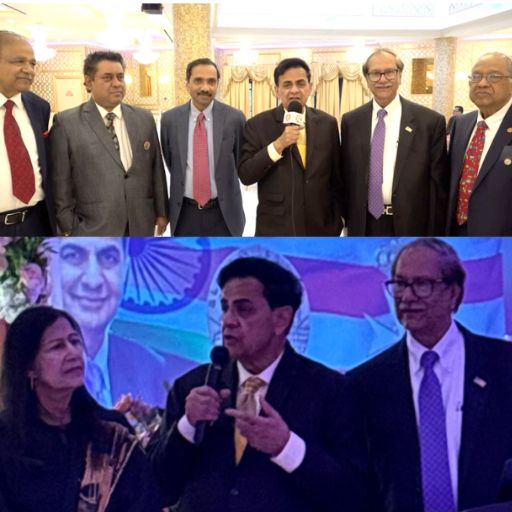
Great Neck, NY: The Association of Indians in America (AIA) NY chapter held its Annual Gala under the leadership of Dr. Jagdish K. Gupta to raise funds for the 37th Deepavali Fest slated for October 6, 2024, and for the ‘AIA-Educational Project,’ to empower Indian-American students in need to achieve their educational potential and dreams.

AIA 1
AIA-NY President Dr. Jagdish Gupta giving his address.

The Gala was attended by 200 distinguished members of the community, including past presidents and members of the Advisory Board of Trustees of AIA. It was held on June 2, 2024, at the redesigned Crystal Ballroom of Leonard’s Palazzo Exquisite Banquet Hall in Great Neck.

Honorable Senate Majority Leader Chuck Schumer was the Chief Guest of Honor. In his remarks, he highlighted his visit to India, the importance of strong India-US ties, and praised Indian leaders, culture, traditions, and the community’s contributions to education and healthcare. He emphasized the strong maritime defense ties between the two countries in the Indian Ocean. He also applauded Indian physicians and parents for their commitment to education, drawing parallels with the Jewish community. His remarks received multiple rounds of applause and ended with a standing ovation.

AiA 2
(From left) Mrs. Meena Gupta, Dr. Gupta, Senator Chuck Schumer, Honorees Mr. Naveen Shah, Dr. Raman Sharma, Prof. S.N. Sridhar, Dr. Vishal Kapur and Dr. Rekha Bhandari.

New York State Assemblyman David Weprin from District 24 was an honored guest. He has been a staunch supporter of the AIA-NY, helping to secure Alternate Day Parking suspension on Diwali each year and advocating for Diwali as a school holiday in New York City. He expressed his pride in supporting the Indian community and emphasized the importance of cultural recognition in fostering a diverse and inclusive society.

In keeping with the theme of Women’s Empowerment, Dr. Rekha Bhandari, Chief Medical Officer for the MedElite Group/Allure Group/Vis-à-vis Health, was honored with the ‘Excellence in Healthcare Award’ for her innovative contributions to healthcare. In her acceptance speech, she expressed her hope to inspire women in healthcare. She stated, “I am humbled and honored to receive this award from one of the oldest ethnic organizations. I hope my journey serves as a trailblazer for other women to follow and get inspired in the healthcare field.”

AIA 3
Dr. Sumita Sengupta (Gala Co-chair), Assemblyman David Weprin, Dr. Raman Sharma, President Dr. Jagdish Gupta, and Chairman of Board Dr. Samin Sharma.

Mr. Naveen C. Shah, CEO of Navika Group of Companies and Blue-Sky Hospitality Solutions, received the ‘Entrepreneur Par Excellence Award’ for his success in building a multibillion-dollar conglomerate and his philanthropic efforts supporting numerous nonprofit organizations. In his speech, Mr. Shah paid tribute to all the AIA founders, past presidents, Board of Trustees, advisors, and current officers for their dedication and relentless efforts in supporting Indians in America. He remarked, “Our unity and support has been pivotal in promoting Indian culture and heritage in the USA.”

Dr. S.N. Sridhar, Distinguished Professor of Linguistics and India Studies at Stony Brook University, was recognized for ‘Excellence in Literature, Linguistics & founding India Studies at Stony Brook University.’ His significant contributions to bilingualism and multilingualism studies and co-editing the book ‘Ananya: A Portrait of India’ were highlighted. He shared insights into his research and its impact on promoting cultural understanding.

AIA 4
Vote of Thanks from the Executive Committee group actively involved with Gala Celebrations.

Dr. Vishal Kapur and Dr. Raman Sharma from Mount Sinai Health System were also honored. Dr. Kapur received the ‘Excellence in Cardiology-Vascular & Endovascular Medicine’ award, while Dr. Sharma was presented with the ‘Special Young Physician Award for Excellence in Endovascular Intervention’. Dr. Kapur spoke about the advancements in endovascular treatments at Mount Sinai and the importance of innovation in patient care. Dr. Sharma highlighted the significance of his work in saving limbs from ischemia in diabetics and preventing strokes in patients with carotid artery blockages.

AIA 5
Senator Schumer and Honorees – Dr. Vishal Kapur with his family, Dr. Raman Sharma & Mrs. Clara Sharma, Mr. Naveen Shah & Mrs. Rajshree Shah.

The evening began with a social networking hour featuring cocktails and Indian hors d’oeuvres, followed by entertainment including live performances by Ms. Tanmayee Mohapatra and Ms. Jagabattula Maheshwari. Mrs. Beena Kothari, Vice President and Gala Chair, welcomed guests and introduced Dr. Jagdish Gupta, who spoke about the significance of Deepavali Celebrations and the importance of supporting educational excellence in the Indian-American community.

Dr. Samin Sharma, Chairman of the AIA Board of Trustees, highlighted the achievements of Indian Americans in healthcare and corporate America.

AIA 6
(from left) Mrs. Meena Gupta greeting Senator Schumer, Beena Kothari – Gala Chair, AIA-NY President Dr. Jagdish Gupta, and Mr. Naveen Shah-Honoree.

Citations for AIA-NY  and the honorees were received from various dignitaries, including the Indian Consulate, Congressman Tom Suozzi, Nassau County Executive Bruce Blakeman, and New York State Senator Kevin Thomas.

Dr. Gupta thanked all the sponsors and partners, including Fareportal – CheapOair, Mount Sinai Hospital, Northwell Health System, Mattoo Center for India Studies, Brooklyn Hospital Center, Navika Group of Companies, Blue-Sky Hospitality Solutions, Parker Jewish Institute, CenterLight Healthcare, and media partners.

The event concluded with a sumptuous dinner, dancing, and entertainment.

AIA is one of the oldest ethnic organizations representing the Indian community in America. It aims to promote cultural understanding, assimilation, and recognition of Indian traditions and heritage in the United States.

Contact: Dr. Jagdish K Gupta, email: Jagdishkgupta@gmail.com

Global Tensions and Political Shifts: Israel’s Hostage Rescue, Macron Dissolves Parliament, Trump Faces Probation Interview, Peltier’s Last Parole Bid, and Hair Loss Drug Concerns

Rescued Hostages, But the War Continues

Joy in Israel over the successful rescue of four hostages has quickly faded as the harsh realities of the ongoing nine-month war in Gaza persist. Despite the operation’s success, deep-seated divisions remain largely unchanged. The rescue operation on Saturday saw the liberation of four hostages, including Noa Argamani, who was abducted on October 7 during the Nova music festival—a moment captured on video. This success, however, came at a heavy cost. Gaza’s Health Ministry reported on Sunday that at least 270 Palestinians were killed and another 700 were injured, making it one of the bloodiest days in the conflict. Many more are believed to be buried under rubble.

In a significant political development, Benny Gantz announced his resignation from Israel’s war Cabinet. Gantz, a major political rival of Prime Minister Benjamin Netanyahu, stated his resignation was due to the failure to establish a postwar plan for Gaza. In a televised address, Gantz accused Netanyahu of obstructing Israel’s path to “a real victory” and apologized to the families of the hostages, admitting, “we failed” to bring most of them home.

Macron Dissolves French Parliament

In a surprising political move, President Emmanuel Macron has decided to dissolve the lower house of France’s parliament, leaving the country’s political fate in the hands of voters. This decision follows a significant defeat for his party at the hands of the far right in the European Union’s parliamentary elections on Saturday. Marine Le Pen’s far-right, anti-immigration National Rally party outperformed Macron’s centrist, pro-European Renaissance party, according to projections by French opinion poll institutes.

Macron’s decision to call for new elections is a high-risk gamble. If an opposition party secures a majority in parliament, it could lead to a challenging cohabitation scenario, where Macron would have to appoint a prime minister from an opposing party, potentially leading to significant policy conflicts. Macron’s current term as president still has three years remaining. The legislative elections are scheduled to take place in two rounds on June 30 and July 7.

Trump to Attend Probation Interview

Former President Donald Trump is set to participate in a virtual interview with a New York City probation officer today, a requirement following his guilty verdict in the hush money trial. Sources familiar with the situation said that Trump will conduct the interview from his Mar-a-Lago residence, with his attorney Todd Blanche present, using a specially secured virtual network.

Legal experts have noted the unusual nature of a probation interview conducted via video conference, yet acknowledged that having a former president visit a probation office in person would also be unprecedented. The interview could cover various topics related to Trump’s trial and sentencing.

Leonard Peltier’s Last Chance for Parole

Native American activist Leonard Peltier, who has consistently maintained his innocence in the murders of two FBI agents nearly 50 years ago, is scheduled for a full parole hearing today. This is Peltier’s first hearing in 15 years and is considered by his supporters to be his last chance for release. At 79 years old, Peltier’s age, declining health, and nonviolent behavior in prison are being emphasized by his attorney as reasons to grant parole.

Peltier was involved in a 1975 gunfight on the Pine Ridge Reservation in South Dakota, which resulted in the deaths of two FBI agents. His case has been the subject of extensive scrutiny regarding the investigation and trial procedures. Despite these concerns, the FBI remains firm in its opposition to Peltier’s release.

Surge in Hair Loss Medication Usage and Concerns

An increasing number of young men are turning to medication to prevent hair loss, sparking concerns about potential side effects. An NBC News report revealed that finasteride prescriptions have nearly tripled in the U.S. over the past seven years. A New York City dermatologist mentioned, “It’s like water in my clinic. I’m prescribing it all the time.”

While doctors generally consider the daily pill safe, it must be taken continuously to maintain its effects. Controversy surrounds the drug due to reports of impotence and other side effects that may persist even after discontinuing the medication. This has led to ongoing debates about the drug’s safety and the need for awareness about its potential risks.

Political Briefs

Abortion Rights:The Supreme Court is poised to rule on two major abortion cases this month, the first since the overturning of Roe v. Wade. One case involves the abortion pill mifepristone, and the other pertains to a near-total ban on abortion in Idaho. Supreme Court reporter Lawrence Hurley discusses the implications of these rulings.

Biden in France:During his visit to France, President Joe Biden sought to draw a stark contrast with his Republican rival, Donald Trump, without mentioning him by name. Biden’s five-day trip culminated in a visit to a cemetery imbued with political symbolism, underscoring his differences with Trump’s policies and approach.

These events illustrate a world grappling with significant political, social, and legal challenges, from the enduring conflict in Gaza and political upheaval in France to high-stakes legal proceedings in the United States and evolving medical controversies.

The New Space Race: Nations and Companies Vie for Lunar Dominance Amid Rising Tensions

The Moon is witnessing an unprecedented rush, with multiple countries and private enterprises setting their sights on lunar exploration. This surge is driven by the quest for resources and dominance in space. As more missions target the Moon, we must ask: are we prepared for this new chapter of lunar exploration?

Recently, China made headlines with images of its flag on the Moon, marking its fourth lunar landing and the first mission to retrieve samples from the Moon’s far side. In the past year, India and Japan also landed spacecraft on the lunar surface. February saw the US firm Intuitive Machines become the first private company to place a lander on the Moon, with many more missions in the pipeline.

NASA plans to send humans back to the Moon, aiming for a 2026 landing with its Artemis program. China has pledged to send astronauts by 2030, with both nations planning to establish permanent bases rather than make brief visits.

However, this new space race, unfolding amid heightened global tensions, risks exporting terrestrial conflicts to the Moon. “Our relationship with the Moon is going to fundamentally change very soon,” warns Justin Holcomb, a geologist at the University of Kansas, emphasizing that the pace of space exploration is now “outpacing our laws.”

The 1967 UN Outer Space Treaty declares the Moon as a common heritage of all humankind, prohibiting any nation from claiming ownership. Exploration must benefit everyone and serve all nations’ interests. While this treaty promotes peace and collaboration, it was shaped by Cold War politics to prevent space militarization, with over 100 countries signing on.

Today’s space age differs significantly, with not only nations but also private companies competing. A notable example is the US commercial mission Peregrine, which planned to take human ashes, DNA samples, and a sports drink to the Moon. Though a fuel leak thwarted the mission, it sparked debate on whether such ventures align with the treaty’s principles of benefiting humanity.

“We’re starting to just send stuff up there just because we can. There’s no sort of rhyme or reason anymore,” says Michelle Hanlon, a space lawyer and founder of For All Moonkind, which aims to protect Apollo landing sites. She cautions that “Our Moon is within reach and now we’re starting to abuse it.”

Despite the rise of private enterprise, nation-states remain pivotal in space activities. Sa’id Mosteshar, director of the London Institute of Space Policy and Law, notes that companies need state authorization for space missions, which are constrained by international treaties.

Joining the elite group of Moon landers brings significant prestige. India and Japan’s successful missions have elevated their status as global space players, promising economic benefits through jobs and innovation.

Beyond prestige, the Moon offers valuable resources. Its surface, seemingly barren, holds minerals like rare earth elements, iron, titanium, and helium, essential for various technologies. The estimated value of these resources ranges from billions to quadrillions of dollars. However, exploiting these resources is a long-term venture, with the necessary technology still in development.

In 1979, a treaty declared lunar resources unclaimable by any state or organization. However, it gained little traction, with only 17 countries, none of which had been to the Moon, ratifying it. Contrarily, in 2015, the US passed a law allowing its citizens and industries to extract, use, and sell space materials. “This caused tremendous consternation amongst the international community,” recalls Michelle Hanlon, but other countries like Luxembourg, the UAE, Japan, and India followed suit with similar laws.

Surprisingly, water might be the most coveted lunar resource. Initially, Apollo mission rocks were thought to be dry, but about a decade ago, scientists discovered traces of water in them. At the Moon’s poles, substantial water ice reserves exist in permanently shadowed craters. This water could support future lunar inhabitants for drinking, oxygen generation, and even as rocket fuel by splitting it into hydrogen and oxygen, facilitating travel from the Moon to Mars and beyond.

The US is pushing for new guidelines on lunar exploration and resource use through the Artemis Accords, which align with the Outer Space Treaty but suggest new rules may be necessary. Over 40 countries have joined these non-binding agreements, but China has not. Some argue that such regulations should be established through the United Nations due to their global impact. “This really ought to be done through the United Nations because it affects all countries,” says Sa’id Mosteshar.

Resource access could also trigger conflicts. While the Moon offers ample space, areas near ice-filled craters are prime real estate. What happens if multiple entities vie for the same location? Establishing bases close together could lead to disputes. Jill Stuart, a space policy and law researcher at the London School of Economics, compares it to Antarctic research bases, suggesting we might see similar setups on the Moon.

First movers may have an advantage, determining the size of their operational zones. “There will definitely be a first-mover advantage,” Jill Stuart says, implying that early settlers could set the standards for others. The US and China, likely the first to establish lunar bases, might shape the rules, potentially embedding their standards into future practices.

The complexity of lunar governance suggests we may not see another major international treaty. Instead, rules may evolve through memorandums of understanding or new codes of conduct. The Moon, our constant celestial companion, is becoming a focal point for space competition. As this new space race unfolds, it’s crucial to contemplate what kind of environment we want the Moon to be and how to prevent it from becoming a stage for earthly rivalries.

NDA’s 293 MPs Exclude Muslims, Christians, and Sikhs Despite Significant Populations

The National Democratic Alliance (NDA), led by the Bharatiya Janata Party (BJP), currently has 293 elected Members of Parliament (MPs), none of whom are from Muslim, Christian, or Sikh communities. This lack of representation is particularly stark given that India is home to over 200 million Muslims, more than 23 million Sikhs, and over 22 million Christians. This observation was highlighted in an analysis by the Hindustan Times.

Trinamool Congress leader and elected MP Mahua Moitra addressed this absence of minority representation, stating, “Over 200 million Muslims, 23 million Sikhs & 22 million Christians in India and yet NDA has zero representation in Lok Sabha. Modi Ke Saath Sabh Ka Vinaash.”

The BJP’s election campaign has often been criticized for promoting hate and making genocidal comments against Muslims, who are India’s largest religious minority. Prime Minister Narendra Modi has been reported to have delivered over a hundred speeches with such undertones. Over the past decade under Modi’s leadership, religious minorities, particularly Muslims and Christians, have endured various forms of violence ranging from right-wing street violence to state-sponsored actions.

In terms of caste representation within the NDA, upper-caste Hindus, including Brahmins, Rajputs, and others, form 33.2% of the elected MPs. Intermediate castes such as Marathas, Jats, Lingayats, Patidars, Reddys, and Vokkaligas account for 15.7%, while Other Backward Classes (OBCs), including Yadavs and Kurmis, make up 26.2%. In comparison, the INDIA alliance’s composition includes 12.4% upper-caste Hindus, 11.9% intermediate castes, and 30.7% OBCs.

Dalit representation is another significant aspect of the parliamentary demographic. Within the NDA, Dalits constitute 13.3% of the elected MPs, while in the INDIA alliance, they account for 17.8%. Tribal representation is 10.8% in the NDA and 9.9% in the INDIA alliance.

Muslims, despite their significant population in India, have very limited representation. The INDIA alliance has 7.9% Muslim MPs, with 22 Muslim MPs elected on INDIA alliance tickets. Across the entire 18th Lok Sabha, there are only 24 Muslim MPs. Christian representation in the INDIA alliance stands at 3.5%.

Interestingly, the Buddhist community has no representation in the winners from both the NDA and the INDIA alliances. This lack of diversity highlights ongoing issues regarding the inclusivity of India’s parliamentary representation.

Modi Sworn in for Historic Third Term as Prime Minister, Unveils Extensive Cabinet Lineup

Narendra Modi was sworn in today for his third consecutive term as Prime Minister, matching the feat of India’s first Prime Minister, Jawaharlal Nehru, with three electoral victories. The ceremony at the Rashtrapati Bhavan drew crowds, with Modi clad in a traditional white kurta and blue waistcoat, ascending the steps amidst a display of honor guards. Immediately following him were key Bharatiya Janata Party (BJP) figures Rajnath Singh, Amit Shah, and Nitin Gadkari.

While the event saw the presence of leaders from neighboring South Asian countries such as Bangladesh, the Maldives, and Sri Lanka, notable absences included top officials from China and Pakistan, India’s regional rivals.

Modi’s new cabinet comprises 30 Cabinet Ministers, 5 Ministers of State with Independent Charge, and 36 Ministers of State, reflecting a diverse array of talent and experience. This expansive team aims to tackle the multifaceted challenges facing the nation.

In the recent elections, Modi’s BJP secured 240 seats, falling short of a majority in the 543-member lower house. However, with the support of allies, particularly within the National Democratic Alliance (NDA), they managed to surpass the 272-seat majority threshold, securing a total of 293 seats.

The swearing-in ceremony witnessed the oath-taking of several prominent figures:

– Rajnath Singh

– Amit Shah

– Nitin Gadkari

– JP Nadda

– Shivraj Singh Chouhan

– Nirmala Sitharaman

– S Jaishankar

– Manohar Lal Khattar

– HD Kumaraswamy

– Piyush Goyal

– Dharmendra Pradhan

– Jitan Ram Manjhi

– Rajiv Ranjan Singh alias Lalan Singh

– Sarbananda Sonowal

– Dr Virendra Kumar

– Kinjarapu Ram Mohan Naidu

– Pralhad Joshi

– Jual Oram

– Giriraj Singh

– Ashwini Vaishnaw

– Jyotiraditya Scindia

– Bhupender Yadav

– Gajendra Singh Shekhawat

– Annapurna Devi

– Kiren Rijiju

– Hardeep Singh Puri

– Mansukh Mandaviya

– G Kishan Reddy

– Chirag Paswan

– CR Patil

Additionally, those taking oath as Ministers of State with Independent Charge include:

– Rao Inderjit Singh

– Jitendra Singh

– Arjun Ram Meghwal

– Prataprao Ganpatrao Jadhav

– Jayant Chaudhary

Furthermore, the Ministers of State are:

– Jitin Prasada

– Shripad Naik

– Pankaj Chaudhary

– Krishan Pal Gurjar

– Ramdas Athawale

– Ram Nath Thakur

– Nityanand Rai

– Anupriya Patel

– V Somanna

– Dr Chandra Sekhar Pemmasani

– SP Singh Baghel

– Shobha Karandlaje

– Kirti Vardhan Singh

– BL Verma

– Shantanu Thakur

– Suresh Gopi

– L Murugan

– Ajay Tamta

– Bandi Sanjay Kumar

– Kamlesh Paswan

– Bhagirath Chaudhary

– Satish Chandra Dubey

– Sanjay Seth

– Ravneet Singh Bittu

– Durga Das Uikey

– Raksha Khadse

– Sukanta Majumdar

– Savitri Thakur

– Tokhan Sahu

– Rajbhushan Chaudhary

– Bhupathiraju Srinivasa Varma

– Harsh Malhotra

– Nimuben Jayantibhai Bambhaniya

– Murlidhar Mohol

– George Kurian

– Pabitra Margherita

This extensive lineup reflects a diverse mix of leaders committed to serving the nation under Modi’s leadership, setting the stage for a dynamic and ambitious governance agenda ahead.

India Clinches Thrilling Victory Over Pakistan in T20 World Cup Showdown

Jasprit Bumrah showcased his brilliance, securing figures of 3-14 as India clinched a hard-fought six-run triumph against Pakistan in a pulsating T20 World Cup encounter in New York.

Pakistan’s Haris Rauf and Naseem Shah delivered commendable performances, both ending with impressive figures of 3-21 as India’s innings concluded at 119 runs in 19 overs amidst tricky conditions following morning rain.

Despite Rishabh Pant’s aggressive 42, crucial for India, their formidable bowling initially lacked its usual sting, allowing their opponents to reach 80-3 with six overs remaining, with Muhammad Rizwan leading the chase diligently.

The momentum shifted in India’s favor following Rizwan’s dismissal for 31, bowled by the exceptional Bumrah, who spearheaded India’s resurgence from a precarious position.

Requiring 18 runs off the final over, bowled by Arshdeep Singh, Pakistan managed only 10 runs, falling agonizingly short.

India has now emerged victorious in seven of their last nine encounters with Pakistan in T20 World Cups, with one match ending in no result.

This triumph at a New York stadium, scheduled for dismantling after the US leg of the T20 World Cup, holds particular significance for India. It not only edges their winless rivals closer to elimination but also places them on the verge of advancing to the Super 8s.

India’s batting prowess plays a pivotal role

Rohit Sharma adeptly tackled a challenging pitch in the opening victory against Ireland at the same venue, placing immense responsibility on India’s captain and most skilled batsman.

The fervent chants of “Rohit, Rohit, Rohit” echoed from the stands as he effortlessly dispatched the third ball of the match from Shaheen Afridi over the ropes. While this should have set the stage for a substantial total, India faltered as Virat Kohli fell to Naseem’s delivery and Rohit was caught in the deep while attempting a similar shot against Shaheen, exposing India’s vulnerable middle order.

However, there was no indication that India would settle for mere consolidation, especially with Pant striding to the crease in his characteristic flamboyant style. The left-hander played with his trademark audacity, swinging hard and connecting sporadically, contributing six crucial boundaries in a 31-ball innings that propelled his side to a moderately competitive total, with Axar Patel (20) among the few to reach double figures.

Pakistan’s seamers exhibited remarkable discipline throughout the innings, with Naseem and Rauf excelling as India’s last six wickets fell for a mere 24 runs.

Pakistan squander opportunity as Bumrah dazzles

India endured an early setback in Pakistan’s response, with misfields and missed catches, before Bumrah skillfully induced an edge off Babar Azam’s bat, leading to a fine slip catch by Suryakumar Yadav.

The majority of the packed crowd, numbering 34,028 and witnessing a sold-out Eisenhower Park, fervently backed India as their bowlers relentlessly pursued wickets.

Despite the imposing presence of the “blue wall,” Pakistan’s batters initially stood firm amidst sunny conditions and favorable batting conditions. Rizwan anchored the innings with a patient 44-ball knock before a lapse in judgment resulted in his dismissal while attempting to dispatch Bumrah through the leg side.

At that juncture, Pakistan remained the favorites, but the mounting pressure stifled their middle and lower order, who struggled to find boundaries against disciplined bowling.

Although Imad Wasim (15) offered resistance, India’s bowlers tightened the screws as the required run rate climbed. Bumrah played a pivotal role, complemented by Hardik Pandya (2-24) and Mohammed Siraj, who, despite remaining wicketless, conceded a mere 19 runs.

Following a surprising defeat to the United States in their opening match, Pakistan faces an uphill task. Even for a team known for its unpredictability, qualifying for the next stage from this position presents a daunting challenge.

Reactions from the captains:

India captain Rohit Sharma remarked, “We didn’t bat well enough – we were 15 runs short. With our bowling line-up, you feel confident. It is the never-say-die attitude in the team. You need everyone to show up and a little contribution for everyone makes a big difference, and we did that.”

Regarding the crowd, he added, “There is no doubt about it, the crowd was superb. They never disappoint, wherever we play in the world.”

Pakistan captain Babar Azam reflected, “We bowled well. At the halfway stage when batting we wanted to keep it simple, how we normally play. We didn’t capitalize properly and made the same mistakes in the last overs. We need to win big in our last two matches. We’ll discuss our mistakes.”

President of India Allocates Portfolios Among Union Council of Ministers

In a significant reshuffling of the Union Council of Ministers, the President of India, following the advice of the Prime Minister, has directed the allocation of portfolios among the members of the cabinet. The official announcement, released by the President’s Secretariat, outlines the responsibilities assigned to each minister, reflecting a strategic approach to governance and administration.

Prime Minister’s Responsibilities:

Prime Minister Shri Narendra Modi will continue to hold the positions of:

  • Ministry of Personnel, Public Grievances and Pensions
  • Department of Atomic Energy
  • Department of Space
  • All important policy issues
  • All other portfolios not allocated to any Minister

President of India Allocates Portfolios Among Union Council of Ministers 1

Cabinet Ministers:

  1. Shri Raj Nath Singh – Minister of Defence
  2. Shri Amit Shah – Minister of Home Affairs and Minister of Cooperation
  3. Shri Nitin Jairam Gadkari – Minister of Road Transport and Highways
  4. Shri Jagat Prakash Nadda – Minister of Health and Family Welfare, and Minister of Chemicals and Fertilizers
  5. Shri Shivraj Singh Chouhan – Minister of Agriculture and Farmers Welfare, and Minister of Rural Development
  6. Smt. Nirmala Sitharaman – Minister of Finance, and Minister of Corporate Affairs
  7. Dr. Subrahmanyam Jaishankar – Minister of External Affairs
  8. Shri Manohar Lal – Minister of Housing and Urban Affairs, and Minister of Power
  9. Shri H. D. Kumaraswamy – Minister of Heavy Industries, and Minister of Steel
  10. Shri Piyush Goyal – Minister of Commerce and Industry
  11. Shri Dharmendra Pradhan – Minister of Education
  12. Shri Jitan Ram Manjhi – Minister of Micro, Small and Medium Enterprises
  13. Shri Rajiv Ranjan Singh alias Lalan Singh – Minister of Panchayati Raj, and Minister of Fisheries, Animal Husbandry and Dairying
  14. Shri Sarbananda Sonowal – Minister of Ports, Shipping and Waterways
  15. Dr. Virendra Kumar – Minister of Social Justice and Empowerment
  16. Shri Kinjarapu Rammohan Naidu – Minister of Civil Aviation
  17. Shri Pralhad Joshi – Minister of Consumer Affairs, Food and Public Distribution, and Minister of New and Renewable Energy
  18. Shri Jual Oram – Minister of Tribal Affairs
  19. Shri Giriraj Singh – Minister of Textiles
  20. Shri Ashwini Vaishnaw – Minister of Railways, Minister of Information and Broadcasting, and Minister of Electronics and Information Technology
  21. Shri Jyotiraditya M. Scindia – Minister of Communications, and Minister of Development of North Eastern Region
  22. Shri Bhupender Yadav – Minister of Environment, Forest and Climate Change
  23. Shri Gajendra Singh Shekhawat – Minister of Culture, and Minister of Tourism
  24. Smt. Annpurna Devi – Minister of Women and Child Development
  25. Shri Kiren Rijiju – Minister of Parliamentary Affairs, and Minister of Minority Affairs
  26. Shri Hardeep Singh Puri – Minister of Petroleum and Natural Gas
  27. Dr. Mansukh Mandaviya – Minister of Labour and Employment, and Minister of Youth Affairs and Sports
  28. Shri G. Kishan Reddy – Minister of Coal, and Minister of Mines
  29. Shri Chirag Paswan – Minister of Food Processing Industries
  30. Shri C R Patil – Minister of Jal Shakti

President of India Allocates Portfolios Among Union Council of Ministers 2

Ministers of State (Independent Charge):

  1. Rao Inderjit Singh – Ministry of Statistics and Programme Implementation; Ministry of Planning; Ministry of Culture
  2. Dr. Jitendra Singh – Ministry of Science and Technology; Ministry of Earth Sciences; Prime Minister’s Office; Ministry of Personnel, Public Grievances and Pensions; Department of Atomic Energy; Department of Space
  3. Shri Arjun Ram Meghwal – Ministry of Law and Justice; Ministry of Parliamentary Affairs
  4. Shri Jadhav Prataprao Ganpatrao – Ministry of Ayush; Ministry of Health and Family Welfare
  5. Shri Jayant Chaudhary – Ministry of Skill Development and Entrepreneurship; Ministry of Education

Ministers of State:

The complete list of Ministers of State includes 36 officials, each assisting with multiple portfolios. Some key appointments include:

  1. Shri Jitin Prasada – Minister of State in the Ministry of Commerce and Industry, Minister of State in the Ministry of Electronics and Information Technology
  2. Shri Shripad Yesso Naik – Minister of State in the Ministry of Power, Minister of State in the Ministry of New and Renewable Energy
  3. Shri Pankaj Chaudhary – Minister of State in the Ministry of Finance
  4. Shri Krishan Pal – Minister of State in the Ministry of Cooperation
  5. Shri Ramdas Athawale – Minister of State in the Ministry of Social Justice and Empowerment
  6. Shri Ram Nath Thakur – Minister of State in the Ministry of Agriculture and Farmers Welfare
  7. Shri Nityanand Rai – Minister of State in the Ministry of Home Affairs
  8. Smt. Anupriya Patel – Minister of State in the Ministry of Health and Family Welfare, Minister of State in the Ministry of Chemicals and Fertilizers
  9. Shri V. Somanna – Minister of State in the Ministry of Jal Shakti, Minister of State in the Ministry of Railways
  10. Dr. Chandra Sekhar Pemmasani – Minister of State in the Ministry of Rural Development, Minister of State in the Ministry of Communications
  11. Prof. S. P. Singh Baghel – Minister of State in the Ministry of Fisheries, Animal Husbandry and Dairying, Minister of State in the Ministry of Panchayati Raj
  12. Sushri Sobha Karandlaje – Minister of State in the Ministry of Micro, Small and Medium Enterprises, Minister of State in the Ministry of Labour and Employment
  13. Shri Kirtivardhan Singh – Minister of State in the Ministry of Environment, Forest and Climate Change, Minister of State in the Ministry of External Affairs
  14. Shri B. L. Verma – Minister of State in the Ministry of Consumer Affairs, Food and Public Distribution, Minister of State in the Ministry of Social Justice and Empowerment
  15. Shri Shantanu Thakur – Minister of State in the Ministry of Ports, Shipping and Waterways
  16. Shri Suresh Gopi – Minister of State in the Ministry of Petroleum and Natural Gas, Minister of State in the Ministry of Tourism
  17. Dr. L. Murugan – Minister of State in the Ministry of Information and Broadcasting, Minister of State in the Ministry of Parliamentary Affairs
  18. Shri Ajay Tamta – Minister of State in the Ministry of Road Transport and Highways
  19. Shri Bandi Sanjay Kumar – Minister of State in the Ministry of Home Affairs
  20. Shri Kamlesh Paswan – Minister of State in the Ministry of Rural Development
  21. Shri Bhagirath Choudhary – Minister of State in the Ministry of Agriculture and Farmers Welfare
  22. Shri Satish Chandra Dubey – Minister of State in the Ministry of Coal, Minister of State in the Ministry of Mines
  23. Shri Sanjay Seth – Minister of State in the Ministry of Defence
  24. Shri Ravneet Singh – Minister of State in the Ministry of Food Processing Industries, Minister of State in the Ministry of Railways
  25. Shri Durgadas Uikey – Minister of State in the Ministry of Tribal Affairs
  26. Smt. Raksha Nikhil Khadse – Minister of State in the Ministry of Youth Affairs and Sports
  27. Shri Sukanta Majumdar – Minister of State in the Ministry of Education, Minister of State in the Ministry of Development of North Eastern Region
  28. Smt. Savitri Thakur – Minister of State in the Ministry of Women and Child Development
  29. Shri Tokhan Sahu – Minister of State in the Ministry of Housing and Urban Affairs
  30. Shri Raj Bhushan Choudhary – Minister of State in the Ministry of Jal Shakti
  31. Shri Bhupathi Raju Srinivasa Varma – Minister of State in the Ministry of Heavy Industries, Minister of State in the Ministry of Steel
  32. Shri Harsh Malhotra – Minister of State in the Ministry of Corporate Affairs, Minister of State in the Ministry of Road Transport and Highways
  33. Smt. Nimuben Jayantibhai Bambhaniya – Minister of State in the Ministry of Consumer Affairs, Food and Public Distribution
  34. Shri Murlidhar Mohol – Minister of State in the Ministry of Cooperation, Minister of State in the Ministry of Civil Aviation
  35. Shri George Kurian – Minister of State in the Ministry of Minority Affairs, Minister of State in the Ministry of Fisheries, Animal Husbandry and Dairying
  36. Shri Pabitra Margherita – Minister of State in the Ministry of External Affairs, Minister of State in the Ministry of Textiles

This comprehensive allocation of portfolios underscores the government’s commitment to addressing diverse aspects of governance and ensuring effective management across various sectors. The reshuffle aims to bring in a balanced mix of experienced and new leaders, fostering a robust administrative framework to drive the nation’s development agenda forward.

Emmanuel Macron’s Political Gamble: Dissolving Parliament After Electoral Defeat

In Brussels, during previous EU leaders’ summits, Emmanuel Macron has faced criticism for his efforts to seize the spotlight. However, on Sunday night, he indisputably captured attention, albeit perhaps not in the manner he intended.

As votes for the European Parliament continued to be tallied, Macron emerged as the dominant figure in the headlines. His anticipated setback in the poll against French hard-right nationalists was no surprise, but his subsequent decision to dissolve the French national parliament came as a shock.

While he had toyed with the notion following his party’s defeat in France’s previous general election, few had expected such a move at this juncture. It’s a bold move, albeit from a position of vulnerability.

Identifying himself as a centrist and fervent supporter of European integration, Macron faces the prospect of navigating a snap general election scheduled for June 30 and July 7. This election could potentially force him to collaborate with a prime minister from the Eurosceptic far right—a scenario unprecedented in French politics.

Marine Le Pen, often depicted as Macron’s political adversary, proclaimed her party’s readiness to govern on Sunday. While France has previously witnessed instances where the president and prime minister hailed from different political factions, the appointment of a far-right prime minister would mark a historic departure.

In recent years, Le Pen has endeavored to broaden her party’s appeal and soften its extremist image. Her party’s significant victory at the EU level, securing more than double the votes garnered by Macron’s Renaissance party, has bolstered hopes of success in the upcoming snap election.

The success of Le Pen’s party reflects a broader trend across the EU, with the hard right and nationalist factions making gains fueled by concerns over migration, inflation, and the cost of environmental reforms. However, their ability to shape future EU policy remains uncertain, with centrist parties maintaining a firm grip on the majority of seats in the EU chamber.

Despite their collective grievances and populist rhetoric, uniting hard-right parties from different countries to exert influence at the EU level poses a formidable challenge. Divergent national priorities and ideological disparities, particularly regarding issues such as support for Ukraine against Russia, undermine cohesive action.

The hard right’s impact on environmental policy represents a tangible example of their influence on EU governance. Despite the EU’s ambitious climate agenda, the loss of seats by green parties in the European Parliament vote underscores growing public apprehension towards environmental regulations amid economic uncertainty.

Mass protests by farmers and public resistance to stringent environmental rules have provided fodder for the hard right to portray themselves as champions of the people against distant elites. Consequently, several EU environmental regulations were diluted or revoked ahead of the parliamentary vote, signaling potential setbacks in green initiatives.

As the nationalist right gains traction, traditional political labels become increasingly inadequate in gauging their influence. Some hard-right nationalists are adopting more mainstream positions to broaden their appeal, while center-right politicians mimic far-right rhetoric on contentious issues like migration and the environment to retain support.

Despite the media focus on far-right gains, it is the center-right that secured the largest number of seats and made significant gains in the European Parliament. However, such victories often pale in comparison to the sensationalism surrounding the rise of the far right.

In summary, Macron’s decision to dissolve parliament following his electoral defeat marks a pivotal moment in French politics, with far-reaching implications for EU governance and the balance of power within the European Parliament. As nationalist sentiments gain momentum, the landscape of European politics is poised for further upheaval, challenging traditional notions of political affiliation and influence.

It’s not the time for spats between India’s rulers and prelates

The Christian community needs a broad spectrum of political support and cannot afford to make new enemies

Narendra Modi took the oath of office as prime minister of India for the third consecutive time at Rashtrapati Bhawan, home to its president, on a warm Sunday night, an unusual time for such magnificent functions of state.

Squirming under the cloudless night, lit not by the moon and the stars but by gigantic floodlights, were heads of government of neighboring South Asian countries barring Pakistan, India’s trillionaires, and political stars across party lines.

Only some in the several thousand invited gathering would have noticed that among those sworn in were two junior ministers from the tiny state of Kerala in the extreme south of the country.

One was a Christian who had not contested any seat in the elections but was a staunch loyalist of the prime minister’s Bharatiya Janata Party (BJP). Kurien George, a former vice chairman of the National Commission for Minorities, and a senior state leader of the party, was sworn in as a minister of state. He is expected to be made a member of the Rajya Sabha, the upper house of parliament, from one of the states where the BJP has significant strength in the legislative assembly.

The other new minister is also a strong BJP loyalist. Film actor Suresh Gopi created political history by winning for his party its maiden parliamentary seat in Kerala. The BJP had worked for it, conspired for it, and prayed for it, for all of half a century, without success. It had, though, come tantalizing close once when the then railway minister O Rajagopalan gave Congress star debater Shashi Tharoor a scare. Rajagopalan lost by a thin margin.

Gopi won rather handsomely from Trissur, beating seasoned professional politicians of both the Congress and Communist Party Marxist. In many ways, he did it without the help of Modi’s very noisy wooing of the Christian religious leadership in the state, and in New Delhi.

Observers attribute Gopi’s victory to not just his celebrity status as a popular film actor, but to his close connect with the people, particularly Christians who form a sizable chunk of the electorate in the Trissur constituency.

Gopi is chummy with bishops, is generous to local churches, and helps those in need. The bishops did not have to issue any calls from the pulpit to endear the people to this good Samaritan despite the baggage of his party’s image as a persecutor of Christians in north and northeast India.

Gopi by all accounts has also had more than a helpful nudge from the state’s Marxist Chief Minister Piniyari Vijayan, whose several visits to Trissur in the elections invited comment.

These developments are no less than a volcanic eruption and have sent strong shock waves through the state’s political structures.

For the Church, it is a time for introspection. The Catholic Church’s playing footsie with Modi and his party in Kerala, Mumbai (formerly Bombay), and some other regions, has not gone down well with the community which bears the brunt of the violence wreaked by the BJP’s militant associates in the militant Sangh Parivar or Hindu nationalists’ outfits affiliated to the Rashtriya Swayamsevak Sangh (RSS), the mother organization of the BJP, and alma mater of Modi.

Christians have traditionally been seen as supporters of the centrist Congress party which nationally is locked in a deathly tussle with the BJP-RSS.

For Vijayan, this is a fraught time. He too is a third-time elected head of government — of a state, though. Under his watch, his party has fared terribly, winning just one seat in the recent general election to parliament, with the remainder going to the Congress, an enemy in politics of the state, but a coalition partner in the rest of the country.

Vijayan faces criticism from his party as much for his personal style and family baggage, as for his poor stewardship, in managing the general election.

The spat this week between the chief minister and a local bishop has taken both Christians and Communists by surprise, though perhaps Modi, Gopi and George must have been greatly amused.

Mercifully for the Catholic Church — which is yet to get out of its own serious internal binds — no bishop of any of its three rites are involved.

The man in the spotlight is Dr. Geevarghese Mar Coorilose, the former Metropolitan of the Jacobite Syrian Church’s Niranam Diocese.

Mar Coorilose is a very popular and pleasant prelate known in the state as much for his simplicity and humor as for his commitment to the poor. This has earned him the sobriquet of being a leftist in the Church. He told people not to use the feudal “Thirumeni” in addressing him. He also resigned as bishop to spend his time in meditation and service.

It was possibly in that frame of mind that he took the chief minister to task for inviting an electoral defeat by his acts of commission and omission. In a Facebook post, Mar Coorilose said the huge defeat that the Marxists had to face in the general election was due to the erosion in people’s faith, and the poor performance of the second Pinarayi government, compared to the first one.

His advice was that the biggest political movement in Kerala, the Communist Party of India-Marxist, should not lose its relevance. And should be open to criticism. For good measure, the prelate seemingly mocked the relief packages the government had given to people impacted by the devastating floods in the state in 2018.

“Arrogance and opulence, if continued, would spell doom for the leftist government. Floods and epidemics will not come to your rescue every time, and the people will not fall for the ‘kit politics’ time and again, especially in Kerala,” Mar Coorilose posted on Facebook.

He cautioned that unless remedial steps were taken, the Marxists faced the sort of political wipeout they had faced in Bengal and Tripura, once their strongholds.

That touched the chief minister to the quick. He retorted with an epithet; language used more by young children in street fights than by a chief minister of a state.

“There has been no change in the behavior of this person, who once called a priest a wretch, and today he calls another priest ’empty-headed’. It can be understood that the nature of the caller has not changed,” said the Kerala Council of Churches (KCC), a joint confederation of Christian organizations, which came to the rescue of one of its own.

The last has not been heard of this exchange of words between the Church and the politician.

But beyond the bombast and brimstone, serious questions are being asked about relations between Church and State, and in particular, between the hierarchy and political parties and their leaders.

At 2.3 percent of India’s more than 1.4 billion people, the Christian community has no real say in the political processes, other than in Kerala, Goa, and the small states of the northeast such as Nagaland, Mizoram, Meghalaya, and Manipur. In the eastern states, the community has done well for itself in the general election this time. But in some states in North India, it is less than a tenth of a percent, and yet suffers in great measure with its nuns and pastors attacked, house churches outlawed, and schools and colleges vilified.

Also, though religious freedom is a constitutional right, the community still needs the goodwill of all political players in the land for its economic development and growth. The community needs a broad spectrum of political support and cannot afford to make new enemies.

This demands that its political, social and religious leaders work with all political parties in each one of the 30 states, big and small, to carefully impact policy-making and devolve resources from the state and federal exchequers to help the Dalits, tribal peoples and youth of the community.

The BJP, which is making friendly sounds in Kerala is hostile to the Christian community across the country. It has been vigorously curtailing Church activities through anti-conversion laws, curbs on foreign funding, and administrative pressure on its educational, medical institutions and activism.

Trump’s Revenge: Post-Conviction Vendetta Raises Alarms and Political Tensions

Since last week’s conviction of former President Trump on 34 felony counts, he and his supporters have been fixated on seeking revenge.

Within an hour of the verdict, Rep. Mike Collins (R-Ga.) took to social media, suggesting it was time for “Red State AGs and DAs to get busy.”

Trump himself hinted at possible retaliation against Democrats, stating to Newsmax that it was “very possible” they could face prosecution in the future. He reiterated this sentiment on Fox News, asserting his “right to go after them” following his own legal battles.

His call for retribution extended to members of the House special committee investigating the Jan. 6 Capitol attack, whom he suggested should face indictment. In an interview with Dr. Phil McGraw, he even justified revenge, saying, “sometimes revenge can be justified.”

Trump has repeatedly framed his potential reelection as the ultimate revenge, asserting that his success would unify a deeply divided nation. However, concerns have risen about the emphasis on revenge from Trump and his allies, particularly in light of his unprecedented felony conviction.

According to Dan Goldman (D-N.Y.), the use of the criminal justice system to target political adversaries undermines fundamental American values. He dismissed Republican attempts to paint legal actions against Trump as politically motivated, insisting there’s no evidence to support such claims.

Since his indictment last year, Trump has openly suggested targeting his opponents across various states, including proposing a special prosecutor to investigate the Biden family.

Republican lawmakers, echoing Trump’s grievances, have threatened repercussions against prosecutors and even floated the possibility of their own future prosecution.

Following Trump’s conviction, Republicans have called for cuts to federal funding for the Department of Justice and state-level prosecutors. Although such measures have limited impact, they signal a growing willingness to challenge legal institutions.

Some Republicans anticipate a more aggressive approach once Trump assumes office again, with his own appointees potentially reshaping the Justice Department.

Despite attempts from media figures to dissuade Trump from pursuing vendettas, he remains steadfast, attributing his conviction to political persecution.

While some lawmakers emphasize the importance of accountability and systemic improvements, others focus on retaliatory actions against perceived adversaries.

Despite criticisms of bias, Trump’s guilty verdict was unanimous, highlighting the strength of the case against him.

Democrats reject claims of unfair targeting, pointing to ongoing legal proceedings involving figures from both parties.

Trump’s fixation on revenge could harm him politically, with the Biden campaign contrasting his attacks on the justice system with the president’s focus on public issues and international diplomacy.

Biden has condemned Trump’s assaults on the legal system, warning of the damage to public trust in vital institutions.

In the wake of his criminal convictions, Trump’s priorities appear centered on preserving his own freedoms, raising questions about his motives and intentions moving forward.

Air India’s Expansion Sparks Concerns Among Middle Eastern Carriers: Saudia’s Chief Commercial Officer Warns of Potential Impact

India serves as a significant source of passenger traffic for numerous hub carriers, a fact not lost on industry observers. With Air India currently streamlining its operations and expanding its fleet to provide more direct long-haul services, there’s speculation about its potential impact on Middle Eastern carriers. During the CAPA India Aviation Summit 2024 in New Delhi, Arved von zur Muehlen, Saudia’s Chief Commercial Officer, shared insights on this matter.

Von zur Muehlen remarked that Air India’s recent resurgence and its future growth strategies could pose a challenge to the dominance of the major hub carriers in the Middle East. He highlighted the substantial presence of Emirates, Qatar Airways, and Etihad in India and the broader subcontinent, noting that a significant portion of this traffic comprises transit passengers rather than those flying directly to their destinations. Von zur Muehlen suggested that as Air India expands its nonstop flight offerings to popular global destinations, more Indian travelers may opt for the national carrier instead of taking connecting flights. Referring to Air India as a “sleeping giant,” he emphasized that the current high volume of hub traffic from India is largely due to the relatively weaker position of Air India in the market.

While acknowledging Saudia’s status as a Middle Eastern carrier, von zur Muehlen differentiated it from the other major Middle Eastern carriers by highlighting that over 90% of its traffic to and from India is point-to-point. He indicated that Saudia is not actively seeking additional bilateral rights from India, as it has yet to fully utilize its existing quota.

The desire for increased access to Indian airports among foreign carriers, particularly those from the Middle East, is evident. However, the bilateral agreements governing air traffic rights have not undergone significant revisions in a considerable time, prompting foreign carriers to seek expanded opportunities in the Indian market. In 2022, the UAE proposed adding another 50,000 seats per week between the two countries, which would benefit Dubai-based carriers seeking a greater presence in India. Indian authorities, however, have shown reluctance to revise these agreements, prioritizing the growth and development of domestic carriers to cater to local demand. Air India’s CEO Campbell Wilson supports this stance, emphasizing the importance of nurturing a robust network and fleet.

India’s position on granting additional rights to foreign carriers appears steadfast, with little indication of softening. Even in instances where negotiations are possible, India seeks to ensure mutual benefit. For instance, reports earlier this year suggested that India proposed receiving nine seats for every extra seat offered to Kuwait. The outcome of these negotiations and their implications for the aviation landscape in the coming years remain uncertain.


Modi’s Grip Weakens as Indian Billionaires Face Scrutiny: A Tale of Cronyism and Economic Inequality

A few weeks before the election that diminished Narendra Modi’s hold on India, the elite flocked to his home state of Gujarat. The event was described by an Indian writer as “likely the most ostentatious pre-wedding ceremony the modern world has ever seen”.

In March, to celebrate the forthcoming marriage of Anant Ambani, the youngest son of Mukesh Ambani, India’s richest man, Mark Zuckerberg, Bill Gates, and Ivanka Trump flew in. The entertainment included Rihanna and Akon. The nearby airport, typically reserved for India’s armed forces, received special permission for non-military jets to land, as reported by the media.

“When it comes to helping out his rich industrialist friends, prime minister Modi is willing to do anything,” Jairam Ramesh, a leading opposition politician, posted on X at the time.

After a decade in power, a recent study showed that 40% of India’s wealth is now in the hands of just 1% of the population. This stark inequality, embodied by Modi’s favored tycoons, may explain his shocking loss of majority in parliament this week.

Discontent has been simmering for years. When Modi attempted to scrap price protections for small farmers in 2020, protesters burned effigies of him and two moguls who have thrived under his rule, one being Ambani.

Ambani oversees an industrial empire founded by his father, amassing a $110bn (£86.4bn) fortune, comparable to the wealth of the US tech moguls who attended his son’s pre-wedding event. Ambani’s competitors have alleged that Modi’s administration facilitated his telecom venture’s dominance in the Indian market.

While the Ambanis have maintained good relations with the state across various administrations, the other effigy-burning protestors targeted a businessman whose rise is closely linked to Modi.

Gautam Adani supported Modi when he was Gujarat’s chief minister and became a pariah after overseeing riots that killed hundreds of Muslims. When Modi ascended to the prime minister’s office, propelled by his strong Hindu nationalism, he traveled to New Delhi on Adani’s private jet. Adani soon secured numerous government infrastructure contracts, boosting his wealth until he joined Ambani among the world’s top 20 richest individuals. Both tycoons praise the prime minister. Neither’s company responded to requests for comment.

Adani claims he is engaged in “nation-building”. His supporters, like Ambani’s, draw parallels with South Korea’s chaebol business clans, which enjoy privileges but drive economic growth. Under Modi, growth has been rapid enough for India to surpass the UK as the fifth largest economy.

However, the rise of Indian billionaires offers little to the millions of Indians barely scraping by. “There’s a lot of pain clouded by these huge top-line growth numbers,” said Sandipto Dasgupta, an expert on Indian politics at the New School for Social Research in New York.

A recent analysis by economists, including Thomas Piketty, suggested that India under Modi is now more unequal than it was under British rule. “It is unclear how long such inequality levels can sustain without major social and political upheaval,” they wrote. When asked about the study, Modi responded: “Should everyone be poor?”

Rahul Gandhi, who has led the opposition Indian National Congress party to a resurgence, focused on cronyism in his attacks. Early in Modi’s tenure, Gandhi labeled his administration a “suit-boot ki sarkar”, meaning a government for the wealthy.

Such criticisms seemed to have little impact on the seemingly invincible Modi for years. But Gandhi persisted, often mentioning Adani and Ambani. In May, Modi appeared to distance himself from the two tycoons, claiming they were providing “truckloads” of money to his opponents.

“During the campaign, people said nobody cares about this,” said James Crabtree, author of Billionaire Raj. “But maybe, actually, they did.” Defeats for Modi’s Bharatiya Janata Party (BJP) in Uttar Pradesh, India’s most populous state, suggest his anti-Muslim rhetoric failed to secure votes from poorer Indians, who remain affected by chronic unemployment.

If the stock market is any indicator, the election results spell trouble for the likes of Adani. When exit polls wrongly predicted a resounding BJP victory, prices soared for “Modi stocks”, including those in Adani’s companies. The actual results caused a sharp decline. At one point, Adani’s worth dropped by $25bn from its pre-election value.

For the first time, Modi will need to govern in coalition, requiring him to share ministries and their budgets with allies. This shift, according to Rohit Chandra, a political economist at the Indian Institute of Technology, will alter who benefits from state favoritism. “There will be different cronies from different regions. This is a welcome change.”

Sania Mirza Opens Up About Biopic Possibilities, Divorce, and Admiration for Akshay Kumar on Kapil Sharma’s Show

Sports icons Sania Mirza, Mary Kom, Saina Nehwal, and Sift Kaur recently appeared as guests on Netflix’s “The Great Indian Kapil Show.” During their conversation with host Kapil Sharma, the topic of a Bollywood biopic on Sania Mirza came up. Sania shared her thoughts humorously and candidly, providing an interesting perspective on the idea.

Kapil Sharma noted that Mary Kom had Priyanka Chopra portray her in a 2014 biopic, and Parineeti Chopra played Saina Nehwal in 2021. When asked who she would prefer to play her in a film, Sania joked, “Inki koi behen bachi hain? (Are there any sisters left?)” She continued, “No, I think we have many good actors in our country. Anyone is fine. Or maybe I should play myself.”

Kapil further mentioned that Shah Rukh Khan had once expressed interest in playing Sania’s love interest if a biopic were made. This prompted a momentary awkwardness for Sania, considering her recent divorce from cricketer Shoaib Malik. Lightening the mood, she responded, “But I need to find a love interest first.” When Kapil asked if she would act in her biopic if Shah Rukh starred in it, she said, “If Shah Rukh ji does the film, I might play myself. And I’ll definitely do it if Akshay Kumar is in it.”

Kapil also inquired how Sania managed to get Swiss tennis player Martina Hingis to be her doubles partner, jesting if it was through Hyderabadi biryani. Sania replied humorously, “I took Farah (Khan) along, and she fed us biryani.”

Sania Mirza’s admiration for Akshay Kumar has been evident over the years. In 2014, Akshay attended one of her International Premier Tennis League (ITPL) matches, along with celebrities like Deepika Padukone and Aamir Khan. During the pandemic in 2020, when Sania was in India and Shoaib Malik was in Pakistan, they had a ‘virtual date’ over Instagram live. During a game of “Ditch and Marry,” Shoaib asked her to choose between Tom Cruise and Akshay Kumar. Sania’s response highlighted her long-standing admiration: “I’ve liked Akshay Kumar since Mohra days. I’m not gonna ditch him. When nobody liked Akshay, I liked Akshay.”

The conversation with Kapil Sharma also touched on Sania and Shoaib Malik’s divorce. After months of speculation, Shoaib and Sana Javed posted their wedding photos on Instagram on January 19, 2024. Sania’s family confirmed the separation, stating that she and Shoaib had been divorced for a few months. The family’s statement read, “Sania has always kept her personal life away from the public eye. However, today the need has arisen for her to share that Shoaib and she have been divorced for a few months now. She wishes Shoaib well for his new journey ahead.”

The playful exchange on “The Great Indian Kapil Show” provided insights into Sania Mirza’s life and career, mixing light-hearted moments with personal revelations. It showcased Sania’s sense of humor, her openness about her personal life, and her deep admiration for Akshay Kumar, adding a relatable and humanizing touch to the sports star’s public persona.

Shashi Tharoor Asserts INDIA Bloc’s Role as Strong Opposition Amid Modi’s Coalition Government Formation

Congress leader Shashi Tharoor stated on Thursday, June 6, 2024, that the INDIA bloc will act as a strong and effective opposition. Speaking with ANI, Tharoor emphasized that the alliance’s numbers give them legitimacy, and there is no point in creating unnecessary drama. He said, “The truth is that they do have the numbers in a pre-poll alliance, so there’s no question of begrudging them their right to form the government. And I think the INDIA bloc decided very clearly there’s no point in trying to create drama out of this. Let them form the government and we will be a robust and effective opposition.”

Tharoor also highlighted that coalitions, contrary to being detrimental, can enhance accountability for the Prime Minister and his party. Reflecting on the past decade of governance, he remarked, “In the last ten years, the kind of governance we saw was my way or the highway, demonetize the currency and don’t even consult the cabinet and your Finance Minister.” He took a critical stance on Prime Minister Narendra Modi, indicating that Modi will now have to heed the views of his coalition partners due to the lack of a majority.

The Election Commission of India reported that the BJP won 240 seats, a significant drop from their 2019 tally of 303 seats. In contrast, the Congress party showed notable progress, securing 99 seats. The BJP-led National Democratic Alliance (NDA) won a total of 292 seats, whereas the INDIA bloc managed to secure over 230 seats, presenting a formidable challenge and surpassing many predictions.

Despite winning his third term, PM Modi’s BJP required the support of coalition partners, particularly JD(U) chief Nitish Kumar and TDP chief Chandrababu Naidu. NDA leaders passed a unanimous resolution during their meeting, re-electing Narendra Modi as their leader. PM Modi is scheduled to take the oath for the third time over the weekend.

Following the Union Cabinet’s recommendation, President Droupadi Murmu dissolved the 17th Lok Sabha on Wednesday, June 5. The Rashtrapati Bhavan issued a statement confirming the dissolution: “The President accepted the advice of the Cabinet on June 5, 2024, and signed the Order dissolving the 17th Lok Sabha in the exercise of the powers conferred upon her by Sub-Clause (2) of Article 85 of the Constitution.”

Major US Banks Under Fire for Failing to Protect Customers from Fraud on Zelle: Senate Panel Report

JPMorgan Chase, Bank of America, and Wells Fargo are under scrutiny for not adequately safeguarding their customers from substantial fraud and scams, amounting to hundreds of millions of dollars each year, according to a US Senate panel. During a hearing by the Permanent Subcommittee on Investigations, Chairman and Democratic Senator Richard Blumenthal highlighted the extent of the issue, revealing that the customers of these banking giants filed claims to recover a staggering $456 million in 2022, all lost through scams and fraud on the payments network Zelle.

“The banks of America have a dirty little secret. It’s called Zelle,” Senator Blumenthal stated during the hearing. He criticized Zelle’s marketing, which promotes the service as “a fast and easy way to send and receive money.” However, as the Senator pointed out, the Committee’s findings suggest that Zelle often facilitates a “fast and easy way to lose money.”

Zelle, a network co-owned by seven major US banks including JPMorgan Chase, Bank of America, and Wells Fargo, is under fire for giving users a false sense of security while leaving them exposed to significant fraud risks. Blumenthal elaborated on this, saying, “Zelle transfers are nearly instant and irreversible, and by the time a consumer knows they’ve been scammed, usually it’s too late to do anything about it – at least according to Zelle and according to the banks that own, control, and in effect operate Zelle.”

The Senator emphasized the deceptive sense of trust that Zelle and its owning banks offer to consumers, stating, “Zelle and the banks that own it offer to customers the appearance of the trust they feel they deserve. But the risks there are real and present, and they simply are failing to protect consumers in the way that they deserve.”

The Subcommittee’s investigation revealed that out of the $456 million reported lost by customers due to scams on Zelle in 2022, only $341 million was refunded. This leaves a substantial amount unrecovered, highlighting the vulnerabilities and inefficiencies in the current protection mechanisms. Additionally, the panel found that 13% of users on Zelle and other peer-to-peer payment platforms reported sending money to someone, only to later discover it was a scam.

In response to the Senate panel’s concerns, Zelle’s parent company, Early Warning Services, LLC, issued a statement. “Providing a safe and reliable service to consumers is the top priority of Early Warning Services, LLC, the network operator of Zelle, and our 2,100 participating banks and credit unions. As a result of our continued efforts to build on Zelle’s strong foundation of security, less than one-tenth of one percent (.1%) of transactions are reported as fraud or scams, making Zelle one of the safest ways for consumers to pay people they know and trust. Zelle is also currently generally free for most consumers.”

Despite these assurances, the Senate panel’s findings suggest that the measures in place are not sufficient to protect consumers fully. The discrepancy between the amount lost and the amount repaid points to gaps in the system that need to be addressed. The hearing has brought to light the urgent need for more stringent security measures and better consumer protection protocols on peer-to-peer payment platforms like Zelle.

The Senate panel’s investigation sheds light on the pressing issue of financial security in digital transactions. As peer-to-peer payment platforms become increasingly popular, the responsibility to protect consumers from fraud falls heavily on the service providers and the banks that support them. The findings from this investigation underscore the need for more robust security measures and greater accountability from financial institutions involved in such payment networks.

The revelations have sparked a call for action, urging banks and payment networks to enhance their security frameworks and provide better protection for their customers. The issue of fraud on Zelle is not just a minor inconvenience; it represents a significant financial risk to consumers, many of whom rely on these platforms for everyday transactions. The Senate panel’s scrutiny aims to push for changes that will make digital financial transactions safer and more secure for all users.

The investigation by the Permanent Subcommittee on Investigations has highlighted a critical flaw in the current financial ecosystem, where major banks like JPMorgan Chase, Bank of America, and Wells Fargo are not doing enough to shield their customers from fraud on the Zelle network. The substantial losses reported and the relatively low repayment rates indicate that much more needs to be done to protect consumers. The Senate panel’s findings and the subsequent responses from the involved parties underscore the urgent need for enhanced security measures and better consumer protection to prevent such fraud in the future.

Cannes Triumphs Ignite Hope for Indian Indie Films Despite Funding Challenges

India had an extraordinary year at the Cannes Film Festival, securing three significant awards and a notable honor, which industry experts believe will positively influence the country’s independent cinema.

Payal Kapadia’s “All We Imagine as Light” won the competition grand prix, Anasuya Sengupta received the best actress award in the festival’s Un Certain Regard section for “The Shameless,” and Chidananda S. Naik’s “Sunflowers Were the First Ones to Know” was named the best film in the La Cinef section. Additionally, Indian cinematographer Santosh Sivan was honored with the annual Pierre Angénieux ExcelLens in Cinematography award.

“All We Imagine as Light” marked the first Indian film in competition in three decades since Shaji N. Karun’s “Swaham” in 1994. Other Indian films at Cannes included “Sister Midnight” in the Directors’ Fortnight, “Santosh” in Un Certain Regard, and “Girls Will Be Girls,” which had previously won two prizes at Sundance, in the Cannes Écrans Juniors sidebar. Overall, nine Indian films featured across various Cannes sections.

Despite this success, financing independent films in India remains a daunting challenge. Most of the funding for films like “All We Imagine as Light,” “The Shameless,” “Sister Midnight,” and “Santosh” came from European sources. Nandita Das, an actor and filmmaker who has served on Cannes juries and whose film “Manto” was part of Un Certain Regard in 2018, hopes these wins will lead to increased Indian funding for independent films.

Das remarks, “Now we are all feeling very proud and happy with this win [for ‘All We Imagine as Light’], but which producer in India would have actually produced this film? A lot of the money is really coming from Europe.” She emphasizes that a producer’s role extends beyond financing to supporting the director in realizing her vision. “I’m very obviously happy that Payal could do this film, but I feel like she could do it because she had that support and those producers from Europe. Now, whether this will percolate into people having more faith in indie films in India, and therefore support it? I don’t know.”

Das reflects on India’s arthouse Parallel Cinema movement that thrived from the 1950s to the 1980s but waned in the 1990s. “It’s now that time where I hope there will be a revival of that independent voice and space for more independent films,” she says.

Mohaan Nadaar, from The Production Headquarters, which funds debut and women empowerment Indian-themed films, financially backed “The Shameless.” Nadaar believes that the Cannes wins validate independent cinema, suggesting that funding for indie films in India will “eventually” become easier. “When people realize that these films will also eventually get sold in the international market worldwide and raise monies,” he explains, citing “All We Imagine as Light,” which has been sold to North America and other territories.

Regarding local distribution of Indian indies, Nadaar expresses cautious optimism. He plans to release the queer love story “The Shameless” in India, Nepal, and Bangladesh, stating, “There’s an audience for it.” He notes, “There’s a lot of LGBT and queer movie demand also here. It will do well if it releases sensibly across limited screens.”

Producer and box office analyst Girish Johar shares Nadaar’s views, acknowledging that while Cannes-winning films will gain attention, their theatrical market in India is limited to around 100 screens in metropolitan areas. Johar adds that the Cannes success has instilled a “sense of pride,” and now, out of 20 indie films pitched to Indian producers, “there is an iota of hope that one or two can be greenlit by them.”

Looking beyond Cannes to the Oscars, where India recently won for the “Naatu Naatu” song in “RRR” and the live-action documentary short “The Elephant Whisperers,” there is anticipation that “All We Imagine as Light” will be India’s official entry in the international feature category. Filmmakers must apply to the Film Federation of India, which appoints a committee to select the entry. Past decisions have been inconsistent, from overlooking “The Lunchbox” in 2013 to shortlisting Pan Nalin’s “Last Film Show” in 2022. India has only three nominations—“Mother India,” “Salaam Bombay,” and “Lagaan”—and no wins in this category.

Das points out, “The kind of films that have gone to the Oscars has been very arbitrary and erratic, depending on who is in that committee and what their wisdom is telling them. So I don’t think it’s such an obvious choice, when we’d be happy for it to go.”

“Last Film Show” producer Dheer Momaya believes “All We Imagine as Light” should “definitely” be India’s entry, citing its strong response at Cannes and recognition among voting members. He criticizes the timing of the Indian selection process, which announces its candidate in late September or early October. “By then you’ve already lost that opportunity, that first mover’s advantage to cement yourself in the voters’ heads,” he says, noting that favored contenders start their Oscar campaigns as early as July.

With the Oscar voting membership becoming more diverse, Momaya is hopeful that international voters will relate to “All We Imagine as Light.”

Das concludes, “The more local a film is, the more global it is, especially for something like the Oscars. You want the film to truly depict the context of that country, tell a story that is truly quintessential of that country, not something that’s more generic. So in that sense, this [‘All We Imagine as Light’] film seems to fit that space of being authentically Indian.”

Intense Clashes Across Ukraine: Key Battles in Kupyansk, Lyman, and Bakhmut as Russia Suffers Heavy Losses

In recent developments regarding the Russia-Ukraine conflict, significant military activities have been reported across various regions, indicating ongoing intense clashes and strategic maneuvers by both sides.

In the Kupyansk direction, Ukrainian forces faced substantial artillery and mortar fire from Russian troops in the Kharkiv region, particularly around the settlements of Novomlynsk, Figolivka, and Dvorichna. Similarly, in the Lyman direction, Russian forces attempted offensive actions near Kreminna and Bilogorivka in the Luhansk region, though these efforts were largely unsuccessful. Airstrikes targeted multiple settlements in the Donetsk region, including Dibrova and Spirne, and artillery fire hit areas like Nevske and Bilogorivka in Luhansk.

The situation in Bakhmut remains critical, with Russian forces conducting unsuccessful offensive actions towards Klishchiivka and launching airstrikes near Bila Hora in Donetsk. Ukrainian settlements such as Vasyukivka and Ivanivske were subjected to heavy artillery fire. Conversely, in the Avdiivka direction, no major offensive operations were reported, though airstrikes and artillery shelling continued in areas like Novokalynove and Pervomaiske

In Marinka, Ukrainian defenders repelled 13 attacks, while Russian forces launched airstrikes and artillery fire on several settlements, including Maksimilianivka and Novomykhailivka. In the Shakhtarsk direction, Russian airstrikes hit Vugledar and Zolota Niva, with additional shelling reported in Prechistivka and NovoukrainkaThe Zaporizhzhia and Kherson directions saw continued defensive operations by Russian forces, who conducted airstrikes and artillery shelling in multiple settlements, including Olhivskyi in the Zaporizhzhia region and Odradokamyanka in Kherson. Ukrainian forces responded with significant airstrikes and artillery attacks, targeting Russian personnel, anti-aircraft systems, and other critical military infrastructure

On the diplomatic front, tensions continue to rise. Ukraine’s Deputy Defense Minister, Hanna Maliar, reported that Russian forces are struggling to maintain control over occupied territories, indicating a potential shift in the conflict dynamics. Moreover, Ukraine has been receiving increased military support from Western allies, including advanced weaponry, which has bolstered its defensive and offensive capabilities

Humanitarian concerns are also prominent. The conflict has led to severe civilian casualties and displacement. Efforts to evacuate civilians from conflict zones are ongoing, though they face significant challenges due to continued hostilities and infrastructure damage. The international community remains engaged, with various organizations providing aid and support to affected populations

The situation remains fluid, with both sides experiencing significant losses. Ukrainian forces reported that Russian manpower losses were particularly high, with approximately 880 soldiers killed in recent engagements. This highlights the intense and costly nature of the ongoing conflict

Overall, the conflict between Russia and Ukraine shows no signs of abating, with both military and diplomatic efforts continuing to shape the course of events. The international community watches closely, aware of the broader implications for regional and global stability.

USA Stuns Pakistan in Super Over Thriller, Tops Group A in T20 World Cup

In a stunning display of resilience, newcomers USA triumphed over former champions Pakistan in a Super Over to secure their most significant victory in a T20 World Cup match on Thursday. This win not only highlighted the declining state of cricket in Pakistan but also drew parallels with their infamous three-wicket loss to Ireland in the 2007 ODI World Cup, which led to their early exit from that tournament.

With this victory, USA ascended to the top of Group A, having won both their matches so far. They had previously defeated Canada by seven wickets in their opener. This impressive performance sets the stage for their upcoming clash against India.

Electing to field first, USA’s left-arm spinner Nosthush Kenjige delivered an impressive spell, taking three wickets for 30 runs. Pakistan struggled to gain momentum and managed a total of 159 for seven. Kenjige’s ability to restrict Pakistan’s batsmen played a crucial role in keeping their score within reach.

In response, USA matched Pakistan’s total, scoring 159 for 3. Skipper Monank Patel led from the front with a crucial 50 off 38 balls, supported by Aaron Jones, who remained unbeaten with 36 off 26, and Andries Gous, who added a brisk 35 off 26. Their collective effort ensured the match ended in a tie, necessitating a Super Over.

During the Super Over, USA accumulated 18 runs, with eight of those coming from extras bowled by Mohammad Amir. Saurabh Netravalkar then showcased his composure, restricting Pakistan to just 13 runs, thus sealing a memorable win for USA.

Kenjige’s impactful performance set the tone early in the match, putting Pakistan on the back foot. Despite their efforts, Pakistan found it challenging to accelerate, managing only 159 for seven. Kenjige’s three wickets for 30 runs were pivotal in keeping Pakistan in check.

USA’s chase was spearheaded by Monank Patel, who displayed his prowess through the off-side, particularly against Iftikhar Ahmed, hitting two consecutive boundaries through the cover region. Patel’s aggressive approach was evident as he hit Afridi for a boundary over mid-off and followed it up with a six over the bowler’s head, bringing up his 50 off 34 balls. However, his 68-run second-wicket partnership with Gous was eventually broken by Haris Rauf, who bowled a quick delivery that dismissed Gous.

Pakistan managed to pick up crucial wickets, including that of Patel, who edged a delivery from Mohammad Amir to Rizwan. Aaron Jones, continuing his excellent form from the previous match against Canada, remained unbeaten on 36 off 26 balls. Together with Nitish Kumar (14 not out off 14), Jones guided USA into the Super Over.

The chase saw Jones needing to score 12 runs off the last three balls. He hit a full toss from Rauf over square leg for a six, followed by a single, reducing the target to five off the final ball.

Earlier in Pakistan’s innings, they lost Usman Khan early, who mistimed a delivery from Kenjige. Fakhar Zaman’s aggressive attempt was short-lived as he was caught off a simple catch by Taylor from Ali Khan’s delivery in the fifth over, leaving Pakistan at 26 for 3. Shadab Khan (40 off 25) and skipper Babar Azam (44 off 43) then steadied the ship, particularly with Shadab hitting two consecutive sixes off Jasdeep Singh and Azam finishing the 10th over with a boundary, accumulating 20 runs.

The partnership between Shadab and Babar injected momentum into Pakistan’s innings as they attacked Harmeet Singh’s bowling. However, Kenjige’s double strike in the 13th over, dismissing both Shadab and Azam Khan on consecutive deliveries, brought USA back into contention. Shadab was caught at short fine leg, while Azam Khan was trapped in front of the wicket. Azam, who narrowly missed another half-century, went for a review, but the decision stood.

Towards the end of Pakistan’s innings, contributions from Iftikhar Ahmed (18 off 14) and Shaheen Shah Afridi (23 not out off 16) pushed the score beyond the 150-run mark. Despite their efforts, it wasn’t enough to secure a win against a determined USA side.

USA’s positive body language was evident throughout the match, especially with Patel and Gous leading the charge. Patel’s capability to score through the off-side and his aggressive play against Afridi highlighted his innings. His half-century off 34 balls, marked by a six over the bowler’s head, was a key moment in USA’s chase. The dismissal of key players like Patel and Gous by Rauf and Amir, respectively, brought tension into the match, but Jones’ calm presence ensured USA stayed in the game.

In the climactic Super Over, USA’s 18 runs, boosted by extras from Amir, set a challenging target for Pakistan. Netravalkar’s disciplined bowling under pressure restricted Pakistan to 13 runs, clinching a remarkable victory for the USA.

This historic win not only underlines USA’s potential in international cricket but also serves as a wake-up call for Pakistan, reflecting the tumultuous state of their cricket. As USA prepares for their next match against India, they will carry the confidence of this landmark victory.

Study Reveals Intense Exercise May Suppress Immune Function in Firefighters

Excessive intense exercise might suppress the immune system, a potential concern for those with physically demanding jobs such as emergency responders and athletes. A 2023 study involving over 4,700 post-exercise fluid molecules from firefighters supports this notion.

Ernesto Nakayasu, a biomedical scientist at Pacific Northwest National Laboratory (PNNL), explains, “People who are very fit might be more prone to viral respiratory infection immediately after vigorous exercise. Having less inflammatory activity to fight off an infection could be one cause.”

Moderate physical activity is known to benefit the immune system over time. However, the immediate impact of vigorous exercise on the immune system is debated. Although some prior studies have reported upper respiratory tract infections in athletes after strenuous activity, there is little concrete evidence linking intense exercise directly to an increased risk of opportunistic infections.

Nakayasu and colleagues conducted an experiment on 11 firefighters, analyzing their blood plasma, urine, and saliva before and after a 45-minute intense exercise session, which involved carrying up to 20 kilograms (44 pounds) of gear over hilly terrain.

Kristin Burnum-Johnson, a bioanalytical chemist at PNNL, said, “We wanted to take an in-depth look at what’s happening in the body and see if we’re able to detect danger from exhaustion in its earliest stages. Perhaps we can reduce the risk of strenuous exercise for first responders, athletes, and members of the military.”

Exercise undoubtedly benefits health, from mood enhancement to immune system strengthening. However, similar to previous studies, this new research found signs of possible immune suppression in the firefighters post-exercise.

Amid the expected physical adaptations to meet the demands of increased fluids, energy, and oxygen during exercise, a decrease in inflammation-related molecules was observed, alongside an increase in opiorphin, which dilates peripheral blood vessels.

The implications of these changes for short-term immune function remain unclear, though the researchers offer hypotheses. “[Opiorphin] may increase blood flow to muscles during the exercise regimen to improve the delivery of oxygen and nutrients,” the researchers write. They suggest the decrease in inflammatory molecules after exercise could be an adaptive response to improve gas exchange due to higher cellular oxygen demand.

The participants’ oral microbiome also changed, possibly due to an increase in antimicrobial peptides in their mouths after intense activity. This increase may compensate for immune suppression, though this is debated. “However, this increase in antimicrobial peptides had no effect on inhibiting E. coli growth,” Nakayasu and his team note, indicating a limited protective capacity of these peptides against infections in the oral cavity.

Other scientists argue that some observed changes might indicate a “heightened state of immune surveillance and immune regulation” rather than immune suppression.

While the study’s within-subject comparison minimized the small sample size impact, firefighters’ unique exposure to pollutants during fires might also alter their immune responses.

Moreover, the study only involved healthy, active men, prompting researchers to call for broader research to confirm their findings. Despite these limitations, Nakayasu and his team conclude, “There is evidence supporting a relationship between physical demands and a higher incidence of respiratory infections.”

Biden Commemorates D-Day Anniversary, Vows Continued Support for Ukraine and Democratic Values

President Joe Biden commemorated the 80th anniversary of D-Day on Thursday, using the occasion to warn against isolationism and affirm the U.S. commitment to Ukraine. Speaking in Normandy, Biden emphasized the strength alliances provide, calling the D-Day beaches “a powerful illustration of how alliances make us stronger,” and prayed Americans never forget this lesson.

Biden addressed a crowd of aging World War II veterans, many over 100 years old and in wheelchairs. He acknowledged that soon “the last living voices of those who fought and bled on D-Day will no longer be with us,” urging the nation to remember the significance of the postwar democratic order. “We cannot let what happened here be lost in the silence of the years to come,” Biden stated. “The fact that they were heroes here that day does not absolve us of what we have to do today.”

His speech combined solemn reflections with urgent calls for action. Flanked by French President Emmanuel Macron, Defense Secretary Lloyd Austin, and dozens of American veterans, Biden praised the bravery of World War II’s last living fighters and linked their efforts to the current conflict in Ukraine. Highlighting the recent NATO expansion and the Ukrainian fight against Russian invasion, he promised never to yield to autocrats like Russian President Vladimir Putin. The coalition supporting Ukraine “will not walk away,” Biden declared, warning that “all of Europe will be threatened” if Ukraine falls. “The autocrats of the world are watching closely … to surrender to bullies, to bow down to dictators, is simply unthinkable.”

This speech marked the beginning of a multi-day trip, during which Biden will honor one of the most significant military battles in U.S. history and reiterate the importance of democratic values. Biden arrived at the Normandy American Cemetery early, met with 41 D-Day veterans—most of whom are over 100 years old—and recorded an interview with ABC News anchor David Muir. Alongside First Lady Jill Biden, the president greeted each veteran personally in a gazebo overlooking Omaha Beach, saluting and shaking hands with all before posing for pictures.

To one 102-year-old veteran, Biden remarked, “The greatest generation ever, man. You saved the world.” He bent down to look another veteran in the eyes and repeated, “You saved the world.”

As the ceremony began, approximately 170 American WWII veterans were brought in on wheelchairs, highlighting both the time elapsed since D-Day and the likelihood that this would be the last major commemoration with a significant number of living veterans present. Macron, who spoke before Biden, emphasized the “eternal bond” between the U.S. and France, describing it as a “blood tie, shed for liberty.” He honored the soldiers who landed on Normandy’s beaches, noting their sacrifices and recounting several veterans’ histories of service. “The free world needed each of you and you said yes when we asked for help,” Macron said, switching to English for this part of his speech. “And you are back here today at home.”

Later that afternoon, Biden planned to attend a larger D-Day commemoration at Omaha Beach alongside world leaders such as Macron, British Prime Minister Rishi Sunak, German Chancellor Olaf Scholz, Canadian Prime Minister Justin Trudeau, and Netherlands Prime Minister Mark Rutte, who is likely to become NATO’s next secretary general. Ukrainian President Volodymyr Zelenskyy was also expected to attend. Biden and Zelenskyy were anticipated to have a brief discussion on recent developments in Russia’s invasion and potential additional security measures.

On Friday, Biden will return to Normandy to deliver a more extensive speech at Pointe du Hoc, a significant 100-foot cliff scaled by Army Rangers during the D-Day invasion. National Security Adviser Jake Sullivan explained that these back-to-back speeches aim to “draw a through line” from World War II, through the Cold War, to the present day. “The Pointe du Hoc speech is a speech about, in his view, timeless principles — principles that have served as the foundation of American security and American democracy for generations — including the generation that scaled those cliffs, including today’s generation, including the next generation,” Sullivan told reporters on Air Force One.

In his address, Biden underscored the connection between the sacrifices of the past and the current global struggle for democracy, using the memory of D-Day to highlight the importance of unity and continued vigilance against authoritarianism.

UNICEF Report: 181 Million Children Suffer from Severe Food Poverty Amid Global Crises

Many children worldwide are not getting enough to eat, but what does “not enough” look like? In East Africa, it means babies receive a mix of breast milk and maize porridge. In Yemen, it’s a paste made of flour and water. In conflict zones like Gaza, children might eat raw lemon and weeds.

A new UNICEF report examines what children in 137 low- and middle-income countries are being fed and its impact on their growth and development. The findings are alarming: one in four children under five experience “severe food poverty,” meaning they consume two or fewer food groups daily. “It amounts to 181 million children who are deprived of the diets they need to survive,” says Harriet Torlesse, a nutrition specialist at UNICEF and the lead author of the report. “If you think about these diets, they really don’t contain the range of vitamins and minerals and proteins that children need to grow and develop.”

Nutrition experts, in discussions with NPR, highlighted that the world is not progressing in combating malnutrition and hunger. The COVID-19 pandemic, the war in Ukraine, inflation, and localized conflicts have exacerbated food supply disruptions and increased food prices.

However, the report also notes some positive developments, showing that several low-income countries have made strides in providing better nutrition to children under five. Here are four key takeaways from the report:

  1. Not Just About Quantity, But Quality of Food

Richmond Aryeetey, a professor of nutrition at the University of Ghana, explains that the issue is twofold: “There are those who are not getting enough who would fall into the full poverty criteria. And then there are also those who potentially have the opportunity to get enough but are being fed unhealthy food.” Aggressive marketing of snacks and sugary beverages, particularly targeting children, plays a significant role in this. In low-income countries, regulating these industries is more challenging. Deanna Olney, Director of the Nutrition, Diets, and Health Unit at the International Food Policy Research Institute, adds, “One of the features of these snack foods is that they’re often really cheap and they fill you up. And so, people are inclined to buy them. But if they were more expensive because of taxes, you know, then maybe they’d be less inclined to choose those for their children.”

The prevalence of ultra-processed foods contributes to rising rates of overweight and obesity among children, an issue needing more attention.

  1. Conflict Zones and Acute Child Hunger

While conflict is not the primary driver of child hunger globally, it leads to some of the worst cases, notably in Sudan, Somalia, and Gaza. UNICEF’s data shows that since December, 9 out of 10 children in Gaza have faced severe food insecurity. Harriet Torlesse remarks, “Children in Gaza at this point in time are barely eating any nutritious foods at all. Before the war in Gaza, only 13% of children were living in severe food poverty.”

Technological advances have improved the measurement of food intake in conflict zones, and Gaza currently has the highest documented rate of severe malnutrition.

  1. Severe Food Poverty’s Impact on Child Development

Children living in severe food poverty are significantly more likely to suffer from wasting, where a child is too thin for their height, indicative of life-threatening malnutrition. Over 13 million children under five are affected by this extreme condition. Torlesse notes, “We know that these children don’t do well at school. They earn less income as adults, and they struggle to escape from income poverty. So not only do they suffer throughout the course of their life, their children, too, are likely to suffer from malnutrition.”

Malnutrition stunts not only physical growth but also brain development, limiting a child’s ability to fully contribute to their community and country later in life. Richmond Aryeetey highlights the economic impact with a study from 2016: “The estimate was that Ghana was losing close to about $6.4 million annually because of children who are not being fed adequately. That’s a lot of money being lost because we are not feeding our children well.”

  1. Effective Solutions and Success Stories

There is hope, as several low-income countries have successfully reduced severe child food poverty. Nepal and Burkina Faso have halved their rates, and Rwanda has achieved a one-third reduction. These countries share common strategies leading to success. “The first being they’ve all made a real, deliberate effort to improve the supply of local nutritious foods. Be it pulses or vegetables or poultry,” says Torlesse. Reducing dependency on imported food is crucial for minimizing hunger.

Other countries are combating ultra-processed foods. In Peru, legislation mandates that processed foods and beverages carry warning labels listing sugar, fat, and salt content, and a 25% tax on high-sugar drinks has been introduced.

Nepal’s nationwide cash grants to poor families have increased the purchase of nutritious foods like meat and pulses. Additionally, efforts within health systems have provided essential counseling and support, helping caregivers feed their children with locally available, nutritious foods.

Richmond Aryeetey underscores the need for a more comprehensive approach to tackling child hunger: “…we are sending people to the moon. We are doing all kinds of technologically advanced stuff, and yet we are not able to feed children. It’s really a shame.”

While severe food poverty remains a critical issue affecting millions of children globally, targeted efforts in improving local food supply and regulating unhealthy food options have shown promising results. A concerted global effort is needed to ensure that every child has access to the nutritious food they need to grow and thrive.

Nvidia Surpasses Apple in Market Cap, Becomes Second-Largest U.S. Company Amid AI Boom

Nvidia, the darling of Wall Street’s artificial intelligence enthusiasts, continues to ascend to unprecedented heights. The company’s market capitalization climbed to $3.019 trillion on Wednesday, slightly surpassing Apple’s market cap of $2.99 trillion. This milestone positions Nvidia as the second-largest publicly traded company in the United States, trailing only Microsoft’s market cap of $3.15 trillion.

Nvidia is now the third U.S. company, after Apple and Microsoft, to surpass the $3 trillion mark. On Wednesday, shares of the Santa Clara-based chipmaker increased by 5.2% to approximately $1,224.4 per share, while Apple shares concluded the session with a 0.8% rise, closing at $196.

These gains also contributed to the S&P 500 and the tech-heavy Nasdaq indexes reaching new record highs by the end of the day.

Nvidia (NVDA) has reaped the most significant benefits from the AI craze that has taken Wall Street by storm this year, with its stock up by 147% in 2024 following a 239% surge in 2023. In contrast, Apple shares have seen a modest 1.7% increase year-to-date.

Earlier this week, Jensen Huang, Nvidia’s CEO, announced that the company plans to launch its most advanced AI chip platform, named Rubin, in 2026. This platform will succeed the Blackwell, which provides chips for data centers and was announced only in March. At the time, Nvidia described Blackwell as the “world’s most powerful chip.”

Nvidia dominates the AI semiconductor market, holding approximately 70% of the market share. Some analysts believe that the company’s stock has even more room to grow. “As we look ahead, we think NVDA is on pace to become the most valuable company, given the plethora of ways it can monetize AI and our belief that it has the largest addressable market expansion opportunity across the Tech sector,” wrote Angelo Zino, a senior equity analyst at CFRA Research, in a note on Wednesday evening.

In a move to make its shares more accessible, Nvidia announced a 10-for-1 stock split last month. This split aims to make buying shares in the highly sought-after semiconductor company more feasible for individual investors. The post-split shares will begin trading at market open on June 10.

Early Puberty in Girls: The Role of Environmental Factors and Health Implications

For several decades, scientists worldwide have observed with growing concern that girls are entering puberty at increasingly younger ages compared to previous generations. Key indicators of adolescence, such as the onset of menstruation (age of menarche) and the commencement of breast development, are occurring progressively sooner.

Research indicates that American girls today begin menstruation up to four years earlier than girls a century ago. Recent data reveals that while girls born between 1950 and 1969 typically began menstruating at an average age of 12.5 years, this decreased to 11.9 years for girls born in the early 2000s. This trend is not limited to the United States but is evident globally. South Korean researchers, for instance, have noted a dramatic 16-fold increase in the number of girls showing signs of precocious puberty (either breast development or menstruation before age eight) between 2008 and 2020.

“We’re also seeing that these decreasing ages at puberty are even more pronounced in lower socioeconomic status groups and ethnic minority groups,” says Audrey Gaskins, an associate professor at Emory University in Atlanta. “This has important implications for long-term health.”

Researchers like Gaskins are particularly concerned that earlier puberty might trigger a cascade of events with significant consequences in adulthood. Data suggests it may shorten the fertility window, especially if these women enter menopause sooner, and could reduce overall lifespan. Precocious puberty has been repeatedly associated with a higher risk of diseases such as breast and ovarian cancers, metabolic syndromes like obesity and type 2 diabetes, and cardiovascular disease.

Scientists are still exploring the reasons behind these associations. Brenda Eskenazi, a professor of public health at the University of California, Berkeley, explains one theory: “There’s some theories that having a longer window of exposure to hormones increases risk for reproductive cancers,” suggesting that prolonged exposure to sex hormones like estrogen might elevate tumor development risks by stimulating cell growth.

There are also potential social consequences. Eskenazi points out that girls who enter puberty earlier are more likely to become sexually active sooner. “There’s a scary situation in the United States when we have the trend of abortion becoming illegal and contraception not being available,” she says. “It’s going to lead to more unwanted teen pregnancies, so that confluence of factors is very frightening.”

The question then arises: why is child development being accelerated in this manner?

From Obesity to Air Pollution

Puberty onset is regulated by two key communication networks in the body: the hypothalamic-pituitary-adrenal (HPA) and hypothalamic-pituitary-gonadal (HPG) axes. These connect the brain’s hypothalamus, which regulates essential functions from hunger to temperature control, with hormone-secreting glands.

Gaskins notes that until recently, childhood obesity was considered the primary cause of premature puberty, with proteins produced by fat cells (adipokines) stimulating the HPA and HPG axes. “It’s only recently that people have been like, ‘Oh that doesn’t explain it all, and there have to be other factors involved,'” she says.

Recent studies, however, have identified another surprising cause: air pollution. Much of this research has emerged from South Korea, where cities like Seoul, Busan, and Incheon rank among the world’s most polluted. A review from Ewha Womans University in Seoul highlighted a consistent relationship between exposure to various pollutants and earlier puberty onset.

Toxic gases such as sulfur dioxide, nitrogen dioxide, carbon monoxide, and ozone, released through vehicle emissions or industrial waste, are major culprits. A 2022 study in Poland, a country with significant air quality issues due to coal-burning factories, linked higher exposure to nitrogen gases with menstruation beginning before age 11.

An even greater concern is fine particulate matter (PM), tiny particles from sources like construction sites, wildfires, power plants, vehicle engines, and unpaved roads. In October 2023, Gaskins and colleagues found that U.S. girls exposed to high levels of PM2.5 (particles less than 2.5 micrometers in diameter) and PM10, both in utero and during childhood, were more likely to start menstruating earlier.

“PM2.5 particles can enter the bloodstream pretty readily,” Gaskins explains. “You inhale them into your lungs, and they’re not filtered out like some of the bigger particles would be, and they can then reach different organs. We’ve seen certain PM2.5 particles accumulating in the placenta, fetal tissues, the ovaries, they can get everywhere.”

Studies have shown that chemicals within these fine particles can interact with hormone receptors involved in development, particularly androgen and estrogen receptors, potentially triggering a chain reaction leading to puberty.

“That was our primary hypothesis, that the girls who had higher exposure to PM2.5 were also exposed to more chemicals that were either mimicking estrogen or just generally disrupting that HPA axis and its regular signals, prompting the body to go into puberty earlier,” says Gaskins.

Multiple factors likely contribute to premature puberty. Gaskins suggests that evidence related to PM2.5 and other pollutants is one example of how harmful environmental chemicals can infiltrate the body, causing significant hormonal changes.

“Pre-pubertal girls are an interesting group because another major route of exposure to chemicals which disrupt hormonal processes is through personal care products,” she says. “And there’s now a lot of companies actively going after that demographic and marketing products to them.”

Eskenazi adds that there is much we still don’t understand about the complex interplay between our changing environment and child development. Factors such as microplastics and climate change also remain largely unexplored. “I think we’re still just at the tip of the iceberg,” she says. “We don’t know how a hotter climate is affecting the menstrual cycle or even the role of social factors, pressurizing girls to grow up sooner. But this trend is very real, and it could be a multifactorial combination of environmental chemicals, obesity, and psychosocial issues which are combining to lower the age of menarche.”

Bill Gates to Release Memoir “Source Code” in 2024, Revealing Untold Stories of His Journey

Bill Gates, co-founder of Microsoft, is set to release a new book, this time a memoir titled “Source Code.” This upcoming publication, scheduled for February next year, will explore the relationships, lessons, and experiences that have shaped Gates’ life. The memoir will chronicle his journey from childhood through his departure from Harvard and the co-founding of Microsoft with Paul Allen.

In a blog post, Gates elaborated on his motivations for writing the memoir. “I’ve been in the public eye since my early twenties, but much of my life before then isn’t well known. Over the years, I’ve often been asked about my upbringing, my time at Harvard, and co-founding the company. Those questions made me realize that people might be interested in my journey and the factors that influenced it,” he wrote.

Gates, now 68, described the memoir as his “origin story.” He intends to delve into the more challenging aspects of his early life, which have significantly influenced his development. The book will discuss his feelings of being a misfit during his childhood, his rebellious teenage years when he clashed with his parents, the profound impact of losing a close person suddenly, and his near-expulsion from college.

“Source Code” will also illuminate Gates’ difficult choice to leave Harvard to pursue a then-nonexistent industry. This pivotal decision was a gamble that ultimately paid off, leading to the creation of Microsoft and the transformation of the tech industry.

The memoir will highlight the stories of those who believed in Gates, challenged him to grow, and helped him turn his unique traits into strengths. These individuals played a crucial role in his personal and professional development, contributing to his success.

As reported by Forbes, Gates’ net worth stands at $129.7 billion. He was married to Melinda Gates for 27 years before they announced their separation in May 2021 on X (formerly Twitter). Despite their separation, they continue to co-chair the Bill & Melinda Gates Foundation. Gates has donated over $59 billion to the foundation, including a $20 billion gift announced in July 2022.

Climate Records Shattered: Scientists Warn of Dire Consequences Without Urgent Action

Global temperatures continue to break records month after month, prompting concerns from scientists and climate policymakers about surpassing the warming target established during the historic Paris 2015 climate talks.

The Copernicus agency of the European Union recently announced that May had been the hottest on record, marking the 12th consecutive month of record highs. Similarly, the World Meteorological Organization has projected a nearly 50% chance that average global temperatures between 2024 and 2028 will exceed the desired warming limit of 1.5 degrees Celsius agreed upon in the Paris accords.

Moreover, a group of 57 scientists reported in the journal Earth System Science Data that the Earth warmed at a slightly faster rate in 2023 compared to 2022.

Climate scientists, however, are not surprised by these developments, as they align with their long-standing predictions based on the accumulation of carbon dioxide resulting from increased fossil fuel usage. In 2023, atmospheric levels of heat-trapping gases, particularly carbon dioxide, reached historic highs, according to the U.S. National Oceanic and Atmospheric Administration (NOAA), with the third-highest increase in 65 years of recordkeeping.

The repercussions of these shattered records translate into heightened human suffering. Climate change induced by human activity has led to erratic weather patterns, more frequent and unpredictable storms, and prolonged heatwaves. For instance, an intense heatwave in Asia this spring led to school closures in the Philippines, fatalities in Thailand, and record temperatures in several countries including Indonesia, Malaysia, the Maldives, and Myanmar. In India, weeks of scorching heatwaves last month resulted in school closures and loss of life.

While exceeding the 1.5-degree Celsius threshold may not spell immediate catastrophe, scientists warn of worsening conditions. Previous United Nations assessments indicate that significant ecological changes are more likely to occur between 1.5 and 2 degrees Celsius of warming, including the eventual disappearance of coral reefs, Arctic sea ice, and certain plant and animal species. Additionally, extreme weather events are expected to intensify, resulting in more casualties and infrastructure damage.

Jennifer Francis, a scientist at the Woodwell Climate Research Center in Massachusetts, emphasized that reaching the Paris threshold does not signify a sudden surge in the impacts already being observed.

Addressing these challenges requires a concerted effort to phase out fossil fuel usage, according to climate scientists. The combustion of fossil fuels—such as oil, gas, and coal—remains the primary driver of human-induced global warming. Francis stressed the need for greenhouse gas concentrations to stabilize to prevent further temperature records from being broken and to mitigate the frequency and intensity of extreme weather events.

While renewable energy sources have seen significant growth, there is a pressing need for accelerated expansion. Efforts to improve efficiency are underway across various sectors, including household heating, cooking methods, and cement production. However, scientists emphasize the urgency of adapting to these changes.

India’s Unfinished Journey: A Post-Colonial Quest for Major Power Status from Nehru to Modi

A Post-Colonial Quest

The pursuit of recognition is an intrinsic human trait, and this collective yearning is mirrored in a state’s quest for major-power status. In “The Unfinished Quest: India’s Search for Major Power Status from Nehru to Modi” (“The Quest”) by T.V. Paul, a professor of International Relations at McGill University, the journey of post-colonial India towards global recognition as a major power is thoroughly examined.

Throughout history, states have sought status recognition, traditionally tied to military might. T.V. Paul notes, “Victory in great power wars was the most prominent mechanism through which a state gained or lost status that had already been conferred on it.” This understanding of power was dominant during times when European nations, believing their languages and knowledge systems superior, pursued widespread colonization in Asia and Africa.

Colonization

Colonization entailed not just political domination but also religious and racial superiority. Paul emphasizes, “Closeness to the Christian religious establishments was the key element in nineteenth-century Europe, based on the ideas of ‘standards of civilization.’” The colonizers’ zeal to establish Christian supremacy in their colonies was a byproduct of their power dynamics.

Following World War II and especially after the USSR’s collapse in 1991, the criteria for power and status recognition expanded beyond military prowess to include economic strength, knowledge, and skills.

“The Quest” is a thorough exploration of India’s ongoing journey to significant global status. The book provides a detailed analysis of India’s political, economic, and strategic ambitions since its 1947 independence. Paul asserts, “No leader since the Nehru era has fundamentally reduced India’s hard-power asset acquisition.”

Hard Power Resources

Paul identifies ten critical components in a nation’s quest for major power status, termed “comprehensive national power capability.” These include four ‘hard-power resources’—military, economy, technology/knowledge, and demographics—and six ‘soft-power resources’—normative position, leadership in international institutions, culture, state capacity, strategy and diplomacy, and effective national leadership. He traces India’s trajectory from the early days under Prime Minister Jawaharlal Nehru to current leader Narendra Modi, weaving in internal political dynamics, economic growth, and strategic decisions.

When Nobel laureate V.S. Naipaul visited India in 1988 for his book “India: A Million Mutinies Now,” he encountered an India overshadowed by “pietistic Gandhian gloom.” Naipaul noted, “The talk among the talkers in the towns was of degeneracy, a falling away from the standards of earlier times.” This pervasive gloom reflected nearly four decades of unsuccessful Nehruvian socialism.

A Wounded Nation Rises

Centuries of Islamic and British colonization had transformed a historically prosperous and entrepreneurial society into one that was defeated and despondent. Today, however, optimism is sweeping across India. In a post-COVID world marked by inflation, rising food and energy prices, and prolonged conflicts in Europe and the Middle East, Indians are hopeful and eager to restore India’s pre-colonial economic and civilizational prominence.

Economic liberalization in the 1990s, initiated by Prime Minister P.V. Narasimha Rao, opened up India’s foreign investment markets. Although there were initial successes, economic progress faced hurdles. India’s international status has significantly advanced with nuclear tests in 1974 and 1998 and recent Moon and Mars missions.

An Outsider’s Perspective

Despite these achievements, Paul concludes that India’s major power status remains elusive, with an uncertain future. “The Quest” stands out as an academic work but is presented from an outsider’s perspective. During colonial times, non-native Western scholars began to control the intellectual discourse about India. This tradition continues, as illustrated by the critiques from homegrown Marxist/Leftist scholars detailed in Arun Shourie’s book “Eminent Historians: Their Technology, Their Line, Their Fraud.”

Paul mentions “caste” and “Hindutva” in “The Quest” but does not provide a framework for assessing India’s status quest on these parameters. Historically, “jati” (caste) has been part of Indian society, which has remained prosperous and knowledge-producing. The term ‘Hindutva’ is often used to demonize India’s assertive Hindu majority, as Vishwa Adluri and Joydeep Bagchee argue, “raises the spectre of Hindutva to scare off critics.”

India’s Statecraft

Paul critiques the “religious-nationalist coloration” in naming India’s weapons systems with “Sanskrit/Hindu mythological terms,” while overlooking ‘panchsheela,’ misspelled as ‘panschila’ in his book. He also refers to India’s “founding fathers,” although India is a civilizational nation not founded by a group of men in 1947.

Notably, Paul’s work omits significant concepts like Dharma and Kautilya. Dharma, the core Hindu philosophy of righteous deeds, underpins Hindu cosmology. Kautilya, a 4th-century BCE Indian scholar, is known for the Arthashastra, a foundational text on statecraft. Arshid Iqbal Dar states, “Kautilya’s realism is there in the DNA of India’s strategic culture and has been the default strategy for South Asia.” Yet, “The Quest” lacks references to these critical elements.

Overall, “The Quest” is an excellent academic examination of India’s journey, though it is presented through a 19th/20th-century colonial-Western narrative that overlooks native perspectives.

Revolutionizing Housing: Maine’s ASCC Unveils World’s Largest 3D Printer for Bio-Based Homes

Dozens of 3D-printed homes have been constructed worldwide, from accommodating a family in Virginia to housing members of an impoverished community in rural Mexico. Notably, the world’s largest 3D-printed neighborhood is currently being built near Austin, Texas.

This technology could be particularly beneficial in states like Maine, which will need approximately 80,000 new homes by 2030 to address a housing shortage, according to a report released last year by three state agencies.

“People can’t find homes, they’re very expensive. We also have an aging population…so there’s less and less people who are electricians, plumbers, or builders,” Habib Dagher, the executive director of the University of Maine’s Advanced Structures and Composites Center (ASCC), told CNN via video call.

Dagher believes he has a solution. Last month, ASCC unveiled what it claims is the world’s largest polymer 3D printer. Dagher hopes the “Factory of the Future 1.0” can help address the state’s housing crisis and revolutionize 3D-home-printing in the process.

“The approach we’ve taken is quite different from what you’ve seen, and you’ve been reading about for years,” he says.

A Home Every 48 Hours

In recent years, 3D-printing has been used to build various structures, from businesses and bridges to mosques. One non-profit is even working on printing schools in a war zone. Dubai, in the United Arab Emirates, holds the Guinness World Record for the world’s largest 3D-printed structure and aims to have 25% of new buildings constructed using 3D printing technology by 2030.

The majority of current 3D printing relies on concrete, with a robotic arm equipped with a nozzle layering wet concrete into the desired shape.

ASCC is taking a different approach. Its massive printer and its predecessor, which in 2019 was certified by Guinness World Records as the “largest prototype polymer 3D printer,” are the only printers building homes with wood residuals, according to Dagher.

This technology has already been tested. In late 2022, the university unveiled the “BioHome3D,” a 600-square-foot single-family unit, which it claims is the world’s first 100% bio-based 3D-printed home, constructed from local wood fiber and bio-resin materials.

“When they’re doing concrete, they’re only printing the walls,” says Dagher. He explains that the floor, roof, and walls of the BioHome3D were all printed.

Concrete homes also need to be built on-site, which can be problematic, especially during the snowy New England winter. “When the weather goes bad for two weeks at a time, you can’t print,” he adds.

In contrast, ASCC printed prefabricated modules at the university and bolted them together on-site to create BioHome3D.

The new printer can produce objects as large as 96 feet long, 32 feet wide, and 18 feet high, and can print up to 500 pounds per hour. Dagher says the goal is to be able to print 1,000 pounds of material in an hour. At that rate, it could reproduce the BioHome3D in 48 hours, he says.

If they can reach that target, their 3D-printed homes will be “very competitive with current housing construction costs,” he adds.

However, processing wood materials at such a high speed can be challenging. Even ASCC’s record-breaking printers sometimes jam. For instance, while printing BioHome3D, the printer stopped working due to a dust buildup. “Nobody’s ever done this before with these kinds of materials,” says Dagher.

‘When Can I Have One?’

The BioHome3D’s warm wooden floors and walls give it a sleek, modern Scandinavian-inspired log cabin look.

“Many people feel concrete is a cold thing to look at and it’s not necessarily where you want to live,” says Dagher. The BioHome3D, however, is “very warm and inviting.”

It’s also sustainable. When a home is no longer needed or wanted, it can be ground up and used to print something else. ASCC is using wood residuals from Maine’s sawmills in its research and is looking into scaling up production using these local byproducts.

Thousands of people have toured the prototype on the university’s Orono, Maine campus, and Dagher says it’s rare when a visitor doesn’t ask, “‘When can I have one?’”

“We hear, ‘You know, I’m retiring, and I want to downsize. Can I put one of these up?’” Dagher says.

There are some obstacles to overcome first. “It takes years for codes to change,” says Dagher, referring to building codes that construction companies must meet.

The printer won’t displace traditional home construction, but in the future, 3D printed homes are likely to comprise a larger share of the world’s housing stock, he predicts.

ASCC is now working on how to incorporate conduits for wiring and plumbing “exactly where an architect would want them” into the printing process, he adds.

The printer’s next big project is a nine-home neighborhood for people experiencing homelessness. ASCC is partnering with a local NGO to design the structures, and printing is set to begin in 2025.

Election Results Spark Unusual Reactions: Modi Secures Third Term, Opposition Rejoices with Unexpected Gains

The results of India’s general election announced on Tuesday have sparked an unusual reaction: while the winners seem restrained, the runners-up are celebrating. The National Democratic Alliance (NDA), led by Prime Minister Narendra Modi, has secured a historic third term with over 290 seats in the 543-member parliament. However, Modi’s Bharatiya Janata Party (BJP) alone did not achieve the 272 seats needed to form the government, casting him as a diminished leader.

The outcome is seen as a significant comeback for the opposition INDIA alliance and its leader, Rahul Gandhi of the Congress party. Although the alliance won just over 230 seats and lacks the numbers to form a government, they have not conceded more than 24 hours after the vote counting began. “It’s an extraordinary story,” political analyst Rashid Kidwai told the BBC. “The result is surprising. The opposition has managed to pull off the unexpected.”

A jubilant Congress party declared the verdict “a moral and political defeat for Mr Modi,” whose BJP had heavily campaigned on his name and record. On Tuesday evening, Gandhi said in a press conference that “the country has unanimously sent a message to Mr Modi and [Home Minister] Amit Shah that we do not want you.”

This enthusiasm has a backdrop. Going into the election, the opposition seemed disorganized, and the Congress-led INDIA bloc, comprising more than two dozen regional parties, appeared on the brink of collapse. Experts doubted its ability to challenge Modi, who seemed unstoppable at the time. As the election approached, the opposition faced significant challenges: party leaders were raided by government agencies, two chief ministers were jailed, and Congress bank accounts were frozen by income-tax authorities.

Kidwai credits the opposition’s performance largely to Rahul Gandhi, the often-criticized scion of the Nehru-Gandhi dynasty. “He’s a fifth-generation dynast and came with a lot of historical baggage,” Kidwai explains. “The mainstream media in India was very hostile to him and social media didn’t take him seriously. He was targeted and projected as a non-serious politician who took too many holidays.” Nonetheless, Gandhi worked hard to change this perception, especially during his Bharat Jodo Yatra and Nyay March, where he met millions of people across the country, boosting his stature and gaining support.

Despite his efforts, Gandhi was not initially perceived as a threat to Modi. Last year, a court in Gujarat convicted Gandhi of defamation, resulting in his expulsion from parliament and a ban on contesting elections—until the Supreme Court suspended his conviction. Political analyst and author Ajoy Bose believes the BJP’s tactics to intimidate the opposition backfired. “The BJP got a bit arrogant and complacent. But their shock and awe tactics to intimidate the opposition worked against the BJP and led to the formation of the INDIA bloc.”

Bose suggests that many parties feared being wiped out and saw echoes of the Emergency era in the government’s functioning. India has “a history of competitive democracy,” he says, and there was a sense among the people of “disquiet and discomfort about the country turning into a one-party dictatorship.”

The results indicate that the BJP faced strong resistance in several opposition-ruled states. In Tamil Nadu, the ruling DMK party won all 39 seats, keeping the BJP out. In West Bengal, Chief Minister Mamata Banerjee limited the BJP to 12 seats, down from 18 in 2019. In Maharashtra, the BJP won only nine seats, compared to 23 in 2019, with its then-ally Shiv Sena winning an additional 18.

The biggest setback for Modi and the BJP came from Uttar Pradesh (UP). “Akhilesh Yadav and his Samajwadi Party (SP) is the biggest success story of this election,” says Bose. A clever alliance with Rahul Gandhi resulted in the SP winning 43 of the state’s 80 seats, reducing the BJP’s tally to 33, a significant drop from 62 seats in 2019 and 71 in 2014.

Modi had dismissed Gandhi and Yadav as “a pair of boys” whose alliance had “flopped” in the past. However, the election results proved otherwise. “A key takeaway from the election,” Bose notes, “is that the grand new Ram temple in Ayodhya city wasn’t enough for the BJP to win.” Despite the party banking on the Ram Mandir temple, the BJP candidate lost in the Faizabad constituency where it is located.

Abhishek Yadav, an SP youth-wing leader and prominent campaigner, told the BBC they initially believed the temple would help the BJP win. However, they noticed growing resentment against the BJP as large crowds gathered at their rallies. “Until early April, [the] election in the state had seemed like a one-sided contest with the odds stacked against us,” he said. But dissatisfaction over job shortages, high food and fuel prices, and changes in army recruitment became evident, rallying anti-BJP voters to the INDIA alliance.

Kidwai notes that despite the opposition’s strong performance, it was a missed opportunity as they failed to fully understand voter sentiments and capitalize on discontent with Modi’s government. “They spoke about joblessness, rural economic distress and were able to win over many voters – but there were lots of gaps in their strategy,” he says. “The NDA’s third term has come only because of weaknesses in the INDIA bloc. They could have forged alliances in Andhra Pradesh and Odisha and that would have made their tally stronger.”

With the NDA and Modi back in power, Kidwai argues that INDIA needs to institutionalize its alliance, and Gandhi, “the chief architect of the alliance,” must lead from the front. “It’s unlikely that the government will stop going after the opposition. But it also can’t be business as usual for the government. They cannot continue with their politics of vendetta; it will have to be toned down.”

He adds that the opposition’s strength in parliament could restore functional ties, emphasizing the need for coalition politics, with Congress leading the way. “The Gandhis consider themselves as trustees of power, not power-wielders. But now the time has come to change. Rahul Gandhi has to take on the mantle of leadership and lead.”

NDA Unanimously Elects Modi as Leader for Third Term, Securing Government Formation

The 15-party National Democratic Alliance (NDA) officially named Prime Minister Narendra Modi as its leader for a third consecutive term on Wednesday, initiating the formation of a new government under his leadership.

“We are all proud that the NDA fought the 2024 Lok Sabha polls unitedly under the leadership of Prime Minister Narendra Modi and won. We, the leaders of the NDA, unanimously elect Narendra Modi as our leader,” declared a resolution in Hindi, endorsed by top NDA leaders.

This resolution emphasized the country’s comprehensive development over the past decade, attributing it to the pro-people policies of the NDA government under PM Modi. It highlighted the government’s dedication to serving the poor, women, youth, farmers, and marginalized sections of society.

The meeting, convened by PM Modi, saw attendance from 21 leaders, including key figures such as Bihar Chief Minister and Janata Dal (United) leader Nitish Kumar, Telugu Desam Party chief N Chandrababu Naidu, and Maharashtra CM and Shiv Sena chief Eknath Shinde. These three leaders are crucial for their numbers in the alliance. The TDP secured 16 Lok Sabha seats (along with two seats won by its partner, the Jana Sena, totaling 18), the JD(U) won 12 seats, and the Shiv Sena won 7 seats. Adding these 37 seats to the BJP’s 240 seats comfortably surpasses the majority threshold of 272.

Other notable NDA allies in terms of parliamentary strength include Chirag Paswan’s Lok Janshakti Party (RV) with 5 MPs, and Jayant Chaudhary’s Rashtriya Lok Dal and HD Deve Gowda’s Janata Dal (Secular), each with 2 MPs.

The NDA meeting occurred just hours after PM Modi officially submitted his resignation to President Droupadi Murmu, along with the Union Cabinet’s decision to dissolve the 17th Lok Sabha. President Murmu accepted PM Modi’s resignation and requested him to remain in office until the new government is constituted.

The Bharatiya Janata Party (BJP) emerged as the single largest party with 240 seats, falling 32 seats short of the majority mark. However, with support from MPs of 14 other parties, the NDA’s total reached 293 seats in the 543-member Lok Sabha.

With the NDA securing 293 seats, PM Modi is set to become only the second Prime Minister after Jawaharlal Nehru to secure a third consecutive term. Nevertheless, the BJP’s failure to achieve an outright majority independently places PM Modi at the mercy of his unpredictable allies, Nitish Kumar and Chandrababu Naidu.

Why Modi Underperformed

India’s prime minister will balk at needing allies to stay in power, but coalition rule has proved to have benefits for large democracies.

From pundits to polls, there was a wide expectation this year that Indian Prime Minister Narendra Modi would not just win a rare third consecutive term but would secure an even bigger parliamentary majority than he had before. As it emerged on Tuesday, India’s voters had other ideas. Modi’s Bharatiya Janata Party (BJP) won the most seats—more than the entire opposition alliance combined—but will need the help of coalition allies to form a government. Modi has never needed to share power before, and it’s anyone’s guess as to how he will adapt to the vulnerabilities of coalition politics.

What will the surprising election results mean for politics in India and for India’s place in the world? I spoke with two experts on FP Live: Milan Vaishnav, the director of the South Asia program at the Carnegie Endowment for International Peace, and Yamini Aiyar, the former president of New Delhi’s Centre for Policy Research. Subscribers can watch the full discussion on the video box atop this page or download the FP Live podcast. What follows is a condensed and lightly edited transcript.

Ravi Agrawal: There was a wide expectation that Modi would return to power in a landslide. He didn’t. What went wrong?

Milan Vaishnav: If we rewind the clock to January and February of this year, before voting began, every pre-election survey pointed in one direction. And that was an overwhelming majority for the BJP, plus seats for the BJP’s allies known as the NDA. Exit polls reconfirmed that as recently as June 1. But that’s not what we saw. We saw a BJP that fell short of a governing majority. It will only be in power thanks to the help and assistance of its coalition partners.

The overarching message or takeaway for me was that it really wasn’t clear what this election was about. It’s such an obvious question to ask, but I have no answer for it. And this really hurt the BJP. There was no defining economic, national security, emotive issue. And what ended up happening, in broad strokes, was more of a classic state-by-state contest where local factors, incumbency, caste equations, party dynamics, alliances mattered much more. The BJP is on much weaker ground there. They have been the incumbent for 10 years. They have a motley group of opposition parties which have banded together with the explicit purpose of keeping the BJP out of power. There was some upset within the BJP’s ranks. They replaced over 100 of their sitting MPs, bringing in defectors and turncoats from other parties.This is important because the BJP is a rank-and-file, cadre-based party, so they don’t necessarily take very kindly to people coming from the outside. And so they really struggled to do something that we think of as part of the BJP’s strength, which is crafting a narrative.

Apple’s iPhone Sales Soar to $1.95 Trillion Despite Q1 Decline

Despite a slight decline in the first quarter of 2024, Apple’s lifetime iPhone sales have reached staggering heights, with total revenues surpassing $1.95 trillion, according to a new report released on Wednesday.

In Q1 2024, Apple shipped 50.1 million iPhones, a decrease of five million units compared to the same period last year. Consequently, iPhone sales revenue dropped by nearly 10%, amounting to $45.9 billion, as per data from Stocklytics.com.

Five years after the launch of the first iPhone, Apple had generated $78.7 billion in iPhone sales. By fiscal year (FY) 2014, this figure had surged to $101.9 billion, continuing to climb steadily based on Statista and official company reports.

Over the course of two years, Apple accrued more than $405 billion from iPhone sales. Although revenue figures dipped slightly in Q2 FY 2024, iPhone sales have remained robust.

In H1 FY 2024 alone, Apple earned $115.6 billion from iPhone sales, pushing its cumulative revenue from iPhone sales to an impressive $1.95 trillion.

The report also highlighted that over 2.65 billion iPhones have been shipped since their initial launch in 2007. In 2014, Apple shipped 192.7 million iPhones. A decade later, this number had risen to 231.8 million.

BJP Falters as Congress Stages Dramatic Comeback in India’s Seven-Phase General Election

The seven-phase general election in the world’s largest democracy, India, began on April 19 and ended on June 1. The results saw the Bharatiya Janata Party (BJP)-led National Democratic Alliance (NDA) winning 293 seats, while the INDIA Bloc secured an unexpected 232 seats. However, the significant story was the BJP’s surprising underperformance.

Despite predictions that the BJP would surpass 400 seats, the so-called ‘Modi Magic’ faltered, with the party winning only 240 seats and failing to achieve an absolute majority. Although the BJP emerged as the single largest party, the Indian National Congress celebrated a strong performance, winning 99 seats. This comeback was notable given that the Congress had been largely dismissed by political analysts and the media. Rahul Gandhi, the Congress leader, also achieved personal success by winning both Raebareli in Uttar Pradesh and Wayanad in Kerala.

On the day of the results, Indica interviewed Sam Pitroda, former Chairman of the Indian Overseas Congress (IOC), who resigned on May 8 following a controversial statement. Pitroda discussed the election outcomes and how the consecration of the Ram Janmabhoomi temple in Ayodhya, which was expected to be a major advantage for Modi, did not secure the majority for the BJP in the Lok Sabha polls. Pitroda, 82, also spoke about his relationship with Rahul Gandhi and expressed confidence that the INDIA Bloc would form the next government.

A key factor in the BJP’s diminished results was their poor performance in Uttar Pradesh, where they lost 29 seats, ending up with 33. Meanwhile, Akhilesh Yadav’s Samajwadi Party gained 37 seats, boosting the alliance’s standing.

One of the most shocking defeats was the BJP’s loss in Faizabad, which includes Ayodhya. Two-term incumbent BJP candidate Lallu Singh was defeated by Samajwadi Party’s Awadhesh Prasad. Pitroda commented that the temple inauguration appeared more as a spectacle for the wealthy rather than a significant event for the common people. “The jets which landed at the Ayodhya Airport, ferried the rich and famous,” he said. “The fancy clothes that they wore is not what Indian people are used to. It was a show.”

Pitroda identified another issue: public fear that a BJP majority would alter the constitution. He noted that the BJP’s silence on employment issues and their divisive strategies drove voters towards the opposition. “People rejected Modi, not the BJP, because everything was seen as Modi ki guarantee (Modi’s Guarantee). ‘Modi will deliver,’ and people feel that this is not the democracy that we want,” Pitroda said.

Pitroda praised Rahul Gandhi’s message of inclusivity. “I think the people of India have spoken, and Rahul’s message of inclusion went through well, saying we need opportunities for OBC, Dalit, minority, and we need jobs for the young and security for women, and the environment and we need to take care of the farmers,” he said.

Pitroda, who collaborated with Gandhi on the Congress manifesto, recalled their bond. He mentioned that Rahul would meet him whenever he visited India after Rajiv Gandhi’s death. “The mentorship, I wouldn’t call it a mentor but promoting him to the overseas audience since he was in the US several times. Even this morning we spoke, and I speak with him regularly,” he said. Pitroda shared that he and Rahul often communicate using emojis on WhatsApp, indicating Rahul’s happiness with the election results through three emojis.

Regarding the next steps for the INDIA Bloc, Pitroda said, “The partners will meet and decide what steps they should take, whether they should go forward and form the government or let the BJP form its third consecutive government.” He predicted that the hung government might not last a full five-year term and anticipated another election within a couple of years. However, he believes Narendra Modi will do everything possible to maintain his position as Prime Minister.

Pitroda explained his support for Rahul Gandhi, stating, “Because I believe in the Congress party. I was born in the British Raj, and so I am a product of the British Raj, but the fervor and ethos of the independence movement.” He emphasized the historical values of the Congress party and its role in shaping modern India. “I could go to college almost free, low fee, and how can I forget. All that was possible because the Congress party had the idea of democracy.”

Pitroda asserted that his loyalty to the Congress stems from its foundational values. “I have seen Rajiv as the custodian of the idea of India, and when he died, Sonia Gandhi became the custodian, and then Rahul became the custodian of the idea of India. There is nothing to do with dynasty.”

He highlighted the significance of the Bharat Jodo Yatra, a march led by Rahul Gandhi before the elections, as pivotal in the Congress’s revival. “Not just people, but it changed Rahul, and made him bold. Now Rahul speaks with confidence,” Pitroda said.

Pitroda also mentioned that the BJP-NDA often twisted his words to create false narratives, which led to his resignation. “The larger goal was no matter what I say, they will twist and make agenda for 24 hours, and so I resigned,” he said, adding that he did not want to negatively impact the party.

Commenting on Priyanka Gandhi Vadra’s role, he noted her effective campaigning. He suggested that had she contested a seat, her efforts would have been limited to that area. Instead, she campaigned extensively. He hinted that Rahul might give up the Raebareli seat, allowing Priyanka to contest it in a by-election.

In a press conference, Rahul Gandhi stated he had not yet decided which seat to retain. When asked if Rahul was suited to run the country, Pitroda affirmed his support, acknowledging that no one is perfect but grows into the role with time and support.

Indica  also interviewed George Abraham, Vice-Chairman and Former President of the Indian Overseas Congress, who supported the INC’s campaign. Abraham said, “The people of India have unequivocally rejected the BJP’s agenda, which sought to undermine the constitution and transform the country.”

He stressed that if Modi and Amit Shah continue to lead, they must adhere to the constitution, stop divisive politics, and allow free expression and objective journalism. “We at the Overseas Congress salute the INDIA coalition and its leaders, especially AICC President Kharge Ji and Rahul Ji, for their tireless efforts in getting the message to the people,” he added.

Putin Warns of Arming Anti-Western Nations in Response to Ukraine Weapons Supply

Russian President Vladimir Putin has issued a stern warning that Moscow might provide arms to nations aiming to strike Western targets. This statement came as he criticized the West’s decision to supply Ukraine with long-range weapons.

Several countries, including the United States, have given Ukraine the go-ahead to attack targets inside Russia. Putin warned such actions could lead to “very serious problems.” He posed a rhetorical question to foreign reporters, “If someone thinks it is possible to supply such weapons to a war zone to attack our territory and create problems for us, why don’t we have the right to supply weapons of the same class to regions of the world where there will be strikes on sensitive facilities of those countries?” He further hinted that Russia’s response could be “asymmetric,” stating, “We will think about it.” However, Putin did not clarify which countries might receive these weapons from Moscow.

Putin specifically criticized Germany, which recently informed Ukraine it could use long-range German-made weapons to hit targets inside Russia. “When they say that there will be more missiles which will hit targets on Russian territory, this definitively destroys Russian-German relations,” Putin declared.

The U.S. has also allowed Ukraine to use American-supplied weapons to strike Russian targets, though only near the Kharkiv region. The White House has prohibited the use of long-range ATACMS missiles on Russian soil. Nonetheless, recent reports from a U.S. senator and a Western official indicate that Ukraine has used U.S. weapons for strikes inside Russia.

The fighting has intensified north-east of Kharkiv following a new Russian offensive across Ukraine’s northern border. Kharkiv, Ukraine’s second-largest city, lies just 30km (18 miles) from the border.

UK Foreign Secretary Lord Cameron stated that it is up to Ukraine to decide how to use British weapons, affirming Ukraine’s right to target Russian territory. Ukraine has accused Russia of employing North Korean missiles on its territory, while Western intelligence suggests that Iran-made drones are being used by Russia in the conflict.

Russia launched its full-scale invasion of Ukraine in February 2022. Putin’s comments were made at the St Petersburg International Economic Forum, where he also addressed the West’s underestimation of Moscow’s potential use of nuclear weapons. He stated, “For some reason, the West believes that Russia will never use it,” adding that Russia’s nuclear doctrine allows for the use of all available means if the nation’s sovereignty and territorial integrity are threatened. He emphasized, “This should not be taken lightly, superficially.”

Dismissing concerns about Russia attacking NATO territory, Putin criticized the notion, saying, “You should not make Russia out to be the enemy. You’re only hurting yourself with this, you know?” He ridiculed the idea that Russia intends to attack NATO, calling it “complete nonsense” and “total rubbish.”

The context of these remarks includes the broader geopolitical tensions following Russia’s invasion of Ukraine. The war has prompted significant international responses, including sanctions on Russia and substantial military aid to Ukraine from Western countries. The ongoing conflict has also raised concerns about global stability and the potential for broader escalation.

Putin’s statements reflect a heightened rhetoric that underscores the serious risks associated with the conflict. The threat to arm other nations could destabilize other regions and complicate global security dynamics. His reference to nuclear doctrine highlights the gravity of the situation and the potential for a catastrophic escalation if diplomatic solutions are not pursued.

The situation remains highly fluid, with continuous developments on the battlefield and in diplomatic arenas. Western support for Ukraine, including military supplies, has been a crucial factor in the conflict, influencing the dynamics on the ground. Meanwhile, Russia’s potential countermeasures, including the possible provision of weapons to other nations, introduce additional uncertainties.

The international community continues to monitor the conflict closely, weighing options for further support to Ukraine and measures to deter Russian aggression. The balance between aiding Ukraine and avoiding a wider conflict remains delicate, with significant implications for regional and global security.

Putin’s warnings about arming other nations and the potential use of nuclear weapons represent a serious escalation in rhetoric. His remarks at the St Petersburg International Economic Forum underscore the ongoing tension between Russia and the West, with significant implications for the future of the conflict in Ukraine and global stability. The situation requires careful navigation to prevent further escalation and to seek a resolution that ensures the sovereignty and security of all nations involved.

Israeli Airstrike on UN School in Gaza Kills at Least 35, Including Children, Amid Controversy Over Hamas Presence

An Israeli airstrike on a United Nations school housing displaced Palestinians in central Gaza has resulted in the deaths of at least 35 people. Local journalists informed the BBC that the attack involved two missiles striking classrooms on the top floor of the school situated in the urban Nuseirat refugee camp. Videos from the scene depicted widespread destruction and numerous casualties.

The Israeli military claimed it conducted a “precise strike on a Hamas compound” within the school, eliminating many of the 20 to 30 fighters it believed were present. Contrarily, Gaza’s Hamas-run Government Media Office refuted this assertion, condemning the strike as a “horrific massacre.”

Philippe Lazzarini, head of the UN agency for Palestinian refugees (Unrwa), which operates the school, described the incident as “horrific.” He expressed shock at the allegation that armed groups were in the shelter, although this could not be verified.

Casualties were transported to the al-Aqsa Martyrs’ Hospital in nearby Deir al-Balah, which has been overwhelmed since Israel initiated a new ground offensive against Hamas in central Gaza earlier in the week.

The precise circumstances of the strike remain unclear, with the BBC working to confirm details. Local journalists and residents reported that the attack occurred early Thursday morning at al-Sardi school in a southeastern section of the densely populated, decades-old camp, where Unrwa provides services. The school was crowded with hundreds of displaced individuals who had fled other conflict zones within Gaza. Throughout the almost eight-month-long war, 1.7 million people have sought refuge in schools and other UN facilities.

Udai Abu Elias, a resident at the school, recounted to BBC Arabic’s Gaza Today programme: “I was asleep when the incident occurred. Suddenly, we heard a loud explosion and shattered glass and debris from the building fell on us.” He added, “Smoke filled the air, and I couldn’t see anything. I didn’t expect to make it out alive. I heard someone calling for survivors to come out from under the rubble. I struggled to see as I stumbled over the bodies of the martyrs.”

Another resident, Jabr, described waking up to “the sight of bodies and [human] remains everywhere,” while another unnamed individual noted that the casualties included “elderly people, young individuals, and children.” Social media videos depicted the devastation of several classrooms and bodies wrapped in white shrouds and blankets. One injured woman cried out in a video, “Enough war! We have been displaced dozens of times. They killed our children while they were sleeping.”

Initial reports suggested over 20 deaths, but an official at al-Aqsa hospital later informed a BBC freelancer that 40 bodies had been received from the school. Gaza’s Hamas-run health ministry confirmed this toll, listing 40 dead, including 14 children and nine women, with 74 others injured. Ismail al-Thawabta, director of the Hamas-run Government Media Office, corroborated these figures.

Unrwa’s Philippe Lazzarini stated on X, formerly Twitter, that at least 35 people were killed and many more injured, based on reports from Unrwa staff on the ground. Juliette Touma, Unrwa’s director of communications, echoed this, noting that “the figures are coming from our own Unrwa colleagues on the ground.”

The Israel Defense Forces (IDF) justified the strike as targeting a Hamas compound within the Unrwa school. They released an annotated aerial photograph indicating classrooms on two upper floors as “locations of the terrorists.” The IDF claimed that members of Hamas and Palestinian Islamic Jihad involved in the October 7 attack on southern Israel, which resulted in 1,200 deaths and 251 hostages, were operating from the building. The IDF stated that steps were taken to minimize civilian casualties, including aerial surveillance and additional intelligence gathering.

Lt. Col. Peter Lerner, an IDF spokesman, asserted that 20 to 30 fighters used the school for planning and executing attacks, many of whom were killed in the strike. He added, “I’m not aware of any civilian casualties and I’d be very, very cautious of accepting anything that Hamas puts out.” Lerner also mentioned that the IDF had twice aborted the attack to reduce civilian harm and accused Hamas and Palestinian Islamic Jihad of using UN facilities as operational bases.

Ismail al-Thawabta refuted the IDF’s allegations, stating, “The occupation uses lying to the public opinion through false fabricated stories to justify the brutal crime it conducted against dozens of displaced people.”

Lazzarini lamented that the school was hit “without prior warning” to Unrwa or the 6,000 displaced individuals sheltering there. He found the claims of armed groups being inside the shelter “shocking” but noted Unrwa could not verify these claims. He emphasized, “Attacking, targeting or using UN buildings for military purposes are a blatant disregard of International Humanitarian law. UN staff, premises and operations must be protected at all times.”

Lazzarini highlighted that over 180 Unrwa buildings had been struck since the war began, despite their coordinates being shared with conflict parties, resulting in more than 450 displaced individuals’ deaths. He demanded accountability for these actions.

The Gaza health ministry reports that at least 36,650 people have been killed in Gaza since Israel’s military campaign began, following the October 7 attack, with figures not distinguishing between civilians and combatants.

Recently, the Israeli military claimed operational control over eastern Bureij refugee camp, adjacent to Nuseirat, and eastern Deir al-Balah, with residents noting intense bombardment. Médecins Sans Frontières (MSF) reported that al-Aqsa hospital received at least 70 bodies, mostly women and children, in the past 24 hours.

A previous Israeli airstrike on a tented camp for displaced people near an Unrwa base in Rafah, targeting senior Hamas officials, drew international outrage when a resulting fire killed dozens of Palestinians. The IDF called the loss of life “tragic” and investigated the possibility of an explosion from Hamas-stored ammunition.

Efforts to broker a ceasefire and hostage release deal between Israel and Hamas were revived following this incident. US President Joe Biden recently detailed an Israeli proposal to Hamas, suggesting a six-week truce to release some hostages in exchange for Palestinians from Israeli jails, followed by a permanent ceasefire. A joint statement from the US, UK, and 16 other countries urged Israeli and Hamas leaders to finalize a deal to alleviate the hostage families’ suffering.

Hamas political leader Ismail Haniyeh expressed a willingness to consider a proposal based on ending the war and Israeli withdrawal from Gaza. However, Israeli Prime Minister Benjamin Netanyahu remains firm on not agreeing to a ceasefire before defeating Hamas and releasing hostages, striving for “total victory.”

Rohit Sharma Ignites Victory for India with Record-Breaking Half-Century Against Ireland in T20 World Cup

Disregarding the guidance of Ravi Shastri during a low-scoring match between India and Ireland on Wednesday, Indian captain Rohit Sharma aggressively targeted the opposition bowlers, helping the 2007 T20 World Cup champions secure a victory. This impressive performance by the seasoned Indian opener ensured a smooth win for the team, which also features Virat Kohli, in the eighth match of the T20 World Cup held at Nassau County International Cricket Stadium in New York.

Teaming up with batting star Kohli to start the innings, Rohit delivered a rapid-fire performance in the opening match for the Asian powerhouse. Despite Kohli’s uncharacteristic failure in this ICC event, Rohit achieved his first half-century of the 2024 T20 World Cup in New York. However, his powerful innings was cut short when he retired hurt in the 10th over.

In the eighth over bowled by Joshua Little, Rohit was struck on the arm. Although Ireland requested a review, the third umpire ruled Rohit not out since Ultra Edge technology confirmed there was no contact with the bat. Undeterred, Rohit hit two sixes off Little in the same over, taking his score to 42 off 33 balls. He completed his half-century in Mark Adair’s over, guiding India to a score of 76-1 in 10 overs. However, after the drinks break, Rohit was seen leaving the field with the team physio, feeling discomfort in his shoulder. He retired to the dugout after scoring 52 runs off 37 balls.

During his explosive 52-run innings, Rohit shattered several records for the Men In Blue against Ireland. At 37, he surpassed 4,000 runs in T20 cricket and crossed the 1,000-run milestone in T20 World Cups. Known as Hitman, Rohit also became the first player to hit 600 sixes in international cricket.

“Yeah, just a little sore (the arm). I said it at the toss as well. Quite unsure of what to expect from the pitch. Not aware on what it is to play like on a pitch that’s five months old. I don’t think the wicket settled down even when we batted second. There was enough for the bowlers,” Rohit commented post-match.

Kharge: INDIA Bloc Open to New Allies After Decisive Mandate Against Modi

Congress president Mallikarjun Kharge announced on Wednesday that the opposition’s INDIA bloc is open to welcoming all parties that share a fundamental commitment to the values enshrined in the Preamble of the Constitution. In his address at the opposition group’s first meeting following their significant success in the Lok Sabha election results of 2024, the Congress leader stated that the mandate was “decisively against Mr Modi.”

Kharge also emphasized that all INDIA bloc partners had fought the elections well, unitedly, and with determination. He made these remarks during a gathering of opposition leaders at his residence.

“The mandate is decisively against Mr Modi, against him and the substance and style of his politics. It is a huge political loss for him personally apart from being a clear moral defeat as well. However, he is determined to subvert the will of the people,” Kharge said, highlighting the alliance’s stance on Modi’s governance.

The purpose of the meeting was to discuss the possibilities of forming a government, strategizing for the alliance’s future, and potentially reaching out to former allies Nitish Kumar and N Chandrababu Naidu.

“The INDIA alliance welcomes all parties which share its fundamental commitment to the values enshrined in the Preamble to our Constitution and to its many provisions for economic, social and political justice,” Kharge remarked in his opening speech.

Expressing gratitude to the INDIA bloc partners, Kharge stated, “I welcome all INDIA alliance partners. We fought well, fought unitedly, fought resolutely.”

Following the meeting, Kharge addressed the media and conveyed the alliance’s appreciation for the public’s overwhelming support. “The constituents of the INDIA bloc thank the people of India for the overwhelming support received by our alliance. The people’s mandate has given a befitting reply to the BJP and their politics of hate, corruption. This is a mandate in defense of the Constitution of India and against price rise, unemployment and crony capitalism and also to save democracy. The INDIA bloc will continue to fight against the fascist rule of the BJP led by Modi…”

Challenging Conditions Mar T20 World Cup Opener as India Dominates Ireland in Eight-Wicket Victory

If the intention of this T20 World Cup is to captivate new viewers in the United States, it is falling short in its opening week. For the second consecutive game at the Nassau County International Cricket Stadium in Long Island, New York, the team batting first was bowled out for less than 100 runs. On Monday, Sri Lanka was dismissed for 77, led by South Africa’s Anrich Nortje who took four wickets. On Wednesday, Ireland managed only 96 runs due to a collective bowling effort by India. Hardik Pandya took 3/27, while Jasprit Bumrah and Arshdeep Singh each claimed two wickets, with Bumrah being named player of the match.

The disparity in quality meant that India reached the target with 46 balls to spare, securing an eight-wicket victory to start their campaign. However, the matches have been played on challenging drop-in pitches, which are not ideal for T20 cricket. Additionally, the slow outfield has not been conducive to the game. The only concern for India was their captain, Rohit Sharma, who retired hurt on 52 after 10 overs following a blow to his right forearm from left-arm pacer Josh Little. The injury occurred in the ninth over, but Rohit responded by hitting the next two balls for sixes. India will hope Rohit is fit for their next Group A match against Pakistan on Sunday.

While there isn’t much to dissect from this match, India’s team selection was interesting. Yashasvi Jaiswal’s exclusion was evident from the warm-up game against Bangladesh. However, the composition of India’s bowling attack included two surprises: they chose to use all three specialist pacers in the squad with Pandya as a fourth seam-bowling option, and they left out left-arm wrist-spinner Kuldeep Yadav, a key player in white-ball cricket over the past few years, for Axar Patel.

The pace-heavy strategy was fitting for Wednesday given the early start, cloud cover, and uncertainty about the pitch. After opting to bowl first, India’s pace attack quickly found their rhythm. Arshdeep Singh and Mohammed Siraj set the tone by exploiting the lateral movement available. The variable bounce also kept the batters on edge—a delivery from Arshdeep in the first over went on the bounce to the wicketkeeper while others rose sharply from a length.

Arshdeep struck twice in a two-run third over. Ireland’s captain Paul Stirling managed only a top edge on an attempted pull, allowing Rishabh Pant, returning to the team after a long absence due to a car accident, to take the catch. Five balls later, Andy Balbirnie, the other opener, was bowled trying to steer the ball through third man, leaving Ireland at 9/2 after three overs.

Ireland’s situation worsened as Bumrah began his spell in the sixth over, immediately troubling the batsmen with his movement. Hardik Pandya, brought into the attack in the seventh over, also made an impact. Despite a disappointing IPL season with Mumbai Indians, Pandya appeared rejuvenated. He had performed well in the warm-up game against Bangladesh, scoring an unbeaten 40 off 23 balls, and continued his good form with the ball.

In his first over, Pandya bowled Lorcan Tucker with a nip-backer that hit the stumps. Tucker had previously hit Siraj and Arshdeep for boundaries but misjudged his shot against Pandya. “I really liked the first wicket. Generally, I don’t hit the stumps often; I have a tendency to bowl back of a length, but on this wicket, I needed to be a lot fuller to be in the game,” Pandya said during the mid-innings break.

Bumrah followed up by dismissing Harry Tector in the next over. Tector, who struggled for 4 off 15 balls, was undone by a fierce bouncer from Bumrah, which he tried to pull but was late, resulting in a glove and helmet deflection to Virat Kohli at cover.

Ireland, from 36/4, quickly slid to 44/5, 46/6, and 49/7, as Pandya added to his tally. The pitch did not favor aggressive strokes, but Ireland contributed to their downfall with poor shot selection. Axar Patel also chipped in with a caught-and-bowled in the 12th over, his only over of the innings, claiming Ireland’s eighth wicket. Only two Irish batters reached double figures, but Gareth Delany and Josh Little swung their bats towards the end, helping Ireland reach 96 before a run-out ended their innings.

While India’s bowlers performed admirably, the challenge posed by the pitch raises concerns for the tournament’s appeal. For cricket to attract new fans in the United States, especially with venues like Nassau County International Cricket Stadium in Long Island, the playing conditions must be conducive to an exciting, competitive format that showcases the best of T20 cricket. As the tournament progresses, both the quality of the pitches and the performances will need to improve to meet the expectations of the global audience and achieve the tournament’s promotional goals.

Biden Imposes Immediate Halt on Asylum Processing at U.S.-Mexico Border Amid Surge in Illegal Entries

On Tuesday, President Joe Biden announced an immediate suspension of asylum processing at the U.S.-Mexico border whenever illegal entries exceed a specific limit he considers excessive. This policy change, effective immediately, is activated when arrests for illegal entry hit 2,500, a significant shift amid an election year that has seen Biden criticized by Republicans for an unprecedented surge in new arrivals.

The U.S. currently experiences about 4,000 daily entries, and this new measure has raised concerns among advocates who argue it endangers migrants and violates international obligations to provide safe haven for those whose lives are at risk. The Biden administration disputes these claims. Legal challenges are expected.

There are questions about the efficacy of this measure in curbing large-scale migrant entries. Although Mexico has agreed to accept back non-Mexican migrants, it will do so only in limited numbers. Additionally, the Biden administration lacks the necessary funding and diplomatic support to deport migrants to distant countries such as China and those in Africa.

Under the current system, asylum seekers can generally live and work in the U.S. while their claims are processed by the overwhelmed immigration courts. This new policy, however, alters the landscape significantly.

How Will This Play Out on the Ground?

The policy suspends asylum processing until average daily arrests for illegal crossings drop below 1,500 for a consecutive week, a threshold last seen in July 2020 during the COVID-19 pandemic. Unlike the pandemic-related asylum restrictions known as Title 42, which carried no legal consequences and encouraged repeat attempts, the new policy will issue deportation orders to those denied a chance to seek asylum. This exposes them to criminal prosecution if they attempt to re-enter and bans them from legally entering the country for several years.

“We are ready to repatriate a record number of people in the coming days,” stated Blas Nuñez-Neto, assistant homeland security secretary for border and immigration policy, during a conference call for Spanish-language reporters.

Migrants expressing fear for their safety upon deportation will be screened by U.S. asylum officers under stricter standards than currently in place. If they pass this screening, they may pursue other forms of humanitarian protection, such as those outlined in the U.N. Convention Against Torture. Unaccompanied children are exempt, which may lead some parents to send their children across the border alone.

**What Role Does Mexico Play?**

Mexico’s role is crucial. The U.S. has limited resources to fly migrants back to over 100 countries, including many in Africa and Asia. It also lacks the diplomatic influence and logistical arrangements necessary to deport large numbers of migrants to countries like China, Russia, and Venezuela.

A 1997 court order generally restricts the detention of families with children under 18 to 20 days, an ambitious and likely unrealistic timeframe for screening and deporting those expressing fear of deportation. Even for single adults, U.S. Immigration and Customs Enforcement (ICE) has the capacity to detain only about 34,000 people at a time.

Mexico has agreed to take back up to 30,000 people per month from Cuba, Haiti, Nicaragua, and Venezuela, in addition to Mexicans. However, this commitment does not extend to other nationalities. This year, Mexico has also made it more difficult for migrants to reach the U.S. border by preventing them from riding freight trains and stopping them on buses to turn them back to southern Mexico. While Mexican authorities block migrants’ progress, relatively few are deported, leaving many stranded in Mexican cities far from the U.S. border.

Alicia Bárcena, Mexico’s foreign relations secretary, stated last month that Mexico will not allow more than 4,000 illegal entries per day. President-elect Claudia Sheinbaum, set to take office on October 1, is expected to continue the policies of her mentor, current President Andrés Manuel López Obrador.

Has This Been Tried Before?

This measure is the latest in a series of attempts by both the Biden and Trump administrations to deter asylum seekers, none of which have had lasting effects. In May 2023, Biden imposed similar restrictions on asylum for those crossing the border illegally after passing through another country, such as Mexico. A federal appeals court has allowed those restrictions to remain in place while advocates challenge them, but their impact appears minimal.

Illegal crossings decreased following last year’s restrictions, but the reduction was temporary as the number of screening officers was insufficient for the task. The application of the rule to only a small percentage of arrests highlighted the gap between budget allocations and policy ambitions.

Biden invoked a section of the Immigration and Nationality Act allowing the president to ban entry for groups of people if their presence “would be detrimental to the interests of the United States.” Former President Donald Trump used this power to ban entry from predominantly Muslim countries, though advocacy groups are likely to argue that Biden has not adequately met the “detrimental” criterion.

This latest policy shift reflects ongoing efforts to manage and control the influx of migrants at the U.S.-Mexico border, balancing international obligations with domestic pressures and resource limitations. The effectiveness and legality of the new measure will be closely scrutinized in the coming months, as its implementation impacts both migrants and the broader immigration system.

Trump Campaign and RNC Raise $141 Million in May, Surge Fueled by Guilty Verdict

Donald Trump’s campaign and the Republican National Committee announced that they raised a substantial $141 million in May. This significant fundraising total includes tens of millions of dollars that flowed in following Trump’s guilty verdict in his criminal hush money trial.

Although Trump’s campaign is not obliged to reveal its fundraising figures to the Federal Election Commission until later this month, they chose to disclose the numbers early. This decision highlights their belief that the influx of contributions is a testament to the former president’s supporters rallying behind him after the verdict and indicates that it will not impede his pursuit of a return to the White House.

Meanwhile, President Joe Biden’s campaign has not yet released its fundraising totals for May. In April, Trump and the Republican Party raised $76 million, surpassing the $51 million reported by Biden and the Democratic National Committee for the same month.

The extent of Trump and the GOP’s expenditures in May remains unclear. However, the considerable sum raised could help reduce the financial disparity with Biden, which has been a consistent challenge throughout the campaign.

In a press release on Monday, Trump’s campaign stated that it received over two million donations in May, with an average contribution of $70.27. A notable 37.6% of this amount came from online donations within 24 hours of the verdict announcement. Additionally, about a quarter of the donors were new to the campaign.

“We are moved by the outpouring of support for President Donald J. Trump. The American people saw right through Crooked Joe Biden’s rigged trial, and sent Biden and Democrats a powerful message – the REAL verdict will come on November 5th,” said Trump Campaign senior advisers Chris LaCivita and Susie Wiles in a statement.

In response, Biden campaign spokesman Ammar Moussa remarked that they would “see how the numbers actually shake out” when officially reported. He also commented, “one thing’s for certain: Trump’s billionaire friends are propping up the campaign of a white-collar crook because they know the deal – they cut him checks and he cuts their taxes while working people and the middle class pay the tab.”

Last week, Trump’s campaign announced it had raised over $50 million online within 24 hours after the Manhattan jury delivered its verdict. This verdict made Trump the first former president and first major party presumptive nominee in the nation’s history to be convicted of a crime.

Trump is scheduled to be sentenced on July 11.

T20 World Cup Kicks Off in Dallas: Cricket Aims to Win Over American Fans

Cricket embarks on a mission to captivate American audiences and their financial support this week with the T20 World Cup commencing on Saturday in Dallas, showcasing the sport’s finest talents in a relatively untapped region. The opening match sees the United States facing Canada, co-hosted by the West Indies, while a temporary venue in Nassau County, New York, will host its first of eight games on Monday. Lauderhill, Florida, is set to host four more matches.

Globally, cricket commands a following of over a billion fans, yet it remains underappreciated in the lucrative North American market, where sports enthusiasts are more familiar with New York Yankees’ Aaron Judge wielding a bat than cricket stars like Rohit Sharma or Jos Buttler.

“This is the start of a journey,” stated International Cricket Council (ICC) CEO Geoff Allardice to Reuters. “The awareness that we’re bringing in more elite cricket to the USA is something that’s been a strategic priority for us.”

The journey began with the inauguration of Major League Cricket in the United States last year and aims to culminate in the 2028 Los Angeles Games, marking cricket’s return to the Olympic program for the first time since 1900.

“In the lead up to the Los Angeles Olympics, I think we’ll be continuing to try and raise the profile of cricket, not just for the established cricket fans in the USA but for new fans,” Allardice added.

The tournament, which has Jamaican track legend Usain Bolt as an ambassador, represents a dream come true for U.S. immigrants who make up much of the sport’s American fan base and are typically accustomed to watching the games on television rather than live.

“I mean, (India have) got some of the biggest names in world sport as part of their team,” said Allardice. “And to be able to get close to them and see them in action, I think it’s an opportunity that’s something that comes along (not) very often for cricket fans in the USA.”

The ICC T20 World Cup runs from June 1-29.

Congresswoman Pramila Jayapal Advocates for $56 Million in Community Funding for Seattle

Indian-American Congresswoman Pramila Jayapal announced on June 3 her Community Project Funding (CPF) requests, which she will advocate for inclusion in the Fiscal Year 2025 (FY25) appropriations bills. These 15 projects could potentially bring up to $56 million to the Seattle area.

“Delivering for the Seattle area is the most important part of my job, and I am so proud to be working to bring home this money for innovative and critical projects across our community,” Jayapal stated.

She elaborated on the benefits of the funding, saying, “This funding will make our community safer – with both public safety funding and upgrades to aging transit infrastructure, more resilient to the climate crisis, and overall a better place to live. While Republicans in Congress continue to lead through chaos, I will be standing up for you, working to get this across the finish line.”

The 15 projects span a range of initiatives aimed at enhancing the quality of life in Seattle. Jayapal emphasized the importance of these projects in various aspects such as public safety, climate resilience, and infrastructure improvement.

Among the projects, significant attention is given to public safety enhancements. The funding is aimed at bolstering safety measures across the community. This includes investing in infrastructure that is essential for maintaining public order and safety.

Another major focus of the funding is the upgrade of aging transit infrastructure. Jayapal pointed out that modernizing the transit systems is crucial for ensuring efficient and safe transportation for residents. The improvements are expected to address long-standing issues and pave the way for a more reliable transit system.

Climate resilience is another key area where the funding will be directed. Jayapal highlighted the need for the community to be more resilient to the climate crisis. This involves implementing measures that can help mitigate the impact of climate change and ensure that the community is better prepared to handle environmental challenges.

In her statement, Jayapal contrasted her efforts with the chaotic leadership she attributes to Republicans in Congress. She asserted her commitment to advocating for these projects and emphasized her determination to see them through to completion.

Jayapal’s CPF requests are part of a broader strategy to secure federal funds for local projects that have a direct impact on the community. The goal is to leverage these funds to bring about tangible improvements in various sectors, thereby enhancing the overall living conditions in Seattle.

The proposed projects reflect a comprehensive approach to community development. By addressing multiple facets such as safety, infrastructure, and environmental resilience, the funding aims to create a more livable and sustainable environment for the residents.

Jayapal’s announcement has garnered attention and support from various quarters. Community leaders and residents have expressed optimism about the potential benefits of the funding. They believe that the proposed projects can significantly improve the quality of life and address some of the pressing issues faced by the community.

The focus on public safety is particularly noteworthy, as it underscores the importance of creating a secure environment for residents. Investments in safety infrastructure are expected to have a lasting impact, contributing to the overall well-being of the community.

Upgrading transit infrastructure is another critical component of the funding requests. Jayapal highlighted the necessity of modernizing transit systems to ensure efficient and reliable transportation. The improvements are anticipated to reduce commute times, enhance connectivity, and provide a better transit experience for residents.

The emphasis on climate resilience aligns with broader efforts to combat climate change and its impacts. By investing in measures that enhance environmental resilience, the funding aims to prepare the community for future challenges and promote sustainable practices.

Jayapal’s dedication to securing this funding reflects her commitment to her constituents. She has positioned herself as a strong advocate for the Seattle area, working diligently to bring federal resources to local projects that can make a meaningful difference.

The 15 projects represent a significant investment in the future of Seattle. If successfully funded, they have the potential to bring about substantial improvements in various aspects of community life. The anticipated $56 million in funding could catalyze positive change and set a precedent for future investments in local projects.

Jayapal’s efforts are part of a larger movement to prioritize community needs and secure the necessary resources to address them. By advocating for these projects, she aims to ensure that Seattle continues to thrive and evolve in a positive direction.

Congresswoman Pramila Jayapal’s Community Project Funding requests for FY25 aim to bring up to $56 million to Seattle for 15 projects focused on public safety, transit infrastructure, and climate resilience. She expressed pride in her work to secure this funding, emphasizing its importance in making the community safer, more resilient, and a better place to live. Jayapal contrasted her efforts with what she described as the chaotic leadership of Republicans in Congress, reaffirming her commitment to advocating for her constituents and getting the funding across the finish line.

CEO Pay Soars 13% to Median $16.3M, Far Outpacing Worker Wage Gains Amid Rising Inflation

The typical compensation package for chief executives at S&P 500 companies increased by nearly 13% last year, significantly outpacing wage growth for the average worker amid rising inflation that strained many American households.

The median CEO pay package rose to $16.3 million, a 12.6% increase, as analyzed by Equilar for The Associated Press. In contrast, private-sector workers saw their wages and benefits grow by 4.1% in 2023. At half the companies surveyed, it would take the median employee nearly 200 years to match their CEO’s annual earnings.

CEOs benefited as the economy demonstrated resilience, leading to robust profits and soaring stock prices. After overcoming the pandemic, companies contended with ongoing inflation and higher interest rates. Notably, around two dozen CEOs saw their pay increase by 50% or more.

“In this post-pandemic market, the desire is for boards to reward and retain CEOs when they feel like they have a good leader in place,” said Kelly Malafis, founding partner of Compensation Advisory Partners in New York. “That all combined kind of leads to increased compensation.”

However, Sarah Anderson, who heads the Global Economy Project at the progressive Institute for Policy Studies, argues that the widening gap between executive and worker pay contributes to widespread economic discontent. “Most of the focus here is on inflation, which people are really feeling, but they’re feeling the pain of inflation more because they’re not seeing their wages go up enough,” she explained.

Many companies have responded to shareholder demands to align CEO compensation with performance. Consequently, a substantial portion of CEO pay now consists of stock awards, which often cannot be cashed in for several years and are contingent on meeting specific targets, such as a higher stock price or improved operating profits. The median stock award increased by nearly 11% last year, while bonuses grew by just 2.7%.

The AP’s CEO compensation study covered 341 executives at S&P 500 companies who had served at least two full fiscal years at their companies, which filed proxy statements between January 1 and April 30.

Top Earners

Hock Tan, CEO of Broadcom Inc., led the AP survey with a pay package valued at about $162 million. Broadcom awarded Tan stock valued at $160.5 million on October 31, 2022, for the 2023 fiscal year. He stands to earn up to 1 million shares starting in fiscal 2025 if Broadcom’s stock meets certain targets and if he remains CEO for five years.

At the time of the award, Broadcom’s stock traded at $470. Tan would receive portions of the stock if it reached $825 and $950, and the full award if the average closing price exceeds $1,125 for 20 consecutive days between October 2025 and October 2027. The targets appeared ambitious, but Broadcom’s stock has surged, reaching an all-time high of $1,436.17 on May 28.

Broadcom is capitalizing on the AI boom among tech companies, with its chips used by major banks, retailers, telecom operators, and government bodies. The company highlighted that under Tan, its market value soared from $3.8 billion in 2009 to $645 billion as of May 23, and its total shareholder return significantly outpaced the S&P 500. Tan will not receive additional stock awards during the next five years.

Other top earners in the AP survey include William Lansing of Fair Isaac Corp. ($66.3 million), Tim Cook of Apple Inc. ($63.2 million), Hamid Moghadam of Prologis Inc. ($50.9 million), and Ted Sarandos, co-CEO of Netflix ($49.8 million). Cook’s compensation represented a 36% decline from the previous year after he requested a pay cut for 2023 due to shareholder discontent.

The survey’s methodology excluded CEOs such as Nikesh Arora of Palo Alto Networks ($151.4 million) and Christopher Winfrey of Charter Communications ($89 million). Although Elon Musk received no compensation as CEO of Tesla Inc., he is asking shareholders to restore a pay package estimated at $45 billion, which was previously struck down by a Delaware judge due to a flawed approval process.

CEO Pay vs. Workers

Wages and benefits for private-sector employees rose by 4.1% in 2023 after a 5.1% increase in 2022, according to the Labor Department. Despite these gains, the gap between CEO and worker pay continues to widen. Half the CEOs in this year’s survey earned at least 196 times more than their median employee, up from 185 times in the previous year.

The disparity is particularly stark in low-wage industries like retail. At Ross Stores, the median employee was a part-time retail associate earning $8,618, making it would take 2,100 years to match CEO Barbara Rentler’s 2023 compensation of $18.1 million. A year earlier, it would have taken 1,137 years.

Corporate boards often feel compelled to increase CEO pay to retain top talent, focusing on competitive compensation rather than the pay ratio. “The better an executive performs, the more the board is willing to pay,” Malafis noted.

Historically, the pay ratio was much narrower. After World War II until the 1980s, CEOs of large public companies earned about 40 to 50 times the average worker’s pay, said Brandon Rees, deputy director of corporations and capital markets for the AFL-CIO. “The (current) pay ratio signals a sort of a winner-take-all culture, that companies are treating their CEOs as, you know, as superstars as opposed to team players,” Rees remarked.

Say on Pay

Despite criticism, shareholders typically support executive pay packages. From 2019 to 2023, companies received nearly 90% approval for their compensation plans, according to Equilar data. Occasionally, shareholders reject a plan, though these votes are non-binding. In 2023, 13 S&P 500 companies received less than 50% support for their executive pay packages.

Netflix, for example, revised its pay policies after shareholder discontent. The company eliminated executives’ option to choose between cash and stock options, moving to restricted stock that only pays out after meeting performance targets or time requirements. These changes will take effect in 2024. Last year, co-CEO Ted Sarandos received options valued at $28.3 million and a cash bonus of $16.5 million, while co-CEO Greg Peters received options worth $22.7 million and a cash bonus of $13.9 million.

Anderson emphasized the importance of Say on Pay votes, stating they “shine a spotlight on some of the most egregious cases of executive excess, and it can lead to negotiations over pay and other issues that shareholders might want to raise with corporate leadership.” However, she added, “The impact on the overall size of CEO packages has not had much effect in some cases.”

Female CEOs

While more women featured in the AP survey than in previous years, their numbers remain small compared to male CEOs. Of the 341 CEOs in Equilar’s data, 25 were women.

Lisa Su, CEO and chair of the board at Advanced Micro Devices, was the highest-paid female CEO for the fifth consecutive year, with a compensation package valued at $30.3 million, unchanged from 2022. Her rank rose to 21 from 25. Other top-paid female CEOs include Mary Barra of General Motors ($27.8 million), Jane Fraser of Citigroup ($25.5 million), Kathy Warden of Northrop Grumman Corp. ($23.5 million), and Carol Tome of UPS Inc. ($23.4 million).

The median pay for female CEOs rose 21% to $17.6 million, outpacing their male counterparts, whose median pay increased by 12.2% to $16.3 million.

Record-Breaking Prize of 2.45 Million USD for Winners as ICC Announces Historic Payout for Ninth Men’s T20 World Cup

The ninth edition of the ICC Men’s T20 World Cup will award the tournament winner at least 2.45 million USD, marking the highest prize money ever in the event’s history, according to the International Cricket Council (ICC). The winning team will receive this prize along with the trophy, to be presented at Kensington Oval in Barbados on June 29. This comes from an overall prize pool of 11.25 million USD sanctioned by the ICC. Each participating team will receive a minimum of 225,000 USD.

The runners-up are set to receive at least 1.28 million USD, while the losing semifinalists will earn 787,500 USD each. Teams that do not advance past the Super 8 stage will each get 382,500 USD. Teams finishing ninth, tenth, eleventh, and twelfth will each receive 247,500 USD.

Teams placed between thirteenth and twentieth positions will pocket 225,000 USD each. Additionally, every team will earn an extra 31,154 USD for each match victory, excluding the semifinals and final. “This event is historic in so many ways, so it is fitting that the prize money for players reflects that. Hundreds of millions of fans around the world will be entertained by the players in what we’re hoping to be an Out of This World event,” said ICC CEO Geoff Allardice.

The tournament, spanning 55 matches and involving 20 teams, will be played over 28 days across nine venues in the West Indies and USA, making it the largest ICC Men’s T20 World Cup ever. The 20 teams will be divided into four groups of five for the first round.

The top two teams from each group will progress to the Super 8 stage, where they will be divided into two groups of four. The first and second seed teams from each initial group will retain their seeding in the Super 8, provided they qualify. Specifically, finishers A1, B2, C1, and D2 will be in one Super 8 group, while A2, B1, C2, and D1 will be in the other group.

The top two teams from each Super 8 group will move on to the semifinals, scheduled in Guyana and Trinidad and Tobago on June 26 and 27 respectively. The final will take place in Barbados on June 29.

Sanya Malhotra Clinches Best Actress Award at New York Indian Film Festival for ‘Mrs’ Role, Highlighting Rising Talent and Captivating Storytelling

Sanya Malhotra has secured the Best Actress award at the esteemed New York Indian Film Festival 2024 for her performance in the film ‘Mrs’.

Directed by Arati Kadav, ‘Mrs’ is reportedly the Hindi adaptation of the highly praised Malayalam movie, ‘The Great Indian Kitchen’. This film has been characterized as “a captivating account of a woman’s strength and resilience,” centering on the life of Richa, played by Sanya Malhotra. Richa’s narrative unfolds as one of self-discovery, set against the backdrop of her demanding household and kitchen duties.

The movie boasts a notable ensemble, including Nishant Dahiya and Kanwaljit Singh, in prominent roles.

Jio Studios’ official social media handle shared the news of Sanya Malhotra’s accolade. Their post read, “Congratulations to the incredibly talented @sanyamalhotra07 on winning the Best Actress Award at the prestigious New York Indian Film Festival for the film Mrs! Produced by #JyotiDeshpande Produced by #PammiBaweja & #HarmanBaweja, Cast @sanyamalhotra07 #NishantDahiya @kukuhere, Directed by @AratiKadav, Co-Produced by #SmitaBaliga #JioStudios @bawejastudios @nyindianff”.

Apart from her role in ‘Mrs’, Sanya Malhotra has several intriguing projects lined up. She is set to appear in Varun Dhawan’s ‘Baby John’, featuring dialogues by Atlee. Another project, ‘Sunny Sanskari Ki Tulsi Kumari’, stars Varun Dhawan and Jahnvi Kapoor. Additionally, she will feature in Mani Ratnam’s upcoming Tamil action drama ‘Thug Life’ and an untitled film directed by Anurag Kashyap.

This string of projects showcases Sanya Malhotra’s dynamic range and her continuous rise in the film industry. Her portrayal of Richa in ‘Mrs’ has not only earned her critical acclaim but also established her as a formidable talent capable of carrying complex, character-driven narratives.

The recognition from the New York Indian Film Festival is a significant milestone in her career, highlighting her ability to embody deeply layered roles and connect with audiences on an emotional level. This accolade is a testament to her dedication to her craft and her skill in bringing nuanced characters to life on screen.

The storyline of ‘Mrs’ delves into the intricate dynamics of domestic life, portraying Richa’s evolution as she confronts and overcomes the traditional expectations placed upon her. The film’s exploration of gender roles and societal norms resonates with viewers, offering a poignant commentary on the everyday struggles faced by many women.

Sanya Malhotra’s performance has been pivotal in conveying the film’s message, her portrayal of Richa marked by a profound depth and authenticity. This role required her to navigate a spectrum of emotions, from frustration and vulnerability to empowerment and resilience, and she has done so with remarkable finesse.

The supporting cast, including Nishant Dahiya and Kanwaljit Singh, have also contributed significantly to the film’s impact, providing strong performances that complement Malhotra’s lead role. Their contributions help paint a comprehensive picture of the protagonist’s world and the challenges she faces.

The film’s director, Arati Kadav, has been praised for her vision and execution, successfully adapting a story from a different cultural context and making it resonate with a wider audience. Her direction ensures that the essence of the original Malayalam film is retained while infusing it with a fresh perspective that speaks to the Hindi-speaking audience.

The collaborative efforts of the production team, including producers Jyoti Deshpande, Pammi Baweja, Harman Baweja, and co-producer Smita Baliga, alongside the backing of Jio Studios, have been instrumental in bringing this powerful story to life. Their commitment to producing quality cinema is evident in the film’s reception and the accolades it has garnered.

The recognition from the New York Indian Film Festival further cements the significance of ‘Mrs’ in contemporary Indian cinema. It underscores the importance of storytelling that challenges societal norms and provides a voice to underrepresented perspectives. This win is not just a personal triumph for Sanya Malhotra but also a victory for meaningful cinema that sparks conversation and reflection.

Looking ahead, Sanya Malhotra’s upcoming projects are highly anticipated. Her role in ‘Baby John’, where she collaborates with Varun Dhawan and dialogues by Atlee, is expected to be a dynamic addition to her filmography. ‘Sunny Sanskari Ki Tulsi Kumari’, also starring Varun Dhawan and Jahnvi Kapoor, promises to be an engaging narrative with a stellar cast.

Her participation in Mani Ratnam’s ‘Thug Life’ signals her foray into Tamil cinema, a move that will undoubtedly expand her audience and showcase her versatility as an actress. Additionally, her collaboration with Anurag Kashyap in an untitled project is eagerly awaited, given Kashyap’s reputation for crafting compelling and unconventional films.

Sanya Malhotra’s achievement at the New York Indian Film Festival is a testament to her exceptional talent and the powerful storytelling of ‘Mrs’. Her journey in the film industry continues to be marked by noteworthy performances and a dedication to exploring diverse and challenging roles. This award is a significant milestone, celebrating her ability to bring depth and authenticity to her characters and reinforcing her status as one of the most promising actresses in contemporary Indian cinema.

June 2024 Visa Bulletin: Minimal Changes in Immigration Visa Availability for Indian Nationals

The U.S. Department of State (DOS) regularly updates immigrant visa availability through its Visa Bulletin, which delineates when immigrant visas are available based on priority dates. The Bulletin includes two charts per visa preference category: Application Final Dates and Dates for Filing Applications.

In the June 2024 Visa Bulletin, USCIS maintains the use of Final Action Dates for Employment-Based Adjustment of Status Applications and Dates for Filing for Family-Sponsored Adjustment of Status Applications. Notably, the focus here is on the impact of these dates on Indian nationals.

In the family-based categories:

– F-1 (Unmarried Sons and Daughters of U.S. Citizens) retains a cut-off date of September 1, 2017.

– F2A (Spouses and Children of Permanent Residents) remains at September 1, 2023.

– F2B (Unmarried Sons and Daughters of Permanent Residents, 21 years or older) stays at January 1, 2017.

– F3 (Married Sons and Daughters of U.S. Citizens) advances to September 1, 2010, a few months ahead.

– F4 (Brothers and Sisters of Adult U.S. Citizens) holds steady at June 15, 2006.

In the employment-based categories:

– First (Priority Workers) remains at March 1, 2021.

– Second (Members of the Professions Holding Advanced Degrees or Persons of Exceptional Ability) stays at April 15, 2012.

– Third (Skilled Workers, Professionals, and Other Workers) moves slightly to August 22, 2012.

– Fourth (Certain Special Immigrants, including Religious Workers) is set at November 1, 2020.

– Fifth (Employment Creation, EB-5 immigrant investor visa) remains at December 1, 2020, for India.

Overall, there’s little significant change from previous months, indicating stability in most filing dates. The DOS’s use of Final Action Dates for Employment-based Preference Cases suggests a cautious approach due to high demand. Consequently, substantial forward movement in employment-based categories is unlikely in the near future. Monitoring the actions of the Department of State and USCIS in the coming months will provide further insights.

For most of India’s Hindus, religious and national identities are closely linked

A bar chart showing that Hindus in India say being Hindu, speaking Hindi very important to being ‘truly’ Indian

At least since the Bharatiya Janata Party’s (BJP) electoral victories in 2014, the term “Hindu nationalism” has been frequently invoked in both Indian and Western media, with Prime Minister Narendra Modi and his ruling party often described as promoting a Hindu nationalist agenda. But there is no widely accepted definition of what the term means, and little data exists on how common Hindu nationalist attitudes are in India and how they vary across the country.

new Pew Research Center survey of nearly 30,000 Indian adults sought to measure multiple dimensions of Hindu nationalism by asking people how important certain attributes or behaviors are to “true” Indian identity. This survey was conducted several months after the BJP’s victory in the 2019 parliamentary elections and before the COVID-19 pandemic.

Hindus are far more likely than members of other religious groups to link Indian and Hindu identities: Nearly two-thirds of Hindus (64%) say it is very important to be Hindu to be truly Indian. Far fewer respondents among other religious communities in the country answer the same way, including 27% of Muslims who say being Hindu is very important to being truly Indian.

For most of India’s Hindus, religious and national identities are closely linked 2Hindu nationalism in India also has a linguistic dimension. Hindus are more likely than other Indians to associate national identity with the Hindi language. While India has dozens of major languages, a majority of Hindus (59%) feel that being able to speak Hindi is very important to being truly Indian. Hindus who link their religion with national identity tend also to link the Hindi language with being authentically Indian.

Altogether, about half of Hindus (51%) say being Hindu and speaking Hindi are both very important to being truly Indian. A substantial share of Jains (36%) also express both these sentiments, but Buddhists (25%), Muslims (23%), Sikhs (18%) and Christians (15%) are less inclined to offer these definitions of national identity. By contrast, large majorities of Indians across all major religions generally agree that respecting elders, respecting all religions, and respecting the country’s institutions and laws are each paramount to being truly Indian.

Among Hindus, opinion varies widely in different parts of the country on the importance of Hindu identity and speaking Hindi in relation to national identity. Hindus in the Northern (69%) and Central (83%) regions are the most likely to say being a Hindu is very important to be truly Indian, while Hindus in the South (42%) and Northeast (39%) express the weakest association between national and religious identities. Similarly, Hindus in the Northern (71%) and Central (87%) regions – which include the country’s “Hindi belt,” where Hindi is most prevalent – are the most likely to say it is very important to be able to speak Hindi to be truly Indian.

Hindus with a college degree are less likely to connect language and religion with national identity. Roughly half of Hindu college graduates (53%) tie being Hindu with being truly Indian, compared with nearly two-thirds of other Hindus (65%). Religious observance plays a role as well: Among Hindus who say religion is very important in their lives, 70% say being Hindu is very important to being truly Indian, compared with 34% among less religiously committed Hindus.

A bar chart showing that beliefs about Indian identity are tied to voting patterns

These beliefs about Hindu nationalism are strongly reflected in political behavior. Roughly half of Hindus who say they voted in the 2019 election say they voted for the ruling BJP (49%), but support for the BJP is considerably higher among those who say both being Hindu and speaking Hindi are very important to be truly Indian. Six-in-ten Hindu voters who place great importance on both of these attributes say they voted for the BJP in the 2019 parliamentary election. By comparison, 33% of those who say neither being Hindu nor being able to speak Hindi is very important to national identity reported voting for the party.

Although this group of Hindu BJP voters may see a special place for Hindus in India, they are just as likely as other Hindus to say respecting other religions is crucial to being truly Indian. And they are even more likely to say that religious diversity benefits India. Nearly two-thirds (65%) of this group – Hindus who say that being a Hindu and speaking Hindi are very important to be truly Indian and who voted for the BJP in 2019 – say religious diversity is a good thing for the country, compared with about half (47%) of other Hindu voters who say the same.

At the same time, Hindus who express this combination of Hindu nationalist positions also are more inclined to support a religiously segregated India – by opposing interreligious marriage, for instance. More than eight-in-ten in this group (83%) say it is very important to stop Hindu women from marrying into another religion, compared with roughly six-in-ten (61%) among other Hindu voters.

Claudia Sheinbaum: Mexico’s First Female President

Claudia Sheinbaum’s Background and Achievements

Claudia Sheinbaum, known as “la Doctora” for her impressive academic background, is a physicist with a doctorate in energy engineering. She has served as the former mayor of Mexico City, one of the world’s most populous cities, and was part of the United Nations panel of climate scientists that received a Nobel Peace Prize. She made history by becoming the first woman and the first person of Jewish heritage to be elected president of Mexico, winning around 60% of the vote in the largest election in Mexico’s history.

Sheinbaum’s academic career includes receiving the prize of best UNAM young researcher in engineering and technological innovation in 1999. She also joined the Intergovernmental Panel on Climate Change (IPCC) at the United Nations, contributing to reports on the topic “Mitigation of climate change” and co-authoring the IPCC Fifth Assessment Report in 2013. She has been dedicated to university teaching, focusing on renewable energy and climate change.

Challenges Ahead for Sheinbaum

One of the challenges Sheinbaum faces is to establish her own platform gradually while initially acting as a faithful disciple of her longtime ally, President Andrés Manuel López Obrador. She will need to navigate the transition carefully, offering glimpses of her own program without stoking instability in the movement’s base. Despite her close association with Obrador, there are clear differences between the two leaders, with Sheinbaum emphasizing her decision-making based on data and science.

Another significant challenge for Sheinbaum is addressing Mexico’s organized crime and security issues. The country has been plagued by high levels of violence, with a soaring homicide rate and a significant number of people missing. Additionally, Mexico remains a dangerous place for women, with high femicide rates. Sheinbaum will need to act quickly on these pressing security issues.

US-Mexico Relations

Sheinbaum’s presidency comes at a critical time for US-Mexico relations, as both countries are holding elections in 2024. Mexico is a key US ally on various issues, including trade, drug trafficking, and migration management. The relationship between President Joe Biden and Mexico’s President Andrés Manuel López Obrador has been described as friendly and professional, and the Biden administration anticipates a productive relationship with Mexico’s next president. However, the election in Mexico has raised uncertainty about potential changes in border cooperation and migration policies.

Claudia Sheinbaum’s presidency marks a historic moment for Mexico, and she faces significant challenges in establishing her own platform while addressing pressing security issues and navigating US-Mexico relations.

Air India Apologizes for 30-hour Flight Delay, Offers USD 350 Voucher to Affected Passengers

Air India, the national carrier of India, recently experienced a significant delay in one of its flights from Delhi to San Francisco, which resulted in a 30-hour delay for passengers. The airline has since issued an apology for the inconvenience caused and has offered a travel voucher worth USD 350 to each passenger affected by the delay.

The Delay and Its Impact

The flight in question was scheduled to depart from Delhi and arrive in San Francisco. However, due to a series of technical issues and operational constraints, the flight was delayed by 30 hours. This delay resulted in the flight only taking off on Friday and landing in San Francisco on Saturday, after a flight duration of approximately 16 hours.

Air India’s Response

In response to the delay, Klaus Goersch, the Executive Vice President and Chief Operating Officer of Air India, penned a letter to the passengers affected by the delay. In his letter, Goersch expressed his sincere apologies on behalf of Air India for the extended delay and the inconvenience it caused the passengers. He acknowledged the lapse in service and expressed regret for the inconvenience caused to the passengers.

Compensation for Passengers

As a gesture of apology, Air India has offered each passenger a travel voucher worth USD 350 for future travel with the airline. Alternatively, passengers have the option to credit this amount instead of using it for travel. This move comes after the Directorate General of Civil Aviation (DGCA) issued a show-cause notice to airlines for inordinate flight delays and failure to take care of passengers.

Regulatory Scrutiny

The DGCA has questioned Air India as to why enforcement action should not be initiated against the airline, given that flight AI-179 dated 24 May and flight AI-183 dated 30 May were inordinately delayed. This scrutiny from the regulator underscores the seriousness of the situation and the need for airlines to ensure timely service and proper care for passengers.

While the delay and the inconvenience it caused are regrettable, Air India’s response in the form of an apology and compensation in the form of travel vouchers demonstrates the airline’s commitment to its passengers. It is hoped that such incidents will be avoided in the future to ensure a smooth and timely travel experience for all passengers.

Trump’s Potential Return to Presidency Could Lead to ‘Dictatorship and Anarchy’ Warns Historian; Former President Found Guilty on All Charges

Michael Beschloss, a revered historian specializing in the American presidency, sounded a note of caution on an MSNBC show on Saturday. He warned that if former President Donald Trump were to regain his position in the Oval Office, it could result in a dangerous slide towards “dictatorship and anarchy” for the United States.

Beschloss’s Analysis:

Speaking on “The Saturday Show with Jonathan Capeheart,” Beschloss emphasized the gravity of the situation. He stated, “He is saying, I will dismantle our rule of law, which is the glory of America, keeps the peace, assures fairness when it works for all Americans. You’ve got dictatorship and anarchy at the same time.”

He further highlighted the stark choice that lies ahead, labeling Trump as a “convicted felon.” Beschloss went on to discuss Trump’s public statement delivered post-trial where the former president expressed his desire to “dismantle parts of the Constitution” and labeled the system as “rotten.”

Trump’s Conviction:

In a precedent-setting case, Trump was pronounced guilty by a jury in New York City on all 34 felony charges of falsifying business records. This marked the first time in history a current or former American president has been tried in court.

Trump’s Post-Conviction Speech:

Following his conviction, Trump addressed the public, claiming, “Our country is in very bad shape, and they’re very much against me saying these things.” He criticized the current administration for their plans to raise taxes and impose mandates that would hinder car ownership.

Trump declared himself the leading contender for the presidency, outranking Joe Biden and the rest of the Republican field. He claimed his speech was hampered by a court-issued gag order and accused the White House and the Department of Justice of being in collusion with Biden’s administration.

In his speech, Trump expressed his belief that his trial was rigged and that his requests for a venue change and a non-conflicted judge were denied.

Post-Conviction Developments:

Following his conviction, Trump made a public appearance at a UFC fight over the weekend where he was met with cheers from the crowd. His campaign also managed to raise an impressive nearly $53 million within a day of the verdict. Despite the recent controversy and his legal troubles, these events suggest that Trump still retains significant support among certain sections of the American populace.

Cybercriminals Leak Criminal Records of 70 Million Americans: A Major Data Breach with Serious Implications

In a significant cybersecurity breach, a group of hackers has leaked a database containing the criminal records of 70 million Americans, as reported by cybersecurity firm Malwarebytes. The leaked data includes comprehensive personal and criminal details, posing a serious threat to those with past convictions.

Details of the Leak:

The leaked database contains extensive information, including full names, dates of birth, known aliases, postal addresses, dates of arrest, dates of conviction, sentences, and more. This leak is particularly concerning for anyone who has been convicted in the past, as their personal and criminal details are now exposed.

Malwarebytes disclosed the news of this data leak on its blog. The post suggests that the company did not have direct access to the leaked database but was able to provide substantial information about the incident and the threat actors involved.

The Perpetrators:

The hacking groups EquationCorp and USDoD are reportedly behind this major data breach involving the criminal record database. The breach resulted in the online leak of the database, which contains 70 million entries. These entries include comprehensive personal and criminal details of millions of Americans who had encounters with the U.S. justice system between 2020 and 2024.

Insights from Malwarebytes:

We reached out to Malwarebytes and spoke with Pieter Arntz, a security researcher at the company. Arntz informed us that they were able to obtain a small sample of the criminal records, which are specific to individual incidents. Each entry represents either an arrest or a case rather than a comprehensive compilation of all crimes committed by a single person. In other words, these records provide a snapshot of discrete legal events rather than a comprehensive overview of an individual’s criminal history.

The Source and Motive:

The exact source of this database is unknown. However, the hacker group USDoD, a major player in the field, is closely linked to “Pompompurin,” the operator of the original data leak site BreachForums. According to Malwarebytes, USDoD plans to create a successor to the second version of BreachForums, which was recently shut down by law enforcement. By releasing this database, USDoD might be trying to attract new users.

The same hacker is also believed to be involved in a breach at TransUnion, the data from which was partly dumped in September 2023.

Implications of the Leak:

The exposure of such a comprehensive criminal database could have significant implications for law enforcement, judicial proceedings, and the individuals mentioned within the dataset. The hackers who pulled off the leak might be looking to make a quick buck by selling your data to shady characters on the dark web. They might also try to con you by pretending to be someone you trust or a legit company, aiming to get their hands on some cash.

This much bulk data can also be used by bad actors to threaten, harass and blackmail people with records similar to the Ashley Madison breach. For the unaware, In July 2015, a hacker group calling itself “The Impact Team” stole the user data of Ashley Madison, a commercial website billed as enabling extramarital affairs. These hackers copied personal information from the user base and threatened to expose users’ names and personal details unless Ashley Madison shut down right away.

Steps to Protect Your Personal Data and Privacy:

If you suspect you’ve been impacted by this data breach, follow these steps to protect your personal data and privacy:

1.Invest in identity theft protection:If you think your personal data has been leaked, scammers may try to impersonate you to gain access to your private information. The best thing you can do to protect yourself from this type of fraud is to subscribe to an identity theft service.

2.Place a fraud alert:Contact one of the three major credit reporting agencies (Equifax, Experian or TransUnion) and request a fraud alert to be placed on your credit file. This will make it more difficult for identity thieves to open new accounts in your name without verification.

3.Be cautious of phishing attempts:Be vigilant about emails, phone calls or messages from unknown sources asking for personal information. Avoid clicking on suspicious links or providing sensitive details unless you can verify the legitimacy of the request.

4.Check Social Security benefits:It is crucial to periodically check your Social Security benefits to ensure they have not been tampered with or altered in any way, safeguarding your financial security and preventing potential fraud.

5.Invest in removal services:While no service promises to remove all your data from the internet, having a removal service is great if you want to constantly monitor and automate the process of removing your information from hundreds of sites continuously over a longer period of time.

6.Change your password:You can render a stolen password useless to thieves simply by changing it. Opt for a strong password — one you don’t use elsewhere. Even better, consider letting a password manager generate one for you.

The fact that threat actors were able to leak such a comprehensive amount of data suggests serious loopholes in government systems. These issues need to be addressed to prevent data breaches like this from exposing people’s personal information. As there is currently no advisory from the government, you’ll have to take matters into your own hands. Stay extra vigilant against identity theft and targeted phishing attacks.

Have you ever been a victim of a data breach? If yes, what steps did you take to protect your personal data? Let us know by writing us at Cyberguy.com/Contact

For more of my tech tips & security alerts, subscribe to my free CyberGuy Report Newsletter by heading to Cyberguy.com/Newsletter.

China Sells $101.9 Billion in US Treasury Securities Amid Shift Away from Dollar

In a significant development, China has sold $101.9 billion in US Treasury securities over the past year, according to the latest figures. The US Treasury Department reports that China’s holdings have decreased from $869.3 billion in March of the previous year to $767.4 billion in March of this year.

China’s Shift from Dollar:

This news comes at a time when China is gradually moving away from the dollar in cross-border trade. Furthermore, the global economic alliance known as BRICS is considering the launch of a digital competitor to the US dollar. These developments indicate a potential shift in the global economic landscape and the role of the US dollar as the world’s reserve currency.

The Decline in China’s Holdings:

China’s holdings of US Treasury securities have been steadily declining from an all-time high of $1.31 trillion, which was recorded in November of 2013. This trend suggests a strategic shift in China’s investment and economic policies.

The Federal Reserve’s Perspective:

The Federal Reserve is closely monitoring these developments. At a recent conference on the global importance of the US dollar, Fed Governor Christopher Waller acknowledged the evolving role of the world’s reserve currency. He stated, “There has for some time been commentary predicting the dollar is destined for demise – potentially an imminent demise… The role of the US in the world economy is changing, and finance is always changing. The dollar remains by far the most widely used currency by a number of metrics.”

Waller also pointed out that America’s use of sanctions against foreign nations could impact the future dominance of the dollar. He noted, “If these sanctions and policies are long-lasting, the shifting cross-border payments landscape – including the rapid growth of digital currencies – could also pose challenges to the dominant role of the US dollar.”

In February, Waller had stated that despite the challenges, nations have “few practical alternatives to the dollar,” noting that “in times of global stress, the world runs to the dollar, not away from it.”

The sale of a significant amount of US Treasury securities by China and the contemplation of a digital competitor to the US dollar by BRICS are indicative of a changing global economic landscape. While the US dollar remains the most widely used currency, its role as the world’s reserve currency is evolving. As nations navigate these changes, the world will be closely watching the strategies they adopt and the impact these will have on global finance.

Zelensky Warns China’s Support to Russia Will Prolong Ukraine War, Calls for Asia-Pacific Nations to Join Peace Summit

Ukrainian President Volodymyr Zelensky, speaking at a meeting of defense chiefs from across the Asia-Pacific, including China and the US, in Singapore, expressed concerns about China’s support to Russia and its potential impact on the duration of the war in Ukraine. Zelensky also called on countries across the Asia-Pacific to participate in an upcoming peace summit on Ukraine, scheduled to be held in Switzerland on June 15-16.

Zelensky’s Remarks on China’s Support to Russia:

During a press conference in Singapore, Zelensky highlighted the potential consequences of China’s support to Russia, stating, “With China’s support to Russia the war will last longer. That is bad for the whole world, and the policy of China – who declares that it supports territorial integrity and sovereignty and declares it officially. For them it is not good.”These remarks underscore the concerns about the impact of external support on the conflict in Ukraine.

China’s Position and Allegations:

China has maintained a stance of neutrality in the conflict and has emphasized its commitment to peace. However, it has strengthened its economic and diplomatic ties with Russia since the invasion of Ukraine in February 2022. The US has alleged that China’s export of dual-use goods to Russia is bolstering the warring country’s defense industrial base, a claim that China has refuted. Zelensky also alluded to support from China, suggesting that certain elements of Russia’s weaponry “come from China.”

Russia’s Efforts to Disrupt the Peace Summit:

Zelensky warned that Russia, with the help of China, is attempting to pressure countries not to participate in the upcoming international peace summit. He stated, “Russia is trying to disrupt the peace summit and that is true … (Russia) is now traveling around many countries in the world threatening them with the blockade of the agricultural goods, of the food products, of chemical products … it is simply pushing the other countries of the world so that they’re not present on the summit.”Zelensky also accused Russia of using Chinese diplomats to disrupt the peace summit.

China’s Response and Position:

China has announced that it will not send a delegation to the peace summit, emphasizing the need for recognition by both Russia and Ukraine, equal participation by all parties, and fair discussion of all peace plans. Chinese Minister of National Defense Dong Jun reiterated China’s commitment to promoting peace talks and refuted allegations of providing weapons to either side in the conflict. The Chinese Foreign Ministry defended China’s trade with Russia as “above board” and emphasized the importance of its relations with Ukraine.

Urgency for International Support:

Zelensky’s appeal for international support comes at a critical time as Ukraine faces a major Russian advance into its northeast region of Kharkiv. The urgency to repel the invasion and bolster international support for Ukraine’s peace plan has become increasingly pressing.

The geopolitical dynamics surrounding the conflict in Ukraine, including China’s support to Russia and efforts to disrupt the peace summit, underscore the complexities and challenges involved in resolving the crisis. As Zelensky seeks to rally international support for Ukraine’s peace plan, the role of key global players, including China and the US, will continue to be closely scrutinized in the context of the ongoing conflict.

Prime Minister Modi Reviews 100-Day Program Amid Anticipation of Third Term

Following projections indicating a potential third term for Prime Minister Narendra Modi, he convened a review meeting to discuss a 100-day program that his team aims to execute upon the completion of government formation. Senior bureaucrats of the government of India participated in this review meeting on June 2, where plans for the first 100 days of the new government were outlined.

Implementation Strategy:

Sources have revealed that at least 10 groups, each led by a Secretary-level official as a coordinator, have been established to execute this agenda over the initial 100 days of the new government. It has been reported that the plans are slated to be put into action by at least July 1.

Sectoral Group of Secretaries (SGOS):

An official disclosed that each Sectoral Group of Secretaries (SGOS) is headed by a Secretary of the government of India, accompanied by four or five senior officers. These groups, established in February, are responsible for fine-tuning plans, with a focus on governance, infrastructure, security, and the economy.

Key Initiatives:

Under the governance theme, the SGOS is tasked with evaluating the foundation courses of the Union Public Services Commission (UPSC) and introducing a ‘Karmayogi Talent Bank’, aimed at assessing civil servants before their promotions. Additionally, the BJP manifesto’s commitment to conducting simultaneous polls for the Lok Sabha and State Assemblies is a part of the 100-day plan, with a focus on creating a common electoral roll, vital to this exercise.

Prime Minister’s Involvement:

Some of these groups presented their plans to the Prime Minister, who also presided over review meetings on the aftermath of Cyclone Remal and the challenges arising from the heatwave affecting northern and western India.

As Prime Minister Modi prepares for a potential third term, the strategic planning and implementation of the 100-day program are indicative of the government’s focus on key governance and electoral initiatives. The Prime Minister’s active involvement in these discussions underscores the significance of these plans for the future direction of India.

Indian Peacekeeper Major Radhika Sen to Receive UN Military Gender Advocate Award

Indian soldier Major Radhika Sen, who served as part of the UN mission in Congo, will receive the esteemed military gender advocate award from UN Secretary-General Antonio Guterres on May 30, coinciding with the International Day of UN Peacekeepers.

Who is Major Radhika Sen?

Radhika Sen was stationed with the United Nations Organisation Stabilisation Mission in the Democratic Republic of the Congo (MONUSCO) from March 2023 to April 2024, leading MONUSCO’s engagement platoon for the Indian rapid deployment battalion (INDRDB).

Major Radhika Sen enlisted in the Indian Army eight years ago. She holds a degree in biotechnology engineering and was pursuing a Master’s degree at IIT Bombay before joining the armed forces.

Sen assumed her role in MONUSCO in March 2023 as the engagement platoon commander with the Indian rapid deployment battalion, concluding her service in April 2024. She becomes the second Indian peacekeeper to be honored with this prestigious award, following in the footsteps of Major Suman Gawani, recognized with the United Nations military gender advocate of the year award in 2019 for her service with the UN Mission in South Sudan (UNMISS).

UN Secretary-General Antonio Guterres commended Major Sen for her exemplary service, labeling her as a genuine leader and role model. Guterres stated, “Her service was a true credit to the United Nations as a whole.”

In response to the news, Major Sen expressed her gratitude, stating, “This award is special to me as it gives recognition to the hard work put in by all the peacekeepers working in the challenging environment of DRC and giving their best to bring a positive change in the society.”

“Gender-sensitive peacekeeping is everybody’s business – not just us, women. Peace begins with all of us in our beautiful diversity!” she added.

Established in 2016 by the office of military affairs within the department for peace operations (DPO) of the UN, the United Nations military gender advocate of the year award acknowledges the dedication and efforts of an individual military peacekeeper in promoting the principles of UN Security Council resolution 1325 on Women, Peace, and Security.

The recipient of the award is chosen from among nominees put forward by force commanders and heads of mission from all peace operations. India currently stands as the 11th largest contributor of women military peacekeepers to the United Nations.

Addressing the Demographic Shift: Solutions for Declining Birth Rates and Aging Populations in Developed Nations

The first key point about the demographic challenges facing countries like the UK and US is to avoid calling it a “demographic timebomb.” Though birth rates are declining in both countries, demographers, the experts who study population changes, strongly dislike this term.

“Number one, I hate the phrase,” remarks Sarah Harper, a professor of gerontology at the University of Oxford.

“I do not think there is a demographic timebomb. It is part of the demographic transition. We knew this was going to happen and would occur throughout the 21st century. It is not unexpected, and we should have been preparing for this for some time.”

Nevertheless, the magnitude of the impending issue is considerable. To maintain or grow its population, a developed country requires a birth rate of 2.1 children per woman, known as the “replacement rate.” However, recent figures for England and Wales reveal that the total fertility rate fell to 1.49 children per woman in 2022, down from 1.55 in 2021, continuing a decline since 2010. Scotland and Northern Ireland show similar trends in their separately recorded data. In the US, the fertility rate dropped to a record low of 1.62 last year, a stark contrast to 1960 when it was 3.65.

“Two-thirds of the world’s countries now have childbirth rates below the replacement rate,” adds Prof Harper. “Japan is low, China is low, South Korea is the lowest in the world.”

Currently, population growth is mostly confined to sub-Saharan Africa. The concern over declining birth rates stems from the significant economic challenges they pose. As populations age and shrink, a smaller workforce must support a growing number of pensioners. This raises critical questions about economic growth and pension sustainability, causing government economists considerable anxiety.

To counter declining birth rates, countries could facilitate childbirth for women by offering more generous childcare provisions, such as tax breaks and extended, fully-paid maternity leave. Additionally, companies could be mandated to provide flexible working hours and workplace creches for new parents. However, while such measures may slow the decline, they rarely reverse it. Essentially, as women become more educated, work more, and improve their lives, many opt not to sacrifice their earnings and career prospects to motherhood, leading to fewer or no children.

Countries facing declining birth rates have two primary options: keeping their populations healthier and employed for longer or encouraging large-scale immigration. Singapore, one of the world’s fastest-aging countries, is choosing the former.

“There is a lot of effort being put into raising the retirement age, training in middle life, and encouraging companies – which have to offer you re-employment up to the age of 69 – to hire older workers,” says Prof Angelique Chan, executive director of Singapore’s Centre for Ageing Research & Education.

By re-employment, Prof Chan refers to elderly workers being able to continue working beyond the retirement age if they choose. Singapore’s retirement age is currently 63 but will increase to 64 by 2026 and to 65 by 2030. By then, the re-employment age is expected to rise to 70. The government is also intensifying efforts to ensure every citizen has a doctor to monitor their health, aiming to maintain a healthier workforce.

In the US, a growing number of elderly Americans continue to work to cover their living expenses. Ronald Lee, emeritus professor of economics at the University of California, points out that the proportion of consumption by 65-year-olds and older funded by continuing to work is significantly higher in the US than in other developed countries.

“I think it is fundamental for the whole world to get over the idea that older people are entitled to an indefinitely long period of leisure at the end of their life,” says Prof Lee. “People are healthier, vigorous, cognitively sharper, and ready to go on at much older ages than used to be the case. I hope to see retirement ages rising well into the 70’s.”

Currently, Americans receive full social security pensions at 66 years and two months, a threshold that will gradually rise to 67. While Prof Lee’s views may be unpopular, economically, it seems inevitable. As life expectancy increases, sustaining longer retirements becomes increasingly difficult, making longer working lives an apparent solution.

Another potential solution to this problem, as Prof Harper points out, is increased immigration. However, this is a contentious issue politically in both the UK and the US.

“Migration could easily solve the problem of lower birth rates from a demographic point of view,” she says. “There are political and policy issues, but demographically what we should be doing is allowing those countries with huge child-bearing rates, and with large numbers of workers for maybe the next four decades, to be able to flow across the world and make up the slack.”

Despite the evident pressures against large-scale immigration, even populist regimes often turn a blind eye when necessary. Elizabeth Kuiper, associate director of the European Policy Centre think tank, highlights Hungary as an example. While the Hungarian government claims to have a zero-tolerance stance on migrants, “we know that while these countries will not admit it publicly, in sectors like care and health care they have developed unspoken strategies for selective migration.”

However, the level of immigration in most developed countries is far from sufficient to offset the effects of an aging population, and yet it remains deeply unpopular. Demographic experts recognize that countries will need to make people work longer or increase immigration, likely both. Achieving this requires political consensus, but politicians understand that asking the public to support more immigration and extended working lives is not a winning strategy.

Thailand Unveils Ambitious Three-Phase Plan to Revitalize Tourism and Boost Economy with New Visa Policies

The Thai government has rolled out a comprehensive three-phase economic stimulus plan aimed at revitalizing tourism and attracting foreign visitors by easing visa regulations. This decision emerged from a Cabinet meeting held on May 28, responding to the nation’s ongoing economic stagnation, sluggish GDP growth, and rising public debt.

During the meeting, there was a unanimous agreement that Thailand must generate new income streams by fully accelerating tourism policies. These policies are viewed as the sole economic driver capable of delivering rapid returns. The plan is segmented into three distinct phases, spanning 2024-2025.

Short-Term Measures (2024)

The primary goal of the short-term measures is to generate at least 3 trillion baht (81.91 billion USD) in tourism revenue by the end of 2024. Key components include:

– Visa Exemptions: Extending visa exemptions to tourists, business visitors, and short-term workers from 93 countries, an increase from the current 57. This extension permits stays of up to 60 days.

– Visa on Arrival (VOA): Expanding the VOA facility to 31 countries, up from 19.

– Destination Thailand Visa (DTV): Introducing a new visa category for foreigners wishing to stay longer and work remotely in Thailand. The DTV is aimed at skilled foreign talent, digital nomads, freelancers, and individuals participating in activities such as learning Muay Thai, cooking, sports training, medical treatment, seminars, and arts and music events.

The DTV offers numerous benefits:

– Eligibility for skilled talent, digital nomads, and those engaged in various activities.

– Inclusion of spouses and legal children under 20.

– Requirement of proof of financial support or a guarantee of at least 500,000 baht.

– Allowing stays of up to 180 days, with a visa fee of 10,000 baht, and the option to extend for another 180 days with an additional fee of 10,000 baht.

Improved Benefits for Foreign Students

Foreign students pursuing higher education degrees with a Non-Immigrant Visa (ED) will find it easier to secure work and remain in Thailand post-graduation. They can extend their stay for a year after graduation for job hunting, traveling, or other activities, provided they obtain certification from the Ministry of Higher Education, Science, Research, and Innovation.

Medium-Term Measures (September to December 2024)

– Restructuring Visa Categories: Reducing the number of Non-Immigrant visa categories from 17 to 7.

– Adjusting Long Stay Visa for Elderly: Revising criteria and conditions for elderly people wishing to retire in Thailand.

– Health Insurance Requirements: Lowering the health insurance requirement for Non-Immigrant visa (O-A) holders to pre-COVID-19 levels—40,000 baht for outpatients and 400,000 baht for inpatients.

– Expanding e-Visa Services: Doubling the number of Thai embassies, consulates, and trade offices offering e-Visa services from 47 to 94 by December 2024.

Long-Term Measures (Fully Implemented by June 2025)

– Electronic Travel Authorization (ETA): Developing an ETA system for foreign nationals eligible for visa exemption.

– Technological Integration: Utilizing technology and innovation to enhance the screening process for foreign nationals, integrating data with the Immigration Bureau.

Government spokesperson Chai Wacharong acknowledged that while these measures to facilitate tourism will lead to an estimated annual revenue loss of approximately 12.3 billion baht (335.7 million USD), the projected returns from increased tourism—estimated between 800 billion to 1 trillion baht (21.8 – 27.3 billion USD)—justified the Cabinet’s approval of the measures.

Summary of Measures

– Short-Term (2024): Immediate visa exemptions, expanded VOA, introduction of DTV, and benefits for foreign students.

– Medium-Term (September to December 2024): Restructuring visa categories, adjusting long stay visas for the elderly, reducing health insurance requirements, and expanding e-Visa services.

– Long-Term (June 2025): Developing ETA systems and enhancing immigration screening through technology.

The Thai government’s strategic focus on tourism as a key economic engine reflects a calculated approach to counteract the economic slowdown. By streamlining visa processes and introducing new visa categories, Thailand aims to attract a diverse range of visitors and long-term residents, thereby boosting the economy. The anticipated high returns from these tourism policies underscore the government’s commitment to revitalizing the nation’s economic landscape through targeted, phased measures.

Top Cryptocurrencies to Buy Now: Ethereum, Solana, and Shiba Inu Poised for Major Gains

The cryptocurrency market has a unique ability to filter out weak hands and reward those who hold their positions patiently. Investors who buy during market downturns are often seen as “smart money,” focusing on selecting cryptocurrencies with the potential for substantial returns, sometimes up to 100x. Currently, tokens such as Shiba Inu (SHIB), Solana (SOL), and Ethereum (ETH) fall into this category, though thorough research is crucial before investing in digital assets. This article explores some promising tokens poised to reach new highs as the bull market approaches.

The recent approval of spot Ethereum ETFs has rekindled buyer interest. Simultaneously, Bitcoin’s price has remained above $70,000 for the first time since it surged to $72,000 last week. Ethereum has positively responded to the market sentiment surrounding the ETF approval news.

With most cryptocurrencies showing gains, the total market value could soon hit $3 trillion. At the time of writing, the market cap is $2.77 trillion, according to CoinGecko data. As prices rise, the key question for investors is which cryptocurrencies to buy before the bull run. This article will explore some potential projects with the promise of at least a 50X return on investment. Investors should conduct their own research and due diligence before choosing which coins to add to their portfolios.

  1. Cryptocurrencies To Buy – Ethereum (ETH)

Currently, the price of ETH is $3,938, marking a 2.2% increase over the past 24 hours and a 25% increase over the past week. The asset continues to exhibit bullish tendencies amid the Ethereum ETF news hype.

Ethereum’s price outlook remains positive. The recent price surge was modest compared to what was anticipated. Unlike Bitcoin’s significant rally following its ETF approval, Ethereum might still have more room to grow.

Technical analysis indicates that in upward breakouts, the highest peak in the pattern (Point A) serves as the price target. Ethereum’s price has broken out of the falling wedge pattern but has not yet reached Point A. This implies that Ethereum could see another 4-6% increase before hitting this target.

Ethereum’s dominance in the market has also grown significantly after the recent price spike. With a 21% increase, ETH now holds over 18% dominance in the overall crypto market.

  1. Solana (SOL)

Over the last month, Solana’s price has surged more than 22%, driven by positive market sentiment. This momentum has been further fueled by a surge in Solana-based meme coins like WIF, BONK, BOME, and POPCAT, boosting investor enthusiasm.

In the past seven days, Solana has seen a slight 6.72% decrease after a period of relative stability. This minor dip reflects broader market fluctuations and growing investor uncertainty. However, the recent price recovery indicates that Solana’s value is resilient and shows potential for a rebound.

With the recent price recovery, Solana is displaying bullish momentum. If the bulls manage to push the price past the $170 resistance level, it could pave the way for further gains. Breaking this barrier might propel SOL towards the next key resistance at $190, and sustaining this upward trend could lead to an ambitious attempt to breach the $200 mark.

  1. Shiba Inu (SHIB)

Shiba Inu is currently leading in all three bull market indicators: the 200-day, 50-day, and 20-day Exponential Moving Averages (EMAs) (represented by the purple, red, and blue lines on the chart).

The Moving Average Convergence Divergence (MACD) indicator has moved into the positive region, reinforcing the bullish outlook. If the blue MACD line remains above the red signal line, the path of least resistance will continue upwards.

Overcoming the immediate resistance at $0.000026 could attract more buyers to SHIB, driven by FOMO (fear of missing out) as reflected in the crypto fear and greed index. This could potentially push the price above $0.00003, bringing the next target at $0.000035 within reach.

Bottom Line

Identifying which cryptocurrencies to buy in May is crucial for every investor. Investing in projects like Ethereum, Solana, and Shiba Inu could result in substantial returns. Should Bitcoin rise to $100,000 in 2024, some of these tokens could increase by 50x, significantly enhancing investors’ fortunes.

Thorough research and due diligence are essential when selecting cryptocurrencies. Ethereum, Solana, and Shiba Inu are currently strong contenders with significant growth potential. By carefully considering these options and staying informed on market trends, investors can make strategic decisions that align with their financial goals.

Historic Digitization Project Preserves 7,000 Indian Diaspora Documents in Oman

The Embassy of India in Muscat, in partnership with the National Archives of India (NAI), has undertaken an ambitious project to digitize over 7,000 historical documents belonging to Indian families who have lived in Oman for more than 250 years. This initiative, known as ‘The Oman Collection – Archival Heritage of the Indian Community in Oman,’ is the first of its kind by the NAI to archive documents from the Indian diaspora abroad.

The digitization project, conducted from May 19-27, 2024, involved contributions from 32 prominent Indian families originating from Gujarat. These families have been integral to Oman’s cultural and social fabric since the late 18th century. The process included meticulously scanning documents in various languages such as English, Arabic, Gujarati, and Hindi. Among the scanned materials, the oldest dates back to 1838, while most documents are from the late 19th and early 20th centuries. The project also captured oral histories from the elder members of the Indian community in Oman.

The collection comprises a diverse range of documents, including personal diaries, account books, trade invoices, passports, letters, and photographs. Together, these records paint a detailed picture of the Indian community’s life in Oman, illustrating their cultural practices, social engagements, and contributions to the local society.

Arun Singhal, Director General of the National Archives of India, emphasized the importance of this groundbreaking project, stating, “This is the first time that we have collected and digitized the private archives of diaspora documents from abroad. This marks a historic milestone for the NAI and a significant step towards preserving the rich heritage and narratives of the diverse overseas Indian community.”

The initiative also aligns with broader diplomatic objectives, as noted by Amit Narang, Ambassador of India to the Sultanate of Oman. He remarked, “This project aligns with Prime Minister Narendra Modi’s vision to strengthen connections with the Indian diaspora worldwide. By documenting and preserving the history of the Indian community in Oman, we are rekindling a vital part of our shared heritage and fostering a deeper engagement with our diaspora.”

Sheikh Anil Khimji, leader of the Indian community in Oman, expressed his appreciation for the project: “We thank Prime Minister Narendra Modi and External Affairs Minister Dr. S. Jaishankar for their vision of engaging and connecting with the Indian diaspora. The archiving of the historical documents of the Indian diaspora by the Embassy of India will go a long way in preserving their history and showcasing the time-tested bonds of friendship between India and the Sultanate of Oman.”

The National Records and Archives Authority (NRAA) of Oman played a crucial role in supporting the project by providing necessary logistical assistance and ensuring its smooth execution. The digitized documents will be accessible on ‘Abhilekh Patal,’ the NAI’s digital portal, thus making this valuable historical resource available for research and public access.

This digitization project highlights the Indian community’s enduring legacy in Oman. By preserving these documents, the project not only safeguards the history of Indian families in Oman but also enhances understanding of their significant contributions to the region. The collection includes an array of personal and official documents that offer insights into the daily lives, commercial activities, and social interactions of the Indian diaspora.

The collaborative effort underscores the close ties between India and Oman. The project is a testament to the longstanding relationship between the two nations and their shared commitment to preserving and celebrating their intertwined histories. By making these documents publicly accessible, the initiative supports both academic research and general interest in the rich heritage of the Indian community in Oman.

The digitization of over 7,000 historical documents by the Embassy of India in Muscat and the NAI represents a pioneering effort to preserve the cultural heritage of the Indian diaspora in Oman. This project, the first of its kind by the NAI outside India, highlights the significant contributions of the Indian community to Oman’s history and culture. The support from the NRAA of Oman and the availability of these documents on the NAI’s digital portal ensure that this invaluable resource will be accessible for future generations. The initiative not only strengthens diplomatic ties but also deepens the engagement with the Indian diaspora, celebrating their legacy and fostering a greater understanding of their role in the region’s history.

Generational Nostalgia: Why Americans Fondly Remember Their Youth as the ‘Good Old Days’

YouGov, the survey experts renowned for their adeptness at tackling the intangible, recently polled 2,000 adults on which decade excelled in areas like music, movies, and the economy across 20 measures. Yet, no clear pattern emerged from the results.

Certain trends did stand out, however. White people and Republicans, for instance, were about twice as likely as Black people and Democrats to view the 1950s as the era of the most moral society, happiest families, and closest-knit communities. This disparity likely hinges on whether one recalls that decade for its idyllic “Leave it to Beaver” charm or for its darker moments like the Red Scare and the murder of Emmett Till.

“This was a time when Repubs were pretty much running the show and had reason to be happy,” noted nostalgia researcher Morris Holbrook via email. “Apparently, you could argue that nostalgia is colored by political preferences. Surprise, surprise.” Holbrook’s point underscores that political, racial, or gender divides are overshadowed by generational perspectives in these assessments.

When the data was re-evaluated by examining the gap between each person’s birth year and their ideal decade, a fascinating pattern emerged. This revealed that nostalgia isn’t tied to a specific era but rather to a particular age. The “good old days” are typically the decade when individuals were around 11 years old, an age of innocence and parental omniscience.

The data showed that our nostalgia peaks during specific life stages. For instance, the most tightly-knit communities are remembered from childhood (ages 4 to 7), while the happiest families, most moral societies, and most reliable news reporting are associated with early formative years (ages 8 to 11). The best economy, radio, television, and movies are linked to early teens (ages 12 to 15). As people reach their late teens (ages 16 to 19), nostalgia for music, fashion, and sporting events intensifies, consistent with findings from the University of South Australia’s Ehrenberg-Bass Institute which pinpoint music nostalgia at around age 17.

Interestingly, YouGov also asked about the worst music and economy. Consistently, respondents viewed “right now” as the worst time. Even when historical context suggests otherwise, such as the Great Depression, which had far worse unemployment rates than today’s pandemic-induced lows, the present era is often viewed as the most challenging.

This perception is particularly pronounced among Republicans, who were notably more negative about the current decade compared to Democrats. Joanne Hsu, director of the University of Michigan’s Surveys of Consumers, explained this partisan split. She observed that people whose party is in power generally have more favorable economic sentiments, a gap that has widened over time. During Trump’s presidency, Republicans’ optimism surged while Democrats’ expectations plummeted. This trend flipped with Biden’s inauguration but remains significant.

Hsu and her team explored where Americans get their economic information. They found that Republicans who follow partisan news outlets are more likely to view the economy negatively, although only a fifth of Republicans primarily rely on these sources. Despite this, both Democrats and independents also expressed dissatisfaction with the current decade, though to a lesser extent.

Carl Bialik from YouGov noted that when Americans were asked last year which decade they’d most prefer to live in, the most common answer was “now.” This suggests that while the current era is viewed negatively in specific terms, there is still a preference for contemporary life over past decades.

A deeper understanding emerged during a Zoom call with Australian researchers from the Ehrenberg-Bass Institute, who revisited music nostalgia. Their study asked respondents to rate songs from different decades, revealing a preference for music from their late teens without a corresponding spike in negative ratings for recent music.

Marketing researcher Bill Page pointed out that asking about the “worst” era often elicits a predisposition towards negative thinking rather than genuine opinions. His colleague Zac Anesbury added that surveys can unintentionally measure sentiments like “declinism,” the belief that things are perpetually getting worse. This phenomenon, rooted in rosy retrospection, means that we tend to remember the past more fondly than the present.

Psychological studies by Leigh Thompson and Terence Mitchell have shown that our satisfaction with experiences improves over time. For instance, a trip that seemed disappointing while underway might be remembered fondly once it’s over and the difficulties have faded.

In essence, describing the 2020s as the worst decade ever is akin to lamenting a trip during its roughest moments. Over time, as memories soften and the good moments stand out, the current decade may eventually be looked back on with nostalgia.

So, in a few decades, reflecting on the 2020s through the lens of cherished photos and fond memories, we might find ourselves recalling the good times rather than the challenges. Thus, the 2020s could well become the “good old days” of the future.

Final Phase of India’s General Election Begins Amid Intense Heatwave and Tight Security

The final phase of India’s general election commenced on June 1, 2024, amid severe heatwave conditions that pose additional challenges for voters and election officials alike. This critical stage of voting is pivotal for determining the country’s political future.

The election, one of the world’s largest democratic exercises, involves a complex and extensive process spanning multiple phases. On the final day, millions of Indians are heading to the polls in various regions, including major cities like Kolkata. Voter turnout, which has been a focal point throughout the election, is under scrutiny as authorities aim to ensure a smooth and efficient process despite the harsh weather conditions.

The election’s outcome is set to shape India’s political landscape significantly. Prime Minister Narendra Modi’s Bharatiya Janata Party (BJP) is seeking re-election, while opposition parties, including the Indian National Congress led by Rahul Gandhi, are striving to regain influence. The stakes are high, with key issues such as economic policy, national security, and social justice at the forefront of voters’ minds.

Security measures have been heightened across the country to ensure the safety and integrity of the election. Law enforcement agencies and security personnel are on high alert to prevent any disruptions or incidents of violence. Additionally, special provisions have been made to accommodate voters and polling staff affected by the extreme heatwave, with medical teams and cooling facilities deployed at polling stations.

The Election Commission of India has been working diligently to address logistical challenges and ensure that every eligible voter has the opportunity to cast their vote. Efforts include deploying additional voting machines, providing transportation for voters in remote areas, and implementing measures to expedite the voting process.

As the final phase of voting unfolds, political analysts and observers are closely monitoring developments. Exit polls and preliminary results will provide early indicators of the election’s outcome, though official results will take time to finalize. The election has garnered significant attention both domestically and internationally, with implications for India’s role on the global stage.

The concluding phase of India’s general election is underway, marked by intense heat and heightened security. The results will have far-reaching consequences for the nation’s political and social trajectory.

Trump Becomes First Ex-President Convicted of Felony, Yet Remains GOP Frontrunner Amid Polarizing Legal Battles

Donald Trump has made history by becoming the first former U.S. President to be convicted of a felony. A New York state jury found him guilty on all 34 charges related to hush money payments made to adult film actress Stormy Daniels in 2016. The charges against Trump include falsifying business records, which involved a $130,000 reimbursement to his former lawyer Michael Cohen following the payment to Daniels after their alleged affair in 2006. More significantly, Trump was also convicted of election fraud for attempting to conceal this information from voters just before the 2016 election.

The judge has scheduled Trump’s sentencing for July 11, just before the Republican National Convention in Milwaukee. During this convention, Republican leaders are expected to nominate Trump as their presidential candidate. Although falsifying business records can lead to a prison sentence of up to four years, it is likely that the judge may impose a fine or probation instead, considering Trump’s age (77), his lack of previous convictions, and the non-violent nature of the crimes.

Trump also faces three other criminal indictments related to federal and state charges of interfering in the 2020 election and mishandling classified documents. These cases carry more severe penalties but are currently mired in appeals and are unlikely to go to trial before the November 5 election.

The U.S. Constitution sets specific criteria for presidential candidates: they must be natural-born citizens, at least 35 years old, and U.S. residents for at least 14 years. Thus, Trump’s conviction in New York does not disqualify him from running for president. In fact, even if he is sentenced to prison, it is conceivable that he could govern from behind bars.

A significant concern is the polarizing effect of Trump’s legal issues on public discourse. Reports indicate that the guilty verdict is “… helping to unify the Republican Party’s disparate factions as GOP officials across the political spectrum rallied behind their embattled presumptive presidential nominee…” However, poll surveys in swing states earlier this year suggested that 53% of voters would not vote for Trump if he were convicted in any of his criminal cases. The upcoming November 2024 election might be the decisive moment for American voters to determine whether they consider Trump suitable to lead the nation.

Despite the gravity of his convictions, Trump’s political influence remains strong. His supporters view the legal battles as politically motivated attacks, and his base has rallied around him more fervently. This unity among Republicans could potentially consolidate Trump’s position as a frontrunner for the 2024 presidential election. The broader impact on the Republican Party and the general electorate, however, remains to be seen.

Trump’s legal troubles are emblematic of a larger cultural and political divide in the United States. His detractors argue that his actions undermine the rule of law and democratic norms. Conversely, his supporters see him as a victim of an unjust system, fighting against establishment forces. This dichotomy reflects the deep polarization within American society, where opinions about Trump’s guilt or innocence are often influenced by partisan loyalties rather than the legal facts of the cases.

The conviction also raises questions about the integrity of the U.S. electoral process and the standards to which presidential candidates are held. Historically, candidates have been scrutinized for their personal and professional conduct, but Trump’s case is unprecedented. The notion that a convicted felon could still run for, and potentially win, the presidency challenges traditional expectations and legal norms.

As the 2024 election approaches, both Trump’s legal team and his political campaign are likely to intensify their efforts. Legally, they will continue to appeal the convictions and seek to delay any proceedings that could hinder his campaign. Politically, Trump will likely use his legal battles to galvanize his base, portraying himself as a martyr fighting against a corrupt system.

The upcoming Republican National Convention will be a crucial moment for Trump and his supporters. It will test the party’s unity and its commitment to Trump as their candidate. Given the current political climate, the convention might also serve as a platform for Trump to address his convictions and rally his supporters.

For American voters, the decision in November 2024 will be pivotal. They will have to weigh the implications of electing a candidate with a criminal record against their political beliefs and the future direction they want for the country. This election could redefine the boundaries of political acceptability and the resilience of democratic institutions in the United States.

Donald Trump’s conviction marks a historic moment in U.S. politics. Despite his legal troubles, he remains a potent force in the political landscape, with strong support from his base and within the Republican Party. The 2024 presidential election will be a critical juncture for the nation, potentially setting new precedents for the intersection of law, politics, and public opinion.

Rishi Sunak Announces Surprise July Election Amidst Global Uncertainty and Domestic Challenges

Prime Minister Rishi Sunak announced a surprise election for the United Kingdom to be held on July 4. Despite the Conservative Party not needing to call an election until January 2025, polling data since Sunak took office has consistently shown the party trailing by over 20%, a gap typically seen only in extremely unfavorable midterm periods. It appears that Sunak and his advisors decided to leverage the recent drop in the U.K.’s inflation rate to 2.3%, the lowest in three years, to gain political advantage. Additional factors likely influencing this decision include positive evaluations of Sunak’s handling of the post-COVID-19 economy and a legal victory that supports the government’s controversial immigration reform, which involves sending some asylum seekers to Rwanda for processing.

Despite widespread voter frustration after 14 uninterrupted years of Conservative governance, Sunak’s statement that this election comes at a time when the world is “more dangerous than it has been at any point since the end of the Cold War” holds considerable truth. The outcome of the prolonged Russian invasion of Ukraine could significantly impact Europe’s and the U.K.’s security landscape, raising critical issues regarding territorial sovereignty in the east and energy security, which in turn affect economic stability. Additionally, the ongoing turmoil in West Asia, marked by the humanitarian crisis in Gaza and the potential for conflict with Iran, will undoubtedly influence regional stability and, by extension, impact the U.K.

Furthermore, even with the legal approval for the Rwanda immigration plan, the Sunak administration has struggled to manage small boat crossings effectively. Government data reveals that although there was a 33% decrease in such arrivals between 2022 and 2023, the number of boat crossings in 2024 has hit a record high. Between January 1 and May 21 of this year, over 9,800 people entered the U.K. via small boats. Sunak’s claim that the Labour Party is trying to make voters believe “this election is over before it’s even begun” might not be entirely unfounded, yet it prompts an examination of the sources of the opposition’s confidence.

The unexpected election announcement by Prime Minister Rishi Sunak has set the stage for the United Kingdom to vote on July 4. Although the Conservative Party was not mandated to call for an election until January 2025, polls have indicated a significant lead for the opposition since Sunak assumed office. These polls suggest a loss for the Conservative Party by over 20%, a deficit seen only in particularly adverse midterm scenarios. Sunak’s decision appears to be driven by the recent decrease in the U.K.’s inflation rate to 2.3%, the lowest in at least three years. This economic milestone, along with favorable reviews of his administration’s economic management post-COVID-19 and a legal victory on immigration reform, may have prompted the early election call.

However, polls reflect a general dissatisfaction after 14 years of Conservative rule. Sunak’s comment that the election comes at a time when the global situation is “more dangerous than it has been at any point since the end of the Cold War” is significant. The resolution of the Russian invasion of Ukraine could alter the security dynamics in Europe and the U.K., raising concerns about territorial integrity and energy security, which have broader implications for economic stability. Similarly, the ongoing crises in West Asia, including the humanitarian disaster in Gaza and the potential conflict with Iran, will have repercussions that extend to the U.K.

Despite the legal clearance for the Rwanda immigration plan, the Sunak government has struggled to curb small boat crossings effectively. Official statistics show a 33% drop in such crossings from 2022 to 2023, but the number of crossings in 2024 has surged to a record high. From January 1 to May 21, more than 9,800 people entered the U.K. via small boats. In light of this, Sunak’s assertion that the Labour Party wants voters to believe “this election is over before it’s even begun” might hold some truth. Nevertheless, it raises questions about the sources of the opposition’s apparent confidence.

Prime Minister Rishi Sunak’s surprise election announcement has set a July 4 date for the United Kingdom to go to the polls. Despite the Conservative Party having until January 2025 to call an election, polling data since Sunak took office has shown the party trailing by over 20%, a gap usually seen only in particularly unfavorable midterm periods. Sunak and his advisors likely seized on the recent drop in the U.K.’s inflation rate to 2.3%, the lowest in three years, to gain political capital. Other contributing factors may include positive reviews of Sunak’s economic management post-COVID-19 and a legal victory allowing the government to implement its controversial immigration reform, which involves sending some asylum seekers to Rwanda for processing.

Despite widespread voter frustration after 14 uninterrupted years of Conservative rule, Sunak’s statement that the election comes at a time when the world is “more dangerous than it has been at any point since the end of the Cold War” holds considerable merit. The outcome of the long-running Russian invasion of Ukraine could significantly impact Europe’s and the U.K.’s security landscape, raising critical issues regarding territorial sovereignty in the east and energy security, which in turn affect economic stability. Additionally, the ongoing turmoil in West Asia, marked by the humanitarian crisis in Gaza and potential conflict with Iran, will undoubtedly influence regional stability and, by extension, impact the U.K.

Furthermore, even with the legal approval for the Rwanda immigration plan, the Sunak administration has struggled to manage small boat crossings effectively. Government data reveals that although there was a 33% decrease in such arrivals between 2022 and 2023, the number of boat crossings in 2024 has hit a record high. Between January 1 and May 21 of this year, over 9,800 people entered the U.K. via small boats. Sunak’s claim that the Labour Party is trying to make voters believe “this election is over before it’s even begun” might not be entirely unfounded, yet it prompts an examination of the sources of the opposition’s confidence.

Prime Minister Rishi Sunak’s announcement of a surprise election on July 4 has created a new political dynamic in the United Kingdom. Despite the Conservative Party not needing to call an election until January 2025, polling data since Sunak took office has consistently shown the party trailing by over 20%, a gap typically seen only in extremely unfavorable midterm periods. Sunak’s decision appears to be driven by the recent decrease in the U.K.’s inflation rate to 2.3%, the lowest in at least three years. This economic milestone, along with favorable reviews of his administration’s economic management post-COVID-19 and a legal victory on immigration reform, may have prompted the early election call.

However, polls reflect a general dissatisfaction after 14 years of Conservative rule. Sunak’s comment that the election comes at a time when the global situation is “more dangerous than it has been at any point since the end of the Cold War” is significant. The resolution of the Russian invasion of Ukraine could alter the security dynamics in Europe and the U.K., raising concerns about territorial integrity and energy security, which have broader implications for economic stability. Similarly, the ongoing crises in West Asia, including the humanitarian disaster in Gaza and potential conflict with Iran, will have repercussions that extend to the U.K.

Despite the legal clearance for the Rwanda immigration plan, the Sunak government has struggled to curb small boat crossings effectively. Official statistics show a 33% drop in such crossings from 2022 to 2023, but the number of crossings in 2024 has surged to a record high. From January 1 to May 21, more than 9,800 people entered the U.K. via small boats. In light of this, Sunak’s assertion that the Labour Party wants voters to believe “this election is over before it’s even begun” might hold some truth. Nevertheless, it raises questions about the sources of the opposition’s apparent confidence.

Biden Unveils Israeli-Led Peace Plan: Roadmap to Ceasefire and Hostage Release

President Biden has unveiled a pivotal Israeli-led initiative aimed at ending the ongoing conflict and securing the release of all remaining hostages held since October 7. The proposal outlines a three-stage roadmap, marking a significant step towards potential resolution between Israel and Hamas.

In a press briefing, President Biden emphasized the extensive diplomatic efforts undertaken by his team, including numerous discussions with leaders from Israel, Qatar, Egypt, and other regional stakeholders. He described Israel’s comprehensive proposal as a pathway to a sustainable ceasefire and the liberation of all captives. Although the proposal has been relayed to Hamas through Qatar, formal acceptance from the Gaza-based organization is pending.

“This is truly a decisive moment,” remarked President Biden, urging Hamas to seize the opportunity for peace by endorsing the deal. He also called upon the Israeli populace to support the initiative, highlighting the significant blows dealt to Hamas during the conflict, rendering a recurrence of October 7 unlikely.

Acknowledging potential dissent within Israel, particularly from factions advocating for prolonged military engagement, President Biden cautioned against perpetuating the war indefinitely. He stressed the imperative of prioritizing the release of hostages and embracing the proposed ceasefire as a means to avert further bloodshed.

Senior administration officials elaborated on the proposal’s phased approach, spanning approximately six weeks for each stage. Phase one entails a ceasefire period coupled with humanitarian efforts to alleviate the plight of Gazans, including infrastructure rehabilitation and provision of essential services.

The subsequent phase focuses on the release of remaining hostages and the permanent cessation of hostilities, accompanied by the withdrawal of Israeli forces from Gaza’s populated areas. Negotiations will be pivotal in navigating the transition to this stage, with provisions in place to extend the ceasefire if required.

Phase three envisions a comprehensive reconstruction program spanning three to five years, supported by the U.S. and the international community. This initiative aims to address the long-term stabilization and rehabilitation of Gaza.

The proposal’s announcement follows previous ceasefire negotiations that ended without a resolution. Concurrently, Israeli military operations persist in certain areas, prompting concerns about civilian casualties and the escalation of violence.

President Biden emphasized his enduring commitment to Israel and underscored the urgency of seizing the current opportunity for peace. He reiterated his longstanding advocacy for a two-state solution and expressed optimism that the proposed roadmap could pave the way for such a resolution in the future.

Unlocking the Secrets to Mental Sharpness: Eight Daily Habits for Healthy Aging

Maintaining Cognitive Sharpness: A Guide to Healthy Aging

Maintaining mental acuity as we age isn’t solely reliant on chance. It’s a consequence of our daily routines and lifestyle decisions.

Many marvel at the mental agility of individuals well into their 70s, 80s, and beyond. Yet, it’s no enigma – they adhere to daily practices that foster sharpness.

I’ve observed and aggregated the prevailing habits of such individuals. Surprisingly, it’s never too late to integrate these into your own life.

In this piece, I’ll outline eight daily habits typically embraced by those who retain mental agility well into their senior years. They’re more straightforward than you might imagine.

1) Physical Activity

One of the most prevalent habits among those who sustain mental acuity into their later years? Regular physical activity.

Exercise doesn’t just sustain physical fitness; it profoundly impacts brain health too.

Engaging in physical activities enhances blood circulation to the brain, bolstering cognitive functions. Moreover, it releases neurotransmitters that uplift mood and induce relaxation.

From strolls to yoga, swimming to gardening – the nature of the activity is inconsequential. Consistency is key.

To maintain sharpness as you age, incorporate regular physical activity into your daily regimen. Commence modestly, but commence promptly. It’s never too late to adopt a new habit for your well-being.

2) Continuous Learning

Another habit prevalent among those who maintain mental sharpness is a commitment to lifelong learning.

For instance, my octogenarian aunt, remarkably astute for her age, has always been an avid reader. She commences each day by perusing the newspaper from cover to cover.

Yet, it doesn’t cease there. She actively partakes in book clubs, attends lectures, and even enrolled in an online course last year, delving into ancient history – a topic she’s perennially been captivated by.

What her example underscores is that perpetually learning and stimulating one’s mind isn’t merely beneficial for brain health; it imbues life with interest and excitement.

3) Nutritious Diet

Our dietary choices wield considerable influence over our mental sharpness as we age. Certain foods are known to fortify brain health.

The Mediterranean diet, abundant in fruits, vegetables, whole grains, olive oil, and lean protein, is often correlated with reduced risks of cognitive decline.

It’s not about adhering to stringent dietary regimes, but consistently opting for healthier choices. Incorporating brain-boosting foods like blueberries, broccoli, pumpkin seeds, and dark chocolate into our meals can yield significant benefits.

Remember, what you consume doesn’t solely impact your waistline; it profoundly affects your brain health. Make the conscientious decision to nourish your body and mind with wholesome food.

4) Social Engagement

Maintaining social connections is another habit of those who preserve mental sharpness in later years. Human beings thrive on interpersonal interactions.

Whether it involves catching up with friends over coffee, engaging in group activities, or simply conversing with neighbors, regular social interaction invigorates our brains and keeps us mentally stimulated.

Conversely, isolation can exert deleterious effects on both mental and physical well-being. So, keep your social calendar abuzz – it’s beneficial for your brain.

5) Quality Sleep

Obtaining adequate sleep isn’t solely about awakening refreshed; it plays a pivotal role in cognitive health.

During sleep, the brain consolidates memories and eliminates waste products, essentially recharging and resetting.

Individuals who sustain mental sharpness into their later years often prioritize quality sleep as part of their daily routine.

Thus, ensure you’re receiving sufficient sleep each night. Your brain will express gratitude.

6) Mindfulness and Meditation

In today’s frenetic pace, it’s easy to succumb to hustle and bustle, neglecting moments of introspection.

Yet, those who retain mental sharpness as they age often engage in mindfulness or meditation. These practices alleviate stress, enhance concentration, and foster tranquility and well-being.

By grounding ourselves in the present moment, we allow our minds to rejuvenate, fortify, and develop resilience against life’s stressors.

Therefore, allocate a few moments daily to breathe deeply, introspect, and be present. It’s a gift bestowed not only upon oneself but also upon those in one’s orbit.

7) Cognitive Stimulation

Just as physical exercise is vital for maintaining bodily health, cognitive exercises are imperative for brain health.

I recall my grandfather’s daily ritual of solving crosswords. Every evening, he would ensconce himself in his favorite armchair, pencil in hand, deeply engrossed in the puzzle. Even as his eyesight waned, he persisted, switching to larger prints but never relinquishing his beloved crosswords.

Cognitive exercises such as puzzles, board games, or learning a new language challenge our brains, preserving mental agility and staving off cognitive decline.

Embrace the practice of challenging your brain daily. Your future self will be appreciative.

8) Optimistic Outlook

Arguably the most crucial habit is maintaining a positive attitude. Those who retain mental sharpness in their golden years often harbor an optimistic perspective on life.

A positive outlook enhances resilience in confronting stressful situations, mitigates the risk of physical health ailments, and contributes to longevity. It’s a potent tool that shapes our reality and influences mental well-being.

Therefore, endeavor to nurture a positive mindset, even amidst adversity. It transcends mere sentiment; it’s indispensable for cognitive health.

Battle of Butter Chicken: Legal Feud Engulfs Iconic Indian Dish

**Butter Chicken: The Epic Legal Battle**

A dish adored worldwide, butter chicken finds itself entangled in a legal dispute between two of India’s oldest eateries.

On a scorching day in Delhi, Gulati, nestled near the picturesque Agrasen ki Baoli stepwell, was inundated with patrons craving its famed butter chicken.

As the restaurant bustled with activity, diners from all walks of life indulged in this culinary masterpiece, including a trio of chefs in their whites, office-goers, and even curious German tourists.

Ironically, this beloved delicacy, often savored at festive occasions, is now the focal point of a legal clash between two venerable Indian restaurants.

The origins of butter chicken trace back to a pre-partition era, where Mokha Singh, proprietor of Moti Mahal in Peshawar, concocted the dish. Following partition, Singh, along with Kundan Lal Gujral, Kundan Lal Jaggi, and Thakur Das Mago, migrated to Delhi, where they introduced their rendition of butter chicken at a restaurant in Daryaganj.

This culinary innovation quickly gained popularity, gracing the tables of dignitaries and becoming a staple at state banquets. However, financial strains led to the sale of Moti Mahal after Gujral’s demise. Nevertheless, his descendants established Moti Mahal Delux, asserting their grandfather’s sole proprietorship of the recipe.

In a surprising turn, Jaggi’s grandson launched Daryaganj in 2019, claiming lineage to the original inventors of butter chicken. This move sparked a legal feud, with Moti Mahal Delux and Gujral’s grandson, Monish, contesting Daryaganj’s appropriation of the dish’s invention.

Amidst the legal tussle, Amit Bagga, CEO of Daryaganj, defends their right to the tagline, citing a trademark certificate obtained in 2018 and asserting shared ownership of the restaurant where butter chicken was conceived.

The exact origins of butter chicken remain shrouded in ambiguity, with Bagga suggesting it likely stemmed from a collaborative effort. Bagga recounts Jaggi’s account of its accidental creation, attributing it to their innovative use of leftover tandoori chicken and a blend of fresh tomatoes, butter, and spices.

The evolution of butter chicken has been remarkable, transcending its humble beginnings to inspire inventive variations like the Butter Chicken Cocktail and butter chicken pizzas.

As the legal battle unfolds, opinions vary on the ownership and historical significance of the dish. Dr. Neha Vermani from the University of Sheffield questions the notion of individual ownership, emphasizing the collective effort and historical context that shape culinary traditions.

Despite the controversy, Bagga remains optimistic, viewing the publicity as a boon for business. He acknowledges the surge in sales and asserts that the quality of their butter chicken speaks louder than any legal claim.

In the realm of food, where flavors blend and traditions evolve, the saga of butter chicken serves as a reminder of the intricate tapestry of culinary heritage.

Forecast Model Favors Trump and GOP in White House and Congressional Races, but Democrats Remain Hopeful

According to a recent forecast model released by Decision Desk HQ and The Hill, the former President Trump and the GOP are currently in favorable positions for the upcoming elections, with Trump having a 58 percent chance of winning the presidency. The model also suggests that Republicans have an 80 percent chance of securing the Senate majority and a 64 percent chance of retaining their House majority. This forecast is based on approximately 200 different data points, including voter registration numbers, demographics, past election results, fundraising totals, and polling averages.

Scott Tranter, the director of data science for Decision Desk HQ, stressed that these projections are subject to change before Election Day, likening them to a practice test. He emphasized that the current data represents a snapshot in time and may not accurately reflect the final outcome.

Despite these projections, there is growing anxiety within the Democratic Party, fueled by consistent polling showing President Biden trailing Trump in swing states. Additionally, issues such as the conflict in Gaza have further complicated matters for Democrats, particularly with young and minority voters, key constituents from the 2020 election.

Moreover, dissatisfaction with the economy and Biden’s handling of economic issues is evident in polls, contributing to the challenges faced by Democrats. Despite facing legal issues, Trump maintains a lead over Biden in both national and swing state polls.

In the Senate race, Democrats face a tough battle due to the unfavorable electoral map, particularly in states like Montana and Ohio where Trump holds a significant advantage. Without victories in these states, Democrats risk losing the Senate majority. Similarly, Democrats are considered underdogs in the race to regain the House majority, according to Decision Desk HQ/The Hill’s forecast.

Decision Desk HQ utilizes an ensemble approach, combining various algorithms to analyze data and generate probabilities for each candidate’s success in different states. Trump currently leads Biden in polling averages in key battleground states, although states like Michigan, Wisconsin, and Pennsylvania remain closely contested.

Despite concerns over Biden’s low approval ratings, some Democrats remain optimistic, citing his experience and advising against premature panic. The unpredictable nature of politics, particularly with regard to Trumpism, suggests that the political landscape could change before November.

Republicans express confidence in their prospects, noting a trend favoring Trump and downplaying the impact of his legal battles. However, they acknowledge that unforeseen factors could alter the course of the election.

Interestingly, many Democratic down-ballot candidates are outperforming Biden in polling, indicating potential ticket splitting among voters. This trend suggests that the electorate in certain states may be open to voting for candidates from different parties.

Overall, while Republicans may feel encouraged by the current forecast, Tranter cautions against complacency, highlighting the potential for shifts in polling that could significantly impact the election outcome.

Time Magazine Honors Tata Group and Serum Institute of India in Top 100 Most Influential Companies of 2024

Tata Group and the Serum Institute of India (SII), led by Adar Poonawalla, have been named among the top 100 ‘World’s Most Influential Companies of 2024’ by Time magazine.

Tata Group was featured in the ‘Titans’ category, while Pune-based SII was listed under the ‘Pioneers’ section.

Time magazine’s description of Tata Group reads: “Founded in 1868, the Tata Group long ago cemented its place in India’s economy, its vast portfolio extending from steel, software, watches, subsea cables, and chemicals, to salt, grains, air-conditioners, fashion, and hotels.”

Despite its extensive reach, Tata has faced significant challenges from competitors aggressively pursuing new business opportunities. In 2017, after over a century of family-led management, N. Chandrasekaran, a “high-tech pivot,” was appointed as Chairman of Tata Group. His lack of family ties to the company was particularly notable in a business landscape dominated by family succession.

As Chairman, Chandrasekaran has spearheaded a transformation within the group by focusing on tech manufacturing, AI, and semiconductor chips. The magazine highlighted, “In 2023, it became the first Indian company to assemble iPhones, and is building another plant. In September, Tata announced a partnership with Nvidia to develop an AI cloud in India.”

Tata’s market influence is substantial. In February, the combined market capitalisation of Tata’s companies reached $365 billion, “more than the entire economy of India’s neighbour and rival, Pakistan.”

Serum Institute of India, the world’s largest vaccine producer, manufactures 3.5 billion doses annually, including vaccines for measles, polio, and HPV. CEO Adar Poonawalla credits the company’s success to its private ownership. “We’ve always looked at growth not in terms of pricing, but in providing access,” he told Time magazine.

SII has been instrumental in providing 90% of the vaccines for India and has expanded its reach to export vaccines globally. However, the company faced significant challenges with its Covid-19 vaccine production. At the end of 2021, SII ceased manufacturing Covid-19 vaccines and in 2022, destroyed approximately 210 million doses that were in stockpile.

This recognition by Time magazine underscores the influential roles both Tata Group and SII play in the global economy and their respective industries. Tata Group, with its extensive and diverse portfolio, continues to shape India’s economic landscape, while SII’s commitment to vaccine accessibility and its impact on global health are commendable.

Tata Group, established in 1868, has long been a cornerstone of India’s economy, encompassing a wide array of industries including steel, software, watches, subsea cables, chemicals, salt, grains, air-conditioners, fashion, and hotels. Despite its vast portfolio, the group has had to navigate intense competition as rivals aggressively pursued new business ventures.

In a significant shift in 2017, N. Chandrasekaran, described as a “high-tech pivot,” assumed the role of Chairman of Tata Group. His appointment was particularly notable as it marked a departure from the company’s century-old tradition of family-led management, an uncommon move in India’s business sector which is largely governed by family succession.

Under Chandrasekaran’s leadership, Tata Group has undergone a significant transformation with strategic investments in tech manufacturing, AI, and semiconductor chips. The company achieved a milestone in 2023 by becoming the first Indian firm to assemble iPhones, with plans for building another plant underway. Additionally, in September, Tata announced a collaboration with Nvidia to develop an AI cloud in India.

The group’s financial stature is remarkable. In February, Tata’s combined market capitalisation hit $365 billion, surpassing the entire economy of Pakistan, a neighboring and rival country.

On the other hand, the Serum Institute of India stands as the world’s largest vaccine manufacturer, producing 3.5 billion doses annually for diseases such as measles, polio, and HPV. CEO Adar Poonawalla attributes the company’s success to its private ownership model. He remarked to Time magazine, “We’ve always looked at growth not in terms of pricing, but in providing access.”

The institute has played a crucial role in India’s healthcare by supplying 90% of the country’s vaccines and has extended its efforts to export vaccines globally. However, SII faced hurdles with its Covid-19 vaccine production. By the end of 2021, the institute had stopped manufacturing Covid-19 vaccines and in 2022, had to destroy around 210 million doses that were in stockpile.

The inclusion of Tata Group and SII in Time magazine’s list of the top 100 ‘World’s Most Influential Companies of 2024’ highlights their significant impact on the global economy and their respective sectors. Tata Group’s expansive and diverse operations continue to shape India’s economic framework, while SII’s dedication to vaccine accessibility has made substantial contributions to global health.

Tata Group’s establishment in 1868 has solidified its integral role in India’s economy, with a broad spectrum of businesses spanning from steel and software to watches, subsea cables, chemicals, salt, grains, air-conditioners, fashion, and hotels. However, it has faced significant competition from rivals eager to capture new market opportunities.

In a pivotal moment in 2017, N. Chandrasekaran, known for his expertise in technology, took the helm as Chairman of Tata Group. His appointment was a break from the norm, as he had no familial ties to the company, which is uncommon in an industry dominated by family-led businesses.

Chandrasekaran’s leadership has been transformative for Tata, emphasizing investments in technology, AI, and semiconductor chip manufacturing. In 2023, Tata Group made history as the first Indian company to assemble iPhones and is currently developing another manufacturing plant. Furthermore, in September, Tata formed a partnership with Nvidia to create an AI cloud in India.

Tata’s market influence is profound, with its combined market capitalisation reaching $365 billion in February, a figure that eclipses the entire economy of Pakistan, India’s rival neighbor.

Simultaneously, the Serum Institute of India, the leading vaccine producer worldwide, manufactures 3.5 billion doses annually for various diseases including measles, polio, and HPV. CEO Adar Poonawalla attributes the company’s success to its private ownership, telling Time magazine, “We’ve always looked at growth not in terms of pricing, but in providing access.”

SII has been pivotal in supplying 90% of India’s vaccines and has extended its reach by exporting vaccines internationally. Nonetheless, the institute faced significant challenges with its Covid-19 vaccine production. By the end of 2021, SII had ceased Covid-19 vaccine manufacturing and in 2022, had to destroy approximately 210 million doses that were stockpiled.

The recognition of Tata Group and SII in Time magazine’s top 100 ‘World’s Most Influential Companies of 2024’ emphasizes their substantial contributions to the global economy and their respective industries. Tata Group continues to influence India’s economic landscape with its diverse business portfolio, while SII’s commitment to vaccine accessibility has had a notable impact on global health.

Heightened Security Measures in New York for India-Pakistan T20 World Cup Match Amid ISIS Threat

The Islamic State terrorist organization has issued a menacing threat against the T20 World Cup match between India and Pakistan, scheduled to be held in New York next month. In response, New York officials have announced heightened security measures.

Governor Kathy Hochul stated that she has “directed the New York State Police to engage in elevated security measures, including an increased law enforcement presence, advanced surveillance, and thorough screening processes.”

Bruce Blakeman, Nassau County’s head, where the match will take place, said, “We make sure that we are on top of every situation that could potentially arise. Now to that end, we have taken many many precautions.” He emphasized, “We take every threat seriously. There are the same procedures for every threat. We don’t minimise threats. We track down all of our leads.”

The Islamic State, commonly known as IS, posted an image of the cricket stadium at Eisenhower Park in Nassau County with drones flying over it, showing the date “9/06/2024,” the scheduled date of the India-Pakistan match. This post was made on a British chat site and a screenshot of it was broadcast by NBC New York TV. The channel reported that county leaders have requested the Federal Aviation Administration (FAA) to designate Eisenhower Park a no-fly zone for drones.

Despite this post, New York officials have downplayed it as not a “credible threat,” while still emphasizing that they are closely monitoring the situation and enhancing security measures to be prepared for any eventuality. Governor Hochul said, “While there is no credible public safety threat at this time, we continue to monitor the situation closely.”

She added, “My Administration has been working for months with federal law enforcement and Nassau County to ensure New Yorkers and visitors are safe.” Nassau County Police Commissioner Patrick Ryder echoed this sentiment, stating that although “to date, there are no credible threats,” his department “continues to monitor the situation and we are proactively deploying resources to maintain safety as you continue your day-to-day activities.”

Even without an organized attack by ISIS, there remains the concern of lone wolf attacks, where individual members or sympathizers may act independently.

The World Cup Cricket stadium, with a capacity of 30,000, was specially constructed for the tournament. It will host matches along with an arena in Dallas. The tournament will begin on June 1 with an exhibition match between India and Bangladesh, followed by regular matches starting on June 3, featuring India against Sri Lanka, and running until June 12, concluding with an India vs US match.

NBC New York reported that the security preparations for the World Cup event are the largest ever undertaken by Nassau County, treating the event with the same importance as presidential debates. Part of these precautions involves local hospitals being prepared in case of emergencies.

The British newspaper Express first reported the threat, which also extended to sporting events in Europe. The Express stated that ISIS “followers are encouraged to target major events” including the Cricket World Cup. The newspaper detailed discussions in the chat group about using drones laden with explosives to attack civilians at major sporting events across Europe.

The Express also reported that chat room members, who shared threats against the stadium, listed their terror skills, such as firing AK47 rifles, and discussed sums of money in pound Sterling, suggesting that some of these members might be based in Britain.

India’s Christian Community Faces Crucial Crossroads Amidst 2024 Elections: Persecution, Representation, and Political Stakes

As India prepares for the largest national elections ever conducted globally, the Christian community, though a minority, faces unique challenges highlighting the importance of their political representation.

The issues range from religious persecution to anti-conversion laws, with recent unrest in the Christian-majority state of Manipur underscoring the urgent need for Christian voices to be heard.

Comprising about 2.3 percent of India’s population, the Christian community is a significant part of this pluralistic society. However, this community often navigates a complex landscape of religious freedom and cultural integration. Despite constitutional protections, incidents of persecution persist, making political empowerment essential for safeguarding their rights.

A recent report by the United Christian Forum (UCF), a civil society organization based in Delhi dedicated to Christian concerns, revealed a significant decline in the fundamental rights and protections of Indian Christians in the first three months of this year.

The 2024 Indian election, which began on April 19 and concludes on June 1, has been a lengthy process.

The UCF reported 70 violent incidents against Christians in January, 62 in February, and 29 in the first half of March, totaling 161 incidents over two and a half months. These incidents included violence, assaults on churches or prayer meetings, harassment of individuals practicing their faith, social ostracism, restricted access to communal resources, and unfounded accusations, notably concerning “forced conversions.”

A.C. Michael, a former member of the Delhi state minority commission, told Religion Unplugged that he wants the ruling Bharatiya Janata Party (BJP), led by Prime Minister Narendra Modi, to lose the upcoming elections.

“The Christian community is in deep prayers these days,” he said. “They want this government to go. There is a fear among the Christian community that if this government comes to power the attacks on Christians will increase.”

He added that under BJP rule, Christians have faced both physical and legal violence, referring to the anti-conversion laws existing in 12 Indian states.

Persecution and representation

One of the most pressing issues for the Christian community in India is the prevalence of anti-conversion laws enacted by various states. These laws, justified as measures to prevent coerced conversions, have been criticized for their potential misuse against minorities. They create an atmosphere of suspicion and hostility, deterring individuals from freely choosing or changing their faith.

Christians and other minorities see these laws as impediments to their religious autonomy, emphasizing the need for sensitive and secular governance that Lok Sabha representatives can influence. Historically, the BJP has provided minimal representation to Christians. In the previous Lok Sabha, John Barla from Bengal was the only Christian BJP member of Parliament, serving as a deputy minister for minority affairs. During the last Parliament’s five-year term under Modi’s leadership, there were no Christian or Muslim cabinet ministers.

Modi and his party have been making efforts to establish a presence in Kerala, a state traditionally oscillating between the Marxist alliance and Congress-led governments. Currently, the Marxists govern the state, while Congress controls 19 out of 20 parliamentary seats.

The BJP has attempted to deepen divisions between Central Kerala’s Christian communities and the Muslims in the neighboring northern regions. In a bid to expand its reach in Kerala, the BJP succeeded in winning over Anil Antony, son of the renowned Congress leader and former defense minister A.K. Antony.

Christians running for office

This development represents a significant setback for Congress, a party deeply entrenched in the state and representative of diverse groups ranging from fishermen and boatmen to affluent stakeholders in the spices, tea, coffee, and rubber industries and business segments held by Christians. With a scant industrial presence, Kerala lacks a substantial corporate and industrial elite.

Despite these efforts, the BJP has not nominated additional Christian candidates in Kerala. The Congress-led United Democratic Front has five Christians in the race: Dean Kuriakose, Hibi Eaden, Benny Behanan, Anto Antony, and Francis George.

The Left Democratic Front (LDF) has nominated P.C. George. In Goa, Viriato Fernandes is contesting for a seat, and while the number of Christians running for the DMK in Tamil Nadu remains unclear, the state typically sends at least two Christians to Parliament.

Meanwhile, the count of Christian candidates in Andhra Pradesh and Telangana is complicated by several Dalit candidates possibly registering as Hindus. The Congress has nominated at least one known and one Dalit candidate from Telangana.

The northeast, often perceived as predominantly Christian, presents a stark contrast. Arunachal Pradesh features a Christian candidate from the Congress, and Assam has just one, RoslinaTirky. Jones IngtyKathar, a former bureaucrat, has support from the Autonomous Hills People Party. Except for Orissa and Jharkhand, which may collectively have about four Christian candidates representing Congress and its allies in Jharkhand and the Biju Janata Dal in Orissa, other states are unlikely to see Christian candidates from major parties.

Additionally, several individuals are running as independents or with support from lesser-known parties, such as Anson Thomas of the PPI Secular, a former official and activist, and Samuel Soni, a candidate in Punjab supported by a group of independent churches.

As India moves closer to another election, the Christian community, like many other minorities, stands at a crossroads. The choice of representatives could very well determine the course of their rights, security, and place within the Indian tapestry for the next several years.

USCIRF Report Identifies Top 17 Nations with Worst Religious Persecution: Afghanistan, China, India Among Key Offenders

The U.S. Commission on International Religious Freedom (USCIRF) published its latest report on Wednesday, spotlighting the countries with the most severe religious persecution globally.

This annual report serves as a guide for the State Department to advocate for religious freedom, often leading to sanctions against countries that violate these rights, with the aim of pressuring them to enhance their religious tolerance.

The report identifies Afghanistan, Azerbaijan, Burma, China, Cuba, Eritrea, India, Iran, Nicaragua, Nigeria, North Korea, Pakistan, Russia, Saudi Arabia, Tajikistan, Turkmenistan, and Vietnam as the worst offenders this year. USCIRF recommends that these nations be labeled as “countries of particular concern” (CPCs), a designation considered the U.S.’s “most powerful tool” for promoting religious freedom.

Afghanistan

Under Taliban rule, religious freedom in Afghanistan has deteriorated significantly. The report indicates that the Taliban enforces a strict apostasy law prohibiting conversions from Islam and has imposed numerous restrictions on women’s dress, movement, education, and employment. Despite these concerns, Afghanistan is not currently a CPC, although the Taliban is classified as an “entity of particular concern” (EPC).

Azerbaijan

Azerbaijan, a predominantly Muslim country, appears on USCIRF’s CPC list for the first time this year due to increasing violations of religious rights affecting both Azerbaijani Muslims and ethnic minorities, particularly Armenian Christians. The report states that Azerbaijani citizens are “routinely” harassed, fined, and imprisoned for their religious activities. In 2023, 183 “peaceful believers” were unjustly imprisoned. Following Azerbaijan’s violent takeover of Nagorno-Karabakh and the resulting mass exodus of Armenian Christians, several historic Christian sites were damaged. Concerns also remain about further threats to ancient religious sites, and Armenian Apostolic priests were evicted from the Dadivank Monastery.

China

China remains a regular feature on USCIRF’s CPC list due to its continued “sinicization” program, which enforces the Chinese Communist Party’s ideology on all citizens and religions. The Chinese government strictly controls all religious activities and punishes unauthorized religious practices severely. In 2023, Chinese authorities “forcibly disappeared” and convicted underground Catholic priests, including two bishops. The government continues its persecution of Muslim Uyghurs through forced labor and indoctrination camps, and thousands of Falun Gong practitioners are also imprisoned.

India

India, the world’s second-most populous country, is led by Prime Minister Narendra Modi’s Hindu Nationalist government, under which religious freedom has worsened. Despite constitutional protections, many regions enforce anti-conversion laws. In 2023, thousands of Christians and Muslims faced attacks and intimidation, and hundreds of churches and mosques were destroyed.

Iran

In Iran, religious freedom remains “extremely poor.” In 2023, the government systematically harassed, arrested, raped, tortured, and executed protesters against mandatory hijab laws and other religious restrictions. Religious minorities, including Sunni Muslims, faced severe punishments, sometimes execution, for violating strict Islamic laws.

Nicaragua

In Nicaragua, dictators Daniel Ortega and Rosario Murillo intensified their persecution of the Catholic Church and other religious groups in 2023. The government seized assets and properties of Catholic institutions and imprisoned and exiled hundreds of Catholics and political dissidents. Bishop Rolando Alvarez, a vocal critic of the regime, was sentenced to 26 years in prison and spent all of 2023 with little to no contact with the outside world before being exiled to the Vatican.

Nigeria

Nigeria saw over 8,000 Christians killed in 2023, with attacks peaking during Christmas weekend, resulting in 190 deaths in Plateau state. Nigerian Christians, who constitute 46% of the population, suffered widespread violence, kidnappings, and intimidation largely ignored by the government. Despite recommendations from USCIRF, Nigeria has not been designated a CPC by the State Department since 2021.

Pakistan

Pakistan experienced a significant increase in terrorist attacks against religious minorities and places of worship in 2023. The government further strengthened prohibitions against “blasphemy,” often used to target religious minorities. In August, a mob attacked a Christian community in Jaranwala over a blasphemy accusation, resulting in the destruction of homes and damage to at least 24 churches.

Other Concerning Trends

Transnational Persecution: USCIRF reported an increase in transnational repression by governments like China and India, which targeted religious minorities abroad. Kazakhstan, Tajikistan, Turkmenistan, and Uzbekistan were also noted for such activities.

Blasphemy Laws: Blasphemy laws, active in 96 countries, pose a significant challenge to global religious freedom by punishing actions deemed offensive to the prevailing religion or ideology. These laws often incite violence against religious minorities.

Europe:The report mentioned concerning trends in Europe, citing the arrest of U.K. citizen Isabel Vaughan-Spruce for silently praying outside an abortion clinic in Birmingham, and Finnish MP Päivi Räsänen facing human rights violation charges for expressing her religious views on sexuality and marriage.

The USCIRF report underscores the persistent and worsening state of religious persecution worldwide, urging the U.S. to use its influence to advocate for greater religious tolerance and freedom through diplomatic and economic pressure.

IRS Announces Permanent Expansion of Free Online Tax Filing Program

The IRS’s trial of a free online tax filing program this year is set to become a permanent fixture, with Treasury Secretary Janet Yellen revealing plans for its expansion. Dubbed “Direct File,” this digital platform will undergo integration with state tax systems and a broadening of its capabilities beyond its current limited deductions processing, as announced by Yellen and IRS Commissioner Danny Werfel.

“We’re making Direct File — the new product we piloted this year — permanent,” affirmed Yellen, citing the increased IRS funding from the Inflation Reduction Act as a contributing factor.

Werfel indicated that while the scale of the expansion remains undecided, it will progressively accommodate a broader range of tax scenarios over the forthcoming years, with a particular focus on those pertinent to “working families.”

Presently, the system can only handle income received in the form of W2 wages, the predominant payment method for most U.S. workers, alongside a select few credits such as the Child Tax Credit and Earned Income Tax Credit. Werfel highlighted various tax scenarios where there was a notable demand for inclusion in Direct File, including health care and retirement tax credits.

“The premium tax credit — under the Affordable Care Act, those that get their health insurance in the affordable care act marketplace and therefore receive a premium tax credit. That was something that was not in our eligibility scope this year,” explained Werfel, adding, “There were other refundable tax credits that were out of scope. There was certain retirement income that was out of scope.”

Senator Ron Wyden, chair of the Senate Finance Committee, lauded the development as “tremendous news for taxpayers all over the country who are tired of getting ripped off by the big tax prep companies that routinely upcharge for unnecessary services, oversell the quality of their products and offer crummy customer service.” Wyden commended Werfel and Secretary Yellen for their approach, noting the careful testing and development of the service before its expansion.

In contrast, Republicans and the private tax preparation software industry have criticized the initiative. House Republicans moved to defund Direct File shortly after assuming control of the lower chamber in 2023. Senate Finance Committee ranking member Mike Crapo expressed concerns about the IRS’s legal authority to implement such a program without congressional authorization in a statement last year.

Thursday’s announcement did not delve into additional types of income that could become eligible for Direct File, such as investment returns, rental property income, or independent contractor income filed on 1099-Ks.

The process of expanding Direct File will commence with the identification of additional states to be included beyond the initial 12 where it was accessible this year.

“It really depends on state readiness,” noted Werfel. “There will be no limit to the number of states that can participate in the coming year.”

The projected cost of the program for the next year could reach up to $75 million, as outlined in the IRS’s strategic operating plan annual supplement, a figure that Werfel assured would not be “significantly or materially exceed.”

GOPIO-CT Hosts Virtual Seminar to Promote Mental Health Awareness in South Asian Community

Speakers at the virtual seminar organized by GOPIO-CT to celebrate Mental Health Awareness Month, Top row, l. to r. Mini Santosh, Japa Daptardar; Bottom row: from l. to r. Dr. Mohini Ranganathan and Dr. Thomas Abraham

The Global Organization of People of Indian Origin – Connecticut Chapter (GOPIO-CT) recently held an engaging virtual seminar in honor of Mental Health Awareness Month.

Dr. Thomas Abraham, Chairman of GOPIO International and Trustee of GOPIO-CT, opened the seminar by introducing GOPIO and its Connecticut chapter, outlining their various activities and ways to get involved. He then introduced GOPIO-CT President Jaya Daptardar, who spearheaded the organization of this wellness seminar and panel discussion on May 30, 2024, via Zoom. The event received a positive response from the attendees.

The seminar’s theme was “Embracing Wellness and Cultivating Mental Health Awareness,” and it featured a distinguished and diverse panel of speakers. The panelists included Dr. Mohini Ranganathan, an associate professor of Psychiatry at Yale School of Medicine and a practicing psychiatrist for two decades; Dr. Jaya Daptardar, an Ayurvedic Doctor with 25 years of experience who also serves as the Chief Compliance Officer for Bridges Healthcare in Connecticut; and Mini Santosh, an Early Childhood Director with the Community Action Agency of Western Connecticut.

Dr. Mohini Ranganathan emphasized that no community is exempt from mental health issues and underscored the importance of having open conversations about mental health. She pointed out the lack of sufficient awareness and dialogue about mental health within the South Asian American community but noted an increasing willingness to learn about it. “It is important not to be shy about discussing behavioral health issues,” she said.

Dr. Jaya Daptardar highlighted that behavioral health challenges are universal and not confined to any particular race, ethnicity, or gender. She stressed the significance of recognizing early signs of behavioral changes and challenges and initiating conversations to seek help. Dr. Daptardar also discussed various therapies and treatments available, as well as simple prevention and wellness methods such as breathing techniques, meditation, and yoga.

Mini Santosh, an educator specializing in early childhood education, spoke about the heightened need for mental health attention, especially in the aftermath of the pandemic. She highlighted the stigma surrounding mental health in Indian communities and emphasized the importance of providing support and access to mental health services.

The panel discussion elicited insightful questions from the participants, and the Q&A session provided valuable insights for parents and attendees. It was clear that more panels and community discussions are necessary to raise awareness of mental health in South Asian and Indian communities. GOPIO-CT has a robust platform to offer health and wellness-related seminars for the community.

Over the past 18 years, GOPIO-CT, a chapter of GOPIO International, has evolved into an active and dynamic organization. It hosts interactive sessions with policymakers and academicians, community events, youth mentoring and networking workshops, and collaborates with other local organizations to foster a better future. GOPIO-CT serves as a non-partisan, secular, civic, and community service organization, promoting awareness of Indian culture, customs, and contributions of people of Indian origin through various community programs, forums, events, and youth activities. The organization seeks to strengthen partnerships and create ongoing dialogues with local communities.

Citizens Launch Nationwide #VotersWillMustPrevail Campaign to Ensure Fair Vote Counting in 18th Lok Sabha Elections

As citizens deeply invested in various social movements concerning farmers, workers, women, and marginalized groups, including notable public intellectuals, we have actively engaged in the lead-up to the 18th Lok Sabha Elections, which began on April 19, 2024. Over the past ten months, we have noticed a concerning lack of exemplary conduct from the Election Commission of India (ECI). To address this, we convened two High-Level Broad Consultative Meetings in Bengaluru (May 21, 2024) and Delhi (May 28, 2024) with grassroots movements, civil society, and political parties.

In our continued commitment to the electoral process, voter awareness, booth-level vigilance, and ensuring accountability and transparency from statutory bodies, particularly the ECI, we have launched the nationwide campaign #VotersWillMustPrevail. This initiative aims to secure a fair and transparent vote-counting process. A structured Citizens Vigil will be organized to document and address any malpractices or misconduct by officials or politicians during the polling process, ensuring prompt dissemination and thorough follow-up. We call upon the responsible sections of the Indian media to support the publication of the Voters Will Must Prevail Programme.

To uphold the people’s will, we have resolved to establish a Vigilant Voter Task Force for Counting Day (June 4, 2024). Our key actions include:

1.Citizen Involvement: Citizens will engage in the counting process at the local level in Parliamentary Constituencies nationwide on June 4, 2024.

2.Collaboration with Opposition Parties: We will work closely with political parties from the Opposition to motivate Counting Agents, ensuring a methodical and thorough counting process, free from intimidatory tactics by the Regime.

3.Reminder to Election Officials: We will remind the ECI and all State Level Officers, right down to every booth, that their allegiance is to the Indian People and the Constitution, not the government in power.

4.Communication with District Officials: Letters will be sent to District Collectors, Deputy Commissioners, District Magistrates, and other officials functioning as Returning Officers, as well as ECI-appointed Observers, reminding them of their Constitutional Obligations and Duties.

5.Mobilization of Citizens: Citizens will be mobilized across the country, particularly in sensitive booths, to ensure that the vote-counting process is conducted by the Law and Rule Book, free and fair. This involvement, termed Ginti ki Chaukidaari, will be visible state-wise outside counting stations.

6.Counting Vigilance Manual: A manual will be created to facilitate this coordinated endeavor. To ensure functionality and effectiveness, four helpline numbers (two for North India and two for South India) will be established to record and respond to ground-level complaints. These helpline numbers will be operationalized shortly and widely publicized.

Furthermore, we will closely interact with the opposition INDIA alliance on issues of voter manipulation and subversion. Our actions aim to exercise the democratic and peaceful rights of the Indian people as mandated by the Constitution under Articles 324-326. We, the People of India, have a vested interest in restoring India to a vibrant, functioning democratic republic.

We express deep concern that never before in the history of the Indian Republic has the public’s faith in democratic institutions been so low. The ongoing subversion of the autonomy and independence of governance institutions necessitates alerting fellow citizens nationwide in the days and weeks ahead. We are deeply concerned about potential manipulations in the counting process and the subsequent transition period. On behalf of the electorate, we affirm that if the counting of votes and the declaration of results are conducted freely, fairly, and transparently, the mandate will clearly oppose the current regime’s policies. Fair implementation of this mandate will assuredly bring change to the People of India.

However, we are extremely concerned about the process that follows and whether it will proceed smoothly, democratically, and constitutionally. The entire period of this 18th Lok Sabha election, particularly post-declaration of polls and the implementation of the Model Code of Conduct (MCC), has seen unprecedented violations of the Constitution, Indian law, and the MCC, along with blatant electioneering malpractices. There is a genuine apprehension that these structured manipulations will persist during the counting process and beyond, potentially disrespecting the people’s mandate.

It is the People of India who elect a Government. No one is above the people. As the Preamble of our Constitution states, “We The People of India, are sovereign.”

We urge the Indian media and citizens to support and participate in this crucial vigilance effort, ensuring the democratic process is upheld and the people’s voice prevails.

12-Year-Old Bruhat Soma Triumphs in Thrilling Spell-Off to Win 96th Scripps National Spelling Bee

Bruhat Soma, a 12-year-old from Tampa, Florida, emerged victorious at the 96th Scripps National Spelling Bee held on May 30th. His impressive performance in a spell-off saw him correctly spell 29 challenging words in just 90 seconds. This rapid-fire round featured some of the most obscure and difficult words in the English language.

This year’s competition, which saw its 96th edition, concluded with a spell-off, a fast-paced elimination method that was introduced in 2021 and has only been used once before. Bruhat qualified for this decisive round by correctly spelling “Hoofddorp,” a town near Amsterdam, positioning himself against Faizan Zaki, another 12-year-old from Allen, Texas. Faizan secured his spot by flawlessly spelling “nicuri,” a term derived from a Brazilian palm, without seeking any clarification on its origin or meaning.

In the spell-off, Bruhat swiftly navigated through a series of words, managing to spell 29 accurately before the 90-second timer expired. Faizan, competing from the same list, correctly spelled 20 words in the allotted time. This remarkable performance secured Bruhat the esteemed trophy and a $50,000 prize. A recorded segment earlier in the televised event showcased Bruhat, a basketball enthusiast, shooting hoops.

The eight finalists, including Bruhat and Faizan, had advanced from regional competitions that filtered down to 245 local champions aged 8 to 15. These finalists competed over three days at a convention center near Washington, D.C. Among them, some were stumped by particularly tricky words such as “Lillooet” (a people from modern British Columbia), “kanin” (boiled rice in the Philippines), and “murrina” (a horse disease).

Throughout the competition, young participants demonstrated exceptional skill and composure as they tackled some of the English language’s most difficult and rarely used words. Their ability to spell with such accuracy and confidence left spectators in awe.

The Scripps National Spelling Bee, sponsored by the Scripps media group since 1925, has been held annually except for a hiatus during World War II and a pause in 2020 due to the Covid-19 pandemic. The majority of participants hail from the United States, representing all 50 states, the District of Columbia, and U.S. territories including Guam, Puerto Rico, and the U.S. Virgin Islands. Additionally, this year’s competition featured contenders from Canada, the Bahamas, Germany, and Ghana.

The history and prestige of the Scripps National Spelling Bee make it a significant event in the academic lives of young spellers. The competition not only tests their spelling prowess but also their ability to remain composed under pressure. Each year, the bee highlights the dedication and hard work of these young scholars, who often spend countless hours preparing for this momentous event.

The introduction of the spell-off in 2021 added a new level of excitement and urgency to the competition. This rapid-elimination format tests contestants’ quick thinking and spelling accuracy under extreme time constraints, making for a thrilling conclusion to the bee. Bruhat’s success in this format is a testament to his exceptional preparation and mental agility.

Bruhat’s journey to victory is an inspiring story of perseverance and passion. His ability to spell 29 words correctly in just 90 seconds is a remarkable achievement that showcases his dedication and love for language. This win not only brings him a substantial monetary prize but also the honor of being recognized as one of the top young spellers in the nation.

The Scripps National Spelling Bee continues to be a celebration of linguistic talent and intellectual prowess. It brings together young minds from diverse backgrounds, united by their love of words and their commitment to academic excellence. As the competition grows in scope and popularity, it continues to inspire new generations of spellers to pursue their passion for language and learning.

The 96th Scripps National Spelling Bee was marked by the impressive performances of its young finalists, particularly Bruhat Soma, whose skill and speed in the spell-off secured him the championship. The event remains a cornerstone of academic competition, highlighting the extraordinary talents of young spellers from across the globe. Bruhat’s victory serves as a reminder of the importance of dedication, hard work, and the joy of learning.

Christian Exodus from Nazareth as Mafia Crime Wave and Rising Islamic Influence Threaten Community

Nazareth, Israel’s largest Arab city and known as the childhood home of Jesus, is grappling with a severe crisis as its historic Christian population contends with a rampant mafia crime wave spreading through northern Israel and the rise of Islam.

A recent report by The Telegraph reveals that Christian business owners are being extorted by primarily Muslim mafia gangs, who demand hefty protection fees of about $13,500 per month.

Despite the efforts of Israel’s Shin Bet security agency and increased police presence, the situation continues to deteriorate, prompting many Christians to flee the city.

Peter Roshrash, an experienced police inspector, likened the situation to the Wild West. “In Nazareth, the mafia will shoot at the stores, then tell them they need ‘chawa’ [protection money]. It’s like the Wild West,” he stated.

Roshrash also accused the mafia of hiding weapons in Christians’ homes, threatening the occupants with death if they reported to the authorities.

The impact on Nazareth’s Christian community, which once formed the majority, has been significant. When Israel gained independence in 1948, Christians made up about 80% of Nazareth’s population; today, they represent only 20%. Many have emigrated to Western countries, while others have moved to predominantly Jewish areas to escape the violence.

Once lively Easter and Christmas celebrations have diminished, and Christian-owned businesses are vanishing, replaced by Muslim-owned ones.

The surge in mafia violence has become a national issue. Despite assurances from Israeli Prime Minister Benjamin Netanyahu, the mafia’s influence continues to grow.

According to the Abraham Initiatives, a nonprofit advocating for Jewish-Arab equality, Nazareth was among the deadliest cities last year due to criminal violence. “Nazareth became a focal point for crime in 2023,” the group reported.

Municipal officials have tried to downplay the religious angle of the mafia’s activities, insisting the targeting is indiscriminate, affecting both Muslims and Christians. “If there is a mafia, it’s against Muslims and Christians alike. You think the rich Muslims aren’t also a target for the mafia? To the mafia, there is no religion,” said Municipality Spokesman Salem Sharara.

However, there is a long history of Christian mistreatment by Muslims in the Holy Land. In the late 1990s, Muslims attempted to build a mosque on the property of the Basilica of the Annunciation in Nazareth. Although the attempt was unsuccessful, many Arab political groups in Israel and the Palestinian Territories have increasingly adopted Islamic characteristics as their former socialist stances have lost popularity.

This pressure on Christians can be observed in the Palestinian Territories and throughout the Middle East.

The Arab population in Israel, including Nazareth, has increasingly called for more government intervention to combat rising crime rates. Initially, the outbreak of the Gaza War led to a decrease in violent crime and deaths in the Arab sector, but recent increases in criminal attacks suggest a return to the high levels of violence seen in 2023.

Many Christians in Israel and the Palestinian Territories, often wealthier than their Muslim counterparts, have the means to relocate, leading to an exodus from cities like Nazareth and Bethlehem, which are central to Christian history and heritage.

Trump’s Conviction: A Game-Changer or Temporary Setback for the 2024 Election?

Scandals have surrounded former President Donald Trump since his initial presidential campaign in 2016. However, following his conviction in his New York hush-money case, he is now officially labeled as a convicted felon, adding a new dimension to his controversial legacy. This development begs the question: could this conviction significantly alter the trajectory of the 2024 election?

Initial indicators suggest that Trump’s conviction could indeed erode his support base. A poll conducted by CNN/SSRS in April revealed that while 76 percent of Trump supporters vowed unwavering allegiance, 24 percent admitted they might reconsider their support if he were convicted. Similarly, a May survey by Emerson College found that 25 percent of voters claimed a guilty verdict in New York would diminish their likelihood of voting for Trump.

Some pollsters adopted a two-pronged approach, asking respondents their voting preferences both with and without considering Trump’s conviction. On average, Trump’s standing shifted from a 1 percentage point lead to a 6-point deficit when the conviction was factored in.

However, Democrats should temper their enthusiasm, considering the nuances within these statistics. The wording of the CNN/SSRS poll, for instance, reveals that while 24 percent of Trump supporters might reconsider their vote, this doesn’t necessarily translate to definitive abandonment. Many may simply experience a crisis of confidence without outright switching allegiance to President Joe Biden.

A poll by ABC News/Ipsos echoed this sentiment. While 16 percent of respondents claimed they would reconsider their support for Trump following a conviction, only 4 percent stated they would completely withdraw it. Moreover, caution is warranted in interpreting polls like Emerson’s, which gauge whether events influence voting behavior. Often, respondents use such questions as proxies for their approval or disapproval rather than literal indicators of future action.

Interestingly, a significant portion of those claiming a conviction would sway their vote towards Biden had already expressed support for him in previous questions. Conversely, only a small fraction of Trump supporters indicated that a guilty verdict would deter them from voting for him, suggesting a lesser impact on his actual support than initially presumed.

Additional polls reinforce the notion that Trump’s conviction may not trigger mass defections to Biden. Instead, the majority of lost support for Trump translates into undecided or hypothetical “someone else” categories. While Trump’s support decreases by an average of 6 points post-conviction, Biden only gains 1 point, with 5 points going to undecided or alternative options.

This dynamic suggests that while some Trump supporters may hesitate to endorse him following the conviction, they are unlikely to pivot towards Biden. Consequently, the dip in Trump’s support may be transient. Past behavior serves as a predictor, indicating that many defectors could eventually realign with Trump, especially given the substantial time remaining until Election Day. Trump’s ability to craft a narrative that assuages concerns about supporting a convicted felon could further facilitate this return to the fold.

The parallels with past events, such as the fallout from the “Access Hollywood” tape during the 2016 campaign, underscore the potential for Trump’s support to rebound swiftly. Despite initial discomfort among Republicans, Trump’s popularity recovered within weeks of the tape’s release.

Nevertheless, even if most defectors ultimately return to Trump’s camp, the conviction’s impact on the race should not be dismissed entirely. Biden’s marginal 1-point gain could prove decisive in a closely contested election, though it’s crucial not to exaggerate the conviction’s influence. Ultimately, if the outcome of the hush-money trial shapes the presidential race, it will likely be within the margins of a closely contested contest.

US Stock Markets Grapple with Sharp Declines Amid Economic Concerns and Disappointing Earnings

US stock markets encountered a challenging week with the Dow witnessing a decline of approximately 1,000 points in the past three days alone, and this negative trend persisted on Thursday.

The Dow concluded 331 points lower, marking a decrease of 0.9%. Similarly, the S&P 500 experienced a decline of 0.6%, while the Nasdaq Composite dropped by 1.1%. The disappointing earnings report from Salesforce (CRM) contributed to investor concerns.

Salesforce, a prominent player in customer relationship management, suffered a substantial drop of 19.7% following its announcement of a revenue shortfall and a downward adjustment of expectations for the forthcoming year, marking its worst performance in two decades.

The market woes extended from Wednesday when all 11 sectors of the S&P 500 closed in the red. The Dow experienced a significant dip of over 300 points, primarily driven by a decline in shares of Nvidia (NVDA), a leading chipmaking company, which subsequently dragged down other major tech stocks.

The recent downturn can be attributed to various factors, including disappointing earnings reports and unexpectedly strong economic data. Bonds witnessed a notable decrease in value amidst mounting concerns about inflation, exacerbated by a lackluster Treasury auction on Wednesday. The 10-year Treasury yield surged to its highest level since late April.

Investor anxiety was further fueled by robust economic indicators, raising fears that a stronger economy might prompt the Federal Reserve to maintain higher interest rates for a prolonged period to counter inflationary pressures.

Despite the S&P 500 registering gains in 23 out of the last 30 weeks, matching a record set in 1989, it appears to be heading towards a negative performance for the current week.

Deutsche Bank analysts observed, “There had already been a relentless run of gains in recent weeks that was always going to be tough to maintain. It’s clear that the momentum is now more negative.”

New economic figures released on Thursday indicated a downward revision of US gross domestic product for the first quarter, from 1.6% to 1.3%, coupled with a slowdown in personal consumption. This suggests a moderation in economic expansion, a development viewed with mixed sentiments by analysts.

Chris Zaccarelli, Chief Investment Officer at Independent Advisor Alliance, remarked, “The data could be a concern for companies and stock market investors, but on the other hand, slowing consumption and economic growth could be just the news we need to see in order for the rate of inflation to keep coming down and allow the Fed to reduce interest rates after all.”

All eyes are now on the impending release of the Personal Consumption Expenditures index for April on Friday, which serves as the Federal Reserve’s preferred measure of inflation.

NASA’s Lunar Timekeeping Initiative: Charting a New Temporal Frontier

The intricacies of timekeeping have always fascinated humanity, from the simple tick of a sundial to the precision of atomic clocks. But as our ambitions extend beyond Earth’s boundaries, so too do the challenges of measuring time accurately.

In recent years, a new space race has emerged, with the United States, its allies, and China vying to establish permanent settlements on the moon. This renewed interest in lunar exploration has once again brought to light the complexities of timekeeping in space.

On the moon, a single Earth day is approximately 56 microseconds shorter than on our home planet, a minute difference that can have significant implications over time. To address this challenge, NASA and its international partners are working to develop a new “time scale” tailored specifically for lunar conditions.

Rather than simply creating a new time zone for the moon, as some headlines have suggested, NASA aims to establish a comprehensive system of measurement that accounts for the subtle variations in timekeeping between Earth and its celestial neighbor. This initiative has been underscored by a recent memo from the White House, which directed NASA to outline its plans for the new time scale by the end of the year 2026.

For astronauts exploring the lunar surface, accurate timekeeping is essential for navigation, communication, and scientific research. As Cheryl Gramling, from NASA’s Goddard Space Flight Center, explains, “When they’re navigating relative to the moon, time needs to be relative to the moon.”

The foundation of modern timekeeping on Earth lies in our understanding of relativity, as articulated by Albert Einstein. General relativity posits that gravity warps both space and time, resulting in phenomena such as time dilation. This principle explains why time passes slightly more slowly at lower elevations, closer to massive objects like Earth.

To maintain precise timekeeping on our planet, scientists have deployed atomic clocks at various locations worldwide. These clocks, which rely on the vibrations of atoms, provide a standardized measure of time known as Coordinated Universal Time (UTC). However, even UTC occasionally requires adjustments, such as the addition of “leap seconds,” to account for fluctuations in Earth’s rotation speed.

Beyond Earth’s bounds, the complexities of timekeeping become even more pronounced. According to Einstein’s theory of special relativity, time passes slower for objects in motion, a phenomenon observed by astronauts aboard the International Space Station. Despite orbiting at high speeds, these astronauts can synchronize their activities with Earth time, thanks to onboard clocks and ground-based communication systems.

However, for missions farther into space, such as those exploring the outer reaches of the solar system, maintaining accurate time becomes more challenging. Spacecraft must rely on their internal clocks while also coordinating with Earth-based timekeeping systems for navigation and communication.

As preparations intensify for lunar exploration, scientists are faced with the task of establishing precision timekeeping instruments on the moon itself. The logistics of this endeavor, including funding, clock selection, and placement, are still being determined. Atomic clocks are favored for their long-term stability, while crystal oscillators offer short-term reliability at a lower cost.

The development of a lunar time scale, known as LunaNet, will serve as the backbone for future lunar missions. This framework, akin to the internet, will standardize timekeeping across various lunar activities and international space agencies.

While discussions with US partners have been promising, the involvement of other nations, such as China, remains uncertain. International collaboration will be essential in establishing common standards for lunar timekeeping through organizations like the International Astronomical Union.

Beyond the technical challenges of timekeeping, future lunar inhabitants will grapple with the unique rhythms of life on the moon. With its prolonged periods of sunlight and darkness, the lunar surface presents a stark contrast to Earth’s diurnal cycle. Despite these differences, precise timekeeping will be crucial for coordinating missions and ensuring the success of lunar exploration endeavors.

By mastering timekeeping on the moon, scientists hope to pave the way for future missions to Mars and beyond. As Cheryl Gramling emphasizes, “We are very much looking at executing this on the moon, learning what we can learn, so that we are prepared to do the same thing on Mars or other future bodies.”

Long Island Ramps Up Security for India-Pakistan Cricket World Cup Match Following ISIS Threat

**Police Heighten Security for Cricket World Cup Match on Long Island Following ISIS Threat**

Authorities are significantly increasing security measures on Long Island in response to a threat from ISIS targeting the upcoming cricket World Cup match between India and Pakistan at East Meadow’s Eisenhower Stadium. This decision was announced on Wednesday by local officials, who emphasized that while there is no “specific threat” of an attack during the June 9 match, they are not willing to take any risks with the international event approaching.

Nassau Police Commissioner Patrick Ryder assured the public, “This will be the tightest security that Nassau County has ever seen. Every single asset in the police department is involved, including our intelligence.” The police force has coordinated with several agencies to ensure comprehensive security coverage. “We have partnered with the NYPD, the MTA, the New York State Police, Suffolk County, FBI, and DHS. Customs have all provided briefings,” Ryder added, affirming that all intelligence reports are credible.

The decision to bolster security follows a menacing online post by the Islamic State on matrix.com. The post, dated May 28, featured a hooded individual with a rifle, accompanied by the message, “You wait for the matches… and we wait for you,” with “Nassau Stadium” and the date June 9 prominently displayed at the top.

To enhance safety, county officials have announced several measures. A contingent of 100 police officers will be assigned to patrol neighboring areas, and the stadium will have metal detectors at every entrance. Additionally, a no-fly zone will be enforced overhead, and there will be strict regulations on items spectators can bring into the venue. Ryder emphasized that lingering outside the stadium will be prohibited, and drones are strictly banned.

“This is like the Super Bowl on steroids,” Nassau County Executive Bruce Blakeman declared during Wednesday’s press conference. He expressed full confidence in the safety measures, stating, “If I wasn’t confident that we were safe, secure, and that our healthcare measures were not in place, I would not do this.”

Governor Kathy Hochul also commented on the preparations, noting that officials in Albany have been coordinating with federal agencies for months to ensure the cricket matches are well-protected against potential terrorist activities. “While there is no credible public safety threat at this time, we continue to monitor the situation closely,” she said. “I have also directed the New York State Police to engage in elevated security measures, including an increased law enforcement presence, advance surveillance, and thorough screening processes.”

The International Cricket Council has announced that the 11-week World Cup competition will be hosted at various international venues, including eight matches scheduled to take place at the 34,000-seat Long Island stadium.

18-Year-Old Indian Chess Prodigy R Praggnanandhaa Defeats World No. 1 Magnus Carlsen in Landmark Victory

Indian chess prodigy R Praggnanandhaa, at just 18 years old, achieved a landmark victory over World No. 1 Magnus Carlsen in a classical match during the third round of the Norway Chess tournament on Wednesday. This notable triumph occurred on Carlsen’s home turf, making it even more significant.

Adding to the day’s triumphs, Praggnanandhaa’s sister, Vaishali, topped the women’s standings after a tense Armageddon victory against Anna Muzychuk. The siblings’ performances were a highlight of the tournament, drawing considerable attention to Indian chess talent.

Carlsen adopted what he later described as a “risky” opening strategy against Praggnanandhaa by choosing not to castle. This unconventional move aimed to unsettle the young player from Chennai but ultimately backfired. Praggnanandhaa, initially taken aback, soon found his footing and began to exert pressure on the five-time world champion.

“His opening was provocative. I said he wants to fight because otherwise he could play something solid. I didn’t mind at all. We’ll fight and we’ll see how it goes,” Praggnanandhaa recounted to The Indian Express after his win.

Commenting on the match, Hikaru Nakamura, speaking from the confessional booth—a unique feature at Norway Chess since 2015—observed, “Magnus has decided to play something very double-edged. I guess you can say, he’s going all in today. He’s either going to win or lose today. Hard to see this end in a draw.”

Post-match, Nakamura shared with Norway’s TV 2 Sport that Carlsen typically reserves such high-risk openings for younger opponents, not seasoned veterans like himself. “I wish Carlsen would take these chances against me or against Fabi. I have this theory that when Magnus is playing the younger kids specifically, he wants to sort of prove a point. He wants to go after them and try to beat them, and he takes far more risks than he does against us old folks!”

A striking aspect of Praggnanandhaa’s victory was his time management. Despite trailing on the clock for most of the match, he maintained composure and capitalized on Carlsen’s risky strategy.

Reflecting on whether this was one of his best victories, Praggnanandhaa said, “I don’t know, I will have to check. I didn’t think I played really well. I did find some good moves. It’s not my best game for sure.”

The match began with Praggnanandhaa taking 31 seconds before initiating with 1.e4, a classic and popular opening move. Carlsen responded with c5, leading to an Open Sicilian. “My prep stopped at bishop d3 (his fifth move). Carlsen playing queen c7 (with the fifth move) was a surprise. I couldn’t remember anything after that,” Praggnanandhaa explained later.

During the game, Carlsen critiqued Praggnanandhaa’s 10th move, h3, in the confessional booth, calling it a “waste of a move.” He elaborated, “Obviously, a pretty risky opening choice today. I think his move 10.h3, though, was a little bit soft. He thought about it for a long time there. I guess he was calculating f4 and queen c5. I don’t really think that’s worse for black. So that was a little bit of a waste of a move. Apart from that, sometimes h3 can be used for rooks and queens for attacks. I wasn’t overly impressed with that one.”

By the 10th move, Carlsen had already established a 20-minute lead on the clock. Over the subsequent four moves, Praggnanandhaa found himself with just an hour left to make 26 more moves to reach the first time control. However, when Carlsen moved his queen to d7 in response to Praggnanandhaa’s f5 on move 13, the evaluation showed a clear advantage for Praggnanandhaa. He admitted that at this juncture, it was becoming challenging for Carlsen.

After the 15th move, Carlsen returned to the confessional booth, expressing his concerns: “I’m a little bit scared that he’s going to go fe6 and knight d5 now. I’ll take the knight and maybe I’ll castle queenside. But it looks quite scary. I doubt that it’s objectively good for white, although I’m not quite sure. I feel that in other lines I’ll be alright. But knight d5 scares me a bit.”

Praggnanandhaa acknowledged a critical moment on the 20th move when he allowed his knight to be captured, which he considered an error. “I’m feeling good. The game was quite interesting. I got a very good position from the opening. I kind of misplayed it at some point. I allowed bishop e3 (20.Bxe3) and f6 (21.f6). I was told later that I still played that position correctly. Maybe I was better throughout the game,” Praggnanandhaa shared with journalists in Stavanger after his victory.

This victory marks a significant milestone in Praggnanandhaa’s career, showcasing his ability to compete with and defeat the world’s best. It underscores the growing prominence of Indian talent in the global chess arena, with Praggnanandhaa and his sister Vaishali leading the charge. Their performances at Norway Chess have set the stage for exciting prospects in the future of Indian chess.

India’s Record-Breaking Heat: Mungeshpur Hits Potential 52.3°C Amid Severe Heat Wave Warnings

India, one of the hottest countries on Earth, potentially recorded its highest temperature ever on Wednesday. A weather station in Mungeshpur, a suburb of New Delhi, recorded a temperature of 52.3 degrees Celsius (approximately 126 degrees Fahrenheit), as reported by the India Meteorological Department (IMD).

This unprecedented reading is currently under scrutiny by the government. Authorities are evaluating the data, noting that this temperature is an outlier compared to other measurements in the region. They suggest the possibility of an error in the sensor or an influence from unique local conditions.

The IMD reported that this temperature was more than 9 degrees Celsius higher than anticipated. The unusually high temperatures have been attributed to hot winds originating from northwestern India, as reported by New Delhi Television (NDTV), a partner of ABC News.

Previously, the highest recorded temperature at the Mungeshpur station was 49.2 degrees Celsius (120.6 degrees Fahrenheit) in 2002. The record for the hottest temperature ever recorded in India was set in Rajasthan in 2016, reaching 51 degrees Celsius (123.8 degrees Fahrenheit), according to the IMD.

In response to the forecast, the India Meteorological Department issued a severe heat wave warning for the region. In India, heat waves are classified as “severe” when temperatures exceed the norm by 6.5 degrees Celsius or more.

A red alert health notice was also issued in New Delhi, warning of a “very high likelihood of developing heat illness and heat stroke in all ages” among the vulnerable groups in the region’s population, which totals around 30 million.

Local government officials have imposed restrictions on water usage due to a shortage, threatening fines for non-essential water use, such as washing cars. Those caught using water unnecessarily could face fines of 2,000 rupees (approximately $24), as reported by Reuters.

The IMD also forecasted rain for Wednesday evening in New Delhi, which could potentially increase humidity levels.

India is renowned for its hot climate, characterized by tropical conditions and prolonged summers. These early-season high temperatures could signal an intensely hot summer ahead.

Copernicus, Europe’s climate change service, has recorded 11 consecutive months of record-warm temperatures, a trend likely to persist through May.

Climate scientists link rising global temperatures to more frequent and prolonged heat waves. A study by the World Weather Attribution found that the extreme heat experienced across Asia in late April was 45 times more likely due to climate change.

The exceptional temperature recorded in Mungeshpur stands out as a significant anomaly. The IMD’s ongoing review aims to verify the accuracy of the data. “The temperature soared to more than 9 degrees Celsius higher than expected,” highlights the severity of this heat event.

Local reports suggest that the hot winds from northwestern India played a crucial role in driving the temperatures up beyond typical expectations. NDTV corroborates this by reporting that “hot winds from northwestern India contributed to the hotter-than-expected temperatures.”

The severity of the heat wave in New Delhi prompted immediate action from the government. The red alert notice underscores the extreme risk to public health, particularly emphasizing the potential for heat illness and heat stroke among vulnerable populations. The scale of the alert reflects the urgency of the situation, given New Delhi’s large population.

In addition to health warnings, the government has taken steps to manage the strain on water resources. With a significant portion of the population potentially affected by water shortages, the authorities have implemented stringent measures to curb non-essential water use. Reuters reported on the enforcement of fines to deter wastage, stating, “Local government officials set limits on water usage, citing a shortage, and threatened to fine those using water unnecessarily.”

The forecasted rain for New Delhi introduces the potential for increased humidity, which could compound the discomfort and health risks associated with the high temperatures. The IMD’s prediction of rain suggests a dynamic weather pattern that may offer temporary relief from the heat but could also introduce new challenges.

India’s climate, already predisposed to high temperatures, faces an increasingly uncertain future as global warming intensifies. The record temperatures reported by Copernicus are a stark reminder of the ongoing trend towards warmer global conditions. “Copernicus, Europe’s climate change service, has recorded 11 consecutive months of record-warm temperatures,” illustrating the persistent nature of this trend.

The link between climate change and the increasing frequency of heat waves is well-established among scientists. The World Weather Attribution study provides a quantifiable measure of this connection, indicating that the recent extreme heat in Asia was significantly influenced by climate change. The study’s findings that the sweltering conditions were “45 times more likely because of climate change” emphasize the profound impact of human activities on weather patterns.

As the situation in Mungeshpur is closely monitored, it underscores the broader implications of climate change for regions already vulnerable to high temperatures. The potential record-setting temperature serves as a critical data point in understanding the trajectory of climate impacts. The IMD’s verification process will be crucial in confirming the legitimacy of this extraordinary measurement and understanding the underlying causes of such extreme weather events.

The reported 52.3 degrees Celsius in Mungeshpur highlights a significant climatic event in India, necessitating careful examination and response from authorities. The combination of immediate health risks, water scarcity, and the broader context of climate change illustrates the multifaceted challenges posed by extreme heat. As global temperatures continue to rise, the frequency and intensity of such events are likely to increase, demanding adaptive measures and heightened awareness of the impacts of climate change.

Fiji Water Recalls 1.9 Million Bottles Due to Elevated Manganese Levels and Bacterial Contamination

Natural Waters of Viti Limited has initiated a voluntary recall of 78,533 cases of Fiji Natural Artesian Water due to testing that revealed elevated levels of manganese and three types of bacteria, according to a report by the United States Department of Food and Agriculture (FDA).

The recall pertains to approximately 1.9 million 500-milliliter bottles of water, sold in 24-pack cases. These products were available on Amazon.com from February 1, 2024, through March 3, 2024. The affected products can be identified by the following information:

– Case UPC Code: 6 32565 00004 3

– Bottle UPC Code: 6 32565 00001 2

– Dates: November 11, 2023, November 12, 2023, November 13, 2023, November 24, 2023, and November 25, 2023

This recall updates a previous recall from March, which had not posed adverse health or safety risks to the public. The FDA classifies this recall as Class III, indicating that the products violate federal regulations but are unlikely to cause adverse health consequences.

Manganese is an essential mineral for the body. While no harm from manganese in food and beverages has been demonstrated in studies, some individuals have developed manganese toxicity from consuming water with extremely high manganese levels.

Consumers who purchased the recalled product are being notified by telephone, but those with questions or concerns can contact the FIJI Water hotline at 1-866-406-4149.

This recall affects a significant number of water bottles sold on Amazon.com over a one-month period. The affected bottles are easily identifiable by their UPC codes and specific production dates. The company has been proactive in reaching out to consumers to inform them of the recall and to address any potential concerns.

The FDA’s classification of this recall as Class III highlights that while the products do not meet federal standards, they are not expected to cause serious health issues. However, the presence of elevated manganese levels and bacteria in the water prompted the recall as a precautionary measure.

Manganese is naturally occurring and necessary for human health, involved in bone formation, blood clotting, and reducing inflammation. Normally, manganese is found in various foods such as nuts, legumes, seeds, tea, whole grains, and leafy green vegetables. While manganese toxicity is rare, it can occur if a person is exposed to high levels over a long period, particularly through drinking water. Symptoms of manganese toxicity may include neurological issues such as tremors, muscle stiffness, and in severe cases, cognitive impairment.

The discovery of bacteria in the water is another reason for the recall. While the specific types of bacteria found were not disclosed, the presence of any bacteria in bottled water intended for human consumption is a concern. Bacteria in drinking water can lead to gastrointestinal issues and other infections, particularly in individuals with weakened immune systems.

Natural Waters of Viti Limited has taken the necessary steps to address the contamination. By recalling the affected products, the company aims to protect consumer health and maintain the integrity of its brand. The company’s decision to voluntarily recall the products demonstrates a commitment to consumer safety and regulatory compliance.

Customers are encouraged to check their purchases against the provided UPC codes and production dates to determine if they have any of the recalled bottles. If so, they should dispose of the water and contact FIJI Water for further instructions or potential refunds. The company’s hotline is available for consumers who need more information or assistance regarding the recall.

This recall underscores the importance of regular testing and quality control in the bottled water industry. Ensuring that products meet safety standards is crucial to preventing potential health risks. While this recall is classified as low risk by the FDA, it serves as a reminder for companies to maintain stringent quality checks and for consumers to stay informed about the safety of the products they purchase.

Natural Waters of Viti Limited’s voluntary recall of Fiji Natural Artesian Water due to elevated levels of manganese and bacterial contamination is a precautionary measure to ensure consumer safety. The recall affects nearly 1.9 million bottles sold in a specific timeframe, identifiable by their UPC codes and production dates. The FDA’s Class III classification indicates that the products are unlikely to cause serious health issues, but the company is taking no chances in addressing the contamination. Consumers with the recalled product should contact the FIJI Water hotline for assistance. This recall highlights the need for ongoing vigilance in the bottled water industry to ensure the highest safety standards for consumers.

Weak But Sensible Voices Should Be Listened To In A True Democracy

I have been living in Shimla, the capital of Himachal Pradesh, for the past one month. In my general conversations with many people living in Shimla from different parts of Himachal Pradesh, there has been some discussion about the Lok Sabha elections also. The election is to be held in the last phase on four Lok Sabha seats here. One day five-six BJP workers came to my house in Summerhill. As soon as I opened the door, a senior worker among them said, ‘We have come   for Modiji . . .’ I welcomed them smilingly and asked them to first tell me about your candidate contesting from Shimla constituency. Narendra Modi is the Prime Minister of the country, everyone knows him. Pointing to the candidate’s photo printed on the poster they were holding, they said, ‘Yes, yes, he is our candidate from Shimla.’

While taking the election material from them, I apprised them that my vote was not here. I will definitely read your pamphlet. I kept talking about the elections with those workers for ten-fifteen minutes. They were not in a hurry. At my query they told me that there is a close contest on the Shimla seat. They further said that BJP’s victory in Hamirpur and Kangra seats is certain. The Congress may win the Mandi seat again. (The BJP candidate had won from Mandi in 2019 Lok Sabha elections. Congress won this seat in the midterm elections held in 2021 due to the death of the elected MP.) I asked why it seems that there is no tough competition in Mandi? The senior worker explained that such candidates can be fit in big cities. It is difficult for them to make a mark in a small city like Mandi. They all seemed to be very ordinary level workers of the party. During the entire conversation, they presented their assessment of the elections with a lot of neutrality and objectivity. I bid them farewell by saying my best wishes for your efforts.

A day before this, the Congress workers had come to our colony. I could not meet them. They had left their election material on the ground floor and put up posters in the compound and left. Maybe they thought that since the house is closed on the ground floor, there will be no one on the upper floors

Kamal Kishore Is UN Secretary-General’s Special Representative For Disaster Risk Reduction

The UN Office for Disaster Risk Reduction (UNDRR) on May.27 announced the arrival of Indian official Kamal Kishore who started his term as UN Secretary-General Antonio Guterres’s special representative for disaster risk reduction.

Kishore succeeds Japan’s Mami Mizutori at the position. His appointment was announced by Guterres.

“The UN Office for Disaster Risk Reduction (UNDRR) welcomed on May.20 the arrival of Mr. Kamal Kishore, who started his term as the Special Representative of the UN Secretary-General (SRSG) for Disaster Risk Reduction and the Head of UNDRR,” the UNDRR said in a statement.

Kishore praised Mizutori’s leadership and thanked Paola Albrito for serving as the acting SRSG prior to his arrival.

“UNDRR’s ambition matches the scale of the problem,” he said.

Kishore has worked in the sphere of disaster risk reduction at various local, national, regional and global levels. He also served as the Head of the Department of National Disaster Management Authority (NDMA) in India.

Prior to his tenure at NDMA, Kishore had already worked for 13 years with the United Nations Development Programme (UNDP) in

 New Delhi, Geneva and New York. During this time, he led global advocacy to integrate disaster resilience concerns in the Sustainable Development Goals and a global team of disaster risk reduction advisers to support UNDP program countries.

Prior to UNDP, he served as Director of Information and Research, and Manager of the Extreme Climate Events Programme covering Indonesia, the Philippines and Vietnam at the Asian Disaster Preparedness Centre in

 Bangkok from 1996 to 2002, and as an Architect at the Action Research Unit for Development from 1992 to 1994 in

 New Delhi, where he worked on post-earthquake reconstruction projects.

An alumnus of IIT Roorkee, Kishore also holds a Master of Science in Urban Planning, Land and Housing Development from the Asian Institute of Technology in Thailand. He is fluent in both English and Hindi.

Federation of India Associations, Chicago’s Dazzling Gala Honors Mothers and Unveils magnificent Star Awards

Chicago, IL – On May 19, 2024, Chicago witnessed a remarkable celebration of love and appreciation at Ashyana Banquets, orchestrated by the Federation of Indian Associations (FIA), Chicago and Desi Junction. This unforgettable Mother’s Day event honored the unsung women whose unconditional love and unwavering strength shape our lives in profound ways. This event was also the big reveal and unveiling of the upcoming ‘Star Awards’

The event was expertly conceptualized, conducted and managed by the Jassi Parmar and Desi Junction Team, whose charisma and wit added flair to the proceedings.

The evening began with a vibrant Social Hour, setting the stage for an enchanting journey of recognition and jubilation. The melodious performance by Payel Ganguly & Group focusing on Bollywood songs about motherhood and families

Federation of India Associations Chicago's Dazzling GalaWith humorous announcements about the uniqueness of personalities of Chairman and Founder of FIA, Sunil Shah, Vice-Chairman, Neil Khot, President Pratibha Jairath and past President Vinita Gulabani were invited to the stage to commence the program. Chairman and Founder President Sunil Shah spoke about the past achievements of FIA, current President eloquently spoke of Mother’s Day celebration and Vice Chairman Neil Khot pumped up the excitement with teasers about the surprises to be unveiled. Past President Vinita Gulabani gave the inner workings of FIA and how FIA manages to contribute to the community and host these spectacular programs.

Chairman and Founder President Sunil Shah then invited the Chief Guest to the stage, Consulate General of India Somnath Ghosh, this was followed by President Pratibha Jairath inviting US Congressman Raja Krishnamoorthy to the stage. Both spoke about the role mothers play in shaping up not only the families but also the society and how we all become better citizens.

With spirited flair, the stage came alive as Chairman and Founder of FIA, Sunil Shah, Vice-Chairman Neil Khot, President Pratibha Jairath, and past President Vinita Gulabani took center stage to kickstart the evening’s festivities. Chairman and Founder President Sunil Shah regaled the audience with anecdotes of FIA’s illustrious journey, while President Pratibha Jairath eloquently championed the spirit of Mother’s Day celebration. Vice Chairman Neil Khot electrified the atmosphere with tantalizing hints about the surprises awaiting, setting the stage abuzz with anticipation. Past President Vinita Gulabani spoke about the intricate workings of FIA, shedding light on the organization’s profound impact on the in Chicagoland and its unwavering commitment to serve the community.

The grand Unveil, the prestigious “Star Awards” trophy, symbolizing excellence and achievement within the community, was unveiled by the chief guests. FIA announced the categories for these awards, including Entrepreneur of the Decade, Best Medical Professional, Best Community Organization, and Community Leader of the Year etc.., sparking excitement and anticipation among attendees.

FIA Ambassadors for the evening, Falguni Sukhadia, Priyanka Parekh, and Hemendra Shah, managed the awards presentations flawlessly with grace and efficiency, ensuring a seamless flow of events and controlled the backstage operations with great precision.

The highlight of the evening, the Mother’s Day Awards Ceremony commenced, where extraordinary mothers were celebrated for their sacrifices and devotion. Awardees, including Mrs. Anandita Ghosh, Riya Krishnamoorthi, Santosh Kumar, Smita N. Shah, Sweety Loomba, Dr. Kruti Vyas, Punima Brahmbhatt, Kanan Dhingra, Aishwarya Sharma, Jaspreet Kaur, Promila Kumar, Mini Multani, Dr. Sunita Narang, Milli Jain, Asha Raj Khanna, Smita Shah, Sukhi Singh, and Kelly Suga, exemplified grace, resilience, and compassion.

Esteemed First Lady of FIA, Rita Shah wished everyone a very Happy Mother’s Day and delighted all the awardees with a surprise song in her sweet voice as she sang ‘Kitni Achchhi Hai, Tu Kitni Bholi Hai Pyaari Pyaari Hai O Maa’ celebrating the invaluable role of mothers in our lives.

The evening was further enriched by captivating performances by Rasika Bandekar with her classical dance performance and Dancing Divas (Trusha) with the medley of dance on various songs. This was followed by open dance floor with everyone jumping in pulsating beats.

During the conclusion of the event, another surprise awaited attendees, sponsored by Ramesh Punater and Naresh Shah, who generously provided special prizes in various categories such as Best Dancer, Most Enthusiastic Person, and more.

The concept, design and event management was done by team Desi Junction and we could see the amazing collaboration between these two organizations. Kamlesh Kapoor, the creative genius behind all impactful videos and presentations, led the Tech team, delivering a visually stunning experience. Dinesh Kapoor and Atul Wahi ensured all guests were welcomed and assigned to their tables, with their smooth management of Ticket Control for more than 300 guests.

Looking ahead, the “Star Awards” will encompass the celebrations of India’s 78th Independence Day, with a grand red-carpet event to be held on Aug 16, 2024 at Matrix Club, promising an evening of elegance, wow factor, pride, and cultural richness.

MS Dhoni Emerges as Surprise Contender for Indian Cricket Team’s Head Coach Role, Rivaling Gautam Gambhir in Speculation

In an unexpected turn of events, MS Dhoni has emerged as a potential candidate for the head coach position of the Indian cricket team, introducing a fresh angle to the ongoing speculations surrounding Rahul Dravid’s successor. This surprising revelation originates from Rajkumar Sharma, the childhood coach of Virat Kohli, amidst prevalent speculations favoring Gautam Gambhir for the role.

As the deadline for applications for the head coach role of the Indian men’s cricket team draws near on May 27, speculations are rife within the cricketing community. The BCCI’s secretive approach has only added fuel to the fire, heightening the intrigue surrounding the selection process. While initial reports have indicated Gambhir as the frontrunner, Rajkumar Sharma’s backing of MS Dhoni has stirred the pot.

Sharma’s endorsement carries weight due to his close ties with Virat Kohli and his esteemed reputation within Indian cricket circles. Speaking on India News’ CRICIT PREDICTA, Sharma emphasized Dhoni’s extensive experience and successful track record, positioning him as a strong contender for the role.

Highlighting Dhoni’s credentials, Sharma pointed out his remarkable leadership qualities during his tenure as India’s captain, guiding the team to two World Cup triumphs and various other achievements. Sharma underlined Dhoni’s knack for managing a star-studded lineup, which included cricketing luminaries like Sachin Tendulkar and Virender Sehwag, as evidence of his exceptional leadership and tactical prowess.

“Dhoni will have more respect in the dressing room, and he has played this format for a long time,” Sharma affirmed, emphasizing Dhoni’s ability to command respect and lead by example.

Despite ongoing discussions about his retirement, Dhoni continues to wield significant influence in cricketing circles. His recent performances in the IPL 2024, coupled with Chennai Super Kings CEO Kasi Viswanath’s anticipation of Dhoni’s return for another season, underscore his enduring impact on the sport. Dhoni’s stint as a mentor during the 2021 T20 World Cup further underscores his potential contributions off the field.

The debate surrounding the head coach position has elicited varied opinions from former cricketers. Atul Wasan, a former India fast bowler, advocates for a shift in approach in T20 cricket, suggesting the adoption of a mentorship model akin to football managers rather than the traditional coaching role.

“I think the role of a coach should be removed in T20 cricket and a mentor should be kept in its place,” Wasan opined, citing historical successes of cricket teams and attributing them more to player performance rather than coaching influence.

With Rahul Dravid’s tenure as head coach nearing its conclusion following the T20 World Cup, the BCCI faces a pivotal decision. The selection of the next head coach will significantly influence the team’s trajectory going forward. Whether the board opts for the seasoned leadership of Gambhir or the unparalleled experience of Dhoni, the decision will shape the next phase of Indian cricket.

As the cricketing fraternity eagerly anticipates the BCCI’s announcement, the debate intensifies and the stakes escalate. With personalities like Dhoni and Gambhir in contention, the decision transcends mere personnel selection; it symbolizes the dawn of a new era for Indian cricket.

Pushpa 2: The Rule Breaks Records with Sensational Single Releases

The anticipation surrounding Pushpa 2: The Rule continues to soar as it sets new benchmarks for success. Following the teaser’s explosive debut, the release of its first single, ‘Pushpa Pushpa,’ has sparked widespread excitement, captivating audiences with Allu Arjun’s compelling portrayal as PushpaRaj. This initial track has not only captured hearts but also achieved a remarkable milestone, amassing over 100 million views and 2.26 million likes across six languages on YouTube.

Celebrating this monumental achievement, the makers took to social media to unveil a striking poster, commemorating the overwhelming response from fans.

As anticipation mounts, the stage is set for the unveiling of the second single, ‘The Couple Song,’ from Pushpa 2: The Rule. Scheduled for release tomorrow at 11:07 AM, this upcoming track promises to be a double delight for fans. Renowned melody queen Shreya Ghoshal lends her vocals to the song, which will be presented in six different languages.

Pushpa 2: The Rule, helmed by director Sukumar and produced by Mythri Movie Makers, is poised for a global theatrical release on August 15th, 2024. Starring Allu Arjun, Rashmika Mandanna, and Fahadh Faasil in pivotal roles, the film’s latest teaser has ignited unprecedented anticipation among audiences, setting the stage for what promises to be an enthralling cinematic experience.

Indian Meteorological Department Forecasts Above-Normal Monsoon Rainfall, Easing Heatwave Concerns

The chief of the Indian Meteorological Department, Mrutyunjay Mohapatra, announced today at a media briefing that there’s a likelihood of above-normal rainfall during the upcoming monsoon season across the nation, providing a much-needed respite from the prevailing heatwave. Mohapatra stated, “The South West Monsoon rainfall over the country as a whole is likely to be 106% of the long-period average with a model error of 4%. Thus, above-normal rainfall is most likely over the country as a whole.”

This forecast aligns with earlier predictions of heightened rainfall this monsoon, driven by favorable La Nina conditions anticipated to manifest between August and September.

The Indian Meteorological Department anticipates a decline in the ongoing heatwave across India starting from May 30, although it issued warnings regarding severe heatwave conditions prevailing over northwest India for the next three days. Earlier alerts had been released for Delhi and Rajasthan due to temperatures soaring to 50 degrees Celsius in specific areas.

Attributing the recent heatwave in northwest India and certain parts of the central region to various factors, including deficient rainfall, intensified dry and warm winds, and the presence of an anti-cyclonic circulation over southwest Rajasthan and adjoining Gujarat, the IMD has been closely monitoring the situation.

Additionally, the IMD’s projections indicate the onset of western disturbances over northwest India starting Thursday, coinciding with the transition of El Nino conditions to a neutral state.

In the wake of Cyclone Remal’s landfall in Bangladesh last night, coastal Bengal is expected to experience heavy rainfall today, while the northeast region will likely witness extremely heavy rainfall until tomorrow, according to forecasts from the Meteorological Office.

Microsoft Unveils Groundbreaking AI Advancements at Build 2024 Conference, Empowering Global Innovation

At the recent Build 2024 conference hosted by Microsoft, CEO Satya Nadella commenced the keynote by recounting a compelling narrative about how technology had empowered an Indian farmer. This story marked the beginning of a series of exciting advancements in artificial intelligence (AI), including updates to Azure and Copilot, as well as groundbreaking innovations from collaborators like OpenAI.

Nadella shared, “In January 2023, I met a rural Indian farmer who used GPT-3.5, in his own voice, to understand government farm subsidies he’d heard about on television. It was a powerful moment for me. It illustrated the incredible impact of a cutting-edge model developed on the West Coast of the United States, now being used to directly improve the life of a rural farmer in India.”

During the World Economic Forum’s annual meeting at Davos in January, Nadella discussed the case of the Indian farmer with Klaus Schwab, the founder and executive chairman of the World Economic Forum (WEF).

Nadella recounted how the farmer sought assistance with accessing a government program, stating, “He expressed a complex need in one of the local languages. This got translated and interpreted by a bot and a response came back saying go to a portal and here is how you will access the programme.”

Furthermore, Nadella revealed that the farmer initially hesitated to engage with the program and requested the bot to handle it on his behalf. “And, it completed it and the reason why it was able to complete it was that the developer building it had taken GPT [General Purpose Technology] and trained it over all of the government of India documents and then scaffolded it with the speech recognition software,” Nadella added.

The Build 2024 conference showcased two significant announcements from Microsoft in the realm of AI. Firstly, developers can now utilize OpenAI’s most advanced model, GPT-40, offering revolutionary AI capabilities. Secondly, Microsoft introduced Phi-3-Vision, a novel Small Language Model (SLM) capable of comprehending and analyzing images with exceptional proficiency.

These pioneering tools will be accessible through Microsoft’s Azure AI Studio, providing developers with a centralized platform to harness these advancements and explore the frontiers of AI.

Microsoft’s endeavors didn’t conclude there. They also unveiled robust new virtual machines tailored for efficiently managing AI workloads. Notably, they emerged as the inaugural cloud provider to integrate AMD’s state-of-the-art MI300X AI accelerator chip. This integration enhances the Azure ND MI300X v5 virtual machine series, positioning it as a formidable entity for executing intricate AI tasks.

India’s NHRC Faces Scrutiny: Upholding Human Rights Standards Amidst Accreditation Challenges

**Enhancing Human Rights Oversight: India’s NHRC in Focus**

The establishment of the National Human Rights Commission of India (NHRC) in accordance with the Protection of Human Rights Act, 1993 (PHRA) was a significant step towards safeguarding human rights within the nation. Enacted on 28th September 1993, the PHRA delineates the framework for the constitution of the NHRC, State Human Rights Commissions, and Human Rights Courts, with the aim of bolstering human rights protection and related matters.

According to Section 2(d) of the PHRA, human rights encompass “the rights relating to life, liberty, equality and dignity of the individual guaranteed by the Constitution or embodied in the International Covenants and enforceable by courts in India.” These international covenants, as defined in Section 2(f), include agreements such as the International Covenant on Civil and Political Rights and the International Covenant on Economic, Social and Cultural Rights adopted by the United Nations General Assembly on December 16, 1966.

The PHRA also outlines the functions of the NHRC in Section 12, affirming its role in upholding human rights standards. Furthermore, the Central Government has the authority to notify additional covenants or conventions aimed at strengthening civil, political, economic, social, and cultural rights, aligning with international norms endorsed by the United Nations General Assembly.

The NHRC’s accreditation status holds immense significance in the global human rights landscape. The commission attained ‘A’ status accreditation from the Global Alliance of National Human Rights Institutions (GANHRI) in 1999, indicating full compliance with the Universal Declaration of Human Rights (UDHR) principles and the 1993 ‘Paris Principles’. The accreditation process, conducted every five years, involves rigorous review and peer assessment to ensure adherence to international standards.

India’s retention of ‘A’ status accreditation through successive reviews until 2017 underscored its commitment to human rights values. The accreditation not only facilitates India’s active participation in UN forums but also enhances its credibility on the global stage. However, recent developments have raised concerns regarding NHRC’s autonomy and effectiveness in addressing human rights violations.

The denial of ‘A’ status accreditation in the latest review held on May 1, 2024, signals a critical juncture for the NHRC. Issues such as transparency in member appointments, the presence of police officers in human rights investigations, and inadequate gender and minority representation have been cited as areas needing improvement. These shortcomings challenge the commission’s ability to uphold the ‘Paris Principles’ and maintain independence from governmental influence.

The inclusion of Manusmriti references in NHRC’s official brochure has sparked controversy due to its conflicting principles with constitutional values. While Manusmriti offers insights into ancient Indian literature, its endorsement by the NHRC raises concerns about religious bias and undermines the commission’s credibility in promoting modern human rights concepts.

To address these challenges, the NHRC must heed the recommendations of international bodies like the OHCHR and GANHRI, focusing on enhancing transparency, independence, and accountability. Additionally, proactive measures from state and central governments, along with judicial intervention, are essential to uphold human rights standards and restore India’s reputation in the global human rights arena.

Bolstering the NHRC’s functionality is imperative for advancing human rights in India and restoring the nation’s standing in the international community. By aligning its practices with constitutional values and international norms, the NHRC can play a pivotal role in ensuring justice, equality, and dignity for all individuals.

Indian Elections: Is BJP Paying For Its Overconfidence?

There is little doubt in the minds of many today that this election is turning. It will not be the cakewalk that the BJP imagined it would be for the party. Seeking a third straight term, which was only recently seen as a given, is no more an easy task. There are many numbers being tossed, but almost all of them bring the BJP to and below the magic figure of 272. The only question that is being asked is how much can the party go down from that half-way mark required to form a government.

All indicators point to the ruling party taking heavy losses this time. What looked like rock-solid confidence has evaporated almost overnight. One clear indicator is that there is no talk anywhere in the BJP circles of a “char sau paar” (past the 400-mark) that was the hallmark of the BJP campaign as it began this run.  Yet, it is good to add a cautionary note. There are still five phases of voting left and a month to counting-day itself. Anything can happen. The election will need careful monitoring and is all set to becoming a thriller.

Voter turnout in the first two phases of the election has been lower than expected. There are many ways to read this. One is the view that since the BJP put in so much effort in declaring right at the beginning that there is virtually no contest, and the message was sent out with the full force of its rather rich, well-funded campaign and machinery, the BJP voters were less than enthused and decided – what is the point in working since the end result is given? The other is the weather – the summer has been unusually hot this time. The third is that the BJP itself has not been able to move its cadres, one reason being that the election was declared as won before the first vote was cast, and the second and more important one being the influx of all kinds and varieties of non-BJP workers who have joined the ranks on their own accord or have been lured/forced to move to the BJP.

The odd mix of “Intruders” versus cadres Is In part causing a mismatch of chemistry, and so building a sense of despondency within the committed workers who now feel excluded from the party they have worked in and for over a number of years. The last reason could be despondency among a broader section of the electorate, and if this is the cause, then the lower turnout could go any way in terms of influencing the results.

Bad news for BJP

But as the week drew to a close, there was more bad news for the BJP. On one hand, Rahul Gandhi was virtually on fire, demanding that the Prime Minister Narendra Modi apologise to every girl and woman in the country for seeking votes for Prajwal Revanna, a “mass rapist”, and further saying that votes for Revanna would strengthen Modi. That was at an election rally in support of the BJP’s new ally, the JD(S), where the prime minister made as clear an appeal as he could in support of JD(S) candidates, including Revanna, who is the grandson of the former Prime Minister H D Deve Gowda. Revanna fled to Germany the day after polling ended in his constituency of Hassan in Karnataka on April 26, just as tapes of his advances and assaults against women were leaked. The BJP has not been able to respond to the questions on support for Revanna, which particularly exposed the prime minister himself, given that it has emerged that the party was warned well in advance of Revanna’s conduct and the allegations against him, and went ahead with endorsing his candidature.

On the other hand, bad news for the BJP also came from the failed attempt to stir up a controversy over allegations that the Congress wanted to redistribute wealth, or take it from the middle class and give it, as the BJP alleged, to minorities.  This blatant and desperate attempt to bring in religion into an issue that has more to do with rising inequality, which has been highlighted by Rahul Gandhi, backfired with a laughable protest march by a section of students from Galgotias University, which claims to be NAAC Grade A+ with more than 300 national and international awards. Students in the protest march could barely read the placards against the Congress and knew nothing about the issues they said they had gathered to protest against! This deplorable display has not only highlighted the state of higher education, but the wages of a system under which fake news is fed and spread right from the very top of the political order, with students asking no questions and learning with no interest or curiosity. The university website begins with this headline: “Excellence is what we strive to achieve”.

In many ways, the BJP is suffering from the impact of its own over confidence, and its liberal use of communalism to get over the slide that it appears to be facing now. As Modi himself goes to the extreme in his attacks on the Congress (he claimed that the Congress manifesto “has the stamp of the Muslim League”), the party seems not to have calculated that there will be some price to pay for its role in the electoral bonds, the arrest of opposition leaders like Arvind Kejriwal and its attempt to get power at any cost, like it did in Maharashtra. Maharashtra is one state where the Opposition is getting huge traction.

Boast backfiring?

The story of how the BJP collected Rs.8,000 crores via the electoral bonds, revealed by the force of the Supreme Court, has led to the widespread view that the party is at its core corrupt. The “BJP washing machine” that cleans up the corrupt the moment they shift sides and join the BJP has also cost the party in terms of its image and standing, even among loyalists. The boast that it will get more than 400 seats has backfired because it has led to fears that this mandate would endanger the Constitution, with the BJP then in a position to trifle with some of the basic guarantees, like reservations. Further, there is also the huge fear of an impending dictatorial style being embedded into the nation’s democratic fabric should Modi get a third straight term.

All in all, the issues on the agenda are very different from the issues that the BJP thought would be on the agenda. The finals could go down to the wire and there will be many lessons learned once the votes are counted and the results are declared.

(The writer is the Managing Editor of The Billion Press. Views are personal. By special arrangement with The Billion Press)

Read more at: https://www.southasiamonitor.org/spotlight/indian-elections-bjp-paying-its-overconfidence

Libertarian Party Nominates Chase Oliver for President, Rejecting Trump and Kennedy Bids

The Libertarian Party made a significant decision on Sunday, nominating party activist Chase Oliver for president, turning down the bids of former President Donald Trump and Robert F. Kennedy Jr. Both Trump and Kennedy had addressed the party’s convention, but the party ultimately chose Oliver as its candidate.

The nomination of Oliver is notable given the historical performance of third parties in U.S. presidential elections. In the previous election, the Libertarian candidate garnered just 1% of the vote. However, this year, with the highly anticipated rematch between Trump and Democratic President Joe Biden, the attention on the Libertarian Party’s decision has intensified. The outcome of the election could once again be influenced by narrow vote margins in a few key battleground states.

Chase Oliver expressed his excitement about the nomination on social media, declaring, “We did it! I am officially the presidential nominee. It’s time to unify and move forward for liberty.” His enthusiasm reflects the party’s commitment to its core values of liberty and individual freedoms.

Former President Trump’s appearance at the convention on Saturday was met with a mixed reception. Despite his efforts to garner support, he was repeatedly booed by many attendees. However, his decision to address an audience not entirely aligned with him was commended by his Republican allies, underscoring his willingness to engage with diverse viewpoints.

Robert F. Kennedy Jr., in contrast, received a warmer welcome when he spoke at the convention on Friday. He criticized both Trump and Biden for their handling of the COVID-19 pandemic. Kennedy’s support for the Libertarian Party could have facilitated his efforts to secure ballot access in all 50 states, a significant challenge for third-party candidates aiming to participate in the presidential debates.

The Libertarian Party’s platform emphasizes principles such as small government and individual freedoms. Its policy positions span the ideological spectrum, encompassing ideas that can be perceived as liberal, conservative, or neither.

Chase Oliver, the newly nominated candidate, hails from Atlanta and has previously run for the U.S. Senate and U.S. House from Georgia. His campaign platform advocates for substantial reductions in the federal budget, aiming to achieve budgetary balance. Additionally, Oliver supports abolishing the death penalty and closing all overseas military bases, while also advocating for an end to military assistance to countries like Israel and Ukraine.

-+=