New Studies Uncover the Brain’s Waste-Removal System, Offering Hope for Alzheimer’s Treatment

The human brain is composed of about 170 billion cells, which produce a significant amount of waste during their regular functions. For the brain to remain healthy, it needs to efficiently clear away this debris, but the mechanism behind this process has been largely unknown. Recently, two teams of scientists have published three papers in the journal Nature, shedding light on the brain’s waste-removal system. These insights could pave the way for better understanding, treatment, and prevention of various brain disorders.

The studies suggest that during sleep, slow electrical waves push fluid from deep within the brain to its surface. At this surface, a complex interface allows waste products in the fluid to be absorbed into the bloodstream, which then carries them to the liver and kidneys for removal from the body. One notable waste product is amyloid, the substance that forms plaques in the brains of Alzheimer’s disease patients.

Jeffrey Iliff, a neurodegenerative disease researcher at the University of Washington, who was not involved in the new studies, comments on the growing evidence that Alzheimer’s disease impairs the brain’s waste-removal system. The new findings could help identify where this problem occurs and how it might be rectified. Iliff asks, “If we restore drainage, can we prevent the development of Alzheimer’s disease?”

The exploration of the brain’s waste-clearance system began over a decade ago when Iliff and Dr. Maiken Nedergaard, a Danish scientist, proposed that the clear fluids in and around the brain are part of a system designed to wash away waste products. They named it the glymphatic system, paralleling the body’s lymphatic system, which fights infection, maintains fluid levels, and filters out waste and abnormal cells. Jonathan Kipnis of Washington University in St. Louis, an author of two of the new papers, explains that both systems work like plumbing in a house. “You have the water pipes and the sewage pipes,” he says. “So the water comes in clean, and then you wash your hands, and the dirty water goes out.”

However, unlike the lymphatic system, which uses a network of tubes to transport waste to the bloodstream, the brain lacks these tubes. This led scientists to investigate how waste from the middle of the brain makes its way to the borders of the brain and ultimately out of the body. Part of the answer came in 2012 and 2013 when Iliff and Nedergaard proposed the glymphatic system, demonstrating that cerebrospinal fluid flows through the brain during sleep, flushing out waste.

The recent studies aimed to understand what propels this fluid and how it crosses the barrier between brain tissue and the bloodstream. Kipnis and his team examined the brain’s activity during sleep and measured the power of slow electrical waves that occur during deep sleep. They discovered that these waves act as signals, synchronizing neuron activity and turning them into tiny pumps that push fluid toward the brain’s surface. The team reported in Nature that this mechanism helps transport waste.

In another study published in Nature, researchers at the Massachusetts Institute of Technology found more evidence supporting the role of slow electrical waves in waste clearance. They used mice genetically engineered to develop Alzheimer’s-like symptoms and exposed them to bursts of sound and light at 40 times per second. This stimulation induced brain waves that increased the flow of clean cerebrospinal fluid into the brain and the flow of dirty fluid out, carrying amyloid.

Kipnis’s team also explored how waste crosses the protective membrane that usually isolates the brain. They focused on a vein passing through this membrane, finding that cerebrospinal fluid transfers waste to the body’s lymphatic system through a partially sealed sleeve around the vein.

These findings indicate that maintaining the brain’s waste-clearance system involves two steps: pushing waste into the cerebrospinal fluid and then moving it into the lymphatic system for removal from the body. Iliff emphasizes that although described separately, these processes are likely interconnected biologically.

While these discoveries were made in mice, they align with what researchers know about neurodegenerative disorders like Alzheimer’s. Iliff points out that the anatomical differences between rodents and humans are substantial, so the findings need to be confirmed in people. However, the results are consistent with research on factors contributing to such disorders. Researchers have identified that age, injuries, and diseases that clog brain blood vessels can impair the brain’s waste-clearance system, all of which are risk factors for Alzheimer’s disease.

Iliff also suggests that impaired waste removal might contribute to Parkinson’s disease, headaches, and even depression. Thus, inducing slow electrical waves to aid brain self-cleaning could potentially prevent a wide range of disorders.

Virat Kohli: A Triumphant Exit from T20I Cricket

Virat Kohli, the ‘Player of the Match’ in the T20 World Cup 2024 final, concluded his T20I career on a remarkable note. Throughout his career, Kohli established himself as a formidable force in T20I cricket, amassing the highest number of runs in Men’s T20 World Cups with 1,292 runs from 2012 to 2024, across 33 innings in 35 matches.

In the final against South Africa, Kohli played a pivotal role, scoring 76 runs to lead India to a seven-run victory. This performance not only secured India the World Cup but also marked the end of Kohli’s T20I career as India’s second-highest run-scorer in the format. He accumulated 4,188 runs in 125 matches at an average of 48.69 and a strike rate of 137.04.

As Kohli steps back from T20I cricket, it’s a perfect moment to revisit some of his most remarkable performances in T20 World Cups.

78 not out vs Pakistan, 2012

In a memorable Super Eights match in Colombo, Kohli scored an unbeaten 78 off 61 balls. His innings included a crucial third-wicket partnership with Yuvraj Singh, which helped India secure an eight-wicket victory. Kohli also contributed with the ball, taking 1/21, earning him the Player of the Match award.

72 not out vs South Africa, 2014

The 2014 semifinal against South Africa was another stage for Kohli’s brilliance. Chasing a target of 173, he scored 72 off 43 balls, hitting five fours and two sixes. His innings guided India to the final. Although India finished as runners-up, Kohli was named Player of the Tournament, having scored the most runs in the tournament with 319 runs.

82 not out vs Australia, 2016

In Mohali, Kohli demonstrated his skill in run-chases. India needed 161 runs but were struggling at 49/3. Kohli anchored the innings, and when India required 39 runs from the final 18 balls, he delivered by scoring 32 off 11 balls, leading India to a crucial win in the Super 10 stage.

82 not out vs Pakistan, 2022

In a thrilling Super 12 match at the MCG, Kohli showcased his never-say-die attitude. India was in trouble at 31/4 while chasing a target of 160. Kohli partnered with Hardik Pandya to orchestrate a stunning victory on the final ball. His unbeaten 82 off 53 balls thrilled the crowd and secured a memorable win for India.

76 vs South Africa, 2024

Kohli reserved his best for last in the T20 World Cup 2024 final. Despite an inconsistent form earlier in the tournament, he delivered a match-winning performance, scoring 76 off 59 balls. His innings earned him yet another Player of the Match award and was crucial in India clinching the title by seven runs, marking a fitting end to his illustrious T20I career.

Exploring the Ancient Tongues: The Origins and Legacy of the World’s Oldest Languages

Currently, there are over 7,100 languages in the world, but almost 40% of these are endangered. Each language is a thread in the vast tapestry of human history, making the pursuit to discover the oldest language particularly intriguing.

Ancient written languages like Sumerian, Akkadian, and Egyptian used cuneiform script and date back at least 4,600 years. Egyptian hieroglyphs, such as those found in the tomb of Pharaoh Seth-Peribsen, contain some of the earliest-known complete sentences. Historians concur that these are among the earliest languages with clear written records, although they are now extinct.

For languages that are still spoken today, Hebrew and Arabic stand out. Written evidence for these languages dates back about 3,000 years. Both belong to the Afroasiatic language family, which dates back 20,000 to 10,000 years. This makes Afroasiatic widely accepted as the oldest language family, though there is debate over the precise timelines.

There is also considerable debate about other ancient languages like Chinese, Sanskrit, and Tamil. Chinese likely emerged from Proto-Sino-Tibetan around 4,500 years ago, with the earliest written records dating back approximately 3,300 years. Sanskrit’s written records, found in ancient Hindu texts, date back to 1500-1200 BCE. While Sanskrit is no longer a first language, its influence endures in many modern Indian languages. Tamil, spoken by around 85 million people, boasts documented literature that is at least 2,000 years old, with the Tolkāppiyam potentially being as ancient as 7,000-2,800 years. These discussions underscore the complexities in determining the world’s oldest languages and will persist until more conclusive evidence emerges.

Egyptian

Egypt is renowned as one of the world’s oldest civilizations, with Egyptian Coptic being its earliest native language. Written records date back to 3400 BC, and Coptic was Egypt’s primary language until the late 17th century AD. Today, Coptic is mainly used as the liturgical language of the Coptic Church in Egypt, with only a few fluent speakers remaining.

Sanskrit

Sanskrit’s earliest form appears in the Rigveda, a sacred Hindu text. Known as the ‘language of the gods’ in Hinduism, Sanskrit is essential for understanding ancient Indian history, scriptures, and philosophy. It significantly influences many languages, particularly in South Asia. Modern Indian languages like Hindi, Bengali, and Marathi have roots in Sanskrit and extensively borrow from its vocabulary. Sanskrit is fundamental to Hinduism, Buddhism, and Jainism, serving as the language for many foundational texts of these religions, including the Vedas, the Upanishads, and the Bhagavad Gita.

Tamil

Tamil, spoken by 78 million people and recognized as an official language in Sri Lanka and Singapore, is one of the world’s oldest languages. Part of the Dravidian family, which includes several native languages of southern and eastern India, Tamil is primarily spoken in the Indian state of Tamil Nadu and holds official status in India. Inscriptions dating back to the 3rd century BC attest to its ancient origins.

Hebrew

Hebrew ceased to be widely spoken around 400 CE but has been preserved as a liturgical language among Jews worldwide. The revival of Hebrew, driven by the rise of Zionism in the 19th and 20th centuries, led to its establishment as the official language of Israel. Although Modern Hebrew differs from its Biblical form, native speakers can fully understand ancient texts. Additionally, Modern Hebrew has been influenced by various other Jewish languages.

Arabic

As the language of the Quran, Arabic holds sacred significance. It is spoken by approximately 260 million people worldwide and includes numerous dialects. Arabic serves as the foundation for languages such as Urdu and Malay, and its influence extends to English, with words like algebra, alcohol, and emir having Arabic origins.

Chinese

Chinese is spoken by approximately 1.2 billion people worldwide and is part of the Sino-Tibetan language family. It encompasses numerous complex dialects. Chinese characters date back about 3,000 years, with hieroglyphs tracing their origins to the Shang Dynasty (16th-11th century BC). In 1956, the written script was simplified to enhance readability and accessibility.

Greek

Greek is the official language of Greece and Cyprus and developed in ancient Greece and Asia Minor, now part of Turkey. It has an unbroken tradition of written use spanning over 3,000 years, surpassing any other Indo-European languages spoken today. This rich history is categorized into Ancient Greek, Medieval Greek, and Modern Greek stages. Today, Greek is spoken by over 15 million people, primarily in Greece and Cyprus, with sizable Greek-speaking communities also found in countries like the United States and Australia.

House Democrat Lloyd Doggett and Others Urge Biden to Step Down as Democratic Presidential Nominee

Rep. Lloyd Doggett (D-Texas) made headlines as the first House Democrat to publicly urge President Joe Biden to step down as the Democratic presidential nominee, highlighting the growing concern within the party over Biden’s debate performance. Doggett’s call reflects the internal party anxiety now spilling into the public sphere.

“President Biden has continued to run substantially behind Democratic senators in key states and in most polls has trailed Donald Trump,” Doggett stated. “I had hoped that the debate would provide some momentum to change that. It did not. Instead of reassuring voters, the President failed to effectively defend his many accomplishments and expose Trump’s many lies.”

Doggett emphasized his belief in Biden’s commitment to the country, contrasting it with Trump’s self-serving nature. “Recognizing that, unlike Trump, President Biden’s first commitment has always been to our country, not himself, I am hopeful that he will make the painful and difficult decision to withdraw. I respectfully call on him to do so,” he added.

Adam Frisch, a Democratic candidate running in Rep. Lauren Boebert’s (R-Colo.) 3rd Congressional District in Colorado, echoed Doggett’s sentiments shortly after. Frisch, who narrowly lost to Boebert in 2022, called for Biden to exit the race as well.

“We deserve better. President Biden should do what’s best for the country and withdraw from the race,” Frisch said. “I thank President Biden for his years of service, but the path ahead requires a new generation of leadership to take our country forward.”

Former Rep. Tim Ryan (D-Ohio) also weighed in earlier that day, publishing an opinion piece advocating for Vice President Kamala Harris to be positioned as the Democratic presidential nominee.

While these views do not represent the majority of the party—at least not publicly—there is a noticeable shift in tone among some Democrats, diverging from the unified front presented by Democratic leadership and Biden’s campaign team.

“It’s a familiar story: Following Thursday night’s debate, the beltway class is counting Joe Biden out. The data in the battleground states, though, tells a different story,” Biden campaign chair Jen O’Malley stated in a Saturday memo.

“On every metric that matters, data shows it did nothing to change the American people’s perception. Our supporters are more fired up than ever, and Donald Trump only reminded voters of why they fired him four years ago and failed to expand his appeal beyond his MAGA base,” she added.

Public polls conducted after the debate have done little to alleviate Democratic concerns about Biden’s performance affecting his chances in battleground and traditionally blue-leaning states. A Saint Anselm College poll released on Monday showed Trump narrowly leading Biden 44 percent to 42 percent in New Hampshire, within the poll’s margin of error of plus or minus 2.3 percent.

Meanwhile, a USA Today/Suffolk University poll released on Tuesday indicated Trump at 41 percent and Biden at 38 percent, also within the survey’s 3.1 percentage point margin of error.

Disha Patani’s Top 5 Fashion Moments: A Style Icon’s Best Looks from ‘Kalki 2898 AD’ to Date Nights

Actress Disha Patani, currently making waves with her role as Roxie in ‘Kalki 2898 AD’, consistently turns heads with her impeccable style and inspires fans with her fashion trends.

Here are the top five looks of the ‘M.S. Dhoni: The Untold Story’ fame actress that you would want to add straight into your lookbooks.

Raising Oomph in Black

Disha made a stunning impression by donning a thigh-high-slit bodycon dress. This sleeveless outfit features a plunging neckline. Her makeup was all glam, with glossy red lips and a highlighted face. She completed the look with strappy heels.

In Blush Pink Shimmer

Disha looks incredibly sweet in a shimmery blush pink off-shoulder gown. The dress radiates sheer elegance, and its pattern and body-fit design accentuate her curves. She opted for a natural makeup look, leaving her long tresses open and styled in soft waves.

Dishing Boss Lady Vibes

Disha embodies boss lady vibes in a white co-ord set, consisting of an ivory white skirt, a matching bralette, and a coat.

Staying Classy in Whites

The ‘Malang’ actress knows how to make a statement, and she did just that by wrapping herself in a satin white body-hugging gown. This gown perfectly highlights Disha’s toned figure. The backless gown flaunts her curves, setting the internet on fire. She accessorized the look with a beautiful neckpiece.

Wine Red is the New Black

Disha looks chic and stylish in a red wine-colored satin outfit. The dramatic backless look and plunging neckline make it an ideal choice for date nights. She opted for a neutral makeup look and styled her hair in a dramatic bun.

Meanwhile, ‘Kalki 2898 AD’ features Prabhas, Amitabh Bachchan, Kamal Haasan, Deepika Padukone, Brahmanandam, Shobhana, Saswata Chatterjee, Pasupathy, and Malvika Nair in pivotal roles. The film is directed by Nag Ashwin and produced by Vyjayanthi Movies.

Disha’s upcoming projects include ‘Kanguva’ and ‘Welcome To The Jungle’.

A.R. Rahman’s Documentary ‘Headhunting to Beatboxing’ to Premiere at Indian Film Festival of Melbourne 2024

Oscar and Grammy award-winning composer A. R. Rahman’s documentary, “Headhunting to Beatboxing,” directed by Rohit Gupta, is set to have its world premiere at the Indian Film Festival of Melbourne (IFFM) 2024 in Australia.

Rahman expressed his excitement about the film’s premiere, stating, “The film is very special to us, as it throws light on the beautiful state of Nagaland and highlights the rich cultural and musical history it contains. Rohit and I are looking forward to the premiere and showcasing it to the audiences in Melbourne.”

“Headhunting to Beatboxing” explores the journey of rhythm and sound in Nagaland, highlighting the evolution of music across various cultures, tribes, and generations. The film is also competing for the Best Documentary Film at the festival.

Gupta shared his thoughts on the documentary’s significance, saying, “I feel the narrative holds global relevance, along with the incredible healing power of music. The film has been painstakingly made in over five years and I am excited to see the audience’s reactions to it and for them to explore the rich cultural and musical tapestry of Nagaland. Especially to hear a completely new sound coming from India.”

This documentary marks Rahman’s second major venture into filmmaking as a producer, following his earlier production, “99 Songs,” which premiered at the Busan International Film Festival.

IFFM Festival director Mitu Bhowmick Lange commented on the documentary’s selection, stating, “When we saw the documentary, we knew there was something special to it. We are delighted to have the world premiere of the film at IFFM and have Dr Rahman and filmmaker Rohit Gupta present it to our audiences.”

The film has been directed by Rohit Gupta and produced by A. R. Rahman, with Abu Metha, Adam J. Greig, Theja Meru, Rohit Gupta, Sheila Houlahan, and Rohhit Daas serving as Executive Producers.

The Indian Film Festival of Melbourne, which is set to celebrate its 15th year, will commence on August 15 and conclude on August 25. This annual celebration is presented by the Victorian Government.

AtlasIntel Poll: Biden Trails Trump in 2024 Race, Faces Calls to Withdraw Amid Debate Fallout

In the latest findings by AtlasIntel, a leading polling group renowned for its accuracy, President Joe Biden is reported to be trailing Donald Trump in the 2024 presidential race, particularly among younger voters by a significant margin. According to the survey of 1,634 likely voters conducted between June 26 and 28, Trump holds a five-point lead over Biden with 45.5 percent compared to Biden’s 40.3 percent, just over four months ahead of their anticipated rematch in November.

Among voters aged 18-29, Trump emerges as the clear favorite with 41.6 percent support, contrasting sharply with Biden’s 27 percent. This demographic shift is noteworthy given that younger voters traditionally lean towards Democratic candidates in elections. Conversely, Biden maintains leads in other key age groups, securing 47.7 percent support among those aged 45-64 and 52.1 percent among those aged 65 and above, compared to Trump’s 45.1 percent and 41.6 percent respectively in those age brackets.

The poll’s timing, conducted shortly after Thursday night’s first live televised presidential debate of the 2024 campaign, likely influenced participant perspectives. During the debate, concerns about Biden’s age and performance were exacerbated as he delivered responses described as incoherent and occasionally failed to complete sentences. This has fueled discussions about whether Biden should continue his reelection bid, with 48.2 percent of respondents suggesting he should withdraw, while 44.2 percent oppose such a move. Notably, a significant majority (54.6 percent) of younger voters aged 18-29 believe Biden should not seek another term in office.

Despite these sentiments, a substantial 72.4 percent of voters across all demographics expressed skepticism that Biden would actually withdraw from the race at this stage, underscoring the resilience of his campaign despite challenges regarding age and approval ratings. Biden’s campaign spokesperson, Lauren Hitt, affirmed after the debate that the President remains steadfast in his commitment to the election, dismissing speculations about an early exit.

In contrast to Biden’s perceived vulnerabilities, Trump’s reelection bid faces scrutiny surrounding his actions related to the January 6, 2021, riot at the U.S. Capitol. Nearly half of the poll respondents (48.9 percent) believe Trump should be disqualified from running due to his involvement in those events, while 47.2 percent disagree. Trump has maintained his innocence against federal charges connected to the Capitol riot and awaits a pivotal Supreme Court decision regarding potential presidential immunity.

The AtlasIntel poll, known for its meticulous methodology, carries a margin of error of plus or minus two percentage points, ensuring a reliable snapshot of voter sentiments leading into the final stretch of the 2024 presidential campaign.

U.S. and India Sign Agreement to Launch Gandhi-King Development Foundation by October 2024

Senior officials from the United States and India have formalized their commitment to establish the Gandhi-King Development Foundation (GKDF) by October 2024, through the signing of a Statement of Intent on June 17. This foundation is designed to reflect the shared principles of Mahatma Gandhi and Martin Luther King Jr., with a focus on promoting inclusive and sustainable development. The announcement of the Foundation’s creation was made by the US Agency for International Development (USAID) India on July 1.

The signing took place during White House National Security Advisor Jake Sullivan’s visit to India. This initiative builds on the legislative groundwork laid by the US Congress with the passage of the Gandhi-King Scholarly Exchange Initiative Act in December 2020. Sponsored by Representative Gregory W. Meeks, this Act authorized USAID to establish the Gandhi-King Development Foundation. According to a statement from the US Embassy in India, this development signifies a deepening of the strategic partnership between the two nations.

US Ambassador to India, Eric Garcetti, highlighted the significance of the foundation, stating, “The Gandhi-King Development Foundation represents a transformative partnership between the United States and India, rooted in the visionary ideals of Mahatma Gandhi and Martin Luther King Jr. The foundation underscores our shared commitment to forging global progress by leveraging our collective strengths.”

The GKDF is set to become a pioneering platform for US-India collaboration on addressing global development challenges. It will operate locally within India, utilizing both public and private sector resources to support India’s national and international development objectives. The foundation’s key focus areas include combating climate change, reducing tuberculosis, improving water and sanitation, mitigating the health impacts of air pollution, enhancing educational outcomes, and promoting women’s economic empowerment.

Änjali Kaur, USAID Deputy Assistant Administrator for Asia, who signed the Statement of Intent on behalf of USAID in New Delhi, expressed pride in supporting the foundation. She stated, “USAID is proud to support the Gandhi-King Development Foundation, which will promote inclusive and sustainable development, symbolizing the friendship and common values of the United States and India.”

The establishment of the Gandhi-King Development Foundation represents a significant step in US-India relations, symbolizing a commitment to addressing some of the most pressing global challenges through a collaborative approach.

Supreme Court Ruling Delays Trump’s Election Interference Trial Until After 2024 Election

The Supreme Court’s decision on Monday in former President Donald Trump’s 2020 election interference case significantly decreases the likelihood of him facing trial in Washington before the November election. The court did not dismiss the indictment, as Trump had requested, which alleges that he illegally attempted to retain power after losing to President Joe Biden. Nonetheless, the ruling is a considerable win for Trump, the leading Republican presidential candidate, who has been aiming to delay legal proceedings until after the election.

The timing of the trial is crucial because if Trump wins the election, he could appoint an attorney general who might seek to dismiss this case and other federal prosecutions against him. Alternatively, Trump could potentially pardon himself. Trump celebrated the ruling on his social media platform, declaring, “BIG WIN FOR OUR CONSTITUTION AND DEMOCRACY. PROUD TO BE AN AMERICAN!”

In contrast, President Biden criticized the court’s decision, calling it a “terrible disservice” to the American people, who he believes deserve to know the case’s outcome before voting. Biden stated, “The American people will have to render a judgment about Donald Trump’s behavior. The American people must decide whether Trump’s assault on our democracy on Jan. 6 makes him unfit for public office.”

The Opinion

The court’s conservative majority ruled that former presidents have absolute immunity from prosecution for official acts within their “exclusive sphere of constitutional authority” and are generally immune for all official acts. They do not have immunity for private actions. This ruling restricts special counsel Jack Smith from proceeding with major allegations in the indictment or requires him to defend their use in future proceedings before the trial judge.

For example, the justices nullified Smith’s use of allegations that Trump tried to leverage the Justice Department’s investigative power to reverse the election results, ruling that Trump’s communications with agency officials are clearly protected from prosecution. The case now returns to U.S. District Judge Tanya Chutkan, who must “carefully analyze” whether other allegations involve official conduct for which Trump would be immune.

One key issue for further examination is Trump’s persistent pressure on then-Vice President Mike Pence not to certify the electoral votes on January 6, 2021. The justices stated it is “ultimately the Government’s burden to rebut the presumption of immunity” in Trump’s interactions with Pence. Additionally, the court ordered further scrutiny of Trump’s posts on X (formerly Twitter) and a speech he delivered to supporters before the Capitol riot, to determine whether they constitute official or unofficial acts.

The Fake Electors Scheme

The justices called for new fact-finding on one of the indictment’s most startling allegations—that Trump participated in a scheme by allies to enlist slates of fraudulent electors in battleground states won by Biden, falsely claiming Trump had won those states. Trump’s team argued that selecting alternate electors was consistent with his presidential interest in election integrity, citing a precedent from the disputed 1876 election. However, Smith’s team portrayed the scheme as a purely private action unrelated to presidential duties.

The conservative majority did not resolve which side was correct, noting that determining the proper characterization of the conduct requires a detailed analysis of the indictment’s extensive and interrelated allegations. They stated, “This alleged conduct cannot be neatly categorized as falling within a particular Presidential function,” requiring a fact-specific assessment of numerous interactions with state officials and private individuals.

The Dissenters

The three liberal justices—Sonia Sotomayor, Elena Kagan, and Ketanji Brown Jackson—sharply criticized the majority opinion. Sotomayor, in a dramatic bench dissent, argued that the conservative majority wrongly insulated the U.S. president as “a king above the law.” She stated, “Ironic isn’t it? The man in charge of enforcing laws can now just break them.”

The dissenters warned that the majority decision makes presidents immune from prosecution for actions such as ordering Navy SEALs to assassinate a political rival, organizing a military coup, or accepting bribes for pardons. Sotomayor wrote, “Even if these nightmare scenarios never play out, and I pray they never do, the damage has been done. The relationship between the President and the people he serves has shifted irrevocably. In every use of official power, the President is now a king above the law.”

In a separate dissent, Jackson stated that the majority’s ruling “breaks new and dangerous ground,” declaring, “The Court has now declared for the first time in history that the most powerful official in the United States can (under circumstances yet to be fully determined) become a law unto himself.” The majority accused the liberal justices of “fear mongering” and maintaining a “tone of chilling doom that is wholly disproportionate to what the court actually does today.”

What Comes Next

The case will now return to Judge Chutkan. The trial was initially set to begin in March but has been on hold since December to allow Trump to pursue his appeal. Chutkan had previously indicated she would give the two sides at least three months to prepare for trial once the case returned to her court. This could have allowed the trial to commence before the election if the Supreme Court had ruled Trump was not immune from prosecution.

However, the Supreme Court’s directive for further analysis is expected to prolong the case with legal debates over whether the actions in the indictment were official or unofficial.

Trump’s Other Cases

Trump was convicted in May of 34 felony counts in his hush money trial in New York and is scheduled for sentencing on July 11. The charges of falsifying business records carry a maximum penalty of four years in prison, though prison time is not guaranteed, with other potential outcomes including fines or probation.

Trump’s other criminal cases are also unlikely to go to trial before the election. An appeals court recently halted his Georgia 2020 election interference case while reviewing a lower court’s ruling allowing Fulton County District Attorney Fani Willis to stay on the case. No trial date had been set, and Trump’s lawyers have claimed presidential immunity, though no ruling has been made.

In the case regarding classified documents found at Trump’s Mar-a-Lago estate, U.S. District Judge Aileen Cannon canceled the May trial date due to legal issues. A new trial date has not been set, and Trump’s team has claimed immunity, a stance prosecutors dispute. Cannon recently agreed to revisit a ruling by another judge allowing crucial obstruction of justice evidence to be introduced, causing further delays.

Justice Clarence Thomas’s separate concurrence suggested that Smith’s appointment was improper, but no other justice supported this view, indicating minimal impact on the Supreme Court’s stance.

July 2024 Visa Bulletin: Significant Advancements in Visa Cut-Off Dates for Indian Nationals

The U.S. Department of State (DOS) regularly updates its Visa Bulletin to provide information on immigrant visa availability. This bulletin helps prospective immigrants understand when they might receive their visas, based on their priority dates. Each month, the DOS releases two charts for each visa preference category: one showing Application Final Dates and the other indicating Dates for Filing Applications.

The Application Final Dates chart specifies when visas can finally be issued, while the Dates for Filing Applications chart highlights the earliest possible dates for submitting applications.

For the July 2024 Visa Bulletin, the U.S. Citizenship and Immigration Services (USCIS) has opted to continue using the Final Action Dates for Employment-Based Adjustment of Status Applications. Concurrently, USCIS will also follow the Dates for Filing for Family-Sponsored Adjustment of Status Applications. While the July 2024 Visa Bulletin includes date changes for individuals worldwide, this article will specifically discuss those affecting Indian nationals.

In the Family-based First Preference Category (F-1 – Unmarried Sons and Daughters of U.S. Citizens), the visa cut-off date for India remains September 1, 2017.

For the Family-based Second Preference Category (F2A – Spouses and Children of Permanent Residents), India’s visa cut-off date has advanced by several months to November 1, 2023.

In the Family-based Second Preference Category (F2B – Unmarried Sons and Daughters, 21 years or older, of Permanent Residents), the cut-off date for India stays at January 1, 2017.

For the Family-based Third Preference Category (F3 – Married Sons and Daughters of U.S. Citizens), India’s visa cut-off date advances to October 1, 2010.

In the Family-based Fourth Preference Category (F4 – Brothers and Sisters of Adult U.S. Citizens), India’s cut-off date remains unchanged at June 15, 2006.

In terms of employment-based categories, the Employment-based First Preference (Priority Workers) sees India’s cut-off date move significantly to February 1, 2022.

For the Employment-based Second Preference (Members of the Professions Holding Advanced Degrees or Persons of Exceptional Ability), India’s cut-off date advances to June 15, 2012.

In the Employment-based Third Preference (Skilled Workers, Professionals, and Other Workers), India’s cut-off date moves forward by a month to September 22, 2012.

The Employment-based Fourth Preference (Certain Special Immigrants, including Religious Workers) sees India’s cut-off date advance substantially to January 1, 2021.

In the Employment-based Fifth Preference (Employment Creation, or EB-5 immigrant investor visa category), the unreserved category cut-off date for India remains December 1, 2020. In the Final Action Dates chart for EB-5 Set Asides (covering Rural, High Unemployment, and Infrastructure areas) for Indian applicants, visa numbers continue to be ‘Current.’

From these updates, it is evident that many significant developments have occurred since the previous month’s Visa Bulletin, with most filing dates advancing by at least a few months.

By utilizing the Final Action Dates for Employment-based Preference Cases in the July 2024 Visa Bulletin, the U.S. Department of State aims to manage the high demand for these visa categories effectively.

This month, several substantial movements were noted in various employment-based categories for India, which is encouraging. We will continue to monitor the actions of the Department of State and USCIS in the upcoming months.

As highlighted, the U.S. Department of State (DOS) keeps immigrant visa applicants informed through its Visa Bulletin, which is updated monthly. The bulletin includes two critical charts for each visa category, reflecting Application Final Dates and Dates for Filing Applications.

Application Final Dates indicate when visas can be issued, while Dates for Filing Applications show the earliest dates for submitting applications.

For July 2024, USCIS decided to continue using the Final Action Dates for Employment-Based Adjustment of Status Applications. Additionally, USCIS will follow the Dates for Filing for Family-Sponsored Adjustment of Status Applications. This article focuses on the July 2024 updates for Indian nationals.

In the Family-based First Preference Category (F-1), India’s cut-off date remains September 1, 2017. For the Family-based Second Preference Category (F2A), the date advances to November 1, 2023. In the Family-based Second Preference Category (F2B), the cut-off date for India stays at January 1, 2017.

The Family-based Third Preference Category (F3) sees India’s cut-off date advance to October 1, 2010. The Family-based Fourth Preference Category (F4) remains at June 15, 2006.

Employment-based categories also show significant changes. The Employment-based First Preference (EB-1) cut-off date for India moves to February 1, 2022. The Employment-based Second Preference (EB-2) advances to June 15, 2012. The Employment-based Third Preference (EB-3) cut-off date advances to September 22, 2012.

In the Employment-based Fourth Preference (EB-4), India’s cut-off date advances to January 1, 2021. For the Employment-based Fifth Preference (EB-5) in the unreserved category, the cut-off date for India remains December 1, 2020, with visa numbers in the EB-5 Set Asides category remaining ‘Current.’

Overall, the July 2024 Visa Bulletin shows significant advancements in many filing dates compared to previous months.

The U.S. Department of State, by using the Final Action Dates for Employment-based Preference Cases, aims to manage the visa demand effectively. The significant advancements in employment-based categories for India are promising. Monitoring the Department of State and USCIS’s actions in the upcoming months will be crucial to understanding the evolving visa availability landscape.

Allahabad High Court Warns of Demographic Shift Due to Religious Conversions, Denies Bail to Accused

The Allahabad High Court expressed concerns today over the ongoing trend of religious conversions during religious congregations, warning that this could lead to the majority population of the country eventually becoming a minority. Justice Rohit Ranjan Agarwal’s bench emphasized that such gatherings where conversions take place should be stopped immediately to prevent this potential demographic shift.

“If this process is allowed to be carried out, the majority population of this country would be in minority one day, and such religious congregation should be immediately stopped where the conversion is taking place and changing religion of citizen of India,” the Court stated.

The Court also highlighted that these conversions are contrary to Article 25 of the Indian Constitution, which ensures the freedom of conscience and the right to freely profess, practice, and propagate religion but does not sanction religious conversions. “Article 25 of the Constitution of India provides for Freedom of conscience and free profession, practice, and propagation of religion, but it does not provide for conversion from one faith to another faith…The word ‘Propagation’ means to promote, but it does not mean to convert any person from his religion to another religion,” the Court clarified.

Significantly, the bench noted a worrying trend of illegal conversions, particularly targeting individuals from Scheduled Castes (SC), Scheduled Tribes (ST), and other economically weaker sections, to Christianity, which is happening extensively across Uttar Pradesh. This observation was made while rejecting the bail application of Kailash, who is accused under Section 365 of the Indian Penal Code (IPC) and Sections 3/5(1) of the U.P. Prohibition of Unlawful Conversion of Religion Act, 2021. Kailash allegedly took villagers to a social gathering in Delhi where they were converted to Christianity.

The case against Kailash includes accusations that he promised the informant that her brother, who was mentally ill, would be treated and returned to the village within a week. Instead, he was converted to Christianity. The First Information Report (FIR) against Kailash alleges that he has converted many people to Christianity.

In his defense, the applicant’s counsel argued that the informant’s brother, Ramphal, was not converted to Christianity but merely attended a gathering focused on Christian faith and well-being. The defense also questioned the reliability of statements from various individuals recorded during the investigation at this preliminary stage and noted that Sonu Paster, who organized the gathering, had already been granted bail.

Despite these arguments, the Court, recognizing the gravity of the accusations, denied Kailash’s bail plea. The Court considered the statements of the alleged victims and witnesses recorded by the Investigating Officer, which indicated that Kailash had been involved in taking people to attend the religious congregation in New Delhi, where they were converted to Christianity.

Far-Right Surge: National Rally Leads in French Parliamentary Elections, Threatening Political Upheaval

France’s far-right has surged ahead after the initial round of parliamentary elections, solidifying their influence in French politics and inching closer to power.

Marine Le Pen’s National Rally (RN), known for its anti-immigration stance, celebrated as she declared the president’s “Macronist bloc has been all but wiped out.” RN garnered 33.1% of the vote, followed by a left-wing alliance with 28%, and the Macron camp trailing with 20.76%.

Jordan Bardella, the 28-year-old leader of RN, expressed his ambition: “I aim to be prime minister for all the French people, if the French give us their votes.”

This unprecedented success marks a historic moment, noted by veteran commentator Alain Duhamel. RN and Bardella are eyeing an absolute majority of 289 seats in the 577-seat National Assembly. However, projections for next Sunday’s run-off votes suggest they might fall short.

A hung parliament could be on the horizon if RN doesn’t secure the majority, hindering their ability to implement plans on immigration, tax cuts, and law enforcement.

President Emmanuel Macron had no obligation to call this election but deemed it the “most responsible solution” following RN’s victory in European elections. This gamble now risks reshaping the political landscape, with 10.6 million votes cast for RN, including support from some conservative Republicans.

Turnout hit 66.7%, the highest for a parliamentary first round since 1997, highlighting the significance of this quick campaign that lasted just three weeks.

Following the first round, 37 RN MPs have secured their seats by winning over half the votes, while the left-wing New Popular Front has elected 32 MPs. This outcome has shocked many, prompting hundreds of left-wing voters to gather in Place de la République in Paris, expressing their outrage at RN’s success.

President Macron remained mostly silent, leaving Prime Minister Gabriel Attal to address the nation. Macron did, however, call for a “broad, clearly democratic and republican alliance for the second round.”

In a somber speech outside Hôtel Matignon, Attal urged, “Not a single vote must go to the National Rally,” emphasizing the need to prevent RN from achieving an absolute majority.

Jean-Luc Mélenchon, leader of France Unbowed (LFI), concurred: “One thing is for sure, Mr. Attal won’t be prime minister any longer.” Despite being labeled extremist by rivals, LFI is the largest group within the New Popular Front, which nearly matched RN’s vote count.

RN’s rise has been a long journey from the extreme-right fringes to mainstream acceptance, with one in three French voters now supporting them. Their young and charismatic leader, Bardella, could potentially become the next prime minister. RN’s policy proposals include banning mobile phones in classrooms, cutting energy taxes, and removing benefits from foreigners.

In eastern Paris, a voter named Patrick highlighted a key issue: “People aren’t happy when there’s insecurity on the streets.”

Eric Ciotti, a conservative leader who split from the Republican party to ally with RN, described this collaboration as “unprecedented and historic,” adding, “Victory is in sight.”

Commentator Pierre Haski warned that France has entered uncharted territory with potentially negative outcomes. He noted, “That’s why a lot of people are angry with President Macron.”

While RN has a chance of achieving an absolute majority, a hung parliament is a more likely scenario, with RN holding the most seats. The New Popular Front could also gain ground, supported by voters from other parties.

Next Sunday’s run-off will feature duels between two parties or three-way races, significantly more than the last election due to high turnout. More than 300 third-placed candidates qualified for these “triangular” battles.

The local constituency level will now decide whether the third-placed candidate will withdraw to prevent RN from winning the seat. Prime Minister Attal asserted that in “several hundred” constituencies, his party’s candidates are best positioned to block RN.

Attal stressed the moral duty to prevent the far right from “governing the country with its disastrous project.” Many centrist candidates who placed third are expected to step aside if a Socialist, Green, or Communist rival stands a better chance against RN.

However, most are likely to resist yielding to Mélenchon’s party. Yet, one Macron candidate, Albane Branlant, who finished third, has stepped down to give LFI’s Francois Ruffin a better chance. Branlant explained, “I draw a line between political rivals and enemies of the republic.”

Mélenchon stated that his candidates would also withdraw where they are third and RN is leading. Former President François Hollande echoed this sentiment: “We have an imperative duty to ensure that the far right cannot win a majority in the Assembly.”

Democrats Evaluate Potential Successors Amid Speculation Over Biden’s Future in 2024 Race

President Biden’s campaign is actively working to dispel rumors suggesting he might withdraw from the 2024 race after his underwhelming performance in last week’s debate.

“Most top Democrats have voiced support for Biden continuing in the race,” while “members of his family, including first lady Jill Biden, have declared they also want him to remain a candidate,” which calls into question the possibility of replacing Biden.

“If Biden were to step aside, several prominent Democrats could be waiting in the wings as possible successors,” including Vice President Kamala Harris.

“If Biden were to decide against seeking reelection, Vice President Harris would be the most obvious choice to replace him,” Harris has recently defended Biden’s ability to serve another term, which most other top Democrats who could be considered have also done.

“Serving in the country’s second-highest office has given her some amount of executive governing experience, and Biden choosing her as his running mate already made her one of the top possible candidates for the 2028 nomination.”

“With the presidential primaries concluded, Harris is also the only possible contender who could claim some past electoral mandate for the nomination, with the country having indirectly elected her as first-in-line to the presidency four years ago and Democratic voters backing Biden this year with the knowledge that she is the running mate.”

“But Harris has some vulnerabilities,” her favorability rating has often been even lower than Biden’s, though she has improved somewhat in the past couple of months and has a higher net approval rating than Biden, according to FiveThirtyEight.

“She also could be dogged with criticisms of the Biden administration’s policies like immigration, on which she was spearheading an initiative.”

“Still, Democrats could take a hit by passing over the first female Black vice president as its nominee when having the chance because Black voters will be a key constituency,” a poll last month showed Harris would perform better with Black voters than Biden.

California Gov. Gavin Newsom is another prominent Democrat who could step into the spotlight if Harris is passed over.

“If Harris were to be passed over, the California Gov. Gavin Newsom would almost certainly be at or near the top of many Democratic delegates’ list to be the nominee.”

Newsom has gained prominence in recent years, partly due to his defense of Biden and his clashes with prominent Republicans, notably Florida Gov. Ron DeSantis (R).

“Despite ongoing speculation of Newsom having presidential ambitions, he has repeatedly denied interest in running for president in 2024,” following Biden’s debate. He appeared in the spin room to argue against ditching Biden just because of one performance and called talk of Biden being replaced “unhelpful and unnecessary” in a fundraising pitch for the president on Friday.

“But if Biden were to step aside, Newsom would very likely receive significant calls to throw his hat in the ring.”

“He would be able to run on a record as a two-term governor of one of the largest economies in the world and tout many accomplishments during his tenure for the left in the solidly blue state. He also has overcome an attempt to recall him and is seen as a top possibility to run in 2028.”

Michigan Gov. Gretchen Whitmer, known for her slogan “Fix the Damn Roads,” has also emerged as a rising star in the Democratic Party.

“Michigan Gov. Gretchen Whitmer first came to office in 2018, boosted by the slogan ‘Fix the Damn Roads,’ which put a pragmatic focus on repairing the state’s infrastructure. Since then, she has become a rising liberal star in the Democratic Party.”

“Her easy reelection victory in 2022 brought with it Democratic majorities in the state House and Senate, marking the first time in decades that Democrats had a trifecta of power in Michigan. She was also reelected alongside the passage of a ballot measure enshrining abortion rights in the state constitution, an initiative she championed.”

“Whitmer has been able to notch key victories, including the repeal of the state’s decades-old abortion ban and a ‘right-to-work’ law to prop up unions.”

“Still, Whitmer has been among the clearest of the rumored choices that she is not angling to replace Biden and is fully behind him.”

“Politico reported the Whitmer called Biden campaign chair Jen O’Malley Dillon on Friday to make clear she was not responsible for her name being floated as a possible replacement and is willing to help Biden with the campaign. She appeared in an ad supporting the Biden-Harris ticket that she posted Sunday on her account on the social platform X.”

Transportation Secretary Pete Buttigieg, known as “Mayor Pete,” has also been discussed as a potential successor.

“Transportation Secretary Pete Buttigieg was relatively unknown when he first began his run for president in 2020 but gained traction and popularity as ‘Mayor Pete,’ having served as the mayor of South Bend, Ind.”

“Buttigieg became a close advocate for Biden throughout 2020, culminating in his selection as Transportation secretary, making him the first openly gay Cabinet secretary. His success has raised speculation that he may try for another presidential run down the line.”

“In particular, he had a high-profile moment in 2021 as Congress passed and Biden signed the bipartisan infrastructure law into effect.”

“Buttigieg’s youth would also be a sharp contrast to Biden despite having less experience than some other rumored possibilities. But he struggled in 2020 with rallying minority, and especially Black support, and could face controversy over the administration’s handling of the East Palestine, Ohio, train derailment.”

Pennsylvania Gov. Josh Shapiro, known for his moderate stance within the Democratic Party, has also been mentioned as a potential candidate.

“Pennsylvania Gov. Josh Shapiro gradually rose to higher office in his home state before being elected state attorney general and eventually governor in 2022. He has developed a reputation over his career as a more moderate Democrat but was elected after running on key liberal issues, like protecting abortion rights and raising the minimum wage.”

“His ability to comfortably win the governorship in the battleground by almost 15 points, as well as his youthful energy, has sparked rumors he could be a future face of the party, possibly running for the Oval Office in four years.”

“But he would also likely get some attention this year if Biden were to end his presidential bid. He has been one of Biden’s top surrogates and called on his fellow Democrats to put in the work necessary to get Biden elected, saying ‘hand-wringing’ and ‘fretting’ are not the answer.”

Illinois Gov. JB Pritzker, who will host the Democratic National Convention in Chicago, has also been highlighted.

“As the governor of Illinois, JB Pritzker is already set to receive some attention next month as the host governor of the Democratic National Convention in Chicago. This, along with his rising national profile, could yield some support for his name to be placed in contention for the nomination.”

“Pritzker is in his second term as the head of the strongly Democratic-leaning state and has been an ardent defender of Biden throughout the 2024 campaign. Also one of Biden’s top surrogates, he defended the incumbent following special counsel Robert Hur’s report on Biden’s handling of classified documents and pushed back against Democrats planning to vote for anyone other than Biden in November.”

“Andy Beshear, the Democratic governor of Kentucky, has also been noted for his impressive reelection victory in a traditionally Republican state.”

“Kentucky Gov. Andy Beshear (D) pulled off an impressive reelection victory in his ruby-red state last year, improving his margin by a few points over his first election in 2019.”

“That thrust his name into the national conversation as someone who may have a future in the party, even though he will be term-limited in the next election. The governor is widely popular, only in his mid-40s and managed to win statewide as a Democrat twice in a state that hasn’t voted for a Democrat in a presidential election since the 1990s.”

“Beshear addressed the possibility of Biden being replaced Monday, telling reporters he will support Biden as long as the president remains the Democratic nominee.”

“‘The debate performance was rough. It was a very bad night for the president, but he is still the candidate. Only he can make decisions about his future candidacy. So as long as he continues to be in the race, I support him,’ he said.”

“When pressed on whether he could replace Biden, Beshear said talk of serving is ‘flattering’ but is a ‘reflection of all the good things going on in Kentucky.’”

Supreme Court Grants Broad Immunity to Former Presidents, Delaying Trump’s Washington Trial

The Supreme Court made a landmark decision on Monday, establishing that former presidents enjoy extensive immunity from prosecution. This ruling significantly delays the criminal case against Donald Trump in Washington, where he faces charges related to alleged efforts to overturn the 2020 election results. It also diminishes the likelihood of a trial before the upcoming November election.

In a historic 6-3 verdict, the court’s conservative majority, which includes three justices appointed by Trump, narrowed the scope of the case and remanded it to the trial court for further evaluation of Special Counsel Jack Smith’s indictment.

Trump celebrated what he termed a “BIG WIN,” while President Biden expressed concern over the precedent set by the justices, stating it “undermines the rule of this nation.”

Chief Justice John Roberts, writing for the majority, asserted a robust interpretation of presidential authority, arguing that a former president enjoys absolute immunity from criminal prosecution for actions within their constitutional authority. However, Roberts clarified that there is no immunity for unofficial acts, affirming that no individual, including a president, is above the law.

In dissent, Justice Sonia Sotomayor criticized the majority’s stance, asserting that the ruling elevates the president above legal accountability, likening it to granting the president kingly powers.

The decision by the justices underscores their pivotal role in the upcoming presidential election. Previously, they rejected attempts to prevent Trump from appearing on the ballot due to his actions post-2020 election. Additionally, the court recently curtailed an obstruction charge against Trump, a charge that has been applied to many of his supporters involved in the January 6, 2021 Capitol riot, showcasing the judiciary’s alignment with the nation’s political divisions.

The court’s ruling specifically addressed Trump’s immunity regarding alleged discussions with the Justice Department and his efforts to influence Vice President Mike Pence’s certification of Joe Biden’s electoral victory. It directed further examination of accusations that Trump conspired to manipulate electoral results in key states won by Biden.

Roberts’ opinion restricted prosecutors from using official acts as evidence in cases involving a president’s unofficial conduct. This limitation is seen as pivotal in cases where Trump’s alleged actions, such as attempts to influence electoral processes, are scrutinized.

Justice Amy Coney Barrett concurred with Roberts on most points but diverged on whether juries should be shielded from contextual information surrounding a president’s actions, arguing against such restrictions.

The practical implications of the ruling now rest with U.S. District Judge Tanya Chutkan, who will oversee Trump’s trial. Legal experts suggest that while a trial remains possible, its occurrence before the election appears improbable.

Critics, including Senate Majority Leader Chuck Schumer, denounced the decision as undermining the credibility of the Supreme Court, particularly given the involvement of justices appointed by Trump.

The court’s deliberations spanned several months, highlighting the complexity and significance of the case amidst a highly charged political climate. Trump, who faces multiple legal challenges, including one in New York where he was recently convicted, maintains his innocence and attributes the prosecutions to political motivations aimed at hindering his political aspirations.

Jack Smith, leading federal inquiries into Trump’s alleged misconduct, declined to comment following the ruling. The cases against Trump span several jurisdictions, focusing on different aspects of his presidency and post-presidential actions.

Looking ahead, the timing of any trial in Washington could influence Trump’s future political endeavors. A favorable outcome for him in the 2024 election could potentially lead to the dismissal of ongoing cases against him or even self-pardon, though state-level convictions would remain unaffected by such actions.

The Supreme Court’s decision, which included participation from justices connected to Trump, underscores the judiciary’s role in shaping legal outcomes with significant political ramifications.

Supreme Court Narrows Interpretation of Obstruction Statute, Favoring Jan. 6 Rioter Joseph Fischer

The Supreme Court ruled on Friday in favor of Joseph Fischer, a participant in the January 6, 2021, Capitol riot, who contested his conviction for federal “obstruction.” In a 6-3 decision, the Court adopted a narrower interpretation of a federal statute that criminalizes anyone who corruptly “alters, destroys, mutilates, or conceals a record, document, or other object, or attempts to do so, with the intent to impair the object’s integrity or availability for use in an official proceeding.”

This ruling overturns a previous lower court decision, which the Supreme Court found to be overly broad, encompassing peaceful yet disruptive conduct. The case will now return to the D.C. Circuit Court of Appeals for reassessment in light of this new ruling.

Fischer, among over 300 individuals charged with “obstruction of an official proceeding” during the Capitol riot, argued through his lawyers that the statute should not apply to his actions. They claimed it had historically been used only in evidence-tampering cases. The Justice Department, however, maintained that Fischer’s actions constituted a “deliberate attempt” to halt a joint session of Congress from certifying the 2020 election, justifying the use of the statute which criminalizes behavior that “otherwise obstructs, influences, or impedes any official proceeding, or attempts to do so,” carrying penalties of up to 20 years in prison.

Chief Justice John Roberts, writing for the majority, noted that the government had overextended the law. He stated, “Although the Government’s all-encompassing interpretation may be literally permissible, it defies the most plausible understanding” of the statute’s provisions and “renders an unnerving amount of statutory text mere surplusage.” Roberts elaborated that to convict someone under the “obstruction” crime, it must be proven that the defendant impaired the integrity or availability of records, documents, or objects for an official proceeding or attempted to do so.

Justice Ketanji Brown Jackson, in a concurring opinion, stressed that the Court’s role was to interpret what the statute criminalizes, despite “the shocking circumstances involved in this case.” She wrote, “Joseph Fischer was charged with violating §1512(c)(2) by corruptly obstructing ‘a proceeding before Congress, specifically, Congress’s certification of the Electoral College vote.’… That official proceeding plainly used certain records, documents, or objects — including, among others, those relating to the electoral votes themselves… And it might well be that Fischer’s conduct, as alleged here, involved the impairment (or the attempted impairment) of the availability or integrity of things used during the January 6 proceeding ‘in ways other than those specified in (c)(1).’”

She concluded that Fischer’s prosecution under §1512(c)(2) could proceed, with the lower courts tasked to determine this on remand.

Justices Amy Coney Barrett, Sonia Sotomayor, and Elena Kagan dissented. Barrett argued, “There is no getting around it: Section 1512(c)(2) is an expansive statute. Yet Congress, not this Court, weighs ‘pros and cons of whether a statute should sweep broadly or narrowly.’ Once Congress has set the outer bounds of liability, the Executive Branch has the discretion to select particular cases to prosecute within those boundaries. By atextually narrowing §1512(c)(2), the Court has failed to respect the prerogatives of the political branches.”

Attorney General Merrick Garland expressed disappointment with the decision but stated it would not affect the majority of the over 1,400 defendants charged for their actions on January 6. He assured that the Department would “take appropriate steps to comply with the Court’s ruling” and continue to use “all available tools to hold accountable those criminally responsible for the January 6 attack on our democracy.”

During oral arguments in April, Solicitor General Elizabeth Prelogar faced rigorous questioning from the justices. Justice Neil Gorsuch inquired if the government’s stance meant heckling at the State of the Union address or incidents like Rep. Jaamal Bowman pulling a fire alarm to divert a House vote would constitute “obstruction.” Prelogar responded that such scenarios might not meet all statutory requirements, highlighting that obstruction necessitates “meaningful interference” and “corrupt intent.”

Chief Justice Roberts also queried Prelogar about a 2019 DOJ’s Office of Legal Counsel (OLC) opinion, which suggested the obstruction statute should be narrowly interpreted, seemingly contradicting the DOJ’s current position. Prelogar noted that the opinion was never “formally” adopted and was unsure of the DOJ’s formal acceptance process for OLC papers.

Following the Supreme Court’s decision, the case now returns to the D.C. federal appeals court to determine if Fischer’s actions meet the narrower legal standard for obstruction. The Justice Department must decide whether to drop the obstruction charge for defendants facing additional charges related to January 6 or to wait until the courts have fully resolved the issue. For those only charged with obstruction under this statute, the DOJ must consider dropping the prosecutions entirely.

New Research Challenges Aryan Invasion Theory, Reveals Indigenous Origins of Harappan Civilization

In a significant challenge to the widely accepted “Aryan Invasion” theory, an Indo-US team of researchers unveiled scientific evidence from the Harappan era suggesting that large-scale migration from central Asia to India did not occur.

This research, published in Cell, one of the world’s leading journals, not only refutes the Aryan migration theory but also posits that the hunter-gatherers of Southeast Asia evolved into farming communities independently and were the creators of the Harappan civilization.

Researchers compared their findings from samples collected from 11 other skeletons worldwide with known scientific data to form a comprehensive understanding of the complex migration patterns observed in Asia a few thousand years ago. “The ancient DNA results completely reject the theory of Steppe pastoral or ancient Iranian farmers as a source of ancestry to the Harappan population. It demolishes the hypothesis about mass human migration during Harappan time from outside South Asia or before,” stated V S Shinde, an archaeologist at Deccan College Post-Graduate and Research Institute in Pune and one of the study’s lead authors. Although the Rakhigarhi samples show traces of genes of Iranian lineage, these genes date back 11,000-12,000 years, which is far before the Harappan civilization. Since 7000 BCE, there is no evidence of South Asian genes mixing with Central Asian genes. “Research showed the Vedic culture was developed by indigenous people of South Asia,” Shinde emphasized. The knowledge of agriculture was indigenous as the prehistoric hunter-gatherers learned farming on their own. “This does not mean that movements of people were unimportant in the introduction of farming economies at a later date,” the researchers noted.

However, several scholars are hesitant to completely dismiss the Aryan invasion theory, acknowledging that the study opens new research avenues. “Rakhigarhi doesn’t really apply to the Aryan period. It’s prior to that,” commented an eminent historian not associated with the study, who preferred to remain anonymous.

A scientist at the Birbal Sahani Institute of Paleobotany, Lucknow, and one of the co-authors of the study, told DH that the research also pointed towards an “Out of India” theory around 2500-3000 BCE. This evidence stems from a related study by the same group of researchers, published simultaneously in the journal Science. The genome of the Rakhigarhi woman matched those of 11 other ancient individuals who lived in present-day Iran and Turkmenistan, at sites known to have exchanged objects with the Indus Valley Civilization. All 12 had a unique mix of ancestry, including a lineage related to Southeast Asian hunter-gatherers and an Iranian-related lineage specific to South Asia.

The Indus Valley Civilization, which at its peak from 2600 to 1900 BCE spanned a vast region of northwestern South Asia, was one of the world’s first large-scale urban societies. Yet, many questions about ancient Indian civilization remain unanswered.

Stamford Cricket Club Sizzlers Hosts Second Annual Women’s Cricket Tournament in Support of Local Charities

On June 22nd, 2024, the Stamford Cricket Club (SCC) Sizzlers, a dynamic local women’s cricket team of 20 members, held their second annual women’s cricket tournament at Lione Park in Stamford. The event saw participation from seven teams and attracted 250 attendees from Stamford, Greenwich, and Westchester.

This year’s tournament supported The Women and Children’s Fund of the Fairfield County Community Foundation (FCCF). Previous beneficiaries of the Sizzlers’ charitable efforts include the Domestic Violence Crisis Center (DVCC), The Food Bank of Lower Fairfield County, and the Wounded Warriors Project. The team, consisting of vibrant South Asian women who are both professionals and mothers, came together post-COVID due to their shared love for cricket. Through their initiatives, they aim to inspire and encourage more women in the community to engage in sports and follow their example.

The Stamford team has received consistent support from the Global Organization of People of Indian Origin – Connecticut Chapter (GOPIO-CT). Many of the Sizzlers’ members and their families are active participants in GOPIO-CT activities. The team is led by Captain Bindu Philip and Vice-Captain Monika Mittal.

This year, the tournament saw fierce competition, with the HCC Drakainas from Long Island and the Phoenix of Westchester emerging as finalists. The final match is scheduled to take place in the coming weeks, promising an exciting conclusion to the event.

Mary Grace, representing FCCF, attended the event for the felicitation ceremony and to receive the donation from the Sizzlers.

Harris Steps into Spotlight as Biden’s Debate Performance Stirs Speculation

President Biden’s lackluster debate performance has thrust Vice President Harris into the spotlight.

After Biden struggled against former President Trump, Harris hit the airwaves to defend her running mate’s record and ability to handle the job. But she was also central to conversations among some Democrats about whether Biden should step aside, a move that would likely move Harris to the top of the ticket in November.

It puts Harris in a tricky spot as she seeks to reassure nervous Democrats about their chances in this year’s election while positioning herself as a potential future leader of the party.

“To be quite honest, she sounded coherent and made her points in a succinct and sharp way,” said one Democratic donor. “The next 30 days it may be up to her to make the case. People will be looking to her and testing her to see if she’s ready.”

One Democrat, who served in the Obama White House, said Harris “clearly has a purpose now to make the case for what they have accomplished.”

The aide pointed to remarks from former President Obama, where he likened major political moments to a relay race.

“This is the transitional moment where both she and Biden have their hands on the baton, but clearly she will be needed to complete the race,” the aide said.

Biden squared off with Trump on the debate stage Thursday night in what turned out to be a disastrous performance. The president’s voice was raspy for much of the 90 minutes, his delivery was frequently halting and at times he lost his train of thought or struggled to make his point clearly.

Many Democrats quickly panned Biden’s showing and raised the idea that he should step aside ahead of the party’s August convention.

That left Harris to defend her running mate on the same networks where anchors and pundits were discussing the prospect of Biden leaving the ticket.

“People can debate on style points, but ultimately this election and who is the president of the United States has to be about substance,” said Harris, who conceded Biden had a “slow start.”

The vice president was not asked about, nor did she address, the elephant in the room: that she would be the likeliest candidate to replace Biden should he step aside.

The vice president’s team on Friday dismissed any talk of a Democratic ticket that doesn’t include both Biden and Harris.

“Vice President Harris looks forward to serving a second term with President Joe Biden,” Harris spokesperson Ernie Apreza said in a statement.

Biden’s campaign and White House officials similarly shut down talk of the president dropping out of the race after Thursday’s debate. At a North Carolina rally early Friday afternoon, Biden acknowledged his difficulties on the debate stage but insisted he was up to the job.

But should he step aside, Democratic strategists have downplayed the prospect of an open convention. They argued Harris would be the logical choice, given her role as vice president, and warned of the risks of passing over a Black woman already on the ticket for another candidate.

Harris launched a much-hyped presidential bid of her own in 2019, and one of her marquee moments came during an exchange with Biden on the debate stage over busing. But she failed to translate the initial enthusiasm over her candidacy into tangible support and struggled to connect with voters or develop a clear message. She ultimately dropped out before the Iowa caucuses.

When Biden was considering Harris as his running mate, some allies cautioned that Harris would be looking out for her own political pursuits while serving as vice president. Aware of that perception, Harris has sought to be a loyal foot soldier.

“She knew it would be a horrible look if it turned [out] to be the Kamala show,” said one Democratic strategist.

Harris had a rocky opening to her tenure as vice president, stumbling with her messaging on the issue of migration and struggling to garner support for a voting rights package despite taking it on as a personal cause.

But she has hit her stride and become a valuable figure in the two years since the Supreme Court overturned Roe v. Wade. Harris has traveled the country to talk about reproductive rights, becoming the face of the White House and the campaign on an issue Democrats are hoping might swing the election in their favor.

Harris has also traveled internationally to meet with world leaders and discuss the conflict in Ukraine.

“During her postdebate interview blitz, Vice President Harris really showed her strengths — she is a forceful communicator, an effective leader and a strong partner to President Biden,” said Rachel Palermo, who served as Harris’s deputy communications director and associate counsel in the White House.

“She reminded voters that the substance matters, and the contrast between Biden and Trump on the issues is clear,” Palermo added.

Polling on Harris’s chances in 2024 if she were elevated to the top of the ticket has been scarce, but the available data suggests she may fare similarly to Biden.

A February New York Times/Siena College poll found Harris trailing Trump among likely voters in a hypothetical match-up by 6 percentage points, 42 percent support to 48 percent. She fared only slightly worse than Biden, who at the time trailed Trump in that survey by 4 percentage points, 44 percent to 48 percent.

The same poll found 38 percent of likely voters had a favorable view of Harris, compared to 54 percent who had an unfavorable view of her.

Republicans have used Biden’s age to attack the prospect of a Harris presidency. Nikki Haley made it central to her failed presidential bid, suggesting a vote for Biden in 2024 was actually a vote for Harris.

The Trump campaign ran an ad during Thursday night’s debate that highlighted footage of Biden tripping on the stairs of Air Force One and looking lost on stage before a narrator said Harris was “waiting behind him.”

Thursday’s debate supercharged speculation from Republicans that Harris may ultimately end up in the Oval Office.

Rep. Chip Roy (R-Texas) said Friday he planned to put forth a resolution urging Harris to convene the Cabinet and declare Biden unable to carry out the duties of the Oval Office.

Former President Trump’s Debate Victory Sparks Global Preparations for Potential Second Term

Former President Donald Trump’s apparent success in the recent presidential debate has heightened global efforts to brace for a potential second Trump administration, despite international audiences favoring President Joe Biden.

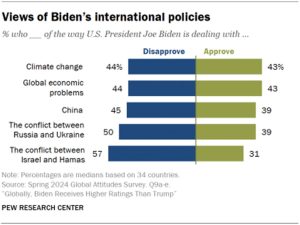
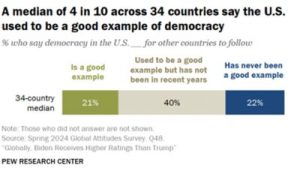
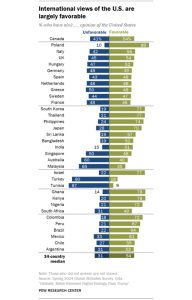
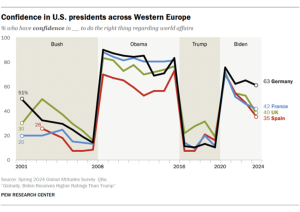
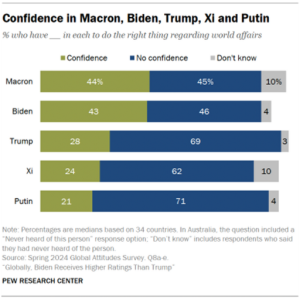
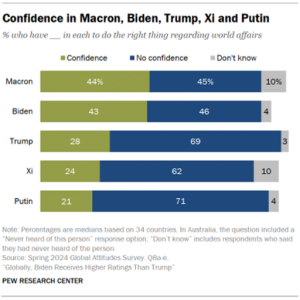
During the debate, Trump asserted that foreign nations lack respect for Biden’s leadership and the United States, contradicting a recent Pew poll indicating that respondents in over 30 countries have more confidence in Biden than Trump regarding foreign policy decisions.

Low global confidence in Trump partly explains why U.S. allies are strategizing for an America that might withdraw from global affairs, either through policy shifts or internal turmoil and partisanship.

Diplomatic protocol typically discourages foreign representatives from commenting on other countries’ elections or internal politics. However, over the past year, senior foreign officials have actively maintained relationships with Trump and his national security circle.

British Foreign Secretary David Cameron met Trump at Mar-a-Lago in April, advocating for continued U.S. support for Ukraine. Similarly, Polish President Andrzej Duda spent two and a half hours with Trump in New York in April, describing it as a “friendly meeting, in a very pleasant atmosphere.”

Outgoing NATO Secretary-General Jens Stoltenberg highlighted the alliance’s economic contributions to the U.S. at the Heritage Foundation earlier this year. The Washington think tank is considered a staging ground for officials in a potential second Trump administration.

NATO’s next Secretary-General, Mark Rutte, a disciplined former Dutch prime minister, won Trump’s favor despite interrupting and contradicting him during Washington meetings.

In Asia, U.S. allies heavily rely on American political and military backing. However, they are strengthening ties among themselves and with Europe to counter Trump’s threats to withdraw security commitments if defense spending is insufficient. The presence of Indo-Pacific allies at NATO summits, such as Japan, South Korea, Australia, and New Zealand, underscores this effort.

“That’s clearly an effort to ensure that even without the United States around that those relationships will continue to grow and those democracies will continue to support one another,” said Evelyn Farkas, executive director of the McCain Institute at Arizona State University.

In private discussions, diplomats avoid expressing anxiety over a second Trump administration, instead focusing on past successes with Trump as a guide for future cooperation.

While Trump offered few substantive foreign policy priorities during the debate, he provided significant, albeit brief, answers on key issues. For instance, Ukraine’s supporters might find solace in Trump’s debate rejection of Russian President Vladimir Putin’s demands to block Ukraine from joining NATO and recognize Russian control over occupied territory in exchange for ending the war.

Preparations are underway for NATO to assume America’s leading role in coordinating support for Ukraine. When Biden hosts the NATO summit in Washington next month, allies are expected to announce that NATO will lead the Ramstein group, which coordinates weapon supplies for Kyiv. NATO is also expected to agree on language outlining Ukraine’s path to membership.

Congress’s support for NATO serves as a safeguard against Trump’s threats to withdraw or withhold U.S. commitments. Nonetheless, bilateral U.S. partnerships remain crucial, and European and Asian leaders have been preparing for months to maintain warm ties with Trump’s circle in anticipation of a possible chaotic second term.

Some countries have dispatched envoys to the U.S. to lobby Republicans at the state level, aiming to mitigate some of Trump’s most concerning threats. Germany’s coordinator of transatlantic cooperation, Michael Link, has met with governors across the U.S. to prevent punitive tariffs on EU goods if Trump is reelected. “It would be extremely important, if Donald Trump were reelected, to prevent the punitive tariffs he is planning on goods from the EU,” Link told Reuters earlier this year.

In the Middle East, a second Trump term would be met with “jubilation,” said Farkas, citing the close ties between Saudi Arabia’s Crown Prince Mohammed bin Salman and Trump’s son-in-law Jared Kushner. Trump reportedly spoke with the crown prince in April, amid Biden’s efforts to broker a cease-fire in the Gaza conflict between Israel and Hamas. “I think the Middle East is an area where, if anything they’re hoping for a Trump outcome, they’re not really hedging,” Farkas added.

Although Trump has criticized Israel’s handling of the Gaza conflict and holds grudges against Israeli Prime Minister Benjamin Netanyahu for recognizing Biden’s 2020 victory, his reelection could bolster Israel’s far-right. “The [Israeli] opposition and the Palestinian people would not be happy with Trump because again, he has been happy to give a blank check to Netanyahu and the Israeli government. It’s the same philosophy, I think, for all the Arab states, basically. Trump will let them do what they want to do and do business with them,” Farkas explained.

During the debate, Trump did not commit to supporting an independent Palestinian state for peace and urged Israel to “finish the job” against Hamas. These positions might conflict with Arab and Gulf states, whose populations support Palestinian rights, noted Gerald Feierstein, director of the Middle East Institute’s Arabian Peninsula Affairs Program and former U.S. ambassador to Qatar. “If Trump wants to pursue the Saudi-Israel agreement, and if the Saudis stick to their guns about no deal without Palestine, that probably means there probably won’t be an Israel-Saudi deal,” Feierstein said, adding that this could change if Netanyahu is ousted.

Despite potential conflicts, Israel and Gulf states are likely to welcome a Trump administration focused on containing Iran, as outlined by Robert O’Brien, Trump’s last national security adviser, who is expected to hold a senior position in a second Trump administration. “The focus of U.S. policy in the Middle East should remain the malevolent actor that is ultimately most responsible for the turmoil and killing: the Iranian regime,” O’Brien wrote in a policy paper for Foreign Affairs.

Trump often claims that Putin would not have invaded Ukraine and Hamas would not have attacked Israel if he were president, assertions that cannot be verified. However, his statements highlight his advisers’ efforts to develop a foreign policy for a potential second term emphasizing a strongman image. “This morass of American weakness and failure cries out for a Trumpian restoration of peace through strength,” O’Brien wrote.

Philadelphia Inquirer Urges Trump’s Withdrawal from 2024 Race, Citing Lies and Chaos

The editorial board of The Philadelphia Inquirer recently penned an opinion piece urging a specific presidential candidate to withdraw from the 2024 race. The board made it clear that they were not referring to President Biden, stating, “The only person who should withdraw from the race is Trump.” They emphasized their stance by noting, “Supporters say they like Trump because he says whatever he thinks. But he mainly spews raw sewage.”

The editorial board further criticized Trump’s approach, highlighting that he “constantly tears the country down” in his efforts to build himself up. They lamented the absence of a “shining city on the hill,” painting a grim picture of the current state of affairs in America.

The centerpiece of the board’s argument revolved around the staggering number of lies—over 30,000 during his time in office, with at least 30 falsehoods uttered during a single debate. The board described the debate as “a reminder of what another four years of Trump would look like. More lies, grievance, narcissism, and hate.”

The board proceeded to dissect Trump’s first term in office, highlighting his extensive Twitter use and frequent visits to his own properties, where he reportedly played over 200 games of golf. They also pointed out his unfulfilled promises, such as the border wall with Mexico.

In addition, the board criticized Trump’s judicial appointments, noting that he primarily selected extreme judges, many of whom were white males, with some being rated as unqualified by the American Bar Association. They also highlighted the record number of fired or resigned cabinet officials, the constant chaos and infighting in the West Wing, and other shortcomings of his administration.

Further, the board addressed various controversies during Trump’s tenure, including a lucrative deal struck by his son-in-law with Saudi Arabia’s government, his impeachments, and his handling of the COVID-19 pandemic. They also mentioned his recent conviction on 34 counts of fraud in New York and his involvement in three additional federal cases, including one related to an attempted overthrow of the government.

The board questioned the decision to allow Trump on the debate stage, given his track record. They acknowledged President Biden’s performance in the debate as less than stellar but emphasized his belief in the best of America and his efforts to rebuild international relationships. They unequivocally stated, “There was only one person at the debate who does not deserve to be running for president. The sooner Trump exits the stage, the better off the country will be.”

The Philadelphia Inquirer’s editorial board called for Trump to withdraw from the presidential race, citing a multitude of reasons, and expressed their belief that the country would be better off without his candidacy.

Ten Indian Yoga Gurus Who Transformed Global Wellness and Harmony

To celebrate the International Day of Yoga, let’s honor ten remarkable Indian gurus whose teachings have profoundly influenced global wellness, making yoga universally accessible and embraced across cultures.

The global prominence of yoga owes much to a select group of Indian yoga masters. One of the pivotal figures is T. Krishnamacharya (1888 – 1989) from Mysore, often hailed as the Father of Modern Yoga for his emphasis on postural yoga. His notable disciples, B.K.S. Iyengar and K. Pattabhi Jois, streamlined yoga practice and spread it globally. As noted in the original article, “T. Krishnamacharya of Mysore in southern India is considered the Father of Modern Yoga for emphasizing postural yoga. His famous disciples B.K.S. Iyengar and K. Pattabhi Jois streamlined yoga practice and teaching and took it abroad.”

Swami Sivananda of Rishikesh also played a crucial role, with his disciples like Swami Vishnudevananda and Swami Satyananda establishing transnational yoga movements, influencing millions globally. “Swami Sivananda of Rishikesh was a spiritual teacher, but his disciples, Swami Vishnudevananda, Swami Satyananda, and Swami Satchidananda, who appeared at the Woodstock festival, went on to launch transnational yoga movements.”

In Maharashtra, Shri Yogendra and Swami Kuvalayananda revitalized physical yoga. Shri Yogendra founded The Yoga Institute in Mumbai in 1918, the world’s oldest yoga center, while Swami Kuvalayananda promoted yoga’s therapeutic aspects through Kaivalyadhama in Lonavala. “Two pioneers in the state of Maharashtra are responsible for physical yoga’s revival in India. Shri Yogendra set up The Yoga Institute, the oldest yoga center in the world, in Mumbai in 1918. Swami Kuvalayananda founded Kaivalyadhama in Lonavala and promoted research on the therapeutic aspects of yoga.”

The modern era saw gurus like Yogananda Paramahamsa, Maharishi Mahesh Yogi, and Osho bringing meditation to the West, while yoga gurus like B.K.S. Iyengar and others demystified yoga, presenting it as a practical tool for health and inner peace. “Even as Indian gurus such as Yogananda Paramahamsa, Maharishi Mahesh Yogi, and Osho took meditation to the West, yoga gurus demystified yoga, presenting it as an efficient tool for health and inner peace.”

Here, we highlight ten such influential yoga gurus who have not only preserved and propagated an ancient Indian tradition but have also enriched millions of lives globally, fostering harmony of mind, body, and spirit and promoting intercultural understanding.

  1. B.K.S Iyengar

B.K.S. Iyengar revolutionized yoga with his precise and therapeutic approach, transforming his own frailty into strength through rigorous practice. His method, known as Iyengar Yoga, emphasizes alignment, precision, and the use of props to make yoga accessible to everyone. “B.K.S Iyengar influenced the global yoga landscape with his precise and therapeutic approach. Born in 1918 in Karnataka, he transformed his frail childhood through rigorous practice, developing what is now known eponymously as Iyengar Yoga.”

  1. Swami Vishnudevananda

Instructed by Swami Sivananda, Swami Vishnudevananda took Yoga and Vedanta to the West, establishing Sivananda Yoga Vedanta Centers across the globe. His teachings emphasize the purity and tradition of yoga, incorporating Karma Yoga for spiritual growth. “Swami Vishnudevananda was instructed by his master, Swami Sivananda, in 1957 to share the teachings of Yoga and Vedanta in the West, with the message ‘People are waiting’. Over 37 years, he came to be known as the Flying Swami as he spread this message, establishing centers and ashrams worldwide.”

  1. K. Pattabhi Jois

Known for Ashtanga Vinyasa Yoga, K. Pattabhi Jois popularized a dynamic form of yoga that synchronizes breath with movement to create a flowing sequence of postures. His legacy continues through the Ashtanga Yoga Research Institute in Mysore. “K. Pattabhi Jois is best known for developing and popularizing Ashtanga Vinyasa Yoga, a dynamic and physically demanding style.”

  1. Swami Satyananda

Founder of the Bihar School of Yoga, Swami Satyananda integrated traditional yogic practices with modern science, promoting a holistic approach to well-being through asanas, pranayama, meditation, and yoga nidra. “The Bihar School of Yoga (BSY), founded in 1964 by Swami Satyananda Saraswati, is a renowned institution dedicated to the holistic teaching and practice of yoga.”

  1. Swami Rama

Swami Rama introduced Himalayan yoga traditions to the West, emphasizing a holistic approach to yoga and meditation. His scientific research added credibility to yoga’s benefits, establishing the Association of Himalayan Yoga Meditation Societies International (AHYMSIN). “Swami Rama brought Himalayan yoga traditions to the West.”

  1. Bikram Chaudhary

Bikram Chaudhary popularized Bikram Yoga, a heated style of yoga practiced in a room with high temperature and humidity, aimed at enhancing flexibility and detoxification. Despite controversies, Bikram Yoga gained widespread popularity globally. “Bikram Chaudhury, the founder of Bikram Yoga, is a prominent yet controversial figure in the yoga world.”

  1. Baba Ramdev

Baba Ramdev revolutionized yoga in India, making it accessible to the masses through mass media and large-scale yoga camps. His approach focuses on the practical benefits of yoga for physical and mental well-being, emphasizing pranayama techniques like Kapalbhati and Bhastrika. “Baba Ramdev, a name synonymous with yoga in recent times in India, has been a major force in bringing the practice to the masses.”

  1. Swami Satchidananda

Swami Satchidananda bridged classical yoga with spiritual growth through Integral Yoga, welcoming practitioners of all backgrounds. His Integral Yoga Institutes worldwide promote yoga philosophy, meditation, and community service. “Swami Satchidananda was pivotal in bringing classical yoga traditions to the West.”

  1. T.K.V. Desikachar

T.K.V. Desikachar personalized yoga through Viniyoga, tailoring practices to individual needs for physical and spiritual well-being. His Krishnamacharya Yoga Mandiram in Chennai continues to innovate yoga’s therapeutic applications. “T.K.V. Desikachar, son of T. Krishnamacharya, wasn’t just another yoga guru; he was a revolutionary who personalized the practice.”

  1. Yogi Bhajan

Yogi Bhajan introduced Kundalini Yoga to the West, emphasizing spiritual awakening through kriyas, meditation, and community. His legacy lives on through the Healthy, Happy, Holy Organization (3HO), promoting Kundalini Yoga worldwide. “Yogi Bhajan, a charismatic figure of Sikh heritage, introduced Kundalini Yoga to the West.”

These gurus have not only preserved an ancient tradition but have also adapted it to contemporary needs, fostering a global community of yoga practitioners united in their pursuit of physical health, mental clarity, and spiritual growth. Their contributions have transformed yoga into a multibillion-dollar industry while promoting harmony and understanding across diverse cultures.

Rahul Gandhi Makes His Presence: New Parliament, Old Confrontation

Mr Narendra Modi taunted and ridiculed him as Shehzada. Mr Modi’s followers in the Bharatiya Janata Party took the cue and chanted ‘Pappu’. Over the decade of the BJP’s rule, Mr Modi’s media friends coined new terms to ridicule the 54-year-old Congress leader, who is the son of the late Prime Minister Rajiv Gandhi and traces a political lineage back to India Gandhi, Jawaharlal Nehru, and Motilal Nehru.

Motilal, too, was a leader of the Opposition in 1923. He was elected to the new Central Legislative Assembly of British India in New Delhi and became leader of the Opposition. In that role, he secured the defeat, or at least the delay, of finance bills and other legislation.
Mr Rahul Gandhi formally became the Opposition leader on Wednesday, the day Mr Om Birla was elected for a second successive term as Speaker.

For ten years, the position was not filled as the Congress, then the largest party in the Opposition, but with just 52 members, could not reach the 10% of the house membership required for its leader to qualify for the title and post of LOP. Experts, however, say there are no rules, and this limit is just a presumption.

Mr Om Birla, handpicked in 2019 by Mr Modi, won his second term in a token contest with the senior most Congress member in the Lok Sabha, Mr Suresh. Mr Birla could have been elected unopposed, but the BJP rejected the Opposition’s demand that their member be chosen as the Deputy Speaker.

The deputy speaker, too, is a statutory post. But Mr Modi ensured Mr Birla had no deputy last time. Now, with the razor-thin majority of his National Democratic alliance, the prime minister cannot risk having an Opposition leader in any parliamentary position of official power.

At stake is the longevity of his government and possibly even the life of the 18th Lok Sabha. If there is a motion of no confidence against the Speaker, the deputy speaker presides with full powers. He can allow a scathing debate. It would be a parliamentary coup.
Political observers say Mr Modi has always wanted a speaker who would do his bidding to avoid the possibility of such a coup. Mr Birla fits the bill. In the Rajya Sabha, the vice-president of India is the ex-officio chairman. It is no accident that both Venkatesh Naidu and then Mr Jagdeep Dhankar remain loyal to the BJP doctrines and personally to him.

But try as he will, Mr Modi will not be able to get rid of Mr Gandhi—not in the House, not in other forums, not even outside Parliament. As Leader of the Opposition, Mr Gandhi has the rank of a Cabinet Minister, like Home Minister Mr Amit Shah or Defence Minister Mr Rajnath Singh.

As the opposition leader, Rahul Gandhi also has a say in appointing key bureaucrats. He will be a member of crucial committees, including the Public Accounts, Public Undertakings, and Estimates Committees of Parliament, where much of the backroom work of legislation and policies is done. He also becomes a member of selection committees that appoint heads of statutory bodies such as the Central Vigilance Commission, the Central Information Commission, the Central Bureau of Investigation, and the National Human Rights Commission of India.

He politely asserted this in words and gestures. His hair was groomed, his salt and pepper beard trimmed close, and in a near-long, white khadi kurta, he looked every inch the holder of the new title. He was not the politician who had revived Congress and the Opposition in two long cross-country marches and then headed a searing election campaign in which he matched Mr Modi step by step.

He came close to defeating not just the BJP but also ensuring a considerable erosion in Mr Modi’s image. In Varanasi, his constituency, Mr Modi lost some three lakh votes. He now ranks low in the list of votes of winning candidates, a blow to his notorious ego.
Mr Modi and Mr Birla sought to begin the new term with an attack on the Congress party, harking back to the state of Emergency Mrs Indira Gandhi had imposed this day in 1975, a full 49 years ago. Mr Modi and the BJP sought the Congress to apologise. Mr Birla, in his inaugural speech, called for a two-minute silence to record Parliament’s condemnation of Mrs Gandhi’s actions. Elsewhere, Vice President Dhankar recorded his concurrence with their sentiments. President Murmu ended her address at the joint session of Parliament with a long condemnation of the Emergency.

The government will continue to attack the very image of Rahul Gandhi, his mother Sonia, who is now in the Rajya Sabha, and sister Priyanka Gandhi Vadra if she wins from Wayanad, where there is now a vacancy. This will be the first time three members of the Gandhi family will be in Parliament. The collateral branch, Menaka and Varun Gandhi, who too were together on the BJP benches for several years, are no longer MPs. The mother was defeated, and the son was not given a ticket. Samajwadi Party leader Akhilesh and his wife lead the five-member family group from Lucknow.

Mr Gandhi was prominent on camera when he joined Mr Modi to escort Mr Birla to the Speaker’s chair. He then finessed it with a short speech of felicitations in which he reminded the Speaker of his role in allowing the Opposition benches to be the voice of the people in the House. “We are confident that by allowing the Opposition to speak, by allowing us to represent the people of India, you will do your duty of defending the Constitution of India,” he said.

“The idea that you can run the House efficiently by silencing the voice of the Opposition is non-democratic. This election has shown that the people of India expect the Opposition to defend the Constitution,” the Congress leader said. “The Opposition would like to assist you in doing your work. We would like the House to function often and well. It is very important that cooperation happens on the basis of trust. It is very important that the voice of the Opposition is allowed to be represented in this House.”

The point was taken further in the House by Mr Akhilesh Yadav. “We believe you will move forward without discrimination and as the Speaker, you will give equal opportunity and respect to every party. Impartiality is a great responsibility of this great post,” he said. It is clear that these two young parliamentarians will be closely and powerfully monitoring the government and challenging Mr Modi at every turn.

But Mr Birla earned terrible notoriety in his first term in office. Many consider him obnoxious because he silenced speakers from the Opposition parties. Others referred to the manner in which he presided over the suspension of a large number of members and the disqualification of TMC member Mahua Moitra after a kangaroo court trial by a committee of the House.

A Parliamentary research report published in The Wire highlighted how the Opposition was all but sidelined under Mr Birla’s watch. Between December 14 and 21, 100 MPs were suspended from the Lok Sabha and 46 from the Rajya Sabha. This accounts for 19% of each House’s strength. This is the highest number of suspensions in any Lok Sabha term. Ms Mahua Moitra was expelled on grounds of ethical misconduct. She is the fourth ever to be suspended.

All bills introduced in the session passed; none were referred to Committees. With almost no one from the Opposition present in the House, all 10 bills introduced in the session were passed, in addition to seven bills pending from previous sessions. The Telecommunications Bill of 2023, which restructures the regulatory framework of the telecom sector, was passed within three days of its introduction. It was discussed for one hour and four minutes in Lok Sabha and one hour and eleven minutes in Rajya Sabha.

Most importantly, the three Bills replacing the Indian Penal Code, 1860, the Code of Criminal Procedure, 1973, and the Indian Evidence Act, 1872, were discussed and passed. Most of the speakers were from the BJP and its allies.

Mr Birla is unlikely to change, but he will feel the pressure more than he did during his last tenure. India’s 18th Lok Sabha is a testimony to the innate strength of the people’s democratic instincts. This commitment to democracy is an inheritance from Mohandas Karamchand Gandhi’s massive, peaceful, unarmed freedom struggle, which defeated not only colonial Great Britain but also several millennia of entrenched feudalism.

The 2024 elections also brought political equilibrium in Parliament, bringing to life a set of political parties that had been decimated in the 2014 and 2019 elections, in which Mr Narendra Modi emerged as India’s prime minister. He led his Bhartiya Janata Party to victory on a platform which was equal parts rabid Islamophobia and delusions of rapid development, targeting “aspirant” classes of hundreds of millions of young voters who had been led to believe that the fruits of freedom had been grabbed by the poor, the Dalits and other deprived classes, and the religious minorities, especially Muslims and Christians.

Mr Modi heads his third government as a coalition with a razor-thin margin. All the sheen and starch the first two tenures had, and even washed out in his party’s virtual rout in two major states of Uttar Pradesh and Maharashtra, their stronghold. Mr Modi’s own winning margin had been whittled down to a fifth of what it was when he won in 2019. However, he has presented a brave and perhaps even aggressive face to the people and to his critics. When he was sworn in on June 9, he continued with his old cabinet—barring the many junior ministers who lost their seats.

He almost immediately went on his first foreign jaunt as a third-term Prime Minister as a guest at the meeting of developed nations. The Pope had been invited to speak on artificial intelligence and climate change issues. Mr Modi embraced him, took a selfie with the young prime minister of Italy and was photographed with the leaders of Europe and America.

The future of this Lok Sabha may well depend on whether Mr Modi, whose regime was dubbed dictatorial by critics at home and abroad, will embrace a more humane and democratic way of governance. His attitude may not work when serious legislative business begins, and the Opposition will challenge him for debate on every point. Hopefully, we will see new laws emerge after exhaustive discussion and negotiation.

The new Parliament demands that the government seek the cooperation of the Opposition instead of ramming decisions and legislation down its throat. That has been the practice in the last ten years, and for the last five, Mr Birla, as Speaker, has connived with the prime minister. This may not come naturally to Mr Modi. He is steeped in the ways of the 99-year-old Rashtriya Swayamsevak Sangh, an unregistered religious and nationalistic organisation with a uniformed cadre and the political goal of a Hindu nation.

His 15-year rule as chief minister of his home state, Gujarat, and his 10 years in New Delhi as prime minister have shown a megalomaniac persona that demands total and absolute obedience and brooks no criticism, much less Opposition. He takes this arrogance as strength and keeps critics and opponents in check. After Mr Birla was installed as Speaker, Mr Modi focused almost entirely on the Emergency Mrs Indira Gandhi enforced for a year and a half 49 years ago.

Her election was overturned by the Allahabad High Court; Mrs Gandhi suspended the Constitution. For close to 20 months, she and her younger son, Sanjay Gandhi, ran a government which suspended civil liberties and imprisoned tens of thousands of political leaders across the country. The people punished her when she lifted the Emergency in 1977. Her Congress party was wiped out in north India, winning but a humiliating two seats. In later developments, she was temporarily arrested, her membership of the Lok Sabha revoked, and a judicial enquiry was ordered. Mrs Gandhi returned to power in the 1980 general elections and was prime minister till her assassination by her Sikh guards in October 1984

In Delhi, as in Gujarat, Mr Modi has bent the judiciary, police, bureaucracy, and education system to his will, massively eroding democratic institutions. Many think he came close to threatening the Constitution itself. The election results told him that perhaps the people would no longer obey.

India became a republic on January 26, 1950, with a written Constitution and well-defined freedoms, including the cherished Freedom of Religion and Belief. Arguably, for the first time in 3,000 years, all Indians, including women, were equal in the eyes of the law. Caste remains an integral part of the majority faith of Hinduism, but untouchability is now a federal crime with strong penalties. That caste tensions remain close to eight decades after Independence is another story.

Replacing Biden as Democratic Nominee: Unlikely and Complicated Process Unless Voluntary Withdrawal Occurs

Replacing President Biden as the Democratic nominee is fraught with complications and is essentially unfeasible unless Biden decides to step down on his own accord. Both politically and procedurally, it is nearly impossible for the Democrats to prevent Biden from securing the nomination.

Currently, Biden is the only candidate available for a vote at the Democratic convention. He received 99 percent of his party’s delegates in the primaries, with these delegates pledged to support the winner of their state’s contest in the initial round of voting. According to Democratic National Committee (DNC) rules, delegates won by Biden are required to support his nomination unless he voluntarily withdraws and releases them to support another candidate.

Although the DNC could theoretically change the rules to block Biden before the convention starts on August 19, such a move would necessitate an extraordinary level of political backing, which is hard to envision. A factional clash at the convention to unseat him seems highly improbable.

However, Democratic sources told The Hill that there is a slight chance party leaders, including former Presidents Obama and Clinton, might be persuaded to talk to Biden about stepping down. Ultimately, Biden places the most trust in the advice from First Lady Jill Biden and his sister, Valerie, who are considered the only people capable of truly influencing his decision.

A unique situation in 2024 further compresses the timeline for deciding the nominee. Ohio state law mandates that its ballot be certified 90 days before the election, which this year falls on August 7, almost two weeks before the convention starts. Despite attempts by Ohio lawmakers to pass a bill to resolve this issue, they reached a deadlock, leading DNC leaders to plan for a virtual nomination of Biden ahead of the deadline and the convention. Any change in the nominee would thus need to occur before Ohio’s deadline to ensure the candidate appears on the state’s ballot, barring a legislative fix.

On Friday, party leaders were rallying around Biden, showing no indication of privately urging him to step aside. His campaign, the White House, and his supporters have strongly resisted the idea, though some mentioned that if polls reveal his performance is detrimental to down-ballot candidates, it could become a pressing topic.

If Biden were to step down, Vice President Harris would be the natural successor. Nevertheless, she would not automatically become the replacement. Although Biden won the primaries, his support garnered through those contests cannot be directly transferred to Harris. Instead, she would need to compete with other potential candidates, who might view themselves as stronger contenders against the presumptive GOP nominee, former President Trump.

According to its bylaws, the DNC holds general responsibility for the party’s affairs between national conventions, which includes filling vacancies in the nominations for president and vice president. Should Biden withdraw, a vacancy would be created, and Harris would logically be the successor. Politically, it would be difficult for someone to replace Harris if Biden wanted her to lead the ticket. However, prospective politicians like California Gov. Gavin Newsom or Michigan Gov. Gretchen Whitmer might still attempt to vie for the position.

“This is the bigger pickle to replacing Biden. I don’t see the Democratic coalition surviving intact if Harris is not on the top of the ticket, and it’s hard to assure that would be the party consensus if they replace Biden,” a former DNC official said.

If multiple Democratic candidates aimed to replace a withdrawn Biden as the party’s nominee, they would likely need to contend with state delegations at the August convention in Chicago. This could result in a scenario not seen in American politics for decades: a contested convention that actually determines the party’s nominee.

Conservative groups have suggested they would file lawsuits across the country, potentially questioning the legality of the Democratic candidate’s name on the ballot under such circumstances. In an interview with the Associated Press, Elaine Kamarck, a senior fellow in governance studies at the Brookings Institution in Washington, noted that courts have consistently refrained from intervening in political primaries as long as the parties conducting them were not infringing upon other constitutional rights, such as voter suppression based on race.

FCC Proposes New Rule to Simplify Phone Unlocking: Carriers Must Unlock Devices 60 Days After Purchase

The Federal Communications Commission (FCC) aims to simplify the process for consumers to unlock their mobile phones from their carriers, proposing that all devices should be unlockable just 60 days after purchase. This proposal seeks to address how it will integrate with current phone plans and purchasing trends, a topic the FCC intends to explore further before implementing the rule.

Typically, mobile phones bought from carriers are locked to that carrier until the contract expires or the phone is fully paid off. Despite progress over the years—unlocking phones was once illegal—it remains unclear to many consumers when and how they can unlock their phones to use with different carriers or in different countries.

To clarify, this isn’t about unlocking the phone using facial recognition, fingerprints, or passwords, but rather altering the phone’s software settings to enable it to work with various mobile networks.

FCC Chairwoman Jessica Rosenworcel announced the Notice of Proposed Rulemaking (NPRM) in a press release on Thursday. “When you buy a phone, you should have the freedom to decide when to change service to the carrier you want and not have the device you own stuck by practices that prevent you from making that choice,” she wrote. “That is why we are proposing clear, nationwide mobile phone unlocking rules.”

The proposal specifically requires carriers to provide unlocking services 60 days after activation. While this standard is welcomed, it may clash with the current dynamics of the phone and wireless markets.

For example, although the two-year contract is no longer mandatory for most consumers, many still opt for such contracts to secure pricing and other benefits. More relevantly, phones are often paid for through installment plans, where a phone is acquired for “free” but paid off over several years.

The NPRM stage in FCC rulemaking involves drafting the rule without having solicited public feedback yet. On July 18, the agency will publish the complete document and open the floor for comments on these issues. It’s expected that mobile providers will have much to say!

Without knowing the exact details of the proposed rule, it’s uncertain how it will align with these common pay-over-time arrangements. However, unlocking a phone doesn’t absolve the user from paying off the device—it simply allows them to use it on other networks. If a carrier lets a customer buy a phone outright but locks it to its bands for six months or a year purely out of greed, this rule would provide an early way out.

As Rosenworcel pointed out, the objective of the rule is to offer consistency and transparency—a straightforward, nationwide regulation that sets a reasonable limit on how and when carriers can lock devices. More details will be available in July when the full NPRM is published.

Connecting Continents: The Top Five Longest Nonstop Flights Between India and the USA

India and the United States are connected by several long-haul flights, with the longest routes linking major Indian cities to either the West Coast (San Francisco) or New York City (JFK and Newark). These routes are predominantly operated by Air India, which transported over 1 million passengers to the US in 2023. As the world’s most populous country, India’s growing demand for air travel is evident in these extensive connections. According to Cirium, an aviation analytics company, the five longest nonstop flights from the US to India are listed below.

  1. Delhi to San Francisco

The fifth-longest route between the US and India is the 7,706-mile flight from San Francisco to Delhi. New Delhi, India’s capital, boasts a metropolitan population of approximately 33 million, while the Bay Area is home to nearly 10 million people. This route is served by Air India, with 44 operations and 12,022 seats available. The journey takes around 15 hours and 30 minutes.

Despite being India’s largest airline by passenger volume, IndiGo does not operate these long-haul international flights, focusing instead on domestic and regional travel within Asia and the Middle East. The absence of US-based airlines on this route is partly due to geopolitical tensions; specifically, the reciprocal airspace bans between Russia and Western nations following the 2022 invasion of Ukraine have affected route planning.

  1. Mumbai to John F. Kennedy (NYC)

Air India operates the 7,797-mile nonstop flight from Mumbai, India’s financial hub, to JFK, the busiest US airport for international flights. With 31 operations and 10,168 seats, this route ranks fourth among the longest. Mumbai, comparable to New York City in its financial prominence, has a significant metropolitan population and continues to use the old airport code “BOM” from its former name, Bombay. Air India serves this route with Boeing 777 aircraft, with a flight time of 17 hours and 25 minutes.

  1. Mumbai to Newark Airport (NJ)

The 7,806-mile flight from Mumbai to Newark Liberty International Airport is the third-longest route, with 13 operations and 4,264 seats. Newark, located in New Jersey, is part of the New York metropolitan area. Air India uses its Boeing 777 fleet for this 14-hour and 35-minute journey. The Boeing 777-200LR, known for its long-range capability, is one of the few aircraft suitable for such extensive flights, although newer models like the Airbus A350 XWB Ultra Long Range have surpassed its range.

  1. Mumbai to San Francisco

At 8,401 miles, the route from Mumbai to San Francisco is the second-longest flight between India and the US and ranks 16th among the world’s longest nonstop flights. Air India operates this route with a flight time of 16 hours and 5 minutes, offering 18 operations and 5,184 seats. Mumbai’s Chhatrapati Shivaji Maharaj International Airport is the second busiest in India for total and international passenger traffic, after Delhi. Air India’s expansion in North America includes over 500 return flights to the US and Canada.

  1. Bangalore to San Francisco

The longest nonstop flight from the US to India is the 8,691-mile route from Bangalore to San Francisco, connecting two major tech hubs. Known as India’s Silicon Valley, Bangalore parallels the Bay Area’s famed Silicon Valley. Air India operates this route with Boeing 777 aircraft, featuring 13 to 14 operations and 4,032 to 3,744 seats. The flight lasts 17 hours and 55 minutes, making it one of the longest nonstop flights globally. Singapore Airlines’ JFK to Singapore flight is the only scheduled commercial flight with a longer duration at 18 hours and 50 minutes. Other routes, such as Qatar’s Auckland to Doha flight, cover greater distances but have shorter flight times.

In summary, the top five longest flights between the US and India reflect the increasing air travel demand between these populous nations. Air India’s substantial presence on these routes highlights its strategic role in connecting major Indian and US cities, despite the complexities introduced by geopolitical factors and airline operational constraints.

Debate Struggles Highlight Age Concerns for Biden as Harris Faces Tough Poll Numbers Against Trump

Joe Biden faced challenges during his debate with Donald Trump on Thursday night, raising questions about how his vice president, Kamala Harris, would handle a debate against the former president.

The two leaders met in Atlanta for their first face-off in nearly four years, with Biden’s age being a significant concern. At 81, he is the oldest president in U.S. history. During the debate, Biden struggled, sounding hoarse and losing his train of thought at one point. These issues intensified discussions among Democrats about whether he should continue as the party’s nominee.

With four months until Election Day, there’s no definitive front-runner to replace Biden. However, Vice President Kamala Harris is a potential candidate. At 59, she is significantly younger than both Biden and Trump, who is three years younger than Biden. If Biden were to step down, Harris would automatically assume the presidency, making her a logical choice for a potential switch in the Biden-Harris campaign.

Polls suggest Harris faces a tougher challenge against Trump than Biden. According to RealClearPolling averages, Trump leads Harris by 6.6 percentage points, with 49.3 percent support compared to her 42.7 percent. In contrast, Trump is ahead of Biden by only 1.5 points, with 46.6 percent to Biden’s 45.1 percent.

A Politico and Morning Consult poll conducted earlier this month showed that only a third of voters believe Harris would win the election if she became the Democratic nominee. Additionally, only 60 percent of Democrats think she would succeed.

Harris has faced criticism for not having a more prominent role in the Biden administration. Less than a year into Biden’s term, the White House issued a statement to counter claims that Harris had not met expectations. In November 2021, White House press secretary Karine Jean-Pierre said, “For anyone who needs to hear it. @VP is not only a vital partner to @POTUS but a bold leader who has taken on key, important challenges facing the country—from voting rights to addressing root causes of migration to expanding broadband.”

Appointed by Biden to handle the border crisis, Harris has been criticized for the response to the influx of migrants since Biden took office. Immigration remains a top concern for voters, more than three years after Harris was named Biden’s border czar.

Harris’ reputation has struggled due to early missteps, and her approval rating reflects this. FiveThirtyEight’s polling averages indicate that less than 40 percent of Americans approve of her performance as vice president, with nearly half disapproving. Biden and Trump’s approval ratings are similarly low, with Biden’s approval around 38 percent and 56 percent disapproving. Trump has a 42 percent favorable opinion, while about 53 percent view him unfavorably.

Despite these challenges, Harris remains supportive of Biden’s candidacy. After the debate, she defended Biden in an interview with CNN’s Anderson Cooper, acknowledging his “slow start” but praising his “strong finish” in the 90-minute event. Harris emphasized, “What we saw tonight was the president making a very clear contrast with Donald Trump on all the issues that matter to the American people.”

When Cooper suggested that Biden’s debate performance was disappointing, Harris responded assertively, saying, “I’m not going to spend all night with you talking about the last 90 minutes when I’ve been watching the last three and a half years of performance.”

Indians Abroad Send Record $107 Billion in Remittances in FY 2023-24, Surpassing $100 Billion Mark for Second Year

In the financial year 2023-24, Indians living abroad sent a record $107 billion in remittances to their families in India, marking the second year in a row that remittances exceeded $100 billion, as reported by The Economic Times.

This massive inflow of remittances nearly doubles the combined $54 billion from foreign direct investments (FDI) and portfolio investments during the same timeframe.

According to balance of payments data, gross remittances from the Indian diaspora, categorized as private transfers, reached $119 billion in FY24. After deducting repatriated income by foreign residents and other related expenses, net private transfers stood at $107 billion.

Both global studies and domestic research indicate a correlation between remittances and migration levels in various economies, as well as the employment conditions in the countries of origin. The cost of sending money is also a crucial factor influencing the volume of remittances.

United States: The Largest Source of Remittances

A survey by the Reserve Bank of India (RBI) on post-Covid-19 remittances identified the United States as the largest source, contributing 23% of the total amount. Meanwhile, remittances from the Gulf region saw a decline during this period.

The majority of these funds are sent to support families, with some also allocated to investments such as deposits, according to the RBI’s findings on remittances.

In 2023, the United States remained the top contributor to global remittances. India was the largest recipient, with $125 billion, followed by Mexico ($67 billion), China ($50 billion), the Philippines ($40 billion), and Egypt ($24 billion).

Remittance Flow to Developing Nations

In December, the World Bank’s “Migration and Development Brief” confirmed that India continues to lead globally in receiving remittances from its diaspora. This trend, ongoing for over two decades, is largely driven by the migration of IT professionals to North America and Europe since the 1990s.

Dilip Ratha, lead economist and principal author of the World Bank report, stated that remittance flows to developing nations have recently outpaced foreign direct investment and official development assistance. He added that this trend is expected to continue growing.

The World Bank report predicts a slower growth rate in remittances to low- and middle-income countries, forecasting a 3.1% increase in 2024.

The Liberalised Remittance Scheme

The Liberalised Remittance Scheme (LRS) allows resident individuals, including minors, to remit up to $250,000 annually (April to March) for any permissible current or capital account transaction, or a combination thereof. Additionally, residents can utilize foreign exchange services as specified in Para 1 of Schedule III of the FEM (CAT) Amendment Rules 2015, dated May 26, 2015, with a cap of $250,000.

Introduced on February 4, 2004, the scheme initially had a cap of $25,000. The LRS limit has since been gradually increased in line with prevailing macroeconomic and microeconomic conditions.

If the remitter is a minor, the LRS declaration form must be signed by the natural guardian. The scheme does not apply to corporates, partnership firms, and trusts, among others.

There are no restrictions on the frequency of remittances under the LRS, but the total foreign exchange bought or remitted through any Indian source in a financial year cannot exceed $250,000. Once an individual remits up to $250,000 within a financial year, they are not eligible for further remittances under this scheme, regardless of whether investment proceeds have been repatriated.

Nikesh Arora: The Sole Indian-American Among Top 10 Highest-Paid US CEOs in 2023

Nikesh Arora, CEO and chairman of Palo Alto Networks, is the sole Indian-American featured among the top 10 highest-paid CEOs in the United States, according to a recent report by C-Suite Comp, a data analytics firm. This report, published on Monday, diverges from the commonly highlighted Indian-origin executives in Silicon Valley, such as Sundar Pichai and Satya Nadella, who did not make the list.

C-Suite Comp compiled two lists based on different metrics: “total compensation granted” and “compensation actually paid” in 2023. Remarkably, neither Google’s Sundar Pichai nor Microsoft’s Satya Nadella featured on either list, despite Microsoft’s significant achievements with OpenAI over the past year. Conversely, Nikesh Arora secured spots on both lists, highlighting his significant earnings.

In the “Highest earning CEOs in the US by total compensation granted in 2023” category, Arora ranked fourth with an impressive $151.4 million. Additionally, he was tenth in the “Highest earning CEOs in the US by compensation actually paid in 2023” category, with an annual compensation totaling $266.4 million.

Leading the list of highest-paid CEOs by actual compensation in 2023 is Elon Musk, CEO of Tesla, with an astronomical earning of $1.4 billion. He is followed by Alexander Karp of Palantir Technologies, who also crossed the billion-dollar mark with $1.1 billion. Other notable CEOs on this list include Hock Tan of Broadcom, Brian Armstrong of Coinbase Global, and Safra Catz of Oracle.

Here’s a detailed look at the top earners:

  1. Elon Musk, Tesla – $1.4 billion
  2. Alexander Karp, Palantir Technologies- $1.1 billion
  3. Hock Tan, Broadcom- $767.7 million
  4. Brian Armstrong, Coinbase Global – $680.9 million
  5. Safra Catz, Oracle- $304.1 million
  6. Brian Chesky, Airbnb- $303.5 million
  7. Jon Winkelried, TPG – $295.1 million
  8. Jeff Green, Trade Desk – $291.7 million
  9. Adam Foroughi, Applovin- $271.3 million
  10. Nikesh Arora, Palo Alto Networks- $266.4 million

Nikesh Arora’s journey to becoming one of the highest-paid CEOs is noteworthy. He became the CEO of Palo Alto Networks in 2018, following a distinguished career at Google and SoftBank Group. Born 56 years ago to an Indian Air Force officer, Arora completed his early education at Air Force Public School in Delhi. He earned a Bachelor’s degree in electrical engineering from the Institute of Technology, Banaras Hindu University (now IIT-BHU). Furthering his education, he obtained an MBA from Northeastern University and an MSc from Boston College.

Arora’s professional trajectory includes a decade at Google, where he held senior leadership roles. In 2014, he transitioned to SoftBank Group, serving as its president and chief operating officer. His career also spans roles at T-Mobile and Bharti Airtel, Europe.

In his personal life, Arora is married to Ayesha Thapar, the granddaughter of the notable business magnate Karam Chand Thapar. This background not only highlights his professional achievements but also his significant personal affiliations.

Arora’s inclusion in the top 10 highest-paid CEOs in the US underscores the financial recognition of his leadership at Palo Alto Networks, a leading cybersecurity company. His dual appearances on both the “total compensation granted” and “compensation actually paid” lists further emphasize his substantial earnings and the high value placed on his executive role.

The achievement is particularly significant given the context of the technology industry, where other prominent Indian-American CEOs like Sundar Pichai and Satya Nadella have not made the same lists despite their considerable influence and the technological advancements under their leadership. Arora’s recognition in these rankings demonstrates the diverse achievements of Indian-origin executives in the United States and the broad spectrum of industries where they make significant impacts.

Nikesh Arora stands out not just among Indian-origin executives, but across the entire landscape of American corporate leadership. His impressive earnings and notable career progression highlight his substantial contributions to the tech industry and his exceptional role at Palo Alto Networks. As the only Indian-American in the top 10 highest-paid CEOs in the US, Arora’s achievement is a testament to his hard work, expertise, and the high regard in which he is held within the business community.

Indian Americans: Small in Number, Big in Impact – Economic, Academic, and Policy Contributions Shape US and Beyond

Indians, while comprising a minor fraction of the US population, wield substantial economic influence. Despite representing only 1.5% of the population, Indian Americans contribute 5-6% of the total income taxes in the United States, equating to approximately $250-300 billion annually. This data comes from a recent report by Indiaspora and Boston Consulting Group (BCG), highlighting the impressive economic strides of the Indian diaspora, which numbers 5.1 million. Notably, about 70% of Indian Americans hold US citizenship.

Prominent figures such as Microsoft’s Satya Nadella, Google’s Sundar Pichai, and Vertex Pharma’s Reshma Kewalramani (the first female CEO of a major US biotech firm) exemplify the success of Indian Americans in the corporate world. They are among 16 Indian-origin CEOs leading Fortune 500 companies, collectively employing 2.7 million people and generating nearly $1 trillion in revenue.

Indians are not only at the forefront of major American corporations but also play a significant role in the startup ecosystem. They have co-founded 72 out of 648 US unicorns as of 2024, which employ over 55,000 people and have a combined valuation of $195 billion. The report states, “From leading the largest enterprises and founding new companies to employing millions of people across all states, the financial influence of the Indian diaspora shows the determination of individuals who overcame challenges to make meaningful contributions to their new home.”

The emphasis on academic achievement within the Indian community is notable as India strives to build a knowledge economy domestically. Approximately 78% of Indian Americans hold a bachelor’s degree or higher, significantly surpassing the US national average of 36%. Indian Americans also make up 2.6% of full-time faculty in American universities, holding about 22,000 faculty positions. Furthermore, they occupy crucial leadership roles such as deans, chancellors, and presidents in 70% of the top 50 US colleges.

Indian Americans significantly contribute to research, innovation, and academia in the US. Between 1975 and 2019, the share of US patents credited to Indian-origin innovators rose from 2% to 10%. In 2023, Indian-origin scientists were involved in 11% of all NIH grants and accounted for 13% of scientific publications. This showcases their growing influence in advancing scientific research and innovation.

The influence of the Indian diaspora extends beyond academia and into the realm of policy-making and government. As of 2023, approximately 150 Indian Americans held significant positions in the US federal administration, including Vice President Kamala Harris. With Ajay Banga’s appointment as the president of the World Bank, Indian Americans are also making significant impacts in global economic policies and development.

The achievements of Indians in the US also resonate back in India. The diaspora has contributed over $1.5 billion to philanthropy in the US while also supporting various causes in India. In 2018-19, donations from the US to India amounted to around $830 million, representing 35% of all donations to the country. This indicates a strong commitment to giving back to their homeland and addressing critical needs.

Despite these successes, the Indian American community faces challenges. As of 2020, around 6% of Indian Americans lived below the poverty line, and an estimated 14% were undocumented in 2021. These issues highlight the ongoing struggles within the community, despite its overall economic and academic successes.

Indian Americans, though a small portion of the US population, have made significant contributions to the country’s economy, academia, and policy-making. Their success is evident in the high-ranking positions they hold in major corporations and government, their substantial academic achievements, and their philanthropic efforts both in the US and India. However, challenges such as poverty and undocumented status remain areas that need addressing to ensure the continued growth and well-being of the Indian American community.

India’s Major Temples Embrace Facial Recognition Amid Privacy Concerns and Legal Uncertainty

Several of India’s largest temples, including the Ram Mandir in Ayodhya, Mahakaleshwar Temple in Ujjain, and Venkateswara Swami Temple in Tirupati, have embraced facial recognition technology to manage their vast numbers of worshippers. This technology captures data on tens of thousands of daily visitors, raising concerns about privacy and surveillance in the absence of clear regulations.

At the Venkateswara Swami Temple, for instance, devotees are photographed upon entry, with their details cross-checked against registration information. According to L.M. Sandeep, TTD’s general manager for information technology, the system aims to prevent criminal entry and eliminate exploitation by middlemen who charge for expedited temple access and accommodation services.

Critics like Disha Verma from the Internet Freedom Foundation argue that facial recognition technology is inherently flawed and raises serious privacy concerns, particularly when used without robust legal frameworks. They warn of potential misuse of data, especially in a country where similar technologies have been deployed for law enforcement purposes, often with discriminatory outcomes.

India has rapidly adopted facial recognition technology since 2018, with systems deployed across various states in public spaces, schools, and even temples. Concerns about its accuracy and the lack of transparency regarding data storage and usage persist, despite some legislative efforts like India’s Data Protection Law, which has yet to be fully enforced.

The inauguration of the Ram Mandir in Ayodhya marked a significant moment, symbolizing a shift towards integrating AI technology into religious sites for enhanced security. However, critics argue that such measures could lead to increased surveillance and potential misuse of data, particularly in a politically charged environment where religious sentiments are mobilized during elections.

The Mahakaleshwar Temple in Ujjain, witnessing massive footfall daily, introduced AI-enabled facial recognition in 2023 to manage crowds effectively. Similarly, other states have explored schemes linking temple visits with government subsidies, raising further concerns about privacy and the possible targeting of minority groups.

While India’s parliament passed its first data protection law in 2023, its implementation remains pending, leaving privacy rights vulnerable to technological advancements like facial recognition. Contrastingly, countries like China have begun drafting laws to restrict private use of such technologies and safeguard personal data, highlighting the global debate on surveillance and privacy rights.

In the absence of clear guidelines and accountability, the deployment of facial recognition in temples and other public spaces continues to be contentious. Legal challenges have been mounted, although outcomes remain pending, reflecting the broader uncertainty and concerns regarding privacy in the digital age.

India Stuns South Africa By Winning T20 World Cup Title

History was made with India beating South Africa, and clinching their second ICC T20 World Cup title with a seven-run win at the at the Kensington Oval in Bridgetown, Barbados on Saturday, June 29th, 2024.

Electing to bat on a dry surface, 2007 champions India overcame a top-order meltdown to post a competitive 176-7. South Africa got off to a fine start with three wickets within the Powerplay, including skipper Rohit SharmaRishabh Pant and Suryakumar Yadav. Keshav Maharaj of South Africa struck twice with wickets of Rohit Sharma and Rishabh Pant while Kagiso Rabada snapped up Suryakumar Yadav as India lost 3 wickets inside the powerplay.

India, however, made a recovery with Virat Kohli and Axar Patel putting up a 72-run stand for the fourth wicket – the highest by an Indian pair in a final.

Virat Kohli struck his first 50 of this World Cup and Axar Patel smashed 47 to power India to a healthy total. While Axar fell after a quickfire 47, Kohli struck a 48-ball half-century – the second-slowest among Indians – before finishing on 76. India, however, put up a competitive 176/7 total – the highest first-innings score in a final across nine editions. Anrich Nortje and Keshav Maharaj claimed two wickets apiece for South Africa.

Virat Kohli’s score of 76 made India reach the highest ever team total in the history of the T20 World Cup final. Shivam Dube supported him in the death, scoring 27 runs.

The Proteas suffered a top order collapse of their own, but Quinton de Kock (39) and Tristan Stubbs (31) put their chase back on track. Heinrich Klaasen (52) then counter-attacked in spectacular fashion but India’s impeccable death-overs bowling restricted South Africa to 169-8.

Indian bowlers, especially Jasprit Bumrah, Hardik Pandya and Arshdeep Singh kept calm in the end as India snatched victory from the jaws of defeat as they finally ended their 11-year ICC trophy drought and won the T20 World Cup for the second time in their history by beating South Africa by 7 runs.

South Africa’s chase stiffened at the loss of the fourth wicket in the chase at 106, but number five Heinrich Klaasen compiled a 23-ball half-century, the quickest in any final, to charge the team towards the target.

Pandya landed the decisive blow with the first delivery of the over, dismissing David Miller on the back of Suryakumar Yadav’s incredible catch at the long-off boundary. While Kagiso Rabada managed a four and a single off the next three deliveries, Hardik held his nerve and dismissed the left-hander off the penultimate to seal India’s epochal win in Bridgetown.

India marked a turnaround in the 17th over when Hardik Pandya snapped up Klaasen on 53, conceding only four runs. Jasprit Bumrah followed up with a spellbinding over, conceding only two runs while cleaning up Marco Jansen, leaving South Africa a 20-run deficit. Arshdeep Singh then delivered a spotless over, conceding four runs, leaving South Africa with 16 to get in the final over.

Last week India advanced to the final of the T20 World Cup with a crushing 68-run win over England in the second semifinal. England was bowled out for just 103 in its run chase of 172 after Indian captain Rohit Sharma starred with another half-century.

India skipper Rohit also became the first captain to win 50 men’s T20Is, appearing in his second T20 World Cup as the skipper of the side. Rohit had previously led India to the World Test Championship final and the ODI World Cup final in 2023, finishing runner-up behind Australia on both occasions.

This is India’s first title since their ICC Champions Trophy win in 2013 and their second T20 World Cup trophy since edging Pakistan by five runs in the inaugural final in Johannesburg in 2007. It is India’s second T20 title, having won the inaugural tournament in 2007, and first World Cup win in either format since the 2011 50-over competition. For South Africa it was a horrible defeat that brought back all of the pain of World Cups past.

“We play the sport for this, I am really over the moon,” said India’s pace spearhead Jasprit Bumrah, adjudged player-of-the-tournament. “We’ve been working really hard towards this, no better feeling than that. We play sport for the big stages. On the big day, you have to give more.”

19-Year-Old Nandini Agrawal Becomes World’s Youngest Female Chartered Accountant, Sets Guinness World Record

At an age when many are focused on gaining college admissions, 19-year-old Nandini Agrawal from Morena, Madhya Pradesh, has set a remarkable benchmark by becoming the world’s youngest female Chartered Accountant (CA), a feat officially recognized by the Guinness World Records.

Nandini Agrawal’s academic journey has been nothing short of exceptional. Demonstrating outstanding diligence and intelligence, she managed to skip two school grades, completing her 10th board exams at the age of 13 and her 12th board exams by 15. Her inspiration came from a Guinness World Record holder who visited her school, igniting her ambition to achieve something notable. Motivated by this encounter, she decided to pursue the title of the youngest CA.

However, her age became a significant hurdle, especially during her apprenticeship. At just 16 years old, many firms were hesitant to take her on as an apprentice, questioning her maturity and capability. Despite this setback, Nandini remained resolute in her pursuit.

In 2021, at the age of 19, Nandini Agrawal not only cleared the CA final exam but secured the All India Rank 1 with an impressive score of 614 out of 800, equating to 76.75%. At the time of her result announcement, she was exactly 19 years and 330 days old, thus earning her the Guinness World Record title as the world’s youngest female chartered accountant.

Nandini credits a significant part of her success to her elder brother, who was also preparing for the CA exams. His understanding of the challenges she faced and his guidance proved to be invaluable. While Nandini topped the merit list, her brother secured the 18th position in the same exam.

Reflecting on her journey, Nandini shared, “The support from my family, especially my brother, was crucial. There were times when the pressure was overwhelming, but having someone who understood the process made a significant difference.” Her brother’s companionship and mentorship played a vital role in her perseverance and eventual triumph.

Nandini’s achievement has not only brought pride to her family but also serves as an inspiration to many young aspirants. Her story exemplifies that with determination, age is no barrier to achieving great heights. She emphasized the importance of setting clear goals and relentlessly working towards them, regardless of the challenges that may come.

Throughout her preparation, Nandini faced numerous challenges, from the skepticism of firms regarding her apprenticeship to the immense academic pressure. Yet, her unyielding spirit and support system enabled her to navigate these obstacles successfully. Her story is a testament to the power of resilience and dedication.

The significance of Nandini’s achievement is manifold. It breaks conventional expectations of age and success, inspiring a new generation to aim high and pursue their dreams with unwavering determination. Her record is not just a personal milestone but a beacon of hope and motivation for many young minds.

Nandini Agrawal’s journey to becoming the world’s youngest female Chartered Accountant at 19 is a story of remarkable dedication, support, and perseverance. Her accomplishment underscores the importance of having a clear vision, unwavering support from loved ones, and the resilience to overcome challenges. Her journey stands as a powerful reminder that with the right mindset and effort, extraordinary achievements are within reach for everyone, irrespective of age.

New Delhi’s Advay Misra Shines at International Academic Championship, Winning Multiple Titles

Advay Misra, an eleven-year-old boy from New Delhi, has recently garnered attention for his outstanding performance at the International Academic Championship, held from June 14th to the 16th. Misra, an eighth-grader at New Delhi’s Sanskriti School, secured first place in both the academic bee and science competitions, and earned a second-place finish in the geography bee. The event, which took place in Khao Lak, Thailand, saw fierce competition for the Asian Championship titles, with over 300 students participating from 30 cities across 14 countries.

Misra’s journey began when his parents moved to the United States for work in 2018, and he started his academic career at the age of five. Since returning to India in 2021, his list of accomplishments has steadily grown. Notably, he has won the Academic Bee Championship consecutively and claimed the Asian Science Bee Championship title for three years in a row.

In 2023, as the All India Winner of the National Academic Competition, Misra achieved the remarkable feat of winning all four bees—Academic, Science, Geography, and History—while representing India. He also boasts an impressive record in the United States, having placed second in the 2020–21 National Science Bee Championship.

Misra’s favourite pastimes include reading and Python programming, and he credits his mother for his success. He has also excelled in CTY’s grade-based testing programmes by watching math lessons on Khan Academy. During an interview with Ashok Vyas for the television show Wide Angle, his passion for geography and travel was evident: “As someone who enjoys travelling extensively, I find it helpful to familiarise myself with the flag of each country I visit.” Misra has been honoured with several accolades, including being named one of the “brightest students in the world” by Johns Hopkins University. Additionally, the New York City Department of Education recognised his Moodmeter initiative, designed to help his classmates cope with the pandemic, as one of the top overall school projects.

HAF’s Defamation Lawsuit Backfires: Reveals More About Its Operations and Allies

Over three years ago, the Hindu American Foundation (HAF), which claims to represent all Hindus in North America, initiated a SLAPP (Strategic Lawsuit Against Public Participation) suit against activists, academics, and journalists.

This report gives an overview of HAF’s lawsuit, examines their claims, and discusses how they unintentionally disclosed significant details about their funding and operations. Their claims of reduced financial support due to public criticism were not supported by their financial records. Additionally, their assertions of not always supporting the current Indian government do not match the public statements of HAF leaders.

Recently, HAF commenced a defamation lawsuit against several activists and academics, including Sunita Viswanath and Raju Rajagopal of Hindus for Human Rights, and Rutgers University professor Audrey Truschke. The lawsuit concerns allegations in two Al Jazeera articles suggesting that federal COVID-19 relief funding received by HAF and other organizations could be used to support a hate campaign against minorities in India.

In early 2021, Audrey Truschke began researching US-based Hindu nationalist groups, including HAF. Al Jazeera published two articles by Kashmiri journalist and Hindutva Watch founder Raqib Naik on April 2 and April 8, 2021. These articles detailed how HAF and other groups received $833,000 in federal COVID-19 relief funds, implying these funds might be used to endorse Hindu nationalism. After the articles were published, HAF sent cease-and-desist letters to several individuals quoted in the articles on April 19, 2021. The recipients included Truschke, Rasheed Ahmed, Viswanath, Rajagopal, and John Prabhudoss.

On May 7, 2021, HAF filed a defamation lawsuit in the US District Court for the District of Columbia. Initially, they sought $75 million in damages, later corrected to the jurisdictionally minimum amount of $75,000. The lawsuit targeted Viswanath, Ahmed, Prabhudoss, Rajagopal, and Truschke. Naik was added as a co-conspirator. Over 300 prominent writers, academics, and scholars have criticized the lawsuit, arguing that it attempts to suppress free speech and silence dissent.

HAF’s Allegations and Claims

HAF’s lawsuit alleges that defamatory statements in the Al Jazeera articles led to reduced donations and reputational harm. They argue the articles falsely claimed HAF funneled COVID-19 relief funds to promote Hindu nationalism and insist all funds were used lawfully for rent and employee retention during the pandemic.

HAF claims to have suffered losses in various categories, including reduced donations, lost donations, lost grants and opportunities, lost funds from family foundations, lost prospective new donors, mitigation expenses, and reputational damage.

However, a review of documents unsealed by Judge Amit Mehta on June 5, 2024, related to the lawsuit suggests that HAF’s claims of reduced donations are speculative. The documents indicate that the defendants dispute HAF’s claims broadly on three levels.

Refutation of Claims by Defendants

Firstly, the defendants emphasize the speculative nature of damages. They highlight HAF’s admission that it does not know of any donor who reduced or stopped contributions specifically because of the contested statements. They also note HAF’s inability to identify any written or oral communication from a donor stating such a reason for altering their donation habits.

Secondly, the defendants assert there is no causal link. HAF assumes a connection between the disputed statements and its purported losses without offering proof of a direct link. For example, HAF alleges it lost grants and opportunities, but the defendants argue HAF can’t substantiate that the decisions of grant providers were influenced by the disputed statements.

Thirdly, the defendants provide evidence that HAF received more donations and from a larger number of donors in the 12 months following the contested statements compared to the previous year. This undermines HAF’s assertion of financial harm. HAF also received significant funding from new donors during a fundraising campaign tied to the litigation, further contradicting their claims of reputational damage affecting their relationships with donors.

Donation Records: A Contradiction

In a defamation case, to establish damages, the plaintiff must provide concrete evidence that defamatory statements directly led to financial or reputational harm. Claims that are speculative or unsupported do not meet this legal standard. HAF’s reliance on speculation weakens their case due to the lack of necessary proof of causation.

Exhibit 1 of the unsealed documents details the financial records that HAF submitted as evidence. Despite HAF’s allegations, donation records from April 2018 to April 2022 show an uptick in contributions after the publication of the contested statements. The data shows a notable increase in both the donation amounts and the number of donors once the statements were publicized:

| Year       | Donation Amount  | Number of Donations |

|————|——————|———————|

| 2018-2019  | $1,343,848.08    | 1,420               |

| 2019-2020  | $1,785,007.23    | 2,456               |

| 2020-2021  | $1,580,784.28    | 2,502               |

| 2021-2022  | $2,583,102.22    | 6,515               |

Table 1: Donation Summary

The figures in Table 1 show a significant increase in donations after publication, contradicting HAF’s claims of financial damage. This raises questions about the actual impact of the supposed defamation and if the statements had any negative effect at all.

Speculative Nature of HAF’s Claims

Let’s dig a bit deeper to understand how HAF’s own data, which they submitted as evidence for their claims, along with their lack of supporting proof, highlights the speculative and often frivolous nature of their claims.

Reduced Donations:HAF’s claim of $157,623.90 in “Reduced Donations” is based on a spreadsheet comparing 2020 and 2021 donations. HAF cannot point to any communication from a donor attributing their reduced contributions to the challenged statements.

Lost Donations:HAF’s claim for “Lost Donations,” amounting to $1,212,508 from donors who contributed in 2020 but not in 2021 or 2022, is also speculative. HAF’s executive director admitted during a deposition that she didn’t know the specific reasons why donors stopped contributing, acknowledging the potential for unrelated factors.

Lost Grants and Opportunities:HAF’s claim of $186,000 in damages for “Lost Grants and/or Opportunities” is speculative and lacks supportive evidence. HAF alleges rejection from a grant and an opportunity due to the challenged statements but doesn’t provide any supporting evidence. HAF’s assumption that a potential presentation was rejected is based on hearsay, and it’s uncertain if the decision-makers were even aware of the challenged statements.

Lost Funds from Family Foundations:HAF’s claim of a $150,000 loss in donations from family foundations targeted in a direct mail campaign is unsupported by evidence. HAF admitted to not knowing the reasons behind the donation shortfall, and it remains unclear whether any of the targeted foundations were even aware of the challenged statements.

Lost Prospective New Donors:HAF’s claim of losing 668 potential new donors assumes these individuals refrained from donating due to the challenged statements, even though there’s no direct evidence supporting this assertion. In contrast, evidence indicates HAF attracted over 1,600 new donors through a fundraising campaign related to the lawsuit, which contradicts their claim of donor deterrence.

Mitigation Expenses:HAF claims damages associated with staff time and resources used to address the alleged harm. However, it does not specify an amount, making it difficult to ascertain the relevance of these alleged damages to the jurisdictional threshold. The claim of 135 staff hours spent addressing the challenged statements is not supported by documentation such as timesheets or meeting notes.

Reputational Damage:HAF’s claim for $485,000 in reputational damages is based on the potential future cost of hiring a public relations firm, an Online Reputation Management specialist, and advertising. These estimates were made by Eric Rose, a reputation media marketing expert. However, HAF has not actually retained these services and only presents this as a potential future expense, which holds no legal relevance in assessing damages. The claim that HAF requires these services 14 months after the challenged statements is not credible. HAF also tries to link its expulsion from the Alliance Against Genocide to the reputational damage caused by the challenged statements, but the organization clearly cited the lawsuit as the reason for the expulsion.

HAF Executive Director’s Testimony

During her deposition, Suhag Shukla, the executive director of HAF, was questioned about various aspects of the lawsuit. The primary focus was on the alleged damages suffered by HAF.

Reduced Donations:Shukla noted that HAF identified 173 donors who contributed less in 2021 than they did in 2020. However, she recognized that it’s not possible to definitively attribute these reductions to the defendants’ statements. Shukla conceded that HAF does not customarily contact donors to ask about reasons behind reduced contributions. Various factors, such as changes in donors’ financial circumstances or philanthropic priorities, could be influencing these changes.

Allstate Foundation Grant:Concerning the lost grant claim from the Allstate Foundation, Shukla explained that HAF only submitted a pre-application for a racial equity-focused grant opportunity. She clarified that HAF had not sent a full application and didn’t know if Allstate was even aware of the defendants’ statements. Shukla admitted that the defendants’ statements might have led to the pre-application rejection, but there was no evidence to back up this assertion.

PayPal Presentation:Shukla testified about a potential “Hinduism

101” presentation at PayPal which did not come to fruition. She was in contact with an anonymous employee who informed her, via email, that the event would involve HR, diversity and inclusion teams, and possibly employee resource groups. However, Shukla confirmed she had no knowledge of whether those who decided against the presentation were aware of the defendants’ statements. She conceded that her belief that these statements influenced PayPal’s decision was based on the presumption that PayPal might have found HAF’s values incompatible with their own due to these statements.

Emails and Public Communication:Shukla verified that HAF sent an email about the lawsuit to its database of approximately 20,000 individuals. She did not confirm if HAF took any steps to prevent recipients from forwarding the email, but she conceded that adding such a feature to their email system was likely achievable.

More Interesting Details from the Deposition*

During her deposition, Shukla mentioned that HAF solicited donations from a family foundation called Guru Krupa Foundation in 2022. She also revealed the name of a HAF supporter despite acknowledging that the individual had requested confidentiality, raising an ethical concern.

However, the most interesting parts pertain to the relationship between HAF and the Indian government and Hindutva. Unfortunately, as the full text of the deposition is unavailable, we will only examine these parts without extrapolating from the context or making any assumptions.

During the deposition, Shukla confirmed that HAF believes it is false to characterize the organization as supporting the current Indian government’s erosion of democratic values. She insisted HAF is a wholly independent, non-partisan American organization that does not contribute any funds to spread Hindu nationalism in India.

This is in response to Gregory H. Stanton, the founding president of Genocide Watch, who, in an email, stated that the HAF’s lawsuit against Hindus for Human Rights was a reflection of the organization’s support for the current Indian government’s erosion of democratic values.

Shukla further stated that HAF has even opposed certain Indian government policies. Specifically, HAF advocated for improvements to the Citizenship Amendment Act (CAA), as the organization believes that governments should not specify religious groups in amnesty policies.

However, her statement from March 11, 2024, which contradicts her previous stance, can be found on the HAF website. It was published on the same day the Indian government notified the rules of the CAA, a move she praises as “long overdue” and “necessary.”

“India’s Citizenship Amendment Act is long overdue and necessary. It protects some of the most vulnerable refugees in India, granting them the human rights they were denied in their home country, and the clear and expedited path to citizenship needed for them to begin rebuilding their lives. CAA mirrors the long-established Lautenberg Amendment in the US, in place since 1990, which has provided a clear immigration path for persons fleeing a select group of nations where religious persecution is rampant. I’m proud to see both the oldest and largest secular democracies in the world — the US and India — be a beacon of hope by extending a pathway to freedom and a new life to those who have suffered gross human rights violations simply because of their religion,” she said.

More interestingly, Shukla stated that HAF objected to being labeled as “pro-Hindutva” due to the derogatory connotations attached to the term by the defendants. The term “Hindutva,” as used by the defendants, was understood to imply “Hindu supremacist” or “Hindu nationalist,” identities that HAF does not align with. Shukla further clarified that since HAF does not have an official definition for “Hindutva,” it cannot be determined whether the organization supports or opposes it.

However, the Rashtriya Swayamsevak Sangh (RSS), the fountainhead and mother ship of all things Hindutva, is said to have close links with HAF. HAF’s co-founder, Mihir Meghani, is reported to be a long-time member of the Hindu Swayamsevak Sangh, which represents the overseas interests of the RSS. Meghani has spoken at conferences organized by the Vishwa Hindu Parishad of America, the international religious branch of the RSS.

In 2005, HAF partnered with other organizations to lobby the state of California to change passages on Hinduism in official school textbooks. Critics suggest the changes HAF was pushing for reflected “chauvinistic political agendas,” seeking to equate the history of India with the history of Hinduism.

In October 2019, HAF invited Aarti Tikoo Singh, who claimed in a Twitter exchange that “Islamophobia is a bullsh*t word thrown in as a slur by those who have irrational fear (phobia) of any criticism of Islamic extremism [and] regressive Muslims.”

HAF served as a “partner organization” for an event marking Hindu Heritage month in October 2022. The chief guest and keynote speaker of the event was Dattatreya Hosabale, the general secretary of the RSS. Other supporting organizations of the event included the VHPA and the HSS. However, a disclaimer on the announcement for the event noted that “HAF was not part of the committee that invited the speakers for the inaugural program that took place on October 1, 2022.”

All these are well-documented by the Bridge Initiative Team at Georgetown University. You can read them [here](https://bridge.georgetown.edu/).

Conclusion

HAF’s SLAPP lawsuit is ironic, as they ended up revealing more about their own workings and alliances than they bargained for. Instead of silencing their critics, they have inadvertently created a platform for a broader conversation about their funding, operations, and functioning.

The meritless lawsuit, rather than protecting the reputation of the Hindu right, has highlighted their lack of strategic foresight and revealed the lengths they will go to suppress their critics. Such tactics, as seen in this case and others, have the potential to undermine democratic discourse and freedom of expression, often to the detriment of the parties initiating the lawsuits themselves.


Senate Republicans Block Tax Credit Expansion, Democrats Claim Political Motive to Deny Biden Victory

Senate Democrats accuse Senate Republicans of blocking an expansion of the child tax credit and a corporate tax credits package, despite significant support from business groups, to prevent President Biden from securing a legislative win five months before Election Day.

This marks the second instance this year where presidential politics have caused a divide between Senate Republicans and major business trade groups like the U.S. Chamber of Commerce and the Business Roundtable.

Earlier this year, Senate Republicans overwhelmingly voted against a bipartisan border security deal endorsed by the U.S. Chamber of Commerce and the Business Roundtable, among others, following former President Trump’s instructions to avoid giving Biden a victory on border security.

Democrats allege Republicans are once again obstructing a major bipartisan initiative to aid Trump. “The business community still really wants that; we really want it. It’s all presidential politics — they don’t want to give Biden a win. That’s 100 percent what it is,” stated a senior Senate Democrat regarding the opposition to the House-passed Tax Relief for American Families and Workers Act of 2024.

The senator noted that Senate Democrats are intensifying efforts to break through the Republican blockade. “We are trying very hard. There’s no real reason they’re objecting,” the source said.

The proposed package aims to reinstate research and development expensing for businesses, which expired in 2022. The U.S. Chamber of Commerce has urged the Senate to approve the package, warning that failing to restore research and development expensing retroactively would cause “irreversible harm to U.S. innovation and competitiveness.”

The Business Roundtable has also pushed for the Senate to pass the legislation. Joshua Bolten, the CEO of the Business Roundtable, emphasized that it would “boost business investment at home, create American jobs and strengthen U.S. competitiveness.”

The bill also enhances the child tax credit to help low-income families manage inflation and increases tax relief for victims of disasters like the 2023 toxic rail derailment in East Palestine, Ohio.

Senate Finance Committee Chair Ron Wyden (D-Ore.) supports his colleagues’ view that Senate Republicans are blocking the tax package to boost Trump’s prospects by denying Biden a legislative success. “No question about it. They said that right from the get-go,” Wyden told The Hill.

Sen. Chuck Grassley (Iowa), a senior Republican on the Senate Finance Committee, previously indicated that Senate Republicans did not want to help Biden “look good” and improve his reelection chances. He expressed concerns that Biden’s reelection would eliminate any possibility of renewing Trump’s 2017 tax cuts before they expire at the end of next year. “Passing a tax bill that makes the president look good, mailing out checks before the election, means he could be reelected and then we won’t extend the 2017 tax cuts,” Grassley told Semafor on the day the House passed the tax bill.

For Democrats, this situation mirrors the fate of the bipartisan border security deal negotiated by Sens. Chris Murphy (D-Conn.), Kyrsten Sinema (I-Ariz.), James Lankford (R-Okla.), and the White House. Only four Senate Republicans supported the deal after Trump advised his Senate allies to reject it to deny Biden a victory.

Wyden crafted the stalled $79 billion tax package with House Ways and Means Committee Chair Jason Smith (R-Mo.), and it passed the House with overwhelming support, 357-70. The package would restore Section 174 expensing for research and development investments and 100 percent “bonus” depreciation, allowing businesses to deduct more depreciation costs than normally allowed. It also includes a low-income housing tax credit to increase affordable housing supply.

The package is nearly fully funded by advancing the deadline for filing backdated pandemic-related employee retention tax credit claims, according to a PwC analysis.

Amanda Critchfield, spokesperson for Sen. Mike Crapo (Idaho), the top-ranking Republican on the Finance Committee, said her boss “fully supports extending the pro-growth business provisions” and “also supports expanding the child tax credit to provide additional tax relief to working families.” However, she noted that Crapo “has policy concerns with the current bill, as do other Republican members, and he has been clear that he would like to find a compromise that a majority of Republican senators can support.”

A tax lobbyist familiar with the bill’s passage efforts said the business community has intensified its lobbying efforts towards Senate Republicans. “The Chamber and other business groups are very firmly for it, and they are making the rounds,” the source said. “The business community has upped its effort, and they’re saying because of the expiration of 174 and expensing, we really do have tangible economic harm. Companies are doing grasstops lobbying at home, and that’s starting to sink in. The business community is upping the ante,” the source added.

Watson McLeish, senior vice president for tax policy at the U.S. Chamber, warned in a statement on Monday that the Senate’s failure to advance the tax package is burdening employers. “As the tax extenders package remains stalled in the Senate, some small and midsize businesses have been forced to take out high-interest loans, raise prices, pare back operations, and even cut jobs just to survive and pay their taxes,” McLeish said. “We urge the Senate to take up this legislation immediately after the Independence Day recess and send it to the President’s desk to be signed into law.”

A Senate Republican aide mentioned that Senate GOP leaders are deferring to Crapo on handling the issue and pointed out that he might prefer to delay action on expired tax breaks until after the election, by which time Republicans will know if they will control the Senate in 2025. Some Republican senators believe they will secure a better deal on extending expired provisions if they control the White House and Senate, though waiting until after the election carries the risk that Democrats could retain the White House and regain control of the House.

Senate Majority Leader Chuck Schumer (D-N.Y.) told reporters earlier this month he hopes to bring the bill to the floor if it garners more Republican support. “I supported it the minute it was announced. I think it’s a good bill; I was very proud that I pushed hard and got into the bill the low-income housing tax credit,” Schumer said last week. “I’m currently working with Chairman Wyden to try and get something done. It’s not dead.”

Unveiling the Evolution of Credit Cards: From Diners Club to Magnetic Stripes and Beyond

When credit cards were first introduced in 1950, Americans were already familiar with the concept of buying on credit through personal loans and store credit accounts. However, the introduction of the Diners Club card, the first modern charge card, revolutionized spending by allowing customers to use their cards at various restaurants and settle the balance at the end of the month. This marked the beginning of a cashless consumption era.

By the end of the 1950s, the majority of Americans had adopted the idea of buying now and paying later. In 1958, Bank of America in California launched the BankAmericard, the first general-purpose credit card that could be used anywhere it was accepted. Unlike the Diners Club card, the BankAmericard allowed customers to carry a balance into the next month, as long as they paid the interest. By 1966, the practice became widespread as more states licensed the BankAmericard, which was rebranded as Visa in 1970. Here are five intriguing facts about the history of credit cards.

Women Couldn’t Have Their Own Credit Cards Until 1974

In the mid-1970s, women faced significant challenges when applying for a credit card. Married women could only obtain cards under their husband’s name, and single women needed a male family member to co-sign. Even if a woman could make payments on her own, she might still be denied credit, severely limiting her financial independence. In a landmark decision in 1971, the Supreme Court ruled that giving men more financial power than women solely based on sex was unconstitutional, violating the Equal Protection Clause of the 14th Amendment. This decision paved the way for the Equal Credit Opportunity Act of 1974, which prohibited denying credit based on gender, religion, or race.

The Credit Card Was Invented After a Man Forgot His Wallet

In 1949, New York businessman Frank McNamara forgot his wallet during dinner and had to rely on his wife to pay the bill. Determined to avoid such embarrassment again, McNamara and his partner Ralph Schneider created a membership card allowing restaurant patrons to settle their bills monthly instead of carrying cash. This card, made of cardboard, charged participating restaurants a 5% to 7% processing fee. Within a year, the Diners Club card gained around 42,000 users across the United States, establishing the concept of credit cards.

The BankAmericard Lost Millions of Dollars at First

In September 1958, the Bank of America surprised Fresno, California, residents by mailing out 60,000 unsolicited BankAmericards. This launch, led by manager Joe Williams, was based on arbitrary decisions: credit limits ranged from $300 to $500, and “floor limits” for smaller purchases that didn’t require retailers to call the bank ranged from $25 to $100. Williams assumed most customers would repay their loans on time, but he was wrong. In its first year, after distributing an additional 20 million cards across California, the BankAmericard lost millions of dollars, leading to Williams’ resignation. This initiative also inadvertently gave rise to another issue: credit card fraud.

The First Magnetic Stripe Card Arrived in 1969

Magnetic storage, a technology developed in the 1930s for storing data using magnetized materials, was improved over the years for use in early computers. In 1960, IBM engineer Forrest Parry used this technology to embed magnetic tape onto ID cards for CIA officials, which contained agent information. IBM project manager Jerome Svigals refined this technique and applied it to credit cards. The magnetic stripe could store user information, banking data, and purchase history, making it easier to detect and prevent fraud. In 1970, “magstripe” cards were introduced to the public through a collaboration between American Express, American Airlines, and IBM.

American Express Was the First Rewards Card

American Express pioneered two features that are now standard in credit cards. The bank launched its first credit card in 1958 and, in 1959, became the first major company to issue plastic cards instead of cardboard. Decades later, in 1991, Amex introduced the first rewards program, Membership Miles, a frequent-flyer program. For every dollar spent, customers earned points toward travel and accommodations at select airlines and hotels. This program also offered incentives: while all American Express members could participate, only Gold and Platinum cardholders received additional perks.

Study Reveals Surgeons Most Reported for Unprofessional Behavior Among Physicians

A recent cohort study investigated the disparity in unprofessional behavior reports among physicians across various specialties, as perceived by their coworkers. Involving 35,120 physicians, the study discovered that 9.1% had at least one report from a coworker describing unprofessional behavior.

Key Findings

Surgeons were the most frequently reported group, with 13.8% having at least one report, whereasnonsurgeonnonproceduralists had the lowest rate at 5.6%. Emergency medicine physicians and nonsurgeon proceduralists exhibited unprofessional behavior at rates of 10.9% and 12%, respectively. Physicians specializing in pediatrics were notably less likely to receive reports compared to their nonpediatric counterparts, especially among nonsurgeonnonproceduralists (3.6% vs. 6.0%).

The primary types of unprofessional behavior reported were issues with clear and respectful communication, followed by lapses in professional responsibility, competent medical care, and integrity.

Study Design

This retrospective cohort study, published in JAMA Network Open, utilized data from the Coworker Concern Observation Reporting System (CORS), administered by the Vanderbilt Center for Patient and Professional Advocacy, covering January 2018 to December 2022. Reports were categorized into clear and respectful communication, professional responsibility, competent medical care, and integrity. The study employed logistic regression to calculate the odds of any CORS report, adjusting for specialty, region, academic practice status, and pediatric specialty status.

The cohort included 18,288 nonsurgeonnonproceduralists, 1,876 emergency medicine physicians, 6,743 nonsurgeon proceduralists, and 8,213 surgeons. Notably, surgeons had the smallest proportion of pediatric-focused practitioners (5.5%). The largest proportion of the cohort practiced in academic settings, reflecting the distribution of CORS sites.

Detailed Results

Out of the 35,120 physicians in the cohort, 3,179 (9.1%) had at least one CORS report. The incidence of reports varied significantly by specialty: nonsurgeonnonproceduralists (5.6%), emergency medicine physicians (10.9%), nonsurgeon proceduralists (12.0%), and surgeons (13.8%). Nonsurgeonnonproceduralists were significantly less likely to be reported compared to all other specialties combined (5.6% vs. 12.8%).

Pediatric-focused physicians were less likely to receive a CORS report than nonpediatric-focused physicians (6.8% vs. 9.4%). Specifically, pediatric-focused nonsurgeonnonproceduralists had fewer reports compared to their nonpediatric counterparts (3.6% vs. 6.0%).

In a multivariable logistic regression model, controlling for physician and practice site characteristics, all specialty types had significantly higher odds of receiving at least one coworker concern report compared to nonsurgeonnonproceduralists. The adjusted odds ratios (OR) were: emergency medicine physicians (adjusted OR, 1.91; 95% CI, 1.63-2.24), nonsurgeon proceduralists (adjusted OR, 2.34; 95% CI, 2.12-2.57), and surgeons (adjusted OR, 2.75; 95% CI, 2.51-3.01) (P < .001). Pediatric-focused physicians were significantly less likely to have a coworker concern report than those with a nonpediatric focus (adjusted OR, 0.69; 95% CI, 0.61-0.78; P < .001).

The predominant types of CORS reports across all specialties involved issues with clear and respectful communication, followed by professional responsibility. Reports concerning professional integrity were the least common.

Implications

“Because unprofessional behaviors are associated with patient complications, malpractice claims, and well-being concerns, monitoring concerning behavior and especially those physicians with repeated reports provides important opportunities for physicians and leaders to support professionalism, which increases the chance of health care organizations meeting their clinical, cultural, and other performance goals,” the study researchers concluded.

A complete list of disclosures from the researchers is available in the study.

Calls Grow Louder For Biden To Dop Out Of Presidential Election, After His Disastrous Debate Performance

President Joe Biden was supposed to put the nation’s mind at ease over his physical and mental capacity with his debate with Donald Trump, the presumptive Republican nominee on Thursday night. They hoped that President Biden, 81, could convince the world that his age was nothing to worry about and that he could counter Donald Trump’s wild accusations and relentless falsehoods with confidence.

But from the onset of the debate, Biden struggled even to talk, mostly summoning a weak, raspy voice. Biden’s voice was hoarse and halting. His answers were often unclear, and he struggled to finish his thoughts. In the opening minutes, he repeatedly tripped over his words, misspoke and lost his train of thought.

Biden produced the weakest performance since John F. Kennedy and Richard Nixon started the tradition of televised debates in 1960 — then, as on Thursday, in a television studio with no audience.

Rather than dispel concerns about his age, his garbled debate performance reinforced his frailties and sent shudders of anxiety through Democrats who believe former President Trump is poised to benefit in November. Thursday’s presidential debate saw a raspy and sometimes halting President Joe Biden struggling to confront Donald Trump on the CNN stage, spurring panic from his party.

Biden’s faltering debate performance has worried Democrats openly discussing for the need to have the president step aside for a younger candidate while elated Republicans gloat over his stumbles. “He’s not equipped to be president,” Trump said during the debate.

If the debate was the president’s best chance to turn around a tight race with Trump, which has him in deep peril of losing reelection, it was a failure.

In a hoarse voice that gained volume as the 90 minutes wore on, Biden attempted to draw substantive contrasts with his challenger, but his meandering points and blank expressions handed Trump ammunition to reprise his campaign theme that Biden is a “disaster” who is “destroying” the country.

The president, in turn, attacked Trump’s policies, morals, veracity and motives. He referred to his predecessor as “this guy,” said “he’s lying,” called Trump “a loser” and “a sucker” and “a convicted felon.” Biden said Trump “slept with a porn star,” referring to Stormy Daniels, the woman at the center of the former president’s New York conviction for falsifying hush money payments as business expenses.

“Number one, I didn’t sleep with a porn star,” Trump replied. At one point, Trump boasted about his golf prowess as evidence of his fitness and health. Biden had a comeback about his own golf handicap, as if the two were scrapping in a locker room. “Let’s not act like children,” Trump admonished.

Trump rolled over Biden, landing punch after punch. Not with logic. And certainly not with truth. But with force of personality and sheer chutzpah.
Biden struggled to articulate policy specifics, statistics and rebuttals, often stumbling or misspeaking. Early in the debate, Biden seemed to lose his train of thought and said, “We finally beat Medicare.”

The Biden campaign’s demand that each candidate’s mic be muted when it wasn’t their turn to talk seemed to help Trump. He largely waited to speak and seemed to enjoy himself. Trump seized on Biden’s halting speech, saying at one point: “I really don’t know what he said at the end of that sentence. I don’t think he knows what he said, either.” Trump refused to say that he would accept the results of the November election, saying he would do so only “if it’s a fair, and legal, and good election.”
Questions about Biden’s age and frailty have dragged down his polling numbers for months. The public concerns are exacerbated by deceptively edited videos, some of which have gone viral, that cut off relevant parts of an event, making it appear as if Biden is wandering or confused. This was Biden’s first opportunity since the State of the Union speech to dispel that narrative.

In watch parties, bars, a bowling alley, and other venues where people across the country gathered to tune in, Trump supporters, happily, and Biden supporters, in their angst if not dread, seemed to largely agree they had witnessed a lopsided showdown.
Instead of a new beginning, many Democrats saw it as a moment for panic. “Democrats just committed collective suicide,” said a party strategist who has worked on presidential campaigns. “Biden sounds hoarse, looks tired and is babbling. He is reaffirming everything voters already perceived. President Biden can’t win. This debate is a nail in the political coffin.”

“Biden just had to beat himself; unfortunately the stumbling and diminished Joe Biden the world has come to know made Trump look competent and energetic,” said a former Trump campaign official who isn’t working for his campaign this year. “I expect there will be some loud calls from Democrats for a change on the top of the ticket.”
“It’s hard to argue that we shouldn’t nominate someone else,” a Democratic consultant who works on down-ballot races said.

Democrats fear a Biden loss could take down other candidates. Some chattered online and to reporters behind the scenes Thursday night about possible emergency off-ramps. One House Democrat from a swing state told The Hill, “Biden’s team needs to convince him to withdraw and have an open convention.”
After the debate, “Dump Biden” opinion pieces are everywhere this morning. “There are no two ways about it. That was not a good debate for Joe Biden,” Kate Bedingfield, who served as Biden’s longtime communications aide, conceded on CNN.

But the panic among donors and party officials after watching Biden falter Thursday night in his debate against Trump has led some of them to take steps to get Biden out of the race.

There are already discussions among Democratic fundraisers about trying to convince congressional leaders — Senate Majority Leader Chuck Schumer in particular — to urge Biden to announce to drop out, according to people familiar with the matter who were granted anonymity to speak freely.

But replacing Biden as the party’s pick less than five months out from Election Day carries enormous political risks and would be difficult, if not impossible, to pull off. Right now, the only likely way Biden could be replaced is if he willingly ends his campaign.

And Biden’s aides and top Democratic officials say the 81-year-old incumbent has no plans to do so. Closing ranks around his former vice-president, former Pressident Barack Obama tweeted a link to a fundraising page on Biden’s campaign website and offered words of encouragement.

“Bad debate nights happen. Trust me, I know,” Obama said, referring to his own lackluster encounter against Mitt Romney in 2012. He said this election remains a choice between someone, Biden, who cares about ordinary people and tells the truth, against someone who doesn’t, Trump. “Last night didn’t change that, and it’s why so much is at stake in November.”

“Democrats are in a very difficult situation because it’s late in the campaign for a change,” said Meena Bose, director of the Peter S. Kalikow Center for the Study of the American Presidency at Hofstra University, in an interview with CNBC. The only feasible way Bose could see it playing out is with Biden throwing his full support behind Vice President Kamala Harris to become the new nominee.

Asked on Friday about Democratic concerns with his showing and whether he should consider stepping aside, Biden said, “No, It’s hard to debate a liar.”

“I know I’m not a young man, to state the obvious,” Biden told a crowd that chanted “four more years, four more years.” The president added, “I don’t walk as easy as I used to. I don’t speak as smoothly as I used to. I don’t debate as well as I used to.” Biden went on, raising his voice,“But I know what I do know. I know how to tell the truth. I know right from wrong. And I know how to do this job.”

“I know what millions of Americans know: When you get knocked down, you get back up.”

US Report Highlights Rising Anti-Conversion Laws and Religious Freedom Violations in India

US Secretary of State Antony Blinken has expressed concern over the rise in anti-conversion laws, hate speech, and the demolition of homes and places of worship belonging to minority faith communities in India. Speaking at the release of the annual State Department report on international religious freedom, Blinken noted that while these issues are escalating, efforts to protect religious freedom continue globally.

The report highlights that senior US officials have persistently raised issues related to religious freedom with their Indian counterparts throughout 2023. Blinken remarked, “In India, we see a concerning increase in anti-conversion laws, hate speech, demolitions of homes and places of worship for members of minority faith communities. At the same time, people around the world are also working hard to protect religious freedom.”

In India, ten out of 28 states have laws restricting religious conversions across all faiths. Some states impose additional penalties specifically targeting forced religious conversions for marriage. The 2023 Report on International Religious Freedom indicated that members of religious minority groups have questioned the government’s capability and willingness to protect them from violence, investigate crimes against them, and ensure their freedom of religion or belief.

The Indian government has previously dismissed the US State Department’s annual human rights report, labeling it as based on “misinformation and flawed understanding.” The Ministry of External Affairs stated last year, “Motivated and biased commentary by some US officials only serves to undermine further the credibility of these reports. We value our partnership with the U.S. and will continue to have frank exchanges on issues of concern to us.”

This year’s report noted that Christians and Muslims were arrested under laws prohibiting forced religious conversions. Religious groups claim these laws are sometimes misused to harass and imprison members of minority faiths on false charges or for lawful religious activities.

Prime Minister Narendra Modi has renewed calls for a Uniform Civil Code (UCC) at the national level, as outlined in the Constitution, to replace the system of separate personal laws for religious communities. The report states that Muslim, Sikh, Christian, and tribal leaders, along with some state officials, oppose the UCC initiative, viewing it as part of an agenda to transform India into a “Hindu Rashtra” (Hindu Nation). Proponents of the UCC, including opposition politicians, argue it would foster greater equality, particularly for women, by eliminating practices like polygamy and unequal inheritance within personal religious laws.

The Indian American Muslim Council (IAMC) welcomed the report, noting it aligns with findings from the United States Commission on International Religious Freedom, which has called for India to be designated as a “Country of Particular Concern (CPC)” for severe violations of religious freedoms for minorities. IAMC executive director Rasheed Ahmed stated, “Once again, it is clear from the State Department’s own reporting that India more than qualifies as a CPC. Now it is time for Secretary Blinken to act on these facts, as well as the facts that have been presented by USCIRF for years, and designate India as a CPC.”

The annual State Department report on international religious freedom has shed light on the troubling increase in anti-conversion laws, hate speech, and demolitions targeting minority faith communities in India. The report emphasizes the persistent efforts of US officials to address these concerns with Indian authorities and highlights the broader global efforts to protect religious freedom. While the Indian government continues to reject these findings as biased, organizations like the IAMC urge the US to take definitive action in response to the documented violations.

India’s T20 World Cup: A Journey of Transition and Redemption for Kohli and Sharma

In 2011, India won the cricket World Cup with batter Sachin Tendulkar playing his final tournament. Tendulkar, then 39, was on his sixth attempt, and the team’s unofficial slogan became “Let’s do it for Sachin.” After the victory, captain Mahendra Singh Dhoni’s winning six sparked a memorable moment. Virat Kohli, who helped carry Tendulkar on their shoulders, said, “He has carried our batting on his shoulders for so long, it is time we carried him on our shoulders.”

Now, Kohli, considered Tendulkar’s natural successor and turning 36 this year, is nearing the end of his career. The next T20 World Cup is scheduled for 2026, and the 50-over version for 2027. Although Kohli remains fitter than Tendulkar at a similar age, it is uncertain if he will continue to play white-ball cricket at the highest level. Captain Rohit Sharma, at 37, might also be participating in his last World Cup.

Unlike in 2011, there has been no overt “Let’s do it for Kohli” or “Let’s do it for Rohit” sentiment within the Indian team. However, there might be a subdued “Let’s do it for [Rahul] Dravid” feeling. This World Cup represents Dravid’s final assignment as the national team coach, having missed the 2011 World Cup.

T20 cricket is increasingly becoming a young man’s game, where personal statistics are less significant compared to the focus on aggressive, high-impact play. This shift in Indian cricket culture, prioritizing strike rates over averages, has gone relatively unnoticed. Sharma’s impressive 92 against Australia demonstrated to the younger generation the importance of strike rates in T20 cricket. Tendulkar’s 100th international century, although celebrated, was achieved in a match India lost, highlighting this evolving perspective.

India’s T20 team is currently in a transitional phase, with ten members over 30 and three over 35. Younger, more aggressive players are emerging. Shubhman Gill is set to lead an Indian T20 squad to Zimbabwe for a five-match series next month. The future of Indian cricket is represented by players like Yashasvi Jaiswal, Riyan Parag, Abhishek Sharma, Dhruv Jurel, Nitish Kumar, Ravi Bishnoi, all under 25, and Rinku Singh, slightly older.

In the current squad in the West Indies, players over 35 include Ravindra Jadeja, while Suryakumar Yadav, the top batter in the format, approaches 34. In T20, age should ideally be secondary to form and fitness. However, the format’s rapid pace can make experience a double-edged sword, where past strategies might quickly become outdated.

Kohli and Sharma have successfully adapted to T20’s evolving demands, keeping pace with newer stars like Suryakumar and Jaiswal (ranked No. 7 globally). It is conceivable that one or both might retire after the current World Cup. If India wins, they might choose to exit on a high note. If they lose, there will likely be calls for them to step aside. The nature of sports can be unforgiving.

India’s loss to Australia in last year’s 50-over World Cup final was devastating for the nation. Kohli and Sharma, both having performed well throughout the tournament, were particularly affected, knowing this might have been their last chance. This loss has fueled their quest for redemption in the T20 World Cup. A world title, regardless of format, is often seen as the pinnacle of a career, making a triumph an ideal point for team transition.

Walking Your Way to Relief: How Regular Walking Can Alleviate Chronic Lower Back Pain

Sonia Mahurkar, a 30-year-old IT professional from Gurgaon, had been dealing with chronic lower back pain for an extended period. When she consulted her doctor last December, the spine specialist identified prolonged sitting at the computer as a major contributor to her discomfort. Instead of prescribing medication, the doctor recommended that she engage in regular walking for at least half an hour daily. After about a month, Sonia noticed a substantial reduction in her pain.

Sonia’s situation is not unique. A recent study published in The Lancet revealed that regular walking considerably lowers the risk of flare-ups in individuals with a history of lower back pain. The study emphasized that a daily minimum of 30 minutes of walking can alleviate lower back pain. This groundbreaking trial aimed to assess the effectiveness of walking, an inexpensive form of exercise.

Dr. S Vidyadhara, Chairman and Head of the Department of Spine Surgery and Consultant in Robotic Spine Surgery at Manipal Hospitals, Old Airport Road, shared his expertise on the matter.

How Does Walking Help Reduce Lower Back Pain?

According to Dr. Vidyadhara, walking is a low-impact exercise that exerts minimal pressure on the joints while strengthening the core and back muscles that support the spine. He explained that this leads to enhanced stability, improved posture, and reduced strain on the lower back. “Walking also promotes blood flow, bringing essential nutrients to spinal discs and promoting healing. In addition, the rhythmic movement may help release endorphins, the body’s natural painkillers, leading to pain relief and improved mood,” Dr. Vidyadhara elaborated.

Walking The Right Way: Things To Keep In Mind

While regular brisk walking, defined as walking at a speed of around 100 steps per minute, is highly beneficial for overall health, Dr. Vidyadhara offered several tips to maximize the benefits and minimize potential harm:

  1. Always Listen To Your Body

Begin slowly and gradually increase the duration and intensity of your walks. Aim for brisk walking for at least 30 minutes on most days of the week.

  1. Maintain Good Posture

Keep an upright posture with your shoulders back and core muscles engaged. Avoid hunching or slouching while walking.

  1. Wear Proper Footwear

Use shoes that offer support and have adequate cushioning to absorb impact and protect your joints.

Dos And Don’ts For Walking And Back Pain

Dr. Vidyadhara emphasized that while walking is beneficial for health, certain dos and don’ts should be observed:

Dos:

– Start your walk with gentle stretches to warm up and follow with a cool-down routine after your walk.

– Pay attention to your form by maintaining a steady pace and avoiding excessive bouncing.

Don’ts:

– Avoid pushing yourself too hard, especially at the beginning. Take breaks as necessary.

– Steer clear of uneven surfaces that can cause instability and falls. Choose flat, well-maintained paths instead.

Precautions And When To Seek Help

While brisk walking is generally safe, Dr. Vidyadhara advised consulting a doctor before beginning any exercise program, particularly if you have pre-existing medical conditions or severe back pain. He also noted that in some instances, walking alone might not suffice. Your doctor might suggest physiotherapy or other pain management techniques in conjunction with walking for the best results.

“Overall, walking is a readily available and low-risk exercise with significant benefits for those struggling with low back pain. This is the best way to walk your way to a healthier, pain-free back. So, lace up your shoes and step outside walking in your vicinity every day!” Dr. Vidyadhara recommended.

Telugu Surges to 11th Most-Spoken Foreign Language in USA, Driven by Student and Community Growth

Telugu has surged to become the 11th most-spoken foreign language in the United States, according to a report by the Times of India (TOI), reflecting significant growth in the Telugu-speaking community. Among Indian languages in the US, Telugu ranks third, trailing only Hindi and Gujarati.

A statistical analysis based on data from the US Census Bureau reveals that the Telugu-speaking population has expanded dramatically, growing from 320,000 in 2016 to 1.23 million in 2024, nearly a four-fold increase. This population encompasses fourth-generation immigrants as well as new arrivals, including students.

California is home to the largest concentration of Telugu speakers, with 200,000 individuals, followed by Texas with 150,000, and New Jersey with 110,000. Other states with notable Telugu populations include Illinois (83,000), Georgia (52,000), and Virginia (78,000). These estimates are corroborated by Telugu community associations in the United States.

A significant factor contributing to Telugu’s status as the 11th most spoken foreign language out of 350 languages in the US is the influx of students. The TOI report highlights that approximately 60,000 to 70,000 students and 10,000 H1B visa holders from Telugu-speaking regions arrive in the US each year.

Ashok Kolla, former Secretary of the Telugu Association of North America, stated to TOI that 80% of new arrivals in the US register with his organization. He also mentioned that around 75% of these individuals eventually settle in the US, particularly in areas such as Dallas, the Bay Area, North Carolina, New Jersey, Atlanta, Florida, and Nashville.

The demographics of the Telugu community in the US show a divide between older and younger generations. The older generation largely comprises entrepreneurs, while 80% of the younger population is engaged in the IT and finance sectors.

The Indian Mobility Report of 2024 underscores the prominence of Telugu-speaking students in the US. Students from Telangana and Andhra Pradesh make up the largest group of Indian students in the country, accounting for 12.5% of the total Indian student population.

At Kent State University, new students receive welcome pamphlets featuring greetings in Telugu, reflecting the growing presence and influence of the Telugu-speaking community in American educational institutions, as reported by TOI.

Air India Passengers Stranded as Luggage Left Behind on San Francisco Flight

To meet the requirement of paraphrasing the article while including the original quotes, here’s a rephrased version:

Passengers arriving wearily at Kempegowda International Airport (KIA) at approximately 3:20 am via Air India’s non-stop flight from San Francisco encountered an unexpected ordeal: their checked luggage had been left behind at the departure airport, compelling them to depart the terminal with only their carry-on bags.

Travelers aboard flight AI 176 were caught unawares as they arrived at Terminal 2, where they waited at the baggage claim area, only to realize the issue nearly an hour later. Families, especially those with infants and young children, faced significant inconvenience.

Among them were Vaishnavi Vel and Aneeshwar Danda, both tech professionals from San Francisco traveling with their 11-month-old son, who had opted for a bassinet seat on the flight.

Vaishnavi had positive remarks about the service and journey but upon landing noticed that the covering for her baby’s stroller was missing.

“A substantial number of passengers did not receive their baggage. We hired assistance and waited for almost 40 minutes before realizing something was wrong. At the airline’s counter, we found other passengers also questioning the whereabouts of their luggage, and only then did we discover it had not been loaded onto the plane.”

Disputes arose at the counter, with one woman adamantly refusing to leave the airport without her belongings, Vaishnavi recounted.

“We were informed that our baggage would be delivered to our residence the next day, and we eventually departed around 5 am. My child was restless after the prolonged confinement. Now, we are heading out to purchase baby food and other essentials, as we had packed only essentials due to restrictions on cabin baggage weight,” Vaishnavi added.

Anagha, whose sister Archana was traveling with her infant on the same flight, stated, “My sister’s two pieces of luggage are missing. She’s resting now but has been assured by the airline that her bags will be transported on the next flight from San Francisco.”

An insider from the airline clarified, “The luggage was not forgotten; it was a precaution taken for passenger safety. Due to payload constraints in San Francisco owing to weather conditions, the amount of cargo on the aircraft had to be restricted. The luggage will be shipped subsequently.”

Just last month, the Aviation Ministry issued Air India a show-cause notice following a 20-hour delay on a Delhi to San Francisco flight, during which passengers endured discomfort due to lack of air conditioning.

Supreme Court Dismisses Idaho Abortion Ban Appeal Amidst Divisions, Shaping 2024 Campaign Discourse

The Supreme Court made a significant move on Thursday by formally dismissing an appeal regarding Idaho’s stringent abortion ban. This action effectively halted the enforcement of the state law, a day after the court’s opinion was accidentally published on its website, marking a rare departure from its usual tightly controlled procedures.

The case stems from a challenge mounted by the Justice Department following the Supreme Court’s landmark decision to overturn Roe v. Wade in 2022. At the heart of the matter is whether federal regulations mandating emergency room care in hospitals supersede abortion bans that do not make exceptions for situations where a woman’s health is at risk but her life is not immediately in danger.

In April, the Supreme Court justices displayed profound divisions during oral arguments concerning the Biden administration’s opposition to Idaho’s abortion restrictions.

The court’s decision today arrives amidst a backdrop where abortion has emerged as a pivotal issue in the 2024 presidential campaign. President Joe Biden has squarely attributed the surge in new abortion limitations nationwide to his Republican challenger, Donald Trump.

Global Perspectives: Impact of US Election Echoes Worldwide

When Americans select their next president, the world watches closely, aware of the profound global implications of US foreign policy and White House actions. The upcoming debate between Joe Biden and Donald Trump will prominently feature discussions on American influence abroad.

The election’s impact stretches beyond familiar battlegrounds like Ukraine, Israel, and Gaza. BBC’s foreign correspondents highlight why this election resonates globally.

Russian Perspective

Russian observers scrutinize the US election for potential implications on stability. Vladimir Putin’s preference for predictability suggests a cautious leaning towards Joe Biden, despite Trump’s initial appeal. Moscow remains wary after unmet expectations during Trump’s first term.

Taiwan and China

Both candidates advocate toughness towards China but differ significantly on Taiwan. Biden emphasizes solidarity with regional allies against Beijing’s assertiveness, contrasting with Trump’s transactional approach and ambiguous commitments towards Taiwan’s defense.

Ukrainian Concerns

In Ukraine, US support against Russian aggression is critical, although public attention amidst ongoing conflict remains subdued. Ukrainian analysts weigh Trump’s rhetoric against Biden’s historical backing, underscoring the pragmatic uncertainties of campaign promises.

UK’s Uncertainty

UK policymakers view the election with apprehension, fearing potential shifts in US policy towards military alliances, trade disputes, and democratic stability post-election. The UK grapples with the dilemma of aligning with democratic values amidst global political turbulence.

Israeli Perspectives

Israeli sentiments towards Trump are favorable, recalling diplomatic gains despite Biden’s recent criticisms over Palestinian casualties. Trump’s pro-Israel stance contrasts with Biden’s support for a two-state solution, shaping Middle East expectations.

India’s Strategic Calculations

India, a strategic partner in US-China rivalry, anticipates continuity in bilateral relations, irrespective of the election outcome. Modi’s engagements with both Biden and Trump reflect India’s adaptability to US political dynamics.

Mexican Memories

Mexicans recall Trump’s divisive rhetoric but acknowledge his administration’s cooperation on critical issues like immigration. Incoming President Sheinbaum seeks to redefine Mexico’s stance under a new US administration, emphasizing continuity in bilateral relations.

Canadian Concerns

Canada anticipates potential trade disruptions under a second Trump term, contrasting with efforts to safeguard bilateral interests through proactive diplomacy and economic advocacy.

Global Wealth Report: Top Cities for Millionaires and Billionaires Revealed, Elon Musk and Jeff Bezos Among Top Residents

Where are the top destinations for millionaires and billionaires worldwide? Today, the most affluent cities globally are major centers for finance and technology, attracting wealthy residents to bustling urban landscapes. These cities boast some of the most exclusive real estate markets globally, driven by a continuous influx of wealth and high demand for prime properties.

According to data from Henley & Partners’ annual World’s Wealthiest Cities Report, New York City leads as the world’s richest metropolitan area with 340,000 millionaires and 58 billionaires. The city has seen a 40% increase in its high net worth population from 2012 to 2022, despite a period of wealthy outmigration during the pandemic. Overall, the collective wealth of New York City’s residents amounts to approximately $3 trillion, surpassing Canada’s GDP.

Tokyo follows closely with 290,300 millionaires, representing a significant portion of Japan’s affluent population. The Bay Area ranks third, experiencing a 68% growth in its millionaire residents since 2012, largely driven by the technology sector’s boom. It also hosts the highest number of billionaires globally, totaling 63, surpassing New York City’s 58 and Beijing’s 43.

In China, Beijing emerges as the most affluent city, supported by the country’s rapid economic expansion over the past decade. Shanghai closely follows, both experiencing a surge in millionaire residents by over 70%.

Dubai represents the Middle East on this list, boasting 68,400 millionaires and 15 billionaires, attracting wealthy foreigners due to its role as a prominent financial and trade hub.

Where Do the World’s Richest People Live?

Elon Musk, the wealthiest individual globally, has transitioned from California to Boca Chica, Texas, residing in a modular home of approximately 400 square feet. Additionally, he is constructing a glass-walled home near Tesla’s Austin headquarters, known as Project 42. Musk has also invested in thousands of acres outside Austin, planning a community for his Tesla, Boring, and SpaceX employees, complete with modular homes, an outdoor gym, and a pool.

Jeff Bezos, the second-richest person globally and Amazon founder, owns five apartments worth a combined $119 million in New York City. After three decades based in Seattle, Bezos has relocated to Miami’s “Billionaire Bunker” on Indian Creek Island.

Bernard Arnault, the third-richest individual globally and CEO of luxury conglomerate LVMH, owns a mansion in Paris and an $84 million property in Beverly Hills.

Half of Adult Indians Physically Inactive, Women More Affected: Lancet Global Health Study Reveals Alarming Trend

According to new research published in the Lancet Global Health, half of the adult population in India does not meet the World Health Organisation’s (WHO) guidelines for adequate physical activity. The study highlights that more women (57%) than men (42%) are physically inactive. Alarmingly, the prevalence of insufficient physical activity among Indian adults has escalated dramatically from 22.3% in 2000 to 49.4% in 2022.

If this trend continues unchecked, by 2030, 60% of the Indian population could be unfit and at increased risk of diseases associated with insufficient physical activity.

Importance of the Study

The WHO advises that all adults should engage in at least 150 to 300 minutes of moderate aerobic activity per week, or an equivalent amount of vigorous activity. Insufficient physical activity is defined as failing to achieve 150 minutes of moderate-intensity activity, 75 minutes of vigorous-intensity activity, or a combination of both each week. According to the WHO, physical inactivity significantly raises the risk of cardiovascular diseases like heart attacks and strokes, Type 2 diabetes, dementia, and cancers of the breast and colon.

India ranks 12th highest in terms of insufficient physical activity among 195 countries. Globally, nearly one-third (31%) of adults—approximately 1.8 billion people—did not meet the recommended levels of physical activity in 2022. Dr. Rüdiger Krech, Director of Health Promotion at WHO, explained, “This is because of many factors, including changes in work patterns (move towards more sedentary work), changes in the environment, convenient transportation modes and changes in leisure time activities (that is more screen-based/sedentary activities).”

The highest rates of physical inactivity were found in the high-income Asia-Pacific region (48%) and South Asia (45%). Other regions showed levels of inactivity ranging from 28% in high-income Western countries to 14% in Oceania.

Why Should Indians Be Concerned?

Indians are genetically predisposed to developing non-communicable diseases like heart disease and diabetes about a decade earlier than others. Dr. K Srinath Reddy, a public health expert and leading cardiologist, noted, “Lack of physical activity means that you are just aggravating your existing risk factors. The WHO goals were set to reduce risk of heart disease, diabetes, obesity and some types of cancer while improving mental health and a stronger immune system.”

He added, “Delayed urbanisation and industrialisation in some parts of the world have led to a sedentary and comfortable lifestyle, particularly South Asia (including India).”

Overcoming a Sedentary Lifestyle

Maitreyi Bokil, a Pune-based nutritionist and exercise physiologist, believes the biggest obstacle to fitness is the mental barrier that views exercise as just another chore in a busy day. She advises starting with enjoyable physical activities, such as watering plants or doing household chores. “Once you do that regularly, take the next step by finding a friend to go for a walk or join a community club. Having a pet is a great way to break a sedentary lifestyle,” she says.

For people with comorbidities, she recommends seeking medical advice on the frequency, intensity, and type of physical activity based on their endurance levels. Regarding diet, Bokil advocates for a rainbow-colored diet. “Everyone is aware of the importance of protein, carbohydrates, and fat, but we don’t realize the importance of micronutrients like vitamins and minerals. They make sure we get the energy out of carbs, protein, and fat. In addition, they help us fight inflammation caused due to erratic lifestyles. So everyone should focus on at least two vegetables (one cooked, one raw) for each meal and two whole fruits in a day,” she advises.

As for starting exercise at any age, Bokil cites research indicating that muscle gains can be made throughout life. “New neuro-muscle connections can be made at any age,” she says.

Gender Disparity in Physical Activity

Dr. Reddy noted that several studies within India have also shown low levels of physical activity among women, who often mistakenly believe that household chores constitute sufficient exercise. Cultural barriers also contribute to this inactivity, especially among middle-aged urban women. Indian women are faring worse than their counterparts in Bangladesh, Bhutan, and Nepal, according to the study.

Dr. Fiona Bull, head of the WHO unit for physical activity, and epidemiologist Dr. Tessa Strain, attributed these figures to women bearing a larger share of home duties. “These combined with their caregiver role provide women lesser opportunities to prioritize themselves; they don’t have time and feel tired,” they said.

This comprehensive study underscores the urgent need for India to address its rising levels of physical inactivity. With a significant portion of the population at risk of developing serious health conditions, promoting a more active lifestyle through awareness and accessible initiatives is crucial.

US Surgeon General Declares Gun Violence a Public Health Crisis, Calls for Action and Policy Change

US Surgeon General Vivek Murthy has labeled gun violence a public health crisis, aiming to address the United States’ leading position in global shooting deaths. In an unprecedented report calling for action, the top medical official highlighted that most Americans or their family members have been affected by gun violence.

Dr. Murthy believes a public health approach, similar to past efforts on seatbelt safety and smoking cessation, could mitigate gun violence. He aims to depoliticize the issue, urging Americans to focus on the impacts and data.

“I want people to understand the full impact gun violence is having on the United States,” Dr. Murthy told the BBC in an interview on Tuesday.

“For every one life lost, there are two people who are shot and injured and are experiencing mental and physical health consequences, family members who grieve the loss of a loved one, witnesses to these incidents, and millions who read about and hear about gun violence every day in the papers.”

Gun safety advocates are cautiously optimistic about the advisory, seeing it as a step towards changing public perception.

“This is not a political issue,” Dr. Chethan Sathya, director of Northwell Health’s Center for Gun Violence Prevention, told the BBC.

“This is about safer communities, firearm safety, and violence prevention.”

While the 40-page report is largely symbolic and does not mandate policy changes, it is considered a significant step towards reducing deaths and reshaping the conversation around guns in America.

Dr. Sathya describes it as “legitimising” the use of research and public health resources to address gun violence.

“This isn’t just an issue of ‘we need background checks’ and we’re done,” he said.

“We need a lot of different nuanced policy and strategy to be able to tackle this in a way that makes sense for all Americans.”

The report emphasizes understanding the magnitude of the problem. Since 2020, firearms have been the leading cause of death for children and young Americans. The U.S. gun death rate is 11.4 times higher than in 28 other high-income countries, underscoring the problem as uniquely American.

“We don’t have to continue down this path, and we don’t have to subject our children to the ongoing horror of firearm violence in America,” Dr. Murthy stated.

“It will take the collective commitment of our nation to turn the tide.”

Dr. Jeffrey Swanson, whose research is cited in the report, was a founding member of the Consortium for Risk-Based Firearms Policy. This group helped establish “red flag laws,” which allow courts to temporarily prevent those in crisis from accessing guns. Such laws are now in place in 21 states and the District of Columbia.

“Guns have taken on a symbolic role, as kind of a rail in the culture wars, and it’s a very divisive issue,” he told the BBC.

“But if we start with one square inch of common ground, I think that is an important step.”

Dr. Swanson, a sociology and psychiatry professor at Duke University, emphasizes the importance of asking the right questions and conducting informed research to develop evidence-based policies.

“We have to actually make some headway in terms of changing the culture around guns and, if you look at public health history, there’s a precedent for that,” he said, referencing previous public health efforts on seatbelt safety and smoking.

“Now people get in their car and, no matter what their politics are, put their seatbelts on. They don’t do it because there’s a law. They do it because it just feels natural, because our culture has changed.”

Despite the support from ten leading national medical associations for Dr. Murthy’s report, conservative pushback was immediate. The National Rifle Association (NRA), the nation’s most prominent gun lobby, criticized the report on social media, calling it “an extension of the Biden Administration’s war on law-abiding gun owners.”

Dr. Murthy’s declaration of gun violence as a public health crisis aims to shift the narrative from political debate to public health concern. The report calls for comprehensive strategies and policies to address the issue, drawing on successful public health interventions from the past. Despite resistance from certain political factions, the hope is to create safer communities and reduce the devastating impact of gun violence on American lives.

Julian Assange Returns to Australia Following U.S. Court Release

Julian Assange, the founder of WikiLeaks, has arrived back in Australia after being released from a U.S. court. His return was met with emotional embraces from his wife and father at the airport, where a small group of supporters cheered his arrival. This marks the end of a protracted legal battle that has spanned years.

Assange had pleaded guilty to a single charge in a court located in the Northern Mariana Islands on Wednesday. This plea was part of a deal that significantly reduced the number of charges he was facing from 18 to just one. The legal action against him by U.S. prosecutors was due to his publication of classified military information, which had raised concerns about a potential long prison sentence in a high-security U.S. facility.

This recent development follows years of Assange’s efforts to avoid extradition to the U.S. He had been in the United Kingdom, where he spent five years in prison fighting the extradition request from U.S. authorities. His departure from the UK took place on Monday, bringing an end to his lengthy incarceration there.

The agreement Assange reached with the U.S. authorities last week allowed him to plead guilty to a single charge, which significantly mitigated his legal jeopardy. Originally, he was facing 18 charges related to his role in publishing secret military documents. This reduction in charges was a crucial aspect of the deal that facilitated his release and return to Australia.

Germany Introduces Chancenkarte: A New Opportunity Card Visa for Non-EU Nationals to Address Labor Shortages

If you’ve ever considered living in Germany, now might be the perfect time to make the move. Germany has recently introduced a new work visa called the Chancenkarte, or “Opportunity Card,” designed to provide non-EU nationals with a new avenue for immigrating to Germany.

Launched on June 1, the Chancenkarte employs a points-based system to evaluate applicants based on various criteria, including academic qualifications, language skills, and professional experience.

Nancy Faeser, Germany’s Federal Minister of the Interior and Community, stated to the BBC, “[The Opportunity Card] will make it easier and quicker for people with experience and potential to find a suitable job and get started.”

The Opportunity Card allows recipients to live in Germany for up to a year while searching for employment, eliminating the need for an employer to sponsor them beforehand. Additionally, the card permits part-time work while job hunting. This initiative represents a significant change in Germany’s approach to its labor shortage, aiming to increase the number of professional workers in sectors such as medicine, education, manufacturing, and engineering. Unlike a digital nomad visa, the Opportunity Card facilitates a more streamlined German immigration process, enabling non-EU citizens to look for work directly in the country. However, this move has sparked debate among conservatives who worry it could allow rejected asylum seekers to find employment in Germany.

Successful applicants must possess either a professional qualification or an academic degree recognized in Germany or meet a combination of criteria such as years of professional experience, age, and language skills, with each factor contributing to a points system. A minimum of six points is required to qualify for the visa. Additionally, applicants must demonstrate their ability to cover living expenses during their job search, with a minimum requirement of €1,027 per month.

Since EU citizens can already live and work in Germany, the Opportunity Card targets individuals residing outside the EU and Switzerland, as Swiss citizens also do not need a visa or work permit to enter Germany. The Chancenkarte is structured to favor non-EU citizens with ties to Germany, offering extra points for German language skills or education in a German school.

Alex Masurovsky, a former Master’s student at the Berlin School of Mind and Brain who now resides in New York, expressed interest in the new visa and the possibility of returning to Berlin. He shared, “For me, [Germany] had just enough of those European sensibilities, like sitting down for coffee and staying out late, to enjoy without it feeling pretentious. It also has a great appreciation for music, mostly electronic, but small and sincere pockets of jazz, blues, and punk rock, too. I’d recommend it to anyone.”

While the cultural and nightlife attractions of Germany are appealing, the primary goal of the new visa is to provide a long-term solution to the country’s labor shortages, which are a significant factor in Germany’s ongoing financial challenges. “We are making sure that we can attract the skilled workers our economy has urgently needed for years,” Fraser said. “This is vital for our country’s future.”

For those interested in learning more, the Make It In Germany website offers detailed information about the Chancenkarte. The site includes a “self-check” tool that allows users to assess their eligibility for the visa. Official applications for the visa must be submitted in person at a local German Diplomatic Mission.

Afghanistan Stuns Cricket World, Advances to T20 World Cup 2024 Semi-Finals After Defeating Bangladesh

Afghanistan has astounded the cricket world by advancing to the semi-finals of the T20 World Cup 2024 after defeating Bangladesh by 8 runs (DLS) in their Super 8 match on Tuesday, June 25, at the Arnos Vale Ground in Kingstown, St Vincent. This triumph eliminated Australia, the 2021 champions, from the tournament following their defeats to India and Afghanistan. Despite interruptions due to rain in the second innings, Afghanistan maintained their composure.

With this victory, Afghanistan finished second in the table with 4 points and a net run rate of -0.267, securing two wins out of three games. Following a substantial 47-run loss to India, Rashid Khan’s team made a remarkable recovery. They are set to face Aiden Markram’s South Africa in the first semi-final on June 27 at the Brian Lara Stadium in Tarouba, Trinidad.

Afghanistan opted to bat first but faced challenges, posting a total of 115 for 5 in 20 overs. Rahmanullah Gurbaz and Ibrahim Zadran established a 59-run partnership for the first wicket but struggled to accelerate the run rate. Rishad Hossain dismissed Ibrahim, who scored a slow 18 from 29 balls, while Gurbaz managed 43 runs with a strike rate of 78.18.

The middle-order batsmen, including Azmatullah Omarzai, Gulbadin Naib, and Karim Janat, also found it difficult to score quickly. Captain Rashid Khan’s unbeaten 19 off 10 balls, featuring three sixes, provided the innings with some late impetus.

Bangladesh’s chase was disrupted by rain, and with their score at 31 for 3 in 3.3 overs, they faced a daunting target. Soumya Sarkar and Towhid Hridoy contributed 10 and 14 runs respectively before falling to Rashid Khan. Despite Litton Das’s valiant effort with an unbeaten 54 from 49 balls, Bangladesh fell short, being bowled out for 105 in 17.5 overs while chasing a revised target of 114 in 19 overs.

Afghanistan’s pacer Naveen-ul-Haq, who was named Player of the Match, expressed his emotions, stating, “We have worked so hard over the past few years and we were dreaming and working for this day. I’m lost for words. (On his spell) We always knew that they were going hard in the powerplay to chase the total down in 12.1 overs so we knew we were in the game as long as we kept picking wickets. We had confidence that these wickets are not high-scoring wickets. As long as we don’t give easy runs we knew we would have a chance.”

The Group 2 winners, South Africa, will compete against Afghanistan in the first semi-final, while the Group 1 leaders, India, will face England in the second semi-final. The South Africa vs. Afghanistan match is scheduled to begin at 8:30 PM local time on Wednesday, June 26, at the Brian Lara Stadium in Tarouba. The India vs. England match will take place at 10:30 AM local time on Thursday, June 27, at the Providence Stadium in Guyana.

This victory marks a significant milestone for Afghan cricket, showcasing their determination and resilience on the international stage. Their journey to the semi-finals has been nothing short of inspiring, as they overcame formidable opponents and adverse conditions to secure their place among the top four teams in the tournament.

The Afghan team’s performance has been characterized by their collective effort and individual brilliance. Rashid Khan, known for his leadership and bowling prowess, played a pivotal role in guiding his team through challenging matches. His contributions with both bat and ball have been crucial in their success.

Naveen-ul-Haq’s emotional reaction highlights the dedication and hard work that the team has put in over the years. His ability to deliver under pressure and maintain composure during crucial moments has been instrumental in Afghanistan’s journey to the semi-finals. The young pacer’s performance in the Super 8 match against Bangladesh was a testament to his skill and determination.

Afghanistan’s batting lineup, while facing some inconsistencies, showed glimpses of their potential. The opening partnership between Gurbaz and Zadran laid a solid foundation, although the team struggled to build on it in the middle overs. Rashid Khan’s late surge with the bat provided much-needed momentum, emphasizing the importance of finishing strong in T20 cricket.

On the bowling front, Rashid Khan and Naveen-ul-Haq led the attack with precision and discipline. Rashid’s ability to take crucial wickets at critical junctures turned the tide in Afghanistan’s favor, while Naveen’s spell in the powerplay put Bangladesh on the back foot early in their chase.

Looking ahead to the semi-final against South Africa, Afghanistan will need to maintain their composure and continue to play to their strengths. South Africa, known for their aggressive batting and disciplined bowling, will pose a formidable challenge. However, Afghanistan’s confidence and momentum from their recent victories could give them an edge in this high-stakes encounter.

The second semi-final between India and England promises to be an exciting contest, featuring two of the most consistent teams in the tournament. Both teams have shown remarkable form and depth in their squads, making this match a highly anticipated clash.

As the T20 World Cup 2024 progresses, the competition intensifies, with the remaining teams vying for a place in the final. Afghanistan’s journey has already captured the hearts of cricket fans worldwide, and their upcoming match against South Africa presents another opportunity for them to create history.

Afghanistan’s remarkable journey to the semi-finals of the T20 World Cup 2024 is a testament to their hard work, resilience, and skill. Their victory over Bangladesh and the subsequent advancement to the semi-finals highlight their growth as a competitive cricketing nation. With key players like Rashid Khan and Naveen-ul-Haq leading the charge, Afghanistan is poised to continue their impressive run in the tournament. The cricketing world eagerly awaits the semi-final clashes, anticipating more thrilling performances and unforgettable moments.

Rahul Gandhi Takes Charge as Leader of Opposition in Lok Sabha, Signals Stronger Opposition Ahead

Rahul Gandhi has agreed to take on the role of Leader of the Opposition in the Lok Sabha, a decision made by the Congress Working Committee. This announcement was made just before the first significant clash of the 18th Lok Sabha between the opposition and the ruling BJP-led NDA, centering on the election of the Speaker.

The Congress and the INDIA bloc were prompted to contest the Speaker’s election after being denied a traditional assurance that an opposition member would be given the Deputy Speaker position. They nominated K Suresh to run against the BJP’s Om Birla, who held the position in the previous Lok Sabha. Although Wednesday’s election for Speaker is anticipated to be largely symbolic, given that it requires a simple majority of 272 MPs and the NDA already has 293 MPs along with support from the YSR Congress’ 4 MPs, the opposition aims to signal that parliamentary dynamics will not be as they were in previous terms.

Rahul Gandhi’s elevation to Leader of the Opposition is seen as a significant move. This is the first time since 2014 that an opposition party has secured enough seats (54, which is 10% of the Lok Sabha’s strength) to claim the post. Along with a cabinet rank, this position allows Gandhi to address the concerns of the people and the INDIA bloc robustly, especially now when the opposition is at its strongest in a decade.

Issues Gandhi is expected to tackle include alleged paper leaks in various exams, like NEET-UG, which has sparked significant protests, and the controversial Agnipath scheme for Army recruitment, which emerged as a major election issue. As Leader of the Opposition, Gandhi will also participate in key panels for selecting Election Commissioners and the CBI director, alongside the Prime Minister. This constitutional role provides him the opportunity to engage with visiting heads of state to present his perspective on national issues.

The decision to appoint Gandhi was announced after a meeting of INDIA bloc floor leaders at Congress President Mallikarjun Kharge’s residence on Tuesday night. “Congress Parliamentary Party chairperson (Sonia Gandhi) wrote a letter to Pro-Tem Speaker Bhartruhari Mahtab, informing him of the decision to appoint Rahul Gandhi as the Leader of Opposition in the Lok Sabha. Other office bearers will be decided later,” said senior party leader KC Venugopal. However, sources indicated that the Congress’ allies were not informed about the decision during the INDIA meeting.

On June 8, four days after the Lok Sabha election results were declared, the Congress Working Committee, the party’s highest decision-making body, passed a resolution stating that Rahul Gandhi should be appointed as the Leader of the Opposition. The resolution praised Gandhi’s role in the Lok Sabha elections, stating, “Former Congress President Rahul Gandhi has to be singled out largely because of the Bharat Jodo Yatra and the Bharat Jodo Nyay Yatra that he designed and led. Both these Yatras that reflected his thinking and personality were historic turning points in our nation’s politics and instilled hope and confidence in lakhs of our workers and crores of our voters.”

Although Gandhi was initially hesitant to take up the post, sources revealed that he eventually agreed due to pressure from his mother, Sonia Gandhi, and sister, Priyanka Gandhi. Additionally, Congress President Kharge had humorously warned Gandhi that disciplinary action would be taken if he did not comply with the Congress Working Committee’s decision. Gandhi himself acknowledged this when he said, “a threat has been made,” during the announcement that he would give up the Wayanad Lok Sabha seat for Priyanka Gandhi to contest from there.

This appointment marks Rahul Gandhi’s first constitutional post despite being in Parliament since 2004. Reports suggested that he was urged to take up a Cabinet position during the UPA’s tenure from 2004 to 2014 under Prime Minister Manmohan Singh, but he declined. Gandhi became Congress president in 2017 but resigned after the party’s poor performance in the 2019 Lok Sabha elections, taking moral responsibility. The Congress had secured only 52 seats, slightly up from 44 in 2014, while the BJP had won 303 seats.

Throughout much of his career, Gandhi was perceived as a less serious politician, especially compared to Prime Minister Narendra Modi’s image as a tireless worker and campaigner. However, public perception of Gandhi began to shift following his 4,000-km Bharat Jodo Yatra in 2022-23 and the 6,000-km Bharat Jodo Nyay Yatra earlier this year. This change was reflected not only in the Congress’s improved tally of 99 seats in the recent elections but also in Gandhi’s significant victories in the Rae Bareli and Wayanad constituencies, where he won by margins exceeding 3.5 lakh votes.

The INDIA alliance, comprising the Samajwadi Party, the Trinamool Congress, and the DMK, among others, won 232 seats compared to the BJP’s 240 and the NDA’s 293.

Srinagar Named ‘World Craft City’ by World Crafts Council, Celebrating Artisan Excellence

Srinagar has been officially designated as a ‘World Craft City’ by the World Crafts Council, marking a significant milestone for the city’s artisans and their exceptional skills. This recognition highlights Srinagar’s rich cultural heritage and the dedication of its artisans, whose craftsmanship has garnered global acclaim.

Lieutenant Governor Manoj Sinha conveyed his heartfelt congratulations, emphasizing, “This recognition is a testament to the hard work and exceptional talent of our artisans. It validates their dedication and highlights the cultural richness of Srinagar. We are committed to supporting our artisans and ensuring that this accolade translates into tangible benefits for the community.”

Prime Minister Narendra Modi’s unwavering support for Jammu and Kashmir’s handicraft and handloom sector was also underscored by the L-G, who noted, “He actively promotes the region’s handicrafts by presenting souvenirs crafted by J&K artisans to world leaders, thereby enhancing global awareness and appreciation for the craftsmanship and cultural heritage of the region.”

The designation as a World Craft City reaffirms Srinagar’s longstanding tradition of excellence in handicrafts and handlooms. According to L-G Sinha, “This acknowledgement will have a transformative impact on the sector, fostering growth, sustainability, and innovation. With increased global recognition, Srinagar’s crafts will gain enhanced visibility on the international stage, opening up new markets and opportunities for artisans.”

Furthermore, the sector is anticipated to attract greater investment and funding, which will aid in infrastructure development and the introduction of modern techniques while preserving traditional methods. Advanced training programs and workshops will be made accessible to artisans, aiming to refine their skills and encourage innovation in their craft. This surge in demand for Srinagar’s distinctive crafts is expected to boost production, thereby generating employment opportunities and improving livelihoods for artisans and their families.

Challenges and Controversies: Pope Francis Faces Schisms, Trials, and Social Issues Amidst Papal Duties

It has been thirty-six years since Monsignor Marcel Lefebvre ordained four Bishops without papal mandate, an act that led to their excommunication, lifted by Pope Benedict XVI in 2009 out of mercy. During those years, Jorge Mario Bergoglio, now Pope Francis, was pursuing studies in Germany and later served in Buenos Aires before becoming Auxiliary Bishop of the Argentine capital. Today, as the 266th Successor of Peter, Pope Francis faces decisions regarding the Priestly Fraternity of Saint Pius X, particularly an announcement from its Superior, Father Benoît de Jorna.

On June 30, 1988, Monsignor Lefebvre justified the ordination of four Auxiliary Bishops as crucial for preserving Catholic Tradition, a move Father de Jorna now seeks to expand by preparing successors. This decision anticipates backlash, with media likely to paint them as “fundamentalists,” “rebels,” or “schismatics.” According to canon law, any ordination without papal approval, similar to Monsignor Lefebvre’s, incurs automatic excommunication not just for the ordainer but also the ordained and co-consecrators.

Another challenge facing Pope Francis involves accusations from former Nuncio Carlo Maria Vigano, who faces a canonical trial for alleged schism due to his criticisms of Pope Francis and Vatican II. Vigano, dismissing the trial, views the accusations as affirming his stance against what he terms the ideological and theological issues within the Church.

Meanwhile, in Spain, the Poor Clare nuns of Belorado have declared a schism, rejecting Vatican II and Francis as Pope. They have refused to appear before the Ecclesiastical Court of Burgos, opting instead for negotiation to resolve the dispute over their convent’s ownership.

In India, the Syro-Malabar Rite has seen a significant schism over liturgical practices, despite attempts by Pope Francis to intervene and restore unity. Failure to comply with the Pope’s directives could lead to excommunication for a large segment of the Syro-Malabar Catholics.

Adding to the Pope’s challenges, businessman Raffaele Mincione’s legal dispute with the Vatican has escalated to the United Nations, potentially tarnishing the Holy See’s reputation in legal matters. Moreover, Pope Francis faced criticism for his remarks on homosexuality during a virtual event, where a Filipino student challenged him to support LGBTQIA+ rights and cease using offensive language.

Amid these trials, Pope Francis also mourns the loss of his Confessor, underscoring the personal toll amidst his papal duties. Despite these difficulties, the Pope continues to address critical issues such as the role of women in the Church, Canon Law reforms, and the global economy, as discussed in recent meetings with his advisors.

GOPIO Manhattan and Happy Life Celebrate International Day of Yoga 2024 Hosted by Filmmaker Tirlok Malik

New York: Global Organization for People of Indian Origin – Manhattan Chapter and Emmy-nominated filmmaker and Happy Life Yoga speaker Tirlok Malik, along with The Indian Panorama and Indian American Forum, organized an interactive and informative session on June 22 featuring eminent experts and speakers to celebrate International Day of Yoga 2024.

GOPIO Manhattan and Happy Life Celebrate International Day of Yoga 2024 Hosted by Filmmaker Tirlok Malik pic 1
Host Tirlok Malik, a Happy Life Yoga Speaker

The ever-ebullient Malik emphasized loving yourself and “if you love yourself, it is your responsibility to take care of your happiness and health”. He conducted practical exercises as well as chair yoga, peppered with calls for laughter among a large number of participants logged in for the session from the New York area, other parts of the USA, India, and around the world.

Consul General of India in New York, Amb. Binaya Srikanta Pradhan, in his address as Chief Guest, underlined that yoga is a holistic body-mind-spirit system. He congratulated GOPIO and Tirlok Malik for holding the event open to all.

GOPIO Manhattan and Happy Life Celebrate International Day of Yoga 2024 Hosted by Filmmaker Tirlok Malik pic 2
India’s Consul General in New York Shri Binay Srikanta Pradhan

In his 4th year leading this event, session host Malik asked the speakers to address the question: There are challenges and hardships in life, but how do you let them go and laugh at life? Give me your personal mantra, he asked them.

Indu Jaiswal, Chairperson of the Indian American Forum and a medical professional, shared her mantra: “Always have a positive outlook and believe in yourself.”

Prof. Indrajit Singh Saluja, Editor-Publisher of The Indian Panorama, said that happiness is within you. He added that the five don’ts – ahimsa, Satya, etc.–of Patanjali yoga is a formula for not causing unhappiness to others.

Tara Shajan, a medical professional, suggested we should revisit our happy memories, particularly from childhood, and try to lower our happiness threshold. Neeta Bhasin, the founder of Times Square Diwali, shared that she has learned to prioritize her own happiness.

Neha Lohia, a filmmaker and spiritual enthusiast, said that we should take whatever happens to us as ‘prasad’ from God.

Parveen Chopra, founder of wellness and spirituality webmag ALotusInTheMud.com, mentioned the sutra, “Heyam dukham anagatam” (Avert the danger that has not yet come). Do regular exercise, yoga and meditation, he said, to avoid poor physical and mental health later in life.

Dr. Renee Mehra, Host of Zoom in with Renee Online show conducted a short meditation. Others who spoke included GOPIO International President Lal Motwani, AIA National President Gobind Munjal, ‘Vegan Ambassador’ Anil Narang and Deborah Fishman.

GOPIO International Chairman Dr. Thomas Abraham, who also serves as an advisor to GOPIO-Manhattan, in his welcome address spoke about the objectives of GOPIO and urged who are not members yet to join GOPIO International organization or a nearby chapter. GOPOIO-Manhattan President Shivender Sofat, said the message shared at the session should be shared with others. GOPIO-Manhattan Board member Sid Jain provided the technical service at the session Chapter Secretary Bhavya Gupta gave the vote of thanks.

Tirlok Malik has conducted over 100 Happy Life Yoga workshops over four years. He created this workshop (No mats needed!) inspired by Ayurveda, yoga, and Indian philosophy as a practical way to live a happier and healthier life in today’s testing times.

GOPIO Manhattan and Happy Life Celebrate International Day of Yoga 2024 Hosted by Filmmaker Tirlok Malik pic 3
Organizers and speakers at the Yoga Day Session
GOPIO Manhattan and Happy Life Celebrate International Day of Yoga 2024 Hosted by Filmmaker Tirlok Malik pic 4
Organizers and speakers at the Yoga Day Session

GOPIO-Manhattan, in accordance with its mission to serve the larger society and those in need, has taken several initiatives since its founding in 2020. A Community Feeding is organized by the Chapter providing ​a vegetarian lunch for the homeless and needy at Tomkins Square Park in Manhattan on the last Monday of every month. The chapter appeals to the community to support the initiative by being a volunteer and/or a sponsor.

For additional information on GOPIO Manhattan, contact President Shivender Sofat at 731-988-6969, e-mail: info@gopiomanhattan.org or visit here:  https://gopiomanhattan.org/  Facebook Link: GOPIO Manhattan NYC

Renowned Spiritual Master, Sant Rajinder Singh Ji Maharaj, Returns to Toronto Spreading a Wave of Inspiration and Hope

Toronto, ON – After nearly a decade-long wait, world-renowned Spiritual Master, best-selling author and global humanitarian, Sant Rajinder Singh Ji Maharaj returns to Toronto, spreading joy, spiritual wisdom, and building bridges among communities. This highly anticipated event promises to be an extraordinary opportunity for residents of Toronto and the Greater Toronto Area (GTA) to experience his transformative teachings firsthand.

In a world marked by divisions, stress, and daily challenges, the pursuit for inner peace and contentment has become even more compelling. Sant Rajinder Singh Ji teaches a scientifically backed method of connecting with our inner space of peace, love, and bliss through the practice of meditation.

The bliss and happiness we experience in meditation stays with us even after we come out of meditation. The experience is so powerful and deeply fulfilling that it helps us to transcend the pains and sorrows of life. No matter what happens to us in life, we have a fountain of nectar within us from which we can drink at any time.

~Sant Rajinder Singh Ji Maharaj

Event Details:

Saturday, June 29th, 4:00 PM – English Public Talk: “Meditate to Experience Spiritual Love”

Sunday, June 30th, 3:00 PM – Hindi Public Talk (with English translation)

followed by In-depth instructions for meditation

Event Location:

Delta Hotels Toronto Airport

655 Dixon Rd,

Toronto, ON M9W 1J3

Join us for an evening of spiritual upliftment and uncover a simple yet powerful meditation technique that can be practiced by individuals from all walks of life, regardless of age, cultural tradition, or gender. Don’t miss this rare opportunity to connect with a spiritual luminary and embark on a path towards self-discovery and transformation.

About Science of Spirituality:

Science of Spirituality is a global, non-profit, nondenominational organization dedicated to transforming lives through meditation. With over 3,200 centers in 50 countries, Science of Spirituality has helped millions of people worldwide find peace within themselves.

About Sant Rajinder Singh Ji Maharaj:

As head of Science of Spirituality, Sant Rajinder Singh Ji travels the globe, teaching people how they can uncover the treasures of spirituality within themselves with a practical technique of meditation for serenity and joy. He emphasizes that building a peaceful world begins with the first foundation stone—ourselves. We must find peace within ourselves before contributing to outer peace.

His tireless efforts have been recognized at the state, national, and global levels. He has received numerous awards and accolades in the spheres of spirituality, peace, and education. These include Honorary Doctorate Degrees from five prestigious universities. He is a bestselling author whose many books and publications have been translated into fifty-six languages. Some of the notable books include:

For more information about Sant Rajinder Singh Ji, his Toronto Tour, or Science of Spirituality:elontario@sos.org, https://www.sos.org/tour/toronto-tour-2024 or call, +1 (647) 430 3335

Dr. L. Subramaniam and Kavita Krishnamurthi to Present Bollywood & Beyond New York

A Rare Opportunity to Explore Indian Music with Two of its Greatest Stars, Global Violin Icon Dr. L. Subramaniam And Multi-Platinum Singer Kavita Krishnamurthi Accompanied By Tanmoy Bose (Tabla) And Full Ensemble

Global violin icon Dr. L. Subramaniam and multi-platinum singer Kavita Krishnamurthi, towering figures in Indian and world fusion music, will headline Bollywood & Beyond at The Town Hall in New York City on Saturday, July 20, at 8:00pm.

This concert is a presentation of Town Hall and the Indo-American Arts Council (IAAC). A soulful, expressive singer with a powerful voice, Kavita has long been a star playback singer in the Indian film industry, interpreting offscreen the songs that the on-screen actors later lip sync.

It is a demanding art, as the vocalist must account for the actions and emotions that drive the film’s entire musical storyline. She followed her first major Bollywood hit, “TumseMilkar Na Jaane Kyon,” from the Hindi film Pyaar Jhukta Nahin (1985), with two enormously popular songs from the movie Mr. India (1986).

After giving voice to heroines and leading ladies in countless hit films, by the 1990s, Kavita had become a major star. But success in playback singing did not limit her. Kavita has also performed with orchestras, sung ghazals, devotionals, and Hindi pop, collaborated with jazz, pop, and classical Western artists, and explored global music fusion, most notably with her husband, Dr. L. Subramaniam.

Born in a musical family (both his parents were accomplished musicians), Dr. L. Subramaniam was a child prodigy who followed in the footsteps of his father, a distinguished Carnatic violinist. He studied with his father and performed his first concert when he was six. “My mother would play the veena (a stringed instrument) but was also a singer,” he recalled in an interview, “and it was my father’s dream to bring the violin to the fore and make it a solo instrument.

Till then, the violin, in Carnatic South Indian music, was primarily used as an accompaniment. I wanted to play like him and be like him because he was my guru, teacher, and father.” Before fully dedicating to music, he completed his studies as a medical doctor. (For good measure, he later got a Masters degree in Western Classical music at CalArts and a PhD. for his thesis on Raga Harmony from Jain University, Bangalore.)

Fulfilling his father’s dream, “which was to bring the violin to the world stages,” Dr. Subramaniam seemed to cross musical borders from the beginning of his music career. He brought the Carnatic tradition of South India to Western Classical music, most notably as a soloist and composer for orchestras around the world, including the New York Philharmonic Orchestra (with a piece commissioned by Maestro Zubin Mehta), the Houston Symphony, and the Berlin State Opera.

“The idea here is not to make an orchestra play Indian music,” Dr. Subramaniam once explained. “But to create something where both Western and Indian musicians feel like they’re playing their own music while creating something unique. With this context, we combine elements of Carnatic music with parts of Western classical music, like harmony and counterpoint, to build something entirely original.”

He has written music for films, including Salaam Bombay!, Mississippi Masala, and Little Buddha, and ballet, including the Kirov Ballet and the Alvin Ailey Company. He also collaborated with Western jazz and pop musicians (including the late Beatle George Harrison, jazz pianist Herbie Hancock, and singer-songwriter Stevie Wonder), performed jugalbandis (classical music duets) with North Indian musicians, and explored global music fusion.

Backed by a seven-piece band comprising Indian and Western instruments, anchored by tabla player Tanmoy Bose, in Bollywood & Beyond Kavita Krishnamurti and Dr. Subramaniam will offer a program that will blend different types and genres of music, including Kavita’s Bollywood hits, Dr. Subramaniam’s original compositions based on Indian ragas and performed with Indian and Western instruments, and fusion-based duets. Bollywood & Beyond is a rare opportunity to explore Indian music, from classical tradition to film music to global fusion, with two of its greatest stars.

About Indo-American Arts Council (IAAC): The IAAC supports all the artistic disciplines in classical, fusion, folk and innovative forms influenced by the arts of India. We work cooperatively with colleagues around the U.S. to broaden our collective audiences and to create a network for shared information, resources and funding. Our focus is to help artists and art organizations in North America as well as to facilitate artists from India to exhibit, perform and produce their work here. The IAAC is a 501(c)(3) tax-exempt organization. All donations are taxdeductible to the fullest extent allowable by law. For information, please visit www.iaac.us. The Town Hall Presents: BOLLYWOOD & BEYOND: DR. L. SUBRAMANIAM AND KAVITA KRISHNAMURTHI

Biden Receives Higher Ratings Than Trump, Globally

By Richard Wike, Janell Fetterolf, Maria Smerkovich, Sarah Austin and Sofia Hernandez Ramones

With many around the world closely following the fiercely contested rematch between U.S. President Joe Biden and former President Donald Trump, a new Pew Research Center survey finds that, internationally, Biden is viewed more positively than his rival.

Across the 34 nations polled, a median of 43% have confidence in Biden to do the right thing regarding world affairs, while just 28% have confidence in Trump. The gap between ratings is quite wide in many countries, especially in Europe. Biden’s confidence rating is at least 40 percentage points higher than Trump’s in Germany, the Netherlands, Poland and Sweden.

However, there are exceptions. There is no statistically significant difference in ratings of Biden and Trump in eight nations we surveyed. And people in Hungary and Tunisia give Trump more positive reviews than Biden, although neither leader gets especially high marks there. (The survey was conducted before Trump’s conviction in a state criminal trial in New York.)

Even though Biden gets better assessments than Trump globally, ratings for the current U.S. president are down since last year in 14 of 21 countries where trends are available, including by double digits in Australia, Israel, Japan, Poland, South Africa, Spain, Sweden and the United Kingdom.

Biden Receives Higher Ratings Than Trump Globally

The survey included a series of questions about how Biden is handling major international issues. Overall, opinions are divided on how he is dealing with climate change and global economic problems.

Across the 34 countries polled, a median of around four-in-ten approve of how Biden is dealing with China and with the war between Russia and Ukraine (39% each).

The president gets his most negative reviews on his handling of the Israel-Hamas war: A median of just 31% approve of the way he is handling the conflict, while 57% disapprove. (The survey was conducted prior to Biden announcing a proposal to end the conflict.)

Research in the West Bank and Gaza

Pew Research Center has polled the Palestinian territories in previous years, but we were unable to conduct fieldwork in Gaza or the West Bank for our Spring 2024 survey due to security concerns. We are actively investigating possibilities for both qualitative and quantitative research on public opinion in the region and hope to be able to share data from the region in the coming months.

Six-in-ten Israelis disapprove of how Biden is handling the war, including 53% of Jewish Israelis and 86% of Arab Israelis. (For more on how Israelis rate Biden, read “Israeli Views of the Israel-Hamas War.”)

Of the predominantly Muslim nations surveyed, large majorities in Malaysia, Tunisia and Turkey also disapprove of Biden’s handling of the Israel-Hamas war. Opinion is divided on this issue in Bangladesh.

The new survey finds that overall attitudes toward the United States are generally positive: A median of 54% across the nations polled have a favorable view of the U.S., while 31% have a negative opinion.

However, criticisms of American democracy are common in many nations. We asked respondents whether U.S. democracy is a good example for other countries to follow, used to be a good example but has not been in recent years, or has never been a good example.

Biden Receives Higher Ratings Than Trump Globally

The predominant view in most countries is that the U.S. used to be a good model but has not been recently. Overall, a median of 21% believe it is currently a good example, while 22% say it has never been a good model for other countries.

In eight of the 13 countries where trends are available, fewer people say American democracy is a good example than said so in spring 2021, when we last asked this question.

For this report, we surveyed 40,566 people in 34 countries – not including the U.S. – from Jan. 5 to May 21, 2024. In addition to this overview, the report includes chapters on:

Biden Receives Higher Ratings Than Trump Globally

At least half of those in most countries surveyed express a favorable opinion of the U.S. Poles are the most positive, at 86% favorable. Of the European nations surveyed, ratings also lean positive in Italy, Hungary and the UK. Elsewhere in Europe, however, opinions tend to be closely divided.

Attitudes toward the U.S. are largely favorable in the Asia-Pacific nations polled, especially Japan, the Philippines, South Korea and Thailand. However, most Australians and Malaysians give the U.S. poor marks.

In the Middle East-North Africa region, a 77% majority of Israelis view the U.S. favorably, although this is down from 87% last year. Large majorities in Tunisia and Turkey offer an unfavorable opinion.

The U.S. gets mostly positive ratings in the sub-Saharan African and Latin American nations surveyed. Two-thirds or more see the U.S. favorably in Colombia, Ghana, Kenya, Nigeria and Peru.

Confidence in Biden, Trump and other world leaders

Pew Research Center has explored attitudes toward American presidents for over two decades, finding significant shifts in opinions over the years. Data from four Western European nations that we have surveyed consistently – France, Germany, Spain and the UK – shows long-term trends in views of recent presidents.

George W. Bush received low and declining ratings during his time in the White House, while Barack Obama got mostly high marks. Attitudes toward Donald Trump were overwhelmingly negative throughout his presidency. Biden has consistently received more positive reviews than his predecessor, but his ratings have declined in these four countries during his time in office.

Biden Receives Higher Ratings Than Trump Globally

There are nine nations in this year’s survey where six-in-ten adults or more express confidence in Biden. Four are in Europe (Germany, the Netherlands, Poland and Sweden), two are in the Asia-Pacific region (the Philippines and Thailand) and three are in sub-Saharan Africa (Ghana, Kenya and Nigeria).

Since last year, confidence in Biden has dropped significantly in 14 nations: Seven in Europe, plus Australia, Canada, Israel, Japan, Mexico, South Africa and South Korea. Biden gets his lowest ratings in Turkey and Tunisia, where only about one-in-ten express confidence in him.

The two countries where at least six-in-ten adults have confidence in Trump are Nigeria and the Philippines. Like Biden, Trump gets one of his lowest ratings in Turkey, where just 10% view him favorably.

Confidence in Trump has increased slightly in a few European countries since we last asked about him in 2020, although his ratings remain quite low in Europe.

In contrast, Trump’s ratings have become more negative in Poland since 2019, which was the last year we asked about him there. Israeli views toward the former president have also become more negative over the past five years.

Refer to Appendix B for long-term trends in confidence in U.S. presidents.

Biden Receives Higher Ratings Than Trump Globally Biden Receives Higher Ratings Than Trump Globally

In addition to exploring confidence in Biden and Trump, the survey asked about trust in French President Emmanuel Macron, Russian President Vladimir Putin and Chinese President Xi Jinping.

Overall, Macron receives the most positive ratings across the countries in the study, followed closely by Biden. The French president gets higher ratings than his U.S. counterpart in many of the European nations surveyed. Both Xi and Putin receive mostly poor marks across the countries in the study.

Differences by ideology, age and gender

Ideology

In 17 of the 28 countries where political ideology is measured, people on the right are more likely to have a positive opinion of the U.S. than those on the left. For example, 65% of people on the right in Spain view the U.S. favorably, compared with 26% of people on the left.

In 18 countries, people on the right are more likely to express confidence in Trump than those on the left. The gap is especially large in Israel, where 75% of those on the right have confidence in him, compared with just 23% of Israelis on the left.

There are also some sizable ideological differences on views about Biden’s handling of the Israel-Hamas war. In several countries – including about half of the European countries surveyed – people on the right are more likely than those on the left to approve of how Biden is handling the conflict.

Biden Receives Higher Ratings Than Trump Globally

Age

In several countries – including Canada, all Latin American countries surveyed and several countries in the Asia-Pacific region – adults under 35 are more likely to have a positive opinion of the U.S. when compared with adults ages 50 and older. Australia, Israel and Sweden are the only countries where younger adults have a less favorable view of the U.S.

In Canada, Australia and seven of the 10 European countries surveyed, young adults are less likely than older adults to approve of how Biden is dealing with the Israel-Hamas war.

Gender

Men have more confidence in Trump than women do in many of the countries surveyed. The largest difference is in the UK, where men are about twice as likely as women to trust the former U.S. president. In many of the countries surveyed, women are less likely than men to answer this question at all.

India Launches Fast Track Immigration – Trusted TravelerProgram (FTI-TTP)

Fast Track Immigration – Trusted TravellerProgramme’ (FTI-TTP) is being launched at 21 major airports in India, in the first phase, along with Delhi airport, it will be launched at 7 major airports – Mumbai, Chennai, Kolkata, Bengaluru, Hyderabad, Kochi and Ahmedabad

India’s Home minister Amit Shah Sunday inaugurated the ‘Fast Track Immigration – Trusted TravellerProgramme’ (FTI-TTP) at Terminal-3 of Indira Gandhi International Airport, New Delhi last week.

The initiative marks India’s visionary step to enhance travel convenience and efficiency for Indian nationals and OCI (Overseas Citizen of India) passengers arriving from abroad.

Here are five key points about this new initiative and how it will ease the International travel:

  1. Vision: Spearheaded by PM Narendra Modi, the FTI-TTP is designed to streamline immigration processes for Indian citizens and OCI cardholders returning from abroad. It is part of the Viksit Bharat @2047 agenda, focusing on enhancing travel convenience and efficiency.
  2. Free Service: The initiative offers free-of-cost facilities to passengers to ensure faster, smoother, and safer immigration clearance. It features e-gates or automated border gates to minimize human intervention during the immigration process.
  3. Implementation Stages: FTI-TTP will roll out in two phases. Initially, it will cover Indian citizens and OCI cardholders. In the second phase, foreign travellers will also benefit from this accelerated immigration pathway
  4. Online Enrollment: Travelers interested in the scheme can register through an online portal managed by the Bureau of Immigration. After verification, approved applicants will be included in a White List of ‘Trusted Travelers’ eligible to use the e-gates for immigration clearance.
  5. Operational Scope: The facility will commence at 21 major airports across India. In the first phase, it starts at seven airports including Delhi, Mumbai, Chennai, Kolkata, Bengaluru, Hyderabad, Kochi, and Ahmedabad, enhancing international travel facilities nationwide.

Vivek Ramaswamy Announces New Book “TRUTHS: The Future Of America First”

 Vivek Ramaswamy, New York Times bestselling author and former U.S. presidential candidate, has announced his new book, “TRUTHS: The Future of America First,” which will be released on Sept.24.

Ramaswamy’s new book aims to address fundamental issues such as climate change, gender ideology, and the existence of God, advocating for brutal honesty as essential for the survival of the US.

The Republican, who has established himself as a significant voice in the America First movement, shared his thoughts on the book’s themes via social media. “It’s striking how many of my left-leaning friends chafe at the ‘America-First / MAGA’ label, yet quietly agree we need to stop funding pointless wars, seal the border, cut bureaucracy, and increase energy production,” Ramaswamy tweeted.

“My new book ‘TRUTHS’ offers a vision for that future. Most Americans agree on first principles, all we need is a country where they can talk about it in the open again”, he wrote.

In “TRUTHS,” Ramaswamy argues that the conservative movement must move beyond its opposition to the left’s policies and articulate a clear, affirmative vision.

He emphasizes the need for a coherent conservative agenda to prevent another disappointing outcome in the 2024 elections. “Conservatives need a clear vision for the Republican party this election season if we don’t want a repeat of the abysmal results at the ballot box in 2018, 2020, 2022, and 2023,” Ramaswamy said.

“This book offers a vision for that future. In the book, I lay out ten hard truths that the American conservative movement must embrace wholeheartedly if we stand a chance of saving our nation before we permanently lose it,” Ramaswamy explained.

A successful bio-tech entrepreneur and first-generation American, Ramaswamy graduated from Harvard and Yale Law School. He founded the biotech company Roivant Sciences and lives in Columbus, Ohio, with his wife and two sons.

His upcoming book “TRUTHS: The Future of America First” is expected to be a significant contribution to the conservative dialogue in America. He has previously published books such as “ Nation of Victims,” and “ Capitalist Punishment.”

Indian American Night 2024 Held in Long Island

The Nassau County Executive Hon. Bruce Blakeman, Indian American Forum (IAF) India Association of Long Island (IALI) and India Day Parade (IDP USA) joined hands together under the leadership of Dr. Bobby Kumar Kalotee to celebrate Indian American Night. This is part of the International Nights series organized by the Nassau County Department of Parks and Recreations and Museums. at Harry Chapin Lakeside Theatre, Eisenhower Park on a beautiful Sunday evening, June 16th, 2024.Several hundreds of members came out and attended the event.

Being it was a Special Day for all the Fathers,many members of the community attended the event with their families to show their support. Indian American Night adding to that another big hurdle was to have access to the Theatre due to the dismantling work ofthe T20 ICC stadium. A special thanks to the Commissioner of Park for his courtesy arrangements to have access close to the Theatre.

Indian American Night 2024 Held in Long Island

Hundreds of talented kids along with their parents and guests came to participate and support the event. The program started with the Indian National Anthem sung by Jyoti Gupta and Bina Sabapathy and the American National Anthem Sung by Aaria Mody. Indu Jaiswal Chairperson of IAF,welcomed everyone for coming and thanked all supporters and sponsors. Dr Bobby Kumar Kalotee, Chairperson of Nassau County Human Rights Commission congratulated all Honorees for their contributions and support. Special emphasis given to the participation of our children in traditional cultural programs.

Beautiful and mesmerizingnonstop group dances and instrumental presentations were applauded by the crowd. Thanks to the teachers and students of Sadhanalaya (Mrs. Sadhana Paranji)Mudra Dance Studio (Dr. Arti Datta) YICG, (Mrs. Vidya Iyer) Nritya Sagaram Academy (Mrs. Satya Pradeep) Arvindh Senthilvelan and Fortune Star Band, A tribute to all Fathers through medley and poetry was presented by Jyoti Gupta & group, Anju Sharma and Rekha Chichara.

Indian American Night 2024 Held in Long Island

Indian culture was presented through dance forms of Kathak, Bharata Natyam, and Ballet. For the first time, students from Fortune Star Band participated in the event with more than 30 young artists. Thanks to Wioleta for introducing Sophie Wang and the team.

The County Parks Dept, Organizers, members, and volunteers put their heart and soul into making this event very memorable. On behalf of Hon. Blakeman County Executive, who could not make it to the event, due to some family emergency, honorees were recognized and presented with citations by his representative David Franklin, Nassau County Parks Commissioner, Meng Li, Deputy Director of the office of Asian American Affairs and Jing Zhao, Program Coordinator of the office of Asian American Affairs.

The honorees included many deserving individuals from different aspects of life, some community leaders, organizational heads, businessmen and promoters of Indian Culture through art. Pradeep Tandon, President of India Association of Long Island; Dr Chandra Gupta, Past Chairperson of Tamil Nadu Foundation; Dr Arti Datta, Artistic Director of Mudra Dance Studio; Rachna Sabharwal, President of Rotary Club of Jericho Sunrise; Ashok Kumar,  Member of IDPUSA; Dr Pallavi Singh Manwar, Vascular Surgeon; Arvindh Senthivelan, and, Musician Anmol Dhawan, IDPUSA.

Indian American Night 2024 Held in Long Island

Dr. Bobby Kalotee, Chair, Human Rights Commission, Mrs. Indu  Jaiswal, Chair, IAF, Mr. Pradeep Tandon, President, IALI, Mr. Vimal Goyal and Mr. Deepak Bansal, Co. Presidents, IDP, together sponsored an extremely successful event.Certificates, T-shirts,  and refreshments were provided for all the participants, their parents and volunteers.A special addition to the program was the Cricket tournament. Many enjoyed playing cricket.

Besides the organizers and County representatives, Community leaders and volunteers Mr. Jasbir (Jay ) Singh, Beena Kothari, Bina Sabapathy, Anju Sharma, Sanju Sharma, Nilima Madan, Dr. Neeru Bhambri, Dr Jag Kalra, Anil and  Asha Dua Suhag Mehta, Jyoti Gupta, Dr Anuj Goenka and others were present and had their share in making the event successful,

India US Alumni Connect With LDCE Alumni Meet at Chicago By Asian Media USA ©

Chicago, IL: A Core group of Alumni from Lalbhai Dalpatbhai College of Engineering (LDCE), Ahmedabad, Gujaratalong with Dr. Rajul Gajjar, Vice Chancellor of Gujarat Technological University (GTU, of which LDCE is a part, as an affiliated Institute) and who is also the former Principal of LDCE, Dr. Nilay Bhuptani, current Principal of LDCE, Anand Patel, President of LDCE Alumni Association (LAA), Prerak Shah, Vice President,  and members of LAA BOG, Apoorva Thakershy, Parag Shah, Chetan Thakkar, and Saleel Bhatt are on a North America tour to the 3 cities of New Jersey, Chicago, and San Francisco to re-invent the Alumni Network here.

India US Alumni Connect With LDCE Alumni Meet at Chicago By Asian Media USA ©

Lalbhai Dalpatbhai College of Engineering (LDCE), Ahmedabad, Gujarat, one of the oldest (established in June 1948) and premier institutes in the western part of India, is marching on to its Roadmap towards its 100th year, exactly on the same path as India started her journey of independence in 1947, and is on her path of development when she turns 100 in 2047. LDCE has an estimated 30 to 35k Alumni across the globe, with many of them heading global companies or having created their own large and highly successful ventures and businesses.

This Core Group from LAA- Ahmedabad is in a single-minded pursuit of bringing together this entire network of Alumni and connecting them to their Alma Mater, like the mythical Kalpavruksh.

Their endeavors have met with a tremendous response from the two Alumni Meets at NJ and Chicago, where a total of 230 alums came together in one big celebration of home-coming. Alumni travelled from different cities to meet up with old friends, found to their pleasant surprise, new friends living across their own streets who they had not met in 20-25 years so far!

India US Alumni Connect With LDCE Alumni Meet at Chicago By Asian Media USA ©

They are creating Local Chapters of LAA- USA and leaving behind a Framework for these Chapters. At home, LDCE Alumni have created a Strategic Plan for LDCE@100 with KPMG to achieve global standards. They have also created a Master plan for redevelopment of the whole campus, by Aniket Bhagwat, an internationally renowned architect. The government on its own part has done matching grants to put LDCE on a fast track towards its LDCE@100 plan. A ₹ 100 cr Research Park in Emerging and Deep Tech is also on the anvil.

This small group of Alumni Leaders is super confident of reaching out and connecting the roots with the help of the Alumni who have joined this movement across USA and India.

‘Kireedam Bridge,’ a Salute to Malayalam Cinema

As part of the Cinema Tourism project of Kerala Tourism, the renovation work of the ‘Kireedam Bridge’ is nearing completion. The decision to turn it into a tourist attraction was announced last year and Rs1,22,500 crores was sanctioned to develop the bridge and its surrounding areas including the area around the Vellayani Lake.

The bridge, set amidst verdant greenery in a picturesque locale at Kalliyoor panchayat in Vellayani in the suburbs of the city, connects generations of cinephiles who have seen and been moved by the movie Kireedam (1989). The nondescript bridge across Punchakari canal features in several poignant scenes in the movie. A classic Malayalam film starring Mohanlal as the protagonist, Kireedam is one of the masterpieces of the actor. Scripted by A.K. Lohithadas and directed by Sibi Malayail, the movie has memorable scenes, especially those featuring Mohanlal and Thilakan.

On the occasion of Mohanlal’s 64th birthday, Mr P.A. Mohamed Riyas, Minister for Tourism, announced on social media that work was progressing on the bridge to transform it into a tourist spot and that it was in its final stage. The minister recalled he had visited the place in the company of Mr V. Sivankutty, Minister for Education.

“I was on the lookout for rustic locations when our cinematographer Mr S. Kumar took me around Nemom, where he came from. It was during those location hunts that I came across this serene country bridge. I also shot here for Chenkol, the sequel of Kireedam in 1993. In a sense, the bridge became a metaphor for the character Sethu’s story, connecting two different stages of his life,” said the director of the film, Mr Sibi Malayil.

Gandhian Society Hosts Cultural Event to Celebrate Diversity and India-US Relations

The Gandhian Society, a non-profit organization dedicated to promoting the ideals of Mahatma Gandhi, hosted a cultural event to celebrate diversity and strengthen relations between India and the United States.

The event welcomed over 25 esteemed organizations representing the vibrant tapestry of the Indian diaspora in the New York area. The esteemed Consul General of India in New York, Shri Binaya Srikanta Pradhan, was the guest of honor.

“This evening, we celebrate more than just the arrival of a distinguished diplomat,” said Mahesh Wani, Secretary of the Gandhian Society. “We celebrate an opportunity to bridge cultures and communities, a principle that resonated deeply with Mahatma Gandhi.”

The event highlighted the Gandhian Society’s commitment to inclusion, a cornerstone of Gandhi’s philosophy. It brought together individuals of all ages, genders, and backgrounds, united by their connection to India and its values.

“Our organization fosters a spirit of inclusion,” Wani added. “We have experienced seniors who guide us with their vision, while our younger members translate that vision into action. This mentorship ensures the Society’s sustainability and cultivates future leaders.”

Gandhian Society Hosts Cultural Event to Celebrate Diversity and India US Relations

The evening featured a cultural performance that showcased the rich diversity of the Indian-American community.

The event featured remarks from a distinguished group of dignitaries and community leaders:Mayor Sam Joshi of Edison Township welcomed the Consul General and expressed gratitude to the participating organizations.

Mayor John McCormick of Woodbridge Township spoke about the Indian-American community’s valuable contributions to their local communities.

Albert Jasani and Dr. Dinesh Patel, owners of Royal Albert Palace and the event’s hosts, extended a warm welcome to all guests and the Consul General. They further offered to host future consulate events benefiting the community.

Dr. Sudhir Parikh, chairman of Parikh Worldwide Media, lauded the Gandhian Society’s humanitarian work and pledged his continued support.

Kenny Desai, former president of FIA, Bharat Rana, president of FISANA, and Jahanvi Mehta of the Oak Tree Road Business Association offered their greetings to the Consul General.

Anil Narang of World Vegan Vision spoke about Mahatma Gandhi’s legacy of veganism and promoting Gandhian values.

Upendra Chivukula, chairman of the board of public utilities of NJ, offered his support and that of the state of NJ to the Consul General.

Consul General’s Remarks and Cultural Performances

The Consul General expressed his appreciation to the Gandhian Society for organizing the event and the warm welcome he received. He commended the captivating cultural show featuring Indian classical music, a traditional Mallakhamb performance, a Tabla ensemble, and an odyssey dance recital. He acknowledged the Indian diaspora’s dedication to both their homeland and their adopted communities, while preserving their heritage through culture, values, and traditions.

The event concluded with a vote of thanks delivered by Mr. Bhadra Butala, founder of the Gandhian Society.

Chinese Lunar Probe Returns To Earth With The World’s First Samples From The Far Side Of The Moon


While past U.S. and Soviet missions have collected samples from the moon’s near side, the Chinese mission was the first that has collected samples from the far side.

The moon program is part of a growing rivalry with the U.S. — still the leader in space exploration — and others, including Japan and India. China has put its own space station in orbit and regularly sends crews there.

China’s leader Xi Jinping sent a message of congratulations to the Chang’e team, saying that it was a “landmark achievement in our country’s efforts at becoming a space and technological power.”

The probe left earth on May 3, and its journey lasted 53 days. The probe has drilled into the core and scooped rocks from the surface.

The samples “are expected to answer one of the most fundamental scientific questions in lunar science research: what geologic activity is responsible for the differences between the two sides?” said Zongyu Yue, a geologist at the Chinese Academy of Sciences, in a statement issued in the Innovation Monday, a journal published in partnership with the Chinese Academy of Sciences.

China in recent years has launched multiple successful missions to the moon, collecting samples from the moon’s near side with the Chang’e 5 probe previously.

They are also hoping that the probe will return with material that bear traces of meteorite strikes from the moon’s past. With the successful reentry of the probe, scientists will begin studying the samples. (AP)

June 21st, International Day of Yoga

This year marks the 10th International Day of Yoga with the theme “Yoga for Self and Society.” Yoga, a transformative practice, represents the harmony of mind and body, the balance between thought and action, and the unity of restraint and fulfillment. It integrates the body, mind, spirit, and soul, offering a holistic approach to health and well-being that brings peace to our hectic lives. Its power to transform is what we celebrate on this special day.

Yoga is an ancient physical, mental and spiritual practice that originated in India. The word ‘yoga’ derives from Sanskrit and means to join or to unite, symbolizing the union of body and consciousness. Today it is practiced in various forms around the world and continues to grow in popularity. The International Day of Yoga aims to raise awareness worldwide of the many benefits of practicing yoga.

In the United States, there are over 36,000 yoga studios- that’s almost as many McDonalds chains operating across the globe! One in ten Americans practice yoga and through the dissemination of Indian culture and practices, yoga continues to gain popularity the world over.

A recent report, “Small Community, Big Contributions, Boundless Horizons,” in partnership with BCG (Boston Consulting Group) dives deep into the myriad of ways the American diaspora has shaped and continues to transform American society across economic, cultural, scientific, civic, social and philanthropic areas. In addition to a wealth of eye-opening statistics, the project will also profile inspiring individuals who epitomize the contribution of the diaspora across the full range of economic and cultural areas.

What is Yoga and why do we celebrate it?

Yoga is an ancient physical, mental and spiritual practice that originated in India. The word ‘yoga’ derives from Sanskrit and means to join or to unite, symbolizing the union of body and consciousness.

Today it is practiced in various forms around the world and continues to grow in popularity.

Recognizing its universal appeal, on 11 December 2014, the United Nations proclaimed 21 June as the International Day of Yoga by resolution 69/131.

The International Day of Yoga aims to raise awareness worldwide of the many benefits of practicing yoga.

The draft resolution establishing the International Day of Yoga was proposed by India and endorsed by a record 175 member states. The proposal was first introduced by Prime Minister Narendra Modi in his address during the opening of the 69th session of the General Assembly, in which he said: “Yoga is an invaluable gift from our ancient tradition. Yoga embodies unity of mind and body, thought and action … a holistic approach [that] is valuable to our health and our well-being. Yoga is not just about exercise; it is a way to discover the sense of oneness with yourself, the world and the nature.”

The resolution notes “the importance of individuals and populations making healthier choices and following lifestyle patterns that foster good health.” In this regard, the World Health Organization has also urged its member states to help their citizens reduce physical inactivity, which is among the top ten leading causes of death worldwide, and a key risk factor for non-communicable diseases, such as cardiovascular diseases, cancer and diabetes.

But yoga is more than a physical activity. In the words of one of its most famous practitioners, the late B. K. S. Iyengar, “Yoga cultivates the ways of maintaining a balanced attitude in day-to-day life and endows skill in the performance of one’s actions.”


June 21st International Day of Yoga

New Yorkers Unite in Times Square for Serene Yoga Celebration Amidst Urban Chaos

On June 20th, hundreds of New Yorkers gathered in Times Square, a bustling and chaotic hub, to practice yoga in celebration of both the summer solstice and the International Day of Yoga. This unique location underscored this year’s theme, “Mind Over Madness,” emphasizing the mental and spiritual aspects of yoga that can be accessed even in the midst of chaos.

Susan Hu, one of the instructors at the event, highlighted this idea: “If you can practice in Times Square, if you can do yoga in New York, you can do it anywhere.” Hu, who led one of the seven hour-long classes offered during the 22nd annual Solstice in Times Square event, expressed her feelings about transforming the typically frenetic environment of Times Square into a peaceful yoga space. “It felt like we were turning this place of Times Square, which is usually full of a lot of passion, a lot of that rajas energy, into a big yoga playground.”

Hu, known by her initiated name Brinda Kumari Devi Dasi, led nearly 300 participants in connecting their bodies, breath, and minds, sharing stories of Lord Shiva, whom she described as “the first creative being who practiced all 8,400,000 yoga poses.”

Originally from Shanghai, Hu grew up atheist and moved to New York in 2012. Before discovering Bhakti Yoga, a devotional form of yoga, she felt a lack of purpose. Now, she believes her mission is to share the ancient wisdom of yogic philosophy. “It’s not just a physical workout class, but rather it’s a way of helping us to connect with our souls. It teaches (us) how to conduct ourselves in society, how to interrelate with each other, how to deal with our internal world, but also gives us the compass of how to really live our lives.”

Although the International Day of Yoga is an annual event, Hu emphasizes that anyone, regardless of age, fitness level, or spiritual inclination, can benefit from yoga at any time. “Maybe their body feels less achy, and maybe they find a peace of mind for a moment,” she said. “It’s incredible how everywhere around the world, people are celebrating this day that’s dedicated to the practice of yoga.”

The International Day of Yoga, established by the United Nations in 2014 following a proposal by Indian Prime Minister Narendra Modi, aims to raise global awareness about the benefits of yoga. The UN acknowledges yoga’s origins in the Indian subcontinent and its “unmatched power to deliver healing, inner peace and physical, spiritual and mental wellbeing.” Today, it is estimated that around 300 million people worldwide practice yoga.

“On this important day, let us all be inspired by yoga’s timeless values and its call for a more peaceful and harmonious future,” stated UN Secretary-General António Guterres.

Dileepkumar Thankappan, known globally as Guru Dileep ji, played a significant role in establishing International Yoga Day at the UN. “I came from an interfaith family,” he explained. “I believe yoga is a universal teaching and should be beyond culture, language, ethnicity. It’s spiritual culture. Even imams will sing bhajans (devotional songs).”

In the West, yoga and meditation are often seen as physical exercises, popularized by practices like Hot Yoga or Core Power Yoga. However, the International Day of Yoga also serves as a reminder of yoga’s rich Indian heritage. Anu Sehgal, founder of the educational organization The Culture Tree, emphasizes the importance of acknowledging yoga’s origins in India. Growing up in an interfaith Hindu and Muslim family, Sehgal often took her school yoga classes for granted but later found comfort in the “universal” values they taught.

“Because yoga originated in India, yoga has been a part of our DNA,” said Sehgal. “There is just so much history that is transmitted to Indians, even Indians that are not born in India, about this ancient science that started in India. I think it prevails in our consciousness and culture at different levels.”

The Culture Tree, along with the Indian Consulate, is hosting an International Day of Yoga event on the historic ship Wavertree at Manhattan’s South Street Seaport. Sehgal hopes this event will help city-dwellers learn practical techniques to incorporate yogic philosophy into their daily lives. “People have to understand yoga is as much about our bodies as about controlling our mind,” she said. “It is about, you know, the root word yuj, which is uniting and joining and controlling our senses and ultimately our mind. That is the key thing. Once your mind is in control, you can do anything.”

Sehgal will also attend the UN’s International Day of Yoga celebration, featuring India’s top yoga and meditation practitioners. She believes the timing of the day, the longest of the year, is intentional. “I think today should be a real celebration of life and nature,” she said. “In our busy days, we just forget to appreciate things that have existed for centuries. You take a pause, you celebrate with family, with friends, you do some rituals, you do some prayers. But it’s all about just reminding ourselves that there is so much more to our lives than all the chaos that is happening.”

Nikita Bhasin, a 27-year-old Indian American yoga teacher and Hu’s mentee, integrates yoga into her daily work life at a startup. Raised in a religious Hindu household, Bhasin became a certified teacher at 17. “Having this practice and chanting and playing harmonium and learning more about the philosophy has helped me build more confidence to step into my identity,” said Bhasin, who now lives in New York.

Bhasin emphasizes that yoga does not have to be linked to Hindu religious devotion. “Yoga is a science, it’s a practice and then, religion is another practice, and you can connect them if you want to, but you also don’t have to,” she said.

Recently started teaching at Kala Yoga in Brooklyn, Bhasin was invited by Hu to be a demo teacher in Times Square. She described the experience as “pretty powerful,” with the contrast of Times Square’s usual hustle and the calm of hundreds of people practicing yoga. “It’s important to celebrate yoga and have a day to do that, which gives us the space and the attention,” she added. “But for many practitioners, like to me, every day is Yoga Day.”

Nanorobots: The Key to Immortality?

The quest for immortality is a concept that has intrigued humanity for centuries. While many have sought ways to extend life, futurist Raymond Kurzweil proposes that nanorobots might be the solution to halting human aging and enabling lifespans of thousands of years, as outlined in his latest book and a Wired essay.

The potential for living indefinitely raises numerous concerns, yet the pursuit of anti-aging therapies remains a prevalent focus among scientists. Most aim to decelerate the physical deterioration and prolong life, but Kurzweil’s aspirations are more ambitious.

Kurzweil delves into nanotechnology’s role in this endeavor in “The Singularity is Nearer” and a Wired essay, emphasizing the integration of biotechnology and artificial intelligence. He envisions this combination as a means to mitigate the aging process, thereby extending human life significantly.

Aging, Kurzweil explains, results from the accumulation of cellular errors during reproduction. Many anti-aging treatments target these errors to expedite the body’s natural repair mechanisms, thus decelerating aging. However, Kurzweil suggests that to achieve significant results, the ultimate goal should be to “cure aging itself.”

This ambitious objective is acknowledged by Kurzweil as sounding far-fetched, yet he is optimistic about the future advancements in medical nanorobots. He envisions that billions of these nanorobots will be required to repair and enhance deteriorating organs, maintaining them in optimal condition.

While Kurzweil’s vision is compelling, it’s just one perspective on the future. The notion of millions of nanobots within one’s body may not be appealing to everyone. The feasibility of Kurzweil’s predictions remains to be seen, particularly given the current state of artificial intelligence.

Biden and Trump to Clash in Early Presidential Debate: What to Expect and How to Watch

President Joe Biden and former President Donald Trump are set to face off in the first presidential debate of the 2024 general election on Thursday night in Atlanta. This debate marks a new phase in the race, less than five months before Election Day on November 5, with the candidates in a virtual tie according to the latest NPR/PBS News/Marist poll. This trend has been consistent in recent national surveys.

Breaking from tradition, this debate takes place months earlier than usual and features a new set of rules agreed upon by both candidates, including the absence of a live audience. This will be the first debate of the campaign season for both candidates; Biden ran largely unopposed, and Trump skipped the GOP primary debates.

Debate Details

The debate will start at 9 p.m. ET and run for 90 minutes, moderated by CNN’s Jake Tapper and Dana Bash at the network’s studios in Atlanta. It will be available on CNN and the streaming platform Max (formerly HBO). Those without a cable login can watch on CNN’s website. NPR will provide live updates and a livestream of the debate.

Participants

Biden and Trump are the only candidates who qualified for the debate. Independent candidate Robert F. Kennedy Jr. did not meet the threshold, which required candidates to poll at 15% or higher in four national surveys and appear on enough state ballots to theoretically secure the 270 Electoral College votes needed for the presidency.

Unique Aspects of This Debate

Unlike previous presidential debates that occur in front of a live audience, often at college or university campuses, and coordinated by the bipartisan Commission on Presidential Debates (CPD), this year’s debates will not follow that tradition. Both candidates opted out of the CPD’s scheduled debates in favor of earlier matchups.

Thursday’s debate will be hosted by CNN, with a second debate scheduled for September, hosted by ABC News. The agreed-upon rules include muted microphones unless a candidate is directed to speak, no prewritten notes or props (only a pen, paper, and bottle of water are allowed), and a coin toss to determine podium positions and the order of closing statements. Biden’s campaign won the coin toss and chose the podium to the viewers’ right, while Trump’s team opted to deliver the final closing statement.

Key Points to Watch

Both candidates are expected to address their recent legal issues. Trump was found guilty of 34 criminal charges in New York about a month ago, while Biden’s son, Hunter, was convicted on felony gun charges in Delaware in mid-June and faces a second federal trial in September for failing to pay taxes.

Biden is likely to address concerns about his age and ability to serve a second term. At 81, he is the oldest sitting president in U.S. history, and if re-elected, he would leave office at 86. While Biden has had public slipups during his first term, Trump, who is 78, has frequently criticized Biden’s mental capability, even suggesting a cognitive test. Ironically, Trump misnamed the doctor who conducted his cognitive exam while he was president in a recent speech.

Regarding issues, the debate will likely cover the economy and immigration policy, top concerns for voters according to national polls. International politics might also be discussed, given the divided opinions on U.S. military aid to Ukraine and Israel.

Biden may use the debate to address declining support among key voter demographics compared to 2020, particularly Blacks, Latinos, and young voters. Trump, on the other hand, is losing support among older voters, which Biden’s campaign aims to exploit. Trump may also need to mend relations with Nikki Haley supporters who are hesitant to back him again.

Upcoming Events

In the coming weeks, Trump is expected to announce his vice presidential pick. There will also be a vice presidential debate this summer, with Vice President Kamala Harris agreeing to a debate on either July 23 or August 13.

Legally, Trump faces sentencing in his criminal trial on July 11, just days before the Republican National Convention on July 15 in Milwaukee. The Democratic National Convention will follow a month later, starting on August 19 in Chicago. Biden and Trump will have a second debate on September 10.

The debate this Thursday is not just an early clash but a critical moment in an extremely close race. It offers both candidates a significant platform to address their legal issues, policy positions, and voter concerns as they vie for the presidency in a divided nation.

FIIDS Urges Biden to Include Proven Dreamers in New Immigration Strategy Amidst Persistent Green Card Backlogs

On June 19, the Foundation for India and Indian Diaspora Studies (FIIDS) urged President Joe Biden to include “proven dreamers” — spouses of green card applicants who have been backlogged — and children of long-term visa holders in his new immigration strategy. FIIDS highlighted that hundreds of thousands of spouses of lawful permanent residents are currently on extensive green card waitlists due to the 7% country-wise quota, yet they are excluded from Biden’s immigration policy.

FIIDS emphasized that children of these lawful permanent residents, who were educated in the US, face significant challenges as they age out of eligibility at 21. They argue that these children, who have grown up in the US and are considered dreamers, should not be subject to restrictive immigration policies just because they are here legally.

The Indian-American organization has called on President Biden to support the spouses of lawful permanent residents stuck in the H-1B visa backlog, which has lasted for more than a decade. FIIDS advocates for these spouses to be able to file for their own green cards and obtain work permits (Employment Authorization Documents, or EADs) independently of their spouse’s employment-based green card status.

Additionally, FIIDS proposes that the children of these backlogged green card applicants should be granted immediate employment authorization (EAD) based on their educational qualifications. According to FIIDS, implementing these policies would help keep families together and enhance their ability to contribute to the US economy.

FIIDS has also launched a petition to support this cause.

In a recent policy announcement, President Biden introduced the possibility of citizenship by marriage for non-citizens who have lived in the US for at least ten years and are married to US citizens or permanent residents, as well as their offspring. FIIDS expressed their gratitude to Biden for this policy.

President Biden announced that spouses of US citizens who have resided in the US for ten years or more can now apply for expedited citizenship. Additionally, children of undocumented immigrants who complete postsecondary education will have the opportunity to apply for work visas and eventually obtain permanent residency. FIIDS praised Biden’s initiatives, stating, “We applaud President Biden’s efforts to foster family togetherness and boost the economy, as well as his dedication to maintaining the stability of American households.”

Despite these positive developments, spouses and children of green card applicants currently experiencing a backlog are not eligible for the newly announced legal status. These individuals continue to face the challenge of the significant green card backlog.

Supreme Court Set to Deliver Major Decisions on Trump’s Immunity, Jan. 6 Charges, Social Media Laws, and Federal Agency Powers

The Supreme Court is set for a critical week, with a deadline looming by the end of June to release decisions on 14 argued cases this term. These decisions will have significant impacts, particularly a ruling on whether former President Trump has immunity from criminal prosecution.

The upcoming decisions include cases involving Jan. 6 defendants, social media regulation, and the authority of federal agencies. The court will release the next batch of opinions on Wednesday. Here are the five major unresolved decisions as the Supreme Court’s opinion season reaches its peak:

Trump’s Immunity Claims

One of the pivotal questions is whether former presidents have criminal immunity for official acts while in office. Trump has delayed his criminal trial in Washington, D.C., on charges of conspiring to overturn the 2020 election, by claiming presidential immunity. Lower courts have rejected this assertion, but the Supreme Court seemed inclined during oral arguments to provide some level of immunity, albeit less than Trump’s lawyers desired. This outcome would send the issue back to a lower court, likely aiding Trump in delaying his trial until after the election, when he hopes to regain the presidency and halt his prosecutions. However, even if the justices entirely reject Trump’s presidential immunity theory, it remains uncertain if his case will go to trial before November. Observers have criticized the justices for not expediting their decision, though the court did schedule Trump’s appeal faster than usual. The court’s final potential days of opinions overlap with the first presidential debate, set for Thursday night.

Jan. 6 Obstruction Charge

Another significant case concerns the Justice Department’s use of an obstruction charge against more than 300 Jan. 6 defendants. Joseph Fischer, one of the rioters, challenged the law used against him, arguing that it was improperly applied given its origin in the Enron accounting scandal. The law criminalizes “corruptly” obstructing, impeding, or interfering with an official government proceeding. The justices appeared wary of the government’s use of the charge during oral arguments. Siding with Fischer could disrupt many rioters’ sentences. While most faced other felony counts, 50 rioters were sentenced solely with the obstruction law, according to U.S. Solicitor General Elizabeth Prelogar. A ruling favoring the rioters could also support claims by Trump and his allies that the Justice Department overreached in its prosecutions and undermine the narrative that the Capitol riot was an attack on American democracy.

Biden Social Media Contacts

The Supreme Court is also set to rule on whether the Biden administration violated the Constitution by coercing social media companies to remove false or misleading content. This case, challenging the administration’s efforts to curb misinformation after the 2020 election and during the COVID-19 pandemic, could reshape how the federal government interacts with social media platforms. Two Republican attorneys general argue that federal officials violated the First Amendment by coercing social media companies to remove content deemed dangerous. The Justice Department warned that siding with the states could hinder their ability to address public concerns, prevent national security threats, and relay information. However, during oral arguments, the high court seemed to lean towards supporting the government.

Florida, Texas Social Media Laws

Another crucial issue involves laws in Texas and Florida regulating social media bans, raising questions about whether the government can dictate how social media platforms moderate content without violating the First Amendment. These laws aim to prevent social media platforms from banning users for their political views, even if they violated platform policies. Critics, including tech industry groups, argue that the laws infringe on private companies’ First Amendment right to editorial discretion. If upheld, the laws would significantly alter online speech by eliminating unique content moderation decisions, potentially stifling competition between smaller companies and increasing the prevalence of hateful, inappropriate, or incorrect content due to hesitance in moderating material.

Federal Agency Power

The Supreme Court is also poised to reconsider a 40-year-old precedent known as Chevron deference, which requires courts to defer to a federal agency’s reasonable interpretation of ambiguous laws. This doctrine has been invoked to uphold various regulations, from those on fishing boats to cryptocurrency to environmental protections. Antiregulatory interests hope the conservative-leaning court will use two current cases to limit the executive branch’s power by overturning Chevron. These cases have drawn attention from advocacy groups supporting Chevron, who are anxious about the potential questioning of the legal basis for their favored government regulations.

The Supreme Court’s upcoming decisions will have far-reaching implications on presidential immunity, the prosecution of Jan. 6 defendants, social media regulation, and the power of federal agencies. As the court’s opinion season reaches its peak, these cases will shape the legal landscape in significant ways.

Indian Funds in Swiss Banks Plummet by 70% in 2023, Hitting Four-Year Low

In 2023, Indian deposits in Swiss banks fell dramatically by 70%, reaching their lowest point in four years at 1.04 billion Swiss Francs (₹9,771 crore), according to data from the Swiss National Bank (SNB). This sharp decline follows a peak in 2021 and is mainly due to reduced investments in bonds, securities, and other financial instruments.

Key Drivers of the Decline

The significant reduction in funds held by Indian clients is primarily due to a substantial decrease in investments in bonds, securities, and other financial instruments. Additionally, funds held in customer deposit accounts and cash through other bank branches in India have also seen significant declines.

Breakdown of Funds

– Customer Deposits:CHF 310 million (down from CHF 394 million in 2022)

– Other Banks:CHF 427 million (down from CHF 1,110 million)

– Fiduciaries/Trusts:CHF 10 million (down from CHF 24 million)

– Other Amounts: CHF 302 million (down from CHF 1,896 million)

Historical Context

Indian deposits in Swiss banks have generally been on a downward trend since reaching a record high of nearly CHF 6.5 billion in 2006. Exceptions to this trend occurred in 2011, 2013, 2017, 2020, and 2021.

Black Money Debate

These figures do not account for the alleged ‘black money’ held by Indians in Switzerland, as they represent official numbers provided to the SNB. Additionally, the data excludes funds held by Indians under third-country entities.

International Comparisons

As of the end of 2023, India ranked 67th in terms of foreign clients’ funds in Swiss banks, down from 46th in 2022. The UK topped the list with CHF 254 billion, followed by the US (CHF 71 billion) and France (CHF 64 billion).

Bank for International Settlements Data

According to the Bank for International Settlements’ “locational banking statistics,” Indian deposits in Swiss banks saw a 25% decrease in 2023, amounting to USD 70.6 million (₹663 crore). This metric is considered more accurate by Swiss and Indian authorities.

Cooperation on Tax Evasion

Switzerland has been actively sharing information with India to combat tax evasion and financial fraud. Since 2018, an automatic exchange of tax-related information has been in place, providing detailed financial data to Indian tax authorities annually.

Global Context

Overall, the total amount of funds held by foreign clients in Swiss banks decreased to CHF 983 billion in 2023 from CHF 1.15 trillion in 2022. Indian assets accounted for CHF 1.46 million, marking a 63% decrease from the previous year and the lowest level in over two decades.

Swiss National Bank (SNB) Key Points

– Establishment:The Swiss National Bank (SNB) was established on June 16, 1907.

– Headquarters:The headquarters are located in Bern and Zurich, Switzerland.

– Current President:Thomas Jordan (as of 2023).

– Primary Role:The SNB serves as the central bank of Switzerland, responsible for monetary policy, issuing banknotes, and ensuring the stability of the Swiss financial system.

– Ownership: The SNB is a joint-stock company with shares traded on the stock market, but the majority of shares are held by Swiss cantons and cantonal banks.

Functions

– Formulating and implementing the country’s monetary policy.

– Managing currency reserves.

– Ensuring the stability of the financial system.

– Issuing Swiss Franc banknotes.

– Acting as a banker to the Swiss Confederation.

Legal Framework

The SNB operates under the Swiss National Bank Act, which defines its mandate and powers.

Financial Reporting

The SNB publishes annual reports detailing its financial position, monetary policy, and other activities.

The substantial decline in Indian funds in Swiss banks in 2023 is indicative of a broader trend of decreasing investments in bonds, securities, and other financial instruments. Despite a history of fluctuations, the recent figures highlight a significant downturn from the peak levels seen in previous years. The ongoing efforts between Switzerland and India to combat tax evasion and financial fraud underscore the importance of transparency and cooperation in international finance.

Modi was set to lose 2024 like Vajpayee in 2004. Here’s what changed

Why did Narendra Modi come back to power? Why did the NDA manage to secure a majority? Why did the BJP not face a more comprehensive defeat?

It is a mark of the power of false narratives that we have not started to ask these questions. Much of the post-election analysis in the media is still stuck in a mistaken and self-serving question: What explains this unexpected electoral setback for the BJP? The question is mistaken, for the surprise in this instance lies in the eyes of the beholder.

The commentariat has not started reflecting on the possibility that there is nothing surprising about a bad, non-responsive and arrogant government losing an election, that the shock was entirely the creation of the media. It is self-serving as it draws the discussion exactly to the kind of minutiae blame games that helps to cover up the real issues. But once the dust settles, we can hope for more attention to the real issues and ask the counterfactual question: How did the BJP scrape through in an election that it was going to lose badly?

A precedence from the past

A comparison with the election of 2004 is very instructive here. Recall that it was the conclusion of a ‘successful’ five-year term of the NDA government led by the charismatic Atal Bihari Vajpayee. Riding on the slogan of ‘India Shining’, he was ‘widely expected’ to come back to power in 2009. All the pre-election polls and indeed the exit polls forecast a clear majority for the ruling coalition. Yet, the results belied all expectations and left everyone bewildered. Just as it did this month.

Fortunately, we have a post-poll survey conducted by Lokniti-CSDS in 2004 that asked the same questions that have been asked by the Lokniti survey after this election, whose findings have been made public.

Modi’s popularity ratings in 2024 are not very different from those of Vajpayee in 2004. When people were asked to name their choice for the PM, 38 per cent named Vajpayee, as compared to 41 per cent for Modi this year. In 2004, the nearest rival was Sonia Gandhi at 26 per cent. This year it was Rahul Gandhi at 27 per cent. Peoples’ satisfaction with the Vajpayee government was a shade higher than that with the Modi government: net satisfaction (satisfied minus dissatisfied) was 29 per cent in 2004 compared to 23 per cent in 2024. The critical question about whether the incumbent government should be given another chance elicited similar responses: Vajpayee was favored 48 to 30 percent, similar to Modi’s 46 to 39.


  The striking similarities between what happened in 2004 and 2024

2004

2024

People’s choice for the next PM

Vajpayee/Modi

38

41

Sonia/ Rahul Gandhi

26

27

Satisfied with Central Govt?

Satisfied

57

59

Dissatisfied

28

36

Another chance for incumbent Govt?

Yes

48

46

No

30

39

Poll projections

Average for NDA in pre polls

287

373

Average for NDA in exit polls

257

339

Actual seats for NDA (BJP)

181

292

Source for 2004 and 2024 survey data: Lokniti-CSDS National Election Study 2004 and 2024; Average for NDA in pre polls and exit polls are authors’ calculations.

 Yet, Vajpayee lost the 2004 election badly. Exit polls had predicted anything between 230 and 275 seats for the NDA. The alliance ended up with 181. The BJP was unseated and the UPA government was formed.

Why did that not happen in 2024? One good answer could be that the NDA’s starting point in 2024 was much higher than it was in 2004. Back then, the NDA was a fledgling coalition of 23 parties held together by Vajpayee whose BJP had won only 182 seats in the 1999 elections. An electoral setback pushed the BJP down by 44 seats. This is not very different from what happened to Modi’s BJP, down from 303 to 240.

A counterfactual scenario

At the same time, the question remains: Could the outcome have been substantially different? Could the BJP have been ousted from power in 2024? Once we stop focusing on the wrong question and look at the election outcome with new spectacles, we can see that Modi saved his government by the skin of his teeth.

The scenarios presented in Table 2 and Table 3 present us with various possibilities. Let’s take the final outcome of this election as the starting point. If there was an additional 1 percentage point swing against the NDA (loss to NDA and proportionate gains to its principal opponent), it would have lost 18 seats. A national-wide swing of 1.5 pp would have brought the NDA tally down to 261, well below the majority mark. It would have also brought the ruling coalition slightly below its principal rival: 261 for NDA and 263 for INDIA. Another half a percent would have taken it down further to 246 and INDIA above the majority mark at 275.

 Just 1.5 percentage point Uniform National Swing would have unseated the BJP


Scenario/ Seats

BJP

Allies

NDA

Congress

Allies

INDIA

Others

Actual outcome

240

52

292

99

135

234

17

If 1% swing against NDA

224

50

274

105

146

251

18

If 1.5% swing against NDA

213

48

261

111

152

263

19

If 2% swing against NDA

201

45

246

118

157

275

22

  Table 3 shows a more realistic scenario. Instead of assuming a uniform swing across all the states, it presents the likely outcome if a national-wide swing was distributed unevenly across different states, concentrated more in Hindi heartland states where there was a momentum against the BJP that could be pushed further. If we assume an additional swing of 2 percentage point each in Uttar Pradesh, Maharashtra, West Bengal, Bihar, Rajasthan, and Haryana, the NDA would be down to just 260 seats, well below the majority mark. In that scenario, the BJP would be at 214, too far away from staking a claim to form the government. All these would add up to just one percentage point national swing against the BJP.

 Just 2 percentage point swing focused in select states, amounting to just over 1 pp (-1.1pp) national swing would have unseated BJP


SCENARIO: 2 pp SWING AWAY FROM NDA
State Name Change in NDA seats Change in BJP seats
UP

-15

-13

Maharashtra

-5

-2

West Bengal

-4

-4

Bihar

-3

-2

Rajasthan

-3

-3

Haryana

-2

-2

All India total

-32

-26

 Remember this: Modi’s BJP was about 1 percentage point away from a comprehensive defeat that would have forced it to sit in the opposition.

Now the question for us and future historians to ponder is: what could have made a difference of 1 percentage point national vote? What may have helped the BJP avert this disaster? Did the BJP leaders know something that all of us did not know, or were prevented from knowing?

One obvious answer is alliances. It is now evident why the BJP had struck a strange alliance with Nitish Kumar (JDU) and Jayant Chaudhary (RLD), why it did a U-turn to join hands with Chandrababu Naidu (TDP) and why it pursued every ally in Bihar and Maharashtra. The allies not only shored up the numbers for the NDA, they also helped the BJP pick at least 10 additional seats in Andhra Pradesh, Bihar, Maharashtra, and Uttar Pradesh. In retrospect, we can also see the cost of TMC-Congress rift in West Bengal (3 seats) and the damage done by the VBA of Prakash Ambedkar (4) and AIMIM of Asaduddin Owaisi (1).

Consider another answer. Just imagine that the mainstream media had covered this election a shade less unfairly than it did. Lokniti-CSDS post-poll survey tells us that 83 percent of the voters had a TV at home, 66 percent watched news channels every day or sometimes (compared to 47 percent who received information from social media), all but a fraction named one or the other Godi media channel as the source of their information on elections. Just imagine what would have happened if TV news had presented a balanced picture of the performance of the Modi government? Let alone speak truth to power, if only they had not run blatant propaganda for the ruling party and the cringe-worthy interviews of the Supreme Leader? Imagine if they had simply reported that the 2024 election was not a one-way race, that it might be a close contest?

Remember, if just 1 out of the 66 people watching the sarkari propaganda had changed their mind, the Supreme Leader would have been the Leader of Opposition today.

Healthcare Inequalities, Racial Disparities, Access To Care, Social Determinants, Structural Inequities

Palm Beach, FL – June 22, 2024 – TheUNN Corporation, a leader in global publishing and media, has announced its latest milestone: a joint publication agreement to publish Ambassador SD Muni’s best-selling book, “Dabbling in Diplomacy: Authorised & Otherwise.” This agreement, in collaboration with Konark Publishers Pvt. Ltd., marks a significant step in TheUNN Corporation’s mission to bring influential and insightful works to a worldwide audience. The book is now available for purchase on Amazon globally.

Ambassador SD Muni, a renowned expert in South Asian politics and international relations, offers readers an unparalleled glimpse into the world of diplomacy. His memoir, “Dabbling in Diplomacy: Authorised & Otherwise” provides an insider’s perspective on critical political developments in South Asia, including Nepal, Sri Lanka, Bhutan, and Laos. The book combines Prof. Muni’s extensive academic knowledge with his personal experiences, making it a compelling read for scholars, policymakers, and anyone interested in international affairs.

“We are thrilled to collaborate with Ambassador SD Muni on this exceptional publication,” said Dr. Joseph M. Chalil, Publisher of Universal News Network and TheUNN.com, and Chairman of Indo-American Press Club. “Ambassador Muni’s insights and firsthand accounts offer a unique and valuable perspective on diplomacy and regional politics. This joint publication agreement aligns perfectly with our commitment to fostering a deeper understanding of global issues through high-quality content.”

TheUNN Corporation’s partnership with Konark Publishers Pvt. Ltd. and Ambassador Muni highlights its dedication to supporting and disseminating works that contribute to the global discourse on diplomacy and international relations. By making “Dabbling in Diplomacy” available on Amazon worldwide, TheUNN Corporation ensures that this important work reaches a broad and diverse audience.

KPR Nair, Managing Director of Konark Publishers Pvt. Ltd., expressed his enthusiasm about the collaboration: “Working with TheUNN Corporation and Ambassador SD Muni has been a rewarding experience. This book is a testament to Ambassador Muni’s profound understanding of South Asian politics and his ability to convey complex diplomatic narratives in an engaging manner. We are proud to be part of this joint effort to bring his valuable insights to a global readership.”

Ambassador Muni’s memoir has already garnered significant attention and praise from experts and readers alike. The book’s detailed recounting of pivotal moments in South Asian history and its exploration of the human aspects of diplomacy have resonated with audiences, making it a best-seller in its category.


In “Dabbling in Diplomacy,” Ambassador Muni shares engaging anecdotes and profound insights from his interactions with senior leaders in South Asia. His tenure as India’s Special Envoy to Southeast Asian countries on UNSC Reforms and as Ambassador to the Lao People’s Democratic Republic enriches the narrative, providing readers with a comprehensive understanding of the geopolitical landscape.


TheUNN Corporation invites readers worldwide to explore Ambassador SD Muni’s “Dabbling in Diplomacy: Authorised & Otherwise.” The book is now available for purchase on Amazon in both digital and print formats. This collaboration not only underscores TheUNN Corporation’s commitment to excellence in publishing but also its dedication to promoting knowledge and understanding of international relations. For more information about TheUNN Corporation and its latest publications, please visit TheUNN.com.


About TheUNN Corporation:

TheUNN Corporation is a global leader in publishing and media, dedicated to delivering high-quality content that informs, educates, and inspires. With a diverse portfolio of publications and media offerings, TheUNN Corporation strives to foster a deeper understanding of global issues and promote informed discourse across a wide range of topics.

The Power of a Name: Navigating the Personal and Professional Impacts of Changing Surnames

What’s in a name?

In the early stages, a name is just a wobbly scribble on the front of a schoolbook or called out during attendance. As life progresses, it appears at the top of a CV, on a driver’s license, and, if fortunate, on the deed to a home. However, some individuals might change their name without fully understanding the impact of this decision, which can be significant.

In the U.S., a Pew Research study from last year shows that 80% of married women in opposite-sex relationships adopt their husband’s surname. This trend has remained relatively stable over the past few decades. However, younger generations (those aged 18 to 49) are twice as likely as those aged 50 and above to keep their original surname. Despite this, 73% of women under 50 still choose to take their partner’s surname.

The decision to change one’s name is deeply personal and often influenced by professional considerations, according to Michael Bradicich, the owner of MissNowMrs.com, a service that has assisted over 400,000 brides with the name-change process. While some people make this decision impulsively, those who have built a career around their name tend to think twice. After all, “their name is part of their career.”

Unexpected Consequences

Changing a name, or maintaining separate professional and legal names, can lead to unforeseen complications. For instance, women in academia may find it challenging to consolidate their work under both their maiden and married names, risking the loss of critical funding, opportunities, or promotions. Professionals with certifications or licenses under a previous name must ensure prompt paperwork updates to continue practicing. Additionally, those with a significant digital footprint may lose an aspect of their personal brand.

On the other hand, changing a surname can have benefits, such as bypassing biases in recruiting or application systems related to race, age, and gender, or adding a layer of privacy to one’s personal life. For some, a name change can symbolize a fresh start, whether for personal reasons or a career shift, and help build rapport with colleagues and customers. Ultimately, the most important reason to change a name is personal happiness.

Experts emphasize that there is no right or wrong choice regarding name changes, but an informed decision is always preferable.

A Common Phenomenon

Bala Chaudhary, a faculty member in Dartmouth University’s Environmental Studies department, had not given much thought to her name professionally until she overheard a male peer complaining about a scientist changing her surname after marriage. This peer’s complaint about her mentor’s papers appearing under both a married and maiden name highlighted the triviality of this issue compared to other challenges women in science face. Chaudhary’s experience reflects the pressure not to change one’s surname, aligning with Pew Research findings that women with higher academic qualifications are less likely to change their names after marriage. For example, 83% of women with a college degree or less change their names, compared to 79% with a bachelor’s degree and 68% with a postgraduate degree.

Considering Family

A surname change often signals a shift in an individual’s private life, prompting assumptions about their intentions, such as starting a family. Data supports this to some extent: a 2023 study by the Centers for Disease Control and Prevention found that 53% of births between 2015 and 2019 were to married women, with an additional 25% to women in cohabiting situations. Moreover, 20% of married women have a second child within 24 months of their first. However, not all married women who change their surnames have children; some prefer a DINK (double income, no kids) lifestyle or are childless by choice. Nevertheless, outsiders might still make assumptions about a woman’s career trajectory based on her marital status.

This issue is evident in real-world scenarios. Chaudhary noted that many respected female scientists avoid discussing their personal lives to prevent professional bias. This reflects the broader concern that women must consider how sharing personal details might impact their careers.

Career Depth

MissNowMrs.com’s Bradicich observed that the depth of one’s career affects how challenging a name change can be. His company, launched in 2006, has helped over 400,000 women navigate the name change process, revealing distinct patterns. For younger individuals, changing a name primarily involves updating government forms. However, for professionals, the process is more complex, involving payroll, company emails, professional certifications, and licensing.

The impact of a name change varies with career experience. Individuals deeply entrenched in their professional identities tend to be more aware of the implications. However, many still encounter unexpected challenges, particularly when traveling, as mismatched travel documents can create significant hassles.

Digital Detox

A name change can also serve as a digital reset, adding privacy in an online world, according to Jamie White, an Ireland-based life coach and business mentor. In a digital age where everything is tracked, changing one’s name can offer a fresh start. This can be particularly beneficial for individuals seeking more anonymity online, such as teachers trying to keep their social media profiles hidden from students.

Moreover, a name change can help bypass biases inherent in education and hiring systems. A 2023 study from the University of Michigan found that students with surnames in the latter half of the alphabet received lower grades when graded alphabetically. Similarly, a study from King’s College London revealed that applicants with English names received more positive responses for leadership roles than those with non-English names.

While changing one’s name to circumvent such biases reflects poorly on current hiring practices, it can also be a strategic decision. White noted that differentiating between legal and professional names can help individuals build new professional identities.

Authenticity and Choice

Ultimately, the most important factor in deciding whether to change one’s name is personal desire. Being open about the decision can mitigate confusion in a corporate setting. A simple social media post or an email reminder can help colleagues adjust to the change.

White emphasized that authenticity is key in professional relationships. “People work with people, they don’t want these professional facades and performances. They find them inhuman, unrelatable, and difficult to connect with. They say that nothing resonates at a higher frequency than authenticity.”

“There’s no right or wrong answer,” Bradicich echoed. “It’s a very personal decision but one which you should discuss with your family, partner, or friends.”

Chaudhary added that the conversation around name changes is evolving, a necessary shift long overdue. She highlighted the importance of flexibility and open dialogue among women in science, both in formal and informal settings.

“The ultimate feminist decision is to have complete choice and to be able to change the decision any time you want,” she said. “The message when I was a student was: ‘Decide now and lock it in.’ There should be flexibility.”

“The conversations among women in science are happening,” she added. “The next step … is getting integration into mentorship training. It’s really getting it out into labs, getting it out into faculty meetings, the search committee meetings.”

MIT Leads QS World University Rankings for 13th Year, Imperial College London and Oxford Follow

The 21st edition of the QS World University Rankings has been unveiled, once again crowning the Massachusetts Institute of Technology (MIT) as the leading university globally. This marks the 13th consecutive year that MIT, located in Cambridge, Massachusetts, USA, has held this prestigious position.

Following MIT, Imperial College London and the University of Oxford, both based in the UK, have secured the second and third places, respectively. Imperial College London made a notable leap from sixth to second place, while the University of Oxford maintained a strong presence in the top three.

Harvard University retained its fourth-place ranking with a score of 96.8, narrowly surpassing the University of Cambridge, which secured the fifth position with a score of 96.7.

This year’s ranking is the most extensive ever, encompassing over 1,500 universities. The evaluation was derived from a comprehensive analysis of millions of academic papers and expert opinions. The ranking criteria included several key metrics: academic and employer reputation, faculty-student ratio, citations per faculty, international faculty ratio, international students ratio, international research network, employment outcomes, and sustainability.

Here’s an overview of the top 10 universities this year, based on their scores across these indicators:

While the United States dominated the rankings with 197 institutions, European universities, particularly those in the UK, also made a strong showing. The UK had the second-highest number of universities in the ranking, with four institutions in the top 10.

Top European Universities

Among the best universities in Europe for 2025, Imperial College London (98.5) and the University of Oxford (96.9) were both ranked within the top three globally. They were followed by the University of Cambridge (96.7), ETH Zurich (93.9), and University College London (91.6).

Switzerland featured prominently in the top 10 for Europe, with ETH Zurich achieving seventh place worldwide and École Polytechnique Fédérale de Lausanne (EPFL) also making the list. France and Germany each secured spots in the top 10 in Europe, represented by Université PSL and the Technical University of Munich, respectively.

Honourable Mentions

Mainland China had a significant presence in the rankings, with 71 universities listed, making it the country with the third-highest number of institutions represented, following the US and UK. Two Chinese universities, Peking University and Tsinghua University, stood out by securing places in the top 20 with scores of 88.5 and 86.5, respectively.

Singapore also achieved high rankings with the National University of Singapore (NUS) entering the top 10 and Nanyang Technological University, Singapore (NTU), ranked 14th globally.

“The Massachusetts Institute of Technology (MIT) is once again the top-ranked university globally, maintaining its position for the 13th consecutive year,” the report highlighted.

Imperial College London’s rise to the second spot and the continued strong performance of the University of Oxford were notable shifts in this year’s rankings. Harvard University and the University of Cambridge also maintained their esteemed positions within the top five.

The comprehensive nature of this year’s ranking, which included over 1,500 universities, underscored the rigorous analysis and diverse metrics considered in the evaluation process. These metrics not only reflect academic prowess but also consider factors like internationalization and sustainability.

European universities demonstrated notable strength, with half of the top 10 positions occupied by institutions from the continent. The UK, in particular, showcased its academic excellence with four universities in the top 10, reaffirming its position as a leading destination for higher education.

Switzerland’s representation through ETH Zurich and EPFL highlighted the country’s strong emphasis on research and innovation. Additionally, France’s Université PSL and Germany’s Technical University of Munich further illustrated the diverse academic strengths within Europe.

Mainland China’s significant presence in the rankings, with 71 universities, highlighted the country’s growing influence in global higher education. The high rankings of Peking University and Tsinghua University demonstrated the academic excellence and research capabilities of Chinese institutions.

Singapore’s high rankings, with the National University of Singapore and Nanyang Technological University both securing top positions, underscored the country’s commitment to fostering world-class education and research.

As the most extensive ranking to date, this year’s QS World University Rankings provide a comprehensive overview of global higher education, reflecting the diverse strengths and competitive nature of universities worldwide.

“The metrics used for the ranking included academic and employer reputation, faculty-student ratio, citations per faculty, international faculty ratio, international students ratio, international research network, employment outcomes, and sustainability,” the report elaborated.

The 21st edition of the QS World University Rankings not only highlights the leading institutions but also underscores the dynamic and evolving landscape of global higher education. With universities from various regions demonstrating excellence, the rankings offer valuable insights for students, academics, and policymakers alike.

The QS World University Rankings continue to serve as a benchmark for academic excellence, reflecting the multifaceted nature of higher education in today’s world. As universities strive to enhance their global standing, the rankings provide a valuable tool for assessing and comparing their performance across a range of critical indicators.

Cool Your Home Naturally: How Houseplants Can Help Beat the Summer Heat

Plants: Nature’s Air Conditioners

We are all aware that plants are pleasing to the eye, and with enough of them (or even one of those supercharged houseplants), you can purify your home’s air. However, these natural wonders may also help you endure a heatwave. Plants can actually cool the air in your home through a process called transpiration, according to plant expert Craig Morley of Budget Seeds. The plant specialist collaborated with home builders Barratt London to demonstrate how adding plants to your space may lower the overall temperature and reduce the need for air conditioning.

Understanding Transpiration

Transpiration is the process where water travels up from the soil through the plant to its leaves and stem. This process not only delivers water and nutrients but also keeps plants cool as water evaporates from their leaves.

How It Benefits Us

So, how does this benefit us? “Transpiration also cools the area around the plant,” says Morley. NASA’s Earth Science Division conducted a study showing that plants on a large scale help combat rising temperatures caused by global warming. On a smaller scale, adding plants to your home could help regulate indoor temperatures, although there is less research on transpiration’s effect on temperature at a smaller scale. But, as Morley suggests, it certainly can’t hurt to try.

Tips for Increasing Plant Transpiration

Morley shared some tips for enhancing your indoor houseplant’s transpiration to maximize their cooling effects:

  1. Keep Houseplants Well-Watered:Regular watering is crucial. If a plant isn’t watered often, it will reduce the rate of transpiration to conserve water.
  2. Increase Humidity:Placing your plant on a wet pebble tray can promote transpiration. As the water evaporates from the tray, it creates a bubble of humidity around the plant.
  3. Group Plants Together:Grouping plants helps create a humid microclimate, boosting overall humidity.
  4. Upsize Your Pot:Plants in containers may transpire less due to restricted root space. Using a larger pot can enhance transpiration.
  5. Avoid Pruning in the Summer:Pruning can reduce transpiration by decreasing the plant’s water uptake.

Best Houseplants for Cooling the Air

Is there anything houseplants can’t do? Here are seven of the best air conditioning plants to keep your home cool this summer. What do they have in common? Larger leaves.

“Plant species have different leaf structures which affect their rate of transpiration,” explains Morley. “A larger leaf size means more pores through which to release excess water and increased transpiration.”

  1. Areca Palm:This plant is known for its feathery, arching fronds. It not only cools the air but also adds a tropical touch to your interior.
  2. Boston Fern:Boston Ferns are excellent at adding humidity and cooling the air. Their lush, green foliage can also enhance the aesthetics of your home.
  3. Ficus Tree:With its large, glossy leaves, the Ficus tree is another great option for cooling the air. It’s also a popular choice for indoor decor.
  4. Rubber Plant:Rubber plants have broad, shiny leaves that are perfect for transpiration. They are also relatively low maintenance.
  5. Spider Plant:Spider plants are easy to care for and effective at cooling the air. Their long, arching leaves can fit well in various spaces.
  6. Peace Lily:Known for its beautiful white flowers, the Peace Lily is also great for transpiration. It can add a touch of elegance to any room.
  7. Aloe Vera:*Aloe Vera not only has cooling properties but also serves as a handy remedy for minor cuts and burns.

By incorporating these plants into your home, you can take advantage of their natural cooling properties and potentially reduce your reliance on air conditioning. It’s a simple and aesthetically pleasing way to enhance your living environment, especially during the sweltering summer months.

Summary

Plants are more than just decorative pieces; they have the ability to cool your home through transpiration. Craig Morley of Budget Seeds, in collaboration with Barratt London, has demonstrated how plants can lower indoor temperatures. Transpiration, where water moves from the soil through the plant to its leaves and then evaporates, cools the surrounding air. NASA’s Earth Science Division has shown that plants combat rising temperatures on a large scale, and while there is less research on their impact indoors, adding plants to your home certainly doesn’t hurt. Morley offers tips for maximizing plant transpiration, such as keeping plants well-watered, increasing humidity, grouping plants together, using larger pots, and avoiding pruning in the summer. The best plants for cooling the air include Areca Palm, Boston Fern, Ficus Tree, Rubber Plant, Spider Plant, Peace Lily, and Aloe Vera. With their larger leaves, these plants have higher transpiration rates, making them effective natural air conditioners for your home.

Trailblazing Women Leaders: From Ancient Pharaohs to Modern Monarchs

Due to the incomplete nature of our historical records, it’s impossible to pinpoint when the first female ruler came to power. Some might point to Kubaba, a tavern keeper who supposedly ascended to the throne of Sumer around 2400 BCE. If true, she would be the first documented female ruler in human history, but this claim is likely mythical. More concrete evidence supports the claim of Sobekneferu, who reigned as a pharaoh in ancient Egypt from around 1760 to 1756 BCE. However, whether she was truly the first female ruler of a significant civilization remains uncertain.

Throughout recorded history, numerous women have ruled despite living in male-dominated societies. These women achieved unparalleled power, overcoming significant societal disadvantages. Here are some of the most powerful women rulers in history, including Pharaoh Hatshepsut and Queen Elizabeth I.

Hatshepsut

Hatshepsut assumed power in 1479 BCE as the regent for her stepson (and nephew) Thutmose III, who was only two years old at the time. For almost seven years, Hatshepsut was a conventional regent. However, she then took the unprecedented step of assuming both the title and powers of a true pharaoh, ruling Egypt alongside Thutmose III. To assert her authority, she had herself depicted as a man in formal portraits, with a muscular male body, traditional kingly regalia, and a false beard. Hatshepsut became one of the first truly powerful female rulers known to history. Her reign brought about economic prosperity and peace, and she was one of the most prolific builders in ancient Egypt’s history.

Zenobia

Zenobia ruled the Roman colony of Palmyra (in present-day Syria) from around 267 to 272 CE. During her short reign, she posed a significant threat to the Roman Empire. After her husband Odaenathus and his eldest son Herodes were assassinated, Zenobia took the throne. Unlike her husband, she defied the Roman Emperor Aurelian and seized control of almost the entire eastern part of the empire, including Egypt. Aurelian could not ignore Zenobia’s growing power and marched on Palmyra with his entire army. Zenobia was captured and taken to Rome in chains. Historians differ on her fate; some say she starved herself to death or was beheaded, while others believe she was acquitted at trial, married, and lived the rest of her life in Rome.

Theodora

Born in the fifth century CE in Constantinople (now Istanbul, Turkey), Theodora came from a lower social class. As a young woman, she worked as an actress, a job equated with prostitution at the time. She later moved to Egypt, where she converted to Miaphysite Christianity. Upon returning to Constantinople, she met Justinian, the heir-apparent to the Byzantine Empire. Captivated by her beauty, vibrancy, and intelligence, Justinian made her his mistress, and they married in 525 CE. Two years later, Justinian became emperor, and Theodora ruled as his intellectual and political equal. Many believed she was the true ruler of Byzantium, overseeing significant reforms, including construction projects and new laws. She fought for the persecuted and recognized women’s rights, establishing laws to protect prostitutes, giving women more power in divorce cases, and abolishing a law allowing women to be killed for adultery.

Wu Zetian

Empress Wu Zetian, also known as Wu Zhao, was the first and only female emperor of China. At 14, she joined the royal court as an imperial concubine of Emperor Taizong of the Tang dynasty. After Taizong’s death, she began a relationship with the new emperor, Gaozong, with whom she had four sons and one daughter. She served as empress consort and, after Gaozong’s death, as empress dowager. Wu then founded her own dynasty, ruling as emperor from 690 to 705 CE. Despite opposition, she eliminated rivals, including relatives. As empress, she was both feared and respected, governing well and employing able advisers. By the end of her reign, China had become a formidable force. Wu Zetian’s legacy remains controversial due to her often extreme methods, including alleged brutal killings of her own family members, though the veracity of these accounts is debated.

Elizabeth I

In 16th-century Europe, the belief that women were unfit to rule was widespread, and Elizabeth I’s 44-year reign significantly challenged this notion. Imprisoned in the Tower of London by her half-sister, Queen Mary I, Elizabeth ascended to the throne of England in 1558. The kingdom she inherited was small and threatened by internal divisions. However, Elizabeth transformed and unified the nation, ushering in the golden Elizabethan age, during which arts and sciences flourished, and England became a global force. Elizabeth chose not to marry, earning the moniker the “Virgin Queen,” partly to maintain her power. She famously defeated the Spanish Armada in 1588, declaring, “I know I have the body of a weak and feeble woman; but I have the heart and stomach of a king, and of a king of England too.”

Catherine the Great

Russia’s Catherine II, known as Catherine the Great, came to power by overthrowing her husband, Peter III. After his death, Catherine became an effective ruler, surrounding herself with capable advisers, some of whom, like Grigory Potemkin, were her lovers. She expanded Russia’s borders, incorporating Crimea, Belarus, Lithuania, and much of Poland. A patron of the arts, literature, and education, Catherine led Russia into a new era of political and cultural engagement with Europe, embracing Enlightenment principles and attracting Europe’s greatest minds to her court.

Cixi

Empress Dowager Cixi is often viewed as a cruel tyrant, though her exact actions remain debated. Nevertheless, she was one of the most powerful women in Chinese history. Entering the late Qing dynasty’s court as a concubine of the Xianfeng Emperor, she bore him a child. Upon the emperor’s death in 1861, Cixi became co-empress dowager and later took control by installing her nephew as the Guangxu emperor, ruling as regent. She held supreme power over the empire for 40 years until her death in 1908. Her rule was marked by political killings and a turbulent period, including the Boxer Rebellion and foreign invasion. Cixi’s legacy is a complex reminder of how power can corrupt.

Julius Caesar: The Lasting Legacy of Rome’s Revolutionary Leader

Julius Caesar may not have ruled the Roman Republic for an extended period, but his legacy remains formidable. From his early beginnings as a young aristocrat to his rise as a victorious military leader, Caesar’s ambitions, relentless conquests, and political reforms cemented his status as a revered leader. Despite his swift rise to unmatched power, his assassination led to civil unrest and the fall of the Roman Republic, ultimately marking the dawn of the Roman Empire. Caesar is esteemed for his strategic brilliance and studied for the profound effects his actions had on Western civilization — including these five significant ways his life and legacy shaped the world.

His Death Triggered the Rise of the Roman Empire

In 49 BCE, Caesar was a successful military general and popular political leader, having adeptly led the Roman army in Gaul for eight years. However, his growing influence clashed with the Roman Senate’s desire to maintain power within the republic. As his governorship of Gaul ended, the Senate demanded he disband his legions and return to Rome alone. Instead, Caesar famously crossed the Rubicon, leading his army across a small stream separating Italy from Gaul. This act violated Roman law and sparked a four-year civil war between Caesar’s forces and those of his former ally Pompey, with Caesar emerging victorious.

Returning to Rome in 46 BCE, Caesar became the republic’s dictator. After two years and several more military victories, he declared himself dictator perpetuo — dictator in perpetuity. This unprecedented authority eroded the traditional checks and balances of the Roman Republic, prompting a group of senators to assassinate Caesar on March 15, 44 BCE. His death plunged Rome into further chaos, leading to a power struggle among his key supporters, most notably his adopted heir Octavian (later known as Augustus). This culminated in the end of the Roman Republic and the rise of Augustus as the first Roman emperor.

He Spread Roman Influence Throughout Europe

Caesar’s conquest of Gaul, which included modern-day France and Belgium, as well as parts of Switzerland, Germany, and the Netherlands, was crucial in spreading Roman influence throughout Europe. It added substantial land and wealth to Rome’s holdings.

In 55 BCE, Caesar led his first of two expeditions to Britain. Though neither this nor the subsequent trip the following year succeeded in conquering the land, the expeditions laid the groundwork for Rome to eventually dominate much of the British Isles. These conquests were not merely about land and riches but were integral to Caesar’s ultimate political ambitions. By increasing his military support and popularity among the people, Caesar set the stage for his pursuit of greater power in Rome. As he conquered more regions, he integrated the republic’s legal and political systems and boosted trade by expanding the network of roads leading to and from Rome. The famous bridges Caesar built on the Rhine River during the Gallic Wars are among the many aqueducts ancient Rome is renowned for.

He Introduced the 365-Day Calendar

In 46 BCE, Caesar, advised by Greek astronomer Sosigenes, reformed the Roman calendar. The traditional calendar, based on lunar phases, often fell out of sync with the solar year. The new system, influenced by the Egyptian calendar, was based on the solar year, calculated at 365.25 days. It was divided into 12 months, with an additional day added every four years to ensure the calendar remained aligned with the Earth’s orbit around the sun. The Julian calendar — named for Caesar — was implemented on January 1, 45 BCE.

This calendar became the predominant timekeeping system in the Western world. However, its calculations were slightly off, causing the solar year to run about 11 minutes shorter than expected. By 1582, this discrepancy had added up to a 10-day error. It was corrected by the Gregorian calendar, introduced by Pope Gregory XIII in 1582. Nonetheless, the Julian calendar’s method of measuring time continues to structure our lives today.

He Changed Political Strategy

Caesar’s political ambition and reforms had a lasting impact on political thought and practice in Rome and beyond. One of his most powerful strategies was cultivating support from common Roman citizens and his army, which bolstered his rise to power.

After naming himself dictator of the republic, he enacted several revolutionary political reforms: he supported redistributing land to veterans and the poor, canceled debt and rent payments temporarily, and planned a public library, among other initiatives. His populist approach was effective. After his death, the Senate granted him divine status, making him the first historical Roman to achieve such status.

He Inspired a Shakespeare Play

Caesar was not only hailed as a master orator in his time but also as a celebrated author. His writing style, praised for its clarity and elegance, survives in very few published works; his war memoirs, Commentarii De Bello Gallico (an account of the Gallic Wars) and Commentarii de Bello Civili (an account of Rome’s civil war), are the only surviving primary texts. His Gallic Wars account is particularly popular for its insight into Roman geographic and military history and as a beginner’s guide to learning Latin.

Moreover, Caesar’s extraordinary rule inspired one of the most famous works by one of history’s greatest playwrights. William Shakespeare’s Julius Caesar remains an enduring classroom and theatrical favorite, offering a vivid exploration of one of history’s most influential rulers.

Julius Caesar’s legacy extends far beyond his time as a leader of the Roman Republic. His death paved the way for the Roman Empire’s rise, his conquests spread Roman influence across Europe, and his calendar reform remains a foundational timekeeping system. His political strategies transformed governance in Rome, and his life and works continue to inspire literature and historical study.

Dr. Kavita Gupta Elected Chair Of AAPI Board of Trustees

Dr. Kavita Gupta made history as the first-ever physician who was born and raised in the United States, a second-generation Indian American physician to hold a national leadership position in the 44-year-old history of the American Association of Physicians of Indian Origin (AAPI). Dr. Gupta was elected Secretary of National AAPI in 2013. Now, a decade later, she has been elected as the Chair of the Board of Trustees of AAPI.

Kavita GuptaCurrently, Dr. Gupta is serving a 3-year term on the powerful Board of Trustees of AAPI. She will assume charge as the Chair of AAPI’s BOT during the first-ever World Congress of AAPI in New York on July 20th, 2024.

“I want to congratulate Dr. Kavita Gupta for representing second-generation Indian American physicians in this very important role as the BOT Chair of AAPI,” said Dr. Anjana Samadder, current President of AAPI. “With her election to the leadership role in AAPI, the second and successive generations of physicians of Indian Origin at AAPI are poised to continue the tremendous success of our prior leadership and contribute our dynamic talents towards AAPI’s mission.”

Recognizing the need to bring in more second-generation Indian American physicians to AAPI, Dr. Gupta says, “We have to grow with the next generation by its side. I see myself as a true liaison with our younger 2nd generation leaders.” Stating that she brings “a new perspective and also a second-generation rationale to the issues we face as Indian American physicians,” Dr. Gupta would like to see “my efforts go to slowly building a strong association focusing on younger leader development and strengthening our professional relations.”

With nearly three decades of excellence and dedicated service to the causes of physicians of Indian origin in the United States, Dr. Kavita Gupta is embarking on her new role, bringing in a wealth of experiences and vision fortified with infectious zeal, and unwavering courage. A woman leader in a predominantly men’s club, Dr. Gupta’s motivation for joining AAPI was that “AAPI needed young charismatic leaders that had the service and leadership qualities needed to unite and bring Indian physicians to new levels in American society.”

Kavita 2Dr. Kavita Gupta is board-certified in pain management, physical medicine, and rehabilitation. A prominent practicing pain management physician from the southern New Jersey Tri-state region, Dr. Gupta had started as an engineer but pursued a medical degree “with a mindset to help others.”

Describing her long years of medical practice, Dr. Gupta says, “I’ve been in practice as an interventional pain management for over 20 years, ranging from academic practice and private practice.” Before becoming a physician, Dr. Gupta had a Master’s degree in biomedical engineering from the prestigious Rensselaer Polytechnic Institute in New York and had participated in consulting and advisory roles with pharma, device companies and was mentoring biomedical engineering graduate students.”

After graduating from medical school, Dr. Gupta completed her post-graduate training as a chief resident in physical medicine and rehabilitation at Temple University and completed an anesthesia pain fellowship at Penn State.
Previously, Dr. Gupta was an assistant professor and section head of the Interventional Pain Program at UMDNJ Stratford. She has contributed to the publication of several articles and participates in clinical research within the field of pain management. Dr. Gupta lectures nationwide and has a special interest in community education programs on the latest treatments to alleviate pain.

She is an active member of the American Academy of Physical Medicine and Rehabilitation and teaching faculty at Rowan University.

As a student member of AAPI in 1994 Dr. Gupta founded MSRF Chapter at UMDNI, now Rowan/ Virtua, which has had tremendous growth and a robust presence on campus. Ever since she has been an active AAPI member for nearly three decades.

Kavita 4Dr. Gupta grew within AAPI nationally and locally while attending national and local Chapter meetings.  She was elected national Vice President of MSRF, Treasurer of YPS, and later on as YPS president. She has been active in the Philadelphia Indian Physician organization, serving as its Secretary and Vice President. She was elected and served as the national Secretary of AAPI in 2013. In addition, Dr. Gupta has served on various national AAPI Committees- from women’s forum/academic affairs /CME speaker/ convention committees and under several past presidents/convention teams.
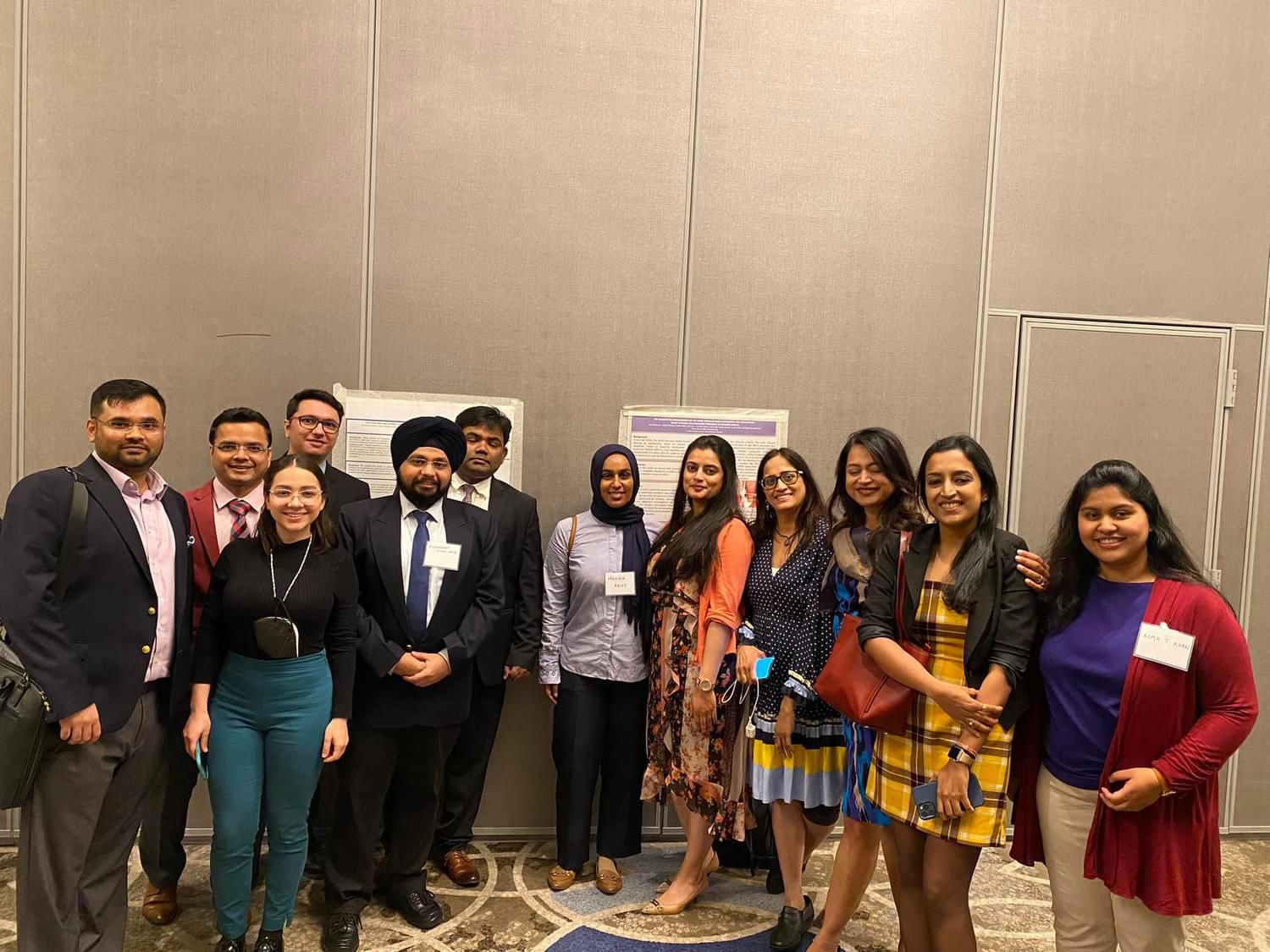
While working towards expanding AAPI’s mission statement to include diversity with the senior visionary members and prospective physicians from abroad and the US, Dr. Gupta wants to “enhance our networking within political arenas, amongst specialty organizations, while embracing technology and media to echo our voices to local and international medical communities.”

The BOT and in her capacity as the Chair, Dr. Gupta says, “We have the responsibility to oversee the financial sustainability of the organization and its future financial growth. As a group, we can monitor the financial health of the organization and accordingly provide our recommendations. BOT has a variety of esteemed leaders that will assist to provide their perspectives to the Board relevant to financial health of our organization.”

Dr. Gupta says, “It’s important to recognize and adapt to the differences of each administration style while preserving the mission of AAPI. We have to continue to inspire younger leaders within AAPI to continue to remain committed and have a purposeful meaning as to why to stay connected and be supportive.”

While describing the challenges, Dr. Gupta says, “The change of administration, which is yearly, and their vision for the organization, budget planning can also vary. BOT will need to be adaptable to each new administration, yet diligent with oversight of financial operations within AAPI.”

Dr. Gupta has been an active community leader within the local Indian community, local physician community as well as serving on a variety of board positions in her township, county, and other national non-profit organizations, helping with creating and advising on programs for the community, fundraising, speaking engagements on preventative healthcare and wellness.

Kavita 5“My passion has been in educating the youth and participating as a judge and advisor for several youth organizations focused on science, research, public speaking, and medical student education,” she says. Dr. Gupta believes “in empowering the youth, staying involved as an educator ever since my residency career and I am currently educating medical students, graduate students and resident physicians.
I enjoy in participating healthcare education platforms for the community and have done many such programs locally, via telehealth, and abroad. I have been a youth advisor for non-profit organizations, high school clubs, and professional development programs.”

“I am always open to connecting with like-minded professionals, collaborators, and individuals who share a passion for advancing healthcare. Whether you have a collaborative opportunity, insights to share, or simply want to connect, I look forward to engaging with you and contributing to the collective success of our healthcare community.” Dr. Lokesh Edara the outgoing Chair of AAPI has worked with Gupta in the past prior to joining BOT on collaborating on project ideas to support the medical students and pre-med students.

Many senior leaders within the organization have congratulated and encouraged her growth within AAPI. As they say, “Rome wasn’t built in a day”, through triumphs and turmoil we will continue to learn how to better AAPI with collaboration with everyone, especially our young leaders.

AAPI members give selflessly of their time to work in underserved areas. AAPI provides extraordinary support to India through the activities of its Charitable Foundation and the Global Healthcare Summit, Dr. Gupta says. According to her, “As Indian physicians in the United States. it is our duty to nurture our present home as well as our ancestral home. AAPI needs young charismatic leaders who have the service and leadership qualities AAPI leadership has always recognized that the future of AAPI is with the second generation.”

Every year, a lot of youngsters are joining this profession. “They need community support for setting up their practices, guidance from senior specialists, networking and much more. They should be given more privileges when they join. We want to instill dynamism, and leadership qualities in the next generation of physicians so that they are better equipped to face future challenges head-on. They are our future,” Dr. Gupta says.

Kavia 6When she is not seeing patients, Dr. Gupta enjoys time with her triplets and husband, Dr. Sanjay Gupta. She gives full credit to her family for supporting her at every step of the way. I have very good friends in AAPI, who have full confidence in me and I can trust them to guide me through all stages in leading AAPI.”

“Throughout my career, I have had the privilege of working in various healthcare settings, honing my expertise in teaching, medical management and clinical leadership. My journey has been marked by a relentless pursuit of excellence, with a focus on improving patient outcomes and fostering collaborative healthcare practices,” Dr. Gupta says.

AAPI members represent a variety of important medical specialties. Many of the physicians who represent AAPI have excelled in different specialties and subspecialties and occupy high positions as faculty members of medical schools, heads of departments, and executives of hospital staff. AAPI physicians who are leaders in their fields and play an integral part in the decision-making process regarding new products and services.

Dr. Gupta calls upon “Every AAPI member to join in this historic journey. AAPI’s mission is clear, our programs will continue to strive, and our impact is infectious on benefiting society. We as physicians make significant contributions for the betterment of people’s lives. Today I ask you to set aside your differences, and join me in this noble journey to make our mission possible! “

AAPI is the largest ethnic medical organization in the United States and represents the interests of more than 120,000 physicians and nearly 60,000 medical students/residents of Indian heritage. AAPI, a forum to facilitate and enable Indian American Physicians to excel in patient care, teaching and research and to pursue their aspirations in professional and community affairs, is an umbrella organization with nearly 160 specialty societies and alumni organizations.  For more details, please visit: www.aapiusa.org

Healthcare Disparities in America: Inequalities Persist Across Every Dimension of Access and Outcomes

Over the past nine weeks, we’ve delved into the crucial issues defining healthcare, revealing a stark reality: healthcare in America is riddled with inequalities, and these disparities may worsen in the future.

Throughout our exploration, one resounding theme persists: disparities pervade every aspect of healthcare access and outcomes. Samantha Artiga, from the Racial Equity and Health Policy Program at KFF, emphasizes, “It’s not only inequities in access to the system, but then also differential experiences even within the system.” This inequality spans a lifetime, affecting health outcomes “from the beginning of life to end of life.”

The disparities are multifaceted. They extend beyond simple demographic categories, affecting people differently based on various dimensions of their identities. Artiga notes, “People have multiple identities and don’t fit into one single box, so their experiences are going to be shaped by who they are based on multiple different dimensions.”

Insurance coverage is a critical issue exacerbating these disparities. As highlighted by a recent JAMA Internal Medicine study, low-income individuals with private insurance disproportionately allocate a larger share of their budget to healthcare costs compared to their higher-income counterparts. Furthermore, disparities in insurance coverage directly impact hospital care, influencing facilities’ financial health and their ability to serve diverse patient populations. Hospitals serving more Medicare, Medicaid, and uninsured patients often struggle financially, leading to closures or reduced services, perpetuating healthcare inequalities.

Racial segregation in hospitals mirrors residential segregation patterns, contributing to disparate health outcomes among Medicare beneficiaries of different racial backgrounds. The implications are significant: where one seeks care can determine health outcomes, illustrating the systemic inequalities embedded within the healthcare landscape.

Access to prescription drugs also underscores these disparities, particularly in clinical trials where people of color are underrepresented. This gap extends to market access, where new medical advancements and treatments are often more accessible to those with comprehensive insurance coverage, leaving Medicaid recipients and small businesses at a disadvantage.

Geographic and socioeconomic factors further compound disparities in healthcare access. Rural communities often lack adequate healthcare facilities, forcing residents to travel long distances for essential medical services. Meanwhile, aging populations, especially lower-income seniors, face higher rates of disabilities and shorter life expectancies, despite Medicare coverage.

Mental health and addiction treatment highlight additional disparities. White individuals with mental illnesses are more likely to receive treatment compared to their Black, Hispanic, or Asian counterparts. Similarly, the opioid crisis has disproportionately affected American Indian, Alaska Native, and Black communities, exacerbating disparities in addiction treatment and criminal justice involvement.

Workforce shortages exacerbate these challenges, creating unequal access to care. Concierge practices, catering to affluent patients, highlight a growing trend where those with financial means bypass waiting times and access superior care, further entrenching a two-tier healthcare system.

Advancements in medical technology, such as precision medicine and AI algorithms, hold promise for personalized care but risk widening disparities if not implemented equitably. Concerns persist that without effective policy interventions, these innovations could primarily benefit affluent populations, exacerbating existing healthcare inequalities.

Ultimately, these disparities manifest concretely in life expectancy variations across demographic groups defined by race, income, education, and occupation. These metrics underscore the profound impact of social determinants on health outcomes, reflecting broader structural inequities embedded within American society.

In conclusion, while discussions often focus on healthcare access and experiences within the system, the determinants of health extend far beyond clinical settings. Factors such as location, access to nutritious food, transportation, and employment all shape health outcomes. These underlying structural inequities must be addressed comprehensively to achieve meaningful progress toward a more equitable healthcare system.

As Samantha Artiga aptly summarizes, “People’s health is shaped by so many factors that sit outside the health care system and play such a large role. All those factors are influenced by underlying structural inequities.” Addressing these inequities is not just a matter of healthcare policy but requires a broader societal commitment to equity and justice in all facets of life.

India to Launch Fast-Track Immigration Program for Indian Nationals and OCI Cardholders at IGI Airport

Union home minister Amit Shah is set to inaugurate a program aimed at fast-tracking immigration for pre-verified travelers, specifically Indian nationals and Overseas Citizen of India (OCI) cardholders. This initiative, known as the Fast Track Immigration-Trusted Traveller Programme (FTI-TTP), will be launched at the Indira Gandhi International Airport in New Delhi.

The primary goal of FTI-TTP is to revolutionize the travel experience for Indians returning from abroad and OCIs entering India, making the process faster, easier, and more secure. This initiative highlights the government’s commitment to enhancing travel convenience and efficiency for everyone involved.

Importantly, the facility will be offered free of cost to all passengers, eliminating the need for an application fee. The registration process for applicants involves identity authentication through mobile OTP and email verification.

Once the application is approved, applicants will receive a notification to schedule an appointment for providing their biometric details. These biometrics can be submitted at designated international airports in India or at the nearest Foreigners Regional Registration Officer (FRRO) office, based on a prior appointment. The collection of biometric data is essential for completing the application process.

For eligibility, applicants must ensure their passport has a minimum validity of six months at the time of applying for FTI-TTP. The membership of the program will coincide with the passport’s validity. Additionally, applicants need to provide their current residential address to avoid application rejection. FTI registration will remain valid for a maximum of five years or until the passport’s expiration, whichever comes first.

Study Reveals Smart Algorithms Can Crack 45% of Passwords in Under a Minute: Tips to Strengthen Your Security

With just a few dollars, a little time, and a smart brute-force guessing algorithm, most passwords can be cracked much faster than you might think. A new analysis from Kaspersky experts reveals that 59% of 193 million real passwords were cracked in under 60 minutes, and 45% were cracked in less than 60 seconds.

A brute-force attack works by iterating all possible combinations to find a match for the password in question. However, Antonov explained, “smart guessing algorithms are trained on a password data set to calculate the frequency of various character combinations and make selections first from the most common combinations and down to the rarest ones.”

Brute Force and Smart-Guessing Combine to Quickly Crack Passwords

Brute-force attacks are very popular due to their point-and-fire simplicity, but they remain suboptimal for password-cracking algorithms. Considering that most passwords in daily use share characteristics involving the combination of dates, names, dictionary words, and keyboard sequences, adding these to the guessing-game mix speeds things up significantly.

The Kaspersky study found that when examining the percentage of passwords crackable in any timeframe using each method, 10% of the password list was broken in under a minute by brute force alone. However, this number increased to 45% when smart-guessing was added to the algorithm. When the timeframe was extended to between a minute and an hour, the difference was 20% compared to 59%.

The Smart-Guessing Algorithm Advantage Explained

Humans are creatures of habit, making us poor password creators. The truth is that the passwords we choose are rarely, if ever, truly random. We rely on things that smart-guessing algorithms are designed to detect: common names and phrases, important personal and historical dates, and patterns. To illustrate how predictable we are, a YouTube channel sampled more than 200,000 people and asked them to choose a ‘random’ number between 1 and 100. Most people gravitated towards the same small set: 7, 37, 42, 69, 73, and 77. Even when trying to be random with character strings, we fail as most people favor the center of the keyboard for their selection, according to Kaspersky.

“Smart algorithms make short work of most passwords that contain dictionary sequences,” Antonov said, “and they even catch character substitutions.” This means that using p@ssw0rd instead of password won’t slow the algorithm down much at all.

How to Strengthen Your Accounts Against Smart-Guessing Algorithm Attacks

Kaspersky recommends the following password usage strategies:

  1. Generate Strong and Truly Random Passwords Using a Password Manager

Using a password manager to generate strong and truly random passwords is crucial. These tools create complex passwords that are difficult for both brute-force and smart-guessing algorithms to crack.

  1. Don’t Reuse Passwords Across Sites and Services

Reusing passwords across multiple sites and services is dangerous. If one account is hacked, the same password can be used to access many others. It’s essential to have unique passwords for each account to prevent a domino effect in the event of a breach.

  1. Use Mnemonic Passphrases Rather than Dictionary Words and Numeric Combinations

If you prefer not to use a password manager, mnemonic passphrases are a good alternative. These are easier to remember and harder for algorithms to crack compared to simple dictionary words or numeric combinations.

  1. Don’t Save Passwords in Web Browsers

Saving passwords in web browsers can be risky, as this information can be accessed if your browser is compromised. Instead, use a secure password manager.

  1. Use a Password Manager Protected by a Strong Master Password

Even when using a password manager, it’s vital to protect it with a strong master password. This adds an extra layer of security, ensuring that all stored passwords remain safe.

  1. Use Two-Factor Authentication for All Accounts That Support It

Two-factor authentication (2FA) provides an additional security layer by requiring a second form of verification beyond just the password. This could be a text message code, an email, or an authentication app. Enabling 2FA for all accounts that support it is a highly effective way to prevent unauthorized access.

The combination of brute-force and smart-guessing algorithms can crack a significant number of passwords in a remarkably short time. To safeguard against these threats, adopting robust password practices and leveraging tools like password managers and two-factor authentication are essential steps. As Antonov emphasized, “smart algorithms make short work of most passwords that contain dictionary sequences,” highlighting the importance of choosing unpredictable, complex passwords and securing them properly.

Billionaire Timothy Mellon Donates $50 Million to Trump Super-PAC, Setting Record for 2024 Election; Michael Bloomberg Contributes $19 Million to Biden Campaign

Timothy Mellon, a billionaire born into one of America’s wealthiest families, has contributed $50 million to the Trump campaign super-PAC, Make America Great Again Inc., as revealed in federal filings on Thursday. This donation is now recognized as the largest individual contribution disclosed in the 2024 election cycle.

Mellon, 81, formerly served as the chairman of Pan Am Systems Inc., a private manufacturing and transportation enterprise. This year, he intends to publish a memoir about his tenure as chairman, titled “panam.captain,” through Skyhorse Publishing.

The federal documents indicate that Mellon made his substantial donation on May 31, 2024, just a day after Trump was convicted of 34 felonies by a New York state court in a significant hush-money case. Additionally, Mellon has contributed at least $20 million to Robert F. Kennedy Jr.’s campaign, who is running as an independent candidate in the 2024 presidential race, according to the BBC.

TIME has contacted the Trump and Robert F. Kennedy Jr. campaigns for comments and further information.

Forbes reports that Mellon is the great-grandson of Thomas Mellon, an Irish immigrant who arrived in the U.S. in 1818. Thomas Mellon was a lawyer and judge who invested in various real estate and banking ventures. By his death, he had accumulated a substantial fortune, which his sons inherited. Today, the Mellon family is worth around $14.1 billion, ranking them as the 34th wealthiest family in America.

On the other side of the political spectrum, the Biden campaign has also attracted significant donations. The Washington Post revealed that billionaire Michael Bloomberg donated $19 million to the Future Forward (FF) PAC, a pro-Biden political action committee. Additionally, Bloomberg gave another $929,600 to the Biden Victory Fund.

Timothy Mellon’s substantial contribution to the Trump campaign comes at a pivotal moment, highlighting the ongoing financial battles in the 2024 election. Mellon’s donation, made a day after Trump’s legal conviction, underscores his commitment to Trump’s political future despite the former president’s legal troubles. Trump’s conviction in a landmark hush-money trial has not deterred Mellon from providing significant financial support. The timing of this donation could be seen as a statement of defiance and unwavering support for Trump’s agenda.

Mellon’s other major political contribution is to Robert F. Kennedy Jr.’s campaign, showcasing his willingness to support multiple candidates who align with his views. This $20 million donation to Kennedy’s campaign signifies Mellon’s broader influence on the 2024 presidential race, as he backs an independent candidate challenging the traditional two-party system.

Forbes’ profile of Mellon’s ancestry paints a picture of a family that has long been embedded in American wealth and influence. Thomas Mellon’s success in law and real estate laid the foundation for the Mellon family’s vast fortune, which continues to impact American society and politics today. With an estimated worth of $14.1 billion, the Mellon family remains a powerful force in the country’s economic landscape.

In parallel, the Biden campaign’s receipt of large donations underscores the high stakes of the upcoming election. Michael Bloomberg’s $19 million contribution to the Future Forward PAC and the additional funds to the Biden Victory Fund illustrate the financial muscle behind Biden’s campaign. Bloomberg’s significant support for Biden reflects his belief in the current president’s vision for America’s future. Bloomberg, a former mayor of New York City and a billionaire himself, has consistently supported Democratic causes and candidates, using his wealth to influence the political landscape.

The battle for campaign funds in the 2024 election highlights the broader contest between major political donors and their respective candidates. Timothy Mellon and Michael Bloomberg represent two sides of this financial arms race, each backing candidates they believe will best serve their interests and visions for the country.

Mellon’s memoir, “panam.captain,” expected to be published by Skyhorse Publishing, will provide insights into his experiences as chairman of Pan Am Systems Inc. This publication will likely offer a deeper understanding of Mellon’s business acumen and his perspectives on industry and transportation. His leadership at Pan Am Systems has been a significant part of his career, and this memoir could shed light on the principles that guide his business and political decisions.

Overall, the donations from Mellon and Bloomberg to their respective political causes reflect a broader trend of billionaires using their wealth to influence American politics. The substantial contributions from these individuals underscore the critical role of money in modern election campaigns. These donations not only support the candidates but also shape the political discourse and strategies leading up to the 2024 election.

As the election approaches, the financial backing from major donors like Mellon and Bloomberg will play a crucial role in determining the resources and reach of each campaign. Their support highlights the intersection of wealth and politics in the United States, where financial power can significantly impact electoral outcomes. The influence of these billionaires extends beyond their donations, as they bring attention to the candidates and issues they support, swaying public opinion and mobilizing voters.

Timothy Mellon’s $50 million donation to Trump’s campaign and Michael Bloomberg’s $19 million contribution to Biden’s campaign underscore the immense financial stakes in the 2024 presidential election. Mellon’s additional support for Robert F. Kennedy Jr. further emphasizes his strategic political investments. These significant contributions from wealthy individuals highlight the critical role of money in shaping the future of American politics. As the campaigns progress, the impact of these donations will become increasingly evident, demonstrating how financial power can drive political change in the United States.

How to Get the Most Health Benefits from Minimal Exercise: Expert Tips and Strategies

The Minimal Effective Dose of Exercise: How Little Can You Get Away With?

A few years ago, personal trainer Anna Maltby had to reduce her exercise routine due to the demands of work and motherhood. Like many of her clients, she found herself without the time or energy to exercise as she used to. She managed several 15-minute workouts each week, and felt it was sufficient for her at that stage. “I actually felt like I got my minimum effective dose for that stage of my life,” she says.

Many people feel they are too busy to exercise, while others actively avoid it. However, research indicates that even minimal exercise is essential for a longer, healthier life, free from conditions like dementia, heart disease, diabetes, and cancer. Additionally, exercise can improve daily happiness and energy levels.

So, how little exercise is enough to reap these benefits? Experts suggest that it may require a shift in how we define exercise.

Meeting the Minimum Guidelines

Guidelines from the World Health Organization (WHO), the U.S. government, and other bodies provide adults with options for minimal weekly aerobic activity. One option is at least 75 to 150 minutes of vigorous activity, which makes conversation difficult and raises your heart rate to about 80% of its peak. Another option is 150 to 300 minutes of moderate activity, at 60-70% of your maximum heart rate.

A combination of vigorous and moderate exercise is also acceptable, with vigorous workouts counting double towards the weekly goal. For example, 50 minutes of vigorous activity counts as 100 minutes of moderate activity, leaving just 50 more minutes of moderate activity needed to meet the weekly minimum.

These minimal amounts provide significant health benefits with the least effort. “If you look at the statistical curve, the increase in benefits is most dramatic” when these minimums are achieved, says Regina Guthold, an epidemiologist at the WHO. While more exercise brings further benefits, the gains diminish beyond 300 minutes of moderate exercise.

These thresholds also benefit mental health. Mary de Groot, a psychologist at Indiana University School of Medicine, notes that those who exercised 120 to 360 minutes per week had the best mental health in a study involving over one million people.

Saving Time with Hybrid Workouts

Cardio alone isn’t enough; strength training is also essential, at least twice a week. Skipping it can lead to muscle atrophy and osteoporosis. However, strength training can be integrated into cardio sessions by using body weight as resistance, allowing for more repetitions that raise heart rate and build muscle. This “multicomponent activity” is especially recommended for seniors to improve balance and reduce fall risks.

Hybrid workouts, such as pushups, Turkish get-ups, mountain climbers, burpees, air squats, and lunges, can condense weekly exercise into as few as 75 minutes.

Skipping Days, Not Months

Life’s demands often mean skipping exercise for several days. Fortunately, Guthold says that catching up later in the week still provides benefits. “Weekend warriors get the same benefits as those who are active every day for less time,” she notes. Missing a week or two occasionally is also acceptable. Stella Volpe, professor of exercise and nutrition at Virginia Tech, says, “It’s normal for people to have highs and lows with physical activity, even if they love it.”

Even on off-weeks, five minutes of daily activity can improve blood flow, blood sugar, and sleep quality, says Katrina Piercy, an exercise physiologist at the U.S. Department of Health and Human Services (HHS). However, prolonged inactivity, such as two weeks of being sedentary, can significantly reduce aerobic fitness and muscle mass, increasing disease risk.

Combining Exercise with Movement Breaks

Regular movement breaks are crucial, even if they don’t meet exercise intensity. To make the most of these breaks, use them to elevate your heart rate. Studies show that frequent movement breaks reduce death risk, says Keith Diaz, an associate professor at Columbia University Medical Center. He suggests turning breaks into mini-exercise sessions of about five minutes each.

For those who can increase intensity, one-minute exercise bursts, 20 times a week, can be effective. Martin Gibala, a kinesiology professor at McMaster University, recommends quick activities like walking briskly or climbing stairs. This method reduces total exercise time and breaks up sedentary periods.

Redefining Exercise

Exercise doesn’t have to be a formal, time-consuming activity. Gibala’s study found that people who engaged in short bouts of vigorous activity during daily tasks significantly reduced their risk of dying from cancer and heart disease. Diaz found that five-minute walks every 30 minutes improved blood sugar, blood pressure, mood, and energy. These breaks can also boost productivity.

Making exercise a part of daily routines can be as simple as speed-walking meetings or running to the coffee shop. Volpe mentions a friend who dances with his child during TV commercial breaks, noting, “You’ll be amazed how good you feel by dancing a little instead of getting a snack.”

Piercy turns grocery shopping into a workout by racing through the store and carrying groceries in a basket. “Some days I don’t have a formal workout,” she says, “but I grocery shopped, or found other ways to multitask some activity.”

Finding Enjoyable Activities

The best way to reduce exercise time is to engage in physical activities that don’t feel like exercise. This might involve being social, having fun, and enjoying nature. High-intensity interval training (HIIT) at a park with friends is one example. HIIT combines activity bursts with recovery breaks, making exercise more enjoyable. Sports like tennis and interval walking also count. “The rest intervals certainly count toward total minutes because your heart rate stays high during the breaks,” Volpe says.

Exercising in nature can enhance mood benefits. “The improvements in mood are even better when people exercise outside,” Diaz says. “Green exercise” boosts emotions, self-esteem, and protects against depression, adds de Groot.

Personalizing Your Minimum Exercise

Determining your minimum exercise level depends on individual goals and values. “When working with people on physical activity plans, the first thing I do is encourage them to think about their goals and values,” de Groot says.

Your personal minimum exercise (ME) may be higher if you prioritize longevity and health. “The more you exercise, the longer you’ll live free of chronic disease,” Diaz notes. Others might focus on finding a sustainable amount that enhances daily well-being.

Factors to consider when setting your ME include:

– Time commitments:Maltby’s clients, for example, may have limited workout possibilities during pregnancy.

– Physical capacity: Guidelines may vary for those with illnesses or disabilities.

– Developmental stage:Kids need more activity than adults, averaging at least 60 minutes a day.

– Psychological needs:Teens with ADHD, for example, might require more exercise to optimize brain function, says Erin Gonzalez, a clinical psychologist at Seattle Children’s Hospital.

Fitness trackers and mood apps can help monitor how different exercise levels affect health, sleep, and emotions. The HHS “Move Your Way” planner assists in creating weekly activity plans. “Monitoring your health data and progress objectively is very helpful,” Gonzalez explains.

Wearable devices can also turn exercise into family bonding time. Instead of instructing teens to be active, achieving minimum goals together can support lasting lifestyle changes. “Doing so can sustain family lifestyle change,” Gonzalez says.

Record Home Prices and High Mortgage Rates Challenge Buyers and Sellers in Tight Housing Market

A Challenging Era for Homebuyers

Home prices surged to an unprecedented high last month, with recent data highlighting the increasing difficulty of purchasing a home. Elevated mortgage rates have sidelined many potential buyers and sellers, contributing to a scarcity of available homes and driving up prices for those on the market.

Here are four key insights into the current housing market:

Low Activity in Buying and Selling

May, typically a peak season for real estate, saw a decline in existing home sales compared to April, with a 2.8% drop from the previous year, as reported by the National Association of Realtors. Elevated mortgage rates have made home purchases more costly, pushing potential buyers out of the market. Additionally, current homeowners are hesitant to sell due to their existing lower mortgage rates.

The limited number of homes being sold are fetching higher prices, with the median home price in May reaching a record $419,300. Affordable homes, including starter homes, are becoming increasingly scarce. Jessica Lautz, deputy chief economist for the Realtors association, noted, “At lower price points, people are being priced out of the home-buying market, and there’s just less inventory when we think about homes that are under $250,000.”

Slight Relief in Interest Rates

There is some positive news: interest rates have slightly decreased in recent weeks. Freddie Mac reported an average rate of 6.87% on a 30-year mortgage this week, down from 7.2% in early May. Mortgage rates might fall further if the Federal Reserve reduces borrowing costs later this year. However, current rates remain more than double what they were pre-pandemic, significantly increasing the monthly payments required for home purchases today.

Increasing ‘For Sale’ Signs

While the number of homes on the market remains low by historical standards, there is a slight increase. The Realtors association noted that there were 1.28 million homes for sale at the end of May, an 18.5% increase from a year ago. Despite higher interest rates, life events such as new jobs, births, or family changes are compelling some homeowners to sell. Lautz explained, “Perhaps they have a new job or a new baby or a family change. We’re seeing new inventory come into the market because of these traits.”

Decline in New Home Construction

Previously, the shortage of existing homes allowed new home builders to help fill the market gap. In April, nearly one-third of homes for sale were newly built, compared to 13% before the pandemic. However, new home construction has slowed, potentially exacerbating the shortage of homes for sale. Builders started 5.2% fewer single-family homes in May than in April, and building permits for future construction also fell by 2.9%.

A Tough Market for Buyers and Sellers

The current housing market presents significant challenges for both buyers and sellers. Elevated mortgage rates and a lack of affordable homes have pushed many potential buyers out of the market. The median price of a home sold in May hit a record $419,300, driven up by the scarcity of lower-priced homes. Lautz pointed out, “At lower price points, people are being priced out of the home-buying market, and there’s just less inventory when we think about homes that are under $250,000.”

Despite some relief with a slight drop in interest rates, the overall cost of homeownership remains high. The average rate on a 30-year mortgage dropped to 6.87%, offering some respite compared to early May’s 7.2%. Future reductions in borrowing costs by the Federal Reserve could further lower mortgage rates, but current rates are still significantly higher than pre-pandemic levels, doubling the monthly payments required for new homeowners.

Slight Increases in Home Listings

The number of existing homes on the market, while still low, is slowly increasing. The Realtors association reported 1.28 million homes for sale at the end of May, marking an 18.5% rise from the previous year. This increase is partly due to life events that necessitate moving, such as job changes or family expansions. Lautz mentioned, “Perhaps they have a new job or a new baby or a family change. We’re seeing new inventory come into the market because of these traits.”

Challenges in New Home Construction

While new homes previously helped to mitigate the shortage of existing homes, the pace of new home construction is now slowing. In April, new builds accounted for nearly one-third of homes for sale, compared to 13% before the pandemic. However, builders started 5.2% fewer single-family homes in May than in April, and building permits for future construction also decreased by 2.9%.

Conclusion

The current housing market is marked by high prices, limited inventory, and elevated mortgage rates, making it a challenging environment for both buyers and sellers. The median home price has reached a new high, and the lack of affordable homes continues to price many out of the market. While there has been a slight decline in interest rates, they remain significantly higher than pre-pandemic levels, resulting in higher monthly payments for new homeowners.

The slight increase in home listings offers some hope, driven by life events necessitating moves. However, the slowdown in new home construction may worsen the shortage of homes for sale. As the market navigates these challenges, potential buyers and sellers must adapt to the evolving landscape.

Lautz’s insights encapsulate the current market’s complexity: “At lower price points, people are being priced out of the home-buying market, and there’s just less inventory when we think about homes that are under $250,000.” Despite these challenges, the market continues to show signs of resilience, with some increase in listings and potential for further declines in interest rates.

Hinduja Family Members Found Guilty of Exploiting Servants in Geneva Villa Scandal

Four members of the billionaire Hinduja family have been found guilty of exploiting underpaid servants at their Geneva villa, a significant verdict against one of India’s wealthiest and most influential families.

Ajay Hinduja, his wife Namrata, and his parents Prakash and Kamal, exploited staff hired from India, paying them wages far below the Swiss standard, according to Judge Sabina Mascotto’s ruling on Friday.

Prakash and Kamal Hinduja, who did not attend the trial due to health issues, were sentenced to 4 1/2 years in prison. Ajay and Namrata, who were also absent from the courtroom, received 4-year sentences. All four were acquitted of human trafficking, and it remains uncertain whether they will serve jail time.

Judge Mascotto emphasized the disparity between the wages the staff received and what they were legally entitled to in Switzerland. “They were exploited given the evident disproportion between what they were paid and should have been paid,” she stated. She highlighted that the staff, due to their precarious situation in India, lack of language skills, confiscated passports, and irregular payment intervals, were vulnerable. “The four Hindujas knew the vulnerabilities of the staff and knew what the rules were in Switzerland, as they all were Swiss citizens and Ajay was educated in Switzerland,” Mascotto added.

The Hindujas’ lawyers expressed their disappointment with the decision and have appealed. “We are appalled and disappointed by the decision. The family has full faith in the judicial process and remains confident that the truth will prevail,” they stated.

This judgment represents a notable success for Geneva’s top prosecutor, Yves Bertossa, who previously secured convictions against mining tycoon Beny Steinmetz on bribery charges in 2021 and rogue Credit Suisse banker Patrice Lescaudron in 2018.

Romain Jordan, Namrata’s lawyer, explained the defendants’ absence, citing a doctor’s letter from Monaco stating that Kamal Hinduja is seriously ill, necessitating the presence of Ajay, Namrata, and Prakash at her bedside. “We’re not talking about two people who are trying to flee justice,” Jordan remarked. Ajay’s lawyer, Yael Hayat, stressed that Ajay had attended all prior hearings and would not have missed the judgment if not for his mother’s illness.

Considering a prior civil settlement between the servants and the family, the judge ordered the Hindujas to pay a reduced compensation amount of 850,000 Swiss francs ($950,000) and 270,000 francs in legal fees.

Bertossa requested the judge to detain Ajay and Namrata or, failing that, to have them surrender their passports upon returning to Switzerland and pay 2 million francs each as bail. The hearing was adjourned as the judge deliberated on this request.

The Geneva court ultimately accepted Bertossa’s argument that the Hindujas exploited their servants’ lack of local knowledge and language skills, working them up to 18 hours a day, seven days a week without statutory time off or benefits, for wages far below Swiss norms.

Bertossa argued that employing the servants without proper Swiss documentation and renewing their short-term Schengen-zone European Union visas repeatedly was a deliberate attempt to deceive the authorities.

The Hindujas’ lawyers contended that the recruitment was handled through the Hinduja Group in India and that Ajay, being a busy businessman, was unaware of the contract details. They also argued that the servants’ wages included their board and lodging in one of Europe’s most expensive cities, not just the cash payments.

The case began in 2018 when Swiss prosecutors, acting on a tipoff, raided the villa and the offices of Hinduja Bank and other local businesses linked to the Hinduja Group, seizing documents related to the Swiss Hinduja family’s accounts and hard drives.

While the bank was not the target of the raids and is not suspected of wrongdoing, nor are the other three branches of the Hinduja family who live outside Switzerland, the case has put the spotlight on the family’s business practices.

Founded by Parmanand Deepchand Hinduja in 1914 in the Sindh region of British India, the Hinduja Group rapidly diversified from its origins in commodities trading, with early success in distributing Bollywood films internationally. Srichand Hinduja, the eldest of the four brothers who led the family’s expansion, passed away in 2023.

The remaining three brothers, Gopichand, Prakash, and Ashok, have interests in finance, media, and energy industries, and hold stakes in six publicly traded Indian companies. The family, which had internal disputes over their fortune, resolved their conflicts in 2022. With a collective wealth of at least $14 billion, the Hinduja family is among Asia’s 20 richest dynasties.

Extreme Heat Claims Hundreds of Lives During Hajj Pilgrimage in Saudi Arabia

Hundreds of people have died during the Hajj pilgrimage in Saudi Arabia, mainly due to extreme heat as temperatures soared above 51°C (123°F).

According to AFP news agency, an Arab diplomat stated that 658 Egyptians had died. Indonesia reported over 200 deaths among its nationals, while India confirmed 98 deaths. Pakistan, Malaysia, Jordan, Iran, Senegal, Sudan, and Iraq’s autonomous Kurdistan region also reported fatalities. The US believes some Americans were among the dead, as reported by the Wall Street Journal. Friends and relatives have been frantically searching for missing persons in hospitals and posting messages online.

The number of deaths has caused significant fallout. On Saturday, Egyptian Prime Minister Mostafa Madbouly revoked the licenses of 16 tourism companies and referred their managers to prosecutors for facilitating illegal pilgrimages to Mecca. Jordan detained several travel agents on Friday for enabling unofficial travel to Mecca. Tunisian President Kais Saied dismissed the minister of religious affairs after local media reported the deaths of 49 Tunisians, many of whom were unregistered pilgrims.

Hajj is the annual pilgrimage to the holy city of Mecca that Muslims are required to undertake at least once in their lifetime if they are financially and physically able. This year, approximately 1.8 million people participated, according to Saudi Arabia. Over half of the deceased were unregistered pilgrims who joined the Hajj through irregular channels, leaving them without access to cooling facilities like air-conditioned tents and buses, AFP reports.

Despite increased safety measures by Saudi Arabia in recent years, the country faces criticism for not doing enough, particularly for unregistered pilgrims. It has not yet publicly commented on the deaths. However, AFP quoted a senior Saudi official saying that 577 people had died on the two busiest days of Hajj alone – Saturday, when pilgrims prayed in the sun on Mount Arafat, and Sunday during the “stoning of the devil” ritual in Mina. “This happened amid difficult weather conditions and a very harsh temperature,” the official said.

Here are some factors contributing to the deaths:

Extreme Heat

Unprecedented heatwaves in Saudi Arabia are believed to be a major factor behind the high death toll. Despite warnings from the Saudi Health Ministry to avoid heat exposure and stay hydrated, many pilgrims succumbed to heat stress and heatstroke. A Nigerian pilgrim, Aisha Idris, told BBC World Service’s Newsday, “It’s only by God’s mercy that I survived, because it was incredibly hot. I had to use an umbrella and constantly douse myself with Zamzam water (holy water).” Another pilgrim, Naim, reportedly died from heatstroke, leaving her family searching for answers. “Communication with my mother was suddenly cut off. We spent days searching, only to learn she had passed away during Hajj,” her son told BBC News Arabic, adding they would honor her wish to be buried in Mecca.

Pilgrims face risks due to the unfamiliar heat, strenuous physical activity, and vast open spaces. Many are also elderly or unwell. Heat-related deaths during Hajj have been recorded since the 1400s. Scientists warn that global warming could make conditions worse. “The Hajj has operated in a hot climate for over a millennium, but the climate crisis is exacerbating these conditions,” Carl-Friedrich Schleussner of Climate Analytics told Reuters news agency. His research suggests that with a 1.5°C rise in global temperatures above pre-industrial levels, the risk of heatstroke during Hajj could increase up to five times.

Overcrowding and Sanitation Issues

According to several accounts, mismanagement by Saudi authorities exacerbated the extreme conditions, leading to a crisis in many areas designated for pilgrims. They report poorly managed accommodation and facilities, with overcrowded tents lacking adequate cooling and sanitation. Amina (not her real name), a 38-year-old from Islamabad, said, “There were no air conditioners in our tents in the heat of Mecca. The coolers that were installed did not have water most of the time. There was so much suffocation in these tents that we were dripping with sweat and it was a dreadful experience.” Fauziah, a pilgrim from Jakarta, agreed, saying, “Many fainted due to overcrowding and overheating in the tents.” She acknowledged the need for improvements but believed, “this is the best organization of the Hajj so far.”

However, the Saudi Health Minister highlighted the resources allocated to ensure pilgrim well-being. A government statement said these included 189 hospitals, health centers, and mobile clinics with a combined capacity of more than 6,500 beds, and over 40,000 medical, technical, administrative staff, and volunteers.

Transportation

Pilgrims were often required to walk long distances in the intense heat, with some blaming roadblocks and poor management. Muhammad Acha, a Hajj organizer for a private group, noted that during the summer, a typical pilgrim might have to walk at least 15 kilometers per day, exposing them to heatstroke, fatigue, and a lack of available water. “This is my 18th Hajj, and in my experience, the Saudi controllers are not facilitators. They control, but they don’t help,” he said. “In earlier years, the U-turns to access the tents were open, but now all those routes have been closed. As a result, an ordinary pilgrim, even if staying in a Category A tent in Zone I, has to walk 2.5 kilometers in the summer heat to reach their tent,” he explained. “If there is an emergency on this route, no one will reach you for 30 minutes. There are no arrangements to save lives, nor are there water points along these paths,” Acha added.

Undocumented Pilgrims

To perform Hajj, a pilgrim must apply for a special Hajj visa. However, some individuals try to go on the five-day pilgrimage without the proper documentation, despite Saudi officials’ attempts to crack down. Pilgrims without proper documentation often avoid authorities, even when they need help. This issue of “unofficial Hajj” is believed to contribute to the excess deaths, and authorities have blamed them for some of the overcrowding in tents. “We suspect those using non-Hajj visas have infiltrated the Hajj areas,” said Mustolih Siradj, chairman of Indonesia’s National Hajj and Umrah Commission (Komnas Haji). Saad Al-Qurashi, an adviser to the National Committee for Hajj and Umrah, told the BBC, “Anyone who does not have a Hajj visa will not be tolerated and must return to [their] country.” He noted that irregular pilgrims are identified using Nusuk cards, which are given to official pilgrims and contain a barcode for entry to holy sites.

Elderly, Infirm, or Sick Pilgrims

Many pilgrims go towards the end of their life after saving for a lifetime. Some Muslims hope to die and be buried in the holy city, considering it a blessing. When a pilgrim dies during Hajj, the death is reported to the Hajj Mission. Wristbands or neck IDs confirm the identity. A doctor’s certificate and a death certificate from Saudi Arabia are then issued. Funeral prayers are held at important mosques like Masjid al-Haram in Mecca or the Prophet’s Mosque in Medina. The body is washed, wrapped, and moved in freezers provided by the Saudi government, which covers all costs. Burials are simple, without markers, and sometimes include multiple bodies in one place. The cemetery book lists who is buried where, allowing families to visit graves if they wish. The Saudi government, with help from various groups and the Red Crescent, ensures “dignified and respectful burial processes.”

US Schools Intensify Smartphone Bans Amid Growing Concerns Over Youth Mental Health

As a middle-school teacher, Nancy Streit knows the challenge of competing with a smartphone for a child’s attention. However, as a mother, she recognizes the necessity of these devices in emergencies. “It’s mostly the parents calling,” she explains, noting that although she prohibits phone use in her classroom, students frequently find ways around the rules.

The Los Angeles school district, where Ms. Streit teaches, recently joined the growing number of schools across the US banning smartphone use. This district, the second largest in the country, is part of a wider trend as more states and schools address children’s increasing dependency on their devices. Both New York and California, two of the most populous states, are currently considering new statewide policies on this issue. Earlier this week, California Governor Gavin Newsom called for a ban on smartphones in classrooms and expressed his intention to work with legislators on the policy. In New York, Governor Kathy Hochul has similarly advocated for a law restricting phone use in schools.

This spring, Indiana’s governor signed a law implementing a classroom ban set to begin in the autumn. These efforts mark the latest chapter in the ongoing debate over managing smartphone use in schools and come amid rising concerns about youth mental health following the pandemic.

Most US schools already have some form of phone policy. According to the US Department of Education, about 76% of schools prohibited non-academic phone use during the 2021-2022 school year. However, the latest regulations aim to go further.

Raphaela Hodges, a sixth-grade teacher at a Los Angeles school, has observed a troubling change in how children socialize. “When they’re uncomfortable, they pick up the phone,” she told the BBC. This issue has garnered rare bipartisan support, with both Republican and Democratic states pursuing similar policies. Last year, Florida implemented a state law requiring school districts to bar phones from classrooms and block social media access on school Wi-Fi. The law also mandates that schools provide instruction on the social, emotional, and physical effects of social media. Individual districts in states like Maine and Virginia are also instituting stricter rules on phone use, as are provinces in Canada, including Ontario and Alberta.

Concern about phones in schools has existed almost as long as the devices themselves, with little consensus and much controversy. Since the 1980s, there have been several attempts to ban communication devices from classrooms in the US. Early critics feared phones would distract students and be associated with the drug trade. However, the 1999 Columbine High School shooting, which resulted in 13 deaths, led some parents and schools to reassess phones as crucial communication tools during emergencies. This prompted states to relax rules, including California, which repealed a phone ban in 2002.

The debate reignited as phones became a growing distraction, an aid to cyberbullying, and a potential means for students to cheat on assignments. New York City, home to over one million students, enforced a strict ban but reversed course in 2015, allowing individual schools to set their policies.

The current wave of policies comes as experts raise concerns about student mental health and social media use. On Monday, one of America’s most senior health officials called for cigarette box-like warning labels on social media platforms. Surgeon General Vivek Murthy argued that social media increases the risk of children experiencing anxiety and depression symptoms, although research on this topic has been mixed. “You’ve got a situation where kids are not only trying to learn, but they’re simultaneously on their phones, texting their friends, replying to messages on social media, scrolling through their feeds,” Dr. Murthy told the BBC. “It makes it very difficult not only to learn, but it makes it hard in school to build relationships and friendships.”

A study published in 2019 and frequently cited by federal health offices found that adolescents who spend more than three hours a day on social media face double the risk of mental health problems, such as anxiety and depression.

The big question remains: will these policy shifts stick? Historically, schools have struggled to balance safety with limiting the allure of social media. Ken Trump, president of the National School Safety and Security Services, emphasized that policies need strong community consensus and consistent enforcement to be effective. “There’s a lot more to it than the average parents or other person looking from afar would think. It’s a wicked problem; there are a lot of complexities to it,” said Mr. Trump.

In Los Angeles, board members voted on Tuesday to ban smartphones from the next school year. However, how this policy will be enforced remains unclear. Alyssa, an 18-year-old from Los Angeles, shared her doubts with the BBC, given the large size of many school campuses. “We have huge campuses – no one can monitor all that,” she said. “There are tons of areas where you can go and not be seen.”

4,300 Indian Millionaires to Migrate in 2024, Favoring UAE Amid Global Wealth Mobility Trends

Around 4,300 millionaires are projected to migrate from India this year, with many choosing the UAE as their new home, according to a report by Henley and Partners, a global investment migration advisory firm. Despite India’s status as the world’s fastest-growing economy, it is expected to rank third in millionaire migrations, following China and the United Kingdom. This migration trend occurs as India, now the most populous country globally, experiences a net millionaire exodus that is less than 30 percent of China’s. “While India loses thousands of millionaires each year, with many migrating to the UAE, concerns over the outflows may well be mitigated as with wealth growth of 85 percent over the past decade, the country continues to produce far more new high-net-worth individuals than it loses to emigration,” the report stated. In the previous year, 5,100 Indian millionaires migrated abroad, according to the report.

The migration of millionaires significantly impacts a country’s foreign exchange reserves since these individuals often transfer substantial assets when they relocate. The primary motivations for millionaire migration include tax benefits, safety and financial considerations, retirement prospects, business opportunities, and an enhanced lifestyle. Despite the decline from the 5,100 departures in 2023, India remains among the countries with the highest number of HNWIs leaving the country. Henley & Partners defines millionaires and HNWIs as those with liquid wealth of at least US$1 million. Meanwhile, the UAE is expected to attract an unprecedented 6,700 millionaires by the end of 2024, thanks to its world-class infrastructure, strategic location, advantageous tax regulations, and other appealing factors. To further attract talented individuals, the UAE offers a golden visa, granting permanent residency to entrepreneurs, foreign investors, and talented individuals making substantial investments. This visa program has become particularly popular among Indians.

Besides the UAE, Indians are increasingly seeking citizenship and residency through investment schemes in countries such as Portugal, Greece, Spain, Malta, and the Caribbean nations of Antigua and Barbuda, and Grenada. The reasons for these relocations vary. Some wealthy families move due to security concerns, while others seek tax advantages and better budgetary conditions. Many also migrate in search of improved retirement options, business opportunities, appealing lifestyles, healthcare systems, education for their children, and an overall higher standard of living.

This trend of millionaire migration is notable as it reflects the broader socio-economic dynamics at play within India. The country’s rapid economic growth has led to the creation of significant wealth, but it has also highlighted disparities and concerns that drive individuals to seek opportunities abroad. The report emphasizes that while the loss of millionaires could be seen as a negative indicator, India’s ability to generate new high-net-worth individuals at a faster rate suggests a resilient economic environment.

The migration of millionaires has various implications for India. On the one hand, it represents a loss of potential investment and economic activity that these individuals might have contributed domestically. On the other hand, the continuous creation of new millionaires indicates a robust economic framework capable of producing and sustaining wealth. As the world’s fastest-growing economy, India faces the dual challenge of retaining its wealthy citizens while continuing to foster an environment conducive to wealth creation.

In terms of foreign exchange reserves, the departure of millionaires can lead to a significant outflow of capital. These individuals often move substantial portions of their wealth to their new countries of residence, impacting the host nation’s financial landscape. The motivations behind these migrations are diverse, encompassing financial, personal, and lifestyle considerations. For many, the allure of lower taxes, safer environments, better retirement options, and enhanced business opportunities outweigh the benefits of staying in India.

The UAE stands out as a particularly attractive destination for migrating millionaires. Its strategic location, state-of-the-art infrastructure, and favorable tax policies make it a prime choice for those seeking a new home. The introduction of the golden visa program has further boosted its appeal, offering a streamlined path to permanent residency for investors, entrepreneurs, and talented individuals. This program’s popularity among Indians highlights the UAE’s success in positioning itself as a hub for global wealth.

In addition to the UAE, European countries like Portugal, Greece, Spain, and Malta have become popular choices for Indian millionaires. These countries offer various investment schemes that grant residency or citizenship in exchange for significant financial investments. The Caribbean nations of Antigua and Barbuda and Grenada are also emerging as attractive destinations, offering similar investment-based residency programs. The factors driving these migrations range from seeking better security and financial conditions to desiring a higher quality of life and improved healthcare and education systems for their families.

The report from Henley and Partners sheds light on the complex interplay of factors influencing millionaire migration. It underscores the importance of understanding these trends within the broader context of global economic and social shifts. While the departure of wealthy individuals presents challenges, it also highlights the dynamic nature of wealth creation and distribution in today’s world. India’s experience, as detailed in the report, illustrates the ongoing evolution of the global economic landscape and the factors driving individual decisions to seek opportunities beyond their home country.

Ultimately, the migration of Indian millionaires is a multifaceted phenomenon with implications for both India and the destination countries. It reflects broader trends in global wealth mobility and the factors influencing individuals’ decisions to relocate. As India continues to grow and evolve economically, understanding and addressing the motivations behind millionaire migration will be crucial in shaping its future trajectory on the global stage. The insights provided by Henley and Partners’ report offer valuable perspectives on these dynamics, highlighting the need for a nuanced approach to addressing the challenges and opportunities presented by this trend.

 The Film ‘Maharaj’ Echoes the Story of Its Historical Subject

In the 1860s, journalist and social reformer Karsandas Mulji faced legal challenges after exposing the sexual misconduct of a powerful religious leader. Over 150 years later, a film based on his life, **Maharaj**, starring Aamir Khan’s son Junaid, faced a similar fate. The film’s release was delayed by a petition from a religious sect, accompanied by boycott calls on social media. On June 21, just a week after its scheduled release on Netflix, the Gujarat High Court lifted the stay, ruling, “Having viewed the film, this court found nothing objectionable that would hurt the religious feelings of petitioners or a sect.”

**Maharaj** draws from Saurabh Shah’s 2013 Gujarati novel, narrating the 1862 Maharaj libel case, where British judges in colonial India arbitrated between religious conservatism and progressive reform. Karsandas, editor of the Gujarati weekly **Satyaprakash**, was sued for defamation by Jadunathji, a high priest of the influential Pushtimarga sect. The case, fought in the Supreme Court of Bombay, garnered significant public attention. Karsandas successfully defended himself but incurred expenses that outweighed his awarded compensation.

Director Karan P Malhotra shifts the courtroom events to the film’s climax, a choice that avoids the often exaggerated portrayals in Hindi period dramas. Instead, the film focuses on the conflict between Karsandas (Junaid Khan) and Jadunath (Jaideep Ahlawat), known as JJ to his followers. JJ, a charismatic figure, exploits the vulnerability of female devotees. Karsandas, a Vaishnavite himself, resists JJ’s influence, challenging superstitious practices while maintaining his faith.

In the film, Karsandas emerges as a beacon of virtue in a conservative society, advocating for widow remarriage and interacting with ‘untouchables.’ His crusade against JJ intensifies after his fiancée, Kishori (Shalini Pandey), a victim of JJ, commits suicide following Karsandas’s decision to break off their engagement. Realizing his error in focusing on her “honor” instead of supporting her emancipation, Karsandas becomes a 19th-century male savior. The film is predominantly about men debating women’s rights, with a late entry by Viraaj (Sharvari Wagh) providing some balance as she joins Karsandas in his mission.

Early in the film, a narrator describes Bombay as “more a concept than a city,” highlighting the era’s conflicting ideas. The film portrays the reformist zeal of figures like Karsandas and Dadabhai Naoroji against the backdrop of JJ’s influence and the common masses’ confusion. Despite set-like production designs, Rajeev Ravi’s cinematography adds a painterly charm to the film.

Maharaj clearly depicts JJ’s powerful hold over his community. He is described as having become “the face of the sect,” drawing wealthy patrons and consolidating power. The film criticizes blind faith and personality cults while unifying portrayals of religion. When JJ bans temple visits to force an apology from Karsandas, the young reformer leads an aarti under a peepal tree with a picture of Lord Krishna. The film later echoes the Janmashtami story with an imperiled couple being ferried to safety.

Junaid Khan delivers a sincere performance as Karsandas but falls short of becoming a captivating lead, especially in courtroom scenes. Jaideep Ahlawat’s portrayal of JJ is effortlessly villainous, contrasting sharply with Junaid’s earnestness. Their confrontation in the rain underscores the difference in their performances. Sharvari Wagh brings charm and spunk to her limited scenes, and Jay Upadhyay is notable as JJ’s scheming assistant.

The film’s release faced significant challenges, reflecting current sensitivities. Earlier this year, the Tamil film **Annapoorani** was pulled from Netflix following right-wing complaints of religious offense. **Maharaj**, though simple and sedate, might have gone unnoticed if not for these sensitivities. Its release without promotions or a trailer highlights the caution of streaming platforms today, underscoring the non-linear path of progress.

Maharaj (Hindi)

– Director:Karan P Malhotra

– Cast: Junaid Khan, Jaideep Ahlawat, Shalini Pandey, Sharvari Wagh, Jay Upadhyay

– Runtime: 131 minutes

– Storyline:The real-life story of a journalist in 1860s Bombay and his crusade against a powerful, lecherous godman

Overall, Maharaj reflects the complex interplay between tradition and reform in colonial India, mirroring the historical events it depicts and the contemporary reactions it provoked.

Messi Sets Record as Argentina Triumphs Over Canada 2-0 in Copa América Opener

Argentina kicked off its Copa América title defense with a 2-0 win over Canada at Atlanta’s Mercedes-Benz Stadium on Thursday.

Lionel Messi set a new record by making his 35th Copa América appearance, surpassing a milestone that had stood for over 70 years. Messi played a pivotal role in Argentina’s goals, which were scored by Julián Álvarez and Lautaro Martínez.

Canada, participating in the expanded Copa América for the first time, was considered a heavy underdog against the 15-time champions. Nevertheless, Canada had several opportunities to score.

“This team creates scoring opportunities and defends like lions,” Argentina manager Lionel Scaloni said after the match. “Yesterday, I said that Canada was going to be a difficult opponent and it was a good test for us. The important thing is that the team always responds, no matter what the game is like.”

The first half was lively, with both teams creating chances in front of over 70,000 fans. Ángel Di María missed a one-on-one chance during an Argentine counter-attack, and Alexis Mac Allister’s header was saved by Canadian goalkeeper Maxime Crépeau.

Canada’s best chance in the first half came from Stephen Eustáquio, whose header was saved by Emi Martínez, and Alphonso Davies missed the follow-up.

Argentina took the lead early in the second half. Messi delivered an excellent pass to Mac Allister, who couldn’t shoot but managed to set up Álvarez for the opening goal.

Messi had two scoring opportunities after breaking through the Canadian defense. On the first occasion, Crépeau and Derek Cornelius thwarted him, and on the second, his shot went just wide of the left-hand post.

Jonathan David missed an open header, which was perhaps Canada’s best chance of the match. Argentina then sealed the win with a superb team goal. Messi’s build-up play led to Martínez scoring through Crépeau’s legs, making it 2-0.

Argentina is now on a nine-match unbeaten streak in the Copa América, having won the 2021 tournament and the third-place playoff against Chile in 2019. La Albiceleste will face Chile and Peru in their upcoming group-stage matches.

Winning this year’s tournament would mark Argentina’s third consecutive major tournament victory, following their 2022 World Cup win.

Record Heat Challenges Hajj Pilgrims: Over 500 Deaths Reported Amidst Unprecedented Temperatures

The Hajj, an obligatory pilgrimage for able Muslims, demands significant physical and spiritual commitment. This year’s pilgrimage saw temperatures in Mecca exceeding 115 degrees Fahrenheit, causing many to collapse and resulting in numerous deaths due to heat exhaustion.

The Hajj follows the lunar calendar, which means its timing varies each year. Despite this, a study indicates that Saudi Arabia is warming faster than other regions in the Northern Hemisphere. Ather Hussain, a British imam and Hajj guide with Bilal Tours, noted the unprecedented struggle among pilgrims due to the extreme heat. “It’s just really, really hard. I’ve never seen so many people struggle collectively at the same time, but at the same time, I saw people doing whatever they could to help,” Hussain told NPR from Saudi Arabia this week.

This year, over 1.8 million Muslims from around the globe participated in the Hajj, which concluded on Wednesday. The pilgrimage spans about five days but often involves weeks of travel, significant walking, physical exertion, and intense prayer.

Saudi Hajj authorities advised pilgrims to stay hydrated and avoid outdoor activities during peak heat hours. They also emphasized that walking to Mecca’s Grand Mosque, which houses Islam’s holiest site, the Kaaba, was not necessary for every prayer.

While the exact death toll remains unclear, a leaked hospital list revealed 550 deceased pilgrims, suggesting a severe impact of the scorching temperatures. Saudi Arabia, which offers free healthcare to pilgrims, reported nearly 3,000 heat-related treatments during the Hajj.

Among those affected was Taha Assayid, a 40-year-old Egyptian. He was hospitalized after spending hours in the sun trying to enter the mosque where Prophet Muhammad is believed to have delivered his final sermon. “I am a young man and was hospitalized, so just imagine what it was like for people in their 60s and over 70-years-old,” Assayid remarked.

Pilgrims often push themselves beyond necessary limits, having saved up their entire lives for this once-in-a-lifetime opportunity. However, moderation is a key aspect of faith and the Hajj. Hussain, who led a group of about 140 pilgrims this year, advised older participants to delegate some rituals to others. “That education … is definitely something we need to do more. We need to explain to our people that, ‘look, you don’t need to go to extreme circumstances,'” he said. Yet, the extreme heat affected everyone. “Even the locals, you know, it hit them as well. And if the locals are telling you that the Mecca is hot, then you know it’s hot,” Hussain added.

Despite the heat, moments of reflection and inner peace were found in prayers at the Kaaba and on the Day of Arafat. Hosting the Hajj is a prestigious duty for Saudi Arabia, which has faced criticism for past mishaps but has taken measures to prevent such accidents since a deadly stampede in 2015.

The increasing temperatures present ongoing challenges. A study published in the Journal of Travel Medicine by the King Faisal Specialist Hospital and Research Centre noted that during a hot summer in 1987, around 1,000 pilgrims died. Since then, Mecca’s temperatures have risen faster than other parts of the world.

To combat the heat, the Saudi government has planted more trees around Hajj sites, used heat-reflective pavement, and provided volunteers to distribute water, juice, and umbrellas. Pilgrims also walk under misting systems to stay cool. Egyptian pilgrim Ibrahim Omran, who has visited Mecca over 20 times, stated this was the hottest year he had experienced. He noted that many Egyptians walked everywhere and lacked hotel accommodations because they were on tourist visas instead of proper Hajj visas, a result of Egypt’s economic difficulties and inflated Hajj prices.

Omran emphasized the spiritual pull of Mecca but recognized the importance of safety. “I am not going to take risks and kill myself to perform the Hajj. I will do it legally and find the best official way to reach Saudi Arabia so I can find health care, and not expose myself to misery and suffering,” he said.

The Hajj is an expensive, physically taxing, and exhausting endeavor. However, for many, standing shoulder-to-shoulder with people from around the world, dressed in simple white robes, and engaging in prayer and repentance is an unparalleled experience. “I saw adversity, but I also saw the best of humanity,” Hussain reflected. “And I think that is the message of the Hajj: Help one another.”

Supreme Court Upholds Gun Ban for Domestic Abusers, Reinforces Federal Regulations

The Supreme Court upheld a federal law on Friday that prevents domestic abusers from owning guns, dismissing an argument from gun rights advocates that the law infringes on the Second Amendment. The 8-1 decision addressed one of the most scrutinized cases, narrowing the impact of a significant ruling from two years ago that led to numerous challenges against various gun laws nationwide.

This decision, which united most conservative and liberal justices, is likely to support similar federal gun regulations that have been contested since the Supreme Court’s substantial expansion of gun rights in 2022, particularly in cases where the defendant poses a danger. The 2022 ruling had created confusion among lower court judges dealing with Second Amendment cases.

Chief Justice John Roberts, writing for the majority, stated that the court found it straightforward to agree that individuals who pose a threat can be denied access to firearms. “Our tradition of firearm regulation allows the government to disarm individuals who present a credible threat to the physical safety of others,” Roberts wrote.

Roberts countered the notion that the court’s decision in New York State Rifle & Pistol Association v. Bruen had forced lower courts to overturn any gun law lacking a historical precedent. He noted that some lower courts had “misunderstood the methodology of our recent Second Amendment cases.”

“The court’s ruling today leaves intact a specific federal criminal prohibition on gun possession by those subject to domestic violence-related restraining orders,” stated Steve Vladeck, CNN Supreme Court analyst and professor at the University of Texas School of Law. However, he cautioned, “there are dozens of other federal and state gun regulations that have been challenged since the court’s 2022 ruling in the Bruen case. The harder cases, like whether Congress can prohibit all felons, or all drug offenders, from possessing firearms, are still to come.”

Several such cases are pending at the Supreme Court and may be addressed soon. Justice Clarence Thomas, who authored the majority opinion in Bruen, dissented alone on Friday. “The court and government do not point to a single historical law revoking a citizen’s Second Amendment right based on possible interpersonal violence,” Thomas wrote, warning that the decision risks infringing on broader Second Amendment rights.

The case involved a 1994 law that prohibits individuals under domestic violence restraining orders from possessing guns. Zackey Rahimi, a Texas man, was convicted under this law following a series of shootings, including an incident where he fired into the air at a Whataburger after a friend’s credit card was declined.

Rahimi’s attorneys argued that the Supreme Court’s 2022 decision invalidated the law on domestic violence orders, as the founding generation did not restrict gun possession for such reasons. The New Orleans-based 5th US Circuit Court of Appeals supported this view, finding the gun ban for individuals in domestic disputes to be historically unprecedented.

However, the Biden administration and domestic violence advocacy groups highlighted historical laws that prevented dangerous individuals from owning guns, suggesting such regulations could meet the court’s historical test. Victim advocacy groups pointed out that women subjected to domestic abuse are five times more likely to be killed if a gun is present in the home.

President Joe Biden praised the ruling, stating, “As a result of today’s ruling, survivors of domestic violence and their families will still be able to count on critical protections, just as they have for the past three decades.” Douglas Letter, chief legal officer of the gun control group Brady, called the decision an “important victory for gun violence and domestic violence prevention.”

Randy Kozuch, executive director of the NRA Institute for Legislative Action, downplayed the ruling’s significance. “The Supreme Court’s narrow opinion offers no endorsement of red flag laws or of the dozens of other unconstitutional laws that the NRA is challenging across the country that burden the right of peaceable Americans to keep and bear arms,” Kozuch said, emphasizing that the ruling only disarmed individuals deemed dangerous after judicial review.

During oral arguments in November, a majority of justices seemed inclined to uphold the law but suggested they might do so narrowly, given that related legal challenges, including whether non-violent felons can be barred from gun ownership, are queued for the court’s review. One such prohibition concerns President Joe Biden’s son, Hunter, who was convicted of violating a law that bans gun possession by users of controlled substances. Hunter Biden is expected to appeal.

By upholding the law, the decision favored prosecutors in this matter but did not address the broader issue of whether other federal gun prohibitions would stand. Last year, the 5th Circuit ruled that the prohibition on drug users was unconstitutional.

Gun control advocates and domestic violence victims groups welcomed the ruling. “This is a huge victory for survivors and it WILL save lives,” March for Our Lives stated on social media. Shannon Watts, founder of Moms Demand Action, argued the case shouldn’t have been considered by the Supreme Court, claiming it shows the extremity of the current court.

Research cited by advocates indicates the risk of homicide increases by 500% if a gun is present in a domestic violence scenario. Amy Sánchez, CEO of the Battered Women’s Justice Project, expressed relief, stating that upholding the firearm restriction ensures protective measures remain effective and survivors are not at greater risk.

Ruth Glenn, president of Survivor Justice Action, commented that the ruling highlights ongoing work needed to strengthen and enforce protection orders. “We must vote. From my perspective and the perspective of this organization, elections matter. The survivors block is strong,” Glenn said, stressing the importance of political engagement.

Despite the ruling, advocates noted potential future challenges in the post-Bruen landscape. Nel-Sylvia Guzman, deputy director of Safe Sisters Circle, remarked that proponents of gun rights view the Bruen decision as a blanket permission to remove any restrictions on gun ownership.

Justice Samuel Alito was absent for the second day in a row as the Supreme Court issued opinions. The court has not addressed inquiries about his absence.

Trump Proposes Automatic Green Cards for US College Graduates, Departing from Previous Immigration Stance

Former President Donald Trump recently proposed granting green cards automatically to foreign nationals who graduate from US colleges, marking a significant departure from his previous stance on immigration. This suggestion stands in stark contrast to his well-known efforts to curb both legal and illegal immigration while he was in office and opposes his often-inflammatory anti-immigrant rhetoric seen on the campaign trail.

In a statement on “The All-In Podcast,” which aired on Thursday, Trump elaborated, “What I want to do, and what I will do, is you graduate from a college, I think you should get automatically, as part of your diploma, a green card to be able to stay in this country.” He continued, “And that includes junior colleges too. Anybody graduates from a college — you go in there for two years or four years. If you graduate, or you get a doctorate degree from a college, you should be able to stay in this country.”

Trump’s comments came during a discussion with the podcast’s hosts, including prominent tech venture capitalists David Sacks and Chamath Palihapitiya, who recently hosted a fundraiser for Trump in San Francisco. The former president was responding to a query from another host, investor Jason Calacanis, who asked, “Can you please promise us you will give us more ability to import the best and brightest from around the world to America?”

Addressing concerns about potential security risks, Trump campaign spokeswoman Karoline Leavitt clarified that graduates would undergo stringent screening. “He believes, only after such vetting has taken place, we ought to keep the most skilled graduates who can make significant contributions to America. This would only apply to the most thoroughly vetted college graduates who would never undercut American wages or workers,” Leavitt said in a statement to CNN. She further emphasized that the screening process would “exclude all communists, radical Islamists, Hamas supporters, America haters and public charges.”

Immigration remains a central focus of Trump’s 2024 presidential bid. He has promised to execute “the largest domestic deportation operation in American history,” using the issue to criticize President Joe Biden’s leadership. Trump’s latest comments follow Biden’s recent executive action allowing certain undocumented spouses and children of US citizens to apply for lawful permanent residency without leaving the country. This move, intended to appeal to Latino voters in battleground states, came after a more restrictive measure earlier this month to limit asylum processing at the US southern border.

On the podcast, Trump lamented the loss of foreign graduates from top US colleges who cannot start companies in the US and instead establish their businesses in countries like India or China. He remarked, “You need a pool of people to work for your companies and they have to be smart people. … You need brilliant people and we force the brilliant people, the people that graduate from college, the people that are number one in their class from the best colleges. You have to be able to recruit these people and keep the people.”

These remarks are notably different from Trump’s efforts to limit immigration during his presidency. His administration targeted visa programs that tech companies use to bring in skilled workers and directed federal agencies to follow a “Buy American, Hire American” strategy, promoting the hiring of American workers. Trump also attempted to restrict refugee resettlement and implemented a temporary travel ban from seven Muslim-majority countries.

During his current presidential campaign, Trump often incites fear about undocumented migrants, claiming without evidence that the majority are violent criminals, and frequently criticizing Biden’s immigration policies. His language has drawn strong reactions, especially his statement that undocumented immigrants were “poisoning the blood of our country.”

Despite his recent comments, Trump’s stance on foreign graduates is not entirely new. When he ran for president in 2015, he expressed support for providing a pathway to citizenship for some foreign nationals graduating from US colleges. In an interview with Time magazine, he said, “I also want people of great talent to come to this country, to Silicon Valley for engineers. If you go to Harvard and you graduate No. 1 in your class, and you’re from China, they send you home, you can’t get back into the country. So you end up working for companies in China and fighting us.”

Trump’s proposal to automatically grant green cards to college graduates represents a significant shift from his previous policies and rhetoric. While he maintains a hardline stance on immigration, his acknowledgment of the need to retain skilled graduates indicates a more nuanced approach. His campaign’s emphasis on thorough vetting suggests an attempt to balance national security concerns with the economic benefits of retaining top talent.

The suggestion to offer green cards as part of a diploma package could appeal to tech industry leaders and businesses seeking skilled workers. It highlights the economic rationale behind retaining educated individuals who can contribute to innovation and competitiveness. However, the proposal also raises questions about how it will be implemented and the potential impact on American workers.

As Trump continues his campaign, his evolving views on immigration will likely remain a focal point of debate. His proposal underscores the complexity of immigration policy and the challenges of balancing security, economic needs, and humanitarian considerations. Whether this shift will resonate with voters or lead to tangible policy changes remains to be seen. Nonetheless, Trump’s comments mark a notable departure from his earlier positions and add a new dimension to the ongoing discussion about immigration in the United States.

Hezbollah Leader Threatens Israel and Cyprus in Defiant Speech

Hassan Nasrallah, the leader of Hezbollah, a Shiite Lebanese militant group, issued a threat against Israel in a speech, asserting his organization’s readiness for an expanded conflict. According to Nasrallah, Hezbollah purportedly commands a force of 100,000 fighters and hinted at potential hostilities extending to Cyprus.

Hezbollah, known for its ties to Iran and affiliation with Hamas, has escalated attacks on Israel since October 7, marked by rocket barrages targeting northern Israel and causing widespread evacuations. Nasrallah’s remarks, delivered at a funeral for Hezbollah fighters killed by Israeli forces, challenged Israel’s claims of success against Hezbollah, affirming the group’s resilience in the face of losses.

“The resistance’s manpower is unprecedented. We have recruited over 100,000 fighters,” Nasrallah stated, as reported by PressTV. “The enemy knows well that we have prepared ourselves for the worst… and that no place… will be spared our rockets.”

Nasrallah also warned against threats of war on Lebanon, asserting Hezbollah’s readiness and determination. Recent escalations in June saw Hezbollah launching rockets during the Jewish holiday of Shavuot, prompting significant Israeli military deployments along the Lebanese border. The Israeli Defense Forces (IDF) have indicated readiness for offensive action if Hezbollah’s attacks persist.

Hezbollah further underscored its capabilities by releasing drone footage of northern Israel, purportedly gathered during reconnaissance missions over cities like Haifa. Nasrallah referenced this footage in his speech, describing extensive surveillance coverage of the region.

In addition to addressing Israel, Nasrallah praised other militant groups aligned with Iran, such as the Houthis in Yemen, highlighting their successful operations against commercial shipping despite international efforts to intervene.

Regarding Cyprus, Nasrallah’s speech included a direct threat in response to the country’s cooperation with the United States and Israel. He warned that allowing Israeli military access through Cypriot airports and bases would be seen as an act of war, promising Hezbollah would treat Cyprus accordingly.

Middle East Eye observed that Nasrallah’s threat against Cyprus, unprecedented in scale, coincided with Cypriot diplomatic engagements with the U.S., particularly concerning aid efforts in Gaza. Cyprus has strengthened ties with Israel in recent years, attracting investments and energy collaborations, actions Nasrallah views as supporting Israeli military operations against Lebanon.

Despite Nasrallah’s warnings, Cyprus’s President Nikos Christodoulides emphasized his nation’s neutrality in military conflicts and commitment to regional stability. He asserted that Cyprus plays a constructive role and is not involved in any military activities.

This situation has raised tensions in the region, with Israel and its allies closely monitoring Hezbollah’s actions and rhetoric, while Cyprus seeks to navigate diplomatic challenges amid escalating threats from militant groups like Hezbollah.

Delhi High Court Rules Citizenship Act Prevails Over Passport Manual in Passport Issuance Case

The Delhi High Court recently ruled that provisions outlined in the Passport Manual of 2020 are overridden by the Citizenship Act of 1955. Justice Subramaniam Prasad passed this order in response to a plea by two minor children challenging the authorities’ decision to revoke their Indian passports and refusal to reissue them.

In its verdict, the High Court directed the authorities to issue passports to the children. Born to Indian parents who later moved to the US, the children sought court intervention to obtain Indian passports without charge. The plea emphasized that while their father retained Indian citizenship, their mother acquired US citizenship under Section 9 of the Citizenship Act.

The High Court’s decision favored the children, affirming that they met the criteria specified in Section 4(1)(A) of the Citizenship Act. This section mandates that a minor holding citizenship of India and another country must renounce one of them upon reaching adulthood to retain Indian citizenship.

The court highlighted the government’s stance, referencing a 2011 circular acknowledging that minors may hold dual citizenship until they reach adulthood and opt to renounce one citizenship. It emphasized that the government recognized minors’ entitlement to Indian passports and the option to renounce foreign citizenship to maintain Indian nationality.

Despite this, the authorities cited the Passport Manual of 2020, which asserts that no Indian citizen, including minors, can possess both Indian and foreign passports simultaneously. The High Court pointed out the inconsistency between the Passport Manual and the Citizenship Act.

According to the court, “Clearly, the Passport Manual is at variance with Section 4 of the Citizenship Act, which will undoubtedly prevail over the Passport Manual. It is clear that the subordinate legislation cannot override the parent legislation.” Consequently, the court concluded that there was no legal barrier to granting the petitioners’ request and allowed the writ petition in favor of the children.

Study Finds Inflation Expected to Outpace Salary Increases Across Most Industries by 2028

Inflation is projected to outpace the majority of salaries in the coming years, as per recent findings. The analysis, conducted by Moneywise and published earlier this month, examined data from the Bureau of Labor Statistics (BLS), the Federal Housing Agency (FIFA), and Redfin to assess the relationship between salaries and inflation over the past five years. According to the consumer price index (CPI), a widely used measure of inflation, the latest data shows no change from May and an annual increase of 3.3 percent.

The research revealed a stark reality: 97 percent of occupations failed to keep pace with inflation during this period. Adjusted for inflation, salaries experienced an average decrease of 8.2 percent. Moneywise pointed out that alongside rising inflation, home prices soared by an average of 56 percent over the same five-year span.

Examining 36 industries, the study predicted the median salaries for 2028 based on the average salary changes observed over the past five years. Notably, no industry showed an increase in real salary when adjusted for inflation. The sectors most adversely affected included sales, real estate, and engineering, all experiencing significant declines in annual salaries. Conversely, aviation, customer service, music, management, and hospitality industries saw comparatively smaller declines in their annual salaries.

A USA Today summary highlighted waiters and waitresses as the sole group to experience a salary increase (1.73 percent) when adjusted for inflation over the past five years. However, the outlook for several occupations appears bleak for the future. Elementary school teachers, accountants, administrative assistants, registered nurses, and general maintenance workers are anticipated to witness the most substantial declines in adjusted salaries by 2028.

Conversely, the outlook is relatively brighter for wait staff, food preparation workers, retail sales workers, cashiers, and customer sales representatives, according to USA Today’s report on occupations where adjusted salaries are expected to fare better.

Despite varied impacts across industries, the overarching trend is clear: inflation continues to outstrip salary increases for the vast majority of occupations, a trend likely to persist in the years ahead.

Revolutionizing Customer Service: NAM InfoCom Launches AI-Powered Arabic IVR 2.0 in the Middle East

In a significant advancement for customer service technology in the Middle East, NAM InfoCom has introduced a cutting-edge Arabic Interactive Voice Response (IVR) solution named IVR 2.0, powered by @E42.ai’s advanced AI platform. This innovation promises to revolutionize customer interactions across the region.

NAM InfoCom, renowned for its IT solutions globally, has developed this new Arabic IVR system as a testament to their commitment to innovation and excellence. By harnessing the sophisticated AI capabilities of @E42.ai, NAM InfoCom aims to provide businesses with a tool that can manage customer inquiries more efficiently and effectively than ever before.

Vinay Mahajan, CEO of NAM InfoCom, emphasized the importance of customer service in driving business success, particularly in the rapidly growing and evolving Middle Eastern market. He stated, “Our new AI-powered Arabic IVR 2.0 solution is designed to meet the specific needs of this region, providing businesses with the ability to offer high-quality, round-the-clock customer support.”

The article highlights a challenge faced by a leading provider of voice-supported backend services—a surge in call volumes strained manpower resources and impacted profitability. To combat this, the company implemented voice-based intelligent responses to automate call handling. However, they encountered limitations in cognitive capabilities and experienced reduced customer satisfaction.

Seeking a solution that could deliver more human-like responses, the company integrated a Cognitive AI platform into their response system. This enhancement enabled the system to accept voice inputs, recognize customer queries, validate identities, generate context-aware responses, guide users through interactive voice experiences, confirm resolutions, and probe for further issues.

The integration of Cognitive AI yielded significant results:

– Reduced caller wait times to under 3 seconds.

– Improved customer experience and satisfaction.

– Increased operational efficiency and reduced manpower costs.

The benefits extended beyond efficiency improvements. The enhanced IVR system offered:

– Enhanced self-service capabilities through natural language understanding.

– Personalized support by analyzing customer data and tailoring responses based on past interactions.

– Improved issue resolution rates using machine learning.

– Round-the-clock availability for seamless customer support across time zones.

– Substantial cost savings by automating complex tasks and reducing operational overheads.

– Reduced wait times for quicker issue resolution.

– Enhanced first-call resolution rates with accurate and helpful information.

The Middle Eastern market poses unique challenges due to its diverse and multilingual population, which often complicates delivering consistent and effective customer support. NAM InfoCom’s AI-powered Arabic IVR 2.0 addresses these challenges adeptly by not only understanding and speaking Arabic fluently but also adapting to the cultural nuances and expectations of customers in the region.

Animesh Samuel, CEO of @E42.ai, expressed their goal to empower Middle Eastern businesses in enhancing customer service operations. He remarked, “By combining our AI expertise with NAM InfoCom’s deep understanding of the local market, we have developed a solution that truly meets the needs of Arabic-speaking customers and can be adapted to cater to diverse language needs globally.”

The integration of a Cognitive AI platform into the company’s IVR system marked a transformative shift in their call center operations. By leveraging AI capabilities, they have not only elevated customer experiences but also streamlined processes and significantly boosted profitability. This innovation underscores NAM InfoCom’s leadership in delivering advanced solutions tailored to meet the dynamic demands of the Middle Eastern market.

Putin and Kim Forge Strategic Pact Amid Rising Global Tensions

Russian President Vladimir Putin and North Korean leader Kim Jong Un have inked an accord on Wednesday, vowing reciprocal aid in the event of “aggression,” marking a significant strategic alliance amid heightened tensions with the West.

The specifics of the agreement remain unclear initially, but it potentially represents the strongest bond between Moscow and Pyongyang since the Cold War’s conclusion. Both leaders hailed the pact as a substantial elevation of bilateral ties, encompassing aspects such as security, trade, investment, as well as cultural and humanitarian relations.

Putin’s visit to North Korea, his first in 24 years, coincided with mounting concerns among the U.S. and its allies over possible military arrangements. These include speculations that Pyongyang could supply Moscow with crucial weaponry for the ongoing conflict in Ukraine, in exchange for economic aid and technology transfers that could bolster Kim’s nuclear and missile capabilities.

Following his visit to North Korea, Putin traveled to Vietnam, where he received a ceremonial welcome and engaged with top Vietnamese officials to strengthen ties with a longstanding partner.

During their meeting, Kim characterized the relationship between North Korea and Russia as a “fiery friendship,” labeling the agreement as their “strongest ever treaty,” effectively positioning it akin to an alliance. He pledged full support for Russia’s actions in Ukraine, while Putin described the pact as a “breakthrough document” that signifies mutual aspirations to elevate their partnership.

The historical backdrop includes a 1961 treaty between North Korea and the Soviet Union, which mandated Soviet military intervention in the event of aggression against North Korea. This agreement was replaced in 2000 with a less stringent pact following the USSR’s dissolution. The exact nature of the new agreement’s provisions regarding mutual assistance in the face of aggression remains unspecified.

Amid accusations and denials, the U.S. and South Korea have alleged North Korean involvement in supplying artillery, missiles, and other military equipment to aid Russia in Ukraine, potentially in exchange for advanced military technologies and assistance.

Russia, along with China, has consistently shielded North Korea from stringent international sanctions over its nuclear activities, further complicating global efforts to curb Pyongyang’s weapons development.

The visit featured symbolic gestures, including exchanges of gifts between the leaders. Putin presented Kim with a Russian-made limousine and other items, while Kim reciprocated with artwork depicting Putin.

The trip also included cultural engagements, such as attending a concert together, where both leaders were seen enjoying the performances and exchanging jovial moments.

The leaders also signed agreements aimed at infrastructure development, healthcare cooperation, and potential military-technical collaboration, with Putin not ruling out further deepening of such ties.

In response to Putin’s diplomatic outreach, reactions varied globally. U.S. Secretary of State Antony Blinken criticized Russia’s efforts as desperate attempts to bolster support amid ongoing aggression in Ukraine. Meanwhile, South Korea’s government expressed cautious interest in the outcomes of the summit, particularly concerning North Korea’s commitments and Russia’s potential responses to regional security challenges.

Overall, Putin’s visit to Pyongyang is seen as a strategic move to assert Russia’s global influence beyond the Ukraine conflict, potentially unsettling Western powers and underscoring alternative alliances amidst heightened geopolitical tensions.

-+=