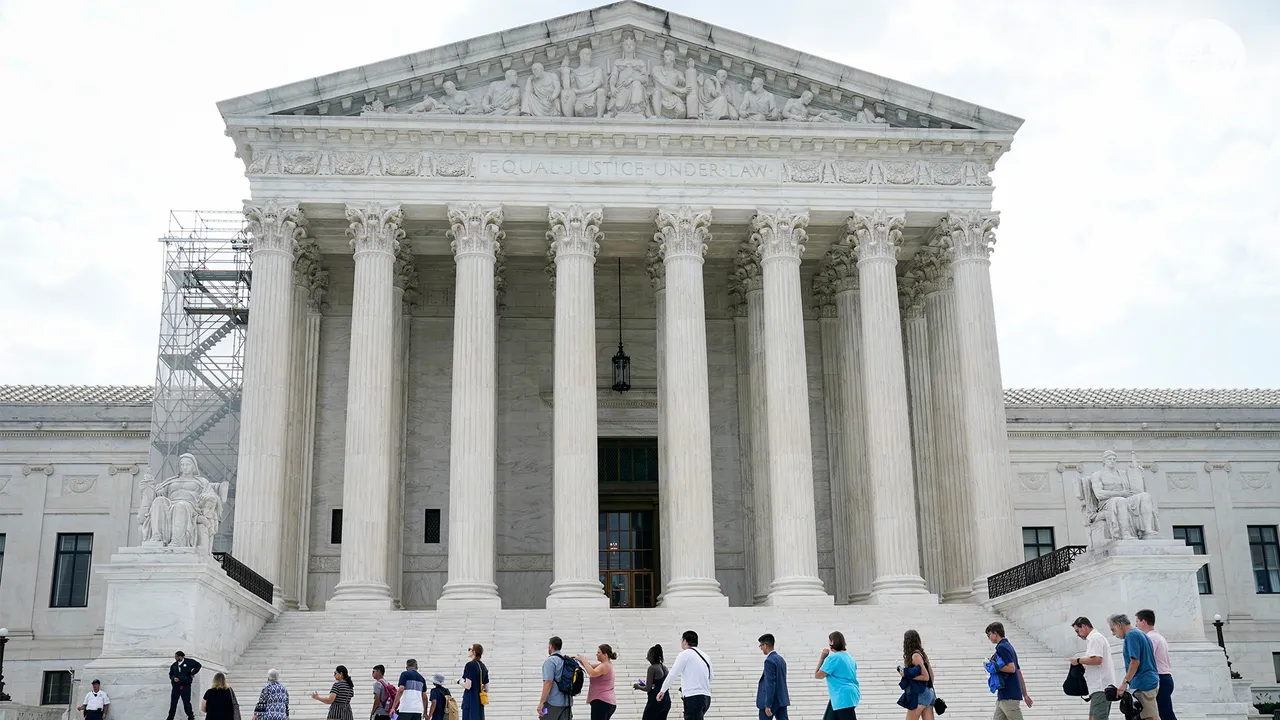
At a time when the Supreme Court is hearing the Adani Group-Hindenburg case, the business conglomerate was on Thursday hit by fresh allegations that it used family associates to secretly invest hundreds of millions of dollars through “opaque” Mauritius-based investment funds to fuel the spectacular rise in group stocks.
Citing a review of files from tax havens and internal Adani Group emails, the Organised Crime and Corruption Reporting Project (OCCRP) said two individual investors with “longtime business ties” to the Adani family used such offshore structures to buy and sell Adani shares between 2013 and 2018 — a period during which the ports-to-energy conglomerate saw meteoric rise to become India’s largest and most powerful businesses.
OCCRP is a non-profit global network of investigative journalists funded by Hungarian-American billionaire and philanthropist George Soros.
Picture : Eligibility
OCCRP said Nasser Ali Shaban Ahli from the UAE and Chang Chung-Ling from Taiwan spent years trading Adani group stock worth hundreds of millions of dollars through two Mauritius-based funds that were overseen by a Dubai-based company run by a known employee of Vinod Adani.
Market regulator SEBI had been handed evidence in early 2014 of alleged suspicious stock market activity by the Adani Group, OCCRP said citing a letter.
U K Sinha, who was then heading SEBI, is now a director and chairperson of an Adani-owned news channel.
The fresh broadside, which comes months after US short-selling firm Hindenburg Research published an explosive report in January that accused Adani Group of running the “largest con in corporate history”, sent all 10 listed Adani stocks down.
Shares of nine out of 10 Adani group companies closed in the red on Thursday, taking a combined hit of Rs 35,708 crore in market valuation after the OCCRP report. More here
On the OCCRP allegations, the Group on Thursday termed them as “recycled allegations” and called them “yet another concerted bid by (George) Soros-funded interests supported by a section of the foreign media to revive the meritless Hindenburg report”.
Opposition parties, which stalled proceedings in Parliament for nearly one full session when the Hindenburg allegations first came out, were quick to latch on to the OCCRP to attack the government and Adani Group.
Maintaining that India’s reputation is at stake ahead of the G20 Summit, Congress leader Rahul Gandhi asked why PM Modi was silent on the allegations and demanded a probe by a joint parliamentary committee (JPC).
Canadian Prime Minister Justin Trudeau will visit India to attend the G20 Summit in New Delhi from September 9 to 10, where he will join fellow world leaders to engage in discussions on global economic and political matters.. Prior to his visit to New Delhi, Trudeau will travel to Indonesia to participate in the ASEAN Summit and thereafter head to Singapore for a bilateral visit.
“The Prime Minister, Justin Trudeau, today announced that he will travel to Jakarta, Indonesia to participate in the ASEAN Summit from September 5 to 6, 2023. This will be followed by a bilateral visit to Singapore from September 7 to 8, 2023. He will then participate in the G20 Summit in New Delhi, India, from September 9 to 10, 2023,” Prime Minister’s Office said in a statement.
The G20 Summit comprises 19 countries, collectively representing 85% of the world’s GDP, two-thirds of its population, and 75% of global trade. This summit serves as a vital platform for prominent world leaders to come together with a shared aim of fostering global economic cooperation. Operating under the theme ‘One Earth – One Family – One Future,’ the summit seeks to address global challenges and work toward a better tomorrow for people worldwide. During his visit, Prime Minister Trudeau aims to bolster bilateral relations between Canada and India.
At the G20 Summit in New Delhi, Trudeau will work with international partners to tackle global crises to build a better tomorrow for people around the world. He will promote the United Nations (UN) Sustainable Development Goals (SDGs) in his role as co-chair of the SDG Advocates group.
Canada Prime Minister’s Office in the statement said, “Canada is, and will always be, a champion of the rules-based international order, and the global trade and economic progress that depend on those rules. Russia’s brutal war of aggression in Ukraine is an attack on the rules that all countries rely on to do business, trade, grow, and improve life for their citizens.”
It further said, “That’s why, at the G20, Prime Minister Trudeau will continue to advocate for collective action to hold Putin accountable for his illegal war and to secure a just and durable peace that starts with Russia’s immediate withdrawal from Ukraine. Working collaboratively to tackle global crises while holding Russia accountable is essential to maintaining the integrity and effectiveness of the G20.”
The number of Indians immigrating to Canada has more than tripled since 2013. The scale of the increase is what one would expect to witness in a refugee situation, not the result of a steady increase in international students and employment-based immigrants. The data show restrictive immigration policies in the United States, particularly during the Trump administration, have played a significant role in Indians choosing to immigrate to Canada.
Canada’s welcoming immigration policies and favorable labor conditions have played a pivotal role in facilitating this significant influx of newcomers, enabling them to forge successful new lives in the country.
Additionally, with approximately 75% of America’s H1-B visa holders being of Indian descent, Canada’s new H1-B program has emerged as an appealing alternative, drawing interest from U.S. H1-B candidates. As a result, Canada’s tech ecosystem is experiencing rapid growth, attracting a diverse pool of global talent, expanding the Indian diaspora in the region, and fostering cultural influences in the process.
The number of Indians who became permanent residents in Canada rose from 32,828 in 2013 to 118,095 in 2022, an increase of 260%, according to a National Foundation for American Policy (NFAP) analysis of Immigration, Refugees and Citizenship Canada data.
In 2022, at 118,095, Indian immigration to Canada dwarfed the next largest source countries for permanent residents: China (31,815), Afghanistan (23,735), Nigeria (22,085) and the Philippines (22,070). In 2014, Canada had more immigrants from the Philippines than from India.
As per Forbes, the significant increase in the number of Indians immigrating to Canada coincided with the election of Donald Trump and his opposition to immigration, including highly educated professionals—and the Canadian government’s policies to attract and retain foreign-born talent.
In January 2015, Canada adopted the Express Entry program to streamline immigration, particularly for high-skilled workers who had experience in Canada as international students or working in temporary status. In June 2017, the Global Skills Strategy began in Canada. “The Canadian government launched a new program to encourage foreign investment in Canada, incentivize companies to open offices in Canada, and attract top foreign talent,” according to a government website.
ZEE5 Global, the world’s largest streaming platform for South Asian content, expands its library with Tamil blockbuster ‘DD Returns’. The movie celebrated huge success in theatres with astounding performance and dialogue delivery which made the audiences smile throughout the movie. DD Returns traces the journey of Sathish [Santhanam] who is desperate to save his girlfriend which leads him to a haunted house. Produced by RK entertainment and directed by S. Prem Anand, the film is one of the best Tamil comedy films in recent times with a pinch of horror. The acclaimed movie is currently streaming on ZEE5 Global.
The movie features an ensemble cast that includes Santhanam, Surbhi, Redin Kingsley, Lollu Sabha Maaran, Pradeep Rawat, Masoom Shankar, FEFSI Vijayan, Rajendran and Munishkanth. The horror comedy chronicles around Sathish and his quest to find and rescue his girlfriend – Sofia when her predicament spirals into a do-or-die situation. Satish and his team are forced to play a dangerous game called ‘Win or Run’ organized by the ghosts inhabiting the palace. The cryptic ghosts who devised the lethal game during their lifetime designed it to brutally kill contestants upon failure to advance. Will Sathish and his team emerge victorious and escape the ghosts? Or will someone meet an unfortunate end at the hands of the phantom game designers?
Archana Anand, Chief Business Officer, ZEE5 Global said, “Outstanding stories that resonate with our viewers have been at the heart of our Tamil content library. We are now proud to expand our offering further with a prominent title like DD Returns. The horror comedy brings alive the story of one man’s struggle against rules set by paranormal creatures and is sure to entertain our global viewers.”
Producer RK Entertainment C. Ramesh Kumar said, “Although horror comedies are generally considered to be cringe, I was confident that Prem will do justice to the script and make a superb film. The cast and crew have worked tremendously to make this film a success. I am certain that the audience will provide immense support to the film post its digital premiere like they did at the box office.’’
Director S. Prem Anand commented,“I really wanted the film to make a mark in the horror comedy genre. I took my time to envision a perfect balance between the horror and comic elements so that the hilarity of the plot lasts till the end. I wanted it to be a fun-filled experience for the audience and I was glad when they showered us with love in the theatres. I have my fingers-crossed hoping ‘DD Returns’ receives a greater appreciation in the digital space.”
Actor Santhanam added, “When I was first presented with the storyline of the film, I was really impressed by the tightly knit writing. I am delighted that I was able to bring life to Prem sir’s vision for the film. All of us spent a lot of time and effort on the making of this film but the overwhelming response from my fans made it worth it. I hope the viewers appreciate the movie equally post its launch on ZEE5 Global.”
Viewers can catch ZEE5 Global’s unmissable slate and stock up on their yearlong entertainment by subscribing to the Annual pack and grabbing the limited-time special offer price.
After the raging success of its previous season last year, ZEE5 Global’s iconic singing reality show, Sa Re Ga Ma Pa returns with an exciting new season that has Himesh Reshammiya, Neeti Mohan, Anu Malikas judges and Aditya Naryanas the host. Streaming on ZEE5 Global, the world’s largest streaming platform for South Asian content, the new season of the Zee TV show is poised to change the game with a new format that includes spontaneous challenges thrown at contestants by the judges after one of their peers has delivered an outstanding act in a particular style or genre. Rather than a set template with weekly rounds one is familiar with, this challenging environment is bound to shake up the room a bit, stimulate a competitive edge amongst the contestants and pack in a new surprise for its viewers in every single episode!
The show can be watched ad free only on ZEE5 Global in countries across the globe, and anytime at one’s convenience on any device of their choice. Viewers can catch up on past episodes and even download episodes and watch the show offline.
Two months ago, Sa Re Ga Ma Pa announced a nation-wide quest for ‘OG’ voices across India. For the first time ever, the audition process went paperless – led by a strong digital leg and even the on-ground phase saw negligible use of paper as a part of the channel’s endeavour of being environmentally responsible.
This season features contestants hand picked by the judges from across India like West Bengal’sAlbert Kabo Lepcha, Kharagpur’s Sonia Gazmer, Delhi’s Sana Arora,Mumbai’s Abdul, Uttar Pradesh’s Nishtha Sharma and Kolkata’s Ranita Banerjee.The talented bunch promise viewers an exceptional musical extravaganza that marks a grand celebration of music this season!
Archana Anand, Chief Business Officer, ZEE5 Globalsaid, “Our marquee music reality show Sa Re Ga Ma Pa is much loved by fans across the globe, driving us to innovate it further into a brand-new format this year. It draws in fans from every corner of the world who enjoy the immense convenience of watching it ad free at their convenience on ZEE5 Global or catching up on missed episodes, and we are thrilled to bring them this latest season that will surely delight them.”
Here’s what the judges had to say at the show’s launch:
Judge Himesh Reshammiya said, “Although I have been a part of several seasons of this reality show, each season has left me surprised with the kind of talent that has performed on this stage. I truly believe that it is going to be a real treat to watch these raw gems perform, and a brilliant opportunity for them would be to get a chance to sing a song that will be released by Zee Music. The idea is to specifically look for OG singers so that we can give fresh and new voices to our Indian music industry.”
Judge Neeti Mohan added, “I am all set to judge the new season of Sa Re Ga Ma Pa and it’s an honor to be on the same judging panel as the esteemed singers and composers of our music industry – Himesh Reshammiya and Anu Malik. I must say that selecting the best among the best for this season is undoubtedly a challenging task for all of us, but we will do our best to shape the future of the emerging talent that comes our way.”
Judge Anu Malik said,“I am really excited to be part of Sa Re Ga Ma Pa once again, and after witnessing the amazing performances of the new talent during the audition episodes, Himesh, Neeti and I will ensure that we do justice to them by guiding them to the best of our abilities. I believe the franchise has nurtured exceptional talent over the last few decades, and this year as well, the audience will get to watch extraordinary talent perform some mesmerizing songs.”
About ZEE5 Global
ZEE5 Global is the digital entertainment destination launched by Zee Entertainment Enterprises Limited (ZEEL), a global Media and Entertainment powerhouse. The platform launched across 190+ countries in October 2018 and has content across 18 languages: Hindi, English, Bengali, Malayalam, Tamil, Telugu, Kannada, Marathi, Oriya, Bhojpuri, Gujarati, Punjabi, including six international languages Malay, Thai, Bahasa, Urdu, Bangla and Arabic. ZEE5 Global is home to 200,000+ hours of on-demand content. The platform brings together the best of Originals, Movies and TV Shows, Music and Health and Lifestyle content in one destination. In addition, ZEE5 Global offers features like 15 navigational languages, content download options, seamless video playback and Voice Search.
Shaktikanta Das, the Governor of the Reserve Bank of India (RBI), has achieved global recognition by securing the top spot in the prestigious Global Finance Central Banker Report Cards for 2023. In this authoritative ranking, he was bestowed with an ‘A+’ rating, placing him at the pinnacle of central bank governors worldwide. This distinguished evaluation was conducted by the esteemed US-based Global Finance Magazine.
Das has garnered accolades for his adept stewardship of the Indian economy, particularly during a turbulent period of global economic uncertainty. His remarkable achievements include maintaining a firm grip on inflation and providing crucial support for economic growth.
As of December 12, 2018, Shaktikanta Das assumed office as the 25th Governor of the RBI, succeeding Urjit Patel. His tenure is marked by a string of influential roles, including serving as the Secretary of the Department of Revenue and the Department of Economic Affairs within the finance ministry.
Prime Minister Narendra Modi expressed his heartfelt congratulations to Shaktikanta Das for attaining the coveted ‘A+’ rating in the Global Finance Central Banker Report Cards for 2023. He underscored the significance of this achievement, stating, “Congratulations to RBI Governor Shri Shaktikanta Das. This is a proud moment for India, reflecting our financial leadership on the global stage. His dedication and vision continue to strengthen our nation’s growth trajectory.”
In the Global Finance grading system, an ‘A’ signifies an exceptional performance, while an ‘F’ represents a clear failure. In this regard, Shaktikanta Das’s ‘A+’ rating underscores his outstanding contributions to the central banking sphere.
Trailing behind Das in the rankings are Switzerland’s Governor Thomas J. Jordan and Nguyen Thi Hong, the central bank chief of Vietnam, both of whom also received ‘A’ ratings.
The report emphasized the global reliance on central bankers in the fight against inflation, which has surged due to pent-up demand and disrupted supply chains. Central bankers are increasingly called upon to address these economic challenges.
Global Finance’s annual Central Banker Report Cards are a platform to honor bank governors whose innovative ideas, originality, ingenuity, and tenacity have set them apart from their peers.
Joining Shaktikanta Das in the ‘A’ grade category are notable central bank governors like Roberto Campos Neto of Brazil, Amir Yaron of Israel, Harvesh Kumar Seegolam of Mauritius, and Adrian Orr of New Zealand, all of whom have been recognized for their remarkable performance.
Additionally, several governors received an ‘A-‘ rating in the report, including Leonardo Villar of Colombia, Hector Valdez Albizu of the Dominican Republic, Asgeir Jonsson of Iceland, and Perry Warjiyo of Indonesia.
It’s worth noting that Global Finance has been evaluating central bank governors from 101 countries, territories, and districts, including prominent institutions such as the European Union, the Eastern Caribbean Central Bank, the Bank of Central African States, and the Central Bank of West African States since 1994.
Shaktikanta Das’s ascendancy to the top of the Global Finance Central Banker Report Cards for 2023 is not an isolated recognition of his excellence. In June of the same year, he was honored with the title of ‘Governor of the Year’ at the Central Banking Awards 2023 held in London. This further underscores his exceptional contributions to the field of central banking.
Shaktikanta Das has emerged as the preeminent central banker globally, earning an ‘A+’ rating in the esteemed Global Finance Central Banker Report Cards for 2023. His adept management of India’s economy, particularly during times of global economic uncertainty, has earned him widespread acclaim. This recognition not only reflects his dedication and vision but also positions India as a leader on the international financial stage. Additionally, his ‘Governor of the Year’ accolade at the Central Banking Awards 2023 in London underscores the enduring impact of his contributions to central banking.
India’s lunar rover has concluded its exploration on the moon’s surface and has been placed in sleep mode, marking a significant milestone in the nation’s space endeavors. This development occurred less than two weeks after the rover’s historic landing near the lunar south pole, as confirmed by India’s space mission.
In an official statement released on a Saturday evening, the Indian Space Research Organization (ISRO) reported, “The rover completes its assignments. It is now safely parked and set into sleep mode.” This decision was influenced by the impending lunar nightfall, as daylight on that part of the moon was coming to an end.
The ISRO statement further revealed that the rover’s scientific instruments had been powered down, and the data it diligently gathered during its lunar expedition had been successfully transmitted to Earth through the lander.
Originally, the Chandrayaan-3 lander and rover were expected to function for a single lunar day, equivalent to 14 days on Earth. In a hopeful note, the statement mentioned the current status of the rover’s battery, stating, “Currently, the battery is fully charged. The solar panel is oriented to receive the light at the next sunrise expected on September 22, 2023. The receiver is kept on. Hoping for a successful awakening for another set of assignments!”
Despite the success in various aspects of the mission, there was no mention in the statement regarding the outcome of the rover’s mission to search for signs of frozen water on the lunar surface. Such discoveries could prove crucial for future astronaut missions, serving as a potential source of drinking water or even the production of rocket fuel.
Just a week prior, the space agency had announced a significant discovery by the rover, confirming the presence of sulfur and identifying several other elements on the lunar surface. The rover’s laser-induced spectroscope instrument had also detected the presence of aluminum, iron, calcium, chromium, titanium, manganese, oxygen, and silicon.
However, the mission wasn’t without its challenges. The Indian Express newspaper reported that the electronic components on board the Indian lunar mission were not designed to endure the extreme low temperatures experienced on the moon, dropping to less than -120 degrees Celsius (-184 degrees Fahrenheit) during the lunar night, which spans approximately 14 days on Earth.
Pallava Bagla, a renowned science writer and co-author of books focusing on India’s space exploration, emphasized the rover’s limited battery power. He noted that while the data had safely made its way back to Earth, the rover’s ability to wake up during the next lunar sunrise remained uncertain, as the electronic circuits and components weren’t equipped to withstand the moon’s frigid conditions. Bagla remarked, “Making electronic circuits and components that can survive the deep cold temperature of the moon, that technology doesn’t exist in India.”
India’s achievement in successfully deploying a rover to the lunar surface came after a previous attempt to land on the moon in 2019 had encountered difficulties. This recent success positioned India alongside the United States, the Soviet Union, and China as the fourth nation to accomplish this remarkable feat.
This triumphant mission not only signifies India’s growing prominence in the realms of technology and space exploration but also aligns with Prime Minister Narendra Modi’s aspirations to project India as an ascendant nation, asserting its position among the global elite.
This multifaceted mission commenced over a month ago and was executed with an estimated budget of $75 million. India’s success on the lunar surface closely followed Russia’s Luna-25 mission, which had the same lunar region as its target but sadly veered into an uncontrolled orbit and crashed. Luna-25 had aspired to become Russia’s first successful lunar landing in 47 years.
Roscosmos, Russia’s state-controlled space corporation, attributed the mission’s failure to a lack of expertise, resulting from the prolonged hiatus in lunar research following the last Soviet mission to the moon in 1976.
India’s space journey has been active since the 1960s, encompassing satellite launches for both domestic and international purposes. Notably, in 2014, India successfully placed a satellite in orbit around Mars, a significant accomplishment that drew global attention. As part of its future plans, India is gearing up for its maiden mission to the International Space Station in collaboration with the United States, demonstrating its continued commitment to pushing the boundaries of space exploration.
In the United States, a substantial backlog in Green Card processing is putting over one lakh Indian children at risk of being separated from their parents. With more than 10.7 lakh Indians in line for employment-based Green Cards, which grant legal permanent residency in the US, the current system’s limitations suggest that completion could take a staggering 135 years. This crisis primarily affects those under H-4 visas, with a recent study by immigration expert David J. Bier from the Cato Institute highlighting that approximately 1.34 lakh Indian children under H-4 visas may age out before their Green Card applications are processed, forcing them into separation from their families.
The Cato Institute, a libertarian think tank based in Washington, DC, has drawn attention to this pressing issue, emphasizing the severity of the problem. When factoring in dropout factors such as death and aging out, the waiting time remains at a staggering 54 years.
Under the H-4 visa system, children moving to the US with their parents, who hold H-1B visas for highly skilled workers, are permitted to stay until they reach the age of 21. Once they reach this age, they can no longer remain in the United States under the H-4 visa category. These young individuals, sometimes referred to as “documented dreamers,” face two difficult choices upon aging out.
Picture : MSN
The first option is to apply for an F-1 or student visa, which allows them to study in the US. However, this route doesn’t grant them the right to work without obtaining an Employment Authorization Document (EAD). The EAD application process is often protracted and expensive, with no guarantees of success, as only a limited number of children manage to secure the F-1 visa.
The second alternative is to return to their home country, which can be an emotionally challenging decision. This is particularly true for those who have spent the majority of their lives in the US, with minimal or no connection to their family in India.
The age limit imposed on H-4 visas and the extensive backlog in the Green Card process have created significant uncertainty and anxiety among Indian families settled in the United States. While the Biden administration has proposed a rule that would permit certain H-4 visa holders who turn 21 to remain in the US and work, it remains uncertain when or if this rule will be put into effect. Additionally, President Biden had pledged to modify the 7 percent country cap for Green Cards, but concrete steps towards this change remain to be seen.
The lengthy waiting times for Green Cards in the United States are endangering the unity of Indian families settled there, especially those with children on H-4 visas. Urgent reforms are needed to address this issue and provide a more compassionate solution to prevent the forced separation of families.
Prime Minister Narendra Modi’s government has replaced the name India with a Sanskrit word in dinner invitations sent to guests attending this week’s Group of 20 (G20) summit, triggering speculation that the name of the country will be officially changed.
Reports suggest, India is likely to be renamed Bharat. Buzz on the country’s name change gained ground after images of the official invite to the G20 Heads of State and ministers for a dinner being hosted by President Droupadi Murmu came to the fore. The invite shows the invite was from “the President of Bharat“.
Picture : Gulte
The name change from “India” to “Bharat” in the formal invite for a global summit, that will see Joe Biden and Rishi Sunak in attendance, could possibly be a hint by the Modi administration that India could soon be renamed.
Several Opposition leaders took to social media to share the invites to the dinner to be held on September 9th, that shed the country’s English name “India”. Narendra Modi’s ruling Hindu nationalist government is rumoured to be looking to change the name during a special parliamentary session this month amid instances of the removal of the traces of previous governments and leaders, including the country’s first prime minister Jawaharlal Nehru, from official landmarks and buildings of national importance.
What is India officially called?
The official name for the country is mentioned in the Indian Constitution as “India, that is Bharat” that “shall be a Union of states”. The Indian Constitution was written and made public in 1951 and the issue had been heavily debated after India gained independence as well, in 1947.
Nehru, also a historian, had said in his book, Discovery of India: “Often, as I wandered from meeting to meeting, I spoke to my audiences of this India of ours, of Hindustan and of Bharata, the old Sanskrit name derived from the mythical founders of the race.” He had mentioned the three most popular names – Hindustan, India and Bharat – with their own roots to the geographical and historical relevance of the country.
All the official documents for the country in English carry the name “India” when referring to the Republic, its ministries, domestic and foreign correspondence, and even while mentioning leaders as Indian leaders. Valid identity cards like passports and voting cards use the term “India” as the official marker of citizenship. The documents published in colloquial Hindi language say “Bharat” instead of “India”.
Where do the names India and Bharat come from?
The earliest records used to identify the country reveal the usage of “Bharat”, “Bharata” or “Bharatvarsha”. These commonly used terms have found a place in the Constitution alongside “India”.
Bharat, a Sanskrit name for the country, comes from ancient Puranic literature and also from one of the two major epics of India – the Mahabharata – in which Indians are believed to be the descendants of king Bharat, a mythical figure Hindus claim had started the Indian race. Many historians believe it dates back to early Hindu texts. The word also means “India” in Hindi.
The name “India” gained relevance when the country was ruled by the British from the late 18th century onwards, and was prominently used in historical maps. After gaining freedom, the country’s new leaders did not do away with the usage, but incorporated it in official documents.
Who is calling for Bharat to be used?
After centuries of the country being known as India outside its borders, the Modi administration is pushing for the name change. This is coincidentally just weeks after the country’s opposition leaders formed an alliance bloc called “INDIA” – short for Indian National Developmental Inclusive Alliance – in a bid to remove Modi’s Bharatiya Janata Party (BJP) from power in elections next year.
Several right-wing leaders of his party cheered on the probable use of “Bharat” as the only official name for the country on Tuesday, after photos widely shared across social media showed an official invite for India’s G20 summit asking foreign dignitaries to join the “President of Bharat” with no mention of India on the card.
Recent media reports about a “special session” of the Indian parliament, coupled with the photo of the invite, have also sparked rumours that BJP is planning to use the rare session to announce its intention to officially rename the country.
Why is it in the news now?
The biggest push came after the opposition rebranded itself as “INDIA” and claimed it wants to protect democracy and the idea of a united nation that it insists has been attacked by Modi’s Hindu nationalist party amid a sharp rise in attacks against other religious minorities in the country, prominently Muslims.
Right-wing political leaders from Mr Modi’s BJP, however, insist “India” was introduced by British colonialists, is a “symbol of slavery” and argue that a name change is an effort to reclaim India’s Hindu past. Large portions of India’s population, however, follow several different religions. Several of Mr Modi’s ministers have dropped India from their social media bios and replaced it with “Bharat” in the past few weeks.
Since then, some officials in Mr Modi’s party have demanded the country be called “Bharat”, without explaining how official documents, prominent national buildings, hospitals, colleges and universities using “India” in their name will be renamed.
US President Joe Biden will travel to India on Thursday to attend the G20 summit. He will also have a meeting with Prime Minister Narendra Modi, on the sidelines of the summit, the White House has announced.
India, President of G20, will host global leaders at the summit, which will take place on September 9 and 10 in New Delhi. On Thursday (September 7), the US President will travel to New Delhi to attend the G20 Leaders’ Summit, the White House said in a statement.
On September 8, he will participate in a bilateral meeting with Prime Minister Modi. On Saturday and Sunday, Biden will participate in the G20 summit, where the US President and G20 partners will discuss a range of joint efforts to tackle global issues, including clean energy transition and combating climate change.
Picture : The Guardian
They will also discuss ways to mitigate the economic and social impact of Russian President Vladimir Putin’s war in Ukraine and increase the capacity of multilateral development banks, including World Bank, to better fight poverty and address global challenges.
The President will participate in the G20 Summit on Saturday and Sunday where he and G20 partners will discuss a range of joint efforts to tackle global issues which include clean energy transition and combating climate change.
They will also mitigate the economic and social impacts of Russia’s war in Ukraine and boost the capacity of multilateral development banks, including the World Bank, to better fight poverty, including by addressing global challenges, the White House said.
“While in New Delhi, the President will also commend Prime Minister Modi’s leadership of the G20 and reaffirm the US commitment to the G20 as the premier forum of economic cooperation, including by hosting it in 2026,” it added.
Earlier, amid the reports of Chinese President Xi Jinping skipping the G20 Summit in New Delhi, Biden had said that he hoped that Xi would attend the meeting in India.
While in New Delhi, the US President will reaffirm the United States’ commitment to the G20 as the premier forum of economic cooperation. The G20 or Group of 20 is an intergovernmental forum of the world’s major developed and developing economies.
Vivek Ramaswamy’s unexpected emergence as a prominent figure within the Republican Party has sent shockwaves through the political landscape. The 38-year-old pharmaceutical executive’s sudden prominence in the GOP presidential primary race has raised eyebrows, especially after his standout performance in a recent debate.
Previously an unexpected contender, Ramaswamy’s surge in popularity has been evident in the polls, where he has begun to surpass the popularity of current Florida Governor Ron DeSantis. While DeSantis was once comfortably polling above 35% among voters, his favorability has dwindled in recent times, with numerous polls showing his numbers dipping below 15%. In contrast, Ramaswamy, who announced his presidential candidacy in late February, had started with a modest polling range between 1% and 5%. However, recent polls conducted by Rasmussen Reports and McLaughlin & Associates indicate that his support has soared, with figures reaching as high as 24%, and in some cases, even surpassing DeSantis.
Amidst the Battle for Second Place
As DeSantis and Ramaswamy vie for second place in the primary race, the prevailing sentiment is that former President Donald Trump maintains a commanding lead, consistently polling at over 50%. Trump’s resurgence and increasing popularity have been attributed, in part, to his recent legal challenges across four states, which appear to have rallied his base. Furthermore, Trump’s strategic return to social media, now under the name “X” after the rebranding of Twitter, is anticipated to further bolster his polling numbers.
Ramaswamy’s Policy Stances and Their Potential Market Effects
Vivek Ramaswamy’s policy platform is marked by a commitment to reducing government expenditure and regulations. While these policies might not directly impact individual stocks, the broader market indices such as the S&P 500 and the Nasdaq Stock Exchange tend to respond positively to initiatives aimed at deregulation in specific sectors.
Energy Sectors and Economic Implications
Ramaswamy aligns himself with many GOP candidates in supporting energy solutions rooted in natural resources like oil, coal, nuclear power, and natural gas. This alignment suggests that stocks in these sectors could experience substantial growth under a Ramaswamy presidency. Notable companies poised to benefit include ExxonMobil Corp., Chevron Corp., ConocoPhillips, Constellation Energy Corp., and NuScale Power Corp.
Cryptocurrency Standpoint and Financial Markets
While Ramaswamy takes a stance against central bank digital currencies (CBDCs), he has emerged as a proponent of Bitcoin. His campaign’s acceptance of donations in Bitcoin, Dogecoin, Shiba Inu, and other cryptocurrencies reflects his support for the crypto landscape. However, it remains unclear whether he would actively promote policies favoring cryptocurrencies. Ramaswamy’s priority appears to be strengthening the U.S. dollar over Bitcoin, thereby shaping his stance on digital currencies.
Tech Innovation and Startup Ecosystem
Ramaswamy’s focus on innovation, evident in his “America First 2.0” agenda and his background in technology, bodes well for traditional technology stocks. Although companies like Alphabet Inc. and Apple Inc. have exhibited resilience regardless of the party in power, potential tax incentives for companies moving their operations to the U.S. could enhance their profitability in the long term.
Picture : CNBC
Stimulating innovation and small business growth is anticipated to yield positive outcomes. The venture capital market, which encountered declines exceeding 50% in the U.S. during the first half of 2023, is showing signs of a rebound. Platforms facilitating retail startup investments, like StartEngine and Wefunder, are gradually recovering. The projected positive direction of these sectors is attributed to the potential for deregulation and policies promoting innovation, small businesses, and vocational trades.
Vivek Ramaswamy’s unforeseen prominence in the Republican Party’s presidential primary race has captivated attention. As he competes with Governor Ron DeSantis for second place, both candidates trail behind the frontrunner, former President Donald Trump. Ramaswamy’s policy positions, spanning from deregulation to energy preferences and cryptocurrency viewpoints, hold potential implications for various sectors in the economy and financial markets. His commitment to fostering innovation and supporting small businesses has the potential to reshape multiple facets of the American economic landscape.
At their third conclave in Mumbai, INDIA parties resolved to fight the 2024 Lok Sabha polls together “as far as possible”. Amid speculation of early polls, the Opposition bloc set up a 14-member coordination committee as its top decision-making body.
Top leaders of the opposition bloc held talks in an informal setting in Mumbai on Thursday evening to chart out a concrete roadmap and evolve a structure for cooperation among the alliance partners.
Before the meeting, Congress leader Rahul Gandhi was seen chatting with Shiv Sena (UBT) leaders Aaditya Thackeray and Sanjay Raut and NCP’s Supriya Sule and Jayant Patil. Uddhav Thackeray and NCP supremo Sharad Pawar were also seen sharing light moments ahead of the meeting.
The Congress party president Mallikarjun Kharge, former party chief Sonia Gandhi, West Bengal CM Mamata Banerjee, Bihar CM Nitish Kumar, Tamil Nadu CM M K Stalin, Samajwadi Party (SP) leader Akhilesh Yadav and Rashtriya Lok Dal (RLD) chief Jayant Chaudhary among others were present in the meeting.
“The meeting was good. You will know the details tomorrow,” Shiv Sena (UBT) president Uddhav Thackeray told reporters. Thackeray hosted dinner for the INDIA leaders after the meeting.
Picture : MINT
Against much anticipation, no seat-sharing formula could be finalised in Mumbai, indicating major differences among the parties. They also did not launch a logo for the alliance. Its resolution said, “Seat-sharing arrangements in different states will be initiated immediately and concluded at the earliest in a collaborative spirit of give-and-take.” The coordination committee has got the task of starting the work on seat sharing.
While a comprehensive action plan for taking on the PM Modi-led NDA government in the 2024 Lok Sabha elections has been finalized at the end of the INDIA alliance meeting on Friday, the crucial discussions on a seat-sharing formula were left to state-level committees comprising leaders of various parties, Congress sources told the media.
The Congress and a few other parties have also identified 400 parliamentary seats out of the total 543 where a one-on-one fight with the BJP is possible and will push for such contests, a senior Congress leader said.
The INDIA bloc is in no hurry to appoint a convenor, but it has been proposed that a coordination committee of 11 members be appointed, the leader said.
The INDIA bloc is likely to announce a coordination committee as well as unveil a logo for the alliance. The opposition leaders had earlier met in Patna and Bengaluru.
Not officially invited, Rajya Sabha MP Kapil Sibal made an unexpected entry at the conclave stage, leaving some Congress leaders miffed. KC Venugopal, a close aide of Rahul Gandhi, reportedly complained to Shiv Sena (UBT) chief Uddhav Thackeray, the official host of the meeting, over the presence of his lawyer. Sibal, who had quit the Congress last year as he didn’t want to “hang on coattails of any party” was seen being warmly welcomed by NCP’s Supriya Sule.
In their second conclave in July in Bengaluru, the INDIA bloc’s resolution declared a national caste census as one of its demands. But in Mumbai, when JDU, SP and RJD pushed for the caste census demand, TMC opposed it.
Rahul Gandhi said PM Modi’s call of ‘Congress-mukt Bharat’ would never materialise just like the Britishers failed to finish off the party during their heydays. He claimed his party would replicate its win in Karnataka notched up a few months ago in poll-bound Telangana, Madhya Pradesh, Chhattisgarh and Rajasthan. “The INDIA alliance is going to defeat the BJP in national elections and the Congress party will win the polls,” he said.
Congress President Mallikarjun Kharge during the third INDIA meeting on Friday asked the alliance partners to be ready for more attacks from the ruling party and Prime Minister Narendra Modi in the coming days due to vendetta politics and said “INDIA strength is making the government nervous”.
He also targeted the BJP and the RSS for increase in hate crime in the country and also accused it of trying to keep the states under check. Addressing the INDIA bloc leaders here on second day of the meeting, Kharge said, “The success of both our meetings first in Patna and second in Bengaluru can be measured by the fact that the Prime Minister in his subsequent speeches has not just attacked INDIA but has also compared the name of our beloved country with a terrorist organisation and a symbol of slavery.”
“We should be prepared for more attacks in the coming months, more raids and arrests due to this government’s vendetta politics,” he said. The Congress leader asserted that the more ground INDIA alliance gains the more the BJP government will misuse agencies against the opposition leaders. He cited the example of the central agencies actions in Maharashtra, Rajasthan, West Bengal and recent actions in the states of Jharkhand and in Chhattisgarh.
“Today every section of our society — be it the farmers, youth, women, the marginalised, middle class, public intellectuals, NGOs and even journalists — all have been at the receiving end of BJP’s authoritarian misrule and 140 crore Indians are looking towards us with hope to relieve them of their miseries,” Kharge said targeting the government.
Hitting back at the BJP and the Rashtriya Swayamsevak Sangh (RSS), Kharge, who is also the leader of Opposition in Rajya Sabha said, “The communal poison that the BJP and RSS have spread over the last nine years is now seen in hate crimes against innocent train passengers and against innocent school children. It is no surprise that when people involved in gruesome rape are released and felicitated in one part of the county, it encourages horrific crimes and parading of naked women in the other. In Modiji’s India the wife of a Kargil brave heart is also not spared.”
Kharge was referring to the recent killing of four people in train by an RPF constable, naked parading of women by a mob in Manipur, release of Bilkis Banu rape accused.
“It is the BJP govt’s apathy towards the marginalised that makes their leaders urinate on poor tribals and dalits and the culprits are left to roam freely,” he said referring to the Madhya Pradesh’s incident.
Slamming the government further, the Congress leader said that the Central government headed by the “Prime Minister wants to keep states under check. States are being denied their share of the tax revenues. MGNREGA dues to Opposition ruled states are not being given. Special grants and state specific grants are not released as per recommendation of the Finance Commission. Investors are forced to move their investments and projects out of opposition ruled states to states ruled by the BJP,” he said.
He also referred to former party president Rahul Gandhi’s press conference on Thursday questioning the Prime Minister’s silence on alleged stock manipulation by Adani Group.
“He (Rahul Gandhi) demanded a JPC probe into charges of round tripping and reports of Opaque Investment from Mauritius based Company. It is unexplainable why the Prime Minister is not getting the matter investigated?” Kharge questioned.
Kharge alleged that the BJP wants complete control on agencies and institutions — it is adamant on controlling the appointment of ED Chief, the CBI Director, Election Commissioners or even judges of courts across the country.
“Through the course of the three meetings INDIA alliance has successfully held the government accountable both within and outside Parliament as a united front. Our strength makes the government nervous and which is why it has further bulldozed important bills in Parliament, suspended our MPs on flimsy grounds, filed privilege motions against us, switched off our mikes, not allowed cameras to cover our protests and blatantly censored our speeches on Sansad TV,” he said. He also said that he would like to end on a positive note as the people of this country are our hope.
“The success of Chandrayaan 3 and our scientists from ISRO, success of sports people like Neeraj Chopra and young chess wizard Praggnanandhaa make us all proud. I want to congratulate all of them on their success for inspiring the next generation,” Kharge added.
US Ambassador to India Eric Garcetti highlighted India’s remarkable progress, promoting a cohesive identity within concentric circles and emphasizing the diaspora’s role in fortifying the US-India connection. While participating in the Indiaspora deliberations at the three-day event from August 22-24, 2023, at the Taj Mahal Hotel in New Delhi on the sidelines of the G20 Summit, the ambassador advocated addressing the overconcentration of power, fostering a serious approach to bilateral engagement, and acquiring skills, especially in complex domains like semiconductors.
The G20 Forum by Indiaspora convened influential voices from around the world to deliberate on critical issues encompassing foreign policy, financial inclusion, climate change, gender equality, healthcare, philanthropy, entrepreneurship, sports, and trade and investments, and beyond. See below for a day-by-day summary of the event.
M R Rangaswami, Founder of Indiaspora, highlighted the far-reaching impact of Indian doctors and academics worldwide, emphasizing the organization’s effort to document the diaspora’s contributions. A pivotal topic was the role of the diaspora during India’s G20 presidency, with Harsh Vardhan Shringla, Chief Coordinator of G20 India, discussing its significance within India’s ‘Amrit Kaal’.
The discussions extended to philanthropy and its global impact. Atul Keshap, President of USIBC, highlighted the Indian-American community’s growth and influence, while Faizal Kottikollon, founder and chairman of KEF Holdings, shed light on his school’s transformative approach to public education in India and Africa
The event highlighted collaborations between the Indian diaspora and various countries, with representatives from Israel, Canada, Australia, and the UK underscoring the strength of their partnerships. Galvanizing Impact Philanthropy to India was the topic of a fireside chat featuring strategic philanthropists Deepak Raj and Ashish Dawan. The crucial theme of ethical and responsible giving emerged in discussions, where experts like Aditya Jha, President & CEO, dgMarket International, Shanthini Naidoo, CEO, St. Vincent’s Curran Foundation, and Mittal Gohil, Executive Director of The Desai Foundation, stressed the importance of purpose-driven philanthropy. Sessions also explored AI’s implications on economic progress and societal needs. Experts like Rohit Jain, CIO, Harvard Business School Alumni Association NC, Jaya Vaidhyanathan, CEO, BCT Digital, and Preetish Nijhawan, General Partner, Cervin Ventures, dissected the nuances of AI’s development, focusing on rational and existential fears, data biases, and the need for inclusive models. The event also celebrated arts and culture with a talk by esteemed Indian music producer, A. R. Rahman, who emphasized the need for infrastructure and spaces to preserve and promote artistic expressions globally. The day offered insightful discussions on diverse topics, showcasing the potential of the Indian diaspora’s engagement for a more interconnected world.
The Indiaspora G20 Forum concluded its third day with insightful discussions on various crucial topics. In the panel discussion “From Homelands to Global Markets: Cross-Border Trade & Investment,” experts emphasized the transformative nature of global value chains driven by geopolitical dynamics. The emergence of ASEAN countries and the strategic cooperation between the US, India, Australia, and Japan (the Quad) were highlighted as significant developments. A key focus was on the pivotal role of exports in economic growth and development, as expressed by Indiaspora member and Managing Partner at Celesta Capital, Mr. Arun Kumar, and CEO of the Centre of Australia India Relations, Mr. Tim Thomas. The event’s subsequent sessions delved into diverse themes. Chairman of the Quad Investors Network at America’s Frontier Fund, Karl Mehta‘s talk emphasized the importance of innovation and investment in critical technologies for the Quad alliance, envisioning it as a hub for cutting-edge advancements. Discussions also centered around digital transformation, with Mr. Vikas Choudhury, President, Reliance Jio and Partner at Pivot Ventures, spotlighting the role of technology in India’s journey toward 2047. Another session, led by Chairman of Panera Brands, Mr. Niren Chaudhary, stressed leadership through resilience and the importance of values and character in shaping individuals’ impact. The breakout sessions further enriched the dialogue. Unleashing soft power, diplomacy, and cultural capital were highlighted, with insights from Mr. Muktesh Pardeshi, Special Secretary and heads the operations and logistics of India’s G20 Presidency Secretariat, Ms. Anat Bernstein-Reich, CEO at BDO Consulting Israel-India Investment Banking and Business Development and others. The significance of the Indian diaspora in contributing to global goodwill and relationships was underscored. Moreover, discussions on driving knowledge sharing for India’s growth led by Dr. Sudhir Jain, Vice-Chancellor at Banaras Hindu University, and Sunder Ramaswamy, Distinguished International Economist and professor at Middlebury College, emphasized the role of education and collaboration in propelling the nation forward. The final day included panels on venture capital’s role in inclusive development, with experts like Mr. Kris Gopalakrishnan, Chairman Axilor Ventures and Co-founder Infosys, and Mr. Prashant Pathak, CEO at Ekagrata Inc., discussing the impact of investments on technology development. Another panel addressed innovation, entrepreneurship, and social responsibility, highlighting the potential of these sectors in driving change. Mr. Peyush Bansal, Co-Founder, Chief Executive & People Office, shared his journey with Lenskart and the impact on eye care and awareness. And India’s Finance Secretary Dr. TV Somanathan spoke of the ways in which the diaspora can help India’s surge towards a $10 trillion economy. Overall, the Indiaspora G20 Forum Day 3 showcased vibrant discussions on trade, innovation, soft power, and societal impact. The forum illuminated the Indian diaspora’s pivotal role in fostering global connections, leveraging technology, and shaping the nation’s growth trajectory. With the spotlight on inclusive development, technology-driven solutions, and sustainable progress, the event underscored the diaspora’s immense potential in shaping India’s future.
The world’s seen hundreds of thousands of pictures of Donald Trump. But this one’s different.
In Donald Trump’s mug shot taken at the Fulton County Jail on Thursday, he’s looking straight into the camera. His platinum blonde cotton candy wisp of hair shimmers in the harsh jailhouse lighting. His eyes are locked in a hard stare. His mouth is flattened in a grimace. Instead of smiling like some of his co-defendants, he appears to be scowling.
The mug shot was released by the Fulton County Sheriff’s Office roughly an hour after the former President was booked as inmate P01135809 over charges that he illegally schemed to overturn his 2020 election loss in Georgia.
Trump’s booking in Atlanta is the fourth time he’s faced criminal charges in six months, but the first time his face has been captured for the iconic symbol of a run-in with the law. In previous cases, the courts agreed Trump didn’t need to have a mug shot taken, prompting his campaign to design a fake mug shot, print it on T-shirts and offer them for sale at $36 each in an effort to galvanize his base.
Mug shots have been taken since the 1800s to help authorities identify people accused of a crime if they escape or don’t show up for court, or later, after being convicted and released, to help authorities recapture them if they’re accused of other crimes. Trump’s face is so well known, taking another image of him is hardly necessary, and authorities during his previous appearances agreed to waive the requirement. But not Fulton County, Georgia.
Speaking to reporters at the Atlanta airport after being booked, Trump said that he did “nothing wrong” and called the case a “travesty of justice.” He added: “We have every right to challenge an election we think is dishonest.”
Trump is the first President to ever pose for a mug shot. The closest history has to offer was the 1872 arrest of President Ulysses S. Grant, who was taken to a local police station in Washington, D.C. for speeding in his horse-drawn carriage. No mug shot was taken in the incident.
In January of 2023, the University of Michigan National Poll on Healthy Aging (NPHA) conducted a survey involving adults aged 50 to 80 to assess their feelings of loneliness and social interactions. This study aimed to compare the results with similar surveys conducted in 2018, 2020, 2021, and 2022 to discern trends in loneliness and social engagement before and during the COVID-19 pandemic.
According to the NPHA’s latest report, 34% of adults aged 50 to 80 reported feeling isolated from others at some point in the past year. This marks a significant decrease from 56% in 2020 and a slight increase from 27% in 2018. Similarly, 37% of older adults indicated experiencing a lack of companionship in the past year, compared to 41% in 2020 and 34% in 2018.
The survey also revealed that one-third of older adults reported infrequent contact with people outside their homes in 2023. This rate was notably lower than the 46% reported in 2020, yet higher than the 28% in 2018. These findings indicated a mixed trajectory in terms of social interaction during the pandemic.
The survey identified certain factors associated with feelings of isolation, lack of companionship, and limited social contact. Those reporting fair or poor mental health, as well as poor physical health, were more likely to experience loneliness. The same was true for individuals with health issues or disabilities that affected daily activities, those not employed or retired, those living alone, and those in the 50-64 age group. Women also reported feeling lonelier than men.
Loneliness has substantial implications for mental, cognitive, and physical health, general well-being, and even longevity. Previous NPHA surveys consistently demonstrated that isolation, lack of companionship, and infrequent social contact correlated with poorer mental and physical health among older adults.
While the report showed a decline in feelings of isolation and lack of companionship among adults aged 50 to 80 in 2023, the rates were still significant. The findings emphasized that addressing loneliness requires a multifaceted approach. Similar to discussing diet and exercise, clinicians should identify older adults at higher risk of loneliness and refer them to community resources like senior centers or local libraries to promote social connections. Friends and family members are also encouraged to reconnect with older individuals who might have experienced limited contact in recent years.
The study’s results underscored the importance of tackling the issue of loneliness, which the U.S. Surgeon General has referred to as an “epidemic.” Policymakers, clinicians, and family members need to work together to combat this issue and its adverse effects on older adults’ well-being.
The data for this report were collected through a nationally representative survey conducted by NORC at the University of Chicago for the University of Michigan’s Institute for Healthcare Policy and Innovation. The survey, administered in January 2023 to adults aged 50 to 80 (n=2,563), combined online and phone methods. The sample was weighted to reflect U.S. Census Bureau figures, resulting in a completion rate of 61%. The margin of error ranged from ±1 to 3 percentage points for overall results and higher for subgroups.
It’s important to note that the findings from the National Poll on Healthy Aging do not necessarily reflect the opinions of the University of Michigan, which retains all rights over the material.
In the 6th century BC, Pythagoras, a renowned mathematician, unveiled his groundbreaking discovery that the square of the hypotenuse in a right-angled triangle equals the sum of the squares of its other sides. This revelation garnered immense acclaim, with the Greek colony of Croton declaring a 10-day celebration complete with a sumptuous feast. Pythagoras’s reputation as an academic superstar was solidified (“Pythagorean Theorem and its Reception: Ancient Greece’s Mathematical Triumph”).
In 8th century BC India, Baudhayana made a parallel revelation in his Sulba Sutra, establishing that the square formed by the “diagonal” of a triangle encompassed the combined area of squares formed by the triangle’s length and breadth. This concept mirrored the Pythagorean theorem, indicating its emergence even earlier in India (“Unveiling the Indian Origin of the Pythagorean Theorem”).
Advancing to Pythagoras’s era, his assertion that any number could be expressed as a perfect ratio of two natural numbers was challenged by a student, possibly Hippasus. Hippasus discovered that the square root of 2 could not be exactly expressed as a ratio, leading to a conundrum. Pythagoras, in order to preserve his theorem’s integrity, allegedly resorted to extreme measures, committing the chilling act of murdering Hippasus (“The Enigma of Hippasus and the Challenge to Pythagoras”).
Contrasting the peaceful academic climate in ancient India, Baudhayana and Aryabhata readily embraced irrational numbers, exemplified by approximations for the square root of 2 and “pi.” Unlike the Greeks, who struggled with arithmetic due to the absence of a place-value number system, these Indian mathematicians exhibited a more pragmatic approach (“Embracing Irrationality: Ancient Indian Mathematics”).
The absence of zero in the Greek mathematical framework posed difficulties in numerical calculations. Roman numerals, devoid of a place-value system, complicated arithmetic operations. Additionally, the Greeks were averse to the concept of zero, which they deemed a void, and they lacked negative numbers as these held no relevance in subtracting larger areas from smaller ones (“Zero’s Emergence and the Greek Numerical Dilemma”).
The 6th and 7th centuries AD marked a pivotal period for zero’s conceptual evolution, particularly with the mathematician Brahmagupta. While zero was used symbolically prior, Brahmagupta was the first to define zero as the remainder when subtracting a number from itself. This innovation facilitated the integration of zero into arithmetic and the establishment of the place-value decimal system. Brahmagupta also introduced negative numbers, endowing them with practical significance as “debts” (“Brahmagupta: Architect of the Concept of Zero”).
Brahmagupta’s seminal work, the Brahmasphutasiddhanta, penned in 628 AD, later reached the attention of Caliph al-Mansur of Baghdad through Indian scholar Kanka. This prompted an Arabic translation of the text, leading the Arabs to gradually embrace the concept of zero, which they termed “sifr” (“Zero’s Journey to the Arab World”).
Zero’s impact on Europe was delayed by 400 years until the Moors introduced it upon conquering Spain. While businesses embraced zero for balancing accounts, governments exhibited resistance; Florence even banned its use in 1299. The allure of zero persisted among merchants, who clandestinely employed a symbol to represent it despite the ban. The association of zero with secret codes gave rise to the term “cipher” (“Zero’s Assimilation in Europe: The Battle between Merchants and Governments”).
Ultimately, the enduring popularity of a number system is evident in the creation of secret codes to continue its use illicitly. Brahmagupta and Baudhayana, the architects of numerical concepts, may not have foreseen their profound influence. Regrettably, Baudhayana’s theorem is often attributed to Pythagoras, and Brahmagupta’s pivotal contributions to “Arabic numerals” remain relatively obscure (“Legacy of Mathematical Thought: Baudhayana, Brahmagupta, and the Evolution of Numbers”).
The Centers for Medicare & Medicaid Services (CMS), the federal agency overseeing Medicare, has embraced a long-standing truth: families are the cornerstone of care for vulnerable older adults and individuals with disabilities. In a groundbreaking move, CMS has introduced measures to provide crucial assistance to family members involved in caregiving. While some of these proposals hold substantial promise, others are less robust. The pivotal change lies in Medicare’s decision to compensate medical professionals for offering vital guidance to families of individuals with specific medical conditions.
Medicare Advantage and similar managed care models have already incorporated certain forms of support. However, CMS previously maintained that fee-for-service Medicare could solely cover services directed towards beneficiaries, excluding family members in caregiving roles. This stance is now undergoing transformation.
Examining Each Initiative
Caregiver Training
CMS’s initial step involves establishing a billing code to remunerate Medicare providers, which encompass physicians, nurse practitioners, physician assistants, and therapists, for training family caregivers. This new payment structure is projected to commence in the upcoming year, encompassing both individual and group training sessions.
The significance of this development cannot be overstated, as family members are often tasked with delivering complex care without adequate training. They are expected to comprehend tasks ranging from wound care to patient transfers without comprehensive instruction. The introduction of training programs is long overdue. However, a pertinent question arises: who will undertake this responsibility? Physicians often lack knowledge of these diverse skills and may lack the time or capability to educate others. Nurses and therapists are more likely to excel in this capacity.
It appears that the proposal envisions training taking place within medical facilities, akin to other Medicare Part B services. This, however, disregards the practical reality. Overburdened caregivers are unlikely to make the journey to medical offices or therapy centers for such training.
A more feasible approach would involve doctors outsourcing this training to community-based organizations, like senior centers or adult day care facilities. A challenge arises here, as these entities are generally not recognized as Medicare providers. Overcoming this hurdle would be crucial for the success of the initiative.
Care Navigation
The second initiative focuses on Medicare compensating health-related social needs assessments and providing assistance with care navigation. This payment rule permits physicians to collaborate with non-medical entities, including community-based social service organizations and community health workers.
This model, however, is initially limited to specific “high-risk conditions.” It’s imperative that CMS adopts an expansive definition of these conditions to ensure the widest possible benefit from needs assessments and care navigation.
Integrated Dementia Care
The third reform targets families caring for individuals with dementia. The Guiding an Improved Dementia Experience (GUIDE) program, slated to begin in a year, seeks to deliver comprehensive care coordination, caregiver education, support, and respite services over an eight-year period.
GUIDE represents a model of fully coordinated care that’s particularly suited to those with chronic conditions. Medicare’s previous reluctance to fund similar integrated care programs for dementia patients has been a stumbling block, but this initiative holds promise to change that.
While the dementia care model appears promising, a question arises: why restrict such a model solely to dementia patients? Medicare should contemplate implementing this approach for all serious chronic conditions.
Recognizing the Role of Family Caregivers
Despite numerous questions surrounding the implementation of these initiatives—such as payment rates, frequency of services, and defining family caregivers—the introduction of these changes by the Biden administration marks a significant leap forward. They have the potential to dismantle major obstacles to effective family caregiving and enable individuals with chronic conditions to age in their homes for a more extended period. Most importantly, these initiatives underscore the critical role of family caregivers in the healthcare ecosystem.
CMS’s decision to incorporate family caregivers into its reimbursement framework and acknowledge their vital contribution is a milestone. These initiatives hold the promise of not only transforming caregiving dynamics but also reinforcing the central role families play in supporting the health and well-being of their loved ones.
Barbie is on top of the world. Every week since its release on July 21, it’s broken a record: The year’s biggest opening weekend; the largest opening for a female director ever; Warner Bros.’ highest grossing domestic release in history, surpassing Christopher Nolan’s The Dark Knight. But now, it’s breaking a big one: Barbie has become the highest-growing movie of 2023 reaching $575.4 million domestically this week, according to Variety.
It has already grossed $1.3 billion globally and will soon surpass Super Mario Bros. in its worldwide gross as well.
It’s a big number for any film, but it’s especially significant for Barbie. When I wrote a cover story about the film earlier this year, box office prognosticators initially predicted the movie would make $55 million its opening weekend. It nearly tripled that estimate with a $162 million haul in just those first few days after release. It’s also the first time Warner Bros. has managed to snag the title of biggest release of the year since Harry Potter and the Deathly Hallows: Part II.
Will Barbie be topped this year? Probably not. Here’s why and what it may mean for the future of Hollywood movies.
Unfortunately, Hollywood tends to take away the wrong lessons from the success of idiosyncratic films. After The Dark Knight became a blockbuster, Hollywood decided that gritty was always good—even if it didn’t fit the material (think: Snow White and the Huntsman, the body horror Fantastic Four movie, and Zack Snyder’s dark take on Superman, comics’ most hopeful superhero). Avatar’s history-making numbers spawned a trend of films rendered in 3D for no particular reason. And the success of the Marvel Cinematic Universe spawned dozens of imitation cinematic universes, like Universal’s failed “Dark Universe” that ended as quickly as it began after Tom Cruise’s (gritty) The Mummy remake bombed.
In this instance, the same logic would follow: a toy movie performed well, so toy movies will inevitably proliferate. Mattel executives told me that they had already planned to build the brand’s own cinematic universe long before Barbie was ever released, but now other studios are rushing to turn toys into films: Hasbro launched a new entertainment division in August.
It’s difficult to imagine any other movie based on a toy ever reaching Barbie’s heights. Barbie is an icon. She has name recognition across the world equal to Mickey Mouse and Coca-Cola. And, sure, Hot Wheels may be popular, but won’t a Hot Wheels movie just be a racing movie, even if J.J. Abrams is at the helm as executive producer?
Mattel certainly isn’t shying away from taking risks: I’m particularly interested in Daniel Kaluuya’s involvement with what sounds like a very meta Barney movie (as in, yes, the big purple dinosaur); whether Lena Dunham can find a quirky take on Polly Pocket; and if a Magic 8 Ball horror movie can actually prove to be scary. And yet just about every girl in the world has played with Barbie at some point and has (often complex) feelings about her. I could be wrong, but I don’t think many people have strong feelings about the Magic 8 Ball.
Beyond Mattel’s film division, other studios are looking for major takeaways. One obvious one, that I’ve argued before: Make movies for women, and audiences will come! Barbie leans heavily into femininity—the assault of pink has been relentless, and yet people seem to have not tired of it. In a recent Rolling Stone interview, Randall Park hit the nail on the head: “I feel like, just in general, this industry is taking the wrong lessons. For example, Barbie is this massive blockbuster, and the idea is: Make more movies about toys! No. Make more movies by and about women!”
I fear that even if studios heed Park’s advice, in the short-term that will mean Disney hyping up the fact that The Marvels is a female-fronted superhero film, even though superhero movies have traditionally catered to a young male audience, regardless of who stars in them. Or studios might paint a sheen of pink on other films without stuffing the stories without Gerwig’s complex considerations about male fragility, female frustrations, and whether we can reach a state of equity.
Gerwig happened to make two masterpieces before Barbie about the complex interiority of women: Lady Bird and Little Women. She found a way to pack considerations she has already articulated beautifully in those films into a blockbuster movie, a feat pulled off by a select few artists. (Ryan Coogler’s interrogation of race in the context of an increasingly globalized world in Black Panther and James Cameron’s blunt but effective advocacy for saving our dying planet in the Avatar films come to mind.) It’s easy to make a blockbuster. It’s hard to make a thoughtful one.
Perhaps most depressing for theater owners: Gerwig’s next project is a series of Narnia movies…for streamer Netflix.
Barbie was special. Credit the Warner Bros. and Mattel marketing teams that partnered with seemingly every clothing line, decor company, and makeup brand on earth to turn our social media timelines pink.
Or praise director Greta Gerwig, who could have made a toy commercial and instead stuffed a fun summer romp with meditations on God and feminism and Sylvester Stallone’s bizarre wardrobe.
Or acknowledge that TikTok played a massive role in turning a rivalry between two movies that could not be more different into the Barbenheimer phenomenon that made moviegoing fun again. Think about how many people spent more than five hours in a movie theater—sometimes in the same day—over the course of a hot summer weekend.
In short, Barbie was fun. And we were all in desperate need of fun. Barbie simply had to be experienced in a theater, ideally with friends, and definitely with a flock of other pink-clad moviegoers.
Eighteen-year-old Indian prodigy R Praggnanandhaa could not pull off a repeat of his giant-killing acts of the last few days as fancied Magnus Carlsen beat him in the tie-break to win the in the final of the International Chess Federation (FIDE) World Cup in Baku, Azerbaijan last week. The two classical games on Tuesday and Wednesday had ended in draws, stretching the final into a tie-break.
After a keenly contested first game, the second game was a rather tame affair with Praggnanandhaa falling behind quickly and agreeing to a draw.
Carlsen, who had been under the weather due to food poisoning and did not look at his best in the first classical game, showed why he is so tough to get past with his remarkable comeback in the tie-break.
He ultimately beat Praggnanandhaa 1.5 – 0.5 in the tie-break to win the trophy. Norwegian Grand Master (GM) Carlsen, 32, became a first-time winner of the FIDE World Cup – with which he also retained his No. 1 global rank.
Praggnanandhaa defeated world No. 2 Hikaru Nakamura in the fourth round and eventually went on to shock world No. 3 Fabino Caruana 3.5 – 2.5 via the tie-break in the semifinals on August 21, earning the reputation of a ‘giant killer’. Former world champion GM Viswanathan Anand had won the FIDE World Cup in 2000 and 2002. But, back then, it was held under a different format.
PM Narendra Modi hailed Praggnanandhaa for his remarkable performance at the FIDE World Cup and said he showcased exceptional skills to give a tough fight to the formidable Magnus Carlsen in the finals. “This is no small feat. Wishing him the very best for his upcoming tournaments,” he added.
Praggnanandhaa, or Pragg as he’s popularly known, made headlines for becoming the world’s youngest player to play in the finals and the third-youngest person to qualify for the Candidates Tournament, putting him in the league of prodigies like Carlsen himself and Bobby Fischer.
The teenager’s achievements have bolstered his reputation in the field. With younger players making a mark, it also signals a “generational shift” in the game itself and that shift “is likely to heavily favour India,” Devangshu Datta, a columnist and Fide-rated chess player wrote in The Times of India.
During this World Cup, four Indian players advanced to the quarterfinals, securing an impressive 50% of the available slots. Currently, there are 21 Indian players who hold positions within the top 100 junior players in the world, all under 20 years of age; among them, four rank in the top 10 and seven in the top 20.
These youngsters “will almost certainly dominate chess for a decade or more,” says Datta. And the theory is a plausible one, because thousands of young Indians are now playing chess – a trend that began in the 2000s after Anand’s victories made headlines – and has since steadily picked up speed.
Smartphones and cheap internet access have made it easy for children to hone their skills through apps and online tournaments, while basic chess coaching is easily available as well. This is significantly different from the way things stood even a couple of decades ago.
“For Indians players who arrived on the scene even two decades after Anand, access to regular training under a GM (Grandmaster) was almost inconceivable,” notes sports writer Susan Ninan in The Indian Express.
The Dr. Robert H. and Mary Ellen Harris ZAP-X Center for Noninvasive Neurosurgery, situated within the Hackensack Meridian Neuroscience Institute of Jersey Shore University Medical Center, is on the brink of introducing a groundbreaking advancement in medical technology.
The center is poised to unveil the world’s inaugural ZAP-X® Gyroscopic Radiosurgery®, in conjunction with Synaptive’s noiseless brain MRI, specifically designed for treating brain tumors and various brain-related ailments, including trigeminal neuralgia and arteriovenous malformations (AVM). Marking a significant milestone, this academic medical institution will pioneer the utilization of ZAP-X, become the first hospital in the Northeastern United States to provide Synaptive’s head-only MRI, and hold the distinction of being the sole global facility to combine these innovative technologies. The integration of these two cutting-edge technologies promises to substantially reduce the time between diagnosis and treatment.
ZAP Surgical
Robert C. Garrett, FACHE, the CEO of Hackensack Meridian Health, emphasized the organization’s commitment to enhancing patient care through the adoption of advanced technologies, stating, “Having the latest advancements in technology to treat our patients is part of how Hackensack Meridian Health keeps getting better.” He further acknowledged the significance of the introduction of ZAP-X Gyroscopic Radiosurgery and Synaptive MRI, not only in providing superior care to the communities within New Jersey but also in solidifying the network’s reputation as a leading healthcare provider.
The innovative technology is set to become operational at Jersey Shore University Medical Center in Neptune, NJ, with the generous support of Mary Ellen Harris and the Golden Dome Foundation. Shabbar Danish, M.D., the chair of neurosurgery at the Hackensack Meridian Neuroscience Institute at Jersey Shore University Medical Center, expressed excitement about bringing this advanced form of cranial radiosurgery to patients. Dr. Danish highlighted ZAP-X’s potential as a powerful tool in non-invasively treating brain tumors and other cranial conditions. He envisioned a future where this technology becomes an industry standard, significantly benefiting patients through effective, non-invasive, and timely treatment options.
ZAP-X represents just one of the many state-of-the-art tools available at Hackensack Meridian Health for combating both benign and metastatic tumors. While ZAP-X is tailored specifically for brain-related conditions, the network is adept at employing similar radiosurgery techniques, including CyberKnife, Gamma Knife, and proton therapy. Additionally, the Hackensack Meridian John Theurer Cancer Center (JTCC) is gearing up to introduce Scintix™ by Reflexion, an innovative therapy for patients primarily afflicted with metastatic cancer.
This groundbreaking technology harnesses continuously updated data throughout treatment sessions to precisely deliver radiotherapy. This will be combined with precision medicine or customized treatments, offering new options for patients that were previously unavailable. JTCC is one of only seven institutions worldwide to adopt this technology and is poised to revolutionize radiation oncology in New Jersey.
The ZAP-X and Synaptive MRI equipment is currently being installed at the Dr. Robert H. and Mary Ellen Harris ZAP-X Center for Noninvasive Neurosurgery at Jersey Shore University Medical Center. The Neuroscience Institute is gearing up to commence patient treatments with this groundbreaking technology in the upcoming fall season.
For individuals seeking more information about ZAP-X and Synaptive MRI, as well as other available treatments, comprehensive details are available on the institution’s official website.
As for the Hackensack Meridian Neuroscience Institute, it stands as the preeminent and most comprehensive Neuroscience Institute in New Jersey. Encompassing neurology and neurosurgery programs across three academic medical centers—Hackensack University Medical Center, Jersey Shore University Medical Center, and JFK University Medical Center—the Neuroscience Institute’s prominence extends nationwide.
The Institute has earned various accolades, including Hackensack University Medical Center (HUMC) being ranked #22 for neurology and neurosurgery by US News and World Report. All Neuroscience Institute centers have secured the prestigious Comprehensive Stroke Center designation from the Joint Commission. The Institute boasts specialized Centers of Excellence in ALS, Multiple Sclerosis, Stroke, and Cranial Surgery. The Institute has garnered additional recognitions for excellence from Healthgrades, the Joint Commission, and the American Heart Association/American Stroke Association.
The Institute stands at the forefront of neurological technology with advanced features like High Intensity Focused Ultrasound, Quicktome brain mapping, and Surgical Theater augmented reality for brain surgery—exclusive offerings within New Jersey. Soon, the Neuroscience Institute will take another stride by offering Zap-X Radiosurgery with Synaptive MRI, enabling non-invasive treatment for brain tumors and other brain conditions within as little as a week from diagnosis, an unparalleled accomplishment on the global stage.
For the first time in the history of the US, two Indian-American presidential candidates locked horns over the country’s foreign policy in the Republican party’s first presidential debate.
On Wednesday, Nikki Haley, 51, accused Vivek Ramaswamy, 38, of supporting America’s foreign adversaries and abandoning its friends, and said that her GOP rival lacked foreign policy experience.
Asserting that a win for Russia is a win for China, Haley said that Ukraine is the first line of defence for the US, which Ramaswamy doesn’t understand and wants to handover Kiev to Moscow.
“The problem that Vivek Ramaswamy doesn’t understand is he wants to hand Ukraine to Russia, he wants to let China eat Taiwan, he wants to go and stop funding Israel,” Haley said.
“You don’t do that to friends. What you do instead is you have the backs of your friends,” Hely said even as Ramaswamy interrupted her on and off, calling her accusations false.
Ramaswamy, who was the only presidential candidate to raise hand when Fox News moderators asked who would not keep supporting Ukraine, argued the US should focus on protecting its own border first.
Stating that Haley was “pushing this lie” about him, Ramaswamy accused her of backing Ukraine at the behest of defence contractors. “I wish you well in your future career on the boards of Lockheed (Martin) and Raytheon,” Ramaswamy told Haley.
The youngest presidential-hopeful had recently unveiled his foreign policy vision at the Nixon Presidential Library, which called for less involvement in foreign affairs that do not directly concern the US.
“I do not want to get to the point where we are sending our military resources abroad, when we could be better using them here at home to protect our borders, protect my homeland,” Ramaswamy said at the debate.
Haley said Ramaswamy is choosing Russian President Vladimir Putin who has said that once they take over Ukraine Baltic states are the next.
“That’s a World War we are trying to prevent… You are choosing a murderer over a pro-American country,” Haley blasted Ramaswamy in a heated exchange of words, warning that Ramaswamy’s moves could cost America’s security.
Earlier, another GOP rival Chris Christie tore into Ramaswamy during the debate, calling him an “amateur” Obama, and sounding like a ChatGPT. (IANS)
(AP) — The loss of ice in one region of Antarctica last year likely resulted in none of the emperor penguin chicks surviving in four colonies, researchers reported Thursday.
Emperor penguins hatch their eggs and raise their chicks on the ice that forms around the continent each Antarctic winter and melts in the summer months.
Researchers used satellite imagery to look at breeding colonies in a region near Antarctica’s Bellingshausen Sea. The images showed no ice was left there in December during the Southern Hemisphere’s summer, as had occurred in 2021.
Researchers said it is likely that no chicks survived in four of the five breeding colonies they examined. Penguin chicks don’t develop their adult waterproof feathers until close to the time they usually fledge, in late December or January, scientists say.
“If the sea ice breaks up under them, the young chicks will drown or freeze to death,” said Peter Fretwell, a researcher at the British Antarctic Survey and co-author of the study published Thursday in the journal Communications Earth & Environment.
FILE – Emperor penguin chicks stand together in Antarctica on Dec. 21, 2005. The loss of ice in a region near Antarctica’s Bellingshausen Sea in 2022 likely resulted in none of the emperor penguin chicks surviving in four colonies in that area, researchers reported Thursday, Aug. 24, 2023, in Nature Communications Earth and Environment. (Zhang Zongtang/Xinhua via AP, File)
Overall, the ice around Antarctica reached near record low levels last year. The researchers say that climate change will make such losses more frequent in the future.
Fretwell’s team has also completed a preliminary analysis of known nesting sites — visible in satellite photos because of colored guano, or poop stains, left on white ice — across Antarctica, the only continent where the emperor penguin lives. There are about 300,000 breeding pairs left of the world’s largest penguins.
Of 62 known penguin colonies, around 30% were harmed by low sea-ice levels last year — and 13 likely failed entirely, Fretwell said. “That this could happen doesn’t shock me, but I’m shocked that it has happened already. I thought it would be further down the line,” said Daniel Zitterbart, a researcher who studies Antarctica for the Woods Hole Oceanographic Institution, but was not involved in the new paper.
If penguins aren’t successful breeding in one location, they may look for another site the next year, he said. While it’s possible for the population to recover from one or two bad breeding years, he’s worried about the future. “If you look further out down the line, how many suitable places will be left?” he asked.
Pushpa The Rise, Sardar Udham, Chhelo Show, RRR, The Kashmir Files and Gangubai Kathiawadi emerged as some of the winners at the National Film Awards announced on Thursday last week by the 69th National Film Awards 2023 Committee in India.
While Allu Arjun bagged the Best Actor award for the film Pushpa: The Rise, Alia Bhatt and Kriti Sanon shared the award for Best Actress for the films Gangubai Kathiawadi and Mimi respectively. Rocketry: The Nambi Effect won the award for Best Feature Film. The Kashmir Files won the Nargis Dutt Award for Best Film on National Integration at the 69th National Film Awards.
Shoojit Sircar’s biographical historical drama Sardar Udham won several awards at the 69th National Film Awards. Apart from being named the Best Hindi Film, it also bagged Best Cinematography (Avik Mukhopadhyay), Best Audiography (Sinoy Joseph), Best Production Design (Dmitrii Malich and Mansi Dhruv Mehta) and Best Costume Design (Veera Kapur Ee) awards.
National Film Awards are the most prestigious awards, which are announced annually to honour the best filmmaking talent across the country. According to the Directorate of Film Festivals of the Union Ministry of Information and Broadcasting, the National Film Awards “aim at encouraging the production of films of aesthetic and technical excellence and social relevance.”
The awards were first handed out in 1954 and were known as the ‘State Awards’. At the time, only best films in different regional languages were recognised and awarded. The awards for actors and technicians working on the films were first given in 1967. Nargis was the first actor to win Best Actress for her performance in Raat Aur Din. Uttam Kumar won the Best Actor award for Antony Firingee and Chiriyakhana in the same year.
At the 68th National Film Awards, Tamil film Soorarai Pottru won in five categories – Best Feature Film, Best Actor for Suriya, Best Actress for Aparna Balamurali, Best Music Direction (Score) for G V Prakash Kumar, and Best Original Screenplay for Sudha Kongara, who also directed the film. Suriya shared his Best Actor win with Ajay Devgn, who won the awards for Tanhaji. Asha Parekh was honoured with the Dadasaheb Phalke Award in 2022.
With the 2023 ODI World Cup set to take place in India from October 5 to November 19, cricket enthusiasts are eagerly anticipating an exhilarating display of skill and entertainment. The focus will undoubtedly be on the host nation, which, despite consistently fielding a formidable team, has faced disappointment by failing to clinch an ICC trophy since 2013.
Over the years, India has repeatedly come close to securing another coveted ICC title, only to stumble at the semi-final hurdle. One persistent issue has been their middle-order dilemma. The middle-order batsmen have often faltered during crucial moments, eliciting substantial criticism. This problem was evident in the T20 World Cup last year, where India’s journey came to an end in the semi-finals, succumbing to eventual champions, England.
Matthew Hayden, the former Australian cricketer, weighed in on the upcoming World Cup by unveiling his own India squad selections. Hayden’s choices included a few unexpected inclusions. He listed five batters: Rohit Sharma, Shubman Gill, Virat Kohli, Shreyas Iyer, and Suryakumar Yadav. Additionally, he opted for three wicket-keepers: KL Rahul, Ishan Kishan, and Sanju Samson.
Drawing from his extensive experience as a two-time World Cup victor, Hayden identified his trio of all-rounders as Hardik Pandya, Ravindra Jadeja, and Axar Patel. Jadeja and Axar would also serve as spin bowling options. Furthermore, his selections for seam bowlers encompassed Jasprit Bumrah, Mohammed Siraj, Mohammed Shami, and Shardul Thakur. An intriguing omission from Hayden’s roster was Kuldeep Yadav, who had secured a spot in the Asia Cup squad. Also noteworthy was the inclusion of the sidelined Sanju Samson.
Delving deeper into his analysis of India’s challenges in ICC tournaments, Hayden shared his insights during an interview with PTI. He remarked, “The issue certainly isn’t rooted in skill. Thus, it becomes a matter of both seizing opportunities and adopting the right mindset.
Cricket occupies a central place in the Indian way of life, representing the very DNA of sports and facing limited competition from other pursuits. Contrarily, in Australia, I could stroll down the street without being readily recognized, especially with my rather unkempt beard and cap (chuckles). Our nation also boasts a plethora of competitive sports apart from cricket—rugby, football, water sports, surfing, and outdoor activities. In India, however, the focus remains largely insular, accompanied by a considerable amount of pressure.”
As the anticipation for the 2023 ODI World Cup intensifies, former Australian cricketer Matthew Hayden has presented an intriguing perspective on India’s potential squad composition. Hayden’s choices, while surprising in some instances, reflect his strategic insights into building a robust team for the tournament.
Moreover, his assessment of the challenges faced by the Indian cricketing ecosystem sheds light on the unique pressures and expectations that surround the sport in the country. Cricket’s significance in India’s cultural fabric is undeniable, shaping not only the players’ performance but also the collective mindset of a nation that holds the sport in unparalleled esteem.
In a comprehensive study, it has been revealed that a significant portion of firearm-related fatalities in the year 2016 were concentrated in six nations located in the Americas. These nations include Brazil, the United States, Mexico, Colombia, Venezuela, and Guatemala. The findings underscore the critical issue of gun violence as a severe public health crisis, prompting a need for heightened awareness and intervention. The study, which assessed mortality data from 1990 to 2016 across 195 countries and territories globally, spotlighted the grave impact of gun-related incidents on communities.
Brazil stood out with the highest number of gun-related deaths, with over 43,000 individuals losing their lives due to firearm injuries in 2016. The United States followed closely, reporting 37,200 gun-related deaths during the same period. Mexico, Colombia, Venezuela, and Guatemala were among the countries with the highest gun death tolls. Collectively, these six nations accounted for a staggering 50.5% of the quarter-million firearm-related deaths in 2016. This statistic encompasses various causes of gun fatalities, including homicides, suicides, and accidental injuries.
CDC
Dr. Mohsen Naghavi, the lead author of the study, emphasized the magnitude of the gun violence crisis, stating, “Gun violence is one of the greatest public health crises of our time.” This statement was made upon the study’s release in August of that year. The study’s focus on a wide range of countries and territories offered insights into the global prevalence of firearm-related deaths.
Delving into regional trends, the study pinpointed El Salvador as the country with the highest gun death rate per 100,000 inhabitants in 2016. The complexities of the Latin American region’s high homicide and violent crime rates are multifaceted, varying across different locales. For instance, a 2016 report from the Inter-American Development Bank identified four key factors influencing crime rates in the region’s cities: economic deprivation, residential instability, disruptions in family structures, school absenteeism, and demographic composition, as well as alcohol consumption.
The study unearthed that nearly two-thirds of global gun deaths in 2016 resulted from homicides, while slightly over a quarter were attributed to suicides, and less than 10% were categorized as accidental injuries due to firearms. This underscores the predominant role of homicides in contributing to firearm-related fatalities. A striking observation was that in 2016, nearly 90% of those killed by guns were men. Moreover, the age group most affected by firearm-related deaths was individuals aged 20 to 24. This demographic experienced the highest number of fatalities, with young men constituting the majority of victims.
Assessing whether the situation had improved over time, the study presented a nuanced perspective. While the absolute number of deaths from firearm injuries increased from 209,000 in 1990 to 251,000 in 2016, there was a slight decrease in the overall death rate during the same period. However, except for 1994 – the year of the Rwandan genocide – firearm-related deaths consistently surpassed deaths caused by global conflict and terrorism in every other year. The sobering reality of nearly 700 daily deaths resulting from firearm-related injuries underscores the pressing need for substantial progress in curbing gun violence.
The study’s revelations highlight the concentrated nature of firearm-related deaths in a handful of countries in the Americas. This pattern underscores the urgent need for comprehensive interventions to address the alarming public health crisis posed by gun violence. The study’s global scope further emphasizes the significance of this issue across different regions and cultures. While incremental progress has been made, the high prevalence of firearm-related deaths, especially among young men, necessitates sustained efforts to create safer communities worldwide.
Explaining the Hindu divide at the Parliament of the World’s Religions
It shouldn’t be hard to see why fusing of religious and national identity causes anxiety and fear.
The Parliament of the World’s Religions has quietly removed Hindu religious leader Nivedita Bhide from its list of speakers at this week’s conference in Chicago after activists raised concerns over her links to Hindu nationalism.
MEE first reported last week that anger was growing over Bhide’s inclusion at the event over her links with the far right, but also her history of spreading Islamophobic disinformation about minorities in India, including Muslims and Christians.
A source familiar with the issue at the parliament confirmed to MEE on Wednesday that Bhide, the vice president of Vivekananda Kendra, a Hindu nationalist social service and “nation-building” organisation, had been removed due to her affiliations and her Islamophobic social media posts.
Earlier this week, Bhide, who was scheduled to address a plenary session at the conference on 16 August, was no longer listed as a featured luminary on the Parliament of the World’s Religions program.
Vivekananda Kendra also did not respond to MEE’s requests for comment.
Rasheed Ahmed, the executive director of the Indian American Muslim Council (IAMC), welcomed the decision, but said it was worrying that Bhide had been invited in the first place.
“It raises a concern if there are other speakers who similarly profess or normalise Hindu supremacist ideologies while invoking diversity and other seemingly progressive and cultural symbolism,” Ahmed told MEE.
A history of Islamophobia
In 2017, Bhide was awarded India’s fourth highest civilian award by the government of Indian Prime Minister Narendra Modi.
Activists said that she has routinely shared the rhetoric of right-wing Hindu nationalists who demonise prominent Indian activists.
Targets have included Afreen Fatima, a researcher and activist, Washington Post columnist Rana Ayyub, and the late Christian priest, Father Stan Swamy.
Bhide has also been seen participating in events either hosted or endorsed by the Rashtriya Swayamsevak Sangh (RSS), a Hindu paramilitary organisation that aims to turn India into a Hindu state. She actively reposts disinformation, conspiracy theories and Islamophobia on social media.
The Parliament of the World’s Religions describes itself as “cultivating harmony among the world’s spiritual traditions and fosters their engagement with guiding institutions in order to achieve a more peaceful, just and sustainable world”.
Ahead of this year’s convention, titled A Call to Conscience: Defending Freedom & Human Rights, programme director Phyllis Curott said the parliament was “uniting in a collective, courageous and clear reply to the most dangerous crisis confronting us today – authoritarianism”.
In a landmark proclamation, Governor JB Pritzker officially declared August 25, 2023, as “Redberri T-Hub Innovation Center Day in the State of Illinois”. This proclamation celebrates the partnership between the Redberri Earth Foundation, a renowned Illinois non-profit organization Founded by Indian Philanthropist & Civic Leader Deepak Kant Vyas promoting social and economic entrepreneurship for over 30 years, and T-Hub, the world’s largest innovation ecosystem campus. The collaboration has led to the establishment of the Redberri T-Hub Innovation Center Foundation in Chicagoland, a groundbreaking initiative aimed at fostering startup ecosystems in the United States. Illinois Senate President Don Hormon Honored Redberri Earth Foundation in Senate Proclamation, Senator Laura Murphy, Dy. Leader Illinois Senate issued a Proclamation in honor of the Redberri Innovation Center. Illinois Deputy Governor Christie George and Illinois Secretary of Commerce Kristin Richards had a productive meeting with a visiting delegation led by Hon. K T Rama Rao – Visionary leader, Minister of IT & Technology who inspired creation of REdberri Thub Innovation Center to support Indian Start-up companies soft landing in USA, Technology breakthrough with collaboration of academic institutions and corporate world.
This endeavor has been made possible through the generous endowment from the Deepak Kany Vyas Family. The Redberri T-Hub Innovation Center Foundation marks a significant milestone in the efforts to cultivate entrepreneurship and innovation on a global scale. This partnership exemplifies the importance of collaboration between private, non-profit, and governmental entities to promote vibrant start-up & innovation ecosystem. drive economic growth and technological advancement.
Redberri Innovation Center is the vision of Founder & Chairman Deepak Kant Vyas to create lasting legacy in Chicagoland through generous endowment from Deepak Kant Vyas family. 57,000 square feet state of art Redberri Innovation center one the largest Innovation ecosystem in the North America to provide vibrant start-upo & innovation collaboration, Market readiness and platform for enabling start-up companies to pitch their company to Venture Fund & Private Equity companies in a thriving growth environment will soon feature:
Idea to Productization Council: This will support startups to incubate ideas into commercially acceptable product launch – First of its kind project supported by over 18 Academic Institutions in USA & India. Fashion & Design Incubator: Fashion Industry is fastest growing sector worldwide, Launching Fashion & Design Incubator will support upcoming designer with access to Fashion Ramp, with democratization of the fashion Show many design & fashion startups will benefit from successful launch of their designs
The inaugural event of the Redberri T-Hub Innovation Center hosted a delegation of government leaders from Telangana, India, led by K.T Rama Rao, the Minister of Technology and Industry, to acknowledge and celebrate the launch of this transformative initiative. The Innovation Center is poised to strengthen the bond between Illinois and the State of Telangana, leveraging the shared innovative, entrepreneurial spirit and fostering international relationships that will drive progress in both regions.
Illinois and Telangana boast some of the fastest-growing innovation ecosystems in the world, promoting a vibrant startup culture that transcends borders. The Redberri T-Hub Innovation Center will provide a platform for over 100 startups to invest in Illinois, resulting in the planned creation of more than 1830 jobs within the Chicagoland area in the next 24 months. This infusion of entrepreneurial energy will not only contribute to economic development but also further and establish Illinois as a hub for innovation and technology.
Governor JB Pritzker’s proclamation is a testament to the state’s commitment to nurturing innovation, entrepreneurship, and collaboration on a global scale. The Redberri T-Hub Innovation Center Day serves as a reminder of the potential that arises when visionary organizations and government entities join forces to foster growth and drive positive change.
Illinois Senator Sue Rezin, State Representative Mark Walker, Senator Laura Murphy were represented by her Chief of Staff, City of Sandwich Administrator, Matt Kellogg, Chairman Kendall County Board and many Civic leaders and Business Leaders attended the event along with our partners World Business Chicago & Illinois department of commerce. Redberri Earth Foundation and Redberri T-Hub Innovation Center Foundation is part of Redberri Earth Foundation, Illinois-based non-profit organizations dedicated to promoting social and economic entrepreneurship. Committed to fostering innovation and sustainable solutions, the foundations actively collaborate with partners from around the world to drive positive change.
T-Hub is the world’s largest innovation ecosystem that provides resources and support to startups, corporations, and governments. With a mission to catalyze innovation and entrepreneurship, T-Hub connects various stakeholders to create a thriving ecosystem that fuels technological advancements and economic growth.
Six IPL Trophies, five of them as captain; Owner of the highest score in One Day International History, a mammoth 264; A 2007 T20 World Cup Winner; Winner of 3 Asia Cups; One of the best opening batters of his generation, the current captain of the Indian National Cricket Team for all three formats of the game, Rohit Sharma, Inaugurates Bay Area Cricket Academy here last week.
Cricket fans queue up
Rarely does a player of his caliber make a U.S. visit, but when they do, public interest in cricket spikes. It did so on August 5th this year, when Rohit Sharma arrived in the Bay Area to inaugurate his cricketing academy – CricKingdom – in its very first location in the United States.
The red carpet event was graced by prominent figures from the cricketing world and beyond. Rohit Sharma was joined by his wife and manager Ritika Sajdeh, as well as ace USA bowler Saurabh Netravalkar, the mayors of Milpitas and Fremont, and USA Cricket officials such as West Zone coordinator Prakash Giri.
While it was a momentous day for Bay Area cricket at our local ‘US Cricket Store,’ the event did not come cheap. It cost $150 to enter and fans were charged up to $500 for a picture or autograph.
But that did not deter the cricket enthusiasts who lined up outside the store long before the event started. From elementary school children to grandparents, young cricketers, and their parents, fans were eager to meet the cricket star face to face. One young fan said, “I can’t believe I saw him in real life! After watching him on TV so much I finally saw him in person!”
An engaging press conference
Speakers blasting music by Yo Yo Honey Singh heralded Sharma’s grand entrance into the venue. Once the excitement subsided, a local Bay Area dance group performed to Bollywood hits such as the title song from Shah Rukh Khan’s most recent movie Pathaan.
The press conference that followed was completely engaging. Sharma is known for his witty responses to reporters’ questions answers, but what was apparent was his dedication and passion for the game! Sharma showed himself to be a true team player and a perfect captain for his country.
When asked which game he would remember for his entire life, Sharma mentioned not just the games to which he had made strong contributions, but also the matches where India had done well as a team even though his own performances may have fallen short!
Sharma was very modest, humbly sharing how he idolized Sachin Tendulkar and feeling tongue-tied around him. It was an eye-opening revelation to realize that athletes are actual people too. What we see on TV is just such a small part of athletes’ lives, and we don’t realize all that goes on behind the scenes. Sharma talked about his struggles with injuries and the pressures of being captain of the Indian cricket team.
Sharma graciously answered some questions from reporters. His answers have been lightly edited for publication.
If there was one game that you will remember your whole life, which one would it be?
RS: When you have a career of 15-16 years, there are so many games that you don’t want to forget. For example, my first ever 100-run partnership with Sachin, going back to 2008 in the CB Series. I had never played with him. What happened was I got to bat with him in the finals, and I have always idolized him. Even when I was in the dressing room with him I never used to really talk to him, because from childhood I had seen him, and now he was sitting in front of me. I was just wondering, ‘What is Sachin Tendulkar?’ What does he look like?’ Then he came to bat with me and we got a 100-run match-winning partnership. We went on to win that first final and …the CB series also, which was the first time that India won.
The 2007 World Cup was also really special. My 264 was also memorable and my test cricket debut hundred.
And then, although I didn’t make a significant contribution in that test match, the one that we won in Gabba (Australia) in 2021. That was probably the best test match that India has ever played or the best that I have ever watched. India has never won there. India won in Gabba…the most difficult place in Australia, … to win that test match with so many injuries, like 7 or 8 of … our players were injured on the tour.
You started your career off as a spin bowler, so shouldn’t you have a couple of chances to roll your arm over?
RS: Of course, that has been on my mind for the past 4-5 years. Unfortunately, as an off-spinner, I have to hold the ball with my middle finger and my index finger, and you have to have a revolution on the ball for it to do something off the pitch. I got hit here 2 or 3 times, – dislocation, fracture, and things like that. So whenever I bowl, it hurts. That was actually compromising while holding my bat. I didn’t want to do that, because on a team, my main role is to score runs with the bat, not off-spin. That is where I had to sacrifice my bowling so that I could be 100% on my batting. I’ve given it enough time, enough work on the fingers, but it never turned out well.
How did you get the nickname ‘Hitman’?
RS: That was a production guy in India from Star Sports. One of the crew from Star Sports, when scored my first double hundred against Australia in 2013 – I think it was a world record for hitting 16 sixes which was later equaled by Shane Watson a few years later – but until then, in 2013, 16 sixes was a world record. So when I was at the presentation ceremony for man of the match and also player of the series, one of these guys – we call him PD – he was the one that came to me and said, “You know, you are a hitman yaar. The way you hit the ball is a hitman.”
This was actually said to Ravi Shastri while he was commentating on air, and Ravi Shastri said, “He is the hitman of Indian cricket.” After that, actually, it started catching on, and my team started calling me that. You know how it spreads. Now, 10 years later, everybody knows it.
The Old Globe is presenting the West Coast premiere of Dishwasher Dreams, written and performed by Alaudin Ullah (filmmaker of the award-winning documentary In Search of Bengali Harlem; featured comedy acts on HBO, Comedy Central, PBS, and more; the hit film American Desi) and directed by Chay Yew (Cambodian Rock Band – Craig Noel Award; Durango – Obie Award), with music by acclaimed tabla percussionist Avirodh Sharma. Performances begin September 16 and play through October 15, 2023, with the opening on Thursday, September 21 in the Sheryl and Harvey White Theatre, part of the Globe’s Conrad Prebys Theatre Center in San Diego’s Balboa Park. Tickets are on sale now at www.TheOldGlobe.org.
What exactly is the American Dream? For Alaudin Ullah’s Bangladesh-born parents, it means opportunity and a stable job. But to comedian Alaudin, America is the home of the New York Yankees and George Carlin. In an autobiographical solo show that the Hartford Courant calls “memorable and meaningful,” Ullah and musician Avirodh Sharma take audiences on a journey of vivid remembrances and discoveries from 1930s Bangladesh to 1970s Spanish Harlem to present-day Hollywood. Through comedy and music, this remarkable play recounts the immigrant experience, how this country gets made, and the dreams of those who make it.
TheUNN
Dishwasher Dreams is the companion piece of Ullah’s award-winning documentary film In Search of Bengali Harlem, which will be streaming on PBS this fall. Plans for a theatrical release of the film and distribution on other streaming platforms are slated for later this year.
“The Old Globe is thrilled to be presenting the West Coast premiere of Alaudin Ullah’s exuberantly funny Dishwasher Dreams,” said Erna Finci Viterbi Artistic Director Barry Edelstein. “And we couldn’t be more honored to have the esteemed Chay Yew, one of the country’s leading theatre directors, at the Globe. Alaudin and Chay’s artful collaboration vibrantly tells the stories of the complexities and struggles of achieving the American Dream, enhanced further by the extraordinary live music by tabla percussionist Avirodh Sharma. I’m certain our audiences will have an exciting evening of laughter and joy.”
In addition to playwright Alaudin Ullah, director Chay Yew, and musician Avirodh Sharma, the creative team includes Yu Shibagaki (Scenic Design), Izumi Inaba (Costume Design), Anshuman Bhatia (Lighting Design), and Darlene Miyakawa (Production Stage Manager).
Dishwasher Dreams was originally developed under the name Indio through the Joseph Papp Public Theater’s Emerging Writers Group Program. Playwright Alaudin Ullah was part of the program’s inaugural 2010–2011 cohort of writers. In 2018, Castillo Theatre in New York presented the world premiere of Ullah’s play, which was directed by Gabriel Vega Weissman. In 2022, the play was directed by Chay Yew at Writers Theatre in Glencoe, Illinois, and Hartford Stage in Connecticut.
Dishwasher Dreams will play in the Sheryl and Harvey White Theatre, part of the Globe’s Conrad Prebys Theatre Center in San Diego’s Balboa Park (1363 Old Globe Way). Performances for the five-week limited engagement run September 16 – October 15, 2023, with the official press opening Thursday, September 21 at 8:00 p.m. The performance schedule is Tuesdays and Wednesdays at 7:00 p.m., Thursdays and Fridays at 8:00 p.m., Saturdays at 2:00 p.m. and 8:00 p.m., and Sundays at 2:00 p.m. and 7:00 p.m. Notes: A 2:00 p.m. matinee is scheduled on Wednesday, October 11, and there are no performances on Saturday, September 23.
Tickets are available online at www.TheOldGlobe.org, by phone at (619) 23-GLOBE (234-5623), or in person at The Old Globe’s Box Office in Balboa Park. The Vicki and Carl Zeiger Insights Seminar, scheduled for Tuesday, September 19 at 6:00 p.m., will provide patrons an exploration of the themes and background of Dishwasher Dreams from selected artistic company members. Post-Show Forum events will be held on Tuesday, October 3; Tuesday, October 10; and Wednesday, October 11. Community Nights at The Old Globe will provide festive opportunities to connect over refreshments and conversation for BIPOC community on Saturday, September 16 and LGBTQIA+ community on Friday, October 6. For additional information, visit www.TheOldGlobe.org.
Dishwasher Dreams is supported by Major Production Sponsors Vicki and Carl Zeiger. Financial support for The Old Globe is provided by The City of San Diego. The Theodor and Audrey Geisel Fund provides leadership support for The Old Globe’s year-round activities.
The Tony Award–winning The Old Globe is one of the country’s leading professional nonprofit regional theatres. Now in its 89th year, the Globe is San Diego’s flagship performing arts institution, and it serves a vibrant community with theatre as a public good. Under the leadership of Erna Finci Viterbi Artistic Director Barry Edelstein and the Audrey S. Geisel Managing Director Timothy J. Shields, The Old Globe produces a year-round season of 16 productions of classic, contemporary, and new works on its three Balboa Park stages, including its internationally renowned Shakespeare Festival.
More than 250,000 people annually attend Globe productions and participate in the theatre’s artistic and arts engagement programs. Its nationally prominent Arts Engagement Department provides an array of participatory programs that make theatre matter to more people in neighborhoods throughout the region. Humanities programs at the Globe and around the city broaden the community’s understanding of theatre art in all its forms.
The Globe also boasts a range of new play development programs with professional and community-based writers, as well as the renowned The Old Globe and University of San Diego Shiley Graduate Theatre Program. Numerous world premieres—such as 2014 Tony Award winner for Best Musical A Gentleman’s Guide to Love and Murder, Bright Star, The Full Monty, Dirty Rotten Scoundrels, and Dr. Seuss’s How the Grinch Stole Christmas!—have been developed at The Old Globe and have gone on to highly successful runs on Broadway and at regional theatres across the country.
Senate Bill 403 exposed a rift among members of the South Asian American community over the prevalence of caste-based discrimination in the United States.
(RNS) — A contentious bill that would declare caste as a protected category under California’s existing anti-discrimination law was passed by the state’s Assembly in a bipartisan 50-3 vote Monday evening (Aug. 28), with 27 members abstaining. The legislation, which had already passed the state Senate, is expected to become law with the governor’s signature.
Known as Senate Bill 403, or SB403, the bill was originally introduced by Sen. Aisha Wahab in February and will revise California’s Unruh Civil Rights Act, education and housing codes by adding caste as a protected category under “ancestry.”
Senate Bill 403 became a national cause that exposed a rift among members of the South Asian American community over the prevalence of caste-based discrimination in the United States.
While many South Asians agree that caste has an impact on many lives across the diaspora in the United States, some feel that explicitly outlawing caste discrimination only serves to reaffirm caste differences among, and prejudice against, the U.S. Hindu community. A vocal group who opposed the bill argued that the caste system has been unfairly equated with the Hindu religion in the American imagination.
As a result of monthslong protests from Hindu advocacy organizations that followed the bill as it moved through the California Legislature, SB403 now contains no explicit mentions of South Asia or Hinduism.
On Monday, Equality Labs, a civil rights organization dedicated to Dalit advocacy and the bill’s co-sponsor, released a statement celebrating the effort to raise awareness of caste-based discrimination to the legislative stage.
“SB403, at its core, is an anti-discrimination bill and does not target any religious or cultural groups; that would directly go against the bill’s very nature,” the statement says. “There is no underlying agenda or controversy surrounding the legislation. People of all faiths, backgrounds, and nationalities have peacefully united to advocate for SB403 — creating a truly stunning response to the international call for caste equity.”
The lights of the state Capitol glow into the night in Sacramento, Calif., Aug. 31, 2022. (AP Photo/Rich Pedroncelli)
The Ambedkar King Study Circle, named after the social reformer and drafter of the Indian Constitution, B.R. Ambedkar, posted a statement on X, formerly Twitter: “This monumental bill puts an end to caste discrimination, extending legal protection to all facing caste oppression. A huge step towards equality and justice”
The Ambedkar International Center called it “a defeat for the caste deniers.”
Hindus for Human Rights, a Hindu advocacy organization that is vocal about the issue of caste bias, said in a statement: “On the 60th anniversary of the March on Washington, Dr. King’s dream takes one more step into reality.”
But while many celebrated what they see as a win for marginalized South Asian communities, some opponents are still dissatisfied with the bill’s passage, especially in light of what they say is unsubstantiated evidence of caste discrimination in the U.S.
Suhag Shukla, executive director of the Hindu American Foundation, which led the charge against the bill, released a statement saying, “Fifty California legislators chose to side with anti-Hindu hate groups rather than showing moral courage and upholding the Constitution. When a state legislator pushes a law with the intent of targeting an ethnic community, it’s not only racist, it’s unconstitutional.”
The Coalition of Hindus of North America also bemoaned “the passing of a bill which is NOT facially neutral and written to specifically target Hindu Americans,” calling it “the latest in a long line of unjust bills, (such as the Asian Exclusion Act), which were popular at the time of their passing and were used to target minorities of color.”
In recent years, colleges and universities began adding caste to their list of differences, along with race and sexuality and gender identity, that were protected against bias. Brandeis University banned caste discrimination over complaints from some Hindus in 2019; the California State University system added caste to its nondiscrimination policy in early 2022.
In June 2020, an unnamed Indian-origin Cisco employee accused two of his managers of passing him over for a promotion. California’s Civil Rights Department sued the two defendants in a yearslong case that ended when it was dismissed due to lack of evidence.
More recently, 12 of the complainants in a 2021 lawsuit that alleged forced labor among “lower-caste” artisans on the BAPS Swaminarayan Temple of Robbinsville, New Jersey, retracted their claims, saying they were coerced into making false allegations of caste discrimination.
The amended California bill will now return to the Senate for a floor vote, then will be sent to Gov. Gavin Newsom. “We will explore every option to protect the rights of Hindu Californians,” said Shukla.
Leaders of the BRICS — Brazil, Russia, India, China and South Africa — decided last week to expand the grouping and admit six new members. Saudi Arabia, Iran, UAE, Egypt, Ethiopia and Argentina will become part of BRICS with effect from January 1, 2024.
BRICS expands from 5 to 11, Modi says it’s a message to all global bodies
There are about 23 countries which have formally applied so far for membership of the grouping.
At a joint media briefing in Johannesburg, South African President and Summit host Cyril Ramaphosa, along with Prime Minister Narendra Modi, Chinese President Xi Jinping and Brazilian President Luiz Inacio Lula da Silva, said, “We have consensus on the first phase of this BRICS expansion process…
“We have decided to invite Argentina, Egypt, Ethiopia, Iran, Saudi Arabia and the United Arab Emirates to become full members of BRICS. We value the interests of other countries in building partnership with BRICS and have tasked our Foreign Ministers to further develop the BRICS partnership model and list of prospective countries (which want to join the grouping),” Ramaphosa said.
FP
He said the decision on the new members was agreed upon after firming up the guiding principles, criteria and procedure for the expansion process. There are about 23 countries which have formally applied so far for membership of the grouping.
Prime Minister Modi, in a tweet, said, “On the occasion of the 15th anniversary of BRICS, we have taken the decision to expand this forum. India has always fully supported this expansion. Such an expansion will make BRICS stronger and more effective. In that spirit, India welcomes Argentina, Egypt, Ethiopia, Iran, Saudi Arabia and UAE into the BRICS family.”
He said the “expansion and modernisation” of BRICS is a message that all institutions in the world need to mould themselves according to changing times.
“India has always fully supported the expansion of the BRICS membership. India has been of the view that the addition of new members will further strengthen BRICS as an organisation, and give a new impetus to all our common endeavours,” he said.
Modi said the decision to expand the bloc will further strengthen the faith of many countries in the multipolar world order.
The BRICS, in its declaration, said, “We have decided to invite the Argentine Republic, the Arab Republic of Egypt, the Federal Democratic Republic of Ethiopia, the Islamic Republic of Iran, the Kingdom of Saudi Arabia and the United Arab Emirates to become full members of BRICS from 1 January 2024.”
The grouping was formed in September 2006 and it originally comprised Brazil, Russia, India and China (BRIC). It was renamed as BRICS after South Africa was accepted as a full member in September 2010.
At present, the BRICS represents 41 per cent of the global population, 24 per cent of the global GDP and 16 per cent of the global trade.
Chinese President Xi described the expansion of BRICS as a “new starting point” for cooperation in the grouping. “It will bring new vigour to the BRICS cooperation mechanism, further strengthening a force for world peace and development,” he said.
Speaking via virtual mode, Russian President Vladimir Putin hailed the expansion.
Ramaphosa said, “Through this Summit, BRICS has embarked on a new chapter in its effort to build a world that is fair, a world that is just, a world that is also inclusive and prosperous.”
He said the BRICS is ready to explore opportunities for improving the “stability, reliability and fairness of the global financial architecture”.
This strategic move aims to bolster the economic prowess and global influence of the BRICS bloc, countering the influence of the United States and its Western allies. The expansion carries noteworthy implications in terms of augmenting trade participation and political representation for the member nations. Notably, India stands to gain from this expansion due to its escalating prominence within the group.
This expansion, however, raises pertinent questions about the bloc’s political aspirations and its capacity to effectively advocate for the interests of the Global South. The inclusion of the six new members underscores the BRICS’ evolving nature, potentially shifting its initial economic focus towards broader geopolitical ambitions.
Initially coined by British economist Jim O’Neill, the BRICS acronym underscored emerging investment opportunities rather than political objectives. The establishment of the BRICS in 2014, which later incorporated South Africa, centered on fostering economic engagement. However, the subsequent additions suggest a broader vision, which may divert the bloc from its original purpose.
While the expansion of the BRICS appears promising on the surface, it carries inherent complexities. The decision-making process within such a diverse coalition is fraught with challenges. Prior to this expansion, the bloc already grappled with differing foreign policy and economic goals among its founding members. The inclusion of nations with distinct economies and geopolitical stances could exacerbate these existing challenges.
For instance, India’s evolving relationship with Western powers and its well-known tensions with China highlight the disagreements within the group. Furthermore, while the intention to expand the BRICS is evident and several countries have expressed interest, the bloc’s overarching vision remains unclear. This lack of clarity poses a significant threat to the group’s ability to maintain unity and exert influence.
Projected to collectively account for $27.6 trillion in GDP, representing 26.3% of the global total, the initial BRICS members are set to welcome the new entrants, elevating the anticipated GDP to $30.8 trillion, with a 29.3% share of the global market.
The strength of the BRICS alliance has traditionally rested on its significant share of the world’s population, largely attributed to China and India, the only two countries with populations exceeding one billion. Notably, the alliance’s demographic weight will increase further with the inclusion of Ethiopia, boasting a population of 126.5 million, and Egypt, with 112.7 million residents.
A prominent question surrounds the potential for the BRICS to achieve “de-dollarization.” Despite claims of reducing dependence on the US dollar, the BRICS’ own New Development Bank, established to rival Western institutions like the IMF, remains significantly tied to the dollar. A comprehensive shift away from the dollar would necessitate a radical transformation of the entire financial ecosystem, which has relied on the dollar for decades.
While some member nations, such as Russia, have initiated trade in alternative currencies, a complete overhaul seems distant. Additionally, while the integration of affluent oil-producing nations contributes financial assets, a cohesive economic strategy demands more than just monetary input. Achieving cohesion involves sharing a vision, purpose, and compatible economic strategies, elements that the BRICS alliance has historically struggled to unify.
Despite the apparent benefits of BRICS’ rapid expansion, challenges accompanying such growth should not be overlooked. While attaining supremacy in the global commodities market holds promise, it does not automatically translate into geopolitical significance or an immediate shift away from the US dollar. Many of the participating countries maintain substantial economic ties with the West, making a swift separation difficult and potentially detrimental to their own economies.
Furthermore, although there is growing public interest in commodities, as evidenced by increased Google searches, this doesn’t always correlate with a genuine comprehension or willingness to deviate from existing trade norms. Hastily altering global economic institutions without well-defined strategies can result in economic instability.
The expanded membership of the BRICS alliance undoubtedly has the potential to reshape global economic discourse. However, this potential is countered by inherent challenges arising from the diverse economic objectives, geopolitical affiliations, and historical conflicts among the member nations. To truly challenge Western dominance and the supremacy of the US dollar, the BRICS bloc requires not only expansion but also cohesion, a clearly defined vision, and time.
According to a Reuters report, more than 40 nations have expressed their interest in joining the BRICS alliance. Among them, a subset of 16 countries has formally submitted applications for membership, including Algeria, Cuba, Indonesia, Palestine, and Vietnam.
The initial Republican presidential debate proved to be a lively event, as eight contenders engaged in heated discussions and exchanges. Despite concerns that the absence of the charismatic showman, Donald Trump, might render the debate dull, it was anything but lackluster.
The group of rivals, assembled in Wisconsin, demonstrated their capacity to generate excitement without relying on Trump’s presence. Within this competitive atmosphere, certain candidates emerged as strong contenders, while others seemed to fade into the background. Here’s an overview of the winners and losers from the debate.
FOX
Vivek Ramaswamy: In a surprising turn of events, a political novice with no prior experience in public office, and who had abstained from voting for presidents from 2004 to 2020, took center stage during the Republican debate. Sporting a wide grin and a sharp wit, Ramaswamy appeared to be the sole candidate genuinely enjoying the proceedings. His lack of political baggage allowed him to deflect criticism from fellow contenders, insinuating that Christie was auditioning for a left-leaning news channel, and Haley’s positions on Ukraine were aimed at securing positions on defense contractor boards.
“I’m the only person on the stage who isn’t bought and paid for,” Ramaswamy boldly asserted during a discussion on climate change, which sparked outrage among his opponents. Ramaswamy consistently positioned himself as an outsider amidst a sea of establishment insiders, championing unconventional views such as advocating Ukraine to cede territory to Russia, deploying military force to secure the US-Mexico border, and prohibiting US firms from engaging with China.
While his stances may diverge significantly from the Republican Party’s mainstream, Ramaswamy proved that even audacious and seemingly impractical policy proposals can garner attention, as demonstrated by Trump in 2016. Despite potential limitations in challenging Trump’s nomination, Ramaswamy’s performance guaranteed his influence in the upcoming months.
Mike Pence: A seasoned politician with a history as a congressman, governor, and vice-president, Pence showcased his remaining political vigor during the debate. Although his presidential campaign has encountered challenges, being disliked by both Trump supporters and critics, his experience on the debate stage served him well. Pence immediately went on the offensive, criticizing Ramaswamy’s inexperience and asserting that “now is not the time for on-the-job training.” He fervently advocated for nationwide abortion restrictions, a stance likely to resonate with evangelical Republicans, who wield significant influence in pivotal states like Iowa and South Carolina.
When the topic shifted to Trump, Pence had the final say, highlighting his prioritization of the Constitution on January 6, 2021, by refusing to overturn the election results as per Trump’s wishes. This stance garnered support from some of his rivals. While Pence’s campaign still faces challenges, his debate performance illustrated why he was once considered a promising presidential candidate among conservative Republicans.
Nikki Haley: The former US ambassador to the UN consistently defies expectations. Never defeated in any race for office, even when facing established Republican contenders for the South Carolina governorship, Haley continued her streak during the debate. She stood out by delivering early and pointed criticisms of both Trump and the Republican Party as a whole.
“Republicans did this to you too,” Haley remarked while discussing the substantial US budget deficit. She emphasized the need to curtail spending and borrowing. \
Turning her attention to the former president, Haley labeled Trump as the “most disliked politician in America,” cautioning that the Republican Party’s fortunes would suffer as a consequence. Haley exhibited her readiness for a fight, engaging in debates with Ramaswamy over continuing US aid to Ukraine and challenging Pence’s calls for a national abortion ban as unrealistic and politically damaging.
Even if she fails to surge ahead in the current race, Haley’s debate performance could position her for future presidential bids in election years not dominated by a former president.
Middle of the Pack
Tim Scott and Chris Christie: Christie adhered to expectations by adopting a confrontational tone, taking jabs at Trump and Ramaswamy while displaying a spirited and combative attitude. Yet, his criticisms of Ramaswamy and his comments about the political neophyte resembling “ChatGPT” failed to resonate with the audience.
Tim Scott’s conciliatory demeanor positioned him above the fray during the most heated exchanges. While this approach may not attract a substantial voter base, it could enhance his prospects as a potential vice-presidential candidate for Trump.
Losers
Ron DeSantis: Initially projected to be a strong contender alongside Trump, the Florida governor’s poll numbers have dwindled since the beginning of the year. DeSantis failed to revitalize his campaign during the debate, remaining largely absent during pivotal moments. While his performance wasn’t disastrous, Ramaswamy overshadowed him, and rivals like Pence and Haley dominated discussions on abortion and US aid to Ukraine. His uncertain footing during discussions about Trump and recent indictments further highlighted his struggles. DeSantis’ inability to close the gap with Trump demonstrated that he has become a marginal player despite past expectations of his prominence within the Republican Party.
Asa Hutchinson and Doug Burgum: Hutchinson barely qualified for the Milwaukee debate, and Burgum secured his position through an unconventional campaign gimmick. Both candidates needed to prove their worth but failed to stand out. Hutchinson’s criticisms of Trump paled in comparison to Christie’s sharper attacks, and Burgum’s modest, small-state conservatism didn’t capture attention. With stricter qualification standards for the next debate, neither candidate demonstrated the necessary support to secure another appearance on the stage.
The Republican presidential debate showcased a dynamic atmosphere with candidates engaging in fervent exchanges. Ramaswamy’s unexpected prominence as a political newcomer, Pence’s revival of vigor, and Haley’s resilience against expectations were notable highlights. Candidates like Christie and Scott occupied the middle ground, while DeSantis, Hutchinson, and Burgum faltered. This debate marked an early juncture in the campaign, offering a glimpse of the evolving landscape of the Republican nomination race.
US President Joe Biden is set to make his way to India from September 7 to 10 to participate in the G-20 Leaders’ Summit, an event aimed at tackling a variety of pressing worldwide issues. During this summit, President Biden will engage with fellow leaders in discussions encompassing critical topics, including the ongoing Ukraine conflict, as revealed by the White House on Tuesday.
The White House disclosed that President Biden plans to commend the leadership of Indian Prime Minister Narendra Modi within the G20 framework. This accolade underscores the significance of India’s role as the host country for the upcoming G20 world leaders’ summit scheduled for September 9 and 10 in New Delhi.
AP
This event is anticipated to bring together a notable assembly of global leaders, marking one of India’s most prominent diplomatic efforts. Having assumed the G20 Presidency on December 1, 2022, India took over this mantle from Indonesia.
At the forthcoming summit, President Biden will be actively engaging with his G20 counterparts in a dialogue aimed at addressing a diverse range of shared challenges. Among these issues, the focus will encompass collaborative efforts towards the clean energy transition, a critical element in the fight against climate change. The G20 partners will also be dedicating discussions to devise strategies for managing the socio-economic repercussions of the ongoing Ukraine conflict.
Highlighting the importance of global financial institutions, White House Press Secretary Karine Jean-Pierre emphasized the intent to bolster the capacity of multilateral development banks, including the renowned World Bank.
The goal is to enhance their effectiveness in eradicating poverty while simultaneously addressing the overarching global issues at hand. The discussions are expected to delve into innovative approaches to harnessing these institutions for tackling the intertwined challenges of poverty and global crisis.
As President Biden makes his presence felt in New Delhi, he will extend appreciation towards Prime Minister Modi for his stewardship of the G20. Furthermore, this visit will serve to reaffirm the United States’ unwavering commitment to the G20 as the primary platform for international economic cooperation. An additional testament to this commitment comes in the form of the United States’ decision to host the G20 summit in the year 2026.
In consonance with these developments, Jake Sullivan, the national security adviser at the White House, indicated that President Biden’s conversations with his counterparts during the summit sidelines will revolve around several core themes. High on the agenda will be the issue of climate change, reflecting the urgency of global efforts to combat this existential challenge.
Equally pressing is the topic of Russia’s military involvement in Ukraine, a situation that continues to elicit significant international concern. These engagements reaffirm the collective resolve of the G20 nations to collaborate in finding solutions to the world’s most formidable challenges.
President Joe Biden’s upcoming visit to India for the G-20 Leaders’ Summit signifies a critical juncture for global diplomacy. The summit’s agenda underscores the importance of united efforts in addressing complex issues such as climate change and the ongoing Ukraine conflict. President Biden’s participation further reinforces the United States’ commitment to the G20 framework as a cornerstone of international cooperation, both through his commendation of Prime Minister Modi’s leadership and the nation’s future role in hosting the summit. The summit serves as a reminder that in a world characterized by interconnected challenges, collaborative endeavors among global leaders remain paramount.
In recent weeks, a celestial competition took place, as both India and Russia raced to be the first nation to achieve a lunar landing in the moon’s southern polar region. On the 14th of July, India’s spacecraft, Chandrayaan-3, took off from the Satish Dhawan Space Center, carrying a lander weighing 1,726 kg, housing a 26 kg rover. Following this, Russia launched its Luna 25 lander, weighing 1,750 kg, on the 9th of August from the Vostochny Cosmodrome.
Eventually, on August 23rd, India emerged as the victor, with Chandrayaan-3 gently touching down in the polar terrain at 8:34 AM ET. S. Somanath, the head of ISRO, exclaimed, “We have achieved a soft landing on the moon,” celebrating the successful endeavor. Prime Minister Narendra Modi echoed this sentiment, stating, “This success belongs to all of humanity. And it will help moon missions by other countries in the future.”
The fact that India and Russia were in a competitive race despite India’s 26-day lead was due to ISRO’s strategy of taking a leisurely five-week trajectory, maneuvering through multiple orbits around Earth before reaching lunar proximity. In contrast, Russia’s Luna 25 embarked on a quicker trajectory, aimed at reaching the moon in under two weeks, with both planned for landing around August 23rd.
DEccan Harald
However, a twist occurred. Luna 25 entered lunar orbit on August 16th but crashed into the lunar surface on August 20th after an engine firing mishap. Roscosmos, the Russian space agency, conveyed that the spacecraft deviated from its intended path, leading to a collision with the moon’s surface.
Modi’s claim of a historic landing was substantiated. While the U.S., China, and the former Soviet Union had previously achieved soft lunar landings, none had reached the moon’s south pole. This location presents unique challenges due to its rugged and boulder-strewn terrain. ISRO’s achievement of navigating Chandrayaan-3 through hover mode at 850 meters above the surface, searching for a suitable spot, attested to both the spacecraft’s agility and the expertise of mission control engineers.
Despite the difficulties, the moon’s south pole remains a crucial target for space agencies and private companies. The area is believed to contain water ice and potentially frozen lakes in permanently shadowed craters. India’s Chandrayaan-1, launched in 2008, confirmed these theories, detecting icy regolith through onboard instruments and verifying water’s presence with an impactor probe.
The significance of these findings resonates with future lunar exploration plans. Water ice can be used for drinking water, oxygen production, and rocket fuel. NASA’s Artemis program aims to land astronauts in the south pole region in the coming years for such purposes, with China pursuing a similar goal by 2030.
However, the focus now shifts to Chandrayaan-3’s mission. Equipped with various instruments and a small rover, it will explore and study the moon’s surface. This research is a step toward understanding the region that may eventually become a home for human explorers.
The space race between India and Russia concluded with India’s successful landing in the moon’s south polar region.
While Luna 25 encountered difficulties and crashed, Chandrayaan-3 achieved a remarkable feat by touching down in a challenging area. The implications of this achievement for future lunar exploration and potential human settlement are significant, as scientists uncover the moon’s resources and prepare for further missions.
US Ambassador to India, Eric Garcetti underscored the Indian diaspora’s unifying strength, urging collective vision and seamless border navigation, described the Indian Diaspora as “A Bridge between the United States and India.”
Garcetti emphasized the deep linkages between India and the United States, highlighting President Biden’s emphasis on India’s importance in the world and expressing his aspiration to live in Bodh Gaya for Buddhist studies, while speaking at the Indiaspora G20 Forum in India’s capital. Garcetti’s remarks further encapsulated the breadth of collaboration between the nations, spanning technology, trade, environment, and space, and the pivotal role of reciprocal investments in driving job creation and mutual development.
“He (President Biden) told me, when he asked me to come here to serve, he said, this is the most important country in the world for me, I think something that no American president has ever uttered in the history of our two countries,” he added.
SA Times
Referencing his early career and his willingness to work closely with India, Garcetti stated “But politics got in the way. I got elected to the student council and I promised I would serve, so my India dream kind of died, or so I thought. But the universe has a curious way of connecting people and dreams. Now suddenly I’m living that dream here when President Biden asked me to consider serving here.”
The US Ambassador said: “From technology to trade, from the environment to women’s empowerment, from small businesses to space, we used to say the sky is the limit, but now that we’re working together in space, not even the sky is the limit. From the seabed to the heavens, the US and India are a force for good and a powerful force to move this world forward.”
Garcetti also pointed at the large population and cited how significant that is. Garcetti said 4 million people represent 1 per cent of the population of America but 6 per cent of the tax base.“ They are 10% of Fortune 500 CEOs.”
Eric Garcetti says Delhi has the second largest mission of the U.S. in the world
The United States will issue record number of visas in 2023, said U.S. Ambassador Eric Garcetti in New Delhi on August 22. Speaking at an event organised by “Indiaspora”, an organisation that works for the advancement of India-U.S. relations, Mr. Garcetti recollected his interaction with President Joe Biden and said the latter described India as “the most important country in the world”. He also reminded that freedom of navigation is not being upheld in the South China Sea.
US Embassy in New Deihi
“Delhi has the second largest mission of the U.S. in the world,” said Mr. Garcetti, highlighting the importance of India in the global diplomacy of the United States.
The Ambassador pointed out that the United States had been optimistic about India from the very beginning of independent India. Independence of India was supported by the fact that President Roosevelt discussed India’s independence with Prime Minister Winston Churchill of Great Britain as something that was “necessary”, said Mr. Garcetti.
Mr. Garcetti, who had served as the Mayor of Los Angeles, earlier recollected that he visited India for the first time in 1985 with his parents who were employees of the Pan Am airlines. He paid tributes to the Indian-American community which, he said, is at present paying 6% of the total tax of the United states. The American envoy also highlighted his multi-cultural heritage and said he is half Jewish and half Mexican with the maternal side of his family going back to the early 20th century Russia.
“Please come to America,” said Mr. Garcetti, presenting the American visa scheme that is being implemented in U.S. missions across India.
The Ambassador did not take the name of any country but said there are threats to freedom of navigation and pointed out the challenges that Philippines is facing in the South China Sea.
US Ambassador to India Eric Garcetti on Tuesday highlighted the profound connection between nations through the Indian diaspora. Delivering the keynote address at the Indiaspora G20 forum, Garcetti said US President Joe Biden had stressed to him the importance of India in the world. Talking about his “dream” to be in India, the envoy said he thought he would come back to live in Bodh Gaya and do a Buddhist studies programme.
“But politics got in the way. I got elected to the student council and I promised I would serve, so my India dream kind of died, or so I thought. But the universe has a curious way of connecting people and dreams. Now suddenly I’m living that dream here when President Biden asked me to consider serving here,” the diplomat said.
“He (President Biden) told me, when he asked me to come here to serve, he said, this is the most important country in the world for me, I think something that no American president has ever uttered in the history of our two countries,” he added.
I thought it was just Joe Biden and he tells the candidate for ambassador to Liechtenstein, “Liechtenstein is the most important country in the world. But he actually meant it because I heard him say it to the prime minister during the state visit.”
Highlighting the importance of the Indian diaspora, Garcetti said 4 million people represent 1 per cent of the population of America but 6 per cent of the tax base.
“They are 10% of Fortune 500 CEOs.”
Garcetti said the best thing “you can have in life is being comfortable crossing borders, navigating between places. We are part of multiple identities. But in reality, we are part of concentric circles,” he said. His keynote address was on ‘The Indian Diaspora – A Bridge between the United States and India’.
Healthcare professionals are urging caution regarding the use of well-known weight loss medications, including Ozempic and Wegovy, due to potential life-threatening complications linked to anesthesia. Anesthesiologists have noted that patients who are prescribed drugs containing semaglutide, the active ingredient in these medications, might still have undigested food in their stomachs even after extended periods of fasting. This increases the risk of pulmonary aspiration during anesthesia administration. Consequently, medical experts are advocating for the discontinuation of these medications for up to three weeks before undergoing surgery or procedures requiring anesthesia.
While the American Society of Anesthesiologists suggests that patients should avoid these drugs on the day of surgery and cease weekly injections for at least a week prior to sedation procedures, some anesthesiologists argue for a more extended discontinuation period. They propose that discontinuing the drugs for a three-week duration would eliminate roughly 88% of the drug from the body, leading to more emptied stomachs after fasting and safer administration of anesthesia. This recommendation was recently detailed in the Canadian Journal of Anesthesia.
Picture: The UNN
Furthermore, concerns have arisen regarding other potential adverse effects associated with medications like Ozempic. A lawsuit filed this month alleges that the manufacturers of Ozempic and Mounjaro, namely Novo Nordisk and Eli Lilly, respectively, did not adequately caution patients about the possibility of severe stomach problems as a side effect. Additionally, studies conducted on rodents have indicated a potential risk of thyroid tumors and cancer linked to the use of Ozempic.
Compounding the worries, there is evidence indicating that most individuals who discontinue these medications tend to regain the weight they had initially lost within a span of three to five years, and in certain cases, they might even put on more weight than they initially shed. There are apprehensions concerning the nature of the weight loss as well. Reports have surfaced suggesting that patients might experience significant loss of muscle mass along with fat reduction. This aspect raises inquiries about the broader impact on body composition.
Despite these reservations, the utilization of weight loss medications such as Ozempic and Wegovy is on the upswing, with projections suggesting that the market value of obesity-related pills could climb to as much as $200 billion in the approaching years. It is imperative that individuals contemplating the use of these medications are well-informed about the potential risks and consult extensively with their healthcare providers before arriving at any decisions.
On August 18, Antim Panghal etched her name in history by becoming the first Indian female wrestler to secure consecutive U20 world titles. She masterfully defended her 53kg crown, showcasing an impressive blend of agility and strength, resulting in an extraordinary achievement.
Joining Panghal in this historic victory, Savita (62kg) also claimed the world champion title, contributing to the Indian women’s team triumph in the team category at a world championship—an unprecedented milestone in the annals of sports.
This remarkable achievement underscored a watershed moment for Indian wrestling as a whole, with an impressive total of seven wrestlers clinching medals. Among these were three gold medals, one silver, earned by Antim Kundu (65kg), and three bronze medals secured by Reena (57kg), Arju (68kg), and Harshita (72kg).
Picture: The UNN
Panghal, hailing from Hisar in Haryana, exhibited her dominance against her Ukrainian adversary Mariia Yefremova, securing a convincing 4-0 victory. Throughout the tournament, her ferocity and control were evident, conceding merely two points in her journey.
Her prowess as a future leader in this category was unmistakably apparent. This was further demonstrated when she challenged Vinesh Phogat for the Asian Games trials, confidently asserting her ability to defeat the decorated senior wrestler. Panghal’s conviction in not receiving a direct entry highlighted her dedication and self-assuredness.
Having made history as the first Indian female grappler to claim a junior world championship title the previous year, Panghal showcased a seamless transition to the senior circuit. In her bout against Yefremova, she exhibited astute defense, countering leg attacks with remarkable presence of mind.
Panghal’s rapid movements and well-executed double-leg attacks, underpinned by her impressive strength, left her Ukrainian opponent struggling. The contest culminated with Panghal’s decisive right-leg attack, seamlessly transformed into a takedown maneuver, sealing her victory.
In the 62kg final, Savita set the mat ablaze with a commanding technical superiority win against Venezuela’s A Paola Montero Chirinos. Displaying finesse and control, the wrestler from Rohtak accumulated points with ease. A take-down two-pointer marked the beginning, and Savita steadily extended her lead against a perplexed Chirinos.
By the conclusion of the first period, Savita held a commanding 9-0 advantage, subsequently clinching victory early in the second period without relinquishing a single point.
However, Antim Kundu fell short of victory in her final, succumbing to a 2-9 defeat against the local favorite, Eniko Elekes.
Reena secured the 57kg bronze with a resilient 9-4 triumph over Kazakhstan’s ShugylaOmirbek. Leading 5-0, Reena navigated through last-minute drama to secure her spot on the podium. At 5-2, the umpire awarded four points to Reena’s Kazakh counterpart, which was later overturned, resulting in Reena’s final score of 9-4.
Prior to securing her medal, Reena demonstrated her mettle by prevailing in two repechage rounds earlier in the day.
Bringing the Indian campaign to a fitting close, Harshita pinned her Moldovan rival Emilia Creciun. With a 6-0 lead at that point, Harshita executed a decisive move, putting Creciun’s back to the mat to secure a victory by fall.
August 18 witnessed historic accomplishments by Indian women wrestlers at the U20 World Championships. Antim Panghal’s consecutive title victory and Savita’s triumph contributed to an unparalleled achievement for the Indian women’s team in the world championship history. The success was further amplified with a total of seven medals, including gold, silver, and bronze, showcasing India’s prowess in the wrestling arena.
In a landscape where some individuals on the right portray the accountability for the January 6 Capitol riot as merely a partisan dispute, two well-known conservative legal scholars have put forth the argument that the Constitution actually bars former President Trump from holding public office.
Recently, William Baude, a law professor at the University of Chicago, and Michael Stokes Paulsen, a law professor at the University of St. Thomas and both members of the conservative Federalist Society, presented their viewpoint through a law review article. They contend that Trump’s eligibility to hold public office is constitutionally prohibited due to Section Three of the 14th Amendment.
Picture: The UNN
Section Three, also referred to as the Disqualification Clause, stipulates that any government official who swears an oath to protect the Constitution and then participates in or assists an insurrection against the United States is ineligible for office. Only a two-thirds majority from both the House of Representatives and the Senate can take action to remove such a disability.
The argument isn’t surprising given Trump’s actions align with this criterion. All three branches of the government have characterized the attack on the Capitol as an insurrection. Multiple federal judges, bipartisan majorities in both chambers of Congress, as well as the Jan. 6 House select committee, which comprises members from both parties, have attributed the central cause of the insurrection to Trump.
Baude and Paulsen highlight that “Section Three does not necessitate a prior conviction under criminal law, whether for treason or any other specific offense, as a precondition for its application.” Trump’s indictment on charges related to election activities by special counsel Jack Smith only serves to further strengthen the argument for his constitutional disqualification.
The federal charges leveled against him encompass conspiracy to obstruct an official proceeding, obstructing and attempting to obstruct an official proceeding, and conspiring against rights by seeking to “oppress, threaten or intimidate” individuals in their exercise of the right to vote.
Although Trump’s role in inciting the attack on the Capitol is well-documented, Baude and Paulsen assert that the “full legal implications” of Section Three “have not been fully recognized or enforced.” They underline that the Disqualification Clause is a “binding element of the Constitution, not confined to the Civil War era, and not effectively annulled by amnesty legislation from the 19th century.”
Moreover, the clause is “self-executing, without the necessity of supplementary action by Congress.” According to the professors, Section Three “can and should be upheld by every official, whether at the state or federal level, who assesses qualifications.”
In a notable precedent, last September, three residents of New Mexico, represented by Citizens for Responsibility and Ethics in Washington, achieved the first instance in over a century and a half where an elected official was removed from office on the basis of involvement in an insurrection. The court determined that then-New Mexico County Commissioner Couy Griffin had violated Section Three of the 14th Amendment by enlisting individuals for combat in support of Trump’s endeavor to overturn the election on January 6. Griffin’s actions, which included breaching police barricades, contributing to the violent mob’s attack, and facilitating the overwhelming of law enforcement to storm the Capitol, were deemed insurrectionist. This case marked the initial instance at either the federal or state level where the events of January 6 were legally classified as an insurrection.
The court’s decision in Griffin’s case refutes the notion that disqualifying officials under Section Three of the 14th Amendment infringes upon the First Amendment right to protest. Furthermore, the court rejected attempts by Griffin to equate the events of January 6 with the Black Lives Matter protests.
In their article, Baude and Paulsen elucidate that “to the extent of any conflict with prior constitutional rules, Section Three repeals, supersedes, or simply satisfies them,” including “the free speech principles of the First Amendment.”
Most critically, the authors conclude that Section Three encompasses a “wide spectrum of actions against the authority of the constitutional order” and “a broad array of previous offices, including the presidency.” They unequivocally state that Section Three “disqualifies former President Donald Trump, and potentially many others, because of their involvement in the attempted overthrow of the 2020 presidential election.”
Irrespective of political affiliation, every president takes an oath to uphold and safeguard the United States Constitution. Applying the Disqualification Clause to an official who violates this oath is an act of devotion to the nation, devoid of partisan motivation. As Baude and Paulsen aptly put it, “Officials must uphold the Constitution because it is the law … Section Three already carries legal weight.”
The Disqualification Clause has already demonstrated its effectiveness in holding individuals accountable for their participation in the insurrection. In the approaching months, it is anticipated that this clause will be employed again to prevent Trump and others from assuming public office.
During the summer of 2020, Nick Kharufeh experienced a life-altering accident that left him blind in his left eye. A malfunctioning firework struck him in the face during an Independence Day party in California. Kharufeh, who had aspirations of becoming a pilot, found his dreams shattered by the severe damage caused to his eye. Traditional treatments proved ineffective, and Kharufeh’s life took a drastic turn as he grappled with the loss of his vision.
However, a glimmer of hope emerged a few months later when Kharufeh’s mother stumbled upon a groundbreaking experimental trial being conducted in Boston. Researchers were developing a restorative technique tailored specifically for individuals like Kharufeh, who had sustained single-eye injuries that conventional treatments could not address adequately.
Conventionally, a cornea transplant can restore functionality and vision to a damaged eye. However, this method is only effective if the patient still possesses a healthy reserve of limbal stem cells around the cornea. These specialized adult cells maintain the clear surface layer of the eye, preventing it from becoming uneven, opaque, and painful. Unfortunately, Kharufeh’s situation had led to the growth of white tissue over his eye, causing it to painfully fuse with his eyelid following the accident.
Picture: MDPI
Kharufeh’s journey led him to relocate from California to Boston in order to participate in the trial. Faced with bleak prospects from his doctors in California, he embraced the trial with the mindset that even though the worst outcome might be continued blindness, there was also a chance that his vision could be restored.
Fast forward three years from his accident, and Kharufeh’s story represents a beacon of hope. The initial findings of the trial, published on August 18 in Science Advances, showcased positive outcomes for him and several other trial participants.
In this revolutionary technique spearheaded by Dr. Ula Jurkunas, a corneal surgeon at Mass Eye and Ear, stem cells are extracted from a patient’s healthy eye through a minute biopsy. The collected sample is then divided into smaller fragments, and enzymes are employed to separate the stem cells from their underlying tissue. Over a span of approximately two weeks, these cells develop into a sheet, which is subsequently transplanted into the injured eye. This process effectively restores the natural functionality of the cornea.
The Science Advances paper highlights the successful vision improvements experienced by two patients following the stem cell transplant. Furthermore, two additional patients regained enough functionality to be eligible for cornea transplants.
The focus of the paper revolves around the first five participants of the trial. Notably, one participant did not witness success with the stem-cell harvesting and grafting technique. Kharufeh, having advanced to the subsequent phase of the trial, underwent the same procedure and will be included in forthcoming publications.
While various researchers globally have explored different avenues of using stem cells to restore vision, Dr.Jurkunas’ technique stands out. Though similar therapies have gained approval in Europe, and some doctors in the U.S. perform limbal stem cell transplants, these methods often involve larger biopsies that pose risks to the patient’s healthy eye or donor cells that could be rejected. Dr.Jurkunas’ trial represents an exciting milestone by demonstrating successful results using a small quantity of the patient’s own cells. Despite its promising outcomes, the approach remains experimental. Dr.Jurkunas and her team are refining the method and collaborating with U.S. regulators to design comprehensive studies. Ensuring the reproducibility of the technique in other surgical settings is also vital, a task that involves collaboration with colleagues from Dana-Farber Cancer Institute, Boston Children’s Hospital, and the JAEB Center for Health Research.
The paper’s described procedure caters to a specific group of patients: those who retain one healthy eye from which stem cells can be harvested, yet possess an injury severe enough to preclude a cornea transplant. Approximately 1,000 individuals in the U.S. fit this description annually. Dr.Jurkunas, however, sees this approach as a stepping stone toward the development of future cell-based therapies.
The procedure has already been huge for Kharufeh, whose left-eye vision is now blurry but functional, with the potential for even more dramatic improvement with further corrective surgery. “I can completely navigate my apartment or walk across the street with just my bad eye now,” he says.
Kharufeh has put aside his dream of becoming a pilot, but with his eyesight improving and fewer follow-up appointments required at the hospital, he’s even thinking of going back to school to get his master’s degree in marketing.“It’s so cool,” he says, “to see out of my left eye.”
The innovative stem cell technique pioneered by Dr. Ula Jurkunas holds great promise for restoring vision in cases of single-eye injuries that defy traditional treatments. With early positive results showcased in the Science Advances paper, this breakthrough offers hope to individuals like Nick Kharufeh, who can now envision a future with restored vision and renewed possibilities.
New York City’s iconic Times Square was graced with a profound cultural exhibition, celebrating the ageless bond between India and the United States. The esteemed presence of Mayor Eric Adams at this event marked the significance of this occasion. Rajeev Kaul, a distinguished Board Member of the Indo-American Arts Council (IAAC), expressed the sentiment, stating, “We are honored to welcome Mayor Eric Adams to this remarkable exhibition, which pays tribute to the timeless cultural bond between India and the United States.” Kaul further emphasized that the placement of the Chakra Sculpture in the heart of Times Square symbolizes the enduring friendship and shared values that unite the two nations.
This event witnessed the unveiling of the Konark Chakra, a symbolic representation of India’s heritage, wisdom, and philosophy. As the Chakra found its prominent position in Times Square, it was not only an homage to India’s rich cultural tapestry but also a testimony to the enduring connection between the United States and India. The Chakra, reminiscent of one of the twenty-four wheels adorning the Konark Temple dedicated to the Sun God, embodies the essence of India’s history, resilience, and unity. The sculpture serves as a beacon of the nation’s deep reverence for nature and the sun, embodying values that resonate with the city of New York.
Picture: New Indian Express
Consul General of India in New York, Randhir Jaiswal, shared his gratitude towards all those who made this initiative possible, stating, “We extend our warmest gratitude to The Honorable Eric Adams, Mayor of New York City, for joining us on this momentous occasion, to Mr. Vikas Khanna and to the Indo-American Arts Council Inc. for their partnership in the project. I also thank the State Bank of India for their support.” Jaiswal’s words emphasized the collaborative effort that brought the Konark Chakra to its remarkable display in Times Square.
Celebrated Chef, Restaurateur, Writer, and Filmmaker Vikas Khanna, brimming with pride, shared his sentiments about representing India on August 15th. He emphasized the profound symbolism of the Chakra, which encapsulates the artisans’ dedication, history, and culture. Khanna spoke of this day as a gift from ancestors who sacrificed and endured to ensure the freedom of future generations. He highlighted his personal journey as a testament to the power of freedom, expressing his pride in choosing to become a chef. Khanna’s words resonated as he saluted those who stood for this freedom and envisioned India’s future.
The Chakra Sculpture itself stands as a tribute to craftsmanship and artistic brilliance. With dimensions measuring 8 feet by 6 feet and weighing around 1800 kilograms (approximately 4,000 pounds), it mirrors the revered emblem from the Sun Temple in Konark, Odisha. The original Konark Chakra, a meticulously crafted stone wheel, was one of the twenty-four such wheels adorning the historic Konark Sun Temple. Despite facing challenges throughout its history, including invasions and natural disasters, the Konark Sun Temple’s enduring spirit persevered.
The intricate carvings and symbolic representation of the Konark Chakra continue to captivate visitors, serving as a poignant reminder of India’s architectural and cultural legacy. The sculpture’s resilience in the face of adversity mirrors the enduring power and movement of the Sun, a source of sustenance and life. This symbolism resonates with the very values that the city of New York embodies.
The Konark Chakra’s presence in the heart of Times Square stands as a testament to the lasting friendship and shared values between India and the United States. The sculpture not only celebrates India’s cultural heritage but also signifies unity, resilience, and the enduring power of nature. This remarkable event, graced by Mayor Eric Adams and joined by various collaborators, highlights the deep-rooted connections that bridge nations and cultures.
Vivek Ramaswamy is currently navigating through the bustling streets of New Hampshire in a crowded Ford Explorer. The Republican contender for the presidential race is managing a whirlwind of campaign stops, engaging in discussions with three journalists while simultaneously conferring with a campaign assistant. During this drive, there’s a brief jolt as the SUV veers onto the highway’s rumble strip, causing Ramaswamy to momentarily startle before promptly resuming his conversation.
In the world of presidential campaigns, the ability to multitask is a necessity – be it handling various tasks while on the move, interacting with constituents, or delivering speeches. However, among the Republican candidates, few exhibit the multitasking prowess of the affluent 38-year-old Ramaswamy. His day has been brimming with activity, starting from his visit to the courthouse in Washington where Donald Trump was to be arraigned, all the way to New Hampshire. Here, he engaged in a lunchtime meet-and-greet and later attended a backyard gathering, addressing attendees and distributing pamphlets outlining his 10 core “truths.” These include statements such as “there are two genders,” “human prosperity depends on fossil fuels,” and “the nuclear family represents the supreme form of governance known to humanity.” During these events, Ramaswamy also shared his plans to dismantle the Department of Education, the Federal Bureau of Investigation, and the Internal Revenue Service. Additionally, he articulated his intent to take the “America First” approach even further than Trump by reducing support for Ukraine and deploying troops to secure the southern border.
Ramaswamy’s strategy of being present everywhere at once, combined with his knack for conveying provocative anti-establishment views in an amiable manner, has propelled him to a prominent position in the GOP primary. Since officially launching his candidacy in February, Ramaswamy’s pace has been relentless. From shaking hands in New Hampshire to rapping Eminem lyrics in Iowa, from featuring on over 70 podcasts to appearing on a plethora of news programs, and generating a consistent stream of online content, he has outperformed many governors and even a former vice president in the early primary states. This dynamism has led Ramaswamy to secure second or third place in various national polls, garnering attention as a major contender.
Sarah Longwell, a Republican pollster who conducts focus groups with GOP-leaning voters, noted a shift in perception. While previously, Ramaswamy was scarcely mentioned in discussions while Florida Governor Ron DeSantis was frequently brought up, the tables have now turned. Longwell views Ramaswamy’s campaign approach as one DeSantis could have adopted. “I think that he has been running the kind of campaign that Ron DeSantis should have run,” Longwell commented on Ramaswamy’s strategy.
However, Ramaswamy’s journey ahead won’t be without challenges. The influence of Trump remains dominant in the race, commanding the support of a majority of primary voters as indicated by recent national polls. Furthermore, Ramaswamy hasn’t yet become a target for his fellow contenders, partly due to not being perceived as a significant threat. While Ramaswamy has made strides in winning over the GOP base, Longwell doesn’t consider him a genuine contender for the GOP nomination. She explains, “He’s not really running as a challenger to Trump. He’s running as somebody who’s trying to elevate his brand, elevate his name ID, and simply become a player in politics.”
In contrast, Ramaswamy asserts his intention to secure victory and categorically rejects the idea of joining a potential second Trump administration. The entrepreneur, who asserts billionaire status, has already injected $15 million of his personal funds into his campaign and is willing to contribute an “unlimited” amount. As the debate stage in Milwaukee awaits him on August 23rd, Ramaswamy and his team anticipate capitalizing on the momentum generated through six months of relentless campaigning. Beyond that point, he envisions transitioning to a more traditional campaign approach involving television advertisements and conventional voter engagement methods. By the time the Iowa caucuses arrive in January, Ramaswamy is confident he will have demonstrated to the Republican electorate what a plausible successor to Trump looks like.
Currently, Vivek Ramaswamy finds himself amid the flurry of activities that have become his signature approach. As we share the car ride through New Hampshire, he reserves the final 10 minutes to collect his thoughts and review his phone. While scrolling through his social media feed, he stumbles upon something intriguing – a post on social media that captures his attention. Specifically, it’s a MSNBC clip featuring Al Sharpton’s commentary on Donald Trump’s legal issues. In the clip, Sharpton raises a rhetorical question, “Can you imagine our reading that James Madison or Thomas Jefferson tried to overthrow the government so they can stay in power?”
Ramaswamy responds to this snippet with a chuckle, his eyes twinkling with an understanding that he can leverage this. He starts by recalling an incident from his college days when he posed a question to Sharpton during a news program. Although he doesn’t recall the specifics of that interaction, he capitalizes on the current moment. As our car nears the upcoming campaign stop in Concord, Ramaswamy plays off Sharpton’s comment and tweets a rejoinder: “It was called the American Revolution. We were successful. We won.” This tweet quickly garners over 2 million views.
Earlier in the day, the scene shifts to Milford, where Ramaswamy addresses a gathering of several dozen people in a local grill. Despite the awkwardness of some attendees eating their lunches while standing, there’s palpable interest in this candidate within the crowded field. Amidst the older, casually dressed voters, Ramaswamy stands out in his suit. He dedicates thirteen minutes to delivering his campaign speech and then devotes almost an hour to answering a diverse range of questions, spanning topics from his plans for national unity to his views on modern monetary theory and strategies to address pedophilia. Following this extensive exchange, he engages with those who have lined up for a photo opportunity.
Ramaswamy’s drive and charisma have deep roots. Born in Cincinnati to Indian immigrant parents who pursued the American Dream, his upbringing significantly influenced his worldview. Despite his parents arriving in the U.S. with limited financial resources, his father found work as an engineer and his mother as a psychiatrist. The values he imbibed were more rooted in culture than politics, he tells me during our time in the SUV. He elaborates, “That was sort of what we cared more about—moral foundations.”
During his teenage years, Ramaswamy began absorbing political insights from various sources. One influence was his conservative Christian piano teacher who admired Ronald Reagan. “She probably influenced me with modes of conservative thought that I probably wouldn’t have thought about in the past,” Ramaswamy reflects. He cites the emphasis on family stability and grounding as perspectives he gained from this exposure.
Despite his polished political demeanor, at the time Vivek Ramaswamy was primarily focused on the business realm. His Harvard years saw the co-founding of Campus Venture Network, an initiative supporting student entrepreneurs, and the launch of a college consulting firm. Graduating in 2007, he joined QVT Financial LP, a hedge fund where he achieved partner status by age 28. Concurrently, he pursued legal education at Yale Law School.
Around this juncture, Ramaswamy acknowledges entertaining fleeting thoughts of entering politics. He recalls, “I considered it briefly, the idea of possibly doing it at some point, when I was in law school.” While some in his circle maintain that he wasn’t deeply inclined toward electoral politics at that time, at least one acquaintance from that era shares that Ramaswamy had contemplated dedicating a decade to building a robust business career before embarking on a political journey. This strategy aimed to achieve success that would allow him to uphold his convictions without being influenced by the donor class.
Notably, Ramaswamy claims to have achieved multi-millionaire status by the time he obtained his J.D. in 2013. In the subsequent year, he founded Roivant Sciences, a drug development company aiming to advance stalled medical treatments. Through one of Roivant’s subsidiaries in 2015, he orchestrated the largest initial public offering in the U.S. biotech industry up to that point. While the Alzheimer’s drug central to this IPO faced setbacks, the company achieved success with other treatments, securing FDA approval for therapies addressing prostate cancer and overactive bladder. In 2016, he earned a place on Forbes’ list of richest entrepreneurs under 40, and his wealth soared.
The year 2020 marked a turning point. Ramaswamy’s discomfort grew as he observed corporate advocacy for ESG (environmental, social, and governance) investing. He expressed his concerns in a Wall Street Journal op-ed, asserting that business leaders should refrain from influencing America’s societal and cultural values. The pandemic and the racial justice protests of that year further solidified his stance. An associate, Anson Frericks, recalls Ramaswamy’s frustration, noting instances where his board requested him to take positions on contentious issues related to COVID policies and matters stemming from George Floyd’s death.
In 2021, Ramaswamy relinquished his role as CEO of Roivant and published “Woke, Inc.,” a New York Times bestseller. Subsequently, he gained a regular presence on Fox News. He and Frericks established Strive, an asset management firm emphasizing shareholder value over political agendas. Ramaswamy swiftly penned another book, critiquing victimhood mindsets and identity politics. Amidst numerous appearances on cable news, he considered running for Senate in Ohio.
Picture: Vanity Fair
Surprisingly, Ramaswamy announced his candidacy for the presidential race on February 21. His YouTube video launch depicts familiar political-ad visuals, showcasing scenes from a small-town church, workers, families, and children at play. The video transitions into a more critical tone, featuring Dr. Anthony Fauci, climate activist Greta Thunberg, and transgender swimmer Lia Thomas. Ramaswamy’s voiceover voice warns against “COVIDism, climatism, and gender ideology.” The voiceover contends, “We hunger to be part of something bigger than ourselves yet we cannot even answer the question of what it means to be an American.”
The same day the video was released, Ramaswamy outlined his campaign themes on Tucker Carlson’s show. He expounded on core American values like meritocracy, self-governance, and free speech while highlighting how division, spurred by the left, has shifted focus to differences. Carlson commended him, stating, “I hope you’ll come back often, ‘cause you are one of the great talkers we’ve ever had.”
In the ensuing weeks, Ramaswamy embraced an inclusive approach to campaigning, engaging with anyone willing to converse, irrespective of potential detractors. Peter Christopher, a New Hampshire business owner attending Ramaswamy’s lunchtime event, expressed admiration: “He has an understanding of our culture today that he’s not afraid to share. And yet, the way he shares it is not in a way that other people have to be wrong.”
Apoorva Ramaswamy, the candidate’s spouse, emphasizes his enthusiasm for engaging with people, especially those holding opposing views. She notes his passion for being challenged and honing his arguments. Their initial meeting occurred in 2011 when he was attending Yale Law School. Apoorva remarks, “He loves being challenged, being forced to hone his arguments and his thought processes. That’s like his favorite hobby.”
Months of traversing the nation to engage with voters have passed, primarily through town hall meetings in early primary states. Ramaswamy ventures into unusual Republican campaign destinations, such as a Black barbershop in Chicago. These unique interactions generate social media buzz and distinguish him within the crowded Republican field. Paul Davis, a college friend maintaining contact throughout the campaign, reflects, “A lot of these candidates are very afraid of talking to the press… and they’re really worried about, ‘Oh, this outlet is biased, and they’re going to spin it this way, or that way, whatever.”
His educational journey brought him to a predominantly Black middle school in Milford, where he found himself among a diverse student body. He has shared an incident from his eighth-grade year when he was pushed down the stairs by another student, leading to surgery. This event marked a turning point as he transitioned to a Jesuit school, St. Xavier High School, where he became one of the few Indian students in a predominantly white class. In his valedictorian speech, he recollected feeling uncertain during freshman year mass, struggling with the lyrics and when to stand or sit. A sophomore religion class broadened his horizons, helping him explore various viewpoints and shape his own perspective. He expressed, “I’ll definitely remember emerging from St. X with a personal faith that was neither Catholic nor strictly Hindu, but was finally something that I could call my own,” addressing his fellow graduates.
Even during his teenage years, Ramaswamy’s warmth and sociability stood out, allowing him to discuss topics like local sports with ease. However, his unique background set him apart. Only recently did his former business partner, Anson Frericks, a friend from St. Xavier, realize he had been mispronouncing Ramaswamy’s first name for two decades. (The correct pronunciation rhymes with “cake.”) When confronted, Ramaswamy explained that as the only Indian student in an all-male Catholic high school, he grew accustomed to responding to whatever name people used. Frericks shared his perspective, saying, “He’s like, ‘Hey, you know, when you’re the only Indian kid at an all-male Catholic high school, you just take whatever you’re called.”
While pursuing a biology degree at Harvard, Ramaswamy engaged in a plethora of extracurricular activities, from playing club tennis to participating in the South Asian Association. He was deeply involved in leadership roles across various organizations and also explored his artistic side under the alias “Da Vek,” dabbling in rap. He held leadership positions in groups like the Harvard Political Union and the Institute for Politics, and he joined the Harvard Republican Club. He recalls, “I mostly, through college, considered myself a libertarian, a pretty staunch libertarian.”
Ramaswamy was unafraid to voice his opinions against prevailing campus liberalism or engage in debates with his right-leaning peers on issues such as Guantanamo prisoners’ treatment. A notable incident took place in 2007 when then-FBI Director Robert Mueller visited campus. Ramaswamy confronted Mueller with questions about external checks on the FBI with regard to civil liberties. Paul Davis, a friend from the same dorm, remarked, “He just kind of said what he thought about different topics, even if it pissed people off.”
During a trip to Las Vegas, Davis recounted an incident at a blackjack table that highlighted Ramaswamy’s pride in his American identity. When asked about his nationality, Ramaswamy responded, “I’m a citizen of the greatest nation on Earth, the United States of America.” This confident response resonated with the others at the table.
Davis likens his friend’s campaign strategy to that of Transportation Secretary Pete Buttigieg during his 2020 presidential campaign as the relatively unknown mayor of South Bend, Indiana. He notes that Ramaswamy’s approach is about confidently sharing his story across various platforms, despite the potential for unfavorable coverage. Davis acknowledges that while there may be risks involved, they are worth taking.
Starting in April, Ramaswamy has managed to produce over 50 episodes of a podcast called “The Vivek Show.” He engages in in-depth conversations with individuals from diverse political backgrounds, ranging from right-wing commentators like Glenn Beck to Democrat Tom Wolf, the former Governor of Pennsylvania. During these tapings, he turns off his phone—a rare moment of respite in his busy schedule. A second season of the podcast is set to launch in early fall, featuring interviews with figures like Papa John’s founder John Schnatter and Chaya Raichik, the operator of Libs of TikTok.
Ramaswamy’s political stance often leans hard-right: he advocates for cutting federal regulators, ending affirmative action, and argues that transgender children frequently grapple with unrelated mental health issues. However, he also deviates from the typical Republican mold. Although he personally identifies as “pro-life,” he stands out by not supporting a federal abortion ban. His proposals include banning social media for individuals under 16 and eliminating automatic voting rights for those under 25.
The forthcoming GOP presidential debate will offer a platform to present his views to a broader audience. Tricia McLaughlin, a senior advisor to Ramaswamy, notes that the campaign decided to skip traditional debate preparation in favor of maintaining their hectic travel schedule, which has been instrumental in connecting with voters. McLaughlin emphasizes that the campaign’s philosophy revolves around letting Ramaswamy be authentic.
The question of whether Trump participates in the debate introduces an unpredictable element. Ramaswamy has fervently pledged to pardon the former President, who has reciprocated with effusive praise. However, Trump has indicated that his support may shift if Ramaswamy’s poll numbers approach his own.
Ramaswamy remains optimistic about the future. He envisions a more directed campaign path after the first debate, focusing on the early primary states while incorporating more traditional approaches. As the SUV arrives at his next town-hall venue, Ramaswamy reflects on his connection with ordinary people. He reveals that he doesn’t indulge in lavish vacation homes but instead invests in private jets to save time.
After parting ways, the journalist searches for the mentioned interaction between Ramaswamy and Sharpton. A video from 2003 shows an 18-year-old Ramaswamy wearing a light-blue button-down shirt and a shiny watch, asking the first audience question on “Hardball with Chris Matthews.” He inquires why voters should choose the Democratic candidate with the least political experience. Sharpton responds with confidence, noting his extensive political engagement and social policy work over the past three decades.Ramaswamy listens with a grin, nodding in agreement as Sharpton speaks.
Several persons of Indian heritage have been featured on Forbes’ 50 Ver 50 List for 2023, released last week. S. Mona Sinha: From Corporate Success to Advocating Women’s Rights, Makes Forbes 50 Over 50 List
Friend of Indiaspora, S. Mona Sinha has secured a spot on the Forbes 50 Over 50 List for her impactful work. At 57, Sinha leads Equality Now as the global executive director, leveraging her experience from companies like Morgan Stanley, Goldman Sachs, and Unilever to drive the NGO’s mission for women’s and girls’ rights worldwide. Her achievements include reforming rape laws in Latin America and the Caribbean and child marriage laws in Africa and the Middle East, along with her contributions to various organizations and boards dedicated to gender equality and women’s empowerment. Her journey from volunteering at Mother Teresa’s orphanage in Kolkata, India, to her current influential role reflects her dedication to humanitarian efforts.
Nikki Haley
In February of 2023, Nikki Haley announced her intent to become the Republican party’s candidate for U.S. president.
Two days after her announcement, former CNN host Don Lemon ignited an online firestorm after implying Haley, a woman in her 50s, wasn’t “in her prime.” Haley reclaimed “in my prime” as a campaign trail rallying cry.
The daughter of Indian immigrants, Haley became the first Indian American to serve in a presidential cabinet when she was sworn in as U.S. ambassador to the United Nations in 2017.
She served as governor of South Carolina from 2010 to 2014. Of the 117 governors in South Carolina’s history, she is the only woman and only person of color to have led the state.
Haley grew up in South Carolina and graduated from Clemson University with a bachelor’s degree in accounting.
About Her:
In February of 2023, Nikki Haley announced her intent to become the Republican party’s candidate for U.S. president.
Two days after her announcement, former CNN host Don Lemon ignited an online firestorm after implying Haley, a woman in her 50s, wasn’t “in her prime.” Haley reclaimed “in my prime” as a campaign trail rallying cry.
The daughter of Indian immigrants, Haley became the first Indian American to serve in a presidential cabinet when she was sworn in as U.S. ambassador to the United Nations in 2017.
She served as governor of South Carolina from 2010 to 2014. Of the 117 governors in South Carolina’s history, she is the only woman and only person of color to have led the state.
Haley grew up in South Carolina and graduated from Clemson University with a bachelor’s degree in accounting.
Sarita Mohanty
In 2021, at 50, Sarita Mohanty became the second CEO and president of The SCAN Foundation, a California-based healthcare nonprofit focused on improving care for older adults through policy, impact investing and grantmaking.
Mohanty came to the foundation from Kaiser Permanente, where she served as vice president of care coordination for Medicaid and vulnerable populations.
At Kaiser, she led the development of Thrive Local, a referral network of health systems, government agencies and community groups that provide social services, including housing, food and utilities.
She completed medical school at Boston University and residency at Beth Israel Deaconess Medical Center. She holds an M.P.H. from Harvard University and an M.B.A. from UCLA.
About Her:
In 2021, at 50, Sarita Mohanty became the second CEO and president of The SCAN Foundation, a California-based healthcare nonprofit focused on improving care for older adults through policy, impact investing and grantmaking.
Mohanty came to the foundation from Kaiser Permanente, where she served as vice president of care coordination for Medicaid and vulnerable populations.
At Kaiser, she led the development of Thrive Local, a referral network of health systems, government agencies and community groups that provide social services, including housing, food and utilities.
She completed medical school at Boston University and residency at Beth Israel Deaconess Medical Center. She holds an M.P.H. from Harvard University and an M.B.A. from UCLA.
Alka Joshi
In 2020, at 62, Alka Joshi published her debut novel, The Henna Artist. She began writing the book in 2010, but the ten years of work paid off: It became a global phenomenon, hitting the New York Times bestseller list and translated into 29 languages.
Within a year and a half of publication, Netflix announced it would develop The Henna Artist into a television series starring Frida Pinto.
Joshi published two more books in 2021 and 2023, and has a contract with Harper Collins to produce two more by 2025.
Four decades after immigrating to the US, Joshi says her passion to inform the world about India through historical fiction took root in her 50s, when she traveled back to her birth country with her mother.
About Her:
The Henna Artist was inspired by Joshi’s mother, who had an arranged marriage at 18. Joshi wrote a protagonist who lived in an alternate reality—one where a woman like her mom could live independently.
In 2020, at 62, Alka Joshi published her debut novel, The Henna Artist. She began writing the book in 2010, but the ten years of work paid off: It became a global phenomenon, hitting the New York Times bestseller list and translated into 29 languages.
Within a year and a half of publication, Netflix announced it would develop The Henna Artist into a television series starring Frida Pinto.
Joshi published two more books in 2021 and 2023, and has a contract with Harper Collins to produce two more by 2025.
Four decades after immigrating to the US, Joshi says her passion to inform the world about India through historical fiction took root in her 50s, when she traveled back to her birth country with her mother.
The Henna Artist was inspired by Joshi’s mother, who had an arranged marriage at 18. Joshi wrote a protagonist who lived in an alternate reality—one where a woman like her mom could live independently.
Indian-origin executive Vaibhav Taneja has been appointed as the new Chief Financial Officer (CFO) of Tesla, succeeding Zachary Kirkhorn, who announced his departure. Taneja, who already held the position of Chief Accounting Officer at the electric car giant, is taking on this added responsibility. Kirkhorn’s departure after 13 years was marked as a phase of “tremendous expansion and growth,” with Taneja set to lead Tesla’s financial strategies in this new chapter.
Tesla Inc. has a long history of promoting talent from within. Outside hires don’t last for very long in the carmaker’s scrappy, hard-charging culture, and it takes a certain stamina to work for Elon Musk.
Tesla’s new chief financial officer, Vaibhav Taneja, already has a hefty gig serving as the company’s chief accounting officer. Tesla watchers were surprised to hear Monday that he was replacing Zach Kirkhorn, a 13-year Tesla veteran who abruptly stepped down from the CFO post.
While Kirkhorn has been a calm, steady presence and regularly spoke at length with investors, even playing the role of Musk’s surrogate the time he skipped Tesla’s earnings presentation, Taneja is less well-known. He worked for Tesla’s accounting firm and later at SolarCity, a troubled company many investors wish the EV maker hadn’t acquired. He has spoken briefly on just one Tesla earnings call, back in early 2019.
The change comes at a critical time for Tesla. The company is building a new factory in Mexico and preparing to bring its Cybertruck pickup to the market as it fends off rivals in the increasingly crowded EV market. Tesla has been cutting prices across its lineup to maintain its position atop the electric-car industry, and profitability has taken a hit.
Taneja started his career in New Delhi. He graduated in 1999 with a bachelor’s degree in commerce from Delhi University, according to his LinkedIn profile. He then spent almost 17 years at PricewaterhouseCoopers, Tesla’s longtime accounting firm.
He joined SolarCity in 2016 and became corporate controller. Tesla soon thereafter acquired the solar panel installer. The automaker’s shareholders later sued Musk and Tesla’s board, accusing them of hiding SolarCity’s financial woes.
Taneja became Tesla’s corporate controller in May 2018 and was named chief accounting officer in March 2019. His predecessor, Dave Morton, had been hired away from Seagate Technology but resigned after less than a month.
Unusual Arrangement
Greg Selker, a managing director at executive search firm Stanton Chase, said that the general trend in corporate America is to hire business-oriented CFOs with a lot of operational experience. Taneja came up through the auditing ranks at PwC and his two concurrent titles at Tesla are an unusual arrangement.
“A CAO is responsible for all of the financial reporting – Taneja is really an accountant’s accountant,” Selker said in a phone interview. “Typically, a CFO has a broader business background.”
Taneja may have been instrumental to Tesla’s early inroads in India. He’s one of the four directors at Tesla India Motors and Energy Private Ltd., which was established in 2021 in the southern city of Bengaluru, according to the the Ministry of Corporate Affairs. Tesla doesn’t sell any EVs in India yet.
He owned about 105,000 shares of the company as of July 7, a stake that is currently valued at about $26 million, according to data compiled by Bloomberg.
Musk, the richest person in the world, oversees six companies: Tesla, SpaceX, X (formerly known as Twitter), Boring Co., Neuralink and xAI, his most recent venture. Musk’s many interests and the competing demands for his time have long raised concerns about whether Tesla is too dependent on a single individual.
The EV maker has just four executive officers: Musk, Drew Baglino, the senior vice president of powertrain and energy engineering; Tom Zhu, senior vice president of automotive; and now Taneja.
Who is Vaibhav Taneja, the new CFO of Tesla?
Taneja has served as Tesla’s CAO since March 2019 and as the Corporate Controller since May 2018. He served as the Assistant Corporate Controller between February 2017 and May 2018, and from March 2016, served in various finance and accounting roles at SolarCity Corporation, a US-based solar panel developer acquired by Tesla in 2016. Before that, Taneja was employed at PricewaterhouseCoopers in both India and the US between July 1999 and March 2016, the company filing said.
An unprecedented discovery in the realm of paleontology has unveiled a 300,000-year-old skull that challenges the known narrative of premodern human evolution. Recent research conducted by an international coalition of scholars from China, Spain, and the United Kingdom has brought to light a fossilized skull fragment, specifically the lower jawbone, in the Hualongdong area of eastern China in 2015. This fossil, along with 15 other specimens found at the same site, is believed to have originated during the late Middle Pleistocene era, a crucial juncture in the evolutionary trajectory of hominins, species closely related to humans.
The study, published on July 31 in the Journal of Human Evolution, illuminates the profoundly distinctive nature of the mandible, designated as HLD 6. It has defied conventional classification, perplexing researchers with its enigmatic attributes that defy existing taxonomic groups. This peculiarity is not an isolated occurrence among Chinese Pleistocene hominin remains; several others have eluded straightforward categorization, previously regarded as outliers. However, this recent revelation, coupled with other contemporaneous investigations, is steadily reshaping the understanding of evolutionary developments during the late Middle Pleistocene era.
HLD 6 and its Mosaic of Characteristics
Upon meticulous examination of the HLD 6 mandible, juxtaposed with those from Pleistocene hominins and modern humans, the research collective observed a fusion of features. Strikingly similar in shape to the mandible of Homo sapiens, the modern human species tracing its roots to Homo erectus, HLD 6 also exhibits a distinguishing trait akin to another branch stemming from Homo erectus: the Denisovans. A noticeable absence of a chin, a shared aspect with the Denisovans, is evident in HLD 6.
María Martinón-Torres, a co-author of the study and the director of the National Research Center on Human Evolution (CENIEH) in Spain, elucidated, “HLD 6 does not present a true chin but has some weakly expressed traits that seem to anticipate this typically H. sapiens feature.” This amalgamation of primitive attributes and those reminiscent of Homo sapiens distinguishes the Hualongdong population as the earliest known Asian fossil group to exhibit such a distinctive blend.
The postulation emerges that HLD 6 belongs to a class that remains unnamed, suggesting that hallmark characteristics of modern humans may have manifested as far back as 300,000 years ago, preceding the emergence of anatomically modern humans in eastern Asia. To account for potential variations between juvenile and adult skull structures, the researchers contemplated the age of the individual to whom the jawbone belonged.
HLD 6 is inferred to have been part of a 12- to 13-year-old individual. Although a comparable adult skull of the same species for comparison was unavailable, the team examined skulls from Middle and Late Pleistocene hominins of equivalent ages. Notably, the consistent patterns in cranial shapes across different ages provided further validation for their hypothesis.
Despite the insightful revelations gleaned from HLD 6, Martinón-Torres underscores the necessity for further investigation to definitively contextualize this find within the broader evolutionary framework.
In conclusion, an unparalleled archaeological revelation has been unveiled, carrying the potential to redefine the historical trajectory of human evolution. The unearthing of a 300,000-year-old mandible, referred to as HLD 6, in China’s Hualongdong region has stumped researchers due to its unprecedented amalgamation of traits that defy conventional classification. This discovery challenges prior assumptions about Pleistocene hominin fossils in China and compels a reconsideration of late Middle Pleistocene evolutionary patterns.
This groundbreaking study, featured in the Journal of Human Evolution on July 31, underscores the intriguing mixture of attributes within HLD 6’s mandible. Resonating with the shape of Homo sapiens’ mandibles while sharing the unique lack of a chin with the Denisovans, HLD 6 encapsulates a distinctive blend of characteristics that demarcates it as a novel entity. This mosaic of features presents a pioneering insight into the evolutionary development of early hominins in Asia, potentially indicating that recognizable modern human traits had emerged Religion300,000 years ago.
Nevertheless, the researchers acknowledge the complexity of their discovery and the necessity for additional investigations. In the absence of an adult skull of the same species for direct comparison, the team turned to comparable hominin skulls of varying ages, finding consistent patterns that reinforce their assertions. María Martinón-Torres, a lead researcher on the project, highlights the significance of continued research to holistically contextualize HLD 6 within the broader evolutionary narrative.
“More fossils and studies are necessary to understand their precise position in the human family tree,” she said.
Controversy and division have persisted within an Indian archdiocese over the orientation of the celebrating priest during liturgical events. To address this ongoing issue, Pope Francis has designated Slovak Archbishop Cyril Vasil of Košice as his pontifical delegate. The Vatican disclosed that Archbishop Vasil arrived in Kochi, the hub of the Syro-Malabar Archdiocese of Ernakulam-Angamaly, on August 4.
A recent report from UCA News, an Asian ecclesiastical news agency, dated August 8, has brought to light that a substantial coalition of priests and laypeople, who are opposed to adopting the standardized liturgical directives ratified by the Synod of Bishops of the Syro-Malabar Catholic Church in 1999, has contested the legitimacy of Archbishop Vasil’s appointment.
Prior to the Synod’s resolution, there existed variance among priests in terms of their positioning relative to the altar during the celebration of the eucharistic liturgy, referred to as the Holy Qurbana in the Eastern-rite tradition. While some clergy faced the altar throughout the liturgy, others chose to face the congregation. The Synod ultimately ruled in favor of priests facing the altar during the eucharistic prayer, but directing their gaze toward the congregation during the Liturgy of the Word and again after the Communion.
In the majority of Syro-Malabar dioceses, priests promptly adhered to the Synod’s verdict. However, exceptions were made for the Archdiocese of Ernakulam-Angamaly and a select few other regions. These exemptions were rescinded by the bishops in November 2021.
The Archdiocesan Movement for Transparency, an assembly encompassing priests, religious individuals, and laity within Ernakulam-Angamaly, has expressed dissent regarding the manner in which the dispensation was revoked. The group has consistently advocated for the continuation of the established practice since 1970, wherein the priest engages with the congregation throughout the entire liturgy.
Upon the arrival of Archbishop Vasil, who previously served as the secretary of the Dicastery for Eastern Churches, the dissenting group sought evidence of his papal appointment. They sought clarification since neither Archbishop Vasil nor the apostolic nunciature had presented an official letter of designation.
The Vatican’s move to appoint Archbishop Vasil as a pontifical delegate showcases the importance it places on reconciling the deep-seated divisions within the Syro-Malabar Archdiocese of Ernakulam-Angamaly. The archbishop’s presence in Kochi, the heart of the conflict, is indicative of the Vatican’s intention to mediate and resolve this ongoing liturgical dispute.
Nonetheless, the controversy remains far from resolved. The UCA News report underscores the skepticism held by a significant group of priests and laypeople who challenge the legitimacy of Archbishop Vasil’s appointment. This skepticism is rooted in the differing perspectives on liturgical practices, with a strong adherence to the prior tradition of the priest facing the congregation throughout the liturgy.
The Synod’s ruling in 1999 aimed to standardize liturgical practices across the Syro-Malabar Catholic Church. The decision to have priests face the altar during specific moments and the congregation during others was seen as a compromise to bridge the gaps between varying practices that had emerged over time.
While many dioceses fell in line with the Synod’s guidelines, the Archdiocese of Ernakulam-Angamaly chose to retain its long-standing practice of the priest facing the congregation. The subsequent decision to retract the dispensation led to substantial discontent among certain clergy and laity, giving rise to the Archdiocesan Movement for Transparency.
This movement’s persistence in adhering to the practice established in 1970, wherein the priest remains oriented towards the congregation, reflects the deep-seated attachment to tradition and resistance to change. The liturgical orientation, for them, is not merely a matter of practice but a symbol of identity and continuity.
The doubts raised by the dissenting group regarding Archbishop Vasil’s appointment reveal a broader skepticism towards the Vatican’s involvement and its proposed solution. The absence of an official letter of designation has fueled suspicions and concerns about the transparency and authenticity of the process.
Riju Kanjookaran, the spokesperson of the Archdiocesan Movement for Transparency, told UCA News Aug.7, “Our delegates met Archbishop Vasil. He is not ready to listen to us, instead, he wants us to simply comply with the uniform Mass adopted by the synod. It leaves no scope for any further discussion or dialogue.”
The liturgical dispute within the Syro-Malabar Archdiocese of Ernakulam-Angamaly continues to stir controversy and division. The Vatican’s appointment of Archbishop Vasil as a pontifical delegate to mediate the situation demonstrates its commitment to resolving the issue. However, challenges persist, as a substantial group remains skeptical about the legitimacy of the appointment and steadfastly clings to the traditional liturgical practice. As Archbishop Vasil’s involvement unfolds, the archdiocese and the broader Catholic community keenly await the resolution of this intricate and deeply rooted liturgical conflict.
In the wake of the scorching events of July, anyone who remains skeptical about the reality of global warming is entrenched in denial that would rival ignoring a blazing inferno despite one’s own clothes being ablaze. Shockingly, numerous Americans continue to disregard the scientifically-established truths, opting instead to embrace the falsehoods perpetuated by the fossil fuel industry, their political allies, and the so-called experts who have compromised their integrity for the industry’s gain.
Equally culpable are those of us who acknowledge the irrefutable evidence of climate change, yet fail to take meaningful action to counter the escalating chaos. We are akin to frogs languishing in a slowly heating pot of water, oblivious to the rising temperature and the impending danger we face. July, having secured its place as the hottest month ever recorded in human history, demonstrated the severity of the issue. In regions like Phoenix, emergency rooms were inundated with victims of heatstroke and burns from sizzling pavements and metal surfaces. Notably, heat-related fatalities outpace hurricane-related deaths in the United States. On a global scale, a staggering 5 million individuals succumb annually to heat-related causes.
Picture : MSN
It’s the vulnerable—the elderly, the infirm, the impoverished, and the homeless—who bear the brunt of the heat’s fury. While the affluent and middle class can retreat to air-conditioned havens, this worsens the situation by increasing CO2 emissions due to electricity consumption. Tragic deaths also resulted from floods triggered by the capacity of warm air to hold more moisture during storms. This summer, the Northeast and Pakistan suffered devastating flooding, while the western United States faced both replenishing rains and ruinous floods that razed homes and farmland. The inevitability of future droughts looms ominously.
The cumulative impact of heatwaves and deluges translates into billions of dollars in damages and lost productivity, while concurrently producing a wave of climate refugees forced to migrate in search of survival. And yet, as harrowing as this scenario may seem, it represents only the inception of the irreversible harm we are inflicting upon our planetary abode.
Across the globe, mountain glaciers are receding, thereby imperiling the dependable water sources of millions. Coral reefs, which took centuries to flourish and serve as the ocean’s nurseries, are succumbing to warm water and heightened acidity. Their demise would herald the extinction of myriad marine species that rely on these reefs for habitation and breeding, irrevocably altering the oceans and the food chain.
Simultaneously, ocean levels continue to rise. Reduced ice coverage around Antarctica—though seemingly inconsequential—compromises the stability of the continent’s ice sheets. The shrinking North Pole ice cap further exacerbates oceanic heat absorption, as ice normally reflects sunlight. The central question revolves around the pace at which this climatic catastrophe will unfurl. Some experts foresee the worst-case scenario unfolding in the next century, while others sound the alarm about tipping points that could propel the crisis to rapid escalation.
“If we are able to significantly reduce greenhouse gas emissions, U.S. sea level in 2100 is projected to be around 0.6 meters (2 feet) higher on average than it was in 2000,” according to NOAA. “On a pathway with high greenhouse gas emissions and rapid ice sheet collapse, models project that average sea level rise for the contiguous United States could be 2.2 meters (7.2 feet) by 2100 and 3.9 meters (13 feet) by 2150.”
Two ominous climate scenarios portend swifter calamity. Firstly, the destabilization and eventual release of all Greenland’s ice into the sea would translate into a 6.5-foot sea level rise. Secondly, the unfreezing of Siberian permafrost could unleash a methane deluge, propelling an abrupt global warming event. As the 22nd century dawns, future generations will not revere our technological advancements. Rather, they will condemn our legacy of failing to avert the impending environmental catastrophe, much like we condemn past generations for turning a blind eye to atrocities.
The toll will be immeasurable: millions of lives lost, potentially half the world’s population, alongside enduring suffering for billions in a resource-depleted world. Governments will crumble, chaos will reign, and Earth will bear little semblance to its former self. This devastation resonates even more acutely with believers who view this as a desecration of the divine creation bestowed upon humanity—a gift now squandered. Instead of cherishing this gift, we’ve acted as reckless children, shattering our blessings without a second thought.
Though Christians advocate shouldering burdens akin to Jesus’s cross, our actions have constructed burdens for the generations that follow. As the echoes of historical wars, pandemics, and socio-political upheavals fade, the inhabitants of future centuries will castigate us for our negligence. They will inquire why we allowed global warming to spiral out of control, despite possessing the knowledge and means to intervene. It’s a question that will resonate far beyond technological innovation—a question we must confront before our complacency seals the fate of our only home.
Jesus tells us, “Do not be afraid.” I must confess that I am terrified by what is coming even though I know I will be dead before the worst happens. For once, I am happy I don’t have children. I pray for a miracle, a deus ex machina, even though we do not deserve one.
To those not yet born, all I can say is, “I’m sorry.” But I don’t expect you to forgive us.
The no confidence motion, passed by opposition alliance I.N.D.I.A against the Modi government, was defeated in the Lok Sabha after a heated debate Thursday, August 10th, 2023 amid a walkout by the opposition. Congress leader Rahul Gandhi accused the government of not doing enough to stop the Manipur violence.
The no-confidence motion moved by Congress’s Gaurav Gogoi against the Modi government was defeated in the Lok Sabha by a voice vote. The Opposition bloc INDIA leaders staged a walkout while PM Modi was replying to the no-trust motion, which was put to vote in their absence.
Lok Sabha speaker Om Birla had accepted the motion by the opposition last week after which August 8 to August 10 was set for the debate on the motion.
This is the second time Prime Minister Narendra Modi is facing a no-confidence motion.
The first such motion against the Modi government was introduced in 2018 over granting a special category status to Andhra Pradesh, which was later defeated.
Picture : VOIX
The Opposition’s walkout prompted a furious rebuke from PM Modi. “Those who don’t trust democracy are always ready to make a comment but don’t have the patience to hear the rebuttal. They would speak ill and run away, throw garbage and run away, spread lies and run away.”
The opposition had tabled a no-confidence vote in Modi largely to force him to appear and speak about the three-month-long crisis, about which he had refused to say more than a few words.
Only after the opposition had walked out did Modi make a few, brief remarks about Manipur.
After accusing the opposition of not having the “patience” to listen, he said: “I want to tell the mothers and sisters of Manipur that the country and the parliament are with you.”
The current session of parliament, which began on 20 July, has been dominated by the opposition’s anger at Modi’s refusal to talk about the violence that has engulfed Manipur.
Modi assured the people of Manipur that the government is working to restore peace in the violence-hit state. “The violence in Manipur is saddening. Crimes against women are unacceptable and the central and state governments are working together to ensure the guilty are punished, “I want to tell the mothers and sisters of Manipur that the country and Parliament are with you. I want to assure the people of Manipur that we will work to develop Manipur.” Modi said, “After 2014, India secured a spot in the top five [economies]. When you bring no-trust motion in 2028, we will be in the Top 3.”
In a controversial move, the Modi Government has introduced a Bill removing the Chief Justice of India (CJI) from a three-member panel to select the Chief Election Commissioner (CEC) and Election Commissioners. Instead of the CJI, the three-member panel, when formed, would consist of a Cabinet Minister besides the Leader of Opposition (LoP) in the Lok Sabha, and the Prime Minister, who would head it.
The Bill is expected to allow the government to have more control in the appointments of members of the poll panel, an autonomous constitutional authority responsible for administering national and state election processes in India.
The Supreme Court in March had ruled that a three-member panel, headed by the Prime Minister and comprising the leader of the opposition in Lok Sabha and the CJI, will select the CEC and ECs till a law is framed by Parliament on the appointment of these commissioners.
Picture : Tribune India
The apex court’s order was aimed at insulating the appointment of the CEC and ECs from the Executive’s interference. A five-judge constitution bench headed by Justice KM Joseph, in a unanimous verdict, held that this norm will continue to hold good till a law on the issue is made by Parliament.
However, the BJP-led NDA government has sought to influence the process and appoint its own men on the panel, and thus influence election process favoring the ruling party and its machinery.
According to the Chief Election Commissioner and other Election Commissioners (Appointment Conditions of Service and Term of Office) Bill, 2023, a three-member selection committee headed by the Prime Minister, and comprising the LoP and a cabinet minister nominated by the PM shall select the CEC and ECs. More here
A slugfest
The bill was introduced amid an uproar by the opposition parties that accused the government of “diluting and overturning” an SC Constitution bench order. The BJP, however, said the government is well within its right to bring the bill.
“Read the Supreme Court judgement. It had suggested a transient method for appointment of the CEC in absence of a statutory mechanism. The government is well within its right to bring in a bill for the same,” BJP’s IT department head Amit Malviya posted on ‘X’, formerly Twitter.
The new bill will now neutralize the judiciary’s involvement in the selection process and is likely to initiate a new confrontation between the two branches of government.
This is one of many such disputes involving the Executive and Judiciary in recent years with both bodies differing in their views starting from the Collegium system to the basic structure doctrine.
Recently, the Centre passed the contentious Delhi Services bill on July 7 circumventing SC’s judgement to strip the control of civil services in the national capital from the elected government of Delhi. The apex court on May 11, had delivered a verdict that gave the Delhi government control of services in the national capital, excluding the matters relating to public order, police and land.
Opposition, critics call out government
Meanwhile, leaders from the Opposition have called out the Modi government and accused them of trying to turn the election commission into a “partisan” body.
Delhi Chief Minister Arvind Kejriwal said he has always maintained that the government will overturn any Supreme Court order that it doesn’t like and this is a dangerous situation that can impact fairness of elections.
The proposed panel will have two BJP members and one from the Congress, and therefore, whoever is selected to the poll panel will be loyal to the ruling party, Kejriwal, who is the Aam Aadmi Party’s national convener, alleged on X, formerly known as Twitter.
Congress MP and the party’s whip in Lok Sabha, Manickam Tagore, alleged that Prime Minister Narendra Modi and Home Minister Amit Shah want to control the EC by bringing the bill. “Modi and Shah want to control the EC as they are doing now,” Tagore wrote on X.
Congress spokesperson Supriya Shrinate called the Bill a “gimmick” to make the Election Commission a “complete puppet” in the hands of PM Modi. “Why does PM Modi need an election commissioner of his choice? If this arbitrariness is not unconstitutional and unfair then what is?” Shrinate wrote on X.
TMC’s Rajya Sabha MP Saket Ghokale said the Modi government “is making the Election Commission its own bunch of stooges” and called the bill a “clear step towards rigging the 2024 elections.”
Constitutional expert Gautam Bhatia wrote on X: “The bill will formalise executive control over appointments to the election commission (2:1 majority in the selection committee) – further moving towards an executive Constitution.”
The Rajya Sabha (the upper house of the Indian Parliament) on Wednesday, August 9th passed the Digital Personal Data Protection Bill (DPDPB), 2023 by voice vote. The Bill will now become law after President Draupadi Murmu grants her assent.
From hefty penalties ranging from a minimum of ₹50 crore to a maximum of ₹250 crore on social media platforms for violating rules to enabling digital markets to grow more responsibly while safeguarding citizens’ data, the Data Protection Bill was passed by the Lok Sabha (the lower house of the Indian Parliament) on August 7.
In the Upper House, the Bill was presented for passage by Minister for Electronics and Information Technology, Ashwini Vaishnaw.
Industry leaders on Wednesday hailed the passing of the Digital Protection Data Protection (DPDP) Bill 2023 by the Parliament, saying India is rapidly digitising and hence the bill stands as a crucial and long-awaited piece of legislation which upholds an individual’s right to safeguard their digital privacy.
Minister of State for Electronics and IT, Rajeev Chandrasekhar, tweeted that he feels deeply privileged at being given an opportunity by Prime Minister Narendra Modi “to help achieve this important step to protect our citizens rights and support innovation economy and governance”.
“My engagement on the issue of privacy started in 2010 and led to me filing a case in the Supreme Court as a petitioner that fought and succeeded in order that Privacy is a fundamental right,” he said.
“More than a decade on, India and Indians under PM Modi have a global standard Digital Personal Data Protection law,” the minister posted.
Union Telecom Minister Ashwini Vaishnaw moved the Digital Personal Data Protection Bill, 2023 for consideration and passing in the Rajya Sabha after the Lok Sabha had already passed it.
Ruchir Shukla, MD, Safehouse Tech said that the bill is set to establish an international benchmark for data protection frameworks. “While online safety for institutions have been prioritised thus far, this bill will ensure safeguarding individuals in the digital world too,” Shukla said.
The Data Protection Bill will assess penalties based on the nature and severity of the breach, with potential fines of up to ₹250 crore for instances of data breaches, failure to protect personal data, or failure to inform the Board and users of a breach.
The Bill will apply to the processing of digital personal data within India where such data is collected online, or collected offline and is digitised. It will also apply to such processing outside the country, if it is for offering goods or services in India.
Personal data may be processed only for a lawful purpose upon consent of an individual. Consent may not be required for specified legitimate uses such as voluntary sharing of data by the individual or processing by the state for permits, licences, benefits, and services.
Data fiduciaries will be obligated to maintain the accuracy of data, keep data secure, and delete data once its purpose has been met.
The Bill grants certain rights to individuals, including the right to obtain information, seek correction and erasure, and grievance redressal.
The Centre may exempt government agencies from the application of provisions of the Bill in the interest of specified grounds such as security of the state, public order, and prevention of offences.
According to Manish Sehgal, Partner, Risk Advisory, Deloitte India, the Bill will enhance the privacy cognisance of Indian citizens by empowering them with their privacy rights through transformative accountability measures to be adopted by the enterprises. The Bill brings in the much-needed legal framework to foster trust in digital markets. On one hand, it protects the privacy of Indian digital citizens and on the other, it enables digital markets to grow more responsibly.
In the event of a data breach, companies are mandated to promptly inform the Data Protection Board (DPB) and the affected users. Processing data of minors and individuals with guardians must be done only with the consent of guardians, according to the Bill.
A recent study unveiled during the annual gathering of the American Society for Nutrition has pinpointed eight pivotal lifestyle factors that have the potential to significantly extend an individual’s lifespan. Drawing insights from an extensive analysis encompassing 719,147 participants enrolled in the Million Veteran Program, the research underscores the benefits of engaging in regular physical activity, cultivating robust social connections, practicing sound sleep routines, abstaining from excessive alcohol consumption, adhering to a wholesome dietary regimen, refraining from smoking, effectively managing stress levels, and steering clear of opioid dependence, all of which are correlated with a noteworthy increase in longevity.
Picture : Medical News Today
In accordance with the study’s findings, individuals who wholeheartedly embraced all eight of these behaviors from the age of 40 onward were rewarded with a substantial boost in their lifespans, as compared to their counterparts who remained aloof from these practices. The upshot was particularly remarkable, with a remarkable lifespan augmentation of around 21 years observed among women and an even more impressive extension of 24 years among men. Furthermore, those individuals who rigorously adhered to the complete spectrum of these practices exhibited a remarkable 13% reduction in the risk of mortality during the duration of the study, in stark contrast to those who chose to forgo these habits entirely.
However, the study also underscored that there are advantages to be reaped even from the partial adoption of these behaviors, or commencing their practice subsequent to the age of 40. This underscores the study’s emphasis on the importance of inculcating these practices early on, to facilitate more favorable health outcomes as individuals age.
While all eight practices were underscored as critical pillars for fostering longevity, specific behaviors such as smoking, opioid consumption, and a sedentary lifestyle were intrinsically linked to an escalated jeopardy of untimely death. This poignant revelation underlines the need to prioritize these practices as a means to mitigate the looming threat of premature mortality.
Lending his expertise to the discourse, Dr. Patrick Coll, a distinguished geriatrician and the medical director for senior health at the esteemed University of Connecticut, accentuated the pivotal role of physical activity in the context of aging individuals. He expounded upon the manifold benefits of incorporating regular exercise routines, encompassing elements of resistance training, aerobic exercises, and exercises aimed at enhancing balance and flexibility. Such holistic physical engagement, he asserted, augments muscular strength and serves as an efficacious deterrent against potentially perilous falls.
In concurrence with its comprehensive findings, the study acknowledged that not all individuals enjoy uniform access to these propitious practices, owing to factors such as socioeconomic status, geographical location, and cultural disparities. The multifaceted inequities ingrained within society can exert a palpable impact upon an individual’s capacity to wholeheartedly embrace these transformative lifestyle shifts. Moreover, the researchers reiterated that the results gleaned from the study were of an observational nature and, thus, did not lay the foundation for causal relationships to be established with certitude.
The study’s profound insights contribute substantively to the burgeoning domain of research that endeavors to decipher the intricate nexus between lifestyle choices and the duration of one’s lifespan. Nevertheless, the researchers remain acutely aware of the imperative need for further in-depth investigations to definitively unravel the intricate tapestry of causation that underlies these associations.
Pope Francis believes the following World Day of Peace should zero in on the effect, potential open doors and risks of man-made reasoning as the innovation creates and impacts a developing number of fields, from data to fighting.
“Pope Francis requires an open discourse on the significance of these new innovations, enriched with troublesome potential outcomes and undecided impacts,” read a proclamation from the Vatican on Tuesday (Aug. 8).
“He stresses the should be watchful and to work with the goal that a rationale of savagery and separation doesn’t flourish in the creation and utilization of such gadgets, to the detriment of the most delicate and prohibited: treachery and disparities fuel clashes and threats,” the assertion proceeded.
Made in 1967 by Pope Paul VI, the World Day of Peace is a yearly Catholic festival focused on the topic of harmony and seen on Jan. 1, that very day as the Catholic Solemnity of Mary. Popes for the most part convey a discourse on this event, which focuses on the topics of harmony and compromise.
The Vatican reported that following year’s subject will be “Artificial Intelligence and Peace,” when simulated intelligence is progressively standard and has started to upset fighting. Russia’s attack of Ukraine has raised worries over the conceivable utilization of independent weapons frameworks, normally alluded to as executioner robots, as well as cyberwarfare using artificial intelligence innovation.
The Vatican explanation tended to the “dire need to situate the idea and utilization of man-made brainpower in a dependable manner” that spotlights on safeguarding individuals and the climate. It additionally called for more prominent review and regulation of man-made intelligence, as legitimate systems overall linger behind mechanical headways in this field.
“The security of the nobility of the individual, and worry for a brotherhood successfully open to the whole human family, are key circumstances for mechanical improvement to help add to the advancement of equity and harmony on the planet,” the assertion read.
The Pontifical Academy for Life, a Vatican think tank zeroed in on tending to the whole extent of human existence and society, has given various reflections and coordinated gatherings on the subject of computer based intelligence. On Jan. 10, delegates from the Catholic, Jewish and Islamic confidence accumulated in Rome to sign a request requesting the execution of moral rules for man-made brainpower, in an occasion advanced by the Ecclesiastical Foundation.
In the aftermath of former U.S. President Donald Trump’s third indictment, which includes accusations of spreading “pervasive and destabilizing lies about election fraud,” the inevitable surge of disinformation looms large. Trump has been fervently fanning the flames as the upcoming election season looms. In May, he disseminated a fabricated video depicting CNN host Anderson Cooper castigating President Joe Biden for ceaselessly perpetuating untruths.
Yet, Trump is not solitary in his imaginative storytelling. Florida Governor Ron DeSantis, contending with Trump for the 2024 Republican nomination, has also joined the ranks of creative spinners. DeSantis’ presidential campaign took to Twitter with a video advertisement showcasing AI-generated visuals of Trump engaging in affectionate gestures with Anthony Fauci, the former chief medical advisor and a polarizing figure on the far right. A separate counterfeit video, now viral, features former Secretary of State Hillary Clinton expressing admiration for DeSantis, “He’s just the kind of guy this country needs, and I really mean that.”
Picture : Nature
The rise of disinformation has acquired a fresh impetus from artificial intelligence (AI), enabling the democratization of deceptive content creation. The advent of novel generative AI tools like DALL-E, Reface, and FaceMagic has effectively democratized political content generation. This phenomenon was further amplified by Meta’s recent revelation regarding its forthcoming generative AI technology for public utilization, potentially fueling an exponential surge in such “creative” disinformation.
The democratization of the disinformation process poses a profound menace to the already vulnerable U.S. democracy, a concern shared even by AI industry luminaries. Former Google CEO Eric Schmidt cautioned against placing trust in visual or auditory information during elections due to AI manipulation. Sam Altman, CEO of OpenAI, expressed his disquiet about AI’s potential impact on the trajectory of democracy.
Reacting to these concerns, legislators are taking decisive steps. Senate Majority Leader Chuck Schumer proposed an innovative framework for AI regulation aimed at averting a potential democratic erosion. Representative Yvette Clarke introduced legislation mandating politicians to disclose their use of AI in campaign ads, a proposal paralleled by similar bills under consideration in the Senate. Several states, including Michigan and Minnesota, are contemplating legislation that would criminalize the deliberate dissemination of false election-related information, and some lawmakers are even receptive to the notion of establishing an entirely new federal agency tasked with overseeing AI regulation.
However, the conundrum remains: the prospect of regulating AI to safeguard U.S. democracy could inadvertently imperil democracies on a global scale. This paradox becomes conspicuous when considering the potential repercussions of more strident regulatory efforts emanating from influential markets such as the United States and the European Union. The more stringent the regulations on disinformation in these regions, the higher the likelihood of unbridled dissemination elsewhere.
Multiple factors contribute to this complex paradox. The major social media platforms, the chief conduits of disinformation, have been progressively downsizing their disinformation detection teams. This has resulted in limited resources being primarily allocated to address concerns in the U.S. and EU. Consequently, there is a dearth of resources available for monitoring content in other regions, exacerbated by the platforms’ preoccupation with other exigencies. This challenge coincides with the tumultuous year of 2024, marked by a plethora of elections far beyond the confines of the United States.
Contemplating the electoral landscape of 2024 underscores its pivotal role in testing democratic systems worldwide. Nations across Asia, including India, Indonesia, and South Korea, grapple with their own disinformation-driven political campaigns. In Africa, over a dozen countries brace for elections, where disinformation frequently exerts significant influence. Similarly, Latin American nations like Mexico and Peru confront rampant disinformation challenges in the run-up to their forthcoming elections.
Against this backdrop, one might naturally expect social media platforms to establish dedicated election war rooms and robust disinformation identification mechanisms. However, the reality paints a different picture. Companies within the tech sector are grappling with pressing profitability concerns, prompting workforce reductions and streamlining of non-revenue-generating divisions. The focus inevitably shifts towards user attraction and enhancing engagement, relegating disinformation monitoring to a secondary concern.
The ascendancy of AI-propelled disinformation presents a multifaceted dilemma. While the urgency to regulate AI for safeguarding domestic democracy is apparent, the inadvertent consequence of inadvertently facilitating disinformation propagation elsewhere demands equal consideration. The delicate equilibrium between domestic security and global ramifications underscores the intricate challenges confronting lawmakers and regulators in addressing this pressing issue. As the world navigates the turbulent electoral landscape of 2024, achieving this balance becomes an imperative of unprecedented magnitude.
Walking only 4,000 stages each day — not exactly 50% of the 10,000 steps frequently suggested for keeping a functioning way of life — might be sufficient to assist with expanding your life, as per another exploration audit distributed in the European Journal of Preventive Cardiology.
Picture : Well Good
That focal point shouldn’t discourage anybody from going for a more extended walk; the scientists observed that greater development is better, with 1,000 extra advances each day connected with a generally 15% lower chance of sudden passing. However, it joins a developing collection of examination that proposes exercises needn’t bother with to be all that difficult or extended to work on your wellbeing. All that from strolling to housework to moving can add to prosperity, studies have shown.
To arrive at the new discoveries, a group of specialists investigated 17 recently distributed papers on strolling and wellbeing, as steps taken each day is a regularly concentrated on proportion of active work. In total, those reviews included in excess of 225,000 grown-ups from various nations with a typical age of 64, some of whom were in commonly great wellbeing and some of whom had risk factors for cardiovascular illness. By and large, they were followed for a long time.
In the wake of examining the information from those reviews, the specialists established that mortality risk logically declines as individuals walk more. They didn’t find a place where extra movement quits seeming useful, as far as possible up to 20,000 steps each day.
In any case, with regards to past research, they likewise presumed that it doesn’t take countless day to day moves toward further develop wellbeing. (What could be compared to around two miles). The edge was even lower — around 2,500 steps each day — while checking out explicitly at the gamble of kicking the bucket from cardiovascular sickness.
These patterns remained genuinely consistent across various geographic areas, as well as while looking at people, the analysts found. There were, in any case, a few distinctions among individuals of various ages. Grown-ups more established than 60 saw about a 42% drop in mortality risk when they strolled somewhere in the range of 6,000 and 10,000 steps each day, while those more youthful than 60 saw a generally 49% decrease when they strolled somewhere in the range of 7,000 and 13,000 steps each day.
There are a few provisos to the discoveries. As far as one might be concerned, observational examination of this nature can uncover designs, yet it can’t authoritatively demonstrate circumstances and logical results. The scientists likewise couldn’t Ecocompletely represent members’ financial situations with in general ways of life, and that implies day to day advances were only one piece of a bigger riddle. It’s conceivable, for instance, that individuals who were most dynamic likewise had various other sound propensities that could add to a more drawn out life expectancy.
Regardless, the new exploration joins a lot of different investigations — and U.S. government active work rules — in a similar end: greater development is quite often better, yet a limited quantity is likewise not all that great, but not terrible either than nothing.
China entered a period of deflation in July, intensifying the pressure on policymakers to enhance both monetary and fiscal support. This imperative arises despite indications that the decline in prices may be transitory, potentially limiting the effectiveness of any stimulus measures.
According to the National Bureau of Statistics, the consumer price index experienced a 0.3% decrease last month compared to the previous year, marking its first descent since February 2021. The forecast by economists surveyed by Bloomberg had anticipated a 0.4% drop in prices. In parallel, producer prices continued to decline for the tenth consecutive month, contracting by 4.4% in July year-on-year, slightly worse than anticipated. This is the initial occurrence since November 2020 in which both consumer and producer prices have experienced contractions.
The National Bureau of Statistics attributed the decrease in consumer prices to a high base of comparison with the previous year, emphasizing that this contraction is expected to be temporary, and consumer demand improved during July. Dong Lijuan, the chief statistician at the NBS, stated, “With the impact of a high base from last year gradually fading, the CPI is likely to rebound gradually.” However, these comments are noteworthy as Chinese authorities have recently discouraged economists from discussing deflation to bolster positive narratives about the economy.
China, which initially experienced an upsurge in consumer and business demand following the lifting of pandemic restrictions, is now grappling with an unusual period of declining prices. Factors such as a prolonged downturn in the property market, diminished export demand, and subdued consumer spending are impeding the nation’s economic recovery. Robin Xing, the chief China economist at Morgan Stanley, commented, “China is in deflation for sure… The question is how long. It’s up to the policymakers — will they react with coordinated fiscal and monetary easing.”
Picture : Reuters
In response to the weak inflation data, the Hang Seng China Enterprises Index and the onshore benchmark CSI 300 Index experienced slight declines. Investors are anticipating that the People’s Bank of China may increase monetary stimulus, including interest rate cuts. However, the central bank faces several constraints, including a weaker yuan and elevated levels of debt in the economy. Fiscal support has been relatively restrained due to financial pressures confronting local governments.
To overcome these challenges, Xing emphasized the necessity of accelerating government spending, increasing government debt, and implementing coordinated monetary and fiscal easing measures. However, concerns persist about the effectiveness of releasing money into the banking system, as some companies appear hesitant to expand production amid softening profit expectations.
Chinese regulators have attempted to downplay deflation risks, instructing analysts and companies not to publicly discuss the matter. PBOC officials have asserted that China will steer clear of deflation in the second half of the year, with consumer price growth anticipated to approach 1% by year-end.
The decline in prices also implies a rise in real financing costs within the economy, a factor that some economists argue should intensify the urgency for the PBOC to take action to prevent further weakening of growth momentum. Bruce Pang, head of research and chief economist for greater China at Jones Lang LaSalle Inc., indicated that addressing reserve requirements (RRR) might be more necessary than reducing interest rates in the short term, as various structural monetary policy tools and policy bank financing tools remain available.
The core inflation measure, which excludes volatile food and energy costs, saw an increase to 0.8% from 0.4%, indicating underlying albeit subdued demand in the economy. Within the consumer inflation data, prices for household goods, food, and transportation experienced contractions, while prices for service spending, such as recreation and education, climbed.
“We expect CPI will be negative only for the short term, like for one to two months,” said Ding Shuang, chief economist for Greater China and North Asia at Standard Chartered Plc. “Food and energy prices are more likely to go up instead of going down in the second half of the year. That means the drag on CPI seen in the first half from food and fuel will like ease.”
While PPI has likely bottomed out, “it will be rather hard to emerge from deflation in the rest of the year,” he said.
The Kerala Legislative Assembly, in a display of unanimous consensus, passed a resolution on Wednesday, urging the Central Government to formally acknowledge and adopt the name “Keralam” as the official designation for the southern Indian state. The move highlights the assembly’s determination to preserve the state’s cultural heritage and historical significance through this proposed alteration.
According to the resolution, the adoption of “Keralam” as the state’s official name would not only reflect the region’s unique linguistic identity but also reinforce its distinct cultural and historical roots. The term “Keralam” is deeply ingrained in the state’s history and carries a profound meaning, encapsulating its rich traditions and geographical characteristics. The assembly members unanimously emphasized that this change would serve as a tribute to the state’s vibrant heritage and its people.
In the words of the resolution, “The name ‘Keralam’ encapsulates our cultural essence and the spirit of our land. It signifies the unity of our people and their deep connection to the state’s diverse traditions.”
Picture : YouTube
The resolution further highlights the significance of “Keralam” in various historical texts and ancient scriptures. By reclaiming this traditional name, the assembly seeks to solidify the state’s identity and commemorate its illustrious past. The members of the assembly underscored the importance of preserving linguistic and cultural legacies for future generations, a sentiment that resonates deeply with the people of Kerala.
As the resolution gained unanimous approval, members of the assembly from various political backgrounds expressed their support and enthusiasm for the proposed change. The collective endorsement of “Keralam” as the official state name symbolizes a shared commitment to honoring the state’s rich cultural tapestry and upholding its historical integrity.
In the words of one assembly member, “This resolution is a testimony to our unity in diversity. It echoes the sentiments of millions who identify with the name ‘Keralam’ and recognize its significance in defining our heritage.”
The resolution’s passage also signifies the assembly’s call for a renewed sense of cultural pride and identity. By embracing the name “Keralam,” the state aims to project a strong sense of unity and self-awareness, while also preserving the linguistic and cultural nuances that make Kerala truly unique.
The Chief Minister of Kerala, lauding the assembly’s decision, stated, “The unanimous adoption of the resolution reflects the unwavering commitment of our representatives to our shared history. ‘Keralam’ is not just a name; it is an embodiment of our collective ethos.”
The resolution, once officially recognized by the Central Government, would solidify “Keralam” as the state’s official name, enshrining it in administrative and official documents. This step would affirm the state’s identity and further elevate its cultural and historical standing.
The Kerala Legislative Assembly’s unanimous adoption of the resolution to embrace “Keralam” as the official state name underscores the assembly’s dedication to preserving the state’s rich cultural heritage and historical legacy. This decision reflects the assembly members’ commitment to celebrating linguistic and cultural diversity, while also fostering a collective sense of pride and identity. As the resolution awaits Central Government recognition, it holds the promise of a future where “Keralam” stands as a testament to Kerala’s enduring heritage and unity.
Quoting the Chief Minister’s sentiment on the matter, “The unanimous adoption of the resolution reflects the unwavering commitment of our representatives to our shared history. ‘Keralam’ is not just a name; it is an embodiment of our collective ethos.”
Overall, the assembly’s move to embrace “Keralam” as the official state name is poised to become a significant milestone in Kerala’s cultural and historical journey, reinforcing its distinctiveness and underscoring its cultural resilience for generations to come.
Distributing research and getting awards is profoundly cutthroat, and companion commentators and funders reject paper and award proposition for some reasons. In any case, analysts who concentrate on Asian American and Pacific Islander (AAPI) people group can confront another boundary: guardians who minimize social disparities that influence AAPIs and excuse concentrating on them.
For example, the Midwest Longitudinal Investigation of Asian American Families, the biggest investigation of its sort, dives into emotional wellness challenges among in excess of 800 Asian American families in metropolitan Chicago. The National Institutes of Health (NIH) this year dismissed an award proposition to grow the review, which started in 2014. Three analysts offered expansive remarks that reduced enemy of Asian bigotry or that the battles of Asian Americans were “not generally so terrible with respect to Blacks and Latinos,” says David Takeuchi, co-investigator of the study and a professor of sociology and social work at the University of Washington.
Picture : NBC
Tragically, these sorts of remarks are normal. Takeuchi presented a paper to a conspicuous social science diary when he was an alumni understudy in the last part of the 1980s. A friend commentator said his examination of low scholarly execution among 8,000 AAPI understudies in Hawaii was “truly entrancing.” However, the commentator likewise said something with the impact of: “‘ Really awful this is about Asian Americans. On the off chance that this had a Dark example, we could contemplate distributing it,'” says Takeuchi. ” I was deterred, so at no point ever presented the paper in the future for distribution.”
Might nearsighted guardians at any point hinder research on AAPIs? It appears to be probable, particularly taking into account information shows an obvious hole in financing for research on AAPIs. A recent report in JAMA Organization Open found that clinical examination zeroed in on AAPIs and financed by the NIH contained simply 0.17 percent of its all out financial plan, in view of 529 tasks somewhere in the range of 1992 and 2018.
What’s more, simply 0.01 percent of articles from 1966 to 2000 in MEDLINE, the National Library of Medicine’s database, referenced AAPIs, as per a 2003 paper.
Without subsidizing, there are less assets for research, in this way making an endless loop of overlooking AAPIs from persuasive academic work. There is likewise a chilling impact on scientists who need to concentrate on AAPI issues however verifiably realize there may be more obstructions to subsidizing and distributing their work.
In any event, when scientists can examine information on AAPIs, they face barriers from cavalier scholastic friend analysts.
“We face separation as specialists. We hear that Asian Americans don’t count, they don’t have wellbeing inconsistencies,” says Stella Yi,assistant professor at N.Y.U. School of Medicine.. ” In any event, when we have information, individuals actually return with these cliché figures of speech about sound Asians: judo, soy sauce. It’s insane.”
The lacuna reaches out past wellbeing research. Sociologists of Asian descent were 74% more outlandish than white sociologists to get government financing, including from NIH and National Science Foundation (NSF).
Also, Asians are not considered an underrepresented minority bunch by NIH and NSF so Asian agents are not qualified for supplements pointed toward expanding variety in research, says XinQi Dong, professor at Rutgers College.
Without subsidizing and research, critical social issues among AAPI connected with everything from wellbeing incongruities and psychological sickness to neediness and wrongdoing are not even recognized, significantly less examined and tended to. “We have all caught wind of, and by and by experienced or saw, surveys that have been blurred by the model minority generalization: ‘ Asians are doing perfect, we don’t have to concentrate on them,'” says Tiffany Howl, professor and chair of the psychology department chair at Fordham University.
They stay undetectable in spite of the fact that Asians in the U.S. have dislodged Blacks as the racial gathering with the best pay disparity in the nation, as per Pew Research. Social imbalances among almost 20 million AAPIs, the quickest developing racial or ethnic gathering in the U.S., are dismissed. All things considered, calling for consideration and examination on AAPIs shouldn’t detract from assets for Blacks, Latinos, Native and other minimized networks out of luck. Rather, endeavors to decrease social disparities should likewise incorporate AAPIs.
AAPIs who are low-pay, restricted English-speakers, workers, older and undocumented are particularly defenseless against social issues yet experience peacefully. Overlooking them in examination could add to their eradication in press inclusion, strategy and generosity — as well as the other way around.
Consider that AAPIs were the focal point of media stories on racial and monetary imbalance under 4% of the time in an examination of nearly 380 articles from 2019, as per a report from Asian Americans/Pacific Islanders in Philanthropy (AAPIP). Regardless of whether exploration incorporate information about AAPI disparity, media articles overlooked it 37% of the time.
It has taken a flood in enemy of Asian prejudice and brutality during the pandemic for some to perceive that AAPIs really do encounter extremism and social imbalance. In any case, poor, older Asians gathering jars in New York and San Francisco don’t make it into titles — until they are beaten into a state of unconsciousness on a bustling road. Low-pay Asian salon laborers remain unnoticed — until they are killed, as in the Atlanta spa shootings this Walk.
A contributor to the issue is that regardless of whether information on AAPIs are gathered, the data gets lumped together. This conglomeration veils profound incongruities. The box experienced by weak AAPIs are concealed by the pinnacles of top level salary Asians. The different, rough scene of AAPI people group becomes smoothed.
At the point when AAPI information are disaggregated, the outcomes can strike. Rate of liver malignant growth is multiple times and multiple times higher for Laotian people, individually, contrasted and non-Hispanic white grown-ups.
In excess of 34% of Cambodian, Laotian and Hmong understudies don’t finish secondary school, contrasted and 13 percent of the overall U.S. populace. Wrongdoing research with disaggregated AAPI information is uncommon, yet one review showed youth capture rates were most noteworthy for individuals of Samoan identity, trailed by Dark, Laotian and Vietnamese individuals, in Alameda Region in the San Francisco Cove Region.
In New York City, an investigation of Chinese workers showed high paces of diabetes and pre-diabetes at 38%. Filipinos in California had higher predominance of stoutness, hypertension, diabetes, or asthma. A similar report showed that Japanese had 40% higher chances of being corpulent or overweight that whites. South Asians are multiple times bound to have coronary illness or diabetes than the overall US populace. Additional astounding information about Asian abberations remain to a great extent covered up and neglected.
It’s a disappointing chicken-and-egg situation. Nearsighted guards persuaded that AAPIs don’t encounter wellbeing and social issues reject endeavors to concentrate on these issues, which renders disparities imperceptible. The incongruity is that guardians, who are specialists in general wellbeing, medication, sociology and different fields, add to foundational prejudice through their predispositions and inclinations.
Absence of consideration can convert into a major hole in friendly administrations for AAPIs out of luck. In New York City, around 22% of Asian Americans live in destitution, as per an administration report. Asians contained almost 15% of New York City’s populace, yet 1.4 percent of city-based organization contracts were granted to Asian American social administrations suppliers north of 13 years, as per a 2015 report from Asian American Federation.
Across the U.S., just 0.20 percent of establishment subsidizing for work in the U.S. is assigned for AAPI people group, as per an AAPIP report. All in all, for each $100 granted by establishments, simply 20 pennies go to AAPIs.
In Spring, NIH reported its Join drive to end underlying prejudice in wellbeing research. Counting AAPIs should be important for endeavors at NIH, as well as at other plan setting establishments. More staff and award analysts with aptitude on AAPIs ought to be selected and given enemy of inclination preparing. They can likewise just be liberal that social disparities exist among AAPIs. What’s more, they can go on an outing to food banks and overpowered social help organizations that serve great many low-pay AAPIs consistently.
The need is self-evident — if by some stroke of good luck guards decide to look and tune in. It’s a tragedy that it takes a mass shooting and bigoted assaults to make AAPIs deserving of consideration lastly difficult to overlook.
At the point when the US High Court as of late banned governmental policy regarding minorities in society in school affirmations, among those praising the second were areas of the Hindu right in America.
The Hindu Policy Research and Advocacy Collective (HinduPACT), for instance, was quick to tweet: “#RacialQuotas in ed. adversely impacted #IndianAmerican students. We welcome #AffirmativeAction ruling by the #SCOTUS”. HinduPACT is an advocacy group established by the US branch of the Vishwa Hindu Parishad (VHPA) – an organisation known for its role in the rise of Hindu militancy in India.
However, for what reason does a gathering related with the Hindu patriot reasoning of Hindutva care about governmental policy regarding minorities in society in the US?
Picture : ALJAZEERA
To some degree, it is an indication of a consistently developing kinship between US preservationists and diaspora Hindu patriots. However, similarly, it means that a hazardous obscuring of lines between legislative issues at home and abroad – and a work to close down analysis of verifiable and current oppression individuals from strict minorities and lower standings, in India as well as in the US.
For it is that separation that governmental policy regarding minorities in society looked to handle under the watchful eye of the High Court struck it down.
A unified governmental issues
However Indian Americans – like most migrant networks – proceed to generally uphold the Leftist alliance, fragments of the Indian diaspora have been revitalizing help for conservatives. That pattern has gotten forward momentum lately.
The Republican Hindu Coalition (RHC), sent off in 2015 by Chicago-based finance manager Shalabh Kumar to construct a scaffold between Hindu Americans and the Conservative Faction, expectedly advocates for more modest, restricted government and lower charges. It accepts the public authority ought to deter single nurturing and early terminations and that fighting extremist Islam ought to be key to US international strategy.
Kumar by and by supported previous President Donald Trump’s position on prohibitive migration as well as his arrangements to construct a wall along the US-Mexico line.
Moderate arguments are additionally simple to recognize on the sites of gatherings like HinduPACT, Hindu Swayamsevak Sangh, Hinduvesha, American Hindus Against Defamation (AHAD) and the VHPA. These are generally joined by analysis of American dissidents.
All of this filled in as the setting for Indian Top state leader Narendra Modi’s manly relationship with Trump, broadcast to the world through two uber rallies they kept intact – one in Houston, Texas in 2019, and the other in Ahmedabad, India in 2020.
At the point when numerous US administrators, particularly in the Progressive alliance, were raising worries about the Indian government’s for the time being repudiation of Kashmir’s naturally ensured semi-independent status, Trump and his organization stayed unflinching in their help for Modi.
The legend of ‘merit’
No place does this moderate conjunction appear as obviously as it does in training. The equals between the resistance to governmental policy regarding minorities in society from Hindutva bunches like HinduPACT and the feeling against station based training shares in India among numerous upper-position Hindus are striking.
In the two cases, this is situated as a fight for supposed merit – pandering to casteist and bigoted sayings to recommend that recipients of governmental policy regarding minorities in society or quantities are less meriting school seats. Disregarded, again in the two examples, are the long stretches of foundational treachery and oppression minorities, particularly African Americans, in the US and against individuals from lower positions in India, which makes any thought of a level battleground negligible.
In India, the people who contend against position based governmental policy regarding minorities in society appear to have acquired from the conservative idea of “turn around bigotry”, frequently heard in the US, when they contend that any reservations and portions for lower standings lead to “switch separation” or “converse casteism” against meriting understudies.
However, they seldom notice or recognize the uncontrolled rank based segregation as well as regular badgering and vilification looked by lower-standing understudies in establishments of advanced education, driving some like PhD researcher and Dalit dissident Rohith Chakravarthi Vemula to end their own life. In his splitting letter, he composed: ” My introduction to the world is my deadly mishap.”
In the US, this works out in the utilization by Hindutva gatherings of the Indian-American people group’s “model minority” picture to contend that it doesn’t need or need the help that other ethnic and racial minorities need.
In this, they advantageously conflate Hindu Americans and Indian Americans. The RHC promotes the way that Indian Americans have the “most noteworthy middle family pay” of every single ethnic gathering, are least subject to government support and have among the most elevated levels of training.
In an infographic on the “Direction of Hindus in America”, HinduPACT transfers a comparative message, adding that, “Indians skirted the ‘ghetto stage’ normal to most foreigner stories”.
However, following the High Court controlling, a Seat overview uncovered that most Indian Americans believed governmental policy regarding minorities in society to be something to be thankful for. Hindutva bunches have plainly fizzled, up to this point, to persuade them in any case.
In numerous ways, however, US governmental issues is the genuine objective these gatherings are hoping to impact and the point is to safeguard the interests of Hindu patriots in India.
‘Hinduphobia’
Diaspora Hindu patriots have lately attempted to contend that Hindus are the casualties of broad and foundational separation, strict contempt, disgrace, slander and destructive savagery. The VHPA’s “Hinduvesha” drive blames significant colleges for developing “a biological system of researchers, funders, and diaries to sustain Hinduphobic grant”.
Hindutva bunches venture to such an extreme as to look at the segregation Hindus supposedly face universally with the defamation and abuse looked by Jews in Europe before the Holocaust.
On its site, HinduPACT contends that scrutinizing Hinduism for standing based separation is additionally proof of Hinduphobia. Hindutva bunches have gone against bills to boycott standing separation in California and the Seattle City Chamber, calling them Hinduphobic and claiming that the regulation would build dangers of harassing and viciousness looked by Indian Americans in schools and work environments.
Furthermore, after the St Paul City Chamber passed a goal in 2020 that was reproachful of the Modi government’s citizenship regulation changes which victimize Muslim refuge searchers, the VHPA gave an assertion saying that “the genuine motivation behind this goal is to make scorn for Hindus and individuals of Indian beginning dwelling in Minneapolis – St. Paul region”.
As a result, any analysis of the Modi government’s strategies in India is considered Hinduphobic in the US by these gatherings.
A risky future?
The impacts of this mission by Hindutva gatherings – against legislators, scholastics and ordinary residents went against to them – are apparent.
In 2019, after an article uncovered the developing impact of Hindu majoritarian governmental issues in the US, Ro Khanna, a Popularity based representative from Silicon Valley, tweeted: ” It’s the obligation of each and every American lawmaker of Hindu confidence to represent pluralism, reject Hindutva, and represent equivalent freedoms for Hindus, Muslims, Sikhs, Buddhists and Christians”.
Assaults on him were prompt and relentless. After four years, Khanna seems to have mellowed. As a matter of fact, in the number one spot up to Modi’s visit to the US recently, he wrote a “bipartisan letter calling for Modi to address a joint seating of Congress”. He supported his choice to do as such by demanding that “the method for gaining ground on common liberties is to draw in with the Indian PM”.
In the midst of strain from Hindutva activists, the language of the California position segregation bill was likewise altered. Rather than position being a different class under the state’s non-segregation regulation as was initially planned, it was currently characterized as a “safeguarded class under the bigger umbrella of ‘lineage'”.
Hostile to charge activists praised this weakened form as a triumph, however the bill’s defenders demand the substance of the regulation remaining parts unaltered.
These are indications of a hazardous invasion of Hindu patriotism in American legislative issues.
Back in India, this philosophy has savagely separated a country and battered its majority rule government. Presently it’s adjusting itself against civil rights – whether on governmental policy regarding minorities in society or standing based separation – in the US, while attempting to menace pundits of the Indian government into quietness.
This is presently not simply India’s concern. It’s America’s as well.
A developing portion of working Americans don’t figure they will at any point resign, ongoing studies recommend. Retirement is a respected life stage and a close widespread assumption in working America. However, an agreeable retirement requires reserve funds, and numerous laborers dread they need something more.
In a July survey directed mutually by Axios and Ipsos, 29% of laborers under 55 addressed a retirement question with, “I don’t figure I will at any point resign.”
Inquired as to why not, 3/4 of the never-resign bunch said they couldn’t bear to quit working. A more modest offer said they would have rather not.
“Instructions to make the dollars and pennies of retirement work is a steady difficult exercise for the individuals who are resigned and Americans wanting to arrive at that achievement one day,” said Clifford Youthful,president of Ipsos Public Affairs.
Another overview, from the Employee Benefit Research Institute (EBRI), found that 33% of laborers presently hope to resign at 70 or later, or never.
A third report, from the Transamerica Community for Retirement Studies, discovered that 40% of Age X specialists, and almost 50% of boomers, hope to resign after 70, or not by any stretch.
Picture : NYSSCA
Retirement fears appear to be rising. In the EBRI study, the portion of laborers wanting to defer retirement rose to 33 percent in 2023 from 29 percent in 2022 and 26 percent in 2021.
The late spring of 2023 could appear to be an odd second for Americans to feel shy of retirement reserves. Almost 3/4 of all 401(k) cash sits in stocks, and the financial exchange is blasting, albeit this week has been rough.
Yet, the full story of American retirement arranging is more convoluted.
One main explanation laborers are stressing over retirement is expansion, which flooded in 2021 and 2022 after numerous long periods of somewhat level costs.
Another component is reduced retirement investment funds. The normal 401(k) lost around 20% of its worth in 2022, as per speculation house information.
The two stocks and bonds plunged in 2022. That shouldn’t occur: At the point when stocks fall, bonds typically rise, as well as the other way around. Last year was a strange exception, set off by the expansion emergency and the remedial mission of government loan fee climbs.
The country’s retirement accounts are recuperating, however they are not completely mended. The typical IRA held $109,000 in the main quarter of this current year, down from $127,000 simultaneously last year, as per Devotion Speculations.
More than two-fifths of children of post war America in the 55-64 age bunch have no retirement reserve funds, Evaluation information show. Many work for little organizations that don’t offer retirement reserve funds, or work independently, or miss the mark on pay to take care of cash.
The middle retirement bank account in that age range has a surplus of $71,168, as per a NerdWallet examination.
Normal insight proposes that is not anywhere close to enough. Laborers accept they will require about $1.8 million for an agreeable retirement, as indicated by another Charles Schwab review.
As anyone might expect, numerous Americans don’t figure they will have adequate cash to live serenely in retirement. In the 2023 EBRI review, 36% of respondents said they don’t trust monetary security after retirement.
That data of interest, as well, is crawling up. A year prior, 27% of laborers needed retirement certainty.
Transamerica research observed that main 17% of Age X laborers are “extremely certain” of an agreeable retirement. The most seasoned individuals in that associate are approaching age 60.
Air India, the-country’s second-biggest airline in terms of fleet size revealed its new brand logo and revamped identity on August 10, 2023. The rebranding comes as part of the airline’s five-year transformation roadmap, Vihaan.AI, which aims to position Air India as a world class airline.
“Our new livery and design features a palette of deep red, aubergine, gold highlights and a chakra-inspired pattern. Travellers will begin to see the new logo and design starting December 2023,” the airline said in a tweet. The aircraft windows have also changed, and reimagined into a gold window frame symbolizing a “window of possibilities.”
The new logo called, ‘The Vista’, is inspired by the peak of the gold window frame “signifying limitless possibilities,”
As per the release issued by the airline, the new logo called, ‘The Vista’, is inspired by the peak of the gold window frame “signifying limitless possibilities, progressiveness, and the airline’s bold, confident outlook for the future.” It replaces the old logo of a swan with orange spokes. All Air India airlines will be updated with the new branding by 2025.
Tata Sons chairman N Chandrasekaran said the new logo represents progressiveness and confidence. “Today is an important milestone, because the new Air India, the vision we have for the airline is also in the backdrop of a new resurgent India, where the aspirations of everyone are limitless,”
Revealing the bold new look of Air India.
Our new livery and design features a palette of deep red, aubergine, gold highlights and a chakra-inspired pattern. Travellers will begin to see the new logo and design starting December 2023.#FlyAI#NewAirIndia
Chandrasekaran said plans to revamp other aspects of the airline are in the works and the best of artificial intelligence and machine learning will be deployed at Air India.
Speaking on the revamped brand identity, Air India CEO & MD Campbell Wilson said, “Our transformative new brand reflects an ambition to make Air India a world-class airline serving guests from around the globe, and that represents a new India proudly on the global stage. The new Air India is bold, confident, and vibrant, but also warm and deeply rooted to its rich history and traditions that make Indian hospitality a global benchmark for standards in service.”
Kalpana Kotagal, a civil rights attorney, was sworn in August 9, 2023, as Commissioner of the U.S. Equal Employment Opportunity Commission (EEOC).
Nominated by President Biden on April 1 last year, Kotagal was confirmed on July 14, 2023, to serve as Commissioner, for a term expiring July 1, 2027.
She joins EEOC Chair Charlotte A. Burrows, Vice Chair Jocelyn Samuels, and Commissioners Keith E. Sonderling and Andrea R. Lucas on the presidentially appointed, bipartisan Commission. Kotagal’s swearing in restores the Commission to its full complement.
“We are excited to welcome Kalpana Kotagal to the Commission,” Burrows is quoted saying in the press release “She has dedicated her career to advancing civil rights both in the courtroom and by working collaboratively with employers. Her creative approaches to ensuring equal opportunity, her legal expertise, and her commitment to workers will greatly benefit the Commission.”
Prior to her appointment to the EEOC, Kotagal was a partner at Cohen Milstein, a member of the firm’s Civil Rights & Employment practice group, and chair of the firm’s Hiring and Diversity Committee.
She is considered a highly-acclaimed litigator who has represented women and other marginalized people in employment and civil rights litigation involving issues related to Title VII of the Civil Rights Act, the Equal Pay Act, the Americans with Disabilities Act, and the Family and Medical Leave Act, as well as wage and hour issues and the non-discrimination provision of the Affordable Care Act.
“It’s an honor to start a new chapter as an EEOC Commissioner and an incredible opportunity to apply the experience from my previous work,” Kotagal said. “I look forward to working toward solutions for the issues facing today’s workforce alongside my colleagues on the Commission and in the agency.”
Prior to her work at Cohen Milstein, Kotagal served as a law clerk to the Honorable Betty Binns Fletcher of the United States Court of Appeals for the Ninth Circuit.
A graduate of Stanford University, Kotagal was a Morris K. Udall Scholar and graduated with honors. She earned her J.D., cum laude, from the University of Pennsylvania School of Law, where she was a James Wilson Fellow.
Jose Abraham, an esteemed legal professional practicing at the Supreme Court of India, has received a prestigious accolade from the United States Department of State in recognition of his exceptional contributions to his field. The US department unveiled the International Visitor Leadership Program (IVLP) Impact Award on July 29, lauding Abraham’s endeavors aimed at empowering minority communities in India. This commendable award comes with a monetary prize of US$5,000 (equivalent to 411,000 rupees).
Expressing his reaction to this momentous news, Abraham conveyed his profound appreciation, stating that the award holds significant honor and serves as a motivating force, particularly because it originates from the US government. He affirmed his unwavering commitment to advancing his mission, which is centered around the legal empowerment of minority groups in India. Abraham shared these sentiments with Matters India on July 31, stating, “I will continue with one of my missions related to the empowerment of minority communities in India legally.”
During this year, Abraham collaboratively authored a book titled “Minority Empowerment Law,” in partnership with Justice Narendra Kumar. This publication adds to his already noteworthy accomplishments, contributing to the legal discourse surrounding minority rights and empowerment.
Abraham has achieved an impressive feat by representing over 7,000 educational institutions across India, assisting them in obtaining their minority status certificates. This crucial legal protection is afforded to these institutions under Article 30(1) of the Constitution of India. Such an accomplishment underscores Abraham’s dedication to his work and his commitment to upholding constitutional rights.
The International Visitor Leadership Program (IVLP) stands as a flagship initiative of the US Department of State, designed to facilitate professional exchanges. Through short-term visits to the United States, foreign leaders, both current and emerging, have the opportunity to experience American society firsthand and cultivate enduring relationships with their American counterparts. These professional interactions align with the participants’ areas of expertise and contribute to the foreign policy objectives of the United States.
With an annual participation of nearly 5,000 international visitors, the International Visitor Leadership Program has provided a platform for engagement between international leaders and American society. The program’s impact extends to an impressive roster of more than 200,000 international visitors, including over 500 former or current heads of state and government.
Abraham holds the esteemed title of Advocate-on-Record at the Supreme Court of India, which grants him the authority to both advocate and plead on behalf of parties within the country’s apex court. As per the established rules, only advocates who are recognized as advocates-on-record possess the privilege to file appearances or represent parties before the Supreme Court. Additionally, advocates who aren’t advocates-on-record may only appear and plead if they are instructed by an advocate-on-record.
Furthermore, Abraham serves as the founding President of Pravasi Legal Cell, a non-governmental organization dedicated to providing pro-bono legal aid to vulnerable segments of the migrant community. His active involvement extends to his role as Chairman of the Paideia Institute for Training and Research in Social Sciences, based in New Delhi. Additionally, Abraham offers his expertise as a consultant and legal advisor to numerous NGOs and educational institutions.
With a robust academic background, Abraham has earned postgraduate degrees in both Law and Political Science. His current pursuits involve comprehensive research on Indian migration laws as part of his doctoral studies. Notably, he is an accomplished author with six books to his name, including titles such as “Indians and Emigration: Laws, Concerns, and Remedies” (2016), “Safe Emigration” (2018), “Right to Information: Key to Open Democracy” (2019), “Sexual Abuse of Children: A Guide for Caring Adults” (2019), “Minority Rights” (2021), and “Empowerment of Minorities: Educational Rights & NEP 2020” (2022).
Jose Abraham’s remarkable contributions as a legal professional dedicated to minority empowerment have garnered international recognition through the prestigious IVLP Impact Award. This acknowledgment underscores his commitment to legal advocacy, constitutional rights, and the betterment of marginalized communities in India.
In a narrative that could rival Asia’s grandest movie plots, an unexpected love story has unfolded between Australia and the luminaries of Bollywood. Despite the considerable geographical distance, a genuine connection has burgeoned between the two realms, showcasing the depth of this cross-continental relationship.
Earlier this year, Australian Prime Minister Anthony Albanese embarked on a journey to Delhi to engage with his Indian counterpart, Narendra Modi. The discussions spanned a gamut of topics, encompassing trade, defense, and cricket. One particular announcement captured the headlines—an agreement on bilateral Audiovisual Co-production. This accord was designed to foster collaboration and cultural interchange through joint Indian-Australian film projects. Australian arts minister Tony Burke humorously referred to it as “bringing a slice of Bollywood to Brisbane.”
Picture : TheUNN
Contrary to its recent prominence, this bond traces back several decades, as depicted in the forthcoming documentary “Brand Bollywood – Downunder.” The film, set to debut this fall, delves into the expansion of ties between the Indian film industry and Australia since the late 1990s. Anupam Sharma, the documentary’s producer, writer, and director, was born in India but ventured to Australia as a child to visit relatives. In the 1990s, he enrolled in a Sydney film school, choosing acting as his sub-major.
In a video interview with CNN, Sharma reflected on those early days, saying, “There was a distinct lack of opportunities. I was doing the usual thing, playing a doctor or a spice shop owner in a TV commercial.” Fast forward to the present, and the landscape has transformed dramatically.
The shift is palpable in Melbourne, where the Indian Film Festival of Melbourne, now in its 14th year and the largest of its kind outside India, has unfolded. Over ten days, more than 100 films in 20 languages are showcased, alongside panel discussions, an awards ceremony, and even a Bollywood dance competition.
Sharma narrates the evolution of this unique connection with a touch of serendipity. In 1997, a fortuitous twist of fate led him to seek out Feroz Khan, often referred to as “Bollywood’s Clint Eastwood,” who was visiting town. With a daring attitude, Sharma cold-called hotels, hoping to connect with the star. His gamble paid off when Khan’s assistant reached out for a meeting. This encounter led to a fruitful partnership, culminating in the production of “Prem Aggan” in 1998, a movie Khan directed, wrote, and Sharma produced.
The collaboration gained momentum from there, with Khan pioneering the trend. Bollywood enthusiasts flocked to cinemas to witness stars performing exuberant song and dance routines against the backdrop of iconic Australian landmarks like the Sydney Opera House and the Twelve Apostles. A slew of Indian movies was filmed in Australia over the ensuing years.
In 2008, “Love Story 2050,” starring Harman Baweja and Priyanka Chopra, was shot in South Australia, becoming a significant moment in the cinematic landscape. Baweja shared that the film was a result of seamless production environments, efficient government support, and breathtaking locations. This cultural fusion was so impactful that the then-state premier Mike Rann even secured a cameo role.
As the success story spread, Australia encountered a deluge of requests, not only for visas for future productions but also from tourists eager to explore the movie locations. Sharma aptly described it as a “huge Bollywood bandwagon.”
The narrative shifted in 2009 when tensions emerged due to apparent racially motivated attacks on Indian students in Australia. This marked the end of the honeymoon period, but Sharma pointed out that the enthusiasm for collaboration persisted. He emphasized, “Australia realized that after ‘servicing’ Bollywood for over 13 years, it was time to shift gears and move to collaboration with Indian cinema.” This transition birthed a new phase, concentrating on shared narratives and narratives that highlighted the Indo-Australian experience.
In a tale where distance couldn’t deter the power of cinematic connection, Australia and Bollywood found themselves in an enduring love story, building bridges of creativity and culture across continents.
The unfolding romance between Australia and Bollywood has led to the creation of a new genre of films, characterized by a Western structure and an Indian essence. This bond has given rise to acclaimed movies like “Lion,” “Hotel Mumbai,” and Anupam Sharma’s very own creation, “UnIndian,” a romantic tale centered on an Australian woman with an Indian soul.
Describing this unique blend, Sharma elucidated, “It means films made with a Western beat – around 90 minutes long, not the three hours of Bollywood. The distribution, the financing, the structures, the editing are Western, but the soul, the emotions, the music, the drama is still Indian.” However, the term “Bollywood” occasionally stirs mixed feelings. Sharma acknowledged, “There are people who would swear at me for saying the word Bollywood.” He highlighted the diversity within the industry, likening it to an Indian goddess with multifaceted arms.
Australia has already formed 13 formal co-production partnerships with countries like Canada, China, and the UK. If India follows suit, it would unlock co-production opportunities, granting access to government funding, grants, loans, and tax offsets.
Once ratified by both the Australian and Indian parliaments, the Audiovisual Co-production Agreement could yield substantial benefits for both nations—both economically and culturally. Garth Davis, the Australian director of “Lion,” eagerly welcomed the prospect, emphasizing the enrichment that collaboration brings. He praised India’s history, humanity, and spirit, along with the exceptional skill level within the industry.
Salim and Sulaiman Merchant, Mumbai-based composers and musicians who worked on “UnIndian,” expressed their enthusiasm for more collaborations. Salim Merchant applauded Australia’s “vibe,” stating, “I think it’s wonderful there’s that synergy. Film is a beautiful medium. Making films that have both the diverse cultures and traditions creates a lot of love and respect between the two countries.”
The burgeoning audience for Bollywood productions in Australia has added to the allure of collaboration. The Indian Film Festival of Melbourne, initiated in 2010 by Mitu Bhowmick Lange, has drawn immense success. Lange set up the festival in response to her own desire to watch Indian films and has seen it grow beyond the Indian community. Australia’s Indian-born population is now the second-largest migrant community in the country, accounting for 9.5% of the overseas-born population and 2.8% of the total population.
As cultural connections deepen, both sides aspire to broaden their appeal. Sharma asserted, “Australia wants to boost its diversity credentials.” Simultaneously, Sharma noted a friend’s perspective that “Bollywood is not after a wider audience, but a Whiter audience.”
However, the shifting dynamics of global consumption seem promising. Lange observed, “The world is getting smaller and smaller, and streaming has changed everything.” She believes that the global appetite for foreign content has evolved, contributing positively to bridging cultural gaps.
The agreement’s potential is met with hope and optimism. Sharma stressed, “Indian films have always been a universal language for foreign governments to engage with India.” This alliance between Australia, a highly professional film industry, and India, a prolific cinematic powerhouse, is anticipated to be mutually beneficial. In Sharma’s words, “The marriage between the two has to be a win-win for both.”
The renowned Belur Temple, also referred to as the Chennakesava Temple, stands as a testament to Karnataka’s rich heritage, located in the district of Hassan. Constructed in the early 12th century by Hoysala ruler Vishnuvardhana, under the architectural guidance of the Hoysala dynasty, the temple remains a magnificent relic of bygone grandeur. Nestled in the historic town of Belur, which once served as the Hoysala kingdom’s capital, the temple continues to attract enthusiasts from across the nation, offering them a chance to marvel at intricate sculptures and artistic brilliance while experiencing a spiritual elevation.
Historical Splendor of Chennakesava Temple, Belur
The temple’s historical significance is intricately linked to the military triumphs of King Vishnuvardhana, who commissioned its construction in 1117 AD. During this era, the king engaged in numerous battles against the Western Chalukyas and successfully vanquished the Cholas. Architects and artisans involved in the temple’s creation showcased unparalleled skill, introducing innovative designs that would later become emblematic of the temple complex.
Architectural Marvels within the Chennakesava Temple Complex
Among the iconic landmarks of Hassan, the Belur Temple was conceived to embody architectural excellence emblematic of the Hoysala kingdom. As one enters the premises, the gaze is met by the grand Rajagopura, a monumental gateway arching overhead. The central masterpiece of the temple, oriented towards the east, is a sight to behold, encapsulating divine architectural forms.
To the right of the main temple stands the Kappe Channigraya temple, accompanied by a smaller structure dedicated to Goddess Sowmyanayaki, an incarnation of Lakshmi. Slightly behind these stands the Chennakesava Temple, while the Ranganayaki Temple graces its right-hand side. Within the temple complex, two ornate pillars draw attention, one featuring a Garuda (constructed during the Vijayanagara period) and the other adorned with a lamp (hailing from the Hoysala era).
Astonishing Architecture of Chennakesava Temple, Belur
Rising to a towering height of 37 meters, the temple’s exterior walls are adorned with meticulously crafted depictions of dancing women, reflecting unparalleled finesse. Crafted from soapstone according to Hoysala architectural blueprints, the temple boasts intricate detailing. Its early construction within the Hoysala dynasty sets it apart from contemporaneous structures, showcasing an unmatched scale.
Artistry Within Chennakesava Temple, Belur
Within the temple, the stunning pillars serve as a canvas for exquisite sculptures and artwork, captivating visitors with their finesse. The Narasimha pillar is a celebrated centerpiece, among a total of 48 pillars, each uniquely carved and adorned with artistic marvels. Four pillars at the center feature hand-chiseled celestial damsels, or madanikas, capturing diverse poses that enthrall tourists, visitors, and art enthusiasts who grace the temple.
As visitors explore the temple, they encounter depictions and references to significant events from the Ramayana and Mahabharata, enhancing their understanding of the sculptures’ narratives. The temple walls also exhibit depictions of animals such as elephants, lions, and horses.
Intricate Sculptures and Historical Narratives
The main entrance of the mantapa showcases a Hoysala king triumphing over a tiger or lion, symbolizing the victory over the Cholas, with the tiger representing their royal emblem. The temple complex boasts an array of intriguing sculptures, including Gajasurasamhara depicting Lord Shiva, Goddess Durga slaying Mahishasura, and depictions of Ravana, among others. Mini shrines positioned at the entrance add to the allure, while the signatures of various artists offer glimpses into life during the Hoysala era.
Belur Temple: A 900-Year-Old Marvel
The Chennakesava Temple at Belur stands as a remarkable testament to architectural prowess and cultural innovation, an embodiment of Karnataka’s history under the Hoysala dynasty. Recently, this ancient marvel, now 900 years old, celebrated its enduring presence, marking a momentous occasion in the annals of Karnataka’s history. Nestled along the banks of the River Yagachi, the temple’s majestic presence continues to remind visitors of the indomitable legacy of South India’s mighty kingdom.
In conclusion, the Belur Temple, or Chennakesava Temple, remains an awe-inspiring embodiment of Karnataka’s rich history and the architectural brilliance of the Hoysala dynasty. With its intricate sculptures, historical narratives, and timeless charm, this temple complex stands as a testament to the region’s cultural legacy and enduring allure.
In the heart of India, within the ancient and mystical land of Ellora, lies a monument that defies both time and imagination – the Kailasha Temple. With a colossal monolith structure hewn from the very rock it stands upon, this architectural wonder has captivated the world with its grandeur, complexity, and the enigmatic techniques employed to shape it. Emerging from the depths of history, the Kailasha Temple is more than a mere temple; it is an awe-inspiring testament to the ingenuity of ancient artisans and engineers who left behind a legacy that continues to astonish.
A Monumental Feat of Engineering and Devotion
The Kailasha Temple stands as a testament to human endeavor, a massive monolith carved out of the Charanandri Hills. Comprising over 200,000 tons of rock, this monumental structure is an intriguing enigma that leaves visitors and experts alike in awe. The precision and intricacy of its construction have sparked fascination, questioning how such a remarkable creation was achieved with the tools and technology available during its time of inception.
The Unveiling of an Architectural Mystery
The monolithic rock-cut temple is adorned with intricately carved sculptures and ornate reliefs, showcasing remarkable attention to detail. From top to bottom, the temple emerges as a sublime harmony of artistry and engineering, dedicated to the Hindu deity Shiva. It’s a sacred ode to Mount Kailash, the abode of Lord Shiva, that draws pilgrims, history enthusiasts, and architectural connoisseurs from around the world.
Carving Through Time: The Tale of Creation
The true marvel of the Kailasha Temple lies not only in its grandeur but in the mystery of how it was sculpted. The process of carving this monolithic temple involves the removal of enormous volumes of rock. Historians and archaeologists have pondered over the techniques used by ancient craftsmen to transform a solid rock into a breathtaking temple complex. Speculations range from chiseling to intricate drilling, with debates continuing to this day.
Unraveling the Techniques of the Ancients
Delving into the techniques employed in the creation of the Kailasha Temple reveals a remarkable blend of art, science, and sheer determination. It is believed that the artisans and engineers harnessed the power of chisels, hammers, and even crude yet effective drilling mechanisms to meticulously carve and shape the rock. Water channels were strategically designed to facilitate carving, while the use of scaffolding and ramps assisted in the complex task of sculpting the intricate details that grace the temple’s facade.
A Spiritual Odyssey and Architectural Marvel
For pilgrims and travelers, the Kailasha Temple is not just a destination; it’s a spiritual odyssey. The act of traversing through the intricately carved corridors and marveling at the colossal sculptures evokes a sense of divine connection and awe. From the magnificent Nandi statue guarding the entrance to the intricately adorned pillars and sanctums, every facet of the temple exudes devotion and reverence.
Legacy Across Millennia
The Kailasha Temple’s legacy extends beyond its physical presence; it is a window into the cultural, religious, and artistic tapestry of ancient India. The temple’s creation is attributed to the Rashtrakuta king Krishna I, who ruled during the 8th century. His vision and devotion led to the manifestation of this unparalleled wonder, which continues to inspire and captivate to this day.
A Living Testament of Human Endeavor
As the largest monolithic structure in the world, the Kailasha Temple stands as a beacon of human endeavor and artistic brilliance. Its intricate carvings depict scenes from Hindu mythology, evoking a sense of spiritual contemplation. The temple’s creation not only testifies to the architectural prowess of ancient artisans but also serves as a tribute to their unwavering devotion and dedication.
Preserving the Past, Inspiring the Future
In the modern age, the Kailasha Temple remains a living relic, a reminder of the marvels that human hands can craft. Preservation efforts, combined with advancements in technology, enable a new generation to appreciate and explore this architectural gem. As historians, archaeologists, and enthusiasts continue to study its construction, the Kailasha Temple offers insights into the remarkable capabilities of ancient civilizations.
A Journey Through Time and Stone
Visiting the Kailasha Temple is more than a physical journey; it’s a voyage through time and space. The awe-inspiring grandeur of the monolithic marvel leaves an indelible mark on all who stand before it. As the sun’s rays illuminate its intricacies and the winds carry the whispers of history, the temple beckons travelers to witness a fusion of devotion, artistry, and engineering that transcends the ages.
The Kailasha Temple is an architectural marvel that defies comprehension, standing as a testament to human ingenuity and devotion. Carved from solid rock, this monolithic wonder continues to captivate the world, offering a glimpse into the remarkable achievements of ancient artisans. As visitors gaze upon its grandeur and contemplate the mysteries of its creation, the Kailasha Temple stands as a bridge between past and present, inspiring awe and reverence in equal measure.
Euphoric scenes reminiscent of an Indian movie came to life as people danced on the streets and ignited firecrackers. These jubilant moments were not a cinematic illusion, but the genuine celebrations of countless cinema aficionados in South India, rejoicing over the release of the newest film by one of India’s most prominent superstars. “Jailer,” an action-packed Tamil-language thriller starring the renowned actor Rajinikanth, has taken the region by storm since its debut in theaters last Thursday and is poised to establish new box office records.
With a fervent following akin to devoted fans of a deity, Rajinikanth’s return to the screen after a two-year hiatus has aroused immense anticipation. The level of excitement surrounding the release has even prompted some companies to grant their employees a day off to witness the spectacle. Notably, Redbooks Abroad, an education company based in Kerala, provided complimentary tickets to its staff for the initial screening, viewing it as a “day to relax, rejoice, and immerse yourselves in the magic of the silverscreen,” according to a memo obtained by CNN. Another enterprise, Le Hive, located in Tamil Nadu, decided to allocate half a day off to its employees to “prevent sudden sick leaves.”
These gestures from companies are just one facet of the feverish excitement enveloping the release. Local news outlets have been leaving no stone unturned, offering extensive coverage replete with live blogs, interviews with fans, and footage from outside theaters. Early estimates suggest that the film raked in approximately $5 million on its opening day, marking the highest debut for a Tamil-language film in 2023 so far, as reported by local sources.
Picture: The UNN
Rajinikanth, aged 72, has amassed a filmography featuring over 160 movies, rendering him nearly synonymous with South Indian cinema. Renowned for his elaborate action sequences and distinctive dance moves, he wields a box office allure akin to Western icon Tom Cruise and is often regarded as one of Asia’s highest paid actors. Born as Shivaji Rao Gaekwad in the southern city of Bengaluru in 1950, Rajinikanth made his cinematic debut 25 years later in “Apoorva Raagangal,” a movie that achieved commercial success.
The adoration he garners from fans is often likened to the reverence accorded to religious figures. Some of his devotees have been known to express their excitement for his new releases by pouring milk on cardboard cutouts of the actor, a gesture typically reserved for Hindu deities. Similar scenes of jubilation accompanied the release of his 2016 film “Kabali,” in which he sported stylish three-piece suits and John Lennon-esque sunglasses to portray a wrongfully convicted gangster recently released from prison. The day of its release essentially became an unofficial public holiday for many, prompting several companies in Bengaluru and Chennai to grant their employees a day off to view the film.
Rajinikanth’s accolades extend beyond the silver screen; he has also been honored with the Padma Bhushan and Padma Vibhushan awards, two of India’s most prestigious civilian recognitions, for his contributions to the arts.
In the broader context of India’s multibillion-dollar film industry, renowned for its Hindi-language “Bollywood” productions, it’s important to note that almost half of India’s 1.4 billion population doesn’t consider Hindi their primary language. Within the nation, the “Tollywood” (Telugu language) and “Kollywood” (Tamil language) sectors of South India command a similar following to that of Bollywood.
While Bollywood often takes the spotlight internationally, the earnings generated by South Indian media and entertainment industries have nearly doubled year-on-year. In 2022, they contributed an estimated 52% of India’s overall film revenues, as revealed in a report by the Confederation of Indian Industry. A prominent success story from the South Indian film scene in the past year was “RRR,” a film that made history by securing its first Oscar for the best original song, “NaatuNaatu.”
Applauded for its lively choreography and catchy melody, the song also clinched a Golden Globe award, standing as a testament to India’s burgeoning soft power. Upon accepting the Oscar, composer M.M. Keeravani commented, “I grew up listening to The Carpenters, and now here I am with the Oscars.” He proceeded to deliver his speech by singing the lyrics to “Top of the World” by The Carpenters.
India has landed its Chandrayaan-3 spacecraft on the moon, becoming only the fourth nation ever to accomplish such a feat. The mission could cement India’s status as a global superpower in space. Previously, only the United States, China and the former Soviet Union have completed soft landings on the lunar surface.
India is on the brink of a historic moment to land its Chandrayaan-3 spacecraft on the moon thatcould make it only the fourth nation ever to accomplish such a feat.
The Indian Space Research Organization confirmed that Chandrayaan-3, which is Sanskrit for “moon vehicle,” is on track and “smooth sailing is continuing.” The spacecraft is set to begin its final descent to the moon’s surface on Wednesday at 5:45 p.m. IST (8:15 a.m. ET). India’s space agency will livestream the landing attempt starting at 5:20 p.m. IST (7:50 a.m. ET) on Wednesday.
If successful, the mission could cement India’s status as a global superpower in space. Previously, only the United States, China and the former Soviet Union have completed soft landings on the lunar surface.
Chandrayaan-3’s projected landing site is also closer to the moon’s south pole than any other spacecraft in history has ventured. The south pole region is considered an area of key scientific and strategic interest for spacefaring nations, as scientists believe the region to be home to water ice deposits.
The water, frozen in shadowy craters, could be converted into rocket fuel or even drinking water for future crewed missions.
India’s attempt to land its spacecraft near the lunar south pole comes just days after another nation’s failed attempt to do the same. Russia’s Luna 25 spacecraft crashed into the moon on August 19 after its engines misfired, ending the country’s first lunar landing attempt in 47 years.
As Chandrayaan-3 approaches the moon, its cameras are capturing photographs, including one taken on August 20 that India’s space agency shared Tuesday. The image offers a close-up of the moon’s dusty gray terrain.
Meanwhile, India’s space agency has unveiled the latest captivating images of the Moon as its third lunar expedition makes its approach towards the lesser-explored south pole. The imagery has been captured by Vikram, the lander of Chandrayaan-3, which commenced its final mission phase on Thursday.
Picture : Earth Sky
Accompanied by a rover, Vikram is scheduled to make a landing near the lunar south pole on the 23rd of August. On Thursday, the lander successfully separated from the propulsion module, responsible for ferrying it to the Moon’s proximity. These monochromatic photographs provide intricate views of lunar rocks and craters, even featuring a snapshot of the propulsion module.
Chandrayaan-3 and Russia’s Luna-25 are currently at the forefront of the lunar race, both en route to the Moon’s southern pole with anticipated landing dates in the upcoming week. Notably, Luna-25, Russia’s initial lunar undertaking since 1976, when it was under the banner of the Soviet Union, initiated its journey last week.
The mission aims to etch history by executing a gentle touchdown on the 21st or 22nd of August, merely days prior to India’s own lunar touchdown. A successful Luna-25 mission could potentially place Chandrayaan-3 in the secondary position for reaching the south pole.
Picture : AlJazeera
However, India will mark a significant milestone as only the fourth country to achieve a soft lunar landing, following the United States, the former Soviet Union, and China. The Indian Space Research Organisation (ISRO) shared on Friday that the lander module has begun its descent towards a lower lunar orbit. Chandrayaan-3, the third installment in India’s lunar exploration endeavor, is anticipated to build upon the triumphs of its predecessors.
This endeavor comes 13 years after India’s inaugural lunar mission in 2008, a pivotal mission that unveiled the presence of water molecules on the parched lunar terrain and validated the existence of lunar daytime atmosphere. In 2019, Chandrayaan-2 was launched, encompassing an orbiter, lander, and rover components. However, its success was only partial, as the orbiter continues its lunar observations, while the lander and rover failed to execute a soft landing and crashed upon touchdown.
ISRO’s leader, Sreedhara Panicker Somanath, conveyed that the agency meticulously analyzed the crash data and performed simulation exercises to rectify the issues in Chandrayaan-3. The mission, with a mass of 3,900kg and a budget of 6.1 billion rupees ($75 million), seeks to rectify the setbacks of its predecessor. The lander module itself weighs around 1,500kg, including the 26kg Pragyaan rover.
The south pole of the Moon remains largely uncharted, with the shadow-covered surface area exceeding that of the lunar north pole. Experts propose that these shadowed regions might harbor water resources. A primary objective shared by both Chandrayaan-3 and Luna-25 is to seek out water ice, a resource deemed crucial for potential lunar habitation. Moreover, water ice could serve as propellant for spacecraft voyaging to destinations such as Mars and beyond.
As India’s third lunar pursuit inches closer to its landing, Vikram’s awe-inspiring photographs provide a glimpse into the enigmatic lunar landscape. The concurrent missions of Chandrayaan-3 and Luna-25 signal a renewed race to unravel the mysteries of the Moon’s south pole. While Luna-25 aims to rekindle Russia’s lunar legacy, Chandrayaan-3 aspires to fortify India’s position in the realm of space exploration. Both missions are fueled by the hope of uncovering invaluable resources that could potentially pave the way for human settlement on the Moon and facilitate interplanetary travel.
In a significant move, India and the United Arab Emirates (UAE) have officially commenced trading in their respective local currencies, marking a departure from the traditional reliance on the U.S. dollar for international transactions.
The Indian government made an announcement on Monday, revealing that Indian Oil Corp., a major petroleum refiner in the country, had used the Indian rupee to purchase one million barrels of oil from the Abu Dhabi National Oil Company, instead of using the U.S. dollar as the standard transaction currency. This landmark transaction underscores the growing trend towards local currency trade arrangements.
This development follows another noteworthy transaction involving the sale of 25 kilograms of gold from a UAE-based gold exporter to an Indian buyer for approximately 128.4 million rupees (equivalent to $1.54 million), as reported by Reuters. These two transactions serve as prime examples of the increasing shift towards conducting trade using local currencies.
The implications of this trend for the role of the U.S. dollar on the global stage are worth exploring. As these nations forge ahead with local currency trade agreements, questions arise about the potential impact on the U.S. dollar’s status as the dominant international currency.
Picture : Tribune India
India’s central bank laid the groundwork for this shift by introducing a new framework aimed at settling global trade using the rupee. This framework materialized last month when India, a significant oil importer and consumer on the global stage, entered into two agreements with the UAE. The primary objective of these agreements is to streamline cross-border transactions and payments by conducting trade in their respective local currencies. This move is anticipated to reduce transaction costs and eliminate the need for dollar conversions. In addition to local currency trade, both countries have also committed to establishing a real-time payment link, further simplifying cross-border money transfers. The Reserve Bank of India elucidated that these agreements will facilitate “seamless cross-border transactions and payments, and foster greater economic cooperation.”
While India and the UAE are at the forefront of this local currency trade trend, they are not alone in their efforts to reduce reliance on the U.S. dollar. Several influential countries worldwide, including China and Russia, have been exploring avenues to diminish the dollar’s prominence due to concerns over aggressive U.S. sanctions and foreign policy maneuvers. This global trend, often referred to as “de-dollarization,” has gained momentum, raising discussions about the future dominance of the U.S. dollar in international trade.
Janet Yellen, the Treasury Secretary, sought to address these concerns by emphasizing that no currency currently possesses the capacity to replace the U.S. dollar. Yellen’s assertion followed an 8% decrease in the dollar’s share of global reserves in the previous year. In response to this trend, central banks around the world have been diversifying their reserves, transitioning away from the dollar and towards other assets such as gold.
India and the UAE have embarked on a path of local currency trade, signaling a shift away from the traditional reliance on the U.S. dollar in international transactions. This move, driven by the desire to streamline cross-border trade and payments, highlights a broader trend of “de-dollarization” observed in various countries, including China and Russia. While these developments raise questions about the future status of the U.S. dollar, experts, including Janet Yellen, maintain that no currency currently possesses the necessary attributes to fully replace the greenback. As central banks diversify their reserves in response to this evolving landscape, the dynamics of global trade and finance continue to undergo transformation.
The 41st India Day Parade in New York City, organized by The Federation of Indian Associations (FIA), witnessed a remarkable convergence of Indian creativity, empowerment, spirituality, and art, with the notable participation of two exceptional women: Sadhvi Bhagawati Saraswati Ji, a revered Indian spiritual leader, and Neha Lohia, an award-winning and acclaimed filmmaker. Notable figures like Grammy Award-winning singer Falu Shah and Bollywood actresses Jacquline Fernandes and Samantha Ruth Prabhu also graced the event. This year’s parade celebrated the rich tapestry of Indian culture, tradition, and heritage while highlighting the influential role of women on the global India stage.
Promoting Indian culture globally and established in 1970, The Federation of Indian Associations (FIA) has played a pivotal role in uniting the Indian diaspora in the Northeastern United States. The India Day Parade, widely regarded as the largest parade outside India, brings thousands of Indian Americans together for an extraordinary cultural extravaganza in the heart of New York City.
Picture : TheUNN
Sadhvi Bhagawati Saraswati Ji, known for her transformative journey from Hollywood to the Himalayas, expressed her joy at being part of this celebration: “It’s been such a great blessing to live in India for the last 27 years, on the banks of Mother Ganga, and for my life journey to move both physically and spiritually from Hollywood to the Himalayas. Indian culture, teachings, traditions, sanskriti, and sanskaras are not only relevant to the people born on the land of India but also to individuals from every culture and country. This parade beautifully showcases the universality and gifts of our Indian culture and traditions, available for the whole world to embrace.”
Spirituality and Artistry were in Harmony on this day. The parade was meticulously planned, seamlessly blending Indian spirituality, arts, cinema, culture, music, dance, cuisine, and the message of inner peace. Filmmaker Neha Lohia, known for her heart-centered narratives, shared her deep feelings: “It was a profound experience to stand alongside Sadhviji, nestled in the serene Himalayas, while I represent the vibrant creativity of Hollywood. Witnessing and showcasing India’s enduring legacy of transformation, devotion, integrity, and strength through storytelling, cinema, culture, music, and spirituality at the 41st India Day parade was a true honor.”
Neha Lohia, a versatile filmmaker, brings an Eastern perspective to her work in the USA, with a focus on women-oriented subjects and consciousness-raising projects. With over two decades of storytelling experience in advertising, Hollywood, and Bollywood, she continues to create inspiring content.
Additionally, Sadhvi Bhagawati Saraswati Ji and Neha Lohia were warmly greeted by Dilip Chauhan, Deputy Commissioner of the NYC Mayor’s Office for International Affairs and former Deputy Comptroller of Minority Affairs in Nassau County, New York.
Sadhvi Bhagawati Saraswati Ji, a Spiritual Beacon based in Rishikesh, India, is a world-renowned spiritual leader, motivational speaker, and social activist. Her profound spiritual journey spans over 25 years, from Los Angeles to the banks of the sacred Ganga River. She is the Secretary-General of the Global Interfaith WASH Alliance, President of the Divine Shakti Foundation, and Co-President of Religions for Peace. Her teachings bridge the gap between Western knowledge and Eastern spirituality, making her a global spiritual ambassador.
Sadhvi Ji’s work extends to international platforms, where she shares her wisdom with luminaries such as HH the Dalai Lama, Prince Charles, and world leaders. She has received numerous awards, including the Lifetime Achievement Award from U.S. President Joe Biden for her lifelong commitment to volunteer service. Sadhvi Bhagawati Saraswati Ji continues to oversee humanitarian projects, teach meditation, lecture, write, counsel individuals and families, and serve as a unique female voice of spiritual leadership, inspiring people in India and around the world.
The 41st India Day Parade in New York showcased the indomitable spirit of Indian creativity, empowerment, spirituality, and artistry, reminding the world that the essence of India serves as a beacon of inspiration for all.
Dr. Suresh Reddy, a Trustee of the Village of Oak Brook, located 15 miles west of the Chicago Loop led the 77th annual India Independence Day Celebrations at the Oak Brook Historical Society and West Wing conference Room on August 15th, 2023. The event was co-hosted by Oak Brook Village’s past President Dr. Gopal Lalmalani and Trustee Michael Manzo.
Picture : TheUNN
“Attended by a large number of community members and elected officials, the India Day celebration is a testament to the growing importance of the Indo-US relationship,” said Dr. Reddy, who was elected overwhelmingly as a Trustee of the Village in 2021. “It was heartening to witness as the community members of Oak Brook enthusiastically joined in the celebrations, saluting the US and the Indian flags and singing their national anthems,” said Dr. Reddy.
Prominent among those who participated and greeted India on the occasion of her 77th Independence Day were: Oak Brook President Larry Herman, Consul General of India in Chicago, Somnath Ghosh, Illinois State Senator Suzie Glowiak Hilton, Illinois State Rep Jenn Ladisch Douglas, DuPage Board Members Sadia Gul Covert, Lucy Chang Evans, Kari Galassi, Trustee Yasmeen Bankole, and several other elected officials. Community leaders Sunil Shah, Vinita Gulabani, and many others graced the event as well. Dr. Anuj Gupta, a Cardiologist and President of the Indian American Caucus graced the vent as a Guest of Honor.
Dr. Suresh Reddy won the election to be a Trustee of the Village of Oak Brook convincingly at the elections held on April 6th, 2021. Having a population of nearly 10,000 people, Oak Brook is served by a network of major federal, state, and county roads including the Tri-State Tollway system, the East-West Tollway, and the Eisenhower Expressway. One of the most affluent communities in the nation, Oakbrook’s adjacent neighbors include the communities of Villa Park, Elmhurst, Lombard, Oakbrook Terrace, Westchester, Westmont, Clarendon Hills, Downers Grove, and Hinsdale.
Picture : TheUNN
Dr. Reddy comes with immense experience and proven leadership. He grew up in the suburbs of Hyderabad in Southern India. A financial conservator, Dr. Reddy, always had a passion for “uniting and bringing people together.” In his address, Dr. Reddy said, “I am grateful to the citizens of my hometown Oak Brook and to the key leaders of Oak Brook, including several members of the governing body of Oak Brook for coming out to celebrate the freedom India achieved through nonviolence from the might British Empire.”
Indian-origin former minister Tharman Shanmugaratnam and two others have been issued the certificates of eligibility for Singapore’s presidential election slated to take place on September 1, the Elections Department said in a statement on Friday.
At the close of applications for a Certificate of Eligibility on Thursday, the Presidential Elections Committee (PEC) received a total of six applications.
Out of these, the PEC qualified 66-year-old Tharman, former GIC investment chief Ng Kok Song, 75, and former National Trades Union Congress Income chief Tan Kin Lian, 75.
The committee, headed by Public Service Commission chairman Lee Tzu Yang and two Supreme Court judges, found that all three men were of integrity, good character and reputation.
“Based on the information available to the Committee, it is satisfied that Mr Tharman is a man of integrity, good character and reputation,” the Election Department said in a statement.
“The Committee is also satisfied that Mr Tharman has met the public sector service requirement under Article 19(3)(a), having held office for a period of 3 or more years as Minister,” the statement added.
Tharman, who had formally launched his presidential campaign last month with a pledge to evolve the country’s culture, filed his application for a certificate of eligibility on August 7.
In Singapore, candidates must apply for the Certificate of Eligibility if they wish to enter the presidential contest.
It is given to those who meet public or private sector requirements, among other criteria.
In addition, there is a community declaration, which allows candidates to declare if they are from the Chinese, Malay, Indian or “Other Minority” communities.
The ELD said it has notified all individuals on the outcome of their applications, and also told the unsuccessful applicants the reasons for rejecting them.
However, it added that the PEC will not publish the names of the unsuccessful candidates and the reasons for rejecting them.
The decision was taken after concern was expressed in the Report of the Constitutional Commission 2016 that potential applicants may be dissuaded from stepping forward to contest the elections for fear of embarrassment.
Tharman announced his intent to run in the city-state’s presidential election in June, after giving 22 years to active politics.
Prior to joining politics, Tharman was an economist and a civil servant at the Monetary Authority of Singapore.
Singapore will hold its first Presidential Election since 2011, after eighth and first female president, Halimah Yacob, announced this year that she will not seek a second term. (IANS)
A Bipartisan US Congressional delegation in India for the nation’s 77th Independence Day met with India’s Prime Minister Narendra Modi on Wednesday, August 16, 2023 in New Delhi. During the meeting, Modi praised the bipartisan support as key to strengthening the bilateral strategic relationship between the two democracies.
The delegation included US Representative Ro Khanna of California, Democratic co-chair of the India Caucus, Rep. Michael Waltz of Florida, Republican co-chair of the India Caucus, as well as Representatives Ed Case, D-Hawaii, Kat Cammack, R-Florida, Deborah Ross, D-North Carolina, Jasmine Crockett, D-Texas, Rich McCormick, R-Georgia, and Shri Thanedar, D-Michigan.
Taking to X, formerly known as Twitter, PM Modi said, “Glad to receive a Congressional delegation from US, including co-chairs of India Caucus in the House of Representatives, Rep. @RoKhanna and Rep. @michaelgwaltz. Strong bipartisan support from the US Congress is instrumental in further elevating India-US Comprehensive Global Strategic Partnership.”
Picture : New India Abroad
Welcoming the delegation to India, PM Modi conveyed his appreciation for the “consistent and bipartisan support” of the US Congress and highlighted his recent visit. “Prime Minister fondly recalled his historic State Visit to the US in June at the invitation of President Biden during which he had an opportunity to address a Joint Session of the US Congress for a second time,” the Prime Minister’s office said in a press release on Wednesday.
“Prime Minister and the US delegation highlighted that the India-US Comprehensive Global Strategic Partnership is based on shared democratic values, respect for rule of law and strong people-to-people ties,” the PMO said.
During his June visit to US, PM Modi also attended various events, apart from the address to Congress. He was hosted by Biden as well as First Lady Jill Biden for a state dinner at the White House as well as a State Luncheon by the US Secretary of State Antony Blinken, and US Vice President Kamala Harris.
External Affairs Minister S. Jaishankar also met US Congressional delegation on August 16, and discussed the transformation underway in India. The two sides exchanged views on advancing the bilateral partnership between India and US. They discussed the global situation and collaboration between India and US on multilateral, regional and global issues.
“A good interaction with US Congressional delegation today. Glad they could join as we celebrated #IndependenceDay. Discussed the transformation underway in India, especially its outcomes of better governance. Shared our aspirations and expectations for Amritkaal. Also exchanged views on our advancing bilateral partnership. Shared perspectives on the global situation and our collaboration on multilateral, regional and global issues,” Minister Jaishankar tweeted after the meeting.
“Representatives Khanna, Thanedar, Waltz and others are doing a great service to the bilateral relationship in undertaking this visit. The Indian Embassy in Washington, DC and several other stakeholders have been working closely with them to create an impactful itinerary,” says Sanjeev Joshipura, the Washington DC based executive director of Indiaspora.
This historic visit holds symbolic significance, marking the first time Indian American lawmakers are part of a US House delegation to India, highlighting the growing influence of Indian Americans in US politics and their commitment to enhancing bilateral relations.
For Rep. Khanna, this is history coming full circle. His grandfather Amarnath Vidyalankar was an Indian freedom fighter who spent four years in jail alongside Gandhi and later was part of India’s first parliament.
“As co-chairs of the Congressional Caucus on India and Indian Americans, we are proud to lead a bipartisan delegation to India. We will be there to discuss how to strengthen economic and defense ties between our two counties, the oldest and largest democracies,” Khanna said prior ro his visit to India.
“Both of us believe that the U.S. India relationship will be a defining one of the 21st century. India is a key partner in ensuring multipolarity in Asia and the denial of China as a hegemon. We must continue to strive to make progress and build our partnership based on our shared founding values of democracy, freedom of the press and assembly, and human rights. This delegation is a historic opportunity to drive further collaboration and advance shared aims,” Khanna said
Earlier this year, Khanna and Waltz hosted a historic US-India Summit on the Hill featuring panels and remarks from government leaders, experts, and Indian American leaders from across the country.
“His grandfather Amarnath Vidyalankar was an Indian freedom fighter who spent four years in jail alongside Gandhi and later was part of India’s first parliament,” the US government said in its press release referring to the history Ro Khanna and his family share with respect to the Indian Freedom struggle.
On his visit to India, Khanna said, “As co-chairs of the Congressional Caucus on India and Indian Americans, we are proud to lead a bipartisan delegation to India. We will be there to discuss how to strengthen economic and defense ties between our two counties, the oldest and largest democracies.”
The Federation of Indian Associations (FIA) paid homage to India on its 77th Independence Day by hoisting the tricolor at the iconic Times Square. The event was made more special by the unveiling of a striking 1,800 kg ‘Chakra’ sculpture, a remarkable replica of Odisha’s Konark wheel. The artefact, weighing approximately 4000 pounds, is a replica of the wheel that adorns the famous Konark Temple in Odisha that is dedicated to Surya or the Sun God.
Picture : FIA
Celebrity chef Vikas Khanna unveiled the famous Konark Sun Temple wheel. He was joined by Randhir Jaiswal, the Consulate General of India in New York, Indo-American Arts Council and Indian-Americans who turned up in huge numbers to witness the flag hoisting ceremony on Tuesday, August 15th. Several artists from Odisha’s Lalitagitri village have worked for months on the handcrafted replication, which is made of sandstone and weighs approximately 4,000 pounds.
The ceremony was led by the Consul General of India in New York, Randhir Jaiswal, and was accompanied by resounding chants of ‘Bharat Mata ki Jai,’ ‘Vande Matram,’ and ‘Jai Hind,’ as participants proudly waved both Indian and American flags. Ustad Maestro Ahmad Ali Khan was the guest of honor at the event and celebrity chef Vikas Khanna was also present.
Picture : FIA
FIA chairman, Ankur Vaidya, and FIA president, Kenny Desai, along with the Board of Trustees, Srujal Parekh and Alok Kumar, and the FIA team as a whole, played crucial roles in organizing the celebration. The entire team of FIA, led by its legendary member Padma Shri Dr. HR Shah, Chairman of TV Asia, and other Community leaders came together to extend heartfelt wishes to the vibrant community on the occasion of India’s 77th Independence Day.
“This commemoration is not merely an observance of history; it is a celebration of our shared future,” remarked President Desai. “The unveiling of the ‘Chakra’ sculpture serves as a reminder that just as the Konark wheel has endured the test of time, so too shall the enduring friendship between India and the United States.” FIA also commemorated occassion by lighting up the Empire State Building in the Indian Tricolor.
“While I have been dreaming and conceptualising about this moment for almost five years, the brilliant artists at work in India have toiled day and night for many, many months to make this come alive! This will be a magical moment!,” Khanna had tweeted earlier.
The art replica will also be displayed as a symbol of unity between the Indian diaspora and America in Khanna’s upcoming New York City restaurant in 2024. Khanna had said that he was inspired by the sand Konark wheel sculpted by Odisha’s renowned sand artist Sudarshan Pattnaik.
Responding to a video of the unveiling, Pattnaik wrote on X (formerly Twitter): “You have created history by unveiling the replica of world heritage monument Konark wheel in Timee Square on the occasion of Indian Independence Day. This is a proud moment for all of us. Thank you again for contributions in promoting Indian art and culture.”
It took 12 years and 12,000 artisans to build the 13th century Konark Sun Temple, a monumental representation of the chariot of the sun god, which is a UNESCO-designated World Heritage Site. The 24 wheels of the chariot are decorated with symbolic designs and led by seven horses symbolising time.
Speaking on the occasion, Randhir Jaiswal said, “The Chakra or wheel stands as a shining symbol of India’s heritage, thought and timeless wisdom. Through the display of Chakra at Times Square, we not only celebrate the rich culture of India but also the enduring friendship that binds our two nations – United States and India. This sculpture, a faithful replica of one of the twenty fours Chakras that adorn the Konark Temple dedicated to Surya or the Sun God, carries with it the essence of India’s history, resilience, and unity.”
The Indo-American Arts Council (IAAC), in collaboration with The Consulate General of India in New York and The City of New York, held the Inauguration Ceremony of The Indian Independence Exhibition, featuring the Chakra Sculpture.
Picture : FIA
Menwhile at Bowling Green Arena NYC Mayor Eric Adams, Indian American Assemblywoman Jenifer Rajkumar, NYC Deputy Mayor Meera Joshi, Health Commissioner Ashwin Vasan and the Consulate General of India in New York Randhir Jaiswal participated in the Indian flag hoisting ceremony.
Describing NYC as the New Delhi of America, the Mayor praised the Indian American community, stating, “I am so proud to have so many representatives of our Indian community serving in my administration.”
New York State Governor Kathleen Hochul also extended her wishes to India and the Indian community in the state on Indian Independence Day. She acknowledged the Indian community’s contribution in diverse roles from educationist to entrepreneur.
She said, “From Buffalo to Queens, nearly 400,000 Indian Americans call New York home and their countless contributions are woven into the fabric of our state!” In a video message, she praised Indian American contribution “We are so better off because of Indian immigrants, who chose to come here in search of the opportunities.”
The 8th Queens India Day Parade, which filled Hillside Avenue in tricolor, celebrated India’s 77th Independence Day with crowds lined up on both sides of the road to cheer on the marchers, who defied the scorching heat, and proclaimed the pride of Indian heritage with that country’s flag. The grand marshal was Kanishka Soni, an actress in Bollywood and a noted singer.
The parade started at 263rd Street on Hillside Avenue and ended at St. Gregory the Great School on 246th Street. The public meeting and cultural programs were held in the school auditorium. A large presence of women dressed in the colors of the flag was noticeable as more than twenty organizations and institutions marched with banners along with several floats.
Picture : TheUNN
The Floral Park – Bellerose Indian Merchants Association (FBIMA), the organizers of the parade hosted different communities and cultures at the parade. Association President Koshy O Thomas, Secretary Mary Philip, Chairman Subash Kapadia, founder leader Hemant Shah, Parade Committee Chair Dincil George, and others lined up in front of the parade. It was followed by a group of youths on bikes.
Members of the Uttar Pradesh Association of New York, Jain Temple of New York, Queens Village Republican Club, and many other organizations were among the participants in the parade. The accompaniment of chenda melam (drum beats) by teams Kerala Cultural Association, Syro Malabar Church, and Drum Beats of Long Island added to the festivities.
Several organizations including the Federation of Malayalee Associations of Americas (FOMAA), Federation of Kerala Associations of North America (FOKANA), World Malayali Council, Indian Nurses Association, Indian Overseas Congress, etc. participated with attractive floats and won praises. The Nurses Association float was the most attractive with women dressed in the tricolor were accompanied by a woman dressed as Bharata Mata.
New York State Senator Kevin Thomas, who is running for US Congress from Congressional District 4, joined the parade and greeted the people. Biju Chacko, who is running as legislator from Nassau County District 13, and James Chow, who is running for New York City Council from Queens’ 23rd District, were also joined the parade. Chow will face Linda Lee, the incumbent in District 23.
Picture : TheUNN
Dr. Jacob Thomas, president, led the float of FOMAA, while Dr. Kala Shahi, general secretary, led the float of FOKANA. Thomas Mottackal, global president of World Malayalee Council, Dr. Anna George of the Indian Nurses Association of New York, Dr. Thomas Mathew of ECHO, Leela Maret of Indian Overseas Congress along with New York Malayalee Sports Club and Pioneer Club of Keralites in North America joined the parade.
The Queens Republican Committee participated in the parade in full force. They carried a pro-Trump flag. Hillside shops supplied water, buttermilk and soft drinks to the marchers who appreciated the gesture during the scorching heat.
Besides, Leela Maret, Indian Overseas Congress Vice-Chair George Abraham, President Mohinder Singh Gilzian, and other leaders gathered at the Indian Overseas Congress float.
Earlier, the meeting and performances were held at the Open Stage at Padawan-Feller Park on 263 Street. Although the new venue reduced travel distance, it was felt the old open-air stadium was more suitable. The old place had spacious tents and stalls, which was lacking in the new venue. Fr. John Thomas from the Orthodox Church recited the opening prayer. He prayed a non-religious for prosperity and peace in both countries.
Many local political and social leaders also participated in the meeting, including Senator John Liu and District Attorney Melinda Katz. New York City Mayor Eric Adams was the chief guest who described his Indian connection with pride to a standing ovation. He recalled visiting Gandhi Memorial during his visit to India. He noted that Gandhi’s last footprints were engraved there. That footprint carries a message. We should continue Gandhiji’s journey from where he left off.
‘When gun violence continues, our brothers live homeless, and people’s rights are denied, Gandhi’s dreams are thwarted. Gandhi taught us to stand for the oppressed and the suffering. We are bound to follow that path.’ He expressed satisfaction that now on New York City schools get a holiday for Diwali.
Jennifer Rajkumar, the first Indian American woman elected to the New York State Assembly, said that Mayor Adams was described as an Indian Mayor. Adams is a vegetarian who loves Indian food and is also a fan of Gujarati dance ‘Garba.’ He is a person who goes to the temple on Sunday and then to the gurudwara. We have been pushing for Diwali school holidays in New York City for decades. Many said it was impossible. But Mayor Adams didn’t just say it was possible; he made it happen. She also noted that she is the first Hindu elected to the state assembly.
Queens Borough President Donovan Richards praised the Indians for their work and service to the community. He also pointed out that the African American people gained many rights in the civil rights movement inspired by Gandhi. Queens District Attorney Melinda Katz highlighted the diversity of Queens. ‘There is no other place where people from so many countries live together.’
Koshy Thomas, thanked the Government, the City, and the Indian Consulate for their support. He also thanked the organizations and people for joining the parade. He pointed out that many people from Pennsylvania and New Jersey came to the parade. He expressed special thanks to Mayor Adams for his leadership and support to the Indian community. Parade Chair Dincil George also spoke.
The first-ever global summit on traditional medicine organized by The World Health Organization (WHO) held in Gujarat, India on August 17-18, 2023 had participation from over 75 nations. The Ministry of Ayush, Government of India co-hosted the summit, which explored the role of traditional, complementary, and integrative medicine in addressing pressing health challenges and driving progress in global health and sustainable development.
It was held alongside the G20 health ministerial meeting, to mobilize political commitment and evidence-based action on traditional medicine, which is a first port of call for millions of people worldwide to address their health and well-being needs. Technical discussions on research, evidence and learning; policy, data, and regulation; innovation and digital health; and biodiversity, equity and indigenous knowledge took place at the summit.
Speaking at the inauguration, Dr Tedros Adhanom Ghebreyesus, WHO Director-General said, “One of the great strengths of traditional medicine is the understanding of the intimate links between the health of humans and our environment. That’s why WHO is committed to supporting countries to unlock the potential of traditional medicine, through the Global Traditional Medicine Centre in Jamnagar.”
Picture : TOI
Stressing that traditional medicine was “as old as humanity itself”, the WHO chief urged countries to examine how best to incorporate traditional and complementary medicine into their health systems through the Gujarat Declaration, the outcome document of the summit, which was adopted at the summit’s conclusion.
India’s Minister of Health and Family Welfare Dr. Mansukh Mandaviya, in his address, highlighted the role of the Global centre of traditional medicine in Gujarat in leading the way towards a more prominent role of traditional medicine in mainstream healthcare.
“The pharmaceutical and cosmetic industries are both showing significant interest in traditional medicine and more than 170 countries around the world are utilizing it,” he said adding that the summit provides an ideal platform for international collaboration and the exchange of ideas to promote best practices in the sector.
An experiential Ayurveda, Yoga and Naturopathy, Unani, Siddha and Homeopathy (AYUSH) Exhibition Zone was the highlight of the summit. It featured an exhibition of traditional medicine systems from WHO’s six regions. The theme of the exhibition was ‘Ayush for Planetary Health and Well-being’. The Zone welcomed visitors with a display of medicinal plants including those used in Ayurveda.
The exhibition also had interactive kiosks, which allowed visitors to access comprehensive information about Ayush, including the location of all Ayush hospitals and a digital library with research papers related to the field. A virtual reality experience of Ayush Healthcare services was available, where visitors could engage in an immersive experience, featuring an AI-based Ayurveda Pulse diagnosis, body constitution analysis, and even a live Yoga demonstration.
For centuries, traditional and complementary medicine has been an integral resource for health in households and communities. It has been at the frontiers of medicine and science laying the foundation for conventional medical texts. Around 40% of pharmaceutical products today have a natural product basis, and landmark drugs derive from traditional medicine, including aspirin, artemisinin, and childhood cancer treatments.
New research, including on genomics and artificial intelligence are entering the field, and there are growing industries for herbal medicines, natural products, health, wellness and related travel. Currently, 170 Member States reported to WHO on the use of traditional medicine and have requested evidence and data to inform policies, standards and regulation for its safe, cost-effective and equitable use.
In response to this increased global interest and demand, WHO, with the support of the Government of India, established in March 2022 the WHO Global Centre for Traditional Medicine as a knowledge hub with a mission to catalyse ancient wisdom and modern science for the health and well-being of people and the planet. The WHO Traditional Medicine Centre scales up WHO’s existing capacity in traditional medicine and supplements the core WHO functions of governance, norms and country support carried out across the six regional Offices and Headquarters.
The Centre focuses on partnership, evidence, data, biodiversity and innovation to optimize the contribution of traditional medicine to global health, universal health coverage, and sustainable development, and is also guided by respect for local heritages, resources and rights.
Indian American entrepreneur turned politician Vivek Ramaswamy is tied with Florida Gov. Ron DeSantis (R) for second place in the Republican presidential field in a new poll. An Emerson College poll showed DeSantis and Ramaswamy tied at 10 percent each, trailing former President Trump, who leads with 56 percent. DeSantis kept his position in second place from previous polls, but he registered a big drop from the 21 percent he had in June. Ramaswamy rose from just 2 percent then.
According to reports, the poll’s release comes as a leaked memo from the super PAC supporting DeSantis’ candidacy, Never Back Down, urged DeSantis to “take a sledgehammer” to Ramaswamy. Some polling has shown Ramaswamy closing in on DeSantis for second place, and the memo appears to acknowledge a few other candidates also gaining momentum behind the Florida governor.
“Another boring, establishment attack from Super PAC-creation ‘Robot Ron’ who is literally taking lame, pre-programmed attack lines against me for next week’s debate. ‘Hammer Ramaswamy,’” Ramaswamy responded to the memo on X, formerly known as Twitter.
Emerson College Polling Executive Director Spencer Kimball said in a release that Ramaswamy has made improvements in voters with postgraduate degrees, taking 17 percent of that group, and with younger voters, winning 16 percent of those younger than 35.
The release states that DeSantis’s drop is similar to that of Emerson’s New Hampshire poll that showed former New Jersey Gov. Chris Christie (R) surpassing DeSantis by 1 point for second place in the state, a statistical tie.
Pollsters also found somewhat more shaky support among DeSantis supporters than among those for Ramaswamy. Almost half of Ramaswamy backers said they will definitely vote for him, while only a third of DeSantis supporters said the same. Meanwhile, more than 80 percent of Trump supporters said they will definitely vote for the former president.
DeSantis, Ramaswamy and several other GOP presidential candidates will have their clearest opportunity yet to stand out on a national stage at the first Republican primary debate next week, especially with Trump seemingly planning to skip it.
More than 80 percent of Republican primary voters said they plan to watch the debate. The poll was conducted from Aug. 16 to 17 among 1,000 registered voters, including 465 who said they plan to vote in their state’s Republican primary or caucus. The credibility interval was 3 points.
On the ground, Ramaswamy has styled his politics on the agendas of the two men he hopes to usurp, making his stand against the “woke” ideology of the American left his signature policy issue. “We are in the middle of a national identity crisis,” he says darkly, accusing the country’s elites of metastasizing a “cultural cancer” — particularly when it comes to LGBTQ issues. His message has found an appreciative audience, and his book, “Woke, Inc.,” in which he develops this thesis, is currently near the top of the New York Times list of bestselling nonfiction.
While some candidates are beginning to aim their fire at former president Donald Trump, the 38-year-old Ramaswamy has moved toward the front of the chasing pack by placing himself firmly in the frontrunner’s slipstream. “I think I’m best positioned to advance our America First agenda, take it even further than Trump did, but also unite the country in the process,” the multimillionaire biotech entrepreneur recently told public broadcaster PBS.
Ramaswamy trails Trump by a seemingly unbridgeable gap, but he has spent millions of his own money in his bid to be best placed should the presumptive nominee fall by the wayside amid his growing tangle of legal problems. And the first-time candidate, a father of two young children, has been rewarded with higher poll numbers than most of his more experienced rivals.
A political novice by any measure, Ramaswamy started his campaign with no national profile but has shocked primary watchers by rising to second in the Republican primary field, five months ahead of the first vote in Iowa.
In a startling video, a brazen crowd of around 30 individuals rampaged through a Nordstrom department store in Los Angeles. The audacious robbery unfolded on a Saturday when a sizable group of roughly 30 people infiltrated the Nordstrom outlet situated within the Topanga Mall in Woodland Hills. The culprits swiftly seized a selection of clothing and handbags before making their escape.
A captured video footage depicting the incident from inside the store revealed the group, dressed in dark attire, assaulting security personnel with bear spray. This aggressive act enabled them to forcibly enter the establishment, causing destruction to displays as they swiftly snatched valuable items. The trespassers then promptly fled the premises.
Picture : CBS News
The Los Angeles Police Department disclosed that the robbery transpired at approximately 4 p.m. The loot predominantly consisted of handbags and garments, amounting to a limited number of items. The store’s official statement was shared via its Twitter account, indicating that approximately 25 purses, 15 dresses, and 24 perfume bottles were purloined, resulting in an estimated loss exceeding $200 million.
LAPD emphasized their commitment to addressing the incident, stating, “To those who live in the area and patronize the Topanga Mall, it is a loss of feeling safe. The LAPD will exhaust all efforts to bring those responsible into custody and seek criminal prosecution.”
The robbery has generated fear and unease among the local populace, prompting concerns about safety and the enforcement of the law. Expressions of distress surfaced on social media platforms. One Twitter user exclaimed, “California Has Fallen… Mass Mob Smash & Grab Robbery in Full Daylight Results in $30K Worth of Stolen Merchandise at Nordstrom in Los Angeles.”
Another commentator voiced apprehensions about the broader consequences, writing, “Another shoplifting bonanza at a Nordstrom outside of Los Angeles. This is not sustainable. The state of California is going to collapse. It is only a matter of time.”
Addressing the grave issue, Los Angeles Mayor Karen Bass issued a statement condemning the incident, stating, “What transpired at the Nordstrom in the Topanga Mall today is utterly unacceptable. Those responsible for this and similar acts in neighboring areas must be held accountable. The Los Angeles Police Department remains committed not only to identifying the perpetrators behind this incident but also to preventing such assaults on retailers from reoccurring in the future.”
It appears that store robberies have become an unsettling “routine” in the city under Democratic administration, as this occurrence marks the second incident within a fortnight. On August 8, a comparable robbery unfolded at a Yves Saint Laurent store situated at the Americana in Glendale.
Despite apparent parallels between the two incidents, law enforcement has not yet confirmed any direct link between the Yves Saint Laurent robbery and the Nordstrom robbery.
A luminous symbol resembling a question mark, originating from the cosmos, has unexpectedly appeared in the background of NASA’s most recent imagery obtained through the James Webb Space Telescope. Experts are now speculating about the identity and nature of this enigmatic cosmic feature.
Unveiled on July 26, the initial near-infrared depiction portrayed a pair of fledgling stars denominated as Herbig-Haro 46/47. These stars are located within the Vela constellation of the Milky Way galaxy, situated at a distance of 1,470 light-years. These youthful stars are in an active phase of formation and are engaged in an intimate orbital dance around each other.
Although space and ground-based observatories have been scrutinizing these two stars since the 1950s, the extraordinary sensitivity of the Webb telescope has permitted the capture of the most intricate and high-resolution image to date. Distinguishing itself from its predecessors, the Webb telescope is designed to perceive the universe through longer wavelengths of light, offering a unique vantage point for exploration.
The James Webb Space Telescope serves as a beacon of insight into the origins of the cosmos. However, the presence of an enigmatic entity in the background of this image has sparked a multitude of questions, eclipsing the available answers. This cosmic question mark has yet to be subjected to meticulous observation and study, thus leaving scientists uncertain about its origin and composition.
Picture : NASA
Yet, grounded in the object’s form and position, scientists are constructing hypotheses. Matt Caplan, an assistant professor of physics at Illinois State University, noted, “The very first thing you can rule out is that it’s a star in the Milky Way… Stars always have these really big spikes… because stars are point-like.” This diffraction phenomenon, emanating from the mirror edges and camera supports, is a stark contrast to the anomaly’s structure. Caplan elaborated that the Webb telescope typically reveals six to eight stellar “prongs,” which unequivocally dismisses the possibility of it being a star.
Christopher Britt, an education and outreach scientist at the Space Telescope Science Institute, responsible for managing the Webb telescope’s scientific operations, posited the possibility of the object being a merger between two galaxies positioned billions of light-years away. This distance far surpasses the proximity of Herbig-Haro 46/47. According to Britt, the universe houses an array of galaxies beyond the confines of our own Milky Way, and their interactions, including collisions, lead to various configurations. These collisions can result in diverse shapes, even resembling a question mark.
While this specific entity’s appearance may be unprecedented, the amalgamation of galaxies into question mark-like configurations has manifested before. A contrasting variation of this form emerged from the Antennae Galaxies in the Corvus constellation. Moreover, most galaxies have undergone numerous interactions similar to this throughout their existence. However, these shapes are often transient, fleeting through cosmic time.
“The nature of space defies precise determination,” stated Caplan, underscoring the inherent complexity of cosmic movements. The Earth’s sun, partaking in its orbit around the galaxy, and the galaxy itself, composed of stars, experience gravitational forces tugging them in myriad directions. This ceaseless interplay underscores the dynamism of celestial mechanics.
This cosmic interplay is also the ultimate destiny for our own Milky Way galaxy, which will eventually merge with the Andromeda galaxy in approximately 4 billion years, as predicted by Britt. However, the precise configuration of this amalgamation remains uncertain.
Britt further hypothesized that the question mark shape might indicate a gravitational interaction between the two galaxies. “That hook of the question mark on the top looks a lot, to me, like what we call a tidal tail, where the stream of stars and gas has been kind of ripped off and has flown out into space,” he explained. To unravel the mysteries of this enigma, more data in the form of spectroscopic analyses is required, as emphasized by both Britt and Caplan. Such analyses could divulge essential details about the object’s distance and chemical composition.
“Nobody’s going to do this, though, because this is very much ‘a local man finds a chicken tender that looks like George Washington,’” Caplan said. “But there (are) observations you could make if you were motivated enough.”
CBS News President and co-head Neeraj Khemlani, who has guided the news division and local TV stations for a little over two years, made a sudden announcement on Sunday regarding his departure from his current position.
In a memo addressed to the staff, Khemlani conveyed his decision with clarity, stating, “I have some news to share today, and I don’t want to bury the lede. After an exhilarating run, and before the next season starts, I’ve decided to step back from my current role and start a new exciting chapter.”
Khemlani disclosed that he has entered into a “multi-year, multi-platform first look deal with CBS to develop content” for the network, encompassing projects such as “documentaries, scripted series, and books for Simon & Schuster.”
The successor to Khemlani remains uncertain, although Wendy McMahon, who shares the same title as president and co-head of CBS News and TV stations, is being considered as a potential candidate.
George Cheeks, the CEO of CBS, lauded Khemlani’s contributions in a separate memo to the staff, assuring them that he would soon provide updates regarding “information about the new leadership and structure for the division.”
The absence of an immediate announcement about a new network chief or interim leadership team following Khemlani’s unexpected departure on Sunday underlines the abrupt nature of his decision.
Noteworthy news programs like “60 Minutes,” “CBS Sunday Morning,” “Face the Nation,” and the “Evening News” fall under the purview of the CBS News president.
While CBS News holds a dominant position in Sunday programming, the network has struggled to secure a higher position against NBC and ABC in daily programming. However, it managed to enhance its ratings under Khemlani’s leadership.
During his tenure, Khemlani bolstered the reporting team at CBS News, successfully attracting well-known journalists such as Robert Costa and Cecilia Vega to the network. Despite his ability to draw esteemed reporters to the organization, Khemlani encountered challenges along the way. Earlier this year, he became the subject of a human resources investigation.
Khemlani’s departure marks the third instance of a network news chief exiting in 2023. Chris Licht was dismissed from CNN earlier in the year following a tumultuous period, and in January, Noah Oppenheim left NBC News.
As India eagerly approaches its 77th Independence Day, it is essential to pay tribute to the multitude of treasures that the country holds and to remember the sacrifices made by our predecessors who valiantly protected the legacy that has led us to this momentous juncture. What better way to achieve this than by delving into India’s lesser-explored travel marvels, thus commemorating our nation’s independence? In pursuit of this goal, the Ministry of Tourism has collaborated with the travel platform MakeMyTrip to unveil over 600 remarkable destinations that demand exploration.
This endeavor has given rise to an innovative platform known as the ‘Traveller’s Map of India’ microsite, specifically tailored to help travel enthusiasts uncover concealed tourism gems according to their preferences. Crafted by MakeMyTrip, this microsite seamlessly aligns with the ideals of the Indian Government’s ‘Dekho Apna Desh’ initiative.
In a press release, G Kishan Reddy, the Union Minister of Tourism, Culture, and DoNER, conveyed his appreciation for MakeMyTrip’s endeavor to highlight the diverse destinations within India and to stimulate domestic tourism. He extended an invitation for more such endeavors, underlining the collective aspiration to showcase the nation to the global audience.
The compilation of this travel selection was curated by the travel company through an examination of India’s travel search history. Based on this foundation, destinations that are relatively unknown and confined to specific pockets of the country were chosen. To simplify the process for travelers, these destinations have been categorized with tags like adventure, wildlife, heritage, mountains, beaches, and more, allowing them to choose their preferred genre of exploration.
Picture : Live Science
Rajesh Magow, co-founder and group CEO of MakeMyTrip, expressed his thoughts on this initiative, highlighting how the ‘Traveller’s Map of India’ resonates with the desires of nearly every Indian traveler. He emphasized its fitting commemoration of August 15th and MakeMyTrip’s continuous advocacy for India’s diverse tourism offerings. The intent behind the initiative is to encourage each Indian to become an advocate for the country’s cultural, historical, natural, and geographical wonders. Magow conveyed gratitude to the Ministry of Tourism for its support, which bolsters MakeMyTrip’s mission to position India as the foremost sought-after global tourism destination.
Furthermore, this initiative, as stated in the release, not only acknowledges the potential of domestic tourism as a potent instrument for socio-economic development but also directly contributes to the multifaceted expansion of India’s economy.
For those unfamiliar, ‘Dekho Apna Desh’ stands as a government initiative designed to invigorate domestic tourism across the nation. Through endeavors like these, India’s rich tapestry of hidden travel wonders comes to the forefront, serving as a testament to the multifaceted celebrations of the nation’s 77th Independence Day.
The Connecticut Chapter of the Global Organization (GOPIO-CT) celebrated India’s upcoming 76th Independence Day with a flag hoisting at the Stamford Govt Center on August 6, a ceremony with elected Connecticut officials and dignitaries and a festival with dances and music of India at the Mill River Park in Stamford.
According to GOPIO-CT, a floating crowd of over 3,000 people attended flag hoisting followed by the India Festival and kite flying at the Mill River Park.
A press release said, “Dressed in colorful traditional Indian attire, with melodious music from the popular Bollywood world, dances depicting the wide variety of Indian culture, kite flying, spicy Indian cuisine, and booths decorated with Indian symbols and face art, the festivities were a treat to the fast-growing Indian American community in the state of Connecticut and New York’s Westchester County.”
The day-long celebrations began with the hoisting of the American and Indian flags at the Stamford Government Center by Stamford Mayor Caroline Simmons and Chief Guest India’s Deputy Consul General Dr. Varun Jeph. GOPIO-CT President Dr. Jaya Daptardar hoisted the Connecticut State flag. American and Indian national anthems were sung students of Stamford’s Hindi School.
Mill River Park Collaborative Board Chair Arnold Karp extended a warm welcome and said the park has become focal point for the community to come together and celebrate.
“The India Festival in Stamford, CT is a tribute to a strong and vibrant Indian-American community that has excelled in almost all areas of life in this adopted nation of ours,” said GOPIO-CT Trustee/Advisor and Chairman of GOPIO International Dr. Thomas Abraham.
“Through events like the India Festival, we are cultivating and developing community networking with all the younger elected officials,” Dr. Abraham added.
Stamford Mayor Caroline Simmons proclaimed August 6 as India Independence Day in Stamford to commemorate Indian Independence and thanking the dedication of the Indian American community.
Picture : TheUNN
Prominent among those who addressed and greeted the Indian American community included State Senator Ryan Fazio, State Assembly Representatives Domique Johnson and Rep. Anabel Figueroa. New Haven Mayoral candidate Tom Goldenburg spoke of his connection with India where he stayed over a decade in Kerala.
Two other non-profit community organization representatives, Norwalk International Cultural Exchange Founder Janet Evelyn and Stamford’s Building One Community Program Director Fanny Ferreira also greeted the audience.
High School graduates for area schools were honored with certificates and gift cards and was coordinated by GOPIO-CT Executive Vice President Mahesh Jhangiani.
Picture : TheUNN
Many other nonprofit organizations like NAMI, EKAL Foundation, and Hindi Pathshala also joined. The program ended with the grand fashion show with Kashi Collection presented by Prachi Narayan.
Connecticut General Assembly has issued a citation honoring the India Day Celebration to mark the 76th Anniversary of Indian Independence from British colonial rule on August 15 1947.
Signed by state assembly’s Pro Tempore Marten M. Looney, House Speaker Matt Ritter and Secretary of State Stephanie Thomas, the citation was presented to the Connecticut Chapter of the Global Organization (GOPIO-CT) which organized the celebration on Aug 6.
The citation read, “In recognition of the 76th Anniversary India’s Independence from British Colonial Rule on August 15th, 1947, today we come together to celebrate the occasion with GOPIO-CT and other community organizations to help promote awareness of Indian culture, customs and contributions of people of Indian origin. The entire membership extends its very best wishes on this memorable occasion and expresses the hope for continued success,” it added.
The Consulate General of India, New York hosted the DHUN Musical Group for an India Independence Day special musical concert on Saturday, August 12, 2023.
The DHUN Musical Group, founded by Rajeev Singh, focuses on identifying and encouraging local tri-state talent and giving it a platform. It has been performing at various events and for numerous organizations, fundraising events as well as hosting musical events of its own.
India’s Vice Consul Pragya Singh spoke at the event, thanking DHUN for presenting this special concert and recalling its August 13, 2021 performance for India 75th Independence Day.
Picture : Desi Talk
In his message Dr Gupta appreciated and thanked India’s Consul General Randhir Jaiswal, diplomats and staff of the consulate for their exceptional work in bringing the Indian American community closer to the Indian government. He also appreciated and thanked Rajeev Singh for promoting Indian musical arts in America and providing a platform to new talent.
Several other community leaders and dignitaries attended, including chief trustee of the Shree Siddhivinayak temple Dr. Geeta Gupta who is also a physician and social worker, and Bihar Foundation’s vice chairman Ranjeet Kumar.
The talented singers of the team DHUN included Sandeep Singh, Amrisha Singh who was also the host of the event, Rajib Sarkar, Bhavisha Patel, Vasanti Anand and Rajeev Singh.
Several community organizations helped to make the event a success, including FIA -NY/NJ/CT; Shree Siddhivinayak Temple USA, BJANA (Bihar Jharkhand Association of North America), BITSAANA (BIT Sindri Alumni Association of North America), IFM (India-US Forum of Monroe Township NJ) , Bihar Foundation, and Lions International Club.
Media covering the event included ITV Gold, Parikh Worldwide Media, TV Asia and Mana TV. (Desi Talk)
US lawmakers are celebrating India’s Independence Day in a big way with a House resolution declaring it a National Day of Celebration and a bipartisan group traveling to New Delhi to attend the festivities at historic Red Fort.
The House resolution introduced by a group of lawmakers led by Indian-American Congressman Shri Thanedar declares India’s Aug 15 Independence Day as the “National Day of Celebration of the World’s Two Largest Democracies.”
Thanedar will also join a bi-partisan Congressional delegation led by Indian American Congressman Ro Khanna and Congressman Michael Waltz going to India to participate in the festivities including Prime Minister Narendra Modi address to the nation from the ramparts of Red Fort on Aug 15.
The House resolution expresses the belief that the strong partnership between the United States and India, rooted in shared democratic values, will continue to advance global democracy and foster peace, stability, and prosperity for all nations.
Picture : TheUNN
Co-sponsored by Buddy Carter and Brad Sharman, the resolution says Modi’s official state visit on June 22, “anchored the two nations in a new level of trust and mutual understanding based on common interests and shared commitments to freedom, democracy, pluralism, the rule of law, and respect for human rights.”
“Americans with Indian heritage enhance public life in the United States as government officials, military personnel, and law enforcement officers who diligently uphold the principles of the US Constitution and contribute to the enriching diversity of the nation,” it says.
“It is proper and desirable to celebrate with the Indian people, and to reaffirm the democratic principles on which the two nations were born,” the resolution adds.
Meanwhile, the US Congressional delegation led by Khanna and Waltz, co-chairs of the bipartisan Congressional Caucus on India and Indian Americans, will also visit Raj Ghat, a historic memorial dedicated to Mahatma Gandhi, according to a media release.
They will meet with business, tech, government, and Bollywood leaders in Mumbai, Hyderabad, and New Delhi.
Picture : TheUNN
The delegation includes Deborah Ross, Kat Cammack, Jasmine Crockett Rich McCormick and Ed Case. For Khanna, this is history coming full circle. “His grandfather Amarnath Vidyalankar was an Indian freedom fighter who spent four years in jail alongside Gandhi and later was part of India’s first parliament,” the release noted.
“As co-chairs of the Congressional Caucus on India and Indian Americans, we are proud to lead a bipartisan delegation to India. We will be there to discuss how to strengthen economic and defense ties between our two counties, the oldest and largest democracies,” Khanna and Waltz stated.
“Both of us believe that the US-India relationship will be a defining one of the 21st century. India is a key partner in ensuring multipolarity in Asia and the denial of China as a hegemon,” they stated.
“We must continue to strive to make progress and build our partnership based on our shared founding values of democracy, freedom of the press and assembly, and human rights. This delegation is a historic opportunity to drive further collaboration and advance shared aims.”
Earlier this year, Khanna and Waltz hosted a historic US-India Summit on the Capitol Hill featuring panels and remarks from government leaders, experts, and Indian-American leaders from across the country.
Khanna, 46, is the second Indian-American after Ami Bera to hold the position of co-chair of the Congressional Caucus on India and Indian Americans since its inception in 1993.
Prime Minister Narendra Modi on Tuesday said there has been an unprecedented surge in India’s exports and noted that India is now the world’s fifth-largest economy due to the efforts of 140 crore citizens.
Addressing the nation from the ramparts of Red Fort on India’s 76th Independence Day, the Prime Minister said India will become the third-largest economy in the next few years.
“In coming years, India will be in the top three economies. This is Modi’s guarantee,” PM Modi said.
He said the government has taken several steps to tackle corruption, stop leakages and contain inflation.
“Today, inflation’s impact is felt by everyone, including us. However, India has taken resolute measures to contain and manage inflation,” PM Modi said.
“When we came to power in 2014, we were at the 10th position in the global economic system. Today, with the efforts of 140 crore Indians, we have reached the fifth position, This did not happen just like that. The demon of corruption that had the country in its clutches — we stopped leakages and created a strong economy.”
“Our primary goal remains the minimization of inflation, ensuring that the citizens of this great nation can lead prosperous and fulfilling lives,” he added.
For his 10th Independence Day address from the ramparts of the iconic Red Fort, PM Modi carried forward a custom — of wearing colourful turbans — that has become his style statement on this day.
Continuing with his tradition from 2014, PM Modi donned a multicolour Rajasthani bandhani print turban with an off-white kurta and churidar for the Independence Day celebrations.
PM Modi was received by Defence Minister Rajnath Singh and other dignitaries as he arrived at the Red Fort and began his customary address to the nation after raising the tricolour at the iconic monument.
This year’s Independence Day will culminate the ‘Azadi Ka Amrit Mahotsav’ celebrations, which were launched by the Prime Minister from Sabarmati Ashram in Ahmedabad, Gujarat on March 12, 2021, and will usher the country into the ‘Amrit Kaal’ (golden era).
He said India faced a struggle for several centuries before it gained Independence in 1947.
“I am talking about the last 1000 years because I see that there is opportunity before the country once again. What we do in this era, the steps we take, and the decisions we take one after the other will decide the direction, future of the country in the coming 1000 years,” he said.
“Today, we have demography, democracy and diversity – these three together have the ability to realize the dreams of the nation. The trinity of demography, democracy and diversity has the power to realize the dreams of the nation,” he added.
“Today, we have demography, democracy and diversity — these three together have the ability to realize the dreams of the nation,” PM Modi said.
As soon as the national flag was hoisted by the Prime Minister, flower petals were showered at the venue by two Advanced Light Helicopters Mark-III Dhruv of the Indian Air Force.
Modi appealed for peace in strife-torn Manipur saying that people across the country stand with the people of the Northeast state. “The whole country stands with the people of Manipur. Peace is the only way to resolve all disputes. The Centre and the Manipur government are making every effort to ensure that peace returns to the state at the earliest,” PM Modi said.
Modi expressed concern over the heavy rainfall that has wreaked havoc in many states. “…This time, natural calamity has created unimaginable crises in several parts of the country. I express my sympathies to all families who faced this….” PM Modi said. The prime minister assured that both the Centre and the state will help the affected families during times of crisis so they can start their life again. “I assure you about it”.
India’s Congress Party leader Rahul Gandhi on Tuesday extended his wishes on India’s Independence Day to the people of the country and called Bharat Mata as the voice of every Indian.
Taking to social media platform X, formerly known as Twitter, the Congress leader said, “Bharat Mata is the voice of every Indian! Happy Independence Day to all the countrymen.”
The Congress leader also shared his experience of ‘Bharat Jodo Yatra’ and said that he started the hundred and forty-five days walk at the edge of the sea and reached the soft snow of Kashmir.
“Last year I spent a hundred and forty-five days walking across the land I call home. I started at the edge of the sea and walked through heat, dust and rain. Through forests, towns and hills, until I reached the soft snow of my beloved Kashmir,” he said.
He also mentioned the pain he faced while continuing his yatra and the motivation that helped him in continuing the yatra.
Picture : Indica News
“Within a few days, the pain arrived. My old knee injury, one that hours of physiotherapy had banished, was back. A few days into the walk, my physio joined us, he came and gave me sage advice. The pain remained. And then I started to notice something. Every time I would think about stopping, every time I considered giving up, someone would come and gift me the energy to continue,” he said.
“The Yatra progressed. But soon the numbers of people became so large, the pain so persistent that I started to observe and listen,” he added.
Meanwhile, in view of the Independence Day celebrations, Delhi Police have beefed up security arrangements in the national capital.
Police personnel checked vehicles as security tightened up across the national capital on the occasion of Independence Day celebrations.
Various iconic buildings and monuments in India have been illuminated in the Tricolours lights ahead of Independence Day.
Old Delhi Railway Station, New Delhi Railway Station and India Gate were light-up as the city soaks in Independence Day fervour.
This year’s Independence Day will culminate the ‘Azadi Ka Amrit Mahotsav’ celebrations, which were launched by the Prime Minister from Sabarmati Ashram in Ahmedabad, Gujarat on March 12, 2021, and will, once again, usher the country into Amrit Kaal with renewed vigour to realise PM Modi’s dream of making India a developed country by 2047.
A number of new initiatives have been taken to celebrate the 77th Independence Day. A large number of guests have been invited as compared to last year.
(RNS) — Thousands of religious leaders — from Buddhists to Zoroastrians — gathered at Chicago’s cavernous McCormick Place conference center on Monday, August 14th for the opening day of the Parliament of the World’s Religions, a historic and influential gathering.
Picture : RNS
More than 6,500 religious leaders from 95 countries who had gathered in Chicago, urged attendees to appreciate both the uniqueness of their own spiritual traditions as well as the traditions of their neighbors — and to work together to address the world’s biggest problems.
The Rev. Vance Henry, the chief of faith engagement for Chicago’s mayor, told attendees that the world remains filled with darkness and division. But that darkness, he said, can be overcome if people of faith work together.
He drew on a story from his childhood and from a parable of Jesus to make his point — saying it is better to light a candle than to curse the darkness. “If we decided to put our lights together — we can force the darkness away,” he said.
The Rev. Asayo Horibe, president of the Buddhist Council of the Midwest, described the Parliament as both a spiritual event and a gathering of friends. Horibe, who greeted attendees in English, Spanish and Hawaiian, said she first attended a Parliament gathering in 1993, the last time it was held in Chicago. The Parliament traces its history to an event in 1893, also in Chicago, which is credited with inspiring the interfaith movement in the United States.
“I am so grateful for the friendships that have come my way since the beginning of this journey,” Horibe said. She urged attendees to learn from each other — and to share what they learn. Talk to everyone,” she said. “Greet everyone. And go home with the treasures you have received at this gathering.”
The Rev. Selena Fox of Circle Sanctuary greets another participant in the Parade of Faiths in downtown Chicago on Aug. 13, 2023. The parade preceded the Parliament of the World’s Religions, which began Aug. 14. Photo by Lauren Pond for RNS
Eboo Patel, the founder of Chicago-based Interfaith America, told Religion News Service that much of the nation’s interfaith movement, including the organization he leads, was inspired by the work of the Parliament. “This week it gives a profound gift to the world: demonstration that faith is a source of inspiration, not domination; a bridge of cooperation, not a barrier of division,” he said.
As of Monday afternoon, more than 6,500 attendees from 95 countries, representing 212 spiritual traditions, had registered for the Parliament, with more attending online.
Along with plenary sessions about climate change and defending human rights, the Parliament’s meeting offers hundreds of workshops and panels — as well as networking opportunities.
In her remarks during the Parliament’s opening session, Barbara Abrajano, president of the Council of Religious Leaders of Metropolitan Chicago, reminded attendees of the power of interfaith cooperation.
“No single community of faith working alone can resolve the challenges that all of us face together,” she told attendees. “But if we stand together for all we believe, then our diversity is our greatest strength. We show people that there is another, better way.”
Rashad Hussain, the U.S. ambassador-at-large for religious freedom, echoed the idea that religious diversity is a source of strength. “We don’t seek uniformity,” he told attendees. “But we must have a unity in purpose.”
Hussain, who is Muslim, also stressed the importance of protecting religious freedom for all. During his comments, he pointed out that he succeeded former Ambassador Sam Brownback, who is Christian, and Rabbi David Saperstein, who is Jewish.
In an interview after the opening session, Hussain said he continues to work with his predecessors on matters of religious freedom, which remains a bipartisan issue. Their collaboration and their differing faith backgrounds serve as an example of interfaith cooperation.
“It sends a powerful signal to the world that we will stand up for the rights of all people,” Hussain said. He also said the Parliament can be an example of the way religious communities can help address global challenges.
“Religion can be such a powerful force for good all around the world in bringing us together and addressing some of the challenges that we face,” he said. “And it should always be a force for good. It should never be used to harm people or oppress people.”
Speakers at the Parliament’s opening sessions spoke openly about the ways religion can be viewed with suspicion or used to harm others. That makes the Parliament’s work all the more important, said the Rev. Paul Raushenbush, president of the Interfaith Alliance.
Raushenbush, who was to give a plenary address on Tuesday, told RNS the Parliament’s focus on both religious freedom and human rights is essential, especially at a time when authoritarian forms of organized religion are on the rise.
“The reason the interfaith movement was born was because people decided they were not going to kill each other because they believe different things,” he said. “And we still have people killing each other for believing different things.”
In his address later this week, Raushenbush said, he plans to challenge attendees to put their beliefs and their cooperation into action to counter authoritarian political and religious groups.
“We are really focusing on the rise of authoritarianism and the rise of the threat of a certain elevation of one religious tradition over others,” he said. “And this is happening around the world working in concert with political and other kinds of power.”
Questions about the role of religion in the world drew a small group of students and staff from Queens University in Charlotte, North Carolina, to the Parliament.
“We’re here to really ask some serious questions about working together to build a thriving world community,” said Queens University chaplain Adrian Bird.
Katie Pittman, a senior religion major at Queens, said the Parliament was a chance for her to experience a wide range of religious diversity in person. “I’m really here to just soak everything up and learn.”
(AP) — A day after the Jan. 6, 2021, attack on the U.S. Capitol, as the country was still reeling from the violent attempt to halt the transfer of presidential power, a local Republican Party official greeted a group of computer experts outside the election office in a rural county in south Georgia, where they were given access to voting equipment.
Their intent was to copy software and data from the election systems in an attempt to prove claims by President Donald Trump and his allies that voting machines had been rigged to flip the 2020 election to his challenger, Democrat Joe Biden, according to a wide-ranging indictment issued late Monday.
Several of those involved are among the 19 people, including the former president, charged with multiple counts in what Georgia prosecutors describe as a “conspiracy to unlawfully change the outcome of the election in favor of Trump.”
The charges related to the breach of election equipment in Coffee County highlight that the pressure campaign by the former president and his allies didn’t stop with state officials and lawmakers, but extended all the way down to local government. Relying on Georgia’s racketeering law, the type of prosecution more typically associated with mobsters, the indictment alleges the events in Coffee County were part of a wider effort by Trump associates to illegally access voting equipment in multiple states.
“The one thing that Coffee County shows, and these other counties as well, is that the effort behind Jan. 6 didn’t stop on Jan. 6,” said Lawrence Norden, an election security expert with the Brennan Center for Justice at NYU’s School of Law. “The ongoing effort to undermine and sabotage elections has continued.”
The security breach inside the election office in Coffee County, about 200 miles southeast of Atlanta, is among the first known attempts by Trump allies to access voting systems as they sought evidence to back up their unsubstantiated claims that such equipment had manipulated the presidential vote. It was followed a short time later by breaches in three Michigan counties involving some of the same people and again in a western Colorado county that Trump won handily.
While the county-level equipment breaches have raised alarms about election data falling into the wrong hands and prompted two other prosecutions, they were absent from the recent federal indictment of Trump alleging interference in the 2020 election. The Georgia case is the first to argue that the breaches were part of a conspiracy by Trump and his allies to overturn the results.
Four people face six counts related to the breach in Coffee County, including conspiracy to commit election fraud, conspiracy to commit computer theft and conspiracy to defraud the state. They are lawyer and Trump ally Sidney Powell, former Coffee County elections director Misty Hampton, former Coffee County GOP Chair Cathy Latham, who also served as a false elector for Trump, and Scott Graham Hall, an Atlanta-area bail bondsman who prosecutors say is associated with longtime Trump adviser David Bossie.
A lawyer for Powell declined comment, while messages seeking responses from the others were not immediately returned.
After the 2020 election, Trump and Powell pushed various conspiracy theories about voting machines, specifically related to the Dominion Voting Systems equipment used in Georgia. Dominion earlier this year reached a $787 million settlement with Fox News over false claims aired on the network, including by Powell.
Court documents in Georgia show Powell hired a forensic data firm on Dec. 6, 2020, to collect and analyze Dominion equipment in Michigan and elsewhere, and prosecutors allege the breach of election equipment in Coffee County was “subsequently performed under this agreement.”
On Jan. 7, 2021, Hall and employees of the data firm traveled to the election office to copy software and data from voting equipment and were greeted outside by GOP official Latham and then taken on a tour of the office by elections director Hampton, according to the indictment and video surveillance obtained in an unrelated case about Georgia’s electronic voting machines.
Picture: WWNY
Later videos showed Hampton opening the office on Jan. 18, when it was otherwise closed for the Martin Luther King Jr. holiday. She allowed in Douglas Logan and Jeff Lenberg, both of whom have been active nationally in efforts to challenge the 2020 election and were part of the effort to examine voting machines in Michigan.
Neither Logan or Lenberg were charged in Monday’s indictment.
Logan’s company, Cyber Ninjas, a Florida-based firm with little election experience, was later hired by GOP lawmakers in Arizona to conduct a review of the 2020 election in Maricopa County. It ultimately confirmed Biden’s win but claimed to find various irregularities — claims that election experts said were inaccurate, misleading or based on a flawed understanding of the data.
In Coffee County, the men worked late into the evening, returning the following day. Lenberg also was seen at the office on at least three more days later that month, according to information collected in the separate voting machine lawsuit. Hampton resigned soon after their visits amid allegations of fraudulent timesheets.
This week’s indictment also mentions a Dec. 18, 2020, session in the Oval Office, where Trump allies including Powell and Michael Flynn, the former national security adviser, proposed ordering the military to seize voting machines and appoint a special prosecutor to investigate allegations of voter fraud in Georgia and other battleground states Trump lost.
In Michigan, authorities have charged three people in connection with breaches in three counties, including former Republican state attorney general candidate Matthew DePerno, who along with the others has pleaded not guilty.
So far, the special counsel assigned to the case has not charged any of the employees who handed over the voting equipment nor has he charged those who were asked to analyze them. In a statement, the special counsel said they had been deceived.
With Monday’s indictment, Hampton becomes the second top county election official to be charged in connection with a security breach in their office. The first was Tina Peters, the former clerk in Mesa County, Colorado, who has emerged as a prominent figure among those who say voting machines are rigged. Both are no longer working in elections.
Prosecutors allege Peters and her deputy were part of a “deceptive scheme” to provide unauthorized access to the county’s voting systems during a May 2021 breach that eventually resulted in a copy of the voting system hard drive being posted online.
Weeks afterward, Peters appeared at an event hosted by Trump ally Mike Lindell, the MyPillow CEO who has been seeking to prove the 2020 election was stolen and has called for a ban on voting machines.
Peters has denied wrongdoing and faces trial later this year, Her deputy pleaded guilty to lesser charges as part of an agreement with prosecutors.
Experts have described the unauthorized Colorado release as serious, saying it could provide a “practice environment” that would allow anyone to probe for vulnerabilities that could be exploited during a future election. Experts also worry it could be used to spread misinformation about voting equipment.
Colorado’s chief election official, Democratic Secretary of State Jena Griswold, said accountability is crucial to deterring any future attempts to illegally access voting systems. “We cannot allow election officials to destroy elections from within,” she said.
Rep. Greg Steube, a Republican from Florida, has taken a step ahead of his fellow party members, as he introduced articles of impeachment against President Biden on Friday. While various congressional committees are assembling a multifaceted argument for the removal of President Biden from office, Steube emphasized that the time for action has arrived. He submitted impeachment articles against Biden, alleging that the president had been complicit in his son Hunter’s alleged transgressions and had endeavored to shield him from legal consequences.
Steube declared, “The moment to impeach Joe Biden has long passed. He has eroded the credibility of his position, cast a shadow on the Presidency, breached the trust vested in him as President, and engaged in activities that undermine the authority of the law and justice, all at the expense of the American populace.”
The articles of impeachment filed by Steube encompass four allegations of grave offenses and misdemeanors attributed to Biden. The first charge contends that the president abused the power of his office by purportedly accepting bribes, engaging in extortion under the Hobbs Act, and committing honest services fraud in connection to his official role. These allegations stem from claims of Biden’s involvement in familial business transactions, including allegations that Hunter and James Biden (the president’s brother) attempted to sell access to then-Vice President Biden between 2009 and 2017 in exchange for monetary compensation and business openings from both foreign and domestic business partners.
Rep. James Comer, the chairman of the House Oversight Committee and a Republican from Kentucky, released a memorandum on Wednesday claiming that foreign payments to the Biden family totaled over $20 million. However, Democrats assert that none of the evidence suggests that President Biden accepted any payments or engaged in misconduct.
The second impeachment article accuses President Biden of obstructing justice, citing testimony from an IRS whistleblower. This testimony asserts that “members of the Biden campaign inappropriately collaborated with officials from the Justice Department (DOJ) to improperly interfere with investigations into potential tax violations involving Hunter Biden.” Both the Justice Department and special counsel David Weiss, who was appointed to investigate Hunter Biden, have denied any interference by the Biden administration in Weiss’ work.
The third and fourth impeachment articles allege that Biden was involved in “fraud” and financed Hunter Biden’s unlawful drug use and interactions with prostitutes, respectively. Steube emphasized, “The evidence continues to accumulate daily – the Biden family has personally profited from Joe’s governmental positions through acts of bribery, intimidation, and deception. Joe Biden should not be permitted to remain in the White House, jeopardizing our nation for personal gain.”
Simultaneously, on the same day, Steube introduced a legislative proposal requiring the Secret Service chief to present a report on the illicit use of controlled substances within the White House. This initiative followed the conclusion of the Secret Service’s investigation into cocaine discovered at the White House the previous month, which failed to identify a suspect. Steube named the proposed legislation the “Helping Understand Narcotics Traces at the Executive Residence (HUNTER) Act.”
Steube stated, “The United States Secret Service (USSS) boasts itself as one of the most elite law enforcement organizations globally. It is wholly unacceptable that the USSS has been unable to determine who was responsible for introducing cocaine into one of the most secure edifices in the world. The American people merit answers. My legislation demands information concerning the closed investigation into the July discovery of cocaine at the White House and concentrates on how Congress can exert oversight to forestall future unauthorized use of controlled substances at the White House.”
Steube’s articles of impeachment have leapfrogged over at least four committee investigations led by GOP members that were exploring avenues for impeaching Biden or his senior officials. The White House has derided suggestions of removing President Biden from his position.
White House press secretary Karine Jean-Pierre commented in July, “We will not delve into the hypothetical intentions or actions of House Republicans. That is their prerogative. Our focus is solely on the tasks at hand. The economic indicators are surpassing economists’ expectations, largely due to the accomplishments of this President. Our emphasis will remain on how we can enhance the lives of Americans, affording them some additional room to breathe.”
The Indo-American Press Club invites entries to the Essay Competition organized in conjunction with the 9th International Media Conference of the IAPC.
IAPC was formed to unite the media groups and the Indian diaspora media fraternity across North America under one umbrella to work together, support one another, and provide a unified voice to the mainstream media world and the larger community.
The competition is conducted in two categories namely Junior (Ages 8 – 14) and Senior (15 – 20).
The topic for Junior Category: ( Why I like / dislike social media ) should not exceed 1000 words.
Senior Section Topic: (Press freedom in danger) Not exceeding 1200 words.
Your entries in English must be received by the email address: mattjoys@gmail.combefore August 30, 2023. Contestants from anywhere in the world can participate.
Winners’ essays will be included in the IMC 2023 Souvenir, released during the Conference. Cash awards and certificates for the winners will be distributed at the IAPC International Media Conference from October 7 to 9 at the Hilton Stamford Hotel in Connecticut.
The 19th annual Saraswati Awards will be held on September 16 at the Tyson Center, 26 Tyson Ave, Floral Park, New York 11001, Jojo Thomas, President of Saraswathy Awards announced here.
The Saraswati Awards was founded with the objective of promoting music and dance among the children of Indian origin growing up in America.
Competitions will be held in classical music, music in Indian languages, Bharatanatyam and folk dance.
The age group from 5 years to 15 years is divided into Pre-Junior, Sub-Junior and Junior categories.
Music and Dance students interested in participating in the competition should register in advance.
Former US President Donald Trump appeared in federal court on August 3, facing charges related to his alleged efforts to overturn the 2020 presidential election.
Former US President Donald Trump appeared in the US District Court in Washington in connection with charges of his alleged attempts to overturn the outcome of the 2020 presidential election. The charges were filed as part of special counsel Jack Smith’s investigation into the matter.
Trump is facing a total of four counts: conspiracy to defraud the United States, conspiracy to obstruct an official proceeding, attempt to obstruct an official proceeding, and conspiracy against rights. The former President appeared before Indian American Magistrate Judge Moxila A. Upadhyaya, who presided over his third arraignment.
Picture : TheUNN
Judge Upadhyaya served as a law clerk to Eric T. Washington, former Chief Judge of the D.C. Court of Appeals. She also practised complex commercial and administrative litigation at Venable LLP’s Washington, D.C. office. Upadhyay dedicated her pro bono efforts to representing indigent clients in post-conviction proceedings.
Throughout her career, Upadhyaya has been actively involved in the legal community. She served as the co-chair of the D.C. Bar Litigation Section Steering Committee and contributed to organizations such as the D.C. Access to Justice Foundation and Council for Court Excellence. Her commitment to upholding the law and ensuring access to justice has made her a respected figure in the legal sphere.
Judge Upadhyaya, who traces her roots to the Gujarat state of India received a Bachelor of Journalism from the Missouri School of Journalism and a Bachelor of Arts with honors in Latin from the University of Missouri. She went on to earn her J.D. from the American University, Washington College of Law, where she earned accolades for her trial work and was a valued member of the Administrative Law Review.
Saying that there was a “complete breakdown” of law and order and constitutional machinery in Manipur and the state police had “lost control over the situation”, the Supreme Court on Tuesday summoned the state Director General of Police (DGP) at the next hearing on August 7.
In a status report submitted to the court, the state government said a total of 6,523 FIRs were registered, including 11 related to violence against women and children; 252 people were arrested in connection with these FIRs; there were 5,101 cases of arson; and 12,071 preventive arrests.
Solicitor General Tushar Mehta told the Bench led by Chief Justice of India D Y Chandrachud that two of the 11 FIRs on violence against women and children had been transferred to the CBI.
Asked what the state intended to do about the other FIRs, Mehta said they could be transferred to the CBI. The Bench, which included Justices J B Pardiwala and Manoj Misra, asked if the CBI could investigate over 6,000 FIRs.
Mehta said all the 11 FIRs related to violence against women and children could be transferred to the CBI. The court could then take a call later, he said.
“But what about the remaining (FIRs), assuming they don’t go to the CBI? The state police is incapable of investigating. It’s so obvious they have lost control over the situation. There is no law and order left. Absolutely no law and order left,” the CJI said.
Mehta objected and said: “Your Lordships may not say that. There are repercussions. Statements can be used, misused”.
“We are in the midst of a war of a different dimension. So anything that’s said in the court will have repercussions,” Attorney General R Venkataramani said.
Pulling up the police for their “tardy” probe, the court questioned the delay in registering FIRs. “Look at the way the investigation is so lethargic. It appears that except for one or two FIRs, there was no arrest at all… statements recorded after such a lapse of time,” the CJI said.
“Not justifying, but given the situation on the ground, that (delay) may have happened. Maybe they were deployed more on the law and order front,” Mehta said.
“That means for two months, the situation was not conducive for recording FIRs… It seems to give us the impression that from the beginning of May until towards the end of July, there was no law… there was a breakdown of constitutional machinery in the state. To the point that you cannot even…register an FIR, the police cannot make an arrest,” the CJI said.
“You may be right that the police could not make an arrest because the situation was out of control. An officer of the police could not enter the locality to make an arrest,” he said. “Assuming that is so, does this not point to the fact that there is a complete breakdown of law and order and of the machinery of the state,” he added.
In a severe indictment of the Manipur government for its abject failure to curb bloody Kuki-Meitei clashes and horrific crimes against women, the Supreme Court on Tuesday said there was an absolute breakdown of law and order and constitutional machinery in the sensitive border state in the past three months.
A bench headed by CJI D Y Chandrachud said the state government’s status report pointed to delayed registration of FIRs, lethargic investigation, big delays in recording of statements and only a small number of arrests.
When solicitor general Tushar Mehta said this could have happened because of the volatile situation on the ground, the bench said, “Assuming that the ground situation was such to prevent police from taking action against the accused, does it not point to the fact that there was a complete breakdown of law and order machinery in the state. If the law and order machinery cannot protect the people, where do they go?”
DGP summoned
The apex court ordered the Manipur director general of police (DGP) to appear before it on Monday with a break-up of FIRs lodged based on the gravity of offences.
He was asked to apprise the court on the action taken against the policemen who allegedly handed over to a mob the two hapless women who were stripped, paraded naked and sexually assaulted.
The state government said until July 25, the death toll from the ethnic strife was 150, with two Imphal districts accounting for 60 deaths, followed by Churachandpur 28, Kakching 21 and Bishnupur 20.
It said as many as 5,107 incidents of arson took place, with two Imphal districts recording 1,176 cases, Churachandpur 1,044 and Kangpokpi 1,124 cases.
“In my role as the Chair of Board of Trustees, AAPI, among others, I want to promote and enhance medical education, advocate and work for the promotion of the art and science of medicine and the betterment of public health, including promoting and advocating for better global health,” Dr. Lokesh Edara, declared immediately after assuming office as the the new Chair of the BOT of the American Association of Physicians of Indian Origin (AAPI), the over four decades old medical association, representing the interests of the over 100,000 physicians of Indian Origin in the United States.
Along with Dr. Edara, Dr. Anajana Samadder assumed charge as the President of AAPI. Dr. Satheesh Kathula was administered the oath of office as the President-Elect; Dr. Amit Chakrabarthy as the Vice President; Dr. Sumul Raval as the Secretary; and Dr. Sreeni Gangasani as the Treasurer of AAPI during the recently concluded 41st annual Convention in Philadelphia on July 8th, 20203.
A Board-Certified Physician in Allergy and Immunology in Private Practice since 1990, the soft spoken Dr. Edara completed his Fellowship in Allergy & Immunology at Thomas Jefferson University, Philadelphia. Dr. Edara, who immigrated to USA in1983 from India, serves as an Assistant Professor at WMU School of Medicine Kalamazoo, Michigan. Dr. Edara is the former President of Michigan Allergy Asthma Society and a former President of the Calhoun County Medical Society and was the President of the Association of Allergists and Immunologists from India from 2001-2003.
Picture : TheUNN
Dr. Edara is a former House of Delegate at the American College of Allergy Asthma Immunology and serves as the Chairmen of AAPI Global Medical Education 2023-2024. Dr. Edara has been collaborating with the Government of India on efforts with “the objective of making every MBBS graduate from India to be the best in the world through programs and activities on AAPI platform.”
A scholar and dedicated to sharing his skills and knowledge with the rest of the world, Dr. Edara has published numerous articles in addition to contributing multiple-choice assessments in undergraduate and post graduate medical education in India. A strong advocate for eLearning systems, Dr. Edada believes that “They are a vital active learning tool for medical education to help higher transfer of knowledge, which helps in public health.”
A strong advocate to make mandatory Emergency Medicine Department in all the 701 Medical Schools in India, Dr. Edara is proud to state that “This is now approved by the Government of India and the Indian Medical Association and that now all the Medical Colleges in India are establishing Emergency Medicine Department.:
Picture : TheUNN
As the BOT Chair, “Now, our goal is to establish an Emergency Medicine Program at every Post-Graduate level school in India, and thus adding to the work pool, a minimum of 5,000 Emergency Medicine Physicians every year. In addition, we are advocating to have BSE EMT a four year program. I believe, we need a minimum of10,000 EMT (paramedics) graduating in India annually to bring good EMS across India,” he adds.
Dr. Edara is the Co-Founder of the Indian Resuscitation Council Federation (IRCF) along with Dr. Chakra Rao, and has worked for the last 5 years with IRCF, and is now serving as a Council Member of the International Liaison Committee on Resuscitation (ILCOR).
His passion has been enhancing of medical education. He cofounded a medical student association called “Global Association of Indian Medical Students (gaims.org). Dr Edara was instrumental in establishing the Global Journal of Medical Students (www.thegjms.org).
He has been instrumental in the Concept Proposal for Nationalized Formative and Summative Assessments to Enhance the Preparedness of Medical Students for the National Exit Test (NExT) and Solution for Low Resource Countries, with insights from NBME Examinations in the USA.
A proven leader and dedicated to the health and wellbeing of Indians, Dr. Edara says, “I have been the Chairmen of TANA Foundation, the largest Telugu Association in the United States. I established with Tana leadership, The Tana Foundation for India, a nonprofit organization in India over a decade ago with the FCRA approval from the Government of India. The Foundation has been carrying out several charitable programs in India, spending millions of Dollars.”
Using the same model, Dr. Edara has been instrumental in establishing the AAPI India Foundation, a nonprofit organization in India with the approval of the AAPI Governing Body. “With the establishment of the Foundation, AAPI plans to extend more charitable activities across India with the objective of improving the overall health and wellbeing of Indian citizens,” Dr. Edara says.
AAPI BOT has set up four grants towards medical projects thus far. “We want to expand the grants and establish more such projects, helping larger population in India,” Dr. Edara says. “Thus. through AAPI India Foundation, we will continue charitable projects and advocacy in India.”
Dr. Edara plans to continue with the advocacy to have the best emergency medical health system while promoting post-graduation in Emergency Medicine and EMT BSE Training across India. In addition, he wants to advocate to have the Indian medical service to help global medical education.
Among other areas, Dr. Edara wants to focus on include, working towards establishing mandatory neonatal department, a mandatory medical oncology department in all 250 medical colleges with a minimum of 250 medical seats.
Dr. Edara has been a strong advocate for the assessment of all medical university examinations including MBBS, Postgraduate and Super Specialties in India to be computerized to 100 MCQF format similar to nEXT with higher standards and for better transfer of knowledge. Dr. Edara says, he will work towards promoting diversity in medicals schools across the United States.
Dr. Edara’s noble initiatives have not gone unnoticed. He has been recognized for his works, contributions and accomplishments. He has been instrumental in establishing several awards benefitting the young and upcoming new generation of physicians of Indian origin.
The AAPI-QLI Ajay Lodha Memorial Award will be granted to a medical student, resident or fellow who wins the First Place in the Poster Presentation Program being held at the Annual Convention during the BOT Luncheon. Dr. Raj Gupta Award will be given to a female, pre-med/medical student/resident/fellow, who requires financial support for educational resources.
The Bridgewater Asset Group Award will be granted to a medical student, resident or fellow who needs financial support for a community service project in India. The BOT Community Service Award is established to any US medical student/resident/fellow in an accredited US program who is in need for financial support for a community service project in the US.
Dr. Anajan Sammader praised the leadership of Dr. Edara as the BOT Chair and wants “to work with you and the entire BOT and Executive Committee of AAPI towards the well-being and dedicated to advancing AAPI’s mission for a brighter future, fostering improved access to healthcare, promoting diversity and inclusion, and amplify the collective voice of our community.”
Kindness is one of the most attractive qualities in a person and 41 per cent of Indian Gen Z respondents on the social networking app, Bumble, consider being unkind to strangers as a deal breaker in a relationship. Bumble also found that an overwhelming majority (76 per cent) of those surveyed stated that how they define what makes a great partner has changed dramatically over the past five years. 46 per cent of Indian respondents say that they are no longer willing to date someone who doesn’t make time for them and 44 per cent of respondents say they are no longer willing to put up with toxic behaviours.
Picture : Lifeberrys.com
The women-first dating app launched a global integrated campaign titled Kindness is Sexy featuring new content with actor Aditya Roy Kapur. This partnership comes at a time when singles in India are more focused on kindness as a key element of their dating decisions. According to its latest survey, an overwhelming majority (81 per cent) of respondents in India agree that kindness is sexy now more than ever before and 56 per cent of respondents value kindness over physical attributes in a potential partner.
“When we approach dating with kindness, we help create an environment of respect and compassion, and for connections to grow,” said Whitney Wolfe Herd, founder and CEO of Bumble. “Kindness is a core value here at Bumble, and we know it is the driving force behind our mission of creating healthy and equitable relationships. This new content helps redefine the idea of attraction and encourages us to never lose sight of the most valuable traits in a relationship.”
The campaign’s new film embodies this sentiment as it features popular actor, Aditya Roy Kapur exploring modern online dating as he redefines stereotypical tropes of sexy through the lens of different facets of ‘kindness’ in a relationship-respect, vulnerability to empathy. The film leverages a playful, humourous twist in the end which ultimately shows how kindness is sexy and goes a long way in making meaningful connections.
Speaking on this partnership, actor Aditya Roy Kapur shares, “At the end of the day, the heart of everything lies at being good to people around you, including your romantic relationships. I think it’s great what Bumble is doing by telling everyone, who is on their platform and whoever wants to join, that what matters is being good to each other, being accountable and responsible on the platform. By showing kindness is sexy, I think they have set the tone very clearly about the kind of interactions and the kind of people they want on the platform – I think more power to Bumble for doing that!”
IANSlife caught up with Aditya Roy Kapur to get his opinion and thoughts regarding the campaign and dating:
According to you, what are the simple acts of kindness that can make a positive impact in the dating culture these days?
Aditya: I think open communication is key in every relationship, being open to listening and understanding each other is an act of kindness. So I would say being comfortable with each other is important and expressing gratitude in any kind of relationship goes a long way too!
Any tips for your fans to make kindness a habit?
Aditya: I think whenever you think someone is doing something nice, make them know that you notice and appreciate it. It feels nice to know that someone has noticed good things that you do and good qualities, if they have been nice to you or checked in with you – let them know that you notice because it matters to them that you see them for the good.
How does it feel to associate with Bumble for Kindness is Sexy Campaign? What message do you hope to communicate through this collaboration?
Aditya: What Bumble is trying to put across is something that resonated with me. I think being kind, asking people how you like to be treated with empathy should be at the core of any healthy relationship, whichever form it may take. So, when I heard of the campaign and what its message was, I looked at it only as something that can be positive, and I felt that Bumble always goes about putting their ideas across in a fun way. I really liked the stuff that they have done for their other campaigns as well. So, it was a really exciting prospect to collaborate with them on something that I felt would be fun, interesting and also a positive message. (IANS)
On a picturesque Sunday afternoon, the New England Indian American community gathered once again to extend a warm welcome to Congressman Ro Khanna, renowned as a member of the esteemed “samosa caucus,” representing Silicon Valley and California’s 17th district. The lunch meet and greet fundraiser, hosted by the US India Security Council’s President, Mr. Ramesh Vishwanath Kapur, along with esteemed co-hosts Thomas Arul, Mr. Ashok Bhatt, Dr. Suvas Desai, Sanjay Gokhale, Priya Samant, Amar Sawhney, Deepika Sawhney, Pramit Maakoday, Manoj Schinde and AbhishekSingh proved to be a remarkable occasion for celebration and camaraderie.
The event took place at the Clay Oven restaurant, nestled in the historic town of Lexington, MA, and was graced by the presence of many distinguished business and community leaders, including Mr. and Mrs. Puran Dang, Mrs. Ranjani Saigal, Ms. Amrita Saigal, Mr. Gope Gidwani, Mr. Dhruba Sen, Mr. Archan Basu, Dr. Smita Joshi, Puneet Kohli, Paru Sanghvi, Vijay and Madhu Narang, Dr. Dinesh Patel, Mr and Mrs. Yash Shah Mr. Guruprasad Sowle, Krishna Srinivasa and many others.
Ramesh Kapur, in his opening address, welcomed Congressman Ro Khanna to New England, emphasizing the Congressman’s unwavering perseverance and determination that led him to triumph in his third election, eventually defeating the incumbent. Notably, Congressman Khanna played a significant role in inviting Indian Prime Minister Narendra Modi last month to address the joint session of the US Congress.
Picture : TheUNN
During his remarks, Congressman Khanna emphasized the importance of recognizing India’s elected leaders and acknowledged that the relationship between India and the United States is pivotal. He stressed that India’s emergence as a powerful nation, two generations removed from colonialism, requires realistic expectations in terms of alignment with US policies.
In his closing statements, Kapur shed light on the upcoming visit of Congressman Khanna and other esteemed members of Congress to India in August, signifying the continued commitment to strengthening India-US ties.
This momentous event marked not only a celebration of Congressman Ro Khanna’s achievements but also a testament to the cohesive spirit and vibrant engagement of the New England Indian community in furthering bilateral relations between India and the United States.
The Indian American Community of Massachusetts successfully raised over $25,000 at this event.
Get ready for the much-awaited return of “Made in Heaven Season 2” on Amazon Prime Video, premiering on August 10, 2023. To announce this momentous release date and ignite excitement worldwide, an exuberant promo was crafted in three iconic locations – Mumbai, London, and New York City.
Neha Lohia, an acclaimed female Filmmaker from India now based in the USA, takes immense pride in her role as segment director of the New York portions for the launch promo of Made In Heaven Season 2 which showcases a groundbreaking team with a majority of All Female Directors, writers, and creatives at the helm.
With Reema Kagti co-writing and directing alongside Zoya Akhtar, Alankrita Srivastava, and Nitya Mehra, the show is majorly led by an inspiring female team. Neha’s direction captures the grandeur of an Indian Baraat in the vibrant American backdrop of Times Square. Fueled by her passion for authentic storytelling and admiration particularly for Reema Kagti, one of the show creators, Neha’s creative brilliance shines brightly in this captivating promo.
“This project was both challenging and immensely enjoyable,” shared Neha Lohia. “With a three-camera setup and an enthusiastic team, we turned Times Square into a global celebration. The response from onlookers and the incredible performances from the all-woman band and talented actors made it truly memorable, nobody wanted to stop dancing in this baraat.”
The 7-episode series, co-produced by Excel Media & Entertainment and Tiger Baby, promises to be a cinematic masterpiece, boasting an impressive lineup of directors, including Alankrita Shrivastava, Neeraj Ghaywan, Nitya Mehra, Reema Kagti, and Zoya Akhtar.
Featuring a stellar cast in New York, including Hervender Pal Singh, Kaitlyn N.S. Mitchell, Reena Sharma, Madison Hadley, Christine Mendes, and Kai Whitehead, the promo exudes the spirit of a true Indian wedding celebration touching hearts globally. The all-woman Brass Queens NYC band provided a lively and spirited musical performance, amplifying the grandeur of this Baraat promo.
Assisting in the coordination of this international project were Abhishek Singh from Celebbazaar for the New York leg and Chaitanya Bagai from Tryz Innovationz in Mumbai.
The promo, launched on YouTube and Instagram, surpassed expectations with over 500,000 views within a day, garnering global attention. Audiences eagerly anticipate the return of “Made in Heaven Season 2.”
As the director of the New York portion, Neha Lohia artfully helped build the show’s reputation, co-creating an unforgettable and attention-grabbing visual spectacle with the worldwide creative teams headquartered in India. “Reema has been an inspiration for me and her work in the past with her film particularly Talaash has helped me tremendously in my personal life, I hope to meet her in person someday and share with her how much her work has impacted and healed me. This promo work is my thank you and expression of gratitude to her,” said Neha Lohia, the Segment Director for this promo.
“Made In Heaven Season 2” promises to deliver more spice, mad fun, and unbridled celebrations, leaving audiences worldwide on the edge of their seats. This show has garnered accolades, including nominations for Best Actor at the International Emmy Awards in season 1, and promises to be a heart-stealer in this second round.
The worldwide premiere of “Made In Heaven Season 2” on August 10 invites viewers to embark on a journey of love, celebration, and the complexities of life. Brace yourself for a captivating exploration of high-end wedding planners portrayed by Sobhita Dhulipala and Arjun Mathur in the bustling city of New Delhi. Their performance in this promo itself sets the stage and teases audiences for what lies ahead in the show with their flare and flamboyance.
Prepare to immerse yourself in the opulence and drama of Indian weddings globally while embracing the heartfelt storytelling that brings the world together. Join the grandest baraats, and get ready to revel in the wedding season and relationship dynamics once again!
“Neha Lohia’s Directorial Brilliance Sparks Global Celebration and Anticipation with a Grand Indian Baraat Promo Embracing Indian-Origin Content”
About “Made In Heaven Season 2”: “Made In Heaven Season 2” is a highly anticipated web series returning after four years, streaming on Amazon Prime Video. The show is known for its compelling storytelling, star-studded cast, and captivating visuals, making it a global favorite among audiences giving a taste of India to the entire world.
About Neha Lohia: Neha Lohia is an accomplished award-winning director with a passion for creative storytelling and visual excellence. With an impressive portfolio of successful projects, Neha’s conscious creations, talent, and expertise continue to create a significant contribution to the entertainment industry. Watch the GRANDEST BARAAT promo here: https://www.youtube.com/watch?v=QKQJvnnl32w More: www.nehalohia.com or www.creatrixentertainment.com
Air India is eyeing expansion of its service network in the United States. The airline would operate nonstop flights to India from Boston, Los Angeles and other US cities in the next few months, as part of its 5-year development plan named Vihaan.AI. Currently, Washington DC, New York JFK, Newark EWR, Chicago ORD, and San Francisco are the only destinations of Air India’s nonstop flights to USA from India.
“The reports of Air India planning to add Los Angeles and Boston to its US-India nonstop service corridor is no surprise to us. In our exclusive news article about the airline’s $70bn aircraft deal, we had hinted at Air India’s potential plans for penetrating the US market further. However, we had little idea that Boston and LAX would steal the show while Atlanta, Seattle, Houston and Dallas have been lobbying with Indian authorities for nonstop flights for years,” said Sourav Agarwal, the Editor of Travel Beats.
The most likely launch of Boston and Los Angeles to India nonstop flights is anticipated to coincide with the induction of six A350-900 aircraft into Air India’s long-haul fleet in October or November 2023. This is just a fraction of the airline’s order of 40 A350s, including 34 A350-1000 aircraft. In his most recent interviews, CEO Campbell Wilson said that the ageing fleet with outdated cabins had been a deterrent to the Tata airline’s growth and expansion in international markets.
Six A350-900s will add a total of 144 premium economy seats to Air India flights for international service. Indians of Southern California and New England would get a taste of Air India’s Premium Economy service on board if A350-900s are deployed for the upcoming new routes between USA and India. Each Airbus 350-900 will come with 24 Premium Economy, 28 Business and 264 Economy seats. A350-900s have business class seats with direct aisle access and doors for passengers’ privacy. With 31-inch seat pitch, economy seats will be a breather for travelers.
“Our customers who have taken Air India’s premium economy flights from SFO and JFK to Delhi, Mumbai, and Bengaluru are all praise of the seats, meals and other inflight service. We are thrilled to share with you the below feedback from the traveler named Diwakar,” said the chief travel advisor of Indian Eagle, a most trusted air-ticketing partner of Indian Diaspora in America,
“We recently traveled by Air India from Mumbai to San Francisco in Premium Economy class. The entire journey was most comfortable. It was a great surprise by Air India for travelers preferring nonstop travel. In the last 20 years, we have traveled to USA many times. It was our 18th trip and the BEST travel experience. Kudos to AIR INDIA!”
Why are Boston and Los Angeles being targeted as highly potential destinations for new nonstop Air India flights to USA? The primary reason being the growing Indian immigrant community in Southern California and New England. In Southern California, Greater Los Angeles alone houses an inflated Indian-origin populace of more than 200,000. New England comprising Massachusetts, Maine, Connecticut, Rhode Island and Vermont in the northeast US, is home to a growing base of over 1 lakh Indians.
Boston is centrally located in New England, which makes Boston Logan Airport seamlessly accessible from Albany, Hartford, Milford, New Haven, Stamford, Cambridge, Providence, Springfield, Greenwich and other cities. Los Angeles International Airport is much nearer than SFO to Arizona and Southern Nevada by road. If Air India’s nonstop flight service to LAX becomes a reality, it will be a double celebration for Indians in Southern California. They are most likely to get an Indian Consulate in Los Angeles as an online petition is garnering their support.
Currently, IndianEagle.com has best deals for LAX and Boston to India flights by Emirates, Qatar Airways, Lufthansa, Turkish Airways, SWISS Airlines and others. Once Air India’s plans for nonstop travel from Boston and Los Angeles to India take shape, it will trigger a fare war with other airlines on these routes.
Justice Samuel Alito said Congress has “no authority” to regulate the Supreme Court in an interview with the Wall Street Journal’s opinion section published Friday, pushing back against Democrats’ attempt to mandate stronger ethics rules.
Alito, one of the high court’s leading conservatives, is just one of multiple justices who have come under recent scrutiny for ethics controversies that have fueled the renewed push.
“I know this is a controversial view, but I’m willing to say it,” Alito told the Journal. “No provision in the Constitution gives them the authority to regulate the Supreme Court — period.”
Although the Constitution enables Congress to structure the lower federal courts, it explicitly vests judicial power within a singular Supreme Court.
Alito and some legal observers argue that means Congress can’t prescribe certain regulations for the high court without running afoul of separation of powers issues.
Picture : TheUNN
Chief Justice John Roberts has also questioned Congress’s ability to act, but not as definitive as Alito’s new remarks. Many court watchers who disagree with the premise believe that Roberts’ questioning has given fodder to Republican objections.
“I don’t know that any of my colleagues have spoken about it publicly, so I don’t think I should say,” Alito told the paper. “But I think it is something we have all thought about.”
Rep. Alexandria Ocasio-Cortez (N.Y.) was among the Democrats who rejected Alito’s reasoning, writing on X, formerly known as Twitter, “What a surprise, guy who is supposed to enforce checks and balances thinks checks shouldn’t apply to him.”
The piece also revealed Alito’s first public comments on the recent ethics push since he authored an op-ed for the same paper that was shared just before a ProPublica investigation into an undisclosed Alaskan fishing trip the justice accepted in 2008 paid for by a conservative donor was made public. Alito also conducted an interview with the Wall Street Journal in April.
One of the two authors of the piece, David Rivkin, is an attorney for conservative judicial activist Leonard Leo. Rivkin earlier this week penned a letter rebuffing Democratic lawmakers’ request for information about the Alaska trip, which Leo reportedly facilitated, and Rivkin also actively practices before the court. James Taranto, the other author, is the Journal’s editorial features editor.
“I marvel at all the nonsense that has been written about me in the last year,” Alito said.
The revelations about the Alaska trip followed a ProPublica investigation into luxury trips accepted by fellow conservative Justice Clarence Thomas. The Associated Press later raised concerns about an aide to liberal Justice Sonia Sotomayor pushing book sales, and other justices past and present have also faced criticisms for a variety of other ethics dilemmas.
In the wake of the new reports, the Senate Judiciary Committee voted along party lines to advance a Supreme Court ethics reform bill, though the legislation faces slim odds of passage.
Republicans have portrayed the push as an attempt to tear down the court’s conservative majority, and some have similarly cited constitutional concerns.
India is gearing up to host its first-ever World Coffee Conference (WCC), marking the fifth edition of this significant event promoted by the International Coffee Organisation (ICO). Scheduled to take place in Bengaluru from September 25 to September 28, the conference serves as a platform for fostering cooperation and promoting coffee trade among coffee-producing and consuming nations, with ICO being the primary intergovernmental organization dedicated to this cause.
At a preview ceremony in Bengaluru, the Coffee Board of India’s CEO and Secretary, K G Jagadeesha, revealed exciting news regarding the event’s brand ambassador. Renowned tennis player Rohan Bopanna will be taking on this role, adding further prestige to the conference. The ICO, in partnership with the Coffee Board of India, has taken the initiative to organize this remarkable event.
Picture : IndiaItaly
One of the primary objectives of WCC 2023 is to provide significant benefits to coffee farmers in India. Mr. Jagadeesha emphasized this by stating, “WCC (2023) is being organized for the first time in Asia and it is set to bring immense benefits to coffee farmers in India.” The global stage that the event offers will enable the promotion of Indian coffees, opening up new opportunities and markets for the farmers in the country.
The central theme of the conference is “Sustainability through Circular Economy and Regenerative Agriculture.” This important topic will be addressed through various conferences, exhibitions, skill-building workshops, a forum for CEOs and global leaders, as well as a growers’ conclave, making the event comprehensive and engaging for participants.
WCC 2023 is expected to draw representatives from more than 80 countries, including producers, curers, roasters, exporters, policy makers, and researchers. The diverse participation from various nations emphasizes the global significance of the coffee industry and highlights the importance of collaboration and cooperation in this sector.
The conference has previously been held in four different countries: England in 2001, Brazil in 2005, Guatemala in 2010, and Ethiopia in 2016. With India hosting the event this time, it not only solidifies the country’s position in the global coffee trade but also showcases the nation’s commitment to the coffee industry’s growth and development.
India’s upcoming hosting of the World Coffee Conference 2023 presents an excellent opportunity for the nation’s coffee farmers to showcase their products on the global stage. The event’s central theme of “Sustainability through Circular Economy and Regenerative Agriculture” reflects the industry’s growing focus on responsible and sustainable practices. With participants from over 80 countries expected to attend, the conference promises to be a platform for cooperation and collaboration among coffee-producing and consuming nations, further elevating the significance of the coffee industry in the global market. As the event unfolds in Bengaluru, the world will witness the potential and growth of India’s coffee trade, fostering new opportunities and markets for the country’s coffee farmers.
The Department of Homeland Security (DHS), through U.S. Citizenship and Immigration Services (USCIS), today issued new guidance to assist stateless noncitizens in the United States who wish to obtain immigration benefits or have submitted other requests to USCIS. Stateless individuals are those who are not legally considered a citizen of any country, and therefore may be denied legal identity, and struggle to access education, healthcare, marriage, and job opportunities.
Individuals can be born stateless or become stateless because of discrimination, war and conflict, or changing borders and laws. The new guidance clarifies when and how USCIS may consider a noncitizen stateless for the purpose of adjudicating immigration benefits or other requests.
“All over the world, people who are stateless live with fear and uncertainty. DHS is fully committed to addressing the global issue of statelessness and to breaking down barriers that these individuals face in the United States,” said Secretary of Homeland Security Alejandro N. Mayorkas. “With this historic step, stateless individuals will be given the opportunity to apply for immigration protections and benefits for which they are eligible.”
Picture : Homeland Security Today
Following today’s release of this guidance, and with the goal of helping stateless individuals to take advantage of the opportunity, USCIS will create and implement new procedures to assist USCIS officers when assessing an individual’s potential statelessness. This includes updating existing training documents on statelessness, developing more robust training procedures for officers, and setting up standard operating procedures for officers to request an internal assessment of potential statelessness where it may be relevant to an individual’s application or benefit request.
Specially trained USCIS personnel will provide the adjudicating officer with an advisory report clarifying how the officer might consider an individual’s statelessness in making decisions about an individual’s application or benefit request. This new guidance also provides examples of documentation or evidence that may help USCIS officers determine whether noncitizens may be considered stateless for USCIS purposes.
Implementing this update also will enable USCIS to gather more comprehensive and accurate data on this vulnerable group of people. The United Nations High Commissioner for Refugees (UNHCR) estimates there are approximately 218,000 stateless people residing in the United States.

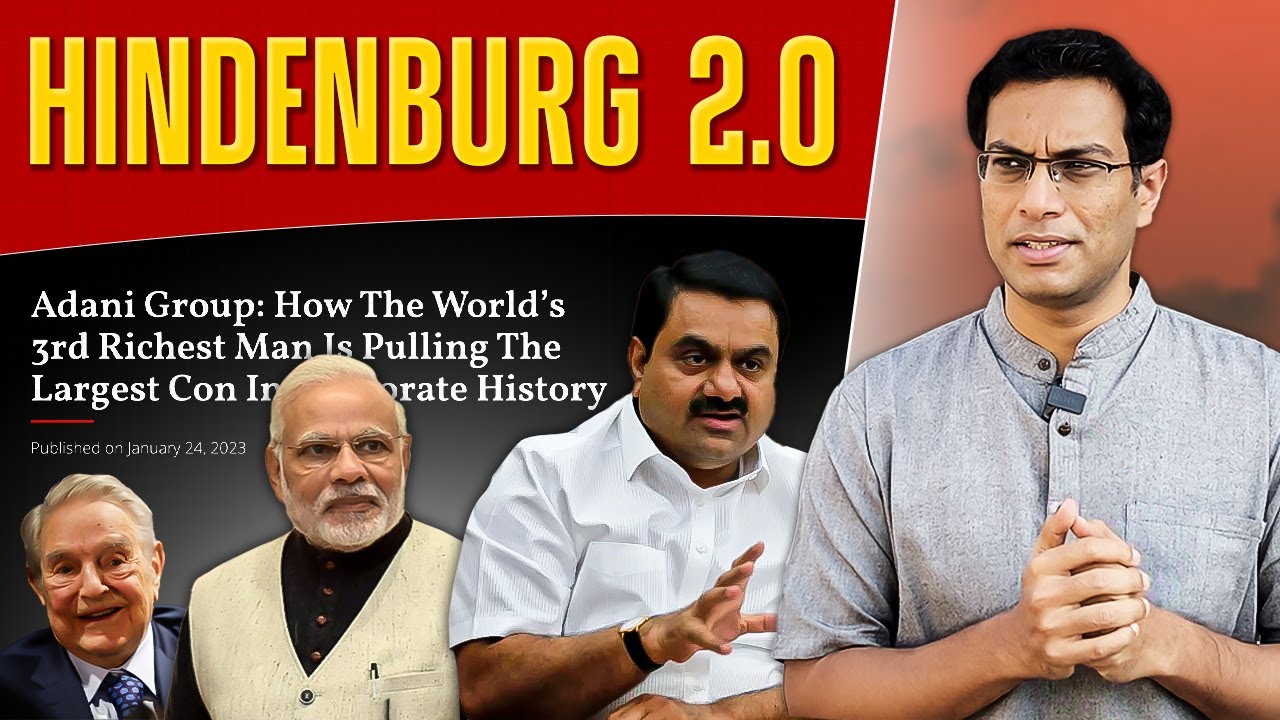
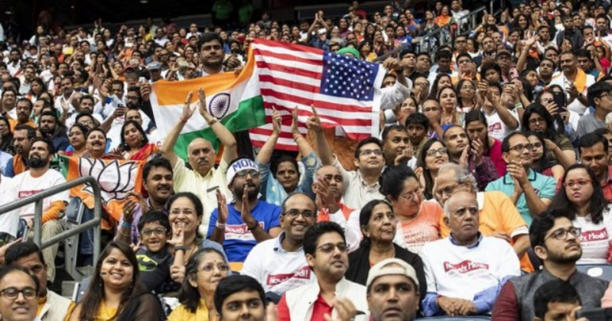
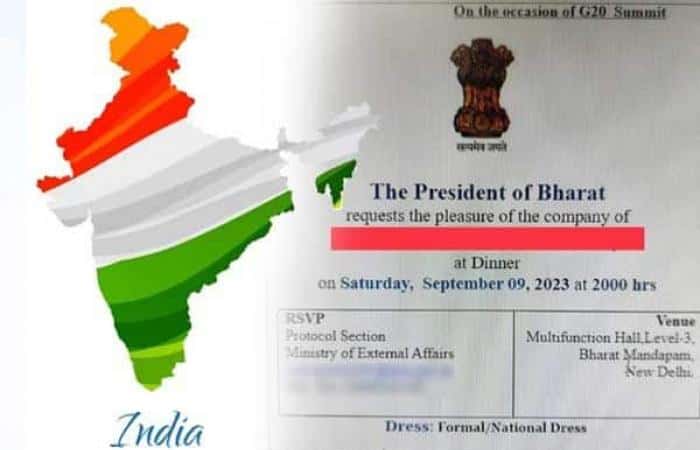
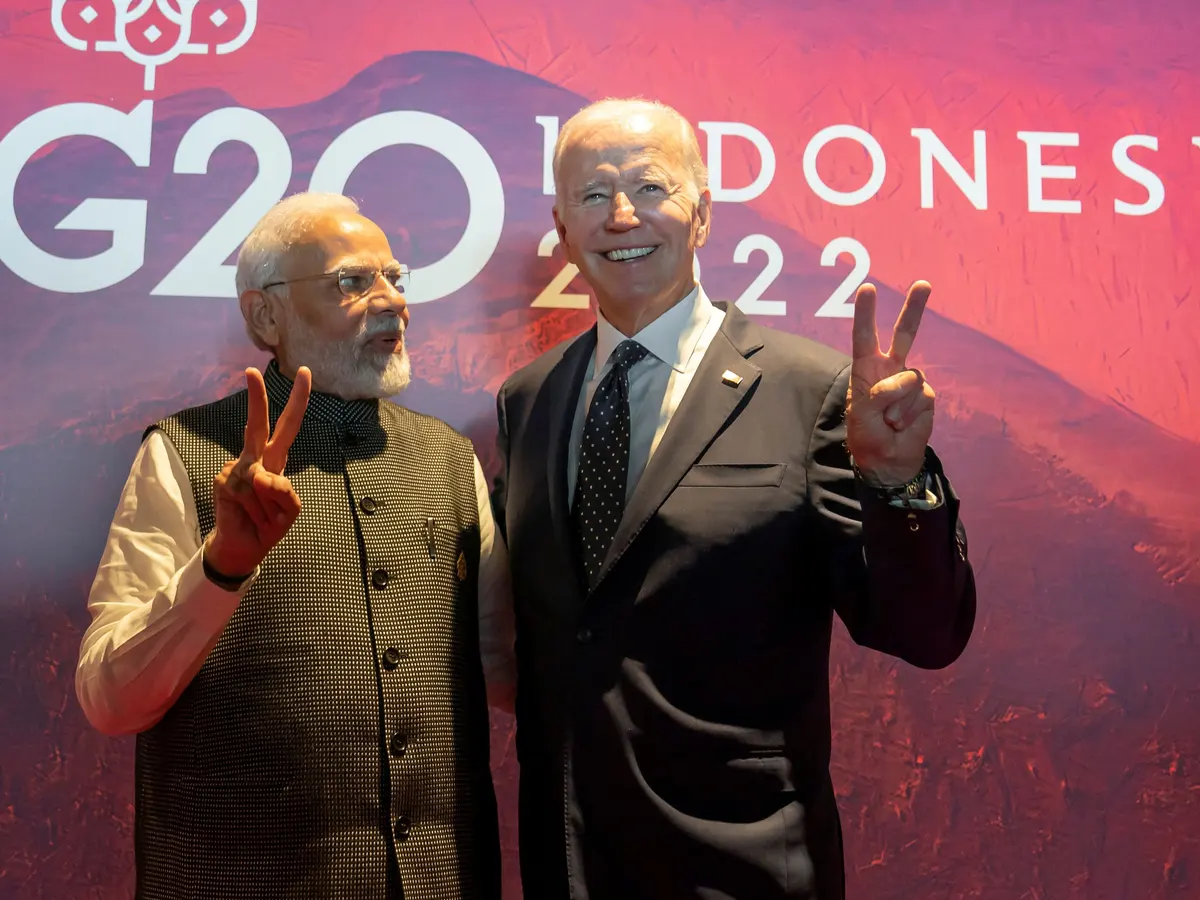
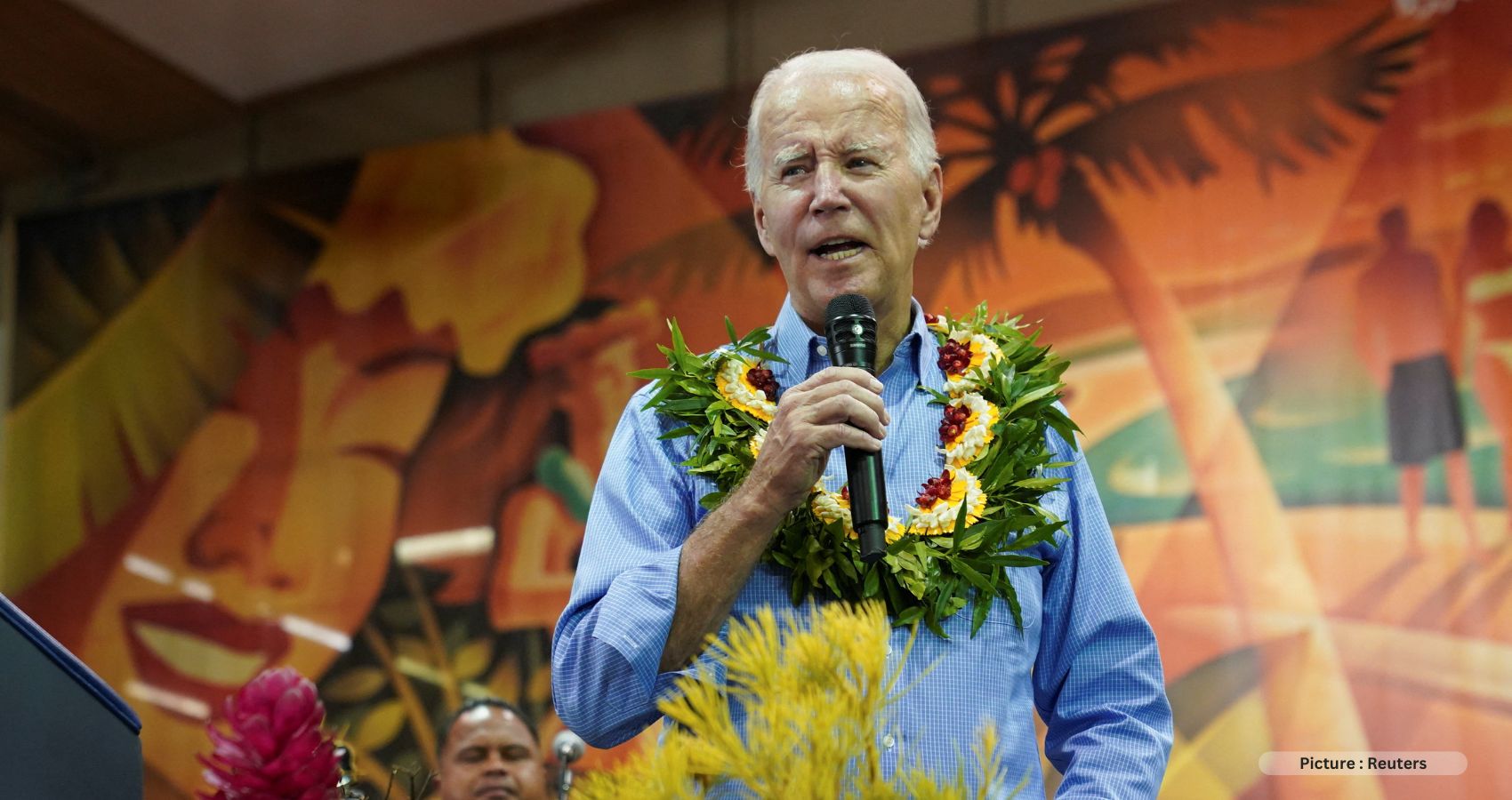
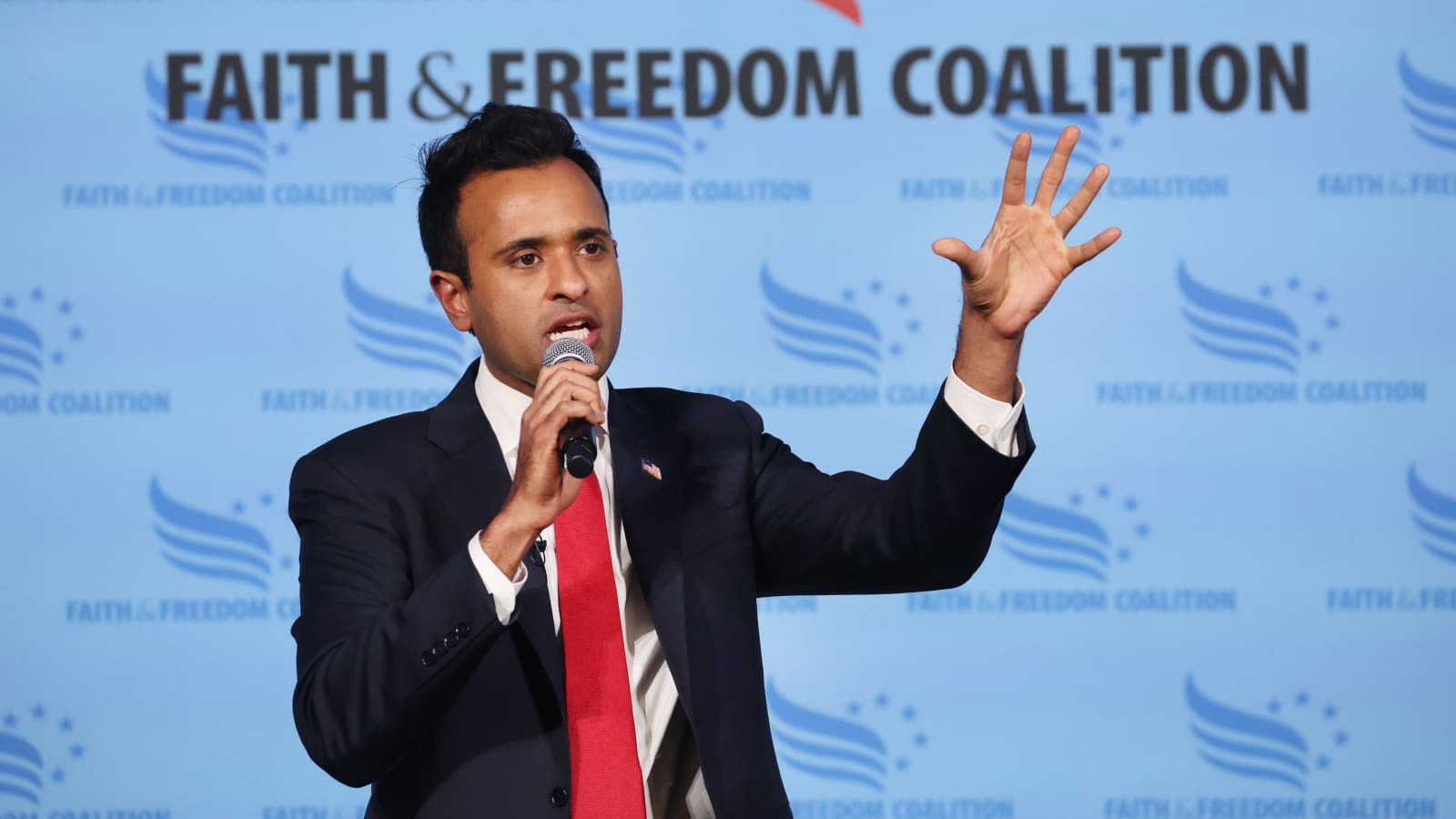
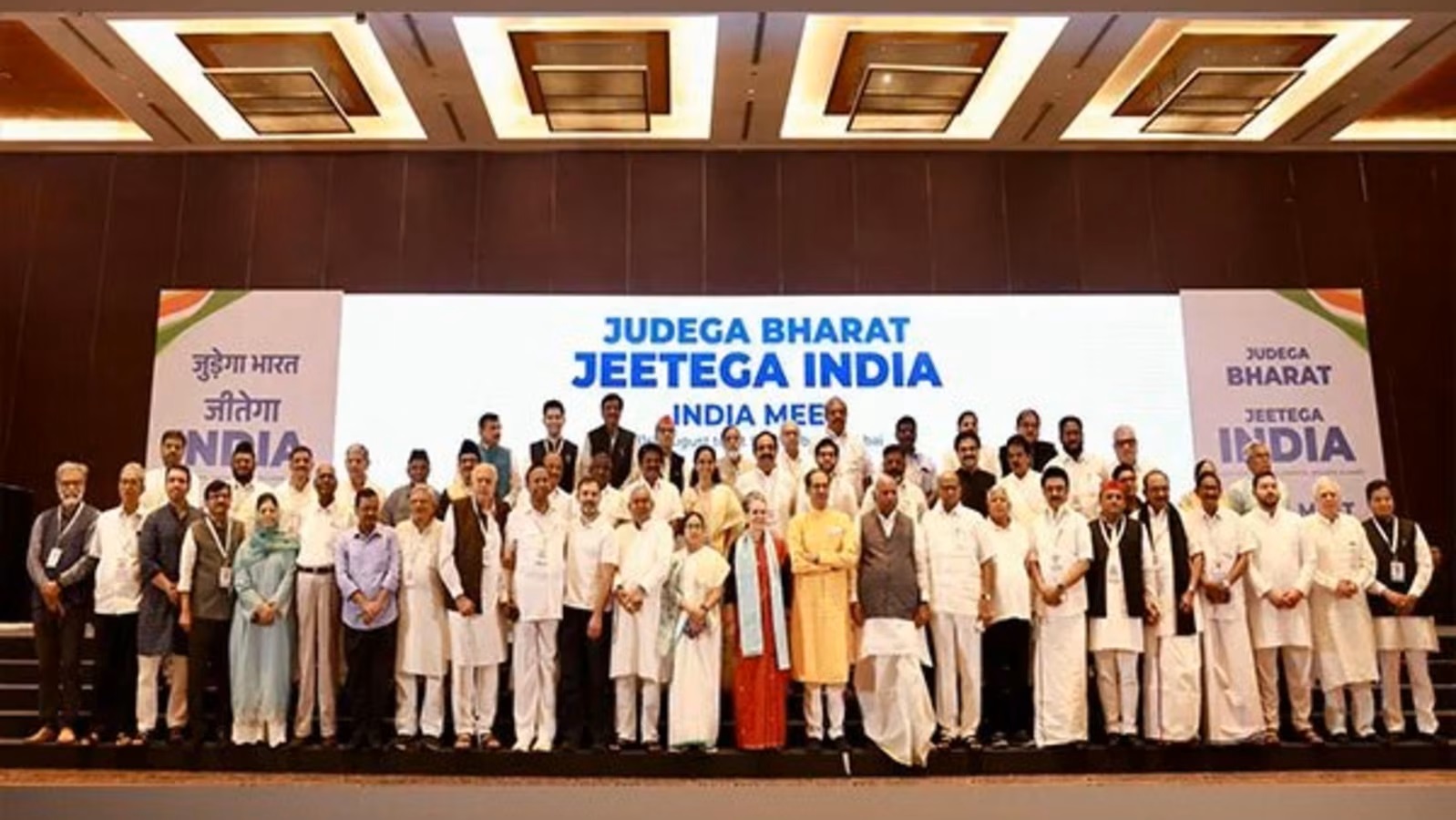

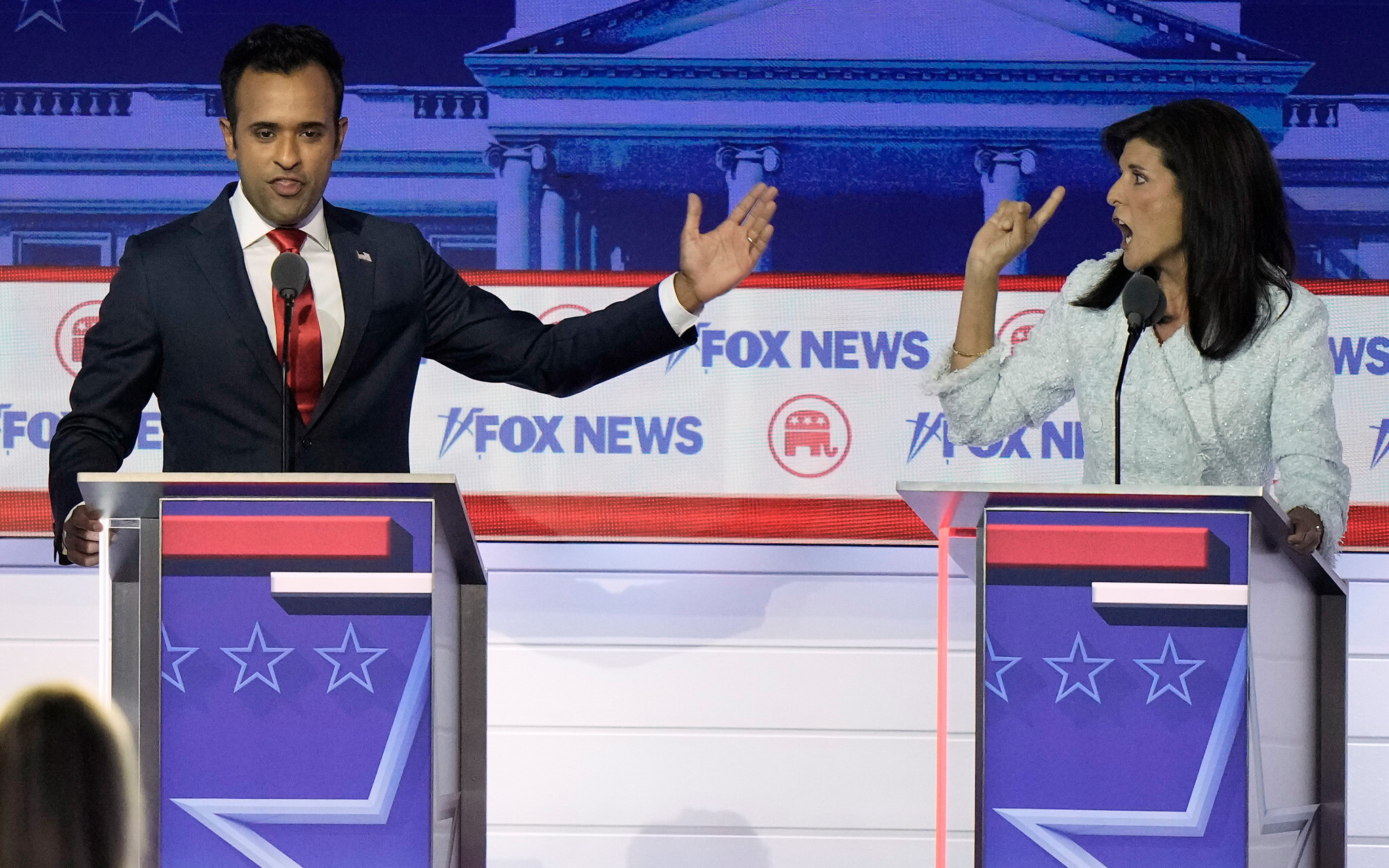
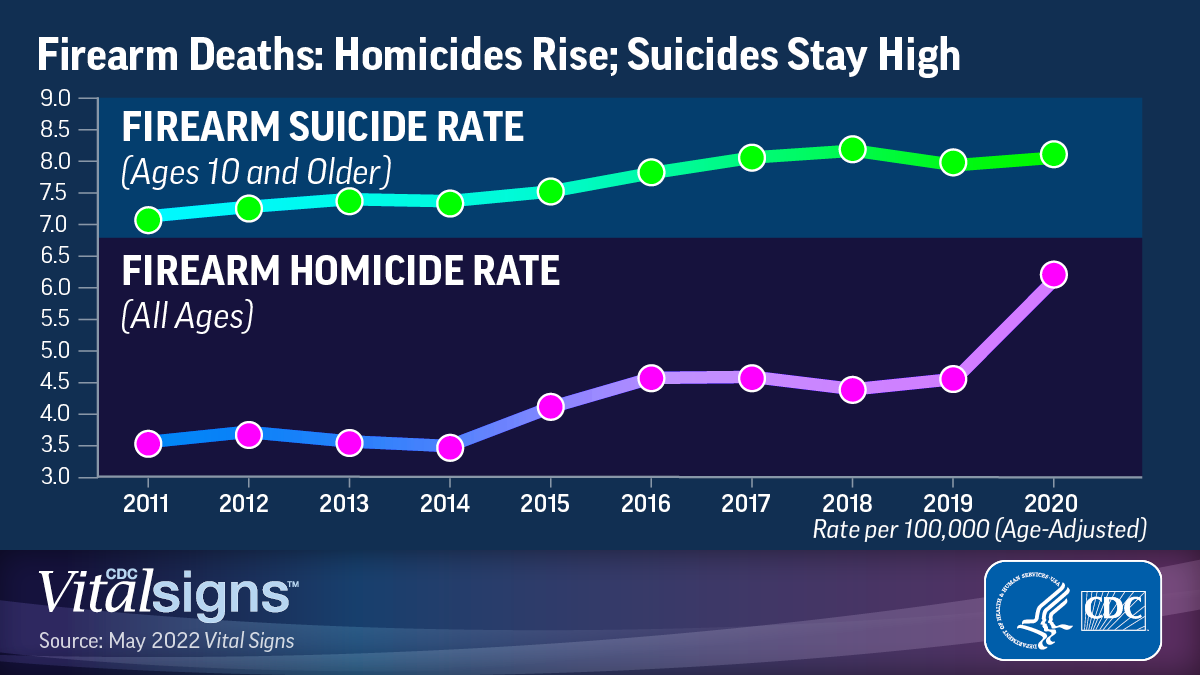
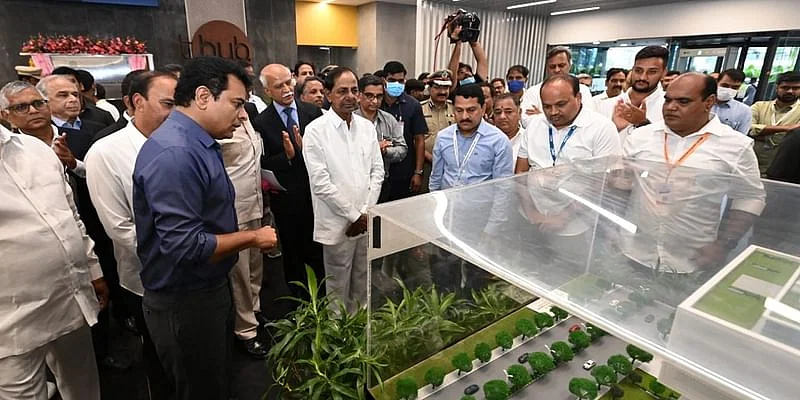
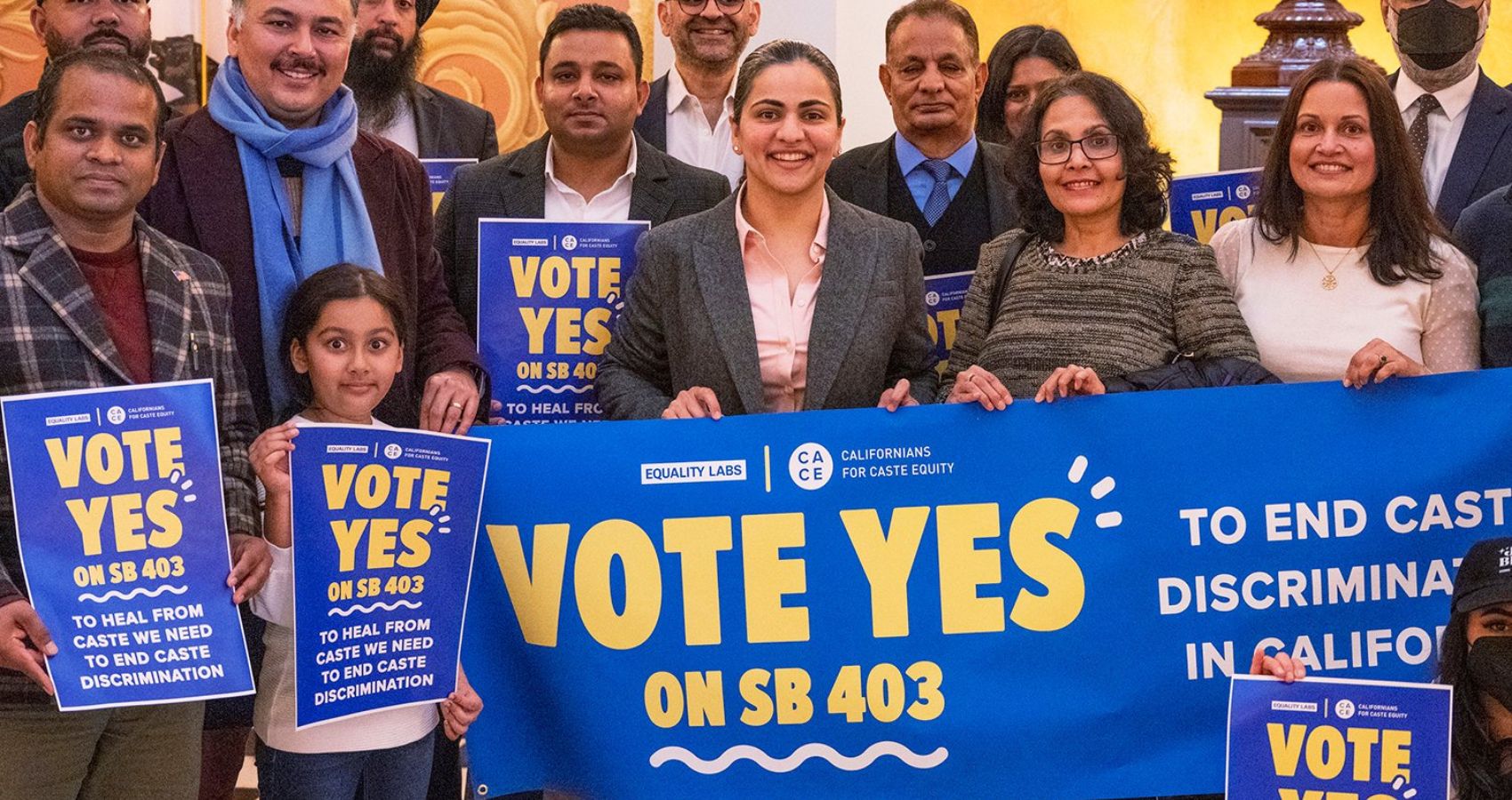
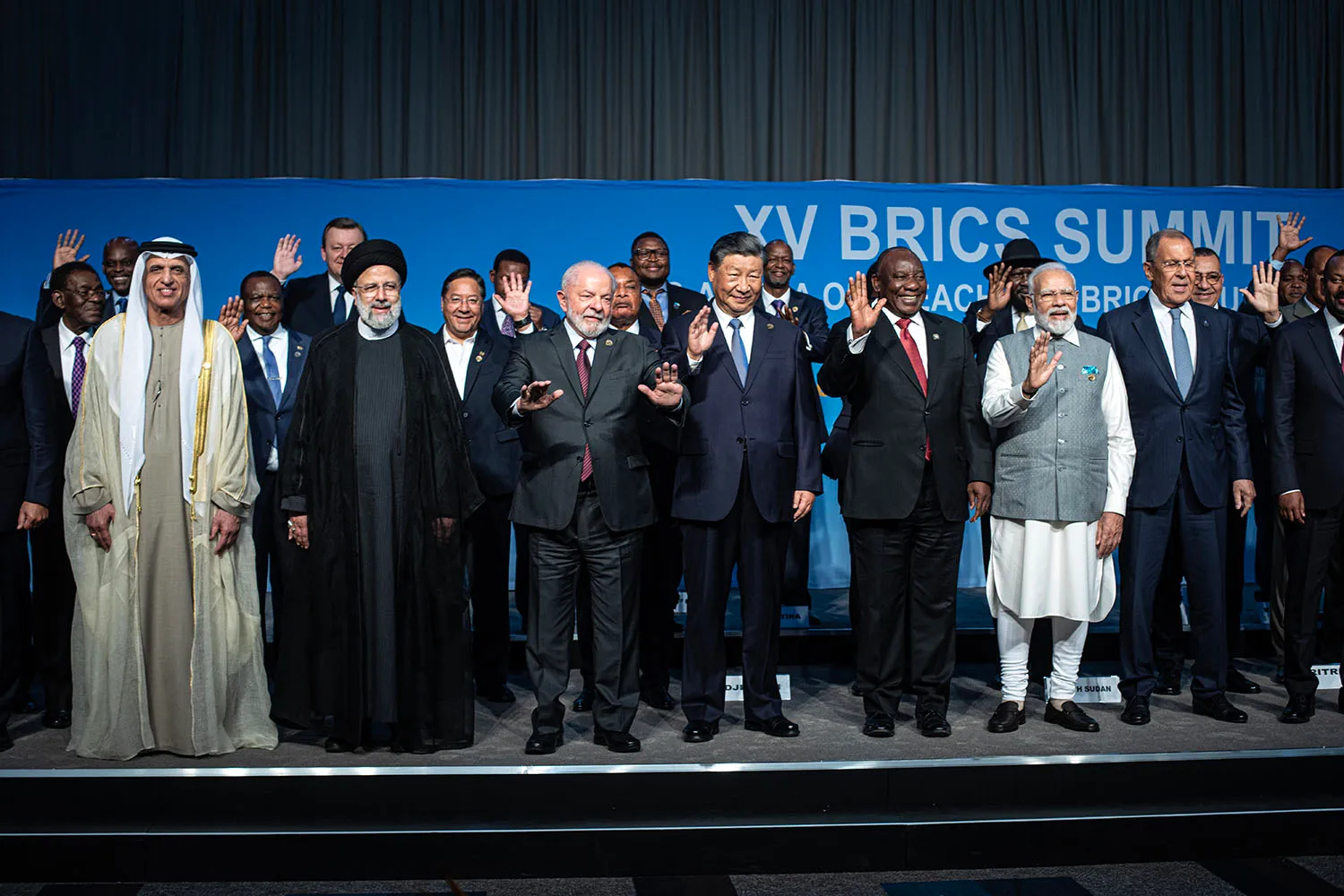
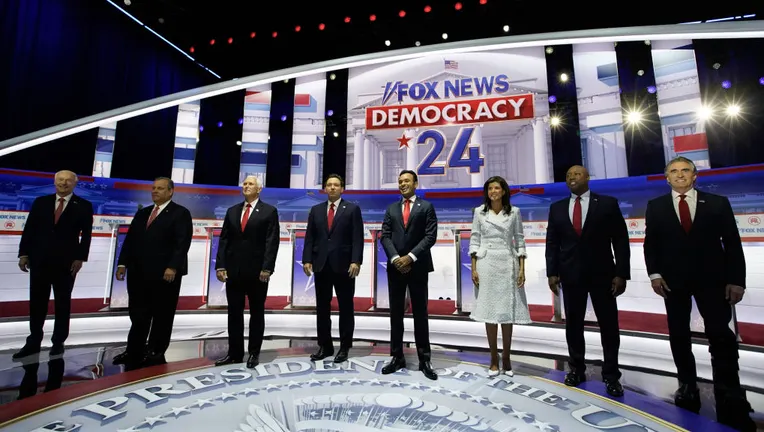
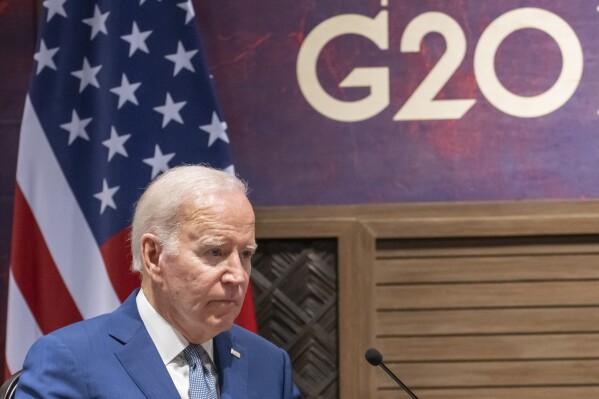
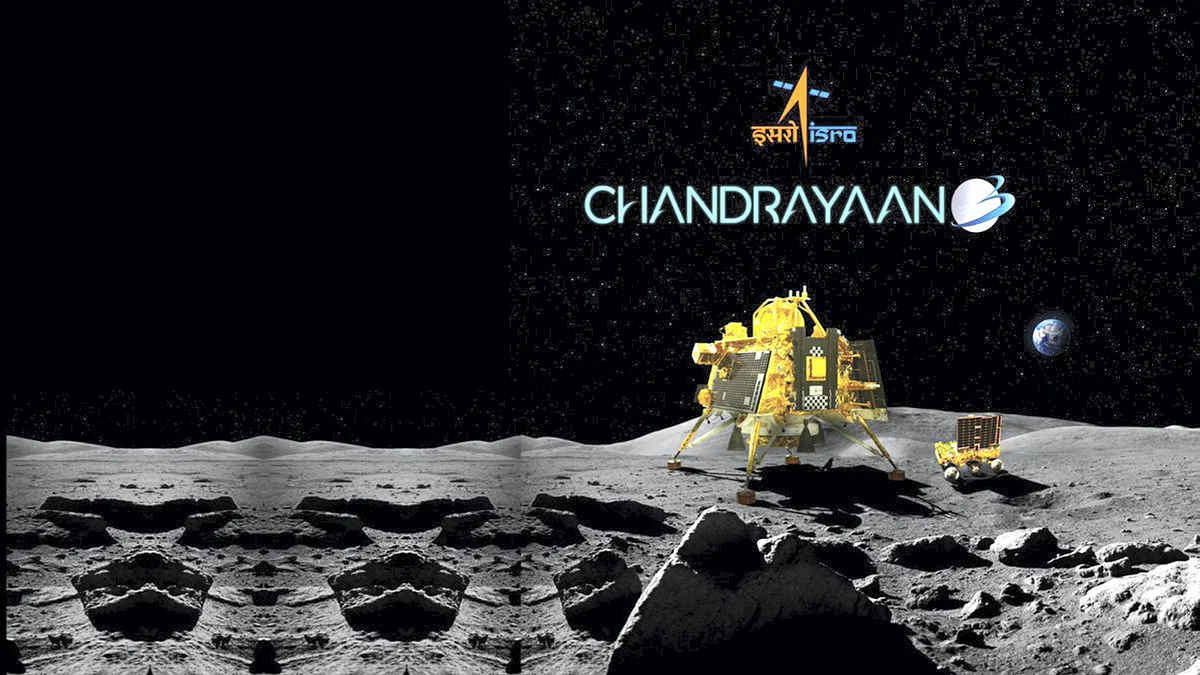
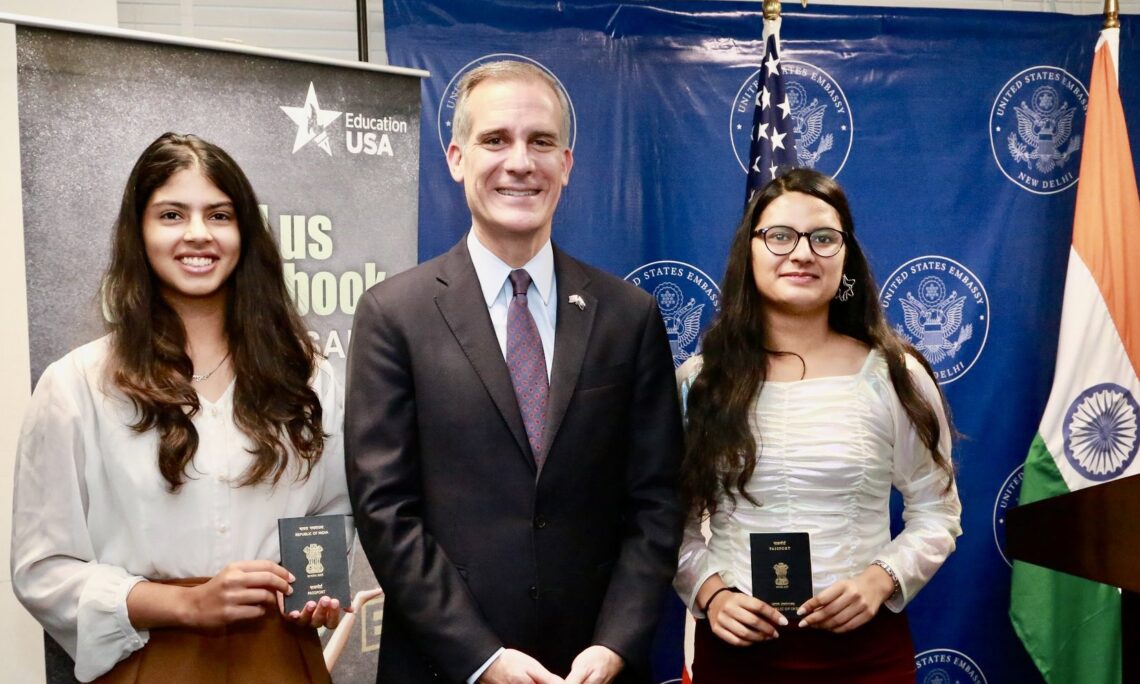


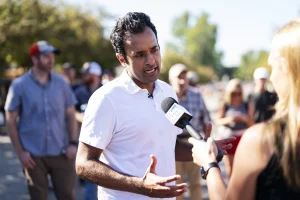
 Prior to the Synod’s resolution, there existed variance among priests in terms of their positioning relative to the altar during the celebration of the eucharistic liturgy, referred to as the Holy Qurbana in the Eastern-rite tradition. While some clergy faced the altar throughout the liturgy, others chose to face the congregation. The Synod ultimately ruled in favor of priests facing the altar during the eucharistic prayer, but directing their gaze toward the congregation during the Liturgy of the Word and again after the Communion.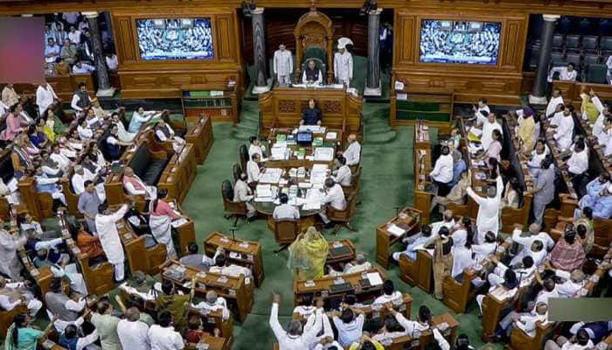

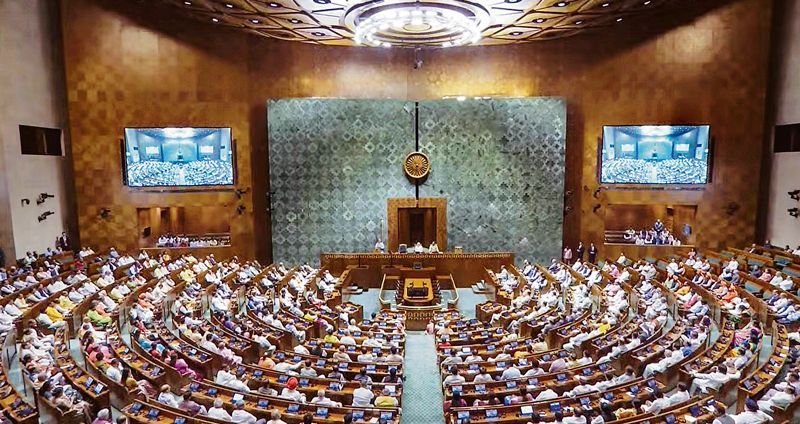


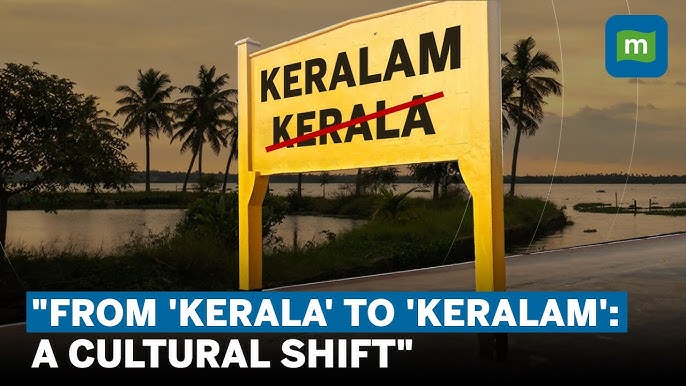
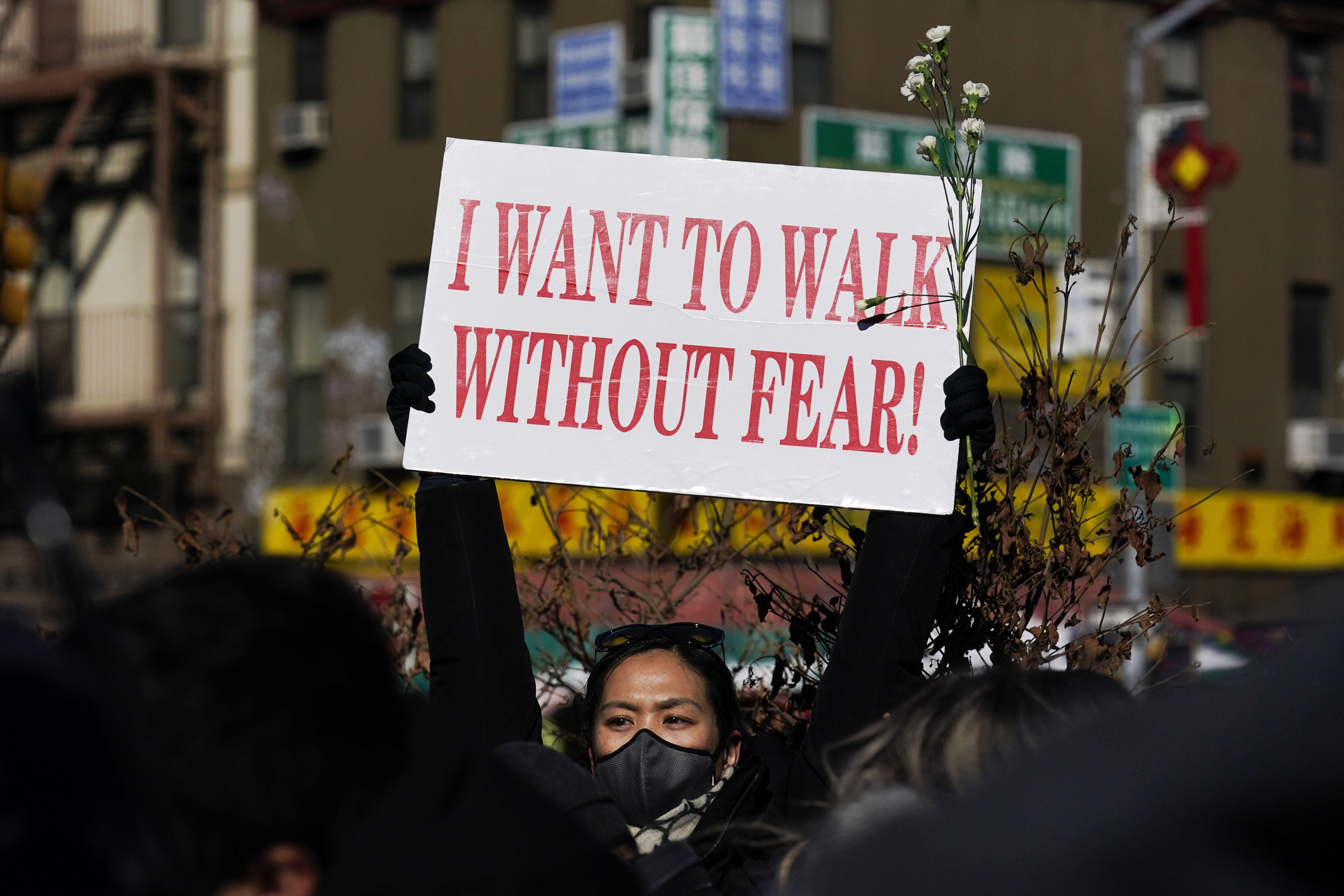
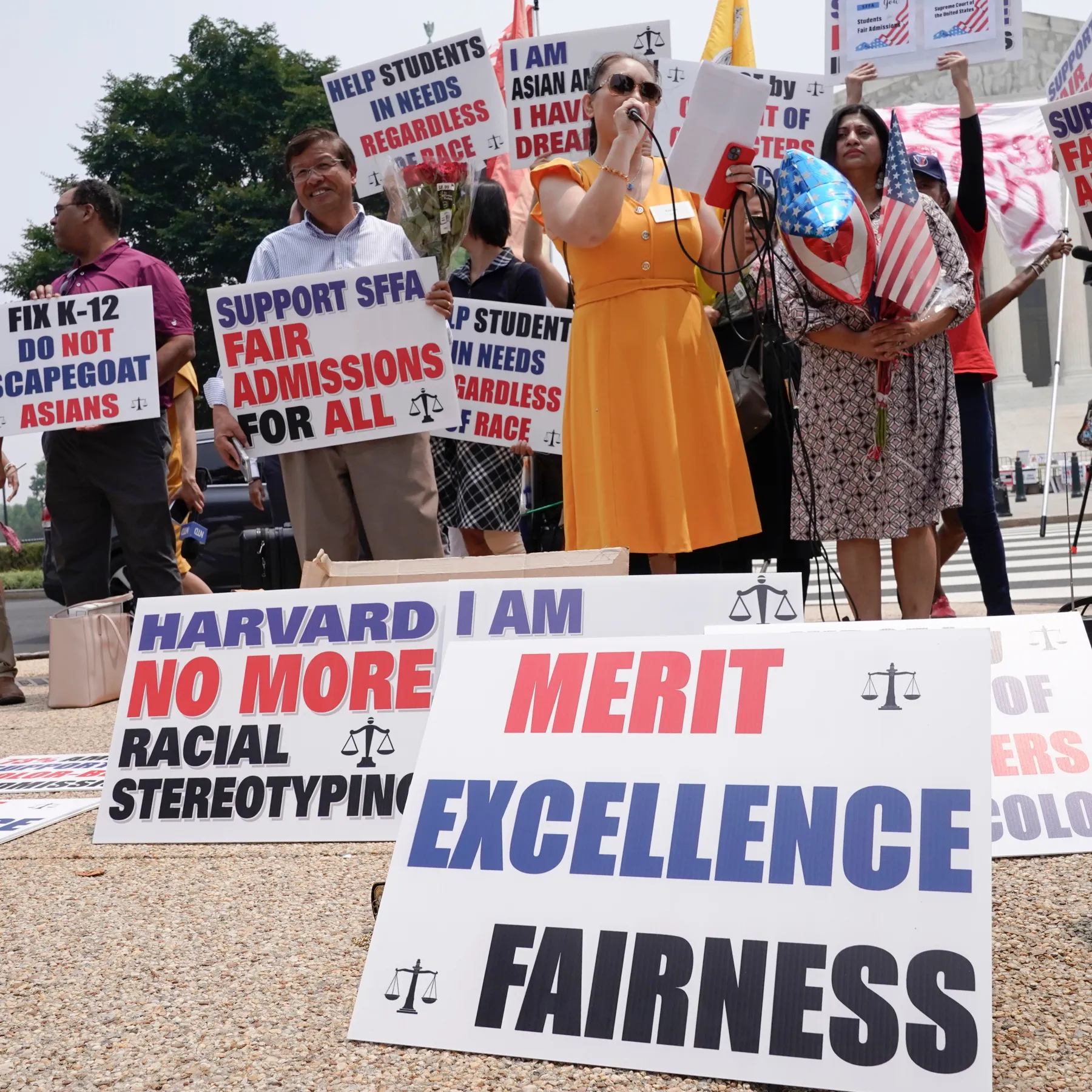

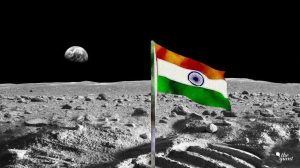 Chandrayaan-3’s projected landing site is also closer to the moon’s south pole than any other spacecraft in history has ventured. The south pole region is considered an area of key scientific and strategic interest for spacefaring nations, as scientists believe the region to be home to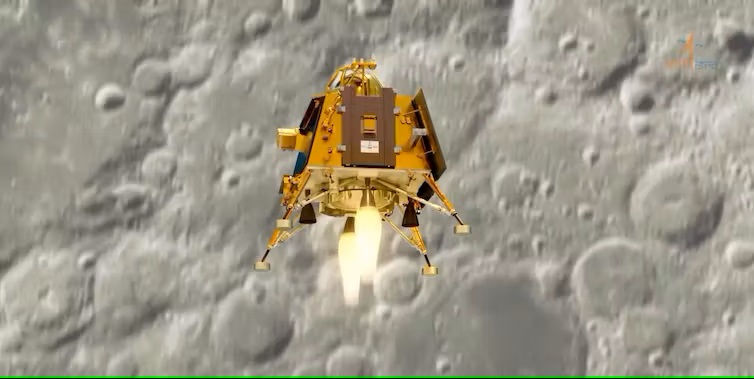
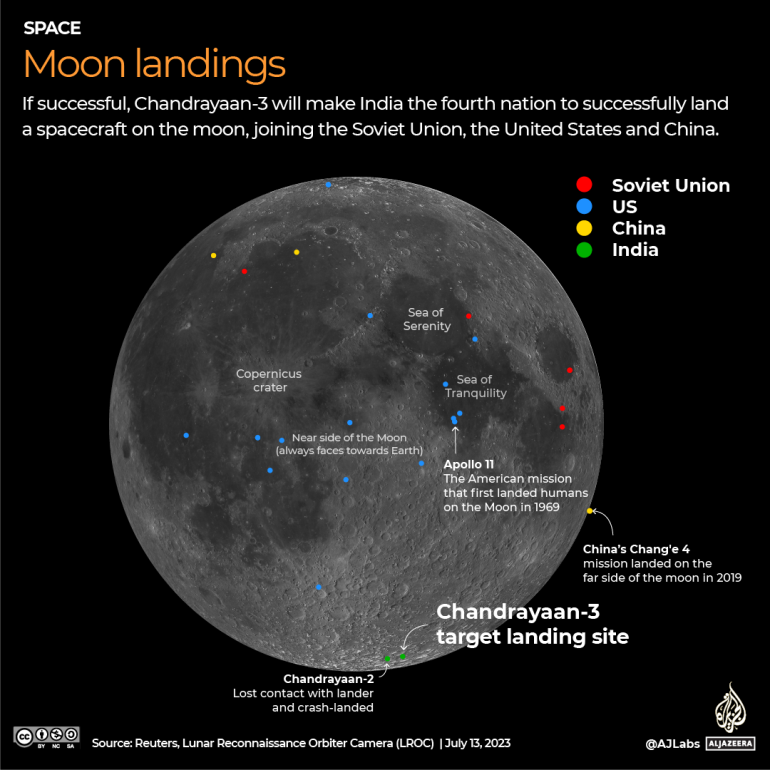
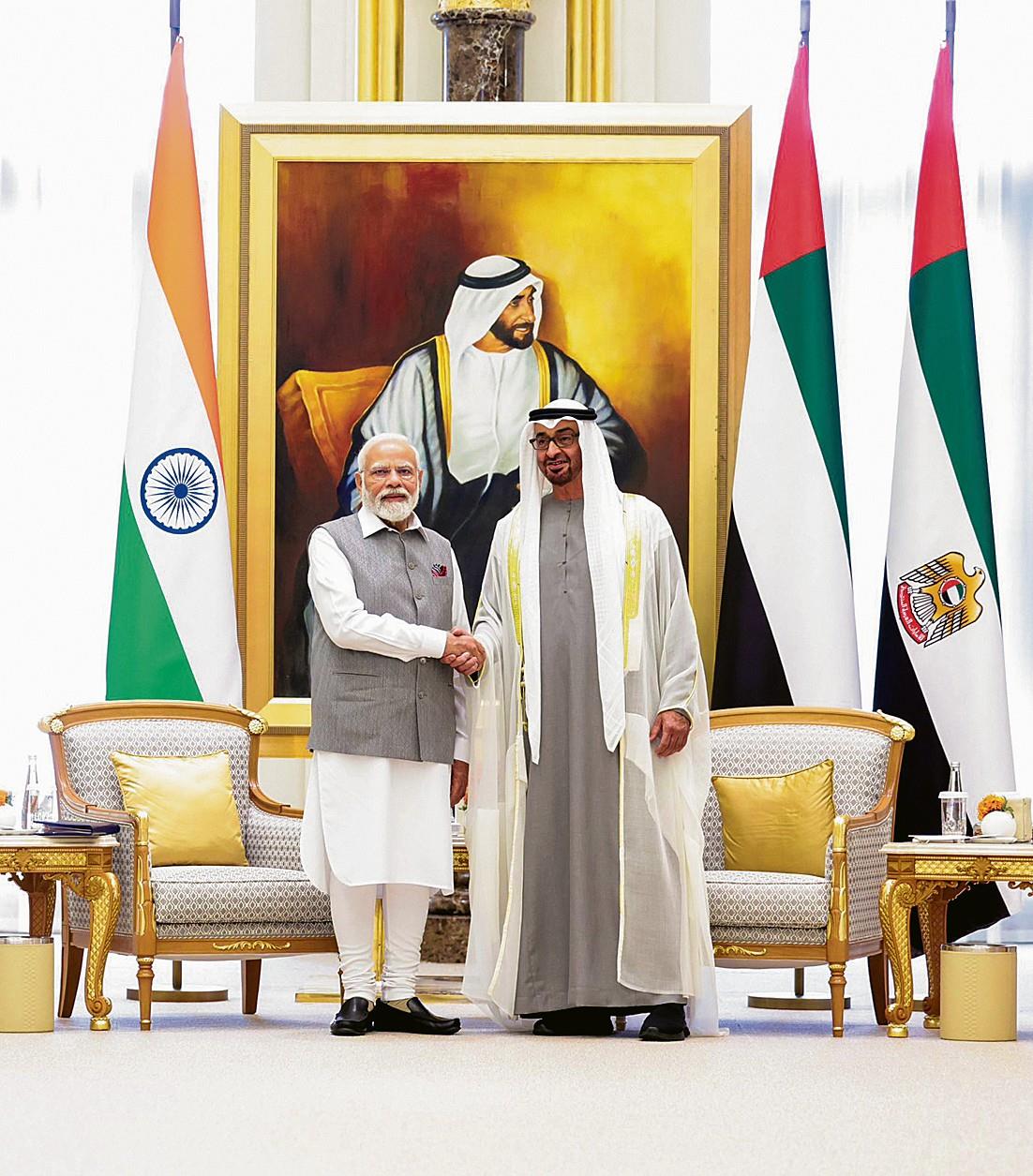
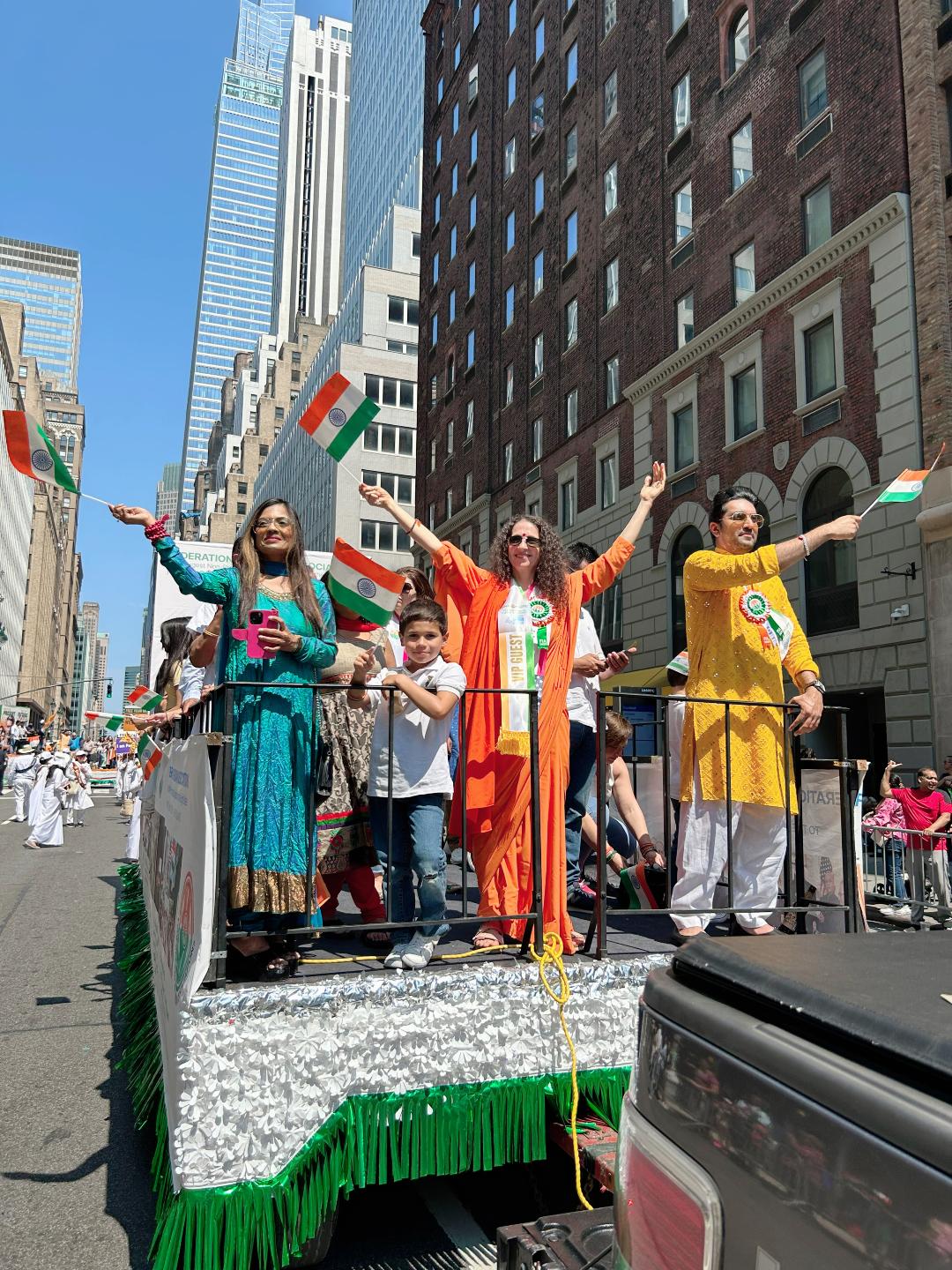
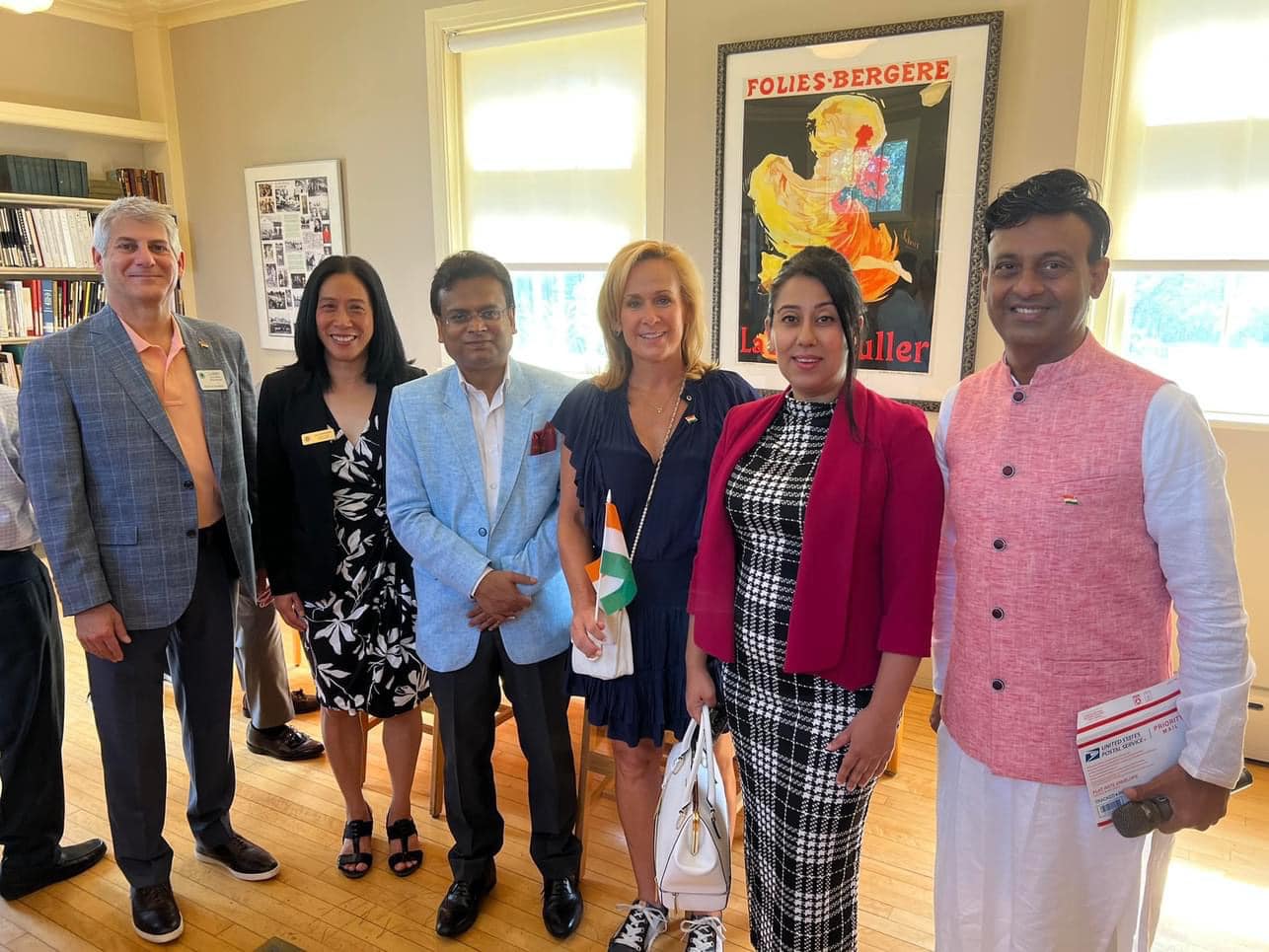
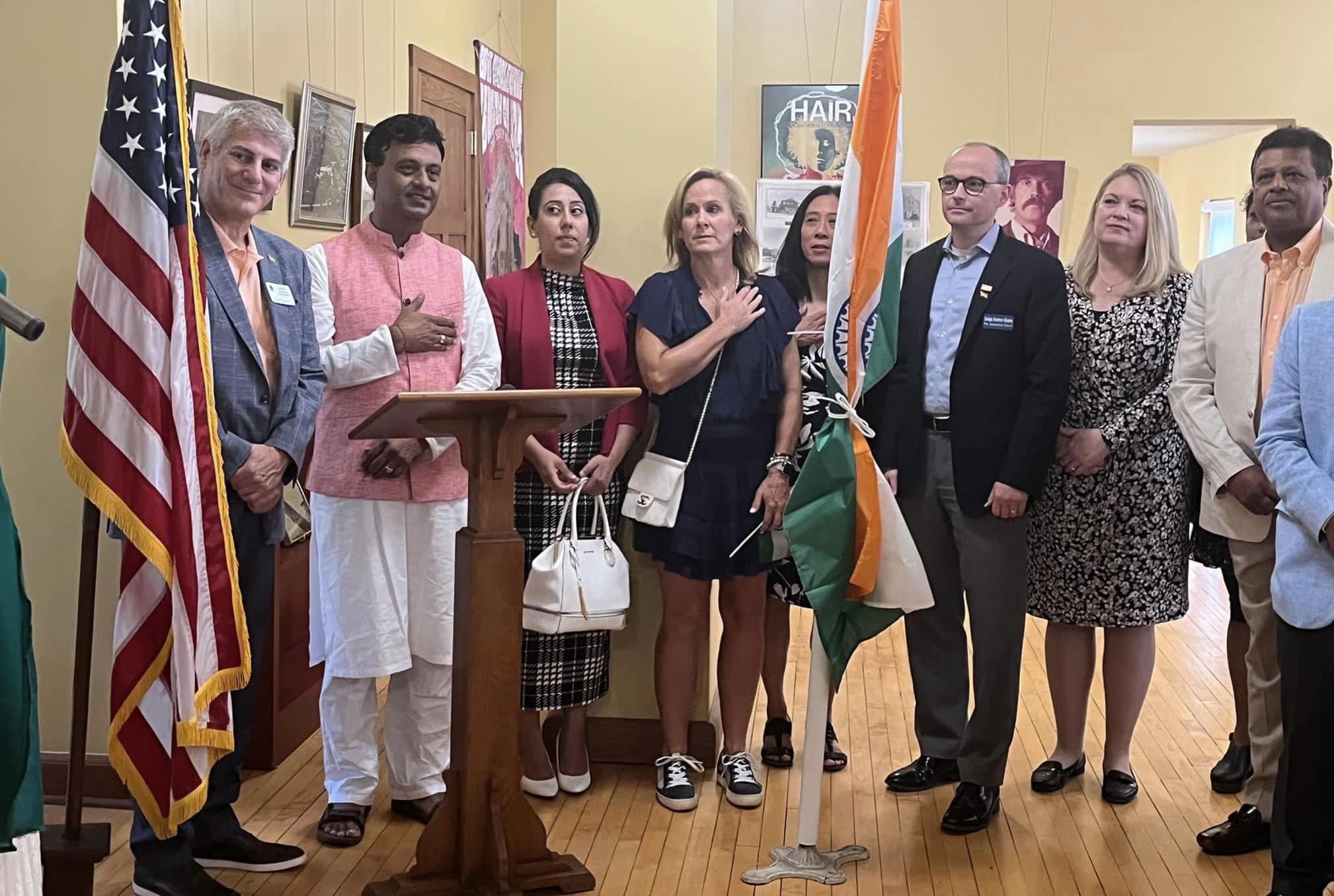
 The committee, headed by Public Service Commission chairman Lee Tzu Yang and two Supreme Court judges, found that all three men were of integrity, good character and reputation.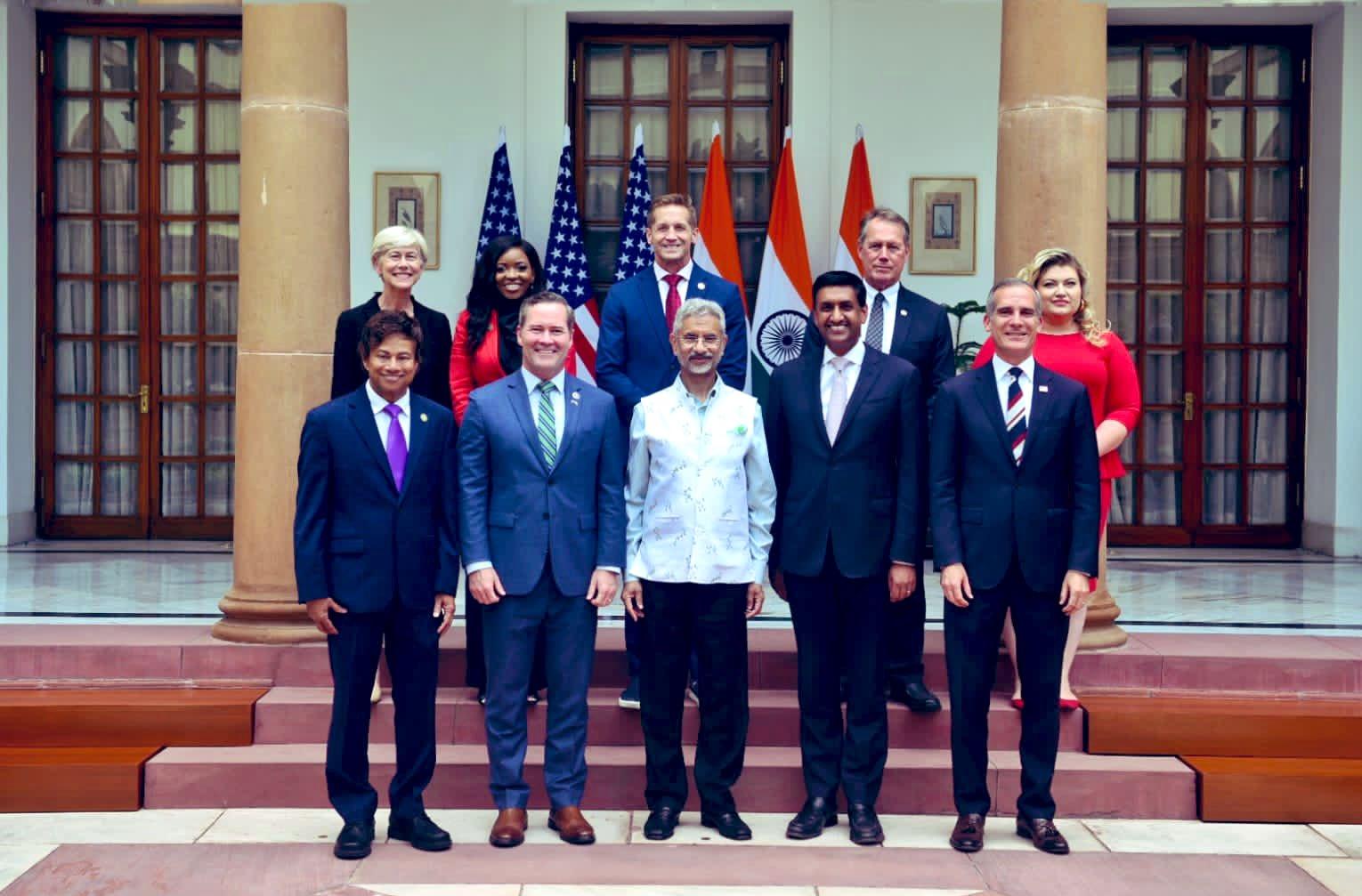
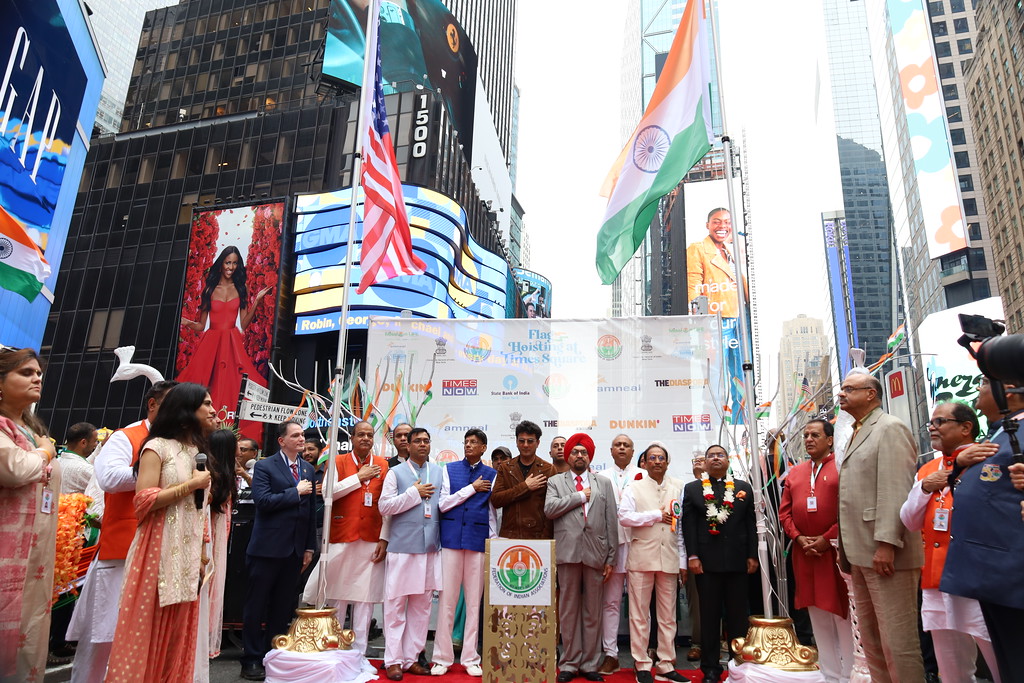


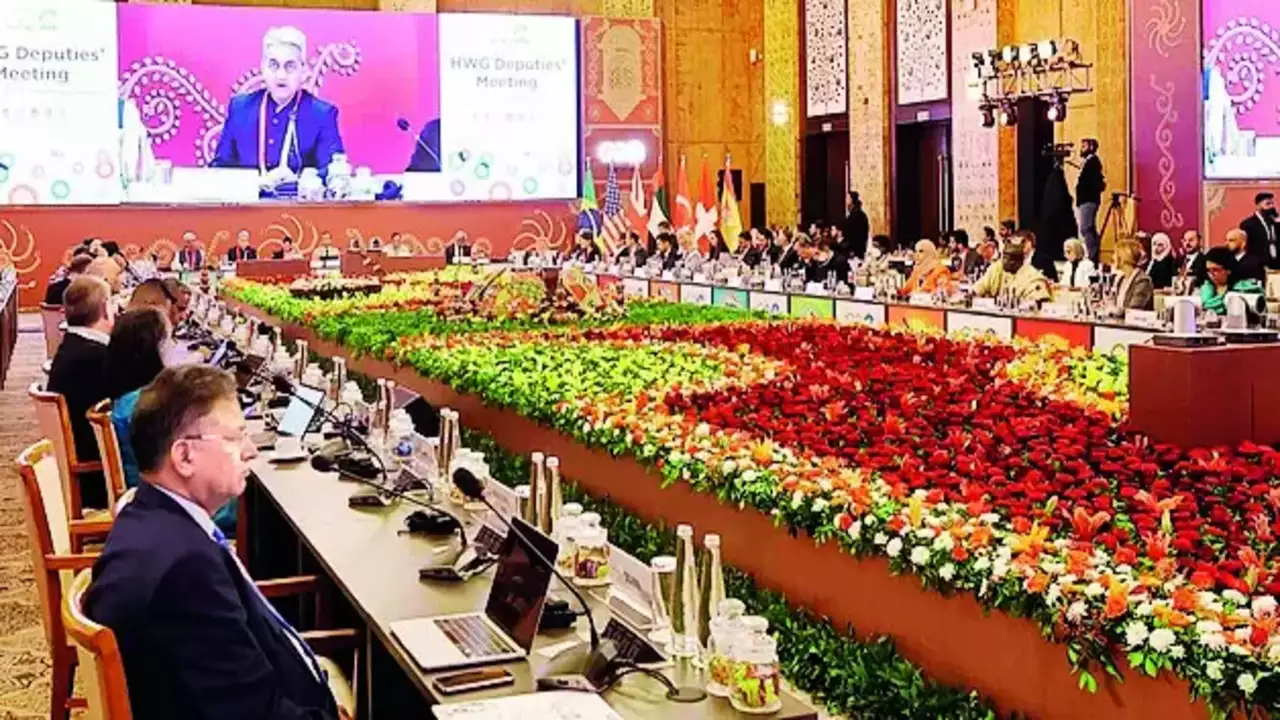
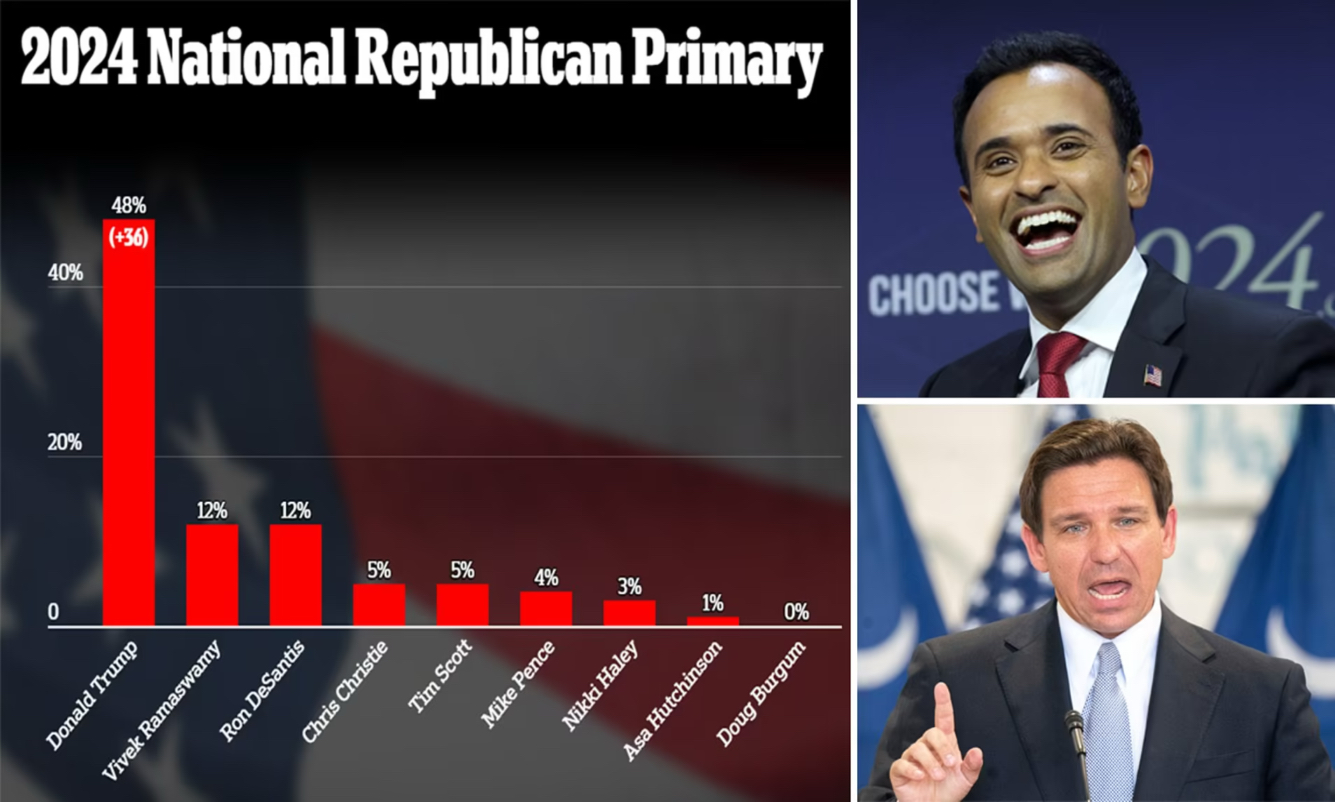
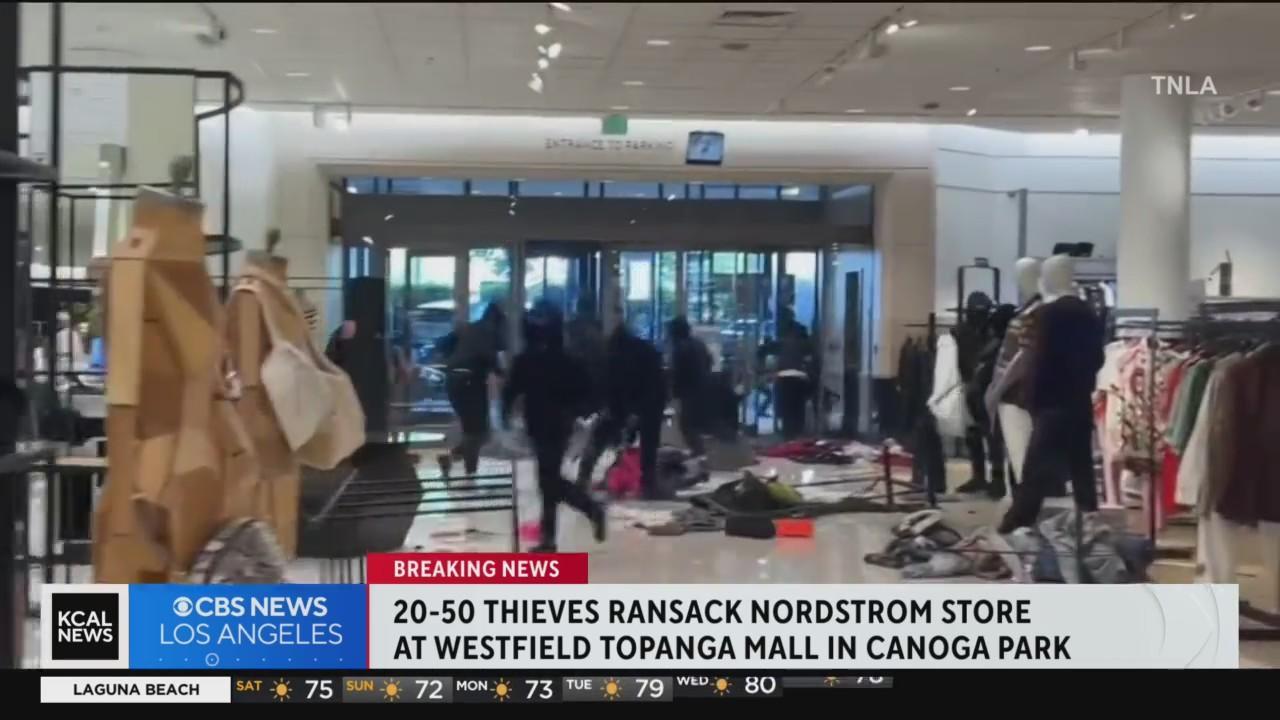

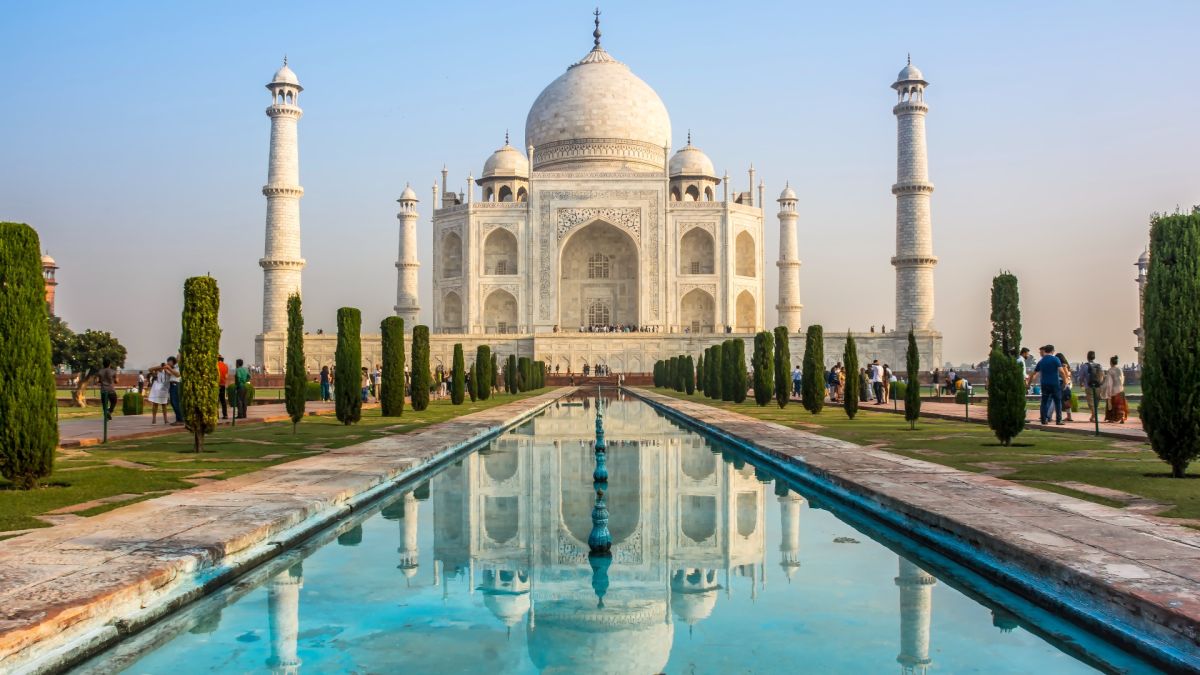
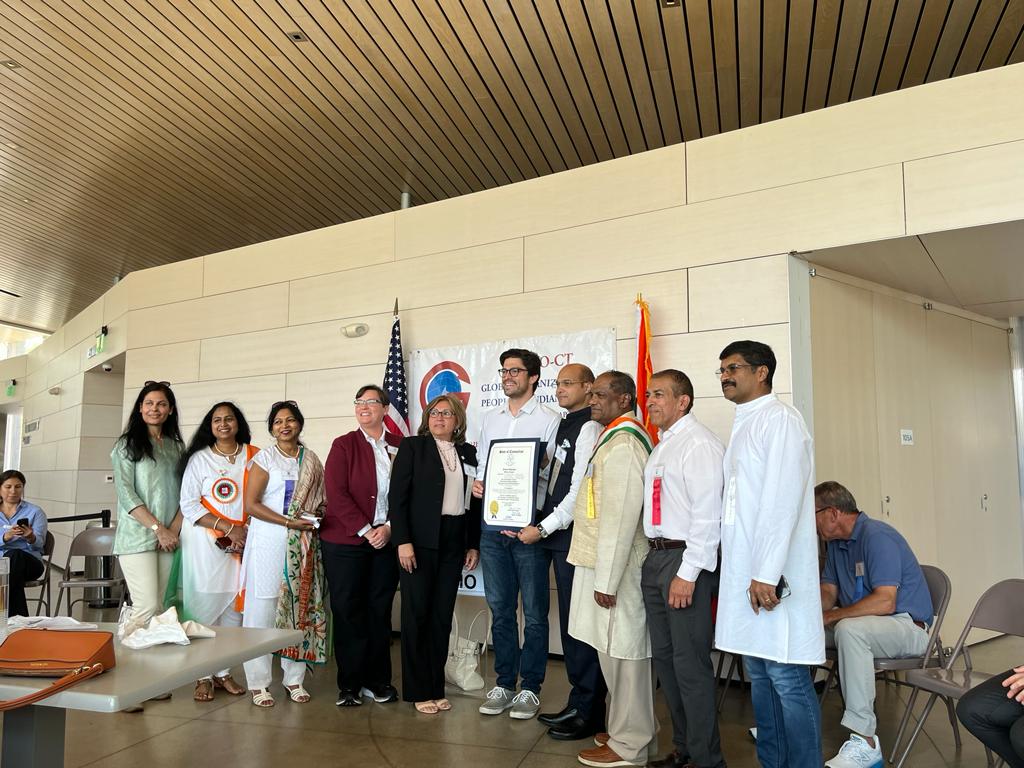 Center by Stamford Mayor Caroline Simmons and Chief Guest India’s Deputy Consul General Dr. Varun Jeph. GOPIO-CT President Dr. Jaya Daptardar hoisted the Connecticut State flag. American and Indian national anthems were sung students of Stamford’s Hindi School.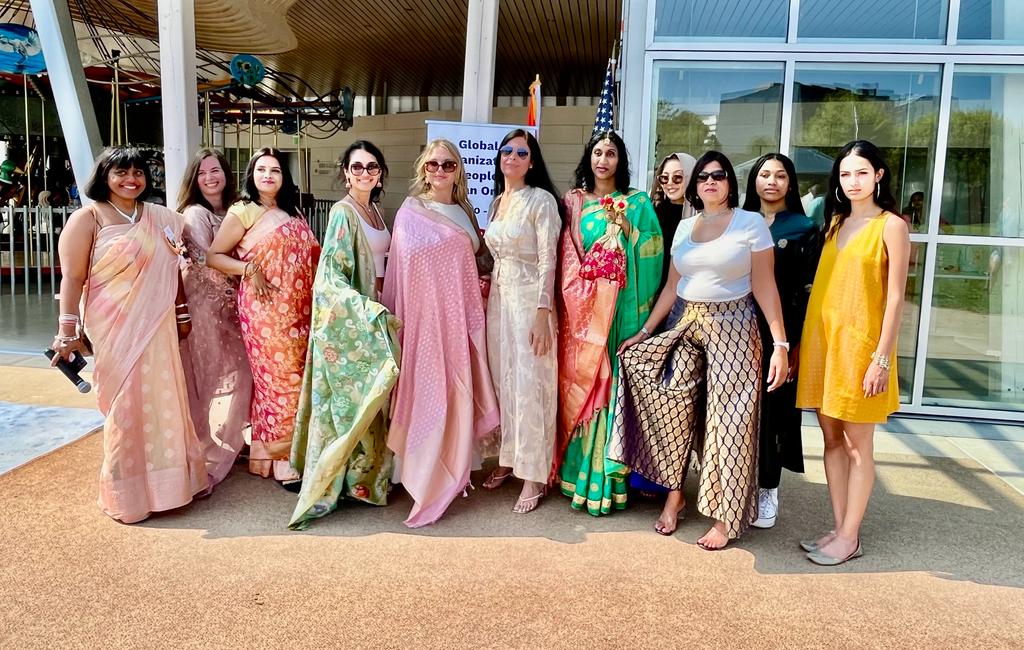
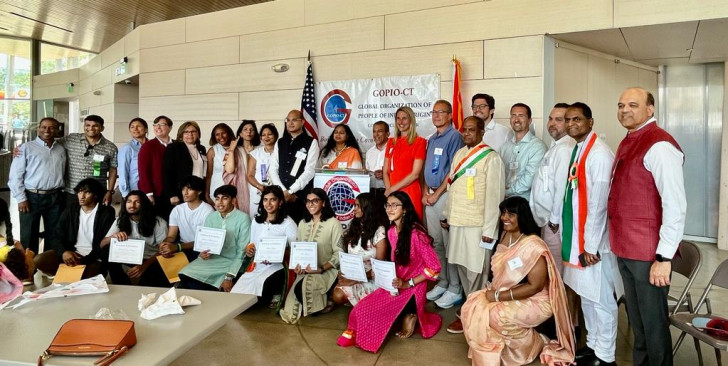
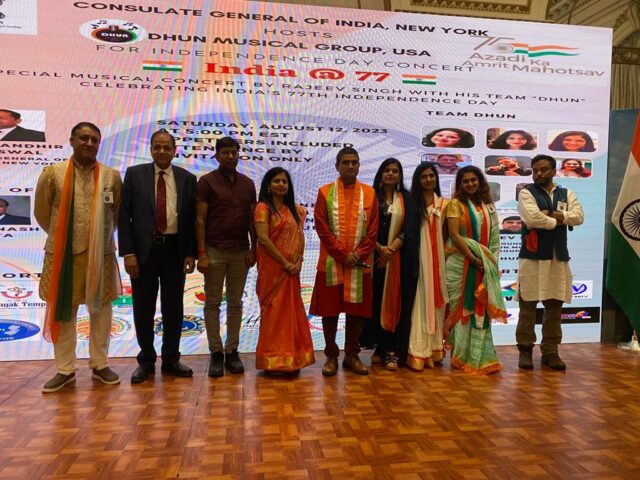
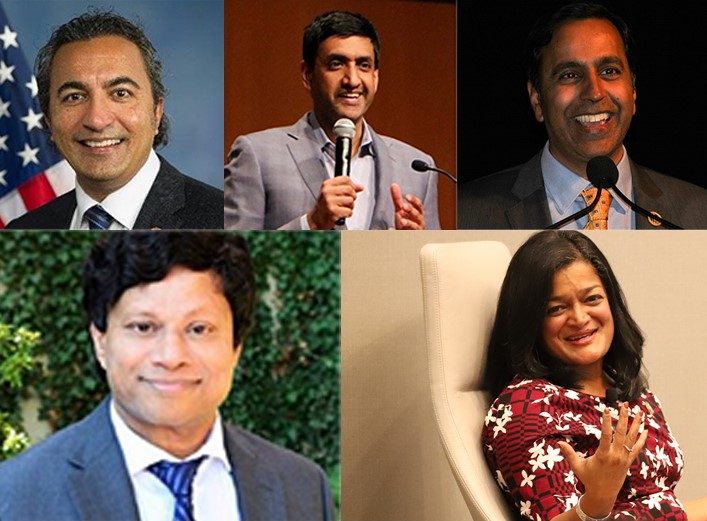
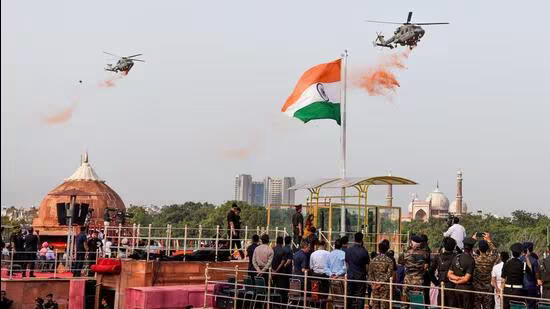
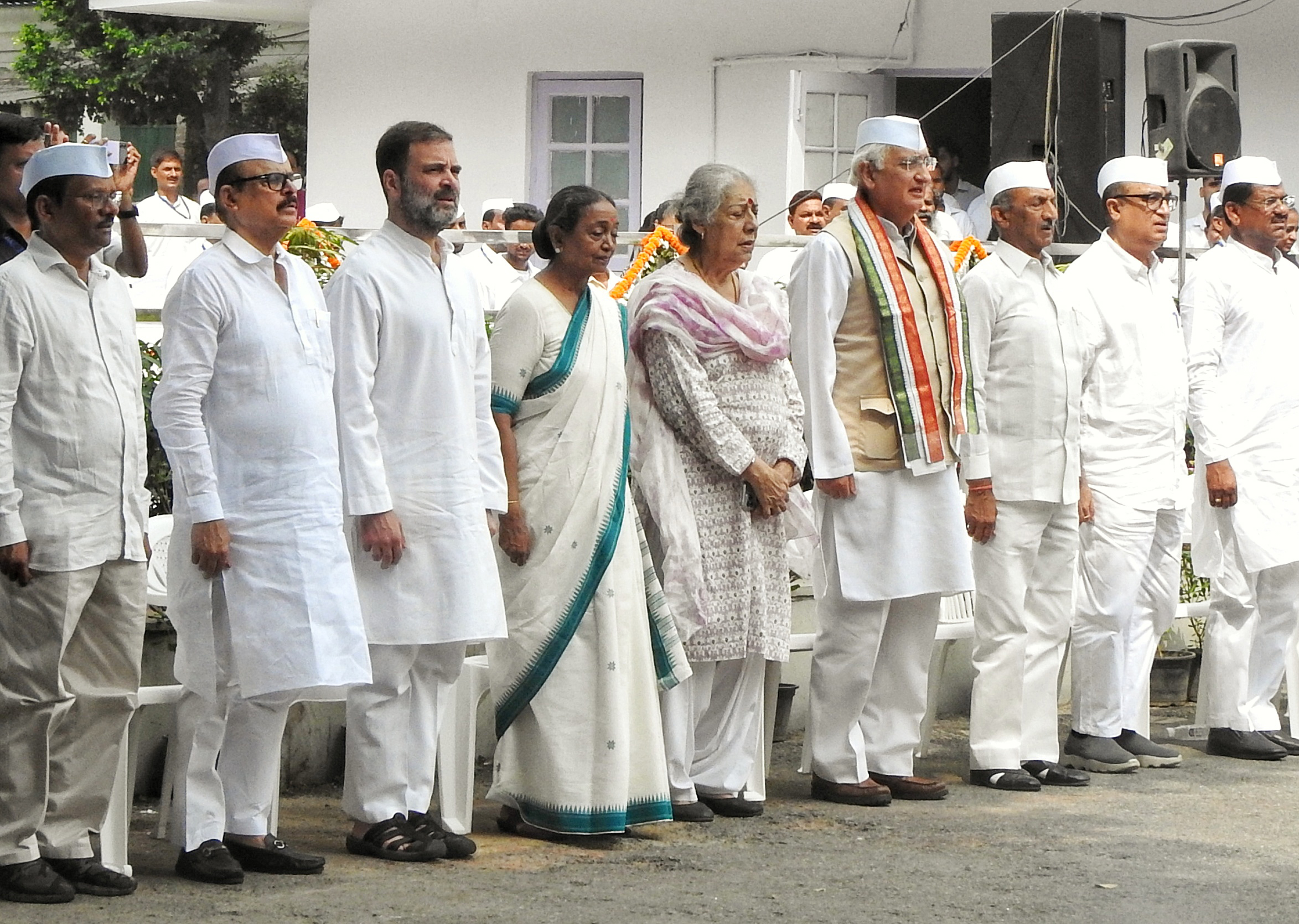
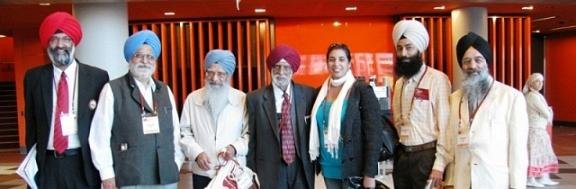
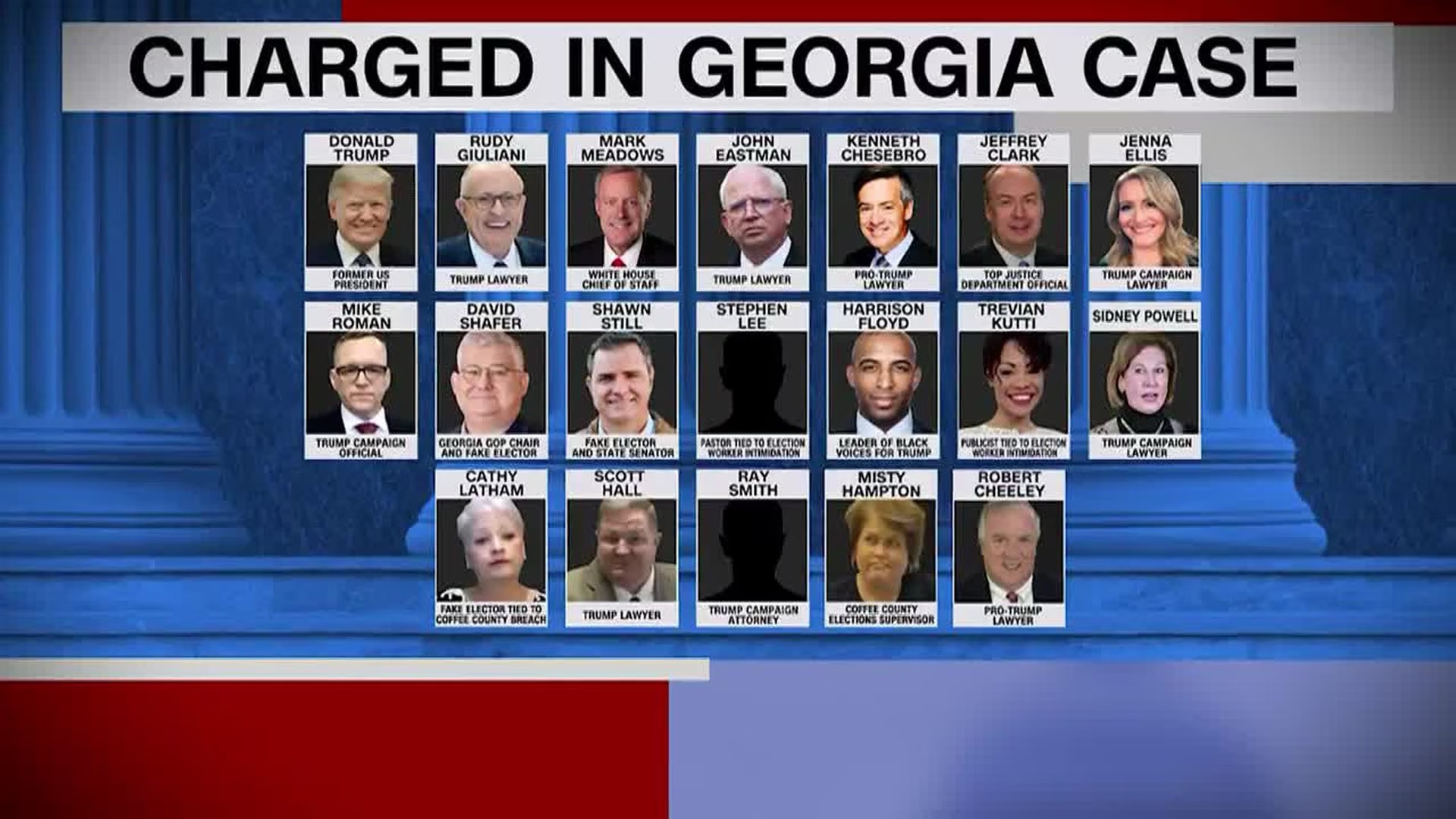
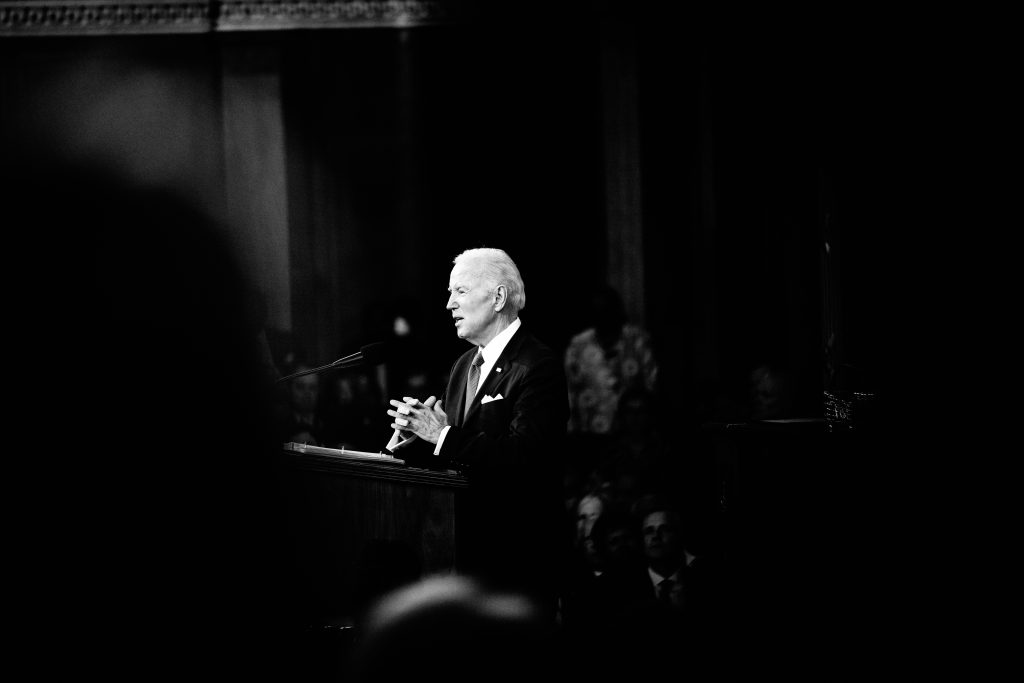 The second impeachment article accuses President Biden of obstructing justice, citing testimony from an IRS whistleblower. This testimony asserts that “members of the Biden campaign inappropriately collaborated with officials from the Justice Department (DOJ) to improperly interfere with investigations into potential tax violations involving Hunter Biden.” Both the Justice Department and special counsel David Weiss, who was appointed to investigate Hunter Biden, have denied any interference by the Biden administration in Weiss’ work.