
The Supreme Court has endorsed President Donald Trump’s agenda to execute extensive layoffs and restructurings within federal agencies, countermanding a prior restriction established by a lower court.
The Supreme Court’s latest ruling grants President Donald Trump permission to carry out significant staff reductions and organizational changes in several federal agencies, overriding a lower court’s decision that required congressional approval for such actions. This development signifies another judicial victory for Trump, reinforcing his administration’s policies, including those concerning deportation and executive orders.
Issued through an unsigned order, the Supreme Court nullified lower court injunctions that blocked the administration’s general restructuring efforts rather than assessing individual agency plans for workforce reduction. Although the precise vote count was not disclosed, Justice Ketanji Brown Jackson, part of the court’s liberal contingent, voiced her dissent.
The case originated from an executive order signed by Trump in mid-February, initiating a sweeping downsizing of federal agencies, a commitment he made during his presidential campaign. In response, departments announced their intentions to lay off tens of thousands of employees.
Historically, lower courts have ruled that while the president can propose modifications, the executive branch cannot unilaterally dissolve federal departments or slash their personnel to the extent that they are unable to fulfill their mandated responsibilities.
“Considering the strong likelihood that the government’s argument—that the executive order and its associated memorandum are lawful—will prevail, we grant the application,” the Supreme Court’s brief noted. “We do not opine on the legality of agency-specific reduction-in-force and reorganization strategies crafted or sanctioned under the executive order and memorandum.”
The ruling left open the potential for future judicial scrutiny if it appears any reorganization plans might incapacitate an agency from meeting its legal duties.
The lawsuit challenging the executive order was initiated by a coalition of unions, nonprofit organizations, and local governments. This group labeled the litigation as the most extensive legal objection to the Trump administration’s workforce downsizing objectives.
In a statement, the coalition expressed grave concern: “Today’s decision represents a grave setback to our democratic values and threatens critical services that American citizens depend on, placing them in significant jeopardy. Reorganizing government functions and conducting mass layoffs without congressional consent remains unconstitutional.”
The coalition vowed to keep fighting the legal battle to “ensure essential public services that protect the American public remain intact.”
Reacting to the Supreme Court’s verdict, the White House heralded it as “a clear victory for the President and his administration,” denouncing judicial interventions perceived as impediments to achieving enhanced governmental efficiency. White House spokesperson Harrison Fields remarked, “This decision rebuffs attempts by leftist judges seeking to prevent the President from exercising his constitutionally granted executive powers.”
Justice Jackson criticized the court’s decision in her dissent, calling it “hubristic and senseless” and contending that lower courts are more adept at assessing the impact of such governmental changes.
“The case is fundamentally about whether the administration’s plans effectively usurp Congressional policymaking authority, which seems difficult to evaluate meaningfully after such changes occur,” Jackson wrote. “Yet surprisingly, this court has decided to intercede now, facilitating the President’s agenda prematurely.”
The ruling impacts planned workforce reductions across more than a dozen federal agencies, encompassing the Departments of Agriculture, Commerce, Energy, Labor, Treasury, State, Health and Human Services, Veterans Affairs, and the Environmental Protection Agency.
Particularly notable proposed cuts include reducing positions by around 10,000 at the Centers for Disease Control and Prevention, the Food and Drug Administration, and the National Institutes of Health, as found in court records. Moreover, the Treasury Department’s plan involves decreasing Internal Revenue Service personnel by 40%. Initially, the Department of Veterans Affairs intended to cut 80,000 jobs, though that number has been adjusted down to 30,000 through specified workforce management strategies.
Some agency leaders indicated they had paused their reorganization efforts due to the lower court’s injunction. For instance, Andrew Nixon, a spokesman for the Department of Health and Human Services, expressed intent to proceed with department transformation efforts aimed at improving public health.
Justice Sonia Sotomayor, also of the court’s liberal faction, shared some agreement with the decision, acknowledging its limitations and ensuring existing legal constraints remain intact. Sotomayor noted that the executive order in question directs agencies to execute changes “consistent with applicable law.”
A previous ruling from a federal judge in California had halted comprehensive layoffs, and the 9th U.S. Circuit Court of Appeals opted not to intervene, prompting the Trump administration to bring the case to the Supreme Court.
Judge Susan Illston of the U.S. District Court had earlier commented, “While presidents are entitled to set priorities for the executive branch and have them executed by agency heads, a president cannot initiate significant executive branch reorganization without Congressional partnership.”
The appeals court, with Judge William Fletcher writing the majority opinion, reiterated that historically, such types of organizational reforms have been subject to Congressional consent.

 presenting Amiwala with a handcrafted poster titled “Bushra’s Brigade: Igniting Change in 2026.” The vibrant artwork, adorned with symbols of unity and progress, captured the spirit of the campaign and inspired attendees to rally behind Amiwala’s vision. “This poster represents our collective hope,” Feroz said. “Bushra’s leadership will light the way for a brighter future.”
 The event also highlighted Amiwala’s remarkable journey. A Google tech professional with an MBA from Kellogg-Northwestern, she has been recognized as Glamour Magazine’s College Woman of the Year, Seventeen Magazine’s Voice of the Year, and a Forbes 30 Under 30 honoree. Her story has been featured in documentaries on Hulu, Amazon, and PBS, cementing her as a role model for future leaders. As an International Peace Ambassador Award recipient from the United Nations, Amiwala’s global perspective informs her local mission.
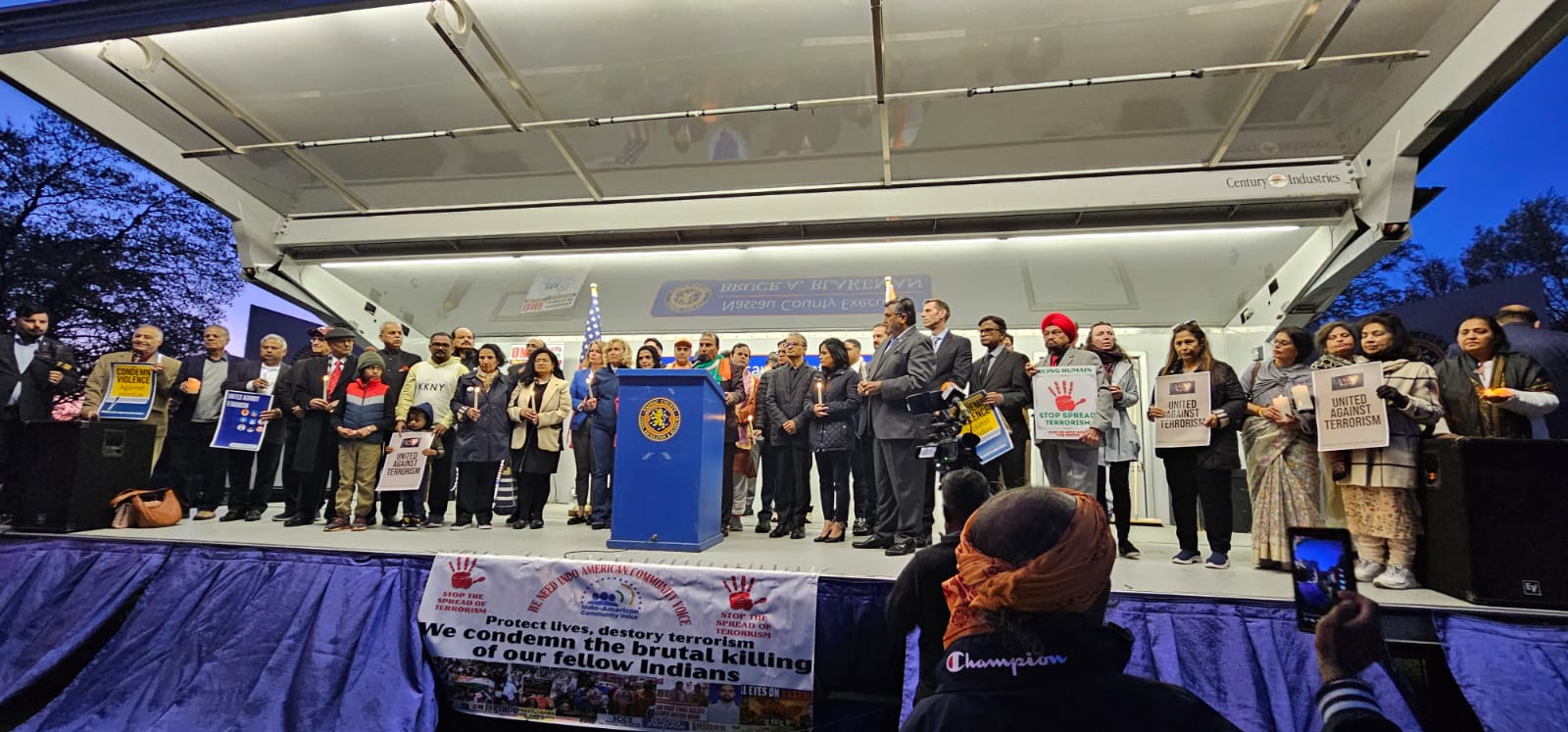 The event brought together community leaders, elected officials, and hundreds of attendees under one banner of unity and resilience. Among the key supporting organizations were: AAPI (Dr. Kishan Kumar), AIA National (Gobind Munjal), AIA NY (Beena Kothari), Arya Samaj of Long Island (Dr. Yashpal Arya & Veer Mukhi), American Malayalee Association (Thomas Joy and Hon. Kevin Thomas), FIPA (Dr. Raj Bhayani), APS (Gary Sikka & Mohinder Singh Taneja), ASAMAI Hindu Temple (Gobind Bathija), Bollywood Insider (Varinder Bhalla), FBIMA (Koshy Thomas & Dincil George), Gujarathi Samaj (Harshad Bhai Patel), HOLI (Urmila Shivaram), HSS (Jaya Patil), Humanity First (Omkar Singh), IAAC (Deepak Bansal), IANA (Vimal Goyal), IDP (Vimal Goyal & Deepak Bansal), IAF (Indu Jaiswal), IALI (Jasbir Singh), Indo American Lions Club (Anju Sharma), Indian Panorama (Prof. Inderjit Saluja), Kashmiri Overseas Association (Dr. Virender Hak & Mohan Wanchoo), KKNY (Raghu Ranganath), LIDC (Paul Bindra), LILC (Pinky Jaggi), Lotus in the Mud (Parveen Chopra), MAHIMA (Dr. Purushotaman Panicker), NYTTA (Vani S. Anugu), RANA (Neelam Modi), SAAWA (Dr. Anila Midha), SAAWO (Suhag Mehta), South Asian Times (Kamlesh Mehta), Soul of Hindutva (Gobind Singh Negi), TANA (Deepika Sammeta), TLCA (Sumant Ram), Tri-State Events (Atul Sharma), TTA (Jaya Prakash Enjapuri), The World Voice (Mukesh Modi), Vaishnav Temple (Anil Shah), VHI (Nayan Kisnadwala), WVV (Rakesh Bhargav), and YICG (Rathi Raja)—demonstrating a united front in the face of tragedy.
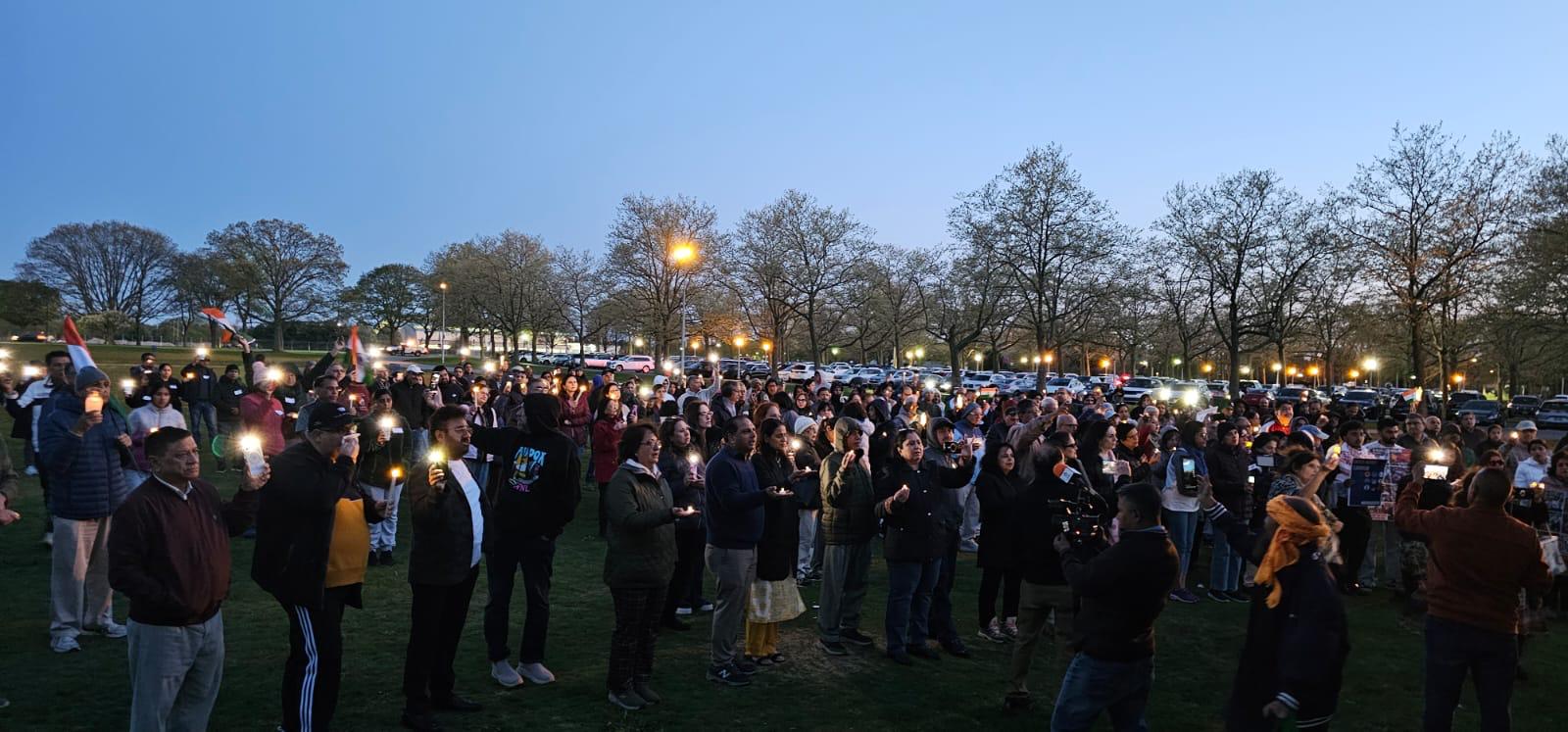 Nassau County Comptroller Elaine Phillips, North Hempstead Town Supervisor Jennifer DeSena, NY Senator Kevin Thomas, Town Clerk Ragini Srivastava, Councilman Edward Scott, and Wioleta D’Souza, Human Rights Commissioner – Nassau County, each sharing messages of sympathy, support, and solidarity. Several officials sent representatives, including County Executive Bruce Blakeman (via Elaine Phillips), Chuck Schumer, US. Senate Minority Leader for United Staes Senate (Taranbir Kaur), Oyster Bay Supervisor Joseph Saladino (Harry Malhotra), and Governor Kathy Hochul (Joey Ramirez).