
Kerala Center To Honor 8 Prominent NRIs

The Indian American Kerala Cultural and Civic Center (http://keralacenterny.com) will honor eight Indian Americans for their outstanding achievements in their field of specialization or for their service to the society at its 29th Annual Awards Banquet to be held on November 13, 2021. The chief guest at the award ceremony will be Dr. Arun Jeph, India’s Deputy Consul General in New York.  The award event will also have New York Senators Kevin Thomas and Todd Kaminsky, Hempstead Town Supervisor, Don Clavin and India Consul for Community Affairs, A. K. Vijayakrishnan, as special guests.

According to Dr. Thomas Abraham, Chairperson of the Trustee Board, the Kerala Center has been honoring outstanding achievers since 1991.  “Every year we invite nominations and the committee has to make a unanimous choice for a candidate in a category to receive the award,” said Dr. Abraham who is one of the members of the Award Committee.  “This year our nominees are no different in terms of their achievements,” said Dr. Abraham.

Award Committee Chair Dr. Madhu Bhaskaran said that Kerala Center has been honoring Indian American  Malayalees who have reached high levels in their professions and who work for social progress.  “Their examples should be an inspiration for others,” he said.

This year, six regular and one special award will be given out to nominees for their special achievements, for their career graph and for their services to the community in the U.S., to people who do the center proud.

Outstanding Achievements in Medicine and Professional Services: This award will be given to Dr. George M. Abraham, President of the American College of Physicians.  Dr. George M. Abraham is the President of the American College of Physicians (the largest internal medicine organization in the world with 161,000 members in 145 countries). He is a Professor of Medicine at the Univ. Mass Medical School, Chief of Medicine at St. Vincent Hospital, Worcester, MA and Adjunct Professor at the Massachusetts College of Pharmacy and Health Sciences.  A graduate of the famous Christian Medical College, Vellore, Tamil Nadu in India, he has authored over 100 publications, abstracts and book chapters.

Notable Achievements in Political Process: This award will go to Mayor Robin J. Elackatt, mayor of City of Missouri City, Texas.  Mayor Elackatt’s public services started with  the city’s Parks & Recreation Board and as (District C) Council member from 2009-2015.  Holding an MBA and a MHA degrees, he served as the Healthcare Administrator of one of the largest Healthcare systems in Houston for over 24 years.

Notable Contributions in Public Service: This award will be given to Dr. Devi Nampiaparampil, the Republican nominee for NYC Public Advocate. Dr. Devi is a practicing physician in pain medicine, a scientist and a small business owner. She is a SAG-AFTRA member who played a doctor on General Hospital before becoming a doctor in real life. Dr. Devi did her residency and fellowship training at Harvard Medical School and is currently an Associate Professor at NYU School of Medicine.

Notable Contributions and Achievements in Performing Arts: The recipient for this award will be Mrs. Chandrika Kurup, the director of Noopura Indian Classical Dance School, New York.  Training under the late Kalamandalam Kalyanikutti Amma, a pioneer in Mohiniyattam, Kurup has been teaching Bharatanattyam, Kuchipuddi and Odissi and enhancing art and culture.

Notable Contributions in Nursing and Community Service: The recipient of this award is Mrs. Mary Philip, RN, MSA, a past Lieutenant in the Indian Defense Force and a past President of the Indian Nurses Association of NY. As a past President of the Indian Nurses Association of NY, she helped nurses with various educational and professional opportunities, including scholarships and academic financial support.  She has also worked as an executive member of several local and national associations.

Notable Services and Achievements in Legal Services: This award will be given to Mrs. Nandini Nair, partner and co-chair of the Immigration and Naturalization practice group at Greenspoon Marder LLP. Ms. Nair focuses her practice on U.S. visas, employment-based and family-based applications, naturalization applications and other immigration benefits.  She is ranked among the “Top Lawyers in New Jersey Immigration” by Chambers & Partners.

Special Award for Notable Services during the Pandemic: This award will be given jointly to Dr. Sabu Varghese and Dr. Blessy Mary Joseph, practicing physicians in New York. Dr. Sabu Varghese, is teaching and attending at Brookdale University Hospital and is doing his private practice at Wholesome Medical PC, holding affiliations with Northwell Systems and Catholic Hospital Systems. During the Pandemic, Dr. Varghese went out of his way to treat his patients.                                                                                                                        Dr. Blessy

Mary Joseph, MD, is a graduate of Manipal University Medical School, is currently holding private practice at Wholesome Medical PC and has affiliations with Northwell Systems and Catholic Hospital Systems. During the Pandemic, Dr. Blessy Joseph went out of her way to treat her patients.
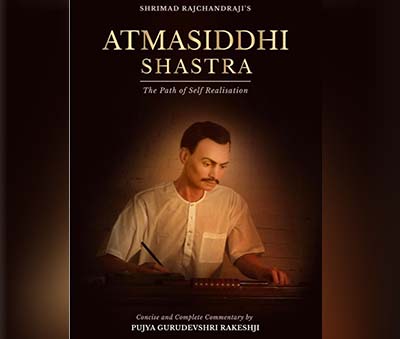
Shrimad Rajchandra Love And Care Celebrates Diwali On Capitol Hill

Shrimad Rajchandra Love and Care (SRLC) hosted a special Diwali event in the presence of Honorable Indian Ambassador to the United States, Taranjit Singh Sandhu and several other dignitaries on October 27th. The event acknowledged the extraordinary partnership between the governments and private sector organizations of the United States and India to support SRLC’s humanitarian initiatives.

The event was attended by Congressmen Raja Krishnamoorthy, Illinois; Tim Ryan, Ohio; Greg Stanton, Arizona; Danny Davis, Illinois; Mike Quigley, Illinois; and, Audrey Kitawaga, Ambassador of Religions for Peace. Ambassador Sandhu emphasized critical points regarding the element of solidarity, the unity and partnership between the two nations, the importance of science and spiritual and extending happiness and kindness to all in these unprecedented times.

The highlight of the event was the launch of the book, ‘Atmasiddhi Shastra – Six Spiritual Truths of the Soul’, a concise and complete commentary by Pujya Gurudevshri Rakeshji. This book lays a clear and cogent path to self-discovery. The book commemorates the 125 th anniversary of the creation of Shrimad Rajchandraji’s magnum opus, ‘Atmasiddhi Shastra’ – a 142-verse epic spiritual masterpiece.

According to the organizers, it was an iconic moment to be at the Capitol Hill and celebrate Diwali by launching a book which “represents the true spirit of Diwali as it removes the darkness of ignorance by the light of knowledge.”

“The endeavor of Shri Rakeshji to present the essence of Atmasiddhi Shastra in a lucid manner through its commentary in English is a thoughtful gesture, aimed at the spiritual welfare of the youth” – Shri Narendra Modi, Hon. Prime Minister of India stated in a statement.  “Atmasiddhi Shastra is a practical guide to Liberation and freedom from suffering” – Deepak Chopra, Founder – The Chopra Foundation said.

SRLC is a global initiative to offer service and bring joy to the lives of the underserved sections of society. SRLC is inspired by Shrimad Rajchandraji, philosopher, and the spiritual guide of Mahatma Gandhiji. SRLC is founded by Pujya Gurudevshri Rakeshji, a world-renowned spiritual leader. SRLC enjoys Special Consultative Status with the United Nations Economic & Social Council since 2020. SRLC’s holistic, multi-pronged community support and development programs are powered by genuine empathy, love, and care of highly motivated volunteers. Learn more about SRLC’s humanitarian work: https://srlc-usa.org/

“Fortunate that I have a song sung by Arijit Singh so early in my career!:” Siddhant Chaturvedi

Bollywood Actor Siddhant Chaturvedi wowed everyone with his brilliant acting as rapper MC Sher in Gully Boy. Siddhant followed up on his success by landing his first role as the quintessential masala Hindi film hero in Yash Raj Films’ rib-tickling family entertainer Bunty Aur Babli 2.

He plays the big city slick con-artist – the New Bunty in this comedy. Siddhant has also got the first-ever romantic track of his career, Luv Ju, in Bunty Aur Babli 2 and he is overwhelmed that he has got the chart-busting sensation Arijit Singh’s song so early in his film career.

Siddhant says, “I think Arijit Singh singing Luv Ju that I’m lip-syncing to in the film is a milestone moment of my career. Having grown up listening and loving Arijit’s songs right from ‘Phir Le Aya Dil’ in Barfi!, I was in disbelief when YRF told me that he was singing a song to be picturised on me in Bunty Aur Babli 2!”

He adds, “Arijit Singh is a generation-defining superstar singer. He has sung for all the top stars of my generation and delivered evergreen chartbusters! I’m fortunate that I have a song sung by him so early in my career! He is just phenomenal in Luv Ju. It’s a romantic song that will just hook you in and keep growing on you. I haven’t stopped listening to Luv Ju and I’m sure there will be many like me when this breezy romantic track drops.”

Bunty Aur Babli 2 also features Saif Ali Khan and Rani Mukerji as the original Bunty and Babli. Gorgeous debutant Sharvari plays the new Babli who is hot, intelligent, and tech-savvy. This comedy will pit two sets of con artists, from different generations, against each other as they try to prove who is the better con couple!
Yash Raj Films’ Bunty Aur Babli 2, which is set to release worldwide on November 19, 2021, has been directed by Varun V. Sharma, who has worked as an Assistant Director in YRF’s biggest blockbusters Sultan and Tiger Zinda Hai.

Why You Should Vaccinate Your Kids Against COVID-19?

In a step many parents have been awaiting, the U.S. Food and Drug Administration (FDA) this afternoon granted emergency-use authorization to Pfizer-BioNTech’s COVID-19 vaccine for children ages 5 to 11.

After reviewing evidence provided by Pfizer and taking into account the overwhelmingly positive recommendation of the agency’s independent advisory panel, FDA officials said the shot’s benefits outweigh its potential risks for young kids. It has been shown to be more than 90% effective at preventing symptomatic disease among kids 5 to 11, with no serious side effects reported among a group of 3,000 children who participated in trials.

Like Pfizer-BioNTech’s adult vaccine, the pediatric version is meant to be given in two doses, spaced three weeks apart. Each dose, however, is smaller than that given to adults.

The shot must still be recommended by the U.S. Centers for Disease Control and Prevention (CDC) before it is widely available to younger kids, but the FDA’s green light is a major step toward that outcome. The CDC’s advisory committee will meet to discuss the shot next week.

If the CDC does recommend the shot for some or all 5- to 11-year-olds, the next challenge will be convincing parents to get it for their children. In a recent poll, almost 30% of U.S. parents with kids in that age group said they would vaccinate them right away, but another 35% said they either definitely wouldn’t vaccinate or wouldn’t unless required. The remaining chunk said they wanted to “wait and see.”

Waiting to vaccinate all children would be a mistake. Based on the data we have, the right answer is clear: the CDC should recommend that all kids ages five to eleven should have be vaccinated as quickly as possible.

There is one thing all experts agree on: Vaccinating children should be based on rigorous evidence and we should set a particularly high bar for using vaccines in healthy children.

The Pfizer COVID vaccine has cleared that bar. Whether these vaccines work in kids is beyond dispute: they are extremely effective, reducing COVID infections by more than 90 percent. This number is based on data gathered during the Delta surge in the U.S., when vaccine breakthroughs among adults were becoming more common in the U.S. Such a high level of protection from the vaccine at a time when infection rates were extremely high is remarkable.

The next question is how the risks and benefits of the vaccine compare to the risks of getting COVID. Here, the calculation is also straightforward: the virus is a constant threat, to our children and all with whom they interact—including playmates, friends, and relatives. We have seen what COVID can do if we don’t control its spread. The worst of the Delta surge is behind us, but over 1000 Americans still die every day from the disease. Vaccines prevent infections and the spread of the virus, and save lives.

Like all vaccines, COVID vaccines can have the standard side-effects of a sore arm, fever or headaches, but these side-effects are mild and short-lived. There are also important concerns about one specific side effect that is crucial to recognize and fully understand: myocarditis—or an inflammation of the heart muscle.

There is a need to start preparing for a world in which SARS-CoV2 will be endemic, circulating for decades or longer, just like measles, whooping cough and the flu. This is why essentially every expert on child health has come out in support of vaccinations. The American Association of Pediatrics, has been vocally supportive, as has the American Association of Family Practitioners, who represent physicians who care for millions of children.

It is helpful to take a step back, and remember how vaccines have transformed our lives, and the life expectancy of our children. We give children dozens of vaccines, without which they would be vulnerable to potentially fatal diseases from measles to pneumococcal disease—diseases that continue to sicken unvaccinated children around the world. It is time for the CDC to continue its important work on protecting our children by adding another tool to the arsenal. We need COVID vaccinations for all children five to eleven years old so parents can get their children vaccinated and keep them safe. That’s what I’m going to do.

Where children are being vaccinated

Cuba became the first country in the world to vaccinate children as young as 2 last month, with the government saying that its homegrown vaccines are safe for younger kids. Cuba has yet to provide data on its vaccines to outside observers, but has said it will seek WHO approval.

Chile, China, El Salvador and the UAE have also approved vaccines for younger children. In Chile, children aged 6 and older can get the Sinovac shot, while in China, the Sinovac and CoronaVac vaccines are authorised for use in children as young as 3. In El Salvador, children as young as 6 will soon be able to get vaccinated, while in the UAE — where Sinopharm is approved for 3-year-olds — the government has made it clear that the vaccination program will be optional. Meanwhile, US children between 5 and 11 are now eligible for the vaccine starting this fall, after approval came from the USFDA.

Still weighing the option

The UK has been more cautious than many other European countries in regard to vaccinating younger populations, only recommending the shot for 12-15 year olds, following advice from its chief medical officers.

France, Denmark, Germany, Ireland, Italy, Spain and Poland are among EU countries that have rolled out their vaccination campaigns for 12-15 year olds, with uptake varying across the bloc. Switzerland — which is not part of the EU — has been vaccinating the younger age group since June. Sweden will offer the vaccine to 12-15 year-olds later in the fall.

And India?

If approved by India’s drugs regulator, Covaxin would be the first shot to be available for kids aged between 2 and 12, while those in the 12-18 years age-group can choose between Covaxin and Zydus Cadila’s DNA-based vaccine. Two other companies, Serum Institute of India and homegrown drugmaker Biological E, have also been allowed to test their shots on children.

Hindu Dharma, Hindutva and Hindudvesha Discussed At Virtual Conference

The second set of panels of the “Hindu Dharma, Hindutva and Hindudvesha” conference series were held last month, in coordination with and in celebration of Hindu Heritage Month. Four sessions held over the weekend focussed on issues like Colonialism and Hinduism and challenges faced by Hindus in the Islamic world.

The virtual conference showcased the diversity of views within the Hindu world, feature friends of the Hindu community, and address a troubling trend of anti-Hindu sentiment (Hindudvesha or Hinduphobia) which has more recently plagued the Hindu diaspora in the United States, Canada and other parts of the world.
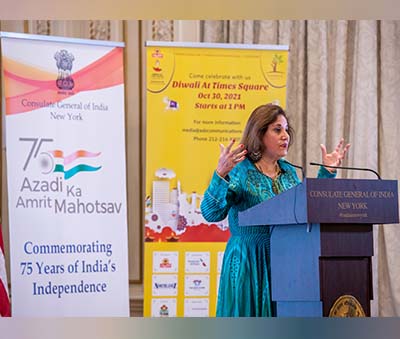
The Hindudvesha conference is being jointly organized by American Hindus Against Defamation (AHAD), an initiative of the World Hindu Council of America (VHPA), and Dharma Civilization Foundation.

The conference began on Saturday, October 23, 2021, from 11AM-1PM. The first session, “Coloniality and the Hindutva Movement,” delved deeper into understanding the Hindutva movement within the context of Coloniality, while the second session, “The Post-Colonial Hindu Hangover,” discussed how Colonialism has impacted the Hindu intellectual condition.

The second day of the conference took place on Sunday, October 24, between 11AM-1PM and the focus was on the impact of Islam on the Hindu culture and psyche. The entire conference was held every consecutive Saturday and Sunday over the course of four weeks.

In a joint statement, Kalyan Viswanathan, President of the Hindu University of America and VHPA Vice President Dr. Jai Bansal said: “Hindus are a deeply spiritual and peace-loving community. At one billion strong globally and roughly four million in the US, they represent a growing immigrant minority community in the United States. Historically, Hindus have never invaded, conquered, or enslaved others nor confiscated land or property. On the contrary, Hindus have repeatedly been victims of colonization and invasions. Perhaps their greatest characteristic is that they live and let live.

At the core of Hinduism is a certain foundational embrace of plurality which honors diversity and fosters co-existence. Unfortunately, as they are being repeatedly and increasingly maligned in unprecedented ways, it is important that Hindus speak up to set the record straight to contest the lies and misinformation circulated by those seeking to undermine them.” VHVA President Dr. Ajay Shah said, “it is high time to educate the world about the essence of Sanatana Vedic Dharma and it’s positive contributions to civil society, at all levels, and the world.”

American Hindus Against Defamation (AHAD) is the first and the most prominent Hindu organization against defamation in the USA.  AHAD has been actively monitoring mass media, products, public places etc. to ensure respectful and accurate representation of Hindu dharma, culture, images and icons. Active since 1997, hundreds of thousands of Hindus have participated in various advocacy activities led by AHAD. Hindudvesha project is partnership between AHAD and Dharma Civilization Foundation (DCF).

World Hindu Council of America (VHPA) is the most prominent organization of Hindus in the USA. Founded in 1970, it has chapters across the country.   VHPA runs educational programs for Hindu children and youth in addition to community service (Seva) activities, and initiatives such as Hindu Mandir Executives’ Conference (HMEC), Hindu Womens’ Network, in addition to AHAD and HinduPACT. To learn about the conference, visit Hindu Dvesha – HHMConference

Curtain Raiser to Diwali at Times Square Held At Indian Consulate

Samman for All and advisory board members of ‘ShopRite Diwali at Times Square in association with Samman for all’ held a curtain raiser and press conference at the Consulate of India NY to commemorate the beginning of the Diwali at Times Square on October 30th at Times Square.

The event was attended by Media Houses, Performers and the Sponsors of Diwali at Times Square. The program started with Ganesh Pooja followed by Diya Lighting Ceremony and Presentation by Neeta Bhasin, Founder of Diwali at Times Square where she shared the details of the upcoming festival. Sponsors like Shoprite and American Airlines spoke of the significance and importance of cultural event as big as Diwali at Times Square and its impact on the community.

“Our objective this year is to bring the light of positivity in the lives of people especially since the dark gloom of the pandemic has engulfed us. Through this event, we want to uplift the spirit of the community and share the message of love, togetherness, inclusion, and diversity,” Bhasin said.

“ShopRite Diwali at Times Square” in association with the non-profit “Samman for All” is showcasing the rich ‘Colors of India’ via its art and culture right in the heart of Times Square on October 30, 2021, starting at 1:00pm EST.

According to the founder of Diwali at Times Square, Neeta Bhasin, “Understanding different cultures makes us realize that the basic tenets of all cultures are the same. However, the difference in expression is what enriches the tapestry of our lives.” The celebration continues throughout the day into the evening with the traditional Diwali custom of ‘Diya (Lamp) Lighting’ ceremony on stage which will also be projected on the tallest billboard in Times Square followed by a rousing musical extravaganza – ‘The Light Up Times Square’ concert with international singer Jay Sean and other performers will be entertaining people with their superhit songs.

Due to its resounding success in the past years, the festival has also garnered praise and recognition by various media outlets as well as the US Government as being one of the largest Indian festivals outside of India.

This year, Diwali at Times Square has an association with ‘Samman for all’ not-for-profit organization. Director of ‘Samman for All’ said’ Our goal is to help people achieve a dignified living – a life that they can call their own. We wish this Diwali brighten the lives of people”.

”Diwali is an integral part of our cultural heritage. It represents our values, traditions, diversity and thought. Diwali at Times Square brings people from all walks of life together to celebrate the festival of Diwali. We would like to congratulate the Producer, Mrs. Neeta Bhasin, for meaningfully promoting Indian culture and our universal ideas in the US.” Said Mr. Randhir Jaiswal, Consul General of India NY,

The ShopRite stated ‘South Asian community is a very important part of our community, and we want everyone to taste the Diwali Celebration with Shoprite. We look forward to celebrating the festival of Delight at Times Square this year!!

Harry Singh Bolla, President & C.E.O, Bolla Oil Corp “I know how Diwali is a cheerful and nostalgic festival! It reminds me of happy times from my childhood. “Let’s come together and celebrate Diwali At Times Square on a October 30 and cherish all the good times”

Bhasin thanked the “Title Sponsor ShopRite, Airline Partner American Airline, Diya (Lamp) Lighting with the countdown partner Bolla Market and our sponsors Northwell Health, Northlandz, State bank of India and Nazranaa.”

Samman for All. mission is to facilitate people from the lower-economic strata to achieve their dreams by providing them with tools for sustainable living.  Event Guru WorldWide is a premier full-service event company specializing in festivals, concerts, tradeshows, gala dinners and press conferences. We conceptualize and implement events of all sizes and statures.

Cardamom Goes Hi-Tech, Launches Cloud Based E-Auction

Hailed as the ‘Queen of Spices,’ cardamom is one of the most expensive spices on the planet. The dark seeds found within a light green pod of perennial plants belonging to Zingiberaceae, the ginger family is recognised by its two main forms– Elettaria cardamomum, the more popular smaller fusiform variety with a thin peel called chhoti elaichi, and the larger woodier dark brown Amomum subulatum, better known as badi elaichi.

The latter is found mostly in Eastern Himalayas and China and used in naturopathy and certain food preparations like meat dishes, stews and barbecue sauces, owing to its bolder flavor. And, it is now one of the much soiught after spices India exports around the world.
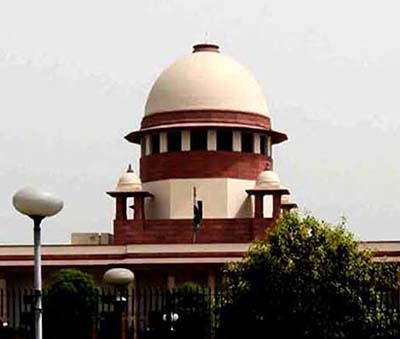
The Spices Board in India has turned hi-tech when it launched the cloud based live e-auction at Idukki. Inaugurating it, Congress MP Dean Kuriakose said that the cardamom trade and exports play a significant role in the economy of the state and the cloud based live e-auction will empower the supply chain ensuring hassle free trade transactions benefitting the traders and farmers alike.

The live e-auction took place at the centre in Puttady, near Idukki. The Spices Board digitally integrated two of its e-auction centres at Bodinayakanur, Tamil Nadu and Puttady, Idukki and is expanding the market opportunity for cardamom growers and traders equally.

The new facility will double the number of participants in the e-auction and the farmers will get to pitch their produce to a wider market place. Earlier both farmers, traders and auctioneers had to travel between the auction facilities in Tamil Nadu and Kerala to take part in the auctions at the respective auction centres.

D.Sathiyan, secretary, Spices Board, said that by introducing this technologically advanced platform they aim to expand the opportunity for farmers and traders in terms of market and competition ensuring better price realization for cardamom.

“By the introduction of the new platform, there is scope to conduct the e-auction in multi centres, if the stakeholders desire,” said Sathiyan. A.G. Thankappan, chairman Spices Board said: “90 per cent of the cardamom produce is sold in the domestic market and cloud based e-auction will bring in a lot of competitiveness.”

Green cardamom or true cardamom is an ancient spice that grew wild in the southern forests of India and has been used for centuries in food and therapy. One of the oldest spices in the world, it was known across India by myriad regional names, derivatives of its Sanskrit label — eli or ela. It is called elaichi in Hindi, Punjabi, Gujarati, Kashmiri, elach in Bengali, yelakki in Kannada, yelakkai in Tamil and Telugu and elathari in Malayalam. The West called it cardamom from its Greek root kardamomom or amomum. The Cardamom Hills or Yela Mala in Kerala’s Idukki district gets its name from the spice that grows in its cool climes, along with pepper. The moist forests of the Western Ghats in Kerala’s Malabar region and Kodagu, Chikmagalur and Uttar Kannada districts of Karnataka provided the ideal environment for growing cardamom, known locally as maley maley yalakki or yelakki

Lack of Adequate Attention By BJP Govt. To Meet Needs of Indian Judiciary Criticized

Stressing on the need of proper infrastructure, CJI N V Ramana, the Chief Justice of the Indian Supreme Court has said: “If you want a different outcome from the judicial system, we cannot continue to work in this present condition.” N V Ramana was speaking at the inaugural ceremony of the new annex building of the Bombay High Court’s Aurangabad Bench. (File Photo)

Judicial infrastructure is “important for improving access to justice”, but “it is baffling to note that the improvement and maintenance of judicial infrastructure is still being carried out in an ad hoc and unplanned manner,” Chief Justice of India N V Ramana said on Saturday, October 21st.
The CJI was speaking at the inauguration of two wings of the annexe building at the Aurangabad bench of the Bombay High Court. Maharashtra Chief Minister Uddhav Thackeray and Union Minister for Law and Justice Kiren Rijiju were among those present.

“People’s faith in the judiciary is the biggest strength of democracy,” the CJI said, adding that courts in India have “stood up whenever individuals or society are at the receiving end of the executive excesses”.

“Good judicial infrastructure for courts in India has always been an afterthought” and “it is because of this mindset that courts in India still operate from dilapidated structures, making it difficult to effectively perform their function,” he said.

“The total sanctioned strength of judicial officers in the country is 24,280 and the number of court halls available is 20,143 (including 620 rented halls)… Twenty-six per cent of court complexes do not have separate ladies toilets and 16% do not have gents toilets… Only 54% of court complexes have purified drinking water facility… only 5% have basic medical facilities,” he said.

“Only 32% of courtrooms have separate record rooms… only 27% have computers placed on the Judge’s dais with video-conferencing facility… These are the hard facts,” he said.

Judicial infrastructure, the CJI said, “is important for improving access to justice and to meet the growing demands of a public that is more aware of its rights and is developing economically, socially, and culturally”.

He said the building that was inaugurated in Aurangabad on Saturday was envisioned in 2011. “This is not the fault of any institution or organ of the state but is emblematic of a deeper structural problem that has plagued judicial infrastructure development in our country since independence,” he said.

Stating that an effective judiciary can aid in the effective growth of the economy, the CJI said that “if we want a different outcome from the judicial system, we cannot continue to work in these circumstances”.

He said he had sent a proposal for establishment of a National Judicial Infrastructure Authority to the Ministry of Law and Justice, and was hoping for a positive response soon. He urged the Law Minister to expedite the process and ensure that the proposal is taken up in the winter session of Parliament.

The CJI also said that there is a common notion that only criminals or victims of crime approach the courts and people take pride in stating that they have never seen a court building in their lifetime. “But, it is high time that we make efforts to remove the taboo associated with approaching courts for the affirmation of rights,” he said.

“Courts are extremely essential for any society that is governed by the rule of law. Court buildings are not merely structures made of mortar and bricks. Rather, they actively assure the constitutional guarantee of right to justice. The courts in India have repeatedly upheld the rights and freedoms of individuals. They stood up whenever the individuals or society were at the receiving end of the executive excesses. It is an assurance that the seeker of justice, howsoever weak, need not worry about the might of the State,” he said.

Pandemic May Have Eliminated One Flu Virus Type Completely

As Covid-19 spread to hundreds of millions of people around the world, another potentially lethal disease — influenza — hardly reared its head at all. And seasonal flu rates globally have been so low for the past 18 months, it looks as though one flu virus has been stamped out altogether.

Two studies show one of four flu viruses that infect humans each year hasn’t been detected anywhere in the world since April 2020.

So does that mean it’s gone for good? It’s still too early to say. There is a chance this particular virus — the Yamagata virus — might be lurking in a pocket of the world somewhere, according to Ian Barr, deputy director of the World Health Organization’s Collaborating Centre for Reference and Research on Influenza at the Doherty Institute, and co-author of one of the studies. “It may re-emerge, but we haven’t had a single detection of that virus in 18 months,” he added.

The Yamagata virus belongs to the influenza B group of flu viruses. With very rare exceptions, this group only infects humans. (Something else that sets them apart from influenza A viruses is that they mutate slowly.) Because they don’t jump between humans and other animals, they won’t cause a pandemic, unlike influenza A viruses, such as the one that causes swine flu.

When Covid-19 hit, social distancing, better hygiene and masks all contributed to driving flu levels down, and finished off the Yamagata virus faster than expected. But what had the biggest effect, Professor Barr said, was closed borders.

Celebrating Pak’s Cricket Win Against India Comes Under India’s Anti-Terror Law

Two days after Pakistan beat India for the first time in a World Cup match, many, mostly students, face police action for “cheering” Pakistan’s win. Besides the UAPA charges invoked against medical students in Srinagar, three engineering students have been rusticated from their Agra college and a private school teacher who was expelled.

Kashmiri medical students who allegedly celebrated the Pakistan cricket team’s win over Team India at the ongoing World T20 Cup will be charged under the anti-terror law UAPA. The students will also be listed as overground workers of anti-India organisations in police records, which will deny them government-funded benefits in future, TOI reports.

Police in Indian-controlled Kashmir are investigating students and staff at two medical colleges under a harsh anti-terror law for celebrating India’s loss to archrival Pakistan in a T20 World Cup cricket game, officials said Tuesday.

Police said some students and staff at the government-run colleges cheered and shouted pro-Pakistan slogans during the match Sunday night, calling it “anti-national” activity.

Pakistan crushed India by 10 wickets for its first-ever victory against its archrival in a T20 World Cup game in Dubai. Minutes after Pakistan won the match, hundreds of people in Kashmir danced in the streets, lit firecrackers and chanted “Long live Pakistan” while seeking the end of India’s rule over the disputed region.

The celebrations came as India’s powerful home minister, Amit Shah, was visiting the region for the first time since New Delhi in 2019 stripped Kashmir of its semi-autonomy, scrapped its statehood and removed inherited protections on land and jobs, further fueling tensions in the region.

Love of cricket, a legacy of Britain’s long colonial role of South Asia, is one of the few things that unites Pakistan and India despite their long history of animosity that has fueled three wars since the subcontinent’s partition in 1947, including two over control of Kashmir, which is divided between the two nuclear-armed rivals.

The fracas over Sunday’s match shows how easily passions can be inflamed in predominantly Muslim Kashmir, where anti-India sentiment runs deep. Rebels have been fighting for Kashmir’s independence or its merger with Pakistan since 1989.

An amended anti-terror law allows police to detain people for six months without producing any evidence A police spokesman said authorities on Monday registered preliminary investigations at two police stations in the city of Srinagar under the anti-terror law, the Unlawful Activities (Prevention) Act.

Police said the suspects were yet to be identified and officers were using videos of the celebrations on social media in an attempt to name them.

The anti-terror law was amended in 2019 to allow the government to designate individuals as terrorists. Police can detain people for six months without producing any evidence, and the accused can subsequently be imprisoned for up to seven years. Rights activists have called the law draconian.

Over a dozen Kashmiri students were attacked in India’s northern Punjab state for celebrating Pakistan’s victory, news reports said.

India describes the armed rebellion in the portion of Kashmir it controls as a Pakistan proxy war and state-sponsored terrorism. Most Muslim Kashmiris consider it a legitimate freedom struggle.

The region is one of the most heavily militarized in the world. Tens of thousands of civilians, rebels and government forces have been killed in the conflict

Democrats Inch Closer To Legislative Deal On Biden’s Biggest Domestic Agenda

President Joe Biden and Democratic leaders are driving toward a $1.75 trillion agreement that will unlock the votes for the separate infrastructure package — and arm Biden with two momentous legislative victories — as he departs for the world stage later this week.

Half its original size, President Joe Biden’s big domestic policy plan is being pulled apart and reconfigured as Democrats edge closer to satisfying their most reluctant colleagues and finishing what’s now about a $1.75 trillion package.

How to pay for it all remained deeply in flux, with a proposed billionaires’ tax running into criticism as cumbersome or worse. That’s forcing difficult reductions, if not the outright elimination, of policy priorities — from paid family leave to child care to dental, vision and hearing aid benefits for seniors.

As per reports, Democrats stepped closer to an agreement on President Joe Biden’s agenda as Sen. Joe Manchin, who has been pushing to shrink the size of a sweeping social-spending package, said a deal on the outlines of the plan is within reach this week.

Manchin’s expression of optimism Monday marked a turnabout from his forecast last week of drawn-out negotiations, and mark the best recent sign for Biden’s domestic agenda after months of intra-party wrangling over tax and spending increases.

The once hefty climate change strategies are losing some punch, too, focusing away from punitive measures on polluters in a shift toward instead rewarding clean energy incentives.

All told, Biden’s package remains a substantial undertaking — and could still top $2 trillion in perhaps the largest effort of its kind from Congress in decades. But it’s far slimmer than the president and his party first envisioned.

House Speaker Nancy Pelosi told lawmakers in a caucus meeting they were on the verge of “something major, transformative, historic and bigger than anything else” ever attempted in Congress, according to a person who requested anonymity to share her private remarks.

“We know that we are close,” said Rep. Joyce Beatty, D-Ohio, the chair of the Congressional Black Caucus, after a meeting with Biden at the White House.

“We want to have something to give our progressives confidence we will do both bills,” House Majority Leader Steny Hoyer said Monday evening. “We don’t have a timeline” for the infrastructure vote, he said.

Schumer said there are “three to four outstanding issues” that remain to be resolved on the tax and spending package. He said he wants to nail down the climate provisions before the president leaves for his trip.

One of the biggest issues still unsettled is how to pay for the package. Manchin, of West Virginia, had supported rolling back some of the Trump tax cuts for high earners and corporations, as Biden had proposed. But Sinema signaled her opposition to higher tax rates, turning focus to a so-called billionaires tax on assets. Manchin indicated he’s open to that idea.

The tax would apply to a wide variety of items like stocks, bonds, real estate and art, with gains in value taxed on an annual basis, regardless of whether or not the asset is sold. Annual decreases in value could also be deducted, according to a version of the proposal, which dates to 2019.

Senate Finance Chair Ron Wyden said after a meeting among key Senate Democrats, including Manchin, that the tax plan would be drafted in the “next two days.”

Other tax proposals in flux include a possible two-year suspension of the $10,000 cap on state and local tax deductions, the imposition of a minimum corporate income tax and a stock buyback tax.

Sen. Joe Manchin is a pivotal player in negotiations on the tax and spending package along with Arizona Sen. Kyrsten Sinema, who also has raised objections to elements of the package. Both are key Democratic votes in the 50-50 Senate.

Manchin met on Sunday with Biden and Schumer in an effort to break a months long stalemate. Biden said Monday he hopes to get an agreement on the plan before he leaves Thursday for summits in Europe that include a UN climate change conference in Glasgow.

On healthcare policy, Manchin indicated there are still differences between him, Biden and progressive Democrats. Manchin has resisted expanding Medicare to include dental, hearing and vision benefits. He said Monday that because the program faces insolvency in five years it shouldn’t be expanded without addressing deeper fiscal problems.

“I believe a final deal is within reach,” Schumer said, while signaling that members are much closer to agreement on “robust” climate provisions. There was also movement on how to pay for the package, as Sen. Kyrsten Sinema (D-Ariz.) threw her weight behind a proposal for a minimum tax on corporate profits.

“This proposal represents a commonsense step toward ensuring that highly profitable corporations — which sometimes can avoid the current corporate tax rate — pay a reasonable minimum tax on their profits, just as everyday Arizonans and Arizona small businesses do,” Sinema, who also met with Biden on Tuesday evening, said in a statement.

Meanwhile, Senate Finance Committee Chairman Ron Wyden (D-Ore.) on Wednesday unveiled his proposal to tax billionaires’ investment gains annually, which could become a key provision in Democrats’ social-spending package.

The proposal comes as Democrats are working to determine how to raise revenue to finance spending in the package. It’s the second major tax proposal Wyden has released in recent days, following a proposal he released Tuesday to create a minimum tax on corporate profits.

“We have a historic opportunity with the Billionaires Income Tax to restore fairness to our tax code, and fund critical investments in American families,” Wyden said in a statement.

Wyden’s proposal is aimed at preventing billionaires from avoiding taxes. Currently, people don’t have to pay taxes on investment gains until they sell the assets. The proposal would affect taxpayers with assets of more than $1 billion or income of more than $100 million for three years in a row. About 700 taxpayers are expected to be subject to the tax. The proposal also includes rules designed to prevent billionaires from avoiding paying the tax.

The reality remains there are a handful of significant — and thorny — policy disputes that still must be reconciled in a matter of days. But there is no question that in the minds of top White House officials and congressional Democrats, the time for busted deadlines or elongated policy deliberations have come to an end.

The bottom line is that by the time Biden leaves for his foreign trip on Thursday, his $1.2 trillion bipartisan infrastructure bill could be signed into law, with an agreement on a $1.75 trillion economic and climate package in hand. Biden told reporters on Monday, “With the grace of God and the goodwill of neighbors,” a deal will be made before the trip, adding, “It’d be very positive to get it done before the trip.”

Rajinikanth, Dhanush, Kangana Ranaut, Manoj Bajpayee Honored At 67th National Film Awards

Superstar Rajinikanth received a standing ovation by the audience while he was conferred with Dadasaheb Phalke Award, India’s highest film honor, by Vice President of India, Shri Venkaiah Naidu in New Delhi on October 25, 2021. The veteran star was felicitated with a Swarna Kamal (Golden Lotus) medallion, a shawl, and a cash prize.

Actors Manoj Bajpayee and Dhanush were conferred with the Best Actor Award for their films ‘Bhonsle’ and ‘Asuran’ respectively at the 67th National Film Awards, which took place on Monday. Bollywood star Kangana Ranaut received her fourth National Film Award, as she was awarded the Best Actress Award for her performances in ‘Manikarnika: Queen of Jhansi’ and ‘Panga’.

While accepting the award, Rajinikanth took a stroll down memory lane to thank one of his old friends, who saw acting talent in him and encouraged him to try his luck in films. “I am extremely happy to receive this prestigious award. My heartfelt thanks to the central government for honouring me with the Dadasaheb Phalke award. I would like to dedicate this award to my guru K Balachander. Today, I remember him with great gratitude. I also want to thank my friend who saw this talent in me and suggested me to do acting while I was working as a bus conductor,” he recalled.

Rajinikanth also dedicated his win to all the producers, directors, members of the film industry and fans. “Thanks to everyone for their support… press, media, directors, distributors, producers and fans… my heartfelt thanks to everyone. Also, a special thanks to Tamil people… without them I am nobody,” he expressed his gratitude.

Rajinikanth attended the presentation ceremony along with his wife Latha, daughter Aishwarya, and son-in-law Dhanush. Born as Shivaji Rao Gaekwad on December 12, 1950, to Ramoji Rao and Jijabai, Rajinikanth worked as a bus conductor before embarking on his film journey about 45 years ago.

He recalled his days of struggle. “When I was the bus conductor, he identified the acting talent in me and encouraged me to join the cinema. All my producers, directors, co-artistes, technicians, distributors, exhibitors and the media, press and all my fans. Tamil people – without them I am no body. Jai Hind!”

For the special occasion, Kangana chose to wear a traditional silk saree. “All set to receive the highest honor for an artist in the country today …. National Award,” she captioned the post. Earlier, she had won Best Supporting Actress for her role in ‘Fashion’ and Best Actress Awards for ‘Queen’ and ‘Tanu Weds Manu Returns’. After receiving the prestigious award, Kangana took to the photo-sharing application to thank her parents for being her support system.

“We all grow up with a deep desire to be worthy of our parents love, care and sacrifices…After all the troubles I give my mummy papa such days seem to make up for all those mischiefs ..Thank you for being my mummy papa I wouldn’t want it any other way,” she wrote.

Manoj, who has previously won the National Film Award twice, Best Supporting Actor in ‘Satya’, and Special Jury Award for his feature film ‘Pinjar’, was felicitated at the in-person ceremony for his performance in the Devashish Makhija directorial ‘Bhonsle’. The movie saw the ‘Family Man’ star portraying the titular character who is a retired policeman and is living a non-interfering life in a colony dominated by locals, diagnosed with stage 4 brain tumour.

Manoj, who was dressed in a black shirt and trousers for the award ceremony, spoke about receiving the award and said, “The National Award for ‘Bhonsle’ means a lot because this was a film which we wanted to make but we were not getting money from anyone to make it, it took us four years to make this film, so definitely it means the world to all of us. It’s kind of a poetic justice that has happened to ‘Bhonsle’ and I share this award with the director and the entire team.”

Dhanush received the Best Actor Award for his role in ‘Asuran’, which also won the Best Tamil Film award. It’s a period action drama film written and directed by Vetrimaaran, based on Poomani’s novel ‘Vekkai’. The film’s plot was influenced by the real-life Kilvenmani massacre that occurred in 1968. At the ceremony, Dhanush was joined by Aishwarya R Dhanush, his wife and superstar Rajinikanth’s daughter.

One of the country’s most eminent awards in entertainment, the 67th version of the National Film Awards, which were handed out to the awardees by Vice President Venkaiah Naidu, was initially going to be held in May last year but had to be delayed due to the COVID pandemic.

“Chhicchore” director Nitesh Tiwari and producer Sajid Nadiadwala dedicated the Best Film Award to late Bollywood star Sushant Singh Rajput, who passed away in 2020. Vijay Sethupathy was awarded the Best Supporting Actor for his performance in “Super Deluxe.”

The Malayalam film, “Marakkar: Arabikadalinte Simham” (Marakkar: Lion of the Arabian Sea), received the National Film Award for Best Feature Film. The film has been written and directed by Priyadarshan, and stars Mohanlal. The actor was also present at the awards show. “The Tashkent Files” won two awards – Best Supporting Actress, which went to Pallavi Joshi and for Best Dialogue Writer.

The 40th AAPI Convention In San Antonio, TX To Focus On “Heal The Healers” With Its Much Needed “Wellness Package” For Physicians And Families

(Chicago, IL: October 27, 2021) “Physician, heal thyself,” especially when there are growing signs of burn out among physicians, by offering positive remedial resources as part of a first ever Wellness Program being offered to participants at the 40th Annual Convention of AAPI to be held in san Antonio from June 23rd to 26th, 2022.

The Covid pandemic has impacted all aspects of human life as never been before. The past two years have been challenging to everyone, particularly those are assigned with the responsibility of caring for the sick, especially as hundreds of Millions were affected by the big pandemic. Over 115,000 health care workers died from Covid-19 from January 2020 to May of this year, according to a new World Health Organization estimate.

“The backbone of every health system is its workforce — the people who deliver the services on which we rely at some point in our lives,” WHO Director-General Tedros Adhanom Ghebreyesus said. “The pandemic is a powerful demonstration of just how much we rely on health workers and how vulnerable we all are when the people who protect our health are themselves unprotected.”

Some have argued that governments have forsaken their duty to protect health care workers and warned that pandemic would have long tail effects, with many healthcare professionals considering leaving the workforce. At this critical juncture in human history, American Association of Physicians of Indian Origin (AAPI) the largest ethnic medical organization in the country, representing the interests of over 100,000 physicians of Indian origin, is focusing on themes such as how to take care of self and find satisfaction and happiness in the challenging situations they are in, while serving hundreds of patients everyday of their dedicated and noble profession, Dr. Anupama Gotimukula, President of AAPI said.   “This year AAPI Convention team from San Antonio is very much motivated on focusing on addressing physician burnout and we have planned these wellness packages. As we are seeing  in our daily lives the physician burnout has increased significantly. “We do acknowledge that these are challenging times, more than ever for us, physicians, who are on the frontline to assess, diagnose and treat people are affected by this deadly pandemic, COVID-19. Many of our colleagues have sacrificed their lives in order to save those impacted by this pandemic around the world,” Dr. Gotimukula added.

Accordingly, some of the major themes at the convention include: Yoga and Meditation practices, Welcome kit with books & self-care supplies, A Personal Reflexology Session, Take home wellness routine, Ailment based yoga therapy sessions, Workshop on Spiritual well-being, Book talk with Yoga Gurus, including on the science of Yoga & Lifestyle medicine, as well as an unique opportunity to visit first of its kind in San Antonio, Aum Ashram as part of the Wellness session.

Esteemed yoga gurus and experts, who are planned to share their wisdom and leading the Wellness Sessions include: Paramguru Sharatha Jois, Sadhvi Bhagawati, Saraswati Eddie Stern,  Dr. Sat Bir Khalsa, Dr. Dilip Sarkar, Dr. Pankaj Vij, and  Dr. Param Dedhia.

“Our physician members have worked very hard during the Covid 19 pandemic as the 2022 convention is a perfect time to heal the healers with a special focus on wellness,” said Dr. Dr Jayesh Shah, Chair of AAPI Convention 2022.

In her welcome note, Dr. Hetal Nayak, Coordinator of the Wellness Program said, “With great enthusiasm we invite you to participate in our AAPI convention wellness package themed ‘Heal the Healers.’ This is the first time in the AAPI convention we offer these exclusive wellness packages geared towards the well-being of Physicians and their families by bringing the essence of science and spirituality of yoga and lifestyle medicine into our selfcare routine. As we all aware, a calm mind and a refined intellect are essential for making right choices. We promise to leave you empowered with the tools required.”

Dr. Kusum Punjaabi, Chair of AAPI BOT said, “At AAPI, the largest ethnic medical association in the nation, we are proud, we have been able to serve every 7th patient in the country. We serve in large cities, smaller towns and rural areas, sharing our skills, knowledge, compassion and expertise and caring millions of people.”

Acknowledging the need for this much needed program as part of the convention,  Dr. Ravi Kolli, President-elect  of AAPI elaborated, “Healthcare today is more complex than ever. With more advancements, tools and information at our fingertips physicians have an overwhelming job to diagnose and treat our patients every day, 24/ 7/ 365 days a year. In every city and hospital, in our military and in our rural communities, we, the doctors pave the way to provide better healthcare to our patients.”

“A huge thank you to all of the doctors, physicians, and other healthcare professionals for your dedication and commitment to service during this uncertain time,” Dr. Anjana Samadder, Vice President of AAPI said. “This is a unique opportunity for All of us, the front-line physicians who are putting our lives at risk to the save the lives of others,” Dr. Satheesh Kathula, Secretary of AAPI said. “Thank you for fighting selflessly against this virus and helping keep everyone healthy and safe,” Dr. Krishan Kumar, Treasurer of AAPI added.

During the annual convention, physicians and healthcare professionals from across the country and internationally will convene and participate in the scholarly exchange of medical advances, to develop health policy agendas, and to encourage legislative priorities in the coming year.

Planned to have a limited number of attendance due to the ongoing Coivd pandemic and the taking into account the safety of the participants, including Physicians, Healthcare Leaders, Academicians, Researchers and Medical Students, “the annual convention offers extensive academic presentations, recognition of achievements and achievers, and professional networking at the alumni and evening social events,” Dr. Gotimukula added.   For more information, please visit: www.aapiconvention.org  and www.aapiusa.org

Kids Ages 5-11 Are Now Eligible For Covid Vaccine

An FDA panel of independent advisers to the Food and Drug Administration is recommending that the agency issue an emergency use authorization for the Pfizer-BioNTech vaccine in children ages 5 to 11 years old. The panel voted unanimously to recommend emergency use authorization of Pfizer’s Covid-19 on Tuesday, October 26th.

The FDA panel accepted Pfizer’s data indicating the vaccine is safe and 90.7% effective in preventing COVID-19 infections in this age group. Members of the FDA’s Vaccines and Related Biological Products Advisory Committee agreed the benefits of vaccinating younger children appeared to outweigh the risks, but some members appeared troubled about voting to vaccinate a large population of younger children based on studies of a few thousand.

“It is reassuring to me that we are giving a lower dose,” said Dr. Paul Offit, who directs the Vaccine Education Center at Children’s Hospital of Philadelphia.

Pfizer has cut its vaccine to one-third of the adult dose for the children under 12 and said clinical trials showed this lower dose protected children well against symptomatic infection. The hope is it will cause fewer side-effects. Accordingly, a dose of Pfizer for young children will contain one-third the amount of active ingredient compared to the adult dose. Children would receive a second dose 21 days or more after their first shot.

Children 5-11 years of age have accounted for approximately 9% of reported COVID-19 cases in the U.S. overall, and currently account for approximately 40% of all pediatric COVID-19 cases, says Dr. Doran Fink, clinical deputy director of the division of vaccines and related products for the FDA. Currently, the case rate among children ages 5 to 11 is “near the highest” of any age group, he says.

The committee’s recommendation comes as more than 1.9 million cases have been reported among children ages 5-11, with approximately 8,300 children hospitalized to date, according to the CDC. About one-third of these hospitalized children required treatment in the ICU. The rate of hospitalization is three times higher among children of color than among white children.

Unvaccinated children with COVID-19 can develop a serious complication called multisystem inflammatory syndrome or MIS-C, as well as an inflammation of the heart muscle called myocarditis.

Myocarditis occurs naturally after infections with other viruses and it has also been seen as a rare side effect after vaccination with the two mRNA vaccines, Pfizer and Moderna, especially in young men. Myocarditis was a focus of the scientific presentations and discussion on the possible risks of the vaccine if authorized for young children.

Overall, the incidence of serious adverse events reported in Pfizer’s studies was less than 2 in 1,000, Ball said, and all were found to be unrelated to the vaccine. Less serious side effects occurred more often, including swollen lymph nodes in a few children and symptoms like pain at the injection site, fatigue and headache, she said.

Capt. Amanda Cohn, a physician and medical officer with the CDC and also a voting member of the FDA committee, said that the number of children in the Pfizer studies is similar to the number that has been used to approve other childhood vaccines. “I don’t want to minimize the risk,” Cohn told the committee during a debate over the vote. “At this moment, based on the totality of the evidence, the benefits do outweigh the risk,” she said.

The agency typically goes along with the advice of its expert panels, though it isn’t bound to do so. It will issue a decision within the next several days. If the FDA authorizes the vaccine for these younger children, as seems likely, another panel of experts advising the Centers for Disease Control and Prevention would make its own recommendations and offer guidelines next week on its use among this age group.

The vaccine provides a broad defense against COVID-19 and “effectively neutralized the delta variant” in young kids, said Dr. William Gruber, senior vice president of vaccine clinical research and development at Pfizer, speaking during the committee hearing.

Gruber said the dose size was chosen to “strike the right balance” between providing strong immunity and limiting side effects. He said that the observed adverse effects seen in the company’s studies “did not suggest any safety concerns.” An FDA review supported that conclusion.

The FDA will now take the committee’s vote under consideration and is likely to extend EUA to the vaccine for younger children in the coming days. Then vaccine advisers to the US Centers for Disease Control and Prevention will meet next week, November 2-3, to discuss the decision and decide whether to recommend that US kids get the vaccine. The final word will lie with CDC Director Dr. Rochelle Walensky, and vaccination could begin next week if she gives the go-ahead.

WHO Needs More Data To Approve Covaxin

Seeking “additional clarifications” for a final “risk-benefit assessment” in order to grant emergency use listing (EUL) to Bharat Biotech’s Covid-19 vaccine, Covaxin, the technical advisory group (TAG) of the World Health Organisation (WHO) has held back approval for the indigenously developed vaccine, till at least one more week, if not longer. This, after the TAG convened on Tuesday specifically to discuss granting EUL to Covaxin.

The TAG — which is an independent advisory group that recommends to WHO on whether a Covid-19 vaccine fulfils criteria for EUL or not — will meet next on November 3.

This increases the uncertainty about the vaccination status of millions of people who received the two jabs of Covaxin as several regions, including North America and the European Union, only consider those people fully vaccinated who have received their full course of WHO-approved vaccines.

The WHO last week said that it “cannot cut corners” in granting EUL to the vaccine. It had also put the onus of the delay on Bharat Biotech, saying that the timeframe for granting EUL depends on how quickly a company can submit all the data required in order to evaluate the vaccine’s quality, safety, efficacy and its suitability for low- and middle-income countries.

The company, which has been submitting clinical trial data of its vaccine on a rolling basis to the WHO, had earlier in May said that it had applied for WHO’s EUL that was expected between July to September. Later in June, it claimed that it had held a “pre-submission” briefing with the world health body regarding EUL approval for Covaxin. Last month, in a statement, it said that “all data was submitted for EUL Application to WHO in early July.”

A pre-submission briefing provides an opportunity to the company to receive advice and guidance before submission of the final dossier, as well as an opportunity to meet WHO assessors who will be involved in examining their product. This implies that it should be held before submitting the application — and not after it.

Even earlier this month, the Strategic Advisory Group of Experts on Immunisation (SAGE) of the WHO had held back on giving EUL to Covaxin, which has demonstrated 77.8% efficacy against symptomatic Covid-19 and 65.2% efficacy against the Delta variant.

Hindu Women’s Network Launched In Chicago

The Vishwa Hindu Parishad of America, VHPA, also referred to as the World Hindu Council of America, announced the launch of the Chicagoland chapter of Hindu Women’s Network Oct. 23, 2021, at Gaylord India Restaurant, Chicago, IL.

According to a press release from VHPA, a group of 40 Hindu women met at the Gaylord India Restaurant in Chicago and announced the formation of the Chicagoland Chapter of “Hindu Women’s Network. The meeting was addressed by an invited panel of three women who have achieved success in the fields of medicine, media and politics.

There was invited panel of three women from the Hindu Community who have achieved success in fields of Medicine, Media and Politics.

Dr. Panna Barai MD from Munster Indiana was the Keynote speaker as she has been associated with VHPA since past 40-plus years, and gave her blessing and message of Nari Shakti to take charge as Hindus in America are now in 3rd and 4th Generation, and there are many areas where women need support at home and in professional lives and keeping it balanced.

Mrs. Vandana Jhingan TV Asia correspondent/Journalist and US Media bureau chief for “Hindi Khabar” gave a very passionate speech on topic of Hindu Women and Media portrayal.

Jhingan talked about influence of media on young Hindu females and what we should be aware of. She talked about journalistic ethics and importance of reporting events not creating news and sharing opinions. She also shared a video of an independent movie made by US Producer which is held by Indian Censor board, freedom of sharing a point of view is blocked and why the topic of the movie most related to the young Hindu girls.

Meghna Bansal, Trustee of the Wheatland Township and a owner manager of a Technology company, talked about importance of involvement in the local politics. Her point was simple “you might not be interested in politics, but politics is making decisions which impact all of you”. Her journey from India and moving to USA over 25 years back and how she got involved with local homeowners association and progression from there to Local Township Trustee position.

The event was organized Vishwa Hindu Parishad Chicago chapter’s women’s group. Mrs. Anisha S. Shah, Ms. Neela Patel, Mrs. Hetal N. Pate, Mrs. Nimisha K. Patel, Mrs. Yashswaini Desai, and Mrs. Preet Mittal. Hindu Women’s Network invites women from all walks of life to join this movement and help with community building projects.

IAMC Urges FB To Help End India’s “Genocidal Rhetoric” Against Minorities

The Indian American Muslim Council, an advocacy group dedicated to safeguarding India’s pluralist and tolerant ethos, called on Facebook to take immediate action against India’s hate speech epidemic, which has directly led to violence in the past and will continue to have deadly consequences if left unchecked.

Whistleblower Frances Haugen, a former Facebook product manager, has exposed the company’s failure to curb hate speech, which has led to societal division and violence against vulnerable populations in multiple countries, including India. Within Facebook groups and WhatsApp chats, most instances of fake news, fear-mongering propaganda, lynching videos, gory images, and hateful content are freely circulated with no pushback.

India is Facebook’s largest market, with 340 million active users, and yet the company allocates only scant time and resources towards monitoring India-specific hate speech and fake news. As a result, such content has resulted in real-life consequences for minorities in India, especially Muslims. The Wall Street Journal reports that “inflammatory content on Facebook spiked 300% above previous levels at times during the months following December 2019, a period in which religious protests swept India.”

The sheer volume of anti-Muslim hate speech culminated in the 2020 Delhi pogroms, according to a report reviewed by the Wall Street Journal. “Rumors and calls to violence” were spread widely in the lead up to the clashes, which left 53 dead. The majority of the victims were Muslims, beaten and lynched at the hands of Hindu supremacist mobs.

According to Haugen, Indian Facebook is awash with “dehumanizing posts comparing Muslims to ‘pigs’ and ‘dogs’ and misinformation claiming the Quran calls for men to rape their female family members.” Rumors that “Hindus are in danger” are common, padded by unfounded claims that Muslims were responsible for the spread of Covid-19, that Muslim men have an agenda to seduce and convert Hindu women to Islam, and that Muslims are generally anti-nationals who hate all Hindus.

“Facebook’s continued dereliction of duty in the face of mounting evidence of how its platform is enabling violence and genocide, is an alarm bell for all who care about human rights and democracy,” said Mr. Rasheed Ahmed, Executive Editor of IAMC. “As Facebook has failed to clean house despite multiple exposes, it is time for regulators to step in.”

This report is consistent with criticisms human rights organizations have made of India since the election of Prime Minister Narendra Modi in 2014. John Sifton, Asia Advocacy Director for Human Rights Watch, writes: “This divisive political discourse has served to normalize violence against minorities, especially Muslims, in India. Prejudices embedded in the government have infiltrated independent institutions, such as the police, empowering nationalist groups to threaten, harass, and attack religious minorities with impunity.”

This rhetoric trickles down from some of the most powerful figureheads of the Indian government, which in turn normalizes extremism among the general population. A leaked document shows that the Bharatiya Janata Party (BJP), the ideological offspring of the RSS and the party of Narendra Modi, encourages the use of multiple accounts under a single user, which aids in the spread of propaganda. The Bajrang Dal, a Hindu extremist group with links to the BJP, frequently posts anti-Muslim hate speech on the platform. The Rashtriya Swayamsevak Sangh (RSS), the umbrella organization of the Hindu supremacist movement, was specifically called out by Hagen for promoting “fear mongering” and “anti-Muslim narratives,” and targeting propaganda towards “pro-Hindu populations with V&I (violent and incendiary) intent.”

Facebook’s failures in India mirror its deadly role in the ethnic cleansing of Rohingya Muslims in Myanmar. If left unchecked, India’s hate speech problem could likely culminate in a similar genocide.

The Indian American Muslim Council is committed to working with human rights advocates in the US and in India to safeguard India’s pluralism and religious freedom for people of all faiths.

The Congress Party in India demanded a probe by a joint parliamentary committee into Facebook’s content moderation policies following revelations that the company was less stringent in curbing inflammatory posts, particularly Islamophobic content, on its platform.

“What right does Facebook have to push a particular ideology through fake posts, pictures and a narrative,” Congress spokesperson Pawan Khera said. “The role of Facebook can no longer be dismissed as an error of omission as they are knowingly furthering the agenda of the ruling party and its ideology which is hate-filled, bigotry and dividing society.”

According to leaked internal documents, Facebook stopped short of flagging RSS-affiliated pages despite they promoting anti-Muslim narratives with violent intent; did not consider as “coordinated inauthentic behavior” when a BJP worker posted inflammatory posts from multiple accounts in the run-up to the West Bengal election; and failed to remove posts calling for violence against Muslim during last year’s Delhi riots.

2 Indians Led Firms In Forbes List of Future Billion Dollar Companies

Two Indian American-led companies made Forbes magazine’s annual list of 25 venture-backed startups that are most likely to become unicorns, with valuations of more than $1 billion.

Legion Technologies, founded by Sanish Mondkar; and Alchemy, co-founded by Nikil Viswanathan and Joseph Lau are featured in the new List released by Forbes earlier this month.

“A $1 billion valuation isn’t what it used to be, as companies reach that milestone at breakneck speed, noted Forbes, adding that even startups with barely any revenue are earning sky-high valuations as investors bet on future growth.

The average estimated 2020 revenue for companies on this year’s list is just $12 million; last year’s list featured startups with an average of $30 million in revenue.

“Still there are plenty of up-and-comers worth keeping an eye on, including one that tests your dog’s DNA and another that will help you notarize documents from the comfort of your home. This list represents the 25, in alphabetical order, that we think have the best shot of becoming future stars,” said the magazine, in its introduction to the list.

Mondkar, a former chief product officer at SAP, left his job in 2015. He then traveled around the country with his two dogs, talking with people outside of Silicon Valley, according to his profile in Forbes. A year later, he founded Legion Technologies, a workforce management software that helps employers manage their hourly wage workers.

“There is no innovation targeted at these hourly workers,” says Mondkar, 48. The Redwood City, California-based company uses artificial intelligence and machine learning to help its customers forecast demand and optimize their labor costs, while taking into account employees’ preferences for when and how they work. “Most employees quit these jobs because of schedule conflicts,” he said. “The goal for the algorithms is to prioritize both sides.”

“Good jobs create happier, more productive employees who are less likely to quit,” wrote Mondkar in a blog post. “At an average cost of $4,969 per employee who quits, imagine how much money could be saved if they stayed on board.”

Philz Coffee was Legion’s first customer. Dollar General and SoulCycle also use Mondkar’s technology. With increased attention on workforce issues during the pandemic, Legion revenues are expected to more than double this year, to $11 million, predicted Forbes, noting that Legion’s 2020 revenue was $5 million. Mondkar has raised $85 million in equity from First Round Capital, Norwest Venture Partners, Stripes, XYZ.

Viswanathan and Lau co-founded Alchemy in 2017, a year after building Down to Lunch, which The New York Times touted as “the hottest new social app in America.” Alchemy makes it easier to read and write information onto blockchains, such as Ethereum and Flow. “Alchemy provides the leading blockchain development platform powering over $30 billion in transactions for tens of millions of users in every country globally. Our mission is to enable developers to bring the magic of blockchain to the world,” wrote Viswanathan in his LinkedIn profile.

“The computer and internet fundamentally improved human life on planet earth. We’re excited to help enable the global opportunity of blockchain – the next tectonic shift,” he said.

The service starts free for smaller developers, but larger customers pay a monthly fee. The San Francisco-based firm is on pace to increase revenue tenfold this year, to an estimated $20 million, as it helps clients like PwC, Unicef and OpenSeat conduct more than $30 billion in volume annually, noted Forbes in its profile of the company. Alchemy’s 2020 revenue was $2 million. The company has raised $96 million in equity from Addition, Coatue, and Pantera.

Tamil Film ‘Koozhangal’ To Compete At Oscars 2022

Debutant director PS Vinothraj’s Tamil film Koozhangal (Pebbles) has been announced as India’s official entry to the Oscars 2022. If selected, the film will compete for the Academy Award for Best International Feature Film next year.

Actor Vicky Kaushal congratulated producers of the Tamil film “Koozhangal,” Nayanthara and Vignesh Shivan, as their movie became India’s official entry to the Oscars 2022. Taking to his Instagram handle, Kaushal wrote, “Congratulations Vignesh Sivan, Nayanthara, and Team #Koozhangal! Go for glory!!!”

Shaji N Karun, the chairperson of the 15-member selection committee, set up by the Film Federation of India, made the announcement. The 94th Academy Awards will be held on March 27, 2022, in Los Angeles. On a related note, Kaushal’s latest film “Sardar Udham” along with Vidya Balan’s “Sherni,” Yogi Babu’s Tamil movie “Mandela,” and Martin Prakkat-led Malayalam film “Nayattu” were also shortlisted for India’s official entry to the Oscars. However, only “Koozhangal” (Pebbles) could make the cut.

Presented by Nayanthara and Vignesh’s Rowdy Pictures, “Koozhangal” has been helmed by debutant director PS Vinothraj. The movie follows the journey of an alcoholic father and his son who are on their way to bringing back their wife-mother, who has left home. It stars actors Karuththadaiyaan and Chellapandi in the lead roles.

Elated about his film becoming India’s official entry for the 94th Academy Awards, Vignesh tweeted, “There’s a chance to hear this! And the Oscars goes to…. Two steps away from a dream come true moment in our lives. #Pebbles #Nayanthara @PsVinothraj @thisisysr @AmudhavanKar @Rowdy_Pictures Can’t be prouder, happier & content.”

The film, released in 2021, is also the recipient of the prestigious Tiger Award, the top honor at the 50th edition of the International Film Festival Rotterdam 2021. The other films in consideration to be India’s official Oscars 2022 entry included Amit Masurkar’s Sherni and Shoojit Sircar’s biopic Sardar Udham. India’s submissions to the Oscars in recent years include Lijo Jose Pellissery’s Jallikattu and Zoya Akhtar’s Gully Boy.

No Indian film has ever won an Oscar thus far. The last Indian film that made it to the final list of nominations in the Best International Feature category was Ashutosh Gowariker’s Lagaan in 2001. Mother India (1958) and Salaam Bombay (1989) are the other Indian films to have made it to the final nominations.

Facebook Dithered in Curbing Divisive User Content in India

Facebook in India has been selective in curbing hate speech, misinformation and inflammatory posts, particularly anti-Muslim content, according to leaked documents obtained by The Associated Press, even as the internet giant’s own employees cast doubt over its motivations and interests.

Based on research produced as recently as March of this year to company memos that date back to 2019, internal company documents on India highlight Facebook’s constant struggles in quashing abusive content on its platforms in the world’s biggest democracy and the company’s largest growth market. Communal and religious tensions in India have a history of boiling over on social media and stoking violence.

The files show that Facebook has been aware of the problems for years, raising questions over whether it has done enough to address the issues. Many critics and digital experts say it has failed to do so, especially in cases where members of Prime Minister Narendra Modi’s ruling Bharatiya Janata Party are involved. Across the world, Facebook has become increasingly important in politics, and India is no different.

Modi has been credited for leveraging the platform to his party’s advantage during elections, and reporting from The Wall Street Journal last year cast doubt over whether Facebook was selectively enforcing its policies on hate speech to avoid blowback from the BJP. Modi and Facebook chairman and CEO Mark Zuckerberg have exuded bonhomie, memorialized by a 2015 image of the two hugging at the Facebook headquarters.

The leaked documents include a trove of internal company reports on hate speech and misinformation in India that in some cases appeared to have been intensified by its own “recommended” feature and algorithms. They also include the company staffers’ concerns over the mishandling of these issues and their discontent over the viral “malcontent” on the platform.

According to the documents, Facebook saw India as one of the most “at risk countries” in the world and identified both Hindi and Bengali languages as priorities for “automation on violating hostile speech.” Yet, Facebook didn’t have enough local language moderators or content-flagging in place to stop misinformation that at times led to real-world violence.

In a statement to the AP, Facebook said it has “invested significantly in technology to find hate speech in various languages, including Hindi and Bengali” which “reduced the amount of hate speech that people see by half” in 2021.

“Hate speech against marginalized groups, including Muslims, is on the rise globally. So we are improving enforcement and are committed to updating our policies as hate speech evolves online,” a company spokesperson said.

This AP story, along with others being published, is based on disclosures made to the Securities and Exchange Commission and provided to Congress in redacted form by former Facebook employee-turned-whistleblower Frances Haugen’s legal counsel. The redacted versions were obtained by a consortium of news organizations, including the AP.

Back in February 2019 and ahead of a general election when concerns of misinformation were running high, a Facebook employee wanted to understand what a new user in India saw on their news feed if all they did was follow pages and groups solely recommended by the platform itself.

The employee created a test user account and kept it live for three weeks, a period during which an extraordinary event shook India — a militant attack in disputed Kashmir had killed over 40 Indian soldiers, bringing the country close to war with rival Pakistan.

In the note, titled “An Indian Test User’s Descent into a Sea of Polarizing, Nationalistic Messages,” the employee whose name is redacted said they were “shocked” by the content flooding the news feed. The person described the content as having “become a near constant barrage of polarizing nationalist content, misinformation, and violence and gore.”

Seemingly benign and innocuous groups recommended by Facebook quickly morphed into something else altogether, where hate speech, unverified rumors and viral content ran rampant.

The recommended groups were inundated with fake news, anti-Pakistan rhetoric and Islamophobic content. Much of the content was extremely graphic.

One included a man holding the bloodied head of another man covered in a Pakistani flag, with an Indian flag partially covering it. Its “Popular Across Facebook” feature showed a slew of unverified content related to the retaliatory Indian strikes into Pakistan after the bombings, including an image of a napalm bomb from a video game clip debunked by one of Facebook’s fact-check partners.

“Following this test user’s News Feed, I’ve seen more images of dead people in the past three weeks than I’ve seen in my entire life total,” the researcher wrote. The report sparked deep concerns over what such divisive content could lead to in the real world, where local news at the time were reporting on Kashmiris being attacked in the fallout.

“Should we as a company have an extra responsibility for preventing integrity harms that result from recommended content?” the researcher asked in their conclusion.

The memo, circulated with other employees, did not answer that question. But it did expose how the platform’s own algorithms or default settings played a part in spurring such malcontent. The employee noted that there were clear “blind spots,” particularly in “local language content.” They said they hoped these findings would start conversations on how to avoid such “integrity harms,” especially for those who “differ significantly” from the typical U.S. user.

Even though the research was conducted during three weeks that weren’t an average representation, they acknowledged that it did show how such “unmoderated” and problematic content “could totally take over” during “a major crisis event.”

The Facebook spokesperson said the test study “inspired deeper, more rigorous analysis” of its recommendation systems and “contributed to product changes to improve them.”

“Separately, our work on curbing hate speech continues and we have further strengthened our hate classifiers, to include four Indian languages,” the spokesperson said.

US Releases Details For Safer, More Stringent International Air Travel System

As the countries around the world continue to work to protect people from COVID-19, the Biden Administration has released additional detail around implementation of the new international air travel policy requiring foreign national travelers to the United States to be fully vaccinated. This updated policy puts in place an international travel system that
is stringent, consistent across the globe, and guided by public health.

Starting on November 8, non-citizen, non-immigrant air travelers to the United States will be required to be fully vaccinated and to provide proof of COVID-19 vaccination status prior to boarding an airplane to fly to the U.S., with only limited exceptions. The updated travel guidelines also include new protocols around testing. To further strengthen protections, unvaccinated travelers – whether U.S. Citizens, lawful permanent residents (LPRs), or the small number of excepted unvaccinated foreign nationals – will now need to test within one day of departure.
Today, the Administration is releasing the following documents to implement these
requirements:

1) A Presidential Proclamation to Advance the Safe Resumption of Global Travel During the COVID-19 Pandemic;

2) Centers for Disease Control and Prevention (CDC) Orders on vaccination, testing, and contact tracing; and

3) Technical instructions to provide implementation details to the airlines and their passengers. With science and public health as our guide, the United States has developed a new international air travel system that both enhances the safety of Americans here at home and enhances the safety of international air travel. The additional detail released today provides airlines and international air travelers with time to prepare for this new policy ahead of the November 8 implementation date. As previously announced, fully vaccinated foreign nationals will also be able to travel across the Northern and Southwest land borders for non-essential reasons, such as tourism, starting on November 8. Additional detail on amendments to restrictions with respect to land borders will be available in the coming days. Travelers can find full details about today’s air travel announcement on the CDC and Department of State websites. A summary is below:

The White House has outlined new rules for foreign travelers to the US, as flight restrictions lift for the first time since the pandemic began in 2020.

  • The plan to reopen the US border next month to foreign flights includes a requirement that almost all foreign visitors be vaccinated against Covid.
  • The US travel ban has grown to include dozens of countries, including the UK, much of Europe, China and India.
  • The travel industry has been asking for US President Joe Biden to lift the ban.
  • Originally imposed by Donald Trump, the ban on flights from most foreign countries was extended when Mr Biden took power in January 2021.
  • The rule bans most visitors from Brazil, China, South Africa, the UK, the 26 Schengen countries in Europe, Ireland, India and Iran.

The proclamation signed by Mr Biden on Monday, October 25th says that airlines will be required to check travelers’ vaccination status before they can board departing planes.

“It is in the interests of the United States to move away from the country-by-country restrictions previously applied during the Covid-19 pandemic and to adopt an air travel policy that relies primarily on vaccination to advance the safe resumption of international air travel to the United States,” Mr Biden’s proclamation says.


Fully Vaccinated Status:
• Starting on November 8, non-citizen, non-immigrant air travelers to the United States will be required to be fully vaccinated and to provide proof of vaccination status prior to boarding an airplane to fly to the U.S.

Proof of Vaccination:
• For foreign nationals, proof of vaccination will be required – with very limited exceptions – to board the plane.

  • Passengers will need to show their vaccination status, and the airlines will need to:
    Match the name and date of birth to confirm the passenger is the same person reflected on the proof of vaccination;
    Determine that the record was issued by an official source (e.g., public health agency, government agency) in the country where the vaccine was given;
    .Review the essential information for determining if the passenger meets CDC’s definition for fully vaccinated such as vaccine product, number of vaccine doses received, date(s) of administration, site (e.g., vaccination clinic, health care facility) of vaccination.
    • The Biden Administration will work closely with the airlines to ensure that these new requirements are implemented successfully.Accepted Vaccines:
    • CDC has determined that for purposes of travel to the United States, vaccines accepted will include FDA approved or authorized and World Health Organization (WHO) emergency use listed (EUL) vaccines.
    • Individuals can be considered fully vaccinated ≥2 weeks after receipt of the last dose if they have received any single dose of an FDA approved/authorized or WHO EUL approved single-dose series (i.e., Janssen), or any combination of two doses of an FDA approved/authorized or WHO emergency use listed COVID-19 two-dose series (i.e. mixing and matching).
    • More details are available in the CDC Annex here.

    Enhanced Testing:
    • Previously, all travelers were required to produce a negative viral test result within three days of travel to the United States.
    • Both nucleic acid amplification tests (NAATs), such as a PCR test, and antigen tests qualify.
    • As announced in September, the new system tightens those requirements, so that unvaccinated U.S. Citizens and LPRs will need to provide a negative test taken within one day of traveling.
    • That means that all fully vaccinated U.S. Citizens and LPRs traveling to the United States should be prepared to present documentation of their vaccination status alongside their negative test result.
    • For those Americans who can show they are fully vaccinated, the same requirement currently in place will apply – they have to produce a negative test result within three days of travel.
    • For anyone traveling to the United States who cannot demonstrate proof of full vaccination, they will have to produce documentation of a negative test within one day of departure.

    Requirements for Children:

  • Children under 18 are excepted from the vaccination requirement for foreign national travelers, given both the ineligibility of some younger children for vaccination, as well as the global variability in access to vaccination for older children who are eligible to be vaccinated.
    • Children between the ages of 2 and 17 are required to take a pre-departure test.
    • If traveling with a fully vaccinated adult, an unvaccinated child can test three days prior to departure (consistent with the timeline for fully vaccinated adults). If an unvaccinated child is traveling alone or with unvaccinated adults, they will have to test within one day of departure.Limited Exceptions from the Vaccination Requirement:
    • There are a very limited set of exceptions from the vaccination requirement for foreign nationals. These include exceptions for children under 18, certain COVID- 19 vaccine clinical trial participants, those with medical contraindications to the vaccines, those who need to travel for emergency or humanitarian reasons (with a US government-issued letter affirming the urgent need to travel), those who are traveling on non-tourist visas from countries with low-vaccine availability (as determined by the CDC), and other very narrow categories.

    Contact Tracing:
    • The CDC is also issuing a Contact Tracing Order that requires all airlines flying into the United States to keep on hand – and promptly turn over to the CDC, when needed – contact information that will allow public health officials to follow up with inbound air travelers who are potentially infected or have been exposed to someone who is infected.
    • This is a critical public health measure both to prevent the introduction, transmission, and spread of new variants of COVID-19 as well as to add a critical prevention tool to address other public health threats.

India Revises Quarantine Guidelines For International Travelers

The Indian government’s guidelines that allow fully vaccinated international travelers from 11 countries — the UK, France, Germany, Nepal, Belarus, Lebanon, Armenia, Ukraine, Belgium, Hungary and Serbia — to forego home quarantine on arrival in India come into effect from today.

The guidelines released last week had said that travelers coming from a country with which India has reciprocal arrangements for mutual acceptance of WHO-approved Covid-19 vaccines would not have to self-isolate but would have to produce a negative RT-PCR test.

All airlines will have to check the test report before taking passengers on board.

Travelers coming from these countries who are fully vaccinated and 15 days have elapsed since completion of Covid vaccination schedule, shall be allowed to leave the airport and shall self monitor their health for 14 days post arrival, per the revised guidelines.

While planning for travel, all travelers should submit a self-declaration form on the online Air Suvidha portal before the scheduled travel and upload a negative RT-PCR report. This test should have been conducted within 72 hours prior to undertaking the journey, according to the guidelines.

Each passenger shall also submit a declaration with respect to the authenticity of the report and will be liable for criminal prosecution, if found otherwise.

Dr. Thomas Mathew Wins International Essay Competition

At an international essay competition jointly organized by Gandhi Study Circle America and e-Malayalee on the occasion of Gandhi Jayanti, Ranjith Koliadukkam from Kasaragod, Kerala won the first place and Jyothi Lakshmi Nambiar from Mumbai, Dr. Thomas Mathew from Las Vegas won second place, while Dr. Sindhu Binu in Dammam, Saudi Arabia bagged the third position.

The essay competition was on “Drug Free Kerala: The Mission of Political Parties”. Focana General Secretary Sajimon Anthony and World Malayalee Council Philadelphia Province Chairman Jose Attupuram were the main sponsors.

The judging panel, which included well known journalist, Deepika’s Associate Editor and Delhi Bureau Chief George Kallivayal chaired the judging committee, Ginsmon Zachariah, Editor-in-Chief of Jaihind News and Publisher of The Asian Era Weekly and Akshar Magazine,  Anita Panicker Kadambinthara, short story writer and vice president of Business Intelligence and Analytics, Nimmi Rose Das, choreographer, illustrator, nurse educator and nurse leader, Jose Thomas,  Mathematician and Springford Area Senior High School teacher and editor-in-chief of various publications and motivational trainer commented that the other essays received for the competition were of a high standard. Winners will be presented with cash awards and letters of commendation.

Ranjith Koliyadukkam, a native of Kasaragod, won the first place. He completed his postgraduate degree in Malayalam from Kerala Central University. He is a research student at Kerala Central University. He has won the Malayala Manorama Chief Editor’s Trophy and the MP Paul Research Award.

Second place winner Jyothi Lakshmi Nambiar is a native of Thayyur village in Thrissur district. After graduation,s he lives in the city of Mumbai with his family and work. “My Village” in Malayalamanorama Weekly; The article columns “Ezhuthappuram” written in e-Malayali were notable. In 2019, she won the “Popular Writer” award from E Malayalee Global Media Publishing.

Second-place finisher Thomas Mathew lives in Las Vegas. He is also a member of the editorial team and columnist for The UNN English News Portal. He has also been the Executive Editor of Jaihind News, Associate Editor of Malayalee Magazine and Express Herald. Thomas Mathew is the author of ‘Love Poem in the Bible’ and ‘American Sheep’.

The third place winner  Dr. Sindhu Binu is from Pala. She lives with his family in Dammam, Saudi Arabia. She has been a teacher at the Indian Embassy in Dammam for 14 years. Dammam has an active presence in the field of art, culture and politics.

Anita Anand Appointed Canada’s Defense Minister

Indian-origin Canadian politician Anita Anand was appointed as the country’s new Defence Minister in a Cabinet reshuffle by Prime Minister Justin Trudeau on October 26th, over a month after his Liberal Party returned to power in the snap polls and amid calls for major military reforms.

Anand, 54, will replace long-time defense minister Indian-origin Harjit Sajjan, whose handling of the military sexual misconduct crisis has been under criticism.

Sajjan has been appointed as Minister of International Development Agency, a report in the National Post newspaper said. The new Cabinet maintains gender balance and has 38 members, up one person from before the election, it said.

According to a report in Global News, Anand has been touted as a strong contender for weeks among defence industry experts who said that moving her into the role would send a powerful signal to survivors and victims of military sexual misconduct that the government is serious about implementing major reforms.

The Canadian military is facing intense public and political pressure to change its culture and create better systems for both preventing and handling sexual misconduct allegations, it said.

Anand has a deep background as a corporate lawyer and has worked extensively on corporate governance, which refers specifically to the laws and rules in place to manage the operations of businesses, the report said.

Anand, along with Sajjan and Bardish Chagger were the three Indo-Canadian ministers in the dissolved Cabinet who emerged victorious in the parliamentary polls last month.

Anand was declared the winner in Oakville with a nearly 46 per cent vote share; a significant development for Canada’s vaccine minister.

She was first elected as a rookie Member of Parliament in 2019 representing Oakville in Ontario province and served as procurement minister throughout the COVID-19 pandemic. She quickly became in charge of the country’s efforts to secure COVID-19 vaccines and was often on the campaign trail with Trudeau.

In her role as former Minister of Public Services and Procurement, she played a very public role in the Liberal response to the health crisis. “I’m just ecstatic, she had said after her win, thanking the volunteers who had worked extremely hard as a team for five weeks straight, she was quoted as saying by the Oakville News.

World’s Largest Ferris Wheel Opened In Dubai

The world’s biggest and tallest Ferris wheel opened to the public last week  in Dubai. Located on Bluewaters Island and offering views of the Dubai skyline, the Ain Dubai stands at around 820 feet tall and required around 11,200 tons of steel to build, according to their website.

To put that into perspective, the London Eye — one of the largest observation wheels in the world and one of the most well-known — is only around 440 feet tall. The High Roller in Las Vegas, which had held the title of tallest Ferris wheel in the world for nearly a decade, is around 550 feet tall.

The Ain Dubai also takes the cake when it comes to record number of passengers able to ride at the same time, with its seating capacity sitting at 1,750 (the High Rollers’ is 1,120) and each (mercifully air-conditioned cabin) able to hold a max of 40 riders. But a ride on this wheel won’t be as quick as say, a spin at your local county fair; one full rotation on the Ain Dubai takes around 38 minutes. Luckily, food and beverages from concession stands on the ground are allowed for the ride, including drinks from the bar.

During the opening night events on Thursday and Friday, the wheel was lit up at night and visitors were treated to a fireworks show, according to a press release.

It’s a celebration that was reportedly a long time coming. Officials in Dubai first gave developers the greenlight to build the record-breaking ride in 2013, as part of a larger project to increase tourism in the area, The Telegraph reports.

After a series of delays, the wheel was originally slated to make its debut last year, but organizers had to revise those plans due to COVID-19, according to another Ain Dubai website

India’s SC Orders Independent Probe Into Pegasus

Ruling that the Indian government does not get a free pass every time the specter of national security is raised, the Supreme Court appointed a committee on October 27, 2021 comprising three technical members and supervised by its retired judge Justice R V Ravendran to conduct a “thorough inquiry” into allegations of use of Pegasus software for unauthorized surveillance.

Justice Ravendran will be assisted in this task by Alok Joshi, former IPS officer (1976 batch) and Sundeep Oberoi, Chairman, Sub Committee in (International Organisation of Standardisation/International Electro-Technical Commission/Joint Technical Committee). The three technical members of the committee are Naveen Kumar Chaudhary, Professor (Cyber Security and Digital Forensics) and Dean, National Forensic Sciences University, Gandhinagar, Gujarat; Prabaharan P, Professor (School of Engineering), Amrita Vishwa Vidyapeetham, Amritapuri, Kerala; and Ashwin Anil Gumaste, Institute Chair Associate Professor (Computer Science and Engineering), Indian Institute of Technology, Bombay, Maharashtra.

A bench headed by Chief Justice of India N V Ramana said the committee will “enquire, investigate and determine:”

  • whether the Pegasus suite of spyware was used on phones or other devices of the citizens of India to access stored data, eavesdrop on conversations, intercept information and/or for any other purposes not explicitly stated herein;
  • The details of the victims and/or persons affected by such a spyware attack;
  • What steps/actions have been taken by the Respondent-Union of India after reports were published in the year 2019 about hacking of WhatsApp accounts of Indian citizens, using the Pegasus suite of spyware;
  • Whether any Pegasus suite of spyware was acquired by the Respondent Union of India, or any State Government, or any central or state agency for use against the citizens of India;
  • If any governmental agency has used the Pegasus suite of spyware on the citizens of this country, under what law, rule, guideline, protocol or lawful procedure was such deployment made;
  • If any domestic entity/person has used the spyware on the citizens of this country, then is such a use authorised;
  • Any other matter or aspect which may be connected, ancillary or incidental to the above terms of reference, which the Committee may deem fit and proper to investigate.

The committee has been asked  make recommendations on:

  • Regarding enactment or amendment to existing law and procedures surrounding surveillance and for securing improved right to privacy;
  • Regarding enhancing and improving the cyber security of the nation and its assets;
  • To ensure prevention of invasion of citizens’ right to privacy, otherwise than in accordance with law, by State and/or non ­State entities through such spywares;
  • Regarding the establishment of a mechanism for citizens to raise grievances on suspicion of illegal surveillance of their devices;
  • Regarding the setting up of a well-equipped independent premier agency to investigate cyber security vulnerabilities, for threat assessment relating to cyberattacks and to investigate instances of cyberattacks in the country;
  • Regarding any ad­hoc arrangement that may be made by this Court as an interim measure for the protection of citizen’s rights, pending filling up of lacunae by the Parliament;
  • On any other ancillary matter that the Committee may deem fit and proper.

The ruling came on a batch of 12 petitions which sought an independent probe into the allegations which surfaced in the media about the unauthorized surveillance.

Record Rainfall Drenches East To West Coasts In US

A powerful storm that swept through California this week has set rainfall records and helped douse wildfires. But it remained to be seen how much of a dent it made in the state’s drought., causing mudslides that closed roads in the San Bernardino Mountains northeast of Los Angeles.

In the northern part of the state, drenching rains caused widespread flooding and rock slides over the weekend. Strong winds knocked down trees and even toppled two big rigs on the Richmond-San Rafael Bridge near San Francisco. Pacific Gas & Electric reported that 380,000 homes and businesses lost power, though most had it back Monday.

Despite the problems, the rain and mountain snow were welcome in Northern California, which is so dry that nearly all of it is classified as either experiencing extreme or exceptional drought. The wet weather also greatly reduces the chances of additional wildfires in a region that has borne the brunt of another devastating year of blazes in the state.

The National Weather Service called preliminary rainfall totals “staggering,” including 11 inches (28 centimeters) at the base of Marin County’s Mount Tamalpais and 4 inches (10 centimeters) in downtown San Francisco, the fourth-wettest day ever for the city.

“It’s been a memorable past 24 hours for the Bay Area as the long talked-about atmospheric river rolled through the region,” the local weather office said Monday. “We literally have gone from fire/drought conditions to flooding in one storm cycle.”

A rainfall record was shattered in Sacramento. Northeast of San Francisco, 5.44 inches (13.82 centimeters) fell on downtown Sacramento, shattering the one-day record for rainfall that had stood since 1880.

Interstate 80, the major highway through the Sierra Nevada Mountains to Reno, Nevada, was shut down by heavy snow early Monday. In California’s Colusa and Yolo counties, state highways 16 and 20 were shut for several miles because of mudslides, the state Department of Transportation said.

The same storm system also slammed Oregon and Washington state, causing power outages that affected tens of thousands of people. Two people were killed when a tree fell on a vehicle in the greater Seattle area.

Christy Brigham, chief of resource management and science at Sequoia and Kings Canyon National Parks, said the rain was a huge relief after the Caldor Fire torched an unknown number of the giant trees in the park, along with thousands of pines and cedars. “This amount of rainfall is what we call a season-ending event,” Brigham said. “It should end fire season, and it should end our need — to a large degree — to fight this fire.”

The impact of the nor’easter was centered across the entire New England region.  A storm offshore of the Mid-Atlantic explosively intensified Monday night, and enveloped the Northeast with strong winds and flooding rains as it comes up the coast. Flash flood watches are up from northern New Jersey and northeastern Pennsylvania into most of southern New England. Up to five inches of rain are possible, falling on soils that are largely saturated following an exceptionally wet summer. Parts of New Jersey have already seen more than 4 inches, with rainfall rates topping an inch per hour.

“We know how quickly these storms can escalate, so everyone, especially those living in basement apartments, should plan accordingly,” New York Mayor Bill de Blasio (D) tweeted Monday.

Wind advisories also stretch from the nation’s capital to the coastline of Maine, with a high-wind warning up for the shorelines of Massachusetts and Rhode Island, where gusts could top 70 mph. The nor’easter is the first of two sprawling storm systems that will bring inclement weather to the East Coast this week. Its rate of intensification is expected to qualify it as a “bomb cyclone,” or a storm that strengthens with unusual haste. High water rescues, numerous road closures and rising rivers have been reported in the region, the weather service said, including rescues reported in New Jersey’s northern Monmouth County.

A state of emergency was declared in New Jersey and New York on Monday due to the anticipated storm hazards. New York City issued a travel advisory through Wednesday morning, advising commuters to allow extra travel time and use mass transit.

The Golden Temple Goes Solar Powered

With the financial assistance of the US-based United Sikh Mission, a 525 KW capacity solar power plant was commissioned in the holiest of Sikh shrines, Harmandir Sahib, popularly known as Golden Temple, in Amritsar on Tuesday.

“Our mission is to ensure clean power supply round the clock at Sri Darbar Sahib, saving 33 per cent of its annual electricity bill,” United Sikh Mission President Rashpal Singh Dhindsa told the media here.

He said this was an effort towards sustainability and reducing global warming that would help save 2,000 tonnes of carbon dioxide (C02) emission.

The work was completed in five months. Expressing gratitude to the United Sikh Mission, Shiromani Gurdwara Parbandhak Committee President Bibi Jagir Kaur said that a 78 KW solar power plant would be installed soon in Gurdwara Baba Deep Singh and 700 KW in Gurdwara Bir Baba Budha Sahib.

Noting that the monthly electricity budget of Darbar Sahib is around Rs 50-60 lakh, she urged the global Sikh community to contribute towards the initiative of empowering Darbar Sahib with renewable energy.

The Golden Temple Amritsar India (Sri Harimandir Sahib Amritsar) is not only a central religious place of the Sikhs, but also a symbol of human brotherhood and equality. Everybody, irrespective of cast, creed or race can seek spiritual solace and religious fulfilment without any hindrance. It also represents the distinct identity, glory and heritage of the Sikhs.

As advised by Sri Guru Amar Dass Ji (3rd Sikh Guru), Sri Guru Ram Dass Ji (4th Sikh Guru) started the digging of Amrit Sarovar (Holy Tank) of Sri Harmandir Sahib in 1577 A.D., which was later on brick-lined by Sri Guru Arjan Dev Ji (5th Sikh Guru) on December 15, 1588 and He also started the construction of Sri Harmandir Sahib. Sri Guru Granth Sahib (scripture of the Sikhs), after its compilation, was first installed at Sri Harmandir Sahib on August 16, 1604 A.D. A devout Sikh, Baba Budha Ji was appointed its first Head Priest.

Sri Harmandir Sahib, also known as Sri Darbar Sahib or Golden Temple, (on account of its scenic beauty and golden coating for English speaking world), is named after Hari (God) the temple of God. The Sikhs all over the world, daily wish to pay visit to Sri Amritsar and to pay obeisance at Sri Harmandir Sahib in their Ardas.

Guru Arjan Sahib, the Fifth Nanak, conceived the idea of creating a central place of worship for the Sikhs and he himself designed the architecture of Sri Harmandir Sahib. Earlier the planning to excavate the holy tank (Amritsar or Amrit Sarovar) was chalked out by Guru Amardas Sahib, the Third Nanak, but it was executed by Guru Ramdas Sahib under the supervision of Baba Budha ji. The land for the site was acquired by the earlier Guru Sahibs on payment or free of cost from the Zamindars (landlords) of native villages. The plan to establish a town settlement was also made. Therefore, the construction work on the Sarovar (the tank) and the town started simultaneously in 1570. The work on both projects completed in 1577 A.D.

The shrine has a unique Sikh architecture. Built at a level lower than the surrounding land level, The Gurudwara teaches the lesson of egalitarianism and humility. The four entrances of this holy shrine from all four directions, signify that people belonging to every walk of life are equally welcome.

Senators Mark Warner and John Cornyn Urge US To Waive Sanctions Against India

Two US Senators have urged President Joe Biden to waive Countering America’s Adversaries Through Sanctions Act (CAATSA) sanctions against India for buying military arms from Russia.

US Senators and India Caucus Co-Chairs Mark Warner and John Cornyn sent a letter to President Biden encouraging him to waive CAATSA sanctions against India. India signed a $5.43-billion deal with Russia for the purchase of five S-400 surface to air missile systems during the 19th India-Russia Annual Bilateral Summit in New Delhi on October 5, 2019, for long-term security needs.

Washington had indicated that the Russian S-400 systems may trigger CAATSA sanctions.

“While India has taken significant steps to reduce its purchases of Russian military equipment, it has a long history of purchasing arms from the Soviet Union, and later Russia. In 2018, India formally agreed to purchase Russian S-400 Triumf air-defence systems after having signed an initial agreement with Russia two years prior. We are concerned that the upcoming transfer of these systems will trigger sanctions under the CAATSA, which was enacted to hold Russia accountable for its malign behaviour,” the letter read.

The Senators said that while they shared the administration’s concern regarding the purchase and the continued Indian integration of Russian equipment, such transactions between New Delhi and Moscow were declining.

“As such, we strongly encourage you to grant a CAATSA waiver to India for its planned purchase of the S-400 Triumf surface-to-air missile system. In cases where granting a waiver would advance the national security interests of the U.S., this waiver authority, as written into the law by Congress, allows the President additional discretion in applying sanctions,” they wrote.

“We share your concerns regarding the purchase and the continued Indian integration of Russian equipment, even with these declining sales. We would encourage your administration to continue reinforcing this concern to Indian officials, and engaging with them constructively to continue supporting alternatives to their purchasing Russian equipment,” the senators added.

Biden Is Confident As $2T Plan Edges Closer To Deal

A deal within reach, President Joe Biden and Congress’ top Democrats edged close to sealing their giant domestic legislation, as they worked to scale back the measure and determine how to pay for it. The bill, which was originally proposed at a $3.5 trillion figure and contained funding for paid family leave, education and climate programs, has been paired with a $1 trillion infrastructure bill, which received widespread bipartisan support when it passed the Senate earlier this summer.

“I do think I’ll get a deal,” Biden told CNN’s Anderson Cooper on Thursday night during a Town Hall Meeting, strongly signaling his belief that progressives and moderates, two wings of the Democratic caucus that have been at odds with one another, are reaching an accord on the Build Back Better bill, a sweeping bill that aims to expand the social safety net.

Biden’s town hall capped off what has been the most momentous week of negotiation in months, with the president acquiescing to losing some key programs from his initial $3.5 trillion wish list, in order to meet those moderates calling for less government spending. The acknowledgement of the concessions could send a signal to Democrats that a deal on the package, which has been whittled from Biden’s $3.5 trillion wish list to just under $2 trillion, is imminent.

The two pieces of legislation crucial to Biden’s agenda have been stalled as moderates and progressives have haggled over the price tag of the Build Back Better bill — which requires no Republican support thanks to the Senate’s budget reconciliation process — and the order in which both bills would be passed.

“We’re down to four or five issues,” Biden said of the ongoing negotiations, but did not detail what those issues are. “I think we can get there. It’s all about compromise,” Biden said, adding: “Compromise has become a dirty word, but … bipartisanship and compromise still has to be possible.”

In order to reach an accord, the size of the sweeping 10-year spending plan has been whittled down to somewhere in the neighborhood of $2 trillion, and President Biden laid out Thursday evening what’s in it — and, importantly, what’s not. For instance, the paid leave provision has been reduced to four weeks from the originally proposed 12 weeks. “It is down to four weeks,” Biden confirmed. “The reason it’s down to four weeks is I can’t get 12 weeks.”

Biden also noted that it might be a “reach” to include dental and vision coverage in Medicare, a progressive priority opposed by moderate Sen. Joe Manchin, D-W.Va., one of the key centrist senators in the caucus. Though Biden detailed Manchin’s opposition to a number of the bill’s programs, including that he “has indicated that they will not support free community college,” another of the bill’s provisions, the president called him “a friend.”

“Joe is not a bad guy,” Biden said. “He is a friend. He has always at the end of the day come around and voted.” Biden noted that “one other person” indicated they would not support the free community college provision, and said that Democrats are looking into expanding Pell grants to help bridge the gap. “It’s not going to get us the whole thing,” Biden said, but noted that he would be forging ahead with his free college education plans in the coming months.

“I’m gonna get it done,” Biden pledged. “And if I don’t, I’m going to be sleeping alone for a long time,” referring to his wife, first lady Dr. Jill Biden, an educator and staunch education advocate. Of fellow moderate Sen. Kyrsten Sinema of Arizona, Biden also had kind words – “She’s as smart as the devil” – praising her support for some of the bill’s economic proposals.

He did, however, note that Sinema is “not supportive where she says she won’t raise a single penny in taxes on the corporate side and on wealthy people.” Biden said that in an evenly divided Senate, every senator’s vote is crucial: “Look, in the United States Senate, when you have 50 Democrats, every one is the president.”

President Biden noted the importance of combatting climate change, calling it “the existential threat to humanity” and pledging that he will debut his plans to get to “net zero emissions” at the upcoming United Nations Climate Change Conference, COP26, in Glasgow, Scotland, at the end of the month.

Biden touted the fact that on his first day in office, he rejoined the Paris climate accord, and said that he is “presenting a commitment to the world that we will in fact get to net zero emissions on electric power by 2035 and net zero emissions across the board by 2050 or before.” “But we have to do so much between now and 2030 to demonstrate what we’re going to do,” he pledged. The president also said that corporations must pay their fair share of taxes. The U.S., Biden said, is “in a circumstance where corporate America is not paying their fair share.”

“I come from the corporate state of the world: Delaware,” Biden said. “More corporations in Delaware than every other state in the union combined. Okay? Now, here’s the deal, though. You have 55 corporations, for example, in the United States of America making over $40 billion, don’t pay a cent. Not a single little red cent. Now, I don’t care — I’m a capitalist. I hope you can be a millionaire or billionaire. But at least pay your fair share. Chip in a little bit.”

Bided added that corporate leaders know “they should be paying a little more” in taxes. “They know they should be paying a little more than 21% because the idea that if you’re a school teacher and a firefighter you’re paying at a higher tax rate than they are as a percentage of your taxes.”

Biden met at the White House on Friday with House Speaker Nancy Pelosi, and Senate Majority Leader Chuck Schumer joined by video call from from New York, trying to shore up details. The leaders have been working with party moderates and progressives to shrink the once-$3.5 trillion, 10-year package to around $2 trillion in child care, health care and clean energy programs.

Pelosi said a deal was “very possible.” She told reporters back at the Capitol that more than 90% of the package was agreed to: The climate change components of the bill “are resolved,” but outstanding questions remained on health care provisions.

No agreement was announced by Friday’s self-imposed deadline to at least agree on a basic outline. Biden wants a deal before he leaves next week for global summits in Europe. Pelosi hoped the House could start voting as soon as next week, but no schedule was set.

Sticking points appear to include proposed corporate tax hikes to help finance the plan and an effort to lower prescription drug costs that has raised concerns from the pharmaceutical industry. Democrats are in search of a broad compromise between the party’s progressives and moderates on the measure’s price tag, revenue sources and basic components.

At the White House, the president has “rolled up his sleeves and is deep in the details of spreadsheets and numbers,” press secretary Jen Psaki said. Vice President Kamala Harris sounded even more certain. On a visit to New York City, she said tensions often rise over final details but “I am confident, frankly — not only optimistic, but I am confident that we will reach a deal.”

India Vaccinates One Billion People Against Covid

Reaching a milestone, in India’s efforts to vaccinate all, 1 Billion (100 crore) jabs milestone shows the power of India’s collective effort, reports here suggest. India completed the administration of 100 crore doses of the Covid-19 vaccine on October 21, 2021, in just about nine months since the start of the vaccination drive.

PM Narendra Modi tweeted: “The journey from anxiety to assurance has happened and our nation has emerged stronger, thanks to the world’s largest vaccination drive.”

Observing that India has achieved a “difficult but extraordinary” target of 100 crore Covid vaccine doses, Prime Minister Narendra Modi on Friday cautioned people to remain vigilant and not become careless, and urged them to continue wearing masks, saying that weapons are not thrown away while the battle is on.

Addressing the nation, the Prime Minister said, “Yesterday, on October 21, India has achieved the difficult but extraordinary target of 1 billion – 100 crore – vaccine doses. Behind this achievement is the power (kartavyashakti) of 130 crore countrymen; so this success is the success of India, the success of every countryman.”

This has been a tremendous journey in dealing with Covid-19, especially in comparison with  how things stood in early 2020. Humanity was dealing with such a pandemic after 100 years and no one knew much about the virus. We remember how unpredictable the situation appeared then, as we were faced with an unknown and invisible enemy mutating rapidly.

“When the biggest pandemic of 100 years came, questions started arising about India. Will India be able to fight this global pandemic? From where will India get the money to buy so many vaccines from other countries? When will India get the vaccine? Will the people of India get the vaccine or not? Will India be able to vaccinate enough people to stop the pandemic from spreading? There were various questions, but today the 100-crore vaccine doses are answering every question,” the Prime Minister said.

Describing the achievement of 100-crore vaccine doses as a new chapter in India’s history, Modi said, “The country started the campaign of ‘Free vaccine, vaccine for everyone’, by taking everyone along… There was only one mantra that if the disease does not discriminate, then there cannot be any discrimination in the vaccination. Therefore, it was ensured that the VIP culture did not dominate the vaccination campaign.”

It has been a truly bhagirath effort involving multiple sections of society. To get a sense of the scale, assume that each vaccination took just two minutes for a healthcare worker. At this rate, it took around 41 lakh man-days or approximately 11,000 man-years of effort to reach this landmark.

For any effort to attain and sustain speed and scale, the trust of all stakeholders is crucial. One of the reasons for the success of the campaign was the trust that people developed in the vaccine and the process followed, despite various efforts to create mistrust and panic.

There are some among us who only trust foreign brands, even for simple everyday necessities. However, when it came to something as crucial as the Covid-19 vaccine, the people of India unanimously trusted “Made in India” vaccines. This is a significant paradigm shift.

The vaccine drive is an example of what India can achieve if the citizens and the government come together with a common goal in the spirit of Jan Bhagidari. When India started its vaccination programme, there were many people who doubted the capabilities of 130 crore Indians. Some said India would take three to four years. Some others said people will not come forward to get vaccinated. There were those who said there will be gross mismanagement and chaos in the vaccination process. Some even said that India will not be able to manage supply chains. But just like the Janata Curfew and subsequent lockdowns, the people of India showed how spectacular the results can be, if they are made trusted partners.

In early 2020, when Covid-19 was rampaging across the world, it was clear to us that this pandemic will have to be eventually fought with the help of vaccines. We started preparing early. We constituted expert groups and started preparing a roadmap right from April 2020.

Till today, only a handful of countries have developed their own vaccines. More than 180 countries are dependent on an extremely limited pool of producers and dozens of nations are still waiting for the supply of vaccines, even as India has crossed 100 crore doses.

I am optimistic that the success achieved in the world’s largest vaccination drive will further spur our youth, our innovators and all levels of government to set new benchmarks of public service delivery, which will be a model not only for our country, but also for the world.”

The Archaeological Survey of India (ASI) illuminated 100 monuments with tri-color across the country as India achieved the landmark milestone of administrating 100 crore COVID vaccinations. The world is witnessing the largest and fastest vaccination drive in India against the pandemic. ASI gesture was a mark of respect and gratitude towards corona warriors who have contributed relentlessly in the fight against the pandemic.

CDC While Approving Moderna, J & J Boosters, Allows Mix & Match

Millions of Americans are now eligible for Moderna and Johnson & Johnson booster shots and also they that they can choose a different company’s vaccine for that next shot, after the nation’s top public health official endorsed recommendations from expert advisers that the shots are safe and effective at bolstering protection against the coronavirus.

Certain people who received Pfizer vaccinations months ago already are eligible for a booster and now the Centers for Disease Control and Prevention says specific Moderna and Johnson & Johnson recipients qualify, too. And in a bigger change, the agency is allowing the flexibility of “mixing and matching” that extra dose regardless of which type people received first.

The green light on October 20th from Rochelle Walensky, director of the Centers for Disease Control and Prevention, means that eligible Americans at risk of severe disease can choose any of the three boosters now authorized in the United States regardless of their original shot.

“The evidence shows that all three COVID-19 vaccines authorized in the United States are safe — as demonstrated by the over 400 million vaccine doses already given,” Walensky said in a statement Thursday night, several hours after receiving unanimous recommendations from the expert panel, called the Advisory Committee on Immunization Practices. “And, they are all highly effective in reducing the risk of severe disease, hospitalization, and death, even in the midst of the widely circulating delta variant.”

Walensky’s action — following authorization from federal regulators — largely fulfills the administration’s August pledge to make boosters of all three vaccines available to Americans, albeit a month later than promised and for a smaller group. The administration’s focus on boosters came as the highly contagious delta variant sickened millions and killed tens of thousands, and also reflected concern about waning immunity from the vaccines.

CDC’s sign-off on the additional boosters as well as the flexibility to mix and match the shots gives greater leeway to consumers, as well as to clinicians and pharmacies administering them to vulnerable populations. Health officials have repeatedly sought ways to make it easier for people to get a booster dose, especially those who have had side effects from one brand, or who worry about risks associated with a particular shot.

The availability of boosters will be particularly welcome to the 15 million recipients of the Johnson & Johnson vaccine, many of whom have been particularly fearful of breakthrough infections given that shot’s lower level of protection compared with the messenger RNA vaccines.

“I agree that those who received a [Johnson & Johnson] vaccine should receive a second dose — I would prefer that those individuals get an mRNA vaccine” rather than a second Johnson & Johnson shot, said advisory panel member Pablo J. Sanchez, a pediatrician at Ohio State University.

Interchangeability of shots is also likely to speed booster vaccination in nursing homes and other institutional settings where residents received different shots during the early rollout. The Pfizer-BioNTech booster is already in use since it was authorized and recommended last month.

“I think the opportunity for these [mix and match] boosts [is] priceless,” said Helen Keipp Talbot, an infectious-disease doctor at Vanderbilt University and panel member.

The CDC plans to release guidance early next week with more detailed information about who might benefit from choosing one booster over another, as the panel requested. CDC advisers and agency officials are still working out whether to recommend that some people stick to their original vaccine if possible.

“A really important aspect of all of this is being clear and not dancing on the head of a pin so that we don’t confuse the American people,” said Beth Bell, a global health professor at the University of Washington.

The advisory panel’s recommendation was similar to Wednesday’s action by the Food and Drug Administration. The FDA did not take a position on whether people should stay with the original vaccine or switch to another one, saying it did not have the data to make such judgments.

The FDA has authorized a third shot of Moderna or Pfizer-BioNTech for anyone 65 and older, or any adults at high risk of severe illness because of underlying conditions, job exposure or because they are in institutional settings, and who have gone at least six months since their second dose.

It broadened eligibility much further for those who received the single-shot Johnson & Johnson vaccine to anyone 18 and older who has gone at least two months since getting the shot — criteria reflecting the lower protection afforded by that vaccine compared with the others.

Advisers to the CDC suggested in their all-day meeting Thursday that mixing and matching booster shots may appeal to consumers concerned about possible risks associated with their first vaccine.

“A lot of what our efforts are centered around is trying to mitigate risk as much as possible, both from disease as well as vaccination,” said Grace Lee, a professor of pediatrics at Stanford University School of Medicine and chair of the panel.

More data on the safety of booster shots for specific groups may help determine “whether or not a different boost would be appropriate, for example, for young women” who first received Johnson & Johnson, Lee added.

Some panel members questioned the wisdom of administering a second Johnson & Johnson shot to women of childbearing age, for instance, because of rare but serious risk of blood clots associated with that vaccine. Analyses of data for those who have received that shot suggest an increased risk of a rare type of clot, especially for women 18 to 49 years old.

About 105 million fully vaccinated people have received the two-shot Pfizer series, according to the CDC. About 70 million fully vaccinated people have received the Moderna shots. Only 15 million Americans were vaccinated with Johnson & Johnson shots, which arrived later and were delayed by an investigation of a rare adverse event, as well as a manufacturing problem. More than 11 million people have received a booster or an additional dose of a vaccine to date.

There still are restrictions on who qualifies and when for a booster. Starting six months past their last Pfizer or Moderna vaccination, people are urged to get a booster if they’re 65 or older, nursing home residents, or at least 50 and at increased risk of severe disease because of health problems. Boosters also were allowed, but not urged, for adults of any age at increased risk of infection because of health problems or their jobs or living conditions. That includes health care workers, teachers and people in jails or homeless shelters. Moderna’s booster will come at half the dose of the original two shots.

As for recipients of the single-shot J&J vaccine, a COVID-19 booster is recommended for everyone at least two months after their vaccination. That’s because the J&J vaccine hasn’t proved as protective as the two-dose Moderna or Pfizer options.

About two-thirds of Americans eligible for COVID-19 shots are fully vaccinated, and the government says getting first shots to the unvaccinated remain the priority. While health authorities hope boosters will shore up waning immunity against milder coronavirus infections, all the vaccines still offer strong protection against hospitalizations and death, even as the extra-contagious delta variant burned through the country.

Supreme Court To Hear Arguments On Stringent Texas Abortion Law

The Conservative led US Supreme Court will hear a challenge to a Texas law in November this year regarding the ban disallowing abortions after as early as six weeks of pregnancy. The court deferred a request from the Biden administration to block enforcement of the law by vacating a lower court’s ruling. The Texas’s new law prohibits abortions to be performed in the state after a fetal heartbeat is detected. In a dissenting note, Justice Sonia Sotomayor, argued that “I cannot capture the totality of this harm in these pages. The impact is catastrophic.”

The hearings will take place one month before the Supreme Court is set to hear arguments in another pivotal abortion case, Dobbs v. Jackson Women’s Health, which directly challenges the abortion-rights precedent established in 1973 under Roe v. Wade. The court announced on Friday its decision to hear arguments over whether the Biden administration had the right to sue to end enforcement of the law, Sotomayor indicated that she would already have gone further and blocked it.

While Sotomayor agreed with the court’s decision to hear arguments, she reiterated her view that the law should never have been allowed to remain in place.  “These ruinous effects were foreseeable and intentional,” she wrote.

In early September, the high court ruled 5-4 to allow the new law to stay in place, but Sotomayor penned a scathing dissent that called the court’s refusal to strike down the law “stunning.” “This equates to a near-categorical ban on abortions beginning six weeks after a woman’s last menstrual period, before many women realize they are pregnant, and months before fetal viability,” she wrote.

Justice Samuel Alito, who is assigned to handle requests from Texas, on Friday also granted a petition from the Department of Justice to have the court hear its challenge of S.B. 8 this term. But the question before the court in that case is limited to whether the federal government has the power to stop state officials or private parties from enforcing Texas’ law. S.B. 8 took effect in September after the Supreme Court declined an emergency request to block it. The law bans most abortions once a fetal heartbeat can be detected, which occurs as early as the sixth week of gestation.

That cutoff — when many women do not yet know they are pregnant — is significantly narrower than the window of time to get an abortion allowed under Roe. Rather than task state officials with enforcing the ban, S.B. 8 delegates that power to private citizens, who are allowed to sue, for at least $10,000, anyone who “aids or abets” an abortion.

The Justice Department and other critics, including Sotomayor, say the law establishes a private “bounty hunter” system that is designed to prevent courts from intervening. On September 1, the Supreme Court agreed to allow the law to go into effect, splitting bitterly in a 5-4 order released late at night on the court’s emergency docket. Liberal Justices Elena Kagan, Stephen Breyer and Sotomayor blasted the timing in a dissent.

They said the court’s “shadow-docket decision making” had become more “unreasoned, inconsistent and impossible to defend.” Polls released afterward showed that public opinion of the court had fallen to a new low. Less than one-third of the country believes that the landmark opinion should be overturned.

Neera Tanden Named As Biden’s Staff Secretary

Neera Tanden, the former president of the Center for American Progress whose nomination as White House budget director was pulled earlier this year, has been named President Joe Biden’s staff secretary, a White House official confirmed Friday.

Tanden has been working in the White House since May as a senior adviser to the president. Her added responsibility as the staff secretary is to control the flow of documents to Biden and other senior staff.

“The Staff Secretary role is the central nervous system of the White House and moves the decision-making process and manages a wide variety of issues for the President,” a White House official said in a statement. The role, a senior position, was once held by now-Supreme Court Justice Brett Kavanaugh and John Podesta, who later served as then-President Bill Clinton’s chief of staff.

Tanden will replace Jessica Hertz, a former Obama administration attorney who worked more recently in the government affairs office of Facebook. White House officials have praised Hertz as a highly regarded, well-liked member of the team.

Tanden, an Indian American, will be the first woman of color to hold the position. She is well known in Washington as a policy wonk and political strategist. She came to the White House from the Center for American Progress, the liberal think tank, where she had served most recently as president and CEO and before that as a deputy to Podesta, the think tank’s founder.

Biden nominated Tanden last year to become his director of the Office of Management and Budget, but the White House withdrew her nomination in March after it became clear that she lacked the votes to get Senate confirmation. Multiple lawmakers, including Joe Manchin, D-W.Va., objected to partisan comments she had previously made on social media.

Tanden previously served as a senior adviser for health reform at the Department of Health and Human Services and a policy adviser to the 2008 presidential campaigns of both Hillary Clinton and Barack Obama.

In the Biden White House, Tanden has helped lead the external political effort to pass the Biden economic agenda. She has also been overseeing a review of the U.S. Digital Service, a group of technologists who design and maintain the federal government’s technology infrastructure.

Meanwhile, Biden announced his choice of two other Indian-Americans to hold high office in his administration. They include Ambassador Vinai Thummalapally to the U.S. Trade and Development Agency; and Ravi Chaudhary as Assistant Secretary in the U.S. Air Force.

While Thummalapally does not need confirmation, the nomination of Chaudhary will have to be confirmed by the U.S. Senate. Thummalapally, the first Indian-American to be appointed as Ambassador in the history of this country, will now serve as the Deputy Director and Chief Operating Officer of the U.S. Trade and Development Agency, the White House announced Oct. 18, 2021.

Chaudhary previously served as a Senior Executive at the U.S. Department of Transportation where he was Director of Advanced Programs and Innovation, Office of Commercial Space, at the Federal Aviation Administration (FAA).

In this role, he was responsible for the execution of advanced development and research programs in support of the FAA’s Commercial Space Transportation mission. While at DOT, he also served as the Executive Director, Regions and Center Operations, where he was responsible for integration and support of aviation operations in nine regions located nationwide.

‘Dilwale Dulhania Le Jayenge’ On Broadway

Western musical theatre and Indian films are two long lost lovers separated in time’ : says biggest Indian film-maker Aditya Chopra, who is set to make his Broadway debut as a director with his record-setting worldwide blockbuster, Dilwale Dulhania Le Jayenge (DDLJ)*

Yash Raj Films is the biggest Indian studio and it’s Chairman and Managing Director, Aditya Chopra, has directed and produced some of the biggest blockbusters in the history of Indian cinema. His debut directorial, the historic romantic film Dilwale Dulhania Le Jayenge, which released in 1995, is still running in theatres. Popularly called DDLJ, it is one of the highest grossing movies in the history of Indian cinema and the biggest IP of the country’s rich and diverse movie industry.

After 26 years, Aditya Chopra is set to direct DDLJ again and it will mark his debut as a director on Broadway. He strongly feels Broadway and Indian films are ‘two long lost lovers separated in time’ because of their intrinsic similarities as both celebrate heart-warming stories and human emotions through music and dance. Aditya has been working on this passion project for the past three years and has roped in a stellar, extremely diverse team, comprising some of the best talents of Broadway and India for the same.

Come Fall in Love – The DDLJ Musical is being produced by Yash Raj Films. Based on an original story by Chopra, the musical will feature book and lyrics by Laurence Oliver Award-winner Nell Benjamin (Legally Blonde, Mean Girls), top Indian songwriters Vishal Dadlani & Shekhar Ravjiani will serve as composers. Tony and Emmy winner Rob Ashford (Frozen, Thoroughly Modern Millie, The Boys from Syracuse) will choreograph with associate choreographer Shruti Merchant. The design team will also include set design by Emmy and Tony Award winner Derek McLane (Moulin Rouge!, Hairspray Live!, 33 Variations) and music supervision by Tony, Grammy, and Emmy Award-winning Bill Sherman (In The Heights, Sesame Street, Hamilton). Adam Zotovich is the Executive Producer for the project.

Come Fall in Love – The DDLJ Musical is set to be on stage in the Broadway season of 2022-2023, with a World Premiere at the Old Globe Theatre in San Diego September 2022. A global casting search begins shortly headed by Duncan Stewart of Stewart/Whitley casting and Yash Raj Films casting head Shanoo Sharma.

ADITYA CHOPRA’s NOTE ON HIS BROADWAY DIRECTORIAL:

Summer 1985. I was 14 and on a holiday in London. My parents took my brother and me for our first musical theatre experience. The lights dimmed, the curtains lifted and what unfolded in the next 3 hours left me speechless and stunned. Now, till then, I was a kid who was an avid movie watcher and what I loved the most was big screen Indian blockbusters. But that day what I saw on stage blew my mind. I couldn’t believe that this kind of spectacle could be created live on stage. But the most significant aspect that resonated with me was how similar musical theatre was to our Indian films. It was just not the fact that both use songs to tell the story, it was much more than that, it was the feeling they evoked which was exactly the same. The burst of colours, the heightened drama, the passionate singing, the unabashed dancing, a classic story, a happy end. It filled me with the same joy and emotions that a good Indian film does. I ealized then, that worlds apart, languages apart, western musical theatre and Indian films are two long lost lovers separated in time.

Autumn 2021… I’m embarking on my most ambitious project till date. I’m reuniting two long lost lovers, Broadway Musical and Indian Films. 26 years back I started my career with a film called Dilwale Dulhania Le Jayenge (DDLJ, what it is more famously known as). The film created history and changed my life and many others forever. But what many don’t know is that I never intended to make DDLJ in Hindi. As a 23 year old young man greatly influenced by Hollywood and American pop culture, I thought I would make a couple of Indian films and then I would be off to Hollywood and make DDLJ for a worldwide English speaking audience with Tom Cruise as my leading man. That obviously didn’t happen. DDLJ released in 1995 and became the longest running film of Indian cinema. It gave me my identity and kickstarted an amazing journey for which I’ll always be grateful.

26 years later I’m going back to my original vision of the story of DDLJ, a love story of an American boy and an Indian girl, a love story of two cultures…two worlds. But this time the medium is not cinema but theatre. 26 years later I will be directing DDLJ all over again but this time as an English language Broadway Musical for a worldwide audience.

I’m terribly nervous and incredibly excited. I’m a hardcore cinema guy, I have never done theatre in my life and here I am trying to pull off the craziest ambition of my life. But what is giving me confidence is the fantastic team that I have. Each one of them are masters of their field and their brilliance and expertise is going to make this a fantastic show. The past 3 years as we have developed this passion project, I have learnt so much from them and discovered the unbelievable talent that the Broadway community has. I feel 23 again, the same age I was when I directed DDLJ. I’m once again a student, each one of my team members is more experienced than me in the world of theatre, I’m the rookie and I’m loving every moment of it. I’m all set to learn, explore, create and enjoy with these wonderful theatre artists and the magical world of Broadway Musicals.

Nell Benjamin wrote: “DDLJ was my introduction to Indian filmmaking before I even knew who the amazing Aditya Chopra was, and the movie had such joy and heart that I fell in love with it. I was so happy to be approached to do the musical and I hope my work helps everyone fall in love with Simran and Rog and their journey across multiple cultures to love. The world can always use a little more cultural understanding, and I can’t wait to sit in a theater with an audience sharing the joy and surprise of Come Fall in Love – The DDLJ Musical.”

‘It’s A War Between The Ogs And The New Bunty Babli’

Yash Raj Films Bunty Aur Babli 2, which is set to release worldwide on November 19, 2021, is a rib-tickling comedy that will pit two sets of con artists, from different generations, against each other as they try to prove who is the better con couple! The makers are setting up this rivalry through a super innovative hilarious teaser video that DOESN’T have ANY film footage! In the video these two pairs of con artists mercilessly troll each other. The video has also revealed that the trailer of Bunty Aur Babli 2 will be out on Monday, 25th October.

Saif Ali Khan, who plays the OG Bunty aka Rakesh, reveals, “Bunty Aur Babli 2 is a game of cat and mouse between the OG con couple and the New con couple trying to prove that they are better than what the originals were in their prime. This will spark the rivalry and it’s just hilarious because of how intelligently the script has been written to show this madness.”

Rani Mukerji, who reprises the role of Vimmy aka Babli in this completely rebooted franchise film, adds, “The video is a true reflection of what the film has to offer to audiences which is non-stop entertainment and non-stop comedy. Though in the unit, we play ourselves and not the characters in the film, it has been smartly written with trolling humour as Saif and I go after Siddhant and Sharvari and vice versa.”

Gully Boy heartthrob Siddhant Chaturvedi is playing the New Bunty. He says, “It’s a war between the OG’s and the new Bunty Babli and it has been brilliantly captured in the video. Both parties stake the claim to be intellectually superior. While the OGs feel that the New con artists are mere usurpers, the new con couple feels that they are way too cool and smart than the OGs! That’s the premise of the film and you will see us going after each other right from this video and all through the entire marketing campaign!”

Gorgeous debutant Sharvari plays the role of the New Babli. She says, “It was super fun to shoot this because here we were being trolled by Saif sir and Rani ma’am for being fake Bunty Babli and we had to prove it to them saying how we are way, way superior con artists because we are children of the tech boom. It was just a laugh riot shooting this unit with the team and we are confident that this will entertain you thoroughly.” Bunty Aur Babli 2 has been directed by Varun V. Sharma, who has worked as an Assistant Director in YRF’s biggest blockbusters Sultan and Tiger Zinda Hai.

Ambassador Sandhu Acknowledges Deep Appreciation In US For India Reaching 1 Billion COVID Vaccinations

Indian Ambassador to the US, Taranjit Singh Sandhu, has said that there is “very strong and deep appreciation” in the United States as India achieved the one billion COVID-19 vaccinations milestone.

Speaking at Public Affairs Forum of India’s 8th National Forum 2021 on Thursday, Sandhu said: “It is a very proud moment for us and I can tell you that there is very strong and deep appreciation in the US that we have crossed the one billion landmark and all through the vaccines manufactured in India.”

India attained the milestone of administering 100 crore COVID-19 vaccines on Thursday morning. Several world leaders congratulated India on this achievement.

India’s COVID-19 vaccination drive was launched on January 16, 2021. Initially, the vaccination was opened for Health Care Workers (HCWs) only.

From February 2, front line workers were made eligible for vaccination. These included state and Central Police personnel, Armed Force Personnel, Home Guards, Civil Defence and Disaster Management Volunteers, Municipal workers, Prison Staff, PRI Staff and Revenue workers involved in containment and surveillance, Railway Protection Force and election Staff.

The vaccination drive was expanded from March 1 to include persons above 60 years of age and those above 45 years with associated specified 20 comorbidities.

It was further expanded to all people above 45 years of age from April 1. From May 1 all persons above 18 years of age were made eligible for COVID-19 vaccination.

Talking about Prime Minister Narendra Modi’s last month visit to the US, Sandhu said the visit was a “testament to the enduring strength of our partnership”.

“My focus here is to share perspective on India-US relationship that has emerged as the most imp bilateral partnership and this was predicted by President Biden in 2006,” he said.
“Last month, PM Modi visited the US for his 1st bilateral face-to-face summit with President Biden and first in-person QUAD Leaders’ Summit. It was a landmark visit during which he identified 5 T’s that define the partnership — tradition, talent, trade, technology & trusteeship,” he added.

US, India To Cooperate In Fighting Cybercrimes, Telemarketing Fraud

The United States and India have agreed to expand their cooperation in fighting cybercrimes, telemarketing fraud and enforcing consumer protection, the US Justice Department said on Thursday.

Deputy Assistant Attorney General Arun G. Rao of the U.S. Department of Justice Civil Division’s Consumer Protection Branch, together with colleagues from the Consumer Protection Branch and the Federal Bureau of Investigation (FBI), met this week with Central Bureau of Investigation (CBI) officials in New Delhi to further strengthen law enforcement cooperation.

During the meeting, they discussed means for combating emerging crime trends, including fighting rising telemarketing fraud.

“In their meetings, the parties affirmed their shared commitment to strengthen cooperation in combating crime, specifically with respect to efforts to investigate and prosecute cyber-enabled financial frauds and global telemarketing frauds, including international robocalls and communications,” the Justice Department said in a statement.

They additionally discussed the need for continued cooperation in tackling emerging technology-based crimes through faster information exchange and evidence sharing, with a view to ensure security and protection of citizens of both jurisdictions, the department added.

Tamannaah Among Most Influential Social Media Stars In Southern India

Tamannah Bhatia is one of the most famous actresses of the South. With her alluring personality and mesmerizing presence, Tamannah has gained a vast section of fandom. Her social media profiles indicate the kind of followers the actress has gained over the years. In a recent survey by Forbes India, Tamannah stands in the tenth position in the list of the most influential social media stars (South India). Forbes India has released the results of their recent survey, by calculating the Instagram influence using various metrics. They released the list of Top 30 Most Influential South Actors on Social Media.

Tamannah, who topped as the tenth most influential social media star, expressed her happiness over achieving the feat. The actress also shares the credit with her fans and followers, who she thinks is the main reason behind her success. Forbes India considered the Instagram activity of celebrities from Telugu, Tamil, Kannada, and Malayalam film industries over the most recent 25 posts. The influence is represented through Qoruz Score, using a digital tool which calculates the score based on the likes, number of followers, video views, and other social media activity.

Tamanna Bhatia is an Indian film actress born in Mumbai, India. She made her acting debut in 2005 with Hindi film Chand Sa Roshan Chehra (2005). Also in 2005, she made her Telugu debut with movie Sree (2005). In 2006, she appeared in her first Tamil film, Kedi (2006). In 2007, she starred in two films, Happy Days (2007) and Kalloori (2007), which both earned her critical acclaim. With many commercial successes like Padikathavan, Ayan, Paiyaa and Siruthai, she established herself as one of the leading actresses in the south Indian film industry.

Tamannaah was first found in the 2003 movie Enakku 20 Unakku 18, coordinated by Jyothi Krishna. She postulated the role of Trisha’s companion at 13 years old. In 2005, at 15 years old, she worked the female lead in Chand Sa Roshan Chehra, which was an Industry failure in the cinema world. That year, she made her exordium in Telugu film with Sri and Tamil film with Kedi in 2006.

Tamannaah played the role of a model exhibiting up in different TV commercials. She is embracing famous brands like Celkon Mobiles, Fanta, and Chandrika Ayurvedic cleanser and also the brand ambassador of the Salem predicated jewelry retailer AVR and Khazana Jewellery. Prior to entering the Film industry, she adscititiously acted in Tamil ads like Shakthi Masala, Power Soap, and Sun Direct. She supplementally worked with Virat Kohli for a promotion shoot of Celkon Mobile. In 2014, she presented in a PETA ad, inspiriting shoppers to buy beauty care products that have not been endeavored on animals. In Walk 2015, she adscititiously marked as a brand ambassador for channel Zee Telugu.

Panel Discusses Film By Tirlok Malik, ‘To New India With Love’

A panel discussion on Zoom was held on the short film ‘To New India with Love,’ made by Emmy-nominated filmmaker Tirlok Malik, and presented by Padma Shri Dr Sudhir Parikh, chairman of Parikh Worldwide Media and ITV Gold, and was sponsored by The Indian Panorama and Indian American Forum according to a press release from Apple Productions. The Indian American Forum hosted the thought-provoking panel discussion.

‘To New India with Love’ is a non-commercial venture, and examines the subject of youth aspirations. The screenplay and dialogues are written by Murtaza Ali Khan and Rakesh Zharotia is the film’s editor and assistant director. While starting the proceedings for the day, Indu Jaiswal, Chairperson, Indian American Forum introduced the moderators and the panelists while welcoming the guests and underlining the agenda of the event. She congratulated Trilok Malik on the success of ‘To New India with Love’ which has been praised worldwide by audience and critics alike for his inspiring and empowering message to the youth of India.

The panel discussion was moderated by Chief Editor of The Indian Panorama Prof. Indrajit S. Saluja, and Dr. Renee Mehrra. Other panelists at the meeting included Dr. Azad Anand, Dr. Bhupi Patel, Dr. Urmilesh Arya, Shashi Malik, Animesh Goenka, Sudhir Vaishnav, Neeta Bhasin, Anju Sharma, Lal Motwani. Also present were Pam Kwatra, Jyoti Gupta, Chitranjan Sahay Belwariar, and Anurag Sharma.

While congratulating Tirlok Malik on his latest film, Prof. Saluja reflected upon the overwhelming love for India that each and every film of Malik oozes with. Dr. Mehrra praised the film’s message and its relevance. Mrs Beena Kothari also praised the message and thanked Mr Malik for such a thought provoking Film

The panelists included Padma Shri Dr. Sudhir Parikh, Tirlok Malik, Dr. Azad Anand, Dr. Bhupi Patel, Dr. Urmilesh Arya, Shashi Malik, and Animesh Goenka. Each of them praised the film’s subject and its timely message. Sudhir Vaishnav, Neeta Bhasin, Anju Sharma, Lal Motwani, and Andy Bhatia who were also present on the occasion appreciated the film while sharing their views about Malik’s remarkable contribution as a filmmaker over the last three decades. Pam Kwatra, Jyoti Gupta, Chitranjan Sahay Belwariar, and Anurag Sharma were also present.

Talking about his association with the film, Dr. Sudhir Parikh praised the film’s inspiring message. While highlighting the positive changes that have taken place in India over the last five decades, he reminded that the India of today is very different from when he first came to the US. He asserted that the Indian youth today has so many opportunities while touching upon the new initiatives of the present Indian government which have been instrumental in empowering the youth.

Sharing the vision behind the film, Tirlok Malik said that the film aims to inspire the youth of India to not give up on their dreams. Even if someone doesn’t have the means to realize his/her dreams, he/she can achieve success through their hard work and determination. My film ‘To New India with Love’ is an inspiring and motivational film that gives a message of hope to the youth to pursue their dreams.

Tirlok Malik is best known for making films about Indian immigrants in the US, starting with his pioneering work, ‘Lonely in America,’ which was shown in 74 countries and as well as on HBO and participated in 37 film festivals, winning several awards. He subsequently made films such as ‘Love Lust and Marriage,’ ‘Khushiyaan,’ and ‘On Golden Years’. He has also acted in films like ‘Dr. Babasaheb Ambedka,’ ‘Lajja,’ ‘Vettaiyaadu Vilaiyaadu,’ ‘Ta Ra Rum Pum,’ ‘Sivaji: The Boss,’ and ‘Mehbooba,’ among others.

Dr. Parikh praised the film’s inspiring message noting that Indian youth had far more opportunities today than five decades ago, and that positive changes have taken place in India. He also touched upon the new initiatives of the present Indian government under Prime Minister Narendra Modi that he said have been instrumental in empowering the youth.

Malik said the film aims to inspire the youth of India to not give up on their dreams and to power through even if they do not have all the means. “My film ‘To New India with Love’ is an inspiring and motivational film that gives a message of hope to the youth to pursue their dreams,” Malik said.

Malik’s earlier film ‘Lonely in America,’ was shown in 74 countries and as well as on HBO and participated in 37 film festivals, winning several awards, the press release said. Other films he made include ‘Love Lust and Marriage,’ ‘Khushiyaan,’ and ‘On Golden Years’. He has also acted in films including ‘Dr. Babasaheb Ambedkar,’ ‘Lajja,’ ‘Vettaiyaadu Vilaiyaadu,’ ‘Ta Ra Rum Pum,’ ‘Sivaji: The Boss,’ and ‘Mehbooba.’

Parag Mehta Named President of JPMorgan Chase Policy Center

Indian American executive Parag Mehta has been appointed head of public policy at JPMorgan Chase & Co., the largest bank in the United States and the fifth-largest bank in the world, according to a press release. Mehta announced Oct. 18 on LinkedIn and social media that he will serve as the new managing director and president of the JPMorgan Chase Policy Center.

Most recently, Mehta served as the senior vice president at Mastercard, where he led the company’s efforts to advance sustainable and equitable economic growth around the world as executive director of the company’s Center for Inclusive Growth. In that role, he led a global team of professionals dedicated to ensuring that the benefits of economic growth are broadly shared and who work to leverage the core competencies and assets of Mastercard to achieve the same.

He has spent the past 21 years working to advance justice, inclusion and human rights through political activism, public service and now philanthropy.

Mehta played several leadership roles in former President Barack Obama’s administration including as liaison to the AAPI and LGBTQ communities and as chief of staff to the 19th U.S. Surgeon General, Dr. Vivek Murthy. In the Obama administration, Mehta spent more than four years directing communications for a civil rights agency in the U.S. Department of Labor and served on Obama’s presidential transition team as a liaison to the Asian American and Pacific Islander communities and to LGBT Americans.

In his position with the Surgeon General, he organized a series of campaigns to address some of the most pressing public health issues of our time. Mehta also serves as the Board Chair of New American Leaders, a national nonprofit organization that works to strengthen American democracy by electing first and second generation immigrants and refugees to public office.

Mehta is from Central Texas and a graduate of The University of Texas at Austin, as well as the Maxwell School of Citizenship and Public Affairs at Syracuse University where he earned a master’s degree in public administration.

India Defies Housing Price Rise Among 60 Countries Surveyed By IMF

While most economic indicators deteriorated in 2020, house prices largely defied the pandemic in over 57 of the 60 countries surveyed by the International Monetary Fund. India, Philippines and the UAE bucked the housing bite reported in the IMF Global House Price Index released Monday. Three quarters saw increases in house prices in 2020. The trend has largely continued in countries with more recent data.

The increases in house prices relative to incomes makes housing unaffordable to many segments of the population, as highlighted in the Fund’s recent study of housing affordability in Europe. The post-pandemic working arrangements could also exacerbate inequality concerns as high-earners in tele-workable jobs bid for larger homes, making homes less affordable for less affluent residents, IMF researchers said.

The surge in house prices has also had an impact on headline inflation in some countries and could contribute to more persistent inflationary pressures. IMF research indicates that low interest rates contributed to the boom in house prices, as did policy support provided by governments and workers’ greater need to be able to work from home.

In many countries, including the US, online searches for homes reached record levels. The American home-sales market has been on a historic rally during the pandemic and well into the current Fall season. Along with these demand factors, house prices also increased as supply chain disruptions raised the costs of several inputs into the construction process.

While fundamentals of demand and supply can account for much of the buoyancy of housing markets during the pandemic, policymakers are nonetheless keeping a close watch on developments in this sector. Over a decade ago, a turnaround in house prices marked the onset of the Global Financial Crisis. However, the twin booms in household credit and house prices in many countries before that crisis-and many previous housing crashes-appear less prevalent today.

Hence, in a plausible scenario, a rise in interest rates, a withdrawal of policy support as economies start to recover, and a restoration of the timely supply of building materials, could lead to some normalization in house prices, the researchers said.

AAHOA Applauds Lifting of Travel Restrictions with Canada and Mexico

America’s hoteliers applauded the Biden administration’s announcement that it will allow fully vaccinated foreign nationals from Canada and Mexico to enter the United States starting in early November after a 19-month freeze. For air travel, the policy would require travelers to be fully vaccinated and to test negative for the virus. No testing will be required to enter the country by land or sea, as long as travelers meet the vaccination requirements.

AAHOA is working with the administration to promote vaccine awareness in the hospitality industry and called for new measures to restart international travel safely earlier this year. “This is a big win for our Members, families, business, and tourism industries, especially those living in Texas and in the states bordering Canada,” said AAHOA President & CEO Ken Greene. “Cross-border operations were halted at the start of the pandemic, and AAHOA pressed the administration on the financial toll the travel ban took on small businesses.”

Travel industry studies estimate that international travel spending in the U.S. fell 76% year-over-year compared to 34% for domestic travel in 2020. “Lifting the COVID-19 restrictions on foreign travelers from Mexico and Canada is a significant step in the right direction and signals yet another phase of recovery for the hotel industry,” said AAHOA Chair Vinay Patel. “This decision from the Biden Administration will help return two significant sources of travel and tourism to the U.S., visitors who have historically visited by the tens of millions annually.”

AAHOA is the largest hotel owners association in the nation, with Member-owned properties representing a significant part of the U.S. economy. AAHOA’s 20,000 members own 60% of the hotels in the United States and are responsible for 1.7% of the nation’s GDP. More than one million employees work at AAHOA member-owned hotels, earning $47 billion annually, and member-owned hotels support 4.2 million U.S. jobs across all sectors of the hospitality industry. AAHOA’s mission is to advance and protect the business interests of hotel owners through advocacy, industry leadership, professional development, member benefits, and community engagement.

Focus On China, US At UN Climate Change Conference

For two weeks in early November, the nations of the world will gather in Glasgow, Scotland, to negotiate updates to the 2015 Paris Climate Accord, the landmark agreement in which more than 190 countries pledged to limit greenhouse gas emissions.

With temperatures rising and extreme weather occurring across the globe, all eyes at the 2021 United Nations Climate Change Conference will be on China, the leading producer of greenhouse gases, and the United States, the largest emitter both historically and on a per capita basis.

Keeping an eye on the results of the conference will be Phillip Stalley, the endowed professor of environmental diplomacy in DePaul University’s Grace School of Applied Diplomacy. Stalley’s research centers on building diplomatic bridges in environmental policy across the globe, with a special focus on China’s evolving approach to environmental diplomacy. He’s the author of “Foreign Firms, Investment, and Environmental Regulation in the People’s Republic of China.”

In this Q&A, Stalley discusses the upcoming climate conference and the roles of the U.S. and China.

With recent studies affirming the dire climate situation, what do you anticipate the U.S. and China — the two largest climate polluters — will say at the Glasgow conference?

A recent report by Chatham House estimates that, even if countries implement their nationally determined contributions (NDCs) under the original Paris Agreement, we still have a less than 5% chance of keeping global warming to well below 2 degrees Celsius, which is the stated goal of Paris. Without stronger action, the fires, floods and other extreme weather we have all witnessed recently will be a lot worse.

The key question for Glasgow and beyond is whether China and the U.S. can be convinced to offer more ambitious climate targets in their NDCs. For instance, China currently has its “30-60” pledge, which refers to its twin goals of peaking emissions before 2030 and achieving carbon neutrality by 2060. Neither is consistent with the 2 degree target. The hope is that China, either in Glasgow or in the not too distant future, will move forward its peak dates and offer a specific cap for its total energy-related CO2 emissions, rather than just a peak year.

On the U.S. side, some of the biggest questions involve implementation and finance. President Joe Biden has pledged to slash U.S. emissions in half by 2030, but given Republican opposition, can he pass the domestic legislation necessary to achieve that goal? In terms of finance, Biden recently announced he will work with Congress to provide $11.4 billion to aid developing countries fighting climate change. If the U.S. wants other countries to do more, it will need to prove it can contribute more to the $100 billion climate finance goal agreed to in Paris.

Will other countries be willing to listen to a new U.S. administration talk about the need for climate action now when the U.S. only a few years ago left the Paris Climate Accord?

It is certainly true that the U.S.’s uneven track record undermines its credibility in international negotiations and inhibits its ability to influence other countries. U.S. diplomats will struggle in Glasgow if Biden cannot get the infrastructure and budget bills through Congress, both of which provide extensive funding for programs to combat climate change.

It’s worth noting, however, that U.S. state and municipal governments also play an important role in climate change diplomacy. After former President Donald Trump announced America’s decision to leave the Paris Climate Accord, governors from roughly two dozen states formed the U.S. Climate Alliance, pledging to abide by the Paris targets. Additionally, despite the Trump administration’s public stance against climate regulations, more coal power was retired during his four years than were in former President Barack Obama’s second term.

Are there other types of non-traditional diplomacy and advocacy that could help persuade the U.S. and China to take action around climate change?

There are many opportunities for non-traditional diplomacy to exert influence on both countries’ approach to climate change. This is evident, for instance, in Chinese President Xi Jinping’s recent announcement that China will stop supporting coal power projects overseas. The reasons for this decision are complex and include commercial considerations, but part of the explanation is that Beijing was facing a great deal of pressure, from not only foreign governments, but also activists, experts and NGOs across the world. Beijing’s decision represents a victory for all the diplomats and activists who have been fighting for years to stop the funding of overseas coal.

APPLE Showcases Women Techies Of Indian Origin On World Stage

It was Indian-origin women techies’ turn to take the centre-stage as Apple unveiled its next line-up of products, including an all-powerful MacBook Pro with new M1 chips, next-generation AirPods and other products and services.

After Apple CEO Tim Cook set the tone late on Monday, Susmita Dutta who is engineering program manager for SoC (system-on-chip) for audio products, introduced the next-generation AirPods, featuring spatial audio, industry-leading sound, longer battery life and an all-new design during the ‘Unleashed’ event at Apple Park in Cupertino, California.

According to her LinkedIn profile, Dutta joined Apple nearly four years ago as system test design lead, before being elevated as audio engineering program manager. She earlier worked at GE Healthcare for more than seven years as lead system designer (ABUS Ultrasound) in California.

A Madras University graduate in engineering, Dutta now has more than 16 years of system and hardware engineering experience, specifically in systems engineering methodology, test design and mass production of low and high-volume products.

After next-gen AirPods was the turn of new and all-powerful MacBook Pro with next-gen M1 chips, and Shruti Haldea from the Mac team joined the stage with top company executives, taking the audience through the machine meant for developers, filmmakers, creators and innovators.

Working at Apple for more than 12 years, Haldea joined the tech giant as global supply manager and became product line manager for Pro Mac in 2019. An MBA from Harvard Business School, she introduced the world to game-changing MacBook Pro with M1 Pro and M1 Max that deliver extraordinary performance and battery life, and features the world’s best notebook display.

The new MacBook Pro features a stunning Liquid Retina XDR display, a wide range of ports for advanced connectivity, a 1080p FaceTime HD camera and the best audio system in a notebook. Combined with macOS Monterey, which is engineered down to its core to take full advantage of M1 Pro and M1 Max, the user experience is simply unrivaled for developers, photographers, filmmakers, 3D artists, scientists and music producers.

In April 2021, Apple’s ‘Spring Loaded’ event saw Navpreet Kaloty, a dashing Sikh, who mesmerized the audience with his iMac presentation. A Bachelor of Applied Science in mechanical engineering from the University of Waterloo in the US, Kaloty looks after Mac architecture as an engineering program manager at Apple’s Cupertino headquarters. He interned for some time with the product management team for operational excellence at electric car maker Tesla.

Pope Francis Calls For Greater Female Leadership Ahead Of G-20 Summit

(RNS) — In a message read by his secretary of state to a women’s advocacy group meeting ahead of the G-20 summit, Pope Francis called for greater female leadership in world affairs on Monday (Oct. 18), telling the Women’s Forum G-20 that “our world needs the collaboration of women, their leadership and their abilities, as well as their intuition and their dedication.”

Cardinal Pietro Parolin, the Vatican’s secretary of state, read the pontiff’s message by video to a special two-day gathering in Milan of the Women’s Forum for the Economy & Society, founded by Publicis public relations to highlight women’s voices in government and diplomacy. The forum is taking place days before the summit in Rome of the heads of state of the world’s largest economies. Before the event, Francis is scheduled to meet with U.S. President Joe Biden for the first time since his election.

The Catholic Church has a complicated track record on the question of women’s participation and leadership. While there is no shortage of strong female figures in the church, some lament the lack of women’s involvement in decision-making in an institution that doesn’t allow them to become priests, bishops, cardinals or popes. In the message, Francis quoted his predecessor St. John Paul II, who in 1995 wrote a letter to women, “Mulieris Dignitatem,” that was interpreted by many as a manifesto for further female inclusion in the church. (John Paul II was also responsible for answering with a definitive “no” the question of female ordination.)

Francis opened two commissions, one in 2016 and another in 2020, to study the possibility of allowing women to become deacons — clergy who can preach but cannot perform the sacraments. Since becoming pope, he has appointed more than a dozen women to positions of influence and leadership in the Vatican. In early October, the pope launched a two-year synodal process, in which the faithful will be called to discuss, debate and express their views on the most pressing issues facing the Catholic Church. When the world’s Catholic bishops convene in Rome in 2023 to vote on the issues raised in the process, only one woman, Sister Nathalie Becquart, whom Pope Francis appointed as undersecretary to the synod of bishops, will be allowed to vote.

The message Parolin read quoted some of Francis’ earlier speeches praising “the irreplaceable contribution of women in building a world that can be a home for all” and their ability to be “concrete and know how to weave life’s threads with quiet patience.” It is with this constant weaving, it said, that women promote a sense of “selflessness” that is capable of looking beyond the myopic approach solely centered on immediate profit. The contribution of women is essential “in the efforts for the care of our common home.”

While the pope noted men’s and women’s “respective characteristics,” his message said both sexes are “called to embrace their common vocation to be active builders of society.” The pope’s speech ended with an emphatic appeal calling for the education of every girl in the world: “I would like to seize this opportunity to reiterate a strong encouragement that every girl and young woman in every country may have access to quality education so that each of them may flourish, expand their own potential and talents, and dedicate themselves to the development and progress of cohesive societies.”

Facebook Fined $4.79 Million For Favoring Foreigners Over U.S. Citizens

In a case that turns on its head the common perception of foreigners suffering employment bias in the U.S., Facebook is to pay a fine of $4.75 million for discriminating in favor of foreign workers on H-1B visas – largely used by companies employing Indian workers – and against American citizens and permanent residents, according to the Justice Department.

The department said Oct. 19 that Facebook, headquartered in Menlo Park, Calif., will also pay up to $9.75 million to the workers it had discriminated against under a settlement it made with it and the Labor Department, reported IANS. “This settlement is an important step forward and means that U.S. workers will have a fair chance to learn about and apply for Facebook’s job opportunities,” Labor Department’s Indian American Solicitor Seema Nanda said.

The Justice Department said that the fine and the backpay were the largest “that the Division ever has recovered in the 35-year history of the INA’s (Immigration and Naturalization Act) anti-discrimination provision.” The voluntary settlement by Facebook closes the case launched in December by the Justice Department in the final days of former President Donald Trump’s administration.

The department had charged Facebook with routinely reserving jobs for H-1B visa holders, using recruiting methods designed to deter U.S. workers from applying for certain positions, and hiring only temporary visa holders in 2018 and 2019. The foreign workers were hired under the permanent labor certification program (PERM) that would make them eligible for permanent resident status or green cards, the Department said.

“Companies cannot set aside certain positions for temporary visa holders because of their citizenship or immigration status. This settlement reflects the Civil Rights Division’s commitment to holding employers accountable and eradicating discriminatory employment practices,” said Kristen Clarke, the Justice Department’s Civil Rights Division Assistant Attorney General.

The division is under the purview of Indian American Associate Attorney General Vanita Gupta.

Facebook said that although it strongly believed that it met the federal government standards for the PERM program, “We’ve reached agreements to end the ongoing litigation and move forward with our PERM program, which is an important part of our overall immigration program.”

About 65 percent of all H-1B visa holders are from India and are a staple of Silicon Valley, widely used by software programmers and other employees of major U.S. technology companies.

The Justice Department said that Facebook had made it difficult for U.S. citizens and others with the right to work here by requiring them to apply only by mail for those positions while the foreigners were allowed to apply electronically.

Under the settlements, Facebook, whose PERM program was audited by the Labor Department this year, will also be required to advertise jobs more widely, accept electronic resumes and applications from all, and train its employees in anti-discrimination rules.

Associated Press adds from Washington: The department’s civil rights division said the social network giant “routinely refused” to recruit, consider or hire U.S. workers, a group that includes U.S. citizens and nationals, people granted asylum, refugees and lawful permanent residents, for positions it had reserved for temporary visa holders.

Critics of the practice contend that the foreign nationals will work for lower wages than U.S. citizens. The tech companies maintain that’s not the case, that they turn to foreign nationals because they have trouble finding qualified programmers and other engineers who are U.S. citizens.

“In principle, Facebook is doing a good thing by applying for green cards for its workers, but it has also learned how to game the system to avoid hiring U.S. tech workers,” said Daniel Costa, director of immigration law and policy research at the liberal-leaning Economic Policy Institute. “Facebook started lobbying to change the system more to its liking starting back in 2013 when the comprehensive immigration bill that passed the Senate was being negotiated.”

As Australia Expects Boom In Tourism, Qantas Moves Up Flights

Qantas Airways has brought forward its plans to restart international travel from Sydney as Prime Minister Scott Morrison predicted tourists would be welcomed back to Australia this year. Vaccinated Australian permanent residents and citizens will be free to travel through Sydney from Nov. 1 without the need for hotel quarantine on their return.

Two weeks ago, Morrison said Australians, skilled migrants and students would be given priority over foreign travelers in coming to Sydney. He predicted tourists would return in 2022 or later. But while tourists would retain their low priority, Morrison now expects they will return this year. “That is very possible and very achievable before the end of the year,” Morrison said.

Sydney-based Qantas announced services to Thailand, Singapore, South Africa and Fiji had been brought forward by weeks or months. A new service to New Delhi would begin in December, the first to India in almost a decade. The 22,000 staff employed by Qantas and its budget subsidiary Jetstar would return to work in December, six months earlier than planned.

The changes are being driven by New South Wales’ rapid uptake of vaccines. By Friday, 83% of the population aged 16 and older was fully vaccinated and almost 93% had at least one dose of a vaccine. Only the national capital Canberra has a higher proportion of the population vaccinated.

Australia had one the lowest vaccination rates of any wealthy country due to supply problems and public distrust of locally manufactured AstraZeneca. It now has one of the highest due in part to supply deals done with Britain, Poland and Singapore.

Melbourne, Australia’s most populous city after Sydney, came out of 77 days of lockdown on Friday after Victoria state reached a benchmark of 70% of the target population fully vaccinated. Pandemic restrictions were eased despite Victoria recording its deadliest day of the delta variant outbreak with 16 COVID-19 deaths. There were also 2,189 new infections detected in the latest 24 hours.

“Victorians, it’s fair to say, have done a quite amazing thing. So many people going and getting vaccinated so quickly,” Victoria Premier Daniel Andrews said. “We’ve always said that lockdowns were a function of not having the vaccine that we needed but if we got vaccinated, we’d have so many more options,” he added.

Sydney, where the delta outbreak began in June, came out of lockdown last week after reaching the same 70% vaccination benchmark. New South Wales reported five COVID-19 deaths on Friday and 345 new infections.

Catholicism Growing Everywhere Except In Europe

(RNS) — A Vatican census released ahead of World Mission Day reveals growing numbers of Catholics in what Pope Francis often refers to as “the global peripheries,” even as the number of believers continues to diminish in Europe.

The number of Catholics in the world grew by more than 15 million from 2018 to 2019, according to a census by the Vatican news agency Fides published on Thursday (Oct. 21). “The increase applies to all continents, except Europe,” which saw the number of Catholic faithful decrease by almost 300,000, the survey found.

The data was released ahead of the 95th World Mission Day, which will be celebrated on Sunday in dioceses around the globe following the one-year hiatus caused by the COVID-19 pandemic.

According to the census, conducted annually among Catholic faithful, Catholics represented 17.7% of the global population in 2019. As Catholicism gained followers in Africa, the Americas and Asia, the church’s numbers waned in Europe, the historic basin of Catholicism that is now increasingly becoming a mission territory.

While the number of Catholic priests has grown overall, Europe has seen a consistent decrease in clergy, where the number of faithful per priest grew to more than 3,245-to-1. For the seventh year in a row, the number of religious brothers and sisters has declined everywhere, with Africa as the only exception. Religious sisters experienced the sharpest decline, losing 11,562 members.

Seminarians studying to become priests also shrunk globally, especially in minor seminaries for people between 11 and 18 years old. Bishops diminished by 13, now totaling 5,364 globally.

While clergy members experienced a steep fall worldwide, the number of lay missionaries grew significantly, especially in the Americas and Africa, with only a small decrease in Asia. Catechists saw their numbers reduced by 2,590, with the Americas and Europe registering the highest drops.

The Fides data accounts for all Catholics until Dec. 31, 2019. Given the COVID-19 pandemic and the subsequent church closures and deaths, experts at a Vatican news conference on Thursday admitted the numbers may have changed substantially during 2020.

Archbishop Giovanni Pietro Dal Toso, president of the Pontifical Mission Societies, addressed the challenges of putting together all the data, especially during the pandemic. While admitting “the de-Christianization is evident,” Dal Toso added that beneath the surface there are new and lively Christian communities that are thriving, even in Europe.

“I think it will be necessary to implement courses for Christian formation” to help the faithful better understand Catholicism, he said.

In a message shown at the news conference and written in January, Pope Francis said “the pandemic has brought to the fore and amplified the pain, the solitude, the poverty and the injustices experienced by so many people. It has unmasked our false sense of security and revealed the brokenness and polarization quietly growing in our midst.”

The most frail and vulnerable took the brunt of the pandemic, the pope said, as the world witnesses a “growing negativity that stifles hope.” Despite these challenges, Francis said “the call to mission is not a thing of the past,” and the world needs missionaries willing “to go forth to the peripheries of our world as messengers and agents of compassion.”

Speaking at the news conference, Cardinal Luis Tagle of the Philippines encouraged the faithful to become “missionaries fueled by compassion and hope.” Mentioning his experience living in Asia, where Catholics represent a minority of the population, the cardinal warned that “if we keep the faith to ourselves, we will become weak, and if we keep the faith to a small group, it might become an elite group.” Instead, he continued, Christians and missionaries are called “to reach all the nations, the geographical and existential spaces.”

Tagle has headed the Vatican Congregation for the Evangelization of People since 2019 and holds several important positions at the Vatican that have led many observers to consider the cardinal “papabile,” meaning a possible candidate to be elected pope at the next conclave.

U.S. Bishops Silent On Moral Issue Of Climate Change

Newswise — According to a new study by professors and an alumna from Creighton University, the vast majority of U.S. Catholic bishops were silent about climate change around Pope Francis’s 2015 ecological encyclical Laudato Si’. The study also found bishops were denialist and biased about climate change in ways that correlate with conservative political identity/ideology.

The study, “U.S. Catholic bishops’ silence and denialism on climate change,” was published Oct. 19, in the peer-reviewed journal Environmental Research Letters. The authors examined more than 12,000 columns published from June 2014 to June 2019 by bishops in official publications for 171 of the 178 U.S. Catholic dioceses (representing 96% of all U.S. dioceses). Among the study’s findings:

Less than 1% of columns in the study (0.8%, or 93 columns out of 12,077) mentioned “climate change,” “global warming,” or variations.

Less than 1% of columns in the study (0.46%, or 56 columns out of 12,077) described climate change as something that is real or currently happening.

Less than 1% of columns in the study (0.24%, or 29 columns out of 12,077) discussed climate change as something that is urgent.

74% of the 201 bishops in the study did not once mention climate change.

69% of the 171 dioceses studied did not publish a bishop’s column that mentioned climate change.

The study was conducted by Sabrina Danielsen, MA, PhD, an assistant professor of sociology; Daniel R. DiLeo, PhD, a Catholic theologian, associate professor, and director of the Justice and Peace Studies Program; and Emily E. Burke, BS, a 2021 undergraduate and current doctoral student in the joint Sociology and Community & Environmental Sociology Program at the University of Wisconsin-Madison.

“The research shows U.S. Catholic bishops’ diocesan communications largely ignored Catholic teachings on climate change,” says Danielsen. “This is surprising given the climate crisis we’re in and indicates that the top U.S. Catholic leaders have not capitalized on the spark of Laudato Si’.”

When bishops did address climate change, they often downplayed parts of Laudato Si’ that conflict with a conservative political identity/ideology. The encyclical repeatedly calls for public policies to address climate change, while U.S. political conservatives often oppose climate policies. Among the 93 bishops’ columns that do mention climate change, only 14 columns (15%) reference climate change politics.

“Our data suggest that as individuals, U.S. bishops failed their duty to teach the fullness of Catholic faith that includes Church teaching on climate change,” says DiLeo. “Our findings also raise questions about whether U.S. bishops will support Vatican advocacy at the 2021 U.N. Climate Change Conference in November. The U.S. Catholic Church has tremendous potential to shape climate policy, but this requires bishops’ commitment to justice as essential to the Church’s mission.”

The bishops also disproportionately prioritized social issues that correspond to conservative political identity/ideology. Laudato Si’ mentions climate change 24 times and mentions abortion once, but bishop columns addressed them with equal frequency when discussing the encyclical. Among the 211 columns that reference Laudato Si’, 59 mention climate change and 59 mention abortion or pro-life.

“Climate change is a deep concern for so many young people because it threatens every aspect of our future,” says Burke. “As a young Catholic, I want leaders who understand these hopes and anxieties and are willing to faithfully embrace Church climate change teaching.”

Sukriti And Prakriti Kakkar Light Up Iconic Times Square Billboard In New York

Singing sisters Sukriti Kakkar and Prakriti Kakkar have rendered absolute magic to many melodies turning them into dreamy affairs with their ethereal voices. And now, the twins have made it to the famed New York Times Square billboard. The appearance comes as a part of an initiative that supports equity for women in music on the global canvas.

The two took to Instagram to share the news with their fans. They captioned the post, “YA GIRLS MADE IT TO A BILLBOARD IN TimesSquare ???? This day will always be remembered. #SuPraInNY ?? Thank you @spotify and @spotifyindia for making this possible! Big love to our @vyrloriginals fam and @bandbaaja ????”

Sukriti and Prakriti’s rendezvous with international acclaim happened earlier this year when the sisters collaborated with global musical sensation Dua Lipa. Their track, the Hindi remix version of ‘Levitating’ with Dua Lipa turned out to be an absolute blockbuster and topped the charts for several months.

Continuing the streak of international fame, the singing twins featured on the most coveted billboard. They featured alongside names such as Vladivojna La Chia, Maria Jose Llergo making them the only Indians to be a part of this list which comes across as a huge honour not just to both of them but also for the country and the Indian music fraternity.

Talking to IANS, an extremely elated Sukriti said, “There are dreams that one always sets out with, especially at the start of our careers. The Times Square billboard was surely always a part of that dream for us and seeing it come to life, it is a surreal moment for us.”

She adds that the fact they got featured on the billboard for an important cause is what makes it all the more special. “Apart from pinching ourselves, and actually seeing the image of us on the billboard, the fact that it is for a cause that is to encourage equity for women in music globally, makes it even more special”, she added.

For Prakriti, it’s about making a difference through their voice both literally and metaphorically, as she says, “Representation of women in music, locally as well as globally has reached an all new platform of equity. Women deserve to be paid as much as men, given the same treatment as male singers and this association was just to empower that.”

“It has made it to the most viewed billboard in the world, Times Square and we are so proud to be a part of this. As Indian artistes, and also as young women, it is important for one to always believe in equity in order to see it becoming our reality,” Prakriti concluded.

80,000-180,000 Health Workers Killed By Covid

Covid has severely affected healthcare staff and may have killed between 80,000 and 180,000, the World Health Organization (WHO) says. Healthcare workers must be prioritized for vaccines, WHO head Tedros Adhanom Ghebreyesus said, and he criticised unfairness in the distribution of jabs. The deaths occurred between January 2020 and May of this year. Earlier, another senior WHO official warned a lack of jabs could see the pandemic continue well into next year.  There are an estimated 135 million healthcare workers globally.

“Data from 119 countries suggest that on average, two in five healthcare workers globally are fully vaccinated,” Dr Tedros said.  “But of course, that average masks huge differences across regions and economic groupings.” Fewer than one in 10 healthcare workers were fully vaccinated in Africa, he said, compared with eight in 10 in high-income countries.  A failure to provide poorer countries with enough vaccines was highlighted earlier by Dr Bruce Aylward, a senior leader at the WHO, who said it meant the Covid crisis could “easily drag on deep into 2022”.

Less than 5% of Africa’s population have been vaccinated, compared with 40% on most other continents. The vast majority of Covid vaccines overall have been used in high-income or upper middle-income countries. Africa accounts for just 2.6% of doses administered globally.

The original idea behind Covax, the UN-backed global programme to distribute vaccines fairly, was that all countries would be able to acquire vaccines from its pool, including wealthy ones, writes BBC Global Affairs correspondent Naomi Grimley.

But most G7 countries decided to hold back once they started making their own one-to-one deals with pharmaceutical companies. Dr Aylward appealed to wealthy countries to give up their places in the queue for vaccines so that pharmaceutical companies can prioritise the lowest-income countries instead.

He said wealthy countries needed to “stocktake” where they were with their donation commitments made at summits such as the G7 meeting in St Ives this summer. “I can tell you we’re not on track,” he said. “We really need to speed it up or you know what? This pandemic is going to go on for a year longer than it needs to.”

The People’s Vaccine – an alliance of charities – has released new figures suggesting just one in seven of the doses promised by pharmaceutical companies and wealthy countries are actually reaching their destinations in poorer countries. The alliance, which includes Oxfam and UNAids, also criticised Canada and the UK for procuring vaccines for their own populations via Covax.

Biden Delays Release Of JFK Assassination Files

The White House said on October 22nd that it would delay the release of long-classified documents related to the assassination of former President John F. Kennedy. President Joe Biden wrote in a statement that the remaining files “shall be withheld from full public disclosure” until December 15 next year — nearly 60 years after Kennedy’s assassination in Dallas, Texas in 1963.

In 2017, former president Donald Trump released several thousand secret files on the assassination, but withheld others on national security grounds. The White House said the national archivist needs more time for a review into that redaction, which was slowed by the pandemic.

Biden also said the delay was “necessary to protect against identifiable harm to the military defense, intelligence operations, law enforcement, or the conduct of foreign relations” and that this “outweighs the public interest in immediate disclosure.”

The assassination of the 46-year-old president was a “profound national tragedy” that “continues to resonate in American history and in the memories of so many Americans who were alive on that terrible day,” the statement said.

A 10-month investigation led by then-Supreme Court chief justice Earl Warren concluded that Lee Harvey Oswald, a former Marine who had lived in the Soviet Union, acted alone when he fired on Kennedy’s motorcade.

But the Commission’s investigation was criticized for being incomplete, with a Congressional committee later concluding that Kennedy was “probably assassinated as a result of a conspiracy.”

U.S. law requires that all government records on the assassination be disclosed “to enable the public to become fully informed.” The National Archives has released thousands of documents to the public as part of the President John F. Kennedy Assassination Records Collection Act of 1992, informally known as the JFK Act. The files are accessible online.

“Temporary continued postponement is necessary to protect against identifiable harm to the military defense, intelligence operations, law enforcement, or the conduct of foreign relations that is of such gravity that it outweighs the public interest in immediate disclosure,” the president said.

Biden said some documents will be released on Dec. 15 of this year, but not earlier “out of respect for the anniversary of President Kennedy’s assassination,” which took place Nov. 22, 1963. The remaining documents will undergo an “intensive 1-year review” and be released by Dec. 15, 2022.

Under the 1992 John F. Kennedy Assassination Records Collection Act, all assassination records should have been publicly disclosed within 25 years – or by October 2017 – but postponements were allowed in instances that national security concerns outweighed the public interest in disclosure. The National Archives notes about 88 percent of the records have been released since the late 1990s.

Earlier this month, some members of Congress wrote to Biden urging him to fully release all of the JFK files, including 520 documents that remain withheld from the public and 15,834 documents that were previously released but are partially or mostly redacted. The letter was signed by Democratic Reps. Anna Eshoo of California, Steve Cohen of Tennessee, Jim McGovern of Massachusetts, Jamie Raskin of Maryland, Sara Jacobs of California, Joe Neguse of Colorado and Raul Grijalva of Arizona.

“Democracy requires that decisions made by the government be open to public scrutiny,” the lawmakers wrote. “Yet excessive secrecy surrounding President Kennedy’s assassination continues to inspire doubt in the minds of the American public and has a profound impact on the people’s trust in their government.”

Changes In Sex And Intimacy Among Single Indians In Covid Times

The pandemic and lockdown restrictions have changed dating for single Indians and shaped the way single people in India are approaching sex and intimacy. In its Intimacy in a Pandemic Report, Bumble, the women-first dating app and social networking platform, shows how partner priorities are also seeing a seismic shift.

There’s an increased openness towards sexual exploration among the dating app’s users globally right now as per the recent global survey conducted within the app. India had the highest percentage of Bumble users (34 per cent) who respond that they are more open to exploration when it comes to sex compared to the US, UK, Australia and Canada.

The app’s recent nationwide survey showed 65 per cent of single Indians claim the pandemic has changed their approach to sex and intimacy. More than one in three (37 per cent) people surveyed claim they are being more open to sharing their boundaries and desires with someone they are dating right now. About one in three (33 per cent) people have ‘locked down’ and started living with someone they met on a dating app since the second wave hit India in March 2021.

The new research and insights about the state of sex and intimacy for daters in India show:

Confidence levels are at an all-time high

The past year has been a time of reflection for singles to think about what they are looking for in a relationship. This time ultimately gave people an opportunity to define their relationship priorities and the confidence to take control of their dating lives.

Nearly half of Indians surveyed on Bumble (47 per cent) are feeling more confident about what they want and need from a sexual partner, and we’re also seeing an increased openness to sexual experimentation.

Over half of the users (60 per cent) surveyed in India indicated that they were looking to be more sexually active following ease in lockdown restrictions.

Compatibility is a top priority

The app’s latest research shows that daters are prioritizing compatibility now more than ever as people start dating IRL with increased confidence in what they are truly looking for in a sexual partner. People are also expressing an increased openness to communicating their boundaries and desires when it comes to sexual health and preferences.

More than one in three (37 per cent) people surveyed claim they are being more open to sharing their boundaries and desires with someone they are dating right now.

Over a quarter of Bumble users surveyed in India (26 per cent) indicated that they are planning to express their sexuality differently now compared to a year ago.

Bumble’s latest data indicates that there’s been a shift in the way people are approaching sex and intimacy in India with over half (51 per cent) of those surveyed responding that they are doing something different when it comes to sex and intimacy this year.

“We’re seeing a trend of single people in India being more intentional when it comes to dating, with over half of daters surveyed indicating that they are focused on trying to find a partner that’s right for them. In fact, 13 per cent of our Bumble community in India responded that they’ve added more steps to screen potential partners. People are more intentional now when they interact with potential partners and focused on compatibility. We are excited to see how the Bumble community expresses their newfound confidence in their dating journeys as restrictions ease across the country,” shares Samarpita Samaddar, Communications Director, Bumble India.

U.S. Passport Renewals Are Taking Months

Last spring, Tera Wages was looking forward to a mid-July trip to Casa Chameleon Hotel in Costa Rica when a friend happened to mention the U.S. passport renewal process, which has been suffering delays during the pandemic. Wages panicked, realizing she hadn’t checked the expiration date on her own passport. “You could have sucked the air out of the room in that moment,” she says.

Sure enough, both Wages’s and her partner’s passports had expired during the pandemic. Wages immediately sent them off to USPS, four weeks before they were set to depart—exactly the time the U.S. Department of State said passport renewals were estimated to take back in the spring. But mere days prior to scheduled travel, the Alabama-based couple was still passport-less, despite herculean efforts to secure an in-person agency appointment through a case worker assigned to them by Congressman Mo Brooks’s office.

“Ultimately we realized our case worker was not able to make anything happen,” Wages says. “We’d spent hours refreshing the page to get appointments, and nothing was becoming available. We decided there was no way [we could still go on the trip].”

Situations like Wages’s are common right now, with many Americans being forced to cancel international trips due to expired passports, and a long and frustrating renewal process. Though travel agents have always recommended giving the government a few months to process a U.S. passport renewal, the timeline is now much more complicated. Processing times are currently up to three times longer for both routine and expedited passport renewal services compared to before the pandemic.

Due to a huge influx of requests as the world reopens, travelers who need to renew (either in person or via mail) will have to allow extra time to do so. The best advice? Check your passport expiration date now—whether you have a trip planned or are just dreaming of one—and don’t forget many international destinations require your passport to be valid for six months from your planned return date to the United States.

We tapped travel experts to answer common questions about U.S. passport renewal right now. Read on for the advice, including what to do if you have an upcoming trip.

How long are passport renewals taking right now?

“We’ve seen varying timelines, but generally the passport renewal process can take anywhere from four to 18 weeks via mail, with in-person meetings even harder to come by,” says John Spence, USA president for luxury tour operator Scott Dunn. The government’s passport renewal website says travelers should be prepared to wait up to 18 weeks from the day their mailed-in passport reaches a processing facility.

Any travelers who can provide proof of necessary urgent travel, such as life-or-death emergencies, or can show that their trip is within 72 hours, though, are given the chance to score an in-person appointment, Spence says. “However, we wouldn’t count on this unless it’s a last resort,” he adds.

If you are able to get an in-person appointment at one of the government’s 26 passport agencies or centers in the country, a passport agent will review your application and potentially issue a passport on the spot, if you’re eligible for one. Or, the agent may ask you to return at a specific time to receive it, depending on the agency, their workload, and the date of anticipated travel.

Appointments at these centers have been so scarce, however, and in such high demand, that some who’ve been able to secure one have taken to selling them illegally to other travelers. Wages says that in researching how to get appointments online in their attempt to continue with their Costa Rica trip, they discovered users on Reddit who would post appointments for sale—starting around $200—as soon as someone canceled or more spots opened up.

In a briefing on July 14, Deputy Assistant Secretary for Passport Services Rachel Arndt addressed the situation, condemning this behavior. “We are aware of the issues and we are working to prevent them,” she said. “The Department of State does not charge a fee to solely book an emergency appointment at one of our agencies or centers, so if anyone receives a request for payment for scheduling a U.S. passport appointment, that should be considered fraudulent.”

As a result, on July 21 the Department of State temporarily disabled the online appointment booking system for urgent travel service. No timeframe was specified as to when online booking for appointments will open back up. In the meantime, you must call to make an appointment (though Traveler editors have been unable to get through in recent days, with the call dropping off after the initial menu).

Note that the above measure only applies to the 26 passport agencies in the country, and not the many passport acceptance centers—found in libraries, post offices, and local government offices—which continue to take online appointments. Wait times at passport acceptance centers are aligned with mail-in timelines, meaning the process can take up to 18 weeks once you’ve had your appointment and your passport has reached the federal government. Find a passport acceptance center near you here.

What to do if you need a passport, fast

If not being able to renew your passport could mean cancellation of a major trip, it makes sense you might consider extreme measures to score an appointment—even if that means paying for one. However, Spence says he’d never recommend illegally purchasing an appointment. “Although it’s tedious, we always advise going through the official application and renewal process through your local passport agency,” he says.

One creative way to potentially move quickly through the official channels? Contact your local representative, including the office of your U.S. senator or congressional representative, and ask for help getting an appointment, says Bahar Schmidt, founder and CEO of high-end travel resale marketplace Eluxit. She says that a client set to travel to Mexico realized last minute that their passport was expired. With travel in two days and no luck booking an appointment with the Department of State, they contacted their government representative and were able to get assistance—and continue with their planned trip, fresh passport in hand.

“I would probably recommend that route,” Schmidt says.”Reaching out to anyone who may [be able to] help in a crisis is worth a try.” Every district is different, so you’ll need to do some research to find the right person to call; more than likely, though, it will be your U.S. congressional representative who might be able to help in the eleventh hour. That said, it’s not a guarantee that lawmakers in either the House or Senate will be able to assist in a timely manner, as Wages experienced with her caseworker.

Of course, if you’re in panic mode and willing to throw money at the problem, there are always third-party passport services you can pay to handle your renewal. Throughout the summer, many passport application and renewal services—some of which traditionally advertise 24-hour turnarounds—have posted notices to customers that they cannot guarantee rapid renewals, though some are advertising wait times shorter than the government’s. RushMyPassport is a service Traveler staffers have used for a guaranteed 4-week return time, for $189. Another, GenVisa, says they will be able to offer passport renewals within 7 to 10 business days beginning in early August for $370.

What about the government’s expedited service?

During COVID, the government temporarily suspended expedited passport processing for customers applying at acceptance facilities or renewing passports via mail. However, expedited service resumed in September 2020. You can pay an additional $60 to receive your passport renewal faster; however, the turnaround time is also delayed and may take up to 12 weeks.

What should I expect if I renew by mail?

Mailing your passport without knowing when it may be returned is daunting. But within seven to 10 business days of mailing it, you should be able to track your application status through this page. Enter your last name, date of birth, last four digits of your social security number, and a security code.

Always take a photo of your passport before sending it in for renewal, says Spence. “If your passport happens to get lost in the mail, you at least have a copy to refer to, and this will save you additional time and effort to renew it.”

If the worst happens and you can’t get a passport in time, you can always book a domestic trip instead. Wages, who is still passport-less, ended up booking a weekend getaway to The Goodtime Hotel in Miami Beach with her husband. Though she says the experience was a “10 out of 10,” it was still a consolation to the international vacation they didn’t get to take. Still, Wages acknowledges it could have been worse. “We’re fortunate our [travel] was not an emergency and that we have the privilege to be able to reschedule and plan again,” she says. “But for people who don’t have that ability, it would be really tough.”

India Slips To 101st Spot In Global Hunger Index 2021

India slipped to 101st position in the Global Hunger Index (GHI) 2021 of 116 countries and is behind neighbors Pakistan, Bangladesh and Nepal. In 2020, India was ranked 94th out of 107 countries.

The report, prepared jointly by Irish aid agency Concern Worldwide and German organization Welt Hunger Hilfe, termed the level of hunger in India “alarming”. India’s GHI score has also decelerated — from 38.8 in 2000 to the range of 28.8 – 27.5 between 2012 and 2021.

The GHI score is calculated on four indicators — undernourishment; child wasting (the share of children under the age of five who low weight for their height); child stunting (children under the age of five who have low height for their age) and child mortality (the mortality rate of children under the age of five).

The share of wasting among children in India rose from 17.1% between 1998-2002 to 17.3% between 2016-2020, according to the report. “People have been severely hit by COVID-19 and by pandemic related restrictions in India, the country with highest child wasting rate worldwide,” the report said.

However, India has shown improvement in other indicators such as the under-5 mortality rate, prevalence of stunting among children and prevalence of undernourishment owing to inadequate food, the report said.

A total of only 15 countries — Papua New Guinea (102), Afghanistan (103), Nigeria (103), Congo (105), Mozambique (106), Sierra Leone (106), Timor-Leste (108), Haiti (109), Liberia (110), Madagascar (111), Democratic Republic of Congo (112), Chad (113), Central African Republic (114), Yemen (115) and Somalia (116) — fared worse than India this year.

A total of 18 countries, including China, Kuwait and Brazil, shared the top rank with GHI score of less than five, the GHI website that tracks hunger and malnutrition across countries reported last week.

According to the report, the share of wasting among children in India rose from 17.1 per cent between 1998-2002 to 17.3 per cent between 2016-2020, “People have been severely hit by COVID-19 and by pandemic related restrictions in India, the country with highest child wasting rate worldwide,” the report said.

Neighboring countries like Nepal (76), Bangladesh (76), Myanmar (71) and Pakistan (92), which are still ahead of India at feeding its citizens, are also in the ‘alarming’ hunger category.

However, India has shown improvement in indicators like the under-5 mortality rate, prevalence of stunting among children and prevalence of undernourishment owing to inadequate food, the report said.

Stating that the fight against hunger is dangerously off track, the report said based on the current GHI projections, the world as a whole — and 47 countries in particular — will fail to achieve even a low level of hunger by 2030.

“Although GHI scores show that global hunger has been on the decline since 2000, progress is slowing. While the GHI score for the world fell 4.7 points, from 25.1 to 20.4, between 2006 and 2012, it has fallen just 2.5 points since 2012. After decades of decline, the global prevalence of undernourishment — one of the four indicators used to calculate GHI scores — is increasing. This shift may be a harbinger of reversals in other measures of hunger,” the report said.

Food security is under assault on multiple fronts, the report said, adding that worsening conflict, weather extremes associated with global climate change, and the economic and health challenges associated with Covid-19 are all driving hunger.

“Inequality — between regions, countries, districts, and communities — is pervasive and, (if) left unchecked, will keep the world from achieving the Sustainable Development Goal (SDG) mandate to “leave no one behind,” it said.

India’s wholesale price index (WPI)-based inflation remained in double-digits for the sixth consecutive month in September, though at 10.66% it was lower than 11.39% in August.

Food inflation contracted 4.69% in September compared with a 1.29% fall a month ago, while that of manufactured products rose to 11.41% from 11.39% in August.

The sharp contraction in food prices was mainly due to easing vegetable prices though price of pulses continued to spike at 9.42%. Retail inflation in September also slowed to a five-month low of 4.4% due to moderating food prices.

Fuel’s a concern

The inflation in the fuel and power basket was 24.91% in September, against 26.09% in the previous month. The rise in crude petroleum and natural gas prices was 43.92% in September over 40.03% in the previous month.

Fuel is likely to keep pinching in the days ahead. After two days of lull, petrol and diesel prices were again hiked by 35 paise per litre on Thursday, sending retail pump prices to their highest ever level across the country.  This is the 13th time that petrol price has been hiked in two weeks while diesel rates have gone up 16 times in three weeks.

Shortages, High Prices Likely During Holiday Season

Newswise — Despite President Biden’s announcement of round-the-clock operations at key West Coast ports and expanded operations by the likes of Walmart and UPS – plus pledging further federal government efforts — to alleviate the U.S. supply chain backlog, Maryland Smith supply chain expert Martin Dresner says federal government involvement will be most effective long term — through infrastructure spending.

“The President is proposing making better use of our current infrastructure by increasing working hours and spreading business more evenly throughout the day,” says Dresner, professor and chair of the logistics, business and public policy department at the University of Maryland’s Robert H. Smith School of Business. 

“Although this may help at the margin, there is only limited warehouse, rail and trucking capacity,” he adds. “It is difficult to expand this capacity in the short run. Although the backlogs will eventually work their way out of the system, this may take some time. It is unlikely that the backlogs will be alleviated by the holiday season.”

Dresner, also an associate editor for the Journal of Business Logistics, points to the complexity of the current supply chain problems. Significantly, the pandemic “created increased demand for products shipped from Asia that arrive via container at major U.S. ports, putting pressure on shipping, port, truck and rail capacity.”

In the meantime, work rules designed to curtail the spread of the coronavirus and some port shutdowns reduced the throughput of the shipping industry — especially in Asia, he says. “This was coupled with a decline in the workforce as people retired and quit lower-paying jobs, including transportation and warehousing positions. And, finally, government policies pumped considerable cash into the economy increasing consumer spending, thereby further increasing demand for consumer goods.”

Regarding the federal government’s role in solving the crisis, Biden this week said, “If federal support is needed, I’ll direct all appropriate action, and if the private sector doesn’t step up, we’re going to call them out and ask them to act.”

But Dresner, in response, says such federal support is best channeled through infrastructure spending: “The Biden Administration has plans to spend on infrastructure. In the long run, better infrastructure should improve the functionality of supply chains.”

In the short run, “the Administration should leave it to businesses to work out the backlogs, he adds. “Prices are already adjusting and these prices will cause adjustments in consumer demand. And higher interest rates, should they be forthcoming, will also curtail consumer demand.” However, Dresner cautions that the Biden Administration and the Fed “need to tread a fine line.”

“If interest rates are too low and too much money is pumped into the economy, consumer demand could stoke inflation,” he says. “If rates are hiked too quickly and government spending is curtailed, then we could get pushed into a recession.”

Floods In Kerala Devastate Life, Properties

After heavy rains triggered a series of landslides in Kerala, residents of the particularly hard-hit areas of Kottayam and Idukki districts are reeling under the devastation. A large number of people residing in some of the affected villages have been displaced from their homes and forced to relocate to rehabilitation camps. So far, the death toll has reached 27, PTI reported.

Torrential rain has battered the coastal state of Kerala last week, causing rivers to swell and flooding roads that left vehicles submerged in muddy waters, with some houses reduced to rubble.

State Revenue Minister K Rajan said the rescue workers have recovered 15 bodies from the debris of the landslides on Saturday. “The rescue workers have recovered 15 bodies till now. This includes 12 bodies from Koottickal in Kottayam, one body from Peerumedu and two which were recovered yesterday from Kanjar in Idukki district,” PTI quoted Rajan as saying.

Rescue efforts have continued since Saturday, with the Indian army, navy and air force assisting. The National Disaster Response Force has deployed 11 teams across south and central parts of Kerala.

At least 27 people have been killed after heavy rain triggered floods and landslides in southern India. Thirteen people were killed in a landslide in the Kottayam district, according to state officials. Nine bodies have also been recovered from the site of another landslide in the district of Idduki, officials said, adding that two people are still unaccounted for. Three fishermen in the Malappuram district also remain missing.

Five children are among the dead. There are fears the death toll could rise further as many people are missing. Several houses were washed away and people became trapped in the district of Kottayam in Kerala state.

Military helicopters are being used to fly in supplies and personnel to areas where people are trapped, officials said. Thousands of people have been evacuated and 184 relief camps have been set up across the state, where over 8,000 people are being provided food, bedding and clothing.

The government has also announced financial aid for those who have lost houses and crops. It has decided to leave the decision of whether various dams in the state should be opened to an expert committee.

In 2018, some 400 people died when heavy rains flooded the state. There was controversy over the fact that dams were opened without any warning to people living in low-lying areas. Kerala’s chief minister Pinarayi Vijayan said that the committee will decide which dams need to be opened.

“District collectors will be notified hours before opening the dams so that local people have enough time to evacuate,” his office said in a statement.

Meanwhile, India’s meteorological department has predicted heavy, isolated rainfall in the state for up to four more days.

Prime Minister Narendra Modi tweeted on Sunday that he had spoken to Mr Vijayan about the situation. “It is sad that many people have died due to the heavy rains and landslides in Kerala. My condolences to the bereaved families,” Mr Modi wrote.

Officials from Alleppey city told BBC Hindi that the situation in the city was worrying. Alleppey has a network of canals and lagoons and it is vulnerable to flooding.

Meanwhile, several tragic stories are coming out from the affected districts.

A family of six – including a 75-year-old grandmother and three children – were confirmed dead after their home in Kottayam was swept away, news agency PTI reported.

Fishing boats are being used to evacuate survivors trapped in Kollam and other coastal towns, as sections of road have been swept away and trees uprooted. It is not uncommon for heavy rainfall to cause flooding and landslides in Kerala, where wetlands and lakes that once acted as natural safeguards against floods have disappeared because of increasing urbanisation and construction.

The 2018 floods were the worst in Kerala in a century, and displaced more than one million people. An assessment carried out by the federal government that same year found that the state, which has 44 rivers flowing through it, was among the 10 most vulnerable in India to flooding

IAPC Expresses Grief & Condolences At the Passing Away Of Easo Jacob

“Indo American Press Club is shocked and wants to extend our heartfelt condolences on the sudden passing away Easo Jacob, an active member of the Indo-American Press Club Advisory Board and the first President of the Houston Chapter of IAPC. The death of Easo Jacob, the Vice-Chairman of the International Media Conference held in Houston in 2019, is a great loss to IAPC and the media fraternity of Indian Americans,” said Dr. Joseph M. Chalil, Chairmaan of  IAPC here.

Easo Jacob had served as a Director Board Member of IAPC, as a National Executive Vice President, Vice Chair of IAPC international Media Conference in 2019 and as the President of IAPC Houston Chapter.

“Easo’s contributions to the media world and to IAPC has been enormous. He was instrumental in organizing a Seminar on Risk Management for Journalists, several journalism workshops, and the Presidential Election Debate only a few which showed Easo Jacob’s unparalleled ability to organize successful events. The untimely death of Easo Jacob is a great loss for the media world,” said IAPC president Dr. S.S Lal.

IAPC Founding Chairman Ginsmon Zachariah said, “The death of Easo Jacob, who had been with the organization since its inception, has shocked everyone at IAPC and the media woirld, in addition to the larger communtiy.  The contributions of Easo Jacob for the growth of IAPC cannot be overlooked. Also, I have come to know of his professionalism in the media world, while I was working with him during his tenure as the Resident Editor of Asian Era and Managing Editor of Aksharam Magazine.” As per Mr. Zachariah, his sudden death is a huge loss to IAPC, the Indian American media and the Malayalee community in North America.

“Easo Jacob’s death is an irreparable loss to IAPC,” Dr. Matthew Joyce, Vice Chair of IAPC BOD said. Mathewkutty Easo and Regie Phillip, other members of the IAPC leadership recall that Easo Jacob had become closely associated with IAPC and its members during his tenure as the vice chairman of the media conference in Houston in 2019. They lauded his leadership, commitment and journalistic skills. Through Malayala Manorajyam, a news magazine launched in 1988 in Houston, Easo contributed to the media industry and the larger Malayelee community.

Kottayam Vazhoor Chungathil Parampil family member Easo Jacob, who has been in the US for 37 years, had completed his postgraduate degree from SB College, Changanassery and was an alumnus of CMS College, Kottayam and NSS College, Vazhoor. Easo died on Friday, October 15th due to health related issues.

FDA Recommends Moderna Covid-19 Booster Shot

A 19-member committee has voted unanimously in favor of advising the FDA to recommend booster shots for people who have previously been vaccinated with Moderna’s COVID-19 vaccine. It’s now up to the FDA to make a final decision, which the Centers for Disease Control’s (CDC) Advisory Committee on Immunization Practices will then consider shortly in coming up with the final recommendation for who should get the Moderna booster.

The COVID-19 vaccine made by Moderna is the second to get the greenlight from a panel of experts assigned to advise the Food and Drug Administration (FDA). Moderna follows Pfizer-BioNTech, which, in September, received FDA authorization for its booster. The CDC followed up with a booster recommendation for anyone over 65 years old who received their last Pfizer-BioNTech vaccine dose at least six months earlier; and anyone aged 18 to 64 who is more vulnerable to complications of COVID-19 because of underlying health conditions or because they work in a higher risk setting including a hospital, grocery store or school.

The advisory committee unanimously voted in support of a booster of the Moderna vaccine; however, in a discussion following the vote members raised concerns about whether the data the committee and FDA have been reviewing so far are adequate to justify boosters for the wider population. Several committee members voiced their support of a booster dose for vulnerable populations, including those over age 65 and people with compromised immune systems, who are at greater risk of developing severe COVID-19 and its complications, but noted the dearth of data supporting the benefit among younger people, even those in jobs that might put them at risk of exposure. 

Still, the members voted to recommend the Moderna shot for a population that mirrors that currently eligible for the Pfizer-BioNTech booster. (The same FDA committee had voted against recommending the Pfizer-BioNTech booster for these groups, but CDC director Dr. Rochelle Walensky decided to include them so those who find themselves in high-risk settings have the option of getting an additional dose.)

Moderna booster dose would give younger people who mount adequate immune responses after the initial shots any extra protection. Indeed, FDA scientists presenting to the committee emphasized that the immunity from the original two doses remains strong enough to protect most people from getting sick enough to need hospitalization, or from dying of COVID-19. 

Dr. Patrick Moore, another committee member and a professor at the University of Pittsburgh Cancer Institute, said he voted in favor of the booster “more from a gut feeling rather than based on really, truly serious data. The data itself is not strong, but [is] certainly going in the direction that is supportive of this vote.”

U.S. To Allow Vaccinated International Travelers From Nov. 8th

After a nearly 19-month pause, the U.S. has announced that fully vaccinated international travelers will be able to enter the country as of November 8. This follows a Wednesday announcement from the White House, saying the U.S. would open its land borders and ferry ports of entry from Canada and Mexico for non-essential purposes—but only to those who have completed their approved vaccination doses.

That means travelers looking to enter the country, whether it’s to reunite with family and friends or as a tourist, will be able to do so again for the first time since the start of the pandemic in March 2020. The policy will start November 8, “in alignment with the new international air travel system,” Secretary of Homeland Security Alejandro Mayorkas said in a statement, referring to the newly announced date given by the White House for when all international plane passengers coming into the U.S. will need to be vaccinated.

The reopening of the Canadian and Mexican land borders will happen in two steps. First, international travelers with non-essential business will be able to enter starting November 8 by showing documentation that they are fully inoculated with an approved vaccine, while those who haven’t been vaccinated still won’t be able to enter the country for non-essential reasons. Then, in the second phase starting in January 2022, even those who do have essential travel purposes—like students, truckers, and health care workers—will also need to have proof of full vaccination to cross the borders.

“These new vaccination requirements deploy the best tool we have in our arsenal to keep people safe and prevent the spread of [COVID-19] and will create a consistent, stringent protocol for all foreign nationals traveling into the United States whether by land or air,” a senior administration official told reporters, according to CNN.

While international travelers coming in by plane will also need to show a negative COVID test in addition to being fully vaccinated, those crossing the borders by land will only need proof of vaccination, The New York Times explained. Any of the vaccines that have been approved for emergency use by the World Health Organization will be accepted, including Moderna, Pfizer/BioNTech, Janssen/Johnson & Johnson, Astrazeneca-SK Bio, Serum Institute of India, and Sinopharm. The procedure for those who received doses of different vaccines —which was commonplace in Canada—is still being determined, according to the Associated Press.

Since both the northern and southern borders were sealed off in March 2020, the timeline for reopening had been continually pushed back, most recently in 30-day increments, with the latest one in effect until October 21. But the reciprocal policy hadn’t been the same, as Canada reopened to American travelers August 9, while Mexico never shut down its border.

The reopening news is being lauded by the travel industry, with many expecting the relaxed restrictions to rev up leisure tourism. “U.S. Travel has long called for the safe reopening of our borders, and we welcome the Biden administration’s announcement of a set date to welcome back vaccinated international travelers,” U.S. Travel Association President and CEO Roger Dow said in a statement on Friday. In a previous statement, Dow noted that the closed borders have meant losses of about $700 million per month to the U.S. economy, totaling an estimated $250 billion in lost export income and likely more than a million lost jobs in the U.S.

The news is especially welcome at border cities, where restrictions have had a serious impact on their bottom line for the last 19 months. “Cross-border travel creates significant economic activity in our border communities and benefits our broader economy,” Mayorkas said. “We are pleased to be taking steps to resume regular travel in a safe and sustainable manner.”

Those steps have been slowly coming, as news of the November welcoming of vaccinated air passengers first was limited to those in the U.K. and European Union, but started to become more general as a White House senior administration official said in September, “We’ll be moving to a consistent requirement for all international air travelers coming to the United States,” explaining that “strict protocols” would be put into place in early November “requiring that adult foreign nationals traveling here be fully vaccinated.”

As of now, vaccination requirements for domestic travel aren’t on the books, though they have been talked about. President Biden’s chief medical adviser Dr. Anthony Fauci said on CNN Sunday: “It’s always discussable, we always wind up discussing it, but right now I don’t see that immediately.”

Aryan Khan Commits To “Work For Poor, Shun Wrong Path”

Bollywood actor Shah Rukh Khan’s son Aryan Khan assured NCB officials during counseling that he would work for the welfare of the poor and never do anything that would besmirch his name in the future, an official said last week.

Aryan (23) is currently lodged in Arthur Road prison in Mumbai after he was arrested by the Narcotics Control Bureau following alleged drug seizure from a cruise ship off the Mumbai coast on October 2.

During counselling by officials including NCB’s zonal director Sameer Wankhede and social workers, Aryan said after his release, he will work for “social and financial uplift of the poor and downtrodden” and never do anything which could bring him publicity for the wrong reasons, said an agency official.

An NCB team busted an alleged drugs party on the Cordelia Cruise ship which was on its way to Goa at mid-sea on October 2. A total of 20 people, including two Nigerian nationals, have been arrested so far in the case related to the seizure of drugs following a raid at a party on the Cordelia cruise ship off the Mumbai coast on October 2.

After the arrest, Aryan along with seven other accused including two women arrested by the NCB underwent a counseling session. “Aryan was on the call for 10 minutes with his parents, and a jail official was present with him during the call,” said the official.

There are a total of 3,200 prisoners in the Arthur Road jail. As per the guidelines of the jail amid the pandemic, people are not allowed to visit the inmates. They can only speak to them over the phone. Inmates are allowed 10 minutes to talk to their family members.  The jail has a total of 11 phones. The family members of prisoners who have a video call facility are given 10 minutes on video call otherwise a voice call is dialled.

During a hearing in the Court, Narcotics Control Bureau (NCB) counsel ASG Anil Singh opposed Aryan’s bail and said, “Argument is, they are kids. One of the considerations for granting bail. I don’t agree with this. Sir, they are our future generation. The entire country will be depending on them. This is the land of Mahatma Gandhi, Gautam Buddha. We have to stop this drug abuse. We have been taking this matter very seriously. We are looking into the chain, into the transaction.”

The NCB, in the court, said all countries should take drug abuse very seriously as it is affecting society and the world. “Our department working day and night to find a solution to drug abuse. We are dealing with it in a very serious manner. My officers were attacked, beaten, in a different matter. They put their lives in danger and they have been working. This has been affecting the entire society, particularly to youngsters who are college students,” the NCB counsel said.

Design Thinking And User Experience Design For Innovation Highlighted At ASEI’s Design Summit

The American Society of Engineers of Indian Origin (ASEI) convened a Design Summit with several academics, authors, speakers and practitioners covering innovation in Design from multiple perspectives on October 9th, 2021.

After a brief introduction to the organization by ASEI executive council member Vatsala Upadhyay, and a tribute to design maestro Steve Jobs marking the 10th anniversary of his passing, ASEI President Piyush Malik shared his forward-thinking views on Design based on his field experiences and learnings working with nimble Silicon Valley startups as well as fortune 500 corporations around the globe. These opening remarks centered around the importance of Design as a discipline and Design Thinking methodologies adapted from IDEO, Stanford’s d.school and IBM’s enterprise design thinking approach a.k.a  IBM Garage, which is an end-to-end model for accelerating digital transformation.

The keynote speaker Prof Sanjay Gupta who is the founder and Vice Chancellor of World University of Design (WUD) shared his vision illustrating the difference between User Interface (UI) and User Experience Design (UXD). He also spoke about applications of emerging concepts such as AR/VR (augmented reality /virtual reality) and innovation in design in his talk titled “Importance of design for engineers” based on his many decades of multidisciplinary design experience across Engineering, Architecture, Fashion and Academics.

Engaging Dr Gupta in a fireside chat following this address, Piyush shared some industry trends based on analyst reports and they discussed the impact of design on creator economy with NFT (Non-Fungible Tokens), Blockchain, AR/VR, etc. Dr Gupta acknowledged the ASEI community and shared the impact WUD has had in its nascent life since inception and cited the importance of partnerships with industry bodies including Assocham, CII and now ASEI to expand its sphere of influence.

Dolly Parikh, Founder and CEO of Aloki Labs, a boutique design studio in California traced her inspiration to the 1977 film “Power Of 10” and shared learnings from her UX Strategy and Design career across companies such as Apple, Verisign, Expedia, Intuit, Medallia, Aviso, Automation Anywhere, InfoStretch, ARM and MindTickle.

UX Architect Noah Iliinsky, a popular speaker and author of 2 O’Reilly books on visualization enthralled the audience with his data storytelling approach and emphasized the 4 pillars of effective design viz. purpose, content, structure and formatting. His versatile technique can be applied to not only data visualization but all forms of communications. The illustrations of data in tables versus charts and graphs and when to choose pie versus line versus bar graphs were eye opening.

In the next section of the Design Summit focusing on career guidance, Sabira Gupta who is a Software engineer turned Principal UX Designer at Informatica shared her tips for those transitioning into Design careers. She showcased formatting as well as language do‘s and don’ts to inspire the budding designers aspiring for new opportunities  amongst the audience.

Veteran designer Ches Wadja spoke on “Intuition, humility and collaboration in service of design innovation”. Sharing personal stories from his time at Expedia as the design head to being the first designer when LinkedIn was a year old startup, Ches mesmerised the attendees with the captivating story of power of being open to ideas and how being agile  and scrapy enabled his seemingly small effort to show marked improvement in Linkedin’s adoption by the masses.The legendary designer also happened to be the first designer at Youtube (which was later acquired by Google) and his designed logo is still used by the company after all these years. It was indeed a pleasure to watch his serene and calm persona field questions from the audience after the newly minted designer Shrinal Patel showcased her portfolio and sought feedback from experienced professionals Sabira and Ches to critique as well as give suggestions for improving candidate portfolio presentations.

Shrinali  then moderated the brief panel discussion with speakers after which Surbhi Kaul acknowledged all volunteers  and proposed the vote of thanks to the speakers. Surbhi, a Vice President at Juniper Networks was a speaker at ASEI’s 33rd National Convention and is an ASEI Life Member who serves on the Silicon Valley chapter board. She also gave a “heads-up” & call for volunteers as well as next year’s board member nominations across all 5 professional chapters.

The moderated Q&A session then “graduated” to social audio Clubhouse room “Engineering Tales”, where the event continued with a few of the Design summit speakers. It included more non-ASEI members too, all of whom were given a chance to interact with speakers of this Summit. John Rodriges moderated the session, sharing his experiences as a UX designer with Citigroup and past jobs. The quality of conversations there once again proved the value of this topic and popularity of design as a discipline amongst techies as well as non -technical folks.

The Design Summit showed the attendees the depth of Design experience and thought leadership amongst ASEI community members and gave a glimpse of the richness of its collaborations with national and international professional bodies.

As is evident from recent activities  and newsletters, ASEI has had an action packed 2021 so far with a large number of educational and networking opportunities  and new programmes such as MentorConnect, UniversityConnect and Youth Programs to serve its members’ interests and inspire the next generation of engineers and technologists amongst the diaspora.

The American Society of Engineers of Indian Origin (ASEI) is a not-for-profit organization that provides a platform for networking, career advancement, community service, mentoring and technology exchange for professionals, students and businesses in the United States and abroad. Members are guided by several objectives, including the creation of an open, inclusive, and transparent organization; providing positive role models, awarding scholarships, and remaining socially responsible. ASEI was founded in 1983 in Detroit, Michigan by a handful of visionaries. Today, the organization  has active professional chapters in Michigan, Southern California, Silicon Valley, San Diego, and Washington, DC and  more student chapters in universities across the US. For more information, or to join this professional body, visit: www.aseiusa.org

T20 World Cup Group To Be Held In Middle East

The seventh edition of the ICC T20 Men’s T20 World Cup is finally upon us and it will take place in UAE and Oman in a total of 4 venues — Muscat, Dubai, Abu Dhabi, and Sharjah.

The World Cup is being co-hosted by Oman and UAE after original hosts India were forced to take the ICC event to the Middle East due to the COVID-19 pandemic. The seventh World Cup begins with a double-header at the 3,000-seat venue outside Muscat.

The group stage of the tournament begins on Sunday with Papua New Guinea taking on Oman in the 3.30 PM IST slot while Bangladesh takes on Scotland in the 7.30 PM IST slot.

From October 23, the Super 12 round will start, and this will end on November 8. The knock-out round of the T20 World Cup 2021 will start on November 10 and the final of the tournament is set to take place on November 14.

The top two teams in each group of the Super12 stage progress to the semi-finals, with the final set to be played in Dubai on 14 November. India kick off their T20 World Cup campaign against Pakistan on October 24.

The eight teams in the first round of qualifying are chasing four places in the Super 12 round-robin stage.

England, Australia, South Africa, defending champions West Indies, India, Pakistan, New Zealand and Afghanistan will be waiting with all matches in Dubai, Abu Dhabi and Sharjah.

The top four then progress to the semi-finals before the final in Dubai on 14 November.

There is plenty at stake. A place in the next round guarantees a spot in the 2022 T20 World Cup in Australia.

There is also a financial incentive. Teams exiting at the first hurdle take home a modest $40,000.

The eventual champions pocket a $1.6 million winner’s CASH PRIZE. 

For the first time in T20 World Cup history, DRS has been made available. Like is the case with T20Is, each team will have a maximum of two unsuccessful reviews per innings.

Here’s all you need to know about the group stage matches:

Schedule:

Oman vs Papua New Guinea– Sunday, October 17 – 3.30 PM

Bangladesh vs Scotland – Sunday, October 17 – 7.30 PM

Ireland vs Netherlands – Monday, October 18 – 3.30 PM

Sri Lanka vs Namibia – Monday, October 18 – 7.30 PM

Scotland vs Papua New Guinea – Tuesday, October 19 – 3.30 PM

Bangladesh vs Oman – Tuesday, October 19 – 7.30 PM

Namibia vs Netherlands – Wednesday, October 20 – 3.30 PM

Sri Lanka vs Ireland – Wednesday, October 20 – 7.30 PM

Bangladesh vs Papua New Guinea – Thursday, October 21 – 3.30 PM

Oman vs Scotland – Thursday, October 21 – 7.30 PM

Namibia vs Ireland – Friday, October 22 – 3.30 PM

Sri Lanka vs Netherlands – Friday, October 22 – 7.30 PM

Pakistan have won their last 10 Twenty20 internationals in the UAE and captain Babar Azam claimed Saturday that run will give his men the edge over India next weekend. “Definitely we have played a lot of cricket in the UAE,” Babar said Saturday when asked about his team’s dismal 0-5 record against India in T20 World Cup clashes. “These conditions suit us and we know how to play here.”

ATA’s Grand Bathukamma Celebrations Held in Chicago

American Telugu Association (ATA), a burgeoning Telugu non-profit organization catering to the interests of Telugu people across North America, organized its flagship event ATA Dussehra & Bathukamma Sambaraalu with much pomp and fervor on Saturday, October 9th, 2021 at Sri Venkateswara Swamy (Balaji) Temple in Aurora IL.

Bathukamma is a floral festival celebrated during Navratri time and is predominantly celebrated in the Telangana State of India. Bathukamma is a beautiful flower stack, arranged with different unique seasonal flowers arrangement. Women and little girls offer prayers to goddess Gauramma for good health, wealth and prosperity to their families.

Bathukamma event took off to a grand start with a strong contingent of 350 local community members taking part in the festivities. Illinois 11th District Congressman Bill Foster was the Guest of Honor for the event and amidst Vedic renditions kickstarted the festivities with the ceremonial lamp lighting ceremony. Congressman  Foster appreciated the outstanding contributions of Telugus across all walks of life to the American society as doctors, engineers businessmen, etc. Congressman Congratulated the audience for keeping the Indian Traditions, festivals and values alive in the US and was curious about the significance of the festival. According to the Congressman, it was estimated that around 1 Million Telugu native language speakers/Indian Americans are currently living in the United States. Saree-clad Indian Women and little girls dressed in ethnic attire danced to the folk songs late into the evening.

A special kolatam dance performance spearheaded by Saritha Reddy Nandyala mesmerized the audiences. The special attraction of the evening was the percussion instruments performance by Maharashtra Rudra Garjana and Chicago Chenda group playing traditional drums (dhols). Drone cameras were used to capture the aarathi and Nimajjan activities. Specialty snacks from Telangana and sumptuous Indian delicacies were served. President Bhuvanesh Boojala, President-elect Madhu Bommineni wished that the people in both the Telugu states a safe and happy Dussera & Bathukamma. Bathukamma Event Coordination, planning and execution were conducted under the leadership of  Board of Trustee Dr Meher Medavaram and Sainath Reddy Boyapalli Board of Trustee & Treasurer ATA.  Maheedhar Reddy Muskula (ATA Office Coordinator) assisted the event. Regional Coordinators Venkatram Reddy Ravi, Venkateswara Ramireddy and Suchitra Reddy oversaw the event proceedings with support from Chalma Reddy Bandaru, Venkat Thudi, Mahipal Reddy Vancha, Bhanu Swargam, Narasimha Chittaluri, Karunakar Doddam, Amar Nettam, Laxmi Boyapalli, Ramana Abbaraju, Satish Yellamilli, Jagan Bukkaraju, Vishwanath Chitra, Hari Raini & Bheem Reddy. ATA Chicago Team congratulated the support of volunteers, local organizations, friends and family members for their never-ending support to ATA. ATA Media chair Bhanu Swargam praised the relentless media support to ATA.

Bathukamma pre-event and making of the floral stacks was coordinated by Suchitra Reddy, Padma Muskula, Deepthi Vancha, Vaishali Ravi, Tulasi RV Reddy, Harathi Thudi, Aparna Kollu, Lavanya Gundu, Nandini Bukkaraju, Deepika Namasani, Swathi Rao, Asha Tuluva Supritha Kesavarapu, Prasuna Reddy Voruganti, Sudha Kunduru, Anitha Koppara, Asha Reddy Pasham, Malleshwari Peddamallu & Saritha Challa. Raffle ticket winners, Best Bathukamma winners, etc were awarded prizes.

HinduPACT Condemns Pakistan’s Rejection of Forced Conversion Bill

Pakistan’s decision to reject a bill that would have banned forced conversions to Islam is the latest blow to the Islamic Republic’s religious minority population. This exasperates the need to ensure the country becomes secular and HinduPACT is calling on the international community to unify and ensure this comes to fruition.

The fragility of the democratic process, that is still non-existent in Pakistan, is on full display with this latest failure to protect the most vulnerable members of Pakistan’s society, especially Christians, Hindus and other minorities in Sindh and Punjab.

“Democracy in Pakistan is weak and even in that system there is no willingness to help the country’s religious minorities,” said HinduPACT Executive Director Utsav Chakrabarti. “True democracy cannot take place unless Pakistan becomes a secular State and it is incumbent on the international community to make sure Pakistan becomes a secular State.”

“The rejection of a bill that expressly prohibits forced conversions of religious minorities, and even more important, criminalizes the forced conversion of underage non-Muslim girls in Pakistan is truly tragic, but for the Ministry of Religious Affairs and Interreligious Harmony to term a bill that aims to protect the basic rights of minority citizens as non-Islamic is clear evidence of how systemic the religious intolerance is in the Pakistani establishment,” said Rakhi Israni, who leads HinduPACT’s  CHINGARI, a project that deals with this issue.

The bill, which was signed by nearly 40 human rights groups and included signatures by known human rights activists like Irfan Mufti, Mohammad Tahseen, Peter Jacob, Rubina Jamil, and Syeda Ghulam Fatima, among others, was rejected by Pakistan’s Parliamentary Committee. It sought to make 18 years the minimum legal age for conversion.

For Pakistan’s Minister of Religious Affairs Noorul Haq Qadri to suggest that there should be no age limit for conversion is egregious. And for him to reason that a potential law meant to protect minority rights would “create further problems” for them and would make them “more vulnerable” is counterintuitive.

True democracy is defined by a nation’s ability to protect its most vulnerable citizens. Until Pakistan becomes a secular state, the fate of its non-Muslim minority population continues to hang in the balances. For media inquiries, contact adelle.nazarian@hindupact.org

M. Night Shyamalan’s Next Thriller Is “Knock At The Cabin”

Renowned Indian American filmmaker M. Night Shyamalan’s next movie, produced by Universal Pictures, “Knock at the Cabin” is planned to be released on Feb. 3, 2023.

As per The Hollywood Reporter, “Knock at the Cabin” continues the prolific partnership between Universal and Shyamalan. Universal partnered with the Indian American filmmaker’s last four films, “Old” (2021), “Glass” (2019), “Split” (2017) and “The Visit” (2015).

In August, the director teased fans about the upcoming release, posting a picture on his Twitter handle showing off an unlabeled binder that allegedly held the script. “The next one. On third draft. Super tight. Under a 100 pages,” he tweeted at that time. Shyamalan’s most recent offering, “Old,” earned $90.1 million at the global box office amid the COVID-19 pandemic.

After fumbling with his move towards bigger blockbusters with the likes of The Last Airbender and After Earth, Shyamalan has seemingly returned to the smaller, more intimate movies of his earlier output, and this is something that the director is clearly enjoying. “I’m loving this approach from The Visit on where they’re minimal, contained, I own them, we take big tonal risks and try to hit that note of absurd-but-grounded, that dark humor moment and deal with some complicated things and not necessarily take the audience where they’re comfortable, both during or even at the end,” Shyamalan shared back in 2019.

Old continued this trend, and follows a small group of people who discover an idyllic cove filled with rock pools and sandy shore, encircled by green, densely vegetated cliffs. Unfortunately, the picturesque spot is not what it appears to be, and suddenly everybody starts growing older every half hour, reducing their entire lives into a single day. While Old received mixed reviews from critics, it’s hard not to be curious about what Shyamalan plans to do next.

Knock at the Cabin will be the second movie in M. Night Shyamalan’s two-movie deal with Universal Pictures, the first being Old. The filmmaker has teased that the movies could be connected in some way, and while they may not be straight-forward sequels, there could be something continual in their themes, particularly the exploration of time.

“I just had two movie ideas I felt very strongly about,” Shyamalan revealed. “For me, there are ideas and they’re in journals sometimes and they don’t quite have the meat yet or whatever that thing is that makes it so I’m ready to commit two years of my life to making this-to writing and directing this-some of those ideas don’t have that yet. They have to gestate a little bit. But there were two ideas where right away I was thinking about making them. And, interesting enough, there might be a third thing that came to me that might end up going in between these two. So there might be three.” Well, what do you think Knock at the Cabin will be about?

Sitharaman Meets With U.S. Businesses In New York

India’s Finance Minister Nirmala Sitharaman’s meetings with U.S. businesses and institutions continued at a feverish pitch, including talks with two key investors asking them to broaden their world view and look at India for investment. As part of this, Sitharaman on Oct. 16 met Scott Sleyster, executive Vice president and chief operating officer of Prudential Financial, and Philip Vassiliou, chief investment officer of Legatum, in New York.

Her discussions with Sleyster revolved around the reforms towards capital bond market, investor charter and other initiatives. The robust structural growth and continued interest of the company to invest in India formed part of the discussion with Vassiliou. Earlier during the day, Sitharaman addressed global business leaders and investors at a Roundtable organized by USISPForum and Ficci India in New York.

“With the current reset in the global supply chain and clear headed and committed leadership in India, I see opportunities galore in India for all investors and industry stakeholders,” she said at the Roundtable.

The finance minister also met Jane Fraser, CEO of Citi.

Fraser talked about the strength of India’s economic recovery and how India will increasingly become an important destination of investment for multinational corporations looking to grow their operations.

Sitharaman also held one-to-one meetings with Raj Subramanyam, Indian American CEO of FedEx; Ajay Banga, executive chairman, and Meibach Michael, CEO at Mastercard; and Arvind Krishna, chairman and chief executive officer at IBM.

The discussions revolved around getting more investment into India.

All the business leaders talked about the positive impact India’s reforms, in particular the PLI schemes, will have on labor-intensive sectors in the country. IBM indicated its interest in India in the areas of hybrid cloud, automation, 5G, cybersecurity, data, and AI.

The recently launched initiative of the National Infrastructure Master Plan, GatiShakti and India having the third largest start-up ecosystem and unicorn base formed part of discussion with Subramanyam.

CDC’s Data On COVID-19 Cases Shows Deaths By Vaccine Type

Unvaccinated people are about six times more likely to test positive for COVID-19 and 11 times more likely to die from the illness compared to people who are vaccinated, though there are slight differences in risk based on vaccine type, according to newly released CDC data

The CDC published data Oct. 15 that breaks down the rate of COVID-19 cases and deaths by vaccination status and vaccine type. The rates are based on data from 16 public health departments — representing about 30 percent of the U.S. population — and cover April through the end of August. 

Five notes: 

1. Overall, unvaccinated people had the highest COVID-19 case and death rates. 

2. The COVID-19 case and death rates were slightly higher among Johnson & Johnson vaccine recipients, followed by Pfizer recipients and then Moderna.

3. As of Aug. 15, there were about 737 cases per 100,000 population among unvaccinated people — the highest rate during the period for which data was collected.

4. The case rates as of Aug. 15 for J&J recipients were about 172 cases per 100,000, followed by about 136 cases per 100,000 among Pfizer recipients, and 86 cases per 100,000 among Moderna recipients. 

5. The death rates as of Aug. 15 were nearly 13 per 100,000 among unvaccinated people, 3 per 100,000 for J&J recipients, about 1.4 per 100,000 for people who got Pfizer’s shot, and 0.69 per 100,000 for Moderna recipients.

Patients Prefer In Person Over Telehealth Visits To Doctors

New Yorker Charlie Freyre’s sinuses had been bothering him for weeks last winter, during a COVID-19 surge in the city. It was before vaccines became widely available.

“I was just trying to stay in my apartment as much as possible,” Freyre says, so checking in with his doctor via an online appointment “just seemed like a more convenient option. And you know, it was very straightforward and very easy.”

The $20 copay was well worth it for the 26-year-old ad salesman, whose girlfriend also routinely relies on telehealth to see her nutritionist. “It’s a very easy way to get an expert opinion without having to necessarily leave your apartment,” fill out forms or spend idle time in waiting rooms, Freyre says. “We all know what going to the doctor can be like.”But now, Freyre has a sore knee — and he’s not content to to visit his doctor by phone or Zoom. “That’s something that I will 100% want handled in person.”

Freyre’s telehealth experience is fairly typical. Telehealth is continuing to have its breakout moment — transforming the way we receive routine medical care during the pandemic, when visiting medical centers has carried with it the risk of coronavirus infection. Yet even today, with that infection risk easing for those who have been vaccinated, many patients nevertheless prefer that doctors, nurses and other health workers be able to examine and talk to them in person.

That’s one finding from a poll by NPR, the Robert Wood Johnson Foundation and the T.H. Chan School of Public Health at Harvard that surveyed patients in August and September. Around 42% of respondents said someone in their household had used telehealth. Of those, 82% reported satisfaction, yet nearly two-thirds — 64% — would have preferred to see their nurse or doctor in person.

In-person visits can be more thorough

“I think people just really like that face-to-face visit,” says Rebekah Bernard, a Fort Myer, Fla., family physician, and a board member of Physicians for Patient Protection, which advocates for better patient care. Bernard, who runs a concierge medical practice that charges patients a flat monthly fee for services, says she started offering telehealth options to her patients five years ago, long before COVID-19 hit U.S. shores. Back then, not one of her patients used it. That changed during the pandemic, when patients told her having the telehealth option allayed their worries about getting safe access to health care.

That sort of shift in acceptance and how it’s used may have big implications for telehealth’s role in the U.S. in the future. It’s use by various physical and mental health specialties grew tremendously in 2020, as federal and state governments and insurance companies adopted emergency COVID-19 measures, relaxing restrictions on coverage, privacy controls and professional licensing, for example. Now, some of those rules regarding telehealth appointments are being reinstated.

Bernard, the physician in Florida, says the last year has also shown her the limits and downsides of telehealth: “You may be missing that opportunity to be talking with the doctor who’s going to say, ‘Hey, by the way, I see you haven’t had your mammogram or you haven’t had your pap [smear].’ ”

Both she and most patients prefer in-person visits, because it is both more personal, thorough and ultimately, she says, better for the patients’ health.

A lifeline in rural areas

But when and where such visits aren’t available, she says, telehealth can be critical. “What’s going to be important is offering patients options and finding out what makes the most sense in a certain area,” she says. “I’m sure in rural areas or places where, for example, they don’t have a lot of specialists like psychiatrists, we really need to make sure we have access to telehealth for those patients.”

Myriad telehealth companies are already investing to make that happen.

New York City-based TytoCare, helps medical centers and doctors gather data on patients remotely by distributing devices that can sensitively measure patients’ oxygen levels or take images of the inside of their throat, for example. David Bardan, a vice president at TytoCare, says that data is then transmitted to doctors, who use it diagnose medical problems.

Nursing homes in rural areas, for example, are heavy users of the service, he says. “This is way more convenient than having to potentially air-transport or even having to drive long distances, in many cases, to access those specialists,” he says. That’s the sort of circumstance where telehealth excels, Barden says — and he believes those applications of telehealth will endure.

Anthony Fauci Oks Mix And Match Covid-19 Vaccines For Booster Dose

Anthony Fauci, the chief medical advisor to President Joe Biden, said American drug regulator will consider whether those who have been inoculated with one dose of Johnson & Johnson (J&J) vaccine should be administered an mRNA-based vaccine, like Moderna or Pfizer as a booster shot to help induce a higher number of antibodies.

“If you boost people who have originally received J&J with either Moderna or Pfizer, the level of antibodies that you induce in them is much higher than if you boost them with the original J&J,” Fauci told reporters during a television interview.

Fauci’s comment comes after a second dose of the J&J vaccine was recommended by the Food and Drug Administration (FDA) for 18 years and above as a booster shot. FDA also recommended a third dose of the Modern vaccine as a booster shot to high-risk adults.

Both Pfizer-BioNTech SE and Moderna vaccines are based on mRNA technology while the J&J shot uses adenovirus like India’s Covishield. Experts opine that mix-and-match of vaccines if sanctioned will give individuals greater flexibility in deciding which booster shot they should opt for to help battle waning immunity against the virus.

The infectious disease expert had said towards the end of September that efficacy data on the pairing of vaccines will be available in the first two weeks of October, months after the National Institutes of Health started a mix-and-match trial of Pfizer, Moderna, and J&J shots on roughly 150 adults on June 1. All the participants were given a booster shot of a different vaccine three to four months after completing their first vaccine regimen.

Fauci also said individuals will have the freedom to choose which booster shot they would like to go for. “I believe there’s going to be a degree of flexibility of what a person who got the J&J originally can do, either with J&J or with the mix-and-match from other products,” he said.

Mixing and Matching Covid Vaccine Is Effective

More COVID-19 boosters are likely on the horizon: Last week, a U.S. Food and Drug Administration (FDA) advisory committee recommended a half-dose of Moderna’s vaccine for those over 65, as well as younger adults with certain health conditions and those who work in high-risk settings.

Subsequently, the committee unanimously voted to recommend boosters for Janssen/Johnson & Johnson recipients who are 18 or older, at least two months after their first dose. The FDA, which previously green-lit Pfizer boosters, is expected to follow both of the committee’s recommendations.

But when it comes to booster shots, one big question lingers: should people be mixing and matching by getting an extra dose of a vaccine other than the one they initially received?

A highly anticipated study of “mixing and matching” Covid-19 vaccines found the approach to be safe and effective, although the Moderna and Pfizer-BioNTech vaccines were found to spark stronger immune system responses than Johnson & Johnson’s vaccine. “Mixing and matching” refers to giving a booster dose of a vaccine different from the vaccine type that was used for the initial vaccination series.

According to the findings from the study by the National Institutes of Health, which was released last week, but has yet to be peer reviewed, participants who received a booster of a different vaccine than the one they originally got experienced antibody increases similar to or higher than those who received another dose of the same vaccine they were previously given.

The study found that people who received the Johnson & Johnson vaccine produced stronger antibody levels after they got booster shots made by Moderna or Pfizer, compared to boosters from Johnson & Johnson. Those who were originally vaccinated with the Pfizer or Moderna vaccines and received either company’s booster shot produced similarly strong immune responses, the researchers found.

Mixing and matching could help the booster rollout in the U.S., since people could receive whatever vaccine their pharmacy had on hand, rather than seeking out the shot they were originally given. As Alice writes, “The findings are encouraging because they suggest that it’s safe for providers to mix and match doses when it comes to boosters. … The ability to get any of the three vaccines will ensure that more people will get the additional shot.” However, at least for now, the FDA and CDC aren’t even considering whether to approve mixing and matching.

Pope Francis Welcomes US House Speaker Nancy Pelosi At The Vatican Biden To Meet The Pontiff on October 29th

Pope Francis granted a private audience in the Vatican to U.S. Speaker of the House Nancy Pelosi (D-CA) Saturday, October 9th during her recent visit to Italy.

It has been reported that President Biden will meet with Francis on October 29th. While serving as the U.S. Vice President, Biden had met with Pope Francis for the first time in September 2015, when the pope visited the United States to attend the World Meeting of Families in Philadelphia.

The following year, on April 29, 2016, Biden went to the Vatican for a summit on regenerative medicine, where he praised Pope Francis and advocated for a global push to cure cancer. Biden had opened his speech at the Vatican by recalling how, while visiting the United States the previous September, Pope Francis had comforted him after the loss of his eldest son Beau, who passed away the previous summer at the age of 46 from brain cancer.

Speaker Nancy Pelosi arrived in Rome for a gathering of legislative leaders of G20 countries ahead of the U.N. Climate Change Summit in Scotland later this month. “It was a spiritual, personal and official honor to have an audience with His Holiness Pope Francis this morning,” the speaker said in a statement.

Francis’ private meeting with Pelosi, a Catholic and a defender of abortion rights, came as American Catholic bishops consider how to press the church’s teaching against abortion while the country’s second Catholic president, Joe Biden, heads an avowedly pro-choice Democratic administration

Bottom of Form

But Francis has cautioned the American bishops — who have debated whether to deny Communion to pro-abortion Catholic politicians — not to move too quickly and has repeatedly signaled he does not want the Eucharist to become a political weapon. Flying home from his papal visit to central Europe on Sept. 15, he noted that he has never denied the Eucharist to anyone and that bishops risk becoming embroiled in “political problems” when they don’t act “like shepherds.”

The issue, which dominated the bishops’ national meeting in June, was spurred in part by criticism of pro-choice Catholic leaders by Archbishop Salvatore Cordileone of San Francisco, who has advocated denying Communion to pro-choice elected officials based in his archdiocese — which would include Pelosi. On Sept. 29, after a bill aimed at overcoming a Texas law severely restricting abortion passed the House, Cordileone asked Catholics to pray for a “conversion of heart” for Pelosi and other Democratic representatives.

The speaker, in her statement on the meeting, emphasized the pontiff’s support for measures to combat climate change. “His Holiness’s encyclical Laudato Si’ is a powerful challenge to the global community to act decisively on the climate crisis with special attention to the most vulnerable communities.”  She went on to praise “the immense moral clarity and urgency that His Holiness continues to bring to the climate crisis.”

Pelosi also met with the Vatican’s Dicastery for Promoting Integral Human Development, a department created by Francis five years ago to oversee the church’s efforts on issues such as migrants, prisoners, the unemployed and other marginalized people, as well as victims of armed conflict, natural disasters, slavery and torture. The meetings came as President Joe Biden announced his intention to nominate former lawmaker and anti-abortion Democrat Joseph Donnelly to serve as his Vatican ambassador.

Outgoing German Chancellor Angela Merkel met Thursday, October 7th with Pope Francis and Italian Premier Mario Draghi, who paid tribute to her “calm, determined” leadership even during difficult years for Europe and the common currency. Merkel herself has called this her farewell bilateral trip to Italy as chancellor, and her unusually long 45-minute papal audience and glowing tribute from Draghi indicated her Roman counterparts wanted to pay their respects, too. Merkel and her outgoing government will stay in office on a caretaker basis until a new administration is in place, a process that could take weeks or months.

Acclaimed Indian Actor, Nedumudi Venu Passes Away At 73

Nedumudi Venu, rated as one of the most talented actors in Indian cinema, died at a private hospital in Thiruvananthapuram, Kerala on Monday. He was 73. Having recovered from Covid-19, Venu had been in a critical condition for some time due to liver-related ailments.

After initially being admitted to the hospital on October 5th with tiredness and weakness, he was transferred to intensive care on Saturday, a spokesman for the private facility where he was treated told the media. The doctor treating Venu told the media that he died of kidney-related issues and sepsis.  Liaison officer Praveen Jojo of KIMS Health in Thiruvananthapuram, said Venu had breathed his last on Monday, October 11th.

Born in 1948 in Nedumudi in Kerala’s Alappuzha district, Venu began his career as a theatre artiste with famous dramatist Kavalam Narayana Panicker’s experimental theatre group. He entered films in 1978 with G. Aravindan’s Thambu.

Nedumudi Venu won three National Film Awards, and six Kerala State Film Awards for his performances. Venu was known for his roles in “His Highness Abdullah,” “Bharatham” and “Margam,” among others. His most memorable performance that established Venu as a talent in Malayalam cinema was in Thakara in which he played the role of a village carpenter. Some of his best films included Aravam, Vidaparayum Munpe, Kallan Pavithran, Chamaram, Oru Minnaminunginte Nurunguvettam, Chithram, Thenmavin Kombath, Margam and Arimpara. Ente Mazha directed by Subrahmanyam was his last film.

In his film career spanning over four decades, Venu acted in over 500 movies in Tamil and Malayalam as hero, villain and character actor. According to film scholar N. Balagopal, Venu was one of the few actors in Indian cinema who excelled both as stylized actor and realistic actor, which in Indian theatre tradition is called Natya Dharmi and Lokadharmi, respectively.

Over the decades, Nedumudi Venu shone as an actor who could deliver powerful performances. His talent at handling serious and comedic roles with equal aplomb was admired in the industry. He turned screenwriter for films like Kattathe Kilikkoodu, Theertham, Sruthi, Ambada Njane, Oru Katha Oru Nunnakkatha, Savidham and Angane Oru Avadhikkalathu. The actor also helmed a film titled Pooram. Besides acting, Venu was also adept at playing the mridangam.

Actor-filmmaker Prithviraj Sukumaran took to Twitter to mourn the demise of Nedumudi Venu. Sharing a photo of the veteran artiste, Prithviraj wrote, “Farewell Venu uncle! Your body of work and your expertise over the craft will forever be research material for generations to come! Rest in peace legend! NedumudiVenu.”

Filmmaker Sangeeth Sivan also expressed grief at the news. His post read, “Absolutely shattered to know that NedumudiVenu is no more! One of our finest actors. Such a huge loss to Malayalam cinema. He leaves behind an impressive & varied filmography & will live in our hearts forever. OmShanti.”

India’s Economy To Grow By 8.3%, Making It 2nd Fastest Growing-Major Economy

India’s economy is expected to grow by 8.3 per cent this fiscal year, according to the World Bank, making it the second-fastest-growing major economy. The Bank’s Regional Economic Update released on Thursday said that after the “deadly second wave” of Covid-19 in India “the pace of vaccination, which is increasing, will determine economic prospects this year and beyond”. “The trajectory of the pandemic will cloud the outlook in the near-term until herd immunity is achieved,” it cautioned.

According to the Update issued ahead of the Bank’s annual meeting next week, India’ gross domestic product (GDP) — which shrank by 7.3 per cent (that is, a minus 7.3 per cent) under the onslaught of the pandemic last fiscal year — is expected to record the 8.3 per cent growth this fiscal year, which will moderate to 7.5 per cent next year and 6.5 per cent in 2023-24. Of the major economies, China is ahead with its economy expected to grow by 8.5 per cent during the current calendar year after the Bank revised it upwards from the 8.1 per cent projection in April.

China’s growth rate is projected to come down to 5.4 per cent next year and 5.3 per cent in 2023. Last year, it grew by 2.3 per cent. For the entire South Asia region, the Bank’s Update estimates the GDP growth to be 7.1 per cent this year and the next. Maldives’ tiny economy of $3.8 billion, which had the steepest fall of 33.6 per cent last calendar year is expected to recover and record a growth of 22.3 per cent this year. Next year it is expected come down to 11 per cent and 12 per cent in 2023.

Bangladesh, which recorded a growth of 5 per cent last fiscal year, is expected to grow by 6.4 per cent this year and 6.9 per cent the next.

Pakistan’s economy that grew by 3.5 last fiscal year, is expected to grow by 3.4 per cent this year and 4 per cent next year.

For Sri Lanka, the Bank expects a growth of 3.3 per cent this calendar year compared to a shrinkage of 3.6 per cent last year and to grow by 2.1per cent next year and 2.2 per cent the following year.

Bhutan, which had a negative growth of 1.2 per cent the last fiscal year, is expected to reach 3.6 per cent this fiscal year and 4.3 per cent the next.

Nepal’s growth is expected to rebound from last fiscal year’s 1.8 per cent to 3.9 per cent this fiscal year and 4.7 per cent the next.

The Bank said, “The Covid-19 pandemic led India’s economy into a deep contraction in FY21(fiscal year 2020-21) despite well-crafted fiscal and monetary policy support.”

It said that growth recovered in the second half of the last fiscal year “driven primarily by investment and supported by aunlocking’ of the economy and targeted fiscal, monetary and regulatory measures. Manufacturing and construction growth recovered steadily.”

Although significantly more lives were lost during the second wave of the epidemic this year in India, compared to the first wave in 2020, “economic disruption was limited since restrictions were localised,” with the GDP growing by 20.1 per cent in the first quarter of the current fiscal year compared to the first quarter of 2020-21, the Update said. It attributed the spurt to “a significant base effect” (that is, coming off a very big fall in the compared quarter), “strong export growth and limited damage to domestic demand.”

Looking ahead, the Bank’s Update said that “successful implementation of agriculture and labour reforms would boost medium-term growth” while cautioning that “weakened household and firm balance sheets may constrain it.” “The Production-Linked Incentives scheme to boost manufacturing, and a planned increase in public investment, should support domestic demand,” it said.

The extent of recovery during the current fiscal year “will depend on how quickly household incomes recover and activity in the informal sector and smaller firms normalises.” Among the risks, it listed “worsening of financial sector stress, higher-than-expected inflation constraining monetary-policy support, and a slowdown in vaccination.”

Taking stock of the pandemic’s effects, the Bank said, “The toll of the crisis has not been equal, and the recovery so far is uneven,leaving behind the most vulnerable sections of the society – low-skilled, women, self-employed and small firms.” But it said that the Indian government has taken steps to strengthen social safety nets and ease structural supply constraints through agricultural and labour reforms deal with the inequality.

It said that the government continued investing in health programs “have started to address the weaknesses in health infrastructure and social safety nets (especially in the urban areas and the informal sector) exposed by the pandemic.” (IANS

Dr. Mathai Mammen Honored By India Community Center At Annual Gala

Dr. Mathai Mammen, global head of Research and Development for the Janssen Pharmaceuticals wing of Johnson & Johnson, has been honored with the India Community Center’s annual Inspire award for his work in developing the single shot J&J Covid-19 vaccine, at the organization’s annual banquet Oct. 2.

ICC’s 18th annual gala was held virtually for the second time, in keeping with Covid-19 safety protocols, which discourage gatherings of large groups indoors. A friendly-but-competitive live auction, followed by a lively pledge drive, quickly raised more than $257,000 to support the community center, a second home to many Indian American seniors and youth. “J&J, BioNTech, and Moderna had never created vaccines before. But everyone saw the public health crisis that was happening — as 10,000 people died each day — and wanted to help,” said Mammen, who was interviewed at the gala by Divya Ganesan, a Stanford University freshman, and co-founder of Real Talk Ed.

“To think of making a vaccine in such a short time was unthinkable. This would typically be a seven-year process,” said Mammen, noting that 600 people at J&J mobilized on a 24-hour/seven days a week schedule to develop a vaccine. “We broke all our normal processes,” said the Indian American. “We had invested in good science that we put into play.” “The journey was unlike anything we had ever seen. For 14 months, no one ever took a day off. I don’t think the world recognizes what it took to make this vaccine,” said Mammen.

Dr. Mammen’s mission is to work with the best research and development professionals in the world to make meaningful medicines that impact the lives of patients, their families and communities. Prior to joining Janssen in June 2017, Dr. Mammen was Senior Vice President at Merck Research Laboratories, responsible for research in the areas of Cardiovascular, Metabolic and Renal Diseases, Oncology/Immuno-Oncology and Immunology. Jointly with his team, he initiated numerous new programs and progressed eight into early clinical development. He also nucleated a new discovery site in the San Francisco Bay Area.

Prior to Merck, Dr. Mammen led R&D at Theravance, a company he co-founded in 1997 based on his work at Harvard University. Under his leadership, the Theravance team of 200 scientists nominated 31 development candidates in 17 years, created three approved products (Breo®, Anoro®, Vibativ®), two additional assets that have successfully completed Phase 3 studies and a pipeline containing 11 further development-stage compounds in 2016. In 2014, he and the Theravance Leadership Team separated Theravance into two publicly traded companies: Innoviva (INVA) and Theravance Biopharma (TBPH).

Dr. Mammen has more than 150 peer-reviewed publications and patents and serves on various boards and advisory committees. He received his M.D. from Harvard Medical School/Massachusetts Institute of Technology (HST program) and his Ph.D. in Chemistry from Harvard University’s Department of Chemistry, working with George Whitesides. He received his BSc in Chemistry and Biochemistry from Dalhousie University in Halifax, Nova Scotia.

Kajol and Revathy Collaborate For Film, The Last Hurrah

Famed Bollywood veteran actress Kajol is collaborating with actress-turned-director Revathy for her upcoming new film, The Last Hurrah. Taking to Instgaram on Thursday, the My Name Is Khan  actress shared the exciting news with her fans and posted an adorable click with the 2 States actress.

Calling it an inspiring story, Kajol, 47, captioned the picture as, “So happy to announce my next film with the super awesome Revathi directing me.. called ‘The Last Hurrah’. A heartwarming story that made me instantly say YES! Can I hear a “Yipppeee” please.

Described as a big moment for the Bollywood world, the two extraordinary talents collaborating to create something remarkable has created much enthusiasm among millions of their fans worldwide.  Both have created milestones with their work in the Indian film industry and this dream team is going to create an inspiring story with their upcoming film, “The Last Hurrah.”

Inspired by a true story and real characters, “The Last Hurrah” tells a tale of an exemplary mother, Sujata, who battled the most challenging situations one can face with a smile. The film is currently in pre-production and will soon go on floors.Talking about her first collaboration with Kajol and choosing this story for her, Revathy shares, “Sujata’s journey is extremely close to my heart. It’s not only relatable but also inspiring. When Suuraj, Shraddha and I were discussing this film, Kajol was the first person who came to mind. Her soft yet energetic eyes and her beautiful smile will make you believe that anything is possible and that is exactly how Sujata is. I am very excited for this collaboration and to be working with Kajol for this heartening story.”

Elated to come together with Revathy, Kajol adds, “When I heard the story of “The Last Hurrah,” I could instantly connect with Sujata and I thought her journey was incredibly inspiring. I think it’s a beautiful journey and it deserves to be shared with everyone. And to have Revathy direct me for this story gives me more strength to play Sujata and showcase her strengths.”

Bringing together the dynamic new duo, Revathy and Kajol, producers Suuraj Singh and Shraddha Agrawal say, “We think it is a coup for us to be able to get these two powerhouses. With Revathy’s nuanced direction and Kajol’s outstanding performance, we are sure that this film is going to touch many hearts.”

Produced under the banner of Blive Productions and Take 23 Studios, the film is written by Sammeer Arora.

Astronaut Raja Chari Led Crew-3 Mission To Launch On Oct 31

Indian-American astronaut Raja Chari is in the thick of training for a mission to space launching at the end of October. Chari, for whom it will be the first space flight, will be the Commander of the SpaceX Crew 3 flight which is scheduled to take off for the International Space Station for a long stay in space, NASA announced in a press release Sept. 14, 2021. The crew will complete a six-month science mission aboard the microgravity laboratory in low-Earth orbit.

The Crew-3 mission is part of NASA’s Commercial Crew Program. This will be the third time that SpaceX Crew Dragon spacecraft and Falcon 9 rocket will carry astronauts to the International Space Station for a long duration mission.

The Crew-3 mission will launch NASA astronauts Raja Chari, mission commander, Tom Marshburn, pilot, and Kayla Barron, mission specialist, along with European Space Agency (ESA) astronaut Matthias Maurer, also a mission specialist in microgravity.

The four astronauts will hitch a ride on SpaceX Falcon 9 rocket strapped into the Dragon capsule from Launch Complex 39A at NASA’s Kennedy Space Center in Florida. The four-member crew will be on a long-duration mission in space.

Nasa said that the Crew-3 astronauts plan to arrive at the station to overlap with NASA astronauts Shane Kimbrough and Megan McArthur, Japan Aerospace Exploration Agency (JAXA) astronaut Akihiko Hoshide, and ESA (European Space Agency) astronaut Thomas Pesquet, who flew to the station as part of the agency’s Crew-2 mission in April 2021. The earliest targeted launch date is Sunday, Oct. 31, from Launch Complex 39A at the Kennedy Space Center in Florida, NASA said.

Chari was selected by NASA to join the 2017 Astronaut Candidate Class and reported for duty in August 2017. An Iowa native, Chari graduated from the U.S. Air Force Academy in 1999 with bachelor’s degrees in astronautically engineering and engineering science.

He earned a master’s degree in aeronautics and astronautics from Massachusetts Institute of Technology and graduated from the U.S. Naval Test Pilot School. He also logged more than 2,500 hours of flight time in the F-35, F-15, F-16, and F-18, according to the profile provided by NASA.

Hindu Heritage Month Goes Into US Congressional Record

Illinois Democratic Congressman Raja Krishnamoorthi has submitted a statement in the House of Representatives Sept. 30, 2021, on recognizing October as Hindu Heritage Month. The statement is now part of the U.S. Congressional Record, the official daily record of proceedings in Congress. (His statement can be found in the Congressional Record Vol. 167, No. 172 of Oct. 1.)

Rep. Krishnamoorthi, said he joins the many Hindu faithful in the United States in recognizing October as Hindu Heritage Month. Several Hindu organizations in the U.S., including Vishwa Hindu Parishad of America (VHPA), have declared October as Hindu Heritage Month, and several states including New Jersey, Delaware, Ohio, Texas, Florida, Nevada, North Carolina, Minnesota, Virginia and Massachusetts have proclaimed October as Hindu Heritage Month, according to the website hindumonth.org, as have several cities like Dallas, TX, and  La Palma, CA.

The Congressman, who represents the 8th Congressional District in Illinois, said his constituency “is home to many followers of this uniquely pluralistic religion, and I wish to celebrate the Hindu community’s valuable contributions to my district and to our state and country.”

“I believe this acknowledgment is especially timely, given the disturbing rise of prejudice and racism in the country,” the Congressman said, “including Hinduphobia as manifested in hateful speech and violent acts perpetrated against Indian-Americans and Hindu houses of worship.”

Noting how Hinduism dates back millennia and may have ‘profoundly’ influenced both ancient and modern cultures, Krishnamoorthi said “It’s message of religious tolerance, non-violence, and the universality of the human experience was introduced to this country in 1893 by Swami Vivekanand in his landmark address at the World Parliament of Religions,” in Chicago.

Vivekananda’s spiritual influence on Mahatma Gandhi was profound, the Congressman said, and Gandhi “inspired the important work of one of our nation’s most revered leaders, Martin Luther King, Jr., to advance the cause of civil rights in the United States.”

Rep. Krishnamoorthi went on to say, “The Hindu faithful in our country include physicians, lawyers, scientists, economists, philosophers, artists, academics, business leaders, government officials – and Members of Congress,” who are inspired by Vivekananda’s call to service and respect for all religions and people.

“Madame Speaker, I know all Americans of goodwill share these beliefs, and today I would like to celebrate the work of the Hindu faithful in building bridges of understanding between all Americans, fo their important contributions to our economy and our cultural and civil life, and for the part they play in creating our wonderful and distinctively diverse American experience,” Krishnamoorthi said.

On Sept. 5, 2021, the ‘Hindu Heritage Month’ which has an eponymous organization (hindumonth.org) announced, “Today, Dharma-based organizations including those of Hindu, Sikh, Buddhist and Jain traditions from around the world, are pleased to announce the addition of another major festival, indeed an entire month of festivals,in October as the Hindu Heritage Month.”

It goes on to say, “Hindus represent one of the newest and the fastest growing immigrant communities in the United States and Canada. Backed by a rock-solid family structure and love for education, they are fully integrated into every aspect of their adopted society, enriching it with not only outstanding professional contributions but also rich cultural heritage. From the elegant ethnic wear to delicious food to festivals like Holi and Diwali, their diverse and rich culture has impressed all in the Western world.” Various Indian organizations of Hindu, Sikh, Buddhist and Jain traditions announced Oct. 3 that the month of October has been designated as “Hindu Heritage Month.”

Thee celebration of Hindu Heritage Month will be a showcase for the diversity that is so fundamental to Hindu civilization, said a press release, adding that each participating organization will decide the manner as well as the schedule of their events. Celebrations can take many forms: cultural programs, fashion shows, webinars, multi-day conferences, walkathons and more. Some events may be conducted in-person but the majority will be virtual, given the Covid-19 situation.

Mission Bindi and the Hindu Student Council are the first organizations to announce their first event for Hindu Heritage Month. They will be observing “World Bindi Day” on the first day of Navratri, Oct. 7, 2021. Dr. Jai Bansal, Indian American vice president of the World Hindu Council of America, and one of the organizers of the event, noted that with second and third generations now making their mark in their adopted lands, the time has come for the Hindu community to talk about its rich cultural heritage and important role in making the multitude of contributions to every aspect of the fabric of the adopted lands.

Nobel Peace Prize Winner’s Work Important In Fight For Press Freedom, Says Colleague

When Max Pensky hosted courageous Philippine journalist Maria Ressa for a talk as part of Binghamton University’s Institute for Genocide and Mass Atrocity Prevention (I-GMAP), little did he know that he would wake up the next day to find out that Ressa had just been named the latest Nobel Prize winner.

“In recognizing Maria, the Nobel committee now sees that anti-democratic leaders who want to muzzle press freedom don’t just use the old tools – arrests, detention, death threats, closing media outlets,” said Pensky. “Now they depend on social media, too. Maria’s courageous work in the Philippines calls out strongman Rodrigo Duterte and Facebook for using fake news, troll armies, and online harassment, combined with “old school” government intimidation, in a new, toxic mix. Maria’s award is for letting the world know how this actually works in her own country, and warning us that we all have to face it if we want press freedom of our own.”

“This year’s Nobel Peace Prize is important and timely. Freedom of the media is now, as stated by the President of the Norwegian Nobel Committee Berit Reiss-Andersen, challenged all over the world. The committee highlights this by choosing two particularly significant examples in very dissimilar situations, both developing in authoritarian directions. The prize hopefully strengthens the possibilities of the two journalists and their colleagues to continue to work according to the high editorial standards they have set for themselves and that genuine news coverage requires.

From a peace perspective, accurate and reliable news coverage is central for assessing the dangers of war, civil war, and repression, as well as for peace negotiations and making the right decisions. In a world full of fabricated news, it is particularly important to protect independent reporting.

This year’s prize expands on Nobel’s idea of giving the prize to efforts contributing to “fraternity among nations.” Media now has a different significance than in 1901 when the first prize was awarded. Correct, autonomous reporting is always central for peace and security within and among nations.”

AAHOA Members Own 60 Percent Of Hotel Properties In US

AAHOA, the nation’s largest hotel owners association, announced the state-by-state economic impact results of the study conducted this year in partnership with Oxford Economics, an international leader in global forecasting and quantitative analysis.

The initial report, unveiled at the 2021 AAHOA Convention & Trade Show in Dallas, Texas, revealed that the association’s nearly 20,000 hoteliers own 34,260 hotel properties, which account for 60 percent of the hotels in the United States. These properties have 3.1 million guestrooms and account for 2.2 million direct-impact jobs. The state-level reports highlight key data points such as the annual economic impact that AAHOA Member-owned properties have in each state, labor and job impacts, guest spending, member purchases from other businesses, annual capital investments, and much more.

“The state-level economic impact reports show just how significant the contributions of the hospitality industry and, specifically, AAHOA Members are to their local economies. These reports are instrumental to our state and local advocacy efforts as we work with elected officials to speed up the economic recovery,” AAHOA President & CEO Ken Greene said.

“Our members are one of the best resources for policymakers when it comes to understanding issues facing hoteliers, franchisees, and small business owners. We are here to help our lawmakers create good public policy that will make it less challenging for businesses along the road to recovery and help get people back into the workforce with good-paying jobs and career trajectories.” The state-by-state reports and the comprehensive economic impact study are now available through a new portal on the AAHOA website.

“AAHOA Members own 60 percent of hotel properties in the country, but when you dial down into specific states, the numbers are even more impressive,” AAHOA Chair Vinay Patel said. “For example, AAHOA Members own nearly 90 percent of all hotel properties in Arkansas, Louisiana, Oklahoma, and Texas. That represents hundreds of thousands of direct-impact jobs and billions of dollars in wages, tax revenues, and GDP contributions. Being able to quantify that economic impact for lawmakers, brands, vendors, and journalists will open up all new avenues for us to educate and engage.”

AAHOA is the largest hotel owners association in the world. The nearly 20,000 AAHOA members own 60 percent of the hotels in the United States. AAHOA Members are responsible for 1.7 percent of the nation’s GDP. With billions of dollars in property assets and over one million employees, AAHOA members are core economic contributors in communities across the United States.

Prof. Samit Shah Receives Naratil Pioneer Award For Leading Way To Improved Heart Disease Diagnosis In Women

Yale School of Medicine assistant professor of clinical medicine Dr. Samit Shah is at the front lines in improving the diagnosis of heart disease in women, thanks to receiving the Wendy U. and Thomas C. Naratil Pioneer Award.

Women come to a hospital Emergency Department or doctor’s office complaining of chest pain, shortness of breath, nausea, lightheadedness, jaw pain, or other symptoms considered concerning for a heart problem. The women might undergo standard testing to see if they have a critical cholesterol blockage in their arteries, the hallmark of obstructive coronary artery disease.

But only 50 percent of women presenting with these symptoms show a blockage after cardiac catheterization — a procedure in which a long, thin tube is inserted through the blood vessels to the heart — and an angiogram — an x-ray of the blood vessels taken to show the blood supply to the heart muscle. If a blockage is not detected, they are often sent home without additional testing or a clear diagnosis.

“Women are suffering because of this,” said Shah, an interventional cardiologist at Yale School of Medicine. “If we tell patients they have no blockages, but don’t do further testing, they will have ongoing symptoms and probably end up in the ER again. If we take the extra steps that we are now learning to take, we can make accurate diagnoses and help patients better manage their disease.”

With this year’s Wendy U. and Thomas C. Naratil Pioneer Award from Women’s Health Research at Yale, Dr. Shah is leading a team to demonstrate the effectiveness of validated, but not widely administered procedures for the many women who have reduced blood flow to the heart without blocked arteries or cholesterol build-up often associated with heart disease.

The tests are designed to detect conditions that elude the standard angiogram. One condition, known as microvascular disease, involves the smaller blood vessels that branch off the larger blood vessels to supply blood and the oxygen it carries to the heart. These smaller vessels control the amount of blood flow to the heart and can increase flow by up to four times when needed to meet increased demand while exercising.

In coronary microvascular disease — associated with high blood pressure and possibly caused by disease to the blood vessels themselves or damage from a prior heart attack — the smaller blood vessels do not open up when required, preventing the heart from receiving the blood it needs. To a patient this could feel the same way a blockage might.

A second condition, known as coronary vasospasm, causes blood vessels to clamp down when they should open up, possibly triggered by cold air, smoking, or stress. To the patient this also feels like a heart attack but involves no blockage and cannot be detected by a standard angiogram or stress test.

Dr. Shah’s team is studying 100 women over two years who get referred for coronary angiography to Yale New Haven Hospital and comparing outcomes for patients who receive the standard care with those undergoing the cutting-edge tests to detect coronary microvascular disease or vasospasm. His goal is to show the value of the new tests, already covered by insurance, so they become the standard of care for patients — mostly women — who have reduced blood flow to the heart but no obstruction.

In addition, the researchers are using structured interviews to compare the patients’ experiences, including their perception of their illness, ability to control symptoms, quality of life, lifestyle modification, and medication changes.

“We see patients coming back with the same symptoms, and we do not know what the toll is on them when they are left without answers,” Shah said. “If we can change that experience, characterize it, and give women a diagnosis, we can avoid future invasive procedures and help them to better manage their health.”

The researchers are also constructing a registry of data and procedural practice to share with other institutions, building on WHRY-funded work begun by Dr. Erica Spatz to guide future research and treatment for heart disease so that it more accurately represents the biology and experiences of women. If we can give women a diagnosis, we can avoid future invasive procedures and help them to better manage their health.

People with microvascular disease benefit from different medications than patients with coronary vasospasm, and sometimes when you mix them together, people do worse, Shah said. By demonstrating the effectiveness of these additional tests, he hopes to better target medical therapies to meet patients’ needs. “One female patient said to me, ‘I’m 55 years old and active,’” Shah said. “‘Why am I on the same medication as my dad who had a quadruple bypass?’”

Current medical practice does not have the answer to her question, but Shah expects his study to help change that. “Beyond saving lives, getting re-admitted for the same problem is a burden on the patient and the system,” he said. “We can do better.”

Indian American-Founded Schoolhouse.World Offers For Free Tutoring

The Indiana Department of Education has announced a new partnership with Schoolhouse.world to support students in grades eight through 12 with free tutoring for SAT preparation, math courses and Advanced Placement (AP) courses.

“All students learn differently, and many need some level of extra support at different points in time,” said Dr. Katie Jenner, Indiana Secretary of Education. “This partnership provides access to personalized tutoring 24/7 at the click of a mouse. As we work to recover from significant learning impacts due to COVID-19, particularly in mathematics, this partnership with Schoolhouse.world will provide Hoosier students — no matter where they are or the needs they face — access to additional learning support.”

Schoolhouse.world was launched in early 2020 by Sal Khan, also founder of Khan Academy, in response to COVID-19 learning disruptions. The nonprofit connects students with live, small-group tutoring through Zoom at no cost. Tutoring currently focuses on SAT reading, writing and math, with a math focus on pre-algebra, algebra, geometry, trigonometry, pre-calculus, calculus and statistics. Support is also available for AP courses including AP Calculus, AP Statistics, AP Chemistry, AP Biology, AP Physics and AP Computer Science.

“We are excited to partner with the Indiana Department of Education to provide free tutoring to students across Indiana,” said Drew Bent, chief operating officer of Schoolhouse.world. “No matter where you are in the state, or what resources you may have, we want to help you receive the support that you need.”

“All students learn differently, and many need some level of extra support at different points in time,” said Dr. Katie Jenner, Indiana Secretary of Education in a press release. “This partnership provides access to personalized tutoring 24/7 at the click of a mouse. As we work to recover from significant learning impacts due to COVID-19, particularly in mathematics, this partnership with Schoolhouse.world will provide Hoosier students – no matter where they are or the needs they face – access to additional learning support.”

In addition to resources through Schoolhouse.world, Khan Academy and College Board offer free SAT practice resources. This free resource comes as all Indiana high school juniors prepare to take the SAT this spring. Students can visit Official SAT Practice on Khan Academy – a personalized online program that helps students practice for the SAT with thousands of sample questions, instant feedback, video lessons and full-length practice tests. Nationwide, more than 10 million students have signed up for free SAT practice through Khan Academy.

To learn more about these learning resources, and to sign up for a tutoring session, visit www.schoolhouse.world or www.khanacademy.org.

Finally Heeding To Protest Worldwide, Ashish Mishra Sent To 3-Day Police Custody

India’s Union Minister’s son Ashish Mishra, accused of running over farmers in Uttar Pradesh’s Lakhimpur Kheri triggering violence that claimed eight lives earlier this month, was sent to police custody for three days on Monday, October 11th

Ashish Mishra, was arrested last week after nearly 12 hours of questioning in connection with the Lakhimpur Kheri violence.  Chief Judicial Magistrate, Lakhimpur Kheri, Chinta Ram remanded Ashish to three-day police custody after the prosecution sought a 14-day remand noting that the accused had not yet cooperated in the matter and had been unable to satisfactorily answer queries about his location at the time of the crime.

Ashish is named as a prime accused in one of the two FIRs in the case, which says he was seated on the left front seat of a Mahindra Thar, which was the first of the three SUVs that mowed down protesters in the area on October 3. The FIR also says that Ashish was carrying a gun and escaped into the fields firing shots. It adds that Ashish was accompanied by 15-20 persons and rammed into protesting farmers under a “planned conspiracy.”

Although Ashish and his father Ajay Mishra have claimed to be absent from the crime scene, the former has been unable to prove his whereabouts at the time of the crime that killed eight people—five of them allegedly mowed down by the SUVs and the rest allegedly lynched to death by angry agitators.

Ashish was named in an FIR following allegations that he was in one of the vehicles in the convoy that mowed down four farmers at the anti-farm law protest site in Uttar Pradesh’s Lakhimpur Kheri, where they were protesting UP Deputy Chief Minister Keshav Prasad Maurya’s visit on October 3. Meanwhile, BJP sources have stated that Prime Minister Narendra Modi will take a final call on MoS Ajay Mishra’s resignation once the police probe is completed. Senior party leaders have pointed out that the Union Minister has denied his son’s involvement in the incident and that the police have not found any evidence against him.

Reliance Acquires Norway-based REC Group For $771 Million

Reliance Industries Limited (RIL) on Sunday acquired Norwegian-headquartered solar module maker REC Solar Holdings (REC Group) for an enterprise value of $771 million (around Rs 5,800 crore) from China National Bluestar. REC Group is a leading international solar energy company for pioneering innovations. It is known for its high-efficiency, long-life solar cells and panels for clean and affordable solar power.

“Reliance New Energy Solar Ltd (RNESL), a wholly owned subsidiary of RIL, has acquired REC Solar Holdings AS (REC Group) from China National Bluestar (Group) Co Ltd., for an enterprise value of $771 million,” RIL said in a statement. Speaking about the acquisition, RIL chairman and managing director Mukesh Ambani said, “I am immensely pleased with our acquisition of REC because it will help Reliance tap the unlimited and year-long power of Soorya Dev, the Sun God, that India is fortunate to be blessed with.”

RIL said that REC has more than 1,300 employees globally and they will become proud members of the Reliance Family after the successful completion of the transaction and become an integral part of the team that is driving one of the world’s most ambitious mission to drive green energy transition.

In the company’s annual general meeting earlier this year, Reliance Industries chairman had announced the company’s mega plan to invest Rs 75,000 crore in the next three years to set up four renewable energy gigafactories in Jamnagar, Gujarat. As a part of the plan, the oil-to-telecom-to-retail conglomerate has already started developing Dhirubhai Ambani Green Energy Giga Complex over 5,000 acres in Jamnagar. “It will be amongst the largest integrated renewable energy manufacturing facilities in the world…,” Ambani had said while revealing RIL’s green energy plan.

The complex will cover entire spectrum of renewable energy with four gigafactories —— an integrated solar photovoltaic module factory, an advanced energy storage battery factory, an electrolyser factory for the production of green hydrogen and a fuel-cell factory. Talking about why green hydrogen is important for the planet, Mukesh Ambani had, at the International Climate Summit 2021, said, “Green Hydrogen is zero-carbon energy. It is the best and cleanest source of energy, which can play a fundamental role in the world’s decarbonisation plans.”

Norway’s REC Group has an annual solar panel production capacity of 1.8 gigawatts (GW). Incorporated in 1996, REC Group is one of the biggest player in the market. It has installed around 10GW capacity globally till now. The Norway company has regional hubs in North America, Europe and Asia-Pacific. By 2030, Reliance Industries plans to develop capacity to generate at least 100 gigawatts of electricity from renewable sources, which can be converted into carbon-free green hydrogen, Mukesh Ambani had earlier said.

TiECON East Hosts a Successful In-Person Business Conference

TiECON East, the largest entrepreneurial conference in New England, broke the COVID-19 pandemic spell in Boston and successfully held a day-long in-person conference, which attracted over 50 speakers and was attended by about 400 people.

TiECON East, which is organized by TiE Boston, was be held in-person on Oct. 1 at the Westin Hotel in Waltham, MA. All attendees were required to be fully vaccinated and to fully adher to the CDC health guidelines. Major sponsors of the conference included Amazon, Microsoft, Vertex Pharmaceuticals, Arent Fox, Converge, Sittercity, Innospark, Thread Research, Progress and Embark.

“Holding an in-person TiECON 2021 was challenging due to COVID-19, but many thanks to our sponsors, speaker, attendees and volunteers who made this conference a huge success,” said Sanjay Jain, Co-Chair of TiECON East. “We were sold out one day prior due to our speakers line-up and safety protocol.” Kiran Uppuluri, Chair of TiECON East and Founder and CEO of verteXD, said the success of the conference was the result of six months of immense work by the team and a labor of love.

“We applied our proven SCE Framework (Copyright verteXD) outline that takes a Human-centered design approach to the conference, and seeing it come to life felt great,” said Ms. Uppuluri. “We squarely focused the design on the customer facing the new reality – i.e. the Post-Pandemic world.” She said the outcome was: a sold out conference, fantastic sponsors, a wrapped audience for the entire day, and a series of “aha” moments hearing from 55 thought leaders and innovation experts presenting never before seen or heard content. “Safety was paramount and we thank all our attendees for adhering to the policies we put in place,” said Ms. Uppuluri.

Anu Chitrapu, President of TiEBoston, the organizer of TiECON East 2021, said the conference was hugely successful. Prasad is Senior Vice President and Head Scientist at Amazon Alexa, the Artificial Intelligence (AI) service that powers Amazon’s family of Echo products, Amazon Fire TV, and third-party products. He leads research and development (R&D) in AI technologies aimed at making interaction with Alexa a magical experience for customers.

Shetty is Co-founder of Ginkgo Bioworks. Spun out of MIT, Ginkgo’s mission is to make biology easier to engineer. Started in a Cambridge, MA, apartment, Ms. Shetty has helped to grow the company to over 500 people. Ginkgo’s cell programming platform is enabling the growth of biotechnology across diverse markets, from food to agriculture to pharmaceuticals. Ginkgo is also actively supporting a number of COVID-19 response efforts, including community testing, epidemiological tracing, vaccine manufacturing and therapeutics discovery.

“Safety was paramount in the conference. Only 100% vaccinated people were allowed to attend. In fact, we had to decline some attendees and speakers who could not comply with this requirement,” said Ms. Chitrapu. “Our swag bag had a pack of 5 Anti-Viral masks so attendees could change their masks as needed and individual hand sanitizer bottles. It was this attention to safety that gave our attendees confidence.”

Thomas Jefferson’s Quran To Be Displayed At Dubai Expo

A copy of the Quran once owned by former U.S. President Thomas Jefferson will be displayed in the Unites States’ pavilion at the Dubai Expo 2020, the world’s fair currently underway in the United Arab Emirates after being delayed by the coronavirus pandemic. The historic English-language Quran, translated with a preface by George Sale, has never traveled outside the United States since it arrived in what was then colonial America. The two-volume set was printed in London in 1764.

According to the Library of Congress, Jefferson’s Quran will be the “first object on display after guests emerge from a sound and light experience that showcases the U.S. founding principles, particularly its innovations. Jefferson and the Quran are the first example of those goals.” The pavilion will also feature a SpaceX rocket and rock taken from the Moon during a NASA mission.

Holy Quran … which has been in the possession of one of the founding Fathers of the United States, is being displayed to the world as a symbol of America’s respect for religious plurality,” said Anila Ali, the founder of the American Muslim & Multifaith Empowerment Council, who will be traveling to Dubai as part of an interfaith delegation.

The Dubai Expo 2020 is the latest world’s fair of “the works of industry of all nations” that began in London in 1851 and has taken place at varying intervals ever since. More than 192 countries have pavilions at this year’s event, which began on October 1 under strict COVID-19 protocols. More than 25 million visitors from around the world are set to visit the event.

Though the event will run until next March, Jefferson’s Quran will only be on display for the first three months of the Expo. According to the Library of Congress, the stay is “unusual,” as its holdings are normally only loaned to museums or other cultural institutions. The Library of Congress speculates that Jefferson, due to his large holdings of enslaved Africans and their descendants, “may well have had firsthand experience with members of the faith.”

Yet, Jefferson, as the United States’ first secretary of state as well as its third president, was also interested in the Muslim world for geopolitical reasons. The Kingdom of the Morocco was the first country to recognize American independence in 1777. During the First Barbary War in 1805, Jefferson entertained a Tunisian envoy at the White House during Ramadan. The dinner was held at sunset to accommodate the religious needs of Jefferson’s Muslim guest. When Minnesota Representative Keith Ellison became the first Muslim to be elected to Congress in 2006, he chose to be sworn into office using Jefferson’s copy of the Quran.

The theme of the USA Pavilion at the Dubai 2020 Expo will be “Life, Liberty and the Pursuit of the Future,” a take on Jefferson’s phrase from the Declaration of Independence championing “life, liberty and the pursuit of happiness,” itself Jefferson’s improvement on philosopher John Locke’s “life, liberty and property.”

Pope Francis Retains High Marks Among US Catholics

A new survey finds that Pope Francis retains high levels of support among U.S. Catholics across the board, and most church members either aren’t aware of or have no opinion about recent controversial changes the pope has made to rules about the Latin Mass. But researchers pointed to persistent partisan divides in how the U.S. faithful view the pontiff, another signal Catholicism is not immune to domestic polarization trends.

According to a poll conducted by the Pew Research Center last month (Sept. 20-26), the vast majority of Catholics (83%) hold a favorable view of Francis, compared with just 14% who view him unfavorably. Those views are virtually unchanged since March, when 82% viewed the pope favorably. In fact, Francis’ current favorability rating among Catholics is almost identical to when Pew first polled on the subject in March 2013 (84%), although, researchers were careful to note, Pew shifted to an online surveying method in 2020 — a departure from their accustomed telephone calls.

Americans overall rate Francis somewhat lower, though still favorably: 60% view him favorably, down slightly from 64% earlier this year. Around a quarter of the country — 28% — views him unfavorably, and 11% did not respond to the question. No recent change in share of U.S. Catholics who view Pope Francis favorably. Graphic courtesy of Pew Research Center

There are partisan differences, however. While 71% of Catholic Republicans view Francis favorably, Catholic Democrats are 20 percentage points more likely to say the same. Catholic Republicans are also far more likely to say the pope is “too liberal” (49%) than are Democrats (16%). In addition, GOP Catholics are more likely to cast Francis as “naive” (34%) than Catholic Democrats (16%).

There are also slight differences regarding how Catholics view the health of the pontiff, who recently underwent surgery. Most Democrats (57%) say the pope is “in good physical health,” whereas fewer than half of Republicans (45%) say the same.

And when asked about Francis’ recent decision to reverse a move by his predecessor, Pope Benedict XVI, and reimpose restrictions on Mass conducted in Latin, Republican Catholics were more likely to say they disagreed with the shift (20%) than Democrats in the faith (6%). Two-thirds of U.S. Catholics have heard ‘nothing at all’ about pope’s new restrictions on traditional Latin Mass. Graphic courtesy of Pew Research Center

But among Catholics overall, a sizable majority (65%) said they had not even heard about the restrictions, and an additional 14% said they had no opinion on the matter. Catholics who attend Mass at least weekly were the only subgroup where a majority had heard about the issue: 29% said they disapproved, 11% said they approved, and 17% had no opinion. The poll had a margin of error of 1.9 percentage points overall, and 4.3 percentage points for Catholic respondents.

India To Lift Ban On Tourists

In a move aimed at boosting the economy through tourism, the government has decided to lift the Covid barrier for international travelers by resuming the grant of tourist visas. The Ministry of Affairs will start granting fresh tourist visas to foreigners coming to India from November 15. For those coming on chartered flights, visas would be granted starting October 15.

The move comes a year and a half after grant of tourist visas was suspended in the wake of Covid pandemic. The ministry said in a statement that the decision was taken following consultations with stakeholders like the Ministry of Health & Family Welfare, Ministry of External Affairs, Ministry of Civil Aviation, Ministry of Tourism and state governments.

“MHA had been receiving representations from several State Governments as well as various stakeholders in the tourism sector to start Tourist Visas also, to allow foreign tourists to come to India. After deliberations we have decided to ease travel restrictions,” a senior Home Ministry official said. The official said states have been asked to follow Covid protocols laid down by the Ministry of Health and Family Welfare and the tourists, the carriers bringing them into the country and other stakeholders must also stick to the guidelines.

Grant of all visas to foreigners had been suspended in the wake of the pandemic last year. After considering the evolving situation, the government had allowed foreigners to avail any kind of visa other than tourist visa for entry and stay in India. India has said the country’s Covid-19 graph was plateauing even though about 20,000 fresh cases were being reported every day. It said the challenge of Covid-19 was not over yet and warned people not to let their guard down during the festive season

New Travel Rules In UK From October 11. What Changes For Indians?

Panama, Colombia, Venezuela, Peru, Ecuador, Haiti and the Dominican Republic remain on the red list of the UK. Apart from India, vaccinated travelers from Brazil, Hong Kong, Pakistan, South Africa and Turkey are now exempt from quarantine.

The United Kingdom is easing its travel restrictions starting from October 11 allowing travellers from more countries to enter the UK. Indians were already allowed to travel to the UK but what changes from October 11 is that those who are vaccinated with both doses of Covishield will not require to undergo 10-day mandatory quarantine in the UK.

Here is all you need to know:

If you are fully vaccinated then before travelling to the UK, you will have to book and pay for a day 2 Covid-19 test which is to be taken after your arrival. The passengers will also have to complete a passenger locator form 48 hours before arriving in England.

You will be considered fully vaccinated if you had taken the second dose of the vaccine at least 14 days before you arrive in Englan. The day you had your final dose does not count as one of the 14 days, the government advisory said.

The UK government has accepted Covishield and India’s vaccine certificate. “India will be added to this list of countries and territories with approved proof of vaccination 4am Monday 11 October. If you arrive in England before that date you must follow the rules for people who are not fully vaccinated. If you arrive after that, you can use a vaccine certificate to prove your vaccination status,” the UK advisory said.

Only 7 countries on UK red list now In the latest revision of the travel rules, UK now has only seven countries on the red list which means people from these countries can’t travel to the UK. Panama, Colombia, Venezuela, Peru, Ecuador, Haiti and the Dominican Republic remain on the red list.

Apart from India, vaccinated travellers from Brazil, Hong Kong, Pakistan, South Africa and Turkey will be treated the same as returning fully-vaccinated UK residents so long as they have not visited a red-list country in the 10 days before arriving in England, it said.

Mukesh Ambani Tops 2021 Forbes List Of India’s Richest

A soaring stock market propelled the combined wealth of members of the 2021 Forbes list of India’s 100 Richest to a record US$775 billion, after adding $257 billion — a 50 per cent rise — in the past 12 months.

In this bumper year, more than 80 per cent of the listees saw their fortunes increase, with 61 adding $1 billion or more. At the top of the list is Mukesh Ambani, India’s richest person since 2008, with a net worth of $92.7 billion. Ambani recently outlined plans to pivot into renewable energy with a $10 billion investment by his Reliance Industries. Close to a fifth of the increase in the collective wealth of India’s 100 richest came from infrastructure tycoon Gautam Adani, who ranks No. 2 for the third year in a row. Adani, who is the biggest gainer in both percentage and dollar terms, nearly tripled his fortune to $74.8 billion from $25.2 billion previously, as shares of all his listed companies soared.

At No. 3 with $31 billion is Shiv Nadar, founder of software giant HCL Technologies, who saw a $10.6 billion boost in his net worth from the country’s buoyant tech sector. Retailing magnate Radhakishan Damani retained the fourth spot with his net worth nearly doubling to $29.4 billion from $15.4 billion, as his supermarket chain Avenue Supermarts opened 22 new stores in the fiscal year ending March.

India has administered over 870 million Covid-19 vaccine shots to date, thanks partly to Serum Institute of India, founded by vaccine billionaire Cyrus Poonawalla, who moves into the top five with a net worth of $19 billion. His privately held company makes Covishield under license from AstraZeneca and has other Covid-19 vaccines under development. India’s recovery from a deadly second wave of Covid-19, which broke out earlier this year, restored investor confidence in the world’s sixth-largest economy.

There are six newcomers on this year’s list, with half of them from the booming chemicals sector. They include Ashok Boob (No. 93, $2.3 billion) whose Clean Science and Technology listed in July; Deepak Mehta (No. 97, $2.05 billion) of Deepak Nitrite and Yogesh Kothari (No. 100, $1.94 billion) of Alkyl Amines Chemicals. Arvind Lal (No. 87, $2.55 billion), the executive chairman of diagnostics chain Dr Lal PathLabs, also debuted on the list after a pandemic-induced surge in testing caused shares of his company to double in the past year.

The country’s IPO rush returned property magnate and politician Mangal Prabhat Lodha (No. 42, $4.5 billion) to the ranks, following the April listing of his Macrotech Developers. Among the four other returnees is Prathap Reddy (No. 88, $2.53 billion), whose listed hospital chain Apollo Hospitals Enterprise has been testing and treating Covid-19 patients.

Eleven listees from last year dropped off, given the increased cut-off for gaining entry to this year’s list. The minimum amount required to make this year’s list was $1.94 billion, up from $1.33 billion last year. Naazneen Karmali, Asia Wealth Editor and India Editor of Forbes Asia, said: “This year’s list reflects India’s resilience and can-do spirit even as Covid-19 extracted a heavy toll on both lives and livelihoods. Hopes of a V-shaped recovery fueled a stock market rally that propelled the fortunes of India’s wealthiest to new heights. With the minimum net worth to make the ranks approaching $2 billion, the top 100 club is getting more exclusive.”

World’s 1st Malaria Vaccine Approved

The World Health Organization (WHO) has said that it has recommended widespread use of the world’s first malaria vaccine called RTS,S/AS01 (RTS,S) for children in sub-Saharan Africa. According to the WHO, the vaccine is the result of 30 years of research and development by British pharmaceutical company GlaxoSmithKline (GSK) in partnership with the international non-profit organization Program for Appropriate Technology in Health (PATH) and with a network of research centers in Africa.

The WHO said on Wednesday its recommendation is based on results from more than 2.3 million doses of the vaccine that have been administered to more than 800,000 children in pilot countries Ghana, Kenya and Malawi since 2019, Xinhua news agency reported.

According to the WHO, more than two-thirds of children in the three countries who were not sleeping under a bednet were benefiting from the vaccine, bringing about a 30 percent drop in severe malaria, even when introduced in areas where insecticide-treated nets were widely used and there was good access to diagnosis and treatment.

The vaccine has a favorable safety profile, the WHO said, with no negative impact on the uptake of bednets, other childhood vaccinations, or health seeking behavior for febrile illness. “It’s safe, it significantly reduces life-threatening severe malaria, and we estimate it to be highly cost-effective,” WHO Director General Tedros Adhanom Ghebreyesus said at a press briefing.

According to the WHO, “the vaccine should be provided in a schedule of four doses in children from five months of age for the reduction of malaria disease and burden.” Malaria is a life-threatening disease caused by parasites that are transmitted to people through the bites of infected female Anopheles mosquitoes. It is preventable and curable.

The WHO’s records show that malaria remains a primary cause of childhood illness and death in sub-Saharan Africa. More than 260,000 African children under the age of five die from the disease annually. “This long-awaited malaria vaccine is a breakthrough for science, child health and malaria control,” said Tedros. “This vaccine is a gift to the world, but its value will be felt most in Africa, because that’s where the burden of malaria is greatest.” (IANS)

4 Persons of Indian Origin Win 2022 New Horizons ‘Oscars of Science’ Prize in Physics

Indian Americans Vedika Khemani, assistant professor of physics at Stanford University, and Mansi Kasliwal, California Institute of Technology Astronomy Professor, have each been named recipients of the New Horizons in Physics prize from the Breakthrough Prize Foundation. The prize is nicknamed the “Oscars of Science.” The Breakthrough Prize Foundation’s sponsors include Sergey Brin, co-founder of Google; Facebook founder Mark Zuckerberg and his wife Priscilla Chan; Russian-Israeli entrepreneurs and venture capitalists Yuri and Julia Milner; and Anne Wojcicki, CEO of the personal genomics company 23andMe.

Two Indian researchers from the University of Cambridge in England also won this year’s prize. Sir Shankar Balasubramanian, in the Department of Chemistry at the University of Cambridge, was honored with the Life Sciences prize for developing next generation sequencing technologies, which allowed for immediate identification and characterization of the Covid-19 virus, rapid development of vaccines, and real-time monitoring of new genetic variants.

“Before their inventions, re-sequencing a full human genome could take many months and cost millions of dollars; today, it can be done within a day at the cost of around $600. This resulted in a revolution in biology, enabling the revelation of unsuspected genetic diversity with major implications from cell and microbiome biology to ecology, forensics and personalized medicine,” noted the Breakthrough Prize Foundation in a press statement. Balasubramaniam was knighted in 2017.

Suchitra Sebastian, a condensed matter physicist at Cavendish Laboratory, University of Cambridge, received a New Horizons Prize in Physics for her work with “high precision electronic and magnetic measurements that have profoundly changed our understanding of high temperature superconductors and unconventional insulators,” according to a press release. According to a press release issued by Stanford, time crystals, like all crystals, are structurally arranged in a repeating pattern. But, while standard crystals – like diamonds or salt – have an arrangement that repeats in space, time crystals repeat across time forever. Importantly, they do so without any input of energy, like a clock that runs forever without batteries.

Khemani’s work offered a theoretical formulation for the first-time crystals, as well as a blueprint for their experimental creation. But she emphasized that time crystals are only one of the exciting potential outcomes of out-of-equilibrium quantum physics, which is still a nascent field, noted Stanford. The researcher described her work as creating a “checklist” of what actually makes a time crystal a time crystal, and the measurements needed to experimentally establish its existence, both under ideal and realistic conditions.

Khemani sees great promise in these types of quantum experiments for physics. “While many of these efforts are broadly motivated by the quest to build quantum computers – which may only be achievable in the distant future, if at all – these devices are also, and immediately, useful when viewed as experimental platforms for probing new non-equilibrium regimes in many-body physics,” she said, in a press release issued by Stanford. “None of the world is in equilibrium; just look out your window, right? We’re starting to see into these vastly larger spaces of how quantum systems evolve through experiments,” said Khemani, who is on the faculty in the School of Humanities and Sciences and a member of Q-Farm, Stanford’s broad interdisciplinary initiative in quantum science and engineering. “I’m very excited to see what kinds of new physics these new regimes will bring. Time crystals are one example of something new we could get, but I think it’s just the beginning,” she said.

Do You Know The Number Of Nuclear Weapons In US Stockpile?

In a reversal from the Trump administration, the State Department revealed the number of nuclear weapons in the US stockpile for the first time in four years on Tuesday. The US has 3,750 nuclear warheads in its stockpile and 2,000 are waiting to be dismantled, according to a release from the State Department, which emphasized the importance of transparency.

The release of the “Transparency in the U.S. Nuclear Weapons Stockpile” fact sheet comes as the Biden administration is conducting a review of its nuclear weapons policy and capabilities ahead of a 2022 meeting of the Nuclear Non-Proliferation Treaty conference, where the US and other nuclear powers who are party to the Treaty will review each signatory’s disarmament commitments. “Increasing the transparency of states’ nuclear stockpiles is important to nonproliferation and disarmament efforts, including commitments under the Nuclear Non-Proliferation Treaty, and efforts to address all types of nuclear weapons, including deployed and non-deployed, and strategic and non-strategic,” the State Department said.

Arms control experts welcomed the announcement. “The Biden administration’s decision to declassify updated information on the number of nuclear warheads in the U.S. nuclear weapons arsenal is a welcome step that reverses an unwise decision by the Trump administration to classify this information,” the Arms Control Association said in a statement Wednesday. “It also puts pressure on other nuclear armed states that maintain excessive secrecy about their arsenals.”

The ACA noted that “progress toward serious nuclear weapons stockpile reductions have stalled in recent years, and some states, particularly China and Russia, appear to be increasing the size and/or diversity of their arsenals.” Daryl Kimball, the ACA’s executive director, told CNN that Wednesday’s announcement could put pressure on Russia and China to be more forthcoming about their stockpiles. The Biden administration hopes to pursue further talks with Moscow to reach new agreements that supersede the New Strategic Arms Reduction Treaty, or START. “To do that we need the Russians to be a little bit more transparent than they are,” Kimball said.

The Chinese also “need to provide some basic information, which they have as a matter of their own policies through the decades, not provided.” ‘Strong, credible deterrent’ “So what the Biden administration is trying to do here is lead by example,” Kimball said, “put some pressure on the other major nuclear armed countries to be more forthcoming about the nuclear weapons they have.”

During the 2020 presidential campaign, then-candidate Joe Biden said that the US doesn’t need new nuclear weapons and that his “administration will work to maintain a strong, credible deterrent while reducing our reliance and excessive expenditure on nuclear weapons.”

After Biden’s first budget request, however, critics rapped the President for proposing to continue all parts of the spending plans left by the Trump administration, including “the controversial additions made by President Trump to the Obama-era program, such as additional, more usable lower-yield nuclear capabilities,” the ACA said.

The ACA called Biden’s budget request inconsistent with his “stated desire to reduce the role of nuclear weapons in U.S. policy and seek new risk reduction and arms control arrangements with Russia and perhaps China.” In Tuesday’s release, the State Department said there are 3,750 nuclear warheads in the US nuclear stockpile as of September 2020, an 88 percent decrease from its maximum number of 31,255 in 1967, according to the department.

The US also dismantled 11,683 nuclear warheads from 1994 to 2020, including 711 nuclear warheads since September 30, 2017. Two thousand nuclear warheads are retired and waiting to be dismantled, the department also said. In 2010, the Obama administration revealed the US had 5,113 nuclear warheads in the stockpile as of September 30, 2009. According to data released in 2015, the US had 4,717 nuclear warheads in the stockpile as of September 2014.

Book Illustrates The Turbulent Connection Between Religion And Terrorism

A recently divorced doctor looking for seclusion relocates to an isolated house on a riverbank. The following summer, dead bodies start turning up in the river, on the roads, in trains and on city crossings. Everybody calls it the ‘Punjab Problem’, as if it was a stubborn crossword puzzle. The doctor is kidnapped and nearly killed, once by terrorists for helping the police and once by the police for helping the terrorists.

A young Dalit girl, with the dream of becoming a dancer in her eyes, and her soul mate Bheem leave their caste-ridden existence behind and relocate to Bombay. They have learnt the hard way that the preaching of oneness by their religion does not work in the real world. Drawing its title, “Two and a half Rivers” (Niyogi Books), from the historicity of the Partition which has left in its wake only half the rivers to India from the land of the five rivers, Anirudh Kala’s novel offers a poignant commentary on the turbulent connection between religion and terrorism.

Reflecting on the telling of this story, Kala said: “Since I was writing about Punjab militancy, the worst large-scale violence perpetrated on the people of Punjab since the Partition of India, I felt a sense of responsibility. I, along with friends, neighbours and many others, including my patients, lived through that dark decade and a half. The other main narrative of the novel is that of caste – one more unpleasant fact about Punjab that people outside know little of. What I attempted to write was truth in essence, but fiction in details.”

Anirudh Kala is a Ludhiana-based psychiatrist whose experience shows in how he sketches out his characters and their personality traits. This is his second book as a fiction writer, the first being “The Unsafe Asylum: Stories of Partition and Madness” (2018).

His focus is always to educate people about mental health and mental illness, focussing on eradicating stigma, labels, and prejudice. Besides his professional passions, Kala also likes reading Urdu poetry, hiking, and listening to Indian semi-classical music.

Ranking Healthfulness Of Foods From First To Worst

New nutrient profiling system, most comprehensive and science-based to date, clears up confusion to benefit consumers, policymakers

Newswise — A scientific team at the Friedman School of Nutrition Science and Policy at Tufts has developed a new tool to help consumers, food companies, restaurants, and cafeterias choose and produce healthier foods and officials to make sound public nutrition policy. Food Compass is a new nutrient profiling system, developed over three years, that incorporates cutting-edge science on how different characteristics of foods positively or negatively impact health. Important novel features of the system, reported Oct. 14 in Nature Food, include: Equally considering healthful vs. harmful factors in foods (many existing systems focus on harmful factors);

Incorporating cutting-edge science on nutrients, food ingredients, processing characteristics, phytochemicals, and additives (existing systems focus largely on just a few nutrients); and Objectively scoring all foods, beverages, and even mixed dishes and meals using one consistent score (existing systems subjectively group and score foods differently). “Once you get beyond ‘eat your veggies, avoid soda,’ the public is pretty confused about how to identify healthier choices in the grocery store, cafeteria, and restaurant,” said the study’s lead and corresponding author, Dariush Mozaffarian, dean of the Friedman School. “Consumers, policy makers, and even industry are looking for simple tools to guide everyone toward healthier choices.”

The new Food Compass system was developed and then tested using a detailed national database of 8,032 foods and beverages consumed by Americans. It scores 54 different characteristics across nine domains representing different health-relevant aspects of foods, drinks, and mixed meals, providing for one of the most comprehensive nutrient profiling systems in the world. The characteristics and domains were selected based on nutritional attributes linked to major chronic diseases such as obesity, diabetes, cardiovascular problems, and cancer, as well as to risk of undernutrition, especially for mothers, young children, and the elderly. Food Compass was designed so that additional attributes and scoring could evolve based on future evidence in such areas as gastrointestinal health, immune function, brain health, bone health, and physical and mental performance; as well as considerations of sustainability.

Potential uses of Food Compass include:

Encouraging the food industry to develop healthier foods and reformulate the ingredients in popular processed foods and snacks;

Providing food purchasing incentives for employees through worksite wellness, health care, and nutrition assistance programs;

Supplying the science for local and national policies such as package labeling, taxation, warning labels, and restrictions on marketing to children;

Enabling restaurants and school, business, and hospital cafeterias to present healthier food options; Informing agricultural trade policy; and, Guiding institutional and individual investors on environmental, social, and corporate governance (ESG) investment decisions.

Each food, beverage, or mixed dish receives a final Food Compass score ranging from 1 (least healthy) to 100 (most healthy). The researchers identified 70 or more as a reasonable score for foods or beverages that should be encouraged. Foods and beverages scoring 31-69 should be consumed in moderation. Anything scoring 30 or lower should be consumed minimally.

Across major food categories, the average Food Compass score was 43.2.

The lowest scoring category was snacks and sweet desserts (average score 16.4).

The highest scoring categories were vegetables (average score 69.1), fruits (average score 73.9, with nearly all raw fruits receiving a score of 100), and legumes, nuts, and seeds (average score 78.6).

Among beverages, the average score ranged from 27.6 for sugar-sweetened sodas and energy drinks to 67 for 100% fruit or vegetable juices.

Starchy vegetables scored an average of 43.2.

The average score for beef was 24.9; for poultry, 42.67; and for seafood, 67.0.

Food Compass is the first major nutrient profiling system to use consistent scoring across diverse food groups, which is especially important for mixed dishes. For example, in the case of pizza, many other systems have separate scoring algorithms for the wheat, meat, and cheese, but not the finished product itself. Consistent scoring of diverse items can also be helpful in assessing and comparing combinations of food and beverages that could be sold and consumed together, such as an entire shopping basket, a person’s daily diet pattern, or a portfolio of foods sold by a particular company.

“With its publicly available scoring algorithm, Food Compass can provide a nuanced approach to promoting healthy food choices–helping guide consumer behavior, nutrition policy, scientific research, food industry practices, and socially based investment decisions,” said last author Renata Micha, who did this work as a faculty member at the Friedman School and is now at the University of Thessaly. Additional authors are Naglaa H. El-Abbadi, Meghan O’Hearn, Josh Marino, William A. Masters, Paul Jacques, Peilin Shi, and Jeffrey B. Blumberg of the Friedman School.

The study is part of the Food-PRICE (Policy Review and Intervention Cost-Effectiveness) project, a National Institutes of Health-funded research collaboration working to identify cost-effective nutrition strategies that can have the greatest impact on improving health outcomes in the United States. This work was supported by Danone and the National Heart, Lung, and Blood Institute of the National Institutes of Health under award numbers R01HL130735 and R01HL115189. The content is solely the responsibility of the authors and does not necessarily represent the official views of the National Institutes of Health. Please see the study for conflicts of interest.

AAPI’s Global Healthcare Summit 2022 To Be Held In Hyderabad

The 15th annual Global Healthcare Summit (GHS) 2022, organized by the Association of American Physicians of Indian Origin (AAPI) in collaboration with the Indian Ministry of Health and Family Welfare, will be held at the prestigious Hotel Avasa in Hyderabad, India from January 5th to 7th, 2022.

“Harnessing the power of Indian Doctors worldwide, the AAPI Global Healthcare Summit platform has evolved with the support of prominent global and Indian medical associations,” says Dr. Anupama Gotimukula, President of AAPI. “The theme for the Summit this year is, ‘Prevention Is Better Than Cure Through Technology, Telemedicine & Transformation’ and we want to coordinate and collaborate all our resources towards helping India emerge stronger and healthier.”

According to her, “Senior leaders from leading healthcare organizations such as pharmaceuticals, device and medical equipment manufacturers and major medical teaching institutions, hospitals and from the Ministries – Health, External/Overseas Affairs and regulatory bodies are collaborating with AAPI with the ultimate goal to provide access to high quality and affordable healthcare to all people of India.”

AAPI is hopeful that several international healthcare industry partners are looking for opportunities to participate at this event for greater collaboration on Research & Development and philanthropic engagements, Dr. Gotimukula added.  Chronic diseases, notably diabetes, cardiovascular, hypertension, COPD, oncology, maternal and infant mortality, and emerging ones – trauma and head injury, transplant and minimally invasive robotic surgeries are only some of those that are going to be covered during this Summit. An exclusive Healthcare CEO forum brings the healthcare industry perspective, with senior Government officials, both Union and State providing the legislative wisdom. Hands-on workshops provide supervised skill transfer.

“Physicians and delegates  from different parts of the world will come together, facilitating exchange of knowledge,  cutting edge technology  and best practices in protecting and promoting healthcare,” Dr. Udaya Shivangi, Chair of AAPI GHS USA 2021 says. “In addition to continuing the ongoing projects commenced by past AAPI leaders, GHS will have new initiatives and innovative ideas. The GHS 2022 will focus on envisioning future digital health solutions, and preventive strategies with state of the art CMEs and  Symposiums with information on current and emerging issues and trends in healthcare.”While elaborating on the themes and areas that are going to be covered during the Summit, Dr. Kusum Punjabi, Chair of AAPI BOT, says, “In our efforts to realize the core mission of AAPI, which is to share the best from leading experts from around the world, to collaborate on clinical challenges, research and development, philanthropy, policy and standards formulation, the Summit in Hyderabad will have clinical tracks that are of vital to healthcare in India.”

Dr. Ravi Kolli, President-Elect of AAPI said, “Healthcare in India is one of the largest sectors, in terms of revenue and employment.  India is making significant improvements in the healthcare infrastructure and is building modern medical facilities throughout India. Indian doctors have made tremendous progress in the 21st century and India is now being touted as a medical tourism hub” While elaborating the objectives of the Summit, Dr. Anjana Samadder, Vice President of AAPI, says, “This innovative Summit is aimed at advancing the accessibility, affordability and the quality of world-class healthcare to the people of India. Among other areas, the Summit will focus on prevention, diagnosis, treatment options and share ways to truly improve healthcare transcending global boundaries.”

This international health care summit is a progressive transformation from the first Indo-US Healthcare Summit launched by AAPI USA in 2007. Since then, AAPI has organized 14 Indo – US/Global Healthcare Summits and developed strategic alliances with various organizations. “It is these learning and relationships that have now enabled AAPI and participating organizations to plan ahead and prepare for an outstanding event that is expected to have over 300 very prominent and talented physicians and surgeons of Indian origin from around the world and are very passionate about serving their homeland, Mother India,” Dr. Satheesh Kathula, Secretary of AAPI, says.

According to Dr. Krishan Kumar, Treasurer of AAPI, “With the changing trends and statistics in healthcare, both in India and US, we are refocusing our mission and vision, AAPI would like to make a positive and meaningful impact on the healthcare delivery system both in the US and in India.”There are several AAPI leaders who are working very hard to make the GHS a memorable event, said Dr. Gotimukula. “Among them, I want to recognize Dr. Lokesh Edara, Chair Global Medical Education; Dr. Seema Arora, Women’s Forum; Dr. Joseph M. Chalil, Chair of CEO Forum; Dr. Soumya Neravetla, Chair of the popular Medical Jeopardy; Dr. Ayesha Singh and Dr. Shubham Anand, GAIIMS President, who are coordinating the Medical Students Research Symposium.”

“Being organized at this critical phase, GHS 2022 is aimed at exploring possibilities for greater collaboration and cooperation between the physicians and health care providers in India with those of Indian origin and major health-care providers abroad,” Dr. Gotimukula said. For more information, please visit www.aapiusa.org/ https://summit.aapiusa.org

Facebook Whistleblower Testimony Should Prompt New Oversight

‘I think we need regulation to protect people’s private data,’ influential Democrat says in wake of Frances Haugen revelations. Testimony in Congress this week by the whistleblower Frances Haugen should prompt action to implement meaningful oversight of Facebook and other tech giants, the influential California Democrat Adam Schiff told the Guardian in an interview to be published on Sunday.

“I think we need regulation to protect people’s private data,” the chair of the House intelligence committee said.

“I think we need to narrow the scope of the safe harbour these companies enjoy if they don’t moderate their contents and continue to amplify anger and hate. I think we need to insist on a vehicle for more transparency so we understand the data better.”

Haugen, 37, was the source for recent Wall Street Journal reporting on misinformation spread by Facebook and Instagram, the photo-sharing platform which Facebook owns. She left Facebook in May this year, but her revelations have left the tech giant facing its toughest questions since the Cambridge Analytica user privacy scandal.

At a Senate hearing on Tuesday, Haugen shared internal Facebook reports and argued that the social media giant puts “astronomical profits before people”, harming children and destabilising democracy via the sharing of inaccurate and divisive content. Haugen likened the appeal of Instagram to tobacco, telling senators: “It’s just like cigarettes … teenagers don’t have good self-regulation.”

Richard Blumenthal, a Democrat from Connecticut, said Haugen’s testimony might represent a “big tobacco” moment for the social media companies, a reference to oversight imposed despite testimony in Congress that their product was not harmful from executives whose companies knew that it was.

The founder and head of Facebook, Mark Zuckerberg, has resisted proposals to overhaul the US internet regulatory framework, which is widely considered to be woefully out of date. He responded to Haugen’s testimony by saying the “idea that we prioritise profit over safety and wellbeing” was “just not true”.

“The argument that we deliberately push content that makes people angry for profit is deeply illogical,” he said. “We make money from ads, and advertisers consistently tell us they don’t want their ads next to harmful or angry content.” Schiff was speaking to mark publication of a well-received new memoir, Midnight in Washington: How We Almost Lost Our Democracy and Still Could.

The Democrat played prominent roles in the Russia investigation and Donald Trump’s first impeachment. He now sits on the select committee investigating the deadly attack on the US Capitol on 6 January, by Trump supporters seeking to overturn his election defeat – an effort in part fueled by misinformation on social media. In his book, Schiff writes about asking representatives of Facebook and two other tech giants, Twitter and YouTube, if their “algorithms were having the effect of balkanising the public and deepening the divisions in our society”.

Facebook’s general counsel in the 2017 hearing, Schiff writes, said: “The data on this is actually quite mixed.” “It didn’t seem very mixed to me,” Schiff says. Asked if he thought Haugen’s testimony would create enough pressure for Congress to pass new laws regulating social media companies, Schiff told the Guardian: “The answer is yes.”

However, as an experienced member of a bitterly divided and legislatively sclerotic Congress, he also cautioned against too much optimism among reform proponents. “If you bet against Congress,” Schiff said, “you win 90% of the time.”

A Cousin Of Viagra Reduces Obesity By Burning Fat

Newswise — Researchers at Johns Hopkins Medicine have found that a drug first developed to treat Alzheimer’s disease, schizophrenia and sickle cell disease reduces obesity and fatty liver in mice and improves their heart function — without changes in food intake or daily activity.

These findings, published online Oct. 7 in the Journal of Clinical Investigation, reveal that a chemical inhibitor of the enzyme PDE9 stimulates cells to burn more fat. This occurred in male mice and in female mice whose sex hormones were reduced by removing their ovaries, thus mimicking menopause. Postmenopausal women are well known to be at increased risk for obesity around their waist as well as at risk for cardiovascular and metabolic disease. Inhibiting PDE9 did not cause these changes in female mice that had their ovaries, so female sex hormone status was important in the study.

“Currently, there isn’t a pill that has been proven effective for treating severe obesity, yet such obesity is a global health problem that increases the risk of many other diseases,” says senior investigator David Kass, M.D., Abraham and Virginia Weiss Professor of Cardiology at the Johns Hopkins University School of Medicine. “What makes our findings exciting is that we found an oral medication that activates fat-burning in mice to reduce obesity and fat buildup in organs like the liver and heart that contribute to disease; this is new.”

This study follows work reported by the same laboratory in 2015 that first showed the PDE9 enzyme is present in the heart and contributes to heart disease triggered by high blood pressure. Blocking PDE9 increases the amount of a small molecule known as cyclic GMP, which in turn controls many aspects of cell function throughout the body. PDE9 is the enzyme cousin of another protein called PDE5, which also controls cyclic GMP and is blocked by drugs such as Viagra. Inhibitors of PDE9 are experimental, so there is no drug name yet.

Based on these results, the investigators suspected PDE9 inhibition might improve cardiometabolic syndrome (CMS), a constellation of common conditions including high blood pressure; high blood sugar, cholesterol and triglycerides; and excess body fat, particularly around the waist. CMS is considered a pandemic by medical experts and a major risk factor for heart disease, stroke, type 2 diabetes, cancers and COVID-19.

While PDE9 inhibitors remain experimental, they have been developed by several pharmaceutical companies and tested in humans for diseases such as Alzheimer’s and sickle cell. The current mouse study used a PDE9 inhibitor made by Pfizer Inc. (PF-04447943) that was first tested for Alzheimer’s disease, though eventually abandoned for this use. Between the two reported clinical trials, over 100 subjects received this drug, and it was found to be well tolerated with no serious adverse side effects. A different PDE9 inhibitor is now being tested for human heart failure.

To test the effects of a PDE9 inhibitor on obesity and cardiometabolic syndrome, the researchers put mice on a high-fat diet that led to doubling their body weight, high blood lipids and diabetes after four months. A group of female mice had their ovaries surgically removed, and most of the mice also had a pressure stress applied to the heart to better mimic cardiometabolic syndrome. The mice were then assigned to receive either the PDE9 inhibitor or a placebo by mouth over the next six to eight weeks.

In female mice without their ovaries (a model of postmenopause), the difference in median percent weight change between the drug and placebo groups was -27.5%, and in males it was -19.5%. Lean body mass was not altered in either group, nor was daily food consumption or physical activity. The PDE9 inhibitor lowered blood cholesterol and triglycerides, and reduced fat in the liver to levels found in mice fed a normal diet. The heart also improved with PDE9 inhibition, with ejection fraction (which measures the percentage of blood leaving the heart each time it contracts) relatively higher by 7%–15% and heart mass (hypertrophy) rising 70% less compared with the placebo. An increase in heart mass is evidence of abnormal heart stress. However, having this lowered by the inhibitor indicates stress on the heart was reduced.

The investigators found PDE9 inhibition produces these effects by activating a master regulator of fat metabolism known as PPARa. By stimulating PPARa, levels of genes for proteins that control fat uptake into cells and their use as fuel are broadly increased. When PPARa was blocked in cells or the whole animal, the effects from PDE9 inhibition on obesity and fat-burning were also lost. They found estrogen normally plays this role of PPARa on fat regulation in females, but when its levels fall like they do after menopause, PPARa becomes more important to regulate fat and so PDE9 inhibition has a greater effect.

“The finding that the experimental drug did not benefit female mice that had their ovaries shows that these sex hormones, particularly estrogen, had already achieved what inhibiting PDE9 does to stimulate fat-burning,” notes Sumita Mishra, the research associate who performed much of the work. “Menopause reduces sex hormone levels, and their control over fat metabolism then shifts to the protein regulated by PDE9, so the drug treatment is now effective.” According to the U.S. Centers for Disease Control and Prevention, more than 40% of people living in the U.S. are obese; and 43% of American women over the age of 60 — long past menopause — are considered obese. Kass notes that if his lab’s findings in mice apply to people, someone weighing 250 pounds could lose about 50 pounds with an oral PDE9 inhibitor without changing eating or exercise habits.

“I’m not suggesting to be a couch potato and take a pill, but I suspect that combined with diet and exercise, the effects from PDE9 inhibition may be even greater,” says Kass. The next step would be testing in humans to see if PDE9 inhibitors produce similar effects in men and postmenopausal women. “PDE9 inhibitors are already being studied in humans, so a clinical obesity study should not be that far away,” Kass says. The other researchers involved in the study include Nandhini Sadagopan, Brittany Dunkerly-Ering, Susana Rodriguez, Dylan Sarver, Sean Murphy, Hildur Knutsdottir, Vivek Jani, Deepthi Ashok, Christian Oeing, Brian O’Rourke and G. William Wong from Johns Hopkins Medicine; Ryan Ceddia and Sheila Collins from Vanderbilt University; and John Gangoiti and Dorothy Sears from the University of California San Diego.

The Johns Hopkins University has filed a patent on behalf of investigators Kass, Mishra and a prior member of the Kass laboratory, D.I. Lee, for the use of PDE9 inhibitors to treat cardiometabolic syndrome.

Anuradha Palakurthi To Release “Durga Maa Elo Re” Bengali

Award-winning Indian American singer Anuradha Palakurthi “Juju” will release her first Bengali video song on Oct. 8, 2021, just before the start of the festive Durga Pooja and Diwali season. The song is produced in collaboration with Bollywood singer Mika Singh and Bappa B. Lahiri.

Here are details about the upcoming song: Durga Maa Elo Re is a Bengali dance number and the first in that language for Juju. The song is a tribute to the Goddess Durga and celebrates the joyful Dussehra season. In addition to Juju’s melodious singing, the song is a visual treat, featuring Bengali actress Tina Dutta.

Singers: Mika Singh and Anuradha Juju Palakurthi

Music: Bappa B. Lahiri

Percs: Shivmani

Featuring: Tina Dutta

Video: Ravi and Yashika in Mumbai

Video: Deepa Jacob and Jaison Jose, Cocoon Media in Boston

Director of Photography: Abhishek Basu

Lyrics: Lipi

“For many centuries Bengal blended tradition and modernity to perfection. This amalgam is in full splendor during Durga Pooja and is celebrated across the world,” said Juju, who is also the founder of Boston-based Juju Productions. “I’m excited to have sung my first Bengali song and with Mika Singh. Our dear friend Drummer Shivamani’s magic added to Bappa B. Lahiri’s composition. Bengali actress Tina Dutta acted in the Abhishek Basu’s directed song-video.”

Ms. Dutta said the song took her down memory lane of Durga Puja and the streets of Kolkata. “I’m excited as this is my first music video and it is very different. The song took me back to my own memories of Durga Puja and Kolkata and hence I was all the more excited when I heard the track,” said Ms. Dutta. “I’m glad that my first music video happens to be one in my native language and the team is fabulous. From Mika Singh, Anuradha Juju to Bappa B. Lahiri, each and every person associated with the project has a wealth of work but each of us had the hunger to do something new and different. I am really excited and looking forward to this one.”

On a personal level, Juju said that she was excited to have sung her first Bengali song.

“This song is happy, vibrant and captures the essence of Durga ‘Poojo’. I hope you all enjoy it and may the Goddess Durga bless us all this Vijayadashami.”

Juju is known for her versatility, as no genre is beyond her vocal range- be it a Film Song, Classical, Bhajan, Sufi, Ghazal, or Pop. She has sung in numerous languages and recently added Bengali to her repertoire.

The video will release on Oct. 8, 2021.

Juju Productions is a Boston-based music and video production company, where artists and singers work with Anuradha Palakurthi-Juju work to produce creative, innovative musical endeavors. It creates music that attracts global audiences, transcends national and cultural boundaries while rooted in evolving Indian traditions.

-+=