Atilano is a World Economic Forum Global Shaper and Advisory Board Committee Member. She is the recipient of numerous honors and awards, including Inspiring Filipina Entrepreneur in 2017, The Outstanding Women in Nation’s Service Award in 2016, and Ten Outstanding Students of the Philippines in 2007, among others. She graduated magna cum laude with a bachelor’s in horticulture from Visayas State University.
Baek received her bachelor’s degree in government and master’s degree in public policy from Harvard.
Chea received her MBA in banking from the University of London, a post graduate certificate in commerce and administration from the University of Sydney, and a BCA in finance and accounting from Victoria University of Wellington.
He holds undergraduate degrees in electrical engineering and law from the University of Melbourne and an MBA from the University of Chicago Booth School of Business.
In February 2017, the government of Nepal appointed Gurung as an expert member of the Environment Protection Council, chaired by the prime minister of Nepal. He holds a master’s in carbon management from the University of Edinburgh.
Hashemi holds a bachelor’s in political science and journalism from the University of Maryland University College and an master’s in public management from Johns Hopkins University.
Prior to commencing her doctorate, Jardine completed a master of Asian studies at Monash University followed by a master of philosophy at The University of Melbourne, where her thesis examined police responses to the implementation of drug harm reduction programs in Hanoi, Vietnam.
She is currently working on information communications technology and entrepreneurship training programs for unemployed rural youth and women, and was recently featured in Forbes’ 30 Under 30 list of Asian social entrepreneurs. Khan graduated with a master’s degree from Pondicherry University in India.
He has had the rare distinction of winning the 2017 Knight Visiting Nieman Fellowship at Harvard and the 2017 Yale World Fellowship in the same academic year.
SASIBAI KIMIS is currently managing partner at Earth Heir, a luxury craftsmanship brand that infuses modern design into traditional crafts. Prior to this, she was a vice president in the investments division at Khazanah Nasional and served as a director in the private equity team at First Avenue Partners LLP. Kimis also worked in Ghana with Opportunities Industrialization Centers International and UNDP, and in New York as an investment banking analyst at Lehman Brothers. She was one of Wharton’s “40 under 40” award winners in 2015 and was an Eisenhower Fellow in the 2015 Women’s Leadership Program, where she focused on socio-entrepreneurship and preserving heritage craftsmanship skills.
Kimis graduated cum laude from the Wharton School at the University of Pennsylvania with a bachelor’s in economics (finance and management) and obtained a master’s in environment and development from Cambridge University.
He graduated from St. Stephen’s College (Delhi) with a bachelor’s in history.
Liu graduated from the Harvard School of Public Health with a master of public health degree in 2010 and Peking Union Medical College with a doctor of medicine degree in 2009. She was an inaugural fellow of The Equity Initiative for leadership for health equity in Southeast Asia.
Makeham graduated with double First Class Honors degrees from the Australian National University in Law and Chinese Studies. He is a recipient of the Prime Minister’s Australia Asia Endeavor Award, and was honored as the university’s 2015 Young Alumnus of the Year. He also holds a Master of Laws from Harvard Law School where he served as Managing Editor of the Harvard Business Law Review, and was awarded a Dean’s Scholar Prize for his work in Leadership in Law Firms.
On the domestic circuit, Mir captains the Zarai Taraqiati Bank Ltd. (ZTBL) team — now undefeated for the past eight years. On and off the field she serves as a role model for girls and women in Pakistan and works toward changing attitudes about women’s participation in the traditionally male-dominated sport of cricket.
He holds two master’s degrees in engineering technology from Uppsala-University in Sweden and Karlsruhe-Institute-of-Technology (KIT) in Germany with a specialization in innovation and entrepreneurship.
Park graduated with a doctorate in political science from Boston University as a Fulbright Fellow, and earned her bachelor’s and master’s degrees in political science from Korea University.
Perera is pursuing a master’s of advanced studies in children’s rights at the University of Geneva. She has completed an executive education in transformational leadership and public policy at the University of Oxford and at Harvard University.
Pinugu received her bachelor’s degree from Ateneo De Manila University and holds a postgraduate certificate in sustainable business value chains from the University of Cambridge.
Poonopl holds a bachelor’s in electrical engineering from Chulalongkorn University in Bangkok, Thailand, and an MBA from the Stanford Graduate School of Business.
Rasooldeen volunteers as a mentor of the Gammadda Initiative, which supports rural communities’ access to substantive solutions to address poverty and discrimination.
Prior to joining Credit Suisse, Sathirathai worked at Thailand’s Ministry of Finance and the Government of Singapore Investment Corporation and taught macroeconomic courses at Chulalongkorn University in Thailand. He also founded Brain Exchange Initiative, a program that helps connect scholars and students to social enterprises in Thailand. Sathirathai holds a doctorate in public policy and a master’s in public administration in international development from Harvard University, as well as a bachelor’s in
Sen holds an undergraduate law degree from Symbiosis Law School (Pune), and a postgraduate law degree from the University of California, Berkeley where she was an American Association of University Women’s International fellow. She has been a visiting fellow with Cornell Law School, the Erik Castren Institute (Helsinki), and the National University of Singapore. She will be a Scholar in Residence at the International Institute for the Sociology of Law at Oñati beginning December 2017 to work on her monograph on sexual harassment in workplace laws in India.
In addition to his core consultancy work, he has spent significant time working with provincial and community level entities in remote and economically marginal areas to improve access to clean water, identify higher yielding crops for farming, and enhance governance models for local governments. He holds a bachelor’s from the University of Melbourne.
Torbati attended Yale University, graduating in 2010 with a bachelor’s in political science and modern Middle East studies.
Wang serves as an advisor to top Chinese leaders on media strategies and U.S. policies on a regular basis. He graduated from Johns Hopkins University with a master’s degree in international relations and a bachelor’s in journalism from Communication University of China.
He obtained a bachelor’s and a master’s in public affairs from the Woodrow Wilson School of International and Public Affairs at Princeton University.
From 2015 to 2016, Zhao participated in the Hubert H. Humphrey U.S. State Department Fellowship at the University of California, Davis on natural resources management and climate change. He co-authored A Legal Handbook for People Impacted by Water Pollution. Prior to founding Green Camel Bell, he worked as an assistant engineer at the Institute of Modern Physics in the Chinese Academy of Sciences. He received a bachelor’s degree in electronic and information engineering from Hefei University of Technology.
 Advocating for Sustainable Urban Development
ANOKA P. ABEYRATHNE
SRI LANKA
Co-Founder & Director
Sustainsolution.org
“Leadership to me is being able to influence, inspire and empower others to work towards a vision together to contribute towards the greater good of society. Asia 21 facilitates the growth of young leaders on working together to achieve solutions for the most pressing issues of the region, and I am humbled and honored to be part of the Initiative.”
ANOKA ABEYRATHNE is an eco-social entrepreneur and policy advocate, with a passion for sustainable urban development. She is the co-founder and director of SustainSolutions.org, a social enterprise dedicated to solving social and environmental issues through community participation. It operates in over 5,000 villages in Sri Lanka, India, Bangladesh and the Maldives with over 20,000 volunteers.
Anoka is the first Sri Lankan Representative to UN-Habitat’s Youth Advisory Board, and a Global Youth Ambassador for the UN Special Envoy on Global Education. She is also the first Sri Lankan woman to be selected as a “New Champion” by the World Economic Forum, and the youngest recipient of the Commonwealth Youth Award in Development. Anoka was featured in the 2012 List of 25 Most Influential and Powerful Young Persons of the World by the Huffington Post and Youth Service America.
She gives talks on enterprise and education through platforms including TEDx, UNDP and the World Economic Forum.
 Building a Free and Prosperous Nepal
BASANTA ADHIKARI
NEPAL
Founding Chairperson,
Bikalpa-an Alternative
“Leadership is to take initiative and responsibility; it is to set an example, and serve the people. The most important role of leadership is to inspire, influence and develop people. Asia 21, a network of committed young people, will teach me about values-based leadership and inspire me do more for the cause I work for.”
BASANTA ADHIKARI is the Founding Chairperson of Bikalpa-an Alternative, an organization that envisions a Nepal where rule of law is supreme and citizens can exercise their natural rights to life, liberty and property in a free and prosperous society. Prior to this, he worked with Samriddhi-the Prosperity Foundation, leading the “Gari Khana Deu” (Livable Nepal) campaign to promote the fundamental principles of rule of law. Bastana also served as a volunteer for three years at the Youth Development Program in Biratnagar and joined the Youth Initiative in 2007, where he worked with different stakeholders to educate and train youth on civic leadership.
Basanta is an alumnus of the U.S. Department of State International Visitor Leadership Program and Accountability Lab’s “Accountapreneur” program. He holds a Master’s Degree in Inter-Asia NGOs Studies (MAINS) from Seoul’s SungKongHoe University.
 Cleaning the Water to Save the Children
ANKIT AGARWAL
INDIA
Founder & Chief Executive Director
Helpusgreen
“Leadership is about making a difference by investing in people. A leader raises the bar by enabling people and bringing out the best in them. A leader must be able to connect the dots, have a vision and hold his integrity. The Asia 21 Young Leaders Initiative is an ideal place to continue developing as a global team-playing social entrepreneur and leader.”
ANKIT AGARWAL is the founder & CEO of Helpusgreen, a Kanpur-based social enterprise that preserves the Ganges River by “flowercycling” the waste from places of worship into patented lifestyle products. This process has provided a livelihood to 1,200 rural families. It aims to eliminate major pollutants, such as toxic arsenic, lead, and cadmium, which are linked to dysentery, cholera, hepatitis and severe diarrhea — the leading causes of child mortality across India and Bangladesh. Helpusgreen has won the Tata Social Enterprise challenge and ISB’s iDIYA, and Ankit’s work has recently won the praise of Prime Minister Narendra Modi and the Chief Minister of the state of Uttar Pradesh. Alongside this, Ankit also sits on the Executive Board of oikos International, managing its Asian network.
Prior to Helpusgreen, Ankit was an automation scientist at Symantec Corporation, where he published 16 research papers and won a patent. He has also volunteered with Net Impact, working to structure and spread the organization’s network in North India. Ankit has worked on sustainability projects across 26 different countries and is featured in the Fortune Green List. He holds a Bachelor’s Degree in Computer Engineering from Pune University and a Master’s Degree in innovation management from The Symbiosis Institute of Business Management (SIBM).
 Speaking Truth to Power
RAVI AGRAWAL
UNITED KINGDOM | INDIA
New Delhi Bureau Chief
CNN International
“Many of Asia’s countries are fast-growing and dynamic, but they are also young democracies with major problems to tackle: from climate change to jobs crises, and from corruption to weak press freedoms. Asia has immense potential but it can’t afford to get complacent. That’s why a community like Asia 21 is crucial — to compare notes, to debate, to mobilize — and its importance will only grow as its young leaders rise in influence.”
RAVI AGRAWAL is CNN International’s New Delhi Bureau Chief, responsible for the network’s multi-platform news coverage of South Asia. Since moving to this role in 2014, he has reported on several important regional stories including elections in India and Sri Lanka, Nepal’s deadly earthquake, and a spate of murders of secular writers in Bangladesh. Ravi has also produced exclusive interviews with high-profile subjects including Indian Prime Minister Narendra Modi and U.S. President Barack Obama.
Prior to his current role, Ravi worked in several of CNN’s U.K. and U.S. offices for eight years. In New York, he was the senior producer of the network’s flagship world affairs program Fareed Zakaria GPS -— while he was there, the program won its first Peabody Award. Ravi is a Young Global Shaper at the World Economic Forum and a graduate of Harvard University. He was born in London and grew up in Kolkata.
 Creating Global Opportunities for Underserved Youth
MAYSAM ALI
LEBANON
Deputy Director of the Stevens Initiative
Aspen Institute
“There is no generic formula for leadership, but working hard and leading by example are two critical prerequisites. Asia 21 presents a great opportunity to meet an outstanding group of innovators. I am particularly enthusiastic about the diversity of backgrounds that the Asia 21 Young Leaders represent and look forward to learning from them and collaborating to make a positive change in our communities.”
MAYSAM ALI is Deputy Director of the Stevens Initiative at the Aspen Institute, an international program targeted at bringing young people together through virtual exchange to learn about the world and about each other. The initiative aims to establish virtual exchange as a field and make it part of the norm for a quality education, both in the U.S. and abroad. In her role, Maysam spearheads strategy and partnership development in the U.S. and around the world.
Maysam previously served as the Aspen Institute’s Deputy Director of Middle East Programs, leading Partners for a New Beginning (PNB), an economic development initiative promoting job creation in the Middle East and North Africa. In this role, she launched PNB chapters in Jordan, Egypt, Libya, Algeria, Tunisia, and Morocco, and forged partnerships with U.S.-based businesses and early-stage investors to support the region’s entrepreneurship ecosystem. She also launched the Levant Program, a policy program focusing on key economic, political, and social issues pertaining to Syria, Lebanon, and Jordan. Prior to that, she worked as a reporter for Dubai-based Gulf News and Beirut-based NOW.
Maysam holds a Master’s Degree in International Economics and Middle East Studies from the Johns Hopkins’ School of Advanced International Studies.
 Engineering for a Sustainable Future
FAISAL ALMARZOOQI
UNITED ARAB EMIRATES
Assistant Professor in Chemical and Environmental Engineering
Masdar Institute
“Leadership is a way of life which is driven by passion. Through the Asia 21 Young Leaders Initiative I would like to have a more global and a more pronounced impact on creating happier societies and communities across the world.”
FAISAL ALMARZOOQI is an assistant professor in Chemical and Environmental Engineering at Abu Dhabi’s Masdar Institute (MI). He is also an associate member of the Institute of Chemical Engineers (AMIChemE), and a member of the United Arab Emirates’ Scientists Council. Faisal’s research focuses on the application of membrane fabrication and nanotechnology in seawater desalination.
In 2015, he was among the first graduates of the Innovative Leaders Programme, which was initiated by the Prime Minister’s Office. Faisal was awarded the Lonza Prize for outstanding performance in pharmaceutical research at Imperial College and the Associateship of the City and Guilds of London Institute Award in Chemical Engineering in 2009. In 2015, he also won His Highness Sheikh Mohammed bin Rashid Al Maktoum’s prestigious UAE Pioneers Award.
Faisal obtained a Master of Engineering from Imperial College (First Class Honours), and a PhD in Interdisciplinary Engineering from MI.
 Leading the Fight Against Intolerance
QASIM ASLAM
PAKISTAN
Founder
The History Project
“Time and again history has seen humanity clash claiming ownership over singularity of ‘truth’— defining ‘us’ and ‘them’ along religious, ethnic, sectarian lines, culminating in horrific cycles of violence. The dawn of the 21st century has seen much of the same and will continue to do so, unless we cease the systematic indoctrination of our future generations with exclusivist national history narratives, and inspire them to think for themselves and form their own ideologies.”
QASIM ASLAM is a social entrepreneur with a passion for building greater tolerance. In 2013 he founded the History Project, an innovative dual-narrative approach to history empowering students to question narratives of hatred being fed to millions through history textbooks by understanding the perspectives of their “nemeses.” The History Project’s latest publication, Partitioned Histories: The Other Side of Your Story, was launched at Harvard University and is now being taken up by schools across India and Pakistan. It has received overwhelmingly positive responses from the likes of the Wall Street Journal, Times of India, and Pakistan’s The News International.
Qasim is also a partner at Pakistan’s third-fastest growing technology company, Arbisoft. He started his first business at the age of 21. He is an Acumen fellow and a former TEDx speaker. Qasim has travelled to over 25 countries for training, speaking engagements, workshops, conferences, and sporting competitions.
 Promoting Unity Through Cultural Exchange
MITRAH ELIZABETH AVINI
UNITED STATES
Founder
United Voices
“A good leader is first and foremost a good teacher. Good teaching is motivated by the conviction that learning is a mutual process in which the formal knowledge imparted is only one element among many activated. Good leadership, therefore, is more about the act of empowerment. But Lao Tzu says this best: Lead so that no one knows you are the leader.”
MITRAH ELIZABETH AVINI is founder of United Voices, an organization building creative bridges between East and West and inspired by the idea that wars and conflicts speak more to the poverty of our imaginations than the superiority of our religions or political systems. Mitrah sits on the young members’ board of UN NGO Sustainability, Inc., an organization that promotes cultural exchange between Asia and the United States. She has also served as spokesperson, speechwriter, and ghostwriter for a number of NGOs, charities, media figures. She has spoken and written on multiculturalism and international cooperation and the ways in which art can catalyze social change for organizations as diverse as the Gandhi Institute, Creative Time Art, and Social Justice Conference, and also at the Texas State Capitol.
As a child, Mitrah hosted a children’s television show that addressed themes of trust and mutual understanding between nations. As a teenager, she embarked on an arts career that took her to Los Angeles, where she worked in multiple creative industries and as an editorial, runway, and commercial model. She holds degrees in philosophy and political science from Yale University, where she studied the moral and ethical dimensions of international affairs, and is currently a graduate student at the University of Oxford.
 Transforming the Healthcare Paradigm
AVINESH SINGH BHAR
MALAYSIA
Assistant Professor of Internal Medicine
Mercer University
“One of the biggest threats to emerging economies is the health of its people. Unfortunately the medicalization of care has served to burden instead of alleviate the problem. This results in the disempowerment of the population. I hope to add my blend of experience, passion and knowledge to drive population health as an important indicator of economic viability and to grow the footprint of the Asia 21 Young Leaders Initiative.”
AVINESH BHAR is a physician educator, with an American board certification in pulmonary, critical care, sleep, and internal medicine. He was born and raised in Kuala Lumpur, Malaysia. After completing college on a full scholarship in Singapore, Avinesh returned to Malaysia for medical school. As a medical student, he set up and ran a startup company, Immaculate Industries Pte Ltd, which produced innovative line of personal care products as a model to make healthcare sustainable.
Avinesh is currently based in the United States and enrolled in the executive MBA program at the University of Chicago, while working full time as an intensivist and teaching medical residents at Mercer University in Georgia. His goal is to help transform the paradigm in healthcare through patient-centered care.
 Innovating for Better Quality Education
ARNOLD CHAN
HONG KONG
Founder and Chief Executive Officer
Teach4HK
“In a highly open economy like Hong Kong, the understanding of global issues and different cultures is crucial for our youth to embrace new growth opportunities across Asia. Hence, I look forward to engaging Asia 21 and helping to build cross-understanding within Asian cultures through exchanges in education. A strong leader’s role is not limited to inspiring others with a unified vision and set of values, but also empowering and inspiring them to become leader themselves.”
ARNOLD CHAN is the Founder and CEO of Teach4HK. Since 2015, he has recruited 18 graduates as teaching fellows to teach in Hong Kong’s underprivileged schools, serving over 2,000 students. Previously, Arnold worked for three years in institutional sales at Goldman Sachs, covering institutions such as sovereign wealth funds, pension funds, insurance companies and corporations in the Greater China region. During his time at Goldman Sachs, Arnold served as the youngest Summer Program Champion and managed the firms’ summer internship program.
Arnold finished in the top 25 (out of 100,000) in the Hong Kong Certificate of Education Examination, and is a recent graduate of the Harvard Business School. During his time at Harvard, he focused his studies on education innovation and conducted research on EdTech accelerators and incubators. He was a moderator at EdTech Asia Summit 2016 that brought together Asia’s leading edtech start-ups and practitioners.
 Transforming Lives Through Quality Education
CLARISSA DELGADO
PHILIPPINES
Chief Executive Officer & Co-Founder
Teach for the Philippines
“The further into my leadership journey I get, the more I realize that my role is not to be the answer-provider but the facilitator. A recent accomplishment is a two-year investment in building a strong staff team. It results from a commitment to find competitive professionals, brighter and more talented than I in their functions, and invest them in a common mission, building an environment of trust from which innovation and powerful support for our Teacher Fellows can spring. Much of this accomplishment has been a year of setting aside ego and learning to always trust through the presumption of good intentions.”
CLARISSA DELGADO is Co-Founder and CEO of Teach for the Philippines, a for-purpose, non-stock, non-profit organization that works to provide all Filipino children with an inclusive, relevant, and excellent education. It enlists some of the country’s most promising young leaders to teach for two years in public schools throughout the Philippines. Through their experiences in the classroom, Teach for the Philippines transforms those leaders into lifelong advocates for education equity.
Trained in research, Clarissa began her career by managing a randomized control trial and directing projects for private corporations and multilaterals. She has experienced, researched, and witnessed how quality education can transform lives. While her passion for critical pedagogy and teacher leadership developed over time, Clarissa’s commitment to helping improve the Philippines is personal.
 Defending the Rights of the Most Vulnerable
RONAK D. DESAI
UNITED STATES
Counsel
United States Congress
“The future lies in the Asia-Pacific geopolitically, socioeconomically, and demographically. Asia 21 will facilitate collaboration with rising leaders in the region to make an impact that will ideally outlast all of us. The most effective leaders are those who feel a responsibility to others and use what they have been given to give back.”
RONAK D. DESAI serves as an attorney and advisor to the United States Congress. He is a recognized scholar in the fields of law and foreign policy. A prolific writer, he publishes extensively in several prominent publications in the United States and the Asia-Pacific. He is a Board Member of the Partnership for a Secure America and the Washington Leadership Program.
Ronak is a member of the Aspen India Strategy Group, an Associate at the Belfer Center’s India and South Asia Program at Harvard University, and a Fellow at New America and the Truman National Security Project. He holds teaching positions at Johns Hopkins University. Washington D.C. Mayor Muriel Bowser recently appointed him to her Commission on Asian and Pacific Islanders Community Development. Ronak graduated from the Harvard Kennedy School of Government and Harvard Law School magna cum laude.
 Using Performing Arts to Change the World
MADIHA GUL
PAKISTAN
Co-Founder & Creative Director
Mishermayl Productions
“Compassion, conviction and a bit of madness to make it happen. Leadership taught me that sometimes to be a wave of change you must have the courage to stand alone from the masses. I’ve seen how much pride Asia 21 takes in the achievements of the alumni—connecting and sharing them with the world like a teacher, a friend. My motivation was accentuated after hearing Ali Aftab Saeed’s ode to India-Pakistan on World Peace Day which received accolades from both countries because it was Asia Society’s Asia 21 Initiative.”
MADIHA GUL is an actor, director and a classical dancer. She is the Creative Director and Co-founder of Mishermayl Productions. She collaborates with mainstream media houses, NGOs, educational and government sectors to propagate social change via music, dance, theatre, films and media campaigns. Her folk dance and music ensemble, Mishermayl Troupe, has participated in Festivals in Turkey, Poland, the Czech Republic and Germany. In 2014, she was elected as the President of CIOFF Pakistan, a Nation-Section of the International Council of Organizations of Folklore Festivals and Folk Arts, an NGO and official Partner of UNESCO, which organizes 300 International Festivals to bring performing artists from all over the world to safeguard intangible heritage and cultural exchange. Since then CIOFF Pakistan has five local folk art groups, 200 dancers and six educational institutions registered. Madiha has also established Performing Arts Departments in four educational institutes and directed more than five music and media campaigns for women’s rights.
 Building Sustainable Business and a Better Tomorrow
MOHIT GUPTA
INDIA
Global Strategic Pricing Lead
Cargill Inc.
“Leadership is enabling and inspiring team members to be motivated to give their best for a common cause, constantly working towards making one’s role redundant, leaving the team much like a leader-less flock of birds traveling and making beautiful patterns by themselves. Asia 21 brings together high-energy, passionate, and caring change-makers from around the world to affect the planet positively, and it inspires me.”
MOHIT GUPTA leads the Strategic Pricing practice for the $7 billion global edible oils business at Cargill Inc., where he implemented a machine-learning technology that significantly increased profits. Previously, as Product Line Manager, he managed the P&L of Cargill’s $2 billion North American oils business.
For six years, Mohit led the industry effort to align the palm oil sourcing practices of large CPG companies with the sustainability principles of NGOs such as RSPO, The Forest Trust and WWF.
A Mechanical Engineer and an MBA, Mohit started as a software developer at Tata Consultancy Services. He then ran Cargill’s proprietary trading books in Asia (2004-08) and North America (2008-11) and turned around the Asia-U.S. tropical oils shipping business. He was instrumental in building the foodservice business in India with brands NatureFresh and Gemini. Mohit has implemented six multi-million-dollar software projects globally. Mohit serves on the boards of Agriculture and Technology startups.
 Building the “Dream” Home – Affordable and Green
KONGNGY HAV
CAMBODIA
Founding Director
My Dream Home
“The lack of decent homes is one of the most fundamental issues facing the world today and requires globally-oriented sustainable solutions. I believe that through effective leadership, collaboration, and mutual understanding, we can have a much more profound impact on pressing challenges around the world. Through Asia 21, I hope I can create a platform where every stakeholder is involved in working to create affordable green housing together.”
KONGNGY HAV is the Founding Director of My Dream Home (MyDH), whose aim is to address the chronic shelter shortage in Cambodia through the production of affordable, eco-friendly, and easy-to-construct interlocking bricks. His vision is that every Cambodian citizen has a decent home to live in. Though MyDH has been operating for only a year, it is already making a difference, and has been featured in several national and international newspapers. MyDH was also named one of the top ten promising social enterprises in the world by Sankalp Summit 2016, India.
Prior to MyDH, Kongngy worked in social research, mostly with NGOs. For three years he led social research projects with the Ministry of Education, Youth and Sport, and the Ministry of Women’s affairs. He also worked for NGOs concerned with education, gender, and agriculture.
 Advocating for North Korean Human Rights
SYLVIA KIM
CANADA
Regional Director
Asian Americans Advancing Justice – Los Angeles
“Although my professional career has never formally been in the realm of international human rights, advocating on behalf of North Korean human rights is a lifelong commitment of mine. When I was 24, I discovered that both sides of my family were originally from North Korea, which forever changed my life. I firmly believe that it is a duty, for all humans, to stop the atrocities being committed by the North Korean regime. However, I feel a particular responsibility to lead a cause that has largely remained voiceless and has far too few champions.”
SYLVIA KIM is a lawyer and human rights advocate. She is the co-founder of HanVoice, a policy advisor for the European Alliance for Human Rights, and a fellow at the Transitional Justice Working Group. Sylvia’s work focuses on advocacy for international accountability for North Korea’s human rights abuses. She resides in Southern California, where she is a regional director for Asian Americans Advancing Justice — the largest legal services and civil rights organization for Asian Americans in the United States. She is actively involved in statewide policy initiatives as a steering committee member of the Racial and Ethnic Mental Health Disparities Coalition and as an advisory committee member of California’s Office of Health Equity. She is also a regular contributor to the Huffington Post.
Sylvia received her Juris Doctor from Osgoode Hall Law School and completed her Master of Studies at the University of Oxford in International Human Rights Law, where her research focused on applying the Responsibility to Protect doctrine to North Korea.
 Building and Innovating for Impact
KWOK JIA CHUAN
SINGAPORE
Assistant Director For Sector Strategy and Planning
Ministry of Social and Family Development
“This century is often referred to as the ‘Asian Century,’ highlighting the expectations for growth and opportunities in Asia. While we drive relentlessly to innovate and push boundaries, we must also take care of those who may be left behind. This is why I want to join the Asia 21 Young Leaders — working together with others to seize opportunities, innovate and contribute to the growth of the region, while uplifting and spreading the fruits of such growth across societies.”
KWOK JIA CHUAN’s passion is in building organizations and rallying communities for impact. At the Singapore Ministry of Social and Family Development, Jia Chuan is responsible for leading a team to deploy funding and spearhead strategic plans and innovation for over 400 nonprofits and social enterprises. Jia Chuan also has co-founded Conjunct Consulting, Southeast Asia’s first social change consultancy. Since its inception in August 2011, Conjunct Consulting has delivered over 120 consulting projects for more than 100 social good partners, while deploying more than 800 volunteers and creating over $3 million worth of social impact.
Jia Chuan was named a Global Pro Bono Fellow by the Taproot Foundation, and listed as one of Prestige Singapore magazine’s “40 under 40 Young Changemakers” in 2014.
 Introducing Bold and New Approaches to Publishing in Korea
JE-WOOK LEE
REPUBLIC OF KOREA
President & Publisher
The Jeonnam Ilbo
“I believe that a good leader is one that leads with fairness and a sense of social responsibility that goes beyond the bottom line. I look forward to learning from, and exchanging ideas with, the Asia 21 cohort in an effort to devise innovative ways to tackle the most pressing social and political issues in Korea and beyond.”
JE-WOOK LEE is President and Publisher of the Jeonnam Ilbo, a regional daily newspaper in the Jeonnam Province of South Korea. At its helm, he employs forward-looking and innovative approaches to publishing, while emphasizing the company’s social responsibilities in the Jeonnam region. Since 2015, Je-wook has used his newspaper to initiate the Gong Project, a public awareness campaign aimed at encouraging public participation in tackling social issues in Korea and shaping policies that would prevent repeated man-made disasters such as the Sewol Ferry Accident. The Gong Project also provides like-minded individuals from diverse backgrounds the opportunities to contribute expertise for the cause through the campaign. He has also been elected to three consecutive terms as vice president of Korea Digital News Association since 2014.
Je-wook is also the Chief Executive Officer of Daejoo Machinery, where he previously served as vice president in 2007. He holds a degree in international relations from Brown University.
 Promoting Cooperation Between Hong Kong, China, and the World
LIU BIN
CHINA
Co-Founder & Vice Chairman
Hua Jing Society
“I share the dream of the Asia 21 Initiative and I am keen to promote its value and help bridge the gaps between Mainland China, Hong Kong, Asia, and the world. Great leaders need to effectively establish clear and great missions, share their vision, and motivate people, coordinate efficiently to get things done, and serve as examples in both their lives and careers.”
LIU BIN is a co-founder and vice chairman of the Hua Jing Society, which was launched in 2011 with the honorary patron of JP Leung Chun-ying, the incumbent Chief Executive of Hong Kong. Dedicated to promoting communications and cooperation between Hong Kong, mainland China, and the Asia-Pacific, the Hua Jing Society is now one of the largest youth associations in Hong Kong, with weekly, monthly, and yearly public service activities. These include “Job Opportunities Missions,” aimed at helping students find employment opportunities in mainland China and Asia, Young Entrepreneurs Forums that invite successful young entrepreneurs to share experiences with college students and startups, and innovations and technology fairs that showcase cutting-edge and disruptive technologies from around the world.
Bin previously worked at the China Construction Bank (CCB) and became the Managing Director of CCB International at the age of 29. He was also awarded the “China Economy Pioneer Entrepreneur Award,” amongst other accolades. Bin holds a bachelor’s degree from Wuhan University, a master’s degree from Macquarie University, as well as a Ph.D. in economics from Renmin University.
 Building Revolutionary Technology to Improve Lives
NANXI LIU
UNITED STATES | CHINA
Co-Founder & Chief Executive Officer
Enplug, Inc.
“Leaders are those who effectively mobilize people around them to get things done. They understand that creating sustainable impact takes the hard work, talent, and collaboration of many people. I strive to bring together brilliant and dedicated people to build new technology for better lives.”
NANXI LIU is the Co-Founder and CEO of Enplug, the leading open software for digital displays in stadiums, hotels, stores, banks, restaurants, and offices. Enplug’s mini device is used by Fortune 500 companies and small businesses to transform their static TVs and monitors into web-driven, interactive displays. The company is headquartered in Los Angeles and has offices around the world. In college, Nanxi founded and served as CEO of Nanoly Bioscience, which develops polymers that enable vaccines to survive without refrigeration. It won the World Biomaterials Congress’s Top Research and Airbus’s Top Materials and Manufacturing Award.
Nanxi is on the Board of Advisors for Covington Capital Management ($2 billion AUM) and Chairwoman of Tiger Scholarship Foundation, which gives merit-based scholarships to students with financial need. She was cited in the Forbes 30 Under 30 and Fortune’s Top 10 Most Promising Women Entrepreneurs. For her community service work, Nanxi was one of seven recipients of the Mobilize.org National Leadership Award. Nanxi is also a concert pianist. She studied at UC Berkeley.
 Creating a Level Playing Field for the Most Vulnerable
MARIA LUKYANOVA
RUSSIAN FEDERATION
Head of Country Office in Tunisia
United Nations World Food Programme
“I believe that being a leader is about enabling others to flourish. I am dedicated to bringing forward solutions, ensuring equal opportunities for the next generation and bridging the gap of social, economic and gender inequities.”
MARIA LUKYANOVA has served as the United Nations World Food Programme (WFP) Head of the Country Office in Tunisia, and as the Manager of the Programme Implementation in Morocco since 2014. Before assuming her current position, Maria also took on various WFP assignments in the Middle East, Central Asia, and Eastern Europe. Maria joined the United Nations because she believes in its mission and the opportunities it offers to transform the world into a place where each individual is entitled to exercise the same right.
During her career with WFP, Maria has been a force for positive change by engaging national and international institutions and partners. The school meals programs, which WFP is implementing under Maria’s leadership, aimed to ensure equitable access to nutrition and education for poor, vulnerable children and to promote education for girls. At the same time these programs contribute to stimulating local markets and enhancing communities’ resilience.
Maria is a graduate of San Diego State University in International Business.
.jpg) Championing Fairness – and Profit – in Business
Championing Fairness – and Profit – in Business
ANNA MELOTO-WILK
PHILIPPINES
Co-Founder & President,
Human Heart Nature (Gandang kalikasan, Inc.)
“Leadership is about authentic and purposeful living. It is about being faithful to one’s values and principles consistently even in the face of adversity, opposition or even when they become unpopular. I am inspired by my father who started and led a movement for Filipinos to love and rebuild their country by caring for the poorest among us. His example has taught me to be resolute in the face of disappointments and setbacks.”
ANNA MELOTO-WILK is the Co-Founder and President of Human Heart Nature, a natural personal care company with a mission to embolden all businesses to better serve society. Since 2008, Anna and her co-founders have advocated for fair wages, fair trade with farmers, and ethical and sustainable businesses practices. They wanted to prove that doing good and doing well are not mutually exclusive, and that inclusive businesses play a central role in nation building. Human Heart Nature has grown from a team of three to almost 400 people with distribution in five countries and 30 branches locally. They opened their Laguna factory in 2014 as part of their expansion from their head office in Quezon City. Prior to starting Human Nature, Anna worked for Gawad Kalinga, an internationally recognized community development organization in the Philippines.
Anna was included in the Schwab Foundation’s 2012 Global Social Entrepreneur list and was named as the Philippines’ 2011 Social Entrepreneur of the Year by Ernst & Young, among other honors. Anna earned her Bachelor’s degree in Communications from the Ateneo de Manila University.
 Fighting Energy Poverty with Solar Engineering
CATLIN ISHIHARA POWERS
UNITED STATES
Co-Founder & Chief Executive Officer
One Earth Designs
“For the past 10 years, I’ve been working with families facing energy poverty to co-design solutions that perform better for every-day needs. The result has been a number of potentially game-changing solar energy innovations. In the Himalayas, we built our entire delivery infrastructure from scratch. I’m looking forward to combining forces with other Asia 21 Young Leaders to leverage our individual endeavors to drive our collective impact.”
CATLIN ISHIHARA POWERS is the Co-founder and CEO of One Earth Designs, recognized for its innovative solar energy technologies and high-performance SolSource Solar Stoves. She is the recipient of the Marry White Peterson Prize for Innovation, the Camilla Chandler Frost Prize, and the St. Andrews Prize for the Environment. Her solar energy research has been recognized by the U.S. National Science Foundation, U.S. Environmental Protection Agency, and the American Institute of Chemical Engineers.
Catlin teaches the Sustainable Business and Technology course at Harvard University and serves as the program leader for Rural Health & Renewable Energy at Harvard’s Center for Health and the Global Environment. She received her doctorate from Harvard University.
 Championing the Rule of Law
ANITA GHAZI RAHMAN
BANGLADESH
Founder & Partner
The Legal Circle
“I try to be part of the change in my community and the legal field in Bangladesh by contributing to the establishment of the rule of law through improving accessibility of legal information. Positive leadership means empowerment. It is improving the lives of those around us, spurting the growth of latent leaders in order to implement and achieve goals greater than any one person.”
ANITA GHAZI is Partner at the Legal Circle, which she founded in 2008. The Legal Circle is now a leading law firm in Bangladesh and one of the first firms promoting non-linear career advancement, stepping out of the practice of family inheritance of firms to that of career advancement through practice, and success based on meritocracy. She also publishes Think Legal Bangladesh, a free online legal knowledge-sharing portal and the Legal Circle Law Reports (LCLR), a quarterly law publication.
Anita obtained her LL.B. (Hons) degree from University College London (UCL) in 2002 and was called to the Bar of England and Wales from Lincoln’s Inn in 2003, completing the Bar Vocational Course with “Merit” from The College of Law. She qualified as an Advocate in Bangladesh in 2004 and an Advocate of the Bangladesh Supreme Court in 2006.
 Mobilizing Youth to Shape a New Afghanistan
MAIWAND RAHYAB
AFGHANISTAN
Executive Director
Afghanistan Institute for Civil Society
“Volunteering at an early age helped me grow personally and professionally and I remained passionate about civic engagement and societal development. Asia 21 empowers leaders to realize their potential and collectively strive for a more connected, peaceful and prosperous region. I would like to share the story of the new Afghanistan and the role that our youth have played.”
MAIWAND RAHYAB is the Executive Director of Afghanistan Institute for Civil Society, whose main objectives include raising credibility and strengthening the role and relevance of civil society in Afghanistan. Before joining AICS, Maiwand served as Chief of Afghanistan Chapter of Counterpart International, and led the Afghanistan Office of Focus Humanitarian Assistance and served as an OSCE election observer in Tajikistan in 2005. Maiwand also ran home-based schools for girls during the Taliban rule in Afghanistan. He is a prominent youth and civil society leader and a founding member of a number of civil society and youth movements. He founded the Youth Development Foundation, a youth group aimed at promoting youth civic engagement and peace building in northern Afghanistan.
Maiwand holds a Master’s of Public Administration degree through a Fulbright Scholarship and studied law in Balkh, Afghanistan. He was a Chevening Fellow at the University of Birmingham, UK, and has spoken on civil society and Afghanistan at global institutions and forums, including the UN General Assembly, United States Institute of Peace, and the Wilson Center.
 Innovative Philanthropy to Change the World
PHALGUN RAJU
UNITED STATES | INDIA
Founder & Chief Executive Officer
Morph Ventures & Morph.org
“As an Indian-born woman who spent many years working in Asia, I feel a deep sense of responsibility towards the Asia-Pacific region. Through Asia 21 I hope to understand the diverse cultural context to tailor and scale Morph.org’s solutions in the region, beyond India. Leadership is about seeing opportunity and innovating in the face of challenges.”
PHALGUN RAJU is the Founder of Morph.org, a unique “active philanthropy” tackling tough social problems in India and emerging markets in areas like education and public health. She also co-created The Ramanujan Project, which annually funds exceptional math students from underprivileged backgrounds. Phalgun has won the GMIC 2015 Social Innovation Award for DonorFind, the “Uber for blood donation.” Phalgun is also a senior business leader and technology entrepreneur in Asia. As Founder and CEO of expertDB, the global expert marketplace, she is shaping the conversation around the future of work with governments and companies globally. Phalgun has been featured in numerous top publications, received many industry awards, and speaks at conferences across Asia.
Previously, Phalgun held senior leadership roles at InMobi, Google and McKinsey. She was the only Asian executive named to Business Insider’s Most Powerful Women in Mobile Advertising in 2013. Phalgun has an MBA from Harvard and a Masters in Mechanical Engineering from MIT.
 Driving Innovation for Sustainable Development
MAGDALENA SEOL
REPUBLIC OF KOREA
Founder & Managing Director
Global Development Advisors
“I was in Korea in 1997, witnessing the Asian Financial Crisis impact the middle class. In June 2003, I was in Iraq to monitor an aid operation during the war. In 2009, in Kenya, to manage a food crisis; in 2011, in Southeast Asia, to drive business expansions that can change people’s lives there. These experiences gave me a real sense of the complexity of global development problems. My goal is to create innovation that is truly global in scale that leaves no one behind.”
MAGDALENA SEOL is the Founder and Managing Director of GDA, a strategy advisory firm based in Seoul, dedicated to global development and public problems. Prior to this, she was an Assistant Secretary to the President of the Republic of Korea at a young age, managing the globalization arm of key agendas related to climate change and low-carbon economic development.
She was awarded the Presidential Citation Honor for her excellence in service. Magdalena also led changes in both the business and social sectors during her career as a management strategy consultant. With her extensive cross-sectorial knowledge, she remains a trusted discussion partner for various organizations in the area of international development.
She received her B.A. (summa cum laude) in International Relations from Seoul National University, followed by graduate studies in Refugee Studies at Oxford University (as the Oxford Clarendon Scholar and the British Chevening Scholar) and in Public Administration at Harvard Kennedy School.
 Employing Music for Social Change
GEDE ROBI SUPRIYANTO
INDONESIA
Musician; Activist; Writer; Director
Akarumput
“Leadership to me means working towards something bigger than myself — for the common good and social justice. A leader is someone who cares for people, the environment and the future. I believe that my passion for art, music and farming can be an important contribution in finding solutions to current challenges, and the Asia 21 network will plant the seeds for new and exciting collaborations.”
GEDE ROBI SUPRIYANTO, also known as Robi Navicula, is an Indonesian rock musician, activist, writer, and farmer. Robi is the director of Akarumput, a social-entrepreneurship initiative based in Bali. He is a certified permaculture designer who teaches organic farming in Indonesia, and throughout Southeast Asia. He also co-hosts an edutainment TV travel series titled ‘Viva Barista’, which explores coffee history, production, and culture in Indonesia, from bean to cup.
Robi is the vocalist, guitarist, and founder of the rock band Navicula, combining activism and music as tools for social change. Formed in 1996 in Bali, they have released eight full-length studio albums and often collaborate with organizations such as Greenpeace, Rainforest Action Network, KPK, Walhi, and SPI. Navicula is an internationally award-winning band and have toured Canada, the United States, and Australia. Robi also performs acoustic solo shows, and has held concerts in Italy, India, Thailand, Vietnam, Myanmar, and across Indonesia.
 Scaling Businesses to Alleviate Poverty
SHUYIN TANG
AUSTRALIA | VIETNAM
Principal
Unitus Impact
“I believe in authentic leadership: being passionate about what you do and what you want to achieve, leading with your heart as well as your head, and practicing your values consistently. Journeying from the corporate sector to on-the-ground international development, I have honed in on my passion: supporting and scaling business solutions to poverty. Asia 21 provides a powerful platform through which I hope to bring the idea of deploying capital in a more thoughtful way into the mainstream.”
SHUYIN TANG is one of the pioneers of impact investing in Southeast Asia and is passionate about developing the entrepreneurship sector in the region. She currently leads Unitus Impact’s investing activities for Vietnam and the Philippines, identifying and supporting scalable business which improve the livelihoods of the working poor. She has experience spanning strategic consulting (Bain & Company), development consulting (TechnoServe) and impact investing (Unitus Impact, LGT Venture Philanthropy), across Australia, India and Southeast Asia. She has also worked in U.S. Congress and the Australian public service, as well as at The Lowy Institute for International Policy and UNICEF.
Shuyin was named one of Australia’s “100 Women of Influence” by the Australian Financial Review in 2015. She graduated summa cum laude from Australian National University where she was also awarded the University Medal.
.jpg) Creating DIY solar technology for the masses
Creating DIY solar technology for the masses
GOVINDA UPADHYAY
SWITZERLAND | INDIA
Founder & CEO
LEDsafari
“A leader is one who knows the way, goes the way, and shows the way. He is always there to support you and walk with you.”
GOVINDA UPADHYAY is CEO and founder of LEDsafari, a social start-up based in Lausanne, Switzerland that aims to assimilate clean energy and sustainable innovation education through a unique science and design training centered on creating solar LED lamps. He was listed on the Forbes 2016 “30 under 30” Europe list for his achievements in education technology. He was also the recipient of the EIT (EU) CHANGE AWARD 2015, BITSAA 30 under 30 Award 2015, and a finalist for the Forbes 2015 Change the World award for his work with LEDsafari. Govinda completed three years of research in sustainable city planning with EPFL Lausanne. He holds a Masters of Science in sustainable energy engineering from Eindhoven University of Technology and the Royal Institute of Technology (KTH), Sweden as well as a Masters in physics and a Bachelor of engineering in electronics and electrical engineering from Birla Institute of Technology and Science, Pilani, Goa campus, India.
 Investing for Smart Solutions
YASUMASA YAMAMOTO
JAPAN
Angel Investor
Green Capital Management
“Today, Japan is a country in transition — one of the first advanced nations facing the challenges of a slowing economy, an aging population, and a fully developed society. It is important that young, ambitious people think creatively to find solutions to problems and new opportunities for business. Asia 21 is an influential community of global leaders who are working together to affect positive change, through which I hope to leverage my unique combination of knowledge and experiences to inspire others.”
YASUMASA YAMAMOTO is an Angel Investor at Green Capital Management. Previously, he was an industry analyst at Google, focusing on search queries and FinTech strategies. His background ranges from the public and private sectors, and from finance to technology industries. He worked as co-researcher at the Japan International Cooperation Agency in Cambodia, Myanmar, and East Timor as well as a fixed income analyst at the Bank of Tokyo-Mitsubishi UFJ in New York.
He received an M.S. from Harvard University for Health Policy Management and an M.A. from the University of Tokyo for international environmental economics. He holds a Bachelor’s Degree from Kyoto University for biochemistry. He was selected as one of ten U.S.-Japan Leadership Program delegates in 2013.
 Advancing the Rule of Law Across Asia
MIMI ZOU
AUSTRALIA
Assistant Director
Centre for Rights and Justice, The Chinese University of Hong Kong
“As a young person who has grown up and lived in five Asian countries, I am committed to realizing the goals of long-lasting peace, stability, rule of law, and sustainable development in our region and the world. I am excited about the opportunity that Asia 21 offers in terms of collaborating with dynamic individuals with the vision and commitment to achieving these goals.”
MIMI ZOU is Associate Director of the Centre for Rights and Justice and Assistant Professor at the Faculty of Law, The Chinese University of Hong Kong (CUHK). Mimi is also a senior consultant to the International Labor Organization’s East Asia, China, and Mongolia offices and a practicing lawyer admitted in England, Wales, and Australia. Prior to joining CUHK, Mimi taught law, business, and social sciences at the University of Oxford, Utrecht University, and University of Sydney. She has worked in corporate legal practice, financial institutions, public sector, and NGOs in Asia and Europe for over 13 years.
Mimi completed her Doctor of Philosophy and Bachelor of Civil Law at the University of Oxford. Mimi’s achievements in legal education and community service were recently recognized by the British Council’s Education U.K. Alumni (Social Impact) Awards. She was also a former Young Australian of the Year finalist.
Class of 2015
.jpg)
Pioneering citizen-led accountability in Nepal
NARAYAN ADHIKARI
NEPAL
South Asia Representative
Accountability Lab
“Taking leadership, while maintaining team spirit with honesty and integrity, is key. Good ideas come from everywhere, so going beyond the mainstream to find wisdom is fundamental. Take risks, test new innovations, and be willing to fail – that’s what makes a leader extraordinary.”
Narayan Adhikari is an accountability entrepreneur who has dedicated himself to the non-profit sector for over a decade, helping to change peoples’ lives. He currently works as a South Asia representative for Accountability Lab. Narayan led the development of several innovative tools for accountability, including Integrity Idol, a national campaign to honor honest civil servants; #QuakeHelpDesk, a hub for resources to monitor and improve the Nepal earthquake response; Nalibeli, a crowd-sourced information database on higher education and public service; and accountability film schools.
Narayan was a Think Tank (LINKS) Atlas Corps Fellow, and has participated in the International Visitors Leadership Program (IVLP). He is a founding member of the Global Youth Anti-Corruption Network (GYAC), where he is also a South Asia representative. Narayan served as the executive director for Youth Initiatives, where he played a key role in mobilizing youth across sectors to campaign for the National Youth Policy and promoting youth issues in the Constitution of Nepal. His strong leadership skills and extensive knowledge of anti-corruption and youth issues have made him an effective advocate for people and civil society, and for creating social change on the national and international levels.
Narayan holds a Master’s Degree in Sociology.
.jpg) High tech for low-cost design
High tech for low-cost design
ZUBAIDA BAI
UNITED STATES
Founder
ayzh
Zubaida Bai is widely regarded as an expert and leader in the field of engineering design for low-cost health products customized for the developing world. Zubaida’s work empowering underserved women led her selection by the World Economic Forum as a Young Global Leader, and she was named a Maternal Health Fellow by Ashoka Changemakers, among many other honors.
Zubaida is the founder of ayzh (pronounced “eyes”), a for-profit social venture providing health and livelihood solutions to impoverished women worldwide. They develop low-cost, appropriate technology designed to meet the unique needs of women in resource-poor settings. Ayzh aims to be the leading global provider of live-saving, life-changing health products for underprivileged women across the globe. With the goal of reducing maternal and infant mortality through improved quality of care at the time of birth, ayzh’s long-term vision is to prevent deadly and debilitating infections for six million women over the next five years by giving them increased access to a clean, safe delivery, and a healthy start to a new life.
Zubaida holds a Master’s Degree in Mechanical Engineering, specializing in the development of modular products, as well as an MBA in Social and Sustainable Enterprises.
 Redirecting capital for positive, long-term impact
EMILY CHEW
AUSTRALIA
Vice President
MSCI ESG Research
“I engage with others at a macro and detailed level simultaneously. Effective leaders understand higher-order principles that organize both outcomes and in the processes and means used to achieve them. They convene people around a shared, inspiring vision that operates as the glue to motivate united, cohesive action.”
Emily Chew is vice president of MSCI ESG Research in Hong Kong, where she leads a team of specialist research analysts across the Asia-Pacific region on company-level and thematic environmental, social, and government (ESG) analysis. . MSCI ESG Research is the leading independent research house used by global institutional investors to integrate ESG factors into investment.
Emily’s work engages the region’s largest institutional investors on relevant ESG risks and opportunities. Through publications and regional speaking engagements, Emily has established herself as thought leader in this emerging field in the Asia-Pacific.
Emily was previously a funds management and capital markets lawyer with Baker & McKenzie, and worked on human rights law and advocacy projects in East Timor, Indonesia, and Australia, most recently leading a year-long national women’s rights project supporting the UN periodic review of Australia. She serves on the UN Principles for Responsible Investment Listed Equities Outreach Sub-Committee, as an executive committee member of Oxford Women’s Leadership Community, and was previously vice-chair of the China Carbon Forum. Emily holds an MBA from the University of Oxford and law and arts degrees from Melbourne University.
 Driving sustainable development in Thailand
ADA CHAIRAPAISARNKUL
THAILAND
Founding Executive Director and Lecturer
G-Lab, School of Global Studies
Thammasat University
“I try to integrate and improve on the qualities of integrity, vision, and humility in everything I do. Leaders should be values-driven, open, and confident.”
Ada Chirapaisarnkul is a lecturer and founding executive director of G-Lab: Social Innovation Lab at the School of Global Studies, Thammasat University. Previously, she was the assistant vice president at Government Housing Bank. Prior to this, she worked as the Social Innovation and Partnerships Manager and senior policy analyst at the Prime Minister’s Office, leading a multi-stakeholder team to develop the first National Master Plan for social entrepreneurship development in Thailand, and was appointed to the vice-secretariat on the Social Finance Sub-Committee. Additionally, Ada founded the Thai Young Philanthropist Network (TYPN) in 2008 to engage young professionals to mobilize their skills, expertise, network, and funding to build capacity for key development agents in Thailand. As of June 2015, TYPN has more than 2,700 members with notable projects including Brain Exchange (www.brain-exchange.org), Taejai.com – the first crowdfunding platform in Thailand – Nexus Thailand, and the Social Entrepreneur Mentorship Program.
Ada is a recipient of the Chevening Scholarship. She holds an MSc in Environment and Sustainable Development from University College London, an M.A. in International Finance and Economic Policy from Columbia University, and a B.A. in Economics from Thammasat University.
.jpg) Advocating for justice and freedom
Advocating for justice and freedom
MISHI CHOUDHARY
INDIA
Founding Executive Director
SFLC.in;
Legal Director
Software Freedom Law Center
“By taking on challenges, not letting pride get in the way of action, acting on my convictions, and admitting my mistakes, I make my team feel like they belong. The best leaders are humble, courageous, and focused.”
Mishi Choudhary, a technology lawyer and an online civil liberties activist, is the founding executive director of SFLC.in, a pro-bono legal services organization based in New Delhi, India. SFLC.in is widely regarded as the leading organization for extensive work on free speech and expression, privacy, software patents, corporate surveillance, network neutrality, internet governance, free and open-source software, and access to knowledge. It brings together lawyers, policy analysts, technologists, and students to protect freedom in the digital world as India becomes a digital society. A frequent commentator on issues related to technology and policy, her writings and views have been quoted in the Indian Parliament, and her opinion pieces have appeared in major dailies such as The Hindu, The Economic Times, The Hindustan Times, and most national newspapers and TV news channels in India.
Mishi is also the legal director of the Software Freedom Law Center (SFLC) in New York City, where she represents the world’s leading free and open-source software projects. SFLC counsels clients on the big picture, beyond today’s specific problems, helping projects reach their long-term goals safely and efficiently, so developers can concentrate on making great software.
Mishi represents clients before the High Court of Delhi and Supreme Court of India independently, and regularly files amicus briefs in the Supreme Court of the United States.
Mishi has a Master’s Degree in Law from Columbia University and a Bachelor’s Degree in Law and Political Science from the University of Delhi. She is licensed to practice in India and the State of New York.
.jpg) An inclusive leader for positive growth
An inclusive leader for positive growth
MANISH DAHIYA
INDIA
Executive Director and Global Head of Energy Complex
Noble Group Limited
“I take the time to understand each individual, their drivers and motivations, and attempt to thread a common link to be able to move forward, united. Recognizing the individuality of people and harnessing that uniqueness into an effective, aligned, and complementary force is key to leading effectively.”
Manish Dahiya is the executive director and Global Head of Energy Complex at Noble Group Limited. His work focuses on enabling the requirements of an energy short world as it balances its demands for growth with the obligation of providing basic power requirements to the populace. This encompasses the facilitation, finance, and route to market of new coal projects around the world, providing access to the most abundant and cost-effective energy resource available. It also entails advising, facilitating, financing, and participating in the development of new power generation projects globally, as well as the development of more environmentally-friendly coal resources and advising on the development of more efficient generation units.
Manish engages all stakeholders including communities, social groups, government and global business leaders, and leading institutions including sovereign and private wealth funds.
Manish holds an MBA from INSEAD.
 Giving voice to the marginalized worker
HEATHER FRANZESE
UNITED STATES
Executive Director
Good World Solutions
“We define leadership as imaginative thinking and anticipating future needs, as well as taking calculated risks to drive maximum social impact while maintaining organizational health. I try to leverage my team’s strengths and translate them into the highest contribution to our mission.”
Heather Franzese is the executive director of Good World Solutions. Recognized as a Purpose Economy 100 (PE100) global change maker, she has been working for 15 years to improve the lives of vulnerable workers in global supply chains.
Good World Solutions is the winner of the Ashoka Changemakers Feedback Loops competition and is one of 12 social enterprises in the 2013 accelerator class at Santa Clara University’s Global Social Benefit Institute at the Center for Science, Technology, and Society. Since 2010, the organization’s Labor Link platform has given voice to over 100,000 workers and farmers in 12 countries – including China, India, and Bangladesh – helping to prevent tragedies like the Rana Plaza factory collapse that killed 1,100 workers in Bangladesh.
Heather’s cross-sector experience includes launching the fair trade certification for apparel, raising $4 million in social impact funding, managing CSR for Columbia Sportswear licensees, and working with small-scale farmers in the Peace Corps. She holds a Master’s in Economic Development from the Kennedy School of Government at Harvard University and sits on Etsy’s Manufacturing Advisory Board.
 Helping others find their way through education
GIAP VAN DUONG
VIETNAM
Founder
GiapSchool
“A leader creates a better future for others in a manner in which everyone can trust, participate, and contribute their best.”
Duong Giap is the founder and main lecturer of GiapSchool, the first massive open online course (MOOC) platform in Vietnam.
From 2007 to 2010, he worked at the University of Liverpool as a postdoctoral researcher before joining the National University of Singapore as a research scientist through 2013. After 12 years abroad, Duong returned to Vietnam to improve the quality of education there by launching the first MOOC platform in Vietnam and starting the Books4Experts and Books4Children projects. He also conducts coaching on leadership and innovation for corporations to increase productivity and consulting for schools to improve the quality of education. His mission is to build a reliable knowledge infrastructure and free education resources, as well as to help people identify their own paths in life.
Duong received a Ph.D. in Technical Physics from Vienna University of Technology in Austria in 2006, a MSc. in Chemical Engineering from Chonbuk National University in South Korea in 2002, and a B.A. in Chemical Engineering from Hanoi University of Technology in 1999.
.jpg) Conserving habitats and species
Conserving habitats and species
RAJEEV K. GOYAL
UNITED STATES
Author, Activist, and Rural Development Worker
“Anyone has the potential to be a leader, it’s a part of life that is basically inevitable. Different people have to contribute at a higher level at different times depending on the circumstances. I don’t see myself as a leader, but rather as someone who wants to be part of something that can only be achieved through a larger group contribution.”
Rajeev Goyal is the co-founder of Koshi Tappu Kanchenjunga Biodiversity Education Livelihood Terra-Studio (KTK-BELT). Founded in 2013, KTK-BELT aims to mitigate ecosystem fragmentation in the eastern Himalayas by designing a contiguous educational land trust stretching from Koshi Tappu, Nepal’s largest aquatic bird sanctuary, to Mt. Kanchenjunga, the 3rd tallest peak in the world. The trust will conserve and teach about Himalayan biodiversity, while creating ecologically-sensitive livelihood opportunities. Rajeev is a former Peace Corps volunteer and United Nations Volunteer (UNV), and from 2008 to 2011 was the national director of Push for Peace Corps, a legislative campaign aimed at doubling the size of the Peace Corps. The campaign’s proposal for a US$60 million increase in funding – the largest since 1961 – was successfully passed in Congress, and facilitated the addition five countries and over 1,000 volunteer positions to the Peace Corps globally.
Rajeev belongs to several non-profit boards, including the Phul Maya Foundation and the Living Earth Institute (LEI), and serves as an advisor to the Karuna Foundation. He is the author of a memoir, The Springs of Namje: A Ten-Year Journey from the Villages of Nepal to the Halls of Congress, which received the 2013 Paul Cowan Non-Fiction Award. He is the recipient of the Eric Dean Bender Prize for Public Service in recognition of his co-authorship of a report on caste discrimination and conflict in Nepal.
Rajeev received a law degree from New York University in 2006, and recently earned a Master’s of Professional Studies in International Agriculture and Rural Development from Cornell University.
.jpg) Innovating and educating for growth
Innovating and educating for growth
YANJMAA JUTMAAN
MONGOLIA
Chancellor
Khovd State University
“In any organization or group, there is leader. Being effective means that, regardless of whether one was elected or appointed, leaders are looked up to because of their character and action, and how they mobilize their influence. I try to maximize my influence for the greater good, so the outcome is always the most positive for the greatest number of people.”
Yanjmaa Jutmaan is the chancellor of Khovd State University, and is the first woman to hold this position at a state university in Mongolia. Her vision is to link the university to the economic growth of the provinces it serves. She established an Innovation Incubation Center, out of which five factories have been launched. Recognized as a woman leader, she aspires to see Mongolian universities actively developing startup business which will provide employment opportunities in the provinces, slow down movement of skilled labor to the capital, contribute to city development and support the decentralization process. In 2013, she was named a Science Fellow by the Ministry of Education and Science of Mongolia.
Yanjmaa obtained her Master’s Degree in Statistics from the Korea Advanced Institute of Science and Technology (KAIST) and a Ph.D. in Applied Mathematics from the University of North Carolina. Yanjmaa is fluent in English, Mongolian, Russian, and Korean.
.jpg) Innovating sustainable, responsible products
Innovating sustainable, responsible products
KRISTIN KAGETSU
UNITED STATES
Co-Founder and Chief Executive Officer
Saathi
“I am most able to motivate my team when I’m passionate about a topic or a mission. Leaders challenge the status quo to create change and are resourceful in dealing with challenges.”
Kristin Kagetsu is the co-founder and chief executive officer of Saathi, a social enterprise dedicated to improving the education and employment rates of women by providing affordable sanitary protection to women in rural India. Saathi aims to empower the women and girls of rural communities so that they will have jobs, entrepreneurial opportunities, and access to feminine hygiene, and be an integral and productive part of their communities. Saathi has won the HBS New Venture Competition and participated in MassChallenge.
Kristin has a passion for engineering design that makes a direct impact on people’s lives. As an undergraduate student, she worked on multiple projects with the MIT Design Lab (D-Lab) in Brazil, Nicaragua, and India.
Kristin also volunteered with the Society of Asian Scientists and Engineers (SASE), working to structure and expand the national collegiate team to better support over 60 collegiate chapters, as well as to develop the SASE leadership in the Northeast. She is currently an MIT DLab ScaleUps Fellow and resides in India.
Kristen received her Bachelor’s Degree in Mechanical Engineering from MIT.
.jpg) Using high tech to maximize human potential
Using high tech to maximize human potential
LISA KATAYAMA
JAPAN
Founding Program Manager, Director’s Fellows
MIT Media Lab
Lisa Katayama is the founding program manager of the MIT Media Lab’s Director’s Fellows, a program that builds collaborations between the technologies of the MIT Media Lab with social activists, designers, artists, and other creative impact-driven communities all over the world. She is the founder and president of a nonprofit called The Tofu Project, which empowers social activists and entrepreneurs in Japan with leadership, design, and storytelling tools.
Previously, Lisa was a technology and culture journalist producing work for outlets such as Wired, Boing, Popular Science, The New York Times Magazine, and PRI’s “Studio360.” Her book, Urawaza: Secret Everyday Tips and Tricks from Japan, won the STEP Design Award in 2009, and her blog, TokyoMango.com, was the runner-up for The Weblog Awards’ Best Asian Blog that same year. In 2012, Lisa co-produced and co-directed a web documentary series about a community of surfers who survived the tsunami in Japan titled “We Are All Radioactive.”
In her spare time, Lisa enjoys climbing and playing with dogs. Lisa volunteers at an AIDS hospice in San Francisco and as a court-appointed special advocate for foster youth.
.jpg) Crowdfunding for independent journalism
Crowdfunding for independent journalism
SEUNGYOON LEE
SOUTH KOREA
Chief Executive Officer and Co-Founder
Byline;
Contributing Editor
WorldPost
“If I I’m into something, I am really persistent and incredibly passionate about it, whatever it is. People follow you and are persuaded by you if they see that.”
Seung-yoon Lee is the CEO and co-founder of the crowdfunded independent media platform Byline. Byline removes barriers between readers and the news, empowering readers to support journalists and their content directly. Within 8 weeks of its beta launch, Byline has already become the world’s most visited crowdfunded journalism site. Byline is seed-funded by billionaire investor Nicolas Bergguren and Jae-woong Lee, founder of leading East Asian web portal Daum. Byline’s advisors include Bill Emmott, former chief editor at the Economist, Sir Harold Evans, former editor of The Sunday Times, and crowdfunded-journalism pioneer Peter Jukes.
Seung-yoon is also contributing editor to The WorldPost, a joint publication between The Huffington Post and Berggruen Institute on Governance, and was the first East Asian president of the prestigious Oxford Union debating society. During his term as president, the Union hosted world-class speakers including Peter Thiel, rapper and fellow South Korean PSY, United States Senator John McCain, and former President of Finland Martti Ahtisaari. Seung-yoon also launched the Union’s own YouTube Channel that features its key debates and speaker events.
.jpg) Shaping a more equal and just Asia
Shaping a more equal and just Asia
SOLINN LIM
CAMBODIA
Deputy Regional Director, East Asia Region
Oxfam America
“Growing up in the deprived and patriarchal environment of Cambodia’s post-Khmer Rouge period, I was hungry for knowledge and education. My past forged my conviction to serve the people of Cambodia, and to eradicate extreme poverty, gender inequality, and the culture of impunity. Effective leaders put others’ interests before their own, and who inspire people to see and deliver their vision. Asia is my country and Cambodia is my homeland, and I believe that with compassion, honesty, courage, and leadership, Cambodia can succeed and transform.”
Solinn Lim is the deputy regional director of the Oxfam East Asia office. She has 16 years of direct experience in countries across East Asia, focusing on natural resource governance, community development, and policy and campaign. She also serves as the chairwoman of the board of directors of VBNK, a leading manager’s training institute in Cambodia, and as a technical advisor for the Critical Ecology Partnership Fund, a joint grant portfolio for the Indo-Burmese region.
In 2002, Solinn became the executive director of Save Cambodia’s Wildlife, a premier conservation NGO. Her five years of leadership contributed to four-fold growth of the organization. In 2005, she was elected chairperson of the National Steering Committee overseeing the EU/Global Environment Facility’s Small Grant Program.
Solinn holds a MSc. in Environmental Policies from the University of Oxford.
.jpg) Empowering traditions with technology
Empowering traditions with technology
NANCY MARGRIED
INDONESIA
Co-Founder and Chief Executive Officer
Piksel Indonesia Company
“It’s all about impact – leaders are the change agents who inspire people to move and innovate, and create a multiplying effect through the people they inspire. I use technology to solve a problem in the traditional art industry. This system can spread to empower thousands of artisans and revitalize the creative industry”
Nancy Margried is the CEO and co-founder of Piksel Indonesia Company, an enterprise that focuses on creative industries. She also created Batick Fractal and jBatik Software in 2007 to spread innovation to empower traditional artisans, giving them the tools, technology, and skills to help them develop their crafts. She was the recipient of the UNESCO Award of Excellence in 2008 and was named Google Innovator Hero in 2013. Nancy presented at APEC 2013 on how technology can help preserve batik dyeing culture and techniques and bring economic benefits to traditional artisans.
Besides focusing on fashion and the software business, Nancy’s team is currently establishing a cooperative in Bandung, Indonesia, which aims to empower the community through creativity and technology, and open access to markets, funding, government, and other collaborators to bring them out of poverty.
 Empowering citizens to fight for good governance
HENRY MOTTE-MUÑOZ
PHILIPPINES
Co-Founder, Bantay.ph;
Founder, Edukasyon.ph
“Effective leaders need to be unwavering in their objectives, but pragmatic and flexible. I aspire to these qualities, and I hope Asia 21 will help me work towards them”
Henry Motte-Muñoz is the co-founder of Bantay.ph, an anti-corruption NGO in the Philippines, which since its founding in 2011 has grown to a budget of US$150,000. In 2013, he founded Edukasyon.ph, a comprehensive online database of higher education courses and scholarships, which will launch in the Philippines in 2015.
Henry was born in Paris to a Filipina mother and a French father, and was raised between Paris, London, and Zurich, with yearly multi-month trips back to the Philippines. He earned his BSc in Economics and Economic History at the London School of Economics, after which he joined Goldman Sachs in their Investment Banking Division, covering healthcare from London. Subsequently, he joined Bain Capital’s Private Equity team, investing in a firm with strong strategy consultant roots. After two years, he was sent to Harvard Business School on a company scholarship and graduated with distinction in 2013.
.jpg) Making healthcare accessible to all
Making healthcare accessible to all
MOHSIN ALI MUSTAFA
PAKISTAN
Strategy and Program Development
Aman Healthcare Services
“Integrity: an unwavering commitment to honesty in work matters. Determination: persevere when things get tough. Passion: this is hard to fake. Passion makes going the extra mile much easier, and inspires those around you to give 100%”
Mohsin Mustafa is a medical doctor in Pakistan who manages the communications and strategy of Aman Healthcare Services. This position has allowed him to work with the Harvard Humanitarian Initiative, where he is creating a disaster-management framework for Karachi and eventually the Middle East, North Africa, and South Asia regions. He has trained over 11,000 people in basic life support and first response.
Mohsin is passionate about disaster-management, politics and the outdoors. He has trekked to the base camps of K2, Nanga Parbat and Rakaposhi. This August, he will scale a 7000-meter peak, Spantik. He is also an advanced open-water scuba diver, and runs a diving company with friends called Divers Reef Karachi which has introduced over 5000 youth from Karachi to aquatic sports. Mohsin graduated from the Aga Khan University and, after obtaining his M.D., chose to pursue public health full-time in Pakistan.
 Sharing knowledge, engaging people, and developing innovation in learning
ABDUL GHAFAR NAZARI
AFGHANISTAN
Manager, Training and Development Human Resources
Roshan Telecommunication Development Company
“Vision, dependability, resourcefulness, execution, and inclusiveness: these make a leader. Vision inspires faith in your leadership. When my colleagues have a problem, they can depend on me to share my expertise. I am famous for my resourcefulness, and always say ‘together, we can!’”
Abdul Ghafar Nazari is the manager of Training and Development Human Resources at Roshan Telecommunication Development Company, where he has over 8 years of experience working with leading organizations. Previously, he has held positions such as lead trainer at the Aga Khan Foundation, and senior training officer at the Afghanistan Rural Microcredit Program/AKDN Banking. He also volunteers at the Aga Khan National Council. He is an alumnus of the U.S. Department of State-sponsored Tech Forum Central Asia, held in Kazakhstan in 2012, and the Friedrich Ebert Foundation’s Young Leaders Forum 2012. Additionally, he was Afghanistan’s delegate to the Pakistan Youth Dialogue, and a member of Young Activists for Reform and Change. He is certified in microfinance training of trainers by ADBI and the World Bank, for which he has received numerous accolades from Afghanistan and abroad. He has conducted more than 100 workshops to different groups of society.
Abdul holds a bachelor’s degree from the Law and Political Sciences Faculty of Kabul University, and is a graduate of Islam Qalah High School. He was a youth exchange student through the American Councils for International Education from 2005 to 2006.
.jpg) Building cohesive and resilient communities for progress
Building cohesive and resilient communities for progress
VERNIE OLIVEIRO
SINGAPORE
Senior Researcher
Institute of Governance and Policy, Singapore Civil Service College
“The pressing challenges are complex, and they are best managed by coalitions of collaborators. The most effective leaders need to combine skills in managing discrete institutions with the ability to build and maintain networks of allies. They balance risk management and accountability with empowering entrepreneurialism and creativity.”
Vernie Oliveiro is currently the senior researcher at the Civil Service College’s Institute of Governance and Policy in Singapore, which seeks to develop innovative approaches to governance in Singapore. Her writing on governance has been published by Ethos and the Centre for Liveable Cities. Vernie is also co-chief adjudicator of the 2002 and 2015 World Schools Debating Championship, and served on the chief adjudication panel in 2014.
Vernie has been a member of the Association of Women for Action and Research, Singapore’s only gender equality civic organization, since 2011. She was the secretary and a founding member of the Debate Association in Singapore, and was a two-time member of Singapore’s National Schools’ Debate team. Before joining the Singapore Public Service, Vernie was lecturer in history at Harvard University, from which she earned her A.M. in 2005 and Ph.D. in International History in 2010. She was resident tutor for history at Dunster House from 2007 to 2011, and a graduate student associate of the Weatherhead Center for International Affairs from 2007 to 2010.
.jpg) Building platforms for change
Building platforms for change
UMANGA PANDEY
NEPAL
Founder-Director
KG Nepal
“I feel deeply. This fuels my sense of mission, though the mission may seem to shift shapes and seem elusive.”
Umanga Pandey is the founder and director of KG Nepal, a social initiative that regards individual evolution, not political revolution, as the path for change. KG provides a platform for volunteers to undertake small engagements – usually designed to help neglected children from government schools in the inner city of Kathmandu – that have deep meaning for them. He also heads a high school that has an independent learning culture to motivate students towards academic learning and self-discovery. Previously, he worked in international finance in over 7 countries, including positions at Salomon Smith Barney, IFC, and Aavishkaar Venture Capital.
He holds degrees from the University of Southern California and Brandeis University.
.jpg) Breaking the cycle of poverty with education
Breaking the cycle of poverty with education
KORVI RAKSHAND
BANGLADESH
Founder
JAAGO Foundation
“I try to inspire my team to keep their goals in focus, which has led them to share their work and responsibilities. We have created a culture of openness where diversity is considered beautiful, not a matter of conflict. I try to instill leadership values among the team members; true leadership doesn’t produce followers but rather other leaders.”
Korvi Rakshand is the founder of the JAAGO Foundation. The organization was started in a small room with only 17 children in 2007, with the dream of breaking the cycle of poverty through quality education for the unprivileged. Soon, with immense love and affection for deprived children, Korvi expanded his organization to include 1,800 children studying in 13 branches of JAAGO schools all over Bangladesh.
Considered as a pioneer of volunteerism in Bangladesh, Korvi also founded Volunteer for Bangladesh, which has more than 17,000 registered volunteers across the country.
Korvi’s work and dedication have earned him various awards and recognition, including participation in the International Visitor Leadership Program (IVLP) and the Mosaic International Award in 2010. In 2013, he was listed in the “Top 99 under 33 Influential Foreign Policy Leaders” by The Diplomatic Courier, in Washington, D.C., and he was also a finalist for the Commonwealth Youth Awards 2013 for promoting volunteerism in Bangladesh. In 2014, he was named one of 10 inspirational Bangladeshis around the world by the British Bangladeshi Power & Inspiration. This year, Korvi was awarded Most Innovative Development Project of 2015 by the Global Development Network of the Japanese Ministry of Finance for the concept of online schooling.
Korvi holds degrees in law from the University of London.
.jpg) Working toward a world with no language barriers
Working toward a world with no language barriers
MATTHEW ROMAINE
JAPAN
Co-Founder and Chief Executive Officer
Gengo, Inc.
“Effective leaders have empathy: they listen to peers and advisors and know when – and when not – to lead. Ultimately, they make firm decisions moving forward, even if the decision may conflict with advice.”
Matthew Romaine is the co-founder and CEO of Gengo, Inc, a crowd-sourced human translation platform with over 15,000 translators supporting 35+ languages.
Matthew started his career at Sony Corporation, where he focused on research and development. Matthew then joined the Corporate Technology Strategy Group under CEO Sir Howard Stringer. In 2006, he got the entrepreneurial itch and left Sony to found Majides, a web-services incubation company. The most visible service was miistation.com, which was covered in The Wall Street Journal and TIME Magazine. In 2009, he co-founded Gengo, Inc., which has raised a total of US$24 million from international venture capitalists including Intel, Atomico, and Recruit. As CEO of Gengo, he aspires to bring a “piece of Silicon Valley” to Tokyo, and, with his internationally diverse team, he seeks to break down language barriers for the global community.
Matthew was raised in Japan and attended an international school before returning to the United States for boarding school. He studied computer science at Brown University and received a Master’s Degree in Music from Stanford University.
.jpg) Putting school bags in the hands of slum children
Putting school bags in the hands of slum children
MUHAMMAD SABIR
PAKISTAN
Founder
Sanitation and Education Slumabad
“I grew up in the slums and educated myself despite severe economic and social pressures not to do so. I read Great Expectations when I was a kid, and was inspired to work toward a better future for myself, my family, and my community. An effective leader is a dreamer who dares to join existing possibilities with his vision while managing the expectations of those around him.”
Muhammad Sabir is the founder of Slumabad, an organization that seeks to give every child living in slums the opportunity to experience joy, and to save lives through promoting safe sanitation practices. Previously, he worked with Khudi Pakistan, Door of Awareness, and the Human Rights Commission of Pakistan.
Muhammad grew up in a nomadic family, and in his own slum the air was always heavy with the smell of human waste and children could be seen picking over piles of garbage. Since his childhood, he has struggled to educate himself and his siblings. His passion for reading kept him and his dreams alive – reading Great Expectations by Charles Dickens was a defining moment of his life – as he washed cars in markets, sold newspapers, and picked up garbage. Having worked as a child laborer himself, Muhammad is motivated to improve the slums and the quality of life for children there by building toilets and sending children to school: a child with a school bag means a world of difference for the slums.
.jpg) Leading the way to India’s tech future
Leading the way to India’s tech future
SANJAY VIJAYAKUMAR
INDIA
Chief Executive Officer
MobME Wireless Solutions Ltd
“In a country like India, which is 134th in the global ease-of-doing-business rankings, startup entrepreneurs go through a huge number of hurdles. An effective leader leads by example: I created a successful startup myself, and now founded the first public-private partnership technology incubator in the country. “
Sanjay Vijayakumar is the CEO of MobME Wireless Solutions, one of India’s most exciting and innovative mobile value-added service companies. Sanjay began his entrepreneurial journey at the age of 22, creating and leading a team of engineering graduates to build MobME Wireless. He is also chairman of the board of Startup Village, India’s first incubator for public-private partnerships, promoted jointly by the Government of India and private sector entities.
India Today has rated Sanjay as one of the thirty-seven Indians driving the future of India, and Forbes placed him in the “Just 30 Club.” Sanjay is a Rajeev Motwani Fellow, an honor established in memory of the late Stanford Professor Rajeev Motwani. He is also an Aspen Ideas Scholar at the Aspen Institute, and was selected by the World Economic Forum as a Founding Curator and Global Shaper for making significant contributions to the community.
 Shaping a violence-free environment for women
CHATRINI WEERATUNGE
SRI LANKA
International Development Specialist, Human Rights Activist, and Photographer
“In exercising leadership to address the issue of violence against women, I have engaged people, harmonizing a diversity of perspectives, thinking creatively, and developing innovative approaches to advocate for change. An effective leader mobilizes people to transcend boundaries and effectively face challenges.”
Chatrini Weeratunge is an international development specialist, human rights activist, and photographer. She has nearly a decade of experience working in countries across the Asia-Pacific region on issues such as international trade and investment policy, gender, education, and corporate social responsibility. Chatrini has undertaken lead roles in policy advocacy, research, and program management, and has worked with UNDP, UNOPS, IISD, the Asia Foundation, and in the corporate sector. She has published widely on socioeconomic policy issues in journals including UNESCAP’s Asia-Pacific Trade and Investment Review.
Combining her passion for human rights advocacy with her artistic talents, Chatrini uses photography to highlight issues such as child abuse and gender inequality. Her photos have also been used by UN agencies for advocacy. Her commitment to civic leadership includes volunteer work with various NGOs in Sri Lanka.
Chatrini holds a MSc. in Development and Planning from University College London and a BSc. from the University of Edinburgh.
.jpg) Imagining an inclusive South Asia
Imagining an inclusive South Asia
AARTI WIG
INDIA
Co-founder and Country Director
Yunus Social Business India
“It’s an exciting period of history: there is a questioning and redesigning of economic, social, and cultural paradigms. In this context, leadership is the ability to imagine new paradigms, and also to co-create them in collaboration with deeply interconnected but diverse stakeholders”
Aarti Wig is co-founder of the Indian arm of the Yunus Social Business (YSB), which was founded by Nobel Peace Prize Laureate Muhammad Yunus to create selfless businesses that tackle social problems. At YSB, she plays many roles, and she helped set up the world’s first Yunus Social Business Fund in Mumbai, which has funded seven social entrepreneurs across India.
Aarti is creating a social business incubator program with India’s premier management school and a social business market company for a leading international shoe company. She also conceived of a new financial instrument that will leverage commercial capital to pay for social success in social enterprises.
Aarti is a regular speaker at social enterprise events internationally, focused especially on South Asia. She is a member of the UK India Business Council’s Next Generation Network and was part of the India Australia Youth dialogue. Prior to YSB, she was an investment banker at JPMorgan in Mumbai.
Aarti is passionate about the power of individual enterprise to create an inclusive society and believes that dialogue can multiply individual impact. She has a Master’s Degree in Finance from the London School of Economics.
.jpg) A champion of work that works
A champion of work that works
SHUN FU ANTHONY WONG
HONG KONG
Regional President, Global Brand Management
Ogilvy & Mather Asia Pacific
“An effective leader is one who takes risks. Uncertainties are everywhere, and even small decisions change outcomes, define success, or failure. An effective leader directs, takes others onto meaningful yet uncertain paths – and succeeds”
Shun Fu Anthony Wong is Regional President, Global Brand Management at marketing services agency Ogilvy & Mather Asia Pacific. There, he consults global clients on marketing strategy, and has helped many clients achieve sales success. In 2014, he was named Asia Pacific Account Person of the Year, and in 2010, was named Greater China Account Person of the Year in his industry by Campaign magazine. In his personal time, he advises Creative Economy magazine in China, Future Forest, – a Korea-China reforestation NGO which planted millions of trees in the Mongolian desert creating a “Green Great Wall,” – and the Harvard Club of Hong Kong.
 Putting Taiwan on the map
CHIH WEI (BRIAN) YANG
TAIWAN
Head of APAC
ProSiebenSat1 Media AG
“Every day I tell my team where we are going and why. I leave them to be creative with the ‘how.’ Attract and trust your people.”
Brian Yang is currently head of APAC at ProSiebenSat1 Media AG, in charge of shaping the German media company’s regional investment strategy and execution.
Previously, Brian served as vice president of new business development for Grimm Press, where he set up the London office, built partnerships with international publishers, created the first children’s museum in the Greater China area, and formulated digital strategy. Before that, Brian cofounded cacaFly International Media, a digital ad agency with US$50 million in revenue and over 100 employees as of 2014. There, he played a pivotal role in fundraising, strategy, and key partnerships, including with Facebook. He is now a non-executive director with cacaFly. He has held engineering, marketing, and investment roles in Fortune 500 companies like TSMC and Renren.com.
Brian received an MBA from the University of Cambridge, where he rowed, led the MBA tennis team, and consulted entrepreneurs in London, Cambridge, and Romania. He also teaches at the National Taiwan University of Science and Technology, is a well-regarded angel investor, and advises the Taiwanese government on innovation and cultural policy.
.jpg) Doing the right things to improve others’ lives
Doing the right things to improve others’ lives
XING YUAN
CHINA
Head of Advanced Digital Analytics, Global Digital Medicines
Novartis Pharmaceuticals Corporation
“Management is doing things right. Leadership is doing the right things”
Xing Yuan is the head of Advanced Digital Analytics of Global Digital Medicines at Novartis Pharmaceuticals Corporation. In this role, he builds a strong center of excellence of advanced digital analytics for closed loop marketing and real-world data, and he oversees the development of new analytical methodologies that unleash the power of big data being gathered from all Digital Medicines initiatives.
In his previous role as the associate director of marketing science for Novartis, Xing led cross-functional projects with marketing, finance, managed market, and health economics to forecast sales, shape growth strategy, and design marketing mix to maximize return on investment.
Xing is also committed to public service: he co-chairs the Chinese Culture Community – the largest employee resource group within Novartis with approximately 600 members – and his significant contributions earned him the prestigious Novartis President’s Award in 2010.
Class of 2013
 Sulaiman Akbari is Business Development Manager for Mercy Corps Afghanistan. Previously he served as Deputy Director of investment support at the Afghanistan Investment Support Agency (AISA). Sulaiman is also a guest lecturer at Kabul University and research fellow at the National Center for Policy Research, Kabul University. He is an active civil society member, an AYLI 2012 fellow and a member of Afghans for Progressive Thinking (APT). Sulaiman holds a MBA degree specializing in finance and international business. He is fluent in English, Persian, Pashto, Urdu and Hindi.
 Humaira Bachal is the founder of the Dream Foundation Trust. She is a frontline advocate and crusader for education and an activist who has been fighting for girls’ right to education in her home town of Muwach Goth, Pakistan, despite the opposition of many elders in a patriarchal society. She has been risking her life daily to teach young girls with what she learned in school. Her aim is to empower the women and girls of her community so that they will have jobs, opportunities, and rights; and have the ability to defend themselves, support their families and be an integral and productive part of the human race. She also aims to promote quality education and social consciousness so that girls are able to enjoy their right to freedom and independence.
 Ibrahim ‘Ibba’ Bernardo is the founder and CEO of Sari Software Solutions, a platform, systems, and mobile applications company that aims to leverage technology to empower the largest, underserved socio-economic sectors of society known as the base of the pyramid (BOP). His passion lies in bringing technology to the BOP with projects like the Solar Energy Foundation’s Ride for Light which brought solar energy to far-flung off-grid areas, E-Dalaw which enabled virtual visit of inmates by their indigent families, and Buhayko.org for teaching blogging to underprivileged students living in slum areas. Ibba also wears other hats as a technology and motorcycle journalist, entrepreneur, social media consultant, and IT lecturer. He represented the Philippines as an ASEAN Young Leader at the 2012 World Economic Forum in Bangkok.
 Onchinsuren “Onch” Dendevsambuu is the Managing Director of Deloitte in Mongolia, and one of only two female managing directors in the Deloitte global network of 48 firms in 150 countries. Over her career, she has been a senior level auditor with Arthur Andersen and Ernst & Young, in Ulaanbaatar and Moscow. She also started her own firm, Onch Audit LLC, in 2004 that became a member firm of Deloitte Touché Tomatsu Ltd, bringing its global network to Mongolia. As one of the first-ever chartered accountants in Mongolia’s history, Onch shares her professional success outside of Deloitte Onch by serving on several boards and task forces including the tax reform board.
 Sabhanaz Rashid Diya is a writer, photographer and social entrepreneur based in Dhaka, Bangladesh. Besides writing for various national and international publications, she has written for The Daily Star, the leading English language newspaper in Bangladesh for over 14 years, and published two books. Her photographs have been exhibited globally. In 2006, Sabhanaz founded the nonprofit youth organization, One Degree Initiative Foundation, which aims to empower young people through mentorship to transform their ideas to actions. The organization focuses on active citizenship and social entrepreneurship. She was awarded the Zonta International Award for Young Women in Public Affairs, YouthActionNet Global Fellowship and One Young World Ambassador to Bangladesh. She also represented her organization at Harvard University for the Harvard Project for Asian and International Relations, and at the Asia 21 Young Leaders Summit in 2012. Sabhanaz completed her Bachelors in Media and Communication, and Economics from Independent University, Bangladesh.
 Kesang Chuki Dorjee is an independent filmmaker whose documentaries address social issues of women and children in Bhutan. She formerly worked at BBS Television as a Television Anchor and Producer and established the Children & Women Unit. Her latest films focus on the importance of greater women’s participation in leadership roles. With groundbreaking projects like “Housewives to Leaders” and “Yes, Madam Prime Minister”, Bhutan has seen the first appointments of a woman Governor, Supreme Court Justice and now a Minister. Kesang Chuki Dorjee has won several international awards including the UNDP Human Development Media Fellowship Award (2010), Hoso Bunka Award – Japan Prize (2007), Special Recognition from the Prime Minister (2006) and Prix Jeunesse International UNICEF Award (2005).
 Lara Farrar is a foreign correspondent who has been reporting on China and the Asia Pacific for five years. Her work has been featured in the International Herald Tribune, CNN International, the Wall Street Journal, the Chronicle of Higher Education, the Economist and Foreign Policy. She is a journalism educator, teaching reporting to Chinese students at Fudan University in Shanghai. In 2010, she founded China News Network, the first English language news website for young Chinese to post reporting they deem important about Chinese society. She also sits on the board of directors of the Global Press Institute, a non-profit that trains women from the developing world to become journalists, and has assisted the Clinton Global Initiative in bolstering greater participation from Chinese business leaders. Lara studied journalism at Boston University and obtained a dual master’s degree in global media and communications from the London School of Economics and Fudan University.
 Yuresha Fernando is a lawyer from Sri Lanka. She takes a special interest in multi-culturalism, conflict resolution and social justice. Her writings on ideologies of cross-cultural human rights were recognized by the Human Rights Commission and she was invited to fascilitate the EU sponsored “National Dialogues on the Rights of Minorities in the Peace Process” (2003). She continues her work through lectures and has worked with the Weeramantry Centre for Peace Education, the British Council and similar institutions promoting value-based adult education. She is a Chevening scholar (UK), a Legislative Fellow (U.S.) and was nominated to the “Global Youth Network Co-Design Workshop” in London (2012). She is a State Counsel of the Department of the Attorney General of Sri Lanka specializing in Public, Administrative and Constitutional law. She advises on governmental matters including the constitutionality of Parliamentary Bills. She is a graduate of the University of Colombo and University College London.
 Scot Frank is the Co-Founder and CEO of One Earth Designs, a company that brings clean energy solutions to people around the world. He has developed an award-winning solar cooker for Himalayan communities with the goal to alleviate their daily problems of fuel scarcity and indoor air pollution. Scot has lived and worked in China for 7 years and received bachelor degrees in Electrical Engineering and Computer Science from MIT. He holds three patents, two on energy technology and one for a novel breast cancer diagnostic tool. His background includes founding three start-ups, working in IBM’s India Research Laboratory, leading MIT Development Lab’s China program, and advising renewable energy projects for the Clinton Global Initiative and Richard Branson’s Carbon War Room. Scot has been named a Forbes 30 under 30 Entrepreneur, Unreasonable Fellow, Cordes Fellow, and Make a Difference Venture Fellow.
 Akash Goel is currently a resident physician in Internal Medicine at Columbia University – New York Presbyterian Hospital. While working for the William J. Clinton Foundation, Dr. Akash Goel led the launch of India’s national Second Line ARV drug program that currently provides lifesaving medication to thousands of individuals living with HIV/AIDS. Akash has also worked for The Boston Consulting Group, CNN’s Medical News Unit, the New York City Department of Health and Senator Kirsten Gillibrand. Akash is a graduate of Harvard College and University of Michigan Medical School. His research interests are in population health, private sector engagement and social enterprise. Akash is a member of the New York Academy of Medicine and also writes for the Center for Strategic and International Studies, a leading bipartisan foreign policy think tank. He was named a New Leader by the Carnegie Council.
 Brian Gonzales is Team Leader for Research, Monitoring, Evaluation and Development, and Program Liaison Officer to the ASEAN-Wildlife Enforcement Network of the USAID-funded ARREST Program (Asia’s Regional Response to Endangered Species Trafficking) implemented by FREELAND. Based in Bangkok, he works closely with the intergovernmental ASEAN-WEN and the national task forces on policy development, program management, sustainability strategy and partnership development. He developed new strategic partnerships for ARREST by initiating several innovative ventures, including a partnership with the ASEAN Inter-Parliamentary Assembly, an organization of top ASEAN parliamentary leaders to enhance regional legislative responses to combat wildlife crime; academic institutions and think tanks; direct support to efforts in upgrading wildlife crime onto the agenda of ASEAN’s transnational crime body; and involvement in “greening” the judiciary by supporting judicial awareness raising initiatives on combating wildlife crime in Asia. He is a graduate of De La Salle – College of Saint Benilde in Manila.
 Tania Hyde is a director at Taylor Street Advisory (TSA), where she advises clients in communications, government relations and strategy. Previously Tania was a consultant at The Nous Group, BRW’s 2012 Best Management Consulting Firm started by ex McKinsey consultants. Tania also held senior leadership roles in public affairs and engineering as an officer in the Royal Australian Air Force, a 13,000-person organization with global operations, often working with Asian counterparts. She was public affairs adviser for Australia’s 1000-person commitment to the UN mission in East Timor where she collaborated with Thai, Singaporean and Japanese peacekeepers. Tania is an Australian Defence Force Academy graduate and holds a Masters of Management (distinction) and a Bachelor of Electrical Engineering (first class honours) from the University of New South Wales. She is an Australian Davos Connection Future Summit Leadership Awardee (World Economic Forum).
 Shoaib Iqbal is a founder and director of The Little Art, a non-profit arts education organization in Pakistan that uses the medium of art to promote positive social values through innovative learning opportunities among children and young people, especially those from marginalized and low income backgrounds. Nearly 200,000 children and young people have benefitted from these programs in the past 6 years. Shoaib also founded Lahore International Children’s Film Festival, which has become country’s largest event of its kind. Shoaib has nearly 14 years of experience working as teacher, arts manager, theater director, workshop trainer and festival director. In 2006 he received a Kennedy Center Fellowship at Devos Institute of Arts Management in Washington D.C. In 2009 he received the Endeavour Executive Award from the Australian government and became a Commonwealth Fellow. He holds a post-graduate degree in Arts Management from the Kennedy Center for the Performing Arts in Washington D.C. and a diploma in International Development from Eastside Institute in New York City.
 Dhruv Kazi is a cardiologist and health economist who focuses on clinical and policy-level interventions to address the global burden of heart disease. He is particularly interested in harnessing low-cost, scalable technologies to combat the epidemic of cardiovascular disease in emerging economies. Kazi co-founded heartMAP, a program that combines information technology, adult learning theory, and behavioral economics to provide personalized support to South Asian patients with advanced heart disease. He is a member of Harvard University’s public health team that evaluated India’s Kumbh Mela, a mass pilgrimage, and of the World Heart Federation’s Presidential Initiative on Emerging Leaders in Cardiovascular Medicine. He is currently examining the cost-effectiveness of screening schoolchildren for rheumatic heart disease, a huge public health challenge in Asia and Africa. Kazi is an Assistant Professor at the University of California San Francisco, and has trained at Stanford University, the London School of Economics, and the University of Mumbai.
 HH Tunku Ali Redhauddin Tuanku Muhriz – I started my career with McKinsey & Company (1998-2004), working on a range of projects across three continents. From 2004-2010, I was with Investments at Khazanah, making investments within Asia. I then took on my official role as Tunku Besar Seri Menanti, and now have interests ranging from state administration to educational, non-profit and social business initiatives to corporate positions. I sit on the Council of Law and Justice of Negeri Sembilan, chaired by the ruler. I am a Trustee of Teach for Malaysia, Patron of Enactus Malaysia, and Chairman of the Munarah Foundation. I am involved with three universities in various capacities, including one as Pro-Chancellor. I sit on the boards of several Khazanah companies, and am an independent director of a bank and Chairman of Bumi Armada, a ~US$4bn listed company. I hold a BA (Hons) from the University of Cambridge and an MPA from Harvard Kennedy School.
 Natharoun Ngo is acting as head of unit for the United Nations in Cambodia. He leads and oversees teams to implement poverty reduction programmes that support policy reforms and changes in sectors ranging from trade, education, and social protection to mine clearance. He previously worked as a manager for Ernst and Young/Cap Gemini, facilitating Fortune 500 companies to design and to implement change management strategies. Natharoun also sits on the board of directors of the Khmer Foundation, a non-profit organization providing access to education for orphans and vulnerable children. He graduated with an MBA from Paris University in 1999.
 Luna Ranjit is Co-Founder and Executive Director of Adihikaar for Human Rights and Social Justice. She has guided Adhikaar’s programs, research, policy advocacy, and partnership since its inception in 2005. Under her leadership, Adhikaar has served thousands of immigrant workers, and brought their voices to change laws, including the NY State Domestic Workers Bill of Rights and the International Convention on Domestic Workers. Regarded as an expert on emerging immigrant communities, Luna has been quoted and featured in print and broadcast media, such as the New York Times, Huffington Post, Daily News, NPR, PBS, and community media, on the issues related to data disaggregation, language access, and workers’ rights. Her ground-breaking work has been recognized by many community organizations and elected officials, including Congressman Joseph Crowley. Luna serves on the Advisory Board of the National Healthy Nail Salon Alliance, and the Steering Committee of Participatory Budgeting in NYC. She holds an MPA degree from the Woodrow Wilson School, Princeton University.
 Deepak Ravindran is the founder and CEO of Quest & Innoz. Deepak dropped out of college with a novel idea of giving Internet to the offline world. Today his technology allows anyone to access internet searches, email, and social media networks — all through SMS. Innoz’s SMS Service has processed over billion requests from over hundreds of millions of users around the world. In 2013, Innoz made it to the Limca book of records for building the “Largest offline search engine.” His latest venture, Quest raised initial round of funding from 500 Startups with the mission of building high quality smartphone applications. Deepak has had a lifelong passion for entrepreneurship, technology, culture, and improving society. He is one of the founding member of Startup Village, India’s largest non-for-profit technology incubator. Ravindran has received numerous awards, including being named one of the outstanding innovators under 35 for the year 2011 by the MIT Technology Review. Asia Society announced Ravindran as one of Asia’s 21 emerging leaders under 40 for 2013. Ravindran was also a part of the inaugural Rajeev Circle Fellowship a programme launched by Asha, wife of late Stanford Professor Rajeev Motwani. He has lectured at several universities including Stanford, IIT Bombay, IIM Ahmedabad, Semester at Sea and international conferences including WIRED Conference,Rolex Leadership Forum, TED and the Red Herring Global 100 forum. His work has appeared in Forbes, WIRED, The Sydney Morning Herald, CNN, Bloomberg UTV and several other magazines, newspapers and blogs. Most recently, National Geographic Magazine profiled him inside India’s Future Leaders in their show ‘Onward’ – a project to explore the world and share its untold stories.
 Yayoi Shionoiri is the Assistant General Counsel to the Guggenheim Foundation. Focusing on art law at non-profit cultural institutions, she advises on all legal matters related to groundbreaking art exhibitions and related cultural programming at Guggenheim museums and other institutions throughout the world. Previously, she served as Legal Advisor to Japanese artist Takashi Murakami, managing legal transactions, museum negotiations and intellectual property challenges across Asia and the United States. Beyond the practice of law, her interdisciplinary academic research on modern and contemporary Japanese art analyzes the effects of legal paradigms on artistic production, examining the application of copyright and intellectual property frameworks to the protection of artists’ rights. As a US-Japan Leadership Program Fellow, she contributes to the ongoing development of cultural collaborations and political ties across nations. She received her A.B. from Harvard University, J.D. from Cornell Law School and M.A. in Modern Art: Critical Studies from Columbia University.
 Pandu Sjahrir is the CFO of Toba Bara Sejahtra (TBS), a leading mining company in Indonesia, which was recently selected as one of Forbes’ 2013 Best of the Best Companies in the nation. Pandu also serves as Vice-CEO of Adimitra Baratama Nusantara (ABN), the largest operating company of TBS. Pandu led TBS through an IPO in June 2012, which was the largest global coal IPO then. During his tenure, TBS revenues grew from $200 to $500 million. He also raised over $250 million in financing for TBS. Pandu serves as Chairman of the Commercial Committee of the Indonesian Coal Association and the PGI Cikini Hospital in Jakarta. Pandu has held positions at MatlinPatterson, an investment firm in NY, Byun & Co., an investment firm in Singapore and Lehman Brothers in Hong Kong. Pandu received his degrees from the University of Chicago (BA) and the Stanford Graduate School of Business (MBA).
 Yin Myo Su run a small resort in Myanmar (Burma) called Inle Princess Resort since October 1998 with a great success in terms of finance and image. She believes in the role of women, housewives and mothers to participate in the social and economic development in immerges countries. She also participating to implement “Community Base/Benefit Tourism Sustainable Development’. She trust in preservation tangible and intangible culture heritage is a must to do in fast moving situation of Myanmar and she reintroduced “Burmese Cat” with corporation of CERS into the country which is now in great success, and build as well Inle Lake Natural Heritage Museum where people can visit to see Endemic Fish species of Inle Lake where she also trying to do a water quality monitoring program. However her main interest is in human resources development while engaging for sustainable development of hotel industry in Myanmar, she builds a Hospitality Vocational Training School for 40 youth per year. With those interests I actively involves and contributes time and money on the other social and environmental development apart from business running for the financial generation.
 Prapaporn Tivayanond is the Founding Director of the Social Policy and Development Programme at Thammasat University, which focuses on studies and consultancy on social protection and welfare programs in emerging economies of the ASEAN region. Her recent consultancy to various international organizations includes United Nations Children’s Fund (UNICEF) East Asia and Pacific Regional Office, where she has worked on social protection, disaster risk reduction, and climate change. Prapaporn has led research for various organizations such as ASEAN and currently works on the financing of Thailand’s health system for the United Nations Research Institute for Social Development (UNRISD). She holds a Doctorate of Philosophy in Social Policy from the University of Oxford.
 Lungten Zangmo Wangchuk is a public health specialist & independent consultant. Her work focuses on critical public health issues in developing countries and she supported many countries in the South East Asia Region in development and monitoring & evaluation of critical public health projects. Currently she works with the World Health Organization as a public health consultant. Lungten received her master’s degree in Public Health from Bloomberg School of Public Health, Johns Hopkins University with concentration in Public Health Epidemiology and earned her Bachelor in Medicine and Surgery from Delhi University. She also holds certificate in Leadership Development in Developing Countries from Johns Hopkins University. Lungten authored and co-authored scientific papers, public health reports and articles on disease of public health concerns such as Tuberculosis, HIV/AIDs & Sexually Transmitted Infections (STIs), Cardiovascular Diseases and others.
 Ewa Wojkowska is the co-founder and COO of Kopernik, an award-winning technology marketplace for the developing world. Since its launch in 2010, Kopernik has distributed life-changing technologies to more than 110,000 people living in the ‘last mile.’ Prior to Kopernik, Ewa worked for the United Nations and the World Bank in Asia and Africa, focusing on the empowerment of vulnerable and disadvantaged groups. Ewa has been recognized as an Ashoka ChangemakHER, as one of Advance 50 emerging women leaders in 2011 and Rutgers University Social Entrepreneur of the Year in 2012.
 Sheldon Xie is China Country Director at the Clinton Foundation, where he currently leads its health and energy programs in China. He is passionate about joining the global forces in public health, climate change, education and poverty reduction. On health, he is part of a team dedicated to expanding access of various affordable but quality health commodities to save lives affected by life-threatening diseases including HIV, Malaria, and Tuberculosis. On energy, his team provides financial advisory services to the Chinese government on large scale rollout of clean technologies. Before, Sheldon briefly worked in the power sector and spent his early career years teaching English at Gansu University of Science and Technology. He earned his MBA from Kellogg School of Management at Northwestern University, and his Bachelor’s degree in English from Gansu University of Science and Technology.
 Sangwon Yoon is a New York-based diplomatic correspondent for Bloomberg News covering the United Nations and the U.S. State Department. Her previous assignment at Bloomberg was covering the Korean peninsula, reporting namely on the death of North Korean leader Kim Jong II and the hereditary succession of power to Kim Jong Un. She has also reported on the Arab Spring, Osama bin Laden’s death and the Israeli-Palestinian conflict for Reuters and Al Jazeera English. Sangwon holds a B.A. in Middle Eastern and Islamic Studies and Politics from New York University, where she graduated magna cum laude. A South Korean by birth, she is fluent in Korean, as well as Hebrew and French, and proficient in Arabic.
 Helen Huanwu Zhai is a creative and design director in Guangzhou, China. Born in Xi’an and raised in Chengdu, she went to art college in the US. As art director in the States, Helen won an ASBPE design award, among others. Since 2011 Helen has become the design director at CityZine, Fast Company China magazine and Biando, all owned by the Nanfang Daily Media Group, one of the top 3 media groups in China. Helen co-produced exhibitions and publications like Chinascape Contemporary Photography and On the Road by Luo Dan & Zeng Han. Co-creating the first Chinese art e-gallery, voutu.com, she continuously supports the growth and exposure of emerging artists. Helen believes that good design should serve to the people. In 2009 she joined PATS (the Pediatric HIV/AIDS Treatment Support Project), focusing on HIV+ children in Anhui, China, where she co-created the HIV+ Children’s Caretaker’s Handbook which was distributed by China CDC.


 Dr. Kathula along with Dr. Hetal Gor, a member of the AAPI Board of Trustees, briefed the media on AAPI’s ongoing activities in the United States and India, and highlighted the upcoming Global Health Summit in New Delhi, scheduled for October 19th to 20th. This summit aims to bring together healthcare professionals, policymakers, and industry leaders to address the prevention of cancer and heart attacks in the Indian population with lifestyle modification and technology.
 Earlier during the day, AAPI organized AAPI Leadership Retreat at the Indian Consulate in New York City and was graced by the presence of Hon. Consul General Binay Pradhan. The panel included several distinguished figures from various fields, including Dr. Sanjeev Kaul, Chief of Trauma; Sudeep Kapur, a magistrate; Manee Kamboji, owner of a highly successful IT company; Natalie McKenzie, a health and fitness coach and podcaster; Jyoti Soni, a catering and wedding planner with over three decades of experience in the culinary industry; and Dr. Satheesh Kathula, President of AAPI. The session was expertly moderated by Dr. Hetal Gor.





































































































































































.png)
.jpg)


 KUSHAL GURUNG
 MELISSA JARDINE
 RAHEEL KHURSHEED
 SASIBAI KIMIS
 TENZING LAMSANG
 LIU CHENHUI
 HENRY F. MAKEHAM
 SANA MIR
 “ALLEN” ALI MOHAMMADI
 JUNE PARK
 CHERYL PERERA
 ELEANOR ROSA PINUGU
 RUANGROJ (KRATING) POONPOL
 SHAMEER RASOOLDEEN
 SANTITARN SATHIRATHAI
.jpg) JHUMA SEN
JHUMA SEN MARK SWITKOWSKI
.jpg) YEGANEH TORBATI
YEGANEH TORBATI WANG GUAN
 EUGENE YI
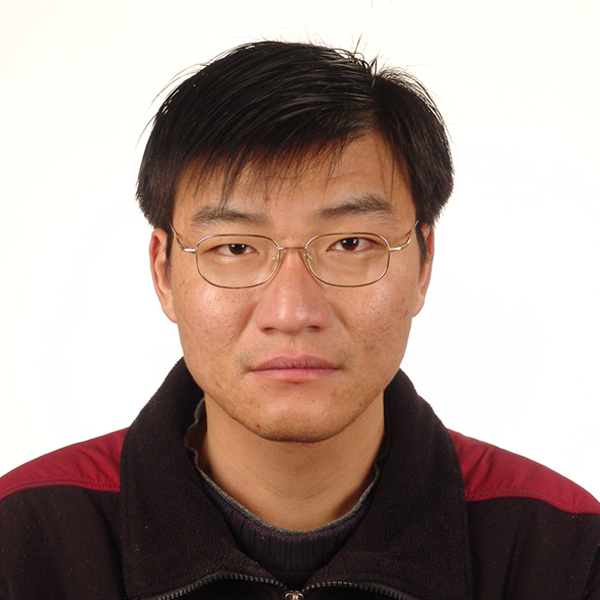 ZHONG ZHAO
 Undraa Agvaanluvsan is advisor to the Mongolian Minister of Energy and Mineral Resources, working on policy issues of non-conventional energy resources such as oil shale and methane gas resources. She had previously worked as a visiting professor at Stanford University, conducting research on uranium resource development, nuclear energy policy, and smart-grid. Following her successful academic career, Dr. Undraa has worked in several posts in Mongolian government, including appointment to the scientific secretary of the Institute of Strategic Studies at the National Security Council of Mongolia, advisor to Minister of Foreign Affairs and Trade, as well as an appointment as Ambassador-at-large on nuclear energy issues. In addition, in 2007, Dr. Undraa co-founded a research think-tank, the MonAme Research Center, on energy and environmental issues. She started the Mongolian Young Leader Program to connect Mongolian students studying abroad and help them to return to their homeland. She was selected as an Asia 21 Young Leader in 2011. She graduated from the National University of Mongolia with Bachelors and Masters degrees in Physics, followed by a diploma study at the International Centre for Theoretical Physics in Italy. In 2002, she obtained a PhD in physics at North Carolina State University, USA. Following her doctorate she conducted research in nuclear sciences at Lawrence Livermore National Laboratory for several years.
 Dee Lee is Director of the Inno Community Development Oraganization which focuses on public health, poverty alleviation and emerging issues. The organization currently manages nine ongoing projects that include the workers’ hotline, fair-trade online, HBV advocacy campaign. Together with sixteen colleagues spread across three offices in China, Dee is working with thirteen international foundations and brands to provide assistance to more than two million beneficiaries, most of whom are migrant workers in China. Dee started his Labour NGO career in 2007 with the first systematic workers’ hotline in China. He has a Master’s Degree in marketing communication and five years of work experience at a marketing research and PR firm.
 Adnan Malik is a filmaker and TV host based in Karachi. He is currently directing a variety of TV commercials and music videos and he has just completed hosting a travel show on a sixty-year friendship between China and Pakistan. He is also the Video Producer of Coke Studio, a fusion music platform that bridges barriers, celebrates diversity, and encourages unity. Adnan directed the multi-award winning film “Bijli” as well as “The Forgotten Song,” Pakistan’s first documentary on the demise of cinema culture. Adnan also contributed to the Sundance winning “Why We Fight, A Jihad for Love” and the indie film “Slackistan.” In addition, Adnan is an organizing member of the Karachi Film Festival and founder of ‘Turn the Tide’, a collective of young professionals that raised $150,000 from around the world for environmental emergencies in Pakistan. He was also featured in the Asia Society’s 2010 report, Making a Difference through the Arts. Adnan was educated at Vassar College.
 Gokilavani Muthusamy is Vice President and Head of Diversity and Inclusion, Asia Pacific, at Bank of America Merrill Lynch. Based in Hong Kong, she is responsible for proactively evaluating the Bank’s diversity and inclusion needs and driving the strategy and execution of critical diversity and inclusion projects across 12 countries across the Asia Pacific platform. Prior to joining the Bank, Goki worked in a non-profit organization focusing on youth and development, where she successfully completed projects in Botswana and Indonesia. Goki has also been involved in several civil society forums across Asia and Europe advocating the importance of cultural diversity and pluralism. Goki was trained in CCIVS, an organization established by and based in UNESCO, Paris. She also has a B.A. in Psychology from the National University of Singapore.


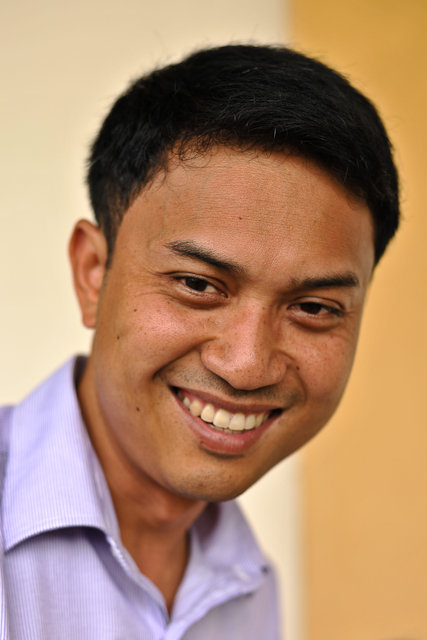





 There is a firmly based private sector (thanks to the economic liberalization in 1991), highly qualified technicians with good analytical brains, and a strong base of competent managers. There are 400 million bright and hardworking young Indians below the age of 25. No country has such great natural resources. English is the main language of business, government, technology, and the law.
 Continuing these ancient Indian principles and focusing on the assessment and treatment of the eyes, Sreedhareeyam was taken to the next level through the dynamic leadership of Dr. NPP Namboothiri, who was trained under the guidance of Vaidyan Trivikraman Namboodiri and other eminent ophthalmology practitioners in Kerala. After his passing away in 2021, Dr. Narayanan Namboothiri has been entrusted with the role of Medical Director and has been leading this prestigious Eye Hospital to newer heights.
 As per Dr. Namboothiri, there are about 40 to 45 Doctors in addition to hundreds of supporting staff here working at Sreedhareeyam and its branches across India and abroad, who are led and trained by some senior Doctors, who are also assisting in the treatment of patients here and other branches.
 Among the thousands of successful cases, Dr. Narayanan recalls how Sreedhareeyam could help restore the vision for Rose Mary Odinga, the daughter of Raila Odinga, former Prime Minister of Kenya in 2023. After being diagnosed with a brain tumor in 2017, Odinga’s daughter had undergone surgery in Nairobi. But in the post-operative period, Rosemary had complained of severe loss of eyesight. She travelled to India in 2019 and underwent treatment at Sreedhareeyam, which helped her vision to restore.
 Similar stories by people from abroad and in India are not uncommon. Ralitsa Dutch, a 37-year-old patient from the Netherlands shared about her experience at Sreedhareeyam and Ayurveda this way: “I experienced optic neuritis, an inflammation of the optic nerve in relation to a Multiple Sclerosis (MS) relapse. Since then, my right eye has been heavily impaired. In 2013, when allopathic medicine deemed my case as “hopeless,” I started looking at alternative treatments and got to know about Ayurveda. The decision to come to India and undergo Ayurvedic treatment turned out to be life changing. After a three month stay at a specialized Ayurvedic MS center, my right eye “woke up” for the first time. After three consecutive stays, my MS stabilized, and I have not had any relapses ever since.”
 Dr. Namboothiri thanked the Modi government in India, saying “It is very helpful that the Modi Government promotes Ayurveda. The government is doing many things, and he is a very good ambassador for Ayurveda as well as Yoga. An All-India Institute of Ayurveda has been started in Delhi with centers in Gujarat and Goa. The creation of Ayush Ministry is a big boost for the ancient medical traditions of Inda.”
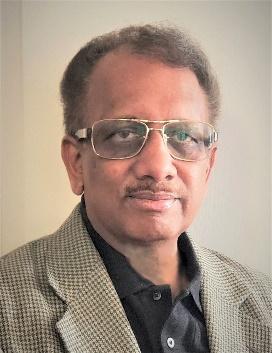 entrepreneurship. He is an
 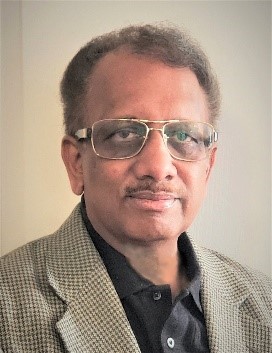 Author: Prof. Bellamkonda K. Kishore, M.D., Ph.D., MBA is an academician and innovator turned to entrepreneurship. He is an