Pope Leo XIV delivered his first homily as pontiff on Sunday, marking the start of a new era in the Catholic Church. In his address, he acknowledged the gravity of the moment, expressing humility as he assumed his new role. “With fear and trembling,” he said, he would take on the immense responsibility before him, striving to serve with “faith and joy.”
The homily came during the Holy Mass for the Beginning of the Pontificate, held in St. Peter’s Basilica at the Vatican. Earlier that morning, Pope Leo was driven in an open-top popemobile through St. Peter’s Square, where approximately 100,000 people had gathered to see him, according to the Vatican’s press office.
In his homily, Pope Leo spoke candidly about the pressing challenges facing the world. He highlighted the divisions and suffering seen globally, stating, “Too much discord, too many wounds caused by hatred, violence, prejudice, the fear of difference, and the economic paradigm that exploits the Earth’s resources and marginalizes the poorest.”
Addressing the Catholic faithful worldwide, now numbering around 1.4 billion, the pope called on them to embrace a broader vision. He urged believers not to isolate themselves in exclusive circles but to instead foster outreach and compassion. “We are called to offer God’s love to everyone, in order to achieve that unity which does not cancel out differences but values the personal history of each person and the social and religious culture of every people,” he declared.
He also warned against attitudes of superiority, encouraging a humble and inclusive missionary spirit. “Let us not shut ourselves in our small groups,” he said. Instead, the Church should aim to connect with all humanity, leaving behind any sense of being “superior to the world.”
The inaugural mass brought together not only high-ranking Church officials but also a notable array of international dignitaries and political leaders. Among those in attendance were U.S. Vice President JD Vance and Secretary of State Marco Rubio. Canadian Prime Minister Mark Carney and Australian Prime Minister Anthony Albanese also participated in the historic ceremony.
In a show of global religious unity, representatives from various faiths attended the event. The Vatican’s Holy See press office reported the presence of delegates from the Ecumenical, Jewish, Muslim, Hindu, Buddhist, Sikh, Zoroastrian, and Jain communities.
Before the mass began, Vance and Ukrainian President Volodymyr Zelenskyy exchanged greetings and shook hands. Later in the day, Pope Leo held a private audience with Zelenskyy and his wife, according to the Vatican. Additionally, the pope met with Peruvian President Dina Boluarte prior to the mass.
Pope Leo, previously known as Cardinal Robert Prevost, is 69 years old and hails from Chicago, Illinois. His election on May 8 marked a historic moment, as he became the first American ever chosen to lead the Catholic Church.
During the ceremony, Filipino Cardinal Luis Antonio Tagle presented Leo with the Ring of the Fisherman. This symbolic ring commemorates Saint Peter, the Church’s first pope, and will be worn by Pope Leo throughout his time in office.
The newly installed pope also paid tribute to his predecessor, Pope Francis, who died on April 21 following a prolonged hospital stay. Reflecting on his passing, Leo stated, “His death filled our hearts with sadness.”
Pope Leo also offered a glimpse into the papal conclave that culminated in his selection earlier this month. As he described the momentous gathering in the Sistine Chapel, he remarked, “We could feel the working of the Holy Spirit.” He likened the spiritual harmony among the 133 cardinals to a musical composition, saying the Holy Spirit “was able to bring us into harmony, like musical instruments, so that our heartstrings could vibrate in a single melody.”
Expressing a deep sense of humility, Leo said, “I was chosen, without any merit of my own, and now, with fear and trembling, I come to you as a brother, who desires to be the servant of your faith and your joy, walking with you on the path of God’s love, for he wants us all to be united in one family.”
As the mass neared its end and the Regina Caeli Prayer was about to be read, the Vatican reported that the crowd had grown significantly, with an estimated 200,000 people filling the square and surrounding streets.
In his final remarks before the prayer, Pope Leo warmly greeted the multitude, thanking those who had journeyed from distant places to witness the occasion. He acknowledged the emotional weight of the moment, stating that he had “strongly felt the spiritual presence of Pope Francis accompanying us from heaven.”
Turning attention to global suffering, Leo reminded the faithful of their duty to care for those in pain and crisis. “In the joy of faith and communion, we cannot forget our brothers and sisters who are suffering because of war,” he said.
He spoke of several ongoing global conflicts, highlighting the devastation in Gaza. “In Gaza, the surviving children, families and elderly are reduced to starvation,” he said. He also drew attention to the renewed violence in Myanmar, lamenting that “new hostilities have cut short innocent young lives.”
On the situation in Ukraine, Pope Leo expressed a longing for peace, noting, “Finally, war-torn Ukraine awaits negotiations for a just and lasting peace.”
As his first day as pope came to a close, Leo XIV had already begun to establish a clear tone for his papacy—one of humility, inclusiveness, and concern for the marginalized and suffering. His message was both a personal pledge and a call to action for the global Church: to walk together in faith, never forgetting those in need, and to offer love that transcends divisions.
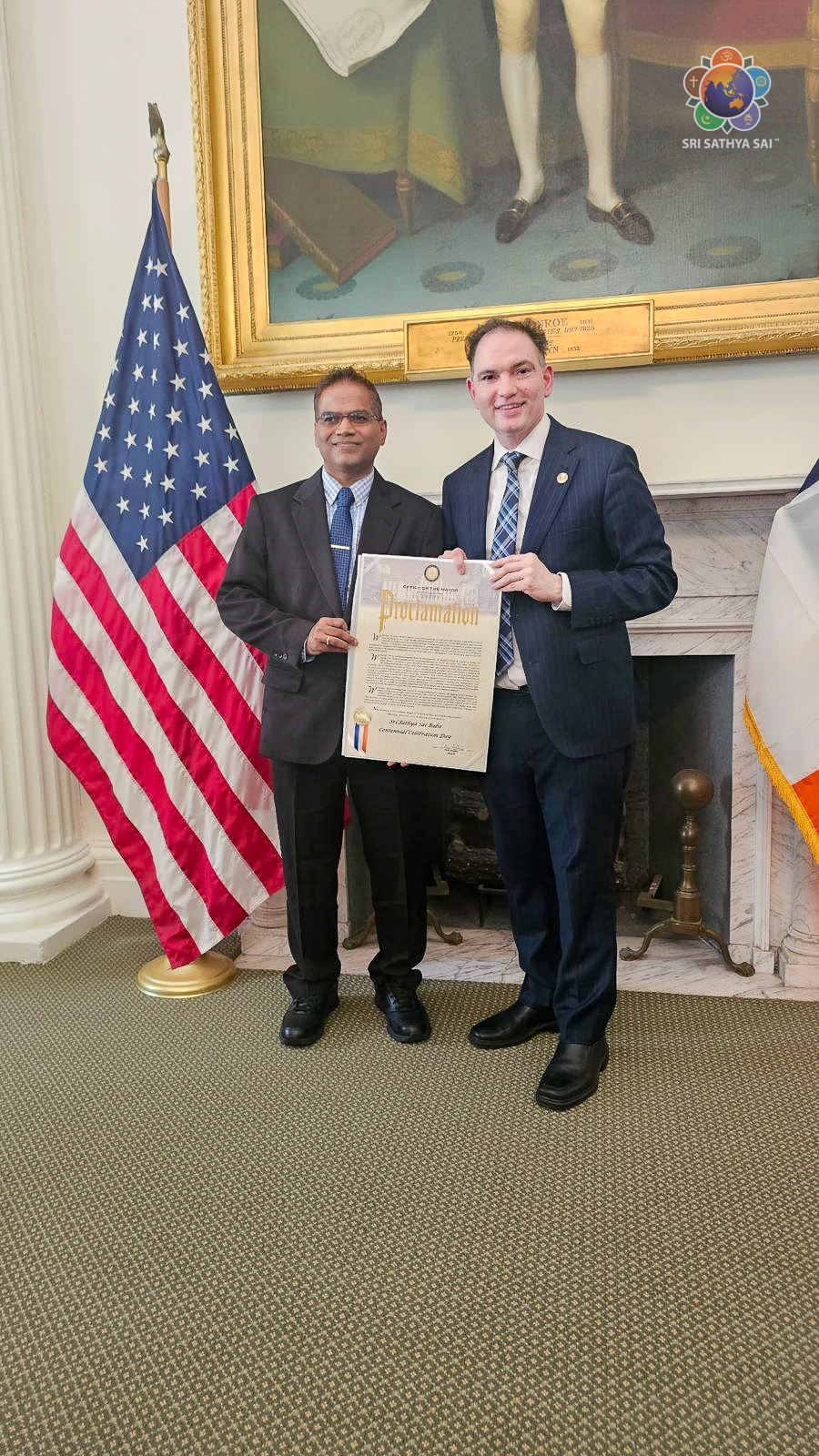 The proclamation ceremony took place in a formal setting and was presented by Deputy Commissioner Mr Dilip Chauhan. He was joined by officials from the Mayor’s Office and representatives of the Sri Sathya Sai Global Council, who gathered to witness this significant occasion. The proclamation celebrates Bhagawan’s life and philosophy, reflecting the city’s appreciation for his spiritual teachings and humanitarian work.
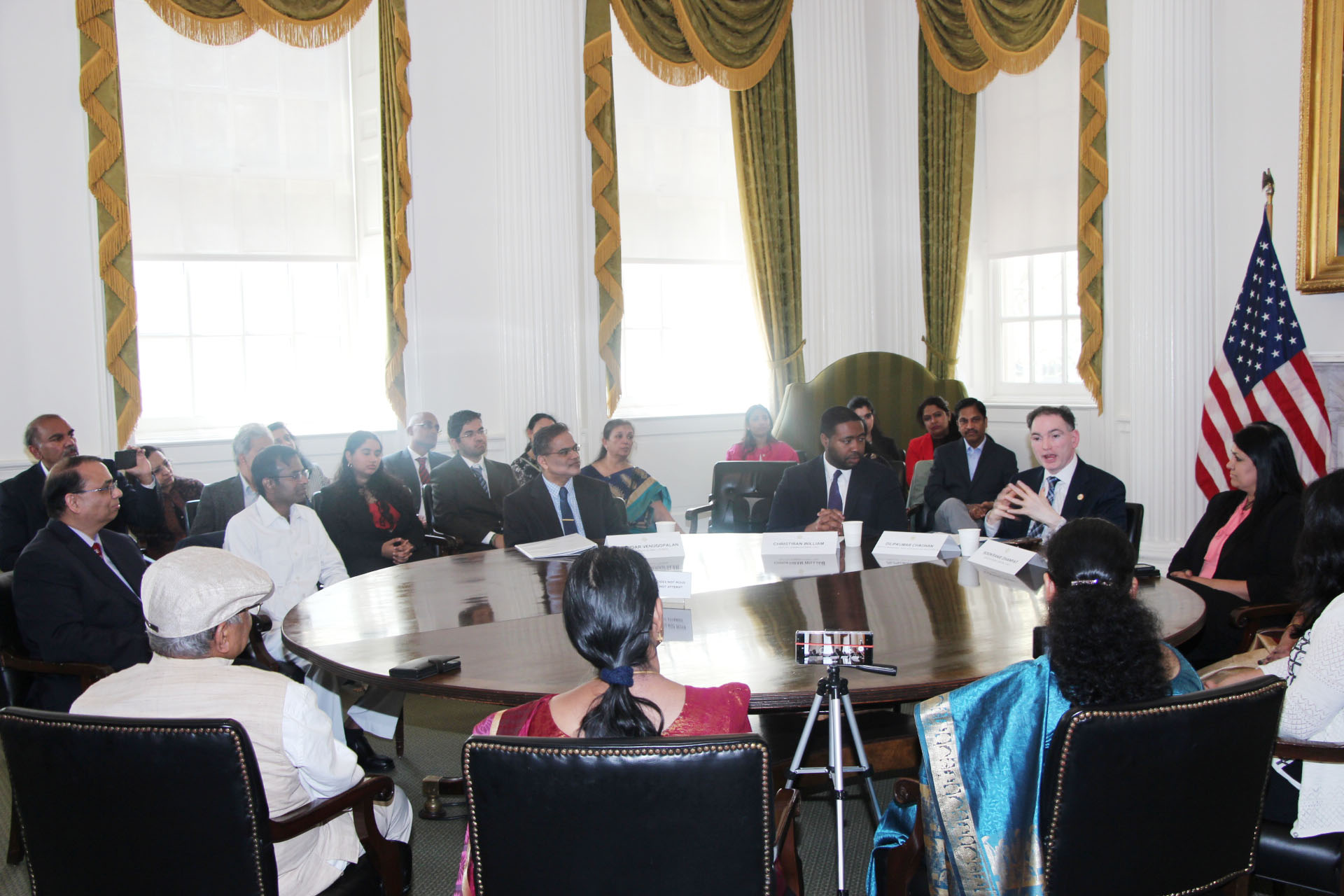 States. These include food distribution, hygiene kit supply, and youth education initiatives based on human values. Their tireless dedication was recognized as a continuation of Sri Sathya Sai Baba’s teachings, emphasizing love, service, and compassion.
 One of the central figures present at the event, Sundar Venugopalan of the Sri Sathya Sai Global Council in Flushing, New York, accepted the proclamation on behalf of the community. Reflecting on the teachings of Sri Sathya Sai Baba, he emphasized that the core principle of all religions is fundamentally the same. “Sri Sathya Sai Baba’s main teaching was that the essence of all religions is one, urging us to see the divine spark within each and every creation,” Venugopalan stated. He added that Sai Centers around the world, including those in New York, promote spiritual growth and encourage service-oriented community engagement. “This centennial year, we are committed to expanding our service to those in need right here in New York City,” he affirmed.
 in the spirit of Bhagawan’s teachings. The proclamation from a city as diverse and globally influential as New York carries symbolic weight, reinforcing the universality of Sri Sathya Sai Baba’s message and mission. In the words of the organizers, “We offer our deepest gratitude to Bhagawan for this divine blessing. This recognition from New York City—one of the world’s most vibrant and diverse cities—beautifully echoes Bhagawan’s vision of global unity, service, and spiritual harmony.”
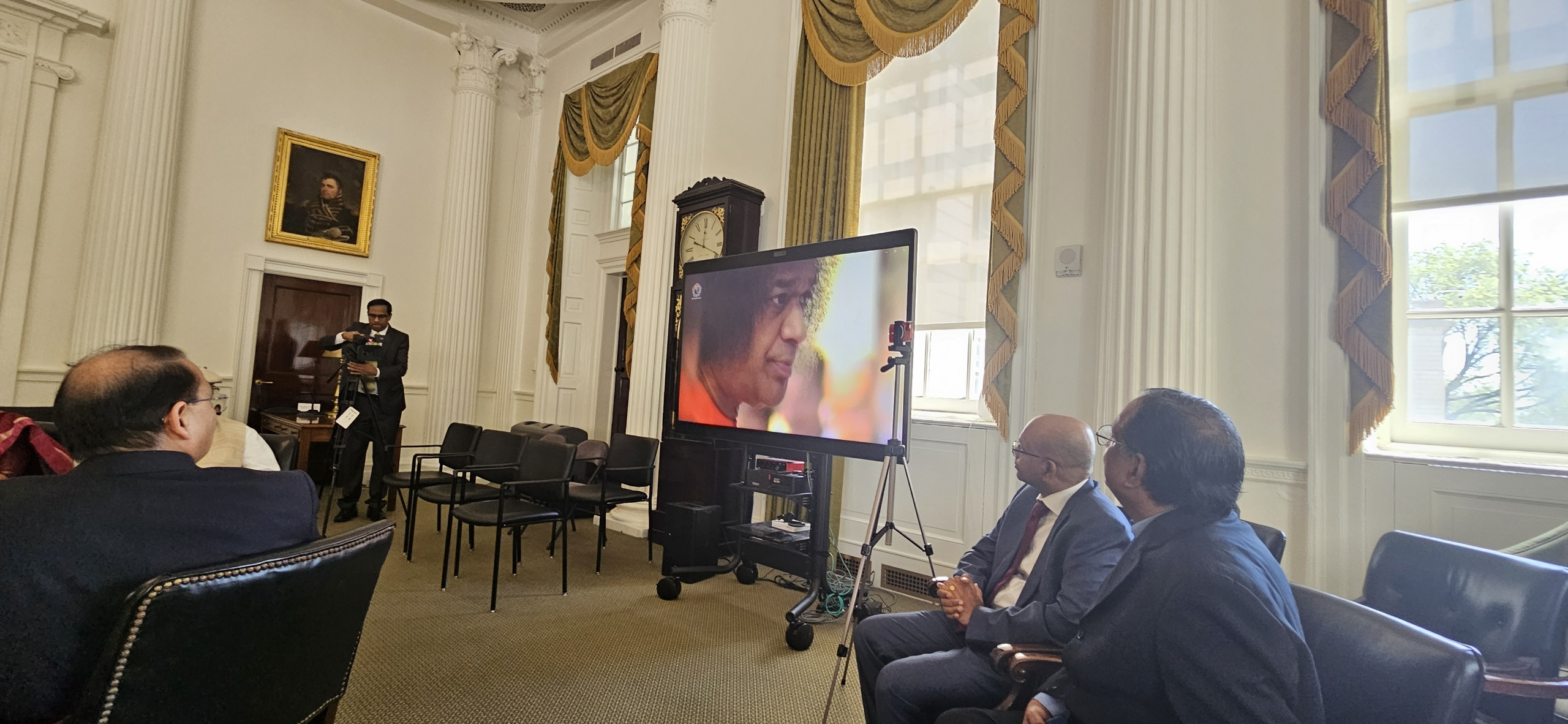
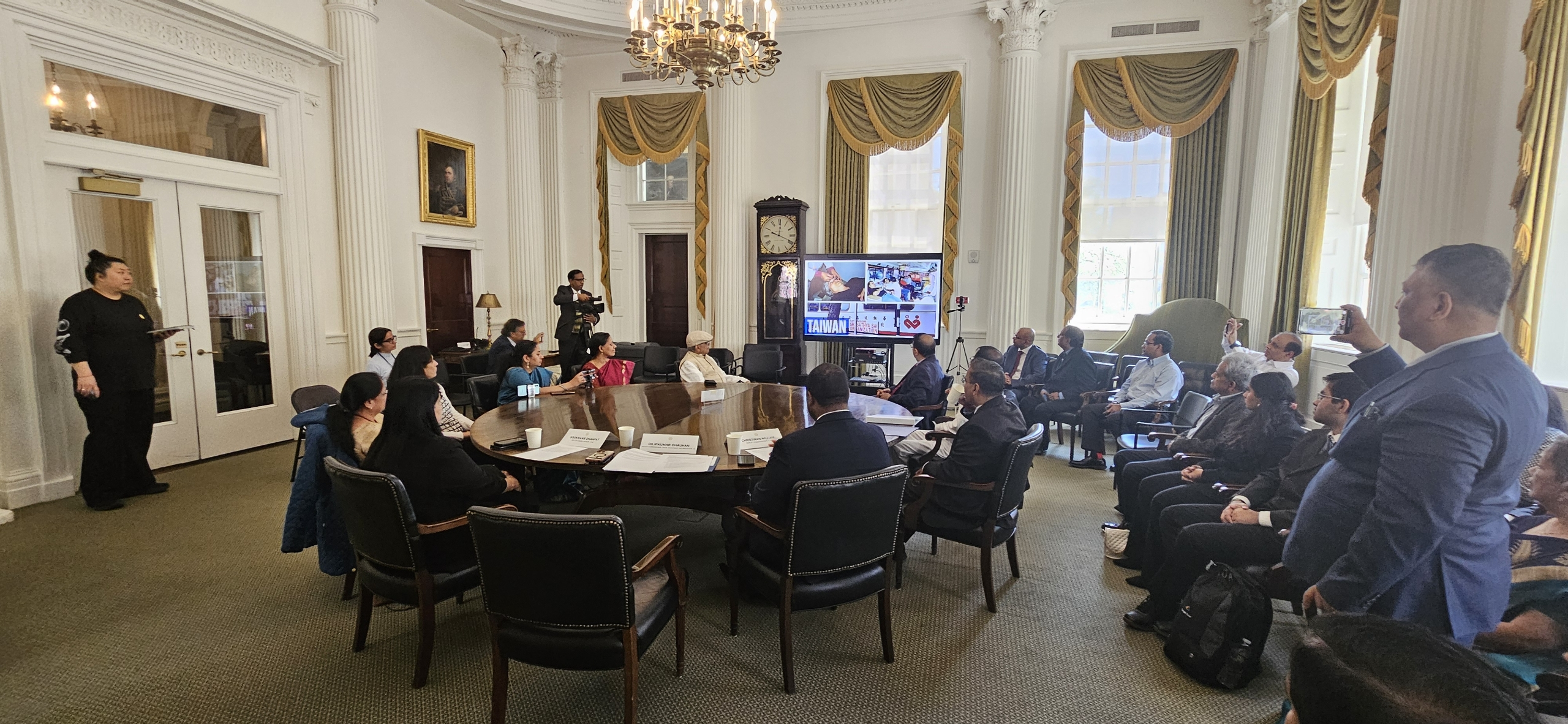 The ceremony, enriched by heartfelt expressions and multimedia tributes, concluded with renewed enthusiasm among the community to continue their work. The video documentary presented during the event provided a compelling overview of Sri Sathya Sai Baba’s global outreach efforts—ranging from free medical care and educational services to disaster relief and interfaith dialogue initiatives. These efforts were shown to be coordinated and implemented by volunteers and organizations inspired by his guidance and values.
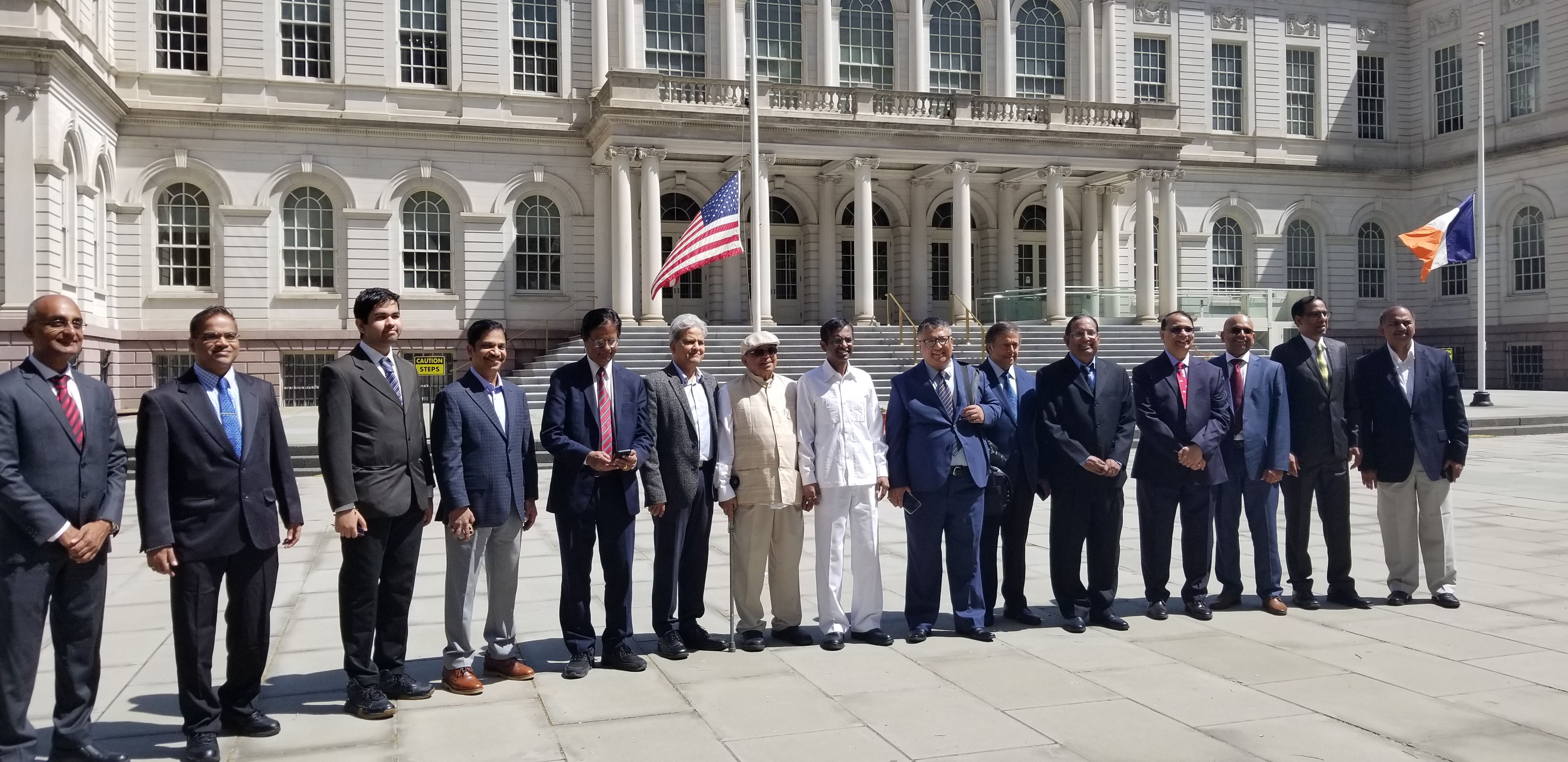 not only for his devotees but also for anyone committed to the ideals of love, unity, and humanitarian service. As emphasized by the proclamation, the legacy of Bhagawan continues to be felt through the actions of his followers who “Love All, Serve All” and live by the principle to “Help Ever, Hurt Never.”


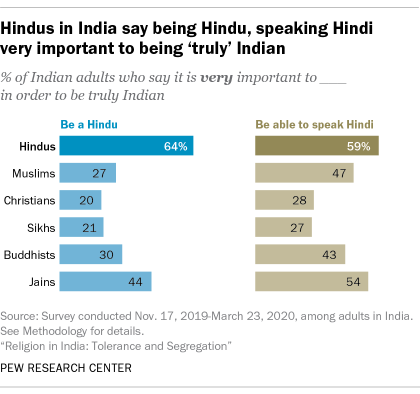
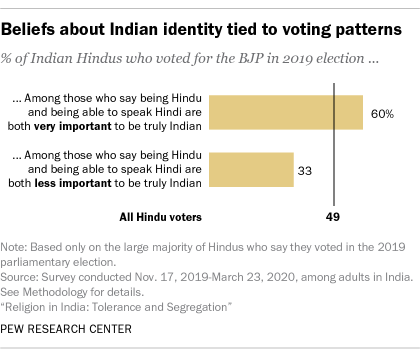
 Hindu nationalism in India also has a linguistic dimension. Hindus are more likely than other Indians to associate national identity with the Hindi language. While India has dozens of major languages, a majority of Hindus (59%) feel that being able to speak Hindi is very important to being truly Indian. Hindus who link their religion with national identity tend also to link the Hindi language with being authentically Indian.