7 In 10 U.S. Adults Describe Themselves As Spiritual In Some Way, Including 22% Who Are Spiritual But Not Religious
In recent decades, Americans have become less likely to identify with an organized religion. Yet a new Pew Research Center survey shows that belief in spirits or a spiritual realm beyond this world is widespread, even among those who don’t consider themselves religious. The survey finds that:
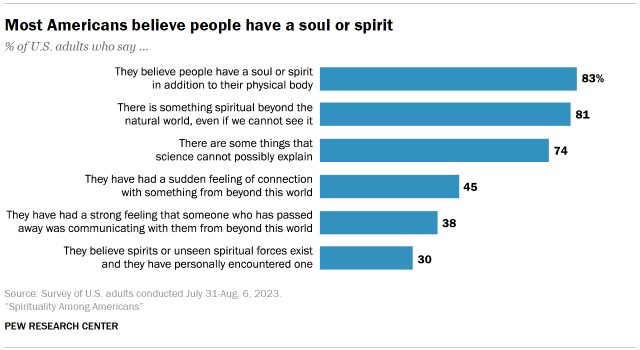 83% of all U.S. adults believe people have a soul or spirit in addition to their physical body.
81% say there is something spiritual beyond the natural world, even if we cannot see it.
74% say there are some things that science cannot possibly explain.
45% say they have had a sudden feeling of connection with something from beyond this world.
38% say they have had a strong feeling that someone who has passed away was communicating with them from beyond this world.
30% say they have personally encountered a spirit or unseen spiritual force.
Overall, 70% of U.S. adults can be considered “spiritual” in some way, because they think of themselves as spiritual people or say spirituality is very important in their lives.
These are among the key findings of a new Pew Research Center survey of American spirituality, conducted July 31-Aug. 6, 2023, among a nationally representative sample of 11,201 members of our American Trends Panel.
This report covers the following topics:
Measuring spirituality
Spiritual beliefs
Spiritual practices
Spiritual experiences
Who are ‘spiritual but not religious’ Americans?
Is spirituality increasing?
Because this is the first time Pew Research Center has asked many of these questions about beliefs, practices and experiences that may be viewed as spiritual, we do not know whether they are more – or less – common today than they were in the past.
Previous research has found a decline in traditional religious beliefs and practices. That includes a drop in the shares of U.S. adults who say they believe in God with absolute certainty, attend religious services regularly, pray daily and consider religion to be very important in their lives.
Some news articles have speculated that young Americans may be turning away from organized religion and replacing it with their own mix of spiritual elements drawn from many sources, including Asian religions and Native American traditions, as well as New Age beliefs about crystals, tarot cards and the like. Media coverage has often focused, in particular, on people who describe themselves as “spiritual but not religious.”
While Pew Research Center surveys have documented a decline since 2007 in the percentage of Americans who identify as Christian, the evidence that “religion” is being replaced by “spirituality” is much weaker, partly because of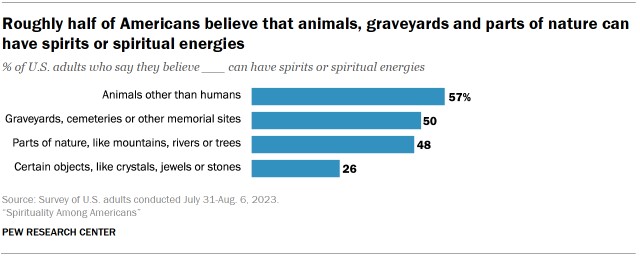 the difficulty of defining and separating those concepts.
This survey is intended to help fill the gap. We plan to use our new questions about spiritual beliefs, practices and experiences as a baseline, re-asking them periodically to see which measures are rising, which are falling and which are stable. And rather than imposing a definition of spirituality, we will let survey respondents tell us what it means to them and how they practice it.
What is spirituality?
Americans’ beliefs about spirits and the afterlife
An overwhelming majority of U.S. adults (83%) say they believe that people have a soul or spirit in addition to their physical body. A smaller majority (57%) believes that animals other than humans can have their own spirits or spiritual energies.
Half of Americans believe that spirits can inhabit burial places, such as graveyards, cemeteries or other memorial sites. And a similar share (48%) says that parts of the natural landscape – such as mountains, rivers or trees – can have spirits or spiritual energies.
 About a quarter of U.S. adults believe that spirits or spiritual energy can reside in certain objects, such as crystals, jewels or stones (26%).
What do Americans believe about life after death?
The survey finds that 71% of Americans believe in heaven, while somewhat fewer – 61% – believe in hell and 60% believe in both. These numbers have held steady in recent years.1 But there is less consensus about whether the dead have various powers, such as the ability to follow what is happening in this world and to watch out for loved ones who are alive.
We explored these beliefs for the first time by asking whether it is “definitely true,” “probably true,” “probably not true” or “definitely not true” that people who have already died can do a variety of things. (Respondents also were able to say they were “not sure.”)
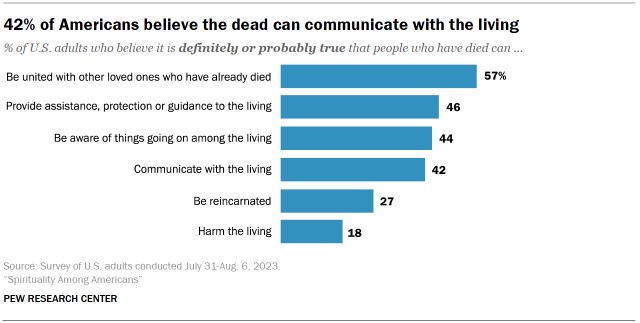
More than half of U.S. adults (57%) believe that in the afterlife, people definitely or probably can reunite with loved ones who also have died.
About four-in-ten or more Americans say that dead people definitely or probably can assist, protect or guide the living (46%), be aware of what’s going on among the living (44%) or communicate with people who are still living (42%). Overall, U.S. adults are more than twice as likely to say that the dead can help the living (46%) as they are to say that the dead can harm the living (18%).
About a quarter of U.S. adults believe it is definitely or probably true that the dead can be reincarnated (27%), defined in the survey as being “reborn again and again in this world.”2
Spiritual experiences and practices
Some kinds of spiritual experiences seem to be relatively common. For example, 46% of U.S. adults say that at least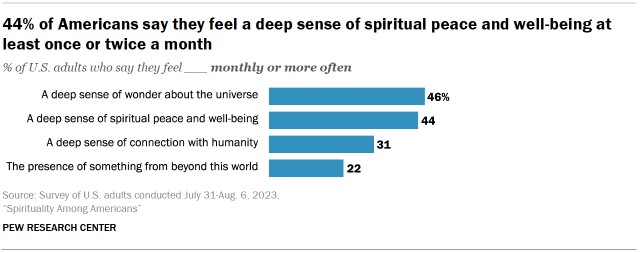 once or twice a month they feel a deep sense of wonder about the universe. A similar share (44%) say they feel a deep sense of spiritual peace and well-being that often.
Feeling a deep sense of connection with humanity and feeling “the presence of something from beyond this world” are less common. Still, about one-fifth of Americans or more say they have such feelings at least once or twice a month.
To gauge experiences that may be relatively rare, we asked respondents whether they have ever had specific otherworldly experiences.
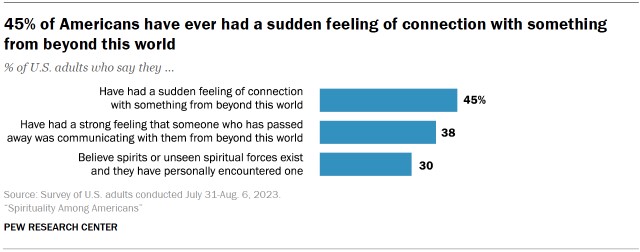 Fully 45% say they have had a sudden feeling of connection with something from beyond this world, and 38% say they’ve had a strong feeling that someone who previously passed away was communicating with them from beyond this world. Three-in-ten say they believe in spirits or unseen spiritual forces and also say they have personally encountered one.
How do Americans practice spirituality?
To measure some common spiritual practices, we asked survey respondents how often they pursue five activities: looking inward or centering themselves, meditating, doing yoga, exercising and spending time in nature.
Whether these activities are spiritual depends, of course, on one’s definition of spirituality. As previously noted, many Americans explain the meaning of “spiritual” by talking about various kinds of connections – such as with God or something bigger than themselves, with their innermost selves, with loved ones who have died or with all humanity.
With that understanding of spirituality in mind, we asked survey respondents to select the most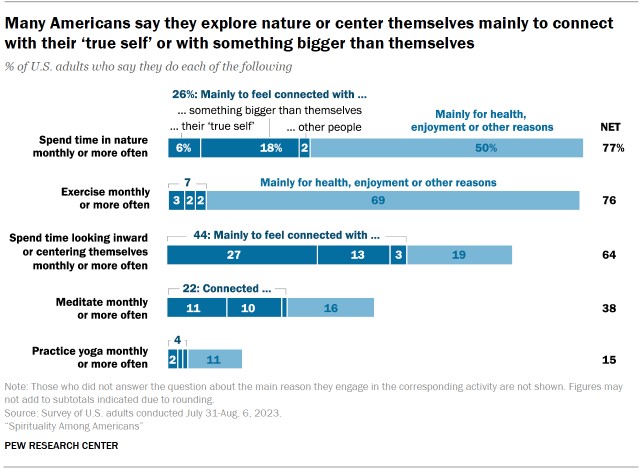 important reason why they engage in each of these activities: Is it to “feel connected” with something bigger than themselves, with their “true self” or with other people? Is it to get health benefits, including relaxation? To have fun and enjoy the experience? Or for other reasons?
A total of 77% of U.S. adults say they spend time in nature at least a few times a month, and 26% say they do so mainly to feel connected, such as with something bigger than themselves (18%) or with their “true self” (6%). Half of Americans say they spend time in nature mainly for health benefits, to enjoy themselves or for other reasons.
By comparison, fewer Americans (64%) say they look inward or center themselves at least a few times each month. But a relatively large share – 44% of all U.S. adults – say they look inward or center themselves mainly to feel connected, including 27% who do it mainly to feel connected with their “true self.”
 Roughly four-in-ten Americans meditate at least a few times a month (38%), including 22% of U.S. adults who meditate mainly to connect with their “true self” (11%) or with something bigger than themselves (10%).
How many Americans gather in spiritual communities?
Americans are more likely to report gathering in religious communities than meeting in spiritual groups. Fully 39% of U.S. adults say they are involved in a religious community, such as a church or religious congregation, while 14% say they are involved in “a spiritual community, such as a group that helps [them] find a connection with something bigger than [themselves], nature or other people.”
Moreover, most people who are involved in a spiritual community are also involved in a religious one: 10% of U.S. adults say they are involved in both kinds of groups, while just 4% of all U.S. adults say they are involved in a spiritual community and not a religious one.
What kinds of things do Americans have for spiritual reasons?
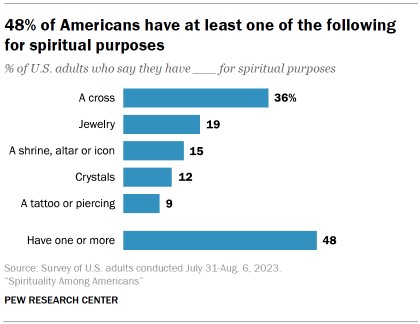
More than one-third of U.S. adults say they have a cross for spiritual purposes, and 19% say they have some jewelry (which could also be a cross) that serves a spiritual purpose.
Also, 15% of Americans say they maintain a shrine, altar or icon in their home; 12% possess crystals for spiritual purposes; and 9% have a tattoo or piercing for a spiritual purpose.
How many Americans are spiritual?
Seven-in-ten U.S. adults think of themselves as spiritual or say that spirituality is very important in their lives. To be sure, most of these people also consider themselves religious or say that religion is very important in their lives. There is enough overlap between what people mean by “spirituality” and what they have in mind by “religion” that nearly half of U.S. adults indicate they are both religious and spiritual.
Still, 22% of U.S. adults fall into the category of spiritual but not religious. The new survey offers a rich portrait of this group, showing what beliefs they hold, how they practice their spirituality, and how they tend to differ from U.S. adults who embrace the “religious” label.
What do ‘spiritual but not religious’ people believe?
The survey finds that on many questions, “spiritual but not religious” Americans – SBNRs, for short – are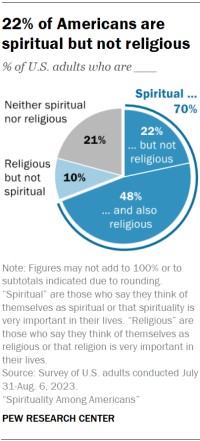 no more spiritual, on average, than U.S. adults who are both religious and spiritual. For example, large majorities in both groups say they believe “people have a soul or spirit in addition to their physical body.” Smaller majoritie“Women suffer a lot of discrimination generally, and so they’re less likely to be willing to stake out a position that could subject them to more discrimination, so they say, ‘I may not be religious but I’m spiritual,’” Cragun said. “And that softens the blow very quickly.”
Politically, the spiritual but not religious identify as Democrats rather than Republicans by a ratio of 2-to-1: — 60% say they identify or lean Democratic; 34% identify or lean Republican. (Among religious Americans only 39% identify or lean Democratic.)
The study, the first of its kind, was fielded in early August. Pew has not previously asked specific questions about spiritual beliefs and practices so the study cannot address decline or growth in spiritual attitudes.
The margin of error for the full sample of 11,201 respondents was plus or minus 1.4 percentage points.
s of both groups believe in the existence of “spirits or unseen spiritual forces.”




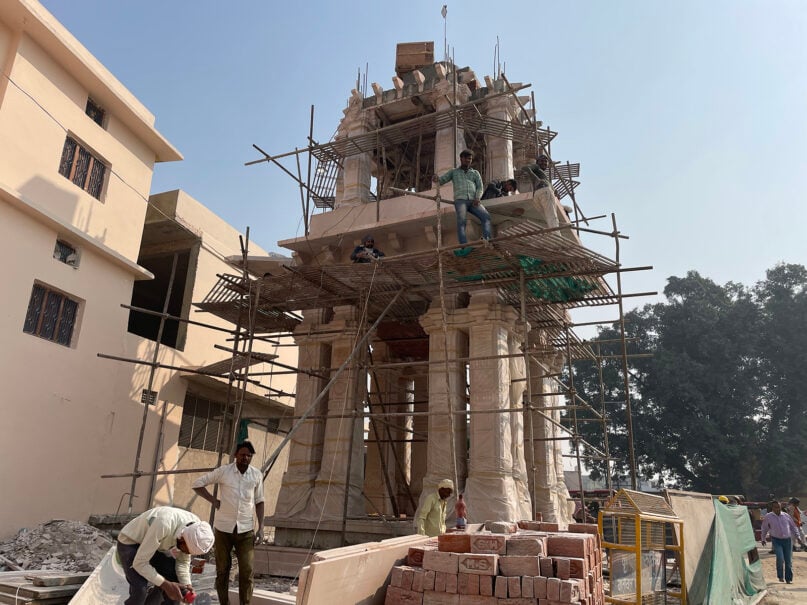
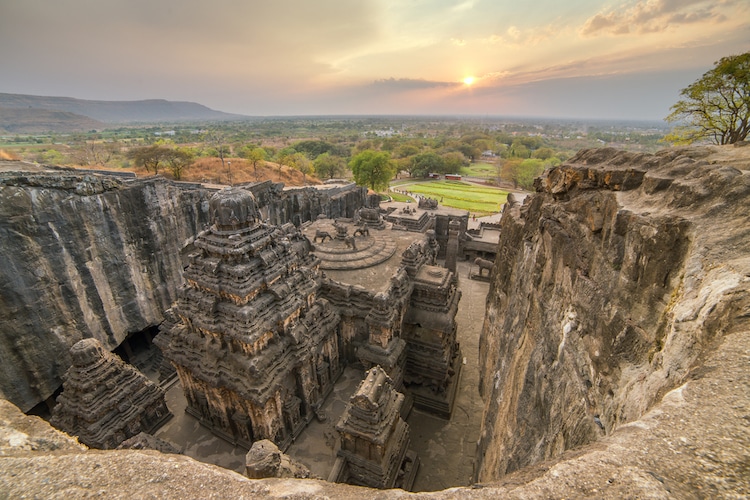 The Temple was said to have been built during the Rashtrakuta dynasty by King Krishna I and his successor King Dantidurga in the eighth century. It appears to have been built over several decades, arguably over an entire century, with contributions from numerous kings and craftsmen of the era. The temple is a tribute to the excellent mechanical and artistic abilities of the ancient Indian craftsmen and is considered one of the greatest examples of Indian rock-cut buildings.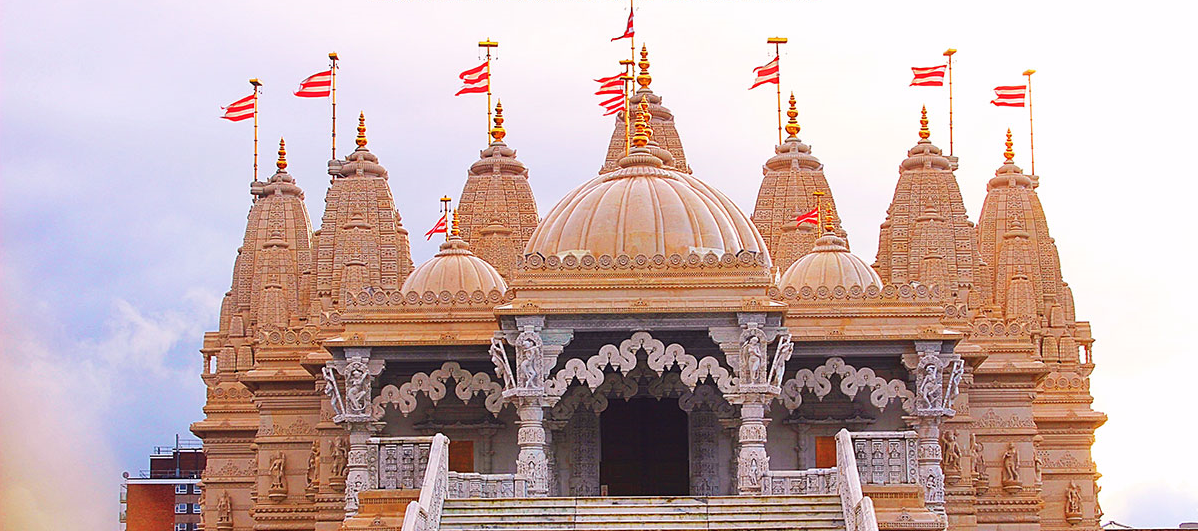
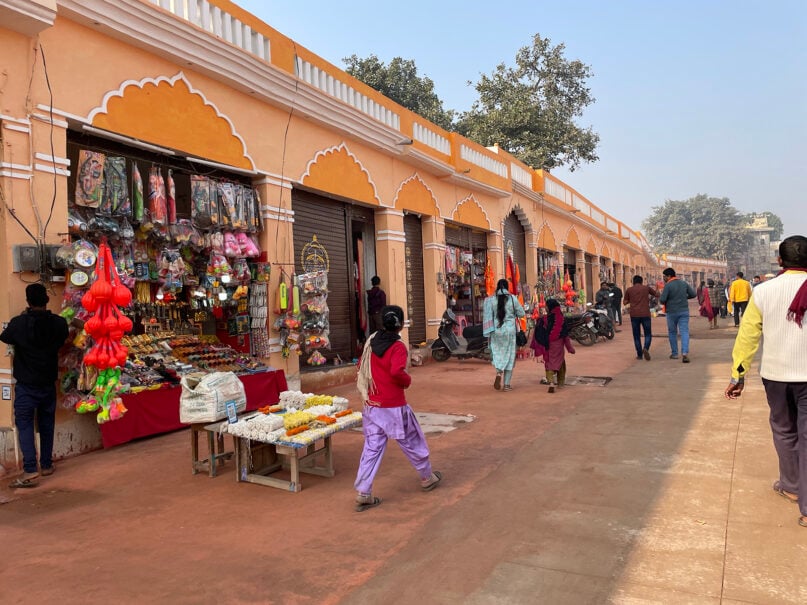
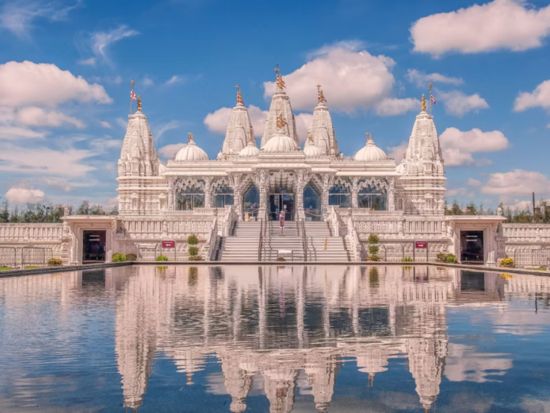 built in 1977 and is now considered among the most famous Hindu temples in the country (it is amazing how many Hindu temples have been built in the last 50 years).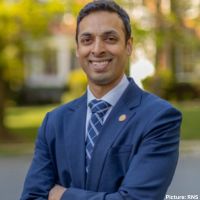
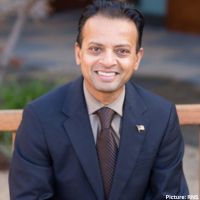

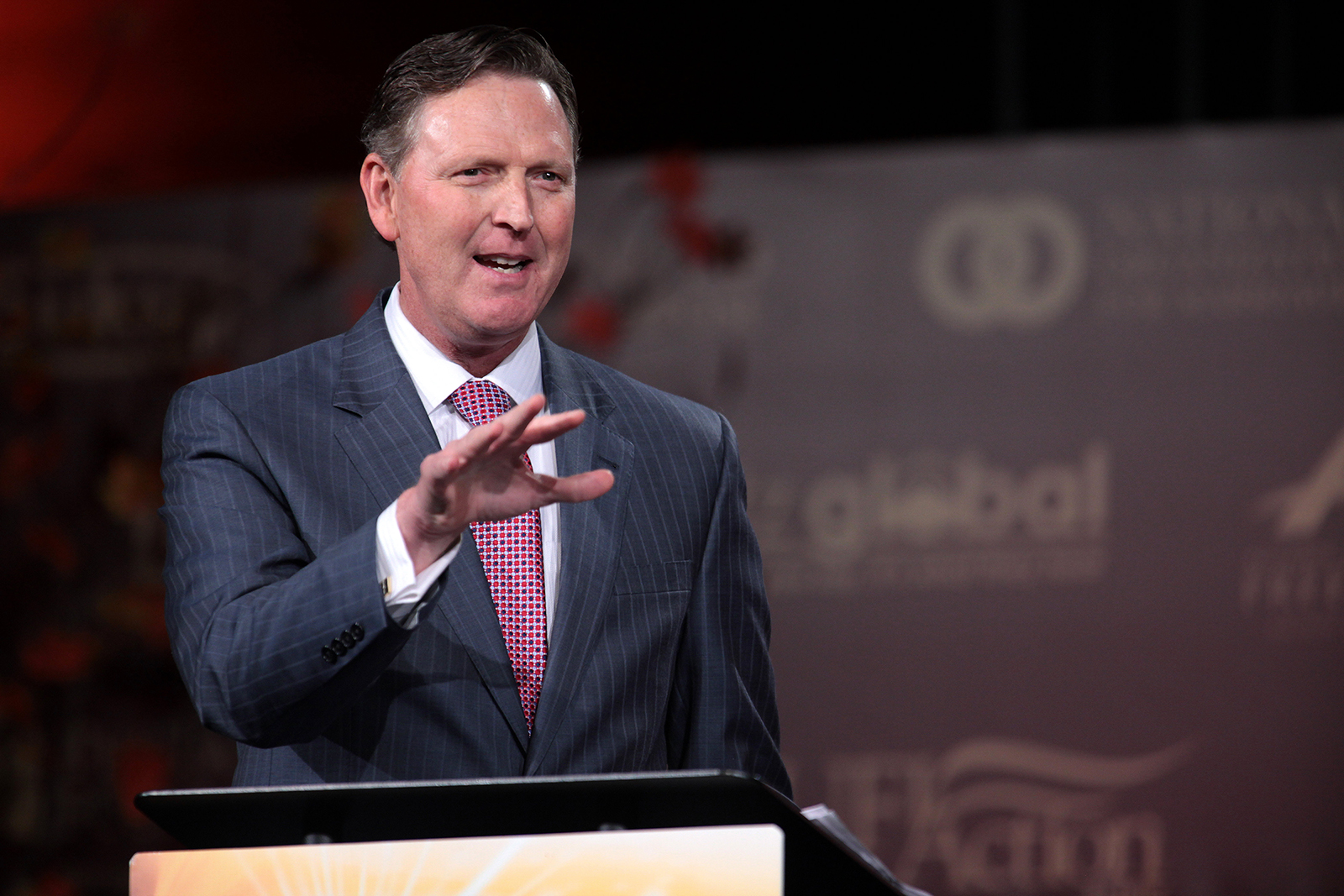
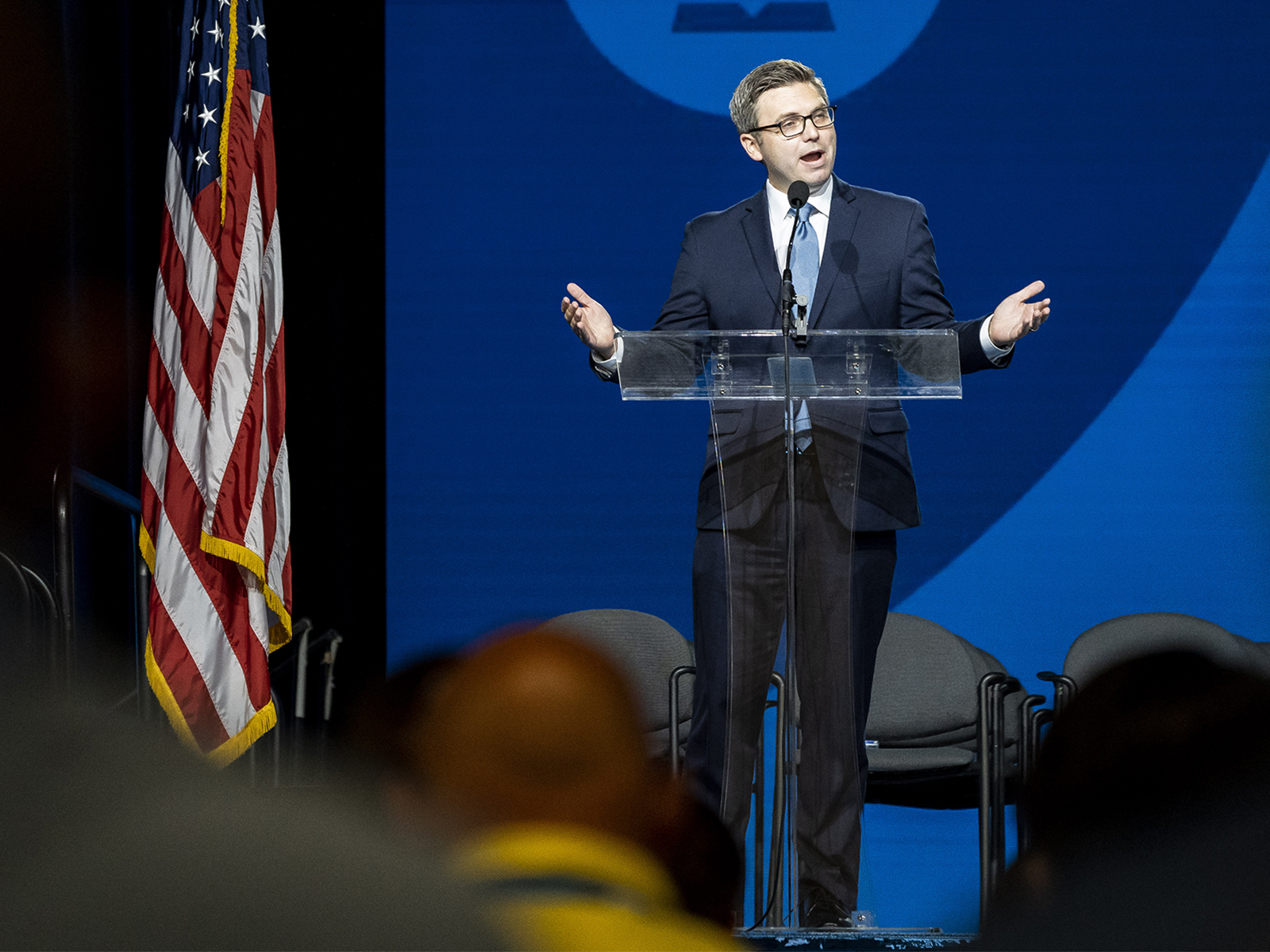
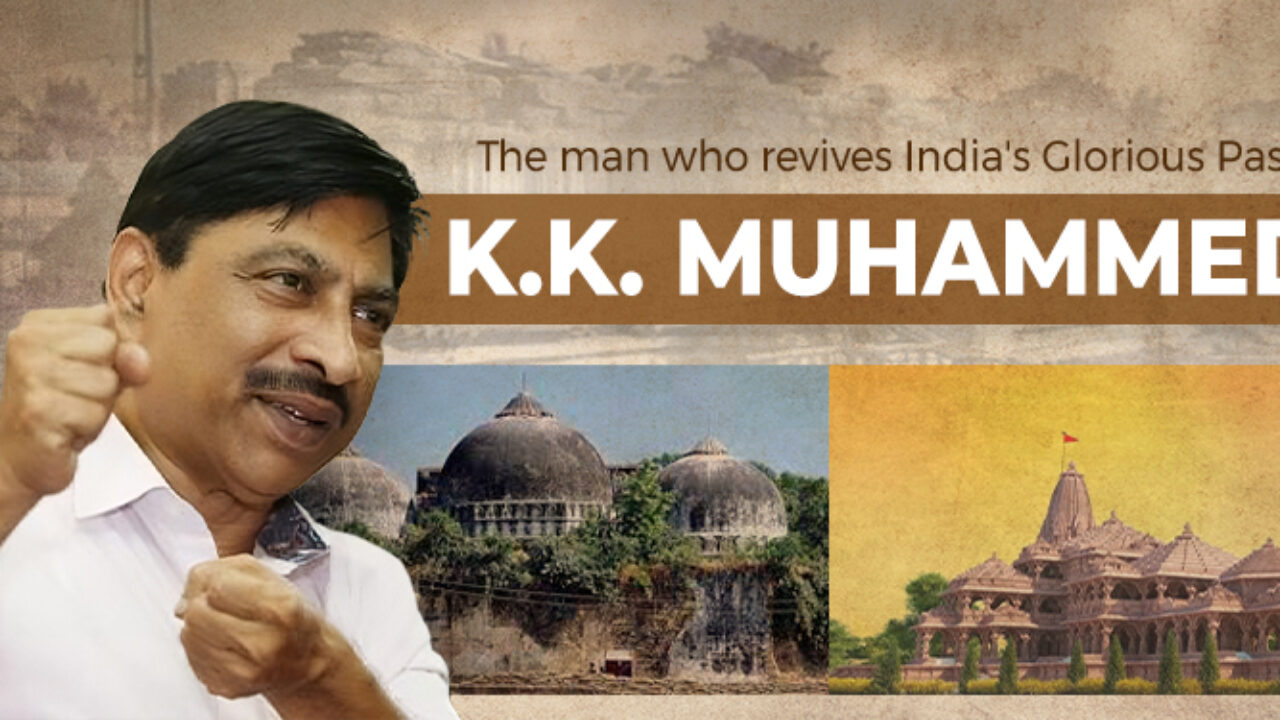 The community memebrs in the audience was pleasantly surprised by the amount of knowledge Muhammed displayed about Hindu traditions, including his flawless recitation of many Sanskrit shlokas from the scriptures.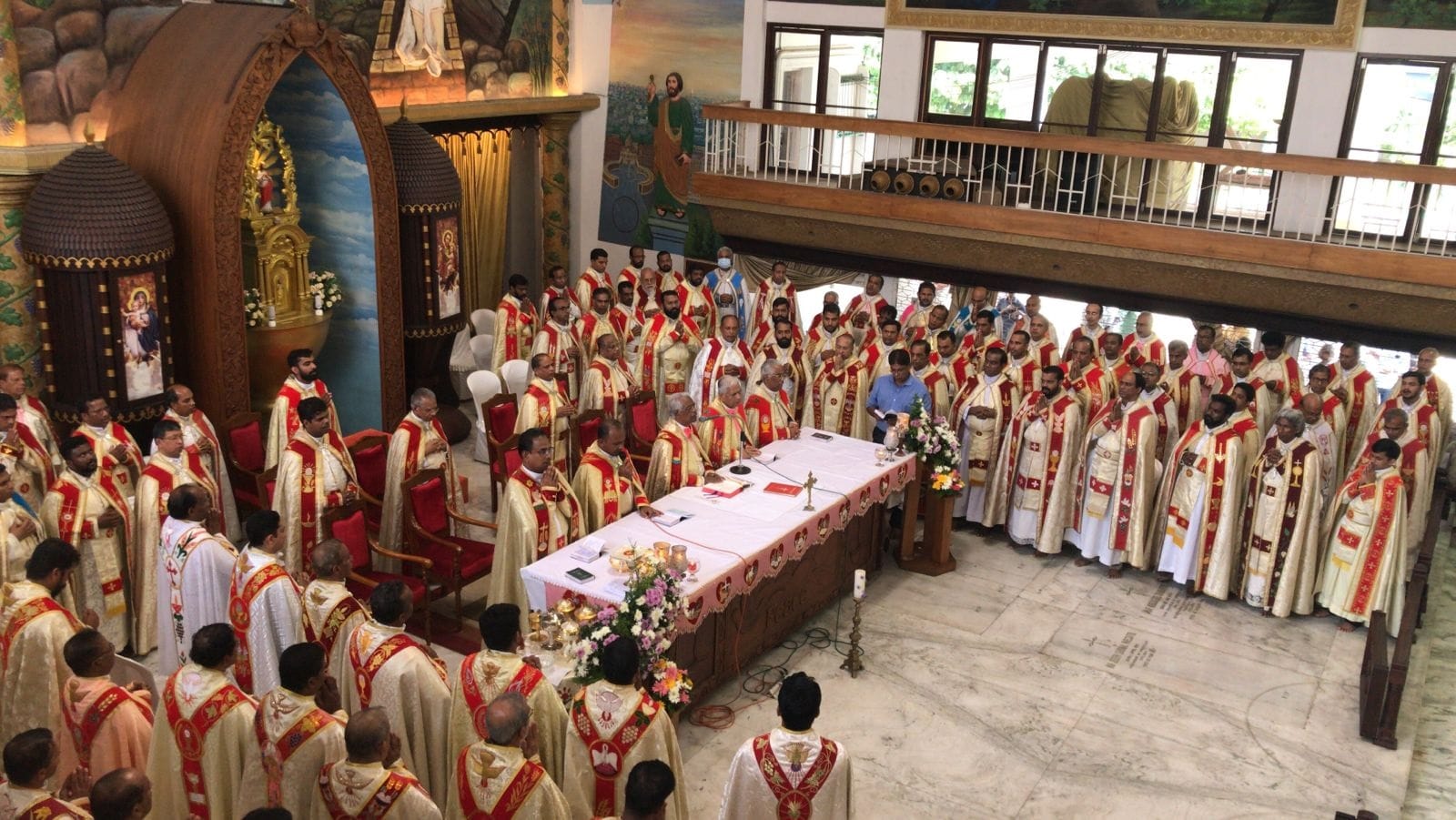
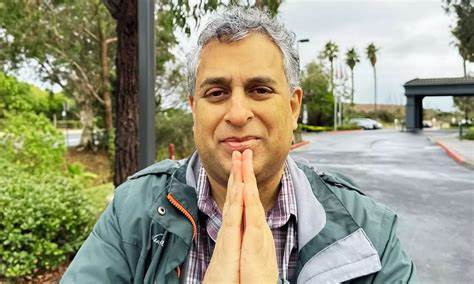 Meghani emphasized the importance of Hindu Americans being proud of their heritage while actively engaging with others to foster better understanding. The Hindu American Foundation, initially volunteer-driven, has now expanded significantly, with plans for further growth to continue advocating for Hindu causes and enhancing awareness of Hinduism in American society.
 Japan
Japan
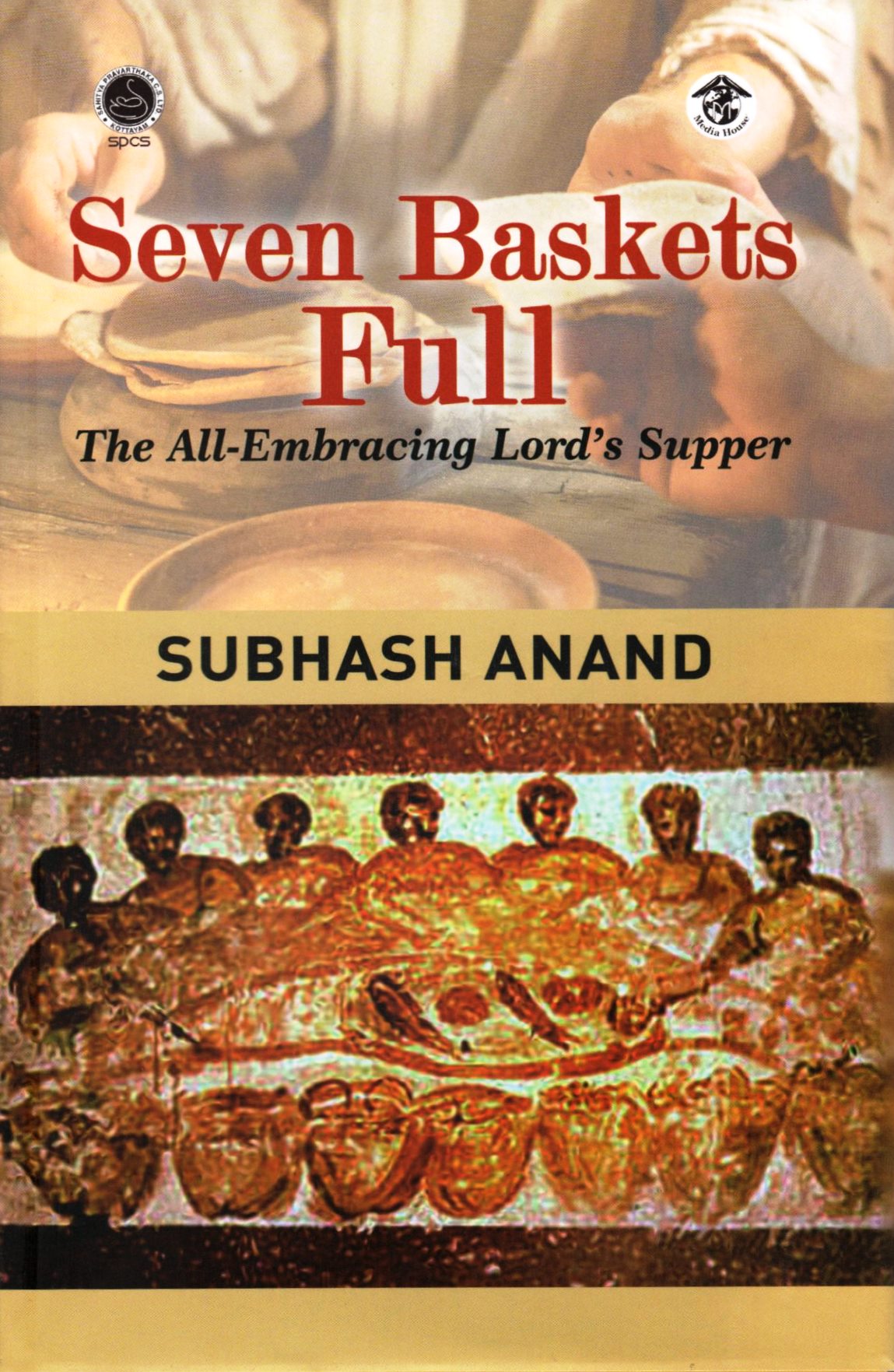 ‘It was September 1967. Some of us were making our ordination retreat. Our most respected professor of systematic theology, Fr. Josef Neuner, SJ, was with us as our guide. We were fortunate to have him: a man deeply in love with Jesus and his Church. During a conversation with him, I asked him: “Could the historical Jesus institute the Eucharist as we understand it today?” He smiled and remained silent. His silence spoke to me. Since then that question kept on popping up in my mind. The years that followed kept me busy with some other studies, followed by years of teaching and accompaniment. My work at Jnana Deep Vidyapeeth, Pune, required that I focus my attention on Indian Philosophy and Religions. After I retired from Jnana Deep Vidyapeeth, and returned to Udaipur in 2009, I got immersed in the work of a Hindi commentary on the Bible. That kept me occupied for the next nine years.
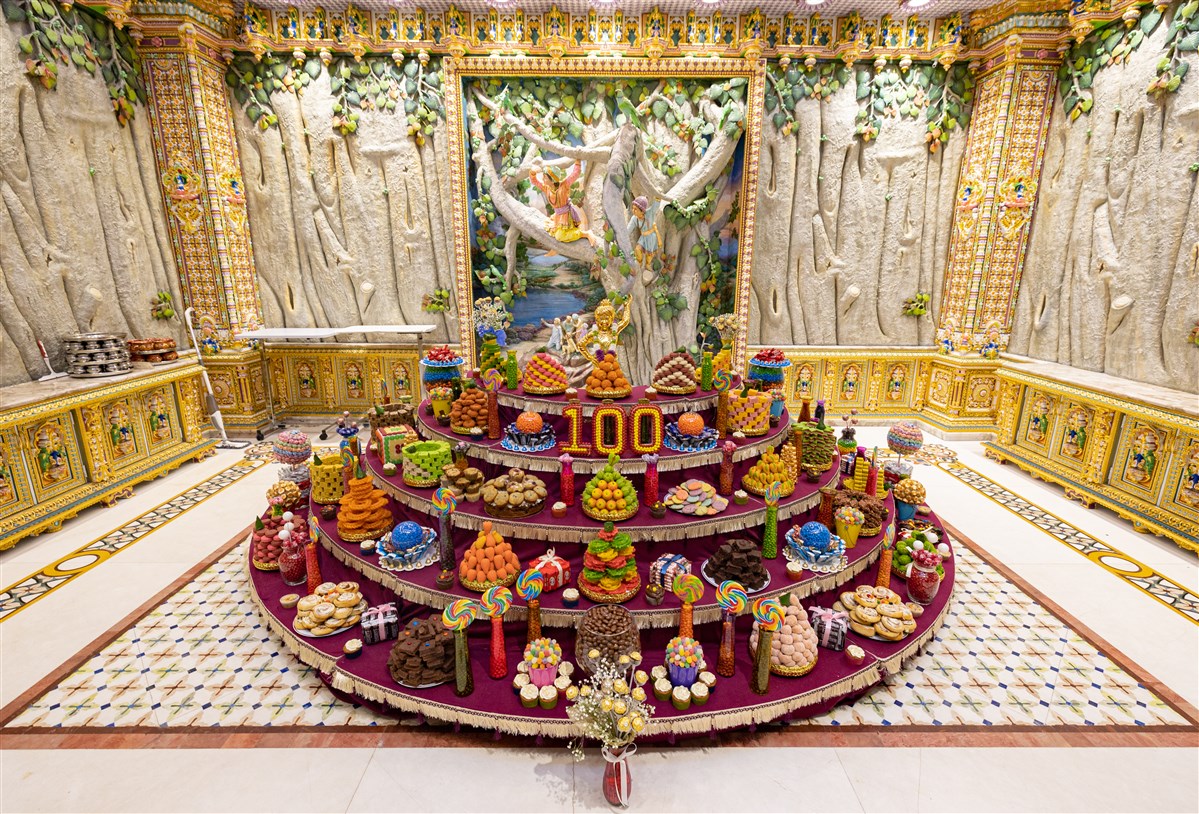
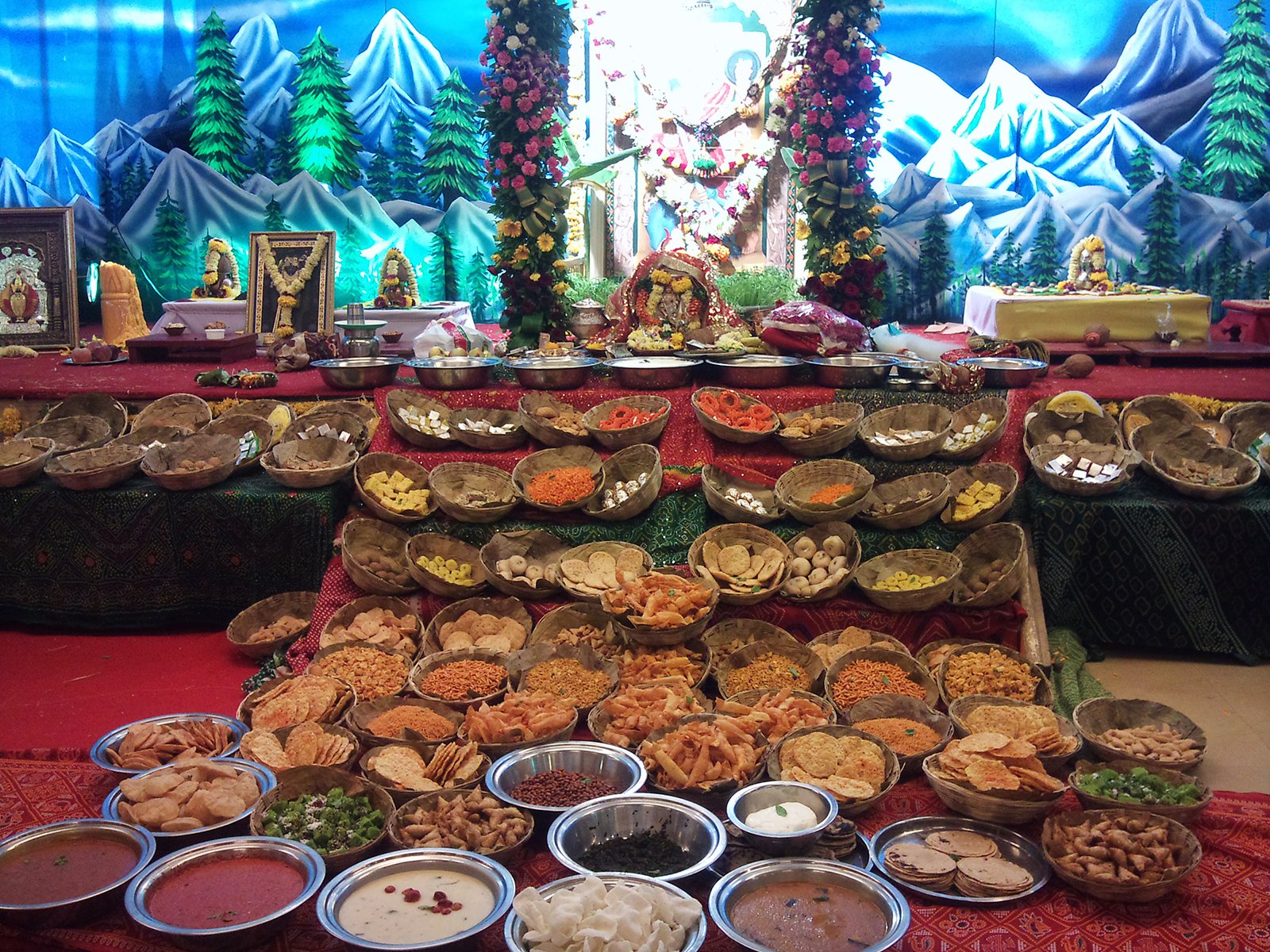
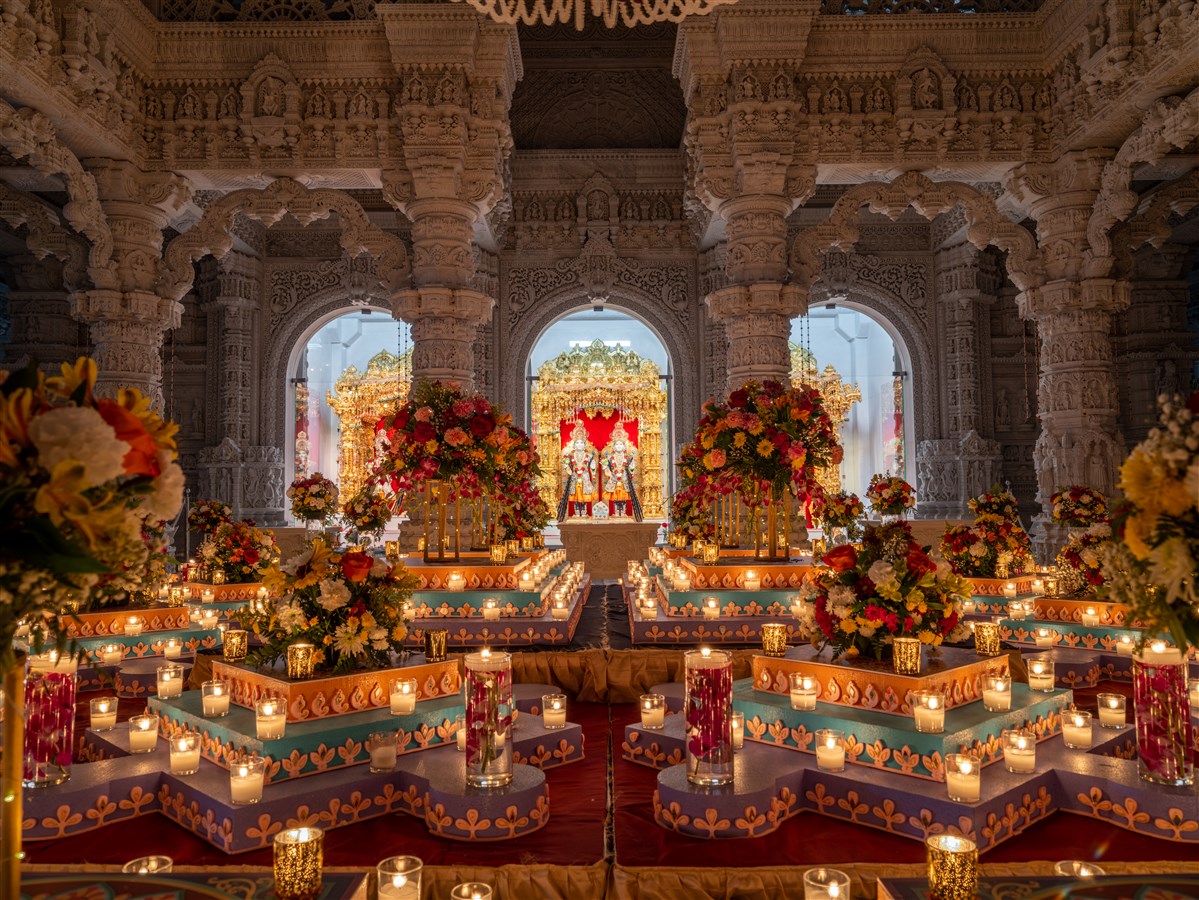 The BAPS Swaminarayan Akshardham drew thousands of worshippers throughout the day. There was a long line to take part in the Ceremony of Light, a practice of waving a lighted wick before the sacred image of God. The food symbolizes devotion.
 professionals, and more, dedicated their time and effort—for two weeks, six months, two years, or even more than a decade—to make Akshardham a reality.
 In two indexes, religious and non-religious individuals showed similar scores: the “life evaluation” index, which assesses whether individuals are thriving or suffering, and their local economic confidence.
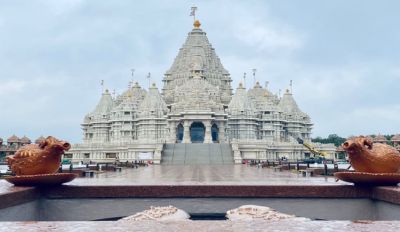 Covering an expansive 126-acre area, this architectural masterpiece owes its existence to the unwavering dedication of artisans and volunteers who devoted approximately 4.7 million hours to painstakingly hand-carve around two million cubic feet of stone, according to the report.
 The construction of the New Jersey Akshardham has garnered significant attention from the Hindu American community over the past decade. However, it has also been marred by legal matters, specifically a lawsuit alleging forced labor within the BAPS organization, which arose in 2021. Although the lawsuit is currently on hold, it has raised important questions about distinguishing between unpaid work and selfless service in the name of the Divine.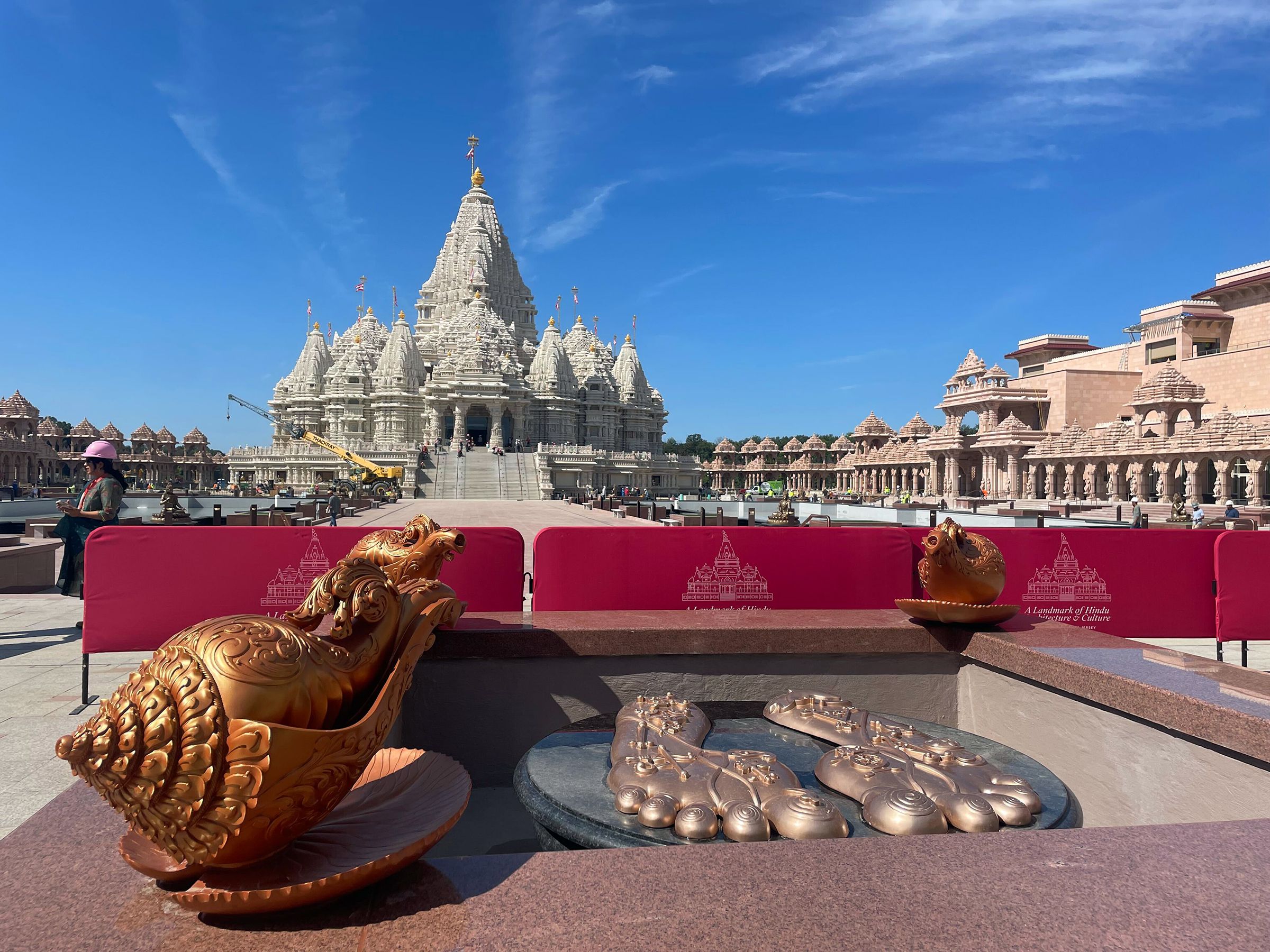
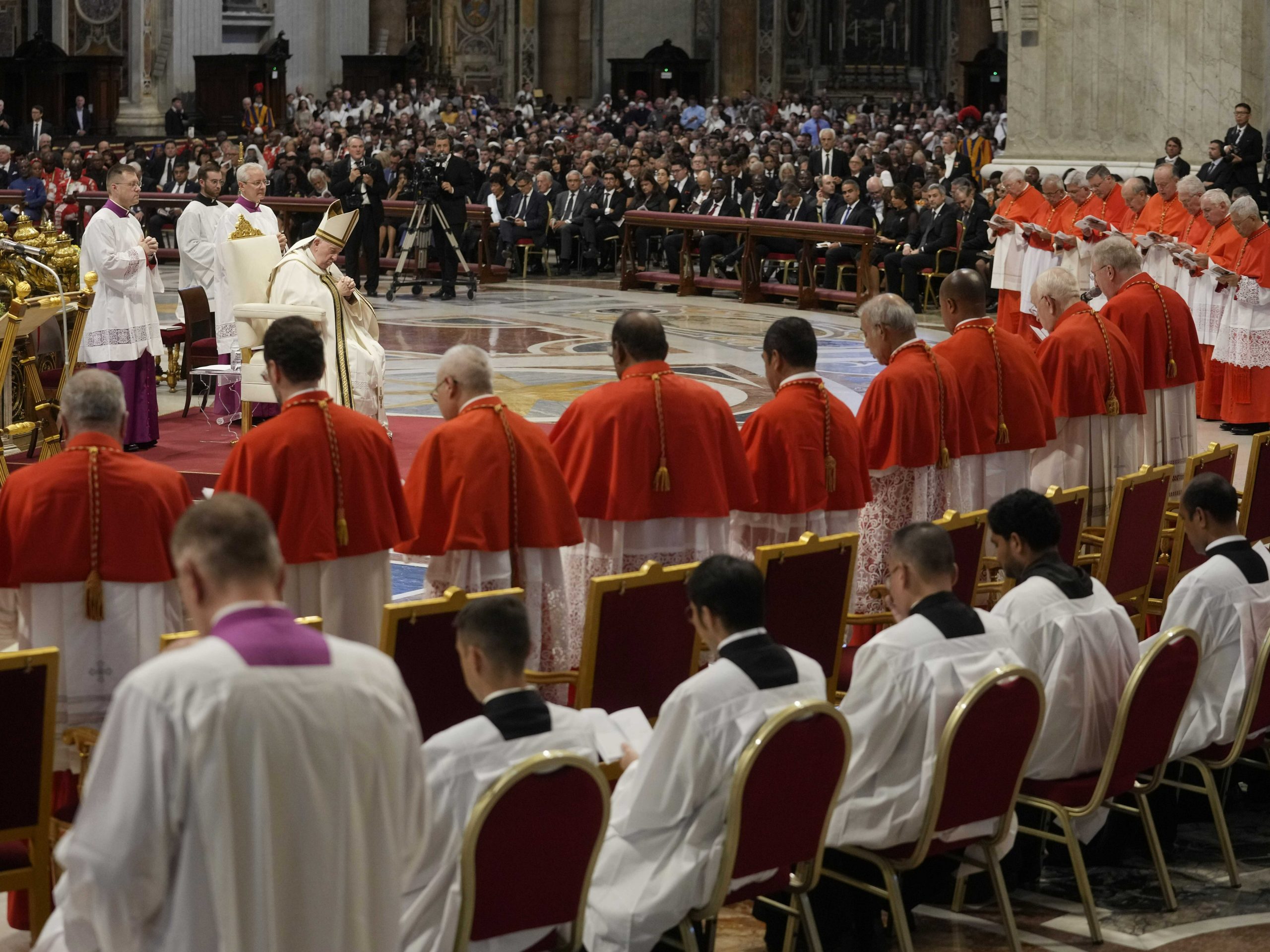
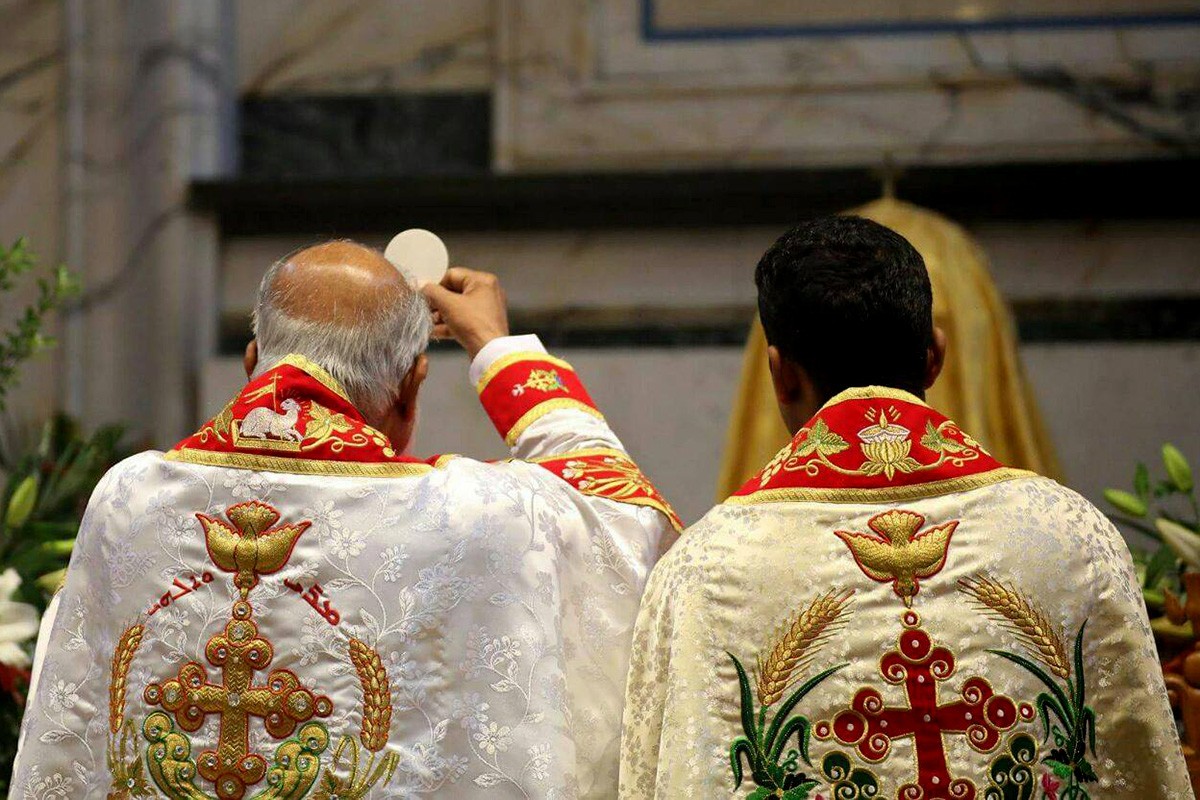 Prior to the Synod’s resolution, there existed variance among priests in terms of their positioning relative to the altar during the celebration of the eucharistic liturgy, referred to as the Holy Qurbana in the Eastern-rite tradition. While some clergy faced the altar throughout the liturgy, others chose to face the congregation. The Synod ultimately ruled in favor of priests facing the altar during the eucharistic prayer, but directing their gaze toward the congregation during the Liturgy of the Word and again after the Communion.