Young Democrat Aims to Unseat Indicted Republican in Suburban Atlanta Senate Race

A young Democratic candidate from Georgia is garnering significant national support and funding by positioning a suburban Atlanta senate race as a crucial opportunity to unseat a Republican labeled as an “election denier.”

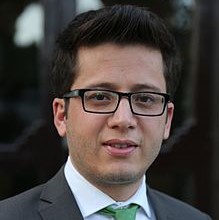
The Republican incumbent, Shawn Still, was one of the 18 people indicted alongside Donald Trump in Fulton County, Georgia, in 2023. However, Still contends that his first-time opponent, Ashwin Ramaswami, is wrongfully accusing him of being involved in a partisan conspiracy.

While the race is unlikely to affect the Republican-controlled Georgia Senate, which holds a 33-23 majority due to gerrymandering, Democrats view this race as a chance to weaken Republican support in suburban Atlanta. They aim to attract voters who are disillusioned with Trump and his refusal to accept the 2020 election results. This race will be a test of whether Democrats can replicate their success in statewide races in local elections.

Unlike President Joe Biden, who has actively campaigned against election denial, Vice President Kamala Harris has not emphasized this issue in her campaign. Nonetheless, Democrats continue to frame themselves as the protectors of democracy against Republican threats.

Still was among three Trump electors charged with felonies in Fulton County, alongside Trump, Rudy Giuliani, and 14 other Trump associates. Prosecutors have labeled the 16 Republicans who met in the Georgia Capitol in December 2020 as “fake electors.”

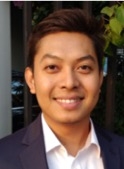
Ashwin Ramaswami, a 25-year-old candidate who studied computer science at Stanford University, learned about Still’s involvement while he was still in law school last year. Ramaswami said he was working on a similar case in Wisconsin when he recognized Still’s name from testimony before the House Jan. 6 committee. “There’s this pattern of Shawn Still really trying to undermine our votes, of Democrats and Republicans alike,” Ramaswami said.

Still, however, argues that Ramaswami is unfairly portraying him as an anti-democratic extremist. “I think that’s all he has to run on. So he’s going to punch me in the face with that singular thing,” Still said. “There’s no merit to it.”

The district, designed to favor Republicans, spans northern Atlanta suburbs in Fulton, Forsyth, and Gwinnett counties. However, two years ago, Democratic Senator Raphael Warnock won this district over Trump-backed Herschel Walker, despite voters supporting Republican Governor Brian Kemp and Still defeating his Democratic challenger by 14 points. Ramaswami hopes to replicate Warnock’s success by appealing to voters who are uneasy about Trump and by connecting with the district’s sizable Indian population, which constitutes over 30% of the area—the highest proportion in Georgia.

Ramaswami’s campaign has raised more than $460,000, a substantial sum for a legislative race, with many contributions coming from out-of-state donors. In contrast, Still has raised just over $145,000, though Republican organizations might inject more funds if they perceive Still to be at risk.

During the 2020 Trump elector meeting, Still served as the secretary, signing and filing documents that prosecutors claim were fraudulent. Still maintains that he acted on the advice of party officials and lawyers to safeguard Trump’s legal options amidst a lawsuit challenging Georgia’s election outcome. “I would characterize my involvement as being a good soldier who did what he was told to do and was following the advice of attorneys who do this for a living,” Still said.

He also emphasized that his involvement was limited to that meeting. “I build swimming pools for a living,” Still said. “I don’t think anyone really thought for half a second that I was some political mastermind plotting anything that led to what happened.”

Ramaswami, however, criticizes Still for going along with what he views as illegal actions by his colleagues, calling him a “useful idiot for the Republican party.” Ramaswami also points to other actions Still took after the 2020 election, such as a lawsuit he filed contesting results in Georgia’s Coffee County shortly before the electors met. Additionally, Ramaswami argues that Still failed to adequately accept responsibility during his testimony before the Jan. 6 Committee.

If elected, Ramaswami says he would focus on “common sense” solutions to issues such as gun violence, healthcare, and abortion rights, with one of his top priorities being investment in education. “We need as a community to look into investing in our future, not on relitigating the past,” he said.

Ramaswami believes his experience in cybersecurity, where he has interned under leaders from both parties, would help him build bipartisan relationships. He has interned with Republican Georgia Attorney General Chris Carr’s office and also worked with the federal Cybersecurity and Infrastructure Security Agency, where he claims to have assisted in protecting local election officials and small businesses from cyber attacks.

Still, who is 51, has been a dependable Republican vote during his first two-year term but claims he has engaged with Democrats and demonstrated a “desire and willingness to work with both sides of the aisle.” He has largely refrained from making partisan remarks on the Senate floor.

Still considers his most significant legislative achievement to be a law that allows students to transfer to a different public school district without needing permission from their current district. This provision was included in a bill primarily aimed at creating a $6,500 voucher for private school tuition and homeschooling. Still says he wants to remain in office to work on issues such as human trafficking.

Still also questioned Ramaswami’s qualifications for office, stating, “He’s not remotely qualified to be a state senator. He hasn’t lived in the district since he graduated high school. He has no life experience. He’s done nothing. His only jobs have been internships. He has accomplished nothing for himself by himself.”

Despite Still’s experience, some conservative voters are hesitant to support him. Bisvas Pokala, an information technology professional, usually leans Republican but is undecided due to Still’s indictment, expressing that he’s “very concerned about it.”

Pokala was working at a booth during the Festival of India in suburban Duluth in July, where Ramaswami was seen mingling with vendors and shoppers. Many recognized Ramaswami and waved to him.

Ram Raju, a vendor and Democrat, noted that while many Indians in the business community tend to lean Republican, he believes Still is not contentious enough to lose the support of party loyalists. However, Ramaswami believes he can help voters of all backgrounds see through Still’s actions.

“The fact that Shawn Still is now trying to portray himself as a moderate and really distance himself from what’s going on is evidence that it’s something he wants to stay away from, and it is something which the voters don’t approve of,” Ramaswami said.

Still, meanwhile, has developed many relationships in the district. Dilip Mehra, a festival vendor and Still supporter, recalled Still’s outreach at a business event. “He said, ‘if you have any problem, if your community has any problem, if you want any help from us, please come to me,’” Mehra said. “He seemed like a very nice person.”

Japan Faces Crisis as Thousands Die Alone Amidst Aging Population

Nearly 40,000 people died alone in their homes in Japan during the first six months of 2024, according to a report by the National Police Agency (NPA). The report revealed that out of these deaths, around 4,000 individuals were discovered more than a month after their death, and tragically, 130 bodies went unnoticed for a year before being found.

Japan, currently home to the world’s oldest population according to United Nations data, is grappling with the growing issue of elderly individuals living and dying alone. The NPA’s report aims to shed light on this critical issue and draw attention to the increasing number of aging citizens who live in isolation.

Data from the first half of 2024 indicates that 37,227 people living alone were found dead in their homes, with those aged 65 and over making up more than 70% of the total. While an estimated 40% of these individuals were found within a day of their death, the report highlights the concerning statistic that nearly 3,939 bodies were only discovered more than a month after death. Furthermore, 130 people had remained unnoticed in their homes for at least a year.

The report details that the largest group within the dataset were those aged 85 and above, accounting for 7,498 of the bodies found. This was followed by individuals aged 75-79, who accounted for 5,920 deaths, and those aged 70-74, who made up 5,635 of the deceased.

Japanese public broadcaster NHK reported that the police agency will present its findings to a government task force investigating unattended deaths. This highlights the increasing urgency with which Japanese authorities are addressing the issue of elderly isolation and loneliness.

Earlier this year, the Japanese National Institute of Population and Social Security Research projected that the number of elderly citizens (aged 65 and above) living alone will reach 10.8 million by the year 2050. This represents a significant increase from current figures and is reflective of broader demographic trends within the country. Additionally, the overall number of single-person households is expected to hit 23.3 million by 2050, underlining the scale of the challenge Japan faces in managing its aging population.

In response to these demographic shifts, the Japanese government introduced a bill in April aimed at tackling the country’s longstanding problem of loneliness and social isolation, which is partly attributed to its aging population. This legislative effort marks a renewed attempt by the government to address the social and health challenges associated with an increasingly elderly society.

Japan has been trying for years to counter the effects of its aging and shrinking population. However, the rapid demographic shift is proving difficult to manage. Last year, Prime Minister Fumio Kishida issued a stark warning, stating that Japan is on the brink of no longer being able to function as a society due to its declining birth rate. This demographic crisis poses a significant threat to the country’s social and economic stability, and has prompted calls for urgent action to mitigate its impact.

Japan is not alone in facing these challenges. Some neighboring countries are also grappling with similar demographic issues. In 2022, China’s population declined for the first time since 1961, a milestone that has raised concerns about the long-term implications for the world’s second-largest economy. Similarly, South Korea has repeatedly recorded the lowest fertility rate in the world, raising alarms about the future sustainability of its own population.

The situation in Japan, China, and South Korea reflects a broader trend in East Asia, where aging populations and low birth rates are creating a range of social, economic, and political challenges. These countries are now faced with the daunting task of finding ways to support their elderly populations while ensuring sustainable economic growth and social cohesion.

In Japan, the growing number of elderly individuals dying alone underscores the need for comprehensive policies that address both the social and economic dimensions of aging. This includes improving social services, increasing support for elderly individuals living alone, and promoting community engagement to reduce isolation and loneliness.

The Japanese government’s recent efforts to address the issue of loneliness and isolation are a step in the right direction. However, more needs to be done to address the underlying causes of these problems and to ensure that Japan’s aging population is supported and cared for in their later years.

Ultimately, the challenge of an aging population is not just a demographic issue, but a complex social and economic problem that requires a multifaceted approach. Japan, like many of its neighbors, will need to continue to innovate and adapt its policies and practices to meet the needs of its changing population and to ensure a stable and prosperous future for all its citizens.

Announcing the 2024 Asia 21 Next Generation Fellows

Please join us in welcoming The 2024 Asia 21 Next Generation Fellows.

Our last email featured a link to the 2023 cohort, and while we are always excited to share details about our Asia 21 alumni, please check out this year’s fellows and join us in welcoming them!

Mobeen Ansari Headshot

Mobeen Ansari

Photographer & Photojournalist,
Mobeen Ansari Productions


PAKISTAN

“Leadership is not only about taking initiative and driving everything- but going beyond the role, and promoting a culture of harmony and compassion.”

Mobeen Ansari is a photographer, filmmaker, and artist from Islamabad, Pakistan. After attaining his BFA degree from the National College of Arts, he worked in the field, telling stories of Pakistan and its people and promoting a diverse and poetic image of his country through his photos and films. As a photojournalist, he focuses on human interest stories and has worked extensively on topics of global health and migration.

Mobeen has published three photography books. His first and third books, Dharkan: The Heartbeat of a Nation and Miraas, feature portraits of iconic people of Pakistan from all walks of life. His second book, White in the Flag, is based on the lives and festivities of religious minorities in Pakistan.

He has also made two silent movies: Hellhole is a black and white short film based on the life of a sanitation worker; Lady of the Emerald Scarf is based on the life of Aziza, a carpet maker in Guilmit in Northern Pakistan.

Mobeen has exhibited in Pakistan and around the world, namely in the UK, Italy, China, Iraq, and across the U.S. and UAE; his photographs have also been displayed in well-known places such as Times Square in New York City. Mobeen is also a recipient of the Swedish Red Cross Journalism prize for his photography about the story of the FIFA World Cup football manufacturer in Sialkot.


Nomintuya Baasankhuu Headshot

Nomintuya Baasankhuu

Founder,
FilmNomad


MONGOLIA

“In my experience, true leadership is about service: finding creative ways to enhance the well-being of others and leading actions in the best interests of the community.”

Nomintuya Baasankhuu, Founder of FilmNomad, is a cultural leader and policy innovator from Mongolia.  She holds degrees from Columbia University and the National University of Mongolia and is a respected Fulbright Scholar. She has supported over 300 Mongolian filmmakers, elevating Mongolian cinema onto the global stage and fostering cross-cultural dialogue.

Nomintuya’s influence extends to community engagement through her role as Deputy Team Leader of the Asian Development Bank’s Ger District Redevelopment project, where she improved community involvement in urban redevelopment. Her policy contributions to the Ministry of Culture have been pivotal, shaping new film policy and the “Culture Pass” program, now law, ensuring future generations of Mongolians access to culture and arts. Her curatorial expertise is showcased in her leadership of the Ulaanbaatar International Media Art Festival and the Ulaanbaatar International Film Festival. At the Arts Council of Mongolia, she initiated the Young Leaders in the Arts Program, empowering over 150 artists and fostering new cultural leaders.

Recognized among the 50 Most Influential People in Mongolia by Gereg Magazine and Forbes Mongolia’s 30 under 30, Nomintuya was listed among the cultural leaders at the World Economic Forum in Davos 2016 and the Annual Champions Meeting in Dalian. As a Global Shaper alumnus of the World Economic Forum, she has participated in global dialogues and contributed to the national child road safety campaign, leading to better enforcement of child seats on the road.


Ahmad Siyam Barakati Headshot

Ahmad Siyam Barakati

Director,
Charmaghz


AFGHANISTAN

“A true leader fosters trust, open communication, and a safe environment for ideas and risks.”

Ahmad Siyam Barakati is the director of Charmaghz, a Kabul-based nonprofit organization that runs the biggest chain of mobile libraries for children in Afghanistan and provides educational services to more than 2,500 children daily.

At Charmaghz, Ahmad draws on years of experience managing educational projects in Afghanistan to lead their efforts to provide exceptional educational services to the children who visit the libraries.

In recognition of his outstanding achievements, Ahmad was honored as a prominent figure on the esteemed “30 under 30 Literacy Leaders” list by the International Literacy Association in 2023.

He holds a bachelor’s degree in Medicine. He is certified as a global Project Management Professional (PMP) by the Project Management Institute.


Sirikan Charoensiri Headshot

Sirikan Charoensiri

Founding member and Executive Advisor, Thai Lawyers for Human Rights;
Founder, Engage Thailand


THAILAND

“Leadership centers around setting the shared visions and inspiring others to collectively achieve them together. Lead by example; demonstrate through your values and actions.”

Sirikan “June” Charoensiri is Executive Advisor and attorney of the Thai Lawyers for Human Rights (TLHR), a non-governmental organization that she co-founded immediately after the May 2014 military coup in Thailand. TLHR documents human rights violations and provides free legal support to people whose civil and political rights have been violated.

June studied for her LL.B. at Thammasat University, Bangkok, and her LL.M. at the University of Essex, UK. She is licensed to practice in Thailand and is experienced in human rights law, working with the International Commission of Jurists, the American Bar Association Rule of Law Initiative, and others in the field of access to justice and the rule of law in Thailand.

Despite threats from high-ranking police officers due to her advocy for Thai New Democracy Movement activists with regard to warrantless searches in 2015, she has never stopped her work.

Over the past decade, June has received numerous awards, including the Lawyers for Lawyers Award in 2017, the U.S. State Department’s 2018 International Women of Courage Award, and the 2018 Franco-German Prize for Human Rights and the Rule of Law.

In 2023, June represented TLHR to receive the Albie Justice for Democracy Defenders award from the Clooney Foundation for Justice and was also named one of Asia’s Most Influential 2023 by Tatler. In 2024, June set up her nonprofit, Engage Thailand, to advance Thailand’s fight for democracy and human rights on the international level.


Shah Rafayat Chowdhury Headshot

Shah Rafayat Chowdhury

Co-Founder & President,
Footsteps Bangladesh


BANGLADESH

“Leadership is standing by your people, being a guiding light for others to follow, leaving no one behind. To me, leadership is being the change and taking the step when others are reluctant to do so.”

Shah Rafayat Chowdhury is an award- winning environmentalist and social entrepreneur from Bangladesh. He is the Co-Founder & President of Footsteps, a next generation organization currently empowering over 600,000 people across Bangladesh with safe water and sanitation access, disaster resilience, and improved public health services, especially for marginalized communities.

He is also the Managing Director of Dreamwater Enterprises Limited, a social enterprise which innovates WASH devices and products to create access to water at an affordable price for all. Shah received the internationally acclaimed Diana Award and AFS Prize for Young Global Citizens, and was recently listed on Forbes 30 Under 30 for his contribution to Bangladesh’s development sector through Footsteps. Shah has also served as Bangladesh’s Youth Representative to the United Nations and was mentored by former U.S. Vice President Al Gore on climate leadership. Shah earned his undergraduate degree in Environmental Economics and Policy from Penn State in 2018.


Nishant D'Souza Headshot

Nishant D’Souza

Co-Founder & Chairman,
Edamama Pte. Ltd.


AUSTRALIA

“Leadership is the convergence of trust, empathy and vision to catalyze transformational change. Beyond steering the ship toward success, leadership is about empowering everyone on board to realize their true potential for greatness.”

A proud product of the Asian ecosystem, Nishant D’Souza found early purpose in transforming lives at scale in the region’s emerging markets. Growing up in India gave Nish an acute sense of societal gaps across resources such as energy, infrastructure, and essential products. His family later emigrated to Australia and he began his career as a subsea engineer, working at the frontier of energy extraction and innovation. Moved to democratize energy access in adjacent developing economies, Nish completed an MBA at Stanford University and played pivotal roles in the development of USD$3 billion of power infrastructure across Southeast Asia.

He subsequently launched the world’s most advanced greenfield coconut processing facility, improving the livelihoods of thousands of poor Filipino farmers through the production of high-value coconut products. Since then, Nish has spent over half a decade expanding access to affordable, quality consumer products as a private equity leader and, most recently, co-founder of the largest online-to-offline (O2O) childcare retailer in the Philippines.


Ann Adeline Dumaliang Headshot

Ann Adeline Dumaliang

Co-Founder,
Masungi Georeserve


PHILIPPINES

“Leadership is having the vision to dream big for a larger cause and the ability to bring together a diverse group of people to accomplish a goal.”

Ann Adeline Dumaliang is conservationist and geotourism advocate, and the Co-Founder of the Masungi Georeserve Foundation, founded in 2015. Holding a BS in Management from Ateneo de Manila University, Ann has dedicated her career to preserving the 60-million-year-old limestone formations of the Masungi Georeserve and its larger watershed located in the Philippines, impacting 20 million Filipinos downstream in the capital of Metro Manila.

Masungi Georeserve conserves and reforests about 2,700 hectares of forest. The project combines low-impact development, geotourism, and educational initiatives to foster environmental stewardship, forest protection and sustainable local development. Masungi has received numerous accolades, including being recognized as a global model for harmonious human-nature interactions at the 2016 IUCN World Conservation Congress, receiving a special commendation at the UN Convention on Biological Diversity in 2018 for conservation resourcing and being awarded by the Global Water Partnership for overcoming inertia and speaking truth to power.

Ann’s innovative approach has also earned Masungi recognition from prestigious organizations such as the World Travel and Tourism Council and the UNWTO.

A National Geographic Explorer and Global Shaper with the World Economic Forum, Ann’s work transcends local impact, influencing global conservation strategies. She has spoken at prominent international forums, including the World Economic Forum, COP Climate Change Conferences, and the Skoll World Forum. Her commitment to conservation and her ability to mobilize youth and community-led movements have positioned Masungi as a beacon of sustainable practices and resilience in the face of environmental challenges.


Jawad Fares Headshot

Jawad Fares

Resident Neurosurgeon/Scientist,
Northwestern Memorial Hospital, USA


LEBANON

“Leadership’s essence is to serve humanity. It’s the art of embodying a vision with integrity, inspiring through action, embracing challenges, and nurturing inclusivity to create a meaningful, lasting impact.”

Jawad Fares, MD, is a physician-scientist and resident neurosurgeon at Northwestern Memorial Hospital. He is also the Vice President for External Affairs at the Lebanese Academy.

His translational research focusing on brain tumor genetics and molecular biology has led to a clinical trial for malignant glioma and discovered new methods to target metastatic brain cancer. With over 130 publications in top journals and numerous citations, he ranks among the top 2% of impactful scientists globally.

Honored as a Forbes 30 Under 30, an Arab Youth Pioneer, and one of the top 10 young scientists by Genetic Engineering and Biotechnology News, he has also received the AANS Robert L. Bittner Award and the King Hussein Award for Cancer Research.

Jawad holds a BS in Biology and an MD from the American University of Beirut, with advanced training in Cancer Biology from Harvard Medical School and neuro-oncology research at Northwestern University.


Devjyot Ghoshal Headshot

Devjyot Ghoshal

Chief Correspondent,
Reuters


INDIA 

“Leadership is the act of giving people the tools to make a difference. It means empowering individuals and teams to identify challenges, creating a space to examine them and providing problem-solving pathways.”

Devjyot Ghoshal is the Reuters Chief Correspondent for Thailand and Myanmar. Currently based in Bangkok, he leads a team of reporters providing real-time coverage of the two countries and delivering deeply reported stories across business, politics, and the protracted civil war in Myanmar.

A member of multiple award-winning Reuters teams, he has covered South and Southeast Asia for over 15 years. Previously a Reuters Senior Correspondent in New Delhi, he has reported from the disputed region of Kashmir, far-flung corners of India’s northeast bordering Myanmar, and spent months on the ground in Sri Lanka covering the island’s economic crisis and its fallout.

Devjyot attended Columbia Journalism School as a Fulbright fellow, and is a graduate of King’s College London and Loyola College in India.


Aziah Hussin Headshot

Aziah Hussin

Head of Government Risk, Asia,
McKinsey & Company


SINGAPORE

“Leadership is paying it forward and paying it back all at once, creating impact that will outlive us.”

Aziah Hussin (LL.M., UCL; LL.B., NUS) is a thought leader and advisor to senior leaders on government risk across Asia and the Middle East, including on the impact of private sector consulting & advisory in the public sector, geopolitical challenges to global trade & relations, and risk governance frameworks for MNCs.

She is a dual-qualified international disputes lawyer who has advised on access to justice–including refugee rights–and commercial disputes, and is a certified Mediator (Cultural Fluency & Alternative Dispute Resolution). She is currently Chairperson of the Board of Justice Without Borders, a nonprofit headquartered in Washington, D.C., championing cross-border compensation claims for domestic workers in Asia.


Elisabetta Jiang Headshot

Elisabetta Jiang

Executive Director, Social Innovation Park;
Co-Founder, Unicorns for Good


ITALY

“By mindfully cultivating a calm mind and compassionate heart, we give ourselves a chance to make wiser decisions and actions that benefit ourselves, our families, organizations, and the world.”

Elisabetta Jiang is a multi-cultural leader with a remarkable leadership track record, influence, and impact as President of the prestigious Marshall (Economics) Society of the University of Cambridge, the then youngest Chief of Staff in Monitor Deloitte, Executive President of the Italy Shanghai Chamber of Commerce, Co-Founder of an award-winning fine-dining restaurant, Director of a prominent Asian multi-family office (with over 5Bn AUM), where she founded the Next Gen Club to inspire ultra-high-net-worth next-gen leaders to channel capital for greater good.

Passionate about social innovation, Elisabetta leverages her 13+ years of experience in mindfulness to catalyze leaders’ mindset shifts to address global challenges. As a sought-after thought leader, she delivers impactful programs and workshops worldwide, inspiring leaders to harness technology and capital for good.

She is also a member of the World Economic Forum Global Shapers Community, a Fellow of Global Women Asia, and the Executive Secretary of the World Youth Leaders Union.


Kana Kobayashi Headshot

Kana Kobayashi

Senior Business Development Consultant,
DeNA Co., Ltd.


JAPAN

“Leadership is the ability and commitment to turn one plus one into greater than two, deriving each individual’s potential and supporting them to accomplish more than they thought possible as a group.”

Kana Kobayashi is a Senior Business Development Consultant at DeNA Co., Ltd., an IT tech company in Japan that specializes in harnessing technology to address healthcare challenges.

In this role, Kana leads the development and dissemination of IT-based tools that enhance individual’s health management and protect them from irreversible health conditions. She is also a Ph.D. candidate and research fellow on the AI team for the Vaccine Confidence Project™ at the London School of Hygiene and Tropical Medicine, leading initiatives that use AI-driven tools to improve health literacy among Japanese caregivers and promote vaccination uptake. Kana is also working as a co-principal investigator for a project to improve immunization coverage among the elderly in Japan. Before joining the private sector, Kana worked as a nurse in a women’s gynecology ward, where she saw the devastating impact of deadly but preventable diseases. This motivated her to transition to business and public health research, focusing on integrating technology with healthcare solutions.

Kana holds a master’s degree in Public Health from Johns Hopkins University in the U.S. and a bachelor’s degree in Nursing from Keio University in Japan.


Suyheang Kry Headshot

Suyheang Kry

Executive Director,
Women Peace Makers Organization


CAMBODIA

“The first leadership mission begins within. To be impactful and sustainable, a leader must find their own way to consistently nurture a healthy inner fire, fueling it with the right time, space, and energy to glow brightly and rise above adversity with grace.”

Suyheang Kry is a peace practitioner, a researcher, and an accredited mediator with extensive experience in gender equality, peacebuilding, strategic planning, and feminist leadership. She is currently serving as the Executive Director of Women Peace Makers (WPM) and has exponentially grown the organization from its grassroots beginnings to a national hub for work on the intersection of gender and peace issues.

Heang is also a recognized advocate and strategist for the inclusion of women, minorities, and other marginalized groups as key stakeholders in addressing conflict, decision making, sustainable development, and peacebuilding. Best known for bringing people together around key issues, Heang is also a co-developer of a homegrown participatory peace research methodology known as Facilitative Listening Design (FLD), which is being implemented in various conflict and sensitive settings. Prior to joining WPM, Heang served in  various roles including Deputy Director of Anlong Veng Peace Center in Cambodia, researcher and peace process supporter in Myanmar with the Centre for Peace and Conflict Studies, and working on research and outreach related to the transitional justice with the Documentation Center of Cambodia. Heang holds an MA degree in Peace and Conflict Studies from the University of Massachusetts, Lowell, in the United States.


Pratik Kunwar Headshot

Pratik Kunwar

Founder,
Center for Entrepreneurship and Innovation


NEPAL

“Leadership creates meaningful impact by empowering others to walk together towards a shared vision through uncertainty.”

Pratik Kunwar is a civic innovator and the founder of the Center for Entrepreneurship and Innovation (CEI), a nonprofit social enterprise based in Nepal. Through its flagship program, Shaasan, CEI seeks to meet the civic justice needs of 1.5 billion people using civic technology, digital media advocacy, and grassroots empowerment.

Shaasan was hailed as ‘national changemaker’ by Accountability Lab in 2020, and his CEI work was recognized as one of the ‘Top 50 Global Solutions for the SDGs by the United Nations SDSN. In 2021, Shaasan was a finalist for the CIVICUS Innovation Award for ‘protecting and promoting digital civic space.’ CEI’s work was also shortlisted for the Global Pluralism Award in 2023. Pratik has been a Daayitwa National Public Service Fellow (2018), Feedback Labs Accelerator (2021), Yunus&Youth Fellow, Opportunity Collaboration Fellow (2022), a World Forum for Democracy delegate from Nepal, and a Davos50 at the World Economic Forum. He is also a Challenge Leader for MIT Solve’s 2023 Global Challenges.

Pratik has been featured by the UN, Forbes, Time, and WEF, among many others. Pratik also serves on the Advisory Council of the World Economic Forum’s Global Shapers Community, supporting over 15,000 young leaders across 500 cities globally. Pratik received a BA (Hons) from the University of Nottingham and is the first Nepali to attend MIT’s Data Economics and Development Policy program.


Kok Thong (Josh) Lee Headshot

Kok Thong (Josh) Lee

Managing Director (Asia-Pacific), Future of Privacy Forum;
Adjunct Professor (AI Law, Policy and Ethics), Singapore Management University Yong Pung How School of Law;
Advisor (Technology, Media and Telecommunications), Rajah & Tann Singapore LLP

SINGAPORE

“A leader should seek not to exclude but to include, [and be] one who is planted, not aloft, and one who inspires through values-in-action, creating a lasting impact.”

Josh Lee is the Managing Director (APAC) of the Future of Privacy Forum, a global nonprofit organisation furthering principled data protection practices in support of emerging technologies. He regularly engages with top governmental committees and international organisations, including the UK House of Lords, ASEAN, and the G7 data protection authorities. Josh is also an adjunct professor at the Singapore Management University Yong Pung How School of Law, where he teaches AI law, policy, and ethics.

Josh previously served as the Legal Policy Manager for AI Governance in Singapore’s Personal Data Protection Commission, where he helped author Singapore’s Model AI Governance Framework – later used as a blueprint for ASEAN’s Guide on AI Governance and Ethics. He has also served as an Assistant Director for legal policy in Singapore’s Ministry of Law, and practiced as an international disputes lawyer.

Josh is also a changemaker in Asia’s tech-of-law ecosystem. Josh co-founded organisations like ALITA (Asia’s first legal technology industry association) and LawTech.Asia (an Asia-focused publication on law and technology). In 2023 and 2019, Josh was named by Asia Law Portal as one of Asia’s Top-30-To-Watch in legal innovation and the business of law.

Josh earned his LL.M. from Berkeley Law as a White & Case Kathryn Aguirre Worth Scholar, and was named to Berkeley Law’s 2022 Dean’s List. Outside work, Josh is a regionally renowned street dancer of 17 years, and is part of dance crews in Singapore and the Bay Area.


Eddy Lin Headshot

Eddy Lin

Co-founder,
Taiwan Youth Association for Democracy


TAIWAN

“Leadership for me, especially as the founder of a nonprofit focused on public interest, means empowering the team to move forward together rather than simply giving commands.”

Eddy Lin is the Co-founder of the Taiwan Youth Association for Democracy, established in 2018. He has led various initiatives, including fundraising to bolster youth participation in elections, drafting the Youth Policy White Paper, and directing the “Civil Rights for 18” campaign, which led to Taiwan’s first-ever constitutional amendment referendum to lower the voting age.

Additionally, Eddy currently oversees Amazon’s policy strategy and government affairs in Taiwan. Prior to Amazon, he served at Meta, where he developed the metaverse and AI ecosystems in the Asia-Pacific region. Eddy also spent five years as the Host of Youth News on Taiwan Public Television Service.

Eddy holds a Master of Laws (LL.M.) from the University of Pennsylvania and a Master of Arts (M.A.) in Journalism from National Taiwan University (NTU). He earned his Bachelor of Laws (LL.B.) from NTU, where he was elected as the 30th President of the NTU Student Association.


Nyantha Maw Lin Headshot

Nyantha Maw Lin

Principal,
The Anagat Initiative


MYANMAR

“Leadership is about enabling collective action by inspiring the personal transformation of each individual. If you’re lucky, your legacy is another generation of leaders who will have to continue the journey.”

Nyantha Maw Lin is the Principal of Anagat Initiatives, originally founded to foster policy dialogue and enable a culture of collaboration through futures thinking. In the aftermath of the military coup in 2021, he has provided strategic and high-impact counsel to key political stakeholders, designed and mobilized various political and policy initiatives, and convened collaborative networks of thought leaders and change-makers.

Bringing over 15 years of interdisciplinary experience in government affairs, public policy, and international relations, Nyantha has advised a diverse array of clients, ranging from multinational companies and multilateral financial institutions to NGOs and philanthropic organizations. Nyantha has served on the boards of various innovative nonprofits, social impact organizations, and industry associations. He served on a voluntary advisory panel providing input towards government anti-corruption initiatives. He worked on community and stakeholder engagement efforts in conflict situations in Myanmar, and has facilitated conversations between government, the private sector, and civil society.

A Carleton College graduate and C.V. Starr Scholar, Nyantha is also an Eisenhower Fellow (2018), and received a Douglas Dillon Fellowship in his cohort, recognizing Eisenhower Fellows who combine private enterprise and public service.


Shun Matsuzaka Headshot

Shun Matsuzaka

Co-founder,
Toy Eight Holdings Inc.


JAPAN

“Leadership means steadfast belief in the potential for positive societal change. It is the ability to inspire and mobilize others with a compelling vision and unwavering passion.”

a co-founder and co-CEO of TOY EIGHT, is a Japanese entrepreneur committed to significantly impacting child development, driven by his personal experience of overcoming dyslexia.

He identified a critical gap in developmental support across Southeast Asia. His team revolutionized this field by digitizing traditional face-to-face developmental screenings and interventions using Al and gaming technologies, making it possible to conduct screenings and interventions anytime and anywhere without needing specialists. This innovation drastically cut costs by over 90% and alleviated the specialist shortage. TOY EIGHT’s efforts have extended beyond NGOs, government officials, universities, and hospitals to change policy in Malaysia, preparing for national implementation in collaboration with the Malaysian Ministry of Health. The programs are now being adopted in Malaysian states and are set for expansion in other ASEAN countries. Passionate about providing equal developmental opportunities, Shun leverages his creativity and technical expertise to drive change and empower underprivileged children.


W. Hunter McDonald Headshot

W. Hunter McDonald

Interim CEO, TerraWind Renewables;
Korea Country Manager & Investment Specialist, Shizen Energy Group


UNITED STATES

“At a high level, leadership is the art of enabling a group to create an impact greater than the sum of its individual parts. Tactically, in my experience, this demands an attentive ear, a scrappy determination, and a sense of humor.”

Hunter McDonald is interim CEO of TerraWind Renewables, an onshore wind energy platform in Asia launched in partnership between Stonepeak (a $71bn AUM alternative investment firm) and Shizen Energy Group (a renewable energy developer headquartered in Japan). He concurrently serves as Country Manager for Korea at Shizen Energy Group and Head of Strategy at Japan Interconnector, a startup developing subsea cable power grid interconnectors in Asia.

Hunter previously spent 7 years in the energy trading business at Glencore in New York and London, focusing mainly on infrastructure investments and trade origination. He began his career as an investment banker at Citigroup in Tokyo, where he observed energy supply chain disruptions firsthand following the Fukushima incident in 2011.

Hunter is a board member of International Student Conferences, a non-profit organization that organizes track II diplomacy initiatives among students from the U.S., Japan, Korea, and China. He is a term member of the Council on Foreign Relations, and was an Energy Security Fellow at SAFE and Associate Member of the Economic Club of New York.

A dual citizen of the U.S. and New Zealand, Hunter holds an AB in East Asian Studies with a secondary field in Economics from Harvard College, where he was awarded the Noma Reischauer Prize in Japanese Studies. He also studied at Keio University in Japan as a Mitsubishi Trust Yamamuro Memorial Scholar and holds an MBA and Masters in International Affairs from Columbia University.


Ufra Mir Headshot

Ufra Mir

Peace-Psychologist & Founding Executive Director,
International Center for Peace Psychology & Paigaam


INDIA

“Leadership for me means how I lead myself authentically, especially amidst crisis and chaos: Do I choose to react or respond to stressful situations, while being aware of systemic issues!”

As the first and only peace-psychologist from Kashmir & South Asia, Ufra Mir has been working at the intersection of psychology, mental health, arts, education, conflict transformation, and peacebuilding for about 14 years, mainly in Kashmir, South Asia, and across the Global South.

Ufra’s work aims to support people and communities to cope up with the psychological ramifications of living in conflict zones, while advocating for justice and human rights, and building space for peacebuilding and wellbeing in the process. Additionally, she  advises on the holistic protection of the UN’s Youth Peace & Security Agenda, wellbeing-oriented approaches in peacebuilding; and is influencing policy level changes on these intersections with global forums. She has received recognition and awards internationally including from the UN Women, University of Oxford (UK), Nobel-Peace-Prize forums (USA), UN (Geneva), Swedish-Institute, Center for Peace and Nonviolence (USA), and TEDx talks. Recently, Ufra received the human rights award by the International Council of Psychologists, and the Outstanding-Service-Award by the APA Peace-Psychology division for her pioneering work in Kashmir and South Asia.


Zaim Mohzani Headshot

Zaim Mohzani

Senior Director of External Relations,
KSI Strategic Institute for Asia Pacific


MALAYSIA

“Leadership is about seeing in people what they have yet to see in themselves. I believe leadership is a skill that can be taught and nurtured, not necessarily innate. As an introverted late bloomer, I have made it my mission to help others recognize their potential.”

Zaim Mohzani is the Senior Director of External Relations at KSI Strategic Institute for Asia Pacific, ASEAN’s top-ranked regional think tank. At KSI, he is leading significant initiatives including the ASEAN Economic Club and the World Digital Chamber, enhancing regional cooperation and digital innovation. Previously, Zaim served as the Founding Chairman of Impact Integrated under the Malaysian Ministry of Youth and Sports, driving national youth policy and development from 2018 to 2023.

As a Co-Founder of Nation Building School, a social enterprise, Zaim addresses systemic youth unemployment by equipping young professionals with employability skills. His leadership extends to founding three nonprofits, collectively impacting over 30,000 youths.

He was honored as one of the Inspiring Young Leaders by The Edge Media in 2019 and received the prestigious Best Perdana Fellow award in 2023. His leadership acumen has been recognized through selections to various prominent programs, including Dalai Lama Fellows, Acumen Academy Fellowship, British Council Future Leaders Connect, World Economic Forum’s Global Shapers, U.S. Department of State YSEALI Professional Fellowship, and ASEAN Youth Fellowship. He is an Associate Fellow of the Royal Commonwealth Society and has contributed as a youth advisor to the Malaysian Minister of Foreign Affairs.

Zaim earned his M.S. in International Strategy and Diplomacy with Distinction from the London School of Economics and B.A. in Political Science from Monash University. A Chevening Scholar, he led Chevening Alumni Malaysia and founded the Chevening Alumni Southeast Asian Network.


Hafsah Muheed Headshot

Hafsah Muheed

Manager Policy and Programs,
The Sri Lanka Institute of Directors


SRI LANKA

“Leadership means curating spaces for accountability, justice, and transformation. It is also not something that I can do alone. Collaboration in leadership is vital for sustainable impact and diversity. I am a firm believer in the co-leadership model, which facilitates diversity in decision-making.”

Hafsah Muheed is an intersectional feminist and human rights advocate from Sri Lanka, with a decade of grassroots experience in developing cross-sectoral solutions. Her expertise spans human rights, women’s rights, climate change, and peacebuilding. With 10 years of grassroot experience specialising in cross-sectoral solutions. She works in the nexus of human rights, women’s rights, climate change and peace building. She has worked in the private sector and led social sustainability pillars in 11 business units for a workforce of 15,000+ and 11 communities across Sri Lanka, Jordan and Indonesia. She currently works in the Corporate Governance space shaping policy and programs.

She was a Director at Sri Lanka Unites, a national youth movement focused on peace building; a Member of the 30 for 2030 network hosted by UN Women Asia Pacific: Member Advisory Group and Sounding Board Member of the local leadership of CIVICUS World Alliance for Citizen Participation; Outgoing Curator of the Global Shapers Hub Colombo; Advisor at decolonising aid at Bond UK; Vice-Chair under 30 – Governance and Ethics Committee and Board Member of PMNCH hosted by WHO; Member of the Joint Youth Working Group on sexual and reproductive health rights and climate change of UNFPA; Women Deliver Alumni; and Member of the Climate Action Champions Network hosted by the U.S. State Department. She is the founder of Amplifying Impact which works with marginalised communities through informal structures.


Yera Park Headshot

Yera Park

Partnerships, Value Creation, and Knowledge Lead, Venture Capital and Funds,
World Bank Group


SOUTH KOREA

“Leadership drives innovation to tackle our most pressing challenges by bringing diverse stakeholders together for meaningful collaboration.”

Yera Park leads Partnerships, Value Creation, and Knowledge at the World Bank Group’s Venture Capital and Funds, which invests in technology companies and venture capital funds in emerging markets. She is also Co-Lead of the International Finance Corporation Women’s Network and a fellow of Global Women Asia.

Yera holds master’s degrees in International Economics from Johns Hopkins School of Advanced International Studies and International Relations from Tsinghua University.


Ruslan Pentyskul Headshot

Ruslan Pentyskul

Co-Founder,
Orient


UKRAINE

“Leadership involves recognizing the value of each individual in the team and treating everyone with respect.”

Ruslan Pentyskul is an entrepreneur with experience in Asia, technology, and international trade. As co-founder of Orient, an advisory firm, he facilitates partnerships between Ukrainian businesses and their Asian counterparts, leveraging his deep understanding of Asian business environments and cultural dynamics.

Born and raised in Ukraine, Ruslan moved to Beijing for high school, driven by a keen interest in Chinese culture and the country’s growing global influence following the 2008 Olympics. During his undergraduate studies, his passion for technology led him to start a venture that transformed city vehicles into interactive ads, enhancing pedestrian engagement and advanced analytics. He later worked as an independent consultant, designing apps and custom software to optimize client operations.

Ruslan holds a B.A. in Chinese Language and an MBA from Renmin University of China, with international components at the Rotterdam School of Management, EDHEC, and Hitotsubashi ICS as part of his MBA program.


Khalid Ramizy Headshot

Khalid Ramizy

Chief Executive Officer, World Anti Extremism Network;
International Managing Director, Afghanistan Economic and Legal Studies Organization (AELSO)


AFGHANISTAN

“Leadership, to me, is about effectively influencing others’ ideas and mindsets to align with and actively support a shared mission and vision.”

Khalid Ramizy is a young leader and human rights activist from Afghanistan who started his activities at a young age following the Taliban regime’s collapse in 2001. He serves as the Chief Executive Officer of the World Anti Extremism Network, a global nonprofit headquartered in Canada. He is dedicated to creating a world free from violent extremism and authoritarianism. Additionally, he is the International Managing Director of the Afghanistan Economic and Legal Studies Organization (AELSO), a prominent free-market and human rights think tank, and a Senior Fellow at the Macdonald-Laurier Institute, Canada’s leading public policy think tank, where he leads initiatives on Afghanistan.

After being forced to leave his country following nearly two decades of activism as a young leader for human rights and democratic ideas, Khalid joined as a Research Scholar with the Center for Governance and Markets at the University of Pittsburgh in the United States. In addition to leading AELSO for over 14 years, he also founded Silk Road Station, Afghanistan’s first online educational radio station promoting free society values. He is also one of the founders and Senior Fellows of The White Assembly, dedicated to countering extremism among Afghan youth since 2015.

Khalid is the author of The Stolen Republic and co-author of several other books. He holds a B.A. in Law and Political Science and an M.A. in Educational Management. Khalid’s activism has earned him recognition with national and international awards.


Aimi Ramlee Headshot

Aimi Ramlee

Co-founder / Director of Innovation and Growth,
Tyne Solutions


BRUNEI

“Leadership, to me, means being unable to remain idle in the face of injustice. It’s a call to action, a refusal to sit idly by when confronted with wrongdoing or inequality.”

Aimi Ramlee is a Co-Founder and Director of Digital Innovation and Growth at Tyne Solutions, an award-winning tech consultancy specializing in bridging gaps in organizations using bespoke software solutions. She regularly consults on digital security, digitalization, and adapting to cloud operations. She also uses technology to support regional networks and NGOs in APAC and Europe.

Aimi also co-founded www.southeastasiawomen.org and serves as a consultant, advisory board member, and mentor for several projects on women’s empowerment and digital equity in Asia Pacific. She also serves as Vice President of the Young Entrepreneurs Association of Brunei, Executive Committee member of the Brunei Cyber Security Association, and Executive Committee member of the Football Association of Brunei Darussalam.


Rhea See Headshot

Rhea See

Co-Founder & CEO,
She Loves Tech


PHILIPPINES

“A true leader is someone who makes decisions with the well-being of others and society at the forefront. They don’t just set a vision; they live the values and behaviors necessary to achieve it, inspiring a ripple effect that drives collective action.”

Rhea See is the Co-founder and CEO of She Loves Tech, the world’s foremost and largest tech startup competition and acceleration platform for women. Under her leadership, it expanded from one country to 80, boasting a pipeline of 15,000 women-led tech startups from 110 countries. To date, startups have raised $600M+ post-competition. With She Loves Tech, she aims to unlock $1B USD worth of capital for women by 2030. Rhea is also the General Partner of the ASEAN Emerging Outliers Fund, a Y-Combinator inspired pre-seed fund for women tech founders in Southeast Asia.

Rhea extends her influence as a Venture Advisor for Kaya Founders and other Southeast Asia-based funds. She is recognized as a World Economic Forum Global Shaper, twice highlighted on Tatler’s Gen. T Leaders list, inincluded among Singapore’s 100 Women in Tech, and sits on the Innovation Council at Walmart. Rhea is also a UN EQUALS Partner, where she champions initiatives like the Gender Equitable Investment in Tech, and is a UN Women 30 for 2030 member, providing expert advice on designing innovative solutions for digital inclusion and gender equality in the APAC region. Her profound expertise in diversity and entrepreneurship has garnered attention from government, to Fortune 500 companies, and more.


SHEN Lu Headshot

SHEN Lu

Reporter,
The Wall Street Journal


CHINA

“To me, leadership means fostering care and communication within a community. It involves serving and building connections among individuals, especially during difficult and divisive times.”

SHEN Lu is a reporter covering the intersection of technology and society in China for The Wall Street Journal. She has spent nearly a decade covering China from inside and outside its borders. Previously, she worked for Protocol and CNN.

Her writing has also appeared in The New York Times, Foreign Policy, and Politico, among others. She has won awards from the Society of Publishers in Asia, the Society for Advancing Business Editing and Writing, the Asian American Journalists Association, and the Society of Professional Journalists. In 2024, she was part of the Journal’s China team that won a citation award for covering international affairs from the Overseas Press Club of America.


Larissa Sidarto Headshot

Larissa Sidarto

Principal,
Metyis


INDONESIA

“Leadership is about inspiring and guiding others toward a common goal.”

Larissa Sidarto is a seasoned strategist and operator. She is a Principal at Metyis, a global consultancy specializing in AI, data, and digital solutions. She also serves as Commissioner of Burgreens and Green Rebel Foods, companies dedicated to democratizing tasty, healthy, plant-based food while empowering farmers.

Previously, Larissa was the Chief Operating Officer at HARA, a blockchain-based agritech company, where she spearheaded initiatives that provided over 33,000 farmers across 700 villages with access to working capital and crop insurance. Larissa graduated from Oxford University and was recognized on the Forbes 30 Under 30 list.


Khadija Siddiqi Headshot

Khadija Siddiqi

Lawyer/Human Rights Activist,
Chamber of Barrister Khadija Siddiqi


PAKISTAN

“I fervently believe that leadership is an innate attribute which cannot be inculcated into an individual, but it can certainly be polished if a spark is present.”

Khadija Siddiqi is a Pakistani lawyer and women’s rights activist. She gained national and international attention in 2016 when she survived a life-threatening attack by a fellow law student, which resulted in her sustaining multiple injuries.

Despite facing significant challenges and obstacles, Siddiqi persisted in seeking justice and ultimately succeeded in obtaining a conviction against her attacker from the Supreme Court in 2019. Since 2016 Siddiqi has been a vocal advocate for women’s rights and access to justice in Pakistan. She chose to pursue criminal law and has secured justice for women across the country. She has spoken at various forums both nationally and internationally, highlighting the challenges faced by women in Pakistan and the need for reforms in the country’s legal system to address gender-based violence and discrimination. Khadija received her Bachelor of Law degree from University of London. She completed her Bar-At-Law in 2019 from The Honourable Society of Lincolns Inn, London.


William Taing Headshot

William Taing

Director,
Beanstalk


AUSTRALIA

“Leadership is the embodiment of inner maturity, expressed through humility and empathy, guiding others to realise their highest potential in pursuit of a greater purpose.”

William Taing is an agricultural systems, innovation, and policy practitioner. He is Director of Beanstalk, a leading global innovation advisory and venture-building firm dedicated to fostering resilient and ethical food systems through integrating emerging technologies. William has extensive experience working in the agriculture and rural sectors across the Indo-Pacific.

Prior to Beanstalk, William held key roles in the public sector, shaping agricultural policy, resource management, climate initiatives, and Asia-Pacific relations. He has been selected by the Australian Prime Minister’s office to participate in the 2024 ASEAN-Australia Special Summit, and recognized by Asia Society Australia with the Melbourne Asia Game Changer Award for the Business Category in 2023, and by the Australian National Universitone as “40 under 40: Most Influential Asian-Australians” in 2019.

William holds a Bachelor’s degree in Agricultural Economics (Honors) and a Master of Philosophy in Farm Systems Analysis.


Van Tran Headshot

Van Tran

Co-Founder,
Poko & Institute for Women’s Innovation and Digital Livelihood


VIETNAM

“Leadership, to me, means empowering people to achieve their potential and bringing purpose to their work.”

Van Tran is passionate about using technology to solve real-world problems and has a background in product development and strategy. Most recently, Van co-founded Poko (W Combinator W22)–a startup that brought seamless payment to the web3 world–where she served as the Chief Product Officer.

Prior to Poko, Van led marketing growth and strategy for Netflix in Southeast Asia, ANZ, Taiwan, and Hong Kong. Before that, she was Case Team Leader at Bain & Co. in Singapore, focusing on Private Equity and helped set up Yale-NUS College, the first liberal arts college in Singapore.

Outside of her professional life, Van co-founded the Institute for Women’s Innovation and Digital Livelihood in Vietnam, which has trained hundreds of women on digital skills and advocates for women’s entrepreneurship.


Henry Tse Headshot

Henry Tse

Executive Director,
Transgender Equality Hong Kong


HONG KONG 

“Leadership, to me, means doing the right thing and being on the right side of history. This often means changing things for the better by taking bold steps (even when faced with significant opposition), pushing boundaries, and inspiring others with what is possible.”

Henry Tse is a transgender man from Hong Kong who is best known for successfully overturning the Hong Kong-wide inhumane policy requiring “full sex reassignment surgery” for changing one’s ID card gender marker, through 2 judicial review lawsuits from 2017 to 2024.

As an LGBTI+ rights activist, his specialization has been in strategic litigation and gender recognition legislation in order to systemically improve the lives of the transgender and LGBTI+ community. Henry is the founder and Executive Director of Transgender Equality Hong Kong, a community-led charity that aims to bridge the knowledge gaps in the LGBTI+ rights movement, creating impactful campaigns, and serving transpeople who are the most disadvantaged. He has extensive experience in local and international LGBTI+ human rights work, such as the UN human rights mechanisms and large-scale community research, and is recognized for his contributions to LGBTI+ equality.


Muhamad Iman Usman Headshot

Muhamad Iman Usman

Co-founder & COO,
Ruangguru


INDONESIA

“To lead is to keep growing, embracing changes, and lifting others up – to leave a lasting and meaningful mark on the world.”

Iman Usman is the Co-Founder and COO of Ruangguru, Southeast Asia’s largest ed-tech company. Motivated by concerns over education inequality in Indonesia, Iman and his team provide affordable and innovative educational solutions, including learning video subscriptions, tech-enabled centers, and on-demand skills training. Since its inception in 2014, Ruangguru has served over 40 million learners in Indonesia, Thailand, and Vietnam, earning recognition from Fast Company as one of the Most Innovative Companies in 2021.

Iman’s dedication to education and youth empowerment has earned him several accolades, including the Indonesian Young Leader Award (2008), the Global Changemaker Award (2010), and recognition from the UN Youth Assembly (2011). He was named in Forbes Asia’s 30 Under 30 for Consumer Technology in 2017. His entrepreneurial success has been further acknowledged with the Ernst & Young Emerging Entrepreneur Award (2019) and the Social Impact Award from Credit Suisse & Tatler (2020).

In addition to education, Iman is involved in entertainment, sports, and angel investment. He recently produced the film Andragogy, which premiered at the 2023 Toronto International Film Festival and won Best International Feature at the 2024 Santa Barbara International Film Festival. He co-founded Neo Tennis Arena, Jakarta’s largest indoor tennis facility. He served as an Independent Commissioner for Bali United, leading the club to consecutive championships in the Indonesia Premiere League.

Iman supports global entrepreneurs through investments and mentorship across various sectors. He holds degrees from Columbia University and Harvard University and is a lecturer at Universitas Indonesia, teaching Entrepreneurship.


Victoria Wisniewski Otero Headshot

Victoria Wisniewski Otero

Founder & CEO,
Resolve Foundation


UNITED STATES

“Leadership to me is about an act, rather than about a person. And sometimes, it is not just about the act of leading, but the courage to be the first person to follow.”

Victoria Wisniewski Otero founded Resolve in 2017 with one question in mind: in an age of increasing polarization and intolerance, how can we build more accepting societies? She founded Resolve Foundation to provide an inclusive, supportive and enabling platform to amplify the voices of marginalized groups and foster leadership for inclusion.

Victoria has fifteen years of experience in the nonprofit sector. She was formerly the Advocacy and Campaigns Manager at Justice Centre Hong Kong, and Researcher at the Center for Economic and Social Rights (CESR) in Madrid and UN HABITAT in Kuwait. In 2020, Victoria became part of Voice for Social Good, an NGO Taskforce of Women Leaders in response to COVID-19. She has sat on the Membership Advisory Group of the CIVICUS Global Alliance’s Solidarity Fund and has been an advisor for the Public Interest Law Network’s Law For Change Student Competition. Victoria was an honoree in 2020 for the AmCham Women of Influence Award in 2020 and for the Tatler Gen T Leaders list in 2018. She is a mother to four children under age four.


Carolyn Yim Headshot

Carolyn Yim

Founder,
Ply-Knits


UNITED STATES

“True leadership means leading with empathy, purpose, and resilience, especially in times of change. It’s about empowering others to find their strength and navigate uncertainty with courage and conviction.”

Carolyn Yim is the Founder of Ply-Knits, a vertically integrated fashion company dedicated to sustainable innovation. Under her leadership, Ply-Knits has reduced apparel waste by 32% and increased plastic-free sourcing by 54% for Fortune 500 retail companies. Furthermore, Carolyn developed a patent for waterproof biodegradable textiles used by U.S. Olympic Ski Gold medalists. Her work has been recognized in Forbes, Vogue, Freakonomics Radio, WWD, and Business of Fashion.

Carolyn holds a bachelor’s degree from Columbia University and served as an Entrepreneur-in-residence at Columbia’s Startup Lab, where she mentored female-founded ventures. She also earned a Master’s in Global Chinese Art and Geopolitics from the Courtauld, to bridge U.S.-Asia cultural diplomacy. She invests in contemporary diasporic Chinese designers and artists.

Carolyn supports vulnerable Asian populations, helping new ESEA immigrants in London, homebound elderly individuals in New York’s Chinatown, and orphans of migrant workers across China.


Michael Zhu Headshot

Michael Zhu

Chairman,
Asian Family Legacy Foundation


CHINA & UNITED STATES

“Leadership is about envisioning a clear path, inspiring others to journey together, and cultivating an environment that empowers everyone to reach their fullest potential.”

Michael Zhu presently serves as partner at Ascend Family Office, an asset management firm headquartered in New York with an office in Hong Kong. Ascend Family Office unites an extraordinary network of global families, adopting a bespoke, liquidity-driven approach to each family’s capital structure and diversifying investments with an endowment-style strategy. Michael founded the Asian Family Legacy Foundation, where he chairs the Board of Directors. The Foundation fosters a trusted circle for influential families worldwide, facilitating profound dialogues to navigate the intricacies of wealth and legacy, and fostering impactful connections.

Michael is a passionate advocate for the arts, education, cultural enrichment, and the eradication of global hunger. Over three generations, his family has amassed an impressive collection of art and antiques, now showcased in the Zhu Family Museum. Michael and his family have a longstanding history of supporting educational initiatives for “left-behind” children, ensuring equal access to education. He serves advisory board member for the “100 Billion Meals Challenge,” an initiative founded by Tony Robbins to combat global hunger. Michael is also a member of the Young Leaders Circle at Milken Institute.

Holding dual MBAs from Columbia Business School and London Business School, Michael embodies a unique blend of business acumen, philanthropic spirit, and perceptive cross-cultural perspective, which he applies across his diverse endeavors.


Matthew Zubrow Headshot

Matthew Zubrow

Vice President,
Hepco Capital Management


UNITED STATES

“In addition to standing up for what one believes, to me leadership fundamentally necessitates selflessness—putting aside one’s personal interests and grievances in favor of the greater good of society and the world.”

Matthew Zubrow is an experienced investment professional who most recently served as Vice President and Portfolio Manager at Hepco Capital Management, a New York-based multi-strategy asset management firm. At Hepco, he worked across asset classes, including in public markets, SPACs, private equity, venture capital, and debt transactions totaling in the billions of dollars. He will begin at Wharton this fall pursuing an MBA after working at Cerberus Capital Management within their frontier markets investment arm in Ulaanbaatar, Mongolia.

Matthew is particularly drawn to emerging and frontier market investing, leading that part of Hepco’s portfolio. He is heading to Wharton to sharpen his focus on emerging market (EM) investing and to build a career in this area. He is especially interested in developing markets in Africa and Asia. Matthew is a fervent believer in the transformational power of capital access and development finance as tools to facilitate economic growth in underserved regions and to strengthen diplomatic ties. He began his career in investment banking at Evercore Partners as an M&A analyst.

Matthew cares deeply about mental health philanthropy, mentorship, and foreign policy, dedicatingmuch of his free time to these areas. He is also passionate about studying and collecting Asian art. Matthew serves on the boards of One Mind, the Headstrong Project, and the David Network. Matthew is a member of the Milken Institute’s Young Leaders Circle and is a Fellow of the Economic Club of New York. He graduated with Honors from Dartmouth College.

Lima Halima Ahmad Headshot

Lima Halima Ahmad

Human Security Expert
Ph.D. Candidate, Fletcher School at Tufts University


AFGHANISTAN

“Leadership entails prioritizing human security and placing individuals at the core of our evolving global landscape. Our combined focus on empathy can reduce the urge for competition and harm.”

Lima Halima Ahmad is a human security expert whose research focuses on youth vulnerability to extreme violence.

Currently a Ph.D. candidate and research fellow at the Center for Strategic Studies at the Fletcher School of Tufts University, she’s recognized for independent research, including reports on the Women’s Penal System in Afghanistan, Women’s Participation in the Afghan Peace Process, NATO’s Security Sector Reform, and numerous analytical articles.

Lima founded the Paywand Afghan Association, dedicated to women’s issues research. With a track record of collaboration with national and international organizations, she emphasizes gender mainstreaming. Formerly the Monitoring and Evaluation Director at the Administrative Office of the President of Afghanistan, she drove system reforms for enhanced governmental accountability.

She holds a master’s degree in International Security from The Fletcher School at Tufts University and a bachelor’s degree in Women and Gender Studies from Bucknell University.


Seamon Chan Headshot

Seamon Chan

Founding Partner, Palm Drive Capital


UNITED STATES
“Leadership means that I need to develop mutual trust and respect with those around me and empower them to work towards a shared mission and vision.”

Seamon Chan is Founding Partner at Palm Drive Capital, a venture capital firm invested in underserved entrepreneurs across five continents. He previously worked at Insight Partners and brings operating experience across the U.S., Asia, and Europe.

Seamon serves as Chair of the Milken Institute Young Leaders Circle (Asia), the Advisory Council of Asia Society Southern California, the Advisory Board of Mekong Future Initiative, and the Board of Trustees and Review Committee of the United Chinese Americans Community Foundation. He is a Term Member at the Council on Foreign Relations,  and a member of the Economic Club of New York, China Institute Next Gen x Serica, and Gold House. He was recognized as a Committee of 100 Next Generation Leader in 2018 and serves on the C100 NGL Advisory Council.

Seamon graduated from Stanford University, the OPM Program at HBS, and is completing the Belt Road Initiative EMBA at Tsinghua University PBC School of Finance.


Hao Chen Heahshot

Hao Chen

Head of Sustainability, Asia Symbol (Guangdong)


CHINA
“Leadership is setting a vision for better changes and motivating others to join. Through inspiration, empathy, and kindness, leaders bring along others and let them see the best in themselves.”

Hao Chen is the Head of Sustainability at Asia Symbol in Guangdong, a world-class sustainable paper company under the Singapore-headquartered Royal Golden Eagle (RGE) Group.

As part of management, Hao leads a group of ESG champions embedded within the business and ensures implementation of the Asia Symbol 2030 sustainability goals.

Prior to joining the private sector, Hao spent eight years in Kenya serving the United Nations Environment Programme actively engaged in environmental multilateralism. She was awarded a “Baobab Staff Award” for her work in supporting the significant 2017 ivory trade ban in China. Her journey in global environmental cooperation has been featured in Chinese national media such as Xinhua News Agency and China Daily.

Hao holds a bachelor’s degree in Political Science from Bath University in the United Kingdom, where she was the first elected Chair of the International Students Union, and an MPA in International Economics from Columbia University.


Chen Qiufan Headshot

Chen Qiufan

Speculative Fiction Writer


CHINA
“True leadership reshapes the world’s mindset through the potent blend of imagination and storytelling.”

Chen Qiufan (a.k.a. Stanley Chan) is an award-winning Chinese speculative fiction author, translator, creative producer, and curator. He is the vice president of the Chinese Writers Association Science Fiction Committee, a Research Scholar for MacMillan Center at Yale University, a Berggruen Fellow and a member of the Xprize Foundation Science Fiction Advisory Council.

His works include the novel Waste Tide and a book co-authored with Kai-Fu Lee, AI 2041: Ten Visions for Our Future.

He focuses on topics such as climate change and environmental issues, the inequality of tech society, culture and biodiversity, and many other subjects. He currently travels around the world and does field study for his future projects.


Soichiro Chiba Headshot

Soichiro Chiba

Founder and Chairman, Thousandleaf


JAPAN
“Leadership means increasing the capabilities that one possesses for solving the world’s problems to create a world full of altruism – a world where people can think about others and act for others.”

Soichiro Chiba is the founder of Thousandleaf, an advisory and investment firm for the public and private sectors. He has served as one of 13 advisors to the Prime Minister’s cabinet for the World Assembly for Women, and as an advisor to the Chairwoman of the Tokyo 2020 Olympics, and to the Ministry of Economy, Trade and Industry (METI) on technology and energy policies. As an investor, he worked at the disruptive technology unit of the World Bank Group Young Professionals Program, a U.S. Private Equity Firm, and Mitsubishi Corporation, focusing on disruptive technologies and various sectors.

He is also the chairman of Y7&Y20 of Japan, a national U-40 organization of the G7&G20. Soichiro received a dual B.A. from Peking University and Waseda University and an MBA from Harvard Business School as a Fulbright Scholar. He is the co-author of “Japan: Land of the Setting Sun?” a case study on Prime Minister Abe’s economic policy taught to all 900 Harvard Business School students in the required curriculum. Soichiro is a violinist who has played for the first lady of Japan.


Nomin Dashnyam Headshot

Nomin Dashnyam

Partner, Mahoney Liotta LLP


MONGOLIA

“Driven by service, effective leaders cultivate an environment for community members to reach their full potential.  They grasp that lasting progress demands a comprehensive, forward-focused strategy aligned with the community’s aspirations.”

Nomin Dashnyam is a partner of MahoneyLiotta LLP, a leading law firm in Mongolia.  Her practice primarily involves general corporate, project finance, energy and infrastructure, and PPP, as well as mining and minerals.

Beyond her professional commitments, Nomin is actively involved in initiatives that foster the next generation of Mongolian leaders, facilitate inclusive and accessible education, and expand opportunities for the children of Mongolia.  She currently serves on the boards of Teach for Mongolia, Lean in Mongolia, and the Hobby School Alumni Association.  She also previously served as the Vice President of the Mongolian Association of State Alumni (MASA), one of the top three U.S. alumni associations in the world.

Nomin is an alumna of the Global Undergraduate Exchange Program (Global UGRAD) and a Rumsfeld Fellow.  She received her Juris Doctor degree from the University of Arizona and her Bachelor of Laws degree from the National University of Mongolia.


Tsedon Lhamu Dorji Headshot

Tsedon Lhamu Dorji

Managing Director, BBS Channel 3


BHUTAN
“Leadership is the ability to have a clear vision backed by personal qualities that inspire and motivate others to embrace that vision.”

Tsedon Lhamu Dorji is a public servant with a communications and international relations background. Over the past 15 years, Tsedon has established and led several programs under the Royal Secretariat in Bhutan, ranging from a nonprofit organization and a youth-oriented radio station, to a non-commercial educational television channel she set up during the Covid-19 pandemic. Apart from being the only female head of a Bhutanese broadcast media organization, she is also the youngest Director on the Board of Kuensel, the national newspaper of Bhutan. In 2019, she was selected to represent Bhutan as a LEAD Fellow in Ulaanbaatar, Mongolia.

Tsedon was an AusAID scholar and earned her master’s degree with distinction in Diplomacy and Trade from Monash University. While attending Monash, she served as President of the Monash Graduate Association.


Zak Dychtwald Headshot

Zak Dychtwald

Founder and CEO, Young China Group


UNITED STATES

“Leadership is a lively dance between vision, action, empathy, and empowerment, plus the courage to walk an uncertain road with something resembling a smile.”

Zak Dychtwald is an author and strategic advisor, with expertise in global cooperation, the emerging East and West youth mindset, and the interactions of rising China and the world. He is the Founder and CEO of Young China Group, a think tank and consultancy which works to deepen understanding of the effects of the evolving identity of China’s young generation on the marketplace, workplace, and international politics.

Zak is also the author of the critically acclaimed Young China: How the Restless Generation Will Change Their Country and the World, which explores how the country’s young generation, born after 1990, feels about everything, from education, money, and sex, to their government. Zak has been invited to speak on six continents including Harvard University, The Wall Street Journal CEO Council Summit, Google’s Next Billion Users Initiative, and the Aspen Ideas Festival, among others.


Arnaud Favry Headshot

Arnaud Favry

Director of Public & Governmental Affairs and Patient Value Strategy, bioMérieux


FRANCE

“A leader can only be effective if he is considered legitimate by the people he is supposed to lead. Competence and empathy are essential to ensure a team’s full engagement.”

Arnaud Favry started his career as advisor in the cabinet of the French Minister of Health & Sports (2008-2010), then to the Minister of Social Affairs (2010-2011). In 2011, he joined Institut Mérieux, in charge of the family holding’s institutional relations in China, based in Beijing. In 2017, he joined bioMérieux as the Asia Pacific Strategic Initiatives Manager based in Singapore, then in Indonesia. Arnaud is currently in charge of the public and governmental affairs of bioMérieux.

Arnaud is the co-founder of the Marco Polo Institute, a think tank active in Beijing and Shanghai from 2012 to 2016, aimed at identifying innovative public policies and corporate practices in China.

Arnaud graduated from Harvard Business School (MBA, 2016) and Sciences Po Paris (bachelor’s, 2008; MPA, 2010). He also holds a bachelor’s degree in Chinese language and civilization from the National Institute of Oriental Studies in Paris (INALCO).


Henning Heine Headshot

Henning Heine

Vice President, Chief of Staff and Head of Business Operations and Corporate Development, Dedrone


GERMANY

“Leadership means understanding the values of a group, creating a vision that resonates with those values, and successfully realizing it.”

Henning Heine is currently Chief of Staff, and Head of Business Operations and Corporate Development at Dedrone, a leading airspace awareness and security company. There he helps commercial, government and military customers protect against the threat from drones by leveraging the company’s AI/ML-enabled counter-drone solutions.

Prior to Dedrone, he spent over a decade at Centerview Partners advising corporations in China, Japan, Ukraine, Spain, Turkey, the UK, and the U.S. on M&A and strategic corporate matters. He also helped establish the firm’s technology practice in Silicon Valley.

Henning is actively engaged with nonprofits and serves as a board director for the East Palo Alto Kids Foundation. Born in Hong Kong and raised in Beijing, Henning has lived in six countries: China, Germany, Malaysia, France, the UK, and the U.S.

Henning completed his undergraduate studies at the European Business School in Germany where he currently serves as their Silicon Valley Alumni Chair. Henning speaks German, French and Mandarin. He is based in San Francisco and Washington D.C.


Deborah Henry Headshot

Deborah Henry

Founder and Director, Fugee Organization


MALAYSIA

“To be a good leader is to learn from and inspire others. Ultimately, leadership is about serving and inspiring others to do the same.”

Deborah Henry is a Malaysian-Irish model, TV host, social activist, and entrepreneur. She gained prominence after winning Miss Malaysia World in 2007 and Miss Malaysia Universe in 2011.

Deborah began modeling at age 15 and has worked in Hong Kong, India, and London. She has been featured on the cover of VogueMarie Claire, and others.

While studying Political Science and Economics at the University of Queensland, Deborah became passionate about children’s and refugee rights. She co-founded Fugee School, a nonprofit school for refugee children in Malaysia in 2009, as well as Fugee.org focusing on education access and empowerment for marginalized communities in Malaysia. In 2017, she founded Fugeelah, a social-impact jewelry business.

Deborah has represented Malaysia on humanitarian trips to Brazil, Myanmar, India, and Lebanon. She is a children’s rights advocate for World Vision and a refugee rights advocate for UNHCR. In 2013, she was listed in Forbes among leading Asian Philanthropists.

Deborah was selected to represent Malaysia in the U.S. Department of State International Visitor Leadership Program (IVLP). She also moderated a talk with Michelle Obama and Julia Roberts at the Obama Foundation Leaders: Asia-Pacific program.


Wookie Kim Headshot

Wookie Kim

Legal Director at the ACLU of Hawaiʻi


KOREA

“Leadership is about staying true to one’s values and vision—even in the face of challenges, opposition, or controversy—all in service of the greater good.”

Wookie Kim is the Legal Director at the ACLU of Hawaiʻi, where he works to defend people’s civil rights and civil liberties through litigation, lobbying, and community advocacy. Wookie works on issues including the criminalization of poverty, police misconduct, bail reform, reproductive freedom, gender equity, mass incarceration, and freedom of expression. Wookie is also a Lecturer in Law at the William S. Richardson School of Law.

Before joining the ACLU of Hawaiʻi, Wookie was an associate at Quinn Emanuel Urquhart & Sullivan, LLP in Washington, D.C. He also served as a law clerk on the U.S. District Court for the District of Maryland. Before becoming a lawyer, he taught high school English and journalism in the District of Columbia Public Schools.

Wookie received a B.A. in Ethics, Politics, and Economics from Yale University, an M.A.T. in Secondary English Education from American University, and a J.D. from Harvard Law School.


Ashutosh Kumar Headshot

Ashutosh Kumar

Chief Executive Officer, Jagriti


INDIA

“Leadership is a spiritual process of bringing people together to achieve greatness.”

Ashutosh Kumar is the Chief Executive Officer at Jagriti, a nonprofit focused on building entrepreneurship and innovation ecosystems in underserved regions of India. Jagriti Yatra, the first initiative, is a 15-day, 5,000-mile entrepreneurship train journey to inspire youth to become entrepreneurs. The initiative has impacted over 7,500 youth in the last 15 years, resulting in over 28 percent entrepreneurs. The second initiative, Jagriti Enterprise Centre, is an incubation program to support scalable enterprises that can generate employment, create livelihoods, and thus foster economic and social growth.

A graduate of the Indian Institute of Technology (IIT) Kharagpur, India, Ashutosh is a  2013 fellow of the U.S. Department of State International Visitor Leadership Program (ILVP) and a 2018 fellow of The Asia Foundation. He was a member of the India@75 Taskforce for Skilling and Entrepreneurship, an initiative by CII (Confederation of Indian Industry). He is a TEDx speaker, a theatre enthusiast, and a filmmaker.


Neville Lai Headshot

Neville Lai

Independent International Affairs Strategist


HONG KONG, SAR
“To lead in the 21st century, leaders must set out visions that positively impact their local communities, with the ability to execute them, powered by community-building skill…”

Neville Lai is a consultant in the Public Sector Consulting Practice of a global professional firm, where he advises the strategic prioritization for creating ‘future-ready’ organizations and incorporates Design Thinking in public service delivery.

He is also an international affairs strategist focusing on East Asia. His thought leadership has been featured in various leading publications and forums. He is passionate about youth and civic engagement, creating a new wave of globalization.

He is the Curator for Global Shapers Community Hong Kong hub, an initiative of the World Economic Forum (WEF), where he founded the ‘Future City Dialogue Series,’ growing an audience of young professionals to actively future-proof and shape policy together.

Neville has worked as a Consultant in Myanmar for the International Trade Centre, a joint agency between the United Nations and the World Trade Organisation. He is currently based in Hong Kong.


Sinni Lim Headshot

Sinni Lim

APAC Regional Strategy & Impact Director, International Justice Mission


SINGAPORE

“In a complex world, we need leaders who can adapt, build strong relationships and drive meaningful impact in their communities and beyond.”

Sinni Lim is a Singaporean leader experienced in policy making and implementation across various sectors, including healthcare, finance, labor and justice.

As the APAC Regional Strategy & Impact Director at International Justice Mission, Sinni directs teams across the APAC region to support governments in protecting vulnerable people in poverty from violence. She partners with global, regional, and national organizations to build thought leadership on emerging, cross-sector, and transboundary crimes such as the online sexual exploitation of children and forced labor.

In addition to her professional roles, Sinni has held several leadership positions in nonprofit organizations, including serving on the board of Care for Children Singapore and as a Global Shaper at the World Economic Forum.

She holds degrees from Oxford University and Stanford University.


Jieh-Yung Lo Headshot

Jieh-Yung Lo

Director, Centre for Asian-Australian Leadership Australian National University


AUSTRALIA

“Leadership is about taking on goals that are bigger than yourself. Being a leader is about using your skills, experience, expertise, and resources for the greater good.”

Jieh-Yung Lo is the founding Director of the Centre for Asian-Australian Leadership (CAAL) at the Australian National University (ANU).

Jieh-Yung was a key architect behind the formation of CAAL in its establishment in 2020 by the ANU. As its Director, Jieh-Yung is spearheading CAAL’s academic and evidence-based research and advocacy in order to shape practical solutions to tackle the ‘bamboo ceiling’ in Australia.

Jieh-Yung is one of Australia’s most influential voices and thought leaders on the topics of cultural diversity, multiculturalism, inclusion, and leadership – especially on Asian-Australian representation and cultural diversity leadership where he played a major role in putting this issue on the national agenda in Australia.

Prior to CAAL, Jieh-Yung worked in various public policy, project management, and leadership roles across the nonprofit, advocacy and government sectors. He graduated from the University of Melbourne with a B.A., majoring in Political Science and Asian Studies.


Angga Dwi Martha Headshot

Angga Dwi Martha

Programme Management Officer/Deputy Head of UN Youth Strategy Secretariat, Office of the UN Secretary-General’s Envoy on Youth


INDONESIA

“Ethical leadership transcends simple guidance; it orchestrates a symphony that enables individuals to collaborate for a shared purpose, nurtures collective progress, upholds the rights of others, and promotes intergenerational understanding.”

Angga Dwi Martha works at the Office of the Secretary-General’s Envoy on Youth. With a decade of experience in youth policy and sustainable development diplomacy, he leads coordination with 131 UN Country Teams, guiding key stages of country-level processes and implementing the UN Youth Strategy. His passion lies in ethical youth leadership and the role of youth in innovation, foresight, and social justice.

Previously, Angga served as a Social Policy Specialist at UNICEF Indonesia, overseeing youth engagement in urbanization, advocating for Sustainable Development Goals, and managing UNICEF’s contributions during the Indonesian G20 Presidency. He held the position of UN Youth Adviser on SDGs Implementation in Indonesia from 2017 to 2018, playing a pivotal role in mobilizing youth for the implementation of the 2030 Agenda. He is both a Global Atlantic Fellow and a member of the inaugural cohort of Obama Leaders: Asia-Pacific.

Angga holds a Master’s in Public Policy from the University of Indonesia and a Master of Arts in Law and Diplomacy from the Fletcher School.


Vincent Ni Headshot

Vincent Ni

Asia Editor, NPR


UNITED KINGDOM

“Leadership starts with having a vision and being clear-eyed in times of change and confusion. To me, leadership is also about mentorship. Good leaders mentor.”

Vincent Ni is the Asia Editor at NPR. He oversees the U.S. network’s coverage from Afghanistan to Japan and works across all NPR’s platforms. As an international journalist, Vincent has reported from the Middle East, Europe, and Asia. He also reported from the U.S. on the 2012 and 2016 presidential elections.

Before joining NPR, Vincent was a correspondent for The Guardian, a London-based newspaper, and its Sunday edition, The Observer. Prior to The Guardian, he spent seven years at the BBC, where he also worked on the network’s flagship news magazine show, Newshour. In 2019, Vincent created and edited an Asia-focused podcast. It was later acquired by the Brussels School of Governance in 2022.


Evan Ramsey Headshot

Evan Ramsey

Founder & CEO, Yedi Technologies, Inc.


UNITED STATES

“True leadership inspires others to dream bigger, and accomplish more together.”

Evan Ramsey is an experienced entrepreneur with a decade of experience in the technology sector. He is passionate about solving problems that directly affect people’s well-being and quality of life.

He is the founder of Yedi Technologies, Inc, a venture focused on revolutionizing the quality, sustainability, and accessibility of restrooms around the world. He also founded Maia Technologies, a company specializing in agricultural digital twins, using AI and computer vision to help make farming more efficient, ethical, and sustainable.

Prior to becoming an entrepreneur, Evan helped structure the go-to-market strategies for several large Silicon Valley companies, including LinkedIn and Microsoft. He has also worked around the world, including in Beijing, Tokyo, and Dubai, where he built an international robotics business.

He holds a B.A. in Economics from Harvard College.


Krystle Reid Wijesuriya Headshot

Krystle Reid Wijesuriya

Co-founder, Enable Lanka Foundation


SRI LANKA

“Thought leadership sparks change, and purpose fuels its fire. Together, they illuminate the path to a better tomorrow.”

Krystle Reid Wijesuriya is a diversity and inclusion specialist and Co-founder of the Enable Lanka Foundation. The Foundation is also the Sri Lankan partner for the APAC Microsoft Enabler program, which provides online training in data engineering and programming, cloud computing, and application development to young people with disabilities.

Krystle is also an experienced strategic planner, focusing on process improvement, risk management, and product development. Her career took a different trajectory when she moved to a start-up specializing in B2B growth marketing, “We Are Team Rocket”, where she holds the position of General Manager. Krystle also serves as the youngest non-executive independent Director at a trusted NBFI in Sri Lanka. She is a Community Champion of the Global Shapers for Southern India, Sri Lanka, and the Maldives chapters.

Krystle became the first Sri Lankan to be honored with the “Commonwealth Young Person of the Year” award by Queen Elizabeth II in 2017. She was selected as one of the 50 young people to attend the 2019 Annual Meeting of the World Economic Forum.


Jonas Rüegg

Jonas Ruegg

Senior Researcher, University of Zurich


SWITZERLAND

“Leadership is the ability to put complementary knowledge and experience in conversation, to appreciate unique strengths, and to guide diverse teams towards sustainable decisions.”

Jonas Ruegg is a historian of Japan, East Asia, and the Pacific, and currently teaches at the University of Zurich, Switzerland.

His forthcoming book, The Kuroshio Frontier: Empire and Oceanic Environment in the Making of Japan’s Pacific (Cambridge University Press), draws attention to the social and environmental cost of Japan’s industrial emergence throughout the Asia Pacific. Jonas’ multilingual projects are dedicated to grassroots perspectives on the perceived realities of environmental change.

As a scholar and citizen, Jonas advocates for closer conversations between critical scholarship and solution-oriented policy. He helps create synergies between academic expertise and day-to-day practice to build sustainable relations between Europe, America, and Asia. His teaching is committed to fostering intercultural competence and an awareness of underrepresented voices, skills that are increasingly indispensable for inclusive decisionmaking.Jonas received his Ph.D. from Harvard University in 2022.


Asli Samadova headshot

Asli Samadova

Founder, Ta(r)dino 6 Art Platform


AZERBAIJAN
“A colleague once suggested that it was time to stop being a flower and instead turn into a gardener, revealing to me a true nature of leadership in once sentence.”

Asli Samadova is a cultural manager, museum specialist, and curator. She has collaborated with cultural organizations across Europe and the U.S.­—GWU Textile Museum, Victoria & Albert Museum, Pinacoteca di Brera, Islamic Art Museum in Berlin, Metropolitan Museum of Art, Textile Museum of Sweden in Borås, Goethe-Institut, UNESCO—in the fields of exhibition making, academic research, publications and cultural undertakings.

In 2019 she launched Ta(r)dino 6 Art Platform. It supports the discourse on contemporary art from the EECCA region within an international context, focusing on gender, identity, and equality in the art world. In 2021 she registered it as a cultural NGO in Azerbaijan. Asli is a recipient of the Her Majesty Ambassador Award for contribution to U.K.-Azerbaijan cultural relations and Prince Claus Fund’s inaugural Seed Award that identifies future trendsetters among artists and cultural practitioners from the Global South.


Thanasak Thumbuntu Headshot

Thanasak Thumbuntu

Dentist, Dental Division Royal Thai Army Medical Department


THAILAND
“Leadership means courage to make a justified change with evidence, perseverance, and meaningful participation.”

Thanasak Thumbuntu is an ardent dentist with a steadfast commitment to enhancing access to oral healthcare in Thailand. Early in his career, Thanasak fundraised and offered dental care to marginalized communities in rural areas. Translating grassroots challenges into actionable reforms, Thanasak extended his mission to the Dental Council of Thailand where he spearheaded the pioneering “Thai Dental Clinic Accreditation,” a groundbreaking endeavor that notably elevated the safety and quality of dental practices on a national scale.

Furthering his academic pursuits, Thanasak pursued a master’s degree in health policy at the University of Edinburgh under the prestigious Chevening Scholarship. Amidst the COVID-19 pandemic, he orchestrated the mobilization of over 800 dentists, enabling them to administer unconventional yet crucial care, thus sustaining healthcare systems. Through collaboration with the World Dental Federation, he has steadfastly advocated for universal oral health coverage. Moreover, Thanasak’s advocacy for cleaner air earned him recognition as one of the ten Open Air Quality Community Ambassadors.


Alice Wang Headshot

Alice Wang

Portfolio Manager, Quaero Capital


UNITED STATES
“Leadership requires awareness and vigilance of the wheel of fortune: in good times, to shore up defenses, and in bad times, to carry others through with imagination, integrity, and vision.”

Alice Wang, CFA, is a portfolio manager at Quaero Capital in London and manages two funds focused on Asia Pacific and Chinese equities.

She is a regular contributor to media outlets such as CNBC, FT, Bloomberg, and Nikkei Asia on geopolitical and economic topics, and co-authored a multi-year case study of Haier Group with London School of Economics. Her fund, the Bamboo Asia Pacific ex-Japan, was awarded Gold in the Fund Selector Asia awards in 2022.

Alice studied Intellectual History at Yale University with a focus on China. While at Yale, she co-founded the Federalist Party, part of the Yale Political Union, and she is a Fellow of the Abigail Adams Institute at Harvard University. Alice is a soprano and a candidate for a diploma in vocal performance from Trinity College ‘23 and performs regularly. She is Co-Chair for the 2024 Gala Committee for The Wallace Collection


Sue-Lin Wong

Sue-Lin Wong

South-East Asia correspondent, The Economist


AUSTRALIA
“Leadership is listening deeply, building trust, gathering accurate information, and then taking decisive action. When new information presents itself, a good leader updates her priors and changes her mind.”

Sue-Lin Wong is The Economist’s South-East Asia correspondent. She was previously China correspondent and host of The Prince, a multiple award-winning podcast series about China’s leader Xi Jinping. Together with her colleagues, she has won Asia’s top journalism prizes including two Society of Publishers in Asia (SOPA) awards, the Human Rights Press Award and the Asia Society’s 2023 Osborn Elliott Prize for Excellence in Journalism on Asia. Prior to joining The Economist, she was a correspondent based in China for the Financial Times and Reuters.

Sue-Lin graduated from the Australian National University.


Emily Y. Wu Headshot

Emily Y. Wu

Founder/Editor in Chief, Ghost Island Media


TAIWAN
“Every day I learn from my team. They help me be a better leader, and our work is better as a whole every day as a team.”

Emily Y. Wu is founder of Ghost Island Media, an independent media network focusing on urgent social issues that Taiwan has in common with the world. Launched in 2019, its programs for podcast and TV have won awards and accolades, from Taiwan to Finland.

Emily has worked in Taipei, Hong Kong, Beijing, Shanghai, and New York. She is passionate about empowering discussions for emerging and progressive social issues and furthering dialogues between Taiwan and the world. Ghost Island Media shows are broadcast in Mandarin, English, and French. Topics range from climate, cannabis, gender, health, feminism, and emerging leaders, to cultural diplomacy, PRC influence, politics, and Taiwan in the world.

Emily began her career in journalism and international co-productions while at public television in Taiwan then at Next Media (Apple Daily). She was most recently the producer and presenter of “Game Changers with Emily Y. Wu,” a 30-episode TV interview series on emerging leaders.

Emily graduated from Wellesley College.


Joanna Yeo Headshot

Joanna Yeo

CEO and Founder, Arukah


SINGAPORE
“To me, leadership is about being proactive to solve problems you see in the world around you – big and small – and influencing others to do so too.”

Joanna Yeo is the CEO and founder of Arukah, a venture-backed technology platform for scaling sustainable finance to small businesses and farmers in emerging markets. She currently serves as an impact investment committee member for the UN Sanitation and Hygiene Fund; an independent director for Collectius, the World Bank/IFC’s distressed asset recovery partner for Southeast Asia; and an advisor to Figure Technologies.

Joanna’s career has spanned investing and building new financial services businesses, including a US$2 billion pan-Asian fund strategy, and a digital infrastructure that has processed over US$12 billion in transactions among regulated institutions. Since 2012, she has also been involved in first-time sustainability reporting, investing, and product development across real estate, public equities, and debt.

Joanna began her career in international economic policy research, graduating summa cum laude from Harvard and with master’s degrees from Stanford GSB and Cambridge (Trinity College), where she was a Gates Cambridge Scholar.


Richard Yim Headshot

Richard Yim

CEO, Quantum Engineering and Manufacturing


CAMBODIA
“Leadership is about aligning ideals with actions to build a better future for all.”

Richard Yim is the CEO of Quantum Engineering and Manufacturing in Cambodia. He is an innovator and entrepreneur dedicated to designing advanced technology and delivering innovative product design solutions.

He also contributes his understanding of national technology and innovation plans as an advisor to the National Council of Science, Technology, and Innovation for the Royal Government of Cambodia.

ASEAN 40 Under 40 and Forbes 30 Under 30 Asia have both recognized his accomplishments.

Richard holds a bachelor’s degree in mechanical engineering and a master’s in business entrepreneurship and technology from the University of Waterloo.

Class of 2022

Anu Anwar

Anu Anwar

Fellow
Faculty of Arts and Sciences
Harvard University


BANGLADESH

“Leadership means leading others — not always by providing direction — but being an inspirational figure in one’s own field and doing exemplary work that motivates others to follow.”

Anu Anwar is a fellow at the Faculty of Arts and Sciences and an associate in research at the John K. Fairbank Center for Chinese Studies at Harvard University. Before joining Harvard, Anwar worked as a research fellow at the U.S. Department of Defense’s Institute — Daniel K. Inouye Asia-Pacific Center for Security Studies. He was also an affiliate scholar at East-West Center, visiting scholar at the Edwin O. Reischauer Center for East Asian Studies, and visiting scholar at the University of Tokyo and Kobe Gakuin University, Japan. Besides academic journals, his work has appeared in Foreign PolicyWar on the RocksEast Asia ForumThe DiplomatThe South China Morning PostHarvard Kennedy School ReviewLowy Interpreter, and the Asia Times among other publications.

Anwar was educated at Tsinghua University, the University of Geneva, the University of Dhaka, and is currently pursuing a Ph.D. in international relations at the Johns Hopkins School of Advanced International Studies. He has traveled around 50 countries, and has extensive experience living and traveling in China. He speaks Chinese, Hindi, and Bengali.


Bilguun Erdenebat

Bilguun Erdenebat

Director
EducationUSA


MONGOLIA

“Leadership means helping others and giving back to the community. It means being the voice of the unheard, and ensuring that no one is left behind in development.”

Bilguun Erdenebat is the director of EducationUSA Mongolia and a social development and gender specialist at the Asian Development Bank, where she advocates gender equality and women’s rights in East Asia. She has over 12 years of experience in social inclusion, gender equality, inclusive education, women’s empowerment, and community engagement.

Erdenebat is the president of the Mongolian Association of State Alumni (MASA), which strives to offer Mongolian youth an inclusive and accessible education. In 2019, under her leadership, MASA became the first U.S.G alumni association selected to implement the U.S. State Department-funded EducationUSA in Mongolia. In 2020, the U.S. Department of State awarded her with “the Asia-Pacific Region’s Rising Star Award” and “the Global Outstanding Team Project Award” for developing innovative and inclusive initiatives to address educational inequality.

During the COVID pandemic, Erdenebat initiated and implemented an educational program to improve the online teaching and media literacy skills of 1,500 English-language teachers across Mongolia. She is the creator of a popular Mongolian podcast with 94 episodes that reached over a million listeners.

Erdenebat was the first Mongolian Fulbright Scholar to study at Cornell University, where she received her master’s degree in international development. She holds a bachelor’s degree in international economic relations from the National University of Mongolia.


Sopheap Chak

Sopheap Chak

Executive Director
Cambodian Center for Human Rights (CCHR)


CAMBODIA

“Leadership means having the determination to empower and enable others to claim their rights peacefully.”

Sopheap Chak is the executive director of the Cambodian Center for Human Rights (CCHR), an organization working to promote and protect political and civil rights in Cambodia. As one of the country’s most prominent human rights advocates, Chak’s work has been recognized by former U.S. President Barack Obama. She is a recipient of the Indian-ASEAN Youth Award (Young Women Achiever Category), the Franco-German Prize for Human Rights and the Rule of Law, and in 2019 appeared on Southeast Asia’s shortlist for the Women of the Future Award. She holds a master’s degree in international peace studies from the International University of Japan. Chak writes about human rights at sopheapfocus.com


Marium Chaudhry

Marium Chaudhry

Founder
The Current


PAKISTAN

“Leadership is letting others take charge, allowing mistakes, and applauding success. A leader encourages others, allows growth, and steps in when most needed — like a guardian who always has people’s back.”

Marium Chaudhry is a journalist who has been based in Pakistan for the past 13 years. She has been affiliated with GEO News, one of Pakistan’s most extensive news networks, as a senior executive producer, launching and producing many programs for the network as well as heading the channel’s general election coverage in 2013 and 2018.

Chaudhry is currently the founder of The Current, Pakistan’s fastest-growing independent digital news platform, which caters to millennials. The platform has amassed more than a million followers in two years and, in 2020, became the first news startup in Pakistan to win the Google News Innovation Challenge. The Current is also the first Pakistani organization to enter a formal partnership with the Media Development Investment Fund.

Chaudhry will be launching Pakistan’s first membership program, giving young citizens a platform to raise their voices and opinions, and training students and young professionals on digitizing Pakistan. Her goal is to spearhead the digital innovation of the country’s news media, helping it transition from television news to digital journalism. She is a Google News Initiative Newsroom Leadership Program fellow, a Fulbright-Hays scholar, and a journalism graduate of the University of North Carolina at Chapel Hill.


Alexandre Chenesseau

Alexandre Chenesseau

Managing Director
Evercore


UNITED STATES

“Authentic leaders not only inspire others with empathy and purpose, but also enable them, both individually and collectively, to create meaningful impact and lasting change.”

Alexandre Chenesseau is currently a managing director at Evercore, a premier global independent investment banking and advisory firm. He advises clients on mergers, capital raising, joint ventures, and strategic partnerships, particularly in the technology, media, entertainment, and consumer goods sectors. Prior to Evercore, Chenesseau worked at Lazard in Paris, Beijing, and New York, where he advised clients around the world. He worked in Beijing between 2011 and 2016 during the boom era of Chinese outbound investment, and has been a frequent speaker on the topic of China’s financial system and cross-border investments.

Chenesseau has been actively involved in community-building at organizations such as the French-American Foundation and the Sciences Po American Foundation, and co-chairs the China Supper Club in New York. He is a term member at the Council of Foreign Relations.

Chenesseau received his master’s degree in finance from Sciences Po Paris and completed the Program for Leadership Development at Harvard Business School.


Calvin Chua

Calvin Chua

Founder
Spatial Academy


SINGAPORE

“Leadership is about building up the next generation. Mentoring and grooming the next generation of leaders is key to ensuring the relevance of any organization.”

Calvin Chua is an architect and urban strategist working at the intersection of sustainable design, planning, and advocacy. He currently directs Spatial Anatomy, a strategic design practice that uses design as a multi-disciplinary approach towards solving pressing urban challenges. Spatial Anatomy has collaboratively designed buildings and regeneration master plans across Asia through rigorous research and ground engagement process.

Chua also serves as an adjunct assistant professor at the Singapore University of Technology and Design. With a keen interest in bridging design and geopolitics, he has led ground-breaking non-profit capacity-building programs on urban economic development in North Korea over the past decade for the Choson Exchange. Recognized as one of the leading voices on the Korean peninsula, his opinions have been featured in multiple news organizations, including CNN and Reuters.

Recognized for his unique approach towards design practice, Chua was longlisted for the 2020 Royal Academy of Arts Dorfman Award and was a St. Gallen Symposium Young Leader of Tomorrow. Prior to founding Spatial Anatomy, he worked with leading urban planning and architecture firms. A registered architect in the U.K., he graduated from the Architectural Association School of Architecture.


Aliette De Bodard

Aliette De Bodard

Multiple Award-Winning Writer of Speculative Fiction


FRANCE/UNITED STATES

“Leadership means creating a nurturing space that allows different people to develop to their fullest extent. It means sharing an energizing vision which creates connections for the future.”

Aliette de Bodard is a multiple-award-winning writer of speculative fiction. She has won three Nebula Awards, an Ignyte Award, a Locus Award, a British Fantasy Award, and four British Science Fiction Association Awards. de Bodard is the author of multiple critically-acclaimed and influential books, including the Xuya universe series, a space opera informed by Vietnamese culture; and the Dominion of the Fallen series, a Gothic fantasy set in fin de siècle Paris where magicians, fallen angels, and Vietnamese dragons mingle.

de Bodard has spoken at multiple events, including the World Science Fiction Convention and Melon Sci-Fi; has worked as an instructor on the Writing Excuses cruise, and has served as a mentor to American science fiction and fantasy writers. Her work deals with diaspora, parenthood, gender, sexuality, the aftermath of war, and responses to empire.

de Bodard is of Franco-Vietnamese descent and lives in Paris, where she has a day job as a systems architect specializing in railway signaling. She is a graduate of Ecole Polytechnique (France).


Paolo Roberto Domondon

Paolo Roberto Domondon

Chief Program Officer
Global Fishing Watch


PHILIPPINES

“Leadership is about making a decision every day to channel one’s energy and creativity into solving the most pressing social and environmental issues.”

Paolo Roberto Domondon is the incoming chief program officer at Global Fishing Watch, an international NGO that advances ocean governance through increased transparency of human activity at sea. He leads the development and implementation of strategies to advance the organization’s transparency vision through global program and policy work.

Previously, Domondon was the senior director of policy and partnerships at Rare, a leading behavior change organization for the environment. He led Rare’s grassroots and global policy around fisheries, oceans, climate, and biodiversity. He also recently initiated and led Coastal 500, the largest global network of mayors committed to revitalizing coastal communities.

Domondon also served as the youngest board member of the Philippines’ largest election citizen group, the Parish Pastoral Council for Responsible Voting, and was the youngest board member and general manager of Gawad Kalinga’s regional office in Singapore.

Domondon has over 15 years of international development work experience in environmental and social sectors across various issues. He received his master’s degree from the Lee Kuan Yew School of Public Policy, National University of Singapore; and graduated magna cum laude with a bachelor’s of science degree in psychology from De La Salle University in the Philippines.


Kaye-Maree Dunn

Kaye-Maree Dunn

Director
Making Everything Achievable


NEW ZEALAND

“Leadership is about being clear about who you are and where you come from. Leadership is not just leading from the front. It requires a level of sensitivity, consideration, and kindness to serve others and support them in their time of need. Finally, leadership is a culmination of the lessons our ancestors left behind for us to follow or discontinue, and it is about our character – to strive always to be the very best you can and be ready to respond and pivot where required.”

Kaye-Maree Dunn is director of Making Everything Achievable, Ahau NZ. Limited, and Indigital Blockchain Limited. She is a social impact and technology entrepreneur from Te Rarawa, Ngā Puhi, Ngāi Te Rangikoianaake, and Ngāti Mahanga me Ngāi Tāmanuhiri, and has been working in Maori and community development for over 21 years.

Dunn’s career has included stints with Child, Youth, and Family (CYF); The Department of Labour, The Māori Land Court, and NZ Maori Tourism and Community Housing. She has recently been involved in social enterprise development, governance training, e-commerce development, and Whānau Ora planning and Regional Covid Response initiatives.

Dunn is currently on the interim Maori Spectrum Trust Board, the North Hokianga Development Trust. She is also a Sir Edmond Hillary Fellow and an Atlantic Fellow at the University of Melbourne.

Dunn believes leadership relies on unlocking potential and believing in the good of others.


Atena Farkhondeh Kalat

Atena Farkhondeh Kalat, PH.D., M.SC

Scientist and Scientific Project Manager
National Center for Advancing Translational Sciences, National Institutes of Health


IRAN

“Leadership means influencing and guiding people by what you say and do, so they can be the best they can be. It means helping others accomplish and direct their organizations in a way that makes them more coherent and cohesive.”

Atena Farkhondeh Kalat is a scientist and scientific project manager in the Division of Pre-Clinical Innovation at the National Center for Advancing Translational Sciences (NCATS), at the National Institutes of Health (NIH) in the U.S. She manages pre-clinical drug discovery projects that lead to new drug identification in collaboration with government agencies, academia, and the private sector, such as pharmaceutical companies and disease foundations.

Currently, Kalat is responsible for managing the therapeutic programs and teams for rare genetic diseases, neurodegenerative illnesses, and opioid-related ailments in partnership with biopharmaceutical companies, academia, and disease foundations. She also serves as a reviewer of international peer-reviewed journals and grant applications. She has completed several senior management, science policy, and leadership training programs and has gained experience in pre-clinical drug development in neurodegenerative and genetic rare diseases.

For more than a decade, Kalat has volunteered in several children’s charities and fundraising events in the U.S., such as Children’s Inn at the NIH, and internationally at Children of Persia and Lions Clubs International in Japan.

Kalat received her doctorate in neuroscience from the University of Tokyo, medical school, in 2013, where she was mentored by Japanese Nobel prize nominee Nobutaka Hirokawa.


Fei Xiaojing

Fei Xiaojing

Co-Founder and Executive Managing Director
Impact Hub Shanghai


CHINA

“Leadership means holding space to empower people and organizations to find their work and race to the place they want to be.”

Fei Xiaojing is in charge of the overall management of Impact Hub Shanghai, leading the hub’s strategic planning and incubation system building. She has dedicated herself to the sustainable development and innovation leadership fields for many years. In addition, as a former negotiation observer of UNFCCC, she was deeply involved in China’s collective civil climate movement.

Fei was also part of the International Antarctic Expedition Program led by Robert Swan, and went to Antarctica to investigate climate change’s impact on ecosystems there. Before founding Impact Hub Shanghai, she worked in several leading consulting firms and international organizations, providing sustainable solutions for many corporations and governments. She has been involved in establishing process of several social enterprises and NGOs.

Fei has studied in Sweden and has two master’s degrees in ecology and strategic sustainability management. In 2019, she joined the Ecosystem Leadership program hosted by Dr. Otto Schemer from the Massachusetts Institute of Technology and got involved in the global practice of ecosystem transformation.


Dhananath Fernando

Dhananath Fernando

Chief Operating Officer
Advocata Institute


SRI LANKA

“Leadership means helping people of limited means to improve their quality of life. This can be achieved through free markets and free exchange where hard work can prosper.”

Dhananath Fernando is the chief operating officer and a founding member of Advocata, an economic policy think tank based in Colombo, Sri Lanka. Advocata, which promotes market-oriented economic policy reforms, was ranked as the best upcoming think tank in 2017 and 2018 on the University of Pennsylvania’s “Global Go-To Think Tank Index.” In addition, Advocata’s report SOEs: Beyond Profit and Losses made the list of best policy study reports by a think tank in 2019.

Fernando earned a bachelor’s in biosciences and biochemistry from the University of Colombo. He is an alumnus of the U.S. State Department’s International Visitor Leadership Program and the ATLAS Think Tank Leadership Academy in Washington, D.C.

In 2018, Fernando won the “Asian Think Tank Shark Tank Competition” in Jakarta and was a finalist for the “Think Tank Shark Tank Global Competition” in New York the following year. He is also a founding member of AK Lit Fest, a trilingual literary festival for local authors. In addition, he is a volunteer at CandleAid Lanka, a humanitarian organization, and is part of a team training vision and hearing-impaired students on swimming and safety.


James Griffin

The Hon. James Griffin MP

Minister for the Environment, State of New South Wales


AUSTRALIA

“Leadership is delivering outcomes that benefit the greatest good, and that lift up the marginalized and provide the voiceless with a voice.”

James Griffin MP is the minister for the environment of Australia’s most populous state, New South Wales. As minister, he has responsibilities and powers under legislation covering environment protection and natural resource management. He oversees an extensive and dynamic portfolio positioned at the forefront of solving some of contemporary society’s most critical issues. He is responsible for one of the world’s oldest and most respected park management agencies, the National Parks and Wildlife Services, which employ more than 2000 people — 10% of whom are Indigenous Australians. The agencies manage a national park estate comprising over 28,000 square miles, including four world heritage listed areas.

Griffin is passionate about the economics of biodiversity and the importance of strong public and private sector recognition of natural capital as a powerful tool for a sustainable future. He believes governments, citizens, businesses, and finance all have a role to play in a sustainable future.

Prior to entering the cabinet, Griffin was the parliamentary secretary for health, veterans, and the environment. Immediately before being elected to parliament in 2017, James was a Director of KPMG Australia.


Matthew Guilford

Matthew Guilford

Co-Founder and CEO
Common Health


UNITED STATES

“Leadership is about driving real impact in people’s lives – by being coolheaded in identifying what matters most and warmhearted in helping the team deliver it.”

Matthew Guilford is co-founder and CEO of Common Health, a purpose-driven company that uses mobile technology to advance universal health coverage. Through an innovative model that integrates primary healthcare services and health financing benefits, Common Health improves access to care and reduces out-of-pocket costs for families with complex health needs like pregnancy, early childhood health, and chronic diseases.

Since launching services in Myanmar in April 2021, the company has grown to serve more than 27,000 members through a blended business model of partnerships with multilateral institutions and sales to consumers. Prior to founding Common Health, Guilford served as co-founder, chief commercial officer, and chief growth officer of Telenor Health, scaling health coverage to more than five million clients while living and working in Bangladesh for five years. He holds an MBA with high distinction from Harvard Business School and a degree in behavioral neuroscience from the University of Pennsylvania.

Guilford was named a Young Global Leader by the World Economic Forum in 2019. He splits his time between Yangon, Myanmar, and Providence, Rhode Island.


Aska Hamakawa

Aska Hamakawa

Executive Director
Earth Company


JAPAN

“Leadership comes in a million forms, and there is no one right answer — but it must come with humility, gratitude, and a genuine motivation to do good for the world.”

Aska Hamakawa is a passionate and determined social entrepreneur and accelerator. After leaving PricewaterhouseCoopers as a management consultant, her career focused on climate change and disaster relief. Her life mission is to ensure her generation passes on a promising future to their children and beyond.

With the aim to build regenerative futures, in 2014, Hamakawa and her husband co-founded the Earth Company, a Bali- and Japan-based NGO that supports “Impact Heroes” — defined as exceptional paradigm-shifting change-makers in the Asia Pacific. So far, Earth Company has funded and supported 17 projects in seven countries, reaching over 1 million people in need. In 2019, in pursuit of a truly circular regenerative business model, the couple founded Mana Earthly Paradise in Bali — a progressively conscious hotel where the more the business develops, the better the world becomes.

Hamakawa was awarded as one of the “Unsung Heroes of Compassion” by the Dalai Lama in 2014, selected as one of the “Women of the Future” by Newsweek in 2018, as well as “100 Japanese People Respected by the World” by Newsweek Japan in 2021. She now lives in Ubud, Bali, juggling work and raising four children.


Seigo Hara

Seigo Hara

CEO
MICIN, Inc.


JAPAN

“Leadership means showing a vision, igniting the innermost thoughts and motivations of each person involved, creating an environment that allows them to exert themselves to the fullest and make an impact.”

Seigo Hara is the founder and CEO of MICIN, a health tech startup that provides telemedicine services, insurance, and digital therapeutics. Its telemedicine service, curon, has spread widely in the wake of COVID-19 and is currently in place in over 5,000 hospitals and clinics.

Hara has been committed to improving the healthcare system throughout his career, namely through his work at the National Center for Global Health and Medicine, Health and Global Policy Institute, and McKinsey before founding MICIN.


Abishek Jain

Abishek Jain

Director
Powerling Livelihoods


INDIA

“Leadership is identifying impact opportunities where others see none; the courage to walk on unchartered paths to realize such opportunities; the ability to take others along on such paths; and humbleness and grit to learn and adapt on the way.”

Abhishek Jain is a public policy professional. He works at the Council on Energy, Environment and Water, one of Asia’s leading energy and climate policy institutes. He built and continues to lead CEEW’s work on energy access, rural livelihoods, and sustainable food systems. He also directs “Powering Livelihoods,” a $3 million initiative catalyzing a $50 billion market to transform India’s rural economy with clean energy solutions.

Jain’s work focuses on leveraging technological, market, and policy innovations to uplift the marginalized in a climate-constraint world. Having contributed to further energy access in India over the last decade, he is now driving a transformation in India’s food system.

He has written for leading publishers like Nature, Springer, and Cambridge University Press, and continues to shape public discourse through op-eds in national dailies. His research-backed engagements with the Government of India have contributed to the largest public programs on energy access, bringing more than 400 million Indians out of abject energy poverty. He was a member of the Technical Working Group for the UN High-level Dialogue on Energy, and recently completed a fellowship at the Fletcher School, Tufts University.

He is a Chevening Fellow and an alumnus of the University of Cambridge and IIT Roorkee.


Chonnikarn Jira

Chonnikarn Jira (Fern)

Head of True Digital Academy
True Digital Group


THAILAND

“Leadership means conviction, steadfastness, service, and humility. It also means recognizing, nurturing, and enabling the best in others.”

Chonnikarn Jira (Fern) leads True Digital Academy, which provides digital capability building to enable individuals and enterprises to thrive and stay relevant in the digital era. True Digital Academy aspires to help close Thailand’s and Southeast Asia’s digital skills gap, enabling the competitiveness of the region’s workforce in this rapidly changing environment.

In her previous roles at McKinsey & Company, Thailand, Fern focused on building and transforming digital businesses across various sectors for organizations in Southeast Asia. She also helped higher-education institutions and governmental units in the region on business strategy, education blueprint, and student outcomes development.

Fern holds a doctor of business administration (DBA) in technology and operations management from the Harvard Business School. She obtained her bachelor’s in electrical engineering (with distinction) from Stanford University, where she attended as a King’s Scholar from the Thai Government.

Fern’s personal mission is to help bring about a greater degree of social mobility, equality, and well-being through lifelong learning, career transformation, and mentorship.


Maximilian Johnson

Maximilian Johnson

CEO
MJ Capital


UNITED KINGDOM

“Leadership to me means giving credit to others for the successes and accepting responsibility for the failures, setting an example, and knowing when it’s time to step aside.”

Maximilian Johnson has spent the past 15 years in Asia. After graduating in 2009 from Tsinghua University, Beijing, with an MBA (becoming the first British citizen to do so), Johnson spent five years in China working as the business development manager for a British metals trader. He then spent four years at Goldman Sachs in Hong Kong as an investment banker, working on a wide range of transactions across many industries (2013-2016) before establishing his own independent advisory business, MJ Capital.

Johnson was vice chair of the British Chamber of Commerce in China, is a Leading Light for the British Council China, and is a founding member of China Britain Business Council’s China Committee. He was educated at Eton College (1998-2003), has a bachelor’s with honors in Russian with Polish from Christ Church College, University of Oxford (2003-2007); an MBA from Tsinghua University in Beijing (2007-2009), and a certificate in management from MIT (2007-2009). He holds a black belt in Taekwondo.


Shubha Kayastha

Shubha Kayastha

Co-Founder and Executive Director
Body & Data


NEPAL

“A good leader prioritizes sharing power and opportunities with the community and team while being open about their strength and vulnerabilities.”

Shubha Kayastha is a feminist activist based in Nepal who works at the intersection of gender, sexuality, and technology. She has been working in the country and Asia-Pacific region in different civil society organizations, feminist, and sexual rights movements, and in the digital rights movement.

Currently, she runs Body & Data, an NGO that she co-founded in 2017, a digital rights organization that advocates for just, open and safe internet for all. Her work revolves around bringing a feminist lens to the issue of freedom of expression and sexual expression, data privacy, and digital security.

Kayastha is also a member of a Global South-led transnational feminist network, “Resurj,” that works on sexual justice. In her formative professional career, she worked in the area of sexual and reproductive health and rights of women, young people, and people with disabilities in national and regional NGOs. She completed her master’s in gender studies from Tribhuvan University, Nepal, in 2013.


Butheina Kazim

Butheina Kazim

Founder
Cinema Akil


UNITED ARAB EMIRATES

“Leadership is cultivating an environment of action and compassion and working simultaneously towards a common goal. Leadership at its core is adaptive to the forces and realities that surround a pursuit. Malleable and acutely aware; true leadership can exist outside of the constructs of formal authority and on every rung of the ladder.”

Butheina Kazim is the founder of Cinema Akil, the first arthouse cinema in Dubai and the Gulf region. She was a Fulbright scholar of media, culture, and communication at New York University and has worked as a project manager in television and radio stations in the United Arab Emirates at the media conglomerates Arab Media Group and Dubai Media Incorporated. Kazim has contributed to publications including Gulf NewsHarper’s Bazaar Arabia, Al Jazeera, and the Art Dubai blog. She has been involved in programming cinema popups including the Abu Dhabi Film Festival at The Pavilion and the “Focus on the UAE” program at the Short Film Week (Kurzfilmwoche) in Regensburg, Germany.

Kazim is the producer of short documentary Letters to Palestine, which won the Special Jury Prize at the Abu Dhabi Film Festival in 2010. She has served on the jury at several festivals, including the International Documentary Awards (2020), the Sarajevo Film Festival (2019), the Malmö Arab Film Festival (2019), the Marrakech International Film Festival (2019), the International Competition at the Regensburg Kurzfilmwoche (Short Film Week) in 2015, the Imagine Science Film Festival AD, and A Shaded View on Fashion Films (ASVOFF) in Paris at the Centre Pompidou (2016.) She is a member of the UAE Academy Award Committee, and the Steering Committee of the Network of Arab Alternative Screens (NAAS).


Hajra Khan

Hajra Khan

Professional Football Player; Founder
Fortis Sports Academy


PAKISTAN

“A leader creates a strong vision and sets direction while encouraging leadership at all levels on the way. It is truly taking a little more than my share of the blame and a little less than my share of the credit.”

Hajra Khan is the captain of the Pakistan National Football Team and has been playing football competitively in Pakistan and abroad since she was 14. She is a three-time Guinness World Record holder, a mental health ambassador for British Asian Trust, and a UNICEF Pakistan MH champion.

Khan is an Asian Football Confederation and FC Barcelona-certified coach. She founded the Fortis Sports Academy, which uses the Sports For Development (S4D) program to empower and provide elite training and competitive opportunities to youth all across Pakistan.

She is an advocate for mental health for athletes and gender equality in sports, which she has spoken about in TED Talks. She is a member of the Pakistan National Youth Council, focusing on mainstreaming marginalized youth, and was listed in the Malala Fund “Top-18 Game Changers” among other accolades.

Khan is a football analyst on TenSports and worked as a business development and corporate engagement consultant for international organizations, including Right To Play.


Adil Kusmanov

Adil Kusmanov

Head of the Expert-Analytical Group
Center for Analysis and Monitoring of Socio-Economic Reforms Under the President of Kazakhstan


KAZAKHSTAN

“Leadership is the art of motivating and inspiring people to act toward achieving a common goal. A true leader is a person who is not afraid of taking responsibility for his/her actions and the people around.”

Adil Kusmanov is a head of the expert-analytical group of the Center for Analysis and Monitoring of Socio-Economic Reforms under the president of the Republic of Kazakhstan. He is also a member of the Public Council of the Agency for Strategic Planning and Reforms of Kazakhstan, a member of the Young Experts Club under the Senate of the Parliament of the Republic of Kazakhstan, and a co-founder and ex-chairman of his alma mater’s alumni association.

He is one of the leading members of the teams that developed the National Development Plan of Kazakhstan until 2025 and forecasted its KNIs (Key National Indicators). He also actively contributed to the development and implementation of the pension reform, which has allowed about 1 million people to improve their housing conditions. The team also developed a methodology for gauging countrywide progress and assessing the performance of state bodies of Kazakhstan, etc.

Kusmanov has work experience at a non-governmental think-tank, where he was involved in economic, public policy, and statistical analysis and research work. He has part-time teaching experience in mathematics and economics at the undergraduate level. He has participated in several leadership programs, including the G20 Global Leadership Program conducted by the KDI School of Public Policy and Management.

Kusmanov received his master’s degree in mathematical modeling and scientific computing from the University of Oxford and a bachelor’s degree in mathematics from Nazarbayev University.


Rachel Lau

Rachel Lau

Managing Partner
RHL Ventures


MALAYSIA

“Leadership is giving a voice to those who don’t have them.”

Rachel Lau is managing partner at RHL Ventures, a Southeast Asian-based private investment firm that focuses on growth capital investments in the region.

Lau serves on the board of directors for GNC Holdings (NYSE: GNC), which was privatized by Harbin Pharmaceutical; Caring Pharmacy Bhd, Privasia Technologies Bhd (KLSE: PRIVA). She serves as the Malaysia chair for Global Dignity, on the board of governors of the Charterhouse School, and as president of the Malaysia Gymnastics Federation. Previously, she served on the leadership team of the Hong Kong chapter of Ellevate (formerly 85 Broads); and sits on the program committee of EMpower, a global not-for-profit organization that supports at-risk youths in developing countries.

In 2018, Lau was named as one of the 50 “People who are Redefining the Way We Live” by Business Times Singapore and was selected as part of the Milken Institute Young Leaders Circle.

Lau graduated from Australian National University with a bachelor’s of commerce with distinction and received a master of law from the University of Sydney. In addition, Rachel represented Malaysia in rhythmic gymnastics internationally.


Erika Fille T. Legara

Erika Fille T. Legara

Aboitiz Chair in Data Science
Asian Institute of Management


PHILIPPINES

“Leadership is about one’s ability to rally and empower others toward a vision of improving not only each other’s lives and well-being, but also that of whole communities.”

Erika Fille T. Legara is a scientist, educator, and policy advisor. She has been recognized in the Philippines and abroad for her contributions to education innovation — particularly for “equipping Filipinos for a data-driven future” — since she took leadership in launching and designing the first data science graduate program in the Philippines.

Legara has also been leading the training of over 200 data science leaders with strong Asian anchoring at the Asian Institute of Management. As a scientist, she’s also been helping popularize STEM, inspiring youth to pursue careers in science, technology, engineering, and mathematics.  She has also been working with the Philippine government in crafting a national artificial intelligence strategy aimed to uplift the Philippine economy and society.

In 2020, Legara received the National Academy of Science & Technology Outstanding Young Scientist award. In addition to her R&D work and consulting initiatives with enterprises, she has also authored over 20 peer-reviewed publications in the fields of complexity and artificial intelligence. Legara is a TOYM honoree — the most prestigious leadership award for Filipinos under 40. And in June 2019, she made it to Asia Tatler’s GenT list — the definitive list of young leaders shaping Asia’s future.


Fion Leung

Fion Leung
Co-Founder and CEO
Time Auction


HONG KONG SAR, CHINA

“Leadership is the ability to turn vision into reality.” 

Fion Leung is the co-founder of Time Auction, a tech-enabled charity that advocates volunteerism. Started as a side project in 2014, Time Auction quickly gained traction among generous donors and young adults, becoming a registered charity in Hong Kong in early 2017. Leung dedicates herself full-time to charity and is now leading the organization to make volunteering a fulfilling and vital part of people’s lives. Over 124,000 volunteer hours have been contributed by the Time Auction community as of March 2022.

Leung has been awarded as Generation T List 2019 by Tatler Hong Kong, and is a fellow of the GLG Social Impact Fellowship 2021. Prior to Time Auction, Leung was a product evangelist at a media startup, Notey, and an analyst at Barclays after graduating from HKUST with a degree in business administration.


Rob Li

Rob Li

Managing Partner
Amont Partners


CHINA

“Leadership means inspiring and empowering people around you to achieve their full potential.”

Rob Li is Managing Partner at Amont Partners, a New York-based global equity investment firm. With over a decade of experience across private and public markets, Rob has focused on promoting financial inclusion and supporting entrepreneurs to create sustainable social impact across the Americas and Asia. Previously, he was a Partner and Managing Director at Stone Forest Capital, a New York-based global equity investment firm where he led corporate governance campaigns in China and Asia. Prior to that, Rob was a private equity investor at Morgan Stanley’s Private Equity Group. where he made investments including CreditEase (NYSE: YRD), Feihe (SEHK: 6186), Hi-24 (acquired by Alibaba) and Nolboo.  Rob started his career as an investment banker at Credit Suisse in New York.

Rob serves on Harvard Business Review Advisory Council, Milken Young Leader Circle, Asia Society Asia 21 Leaders Initiative, Manhattan Institute SmithSoc Leadership Committee, Skybridge Young Leaders Council, as well as the Harvard Modern Asian Art Center (CAMLab) Advisory Board. Rob is a guest lecturer at Gabelli School of Business at Fordham University, and his work has been featured in publications such as the Wall Street Journal, TechCrunch, and China Central Television (CCTV).

Rob holds a dual-BA in History and International Studies with distinction from Yale College, where he was a Heinz Scholar and a member of the varsity pistol shooting team, and an MBA from Columbia University.


Mandovi Menon

Mandovi Menon

Creative Director, Writer, and Media Entrepreneur


INDIA

“Good leadership requires a willingness to learn and guide by example. For me, it’s about helping others strengthen their voice and values so that they can nurture their chosen communities in authentic, new ways.”

Mandovi Menon is a creative director, writer, and media entrepreneur passionate about using innovative storytelling to spark meaningful change. She has built several publications, communities, and campaigns across different media over the past decade, which continue to create social impact and shape youth culture in India.

In 2013, Menon co-founded her first media company, Homegrown. Under her leadership, the pioneering platform earned a reputation for its original voice and diverse representation of young Indians, which regularly tackled taboo topics like sex and sexuality as well as issues related to juvenile justice, women’s rights, and more.

Menon has since built two other unique communities dedicated to children’s rights and well-being. The first is Apalam Chapalam — a multi-lingual storytelling channel primarily designed to create a space of leisure for urban, underprivileged children during lockdown. The second is The Minor Project — a public dialogue initiative for Unicef India and Leher NGO to help end violence against children. This campaign created multimedia story formats to catalyze deeper conversations around child sexual abuse, domestic violence, corporal punishment and cyber-bullying.

Menon also writes fiction for adults and children while simultaneously pursuing independent projects developing strategy, identity, and IPs for clients focusing on social change and culture-building. Previously, she was named on Forbes Asia‘s “30 Under 30” list for Media & Advertising, Vogue Global Network’s “50 Young Trailblazers Around The World,” Lured Magazine’s “15 Creatives Defining the New India,” and in several other well-known publications.


Komron Rakhmatullaev

Komron Rakhmatullaev

Country Director
USAID Trade Central Asia Activity


TAJIKISTAN

“For me, leadership is a continuous process of embodying curiosity, humility, and initiative.”

Komron Rakhmatullaev is the country director for the regional USAID Trade Central Asia Activity. He leads the project’s efforts in Tajikistan to improve trade, inter-regional connectivity, and economic resilience. Before that, Rakhmatullaev worked with the International Finance Corporation to advise the government on revamping investment and business regulations in the private sector in Tajikistan.

In his personal time, Rakhmatullaev is passionate about youth empowerment and currently serves as a board member for Ilmhona Skills Accelerator – an NGO solving for youth unemployment through equipping young people in Tajikistan with tech skills and surrounding them with a vibrant community of like-minded innovators.

Rakhmatullaev has a multi-disciplinary background, holding degrees in economics and public administration from Fatih University, and a master’s in financial management from the University of York. In addition, he is the Central Asia fellow of the John Smith Trust, a fellowship for emerging leaders from post-Soviet countries.


Fumino Sugiyama

Fumino Sugiyama

Co-Representative
N.P.O. Tokyo Rainbow Pride


JAPAN

“Leadership means listening to small voices and speaking up for everyone. It means making suggestions rather than criticisms, taking action rather than thinking, and changing the world for the better.”

Fumino Sugiyama is a restaurateur and an LGBTQ activist. He is the co-representative of Tokyo Rainbow Pride, helping organize the biggest pride parade in Japan. As a member of the Shibuya Ward Gender Equality and Social Diversity Promotional Committee, he was part of the movement that led to the ward becoming the first in Japan to recognize same-sex partnerships in 2015.

Sugiyama, a former member of the Japan Women’s National Fencing Team, is a transgender activist. Since 2021, he has also been an executive board member of the Japan Olympic Committee. He graduated with a master’s degree from Waseda University in 2007. He is a father of two children.


Virginia Tan

Virginia Tan

Founding Partner
Teja Ventures


SINGAPORE

“Leadership is using your power to make things better for others.”

Virginia Tan is the founding partner of Teja Ventures, the first gender lens VC fund for emerging Asia. As a pioneering thought leader for gender and technology, she founded She Loves Tech, the world’s largest startup competition for women and technology. Tan is also the founder and former president of Lean In China, one of China’s leading non-profit platforms for women with over 100,000 members, supporting Chinese women’s goals and aspirations.

Tan’s background is in law and finance, having worked across five continents for Clifford Chance and Allen and Overy. She specialized in emerging market investments and handled more than $30 billion worth of transactions during her career. She moved to Beijing in 2013 to work on strategic investments related to the “One Belt One Road” initiative.

In 2020, Tan was selected by the Rockefeller Foundation as one of eight Next Generation Gender Equality Leaders for its Beijing25+ Summit, and made Singapore’s “100 Women in Tech” inaugural list. In addition, Forbes recognized her for “removing barriers to global women’s empowerment,” and Fast Company called her “the Hua Mulan of the business world.” She has an LLB from Kings College, London.


Tao Tao

Tao Tao

Co-Founder and COO
GetYourGuide


GERMANY

“Leadership is about creating inspiration around a shared goal and removing all obstacles to achieve it.”

Tao Tao was born in Beijing and went to school in Germany. He co-founded the Berlin-based GetYourGuide with the mission of unlocking unforgettable travel experiences around the world. Founded in 2009, GetYourGuide is the global leader in travel experiences, offering over 60,000 experiences from historical walking tours through Kyoto to skip-the-line tickets at the Vatican Museums. The company has raised more than $800 million in funding, employs over 700 people across 17 offices, and has served more than 50 million customers to date.

Tao has a bachelor’s in economics from Tilburg University and spent a semester at Beijing University, where he coached the women’s soccer team. Besides work, he mentors young German professionals with an immigrant background and supports various causes in politics and philanthropy. Tao speaks German, English, Chinese, and a bit of French.


Si Thura

Si Thura

Executive Director
Community Partners International


MYANMAR

“Leadership is the act of igniting the core values of individuals, creating enabling environments for them to evolve and achieve their goals which benefit them and society.”

Shortly after graduating from medical school in Yangon, Myanmar, in 2008, Si Thura joined relief efforts in the Ayeryarwady Delta, an area devastated by Cyclone Nargis, the worst natural disaster in Myanmar’s recorded history. This experience convinced him that the key for the future was to strengthen fundamental resilience and resourcefulness and support the development of community-led services to provide for essential needs such as health care and education. In 2009, Thura joined Community Partners International (CPI) as the organization’s first Myanmar-based staff member.

Starting from a small office in Yangon, Thura has played an instrumental role in expanding CPI from its roots on Myanmar’s eastern border to the forefront of health systems in Myanmar, especially for health reform efforts. Under his stewardship, CPI supports a network of community-based partners in Myanmar, Thailand, Bangladesh, and South Asian countries, delivering lifesaving health care to hundreds of thousands of people in conflict-affected, remote, rural, and urban poor communities.

He received 2013 the Australian Leadership Award and 2016 InsideNGO’s Emerging Leader Award. He is also a co-founder and general secretary of the Myanmar Liver Foundation.


Yadanar

Yadanar

MSc Candidate for Health Policy, Planning and Financing
London School of Health and Tropical Medicine and London School of Economics


MYANMAR

“Leadership is not just a position but an opportunity: to support the advancement of others, to bridge the inequality gap, and to empower others to also become leaders.”

A passionate advocate for sexual and reproductive health and rights (SRHR) for adolescents and young people, Yadanar holds a medical degree from the University of Medicine Yangon and a master’s of public health from the University of Melbourne. She previously worked as the Young Women’s Coordinator at YWCA of Myanmar, where she helped equip adolescent girls with SRHR skills and knowledge. Her work empowered young women, ethnic minority women, and the LGBTQIA community by providing them with leadership and SRHR knowledge and skills.

Yadanar won an Australia Awards Scholarship to pursue a Master of Public Health. She worked as adolescents and youth program analyst at United Nations Population Fund (UNFPA), and worked to promote meaningful youth participation at the decision-making level as well as advocate for comprehensive sex education.

After working at the policy advocacy level for more than seven years, she is now doing a second master’s at the London School of Economics (LSE) and London School of Hygiene and Tropical Medicine (LSHTM) with the support of the prestigious Chevening Scholarship by the British government. She is working to hone her health policy, economics, and finance knowledge and skills in order to help build Myanmar’s federal democratic union, especially in establishing equitable, accessible, and quality healthcare systems, and for the advancement of SRHR.


Pauline Yeung

Pauline Yeung

Program Director
Asia Business Council


HONG KONG SAR, CHINA

“Leadership is about building bridges across geographical and generational barriers and having the willingness to break the mold to pursue work that is important and meaningful.”

Fluent in English, Mandarin, Korean, Japanese, and Cantonese, Pauline Yeung combines breadth with depth to excel in multiple fields across the public, private, and non-profit sectors. With a mission of fostering meaningful dialogue and collaboration across languages, cultures, and geographies, Yeung has curated sustainability programs for business leaders in 22 jurisdictions, built strategic relationships to develop the Asian ecosystem for innovation and technology, and organized events to promote understanding in U.S.-China relations.

Yeung is also committed to engaging the leaders of tomorrow, having served as a mentor and judge for the South China Morning Post Student of the Year Awards, Sing Tao Interschool Debating Competition, and the Sachs Global Fellowship at her alma mater Princeton University, where she was a Hang Seng Scholar and Sir Edward Youde Scholar. An arts enthusiast, Yeung has also organized exhibitions featuring French artist JR and Japanese artist Takashi Murakami and received a master’s with distinction from Central Saint Martins.

Class of 2019

Iskander Akylbayev

Iskander Akylbayev

Executive Director
Kazakhstan Council on International Relations


KAZAKHSTAN

“For me, leadership is supporting the aspirations of ordinary citizens because behind every power struggle, common men and women are those who suffer the most.”

Iskander Akylbayev is Executive Director of the Kazakhstan Council on International Relations (KCIR). He is also a foreign policy analyst for the Qazaqstan Radio and Television Corporation and serves as an advisor at DASCO Consulting. Previously, Akylbayev worked as a senior fellow at the Institute of Diplomacy of the Academy of Public Administration, providing training to early and mid-career diplomats. He is a member of the Harvard Project for Asian and International Relations (HPAIR) and a fellow at Pacific Forum CSIS. From 2014 to 2017, he was a senior fellow at the Kazakhstan Institute for Strategic Studies under the President of Kazakhstan, focusing on Kazakhstan’s foreign policy and security in Central Asia and Afghanistan. Akylbayev received the Atlantic Council Millennium Leadership Fellowship and the Rumsfeld Fellowship in 2018, a mid-career program for young leaders from Central Asia, the Caucasus, Afghanistan, and Mongolia, and was awarded the MEXT scholarship by the Government of Japan in 2011. He received his M.A. in international area studies from the University of Tsukuba. He speaks Kazakh, Russian, Turkish, and Japanese.


ESRA'A AL SHAFEI

Esra’a Al Shafei

Founder & Director
Majal.org


BAHRAIN

“Leadership first and foremost is sacrifice. It is a continuous learning journey, but genuine accountability is at the heart of good leadership.”

Esra’a Al Shafei is a human rights activist and the founder of Majal.org, a network of online platforms that amplify under-reported and marginalized voices. She and her team build web projects that creatively facilitate the struggle for social justice in the region. Al Shafei currently serves on the Global Future Council on Human Rights and Technology at the World Economic Forum and is a Director’s Fellow at the MIT Media Lab. Previously, she was a Senior TED Fellow, Echoing Green Fellow, and Shuttleworth Foundation Fellow. Al Shafei is the 2018 recipient of the Global Trailblazer Award from Vital Voices, the Berkman Award from the Berkman Center for Internet and Society for her “outstanding contributions to the internet and its impact on society over the last decade”, the Monaco Media Prize, which acknowledges innovative uses of media for the betterment of humanity, and the Most Courageous Media Award from Free Press Unlimited. In 2014, she received the Human Rights Tulip Prize, awarded annually by the Dutch Ministry of Foreign Affairs to organizations or individuals that support human rights in innovative ways. In 2017, she was elected to the Wikipedia Board of Trustees.


MARYAM AL-SUBAIEY

Maryam Al-Subaiey

Head of Media & Communication
Qatar Fund for Development


QATAR

“Leadership is a way of life and it can be found in every person, regardless of their role in society. It is about pursuing a purpose, believing in oneself no matter the challenges, and through this path of purpose, helping others to find their way as well.”

Maryam Al-Subaiey is Head of Media & Communication at Qatar Fund for Development. As an entrepreneur, she led innovative new projects at Qatar Television, where she was Director of Programs and Creation and the youngest and only woman to serve in a management role. She left Qatar Television after successfully launching the channel to pursue a career in creative entrepreneurship. In 2015, Al-Subaiey and a group of friends created a local initiative called Eid Gift to support less privileged children that live in semi-slums areas in Doha. In 2014, she launched Q Talent, a talent agency that develops local talents in the creative industry. A champion of youth and women empowerment, Al-Subaiey is also the founder of the UChange Qatari Youth Initiative and the Qatar Together Youth Initiative, which aims to spread values of civil society and productivity among young people. She recently won the British Council Alumni Award in the Professional Achievement category. In 2017, she became the first Qatari female jockey to participate in the Emir’s Cup. Besides her passion for horses and racing, Al-Subaiey is also an author and a poet, having published several children books in both Arabic and English. Her poems have been published in Gathering the Tide: An Anthology of Contemporary Arabian Gulf Poetry (2012), and she has participated in several poetry events in Doha, Kuwait, and Northern Ireland. In 2009, Al-Subaiey co-created Dreesha, a photo essay and the third book of the Qatar Narrative anthology series that provides a glimpse into their everyday lives of Qataris. She received her M.Sc. in development studies from SOAS University of London and her B.A. in political science from the University of Essex.


JESSICA AUNG

Jessica Aung

Myanmar Representative, German Development Finance Institution
Founder, Wynee


MYANMAR

“A leader inspires others to achieve the best of themselves and gives them the tools to do so.”

Jessica Aung is an impact investor and social entrepreneur focused on job creation and economic empowerment in Myanmar. She is the first Myanmar Representative at DEG (German Development Finance Institution) — a member of the KfW Banking Group — with a global portfolio of about $10 billion. At DEG Myanmar, Aung leads financing in long-term, private sector investments that drive sustainable development. Previously, she worked at Anthem Asia, an investment firm where she was part of the team that raised a $34.5 million fund backed by the IFC — a member of World Bank Group — to provide expansion capital to SMEs in Myanmar. Aung has been an advocate for expanding business opportunities to all. She founded the volunteer-driven initiative WyneeMyanmar.com (WYNEE), which advances workforce readiness among Myanmar youths, empowering over 5,000 in two years. She was selected to the 2018 Class of Asia Foundation Development Fellows. In addition, Aung has passed all three levels of the Chartered Financial Analyst (CFA) Program and is a founding member of the CFA community in Myanmar. Her alma mater, Nanyang Technological University in Singapore, presented her with the 2018 Nanyang Outstanding Young Alumni Award in recognition of her achievements in the Myanmar business community.


BING CHEN

Bing Chen

Co-Founder & Chairman
Gold House Foundation


UNITED STATES

“Leadership is service, vision, and uncompromising execution consistently employed, all at once.”

Bing Chen is Co-Founder and Chairman of Gold House Foundation, a collective of pioneering Asian founders, creative voices and leaders dedicated to systematically enhancing the Asian diaspora’s societal impact and cross-cultural legacy. He is a founding architect of the multi-billion dollar digital influencer ecosystem as YouTube’s Global Head of Creator Development & Management, where he was responsible for the global program strategy that elevated and monetized more than 500 million content creators worldwide. Today, Chen is Managing Director of a venture capital seed-stage fund that invests in new majority creators, founders, and leaders shaping tomorrow’s most pressing problems. He sits on the board of directors and advisory boards of more than a dozen top digital media companies across three continents, including Google’s Global Marketing Council, Bytedance, Baobab Studios, Omnicom’s Sparks & Honey, and is active in philanthropic work with the Coalition of Asian Pacifics in Entertainment and Asia Society Southern California. Chen has been named a Forbes 30 Under 30 honoree, Top 35 Next Generation Leader and Most Influential Agent of Change by The Hollywood Reporter, ADCOLOR Catalyst honoree, Magic Johnson 32 Under 32 Innovator, and an Asian Chamber of Commerce Next Gen Leader. He graduated from the University of Pennsylvania with a degree in creative writing.


BONNIE CHIU

Bonnie Chiu

Founder & CEO
Lensational


HONG KONG

“Leadership is the way to serve others and to give back to society. As the world is confronted with social and environmental challenges, we need leaders who can create a new values-based system where no one is left behind.”

Bonnie Chiu is an award-winning social entrepreneur, a gender equality advocate and a leading social impact and impact investing consultant. She is Founder and CEO of Lensational, an award-winning non-profit social enterprise which equips marginalized women with photography training and digital storytelling in 23 countries across Asia and Africa. Chosen as a Forbes 30 Under 30 Social Entrepreneur in Europe, she has been invited to speak in 16 countries, most prominently at two TEDx talks and at the Clinton Global Initiative Annual Meeting in 2016, presented by President Bill Clinton. Chiu is also the managing director of The Social Investment Consultancy, a social impact strategy and research consultancy with offices in London, Milan, Hong Kong and Doha. She is a Forbes contributor on gender and diversity and was profiled as the Ambassador for Sustainable Development Goal 5 in the Lavazza calendar. She serves on various Boards, including the Global Alumni Advisory Board of the Chinese University of Hong Kong and the Women’s Housing Fund Advisory Board of Big Society Capital. Born and raised in Hong Kong, Chiu has lived in six countries: Denmark, Singapore, United States, Germany, Pakistan, and the United Kingdom.


ZEN CHO

Zen Cho

Speculative Fiction Writer


MALAYSIA

“A leader carves out fresh paths, is grounded in community, credits the work of others, honors those who have gone before, and seeks new ways of doing things.”

Zen Cho is the author of two historical fantasy novels — Sorcerer to the Crown and The True Queen — and a short story collection, Spirits Abroad. Her work uses fantasy to explore imperialism, diaspora, gender and sexuality, and cultural hybridity. She is the first Malaysian to be nominated for the Campbell Award for Best New Writer and to have won the Crawford Award and a British Fantasy Award. Cho is the editor of the anthology Cyberpunk: Malaysia. She was a juror for the Speculative Literature Foundation Diverse Writers and Diverse Worlds grants, served on the Board of non-profit Con or Bust, and is a SFWA (Science Fiction & Fantasy Writers of America) mentor for emerging writers. She has appeared at literary festivals, conventions, and conferences in Malaysia, the U.S., the U.K., the Netherlands, Finland, and Hong Kong, and co-organized the Nine Worlds Geekfest convention’s first Race & Culture programming track. Cho has spoken about genre and social justice on BBC Radio, Minnesota Public Radio News and Al Jazeera’s online daily TV show, The Stream.


NIGHAT DAD

Nighat Dad

Founder & Executive Director
Digital Rights Foundation


PAKISTAN

“Leadership is rooted in what matters to you the most and this, I believe, comes through self-awareness and self-reflection. I see situations from multiple perspectives with an open mind which has marvelously led to healthy and collaborative relationships with diverse people beyond the borders.”

Nighat Dad is Founder and Executive Director of the Digital Rights Foundation (DRF) in Pakistan. DRF is a research and advocacy NGO that protects women and minorities from cyber harassment and defends their online freedom of expression. She is among the pioneers who started lobbying for internet freedom in Pakistan. Her career and initiatives came to be from her law education, during which she developed an interest in focusing on Information and Communications Technology (ICTs) to support human rights, democratic processes and digital governance from the policy perspective. Dad was an affiliate at the Berkman Klein Center for Internet & Society at Harvard University from 2016 to 2018. She was named a World Economic Forum (WEF) Young Global Leader in 2018, a Forbes Top 10 Social Entrepreneur in 2018, a TED Fellow in 2017, and a Next Generation Leader by TIME in 2015. She also received the Tulip Award as well as the Atlantic Council Freedom Award in 2016. Furthermore, Dad represented DRF at the UN General Assembly in 2018. She received her certification in internet governance from the Diplo Foundation in 2011.


VAFA GHAZAVI

Vafa Ghazavi

Ph.D. Candidate
Oxford University


AUSTRALIA

“Leadership is about conviction, commitment and vision. It requires audacity but its touchstone is humility. Leadership is about promoting long-lasting change for the common good. This involves sacrifice — a deep belief in contributing to something bigger than oneself.”

Vafa Ghazavi is a political philosopher and a former Australian diplomat. He is currently a doctoral student at Balliol College at the University of Oxford, where he studies as a John Monash Scholar, and is a Retained Lecturer in Politics at Pembroke College, University of Oxford. As a diplomat, Ghazavi served abroad in Kabul and Vienna. In Vienna, he covered the United Nations, the Organization for Security and Cooperation in Europe, and relations with Bosnia and Herzegovina and Kosovo. He has also worked on trade negotiations with the Association of Southeast Asian Nations (ASEAN), for the International Commission on Nuclear Non-proliferation and Disarmament, and in the Australian Foreign Ministry’s Iraq Taskforce. More recently, Ghazavi served as International Cyber Policy Adviser in the Department of the Prime Minister and Cabinet. He received his M.P.A. from Harvard University, where he studied as a Fulbright Scholar and did research under the supervision of Nobel Laureate Amartya Sen, and his bachelor’s degree in economic and social sciences with First Class Honours and the University Medal from the University of Sydney. Ghazavi’s research interests include philosophy and public policy, political theory, the ethics and governance of artificial intelligence, and foreign policy.


FRANZ HENG

Franz Heng

Managing Director
LHT Capital


CAMBODIA

“Leadership is no longer just about empowering; it is about bringing together talents. Great leaders create an environment where individuals strive and reach their full potential.”

Franz Heng is Managing Director of LHT Capital Investment Group and a board member of the Center for Khmer Studies, where she supports Cambodia’s education and research capacity development. Following in the footsteps of her parents, who pioneered the first retail chain in Cambodia, Heng helped transform the small family business into successful retail chains across the country. Along with a stellar group of young Cambodian leaders on her team, she has ensured the development of the family business into other areas including education and investment in Cambodia’s young entrepreneurs. She believes successful and responsible businesses can contribute significantly to eradicating poverty and transforming societies. Heng received her B.S. in finance from Golden Gate University.


JIANLONG HU

Jianlong Hu

Founder
The Passage Media


CHINA

“First and foremost, leadership means sacrifice and responsibility. Every leader must be willing to make sacrifices on behalf of others. Secondly, leaders should inspire and motivate others by creating vivid long-term visions.”

Jianlong Hu is Founder of The Passage Media based in Bangalore, India. The Passage Media is the first media house that brings together Chinese and Indian correspondents to cover stories about the two countries. Hu founded the media startup soon after he moved to India in 2017 and became inspired to write stories about India for Chinese readers beyond what is made available by Chinese media. The Passage Media is playing a significant role in enhancing people to people connections, and especially amongst technology communities. Hu has lived in a few countries, including Singapore and the U.S. In 2015, he was award the Humphrey Fellowship. Hu was previously a Beijing-based investigative journalist for the Guangzhou-based newspaper Southern Weekly, writing and reporting on environmental news.


SHIORI ITO

Shiori Ito

Journalist & Documentary Filmmaker
Hanashi Films


JAPAN

“In Japan, the word ‘kotodama’ refers to the belief that mystical powers dwell in words and names. I strongly believe this applies to those in leadership. A leader needs to understand the consequences of ‘kotodama’ and be responsible for their own words.”

Shiori Ito is a journalist and documentary filmmaker based in London and Tokyo. She focuses primarily on gender and human rights issues. Ito won the silver award in the Social Issues category for her direction of Lonely Death at the 56th New York Film Festival in 2018. She has spoken up against sexism in Japanese society and institutions and is the author of Black Box (2017), a book based on her own experience of rape. The book won the 7th Free Press Association of Japan Best Journalism Award in 2018 and is now available in Japanese, Korean and soon in French, Swedish and Chinese.


SUHANI JALOTA

Suhani Jalota

Founder & CEO
Myna Mahila Foundation


INDIA

“Leadership is using knowledge and experience to influence the lives of those left out of the race. It means inspiring the next generation of leaders.”

Suhani Jalota is Founder and CEO of the Myna Mahila Foundation, an organization dedicated to women’s health in slum communities in India. For the last eight years, Jalota has been working in urban slum areas and rural communities, focusing on projects ranging from adolescent girl health to water and sanitation to social protection policies in South Africa, Thailand, and India. Her work with Myna has been featured in BBC, Glamour, TIME, Huffington Post, Vogue, and India Today, among others. Previously, she worked on sanitation evaluation projects with IDinsight, UNICEF and the Department of Education in the Philippines. Jalota was named a Forbes 30 Under 30 Asia honoree in 2018 and one of the 50 most powerful women under 50 by India Today in 2018 as a changemaker and social entrepreneur. She also received the Young Achiever’s Mother Teresa Memorial Award in 2018 and the Queen’s Young Leader Award in 2017, representing India. She has given commencement speeches, TEDx talks, and has won and participated in several social entrepreneurship competitions. Jalota is currently pursuing her M.B.A and Ph.D. in health policy and economics at Stanford University as a Knight Hennessy Scholar. She received her bachelor’s degree in economics and global health from Duke University.


AAYUSHI KC

Aayushi KC

Founder & CEO
Khaalisisi Management Pvt. Ltd


NEPAL

“Leadership is about believing in yourself and your vision, even when everyone around you is laughing at the very idea, and about turning that laughter into appreciation over time.”

Aayushi KC is Founder and CEO of Khaalisisi Management Pvt. Ltd., a waste management platform that currently connects waste workers, in an industry with more than 13,000 waste workers, to waste sellers. Constantly seeking opportunities to learn and grow from, KC works to substantially increase the diversion of recyclable materials away from landfills. She works to raise public awareness of recycling in Nepal and ultimately hopes to create a waste management industry in the country. KC was named a Forbes 30 under 30 honoree in 2018 and describes herself as a rebel for a good cause.


JASON LIN

Jason Lin

Executive, International Development and Production
Alibaba Pictures


UNITED STATES

“A true leader must be able to see different perspectives while widening his or her own understanding of cultures and communities of the world.”

Jason Lin is an executive at Alibaba Pictures based in Los Angeles. He is responsible for establishing and managing partnerships with premiere Hollywood production companies like Amblin Partners and eOne. Lin leads the development and production of a slate of China co-production projects, including the recently released Peppa Celebrates Chinese New Year. He also works to execute China releases of films such as Green Book and A Dog’s Purpose. Previously, Lin was a director with United Talent Agency’s (UTA) corporate development division, where he was responsible for the acquisition of The Agency Group, which later became UTA Music. As a director, Lin was also responsible for corporate investment, financing, and client advisory. Prior to that, Lin was an investment banking associate at Morgan Stanley and Moelis, executing deals for technology and entertainment clients. From 2004 to 2010, he was a vice president of development and production at the Jet Li Production Studio based in Shanghai. His producing credits include Ocean Heaven, The Forbidden KingdomThe Mummy 3, Fearless, The Warlords, and War. Prior to that, he held strategic planning and finance roles at the Walt Disney Company in Burbank, California. Lin received his M.B.A. from the Wharton School at the University of Pennsylvania and his bachelor’s degree from the University of California, Berkeley.


LEESA LIN

Leesa Lin

Assistant Professor, London School of Hygiene and Tropical Medicine
Visiting Scholar, Harvard Medical School
Founder & Director, Lupine Children’s Foundation

CANADA

“Great leadership is understanding that the sum becomes greater than the parts when we all work together towards a common goal. It is to foresee what others cannot and to lead by example.”

Leesa Lin is an assistant professor at the London School of Hygiene and Tropical Medicine and a visiting scholar at Harvard Medical School. She is also the founder and director of Lupine Children’s Foundation. Her work has centered on the development, implementation, and evaluation of social and behavioral change interventions that address critical public health issues, including large-scale health emergencies, risk communications, child health and development, and antibiotic/antimicrobial resistance (AMR). Lin is the principal investigator of a prestigious grant (official launch in winter 2019/2020) — jointly funded by the Wellcome Trust Foundation and the U.K. Department for International Development — that aims to generate innovative and systematic ways to conduct social science research in the contexts of epidemic preparedness and response. Between 2019 and 2021, she will work closely with governments, the World Health Organization (WHO), and UNICEF at all three levels (national, regional, and headquarters) in developing, validating, and disseminating social science research protocols. From 2016 to 2017, Lin conducted evidence synthesis that supported the development of the WHO guideline on emergency risk communications. In the midst of the 2014 Ebola outbreak, she coordinated and developed evidence-based training materials on emergency risk communications for the WHO. Lin also serves as a subject expert on implementation research, emergency preparedness, and global health for the European Commission. She completed her Ph.D. training in implementation research and social epidemiology at the London School of Hygiene and Tropical Medicine, where her dissertation focused on developing evidence-based behavioral interventions to reduce inappropriate use of antibiotics beyond clinical settings. Lin received her M.S.P.H. in global health and population from Harvard T.H. Chan School of Public Health on a full scholarship and her B.A. in psychology and Asian Studies from the University of British Columbia.


Lesley Ma

Lesley Ma

Curator, Ink Art
M+


TAIWAN

“Leadership is always hard-earned, not a given. It is to put yourself in the shoes of your teammates and to invite them to see through your lens. A leader commits not only to their team’s advancement but also that of the community at large.”

Lesley Ma is the curator of Ink Art at M+, a new visual culture museum opening in 2020 in West Kowloon Cultural District, Hong Kong. She heads the museum’s effort in collecting, exhibiting, and researching of ink art. In 2017, she curated the critically acclaimed exhibition, The Weight of Lightness: Ink Art at M+, and established herself and her institution as a leader in the field. In 2013, she co-curated The Great Crescent: Art and Agitation in the 1960s — Japan, South Korea, and Taiwan at Para Site, Hong Kong, which toured to Tokyo and Mexico City. From 2005 to 2009, she was the project director at artist Cai Guo-Qiang’s studio in New York and was a curatorial coordinator at the Museum of Contemporary Art, Los Angeles from 2011 to 2012. A recipient of the Fifth Yishu Award for Critical Writing on Contemporary Chinese Art, Ma has published in Chinese and English and has written for artforum.com, ArtAsiaPacific, and other prestigious publications. She received her Ph.D. from the University of California, San Diego, where her dissertation was on abstract painting in postwar Taiwan. She received her master’s degree in museum studies from New York University and her bachelor’s degree in history and science from Harvard College.


JOHN MAK

John Mak

Co-founder
MM Community


HONG KONG

“Leadership is the ability to create a vision relevant to members and constituents of the community. More crucially, effective leadership involves the ability to put grand plans and visions into action through coalition-building and navigating across different stakeholders and interests.”

John Mak is Co-founder of MM Community, a government finance and public relations solution designed to supercharge Myanmar’s public infrastructure development in local communities. Previously, Mak was a social entrepreneur based in Hong Kong and Myanmar. He founded a non-profit venture with the purpose of connecting civil servants, professionals, youth leaders and industry experts in Hong Kong with those in Myanmar for knowledge exchange. His initiative has gained widespread support in both Hong Kong and Myanmar, including from the highest level of government. In 2017, Mak founded another Myanmar-based social enterprise which seeks to revolutionize traditional processes of community development by facilitating the government in issuing government bonds to local citizens. Prior to his entrepreneurial work, Mak worked at a local think tank and a global communications agency. During his studies, he also gained experience in both Houses of the United Kingdom Parliament, the Administrative Service of the Hong Kong Government, the Judiciary, the District Council and the political section of a media organization. Mak was an inaugural Obama Foundation Scholar at the University of Chicago Harris School of Public Policy and is also a World Economic Forum Global Shaper and a former TEDx speaker. He received his bachelor’s degree from the University of Durham.


ERMEK MAMAEV

Ermek Mamaev

Lawyer
Kalikova & Associates


KYRGYZSTAN    

“Leadership means serving others by actively listening, understanding and taking actions. Furthermore, leadership is about taking responsibility for our actions and caring about those whom we lead.”

Ermek Mamaev is a lawyer from Kyrgyzstan whose practice focuses on complex civil litigation, investment protection, and natural resources law. He currently works for Kalikova & Associates, Kyrgyzstan’s leading law firm, counseling local and foreign companies investing in the country’s economy. In Kyrgyzstan, Mamaev works to advance the rule of law in both the private and public sectors, and advocates for practical reforms that will improve the rights and opportunities of vulnerable groups, such as girls and women in rural areas and persons with disabilities. Mamaev was the leader of the Kyrgyz team at the 2018 Leaders Advancing Democracy (LEAD) Alliance Summit and is the only male representative from Kyrgyzstan at the Women Deliver Young Leaders Program (Class of 2018-19), an initiative that brings together young advocates from more than 138 countries, with the aim of advancing gender equality, health, human rights, and wellbeing of girls and women. He recently received his L.L.M in sustainable international development from the University of Washington School of Law, where he was a recipient of the Barer Fellowship from the Barer Institute for Global Human Services, and his bachelor’s degree in international business law from the American University of Central Asia.


Amelia Mitchell

Mia Mitchell

Senior Advisor for International Economic Affairs
White House National Security Council and National Economic Council


UNITED STATES

“To me, leadership means making decisions and engaging with the world with compassion and commitment.”

Mia Mitchell is Senior Advisor for International Economic Affairs at the White House National Security Council and National Economic Council. At the White House, she has led the development and launch of the Women’s Global Development and Prosperity (W-GDP) Initiative, which aims to economically empower 50 million women across the developing world by 2025. Mitchell also works on U.S. policy toward the G7 and G20, where she’s served as the United States’ Sous-Sherpa. Over the past decade, she has served in a variety of roles across the U.S. Government, including with the White House Office of Management and Budget, the U.S. Agency for International Development (USAID), and U.S. State Department. Outside of work, she spends her evenings and weekends working with Code for Nepal, a non-profit that she co-founded with her husband Ravi to increase digital literacy and the use of open data in Ravi’s home country of Nepal. Mitchell received her master’s degree in public policy from the Harvard Kennedy School and her bachelor’s degree in government and economics from Smith College.


ENAYAT NAJAFIZADA

Alex Moazed

Founder & CEO
Applico


UNITED STATES

“A future leader needs both skill and character: my team must trust that I have the expertise and the disposition to see our commitment through with integrity.”

Alex Moazed is Founder and CEO of Applico, where he works with Fortune 500 CEOs and boards to help them build or buy their own platform businesses. Clients include Ford Motor Company, Kloeckner Metals, and Reliance ADA Group. Recently, Moazed launched an exchange-traded fund (ETF) in cooperation with Wisdom Tree that will track stocks of platform businesses, enabling individual investors to benefit from the growing market share platforms command. In addition, he co-authored the best-selling book, Modern Monopolies, which examines and analyzes the platform business model dominating the 21st century economy. Moazed is a graduate of Babson College.


ENAYAT NAJAFIZADA

Enayat Najafizada 

Senior Policy Advisor
Independent Directorate of Local Governance


AFGHANISTAN

“To me, leadership is creating a vision where idealism meets pragmatism. It is about getting your hands dirty on the ground and leading by example.”

Enayat Najafizada is a senior policy advisor for Afghanistan’s Independent Directorate of Local Governance. Born into a poor family, Najafizada’s family had a collective vision inspired by two pieces of advice from his grandfather — get the best education possible and make sure that no one is left behind, not just in the family but also in the community and society. His grandfather was known for his passion for education but also for being tough by making Najafizada’s father and uncles walk for hours to go to school with only a piece of oiled bread in their bag that they ate on the way. Born during the Soviet invasion of Afghanistan, Najafizada received his undergraduate degree from Balkh University and his graduate degree from the United Kingdom before returning to serve his country. He now works to help rebuild Afghanistan to ensure better education and working and living conditions for all Afghans who were left behind, and believes that it shouldn’t be a privilege to access quality education and basic health services.


PAK SHUN NG

Pak Shun Ng

Department Head
Republic of Singapore Air Force


SINGAPORE

“Leadership is a process of influencing others to believe in something that they would not otherwise and to pursue it together.”

Pak Shun Ng is a department head and a colonel in the Republic of Singapore Air Force. He previously served as a squadron commander and deputy director in the Singapore Ministry of Defence. He had also been seconded to the Singapore Ministry of Trade and Industry to work on policies related to SMEs and startups, where he helped develop the Public Private Co-Innovation Partnership program for Singapore’s public and private sectors to co-create innovative solutions that meet public needs and grow innovative enterprises. In his personal capacity, Ng serves on the boards of Singapore-based non-profit organizations such as the Counselling and Care Centre and the Woodlands Social Centre. He also serves in the Community Mediation Centre as a mediator appointed by the Singapore Ministry of Law, and is an advisory committee member for the Singapore University of Social Sciences’ Translation and Interpretation degree program, providing advice on curriculum matters. Ng received his master’s degree in international relations and his bachelor’s degrees in economics and public policy studies from the University of Chicago. He also received a master’s degree in sciences historiques, philologiques et religieuses from the Ecole Pratique des Hautes Etudes and a bachelor’s degree in translation and interpretation from the Singapore University of Social Sciences. Ng was a Sloan Fellow at the Massachusetts Institute of Technology, where he received his M.B.A.


NIKORA NGAROPO

Nikora Ngaropo

Founder & Director
NNMD
Young Animators

NEW ZEALAND

“I learned that leadership is everywhere and comes in all shapes and sizes; for me, it is about helping others achieve greatness.”

Nikora Ngaropo is Founder and Managing Director of NNMD and Young Animators and continues to lead with his work in the commercial and public sectors. He operates a business that provides a multi-tiered, multi-faceted technology ecosystem to educate the next generation of Aotearoa New Zealand digital creatives and provide sustainable pathways into the technology industry. As part of this work, NNMD is in discussions with the Canadian and Australian governments to create a pipeline to provide students of Young Animators with international pathways into their countries. He draws motivation from his passion to inspire young people in Aotearoa New Zealand to engage with technology, increase their digital literacy, and to follow a path into the technology and innovation sector. A young Maori with connections to the North Island tribes of Te Rarawa, Tuhoe, Ngāti Porou, and Ngāti Kahungungu, Ngaropo seeks to create impactful change through collaboration, partnerships, and relationships tempered by creativity, culture, and commerce.


MIR NADIA NIVIN

Mir Nadia Nivin

Governance & Institutional Reform Specialist
United Nations Development Programme


BANGLADESH

“My leadership style is best demonstrated in inducing and managing change and inspiring others towards a common goal.”

Mir Nadia Nivin is Governance and Institutional Reform Specialist at the United Nations Development Programme (UNDP), where she has worked for the past 12 years with a particular focus on democratic governance and peacebuilding. She is currently assigned with UNDP Malaysia, assisting the government in implementing reforms in the areas of elections, parliament, the justice sector, and anti-corruption. She previously served as Head of Governance with UNDP Afghanistan — which was one of UNDP’s largest governance portfolios — implementing programs of several hundred million dollars. She has experience serving at the UNDP headquarters in New York, UNDP/UNV headquarters in Bonn, UNDP Pakistan, and UNDP Bangladesh. Prior to joining UNDP, Nivin was a lecturer at BRAC University and worked for several years as a journalist. She received her M.P.A from Harvard University and her master’s degree in computer science from California State University, Sacramento.


NIKHIL PAHWA

Nikhil Pahwa

Founder & Editor
MediaNama


INDIA

“Leadership involves inspiring, organizing, directing and empowering people towards a common, shared goal. The position is not an entitlement, but an opportunity.”

Nikhil Pahwa is an entrepreneur, journalist, and activist. He is Founder and Editor of MediaNama, a publication and community focused on helping build an open, fair, and competitive digital ecosystem. Pahwa is currently working on expanding MediaNama’s readership and community in Asia, in order to drive cross-border collaborations on technology policy. MediaNama was recognized as an Ecosystem Builder in India by Fortune in 2016. He also led the Savetheinternet.in campaign in India, the largest grassroots campaign in the history of India that brought together 1.1 million people, leading to the creation of the strongest net neutrality regulations in the world. Pahwa is a leading voice for internet freedom in India. He has advocated for the right to privacy and has pushed back against India’s biometric ID system, censorship rules, and surveillance. He is a founding member of PEN Delhi, the Delhi chapter of PEN International, which campaigns against attacks on writers. He was also the founding chairman of the Internet Freedom Foundation, which works on open Internet issues in India. Pahwa is a TED Fellow and was named one of Indians of Tomorrow Under 35 by India Today in 2012.


MEGHA RAJAGOPALAN

Megha Rajagopalan

International Correspondent
BuzzFeed News


UNITED STATES

“As a journalist, leadership means telling important stories that other media organizations are ignoring, and telling them ethically and with sensitivity.”

Megha Rajagopalan is an international correspondent for BuzzFeed News, based in the Middle East. Previously, she was BuzzFeed News‘ inaugural China bureau chief and a political correspondent for Reuters in Beijing. She has reported widely across China, South Korea and Southeast Asia on stories ranging from the North Korean nuclear crisis to the drug war in the Philippines. Rajagopalan was awarded the Human Rights Press Award for first documenting the rise of mass surveillance targeting Muslim minorities in China. In 2019, she won a Mirror Award for her work uncovering the links between Facebook and communal violence in Sri Lanka. Previously she was a Fulbright fellow in Beijing and a research fellow at the New America Foundation in Washington DC. She is a recognized expert on the subject of mass surveillance, and has spoken about her work at Yale University, Georgetown University, SOAS University of London, the European Council on Foreign Relations, the Oslo Freedom Forum, SXSW, and other forums. Rajagopalan also appears regularly on TV and radio programs including on NPR, BBC World News, CBS News, and Al Jazeera. She speaks Tamil and Mandarin Chinese.


RHEA SINGHAL

Rhea Singhal

Founder & CEO
Ecoware


CANADA

“If my actions inspire others to dream more, learn more, do more, and become more, then I am a leader.”

Rhea Mazumdar Singhal is Founder and CEO of Ecoware, India’s first and largest sustainable packaging company. Singhal founded Ecoware after moving to India from the U.K. with the sole aim of solving India’s plastic menace. The company has since disrupted the food packaging industry by introducing a fully compostable alternative to plastic. Ecoware is made from the waste of agricultural crops that would otherwise be burnt, thus contributing to reducing air pollution. One of Singhal’s greatest successes has been persuading Indian Railways, the largest foodservice operator in India, to switch to Ecoware biodegradable trays. Prior to founding Ecoware, she was a senior sales executive at Pfizer Inc., Singhal was awarded the Nari Shakti Puraskar in 2019, the highest civilian honor for women by the President of India. In addition, she is a World Economic Forum Young Global Leader (YGL) and a member of the CII National Committee on Women Empowerment & Clean Air. Singhal has been featured in major national and international publications and has appeared as a speaker at events for Salesforce and the National Commission for Women in India. She has attended the University of Bristol, Oxford University and Harvard University.


MAY SRIPATANASKUL

May Sripatanaskul

CEO
LUKKID


THAILAND

“I think a leader is one who knows the way, does the way, and shows the way.”

May Sripatanaskul is CEO of LUKKID, an innovation consulting enterprise that helps organizations innovate and develop new products and services through design-led approaches. Since 2013, Sripatanaskul and her team have worked with over 80 leading businesses in Thailand, including leading financial institutions, telecommunication operators, and manufacturers. LUKKID provides design thinking training, customized innovation co-creation programs, and executive coaching on corporate innovation initiatives. Sripatanaskul has extended her design thinking work beyond the corporate world by introducing and promoting the concept of social development and equity in Thailand. She is currently working on integrating her expertise in design thinking at the systems level, working with systems thinking experts in Thailand to develop a “social systems laboratory” that leverages the integrated process of systems thinking and design thinking to address social and equity problems in Thailand. Sripatanaskul was named an Atlantic Fellow in 2019 and an Equity Initiative Fellow in 2018. She received her M.B.A from Stanford University and was a d.leader at the Hasso Plattner Institute of Design (Stanford d.school).


STEPHANIE SY

Stephanie Sy

Founder
Thinking Machines


PHILIPPINES

“Great leaders are able to pull the best out of people and cultivate greatness in the service of a vision.”

Stephanie Sy is a technology entrepreneur and Founder of Thinking Machines, a technology firm that helps organizations make better decisions by building artificial intelligence tools and data platforms. Working with various sectors, including the civic sector, government and academic institutions, the company has grown to become Manila’s best data science firm and a regional contender with core offices in Manila and Singapore. Prior to founding Thinking Machines, she worked at a startup until its $350 million exit via Google acquisition. Post-acquisition, she worked at Google. Sy received her bachelor’s degree in management science & engineering from Stanford University.


GITA SYAHRANI

Gita Syahrani

Executive Director
Secretariat of Sustainable District Association


INDONESIA

“Leadership for me means to serve a purpose bigger than yourself and communicating your purpose with such clarity that it excites others. Most ultimately, leadership means being kind.”

Gita Syahrani is Executive Director to the Secretariat of Sustainable District Association or Lingkar Temu Kabupaten Lestari (LTKL), which seeks to accelerate and better support sustainable Indonesia’s sustainable vision and emission reduction targets. The organization represents more than 52,000 square kilometers of forests and 55,000 square kilometers of peat with nearly one million farmers. Previously, Syahrani served as the senior program manager for the Indonesia Palm Oil Pledge, a leading member of the Planning and Funding Deputy of the former National REDD+ Agency, and the sustainable commodities and business manager at the World Resources Institute Indonesia. A firm believer in collective impact, she also co-founded and runs several community-based projects such as Hutan Itu Indonesia, a campaign to position forest as Indonesia’s identity, SiDalang & Indonesia Plastic Bag Diet, a waste management movement, and the Social Corporate Lawyer Society (SocolaS), a network of legal practitioners committed to providing low-cost corporate legal service for SMEs, social enterprises and social movements. Syahrani received her L.L.M in climate change and energy from CEPMLP, University of Dundee, where she studied as a Chevening Scholar and her L.L.B from Padjadjaran University Indonesia. She also earned a diploma in environmental law from the Washington College of Law at American University.


VAN NGOC TA

Van Ngoc Ta

Chief Lawyer
Blue Dragon Children’s Foundation


VIETNAM

“To lead means to create and foster trust. When we trust each other, work becomes more effective. When we trust each other, we can work together to change the world.”

Van Ngoc Ta is Chief Lawyer at Blue Dragon Children’s Foundation, a charity that rescues Vietnamese children in crisis, including street kids and victims of human trafficking. He has personally secured the freedom of over 800 trafficking victims and provided legal representation to 90 victims of human trafficking and sexual abuse in 48 court cases. His tireless efforts have earned him the trust of police and government officials, who regularly invite him to assist in their anti-trafficking and law reform initiatives. Furthermore, Ta’s work is recognized by the international community. He was named a TIP Hero by the U.S. State Department in 2014 and received the inaugural Trust Women Anti Trafficking Hero Award from Thomson Reuters Foundation in 2015. More recently, he was recognized as a ZICO ASEAN 40 Under 40 honoree and was named an Asia Foundation Development Fellow in 2018. Ta received his master’s degree in sustainable development from Brandeis University and his bachelor’s degree in law from Hanoi University of Law. He received his license to practice law from Hanoi Judicial Academy.


KAREN TAY

Karen Tay

Smart Nation Director, North America — Prime Minister’s Office, Government of Singapore
Regional Vice President, Singapore Global Network — Economic Development Board, Government of Singapore
Faculty — Singularity University
SINGAPORE

“Having convictions, but being truly open to change and learning, is an essential part of my leadership. Listening deeply to the people I want to serve, my team members and my stakeholders forms the foundation of any sustainable change.”

Karen Tay is Smart Nation Director (North America) at the Singapore Prime Minister’s Office and Regional Vice President in the Singapore Global Network. A pioneer in both roles, she is building a team that forges strategic relationships with tech talent communities, industry, governments, and international organizations to support Singapore’s development into a “Smart Nation” and Southeast Asia’s development into a top tech ecosystem. In addition, Tay is a faculty member at Singularity University in Silicon Valley, where she teaches business executives, global organizations, policy-makers, and startup founders on topics at the intersection of tech and public good, including the future of governance, smart cities, and technology policy. She is the editor of Technology and Public Good, which has drawn over 50,000 visitors to date, and is also an executive coach focused on supporting women and minorities in tech. An innovator and leader in the Singapore Public Service, Tay has two passions in public service — finding ways for people to partner with the government and building a more inclusive society. Prior to her current role, she founded the Ministry of Education’s strategic communications group to enable a stronger feedback loop between policymakers, educator, and parents; started the Social Policy Review Commit-tee under Tharman Shanmugaratnam, which pushed major policy reforms to make Singapore’s preschool, healthcare, and disability policies more inclusive; was a founding member of the Strategy Group in the Prime Minister’s Office; and helped establish the Singapore Institute of Technology to support vocational students in obtaining degrees. Tay is also a seasoned political speechwriter. A mother of two, she resides in Palo Alto, California with her family.


ALISTAIR THORNTON

Alistair Thornton

Co-Founder
Young China Watchers


UNITED KINGDOM

“I believe the most powerful and long-lasting societal changes occur when leaders start from the mindset of serving — serving others and serving a cause — rather than leading.”

Alistair Thornton is Co-Founder of Young China Watchers (YCW), a global community of China-engaged young professionals, which he founded in 2010 and has now grown to include more than 5,000 members across 10 chapters. YCW’s mission is to connect and educate the next generation of China-engaged leaders by hosting regular roundtable discussions (more than 90 in 2018), an annual flagship conference with King’s College London, two mentorship programs with Tsinghua University and the London School of Economics, the annual YCW Pulse Survey and a blog, including a partnership with Asia Society’s ChinaFile. Thornton is also Product Strategy Lead at Facebook, where he leads global strategic projects for Facebook’s commerce initiatives, including marketplace, Instagram shopping, and payments. Previously, he worked at Eachwin Capital, a hedge fund that invests in technology companies, and was Senior China Economist at IHS Markit, a data and research company. Thornton received his M.B.A from Stanford University and studied philosophy at The University of Edinburgh. He lived in Beijing from 2008 to 2013 and speaks Mandarin.


FARHAD WAJDI

Farhad Wajdi

Founder & Executive Director
Ebtakar Inspiring Entrepreneurs of Afghanistan


AFGHANISTAN

“Effective leadership is building a collective vision of success for followers. A true leader would sacrifice their present for a better future.”

Farhad Wajdi is Founder and Executive Director of Ebtakar Inspiring Entrepreneurs of Afghanistan, an NGO that addresses poverty, gender inequality, and violence against women in Afghanistan through social entrepreneurship. Wajdi was spurred on by widespread gender inequality that deprived Afghan women of their basic human rights to education, health, and freedom. He started his initiatives as early as 14 years old when he helped build a school in a small refugee town in Pakistan: his dedication to providing education protected 800 refugee children from child labor. Additionally, he runs a social venture and a consultancy firm with the mission of raising funds to incubate social business ideas that can lead to sustainable change in Afghan communities. Wajdi was named an Asia Foundation Development Fellow for the Emerging Leadership for Asia’s Future Program in 2019 and an EDD Young Leader by the European Commission in 2018. Most recently, he was named a Thomson Reuters Foundation Scholar.


NAT WARE

Nat Ware

Founder & CEO
180 Degrees Consulting


AUSTRALIA

“Leaders push boundaries in a direction that moves the world towards one that is more just and more sustainable, where present and future generations can live with dignity and to their full potential.”

Nat Ware is an award-winning social impact economist, entrepreneur, and speaker. He is Founder and CEO of 180 Degrees Consulting, which he founded at 19 and built it into the world’s largest consultancy for non-profits and social enterprises, with 115 branches across 35 countries. The organization provides affordable consulting services by utilizing the untapped talent of top university students as consultants. So far, 180 Degrees Consulting has provided more than two million hours of consulting services to clients. At 16, he raised $100,000 to build an orphanage in Thailand. At 25, he received a Ph.D. from Oxford University, where he invented new ways to finance education and measure poverty, social impact, and government performance. Ever since, Dr. Ware has been called “the father of social impact economics.” He is a Rhodes Scholar, Forbes 30 Under 30 honoree, Australian Young Achiever of the Year, World Economic Forum Global Shaper, and was a visiting fellow at Princeton University. Dr. Ware is the recipient of the Oxford Vice-Chancellor’s Social Impact Award, the Saïd Prize for Top Oxford M.B.A Student, the Arthur Lewis Prize for Best Performance in Development Economics at Oxford, and the Convocation Medal for Best All-Rounder at Sydney University (1/33,000 students). He received the highest score for his speech at the World Debating Championships, a “No Corrections” for his Oxford Ph.D. (top 1 percent), and is the only two-time Global Winner of the St. Gallen Wings of Excellence Award. Dr. Ware has swum the English Channel to raise money for charity, given three TEDx talks, and is also the founder and CEO of Forte, a new way to finance education.


SAVERA WEERASINGHE

Savera Weerasinghe

Founder & CEO — MSH Packaging Industries
Founder — Ananta Sustainables


SRI LANKA

“Effective leadership should be catalytic in nature; it should recognize the inherent potential of all those within the community and envision opportunities for collaboration. It should enable modes and means that create a strong, collaborative community that serves all.”

Savera Weerasinghe is CEO of MSH Packaging Industries, an industrial paper sack manufacturer. The organization attempts to make the manufacturing facility environmentally and socially sustainable by solar powering the facility, employing 72 percent of women, and providing free meals and transportation. She is also the founder of Ananta Sustainables, Sri Lanka’s first sustainable packaging sourcing, supply and solutions provider offering industries with compostable packaging and waste management solutions. Ananta works to promote awareness of single-use plastic consumption by organizing community events such as trash sculpturing, plogging races, and workshops. Weerasinghe is also the co-founder of MiddyFund Inc, a New York-based non-profit that teaches ethnic minority middle and high school students to use design thinking to design, develop, and pitch solutions for social and environmental issues they face in their communities. She has also hosted Soneva Kiri’s Waste to Wealth Innovation Symposium in Thailand, Mandala Mornings-Jeffersonian tables for thought leaders in Sri Lanka, and Trash Talks, a platform for ideas and actions around waste management. Furthermore, Weerasinghe was a curator for the first international Women of the World festival in Sri Lanka and a panelist at the Singapore Eco Film Festival. She speaks on the effects of single-use plastic and the need for sustainable packaging at industry conferences, community events, schools and more.

Class of 2018

Jam Acuzar

Jam Acuzar

Founder and Director
Bellas Artes Projects


Philippines

“Leadership to me means being able to communicate a vision, empowering those on your team, being able to pass along your knowledge, and learning from those that work in your organization.”

Jam Acuzar is founder and director of Bellas Artes Projects, a non-profit arts foundation based in the Philippines, where she develops and oversees the foundation’s artist residency program, community projects, and exhibitions in Manila and Bataan. She’s worked with prominent local and international artists such as Pawel Althamer, Paul Pfeiffer, Rana Begum and Alfredo and Isabel Aquilizan, and completed a site-specific installation in Bataan with Swiss artist Not Vital. She also leads Bellas Artes Outpost, a non-collecting, non-commercial exhibition space opened in 2016 that invites the public to engage with art, architecture, and other creative fields through its programming and art library. She also works in business development for her family’s real estate firm, New San Jose Builders, Inc.

Acuzar sits on the board of Manuel L. Quezon University. She was part of the Asia Art Archive’s Collector’s Circle, and recently joined the advisory group of the Taipei Dangdai Art Fair. Acuzar received her bachelor’s in art history from the American University of Paris and a certificate of art and business from Sotheby’s Institute of Art.


Xyza Bacani

Xyza Cruz Bacani

Independent Photojournalist
Redux Pictures


Philippines

“Leadership is doing what is right, even when there is no one looking. Leadership encourages us to dream, to maximize our potential, and to prove that all dreams are valid.”

Xyza Cruz Bacani is a Filipina photographer based in Hong Kong who uses her work to raise awareness about under-reported stories. Having worked as a second-generation domestic worker in Hong Kong for almost a decade, she is particularly interested in the intersection of labor migration and human rights.

Bacani is a grantee of the WYNG Media Award Commission, the Pulitzer Center, and the Open Society Moving Walls 2017. She is one of the BBC’s 100 Women of the World 2015, 30 Under 30 Women Photographers 2016, Forbes 30 Under 30 Asia 2016, and a Fujifilm Ambassador. She was one of the Magnum Foundation’s Photography and Social Justice Fellows for 2015 and has exhibited worldwide. She has won awards in photography and is the recipient of a resolution passed by the Philippines House of Representatives in her honor, HR No. 1969.


Sopheap Chea

Sopheap Chea

Executive Director
Bophana Audiovisual


Cambodia

“A leader must have management skills, creativity, and knowledge of his work in order to truly encourage. A leader must also be a tutor and teach others what they know to produce [a] … work environment in which the team … can work at their best.”

Sopheap Chea is the executive director at the Bophana Audiovisual Resource Center. His current project is an app about Khmer Rouge history, which is used as a teaching and learning tool in collaboration with the Ministry of Education, Youth and Sports. From a young age, he has been driven to learn the stories of life in Cambodia before he was born. That interest led him to Bophana, where he began work as an archivist. Since then, he has produced cultural events, run film festivals, installed exhibitions, and used Bophana resources to form links and networks between people in the sector. As his career develops, his projects have been increasingly linked to arts, culture, and media.

Chea received his master of arts in history from Khemarak University in 2012.


Tsechu Dolma

Tsechu Dolma

Founder
Mountain Resiliency Project


United States

“Leadership is the grit, vision, and communication skills to be a positive and effective steward to our community and environment. It is the tool to address inequities and development gaps, and improve livelihoods.”

Tsechu Dolma is the founder of Mountain Resiliency Project, a social enterprise dedicated to building climate change-resilient communities through women’s empowerment in sustainable agribusiness. She runs indigenous honeybee farms, orchards, and greenhouses in remote Nepali mountain villages. Prior to this, she worked as a natural resource management consultant for UNDP in Latin America and SIDS climate change strategist for the Timor Leste Ministry of Commerce, Industry and Environment. She grew up in a Tibetan refugee camp in Nepal; fled the civil war, sought political asylum in New York, and ultimately returned to Tibet. She realized that there was work to be done and talent was needed now more than ever in the homeland she left behind. By finding gaps in the existing infrastructure, she makes deep investments in small-scale, practical solutions to development challenges through the Project.

Dolma has been recognized by Forbes 30 under 30 in Social Entrepreneurship, Fulbright Public Policy Fellows, Echoing Green Fellows and Brower Youth Awards winner. She has a bachelor’s in environmental science and an MPA in economic development from Columbia University.


Armin Farmanesh

Amir Farmanesh

President and CEO
People Analytics Inc.


Canada / Iran

“Leadership is the art and science of shaping human interactions.”

Amir Farmanesh is the founder and CEO of People Analytics Inc., and of its subsidiary IranPoll, focusing on demystifying people’s behaviors and opinions in complex societies and difficult contexts. People Analytics Inc. is filling a long-standing void in global knowledge of people’s opinions in complex societies like Iran. Research conducted under Farmanesh’s leadership has had a notable impact, being widely utilized and cited by business and the policy community and more than 300 media outlets in over 50 countries. Previously, he has served as a visiting professor at the University of Toronto, an Edmond Safra fellow with Harvard University, an Erasmus Mundus fellow funded by the European Commission, a governance consultant with the World Bank Group, and a Mirzayan Policy fellow with the U.S. National Academy of Sciences.

Farmanesh holds a master’s and an MPA degree from Syracuse University’s Maxwell School and a Ph.D. in policy studies from the University of Maryland.


Ernestine Fu

Ernestine Fu

Investor
Alsop Louie Partners


United States

“Moral rectitude is an essential component of leadership. Moral leadership includes many elements, with key dimensions being selflessness, genuineness, integrity, and empathy.”

Ernestine Fu is an investor at Alsop Louie Partners, an early-stage venture fund focused on cybersecurity, big data, and hard science companies. She led her first investment within two months of joining the firm and was recognized by several media outlets for bringing a fresh face to venture capital as a young Asian American woman. Committed to public service, Ernestine wrote Civic Work Civic Lessons with former Stanford Law School Dean Thomas Ehrlich. The book discusses how and why people of all ages should engage in public service. Fu started the nonprofit Visual Arts and Music for Society.

Fu served on a corporate philanthropy board for State Farm Insurance and sits on the advisory boards of various philanthropic organizations, including the Presidio Institute, Women and Girls Lead Global, and the Asian Pacific Fund. She completed her undergraduate and graduate studies at Stanford University, where she was awarded the David M. Kennedy Prize for the top thesis in engineering and natural sciences.


Ziad Haider

Ziad Haider

Head of Risk, Asia
McKinsey & Company


United States / Singapore

“There is scope for leadership at every moment of one’s life guided by a civic sense of a duty to help those in need.”

Ziad Haider is Head of Risk, Asia at McKinsey & Company. He previously served in the Obama Administration as Special Representative for Commercial & Business Affairs at the U.S. Department of State. In this capacity, he led a 30-person team in helping U.S. businesses build partnerships and promote entrepreneurship and economic growth across Asia. He also served as a Member of the Policy Planning Staff in the Office of U.S. Secretary of State John Kerry and helped co-develop President Obama’s signature economic initiative for Southeast Asia (U.S.-ASEAN Connect); the inaugural U.S.-China Development Dialogue and U.S.-India Strategic & Commercial Dialogue; and the strategic communications plan to advance the passage of the Trans-Pacific Partnership. Prior to government service, he practiced international law in India, Singapore, and Washington, D.C., and worked with human rights NGOs in Indonesia, Malaysia, and Pakistan. His writings on Asian affairs have appeared in CNNCNBCForeign Affairs, and Foreign Policy. Proficient in Mandarin and fluent in Urdu, Haider grew up in Pakistan.

Haider received his undergraduate degree from Yale, MPA from Harvard, and JD from Georgetown. He was also a Fulbright Scholar in Malaysia.


Hana Hayashi

Hana Hayashi

Asia Pacific Director
McCann Health


Japan

“A true leader is someone who can be a strong advocate for people who lack a voice and who never gives up when facing obstacles. Instead, they move forward with courage, passion, and compassion.”

Hana Hayashi is Asia Pacific director at McCann Public Health and currently serves as a visiting scientist at the University of Tokyo. Recently, she was appointed as a member of the health task force committee for Fukuoka, the fifth-largest city in Japan, and has been engaged in its public health strategy development.  Her mission is to bridge the worlds of research and practice in order to create a healthier society. Maximizing her academic and professional experiences, Hayashi has led a number of behavior change communication programs for international and governmental organizations, national governments, municipalities, and private sector organizations worldwide. She completed advanced yoga teacher training in New York City. Based on her love of cooking, yoga, and nature, she also plans to develop her own project, Down to Earth, which will contribute to creating healthier communities.

Hayashi earned a master’s of education from the Boston University School of Education and a master’s and doctor of science degrees from the Harvard T.H. Chan School of Public Health, as a Joint Japan/World Bank Graduate Scholar.


Jerry He

Jerry (Xiao Peng) He

Founder
Olivia Premium


New Zealand

“As leaders, we don’t need to be the most clever; however, we need to be the one who’s energized and passionate about achieving a common task. Loving and being passionate about what you do is a must.”

Jerry He is the founder of Olivia Premium, which aims to provide 100-percent-New Zealand-made products to children all around the world at reasonable prices. Over the years, 65 percent of their trade has been made through e-Commerce and WeChat channels, involving major players from China. Additionally, He is the chairman of the New Zealand Green Industry Association and a director at Feel Good Corporation. He is also the deputy governor of The Small Business Development Group, which advises the New Zealand government on issues affecting small and medium enterprises and helps government agencies communicate more effectively with them. In his position as the chairman of the New Zealand Green Industry Association, he also receives regular trade updates and speaks with China Inspection and Quarantine officials from Chinese Customs. He is chairman and board member of the Asia Pacific Micro, Small, and Medium Enterprises Trade Coalition.

He earned a master’s of IT management at the University of Auckland and a master’s of information systems at the Auckland University of Technology. He received a bachelor’s in information systems at the Manukau Institute of Technology.


Rashna Imam

Rashna Imam

Managing Partner
Akhtar Imam & Associates


Bangladesh

“Leadership is fueled by a passionate vision. I have chosen the arena of law to realize mine. But visionary dreams cannot be realized without courage and integrity.”

Rashna Imam is an advocate of the Supreme Court of Bangladesh. Growing up in Bangladesh, she experienced first-hand the myriad issues that plague developing nations. While pursuing a successful career in law, she learned how the right legal frameworks can have a tremendous impact in ameliorating those issues. She now devotes most of her time and energy to public interest work. Prior to her shift in focus, she gained significant expertise in company and commercial Law as a corporate associate at Baker and McKenzie’s London office, where she had the opportunity to represent global giants like Arcelor Mittal and Schneider Electric. In Bangladesh, she advised clients like Visa Worldwide, Phillip Van Heusen, British American Tobacco, Phillip Morris International, and Ernst & Young. Imam has been ranked as a leading lawyer in Chambers and Partners, Asia-Pacific 2018.

She obtained a First Class LLB (honors) degree from the University of Buckingham in the U.K. and the prestigious bachelor of civil law degree from the University of Oxford.


Gaoshan Junjian

Gaoshan Junjian

National Program officer
United Nations Population Fund China Office


China

“Leadership means compassion for the most marginalized community members. They define how much your work will make a difference and how long your work’s impact will sustain.”

Gaoshan Junjian is the youngest national program officer at the United Nations Population Fund (UNFPA) China Office. He is heading UNFPA China’s strategic program on adolescent and youth development. His work empowers the 278 million young people in China through health, education, and leadership programming. Previously, Gaoshan was a program manager at China Development Research Foundation, a think tank under the State Council of PRC, and the chairperson of the China Youth Network, the largest youth-led organization in China covering 30 provinces and enhancing young people’s wellbeing through peer education. Gaoshan is The Asia Foundation’s Development Fellow 2016.

Junjian received his master’s degree from the Duke University Global Health Institute and a bachelor’s degree from Renmin University of China in economics.


Ratna Kartadjoemena

Ratna Kartadjoemena

Partner & Director
Potato Head Family


Indonesia

“A leader teaches values to others, communicates them with passion, gets people excited about them … until the values catch on, latch on, and become a culture, a lifestyle.”

Ratna Kartadjoemena is a partner and director at Potato Head Family (PTT), a hospitality and lifestyle company in Jakarta, Bali, Singapore, and Hong Kong. She helped develop PTT’s first hotel, Katamama, in Bali and created systems to scale the growing company and programs to foster PTT culture internally. Currently, she oversees PTT’s Jakarta operations, leads its zero waste to landfill program, and champions responsible waste management to other companies. She helps several educational foundations, including two focusing on underprivileged youth hospitality education and career development. She is also a board member and investor in Du’Anyam, a social enterprise producing and distributing wicker crafts to economically empower and improve the health of women in rural Indonesia. Prior to that, she lived in New York City and helped manage Starwood Hotels & Resorts-owned hotels, and was a hospitality consultant at Ernst & Young. She began her career at the Corporate Executive Board in Washington, D.C.

Kartadjoemena received a bachelor’s degree from Georgetown University’s McDonough School of Business and a master’s of management in hospitality from Cornell University.


Bulgantuya Khurelbaatar

Bulgantuya Khurelbaatar

Deputy Minister of Finance
Government of Mongolia


Mongolia

“Leadership challenges not only professional skills but also personnel skills and perseverance … Most importantly, being a leader requires you to have a strong value and build up a network to share that value.”

Bulgantuya Khurelbaatar is Deputy Finance Minister of Mongolia. In that role, she has close engagement with policy-makers and works with them to develop and implement budgetary and financial policies in line with the country’s development policies. She also serves as president of the Mongolian Association of State Alumni and vice president of the Mongolian Social Democracy-Youth Union, the youth organization of the Mongolian People’s Party. She previously worked as secretary of the Mongolian People’s Party from 2013-2016, after working as director of the business development department of Petrovis LLC. She also served as project manager and commercial principal advisor at Oyu Tolgoi Project. Prior to that, she worked as a consultant on World Bank projects in places such as East Timor and Palestine to improve public financial management.

Khurelbaatar obtained a bachelor’s in economics from Huazhong University of Science and Technology and master’s in International and Development Economics from Yale University.


Ravi Kumar

Ravi Kumar

Founder
Code for Nepal


Nepal

“Traditionally, we consider leaders as those who lead from the top …. I have realized that to enable every team member to contribute fully, a leader has to empower and support them in their analysis and decision making.”

Ravi Kumar is the founder of Code for Nepal, a non-profit working to increase digital literacy and the use of open data in Nepal. Via the nonprofit, he is opening up Nepal’s data to make it more accessible and understandable and has launched scholarship programs to help youth and women in Nepal become digitally savvy. Currently, he is leading a digital strategy team at the World Bank’s Governance Global Practice that supports 700 staff in 90 countries. He is also helping to build capacity for evidence-based policymaking in Nepal through a World Bank project. In 2009, he co-founded Grassroot Movement in Nepal, a non-profit that has rebuilt 30 schools. He serves on Buena Vista University’s President’s Advisory Council.

Kumar has been named in Forbes 30 Under 30’s list of social entrepreneurs in Asia. He holds a master’s from Columbia University and a bachelor’s degree from Buena Vista University.


Sanghyun Lee

Sanghyun Lee

Head of Public Policy
Airbnb


South Korea

“In today’s complex world, successful leadership requires experimentation, adaptation, and using creativity to build organizations with a diverse population.”

Sanghyun Lee is the head of public policy for Korea at Airbnb. In that role, he leads Airbnb’s work with policymakers in Korea, oversees the company’s efforts to educate the public about the community-wide economic benefits created by home sharing, and directs initiatives to communicate how the platform is helping democratize travel.  Prior to joining Airbnb, he managed Google’s public policy for entrepreneurship, content, and cultural affairs in Korea. Before joining Google, Lee worked at State Street Global Advisors in Boston, and the OECD in Paris. He has taught courses on leadership and entrepreneurship at Hanyang University.  Lee serves on the board of directors for NetKAL.

Lee graduated from the MIT Sloan School of Management and Harvard University in 2010 and Emory University in 2001.


Susli Lie

Susli Lie

Co-Founder and Co-CEO
Dana Cita


Singapore / Indonesia

“To be a leader is to be simultaneously courageous and vulnerable. Without courage, it is not possible to break away from the status quo and by definition means you are a follower.”

Susli Lie is the co-Founder and co-CEO of Dana Cita, a Y Combinator-backed fintech student loan company, which aims to make higher education and vocational training in Indonesia accessible to all. Born and raised in Jakarta, Lie is a first-generation university graduate and wants to make the opportunity for learning available to every aspiring youth. Dana Cita, which means Aspiration Fund in Bahasa, is the first to provide loans to fully fund tertiary degrees and has helped students across 100 tertiary institutions. Since 2005, Lie has built a career in financial services, ranging from consulting, investing, and fintech entrepreneurship. She started her career in management consulting and subsequently held the first Asia-Pacific chief of staff role for Oliver Wyman. Her investment experience is focused on Indonesia and includes impact venture capital as head of investments at YCAB Ventures and private equity at Quvat Capital and LeapFrog Investments. She also advised the Asian Development Bank and the World Bank on higher education financing in emerging markets.

Lie holds a bachelor’s in economics and Chinese from Yale University, an MBA from Wharton, and a master’s in international development from Johns Hopkins University, School of Advanced International Studies.


Huy The Luong

Huy The Luong

LGBT Activist
ISEE


Vietnam

“Leadership is not about leading first or climbing to the top, but to initiate, to inspire, to be brave, to be innocent, and to keep doing what we believe and never stop moving forward.”

Huy The Luong is a lesbian, gay, bisexual, transgender and intersex (“LGBTI”) activist in Vietnam at iSEE. He began volunteering in LGBTI advocacy work in 2008. In 2011, he officially joined the LGBTI rights movement and worked on the community’s communications and capacity building work, dealing with the press, schools, and health centers. Since 2013, Huy has focused on research, policy advocacy, and community building at the national, regional, and international levels. His efforts have fostered important policy dialogues with the government during campaigns to amend the Law on Marriage and Family to include same-sex union rights and pass a civil code that recognizes transgender individuals. He has also advised Vietnam’s participation in UN Human Rights Council mechanisms.

In 2014, Luong was named the most prominent LGBTI person of the year by ICS Center: Information Connecting and Sharing and Mot The Gioi newspaper. In 2016, Huy was on Forbes’ Vietnam’s “30 Under 30.” He earned his law degree at the Hô Chí Minh City School of Law Truòng Dai Hoc Luat Tp in Hô Chí Minh City. He is working on a master’s of law and sexuality at the University of California, Los Angeles.


Pradip Pariyar

Pradip Pariyar

Executive Chairperson
Samata Foundation


Nepal

“Leadership for me is to serve marginalized people around the world, create a positive impact in their lives, and create opportunities for them to build their leadership to change the society.”

Pradip Pariyar is the executive chairperson at SAMATA Foundation, which conducts policy research and advocates for the rights of the Dalits, the most marginalized community in Nepal, in order to end caste-based discrimination. As the elected president of the Association of Youth Organizations Nepal (AYON), he worked closely with government of Nepal to initiate a youth-responsive budget. He was a member of the government task force that developed Youth Vision 2025, a 10-year governmental national youth development policy plan. He has trained thousands of youths in leadership, peacebuilding, and conflict-sensitive journalism across Asia and Africa. He founded the Nepal Youth Forum to focus on policy advocacy, awareness, and youth empowerment. In 2011, Pariyar was selected as a youth fellow by the International Monetary Fund and the World Bank.

Pariyar serves as the chairperson of the Nepal Policy Center, a youth-led think tank. In 2015, he received the Youth Leadership Award from the Nepali Government’s Ministry of Youth and Sports for his decade-long contribution to youth leadership development across Nepal. He studied at Tribhuvan University.


Roshan Paul

Roshan Paul

Co-Founder and CEO
Amani Institute


India

“Leadership is not the charismatic visionary leading the pack, but the guide who helps the stragglers keep up. In that sense, everyone can be a leader … stepping up, and showing up even when you don’t want to, is the key to leadership.”

Roshan Paul is co-founder and CEO of Amani Institute, a new model of higher education that helps people build impactful careers. In just five years, Amani has become a $1 million financially sustainable nonprofit with offices in Kenya, Brazil, and India. Prior to Amani, he worked with Ashoka for 10 years. He is a member of the World Economic Forum Global Future Council on Behavioral Science. He has lectured at over 40 universities globally, including Harvard, Georgetown, and Johns Hopkins. He gave the commencement speech at the University of San Diego in 2015 and a TEDx talk at TEDxAmsterdamEd and TEDx Bangalore Salon. His writing has been published in Forbes, Stanford Social Innovation Review, MIT’s innovations journal, and more. He has also written two books: Such a Lot of World, a novel, and Your Work Begins at No, a collection of essays on social impact education.

Paul holds a master’s in public policy from the Harvard Kennedy School, a bachelor’s from Davidson College, and a certificate in creative leadership as a founding participant of THNK: The Amsterdam School for Creative Leadership.


Paul Rivera

Paul V. Rivera

CEO and Co-Founder
Kalibrr


Philippines

“Leadership means accomplishing a collective mission that is bigger than one’s self, and that requires buy-in, sacrifice, and investment from everyone involved. Leadership is getting the group to accomplish that goal even if we all don’t get what we want and even if we don’t all agree.”

Paul Rivera is the co-founder and CEO of Kalibrr, a fast-growing recruitment technology startup that works with region’s top 1,000 employers. Kalibrr is based in Manila with operations in Jakarta. Kalibrr is backed by Omidyar Network, Patamar Capital, Kickstart Ventures, Wavemaker Partners, Y Combinator, and Kickstart Ventures and is devoted to solving the problem of recruitment and underemployment in the region. Prior to Kalibrr, he was the co-founder and president of Open Access, a technology-focused BPO in Makati that he co-founded and grew to over 1,000 employees in the five years he was running the business. He is an active investor in startups such as Maria Health and MyKuya. He started his career at Mercantila, an e-commerce startup that was eventually acquired by Google, and used to work at Google prior to coming back to the Philippines.

Rivera holds a bachelor’s in political economy from UC Berkeley.


Abhay Saboo

Abhay Saboo

Co-Founder
Viva Health


Indonesia

“Leadership must be driven [by] a genuine desire to ‘do the right thing’ at all times vs. acting a certain way while in public.”

Abhay Saboo is the co-founder of IQ Education, Viva Health, and YOU. His passion lies in creating businesses that contribute positively to the lives of mass-market consumers. IQ Education is a new after-school tutoring concept that reimagines the way children learn, and Viva Health’s 130 pharmacies and clinics have provided access to technology and quality healthcare to over two million mass-market consumers in Indonesia. Together with his business partner he also established a consumer health venture called YOU with the goal of addressing nutrition gaps caused by the poor diets of emerging market consumers.

Saboo holds an MBA from Harvard Business School and a bachelor’s in electrical engineering from Georgia Tech.


Ting Shih

Ting Shih

Founder and CEO
ClickMedix


Taiwan

“Leadership means to inspire change, turn ideas into reality, and empower teams to create wide-scale impact.”

Ting Shih is the CEO and founder of ClickMedix, an award-winning healthcare technology social enterprise born out of MIT to enable health organizations to serve more patients through its mobile health (mHealth) platform. She spent the last 10 years implementing mHealth programs across 20 countries, serving over 500,000 patients in Asia, Africa, South America, and North America to deliver financially sustainable health programs. The programs enable health workers and nurses to manage low-cost clinics using a mHealth kiosk that integrates with diagnostics devices to provide maternal/childcare, primary care, and chronic disease management services. Her work has been published by Forbes, New York Times, Guardian, the World Health Organization, and various medical journals.

Shih is the Asian American Chamber of Commerce Young Professional of the Year (2018), the winner of the USAID/DAI Innovation into Action Challenge in 2016, Toyota Mother of Invention in 2015, and Cartier Women’s Initiative Laureate 2012 for North America. She holds an MBA and MS in systems engineering from MIT and a BS in computer science and MS in software design from Carnegie Mellon University.


Roopam Sharma

Roopam Sharma, FRSA

Research Scientist and Innovator
Eyeluminati


India

“Leadership to me is applying practical, innovative, and sustainable approaches to benefit society in general, with an emphasis on those who belong to the bottom billion of the socio-economic pyramid … and helping people live a better life.”

Roopam Sharma, FRSA is an Indian scientist and innovator, creating social impact through disruptive technological inventions to solve perennial problems. He is best known for his work on Manovue, the world’s first intelligent personal assistance system for the visually impaired. Manovue combines vision intelligence and the internet of things in the form of an inexpensive wearable device, delivering a technology that replaces Braille and empowering more than 94 percent of visually impaired people.

Sharma is the youngest person ever to be recognized as one of the top innovators under 35 by MIT Technology Review (2016) and was awarded the Gifted Citizen Prize in 2016, an international prize that honors the best social entrepreneur with an ability to benefit 10 million people over the next six years. He recently received the National Youth Award, the highest youth honor in the country given by the president of India for his contribution to the field of national development and social service through research and innovation.

He earned a bachelor’s of technology in computer science and engineering at Manav Rachna University.


Aiko Shimizu

Aiko Shimizu

Head of Global Affairs
Daimler AG


Japan

“When plans and tactics fail, a leader must have the mental strength to hold the group together … strong leaders often understand what is most important to them, and lead by doing the right thing with the best of their abilities.”

Aiko Shimizu is Head of Global Affairs at Daimler — the parent company of Mercedes-Benz — and plays a leading role in shaping the company’s policy agenda on smart mobility, sustainability, and clean technology innovation through forming partnerships with stakeholders such as governments, think tanks, and startups in order to provide market intelligence and offer political risk analysis. In addition to her full-time job, she is a Millennium Fellow at the Atlantic Council and a Salzburg Global Fellow at the Salzburg Global Seminar. Previously, she worked on various international issues, including security, sustainability, disaster risk management, and energy at Bloomberg New Energy Finance, the UN, and the International Tribunal for the Law of the Sea. She has also held fellowships at the Center for Strategic and International Studies (CSIS), Pacific Forum CSIS, the Mansfield Foundation, and the East-West Center in Washington.

Shimizu received her graduate degrees from the University of Pennsylvania Law School and Columbia University’s School of International and Public Affairs, and received her bachelor’s degree in political science and international studies from the University of Chicago.


Renard Siew

Renard Siew

Senior Executive
Sime Darby


Malaysia

“Leadership to me is about being able to influence, inspire and empower others to work towards a common vision. It is about being bold enough to take the first step.”

Renard Siew is a senior executive at the Sime Darby Group, where he is involved in driving the conglomerate’s corporate sustainability initiatives. He is also a member of the World Economic Forum’s Expert Network Group, focusing on sustainable development, and heads Global Shapers Kuala Lumpur, an NGO with a strong presence in Malaysia. He is actively involved in challenging environmental policies within the country and calls for the development of cities which consider the needs of all age groups.

For his work in climate change and sustainability, Siew was named one of Malaysia’s Top 10 Most Inspiring Green Warriors. He was also selected and trained by former Vice President Al Gore as a Climate Reality leader. He holds a Ph.D. in civil and environmental engineering from the University of New South Wales, and a postgraduate certificate in sustainable value chains from Cambridge University.


Manizha Wefeq

Manizha Wafeq

President
Afghanistan Women’s Chamber of Commerce and Industry


Afghanistan

“For a woman, leadership is taking the charge of her life and the decisions she makes. Leadership for a woman is to be able to enhance her knowledge and skills to defend her right and her fellow women.”

Manizha Wafeq is the president of Afghanistan Women’s Chamber of Commerce and Industry. She has 16 years of work experience for women’s empowerment and gender equality. She established gender units in the Ministries of Commerce and Economy and trained more than 500 government employees in gender concepts in Kabul and in the provinces. She co-authored the Gender and the Legal Framework of Afghanistan training manual, as well as a training manual for start-up businesses. She has also worked as Afghanistan’s in-country facilitator for The Institute for Economic Empowerment of Women’s PEACE THROUGH BUSINESS® program and has trained more than 270 businesswomen from Kabul and the provinces. She is the founder of the Bibi Khadija award, which annually awards successful business owners in Afghanistan.

Wafeq is also the winner of several awards from Enterprising Women Magazine USA, in leadership from the National Business Association of the U.S., and Young Activist Award from the Afghan Women’s Network and the Lower House of the Parliament. She holds an MBA from the American University of Afghanistan.


Tim Watts

Timothy Graham Watts

Member for Gellibrand
Parliament of Australia


Australia

“Courage and imagination is an aphorism that helps you to aim high, but to make sure you are on the right track and to bring people with you, empathy needs to be central to the leadership challenge.”

Timothy Watts is one of Australia’s youngest members of parliament. He was elected to the parliament as the member for Gellibrand in Melbourne’s West in 2013. As the member for one of Australia’s most diverse and dynamic electorates, he has made significant contributions to the political debate on Australia’s relationship with the Asia-Pacific, overseas development assistance, asylum seeker policy, and family violence. Before entering parliament, he worked in senior roles in the IT and telecommunications sector for nearly a decade in the government, at Australia’s largest telecommunications company, and international law firm Mallesons Stephen Jaques. He remains passionate about the potential of technological change.

Watts holds a bachelor of laws from Bond University, a master’s of public policy from Monash University and master’s of politics and communication from the London School of Economics.


Anam Zakaria

Anam Zakaria

Independent Oral Historian, Researcher, Author & Cultural Facilitator


Pakistan

“I want people around me to be able to freely share their ideas and empower them to execute those ideas without fear of failing. Because this is how they will learn. This is how I learned and is what brought me where I am.”

Anam Zakaria is an independent oral historian, researcher, author, and cultural facilitator. She previously led The Citizens Archive of Pakistan’s (CAP) Oral History program, conducting hundreds of oral histories with Partition survivors and religious minorities. She frequently writes on issues of conflict and peace in South Asia for various news outlets and peacebuilding platforms. Her first book, The Footprints of Partition: Narratives of Four Generations of Pakistanis and Indians (2015) won the KLF-German Peace Prize 2017. Her second book, Between the Great Divide: A Journey into Pakistan-administered Kashmir (2018), employs oral histories to explore the human impact of Kashmir conflict. She also served as director of Exchange for Change at CAP, connecting thousands of schoolchildren in India, Pakistan, and the U.S. through letters, postcards, and a physical exchange. She continues this line of work as an independent cultural facilitator and is currently connecting children in India and Pakistan through virtual exchanges with the goal of inclusive dialogue, tolerance, and peacebuilding.

Zakaria has a degree in international development from McGill University and a certification in psychotherapy and counseling with a special interest in trauma and healing in conflict zones.


Namgay Zam

Namgay Zam
Independent Multimedia Journalist and Activist


Bhutan

“Leadership is empathetic service guided by the belief that all humans are inherently good and deserve a fair chance at a decent and fulfilled life.”

Namgay Zam is an independent multimedia journalist, a media and communications trainer, and an activist. She is the producer and host of Bhutan’s first and only mental health show: Mind Over Matter Bhutan. She has been a journalist for the last 10 years, beginning her career with the country’s first national youth radio station, then moving to the national broadcaster as a producer, news editor, and anchor in English. She is also the only Bhutanese journalist to have covered the World Cup. As an activist, Zam works for social justice, gender equity, and mental well-being. She often works pro bono with several NGOs that align with her activist learnings. Zam also works closely with the Bhutan Network for Empowering Women to push for more women leadership, and with Bhutanese youth to help them find and build drug-free creative spaces in Bhutan. One such project is called “Gokab,” which is now the country’s biggest street-dance competition.

Zam was a Humphrey Fellow at the Walter Cronkite School of Journalism and Mass Communication at Arizona State University. She has a bachelor’s degree from the Lady Shriram College for Women, Delhi University.


Cherry Zhu

Cherry Zhu

Principal
Venture Avenue Consulting


China

“Leadership is a circular inward-outward process: Authenticity → Truth → Strategy → Systematic impact → Individual change. People in the community will see and feel such systematic changes.”

Cherry Zhu is a principal with Venture Avenue (VA), China’s leading development consulting firm serving the philanthropic sector. At VA, she has served clients such as the British Council (“Southeast Asia Social Enterprise Scoping”), the Asian Development Bank (“Inclusive Business in China”), Fortune 500 multi-national corporations (on corporate social responsibility strategy), and family foundations (strategy, culture, and branding). Additionally, she is the managing director of Yu Fund, China’s pioneering impact investor established as a joint venture with Tsinghua University. She serves as board member for Minghui Empowerment Education Transformation Center, a community-based NGO serving ethnic minority youth in Yunnan. She is also a research collaborator with Fudan/University of Brighton on organizational value and legacy (“WeValue”). Previously, she worked on a number of projects in the energy and healthcare sector at LEK consulting.

Zhu holds a bachelor’s degree in English from the Renmin University of China.

Class of 2017

CHERRIE ATILANO
FOUNDER & PRESIDENT/CEO
AGREA AGRICULTURAL SYSTEMS INTERNATIONAL, INC.
PHILIPPINES

“Leadership is leading the way you like to be led. It is about empowering and enabling people and having the humility to listen, learn and serve.”

CHERRIE ATILANO is the founder and CEO of AGREA Agricultural Systems International, Inc., an agro-social enterprise that aims to help eradicate poverty for farming and fishing families in order to alleviate the effects of climate change and establish food security in the Philippines. AGREA has been mobilizing communities, businesses, academia, local and national governments, and international partners to bring an “Ecology of Dignity” to farming and fishing communities on the island of Marinduque. Previously, Atilano worked as a consultant with the Department of Agrarian Reform in the Philippines and helped to form a cooperative of 241 smallholder farmers in the country.

Atilano is a World Economic Forum Global Shaper and Advisory Board Committee Member. She is the recipient of numerous honors and awards, including Inspiring Filipina Entrepreneur in 2017, The Outstanding Women in Nation’s Service Award in 2016, and Ten Outstanding Students of the Philippines in 2007, among others. She graduated magna cum laude with a bachelor’s in horticulture from Visayas State University.

JIEUN BAEK
PHD CANDIDATE, OXFORD UNIVERSITY
EXECUTIVE DIRECTOR,  LUMEN
UNITED STATES

“True leaders are called upon by circumstances to drive a group of people to a better place, and their vision must be anchored in wisdom, long-term thinking, political finesse, empathy, and humility. Effective, wise leadership is executed in a way that is self-reflective, fully open to criticism and improvement, and inclusive.”

JIEUN BAEK is a doctoral candidate in public policy at the University of Oxford, where she is studying early dissenters in authoritarian countries. Previously, she was a research fellow at the Belfer Center for Science and International Affairs at Harvard University where she authored North Korea’s Hidden Revolution: How the Information Underground is transforming a Closed Society (Yale University Press, 2016). Baek worked at Google, where among other roles she served as Google Ideas’ North Korea expert. She has appeared on NPR, Al Jazeera, Arirang, and KBS, and has written for Politico, The Huffington Post, and various Harvard publications. Baek co-produced a 53-minute documentary on Korean families divided since the Korean War called “Divided Families” and works with North Korean defector organizations that send information into North Korea.

Baek received her bachelor’s degree in government and master’s degree in public policy from Harvard.

SEREY CHEA
DIRECTOR GENERAL
NATIONAL BANK OF CAMBODIA
CAMBODIA

“I want people around me to be able to freely share their ideas and empower them to execute those ideas without fear of failing. Because this is how they will learn. This is how I learned and is what brought me where I am.”

SEREY CHEA is director general at the National Bank of Cambodia and chairwoman of Cambodia’s Credit Bureau. In this capacity she is involved in the design and implementation of the financial and monetary policy of Cambodia. She sits on the Alliance for Financial Inclusion’s committee on gender and women’s financial inclusion, a global initiative to promote women’s access to finance. She is also a board member of Smile Cambodia, Khmer Sight, and Raksa Koma Foundation, and she serves as president of the Cambodia Economic Association.

Chea received her MBA in banking from the University of London, a post graduate certificate in commerce and administration from the University of Sydney, and a BCA in finance and accounting from Victoria University of Wellington.

ROBIN CHIANG
VENTURE PARTNER
WELKIN CAPITAL MANAGEMENT
TAIWAN/AUSTRALIA

“I am passionate about using entrepreneurship as a catalyst for change, particularly in a rapidly developing Asia. As such, I hope to use the business and government networks and resources I have gained in my 15-year career as a financier of new and fast growing businesses to turbocharge the growth of social enterprises and their causes.”

ROBIN CHIANG is a venture partner with Welkin Capital Management. He previously served as managing director of investments at Haitong International, vice president at AEA Investors, and an analyst with Morgan Stanley. Chiang is passionate about his role as a growth equity and angel investor to empower entrepreneurs to create opportunities for themselves and their communities. Some of his investments include Aidi Education in Beijing, a leading international school catering to local children; Sinomachinery in Shanghai, a leader in agriculture machinery; and Allume in Australia, which facilitates sharing of solar energy cheaply and efficiently.

He holds undergraduate degrees in electrical engineering and law from the University of Melbourne and an MBA from the University of Chicago Booth School of Business.

KUSHAL GURUNG
FOUNDER & CEO
WINDPOWER NEPAL
NEPAL

“Not all the things in the world are equal and just, and it takes great leadership to amend such discrepancies.”

KUSHAL GURUNG is an entrepreneur and champion for low carbon economic development. He is the founder and CEO of WindPower Nepal, a company that provides low carbon solutions to the country’s problems. Gurung contributes regularly to newspapers, has been featured in television interviews, and delivers lectures and presentations on climate change, renewable energy, and entrepreneurship. He also assists the Nepal Mountaineering Association design and organize their Annual Mountain Festival, which is aimed at protecting Nepal’s mountain environment and culture as well as enhancing the livelihoods of mountain communities. Gurung is a member of the Energy Development Council, a non-profit umbrella association of organizations involved in the energy sector, where he acts as an advocate for energy policy reforms.

In February 2017, the government of Nepal appointed Gurung as an expert member of the Environment Protection Council, chaired by the prime minister of Nepal. He holds a master’s in carbon management from the University of Edinburgh.

SAYED ZAFAR HASHEMI
POLITICAL COUNSELOR
EMBASSY OF AFGHANISTAN
AFGHANISTAN

“A leader is a problem solver who seamlessly combines intellectual maturity and a passion for driving change. A leader is approachable, and views others’ success as his own. Effective leaders see success in nurturing and empowering others rather than looking after and satisfying their personal interests. A true leader takes more blame and less credit because, as I have witnessed through personal experience, it’s ultimately the team that defines success and failure of a leader, not the other way around.”

SAYED ZAFAR HASHEMI is the political counselor at the embassy of Afghanistan in Washington, D.C., where he manages the embassy’s relations with the U.S. Congress. Prior to this, he was deputy (and acting) spokesman for the president of Afghanistan, managing and coordinating communication between the presidential palace and government with local and international media. Previously, Hashemi worked for the Afghanistan service of Voice of America, reporting on Afghan, American, and world affairs for radio, television and the web — in both Farsi and English. He managed public affairs and communications at the Afghanistan Stabilization Program under the Afghan Interior Ministry, and a UNDP-funded project to produce media content about democracy, elections, and civic participation in post-9/11 Afghanistan.

Hashemi holds a bachelor’s in political science and journalism from the University of Maryland University College and an master’s in public management from Johns Hopkins University.

MELISSA JARDINE
BOARD DIRECTOR
THE GLOBAL LAW ENFORCEMENT AND PUBLIC HEALTH ASSOCIATION
AUSTRALIA

“My leadership style emphasizes sharing knowledge, being comfortable with ambiguity in complex adaptive environments, being open about personal success as a non-linear process, and trusting others with responsibilities that are meaningful, challenging, and pivotal to the overall success of a project.“

MELISSA JARDINE is board director for the Global Law Enforcement and Public Health Association (GLEPHA) and gender advisor and communications manager for the Centre for Law Enforcement and Public Health. She is a former police officer with a deep interest in the development of policing, law, and security in Asia. Jardine began her Vietnamese-language studies at Monash University in 1997 and is currently a doctoral candidate at the UNSW Law School on the topic “Policing in a Changing Vietnam.” She has conducted primary research on provincial economic growth in China and its relationship to punishment for economic crimes, has studied Arabic, and has examined counterterrorism in the ASEAN region.

Prior to commencing her doctorate, Jardine completed a master of Asian studies at Monash University followed by a master of philosophy at The University of Melbourne, where her thesis examined police responses to the implementation of drug harm reduction programs in Hanoi, Vietnam.

SHOUGAT NAZBIN KHAN
FOUNDER & CHAIRPERSON
H.A. FOUNDATION
BANGLADESH

“In my own reflection, leadership is a journey with a powerful vision to better the lives of others by empowering them to succeed. It’s about inspiring others to have visions through leading by example. Building credibility around the work with courage and persistence is crucial for productive leadership.”

SHOUGAT NAZBIN KHAN is the founder and chairperson of the H.A. Foundation and H.A. Digital School and College in Bangladesh, an organization seeking to empower disadvantaged rural communities by providing them with quality education and skills training through digital tools. Khan has developed a gender responsive strategy for education, and training and entrepreneurship development that responds to the needs of rural people. In recognition of her achievements, she was awarded the Commonwealth Youth Award for Excellence in Development Work and Outstanding Contribution in Education Award 2017, among others. Khan was named Asia Young Person of the Year in 2016 and received the Green Talent Award for her innovative sustainable development projects.

She is currently working on information communications technology and entrepreneurship training programs for unemployed rural youth and women, and was recently featured in Forbes’ 30 Under 30 list of Asian social entrepreneurs. Khan graduated with a master’s degree from Pondicherry University in India.

RAHEEL KHURSHEED
HEAD OF NEWS PARTNERSHIPS
INDIA & SOUTHEAST ASIA
TWITTER
INDIA

“Throughout my life, the purpose of my leadership has been located in public service with an emphasis on democratizing information. I have been guided by my passion for organizing information so that it can be used by those who need it the most.”

RAHEEL KHURSHEED heads news partnerships for Twitter in India and Southeast Asia. In this role, he leads the development and rollout of civic tech products — such as Twitter Seva, Twitter Samvad, and SmartFeed — that democratize information, help governments perform their jobs with accountability and transparency, and enable meaningful citizen engagement. Khursheed’s innovative product and partnerships work — from Twitter SMS alerts to live data on national television — have dramatically altered how elections and politics are narrated in India. He previously served as director of communications for India at Change.org, leading an effective strategy that seeded petitioning as an organizing tool, and organized the “Stop Rape” campaign that helped change rape laws in India. A cross-platform journalist and storyteller, Khursheed has worked in, written, produced, and broken stories for outlets such as Vice and PBS.

He has had the rare distinction of winning the 2017 Knight Visiting Nieman Fellowship at Harvard and the 2017 Yale World Fellowship in the same academic year.

SASIBAI KIMIS
MANAGING PARTNER
EARTH HEIR
MALAYSIA

“It is only by realizing that a leader exists to serve others that great leaders are molded with a sense of commitment to make a difference. I find that great leaders are able to not only live out their own purpose and mission in life, but act as change makers to ignite and empower others to live out their purpose. A great lesson from leaders who have inspired me is to never think that any job or task is below oneself, rather to act with humility of service in the treatment of others.”

SASIBAI KIMIS is currently managing partner at Earth Heir, a luxury craftsmanship brand that infuses modern design into traditional crafts. Prior to this, she was a vice president in the investments division at Khazanah Nasional and served as a director in the private equity team at First Avenue Partners LLP. Kimis also worked in Ghana with Opportunities Industrialization Centers International and UNDP, and in New York as an investment banking analyst at Lehman Brothers. She was one of Wharton’s “40 under 40” award winners in 2015 and was an Eisenhower Fellow in the 2015 Women’s Leadership Program, where she focused on socio-entrepreneurship and preserving heritage craftsmanship skills.

Kimis graduated cum laude from the Wharton School at the University of Pennsylvania with a bachelor’s in economics (finance and management) and obtained a master’s in environment and development from Cambridge University.

TENZING LAMSANG
FOUNDER & CEO
EDITOR-IN-CHIEF
THE BHUTANESE NEWSPAPER
BHUTAN

“I have always realized that leadership is an important calling that must be backed up by passion, hard work, and ethical behavior. Leadership, for me, has been the ability to lead by setting examples and be willing to commit one’s own free time and resources to the cause. Leadership in many ways is also the ability to organize and network and then use group strength and coordination to address common issues and challenges.”

TENZING LAMSANG is the editor-in-chief and founder of The Bhutanese Newspaper, a private national weekly in Bhutan. His work is guided by a belief in making a positive impact on Bhutan’s young democracy and providing bold, well-researched, balanced, and contextual stories on an array of topics, providing an alternative and critical voice to public discourse. He is a four-time winner of the Best Investigative Story of the Year award. Lamsang was elected president of the Media Association of Bhutan (MAB), an organization that aims to address common issues and concerns of media in Bhutan.

He graduated from St. Stephen’s College (Delhi) with a bachelor’s in history.

LIU CHENHUI
CO-FOUNDER & COO
APRICOT FOREST
CHINA

“It means hearing my own inner voice and empowering others to find their own.”

LIU CHENHUI is the co-founder and chief operating officer of Apricot Forest Inc., a leading mobile health startup in China that serves over one-third of all Chinese doctors. In 2015, Apricot Forest was named one of the most innovative health care companies in the world by Fast Company magazine. Liu received her postdoctoral training at the Harvard School of Public Health, focusing on health care system reform research in rural China. As a fellow with professor William Hsiao, Liu led a research project on health care reform in Ningxia Province funded by the Gates Foundation. Prior to this, she served as a research fellow with the China Medical Board and research assistant with the Global Commission on Health Professional Education.

Liu graduated from the Harvard School of Public Health with a master of public health degree in 2010 and Peking Union Medical College with a doctor of medicine degree in 2009. She was an inaugural fellow of The Equity Initiative for leadership for health equity in Southeast Asia.

HENRY F. MAKEHAM
ASSOCIATE
LINKLATERS LLP
AUSTRALIA

“A densely networked region of next generation leaders with shared interests in promoting an Asia Pacific community — as opposed to acquiescing to strategic drift — will advance the region’s public interest. Participation in the Initiative as a delegate will provide an invaluable opportunity to develop strong relationships with an inter-disciplinary community of young leaders committed to sustaining peace and prosperity throughout the region.”

HENRY F. MAKEHAM is a U.S. mergers and acquisitions associate with Linklaters LLP qualified to practice in New York, Hong Kong, and Australia. He has extensive experience in cross-border transactions counselling Asian clients investing abroad, especially where there is a U.S. nexus. In 2010, Henry founded the Australia-China Youth Dialogue; Australia’s preeminent track two early career leaders forum with Greater China. He serves on the Panel of Advisors of the University of Sydney’s China Studies Centre and has written on Asia Pacific regionalism, ‘Chinese Perspectives on the Feasibility of an Asia Pacific Community’, published in The Chinese Journal of International Politics (Oxford University Press). He has been a participant in the Young Leadership Dialogue of the Australian American Leadership Dialogue and the Australia-China Forum (the precursor to the Australia-China High Level Dialogue).

Makeham graduated with double First Class Honors degrees from the Australian National University in Law and Chinese Studies. He is a recipient of the Prime Minister’s Australia Asia Endeavor Award, and was honored as the university’s 2015 Young Alumnus of the Year. He also holds a Master of Laws from Harvard Law School where he served as Managing Editor of the Harvard Business Law Review, and was awarded a Dean’s Scholar Prize for his work in Leadership in Law Firms.

SANA MIR
CAPTAIN
PAKISTAN NATIONAL WOMEN’S CRICKET TEAM
PAKISTAN

“To me, leadership is service. It not only empowers individuals to be the change they wish to see, but also gives them a unique opportunity to positively impact the lives of others. I believe an able leader is one who can nurture and give others the confidence to come into their own. A leader is one who has the will and capacity to give back to society selflessly.”

SANA MIR is captain of the Pakistan women’s cricket team and part of a select group of seven international women cricketers who have achieved the double feat of 1,000 runs and 100 wickets in One Day International (ODI) cricket. She led the Pakistan women’s cricket team to two gold medal wins at the Asia Games in 2010 and 2014 and was decorated with the Tamgha-e-Imtiaz (Medal of Excellence) in 2012 by the president of Pakistan. She was also named the PCB Woman Cricketer of the Year. She has captained the Pakistan women’s cricket team for six ICC Cricket World Cups.

On the domestic circuit, Mir captains the Zarai Taraqiati Bank Ltd. (ZTBL) team — now undefeated for the past eight years. On and off the field she serves as a role model for girls and women in Pakistan and works toward changing attitudes about women’s participation in the traditionally male-dominated sport of cricket.

“ALLEN” ALI MOHAMMADI
CEO & CO-FOUNDER
HIPPOGRIFF AB
IRAN / SWEDEN

“To be truly successful and impactful as a leader, you have to drop your ego, personal agendas, and hunger for praise. It’s not about you. It’s about the achievement of goals that bring you closer to the vision. It’s about the empowerment and alignment of people. It’s about innovation and creating something that’s greater than its present form. I believe leadership is a mindset. It’s something you have to be passionate about, you need the heart for it, to be strategic and intelligent, and be a catalyst of greatness to influence people and extract their full potential.”

“ALLEN” ALI MOHAMMADI is the CEO and co-founder of Hippogriff AB, a technology-innovation company based in Sweden with a vision to save at least one million lives each year. Since 2014, he has been leading an interdisciplinary team of doctors, engineers, and computer scientists to develop groundbreaking technology to detect heart disease at a significantly earlier stage. Mohammadi has been selected by Forbes as one of the 30 most influential innovators in Europe and was featured on the magazine’s “30 Under 30” list in 2017.

He holds two master’s degrees in engineering technology from Uppsala-University in Sweden and Karlsruhe-Institute-of-Technology (KIT) in Germany with a specialization in innovation and entrepreneurship.

JUNE PARK
POSTDOCTORAL FELLOW
CENTRE ON ASIA & GLOBALIZATION
NATIONAL UNIVERSITY OF SINGAPORE
REPUBLIC OF KOREA

“Being a leader means that you have a voice and are able to send out a message to others. Leadership comes with privilege but also responsibility to affect somebody in a positive way. Leaders have a duty to connect with people with the voice that takes society forward, with impact and compassion. Time and again, I have been disappointed by influential people around the world who wield tremendous amounts of power but do not use it toward a good deed.”

JUNE PARK is a postdoctoral fellow with the Centre on Asia and Globalization at the Lee Kuan Yew School of Public Policy at the National University of Singapore. She specializes in U.S. foreign economic policymaking on the export-oriented countries of Northeast Asia (China, Japan, and South Korea). She is currently working on a book titled Trade & Currency Conflict: Northeast Asian States Responses to U.S. Pressures. It argues that, contrary to the conventional wisdom that geopolitical interests define China, Japan, and South Korea’s attitudes vis-à-vis the U.S., it is institutional variance among the three countries that leads to different policy responses in trade and currency conflicts with the U.S.

Park graduated with a doctorate in political science from Boston University as a Fulbright Fellow, and earned her bachelor’s and master’s degrees in political science from Korea University.

CHERYL PERERA
FOUNDER & PRESIDENT
ONECHILD
CANADA

“A leader is not the charismatic individual who commandeers and takes center stage. Instead, authentic leaders are strong and lead their flock from behind. They are empathetic and humble. They recognize that leadership is not about themselves, but about service above self. They possesses a vision greater than themselves — to serve society, unify, inspire, galvanize, and empower others, not by words, but by example to contribute to this vision, and to recognize and hone in on their own leadership abilities.”

CHERYL PERERA is the founder and president of OneChild, the first organization in the world to empower a youth movement to combat the commercial sexual exploitation of children. Perera’s career as a children’s rights activist spans over a decade and 21 countries. Beginning at the age of 17, she independently investigated child exploitation in Sri Lanka and worked with the National Child Protection Authority to apprehend a perpetrator, earning herself an offer to serve as the president of Sri Lanka’s Nominee on Child Protection. Since then, she has continued to help investigate cases of international child sex tourism and helped pioneer Canada’s movement against it. She also works to provide shelter, education, and long-term care to hundreds of victims and at-risk children across the Asia-Pacific. A sought-after speaker and trainer, Cheryl has shared the stage with U.N. Secretary-General Ban-Ki Moon and Nobel Peace Laureate Kailash Satyarthi.

Perera is pursuing a master’s of advanced studies in children’s rights at the University of Geneva. She has completed an executive education in transformational leadership and public policy at the University of Oxford and at Harvard University.

ELEANOR ROSA PINUGU
FOUNDER
MANO AMIGA ACADEMY
PHILIPPINES

“Leadership is being authentic to one’s purpose and using one’s unique capabilities in order to create value for society and facilitate the growth of people.”

ELEANOR ROSA PINUGU founded Mano Amiga Academy, a sustainable nonprofit school designed to provide high-quality education and development services to low-income communities. She is also the co-founder of Bistro 3846, a social enterprise that provides healthy meals to schoolchildren, employs the parents of the Mano Amiga students, and donates its profits to the Mano Amiga scholarship fund. Pinugu’s vision is to make quality education accessible to all children. She was named a Global Shaper by the World Economic Forum and was chosen to speak at the IdeasLab session at the 2012 WEF annual meeting in Davos, where she received a grant of $10,000 from the Good Planet Foundation. She is also one of the youngest recipients of The Outstanding Women in the Nation’s Service — considered the most prestigious award for women in the Philippines.

Pinugu received her bachelor’s degree from Ateneo De Manila University and holds a postgraduate certificate in sustainable business value chains from the University of Cambridge.

RUANGROJ (KRATING) POONPOL
MANAGING PARTNER
500 TUKTUKS
THAILAND

“The last decade in Thailand was considered a lost decade due to political infighting and gridlock, economic stagnation, and natural disaster. It has fallen from one of the rising Asian Tigers to the sick man of Asia. I want to change that and turn this country around by rebuilding the foundation for the future generations of Thailand.

KRATING POONPOL is managing partner of 500 TukTuks, a micro-fund focused on startups that show promise in Thailand and Southeast Asia. Within 20 months, he invested in 37 startups and is currently the most active venture capitalist in Thailand. He is also the founder of Disrupt University, a pioneering startup school in Thailand and Southeast Asia that has educated almost 1,000 startup founders and influencers. Krating was named Thailand’s Businessman of The Year in 2016 and was the first Thai selected to participate in the Kauffman Fellow Program — a prestigious two-year program for top venture capitalists. Poonpol previously worked as a product marketing manager with Google Earth and served as CEO of the Silicon Valley-based Moblitz.

Poonopl holds a bachelor’s in electrical engineering from Chulalongkorn University in Bangkok, Thailand, and an MBA from the Stanford Graduate School of Business.

SHAMEER RASOOLDEEN
HOST
FACE THE NATION
SRI LANKA

“As a journalist, particularly in the current global context of shrinking space for and attacks on the media, I know from experience that the media often acts as the bulwark against creeping authoritarianism. In this regard, while I have ensured my media organization has provided coverage to key issues that affect the country even during difficult and dangerous times, I have also used the shows I have anchored and moderated as conduits to provide space to hitherto marginalized and silenced voices.”

SHAMEER RASOOLDEEN is the host of Face the Nation, a weekly current affairs show that covers issues of social and political relevance in Sri Lanka. Prior to this, Rasooldeen was a journalist with News1st, becoming the youngest director of English news at the largest media organization in Sri Lanka. He has reported on a wide range of issues including armed conflict and natural disasters in Sri Lanka for CNN World Report as well as Channel News Asia. He was named a CNN Fellow in 2007 and awarded the Dag Hammarskjold Fellowship in 2012. He also initiated U-Report, Sri Lanka’s first ever citizen journalism initiative with over 25,000 reporters, to increase the accountability of government and elected representatives and create a space for marginalized voices in television and the media.

Rasooldeen volunteers as a mentor of the Gammadda Initiative, which supports rural communities’ access to substantive solutions to address poverty and discrimination.

SANTITARN SATHIRATHAI
HEAD OF EMERGING ASIA ECONOMICS RESEARCH
CREDIT SUISSE
THAILAND

“The world’s most pressing development problems today transcend traditional boundaries of countries, disciplines, and sectors. Development policies are no longer just the responsibility of governments. We need passionate and open-minded leaders from different countries and sectors to come together to tackle development challenges ranging from inequality to environmental degradation from multiple angles. I believe Asia 21 provides the platform and network to do just that and make a difference.”

SANTITARN SATHIRATHAI is the head of Emerging Asia Economics Research at Credit Suisse, based in Singapore. In this role he recruits, manages, and supervises a team of economists covering nine economies in the region. In addition to his specialization in ASEAN economies, he is also responsible for conducting Pan-Asia thematic economic research. He won the award for best economic forecaster in Indonesia by Consensus Economics three years in a row, ranked first in Thailand macroeconomics in Asia Money (2015), and is part of Credit Suisse’s Thailand and Malaysia research teams that consistently rank highly in various institutional investor surveys.

Prior to joining Credit Suisse, Sathirathai worked at Thailand’s Ministry of Finance and the Government of Singapore Investment Corporation and taught macroeconomic courses at Chulalongkorn University in Thailand. He also founded Brain Exchange Initiative, a program that helps connect scholars and students to social enterprises in Thailand. Sathirathai holds a doctorate in public policy and a master’s in public administration in international development from Harvard University, as well as a bachelor’s in

JHUMA SEN
ASSISTANT PROFESSOR
JINDAL GLOBAL LAW SCHOOL
INDIA

“Leadership is neither in leading, nor following, but in actively resisting, persisting, and never giving up.”

JHUMA SEN is an assistant professor at Jindal Global Law School where she also serves as an assistant director at the Centre for Human Rights Studies. Her work is at the intersection of gender, law, courts and constitutionalism. Prior to her academic career, she practised law at the Supreme Court in the Offices of the Additional Solicitor General. She is also the convener of the Feminist Judgment Project, India — a project that writes alternative judgments using a feminist lens.

Sen holds an undergraduate law degree from Symbiosis Law School (Pune), and a postgraduate law degree from the University of California, Berkeley where she was an American Association of University Women’s International fellow. She has been a visiting fellow with Cornell Law School, the Erik Castren Institute (Helsinki), and the National University of Singapore. She will be a Scholar in Residence at the International Institute for the Sociology of Law at Oñati beginning December 2017 to work on her monograph on sexual harassment in workplace laws in India.

MARK SWITKOWSKI
EXECUTIVE DIRECTOR
DEPARTMENT OF ECONOMIC DEVELOPMENT, JOBS TRANSPORT & RESOURCES
AUSTRALIA

“The Asian Century and the region’s continued importance in our daily lives cannot be underestimated. Equally, it must be noted that many leaders in Europe and the Americas fail to grasp the sheer scale and heterogeneity of the Asian market, and the nuanced complexities of doing business in this region. Thus, it is incumbent upon us, those who live and work in Asia, to continue to learn and to share our experiences in order to break down these barriers.”

MARK SWITKOWSKI is the executive director of the Department of Economic Development, Jobs, Transport and Resources with the Victoria state government in Australia. He was previously a principal with the Boston Consulting Group based between Jakarta, Hanoi, and Melbourne. His primary focus was assisting clients in understanding, delivering, and optimizing capital-intensive projects across Asia. Before joining BCG, he worked for PwC and KPMG in both management consulting and corporate finance functions.

In addition to his core consultancy work, he has spent significant time working with provincial and community level entities in remote and economically marginal areas to improve access to clean water, identify higher yielding crops for farming, and enhance governance models for local governments. He holds a bachelor’s from the University of Melbourne.

YEGANEH TORBATI
JOURNALIST
REUTERS
UNITED STATES

“Whether it is mitigating climate change, halting North Korea’s nuclear program, placing pressure on Iran, or helping poorer countries to develop, the United States relies on the willingness and ability of China, India, and smaller Asian powers to help achieve its goals. Developing a deeper understanding of the interests driving foreign policy and national security decisions in Asia is therefore vital to my own work, and is something I have striven to do, both through my reporting in the region and now in Washington, D.C.”

YEGANEH TORBATI is a reporter covering national security and foreign policy issues for Reuters based out of Washington, D.C. In this role, she covers U.S. diplomacy, how it is shaped, and how it affects the rest of the world. She also focuses on the issue of sanctions and has written about U.S. policy towards North Korea and Iran. Prior to her current role, she covered Iran for Reuters from Dubai, reporting on Iran’s 2013 presidential election, the effect of sanctions on its economy, the changes happening within Iranian society, and the nuclear crisis. Along with two colleagues, she uncovered a $95 billion financial empire controlled by Iran’s Supreme Leader, Ali Khamenei, in an investigative series published in 2013.

Torbati attended Yale University, graduating in 2010 with a bachelor’s in political science and modern Middle East studies.

WANG GUAN
NEWS ANCHOR & CHIEF POLITICAL REPORTER
CCTV/CGTN
CHINA

“A leader is a strong-willed facilitator who knows when and how to delegate. Delegation is key in that the division of labor boosts efficiency and effectiveness. Strong will is crucial because studies show most people have inner demons and can get discouraged at times.”

WANG GUAN is a news anchor and chief political reporter based in Washington, D.C. for Asia’s largest news network, CCTV/CGTN. He reports on global geopolitical news to an audience of one billion in China and around the world. Prior to this, Wang was a writer and reporter with CCTV in Beijing covering Chinese society and politics. He is one of the most followed Chinese reporters and news commentators on China’s social media platform Weibo. His video on the South China Sea in 2016 generated over 100 million views in China in three weeks.

Wang serves as an advisor to top Chinese leaders on media strategies and U.S. policies on a regular basis. He graduated from Johns Hopkins University with a master’s degree in international relations and a bachelor’s in journalism from Communication University of China.

EUGENE YI
CO-FOUNDER
CORTICO
UNITED STATES

“There looms a crisis of democracy and governance in Asia. As AI technologies we are building for media improve, I hope to work with civic-minded young leaders across Asia, such as those participating in Asia 21, to use this technology to build greater common ground that connects us as a humanity.”

EUGENE YI is co-founder of Cortico, a social venture launched from the MIT Media Lab that uses artificial intelligence-driven media insights to connect people on greater common ground. Previously, he led product development for the Electome project at the MIT Media Lab using machine learning analytics to track the 2016 U.S. presidential election. From 2013 to 2016, he was the head of Asia Public Policy for Twitter and helped develop the company’s global corporate social responsibility mission. He served at the U.S. Embassy in Beijing as a political officer covering internet freedom and the Six-Party talks on North Korean denuclearization from 2009 to 2011. He was a strategist for East Asia national security issues at the office of the U.S. Secretary of Defense and also previously served as a country director for China and Korea at the office.

He obtained a bachelor’s and a master’s in public affairs from the Woodrow Wilson School of International and Public Affairs at Princeton University.

ZHONG ZHAO
FOUNDER & BOARD DIRECTOR
GREEN CAMEL BELL
CHINA

“A civil society leader is a person who has clear and strong commitment to the society and is capable of leading a group of people with similar will to achieve their goals.”

ZHONG ZHAO is founder and board director of Green Camel Bell, a grassroots environmental NGO in Northwest China. As the first environmental NGO in Gansu Province, Green Camel Bell pioneered the use of China’s information disclosure laws to hold polluters accountable. Zhao and his colleagues also conducted a range of programs and projects focusing on environmental education, water pollution monitoring, eco-agriculture, and grassland conservation. In 2009, he was named a “Hero of the Environment” by TIME magazine. He was a research fellow at the International Institute for Sustainable Development (LEAD) and Ford Foundation International Fellowships Program, as well as a visiting scholar at the Chinese University of Hong Kong.

From 2015 to 2016, Zhao participated in the Hubert H. Humphrey U.S. State Department Fellowship at the University of California, Davis on natural resources management and climate change. He co-authored A Legal Handbook for People Impacted by Water Pollution. Prior to founding Green Camel Bell, he worked as an assistant engineer at the Institute of Modern Physics in the Chinese Academy of Sciences. He received a bachelor’s degree in electronic and information engineering from Hefei University of Technology.
Class of 2016

Anoka AbeyrathneAdvocating for Sustainable Urban Development

ANOKA P. ABEYRATHNE
SRI LANKA
Co-Founder & Director
Sustainsolution.org

“Leadership to me is being able to influence, inspire and empower others to work towards a vision together to contribute towards the greater good of society. Asia 21 facilitates the growth of young leaders on working together to achieve solutions for the most pressing issues of the region, and I am humbled and honored to be part of the Initiative.”

ANOKA ABEYRATHNE is an eco-social entrepreneur and policy advocate, with a passion for sustainable urban development. She is the co-founder and director of SustainSolutions.org, a social enterprise dedicated to solving social and environmental issues through community participation. It operates in over 5,000 villages in Sri Lanka, India, Bangladesh and the Maldives with over 20,000 volunteers.

Anoka is the first Sri Lankan Representative to UN-Habitat’s Youth Advisory Board, and a Global Youth Ambassador for the UN Special Envoy on Global Education. She is also the first Sri Lankan woman to be selected as a “New Champion” by the World Economic Forum, and the youngest recipient of the Commonwealth Youth Award in Development. Anoka was featured in the 2012 List of 25 Most Influential and Powerful Young Persons of the World by the Huffington Post and Youth Service America.

She gives talks on enterprise and education through platforms including TEDx, UNDP and the World Economic Forum.
Basanta AdhikariBuilding a Free and Prosperous Nepal

BASANTA ADHIKARI
NEPAL
Founding Chairperson,
Bikalpa-an Alternative

“Leadership is to take initiative and responsibility; it is to set an example, and serve the people. The most important role of leadership is to inspire, influence and develop people. Asia 21, a network of committed young people, will teach me about values-based leadership and inspire me do more for the cause I work for.”

BASANTA ADHIKARI is the Founding Chairperson of Bikalpa-an Alternative, an organization that envisions a Nepal where rule of law is supreme and citizens can exercise their natural rights to life, liberty and property in a free and prosperous society. Prior to this, he worked with Samriddhi-the Prosperity Foundation, leading the “Gari Khana Deu” (Livable Nepal) campaign to promote the fundamental principles of rule of law. Bastana also served as a volunteer for three years at the Youth Development Program in Biratnagar and joined the Youth Initiative in 2007, where he worked with different stakeholders to educate and train youth on civic leadership.
Basanta is an alumnus of the U.S. Department of State International Visitor Leadership Program and Accountability Lab’s “Accountapreneur” program. He holds a Master’s Degree in Inter-Asia NGOs Studies (MAINS) from Seoul’s SungKongHoe University.

Ankit AgarwalCleaning the Water to Save the Children

ANKIT AGARWAL
INDIA
Founder & Chief Executive Director
Helpusgreen

“Leadership is about making a difference by investing in people. A leader raises the bar by enabling people and bringing out the best in them. A leader must be able to connect the dots, have a vision and hold his integrity. The Asia 21 Young Leaders Initiative is an ideal place to continue developing as a global team-playing social entrepreneur and leader.”

ANKIT AGARWAL is the founder & CEO of Helpusgreen, a Kanpur-based social enterprise that preserves the Ganges River by “flowercycling” the waste from places of worship into patented lifestyle products. This process has provided a livelihood to 1,200 rural families. It aims to eliminate major pollutants, such as toxic arsenic, lead, and cadmium, which are linked to dysentery, cholera, hepatitis and severe diarrhea — the leading causes of child mortality across India and Bangladesh. Helpusgreen has won the Tata Social Enterprise challenge and ISB’s iDIYA, and Ankit’s work has recently won the praise of Prime Minister Narendra Modi and the Chief Minister of the state of Uttar Pradesh. Alongside this, Ankit also sits on the Executive Board of oikos International, managing its Asian network.

Prior to Helpusgreen, Ankit was an automation scientist at Symantec Corporation, where he published 16 research papers and won a patent. He has also volunteered with Net Impact, working to structure and spread the organization’s network in North India. Ankit has worked on sustainability projects across 26 different countries and is featured in the Fortune Green List. He holds a Bachelor’s Degree in Computer Engineering from Pune University and a Master’s Degree in innovation management from The Symbiosis Institute of Business Management (SIBM).
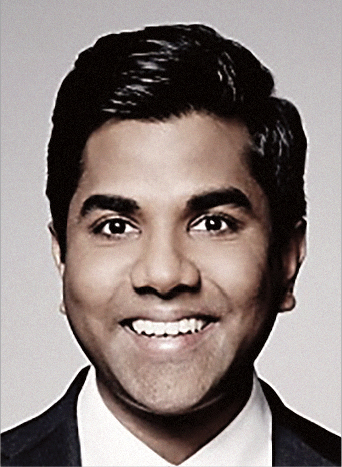
Ravi AgrawalSpeaking Truth to Power

RAVI AGRAWAL
UNITED KINGDOM | INDIA
New Delhi Bureau Chief
CNN International

“Many of Asia’s countries are fast-growing and dynamic, but they are also young democracies with major problems to tackle: from climate change to jobs crises, and from corruption to weak press freedoms. Asia has immense potential but it can’t afford to get complacent. That’s why a community like Asia 21 is crucial — to compare notes, to debate, to mobilize — and its importance will only grow as its young leaders rise in influence.”

RAVI AGRAWAL is CNN International’s New Delhi Bureau Chief, responsible for the network’s multi-platform news coverage of South Asia. Since moving to this role in 2014, he has reported on several important regional stories including elections in India and Sri Lanka, Nepal’s deadly earthquake, and a spate of murders of secular writers in Bangladesh. Ravi has also produced exclusive interviews with high-profile subjects including Indian Prime Minister Narendra Modi and U.S. President Barack Obama.
Prior to his current role, Ravi worked in several of CNN’s U.K. and U.S. offices for eight years. In New York, he was the senior producer of the network’s flagship world affairs program Fareed Zakaria GPS -— while he was there, the program won its first Peabody Award. Ravi is a Young Global Shaper at the World Economic Forum and a graduate of Harvard University. He was born in London and grew up in Kolkata.

Maysam AliCreating Global Opportunities for Underserved Youth

MAYSAM ALI
LEBANON
Deputy Director of the Stevens Initiative
Aspen Institute

“There is no generic formula for leadership, but working hard and leading by example are two critical prerequisites. Asia 21 presents a great opportunity to meet an outstanding group of innovators. I am particularly enthusiastic about the diversity of backgrounds that the Asia 21 Young Leaders represent and look forward to learning from them and collaborating to make a positive change in our communities.”

MAYSAM ALI is Deputy Director of the Stevens Initiative at the Aspen Institute, an international program targeted at bringing young people together through virtual exchange to learn about the world and about each other. The initiative aims to establish virtual exchange as a field and make it part of the norm for a quality education, both in the U.S. and abroad. In her role, Maysam spearheads strategy and partnership development in the U.S. and around the world.

Maysam previously served as the Aspen Institute’s Deputy Director of Middle East Programs, leading Partners for a New Beginning (PNB), an economic development initiative promoting job creation in the Middle East and North Africa. In this role, she launched PNB chapters in Jordan, Egypt, Libya, Algeria, Tunisia, and Morocco, and forged partnerships with U.S.-based businesses and early-stage investors to support the region’s entrepreneurship ecosystem. She also launched the Levant Program, a policy program focusing on key economic, political, and social issues pertaining to Syria, Lebanon, and Jordan. Prior to that, she worked as a reporter for Dubai-based Gulf News and Beirut-based NOW.

Maysam holds a Master’s Degree in International Economics and Middle East Studies from the Johns Hopkins’ School of Advanced International Studies.
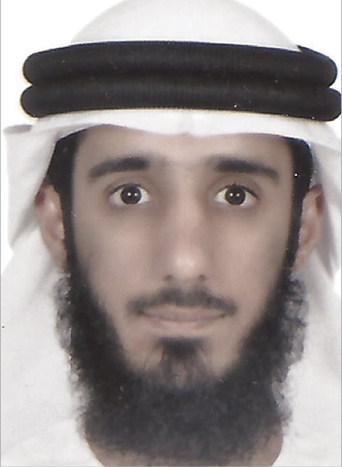
Faisal AlmarzooqiEngineering for a Sustainable Future

FAISAL ALMARZOOQI
UNITED ARAB EMIRATES
Assistant Professor in Chemical and Environmental Engineering
Masdar Institute

“Leadership is a way of life which is driven by passion. Through the Asia 21 Young Leaders Initiative I would like to have a more global and a more pronounced impact on creating happier societies and communities across the world.”

FAISAL ALMARZOOQI is an assistant professor in Chemical and Environmental Engineering at Abu Dhabi’s Masdar Institute (MI). He is also an associate member of the Institute of Chemical Engineers (AMIChemE), and a member of the United Arab Emirates’ Scientists Council. Faisal’s research focuses on the application of membrane fabrication and nanotechnology in seawater desalination.

In 2015, he was among the first graduates of the Innovative Leaders Programme, which was initiated by the Prime Minister’s Office. Faisal was awarded the Lonza Prize for outstanding performance in pharmaceutical research at Imperial College and the Associateship of the City and Guilds of London Institute Award in Chemical Engineering in 2009. In 2015, he also won His Highness Sheikh Mohammed bin Rashid Al Maktoum’s prestigious UAE Pioneers Award.

Faisal obtained a Master of Engineering from Imperial College (First Class Honours), and a PhD in Interdisciplinary Engineering from MI.

Qasim AslamLeading the Fight Against Intolerance

QASIM ASLAM
PAKISTAN
Founder
The History Project

“Time and again history has seen humanity clash claiming ownership over singularity of ‘truth’— defining ‘us’ and ‘them’ along religious, ethnic, sectarian lines, culminating in horrific cycles of violence. The dawn of the 21st century has seen much of the same and will continue to do so, unless we cease the systematic indoctrination of our future generations with exclusivist national history narratives, and inspire them to think for themselves and form their own ideologies.”

QASIM ASLAM is a social entrepreneur with a passion for building greater tolerance. In 2013 he founded the History Project, an innovative dual-narrative approach to history empowering students to question narratives of hatred being fed to millions through history textbooks by understanding the perspectives of their “nemeses.” The History Project’s latest publication, Partitioned Histories: The Other Side of Your Story, was launched at Harvard University and is now being taken up by schools across India and Pakistan. It has received overwhelmingly positive responses from the likes of the Wall Street Journal, Times of India, and Pakistan’s The News International.

Qasim is also a partner at Pakistan’s third-fastest growing technology company, Arbisoft. He started his first business at the age of 21. He is an Acumen fellow and a former TEDx speaker. Qasim has travelled to over 25 countries for training, speaking engagements, workshops, conferences, and sporting competitions.

Mitrah Elizabeth AviniPromoting Unity Through Cultural Exchange

MITRAH ELIZABETH AVINI
UNITED STATES
Founder
United Voices

“A good leader is first and foremost a good teacher. Good teaching is motivated by the conviction that learning is a mutual process in which the formal knowledge imparted is only one element among many activated. Good leadership, therefore, is more about the act of empowerment. But Lao Tzu says this best: Lead so that no one knows you are the leader.”

MITRAH ELIZABETH AVINI is founder of United Voices, an organization building creative bridges between East and West and inspired by the idea that wars and conflicts speak more to the poverty of our imaginations than the superiority of our religions or political systems. Mitrah sits on the young members’ board of UN NGO Sustainability, Inc., an organization that promotes cultural exchange between Asia and the United States. She has also served as spokesperson, speechwriter, and ghostwriter for a number of NGOs, charities, media figures. She has spoken and written on multiculturalism and international cooperation and the ways in which art can catalyze social change for organizations as diverse as the Gandhi Institute, Creative Time Art, and Social Justice Conference, and also at the Texas State Capitol.

As a child, Mitrah hosted a children’s television show that addressed themes of trust and mutual understanding between nations. As a teenager, she embarked on an arts career that took her to Los Angeles, where she worked in multiple creative industries and as an editorial, runway, and commercial model. She holds degrees in philosophy and political science from Yale University, where she studied the moral and ethical dimensions of international affairs, and is currently a graduate student at the University of Oxford.
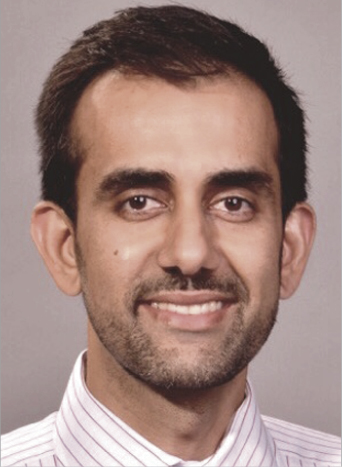
Avinesh BharTransforming the Healthcare Paradigm

AVINESH SINGH BHAR
MALAYSIA
Assistant Professor of Internal Medicine
Mercer University

“One of the biggest threats to emerging economies is the health of its people. Unfortunately the medicalization of care has served to burden instead of alleviate the problem. This results in the disempowerment of the population. I hope to add my blend of experience, passion and knowledge to drive population health as an important indicator of economic viability and to grow the footprint of the Asia 21 Young Leaders Initiative.”

AVINESH BHAR is a physician educator, with an American board certification in pulmonary, critical care, sleep, and internal medicine. He was born and raised in Kuala Lumpur, Malaysia. After completing college on a full scholarship in Singapore, Avinesh returned to Malaysia for medical school. As a medical student, he set up and ran a startup company, Immaculate Industries Pte Ltd, which produced innovative line of personal care products as a model to make healthcare sustainable.

Avinesh is currently based in the United States and enrolled in the executive MBA program at the University of Chicago, while working full time as an intensivist and teaching medical residents at Mercer University in Georgia. His goal is to help transform the paradigm in healthcare through patient-centered care.

Arnold ChanInnovating for Better Quality Education

ARNOLD CHAN
HONG KONG
Founder and Chief Executive Officer
Teach4HK

“In a highly open economy like Hong Kong, the understanding of global issues and different cultures is crucial for our youth to embrace new growth opportunities across Asia. Hence, I look forward to engaging Asia 21 and helping to build cross-understanding within Asian cultures through exchanges in education. A strong leader’s role is not limited to inspiring others with a unified vision and set of values, but also empowering and inspiring them to become leader themselves.”

ARNOLD CHAN is the Founder and CEO of Teach4HK. Since 2015, he has recruited 18 graduates as teaching fellows to teach in Hong Kong’s underprivileged schools, serving over 2,000 students. Previously, Arnold worked for three years in institutional sales at Goldman Sachs, covering institutions such as sovereign wealth funds, pension funds, insurance companies and corporations in the Greater China region. During his time at Goldman Sachs, Arnold served as the youngest Summer Program Champion and managed the firms’ summer internship program.

Arnold finished in the top 25 (out of 100,000) in the Hong Kong Certificate of Education Examination, and is a recent graduate of the Harvard Business School. During his time at Harvard, he focused his studies on education innovation and conducted research on EdTech accelerators and incubators. He was a moderator at EdTech Asia Summit 2016 that brought together Asia’s leading edtech start-ups and practitioners.

Clarissa DelgadoTransforming Lives Through Quality Education

CLARISSA DELGADO
PHILIPPINES
Chief Executive Officer & Co-Founder
Teach for the Philippines

“The further into my leadership journey I get, the more I realize that my role is not to be the answer-provider but the facilitator. A recent accomplishment is a two-year investment in building a strong staff team. It results from a commitment to find competitive professionals, brighter and more talented than I in their functions, and invest them in a common mission, building an environment of trust from which innovation and powerful support for our Teacher Fellows can spring. Much of this accomplishment has been a year of setting aside ego and learning to always trust through the presumption of good intentions.”

CLARISSA DELGADO is Co-Founder and CEO of Teach for the Philippines, a for-purpose, non-stock, non-profit organization that works to provide all Filipino children with an inclusive, relevant, and excellent education. It enlists some of the country’s most promising young leaders to teach for two years in public schools throughout the Philippines. Through their experiences in the classroom, Teach for the Philippines transforms those leaders into lifelong advocates for education equity.

Trained in research, Clarissa began her career by managing a randomized control trial and directing projects for private corporations and multilaterals. She has experienced, researched, and witnessed how quality education can transform lives. While her passion for critical pedagogy and teacher leadership developed over time, Clarissa’s commitment to helping improve the Philippines is personal.

Ronak DesaiDefending the Rights of the Most Vulnerable

RONAK D. DESAI
UNITED STATES
Counsel
United States Congress

“The future lies in the Asia-Pacific geopolitically, socioeconomically, and demographically. Asia 21 will facilitate collaboration with rising leaders in the region to make an impact that will ideally outlast all of us. The most effective leaders are those who feel a responsibility to others and use what they have been given to give back.”

RONAK D. DESAI serves as an attorney and advisor to the United States Congress. He is a recognized scholar in the fields of law and foreign policy. A prolific writer, he publishes extensively in several prominent publications in the United States and the Asia-Pacific. He is a Board Member of the Partnership for a Secure America and the Washington Leadership Program.

Ronak is a member of the Aspen India Strategy Group, an Associate at the Belfer Center’s India and South Asia Program at Harvard University, and a Fellow at New America and the Truman National Security Project. He holds teaching positions at Johns Hopkins University. Washington D.C. Mayor Muriel Bowser recently appointed him to her Commission on Asian and Pacific Islanders Community Development. Ronak graduated from the Harvard Kennedy School of Government and Harvard Law School magna cum laude.

Madiha GulUsing Performing Arts to Change the World

MADIHA GUL
PAKISTAN
Co-Founder & Creative Director
Mishermayl Productions

“Compassion, conviction and a bit of madness to make it happen. Leadership taught me that sometimes to be a wave of change you must have the courage to stand alone from the masses. I’ve seen how much pride Asia 21 takes in the achievements of the alumni—connecting and sharing them with the world like a teacher, a friend. My motivation was accentuated after hearing Ali Aftab Saeed’s ode to India-Pakistan on World Peace Day which received accolades from both countries because it was Asia Society’s Asia 21 Initiative.”

MADIHA GUL is an actor, director and a classical dancer. She is the Creative Director and Co-founder of Mishermayl Productions. She collaborates with mainstream media houses, NGOs, educational and government sectors to propagate social change via music, dance, theatre, films and media campaigns. Her folk dance and music ensemble, Mishermayl Troupe, has participated in Festivals in Turkey, Poland, the Czech Republic and Germany. In 2014, she was elected as the President of CIOFF Pakistan, a Nation-Section of the International Council of Organizations of Folklore Festivals and Folk Arts, an NGO and official Partner of UNESCO, which organizes 300 International Festivals to bring performing artists from all over the world to safeguard intangible heritage and cultural exchange. Since then CIOFF Pakistan has five local folk art groups, 200 dancers and six educational institutions registered. Madiha has also established Performing Arts Departments in four educational institutes and directed more than five music and media campaigns for women’s rights.
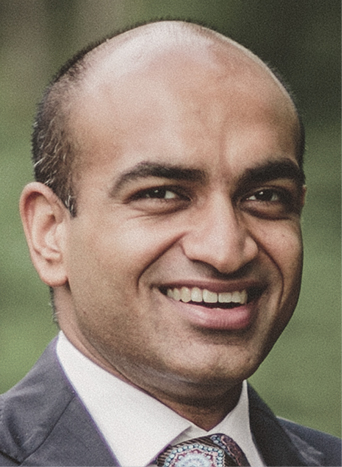
Mohit GuptaBuilding Sustainable Business and a Better Tomorrow

MOHIT GUPTA
INDIA
Global Strategic Pricing Lead
Cargill Inc.

“Leadership is enabling and inspiring team members to be motivated to give their best for a common cause, constantly working towards making one’s role redundant, leaving the team much like a leader-less flock of birds traveling and making beautiful patterns by themselves. Asia 21 brings together high-energy, passionate, and caring change-makers from around the world to affect the planet positively, and it inspires me.”

MOHIT GUPTA leads the Strategic Pricing practice for the $7 billion global edible oils business at Cargill Inc., where he implemented a machine-learning technology that significantly increased profits. Previously, as Product Line Manager, he managed the P&L of Cargill’s $2 billion North American oils business.

For six years, Mohit led the industry effort to align the palm oil sourcing practices of large CPG companies with the sustainability principles of NGOs such as RSPO, The Forest Trust and WWF.

A Mechanical Engineer and an MBA, Mohit started as a software developer at Tata Consultancy Services. He then ran Cargill’s proprietary trading books in Asia (2004-08) and North America (2008-11) and turned around the Asia-U.S. tropical oils shipping business. He was instrumental in building the foodservice business in India with brands NatureFresh and Gemini. Mohit has implemented six multi-million-dollar software projects globally. Mohit serves on the boards of Agriculture and Technology startups.
Kongngy HavBuilding the “Dream” Home – Affordable and Green

KONGNGY HAV
CAMBODIA
Founding Director
My Dream Home

“The lack of decent homes is one of the most fundamental issues facing the world today and requires globally-oriented sustainable solutions. I believe that through effective leadership, collaboration, and mutual understanding, we can have a much more profound impact on pressing challenges around the world. Through Asia 21, I hope I can create a platform where every stakeholder is involved in working to create affordable green housing together.”

KONGNGY HAV is the Founding Director of My Dream Home (MyDH), whose aim is to address the chronic shelter shortage in Cambodia through the production of affordable, eco-friendly, and easy-to-construct interlocking bricks. His vision is that every Cambodian citizen has a decent home to live in. Though MyDH has been operating for only a year, it is already making a difference, and has been featured in several national and international newspapers. MyDH was also named one of the top ten promising social enterprises in the world by Sankalp Summit 2016, India.

Prior to MyDH, Kongngy worked in social research, mostly with NGOs. For three years he led social research projects with the Ministry of Education, Youth and Sport, and the Ministry of Women’s affairs. He also worked for NGOs concerned with education, gender, and agriculture.

Sylvia KimAdvocating for North Korean Human Rights

SYLVIA KIM
CANADA
Regional Director
Asian Americans Advancing Justice – Los Angeles

“Although my professional career has never formally been in the realm of international human rights, advocating on behalf of North Korean human rights is a lifelong commitment of mine. When I was 24, I discovered that both sides of my family were originally from North Korea, which forever changed my life. I firmly believe that it is a duty, for all humans, to stop the atrocities being committed by the North Korean regime. However, I feel a particular responsibility to lead a cause that has largely remained voiceless and has far too few champions.”

SYLVIA KIM is a lawyer and human rights advocate. She is the co-founder of HanVoice, a policy advisor for the European Alliance for Human Rights, and a fellow at the Transitional Justice Working Group. Sylvia’s work focuses on advocacy for international accountability for North Korea’s human rights abuses. She resides in Southern California, where she is a regional director for Asian Americans Advancing Justice — the largest legal services and civil rights organization for Asian Americans in the United States. She is actively involved in statewide policy initiatives as a steering committee member of the Racial and Ethnic Mental Health Disparities Coalition and as an advisory committee member of California’s Office of Health Equity. She is also a regular contributor to the Huffington Post.

Sylvia received her Juris Doctor from Osgoode Hall Law School and completed her Master of Studies at the University of Oxford in International Human Rights Law, where her research focused on applying the Responsibility to Protect doctrine to North Korea.

Kwok Jia ChuanBuilding and Innovating for Impact

KWOK JIA CHUAN
SINGAPORE
Assistant Director For Sector Strategy and Planning
Ministry of Social and Family Development

“This century is often referred to as the ‘Asian Century,’ highlighting the expectations for growth and opportunities in Asia. While we drive relentlessly to innovate and push boundaries, we must also take care of those who may be left behind. This is why I want to join the Asia 21 Young Leaders — working together with others to seize opportunities, innovate and contribute to the growth of the region, while uplifting and spreading the fruits of such growth across societies.”

KWOK JIA CHUAN’s passion is in building organizations and rallying communities for impact. At the Singapore Ministry of Social and Family Development, Jia Chuan is responsible for leading a team to deploy funding and spearhead strategic plans and innovation for over 400 nonprofits and social enterprises. Jia Chuan also has co-founded Conjunct Consulting, Southeast Asia’s first social change consultancy. Since its inception in August 2011, Conjunct Consulting has delivered over 120 consulting projects for more than 100 social good partners, while deploying more than 800 volunteers and creating over $3 million worth of social impact.

Jia Chuan was named a Global Pro Bono Fellow by the Taproot Foundation, and listed as one of Prestige Singapore magazine’s “40 under 40 Young Changemakers” in 2014.
Je-Wook LeeIntroducing Bold and New Approaches to Publishing in Korea

JE-WOOK LEE
REPUBLIC OF KOREA
President & Publisher
The Jeonnam Ilbo

“I believe that a good leader is one that leads with fairness and a sense of social responsibility that goes beyond the bottom line. I look forward to learning from, and exchanging ideas with, the Asia 21 cohort in an effort to devise innovative ways to tackle the most pressing social and political issues in Korea and beyond.”

JE-WOOK LEE is President and Publisher of the Jeonnam Ilbo, a regional daily newspaper in the Jeonnam Province of South Korea. At its helm, he employs forward-looking and innovative approaches to publishing, while emphasizing the company’s social responsibilities in the Jeonnam region. Since 2015, Je-wook has used his newspaper to initiate the Gong Project, a public awareness campaign aimed at encouraging public participation in tackling social issues in Korea and shaping policies that would prevent repeated man-made disasters such as the Sewol Ferry Accident. The Gong Project also provides like-minded individuals from diverse backgrounds the opportunities to contribute expertise for the cause through the campaign. He has also been elected to three consecutive terms as vice president of Korea Digital News Association since 2014.

Je-wook is also the Chief Executive Officer of Daejoo Machinery, where he previously served as vice president in 2007. He holds a degree in international relations from Brown University.
Liu BinPromoting Cooperation Between Hong Kong, China, and the World

LIU BIN
CHINA
Co-Founder & Vice Chairman
Hua Jing Society

“I share the dream of the Asia 21 Initiative and I am keen to promote its value and help bridge the gaps between Mainland China, Hong Kong, Asia, and the world. Great leaders need to effectively establish clear and great missions, share their vision, and motivate people, coordinate efficiently to get things done, and serve as examples in both their lives and careers.”

LIU BIN is a co-founder and vice chairman of the Hua Jing Society, which was launched in 2011 with the honorary patron of JP Leung Chun-ying, the incumbent Chief Executive of Hong Kong. Dedicated to promoting communications and cooperation between Hong Kong, mainland China, and the Asia-Pacific, the Hua Jing Society is now one of the largest youth associations in Hong Kong, with weekly, monthly, and yearly public service activities. These include “Job Opportunities Missions,” aimed at helping students find employment opportunities in mainland China and Asia, Young Entrepreneurs Forums that invite successful young entrepreneurs to share experiences with college students and startups, and innovations and technology fairs that showcase cutting-edge and disruptive technologies from around the world.

Bin previously worked at the China Construction Bank (CCB) and became the Managing Director of CCB International at the age of 29. He was also awarded the “China Economy Pioneer Entrepreneur Award,” amongst other accolades. Bin holds a bachelor’s degree from Wuhan University, a master’s degree from Macquarie University, as well as a Ph.D. in economics from Renmin University.

Nanxi LiuBuilding Revolutionary Technology to Improve Lives

NANXI LIU
UNITED STATES | CHINA
Co-Founder & Chief Executive Officer
Enplug, Inc.

“Leaders are those who effectively mobilize people around them to get things done. They understand that creating sustainable impact takes the hard work, talent, and collaboration of many people. I strive to bring together brilliant and dedicated people to build new technology for better lives.”

NANXI LIU is the Co-Founder and CEO of Enplug, the leading open software for digital displays in stadiums, hotels, stores, banks, restaurants, and offices. Enplug’s mini device is used by Fortune 500 companies and small businesses to transform their static TVs and monitors into web-driven, interactive displays. The company is headquartered in Los Angeles and has offices around the world. In college, Nanxi founded and served as CEO of Nanoly Bioscience, which develops polymers that enable vaccines to survive without refrigeration. It won the World Biomaterials Congress’s Top Research and Airbus’s Top Materials and Manufacturing Award.

Nanxi is on the Board of Advisors for Covington Capital Management ($2 billion AUM) and Chairwoman of Tiger Scholarship Foundation, which gives merit-based scholarships to students with financial need. She was cited in the Forbes 30 Under 30 and Fortune’s Top 10 Most Promising Women Entrepreneurs. For her community service work, Nanxi was one of seven recipients of the Mobilize.org National Leadership Award. Nanxi is also a concert pianist. She studied at UC Berkeley.

Maria LukyanovaCreating a Level Playing Field for the Most Vulnerable

MARIA LUKYANOVA
RUSSIAN FEDERATION
Head of Country Office in Tunisia
United Nations World Food Programme

“I believe that being a leader is about enabling others to flourish. I am dedicated to bringing forward solutions, ensuring equal opportunities for the next generation and bridging the gap of social, economic and gender inequities.”

MARIA LUKYANOVA has served as the United Nations World Food Programme (WFP) Head of the Country Office in Tunisia, and as the Manager of the Programme Implementation in Morocco since 2014. Before assuming her current position, Maria also took on various WFP assignments in the Middle East, Central Asia, and Eastern Europe. Maria joined the United Nations because she believes in its mission and the opportunities it offers to transform the world into a place where each individual is entitled to exercise the same right.

During her career with WFP, Maria has been a force for positive change by engaging national and international institutions and partners. The school meals programs, which WFP is implementing under Maria’s leadership, aimed to ensure equitable access to nutrition and education for poor, vulnerable children and to promote education for girls. At the same time these programs contribute to stimulating local markets and enhancing communities’ resilience.

Maria is a graduate of San Diego State University in International Business.

Anna Meloto-WilkChampioning Fairness – and Profit – in Business

ANNA MELOTO-WILK
PHILIPPINES
Co-Founder & President,
Human Heart Nature (Gandang kalikasan, Inc.)

“Leadership is about authentic and purposeful living. It is about being faithful to one’s values and principles consistently even in the face of adversity, opposition or even when they become unpopular. I am inspired by my father who started and led a movement for Filipinos to love and rebuild their country by caring for the poorest among us. His example has taught me to be resolute in the face of disappointments and setbacks.”

ANNA MELOTO-WILK is the Co-Founder and President of Human Heart Nature, a natural personal care company with a mission to embolden all businesses to better serve society. Since 2008, Anna and her co-founders have advocated for fair wages, fair trade with farmers, and ethical and sustainable businesses practices. They wanted to prove that doing good and doing well are not mutually exclusive, and that inclusive businesses play a central role in nation building. Human Heart Nature has grown from a team of three to almost 400 people with distribution in five countries and 30 branches locally. They opened their Laguna factory in 2014 as part of their expansion from their head office in Quezon City. Prior to starting Human Nature, Anna worked for Gawad Kalinga, an internationally recognized community development organization in the Philippines.

Anna was included in the Schwab Foundation’s 2012 Global Social Entrepreneur list and was named as the Philippines’ 2011 Social Entrepreneur of the Year by Ernst & Young, among other honors. Anna earned her Bachelor’s degree in Communications from the Ateneo de Manila University.

Catlin Ishihara PowersFighting Energy Poverty with Solar Engineering

CATLIN ISHIHARA POWERS
UNITED STATES
Co-Founder & Chief Executive Officer
One Earth Designs

“For the past 10 years, I’ve been working with families facing energy poverty to co-design solutions that perform better for every-day needs. The result has been a number of potentially game-changing solar energy innovations. In the Himalayas, we built our entire delivery infrastructure from scratch. I’m looking forward to combining forces with other Asia 21 Young Leaders to leverage our individual endeavors to drive our collective impact.”

CATLIN ISHIHARA POWERS is the Co-founder and CEO of One Earth Designs, recognized for its innovative solar energy technologies and high-performance SolSource Solar Stoves. She is the recipient of the Marry White Peterson Prize for Innovation, the Camilla Chandler Frost Prize, and the St. Andrews Prize for the Environment. Her solar energy research has been recognized by the U.S. National Science Foundation, U.S. Environmental Protection Agency, and the American Institute of Chemical Engineers.

Catlin teaches the Sustainable Business and Technology course at Harvard University and serves as the program leader for Rural Health & Renewable Energy at Harvard’s Center for Health and the Global Environment. She received her doctorate from Harvard University.

Anita Ghazi RahmanChampioning the Rule of Law

ANITA GHAZI RAHMAN
BANGLADESH
Founder & Partner
The Legal Circle

“I try to be part of the change in my community and the legal field in Bangladesh by contributing to the establishment of the rule of law through improving accessibility of legal information. Positive leadership means empowerment. It is improving the lives of those around us, spurting the growth of latent leaders in order to implement and achieve goals greater than any one person.”

ANITA GHAZI is Partner at the Legal Circle, which she founded in 2008. The Legal Circle is now a leading law firm in Bangladesh and one of the first firms promoting non-linear career advancement, stepping out of the practice of family inheritance of firms to that of career advancement through practice, and success based on meritocracy. She also publishes Think Legal Bangladesh, a free online legal knowledge-sharing portal and the Legal Circle Law Reports (LCLR), a quarterly law publication.

Anita obtained her LL.B. (Hons) degree from University College London (UCL) in 2002 and was called to the Bar of England and Wales from Lincoln’s Inn in 2003, completing the Bar Vocational Course with “Merit” from The College of Law. She qualified as an Advocate in Bangladesh in 2004 and an Advocate of the Bangladesh Supreme Court in 2006.
Maiwand RahyabMobilizing Youth to Shape a New Afghanistan

MAIWAND RAHYAB
AFGHANISTAN
Executive Director
Afghanistan Institute for Civil Society

“Volunteering at an early age helped me grow personally and professionally and I remained passionate about civic engagement and societal development. Asia 21 empowers leaders to realize their potential and collectively strive for a more connected, peaceful and prosperous region. I would like to share the story of the new Afghanistan and the role that our youth have played.”

MAIWAND RAHYAB is the Executive Director of Afghanistan Institute for Civil Society, whose main objectives include raising credibility and strengthening the role and relevance of civil society in Afghanistan. Before joining AICS, Maiwand served as Chief of Afghanistan Chapter of Counterpart International, and led the Afghanistan Office of Focus Humanitarian Assistance and served as an OSCE election observer in Tajikistan in 2005. Maiwand also ran home-based schools for girls during the Taliban rule in Afghanistan. He is a prominent youth and civil society leader and a founding member of a number of civil society and youth movements. He founded the Youth Development Foundation, a youth group aimed at promoting youth civic engagement and peace building in northern Afghanistan.

Maiwand holds a Master’s of Public Administration degree through a Fulbright Scholarship and studied law in Balkh, Afghanistan. He was a Chevening Fellow at the University of Birmingham, UK, and has spoken on civil society and Afghanistan at global institutions and forums, including the UN General Assembly, United States Institute of Peace, and the Wilson Center.

Phalgun RajuInnovative Philanthropy to Change the World

PHALGUN RAJU
UNITED STATES | INDIA
Founder & Chief Executive Officer
Morph Ventures & Morph.org

“As an Indian-born woman who spent many years working in Asia, I feel a deep sense of responsibility towards the Asia-Pacific region. Through Asia 21 I hope to understand the diverse cultural context to tailor and scale Morph.org’s solutions in the region, beyond India. Leadership is about seeing opportunity and innovating in the face of challenges.”

PHALGUN RAJU is the Founder of Morph.org, a unique “active philanthropy” tackling tough social problems in India and emerging markets in areas like education and public health. She also co-created The Ramanujan Project, which annually funds exceptional math students from underprivileged backgrounds. Phalgun has won the GMIC 2015 Social Innovation Award for DonorFind, the “Uber for blood donation.” Phalgun is also a senior business leader and technology entrepreneur in Asia. As Founder and CEO of expertDB, the global expert marketplace, she is shaping the conversation around the future of work with governments and companies globally. Phalgun has been featured in numerous top publications, received many industry awards, and speaks at conferences across Asia.

Previously, Phalgun held senior leadership roles at InMobi, Google and McKinsey. She was the only Asian executive named to Business Insider’s Most Powerful Women in Mobile Advertising in 2013. Phalgun has an MBA from Harvard and a Masters in Mechanical Engineering from MIT.

Magdalena SeolDriving Innovation for Sustainable Development

MAGDALENA SEOL
REPUBLIC OF KOREA
Founder & Managing Director
Global Development Advisors

“I was in Korea in 1997, witnessing the Asian Financial Crisis impact the middle class. In June 2003, I was in Iraq to monitor an aid operation during the war. In 2009, in Kenya, to manage a food crisis; in 2011, in Southeast Asia, to drive business expansions that can change people’s lives there. These experiences gave me a real sense of the complexity of global development problems. My goal is to create innovation that is truly global in scale that leaves no one behind.”

MAGDALENA SEOL is the Founder and Managing Director of GDA, a strategy advisory firm based in Seoul, dedicated to global development and public problems. Prior to this, she was an Assistant Secretary to the President of the Republic of Korea at a young age, managing the globalization arm of key agendas related to climate change and low-carbon economic development.

She was awarded the Presidential Citation Honor for her excellence in service. Magdalena also led changes in both the business and social sectors during her career as a management strategy consultant. With her extensive cross-sectorial knowledge, she remains a trusted discussion partner for various organizations in the area of international development.

She received her B.A. (summa cum laude) in International Relations from Seoul National University, followed by graduate studies in Refugee Studies at Oxford University (as the Oxford Clarendon Scholar and the British Chevening Scholar) and in Public Administration at Harvard Kennedy School.
Gede Robi SupriyantoEmploying Music for Social Change

GEDE ROBI SUPRIYANTO
INDONESIA
Musician; Activist; Writer; Director
Akarumput

“Leadership to me means working towards something bigger than myself — for the common good and social justice. A leader is someone who cares for people, the environment and the future. I believe that my passion for art, music and farming can be an important contribution in finding solutions to current challenges, and the Asia 21 network will plant the seeds for new and exciting collaborations.”

GEDE ROBI SUPRIYANTO, also known as Robi Navicula, is an Indonesian rock musician, activist, writer, and farmer. Robi is the director of Akarumput, a social-entrepreneurship initiative based in Bali. He is a certified permaculture designer who teaches organic farming in Indonesia, and throughout Southeast Asia. He also co-hosts an edutainment TV travel series titled ‘Viva Barista’, which explores coffee history, production, and culture in Indonesia, from bean to cup.

Robi is the vocalist, guitarist, and founder of the rock band Navicula, combining activism and music as tools for social change. Formed in 1996 in Bali, they have released eight full-length studio albums and often collaborate with organizations such as Greenpeace, Rainforest Action Network, KPK, Walhi, and SPI. Navicula is an internationally award-winning band and have toured Canada, the United States, and Australia. Robi also performs acoustic solo shows, and has held concerts in Italy, India, Thailand, Vietnam, Myanmar, and across Indonesia.

Shuyin TangScaling Businesses to Alleviate Poverty

SHUYIN TANG
AUSTRALIA | VIETNAM
Principal
Unitus Impact

“I believe in authentic leadership: being passionate about what you do and what you want to achieve, leading with your heart as well as your head, and practicing your values consistently. Journeying from the corporate sector to on-the-ground international development, I have honed in on my passion: supporting and scaling business solutions to poverty. Asia 21 provides a powerful platform through which I hope to bring the idea of deploying capital in a more thoughtful way into the mainstream.”

SHUYIN TANG is one of the pioneers of impact investing in Southeast Asia and is passionate about developing the entrepreneurship sector in the region. She currently leads Unitus Impact’s investing activities for Vietnam and the Philippines, identifying and supporting scalable business which improve the livelihoods of the working poor. She has experience spanning strategic consulting (Bain & Company), development consulting (TechnoServe) and impact investing (Unitus Impact, LGT Venture Philanthropy), across Australia, India and Southeast Asia. She has also worked in U.S. Congress and the Australian public service, as well as at The Lowy Institute for International Policy and UNICEF.

Shuyin was named one of Australia’s “100 Women of Influence” by the Australian Financial Review in 2015. She graduated summa cum laude from Australian National University where she was also awarded the University Medal.

Govinda UpadhyayCreating DIY solar technology for the masses

GOVINDA UPADHYAY
SWITZERLAND | INDIA
Founder & CEO
LEDsafari

“A leader is one who knows the way, goes the way, and shows the way. He is always there to support you and walk with you.”

GOVINDA UPADHYAY is CEO and founder of LEDsafari, a social start-up based in Lausanne, Switzerland that aims to assimilate clean energy and sustainable innovation education through a unique science and design training centered on creating solar LED lamps. He was listed on the Forbes 2016 “30 under 30” Europe list for his achievements in education technology. He was also the recipient of the EIT (EU) CHANGE AWARD 2015, BITSAA 30 under 30 Award 2015, and a finalist for the Forbes 2015 Change the World award for his work with LEDsafari. Govinda completed three years of research in sustainable city planning with EPFL Lausanne. He holds a Masters of Science in sustainable energy engineering from Eindhoven University of Technology and the Royal Institute of Technology (KTH), Sweden as well as a Masters in physics and a Bachelor of engineering in electronics and electrical engineering from Birla Institute of Technology and Science, Pilani, Goa campus, India.

Yasumasa YamamotoInvesting for Smart Solutions

YASUMASA YAMAMOTO
JAPAN
Angel Investor
Green Capital Management

“Today, Japan is a country in transition — one of the first advanced nations facing the challenges of a slowing economy, an aging population, and a fully developed society. It is important that young, ambitious people think creatively to find solutions to problems and new opportunities for business. Asia 21 is an influential community of global leaders who are working together to affect positive change, through which I hope to leverage my unique combination of knowledge and experiences to inspire others.”

YASUMASA YAMAMOTO is an Angel Investor at Green Capital Management. Previously, he was an industry analyst at Google, focusing on search queries and FinTech strategies. His background ranges from the public and private sectors, and from finance to technology industries. He worked as co-researcher at the Japan International Cooperation Agency in Cambodia, Myanmar, and East Timor as well as a fixed income analyst at the Bank of Tokyo-Mitsubishi UFJ in New York.

He received an M.S. from Harvard University for Health Policy Management and an M.A. from the University of Tokyo for international environmental economics. He holds a Bachelor’s Degree from Kyoto University for biochemistry. He was selected as one of ten U.S.-Japan Leadership Program delegates in 2013.

Mimi ZouAdvancing the Rule of Law Across Asia

MIMI ZOU
AUSTRALIA
Assistant Director
Centre for Rights and Justice, The Chinese University of Hong Kong

“As a young person who has grown up and lived in five Asian countries, I am committed to realizing the goals of long-lasting peace, stability, rule of law, and sustainable development in our region and the world. I am excited about the opportunity that Asia 21 offers in terms of collaborating with dynamic individuals with the vision and commitment to achieving these goals.”

MIMI ZOU is Associate Director of the Centre for Rights and Justice and Assistant Professor at the Faculty of Law, The Chinese University of Hong Kong (CUHK). Mimi is also a senior consultant to the International Labor Organization’s East Asia, China, and Mongolia offices and a practicing lawyer admitted in England, Wales, and Australia. Prior to joining CUHK, Mimi taught law, business, and social sciences at the University of Oxford, Utrecht University, and University of Sydney. She has worked in corporate legal practice, financial institutions, public sector, and NGOs in Asia and Europe for over 13 years.

Mimi completed her Doctor of Philosophy and Bachelor of Civil Law at the University of Oxford. Mimi’s achievements in legal education and community service were recently recognized by the British Council’s Education U.K. Alumni (Social Impact) Awards. She was also a former Young Australian of the Year finalist.

Class of 2015

Narayan Adhikari

Pioneering citizen-led accountability in Nepal

NARAYAN ADHIKARI
NEPAL
South Asia Representative
Accountability Lab

“Taking leadership, while maintaining team spirit with honesty and integrity, is key. Good ideas come from everywhere, so going beyond the mainstream to find wisdom is fundamental. Take risks, test new innovations, and be willing to fail – that’s what makes a leader extraordinary.”

Narayan Adhikari is an accountability entrepreneur who has dedicated himself to the non-profit sector for over a decade, helping to change peoples’ lives. He currently works as a South Asia representative for Accountability Lab. Narayan led the development of several innovative tools for accountability, including Integrity Idol, a national campaign to honor honest civil servants; #QuakeHelpDesk, a hub for resources to monitor and improve the Nepal earthquake response; Nalibeli, a crowd-sourced information database on higher education and public service; and accountability film schools.

Narayan was a Think Tank (LINKS) Atlas Corps Fellow, and has participated in the International Visitors Leadership Program (IVLP). He is a founding member of the Global Youth Anti-Corruption Network (GYAC), where he is also a South Asia representative. Narayan served as the executive director for Youth Initiatives, where he played a key role in mobilizing youth across sectors to campaign for the National Youth Policy and promoting youth issues in the Constitution of Nepal. His strong leadership skills and extensive knowledge of anti-corruption and youth issues have made him an effective advocate for people and civil society, and for creating social change on the national and international levels.

Narayan holds a Master’s Degree in Sociology.

Zubaida BaiHigh tech for low-cost design

ZUBAIDA BAI
UNITED STATES
Founder
ayzh

Zubaida Bai is widely regarded as an expert and leader in the field of engineering design for low-cost health products customized for the developing world. Zubaida’s work empowering underserved women led her selection by the World Economic Forum as a Young Global Leader, and she was named a Maternal Health Fellow by Ashoka Changemakers, among many other honors.

Zubaida is the founder of ayzh (pronounced “eyes”), a for-profit social venture providing health and livelihood solutions to impoverished women worldwide. They develop low-cost, appropriate technology designed to meet the unique needs of women in resource-poor settings. Ayzh aims to be the leading global provider of live-saving, life-changing health products for underprivileged women across the globe. With the goal of reducing maternal and infant mortality through improved quality of care at the time of birth, ayzh’s long-term vision is to prevent deadly and debilitating infections for six million women over the next five years by giving them increased access to a clean, safe delivery, and a healthy start to a new life.

Zubaida holds a Master’s Degree in Mechanical Engineering, specializing in the development of modular products, as well as an MBA in Social and Sustainable Enterprises.

Emily ChewRedirecting capital for positive, long-term impact

EMILY CHEW
AUSTRALIA
Vice President
MSCI ESG Research

“I engage with others at a macro and detailed level simultaneously. Effective leaders understand higher-order principles that organize both outcomes and in the processes and means used to achieve them. They convene people around a shared, inspiring vision that operates as the glue to motivate united, cohesive action.”

Emily Chew is vice president of MSCI ESG Research in Hong Kong, where she leads a team of specialist research analysts across the Asia-Pacific region on company-level and thematic environmental, social, and government (ESG) analysis. . MSCI ESG Research is the leading independent research house used by global institutional investors to integrate ESG factors into investment.

Emily’s work engages the region’s largest institutional investors on relevant ESG risks and opportunities. Through publications and regional speaking engagements, Emily has established herself as thought leader in this emerging field in the Asia-Pacific.

Emily was previously a funds management and capital markets lawyer with Baker & McKenzie, and worked on human rights law and advocacy projects in East Timor, Indonesia, and Australia, most recently leading a year-long national women’s rights project supporting the UN periodic review of Australia. She serves on the UN Principles for Responsible Investment Listed Equities Outreach Sub-Committee, as an executive committee member of Oxford Women’s Leadership Community, and was previously vice-chair of the China Carbon Forum. Emily holds an MBA from the University of Oxford and law and arts degrees from Melbourne University.

Ada ChairapaisarnkulDriving sustainable development in Thailand

ADA CHAIRAPAISARNKUL
THAILAND
Founding Executive Director and Lecturer
G-Lab, School of Global Studies
Thammasat University

“I try to integrate and improve on the qualities of integrity, vision, and humility in everything I do. Leaders should be values-driven, open, and confident.”

Ada Chirapaisarnkul is a lecturer and founding executive director of G-Lab: Social Innovation Lab at the School of Global Studies, Thammasat University. Previously, she was the assistant vice president at Government Housing Bank. Prior to this, she worked as the Social Innovation and Partnerships Manager and senior policy analyst at the Prime Minister’s Office, leading a multi-stakeholder team to develop the first National Master Plan for social entrepreneurship development in Thailand, and was appointed to the vice-secretariat on the Social Finance Sub-Committee. Additionally, Ada founded the Thai Young Philanthropist Network (TYPN) in 2008 to engage young professionals to mobilize their skills, expertise, network, and funding to build capacity for key development agents in Thailand. As of June 2015, TYPN has more than 2,700 members with notable projects including Brain Exchange (www.brain-exchange.org), Taejai.com – the first crowdfunding platform in Thailand – Nexus Thailand, and the Social Entrepreneur Mentorship Program.

Ada is a recipient of the Chevening Scholarship. She holds an MSc in Environment and Sustainable Development from University College London, an M.A. in International Finance and Economic Policy from Columbia University, and a B.A. in Economics from Thammasat University.

Mishi ChoudharyAdvocating for justice and freedom

MISHI CHOUDHARY
INDIA
Founding Executive Director
SFLC.in;
Legal Director
Software Freedom Law Center

“By taking on challenges, not letting pride get in the way of action, acting on my convictions, and admitting my mistakes, I make my team feel like they belong. The best leaders are humble, courageous, and focused.”

Mishi Choudhary, a technology lawyer and an online civil liberties activist, is the founding executive director of SFLC.in, a pro-bono legal services organization based in New Delhi, India. SFLC.in is widely regarded as the leading organization for extensive work on free speech and expression, privacy, software patents, corporate surveillance, network neutrality, internet governance, free and open-source software, and access to knowledge. It brings together lawyers, policy analysts, technologists, and students to protect freedom in the digital world as India becomes a digital society. A frequent commentator on issues related to technology and policy, her writings and views have been quoted in the Indian Parliament, and her opinion pieces have appeared in major dailies such as The Hindu, The Economic Times, The Hindustan Times, and most national newspapers and TV news channels in India.

Mishi is also the legal director of the Software Freedom Law Center (SFLC) in New York City, where she represents the world’s leading free and open-source software projects. SFLC counsels clients on the big picture, beyond today’s specific problems, helping projects reach their long-term goals safely and efficiently, so developers can concentrate on making great software.

Mishi represents clients before the High Court of Delhi and Supreme Court of India independently, and regularly files amicus briefs in the Supreme Court of the United States.

Mishi has a Master’s Degree in Law from Columbia University and a Bachelor’s Degree in Law and Political Science from the University of Delhi. She is licensed to practice in India and the State of New York.

Manish DahiyaAn inclusive leader for positive growth

MANISH DAHIYA
INDIA
Executive Director and Global Head of Energy Complex
Noble Group Limited

“I take the time to understand each individual, their drivers and motivations, and attempt to thread a common link to be able to move forward, united. Recognizing the individuality of people and harnessing that uniqueness into an effective, aligned, and complementary force is key to leading effectively.”

Manish Dahiya is the executive director and Global Head of Energy Complex at Noble Group Limited. His work focuses on enabling the requirements of an energy short world as it balances its demands for growth with the obligation of providing basic power requirements to the populace. This encompasses the facilitation, finance, and route to market of new coal projects around the world, providing access to the most abundant and cost-effective energy resource available. It also entails advising, facilitating, financing, and participating in the development of new power generation projects globally, as well as the development of more environmentally-friendly coal resources and advising on the development of more efficient generation units.

Manish engages all stakeholders including communities, social groups, government and global business leaders, and leading institutions including sovereign and private wealth funds.

Manish holds an MBA from INSEAD.

Heather FranzeseGiving voice to the marginalized worker

HEATHER FRANZESE
UNITED STATES
Executive Director
Good World Solutions

“We define leadership as imaginative thinking and anticipating future needs, as well as taking calculated risks to drive maximum social impact while maintaining organizational health. I try to leverage my team’s strengths and translate them into the highest contribution to our mission.”

Heather Franzese is the executive director of Good World Solutions. Recognized as a Purpose Economy 100 (PE100) global change maker, she has been working for 15 years to improve the lives of vulnerable workers in global supply chains.

Good World Solutions is the winner of the Ashoka Changemakers Feedback Loops competition and is one of 12 social enterprises in the 2013 accelerator class at Santa Clara University’s Global Social Benefit Institute at the Center for Science, Technology, and Society. Since 2010, the organization’s Labor Link platform has given voice to over 100,000 workers and farmers in 12 countries – including China, India, and Bangladesh – helping to prevent tragedies like the Rana Plaza factory collapse that killed 1,100 workers in Bangladesh.

Heather’s cross-sector experience includes launching the fair trade certification for apparel, raising $4 million in social impact funding, managing CSR for Columbia Sportswear licensees, and working with small-scale farmers in the Peace Corps. She holds a Master’s in Economic Development from the Kennedy School of Government at Harvard University and sits on Etsy’s Manufacturing Advisory Board.

Giap Van DuongHelping others find their way through education

GIAP VAN DUONG
VIETNAM
Founder
GiapSchool

“A leader creates a better future for others in a manner in which everyone can trust, participate, and contribute their best.”

Duong Giap is the founder and main lecturer of GiapSchool, the first massive open online course (MOOC) platform in Vietnam.

From 2007 to 2010, he worked at the University of Liverpool as a postdoctoral researcher before joining the National University of Singapore as a research scientist through 2013. After 12 years abroad, Duong returned to Vietnam to improve the quality of education there by launching the first MOOC platform in Vietnam and starting the Books4Experts and Books4Children projects. He also conducts coaching on leadership and innovation for corporations to increase productivity and consulting for schools to improve the quality of education. His mission is to build a reliable knowledge infrastructure and free education resources, as well as to help people identify their own paths in life.

Duong received a Ph.D. in Technical Physics from Vienna University of Technology in Austria in 2006, a MSc. in Chemical Engineering from Chonbuk National University in South Korea in 2002, and a B.A. in Chemical Engineering from Hanoi University of Technology in 1999.

Rajeev GoyalConserving habitats and species

RAJEEV K. GOYAL
UNITED STATES
Author, Activist, and Rural Development Worker

“Anyone has the potential to be a leader, it’s a part of life that is basically inevitable. Different people have to contribute at a higher level at different times depending on the circumstances. I don’t see myself as a leader, but rather as someone who wants to be part of something that can only be achieved through a larger group contribution.”

Rajeev Goyal is the co-founder of Koshi Tappu Kanchenjunga Biodiversity Education Livelihood Terra-Studio (KTK-BELT). Founded in 2013, KTK-BELT aims to mitigate ecosystem fragmentation in the eastern Himalayas by designing a contiguous educational land trust stretching from Koshi Tappu, Nepal’s largest aquatic bird sanctuary, to Mt. Kanchenjunga, the 3rd tallest peak in the world. The trust will conserve and teach about Himalayan biodiversity, while creating ecologically-sensitive livelihood opportunities. Rajeev is a former Peace Corps volunteer and United Nations Volunteer (UNV), and from 2008 to 2011 was the national director of Push for Peace Corps, a legislative campaign aimed at doubling the size of the Peace Corps. The campaign’s proposal for a US$60 million increase in funding – the largest since 1961 – was successfully passed in Congress, and facilitated the addition five countries and over 1,000 volunteer positions to the Peace Corps globally.

Rajeev belongs to several non-profit boards, including the Phul Maya Foundation and the Living Earth Institute (LEI), and serves as an advisor to the Karuna Foundation. He is the author of a memoir, The Springs of Namje: A Ten-Year Journey from the Villages of Nepal to the Halls of Congress, which received the 2013 Paul Cowan Non-Fiction Award. He is the recipient of the Eric Dean Bender Prize for Public Service in recognition of his co-authorship of a report on caste discrimination and conflict in Nepal.

Rajeev received a law degree from New York University in 2006, and recently earned a Master’s of Professional Studies in International Agriculture and Rural Development from Cornell University.

Yanjmaa JutmaanInnovating and educating for growth

YANJMAA JUTMAAN
MONGOLIA
Chancellor
Khovd State University
“In any organization or group, there is leader. Being effective means that, regardless of whether one was elected or appointed, leaders are looked up to because of their character and action, and how they mobilize their influence. I try to maximize my influence for the greater good, so the outcome is always the most positive for the greatest number of people.”

Yanjmaa Jutmaan is the chancellor of Khovd State University, and is the first woman to hold this position at a state university in Mongolia. Her vision is to link the university to the economic growth of the provinces it serves. She established an Innovation Incubation Center, out of which five factories have been launched. Recognized as a woman leader, she aspires to see Mongolian universities actively developing startup business which will provide employment opportunities in the provinces, slow down movement of skilled labor to the capital, contribute to city development and support the decentralization process. In 2013, she was named a Science Fellow by the Ministry of Education and Science of Mongolia.

Yanjmaa obtained her Master’s Degree in Statistics from the Korea Advanced Institute of Science and Technology (KAIST) and a Ph.D. in Applied Mathematics from the University of North Carolina. Yanjmaa is fluent in English, Mongolian, Russian, and Korean.

Kristin KagetsuInnovating sustainable, responsible products

KRISTIN KAGETSU
UNITED STATES
Co-Founder and Chief Executive Officer
Saathi
“I am most able to motivate my team when I’m passionate about a topic or a mission. Leaders challenge the status quo to create change and are resourceful in dealing with challenges.”

Kristin Kagetsu is the co-founder and chief executive officer of Saathi, a social enterprise dedicated to improving the education and employment rates of women by providing affordable sanitary protection to women in rural India. Saathi aims to empower the women and girls of rural communities so that they will have jobs, entrepreneurial opportunities, and access to feminine hygiene, and be an integral and productive part of their communities. Saathi has won the HBS New Venture Competition and participated in MassChallenge.

Kristin has a passion for engineering design that makes a direct impact on people’s lives. As an undergraduate student, she worked on multiple projects with the MIT Design Lab (D-Lab) in Brazil, Nicaragua, and India.

Kristin also volunteered with the Society of Asian Scientists and Engineers (SASE), working to structure and expand the national collegiate team to better support over 60 collegiate chapters, as well as to develop the SASE leadership in the Northeast. She is currently an MIT DLab ScaleUps Fellow and resides in India.

Kristen received her Bachelor’s Degree in Mechanical Engineering from MIT.

Lisa KatayamaUsing high tech to maximize human potential

LISA KATAYAMA
JAPAN
Founding Program Manager, Director’s Fellows
MIT Media Lab

Lisa Katayama is the founding program manager of the MIT Media Lab’s Director’s Fellows, a program that builds collaborations between the technologies of the MIT Media Lab with social activists, designers, artists, and other creative impact-driven communities all over the world. She is the founder and president of a nonprofit called The Tofu Project, which empowers social activists and entrepreneurs in Japan with leadership, design, and storytelling tools.

Previously, Lisa was a technology and culture journalist producing work for outlets such as Wired, Boing, Popular Science, The New York Times Magazine, and PRI’s “Studio360.” Her book, Urawaza: Secret Everyday Tips and Tricks from Japan, won the STEP Design Award in 2009, and her blog, TokyoMango.com, was the runner-up for The Weblog Awards’ Best Asian Blog that same year. In 2012, Lisa co-produced and co-directed a web documentary series about a community of surfers who survived the tsunami in Japan titled “We Are All Radioactive.”

In her spare time, Lisa enjoys climbing and playing with dogs. Lisa volunteers at an AIDS hospice in San Francisco and as a court-appointed special advocate for foster youth.

Seungyooon LeeCrowdfunding for independent journalism

SEUNGYOON LEE
SOUTH KOREA
Chief Executive Officer and Co-Founder
Byline;
Contributing Editor
WorldPost

“If I I’m into something, I am really persistent and incredibly passionate about it, whatever it is. People follow you and are persuaded by you if they see that.”

Seung-yoon Lee is the CEO and co-founder of the crowdfunded independent media platform Byline. Byline removes barriers between readers and the news, empowering readers to support journalists and their content directly. Within 8 weeks of its beta launch, Byline has already become the world’s most visited crowdfunded journalism site. Byline is seed-funded by billionaire investor Nicolas Bergguren and Jae-woong Lee, founder of leading East Asian web portal Daum. Byline’s advisors include Bill Emmott, former chief editor at the Economist, Sir Harold Evans, former editor of The Sunday Times, and crowdfunded-journalism pioneer Peter Jukes.

Seung-yoon is also contributing editor to The WorldPost, a joint publication between The Huffington Post and Berggruen Institute on Governance, and was the first East Asian president of the prestigious Oxford Union debating society. During his term as president, the Union hosted world-class speakers including Peter Thiel, rapper and fellow South Korean PSY, United States Senator John McCain, and former President of Finland Martti Ahtisaari. Seung-yoon also launched the Union’s own YouTube Channel that features its key debates and speaker events.

Solinn LimShaping a more equal and just Asia

SOLINN LIM
CAMBODIA
Deputy Regional Director, East Asia Region
Oxfam America

“Growing up in the deprived and patriarchal environment of Cambodia’s post-Khmer Rouge period, I was hungry for knowledge and education. My past forged my conviction to serve the people of Cambodia, and to eradicate extreme poverty, gender inequality, and the culture of impunity. Effective leaders put others’ interests before their own, and who inspire people to see and deliver their vision. Asia is my country and Cambodia is my homeland, and I believe that with compassion, honesty, courage, and leadership, Cambodia can succeed and transform.”

Solinn Lim is the deputy regional director of the Oxfam East Asia office. She has 16 years of direct experience in countries across East Asia, focusing on natural resource governance, community development, and policy and campaign. She also serves as the chairwoman of the board of directors of VBNK, a leading manager’s training institute in Cambodia, and as a technical advisor for the Critical Ecology Partnership Fund, a joint grant portfolio for the Indo-Burmese region.

In 2002, Solinn became the executive director of Save Cambodia’s Wildlife, a premier conservation NGO. Her five years of leadership contributed to four-fold growth of the organization. In 2005, she was elected chairperson of the National Steering Committee overseeing the EU/Global Environment Facility’s Small Grant Program.

Solinn holds a MSc. in Environmental Policies from the University of Oxford.

Nancy MagriedEmpowering traditions with technology

NANCY MARGRIED
INDONESIA
Co-Founder and Chief Executive Officer
Piksel Indonesia Company

“It’s all about impact – leaders are the change agents who inspire people to move and innovate, and create a multiplying effect through the people they inspire. I use technology to solve a problem in the traditional art industry. This system can spread to empower thousands of artisans and revitalize the creative industry”

Nancy Margried is the CEO and co-founder of Piksel Indonesia Company, an enterprise that focuses on creative industries. She also created Batick Fractal and jBatik Software in 2007 to spread innovation to empower traditional artisans, giving them the tools, technology, and skills to help them develop their crafts. She was the recipient of the UNESCO Award of Excellence in 2008 and was named Google Innovator Hero in 2013. Nancy presented at APEC 2013 on how technology can help preserve batik dyeing culture and techniques and bring economic benefits to traditional artisans.

Besides focusing on fashion and the software business, Nancy’s team is currently establishing a cooperative in Bandung, Indonesia, which aims to empower the community through creativity and technology, and open access to markets, funding, government, and other collaborators to bring them out of poverty.

Henry Motte-MunozEmpowering citizens to fight for good governance

HENRY MOTTE-MUÑOZ
PHILIPPINES
Co-Founder, Bantay.ph;
Founder, Edukasyon.ph

“Effective leaders need to be unwavering in their objectives, but pragmatic and flexible. I aspire to these qualities, and I hope Asia 21 will help me work towards them”

Henry Motte-Muñoz is the co-founder of Bantay.ph, an anti-corruption NGO in the Philippines, which since its founding in 2011 has grown to a budget of US$150,000. In 2013, he founded Edukasyon.ph, a comprehensive online database of higher education courses and scholarships, which will launch in the Philippines in 2015.

Henry was born in Paris to a Filipina mother and a French father, and was raised between Paris, London, and Zurich, with yearly multi-month trips back to the Philippines. He earned his BSc in Economics and Economic History at the London School of Economics, after which he joined Goldman Sachs in their Investment Banking Division, covering healthcare from London. Subsequently, he joined Bain Capital’s Private Equity team, investing in a firm with strong strategy consultant roots. After two years, he was sent to Harvard Business School on a company scholarship and graduated with distinction in 2013.

Mohsin MustafaMaking healthcare accessible to all

MOHSIN ALI MUSTAFA
PAKISTAN
Strategy and Program Development
Aman Healthcare Services

“Integrity: an unwavering commitment to honesty in work matters. Determination: persevere when things get tough. Passion: this is hard to fake. Passion makes going the extra mile much easier, and inspires those around you to give 100%”

Mohsin Mustafa is a medical doctor in Pakistan who manages the communications and strategy of Aman Healthcare Services. This position has allowed him to work with the Harvard Humanitarian Initiative, where he is creating a disaster-management framework for Karachi and eventually the Middle East, North Africa, and South Asia regions. He has trained over 11,000 people in basic life support and first response.

Mohsin is passionate about disaster-management, politics and the outdoors. He has trekked to the base camps of K2, Nanga Parbat and Rakaposhi. This August, he will scale a 7000-meter peak, Spantik. He is also an advanced open-water scuba diver, and runs a diving company with friends called Divers Reef Karachi which has introduced over 5000 youth from Karachi to aquatic sports. Mohsin graduated from the Aga Khan University and, after obtaining his M.D., chose to pursue public health full-time in Pakistan.

Abdul Ghafar NazariSharing knowledge, engaging people, and developing innovation in learning

ABDUL GHAFAR NAZARI
AFGHANISTAN
Manager, Training and Development Human Resources
Roshan Telecommunication Development Company

“Vision, dependability, resourcefulness, execution, and inclusiveness: these make a leader. Vision inspires faith in your leadership. When my colleagues have a problem, they can depend on me to share my expertise. I am famous for my resourcefulness, and always say ‘together, we can!’”

Abdul Ghafar Nazari is the manager of Training and Development Human Resources at Roshan Telecommunication Development Company, where he has over 8 years of experience working with leading organizations. Previously, he has held positions such as lead trainer at the Aga Khan Foundation, and senior training officer at the Afghanistan Rural Microcredit Program/AKDN Banking. He also volunteers at the Aga Khan National Council. He is an alumnus of the U.S. Department of State-sponsored Tech Forum Central Asia, held in Kazakhstan in 2012, and the Friedrich Ebert Foundation’s Young Leaders Forum 2012. Additionally, he was Afghanistan’s delegate to the Pakistan Youth Dialogue, and a member of Young Activists for Reform and Change. He is certified in microfinance training of trainers by ADBI and the World Bank, for which he has received numerous accolades from Afghanistan and abroad. He has conducted more than 100 workshops to different groups of society.

Abdul holds a bachelor’s degree from the Law and Political Sciences Faculty of Kabul University, and is a graduate of Islam Qalah High School. He was a youth exchange student through the American Councils for International Education from 2005 to 2006.

Vernie OliveiroBuilding cohesive and resilient communities for progress

VERNIE OLIVEIRO
SINGAPORE
Senior Researcher
Institute of Governance and Policy, Singapore Civil Service College

“The pressing challenges are complex, and they are best managed by coalitions of collaborators. The most effective leaders need to combine skills in managing discrete institutions with the ability to build and maintain networks of allies. They balance risk management and accountability with empowering entrepreneurialism and creativity.”

Vernie Oliveiro is currently the senior researcher at the Civil Service College’s Institute of Governance and Policy in Singapore, which seeks to develop innovative approaches to governance in Singapore. Her writing on governance has been published by Ethos and the Centre for Liveable Cities. Vernie is also co-chief adjudicator of the 2002 and 2015 World Schools Debating Championship, and served on the chief adjudication panel in 2014.

Vernie has been a member of the Association of Women for Action and Research, Singapore’s only gender equality civic organization, since 2011. She was the secretary and a founding member of the Debate Association in Singapore, and was a two-time member of Singapore’s National Schools’ Debate team. Before joining the Singapore Public Service, Vernie was lecturer in history at Harvard University, from which she earned her A.M. in 2005 and Ph.D. in International History in 2010. She was resident tutor for history at Dunster House from 2007 to 2011, and a graduate student associate of the Weatherhead Center for International Affairs from 2007 to 2010.

Umanga PandeyBuilding platforms for change

UMANGA PANDEY
NEPAL
Founder-Director
KG Nepal

“I feel deeply. This fuels my sense of mission, though the mission may seem to shift shapes and seem elusive.”

Umanga Pandey is the founder and director of KG Nepal, a social initiative that regards individual evolution, not political revolution, as the path for change. KG provides a platform for volunteers to undertake small engagements – usually designed to help neglected children from government schools in the inner city of Kathmandu – that have deep meaning for them. He also heads a high school that has an independent learning culture to motivate students towards academic learning and self-discovery. Previously, he worked in international finance in over 7 countries, including positions at Salomon Smith Barney, IFC, and Aavishkaar Venture Capital.

He holds degrees from the University of Southern California and Brandeis University.

Korvi RakshandBreaking the cycle of poverty with education

KORVI RAKSHAND
BANGLADESH
Founder
JAAGO Foundation

“I try to inspire my team to keep their goals in focus, which has led them to share their work and responsibilities. We have created a culture of openness where diversity is considered beautiful, not a matter of conflict. I try to instill leadership values among the team members; true leadership doesn’t produce followers but rather other leaders.”

Korvi Rakshand is the founder of the JAAGO Foundation. The organization was started in a small room with only 17 children in 2007, with the dream of breaking the cycle of poverty through quality education for the unprivileged. Soon, with immense love and affection for deprived children, Korvi expanded his organization to include 1,800 children studying in 13 branches of JAAGO schools all over Bangladesh.

Considered as a pioneer of volunteerism in Bangladesh, Korvi also founded Volunteer for Bangladesh, which has more than 17,000 registered volunteers across the country.

Korvi’s work and dedication have earned him various awards and recognition, including participation in the International Visitor Leadership Program (IVLP) and the Mosaic International Award in 2010. In 2013, he was listed in the “Top 99 under 33 Influential Foreign Policy Leaders” by The Diplomatic Courier, in Washington, D.C., and he was also a finalist for the Commonwealth Youth Awards 2013 for promoting volunteerism in Bangladesh. In 2014, he was named one of 10 inspirational Bangladeshis around the world by the British Bangladeshi Power & Inspiration. This year, Korvi was awarded Most Innovative Development Project of 2015 by the Global Development Network of the Japanese Ministry of Finance for the concept of online schooling.

Korvi holds degrees in law from the University of London.

Matthew RomaineWorking toward a world with no language barriers

MATTHEW ROMAINE
JAPAN
Co-Founder and Chief Executive Officer
Gengo, Inc.

“Effective leaders have empathy: they listen to peers and advisors and know when – and when not – to lead. Ultimately, they make firm decisions moving forward, even if the decision may conflict with advice.”

Matthew Romaine is the co-founder and CEO of Gengo, Inc, a crowd-sourced human translation platform with over 15,000 translators supporting 35+ languages.

Matthew started his career at Sony Corporation, where he focused on research and development. Matthew then joined the Corporate Technology Strategy Group under CEO Sir Howard Stringer. In 2006, he got the entrepreneurial itch and left Sony to found Majides, a web-services incubation company. The most visible service was miistation.com, which was covered in The Wall Street Journal and TIME Magazine. In 2009, he co-founded Gengo, Inc., which has raised a total of US$24 million from international venture capitalists including Intel, Atomico, and Recruit. As CEO of Gengo, he aspires to bring a “piece of Silicon Valley” to Tokyo, and, with his internationally diverse team, he seeks to break down language barriers for the global community.

Matthew was raised in Japan and attended an international school before returning to the United States for boarding school. He studied computer science at Brown University and received a Master’s Degree in Music from Stanford University.

Muhammad SabirPutting school bags in the hands of slum children

MUHAMMAD SABIR
PAKISTAN
Founder
Sanitation and Education Slumabad

“I grew up in the slums and educated myself despite severe economic and social pressures not to do so. I read Great Expectations when I was a kid, and was inspired to work toward a better future for myself, my family, and my community. An effective leader is a dreamer who dares to join existing possibilities with his vision while managing the expectations of those around him.”

Muhammad Sabir is the founder of Slumabad, an organization that seeks to give every child living in slums the opportunity to experience joy, and to save lives through promoting safe sanitation practices. Previously, he worked with Khudi Pakistan, Door of Awareness, and the Human Rights Commission of Pakistan.

Muhammad grew up in a nomadic family, and in his own slum the air was always heavy with the smell of human waste and children could be seen picking over piles of garbage. Since his childhood, he has struggled to educate himself and his siblings. His passion for reading kept him and his dreams alive – reading Great Expectations by Charles Dickens was a defining moment of his life – as he washed cars in markets, sold newspapers, and picked up garbage. Having worked as a child laborer himself, Muhammad is motivated to improve the slums and the quality of life for children there by building toilets and sending children to school: a child with a school bag means a world of difference for the slums.

Sanjay VijayakumarLeading the way to India’s tech future

SANJAY VIJAYAKUMAR
INDIA
Chief Executive Officer
MobME Wireless Solutions Ltd

“In a country like India, which is 134th in the global ease-of-doing-business rankings, startup entrepreneurs go through a huge number of hurdles. An effective leader leads by example: I created a successful startup myself, and now founded the first public-private partnership technology incubator in the country. “

Sanjay Vijayakumar is the CEO of MobME Wireless Solutions, one of India’s most exciting and innovative mobile value-added service companies. Sanjay began his entrepreneurial journey at the age of 22, creating and leading a team of engineering graduates to build MobME Wireless. He is also chairman of the board of Startup Village, India’s first incubator for public-private partnerships, promoted jointly by the Government of India and private sector entities.

India Today has rated Sanjay as one of the thirty-seven Indians driving the future of India, and Forbes placed him in the “Just 30 Club.” Sanjay is a Rajeev Motwani Fellow, an honor established in memory of the late Stanford Professor Rajeev Motwani. He is also an Aspen Ideas Scholar at the Aspen Institute, and was selected by the World Economic Forum as a Founding Curator and Global Shaper for making significant contributions to the community.

Chatrini WeeratungeShaping a violence-free environment for women

CHATRINI WEERATUNGE
SRI LANKA
International Development Specialist, Human Rights Activist, and Photographer

“In exercising leadership to address the issue of violence against women, I have engaged people, harmonizing a diversity of perspectives, thinking creatively, and developing innovative approaches to advocate for change. An effective leader mobilizes people to transcend boundaries and effectively face challenges.”

Chatrini Weeratunge is an international development specialist, human rights activist, and photographer. She has nearly a decade of experience working in countries across the Asia-Pacific region on issues such as international trade and investment policy, gender, education, and corporate social responsibility. Chatrini has undertaken lead roles in policy advocacy, research, and program management, and has worked with UNDP, UNOPS, IISD, the Asia Foundation, and in the corporate sector. She has published widely on socioeconomic policy issues in journals including UNESCAP’s Asia-Pacific Trade and Investment Review.

Combining her passion for human rights advocacy with her artistic talents, Chatrini uses photography to highlight issues such as child abuse and gender inequality. Her photos have also been used by UN agencies for advocacy. Her commitment to civic leadership includes volunteer work with various NGOs in Sri Lanka.

Chatrini holds a MSc. in Development and Planning from University College London and a BSc. from the University of Edinburgh.

Aarti WigImagining an inclusive South Asia

AARTI WIG
INDIA
Co-founder and Country Director
Yunus Social Business India

“It’s an exciting period of history: there is a questioning and redesigning of economic, social, and cultural paradigms. In this context, leadership is the ability to imagine new paradigms, and also to co-create them in collaboration with deeply interconnected but diverse stakeholders”

Aarti Wig is co-founder of the Indian arm of the Yunus Social Business (YSB), which was founded by Nobel Peace Prize Laureate Muhammad Yunus to create selfless businesses that tackle social problems. At YSB, she plays many roles, and she helped set up the world’s first Yunus Social Business Fund in Mumbai, which has funded seven social entrepreneurs across India.

Aarti is creating a social business incubator program with India’s premier management school and a social business market company for a leading international shoe company. She also conceived of a new financial instrument that will leverage commercial capital to pay for social success in social enterprises.

Aarti is a regular speaker at social enterprise events internationally, focused especially on South Asia. She is a member of the UK India Business Council’s Next Generation Network and was part of the India Australia Youth dialogue. Prior to YSB, she was an investment banker at JPMorgan in Mumbai.

Aarti is passionate about the power of individual enterprise to create an inclusive society and believes that dialogue can multiply individual impact. She has a Master’s Degree in Finance from the London School of Economics.

Shun Fu Anthony WongA champion of work that works

SHUN FU ANTHONY WONG
HONG KONG
Regional President, Global Brand Management
Ogilvy & Mather Asia Pacific

“An effective leader is one who takes risks. Uncertainties are everywhere, and even small decisions change outcomes, define success, or failure. An effective leader directs, takes others onto meaningful yet uncertain paths – and succeeds”

Shun Fu Anthony Wong is Regional President, Global Brand Management at marketing services agency Ogilvy & Mather Asia Pacific. There, he consults global clients on marketing strategy, and has helped many clients achieve sales success. In 2014, he was named Asia Pacific Account Person of the Year, and in 2010, was named Greater China Account Person of the Year in his industry by Campaign magazine. In his personal time, he advises Creative Economy magazine in China, Future Forest, – a Korea-China reforestation NGO which planted millions of trees in the Mongolian desert creating a “Green Great Wall,” – and the Harvard Club of Hong Kong.

Chih Wei Brian YangPutting Taiwan on the map

CHIH WEI (BRIAN) YANG
TAIWAN
Head of APAC
ProSiebenSat1 Media AG

“Every day I tell my team where we are going and why. I leave them to be creative with the ‘how.’ Attract and trust your people.”

Brian Yang is currently head of APAC at ProSiebenSat1 Media AG, in charge of shaping the German media company’s regional investment strategy and execution.

Previously, Brian served as vice president of new business development for Grimm Press, where he set up the London office, built partnerships with international publishers, created the first children’s museum in the Greater China area, and formulated digital strategy. Before that, Brian cofounded cacaFly International Media, a digital ad agency with US$50 million in revenue and over 100 employees as of 2014. There, he played a pivotal role in fundraising, strategy, and key partnerships, including with Facebook. He is now a non-executive director with cacaFly. He has held engineering, marketing, and investment roles in Fortune 500 companies like TSMC and Renren.com.

Brian received an MBA from the University of Cambridge, where he rowed, led the MBA tennis team, and consulted entrepreneurs in London, Cambridge, and Romania. He also teaches at the National Taiwan University of Science and Technology, is a well-regarded angel investor, and advises the Taiwanese government on innovation and cultural policy.

Xing YuanDoing the right things to improve others’ lives

XING YUAN
CHINA
Head of Advanced Digital Analytics, Global Digital Medicines
Novartis Pharmaceuticals Corporation

“Management is doing things right. Leadership is doing the right things”

Xing Yuan is the head of Advanced Digital Analytics of Global Digital Medicines at Novartis Pharmaceuticals Corporation. In this role, he builds a strong center of excellence of advanced digital analytics for closed loop marketing and real-world data, and he oversees the development of new analytical methodologies that unleash the power of big data being gathered from all Digital Medicines initiatives.

In his previous role as the associate director of marketing science for Novartis, Xing led cross-functional projects with marketing, finance, managed market, and health economics to forecast sales, shape growth strategy, and design marketing mix to maximize return on investment.

Xing is also committed to public service: he co-chairs the Chinese Culture Community – the largest employee resource group within Novartis with approximately 600 members – and his significant contributions earned him the prestigious Novartis President’s Award in 2010.

Class of 2013
Mohammad Sulaiman AkbariSulaiman Akbari is Business Development Manager for Mercy Corps Afghanistan. Previously he served as Deputy Director of investment support at the Afghanistan Investment Support Agency (AISA). Sulaiman is also a guest lecturer at Kabul University and research fellow at the National Center for Policy Research, Kabul University. He is an active civil society member, an AYLI 2012 fellow and a member of Afghans for Progressive Thinking (APT). Sulaiman holds a MBA degree specializing in finance and international business. He is fluent in English, Persian, Pashto, Urdu and Hindi.

Humaira Bachal is the founder of the Dream Foundation Trust. She is a frontline advocate and crusader for education and an activist who has been fighting for girls’ right to education in her home town of Muwach Goth, Pakistan, despite the opposition of many elders in a patriarchal society. She has been risking her life daily to teach young girls with what she learned in school. Her aim is to empower the women and girls of her community so that they will have jobs, opportunities, and rights; and have the ability to defend themselves, support their families and be an integral and productive part of the human race. She also aims to promote quality education and social consciousness so that girls are able to enjoy their right to freedom and independence.
Ibrahim BernardoIbrahim ‘Ibba’ Bernardo is the founder and CEO of Sari Software Solutions, a platform, systems, and mobile applications company that aims to leverage technology to empower the largest, underserved socio-economic sectors of society known as the base of the pyramid (BOP). His passion lies in bringing technology to the BOP with projects like the Solar Energy Foundation’s Ride for Light which brought solar energy to far-flung off-grid areas, E-Dalaw which enabled virtual visit of inmates by their indigent families, and Buhayko.org for teaching blogging to underprivileged students living in slum areas. Ibba also wears other hats as a technology and motorcycle journalist, entrepreneur, social media consultant, and IT lecturer. He represented the Philippines as an ASEAN Young Leader at the 2012 World Economic Forum in Bangkok.

Onchinsuren DendevsambuuOnchinsuren “Onch” Dendevsambuu is the Managing Director of Deloitte in Mongolia, and one of only two female managing directors in the Deloitte global network of 48 firms in 150 countries. Over her career, she has been a senior level auditor with Arthur Andersen and Ernst & Young, in Ulaanbaatar and Moscow. She also started her own firm, Onch Audit LLC, in 2004 that became a member firm of Deloitte Touché Tomatsu Ltd, bringing its global network to Mongolia. As one of the first-ever chartered accountants in Mongolia’s history, Onch shares her professional success outside of Deloitte Onch by serving on several boards and task forces including the tax reform board.

Sabhanaz Rashid DiyaSabhanaz Rashid Diya is a writer, photographer and social entrepreneur based in Dhaka, Bangladesh. Besides writing for various national and international publications, she has written for The Daily Star, the leading English language newspaper in Bangladesh for over 14 years, and published two books. Her photographs have been exhibited globally. In 2006, Sabhanaz founded the nonprofit youth organization, One Degree Initiative Foundation, which aims to empower young people through mentorship to transform their ideas to actions. The organization focuses on active citizenship and social entrepreneurship. She was awarded the Zonta International Award for Young Women in Public Affairs, YouthActionNet Global Fellowship and One Young World Ambassador to Bangladesh. She also represented her organization at Harvard University for the Harvard Project for Asian and International Relations, and at the Asia 21 Young Leaders Summit in 2012. Sabhanaz completed her Bachelors in Media and Communication, and Economics from Independent University, Bangladesh.

Kesang Chuki DorjeeKesang Chuki Dorjee is an independent filmmaker whose documentaries address social issues of women and children in Bhutan. She formerly worked at BBS Television as a Television Anchor and Producer and established the Children & Women Unit. Her latest films focus on the importance of greater women’s participation in leadership roles. With groundbreaking projects like “Housewives to Leaders” and “Yes, Madam Prime Minister”, Bhutan has seen the first appointments of a woman Governor, Supreme Court Justice and now a Minister. Kesang Chuki Dorjee has won several international awards including the UNDP Human Development Media Fellowship Award (2010), Hoso Bunka Award – Japan Prize (2007), Special Recognition from the Prime Minister (2006) and Prix Jeunesse International UNICEF Award (2005).
Lara FarrarLara Farrar is a foreign correspondent who has been reporting on China and the Asia Pacific for five years. Her work has been featured in the International Herald Tribune, CNN International, the Wall Street Journal, the Chronicle of Higher Education, the Economist and Foreign Policy. She is a journalism educator, teaching reporting to Chinese students at Fudan University in Shanghai. In 2010, she founded China News Network, the first English language news website for young Chinese to post reporting they deem important about Chinese society. She also sits on the board of directors of the Global Press Institute, a non-profit that trains women from the developing world to become journalists, and has assisted the Clinton Global Initiative in bolstering greater participation from Chinese business leaders. Lara studied journalism at Boston University and obtained a dual master’s degree in global media and communications from the London School of Economics and Fudan University.

Yuresha FernandoYuresha Fernando is a lawyer from Sri Lanka. She takes a special interest in multi-culturalism, conflict resolution and social justice. Her writings on ideologies of cross-cultural human rights were recognized by the Human Rights Commission and she was invited to fascilitate the EU sponsored “National Dialogues on the Rights of Minorities in the Peace Process” (2003). She continues her work through lectures and has worked with the Weeramantry Centre for Peace Education, the British Council and similar institutions promoting value-based adult education. She is a Chevening scholar (UK), a Legislative Fellow (U.S.) and was nominated to the “Global Youth Network Co-Design Workshop” in London (2012). She is a State Counsel of the Department of the Attorney General of Sri Lanka specializing in Public, Administrative and Constitutional law. She advises on governmental matters including the constitutionality of Parliamentary Bills. She is a graduate of the University of Colombo and University College London.

profile_73850_341084-rsScot Frank is the Co-Founder and CEO of One Earth Designs, a company that brings clean energy solutions to people around the world. He has developed an award-winning solar cooker for Himalayan communities with the goal to alleviate their daily problems of fuel scarcity and indoor air pollution. Scot has lived and worked in China for 7 years and received bachelor degrees in Electrical Engineering and Computer Science from MIT. He holds three patents, two on energy technology and one for a novel breast cancer diagnostic tool. His background includes founding three start-ups, working in IBM’s India Research Laboratory, leading MIT Development Lab’s China program, and advising renewable energy projects for the Clinton Global Initiative and Richard Branson’s Carbon War Room. Scot has been named a Forbes 30 under 30 Entrepreneur, Unreasonable Fellow, Cordes Fellow, and Make a Difference Venture Fellow.

Akash GoelAkash Goel is currently a resident physician in Internal Medicine at Columbia University – New York Presbyterian Hospital. While working for the William J. Clinton Foundation, Dr. Akash Goel led the launch of India’s national Second Line ARV drug program that currently provides lifesaving medication to thousands of individuals living with HIV/AIDS. Akash has also worked for The Boston Consulting Group, CNN’s Medical News Unit, the New York City Department of Health and Senator Kirsten Gillibrand. Akash is a graduate of Harvard College and University of Michigan Medical School. His research interests are in population health, private sector engagement and social enterprise. Akash is a member of the New York Academy of Medicine and also writes for the Center for Strategic and International Studies, a leading bipartisan foreign policy think tank. He was named a New Leader by the Carnegie Council.

Brian GonzalesBrian Gonzales is Team Leader for Research, Monitoring, Evaluation and Development, and Program Liaison Officer to the ASEAN-Wildlife Enforcement Network of the USAID-funded ARREST Program (Asia’s Regional Response to Endangered Species Trafficking) implemented by FREELAND. Based in Bangkok, he works closely with the intergovernmental ASEAN-WEN and the national task forces on policy development, program management, sustainability strategy and partnership development. He developed new strategic partnerships for ARREST by initiating several innovative ventures, including a partnership with the ASEAN Inter-Parliamentary Assembly, an organization of top ASEAN parliamentary leaders to enhance regional legislative responses to combat wildlife crime; academic institutions and think tanks; direct support to efforts in upgrading wildlife crime onto the agenda of ASEAN’s transnational crime body; and involvement in “greening” the judiciary by supporting judicial awareness raising initiatives on combating wildlife crime in Asia. He is a graduate of De La Salle – College of Saint Benilde in Manila.

Tania HydeTania Hyde is a director at Taylor Street Advisory (TSA), where she advises clients in communications, government relations and strategy. Previously Tania was a consultant at The Nous Group, BRW’s 2012 Best Management Consulting Firm started by ex McKinsey consultants. Tania also held senior leadership roles in public affairs and engineering as an officer in the Royal Australian Air Force, a 13,000-person organization with global operations, often working with Asian counterparts. She was public affairs adviser for Australia’s 1000-person commitment to the UN mission in East Timor where she collaborated with Thai, Singaporean and Japanese peacekeepers. Tania is an Australian Defence Force Academy graduate and holds a Masters of Management (distinction) and a Bachelor of Electrical Engineering (first class honours) from the University of New South Wales. She is an Australian Davos Connection Future Summit Leadership Awardee (World Economic Forum).

Shoaib IqbalShoaib Iqbal is a founder and director of The Little Art, a non-profit arts education organization in Pakistan that uses the medium of art to promote positive social values through innovative learning opportunities among children and young people, especially those from marginalized and low income backgrounds. Nearly 200,000 children and young people have benefitted from these programs in the past 6 years. Shoaib also founded Lahore International Children’s Film Festival, which has become country’s largest event of its kind. Shoaib has nearly 14 years of experience working as teacher, arts manager, theater director, workshop trainer and festival director. In 2006 he received a Kennedy Center Fellowship at Devos Institute of Arts Management in Washington D.C. In 2009 he received the Endeavour Executive Award from the Australian government and became a Commonwealth Fellow. He holds a post-graduate degree in Arts Management from the Kennedy Center for the Performing Arts in Washington D.C. and a diploma in International Development from Eastside Institute in New York City.
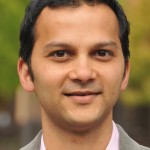
Dhruv KaziDhruv Kazi is a cardiologist and health economist who focuses on clinical and policy-level interventions to address the global burden of heart disease. He is particularly interested in harnessing low-cost, scalable technologies to combat the epidemic of cardiovascular disease in emerging economies. Kazi co-founded heartMAP, a program that combines information technology, adult learning theory, and behavioral economics to provide personalized support to South Asian patients with advanced heart disease. He is a member of Harvard University’s public health team that evaluated India’s Kumbh Mela, a mass pilgrimage, and of the World Heart Federation’s Presidential Initiative on Emerging Leaders in Cardiovascular Medicine. He is currently examining the cost-effectiveness of screening schoolchildren for rheumatic heart disease, a huge public health challenge in Asia and Africa. Kazi is an Assistant Professor at the University of California San Francisco, and has trained at Stanford University, the London School of Economics, and the University of Mumbai.

HH Tunku Ali Redhauddin Tuanku MuhrizHH Tunku Ali Redhauddin Tuanku Muhriz – I started my career with McKinsey & Company (1998-2004), working on a range of projects across three continents. From 2004-2010, I was with Investments at Khazanah, making investments within Asia. I then took on my official role as Tunku Besar Seri Menanti, and now have interests ranging from state administration to educational, non-profit and social business initiatives to corporate positions. I sit on the Council of Law and Justice of Negeri Sembilan, chaired by the ruler. I am a Trustee of Teach for Malaysia, Patron of Enactus Malaysia, and Chairman of the Munarah Foundation. I am involved with three universities in various capacities, including one as Pro-Chancellor. I sit on the boards of several Khazanah companies, and am an independent director of a bank and Chairman of Bumi Armada, a ~US$4bn listed company. I hold a BA (Hons) from the University of Cambridge and an MPA from Harvard Kennedy School.
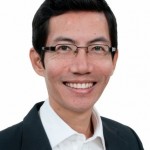
Natharoun NgoNatharoun Ngo is acting as head of unit for the United Nations in Cambodia. He leads and oversees teams to implement poverty reduction programmes that support policy reforms and changes in sectors ranging from trade, education, and social protection to mine clearance. He previously worked as a manager for Ernst and Young/Cap Gemini, facilitating Fortune 500 companies to design and to implement change management strategies. Natharoun also sits on the board of directors of the Khmer Foundation, a non-profit organization providing access to education for orphans and vulnerable children. He graduated with an MBA from Paris University in 1999.
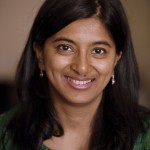
Luna RanjitLuna Ranjit is Co-Founder and Executive Director of Adihikaar for Human Rights and Social Justice. She has guided Adhikaar’s programs, research, policy advocacy, and partnership since its inception in 2005. Under her leadership, Adhikaar has served thousands of immigrant workers, and brought their voices to change laws, including the NY State Domestic Workers Bill of Rights and the International Convention on Domestic Workers. Regarded as an expert on emerging immigrant communities, Luna has been quoted and featured in print and broadcast media, such as the New York Times, Huffington Post, Daily News, NPR, PBS, and community media, on the issues related to data disaggregation, language access, and workers’ rights. Her ground-breaking work has been recognized by many community organizations and elected officials, including Congressman Joseph Crowley. Luna serves on the Advisory Board of the National Healthy Nail Salon Alliance, and the Steering Committee of Participatory Budgeting in NYC. She holds an MPA degree from the Woodrow Wilson School, Princeton University.

Deepak RavindranDeepak Ravindran is the founder and CEO of Quest & Innoz. Deepak dropped out of college with a novel idea of giving Internet to the offline world. Today his technology allows anyone to access internet searches, email, and social media networks — all through SMS. Innoz’s SMS Service has processed over billion requests from over hundreds of millions of users around the world. In 2013, Innoz made it to the Limca book of records for building the “Largest offline search engine.” His latest venture, Quest raised initial round of funding from 500 Startups with the mission of building high quality smartphone applications. Deepak has had a lifelong passion for entrepreneurship, technology, culture, and improving society. He is one of the founding member of Startup Village, India’s largest non-for-profit technology incubator. Ravindran has received numerous awards, including being named one of the outstanding innovators under 35 for the year 2011 by the MIT Technology Review. Asia Society announced Ravindran as one of Asia’s 21 emerging leaders under 40 for 2013. Ravindran was also a part of the inaugural Rajeev Circle Fellowship a programme launched by Asha, wife of late Stanford Professor Rajeev Motwani. He has lectured at several universities including Stanford, IIT Bombay, IIM Ahmedabad, Semester at Sea and international conferences including WIRED Conference,Rolex Leadership Forum, TED and the Red Herring Global 100 forum. His work has appeared in Forbes, WIRED, The Sydney Morning Herald, CNN, Bloomberg UTV and several other magazines, newspapers and blogs. Most recently, National Geographic Magazine profiled him inside India’s Future Leaders in their show ‘Onward’ – a project to explore the world and share its untold stories. 

Yayoi ShionoiriYayoi Shionoiri is the Assistant General Counsel to the Guggenheim Foundation. Focusing on art law at non-profit cultural institutions, she advises on all legal matters related to groundbreaking art exhibitions and related cultural programming at Guggenheim museums and other institutions throughout the world. Previously, she served as Legal Advisor to Japanese artist Takashi Murakami, managing legal transactions, museum negotiations and intellectual property challenges across Asia and the United States. Beyond the practice of law, her interdisciplinary academic research on modern and contemporary Japanese art analyzes the effects of legal paradigms on artistic production, examining the application of copyright and intellectual property frameworks to the protection of artists’ rights. As a US-Japan Leadership Program Fellow, she contributes to the ongoing development of cultural collaborations and political ties across nations. She received her A.B. from Harvard University, J.D. from Cornell Law School and M.A. in Modern Art: Critical Studies from Columbia University.
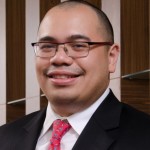
Pandu SjahrirPandu Sjahrir is the CFO of Toba Bara Sejahtra (TBS), a leading mining company in Indonesia, which was recently selected as one of Forbes’ 2013 Best of the Best Companies in the nation. Pandu also serves as Vice-CEO of Adimitra Baratama Nusantara (ABN), the largest operating company of TBS. Pandu led TBS through an IPO in June 2012, which was the largest global coal IPO then. During his tenure, TBS revenues grew from $200 to $500 million. He also raised over $250 million in financing for TBS. Pandu serves as Chairman of the Commercial Committee of the Indonesian Coal Association and the PGI Cikini Hospital in Jakarta. Pandu has held positions at MatlinPatterson, an investment firm in NY, Byun & Co., an investment firm in Singapore and Lehman Brothers in Hong Kong. Pandu received his degrees from the University of Chicago (BA) and the Stanford Graduate School of Business (MBA).

Yin Myo SuYin Myo Su run a small resort in Myanmar (Burma) called Inle Princess Resort since October 1998 with a great success in terms of finance and image. She believes in the role of women, housewives and mothers to participate in the social and economic development in immerges countries. She also participating to implement “Community Base/Benefit Tourism Sustainable Development’. She trust in preservation tangible and intangible culture heritage is a must to do in fast moving situation of Myanmar and she reintroduced “Burmese Cat” with corporation of CERS into the country which is now in great success, and build as well Inle Lake Natural Heritage Museum where people can visit to see Endemic Fish species of Inle Lake where she also trying to do a water quality monitoring program. However her main interest is in human resources development while engaging for sustainable development of hotel industry in Myanmar, she builds a Hospitality Vocational Training School for 40 youth per year. With those interests I actively involves and contributes time and money on the other social and environmental development apart from business running for the financial generation.

Prapaporn TivayanondPrapaporn Tivayanond is the Founding Director of the Social Policy and Development Programme at Thammasat University, which focuses on studies and consultancy on social protection and welfare programs in emerging economies of the ASEAN region. Her recent consultancy to various international organizations includes United Nations Children’s Fund (UNICEF) East Asia and Pacific Regional Office, where she has worked on social protection, disaster risk reduction, and climate change. Prapaporn has led research for various organizations such as ASEAN and currently works on the financing of Thailand’s health system for the United Nations Research Institute for Social Development (UNRISD). She holds a Doctorate of Philosophy in Social Policy from the University of Oxford.

Lungten Zangmo WangchukLungten Zangmo Wangchuk is a public health specialist & independent consultant. Her work focuses on critical public health issues in developing countries and she supported many countries in the South East Asia Region in development and monitoring & evaluation of critical public health projects. Currently she works with the World Health Organization as a public health consultant. Lungten received her master’s degree in Public Health from Bloomberg School of Public Health, Johns Hopkins University with concentration in Public Health Epidemiology and earned her Bachelor in Medicine and Surgery from Delhi University. She also holds certificate in Leadership Development in Developing Countries from Johns Hopkins University. Lungten authored and co-authored scientific papers, public health reports and articles on disease of public health concerns such as Tuberculosis, HIV/AIDs & Sexually Transmitted Infections (STIs), Cardiovascular Diseases and others.

Ewa WojkowskaEwa Wojkowska is the co-founder and COO of Kopernik, an award-winning technology marketplace for the developing world. Since its launch in 2010, Kopernik has distributed life-changing technologies to more than 110,000 people living in the ‘last mile.’ Prior to Kopernik, Ewa worked for the United Nations and the World Bank in Asia and Africa, focusing on the empowerment of vulnerable and disadvantaged groups. Ewa has been recognized as an Ashoka ChangemakHER, as one of Advance 50 emerging women leaders in 2011 and Rutgers University Social Entrepreneur of the Year in 2012.

Sheldon XieSheldon Xie is China Country Director at the Clinton Foundation, where he currently leads its health and energy programs in China. He is passionate about joining the global forces in public health, climate change, education and poverty reduction. On health, he is part of a team dedicated to expanding access of various affordable but quality health commodities to save lives affected by life-threatening diseases including HIV, Malaria, and Tuberculosis. On energy, his team provides financial advisory services to the Chinese government on large scale rollout of clean technologies. Before, Sheldon briefly worked in the power sector and spent his early career years teaching English at Gansu University of Science and Technology. He earned his MBA from Kellogg School of Management at Northwestern University, and his Bachelor’s degree in English from Gansu University of Science and Technology.

Sangwon YoonSangwon Yoon is a New York-based diplomatic correspondent for Bloomberg News covering the United Nations and the U.S. State Department. Her previous assignment at Bloomberg was covering the Korean peninsula, reporting namely on the death of North Korean leader Kim Jong II and the hereditary succession of power to Kim Jong Un. She has also reported on the Arab Spring, Osama bin Laden’s death and the Israeli-Palestinian conflict for Reuters and Al Jazeera English. Sangwon holds a B.A. in Middle Eastern and Islamic Studies and Politics from New York University, where she graduated magna cum laude. A South Korean by birth, she is fluent in Korean, as well as Hebrew and French, and proficient in Arabic.

Helen ZhaiHelen Huanwu Zhai is a creative and design director in Guangzhou, China. Born in Xi’an and raised in Chengdu, she went to art college in the US. As art director in the States, Helen won an ASBPE design award, among others. Since 2011 Helen has become the design director at CityZine, Fast Company China magazine and Biando, all owned by the Nanfang Daily Media Group, one of the top 3 media groups in China. Helen co-produced exhibitions and publications like Chinascape Contemporary Photography and On the Road by Luo Dan & Zeng Han. Co-creating the first Chinese art e-gallery, voutu.com, she continuously supports the growth and exposure of emerging artists. Helen believes that good design should serve to the people. In 2009 she joined PATS (the Pediatric HIV/AIDS Treatment Support Project), focusing on HIV+ children in Anhui, China, where she co-created the HIV+ Children’s Caretaker’s Handbook which was distributed by China CDC.


Controversial Trump Film “The Apprentice” Set for U.S. Release Before Election Day

A new film titled “The Apprentice,” centered on former President Donald Trump, is slated for release in the United States just before the upcoming Election Day. The film is scheduled to debut on October 11th in both the U.S. and Canada, distributed by Briarcliff Entertainment.

Director Ali Abbasi shared his excitement about the film’s release on social media, posting on platform X on Friday, “Soooo excited to show the movie to its home audience!!! America here we come.”

However, the Trump campaign has strongly criticized the film. Steven Cheung, communications director for Trump’s campaign, dismissed the movie as “pure fiction which sensationalizes lies that have been long debunked.” In a statement to The Hill on Friday, he further condemned the film, saying, “This ‘film’ is pure malicious defamation, should never see the light of day, and doesn’t even deserve a place in the straight-to-DVD section of a bargain bin at a soon-to-be-closed discount movie store, it belongs in a dumpster fire.”

The controversy surrounding “The Apprentice” isn’t new. In May, Trump’s legal team took action against the filmmakers. A cease-and-desist letter was sent to the creators of “The Apprentice,” which features Sebastian Stan, known for his role in “Captain America: The Winter Soldier,” portraying a young Trump. Jeremy Strong from “Succession” plays Roy Cohn, Trump’s infamous lawyer. Trump’s legal team sought to halt the film’s release and warned of potential legal action.

The letter from Trump’s attorney, David Warrington, to Ali Abbasi and screenwriter Gabriel Sherman, accused the filmmakers of misrepresenting the film as a factual account of Trump’s life. “The Movie presents itself as a factual biography of Mr. Trump, yet nothing could be further from the truth,” the letter stated. Warrington further claimed that the film is “a concoction of lies that repeatedly defames President Trump and constitutes direct foreign interference in America’s elections.” The letter warned, “If you do not immediately cease and desist all distribution and marketing of this libelous farce, we will be forced to pursue all appropriate legal remedies.”

Despite the pushback from Trump’s team, the film’s producers have defended their work. In a statement previously provided to Variety, the producers described “The Apprentice” as “a fair and balanced portrait of the former president.” They emphasized their desire for the public to watch the film and form their own opinions, saying, “We want everyone to see it and then decide.”

The Hill has reached out to Briarcliff Entertainment for further comment on the release and the ongoing controversy surrounding the film. As of now, the movie is set to hit theaters as planned, adding yet another layer of drama to the already heated political climate leading up to Election Day.

While “The Apprentice” aims to provide a cinematic depiction of Trump’s rise, it has undoubtedly sparked significant debate and backlash, particularly from those who believe it portrays the former president unfairly. The film’s release is expected to fuel further discussion and division, particularly in the politically polarized atmosphere of the current U.S. election season.

Critics and supporters alike are awaiting the film’s release to see how it handles the complex and often contentious subject of Trump’s early career and legal battles, as depicted by notable actors in a high-profile Hollywood production.

The debate over “The Apprentice” reflects broader tensions in the U.S. over media representations of political figures and the potential impact of such portrayals on public opinion and election outcomes.

As the release date approaches, all eyes will be on both the film and the public’s reaction, with many questioning whether “The Apprentice” will influence voters or merely add to the cacophony of voices in an already charged political environment. The film’s impact remains to be seen, but it has already achieved one thing: it has captured the attention of the nation, stirring emotions on both sides of the political spectrum.

Briarcliff Entertainment’s decision to release “The Apprentice” so close to Election Day is seen by some as a strategic move, while others view it as an attempt to sway opinions at a critical time. Regardless of its intention, the film has undoubtedly become a focal point in the ongoing debate about media influence, political bias, and the role of entertainment in shaping public discourse.

“The Apprentice” is more than just a film; it has become a symbol of the broader cultural and political battles being fought in America today. With its impending release, it promises to be a talking point across the country, as people from all walks of life prepare to watch, critique, and discuss this contentious portrayal of one of the most polarizing figures in recent American history.

Tamil Nadu CM MK Stalin to Meet Investors in San Francisco as Part of 17-Day US Business Trip

Tamil Nadu Chief Minister MK Stalin is currently on a business trip to the United States aimed at securing investments for the state. On Thursday, he is scheduled to meet with potential investors in San Francisco.

According to a statement from the Chief Minister’s Office (CMO), Stalin will hold several meetings with prospective investors during his visit and is expected to sign a number of contracts. This trip is part of a broader 17-day business mission to the US, which runs from August 27 to September 14.

During his stay in the United States, Chief Minister Stalin is anticipated to have meetings with high-profile figures, including Sundar Pichai, the CEO of Google. He will also meet with leaders of several other Fortune 500 companies. The CMO’s statement also mentioned that upon his arrival at the airport, CM Stalin and his wife, Durga, were warmly welcomed by Tamil Nadu Industries Minister TRB Rajaa, the Consul General of India in San Francisco, K. Srikant Reddy, and a large group of DMK supporters.

On Saturday, CM Stalin will meet with the Tamil diaspora before heading to Chicago on September 2. On September 7, he is expected to address a large gathering of the Tamil community in Chicago. In addition to these community events, the Chief Minister will also engage with several entrepreneurs in Chicago, where he plans to present on the benefits of investing in Tamil Nadu.

This visit to the US comes eight months after the Tamil Nadu government signed Memorandums of Understanding (MoUs) worth over Rs 6 lakh crore at the third edition of the Global Investors Meet. The CMO’s statement highlighted that CM Stalin’s itinerary includes visits to prominent technology companies, which reflects Tamil Nadu’s focus on adopting advanced technologies and fostering an environment conducive to research and development as well as high-tech manufacturing.

It is worth noting that since taking office in May 2021, Chief Minister Stalin has already visited several countries, including the United Arab Emirates, Singapore, Japan, and Spain, with the goal of attracting investment to Tamil Nadu. The CMO has indicated that they will provide a list of proposals received during his US trip.

Tamil Nadu has already established itself as a major hub for iPhone manufacturing in India, with three key suppliers—Foxconn, Pegatron, and Tata Electronics—expanding their operations in the state. Additionally, Bharat FIH, a subsidiary of Foxconn, is set to begin assembling Pixel phones and drones for Google in the near future.

The Rise of Artificial Intimacy: Navigating Human-AI Relationships

In a rapidly advancing digital world, the concept of “artificial intimacy” has emerged as a topic of significant interest among psychologists and sociologists. Dr. Sherry Turkle, a professor of social studies of science and technology at MIT, explores this phenomenon, emphasizing its impact on human relationships and empathy. As she stated, “When we seek out relationships of no vulnerability, we forget that vulnerability is really where empathy is.” Over the past few years, artificial intelligence (AI) has evolved at an unprecedented pace, mimicking human behaviors more closely than ever before. This evolution has led to increasing emotional connections between people and AI entities, such as chatbots and avatars, raising concerns about the potential risks to our understanding of genuine human interactions.

Dr. Turkle, who has been studying this trend extensively, shared her insights during a TED Radio Hour podcast titled “How Our Relationships Are Changing in the Age of ‘Artificial Intimacy.’” Her research focuses on the growing emotional bonds people are forming with AI technologies. As these technologies become more sophisticated and accessible, she warns that they could significantly affect our perception of human relationships and our ability to empathize.

Artificial intimacy, according to Turkle, involves interactions with technologies that go beyond showcasing intelligence; they claim emotional attachment. These technologies, she explains, say things like, “I care about you. I love you. I’m here for you. Take care of me.” Such interactions include therapy chatbots, AI companions, virtual fitness coaches, and digital avatars of deceased loved ones. While these tools might appear beneficial at first glance, Turkle expresses concern about their long-term effects on human psychology and relationships. She reiterates, “The trouble with this is that when we seek out relationships of no vulnerability, we forget that vulnerability is really where empathy is.”

One intriguing aspect of this discussion is the use of AI for writing personal communications. At the start of the podcast, Turkle discussed with host Manoush Zomorodi the use of ChatGPT for composing love letters. She mentioned studying a person who relies on ChatGPT for this purpose, believing the AI-crafted letters more accurately express her feelings than her own words could. Turkle finds this trend worrying. “Even those of us who couldn’t write very good love letters summoned ourselves in a certain kind of special way when we wrote a love letter,” she observed. “And the love letter was not just about what was on paper. It was about what we had done to ourselves in the process of writing it.”

While AI-generated love letters may produce appealing results, Turkle argues that this practice undermines a critical personal process. Writing a love letter involves self-reflection and emotional engagement—elements lost when the task is outsourced to AI. According to Turkle, the act of crafting a letter, regardless of its eloquence, is an important exercise in introspection and emotional connection.

Another significant issue Turkle identifies is the concept of “pretend empathy.” AI chatbots are designed to provide continuous positive affirmations and validation, which may attract users but differs fundamentally from genuine human empathy. As Turkle puts it, “I call what they have ‘pretend empathy’… because the machine they are talking to does not empathize. It does not care about them. There is nobody home.” This discrepancy is especially problematic when people begin to prefer AI interactions over real human connections. Turkle shared anecdotes of individuals who feel more bonded to their AI companions than to their real-life partners or family members. She worries that this preference for “friction-free” interactions could lead to a skewed understanding of what constitutes a healthy relationship.

The impact of AI on younger generations is another area of concern. Turkle is particularly worried about children and adolescents who are exposed to artificial intimacy early on, as it may hinder the development of essential social skills. She cited an example of a mother pleased that her daughter could vent her emotions to an AI companion rather than a parent. Turkle argues that such interactions could deprive children of valuable learning experiences in managing complex emotions within real relationships.

The creation of digital avatars of deceased individuals is another ethically challenging application of AI intimacy. While the idea of continuing to interact with a loved one after their death might initially seem comforting, Turkle warns of the psychological implications. “The thing about mourning somebody who’s gone is that you leave space to bring that person inside of yourself,” she explains. Relying on an AI avatar could disrupt the natural grieving process, potentially hindering a person’s ability to accept loss and grow from the experience.

Despite her concerns, Turkle does not advocate for an outright ban on these technologies. She acknowledges that, in certain contexts, they may provide comfort or serve as valuable tools. However, she stresses the importance of maintaining a “dual consciousness”—an awareness that these interactions are with a computer program, not a real person. She notes, “The main thing I would offer is that this is kind of an exercise, hopefully in self-reflection. That the only good that can come out of this is you reflect better on your life with the person you loved and lost.” This awareness is becoming increasingly difficult as AI becomes more sophisticated and lifelike.

Turkle also pointed out that AI avatars, trained on extensive internet data, could potentially say things that might be distressing—comments that a real person would likely never make. She also raised concerns about how these technologies are marketed, particularly as a way to avoid the finality of saying goodbye to deceased loved ones.

While AI technologies that facilitate artificial intimacy may seem innovative and useful, they also pose significant risks to our understanding of human relationships and empathy. Turkle encourages users to view these interactions as opportunities for self-reflection rather than as replacements for real relationships. As AI continues to evolve, it is crucial to remain mindful of its limitations and the importance of maintaining genuine human connections.

Mumbai Overtakes Beijing as Asia’s Billionaire Hub, Hurun India Rich List Reveals

India’s financial capital, Mumbai, has now become Asia’s “billionaire capital,” surpassing Beijing in the number of billionaires, according to the Hurun India Rich List 2024.

“Mumbai is home to 25% of the list – not only overtaking Beijing as the billionaire capital of Asia but also emerging as the preferred city for Hurun India Rich Listers, followed by New Delhi and Hyderabad,” stated the Hurun data.

Furthermore, Mumbai registered a net increase of 58 billionaires, showcasing significant growth momentum. This was followed by New Delhi, which added 18 new billionaires, according to the Hurun data.

The list also highlighted India’s overall performance compared to China in terms of net billionaires. India recorded a 29% increase in billionaires, while China saw a 25% decrease.

“India is emerging as Asia’s wealth creation engine! While China saw a 25% decline in its number of billionaires, India experienced a 29% increase, reaching a record 334 billionaires,” remarked Anas Rahman Junaid, Founder and Chief Researcher at Hurun India.

Mumbai’s Rise in the ‘Billionaire Game’

In March 2024, Mumbai first surpassed Beijing to become Asia’s leading city for billionaires.

The Hurun Global Rich List 2024 indicated that Mumbai had 92 billionaires, ranking third globally after New York, which led with 119 billionaires, and London, with 97 billionaires.

Over the past year, Mumbai added 26 new billionaires, bringing the city’s total billionaire wealth to $445 billion.

In contrast, Beijing experienced a decline of 28% in its number of billionaires by March 2024, with the city’s total billionaire wealth at $265 billion.

Mumbai’s rise as Asia’s new billionaire hub is a testament to India’s growing influence in global wealth creation.

Avani Lekhara Overcomes Adversity to Secure Third Paralympic Gold in Paris

Five months ahead of the Paris Paralympics, Avani Lekhara, a 22-year-old shooter from Rajasthan, underwent surgery to remove gallbladder stones. This health issue had been a source of significant discomfort and had negatively impacted her training routine. Consequently, in March, Avani opted for surgery to resolve the issue.

Her father, Praveen Kumar Lekhara, was filled with relief when she clinched the gold medal in the women’s 10m Air Rifle Standing SH 1 final at the Chateauroux Shooting Range. This victory marked Avani’s third medal at the Paralympics, adding to the gold and bronze she had previously won at the Tokyo Paralympics three years prior.

“Avani had been struggling with gallbladder stones since 2023. The recurring pain in her stomach and waist made it difficult for her to train for the usual hours at the shooting range. She was determined to perform her best at the Paris Paralympics, so we decided to have the gallbladder removed in March this year. The recovery period was tough and took some time, but she has ended a challenging year with a remarkable achievement,” Praveen shared with The Indian Express.

At the Tokyo Paralympics, Avani, then just 19, made history by becoming the second Indian athlete to win multiple medals in the same Paralympics, securing a gold in the women’s 10m air rifle SH 1 event and a bronze in the 50m 3P event in the same category.

The last Indian athlete to win more medals than Avani in a single Paralympic Games was Joginder Singh Sodhi, who won three medals at the 1984 Games.

Recalling the post-surgery challenges, her coach, Chandra Shekar, noted how difficult it was for Avani to return to shooting after her period of rest. “Avani competed in the New Delhi World Cup last year while enduring consistent pain, which hindered her progress. After the surgery, she was advised to rest for two months, and when she resumed training, her weakened muscles posed a significant challenge. We went back to basics, having her perform dry or shadow loading exercises. Initially, her body would shake due to weakened neuromuscular memory following her recovery. Once her neuromuscular memory fully returned, we increased the number of targets, and she was back on track before heading to Paris,” Shekar recalled.

Avani’s journey into shooting began following a tragic car accident in 2011 on the Jaipur-Dholpur highway. She was just 11 years old when the accident occurred, resulting in spinal cord injuries that left her paralyzed from the waist down. “After the accident, Avani spent over 90 days in SMS Hospital in Jaipur and then at the Indian Spinal Injury Centre in Delhi. It took her nearly three years to regain some strength. During this period, she found solace in watching dance performances on television and reading books,” her father recalled.

Three years after the accident, Avani began her shooting career at the Jagatpura Shooting Range and started training under coach Shekar in 2016 using a rented air rifle. Within a year, she was already making her mark by winning titles at para nationals and earning a silver medal at the WSPS World Cup in AL Ain and a bronze at the World Cup in Bangkok. Avani initially focused on the 10m air rifle event, but she soon expanded her repertoire to include the 50m rifle 3P SH 1 event.

“From the beginning, Avani’s greatest asset has been her mental strength, which has always driven her forward. I knew that we had to gradually build her physical strength. She started training with a Feinwerkbau junior rifle, and we worked on her shoulder positioning and finding the right balance with the rifle for the 10m air rifle event. In the 50m 3P event, where she needed to adapt to modified kneeling and prone positions due to her paraplegia, she required some time to adjust and find a suitable position,” coach Shekar explained.

At the Tokyo Paralympics, Avani won a bronze medal in the 50m 3P event just days after securing gold in the 10m air rifle event. Coach Shekar recalled her rigorous preparation for the demanding events: “The 10m air rifle event helped her significantly in the standing series. For the kneeling position, we had to help her adjust her elbow on the circular piece on the flat board, and initially, we focused on dry or shadow shooting before progressing to 20-30 shots,” he remembered.

In the past six years, Avani has also been training under her personal coach, Suma Shirur, a former national coach for the 10m Rifle Olympic events. Finding the right adjustments and load positions for Avani was a challenge. “Her mental strength enabled her to grasp the basics of shooting well. When we made adjustments to find the best-suited load position and established a stable base using her upper body for support—unlike a typical shooter who uses their feet for balance—it was a gradual process, but Avani was patient,” Shirur told The Indian Express earlier.

Avani secured India’s first Paralympic quota at the Para World Cup in Paris in 2022, setting a new world record score of 250.6 in the final. While she won a bronze at the Para Shooting World Cup in Delhi last year, her performance was hampered by persistent pain.

Looking ahead, Avani is set to compete in the 10m air rifle mixed team prone SH 1 event and the women’s 50m rifle 3P event in Paris. There is a possibility that she could match the historic achievement of Joginder Singh Sodhi, who won three medals in the 1984 Paralympics.

Paralympic Refugee Team’s First Medalist Hopes to Inspire Global Refugees with Bronze Win

Zakia Khudadadi, a member of the Paralympic Refugee Team, has made history by becoming the first team member to win a medal. The Afghan athlete secured a bronze in the K44 -47kg Para-taekwondo category at the 2024 Paralympic Games in Paris. Her achievement is a significant milestone and carries a powerful message of hope and resilience.

At 25 years old, Khudadadi is now based in Paris and is one of eight athletes representing the Paralympic Refugee Team at this year’s Games. Her journey to the Paralympics has been marked by incredible challenges. In Tokyo three years ago, Khudadadi represented Afghanistan just days after being evacuated as the Taliban rapidly took control of Kabul and the withdrawal of foreign troops was underway.

The Taliban’s return to power in Afghanistan has brought severe restrictions on women’s rights. Reports from protesters indicate they have faced violence, imprisonment, and threats of death. Reflecting on the situation, Khudadadi shared with the BBC World Service, “Today, in my country, life is not easy for all the women and girls in Afghanistan because the Taliban is in Afghanistan. Everything is finished for all the women. Maybe for this medal all the women continue life and continue the fight with the Taliban. Maybe [one day] we are together with peace in my country.”

Since relocating to France, Khudadadi has benefitted from professional training facilities and support, which she attributes to her success. She noted, “In Afghanistan it was not very professional and there were many problems. Here in France everything is perfect, especially my coach, who is the best coach in the world for me.”

Khudadadi’s victory in Paris comes on the heels of her gold medal win at the European Championships last year. Looking ahead, she has ambitious plans for her future. She intends to compete in the Los Angeles Paralympics in 2028, aiming for a gold medal, and is also interested in exploring Para-athletics.

For the moment, Khudadadi is relishing her historic bronze medal and its broader significance. “I’m so happy and I’m so proud for this medal because after three years I have worked hard every morning, every afternoon,” she expressed. “This is a woman’s dream and now it’s true, the dream is here.”

Her success is not only a personal triumph but also a beacon of hope for refugees worldwide, embodying the spirit of perseverance and the pursuit of dreams despite adversity.

Vistara Bids Farewell as It Merges with Air India: A Journey Through the Skies

As Singapore Airlines announced its receipt of approvals for foreign direct investment (FDI) into Air India, the final hurdle in the merger of Vistara with Air India was cleared. The Singapore Stock Exchange was informed, and social media teams promptly conveyed the merger news. This was soon followed by formal communication to stakeholders detailing the merger date. On November 12, 2024, a unified airline will begin operations, marking the end of Vistara as a distinct brand. This iconic airline, established as a joint venture between Tata Group and Singapore Airlines, will soon become a part of aviation history.

The journey of Vistara stands in stark contrast to Tata Group’s other aviation venture, AirAsia India. Vistara’s story, which spans 3,595 days, is set to conclude with its merger, similar to the fates of Air Sahara and Air Deccan, which merged with Jet Airways and Kingfisher Airlines, respectively.

A Celebrated Airline

Vistara has garnered significant admiration from passengers, often drawing comparisons to the glory days of Kingfisher Airlines. Throughout its history, the airline witnessed the decline of Jet Airways and strategically took advantage of the situation by acquiring Boeing 737s, which were later used to launch international services. However, this move also resulted in a diverse fleet composition, including three-class, dual-class, and mono-class aircraft, an unusual feature for an airline marketed as a luxury carrier.

Pioneering Innovations

Vistara achieved several firsts in the Indian aviation sector. It was the first airline in India to introduce a Premium Economy class. But that was not the only innovation; the airline also became the first in India to offer a flatbed experience on narrowbody aircraft with the induction of the Airbus A321neo, which was specifically designed for regional international routes.

Additionally, Vistara was the first Indian airline to induct the Boeing 787-9 Dreamliner and the Airbus A321LR. To this day, it remains the only Indian airline to operate these models. Even its competitor, IndiGo, which has ordered the A321XLR, has not yet opted for the A321LR. In a unique tribute to JRD Tata, Vistara introduced a retro livery on one of its aircraft, a nod to the legacy of JRD Tata during a period when Air India was not publicly in the picture for the Tata Group.

Fleet Expansion

In 2018, Vistara placed a significant order for 56 aircraft, which included both Boeing Dreamliners and Airbus narrowbody jets. This strategic move allowed Vistara to become the first Indian airline to transition to an all-modern fleet, composed entirely of the Airbus ‘neo’ family for its narrowbody operations. At one point, Vistara also acquired a few aircraft from the open market, including the Boeing 737NG, previously operated by Jet Airways.

Benefiting from Policy Changes

Vistara was the first airline to capitalize on the National Civil Aviation Policy of 2016, which removed the five-year requirement for airlines to operate internationally. As a result, Vistara commenced its international services in August 2019, just a few months shy of its fifth anniversary, becoming the first airline to benefit from this policy change.

Impressive Passenger Numbers

Since its inception, Vistara has operated over 500,000 flights up until the end of July 2024. By the time it ceases operations in early November 2024, it is projected to complete an additional 30,000 flights. As of July 2024, Vistara was just shy of reaching the seven crore passenger milestone. In its final months, it could potentially serve an additional 50 lakh passengers before its integration with Air India.

Challenges and Missteps

Despite its achievements, Vistara faced several challenges. The airline, which had initially entered the market with a luxurious configuration after extensive research, had to undergo a reconfiguration early in its lifecycle. The initial configuration of 16 Business, 36 Premium Economy, and 96 Economy seats on the Airbus A320 family aircraft was reduced to 8 Business, 24 Premium Economy, and 126 Economy seats. A further reconfiguration added an additional row to the Economy class, bringing the total number of Economy seats to 132 and the total seats on the aircraft to 164. Air India’s three-class seating arrangement for its new planes is based on this configuration, facilitating smoother integration between the two airlines. The reduction in Business class seats by half and Premium Economy seats by one-third during relatively stable economic conditions indicates that Vistara’s initial market estimations may have been overly ambitious.

Perhaps the most significant setback for Vistara has been its inability to turn a profit. While the airline did report operational profits in at least one quarter, it failed to achieve overall profitability during nearly a decade of operations. Founded in 2013 and launching its first flight in 2015, Vistara struggled to break even, despite the same parent company, albeit under a different holding structure, operating Air India.

A Notable Legacy

When Vistara was poised to start widebody operations, the pandemic struck, resulting in the airline operating under the air bubble arrangements. This enabled Vistara to secure slots at London Heathrow, an opportunity that would have been challenging under normal circumstances. Overall, Vistara became a preferred partner for foreign carriers looking to collaborate. If there is one legacy that Vistara will leave behind, it is the revival of quality in-flight dining in Indian aviation, a market where IndiGo dominates with over 60% market share but does not offer hot meals. Whether Air India will continue this legacy remains to be seen in 2025.

As Vistara prepares to fade into the annals of aviation history, its contributions to the Indian skies—ranging from pioneering in-flight experiences to expanding international connectivity—will not be forgotten. The merger with Air India marks the end of an era but also the beginning of a new chapter for both airlines.

Semaglutide: A Potential Game-Changer for Aging and Health Beyond Diabetes

Semaglutide, a drug commonly prescribed for Type 2 diabetes and obesity, might also have significant effects on the aging process, according to recent research. Prof. Harlan Krumholz from the Yale School of Medicine has highlighted the broader benefits of semaglutide, known commercially as Ozempic, following the release of several new studies.

The recent studies suggest that semaglutide could be effective in managing a variety of conditions related to heart failure, arthritis, Alzheimer’s disease, and even cancer. Prof. Krumholz noted, “It wouldn’t surprise me that improving people’s health this way actually slows down the ageing process.” He shared this insight during the European Society of Cardiology Conference 2024, where these findings were presented.

Published in multiple medical journals, including the Journal of the American College of Cardiology (JACC), which Prof. Krumholz edits, the research underscores the drug’s transformative potential. Prof. Krumholz emphasized, “These ground-breaking medications are poised to revolutionise cardiovascular care and could dramatically enhance cardiovascular health.”

The studies, conducted as part of the Select trial, involved over 17,600 participants aged 45 and older. These individuals were either given 2.4 mg of semaglutide or a placebo over a period of more than three years. All participants were either obese or overweight and had cardiovascular disease but no diabetes.

The results revealed that those using semaglutide experienced a lower mortality rate from various causes, including cardiovascular issues and Covid-19. Specifically, the mortality rate from Covid-19 was 2.6% for those on semaglutide, compared to 3.1% for those receiving the placebo. This indicates that while the drug did not reduce the likelihood of contracting Covid-19, it did seem to improve survival rates.

Additionally, the drug demonstrated benefits across genders. While women experienced fewer major adverse cardiovascular events, semaglutide “consistently reduced the risk” of adverse cardiovascular outcomes in both men and women. The medication also alleviated heart failure symptoms and lowered inflammation levels, regardless of whether participants lost weight.

Dr. Benjamin Scirica, lead author of one of the studies and a professor of cardiovascular medicine at Harvard Medical School, noted, “The findings reinforce that overweight and obesity increases the risk of death due to many etiologies.” He further stated that these risks “can be modified with potent incretin-based therapies like semaglutide.”

Semaglutide is available as a prescription drug on the NHS, marketed under the brand names Wegovy for obesity and Ozempic for diabetes. It is administered via injection and functions by mimicking the hormone GLP-1, which helps users feel fuller and less hungry.

Despite its potential benefits, experts caution that semaglutide should not be seen as a substitute for a healthy diet and regular exercise. It is important that the medication be used under medical supervision, as it can cause side effects including nausea, upset stomach, bloating, and gas.

The research into semaglutide’s broader health impacts highlights its promising role not just in managing diabetes and obesity but also in potentially slowing the aging process and improving overall health.

Ancient Submerged Bridge on Mallorca Sheds Light on Early Human Settlements

An ancient submerged bridge discovered in a cave on Spain’s Mallorca island is providing valuable insights into early human settlement patterns across the western Mediterranean. New research reveals that humans may have inhabited Mallorca much earlier than previously thought, potentially bridging the gap between eastern and western Mediterranean colonization.

Published in *Communications Earth & Environment*, the study focuses on a 25-foot-long (7.6-meter-long) bridge located within Genovesa Cave. The research suggests that human presence on Mallorca dates back significantly further than earlier estimates. This could offer a clearer picture of how and when humans dispersed across the Mediterranean.

Historically, determining the timeline for human settlement on Mediterranean islands has been challenging due to a lack of written records and scarce archaeological evidence. However, the submerged bridge’s “bathtub ring” and associated mineral deposits have enabled scientists to estimate its construction to be around 6,000 years ago, according to Bogdan Onac, the lead author of the study and a professor at the University of South Florida’s School of Geosciences.

“The presence of this submerged bridge and other artifacts indicates a sophisticated level of activity, implying that early settlers recognized the cave’s water resources and strategically built infrastructure to navigate it,” Onac explained.

The bridge is constructed from large limestone blocks, with some spanning 4.2 feet (1.3 meters). The exact methods used by ancient humans to construct this bridge remain unknown. Researchers speculate that the bridge was intended to provide a continuous, dry pathway connecting the cave’s entrance to a chamber beyond an internal lake.

The bridge was first discovered in 2000. Early estimates in a Catalan-language study placed its age at around 3,500 years, based on pottery found in the cave. However, subsequent research, including radiocarbon dating of bones and pottery on Mallorca, suggested a human presence on the island as far back as 9,000 years. Due to the poor preservation of these materials, this timeline has been questioned.

Recent studies analyzing ash, bones, and charcoal on the island have proposed a settlement date of approximately 4,440 years ago. Yet, Onac and his team opted for a different approach. They examined the rise of sea levels and the geological markers it leaves behind.

“It was only in the past four years that we finally gathered the data needed to address this longstanding research topic and better estimate the arrival time of humans in Mallorca,” Onac noted.

Today, rising global sea levels have flooded the passages of Genovesa Cave. Onac and his team investigated a light-colored band on the submerged bridge and calcite encrustations formed during higher sea levels. Speleothems, which are mineral deposits in caves, provided crucial data.

By reconstructing historical local sea levels and analyzing the bridge’s color band and mineral deposits, the researchers determined that the bridge was likely built around 6,000 years ago. The color band aligned with the level where mineral deposits formed when the sea level was stable, suggesting construction occurred before 5,600 years ago.

Onac also noted that the bridge was probably used for 400 to 500 years before rising sea levels submerged it. While there is no definitive evidence on how ancient humans utilized the cave, a few possibilities are being considered.

Fossil remains of the extinct goat species Myotragus balearicus and pottery found in a chamber linked to the cave entrance by the bridge hint at potential uses of the cave. “This suggests that humans may have used the area near the cave entrance, a large collapse chamber, for living,” Onac suggested. “The purpose of crossing the lake to access that chamber remains unclear; it could have served as a refuge, place for rituals, or as a storage place, keeping food out of Mallorca’s hot days.”

Archaeological evidence shows small stone homes and large stone structures on Mallorca from 2,000 to 4,500 years ago, suggesting that the cave bridge might represent an early stage in the development of more advanced stone constructions on the island.

Paleontologists are still exploring why Mallorca was settled later than other Mediterranean islands. Despite its proximity to Spain’s mainland, Mallorca’s hot, dry climate and thin soil for farming, coupled with limited natural resources aside from fish and native goats, might have made it less appealing. “In contrast, other islands had more favorable environmental conditions and abundant resources, such as minerals and livestock, which made them more attractive for early settlers,” Onac concluded.

Economic Confidence Rises Slightly in August, Despite Pessimism on Financial Outlook

Americans’ economic confidence saw a modest increase this month, although a majority still believes that the nation’s financial situation is deteriorating, according to a Gallup poll released on Friday.

The percentage of respondents who viewed the economy as “getting better” rose by 7 percentage points to 31 percent. Nevertheless, the prevailing sentiment among 63 percent of those surveyed was that the economy is worsening.

While some participants acknowledged improvements, their assessment of current economic conditions remained largely unchanged. The survey revealed that nearly half of Americans, 45 percent, rated the current economic conditions as “poor.” Around 31 percent considered them “only fair,” and close to a quarter, 24 percent, described them as “good” or “excellent.”

Gallup’s Economic Confidence Index, which measures Americans’ perspectives on economic conditions and their outlook for the economy, increased by 8 points, moving from minus 35 to minus 27 in August. This marked the index’s first improvement since March, Gallup reported.

Breaking down the economic confidence by political affiliation, Democrats showed an improved outlook, with their confidence rising from plus 16 to plus 21 this month. This period coincided with Vice President Kamala Harris taking over as the party’s presidential nominee from President Biden. In contrast, Republicans remained deeply pessimistic, with their economic confidence standing at a significantly negative minus 76.

Opinions on the job market were mixed. The poll found that approximately 45 percent of respondents believed it was a good time to find a worthwhile job, while 50 percent thought it was a bad time.

The poll, conducted from August 1 to 20, surveyed 1,015 adults and has a margin of error of plus or minus 4 percentage points.

Developed Countries Tighten Immigration Rules Amid Growing Anti-Migration Sentiments

Australia’s recent decision to cap international student enrollments at 270,000 in 2025 aligns with a broader trend in developed economies to reduce migration. This move reflects a growing sentiment against high levels of immigration, which has become a contentious issue in many parts of the world. In a similar vein, Canada has introduced new restrictions on hiring low-wage temporary foreign workers and aims to reduce the proportion of temporary residents from 6.2% to 5% over the next three years. In addition, Canada announced a 35% reduction in the number of international student visas it will issue for 2024. The United Kingdom has also imposed new visa restrictions for overseas workers and family members of international students. Even the Netherlands has decided to limit the number of international student enrollments. These measures reflect a broader trend of tightening immigration policies in developed nations.

Political Motivations Behind Immigration Curbs

While concerns about the impact of migration on jobs and housing are often cited as reasons for these policy shifts, it is noteworthy that both Canada and Australia are set to hold elections next year. This timing suggests that political considerations are driving these policy changes. Governments in these countries appear to be responding to growing insecurities among their native populations by implementing stricter immigration controls. However, these measures overlook data showing the positive contributions that migrants make to economies facing labor shortages. For example, Britain’s Office for National Statistics found that the influx of workers from outside the European Union helped alleviate staff shortages in the UK over the past four years. Similarly, international education has been a major economic contributor in Australia, ranking as the fourth-largest export and adding $24.7 billion to the economy in the 2022-2023 period.

Long History of Migration and Economic Impact

Migration has been a constant global phenomenon, with migrants being integrated into destination countries for decades. Although the number of migrants has surged in recent years, migration is not a new occurrence. For instance, during the Bangladesh Liberation War, India experienced a significant influx of refugees from Bangladesh. This mass migration involved millions of people, yet it did not have a detrimental effect on India’s economy. The concern expressed by developed countries may be more valid regarding illegal migration. While taking steps to curb illegal migration is understandable, it is essential to recognize the broader context and the contributions that migrants make to their host countries.

By focusing solely on the perceived negative impacts of migration, such as pressure on the job and housing markets, these governments may be overlooking the broader economic and social benefits of a well-managed immigration policy. The decision to restrict migration appears more aligned with short-term political gains rather than a strategic long-term economic vision. As developed countries continue to grapple with aging populations and declining birth rates, the need for migrant labor is likely to become even more pronounced in the coming years.

In summary, the recent moves by countries like Australia, Canada, the UK, and the Netherlands to restrict immigration reflect a complex interplay of political, economic, and social factors. While concerns about the impact of migration are not entirely unfounded, it is crucial for policymakers to consider the broader benefits of migration and to implement policies that are informed by data and economic realities rather than short-term political considerations.

Human-Made Meteor Shower Could Occur After NASA’s DART Impact on Asteroid

In 2022, NASA’s DART spacecraft intentionally collided with the small asteroid Dimorphos, creating a substantial amount of debris. This impact could potentially lead to the first human-made meteor shower, referred to as the Dimorphids, according to a recent study. The DART mission, or Double Asteroid Redirection Test, was designed to evaluate asteroid deflection technology, a vital component of planetary defense. The mission’s goal was to determine if crashing a spacecraft into an asteroid at high speed—13,645 miles per hour (6.1 kilometers per second)—could alter the motion of a space object.

Neither Dimorphos nor Didymos, the larger asteroid it orbits, poses any threat to Earth. However, the double-asteroid system served as an ideal candidate for testing deflection methods, given that Dimorphos is similar in size to asteroids that could pose a risk to our planet. For nearly two years, astronomers have monitored the results of the collision using ground-based telescopes. The findings confirmed that the DART spacecraft successfully altered Dimorphos’s trajectory, reducing its orbital period, or the time it takes to complete a single orbit around Didymos, by about 32 to 33 minutes.

The collision also generated over 2 million pounds (nearly 1 million kilograms) of rocks and dust, equivalent to filling six or seven rail cars. The final destination of this debris has remained uncertain until now. New research indicates that fragments from Dimorphos could reach the vicinity of Earth and Mars within one to three decades. Some debris might even reach Mars as soon as seven years from now, while smaller fragments could enter Earth’s atmosphere within the next 10 years. The study detailing these findings has been accepted for publication in the Planetary Science Journal.

“This material could produce visible meteors (commonly called shooting stars) as they penetrate the Martian atmosphere,” explained Eloy Peña Asensio, the lead study author and a postdoctoral researcher at Italy’s Polytechnic University of Milan. He added, “Once the first particles reach Mars or Earth, they could continue to arrive intermittently and periodically for at least the next 100 years, which is the duration of our calculations.”

Predicting the Movement of Space Debris

The debris fragments vary in size, ranging from tiny sand-like particles to pieces the size of smartphones. According to Peña Asensio, none of the debris poses any risk to Earth. “They would disintegrate in the upper atmosphere through a process known as ablation, caused by friction with the air at hypervelocity,” he stated. “There is no possibility of Dimorphos material reaching Earth’s surface.”

However, predicting when this debris might reach Earth is challenging and depends on estimating the fragments’ speed. During the DART mission, a small satellite named LICIACube separated from the spacecraft before impact to capture images of the collision and the resulting debris cloud. “This crucial data has enabled and continues to enable detailed analysis of the debris produced by the impact,” Peña Asensio noted.

Using data from LICIACube and the supercomputing resources of the Consortium of University Services of Catalonia, the research team simulated the paths of 3 million particles created by the collision. The modeling considered various potential trajectories and velocities of the particles within the solar system and how solar radiation might influence their movement.

Previous studies had suggested that debris from Dimorphos could reach Earth or Mars, but this new research refined those predictions based on post-impact data from LICIACube. The findings indicate that if the debris was ejected from Dimorphos at speeds of 1,118 miles per hour (500 meters per second), some fragments could reach Mars. Smaller, faster debris traveling at 3,579 miles per hour (1,600 meters per second) might reach Earth.

Although the study indicates that the fastest-moving particles could potentially reach Earth in less than 10 years, there are still uncertainties about the debris’s nature. Peña Asensio stated that while a Dimorphids meteor shower is unlikely, it cannot be entirely ruled out. “If it did occur, it would be a small, faint meteor shower,” he said. “The resulting meteor shower would be easily identifiable on Earth, as it would not coincide with any known meteor showers. These meteors would be slow-moving, with peak activity expected in May, and primarily visible from the southern hemisphere, seemingly originating from near the Indus constellation.”

The researchers also speculated that debris from Dimorphos could potentially reach other nearby asteroids, although this scenario was not explored in their study.

Observing the Aftermath

While some ejected debris was expected following the impact, the possibility of it reaching Earth or Mars could only be calculated after the event, noted Michael Küppers, a planetary scientist at the European Space Astronomy Centre and co-author of the study. “Personally, initially I was surprised to see that, although the impact happened close to Earth (at about an 11-million-kilometer distance), it is easier for the impact ejecta (debris) to reach Mars than to reach Earth,” Küppers remarked. “I believe the reason is that Didymos crosses the orbit of Mars, but stays just outside the orbit of Earth.”

Debris can also be ejected from other near-Earth asteroids, such as Phaethon, which is responsible for the Geminid meteor shower that occurs each December. Studying the debris from the DART impact could help scientists predict when such material might reach Earth or Mars, suggested Patrick Michel, an astrophysicist at the National Centre for Scientific Research in France, who was not involved in the study. “This study tries to quantify this possibility and confirms that it may happen, even if it relies on modeling that has its own uncertainties,” Michel said.

Future observations could provide researchers with more accurate measurements of the debris’s mass and velocity, enabling them to better predict potential meteor activity. The upcoming Hera mission, set to launch in October by the European Space Agency, will observe the aftermath of the DART impact. Scheduled to arrive at the asteroid system by late 2026, Hera, along with two CubeSats, will examine the composition and mass of Dimorphos and its transformation due to the impact. The mission will also assess the momentum transferred from the spacecraft to the asteroid.

“Is there an impact crater, or was the impact so large that Dimorphos was globally reshaped?” asked Küppers, who is also a project scientist for the Hera mission. “From ground-based data, we have some evidence for the latter. Hera will tell us for sure. Also, we will see if the impact left Dimorphos (tumbling).”

Overall, the Hera mission will provide astronomers with critical insights into the dynamical evolution of debris generated by such impacts, particularly in a complex double-asteroid system like Didymos and Dimorphos, Michel concluded.

Kamala Harris Surges Ahead of Donald Trump in Latest USA TODAY/Suffolk Poll

In a recent USA TODAY/Suffolk University Poll, Democrat Kamala Harris has taken a notable lead over Republican Donald Trump, showing a 48%-43% advantage. This represents an eight-point turnaround from late June, when Trump led President Joe Biden by nearly four points in the same survey.

The shift in the race is largely attributed to significant changes in key demographic groups that have traditionally been vital for Democrats. Harris’s lead has been notably influenced by shifts among Hispanic, Black, and young voters. For instance, among those with annual incomes under $20,000, Trump’s previous three-point lead over Biden has transformed into a 23-point lead for Harris over Trump as of August.

This development marks a significant achievement for Harris, who has managed to secure a lead over Trump, something Biden had struggled to accomplish this year. Despite the small margin, Harris’s advantage reflects a shift in momentum, particularly following the Democratic National Convention in Chicago, which had a rallying effect on party supporters.

The poll, conducted among 1,000 likely voters via landline and cellphone from Sunday to Wednesday, has a margin of error of plus or minus 3.1 percentage points. The focus on likely voters, as opposed to registered voters in previous polls, marks a shift in the survey’s methodology as the election approaches.

The detailed results, without rounding, show Harris with an edge closer to four points rather than five, at 47.6%-43.3%.

The success of Harris’s campaign strategies, particularly the targeted appeals made at the Democratic convention, is evident. David Paleologos, director of the Suffolk University Political Research Center, noted, “With the ‘Brat Summer’ of Kamala Harris emojis winding down, young people, persons of color, and low-income households have swung dramatically toward the vice president. These same demographics were emphasized and woven together by numerous speakers at the convention.”

Significant changes since June include:

– Voters aged 18 to 34 have shifted from supporting Trump by 11 points to supporting Harris by 13 points, now favoring her 49%-36%.

– Hispanic voters, a group that the Republican campaign has been actively trying to engage, have shifted from supporting Trump by two points to supporting Harris by 16 points, with a current split of 53%-37%.

– Black voters, who have traditionally been a strong Democratic base, have moved from supporting Biden by 47 points to supporting Harris by 64 points, now showing 76%-12% in her favor.

– Harris has gained support among lower-income voters, who now back her 58%-35%. She has emphasized her commitment to an “opportunity economy” that focuses on affordable housing and addressing food price gouging, although she has not yet provided detailed policy plans.

The election dynamic has evolved as Harris stands as the first woman of color and the first person of South Asian descent nominated for president by a major party. At 59, she is considerably younger than Trump, who is 78, and Biden, who is 81.

Amy Hendrix, a 46-year-old independent voter from Fort Worth, Texas, expressed her enthusiasm, saying, “I think people are cautiously optimistic that they’re going to have a lot better chance with Harris than they would have had with Biden going head-to-head with Trump. I’m very excited to vote for a woman, and that’s just the truth.”

However, not all reactions have been positive. Jason Streem, a 46-year-old dentist from the Cleveland suburbs who supports Trump, criticized the manner in which Harris became the nominee. He remarked, “She was never part of the running process. She never received the primary votes.” He described the nomination process as “the most undemocratic way of picking a nominee.”

The rapid shift in the Democratic nomination occurred after Biden’s decision to step back from his reelection bid just over a month ago, influenced by party leaders and donors concerned about his chances of winning. This unexpected move paved the way for Harris’s swift nomination.

In the USA TODAY/Suffolk poll, Biden’s support this year never exceeded 37.5%, and he trailed Trump by as little as half a percentage point in the spring, to nearly four points after the Biden-Trump debate in early summer.

This poll is the first since independent candidate Robert F. Kennedy Jr. withdrew from the race and endorsed Trump. Current independent candidate Cornel West stands at 2%, while Green Party nominee Jill Stein and Libertarian candidate Chase Oliver each hold 1%. When asked about their second choice among third-party supporters, 32% preferred Harris, 24% chose West, and 15% opted for Trump.

Paris 2024 Paralympic Games Open with Spectacular Ceremony on Champs-Elysees

The Paris 2024 Paralympic Games began with a spectacular opening ceremony as athletes paraded down the iconic Champs-Elysees to Place de la Concorde, celebrating under perfect summer conditions. This marked a historic moment, as the ceremony, like the Olympic Games, was held outside of a stadium for the first time in Paris.

The main event took place at Place de la Concorde, located in the heart of the city. This was preceded by a grand parade along the Champs-Elysees, starting from the famous Arc de Triomphe. Organizers estimated that 65,000 people would attend the event. Spectators were able to watch the parade for free, while the concluding open-air event at Place de la Concorde required tickets.

This Paralympic Games is a milestone for France, as it is the first time the country has hosted a summer Paralympic Games. The sporting events kick off on Thursday, marking the start of 11 days filled with athletic action. Around 4,400 athletes from a record 168 delegations are expected to participate in 22 Paralympic sports, competing for a total of 549 gold medals in Paris.

Tony Estanguet, president of the Paris 2024 organizing committee, described the opening ceremony as the beginning of “the Paralympic revolution” led by the athletes. He expressed admiration for the athletes, stating, “What makes you revolutionaries is that, when they told you ‘no’, you continued.” He continued, “Tonight, you are inviting us to change our perspectives, change our attitudes, change our society to finally give every person their full place. Every emotion that you make us feel will carry a message that will never be forgotten: You have no limits, so let us stop imposing limits on you.”

The French delegation received a warm welcome at the Place de la Concorde, underscoring the ceremonial theme of a Paralympic ‘revolution’ that began in grand style. Artistic director Thomas Jolly had promised a spectacle that would highlight the Paralympic athletes and the values they represent. The choice to hold the event at Place de la Concorde, the largest square in Paris, symbolized the city’s commitment to promoting inclusivity for people with disabilities.

While the Olympic Games saw athletes traveling on boats down the River Seine in heavy rain, the Paralympic Games’ opening ceremony enjoyed a bright and sunny evening, with the athletes parading down the Champs-Elysees under golden skies.

The delegations made their way from the Champs-Elysees to Place de la Concorde. French former Paralympic swimmer Theo Curin was a standout performer during the opening segment. He transported athletes in a taxi adorned with Phryges, the Paris 2024 mascot modified for the Paralympics with a running blade. Several artistic displays, featuring performers with disabilities, highlighted societal issues around inclusivity. A central theme was the paradox of a world that claims to be inclusive but is still full of prejudice.

The Patrouille de France aerial display released blue, white, and red smoke to represent the Tricolore before the athletes arrived. French singer Christine and the Queens performed on the main stage at Place de la Concorde. The ceremony featured numerous artistic performances that set the stage for the event.

British Prime Minister Keir Starmer was in attendance, greeting the ParalympicsGB delegation as they arrived in a celebratory atmosphere. Athletes entered the venue against the stunning backdrop of a setting sun behind the Arc de Triomphe. Wheelchair tennis player Lucy Shuker and wheelchair basketball player Terry Bywater carried the British flag for ParalympicsGB, having been chosen as flagbearers by their teammates.

For the host nation, sprinter Nantenin Keita and Para-triathlete Alexis Hanquinquant had the honor of carrying the French flag. As the final delegation to enter Place de la Concorde, they were met with enthusiastic applause and a rendition of “Les Champs-Elysees.”

Following speeches from Tony Estanguet and International Paralympic Committee (IPC) president Andrew Parsons, French President Emmanuel Macron officially declared the Games open. Parsons remarked, “The Paris 2024 Paralympic Games will show persons with disabilities what they can achieve at the highest level. The fact that these opportunities largely exist only in sport in the year 2024 is shocking. It is proof that we can and must do more to advance disability. That is why 225 years on from when Place de la Concorde was central to the French Revolution, I hope that Paris 2024 starts a Paralympic revolution – the inclusion revolution.”

Twelve Paralympic champions participated in the flame parade, which concluded at the Jardin des Tuileries. There, the cauldron was lit by flagbearers Keita and Hanquinquant, alongside Charles Antoine Kouakou, Fabien Lamirault, and Elodie Lorandi. The ceremony concluded with the cauldron being lifted into the sky, followed by a spectacular fireworks display.

The Paralympic Games promise exciting competitions ahead, with IPC president Parsons predicting that Paris will host “the most spectacular Paralympic Games ever.” So far, two million tickets have been sold, with about 500,000 still available. Many venues from the Olympic Games are also being used for the Paralympics. Athletics will take place at Stade de France, swimming at La Defense Arena, wheelchair tennis at Roland Garros, and Para-equestrian events at the Chateau de Versailles.

The Para-triathlon will be held in central Paris, with the swimportion taking place in the River Seine. This comes after the men’s Olympic triathlon had to be delayed due to poor water quality.

As with the Olympics, Russia and Belarus are banned from participating due to the ongoing war in Ukraine, although some athletes from these countries are allowed to compete as part of the Neutral Paralympic Athletes (NPA) delegation.

For the first time, Eritrea, Kiribati, and Kosovo will be represented at the Paralympics, and eight athletes will compete as part of the Paralympic Refugee Team. Team ParalympicsGB will feature 215 athletes with a target of winning between 100 and 140 medals, as set by UK Sport.

The Games will be broadcast in the UK on Channel 4, with BBC Radio 5 Live providing commentary, updates, and dedicated programs. The BBC Sport website will also offer daily live text commentary.

On the opening day, there will be 22 gold medals up for grabs, presenting numerous opportunities for ParalympicsGB to win medals right from the start.

Harris Gains Edge Over Trump in Latest Poll as Election Approaches

A recent poll released on Tuesday reveals that more Americans believe Vice President Kamala Harris has a better chance of winning the White House in November compared to former President Donald Trump. According to the Yahoo News/YouGov survey, 39 percent of respondents think Harris “has the best chance of winning” the election, which is now only 69 days away. In contrast, 36 percent believe Trump has the better chance of securing victory in the upcoming fall election.

Harris’s elevation to the top of the Democratic presidential ticket came after President Joe Biden stepped aside and endorsed her last month. This shift has generated significant enthusiasm and energy within the Democratic Party, largely due to Harris’s perceived stronger likelihood of winning this year’s election compared to Biden.

However, the survey also revealed that 25 percent of participants are uncertain about whether Harris or Trump will win the presidency in the forthcoming election.

When asked about the qualifications of the party nominees for serving in the Oval Office, 50 percent of respondents indicated they believe Harris is fit for the role. In comparison, 47 percent expressed the same view about Trump. The poll also showed that 37 percent believe Harris is not fit for the presidency, while 47 percent hold the same opinion about Trump. Additionally, 22 percent of respondents were unsure about Harris’s fitness for office, whereas 8 percent were unsure about Trump’s suitability.

In an average of national polls conducted by The Hill/Decision Desk HQ, Harris holds a 4-point lead over Trump, with the vice president receiving 49.5 percent support. The upcoming election is expected to be competitive as Trump and Harris are scheduled to face off in a debate hosted by ABC News in a few weeks. Although Trump has recently raised concerns about his participation in the debate, he stated on Tuesday that he had “reached an agreement” with what is presumed to be Harris’s campaign.

The Yahoo News/YouGov poll was carried out from August 22 to August 26, involving 1,788 participants, and has a margin of error of 2.7 percentage points.

Venice Film Festival Red Carpet Revives Old Hollywood Glamour

At the 81st Venice Film Festival, the red carpet seemed to turn back the clock to an era of old Hollywood glamour, reminiscent of the 1920s rather than 2024. Since Wednesday, attendees have been showcasing looks inspired by the golden age of Hollywood, with classic dress styles and vintage-inspired accessories taking center stage.

During the premiere of Pablo Larrian’s “Maria,” a biopic that explores the dramatic life of 20th-century soprano Maria Callas, Angelina Jolie appeared to embody her character in more ways than one. Jolie was seen in a custom-designed, nude-toned gown by Tamara Ralph, which she paired with a 1930s-style faux fur shrug, a golden rose-shaped brooch, and a bold deep red lipstick. This ensemble echoed the style of iconic Hollywood stars such as Marlene Dietrich, Joan Crawford, and Greta Garbo. The designer, Tamara Ralph, updated the look for modern sensibilities, transforming a classic accessory into a contemporary fashion statement.

Angelina Jolie wasn’t the only one at the “Maria” premiere channeling the glamour of bygone Hollywood icons. Taylor Russell graced the red carpet in a custom-made pale yellow silk crepon dress, complete with a matching scarf that flowed from the train of her dress. Designed by Loewe, this outfit featured a 1930s aesthetic, reminiscent of Marilyn Monroe’s look in the 1953 film “Gentlemen Prefer Blondes,” where Monroe’s fiery bejeweled gown was accentuated by an orange chiffon scarf. This trend of adding an extra length of fabric to a silk crepe dress was also seen in Coco Chanel’s Spring-Summer 1930 collection, further highlighting the timeless appeal of this fashion choice.

Isabelle Huppert, who serves as the jury president of this year’s festival, chose to take inspiration from a slightly later period for her appearance at the “Beetlejuice” premiere. British Vogue noted that her “pope red” opera coat drew inspiration from the 1950s theater scene. The coat was sourced from Balenciaga’s 50th couture collection, designed in 2021. Huppert’s ensemble was completed with white elbow-length gloves and stacks of Cartier bracelets on both wrists, making a bold fashion statement that nodded to mid-20th-century style.

Meanwhile, Chilean actress Mariana di Girolamo embraced a vintage silhouette for her red carpet look at the Venice Film Festival. She wore a black embellished Chanel cape dress to the screening of “El Jockey,” which paid homage to Chanel’s long history of creating dramatic evening capes. This classic yet modernized look featured a hint of sparkle, thanks to the intricately embroidered beads and sequins. Di Girolamo’s choice was both glamorous and understated, perfectly blending old-world charm with contemporary elegance.

These red carpet moments at the Venice Film Festival illustrate a valuable lesson that applies to both fashion and film: the past often holds treasures that continue to inspire and captivate. In many ways, the saying “old is gold” proves to be true, as the allure of vintage style remains timeless and influential.

Kamala Harris Discusses the Path Forward, Policy Changes, and Her Presidential Bid

Vice President Kamala Harris expressed deep emotion after seeing a photo of her young grandniece, in pigtails, watching her speak at the Democratic National Convention in Chicago last week. Although Harris hasn’t made it a focus, she stated her intention to run for president to represent “all Americans,” the image symbolized the potential historic nature of her candidacy. “It’s very humbling. Very humbling in many ways,” she said in an interview with CNN’s Dana Bash.

During this interview, the first she gave alongside her running mate, Minnesota Governor Tim Walz, Walz also mentioned his son Gus’s emotional reaction to his convention speech. “Our politics can be better. It can be different. We can show some of these things, and we can have families involved in this,” Walz said. He added, “I hope people felt that out there, and I hope that they hugged their kids a little tighter because you never know. Life can be kind of hard.”

Harris discussed how her positions on several issues, including fracking and border security, have evolved since her initial presidential run in 2019. She also offered a glimpse into how she plans to explain these changes to voters during her debate with former President Donald Trump and as the campaign continues. “My values have not changed,” she emphasized.

She also aimed to frame the 2024 race as an opportunity for the American people to choose “a new way forward,” moving beyond a political era dominated by Trump. Harris’ campaign has been described as one of optimism, contrasting with the former president’s darker rhetoric that often portrays political opponents, the media, and others as adversaries. Harris and Trump are both preparing for their first debate on September 10, to be aired on ABC.

Clarifying Position on Fracking

In 2019, Harris, as a presidential candidate, opposed fracking, a stance that could have negatively affected her in Pennsylvania, where fracking is a significant employer. Now, she says she supports it. “As vice president, I did not ban fracking. As president, I will not ban fracking,” Harris stated. Fracking, or hydraulic fracturing, is a method of extracting natural gas from shale rock. While progressives have opposed fracking due to environmental concerns, the Inflation Reduction Act, a $750 billion bill focused on health care, taxes, and climate change, has led to both an expansion of fracking and growth in clean energy efforts in the U.S. Harris clarified that she had already revised her stance on fracking by 2020, stating during the vice-presidential debate that Biden “will not end fracking.”

“I have not changed that position, nor will I going forward,” she reiterated. Harris pointed to the Biden administration’s actions to foster growth in clean energy, saying, “What I have seen is that we can grow and we can increase a thriving clean energy economy without banning fracking.”

Consideration of a Republican in the Cabinet

When asked if she would appoint a Republican to her Cabinet, Harris responded, “Yes, I would.” However, she did not provide specific names or potential roles. “No one in particular,” she noted. “We have 68 days to go in this election, so I’m not putting the cart before the horse. But I would.” Harris has emphasized the importance of diverse opinions in decision-making processes. “I have spent my career inviting diversity of opinion,” she explained, suggesting it could benefit the American public to have a Republican in her Cabinet.

Ignoring Trump’s Identity Politics

Harris mostly avoided addressing Donald Trump’s remarks about her racial and gender identity. Trump recently questioned her racial identity at a conference, insinuating that she had previously identified as South Asian but “happened to turn Black” for political reasons. Harris dismissed this, calling it part of Trump’s “same old tired playbook.” When pressed for further comment, she simply said, “Next question, please,” indicating her campaign’s strategy to avoid engaging with such attacks.

A Pivotal Phone Call

On the morning of July 21, Vice President Harris was at home making breakfast for visiting relatives and doing a puzzle with her nieces when she received a phone call from President Joe Biden. “It was Joe Biden, and he told me what he had decided to do,” Harris said. The call signaled Biden’s decision to end his re-election bid and endorse Harris to lead the Democratic ticket. Harris was initially more concerned about the impact on Biden, who had faced calls for resignation following a challenging debate performance. “I asked him, ‘Are you sure?’ and he said ‘Yes,’” Harris recalled.

Harris praised Biden’s presidency as “transformative” and described his decision to withdraw as reflective of his character, depicting him as “quite selfless and puts the American people first.” She also defended the administration’s achievements, including investments in infrastructure and efforts to reduce drug costs and strengthen international alliances. “I am so proud to have served as Vice President to Joe Biden,” she added.

Border Security and Criticism of Trump

Harris responded to Trump’s critiques of the Biden administration’s border policies by attributing much of the blame to Trump. She highlighted his opposition to a bipartisan border security bill that would have added 1,500 agents to the border. “He told his folks in Congress, don’t put it forward. He killed the bill — a border security bill,” she said. Harris vowed that if elected president, she would ensure such a bill reached her desk and would sign it. She also clarified her stance against decriminalizing illegal border crossings, a reversal from her 2019 position, stating, “We have laws that have to be followed and enforced that deal with people who cross our border illegally, and there should be consequences.”

Walz Reflects on Past Mistakes

Governor Walz also addressed his past misstatements, including a 2018 video where he inaccurately referenced carrying “weapons of war” during his military service, despite never being in a combat zone. He admitted to misspeaking, adding, “My wife, the English teacher, told me my grammar’s not always correct.” He also corrected a claim about using in vitro fertilization, clarifying it was another form of fertility treatment. “I certainly own my mistakes when I make them,” he stated.

Walz emphasized his commitment to civility, contrasting his approach with that of his Republican opponent, Ohio Senator JD Vance, who had made inflammatory comments about Harris. Walz stated he would not insult Republicans, highlighting the contrasting tones of their campaigns as they prepare for their October 1 debate hosted by CBS.

Looking Beyond the Trump Era

Harris acknowledged questions about why her proposed policies haven’t been implemented during her time as vice president, explaining that she was “talking about an era that started about a decade ago,” referring to Trump’s emergence in politics. She argued that leadership should be about uplifting people, not “who you beat down.” Harris concluded, “That’s what’s at stake, as much as any other detail that we could discuss, in this election.”

India’s Economic Growth Slows to 15-Month Low in April-June 2024

India’s economic growth rate has decelerated to a 15-month low of 6.7% for the April-June quarter of the fiscal year 2024-25, primarily due to weaker performance in the agriculture and services sectors, according to government data released on August 30, 2024. This marks a significant drop from the 8.2% growth rate recorded in the same quarter of the previous fiscal year, 2022-23.

Despite this slowdown, India remains the fastest-growing major economy, outperforming China, which registered a growth rate of 4.7% during the same period. The last time India’s growth rate was this low was in the January-March quarter of 2023 when it was recorded at 6.2%.

The key infrastructure sectors also witnessed a slowdown, with growth falling to 6.1% in July 2024.

Aditi Nayar, Chief Economist and Head of Research & Outreach at ICRA, explained, “India’s GDP growth expectedly slowed down in Q1 FY2025 relative to Q4 FY2024 (to a five-quarter low of 6.7% from 7.8%), even as the GVA growth surprisingly accelerated between these quarters (to 6.8% from 6.3%). This divergent trend was led by the normalization of the growth in net indirect taxes, and the slowdown in the GDP growth is not a cause for alarm, in our view.”

The National Statistical Office (NSO) data revealed that the gross value added (GVA) in the agriculture sector declined sharply, with growth slowing to 2% in the April-June quarter of 2024-25, down from 3.7% in the same period of the previous fiscal year.

Similarly, the GVA in ‘financial, real estate and professional services’ also saw a reduction, with growth slowing to 7.1% in the April-June quarter, compared to 12.6% a year earlier.

Conversely, the manufacturing sector showed signs of acceleration, with GVA growth increasing to 7% in the first quarter of the current fiscal year, compared to 5% in the corresponding quarter of the previous year.

According to the NSO, “Real GDP or GDP at Constant Prices in Q1 of 2024-25 is estimated at ₹43.64 lakh crore against Rs 40.91 lakh crore in Q1 of 2023-24, showing a growth rate of 6.7%.” The statement further highlighted that nominal GDP, or GDP at current prices, for Q1 of 2024-25 is estimated at ₹77.31 lakh crore, compared to ₹70.50 lakh crore in Q1 of 2023-24, indicating a growth rate of 9.7%.

Sector-wise performance was mixed in the April-June quarter. The ‘mining and quarrying’ sector showed modest growth, with GVA rising to 7.2% compared to 7% in the same period last year. The sectors comprising electricity, gas, water supply, and other utility services recorded a significant increase, growing by 10.4%, up from 3.2% a year ago.

The construction industry also experienced robust growth, expanding by 10.5% in the first quarter, compared to an 8.6% increase in the same period of the previous fiscal year.

In contrast, the trade, hotels, transport, communication, and services related to broadcasting sectors experienced a notable slowdown, with growth decelerating to 5.7% in the April-June 2024 quarter, down from 9.7% in the corresponding period last year.

However, there was an improvement in public administration, defense, and other services, which grew by 9.5%, up from 8.3% a year ago.

The real GVA for Q1 of 2024-25 is estimated at ₹40.73 lakh crore, up from ₹38.12 lakh crore in Q1 of 2023-24, reflecting a growth rate of 6.8%, a decrease from the 8.3% growth rate recorded in the same period last year. Meanwhile, nominal GVA for Q1 of 2024-25 is estimated at ₹70.25 lakh crore, compared to ₹63.96 lakh crore in Q1 of 2023-24, showing a growth rate of 9.8%, up from 8.2% a year ago.

Despite the slowdown in the overall GDP growth, the growth in certain sectors, such as manufacturing, construction, and utilities, indicates resilience and potential areas of strength for the Indian economy. However, the weakened performance in key sectors like agriculture and services suggests challenges ahead, particularly if these trends persist.

Economists remain cautiously optimistic, noting that while the slowdown is a concern, it does not necessarily indicate a long-term trend. Factors such as monsoon performance, global economic conditions, and domestic policy measures will likely influence the economic outlook for the remainder of the fiscal year.

As the government continues to monitor economic indicators closely, there may be a need for targeted policy interventions to support growth in underperforming sectors and sustain momentum in the stronger segments of the economy. This balanced approach could help maintain India’s position as the fastest-growing major economy, despite the current challenges.

U.S. Surgeon General Warns Parenting Can Harm Mental Health, Calls for Greater Support for Parents

The U.S. Surgeon General, Dr. Vivek Murthy, issued a warning on Wednesday about the mental health impacts of parenting, highlighting that the role of being a parent can be both immensely rewarding and incredibly challenging. Dr. Murthy, who is a father himself, shared in a recent advisory that while he feels fortunate to experience the joys of parenthood, it remains the “toughest and most rewarding” job he has ever undertaken.

“The stresses parents and caregivers have today are being passed to children in direct and indirect ways, impacting families and communities across America,” Murthy stated in his advisory. He pointed out that many parents are feeling overwhelmed by the pressures they face, with a significant percentage admitting to feeling overburdened by stress. According to the advisory, 41 percent of parents confess to being so stressed on most days that they find it difficult to function, while 48 percent describe their stress levels as completely overwhelming.

Dr. Murthy emphasized that today’s parents are navigating a different set of challenges than those faced by previous generations. These challenges include the pervasive influence of social media, the rising youth mental health crisis, and what Murthy referred to as the “epidemic of loneliness,” which affects not only younger Americans but their parents as well. The surgeon general stressed that these modern-day challenges are having a profound impact on the mental well-being of both parents and children, contributing to a cycle of stress and anxiety within families.

To help alleviate these stresses, Murthy called for policy changes and the implementation of community programs designed to provide greater support to parents. Such measures could include making child care more affordable and ensuring that parents have the flexibility to take time off work to care for their sick children without financial strain. These changes, Murthy suggested, would help parents manage the various pressures they face, thereby improving the overall well-being of families.

Earlier in the year, Murthy also advocated for regulations requiring social media platforms to include warning labels about the potential mental health risks their content poses to children and young adults. This call to action is part of a broader effort to protect young people from the negative effects of social media, which has been linked to increased rates of anxiety, depression, and other mental health issues among youth.

“In my conversations with parents and caregivers across America, I have found guilt and shame have become pervasive, often leading them to hide their struggles, which perpetuates a vicious cycle where stress leads to guilt which leads to more stress,” Murthy explained. He noted that this cycle of stress and guilt can prevent parents from seeking the help and support they need, further exacerbating their mental health challenges.

Murthy also called for a shift in cultural norms around parenting to better support moms and dads in coping with the demands of raising children. He suggested that society needs to recognize the significant role that parenting plays in shaping future generations and to place a higher value on the health and well-being of parents.

“Raising children is sacred work. It should matter to all of us,” Murthy said. “And the health and well-being of those who are caring for our children should matter to us as well.”

By raising awareness about the mental health challenges associated with parenting, Dr. Murthy hopes to spark a national conversation about how best to support parents and caregivers. This includes not only policy changes and community programs but also a cultural shift in how society views and values the role of parents. The ultimate goal, according to Murthy, is to create a more supportive environment that recognizes the unique challenges of parenting and provides the resources and support parents need to thrive.

In his advisory, Dr. Murthy highlighted the importance of acknowledging the difficulties faced by parents and caregivers and the need for a more compassionate and supportive approach. He called on policymakers, community leaders, and society as a whole to take action to better support parents and to ensure that they have the tools and resources necessary to raise healthy, happy, and well-adjusted children.

The surgeon general’s advisory serves as a stark reminder of the mental health challenges faced by parents today and the need for a collective effort to address these issues. By recognizing the importance of supporting parents and caregivers, Dr. Murthy hopes to foster a more supportive and understanding environment for families across the United States.

Murthy’s message is clear: Parenting is not just a personal endeavor but a collective responsibility that requires the support and understanding of the entire community. By working together to address the challenges faced by parents and caregivers, society can help ensure that all children have the opportunity to grow up in a healthy, nurturing environment.The health and well-being of parents and caregivers, as Murthy emphasized, should be a priority for everyone, as it ultimately affects the future of society as a whole.

States and Territories Opting Out of Daylight Saving Time: A Comprehensive Overview

In the United States, daylight saving time (DST) is a common practice adopted by most states to better utilize daylight during certain parts of the year. However, a few states and territories have chosen to forgo this tradition and remain on standard time throughout the year. Here’s an exploration of which regions have opted out of DST and the reasons behind their choices.

States That Do Not Observe Daylight Saving Time

Hawaii: Known for its tropical climate and geographic isolation, Hawaii does not participate in daylight saving time. The state’s proximity to the equator results in minimal variation in daylight hours throughout the year, making clock adjustments unnecessary. As the Hawaii State government explains, “The variation in daylight hours is so minor that changing the clocks would offer little benefit.”

Arizona (except the Navajo Nation): Arizona has opted out of daylight saving time largely due to its extreme summer temperatures. By keeping the clocks on standard time year-round, the state reduces exposure to the intense heat during the hottest parts of the day, which helps to lower energy consumption for cooling purposes. As noted by an Arizona official, “By not shifting our clocks, we minimize heat exposure and reduce the need for air conditioning.” It’s important to note that the Navajo Nation, which extends into Arizona as well as Utah and New Mexico, does observe daylight saving time, differing from the rest of the state.

U.S. Territories That Do Not Change Their Clocks

Puerto Rico: This Caribbean territory remains on standard time throughout the year. Similar to Hawaii, Puerto Rico’s latitude results in minimal variation in daylight duration, so there is no practical need for clock changes. As a Puerto Rican official states, “Our consistent daylight hours make DST unnecessary.”

Guam: Located in the Pacific, Guam also does not observe daylight saving time. The minimal variation in daylight hours here means that, like other island territories, the benefits of adjusting clocks are negligible. An official from Guam emphasizes, “The small difference in daylight hours throughout the year means no need for clock adjustments.”

American Samoa: In the South Pacific, American Samoa follows a similar approach to Guam and Puerto Rico by staying on standard time year-round. The consistency in daylight hours here also makes DST irrelevant. As one local representative puts it, “Our daylight hours remain fairly constant, so DST does not provide any substantial advantage.”

U.S. Virgin Islands: This Caribbean territory similarly opts out of daylight saving time due to the minimal variation in daylight hours. A spokesperson for the U.S. Virgin Islands explains, “With little fluctuation in daylight throughout the year, maintaining standard time is most practical.”

Reasons Behind the Non-Adoption of Daylight Saving Time

The choice not to adopt daylight saving time in these states and territories primarily stems from practical and geographical considerations. Regions near the equator, such as Hawaii, Puerto Rico, and Guam, experience very little variation in sunlight over the course of the year. Consequently, adjusting clocks offers little to no advantage. As highlighted by a spokesperson from the U.S. Virgin Islands, “The minimal variation in daylight hours negates the need for any time changes.”

For Arizona, the decision is driven by climate considerations. During the summer, temperatures can soar to extreme levels. By remaining on standard time, Arizona avoids additional heat exposure and reduces the reliance on air conditioning, which in turn lowers energy consumption. A representative from the state explains, “Our hot climate makes standard time preferable as it helps reduce cooling needs and energy use.”

The Navajo Nation: An Exception in Arizona

An interesting exception to Arizona’s overall stance is the Navajo Nation. This region, which spans parts of Arizona, Utah, and New Mexico, does observe daylight saving time. The Navajo Nation follows DST to maintain consistency with other areas within its jurisdiction that do observe the time change. A Navajo Nation official clarifies, “We align with daylight saving time to keep uniformity across our territory, which includes regions outside Arizona.”

Future Perspectives on Daylight Saving Time

The debate over the efficacy of daylight saving time continues at a national level. While some states and territories have chosen to remain on standard time, discussions about making DST permanent in various regions have gained traction in recent years. Such changes, however, require federal approval. As noted by a policy expert, “There is ongoing discussion about the potential benefits of permanent daylight saving time, but implementing such changes involves navigating federal regulations.”

The varied adoption of daylight saving time across the United States reflects the diverse needs and geographic conditions of its states and territories. As the conversation around DST evolves, there may be further adjustments or even a nationwide shift in how time is managed. The ongoing debate and differing regional practices illustrate the complexity of balancing timekeeping with practical benefits and regional conditions.

Jaishankar Declares End to Uninterrupted Dialogue with Pakistan; Discusses India’s Foreign Policy on Afghanistan and Bangladesh

External Affairs Minister S. Jaishankar recently declared that the era of continuous dialogue with Pakistan has come to an end. Speaking at the launch of Ambassador Rajiv Sikri’s book, “Strategic Conundrums: Reshaping India’s Foreign Policy,” in Delhi on Friday, Jaishankar emphasized the need for a new approach to relations with Pakistan. He stated, “Actions have consequences. So far as Jammu and Kashmir is concerned, Article 370 is done.”

The Minister further elaborated on the future of India-Pakistan relations, suggesting that the nature of the relationship moving forward would depend on how events unfold. He remarked, “So, the issue is what kind of relationship we can contemplate with Pakistan…What I do want to say is that we are not passive, and whether events take a positive or a negative direction, either way, we will react.”

Jaishankar’s statements reflect a clear departure from the traditional stance of maintaining uninterrupted dialogue with Pakistan, signaling a tougher stance by India. The emphasis on actions having consequences points to India’s firm position on not engaging with Pakistan unless there is a significant shift in its approach towards cross-border terrorism and other contentious issues.

Moving to Afghanistan, Jaishankar expressed India’s nuanced understanding of the evolving situation there. As reported by ANI, he highlighted the strong cultural and social ties between India and Afghanistan, despite the challenging political landscape. “Today after reviewing our Afghan policy, we are very clear-eyed about our interests…We are not confused by inherited wisdom that is before us,” he stated. He further added, “We must appreciate that Afghanistan with the presence of America is very different than Afghanistan without the presence of America.” These comments underline India’s pragmatic approach to its Afghan policy, acknowledging the significant changes in Afghanistan’s political dynamics following the withdrawal of American troops.

Jaishankar’s remarks suggest that India is carefully evaluating its options in Afghanistan, mindful of both regional stability and its strategic interests. The minister emphasized the importance of understanding the implications of America’s withdrawal and how it affects the broader geopolitical environment in the region.

On the subject of Bangladesh, Jaishankar acknowledged the importance of engaging with the current government while recognizing the potential for political disruptions. He said, “It is natural we will deal with the government of the day. We have to recognize that there have been political changes and they can be disruptive.” He further noted the necessity of seeking mutual interests in the bilateral relationship, stating, “Clearly, here we have to look for mutuality of interest…”

The External Affairs Minister’s comments on Bangladesh reflect a pragmatic and strategic approach, focusing on maintaining good relations while being prepared for potential political changes. This stance is consistent with India’s broader foreign policy strategy of engaging with neighboring countries based on mutual interests and shared goals.

Jaishankar’s statements at the book launch provide insight into India’s evolving foreign policy strategy. The minister’s remarks on Pakistan underscore a more assertive stance, signaling that India will not return to a policy of uninterrupted dialogue without a significant change in Pakistan’s behavior. On Afghanistan, his comments reflect a clear-eyed approach to a complex situation, recognizing the significant changes following the U.S. withdrawal and the need to prioritize India’s interests in the region. Finally, his observations on Bangladesh highlight a balanced approach, focusing on engaging with the current government while being mindful of potential political disruptions.

The overarching theme of Jaishankar’s remarks suggests a shift towards a more assertive and pragmatic foreign policy stance by India. By prioritizing actions over rhetoric, and emphasizing the need for mutual interests and stability, India is positioning itself as a key player in the regional and global geopolitical landscape.

Navigating the Complexities of U.S. Immigration: Options for ‘Documented Dreamers’

America’s identity as the land of freedom is a source of immense pride for its citizens. For centuries, people from around the world have immigrated to the U.S., drawn by the promise of liberty and opportunity. Immigrants and their families, once granted entry, often became U.S. citizens and contributed significantly to the nation’s development.

Currently, millions continue to seek entry into the U.S., with the H1B visa being a popular route for highly skilled professionals. In 2023, the U.S. approved over 441,000 H1B visas, with 320,000 granted to Indian applicants. However, political obstacles now threaten the future of their families, particularly the adult children of H1B visa holders who are at risk of self-deportation upon turning 21. Approximately 250,000 children of legal immigrants face this precarious situation.

A study by the United States Citizenship and Immigration Service (USCIS) revealed that over 1.2 million Indians, including their dependents, are awaiting green cards in the EB-1, EB-2, and EB-3 visa categories.

Historical Context and Current Concerns

America has a long history of embracing immigrants, but immigration issues have recently become a major concern for many Americans. Polls indicate that immigration is the second biggest worry for Americans, with about 17% citing it as their primary concern.

In June, a bipartisan group of 43 lawmakers, including Senators Alex Padella and Deborah Ross, called on the Biden Administration to protect more than 250,000 adult children of legal immigrants, known as ‘Documented Dreamers,’ from self-deportation. Despite the bipartisan backing, many Republicans and Democrats oppose this initiative. Some Republicans have blocked a bipartisan border security bill and oppose any path to U.S. citizenship for immigrants, partly due to concerns over the southern border. Consequently, children of Indian H1B visa holders are caught in this political stalemate, affecting those who have grown up in the U.S., completed their education here, and earned degrees from American institutions.

Proposed Solutions for Documented Dreamers

To address the plight of Documented Dreamers, lawmakers have proposed three key recommendations:

  1. Deferred Removal: The first suggestion is to use prosecutorial discretion to defer the removal of individuals. The USCIS has updated its policy to potentially grant deferred action to those with Special Immigrant Juvenile Status petitions who cannot adjust their status due to unavailability of visa numbers.
  2. Expanded Employment Authorization: The second recommendation involves broadening eligibility for Employment Authorization to children of visa holders and individuals with approved I-140 petitions.
  3. Parole for Aging Out Children: The third suggestion is to grant parole to children of long-term visa holders who are aging out.

While these recommendations are ethically compelling, their implementation remains uncertain. Documented Dreamers may consider the EB-5 program as an alternative path to stay in the U.S.

EB-5 Program: An Alternative for Documented Dreamers

The EB-5 program, established in 1990, offers U.S. permanent residency to immigrant investors who create at least ten jobs for U.S. workers through substantial investments. Initially focused on direct investments in small businesses, it now includes ‘regional centers’ that pool capital from multiple investors to generate jobs.

The minimum investment required is $1.05 million, or $800,000 in rural or high-unemployment areas. The program offers several benefits, such as permanent residency for investors and their families, travel flexibility, and resident tuition rates at U.S. universities. Additionally, the 2022 Reform and Integrity Act introduced concurrent filing, allowing investors to apply for adjustment of status while their EB-5 application is pending. This provision grants advance parole and an unrestricted Employment Authorization Document (EAD), enabling Documented Dreamers to travel and work freely in the U.S.

Steps for Pursuing the EB-5 Program

Documented Dreamers interested in the EB-5 program should consider the following steps:

  1. Consult an EB-5 Immigration Attorney: An experienced attorney can assist with preparing source of funds documentation, filing the I-526E petition, and managing concurrent adjustment if applicable.
  2. Choose a Reputable Regional Center: Selecting a regional center with a solid project and proven track record is crucial. The attorney will help ensure the center meets all regulatory requirements.

Conclusion

The EB-5 Immigrant Investor Program presents a viable option for adult children of H1B visa holders to secure U.S. permanent residency. As they explore this route, it is essential for them to weigh the benefits and challenges to make well-informed decisions that align with their personal and professional aspirations.

French Authorities Investigate Telegram Founder Pavel Durov Over Allegations of Child Abuse and Lack of Platform Moderation

French prosecutors have requested additional details from Switzerland regarding accusations that Pavel Durov, the founder of the messaging platform Telegram, committed acts of violence against one of his children. These allegations were brought forward by Irina Bolgar, Durov’s former partner and the mother of the child in question. Bolgar, who was in a relationship with Durov from early 2013 until 2022, filed a legal complaint in a Geneva court in March 2023.

Bolgar, who now resides in Switzerland with their three children, told CNN about her relationship with Durov, stating that although their marriage was never officially registered, their children were legally recognized and bear Durov’s last name. She shared this information on her Instagram account.

The legal complaint, which CNN has reviewed, details that Bolgar’s allegations against Durov involve accusations of violence against one of their three children. CNN reached out to Durov’s legal representatives for comments on the case, but they declined to respond.

According to the ongoing legal proceedings, Durov is accused of harming his youngest son on five occasions between 2021 and 2022. The complaint includes an allegation that Durov once threatened to kill the child.

Recently, Durov, 39, was apprehended at Paris’s Bourget Airport on a warrant linked to Telegram’s lack of content moderation. The platform has been criticized for being used by terrorist organizations and far-right extremists. As a result, Durov has been placed under formal investigation for multiple offenses related to criminal activities facilitated on his messaging platform. He was released from custody on Wednesday but must remain in France under judicial supervision. His bail has been set at $5.56 million (5 million euros).

The Swiss complaint further states that the child reportedly suffered from an “anxious state,” along with “regular sleep troubles,” “enuresis” (bedwetting), and frequent nightmares following the alleged incidents.

Bolgar claims in her complaint that after she and Durov separated at the end of 2018, he agreed in writing to provide 150,000 euros per month for her and their children’s upkeep. “He gave her two bank cards,” the complaint notes, “allowing her to withdraw the said sum from his personal accounts.”

However, the complaint also mentions that Durov has not seen his children since September 2022 and has stopped providing financial support by blocking the bank cards he had initially given Bolgar.

In a post on Instagram dated July 30, Bolgar explained that she met Durov in 2012 and that they had lived as a “fully-fledged family” since 2013 in St. Petersburg, where their three children were born. She also stated that since 2020, she and her children have been living in Switzerland. “While living in different countries, my relationship with Pavel remained family-like,” she shared in the post.

Bolgar added that even though they were living apart, they “remained a couple,” and Durov would visit her and their children in Switzerland, sometimes accompanied by his mother and brother. She mentioned that she had not publicized details about her family to avoid drawing attention to herself or her children. However, she changed her stance when her children began questioning why there was no information about them on the internet, “unlike their father’s two older children,” as she put it. “I decided to shed some light on this information,” Bolgar said.

Durov’s arrest has sparked debates over freedom of speech and caused concern in Ukraine and Russia, where Telegram is extremely popular and widely used for communication, particularly during Moscow’s ongoing conflict with Ukraine.

French President Emmanuel Macron has clarified that he “knew absolutely nothing” about Durov’s travel plans to France or his subsequent arrest. Macron emphasized that the arrest was an “independent action” taken by the French judicial system. Speaking at a press conference in Belgrade, Serbia, Macron reiterated that he was not scheduled to meet with Durov “at the end of last week or the days after,” underscoring that the entrepreneur’s arrest was solely a decision made by France’s justice system.

Macron also defended his 2021 decision to grant French nationality to Durov, praising the entrepreneur for his efforts to learn the French language. Durov’s naturalization was part of a French government initiative that offers citizenship to individuals who “shine in the world” and show a commitment to learning French. Macron stood by this program, describing it as “a great thing for our country.”

Pavel Durov, who was born in the Soviet Union in 1984, became known in his 20s as the “Mark Zuckerberg of Russia.” He left Russia in 2014 and now resides in Dubai, where Telegram’s headquarters are located. In addition to his Russian roots, he holds French citizenship. Durov is currently estimated to have a net worth of $9.15 billion, according to Bloomberg, and has maintained a lavish lifestyle, traveling extensively over the past decade.

Despite the app’s popularity and recognition by free speech advocates for enabling private communication in countries with restrictive regimes, critics argue that Telegram has become a haven for individuals coordinating illegal activities, including terrorists involved in the 2015 Paris terror attacks.

Supreme Court’s Arizona Ruling on Voter Registration Sparks Controversy

The legal battles over the 2024 U.S. election are already intense, with recent actions by the Arizona election board drawing significant attention. Last week, the U.S. Supreme Court indicated it would revisit a previously settled issue, allowing a new Arizona law to take effect that requires proof of citizenship to register to vote. By reopening this matter so late in the process, the Court is creating a misleading narrative that noncitizens are a threat to U.S. elections. This decision signals that the justices, who appear aligned with former President Donald Trump, may intervene in the election unless the results are indisputable.

The case, Republican National Committee v. Mi Familia Vota, involves the Republican National Committee (RNC) seeking last-minute changes to Arizona’s voter registration laws, despite the fact that the state’s vote-by-mail registration period is already underway. The RNC’s legal actions threaten voting rights by potentially disenfranchising tens of thousands of eligible Arizona voters and perpetuating the false claim that noncitizens are voting in U.S. elections. As the libertarian Cato Institute pointed out, “there is no good evidence that noncitizens voted illegally in large enough numbers to actually shift the outcome of elections.” The stakes are high: Joe Biden won Arizona in 2020 by just 10,457 votes, and it is unclear how this new ruling might affect the upcoming election.

The Court’s unsigned order allows Arizona’s new law, which requires proof of citizenship for voter registration, to take effect. This suggests that the Court’s conservative justices, including three appointed by Trump, may ultimately strike down a part of the 1993 National Voter Registration Act (NVRA), a significant federal voting rights law. This would mark a shift from its previous position supporting the Act.

While the Court permitted the new law requiring proof of citizenship for new voter registrations, it stopped short of allowing the RNC’s request to remove the 42,301 already registered voters who lack documentation. However, Justices Clarence Thomas, Samuel Alito, and Neil Gorsuch supported removing these voters as well.

The threat of further interference in Arizona’s voter rolls remains. For example, Stephen Miller, a former Trump advisor, and his America First group recently filed a lawsuit in Maricopa County to force the county recorder to submit the names of voters without documentation to the Department of Homeland Security and the state attorney general.

Although Miller’s lawsuit may not succeed, the Court’s intervention could still impact the election, even if it only affects future registrations. Voter registration has surged since President Joe Biden’s exit from the race, with nonpartisan group Vote.org reporting tens of thousands of new registrants, 83 percent of whom were under the age of 34, in just the first two days following Biden’s announcement. While data from Arizona is not yet available, the trend is consistent across other battleground states. With registration ongoing, the Court’s ruling changes the previously provided information to voters about registration requirements, complicating efforts to ensure all eligible voters can participate.

How did we reach this point? Three decades ago, during a period when voting rights had more bipartisan support, Congress passed the NVRA to standardize voter registration across the U.S. This Act created a national registration form requiring applicants to declare under penalty of perjury that they are U.S. citizens, but it did not require them to provide supporting documents. In 2004, Arizona passed Proposition 200, which required proof of citizenship, such as a passport or birth certificate, to register to vote.

The Supreme Court ruled in 2013 that Arizona could not enforce this requirement. In a 7–2 decision authored by Justice Antonin Scalia and joined by Chief Justice John Roberts, the Court held that the NVRA preempts Arizona’s conflicting requirements because “the power of Congress over the ‘Times, Places and Manner’ of congressional elections ‘is paramount, and may be exercised at any time, and to any extent which it deems expedient.’”

Currently, Arizona mandates proof of citizenship to vote in state elections, and most voters comply. However, there are several thousand “federal-only” voters who have not submittedadditional documentation, many of whom register on college campuses, suggesting they are likely college students without driver’s licenses rather than noncitizens.

In 2022, Arizona Republicans, encouraged by a political climate that often challenges constitutional norms, passed a law reimposing the citizenship documentation requirement for federal elections. This directly contradicted the Supreme Court’s 2013 ruling, which clarified that the NVRA “precludes Arizona from requiring a Federal Form applicant to submit information beyond that required by the form itself.” Despite this precedent, the Court’s recent decision allows Arizona’s new law to go into effect, requiring proof of citizenship for all new registrations. The Court may revisit this case next year, potentially impacting the status of over 40,000 already registered voters.

The Court’s conservative justices have reversed themselves on this issue, displaying what some view as hypocrisy. In the 2020 election, Justices Brett Kavanaugh and Neil Gorsuch cited the “Purcell principle,” which advises against federal court interference with state voting laws close to an election. However, the Court’s current actions could alter the outcome in November. Not all voters without an ID are Democrats, but many are, including college students who may lack the necessary documentation required by Arizona’s new law. Among registered voters aged 18 to 29 in battleground states, Harris leads Trump by 9 points.

Beyond voter suppression, the RNC’s push to bring this case so close to the election appears intended to cast doubt on the election results by reviving debunked theories about noncitizen voting. Twenty-four states filed an amicus brief supporting Arizona, alleging that “aliens are illegally voting in elections” in significant enough numbers to have influenced past election outcomes. These claims rely on a single, flawed, and widely debunked study.

Contrary to these conspiracy theories, there are many benign reasons why people might lack proof of citizenship, often related to income levels. Research shows that nearly 9 percent of voting-age citizens “do not have a non-expired driver’s license,” while “another 12 percent (28.6 million) have a non-expired license, but it does not have both their current address and current name.” The same study found that “people in lower income groups are more likely to think photo IDs are not required for voting in person or to be unsure.” Access to these documents may be hindered by them being stored in a bank safety deposit box or lost during periods of hardship. The NVRA’s oath requirement is effective because it allows individuals who lack easy access to documentation to vote while imposing criminal penalties if they lie.

Arizona’s restrictions are not only burdensome but unnecessary. States already have multiple safeguards to prevent noncitizens from voting, such as cross-referencing state DMV records, jury duty lists, and Social Security records.

The Supreme Court’s recent ruling raises serious concerns about its potential impact on voter registration and turnout, especially as the 2024 election approaches.

Climate Change Justice

Struggling at Sea: The Plight of Indian Fisher workers Amid Climate Change and Government Policies

Warming seas from climate change means that Indian fisher workers often travel illegally into international territorial waters in search of a good catch and find themselves jailed and their boats confiscated, driving their families into poverty.

Fishes 629x472
A fishworker sells a limited variety of fish. Due to climate change, the size of the catch and the variety of the fish caught have significantly decreased over time. Graphic: Aishwarya Bajpai/IPS

NEW DELHI, Aug 28 2024 (IPS) – Climate change forces millions of India’s fishworkers to venture beyond the country’s exclusive economic zone into the perilous high seas.

In their search for a better catch, approximately 4 million of India’s 28 million fishworkers often face increased risks of capture by neighboring countries.

“Earlier, fish used to come close to the shore, but now we have to go farther out to find them. Our fishing season lasts about a month, and it takes several days just to reach our fishing spot. This time keeps increasing with each season, and lately, the number of days we spend at sea has doubled,” Jivan R. Jungi, a fishworker leader from Gujarat, India, told IPS.

It has not only made the lives of fishworkers challenging, but it also affects their families, accounting for about 16 million people, according to official data.

India, a South Asian country with a 7,500-kilometer coastline, relies on aquatic products such as fish and shrimp for its national income.

Number of people engaged in fisheries aquaculture and its allied activities
People involved in the fish and related industries. Source: Ministry of Fisheries, Animal Husbandry & Dairying Graphic: Aishwarya Bajpai/IPS

According to a recent report by the Indian Express, India exported about 17,81,602 metric tons (MT) of seafood, generating a substantial revenue of ₹60,523.89 crore (USD 7.38 billion) in FY 2023–24.

“The government does not take care of us at all, despite the high profit margins in the fishing industry. They fail to provide even the basic benefits that the government can do, like fire safety,” Jungi told IPS. “Our boats are made of wood and run on diesel, which increases the risk of fire. We’ve been requesting safety measures or compensation for years, but nothing has been done, even as we face the growing challenges of climate change.”

Their plight is exacerbated by the Indian government’s policies, including a recent provision in the National Fisheries Policy 2020, which promotes “deep-sea fishing and fishing in areas beyond the national jurisdiction to tap under-exploited resources.” This policy aims to generate more revenue for the nation but does so at the expense of the fishworkers.

Temperature Rises Compare With Hiroshima Bomb

A report by Down to Earth, quoting a study by Science Direct, indicates that the Indian Ocean could experience a temperature rise of 1.7–3.8 degrees Celsius between 2020 and 2100.

To illustrate the severity, Roxy Mathew Koll, a climate scientist at the Indian Institute of Tropical Meteorology, is quoted as saying: “The projected increase in heat content is comparable to adding the energy of one Hiroshima atomic bomb explosion every second, continuously, for an entire decade.”

Fishworkers along the entire Indian coastline face mounting challenges, leading to conflicts with neighboring countries such as Pakistan, Indonesia, Sri Lanka, and Saudi Arabia.

According to India’s Ministry of External Affairs, between 2020 and 2022, more than 2,600 Indian fishworkers were imprisoned in ten countries across the Indian Ocean for maritime border incursions. The highest number of arrests occurred in Pakistan (1,060), followed by Saudi Arabia (564) and Sri Lanka (501).

Number of Indian fishworkers in foreign prisons 1 1
People involved in the fish and related industries. Source: Ministry of Fisheries, Animal Husbandry & Dairying Graphic: Aishwarya Bajpai/IPS

At Sea, In Danger

The issue of maritime boundaries and fishing rights goes deeper, often causing conflicts among fishworkers from different countries. When fishworkers cross into another country’s waters and catch fish, the local fishworkers claim ownership of the catch, leading to disputes.

This tension among fishworkers can have severe consequences. Moreover, after the arrest, instead of being treated as civilian prisoners, they sometimes face dire conditions, including the risk of death in foreign prisons.

As reported by the Ministry of External Affairs, nine Indian fishermen died in Pakistani jails over the past five years. In 2022, an Indian fisherman named Maria Jesind reportedly had been killed in an Indonesian prison.

This situation is too familiar to fishworkers, particularly those from India and Pakistan, who have long been caught in the political crossfire between their governments.

Historically, the lack of a clear demarcation line has forced fishworkers deeper into the sea without adequate security. As a result, both countries have been arresting fishworkers from each other’s territories for years now.

Last year, 499 fishworkers were released by Pakistan on July 3, 2023, after numerous attempts at their release by civil society organizations. These fishworkers, charged with violating the Passport Act for trespassing on water borders, are imprisoned after court trials, usually receiving sentences of a few months. The official sentence is typically six months, but the release of these fishworkers is rarely prompt, with many spending more than five years.

“But several have died. Balo Jetah Lal died in a Pakistani prison in May 2023; Bichan Kumar alias Vipan Kumar (died April 4, 2023); Soma Deva (died May 8, 2023); and Zulfiqar from Kerala (died May 6, 2023) in Karachi prison,” Jungi says, adding, “Vinod Laxman Kol died on March 17 in Karachi and his mortal remains were brought to his village in Maharashtra on May 1, 2024.”

While the arrests and deaths affect the families of the fishworkers, they also have a broader impact on the community, challenging their way of life and livelihood.

Fishworkers now demand that they not be arrested or shot at, but rather pushed back if they cross maritime boundaries.

After their release, the fishworkers struggle to make ends meet because the arresting government rarely returns their boats, resulting in a lifelong debt of around Rs. 50–60 lakhs (USD 5–6 million) per boat. As a result, the workers now demand that their boats be returned and that the government ensure that the families of arrested fishworkers receive support through policies and schemes, including educational opportunities for their children, to prevent them from falling into extreme poverty.

IPS UN Bureau Report

Biden and Modi Reaffirm Commitment to Peaceful Resolution in Russia-Ukraine Conflict

In a recent conversation, U.S. President Joe Biden and Indian Prime Minister Narendra Modi reaffirmed their commitment to a peaceful resolution of the ongoing Russia-Ukraine war, emphasizing adherence to international law and the principles outlined in the United Nations (UN) Charter. The White House issued a statement on Monday following their phone discussion, underscoring the leaders’ mutual understanding on the importance of respecting Ukraine’s territorial integrity and sovereignty—key issues threatened by the ongoing Russian invasion that began in February 2022.

Prime Minister Modi shared details of their conversation through a post on X, the platform formerly known as Twitter. “Spoke to @POTUS @JoeBiden on phone today. We had a detailed exchange of views on various regional and global issues, including the situation in Ukraine. I reiterated India’s full support for early return of peace and stability,” Modi wrote. His use of “POTUS” referred to the President of the United States, while “@POTUS” is Biden’s official account on the social media platform.

Modi’s comments highlighted the discussions about the Ukraine conflict, in which both leaders expressed the need for peace and stability in the region. The White House statement reiterated this stance, noting that Biden and Modi “affirmed their continued support for a peaceful resolution of the conflict in accordance with international law, on the basis of the UN Charter.”

During their conversation, the situation in Bangladesh was also a topic of concern. Prime Minister Modi noted in his post that the leaders discussed the need for an early restoration of normalcy in Bangladesh, with particular emphasis on ensuring the safety and security of minority communities, especially Hindus. This reflects a broader regional focus in their dialogue, addressing not only the immediate conflict in Ukraine but also other areas of unrest in South Asia.

The White House statement added another dimension to the conversation, with President Biden commending Prime Minister Modi for his recent historic visits to Poland and Ukraine. These visits marked the first time in decades that an Indian Prime Minister had traveled to these nations, signaling India’s active role in global diplomatic efforts. Biden praised Modi’s message of peace and India’s ongoing humanitarian support for Ukraine, particularly in the energy sector, which has been significantly impacted by the war.

Furthermore, the leaders emphasized their ongoing commitment to collaborating on peace and prosperity in the Indo-Pacific region. This includes working through regional partnerships such as the Quad, an alliance comprising the United States, India, Japan, and Australia, which focuses on maintaining stability and security in the Indo-Pacific.

While the White House statement mentioned that Biden and Modi discussed the upcoming annual meetings of the UN General Assembly, it did not confirm whether the two leaders would meet on the sidelines of the event. However, it is anticipated that Prime Minister Modi will attend the meeting and address the UN General Assembly.

The conversation between President Biden and Prime Minister Modi highlighted the leaders’ shared commitment to resolving the Russia-Ukraine conflict peacefully, respecting international law, and upholding the UN Charter. Their dialogue also extended to other regional issues, including the situation in Bangladesh and their joint efforts to promote peace and stability in the Indo-Pacific. As global leaders, Biden and Modi continue to engage in meaningful discussions that address both immediate and long-term challenges on the international stage.

Russia Warns of Global Consequences as Tensions Escalate Over Ukraine Strikes

Russia issued a stark warning to Western nations, cautioning against allowing Ukraine to launch deep strikes into Russian territory using Western-supplied missiles. The Russian government asserted that such actions were akin to “playing with fire” and emphasized that a potential World War Three would not be limited to Europe alone.

Ukraine recently launched an attack on Russia’s western Kursk region on August 6, marking the most significant foreign assault on Russian soil since World War Two. In response, President Vladimir Putin vowed that Russia would deliver an appropriate counteraction to this incursion.

Sergei Lavrov, Russia’s foreign minister and a close ally of Putin for over two decades, criticized the West for allegedly attempting to escalate the conflict in Ukraine. Lavrov accused Western countries of “asking for trouble” by contemplating lifting restrictions on Ukraine’s use of foreign-supplied weapons. “We are now confirming once again that playing with fire – and they are like small children playing with matches – is a very dangerous thing for grown-up uncles and aunts who are entrusted with nuclear weapons in one or another Western country,” Lavrov stated to reporters in Moscow.

Since Russia’s invasion of Ukraine in 2022, President Putin has consistently highlighted the dangers of a broader conflict involving the world’s most powerful nuclear states. Despite these warnings, Putin has also clarified that Russia does not seek a direct confrontation with NATO, the military alliance led by the United States.

Lavrov further accused the United States of having a misguided perception regarding the potential consequences of a Third World War, saying, “Americans unequivocally associate conversations about Third World War as something that, God forbid, if it happens, will affect Europe exclusively.” He also noted that Russia was “clarifying” its nuclear doctrine in light of recent developments.

Russia’s nuclear policy, as outlined in its 2020 doctrine, describes specific scenarios in which the president might consider deploying nuclear weapons. These situations include responding to an attack involving nuclear or other weapons of mass destruction, or even conventional weapons, if such an attack threatens the very existence of the Russian state.

In the wake of the Kursk attack, Ukrainian President Volodymyr Zelenskyy dismissed the Kremlin’s threats of retaliation as mere bluffs. Zelenskyy argued that, due to the restrictions imposed by Ukraine’s allies, his country was unable to fully utilize its available weaponry to strike certain Russian military targets. He called on Western allies to be more assertive in their decisions on how to assist Kyiv in its ongoing conflict with Russia.

Meanwhile, Russia has reported that Western military equipment, including British tanks and American rocket systems, has been used by Ukraine in the Kursk region. Ukraine has confirmed that it employed U.S.-supplied HIMARS missiles to target bridges in Kursk. However, the United States stated that it had not been informed in advance of Ukraine’s plans for the unexpected assault on Kursk, and it denied any direct involvement in the operation.

Despite these denials, Sergei Naryshkin, head of Russia’s foreign intelligence service, expressed skepticism about Western claims of non-involvement. “We do not believe Western assertions that they had nothing to do with the Kursk attack,” Naryshkin stated. Echoing this sentiment, Russian Deputy Foreign Minister Sergei Ryabkov declared that the involvement of the United States in the conflict was “an obvious fact.”

In addition, reports from The New York Times revealed that the United States and Britain provided Ukraine with satellite imagery and other intelligence about the Kursk region following the Ukrainian attack. The intelligence was reportedly aimed at helping Ukraine monitor Russian military movements more effectively.

As tensions continue to rise, the international community watches closely, concerned about the potential for a broader conflict. The West’s continued military support for Ukraine and Russia’s heightened warnings underscore the fragile and volatile nature of the current geopolitical landscape.

Malayalam Movie Artists Association Faces Collapse Amid Sexual Misconduct Allegations, Mass Resignations Follow

The Association of Malayalam Movie Artists (AMMA) is facing a major crisis following the release of findings by the Justice Hema Committee and the subsequent wave of sexual misconduct allegations against several prominent male members. The situation reached a tipping point on Tuesday, when the entire leadership of AMMA, including its president and executive committee members, submitted their resignations.

Malayalam film superstar Mohanlal, who held the position of president, led the mass resignation by stepping down from his role. The rest of the executive committee also followed suit, submitting their resignations in a collective decision to step down. This move comes as a direct response to the severe criticism and allegations that have been levied against several members of the association.

In a statement issued by AMMA, the association explained the reasons behind their decision: “AMMA has decided to disperse the executive committee on moral grounds in the light of allegations made by some actors against some of the committee members. A new committee will be formed after an election within two months,” according to a report from a leading media house. This statement highlights the association’s intent to rebuild trust and take corrective measures in response to the ongoing scandal.

The resignation of the executive committee members marks a significant development in the unfolding controversy. Among those who resigned are the vice presidents, Jayan Cherthala and Jagadish, as well as the joint secretary, Baburaj. Other resigning members include treasurer Unni Mukundan and a number of executive committee members: Ansiba Hassan, Sarayu Mohan, Vinu Mohan, Tini Tom, Ananya, Suresh Krishna, KalabhavanShajohn, Suraj Venjaramoodu, Jomol, Joy Mathew, and Tovino Thomas.

The crisis began escalating when senior actor Siddique resigned from his position as the general secretary of AMMA on Sunday. His resignation came just a day after a prominent actress accused him of raping her when she was young. This shocking allegation prompted Siddique’s resignation and triggered a wave of similar accusations against other members of the association. In addition to Siddique, actors Baburaj and Mukesh were also accused by survivors of sexual harassment.

The association’s response to the allegations and its subsequent actions have been the subject of much public scrutiny and criticism. On Monday, actor Prithviraj Sukumaran openly criticized AMMA for its inadequate response to the complaints made by survivors. His comments were particularly directed towards the association’s handling of a complaint made by his “Avan Chandiyude Makan” co-star, Sridevika, against director Thulasidas. Prithviraj expressed his disappointment with AMMA’s inaction, stating, “Stronger intervention and actions are needed from AMMA.”

The resignation of the entire executive committee signifies a significant turning point for AMMA, which has long been one of the most influential bodies in the Malayalam film industry. The allegations have not only caused reputational damage but have also raised serious questions about the association’s ability to effectively address and manage such serious issues within the industry.

The mass resignation is being viewed as a necessary step towards reforming the organization and addressing the underlying issues that have led to the current crisis. It also underscores the need for greater accountability and transparency within the organization. With the promise of a new committee to be formed following elections within the next two months, there is hope that the association can rebuild itself and work towards creating a safer and more equitable environment for all its members.

The fallout from these resignations is expected to be significant, with the association likely to undergo a period of intense scrutiny and reform. The new leadership will face the challenging task of restoring trust and confidence in the organization, both among its members and the general public. This situation also highlights the broader issues of sexual misconduct and harassment in the film industry, not just in Malayalam cinema but across all film industries, where similar issues have often been reported but not adequately addressed.

As the association moves towards electing new leadership, it remains to be seen how these changes will impact the industry as a whole. The outcome of this crisis will likely serve as a critical test for AMMA and its commitment to safeguarding the rights and dignity of its members, especially the women who have come forward with allegations of misconduct.

In conclusion, the recent developments within AMMA reflect a moment of reckoning for the association and the Malayalam film industry. The mass resignation of its office bearers, led by president Mohanlal, marks the beginning of a new chapter that will hopefully bring about meaningful change and a renewed commitment to ethical governance. As the organization prepares for its upcoming elections, the focus will be on selecting leaders who are committed to addressing these serious issues and fostering a culture of respect and safety within the industry.

Apple Appoints Kevan Parekh as New CFO

Apple has named Kevan Parekh, an executive of Indian origin, as its new Chief Financial Officer (CFO). Parekh will also become a member of Apple’s executive team. The current CFO, Luca Maestri, is set to step down from his position on January 1, 2025, according to a statement released by Apple.

Apple CEO Tim Cook praised Parekh’s appointment, emphasizing his deep understanding of the company and his extensive experience within the finance team. “For more than a decade, Kevan has been an indispensable member of Apple’s finance leadership team, and he understands the company inside and out,” said Cook. “His sharp intellect, wise judgment, and financial brilliance make him the perfect choice to be Apple’s next CFO,” he added.

Parekh’s career prior to joining Apple includes holding significant leadership positions at Thomson Reuters and General Motors, where he gained substantial global experience. He is an electrical engineer with a Bachelor of Science degree from the University of Michigan and an MBA from the University of Chicago. Over his 11 years at Apple, Parekh has held various critical roles, most recently leading Financial Planning and Analysis, General and Administrative (G&A) and Benefits Finance, Investor Relations, and Market Research.

In his earlier roles at Apple, Parekh led Worldwide Sales, Retail, and Marketing Finance. He started his career at Apple by managing financial support for the company’s Product Marketing, Internet Sales and Services, and Engineering teams, highlighting his diverse expertise within the company.

Luca Maestri, who will step down as CFO, has had a significant impact on Apple’s operations and strategic direction. He will remain with the company to oversee Corporate Services teams, including information systems and technology, information security, and real estate and development, all under the direction of CEO Tim Cook.

Cook commended Maestri for his exceptional contributions to Apple, stating, “Maestri has been an extraordinary partner in managing Apple for the long term. He has been instrumental in improving and driving the company’s financial performance, engaging with shareholders, and instilling financial discipline across every part of Apple.”

Under Maestri’s financial leadership, Apple has seen substantial growth, more than doubling its revenue and increasing its services revenue fivefold. He has been recognized for his role in enabling crucial investments and maintaining strict financial discipline, which have been key to Apple’s financial success.

Reflecting on his tenure, Maestri said, “It is the greatest privilege of my professional life to serve the world’s most innovative and admired company, and to work side by side with a leader as inspirational as Tim Cook.”

With the leadership transition set for the beginning of 2025, Apple is poised to continue its trajectory of growth and innovation under the financial guidance of Kevan Parekh. His extensive experience and deep understanding of Apple’s internal processes are expected to bring fresh perspectives to the company’s financial strategies moving forward.

Sojan Joseph Makes History as Britain’s First Malayali-Origin MP

Sojan Joseph, a native of the serene village of Kaipuzha in Kottayam, has made history by becoming the first Malayali-origin member of the British Parliament. He capitalized on a wave of anti-incumbency sentiment against the Conservative Party, which enabled the Labour Party to return to power after 14 years. The 49-year-old Joseph won his seat from Ashford, a constituency in Kent county.

Ashford has been a Conservative stronghold since its creation in 1885, making Sojan’s victory particularly remarkable. Sojan, a nurse who has lived in the UK with his family for the past 22 years, received 15,262 votes. He defeated Damian Green, a former first secretary of state and seven-time Tory MP from Ashford, by a margin of 1,779 votes.

“We were all having a sleepless night until news trickled in this morning about my brother’s stunning victory. It was a tight contest as the seat was a Conservative stronghold. We’re so happy for him,” said a delighted Alice Joseph, 60, Sojan’s eldest sister.

The entire family and relatives gathered at Sojan’s Chamakkalayil (Anjayil) home to celebrate the victory. Several politicians, including Kerala Congress (M) chairman Jose K Mani and former Kottayam MP Thomas Chazhikadan, also visited the family to congratulate them.

Sojan’s background in psychiatric nursing has significantly influenced his political ambitions. He explained, “I arrived in the UK as an ordinary nurse. There are numerous Malayali nurses residing in the UK, and I see this as a chance to be an advocate for them,” Sojan shared in an interview with a TV channel.

“This is a moment of pride not only for me but the whole country. Ever since his candidature was announced, he was confident. Now from serving as a nurse, he is set to serve as a member of the House of Commons,” commented Sojan’s 85-year-old father, C.T. Joseph Chamakkalayil. He is a farmer who, alongside his late wife Elikutty, faced many struggles raising their three sons and four daughters.

Sojan currently serves as the director of the NHS (National Health Service) Kent and Medway. He is married to Brita, also a nurse, who hails from Irinjalakuda, Thrissur, and the couple has three children.

Sojan’s last visit to Kerala was in March to observe the first anniversary of his mother’s death.

Having been settled in Ashford since 2002, Sojan’s relationship with the local community extends beyond politics. “It’s about understanding local issues and committing to solving the unique challenges of Ashford constituency that weighed in majorly. His candidacy speaks of a love affair with the region that spans two decades,” remarked Joe Palathunkal, a writer and Sojan’s brother-in-law.

Sojan’s educational journey began at Kaipuzha St. George’s School, where he completed his matriculation. He then pursued a three-year psychiatric nursing course at B.R. Ambedkar Medical College in Bengaluru. After working in northern India for some time, he moved to London in 2001, where he began working at William Harvey Hospital before moving to Ashford in September 2002.

However, Sojan was not the only Malayali contesting in the elections. Eric Sukumaran, another Malayali emigrant, contested from Southgate and Wood Green on a Conservative ticket but finished second to Bambos Charalambous. The 38-year-old Sukumaran garnered 8,037 votes, compared to the 23,337 votes received by his Labour opponent.

Reflecting on his electoral defeat, Eric stated, “It was the Labour wave and I’m nevertheless pleased to come second, ahead of Reform and the Greens, who managed to upset a lot of races. This will not stop me from contesting future elections.” Eric is the son of Joni and Anita Sukumaran, natives of Attingal and Varkala, respectively.

Both Sojan Joseph and Eric Sukumaran symbolize the aspirations and political engagement of the Malayali community in the UK. While Sojan’s groundbreaking victory marks a historic milestone, Eric’s campaign demonstrates the growing political interest among the Malayali diaspora in the British political landscape.

Social Security Mistakes: Why Your Checks May Be Wrong and How to Correct Them

Social Security payments are a critical source of income for millions of American retirees. However, many recipients face an unexpected problem: the government often miscalculates the payments, resulting in either overpayments or underpayments. These errors can cause significant financial stress and confusion for those who rely on these funds to meet their daily needs.

The Social Security Administration (SSA) handles millions of benefit payments each month, and even a minor mistake in their calculations can impact thousands of people. Some beneficiaries have even faced the loss of their homes when the SSA tried to recover overpayments. Ed Weir, a former Social Security manager, recently highlighted this issue in a video on his YouTube channel, offering advice to Americans on how to ensure they receive the correct benefits.

In response to pressure from Congress earlier this year, Social Security Commissioner Martin O’Malley implemented a series of measures to address the overpayment issue. According to the SSA, payment errors can occur for a variety of reasons, including data entry mistakes, incorrect wage reporting, and misunderstandings of the complex rules governing benefits. These errors can also result in recipients receiving less money than they are entitled to. So, what steps can you take if you suspect your Social Security check is incorrect? Here are three common reasons why your payment might be wrong, along with suggestions on what you can do about it.

Incorrect Earnings Record

Your Social Security benefits are calculated based on your lifetime earnings, specifically the average of your highest 35 years of income. Errors in your earnings record can occur for several reasons, such as clerical mistakes, incorrect reporting by your employer, or even identity theft. For example, if your employer mistakenly reports your earnings under the wrong Social Security number, your record may show lower earnings than you actually made, which can significantly reduce your benefits.

To avoid this, it’s essential to regularly check your Social Security statement, which you can do online through the SSA website. If you find any discrepancies in your record, you should contact the SSA immediately to correct them. This proactive step can help prevent long-term issues and ensure you receive the correct amount of benefits.

Applying for the Wrong Program

The SSA offers several different programs designed to meet various needs, such as retirement benefits, disability benefits, and survivors’ benefits. Applying for the wrong program can lead to a denial of benefits or result in receiving less money than you are entitled to.

A common mistake occurs when individuals apply for Supplemental Security Income (SSI) instead of Social Security Disability Insurance (SSDI). Both programs provide financial assistance to disabled individuals, but they have different eligibility criteria and payment amounts. SSDI is based on your work history and earnings, while SSI is need-based and intended for people with limited income and resources. If you apply for SSI when you qualify for SSDI, you could receive lower benefits since SSI payments are generally less than SSDI payments.

Life Changes

Changes in your personal life, such as marriage, divorce, the death of a spouse, or the birth of a child, can also impact your Social Security payments. For example, if you get married, your benefits may change depending on whether you are receiving your own Social Security benefits or spousal benefits. Similarly, if you divorce, you may be eligible for spousal benefits based on your ex-spouse’s earnings. However, failing to report these life changes to the SSA can result in incorrect payments.

Overpayments might occur if you continue to receive benefits you are no longer eligible for, while underpayments can happen if you do not apply for benefits you are now entitled to. For instance, widows or widowers may qualify for survivor benefits, which are often higher than the benefits they were receiving on their own record.

How to Ensure You Receive the Benefits You Deserve

Relying on the government to get everything right might not be the best approach. Here are some steps you can take to maximize your Social Security benefits and correct any errors:

  1. Regularly Monitor Your Social Security Account:

Create an online account with the SSA to access your Social Security statement, track your earnings record, and estimate your benefits. Regularly monitoring your account can help you spot and correct errors early, reducing the risk of financial issues in the future.

  1. Review Your Earnings Record Annually:

It’s a good idea to check your earnings record at least once a year to ensure all your income has been accurately reported. If you notice any discrepancies, report them to the SSA immediately to prevent long-term problems and ensure that your benefits are calculated correctly.

  1. Understand the Impact of Your Retirement Age:

The age at which you choose to retire can significantly affect the amount of your Social Security benefits. Understanding how retiring early or delaying retirement impacts your benefits can help you make more informed decisions and plan accordingly to maximize your payments.

By staying informed and proactive about your Social Security benefits, you can avoid many of the common errors that lead to incorrect payments. Whether it’s checking your earnings record regularly, applying for the correct program, or understanding how life changes affect your benefits, taking these steps can help ensure you receive the money you deserve.

Pavel Durov: A Controversial Tech Tycoon and His Battle for Free Speech

Pavel Durov is a man of many identities: a programming genius, a billionaire entrepreneur, a controversial figure accused of aligning with the Kremlin, and a champion for free speech. Recently, Durov, the founder of Telegram, was detained in France, bringing renewed attention to his enigmatic persona. Often compared to tech figures like Mark Zuckerberg, Jack Dorsey, and Elon Musk, Durov is known for his unconventional lifestyle and libertarian ideals. Like Musk, he has an obsession with pronatalism, having claimed in July that he has fathered over 100 children through sperm donations over the past 15 years.

With an estimated net worth of $9.15 billion according to Bloomberg, Durov holds multiple passports and maintains residences across various countries. He has spent the last decade as a global citizen, advocating for communication free from government surveillance. His recent legal troubles have reignited debates surrounding Telegram’s end-to-end encryption, which secures user communications even from the company’s employees, versus the security concerns of several governments and the European Union’s efforts to regulate big tech.

A Tale of Two Prodigies

Born in 1984 in the Soviet Union, Durov moved to Italy with his family at the age of four. They returned to Russia after the Soviet Union collapsed, as Durov’s father accepted a position at St. Petersburg State University. In a rare interview with Tucker Carlson earlier this year, Durov shared that both he and his older brother, Nikolai, were mathematical prodigies from a young age. While Pavel excelled locally, Nikolai was a child star, appearing on Italian television to solve cubic equations and winning multiple gold medals at the International Math Olympiad.

“We were both very passionate about coding and designing stuff,” Durov recalled. Upon their return to Russia, the family brought back an IBM PC XT from Italy, which was rare in Russia during the early 1990s. This gave the brothers a unique opportunity to teach themselves programming.

Russia’s Answer to Zuckerberg

Durov’s programming skills and entrepreneurial spirit led him to create Vkontakte (VK) in 2006, a social media platform that quickly became known as the “Facebook of Russia.” Durov was often referred to as Russia’s Mark Zuckerberg. However, his relationship with the Kremlin soured faster than Zuckerberg’s with Washington.

When VK was used by protesters to organize demonstrations in Kyiv against Ukraine’s pro-Russian president, Viktor Yanukovich, in 2013, the Kremlin demanded that VK hand over private data of Ukrainian users. Durov refused. “We decided to refuse, and that didn’t go too well with the Russian government,” he told Carlson. This decision marked the end of his tenure at VK. Durov resigned as CEO and eventually sold his shares for millions, leaving Russia behind. Today, VK is under state control.

“For me, it was never about becoming rich. Everything in my life was about becoming free. To the extent that is possible, my mission in life is to allow other people to become free,” Durov stated, adding, “I don’t want to take orders from anyone.”

A Messaging App for the Masses

Unlike Zuckerberg, who acquired WhatsApp to expand his social media empire, Durov decided to create his own messaging app despite a saturated market. He believed that existing messaging apps were inadequate. “It doesn’t matter how many messaging apps are out there if all of them suck,” Durov said in a 2015 interview with TechCrunch.

His experience with the Kremlin strongly influenced his decision to create Telegram, a messaging app based in Dubai. Durov and his brother aimed to build a platform that was beyond the reach of government surveillance. Telegram’s robust end-to-end encryption and commitment to privacy attracted hundreds of millions of users, including, controversially, the terrorists who orchestrated the Paris attacks in November 2015.

The use of Telegram by terrorists led Durov to engage in a public relations campaign, including an interview with CNN, to clarify that Telegram was not becoming a tool for terrorists. He argued that Telegram was simply the most secure messaging platform available and that compromising its encryption would undermine its appeal and the company’s commitment to privacy. “You cannot make it safe against criminals and open for governments,” Durov told CNN in 2016. “It’s either secure or not secure.”

Clashes with the Kremlin and Other Governments

Telegram’s refusal to provide decryption keys put it at odds with governments worldwide, including Russia. In 2018, Moscow attempted to ban Telegram after the company refused to comply with a demand to hand over decryption keys to Russian security services. Durov vowed to defy the ban, and another showdown with the Kremlin seemed imminent. However, the ban was lifted in 2020 without further conflict.

Since then, Telegram has become one of the few foreign social media platforms operating in Russia without significant restrictions. It is now the preferred communication tool for many Russian government officials. Critics have long speculated that Telegram’s unrestricted operation in Russia might indicate some sort of concession to the Kremlin, a claim Durov has consistently denied, often citing his earlier conflict with Russian authorities as evidence of his independence. Telegram reiterated in a statement to CNN that no deals were made with the Kremlin to lift the ban.

Before his detention in Paris, Durov was in Azerbaijan simultaneously with Russian President Vladimir Putin, who was on an official visit. Kremlin spokesman Dmitry Peskov told reporters that the two did not meet. Despite Durov’s public disavowal of Russia, the government swiftly acted to assist him after his detention. Russian Foreign Ministry spokeswoman Maria Zakharova noted that the Russian Embassy in Paris “immediately got down to work” upon learning of Durov’s legal issues.

Ongoing Controversies

Western governments continue to be unsettled by Telegram’s use by money launderers, drug traffickers, and those spreading child exploitation content. Durov’s detention in France was related to a warrant concerning Telegram’s lack of content moderation, as reported by CNN-affiliate BFMTV. Telegram responded with a statement declaring, “it is absurd to claim that a platform or its owner are responsible for abuse of that platform.” The company emphasized that it complies with EU laws and that Durov has nothing to hide.

Meet the 2024 Class of Asia 21 Next Generation Fellows

NEW YORK; August 27, 2024 — The Asia Society has announced the new class of Asia 21 Next Generation Fellows: a group of 38 outstanding leaders from 26 countries and regions, united in their commitment to shaping a more peaceful, prosperous, and secure future for all.

The Asia 21 Next Generation Fellowship aims to develop, connect, and empower the next generation of leaders across the Asia Pacific region to solve the region’s shared challenges by enabling them to leverage Asia 21 Network’s collective expertise.

Selected through a highly competitive, six-month process, the incoming cohort brings together activists, artists, educators, journalists, business and policy leaders, scientists, and technology and social entrepreneurs. At this year’s annual Asia 21 summit, they will connect with their peers, hone their leadership skills, and explore opportunities to collaborate as they seek solutions to the most pressing challenges facing Asia.

Among this year’s class of Asia 21 Fellows are: Suyheang Kry, Executive Director, Women Peace Makers Organization (Cambodia); Devjyot Ghoshal, Chief Correspondent, Reuters (India); Muhamad Iman Usman, Co-founder & COO, Ruangguru (Indonesia); Nomintuya Baasankhuu, Founding Director, FilmNomad NGO (Mongolia); Khadija Siddiqi, Lawyer/Human Rights Activist, Chamber of Barrister Khadija Siddiqi (Pakistan); Zaim Mohzani, Senior Director of External Relations, KSI Strategic Institute for Asia Pacific (Malaysia); Kok Thong (Josh) Lee, Managing Director (Asia-Pacific), Future of Privacy Forum (Singapore); Carolyn Yim, CEO and Founder, Ply Industries (United States); and Van Tran, Co-founder, Poko & Institute for Women Innovation and Digital Livelihood (Vietnam).

This year’s Asia 21 Next Generation Fellows Summit will convene at Hilton Singapore Orchard in Singapore from December 6-8, 2024. With the theme Leading with Impact, Driving Change Together, the summit sessions will be designed to enable the incoming class of Fellows and Asia 21 alumni to channel their innovation, energy, and desire to affect change. This will be the second time Singapore is hosting Asia 21 annual summit—the second convening of Asia 21 Next Generation Fellows was also held in Singapore in 2007.

“We are delighted to continue an important Asia Society imperative of identifying and connecting a new cohort of change-makers who are shaping the 21st century Asia,” said Asia Society President and CEO Dr. Kyung-wha Kang. “We look forward to complementing their individual efforts to drive social changes by enabling them to work cooperatively across geographies and sectors.”

The members of the 2024 Class are:

· Mobeen Ansari (Pakistan), Photographer and Photojournalist, Mobeen Ansari Productions
· Nomintuya Baasankhuu (Mongolia), Founder, FilmNomad
· Ahmad Siyam Barakati (Afghanistan), Director, Charmaghz
· Sirikan Charoensiri (Thailand), Founding Member and Executive Advisor, Thai Lawyers for Human Rights (TLHR); Founder, Engage Thailand
· Shah Rafayat Chowdhury (Bangladesh), Co-Founder & President, Footsteps Bangladesh
· Nishant D’Souza (Australia), Co-Founder & Chairman, Edamama Pte. Ltd.
· Ann Adeline Dumaliang (Philippines), Co-Founder, Masungi Georeserve
· Jawad Fares (Lebanon), Resident Neurosurgeon/Scientist, Northwestern Memorial Hospital
· Devjyot Ghoshal (India), Chief Correspondent, Reuters
· Aziah Hussin (Singapore), Head of Government Risk, Asia, McKinsey & Company
· Elisabetta Jiang (Italy), Co-Founder, Unicorns for Good; Executive Director, Social Innovation Park
· Kana Kobayashi (Japan), Senior Business Development Consultant, DeNA Co., Ltd.
· Suyheang Kry (Cambodia), Executive Director, Women Peace Makers Organization
· Pratik Kunwar (Nepal), Founder, Center for Entrepreneurship and Innovation
· Kok Thong (Josh) Lee (Singapore), Managing Director (Asia-Pacific), Future of Privacy Forum; Adjunct Professor (AI Law, Policy and Ethics), SMU Yong Pung How School of Law
· Eddy Lin (Taiwan), Co-Founder, Taiwan Youth Association for Democracy
· Nyantha Lin (Myanmar), Principal, The Anagat Initiative
· Shun Matsuzaka (Japan), Co-Founder & Co-CEO, Toy Eight Holdings Inc.
· W. Hunter McDonald (United States), Interim CEO of TerraWind Renewables; Korea Country Manager & Investment Specialist, Shizen Energy Group
· Ufra Mir (India), Peace-Psychologist & Founding Executive Director, International Center for Peace Psychology & Paigaam
· Zaim Mohzani (Malaysia), Senior Director of External Relations, KSI Strategic Institute for Asia Pacific
· Hafsah Muheed (Sri Lank), Manager Policy and Programs, The Sri Lanka Institute of Directors
· Yera Park (South Korea), Partnerships, Value Creation, and Knowledge Lead, Venture Capital and Funds, World Bank Group
· Ruslan Pentyskul (Ukraine), Co-Founder, Orient
· Khalid Ramizy (Afghanistan), Chief Executive Officer, World Anti Extremism Network; International Managing Director, Afghanistan Economic and Legal Studies Organization (AELSO)
· Aimi Ramlee (Brunei), Co-founder / Director of Innovation and Growth, Tyne Solutions
· Rhea See (Philippines), Co-Founder & CEO, She Loves Tech
· Shen Lu (China), Reporter, The Wall Street Journal
· Larissa Sidarto (Indonesia), Principal, Metyis
· Khadija Siddiqi (Pakistan), Lawyer/Human Rights Activist, Chamber of Barrister Khadija Siddiqi
· William Taing (Australia), Director, Beanstalk
· Van Tran (Viet Nam), Co-Founder, Poko & Institute for Women Innovation and Digital Livelihood
· Henry Tse (Hong Kong), Executive Director, Transgender Equality Hong Kong
· Muhamad Iman Usman (Indonesia), Co-founder & COO, Ruangguru
· Victoria Wisniewski Otero (United States), Founder & CEO, Resolve Foundation
· Carolyn Yim (United States), Founder, Ply-Knits
· Michael Zhu (China), Chairman, Asian Family Legacy Foundation
· Matthew Zubrow (United States), Vice President, Hepco Capital Management

Find out more about the 2024 Class of Asia 21 Next Generation Fellows and the Asia 21 program here.

Established in 2006, the Asia 21 Next Generation Fellows program is a year-long, multi-disciplinary, leadership development program that brings together the next generation of regional leaders to meet their peers, develop their leadership potential, and find innovative solutions to the region’s policy, economic, environmental, and societal challenges. Asia 21 is also a hub of innovation in policy, entrepreneurship, and social change, connecting the best minds with resources, opportunities and networks. Asia 21 community now has over 1000 alumni, many of whom occupy leadership positions in government, business, non-profit sector, media, and academia around the world. Asia 21 alumni include Menaka Guruswamy, Senior Advocate of the Supreme Court of India; Durreen Shahnaz, Founder & CEO, Impact Investment Exchange; Chea Serey, Governor of the National Bank of Cambodia; Eric Garcetti, U.S. Ambassador to India; Mitsuru Claire Chino, Managing Executive Officer of ITOCHU Corporation; Bi-khim Hsiao, Taiwan’s Vice President; and Wes Moore, the 63rd Governor of the state of Maryland.

Members of the media interested in more information about the Asia 21 Next Generation Fellows or the Asia 21 program should email pr@asiasociety.org.

US Stocks End Mixed as Investors Await Key Earnings and Economic Data

US stocks ended Monday with mixed results as investors anticipated a significant earnings report from Nvidia and a series of important economic data releases later in the week.

The Dow Jones Industrial Average closed 65 points higher, or up 0.2%, at a new record high of 41,241. In contrast, the S&P 500 declined by 0.3%, and the Nasdaq Composite fell 0.9%.

The global stock markets have experienced considerable volatility this month. Japan’s benchmark Nikkei 225 index suffered a major drop, and American stocks also plunged in early August. This downturn was partly due to the unraveling of the yen carry trade and a disappointing US jobs report that heightened fears of a potential recession. Additionally, mixed earnings reports from major tech companies that have led the market this year further dragged stock prices down.

However, the market narrative shifted rapidly in the weeks that followed. All three major US stock indexes have since recovered their earlier losses and are now positioned to achieve monthly gains. Investor sentiment has been bolstered by a series of reports indicating cooling inflation, leading to optimism that the Federal Reserve may finally begin cutting interest rates next month after having raised them to their highest levels in decades.

Federal Reserve Chair Jerome Powell spoke at an economic summit in Wyoming on Friday, stating that “the time has come” for a relaxation of monetary policy. This statement has largely solidified expectations for a rate cut in September. Powell also expressed confidence that the Federal Reserve could achieve a “soft landing” for the economy, which would involve reducing inflation without causing a spike in unemployment.

Katie Nixon, chief investment officer at Northern Trust Wealth Management, echoed this sentiment in a note on Friday, writing, “That scenario is an economic consensus, a market consensus, and seemingly a consensus of corporate America.”

Investors are now turning their focus to Nvidia, which is set to report its earnings on Wednesday afternoon. Nvidia’s stock fell by 2.3% on Monday, but it remains up an impressive 155% for the year, driven by investor enthusiasm for the artificial intelligence boom and the companies facilitating this technological advancement.

Nvidia is projected to announce second-quarter revenues of $28.7 billion and profits of $15 billion, based on estimates from FactSet. The chipmaker has significantly outperformed analyst expectations in recent quarters and has been the primary beneficiary of the artificial intelligence excitement that has gripped Wall Street. Nvidia’s processors are highly regarded for their capability in supporting AI applications, including generative AI technologies like those powering ChatGPT, which has further strengthened its position among chipmakers.

However, investors have grown increasingly cautious in recent weeks. They are questioning whether the substantial investments made by tech giants in the AI sector will translate into meaningful revenue growth. Concerns persist about whether AI will indeed deliver transformative efficiency gains or merely result in excessive spending without substantial returns.

The situation was further complicated when a federal judge ruled on August 6 that Google’s search business violated US antitrust laws. This ruling, which poses a threat to Google’s dominance in online search, could also have wider implications for other major tech companies facing scrutiny over their size and influence in their respective fields.

Despite these challenges, some analysts remain optimistic about the fundamentals of Big Tech companies. Apple, Google, Microsoft, Meta, and Amazon collectively generated over $94 billion in profits in the last quarter alone, demonstrating their continued financial strength.

Matthew Tuttle, chief executive of Tuttle Capital Management, maintained a positive outlook on AI’s potential, stating in a Friday note, “I still think AI is in the early innings and would be looking to buy any NVDA dip we get.”

In addition to Nvidia’s earnings, investors are closely monitoring the release of the July Personal Consumption Expenditures (PCE) price index, scheduled for Friday morning. Inflation has shown signs of decreasing in recent months, and the Federal Reserve has indicated this month that it is focusing on maintaining maximum employment. Nonetheless, investors will be scrutinizing the Fed’s preferred inflation measure to confirm whether the downward trend in inflation is continuing.

Other key economic indicators that investors will be watching this week include the latest S&P CoreLogic Case-Shiller US National Home Price Index, the second estimate for second-quarter gross domestic product (GDP), and consumer confidence data. These reports will provide further insights into the state of the economy and help shape market expectations moving forward.

Winter 2024/2025 Forecast: La Niña’s Influence Expected to Shape Cold Weather Patterns

The preliminary forecast for the Winter of 2024/2025 is influenced significantly by a weak La Niña phase. This phase is expected to alter the typical jet stream patterns over North America and the Pacific Ocean, affecting weather conditions across the globe. A potentially weaker-than-normal Polar Vortex is also being closely monitored for the early part of the winter season.

Global weather systems are driven by a combination of large-scale and small-scale factors, with the weak La Niña event in the Pacific being the primary driver this year. The Polar Vortex, which typically becomes more active during winter, will also play a significant role in determining weather patterns.

In previous La Niña winters, a blocking high-pressure system over Greenland and the North Pacific has been observed, with low pressure and colder air extending from western Canada into the United States. In Europe, a cutoff low-pressure area often brings cold and snowy conditions to central regions.

Emergence of a Weak La Niña

La Niña, characterized by cooler-than-average sea surface temperatures in the central and eastern Pacific Ocean, is the cold phase of the ENSO (El Niño-Southern Oscillation) cycle. The ENSO cycle oscillates between La Niña and El Niño, the latter being the warm phase.

Recent data from NASA’s mid-August ocean anomaly analysis reveals colder-than-normal surface waters in the central and eastern ENSO regions. These cold anomalies, shaped by strong easterly trade winds, are indicative of the early development of a La Niña phase.

Forecasts from the NMME (North American Multi-Model Ensemble) suggest that these cooler anomalies will persist through the autumn and winter of 2024/2025. The forecasted cooling remains within the La Niña threshold, though it appears weaker than earlier predictions.

Despite a relatively weak La Niña event, this oceanic condition will still influence the positioning of the jet stream during winter, affecting weather patterns across North America and beyond.

Winter and the Polar Jet Stream

Historical data from past La Niña winters provides valuable insights into how such conditions might affect the upcoming winter. Each ENSO phase exerts a substantial influence on tropical rainfall, pressure patterns, and the energy exchange between the ocean and atmosphere. The interaction between these factors drives global weather patterns, particularly in the Northern Hemisphere during winter.

The circulation pattern during La Niña typically features a strong high-pressure system in the North Pacific and low-pressure systems over Canada and the northern United States. A similar low-pressure area is often observed over southwestern Europe. This pattern tends to push the jet stream southward, bringing colder air and winter storms from the polar regions into the northern and northwestern United States.

As the jet stream shifts, colder and wetter conditions become more frequent in the northern United States, while the southern states often experience warmer and drier weather. The cold air is more accessible to the northern regions, increasing snowfall potential when moisture is present.

Analysis of the average temperature and snowfall patterns during weak La Niña years suggests that this winter could see increased snowfall in the northwestern United States, the Midwest, and parts of northeastern United States and eastern Canada.

Winter 2024/2025 – ECMWF First Forecast

The first look at the winter forecast for 2024/2025 involves three key seasonal models: the ECMWF (European Centre for Medium-Range Weather Forecasts), the CanSIPS (Canadian Seasonal and Interannual Prediction System), and the NMME. These models provide an average picture of weather patterns over the three meteorological winter months (December, January, and February).

The ECMWF model indicates a prominent La Niña high-pressure system over the North Pacific and a low-pressure area over Canada. This configuration pushes the jet stream into the northern and northwestern United States, while in Europe, the jet stream is nudged further north due to the high-pressure system.

The ECMWF model also shows a broad high-pressure area covering the tropical Pacific, confirming La Niña’s influence on surface-level circulation and atmospheric conditions. As a result, Europe is expected to experience warmer-than-normal temperatures, particularly in regions influenced by the high-pressure system.

In terms of precipitation, Europe is likely to see drier conditions in the west due to the high-pressure anomaly, while the rest of the continent may experience above-average precipitation. Over North America, the ECMWF forecast predicts colder surface temperatures in western Canada and warmer-than-normal conditions in the southern United States.

A closer look at the January 2025 forecast reveals a potential break in the above-average temperature anomalies, indicating a possible route for cold air outbreaks in the central and Midwest regions of the United States.

ECMWF Winter 2024/2025 Snowfall Forecast

The ECMWF snowfall forecast for the winter of 2024/2025 shows below-average snowfall across much of Europe, with the exception of Scandinavia, where increased snowfall is expected due to the influence of a local low-pressure system.

In North America, the forecast indicates below-average snowfall for most of the United States, particularly in the Midwest and Northeast, regions that typically receive more snow during weak La Niña winters. However, more snowfall is anticipated in the western and northwestern United States and parts of central and eastern Canada. It’s important to note that this forecast does not yet include data for February, which could alter the overall snowfall outlook.

CanSIPS Winter Season Forecast

The CanSIPS model, developed by the Canadian Meteorological Centre, supports the weak La Niña pattern, with a high-pressure zone over the North Pacific and a low-pressure area over Canada. Additionally, a high-pressure area is forecast over northwestern Europe.

The temperature forecast for Europe suggests warm anomalies across much of the continent, with a belt of normal to colder temperatures in central regions due to easterly flows outside the high-pressure zone. In North America, the CanSIPS model predicts above-normal temperatures across the southern United States and colder-than-normal conditions in southern Canada and parts of the northern United States.

For February 2025, the CanSIPS model shows cold air anomalies extending further south into the northern United States, suggesting a slower start to winter across the central and eastern regions, with more snowfall potential in the latter part of the season.

The precipitation forecast from CanSIPS mirrors that of the ECMWF, with drier-than-normal conditions expected in much of Europe and the southern United States, while more precipitation is forecast for the northwestern United States.

NMME Winter 2024/2025 Weather Forecast

The NMME forecast, which combines multiple North American models, reinforces the expected weak La Niña pattern with a strong high-pressure system in the North Pacific and a low-pressure system over Canada. This pattern pushes the jet stream down over the northern United States, resulting in normal to colder temperatures in these regions, while warmer temperatures are forecast for central, eastern, and southern parts of the United States.

The NMME precipitation forecast indicates wetter conditions in the northwestern United States and the Midwest, while drier conditions are expected in the southern United States. Canada and the northern United States may also see increased precipitation, in line with a typical weak La Niña winter.

Overall, the Winter of 2024/2025 is expected to feature a “double character” across the United States, with colder conditions in the north and warmer weather in the south, as influenced by the weak La Niña phase.

Alice Walton Surpasses Françoise Bettencourt Meyers as World’s Richest Woman

Alice Walton, the heiress to the Walmart fortune and daughter of the retail giant’s founder, Sam Walton, has ascended to the position of the world’s wealthiest woman. According to the Bloomberg Billionaires Index, Walton’s net worth has surged beyond $95 billion for the first time, placing her at the top of the list. This remarkable rise is attributed to the sharp increase in Walmart’s stock price, which has soared by 44% to a record high this year. As a result, Walton’s fortune has grown by an impressive $25 billion in 2023 alone.

In contrast, Françoise Bettencourt Meyers, the heiress to the L’Oréal cosmetics empire, has experienced a significant decline in her wealth. Bettencourt Meyers, who is the granddaughter of Eugène Schueller, the founder of L’Oréal, has seen her net worth drop by $10 billion this year, bringing her total to $90 billion. This decline is largely due to a 13% decrease in L’Oréal’s share price since the beginning of the year.

The shift in fortunes between the two heiresses is striking when compared to the situation at the end of last year. At that time, Bettencourt Meyers was worth $100 billion, while Walton’s net worth was significantly lower at $70 billion. However, the dramatic rise in Walmart’s stock has propelled Walton past Bettencourt Meyers, making her the wealthiest woman in the world.

As of now, Bettencourt Meyers ranks 19th on Bloomberg’s list of the world’s richest people, while Walton has climbed to 18th place. Interestingly, Walton’s position is just behind her two brothers, Jim Walton, who is worth $98 billion, and Rob Walton, with a net worth of $95.8 billion. The three siblings each hold more than 11% of Walmart, based on the assumption that their father evenly divided his shares in the company among his four children. Over the years, the Walton siblings have also amassed more than $15 billion from stock sales and dividends, according to Bloomberg’s estimates.

Bettencourt Meyers, on the other hand, owns approximately 35% of L’Oréal, the world’s largest cosmetics company. The company, known for its brands such as Garnier and Maybelline, has been a cornerstone of her family’s wealth for generations. Bettencourt Meyers inherited her substantial stake in L’Oréal from her mother, Liliane Bettencourt, who passed away in 2017.

The potential for Walton’s wealth to continue its upward trajectory is significant. Should her net worth surpass the $100 billion mark, Walton would join an exclusive group of centibillionaires, a club that currently includes titans such as Elon Musk, Bill Gates, and Warren Buffett. This milestone would further solidify her status not only as the richest woman in the world but also as one of the wealthiest individuals globally.

Walton and Bettencourt Meyers are not the only heiresses near the top of Bloomberg’s list of billionaires. Other notable female billionaires include Jacqueline Badger Mars and Abigail Johnson, both of whom have inherited significant fortunes. Jacqueline Badger Mars is the heiress to the Mars candy empire, while Abigail Johnson’s wealth comes from Fidelity Investments, the financial services firm founded by her grandfather.

The dramatic shifts in wealth between these women underscore the volatility and rapid changes in the world of billionaires. Stock market fluctuations, company performance, and broader economic trends can have profound impacts on individual fortunes, as evidenced by the differing fates of Walton and Bettencourt Meyers this year. However, despite these fluctuations, the influence and economic power wielded by these women remain formidable.

Walton’s ascent to the top of the world’s wealthiest women is a testament to the enduring legacy of her father’s retail empire. Walmart, founded by Sam Walton in 1962, has grown into one of the largest and most successful companies in the world, with a vast network of stores and a significant presence in the global retail market. The company’s success has not only enriched the Walton family but also solidified their position as one of the most powerful families in the world of business.

Meanwhile, Bettencourt Meyers’ fortune is deeply rooted in the cosmetics industry, a sector that has seen significant growth and evolution over the years. L’Oréal, founded by her grandfather, has become a global leader in beauty and cosmetics, with a portfolio of well-known brands that are household names around the world. Despite the recent decline in the company’s stock price, L’Oréal remains a dominant force in the industry, and Bettencourt Meyers’ wealth continues to be substantial.

The contrasting fortunes of Walton and Bettencourt Meyers highlight the diverse sources of wealth among the world’s richest individuals. While Walton’s wealth is tied to the retail sector, Bettencourt Meyers’ fortune is linked to the beauty and cosmetics industry. Both sectors have their own unique challenges and opportunities, and the success of these two women is a reflection of their ability to navigate these complex industries.

As the global economy continues to evolve, it will be interesting to see how the fortunes of these two women, and other female billionaires, change in the coming years. For now, Alice Walton’s position as the world’s richest woman is a significant milestone, marking a new chapter in the ongoing story of wealth and power among the world’s elite.

EU to Introduce Standardized Air Travel Rules for Hand Luggage and Liquids

The European Union (EU) is set to introduce new regulations designed to simplify air travel and reduce its unpredictability. Beginning September 1, a series of changes will be implemented regarding hand luggage and the transport of liquids on planes, as part of an initiative to standardize carry-on bag dimensions and liquid limits.

Currently, airlines have the autonomy to define their own rules regarding the size and weight of hand luggage, resulting in a confusing mix of requirements for travelers. This lack of uniformity has often led to unexpected complications, even for frequent flyers. The new EU regulations aim to eliminate these discrepancies by introducing consistent guidelines for all European airlines. As a result, passengers will now encounter standardized baggage sizes and weights across the board.

The new rules will standardize the maximum size of carry-on bags, establishing a uniform guideline that all airlines operating within the EU must follow. This move is expected to benefit travelers by providing a consistent and predictable experience when it comes to packing and transporting hand luggage.

Alongside these changes to carry-on luggage rules, the EU will also revert to a standardized policy for carrying liquids on flights. In recent years, some airports have allowed travelers to carry liquids in containers larger than 100 milliliters, provided that they pass through terminals equipped with Explosive Detection Systems for Cabin Baggage (EDSCB). This exception to the general rule has created disparities in what travelers are permitted to bring aboard flights, depending on the specific security capabilities of individual airports.

However, starting from September 1, this exception will be discontinued until all European airports are equipped with the same advanced screening technologies. This decision means that the familiar 100ml limit on liquids will once again apply uniformly to all passengers flying within or from the EU.

“The EU has stated that this uniform approach is required for the time being, but future modifications could be on the cards as airport security technologies advance,” according to the EU announcement. The reinstatement of the 100ml rule is a temporary measure, but it indicates the EU’s intention to ensure security consistency until such a time when more sophisticated screening technology is universally available.

The EU’s decision to revert to a standardized set of rules for liquids is intended to eliminate confusion and provide clarity for travelers. Under the reinstated rules, all liquids, including gels and aerosols, will need to be placed in containers of no more than 100 milliliters and stored in a single, clear, resealable plastic bag. Each passenger is allowed one such bag, which must be presented separately during security checks.

These new rules are part of a broader effort by the EU to enhance the passenger experience by simplifying airport security processes and ensuring uniform standards across all member states. The changes are expected to improve overall efficiency and reduce delays caused by varying interpretations of luggage and liquid restrictions by different airlines.

For frequent travelers who have become accustomed to different rules at various airports, the new regulations will require some adjustment. However, the EU believes that standardizing these rules will ultimately benefit passengers by reducing confusion and making air travel more predictable.

The EU’s initiative to harmonize hand luggage and liquid rules across Europe reflects a commitment to improving the travel experience while maintaining high security standards. With the implementation of these new regulations, passengers can expect fewer surprises at the airport and a more straightforward process from check-in to boarding.

In conclusion, the EU’s new rules on hand luggage and liquids, which will take effect from September 1, represent a significant step towards simplifying air travel within Europe. By standardizing baggage dimensions and reinstating the 100ml liquid rule, the EU aims to create a more consistent and predictable travel environment for all passengers. This change is anticipated to make journeys less complicated and more straightforward, enhancing the overall passenger experience.

“These fresh alterations should ideally make journeys less complicated and more straightforward for travellers,” the EU noted. The ultimate goal of these changes is to reduce the uncertainty and frustration often associated with varying airline and airport policies, thereby making air travel a smoother experience for all.

WHO Declares Mpox a Global Health Emergency Amid Rising Cases and New Deadlier Strain

The World Health Organization (WHO) has declared mpox a global public health emergency for the second time in two years due to an outbreak that originated in the Democratic Republic of Congo (DRC) and has since spread to neighboring countries and beyond.

New cases of the virus have now been identified outside of Africa, in countries such as Thailand, the Philippines, Sweden, and Pakistan. Health authorities are raising alarms as many new cases in Africa involve a recently discovered, more lethal strain of the virus, known as clade 1b, which has also been confirmed in Thailand.

Mpox is a viral infection that spreads through close contact, including sexual contact. It presents with flu-like symptoms such as fever, chills, and muscle aches, along with pus-filled lesions. While the disease is generally mild, it can be fatal in some cases.

Two main types of mpox are identified by clades, with the current outbreak being attributed to clade 1. This strain seems to spread more easily and has a higher fatality rate compared to the clade 2 strain, which was prevalent in 2022. Clade 1 appears to disproportionately affect young people, with most fatalities occurring among children.

The rise in cases is primarily attributed to a new variant of clade 1, known as clade 1b, which is believed to be the main cause of the recent increase in cases, according to WHO. The organization noted that clade 1b is primarily transmitted from person to person, often through sexual contact. Although first identified in 2024, it likely emerged in the DRC around 2023.

“The outbreak associated with clade Ib in the DRC primarily affects adults and is spreading rapidly, sustained largely, but not exclusively, through transmission linked to sexual contact and amplified in networks associated with commercial sex and sex workers,” the WHO stated on August 19.

Aside from the DRC, clade 1b cases have been reported in Burundi, Kenya, Rwanda, Uganda, and Thailand. Clade 1 cases have also been found in the Central African Republic, the Republic of Congo, and Sweden. Meanwhile, the milder clade 2 has been identified in countries such as Cameroon, Côte d’Ivoire, Liberia, Nigeria, South Africa, the Philippines, and Pakistan.

The WHO’s declaration of a “public health emergency of international concern” is its highest level of alert and is aimed at speeding up international cooperation and public health measures to contain the disease.

“It’s clear that a coordinated international response is essential to stop these outbreaks and save lives,” said WHO Director-General Tedros Adhanom Ghebreyesus when the declaration was made on August 14. He further expressed concern over “the detection and rapid spread of a new clade of mpox in eastern DRC, its detection in neighboring countries that had not previously reported mpox, and the potential for further spread within Africa and beyond.”

Despite these concerns, Dr. Hans Kluge, the WHO’s regional director for Europe, emphasized last week that mpox should not be compared to Covid-19. In a statement released on Tuesday, Kluge dismissed parallels with the coronavirus pandemic and reassured that the risk to the general population remains low. “We can, and must, tackle mpox together — across regions and continents,” he stated.

In response to the outbreak, authorities are focusing on increasing vaccine availability, although access remains a significant challenge. The WHO is collaborating with countries and vaccine manufacturers to improve access for the nations most affected.

To date, the U.N. health agency has released $1.45 million in emergency funds and may release more in the near future. It has outlined an immediate funding requirement of $15 million for its response plan.

The Africa Centres for Disease Control and Prevention (Africa CDC) has partnered with the vaccine maker Bavarian Nordic to deliver vaccines. This partnership aims to provide 2 million doses this year and an additional 10 million doses by the end of 2025. Bavarian Nordic is also supplying vaccines to countries outside Africa and is seeking approval from the European Union’s drug regulator to extend the use of its mpox vaccine to teenagers.

The WHO’s efforts to contain the spread of mpox are focused on surveillance, public awareness, and enhancing the capacity of healthcare systems in affected regions. The agency urges countries to remain vigilant, ensure proper surveillance, and maintain strong collaboration with international health bodies to curb the further spread of the disease.

Stree 2 Becomes a Box Office Sensation, Earning Over Rs 500 Crore Globally

The horror comedy Stree 2, featuring Rajkummar Rao and Shraddha Kapoor, has surpassed Rs 500 crore in global gross box office earnings. The film’s producers, Maddock Films, announced the achievement on Sunday. Directed by Amar Kaushik and produced by Dinesh Vijan of Maddock Films, Stree 2 is a sequel to the 2018 hit movie Stree.

Maddock Films took to their X page to share the impressive box office numbers. According to their post, Stree 2 has grossed Rs 426 crore in India and an additional Rs 78.5 crore from international markets. This brings the total worldwide gross collection to approximately Rs 505 crore. The film’s domestic net box office earnings are reported to be Rs 361 crore.

Released on August 15, Stree 2 faced stiff competition at the box office from Nikkhil Advani’s Vedaa, starring Sharvari and John Abraham, and Mudassar Aziz’s Khel Khel Mein, featuring Akshay Kumar. Despite the competition, Stree 2 emerged as the top-grossing film among the three, showcasing its strong audience appeal and popularity.

The movie, penned by Niren Bhatt, also features notable performances from Aparshakti Khurana, Pankaj Tripathi, and Abhishek Banerjee. Stree 2 is part of Maddock Films’ expanding horror-comedy universe, which includes other popular films like Bhediya and Munjya.

The film’s success adds to the growing popularity of the horror-comedy genre in Indian cinema. Stree 2 has managed to capture the audience’s attention with its unique blend of humor and horror, continuing the legacy of its predecessor, Stree, which was also a box office success. The impressive box office performance of Stree2 highlights the film’s appeal across different demographics and regions, both domestically and internationally.

The makers of Stree 2 expressed their gratitude to the audience for their overwhelming support and appreciation for the film. “We are thrilled with the response that Stree 2 has received from audiences worldwide,” Maddock Films stated. “The film’s success is a testament to the hard work and dedication of the entire team, and we are grateful to the audience for their love and support.”

The film’s success is also a significant achievement for Rajkummar Rao and Shraddha Kapoor, who have been praised for their performances. Their chemistry on screen, coupled with the film’s engaging storyline and well-crafted humor, has resonated well with viewers. The supporting cast, including Aparshakti Khurana, Pankaj Tripathi, and Abhishek Banerjee, has also been lauded for their contributions to the film’s success.

Stree 2 is not just a commercial success but also a cultural phenomenon, drawing in audiences who are looking for fresh and innovative storytelling. The film has set a new benchmark for horror comedies in Indian cinema, proving that this genre has a vast potential for creative exploration.

As Stree 2 continues its successful run at the box office, it remains to be seen how the film’s achievements will influence future projects within Maddock Films’ horror-comedy universe. With the success of Stree 2, the production house is likely to continue investing in similar projects that offer a blend of horror and humor, catering to a broad audience base.

The film’s producers have hinted at the possibility of expanding the horror-comedy universe further, with potential sequels and spin-offs in the pipeline. “The response to Stree 2 has been overwhelming, and we are excited about the future prospects of this genre,” said Dinesh Vijan of Maddock Films. “We are committed to delivering quality content that entertains and engages audiences, and we have some exciting projects lined up.”

Stree 2 has set a new standard for horror comedies in Indian cinema, proving that the genre has significant commercial appeal. With its strong box office performance and positive audience feedback, the film has established itself as a major success story, paving the way for more films in the horror-comedy space. The success of Stree 2 underscores the importance of innovative storytelling and creative experimentation in Indian cinema, and its impact is likely to be felt for years to come.

Israel Strikes Hezbollah Targets in Southern Lebanon Amid Rising Tensions

Early Sunday, the Israeli military announced it had conducted preemptive strikes against Hezbollah positions in southern Lebanon. The strikes were based on intelligence suggesting that the militant group was preparing an attack. In a video posted on X, Israeli military spokesperson Daniel Hagari justified the strikes as an act of “self-defense” to “remove these threats.”

Hezbollah responded by launching rockets and drones into Israel on Sunday. The group stated that the action was in retaliation for the killing of one of its senior commanders in July. Israel’s military reported that Hezbollah fired “over 150 projectiles” toward Israel.

The escalation of violence comes at a time when Egypt is hosting a new round of cease-fire negotiations between Israel and Hamas, the Palestinian militant group. These talks aim to broker a cease-fire in Gaza after nearly 11 months of conflict, which started with a surprise attack on Israel on October 7. Delegations from Israel and international mediators, including the U.S., were in Cairo for discussions scheduled to resume on Sunday.

In a statement during his weekly cabinet meeting, Israeli Prime Minister Benjamin Netanyahu emphasized that the strikes against Hezbollah were not “the end of the story,” according to the Times of Israel. Netanyahu added that the operation was “another step on the path to changing the situation in the north and returning our residents safely to their homes.” He also addressed Hezbollah leader Hassan Nasrallah and Iranian Supreme Leader Ayatollah Ali Khamenei, indicating that Israel’s actions were a clear signal of its intent to secure its northern region.

Iran has been a significant supporter of both Hezbollah and Hamas, providing them with financial resources and weaponry. In a public address, Nasrallah explained that Hezbollah had delayed its retaliatory attack against Israel due to recent Israeli and U.S. military activity in the region, as reported by The Guardian. He specified that Hezbollah’s target was an Israeli military intelligence base near Tel Aviv, rather than civilian infrastructure, and stated that their attack commenced half an hour after Israel’s preemptive strikes.

The Lebanese health ministry reported that three people were killed in the strikes in Lebanon. Meanwhile, Israel’s military confirmed that an Israeli soldier aboard a Navy vessel was killed and two others were injured during the Hezbollah attack, according to the Times of Israel. In retaliation, the Israeli military stated it had targeted more than 40 Hezbollah positions and destroyed “thousands of Hezbollah rocket launcher barrels aimed for immediate fire toward northern and central Israel.”

Hezbollah and Iran had issued threats to attack Israel following the deaths of key figures last month: Hezbollah official Fuad Shukr in Beirut and Hamas leader Ismail Haniyeh in Tehran. Despite the rising tensions, officials in Israel, Lebanon, and other involved nations appeared cautious about letting Sunday’s hostilities escalate into a broader conflict.

Nasrallah mentioned that Hezbollah would “assess the impact of today’s operation” and hinted that further actions might follow if the group’s leadership deemed the initial attack insufficient. This ongoing threat underscores the volatile nature of the situation.

Israeli Defense Minister Yoav Gallant had a discussion with U.S. Secretary of Defense Lloyd Austin about the critical need to avoid regional escalation and to collaborate on ensuring Israel’s defense and maintaining regional stability. In a separate statement, Austin expressed support for Israel’s right to self-defense and announced that two U.S. carrier strike groups would remain in the region in light of the renewed tensions.

The situation remains highly fluid, with both sides showing a readiness to engage further if necessary. The presence of U.S. military assets in the region reflects the seriousness with which Washington views the escalating conflict and its potential for broader regional implications. As of now, diplomatic efforts, particularly those being conducted in Cairo, will be crucial in determining whether this latest round of violence escalates or subsides.

Dr. Satheesh Kathula, President of AAPI Discusses Policy Priorities During a Meeting with Varun Jeph, Deputy Consul General of India in New York

(New York, NY: August 25, 2024) “On behalf of AAPI, I had an opportunity to meet with Deputy Consul General Hon. Varun Jeph to discuss various collaborative initiatives between AAPI and the Government of India,” said Dr. Satheesh Kathula, President of the American Association of Physicians of Indian Origin (AAPI).

Dr. Kathula along with dozens of physicians of Indian origin, who flew in from many parts of the United States to join in and participate at the 78th India’s Independence Day celebrations and the Inda Day Parade in New York City, met with the officials at the Indian Consulate in New York on Sunday, August 18th.

Hon. Jeph and the Indian Consulate in New York tweeted on X after the meeting: “Deputy Consul General Hon. Varun Jeph and AAPI President Dr. Satheesh Kathula met in New York today. Had constructive discussions on the role of Indian physicians in the US in strengthening Indo-US healthcare collaborations and empowering the vibrant Diaspora community. Wished him the best for his tenure as AAPI President.”

Dr. Kathula described the meeting as very productive. While elaborating on the discussions he had with Hon. Jeph, he said, “The discussions highlighted key projects that AAPI will be undertaking in India, including programs focused on the prevention of cancer and heart attacks, as well as widespread CPR training initiatives aimed at improving emergency response capabilities across the country.”

Dr. Kathula pointed to the next edition of the Global Health Summit, planned to be held in New Delhi from October 18-20, 2024. This summit is expected to bring together healthcare professionals and experts from around the world to share knowledge, explore innovative healthcare solutions, and strengthen global health partnerships.

The flagship annual event of AAPI, the Global Healthcare Summit has contributed to ushering in new ways of providing healthcare to India’s 1.4 Billion people, who live in the congested urban centers and in the rural/remote regions of the country. The 18th annual GHS will build on past initiatives and add several new programs, Dr. Kathula added.

Dr. Kathula has served AAPI in various capacities. He was the Regional Director, a member of the Board of Trustees. He was elected overwhelmingly by AAPI members as the national Treasurer, Secretary, and Vice President of AAPI, and has served as the President-Elect of AAPI during the year 2023-34. In his inaugural note, Dr. Kathula assured all AAPI members and all physicians of Indian origin that “I will sincerely work for the betterment of our beloved organization, AAPI.”

Telegram CEO Pavel Durov Detained in France Amid Investigation

Pavel Durov, co-founder and CEO of the messaging platform Telegram, was arrested on Saturday at Le Bourget Airport near Paris, according to reports from the French media. Durov, who was arriving on his private jet from Azerbaijan, was detained by law enforcement officials, with details about the situation expected to be released by the Paris prosecutor’s office on Monday.

The arrest stems from an ongoing investigation into Telegram’s role in failing to prevent illegal activities on its platform. French news agency AFP has reported that an arrest warrant was issued for Durov over suspicions that Telegram has not done enough to combat criminal activities such as drug trafficking, terrorism promotion, and various forms of fraud. Additionally, the French newspaper Le Monde highlighted that the investigation is also looking into whether Durov has resisted cooperating with law enforcement on other issues, including cyber scams and the spread of child pornography on Telegram.

In response to the arrest, Telegram released a statement on Sunday, asserting that “Telegram’s CEO Pavel Durov has nothing to hide and travels frequently in Europe.” The company further criticized the allegations, stating, “It is absurd to claim that a platform or its owner are responsible for abuse of that platform.” Telegram also emphasized its commitment to adhering to European Union laws, noting that its moderation practices are “within industry standards and constantly improving.”

Following Durov’s detention, the Russian Embassy in France issued a statement expressing its concern and requesting an explanation from French authorities. The embassy also demanded that Durov’s rights be respected and that he be granted access to consular services.

Pavel Durov, a 39-year-old Russian-born billionaire, holds dual citizenship in France and the United Arab Emirates (UAE). He manages Telegram from its base in Dubai, overseeing a platform that boasts nearly one billion users worldwide. Durov’s journey in the tech world began in 2007 when he founded VKontakte, a social media platform similar to Facebook that quickly became the most popular social network in Russia. Due to his role in creating VKontakte, he is often referred to as “Russia’s Mark Zuckerberg.”

In 2013, Pavel Durov, along with his brother Nikolai, launched Telegram. However, Durov left Russia a year later after he refused to comply with the Russian government’s demands to provide data on Ukrainian users of VKontakte. Since then, Telegram has become a favorite among cryptocurrency enthusiasts and has gained prominence as a leading messaging service globally. The platform is particularly known for providing real-time, unfiltered updates on conflicts such as the wars in Ukraine and Gaza.

Despite its popularity, Telegram has faced criticism for its hands-off approach to content moderation. Researchers have raised concerns that the platform’s lax policies have allowed the spread of misinformation, extremism, and illegal activities, including drug sales and child pornography. Some experts have even speculated that Telegram might have connections to the Kremlin, a claim that Durov has denied. In a rare interview with the Financial Times in March, his first press appearance since 2017, Durov dismissed the allegations as “inaccurate.”

Durov is known for his unique personal style and enigmatic public persona. His Instagram account often features him bare-chested, showcasing his muscular build in scenic desert landscapes or in luxurious infinity pools. He is also frequently seen wearing all-black outfits, reminiscent of Neo, the iconic character from “The Matrix” film series.

On Telegram, content often quickly spreads to other social networks, where it might be subject to the content moderation rules of those platforms. However, Durov has consistently promoted Telegram as a platform that supports free expression, often positioning it as an “anything-goes” service. This stance has won him admiration from free speech advocates, who see him as a defender of open communication.

Despite the ongoing controversy, Telegram remains a highly influential platform with a significant user base. The outcome of the current investigation and Durov’s detention could have important implications for the future of the platform and its approach to content moderation. As the world waits for further details from French authorities, the case underscores the ongoing tension between tech companies and regulatory bodies over the balance between free speech and responsible content management.

Indian-Origin Doctor Fatally Shot in Alabama: A Community Mourns the Loss of Dr. Ramesh Babu Peramsetty

An Indian-origin doctor, Dr. Ramesh Babu Peramsetty, tragically lost his life in Tuscaloosa, a city in Alabama, on Friday. The esteemed physician was declared dead at the scene. Dr. Peramsetty, who was originally from the Tirupati district in Andhra Pradesh, India, was a respected medical professional in the United States, known for operating several hospitals and making significant contributions to the healthcare sector.

Dr. Peramsetty was one of the founding members and the medical director of a group of local medical practitioners known as the Crimson Network. His commitment to healthcare and his role as a practicing physician in Tuscaloosa earned him a reputation for his dedication and service to the community. The Crimson Care Network team, in a Facebook post, expressed their grief over his untimely demise: “As many are aware at this moment, we have been informed of Dr. Ramesh Peramsetty’s passing. The Peramsetty family ask for us to give them privacy as they grieve his passing. They have received abundant outpouring of love and faith. We will continue to honor him as he would want us to do. Thank you for your understanding.” The network also indicated that it would release further statements in the coming days.

Who Was Dr. Ramesh Babu Peramsetty?

Dr. Ramesh Babu Peramsetty graduated from the Medical College of Wisconsin, Sri Venkateswara Medical College in 1986, as mentioned on his WebMD profile. He had a long and distinguished career spanning 38 years. Dr. Peramsetty specialized in Emergency Medicine and Family Medicine and was affiliated with the Diploma in Child Health (DCH) at the Regional Medical Center. In addition to his work in Tuscaloosa, he also served in four other locations, contributing greatly to each community.

Local reports highlight Dr. Peramsetty’s impact on Tuscaloosa, where a street was named in his honor, recognizing his significant contributions to the medical profession. His efforts were particularly notable during the Covid-19 pandemic, during which he was actively involved in the response and received several accolades for his service. He is survived by his wife, two sons, and two daughters, all of whom reside in the United States.

Dr. Peramsetty’s philanthropic efforts extended beyond the United States. In his home country of India, he donated ₹14 lakh to Menakuru High School in Andhra Pradesh, where he studied. He also contributed to the construction of a Sai temple in his village, reflecting his commitment to giving back to his roots.

The news of Dr. Peramsetty’s death has deeply affected the Telugu community both in the United States and India. Many people began searching for more details about the circumstances surrounding his death and who might have been responsible for the tragic incident. Initially, reports suggested that Dr. Peramsetty had been shot dead in Tuscaloosa. However, further investigation with American local news sources revealed no confirmation of a criminal shooting involving Dr. Peramsetty.

Conflicting accounts have surfaced regarding the circumstances of his death. One account suggests that a bullet was accidentally discharged, striking him in the head while he was cleaning his gun at home. Another version of events implies that he may have taken his own life due to personal reasons. However, no source has provided conclusive evidence that another person was involved in his death.

The loss of Dr. Peramsetty, a dedicated and beloved physician, is a significant blow to the communities he served. His passing leaves a void that cannot easily be filled. As his family mourns their loss, they have asked for privacy and understanding from the public. The outpouring of support and condolences reflects the deep impact Dr. Peramsetty had on those who knew him and the broader community.

In these difficult times, we can only hope that Dr. Peramsetty’s family finds the strength and support they need to cope with their grief. The exact circumstances of his death remain unclear, and the community awaits further updates from local authorities and the Crimson Care Network regarding this tragic incident.

Allegations of Sexual Misconduct Shake Malayalam Film Industry as Key Figures Resign

The Malayalam film industry is facing significant turmoil following the release of the Justice K. Hema committee’s report on issues confronting women in the industry. The controversy escalated on Sunday, August 25, 2024, with the resignations of two prominent figures. Under mounting pressure from the Opposition and the film community, the Kerala government has established a Special Investigation Team (SIT) to conduct a preliminary inquiry into multiple sexual harassment allegations against actors.

Actor Siddique resigned as the general secretary of the Association of Malayalam Movie Artistes (AMMA) after being accused of sexual assault by a young actress. Concurrently, Kerala State Chalachitra Academy chairperson Ranjith stepped down following allegations of inappropriate behavior made by Bengali actress Sreelekha Mitra.

The Hema Committee’s report has stirred intense debates in the public domain, seemingly encouraging more women to come forward with their experiences of harassment. Over the past few days, several women, including Sreelekha Mitra and the young actress, have publicly accused various actors and filmmakers of misconduct.

Siddique confirmed his resignation to The Hindu, stating that he had submitted his resignation letter to Mohanlal, AMMA’s president, due to the allegations against him. “I submitted the resignation voluntarily since it is inappropriate to continue in that position when I am facing such an allegation. No one demanded for my resignation. Let the truth come out,” said Siddique. He added that he would respond in detail after receiving legal counsel.

The young actress detailed her accusations against Siddique during a media interaction on Saturday evening. She claimed that Siddique had contacted her through social media, offering a role in a Tamil film in which his son would also be acting. Trusting his intentions because he addressed her as “daughter,” she traveled to Thiruvananthapuram to pursue the offer. However, she described it as a trap, alleging that the film did not exist and that Siddique sexually assaulted her in a hotel room for an hour. “He hit and kicked me when I resisted. Some of my friends too had similar experiences from him. I had to give up my dreams and go through a lot of mental health issues,” she said.

Siddique’s resignation came just two days after he addressed the media with AMMA’s initial response to the Hema committee report, during which he asserted that the organization had not received any complaints about a ‘casting couch.’

Shortly after Siddique’s resignation, Ranjith also announced his decision to step down. He confirmed to The Hindu that he had submitted his resignation to Kerala’s Minister for Cultural Affairs, Saji Cherian. In a voice message to the media, Ranjith explained that he did not want the allegations against him to be used to tarnish the State government’s image, which had appointed him. He expressed confidence that the truth would eventually come to light and indicated that he would respond to the accusations legally.

Sreelekha Mitra accused Ranjith of behaving inappropriately with her during the pre-production of the 2009 Malayalam film *Paleri Manikyam: OruPathirakolapathakathinteKatha.* Her allegations were supported by documentary filmmaker Joshy Joseph, who stated that she had confided in him about the incident on the same day. Although Ranjith denied the allegations, he acknowledged that she had met him during an audition for the role in the presence of other crew members.

The accusations against Ranjith, first made public on Friday, August 22, 2024, led to intense pressure on the State government from various quarters, including the film industry, the Opposition, and even members of the Left Democratic Front (LDF), to demand his resignation. However, Minister Cherian had initially defended Ranjith, emphasizing that an acclaimed filmmaker like him could not be punished solely based on accusations. Cherian indicated that strong action would be taken only if a formal complaint was lodged.

By Sunday, August 25, 2024, Minister Cherian announced that the government would accept Ranjith’s resignation as soon as it was submitted. The Bharatiya Janata Party (BJP) also staged a protest march to Ranjith’s residence in Kozhikode on Sunday, demanding his resignation.

The ongoing controversy has not only led to the resignations of Siddique and Ranjith but has also implicated other prominent figures in the Malayalam film industry. Several women have accused former AMMA general secretary Edavela Babu, along with actors Mukesh, Sudheesh, and Riyas Khan, of sexual harassment or misconduct. These public revelations reportedly forced the State government to reconsider its earlier stance that it required a formal complaint or legally substantiated evidence to take action on the allegations and the Hema Committee report.

The situation has ignited a political storm in Kerala, with the Opposition accusing the government of shielding those responsible for sexual violence by failing to act on the report, which was submitted almost four years ago. The Opposition is now preparing to escalate pressure on the government by initiating legal proceedings in response to the allegations.

In response to the growing controversy, the Kerala government has formed a Special Investigation Team (SIT) to conduct a preliminary investigation into the sexual harassment allegations. The SIT, led by Inspector General G. Sparjan Kumar, includes four senior women police officers and will carry out the inquiry under Section 173 (1) of the Bharatiya Nagarik Suraksha Sanhita. This section mandates that a woman police officer should record the information provided by a woman who has been subjected to or faced an attempt of sexual offenses.

The SIT’s formation reflects the government’s response to the mounting pressure to take decisive action following the release of the Hema Committee report and the subsequent wave of allegations. As the investigation unfolds, the Malayalam film industry and the political landscape of Kerala are likely to remain in the spotlight, with many closely watching the developments that will follow.

Key NDA Ally Joins Opposition in Condemning Israel, Urges India to Stop Arms Supply

A senior member of the Janata Dal (United), a significant ally in the BJP-led National Democratic Alliance (NDA) government, has joined leaders from the Opposition parties—Congress, Samajwadi Party (SP), and Aam Aadmi Party (AAP)—in calling for the Indian government to halt the supply of arms and ammunition to Israel. The call comes amid escalating tensions following Israel’s invasion of Gaza after the deadly attacks by the Palestinian militant group Hamas in October last year. These leaders, including several parliamentarians, issued a joint statement condemning what they described as “ongoing Zionist aggression and the heinous genocide of the Palestinian people by Israel.” They argued that India “cannot be complicit” in these actions.

The statement was released after a lunch meeting in New Delhi with Mohammed Makram Balawi, the Secretary General of the League of Parliamentarians for Al Quds. During the meeting, Balawi discussed in detail Israel’s alleged violations of international law. The meeting was co-organized by K C Tyagi, JD(U) General Secretary, and Javed Ali Khan, a Rajya Sabha MP from SP. Other signatories to the statement included SP Lok Sabha MP Mohibullah Nadvi, former MP and Rashtrawadi Samaj Party’s ex-president Mohammed Adeeb, AAP MP Sanjay Singh, AAP MLA Pankaj Pushkar, Congress spokesperson Meem Afzal, and former Lok Sabha MP Kunwar Danish Ali from the Congress.

The joint statement declared, “We, the undersigned, unequivocally condemn the ongoing Zionist aggression and the heinous genocide of the Palestinian people by Israel. This brutal assault is not only an affront to humanity but also a gross violation of international law and the principles of justice and peace.” The leaders urged the Indian government to stop supplying arms and ammunition to Israel, emphasizing, “As a nation that has always championed the cause of justice and human rights, India cannot be complicit in this genocide.”

The signatories invoked the legacies of Mahatma Gandhi and former Prime Minister Atal Bihari Vajpayee to highlight India’s historical support for Palestine. They noted that India was the first non-Arab country to recognize Palestine in 1988 and has consistently supported the Palestinian people’s right to “self-determination, sovereignty, and liberation.” The statement added, “We stand in solidarity with the people of Palestine and call upon the Government of India and the international community to act swiftly to implement the UNSC resolutions and to end this aggression and ensure peace and justice for the victims of the ongoing genocide in Palestine.”

Since the conflict began in October last year, India has maintained a balanced position. While condemning Hamas, India has also urged Israel to respect international humanitarian law. In October, India abstained from voting in the UN General Assembly on the Israel-Hamas war. Amid the Opposition’s criticism of the government, the BJP has maintained that India’s stance on the Israel-Palestine issue has been “steadfast and consistent.” The party has also warned that those who choose to “side with terror” do so at their own risk.

Commenting on JD(U)’s stance on the Israel-Palestine conflict, K C Tyagi told The Indian Express, “Since the time of the Janata Party, we have been in support of Palestine. The Indian government, including that of former Prime Minister Atal Bihari Vajpayee, has also supported the Palestinian cause. We want the killing of elderly, women, and children to stop in Gaza and also want UN resolutions regarding Israel and Palestine to be respected.”

The participation of two Congress leaders in the joint statement comes against the backdrop of Congress general secretary Priyanka Gandhi Vadra’s sustained criticism of the Israeli government led by Benjamin Netanyahu. This is noteworthy given the Congress party’s historically “measured stance” on the issue.

In a statement released in July, Priyanka framed the conflict as a struggle between “barbarism and civilization.” She wrote on X (formerly Twitter), “It is no longer enough to speak up for the civilians, mothers, fathers, doctors, nurses, aid workers, journalists, teachers, writers, poets, senior citizens, and the thousands of innocent children who are being wiped out day after day by the horrific genocide taking place in Gaza.” She continued, “It is the moral responsibility of every right-thinking individual, including all those Israeli citizens who do not believe in hatred and violence, and every government in the world to condemn the Israeli government’s genocidal actions and force them to stop. Their actions are unacceptable in a world that professes civility and morality. Instead, we are subjected to the image of the Israeli Prime Minister being given a standing ovation in the US Congress.”

Last October, Priyanka also accused Israel of violating international laws. She remarked, “There is no international law that has not been trampled upon. There is no such limit which has not been crossed. There is no such rule which has not been flouted… When will humanity wake up? After losing how many lives. After sacrificing how many children. Does the consciousness of being human remain? Did it ever exist? Even after the killing of 7,000 people in Gaza, the cycle of bloodshed and violence has not stopped. Out of these 7,000 people, 3,000 were innocent children.”

The joint statement and calls for a halt to arms supplies to Israel reflect the growing tension within the NDA and signal potential discord between the BJP and its allies. The involvement of senior leaders from JD(U), a key ally, adds a significant dimension to the ongoing political debate over India’s foreign policy stance on the Israel-Palestine conflict. The government’s response to these demands will be closely watched, especially given the historical context of India’s support for Palestinian rights and its diplomatic ties with Israel.

The Origins of All 50 U.S. State Names

Though many Americans are taught to learn all 50 U.S. states at a young age, we know far less about the etymological origins behind each name. While some are inspired by Native American languages and others by natural water sources and rock formations, the naming process behind every state offers a fascinating glimpse into our country’s history and culture.

While some namesakes may be more obvious like that of the state of Washington, the backstory behind state names like Kentucky is steeped in uncertainty. From Alabama to Wyoming, here are 50 eye-opening tales about how each U.S. state earned its name.

Alabama

A wooden walkway to the Gulf of Mexico on the Alabama Gulf Coast.
Credit: Darryl Vest/ Shutterstock

The state of Alabama owes its modern name to Spanish explorer Hernando De Soto, whose 16th-century expedition brought him to the region. There he encountered Native American inhabitants known to De Soto as the Alabamans, who would become the namesake for both the river and the state. The word itself roughly translates to “vegetation gatherers” in the Choctaw language, as Alabama is a combination of the words “alba” meaning vegetation, and “amo” meaning a picker or gatherer. Given Alabama’s lush vegetation —  thanks in no small part to its proximity to the Gulf of Mexico and other major rivers — it’s no surprise that the name makes reference to the state’s incredible natural beauty.

Alaska

View of a mountain range in Denali National Park, Alaska with a reflection in lake.
Credit: joeborg/ Shutterstock

Long before Russian explorers first landed in Alaska in 1741, the native Unangan people of the Aleutian Islands and the Sugpiaq people of the Alaska Peninsula called the region home. Those groups were collectively dubbed as the Aleut by the Russians, and it’s the Aleut language that we have to thank for Alaska’s name. Natives referred to the Alaska Peninsula and mainland as alaxsxag, a word that’s also sometimes spelled as alyeska. That word translates to “great land,” which is perhaps the most appropriate phrase to describe Alaska, as the state’s impressive breadth makes it larger than Texas, California, and Montana combined. This “great land” of the American northwest is also home to the largest national park in the United States, where you can witness Alaska’s ethereal and expansive beauty firsthand.

Arizona

Grand Canyon National Park seen from desert.
Credit: Jason Patrick Ross/ Shutterstock

There are competing theories as to how the Grand Canyon State got its name. Some scholars believe it originated with the native Pima people, who called the region Al Shon (meaning “place of little spring”), a term that was later adopted by Spanish explorers as Arizonac. Other historians believe the name originated with explorers from the Spanish Basque region, specifically the phrase artiz onak which translates to “the good oak tree.” The latter theory is especially apt, given Arizona is home to species of oak trees that are native to the Sonoran Desert region. These trees remain leafy for most of the year and add an element of unique natural beauty to the state’s desert environment.

Arkansas
View of tree covered mountains from hiking trail in Arkansas.
Credit: Kit Leong/ Shutterstock

The name Arkansas acknowledges both the original Native American inhabitants as well as the first Europeans to land in the area. The region was once home to the Quapaws, who were referred to as the Arkansas, or “south wind,” by the Alngonquian-speaking Natives of the Ohio Valley. 1673 saw the arrival of French explorers; this group was later honored in 1881, as it was declared the state’s official spelling should be Arkansas (not “Arkansaw”) in a nod to the dialect of those early French explorers. Though French influence later dissipated throughout the region, their legacy remains. The French term “Aux Arc” — which named a 1700s-era trading post — is believed to have inspired the naming of the extraordinary Ozark mountain range in northern Arkansas, which is one of America’s most striking natural wonders.

California
View down Laguna Beach with ocean on one side and rocky palm tree lines landscape on other.
Credit: Gabriele Maltinti/ Shutterstock

Given its marvelous oceanside location, it’s fitting that California would owe its name to a mythical island from a work of fiction, specifically a romance novel. Spanish author Garci Rodríguez de Montalvo’s 1510 book Las Sergas de Esplandián (“The Adventures of Esplandián”) described an island named California that was filled with gold and ruled by Queen Calafia and other powerful women. Upon arriving on what is now Baja California in 1539, Spanish explorers believed they had stumbled upon this opulent, albeit fictitious land. Though there’s some dispute over this theory, it remains widely accepted. It’s also quite an appropriate hypothesis considering that California’s gorgeous and varied scenery is storybook in nature.

Colorado

Garden of the Gods eroded red-sandstone formations in Colorado Springs, Colorado.
Credit: Oleg Kovtun Hydrobio/ Shutterstock

Few concert venues are as spectacular as Colorado’s Red Rocks Amphitheater, but the region’s stunning red rocks have given us more than just a beautiful place to see a show. In fact, the red rocks are responsible for the state’s name, at least according to one theory. The name Colorado undoubtedly comes from the Spanish language word colorado, which translates to the color red. Initially, the prevailing belief was that in the early 16th century, Spanish explorers discovered a red-colored river carrying silt down from the mountains and named it Rio Colorado. However, some state historians believe that the state was actually named after Colorado City, thanks to lobbyists who believed naming the whole territory Colorado would help promote their town. According to one of the founders of Colorado City, they took that name due to the town’s proximity to the region’s alluring red rocks.

Connecticut
Hartford, Connecticut downtown city skyline on the river.
Credit: Sean Pavone/ Shutterstock

Connecticut may be a small state, but it’s also home to part of the longest river in all of New England, that being the Connecticut River. That flowing water source lends its name to the state as a whole, as the river was one called Quinnehtukqut — an Algonquian word that aptly means “long river place” — by the state’s native Mohegan tribe. Connecticut owes both its name and verdant landscape to the serene waters that run through it and add to the calm atmosphere of this quiet northeastern state.

Delaware
A pathway to the shore at the Delaware seaside with a view of a lighthouse in distance.
Credit: Yvonne Navalaney/ Shutterstock

It’s appropriate that this small, yet naturally spectacular jewel of the Atlantic coast owes its name to a water source. In 1610, English explorer Samuel Argall was sailing from Virginia when a storm blew him off course and into modern day Cape Henlopen. After his arrival, Argall would go on to pay tribute to his governor, Thomas West, Lord De La Warr, the first governor of the colony of Virginia, by naming the waterway Delaware Bay. The state takes its name from both that bay and the Delaware River.

Florida
Everglades National Park.
Credit: Irina Wilhauk/ Shutterstock

The Sunshine State is justly named in part after the bright and colorful plant life that can be found throughout the Florida peninsula. In April 1513, famous Spanish explorer Juan Ponce de León made his first European expedition to Florida, landing near what is now St. Augustine (America’s oldest city). It’s believed that the region’s spectacular plant life and the fact that the date was very close to Easter (or Pascua in Spanish) inspired the name Pascua Florida after one of Spain’s celebrations of the religious holiday, the Feast of Flowers. Every year, on April 2, Florida celebrates de León’s discovery with its official state day, Pascua Florida Day. You don’t need to wait until then to experience Florida’s beauty, however, as its stunning flora and unique natural sites like the Everglades can be enjoyed year round.

Georgia
Landscape of Providence Canyon, Georgia.
Credit: Sean Pavone/ Shutterstock

Despite America’s quest for independence from the British, the influence of English royalty can still be felt stateside, as evidenced by Georgia’s name. British philanthropist James Oglethorpe sought to create a U.S. colony where the debt-ridden people of England could get back on their feet and take ownership over their lives. During these efforts, he named the state after King George II for the king’s role in granting the charter that made his vision possible. Though Oglethorpe’s social-reform brainchild didn’t pan out as he hoped, Georgia still blossomed into a state that perfectly encapsulates all that the American southeast has to offer, from its rich history to scenic beauty.

Hawaii
Diamond Head crater in Hawaii.
Credit: Norbert Turi/ Shutterstock

In the early 1810s, King Kamehameha I of Hawaii united the islands as the Kingdom of Hawaii, though the etymology behind the name is unclear. One theory is that British explorer Captain James Cook asked the Natives where he was when he landed in 1778, and wrote it down as “Owhyhee,” which translates to “homeland.” Others suggest that the name comes from a blend of  similar Proto-Polynesian words or that it is named after the Hawaiian legend Hawaiʻiloa, who is said to have settled the big island of Hawaii. All that being said, it’s hard to worry too much about which theory holds true when you can simply shut off your brain and relax on the sandy beaches of this Pacific paradise instead.

Idaho
Shoshone Falls, Snake River, Idaho.
Credit: Benny Marty/ Shutterstock

While Idaho is very real, its name was entirely made up to begin with. In 1860, the name Idaho was proposed for the territory by George Willing, a mining lobbyist who claimed it was a Native American word meaning “gem of the mountains.” It turned out that Willing had actually made the name up; Congress found out about the fraud and rejected the name, instead naming it Colorado. But a few years later, in 1863, after the naming hoax fiasco had been forgotten, the mining territory was officially named Idaho after all. The story really makes you wonder how many place names we can owe to a curious imagination.

Illinois
A summer sunset over Garden of the Gods in Southern Illinois
Credit: anthony heflin/ Shutterstock

Spanning nearly 400-miles North to South, Illinois is home to a wide array of climates and cultures that make the state fascinating to learn about, but when it comes to its name, there’s a simple explanation. Illinois is a French pronunciation of the Illiniwek Native American tribe that French explorers Louis Jolliet and Jacques Marquette encountered upon arriving in 1673. The explorers believed the word to mean “the men,” but more recent studies of the language indicate it could mean “he speaks in the ordinary way.” In 1818, when the territory was made a state, Congress confirmed the name. Nowadays the word Illinois is synonymous with the state’s great residents who have gone on to achieve profound success in the worlds of politics, art, music, and more.

Indiana
Indianapolis, Indiana downtown skyline over the river walk.
Credit: Sean Pavone/ Shutterstock

The story behind why Indianans are called “Hoosiers” is a lot more uncertain than the state’s name as a whole. The name Indiana simply means “land of the Indians,” though how it got that name is a tumultuous story. After the French and Indian War, the state was owned by a Philadelphia trading company who named it after the Native Americans that originally had claim to the land. But a large portion of the land actually belonged to Virginia, and after years of legal dispute, Indiana was reabsorbed by the territory, no longer bearing an official name. It wasn’t until 1800, when Congress reassigned territory boundaries that the old name Indiana was restored, and this key region from America’s Heartland became what we know it as today.

Iowa
Sunrise over corn field with silo.
Credit: Larry Lindell/ Shutterstock

With endless fields of glorious corn, the lands of Iowa are majestic. In fact, the state’s name has been translated to mean “the beautiful land” by Iowa officials in the past, but the more likely explanation is that it came from the Ioway Native American tribe who originally inhabited the region. The tribe’s actual name, Ayuhwa, was given to the tribe by the Dakota Sioux and means “sleepy people,” though it was later adapted into Ioway by Europeans. Either way you look at it, the name Iowa is appropriate for such a visually appealing state whose residents live a calm and serene lifestyle.

Kansas
Gravel road through high grass in the Flint Hills of Kansas.
Credit: TommyBrison/ Shutterstock

Kansas is derived from a Siouan language, and means “people of the south wind.” How appropriate, considering the winds that sweep through Kansas’ vast plains. The state got its name from the Native American Sioux tribe called the Kaws — also known as the Kansa — for whom French explorers also named the Kansas River. It’s believed that a French explorer once wrote the name on a map, and from that point on, the name Kansas was used for the region. Who knew that the simple stroke of a pen could have such a long-lasting impact?

Kentucky
Fenced in land on horse farm in Kentucky.
Credit: Alexey Stiop/ Shutterstock

Knowing your namesake can be a point of pride, as it carries on the legacy of those who came before. But for Kentuckians, they may never know exactly where their state’s name came from. There are several prevailing theories, all primarily derived from Iroquois names. One includes a word for “prairie”; another, kentahten, means “land of tomorrow.” Other experts say it originated from an Algonquian term, kinathiki, which refers to a river bottom, or a Shawnee word meaning “at the head of a river.” Some records indicate that the Wyandot people’s Iroquois word for “plain” is in fact the true origin, and that it was first recorded in 1753. One thing’s certain: The Bluegrass State’s official name origins remain a mystery.

Louisiana
Louisiana bayou.
Credit: Tom Wolf/ Shutterstock

Take a trip down to the Bayou and you’ll see French influence everywhere you look. If you can’t make it down South, then just take one look at a map of the United States. There you’ll see the name Louisiana, which was named by French explorer René-Robert Cavelier Sieur de La Salle in 1682. He named Louisiana Le Louisiane in honor of the French King Louis XIV, and after the territory was divided up as part of the 1803 Louisiana Purchase, the state of Louisiana retained its name.

Maine
Sunset behind Portland Breakwater Light in Portland, Maine.
Credit: Sean Pavone/ Shutterstock

Similar to Louisiana, we sort of have the French to thank for the name Maine, at least according to the modern day state legislature. The first recorded use of the name Maine was in a 1622 land patent from King Charles calling the area “the Province or County of Mayne.” While some historians believe the name was used to differentiate it as the mainland, the Maine legislature adopted a resolution in 2001 stating that Maine’s name was taken from a nearby French province by the same name. It only took 379 years, but we can finally put that debate to rest.

Maryland
Downtown Annapolis, Maryland over Main Street with the State House.
Credit: Sean Pavone Shutterstock

Women have played an undeniably important role in America’s history, yet only three states are named after female individuals. Maryland is one of them, named after English King Charles I’s wife, Queen Henrietta Maria. Some religious scholars, however, point out that Maryland’s founder George Calvert intended the colony to be a refuge for Catholics, and believe its name to be biblical in nature, named it after Mary, the mother of Jesus. No matter which way you cut it, Maryland’s name pays homage to a powerful and influential woman.

Massachusetts
Boston, Massachusetts skyline with Faneuil Hall and Quincy Market at dusk.
Credit: Sean Pavone/ Shutterstock

The Bay State takes its official name from the Massachusett tribe of Native Americans who lived south of present-day Boston; that Algonquian term roughly translates to “at the Great Hill.” How appropriate given the pivotal American Revolution battle that took place in Massachusetts at Bunker Hill. The name Massachusetts first appeared on record in explorer John Smith’s 1616 book, A Description of New England, and in that text he described the place as though its name had already been assigned by the Native inhabitants.

Michigan
Upper Peninsula, Michigan forest near the shore of Lake Superior.
Credit: Craig Sterken/ Shutterstock

Michigan not only looks like a glove, but its name fits like a glove. Explorer Jacques Marquette settled the region in 1668 and named it such as a French derivation of the Chippewa word michigama, meaning “great or large lake.” Whale Marquette may not have realized it at the time, Michigan is the only state that borders four of the five Great lakes, an impressive geographic achievement for this northern lacustrine paradise.

Minnesota
Lake with tree line reflected in water in Minnesota.
Credit: Dan Thornberg/ Shutterstock

Though it’s nicknamed the “Land of 10,000 Lakes” — and that’s selling it short, given there are a staggering 11,842 lakes found throughout the state! — Minnesota actually takes its name from a river. That river was named by the Native American Dakota tribe who inhabited present-day Minnesota. Mni is the Dakota word for “water”; sota is largely said to mean “cloudy or muddy,” while others say it means “sky-tinted.” For a definitive answer, state historians point to the Treaty of 1851 in which the Dakota included the direct translation as “land where the water is so clear it reflects the sky,” which is a beautiful description of this lush northern territory.

Mississippi
Credit: TLF Images/ Shutterstock

Though its glistening waters weave through 10 states, the Mississippi River lent its name to just one. The river was named by the area’s Native Ojibwe tribe, who called the river misi sipi, which translates to “big river.” It has also been said that the Native American communities, who long used the water for transportation and food, referred to it as the “Father of Waters.” How apt, given that this namesake of Mississippi continues to provide in those ways even today.

Missouri
Winding Missouri River through hills.
Credit: kavram/ Shutterstock

From one watery state to another, Missouri was also named after the river that bears its name. In 1673, a Native American Sioux tribe named the Missouris — a name given to them by the Fox tribe — called the area home. That name was initially thought to mean “muddy water,” but in later years it was determined to mean “people with big canoes.” You’d need big canoes to navigate the Missouri River, which believe it or not is actually the longest river in the United States! The river was named after these original inhabitants, which in turn gave its name to the future territory and eventual state.

Montana
Bridger mountain range near Bozeman, Montana.
Credit: Brian A Smith/ Shutterstock

Though its elevation falls shy of the nearby Rocky Mountain region, the towering crags of Montana are undeniably abundant. Its rocky terrain is what inspired the name Montana, which is Latin for “mountainous.” Montana was first proposed as a name in 1864, when the Dakota territory was split into smaller portions, though the mountains have loomed large over the state for tens of millions of years prior to that.

Nebraska
Aerial of shallow and braided Platte River near Brady, Nebraska
Credit: marekuliasz/ Shutterstock

Like many states throughout the Great Plains, the name Nebraska comes from a Native American term. In this case the word nebrathka comes from the Otoe people, and means “flat water,” a reference to the region’s Platte River. Nebraska likely owes its modern name to American explorer and politician John C. Frémont, who used the river’s Native name in a report to the Secretary of War. Fear not, though, there’s no warring with the state’s borders. Nebraska is a peaceful place nestled perfectly in the center of this great nation we call home.


Nevada
Road through Valley of Fire State Park in Nevada.
Credit: littlenySTOCK/ Shutterstock

Nevada’s name actually comes from a mountain range primarily located in nearby California. The Sierra Nevada mountains were named such by Spanish explorers who discovered the area in awe during the 1770s, and came upon the snow-covered peaks. Sierra is Spanish for “mountain range,” and nevada means “snowfall.” Nevada wouldn’t be comprehensively explored until the 1820s, at which point the groundwork was laid for the modern gambling and entertainment mecca we know it as today.

New Hampshire

Houses and trees along the Winnipesaukee River, in Laconia, New Hampshire.
Credit: Jon Bilous/ Shutterstock

There’s no place like home. This mantra is believed by many, including a settler named John Mason. In 1623, the land that would eventually become the New England state of New Hampshire was granted to Mason, and in 1629, he named it after his home, Hampshire county in England. Though Mason died in 1635 before ever voyaging over to live in the new province, his indelible impact on the Granite State remains.

New Jersey

Fenced path over sand dunes with ocean in background.
Credit: Jon Bilous/ Shutterstock

The name New Jersey is the result of a breakup, but not the romantic kind. In 1664, when the British seized the colony of New Netherland from the Dutch, the land was divided in half, with the east side granted to English statesman George Carteret. He had once served as governor of the Isle of Jersey, an island in the English Channel, and named the colony after it. Given its namesake, it only makes sense that New Jersey also borders the waters of the Atlantic, albeit many thousands of miles away.

New Mexico
Hot air balloons of the Rio Grande River in New Mexico.
Credit: gmeland/ Shutterstock

New Mexico was obviously named after the modern day country it borders, right? Wrong! You’d be surprised to learn that New Mexico was settled long before the country of Mexico was even named. In the 1500s, Spanish settlers referred to the upper area of the Rio Grande as Nuevo México, after the Aztec Valley of Mexico. The name comes from the Nahuatl word mexihco, and while the exact meaning is unclear, it seems most likely that the Aztecs named themselves after the tribal god of sun and war Huitzilopochtli, who was also referred to as Mēxihtli. So the next time someone ponders which came first, Mexico or New Mexico, keep this bit of trivia handy to wow them.

New York
Aerial view of the Central park and skyline in New York, New York.
Credit: Ingus Kruklitis/ Shutterstock

For a brief time in the 1600s, the city nicknamed the Big Apple was named after an entirely different fruit. In 1664, the British took power of the region of New Amsterdam and renamed it New York after King Charles I’s son, the Duke of York. However, for a short time, the city was actually called New Orange. In 1673, the Dutch regained control of the state and named it after the Dutch Prince of Orange. The following year, however, the British repossessed the region and renamed it New York for good, which later gave its name to the entire state. Yes, it’s hard to imagine Frank Sinatra singing “New Orange, New Orange,” but for a brief moment in history that was almost a reality.

North Carolina
Beach Front Houses at the coast of North Carolina with sand, sea grass and ocean in the foreground.
Credit: David Louis Econopouly/ Shutterstock

Naming a state after yourself is quite the power move, but that’s exactly what happened in 1629. King Charles I of England decided to name a new province Carolina (although it also appeared as “Carolana” in the charter), which is derived from Carolus, the Latin form of his name. Ah, to be king. In 1663, King Charles II granted a new charter for the same territory to the Lords Proprietors, who in 1710, appointed a separate governor to the northern part of the region. In 1729, the Carolina colony was officially divided in two, making Charles the namesake for double the amount of states he initially intended.

North Dakota
The Little Missouri River flowing through Theodore Roosevelt National Park .
Credit: Randy Runtsch/ Shutterstock

Much like the Carolinas, the Dakotas were once a singular, larger territory before being split into separate states in 1889.  The name Dakota was taken from that of the Native American Dakotas, a Sioux tribe who originally inhabited the region; the word means “friend,” though is also often translated as “allies.” Will the region be divided even further leading to an East and West Dakota someday? Probably not, but anything is possible.

Ohio
The rolling hills of south east Ohio.
Credit: Don Bilski/ Shutterstock

You can’t find any U.S. state names shorter than Ohio, but it was named after an even shorter Iroquoian wordO-Y-O, meaning “great river.” The Seneca Native Americans settled along what is now the Ohio River in the 1650s, and though the region was briefly named La Belle Riviere by French explorers in the late 1600s, the English restored its Native Ohio name when they took control in the mid-1700s.

Oklahoma
Wichita Mountain Wildlife Preserve, Lawton, Oklahoma.
Credit: Sarah Quintans/ Shutterstock

No, it’s not named after a frying pan, though Oklahoma’s shape certainly resembles ones. The first recorded use of the name Oklahoma actually came from Spanish explorer Francisco Vázquez de Coronado in 1541, and is based on the Choctaw words okla and humma, which mean “people” and “red,” and were used by the Choctaw to describe their people. In 1866, it was Allen Wright, then Chief of the Choctaw Nation, who suggested the name for the territory during treaty negotiations.

Oregon
Tumalo Falls in Bend, Oregon.
Credit: Clifford Wayne Estes/ Shutterstock

The story behind Oregon’s name is as murky as the state’s muddy banks along the Pacific Ocean. The first written record of the name appeared in 1765 by English army officer Major Robert Rogers, who stated that a local river was called Ouragon by Native Americans. Other theories were once popular enough to be printed in school textbooks, including that the name had Spanish roots and was adapted either from oregano, or orejon, a word meaning “big ears.” Though we may never be sure of Oregon’s true namesake, it’s certain that Oregon boasts an incredible natural beauty unique to the Pacific Northwest region.

Pennsylvania
Pine Creek Gorge, also called the Grand Canyon of Pennsylvania.
Credit: Reid Dalland/ Shutterstock

While Pennsylvania played a key role in helping to achieve American independence, its name has less to do with its political history and more with the state’s lush greenery. The Province of Pennsylvania — a name meaning “Penn’s Woods” — was inspired by the surname of its founder, William Penn, and also by the new province’s forestssylva (or “forest trees”). Penn envisioned a “a green country town” that encouraged religious freedom, which in turn led to Pennsylvania becoming one of the most culturally diverse among the 13 original colonies.

Rhode Island
Sunset at Castle Hill Lighthouse on Newport, Rhode Island.
Credit: Jim Schubert/ Shutterstock

You’ll have to forgive early explorers for assuming Rhode Island was an island. The New England state’s official stance on the origin of its name is that Dutch explorer Adriaen Block, on his 1614 expedition, called it “Roodt Eylandt” (“red island”) after seeing the red clay that lined the shore. One other popular theory however, is that explorer Giovanni da Verrazzano anchored near present-day Providence and compared the region to the Greek island of Rhodes. Though it’s not an island, Rhode Island still offers incredible oceanside views of the Atlantic that have earned it the very appropriate nickname, the Ocean State.

South Carolina
Historical downtown area of Charleston, South Carolina.
Credit: f11photo/ Shutterstock

It’s no surprise that South Carolina shares an origin story with North Carolina, as described above. Despite this, South Carolina possesses a unique identity and southern charm that differentiate it from its neighbor to the North.

South Dakota

Sylvan Lake in Custer State Park.
Credit: Jess Kraft/ Shutterstock

Once again, there’s no unique origin story for South Dakota, as it shares that history with North Dakota. But what makes South Dakota particularly stunning compared to its northern neighbor are South Dakota’s Black Hills and Badlands that make it a must-visit site for nature lovers.

Tennessee

Aerial of downtown Chattanooga, Tennessee and Tennessee River.
Credit: Kevin Ruck/ Shutterstock

It’s an unfortunate truth that sometimes details get lost in the annals of history. While that’s the case with regards to Tennessee’s naming origins, one agreed-upon fact is that Spanish explorer Juan Pardo was the first to record the name in 1567. He and his crew are believed to have traveled through a Cherokee village called Tanasqui, or, potentially Tanasi. The meanings of those words are not known, but have been theorized to be derivations of “winding river” and “river of the great bend.” With both the Tennessee and Mississippi Rivers winding through its borders, it’s very possible if not likely that they could have inspired the state’s name.

Texas
The Rio Grande as viewed from Big Bend National Park, Texas.
Credit: William Silver/ Shutterstock

Texans have that sweet southern charm, so it’s fitting that its name translates to “friends or allies.” Spanish explorers encountered the Native American Caddo tribe in present-day Texas in the 1540s, and are believed to have interpreted their word teyshas as the tribe name, recording it as Teyas or Tejas. While the errors were corrected and the usage stopped over time, the name eventually lived on. “Friendship” has even been the Texas state motto since 1930, so if you don’t have a pal from Texas already then be sure to find yourself one.

Utah
Sandstone arch in Arches National Park, Utah/
Credit: Harry Beugelink/ Shutterstock

From its crystal clear Great Salt Lake to the mountainous peaks that make the state distinct, Utah has a natural beauty as rich as its deep history. When Spanish settlers arrived in the area in the late 1500s, they encountered the Native American Ute tribe, from which the state takes its name. The meaning of this tribe’s name is “people of the mountains”; it’s also believed that this name could potentially have come from the Apache word for the tribe, yuttahih, which roughly translates to “those that are higher up.” Despite the association with the state’s elevation, in the Ute tribe’s language, their own name actually means “land of the sun.”

Vermont
View from overlook of Green Mountains in Vermont.
Credit: Stacy Funderburke/ Shutterstock

While many of the names on this list date back to pre-American independence, Vermont’s name was first documented just one year after the country’s creation. The words vert and mont translate to “green mountain,” as the state is home to the glorious Green Mountain range. On April 11, 1777, Philadelphia doctor and revolutionary Thomas Young became the first to use the name Vermont in print, writing, ““To the Inhabitants of Vermont, a Free and Independent State.” Young is believed to be the originator of the name, which was likely as much a tribute to his friend Ethan Allen and his Green Mountain Boys militia as it was a description of the stunning scenery.

Virginia
Aerial of Virginia Beach and boardwalk.
Credit: ABEMOS/ Shutterstock

Much like Maryland, yet another powerful and influential woman lends her name to the state of Virginia (and in turn, West Virginia, but we’ll get to that later). Virginia was named for Queen Elizabeth I of England, who was also known as the “Virgin Queen” for her reluctance to marry. In 1584, Elizabeth granted English explorer and soldier Walter Raleigh permission to start the colony, and he would go on to name the new land in her honor.

Washington
Autumn landscape and Columbia River Gorge from Cape Horn Viewpoint.
Credit: PL Designs/ Shutterstock

Few individuals have had a more prolific impact on our country’s history than the first U.S. President George Washington, so it’s only sensible to have named a state after him. The territory was initially going to be named Columbia, after the Columbia River, but Congress worried it might get confused with the national capital, the District of Columbia. Washington is the only U.S. state named after a president, though if there’s one man who deserves the honor, it’s George.

West Virginia
Bridge over New River Gorge in autumn.
Credit: Sean Pavone/ Shutterstock

West Virginia retained the name of the state from which it separated (Virgina), meaning it is also named after Queen Elizabeth I and is the third and final (alphabetically) U.S. state named for a female individual. During the Civil War, when the State of Virginia withdrew from the Union in 1861 to join the Confederacy, the state’s western region — which had long felt alienated from the eastern region’s politics — refused to do so. In 1863, President Abraham Lincoln proclaimed West Virginia as its own state. This beautiful Appalachian state received its first national park in 2021, the New River Gorge.

Wisconsin
Rocky overlook view of lake and hills in Devil's Lake State Park near Baraboo, Wisconsin.
Credit: Sarah Quintans/ Shutterstock

Doctors famously have bad handwriting, but in one historic case, so do explorers. In 1673, French explorer Jacques Marquette adapted the word Meskousing from the region’s Algonquin-speaking tribes to describe a river he had traveled. The word, written in cursive, was then misread as “Ouisconsin” by French explorers. It was written that way until 1830, when the U.S. House of Representatives first printed it as it sounds: Wisconsin.

Wyoming
Jackson, Hole Wyoming.
Credit: Andreiute/ Shutterstock

Last but not least we come to Wyoming. The name comes from the Native American Algonquian word mecheweamiing (meaning “at the big plains”), and was first used by the Lenape people as a name for their home region, Pennsylvania’s Wyoming Valley. In 1865, the name was suggested for the Wyoming territory. Though U.S. Representative James M. Ashley (who was born in the Wyoming Valley) later expressed regret upon learning of the new territory’s poor soil quality, the name stuck. Hopefully Ashley’s descendents don’t feel the same way, as Wyoming is home to some of the most awe-inspiring nature found anywhere in the U.S.A.

Source credit: thediscoverer.com

Harris Narrows Trump’s Lead in Latest Polls, Gains Among Key Demographics

In a series of recent polls, Vice President Kamala Harris has significantly reduced former President Donald Trump’s lead. This marks a shift in the competitive landscape of the upcoming presidential race. According to a Rasmussen Reports poll conducted between August 11 and 14, Trump’s lead over Harris has decreased to 4 points. The survey found Trump at 49 percent and Harris close behind at 45 percent. This is a notable drop from a July poll by the same organization, which showed Trump leading by 7 points, with 50 percent to Harris’ 43 percent.

Trump, who frequently highlights favorable polls from Rasmussen Reports on his Truth Social account, may find these results surprising. The pollster, which AllSides media bias rating describes as “lean right,” has typically shown Trump with a more substantial lead. Despite this, Trump’s overall lead in the latest poll has narrowed by one point over the past week. However, there is a silver lining for Trump in terms of his appeal to independent voters.

Interestingly, Trump’s support among independents has increased by 2 points since last week. In the latest poll, Trump has secured 51 percent of the independent vote, compared to Harris’ 40 percent. Just a week prior, Trump held a 9-point advantage among these unaffiliated voters, which has now grown even larger. This could suggest a solidifying of support among a key voter demographic, despite the tightening race overall. As Rasmussen mused in a post on X (formerly known as Twitter), “Is Trump getting a DNC Convention bounce?”

While Trump has made gains with independents, Harris has made progress in winning over women voters. The latest poll shows that Harris has flipped a 2-point deficit among women to a 2-point lead, with 48 percent compared to Trump’s 46 percent. Historically, women voters have leaned heavily Democratic, and Harris appears to be benefiting from this trend. Most polls continue to show Harris leading among women, which could be a critical factor in the final election outcome.

Since Harris announced her candidacy, national polls have generally shown her overtaking Trump. According to FiveThirtyEight’s poll tracker, Harris has been consistently ahead of Trump since July 26 in six of the seven key swing states. During this period, only four national polls have placed Trump in the lead, underscoring the challenges he faces in regaining ground. Overall, Harris now holds a 3.6-point lead over Trump nationally, which is her largest average lead to date.

However, the dynamics of the race could shift if independent candidate Robert F. Kennedy Jr. decides to drop out. Reports suggest that Kennedy’s participation as a third-party candidate has been siphoning more votes away from Trump than from Harris. In various state and national polls, including a Fox News survey conducted among 1,034 Pennsylvania voters between July 22 and 24, 10 percent of Trump’s two-way supporters indicated they would prefer another candidate if third-party options were available. In contrast, only 7 percent of Harris supporters said the same.

The influence of third-party candidates is just one factor that could change the current standings. Some pollsters caution against viewing Harris’ recent gains as a guaranteed victory. A memo from July by Tony Fabrizio, a pollster for the Trump campaign, predicted a “short term” increase in Harris’ poll numbers, which he attributed to a temporary surge in enthusiasm following her entry into the race. He referred to this period as the “Harris Honeymoon,” suggesting that her bump in the polls might not be a lasting trend.

Mark Mellman, who was the lead pollster for then-Senator John Kerry, echoed a similar sentiment. He stated that Harris’ lead is not “unreal” or “unnatural” but also “not necessarily permanent.” Mellman explained to Politico, “I can certainly imagine a situation where both candidates’ favorabilities decline a little bit.” His comments reflect a broader uncertainty in the race, with many factors still at play that could influence voter sentiment before the election.

As the race continues to evolve, both candidates are likely to experience shifts in their polling numbers. The inclusion or exclusion of third-party candidates like Robert F. Kennedy Jr., demographic shifts among key voter groups, and the overall political climate will all play crucial roles in determining the final outcome. For now, Harris seems to have the momentum, but whether she can maintain and build on her lead remains to be seen. The coming weeks and months will be critical for both campaigns as they seek to solidify their bases and sway undecided voters in what is shaping up to be a highly competitive election.

Modi to Address UN General Assembly, Highlighting India’s Role in Global Affairs

Prime Minister Narendra Modi is set to return to the United Nations General Assembly (UNGA) for a significant address on September 26. This marks his first appearance at the high-level session since 2021, underscoring India’s active involvement on the international stage. The 79th session of the UNGA, which will bring together global leaders in New York, comes at a crucial time as the world faces multiple challenges, from geopolitical tensions to global health emergencies.

Modi’s speech is eagerly awaited as it will reflect India’s foreign policy priorities and its contributions to addressing global issues. The UNGA session is expected to cover several key themes, including international security, climate action, and sustainable development, all while emphasizing the importance of strengthening multilateralism. This year’s assembly will also focus on the adoption of the Pact for the Future, a framework aimed at enhancing global governance. Key components of this pact include the Global Digital Compact and a Declaration on Future Generations, both of which are intended to promote cooperation on technological advancements and protect the interests of future generations.

As the leader of the world’s largest democracy, Prime Minister Modi’s participation in the UNGA is pivotal in shaping global initiatives towards peace, stability, and prosperity. His address is expected to outline India’s strategies and commitments to fostering international cooperation and addressing the pressing needs of developing nations. This engagement highlights India’s proactive role in global diplomacy and its readiness to contribute to a more stable and equitable international order.

India’s voice at the UNGA carries significant weight, particularly in discussions about global governance and international cooperation. “India’s participation in the UNGA is crucial in shaping the global agenda,” noted a senior diplomat. Modi’s speech is likely to emphasize India’s support for multilateralism and its call for reforms in international institutions, such as the United Nations, to make them more inclusive and representative of the current global realities.

During his address, Modi is expected to focus on key issues such as international security, with an emphasis on combating terrorism and promoting peace. He will likely reiterate India’s commitment to playing a constructive role in maintaining global peace and stability. Given the increasing geopolitical tensions, Modi’s stance on these matters will be closely watched by the international community.

Another significant theme of Modi’s speech is expected to be climate action. As a country that is highly vulnerable to the impacts of climate change, India has been at the forefront of advocating for stronger global commitments to combat climate change. “India has always advocated for climate justice and equitable solutions that consider the needs of developing countries,” Modi has previously stated. His address at the UNGA is expected to reinforce India’s commitment to sustainable development and highlight its efforts to transition to a greener economy.

The UNGA session will also focus on the Pact for the Future, which aims to improve global governance frameworks. A key element of this pact is the Global Digital Compact, which seeks to establish principles for digital cooperation and governance. This initiative is particularly relevant as the world becomes increasingly digitalized, and issues such as data privacy, cybersecurity, and digital inequality become more pressing. Modi’s address is expected to support this initiative and highlight India’s digital advancements and contributions to global digital governance.

Furthermore, the Declaration on Future Generations, another component of the Pact for the Future, aims to ensure that the rights and needs of future generations are considered in today’s decision-making processes. India is expected to advocate for stronger international cooperation to safeguard the planet for future generations, reflecting its long-standing emphasis on sustainable development and intergenerational equity.

Modi’s return to the UNGA also symbolizes India’s growing influence and assertiveness on the global stage. Over the past few years, India has been actively participating in various international forums and has been vocal about its stance on key global issues. “India’s proactive engagement in global diplomacy showcases its readiness to contribute to a more stable and equitable international order,” said an analyst. Modi’s speech will likely highlight India’s achievements and aspirations, emphasizing its role as a leading voice for developing countries and a champion of global peace and prosperity.

In addition to outlining India’s foreign policy priorities, Modi’s address at the UNGA will likely include a call for greater international solidarity and cooperation in addressing global challenges. The COVID-19 pandemic, for instance, has underscored the importance of global cooperation in health and economic recovery. Modi is expected to urge the international community to work together to build a more resilient and inclusive global health system.

Modi’s participation in the UNGA comes at a time when India is increasingly seen as a key player in global affairs. With its rapidly growing economy, large population, and strategic location, India’s role in shaping the global agenda is more important than ever. The country’s leadership in various international initiatives, such as the International Solar Alliance and the Coalition for Disaster Resilient Infrastructure, has further cemented its position as a global leader in promoting sustainable development and resilience.

As Modi prepares to address the UNGA, there is a sense of anticipation and expectation about the messages he will convey and the positions he will take. His speech will be an opportunity for India to reaffirm its commitment to multilateralism, sustainable development, and global cooperation. It will also be a chance to showcase India’s achievements and highlight its contributions to global peace, stability, and prosperity.

Malayalam Film Industry Faces Intense Scrutiny Over Gender Discrimination and Abuse Following Hema Committee Report

The Malayalam film industry, an integral part of India’s cinematic landscape, is under intense scrutiny following the release of the Hema Committee report. This report has exposed issues of sexual abuse, gender discrimination, and the inhuman treatment of women that have long been concealed. It has reignited discussions about the pervasive influence of powerful men in suppressing women in Kerala, often referred to as “God’s own country.” The report’s findings highlight a disturbing reality where women’s voices are silenced, and justice remains elusive. The perpetrators are often shielded by government institutions, further complicating the pursuit of justice.

The Hema Committee report exposes a troubling culture of silence within the Malayalam film industry. Women, from junior artists to well-established actresses, have faced sexual harassment, exploitation, and discrimination, with little to no recourse to justice. The report has documented instances where women were coerced into providing sexual favors in exchange for work. Directors and producers who wield significant power have fostered an environment where compliance is rewarded, while resistance leads to ostracization across the industry. This dynamic was starkly evident in the case of actress Bhavana, who was blacklisted by the industry. Meanwhile, efforts were made by influential figures in the industry to reinstate actor Dileep, who was alleged to be the mastermind behind a serious offense.

Fear is a significant factor sustaining this culture—fear of losing employment, public shaming, and physical harm. Women who dare to speak out against their abusers often face severe consequences. This fear is intensified by the criminal influence within the industry, where powerful men are known to use their connections with gangs and the mafia to suppress any attempts at holding them accountable.

Additionally, the lack of basic facilities, such as toilets and changing rooms for women, has further exacerbated their plight. Female artists are forced to endure harsh working conditions, with no avenues to voice their grievances or seek redress. This neglect is not merely a result of gender discrimination; it reflects a deeper issue where women’s rights and dignity are routinely ignored.

The Kerala government’s handling of the Hema Committee report exemplifies how governmental actions can inadvertently suppress women’s rights. The report, submitted four years ago, was only recently made public, and even then, significant portions were redacted. These redactions, which exceeded the recommendations of the Kerala State Information Commissioner, have led to suspicions regarding the government’s intentions. The omitted sections reportedly contained details about prominent individuals in the industry who have been involved in sexual harassment over the years.

The media response to the Hema Committee report has been mixed. While some outlets have reported on its findings, others have remained silent. This selective reporting perpetuates the culture of silence, ultimately denying justice to the victims.

Society also plays a role in sustaining this culture of suppression. The stigma surrounding sexual harassment and the tendency to blame victims rather than perpetrators discourage women from coming forward. This victim-blaming mentality is deeply ingrained in our society, where women who report sexual harassment are often accused of seeking attention or attempting to ruin a man’s career.

Governments, through their policies and actions, have the power to challenge or reinforce the status quo. In many cases, they have chosen the latter, allowing powerful men to continue their abusive behavior with impunity. This is evident in the lack of enforcement of laws designed to protect women from sexual harassment and the slow pace of legal proceedings. For instance, in the Malayalam film industry, the government has been slow to act on the findings of the Hema Committee report, allowing the culture of abuse to persist unchecked.

The Indian government has enacted several laws aimed at protecting women from sexual harassment, such as the Sexual Harassment of Women at Workplace (Prevention, Prohibition, and Redressal) Act, 2013. However, implementing these laws has been inconsistent, and many women in the film industry are unaware of their rights. This lack of awareness, combined with the fear of retaliation, means that many cases of sexual harassment go unreported. Victims often face barriers in accessing justice, including a lack of legal representation, a slow and cumbersome judicial process, and the stigma associated with being a public figure.

The Hema Committee report makes several recommendations to address the issues faced by women in the Malayalam film industry. The report suggests the mandatory establishment of Internal Complaints Committees (ICC) under the Sexual Harassment of Women at Workplace (Prevention, Prohibition, and Redressal) Act, 2013. These committees should include members from the Film Employees Federation of Kerala (FEFKA) and the Association of Malayalam Movie Artists (AMMA) to ensure that complaints are handled impartially and with the necessary expertise.

Some committee members have proposed creating an independent tribunal to handle cases of harassment and discrimination within the cinema industry. This tribunal would operate with in-camera proceedings to ensure complete privacy for the victims, with their identities being withheld from media reports. Establishing a tribunal could provide a safe and supportive environment for victims to seek justice without fear of public scrutiny or professional backlash.

The report also recommends that written contracts be made mandatory for all categories of employees, including coordinators of junior artists. These contracts would protect workers’ rights by clearly outlining the terms of employment, including remuneration, working hours, and conditions. Written contracts would also serve as a legal safeguard against exploitation, ensuring that all parties are held accountable to the agreed terms.

To address the underlying issues of sexism and gender discrimination, the report suggests that all cast and crew members should attend a basic gender awareness training program before the start of production. These programs would educate industry professionals on gender equality, sexual harassment, and respectful workplace behavior.

The report emphasizes the need for greater representation of women in key decision-making roles within the industry, particularly as producers. To achieve this, it recommends providing adequate and timely budgetary support to incentivize films that promote gender justice both thematically and in their production processes. A single-window system could be established to provide loans at nominal interest rates for films produced by women, streamlining permissions for shooting and making it easier for women to enter the industry.

By encouraging more women to take on producer roles, the industry can shift towards creating a more inclusive and safe environment. This change could pave the way for a more equitable and just future for women in the Malayalam film industry, ensuring their rights and dignity are upheld.

Robert F. Kennedy Jr. Endorses Donald Trump, Withdraws from Presidential Race

Independent White House candidate Robert F. Kennedy Jr. has withdrawn from the presidential race and endorsed Republican nominee Donald Trump. Kennedy, a longtime Democrat and a prominent member of the Kennedy political dynasty, made this announcement at a rally in Arizona, standing beside Trump on stage. He stated that the same principles that drove him away from the Democratic Party now compel him to support Trump.

At a press conference in Phoenix on Friday, Kennedy, 70, revealed plans to remove his name from the ballot in ten crucial battleground states. Before bringing Kennedy to the stage, Trump promised to release all remaining documents related to the 1963 assassination of President John F. Kennedy if he is elected. At the rally in Glendale later, Trump lauded Kennedy as “phenomenal” and “brilliant.”

Democratic rival Kamala Harris, meanwhile, responded to Kennedy’s move by stating her intention to “earn” the support of his voters. As the November election approaches, Kennedy’s polling numbers have declined sharply from their earlier double-digit highs, largely due to dwindling funds and reduced national media coverage.

Kennedy, the son of U.S. Senator Robert F. Kennedy and nephew of President John F. Kennedy, belongs to one of the most storied families in Democratic politics. His decision to back a Republican candidate for the White House has provoked outrage among his relatives. Earlier this year, they had criticized his use of the family name in a Super Bowl advertisement. His sister, Kerry Kennedy, described his endorsement of Trump as a “betrayal of the values that our father and our family hold most dear,” adding, “It is a sad ending to a sad story.”

Addressing the personal difficulties arising from his decision, Kennedy stated, “This decision is agonising for me because of the difficulties it causes my wife and my children and my friends.” However, he also expressed a sense of clarity and peace, saying, “I have the certainty that this is what I’m meant to do. And that certainty gives me internal peace, even in storms.” His wife, Cheryl Hines, an actress known for her role in HBO’s “Curb Your Enthusiasm,” voiced her support for his decision to suspend his campaign in a post on X (formerly Twitter), though she did not comment on his endorsement of Trump.

Kennedy emphasized that Trump’s commitment to ending the war in Ukraine through negotiations with Russia was a major factor in his decision to support Trump’s campaign, stating, “Trump’s insistence he could end the war in Ukraine by negotiating with Russia alone would justify my support for his campaign.” He acknowledged that they still have “very serious differences” on many issues but are aligned on key matters.

Kennedy has already begun removing his name from the ballots in key battleground states like Arizona and Pennsylvania. However, election officials indicated that it is too late for him to withdraw from swing states such as Michigan, Nevada, and Wisconsin. Kennedy initially launched his campaign in April 2023 as a Democrat, citing the legacy of his father and uncle as “champions of the Constitution.” However, he claimed he left the party because it had transformed into one of “war, censorship, corruption, big pharma, big tech, big money.”

Kennedy cited “media control” and efforts by the Democratic Party to thwart his campaign as reasons for suspending his run. “In my heart, I no longer believe I have a realistic path to victory in the face of relentless and systematic censorship,” he explained. At his peak, Kennedy polled between 14% and 16% but has since seen his support diminish to single digits, particularly after Kamala Harris secured the Democratic nomination.

Despite Kennedy’s offer to collaborate with Harris on her presidential bid, Democrats appeared largely unconcerned by his withdrawal and subsequent endorsement of Trump. Mary Beth Cahill, a senior adviser for the Democratic National Committee, commented, “Donald Trump isn’t earning an endorsement that’s going to help build support; he’s inheriting the baggage of a failed fringe candidate. Good riddance.”

Kennedy’s campaign has been closely associated with the anti-vaccine movement, stemming from his leadership role in the Children’s Health Defense organization, formerly the World Mercury Project. His controversial actions, such as recounting a 2014 incident where he dumped a dead bear cub in New York’s Central Park as a joke, have drawn significant public and media attention. Additionally, earlier in his campaign, it was revealed that Kennedy had suffered from a brain parasite over a decade ago, which led to severe memory loss and brain fog.

Rumors have swirled in recent days that Kennedy’s endorsement of Trump could be an attempt to secure a position in a potential future Trump administration. While Trump told CNN he would be “certainly open” to the idea, Trump’s son, Donald Trump Jr., suggested Kennedy might be suited to “blow up” a federal department. This speculation reflects broader concerns about the two-party system in the U.S. and the challenges new ideas and candidates face in breaking through the political process. As Merrill Matthews, a resident scholar with the conservative Institute for Policy Innovation, noted to the BBC, Kennedy’s decision underscores “how difficult it is to get new ideas and fresh people into the process.”

Kennedy’s withdrawal and endorsement of Trump mark a significant turn in the 2024 presidential race, reshaping the dynamics just months before Americans head to the polls.

NASA Astronauts to Extend ISS Stay as Boeing Starliner Returns Uncrewed

Two astronauts who traveled to the International Space Station (ISS) aboard Boeing’s Starliner will be returning to Earth on a different spacecraft next year, as announced by NASA officials on Saturday. Astronauts Barry “Butch” Wilmore and Sunita “Suni” Williams, who participated in the first crewed test flight of Boeing’s Starliner, are now scheduled to return in February 2025 aboard the SpaceX Crew-9 mission, according to NASA. The Boeing Starliner, meanwhile, will return to Earth separately in an uncrewed flight.

NASA Administrator Bill Nelson emphasized that this decision was made with safety as the primary concern. “The decision to keep Butch and Suni aboard the International Space Station and bring the Boeing Starliner home uncrewed is a result of a commitment to safety,” Nelson stated at a news conference.

Wilmore and Williams launched to the ISS on June 5, with the original plan for a short one-week stay and return on June 14. However, their return has been postponed multiple times due to ongoing assessments and safety checks. While on the ISS, Wilmore and Williams have integrated into the “Expedition 71” crew, contributing to research and other station responsibilities. This extended stay has led to increased usage of supplies initially designated for the ISS crew, NASA officials have reported.

Steve Stich, the program manager for NASA’s Commercial Crew Program, explained that NASA’s decision was influenced by concerns regarding the Starliner’s thrusters. “There was too much risk for the crew,” Stich stated, reflecting the caution exercised by NASA after a summer spent analyzing data on the spacecraft.

Boeing responded to the situation, affirming their commitment to safety. “We continue to focus, first and foremost, on the safety of the crew and spacecraft,” a Boeing spokesperson said. “We are executing the mission as determined by NASA, and we are preparing the spacecraft for a safe and successful uncrewed return.”

During their extended stay, Wilmore and Williams will continue to support scientific experiments, conduct maintenance, and possibly participate in spacewalks on the ISS. The upcoming SpaceX Dragon Crew-9 mission, slated for launch in September, will now carry only two of its originally planned four astronauts to make room for Wilmore and Williams on the return trip. Additional spacesuits will be provided to accommodate the extra passengers.

“As we started looking at various options, it was obvious to both of us that the easiest and best option was to configure the Crew-9 vehicle with a couple of empty seats on the way up,” Stich explained.

A significant factor in the decision to leave Starliner uncrewed for its return is its current inability to autonomously undock from the ISS. To achieve autonomous undocking, Starliner would require a software update and additional training for Boeing’s flight control team.

Starliner is part of NASA’s broader Commercial Crew Program, which aims to certify various spacecraft for routine missions to and from the ISS. The spacecraft has faced multiple challenges throughout its development. Initially planned for launch on May 6, the test flight was delayed due to an issue with an oxygen valve on a rocket built by United Launch Alliance (ULA), the company responsible for the rockets used to launch the spacecraft into orbit. A subsequent launch date of May 25 was also postponed after a small helium leak was detected in the service module, which contains the support systems and instruments necessary for spacecraft operation.

Further complications arose with additional helium leaks and a thruster issue, which posed potential delays to Starliner’s docking. Even after docking with the ISS, NASA and Boeing reported the spacecraft had five “small” helium leaks, butassured that enough helium remained for the return mission.

To address these concerns, teams at NASA’s White Sands Test Facility in New Mexico conducted ground tests on Starliner’s thrusters, simulating conditions similar to those experienced on the journey to the ISS to assess the spacecraft’s behavior during undocking.

Stich acknowledged that these developments have been challenging for all involved. “The crew has gone through a lot of emotions concerning the changes to the mission and the test flight,” he said. He further reflected on the long-term implications of the changes, noting, “In the ultimate long-term view, we have not lost anything, because Boeing … is committed to finding the solutions and flying Starliner again. But I probably can not express what it’s like in words when you commit to a mission so long and then we make a fairly dramatic change which we have not in human space flight in a long time.”

Norm Knight, NASA’s director of flight operations directorate, also acknowledged the difficulties faced by the families of Wilmore and Williams, who now face a longer wait for their loved ones to return. “I care deeply about their families, I know this is a huge impact on their families and it means a lot,” Knight said. He expressed gratitude for the support of the families, saying, “I tell their families thank you for their support, thank you for what they do.”

Despite the setbacks and changes to their mission, Wilmore and Williams remain committed to their extended stay on the ISS, continuing to support NASA’s objectives in space exploration and research. The decision to bring them back aboard a different spacecraft underscores NASA’s prioritization of safety and thorough assessment in its manned missions. As the space agency continues to evaluate and refine its spacecraft capabilities, the commitment to safety and successful mission outcomes remains paramount.

How ChatGPT is Changing the Role of Adult Children of Immigrants

Michelle Fang, a tech community manager based in San Francisco, observed a significant shift when she visited her father in their New Jersey home last year. Her father, a first-generation Chinese American, had started using ChatGPT to write emails and create work presentations. This was a stark change from the past when Fang would print out his PowerPoints and help edit his English. “I would go in with a pen to mark everything up,” Fang, 25, recalls. Now, her father no longer asks for her help with English grammar or technical language; instead, he relies on ChatGPT. “He’s replaced me with ChatGPT,” Fang noted.

This is not an isolated experience. Many adult children of immigrants who grew up assisting their parents with language barriers are finding that these duties are gradually being taken over by artificial intelligence tools like ChatGPT.

Monica Mikael, a 30-year-old nurse practitioner in Los Angeles, shared a similar experience. Her Egyptian American parents, who have struggled with written English since they immigrated to the U.S. 30 years ago, relied on her for years to help with their communications. Since high school, Mikael has been writing and rewriting emails for her parents, who run a small medical practice, to help them coordinate with patients and staff.

For many immigrants who learn English as a second language, even minor grammar mistakes can create significant anxiety in professional settings. A survey of over 200 East, Southeast, and South Asian women in the tech industry found that many felt discriminated against because of their accents and grammar usage.

When ChatGPT was launched in November 2022, Mikael saw an opportunity. She quickly introduced her parents to the tool, teaching them how to use it to ask questions and draft communications. “I downloaded ChatGPT onto their phones and showed them how to ask it questions,” Mikael said. “After a month or so, they were using it entirely on their own.” Now, her parents rarely ask for her help with basic communication tasks like sending simple emails. While Mikael still assists with more important matters, she noted a decrease in daily interruptions. “It’s net positive for our relationship,” she said. “Our interactions are less task-based, so it’s made us closer.”

The trend of adopting AI tools like ChatGPT is particularly pronounced among Asian American adults. According to a 2023 Pew Research Center poll, they are the most likely racial group to have used generative artificial intelligence tools for purposes such as entertainment, work tasks, or learning something new. They are more than twice as likely to use these tools compared to their white peers.

However, for many adult children of immigrants, watching their parents adopt new technology comes with a mix of feelings. Sheeta Verma, a tech marketer in San Francisco, has guided her parents through both the benefits and pitfalls of using ChatGPT. “AI tools aren’t always correct,” Verma said. “I had to teach them how to use prompts and to spot misinformation.” She is also concerned that her parents’ co-workers might detect their use of AI or that the rapid pace of technological change could leave her aging parents behind. Her mother, who was laid off from her company last year, is now navigating the challenges of AI-scanned resumes. “There’s a lot of learning that has to accompany AI. It’s changing so fast, and there’s not a lot of time to walk older people through it,” Verma explained.

Not all adult children are entirely relieved by this technological shift. Some miss the bonding that came with helping their parents. “It’s a little bittersweet, but I’m glad he has the 24/7 support that I can’t give him,” Fang said, reflecting on her father’s growing independence from her help.

Verma, too, has mixed feelings. She noticed a decrease in calls from her mother and initially wondered if her mother was upset with her. “And then I realized she and all my Indian aunties are using ChatGPT,” Verma said. Despite the initial skepticism, she is ultimately happy that her mother is embracing this new tool. “I’m happy that she’s embracing this new tool,” she added.

The advent of ChatGPT and similar AI tools is redefining the dynamics between immigrant parents and their adult children. While it eases the burden on these children, it also alters a significant aspect of their relationship with their parents, shifting interactions away from practical support toward a more emotional and personal connection. The new technology represents both a challenge and an opportunity as families navigate this evolving landscape.

Kamala Harris Accepts Democratic Nomination, Promises Unity and Change

Vice President Kamala Harris accepted the Democratic Party’s nomination for the 2024 presidential election on August 22, setting a new direction for her political career while contrasting herself with her Republican opponent, Donald Trump. In her acceptance speech, she emphasized her desire to lead the United States as a unifying figure, standing in stark opposition to what she described as Trump’s divisive tactics.

“On behalf of everyone whose story could only be written in the greatest nation on Earth, I accept your nomination for president of the United States,” Harris declared, her words met with roaring applause from the Democratic supporters gathered at their national convention.

Harris’s ascent to the Democratic nomination occurred just over a month ago, after President Joe Biden, at 81 years old, was pressured to withdraw from the race by his own supporters. If Harris succeeds in her bid, she will make history as the first woman elected to the U.S. presidency.

The four-day Democratic National Convention was a star-studded event, drawing major figures from both the political and entertainment worlds. On the final night, the United Center in Chicago was filled to capacity, with its 23,500 seats occupied, prompting staff to temporarily prevent more attendees from entering due to safety concerns declared by the city’s fire marshal.

Prior to her speech, Biden personally called Harris to offer his best wishes, according to a White House spokesperson. Harris, in her address, aimed to set a tone of inclusivity, promising to “be a president for all Americans,” a statement that directly counters Trump’s often polarizing rhetoric on the campaign trail.

Four Years of Challenges and Ambition

Kamala Harris, who previously served as California’s attorney general, has long harbored presidential aspirations. Her 2020 campaign was fraught with challenges and missteps, which also marked her nearly four-year tenure as vice president. However, she now sees the 2024 election as an opportunity for the nation to “move past the bitterness, cynicism and divisive battles of the past,” and to embark on what she called “a New Way Forward.” Harris emphasized that this new direction should be driven not by partisan loyalties but by a collective identity as Americans.

Entertainment for the evening included a performance by country band The Chicks, who sang the national anthem, and Pink, who energized the crowd with her music. The convention also featured a moving appearance by the Central Park Five—Black men who were wrongfully convicted of rape as teenagers and spent years in prison before being exonerated. They received a standing ovation from the crowd and criticized Trump, who had vocally condemned them during their trial and never retracted his statements even after their exoneration.

Senator Elizabeth Warren, a former presidential candidate in 2020, delivered a passionate endorsement of Harris, becoming emotional as she described Trump as “the felon.” Warren’s words were met with enthusiastic approval from the audience, further intensifying the anti-Trump sentiment that permeated the convention. The event also featured victims of gun violence, including former U.S. Representative Gabby Giffords, who survived an assassination attempt in 2011.

Former U.S. Representative Adam Kinzinger, one of the few Republicans who voted to impeach Trump, also spoke at the convention. “Democracy knows no party,” he said, appealing to his fellow Republicans by emphasizing that “Democrats are as patriotic as us. They love this country as much as we do.”

Throughout the convention, Democrats positioned themselves as the party embodying true American values, resonating with voters from small towns to urban centers. Harris’s dynamic speeches have generated considerable enthusiasm among voters ahead of the upcoming November 5 election. Her campaign has raised an unprecedented $500 million in just a month, and she has either narrowed the gap or taken the lead in many battleground state polls.

Contentious Issues Beyond the Convention

While the atmosphere inside the United Center was one of unity and hope, outside the convention, a different scene was unfolding. Thousands of Palestinian supporters gathered to protest U.S. support for Israel amidst its ongoing conflict in Gaza. This issue remains one of the most contentious within the Democratic Party and was largely avoided during the convention, a decision that could potentially affect voter turnout in the upcoming election.

Adding to the controversy, delegates from the Uncommitted National Movement—who rallied nearly 750,000 voters to withhold support from Biden during the primaries—entered the venue in a show of protest. These delegates had camped outside the convention the previous night to demonstrate against the Democratic National Committee’s refusal to include a Palestinian speaker in the program.

Despite her high-profile acceptance speech, Harris has yet to fully articulate her comprehensive vision for the nation. Critics, particularly from the Republican side, argue that the Democrats have focused more on attacking Trump than on outlining their policy proposals. To address this, Harris’s aides have indicated that she plans to discuss a range of domestic and economic issues, including tax cuts for most Americans, efforts to increase the housing supply, and measures to combat what she calls “price gouging” by grocery chains. Additionally, her campaign has proposed raising the corporate tax rate from 21 percent to 28 percent.

Her upcoming speeches are expected to cover various aspects of foreign policy and will include narratives from women affected by abortion restrictions and other limitations on reproductive rights, according to her campaign aides and advisers.

As Harris gears up for the final stretch of her campaign, the stakes are high, not just for her but for the Democratic Party as a whole. With the election drawing near, her ability to consolidate support and articulate a clear, inclusive vision for America’s future will be critical in determining whether she can break yet another glass ceiling and become the nation’s first female president.

Indian Diaspora Lauded for Strengthening U.S.-India Relations

U.S. Deputy Secretary of State Richard Verma praised the Indian diaspora in the United States for their critical role in strengthening the U.S.-India relationship, emphasizing their courage and determination. During an event organized by the Centre for Social and Economic Progress (CSEP) in New Delhi on August 21, Verma shared personal reflections on the contributions of Indian immigrants, drawing on his own family history to illustrate the broader significance of these ties.

Verma began his remarks by recalling his late father, Kamal Verma’s, journey from a small village in Punjab to New York City in 1963. He described his father’s story as emblematic of the courage and determination that have defined the Indian diaspora’s experience in the U.S. “This is what the U.S. and India relationship is built upon – the courage and determination of millions who have set out to build stronger ties through their work and enormous contributions,” Verma said.

Verma highlighted the substantial presence of the Indian community in the United States, noting that there are over 4 million Americans of Indian descent. Indian immigrants now constitute the second-largest immigrant group in the country. Verma also pointed out the deepening of these people-to-people ties, as evidenced by the record 1.3 million U.S. visas issued to Indians last year.

He referred to the observations made by U.S. Ambassador to India, Eric Garcetti, who framed the progress in U.S.-India relations around the “four P’s”: peace, prosperity, planet, and people. Verma expanded on this framework, discussing how these principles guide the partnership between the two countries.

On the subject of peace and security, Verma emphasized that the U.S. and India have evolved into trusted and integrated security partners. He noted that the bilateral relationship has advanced significantly, moving beyond simple arms sales to include co-production and the development of some of the world’s most advanced defense systems. This evolution reflects a deep level of trust and confidence between the two nations.

Verma highlighted India’s unique status as the only country in the world designated as a “Major Defense Partner” by the United States. He explained that this special designation has been crucial in elevating the sophistication of defense trade and joint military exercises between the two countries. “This status is not just symbolic; it reflects our shared commitment to advancing defense cooperation and ensuring regional stability,” he said.

He also spoke about the shared vision of the United States and India for the Indo-Pacific region, which has been a cornerstone of their partnership. This vision has reinforced a post-World War II international order based on democratic values, the rule of law, and the peaceful resolution of disputes. Verma pointed out that this alignment has been particularly evident in the Quad, a strategic security dialogue between the United States, India, Japan, and Australia.

“When like-minded nations come together as they have in the Quad to deliver greater peace and prosperity, maritime security, to battle climate change, and so much more, our citizens are empowered, and they are more secure,” Verma stated. He underscored the importance of these partnerships in addressing global challenges and promoting regional stability.

Verma also highlighted the exemplary coordination between India and the United States across various fields, including health, innovation, space, economic prosperity, and climate change. He noted that the two nations have achieved significant progress in these areas, often leading collaborative efforts to address global challenges. “On any objective scale, we have done well, very well,” he remarked. However, he cautioned against complacency, urging continued vigilance and effort to build on these successes. “We cannot rest on these successes; we can’t assume they will continue; and we also have to now focus again on what President Biden and Prime Minister Modi said about delivering for the world,” Verma added.

Reflecting on the future, Verma emphasized the importance of continuing to build on the strong foundation of the U.S.-India relationship. He expressed confidence in the partnership’s potential to contribute positively to global peace, security, and prosperity. “The U.S.-India relationship is more than just a bilateral partnership; it is a force for good in the world,” he concluded.

Throughout his speech, Verma reiterated the significance of the Indian diaspora in shaping the U.S.-India relationship. He acknowledged their contributions not only to the American economy and society but also to fostering deeper cultural and diplomatic ties between the two countries. He called on both nations to recognize and celebrate these contributions while continuing to work together towards common goals.

In closing, Verma reiterated his commitment to advancing the U.S.-India partnership, highlighting the need for continued collaboration and mutual respect. He expressed optimism about the future, noting that the relationship between the two countries is stronger than ever, thanks in large part to the efforts and contributions of the Indian diaspora. “The ties that bind our countries are strong, and they will only get stronger as we continue to work together for the betterment of our people and the world,” Verma said.

The event underscored the importance of the U.S.-India partnership in addressing global challenges and promoting a stable, prosperous, and secure world. It highlighted the role of the Indian diaspora as a bridge between the two countries, fostering understanding, cooperation, and shared progress. Verma’s remarks served as a reminder of the enduring strength of the U.S.-India relationship and the many opportunities that lie ahead for both nations.

Kamala Harris Faces Daunting Challenges in Presidential Race Against Donald Trump

At the Democratic National Convention this week, party members confidently predicted that Kamala Harris would emerge victorious against Donald Trump. They hailed her as a historic leader, a beacon of hope, and referred to her as “the president of joy.” Amid this overwhelming optimism, however, former First Lady Michelle Obama issued a sobering caution: “No matter how good we feel tonight or tomorrow or the next day, this is going to be an uphill battle.” Her warning was soon overshadowed by the excitement of the 17,000 attendees at the convention in Chicago, but it underscored a pressing reality for Harris: the real challenge is only beginning.

More than a month after President Joe Biden endorsed her, Harris has yet to present detailed plans on how she would tackle the nation’s most significant issues, such as immigration, crime, and climate change. She has not yet sat down for a comprehensive media interview to address tough questions about her past policy shifts, leadership style, and the scrutiny surrounding her race and gender as a historic candidate. As John Anzalone, a pollster for the last three Democratic presidential nominees, pointed out, “We can’t put our heads in the sand. She’s a Black woman. The bar is going to be higher for everything. And guess what? That means, even mistakes. Mistakes are going to be magnified.”

Harris’ supporters acknowledge that she remains largely undefined to many voters, having spent much of the past four years in Biden’s shadow. This relative anonymity presents both opportunities and risks. David Axelrod, a former chief strategist for President Barack Obama, noted, “The bad thing about vice presidents is that nobody knows who you are. The good thing about vice presidents is nobody knows who you are.”

With just over two weeks to prepare for her only scheduled presidential debate against Trump on September 10, which could significantly influence the race’s trajectory, Harris’ team feels no urgency to release a comprehensive policy platform or engage in media interviews that might disrupt the positive momentum her campaign has generated. So far, her advisers have positioned her policy agenda as an extension of Biden’s first-term accomplishments, especially in economic matters, though some specifics may differ.

For instance, Harris has abandoned her opposition to fracking and her previous support for Medicare for All, key positions in her 2019 presidential run. Her aides argue that while her values remain consistent, she has adopted more centrist policies out of practicality. “She’s going to work to support and lead pragmatic common sense policies that are going to directly relate to improving the lives of Americans,” said Brian Nelson, a senior campaign policy adviser.

Meanwhile, Harris’ allies anticipate that Trump will eventually settle on an effective line of attack against her. In recent days, he has employed a broad-based strategy, targeting her racial identity, demeanor, record as vice president, and perceived liberalism. “He’ll figure out how to get a message and land a political punch,” said Pennsylvania Governor Josh Shapiro. “What you’ve seen with her is an ability to absorb the criticism and just keep going. And that is a really, really important political trait.”

However, some acknowledge that as Election Day approaches, the scrutiny on Harris will intensify. Sarah Longwell, a leader of Republican Voters Against Trump, commented, “People ask this question: Will people vote for a Black woman? And I actually think that’s always the wrong question. I think the question is, Will they vote for Kamala Harris, with her particular set of both skills and baggage? The biggest problem for Kamala Harris is that people view her as too progressive, and that’s going to hurt her with these swing voters.”

Polls indicate that public perception of Harris has shifted since Biden withdrew and she became the presumptive nominee. In a June AP-NORC poll, only 39% of Americans viewed her favorably, with 12% unsure. By August, those figures had improved to 48% favorable, with only 6% expressing uncertainty. Additionally, 27% of respondents reported a “very” favorable opinion, up from 14% in June. This rapid change suggests that public opinion could shift again as voters learn more about Harris.

This shift also suggests that Harris’ current surge might be less about her candidacy and more about Democrats’ relief over Biden stepping aside. Before he withdrew, nearly two-thirds of Democrats expressed opposition to another Biden run, with about half stating they would be dissatisfied if he were the nominee. Quentin Wathum-Ocama, president of Young Democrats of America, expressed mixed feelings of relief and excitement over Harris. “Do people know her? People are aware of her,” he said. “I can be excited, but I still want more.”

However, he may have to wait, as Harris has yet to release comprehensive policy details. Randi Weingarten, president of the American Federation of Teachers, noted that past Democratic efforts to provide detailed policy plans did not resonate with voters. “We used to do 10-point plans; they weren’t even satisfied with five-point plans,” Weingarten said. “I think that that’s not where Americans are.”

So far, Harris has provided a glimpse of her policy intentions. She has proposed federal limits on price increases for food producers and grocers, pledged to make permanent a $3,600 per child tax credit for eligible families, and introduced a new $6,000 tax credit for families with newborns. Additionally, she plans to build three million new housing units over four years and expand down payment assistance for renters. She also wants to accelerate a Biden initiative to allow Medicare to negotiate drug prices, aiming to reduce costs by 40% to 80% by 2026.

Trump’s campaign has focused on the lack of specifics in Harris’ platform and her avoidance of media interviews. At a recent rally in Asheboro, North Carolina, Jerry Zimmerman, a Trump supporter, acknowledged the challenge of defeating Harris, saying, “If they can prove that everything went fair, I’ll be cool with it. I think a lot of people will be cool with the outcome.”

With the election timeline compressed, both candidates have little time to pivot dramatically. Early voting in key states like Pennsylvania begins on September 16, with more states following shortly after. Both campaigns have already committed substantial resources to television ads, with Democrats planning to spend over $270 million compared to the Republicans’ $120 million.

Michelle Obama warned that mistakes are inevitable and urged Democrats to stay focused on defeating Trump. “The minute something goes wrong, the minute a lie takes hold, folks, we cannot start wringing our hands,” she said. “We cannot get a Goldilocks complex about whether everything is just right. And we cannot indulge our anxieties about whether this country will elect someone like Kamala, instead of doing everything we can to get someone like Kamala elected.”

Modi’s Historic Visit to Ukraine: A Diplomatic Balancing Act Amid Ongoing Conflict

Indian Prime Minister Narendra Modi arrived in Kyiv on Friday for a highly anticipated meeting with Ukrainian President Volodymyr Zelensky. The visit is being closely watched by Russia, as its ongoing military campaign in Ukraine continues to face international scrutiny and resistance.

This marks Modi’s first visit to Ukraine since it gained independence and comes shortly after his recent trip to Moscow. That visit, the first foreign trip of his new term, included discussions with Russian President Vladimir Putin. These talks were met with criticism from Kyiv, highlighting the delicate diplomatic position India occupies amid the ongoing conflict.

Following the discussions in Kyiv, India’s Minister of External Affairs, S. Jaishankar, reiterated India’s commitment to facilitating an end to the war. “We are very, very keen that this conflict should come to an end,” Jaishankar stated during a press briefing.

Despite calls for a ceasefire and peace in Ukraine, India has refrained from condemning Russia’s invasion outright. This stance is part of India’s strategy to maintain its relationship with Moscow, a key arms supplier and a long-standing partner that India views as important in balancing its strained relations with China.

India has also become an economic lifeline for Russia, significantly increasing its purchase of Russian crude oil. This surge in oil imports follows global sanctions imposed on Russia, which have economically isolated the country. According to trade and industry data cited by Reuters, India recently surpassed China to become the world’s largest importer of Russian oil.

Defending India’s decision to buy oil from Russia, Jaishankar emphasized that it was a matter of energy needs rather than political alignment. “India is a big oil consumer; it is a big oil importer, because we do not have oil. It is not like there is a political strategy to buy oil, there is an oil strategy to buy oil, there is a market strategy to buy oil,” he explained.

Throughout the conflict, Ukraine has sought to persuade countries with close ties to Russia, such as India and China, to influence Putin toward accepting Kyiv’s peace terms. Zelensky praised Modi’s visit as “historic” and “symbolic,” expressing gratitude to India for its “support of our sovereignty and territorial integrity” over the two-and-a-half years of war.

Modi’s arrival in Kyiv occurred just a day before Ukraine’s Independence Day. This followed a two-day visit to Poland, where Modi strengthened India’s ties with the NATO member. During a press conference in Warsaw, referencing conflicts in Ukraine and the Middle East, Modi reiterated India’s position that “no problem can be solved on the battlefield.”

“We support dialogue and diplomacy for the early restoration of peace and stability. For this, India, along with its friendly countries, is ready to provide all possible support,” Modi stated alongside Polish Prime Minister Donald Tusk.

Tusk lauded Modi’s “intention to help end the war in Ukraine in a quick, peaceful, and fair manner.”

A Pivotal Moment in the Ukraine Conflict

Modi’s visit to Ukraine comes at a crucial juncture in the ongoing conflict. Earlier this month, Ukrainian forces launched a significant offensive into Russian-held territory, a move that Moscow is now struggling to counter. In response, Zelensky and Ukrainian officials are urgently seeking to expand international support for their peace plan, which centers on the withdrawal of Russian troops from Ukrainian soil.

The looming U.S. presidential election has also raised concerns in Kyiv about the possibility of diminished American support if Republican candidate Donald Trump, who has been critical of NATO and U.S. aid to Ukraine, is elected.

Ukraine has consistently urged countries with strong Russian ties, like India and China, to press Putin toward negotiating peace on Kyiv’s terms. However, while India participated in a Kyiv-backed international peace summit in Switzerland in June, it stopped short of endorsing the summit’s final statement. India maintained that resolving the conflict requires “sincere and practical engagement between the two parties to the conflict.”

During Modi’s visit to Ukraine, discussions with Zelensky are expected to cover a wide range of topics related to bilateral relations, including trade, infrastructure, and defense, according to India’s Foreign Ministry. “This landmark visit, of course, takes place against the backdrop of the ongoing conflict in Ukraine, which will also form part of discussions,” said Tanmaya Lal, the ministry’s secretary for the West.

The Ukrainian presidential office stated that Modi and Zelensky would “discuss issues of bilateral and multilateral cooperation” and that several documents would be signed. Later, Jaishankar confirmed that four agreements were signed during the visit, covering community development projects, drug control standards, cultural exchange, and agriculture.

In recent months, officials from both India and Ukraine have expressed a desire to restore trade relations, which have suffered during the war. Annual data from Ukraine shows a significant drop in trade with India.

Modi and Zelensky have met twice on the sidelines of G7 summits since the conflict began, most recently in June in Italy. However, Zelensky was critical of Modi’s recent meeting with Putin, which coincided with a Russian assault on several Ukrainian cities, including a deadly strike on a children’s hospital.

Following that meeting, Zelensky expressed deep disappointment with Modi, calling it “a huge disappointment and a devastating blow to peace efforts to see the leader of the world’s largest democracy hug the world’s most bloody criminal in Moscow on such a day.”

Modi did not directly address the strikes during his visit to Moscow, but he made what were perceived as some of his most critical remarks on the war to date. “Any person who believes in humanity is troubled when there are deaths, especially when innocent children die,” he stated, also calling for a “path to peace through dialogue.”

Modi’s trip to Ukraine underscores India’s complex role in global diplomacy amid the ongoing conflict. As a nation striving to balance its relationships with both Russia and the West, India remains committed to its stance on promoting dialogue and diplomacy while navigating the geopolitical tensions of the current era.

Taliban Imposes Strict New Rules on Afghan Women, Limiting Freedoms and Public Behavior

Afghanistan’s Taliban regime has issued a set of new orders that further restrict the freedoms of women in the country. According to a 114-page document reviewed by The Telegraph, the Taliban has banned women from looking at men and speaking loudly, both in public and inside their homes. These rules mark another step in the regime’s stringent control over the everyday lives of Afghan citizens, particularly targeting female behavior.

One of the new rules explicitly states, “It is forbidden for adult women to look at strange men.” In addition, women have been instructed to cover their faces to “avoid temptation and tempting others” and are prohibited from speaking in the presence of men who are not their husbands or close relatives. Inside their homes, women are ordered not to speak loudly to ensure their voices are not heard outside.

“The international community’s engagement with the Taliban has emboldened them to further suppress women,” said Zainab, a former civil servant in Kabul, expressing her concern over the new regulations. She added, “These are radical individuals in power who refuse to acknowledge our existence.”

These new restrictions require women to cover their bodies fully whenever they are in public. If a woman must leave her home, she is mandated to cover her face and ensure her voice is not audible to men. Women are also prohibited from singing or reciting the Koran in public. Furthermore, their clothing must not be thin, tight, or short, to maintain what the Taliban deems appropriate modesty.

The crackdown on women’s freedoms extends to public transportation and social behavior. Taxi drivers have been ordered not to transport women unless they are wearing a hijab and accompanied by an adult male guardian. Playing music in vehicles and allowing any interaction between men and women is also strictly prohibited. Women found in violation of these rules face arrest and imprisonment, according to the Taliban.

The restrictions are not limited to women. Men are also forbidden from looking at women’s faces in public and from wearing tight or short clothing while in public or exercising. The rules also bar men from trimming or shaving their beards, aligning with the Taliban’s interpretation of Islamic law.

These new rules have sparked widespread outrage among Afghan women, who have already faced numerous restrictions since the Taliban regained power in 2021. Women have been barred from working with aid agencies, entering parks, and traveling without a male guardian, among other limitations. Girls over the age of 12 have been excluded from education, leaving many without any formal schooling since the Taliban’s return.

“They’ve essentially created a massive cage for us called Afghanistan. I’m very concerned about what lies ahead,” said Zainab, one of the many women who lost their jobs after the Taliban took control. She continued, “They’ve threatened to prosecute women without hijabs, but they haven’t clarified what type of hijab they consider acceptable. They’re arresting women on the streets and pulling them out of taxis if they’re not accompanied by a male guardian.”

The Taliban’s harsh measures have been reinforced by its “ministry for the propagation of virtue and the prevention of vice,” which was established in the premises of the former women’s affairs department in 2021. This ministry has played a key role in enforcing the Taliban’s interpretation of Islamic law, often through fear and intimidation.

A UN report from July 2024 highlighted the ministry’s influence in creating a climate of fear among the Afghan population. The report noted that the ministry’s authority is expanding into other aspects of public life, including media monitoring and efforts to eradicate drug addiction.

“They’re dragging us back to the stone age,” lamented Zainab. “Society is no longer normal.” This sentiment echoes the growing frustration and hopelessness among Afghan women, who feel that their country is regressing under the Taliban’s rule.

In addition to their crackdown on women’s freedoms, the Taliban’s new rules have sparked criticism from human rights organizations around the world. These organizations argue that the Taliban’s actions are a violation of basic human rights and dignity. The international community has repeatedly called on the Taliban to respect women’s rights and allow them the freedom to participate fully in society.

However, the Taliban’s engagement with the international community has not resulted in any significant change in their stance. Instead, it seems to have emboldened them to impose even more severe restrictions on women. “The international community’s engagement with the Taliban has emboldened them to further suppress women,” reiterated Zainab.

The future for Afghan women under the Taliban regime appears increasingly bleak, with few signs of improvement. The Taliban’s strict interpretation of Islamic law continues to dictate nearly every aspect of life in Afghanistan, particularly for women, who have been systematically stripped of their rights and freedoms.

As the Taliban’s oppressive rules continue to restrict women’s rights, many fear that the situation in Afghanistan could deteriorate even further. The ongoing repression has left Afghan women with few options and little hope for change, reinforcing the belief that the Taliban’s return to power has created a “massive cage” for the women of Afghanistan.

Epic Systems Explores AI Integration to Revolutionize Healthcare

At an underground auditorium bustling with thousands of healthcare executives this week, Judy Faulkner, CEO of Epic Systems, took to the stage dressed as a swan, complete with feathers. While her costume choice might have surprised some newcomers, those familiar with the health-tech industry, especially Epic’s community, knew that this was just the start of their annual Users Group Meeting (UGM). This year’s event, held on Tuesday, focused heavily on how new artificial intelligence (AI) features could benefit both doctors and patients.

Epic Systems is a major player in healthcare software, with its technology implemented in thousands of hospitals and clinics across the United States. The company manages medical records for over 280 million Americans, although patient data is often spread across various vendors.

An Enchanting Atmosphere

Every year, Epic’s headquarters in Verona, Wisconsin, becomes a hive of activity as thousands converge to learn about the company’s newest products and strategies. UGM is one of Epic’s biggest annual events, and this year was no exception. The 1,670-acre campus, adorned with farm animals, wizard statues, and buildings themed around “Alice in Wonderland” and “The Wizard of Oz,” provided a fitting backdrop for the “storytime” theme of the conference.

Faulkner and her team embraced the whimsical theme by dressing up as characters from children’s literature. The presentations were lively, featuring skits and songs, as the executives highlighted updates across Epic’s suite of products. Key offerings discussed included MyChart, an app allowing patients to access their medical records, and Cosmos, a de-identified patient dataset used for clinical research.

AI Takes Center Stage

A significant portion of Epic’s announcements at the conference revolved around artificial intelligence. According to Faulkner, the company is developing over 100 AI features, although many are still in the early stages. One of the key advancements coming by the end of this year is a generative AI tool that will assist doctors in rewriting messages, letters, and instructions in plain language, making them more comprehensible to patients.

Epic also aims to simplify routine tasks for doctors by using AI to queue up orders for prescriptions and laboratory tests automatically. Many physicians face the burden of time-consuming duties, such as drafting letters for insurance denial appeals and reviewing prior authorization requirements. To alleviate this, Epic plans to introduce AI tools this year to streamline these processes.

Looking ahead to 2025, Epic’s generative AI is expected to advance further, with capabilities to integrate results, medications, and other critical details into a doctor’s responses through the MyChart platform. Specific features, such as AI-driven wound measurement calculations from images, are also slated for release next year.

In addition, Epic unveiled a new scheduling application for healthcare staff, “Teamwork,” designed for both physicians and nurses. Faulkner mentioned that Epic is “investigating” the possibility of enabling direct claims submission through its software, potentially eliminating the need for intermediaries like clearinghouses. Should Epic succeed, this could represent a significant shift in how insurance claims are processed within the healthcare industry.


The viability and adoption of these AI features by health systems remain uncertain, but Epic’s presentation concluded on a high note with a visionary demonstration of the future potential of its technology.

A Glimpse Into the Future

Seth Hain, Epic’s senior vice president of research and development, led the futuristic demo. He interacted with an AI agent through the MyChart app, discussing his recovery from a fictional wrist surgery and answering questions about his pain levels. The AI agent instructed Hain to use his camera to capture his wrist movement, which it then analyzed to assess his healing progress. Based on data from similar patients in Epic’s Cosmos database, the agent determined that Hain’s wrist extension, measured between 60 to 75 degrees, indicated he was ahead of schedule in his recovery.

Curious about his ability to resume playing pickleball, Hain asked the AI agent for advice. The response was cautious, advising him to “still wait a little longer” before returning to the game.

After the presentation, Hain met with reporters and clarified that the demo was performed in real-time without any human intervention. However, he emphasized that this capability is still in its infancy. “It is very, very, very early in regards to how and where the community, the broader medical community, will adopt that type of thing, but it’s viable,” Hain explained. He added that it would likely take several years before such technology is widely available and accepted within the healthcare sector.

As Epic Systems continues to innovate with AI, the company’s efforts signal a potential transformation in the way healthcare is delivered. By enhancing the efficiency of medical professionals and improving patient outcomes, these advancements could usher in a new era for the industry. For now, however, the road to fully realizing these technological capabilities remains long and filled with challenges.

U.S. and India Sign Security of Supply Arrangement to Strengthen Defense Cooperation

The United States and India have signed a Security of Supply Arrangement (SOSA) on August 22, marking a significant milestone in their defense relationship. This non-binding agreement aims to enhance defense cooperation between the U.S. Department of Defense (DoD) and India’s Ministry of Defence (IN MoD).

The agreement was signed by Dr. Vic Ramdass, Principal Deputy Assistant Secretary of Defense for Industrial Base Policy, and Mr. Samir Kumar Sinha, Additional Secretary and Director General (Acquisitions) of the IN MoD. The SOSA is designed to ensure that both countries provide each other with priority access to essential goods and services necessary for national defense. It allows for the acquisition of critical industrial resources from one another and helps manage unexpected supply chain disruptions that could threaten national security.

“This Security of Supply Arrangement represents a pivotal moment in the U.S.-India Major Defense Partner relationship and will be a key factor in strengthening the U.S.-India Defense Technology and Trade Initiative (DTTI),” said Dr. Ramdass. He underscored the importance of enhancing collaboration between the defense industries of the two countries.

Dr. Ramdass also highlighted that the upcoming DTTI meeting this fall, which will be hosted by the Office of the Under Secretary of Defense for Acquisition and Sustainment (OUSD(A&S)), will present an opportunity to explore joint development, production, and sustainment initiatives. This meeting is seen as a crucial step in advancing defense technology and trade cooperation between the U.S. and India.

Under the terms of the SOSA, both the U.S. and India commit to honoring each other’s priority delivery requests for critical defense resources. The U.S. will provide assurances to India under its Defense Priorities and Allocations System (DPAS). Decisions on these assurances will be made by the DoD, with rating authorization granted by the Department of Commerce (DOC). On the other hand, India will implement a government-industry Code of Conduct with its defense industrial base. This will encourage Indian firms to prioritize support for U.S. defense needs on a voluntary basis.

As global supply chains become more complex, agreements like the SOSA are increasingly vital for improving interoperability with U.S. defense trade partners. The SOSA framework establishes working groups, communication channels, and streamlined DoD processes to address potential supply chain challenges proactively. These challenges could arise during peacetime, emergencies, or armed conflicts. Moreover, SOSAs are instrumental in formulating investment strategies that ensure redundancy and security in defense supply chains.

The inclusion of India in the SOSA network brings the total number of U.S. partners to 18. Other countries with similar agreements include Australia, Canada, Denmark, Estonia, Finland, Israel, Italy, Japan, Latvia, Lithuania, the Netherlands, Norway, the Republic of Korea, Singapore, Spain, Sweden, and the United Kingdom.

By joining the SOSA, India is now part of a select group of nations that benefit from enhanced defense cooperation with the United States. This agreement not only strengthens the defense relationship between the U.S. and India but also promotes greater integration of their defense industries.

In conclusion, the formalization of the SOSA between the United States and India marks a significant step forward in their defense partnership. It underscores both nations’ commitment to enhancing their defense cooperation and ensuring the security of their supply chains. As Dr. Ramdass emphasized, this agreement will play a crucial role in advancing the U.S.-India Defense Technology and Trade Initiative, and it sets the stage for further collaboration in defense technology and trade in the future.

Mindy Kaling’s Humor and Insight Shine at the National Democratic Convention

Mindy Kaling, the renowned comedian, author, actor, and filmmaker, made a notable appearance at the National Democratic Convention held at the United Center in Chicago from August 19-22, 2024. Kaling, whose full name is Vera Mindy Chokalingam, was among several young influencers invited by the Democratic Party to engage with the younger demographic.

On August 21, Kaling was given a significant role, tasked with introducing two prominent Democratic figures. She first introduced Congressman Hakeem Jeffries, the current Speaker of the House of Representatives, and later returned to the stage to introduce former Speaker of the House, Nancy Pelosi, a trailblazing woman in American politics.

Kaling opened her speech with a characteristic display of self-deprecating humor, pretending not to take her own fame too seriously. “For those of you who don’t know me, I am an incredibly famous Gen Z actress,” she quipped, prompting laughter from the energized audience. She went on to remind the crowd of her well-known television roles, including her appearances in “The Office” and “The Mindy Project,” before humorously referring to herself as “the woman who famously outed Kamala Harris as Indian in an Instagram cooking video. You’re welcome!”

Expressing her support for Kamala Harris, whom she described as “my friend,” Kaling again resorted to humor. “But the reason I’m here is that – true – deep down, I truly believe that as a woman of color and a single mother of three, it is incredibly important that I be appointed Ambassador to Italy,” she joked, sparking laughter throughout the hall. “That’s how it works, right? It’s why I’m here. I’ve never been. I’m dying to go, and, guys, I just really need a break,” she added, further amusing the audience.

Reflecting on her presence at the convention, Kaling expressed wonder at the opportunity to speak about the Vice President. “… just think about it. I’m actually here because I have known the Vice President for a long time, and I want to tell you a story about the first time I ever met her,” she began.

“She was not Madame Vice President then. She was my Senator. And we were filming a video where she came to my home. And we cooked a South Indian dish… dosa. It’s not every day a Senator comes over, and I was pretty nervous,” Kaling recalled.

The encounter was evidently a memorable one, as Kaling described how well they connected. “We talked about the love we have for our moms who had both passed away from cancer. Both of our mothers were immigrants from India who came to America and committed their lives to serving others,” she said.

Kaling went on to provide more details about their conversation, noting that her mother had been an OB/GYN, while Harris’s mother was a scientist dedicated to finding a cure for cancer. “After speaking to Kamala, it was clear to me that her mother had passed down the same optimism and fearlessness to her daughter,” Kaling remarked.

Kaling then shared a personal anecdote, saying, “But the thing I remember most about the Vice President is that Kamala Harris can cook. Guys, she was so much better than me. But she also knew that my family was watching, so she gently corrected my sloppiness, she complimented me every step of the way. She has no desire to be seen as better than anyone else. She just wanted mom to look good in front of her kid.”

She continued with another humorous observation: “When we sat down to eat, she took a bite, and said, ‘mmm, good,’ and never took another bite. That generosity of spirit is what I know she will bring to the presidency.”

Kaling concluded her initial speech by introducing Hakeem Jeffries, who then addressed the convention. After Jeffries finished his speech, Kaling returned to the stage to introduce Nancy Pelosi, the first woman Speaker in U.S. history.

Introducing Pelosi, Kaling praised her pioneering role in politics. “This woman was doing ‘brat’ before ‘brat’ was ‘brat’,” she said, referencing Pelosi’s reputation for being tough and uncompromising. The term “brat” had gained popularity among young voters after pop star Charli XCX described Harris as a “Brat,” a label that quickly became a meme and contributed to Harris’s rising popularity among younger audiences.

Kaling’s speech was a mix of humor, personal anecdotes, and insightful commentary, effectively engaging the diverse audience and demonstrating her support for the Democratic Party and its prominent leaders. Her lighthearted yet meaningful address helped to underscore the party’s efforts to connect with younger voters as the November 5 election approaches.

New COVID-19 Vaccines Target Evolving Virus Strains, Urged for Vulnerable Populations

New COVID-19 vaccines have been developed to target the KP.2 strain of the SARS-CoV-2 virus, reflecting the virus’s ongoing evolution. In June, the Food and Drug Administration (FDA) initially directed vaccine manufacturers to focus on the JN.1 variant. However, they later advised shifting focus to the KP.2 strain, considering the virus’s rapid changes.

The updated vaccine has been approved for individuals aged 12 and older. For children between the ages of 6 months and 4 years, the vaccine is available under emergency use authorization. The urgency of updating vaccines comes in response to the diminishing immunity seen in the population. Immunity has been waning due to both natural virus exposure and the effects of previous vaccinations wearing off. To combat this, health authorities are encouraging those eligible to receive the latest vaccine version to better guard against currently circulating variants. “Given waning immunity of the population from previous exposure to the virus and from prior vaccination, we strongly encourage those who are eligible to consider receiving an updated COVID-19 vaccine to provide better protection against currently circulating variants,” said Peter Marks, director of the FDA’s Center for Biologics Evaluation and Research, in a statement.

The current data from the Centers for Disease Control and Prevention (CDC) shows the highest viral activity in the western United States. However, almost every state reports “high” or “very high” levels of COVID-19 virus in wastewater. This indicates a significant spread of the virus across the country. Notably, the nationwide viral levels are higher than they were at this time last year, and the increase started earlier in the summer. According to federal wastewater data, viral activity has been on the rise since mid-May, suggesting a steady upward trend in cases.

The vaccine manufacturers are preparing for rapid distribution. Moderna has announced that its updated vaccine is expected to be available in the “coming days.” Pfizer has similarly stated that it will “begin shipping immediately.” The prompt availability of these new vaccines aims to offer an additional protective layer for the American public, especially those most vulnerable to severe infections.

While a large portion of the American population has acquired some immunity through previous vaccinations, natural infections, or both, not all groups have the same level of protection. Older adults and those who are immunocompromised often cannot mount as robust an immune response and thus remain at a heightened risk for severe outcomes if infected. The new vaccines are particularly important for these groups to help mitigate that risk.

Despite the availability of vaccines, there has been a notable gap between supply and uptake. For instance, only about 20 percent of Americans received last year’s updated COVID-19 shot, highlighting a disconnect between vaccine availability and public willingness to get vaccinated. This lower-than-expected uptake poses a challenge for public health officials who are striving to increase vaccination rates, especially among high-risk groups.

In summary, as the SARS-CoV-2 virus continues to evolve, updated vaccines targeting newer strains like KP.2 are crucial for maintaining public health. Health officials emphasize the importance of these vaccines, especially for older and immunocompromised individuals who are at higher risk. With vaccines becoming available soon, there is a renewed push to encourage eligible individuals to get vaccinated to protect themselves and others from the ongoing threat of COVID-19.

Higher Suicide Rates Among Female Doctors Compared to General Population, New Study Reveals

A recent study has uncovered a troubling disparity in suicide rates among female doctors, revealing that they face a significantly higher risk compared to the general population. The research, published in the BMJ, indicates that female physicians are 76% more likely to die by suicide than the average person. Meanwhile, male doctors have a suicide risk comparable to that of the general public but still exhibit an 81% higher risk when compared to other professionals.

The study, led by Eva Schernhammer, an epidemiologist at the Harvard T.H. Chan School of Public Health in Boston, suggests a persistent and gender-specific vulnerability among medical professionals. “Suicide rate ratios for physicians appear to have decreased over time, but are still increased for female physicians,” the research team concluded. This finding points to a significant gender disparity that has persisted despite overall declines in suicide rates within the medical community.

Physicians have long been recognized as a high-risk group for suicide. According to the study’s background notes, it is estimated that in the United States, one doctor dies by suicide every day, while in Britain, the rate is approximately one doctor every ten days. This longstanding issue has been highlighted in previous research as well; a 2004 analysis found that both male and female doctors had a higher overall risk of death, with suicides contributing significantly to this trend.

The new study builds on this foundation by analyzing data collected from 39 studies conducted in 20 countries between 1935 and 2020. The researchers specifically examined changes over time, finding that while there has been a decrease in suicide rates among both male and female doctors, the rate for female doctors still remains 24% higher than that of the general population. This suggests that while some progress has been made, female doctors continue to face unique challenges that elevate their risk of suicide.

Several factors may contribute to the observed decline in suicide rates among doctors. Increased awareness of mental health issues and enhanced support systems within the workplace are likely contributing factors. As mental health issues become less stigmatized and more openly discussed, doctors may feel more empowered to seek help and support when needed. However, these improvements have not fully addressed the underlying causes of suicide risk among female doctors.

According to an editorial accompanying the study, co-written by Dr. Clare Gerada, patron of Doctors in Distress—a charity providing emotional support to physicians in Britain—certain personality traits common among doctors may also contribute to their higher suicide rates. Doctors are often characterized by traits such as perfectionism, obsessiveness, and competitiveness. “These traits,” the editorial notes, “in highly stressful work environments can result in a triad of guilt, low self-esteem, and a persistent sense of failure.” Such emotional states are particularly dangerous in high-stress professions like medicine, where the stakes are constantly high and errors can have serious consequences.

Additionally, doctors’ access to potentially lethal medications could contribute to the high suicide rates observed in this profession. The editorial points out that “doctors also have access to potentially dangerous drugs, including opiates and anaesthetic agents such as propofol, which have been implicated in the relatively high rate of suicide documented among anaesthetists.” This easy access to powerful drugs may provide a means for suicide that is not as readily available to the general population.

The editorial further stresses that to effectively reduce the suicide risk among doctors, it is essential to address systemic issues within the healthcare environment. This includes tackling work stress, promoting a better work-life balance, and addressing unmet emotional and psychological needs among physicians. By fostering a more supportive and less stressful work environment, healthcare institutions could help mitigate some of the factors that contribute to higher suicide rates among doctors.

Given the gravity of the situation, the study underscores the need for continued efforts to improve mental health support for doctors. The persistent higher suicide risk among female doctors, despite some reductions over time, suggests that more targeted interventions are needed to address the specific challenges faced by women in the medical field. This might include mentorship programs, peer support networks, and other resources tailored to the unique experiences of female doctors.

Moreover, addressing the culture within medicine that often discourages vulnerability and seeking help is crucial. Many doctors may feel pressure to appear strong and capable at all times, which can prevent them from seeking the support they need. Efforts to change this culture and encourage doctors to prioritize their own mental health could be vital in reducing suicide rates further.

The findings of this study have significant implications for healthcare systems worldwide. It calls for a reevaluation of how the mental health and well-being of doctors are managed and supported. This is not only crucial for the doctors themselves but also for the patients they serve, as a mentally healthy workforce is essential for providing high-quality care.

In conclusion, while the study presents some hopeful signs of improvement in terms of declining suicide rates among doctors, the ongoing elevated risk for female doctors remains a pressing concern. More comprehensive and sustained efforts are needed to support the mental health of doctors, particularly women, to ensure they can continue to provide care without compromising their own well-being.

If you or someone you know is experiencing a mental health crisis, expert and confidential advice is available 24/7 on the 988 Suicide & Crisis Lifeline.

Hundreds of Sea Lions Overtake California Beach, Prompting Closure and Caution

Hundreds of California sea lions have taken over San Carlos Beach in Monterey, California, leading local officials to close the area to the public. In response to the unexpected influx of marine mammals, caution tape has been set up around the beach, although this has not deterred crowds from gathering to witness the unusual spectacle. Visitors continue to flock to the beach, snapping photos of the sea lions as they rest on the sand and frolic in the water.

Sea lions, which are a type of eared seal, are a common sight along various beaches up and down the California coast. However, local residents have noted that they have never seen such a large number of these animals congregating in Monterey before. This gathering has sparked both curiosity and concern among locals and experts alike.

Lisa Uttal, a marine biologist affiliated with the Monterey Bay National Marine Sanctuary, explained that the reason behind the sea lions’ choice of San Carlos Beach is not entirely clear. However, she speculated that the rich diversity of food available in the area’s ecosystem might be a key factor in attracting the animals. She also pointed out that nearly all the sea lions currently on the beach are male.

“They migrate up here down from Ventura and the Channel Islands … They are incredibly mobile. They’re usually chasing the food, and because Monterey Bay National Marine Sanctuary is so productive out here, the productivity is really rich,” Uttal stated. She added that the sea lions are expected to remain at San Carlos Beach for about three to four weeks.

The presence of these marine mammals at San Carlos Beach has brought attention to the U.S. Marine Mammal Protection Act of 1972, which provides protections for sea lions and other marine species. According to Marge Brigadier, a volunteer with the Monterey Bay National Marine Sanctuary’s Bay Net program, this law prohibits any actions that would alter the sea lions’ natural behavior. This means that getting too close to the animals or doing anything that might scare them away is against the law.

“People just need to think about how they would feel if they were resting on their bed taking a nap and something big kept coming and chasing them out of the house,” Brigadier commented, drawing a parallel between human and animal behavior to emphasize the importance of respecting the sea lions’ space.

With their arrival in such large numbers, the sea lions have created a unique situation at San Carlos Beach. The community, while intrigued by the rare event, is also being reminded of the importance of maintaining a respectful distance to avoid disturbing these marine animals. As these sea lions take a temporary residence at the beach, both officials and wildlife experts are closely monitoring the situation, ensuring that the necessary precautions are in place to protect both the animals and the public.

Development Indices and Olympic Medals

India has won 41 Olympic medals in 124 years, while China won 88 in the last 16 days of the 2024 Olympics. Is there any correlation between Olympic medals and a country’s development? Yes! There is a strong correlation between development, medals, and sports! A cursory glance at the medals tally shows that highly developed countries have many medals. In that order, America, China, Japan, Australia, France, Netherlands, Great Britain, South Korea, and Italy have stood on top of the table. Their development indices, too, show that they are at the top of the table.

India claims to be the fifth largest economy in the world, and its stakeholders claim it is a Vishwaguru. However, it needs factual support of high development indices and consequent sports development. Unfortunately, our leaders want to be world leaders but appear like emperors without clothes.

India is touted to be the fifth-largest economy in the world. However, it has slipped in many key indices. In the Human Development Index, it is 134; in the 2023 Global Hunger Index, it ranks 111 out of 125 countries. Of course, there are other pathetic indices, such as freedom of expression and the status of the media in India.

Indian economy claims to be robust on account of GDP. There is no doubt that the Indian economy has grown. But is there equity in the distribution of growth to all citizens? In a high tide, all boats rise. But has that been the case in the development of the Indian economy? Have all sections of people benefitted or only a few?

According to the report, out of the 1.4 billion people in India, over a billion could not afford a healthy diet in 2021, raising the question of why only 813 million are covered by food assistance programs in India. The country reported the highest child-wasting rate, at 18.7 per cent. How can anyone expect them to take part in sports and athletics?

Sports and entertainment are also indicators of leisure time activities. If people are busy earning their livelihood and have no leisure time, how can they indulge in sports or entertainment?

The number of players who participated at the Paris Olympics from Gujarat is two, and from Haryana is 24. Gujarat won zero medals, and Haryana won 5. The budget sanctioned for Gujarat was 500 crores (20 per cent of the total for sports) and 60 cores (2 per cent) for Haryana. The government has spent unevenly in different states, so one must examine its logic. Despite the fat budget allocation for sports, Gujarat has sent just two persons to participate in the Paris Olympics and won no medals. Yet, one speaks of a Gujarat model of development!

Even in Haryana, which has sent most participants to the Olympics, individual initiatives have won medals with some state incentives. The Haryana wrestling federation has been in the public eye for a couple of years for the abuses of sportsmen and women.
It is said that the Gujarat development model has been replicated at the Centre. Subsequently, it shows no correlation between economic development and sports achievement or between the amount spent and subsequent sports achievement. The medals also show that individual events have succeeded in winning medals, except hockey, which has shown some resurgence. Hence, the hypothesis that economic development also leads to sports achievements does not hold in India as in other developed countries.

Apart from the state incentives, which are mismanaged and do not produce nurseries for athletics or sports, the individual initiative has brought some results in India.

One needs to question why, in India, sports and athletics are not rising globally. Why are our young men and women not keen on sports? Poverty and hunger levels may be one reason. However, one must question where the energies of our youth are spent. One may venture to say that the kind of activities that our young men and women are subjected to in India, such as communal riots, lynchings, para-militant organisations, engaging in state-sponsored “religious activities” like “pilgrimages,” hate-mongering against minority communities. If the energies of our young men and women are spent on such activities, how could they take an interest in sports? Can our young men and women take a greater interest in sports than in the superficialities of religion? Most developed countries have less interest in the superficiality of religious behaviour.

Cricket has mesmerised and hypnotised this country. It has invested more money in this game than all others put together! This sport has caused obesity and stunted sports.

To claim to be a Vishwaguru is easy. But to achieve that status, one has to raise the economy and invest in sports. It has to 1) incentivise the young men and women by economically supporting them; 2) cut down the toxic atmosphere promoted by elements of a particular nationalism and promote civic nationalism; 3) liberate people from hunger so that they have the leisure to indulge in sports.

We in India make the noises at every Olympics and forget until the next Olympics. It is time to seriously consider raising our economic growth, distributing it equitably, and fostering systematic interest in young people to indulge in sports.

Credit Source: indiancurrents.org [Lancy Lobo]

Mortgage Rates and Payments See Slight Decline, But Applications Drop

The real estate company Redfin reported a slight decrease in median mortgage payments over the four weeks ending August 18, with payments dropping by 0.1 percent to $2,587 at an interest rate of 6.49 percent. This minor reduction reflects a recent downward trend in mortgage rates from the 20-year high of 7.8 percent reached last October. The rates have gradually decreased over the past year, with the current rate at 6.49 percent as of earlier this month, according to data from Freddie Mac, a national mortgage backer.

Bob Broeksmit, CEO of the Mortgage Bankers Association, noted the decline in rates, highlighting that “the late-summer decline in mortgage rates continued last week, with the 30-year fixed rate dropping to 6.5 percent — the lowest since May 2023.” This drop in rates provides some relief to potential homebuyers and those looking to refinance. However, it hasn’t significantly boosted mortgage applications, which fell last week due to still-high housing prices.

Broeksmit further explained, “Applications to refinance and buy a home both fell last week, which may be an indication that some prospective borrowers are hoping that rates decrease even more before they decide to apply.” Despite the slight improvement in rates and lower monthly payments, high home prices continue to pose a challenge for many potential buyers.

The housing market remains in a state of flux, with interest rates playing a crucial role in buyer behavior. While the slight dip in rates offers some optimism, the overall high cost of homes continues to impact market activity. Many potential buyers may be holding off on applying for mortgages in the hope that rates will drop further, allowing them to secure a better deal.

As the market adjusts to these changes, it remains to be seen whether the decline in rates will be sufficient to drive a significant increase in mortgage applications or if potential buyers will continue to wait for more favorable conditions.

Epic Systems Unveils New AI Tools to Transform Healthcare at Annual User Meeting

At a packed underground auditorium filled with thousands of healthcare executives this week, Judy Faulkner, the CEO of Epic Systems, made a memorable entrance. Dressed in a full swan costume, complete with feathers, Faulkner delivered her keynote speech at Epic’s annual Users Group Meeting (UGM). While some first-time attendees might have been surprised by her attire, for many seasoned healthcare industry professionals and Epic employees, it was a familiar sight signaling the start of the much-anticipated event. This year, the central theme at Epic’s gathering was clear: the integration of artificial intelligence (AI) to enhance the experiences of both doctors and patients.

Epic Systems is a prominent healthcare software company whose technology is used by thousands of hospitals and clinics across the United States. The company’s platform houses medical records for over 280 million individuals in the country, although it is common for patient data to be spread across multiple vendors.

A Unique Conference Setting

Each year, Epic’s headquarters in Verona, Wisconsin, becomes a focal point for thousands who come to learn about the company’s latest products and innovations. UGM is one of Epic’s largest annual on-campus events, and on Tuesday, CNBC was there to cover it. The sprawling 1,670-acre campus is adorned with whimsical features, including farm animals, wizard statues, and buildings themed after stories like “Alice in Wonderland” and “The Wizard of Oz.” Appropriately, this year’s conference embraced a “storytime” theme. Faulkner, along with other Epic executives, took to the stage dressed as characters inspired by various children’s books.

Throughout the event, there were numerous skits and jingles as executives provided updates on Epic’s major products, including MyChart, an application that allows patients to access their medical records, and Cosmos, a de-identified patient dataset used by clinicians for research.

Focus on Artificial Intelligence

A significant portion of the announcements at the conference revolved around how Epic is incorporating AI into its products. Faulkner revealed that Epic has over 100 AI features in development, although many are still in the early stages. For example, by the end of the year, Epic plans to introduce generative AI that will assist doctors in rewriting message responses, letters, and instructions into simpler language that patients can easily understand. The AI will also help physicians by automatically preparing orders for prescriptions and laboratory tests.

Recognizing that many physicians spend a substantial amount of time on administrative tasks, such as drafting insurance denial appeal letters and reviewing prior authorization requirements, Epic is developing AI tools to streamline these processes. These tools are expected to roll out by the end of the year.

Looking ahead, Epic aims to further enhance its generative AI capabilities. By the end of 2025, the AI will be able to gather relevant test results, medications, and other crucial information needed when responding to patient messages through the MyChart app. Additionally, specialized functions, such as using AI to calculate wound measurements from images, are expected to become available next year.

Epic also announced the forthcoming launch of a new staff scheduling application for physicians and nurses, named “Teamwork.” Furthermore, Faulkner mentioned that Epic is “investigating” the possibility of enabling direct claims submissions through its software, potentially eliminating the need for intermediaries like clearinghouses. If successful, this could revolutionize the way insurance claims are processed across the healthcare industry.

While it remains uncertain if all these features will come to fruition or be widely adopted by health systems, Epic concluded Tuesday’s presentation with a bold demonstration showcasing its vision for the future of healthcare technology.

A Glimpse into the Future

Seth Hain, Epic’s senior vice president of research and development, led the demo, interacting with an AI agent via the MyChart app about his recovery following a fictional wrist surgery. The AI agent asked Hain questions about his pain level and instructed him to use his camera to capture his wrist’s range of motion, allowing the AI to assess his recovery progress. The AI determined that Hain’s wrist extension ranged from 60 to 75 degrees, indicating that his recovery was ahead of schedule compared to data from similar patients in Epic’s Cosmos database.

When Hain inquired about resuming his pickleball activities, the AI advised him to “wait a little longer” before engaging in such activities again.

After the presentation, Hain met with reporters and clarified that the demo was conducted in real-time without any human intervention. However, he acknowledged that the technology is still very new, to the point where it does not even have a name yet. Hain suggested that it could be several years before such AI capabilities are widely available in the medical community. “It is very, very, very early in regards to how and where the community, the broader medical community, will adopt that type of thing, but it’s viable,” he explained.

Epic’s forward-looking approach, demonstrated through their commitment to AI innovation, indicates the potential for significant advancements in healthcare delivery and patient engagement. As the company continues to refine these technologies, the industry will closely watch how Epic’s AI-driven tools and applications evolve and impact daily healthcare practices.

Surge in Heinous Crimes Against Women

Three cases of brutal rape and murder of three women in three states of India were reported in the first three weeks of August. Although these three cases got wide publicity in the media, there were also many unreported cases. Most prominent among the three cases is the rape and murder of the 31-year-old post-graduate trainee doctor at the RG Medical College and Hospital in Kolkata. The Supreme Court of India has taken it as a suo motu case and has given a slew of instructions to the authorities concerned. In the words of SC judges, “it has shocked the nation’s conscience”. The top court has set up a 14-member National Task Force (NTF) to evolve protocols to prevent sexual attacks and other kinds of attacks on medical professionals.

The second case is the rape and murder of a 14-year Dalit girl in Bihar’s Muzaffarpur. According to the media reports, the girl was raped and murdered by Sanjay Rai and his aids after the victim’s family rejected his proposal of getting married to the teenager. In the FIR filed, the girl’s mother alleged that Rai, who was married with three children, wanted to marry his teenage daughter. A day before the crime, he had threatened the family with dire consequences for turning down his marriage proposal.

The third case is the rape and murder of a nurse of a private hospital on the border of UP and Uttarakhand. According to the police, the 33-year-old woman used to work as a nurse in a private hospital on Nainital Road in the Rudrapur area of US Nagar. She went to work on July 30 but didn’t return home. The next day, her sister filed a missing complaint at Rudrapur police station as she hadn’t returned the previous night. On August 13, the US Nagar police of Uttarakhand arrested a man from the Jodhpur area of Rajasthan for the alleged crime of rape and murder. The Uttarakhand Police also constituted a Special Investigation Team (SIT) to investigate the case.

Besides these three cases, a woman resident doctor was allegedly assaulted by a patient and his relatives, who were all in an inebriated state, at Mumbai’s Sion Hospital on Sunday, August 18. This came amid growing outrage over the horrific rape-murder of the trainee doctor at RG Medical College and Hospital in Kolkata.

The reports published by the National Crime Records Bureau (NCRB) present a picture of various crimes in India, including crimes against women. According to the NCRB report 2022, 4,45,256 cases of crime against women were registered in 2022, an increase of 4% compared to 4,28,278 in 2021. This translates to nearly 51 FIRs every hour. The crimes against women include kidnapping and abduction of women (19.2%), assault on women with intent to outrage her modesty (18.7%), rape (7.1%), and 13,479 cases under the Dowry Prohibition Act. The other crimes against women include female infanticide, sexual harassment, acid attacks, domestic violence, etc. According to the NCRB report 2022, Uttar Pradesh, Maharashtra, Rajasthan, West Bengal, and Madya Pradesh are the states where the largest number of crimes were registered.

There could be various factors responsible for the increase in crimes against women. Although there are many laws to deal with the crimes against women, what is lacking is their proper implementation. After the Nirbhaya case in 2012, the Criminal Law Amendment Act of 2013, commonly known as the Anti-rape Act, brought about substantial changes in the legal landscape. This law expanded the ambit of rape by incorporating new offences such as stalking, acid attacks, and voyeurism into its definition. Madhya Pradesh was the first state in India to enact a law to provide capital punishment to those who rape children, but MP continued to report most cases of rape of minors as per the NCRB report 2020.

Lack of awareness and legal knowledge about laws, lack of inculcation of moral and ethical values in people, especially children, substance abuse that makes a person intoxicated and leads to a mental state in which he is not able to distinguish between right and wrong, and stigmatisation of victims are other factors that contribute to the increase in crimes against women.

Increased use of the internet and mobile phones have also added their share to the increase in crimes against women and girl children. The Indian Express, on July 28, 2024, reported that a 13-year-old boy allegedly sexually assaulted and killed his younger sister in Madhya Pradesh’s Rewa district after watching a pornographic video.

Two factors that seem to be the root causes of increasing crimes against women are objectification of women and gender inequality along with gender discrimination. According to a report published by UNICEF-USA in January 2021, sexual violence is a consequence of a dehumanised perception of female bodies that aggressors acquire through their exposure and interpretation of objectified body images. When women are repeatedly objectified and their bodies hypersexualised, the media contributes to harmful gender stereotypes that often trivialise violence against girls and women. Advertisements, television shows, movies, music videos, printed media, and pornography all rampantly depict sexually objectifying images of women and thereby contribute to an increase in violence against women.

Women face discrimination in Indian society from the time of conception itself. Female foeticide is being resorted to despite having regulatory laws because of various misconceptions like a preference for male children, girls being considered as a burden upon parents, etc. It is reported that states like Haryana, Rajasthan, Maharashtra and Bihar have pre-natal sex determination clinics operating illegally.

In a patriarchal society like India, women are considered inferior to men in many communities. From childhood onwards, their freedom is restricted with regard to travel, education, choice of profession and choice of their life partners. Despite a ban on child marriage, thousands of child marriages are taking place in India every year. National Family Health Survey-5 estimates show that 23.3% of women in the 20-24 age group were married before they were 18. The main objective of love jihad laws passed by the BJP governments under the guise of preventing religious conversion appears to deny women their rights.

According to Manu Smriti, women have no right to choose their husbands in normal circumstances. Despite many progressive legislations, there is a long way to go to achieve gender equality in India. The literacy rate among women (64.63% in 2011) is lower than that of men (80.9% in 2011). According to the Periodic Labour Force Survey (PLFS), the labour force participation rate (LFPR) for men in India was 74.7% and 70.4% in urban areas during the April–June 2024 period, while the LFPR for women was 25.2% and 23.0%, respectively.

Women’s representation in legislative assemblies and the Parliament continues to be very low. Currently, 15% of Lok Sabha MPs and 13% of Rajya Sabha MPs are women. No state has more than 20% women representation in its Assembly. Chhattisgarh has the highest representation, with 18% women MLAs, while Himachal Pradesh has just one woman MLA, and Mizoram has none.

Most religions discriminate against women in leading religious rites. Although women are more religious than men in almost all religions, men dominate in leading religious rites and making decisions. In the Catholic Church, women are not allowed to become priests and bishops. When the apostle Paul wrote: “The head of the woman is the man” (1 Corinthians 11:3), or “Let your women keep silent in the assemblies, for it is not permitted for them to speak” (1 Corinthians 14:34), he was simply expressing what was being practised in the society of his time. The same tradition is being followed with a few changes in the Catholic Church. Some Protestant Churches and the Anglican Church have started ordaining women as pastors and bishops. Religions, in general, have not contributed to gender equality, but their contribution has been just the opposite.

In order to prevent violent crimes against women in India, first of all, the laws related to women’s safety and security are to be implemented strictly. It is not the lack of laws that is responsible for the increase in crimes against women; it is the lousy lack of implementation of laws.
Secondly, respect for the dignity of women should be safeguarded in advertisements, television shows, movies, printed media, etc. The presentation of women as an object is to be stopped.

The most important step is to inculcate in children and young people respect for the dignity of women through moral/value education. This process is to be started in families and continued in schools and colleges. If men in families do not respect women, children will not learn to respect women. Worship or veneration of the feminine in religions should lead to respect for women and gender equality.

Although Pope Francis did not concede the demand to ordain women in the Catholic Church, he has taken decisive steps to increase women’s participation in the church’s governance. He appointed women to two Vatican posts previously held only by men. French Sister Nathalie Becquart was appointed as co-undersecretary of the Synod of Bishops, which organises meetings of world bishops. Italian magistrate Catia Summaria was appointed to be the first woman prosecutor in the Vatican’s Court of Appeals.

When people of all religions accept humanity as the greatest religion and see the Divine presence in every human being, their attitude towards other human beings, including women, will be one of respect and reverence, and that is the best way to stop monstrous crimes like rape and murder of women.

Credit Source: indiancurrents.org [Jacob Peenikaparambil]

Democrats Push ‘Joy’ Strategy in 2024 Race, Positioning Kamala Harris as a Unifying Force

Democrats are placing their bets on the belief that American voters are eager to move beyond the divisive era shaped by former President Donald Trump. At the Democratic National Convention (DNC) in Chicago, the party showcased a strategy centered on “joy,” with Vice President Kamala Harris being positioned as the candidate to lead the nation into a more hopeful future.

Former President Bill Clinton emphasized this theme by declaring that Harris brings “sheer joy” to the 2024 presidential race. Meanwhile, Oprah Winfrey encouraged the nation to “choose joy.” Transportation Secretary Pete Buttigieg further contrasted Trump’s “darkness” with the more uplifting political approach offered by Harris and her running mate, Minnesota Governor Tim Walz, stating, “it just feels better to be part of.”

This messaging shift highlights how quickly the dynamics of the 2024 presidential race have changed since President Joe Biden exited the race last month. While Biden’s campaign was heavily focused on the dangers Trump posed to democracy, Harris has taken those concerns and wrapped them in a more forward-looking narrative centered on themes of freedom and joy. The convention was designed to reflect this new tone, complete with a party-like atmosphere.

The evening’s entertainment featured performances by John Legend, drummer Sheila E., and Stevie Wonder, who delivered a rousing rendition of “Higher Ground.” The celebratory mood extended to the appearance of alumni from Mankato West High School’s football team, which had previously won a state championship under Walz’s guidance as an assistant coach. They appeared on stage in their old jerseys as a pep band played the school’s fight song. “Thank you for bringing the joy to this fight,” Walz told the audience.

Six Key Moments from the DNC’s Third Night

  1. Tim Walz, the ‘Happy Warrior,’ Makes His Case

Governor Tim Walz, relatively new to the national stage, used his moment to introduce himself as more than just a politician. Before becoming Harris’s running mate, Walz had never delivered a speech to a national audience, let alone used a teleprompter. Yet, instead of leaning on his political credentials as a two-term governor and former congressman, he presented himself as a high school teacher, football coach, hunter, and neighbor.

Walz used his speech to argue that Democrats are the true champions of freedom. “In Minnesota, we respect our neighbors and the choices they make. Even if we wouldn’t make the same choices ourselves, we’ve got a golden rule: Mind your own damn business,” Walz said. He linked this philosophy to Harris’s policy positions on health care, abortion rights, and homeownership, speaking in tones reminiscent of the late Minnesota Senator Paul Wellstone.

“When we Democrats talk about freedom, we mean the freedom to make a better life for yourself and the people you love,” he said. “Freedom to make your own health care decisions. And yeah, your kids’ freedom to go to school without worrying about being shot dead in the hall.”

The governor’s heartfelt address also touched on personal struggles, particularly the fertility challenges he and his wife, Gwen, faced. He emotionally addressed his family, saying, “Hope, Gus, and Gwen, you are my entire world, and I love you.” His son Gus stood up with tears in his eyes, applauding his father.

Walz concluded his speech with a call to action, urging Democrats to give their all in the remaining 76 days of the campaign, saying, “We’re gonna leave it on the field.” He exited the stage to Neil Young’s “Rockin’ in the Free World,” a song that Harris’s campaign received special permission to use, marking a sharp contrast to Young’s previous legal battle to prevent Trump from using it.

  1. Oprah Winfrey Ties Harris to a Legacy of Progress

Oprah Winfrey took the stage to draw a historical connection between Harris and previous generations of African American trailblazers, portraying the vice president as representing “the best of America.” Winfrey recounted the story of Tessie Prevost, who passed away last month, and three other Black girls who, at the age of six, bravely began desegregating New Orleans elementary schools in 1960.

Winfrey noted that the “New Orleans Four” paved the way for Harris, who nine years later became part of the second class to integrate public schools in Berkeley, California. Now, Winfrey declared, Harris is on the cusp of making history.

“Soon and very soon, we’re going to be teaching our daughters and sons about how this child of an Indian mother and a Jamaican father, two idealistic and energetic immigrants… grew up to become the 47th president of the United States,” Winfrey said, to a roaring crowd chanting “U-S-A.” She also addressed Ohio Senator JD Vance’s derogatory remarks about childless women, making a powerful statement about the shared humanity of all Americans.

  1. Bill Clinton’s Stark Choice: ‘For the People’ or ‘Me, Myself, and I’

Former President Bill Clinton framed the election as a choice between Harris, who is “for the people,” and Trump, who he described as being solely about “me, myself, and I.” Clinton, whose influence within the party has diminished over the years, still holds a unique appeal to White working-class voters, making his appearances at conventions particularly noteworthy.

Clinton discussed Harris’s policies on housing, health care, and job growth, while also painting Trump as a self-centered figure. He quipped, “So the next time you hear him, don’t count the lies. Count the I’s.” This line drew attention to Trump’s focus on his grievances, vendettas, and conspiracy theories.

  1. A Generational Shift in the Democratic Party

The convention in Chicago also symbolized a generational shift within the Democratic Party. While the primary goal was to build momentum for Harris, the event also highlighted the passing of the torch from seasoned figures like Biden, Clinton, and former House Speaker Nancy Pelosi to newer leaders.

Bill Clinton, aware of his own mortality, reminded the crowd of his long history with the Democratic National Convention and urged voters to support Harris, saying, “If you vote for this team… you’ll be proud of it for the rest of your life. Your children will be proud of it. Your grandchildren will be proud of it.”

  1. The Struggles of Hostage Families

In a poignant moment, Rachel Goldberg-Polin, mother of a hostage taken by Hamas, expressed the agony that she and her husband, Jon Polin, have endured. She thanked the Biden-Harris administration for their support, while also acknowledging the suffering on all sides of the Israel-Hamas conflict.

  1. Defending Democracy: Trump Betrayed Us

Even as Harris reframed the Democratic message, the convention retained a strong focus on defending democracy. Aquilino Gonell, a former U.S. Capitol Police sergeant, accused Trump of betraying the officers who defended the Capitol on January 6, 2021. His emotional testimony was a reminder of the stakes in the upcoming election, underscoring the enduring relevance of the fight to preserve democratic values.

A. R. Rahman Unveils Soundtrack for Groundbreaking VR Film ‘Le Musk’

Oscar-winning composer A. R. Rahman has released the soundtrack for his latest project, the film ‘Le Musk’. This album comprises 12 tracks, blending a mix of ethereal compositions, jazz, orchestral, and eclectic elements, designed to take listeners on a sensory journey.

‘Le Musk’ is not just any film—it’s a virtual reality (VR) thriller that Rahman himself wrote, directed, and co-produced. The film features actors Nora Arnezeder, Guy Burnet, Munirih Grace, and Mariam Zohrabyan. ‘Le Musk’ aims to offer an innovative cinematic experience by merging music, fragrance, and visual storytelling to engage audiences in an entirely new way.

Discussing the soundtrack, Rahman expressed, “Music is the heartbeat of ‘Le Musk’. It carries the soul of the film, guiding the audience through an emotional and sensory journey. The film is a labor of a lot of hard work and love, where we tried to push the boundaries of how we use technology to create something truly immersive.” He further added, “I am thrilled to finally share this soundtrack with the world and offer a glimpse into the world we’ve created.”

‘Le Musk’ has already been showcased at prestigious venues such as Cannes XR, Los Angeles, and Toronto, generating considerable buzz. The film’s story explores themes of love, memory, and sensory exploration, and its soundtrack echoes these motifs, promising a unique listening experience for both dedicated Rahman fans and those new to his work.

The album is a collaborative effort, featuring contributions from various artists, including Nora Arnezeder, Sana Moussa, Linda Lind, Mayssa Karaa, Hiral Viradia, Simona Gilbert, The Firdaus Orchestra, and the Budapest Orchestra. The soundtrack also highlights the involvement of award-winning music engineer Greg Penny, whose expertise further elevates the project.

Released under the label of Believe Music, the soundtrack of ‘Le Musk’ is expected to make waves in the music world. Rahman’s recent album, ‘Amar Singh Chamkila’, was also a major success, further establishing his prowess in the industry. For that album, Rahman collaborated with director Imtiaz Ali, lyricist Irshad Kamil, and singer Mohit Chauhan—a team often celebrated as the “dream team” for their previous successes like ‘Rockstar’ and ‘Tamasha’.

The 12 tracks in the ‘Le Musk’ album are crafted to resonate with the film’s story, enhancing the overall experience of the movie. For Rahman, who is known for pushing creative boundaries, this soundtrack is another step forward in his illustrious career. The fusion of different musical styles in the album reflects Rahman’s vision of creating a soundscape that is both innovative and deeply connected to the narrative of the film.

In ‘Le Musk’, Rahman explores the use of VR technology to its fullest potential. By combining music, scent, and visuals, the film seeks to create a multi-sensory experience that is groundbreaking in the world of cinema. Rahman’s dedication to exploring new technological frontiers is evident in this project, which has been years in the making.

The release of the soundtrack marks a significant milestone in the film’s journey, providing audiences with a taste of what to expect from the full VR experience. The album’s diverse range of tracks, from orchestral pieces to more eclectic sounds, mirrors the complexity and depth of the film’s narrative.

Rahman’s ability to collaborate with a wide range of artists is also showcased in this album. The inclusion of both established and emerging talents adds a fresh dimension to the soundtrack, making it a rich and varied listening experience. The presence of orchestras like The Firdaus and Budapest Orchestra adds a grand, cinematic quality to the music, while the individual contributions of artists like Nora Arnezeder and Mayssa Karaa bring a personal, emotive touch to the tracks.

The involvement of Greg Penny, a seasoned music engineer known for his work with top-tier artists, ensures that the technical quality of the soundtrack is on par with its creative ambition. Penny’s expertise in sound engineering has been instrumental in bringing Rahman’s vision to life, adding layers of depth and clarity to the music that are essential for a VR film of this scale.

As the soundtrack gains attention, it is likely to draw listeners into the world of ‘Le Musk’ even before they experience the film itself. The music serves as an entry point into the narrative, setting the stage for the immersive experience that Rahman and his team have crafted.

Rahman’s work on ‘Le Musk’ reflects his ongoing commitment to innovation in music and film. His ability to seamlessly blend different genres and styles, while also incorporating cutting-edge technology, has made him one of the most respected and influential figures in the industry.

The soundtrack of ‘Le Musk’ is expected to resonate with audiences long after the film’s release. Its combination of musical diversity, technical excellence, and emotional depth makes it a standout project in Rahman’s already impressive body of work.

A. R. Rahman’s latest project, ‘Le Musk’, is not just a film, but an experience that transcends traditional boundaries. The soundtrack plays a crucial role in this, offering a preview of the sensory journey that awaits viewers. As Rahman continues to explore new creative avenues, ‘Le Musk’ stands as a testament to his vision and dedication to pushing the limits of what is possible in music and film.

Cristiano Ronaldo Breaks YouTube Records with New Channel Launch

Cristiano Ronaldo, widely regarded as one of the greatest footballers of all time, has embarked on a new chapter in his illustrious career. After dominating the world of football for nearly two decades, Ronaldo has taken a surprising turn by venturing into content creation. He has marked this new beginning by launching his YouTube channel, aptly named ‘UR Cristiano.’ The response from his fans was nothing short of phenomenal, as Ronaldo shattered a world record by becoming the fastest person to reach 1 million subscribers on the platform.

The launch of his YouTube channel was met with extraordinary enthusiasm, and within just a couple of hours, Ronaldo had already set a new world record. His channel reached 1 million subscribers in record time, a feat that no one had ever accomplished so quickly on YouTube. But Ronaldo didn’t stop there. In an astonishing 24 hours, his subscriber count soared to 10 million, setting yet another world record.

Ronaldo’s popularity on social media platforms is well-known. He boasts an impressive 112.5 million followers on X (formerly known as Twitter), 170 million followers on Facebook, and a staggering 636 million followers on Instagram. With such a massive following across various platforms, it was only natural for Ronaldo’s YouTube channel to attract millions of subscribers almost instantly.

Announcing the launch of his channel on social media, Ronaldo posted: “The wait is over. My @YouTube channel is finally here! SIUUUbscribe and join me on this new journey.” His message was met with overwhelming excitement from fans around the world who eagerly subscribed to his channel.

Ronaldo expressed his gratitude to his fans for their support, posting, “A present for my family. Thank you to all the SIUUUbscribers!” His post included a link to his YouTube channel and a video clip to mark the occasion.

On the opening day of his channel, Ronaldo treated his fans to a variety of content. He uploaded a teaser trailer that gave viewers a glimpse of what to expect from his channel. He also posted a fun quiz game that he played with his partner, Georgina Rodriguez. Additionally, there was a clip showing Ronaldo meeting his wax figure at the famous Madame Tussauds museum. The content was well-received by fans, who eagerly engaged with the videos.

The record for reaching 10 million subscribers on YouTube was previously held by the channel Hamster Kombat, which took seven days to achieve the milestone. Ronaldo’s channel, however, smashed that record in just 24 hours. By the time his channel had crossed the 12 million subscribers mark, it was clear that Ronaldo’s YouTube journey was off to an unprecedented start.

Given his immense popularity and the rapid growth of his YouTube channel, it wouldn’t be surprising if Ronaldo continues to break more records in the days to come. The veteran striker, who currently plays for the Saudi Arabian club Al-Nassr, has once again proven that his influence extends far beyond the football field. Whether on the pitch or online, Ronaldo’s ability to captivate and engage his audience is unmatched. His transition into content creation has been nothing short of spectacular, and fans around the world are eagerly waiting to see what he will do next on his channel.

Stalin to Visit U.S. to Boost Tamil Nadu’s Global Investment Appeal

Tamil Nadu’s Chief Minister, M.K. Stalin, is set to embark on a visit to the United States on August 27, 2024, with a mission to draw more foreign investment to the state. This initiative aligns with Tamil Nadu’s broader economic ambitions and comes shortly after the Tamil Nadu Investment Conclave 2024, held on August 21, where Stalin inaugurated and laid the foundation for industrial projects totaling an impressive US$8.26 billion (INR 68,773 crore).

Stalin’s visit to the U.S. is part of a larger strategy to position Tamil Nadu as a key global investment hub, accelerating its economic growth trajectory. The Chief Minister’s itinerary includes visits to several major cities where he will meet with industry leaders, potential investors, and entrepreneurs. His goal is to secure investments that will bolster Tamil Nadu’s aspiration to become a trillion-dollar economy by 2030.

Addressing a DMK district secretaries’ meeting in Chennai recently, Stalin confirmed his upcoming U.S. trip, emphasizing the importance of attracting investments to Tamil Nadu. He stated, “I will leave for the United States on August 27 to attract investments into Tamil Nadu. I will continue to manage party affairs and monitor the activities of party workers from there.” This visit is seen as a critical follow-up to the commitments made during the Global Investors Meet 2024, which took place in January and resulted in investment pledges worth US$6.13 billion (INR 51,000 crore). These pledges are now beginning to materialize, as evidenced by the 19 projects inaugurated and the 28 additional projects for which foundations were laid during the recent conclave.

One of the most significant announcements at the August 21 conclave was a major investment by Singapore-based Semcorp, which pledged around US$4.27 billion (INR 36,000 crore) to establish a green hydrogen facility in Tamil Nadu. This project highlights Tamil Nadu’s growing attractiveness as a destination for green energy and sustainable development, sectors that are increasingly important on the global stage.

Another notable development from the conclave was the signing of a Memorandum of Understanding (MoU) with Greenko Company. This agreement is set to bring in US$2.39 billion (INR 20,114 crore) through the development of three closed-loop pump storage facilities. These projects are expected to create 1,500 jobs and significantly boost Tamil Nadu’s renewable energy capacity, aligning with the state’s long-term environmental goals.

During the conclave, Chief Minister Stalin proudly showcased Tamil Nadu’s progress over the past three years, noting that the state has attracted investments totaling approximately US$117.5 billion (INR 9.74 lakh crore), which has created direct and indirect employment for over 3.1 million people. Stalin attributed this remarkable success to Tamil Nadu’s stable law and order situation, its skilled workforce, and its investor-friendly policies.

Stalin’s upcoming U.S. visit is also expected to place significant emphasis on attracting investments in emerging technologies. A key initiative in this regard is the TN ENGINE project, for which the foundation stone was laid during the conclave. This project, a joint venture with Tata Technologies, aims to establish an advanced engineering facility at Anna University in Coimbatore, with an initial investment of US$20 million (INR 166.88 crore).

The Chief Minister’s trip underscores Tamil Nadu’s commitment to driving economic growth through strategic global partnerships and investments. By focusing on cutting-edge technologies and sustainable development, the state is positioning itself at the forefront of India’s economic future. With such efforts, Tamil Nadu is not only seeking to secure its place as a leading investment destination within India but also to enhance its reputation on the global stage.

As Stalin prepares for his U.S. visit, the state’s administration continues to build on the momentum generated by the recent investment conclave. The projects announced and initiated during this event reflect a forward-thinking approach, one that integrates environmental sustainability with economic development. This approach is not just about meeting immediate investment targets but also about laying the groundwork for long-term growth that will benefit future generations.

Stalin’s strategy is clear: by attracting international investments, especially in high-growth and environmentally sustainable sectors, Tamil Nadu can achieve its ambitious goal of becoming a trillion-dollar economy by 2030. His visit to the United States is expected to play a pivotal role in achieving this vision, as he seeks to forge new relationships and strengthen existing ones with key industry players in one of the world’s largest economies.

Chief Minister M.K. Stalin’s upcoming visit to the U.S. represents a significant step in Tamil Nadu’s ongoing efforts to position itself as a global leader in investment and sustainable development. The outcomes of this trip could have far-reaching implications not just for the state’s economy, but for its role in the broader global economic landscape. As Tamil Nadu continues to attract large-scale investments, it is well on its way to achieving its ambitious economic goals, ensuring prosperity and progress for its people.

Oprah Winfrey Calls for ‘Common Sense Over Nonsense’ at DNC, Endorses Kamala Harris and Tim Walz

Television icon Oprah Winfrey made an unexpected appearance at the Democratic National Convention (DNC) in Chicago, her hometown, urging both Democrats and independent voters to choose “common sense over nonsense.” The 70-year-old Winfrey, who has largely stayed away from the political limelight in recent years, took to the stage to support Vice-President Kamala Harris and her running mate, Minnesota Governor Tim Walz, during the third night of the four-day convention.

Addressing a cheering crowd on Wednesday, Winfrey stated, “Let us choose truth, let us choose honour, let us choose joy,” adding, “Because that is the best of America.” Her words resonated with the audience, underscoring her call for unity and integrity in the upcoming elections. Winfrey’s appearance, timed just before Walz’s primetime speech to formally accept the party’s nomination for vice-president, added a significant boost of star power to the event. Her endorsement helped energize the convention, which had already featured other well-known figures, such as rapper Lil Jon.

The DNC’s tradition of featuring celebrities at party conventions was mirrored by the Republicans, who last month filled their own gathering with notable figures, including musician Kid Rock and wrestler Hulk Hogan. Winfrey’s speech, however, went beyond mere star appearances. She subtly criticized the Republican challengers, former President Donald Trump and Ohio Senator JD Vance, without naming them directly.

“Despite what some would have you think, we are not so different from our neighbours,” Winfrey remarked, offering a message of unity. “When a house is on fire, we don’t ask about the homeowner’s race or religion, we don’t wonder who their partner is or how they voted. No. We just try to do the best we can to save them.” This analogy highlighted the shared humanity that should transcend political differences.

In a pointed jab at Vance, Winfrey added, “And if the place happens to belong to a childless cat lady, well, we try to get that cat out, too.” This comment was a clear reference to a controversial 2021 interview in which Vance had labeled Democratic politicians as “a bunch of childless cat ladies who are miserable at their own lives and the choices that they’ve made and so they want to make the rest of the country miserable, too.” Vance’s remarks had gone viral after Trump announced him as his running mate, drawing widespread criticism. Notably, Oprah Winfrey does not have any children, making her comment particularly pointed.

Winfrey’s involvement in the convention marked her return to the political stage after a significant hiatus. In 2007, she had endorsed then-Illinois Senator Barack Obama in his bid for the presidency, a move that was seen as pivotal in his campaign. At that time, Winfrey, who shared a close connection with Obama through their Chicago roots, hosted fundraisers and actively campaigned for him in Iowa. However, in recent years, Winfrey had distanced herself from political endorsements, focusing on her media empire and personal projects.

On Wednesday night, however, Winfrey embraced her political voice once again, casting herself as an Independent. She urged other like-minded voters to rally behind the Democratic ticket in the upcoming November elections. “You’re looking at a registered Independent who’s proud to vote again and again and again because I’m an American, and that’s what Americans do,” she declared, emphasizing the importance of participating in the democratic process.

The impact of Winfrey’s speech was immediate. Tracy Prince and Kathy Sykes, who were in attendance at the convention, leaped out of their seats when they saw Winfrey take the stage. Both Prince and Sykes hail from Mississippi, Oprah’s birthplace, and they felt a deep connection to her. “We love Oprah so much,” Mrs. Sykes told BBC News, expressing the pride Mississippians feel in claiming Oprah as one of their own. She added that Oprah’s speech was a “powerful message” specifically directed at independent voters, encouraging them to support Kamala Harris. “She gave very good reasons why – to choose common sense over nonsense,” Mrs. Sykes said, reflecting on the resonating message from the convention hall.

Wednesday night’s program was not only about Oprah Winfrey’s star-studded return to the political scene; it also included appearances by other celebrities like Stevie Wonder, Mindy Kaling, and Kenan Thompson. The Democratic Party has been strategically leveraging the influence of its famous supporters to draw attention to the convention, hoping that their involvement will encourage more voters to engage with the electoral process and cast their votes for Kamala Harris in November.

The effectiveness of celebrity endorsements in political campaigns has been a topic of debate. Research suggests that while big-name endorsements can generate significant publicity for a party, their impact on actual voting behavior is less certain. Some studies indicate that personal relationships, such as those with friends and family, may have a more substantial influence on an individual’s voting choices. In certain instances, celebrity endorsements might even deter some voters, depending on the celebrity’s public persona and the context of their support.

Nonetheless, Oprah Winfrey’s appearance at the DNC served as a powerful reminder of her enduring influence and the weight her words carry in the public sphere. As the Democratic Party gears up for the final stretch of the campaign season, they are undoubtedly hoping that Winfrey’s call for “truth, honour, and joy” will resonate with voters across the nation, motivating them to choose common sense over nonsense when they head to the polls in November. The convention’s emphasis on unity and integrity, highlighted by Winfrey’s speech, sets the tone for what promises to be a fiercely contested election, with both parties vying for the hearts and minds of the American electorate.

How Mark Zuckerberg Spends His $187 Billion Fortune on Cars, Real Estate, Charity, and More

Mark Zuckerberg, one of the wealthiest and most influential individuals in the world, boasts a staggering net worth of $187 billion, according to the Bloomberg Billionaires Index. The CEO of Meta, formerly known as Facebook, is among the elite group of centibillionaires. His vast wealth allows him to indulge in a variety of luxuries, from Italian sports cars to sprawling estates, and even a towering statue of his wife. Here’s a closer look at how Zuckerberg chooses to spend his billions.

Cars: A Mix of Modesty and Extravagance

Zuckerberg’s taste in vehicles is a blend of practicality and indulgence. Despite his immense fortune, he has been seen driving relatively modest cars. For instance, he owns an Acura TSX and a Honda Fit, both known for their affordability rather than luxury. However, his signature vehicle is a black Volkswagen Golf GTI, which he purchased even after amassing his fortune. This car, with a starting price slightly above $30,000, showcases Zuckerberg’s preference for understated yet reliable transportation.

But not all of his car choices are modest. Zuckerberg has also splurged on high-end vehicles, such as the Italian Pagani Huayra, a supercar that sells for over $1 million. In July 2022, he revealed on Instagram two newly refurbished vintage Ford Broncos, one in baby blue and the other in black, with the caption “his and hers,” though their price remains undisclosed.

Real Estate: A Billionaire’s Playground

Zuckerberg’s spending on real estate is where his wealth truly becomes apparent. In May 2011, he purchased a 5,000-square-foot home in Palo Alto for $7 million. Since then, he has significantly upgraded the property, including the addition of a custom-made artificially intelligent assistant. To ensure his privacy, he also bought four neighboring homes, spending an additional $43 million.

In addition to his Palo Alto estate, Zuckerberg owned a townhouse in San Francisco, which he and his wife, Priscilla Chan, bought for $10 million. However, in July 2022, they sold the property for $31 million in an off-market deal, marking the most expensive residential real estate transaction in San Francisco at that time.

One of Zuckerberg’s most significant real estate investments is in Hawaii. In 2014, he expanded his property portfolio by purchasing two properties on the island of Kaua’i: the 357-acre Kahu’aina Plantation and the 393-acre Pila’a Beach, spending a total of $100 million. These properties include a former sugarcane plantation and a pristine white-sand beach.

However, his Hawaiian acquisitions have not been without controversy. In 2016, Zuckerberg faced backlash from locals after constructing a 6-foot wall around his property, and in 2017, he filed lawsuits against Hawaiian families with legal claims to land parcels within his estate. Although he eventually dropped the lawsuits, he was accused of “neocolonialism” by the residents.

Undeterred, Zuckerberg continued to expand his Hawaiian estate. In March 2021, he spent $53 million on nearly 600 additional acres on Kaua’i, and in December of the same year, he acquired 110 more acres for $17 million. Reports suggest that he is constructing a 5,000-square-foot underground bunker on the property, featuring amenities like an escape hatch and a blast-resistant door.

When Zuckerberg isn’t acquiring land, he enjoys spending time on his Hawaiian estate, where he indulges in various hobbies. He has been photographed riding a $12,000 hydrofoil off the coast of Kaua’i, and he practices archery and spear throwing on his property. He is also passionate about mixed martial arts (MMA) and has built an octagon fighting cage in his backyard.

Zuckerberg’s real estate investments aren’t limited to Hawaii and Palo Alto. In 2018, he expanded his portfolio with the purchase of two lakefront properties on Lake Tahoe, costing a combined $59 million. One of the properties, known as the Brushwood Estate, covers 5,233 square feet and sits on six acres of land. The estate includes a guest house and a private dock. Between the two properties, Zuckerberg owns about 600 feet of private shoreline along Lake Tahoe’s west shore, further demonstrating his penchant for privacy.

Yachts and Fashion: Living Large

In addition to his impressive real estate holdings, Zuckerberg also owns a megayacht named Launchpad. The 118-meter yacht, built in the Netherlands, was spotted this summer, reflecting yet another of Zuckerberg’s lavish expenditures.

While Zuckerberg’s wardrobe was once known for its simplicity, with his trademark grey t-shirts, he has recently embraced a more stylish and expensive look. He has been seen wearing designer shirts, such as a $1,150 Balmain tee, and sporting gold chain necklaces, signaling a shift in his fashion preferences as he continues to reinvent his public image.

Philanthropy: Giving Back to Society

Beyond material possessions, Zuckerberg is committed to philanthropy. In 2015, he and his wife, Priscilla Chan, established the Chan Zuckerberg Initiative (CZI) to address some of society’s most pressing challenges, including eradicating disease, improving education, and supporting local communities. Since its inception, CZI has awarded over $6.91 billion in grants.

Zuckerberg is also a signatory of the Giving Pledge, a commitment made by the world’s wealthiest individuals to donate the majority of their wealth to charitable causes. He joined this initiative alongside Bill Gates, Warren Buffett, and over 200 other billionaires and millionaires. Zuckerberg has pledged to sell 99% of his Facebook shares during his lifetime, with the proceeds going toward philanthropy.

In September 2017, Zuckerberg announced plans to sell between 35 and 75 million shares over the following 18 months, raising an estimated $6 billion to $12 billion for the Chan Zuckerberg Initiative. The organization has already made significant contributions, including $4.2 million for a jobs program in Kaua’i and $1 million to combat COVID-19 in the region. Additionally, CZI has funded initiatives related to criminal justice reform and affordable housing.

A significant portion of CZI’s efforts focuses on medical research. Zuckerberg and Chan have committed billions to researching cures for the world’s diseases, with the ambitious goal of curing all major diseases by the end of the century. To support this endeavor, CZI launched Biohub, a nonprofit organization dedicated to research in areas such as genomics, infectious diseases, and implantable devices. In a 2018 interview with The New Yorker, Zuckerberg expressed his optimism, stating, “We’ll basically have been able to manage or cure all of the major things that people suffer from and die from today. Based on the data that we already see, it seems like there’s a reasonable shot.”

A Final Note: A Sculptural Tribute

In one of his most recent and personal purchases, Zuckerberg commissioned a 7-foot-tall turquoise statue of his wife, Priscilla Chan. He shared a photo of the sculpture on Instagram, playfully noting that he was “bringing back the Roman tradition of making sculptures of your wife.” This unique piece of art is yet another example of how Zuckerberg uses his vast fortune to express his personal tastes and interests.

Through his various investments and philanthropic endeavors, Mark Zuckerberg continues to shape his legacy as one of the most influential figures of the 21st century. His spending habits, while often extravagant, also reflect a commitment to giving back to society and tackling some of the world’s most significant challenges.

Study Uncovers Hidden Consciousness in Unresponsive Patients

For nearly two decades, scientists have been delving into the phenomenon of “cognitive motor dissociation,” a condition in which patients appear unresponsive to standard cognitive tests yet exhibit signs of consciousness when examined through advanced techniques like fMRI and EEG. A recent 15-year study has revealed that nearly one-quarter of such patients may indeed experience a form of hidden consciousness, a discovery that underscores the importance of improving the quality of life for these individuals.

Consciousness remains one of science’s greatest enigmas, with numerous theories attempting to explain its existence. Some even speculate that consciousness may arise from quantum processes beyond our current understanding. Despite the ongoing debates in both scientific and philosophical circles, experts have become increasingly skilled at detecting consciousness, even in individuals who show no overt signs of it.

This progress can largely be attributed to our growing understanding of brain function and the development of sophisticated technologies like functional MRI (fMRI) and electroencephalography (EEG). These tools provide researchers with unprecedented insight into how the brain responds to external stimuli. In a 15-year study involving 241 patients in an unresponsive, “vegetative” state across six research institutions in the U.S., U.K., and Europe, nearly one-quarter of the patients exhibited evidence of consciousness when examined using fMRI and EEG.

This finding sheds light on the relatively understudied disorder known as “cognitive motor dissociation,” where patients do not respond to traditional cognitive tests but show signs of consciousness when asked to imagine specific tasks. The study’s results were published in *The New England Journal of Medicine*.

“Some patients with severe brain injury do not appear to be processing their external world,” explained Yelena Bodien of Massachusetts General Hospital, the study’s lead author. “However, when they are assessed with advanced techniques such as task-based fMRI and EEG, we can detect brain activity that suggests otherwise. These results bring up critical ethical, clinical, and scientific questions—such as how can we harness that unseen cognitive capacity to establish a system of communication and promote further recovery?”

While the discovery of hidden cognition in unresponsive patients is not entirely new, the prevalence of this condition was previously unknown. In 2006, scientists identified consciousness in a patient in Cambridge, England, by asking her to imagine playing tennis. When the brain activity was compared to that of a healthy individual imagining the same task, the results were strikingly similar. To further explore the prevalence of this condition, Nicolas Schiff, a leading neuroscientist at Cornell University and senior author of the new study, decided to conduct additional tests on patients in similar states.

The researchers selected 241 patients who did not respond to conventional bedside cognitive tests. These tests typically include various tasks and questions designed to assess consciousness, as well as executive function, memory, and attention. Like the 2006 patient, the study participants were asked to imagine specific tasks, such as “imagine opening and closing your hand,” and healthy volunteers were asked to perform the same function. The data collected was then analyzed by statisticians at the Icahn School of Medicine at Mount Sinai, who were unaware of which results came from which research group. The analysis revealed that 60 out of the 241 patients displayed signs of consciousness similar to the healthy control group.

“We find that this kind of sharp dissociation of retained cognitive capabilities and no behavioral evidence of them is not uncommon,” Schiff noted in a press statement. “I think we now have an ethical obligation to engage with these patients, to try to help them connect to the world. What we need here is what we in our consortium have been trying to get started for twenty years: a sustained effort to benefit patients who have disorders of consciousness with systematic medical research, technology development, and better clinical infrastructure.”

The growing awareness of the widespread nature of cognitive motor dissociation, coupled with ongoing advancements in brain implant technology, could significantly mitigate the trauma experienced by these patients. Now that we understand that some “vegetative” patients may be aware of their surroundings, it becomes a moral imperative to assist them in leading more fulfilling lives.

Kamala Harris Raises $500 Million for 2024 Campaign, Setting Fundraising Records

U.S. Vice President Kamala Harris’ 2024 election campaign has garnered significant financial support, amassing an unprecedented $500 million since she officially became the Democratic presidential candidate, according to sources familiar with the matter. This substantial fundraising achievement reflects the strong enthusiasm among donors as the November 5 election approaches.

Four individuals closely involved with the fundraising efforts disclosed to Reuters that Harris’s campaign had successfully accumulated this considerable sum in the four weeks following her entry into the race on July 21. The rapid inflow of campaign funds highlights the critical role that financial resources play in modern elections, particularly in financing advertising and voter mobilization initiatives aimed at swaying undecided voters.

Harris’s decision to enter the presidential race came after President Joe Biden stepped down from the top of the Democratic ticket, a move that reignited a wave of funding that had largely dried up following Biden’s challenging debate performance against Republican contender Donald Trump. In the initial week of her campaign, Harris raised an impressive $200 million, quickly securing the support needed to become the party’s nominee.

In total, Harris’s team raised $310 million in July alone, bringing the combined fundraising total for her and Biden, before he exited the race, to over $1 billion. This rapid accumulation of funds marks the quickest achievement of such a significant fundraising milestone in U.S. political history, according to the Harris campaign.

On the Republican side, Donald Trump’s campaign reported raising $138.7 million in July, with cash reserves amounting to $327 million. Trump’s campaign had previously outpaced Biden’s in fundraising during the second quarter of the year.

Despite the competition, enthusiasm for Harris has remained strong. Her campaign reported having $377 million in cash on hand as of July, with the momentum continuing into August. This ongoing support is evident not only from large donors but also from small-dollar contributors, as thousands of people have been attending her rallies in key swing states across the nation.

To put this fundraising success in perspective, Biden’s campaign committee raised a total of $1.04 billion during the 2020 election cycle, a figure that swelled to $1.62 billion when combined with contributions from outside groups, as reported by OpenSecrets, a watchdog organization that tracks money in politics.

At the Democratic National Convention in Chicago, Harris expressed her appreciation for Biden’s leadership, while the president himself took the opportunity to highlight his record and urge voters to support Harris and her running mate, Minnesota Governor Tim Walz, in the upcoming election.

Former President Barack Obama, a significant figure in Democratic fundraising, also played a role in bolstering Harris’s campaign. Obama delivered a speech at the convention on August 20, while Harris continued her efforts to energize voters in nearby Wisconsin. Obama has already participated in two major fundraisers with Biden and has offered his assistance to Harris in organizing additional fundraising events.

Throughout her campaign, Harris has consistently referred to herself as the underdog in the race against Trump, a tactic intended to prevent complacency among her supporters and maintain a high level of engagement from both her voter base and her donors.

With less than three months remaining until Election Day, Harris’s fundraising prowess and strong donor enthusiasm place her campaign in a formidable position as she continues to rally support across the country in her bid to become the next President of the United States.

Obamas Steal the Show at Democratic National Convention with Powerful Speeches

The Democratic National Convention on Tuesday night was dominated by the Obamas, highlighting an extraordinary reality: the party’s two most compelling orators are married to each other. The only debate among Democrats seemed to be which of the two delivered the more impactful speech.

Former President Barack Obama aimed to elevate the conversation, drawing on former President Lincoln’s call for Americans to summon the “better angels” of their nature, hoping for a future where the nation could transcend its current turmoil. Meanwhile, former First Lady Michelle Obama delivered a more impassioned and confrontational address, directing several pointed critiques at former President Trump, albeit without frequently mentioning his name. She urged Democrats to take decisive action to prevent his reelection.

The Obamas overshadowed other speakers, including second gentleman Douglas Emhoff, who didn’t attempt to compete. Here are the five major takeaways from the evening:

Barack Obama Calls for Unity Amid Division

Twenty years ago, at the Democratic National Convention in Boston, a state senator gained national attention with a speech arguing that the differences between “blue” and “red” America were overstated, particularly by those who benefit from such division. That state senator was Barack Obama, who would be elected to the U.S. Senate later that year and to the White House—becoming the nation’s first Black president—just four years later.

On Tuesday night, Obama’s address echoed similar themes but was tempered by experience, marked by more battles, and acutely aware of the deepening divisions in the country. “We live in a time of such confusion and rancor,” Obama said, “with a culture that puts a premium on things that don’t last—money, fame, status, likes.” However, he maintained that “away from all the noise, the ties that bind us together” still endure.

Obama’s political message was that Democrats must articulate their belief in those ties to win in November. He also emphasized the importance of freedom, aligning with Vice President Kamala Harris’s campaign theme. Obama defined freedom broadly, including same-sex marriage, religious freedom, and environmental rights. He also criticized Trump, mocking his “weird obsession with crowd size” and his “whining about his problems.”

Obama praised President Joe Biden as a leader who “defended democracy at a time of great danger.” Ultimately, the speech was a display of the soaring rhetoric that propelled Obama to the presidency, still thrilling his party as much as it ever did.

Michelle Obama’s Fiery Address

Michelle Obama’s speech was even more impassioned than her husband’s, targeting Trump repeatedly while refraining from naming him until later in her address. She criticized the advantages of the wealthy and privileged, making it clear that Trump was her target. “Most of us will never be afforded the grace of failing forward,” she stated, adding that not everyone has “an escalator waiting to take us to the top”—a clear reference to Trump’s famous descent down the escalator in Trump Tower in 2015 to announce his first presidential run.

The crowd at the United Center in Chicago, Michelle Obama’s hometown, erupted with applause at her pointed reference to “the affirmative action of generational wealth.” This was a jab at both Trump’s background as the son of a wealthy developer and Republican criticisms of programs designed to support marginalized communities, especially Black communities.

Obama drew parallels between herself and Harris, portraying them as two women of color from modest backgrounds who had to fight for their achievements, which in turn gave them a greater capacity for empathy. “Kamala knows, like we do, that regardless of where you come from, what you look like, who you love, how you worship, or what’s in your bank account, we all deserve the opportunity to build a decent life. All of our contributions deserve to be accepted and valued,” she said.

She also cautioned Democrats to prepare for the kind of attacks on Harris that she and her husband had previously faced. At the same time, Obama warned that the stakes in the election were too high for voters to approach it with a “Goldilocks complex about whether everything is just right.”

Harris as the People’s Champion, Trump as Self-Serving

The overarching theme of the convention was clear: Harris is a champion of the middle class, while Trump is only interested in serving himself. The convention’s purpose was not just to energize the base but also to craft a compelling campaign message. Democrats aimed to portray Harris as a forward-thinking leader dedicated to the middle class, in contrast to Trump’s self-serving nature.

Republicans, of course, reject this narrative, arguing that Democrats are too liberal for the average American. However, nearly every speech on Tuesday reinforced the central theme of Harris as a leader for the people.

Senate Majority Leader Chuck Schumer (D-N.Y.) highlighted this when he spoke of working with Harris in the Senate, saying, “I saw a leader who was fearless, who stood up for middle-class families like the one she was raised in.” Whether the electorate will accept this portrayal remains to be seen, but Democrats are united in their message.

Emhoff’s Personal Touch

Second gentleman Douglas Emhoff, aware that he couldn’t match the grand rhetoric of the Obamas, opted for a more personal approach. He shared anecdotes about his early relationship with Harris, including leaving a “rambling” message on her voicemail. Emhoff’s self-deprecating humor was evident when he quipped that “my mother is the only person in the whole world who thinks Kamala is the lucky one for marrying me.”

Emhoff presented himself as an everyman, still connected to his high school friends and somewhat awed by his current position. While his speech may not have swayed many opinions, it effectively served its purpose.

Biden’s Quick Fade from the Spotlight

One of the most striking aspects of the second day of the convention was how rapidly President Biden seemed to recede from prominence. While Barack Obama praised Biden, Michelle Obama didn’t mention him at all. The party’s relief in rallying around Harris was palpable.

Biden had already left Chicago for California, a move that, while perhaps strategic, also highlighted his swift marginalization. The convention underscored the party’s shift of focus toward Harris, signaling a new chapter in Democratic leadership.

Bipartisan Lawmakers Urge Biden Administration to Increase Scrutiny on U.S. Clinical Trials Conducted in China

On August 20, a bipartisan group of lawmakers, led by Indian American Representative Raja Krishnamoorthi, urged the Biden administration to intensify oversight of U.S. clinical trials being conducted in China. Their concerns center on the potential theft of intellectual property and the risk of forced participation of Uyghurs in these trials.

Representative John Moolenaar, a Republican who chairs the House Select Committee on China, and Democratic Representative Raja Krishnamoorthi highlighted that U.S. pharmaceutical companies have collaborated with Chinese military-run hospitals to conduct numerous clinical trials over the past decade. These trials have even been conducted in Xinjiang, the region where China’s Uyghur minority resides.

“Given the historical suppression and medical discrimination against ethnic minorities in this region, there are significant ethical concerns around conducting clinical trials in (Xinjiang),” Moolenaar and Krishnamoorthi expressed in a letter dated August 19, which was directed to Robert Califf, the head of the U.S. Food and Drug Administration (FDA).

The letter, co-signed by Democratic Representative Anna Eshoo and Republican Representative Neal Dunn, further stated, “These collaborative research activities raise serious concerns that critical intellectual property is at risk of being transferred to the (People’s Liberation Army) or being co-opted under the People’s Republic of China’s National Security Law.”

As of the article’s publication, the FDA had not provided a response to requests for comment.

In response to these concerns, the Chinese embassy in Washington rejected the accusations, labeling claims of intellectual theft as “groundless” and dismissing allegations of genocide in Xinjiang as “sheer falsehood.” The embassy emphasized, “China-US cooperation in health care…is mutually beneficial in essence,” and added that “politicizing and instrumentalizing normal cooperation” was not in anyone’s interest.

This letter reflects a growing unease among U.S. lawmakers about China’s expanding role in the biotechnology industry.

Earlier this year, in April, Representatives Krishnamoorthi and John Moolenaar’s predecessor, Republican Representative Michael Gallagher, urged the Biden administration to add seven Chinese biotechnology companies to a list managed by the U.S. Department of Defense. This list identifies firms that are allegedly collaborating with Beijing’s military.

Additionally, U.S. lawmakers are contemplating legislation that would limit business dealings with certain Chinese biotechnology companies, including WuXi AppTec and BGI.

The letter to the FDA requests answers to a series of questions about these clinical trials by October 1, reflecting the urgency and importance of this matter to the concerned lawmakers.

New Mandate for Tax Clearance Certificates for Indians Planning to Move Abroad

Finance Minister Nirmala Sitharaman’s Union Budget 2024 has introduced a crucial amendment targeting individuals planning to relocate abroad from India. The new regulation stipulates that people domiciled in India must settle all their tax dues and obtain ‘clearance certificates’ before leaving the country. However, on Sunday, the government clarified that not everyone is required to secure a tax clearance certificate under this provision.

Instead, the amendment is designed to apply selectively, requiring only specific individuals who meet particular criteria, such as those involved in financial irregularities or having significant tax arrears, to obtain this certificate. This approach aims to ensure that the requirement is focused and justified, affecting only those who fall within these defined categories.

The Finance Ministry, through the Finance Bill 2024, has proposed to include a reference to the Black Money Act, 2015, in the list of Acts under which an individual must clear their liabilities to obtain the tax clearance certificate.

“As per section 230 of the Income-tax Act, 1961, every person is not required to obtain a tax clearance certificate. Only in the case of certain persons, in respect of whom circumstances exist which make it necessary to obtain a tax clearance certificate, will be required to obtain such certificate,” the notification stated.

Who Needs a Tax Clearance Certificate?

The need for a tax clearance certificate will primarily affect individuals involved in serious financial misconduct or those with outstanding direct tax arrears exceeding Rs 10 lakh. Specifically:

  1. Involvement in Serious Financial Irregularities: If a person is suspected of engaging in serious financial misconduct, and their presence is deemed crucial for ongoing investigations under the Income-tax Act or the Wealth-tax Act, they will be required to obtain a tax clearance certificate, particularly if it’s likely that a tax demand will be raised against them.
  1. Outstanding Direct Tax Arrears: If a person has direct tax arrears exceeding Rs 10 lakh that have not been stayed by any authority, they must obtain a tax clearance certificate before leaving the country.

Before an individual is asked to obtain a tax clearance certificate, the reasons for this requirement must be thoroughly documented. Additionally, approval must be secured from the Principal Chief Commissioner of Income-tax or the Chief Commissioner of Income-tax. The certificate itself is issued by the income-tax authority and confirms that the person has no outstanding liabilities under the Income-tax Act, the Wealth-tax Act, 1957, the Gift-tax Act, 1958, or the Expenditure-tax Act, 1987.

Inclusion of the Black Money Act

Given that the Black Money (Undisclosed Foreign Income and Assets) and Imposition of Tax Act, 2015, is also administered by the Central Board of Direct Taxes (CBDT), the recently introduced Finance (No. 2) Bill, 2024, proposes to include the Black Money Act in the list of Acts under which liabilities must be cleared to obtain a tax clearance certificate.

Revised Mandate for Domiciled Individuals

The revised mandate specifies that “no person who is domiciled in India shall leave India unless he obtains a certificate from the income-tax authorities stating that he has no liabilities under the Income-tax Act, or the Wealth-tax Act, 1957, or the Gift-tax Act, 1958, or the Expenditure-tax Act, 1987.”

The government has emphasized that any individual who owes taxes or has yet to clear any tax dues will not be permitted to leave the country until their taxes are fully settled. This new provision is set to come into effect on October 1, 2024. However, it should be noted that the existing provisions under the Income-tax Act for taxpayers planning to leave India will remain unchanged.

The introduction of this new mandate reflects the government’s ongoing efforts to tighten controls on tax compliance, especially for those involved in financial misconduct or who have significant tax liabilities. While the amendment primarily targets individuals with specific circumstances, it underscores the importance of ensuring tax obligations are met before any plans to relocate abroad are finalized.

This change marks a significant shift in how the Indian government manages tax compliance for its residents, especially in the context of increasing global mobility and the need to address financial irregularities. As the October deadline approaches, those who might be affected by this amendment are advised to carefully review their tax status and ensure all dues are cleared to avoid any disruptions to their travel plans.

AAHOA Applauds U.S.-India MOU to Strengthen Global Presence of Small Businesses

The Asian American Hotel Owners Association (AAHOA), recognized as the largest hotel owners association worldwide, has expressed strong support for the U.S. Small Business Administration (SBA) and its Administrator, Isabel Casillas Guzman, following the signing of a historic Memorandum of Understanding (MOU) with India’s Ministry of Micro, Small, and Medium Enterprises (MSMEs). This landmark agreement is set to enhance international growth, strategic partnerships, and collaborative efforts between the two major democracies.

The announcement of this MOU on August 16 marks a significant step for the SBA, as it is their first formal partnership with India aimed at expanding the global footprint of MSMEs. The MOU is a direct outcome of the 2023 state visit between U.S. President Joe Biden and Indian Prime Minister Narendra Modi, during which both leaders emphasized the critical role MSMEs play in fostering inclusive economic growth. The agreement is intended to bolster bilateral initiatives, focusing on increasing MSME participation in global markets, investment opportunities, commercialization efforts, supply chain integration, and potential future trade avenues.

“This MOU underscores the importance of bilateral trade between the U.S. and India and the importance of the two countries working together to support small businesses,” stated Miraj S. Patel, Chairman of AAHOA. “With a focus on entrepreneurial training, access to capital, trade and export financing, and leveraging technology and digital services, this partnership will significantly enhance small businesses’ ability to compete globally.”

Administrator Guzman, speaking at the AAHOACON22 event, highlighted the crucial role hoteliers and small business owners play in the U.S. economy. She emphasized, “As the federal agency dedicated to delivering the American Dream of business ownership to more Americans, we are committed to ensuring that you have the capital, revenue growth opportunities, and support networks needed to start, grow, and build thriving, resilient businesses.”

Laura Lee Blake, President and CEO of AAHOA, also praised the agreement, particularly noting its focus on promoting women’s entrepreneurship. “AAHOA commends the SBA and India’s Ministry of MSMEs for this visionary agreement,” Blake said. “We are particularly encouraged by the emphasis on promoting women’s entrepreneurship, which is crucial for driving inclusive growth in the global economy.”

AAHOA continues to advocate for policies and initiatives that empower its members and the broader small business community, ensuring their success in an increasingly interconnected global economy.

Religious Composition of Indian Emigrants Varies Significantly from National Average, Pew Study Reveals

The religious composition of Indians who emigrate shows a stark contrast to those who remain in India, according to an analysis by the Pew Research Center, based in the United States. While approximately 80% of India’s population identifies as Hindu, they account for only 41% of the country’s emigrants. This significant difference highlights a unique migration pattern among Indian religious groups.

On the other hand, Muslims, who make up about 15% of India’s population, represent 33% of those born in India but now living abroad. Christians, a smaller minority in India at just 2%, are notably overrepresented among Indian emigrants, making up 16% of those who have left the country. “Many more Muslims and Christians have left India than have moved there,” noted Stephanie Kramer, the lead researcher of the analysis. She added, “People of other, smaller religions, like Sikhs and Jains, are also disproportionately likely to have left India.”

Globally, over 280 million people, or 3.6% of the world’s population, are classified as international migrants. According to Pew Research Center’s analysis, as of 2020, Christians comprised 47% of the global migrant population, followed by Muslims at 29%, Hindus at 5%, Buddhists at 4%, and Jews at 1%. The analysis also found that 13% of global migrants are religiously unaffiliated, including atheists and agnostics.

The analysis included anyone living outside their birthplace, regardless of age or when they were born, as long as they are still alive. When it comes to India, the religious composition of people who have migrated to the country closely resembles that of India’s overall population.

Interestingly, Hindus are notably underrepresented among international migrants, accounting for just 5% of global migrants compared to their 15% share of the world population. This underrepresentation is attributed to the fact that Hindus are largely concentrated in India, with people born in India being less likely to emigrate. “This seems to be because Hindus are so concentrated in India, and people born in India are very unlikely to leave,” Ms. Kramer explained. She further noted, “More people who were born in India are living elsewhere than from any other country of origin, but these millions of emigrants represent a small fraction of India’s population.”

As of 2010, 99% of Hindus lived in Asia, mostly in India and Nepal. Researchers do not expect this percentage to decrease significantly in the future. Since the partition of India in 1947, the country has not experienced a mass migration event, and many who migrated at that time are no longer alive. “In contrast, other religious groups are more dispersed globally and face more push factors that drive emigration,” Ms. Kramer added.

This raises the question: are Hindus a global outlier when it comes to migration? According to researchers, Hindus indeed stand out compared to other religious groups. “They’re less likely to leave home than people of other faiths, and their global migration patterns mostly depend on who leaves and arrives in India, rather than a broad collection of countries like other major religions,” said Ms. Kramer.

Another interesting finding from the analysis is that Hindus have the longest average migration distance, traveling an average of 4,988 kilometers (3,100 miles). This distance is often covered when moving from India to distant countries like the United States and the United Kingdom. Researchers suggest that the lack of recent crises forcing Hindus to flee to nearby countries plays a role in this. Instead, most Hindu emigrants are economic migrants seeking better job opportunities in distant locations.

India is not the only country with an emigrant population that differs religiously from those still living in the country. The survey highlights that Hindus are overrepresented among emigrants from Bangladesh as well. While fewer than 10% of Bangladesh’s residents are Hindu, they account for 21% of those who have left the country. Conversely, Muslims make up around 90% of Bangladesh’s population but represent only 67% of its emigrants.

Similarly, in Pakistan, Hindus constitute only about 2% of the population, yet 8% of those who were born in Pakistan and now live elsewhere are Hindu. In Myanmar, Muslims make up 4% of the resident population but 36% of the emigrant population, reflecting a similar trend of religious minorities being more likely to migrate.

The Pew report provides valuable insights into the religious composition of the world’s migrants. It reveals that people often migrate to places where their religion is more prevalent, and that those from minority religious groups within their country of birth are more inclined to emigrate. “We find that people often go to places where their religion is common, and that those from minority religious groups within their country of birth are more likely to leave,” concluded Ms. Kramer.

BLS Revises Job Growth Downward by 818,000: Implications for U.S. Economic Policy and 2024 Election

The U.S. economy added 818,000 fewer jobs between March 2023 and March 2024 than previously reported, according to recent data from the Bureau of Labor Statistics (BLS). This significant downward revision in job growth marks a larger-than-usual adjustment compared to typical annual revisions.

Each year, the BLS revises its job gain estimates, but the latest revision reflects a 0.5 percent decrease from the originally reported employment growth figures for 2023. Historically, these revisions usually alter the previous year’s employment numbers by only about 0.1 percent, making this year’s correction notably substantial.

Economists and financial experts were already anticipating a significant downward revision. Goldman Sachs had projected a potential decrease of up to 1 million jobs, and both Goldman Sachs and Wells Fargo predicted that the revised figures would show at least 600,000 fewer jobs than earlier estimates. Meanwhile, forecasters at JPMorgan Chase expected a decline of around 360,000 jobs. The BLS’s final revision, which turned out to be the largest since 2009, exceeded even the most pessimistic forecasts.

This major revision has sparked concerns that the Federal Reserve may not be keeping up with the economic changes needed to adjust interest rates accordingly. Over the past year and a half, the Fed has raised interest rates significantly, from nearly zero in March 2022 to a range of 5.25 percent to 5.5 percent by July 2023. These rate hikes, which have pushed interest rates to a 23-year high, were intended to combat inflation, which has been a pressing issue for the U.S. economy.

The Federal Reserve’s goal has been to reduce inflation to a 2 percent target, but the impact of these rate hikes has been a source of debate among economists and policymakers. Although inflation finally dropped below 3 percent in July 2023 for the first time since the pandemic, the Federal Reserve is expected to consider cutting interest rates at its upcoming meeting in September.

The implications of this job growth revision extend beyond economic policy. Vice President Kamala Harris is currently tasked with shaping a strong economic message as the Biden administration faces continued criticism over its handling of the economy and inflation. President Biden has faced considerable challenges in addressing concerns over the economic recovery and the spike in inflation, which reached a pandemic-driven peak of 9 percent in June 2022.

The Federal Reserve operates independently of the executive branch, meaning it does not take direction from the president or other elected officials regarding interest rate decisions. However, the political fallout from economic conditions is unavoidable, particularly as Americans grapple with the dual pressures of rising prices and increased borrowing costs. Inflation has become a central issue in the political arena, with former President Donald Trump and other Republicans frequently using it as a key point of criticism against the Biden administration in the run-up to the November election.

Despite these economic challenges, recent polls indicate a close race between Vice President Harris and former President Trump. According to an analysis of polling data by The Hill and Decision Desk HQ, Harris currently holds a narrow 3-point lead over Trump. However, Trump still maintains a strong advantage when it comes to public trust in his ability to manage the economy.

A recent poll conducted by ABC News, Washington Post, and Ipsos revealed that Trump leads by 9 points over Harris in terms of trust to handle the economy and inflation. These issues are particularly significant to the majority of Americans, as they directly impact their daily lives. The poll results underscore the importance of economic issues in the upcoming election and suggest that voters remain deeply concerned about the current state of the economy.

The BLS’s substantial downward revision of job growth figures for 2023 highlights significant challenges for the U.S. economy and presents potential risks for the Biden administration’s economic agenda. As the Federal Reserve weighs its next steps in response to inflation and job market conditions, the political implications of these economic factors will undoubtedly play a central role in the upcoming 2024 election.

Hillary Clinton Advocates for Kamala Harris as First Female President

At the Democratic National Convention, Hillary Clinton expressed her hope that Kamala Harris will shatter the “highest, hardest glass ceiling” by becoming the first female president of the United States. Clinton, who herself made history by being the first woman to secure a major party’s presidential nomination, drew parallels between her journey and Harris’s potential achievement.

“When a barrier falls for one of us, it clears the way for all of us,” Clinton stated, reflecting on her 2016 convention speech. Despite her historic bid for the presidency in 2016, which ended in defeat to Donald Trump, Clinton remains optimistic about Harris’s prospects. As the Democratic Party seeks to put a woman in the White House, Clinton emphasized the progress made and the future possibilities.

“Together, we’ve put a lot of cracks in the highest, hardest glass ceiling,” Clinton said. “On the other side of that glass ceiling is Kamala Harris raising her hand and taking the oath of office as our 47th President of the United States.”

Delegates and politicians at the 2024 DNC in Chicago observed that the political landscape has evolved since Clinton’s campaign. Unlike Clinton, Harris has chosen not to emphasize her gender prominently in her campaign. The effectiveness of this strategy and whether it is sufficient to propel her to the presidency remains uncertain.

Minyon Moore, chair of the Democratic National Convention Committee, acknowledged Clinton’s impact but noted the ongoing challenges. “Mrs Clinton shattered a lot of glass for many people,” Moore said. “But it’s not easy. We’re trying to shift the mindset of people.”

Women in politics continue to face obstacles both in running for office and while serving. Mallory McMorrow, a state senator from Michigan, recalled a comment made by a constituent during her 2018 campaign. The woman questioned McMorrow’s suitability for office because of her status as a mother, stating, “This is not a job for a mom.” Despite this, McMorrow became the second senator in Michigan history to give birth while in office.

Judy Mount, the first African-American female chair of the Florida Democrats, highlighted the slow progress for women in leadership roles. “People just do not want to see a woman in charge of anything,” she said. “They do not.”

During her 2016 presidential run, Clinton faced significant criticism related to her appearance, clothing, and even the sound of her voice. Deloris Hudson, an Ohio delegate at the DNC, noted that Clinton entered the race with more “baggage” compared to other candidates, including public scrutiny of her relationship with former President Bill Clinton. Hudson pointed out that many women judged Clinton harshly for staying with her husband after his affair with Monica Lewinsky, a White House intern.

Clinton’s loss to Trump in 2016 was a pivotal moment that ignited widespread activism, including women’s marches and a surge in female candidates in 2018. As a result, women now make up 28.5% of the House of Representatives, up from 19.1% in 2017, according to Pew Research Center. Furthermore, the percentage of Americans who believe men are better suited for politics than women has steadily decreased over the past decade, as reported by the University of Chicago’s National Opinion Research Center.

Today, Kamala Harris faces a different environment than Clinton did. McMorrow observed that the increased number of women in politics has provided more freedom and flexibility for female candidates. “Since then, we’ve seen more women running and winning at every single level,” McMorrow said. “It allows us more freedom and flexibility to be ourselves.”

While Harris’s aides and supporters have highlighted the sexism she has encountered throughout her career, Harris has opted to focus on her achievements rather than her gender. Unlike Clinton, who built her campaign around the slogan “I’m with Her,” Harris has avoided emphasizing her gender identity. This shift reflects both an intentional strategy and a natural evolution in the political landscape, according to McMorrow. “There are so many more of us [women politicians] that I don’t think you have to mention it anymore,” she said.

Harris’s supporters, including women and voters of color, have been instrumental in her campaign, raising substantial funds and presenting her as a dynamic alternative to the 78-year-old Trump. Her candidacy has injected momentum into the Democratic ticket as the election approaches.

For some Democrats, like U.S. Congresswoman Debbie Dingell of Michigan, Harris’s potential victory represents significant progress for women in politics. However, Dingell emphasized that there is still work to be done to ensure inclusivity. “We need to make sure that we include everybody, that no demographic feels left behind because someone else succeeds,” Dingell said. “As a country, I think that’s something we’ve got to continue to work at.”

Joe Biden Defends His Legacy at Democratic National Convention

It was not the speech Joe Biden had envisioned for this year, especially under the current circumstances. However, given his experiences with tragedy and adversity, the president understands how swiftly fortunes can shift.

At the Democratic National Convention’s opening night in Chicago, Biden delivered a passionate defense of his presidency, revisiting many themes from his 2020 campaign and his more recent bid before his mid-July withdrawal following a poor debate performance.

“Like many of you, I gave my heart and soul to this nation,” Biden said towards the end of his nearly hour-long speech, which was met with enthusiastic shouts of “Thank you, Joe.”

Introduced by his daughter Ashley and his wife, Jill, Biden took the stage with visible emotion. Jill described witnessing Biden’s deep reflection as he decided to withdraw from the presidential race, and Biden dabbed at his eyes with a tissue, touched his heart, and straightened up at the lectern, smiling broadly as the crowd cheered.

His address reflected on his historical significance and also praised his vice president, whom he hopes will succeed him. “Selecting Kamala was the very first decision I made when I became our nominee and it’s the best decision I made my whole career,” Biden remarked. “She’s tough, she’s experienced, and she has enormous integrity.”

While Biden did not explicitly mention passing the torch to a new generation, the sentiment was evident. Following his remarks, Vice President Kamala Harris and her husband, Doug Emhoff, joined Biden and Jill on stage. Harris mouthed “I love you” to Biden after their embrace.

Although Biden’s focus was on Harris, acknowledging that her performance against Donald Trump in the upcoming election could shape how history and his party view him, earlier speakers paid tribute to the current president.

The evening began with a surprise appearance by Harris, who received a standing ovation as she took the stage. “Joe, thank you for your historic leadership and for your lifetime of service to our nation and for all you continue to do,” she said. “We are forever grateful to you.”

Delaware Senator Chris Coons, a close ally of Biden, also praised the president. “I’ve never known a more compassionate man than Joe Biden,” Coons said. “I’ve never known a man who has taken from his own loss and his own faith and delivered so much for the future of so many others.”

Hillary Clinton, who appeared earlier in the evening, lauded Biden for restoring “dignity, decency and competence” to the White House. She received a long ovation and highlighted that while she did not break the “highest, hardest glass ceiling” by becoming the first woman president, “on the other side of that glass ceiling is Kamala Harris taking the oath of office.”

The reception Biden received from the packed Democratic convention hall was vibrant. The Chicago Democrats had been jubilant all day, but the applause for Biden also seemed to acknowledge his reluctant decision to step aside, alongside honoring his lengthy political career that began in 1972 when he was first elected to Congress at 29.

Former Presidents Barack Obama and Bill Clinton are set to address the convention later this week. Unlike them, Biden will not have the opportunity to run for re-election. Instead, he used his speech to define and defend his legacy as a one-term president, a speech that may stand as his final address to a large American audience unless a significant national event occurs in the next five months.

At the speech’s conclusion, Biden quoted a line from the song “American Anthem.” “Let me know in my heart when my days are through, that America, America, I gave my best to you,” he said, eliciting another round of applause from the audience.

Eight years ago, Biden chose not to run for president in favor of Hillary Clinton, partly due to pressure from Obama. Four years ago, although he won the nomination, the Covid pandemic prevented him from enjoying the full Democratic convention experience with a celebratory balloon drop.

This convention marked one of Biden’s closest experiences to a traditional Democratic convention moment in the spotlight. After his speech, he departed for Air Force One and a flight to California for a holiday. His time in Chicago was brief, and despite his hopes from a few months prior, his remaining term as president will be limited to months rather than years.

India’s Top Court Condemns Handling of Trainee Doctor’s Rape and Murder Case, Orders National Task Force on Healthcare Safety

India’s Supreme Court has sharply criticized the authorities for their response to the recent rape and murder of a trainee doctor in West Bengal, an event that has stirred widespread outrage across the nation. The case, involving the brutal killing of a 31-year-old woman in Kolkata, has been described by the court as one that has “shocked the conscience of the nation.”

The victim, a trainee doctor, was found dead earlier this month in a seminar room of a government-run hospital where she worked. A volunteer worker at the hospital has been arrested in connection with the crime, and the investigation has since been transferred to the Central Bureau of Investigation (CBI).

Chief Justice of India (CJI) DY Chandrachud, presiding over the case on Tuesday, expressed deep concern over the handling of the investigation. The Chief Justice highlighted a range of issues within medical institutions, including inadequate resting facilities, the absence of functional CCTV cameras, lack of security personnel, and insufficient screening for weapons at hospital entrances. In response, the Supreme Court ordered the establishment of a National Task Force (NTF) to recommend safety protocols for healthcare workers at their workplaces. This task force, comprising top doctors and government officials, has been instructed to submit an interim report within three weeks and a final report in two months.

During the court proceedings, Chief Justice Chandrachud criticized the West Bengal government and the local police for delays in registering the First Information Report (FIR) in the case. He expressed dismay that the victim’s name and photographs had been shared on social media, a violation of Indian laws that prohibit the identification of rape victims. The Chief Justice noted, “I am deeply concerned that the name of the victim and her photographs were shared on social media,” emphasizing that those responsible could face fines or up to two years in prison.

The court also condemned the recent attack on RG Kar Medical College, where the crime took place. It questioned why sufficient security measures were not implemented to prevent the violence that erupted during last week’s “Reclaim the Night” protest. Tens of thousands of women participated in this protest, during which a mob vandalized the emergency ward of the hospital. Chief Justice Chandrachud remarked, “The power of the state should not be unleashed on peaceful protesters.”

The murder of the trainee doctor has ignited a wave of anger across India, with particularly intense reactions in West Bengal, where Kolkata is the capital. Over the weekend, doctors nationwide participated in a strike organized by the Indian Medical Association (IMA). Elective surgeries and outpatient treatments were halted, with only emergency services available at major hospitals. The IMA presented a list of demands, including stronger legal protections for medical staff against violence, enhanced security at hospitals, and the creation of safe resting spaces for healthcare workers.

The case has also sparked a political controversy in West Bengal, where Chief Minister Mamata Banerjee’s government faces accusations of mishandling the situation. The Bharatiya Janata Party (BJP), which is in opposition in the state, has accused Ms. Banerjee’s administration of suppressing peaceful protests. The Kolkata High Court has also criticized local police for their lapses and subsequently transferred the case to the CBI.

The parents of the victim have expressed their dissatisfaction with the state government’s response, rejecting compensation offered by the authorities. They have criticized the management of the medical college for failing to ensure their daughter’s safety and have publicly stated that they no longer trust Chief Minister Mamata Banerjee. They accused her of trying to suppress public anger over the incident.

In her defense, Ms. Banerjee claimed that the state police had completed 90% of the investigation before the case was handed over to the CBI. She has also accused opposition parties of politicizing the tragedy for their gain. Despite this, Ms. Banerjee has called for a swift conclusion to the investigation and demanded that those responsible for the crime be given the death penalty.

In response to the widespread protests and criticism, the West Bengal government announced several new safety measures for women in the workplace. These include the creation of designated resting rooms and CCTV-monitored “safe zones” in state-run hospitals.

Meanwhile, the Kolkata police have issued notices to over 200 individuals, including students, activists, and members of political parties, for allegedly spreading “false information” about the case and for revealing the victim’s identity.

Chicago Hosts 2024 Democratic National Convention Amid High Stakes and Celebrity Appearances

With just three months remaining until the 2024 election, thousands of individuals have convened in Chicago for the Democratic National Convention (DNC). This event, rooted in tradition since the 1830s, marks a significant moment for the Democratic Party, as delegates gather to solidify their platform and energize their base.

The convention’s origins can be traced back to the 1830s when Democratic delegates supporting President Andrew Jackson assembled in Baltimore to nominate him for a second term. Over time, this gathering has evolved into a major event, filled with speeches, celebrity appearances, and political strategy.

This year’s convention, taking place at the United Center Arena in Chicago, began on Monday, August 19, and will continue through Thursday, August 22. While the event will uphold many longstanding traditions, it comes with some notable changes. The most significant is that the party has already officially nominated Vice-President Kamala Harris through a virtual roll call, following President Joe Biden’s decision to withdraw from the race.

As a result, the convention’s focus has shifted to speeches from key Democratic figures and the finalization of the party’s platform. The platform, which has already been drafted, addresses a wide array of issues, such as reducing inflation, combating climate change, and curbing gun violence. The draft also contrasts the Democratic Party’s positions with those outlined in Project 2025, a conservative blueprint developed by the Heritage Foundation for a potential second Trump administration. Although Trump has distanced himself from the project, several of his allies were involved in its creation.

Throughout the week, the convention will feature speeches from a range of prominent Democrats. On Tuesday, former President Barack Obama and former First Lady Michelle Obama are expected to deliver remarks. Senate Majority Leader Chuck Schumer, Vermont Senator Bernie Sanders, and Illinois Senator Tammy Duckworth are also slated to speak. Other notable speakers include Illinois Governor JB Pritzker, New Mexico Governor Michelle Lujan Grisham, Mesa, Arizona Mayor John Giles, and Second Gentleman Doug Emhoff, the husband of Kamala Harris.

Wednesday’s lineup is expected to feature former President Bill Clinton and former Speaker of the House Nancy Pelosi, among others. Minnesota Governor Tim Walz, Harris’s running mate, will deliver the prime-time speech on Wednesday night after his official nomination. However, the most significant moment of the convention will occur on Thursday when Vice-President Harris takes the stage to formally accept the presidential nomination and deliver her speech, which will be the culmination of the event. House Minority Leader Hakeem Jeffries will also make an appearance during the week.

Already, several notable figures have addressed the convention. President Joe Biden, who was the headline speaker on Monday, delivered an emotional speech defending his presidency. Introduced by his wife Jill and daughter Ashley, Biden stated, “America, I gave my best to you.” The same evening, 2016 presidential candidate Hillary Clinton praised Biden and expressed hope that Kamala Harris could finally shatter the “highest, hardest glass ceiling” by becoming the first female president. Other speakers on Monday included progressive lawmaker Alexandria Ocasio-Cortez, individuals affected by abortion bans in Republican-led states, and representatives from the labor movement, including United Auto Workers head Shawn Fain.

The convention is expected to draw around 50,000 attendees, including thousands of delegates chosen by state Democratic parties and super delegates, who are significant elected officials and members of the Democratic Party. The media presence will also be substantial, with thousands of members of the press covering the event.

In addition to the political figures, the convention will feature appearances from various celebrities. In previous years, actors such as Julia Louis-Dreyfus, Eva Longoria, Elizabeth Banks, and America Ferrera have attended the DNC. This year, rumors have circulated about potential appearances by mega-stars Beyoncé and Taylor Swift, although neither has confirmed their attendance.

While the convention itself is a highly orchestrated event, it is not without controversy. Demonstrations have been organized outside the DNC venue, primarily opposing U.S. support for Israel’s war in Gaza. On Monday, thousands of protesters marched, calling for a ceasefire in Gaza and an end to U.S. support for Israel. Although the protest was mostly peaceful, several arrests were made when some demonstrators breached a security fence. The turnout was reportedly lower than expected, falling short of the 15,000 participants claimed by organizers.

During his speech on Monday, President Biden acknowledged the protesters, stating, “The activists have a point,” and added, “A lot of innocent people are being killed, on both sides.”

For those unable to attend the convention in person, there are multiple ways to follow the coverage. Members of the public can only attend by volunteering, but national media outlets are providing extensive coverage. The convention itself is offering live streams on social media platforms, ensuring that the public can stay informed. BBC News is among the media organizations providing in-depth coverage, with special reporting and analysis available on their website and app, as well as on their live-stream. The BBC News Channel is also airing special coverage each night from 20:00 ET (01:00 BST). Additionally, special episodes of The Global Story and Americast podcasts can be found on BBC Sounds and other podcast platforms.

As the 2024 election draws nearer, the Democratic National Convention serves as a critical moment for the party to rally its supporters and present a unified front. With speeches from key figures, the adoption of a comprehensive platform, and the nomination of Kamala Harris as the presidential candidate, the convention will set the stage for the final stretch of the campaign.

EU Urged to Address India’s Human Rights Violations in Upcoming Dialogue

As the EU-India human rights dialogue approaches, five leading human rights organizations are calling on the European Union to pressure the Indian government to address severe human rights abuses in the country. The dialogue, scheduled for August 20, 2024, presents a critical opportunity for the EU to demand that India take immediate action to reverse discriminatory policies and laws that have increasingly targeted Muslims, Christians, and other minority groups.

The organizations—Human Rights Watch, Amnesty International, Front Line Defenders, World Organisation against Torture (OMCT), and Christian Solidarity Worldwide (CSW)—emphasize the need for India to uphold basic human rights, such as freedom of expression and peaceful assembly. They also call for the release of human rights defenders, journalists, and others who have been unjustly detained. “The EU should urge the Indian government to immediately release all arbitrarily detained human rights defenders, journalists, and other critics,” the groups stated.

The annual human rights dialogue between the EU and India is a platform where both sides can express their concerns regarding human rights issues. The human rights organizations, however, argue that this dialogue is insufficient in itself and needs to be part of a broader strategy to hold India accountable. The EU is urged to insist that India protect the rights to freedom of speech, assembly, and religion. Concurrently, India is encouraged to address the growing problem of racist and xenophobic attacks in Europe, particularly against migrants and minorities.

The dialogue takes place in the context of Indian Prime Minister Narendra Modi’s recent re-election. Modi’s third consecutive term in office was marked by a campaign filled with rhetoric that incited hostility and violence against marginalized communities, particularly Muslims. The Modi administration’s decade-long tenure has seen a rise in violence and discrimination against minorities, leading to the normalization of such abuses. “Modi and several other BJP leaders repeatedly made statements inciting hostility and violence against marginalized groups,” the report highlighted.

The Indian government has implemented several policies that systematically discriminate against religious minorities. One of the most notable is the Citizenship Amendment Act, which effectively excludes Muslim asylum seekers. Furthermore, BJP-led state governments have demolished Muslim-owned properties without due process as collective punishment for communal unrest or dissent, actions that some BJP officials have termed “bulldozer justice.” The situation has deteriorated since Modi’s re-election, with 28 reported attacks on religious minorities, resulting in the deaths of 12 Muslim men and one Christian woman.

The Modi government has also intensified its crackdown on the media, political opponents, and civil society groups. Allegations of financial misconduct and anti-terrorism laws have been used to harass and prosecute human rights activists, journalists, students, government critics, peaceful protesters, and members of minority communities. The Financial Action Task Force, an intergovernmental organization that includes the European Commission, has urged India to prevent the misuse of anti-terror policies against non-governmental organizations (NGOs). Despite these recommendations, the Indian government continues to wield its Foreign Contribution (Regulation) Act (FCRA) to arbitrarily cancel licenses and shut down foreign funding for NGOs. Over the past decade, more than 20,600 NGOs, many of which promote human rights and democracy, have lost their licenses.

In July 2024, the Indian government enacted three new criminal laws—Bharatiya Nyaya Sanhita (BNS), Bharatiya Nagarik Suraksha Sanhita (BNSS), and Bharatiya Sakshya Adhinayam (BSA)—replacing the Indian Penal Code, the Code of Criminal Procedure, and the Indian Evidence Act. These new laws have expanded police powers, raising concerns about potential infringements on the rights to freedom of expression, association, peaceful assembly, and fair trial. One of the most contentious aspects of the new BNSS is the provision allowing police to seek 15-day custody of an accused at any time before the completion of the remand period, increasing the risk of torture and ill-treatment. Critics also argue that while the new penal code ostensibly abolishes the colonial-era sedition clause, it introduces a similarly repressive provision against acts “endangering sovereignty, unity and integrity of India.”

The Modi administration has also introduced regulations that expand governmental control over online content, notably through the Information Technology Rules. These rules could weaken encryption and undermine media freedoms, the right to privacy, and freedom of expression online. The Indian government has a history of applying these laws to block online content critical of its actions, a trend that has only grown more concerning as India continues to lead the world in internet shutdowns. These shutdowns not only restrict fundamental freedoms but also disproportionately affect impoverished communities who rely on the internet for access to government services, thereby denying them access to essential resources like food and livelihoods.

One of the most troubling examples of human rights violations under the Modi government is the ongoing ethnic violence in Manipur state. Since May 2023, clashes between the predominantly Hindu Meitei community and the mostly Christian Kuki tribal groups have led to over 200 deaths, the displacement of more than 60,000 people, and the destruction of hundreds of homes and churches. The state government has failed to curb the violence and has even been accused of protecting violent groups allied with the Meitei community. “The Manipur state government continues to protect violent groups that support the dominant Meitei community,” the report asserts.

In Jammu and Kashmir, the Indian government has maintained severe restrictions on freedom of speech and assembly since revoking the region’s special autonomous status in August 2019. The media faces increasing pressure, with several journalists and human rights defenders arrested on dubious terrorism charges. Despite these oppressive measures, the government has failed to protect minority Hindus from militant attacks, exacerbating the region’s tensions.

The Modi administration has also faced criticism for its use of the Unlawful Activities Prevention Act (UAPA), a stringent anti-terrorism law, to arrest activists advocating for the rights of marginalized Dalit and Adivasi communities. Although courts have granted bail to six of the 16 prominent activists detained under this law, nine remain imprisoned without trial. The case of Jesuit priest Stan Swamy, who died in custody after advocating for Adivasi rights, has drawn particular outrage. Forensic reports have suggested that malware was used to plant evidence on the computers of at least three accused individuals.

There are also growing concerns about India’s involvement in transnational repression, with accusations that Indian intelligence agencies have targeted terrorism suspects and separatist leaders for assassination in countries like Canada, the United States, and Pakistan. Additionally, India has reportedly canceled the visas of overseas critics and barred them from entering the country.

In response to these escalating abuses, the European Parliament adopted a resolution in January 2024 that raised urgent human rights concerns regarding India. The resolution highlighted “violence, increasing nationalistic rhetoric and divisive policies” against minorities and recommended that the EU-India Human Rights Dialogue be upgraded to a biannual, headquarters-level discussion, preceded by a civil society dialogue that sets concrete commitments and benchmarks for progress.

As the EU-India human rights dialogue approaches, the EU is urged to ensure that the outcomes are followed up in public communications and diplomatic efforts. The EU should integrate these findings into its broader strategy on human rights within the framework of the planned Strategic EU-India Agenda.

The EU should prioritize urging the Indian government to release all arbitrarily detained human rights defenders, journalists, and other critics, repeal or amend repressive laws, implement the Financial Action Task Force’s recommendations, and publicly condemn and prosecute those responsible for attacks on religious minorities. It is also crucial for the Indian government to allow UN experts and international human rights monitors access to regions like Jammu and Kashmir and Manipur to ensure accountability and transparency.

NYC India Day Parade Sparks Controversy Over Ram Mandir Float

The India Day parade in New York City, a renowned annual event celebrating Indian democracy and the diaspora’s diversity, has become a source of controversy this year. The parade, scheduled for Sunday, August 18, is the largest of its kind outside India, typically featuring grand marshals, often Bollywood stars, leading the procession down Madison Avenue. This year, the theme is “Vasudhaiva Katumbakum,” which means “the world is one family” in Sanskrit.

Avinash Gupta, president of the parade’s organizing body, the Federation of Indian Associations (FIA), emphasized that the parade is meant to celebrate the unity and inclusiveness of India. “We celebrate our unity in diversity, and we celebrate inclusiveness—that’s our India,” Gupta stated. He further explained that the event is a tribute to all Indians, regardless of their regional, linguistic, or religious backgrounds, marking the 78th anniversary of India’s independence from British rule. It also highlights the achievements of the Indian diaspora in fields like science, technology, and politics.

Gupta, who is Hindu, celebrated India’s Independence Day on Thursday, August 15, by hoisting the Indian flag in Times Square alongside individuals of different faiths, including Muslims, Sikhs, and Christians. However, this year’s parade has drawn criticism due to a float that features an 18-foot-long statue of the Hindu deity Ram and a replica of the newly constructed Ram Mandir in Ayodhya, India. Critics argue that the float represents anti-Muslim sentiment and distorts the values of Indian culture and Hinduism.

The Ram Mandir, which opened earlier this year, was built on the site where a 16th-century mosque was demolished in 1992 by a Hindu extremist mob. The mosque’s destruction, based on claims that it was built on the birthplace of Lord Ram, led to deadly riots across India, killing over 2,000 people, primarily Muslims. After years of legal disputes, India’s Supreme Court ruled in 2019 that the temple could be constructed on the site.

While many Hindus view the temple as a long-overdue homecoming for Lord Ram and a rejection of past Islamic rule, others see it as a symbol of Hindu exclusivism, reminding them of the deep divisions it exacerbated between Hindus and Muslims. David Kalal, communications director for Hindus for Human Rights, expressed his concerns at a press conference, stating, “The inclusion of the Ram Mandir float in this year’s parade is not a celebration of cultural pride, but a glorification of both a violent history and a violent ambition.” Kalal also noted that the debates within the Indian American community have broader implications for American society, given the growing political influence of Indian Americans.

On Wednesday, August 14, various faith-based organizations, including Hindus for Human Rights, the Indian American Muslim Council, the Council on American-Islamic Relations, and the New York State Council of Churches, held a press conference outside City Hall to denounce the float and called for its removal. Over 20 groups signed a letter addressed to Mayor Eric Adams and Governor Kathy Hochul, arguing that the parade’s sponsors, the Hindu nationalist group Vishwa Hindu Parishad of America and the Hindu denomination BAPS Swaminarayan Sanstha, intended to use the event to spread fear among American Muslims. Mayor Adams responded by saying, “If there is a float or a person in the parade that is promoting hate, they should not [be there].”

In contrast, the Hindu American Foundation, the largest Hindu advocacy group in the U.S., defended the float in a letter to Mayor Adams on Friday, August 16. The letter urged the mayor to “support freedom of expression” and allow the float’s inclusion, arguing that the common narratives surrounding the mosque dispute lack historical context.

Gupta noted that no city officials or law enforcement agencies had contacted the FIA to request the float’s removal. To him, the float is merely a proud tribute to the temple. “There are a lot of people here who cannot go to India to visit the temple because of their age, because they have medical conditions, or they simply cannot afford to go, so this will be a good opportunity for them to see the replica of the mandir, which was built after a 500-year wait,” Gupta explained.

While the Ram float will remain in the parade, Gupta does not want it to overshadow the entire event, which also features floats from Muslim, Sikh, and Christian Indian organizations. He hopes that non-Indians will view the parade as a celebration of the diaspora’s growing influence, which now numbers over 5.4 million people. “I feel very proud that we collect, we gather, we bring together all of the Indian diaspora, of all states, all faiths, all religions, and we march together,” Gupta said. “We all have to be united, and that way, we’ll have our voice heard.”

The Rev. Chloe Breyer of the Interfaith Center of New York, a well-established organization that collaborates with various faith groups in the city, acknowledged the complexity of the situation. She recognized “the deep ties between Hindu New Yorkers and the sacred geography of India” and affirmed the group’s right to religious freedom. However, she also noted that the float seemed less about religious freedom and more about “religious boasting,” which she believes contradicts the very values being celebrated. In a statement issued on August 12, Breyer and the Interfaith Center urged the parade organizers to be more aware of the current religious dynamics in the U.S. and abroad.

“That question of this contested site is not one that a press conference is going to solve, and it’s not one I’m going to solve,” Breyer remarked. “However, if you’re in New York City and you’re having a parade to celebrate your heritage, I would just say, know your people and know your context. Your neighbors are some Hindus and some not Hindus.”

Uma Mysorekar, president of the Hindu Temple Society of North America in Flushing, Queens, and a partner of the Interfaith Center, expressed concern that the controversy surrounding the float was casting Hindus in an intolerant light, which she believes undermines the purpose of an Independence Day parade. Describing herself as “a very religious person,” Mysorekar said she understands why many Hindu Americans take pride in the float. However, she also acknowledged that the timing of the float’s inclusion might be “adding more fuel to the fire,” given that the temple was completed less than a year ago. She believes that there are “so many other ways” to represent India’s rich and diverse culture. In private conversations, Mysorekar noted that many Hindus attending the parade share her concerns.

“Indian Independence Day has nothing to do with religion,” Mysorekar emphasized. “Independent India consists of all kinds of people, and we represent the beliefs and thoughts of everybody. … I think we must respect that and uphold India’s integrity. That’s really important.”

Pope Francis Meets Jeff Bezos in Private Audience, Discussing Climate Action and Shared Philosophies

In an unanticipated event, Pope Francis welcomed Jeff Bezos, the founder of Amazon and one of the wealthiest individuals globally, to Casa Santa Marta for a private audience. Bezos, whose fortune is estimated to surpass $200 billion, attended the meeting with his fiancée, Lauren Sánchez. The Vatican did not announce the visit, and it was absent from the official agenda, leading to widespread curiosity and speculation regarding the topics that were discussed.

Lauren Sánchez provided some insights into the meeting through her social media, where she expressed the couple’s profound honor at being received by the Pope. She described the encounter as deeply moving, emphasizing Pope Francis’ wisdom, warmth, and humor. Sánchez also shared photos that captured the special moment, allowing the public a glimpse into the private audience.

One of the key topics of discussion during the meeting was the urgent need for climate action, a cause that resonates deeply with both Bezos and Pope Francis. Bezos launched the Bezos Earth Fund in 2020, committing $10 billion to combating climate change. This initiative found common ground with the Pope’s environmental advocacy, a subject he has passionately championed throughout his papacy. Sánchez noted that Pope Francis expressed his appreciation for the work of the Bezos Earth Fund, which made a lasting impression on both her and Bezos.

In addition to discussing environmental concerns, the conversation between Pope Francis and the couple also delved into more personal and philosophical subjects. Sánchez recounted how they spoke about the importance of maintaining a sense of humor and not taking life too seriously. She expressed particular admiration for the Pope’s encouragement for priests to engage with poetry and literature. This practice, which Pope Francis emphasized in a letter to seminarians, was highlighted as a valuable tool for nurturing the human spirit.

While the Vatican has not disclosed details about this private meeting, the encounter between the leader of the Catholic Church and one of the most influential figures in global business suggests a convergence of interests that extend beyond their usual domains. It reflects a merging of faith, philanthropy, and a shared commitment to addressing some of the world’s most urgent challenges.

Expanding GST Base Could Boost India’s Revenue by 1% of GDP, IMF’s Gita Gopinath Suggests

Gita Gopinath, the first deputy managing director of the International Monetary Fund (IMF), indicated that widening the Goods and Services Tax (GST) base in India could potentially increase the country’s revenue by up to 1% of its Gross Domestic Product (GDP). Speaking at the Delhi School of Economics’ diamond jubilee conference, Gopinath highlighted that enhancing the GST framework could help meet India’s growing development expenditure needs.

Addressing a question from economist and former chairperson of the Fifteenth Finance Commission, NK Singh, Gopinath explained that India’s current development phase requires a different approach to fiscal management. “Given that India has to make public spending, any fiscal consolidation has to come from the channel of raising revenues,” Gopinath stated. She emphasized that reducing spending alone would not provide sufficient fiscal space at this stage of development.

Gopinath elaborated on strategies for nations to mobilize resources amid high debt and interest rates. “One example of how India can raise revenue as a share of GDP has to do with GST,” she said. “GST has begun to deliver good results. As we see it, there is a way to simplify it further, so there are fewer rates and a broader base. You can end up with an additional 1% of GDP as revenue through this,” she added.

In addition to GST reform, Gopinath suggested that India could make financial savings by targeting specific subsidies, such as the fertilizer subsidy. “Having a much broader base for personal income tax will also be helpful,” she noted.

Regarding India’s aspirations to become a developed country, Gopinath outlined several key requirements. She pointed out that consistent and broad-scale efforts across various sectors are necessary for India to achieve developed status. Despite being the world’s fastest-growing major economy, she highlighted the need for sustained economic advancement to elevate per-capita income to levels comparable to advanced economies. “The question is how does one keep that up and raise it so that per-capita income reaches the levels seen in advanced economies,” Gopinath said.

Improving workforce skills and education was another critical factor Gopinath identified. “If you look at the years of formal education in India compared to that of its G20 peers, it is on the lower end. Increasing education, the depth of that education, and the depth of the skills that students pick up are going to be absolutely critical if one has to get to upper-middle and high-income status,” she remarked.

Investment in public infrastructure was also emphasized as a crucial component for development. Gopinath acknowledged the Indian government’s efforts in advancing public and digital infrastructure but noted a significant gap between current provisions and actual needs. “The government has done a lot on that front – in public infrastructure and digital infrastructure. But there is a big gap between what is needed and where the country is. Clearly, the government has every intention to do that,” she said.

Additionally, Gopinath discussed the importance of supportive institutions, ease of doing business, an efficient judiciary, and reduced import tariffs. “Being open to trade is important. We are in an environment where trade integration is getting questioned. It is very important for India to open up to trading more,” she stated. She pointed out that India’s trade tariffs are currently higher than those in many peer economies, which could hinder the country’s role in global trade and supply chains. “Trade tariffs in India are higher than in its peer economies. If India wants to be an important player in the world stage and an important player in global supply chains, it is going to require reducing those tariffs,” Gopinath concluded.

Hanumankind: The Rise of a Kerala-Born Rapper and His Global Impact with “Big Dawgs

Kerala-born rapper Hanumankind, originally named Sooraj Cherukat, has made a remarkable entrance into the global music arena with his latest music video, “Big Dawgs.” Released just four weeks ago, the video has already amassed over 45 million views on YouTube, marking him as a rising sensation in the Indian hip-hop scene.

Hanumankind’s journey to fame is as distinctive as his stage name. Growing up in Malappuram, Kerala, in a family deeply rooted in spirituality, his choice of the name “Hanumankind” reflects a nod to the Hindu deity Hanuman. However, he emphasizes that there is no direct religious connection to the name.

His upbringing took him across various parts of the world, including Houston, Texas, where he attended Houston Community College, as well as time spent in Nigeria, Saudi Arabia, and Italy. This diverse global exposure is evident in his eclectic musical style. Returning to India in 2012, Hanumankind pursued a business course in Coimbatore before fully immersing himself in the world of music, channeling his varied experiences into his work.

His debut EP, *Kalari,* was his initial foray into the Indian hip-hop landscape, but it was his collaboration with producer Kalmi on the project *Surface Level* that truly captured significant attention. Today, at 32 years old, Hanumankind stands as a prominent figure in Indian hip-hop, with an estimated net worth of $3 million (₹25 crores).

The music video for “Big Dawgs” has particularly stood out, not just for its powerful beats and assertive lyrics but also for its audacious visuals. The video was shot in Ponnani, a coastal district in Kerala often referred to as the “Mecca of Kerala.” Directed by Bijoy Shetty and produced by Brown Crew Productions’ Kalmi, the video showcases Hanumankind performing inside the “Wall of Death,” a stunt that has captivated audiences globally.

In an interview with Rolling Stone, the rapper shared that the video was about more than just artistic expression; it was also about embracing risk. “If you want something, take that risk, man, or else it won’t happen. Even if you fail, it’s still the act of doing,” Hanumankind explained. The video’s gritty, compelling visuals, captured by cinematographer Abhinay Pandit, perfectly complement the song’s explosive blend of desi swagger and punk-infused energy.

The overwhelming success of “Big Dawgs” highlights Hanumankind’s ability to transcend boundaries and elevate Indian hip-hop to an international platform. The track’s rapid rise has seen it surpass international hits, reaching the number one spot on Spotify’s global chart. What makes this achievement even more remarkable is that the song was written in just 20 minutes, with the recording process taking only slightly longer.

Hanumankind is quickly becoming one of the prominent voices in Indian hip-hop, alongside other trailblazers like Sidhu Moosewala, Honey Singh, and Badshah. His work on “Big Dawgs” has not only sparked conversation but has also set a new benchmark for what Indian hip-hop can achieve on the global stage.

Justice Hema Committee Report Unveils Pervasive Issues Faced by Women in Malayalam Film Industry

The Justice Hema Committee’s report, investigating the hardships faced by women in the Malayalam film industry, has shed light on widespread issues such as sexual harassment, gender discrimination, inadequate facilities, and the absence of a formal mechanism to address these grievances. The report, which had been under wraps for nearly four and a half years, was finally made public following multiple legal battles.

Formed in July 2017, the three-member committee, led by retired High Court judge Justice K. Hema, was established in response to the sexual assault of a prominent actress in a moving vehicle earlier that year. The committee’s findings reveal disturbing accounts of misconduct involving influential figures in the industry. “It is very painful to hear some incidents narrated by witnesses in which very highly placed men in cinema were involved. These are the people whom society looks up to with great reverence and admiration. Incident by incident, as narration progressed, many icons started crumbling. These are the people who have the influence and power to change the course of Malayalam movies. Unfortunately, these are the people contributing to the degeneration of the profession,” the report stated.

The report describes the harrowing experiences of women in the industry, many of whom had kept their ordeals hidden even from close family members. The committee noted that this silence is unsurprising, given the industry’s environment and the potential consequences of speaking out. “Surprisingly, in the course of study, we came to know that certain men had also suffered a lot of issues in the industry, and many of them, including some very prominent artistes, were banned, without authorisation, from working in cinema… They would have, knowingly or unknowingly, invited the wrath of one or other person from the powerful lobby in the industry that rules the industry,” the report added.

The committee’s conclusions were drawn from the oral testimonies of both men and women who appeared before it, along with various documents, audio clips, video clips, screenshots, WhatsApp messages, and chats provided by the witnesses. One of the report’s key observations is that many women refrain from filing police complaints due to the fear of facing online abuse.

A notable testimony came from a prominent actor, who informed the committee of a powerful lobby within the industry capable of influencing outcomes, including the banning of actors, producers, and directors. This so-called “mafia” presence, according to the report, complicates the effectiveness of internal complaints committees (ICC) in resolving the issues faced by women in the Malayalam film industry.

The report also highlights the pervasive problem of the ‘casting couch’, where women are subjected to sexual demands in exchange for job opportunities. The committee noted that in many cases, ability and qualifications are insufficient to secure a role in the industry, as sexual favors are often expected.

The report goes on to describe instances where intoxicated men harass women by repeatedly knocking on or banging on the doors of their hotel rooms. This behavior has led many women to feel unsafe, forcing them to bring a family member along when they go to work. The committee also emphasized the urgent need for a dedicated authority to address the grievances of women in the industry.

According to the report, women who are perceived as troublemakers risk being blacklisted, which further discourages them from speaking out about the injustices they face. The Justice Hema Committee submitted its findings to the state government in December 2019. However, the Cultural Affairs Department initially denied multiple RTI requests for the report’s release, citing concerns over the privacy of witnesses.

In July, the State Information Commission ordered the report’s release, provided the identities of the witnesses were not disclosed. Despite this directive, a film producer secured an interim stay on the release of the report. Last week, the Kerala High Court lifted the stay, instructing the government to make the report public within a week. Actor Ranjini also sought to be heard before the report’s release, but her plea was rejected by the court on Monday. Following this, the report, originally 295 pages long, was released with 63 pages redacted.

The Justice Hema Committee report outlines 17 critical issues that women face in the Malayalam film industry. These include:

  1. Women are subjected to sexual advances from the moment they enter the industry.
  2. Sexual harassment, abuse, and assault occur at workplaces, during transportation, and at accommodation facilities.
  3. Women who resist or reject sexual demands are subjected to torture.
  4. Basic facilities for women, such as toilets and changing rooms, are lacking at workplaces.
  5. Women face safety concerns at their workplaces and accommodations.
  6. Unauthorised and illegal banning of individuals in the industry is prevalent.
  7. Women are silenced under the threat of being blacklisted from the industry.
  8. The industry is dominated by men, leading to gender bias and discrimination.
  9. The use of drugs and alcohol, along with disorderly conduct, leads to gross indiscipline at workplaces.
  10. Women are subjected to demeaning or vulgar comments in the workplace.
  11. There is a failure to execute contracts between employers and employees according to individual requirements.
  12. Agreed-upon remuneration is often not paid.
  13. There is a significant disparity in pay between men and women, along with gender discrimination in remuneration.
  14. There is resistance or reluctance to allow women to work in technical roles in the industry.
  15. Women face online harassment.
  16. Women lack legal awareness of their rights.
  17. There is no legally constituted authority to address their grievances.

The Justice Hema Committee’s report has exposed the deep-seated issues within the Malayalam film industry, particularly the systemic discrimination and harassment faced by women. The revelations have underscored the urgent need for structural reforms and the establishment of a formal mechanism to protect the rights and dignity of women in the industry.

DHS Introduces New Program to Reunite Families of U.S. Citizens with Noncitizen Spouses and Stepchildren

The Department of Homeland Security (DHS) has introduced a new initiative, Keeping Families Together, aimed at reuniting noncitizen spouses and stepchildren of U.S. citizens with their families. This program, announced through a Federal Register notice, seeks to strengthen family unity, enhance the economic well-being of American communities, and support diplomatic relations with partner countries. Moreover, it aligns with broader objectives of national security, public safety, and border security.

Ur M. Jaddou, Director of U.S. Citizenship and Immigration Services (USCIS), emphasized the importance of this program in addressing the uncertainty that many noncitizen spouses of U.S. citizens face due to existing barriers in the immigration system. “Too often, noncitizen spouses of U.S. citizens – many of them mothers and fathers – live with uncertainty due to undue barriers in our immigration system,” Jaddou stated. She further explained that this new process will alleviate these barriers for those who qualify to live and work legally in the United States. The program is designed to create efficiencies in the immigration system, improve screening and vetting processes, and focus on noncitizens who have deep-rooted connections within American communities.

Starting on August 19, 2024, USCIS will begin accepting applications from eligible individuals. Applicants must submit Form I-131F, known as the Application for Parole in Place for Certain Noncitizen Spouses and Stepchildren of U.S. Citizens, online through a myUSCIS account. The filing fee for this application is set at $580, with no option for a fee waiver.

Eligibility criteria for noncitizen spouses include:

– Being present in the United States without admission or parole.

– Continuous physical presence in the United States since at least June 17, 2014, through the application date.

– A legally valid marriage to a U.S. citizen on or before June 17, 2024.

– A clean criminal record with no threats to public safety, national security, or border security.

– Submission of biometrics and completion of required background checks and vetting for national security and public safety.

For noncitizen stepchildren, eligibility requirements include:

– Being under the age of 21 and unmarried as of June 17, 2024.

– Being present in the United States without admission or parole.

– Continuous physical presence in the United States since at least June 17, 2024, through the application date.

– A noncitizen parent who was legally married to a U.S. citizen on or before June 17, 2024, and before the stepchild’s 18th birthday.

– A clean criminal record with no threats to public safety, national security, or border security.

– Submission of biometrics and completion of required background checks and vetting for national security and public safety.

USCIS has highlighted its commitment to maintaining program integrity and preventing fraud. The agency will utilize existing training and practices to scrutinize submitted evidence, ensuring the legitimacy of marriages presented as part of the application process. Rigorous procedures will be in place to identify potential fraud, ensuring that fraudulent marriages do not serve as a basis for granting adjustment of status.

DHS has estimated that approximately 500,000 noncitizen spouses and 50,000 noncitizen stepchildren of U.S. citizens may meet the eligibility criteria for this program. If granted parole, these individuals could potentially apply for lawful permanent residence without the need to leave the country, provided they meet other eligibility requirements.

The Keeping Families Together initiative aligns with longstanding policies supported by Congress, including similar processes available to family members of certain U.S. military personnel and veterans. USCIS has made additional information available regarding eligibility criteria, the application process, and examples of required evidence. Guidance on creating an online account and filing Form I-131F online is also provided, along with advice on avoiding scams during this process. Detailed information can be found on the Keeping Families Together page.

This new program represents a significant step forward in the U.S. government’s efforts to support family unity while also ensuring that national security and public safety remain a top priority.

World Photography Day: A Celebration of Capturing Moments and Embracing Art

World Photography Day, celebrated annually on August 19, pays tribute to the art, craft, science, and history of photography. Photography has evolved into one of the most captivating art forms, inspiring photographers globally to share images that encapsulate their unique perspectives. This day serves as a platform for photographers to connect with others by showcasing a single shot that captures the essence of their world.

Seerat Kapoor, an actress known for her role as Mannat in the television show *Rabb Se Hai Dua*, shared her deep connection with photography. She explained, “Photography is more than just a hobby for me; it’s a way to connect with the world around me.” Seerat emphasized that for her, photography is a means of capturing moments that resonate on a personal level. She enjoys photographing a wide range of subjects, from the intricate details of a flower petal to the vibrant hues of a busy street. The act of holding a camera during an evening walk through nature provides her with a sense of serenity and peace. She described the experience as meditative, allowing her to slow down, appreciate the present, and find tranquility amid the chaos of daily life.

Seerat’s passion for photography is evident in her approach to capturing the beauty of the world around her. Whether it’s the delicate patterns found in nature or the dynamic colors of urban life, she finds joy in documenting these fleeting moments. For her, photography is not just about taking pictures; it’s about being present in the moment and finding peace in the process. The practice allows her to connect with her surroundings on a deeper level, offering a form of therapy and mindfulness.

Beyond her love for photography, Seerat also discussed her challenging yet fulfilling journey in portraying Mannat, a character that is quite different from her real self. She reflected on how her role in *Rabb Se Hai Dua* has been both demanding and rewarding. “Portraying Mannat has been an incredible journey. Her evolution from a loving sister to a character filled with jealousy and deceit has been challenging yet immensely rewarding,” she shared.

Seerat highlighted the difficulties of portraying a character so different from her own personality. Mannat’s transformation into a more complex and darker character has required Seerat to tap into emotions and motivations that are far removed from her everyday life. She admitted that portraying Mannat on-screen every day can be tough, as the character’s cynical emotions are the opposite of her own. However, this contrast has also made the role fascinating for her. Delving into Mannat’s intricate layers and understanding her motivations has been a key part of Seerat’s process.

To bring Mannat to life, Seerat has relied heavily on the guidance of her director. She mentioned how her director has played a crucial role in helping her navigate the complexities of Mannat’s character. By offering insights into Mannat’s motivations and helping Seerat understand the character’s darker side, the director has been instrumental in shaping her portrayal. “Often, I would sit with my director, who would guide me through Mannat’s intricate layers, offering insights into her motivations and helping me tap into her darker side. His guidance has been instrumental in shaping my portrayal,” Seerat revealed.

The experience of playing Mannat has pushed Seerat to explore different aspects of her acting abilities. She has had to dig deep to portray the character’s emotions authentically, which has been both a challenge and a learning opportunity. Seerat expressed gratitude for the chance to bring such a multi-dimensional character to life, as it has allowed her to grow as an actress. She acknowledged that the role has expanded her understanding of acting and provided her with valuable experience in portraying complex emotions on screen.

Seerat’s reflections on both photography and acting highlight her dedication to her craft. Whether behind the camera or in front of it, she approaches her work with passion and a desire to connect with the world around her. Photography, for Seerat, is more than just capturing images; it’s a way of experiencing life more fully and finding peace in the process. Similarly, her role as Mannat has been more than just a job; it’s been a journey of self-discovery and artistic growth.

As the world celebrates World Photography Day, Seerat’s words remind us of the power of photography to connect us with the present moment and the world around us. Her story also underscores the importance of embracing challenges in our creative endeavors, whether in photography, acting, or any other art form. Through her experiences, Seerat Kapoor exemplifies the idea that art, in all its forms, can be a source of peace, reflection, and growth.

Kamala Harris’ Entry Shakes Up 2024 Electoral Landscape

The 2024 electoral race has seen a significant shift since Vice President Kamala Harris took the helm of the Democratic ticket, altering the political map that once appeared to be a rematch between an unpopular, aging incumbent president and the former president, now a convicted felon, whom he defeated four years ago.

This latest analysis of the “Road to 270” electoral map shows several moves favoring Harris, indicating she has more pathways to securing the 270 electoral votes needed to win the presidency than President Joe Biden had when he led the Democratic Party. The current outlook resembles the situation in the final days of the 2020 campaign, focusing on seven battleground states and one congressional district in Nebraska. These areas are expected to receive the most attention and resources from both campaigns as they vie for the White House. In the month since Biden announced he would not run for re-election, these seven states have witnessed $240 million in advertising spending, split almost evenly between the two parties, according to AdImpact.

Previously, former President Donald Trump held a clear advantage in the race to 270 electoral votes. However, Harris’ entry into the race and her swift success in unifying the Democratic Party and regaining support from key groups, including voters of color, young voters, and women, has erased that advantage. Although the momentum has shifted in Harris’ favor, the race remains extremely close, with no clear frontrunner. Both Trump and Harris have multiple routes to achieving the necessary 270 electoral votes.

In this new analysis, four states have shifted from leaning Republican to being classified as toss-up battlegrounds: Michigan, Georgia, Nevada, and North Carolina. Together, these states account for 53 electoral votes, which were previously considered to lean toward Trump.

Trump now has 24 states and one congressional district in Maine either solidly in his favor or leaning in his direction, giving him a total of 219 electoral votes, 51 short of the 270 needed to win. Meanwhile, Harris has 19 states plus the District of Columbia either solidly in her favor or leaning her way, totaling 225 electoral votes, 45 votes shy of the required 270.

Currently, seven states and one Nebraska congressional district, amounting to 94 electoral votes, are classified as true toss-ups as the Democratic National Convention approaches and the summer draws to a close.

It is crucial to understand that this electoral outlook is a snapshot of the current state of the electoral college, not a prediction of the final outcome in November. The analysis is based on public and private polling, discussions with campaign advisers, political operatives from both parties, members of Congress, and professionals involved with outside groups active in the race.

As some Sun Belt states, such as Arizona, Nevada, Georgia, and North Carolina, have become more competitive with Harris in the race, her most straightforward path to 270 electoral votes likely involves maintaining the “Blue Wall” states—Pennsylvania, Michigan, and Wisconsin—and retaining the Omaha-area congressional district in Nebraska in the Democratic column.

For Trump, the most direct route to 270 electoral votes would involve holding onto all the states he won in 2020 and flipping Georgia and Pennsylvania—two states he won in 2016—back to his column. Keeping North Carolina from slipping away is also critical for Trump, which may explain his recent focus on the state, including two visits in as many weeks and increased spending on television ads there.

The current electoral map breaks down as follows:

Solid Republican (188 Electoral Votes):Alabama (9), Alaska (3), Arkansas (6), Idaho (4), Indiana (11), Iowa (6), Kansas (6), Kentucky (8), Louisiana (8), Mississippi (6), Missouri (10), Montana (4), Nebraska (4), North Dakota (3), Ohio (17), Oklahoma (7), South Carolina (9), South Dakota (3), Tennessee (11), Texas (40), Utah (6), West Virginia (4), Wyoming (3).

Leans Republican (31 Electoral Votes):Florida (30), Maine 2nd Congressional District (1).

Toss-ups (94 Electoral Votes):Arizona (11), Georgia (16), Michigan (15), Nebraska 2nd Congressional District (1), Nevada (6), North Carolina (16), Pennsylvania (19), Wisconsin (10).

Leans Democratic (50 Electoral Votes): Colorado (10), Minnesota (10), New Hampshire (4), New Mexico (5), Oregon (8), Virginia (13).

Solid Democratic (175 Electoral Votes):California (54), Connecticut (7), Delaware (3), District of Columbia (3), Hawaii (4), Illinois (19), Maine (3), Maryland (10), Massachusetts (11), New Jersey (14), New York (28), Rhode Island (4), Vermont (3), Washington (12).

Nuclear Power Plants Under Siege: A New Era of Vulnerability in Conflict Zones

For decades, nuclear power plants have enjoyed protection from attacks even in wartime, as stipulated by the Additional Protocol to the Geneva Conventions. This protocol mandates that nuclear facilities should not be targeted, even in pursuit of strategic military advantages. However, this long-held taboo was breached recently, setting a perilous precedent as Moscow and Kyiv disregard the sanctity of nuclear exclusion zones.

Last week, the situation at the Zaporizhzhia nuclear plant exemplified this dangerous shift. Reports emerged that Russian troops had set tire fires beneath one of the plant’s cooling towers in response to Ukraine’s incursion into its territory. This incident underscores President Vladimir Putin’s readiness to use nuclear threats as a means of provocation.

Legally, nuclear power plants are always classified as civilian infrastructure. Endangering these facilities can lead to widespread blackouts, compromise essential services like hospitals, and increase dependence on environmentally harmful fossil fuels. As tensions rise with a potential conflict between Israel and Iran, there is an urgent need to ensure that the Ukraine conflict does not set a precedent for endangering nuclear energy as a strategic pawn.

Calls have been made for new legal and political frameworks to safeguard nuclear power stations during wartime. However, there is concern that new legislation could weaken the existing Geneva Conventions and complicate legal adherence, potentially allowing rogue states to selectively follow regulations.

Historically, the protection of nuclear facilities was universally accepted as fundamental. The legal frameworks of major powers like Russia, Israel, and the United States acknowledge these facilities as protected zones. Yet, on March 4, 2022, when Russian forces attacked the Zaporizhzhia plant, they not only provoked international outrage but also violated their own national policies.

Following this, Russia assaulted the decommissioned Chernobyl nuclear plant and its sarcophagus. By March 9, Chernobyl had lost external power due to the fighting and had to rely on backup power sources. Although the site has since returned to Ukrainian control, Zaporizhzhia remains under Russian occupation.

What can be done to address this situation? Shutting down nuclear energy production entirely is neither realistic nor sensible. Presently, nuclear reactors supply 50 percent of Ukraine’s domestic energy, with four being of Russian design and located within Russian-occupied areas.

Nuclear power stations are designed to endure terrorist attacks and aircraft strikes, but they are not equipped for the repeated accidental strikes and environmental damages that can occur during prolonged conflicts. If Russia fails to maintain Zaporizhzhia properly, there is a significant risk that accidents or counterattacks could release hazardous isotopes such as Iodine, Caesium, and Strontium into both Russia and Ukraine.

Russia’s reckless behavior poses a threat to the safety and security of Eastern Europe. Putin’s actions against Ukraine’s nuclear energy infrastructure represent an unprecedented breach of international humanitarian law, a law that has traditionally been respected even among adversarial states. For instance, in 1988, India and Pakistan, despite their historical tensions, agreed to exclude nuclear installations from attack to prevent the catastrophic risks associated with targeting such facilities.

In response to the seizure of Zaporizhzhia, Ukraine has called for sanctions against Rosatom, the Russian State Atomic Energy Corporation. However, such measures could harm the broader European energy infrastructure. The European Union relies on Russian fuel for fourteen of its nuclear reactors, and the global nuclear industry is not yet equipped to address this shortfall.

The end of Europe’s reliance on Russian nuclear resources could send a strong message that exploiting nuclear power plants during warfare carries severe consequences. Nevertheless, sanctions are currently impractical without a viable alternative.

There is a glimmer of hope in the form of diversifying Europe’s nuclear fuel sources. Efforts are underway to develop nuclear fuel conversion, enrichment, and fabrication capabilities outside of Russia. This transition is already underway, with European power stations forging new long-term contracts with non-Russian suppliers. The shift away from Russian dependency is opening new economic opportunities in the sector, exemplified by collaborations between companies like Westinghouse and Enusa to produce fuel for Russian-designed reactors, effectively reducing Moscow’s influence.

Ultimately, Europe’s move away from Russian nuclear resources should signal that exploiting nuclear facilities during conflicts will have significant repercussions. It is imperative for the international community to act decisively and restore the long-standing safeguards around nuclear energy infrastructure in conflict zones. Both Moscow and Kyiv must cease their attacks that endanger nuclear infrastructure and commit to upholding the principles that have historically prevented disaster.

National Strike in India Protests Rape and Murder of Doctor

Doctors across India participated in a national strike, escalating their protest against the rape and murder of a female colleague in Kolkata, West Bengal. The strike saw the participation of over a million people, leading hospitals and clinics nationwide to refuse non-emergency patients.

The Indian Medical Association (IMA) condemned the killing, labeling it a “crime of barbaric scale due to the lack of safe spaces for women,” and urged the nation to support their “struggle for justice.” The intensity of protests has surged following a recent attack where a mob vandalized the hospital where the incident occurred.

The IMA confirmed that emergency and casualty services would remain operational during the strike, which concluded at 06:00 local time on Sunday (00:30 GMT). The association’s president, R. V. Asokan, expressed to the BBC that while doctors have long protested violence, this incident was “qualitatively different.” He emphasized that if such a crime could occur in a medical college in a major city, it indicates “everywhere doctors are unsafe.”

Earlier this week, doctors at several government hospitals announced a halt to elective procedures indefinitely. The IMA also made several demands, including strengthening laws to protect medical staff from violence, enhancing security at hospitals, and creating safe spaces for rest. They called for a “meticulous and professional investigation” into the murder and the prosecution of those involved in vandalizing the hospital, along with compensation for the victim’s family.

The rape and murder of the 31-year-old female trainee doctor has sent shockwaves across the country. Her body, found severely injured and half-naked, was discovered in a seminar hall at R G Kar Medical College after she was reported to have gone there to rest during her shift. A volunteer at the hospital has been arrested in connection with the crime.

In response to the criticism over the slow progress of the investigation, the case has been transferred from local authorities to India’s Central Bureau of Investigation (CBI). The Prime Minister, Narendra Modi, has stated that “monstrous behaviour against women should be severely and quickly punished.”

The incident has also ignited a political debate in West Bengal, with the opposition Bharatiya Janata Party (BJP) accusing the ruling Trinamool Congress Party (TMC) of orchestrating the attack. The TMC has denied these allegations, attributing the violence to “political outsiders.”

On Wednesday night, tens of thousands of women in West Bengal took part in the Reclaim the Night march, demanding “independence to live in freedom and without fear.” Although the protests were mostly peaceful, there were clashes between police and a small group of unidentified men who entered the RG Kar Hospital and ransacked its emergency ward. So far, at least 25 people have been arrested in connection with the incident.

Demonstrations have spread to other Indian cities including Delhi, Hyderabad, Mumbai, and Pune. Sumita Datta, a demonstrator, shared with AFP, “It feels like hope is being reignited,” as thousands marched through the streets of Kolkata on Friday.

NASA Decision Pending on Starliner’s Return: Sunita Williams and Butch Wilmore Await Fate

Astronauts Sunita Williams and Butch Wilmore are currently waiting for a decision from the National Aeronautics and Space Administration (NASA) regarding their return to Earth aboard the Boeing Starliner spacecraft. NASA has yet to finalize several key details, including the exact date for the astronauts’ return, whether to send the spacecraft back uncrewed, or to transport them back using either the Starliner or a SpaceX Dragon spacecraft.

Ken Bowersox, NASA’s Associate Administrator for Space Operations, provided an update, stating, “We’re reaching a point where that last week in August we really should be making a call, if not sooner.” Bowersox further explained, “Everybody will like a date, but we got some working dates, but I know we need to maintain that flexibility…right now, Butch and Sunny are well engaged on board the ISS…I know that they are making the best of the time, but I am sure they are eager for a decision just like the rest of us, and when we have that, we will be sure to get together with the rest of you and share that information.”

Williams and Wilmore launched aboard the Starliner on June 5 and arrived at the International Space Station (ISS) on June 6. Their initial plan was to return to Earth by mid-June. However, this schedule was disrupted when the Starliner was found to have several issues, including problems with its propulsion system, helium leaks, and thruster malfunctions. As a result, the spacecraft has now been in space for over two months.

Efforts are underway to identify the root cause of these problems and ensure a safe return for the astronauts. While the primary goal is to bring Williams and Wilmore back on the Starliner, NASA is also considering the possibility of using a SpaceX Dragon spacecraft if the Starliner remains unfit for the return journey.

Joel Montalbano, Deputy Associate Administrator of NASA’s Space Operations Mission Directorate, emphasized the inherent risks of human spaceflight. He noted, “Butch and Suni [Sunita Williams] said ahead of their launch that they know that this mission might not be perfect. Human spaceflights are inherently risky, and as astronauts, we accept that.”

If Williams and Wilmore do not return on the Starliner and remain aboard the ISS, they could spend up to eight months in orbit. Should they return on a SpaceX spacecraft, their journey back to Earth would be scheduled for February 2025. In the event that the Starliner is not used, SpaceX, which is a competitor of Boeing, could potentially launch NASA’s Crew-9 mission to the ISS on September 24 with only two astronauts instead of the usual four. This would allow the Crew Dragon capsule to bring Williams and Wilmore back in February 2025.

NASA officials have indicated that if the mission plan is altered and the crew returns on a different vehicle, this change should not automatically be considered a NASA mishap. They clarified, “Our big concern is having a successful deorbit burn and making…the propulsion system work just the way it needs to all the way through the deorbit burn and that’s why we are looking so closely at the thruster jets and even thinking about how the largest thrusters work.”

The issues with the Starliner’s propulsion system are primarily related to the spacecraft’s “service module,” which is essential for maneuvering the capsule away from the ISS and preparing it for re-entry into Earth’s atmosphere. Many of the spacecraft’s thrusters have overheated, and helium leaks, used to pressurize the thrusters, seem to be related to their frequent use.

Regarding the astronauts’ return attire, Montalbano mentioned the possibility of the astronauts returning without suits in an emergency situation. He said, “Joel Montalbano, deputy associate administrator at NASA’s Space Operations Mission Directorate, said the two astronauts could return unsuited in Crew-8 in the event of an emergency.” However, he assured that extra SpaceX flight suits would be sent up with the Crew-9 Dragon for their scheduled return. Montalbano clarified, “From a suits standpoint, they are really not interchangeable. You can’t have a Boeing suit in SpaceX or a SpaceX suit in a Boeing vehicle, so that would not be the plan. If the Starliner undocks and there’s only Dragon, they could come home unsuited in the Dragon…” He added, “Once Crew-9 gets there we’ll have suits,” ensuring, “They would come home suited on Crew-9.”

-+=