India’s Health Ministry Says, 85% Decline In New Covid Cases

India has registered a continuous decline since the number of new cases peaked on May 7, when India reported 4,14,188 new cases and they have declined by 85 percent, according to the Ministry of Health and Family Welfare, India. “Almost 85 per cent decline has been seen in daily cases since the highest reported peak. We are witnessing this situation after 75 days, thus indicating an overall decline in infection rate, ” said Lav Agarwal, Joint Secretary, Health Ministry on COVID19 situation. On June 15th, India reported 86,490 new cases, while on May 7, daily cases were at 4.14 lakh, but had come down to 2.67 lakh on May 19 and dropped below the 2 lakh mark subsequently.

Cumulative recovery rate has now reached 95.6 per cent, with recoveries outnumbering infections in all states, he said. As many as 366 districts across the country have reported a marked decline in cases over the past weeks, while there are 20 states and UTs where active Covid cases are less than 5,000. There has been a consistent decline in average daily new cases since the week of 5-11 May and a progressive increase in the rate of decline of average daily new cases, he added. The Health Ministry official further added that 3.28 per cent of children in the age group of 1-10 years contracted Covid-19 during the first wave while 3.05 per cent of children in the same age group were affected during the second wave.

“In the age group of 1-10 years, 3.28 per cent of children contracted COVID-19 infection in the first wave while 3.05 per cent during the second wave. 8.03 per cent were infected in 11-20 years of age group in the first wave and 8.5 per cent in the second wave, ” said Agarwal. He added that prioritising vaccination should be the focus in the country and added that Covid-19 safe behavior should be followed despite low Covid-19 numbers to contain the virulent variants of Coronavirus.

“Vaccination is an additional tool in the fight against coronavirus. I urge everyone to prioritise hygiene and abide by COVID appropriate behaviour including wearing masks and social distancing. Avoid travel as much as you can,” said Lav Agarwal. “Virus transmission is very low right now. Cluster cases should be contained. We are dealing with a highly transmissible variant this year than we were in 2020, hence we exercise greater caution and strictly abide by COVID appropriate behaviour, ” added Dr VK Paul, Member-Health, NitiAayog while addressing the media in New Delhi.

Bill Introduced Allowing Doctors on J-1 Visas to Stay Longer in Rural Communities

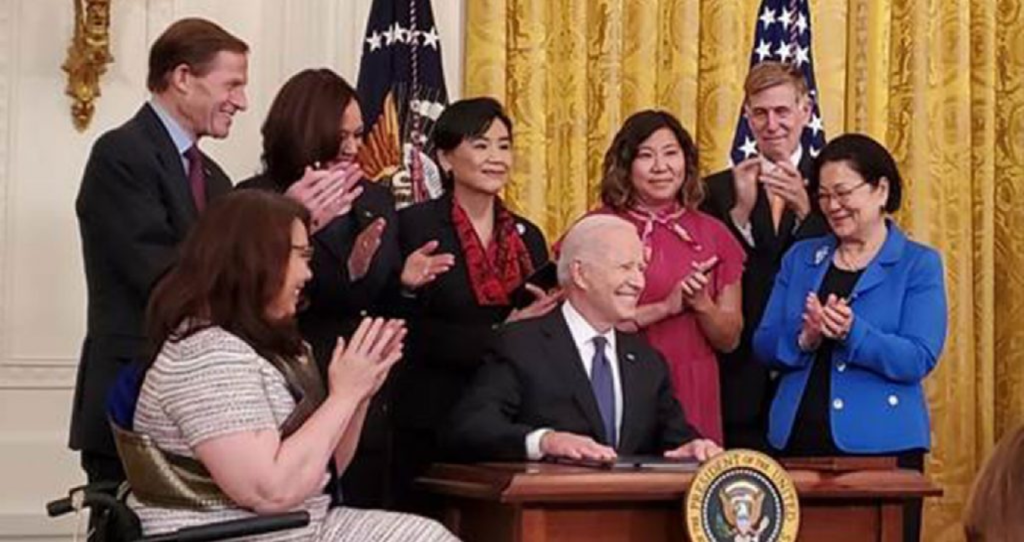
U.S. Senators Amy Klobuchar, D-Minnesota; Susan Collins, R-Maine; Jacky Rosen, D-Nevada; and Joni Ernst, R-Iowa have reintroduced bipartisan legislation to increase the number of doctors able to work in rural and medically underserved communities, Klobuchar’s office said in a news release. The Conrad State 30 and Physician Access Reauthorization Act would allow international doctors to remain in the U.S. upon completing their residency under the condition that they practice in areas experiencing doctor shortages.  Senator Angus King (I-ME) is an original co-sponsor along with Senators John Thune (R-SD), Jeff Merkley (D-OR), Shelley Moore Capito (R-WV), Chris Coons (D-DE), and Roy Blunt (R-MO).

“We must provide opportunities for American-trained and educated physicians to remain in the country and practice in areas where there is an unmet need for quality care,” said Senator Collins. “By expanding access to health care in our rural and underserved communities, this bipartisan bill would promote healthier lives and ensure that families across the country receive the health care they deserve.”

“Over the last 15 years, the Conrad 30 program has brought more than 15,000 physicians to underserved areas, filling a critical need for quality care in our rural communities – a need that was highlighted during the coronavirus pandemic,” Klobuchar said in a statement. “Our bipartisan legislation would allow doctors to remain in the areas they serve, improving health care for families across the nation while retaining talent trained and educated here in the United States,” she added.

At the beginning of the coronavirus pandemic, Klobuchar led a bipartisan group of 19 senators and 29 members of the House in a letter to U.S. Citizenship and Immigration Services calling on the administration to waive restrictions that prevent doctors on certain employment-based visas from providing medical services in rural areas. She also led a letter to USCIS with 24 senators and 13 members of the House, urging the administration to resume premium processing for doctors seeking employment-based visas.

“The American Medical Association strongly supports this bill that would ensure all patients, regardless of where they live, have adequate opportunities to be treated by skilled physicians in their local communities,” said Dr. Susan R. Bailey, President of the American Medical Association. “The COVID-19 pandemic has shown the importance of rural and underserved areas having sufficient access to physicians and quality health care. Strengthening the Conrad 30 program is a vital part of making access happen.”

“Now more than ever, the U.S. must offer incentives and opportunities to trained physicians to work in areas of the country where we desperately need more excellent healthcare providers. The Conrad State 30 and Physician Access Reauthorization Act is a bipartisan effort to begin tackling our national physician shortfall, with a targeted focus on our rural and underserved area,” said Kristie De Peña, Vice President of Policy at The Niskanen Center.

“The latest extension of the Conrad State 30 Program will expire later this year, which is why we urge action to extend this critical program. Without timely reauthorization, patient access to care in the many communities that have benefited from these physicians may be threatened,” said Stacey Hughes, Executive Vice President of the American Hospital Association. “We also support the program improvements contained in the Conrad State 30 and Physician Access Reauthorization Act as part of this extension and stand ready to work with you and your colleagues to move this legislation forward.”

“NRHA applauds Senators Klobuchar, Collins, Rosen, and Ernst for reintroducing the Conrad State 30 and Physician Access Reauthorization Act. Rural Americans face greater health care workforce shortages than their urban counterparts, so we are proud to support this bill, which will help support the recruitment of physicians and the delivery of vital health care services in rural America,” said Carrie Cochran-McClain, Chief Policy Officer at the National Rural Health Association.

“Many highly trained hospitalists are immigrants and as COVID-19 has proven, they are crucial to our healthcare system, particularly in rural and underserved communities.  The Society of Hospital Medicine (SHM) strongly supports the Conrad State 30 and Physician Access Reauthorization Act to help ensure these communities have the healthcare workforce necessary to care for the patients who need them,” said Eric Howell, MD, MHM, CEO of the Society of Hospital Medicine.

Currently, doctors from other countries working in America on J-1 visas are required to return to their home country for two years after their residency has ended before they can apply for another visa or green card. The Conrad 30 program allows doctors to stay in the United States without having to return home if they agree to practice in an underserved area for three years. The “30” refers to the number of doctors per state that can participate in the program.

This legislation extends the Conrad 30 program for three years, improves the process for obtaining a visa, and allows for the program to be expanded beyond 30 slots if certain thresholds are met, while protecting small states’ slots. The bill also allows the spouses of doctors to work and provides worker protections to prevent the doctors from being mistreated. A version of the bill was included as an amendment in the comprehensive immigration bill that passed the Senate in 2013. The bill has received the endorsement of the Federation of American Hospitals, American Medical Association, the Niskanen Center, the American Hospital Association, the National Rural Health Association, the Association of American Medical Colleges, and the Society of Hospital Medicine.

Eagle Act 2021 Gives Hope To Indians Stuck In Green Card Backlog

The Equal Access to Green cards for Legal Employment HR 3648 or the EAGLE Act 2021, introduced by Congresswoman Zoe Lofgren and Rep John Curtis, giving Equal Access to Green Cards for Legal Employment in the United States, is a welcome measure that is expected to do away with the  seven percent per-country cap on employment-based immigrant visas. Considered to be a relief for tens of thousands of Indian nationals stuck in Green Card limbo, a bipartisan legislation introduced in the House of Representatives aims to remove per-country limit on employment-based green cards. He gives these pointers explaining the bill’s advantages

According to experts, getting out of the backlog will provide them a chance to change jobs, to start their own companies, to make investments and a freedom from the bondage of their organization rules specially on changing jobs, promotions, etc. So, it may be worth a try to push for the bill and hope for the best.EAGLE Act of 2021 phases out seven percent per-country cap on employment-based immigrant visas. It also raises per-country cap on family-sponsored visas to 15 percent. While skepticism remains on whether this bill has the potential to become a law or would change the landscape of the green card backlog anytime soon, some immigration experts believe that a good bill is better than no bill.

San Francisco Bay Area-based Prashant Prasad, a volunteer for Immigration Voice, a grass roots organization representing the high skilled immigrants in the US, explains why the current bill may be good news. He says, “We started advocating for a simple bill which would remove the per country caps for employment based green cards many years ago. The primary purpose of this was to ensure that employment based green cards are given on a first come first served basis.

As per experts, here is how, the Act will benefit:

Professional

  1. Today about 80% of the people are not able to or do not change jobs because of the fear of starting the green card process all over again as it can take anywhere from 1.5 years to 4 years after most job changes.
  2. The increased restrictions on H-1B holders, means that people who have been here for many years and may well be experts in their areas, fear that their visas may not renewed for some flimsy reasons, as has been the case for the last few years.
  3. Losing a job for an H-1B visa holder means one has to find a job within 45 days (60 days today, but 15 days are required for LCA processing and H-1B filing) otherwise they have to leave the country with family.
  4. Many companies do not hire H-1Bs, due to restrictive company policies in recent years driven by the ever increasing restrictions on H-1Bs in the previous Trump regime.

Hence, when I switched jobs just before Covid impacted this company, the entire team of about 8-9 people, who were recently hired, had to look for new jobs. While I was lucky to land a job within the available timeframe, many of the companies for whom I was a perfect fit and wanted to hire me, could not do so, because they were not hiring H-1Bs.

  1. Ambitions get impacted as a majority of people just sacrifice career growth for the safety and stability of their jobs and hence the family.

Personal

  1. It is a big disruption. If one has to move their family back to India especially with kids who have grown up in America and do not deserve an abrupt change.
  2. My daughter came here when she was one year old and hence will not be covered by my green card process when she turns 21.

Even though she has grown up here, studied here, identifies with the school system here, has her friends here, I am worried that she will age out if I don’t get my green card before she turns 21. My priority date is 2014 and if no change happens in the law, I will probably not get a green card in another 20-25 years. There are many like me who live with the fear of kids aging out of the system.

  1. I studied at a college which is ranked among the best for entrepreneurship and I was very enthused to start an entrepreneurial venture of my own, while still in college.

However, being on H-1B has more or less killed that dream, as we always have the visa situation at the back of our minds. The bill if implemented will solve this problem for many.

  1. My wife, who herself is a M. Tech (Computer Science) and used to work in India, could not start working here for many years, until the H-4 EAD regulation came into effect.

Staying in a place where technology jobs are in abundance but unable to even try for one, was a very painful situation for her. H-4 EAD holders have been fighting a brave battle in the country from sacrificing careers to long wait for work permits. They do deserve a better deal than the current one.

  1. Issues like delaying decisions to buy a house, deferring international travel, in the last few years due to challenges with H-1B stamping etc. are also a major reason why H-1Bs are leading uncertain lives in America.

Sarala Vidya Nagala Nominated By President Biden To Be A Federal Judge

Sarala Vidya Nagala of South Asian origin has been nominated by President Joe Biden to serve on the District Court for the District of Connecticut. If confirmed by the U.S. Senate, she would be the first judge of South Asian descent, nominated by President Biden. The White House announced last week that President Joe Biden has made a slate of judicial nominees June 15, 2021. She was chosen for this nomination being an “extraordinarily qualified, experienced, and devoted to the rule of law and US Constitution,” the White House said in a statement on Tuesday.

The Indian-American civil rights attorney Sarala VidyaNagala, who is working as a federal prosecutor in New Haven, Connecticut, has been nominated by US President Joe Biden as a federal judge in the state. She brings 13-year-long experience to the table. The appointment, if comes through, will make her the first judge of South Asian descent to serve on the federal bench in the state, media reports suggest. Besides her, Biden has also announced the names of four more judicial nominees on June 15.

The new nomination of VidyaNagala and others, according to the White House, is a continuation to fulfill President Biden’s “promise to ensure that the nation’s courts reflect the diversity that is one of the greatest assets as a country — both in terms of personal and professional backgrounds,” a statement said.

Indian-American VidyaNagala will receive a wide opportunity to use the leadership qualities that she has developed in many roles during her tenure at the US Attorney’s Office. She joined the US Attorney’s Office as an assistant attorney in 2012 and has been serving the state for over nine years now. In 2016, she took over the position of deputy chief. In her leadership role in the office, for the past four years, VidyaNagala has provided extensive results in a number of projects, including as Hate Crimes Coordinator, the White House announcement revealed. She had previously overseen the programs at Munger, Tolles, & Olson in San Francisco, California as an associate. She worked there between 2009 to 2012.

Nagala joined the U.S. Attorney’s Office in 2012, and has served in a number of leadership roles in the office, including as Hate Crimes Coordinator, the White House announcement noted. Previously, she was an associate at Munger, Tolles, & Olson in San Francisco, California from 2009 to 2012. She began her legal career as a law clerk for Judge Susan Graber on the U.S. Court of Appeals for the Ninth Circuit from 2008 to 2009. Nagala received her J.D. from the University of California at Berkeley School of Law in 2008 and her B.A. from Stanford University in 2005.

Biden Administration Announces First National Strategy For Domestic Terrorism

While international terrorism has received much attention across the nation, recent events,  including the January 6th violence on Capitol has made it urgent to address and tackle domestic terrorism. Responding to the newer realities, the Biden administration has released its first national strategy for domestic terrorism. The White House published its first national strategy for responding to domestic terrorism, five months after the 6 January attack on the US Capitol.

The national security council framework describes the domestic terrorism threat as more serious than potential attacks from outside the US, but also underlines the need to protect civil liberties and states that the approach must be “ideologically neutral”.

  • How will it work? The strategy has four pillars, writes Washington DC bureau chief David Smith, which include: understanding and sharing information about domestic terrorism threats, preventing Americans from being recruited, incited and mobilised, deterring and disrupting activity before violence and long-term contributing issues.
  • Meanwhile, Mitch McConnell, the Senate minority leader, said on Monday that it was “highly unlikely” he would allow Biden to fill a supreme court vacancy in 2024, a presidential election year, if Republicans regained control of the chamber.
  • Extremist Republican congresswoman Marjorie Taylor Greeneapologized for comparing the House mask rule to the Holocaust.
  • Plus, how Republicans hold near total control – including the governorship and the legislature – in 23 US states.

Many Desis Win Primaries In New Jersey

Several persons of South Asian origin have won the party primaries in the state of New Jersey,held on June 8th this year in the state of New Jersey. Currently, there are three elected to the NJ state Assembly/Senate. Indian-American State Senator in Vin Gopal won the primaries and the other two Indian-Americans in the Assembly are Raj Mukherji and Sterly Stanley, who won a special election tonight for State Assembly in the 18th district in January 2021. All the three are set to go in November and will most probably win back their seats. Nevertheless, Gopal told Desi Talk he would take no chances and campaign for every vote.

Samip Joshi won the Democratic party Primary in his run for the Mayor of Edison Township. Joshi had many high-profile endorsements party high-ups favored him with, from U.S. Sen. Cory Booker, and Gov. Phil Murphy downwards, and was engaged in a battle with fellow Democrat Mahesh Bhagia. Joshi won 5,995 votes to Bhagia’s 3,185, according to centraljersey.com reporting based on Middlesex County Board of Elections.

“I want to thank my campaign team, the many Democratic leaders who embraced my candidacy and especially the people of Edison who saw clearly that we need a new direction for our community,” Joshi went on to say, concluding with, “I look forward to the General Election and hopefully to beginning a new administration in January that will deliver the bold, transformative leadership that Edison deserves.” Joshi is expected to face Republican candidate Keith Hahn, retired township police officer, and incumbent Mayor Tom Lankey, in the November elections.

In the State Senate, Gopal will fight against Republican Lori Annetta on November 2. Gopal turned the Red County (Montgomery) into blue when he got elected in an upset victory four years ago. “New Jersey is becoming more and more blue – over the last ten years,” he told Desi Talk. There are one million more Democrats registered today than before, he said, which gives this party the advantage. “I beat a very, very, very difficult incumbent in the last election, and I am going to take nothing for granted.” Gopal draws support from members of both parties, he noted. Sadaf Jaffer, two-term mayor of Montgomery Township, won the district 16 primary for the Democratic Party nomination and goes on November. At last count when the mail-in votes had yet to be added, Jaffer had won 44.19 percent of the vote and her running mate had secured 42.07 percent.

“This District is a purple district till a few years ago when it was all Republican,” she said. “I am very confident of winning the seat,” and she attributes that to the hard work done during the pandemic to keep the public informed and working as a team to marshal local and state resources and help small business and others. At the local grassroots level, Jaffer developed a Crisis Plan, and networked with very diverse communities. Jaffer’s ancestry goes back to the Kutch region of India and to Pakistan.

In District 18, Republican Vihal Patel was uncontested in his party primary for the State Assembly. On the Democratic side in this district, Mohin Patel lost the primary against Patrick Diegnan Jr. who won 75 percent of his party’s vote. So Patel will face off against Diegnan in November. Another uncontested Republican was Agha Khan who is running for the NJ State Senate Seat from District 33. He will face off against incumbent Sen. Brian Stack who was also unopposed. Notably, Stack won the 2017 election to the State Senate with 88.22 percent of the votes while his Republican opponent got less than 12 percent. Khan’s fate is not on the winning side. Khan tried his luck back in 2016 running as a Republican for the U.S. House of Representatives from District 8 in New Jersey.

Hirsh Singh, a Republican lost in a four-way primary for the Governor’s seat, but did not do too badly, securing 21.49 percent of the vote. Bina Shah, another GOP candidate for the State Assembly from District 14, along with her partner on the slate Andrew Pachuta, will be pitted against Wayne DeAngelo and Daniel Benson. One of the difficult races is the one from District 21, that saw Anjali Mehrotra, a community organizer and is President of the National Organization for Women of New Jersey. “This is a very competitive district,” Mehrotra told Desi Talk, with incumbents being all Republicans for the longest time, but with a trend favoring Democrats over the last decade.

“This year is a great opportunity for a pick up,” Mehrotra said. “We’re hoping to get two more Democrats into the Assembly.” Mehrotra and Elizabeth Graner go against Republicans Michele Matsikoudis and incumbent Nancy Munoz, who Mehrotra noted got the lowest percentage of votes despite being an incumbent.“This is definitely an opportunity to grow the AAPI (Asian American and Pacific Islander) caucus in the Assembly,” Mehrotra said, emphasizing that she decided to run when Assemblyman Raj Mukherji, the first Indian-American to be elected to the NJ lower house, said more South Asians needed to put their hats in the ring. District 21 is a suburban area with generally highly educated and wealthy electorate. Mehrotra sees women in the District going for her because of her past work on women’s issues.

4 Persons of Indian Origin Feature in Fortune’s 2021 World’s 50 Greatest Leaders List

Adar Poonawalla, head of the Serum Institute of India (SII), the world’s largest vaccine manufacturer, is among the top 10 among the 50 Word’s Greatest Leaders, 2021 listed by Fortune magazine. Others named to the list featured Armman organization’s Indian founder and chairperson Dr. Aparna Hegde at No.15; Indian Americans Sunrise Movement executive director Varshini Prakash at No. 28, and Brown University School of Public Health Dean Ashish Jha at No. 50. Topping the 2021 list is New Zealand Prime Minister JacindaArdern, “who had already sealed her position as a great leader early in her premiership of New Zealand, by empathetically steering her country through the aftermath of a terror attack and the deadly eruption of a volcano. Then the COVID-19 pandemic struck, and Ardern targeted not just suppression of the virus, but its complete elimination.”

While introducing the Top 50 world leaders, Fortune wrote: “Many of them emerged almost instantly, seemingly out of nowhere, to meet unimagined crises. Like Fairley, they embody Gen. Douglas MacArthur’s conception of “a true leader”—someone who “has the confidence to stand alone, the courage to make tough decisions, and the compassion to listen to the needs of others.” MacArthur also pointed out that such a person “does not set out to be a leader, but becomes one by the equality of [their] actions and the integrity of their intent.”

On Poonawala, Fortune wrote: “Tasked with no less than bringing an end to the global pandemic, the SII has pledged to deliver up to 2 billion vaccine doses in the coming years to COVAX, a global initiative to provide vaccine to lower- and middle-income countries—and it has already provided more doses to that initiative than any other vaccine maker. The SII is producing two vaccines. The first, Covishield, is one of only a few vaccines approved by the World Health Organization and is based on the COVID vaccine AstraZeneca developed. SII’s other vaccine, called Covavax, is being produced in partnership with American firm Novavax, and may provide a 1.1 billion–dose boon to global vaccine stocks starting later this year once it clears clinical trials.”

Hegde, aurogynecologist, witnessed too many horrors delivering babies at a government hospital in Mumbai during her Residency. Worse, they were preventable: Time after time, she’d seen an infant or its mother, or both, die in childbirth, tragedies that could have been avoided with basic prenatal care or more timely dispatching of hospital resources, according to her profile. That’s what led her in 2008 to found Armman, an organization focused on bettering outcomes through the use of low-cost technology—like targeting pregnant women and new mothers with information through their cellphones, the bio said.

Today her nonprofit, which partners with the Indian government and dozens of NGOs in 17 states across the country, and represents one of the largest mobile health programs in the world and a lifeline for women in India: Armman has reached more than 24 million of them and trained more than 170,000 local health workers, it added. The model has proved powerful beyond prenatal care, too: When COVID struck, Armman’s network and virtual training platform made it a vital tool in educating women and health workers about the virus and vaccine.

Prakash was joined at her No. 28 ranking with Sunrise Movement training director Sara Blazevic. Co-founders Blazevic and Prakash helped officially launch the group of youth activists in 2017, and it is now one of the most effective coalitions fighting for climate action in the United States, according to the feature. Sunrise initially campaigned heavily for Democratic candidate Bernie Sanders, but Joe Biden actively courted it after emerging as the party’s frontrunner. Prakash was chosen by Biden to serve on the “unity task force” commissioned by both candidates to help assemble the party’s climate message. After the election, Sunrise leaders were also included in Biden’s transition, the profile said.

Rounding out the list was Jha. In the effort to contain an outbreak of COVID’s scope, there’s a delicate balance between messaging, compassion, and sober analysis, and Ashish Jha has become a downright Ariadne of this maze, the magazine said. A respected physician and public health scholar, Jha is a familiar face on cable news channels seeking insight on all matters COVID. Jha has a way, both in his public commentary and social media presence, of breaking down complicated public health issues in accessible language. His lack of a government affiliation has also helped him appear more trustworthy to skeptically inclined viewers, Fortune said. Jha’s unrelenting effort to share hard facts, easy-to-understand analysis, and a healthy sprinkling of empathy without judgment is a standard worth aspiring to, the report noted.

Covid’s Link To Life Threatening Blood Clots Discovered

Irish scientists have identified how and why some Covid-19 patients can develop life-threatening blood clots. The work ,led by researchers at the Royal College of Surgeons in Ireland (RCSI), could lead to targeted therapies that prevent such clots happening in future. The findings are published in the Journal of Thrombosis and Haemostasis. The scientists analyzed samples from Covid-19 patients in intensive care in the Beaumont Hospital in Dublin. They found the balance between a molecule that causes clotting called the von Willebrand Factor (VWF) and its regulator, ADANTS 13, is severely disrupted in Covid patients who had elevated levels of the VWF protein.

The ADAMTS13 gene provides instructions for making an enzyme that is involved in regulating blood clotting, while VWF is a large multimeric glycoprotein in plasma. Deficiency or dysfunction of VWF can lead to either bleeding or thrombosis. The findings could lead to targeted therapies that prevent such clots happening in future, the BBC reported. The study is published in the Journal of Thrombosis and Haemostasis. “Our research helps provide insights into the mechanisms that cause severe blood clots in patients with Covid-19, which is critical in developing more effective treatments,” said Dr Jamie O’Sullivan, a research lecturer at the RCSI.She said more research needed to be done to determine whether targets aimed at correcting the levels of ADAMTS 13 and VWF can lead to successful interventions.

“It is important that we continue to develop therapies for patients with Covid-19,” O’Sullivan said. “Vaccines will continue to be unavailable to many people throughout the world and it is important that we provide effective treatments to them and to those with breakthrough infections,” she added. For the study, the team analyzed samples from Covid-19 patients in intensive care in the Beaumont Hospital in Dublin.

Outside of novel coronavirus infection, these clot-causing antibodies are typically seen in patients who have the autoimmune disease antiphospholipid syndrome. The connection between autoantibodies and COVID-19 was unexpected, says co-corresponding author YogenKanthi, M.D., an assistant professor at the Michigan Medicine Frankel Cardiovascular Center and a Lasker Investigator at the National Institutes of Health’s National Heart, Lung, and Blood Institute. “In patients with COVID-19, we continue to see a relentless, self-amplifying cycle of inflammation and clotting in the body,” Kanthi says. “Now we’re learning that autoantibodies could be a culprit in this loop of clotting and inflammation that makes people who were already struggling even sicker.”

United States Reaches Another Milestone, 600,000 Deaths From Coronavirus

The U.S. surpassed 600,000 COVID-19 deaths on Tuesday, June 15th, a stark reminder of the pandemic’s enduring toll even as the nation continues to take steps toward normalcy. The remarkable progress in the battle against the coronavirus, thanks to a concerted vaccination effort led by the federal government, has ushered in the lifting of restrictions and perhaps even a sense that the pandemic’s over. The precise number is under debate. Reuters reported, there had been 600,061 reports of covid-linked fatalities since the start of the pandemic, while a Johns Hopkins University tracker placed the death toll at 600,272. Either way, the United States is closing in on the total casualty count across the four-year long Civil War.

The nationwide death rate, however, has dropped sharply since inoculations became widely available. More than 79,000 people died of covid-19 in January, but it has taken almost four months for the death toll to go from 500,000 to 600,000.The current seven-day average of about 430 deaths a day is less than one-seventh of the 3,300 daily fatalities during the ghastly January peak. But even 430 represents a fourfold increase on the number of Americans per day who die of the flu in a typical year, and the U.S. still leads the world by plenty in reported coronavirus cases (33.4 million) and deaths.

Here are some significant developments:

  • The European Union will recommend lifting restrictions on U.S. travelers on Friday, a long-anticipated move that will allow a return to near-normal travel with the continent for the first time since the pandemic began, according to diplomats.
  • California fully reopened its economy even as Gov. Gavin Newsom (D) stressed that “this thing can come back” if vaccination rates don’t continue increasing.
  • Fifty-two people associated with the Copa America soccer tournament held in covid-stricken Brazil have tested positive for the coronavirus, the country’s Health Ministry said Tuesday.
  • The Trump administration’s hunt for a pandemic “lab leak” went down many paths and came up with no smoking gun to reveal whether the virus could be the result of engineering or a lab accident.
  • Malaysian Prime Minister Muhyiddin Yassin laid out a plan to fully reopen the economy in late October. The Southeast Asian nation has been in “total lockdown” since June 1, when it was registering more new cases per capita than any medium- or large-sized country in Asia.
  • The United States reported a seven-day rolling average of 13,530 new cases Tuesday, a 13.5 percent decrease from the previous week. Covid-linked hospitalizations fell by 13 percent.

And with half of Americans still unvaccinated, the potential for further grief and suffering has been far from eliminated.”The light at the end of the tunnel is in sight, but it doesn’t bring back any of those lives or bring solace to the grieving families,” said Dr. Steven Woolf, director emeritus of the Center on Society and Health at Virginia Commonwealth University.

Europe Lifts Ban On US Travelers

The European Union is officially recommending that the 27-member bloc lift restrictions on US travelers, a long-anticipated move that will allow a return to near-normal travel with the continent for the first time since the pandemic began, according to diplomats.The European diplomats spoke on the condition of anonymity ahead of a formal announcement planned for Friday. EU ambassadors decided Wednesday to approve a proposal to add the United States — along with Taiwan, Saudi Arabia, and Serbia — to its “white list” of places where nonessential travelers are allowed in from across the bloc, sources said. Although this list is nonbinding, it seeks to harmonize travel rules across the European Union. Some European countries, including Greece, Portugal, and Spain, are already accepting vaccinated US travelers.

Ambassadors from the 27 EU countries approved a European Commission proposal from May 3 to loosen the criteria to determine “safe” countries and to let in fully vaccinated tourists from elsewhere.The full resumption of transatlantic travel still has one further hurdle: The United States has yet to say when it will reciprocally lift its ban on E.U. travelers, although that move is similarly expected within weeks.Inclusion on the “white list,” created in June 2020, means E.U. countries can accept travelers regardless of their vaccination status, although each individual country can set its own requirements for entry and quarantine. Australia, Israel, Japan and New Zealand are among the countries already on the list.

Under current restrictions, people from only seven countries, including Australia, Israel and Singapore, can enter the EU on holiday, regardless of whether they have been vaccinated.   The current main criterion is that there should be no more than 25 new Covid-19 cases per 100,000 people in the previous 14 days. The trend should be stable or decreasing and there should be a sufficient number of tests, which would need to show a minimum percentage of negative tests. Variants of concern can be taken into account.

The resumption of travel will be a major boost to tourism-dependent economies across the continent. Following a slow start to vaccine rollouts, European officials and policymakers hope that the bloc will reach herd immunity by July. So far, around 45 percent of the nearly 450 million E.U. residents have been inoculated with at least one shot, and around half of those have been fully vaccinated.Earlier this week, the E.U. Parliament also formally approved legislation to create a digital certificate system starting July 1 that would scrap quarantine requirements for people who can prove they are vaccinated or that they have recently recovered from covid-19 or tested negative for the virus.

Another Federal Holiday Added: Juneteenth, Commemorating The End Of Slavery

The US Senate has unanimously passed on June 15th, a measure that would establish a federal holiday for Juneteenth, the day that marks the end of slavery in Texas.The bill now heads to the Democratic-led House, where it is likely to be approved, although the timing remains uncertain. Unanimous Senate passage was an anticlimactic culmination to a long effort to commemorate Juneteenth, the day that enslaved Black people in Galveston, Tex., received news on June 19, 1865, that they had been freed by the Emancipation Proclamation — more than two years after President Abraham Lincoln had signed it.

“Juneteenth commemorates the moment some of the last formerly enslaved people in the nation learned they were free,” said Senate Majority Leader Charles E. Schumer (D-N.Y.). “Making Juneteenth a federal holiday is a major step forward to recognize the wrongs of the past — but we must continue to work to ensure equal justice and fulfill the promise of the Emancipation Proclamation and our Constitution.” The effort gained significant ground in the last Congress, but a July 2020 attempt to pass the bill establishing the holiday was foiled when Sen. Ron Johnson (R-Wis.) objected to its passage and GOP Senate leaders opted not to expend scarce floor time to get around his objection.

Johnson objected to the cost of granting federal workers an additional paid holiday, and he proposed amendments that would offset the cost by either removing Columbus Day from the list of paid federal holidays or subtracting a day from federal workers’ paid leave. That proposal prompted sharp criticism from conservative commentators such as Tucker Carlson, who last year accused Johnson and another Republican, Sen. James Lankford (Okla.), of “trying to cancel Columbus Day.”In a statement Tuesday, Johnson said that while he remained concerned about the cost, which he pegged at $600 million a year, he did not intend to object again.

The Congressional Budget Office has not delivered an official cost estimate for the bill. Johnson’s estimate is based on the wages and salary that would be paid to the federal workforce for the day off, plus overtime for those who would work that day. Had Johnson not withdrawn his objection, the legislation probably would have faced a tougher path to reaching the Senate floor, since bills that do not have unanimous consent require more time for debate, and the chamber’s leaders have focused that time instead on voting rights, infrastructure and other key parts of their legislative agenda.

Juneteenth is the oldest nationally celebrated commemoration of the ending of slavery in the United States.From its Galveston, Texas origin in 1865, the observance of June 19th as the African American Emancipation Day has spread across the United States and beyond.

Today Juneteenth commemorates African American freedom and emphasizes education and achievement. It is a day, a week, and in some areas a month marked with celebrations, guest speakers, picnics and family gatherings. It is a time for reflection and rejoicing. It is a time for assessment, self-improvement and for planning the future. Its growing popularity signifies a level of maturity and dignity in America long over due. In cities across the country, people of all races, nationalities and religions are joining hands to truthfully acknowledge a period in our history that shaped and continues to influence our society today. Sensitized to the conditions and experiences of others, only then can we make significant and lasting improvements in our society.

FIA To Organize Yoga Events On International Yoga Day

The Federation of Indian Associations of the tri-state area of New York, New Jersey and Connecticut and the Consulate General of India, New York, is organising a one-hour-long yoga and meditation program on the occasion of the Seventh International Day of Yoga on June 20, 2021 at Liberty State Park,200 Morris Pesin Drive Jersey City, New Jersey. The FIA has invited all to join the program.

An ancient Indian discipline that focusses on the physical, mental and spiritualwell-being of an individual, yoga has found a resonance across the . The United Nations, in acknowledgement of its global appeal, proclaimed June 21 as the International Day of Yoga in December 2014. While introducing the proposal in the UN, Indian Prime Minister Narendra Modi had said: “Yoga is an invaluable gift from our ancient tradition… embodies unity of mind and body, thought and action … it is a way to discover the sense of oneness with yourself, the world and the nature.”

The Federation of Indian Associations (FIA) of the tri-state area of New York, New Jersey and Connecticut is one of the largest esteemed umbrella organizations in the Indian community. Ankur Vaidya is the Chairman of FIA and Anil Bansal is the President of the federation that represents over 500,000 strong and vibrant Asian-Indians who provide significant grass root support.

Established in 1970, the FIA has blossomed into a commendable organization that has become an effective mouthpiece and mobilizer for the community. FIA represents various issues that concern a growing Asian-Indian community at the local, state, and national levels.

India Blames Twitter For Not Complying With Local Laws

NEW DELHI (AP) — The standoff between the Indian government and Twitter escalated Wednesday when the country’s technology minister accused the social media giant of deliberately not complying with local laws. Technology Minister Ravi Shankar Prasad said Twitter has chosen “the path of deliberate defiance” when it comes to following new internet regulations that digital activists have said could curtail online speech and privacy in India.

“If any foreign entity believes that they can portray itself as the flag bearer of free speech in India to excuse itself from complying with the law of the land, such attempts are misplaced,” Prasad said in a series of tweets.The Indian government has been at odds with major social media websites over a new set of sweeping regulations that give it more power to police online content. It requires companies to erase content that authorities deem unlawful, comply with government takedown orders, help with police investigations and identify the originators of “mischievous information.”

Under the new laws, social media websites and tech companies will also have to remove content within 36 hours after an administrative or legal order is issued. Their employees can be held criminally liable for failing to comply with the government’s requests.Twitter said in a statement Tuesday that it was making every effort to comply with the new regulations. The company said it had appointed an interim chief compliance officer in India, a requirement under the new regulations, and will soon notify India’s Ministry of Electronics and Information Technology.

The new rules also require social media platforms to appoint what the government calls grievance officers to handle complaints from law enforcement agencies. Prasad, the IT minister, also accused Twitter of bias and said it was labeling some content as manipulated media, “only when it suits its likes and dislikes.” In May, leaders from Modi’s party tweeted parts of a document they said was created by the main opposition Congress Party to discredit the government’s handling of the pandemic. Some Congress leaders complained to Twitter, saying the document was forged. In response, Twitter marked some posts as “manipulated media.”

Twitter rules apply “manipulated media” tags to posts that have been “deceptively altered or fabricated.” The new internet regulations, announced in February, are among many challenges social media companies face after Prime Minister Narendra Modi’s pushed back against criticism that its new rules restrict online speech.Modi’s government has sought for years to control social media and has often directed Twitter to take down tweets or accounts that appear critical of his party and its leaders, including his administration’s handling of the pandemic. Twitter has complied with most of those orders.

The friction has intensified recently, with the government threatening social media companies with legal action and their employees with prison time if they refuse to comply with the takedown directives.Initially, Twitter expressed concern about what it called “the potential threat to freedom of expression” when the new rules came into effect late last month.

Basmati Rice Ownership Shared By India, Pak

In a rare agreement between two arch-rivals India and Pakistan, which have a history of long-time rivalry with disputes on every front from sea to land, exporters from both sides of the border have mutually agreed to share the ownership of the regions prized Basmati rice, a solution considered the most workable to reach the European markets. “There has to be a joint ownership, which is a logical solution to the dispute,” said Faizan Ali Ghouri, a Pakistani rice exporter.The fight between India and Pakistan over the claim of the origin of Basmati rice has a long history, as this variety is produced largely on both sides of the border.

India has filed a claim in the European Union (EU) seeking a geographical indication (GI) tag for Basmati rice. Pakistan, on the other hand, has opposed India’s claim and has filed a request for a protected GI tag.“There is no logic in both countries’ claim for the sole exclusivity of Basmati rice. Although its origin is Pakistani Punjab, it is grown in both sides of the border. Therefore, a joint ownership is the only viable solution to the long-standing dispute,” said Ghouri.“The EU buyers also prefer joint ownership of the rice variety as they want to keep both New Delhi and Islamabad on board in terms of commodity exports,” he added.

Ghouri’s views were seconded by Ashok Sethi, the director of Punjab Rice Millers Export Association in India, who also suggested that both the countries should jointly protect the Basmati heritage.“India and Pakistan are the only two countries which produce Basmati in the world. Both should jointly work together to save the heritage and protect the GI regime of the rice,” said Sethi.It is pertinent to mention that EU had recognised Basmati as a joint product of India and Pakistan in 2006.

Both Pakistan and India make good money from their respective exports of Basmati rice. Pakistan annually earns $2.2 billion, while India makes about $6.8 billion from Basmati exports.“Both countries export Basmati rice. India, in its application to the EU, has never stated that it is the only Basmati producer in the world,” insisted Vijay Sethi, a New Delhi-based exporter.While both sides still have their own historical details on the origin of Basmati, it is rare to see two arch-rivals, who are not ready to come to the table for talks until their demands are met, come down to a mutual agreement.

Pakistan demands India to reverse its August 5, 2019 decision that changed the special status of the erstwhile state of Jammu and Kashmir and bifurcated it into two Union Territories by abrogating Articles 370 and 35A, as a benchmark to make way for dialogue and address other issues between the two countries.India, on the other hand, demands Pakistan to stop cross-border terrorism and take decisive action against terror elements, which it claims, enjoy the support of the establishment. (IANS)

CDC Reports, CovidIncreased Suicide Attempts In Teenage Girls By Over 50%

Suicide attempts by teenage girls in the US rose by 51 per cent during the Covid-19 pandemic, according to the US Centers for Disease Control and Prevention (CDC). The report showed that between February 21 and March 20, 2021, the emergency department (ED) visits for suspected suicide attempts were 50.6 per cent higher among girls aged 12-17 years than during the same period in 2019. Among boys aged 12-17 years, the suspected suicide attempt ED visits increased 3.7 per cent.The difference in suspected suicide attempts by sex and the increase in suspected suicide attempts among young persons, especially adolescent females, is consistent with past research.

“However, the findings from this study suggest more severe distress among young females than has been identified in previous reports during the pandemic reinforcing the need for increased attention to, and prevention for, this population,” the CDC said.The ED visits for suspected suicide attempts begin to rise in May last year. The average weekly number of ED visits for suspected suicide attempts among adolescents 12-17 years was 22.3 per cent higher during the summer of 2020 and 39.1 per cent higher during the winter of 2021 than during the corresponding periods in 2019, the report said.

While the average weekly number rose among girls — 26.2 per cent higher in the summer and 50 per cent higher in the winter, among boys aged 12-17, the visits increased only 3.7 per cent in the winter compared to the same period in 2019.Importantly, although this report found increases in ED visits for suspected suicide attempts among adolescent females during 2020 and early 2021, this does not mean that suicide deaths have increased, the agency said.

“Suicide prevention requires a comprehensive approach that is adapted during times of infrastructure disruption, involves multisectoral partnerships and implements evidence-based strategies to address the range of factors influencing suicide risk,” the CDC said.A recent study published in The Lancet Psychiatry, also showed that Covid-19 has had a significant, detrimental impact on adolescent mental health, especially in girls. The study found that negative mental health outcomes were disproportionately reported by girls and older adolescents (13-18-year-olds), compared to same-age peers prior to the pandemic. (IANS.

Boycotting Kareena Kapoor Khan on Twitter Grows

Bollywood actor Kareena Kapoor Khan has been trending on Twitter but not for any pleasant reason. The star found herself in trouble after reports alleging her charging a whopping Rs 12 crore (approx. US $1.6 million) fee for playing Sita on-screen surfaced online.Days after a media outlet reported that Kareena had demanded such a big amount for the upcoming mythological period saga ‘Sita’, netizens took to Twitter and expressed anger, demanding to boycott the ‘Good Newzz’ actor.

Twitterati seemed to be miffed with Bebo asking for such a whopping amount and many alleged that she is hurting their religious sentiments and that the demand of Rs 12 crores for a role is ‘against humanity’.#BoycottKareenaKhan has been trending on Twitter with users slamming the actor. One of the users tweeted, “Remember the way she arrogantly replied to public that it’s you idiots who make us star, Don’t watch my flims, I don’t care. Let’s not watch such unworthy people. She playing in mythological film is disgusting #BoycottKareenaKhan.”

Another user wrote, “This role cannot be played by an actress who doesn’t respect Hindu God’s. #BoycottKareenaKhan.”“She doesn’t deserve to play the role of Mata Sita! So We just #BoycottKareenaKhan!” read another tweet.Saying Kareena should rather play “Shurpnakha”, a user said, “RT if you also think Kareena Khan with the “Shurpanakha” Role than “Mata Sita”.

Another one wrote, “A nationalist Indian would never accept an actress who has no faith in Hinduism for the role of Mother Sita. Bollywood film mafia spreads poison towards Hinduism, we should boycott all such artists who hurt the religious sentiments of the people.”The viral report cited a source who claimed that Kareena who usually asks for Rs 6-8 crores for films has quoted a sum of Rs 12 crores for playing the role of Sita in Alaukik Desai’s upcoming film, which is said to be a Bollywood recreation of the Hindu epic, Ramayana.

Meanwhile, Kareena, whose last movie was ‘Angrezi Medium’, will next be seen in ‘Laal Singh Chadha’, co-starring opposite Aamir Khan. Helmed by AdvaitChandan, the Bollywood flick is a remake of the Hollywood classic ‘Forrest Gump’. Apart from ‘Laal Singh Chaddha’, Kareena is also a part of filmmaker Karan Johar’s period epic ‘Takht’.

New B2B Tech Platform For Artisans From India

(New York, NY – June 15, 2021) Currently, small businesses in the U.S. and Canada are unable to source products directly from India, due to high minimum order quantities (MOQs), trust & reliability issues and, now, strict travel restrictions in place post-COVID.

ENTER…BlueRickhsaw.com (BR), a highly-curated, digital, B2B, wholesale export platform launched in March, connecting  verified small businesses, weavers and artisans across India to small and mid-size retailers, mom-and-pop shops and boutique stores in North America, all in an effort to promote lucrative, cultural exchange and accessibility across borders.

BR will serve as THE ONLY tech platform on which smaller retailers can personally select products from verified suppliers across various categories with minimum MOQs (in most cases, just ONE product per style). Since most sellers and buyers are unable to produce or procure volumes during these uncertain times, BR serves as the perfect matchmaking service for these small-to-mid-size businesses looking for alternative avenues.

Founded by fashion designer and entrepreneur, AkshayWadhwa, who was named one of the top ten designers of Vancouver Fashion Week  in 2016 and covered in British Vogue, BR came into existence after multiple rejections from American retailers, when Wadhwa went knocking on their doors for some face time. Wadhwa realized he was not being taken seriously as an Indian designer because retailers had previous negative experiences with reliability and timely deliveries from Indian manufacturers. Banking on the untapped potential of the Indian artisan market in a highly dysfunctional infrastructure, Wadhwa, then, created Blue Rickshaw to provide international opportunities to undiscovered and unexposed talent, everyone from small weavers to artisans to manufacturers, to make their products available across the world through a transparent ecosystem.

To make his dream a reality, Wadhwa joined hands with Co-Founder Krishan Chandak, whose 23 years of experience in technology and leadership resulted in the formation of the B2B platform, which has been built from the ground-up with a focus on artificial intelligence, machine learning and predictive filtering of products, so that buyers can ultimately purchase an item in less than 30 seconds.

The long-term vision of BR is to help the small manufacturers, weavers and artisans of India expand in the international market without having to make investments in promotion or travel, while enabling retailers across North America create an inventory-free model to sell directly to their customers without having to invest in purchasing minimum orders.

Other platforms like Etsy or Amazon are either seller-centric or buyer-centric, whereas Blue Rickshaw caters to both segments equally by espousing the values of trust, transparency and timeliness as part of its core philosophy, making it the new leader in tech-based, B2B wholesale export. “We just want to help small businesses get back on their feet, post-pandemic,” says Wadhwa. To learn more about the BlueRickshaw story, please click HERE.

Facebook To Help Affordable, Fast Internet Access In India

In a bid to expand affordable internet access for the public, Facebook India on Tuesday announced new partnerships with internet service providers (ISPs) D-Vois and Netplus. The ISPs will use Facebook Connectivity’s Express Wi-Fi platform to launch public Wi-Fi hotspots across Bengaluru and several cities in Punjab.

“From Dharavi in Mumbai to Shillong, Aizawl, Vadodara, Rajkot, and many other towns and cities, the Express Wi-Fi platform is helping expand internet connectivity in the country, enabling economic opportunities, innovation, and expression for people, businesses, and communities alike,” said Manish Chopra, Director and Head of Partnerships, Facebook India.Express Wi-Fi is a software platform that enables mobile operators, satellite operators, and ISPs to build, grow, and monetise their Wi-Fi businesses in a sustainable and scalable way.The platform is used by partners in more than 30 countries, connecting millions of people around the world.

In India, the platform has already been deployed by eight partners, providing public Wi-Fi options to people across 12 states.D-VoiS has a presence in 60 cities and operates its broadband services under the brand ION. “ION plans to expand public Wi-Fi to thousands of hotspots at restaurants, bus-stands, malls, cafes, hospitals, and other public spaces,” said Ramesh Sathyanarayana, Founder, D-vois Communications. Netplus Broadband, the internet arm of Fastway Group, is another leading ISP in the country.

“The Express Wi-Fi services will be available at several high footfall public areas such as malls, hospitals, bus stands, and market complexes across the cities of Amritsar, Ludhiana, Jalandar, Patiala, and Bhatinda,” informed PremOjha, Fastway Group CEO.During the current Covid crisis in India, Facebook also leveraged the Express Wi-Fi partner networks to share Covid-related information from credible sources with micro communities and towns across the country.

Daler Mehndi Strongly Condemns Promoting Tobacco, Alcohol Or Guns In Songs

Punjabi pop music icon Daler Mehndi says that he is personally against the use of dirty, obnoxious words in music. “Since I am a teetotaler, I strongly condemn showcasing, promoting tobacco, alcohol or guns in songs,” he says.Having said that, Mehndi adds that one can’t necessarily pick on Punjabi songs, and that it is songs in general — the words are a reflection of the society.

“Look at certain Bollywood songs, the current hip hop lingo, certain Bhojpuri songs, so you can’t generalise ‘Punjabi’ songs to be looking down at women as objects or singularly promoting alcohol — I think that credit is to be shared by the entertainment industry across languages. The onus of the choice and promotion and then consumption thereof lies not only with the singer, song writer, lyricist, record label or producer but also the audience,” he told IANSlife in an interview.Asked about the growing popularity of Punjabi music on the world stage, and the tone having being set with music pioneers like himself as early as the 1990s, Mehndi says:

“It feels good, the seed I sowed is a huge tree today. What ‘Bolo Ta Ra Ra’ did was change the music scenario and now every Bollywood to South Indian film has a song with a Punjabi Pop flavour. I write the mukhdas of all my songs, compose them, design the rhythm patterns, and are unique and that’s why over three generations can be seen dancing to my songs. The times may have changed, a wider audience, fans directly engaging with their favourite singers, actors, the world has shrunk and horizons have widened and still ‘tunaking’ to ‘TunakTunakTun’.”

Finally, why does he think Punjabi beats resonate so well with people who may not even understand the lyrics?“It is simply because these beats are robust, flamboyant, hailing from the land of valour, love, purity, truth, innovation, and simply great spirits. Punjabis are Daler — big hearts and so there automatically will be the beat (heartbeat)! Our beats are vibrant, there is joy. It’s a great combo of melody and beats which imparts a feel good factor. And who doesn’t want to feel good! So it resonates with the listeners.” (IANS)

New USCIS Policy Provides Further Protections for Victims of Crime

U.S. Citizenship and Immigration Services is updating the USCIS Policy Manual to implement a new process, referred to as Bona Fide Determination, which will give victims of crime in the United States access to employment authorization sooner, providing them with stability and better equipping them to cooperate with and assist law enforcement investigations and prosecutions.

“Today we are taking steps to help victims of crime and promote public safety,” said Secretary of Homeland Security Alejandro N. Mayorkas. “These are individuals who have come forward to help law enforcement keep us all safe, but who are in need of a measure of protection for themselves as well. The Bona Fide Determination process is consistent with the Department’s statutory authorities and will ensure these individuals receive the support they need.”

“Victims of crime need a way to support themselves as they heal and continue their pursuit of justice,” said USCIS Acting Director Tracy Renaud. “This Bona Fide Determination process will allow U visa petitioners to work while they remain safely in the United States, providing valuable support to law enforcement to detect, investigate, or prosecute the serious crimes they have survived or witnessed.”

Through this new process, USCIS will issue employment authorization and grant deferred action to petitioners in the United States with pending U visa petitions that it determines are bona fide (made in good faith and without intention of deceit or fraud) and who merit a favorable exercise of discretion. To be considered bona fide, the petition must include a certification from law enforcement that the petitioner was a victim of a crime and that the victim has been, is being, or is likely to be helpful in the investigation or prosecution of that crime.

Congress has capped the number of principal U visas available each fiscal year at 10,000, but since 2010 USCIS has received more than 10,000 U visa petitions each year. As a result of this high case volume, U visa petitioners now wait approximately five years before receiving a determination that allows them access to an employment authorization document and deferred action. This wait time not only leaves these individuals vulnerable to financial instability and fear of deportation, but it also can disincentivize victims from coming forward and cooperating with law enforcement. Through this policy update, victims with pending bona fide petitions will receive the stability they need as they rebuild their lives while working with law enforcement to investigate and prosecute criminal activity. This increase in victim cooperation will further fortify law enforcement’s ability to protect communities throughout the United States.

USCIS will deem a petition bona fide if:

The principal petitioner properly filed Form I-918, including Form I-918B U Nonimmigrant Status Certification;
The principal petitioner properly filed a personal statement from the petitioner describing the facts of the victimization; and The result of the principal petitioner’s biometrics has been received.USCIS will issue employment authorization and deferred action if, after conducting and reviewing background checks, the agency determines, in its discretion, that petitioners merit a favorable exercise of discretion and do not pose a risk to national security or public safety.This guidance is effective immediately and applies to all Form I-918 and Form I-918A petitions that are currently pending or filed on or after June 14, 2021.

Congress created the U nonimmigrant visa with the passage of the Victims of Trafficking and Violence Protection Act (including the Battered Immigrant Women’s Protection Act) in October 2000. The legislation was intended to strengthen the ability of law enforcement agencies to investigate and prosecute cases of domestic violence, sexual assault, trafficking and other qualifying crimes, while also protecting victims of crimes who have suffered substantial mental or physical abuse due to the crime and who cooperate with law enforcement authorities during the investigation or prosecution of the criminal activity. In the William Wilberforce Trafficking Victims Protection Reauthorization Act of 2008, Congress specifically authorized DHS to grant employment authorization to a noncitizen who has a pending, bona fide petition for U nonimmigrant status. This guidance implements that authority.

This reform is one of a number of initiatives designed to eliminate complex, costly, and unjustified administrative burdens and barriers, and thus to improve our immigration processes.Visit Victims of Human Trafficking and Other Crimes to learn more about other protections for victims of crime, human trafficking and domestic violence.

Delta Variant Is On The Rise. Experts Are Concerned

As U.S. states lift more coronavirus restrictions, experts are worried people who aren’t fully vaccinated could contribute to further spread of the virus. The Delta variant, first reported in India, currently accounts for nearly 10% of coronavirus cases in the U.S., according to the CDC.The Delta variant is on its way to becoming the dominant strain of coronavirus in the US, raising concerns that outbreaks could hit unvaccinated people this fall.  And a new study shows the Delta variant is associated with almost double the risk of hospitalization compared to the Alpha variant.

The Alpha (B.1.1.7) variant, which is “stickier” and more contagious than the original strain of novel coronavirus, became the dominant strain in the US this spring.But health experts worry the Alpha variant could be trumped by the Delta variant, which appears to be even more transmissible and may cause more severe illness for those not vaccinated.Right now, about 10% of Covid-19 cases in the US can be attributed tothe Delta variant. But that proportion is doubling every two weeks, Scott Gottlieb, a former commissioner of the US Food and Drug Administration, said in a CBS interview Sunday.He said the Delta variant will probably take over as the dominant strain of coronavirus in the US.

“I think in parts of the country where you have less vaccination — particularly in parts of the South, where you have some cities where vaccination rates are low — there’s a risk that you could see outbreaks with this new variant,” Gottlieb said.While 52.4% of Americans have received at least one dose of vaccine, only 43.4% have been fully vaccinated, according to data Sunday from the US Centers for Disease Control and Prevention.

The Delta variant could pose a serious risk for states lagging in Covid-19 vaccinations, but the good news is Americans can stave off the danger by getting vaccinated.Studies suggest those who are fully vaccinated have protection against the Delta variant.  “We have the tools to control this and defeat it,” Gottlieb said. “We just need to use those tools.”

New research shows the Delta variant may lead to more hospitalizations

The Delta variant — or the B1.617.2 strain first detected in India — has been linked to about double the risk of hospitalization compared to the Alpha variant first found in the UK, according to the preliminary findings of a Scottish study published Monday in The Lancet.The Alpha variant used to be the dominant strain in the UK. But last week, Health Secretary Matt Hancock said the Delta variant had taken over — making up 91% of new cases in the UK.

Novavax’s Covid-19 Vaccine Shows 90.4% Overall Efficacy In Phase 3 Trial

Researchers from the universities of Edinburgh and Strathclyde and Public Health Scotland analyzed data from 5.4 million people in Scotland. The study found that between April 1 and June 6, there were 19,543 Covid-19 cases and 377 hospitalizations.Among those, 7,723 cases and 134 hospitalizations were caused by the Delta variant.  The early findings suggest two doses the Pfizer/BioNTech vaccine does protect against the Delta variant — but it may be at a lower level of protection than against the Alpha variant.The Pfizer/BioNTech vaccine was found to provide 79% protection against infection from the Delta variant, compared with 92% against the Alpha variant, in community cases at least two weeks after the second dose.

Nagaraj Naidu Appointed As New UN President-Elect’s Chef de Cabinet

India’s Deputy Ambassador to United Nations Nagaraj Naidu will be the Chef de Cabinet of the President-elect of the 76th session of the United Nations General Assembly (UNGA) Abdulla Shahid. This is for the first time that an Indian diplomat has been given this post, and his tenure will be for one year.The post is similar to chief of staff, or like in the Indian system, PM’s principal secretary.On June 7, Abdulla Shahid, Maldivian Foreign Minister President-elect of the 76th session of the UN General Assembly. He got 143 votes out of the 191 ballots cast in the 193-member General Assembly, winning against Afghanistan former Foreign Minister DrZalmaiRassoul, who got 48 votes.

“Today, I have appointed Ambassador Thilmeeza Hussain as Special Envoy of the PGA, and Ambassador Nagaraj Naidu Kumar as my Chef de Cabinet. They will be instrumental in delivering my vision for the #PresidencyOfHope,” Shahid tweeted.The General Assembly is the main deliberative, policymaking and representative organ of the United Nations. Comprising all 193 Member States of the UN, it provides a unique forum for multilateral discussion of international issues including peace and security,” Naidu said.

“It is indeed a privilege and an opportunity to serve under the leadership of President-elect Abdulla Shahid. We are looking forward to a Presidency of hope, Naidu told PTI. Shahid, accompanied by Naidu, met current General Assembly President VolkanBozkir on Wednesday to thank him for his support during the election and discuss the next steps. “Thank you Mr President, for sharing your insights and your experiences with me. We are both committed to a smooth and seamless transition to #UNGA76,” he tweeted.

An Indian Foreign Service Officer of the 1998 batch, Mr. Naidu is a fluent Chinese speaker and has served in China in four separate stints.Between 2000 and 2003, he had served at the Indian Embassy in Beijing, he served as Third and Second Secretary (Special Projects;) while between 2003 and 2006, he served as Consul (Political and Commercial) at the Indian Consulate in Hong Kong.From 2009 to 2012, he served as First Secretary and Counsellor (Economic & Commercial Affairs) at the Indian Embassy in Beijing. He took over as the Consul General at the Indian Consulate in Guangzhou, China from 2013 to 2015.From 2015 to 2017: After his return to the Foreign Ministry in New Delhi, Ambassador Naidu served as the Joint Secretary/Director General of the Economic Diplomacy Division in the Ministry of External Affairs.

During his term, the Economic Diplomacy Division of the MEA was given the “SKOCH Platinum First Prize for Smart Governance” in 2017. Mr. Naidu was also the National Coordinator for establishing the International Solar Alliance in India. He also served as a Board member in a number of Public Sector organizations including India Trade Promotion Organization (ITPO), Water & Power Consultancy Services Ltd. (WAPCOS), Invest India, and Indian Institute of Foreign Trade (IIFT).

From 2017 to 2018,Naidu served as Joint Secretary/Director General of the Europe West Division. During this period, Naidu was responsible for India’s bilateral political engagement with the United Kingdom, France, Germany, Italy, Spain, Portugal, Ireland, Belgium, Luxembourg, the Netherlands, Andorra, San Marino, Monaco and the European Union.Naidu has a Master’s Degree in Law and Diplomacy from Fletcher School of Law & Diplomacy (Class of 2008). He is married to Padmaja and has two children.

After Being Rejected By Vatican, Indian Nun Seeks Solace From Indian Civil Court

A Catholic nun who has exhausted all avenues of appeal against her dismissal from her congregation stemming from her activism in a rape case involving a Catholic bishop says she will not leave her convent until an Indian court decides on her petition.The Vatican’s supreme tribunal has rejected the appeal of Indian nun Lucy Kalappura against dismissal, leaving her with no other option than to move out of her congregation. Kalappura, however, has told the media on June 14 that she will continue to live in her convent until an Indian court settles the case about her right to housing. The nun has challenged her congregation’s order to move out of her convent, where she lived for more than three decades.

The Franciscan Clarist Congregation on June 13 ordered Sr. Lucy Kalappura to vacate the convent in Kakkamala in the Wayanad district of Kerala after the Vatican’s Supreme Tribunal of the Apostolic Signatura categorically dismissed her revision petition against her dismissal.”My case will come up in the Indian court in June or July this year,” Kalappura told the media.The tussle began after Kalappura’s Franciscan Clarist Congregation based in southern India’s Kerala state dismissed her on Aug. 5, 2019, for alleged charges of disobedience and breaking religious vows.

The congregation, however, followed church laws to give her an opportunity to appeal to the Vatican and continue in the convent. The nun appealed against the congregation’s dismissal order before the Vatican’s Congregation for Oriental Churches, which rejected her appeal on Oct. 11, 2019.But she refused to move out of the convent and within a fortnight appealed to the Supreme Tribunal, the Vatican’s highest appeal court, against her dismissal. The appeal now stands rejected and the Vatican has confirmed her dismissal, said Sister Ann Joseph, the congregation’s superior general, in a June 12 letter.

Informing the congregation of the rejection of Kalappura’s second appeal, the nun said: “Let us raise our hearts praising the Almighty for his unspeakable gift.” But the nun is unfazed. “I will continue to live in the convent until the court settles my case,” she told the media on June 14. Kalappura currently lives in her congregation’s convent in Wayanad district in Mananthavady Diocese of Kerala.“I have already challenged my eviction from the convent and the case is still pending in the court,” she said. “I will not move out from the convent until the court pronounces its verdict.”

Earlier Kalappura said her convent began to act against her after she backed the public protests of five nuns in September 2018 seeking the arrest of Bishop Franco Mulakkal, who was accused of raping the former superior general of Missionaries of Jesus, a diocesan congregation under him.Bishop Mulakkal of Jalandhar was arrested on Sept. 21, 2018 year following fortnight-long public protests and faces court proceedings on rape charges. The congregation, however, claims that the nun’s case has no links with the bishop’s case.

For the past several years, the nun has been defiantly disobeying her superiors and the rules of the congregation, neglecting warnings and opportunities to correct herself, it said. The dismissal came after several written warnings, her superiors maintain, quoting documents in their support

Husband With 39 Wives Passes Away

A 76-year-old man believed to be the head of the world’s largest family has died in India’s Mizoram state.Ziona Chana, the head of a religious sect that practised polygamy, died on Sunday, leaving behind 38 wives, 89 children and 36 grandchildren.The news was confirmed by Mizoram’s chief minister, Zoramthanga, who offered his condolences on Twitter “with a heavy heart”. Chana reportedly suffered from diabetes and hypertension.

Doctors told the media that Chana’s condition deteriorated at home in his village, BaktawngTlangnuam. He was admitted to hospital on Sunday evening, where he was declared dead on arrival. It’s hard to say if Chana was indeed the head of the world’s largest family since there are others who claim the title.It’s also hard to estimate the exact size of Chana’s family. At least one report claims he had 39 wives, 94 children, 33 grandchildren and one great-grandchild, which adds up to 181 people.

While various local news reports have referred to him as holding the “world record” for such a large family, it’s unclear which global record it is. It has also been widely reported that the family has been featured twice on the popular TV show Ripley’s Believe it or Not.But world record or not, Chana and his family are a local sensation of sorts, attracting tourists to their village in India’s north-east. The enormous family lives together in a four-storied house called “ChuuarThan Run” or New Generation House, with 100 rooms. His wives share a dormitory near Chana’s private bedroom, according to local media.

The mansion is a major tourist attraction in the state, with people from around the world thronging the village to get a peek into the family’s lifestyle.According to Reuters news agency, Chana was born in 1945. He met his oldest wife, who is three years older than him, when he was 17. The family lives in a 100-room mansion, which is a tourist attractionThe family belongs to a Christian sect – Chana Pawl – that has about 2,000 followers. They all live around Chana’s house in BaktawngTlangnuam, about 55km (34 miles) from Mizoram’s capital, Aizawl. The sect, which allows polygamy for men, was founded by Chana’s grandfather in 1942.

Gujarati Seniors Of Chicago Plan To Kick-Start The Post-CovidActivities

Chicago IL: Coronavirus Positivity Under 1 Percent In IL; 298 Cases Reported. Illinois fully reopened as Phase 5 began, the Illinois Department of Public Health reported that the state’s rolling seven-day positivity rate on all tests conducted dipped below 1 percent, falling to .9 percent on Sunday.

The positivity rate on individuals tested is at 1.2 percent. Though reported case numbers tend to decrease over the weekend, the state reported 298 new cases on Sunday and 11 additional deaths, with those who died ranging in age from a woman in her 20s to women in their 90s. That brings Illinois’ death toll to 23,061 since March 2020.

 Gujarati Seniors of Chicago welcomed Illinois’ full reopening from Covid-19 with a grand picnic celebration on June 13 in Pottawatomie Park, a beautiful riverside resort-like setting on Fox River in St. Charles. In addition to the on-site prepared delicious food, including morning brunch, afternoon ice cream and watermelon treats, and full evening dinner, many of the 300 seniors attending the event took advantage of the beautiful, sunny day by enjoying the park amenities such as mini-golf and river cruises, or just strolling leisurely along the river bank. And, of course, there was live music and a game of Bingo! First outing of our seniors in almost 15 months with broad smiling faces – no masks, lots of hand shaking and loving hugs!

Are UFOs Real? Discussions Ongoing…

After 75 years of taboo and ridicule, serious people can finally discuss the mysterious flying objects, and even skeptics say that’s a good thing.Stephen Bassett and Mick West don’t agree on much. Bassett has devoted much of his adult life to proving UFOs are helmed by aliens, and West has devoted much of his to proving they are not.
But they both agree on one thing: It’s good that, after nearly 75 years of taboo and ridicule going back to Roswell, New Mexico, serious people are finally talking seriously about the unidentified flying objects people see in the skies.

“If you look at the level of public interest, then I think it becomes important to actually look into these things,” said West, a former video game programmer turned UFO debunker. “Right now, there is a lot of suspicion that the government is hiding evidence of UFOs, which is quite understandable because there’s this wall of secrecy. It leads to suspicion and distrust of the government, which, as we’ve seen, can be quite dangerous.”

Later this month, the Pentagon is expected to deliver a report to Congress from a task force it established last year to collect information about what officials now call “unexplained aerial phenomena,” or UAPs, from across the government after pilots came forward with captivating videos that appear to show objects moving in ways that defy known laws of physics.While those who dabble in the unknowns of outer space are hoping for alien evidence, many others in government hope the report will settle whether the objects might be spy operations from neighbors on Earth, like the Chinese or Russians.

The highly anticipated report is expected to settle little, finding no evidence of extraterrestrial activity while not ruling it out either, according to officials, but it will jumpstart a long-suppressed conversation and open new possibilities for research and discovery and perhaps defense contracts.“If you step back and look at the larger context of how we’ve learned stuff about the larger nature of reality, some of it does come from studying things that might seem ridiculous or unbelievable,” Caleb Scharf, an astronomer who runs the Astrobiology Center at Columbia University.

Suddenly, senators and scientists, the Pentagon and presidents, former CIA directors and NASA officials, Wall Street executives and Silicon Valley investors are starting to talk openly about an issue that would previously be discussed only in whispers, if at all.“What is true, and I’m actually being serious here, is that there is footage and records of objects in the skies that we don’t know exactly what they are,” former President Barack Obama told late-night TV host James Corden.

The omertà has been broken thanks to a new generation of more professional activists with more compelling evidence, a few key allies in government and the lack of compelling national security justification for maintaining the official silence, which has failed to tamp down interest in UFOs.In a deeply polarized country where conspiracy theories have ripped apart American politics, belief in a UFO coverup seems relatively quaint and apolitical.’Truth embargo’Interest in UFOs waxes and wanes in American culture, but millions have questions and about one-third of Americans think we have been visited by alien spacecraft, according to Gallup.But those questions have been met with silence or laughter from authorities and the academy, leaving a vacuum that has been filled by conspiracy theorists, hoaxsters and amateur investigators.

West, the skeptic, thinks the recent videos that kicked off the latest UFO craze, including three published by the New York Times and CBS’ “60 Minutes,” can be explained by optical camera effects. But he would like to see the U.S. government thoroughly investigate and explain UFOs.The government has examined UFOs in the past but often in secret or narrow ways, and the current Pentagon task force is thought to be relatively limited in its mission and resources. In a new, leaked video, an unidentified object flies around a Navy ship off the coast of San Diego.U.S. Navy via Jeremy Corbell West pointed to models from other countries like Argentina, where an official government agency investigates sightings and publishes its findings, the overwhelming majority of which are traced to unusual weather, human objects like planes or optical effects.

“This is something that we could do here,” West said. “But right now we’re left with people like me, who are just enthusiasts.”John Podesta, a Democratic poobah who has held top jobs in several White Houses, has called on President Joe Biden’s White House to establish a new dedicated office in the White House’s Office of Science and Technology Policy, which would help get the issue out of the shadows of the military and intelligence community.
Podesta, who has harbored an interest in UFOs since at least his days as Bill Clinton’s chief of staff, recently told Politico, “It was kind of career-ending to basically talk about this subject. That has clearly switched, and that’s a good thing.”Believers are unsurprisingly thrilled by the culture shift.

“The ‘truth embargo’ is coming to an end now,” said Bassett, the executive director of Paradigm Research Group and the only registered lobbyist in Washington dedicated to UFO disclosure. “I am elated to finally see this movement achieving its moment.”Bassett is convinced the government is covering up proof of extraterrestrial life and that everything happening now is elaborate political theater to make that information public in the least disruptive way possible — a view, of course, not supported by evidence or most experts. “This is the most profound event in human history that’s about to be taking place,” he said.

NASA’s Stunning Image Of The Spiral Galaxy NGC 4680

NASA has shared an image of the spiral galaxy NGC 4680 in all its glory. The image has been taken by the Hubble’s Wide Field Camera 3.

NASA has shared a stunning image of the spiral galaxy NGC 4680 in all its glory. The image is said to have been taken by the Hubble’s Wide Field Camera 3. The NGC 4680 galaxy had earlier made news in 1997, as it played host to a supernova explosion known as SN 1997bp according to NASA. The supernova had been identified by Australian amateur astronomer Robert Evans who is said to have identified  42 supernova explosions.

NASA states that the NGC 4680 is a tricky galaxy to classify. The space agency further states that this is because the galaxy is sometimes referred to as a spiral galaxy, but it is also sometimes classified as a lenticular galaxy. Lenticular galaxies are said to fall somewhere in between spiral galaxies and elliptical galaxies. The NGC 4680 galaxy is said to have distinguishable spiral arms that are not clearly defined, and the tip of one arm appears very diffuse.

NASA says that Galaxies are not static, and their morphologies vary throughout their lifetimes. Over time, Spiral galaxies are believed to evolve into elliptical galaxies. NASA states that this is most likely due to the galaxies merging with one another, causing them to lose their distinctive spiral structures.//www.instagram.com/embed.js


India’s New Covid-19 Cases Drop Below 100K After Over 2 Months

India’s daily coronavirus infections have dipped below 100,000 for the first time in more than two months as an overall downturn prompts some states to ease restrictions. India also reported 2,123 new fatalities in the past 24 hours, raising the overall death toll to 351,309. Both figures are believed to be vast undercounts.

India’s daily coronavirus infections have dipped below 100,000 for the first time in more than two months as an overall downturn prompts some states to ease restrictions. The 86,498 cases added in the past 24 hours pushed India’s total past 29 million on Tuesday, June 8th is second only to the United States, which has more than 33 million. The Health Ministry also reported 2,123 new fatalities in the past 24 hours, raising the overall death toll to 351,309. Both figures are believed to be vast undercounts.

India peaked at adding more than 400,000 cases a day in May, but new infections and deaths have declined across the country since then. There were 85,801 new cases of Covid-19 across India on Monday, the first time fewer than 100,000 infections were added since April 5.The number of coronavirus disease (Covid-19) cases in Delhi reduced further on Monday, dipping below the 300-mark for the first time since March 4. The Capital reported 231 new cases of the viral infection, showed Monday’s health bulletin.

With over 63,000 tests, the test positivity rate — proportion of samples that return positive — also fell further to 0.36%. The positivity rate in the city has stayed below 1% for eight days in a row, after the city saw its fourth and worst surge of cases between April and May.The city has added an average of 462 new cases each day over the past week.The test positivity rate is a vital metric to understand the spread of an infection in any region. The World Health Organization recommends a positivity rate below 5% before an infection can be considered under control in a region. In Delhi, the positivity rate has been below this number for 18 days now.

At the peak of the surge, Delhi recorded over 28,000 new cases in a day and a positivity rate of over 36%. The number of deaths has also reduced with the daily toll below 100 for five days in a row now. Fewer than 50 deaths were reported for the last two days, with 36 more fatalities reported in Monday’s bulletin. At the height of the fourth wave, 448 succumbed to Covid-19 on a single day (May 3).“It is highly unlikely that there will be a third wave unless the virus mutates. Hence, there is a need for the government to keep a close eye on the virus in circulation to pick up any mutations of concern quickly. In addition, the respite between the second and third surge in cases must be utilised for preparing for the next wave by creating permanent infrastructure and vaccinating the population,” said Dr Jacob John, former head of the department of virology at Christian Medical College – Vellore.

Dr John also said that governments should study the immune response generated if mixed doses of vaccines are used, if a half dose-full dose or a full dose-half dose regimen is used like it was mistakenly done in the global trial for the Oxford-AstraZeneca vaccine.The downturn has led some states to ease restrictions on commercial activities to spur consumption. Multiple states have, however, extended lockdowns and have been reluctant to reopen.A staggering change of course for a country that just reported its worst month of the pandemic, parts of India, including the capital city of New Delhi, are moving to ease some coronavirus restrictions over the coming week after reporting a sharp decline in new cases and deaths.

Some experts have sounded the alarm about a premature easing of restrictions. World Health Organization Chief Scientist SoumyaSwaminathan in mid-May warned data about dropping cases is unreliable due to a lack of testing in rural areas where the virus is still spreading quickly. “There are still many parts of the country which have not yet experienced the peak,” Swaminathan said, adding: “Testing is still inadequate in a large number of states.”Meanwhile, the federal government is going to take over vaccine procurement from the states and ensure vaccines are provided free of cost to every adult Indian. India’s vaccination drive has been marred by delays and shortages. Less than 5% of the population is fully vaccinated.

Biden’s First Ever Visit Abroad: Strengthening Alliance With NATO

President Biden embarks this week on the first foreign trip of his presidency to attend a series of European summits. He’ll attend the meeting of the Group of Seven nations (G-7) in Britain. Then, he’ll head to a NATO summit in Brussels.

President Biden embarks this week on the first foreign trip of his presidency to attend a series of European summits. He’ll attend the meeting of the Group of Seven nations (G-7) in Britain. Then, he’ll head to a NATO summit in Brussels where he’ll rub shoulders with the majority of the European Union’s leaders. All of that will precede what is likely to be a tense encounter with Russian President Vladimir Putin in Geneva on June 16. After spending the past five months focused on domestic affairs and battling the pandemic, Biden will try to demonstrate how his administration is “restoring” U.S. leadership on the world stage.

In an op-ed for the Washington Post published on Saturday, the U.S. President promised to shore up Washington’s “democratic alliances” in the face of multiple crises and mounting threats from Moscow and Beijing. The U.S. will stand with its European allies against Russia, President Joe Biden has promised ahead of the first face-to-face meeting with Vladimir Putin.Most recent American presidents have selected North American neighbors for their first cross-border trips, though former President Donald Trump, whose penchant for unilateral action and open skepticism of the NATO alliance unsettled American allies, made his first overseas stop in Riyadh, Saudi Arabia. For Biden, the first trip is meant to turn the page from Trump’s approach to alliances.

“It’s both a practical chance to connect with key allies and partners on shared opportunities and challenges,” said Yohannes Abraham, the chief of staff and executive secretary of the National Security Council, in an interview with the AP. “But also it’s an illustration of something that the president has been clear about that the transatlantic alliance is back, that revitalizing it is a key priority of his, and that the transatlantic relationship is a strong foundation on which our collective security and shared prosperity are built.”

“We are standing united to address Russia’s challenges to European security, starting with its aggression in Ukraine, and there will be no doubt about the resolve of the U.S. to defend our democratic values, which we cannot separate from our interests,” he wrote.“President Putin knows that I will not hesitate to respond to future harmful activities,” he said. “When we meet, I will again underscore the commitment of the United States, Europe and like-minded democracies to stand up for human rights and dignity.”Since taking office in January, Mr. Biden has ramped up pressure on the Kremlin, and his comments likening Mr. Putin to a “killer” were met with fierce criticism in Moscow.

But both leaders have expressed hopes that relations can improve, with the Russian President saying on Friday he expected a “positive” result from the talks.Mr. Biden in his weekend op-ed also stressed that Washington “does not seek conflict” — pointing to his recent extension of the New START arms reduction treaty as proof of his desire to reduce tensions.“We want a stable and predictable relationship where we can work with Russia on issues like strategic stability and arms control,” he wrote.

Trump Denied Access To Facebook, Instagram For 2 More Years

In a blow to Trump, Facebook has extended Donald Trump’s suspension for two years and says it will only reinstate him “if the risk to public safety has receded.”

In a blow to Trump, Facebook has extended Donald Trump’s suspension for two years and says it will only reinstate him “if the risk to public safety has receded.” The decision comes after Facebook’s Oversight Board told the company it had been wrong to impose an indefinite ban on Trump after the Jan. 6 insurrection at the U.S. Capitol. Facebook says it is setting new rules for public figures in times of civil unrest and violence, “to be applied in exceptional cases such as this.” Trump has received the maximum penalty under those rules, “given the gravity of the circumstances” leading to his suspension. Because the company took his Facebook and Instagram accounts down on Jan. 7, the two-year suspension will last until at least Jan. 7, 2023.

At that point, Facebook will consult experts and “evaluate external factors, including instances of violence, restrictions on peaceful assembly and other markers of civil unrest,” said Nick Clegg, vice president of global affairs, in a statement.He was barred indefinitely from both sites in January in the wake of posts he made on the US Capitol riots, but last month Facebook’s Oversight Board criticized the open-ended penalty.Facebook said Trump’s actions were “a severe violation of our rules”. Trump said the move was “an insult” to the millions who voted for him in last year’s presidential election.

Facebook’s move comes as the social media giant is also ending a policy shielding politicians from some content moderation rules.It said that it would no longer give politicians immunity for deceptive or abusive content based on their comments being newsworthy.Trump’s ban was effective from the date of the initial suspension on 7 January, Facebook’s vice-president of global affairs Nick Clegg said in a post.”Given the gravity of the circumstances that led to Mr Trump’s suspension, we believe his actions constituted a severe violation of our rules which merit the highest penalty available,” it added.

“If we determine that there is still a serious risk to public safety, we will extend the restriction for a set period of time and continue to re-evaluate until that risk has receded.”  On his return, Trump will be held to “a strict set of rapidly escalating sanctions,” for any violations,  Clegg’s statement noted. In a statement issued from his Save America political action committee, Mr Trump said: “Facebook’s ruling is an insult to the record-setting 75m people, plus many others, who voted for us. They shouldn’t be allowed to get away with this censoring and silencing, and ultimately, we will win. Our country can’t take this abuse anymore!”

In a second statement on the two-year ban, Trump attacked Facebook’s founder.”Next time I’m in the White House there will be no more dinners, at his request, with Mark Zuckerberg and his wife,” the former president said. “It will be all business!”The move by Facebook allows Trump to return to the platform before the 2024 presidential election. It also comes as he prepares to again hold the large scale in-person rallies that were a signature of his campaigns and presidency. One of his first is planned for Dallas, Texas, in early July, according to local media.

Earlier this week, it emerged that the communications platform set up by Mr Trump in the wake of his social media bans – From the Desk of Donald J Trump – has been permanently shut down.In addition to Facebook, which has over two billion monthly users, Mr Trump has also been banned from Twitter, YouTube, Snapchat, Twitch and other social media platforms over the January riot.Last month, Florida Governor Ron DeSantis, a Republican Trump ally, signed the first law in the US that punishes tech companies for de-platforming politicians.

Facebook’s dilemma on Trump was complex, involved trade-offs, and was guaranteed to upset millions of people. The fact is – whatever their decision – it was bound to be polarising.But just to be clear: today Facebook, the world’s biggest social network, has denied access to its megaphone to a man who 74 million people voted for. They didn’t just know him, or approve of him; they voted for him to be US president. That is a big call.

What is Facebook’s new policy?

Facebook says public figures who violate its rules by inciting unrest or violence will be suspended for a month or, in more serious cases, up to two years.It comes as part of an effort to undo a previous policy of allowing newsworthy political speech despite a potential that it may cause harm.Posts that are deemed worthy of an exception, despite possible violations, may still be allowed but will be given a warning label by Facebook. The company says it will no longer treat “content posted by politicians any differently”.

“Instead, we will simply apply our newsworthiness balancing test in the same way to all content, measuring whether the public interest value of the content outweighs the potential risk of harm by leaving it up.”The company’s Oversight Board found that Mr Trump’s initial ban was appropriate, but that there was no rationale for the ban to remain indefinitely.The independent board, which is funded by Facebook, has 20 members who are able to make binding decisions on content. Among the members are legal scholars, journalists, freedom of speech experts and a former prime minister of Denmark.The announcement comes on the same day that regulators in Europe and the UK begin formal anti-trust inquiries into whether Facebook misused customer data.Biden Announces a Donation of 19 Million COVID-19 Vaccines to COVAX, With More to Follow

US To Donate 25 Million Doses of Covid Vaccine To Countries Impacted

President Joe Biden announced Thursday the U.S. will donate 75% of its unused COVID-19 vaccines to the U.N.-backed COVAX global vaccine sharing program, acting as more Americans have been vaccinated and global inequities have become more glaring.

President Joe Biden announced Thursday the U.S. will donate 75% of its unused COVID-19 vaccines to the U.N.-backed COVAX global vaccine sharing program, acting as more Americans have been vaccinated and global inequities have become more glaring.Of the first tranche of 25 million doses, the White House said about 19 million will go to COVAX, with approximately 6 million for South and Central America, 7 million for Asia and 5 million for Africa. The doses mark a substantial — and immediate — boost to the lagging COVAX effort, which to date has shared just 76 million doses with needy countries.

Overall, the White House aims to share 80 million doses globally by the end of June, most through COVAX. But 25% of the nation’s excess will be kept in reserve for emergencies and for the U.S. to share directly with allies and partners.“As long as this pandemic is raging anywhere in the world, the American people will still be vulnerable,” Biden said in a statement. “And the United States is committed to bringing the same urgency to international vaccination efforts that we have demonstrated at home.”

U.S. National Security Adviser Jake Sullivan said the U.S. “will retain the say” on where the doses distributed through COVAX ultimately go.“We’re not seeking to extract concessions, we’re not extorting, we’re not imposing conditions the way that other countries who are providing doses are doing; we’re doing none of those things,” said Sullivan. “These are doses that are being given, donated free and clear to these countries, for the sole purpose of improving the public health situation and helping end the pandemic.”

The remaining 6 million in the initial tranche of 25 million will be directed by the White House to U.S. allies and partners, including Mexico, Canada, South Korea, West Bank and Gaza, India, Ukraine, Kosovo, Haiti, Georgia, Egypt, Jordan, Iraq, and Yemen, as well as for United Nations frontline workers.Vice President Kamala Harris informed some U.S. partners they will begin receiving doses, in separate calls with Mexican President Andres Manuel LópezObrador, President Alejandro Giammattei of Guatemala, Indian Prime Minister Narendra Modi, and Prime Minister Keith Rowley of Trinidad and Tobago. Harris is to visit Guatemala and Mexico in the coming week.

The long-awaited vaccine sharing plan comes as demand for shots in the U.S. has dropped significantly — more than 63% of adults have received at least one dose — and as global inequities in supply have become more glaring.Scores of countries have requested doses from the United States, but to date only Mexico and Canada have received a combined 4.5 million doses. The U.S. also has announced plans to share enough shots with South Korea to vaccinate its 550,000 troops who serve alongside American service members on the peninsula. White House COVID-19 coordinator Jeff Zients said that 1 million Johnson & Johnson doses were being shipped to South Korea Thursday.

The growing U.S. stockpile of COVID-19 vaccines is seen by many overseas and at home not only as a testament to America’s achievement but also its global privilege.Tom Hart the, acting CEO of The ONE Campaign, called the Thursday announcement a “welcome step” but said the Biden administration needs to commit to sharing more doses. “The world is looking to the U.S. for global leadership and more ambition is needed.”

Biden has committed to providing other nations with all 60 million domestically produced doses of the AstraZeneca vaccine., which has yet to be authorized for use in the U.S. but is widely approved around the world. The U.S.-produced doses have been held up for export by an ongoing safety review by the Food and Drug Administration, said Zients.The White House says the initial 25 million doses will be shipped from existing federal stockpiles of Pfizer, Moderna and Johnson & Johnson vaccines. More doses are expected to be made available to share in the months ahead.

As part of its purchase agreements with drug manufacturers, the U.S. controlled the initial production by its domestic manufacturers. Pfizer and Moderna are only now starting to export vaccines produced in the U.S. to overseas customers. The U.S. has hundreds of millions more doses on order, both of authorized and in-development vaccines.The White House also announced Thursday that it is lifting restrictions on sharing vaccines produced by AstraZeneca, as well as Sanofi and Novavax, which are also not authorized in the U.S., allowing the companies to determine for themselves where to share their doses.

Kamala Harris On Trip To Central America, Urges Illegal Immigrants, ‘Do not come to US’

Harris warned Central Americans not to migrate to the US and said the administration will intensify efforts to combat corruption in the region, after meeting with Guatemalan President Alejandro Giammattei. “Do not come. Do not come.”

Vice President Kamala Harris offered an optimistic outlook for improved cooperation with Guatemala during her first ever visit abroad since she assumed office as the Vice President of the United States. Harris warned Central Americans not to migrate to the US and said the administration will intensify efforts to combat corruption in the region, after meeting with Guatemalan President Alejandro Giammattei. “Do not come. Do not come,” Harris said at a news conference in Guatemala City. “If you come to our border, you will be turned back.”

Speaking on her first overseas trip since taking office, she said the journey north was dangerous and would mainly benefit people smugglers.  Her comments, during a press conference after she met privately with Giammattei, underscored the challenge that remains even as Harris engages in substantive talks with the Guatemalan and Mexican presidents during a three-day visit to the region this week, her first foreign trip as vice president.“I want to emphasize that the goal of our work is to help Guatemalans find hope at home,” Harris said. “At the same time, I want to be clear to folks in this region who are thinking about making that dangerous trek to the United States-Mexico border: Do not come, do not come.”

In conjunction with Harris’ trip, the Biden administration announced that the Justice Department would create an anti-corruption task force and an additional task force to combat human trafficking and drug smuggling in the region. Harris also promised a new program focused on creating education and economic opportunities for girls there, among other new initiatives. And she told Giammattei that her goal in the region was to restore “hope” to residents so they no longer felt the need to flee their homeland for better opportunities in the U.S.

Harris’s trip is part of the Biden administration’s effort to address the so-called root causes of migration from Central America, after more than 200,000 attempts by migrants from the region to enter the US since the start of the year. President Joe Biden directed Harris to lead the effort to stem the surge in migration.Harris and Giammattei had a “very frank and very candid” conversation that included “the importance of anti-corruption and the importance of an independent judiciary,” she said. In April, the country’s legislature — controlled by Giammattei’s party — refused to seat an anti-corruption judge, Gloria Porras, a move criticized by US officials.

More than 178,000 migrants arrived at the border this April, the highest one-month total in more than two decades, according to US border officials. Of those migrants, more than 40% originated from the Central American region known as the Northern Triangle: Guatemala, Honduras and El Salvador. A central issue contributing to the border crisis is the corruption of government officials in the region, who have been accused of aiding in drug and human trafficking. Many migrants leaving the Northern Triangle say they are fleeing violence, discrimination and poverty.

The steady “brain drain” of locals has exacerbated problems caused by decades of political instability. These countries have also stressed that they are feeling the most adverse effects of global warming – most notably hurricanes – despite hardly contributing to climate change.The new announcements follow $310 million in humanitarian aid for Central America that Harris unveiled in April. US and regional leaders must “give the people a sense of hope that help is on the way and to then follow through, understanding that hope does not exist by itself,” Harris said earlier as her meeting with Giammattei began. “It must be coupled with relationships and trust. It must be coupled with tangible outcomes, in terms of what we do as leaders to convince people that there is a reason to be hopeful about their future and the future of their children.”

Republicans have criticized Harris’s effort, repeatedly noting that she has yet to travel to the US border. She said in response that the reason she’s in Guatemala is “because this is one of our highest priorities,” adding that she wanted to talk about “what we can do in a way that is significant, is tangible. I will continue to be focused on that kind of work as opposed to grand gestures,” she said.The Biden administration’s migration strategy is not yet fully formed, and Harris’s advisers have framed her first overseas trip as a fact-finding mission to help develop the policy. The final strategy is not expected to be released until after Harris returns to the US

US officials have said the Biden administration’s plan will center on improving economic conditions in Guatemala, Honduras and El Salvador so their citizens have less reason to leave. That strategy has been tried before with mixed results; those countries remain among the poorest in the Western Hemisphere and racked by violence.Harris regards corruption as a main driver of migration since it affects all sectors from the economy to criminal justice. She has pledged to work with non-governmental organizations and companies to direct assistance. Later Monday, she plans to meet with civil society leaders and entrepreneurs before flying to Mexico.

”These are efforts that have not been tried in the past that we believe will be quite productive,” Harris said. The benefits of greater US financial aid may be used to soften the blow of tough messages Harris and other officials are expected to send about cracking down on corruption and upholding democratic principles. The US has already condemned the government of El Salvador for a recent purge of the judicial branch and views Honduran President Juan Orlando Hernandez warily since federal prosecutors implicated him in a drug trafficking ring involving his brother.

Harris has been tasked by President Joe Biden with controlling a surge in migration at the southern border. Harris has described her task as finding solutions to tackle the root causes of the border crisis, including corruption and the lack of economic opportunities. Her staff say this first visit is primarily an information-gathering trip.

Cutting Edge CMEs, Spiritual, Healthcare, Business & Political Leaders At AAPI’s 39th Annual Convention In Atlanta

(Chicago, IL: June 9, 2021) “An impressive array of Bollywood stars, leaders in healthcare, business, spiritual, and political realms are planned to address and enrich the participants at the 39th Annual AAPI Convention & Scientific Assembly to be held from July 2nd to July 5th, 2021 at the fabulous and world famous Omni Atlanta at CNN Center and Georgia World Congress Center,” Dr. SudhakarJonnalagadda, President of American association of Physicians of Indian Origin (AAPI) announced here today.

The annual convention this year is being organized by AAPI’s Atlanta Chapter, chaired by Dr. SreeniGangasani. “The convention team is working hard and over time, to provide a delightful three days of events packed with educational CME credits, world-class entertainment, leadership seminars, networking opportunities, exhibits, and more,” Dr. Gangasani said. “This meeting offers a rich educational and entertainment programs featuring the latest scientific research and advances in clinical practice. In addition, physicians and healthcare professionals from across the country will convene to develop health policy agendas and encourage legislative priorities for the upcoming year.”

Planned to have a limited number of participants due to the ongoing Coivd pandemic and taking into account the safety of those attending, including Physicians, Academicians, Researchers and Medical students, “the annual convention offers extensive academic presentations, recognition of achievements and achievers, and professional networking at the alumni and evening social events,” said Dr. Sajani Shah, Chair of AAPI BOT.

Honorable Brian Porter Kemp, Governor of Georgia; Jon Ossoff and Raphael Warnock, US Senators from the state of Georgia; Stacy Abrams, Georgia’s Democratic Party leader; and,Keisha Lance Bottom, Mayor of Atlanta are among the political leaders, who will address the audience.  Sri Dananpani, a well known Hindu Priest, Entrepreneur and a former Monk will enlighten the audience with his wisdom.

Dr. AnupamaGotimukula, President-Elect of AAPI, said, the delegates at the convention will have Eight Hours of CMEs, coordinated by AAPI CME Chair, Dr. Krishan Kumar, Dr. Vemuri Murthy, Advisor & CME Program Director, and Dr. Sudha  Tata, Convention CME Chair, focusing on themes such as how to take care of self and find satisfaction and happiness in the challenging situations they are in, while serving hundreds of patients everyday of their dedicated and noble profession, said Dr. Raghu Lolabhattu, Convention Vice Chair.

Accordingly, some of the major themes as part of the CME sessions include: Pursuit of Happiness In MedicineBurnout Prevention and Wellness in PhysiciansEasy Life of a Hospitalist: An Illusion; and, Meditation and Mindfulness. Other themes at the CME include; Type 2 Diabetes in South Asians – the Unresolved Questions; and, Cardio-oncology: Clinical Practice and Echocardiography.

According to Dr. Ravi Kolli, Vice President of AAPI, an exciting Bollywood HungamaDhumDhamaDhum will feature popular stars Kosha Pandya, Rex D’Souza and Shilpi Paul. Talented artists VidyaVox and Ravi Drums will lead the cultural programs. Traditional DandiyaRaas will be led by AAPI’s own Garba King, Dr. DhirenBuch with live music by Aradhana Music Group of Los Angeles. World renowned fashion designer Ghazala Khan-choreographed Fashion Show by beautiful and talented local artists will be a treat to the hearts and souls of all the participants.

The popular and much loved Mehfil E Khaas will give the AAPI members and families a platform to showcase their talents impromptu, in music, dance, jokes and SheroShayari in an informal setting,” said Dr. Amit Chakrabarty, Secretary of AAPI and coordinator of the Mehfil E Khaas. “Pick up the Mic and you are the Star,” he added. Dr. SatheeshKathula, Treasurer of AAPI said, “The Future of Healthcare” will be discussed at the popular CEO Forum with expert participants from Healthcare, Technological, and Finance industries and moderated by  Dr. N. Neealagaru,  will share their expertise in ways to establishing and leading successful businesses, healthcare practice, managing investment and creating an ideal lifestyle.

The Women’s Forum, led by Drs. AnjanaSamadhar, Uma jonnalagadda, and UdayaShivangi, will feature Ambassador Nikki Haley, Keisha Lance Bottoms, Mayor of Atlanta, Dr. Swati Kulkarni, India’s Consular General in Atlanta, Dr. Susan Bailey, President of American Medical Asociation, Dr. RenuKhator, President & Chancellor of University of Houston; Adv. Sheela Murthy, Founder & President of Murthy Law Form; Prof. Amita Sehgal, Professor of Neuroscience at UPENN, Dr. NahidBhadella, Director of Center for Emerging Infectious Diseases Policy &Reasearch; and, Dr. Mona Khanna, Emmy Award Winning Journalist.

Representing the interests of the over 100,000 physicians of Indian origin, leaders of American Association of Physicians of Indian Origin (AAPI), the largest ethnic organization of physicians, for 39 years, AAPI Convention has provided a venue for medical education programs and symposia with world renowned physicians on the cutting edge of medicine.“Physicians and healthcare professionals from across the country and internationally will convene and participate in the scholarly exchange of medical advances, to develop health policy agendas, and to encourage legislative priorities in the coming year. We look forward to seeing you in Atlanta!” said Dr. Jonnalagadda. For more details, and sponsorship opportunities, please visit:  www.aapiconvention.org   and www.aapiusa.org

Colonial Pipeline CEO Defends Paying Ransom Amid Cyberattack

Colonial Pipeline CEO Joseph Blount made no apologies for his decisions to abruptly halt fuel distribution for much of the East Coast and pay millions to a criminal gang in Russia as he faced down one of the most disruptive ransomware attacks in U.S. history.Blount said he had no choice, telling senators uneasy with his actions that he feared far worse consequences given the uncertainty the company was confronting as the attack unfolded last month. “I know how critical our pipeline is to the country,” Blount said, “and I put the interests of the country first.”

His testimony to the Senate Homeland Security Committee on the May 7 cyberattack provided a rare window into the dilemma faced by the private sector amid a storm of ransomware attacks in which overseas hackers breach a company’s network and encrypt their data, demanding a ransom to release it back to them.

Georgia-based Colonial Pipeline, which supplies roughly half the fuel consumed on the East Coast, temporarily shut down its operations on May 7 after a gang of criminal hackers known as DarkSide broke into its computer system. The Justice Department has recovered the majority of a multimillion-dollar ransom payment to hackers after a cyberattack that caused the operator of the nation’s largest fuel pipeline to halt its operations last month, officials said Monday.The operation to recover the cryptocurrency from the Russia-based hacker group is the first undertaken by a specialized ransomware task force created by the Biden administration Justice Department, and reflects what US officials say is an increasingly aggressive approach to deal with a ransomware threat that in the last month has targeted critical industries around the world.

“By going after an entire ecosystem that fuels ransomware and digital currency, we will continue to use all of our tools and all of our resources to increase the costs and the consequences of ransomware attacks and other cyber-enabled attacks,” Deputy Attorney General Lisa Monaco said Monday at a news conference announcing the operation.The 63.7 bitcoin ransom — a favored currency of hackers because of the perception that it is more difficult to trace — is currently valued at $2.3 million. “The extortionists will never see this money,” said Stephanie Hinds, the acting US attorney for the Northern District of California, where the seizure warrant was filed.

U.S. authorities tell companies not to pay the ransom, arguing the crooks may not provide the keys to unencrypt the data and that the payments will encourage future attacks and help sustain criminal networks typically based in Russia and Eastern Europe. Blount chose to disregard that advice within the first 24 hours of the attack and paid the equivalent of $4.4 million in bitcoin to retrieve the company’s data. U.S. officials said Monday they had recovered much of the payment.“I made the decision to pay, and I made the decision to keep the information about the payment as confidential as possible,” Blount said. “It was the hardest decision I’ve made in my 39 years in the energy industry.”

The company, he said, had to act fast as it worked feverishly to determine whether the criminal gang had compromised the operational systems or physical security of the 5,500-mile pipeline — and to try to avoid a more sustained shutdown.Asked how much worse it would have been if the company hadn’t paid to get its data back, Blount said, “That’s an unknown we probably don’t want to know. And it may be an unknown we probably don’t want to play out in a public forum.”His appearance before the Senate comes as lawmakers consider possible measures to address the ransomware attacks that have been launched against thousands of businesses as well as state and local government agencies.

“We’ve got to recognize these ransomware attacks for what they are. It’s a serious national security threat,” said Sen. Rob Portman, a Republican from Ohio. “Attacks against critical infrastructure are not just attacks on companies. They are attacks on our country itself.”Already, the Justice Department and FBI have established a task force to deal with ransomware with some success, including managing to seize 85% of the bitcoin that Colonial paid as ransom. But many of the criminals behind the attacks are beyond their reach in Russia or other countries that will not extradite suspects to the U.S.The Biden administration has also made ransomware, and cybersecurity more broadly, a national priority in the wake of a series of high-profile intrusions.

Last month, the administration issued new regulations for the pipeline industry, requiring companies to conduct cybersecurity assessments and immediately report any breaches to the federal government. The industry has until now operated under voluntary guidelines.Blount disputed a media report that his company had refused to participate in one of the voluntary assessments, conducted by the Transportation Security Administration, earlier this year, saying it had merely been delayed because of COVID-19 and other issues. “That was quite a shock to me,” he said of the account.

The attack on Colonial Pipeline — which supplies roughly 45% of the fuel consumed on the East Coast — has been attributed to a Russia-based gang of cybercriminals using the DarkSide ransomware variant, one of more than 100 variants the FBI is currently investigating. The attack began after hackers used a company virtual private network that was no longer in active use, Blount said.“The ransomware attack on Colonial Pipeline affected millions of Americans, ” said Sen. Gary Peters, a Michigan Democrat. “The next time an incident like this happens, unfortunately, it could be even worse.”

Blount said the Georgia-based company began negotiating with the hackers on the evening of the May 7 attack and paid a ransom of 75 bitcoin — then valued at roughly $4.4 million — the following day. The hack prompted the company to halt operations before the ransomware could spread to its operating systems.The encryption tool the hackers provided the company in exchange for the payment helped “to some degree” but was not perfect, with Colonial still in the process of fully restoring its systems while working with consultants to assess the damage and improve cybersecurity, Blount said.

It took the company five days to resume pipeline operations. What took place in that time illustrated why they needed to quickly pay the ransom, he told the lawmakers.“We already started to see pandemonium going on in the markets, people doing unsafe things like filling garbage bags full of gasoline or people fist-fighting in line at the fuel pump,” he said. “The concern would be what would happen if it had stretched on beyond that amount of time.”

Crucial Voting Rights Bill Needs Lifeline To Move Forward

Sen. Joe Manchin announced that he will vote against Democrats’ expansive election and ethics reform bill, dealing a blow to one of his party’s top priorities. In an op-ed published in the Charleston Gazette-Mail, the West Virginian warned that “partisan voting legislation will destroy the already weakening binds of our democracy” and reiterated that he will not vote to scrap or modify the legislative filibuster.“Voting and election reform that is done in a partisan manner will all but ensure partisan divisions continue to deepen,″ Sen. Joe Manchin of West Virginia wrote in a home-state newspaper, the Charleston Gazette-Mail. He wrote that failure to bring together both parties on voting legislation would “risk further dividing and destroying the republic we swore to protect and defend as elected officials.”

The bill would restrict partisan gerrymandering of congressional districts, strike down hurdles to voting and bring transparency to a murky campaign finance system. Among dozens of other provisions, it would require states to offer 15 days of early voting and allow no-excuse absentee balloting.Democrats have pushed the legislation as the antidote to a wave of restrictive state voting laws sweeping the country, many inspired by former President Donald Trump’s false claims of fraud in his 2020 election loss. Senate Majority Leader Chuck Schumer, D-N.Y., has pledged to bring the election bill to a vote the week of June 21, testing where senators stand. But without Manchin’s support, the bill has no chance of advancing. Republicans are united against it.

Democratic Sen. Joe Manchin was unswayed by civil rights leaders who implored him to rethink his opposition to a sprawling election bill that House Speaker Nancy Pelosi said is crucial to countering a “Republican assault on our democracy.” Manchin, from deeply Republican West Virginia, told reporters, “I don’t think anybody changed positions,” in a meeting he described as “excellent.” A participant said Manchin was “fairly well dug in.”The bill, known as HR1, is a top priority for Democrats and is viewed by many in the party as the antidote to a wave of Republican-backed laws being passed on the state level that restrict people’s ability to vote. It touches on almost every aspect of voting and was already passed by the House.  But Manchin threw a wrench into the works when he said he would oppose the bill. That effectively dooms the measure in a narrowly divided Senate where it is universally opposed by Republicans.

His decision sent voting rights groups and members of his own party scrambling for options, raising the prospect that no voting legislation would pass Congress to address what experts say is the greatest attack on voting rights in generation. Manchin has said “inaction is not an option” when it comes to voting rights. But he has exasperated fellow Democrats and voting rights groups by insisting his support for any legislation would be contingent on some Republicans voting for it as well. He also opposes eliminating the 60-vote requirement to break a filibuster, a step that would allow Democrats to pass the legislation without Republican votes.

“We may get to a point where the dialogue reaches a dead end,” the Rev. Marc Morial, who attended Tuesday’s meeting with Manchin, told CNN. “And Joe Manchin was fairly well dug in.” Pelosi had told House Democrats there is no substitute for the bill.“It is my hope that the passage of (the bill) will create a legacy for all of us who want to strengthen our democracy,” the California Democrat wrote in a letter to colleagues before Manchin announced he wouldn’t support the bill.  Now Democrats and voting rights groups are grasping for an alternative.

Some said they’d follow Manchin’s suggestions and get behind a narrower piece of legislation known as HR4 that updates the Voting Rights Act to reinstate a requirement that new voting laws and legislative districts in certain states be subject to federal approval. Others said they wanted to increase the pressure on Manchin. Still others insisted that Democrats needed to bring HR1 to the Senate floor this month, even it it’s certain to fail, to draw attention to Republican opposition and Manchin’s.

“It’s going to get messy,” said Fred Wertheimer, president of the good-government organization Democracy 21, who helped draft HR1 in 2017. “What Manchin said is not the final word, as far as we’re concerned.  “I don’t believe he is prepared to go down in history as the senator that denied millions of eligible citizens, and in particular people of color, the opportunity to vote.”The Rev. William Barber II, a key liberal activist who leads the Poor People’s Campaign, represented the breadth of liberal anger at Manchin, tweeting Monday that his group would lead a march in West Virginia to “challenge Manchin.”

Only one Republican senator, Alaska’s Lisa Murkowski, has signed onto Manchin’s preferred Voting Rights Act update, an indication of how politics on the issue have shifted since the Senate unanimously renewed the Voting Rights Act in 2006. And the newly aggressive constellation of conservative voting groups that mobilized against H.R. 1 say it will now campaign to keep the GOP united against HR4 as well.“The end result of HR4 is the same — it’s a federal takeover of the election system,” Jessica Anderson, executive director of the conservative policy organization Heritage Action for America, said in an interview. “As long as you have consensus on the right, standing together in lockstep, you’re not going to have a bipartisan break.”

“They are not showing a readiness to stand up and do what’s right, so the notion you could get 10 of them to come along is farfetched,” said Rep. John Sarbanes, D-Md., a primary sponsor of HR1. “You are not going to get real change without filibuster reform.”

Family Of Dr. Vivek Murthy Sends Medical Supplies To Hospitals In Karnataka

The Scope Foundation, run by the family of U.S. Surgeon General Dr. Vivek Murthy is sending medical supplies to hospitals in the Indian state of Karnataka as the country continues to work toward curbing the recent COVID-19 surge.Media reports state Murthy’s father, Lakshmi Narasimha Murthy, said that the shipment containing 70 oxygen concentrators, four ventilators, N95 masks, respirator masks, step transformer pieces and cleaning supplies worth Rs 1.40 crore will soon arrive on behalf of the Scope Foundation.

Speaking with media, Murthy said that the supplies will be distributed in 12 smaller hospitals as these are short on medical resources, further adding that only taluk hospitals and two village PHCs have been selected. The foundation is trying to send more material worth Rs 70 lakh soon from New Delhi so that it can be distributed to other PHCs. The consignment contains 70 oxygen concentrators with adapter, 25 digital oral thermometers, 1,96,000 K95 face masks, 5000 full face shields, 5000 forehead foam, 300 surgical earlobe masks, 1200 medical face shields, 400 nitrile powder-free gloves, 50 oxygen cannula and five voltage transformers. The supplies have reached Bengaluru and will be handed over to the districts on Monday.

Vivek Murthy’s cousin Vasanth informed that the medical supplies will be handed over in his native village Hallegere, Mandya, Maddur, Malavalli, Nagamangla and other places, further adding that plans to build a Covid ward at the cost of Rs one crore are also in the pipeline.This essential medical equipment will be dispatched to 12 hospitals in two districts that are facing a shortage of equipment, the report added.

The Indian American surgeon general has roots in Hallegere village of Mandya district in Karnataka.Dr. Vivek H. Murthy was confirmed by the U.S. Senate in March 2021 to serve as the 21st Surgeon General of the United States as a returning role. As the Nation’s Doctor, the Surgeon General’s mission is to restore trust by relying on the best scientific information available, providing clear, consistent guidance and resources for the public, and ensuring that we reach our most vulnerable communities As the Vice Admiral of the U.S. Public Health Service Commissioned Corps, Dr. Murthy commands a uniformed service of 6,000 dedicated public health officers, serving the most underserved and vulnerable populations domestically and abroad.

During his previous tenure as 19th Surgeon General, Dr. Murthy has created initiatives to tackle our country’s most pressing public health challenges. As “America’s Doctor he helped lead the national response to a range of health challenges, including the Ebola and Zika viruses, the opioid crisis, and the growing threat of stress and loneliness to Americans’ physical and mental wellbeing. He also issued the first Surgeons General’s report on Alcohol, Drugs and Health, in which he challenged the nation to expand access to prevention and treatment and to recognize addiction as a chronic illness, not a character flaw. Dr. Murthy continued the office’s legacy on preventing tobacco-related disease, releasing a historic Surgeon General’s report on e-cigarettes and youth.

Cloudgen, A Tech Firm Admits To H1-B Visa Fraud Involving Indians

A technology company has admitted to committing fraud to bring Indians on the coveted H1-B visas to the US, according to a federal prosecutor. JomonChakkalakkal, the corporate representative of Cloudgen, made the admission before a federal court in Houston, Texas, on behalf of the company on May 28, said acting federal Prosecutor Jennifer B. Lowery.

The prosecutor’s office in a news release circulated on Monday described the scam as a “bench and switch” ruse. It said that under the scam, in order to obtain the H1-B visas, Cloudgen submitted “forged contracts” showing that third companies had work for the persons it wanted to bring over.But once the employees came to the US there was no job for them and they were housed in different locations across the US, while Cloudgen would try to find work for them, according to the office.

“Such action gave Cloudgen a competitive advantage by having a steady ‘bench’ or supply of visa-ready workers to send to different employers based on market needs when the true process actually takes some time. Once workers had obtained new employment, the ‘switch’ would occur when the new third-party company filed immigration paperwork for the foreign workers,” the prosecutor’s office said. Cloudgen took a percentage of the worker’s salary, which amounted to nearly $500,000 from 2013 to 2020 when the scam took place, it said.

Chief Judge Lee Rosenthal of the Southern Texas federal court is to impose a sentence in September and it could be a fine of as much as $1 million and probation for five years.The prosecutor’s office said that Cloudgen was based in Houston, but on its website, the company lists an address in Manassas in Virginia. It also shows offices in Hyderabad, Canada and Romania. Chakkalakkal is described on the website as the senior vice president for sales.

GOPIO Manhattan Raises Funds ForCovid Relief By Organizing Virtual Musical Concert

The GOPIO-Manhattan, NYC and SwarTaal Musicals organized a Virtual Fundraising Musical Evening to raise funds for “The Covid-19 Relief in India”. The fundraiser was initiated by PallaviVermaBelwariar of SwarTaal Musicals & Founding Life Member of GOPIO-Manhattan. Pallavi was joined by BhargaviNaidana, Kaushal Sampat&Smita Sinha served as the MC for the evening.  The singers chose soulful romantic songs of the yester years of Bollywood music for the evening mesmerizing the attendees. Additionally, few paintings by Pallavi were exhibited and sold to support the noble cause.

Dr. Thomas Abraham, GOPIO Chairman; said “GOPIO International has been raising funds and GOPIO Connecticut and Manhattan chapters have sent Oxygen concentrators to India while other chapters in the US and around the world are providing medical supplies and food for the needy.” Dr. Abraham complimented GOPIO-Manhattan, NYC for taking this initiative and organizing several other programs during the covid period in the last one year.ShivenderSofat, President GOPIO-Manhattan; thanked the singers for making the evening lively and supporting the charitable event. He shared few pictures and slides of health kiosks to be set up in five villages in India that will be supported from the donation proceeds collected by GOPIO-Manhattan.

Professor RajasekharVangapati, EVP GOPIO-Manhattan; spoke about chapter activities and motivated everyone to donate generously towards the noble cause. Chitranjan Sahay Belwariar, Founding Life Member GOPIO Manhattan; provided technical support with Zoom streaming and recording.

Priced at $10 for the ticket, the fundraiser netted over $1,000 from ticket sales and other donations. In accordance with its mission to serve the larger society and those in need, GOPIO-Manhattan Chapter has taken several initiatives in the recent past. A Community Feeding is organized by the Chapter providing vegetarian lunch for the homeless and needy at Tomkins Square Park in Manhattan on the last Monday of every month. The chapter appeals to the community to support the initiative by being a volunteer and or a sponsor. For more info on GOPIO Manhattan, call its president ShivenderSofat at 731-988-6969, e-mail: info@gopiomanhattan.org or visit here: https://gopiomanhattan.org/

AAHOA Names Ken Greene Interim President & CEO

In the wake of its recent announcement of a leadership transition, AAHOA has announced that it has appointed hotel industry veteran Ken Greene to serve as Interim President & CEO. Ken is a well-known and highly respected industry veteran who is well-suited to lead AAHOA during the organization’s leadership transition. The Board’s selection of Ken as AAHOA Interim President & CEO reflects the group’s trust and utmost confidence that he can carry the organization forward as the industry continues to recover from the COVID-19 pandemic. Ken is eager to continue to execute upon the Association’s 2021-2023 Strategic Plan and serve alongside AAHOA’s Board and staff to continue its forward-thinking vision to be the foremost resource and advocate for America’s hotel owners.

During each chapter of Ken’s career, he’s been involved with AAHOA, its members, and industry partners. Prior to joining AAHOA, Ken served as a global leader of many iconic hotel brands, including President, Americas for Radisson Hotel Group, President & CEO for Delta Hotels and Resorts, and in various roles at Cendant Corporation, Wyndham Worldwide, and many of its divisions. Ken also recently founded Greenehouse Consulting, which focuses on acquisitions, management, and advisory services to the hospitality industry.

Ken has a deep understanding of and appreciation for the hotel industry and has many long-standing relationships that are well-suited to guide AAHOA during this leadership transition period. Ken also has served on and led several industry-related boards, providing and contributing to strategic direction in a number of capacities.“Ken will be leading the Association in an interim capacity during a critical time for AAHOA Members and the hotel industry,” AAHOA Chairman Biran Patel said. “We are confident his experience, relationships, and extensive knowledge and appreciation of the industry are the perfect fit to serve in this capacity as AAHOA Members continue down the road to recovery.”

AAHOA had announced earlier that Cecil P. Staton was stepping down as President & CEO.  Staton will continue to work with AAHOA’s leadership to ensure an effective transition and the success of ongoing projects and relationships as a consultant.“On behalf of America’s hoteliers, we thank Cecil for his service to AAHOA,” AAHOA Chairman Biran Patel said. “For more than a year, hoteliers faced immense pressure as the COVID-19 pandemic brought a period of decade-long prosperity to a grinding halt. Cecil proved to be a steady hand, leading and guiding the association to record member engagement through this turbulent year. His leadership in the development of our Strategic Plan will have a lasting, positive impact upon the association.”

“I’m grateful to have led this organization through one of the hardest times in our industry’s and association’s history through our concentrated efforts related to COVID-19 support and relief and for making a difference in the lives of so many hoteliers,” Staton said. “AAHOA has the most dedicated team with whom I’ve had the privilege to work, and I’ve been impressed with their commitment to excellence from the moment I joined this great organization. Our work to develop AAHOA’s new Strategic Plan holds the promise to propel the association forward toward its fullest potential.” AAHOA Executive Vice President & COO Rachel Humphrey announced that she also will be exiting the association on August 7.

“AAHOA’s nearly 20,000 members represent the heart and soul of America’s hospitality industry and I am eager to step into this role, working alongside the hotel owners who drive our industry forward each and every day,” Ken said. “As our industry recovers from the COVID-19 pandemic, it’s a critical time for owners and America’s tourism industry, and I’m looking forward to bringing my extensive experience to the organization to help propel America’s hotel industry forward on the path to recovery.”

Over the course of Ken’s career, he’s had the opportunity to personally get to know and form relationships with many of AAHOA’s Members. Ken is well-positioned to build on AAHOA’s strong foundation as the organization carries out its vision of being the foremost resource and advocate for America’s hotel owners during this critical time in the industry’s recovery.“We are confident Ken will bring the passion, dedication, knowledge, and insight he has exhibited in all of his prior roles within the industry to AAHOA and its members,” Patel said. “Please join us in congratulating and welcoming Ken in his new position as AAHOA Interim President & CEO.”

“AAHOA is a strong organization led by exceptional teams,” Patel said. “Our dedicated Board of Directors, Executive Leadership Team, and professional staff will continue to lead AAHOA into the future. AAHOA’s work on behalf of our members will continue to be guided by our Strategic Plan, which will carry the association’s strategy into 2023 and leave a lasting impact for many years to come.”

AAHOA has accomplished remarkable work on behalf of its members during what has been one of the worst times in our industry’s history – and the work never stops. AAHOA is well-positioned to continue its work to fulfill its vision and the ambitious goals set forth in the Strategic Plan.  The organization is in the process of conducting a comprehensive search process to identify new leadership that will continue to help guide America’s hoteliers on the road to recovery.

About AAHOA

AAHOA is the largest hotel owners association in the world. The nearly 20,000 AAHOA members represent over half the hotels in the United States. With billions of dollars in property assets and hundreds of thousands of employees, AAHOA members are core economic contributors in virtually every community. AAHOA is a proud defender of free enterprise and the foremost current-day example of realizing the American dream.

China Hosts ASEAN Ministers, With Message For Quad

China is hosting foreign ministers from the 10 ASEAN countries on Monday and Tuesday, with Beijing pushing for closer economic cooperation and aligning COVID-19 recovery efforts even as it looks to push back against the recent regional outreach of the Quad grouping. Chinese officials have in recent weeks stepped up criticism of the Quad — the informal India, Australia, Japan and United States grouping — and of Washington in particular. During recent visits to Sri Lanka and Bangladesh, China’s Defence Minister called on both countries to reject “military alliances” — a term that some Beijing are using to describe the Quad, but a label that the group rejects.

China’s Foreign Ministry spokesperson Wang Wenbin said in a statement the China-ASEAN foreign ministers meeting, in the city of Chongqing, would mark the 30-year anniversary of relations and also “focus on combating COVID-19, promoting economic recovery, [and] better dovetail[ing] strategic plans.” A vaccine passport connecting China and ASEAN countries is also being discussed. China’s Foreign Minister Wang Yi will hold bilateral meetings with all the visiting ministers, and also chair a meeting of the Lancang-Mekong Cooperation (LMC) with Cambodia, Laos, Myanmar, Thailand and Vietnam.

Deepening economic cooperation, particularly following the signing of the Regional Comprehensive Economic Partnership (RCEP) trade deal, would be China’s focus, analysts in Beijing said, even as it grapples with disputes over the South China Sea. Recently, China and the Philippines have clashed over the presence of Chinese vessels near a disputed reef, while Malaysia alleged the intrusion of 16 Chinese aircraft into its airspace.The Communist Party-run Global Times on Monday blamed the U.S. for those tensions rather than China’s moves that prompted the protests from the Philippines and Malaysia. Countries “see clearly that quarrels on South China Sea are not the biggest threat to regional stability; it is the U.S., whose warships frequently sail through the sensitive waters and try to force ASEAN countries take sides to confront China,” the newspaper wrote.

After the first Quad leaders’ summit held in March and the announcement of a regional vaccine initiative, many Chinese analysts framed ASEAN as a key space where Chinese and Quad initiatives may rub up against each other.China “cannot rule out the possibilities that Quad members will further rope in ASEAN members to counter China as Southeast Asia is of great significance to the US’ Indo-Pacific Strategy,” wrote Yuan Zheng, senior fellow of the Institute of American Studies at the Chinese Academy of Social Sciences. “Yet ASEAN will not easily take sides.”

The framing of the Quad as “an Asian NATO” by Beijing has been criticised by the group’s members. India’s External Affairs Minister S. Jaishankar in April described the using of words such as “Asian NATO” as “a mind game which people are playing”.ProPublica: Many of the uber-rich pay next to no income tax

India Announces Free Vaccination For Aged 18+

India has fast-tracked vaccine procurement and will provide free shots to citizens above 18 years, Prime Minister Narendra Modi said in an address to the nation on Monday, June 7th.The South Asian nation faces the challenge of vaccinating its large adult population as it emerges from a devastating second virus wave, with a critical shortage of inoculations leading some centers to close down as the country struggled to ramp up domestic production and procure doses internationally.

Modi’s speech came against the backdrop of a near breakdown in health infrastructure over the last two months, with major Indian cities running out of oxygen and hospitals flooded with patients, while crematoriums struggled to keep pace with the number of those who died of covid-19. His administration has come under intense criticism over its handling of the second wave and the vaccination rollout and its popularity ratings have fallen from 75% in 2019 to 51% this year, according the Local Circle polling company.All citizens aged above 18 would be vaccinated at free of cost by the Centre, Prime Minister Narendra Modi announced on June 7. All state-level vaccine procurement would also be taken over by the central government, Modi said.

The 25 percent vaccination procurement which was being conducted by the states would now be conducted by the central government, he said, adding that vaccines would be directly purchased by the Centre and given to the states for free.”From June 21, Tuesday, all citizens of India above 18 years of age will be given free vaccination,” Modi added.The Centre, as part of the new vaccination strategy, would procure 75 percent of the vaccines, whereas, the private sector would be allowed to purchase 25 percent of the vaccines, the prime minister said.

How does a vaccine work?

A vaccine works by mimicking a natural infection. A vaccine not only induces immune response to protect people from any future COVID-19 infection, but also helps quickly build herd immunity to put an end to the pandemic. Herd immunity occurs when a sufficient percentage of a population becomes immune to a disease, making the spread of disease from person to person unlikely. The good news is that SARS-CoV-2 virus has been fairly stable, which increases the viability of a vaccine.

Rs 150 can be the service charge imposed by private sector for the overhead charges, he said. The vaccine policy was, on May 1, liberalised to allow the state government to directly procure the vaccines. “Within two weeks of May, several state governments changed their stance and said the earlier Centre-led vaccination programme would be preferred,” Modi said.Considering the demand raised by the states, the Centre has now decided to reverse the changes and lead the inoculation programme with 75 percent procurement of the vaccine doses, he added.

The Indian Medical Association (IMA) has welcomed the changes announced in the vaccination policy. “We thank PM Modi for this important announcement of universal vaccination for all to be carried out by the Government of India. IMA is constantly and proactively supporting the vaccination drive initiated by the prime minister,” news agency ANI quoted IMA president Dr JA Jayalal as saying.

Confederation of Indian Industries (CII) president TV Narendran also lauded Modi’s decision, claiming that it would facilitate quick rollout of vaccines.”Centralisation of procurement will ensure uniformity of procurement prices and create bandwidth among states to manage inoculation of their adult populations. This would also ensure an equitable allocation of vaccines in states and was a key ask of CII too. Making the vaccines available for all the eligible population free of cost will go a long way in protecting the citizens and resuming normal economic activities at the earliest,” he said.

Modi, during his address to the nation, also announced that the government will “continue the PM GaribKalyan Anya Yojana providing free grains to 80 crore people with free food grains till Diwali”. The free ration aid is aimed at mitigating the economic impact of COVID-19.Modi, while noting that “this is the deadliest pandemic in the last 100 years”, said India has been proactive to develop and procure vaccines “which are the only shield against the pandemic”.There are seven companies in India which are currently manufacturing vaccines, the prime minister said, adding that the inoculation of over 23 crore doses so far is largely through the two made-in-India vaccines – Covishield and Covaxin.

Efforts are also underway “to buy vaccines from other countries”, Modi pointed out. His remarks comes amid the state government’s demand that the Centre must procure the vaccines from abroad as global manufacturers are not dealing directly with the states.Modi also pointed out that experts have raised concerns about the vulnerability of minors to COVID-19, and the government, after taking cognisance of the concerns, have approved trials for vaccines for children aged below 18.

The prime minister added that a research is underway for the development of nasal vaccine against coronavirus. “If successful it could help support country’s COVID-19 vaccination drive,” he said.Modi claimed that his government, over the past seven years, has succeeded in increasing India’s overall vaccination coverage. “From around 60 percent coverage in 2014, we have managed to take it past 90 percent during our term,” he said.

Modi’s address to the country over the vaccination policy comes days after the Supreme Court raised questions at the Centre. The court expressed concern over the “digital divide” between rural and urban Indian in accessing the vaccines, and asked the government to adopt a policy in accordance to the “dynamic pandemic situation”.The court also called the non-extension of free vaccination to the 18-44 age group as “prima facie arbitrary and irrational” and asked why budgetary allocation of Rs 35,000 crore for vaccine procurement could not be used to inoculate this group free of cost.

US Supreme Court Restricts Green-Cards For Temporary Residents

A man exits the transit area after clearing immigration and customs on arrival at Dulles International Airport in Dulles, Virginia, U.S., September 24, 2017. REUTERS/James Lawler Duggan/Files. The Supreme Court ruled that people who entered the U.S. illegally can’t seek permanent residency just because they are now covered by a program that gives them temporary legal status.The justices on Monday, June 7, 2021, unanimously ruled against Jose Sanchez and Sonia Gonzalez, a married Salvadoran couple who received temporary protected status after El Salvador suffered a series of earthquakes in 2001. The ruling could affect thousands of people covered by the TPS program, which protects immigrants whose home countries are in crisis.

Writing for the court, Justice Elena Kagan said federal law allows green-card applications by temporary residents only if they were admitted into the country legally.“Sanchez was not lawfully admitted, and his TPS does not alter that fact,” Kagan wrote. “He therefore cannot become a permanent resident of this country.”The case divided immigration advocates from President Joe Biden’s administration, which defended what it said was a 30-year government practice of rejecting applications from illegal entrants. Biden’s team inherited the case from former President Donald Trump’s administration, which formalized the policy.

TPS currently covers hundreds of thousands of people from a dozen countries. More than 250,000 are from El Salvador, who under federal law must have had continuous presence in the U.S. since 2001. TPS shields recipients from deportation and lets them hold jobs legally.In 2007 Sanchez got an employment visa through his employer, Viking Yacht Co., and seven years later he sought to use that visa to get what’s known as an “adjustment” to permanent status for himself and his wife. U.S. Citizen and Immigration Services rejected the application in 2015.

U.S. CDC Eases Travel Recommendations On 61 Countries

(Reuters) -The U.S. Centers for Disease Control and Prevention (CDC) has eased its travel recommendations for 61 countries, including Japan from its highest “Level 4” rating that had discouraged all travel to recommending travel for fully vaccinated individuals, the agency confirmed Tuesday. The new ratings, which were not previously reported and posted on a CDC website Monday, lower 61 countries to “Level 3,” including France, South Africa, Canada, Mexico, Russia, Spain and Italy. A U.S. State Department official said it was in the process of revising its travel advisory to reflect the CDC changes.The CDC said the change comes after its revised its criteria for travel health notices. The CDC said it has also revised its rating for the United States to “Level 3” from “Level 4.”

On May 24, the State Department had urged against travel to Japan, citing a new wave of coronavirus cases before the Tokyo Olympics are set to begin July 23.The CDC said the new criteria for a Level 4 “avoid all travel” recommendation has changed from 100 cases per 100,000 to 500 cases per 100,000. The CDC added that many countries have lower ratings “because of the criteria changes or because their outbreaks are better controlled.” The CDC added it expects more countries to get lower ratings.Other countries being lowered to “Level 3” include Honduras, Indonesia, Jordan, Libya, Panama, Poland, Denmark and Malaysia.

Many of the countries that now have lower ratings remain on the U.S. government’s list of countries subject to severe travel restrictions — and most have been subject to the restrictions since early 2020.The United States bars nearly all non-U.S. citizens who have been in China, the United Kingdom, Ireland, India, South Africa, Brazil, Iran and the 26 Schengen nations in Europe without border controls within the previous 14 days.

The US Consulate in Mumbai Restarts Visa Services

One of the busiest consular operations in the world, the US Consulate in Mumbai has restarted consulate services as the covid cases are on the decline in recent days. The U.S. Consulate General in Mumbai is a branch of the U.S. Diplomatic Mission to India under the direction of the U.S. Embassy in New Delhi.  The U.S. Consulate General Mumbai is located in BandraKurla Complex, Mumbai.  The Consulate represents the United States in Western India, including the states of Maharashtra, Gujarat, Madhya Pradesh, Chhattisgarh, and Goa.

The Consulate provides an array of services to American citizens residing or traveling in our consular district, such as assistance in emergencies and help with passports and reports of birth.  It assist non-Americans with visas to the U.S., both for short visits and for immigration.  The Consulate can also assist Indian companies looking to invest or do business in the United States, and provide information on study and exchange programs in the United States.

Dosti House, Your American Space, is located at the Consulate in BandraKurla Complex, Mumbai, and provides information about the United States, programs on U.S. culture and society, and offers space to partners for programs on issues of mutual importance to the United States and India.  The Consulate also works in coordination with the U.S. Embassy in Delhi and Consulates in Kolkata, Chennai and Hyderabad to ensure a strong relationship between the United States and India.

The Consulate will continue to contact those people with appointments that were cancelled in April-May 2021 and Spring 2020, in chronological order, by visa category, with instructions to continue processing their cases.  The Consulate is also resuming 221(g) submission in all categories and the scheduling of routine cases through the National Visa Center, by visa category, as public health conditions allow.

Due to limited appointment availability, the Consulate is currently unable to reschedule any cancelled appointments directly, and availability for rescheduling may be very limited, with appointments unavailable at some times. Furthermore, in light of the unpredictability of the pandemics affects on the local population as well as possible outbreaks again, timelines and guarantees that the processing will continue without disruption, cannot be made.

New appointments can be made through the consular website for visa appointments. The post will add appointments as often as there is availability, but please expect appointment slots to fill quickly.  Please continue to monitor the website for appointment availability.  Detailed information on the current status of visa services and restrictions related to the COVID-19 can also be found on the consular webpage.

Please note that travel restrictions remain in effect in many states in India and the availability of appointments does not mean that you will be able to travel to the Consulate or a Visa Application Center (VAC).  Please ensure you will be able to travel before making an appointment.As appropriate, visa applicants should follow the instructions given to them for registering for appointments, and monitor their email address for confirmation and further information. Multiple separate attempts to contact the Embassy or Consulate will slow communication.

As of June 7, 2021, the U.S. Consulate in Mumbai is reopening Immigrant Visa Unit appointments of all types:

*Rescheduling of cancelled appointments
*SB-1 status and visa applications
*LPR services (boarding foil)
*Reissuance of expired visas
*K applications

‘Illegal’ Leak Of WealthiestTax Information Reveals Tax Havens Used

Amazon founder Jeff Bezos paid no income tax in 2007 and 2011. Tesla founder Elon Musk’s income tax bill came to zero in 2018. And financier George Soros went three straight years without paying federal income tax, according to a report from the nonprofit investigative journalism organization ProPublica. Overall, the richest 25 Americans pay less in tax — 15.8% of adjusted gross income — than many ordinary workers do, once you include taxes for Social Security and Medicare, ProPublica found.

An anonymous source delivered to ProPublica reams of Internal Revenue Service data on the country’s wealthiest people, including Warren Buffett, Bill Gates, Rupert Murdoch and Mark Zuckerberg. ProPublica compared the tax data it received with information available from other sources. It reported that “in every instance we were able to check — involving tax filings by more than 50 separate people — the details provided to ProPublica matched the information from other sources.’’

Using perfectly legal tax strategies, many of the uber-rich are able to whittle their federal tax bills down to nothing or close to it. Soros went three straight years without paying federal income tax; billionaire investor Carl Icahn, two, ProPublica finds. The findings are sure to heighten the national debate over the vast and widening inequality between the very wealthiest Americans and everyone else. ProPublica reports that the tax bills of the rich are especially low when compared with their soaring wealth — the value of their investment portfolios, real estate and other assets.

The Biden administration said it is investigating how tax information from several of the world’s richest people — including Jeff Bezos, Elon Musk and Warren Buffett — was leaked to the public. “The unauthorized disclosure of confidential government information is illegal,” said Treasury spokeswoman Lily Adams. “The matter is being referred to the Office of the Inspector General, Treasury Inspector General for Tax Administration, Federal Bureau of Investigation, and the US Attorney’s Office for the District of Columbia, all of whom have independent authority to investigate.”

The investigation comes after a report that showed new information from a trove of never-before-seen IRS records. Earlier Tuesday, ProPublica reported on exclusively obtained IRS documents which showed how the likes of Bezos, Musk, Buffett, Bill Gates, George Soros, Mark Zuckerberg and Michael Bloomberg have legally avoided paying income tax.”Any unauthorized disclosure of confidential government information by a person of access is illegal and we take this very seriously,” White House press secretary Jen Psaki told reporters during Tuesday’s briefing.

Psaki also reiterated the Biden administration’s stance on having wealthy Americans pay more taxes to fund the President’s proposals.  “I’m not going to comment on specific unauthorized disclosures of confidential government information. I can tell you that, broadly speaking ,we know that there is more to be done to ensure that corporations, individuals who are at the highest income are paying more of their fair share. Hence, it’s in the President’s proposals, his budget and part of how he’s proposing to pay for his ideas,” Psaki said.

Mayor Ravi Bhalla Announces Re-Election Bid

Mayor Ravinder ‘Ravi’ Bhallaof Hoboken, New Jersey has formally announced his re-election bid, pledging to serve as a regional and national leader in a post-pandemic world. “Nearly four years ago, Hoboken residents gave me the privilege of a lifetime, electing me as mayor of our great city,” Bhalla wrote on his campaign website.“Since then we’ve come together, friends and neighbors moving our city forward in the midst of a global pandemic, creating durable quality of life improvements, while also keeping Hoboken on a sound long-term fiscal path.”The campaign will formally kick off June 24, with an event at the PilsenerHaus and Biergarten, beginning at 6 p.m.

The Indian American mayor, who was first voted into office in 2017, has the distinction of being one of the first mayors to issue “shelter-in-place” orders in March 2020, as the pandemic was making its presence known in the U.S. New York and New Jersey were hit particularly hard in the initial months of the global crisis.Bhalla also holds the distinction of being the first Sikh American directly elected to office. He won his seat in 2017, emerging victorious from a crowded field of six candidates, by earning the endorsement of former Mayor Dawn Zimmer, who decided not to seek re-election.Previously, Bhalla had served on Hoboken’s city council for six years. Bhalla serves a town that is exactly one square mile, with 55,000 residents.

A 2014 report by the Union of Concerned Scientists notes that more than half of the coastal city’s residents live in areas that are below five feet above-average sea level, placing them at great risk for flood damage.The city council has acquired eight acres of additional green space, some through eminent domain. The recreational spaces have another purpose: through a novel scheme, the city has incorporated storm water collection tanks underneath the park which can store up to 500 million gallons of water.The water is pumped off the street during flooding and stored in the tanks until it is treated properly, then discharged into the nearby Hudson River, explained Bhalla. “We have made the city more resilient against flooding.”

In a press statement reviewing his first term in office, Bhalla noted: “With an eye to the future, we looked at ways to create sustainable, environmentally sound infrastructure improvements that reflect the values we share as a community.”“We began construction on our historic Northwest Resiliency Park, kicked off our Rebuild by Design flood protection project, renovated our neighborhood parks, and proactively replaced aging water mains for the first time in decades. We’re creating safer streets through our Vision Zero pedestrian safety campaign and a more resilient city through our Climate Action Plan.”

Bhalla, who has already secured two high-profile labor union endorsements, as well as the support of the local Police Superior Officers Association to name is few, is currently running unopposed though 1st Ward Councilman Mike DeFusco and 6th Ward Councilwoman Jen Giattino have left open the possibility of challenging him again.While still a councilman-at-large, Bhalla won a six-way contest that included DeFusco and Giattino in November 2017. He had the support of outgoing Mayor Dawn Zimmer at the time, who unexpectedly decided not to seek a third term.

Bhalla has lived in Hoboken, New Jersey since 2000. He lives with his children, Arza and Shabegh, and his wife, Navneet (also known as Bindya), a human rights attorney.Bhalla received his undergraduate education from U.C. Berkeley, where he received a B.A. in political psychology. He later received his master’s in public administration and public policy from the London School of Economics in the United Kingdom and his juris doctorate from Tulane Law School in New Orleans, Louisiana.

Nataraj Sharma’s Travel Log On Exhibition At Aicon Gallery In NYC

Aicon Art New York is presenting Travel Log, a recent solo exhibition by a stalwart of Indian contemporary art Nataraj Sharma, his second solo exhibition in North America and his first in New York in over a decade.

The exhibition is comprised of monumental canvases that document Sharma’s travels around India and its vicinity, exploring the relationships between urbanization, landscapes and the human presence at the interstices of modernity. Sharma is constantly expanding and evolving these images so that they add new connotations and dimensions to that which was already familiar. We sincerely hope you can join us at the opening reception.

The Opening Reception is planned for Saturday, June 12 | 1:00 – 7:00 pm. An in-person opening reception at the gallery, and for those who want to attend, please schedule an appointment if you or anyone you are in regular contact with, has compromised health at this time.

Students Vaccinated In India Need To Revaccinate To Enter U.S. Colleges

Since this March, over 400 U.S. colleges and universities have announced students should get Covid-19 vaccinations, ahead of the fall semester, but those who have been inoculated with India’s indigenous Covaxin or the Russian-made Sputnik V are being asked to revaccinate as these vaccines have not yet been approved by the World Health Organization. Rukmini Callimachi reports in the The New York Times that MilloniDoshi, a 25-year-old student from India, who is due to start her master’s degree this fall at Columbia University’s School of International and Public Affairs, has been administered two doses of Covaxin. Now, Columbia has told her that she will need to be revaccinated with a different vaccine once she arrives on campus.

“I am just concerned about taking two different vaccines. They said the application process would be the toughest part of the cycle, but it’s really been all of this that has been uncertain and anxiety-inducing,” Doshi wrote via a messaging app.Campuses are proposing different measures, out of which the more complicated scenario is if students received a vaccine that has not been approved by the WHO, like Sputnik or Covaxin. Many colleges are proposing that those students will need to be revaccinated, which presents both medical and logistical conundrums.

This is primarily because no data exists on whether combing vaccines from different companies is safe. “Since Covid-19 vaccines are not interchangeable, the safety and effectiveness of receiving two different Covid-19 vaccines have not been studied,” said Kristen Nordlund, spokesperson for the Centers for Disease Control and Prevention.Nordlund also advised that people vaccinated outside the U.S. with a vaccine not authorized by WHO should wait for a minimum of 28 days before taking the first dose of one of the Food and Drug Administration-sanctioned vaccines.

American students have access to the Pfizer, Moderna and Johnson & Johnson vaccines, three of the eight doses authorized by the global health body. This disparity could hinder colleges that have made it a major priority to retain international students, who brought in close to $39 billion in tuition dollars in the year before the pandemic, according to an analysis.”Universities want to enroll international students because they add diversity to the campus community — and they bring money. It’s why this has been a subject of intense discussion,” said Terry W Hartle, senior vice president at the American Council on Education.

According to The New York Times, the situation is particularly challenging for students from India, which sends around 200,000 international students to American colleges every year. It is becoming increasingly hard to secure an appointment for a vaccine that will be accepted by American campuses.”Every day, we get 10 to 15 messages and inquiries, saying ‘What does this mean? How does this impact me?'” said Sudhanshu Kaushik, who runs the North American Association of Indian Students, which is working to help fellow students.

Indiana University’s vice president for international affairs, Hannah Buxbaum, said that the administrators of the institution are working overtime to answer the roughly 200 phone calls and 300 emails that are pouring in every day from the university’s roughly 6,000 students overseas.”Ringing off the hook doesn’t begin to describe. There is no question that there is anxiety and concern among our international students,” she said.

Many universities are only accepting the students who have been vaccinated with a WHO-approved COVID-19 vaccine. At Columbia, where one-third of the student body is from overseas, international students will be asked to present either their WHO booklet or a letter from a physician confirming they have received the requisite doses of one of the vaccines vetted by the world body, said Donna Lynne, the chief operating officer of the university’s medical center.Callimachi wrote in The New York Times that those who will not succeed in securing a vaccine before the start of the fall semester are facing a potentially problematic process.

Many universities were vague on how they plan to deal with the logistical complexity of spacing out these unrelated vaccines, beyond saying that they planned to accommodate students undergoing this process, reports The New York Times.At least six regional governments in India have announced emergency clinics in the past week to vaccine students going to U.S. universities, in the wake of mounting pressure from confused and anxious students, wrote Callimachi.However, Hyderabad-based Bharat Biotech June 3 said that biopharmaceutical company Ocugen Inc. will have exclusive co-development, manufacturing, and commercialization rights of its COVID-19 vaccine Covaxin in Canada, in addition to its existing U.S. rights.

US Approves New Alzheimer’s Drug

The first new treatment for Alzheimer’s disease for nearly 20 years has been approved by regulators in the United States, paving the way for its use in the UK. Aducanumab targets the underlying cause of Alzheimer’s, the most common form of dementia, rather than its symptoms.Charities have welcomed the news of a new therapy for the condition. But scientists are divided over its potential impact because of uncertainty over the trial results. At least 100,000 people in the UK with a mild form of the disease could be suitable for the drug if it were to be approved by the UK regulator. The US Food and Drug Administration (FDA) said there was “substantial evidence that aducanumab reduces amyloid beta plaques in the brain” and that this “is reasonably likely to predict important benefits to patients”.

Controversial trial

In March 2019, late-stage international trials of aducanumab, involving about 3,000 patients, were halted when analysis showed the drug, given as a monthly infusion, was not better at slowing the deterioration of memory and thinking problems than a dummy drug.But later that year, the US manufacturer Biogen analysed more data and concluded the drug did work, as long as it was given in higher doses. The company also said it significantly slowed cognitive decline.Aducanumab targets amyloid, a protein that forms abnormal clumps in the brains of people with Alzheimer’s that can damage cells and trigger dementia, including:

Aldo Ceresa, who took part in the trial, first noticed problems differentiating between left and right 10 years ago.After his diagnosis, the 68-year-old, who is originally from Glasgow and now lives in Oxfordshire, close to his family, had to give up his job as a surgeon.MrCeresa took aducanumab for two years before the trial was halted – and then had to wait almost as long for another trial, at the National Hospital for Neurology and Neurosurgery, in London, to begin.

“I’m quite happy to volunteer,” he says. “I really, really enjoy this journey that I’m going through – and obviously the benefits I’m getting from it, which I’m very, very grateful for.”He is convinced the drug has helped him. “I feel like I’m not quite as confused. Although it’s still there, it’s not quite as bad.  “And I’m just getting that bit more confident now.”MrCeresa says his family has noticed improvements too. “Before, if I was going to get something, I couldn’t remember, you know, where to find things in the kitchen.  “That has become less of a problem,” he says. “I haven’t caught up to the level that I was before – but I’m heading in the right direction.”More than 30 million people around the world are thought to have Alzheimer’s, with most aged over 65. For around 500,000 people affected in the UK, those eligible for aducanumab will be mostly in their 60s or 70s and at an early stage of the disease.

This is not a miracle drug, nor a cure for Alzheimer’s but it is the first treatment which tackles the destructive mechanism in the brain that drives the destruction of neurons.And that makes this a landmark moment. But scientific opinion both here and the United States is divided. While some have welcomed approval, calling it a milestone for millions living with Alzheimer’s, others believe the drug will only have marginal benefits.

Alzheimer’s charities say they will be pressing for an early decision in the UK – but that could take another year. Lastly, we don’t know how much aducanumab will cost – it could be tens of thousands of pounds per patient each year. And if approved, access will be limited to those who’ve had specialist brain scans to confirm their diagnosis.Despite all the caveats, this is moment for very cautious celebration.  Prof Bart De Strooper, director of the UK Dementia Research Institute, said the decision to approve aducanumab marked “a hugely significant milestone” in the search for treatments for Alzheimer’s disease.

In the past decade, more than 100 potential Alzheimer’s treatments have flopped.  But while he hoped it would prove a turning point for millions of people with the condition, he said there were “still many barriers to overcome”.Prof John Hardy, professor of neuroscience at University College London, said: “We have to be clear that, at best, this is a drug with marginal benefit which will help only very carefully selected patients.”And Prof Robert Howard, professor of old age psychiatry at UCL, went further calling the drug’s approval “a grave error” that could derail the ongoing search for meaningful dementia treatments “for a decade”.  He said the FDA had ignored data from the trial which showed no slowing of decline in cognition or function.

However, Alzheimer’s Society said the drug was “promising” but added it was “just the beginning of the road to new treatments for Alzheimer’s disease”.Another charity, Alzheimer’s Research UK, said it had written to the Health Secretary Matt Hancock asking the government to priorities the fast-track approval process for the drug in the UK. Chief executive Hilary Evans, said: “People with dementia and their families have been waiting far too long for life-changing new treatments.”It is now essential that regulatory authorities assess the evidence to decide whether they believe the drug is safe and effective for use in the UK.”Although many doctors are doubtful of aducanumab’s benefits, its US approval could be a huge boost to dementia research, which is traditionally underfunded compared with cancer or heart disease.

Economic Toll Of Climate Crisis ‘Will Be Like Two Pandemics A Year’

The world’s biggest industrialized economies will shrink by twice as much as they did during the coronavirus pandemic if they do not tackle rising greenhouse gas emissions, according to research. Oxfam and the Swiss Re Institute have warned that the G7 countries will lose 8.5% of GDP a year, the equivalent of nearly $5tn, within 30 years if temperatures rise by 2.6C (36.68F), as they are predicted to. During Covid-19, G7 economies shrank by an average of about 4.2%. The research forecasts economic losses from the climate crisis by 2050 would be roughly equivalent to enduring a similar crisis to the pandemic twice a year, reports the environment correspondent Fiona Harvey.

According to Oxfam’s analysis of research by the Swiss Re Institute, human and economic impact on low-income nations will be much worse. Oxfam warned on Monday that the loss in GDP is double that of the COVID-19 pandemic, which already caused G7 economies to shrink by an average of 4.2%.The worst affected country in the G7 would be Italy, which stands to lose 11.4%. The US would be hit with a 7.2% loss by 2050, with Japan set to lose 9.1%, Germany 8.3%, France 10%, and Canada 6.9%. The UK economy would lose 6.5% a year by 2050 on current policies and projections, compared with 2.4% if the goals of the Paris climate agreement are met.

Although economies are expected to recover from the short-term effects of the current health crisis, the effects of climate change will be seen every year, the research said. Oxfam is calling on G7 leaders, who are meeting in the UK later this week, to reduce carbon emissions more quickly and steeply.Danny Sriskandarajah, Oxfam GB chief executive, called on the UK to “strain every diplomatic sinew” to drive more climate ambition from fellow G7 nations at the upcoming G7 summit. “The UK government has a once-in-a-generation opportunity to lead the world towards a safer, more liveable planet for all of us,” he said.

Swiss Re modelled how climate change is likely to affect economies through gradual, chronic climate risks such as heat stress, impacts on health, sea level rise and agricultural productivity. All of the 48 nations in the study are expected to see an economic contraction, with many countries predicted to be hit far worse than the G7.The data showed that by 2050, India, which was invited to the G7 summit, is projected to lose 27% from its economy, while Australia, South Africa and South Korea are projected to lose 12.5%, 17.8%, and 9.7% respectively.The Philippines is projected to lose 35% and Colombia is projected to lose 16.7%.It follows a recent study by the World Bank that suggested between 32 million and 132 million additional people will be pushed into extreme poverty by 2030 as a result of climate change.

Oxfam added that G7 governments are also collectively failing to deliver on a pledge to provide $100bn per year to help poor countries respond to climate change. Only two G7 countries have said they will increase climate finance from current levels. France decided to maintain its current level of climate finance while Canada, Germany, Japan and Italy have yet to state their intentions, the charity said,Oxfam estimates their current commitments amount to $36bn in public climate finance by 2025, with only a quarter ($8-10 billion) of that for adaptation. “The economic case for climate action is clear ―now we need G7 governments to take dramatic action in the next nine years to cut emissions and increase climate finance,” Max Lawson, head of inequality policy at Oxfam, said.

“The economic turmoil projected in wealthy G7 countries is only the tip of the iceberg: many poorer parts of the world will see increasing deaths, hunger and poverty as a result of extreme weather. This year could be a turning point if governments grasp the challenge to create a safer more liveable planet for all.”All G7 governments have unveiled new climate targets ahead of the UN COP26 climate summit in November, with most falling short of what is needed to limit global warming below 1.5°C. The projections used in this press release assume high stress factors and global warming of 2.6°C by mid-century, which is a level of warming that could be reached based on current policies and climate pledges from all countries.

The conference, which is being held between 1 and 12 November, will be the largest summit the UK has ever hosted. It will have dozens of world leaders in attendance and bring together representatives from nearly 200 countries, including experts and campaigners.It was originally scheduled for November 2020 but was delayed by a year due to the coronavirus pandemic. It has been described as the most significant climate event since the global Paris Agreement was secured in 2015.

Jerome Haegeli, group chief economist at Swiss Re, said: “Climate change is the long-term number one risk to the global economy, and staying where we are is not an option – we need more progress by the G7. That means not just obligations on cutting CO2 but helping developing countries too, that’s super-important.” He also added that vaccines for COVID-19 were also a key way to help developing countries.

India May Have Lost 3% Of Its GDP Due To Global Warming

Titled The Costs of Climate Change in India, the report states that India is already experiencing the consequences of 1 degree C of global warming. India may have already lost 3% of its gross domestic product (GDP) on account of global warming of 1 degree Celsius over pre-industrial levels, and risks losing 10% of its GDP in the extreme scenario of a 3 degree Celsius increase, which would lead to a rise in sea levels, a decline in agricultural productivity, and increased health expenditure, according to a report by London think tank ODI.

Some of the studies cited by the report make direr predictions. Citing a research paper published last year by Oxford Economics, and authored by economist James Nixon, the ODI report says India’s GDP would currently be around 25% higher were it not for the costs of global warming, and predicts that, with 3 degree C of warming it is likely to be 90% lower by the end of the century than it would have been otherwise.

“India is already feeling the costs of climate change, with many cities reporting temperatures above 48 degree C in 2020 and a billion people facing severe water scarcity for at least a month of the year. If action is not taken to cut emissions to limit the global temperature rise to 1.5 degree C, the human and economic toll will rise even higher,” said Angela Picciariello, senior research officer at ODI. Average temperatures across India rose by 0.62 degree C over the last 100 years, rising at a slower rate than the global average, but the impact of the climate crisis is felt almost every year. Between 1985 and 2009, western and southern India saw 50% more heatwave events than in the previous 25 years.

ODI researchers recommend that India set more ambitious CO2 emission mitigation targets. “First, higher levels of global warming will have devastating human and economic costs. Second, a more climate-smart development trajectory would potentially yield a range of benefits, including cleaner air, higher rates of job creation and greater energy, food and water security. These considerations are shifting domestic narratives around climate change policy, including high-level debates about whether or not to commit to carbon neutrality by mid-century.”

“Stronger emission targets do not need to compromise India’s development aspirations,” the report added. ODI recommends ending public support for coal and improving the performance of electricity distribution systems, supporting economic diversification in regions that heavily depend on coal for jobs and revenues, and focusing on clean energy generation which could create millions of jobs.“Climate disasters can reverse the progress that has been made on reducing poverty and disrupt the lifelines of a growing economy… Investing in green sectors like renewable energy, public transport and land restoration can create new jobs, stimulate economic growth. It can lead to massive savings in fuel costs,” said UlkaKelkar, director, Climate Program at World Resources Institute.

Twitter Commits To Complying With India’s New IT Rules

The Information Technology (Intermediary Guidelines and Digital Media Ethics Code) Rules, 2021, was notified in February, with all clauses of it coming into force on May 25.Social media company Twitter has told the ministry of electronics and information technology (Meity) that it is “committed to complying” with all clauses of the intermediary guidelines and asked for a week’s time, officials familiar with the matter said on Monday, days after the government issued an ultimatum to the company.

The government on Saturday said Twitter would have to face “unintended consequences” that can involve it losing its legal protection from criminal liability for user content if it does not comply with the new rules for digital content.“The company has highlighted that there have been some difficulties in making appointments for some key personnel and sought a week’s time to comply with most of the provisions, while saying that it will implement all provisions as soon as possible,” said a ministry official, who asked not to be named.

The official added that the platform has also informed the ministry that it is looking to set up an office in the country, as required under the new rules that seek a physical address for significant social media intermediaries, or companies running networks with more than 5 million registered users from India.The Information Technology (Intermediary Guidelines and Digital Media Ethics Code) Rules, 2021, was notified in February, with all clauses of it coming into force on May 25. These guidelines require digital companies such as Twitter, WhatsApp, and Facebook to change how they regulate content, appoint nodal officers for compliance and grievance redressal, and adopt features such as traceability of messages and voluntary user verification.

Twitter said in a statement on Monday that the company is making every effort to comply with the new guidelines while continuing a constructive dialogue with the government. “Twitter has been and remains deeply committed to India, and serving the vital public conversation taking place on the service,” a Twitter spokesperson said, adding, “We have assured the government of India that Twitter is making every effort to comply with the new guidelines, and an overview on our progress has been duly shared.”There have been several instances of confrontation between the United States-based company and the government of India, particularly around government’s content takedown orders and Twitter’s actions against prominent people linked to the Bharatiya Janata Party for violation of its terms of use.

Against this backdrop, the new IT rules hardened the stand-off last month, with the microblogging website earlier asking for more time to comply, raising concerns over the “core elements” of the norms, and flagging potential threats to the safety of its employees after a visit by the Delhi Police the same month.“Our intent was always clear: the company is free to do business in India, but it has to comply with the law of the land,” the official mentioned above said. The ministry earlier echoed this sentiment when it had said, “Leave alone proactively creating such a mechanism, Twitter Inc is in the inglorious bracket of refusing to do so even when mandated by law.”

Hindustan Times reported on May 29 that other significant social media intermediaries that have 5 million users or more, such as WhatsApp, Facebook, and Google, have shared the details with the ministry.Under criticism over the past few months, the government has maintained that the new IT rules make companies more accountable for the online content posted on their websites and protects users from abuse. But the companies, several experts and Opposition parties believe that the norms may have a bearing on the right to free speech and privacy.WhatsApp has challenged the rules in the Delhi high court, calling it unconstitutional and a threat to Indians’ fundamental rights.

Tech Giants Offer Signing In Bonuses To New Employees

America’s stores are having trouble bringing on staff to meet growing demand from customers as the US economy regains steam. So they’re turning to an incentive less commonly deployed in the retail industry: sign-on bonuses for new hires.Amazon (AMZN), Ollie’s Bargain Outlet (OLLI), Tops Markets supermarket chain, Sheetz convenience stores and many smaller stores are offering such one-time payments to sweeten job offers to new workers. Sign-on bonuses can be more attractive for some employers than raising wages because bonuses are not permanent and ultimately cheaper, said Andrew Challenger, vice president at executive outplacement firm Challenger, Gray & Christmas.

Executive search firm Korn Ferry found in a survey of more than 50 major US retailers in late April that 94% said they were having difficulty filling vacant roles. Twenty-nine percent said they had implemented a sign-on bonus to help in hiring, while 32% said they had a referral program.”Historically, stores have not had to do sign-on bonuses,” said Craig Rowley, senior client partner at Korn Ferry specializing in retail. “In the past, there were always enough people applying for jobs. It tells you how needy retailers are for staff,” he said.

Companies are searching for workers as growing numbers of vaccinated Americans head back to stores. There were 878,000 job openings in the US retail sector in March, a 53% increase from the same month last year, according to the latest data from the Bureau of Labor Statistics. In the warehouse and transportation sector, there were 348,000 open jobs in March, a 5% increase from a year ago. Retailers are adding more warehouse and delivery jobs as online shopping becomes more widespread.Economists, labor experts and companies say the reasons for the hiring challenges are varied, but they include difficulties workers are having finding child and family care, health and safety concerns among the workforce, and expanded unemployment benefits.Companies hope bonuses will help them meet staffing needs and continue growing.

‘A cherry on top’Amazon announced in May that it is hiring 75,000 people in warehouse and transportation jobs and offering sign-on bonuses of up to $1,000 in many locations. The company also said the jobs offer an average pay of over $17 an hour, higher than the company’s $15 minimum wage.Amazon employees has offered higher sign-on bonuses for some hourly positions, too.

Robin Ray Buscaino, 22, lost his job in 2020 at a restaurant in Colton, California, and was unemployed for a year. He started working at an Amazon regional air hub in San Bernardino, California, loading and unloading cargo from planes for $16.40 an hour. Buscaino said the $3,000 bonus Amazon was offering for the job was a deciding factor in his decision to work there. “The bonus was a cherry on top,” he said. Other places he was looking at weren’t able to match it.

Are unemployment benefits causing working shortages? Here’s what we know.

Ollie’s Bargain Outlet is giving $1,000 sign-on bonuses to staff 200 open jobs at its distribution centers. Sheetz is offering $500 bonuses for store workers and $1,000 for shift supervisors to fill 50 jobs. Tops Markets, a supermarket chain in the Northeast, is handing out $2,000 bonuses to hire around 100 workers in its distribution center.Customer demand is “up all over the country,” said Tom Kuypers, a spokesperson for Ollie’s. “We need people for our distribution centers” to meet it.

Ollie’s implemented the $1,000 bonus last month, and Kuypers said he thinks it helped make the company more competitive in hiring and increased the number of applicants.Grocery stores saw a surge in business last year, and many are still are looking to hire more staff.  Clint Woodman, the president of Woodman’s Markets, an employee-owned supermarket chain with 18 stores in Wisconsin and Illinois, said the company needs to hire 600 workers to give a breather to its current employees, many of whom are working overtime.The company last week began offering up to $1,500 bonuses for new full-time workers and $500 employee referral bonuses. “We’re certainly hoping that it has a big effect so we can provide the service that our customers are used to,” he said.

The Mysterious Origin Of The Northern Lights Has Been Proven

The aurora borealis, or northern lights, could easily be described as Earth’s greatest light show. A phenomenon that’s exclusive to the higher latitudes has had scientists in awe and wonder for centuries.A group of physicists from the University of Iowa have finally proven that the “most brilliant auroras are produced by powerful electromagnetic waves during geomagnetic storms,” according to a newly released study.

The study shows that these phenomena, also known as Alfven waves, accelerate electrons toward Earth, causing the particles to produce the light show we know as the northern light. The aurora borealis lights up the night sky in Iceland. “Measurements revealed this small population of electrons undergoes ‘resonant acceleration’ by the Alfven wave’s electric field, similar to a surfer catching a wave and being continually accelerated as the surfer moves along with the wave,” said Greg Howes, associate professor in the Department of Physics and Astronomy at the University of Iowa and co-author of the study.

This idea of electrons “surfing” on the electric field is a theory first introduced in 1946 by a Russian physicist, Lev Landau, that was named Landau damping. His theory has now been proven.Recreating the northern lights Scientists have understood for decades how the aurora most likely is created, but they have now been able to simulate it, for the first time, in a lab at the Large Plasma Device (LPD) in UCLA’s Basic Plasma Science Facility.Scientists used a 20-meter-long chamber to recreate Earth’s magnetic field using the powerful magnetic field coils on UCLA’s LPD. Inside the chamber, scientists generated a plasma similar to what exists in space near the Earth.

“Using a specially designed antenna, we launched Alfven waves down the machine, much like shaking a garden hose up and down quickly, and watching the wave travel along the hose,” said Howes. As they began to experience the electrons “surfing” along the wave, they used another specialized instrument to measure how those electrons were gaining energy from the wave.

Although the experiment didn’t recreate the colorful shimmer we see in the sky, “our measurements in the laboratory clearly agreed with predictions from computer simulations and mathematical calculations, proving that electrons surfing on Alfven waves can accelerate the electrons (up to speeds of 45 million mph) that cause the aurora,” said Howes.

“These experiments let us make the key measurements that show that the space measurements and theory do, indeed, explain a major way in which the aurora are created,” said Craig Kletzing, the study co-author.Space scientists around the country were ecstatic to hear the news. “I was tremendously excited! It is a very rare thing to see a laboratory experiment that validates a theory or model concerning the space environment,” said Patrick Koehn, a scientist in the Heliophysics Division of NASA. “Space is simply too big to easily simulate in the lab.”

Koehn said he believes being able to understand the acceleration mechanism for the aurora-causing electrons will be helpful in many studies in the future.”It does help us understand space weather better! The electron acceleration mechanism verified by this project is at work elsewhere in the solar system, so it will find many applications in space physics. It will be of use in space weather forecasting as well, something that NASA is very interested in,” Koehn said in an email to CNN.

A long way to goNow that the theory of how the illuminating aurora is created has been proven, there’s still a long way to go in forecasting how strong each storm will be.”Predicting how strong a particular geomagnetic storm will be, based on observations of the Sun and measurements from spacecraft between the Earth and the Sun, remains an unsolved challenge,” said Howes in an email.”We have established the link of electrons surfing on Alfven waves about 10,000 miles above the Earth’s surface, and now we must learn how to predict the strength of those Alfven waves using spacecraft observations,” he added.

Correction: A previous version of this story misidentified the affiliation of the physicists who wrote the study. They are from the University of Iowa.

East &West Meet To Celebrate Frontline Workers

Multi-Grammy award winning singer, songwriter and producer Joe Walsh and Sarod virtuoso and composer Amjad Ali Khan, joined by his sons Aman Ali Bangash and Ayaan Ali Bangash, recently released a three-song EP titled ‘Prayers’ as a mark of tribute to frontline workers, doctors and social justice groups.The proceeds will go to IntraHealth International, a non-profit organisation based in the US working with developing countries to improve their public health capabilities

Sonically, the difference between rock and roll and Indian classical music could not be bigger – and it was exactly that which compelled them: What would happen if they came together and let their instruments do the talking?The result is music that is truly collaborative, and unlike any Walsh has ever created, infused with a spiritual feel.The two first met while Walsh was visiting India. After playing together at the Taj Mahal Hotel in Mumbai, Walsh invited them all, UstadAmjad Ali Khan and his two sons Ayaan and Amaan, to come to Los Angeles and record with him to see what they could create together.

This EP is the result of the second of those sessions, which took place in Walsh’s home studio in Los Angeles in 2020. In addition to the Khans, Walsh asked some of his friends and members of the Los Angeles music community to participate in the project, including Jim Keltner, Davey Johnstone, Michael Thompson, Nathan East, Stewart Copeland, Joe Vitale and Lee Sklar.“The time I spend in India is always transformative. My first visit delivered ‘India’ which was on Analog Man. Subsequent visits stirred within me a deeper curiosity for Indian instruments and their music. In spending time with the maestro, I was excited to see how my instrument and his could work together. We were both blown away. It was one of my life’s most treasured experiences.

“The music we created was surely stronger than our individual abilities. It was a spiritual experience to play with the Khans. Everyone there in those sessions was elevated as a result of this collaboration and that’s why we play music. It’s those moments we chase as musicians,” Walsh recalled.

The three songs — ‘Healing Love’, ‘Goddess’ and ‘Hope’ (We Shall Overcome/Hum HongeKamyab) are the discourse between their instruments and a kind of meditative exploration on the nature of sonoral divinity, drawing from their own artistic traditions, as well as finding common ground of the two musical traditions, which are often held to be radically different.Through this process of creating and recording, their aim was to preserve the essence of musical traditions that flow into each other without artistic compromise.Walsh added that by the time he got to work on the tracks in the studio, everyone was in complete lockdown mode.

“The more time I spent with this music, the clearer it became that these tracks had healing properties and needed to be shared as a gift. So, in honour of all the frontline workers who continue to be of such incredible service and courage to us all during these horribly challenging times, I’m donating my proceeds to IntraHealth International, whose vital work for healthcare workers around the world aligned perfectly, ” Walsh said.“It has been a pleasure and an honour to work on this album with my dear friend, the legendary Joe Walsh,” said Amjad Ali Khan, adding: “Across cultures, as artistes we can understand and appreciate each other and thereby try to heal this divided world, and what better way is there to achieve this ideal than through the joy and spiritual nourishment that music brings.”

“We were in the company of legends. It was a blessing to just be there, observe and learn. To be a part of the process was truly an unreal experience for which we only have the deepest gratitude. Musicians and listeners of music have been communicating with each other across all barriers through this ‘vibration of music’ from time immemorial,” added Amaan Ali Bangash.For Ayaan Ali Bangash, it was a unique and uplifting musical journey. “To be in the company of two gurus and icons of music was a priceless gift. I am blessed and honoured to be a part of it,” he said.

“We are so thrilled and grateful to Joe and Amjad for their generosity. Their gift is going to make health workers around the world safer as we battle this pandemic today and build a healthier future for tomorrow,” said Polly Dunford, the president and CEO of IntraHealth International. (IANS)

After 24,000 Years Frozen In Siberia, An Arctic Animal Just Came Back To Life

A microscopic multi-celled organism has returned to life after being frozen for 24,000 years in Siberia, according to new research. Scientists dug up the animal known as a bdelloid rotifer from the Alayeza River in the Russian Arctic.
Once thawed, it was able to reproduce asexually, after spending millennia in a state of frozen animation known as crytobiosis. Previous research said they could survive frozen for up to 10 years.

But the new study, published in Current Biology on Monday, suggested they could last for thousands of years, if not indefinitely. “The takeaway is that a multicellular organism can be frozen and stored as such for thousands of years and then return back to life – a dream of many fiction writers,” StasMalavin, of Russia’s Institute of Physicochemical and Biological Problems in Soil Science, told the Press Association.He said more research was needed to see how it achieved the feat. The scientists in the study froze and thawed dozens of the animals in a laboratory to examine the process. Radiocarbon dating aged the bdelloid rotifer specimen at between 23,960 and 24,485 years old.Bdelloid rotifers are a class of rotifer found in freshwater environments around the world. The name rotifer comes from the Latin meaning “wheel bearer”.

The creatures are known for their ability to withstand extremes. They are one of the Earth’s most radioactive-resistant animals, according to the New York Times, which reports they can also withstand low oxygen, starvation, high acidity and years of dehydration.There are reports of other multi-celled organisms coming back to life after thousands of years, including a nematode worm, as well as some plants and mosses.

Stems of Antarctic moss were successfully regrown from a 1,000-year-old sample that had been covered by ice for about 400 years, and a living campion flower was regenerated from seed tissue, likely stored by an Arctic squirrel, that had been preserved in 32,000-year-old permafrost. Simple worms, called nematodes, were revived from the permafrost from two places in northeastern Siberia, in sediments that were more than 30,000 years old.Long-dead but well-preserved mammals, including extinct cave bears and mammoths, have also been unearthed from the permafrost, which is thawing in some places as aresult of the climate crisis.

Will Japan Cancel 2021 Summer Olympics?

With a little over a month until the start of the Tokyo Olympics, the possibility of a cancellation looms large over the Games.As Japan battles a fourth wave of coronavirus infections and a state of emergency in Tokyo and other prefectures remains in place until the end of the month, there is mounting pressure from health experts, business leaders and the Japanese public to call off the Games.

The Tokyo Medical Practitioners Association, an organization of about 6,000 doctors in Tokyo, penned a letter calling for a cancellation, while a petition which garnered 350,000 signatures in nine days in support of a cancellation has been submitted to organizers.Also, the CEO of leading Japanese e-commerce company Rakuten said that holding the Games amid the pandemic amounts to a “suicide mission” — among the strongest opposition so far voiced by a business leader. However, the International Olympic Committee (IOC) has remained adamant that the Olympics, already postponed by a year amid the pandemic, will be able to get underway on July 23.

Organizers have released a playbook, the final version of which is expected next month, outlining a series of countermeasures that they say will ensure the Games can take place in a safe and secure way, even as thousands of athletes from around the world descend on Tokyo.The games, which are scheduled to take place in Tokyo and other parts of Japan from July 23 to Aug. 8, were already postponed for a year due to the coronavirus. Now, they may be pushed back again, or canceled altogether, as Covid-19 cases continue to rise, not just in Japan, but also across southeast and east Asia.Things could still change. And there are important financial, political, and institutional factors at play, as well as historical precedent: The games have only ever been canceled in wartime. Here’s what we know so far.

Who runs the Olympics?

The Olympic Games are a partnership between four main players:

  1. The International Olympic Committee (IOC), which oversees the Olympic movement and directs funds to organizing bodies.
  2. The National Olympic Committees (NOC), of which there are 206. They select the athletes that will attend the Olympics, nominate host cities, and promote the Olympics at home.
  3. The Organizing Committees for the Olympic Games (OCOG), which are formed by the host country’s NOC to organize and run the Olympics. OCOGs report to the IOC.
  4. The host country and host city, which pay for the bids and finance new infrastructure and public services like extra security and border control officers.

According to the host city contract, only the IOC can cancel the games. Clause 66 gives five reasons for which the Olympics could be canceled. The most relevant one states that the IOC can terminate the contract if it has “reasonable grounds to believe” that “the safety of participants in the Games would be seriously threatened or jeopardized” by attending.

As difficult a decision as this is for IOC and Japanese officials, the people who could suffer the most are the athletes caught in the middle. While much remains up in the air, one thing is certain, says Benz: “It’s a situation unlike any the international Olympic family has found itself in the modern era.”

Israel’s Longest Serving PM Netanyahu’s Regime May End

While Bennett and his new partners, headed by opposition leader YairLapid, still face some obstacles, the sides appeared to be serious about reaching a deal and ending the deadlock that has plunged the country into four elections in the past two years.

With the announcement by a former ally of Prime Minister Benjamin Netanyahu that he would seek to form a coalition government with the Opposition,Israel’s longest serving Isreali’s leader’s regime may come to an end, media reports here suggested/ The ultra-nationalist leader Naftali Bennett said his party would join talks to form a governing coalition with centrist party leader YairLapid. The dramatic announcement by Naftali Bennett, leader of the small hardline Yamina party, set the stage for a series of steps that could push Netanyahu and his dominant Likud party into the opposition in the coming week.

“It’s my intention to do my utmost in order to form a national unity government along with my friend YairLapid, so that, God willing, together we can save the country from a tailspin and return Israel to its course,” Bennett said.Bennett, 49, who leads the Yamina party, made his announcement in a televised address. “Mr Netanyahu is no longer trying to form a right-wing government because he knows full well that there isn’t one. He is seeking to take the whole national camp, and the whole country, with him on his personal last stand,” he said. “I will do everything to form a national unity government with my friend YairLapid.”

While Bennett and his new partners, headed by opposition leader YairLapid, still face some obstacles, the sides appeared to be serious about reaching a deal and ending the deadlock that has plunged the country into four elections in the past two years.They have until Wednesday to complete a deal in which each is expected to serve two years as prime minister in a rotation deal, with Bennett holding the job first. Lapid’sYeshAtid party said negotiating teams were to meet later Sunday.

Bennett, a former top aide to Netanyahu who has held senior Cabinet posts, shares the prime minister’s hard-line ideology. He is a former leader of the West Bank settlement movement and heads a small party whose base includes religious and nationalist Jews. Yet he has had a strained and complicated relationship with his one-time mentor due to personal differences.Bennett said there was no feasible way after the deadlocked March 23 election to form a right-wing government favored by Netanyahu. He said another election would yield the same results and said it was time to end the cycle.

“A government like this will succeed only if we work together as a group,” he said. He said everyone “will need to postpone fulfilling part of their dreams. We will focus on what can be done, instead of fighting all day on what’s impossible.”If Bennett and Lapid and their other partners can wrap up a deal, it would end, at least for the time being, the record-setting tenure of Netanyahu, the most dominant figure in Israeli politics over the past three decades. Netanyahu has served as prime minister for the past 12 years and also held an earlier term in the late 1990s.

In his own televised statement, Netanyahu accused Bennett of betraying the Israeli right wing and urged nationalist politicians not to join what he called a “leftist government. A government like this is a danger to the security of Israel, and is also a danger to the future of the state,” he said. Netanyahu is desperate to stay in power while he is on trial. He has used his office as a stage to rally his base and lash out against police, prosecutors and the media.

Despite his electoral dominance, Netanyahu has become a polarizing figure since he was indicted on charges of fraud, breach of trust and accepting bribes in late 2019. Each of the past four elections was seen as a referendum on Netanyahu’s fitness to rule, and each ended in deadlock.In order to form a government, a party leader must secure the support of a 61-seat majority in the 120-seat Knesset, or parliament. Because no single party controls a majority on its own, coalitions are usually built with smaller partners. Thirteen parties of various sizes are in the current parliament.

While Bennett’s Yamina party controls just seven seats in parliament, he has emerged as a kingmaker of sorts by providing the necessary support to secure a majority. If he is successful, his party would be the smallest to lead an Israeli government.Lapid already faced a difficult challenge, given the broad range of parties in the anti-Netanyahu bloc that have little in common. They include dovish left-wing parties, a pair of right-wing nationalist parties, including Bennett’s Yamina, and most likely the Islamist United Arab List.Although Arabs make up some 20% of Israel’s population, an Arab party has never before sat in an Israeli coalition government.

Israeli media reported that under the proposed terms of the deal, Mr Bennett would replace Mr Netanyahu, 71, as prime minister and later give way to MrLapid, 57, in a rotation agreement. The arrangement has not been officially confirmed. The proposed coalition would bring together factions from the right, the left and the centre of Israeli politics. While the parties have little in common politically, they are united in their desire to see Mr Netanyahu’s time in office come to an end.

The prime minister, who is on trial for fraud, fell short of a decisive majority at a general election in March. It was the country’s fourth inconclusive vote in two years – and again Netanyahu failed to secure coalition allies. After Netanyahu’s failure to form a government, Lapid was then given four weeks to cobble together a coalition.YohananPlesner, president of the Israel Democracy Institute, said Netanyahu will try to undermine those efforts until the end. Even if Lapid and Bennett manage to put together a government, Netanyahu is unlikely to disappear, Plesner said.Netanyahu could remain as opposition leader, working to exploit the deep ideological differences among his opponents to cause the coalition to fracture. “History teaches us it would be unwise to write him off,” he said.

Eric GarcettiLikely To Be Named US Envoy ToIndia

President Biden is said to nominate Los Angeles Mayor Eric Garcetti,50 to be the U.S. ambassador to India; and former senior State Department official Nicholas Burns to serve as his ambassador to China. With these selections, Biden is turning to a longtime political ally and a seasoned diplomat to serve in two of the country’s highest-profile diplomatic postings.

Los Angeles Mayor Eric Garcetti,50, is likely to be nominated as U.S. ambassador to India by President Biden. The Associated Press reported last week that Biden is expected to announce that Garcetti will be picked for the post, citing a person familiar with the matter.Biden, who has yet to announce any of his picks to fill ambassador posts, has been planning to roll out the list all at once, a strategic move that has allowed speculation to build around several likely nominees. Sources also stated, former senior State Department official Nicholas Burns to serve as his ambassador to China, according to a person familiar with the matter.With these selections, Biden is turning to a longtime political ally and a seasoned diplomat to serve in two of the country’s highest-profile diplomatic postings.

It was not clear when either nomination would be announced, according to the person familiar with the matter, who was not authorized to publicly comment on the matter and spoke on condition of anonymity. The White House declined to comment on either Garcetti or Burns and noted that “no one is final until they’re announced.”Garcetti and Burns, if confirmed by the Senate, would come to their postings at high-pressure moments in the U.S. relationships with India and China. Garcetti, if confirmed, would be dispatched to India as it has been overwhelmed by a surge in coronavirus infections and deaths. India’s death toll is the third highest reported in the world after the U.S. and Brazil, and true numbers are thought to be significantly greater.

Garcetti had considered a 2020 White House bid and later on, became part of Biden’s inner circle, emerged as a widely discussed possibility to join Biden’s Cabinet last year. But he took himself out of the running, saying the raging coronavirus crisis made it impossible for him to step away.The two-term mayor would leave LA with an uneven record. He has been credited with continuing a transit buildup in a city choked with traffic, establishing tougher earthquake safety standards for thousands of buildings, and steering the city through the deadly pandemic as it became a hot spot for infections. Cases have fallen steeply in the city and some restrictions have been rolled back, consistent with the trajectory in the state.

Garcetti’s popularity has slipped in recent years, and Black Lives Matter protesters had banged drums outside his official residence earlier this year to urge Biden not to choose Garcetti for a Cabinet position. Garcetti was overmatched by a crisis of homelessness that became a national embarrassment despite the massive jump in government spending to fight it. Many streets and sidewalks remain cratered and crumbling, despite his early pledge to make fixing them a cornerstone of his administration.In picking Garcetti, the president would be rewarding a loyalist who was one of his national campaign co-chairs, who served on the committee that vetted his pool of vice presidential contenders, and who served as one of several co-chairs for Biden’s inaugural committee.

Garcetti was elected mayor in 2013 and reelected in 2017. He is serving a longer second term — of 5½ years, as opposed to four — because voters in 2015 backed a one-time change in the city’s election dates. Garcetti’s possible departure for India comes as the city slowly recovers from the economic devastation of the COVID-19 pandemic and grapples with an ongoing homelessness crisis.The overseas position, if it goes to the mayor, will be viewed as a reward to a longtime supporter of Biden’s. The India posting would allow the politically ambitious Garcetti to burnish his foreign policy credentials ahead of a possible future White House run. That’s a conspicuous gap on his resume — the Ivy League graduate and Rhodes scholar has spent two decades in city government, either as mayor or a city councilman.

Rising Global Temperatures ‘Inexorably Closer’ To Climate Tipping Point: UN

The WMO report predicts an increased chance of tropical cyclones in the Atlantic Ocean, that Africa’s Sahel and Australia will likely be wetter, and that the southwest of Northern America is likely to be drier.

There is now a 40% chance that global temperatures will temporarily reach 1.5℃ above pre-industrial levels in the next five years — and these odds are rising, a U.N. report said on Wednesday.This does not yet mean that the world would already be crossing the long-term warming 1.5-degree threshold set by the Paris Climate Accord, which scientists warn is the ceiling to avoid the most catastrophic effects of climate change. The Paris Accord target looks at temperature over a 30-year average, rather than a single year.

But it does underscore that “we are getting measurably and inexorably closer” to that threshold, said U.N. World Meteorological Organization (WMO) Secretary-General Petteri Taalas in a statement. Taalas described the study as “yet another wakeup call” to slash greenhouse gas emissions.Every year from 2021 through 2025 is likely to be at least 1℃ warmer, according to the study. The report also predicts a 90% chance that at least one of those years will become the warmest year on record, topping 2016 temperatures.

In 2020 – one of the three warmest years on record – the global average temperature was 1.2 degrees Celsius above the pre-industrial baseline, according to an April WMO report.”There’s a little bit of up and down in the annual temperatures,” said Gavin Schmidt, director of NASA’s Goddard Institute for Space Studies in New York City. “But these long term-trends are unrelenting.””It seems inevitable that we’re going to cross these boundaries,” Schmidt said, “and that’s because there are delays in the system, there is inertia in the system, and we haven’t really made a big cut to global emissions as yet.”

Almost all regions are likely to be warmer in the next five years than in the recent past, the WMO said. The WMO uses temperature data from multiple sources including NASA and the National Oceanic and Atmospheric Administration (NOAA).Weather that was once unusual is now becoming typical. Earlier this month, for example, NOAA released its updated “climate normals,” which provide baseline data on temperature and other climate measures across the United States. The new normals — updated every 10 years — showed that baseline temperatures across the United States are overwhelmingly higher compared with the past decade.

Temperatures shifts are occurring both on average and in temperature extremes, said Russell Vose, chief of the climatic analysis and synthesis branch at NOAA’s National Centers for Environmental Information. Over the next five years, these extremes are “more likely what people will notice and remember,” he said.Warming temperatures also affect regional and global precipitation. As temperatures rise, evaporation rates increase and warmer air can hold more moisture. Climate change also can shift circulation patterns in the atmosphere and ocean.

The WMO report predicts an increased chance of tropical cyclones in the Atlantic Ocean, that Africa’s Sahel and Australia will likely be wetter, and that the southwest of Northern America is likely to be drier.The projections are part of a recent WMO effort to provide shorter-range forecasts of temperature, rainfall and wind patterns, to help nations keep tabs on how climate change may be disrupting weather patterns.Looking at marine and land heat waves, ice sheets melting, ocean heat content rising, and species migrating toward colder places, “it’s more than just temperature,” Vose said. “There are other changes in the atmosphere and in the ocean and in the ice and in the biosphere that all point to a warming world.”

FIA Chicago’s Holi Celebration Raises For India Covid Relief

FIA Chicago hosted a Holi celebration at the Mall of India in Naperville, Illinois on Sunday May 23, 2021. Congressman Raja Krishnamoorthi, Congressman Danny Davis, suburban Mayors, several Indian American elected officials and community members attended the event.

Federation of Indian Associations (FIA) Chicago hosted a Holi celebration at the Mall of India in Naperville, Illinois on Sunday May 23, 2021. Congressman Raja Krishnamoorthi, Congressman Danny Davis, suburban Mayors, several Indian American elected officials and community members attended the event, according to the press release from FIA Chicago.The organization hosted the celebration with the principal mission to bring awareness about the covid crisis in India and the need to lend them assistance. FIA had taken the lead in mobilizing resources, oxygen concentrators, portable ventilators and other life-saving medical equipment and shipping them to India.

The afternoon celebrations moved to the outdoors of the Mall where people danced to Bollywood hits from the live DJ and applied to color to each other. Richa Chand, Vinita Gulabani and PratibhaJairath conducted the ceremonies.The event kicked off with an invocation dance by Anjali Verghese from Kala Padma Bharatanatyam School, followed by a live singing session from Mir Ali. Maharastra Mandal of Chicago presented a DholTarasha performance.

Students of S R Dance Academy and Saloni Shah Dance Group performed Bollywood inspired folk and fusion dance performances.Suresh Bodiwala, chairman of Asian Media USA encouraged the audience to support and donate to FIA- Chicago’s India Covid Relief Fundraiser with the target of $50,000.Several keynote speakers were also present at the event. FIA Chicago President Kamal Patel, in his speech, talked about the importance of Holi celebration and the gravity of the covid situation in India.

Sunil Shah, FIA’s founder and visionary said FIA has laid out a comprehensive roadmap to bring to bear sustainable assistance including oxygen concentrators, masks, sanitizers, gowns and other life-saving equipment. Congressmen Davis and Krishnamoorthi supported FIA’s initiative for helping India in these difficult times.Plaques were awarded to Dr. Santosh Kumar, Dr. Vijay Prabhakar, Dr. Umang Patel, Ajeet Singh, Pinky Thakkar, Anu Malhotra, Dr. Sreenivas Reddy, Rajiv Sharma, SEWA International Dipti Shah Desai, VinozChanamolu, Anil Loomba, Indian American Cultural Association – IACA Vinita Gulabani and Shanu Sinha.

Fauci Suggests Booster Shots To Stay Safe From Covid 19

Researchers are still closely observing participants of the clinical trials for various vaccines to see how long their resilience against the virus persists, Fauci added. So far, vaccines appear to be effective for anywhere between six months to a year

People who have been vaccinated against the coronavirus will require a booster shot to remain protected, according to the US’ top infectious disease expert Dr Anthony Fauci. However, exactly when the shot should be administered still remains unclear, he said. “I don’t anticipate that the durability of the vaccine protection is going to be infinite,” DrFauci said at a Senate Appropriations subcommittee hearing on Wednesday. “It’s just not. So I imagine we will need, at some time, a booster. What we’re figuring out right now is what that interval is going to be.”

Researchers are still closely observing participants of the clinical trials for various vaccines to see how long their resilience against the virus persists, Fauci added. So far, vaccines appear to be effective for anywhere between six months to a year. Last week, the CEOs of US vaccine manufacturers Moderna and Pfizer said that those who had received the first dose of the coronavirus vaccine when the US’ inoculation drive first started late last year, could potentially need a booster shot by September.

“People at highest risks (elderly, healthcare workers) were vaccinated in December/January. So I would do [a] September start for those at highest risk,” Moderna CEO StéphaneBancel said in an interview with Axios. Anthony S. Fauci, the government’s leading infectious-disease expert, says we may not need coronavirus vaccine boosters “for quite a while.” ““I really don’t think it’s accurate to say we will need boosters x number of months from now. We may not need it for quite a while. We’re preparing for the eventuality that we might need boosters.”  In a separate, live-streamed interview with The Post, Fauci said it is too soon to know if and when people who have been vaccinated might need a booster shot. “We may not need it for quite a while,” he said.

On Tuesday, Bharat Biotech launched trials for the third booster dose of its Covid-19 jab Covaxin. The aim of the trial is to use the additional booster dose to test the ability of Covaxin to prompt an immune response that could last a few years.

(picture: ABC News)

Coronavirus Infections Drop Below 30,000 Daily In The US

For the first time in nearly a year, the daily average of new coronavirus infections in the United States has fallen below 30,000 amid continuing signs that most communities across the nation are emerging from the worst of the pandemic.The seven-day average dipped to 27,815 on Friday, May 29th, the lowest since June 22 and less than a tenth of the infection rate during the winter surge, according to state health department data compiled by the media sources.

The pandemic map remains speckled with hot spots, including parts of the Deep South, the Rocky Mountains and the Pacific Northwest. At the local level, progress against the contagion has not been uniform as some communities struggle with inequities in vaccine distribution and in the health impacts of the virus.But the vast bulk of the American landscape has turned pale green, the color-code for “low or moderate” viral burden, in a Covid-19 Community Profile Report released this week by the Biden administration. The report showed 694 counties still have “high” levels of transmission, less than half as many as in mid-April.

The big question now is whether the virus will be thoroughly squelched through mounting vaccinations — or whether it will smolder in areas with low immunization rates and potentially flare when colder weather returns, said David Rubin, director of PolicyLab at Children’s Hospital of Philadelphia, which has been modeling the outbreak for more than a year.Rubin said the answer will depend in large measure on the individual choices of tens of millions of Americans, especially whether they get immunized. “If we’re continuing to have disease reservoirs and we have areas with low vaccinations, it’ll hang on until the fall and start to pick up pace again. It’ll find pockets where there are unvaccinated individuals, and have these sporadic outbreaks,” Rubin said.

The group’s latest blog post states that “the national decline in case incidence is likely to be slow with a long tail, attributed to smoldering transmission — most likely from decreased mask use in areas with poor vaccine uptake.”One prominent model, from the Institute for Health Metrics and Evaluation at the University of Washington, forecasts fewer than 7,000 daily cases by mid-August and fewer than 120 deaths, which is about one-fifth the current number — levels not seen since March 2020, soon after the virus first seeded itself in the United States.

The same modelers believe the virus will have some form of resurgence in the colder months that follow, and people who had stopped wearing masks would need to resume wearing them to limit viral spread. Scientists remain concerned about virus variants, some of which have mutations that limit but do not completely block the protective effects of vaccines. “The rise in winter depends on what escape variants are circulating and how fast we pick up our masks and good behaviors,” Ali Mokdad, an epidemiologist with IHME, was stated to have said.

More than 60 percent of adults have had at least one shot of a vaccine, putting the country on a path of reaching President’s Biden 70 percent target by July 4. Administration officials are increasingly confident the pandemic will be brought under control in the coming months, although infections will not plunge to zero and there remains the threat of mutated variants as the virus continues to circulate globally.Most modelers are wary of making projections about epidemics beyond about four weeks, because there are so many variables in the equations. Human behavior is prominent among them. Mokdad said he is worried that, as mask mandates and restrictions on gatherings are lifted, people will be more reckless about transmission: “We should not relax prematurely.”

“I’m sure that we can control it,” Anthony S. Fauci, Biden’s chief medical adviser on the pandemic, said. “Somewhere between control and elimination is where we’re going to wind up. Namely a very, very low level that isn’t a public health hazard that doesn’t disrupt society.”

Arun Venkataraman Nominated as Director General for Foreign Commercial Service in Commerce Department

President Joe Biden announced the nomination of Arun Venkataraman to serve as Director General of the U.S. Foreign Commercial Service and Assistant Secretary for Global Markets in the Department of Commerce on May 26th.

Venkataraman currently serves in the administration as Counselor to the Secretary of Commerce, advising the department on trade and other international economic matters. The Indian American attorney also served in the Obama administration as the first-ever director of policy at the Department of Commerce’s International Trade Administration. In that role, he helped shape the U.S. government’s responses to critical challenges faced by firms in the U.S. and in markets around the world, including China and India, according to a White House statement announcing the nomination.

These challenges included excess capacity in the global steel and aluminum industries; online piracy and counterfeiting; improper application of competition laws; unjustified limitations on data flows; and national security-based restrictions on goods, services and technology, according to his profile on the Steptoe and Johnson LLP Web site.In this role, Venkataraman also led the International Trade Administration’s efforts to conclude negotiations on the Trans-Pacific Partnership and secure passage of Trade Promotion Authority legislation.

In the Obama administration, Venkataraman also served in the Office of the US Trade Representative, where he led the development and implementation of U.S.-India trade policy as the director for India, for which he received the agency’s Kelly Award for outstanding performance and extraordinary leadership.Before joining USTR, Venkataraman was a legal officer at the World Trade Organization, advising the organization on a wide range of issues raised in appeals of trade disputes between countries. In the Obama administration, Venkataraman also served as Associate General Counsel, representing the United States in litigation before the World Trade Organization and in negotiations on international trade agreements.

The Tufts University alumnus — who received his J.D. from Columbia Law School and earned a Master of Arts in Law and Diplomacy from the Fletcher School of Law and Diplomacy — has over 20 years of experience advising companies, international organizations and the U.S. government on international trade issues. Before joining the Biden-Harris administration, Venkataraman was a senior director at Visa, leading global government engagement strategy on a range of international policy issues including digital economy, trade, tax and sanctions.

He previously served as trade and investment policy advisor at Steptoe & Johnson LLP, where he counseled multinational firms and other organizations on e-commerce, intellectual property rights, and U.S. and foreign trade policies. “Arun’s extensive experience across all facets of trade policy-making — domestic and international, negotiation and litigation, legislation and executive action — underpins the unique perspective and creative solutions he offers clients,” reads his Steptoe & Johnson profile. Venkataraman began his career as a law clerk for Judge Jane A. Restani at the U.S. Court of International Trade.

Amartya Sen Receives Spain’s Top ‘Princess of Asturias’ Award

Amartya Kumar Sen, an Indian economist and philosopher who studied the causes of famines, will be recognized with this year’s Princess of Asturias award in the social sciences category, the Spanish foundation behind the prizes announced May 26.The 87-year-old Sen has devoted his career to studying poverty and theories of human development. His 1981 essay on “Entitlement and Deprivation” famously proved that the greatest famines in history took place when food was available but some groups couldn’t access it.

Sen’s theories on a person’s capacity, interacting with the concept of “positive freedom,” or absence of interference, have been incorporated into different social science disciplines and inspired U.N. development plans. Amartya Sen is Thomas W. Lamont University Professor, and Professor of Economics and Philosophy, at Harvard University and was until 2004 the Master of Trinity College, Cambridge.  He is also Senior Fellow at the Harvard Society of Fellows.  Earlier on he was Professor of Economics at Jadavpur University Calcutta, the Delhi School of Economics, and the London School of Economics, and Drummond Professor of Political Economy at Oxford University.

Amartya Sen has served as President of the Econometric Society, the American Economic Association, the Indian Economic Association, and the International Economic Association.  He was formerly Honorary President of OXFAM and is now its Honorary Advisor.  His research has ranged over social choice theory, economic theory, ethics and political philosophy, welfare economics, theory of measurement, decision theory, development economics, public health, and gender studies.  Amartya Sen’s books have been translated into more than thirty languages.

Amartya Sen’s awards include Bharat Ratna (India); Commandeur de la Legion d’Honneur (France); the National Humanities Medal (USA); Ordem do MeritoCientifico (Brazil); Honorary  Companion of Honour (UK); the Aztec Eagle (Mexico); the Edinburgh Medal (UK); the George Marshall Award (USA); the Eisenhower Medal (USA); and the Nobel Prize in Economics.“His entire intellectual career has contributed in a profound and effective way to promoting justice, freedom and democracy,” the Princess of Asturias award jury wrote in a statement.Sen won the Nobel Memorial Prize in Economic Sciences in 1998.

The 50,000-euro award ($61,000) is one of eight prizes, including in the arts, communications and sports, handed out annually by the Asturias Princess Foundation, which is named for Spanish Crown Princess Leonor. The awards are among the most prestigious in the Spanish-speaking world. An awards ceremony typically takes place in October in the northern Spanish city of Oviedo.

NRI Couple Files Petition in Delhi Court, Urging India to Recognize Same-Sex Marriages

An Indian American couple has filed a precedent-setting petition with the Delhi High Court, urging the Indian government to recognize same-sex marriages. The case was scheduled to be heard by the court on May 24 morning. But as petitioners Parag Mehta and Vaibhav Jain watched the proceedings virtually from the U.S., attorneys for the Government of India asked for an extension of time to prepare their case. The motion was granted, representing the third time the case has been postponed for a hearing by the Court.

While seeking adjournment of petitions demanding recognition of same-sex marriages under existing law, the Centre told the Delhi High Court on Monday that there are other urgent matters that need consideration.Centre added that “nobody is dying because of the lack of marriage registration.” The hearing on the matter was adjourned to July 6.Solicitor general Tushar Mehta submitted before the court that the state is dealing with a pandemic at present and there are other urgent matters, which need consideration.“As a government, our focus in terms of urgency is on urgent, imminent issues,” submitted Mehta, adding that law officers are also dealing with pandemic-related cases.

“It was really upsetting to have it delayed again. This feels like a stalling tactic,” Jain — who served as the senior advisor for outreach and engagement at the AAPI Victory Fund — told the media, noting that his parents, who live in New Delhi, and Mehta’s parents, who live in Texas, were also watching, to support their sons.“We are not asking the Indian government for a new law, but to implement law that already exists,” Mehta, senior vice president at Mastercard, is reported to have said. “The Indian Constitution prohibits discrimination on the basis of sex. We are asking the Indian government to interpret these laws in an inclusive way.”

Section 377 of the Indian Penal Code, which prohibited homosexual activity, was overturned in 2018. But India has yet to recognize same-sex marriages, which are recognized in 29 countries, including the U.S.Mehta and Jain are seeking legal recognition of their marriage under India’s Foreign Marriage Act of 1969. The Foreign Marriage Act allows Indian citizens who have married abroad to have their marriage certified by a consular officer so that the spouse can legally participate in health directives, inheritances, and similar matters. “I need to prove I am Parag’s legal husband so I can make decisions on his behalf,” said Jain. The Act also allows a consular officer to “solemnize” — officiate — a marriage outside of India, if at least one of the spouses is an Indian citizen.

But the Act prohibits certifying “prohibited relationships,” though it does not define what types of relationships are prohibited. It furthermore states that the marriage cannot be in contravention of local laws. In March 2020, at the onset of the Covid-19 pandemic, Jain and Mehta went to the Indian Consulate in New York to have their marriage certified. They brought along friends as witnesses in case their marriage needed to be “solemnized” by a consular official. The couple filed their petition with the Delhi High Court after the Indian Consulate in New York declined to certify their marriage.

Prof. Bellamkonda Kishore, Recipient of Outstanding Editor Award In Physiology Journal, Pens Pandemic Gitanjali

Bellamkonda Kishore, M.D., Ph.D., MBA.,an academician, innovator and entrepreneur of Salt Lake City, Utah, has composed a Pandemic Gitanjali on COVID-19,an inspiring poetical tribute, aptly reflecting his unique skills as a writer and thoughtful leader. In addition to being a physician leader, Dr. Kishore is a freelance writer and composer in Telugu ad English.

It’s noteworthy that Dr. Kishore has been honored with the Outstanding Editor Award in Renal and Epithelial Physiology Specialty Section of Frontiers in Physiology, a Switzerland-based publication last week. In a message sent to Dr. Kishore, Publishing Development Journal Manager Georgina Harris, Ph.D. at Frontiers in Lausanne, Switzerland, wrote: “As Frontiers in Physiology reaches 10,000 published articles and more than 10 years online, on behalf of our Chief Editors, we are honored to award you the Outstanding Editor Award in Renal and Epithelial Physiology Specialty Section for your strong editorial contribution to Frontiers in Physiology.” Dr. Harris added: “We would like to highlight our outstanding editors and share our gratitude towards your editorial efforts via social media. Thank you for your strong support for the Journal and providing your time and expertise towards our mission to make all science open!”

For Dr. Kishore, this award follows on the heels of successful launching of JAAPI (Journal of AAPI), a peer-reviewed medical and healthcare journal, as its Editor-in-Chief. UNN has recently covered that event, which is a milestone in the annals of the American Association of Physicians of Indian Origin, the largest physicians organization in the United States after the American Medical Association.

Dr. Kishore has decades of academic research experience in kidney physiology, pathophysiology and experimental therapeutics gained in India, Japan, Belgium, and the United States, which includes the Intramural Research Program of the National Heart, Lung and Blood Institute, NIH, Bethesda, Maryland.  Over the years, Dr. Kishore and his collaborators identified and patented novel drug targets for obesity, and kidney and other diseases. In recognition of his academic and research contributions and scholarly activities, he has been inducted as Fellow by professional organizations such as the American Society of Nephrology (FASN), Royal Society of Biology (FRSB), American Physiological Society (FAPS) and American Heart Association (FAHA).

After directing an internationally recognized kidney research program as a Principal Investigator at the US Department of Veterans Affairs Salt Lake City Health Care System for about 20 years, where he received a Superior Performance Award and News Release local radio broadcast of his research, in May 2020 Dr. Kishore moved out to build ePurines, Inc a startup drug development company focused on developing innovative purinergic signaling-based therapies for obesity, metabolic syndrome, and kidney and liver disease. Currently he is an Adjunct Professor of Medicine (Nephrology) with affiliations to Department of Nutrition and Integrative Physiology and Center on Aging at the University of Utah Health, Salt Lake City, Utah.

Dr. Kishore believes that Passion, Perseverance and Patience (3Ps) are the only ingredients anyone needs, despite his/her status at the start of career or life. If these three are there, everything will fall in tplace one day or other. It is just a question of time. Dr. Kishore says that there are still plenty of opportunities to grow in this world and do meaningful work, provided we prepare by changing our attitude, and recognize and follow our priorities in life whether they are pleasant to us or not. He says that people fail often not because they are not smart or intelligent, but they chose wrong priorities in life and pursue them without thinking where they will lead them.

Dr. Kishore adds, a purpose-driven life is far more superior than a success-driven life. Because, a purpose-drive life expands our consciousness and horizons, whereas success-driven life narrows our consciousness and options. By putting together his philosophy and experience in life, Dr. Kishore has written and published two books TamasomaJyothirgamayaand Life is Creating Yourself to benefit aspiring students and youth seeking direction and guidance in life beyond the academics. These books are available freely to download as PDF copies by clicking on the hyperlinks. Dr. Kishore considers that academics only prepare us to earn livelihood, but not teach us how to lead our lives. He hopes that his books will provide much needed insights to the youth to shape their lives and thus lead purposeful lives.

China Comes Under Scrutiny As Study Backs Lab Theory For Covid Origin

Amid calls for a fresh probe into the origins of Covid-19, a new study has claimed that Chinese scientists created the virus in a laboratory in Wuhan and then tried to cover their tracks by reverse-engineering versions of the virus to make it look like it evolved naturally from bats.The virus has no “credible natural ancestor” and was created by Chinese scientists who were working on a gain-of-function research in a Wuhan lab, The Daily Mail reported on Sunday, citing a research paper compiled by British expert Angus Dalgleish and Norwegian scientist Birger Sorensen.

Incidentally, gain-of-function projects, which involve tweaking natural viruses to make them more infectious, were banned in the US during the Obama years.The research claims scientists took a natural coronavirus “backbone” found in China’s cave bats and spliced onto it a new “spike”, turning it into the Covid-19 virus. The researchers also claim to have found “unique fingerprints” in Covid-19 samples that they say could have arisen from manipulation in a laboratory.

The authors claim they had prima facie evidence of retro-engineering in China for a year. The study alleged “deliberate destruction, concealment or contamination of data” at Chinese labs. In the paper that is likely to be published in the journal Quarterly Review of Biophysics Discovery, Dalgleish and Sorensen claim to have concluded how Chinese scientists built the tools to create the coronavirus.

President Joe Biden’s directive to the US intelligence community to redouble their efforts to collect information to facilitate a definitive conclusion on the origin of Sars-CoV-2 has angered China, which said on Thursday that the US is playing politics. The country, where the virus was first detected in late 2019, again dismissed the theory that it could have leaked from a laboratory in Wuhan, ground zero of the pandemic.India on Friday backed calls for further investigation into the origin of Covid-19, and sought the cooperation of China and other parties for such studies, days after US President Joe Biden gave intelligence agencies 90 days to submit a fresh report at a time when scientists are seeking deeper examination of a theory that the virus may have originated in a lab.

External affairs ministry spokesperson ArindamBagchi said that a World Health Organization (WHO)-led study into a virus’s origin was an “important first step”, and more studies were needed to reach “robust conclusions”.“WHO convened global study on the origin of Covid-19 is an important first step. It stressed the need for next phase studies as also for further data and studies to reach robust conclusions,” Bagchi said in a statement. Without naming China, he added, “The follow up of the WHO report and further studies deserve the understanding and cooperation of all.”

British intelligence agencies believe it is “feasible” that the pandemic began with a virus leak from the Chinese lab, The Sunday Times reported on Sunday, prompting vaccines minister NadhimZahawi to demand that the World Health Organization must fully investigate the origins of the deadly virus.

Drug-Resistant Fungal Infections Pose Threat ToIndia Patients

In May, a middle-aged-man suffering from Covid-19 was admitted in an intensive care unit (ICU) of a hospital in the eastern Indian city of Kolkata.As his condition deteriorated, the patient was put on a ventilator. He was administered steroids, a life-saving treatment for severe and critically ill Covid-19 patients. But experts say the drug also reduces immunity and pushes up blood sugar levels in patients. After a prolonged stay in the ICU, the patient had recovered and was ready to go home when doctors found he was infected with a deadly, drug-resistant fungus.

Candida auris (C. auris), discovered a little over a decade ago, is one of the world’s most feared hospital microbes. This bloodstream infection is the most frequently detected germ in critical-care units around the world and has a mortality rate of around 70%.”We are seeing an increased number of patients with the infection during the second wave of Covid-19. There are a lot of sick people in the ICUs and many of them are on high steroid doses. That could be the reason,” Dr Om Srivastava, a Mumbai-based infectious diseases specialist, said.

What are the fungal infections on the rise?

As the second wave washes over India and severely ill patients clog the ICUs, doctors are seeing an uptick in a host of dangerous fungal infections.First, there was an outbreak of mucormycosis or the black-fungus, a rare but dangerous infection, which affects the nose, eye and sometimes the brain. Some 12,000 cases and more than 200 deaths from the disease have been already recorded.

Now doctors are reporting a rise in other deadly fungal infections in Covid-19 patients, mostly after a week or 10 days of stay in the ICU.There are two species of Candida fungi – auris and albicans – and they can be fatal for human beings. Aspergillus, which is another kind of fungi group, affects the lungs, and it can also be fatal.

Of the more than five million types of fungi, Candida and Aspergillus are the two major groups which cause a lot of human deaths.Candida is a germ that can be present on many surfaces, like shower curtains, computer screens, doctor’s stethoscopes and railings of railway carriages.Doctors say C. auris frequently causes bloodstream infections, but can also infect the respiratory system, the central nervous system and internal organs, as well as the skin.

Aspergillus also remains in the environment and is often found in heating or air conditioning systems. Normally our immunity helps prevent the entry of the fungal spores in the respiratory tract.But in patients suffering from Covid-19, the fungus, helped by the damage done to the skin, blood vessel walls and other linings of the airway by the coronavirus, manages to enter the respiratory tract.This infection affects about 20% to 30% of the severely ill, mechanically ventilated Covid-19 patients, according to Dr SP Kalantri, medical superintendent of the 1,000-bed non-profit Kasturba Hospital in Wardha, Maharashtra state.

What are the symptoms of the infections?

Symptoms of some fungal diseases can be similar to those of Covid-19, including fever, cough, and shortness of breath.For superficial Candida infections, symptoms include a white coloured thrush – hence sometimes it is called the “white fungus” – in nose, mouth, lungs and stomach or nail beds.For a more invasive form of infection – when the bug travels into the blood – the symptoms are often a fall in blood pressure, fever, abdominal pain and urinary tract infections.

Why are these infections happening?

At least 5% of Covid-19 patients become critically ill and require intensive-care treatment, sometimes for a long period.Experts say that those who are put on mechanical ventilation are always at greater risk of developing bacterial or fungal infections.Lowered infection control in crowded intensive-care units during the pandemic is a major reason, say doctors.Overworked staff in clunky protective gear, increased use of major fluid tubes, decrease in hand washing compliance and changes in cleaning and disinfection practices contribute to lower infection control”With a prolonged pandemic, complacency and fatigue has set in among healthcare workers. Infection control practices have gone down. That is the major cause,” says DrArunalokeChakrabarti, president of the International Society of Human and Animal Mycology.

There are other reasons too.

Overuse of steroids and other drugs, which weaken the body’s immune system, and underlying conditions make Covid-19 patients in critical care more prone to such infections.”These fungi typically cause infections after the body’s immune system is suppressed significantly. They are also known as opportunistic infections,” says Dr Zachary Rubin, an immunologist.Dr Rubin says patients with HIV/Aids have a significantly increased risk of getting sick with such fungi. “These fungal diseases are normally rare in association with Covid-19, but are becoming increasingly more common in India.”

Diagnosis is not easy – testing typically requires a specimen from deep in the lungs. And the drugs are expensive.”It is very worrying and frustrating for the doctors treating these infections. It is a triple whammy – the patient’s lungs are already damaged by Covid-19, they have bacterial infections and now the fungal infections,” says DrKalantri. “It is almost like fighting a losing battle.”

India’s GDP Plunges By 7.3%

The Covid-induced volatility heavily dented India’s economy in the last fiscal as its growth rate plunged (-) 7.3 per cent in FY 2020-21. Though not comparable, the GDP had grown by 4 per cent in 2019-20.Accordingly, the pandemic-triggered national lockdown (from late March 2020) during Q1FY21 had a massive impact on the economy, which suffered a GDP contraction of 24.4 per cent. It was only on June 1, 2020 that the partial unlock measures were implemented.

However, pent-up demand and gradual opening up of economic activities arrested any other economic pitfall. Nonetheless, the devastating impact on consumer services, urban demand and rising commodity prices had more or less painted a grim economic picture for FY21.The data furnished by the National Statistical Office (NSO) showed that real GDP or Gross Domestic Product at constant (2011-12) prices in 2020-21 attained a level of Rs 135.13 lakh crore, as against the ‘first revised estimate’ of GDP for the year 2019-20 of Rs 145.69 lakh crore.

On the other hand, on sequential basis, India’s economy grew during the fourth quarter, which ended on March 31, 2021, by 1.6 per cent.“‘GDP at Constant (2011-12) Prices in Q4′ of 2020-21 is estimated at Rs 38.96 lakh crore, as against Rs 38.33 lakh crore in Q4 of 2019-20, showing a growth of 1.6 per cent,” according to the GDP estimates released by the Central Statistics Office (CSO).

Besides, the CSO said: “There was a sharp spike from Rs 2.27 lakh crore in BE 2020-21 to Rs 5.95 lakh crore in the revised Estimates for the major subsidies (especially food subsidies) of Centre, presented in Budget 2021-22, in RE 2020-21.”“Revised provision of subsidies of Centre has been considered after adjusting for arrears of previous years and repayment or prepayment of loans, as per information received from Ministry of Finance,” it said.In terms of quarterly Gross Value Added (GVA), the NSO data showed a year-on-year rise of 3.7 per cent from 1 per cent in Q3FY21. The GVA includes taxes, but excludes subsidies.

On a sequential basis, Q4 GVA for 2020-21 from the agriculture, forestry and fishing sectors grew 3.1 per cent, against 4.5 per cent in the preceding quarter of 2020-21.The GVA from the manufacturing sector grew 6.9 per cent, as compared to a growth of 1.7 per cent in Q3FY21.Furthermore, mining and quarrying contracted (-)5.7 per cent from (-)4.4 per cent in Q3FY21, while construction activity plunged by 14.5 per cent from 6.5 per cent.

The GVA growth rate of ‘electricity, gas, water supply & other utility services’, ‘trade, hotels, transport, communication and services related to broadcasting’ and ‘public administration, defence and other services’ also increased during this period.Another key growth gauge — Gross Fixed Capital Formation — which underscores the overall acquisition of produced assets in the economy, is estimated to have declined to 10.8 per cent in FY21 at constant (2011-2012) prices.

On yearly basis, the only component that showed growth in FY21 is the government’s final consumption expenditure which grew at 2.9 per cent.The other major components, namely private final consumption expenditure (PFCE), contracted by 9.1 per cent in FY21.“Benefitting from the broad-based surge in volumes, India’s economic growth improved in Q4 FY2021, although the impact of the low base related to the onset of the nationwide lockdown can’t be written off,” said Aditi Nayar, Chief Economist, ICRA.

“Nevertheless, as expected, the Indian economy firmly averted the double dip contraction that had been insinuated by the previously released advance estimates for FY2021,” Nayar said.According to Sunil Kumar Sinha, Principal Economist, India Ratings & Research: “On the supply side, agriculture, as expected, grew at a robust 3.6 per cent in 4QFY21 and 3.6 per cent in FY21. However, the more heartening numbers came from the industrial sector which though contracted by 7 per cent in FY21, its various segments, except mining, witnessed accelerated growth momentum in 4QFY21.

“We must not, however, overlook the fact that a large part of the turnaround witnessed in 3QFY22 and 4QFY22 will get a push back in 1QFY22 due to the second wave of Covid, but the YoY numbers may still look good due to extremely low base of 1QFY21.”

Suman Chowdhury, Chief Analytical Officer, Acuite Ratings & Research: “As expected, agriculture has recorded a healthy GVA growth of 3.6 per cent in FY21 with all the other industrial and service sectors witnessing significant contraction under the severe impact of Covid.“Contact intensive activities such as trade, hotels and transports have recorded a deep contraction of 18.2 per cent given the disruptions and the demand disruption created by the pandemic.” (IANS)

Catholic Church Law Criminalizes Abuse Of Adults By Priests, Laity

Pope Francis has changed church law to explicitly criminalize the sexual abuse of adults by priests who abuse their authority and to say that laypeople who hold church office can be sanctioned for similar sex crimes.

The new provisions, released last week after 14 years of study, were contained in the revised criminal law section of the Vatican’s Code of Canon Law, the in-house legal system that covers the 1.3 billion-strong Catholic Church.It’s the first time church law has officially recognized as criminal the method used by sexual predators to build relationships with their victims to then sexually exploit them.

The most significant changes are contained in two articles, 1395 and 1398, which aim to address major shortcomings in the church’s handling of sexual abuse. The law recognizes that adults, too, can be victimized by priests who abuse their authority, and said that laypeople in church offices can be punished for abusing minors as well as adults.The Vatican also criminalized the “grooming” of minors or vulnerable adults by priests to compel them to engage in pornography. It’s the first time church law has officially recognized as criminal the method used by sexual predators to build relationships with their victims to then sexually exploit them.

The law also removes much of the discretion that had long allowed bishops and religious superiors to ignore or cover up abuse, making clear they can be held responsible for omissions and negligence in failing to properly investigate and sanction errant priests.Ever since the 1983 code was issued, lawyers and bishops have complained it was completely inadequate to deal with the sexual abuse of minors, since it required time-consuming trials. Victims and their advocates, meanwhile, have argued it left too much discretion in the hands of bishops who had an interest in covering up for their priests.

The Vatican issued piecemeal changes over the years to address the problems and loopholes, most significantly requiring all cases to be sent to the Holy See for review and allowing for a more streamlined administrative process to defrock a priest if the evidence against him was overwhelming.More recently, Francis passed new laws to punish bishops and religious superiors who failed to protect their flocks. The new criminal code incorporates those changes and goes beyond them.

According the new law, priests who engage in sexual acts with anyone — not just a minor or someone who lacks the use of reason — can bedefrocked if they used “force, threats or abuse of his authority” to engage in sexual acts.The law doesn’t explicitly define which adults are covered, saying only “one to whom the law recognizes equal protection.”The Vatican has long considered any sexual relations between a priest and an adult as sinful but consensual, believing that adults are able to offer or refuse consent purely by the nature of their age. But amid the #MeToo movement and scandals of seminarians and nuns being sexually abused by their superiors, the Vatican has come to realize that adults can be victimized too if they are in a relationship with a power imbalance.

That dynamic was most clearly recognized in the scandal over ex-Cardinal Theodore McCarrick, the former archbishop of Washington. Even though the Vatican knew for years he slept with his seminarians, McCarrick was only put on trial after someone came forward saying he had abused him as a youth. Francis defrocked him in 2019.In a novelty aimed at addressing sex crimes committed by laypeople who hold church offices, such as founders of lay religious movements or even church administrators, the new law says laypeople can be similarly punished if they abuse their authority to engage in sexual crimes.Since these laypeople can’t be defrocked, penalties include losing their jobs, paying fines or being removed from their communities.

The need for such a provision was made clear in the scandal involving Luis Figari, the lay founder of the Peru-based conservative group SodalitiumChristianae Vitae, a conservative movement that has 20,000 members and chapters throughout South America and the U.S.An independent investigation concluded he was a paranoid narcissist obsessed with sex and watching his underlings endure pain and humiliation. But the Vatican dithered for years on how to sanction him, ultimately deciding to remove him from Peru and isolate him from the community. The new law takes effect on Dec. 8.

OCI Card Holders Allowed To Visit India By Updating Their Newly Issued Passports

There are reports that OCI Card holders transiting through 3rd countries have been denied permission to board flights to India as these OCI cardholders were not carrying their old passport bearing its number in the OCI Card.

In view of the above, it is once again reiterated that it is mandatory to carry both old and new passports in case the OCI card holders are traveling on the strength of OCI card bearing old passport number in it.

  • The OCI guidelines on renewal which have been in force since 2005 are as follows:
  • OCI card is required to be re-issued each time a new passport is required by the cardholder up to the age of 20 years.
  • OCI card is required to be re-issued once and acquiring a new passport after completing 50 years of age.

The Government of India has given an extension in time till June 30th 2021 to get OCI Cards re-issued in accordance with the above guidelines. (Source: Consulate General of India, New York press release.)

The OCI card, which allows lifelong visa free travel to India with certain limitations to people of Indian-origin, was suspended by the Indian government on April 11 amidst a nationwide lockdown and travel restrictions due to the COVID-19 outbreak.
The sudden decision had created chaos and anxiety among the hundreds and thousands of Indian-origin people. A large number of them had taken to the social media platforms like Twitter to vent out their anger.The travel restrictions on those having OCI cards were subsequently relaxed, which so far has been mainly in the emergency categories, those travelling for work or minors with OCI card holders whose parents are Indian citizens.

Indian Medical Association Seeks FIR Against Ramdev

The Indian Medical Association (IMA) has now filed a police complaint in Delhi and sought that an FIR be registered against Patanjali boss Ramdev. Signed by IMA General Secretary DrJayeshLele, the complaint states that Ramdev, along with his associates “operated in furtherance of their illegal and dishonest intention with a view of obtaining wrongful gain and consequently causing wrongful loss to the medical fraternity and general public in large”, adding that “The accused has committed cognizable offences and are liable to be prosecuted under all applicable and relevant provisions of the law, including Section 3 of the Epidemic Diseases Act 1897.”

The IMA has sought a “police investigation” saying it is needed to reveal who the other persons involved with Ramdev in the “conspiracy of making scurrilous and malicious statements in public and obtaining unjust gains from the promotion of unproved and unapproved treatment methods”. The medical association has sought that an FIR be registered against Ramdev under the Epidemic Diseases Act, 1897, Disaster Management Act, 2005, Indian Penal Code, 1860.

Meanwhile, the right-wing digital teams have spent an entire day targeting Prof. Dr. J.A. Jayalal, the National President IMA, accusing him of promoting Christianity by selectively quoting from an interview given to a magazine. DrJayal issued a video statement denying such accusations.

The Indian Medical Association’s (IMA) Uttarakhand branch has already slapped a defamation notice of Rs 1,000 crore upon Ramdev, who was most recently seen and heard in a video circulated on social media, claiming that allopathy was a “stupid science” and medicines being used to treat Covid-19 patients, including Remdesivir, Faviflu, and other drugs approved by the Drugs Controller General of India (DCGI), had have failed to do so. The IMA’s police complaint comes after another video clip of Ramdev surfaced where he says no one can dare to arrest him. The IMA’s Uttarakhand state unit, Dr Ajay Khanna told the media that the association had also  been sent to the state Chief Minister and Chief Secretary.

Breeze Airways Launched With Fares From $39 One-Way

Travel is finally bouncing back following the doldrums of the Covid-19 pandemic, including with the launch of not one, but two new low-cost airlines in the U.S. Avelo Airlines started service out of its West Coast base of Hollywood Burbank Airport in Los Angeles at the end of April, and is ramping up services to nearly a dozen destinations in the western U.S. before setting its sights farther east later this year with a second base in New Haven, Connecticut.

Now, an East Coast upstart is also entering the fray. From JetBlue founder and former CEO David Neelman, Breeze Airways has put tickets on sale starting today after nearly three years in the offing. Fares start at just $39 each way – a nod to the airline’s 39 launch routes among 16 cities. Its first flights took place on May 27, 2021, between Tampa, Florida, and Charleston, South Carolina; and from Charleston to Hartford, Connecticut, with more flights being added to the schedule throughout June and July.

Headquartered in Salt Lake City, Breeze will focus most of its operations out of four main airports: Tampa, Florida; Charleston, South Carolina; Norfolk, Virginia; and New Orleans. But the new carrier’s route map includes 16 cities in the Midwest, Southeast, and Eastern U.S.

The Routes

The airline’s first-ever flight was scheduled to operate on May 27—just in time for the travel rush of Memorial Day Weekend—from Charleston to Tampa, and on to Hartford, Connecticut. Additional routes will be added through July.

The upstart airline is the brainchild of David Neeleman, founder of JetBlue and prolific airline creator (Breeze Airways is the fifth air carrier he’s launched; others include Brazil-based Azul and Canada’s WestJet). Neeleman’s business strategy for Breeze is to target smaller airports in cities overlooked by other carriers. “Breeze provides nonstop service between underserved routes across the U.S. at affordable fares,” he said in a statement on Friday. “A staggering 95 percent of Breeze routes currently have no airline serving them nonstop.”

Additional destinations include Providence; San Antonio; Pittsburgh; Akron; and Huntsville, Alabama, among others. This summer, the carrier’s average flight length will be about two hours.And there are already plans in the works to expand Breeze’s route network in the near future. “These 16 cities are just the beginning for Breeze,” Neeleman said. “The effects of the COVID-19 pandemic on the nation’s air service has meant many secondary markets and smaller cities have seen a significant reduction in flights. There are so many city pairs needing nonstop service around the country, we have a further 100 cities under consideration.”

The Planes

Breeze will start with a fleet of 13 single-class Embraer E-190 and E-195 regional planes this summer. Each plane seats between 108 and 118 people and seats are in a two-by-two layout, meaning there are no dreaded middled spots. In October, the airline will start taking delivery of 60 larger, brand new Airbus A220 planes. (Breeze is scheduled to receive one of the planes per month for the next five years.) The airline says its A220s will include a premium cabin class and operate on routes longer than two hours.

The onboard experience

With his new venture, Neeleman seems to be centering the brand on the same friendly, budget-conscious ethos that put JetBlue on the map with travelers. Breeze bills itself as the U.S.’s “seriously nice” carrier, and says it will use “technology, ingenuity, and kindness to improve the travel experience.” Its fare classes range from “Nice,” “Nicer,” and “Nicest.”

“Nicest,” Breeze’s premium business class product, will debut in the fall onboard the A220 planes.  The other two fare class are bookable now. “Nicer” fares come with perks like a free checked bag, a carry-on bag, priority boarding, complimentary drink and snack, as well as extra legroom (between 33 and 39 inches of pitch, depending on the aircraft).

“Nice” is the cheapest option, which only covers a personal item—such as a purse or backpack—and a seat with between 29 and 31 inches of pitch. That amount of space is on par with ultra-low-cost carriers like Spirit, but fliers also have the option to upgrade to an extra legroom seat for a fee. There are extra charges to choose a seat (starting at $10), and bring a carry-on for the overhead bin or check a bag ($20 for either). Although it’s structured like a basic economy fare, it’s not as restrictive as similar products on other airlines.

All fares, including the cheapest, have flexible ticketing policies, with no change or cancellation fees. According to Breeze’s statement: “Guests can change or cancel a flight up to 15 minutes before scheduled departure without penalty. Unused funds from changes and cancellations are automatically saved in the guest’s Breeze account and do not expire for 24 months.” All flights will feature free in-flight entertainment—TV shows and games—that will stream to personal devices. The Airbus A220 planes will also have in-flight Wi-Fi.  Fares are on sale now at flybreeze.com.

Tech Giants Fight ‘Cloud Wars’ Under Deep Oceans

“The fact you can post a picture on Facebook or video on YouTube and people can see it anywhere in the world is mind-boggling, but it takes a lot of things behind the scenes and below the ocean to make it happen,” says Alan Mauldin, research director at TeleGeography. It is easy to overlook that our access to the internet relies on thousands of miles of cable, crossing the world’s oceans. They provide the plumbing for the internet – 98% of all international internet traffic travels through them.

Some connect neighboring countries, such as the 131km (80 mile) CeltixConnect cable between Ireland and the UK. Others like the Asian-America Gateway cable, stretch for 20,000km and link continents.The data flashes along optical fibres as thin as a strand of hair. Each cable will have several of these at its core and then further layers of protective coating to prevent damage. According to Daniel Sousa, managing director of manufacturing operations at SubCom, one challenge is that “the entire cable systems need to be manufactured and tested as a complete system”.Cables are tested ashore before being loaded on to ships, a process which can take around two weeks, says Orange Marine’s chief executive Didier Dillard.

The company operates six cable ships, with one vessel, the René Descartes, able to lay up to 6,000km of cable.
Once telecom companies would have been the main backers of such complicated and expensive projects. But now technology giants have started putting serious money into undersea cables.TeleGeography estimates that content providers – Google, Facebook, Amazon and Microsoft – have spent over $1.5bn (£1bn) on cable construction in the last five years.The simple reason is that they have more demand for bandwidth than anyone else, says Alan Mauldin.

Google, in particular, is investing in a number of its own cables. The Curie cable connects Chile to the US – while the Dunant cable, laid in partnership with SubCom, connects the US to France at Orange’s cable landing station at Saint-Hilaire-de-Riez.Two others will be finished soon. The Equiano cable running from Portugal down the west coast of Africa to South Africa, and the Grace Hopper cable that connects the US, UK and Spain.

Ensuring reliable access to the services many of us rely upon, as well as expanding access to previously underserved areas, are two reasons for this investment.But it is also an investment in Google’s cloud computing services – a particularly competitive space amongst the major technology companies. It has spawned the phrase ‘cloud wars’ to describe the battle for ascendancy amongst them.

Cloud computing has become a huge business as firms have moved their computing and digital storage needs to services like Amazon’s AWS and Azure from Microsoft.So is there any downside to giants like Google controlling these important digital connections? Alan Mauldin says while the cables are private they are not exclusive.”There are multiple users on it, not just one party. All these parties use the same infrastructure.”While capacity on their private cables is not sold directly by Google, some capacity is commonly shared with telecom companies.

For instance, Orange is able to provide capacity to its customers on the Dunant cable, in return for allowing Google to use its Saint-Hilaire-de-Riez base.Mr Mauldin likens the undersea cables therefore to a motorway where Google and Facebook have prominent “high-sided trucks”, but other, smaller vehicles also dart around carrying data for all other users.Satellites have been discussed for decades as a potential alternative that may one day put a dent into the dominance of subsea cables.

London-based satellite operator OneWeb recently launched its sixth batch of satellites, whilst Elon Musk’s SpaceX is investing in satellite technology through its Starlink project. Yet comparing the two technologies may be unhelpful.
Satellites are most effective in providing internet access to remote areas where it is either physically difficult or prohibitively costly to build a cable, with cables currently best placed to meet the demand of carrying large amounts of data.

“The heavy lifting of pushing the big data between data centres across the world is going to be on submarine cables,” says Mr Mauldin.But this reliance on cables has propelled the tech giants into geopolitics. In March, Facebook dropped plans for a cable between California and Hong Kong, reportedly due to pressure from US national security officials.The Royal Navy has announced it is building a surveillance ship to protect “critical” cables, citing the risk of sabotage due to “submarine warfare”.

Despite these concerns, a more commonly encountered problem is that cables need to be repaired due to damage inflicted by the natural environment or human activity.One of Orange Marine’s cable ships is currently repairing a cable damaged by an underwater landslide off the coast of the Democratic Republic of Congo.But it is human activity that poses the bigger challenge. Areas where fishing trawlers regularly operate are a particular problem. Internet access to the Channel Islands was temporarily impaired in 2016 when a ship dragged its anchor, damaging cables.

It also requires a quick response to ensure disruption is kept to a minimum. “It’s part of the requirements of our customers that we maintain at all times a cable ship ready to sail within 24 hours,” says Mr Dillard from Orange Marine.The pandemic has concentrated people’s attention on the importance of cable networks, says Alan Mauldin: “We always knew it was important, but can you image Covid 20 years ago? It would have been an even bigger disaster.”
(Courtesy: BBC)

Woman Sets New Fastest Climber Record ForMount Everest

“When you aim high, expect high,” Tsang Yin Hung, a former teacher from Hong Kong, told reporters in Nepal.It is a phrase she often repeated to her friends before recording the world’s fastest ascent of Mount Everest by a woman last Sunday.

Ms Tsang, 45, reached the top of the world’s highest mountain from base camp in 25 hours and 50 minutes. She is one of three climbers who have set new Everest records in recent days.That was fast enough to beat the previous record, set by a Nepalese climber in 2017, by more than 12 hours.

“I just feel a kind of relieved and happy because I am not looking for breaking record. I just [wanted to] challenge myself,” Ms Tsang told media in Nepal’s capital Kathmandu on Sunday, after safely returning from Everest.Last Sunday, Arthur Muir, 75, became the oldest American to climb the mountain, while 46-year old Zhang Hong of China became the first blind man from Asia to complete the feat on Monday.

The record-breakers are three of the hundreds of climbers who have summited the mountain so far this spring.They have done so despite a surge in coronavirus cases in Nepal and Everest base camp since mid-April.Nepal’s government reopened Mount Everest to foreigners in April after it was shut last year because of the coronavirus pandemic.

‘I feel relieved’

Ms Tsang made a previous attempt on 11 May, but bad weather forced her to turn back. Determined to make it to the top, she returned a week later.She left base camp at 13:20 local time (07:35 GMT) on 22 May and reached the top at 15:10 the next day, a Nepalese government official said told AFP news agency. Usually climbers spend several days in different camps before reaching the peak.

Ms Tsang beat the 2017 record set by Nepali woman PhunjoJhangmu Lama, who climbed Everest in 39 hours and six minutes.Ms Tsang attributed the record to her ability, team work and luck. But for her, the record was an afterthought.”I always tell my working team, my friends, when you aim high, expect high,” Ms Tsang was quoted as saying by Reuters news agency. “So I feel relieved because I can prove my work to my friends, to my students.”

‘A strong mind’ over matter

Mr Zhang reached the top of the 8,849m-tall (29,031ft) mountain a few days after Ms Tsang on 24 May.The Chinese mountaineer lost his sight at the age of 21 due to glaucoma, an eye condition where the optic nerve becomes damaged.Mr Zhang, who was born in south-western Chinese city of Chongqing, was escorted to the top by three guides.”No matter if you’re disabled or normal, whether you have lost your eyesight or you have no legs or hands, it doesn’t matter as long as you have a strong mind,” Mr Zhang told Reuters.

‘Born Digital’ Indian Workers Want 4-Day Week Amid Pandemic

More than three in four young Indian workers believe that employers should offer the opportunity to work a four-day week to promote employee well-being post-pandemic, a new report said on Wednesday.Made up of millennials (born 1981 to 1996) and Generation Z (born after 1997) workers, the ‘Born Digital’ are the first generation to grow up in an entirely digital world, and now account for most of the global workforce.

According to the report by desktop virtualisation leader Citrix, ‘Born Digital’ employees in India (76 per cent) prefer to retain a remote or hybrid work model post-pandemic.Nearly 86 per cent of ‘Born Digital’ employees in India believe that the pandemic has shown that their organisation needs to invest more in digital technology, compared to 16 per cent of business leaders.

“These young employees are different from previous generations in that they have only ever known a tech-driven world of work,” said Donna Kimmel, Executive Vice President and Chief People Officer, Citrix.“To shore up their future business success, companies must understand their values, career aspirations and working styles and invest in their development,” Kimmel said in a statement.

A striking 90 per cent of ‘Born Digital’ in India expect employers to have a better understanding of family commitments, compared to the global average of 74 per cent.Also, 92 per cent of ‘Born Digital’ workers in India say they would prioritise employee well-being as they advance in their career.

“Younger workers in India are most focused on career stability and security (94 per cent), opportunities for additional qualifications, training, or re-skilling (93 per cent), and access to quality workplace technology (92 per cent),” the Citrix findings showed.Leaders in the country, on the other hand, think young workers prioritise a competitive remuneration package and job satisfaction over all other work factors.

“Successfully attracting and retaining the Born Digital will require organisations to invest in the work model and tools to create the flexible, efficient and engaged work environment that this next generation of leaders craves and thrives in,” said Tim Minahan, Executive Vice President of Business Strategy, Citrix. (IANS)

China Allows 3 Kids Per Couple

China’s ruling Communist Party has said, it will ease birth limits to allow all couples to have three children instead of two in hopes of slowing the rapid aging of its population, which is adding to strains on the economy and society.The ruling party has enforced birth limits since 1980 to restrain population growth but worries the number of working-age people is falling too fast while the share over age 65 is rising. That threatens to disrupt its ambitions to transform China into a prosperous consumer society and global technology leader.

A ruling party meeting led by President Xi Jinping decided to introduce “measures to actively deal with the aging population,” the official Xinhua News Agency said. It said leaders agreed ”implementing the policy of one couple can have three children and supporting measures are conducive to improving China’s population structure.”Leaders also agreed China needs to raise its retirement age to keep more people in the workforce and improve pension and health services for the elderly, Xinhua said.

Restrictions that limited most couples to one child were eased in 2015 to allow two, but the total number of births fell further, suggesting rule changes on their own have little impact on the trend.Couples say they are put off by high costs of raising a child, disruption to their jobs and the need to look after elderly parents.Comments on social media Monday complained the change does nothing to help young parents with medical bills, low incomes and grueling work schedules known popularly as “996,” or 9 a.m. to 9 p.m. six days a week.

“Every stage of the problem hasn’t been solved,” said a post on the popular Sina Weibo blog service signed Tchaikovsky. “Who will raise the baby? Do you have time? I go out early and get back late. Kids don’t know what their parents look like.”Another, signed Hyeongmok, joked bitterly: “Don’t worry about aging. Our generation won’t live long.”

China, along with Thailand and some other Asian economies, faces what economists call the challenge of whether they can get rich before they get old.The Chinese population of 1.4 billion already was expected to peak later this decade and start to decline. Census data released May 11 suggest that is happening faster than expected, adding to burdens on underfunded pension and health systems and cutting the number of future workers available to support a growing retiree group.

The share of working-age people 15 to 59 in the population fell to 63.3% last year from 70.1% a decade earlier. The group aged 65 and older grew to 13.5% from 8.9%. The 12 million births reported last year was down nearly one-fifth from 2019.About 40% were second children, down from 50% in 2017, according to Ning Jizhe, a statistics official who announced the data on May 11.

Chinese researchers and the Labor Ministry say the share of working-age people might fall to half the population by 2050. That increases the “dependency ratio,” or the number of retirees who rely on each worker to generate income for pension funds and to pay taxes for health and other public services.Leaders at Monday’s meeting agreed it is “necessary to steadily implement the gradual postponement of the legal retirement age,” Xinhua said.It gave no details, but the government has been debating raising the official retirement ages of 60 for men, 55 for white-collar female workers and 50 for blue-collar female workers.

The potential change is politically fraught. Some female professionals welcome a chance to stay in satisfying careers, but others whose bodies are worn out from decades of manual labor resent being required to work longer.The fertility rate, or the average number of births per mother, stood at 1.3 in 2020, well below the 2.1 that would maintain the size of the population.

China’s birth rate, paralleling trends in other Asian economies, already was falling before the one-child rule. The average number of children per Chinese mother tumbled from above six in the 1960s to below three by 1980, according to the World Bank.Demographers say official birth limits concealed what would have been a further fall in the number of children per family without the restrictions.The ruling party says it prevented as many as 400 million potential births, averting shortages of food and water. But demographers say if China followed trends in Thailand, parts of India and other countries, the number of additional babies might have been as low as a few million.

Indian Origin Reuben Brothers Are 2nd Richest In UK

The Sunday Times, UK, reported this year’s Rich List that identifies a record 171 UK billionaires — 24 more than in 2020. That is the biggest jump in the 33 years The Sunday Times has been tracking the fortunes of the UK’s most affluent people. The combined fortunes of the billionaires in this Rich List grew by nearly 22 per cent to 597.269 billion pound.The richest person on the list is Sir Len Blavatnik, a Ukrainian-born businessman who made his money from energy and aluminium groups in the former Soviet Union. He earlier topped the list in 2015.

Mumbai born brothers David and Simon Reuben were listed as Britain’s second-wealthiest, with a combined fortune of 21.5 billion pound.Indian steel magnate Lakshmi Mittal climbed up in the list from No.19 last year to No.5 this year, Mittal, has seen net increase by 7.899 billion to 14.68 billion pound.

Srichand and Gopichand Hinduja and family have fallen in the rankings from No.1 in 2019, to No.2 in 2020, down to No.3 this year. The family’s net increased by 1 billion, to 17 billion pound.Chronicle Live UK reported would-be Newcastle United owners David and Simon Reuben’s fortune has risen by an astonishing 5 billion during the last year as they maintained their place as the second richest people in the UK.

The Reubens would only be part owners of United in the deal proposed by Amanda Staveley but their wealth, combined with that of Saudi PIF, would make Newcastle financial powerhouses if the deal can be resurrected through either arbitration or various court cases.The Times reported the Reubens as going on a “spending spree” during the last year, snapping up buildings at far below market value. They spent $150million on Manhattan hotel The Surrey — and have “snapped up undervalued hotels and other properties”, in particular in the US. (IANS)

Movie Theaters Try 3-Screen Immersion To Fend Off Netflix

Sit at the back of the movie theater, and it’s possible to see the appeal of ScreenX, the latest attempt to drag film lovers off the sofa and away from Netflix. Instead of one screen, there are three – one at the front, and two on the sides – to add to the immersive experience you can’t get from the home TV.First adopted in South Korea in 2012, the system is being launched in the U.K. and theater chain Cineworld plans to add over 100 new screens to the worldwide count of 151.

The technology is the latest attempt by cinema operators to attract film viewers amid the growing popularity of online subscription services like Netflix and Amazon Prime. They’ve ranged from 3D screens launched almost a decade ago to ultra-high resolution IMAX projectors and 4DX – which features moving chairs and real-life special effects like snow falling on the audience.The focus on innovation has helped in the past. Since 3D was popularized at big cinema theaters in 2009 with the release of films like James Cameron’s “Avatar,” revenue has grown. Global box office revenue has increased by $14.4 billion in the past decade to $40.6 billion, according Motion Picture Association of America.

But that growth seems to be fading and movie theaters are being overtaken by internet video. Revenue from internet video like Netflix is forecast to be the fastest growing part of the entertainment and media industry through 2021, according to consultancy PwC. Its estimated annual growth of 6 percent compares with a projected annual drop in cinema of 1.2 percent.It’s unclear whether this latest innovation will help or stand out. Cineworld says the idea is “it makes you feel like you’re sitting in the action.” Robert Mitchell, a film journalist for Variety magazine, notes that was the point of 3D in the first place.

“In 2009, when films like ‘Ice Age’ and ‘Avatar’ were coming out, it was the great new thing,” he says. “That lasted for a couple of years until people started to realize that some films were being made that didn’t really use the enhancements well. And it started to put people off going.”Love it or hate it, the number of cinemas that offer these new types of experiences grows globally every year.“We’re really confident that by offering customers as much choice as possible that it’s going to bring people into the cinemas,” says Kelly Drew, an operations director at Cineworld.

Rick Sharma’s ‘Badhai Ho BetiHuee Hai’ Due For Release

‘Badhai Ho BetiHuee Hai’, an upcoming Hindi film that is focused on women empowerment, screened recently in the USA, organized by WPS Monarks Strategic Alliance LLC USA, is scheduled to launch in India shortly. Rick Sharma is the Executive Producer from Hollywood and Rajesh Bhatt, a Film Maker and Director from India, have joined together to bring this movie to theaters.

The film has been presented by an ace film-maker Pradeep Sarkar, who is known for his iconic women-centric films like Mardaani, LaagaChunari Mein Daag, Parineeta, HelicopterEela. This film focuses on breaking the stereotype mentality and enabling a woman to be an anchor of the family.Written and directed by the budding artist Yamini Swami and is produced under the banner Sanatan World Projects Pvt Ltd Productions, the film was budgeted around INR 8-9 crores and was completed by March 2020, but got delayed in release due to pandemic.

‘Badhai Ho BetiHueeHai’ film is based on the ambitious scheme of the Government of India which has been promoting to “Educate the Girl Child, Save the girl child” (BetiBachao, BetiPadhaoAbhiyaan)Titled, “Badhai Ho BetiHuee Hai,” the film, starring Yamini Swami and popular television actor Aryamann Seth, focuses on breaking the stereotypes associated with a girl child and enabling a woman to be an anchor of the family.

Sharma has executive produced the film which is inspired by the Government of India’s ambitious scheme, ‘BetiBachao, BetiPadhaoAbhiyaan’ (Educate the girl child, save the girl child).It also features eminent actors such as Jayaprada, PeeyushSuhaney, Kamal Malik, ArmaanTahil, Jayant Mishra, Rajesh Khanna and Hari Om Parashar.

The film is presented by ace filmmaker Pradeep Sarkar, who is known for his iconic women-centric films like “Mardaani,” “LaagaChunari Mein Daag,” “Parineeta” and “Helicopter Eela.”Written and directed by Swami and produced under the Sanatan World Projects Pvt Ltd Productions banner, the film was budgeted around Rs. eight-nine crores and was completed by March 2020, but its release got delayed due to the pandemic.

For its release, Sharma told India-West, they are in discussions with several streaming platforms and a decision will be made soon.The film was initially shot in Ranchi, Jharkhand, and many scenes were further shot in Mumbai and Delhi, covering the journey of the girl who makes a big leap.

The story follows a girl who gets equal opportunities and makes it big in the male-dominated society. It showcases how she educates herself and attains the skills which set her up for success and in the process, is able to shape opinions in her family.“Daughters are not less than sons in any way, daughters have contributed equally in every field,” said Swami. She further added that she felt like a victim in her childhood because of the taunts of her family and people around her. That is how, she added, she decided to spread awareness on women’s rights and gender equality. Music is by Dilip Tahir and Amit S. Trivedi.

Saina, SrikathDo Not Qualify For Olympics in Japan

Olympic medallistSainaNehwal and Kidambi Srikanth’s hopes of making it to this year’s Tokyo Olympic Games ended on Friday as badminton’s global governing body said that no more qualifying tournaments would be played due to the Covid-19 pandemic.“The Badminton World Federation (BWF) can confirm no further tournaments will be played inside the Tokyo 2020 Olympic Games qualifying window. As such, while the qualification period officially closes 15 June 2021 as per the Revised Tokyo 2020 Qualification System, the current Race To Tokyo rankings list will not change,” the world body said.

Four Indians — PV Sindhu, Sai Praneeth, SatwiksairajRankireddy, and Chirag Shetty — have qualified for the July-August Olympics in Tokyo. Olympic silver medallist Sindhu and 2019 World Championships bronze medallistPraneeth will represent India in women’s and men’s singles while Rankireddy and Shetty have qualified for the men’s doubles event.While Srikanth and Saina were the closest to qualifying among the Indians, Ashwini Ponnappa and N Sikki Reddy too had an outside of chance of making it to the Olympics in women’s doubles.

Players had to be ranked inside the top 16 of the singles rankings in the Race to Tokyo standings and the top eight of the doubles rankings to achieve qualification. Saina is ranked 22nd while Srikanth is 20th. Ashwini and Sikki are ranked 26th. Sindhu, who won gold at the 2019 World Championships, is ranked seventh while Praneeth is 13th.Both Saina, India’s first Olympic medallist in badminton, and Srikanth, who became world No.1 in 2017, are ageing and might find it difficult to appear in the 2024 Olympics in Paris. Three years from now, the competition too could become tougher.

Saina is 31 while Srikanth is 28. Srikanth may still pose a challenge for a spot in the 2024 Olympics, by which time he would be 31. On the other hand, Tokyo might have been the last chance for Saina to challenge for a second Olympics medal as she would be 35 by 2024.Their chances of making it to the Olympics were significantly depleted by postponement of a number of tournaments that served as qualifiers, most notably the Indian Open, the Malaysian Open, and the Singapore Open, in March and April.

The three tournaments were the last in the qualification calendar and were all deferred amid a deadly second wave of the Covid-19 pandemic in India. “The Olympic qualification process is in effect closed as there are no additional opportunities for players to earn points,” said BWF secretary general Thomas Lund.“However, we still need to receive confirmations from National Olympic Committees and Member Associations, followed by any possible reallocations, and this will take a number of weeks to complete,” he said.Invitations will be sent shortly, with final participation lists and seedings to be published at the conclusion of this process, the BWF said. (IANS)

Ileana D’Cruz: You Just Want People To Like Watching You

Actress Ileana D’Cruz has had a great run down South and has also been doing her share of Bollywood films. She says everything comes down to people and, as an artiste, one just wants the audience to like watching you.Ileana made her debut in the Telugu film Devadasu, which became the year’s first major commercial success. She debuted in Tamil with “Kedi”. Telugu movie “Pokiri”, which was one of the highest money grosser, set her in top slot actresses. She appeared in many commercially successful movies like Jalsa, Kick etc. She made her debut in Bollywood with Anurag Basu’sBarfi! (2012) starring Ranbir Kapoor.

Popularity, she explains, is the one thing that balances the fact that the film industry can actually be a very cruel place to survive. “It (the film industry) is brutal, of course, but it comes down to people. If they (people) like you that is all you need. You just want people to like watching you,” she told IANS.Ileana feels the moment an actor is not appreciated they lose the mark. “It basically goes the same for me. I wouldn’t want to watch a film with an actor I don’t like watching. The minute you are not liked anymore you sort of lose the mark. The industry is brutal in a sense, but it has got so many perks as well,” she says.

Acting is a profession that comes with its pros and cons, the actress notes, in this context. “You cannot have all the good things only, there is always a little bit of con. I think that makes it interesting. It makes you work harder. It makes you strive to keep doing better,” she sums up.Ileana will next be seen in “Unfair N Lovely”, a comic take on India’s obsession with fair skin. The film is set against the backdrop of Haryana and casts her opposite RandeepHooda. (IANS)

If You Want Vaccine, Visit New York City As It Plans To Offer The J&J Vaccine To Tourists

Amid the imbalanced access to COVID vaccine doses, some tourist-reliant destinations that have made headway with inoculating the local population are now earmarking extra doses for arriving travelers. Places like the Maldives, certain islands in the Caribbean, New York City, and Alaska have announced such measures over the past couple of months.

Government officials of the tourism-dependent Maldives have announced plans to offer coronavirus vaccines to international visitors as an incentive to reopen travel. The South Asian nation’s tourism minister said on CNBC this week that a new Maldivian tourism campaign, dubbed ‘3V,’ for ‘Visit, Vaccinate, Vacation,’ aims to make shots available for vacationers who travel to Maldives, once all local residents have been offered a vaccine. “The main idea of tourism being open is to provide a reasonably safe tourism with minimum inconvenience,” Maldivian Tourism Minister Abdulla Mausoom said in an interview. “So once the country gets vaccinated, then we will move on to ‘3V’ tourism.”

The Maldives, which is known for its glamorous overwater bungalows and pristine Indian Ocean beaches, is currently open to U.S. visitors who are fully vaccinated, and unvaccinated travelers who acquire a negative coronavirus PCR test no more than three days prior to travel. Its tourism board has also set a goal of 1.5 million tourist arrivals for 2021, with about 350,000 of those visits accounted for as of mid April. Mausoom said many remote workers have relocated to the islands during the pandemic, but that the vaccination campaign is necessary for the Maldives to jumpstart its travel economy: “When we reach this year’s target [of 1.5 million], still we will have a shortfall of what the country needs.”

The logic behind these initiatives is not hard to follow: The tourism industry has been gutted by the pandemic, and locales want a safe way to restart what is a major economic engine. But the policies might give some travelers pause, as they can appear to use up doses still needed by locals or favor the more privileged who can afford to book a long-haul trip for the shot. They also can seem to facilitate the chance for wealthy travelers to skip ahead of more at-risk people around the world. So should travelers take these doses if a destination is offering them?

“I think the idea that, for example, single-dose vaccines like Johnson & Johnson, ought to be available to people when they arrive in a country, for whatever reason they’re traveling, is a very good idea,” says Chris Beyrer, a professor of public health and human rights at Johns Hopkins. “Now those people won’t be fully protected for two weeks, but it’s a simple strategy and you don’t have to wait the additional three or four weeks for a second dose.”

New York City plans to offer the one-dose Johnson & Johnson vaccine to tourists in places like Times Square and the High Line. The state has also created pop-up clinics for both residents and visitors inside subway stations and airports. But Alaska, which relies heavily on the summer cruise season, is planning to offer travelers doses of Pfizer or Moderna shots (which require two doses) at its four largest airports starting June 1.

Some say the programs are really only ideal if the visitors are from an area where vaccine access is lacking. “It depends on where people are coming from,” says Leana Wen, emergency physician and public health professor at George Washington University and former health commissioner of Baltimore. “There are of course many individuals from countries that don’t have nearly enough vaccine, and if they arriving at a location that does have vaccination, absolutely they should take advantage of it. As long as the individuals who are living in these locations are first given access, I don’t see a problem with the overall concept.”

In fact, experts agree that American travelers really shouldn’t be participating in vaccine on arrival programs, since the U.S. has readily available doses its own population. “The other equity issue is you’re traveling somewhere to get a vaccine where you could be taking it away from locals who need it more,” says Arthur Caplan, head of the division of medical ethics at NYU. “So you have to weigh that, too. You don’t want to take supply.” Although the majority of destinations that have offered up doses to visitors have said their local populations have adequate vaccine access, Caplan urges travelers to use scrutiny when evaluating these claims. “Vaccine politics are complex because some of these countries are run by business interests that very much depend on tourism,” he says. “I don’t always trust what they say.”

While these are concerning points, some experts say the programs—if properly executed—could help to protect residents. “That’s the other side of this, that there are so many places in the world that rely on tourism and [the] travel industry, and where the people who live there and work there who are not tourists have a right to be protected,” Beyrer says. “So do you keep tourism shut down? Or do you open it and try to do it in ways that are safe?”There are also other potential benefits for local populations. “It’s been a really challenging year and a half, and many of these places that have relied on tourism have been decimated,” Wen says. “If this is what it takes in order to get their economy back and get the standard of living back for their residents, who are we to give judgements?”

Another major concern for both epidemiologists and travelers? People who are unvaccinated boarding flights or trains to get inoculated. The CDC cleared only fully vaccinated people for widespread travel this summer. “I think you should be vaccinated before you get there,” Caplan says. “Getting vaccinated when you arrive at your tourist destination still means that you have at least a couple of weeks before you build up immunity, and you may need a second shot in some cases. I’d want to be fully vaccinated before I got to the airport, got on that plane, or got to my destination. I would not be waiting. I think that’s very unwise.”

Although it’s not ideal, Wen says that it could be possible to travel to get a vaccine. “Travel can be very safe, as long as people take the necessary precautions,” such as wearing a mask and avoiding removing it, she says. “There are ways to keep safe while traveling but they must be extremely vigilant if they are not yet vaccinated.”

Before making a decision, Wen advises each traveler to weigh the facts against their own situations. “I think there is an ethical argument one could be making that vaccine tourism leaves behind those who are financially not able to do so, and it is a real concern,” she says. “However there is also the argument of sustaining the tourism industry in countries that have been really hard hit as well. I would say that people need to make their own individual ethics judgments about whether they feel comfortable taking part in this.”

What the Science Really Says About Grilled Meat and Cancer Risk

Is backyard cookout season kicks into high gear, many people may be eyeing their sizzling burgers and dogs with suspicion. And for good reason: a number of studies published in the past two decades have turned up evidence that eating charred, smoked, and well-done meat could raise cancer risk—pancreatic, colorectal, and prostate cancers, in particular.

A 2010 review of the evidence on cancer and “well-done” meat, conducted by researchers at Vanderbilt University, concluded that “the majority of these studies have shown that high intake of well-done meat and high exposure to meat carcinogens, particularly HCAs, may increase the risk of human cancer.” Heterocyclic amines (HCAs), which some experts also refer to as heterocyclic aromatic amines (HAAs), are a class of chemical that forms in cooked red meat and, to a lesser extent, in poultry and fish, according to a 2011 study in the journal Chemical Research in Toxicology.

Another class of chemicals, called polycyclic aromatic hydrocarbons (PAHs), has also been linked to cancer. “PAHs are formed when fat and juices from meat grilled directly over a heated surface or open fire drip onto the surface or fire, causing flames and smoke,” according to a fact sheet published by the National Cancer Institute (NCI). “The smoke contains PAHs that then adhere to the surface of the meat.” Even if meat isn’t charred or cooked at high temps, smoking meat can increase its levels of PAHs.Both HAAs and PAHs are metabolized by enzymes in the body. And some of the byproducts of this process can cause DNA damage that may contribute to the development of cancer, suggests the research of Robert Turesky, an expert in cancer causation at the University of Minnesota.

But there’s a lot of variance in how a given piece of grilled meat affects any individual person. “The concentrations of HAAs formed in cooked meats can vary by over 100-fold, depending on the type of meat, the method, temperature, and duration of cooking,” says Turesky. “In general, the highest concentrations of HAAs [are found] in well-done cooked meats, and in meats that are charred, such as by barbequing or flame broiling,”Turesky’s research also indicates that a person’s genetic makeup may influence how they respond to the chemicals, and so “the risk of developing cancer for individuals who eat well-done meat may vary considerably,” he says.

Further, there’s mounting evidence tying the consumption of processed meats—such as hot dogs, bacon, and salami—with some of the same cancers studies have linked to grilled or well-done meat. It may be that individuals who eat a lot of charred steak or well-done burgers are also more likely than the average person to eat a lot of bacon or hot dogs. And so it could be the processed meat—not the blackened steak—that accounts for any increased cancer risks. “Sorting out what’s driving these associations is very hard,” says Dr. Stephen Freedland, director of the Center for Integrated Research in Cancer and Lifestyle at Cedars-Sinai Medical Center in Los Angeles.

Another challenge to the “grilled-meat-causes-cancer” narrative is that the real-world evidence linking the consumption of well-done meat to cancer is inconsistent. While that 2010 Vanderbilt study found “a majority” of studies have turned up a cancer connection, that majority was slim. Some studies have found evidence of increased cancer risk among people who eat a lot of grilled meat, but other studies have not found a significant association.

“Population studies have not established a definitive link between HCA and PAH exposure from cooked meats and cancer in humans,” according to the NCI. While studies in rodents indicate that these chemicals can cause cancer, “the doses of HCAs and PAHs used in these studies were very high—equivalent to thousands of times the doses that a person would consume in a normal diet,” the NCI’s fact sheet states.

Freedland’s take on the evidence is that eating a lot of charred meat—say, two to three meals a week for many years—could produce the kind of cellular damage that raises cancer risk. “But I don’t want people to be paranoid,” he says. “I worry a lot more about the desserts and soda people are having with their grilled meat.”The sugar in these foods and drinks likely contributes to obesity, and obesity is a clear risk factor for cancer. “I think eating charred meat is probably not the best thing for you, but here and there, it’s probably okay,” Freedland says. He notes that grilling meat on tin foil and marinating it in herbs and spices may also reduce the development of potential carcinogens.

“Clearly, the risk [of eating charred meat] is far lower than for someone who smokes a pack of cigarettes a day or heavily imbibes alcohol,” Turesky says. “But many people who are meat-eaters consume low levels of these potentially carcinogenic compounds daily, and the exposure may add up over time.” He advises eating meat “in moderation,” and trying not to overcook or char meat.Long story short, eating a blackened steak every night for dinner is probably imprudent if you’re worried about cancer. But enjoying the occasional burned burger or ribeye isn’t something you should stress about.

How Your Birth Order Can Impact Your Health, Happiness, and Success

Death is often said to be life’s greatest leveler, but it seems birth is far less equitable. According to a new study by researchers in Sweden, younger siblings are more likely to suffer from cardiovascular disease, heart attacks and strokes than their older brothers and sisters. And the more older siblings you have, the higher your risk of contracting the ailments.

The research found that the youngest child of three is 13 per cent more at risk of suffering from coronary heart disease than the eldest. A girl with two older siblings is two per cent more at risk of cardiovascular disease and 14 per cent more at risk of heart disease than the eldest; while a boy with four older siblings has a seven and 23 per cent increased risk respectively.

According to Dr Peter Nilsson of Lund University, lead author of the study, this could be down to many complex factors. “First-borns receive more parental attention, expectations and stimulation,” he said. “But language development might be faster in later born siblings as they will have older brothers/sisters to learn from. To be a first-born means that you are expected to behave more correctly and avoid bad things (alcohol overuse, drugs, tobacco) that later born siblings with less parental supervision may be prone to try.”A wider look at science shows that there’s plenty of evidence to suggest that the first-born child is blessed with advantages, in both health and happiness…

Better careers

Your parents may have told you that hard work pays off, but that may not be the full story. A 2017 paper found that first-born children are 30 per cent more likely to be CEOs or politicians. Researcher Sandra Black wrote that first-borns choose occupations that demand more “sociability, leadership ability, conscientiousness, agreeableness, emotional stability, extraversion, and openness.” Indeed, Elon Musk, Richard Branson and Jeff Bezos are all first-borns. Black’s paper only looked at boys, but the drive to succeed is arguably even stronger in women: research from 2014 found that 13 per cent of first-born women end up more ambitious than first-born men.

The foundations of this success are formed early on. A 2013 paper found that school performance declines with birth order, which the researchers put down to “reputational model of strategic parenting.” In other words, the first-born child is blessed – both with their parents’ attention, and with the responsibility of enforcing rules on the rest of the family. This role, the researchers say, builds intelligence, discipline, and leadership qualities which filter into later life. Which all points to…

Higher IQs

The 2017 paper also discovered that first-borns stay in school longer, make more money, have a higher IQ, and even spend more time on homework than watching television. One widely cited Norwegian study from 2007 shows that first-borns have an IQ around three points higher than the next eldest child; a different body of research points out that first-born children outperform their younger siblings on cognitive tests from infancy.

Relationships 

There is evidence to show that first-borns are more likely to marry earlier than their siblings. According to a study of more than 3,000 families, the odds of a happy marriage are highest when a first-born woman marries a last-born son. First-borns who are attracted to each other, such as Prince William and Kate Middleton, tend to be more “conventional and rule-following”, as they are used to being responsible for other family members, said Lisette Schuitemaker, co-author of the book The Eldest Daughter Effect.Yet according to Katrin Schumann, author of The Secret Power of Middle Children, middle children tend to be the happiest in relationships because there’s no pressure to be the best (like the eldest) or a need for constant attention (like the youngest).

Bad habits

A study in the journal Economics and Human Biology reported that later-born children are more likely to have poorer physical and mental health. It found that first-borns were 13 per cent less likely to smoke daily than fifth-borns, potentially saving them from health problems later down the line.

Indeed, these habits could be formed early on. According to a study by researchers in Denmark and Finland, younger brothers are more likely to have disciplinary problems. “In families with two or more children, second-born boys are 20 to 40pc more likely to be disciplined in school and enter the criminal justice system compared to first-born boys even when we compare siblings,” they wrote.

Weight 

Being the first-born does have its downsides. Black’s 2017 study found that the first-born is more likely to be obese, and have higher blood pressure. The researchers suggest this could be down to the stress of having to succeed and meet career expectations. “Compared to second-borns, first-borns are four per cent more likely to be overweight, and two per cent more likely to be obese,” said Black. “Overall, we find that first-borns are less healthy in terms of physical markers such as blood pressure, triglycerides, and indicators of overweight and obesity.”


Amidst Tensions, Biden-Putin Summit Planned

A face to face meeting between President Joe Biden and  Russian President Vladimir Putinhas been planned in Geneva, Switzerland  The summit would cover a “full range of pressing issues” as the US seeks to “restore predictability and stability” to its Russian relations.

The White House has announced a face to face meeting between President Joe Biden and  Russian President Vladimir Putinin Geneva, Switzerland, on June 16th. That comes at the tail end of Biden’s already scheduled trip to the United Kingdom for the G7 summit and Brussels for a meeting of NATO leaders, giving the president plenty of time to hear from US allies before sitting down with Putin.

White House Press Secretary Jen Psaki, in a statement announcing the meeting, said the summit would cover a “full range of pressing issues” as the US seeks to “restore predictability and stability” to its Russian relations. That echoes comments Secretary of State Antony Blinken made during a meeting with his Russian counterpart, Sergei Lavrov, in Iceland last week, as he said Biden’s goal was a “predictable, stable relationship with Russia”.

A full slate of topics – and tension

When Biden and Putin meet, they’ll have plenty to talk about. A short list of subjects includes arms control, climate change, Russian military involvement in Ukraine, Russia’s cyber-hacking activities, including the 2020 SolarWinds attack on US government and private computer networks, and the attempted poisoning and jailing of Russian dissident Alexei Navalny.

Those conversations seem destined to be fraught, as Biden and Putin have traded verbal barbs amid rising tensions in the past months.In an interview in March, Biden agreed with the description of Putin as a “killer”, prompting Russia to temporarily recall its ambassador to the US and Putin, in turn, to say it takes one to know one, before dryly wishing Biden “good health”.

There’s little expectation of any tangible results from this meeting, aside from the hopes it will lead to improved relations and understanding between the two leaders.

Sanctions imposed and waived

Contributing to the current US-Russia tensions are new penalties the Biden administration imposed last month as punishment for the Solar Winds hacking, which included new limits on transactions between US financial institutions and the Russian government as well as sanctions on Russian businesses and the expulsion of some Russian diplomats in the US.

If those sanctions were a diplomatic “stick”, the announcement last week that the Biden administration would waive congressionally mandated sanctions on the nearly completed Nord Stream 2 gas pipeline between Russia and Germany could help ease US-Russia tensions in the run-up to June’s summit. (It also avoids irritating Germany, which could be an equally important concern for the Biden administration, which is intent on repairing US-EU relations.)

The Trump factor

If predictability and stability are part of Biden’s goal, it will mark a sharp contrast from the four years of the Trump presidency, which began with allegations – confirmed by the US intelligence community – that Russia had meddled in the 2016 presidential election and was behind cyber-attacks on the Democratic Party and its presidential nominee, Hillary Clinton.Those attacks cast a shadow on much of the Trump presidency, leading to Robert Mueller’s special counsel investigation and revelations of contact between members of the Trump campaign and Russian nationals (although the investigation found no evidence of co-ordination between the two camps).

When Trump and Putin had their first and only one-on-one summit in Helsinki, Finland, in July 2018, Trump controversially stated that he believed Putin’s insistence that Russia was not involved in election hacking, despite US intelligence conclusions to the contrary.During his presidential campaign and throughout his time in office, Trump expressed admiration of, and a sympathetic ear toward, Putin, although his administration did – after some delay – follow through with congressionally mandated sanctions on Russia.

Biden’s fine line

The rhetoric of the Biden administration toward Russia has been markedly different, even if its actions have not always matched the stronger words. That has led to some criticism of the White House’s Russia policies from both political friends and adversaries.

Following the Nord Stream 2 waiver announcement, Senate Foreign Relations Committee chairman Bob Menendez, a Democrat, said he didn’t see how the move helped “counter Russian aggression in Europe”.And shortly after the White House summit information was made public, Republican Senator Ben Sasse hit Biden’s Russia policy on a number of fronts, including the recent move by Belarusian President Alexander Lukashenko to intercept a passenger jet in order to capture a dissident journalist.

“We’re rewarding Putin with a summit?” he said in a statement. “Putin imprisoned Alexei Navalny and his puppet Lukashenko hijacked a plane to get Roman Protasevich. Instead of treating Putin like a gangster who fears his own people, we’re giving him his treasured Nord Stream 2 pipeline and legitimising his actions with a summit. This is weak.”

US-Russia summits are always diplomatic high-wire acts, with US presidents having to walk a fine line as the world looks on. Biden, as a former vice-president and long-time foreign relations expert in the Senate, has plenty of experience in the diplomatic arena and seems to relish developing one-on-one chemistry with world leaders.The Geneva summit will be one of the biggest in-person tests of his political career, however.

Covid and (Lack of) Management and Acceleration of the Crisis in India

A summary of the presentation/talk by this writer via a Zoom Meeting at an Online Interaction with Shri DIGVIJAYA SINGH,” Senior Congress Leader & Member of Indian Parliament, Rajya Sabha on “PANDEMIC EFFECT ON URORGNIZED SECTOR AND CONGRESS RESPONSE,” organized by All India Unorganized Workers Congress in India on Sunday, May 23rd, 2021.

During the meeting, Mr. Arbind Singh, National Chairman of AIUWC welcomed the participants and invited Ajay Ghosh,  Chief Editor of the Universal News Network and BasvarajSankin, Head of Indian Overseas Congress in Spain to address the audience. Mr. Anshu Antony, Chair of the All India National Congress Party’s Training Wing introduced Mr. Ghosh to the audience.

Following the presentations, Mr. DigvijaySingh addressed the audience and responded to the concerns shared by the members of AIUWC, during which Mr. Singh responded to questions raised by AIUWC state presidents and Regional Coordinators.Below is the detailed address by Mr. Ajay Ghosh at the Event:

Covid-19 is notoriously hard to control, and political leaders are only part of the calculus when it comes to pandemic management. However, where leaders of the nations have responded adequately and planned and executed actions to prevent the spread and mitigate and eradicate the pandemic, the cases have been well contained. New Zeeland, Taiwan, Denmark, and some of the European countries and the United States under the current Biden administration are such examples of visionary leadership, protecting the people and saving lives from the pandenmic.

The US under Trump, several south American nations and India fall under the category of those world leaders who have made little effort to combat outbreaks in their country, whether by downplaying the pandemic’s severity, disregarding science or ignoring critical health interventions like vaccines, social distancing and masks.

India, which has been a shining example of development, freedom and fast growth, is the new epicenter of the global pandemic, recording some 400,000 new cases per day by May 2021. However grim, this statistic fails to capture the sheer horror unfolding there. Covid-19 patients are dying in hospitals because doctors have no oxygen to give and no lifesaving drugs that could save millions of lives. The sick are turned away from clinics that have no free beds.

In January 2021, Modi declared at a global forum that India had “saved humanity … by containing corona effectively.” In March, his health minister proclaimed that the pandemic was reaching an “endgame.” Covid-19 was actually gaining strength in India and worldwide—but his government made no preparations for possible contingencies, such as the emergence of a deadlier and more contagious Covid-19 variant.

The net result of such complacency and lack of vision and planning: Covid pandemic is killing thousands daily, crushing India’s modest health system, causing crippling shortages of doctors, nurses, medicines, even oxygen. Hospitals and medical professionals have put out urgent notices that they were unable to cope with the rush of patients.

How did we land here facing such a critical stage?

With India experiencing a devastating second wave of the coronavirus pandemic, questions are being asked about how the country — which is home to the world’s largest vaccine manufacturer — got to this tragic point.The second wave of Covid-19, with the spiraling cases and deaths across cities and towns, making India currently the world’s worst pandemic-affected country, have now dented India’s Prime Minister Narendra Modi’s image in India and around the world for the poor vision, poor planning, and mismanagement of the most deadly virus in over a century.

India is now in a living hell. A new “double mutant” variant, named B.1.617, has emerged in a devastating coronavirus second wave which has seen hospitals run out of beds and oxygen. Mortuaries are so full that bodies are justify to decompose at home.A recent story in TIME magazine titled, “’This Is Hell.’ Prime Minister Modi’s Failure to Lead Is Deepening India’s COVID-19 Crisis” pointed out how India has mismanaged and sent misleading messages.

After declaring ‘victory’ over Covi, the Prime Minister and other political leadership spent their time organizing a blitzkrieg of election rallies in West Bengal and Assam without wearing masks and while exhorting large crowds to gather.When Covid was spreading rapidly in several states, killing thousands daily, the BJP leaders led by Modi were campaigning in poll bound states neglecting the responsibility to coordinate efforts to contain the spread of the deadly virus.

The Guardian newspaper wrote: “Like Donald Trump, Mr Modi would not give up campaigning while the pandemic raged. India went ahead with five state elections in April, and an unmasked MrModi held huge rallies. Mr Modi’s brand of Indian exceptionalism bred complacency. A presumption of national greatness has led to a lack of preparedness, most notably in vaccine production.”

People are dying in their hundreds in India because of a lack of medical oxygen and other supplies in the country’s overloaded hospitals. An investigation by Indian news website Scroll.in revealed that the country’s government waited until October 2020, eight months after the pandemic began, to invite bids for a $27 million contract to place oxygen generation systems inside more than 150 district hospitals. Six months later, most still aren’t up and running. Several states across the nation have expressed despair as most hospitals have run short of Oxygen.

Modi also allowed a religious festival that draws millions to proceed from January to March. Public health officials now believe the festival may have been a super-spreader event and was “an enormous mistake.”“The Uttarakhand chief minister declared on March 20, “nobody will be stopped in the name of COVID-19 as we are sure the faith in God will overcome the fear of the virus.” Hundreds of thousands of Hindu devotees showed up each day for a dip in the Ganges as part of the KumbhMela pilgrimage in Haridwar, Uttarakhand.

There has been certainly a big lapse from the complacent government and the general public, paying scant regard for the social-distance norms while the state machinery ignored enforcing norms.International media have criticized Indian states for attempting to hide the death rate. In the state of Uttar Pradesh workers were pictured covering the crematorium with tin sheets. The Wire news portal published an article titled, “Varanasi: Cremation, Burial Grounds Show About 50% of COVID-19 Deaths Aren’t Officially Recorded.”

In Gujarat, the Prime Minister’s home state, crematoriums are burning day and night, while the state refuses to acknowledge the high number of deaths. The Gujarat high court has demanded the state government reveal the accurate count of COVID-19 patients and deaths.The government is blatantly lying on official figures of the grim reality.As Modi touted his successes last year, India—the world’s largest vaccine manufacturer—sent over 100 million vaccine doses to 68 countries around the world. Yet just 1.9% of India’s 1.3 billion people had been fully inoculated against COVID-19 by early May.

In the race to produce and secure vaccines for Indians, Modi regime failed miserably. India invested too little in vaccine against Covid production. While epidemiologists, specialists and opposition leaders have long urged Modi to give approvals for foreign vaccines, the decision to give emergency use license to the Russian manufactured Sputnik V vaccine was only taken in the second week of April.Indian government had ordered 21 million doses of Covishield from the Serum Institute at the end of February this year but didn’t indicate when or if it would buy more, then it ordered an additional 110 million doses in March 2021 when infections started to rise.

When the vaccine rollout slowed, there was no effort or coordination with the states as Modi’s cabinet indulged in a blame game with ministers from opposition parties.Against the skepticism for vaccines by a vast majority of Indians, Modi government has done too little to reinforce public health messaging. The vaccine rollout became a global PR campaign for Modi’s leadership—in March, an Indo-Canadian group sponsored billboards erected in Canada thanking Modi for exporting Indian-made vaccines abroad—even while many Indians were apprehensive about their efficacy and side effects.

While the pandemic is raging across the nation and India is seeking help, medical and financial, Prime Minister Narendra Modi laid the foundation stone of the new Parliament building and a new Residence for the Prime Minister at an estimated cost of Rs. 971 crore. Why is the Modi Government spending billions of Dollars on the project, which could be better directed to fighting COVID-19 and repairing the pandemic-battered economy.

The sudden and abrupt lock down promulgated by Modi even before the 1st wave of the pandemic hit India caused enormous problems for millions of poor. It lies with the upper-middle-class Indians who were last year banging plates from their high-rise windows and lighting candles to praise Modi and celebrate the success of the unplanned lockdown—while poor migrant workers lost their jobs and had to leave the cities. While the rich booked themselves in hospitals using their contacts, the govt. cared little to alleviate the sufferings of the millions of the daily wage earners did not offer any monetary help.

While people are seeking help desperately, India has shut down its doors to get help by and through the NGOs abroad. The government of India implemented a set of bureaucratic regulations by amending a law called Foreign Contribution Regulation Act (FCRA) in the middle of the pandemic. Hundreds of charities and other non-governmental organizations (NGOs) across India are now required to have special permission under this law to receive any donations from overseas.

The new amendment put in place last September mandates the charities to open a new bank account at a particular New Delhi branch of the State Bank of India before March 31, 2021, regardless of where the charity is located or operating from. Though many charities have managed to open this account in New Delhi, they have run into bottlenecks and red tape. As a result they are unable to receive much needed funds to help the suffering  people in the middle of this pandemic.

The current stringent FCRA rules that were put in place by the Government are jeopardizing many donor’s plans to provide equipment like oxygen concentrators and other essential supplies from around the world in providing needed help to hospitals especially in rural areas.

Many Indian-American community and charity organizations in the United States say they are not able to send funds to NGO partners in India thanks to a newly amended law even as that country gasps from a tsunami of a second wave of the coronavirus pandemic.Many US-based non-profits said the Narendra Modi government’s action in regulating of foreign funds was arbitrary.The NGO members and have also pointed to the alleged slow processing of paperwork by State Bank of India (SBI), and are asking the Indian government to revise the deadline so that they can help the country in its time of acute need. Earlier, donations could be received in any bank where the NGO had a designated FCRA account.

NGOs now cannot sub grant their foreign contributions to another NGO even if they have FCRA registrations as was the case earlier. This has been a blow for many NGOs who have been working collaboratively on various programs and projects. Thisd impedesCovid relief work, including making direct cash transfer to low-income families of the Covid deceased, often an earning member.

GOPIO chapters in India are yet to get the permission FCRA. For example, it is going to be more than two years since GOPIO-Kochi, a duly registered nonprofit organization, applied to receive funds from outside, especially from GOPIO International which collected funds for the 2018 Kerala flood relief. The chapter’s application is still pending and we have not been able to send the money collected to our chapter yet.

A large number of nonprofit community organizations are raising funds for India, including to send oxygen concentrators which are badly needed all over India. The government must immediately remove all hurdles to get this medical equipment and supplies to the hospitals which need them urgently.

Suppressing Truth and Penalizing Media and Voice of the Public:

At times, Prime Minister Narendra Modis government has seemed more intent on removing criticism on Twitter than trying to control the Covid-19 pandemic, a premier medical journal The Lancet has said in an editorial. “Modi’s actions in attempting to stifle criticism and open discussion during the crisis are inexcusable,” Lancet said.

The Institute for Health Metrics and Evaluation (IHME) estimates that India will see a staggering 1 million deaths from Covid-19 by August 1.If that outcome was to happen, Modi’s government would be responsible for presiding over a self-inflicted national catastrophe,” Lancet said in a scathing criticism of the government.

India squandered its early successes in controlling Covid-19. Until April, the government’s Covid-19 taskforce had not met in months. The consequences of that decision are clear before us, and India must now restructure its response while the crisis rages. The success of that effort will depend on the government owning up to its mistakes, providing responsible leadership and transparency, and implementing a public health response that has science at its heart.

But above all it lies with Narendra Modi, the Prime Minister of India, who calls himself the servant of 1.3 billion Indians, yet who has criminally abdicated his responsibility. At this critical juncture in its history, Indians have been left to fend for ourselves

Mismanagement?

  1. Complacency and lack of visionby the Indian Govt.
  2. Poor planning and lack of preparedness
  3. Lack of transparency and lack of foresight
  4. Intimidating and penalizing critics, including the media and those expressing their views on social media platforms
  5. Favoritism and lack of will to help the poor and the powerless: siding with the businesses and political supporters at the cost of the poor
  6. Blaming the opposition and those who criticize the government rather than an attitude of dialogue, open mindedness, collaboration, and cooperation
  7. An attitude of “I know it all” rather than the willingness to listen to the scientific community and professionals, and make amends for the wrongs committed
  8. Suppressing and denying the NGOs, particularly the minority communities from receiving foreign funds through the short sighted FCRA regulations, and in the process denying much needed help to millions who would have benefitted from such resources from abroad
  9. Lack of political will to contain market forces from hijacking medical supplies and hiking up the prizesfor essential medical suplies
  10. Prioritizing the image of the party and the leaders in power over the needs of the nation of the people.
  11. Lack of thoughtfulness and taking decisions arbitrarily and abruptly not reflecting on the consequences of govt. actions on millions of people

Some Suggestions For Action

  1. India must reduce SARS-CoV-2 transmission as much as possible by educating the public about the necessity of masking, social distancing, halting mass gatherings, quarantine, and testing
  2. Transparent: as cases continue to mount, the government must publish accurate data in a timely manner, and forthrightly explain to the public what is happening and what is needed to bend the epidemic curve, including the possibility of a new federal lockdown
  3. Genome sequencing needs to be expanded to better track, understand and control emerging and more transmissible SARS-CoV-2 variants
  4. The botched vaccination campaign must be rationalized and implemented with all due speed. Increasing vaccine supply (some of which should come from abroad) and setting up a distribution campaign that can cover not just urban but also rural and poorer citizens, who constitute more than 65 per cent of the population (over 800 million people).
  5. The government must work with local and primary healthcare centers that know their communities and create an equitable distribution system for the vaccine.
  6. Expand the production and supply of oxygen and import while lifting unnecessary restrictions
  7. Stop middlemen and business from raising the prizes of medical supplies, oxygen and much needed treatment for Covid, at this hour of crisis. Punish those who inflate the prize of these essentials
  8. Open more centers, use schools and other institutes in every village and town to provide health care and treat covid patients
  9. India has a large number of medical professionals. Use the newly graduates and who are in the final years of Medical schools and Nursing programs to fill the shortage of medical professionals to treat covid patients
  10. There are thousands of not for profit organization and individuals abroad who want to help their suffering sisters and brothers in India. Make it easier for them help India as she bleeds. Relax FCRA rules and make it easier for them to send money.
  11. India Needs to act on a war footing, using all possible resources and work collaboratively, using all sections, the political parties, the ruling and the opposition together, the medical professionals, hospitals and academicians, research institutes, the media and the public, in a transparent manner, putting the safety, security and well being of the people before that of the interests of the ruling party.

Dr. Manju Sheth’s Candid Conversation With Panera Bread CEO, Niren Chaudhary

With an impressive track record of establishing brands and leading companies around the world, Niren Chaudhary leads Panera Bread as CEO with passion since May 2019. In an exclusive interview With Dr. ManjuSheth, Mr. Chaudhary talks about his personal life story, inspiration, interests, how Panera leads food industry during the pandemic, and on ways to make global brands succeed in India.Watch The Interview Online at: https://youtu.be/8CEPgSpKzRE

Niren Chaudhary believes in leading with compassion and channeling pain into purpose. His philosophy to live each day to its fullest is inspired by his daughter Aisha who lived each day of her life fully and with gratitude till she passed away in 2015 at the age of 18.

Her life has been made into a powerful movie called ‘Sky is Pink’ with Priyanka Chopra Jonas , Farhan Akhtar and ZairaWasim playing lead roles. The movie is now streaming on Netflix. It was inspiring to share Niren’s journey on Chai with Manju. His input in the food and hospitality industry were very insightful including leading Panera profitably in tough Covid times. His advice to those looking to invest in India is worth a watch. His emotional appeal to donate bone marrow to save lives is important as Indian lag behind and his daughter’s life would have been saved with a timely bone marrow donation I loved his three step recipe to make dreams come true and to live life fully describing life as an unfinished painting.

When it comes to food retail industry, Panera CEO Niren Chaudhary has established himself as an undisputed leader of corporate leadership on a global scale. Mr. Chaudhary joined Panera from Krispy Kreme Doughnuts, Inc., where he served as Chief Operating Officer and President of the International Division. Prior to that, he spent 23 years at Yum! Brands in a number of positions, including serving as President of Yum! India, and most recently in the role of President of KFC Global, where he was responsible for 5,000 stores in 50 countries with $5 billion in revenue.

He holds a bachelor’s degree in Economics from St. Stephen’s College in Delhi, an MBA in marketing from the University of Delhi, and also completed the Advanced Management Program at Harvard Business School.One of the best parts of the interview with Dr. Manju Shethwas to watch him sing. Music plays a huge role in his life. Indeed, he is a rockstar CEO.

A physician by profession, having a passion for media and commitment to serve the larger humanity, with special focus on women’s empowerment, Dr. Manju Sheth is a Board Certified Internist, currently serving patients at Beth Israel Lahey Hospital.in the Boston Region in Massachusetts. Dr. Sheth is the co-founder and CEO of INE MultiMedia, a non-profit organization devoted to promoting and supporting charitable organizations, art, culture, education and empowerment through workshops, seminars and multimedia. Dr. Sheth is known to be a natural storyteller her popular “Chai with Manju” celebrity series is one of the most read news features in the New England region, where she featured celebrities and spiritual leaders such as Sadhguru, Sri Sri Ravi Shankar, the Kennedys and the like.Watch the live Interview Dr. Manju Sheth had with https://youtu.be/8CEPgSpKzRE

How My Family Dynamics Gave Me a New Path

“My son was attached to my stepmother and my daughter enjoyed the attention from my mother. This camaraderie, unity and selfless teamwork was and is uncommon amongst divorced couples: Eshani ShahShares Her Fascinating Journey Growing Up in The Taarak Mehta Family

Today’s woman dreamer, Eshani Shah, the daughter of Taarak Mehta, one of India’s most famous writers, fondly known for the famous show, Taarak Mehta KaOoltahChashmah, shares her incredible journey growing up in this creative, artistic celebrity family, and how being immensely loved and nurtured by both her mothers (birth-mother and step-mother) helped her grow into the woman she is today.

Eshani, a very talented artist, shares how effective co-parenting changed her life in this heartwarming story. An inspiring story for all generations on the power of great parenting and putting children first! Enjoy her story below!

A healthy relationship between separated parents leaves a very positive impact. Honest, straightforward co-parenting is the best way to raise a content child. They should never have to make choices of time and lifestyle between parents. For an only child this can become challenging but my family dynamics made a profound impact on who I am today.

My childhood was mostly normal with one main exception: Since both my parents did theater, I spent a lot of evenings alone at home with domestic help or at the rehearsals with one of them. The weekends again would be spent backstage or dozing in the auditorium. Living in an apartment complex eventually introduced me to lots of friends, whose houses became another good option for weekends. When they toured for plays, I spent a lot of time with my maternal grandparents. While I didn’t see my parents often, being surrounded by people 24/7 definitely gave me a supportive environment to grow up in. Although I grew up in a vibrant theater background, the theater bug did not really bite till much later in life after I met my Husband Chandu Shah, who is also from a similar background.

My parent’s marriage was a love marriage which always comes with higher expectations. You have already put your partner on a pedestal and believe that they are your soulmate or your dream partner. When these presumptions start shattering, it becomes difficult to save a relationship. Giving time to each other, shouldering responsibilities equally or respecting each other’s ambitions are some of the key elements of a happy marriage; when these somehow started diminishing from their marriage, they mutually decided to part ways.

I was 11 and a bit young to understand what was going on, but a decision was made to put me in boarding school. I went to a boarding school in Panchgani, the most memorable time of my life. My parents used to visit but never came together. I was 13 when they officially divorced. I was a very mature child at 13 so they did not fight for custody but gave me a choice of who I would stay with. I chose to stay with my dad primarily because it was an environment I grew up in. My mom eventually remarried. I came back to Mumbai when I was 16. after graduating high school. Whenever I visited during vacations, both my parents always presented a unified front spending some quality time together with me. Even my step father joined at times. My transitions spending time with both my parents were peaceful. The time at boarding school helped to build my high-spirited personality, which has helped me all my life.

I have seen my mom struggle in the initial years of marriage trying to balance work and personal life. She was fiercely independent and worked very hard to fulfill her dreams. Divorce in the 70s was very uncommon and most of my maternal family, including my grandmother, broke ties with her. She was heartbroken, but with her resilience, continued her journey of theater. By then, she had taken a job with a bank and was multitasking. She never let her personal struggles influence me. My step father passed away when I was 19 and it was devastating. As now she was alone all over again, I started staying with her. In all those years, what I learnt from her is to be independent. She taught me that emotional dependency and financial dependency can lead to disappointments. This holds true for partners, friends, family and children. She had excellent taste in clothes and jewelry and was always very presentable. She was a good singer, dancer and an artist and always the life of a party. I think I have inherited most of her traits.

After I came to Mumbai, I stayed with my father but he was as busy as I had seen him growing up. I was then going to college and busy with my life. It was around then that my step mother Induben used to visit. Dad first introduced her as a friend. But whenever she visited, she cooked for us and did errands for my dad. That’s when I told my father that if he feels that she is the right life partner for him, I am with him. That’s when they got married and my step mother became a bigger part of my life. I did not need much parenting at that point, so she became more of a friend… She was very lovable and took such good care of my dad. Her struggles were similar to my moms, due to my fathers lifestyle, but she took it in her stride. She gave up her ambitions and became a homemaker. Starting the 1980s, my father had become a household name with his column “ Duniya ne UndhaChasma “ in a Gujarati magazine Chitralekha and my step mother was his PR. With all his popularity, he was shy and a bit of an introvert, but my step mother responded to his fans and made them feel special. Her reverence for my father is what kept her going. When I got married, both my mothers did my “Kanyadan” (gave me away). They were a team from the start. I came to the USA in 1984 and my relationship with both my moms became long distance – despite this, they were unified looking after my needs. Whenever either visited, there would be goodies from both of them.

This tradition continued after my twins were born. It looked like God had created a miracle so they each had a bundle of joy they could pamper. My son was attached to my stepmother and my daughter enjoyed the attention from my mother. This camaraderie, unity and selfless teamwork was and is uncommon amongst divorced couples. As for me, because I did not have to make any difficult choices and there was so much harmony in the relationship with both of them , I did not grow up with any emotional baggage.

My stepmother and my father even after achieving celebrity status was not abashed about his divorce and supported/ took care of my mother through thick and thin till her last days. Their solidarity gave me a lot of peace of mind. These days, divorces are common and custody cases can get nasty, creating a negative impact on the child. Fighting parents is not an uncommon sight for children and if things just don’t work out then I think a seamless separation and giving the child a guilt free upbringing is the key. I was blessed that I did not have to choose and balance my affections, so in turn they were never competing for my attention.

I have fulfilled most of my dreams and now just want to support my children and whatever they do and live their dreams. I want to travel. I love planning events but with this pandemic the dynamics have changed so hoping to find a new avenue…I want to thank the Women Who Win team for inviting me to share my personal journey that I am blessed with. First by love of 2 mothers and now love of twins….

(Eshani Shah is an accomplished entrepreneur, award winning actor, event planner and a community leader combined with experience in two very distinct fields, Entertainment and National Security. Eshani’s leadership contribution includes organizing various theatrical as well as cultural events in the New England Area and helped non-profit organizations to raise funds for educational, cultural and religious purposes. She has volunteered her services and skills to many local Boston and National organizations. As a part of the executive team at S4, Eshani helped S4, Inc. growth over 700% in last 10 years which has been in top five growing companies of Boston Business Journal Pacesetter and fastest growing small business as rated by Inc 500. Being an award winning actress dancer herself she is also the owner of a very successful Entertainment/Event management company called Dhoom Entertainment which arranges programs all over USA.)

Founded in 2020 in the midst of the pandemic, Women Who Win was born with the belief that every woman has a dream and a story to tell.  Created by three South-Asian women based in Boston, Dr. Manju Sheth, Dr. Deepa Jhaveri, and ShaleenSheth, Women Who Win is the platform that brings women of all cultures, industries, and age groups together. Their global network of contributors share inspiring, relatable, and relevant original stories, educating and empowering the everyday woman dreamer.  Through education, empowerment, and a global community, they equip women with the tools and motivation to make their dreams a reality.  Their platform covers all topics from women’s health, women in the workplace, women in tech, arts & lifestyle, wellness & workouts, and global recipes. With a global network of women in over 80 countries, their members learn from and inspire each other in their personal and professional careers, they invite you to join their leading women’s community here.


For more details on Women Who Win, and other brave and pioneering women featured,  please visit: https://www.womenwhowin100.com/blog/how-my-family-dynamics-gave-me-a-new-path-eshani-shah-taarak-mehta

Share Your Dreams with Us By Joining Our Empowered Women’s Facebook Group ; Follow our Facebook Page; Connect on LinkedIn; Follow Us on Instagram; Explore our Website at: https://www.womenwhowin100.com

Will Indians Have Access To Twitter, Facebook Anymore?

Twitter, Facebook and others, which were required to abide by the rules notified in the gazette of India on February 25 under Intermediary Guidelines and Digital Media Ethics Code Rules, 2021, have failed to comply on many accounts till date and could be shit down

The deadline to comply with the new legal rules, IT Rules 2021 introduced by the Modi Government there months ago ending on May 25, 2021, has threatened the operations of social media platforms such as Facebook and Twitter in India.According to top official sources, social media platforms such as Twitter, Facebook and others, which were required to abide by the rules notified in the gazette of India on February 25 under Intermediary Guidelines and Digital Media Ethics Code Rules, 2021, have failed to comply on many accounts till date. The government’s rules will come into effect from May 26.

If the companies fail to comply with the new rules, they could lose protection accorded to them under section 79 of the Information Technology Act. Section 79 gives social media intermediaries immunity from legal prosecution for content posted on their platforms.The rules were notified in the Gazette of India on February 25, and impose several restrictions on social media intermediaries such as Facebook, Twitter, WhatsApp and others. The rules also call for the players to enable tracing of the ‘original’ creator of a message or a tweet as maybe be directed or needed by the relevant authorities. For end-to-end encrypted platforms such as WhatsApp, such rules could pose a big challenge. It is not clear how WhatsApp or Facebook, its parent company, plan to comply with these.

The rules require social media intermediaries with more than 50 lakh users to have a clear mechanism for addressing user complaints and problems. The rules calls for companies to appoint a Chief Compliance Officer, who shall be responsible for ensuring compliance with the Act and Rules, a 24×7 Nodal Contact Person for coordination with law enforcement agencies and a Resident Grievance Officer, who shall perform the functions mentioned under Grievance Redressal Mechanism. All these officers need to be residents of India.

The rules also state that social media companies will need to publish a monthly compliance report on how they handle these user complaints. Further, if there are complaints against the dignity of women and children, the companies have to remove any such objectionable content within 24 hours.“If social media companies do not obey the rules, they may lose their status and protections as intermediaries and may become liable for criminal action as per the existing laws of India,” top official sources said.

Except one Indian social media company, Koo, sources said that none of the top social media intermediaries have appointed a resident grievance officer, a chief compliance officer and a nodal contact person yet.Sources said the failure of social media companies to make these appointments in three months has not gone down well with the government.

“We aim to comply with the provisions of the IT rules and continue to discuss a few of the issues which need more engagement with the government. Pursuant to the IT Rules, we are working to implement operational processes and improve efficiencies. Facebook remains committed to people’s ability to freely and safely express themselves on our platform,” a Facebook spokesperson said in a statement to the media.Sources said the social media platforms which were required to furnish monthly reports as to how many grievances were filed and settled, have failed to do so. Some of the platforms, sources said, have sought more time of up to six months for furnishing compliance.

For some platforms, sources said, the standard reply has been that they will await instructions from their company headquarters in the US, who in turn on their own will have an “expert assessment” to take a view.The US-based social media platforms have grown huge, thanks to their massive user base and profitable revenues in democracies like India. However, none of the platforms have shown any inclination to comply with India’s domestic laws. Instead, social media platforms have refused to be transparent about their fact-checking mechanism and their criteria to label tweets.

Sonal Shah-Led Asian American Foundation Raises $1 Billion to Fight Anti-Asian Hate

Today’s historic announcement should send a clear signal to the 23 million AAPIs living in this country that TAAF and our AAPI Giving Challenge partners are here to upend the status quo in favor of a better, brighter future for AAPI communities.

Asian American Foundation, led by an Indian American, Sonal Shah along with prominent Asian American business leaders, launched less than a month ago, has raised more than $1 billion to support Asian American and Pacific Islander communities.The Asian American Foundation (TAAF) announced of the historic and impressive fund raising success story, after President Joe Biden signed legislation aimed at curtailing the rise in hate crimes against Asian American and Pacific Islander communities in the United States.

“TAFF was founded to close critical gaps of support for Asian Americans and Pacific Islanders and end the longstanding underinvestment in our communities,” said Shah, who previously served as a deputy assistant to former President Barack Obama. “Today’s historic announcement should send a clear signal to the 23 million AAPIs living in this country that TAAF and our AAPI Giving Challenge partners are here to upend the status quo in favor of a better, brighter future for AAPI communities.”

Sonal Shah, the foundation’s president, and TAAF board members were at the White House, where they briefed administration officials, including domestic policy adviser Susan Rice. They discussed how the foundation plans to spend the $1.1 billion in donations to fight back against hate crimes directed at these communities, according to a statement from the foundation. Biden and Vice President Kamala Harris dropped by the meeting to express their support, the foundation said.

The foundation had previously announced that it had raised $300 million from its board members and other donors. More donors have since pledged contributions to its “AAPI Giving Challenge,” an initiative to bring additional funding to Asian American and Pacific Islander organizations that have traditionally been neglected in philanthropy.

The Asian American Foundation has said its giving will focus on supporting organizations and leaders measuring and challenging violence against Asian American and Pacific Islanders; developing a common data standard that tracks violence and hate incidents; and helping create K-12 and college curriculums that “reflect the history of Asian American and Pacific Islanders as part of the American story.”

Members of the foundation’s advisory council, including CNN host Lisa Ling and actor Daniel Dae Kim, virtually joined the White House meeting alongside representatives from donors, including Mastercard and the MacArthur Foundation.Separately, TAFF is producing a TV special designed to expand support for Asian American and Pacific Islander communities. The program, called “See Us Unite for Change — The Asian American Foundation in service of the AAPI Community,” aired May 21 on multiple channels, including MTV, BET, VH1 and Comedy Central.

Sonal Shah is a Professor at Georgetown University, and was the Founding Executive Director of the Beeck Center for Social Impact + Innovation (2014-20).Sonal served as Deputy Assistant to the President for President Obama and founded the White House Office of Social Innovation and Civic Participation. She has extensive experience in the public sector including as an international economist at the Department of Treasury, setting set up the central bank in Bosnia, working post conflict reconstruction in Kosovo, and implementing poverty reduction strategies in Africa and financial crises in Asia and Latin America.

She has extensive private sector experience. At Google, Sonal led technology initiative for civic voice and investing for impact as the head of Global Development Initiatives. At Goldman Sachs, she developed the environmental strategy and ran the initiatives, including investing clean technologies at Goldman Sachs.One of Sonal’s most proud accomplishments is working with her siblings to create a non-profit, Indicorps, to build a new generation of socially conscious global leaders. Indicorps created the service movement in India inspiring and incubating new social enterprises like Teach for India and Sarvajal.

Sonal serves on the boards of Oxfam America, the UBS Optimus Foundation, the Case Foundation Non Profit Finance Fund, Voto Latino, and The Century Foundation. She also serves as an adviser to the Democracy Fund and is coordinating the Initiative on Tech & Society at Georgetown University.

Dr. Kiran Patel Invests In Mumbai-Based EV Charging Startup

An eminent Indian-American cardiologist and philanthropist, has raised more than $15mn in Series A funding for a Mumbai-based electric vehicle charging solutions company, Magenta EV Solutions. Besides being a cardiologist, Dr. Kiran Patel is a billionaire and a serial entrepreneur.

“My wife and I have always believed in building a legacy by partnering with companies who are passionate in making this planet better for the next generation. I met the Magenta team over lunch when I was in India and within minutes into the discussion, I felt I found a team who are as passionate as I am, to bring about a difference,” Dr. Patel said.

Founded by Maxson Lewis and Darryl Dias, Magenta was Incorporated in 2017, and in the last three years, it has established itself as a key player in the EV charging market under the ChargeGrid brand. The company aims to have a share of 30% in the Indian EV charging market, which it estimates to be 3000 GW.hr by 2030.Seed funded by HPCL and incubated by Shell, ChargeGrid is also backed by the Microsoft Startup Program to further boost its advanced technology platform. At present, Magenta has operations in more than 10 cities.

“With Dr. Kiran Patel coming aboard, Magenta would be exposed to global markets, backed by financial and strategical management bandwidth. Dr. Patel has been investing and supporting start-ups and early-stage businesses in India and across the globe and mentor them through their scale-up journey,” said the company in a statement. It further added that Pantomath Capital Advisors Private Limited is the sole investment banker to Magenta for the transaction.In 2018, Hindustan Petroleum Corporation Ltd invested in Magenta Power, as it plans to get into the electric vehicle charging business in the future.

“Magenta provides end-to-end hardware, software, installation, operations and maintenance of electric vehicle charging solutions. Magenta will expand its product line with new streetlamp integrated EV charger, one of many new innovative products currently under development,” said the company in the above-mentioned statement.Lack of charging stations has been one of the biggest impediments for adoption of electric mobility in the country and startups like Magenta are playing a crucial role in developing low-cost chargers which can be deployed in different parts of the country.

The Indian government in collaboration with manufacturers of electric vehicles and charging devices has been developing a low-cost charging device for electric two and three-wheelers which is expected to help push the adoption of such vehicles in the coming years.The Narendra Modi government has been urging vehicle manufacturers to develop and manufacture electric vehicles to reduce vehicular emissions and curb oil imports. The union government has also been incentivizing the purchase of such zero-emission vehicles and setting up of changing devices through the second phase of the Faster Adoption and Manufacturing Electric and Hybrid vehicle (FAME) scheme.

Dr. Patel has generously contributed his fortune for several noble causes in India, his country of origin, the United States, his adopted country, and Zambia, the country of his birth. Dr. Patel is also the Chairman and President of Optimum Healthcare, Inc.All philanthropic campaigns, contributions and projects have resulted from his passion for health, education and charity. That’s why he has also commissioned Drs. Kiran and Pallavi Global University, a 120-acre institute under construction in India.Sharing his own experiences of investing in the state of Gujarat and in the United States, Dr. Patel, said, with the state requiring more trained personnel to support the growing needs, he is willing to establish a Medical College in Rajasthan.

Dr. Patel, a very soft spoken physician of Indian origin, said the projects combine his passions for health education and charity. In his first venture in running a university, he hopes to fulfill a need for competent doctors in the area while also educating generations of physicians who can serve in underprivileged areas across the globe.Dr. Patel had purchased the former Clearwater Christian College property with a goal of developing an osteopathic medical school in his home-state, Florida. The Indian American physician closed on the $12 million purchase of the 25-acre campus overlooking Old Tampa Bay at the west end of the Courtney Campbell Causeway.

Biden Signs Covid-19 Hate Crime Act

Following overwhelming support from both chambers of Congress, President Biden signed legislation last week that addresses hate crimes throughout the COVID-19 pandemic, with particular emphasis on the increase in violence against Asian Americans.

At an event in the East Room of the White House, Biden thanked lawmakers for coming together to pass the legislation. He said standing against hatred and racism, which he called “the ugly poison that has long haunted and plagued our nation,” is what brings Americans together.”My message to all of those who are hurting is: We see you and the Congress has said, we see you. And we are committed to stop the hatred and the bias,” he said.

Indian-American civil rights organizations have welcomed President Joe Biden signing into law the Covid-19 Hate Crime Act.  Sim J Singh, senior policy and advocacy manager at the Sikh Coalition, welcomed the law adding an online hate-crime reporting system. It will be be great for the communities of color which face a language barrier as well as a culture barrier in communicating with law enforcement, he said. “To curb hate crimes, we need accurate data. Having this data will help to identify the prevention strategies required to keep our communities safe,” Singh told indica News.

He also welcomed the passage of the Jabara-Heyer NO HATE Act along with the Covid-19 Hate Crime Act that was signed by President Biden. The NO HATE Act was named in honor of two victims, Khalid Jabara and Heather Heyer, whose murders were prosecuted as hate crimes but not appropriately included in hate-crime statistics. “This marks the first necessary step towards resolving the longstanding problem of hate in our nation,” Singh said, referring to the Jabara-Heyer Act.  He said it was made possible after years of advocacy by civil rights organizations.

The Sikh Coalition was among the first organizations to support the Jabara-Heyer NO HATE Act when it was first introduced in 2019, and again when the new Congress reintroduced it in April 2021.Singh said that the Sikh Coalition also offered inputs in language that was added to the law.

Highlighting the rise in hate crime after 9/11, said, Singh said the Sikh Coalition has always advocated for better hate-crime reporting and victim support services. And since the FBI started collecting hate-crime data in 2015, anti-Sikh hate crimes have seen, on average, a year over year increase exceeding 100 percent.

“We are now documented by the FBI as the top five most targeted faith group,” Singh said. “What we know from our own reporting that shocking figure still only captures fraction of the hate-crime that Sikhs experience in the United States. “Our organization has been advocating for a long time for the need to prove hate-crime reporting data because data is going to help determine what policy are being effective and what is not,” he said.

“The passage of today’s law is the first step in understanding that data and acknowledging hate-crime to law enforcement but we have a long way to go.“We need to see more training in hate-crime initiatives. We need to see stronger enforcement of hate-crime laws and we need also to make sure that loopholes in the deferral law are fixed, mixed murder hate-crime be persecuted as well,” Singh said.

Samir Kalra, managing director, Hindu American Foundation, applauded “Congressional leaders and President Biden for passing and signing into law this important bipartisan legislation.” “The bill squarely confronts the anti-Asian and anti-Indian sentiments that have been rising in America and which is exacerbated by the Covid-19 pandemic,” Kalra said. “Out of all that hate and negativity was born a good, positive piece of legislation that all Americans can be proud of, especially Asian Americans.

SrutiSuryanarayanan, research & communications associate at South Asian Americans Leading Together (SAALT) told the media, “While we are pleased to see a stronger response and acknowledgment of hate violence that is driven by racist policy and rhetoric from the government, we hoped that the lessons of the Movement for Black Lives would guide our policy makers to find solutions that do not continue to reply on increased law enforcement,”

Vice President Kamala Harris said: “Racism exists in America. Xenophobia exists in America. Anti-Semitism, Islamophobia, homophobia, transphobia, it all exists. This bill brings us one step closer to stopping hate, not just against Asian Americans, but for all Americans.”

World Population On The Decline, With Sweeping Ramifications

All over the world, countries are confronting population stagnation and a fertility bust, a dizzying reversal unmatched in recorded history that will make first-birthday parties a rarer sight than funerals, and empty homes a common eyesore.Maternity wards are already shutting down in Italy. Ghost cities are appearing in northeastern China. Universities in South Korea can’t find enough students, and in Germany, hundreds of thousands of properties have been razed, with the land turned into parks.

Like an avalanche, the demographic forces — pushing toward more deaths than births — seem to be expanding and accelerating. Though some countries continue to see their populations grow, especially in Africa, fertility rates are falling nearly everywhere else. Demographers now predict that by the latter half of the century or possibly earlier, the global population will enter a sustained decline for the first time.

A planet with fewer people could ease pressure on resources, slow the destructive impact of climate change and reduce household burdens for women. But the census announcements this month from China and the United States, which showed the slowest rates of population growth in decades for both countries, also point to hard-to-fathom adjustments.

The strain of longer lives and low fertility, leading to fewer workers and more retirees, threatens to upend how societies are organized — around the notion that a surplus of young people will drive economies and help pay for the old. It may also require a reconceptualization of family and nation. Imagine entire regions where everyone is 70 or older. Imagine governments laying out huge bonuses for immigrants and mothers with lots of children. Imagine a gig economy filled with grandparents and Super Bowl ads promoting procreation.

“A paradigm shift is necessary,” said Frank Swiaczny, a German demographer who was the chief of population trends and analysis for the United Nations until last year. “Countries need to learn to live with and adapt to decline.”

The ramifications and responses have already begun to appear, especially in East Asia and Europe. From Hungary to China, from Sweden to Japan, governments are struggling to balance the demands of a swelling older cohort with the needs of young people whose most intimate decisions about childbearing are being shaped by factors both positive (more work opportunities for women) and negative (persistent gender inequality and high living costs).

The 20th century presented a very different challenge. The global population saw its greatest increase in known history, from 1.6 billion in 1900 to 6 billion in 2000, as life spans lengthened and infant mortality declined. In some countries — representing about a third of the world’s people — those growth dynamics are still in play. By the end of the century, Nigeria could surpass China in population; across sub-Saharan Africa, families are still having four or five children.

But nearly everywhere else, the era of high fertility is ending. As women have gained more access to education and contraception, and as the anxieties associated with having children continue to intensify, more parents are delaying pregnancy and fewer babies are being born. Even in countries long associated with rapid growth, such as India and Mexico, birthrates are falling toward, or are already below, the replacement rate of 2.1 children per family.

The change may take decades, but once it starts, decline (just like growth) spirals exponentially. With fewer births, fewer girls grow up to have children, and if they have smaller families than their parents did — which is happening in dozens of countries — the drop starts to look like a rock thrown off a cliff.“It becomes a cyclical mechanism,” said Stuart GietelBasten, an expert on Asian demographics and a professor of social science and public policy at the Hong Kong University of Science and Technology. “It’s demographic momentum.”

Some countries, like the United States, Australia and Canada, where birthrates hover between 1.5 and 2, have blunted the impact with immigrants. But in Eastern Europe, migration out of the region has compounded depopulation, and in large parts of Asia, the “demographic time bomb” that first became a subject of debate a few decades ago has finally gone off.

South Korea’s fertility rate dropped to a record low of 0.92 in 2019 — less than one child per woman, the lowest rate in the developed world. Every month for the past 59 months, the total number of babies born in the country has dropped to a record depth.Families in sub-Saharan Africa are often still having four or five children. By the end of the century, Nigeria could surpass China in population.Credit…Luis Tato/Agence France-Presse — Getty Images

That declining birthrate, coupled with a rapid industrialization that has pushed people from rural towns to big cities, has created what can feel like a two-tiered society. While major metropolises like Seoul continue to grow, putting intense pressure on infrastructure and housing, in regional towns it’s easy to find schools shut and abandoned, their playgrounds overgrown with weeds, because there are not enough children.

Expectant mothers in many areas can no longer find obstetricians or postnatal care centers. Universities below the elite level, especially outside Seoul, find it increasingly hard to fill their ranks — the number of 18-year-olds in South Korea has fallen from about 900,000 in 1992 to 500,000 today. To attract students, some schools have offered scholarships and even iPhones.

To goose the birthrate, the government has handed out baby bonuses. It increased child allowances and medical subsidies for fertility treatments and pregnancy. Health officials have showered newborns with gifts of beef, baby clothes and toys. The government is also building kindergartens and day care centers by the hundreds. In Seoul, every bus and subway car has pink seats reserved for pregnant women.

But this month, Deputy Prime Minister Hong Nam-ki admitted that the government — which has spent more than $178 billion over the past 15 years encouraging women to have more babies — was not making enough progress. In many families, the shift feels cultural and permanent.A village school in Gangjin County, South Korea, has enrolled illiterate older people so that it can stay open as the number of children in the area has dwindled.Credit…Chang W. Lee/The New York Times

“My grandparents had six children, and my parents five, because their generations believed in having multiple children,” said Kim Mi-kyung, 38, a stay-at-home parent. “I have only one child. To my and younger generations, all things considered, it just doesn’t pay to have many children.”Even in countries like India that have long been associated with rapid growth, birth rates are falling toward, or are already below, the replacement rate of 2.1 children per family.

The population in Capracotta has dramatically aged and contracted — from about 5,000 people to 800. The town’s carpentry shops have shut down. The organizers of a soccer tournament struggled to form even one team.More people in more countries may soon be searching for their own metaphors. Birth projections often shift based on how governments and families respond, but according to projections by an international team of scientists published last year in The Lancet, 183 countries and territories — out of 195 — will have fertility rates below replacement level by 2100.In a speech last week during a conference on Italy’s birthrate crisis, Pope Francis said the “demographic winter” was still “cold and dark.”

AAPI’s 39th Annual Convention Will Be Held from July 2nd to 5th

“The 39th Annual AAPI Convention & Scientific Assembly will be held from July 2nd to July 5th, 2021 at the fabulous and world famous Omni Atlanta at CNN Center and Georgia World Congress Center,” Dr. SudhakarJonnalagadda, President of American association of Physicians of Indian Origin (AAPI) announced here today.

Planned to have a limited number of attendance due to the ongoing Coivd pandemic and the taking into account the safety of the participants, including Physicians, Academicians, Researchers and Medical students, “the annual convention offers extensive academic presentations, recognition of achievements and achievers, and professional networking at the alumni and evening social events,” said Dr. Sajani Shah, Chair of AAPI BOT.

The annual convention this year is being organized by AAPI’s Atlanta Chapter, headed by Dr. SreeniGangasani. “The convention team is working hard and over time, to provide a delightful three days of events packed with educational CME credits, world-class entertainment, leadership seminars, networking opportunities, exhibits, and more,” Dr. Gangasani said. “This meeting offers a rich educational program featuring the latest scientific research and advances in clinical practice. In addition, physicians and healthcare professionals from across the country will convene to develop health policy agendas and encourage legislative priorities for the upcoming year.”

As though responding to the growing need: “Physician, heal thyself,” especially when there are growing signs of burn out among physicians, AAPI is focusing on themes such as how to take care of self and find satisfaction and happiness in the challenging situations they are in, while serving hundreds of patients everyday of their dedicated and noble profession, Dr. AnupamaGotimukula, President-Elect of AAPI said.

Accordingly, some of the major themes as part of the CME sessions include: Pursuit of Happiness In Medicine; Burnout Prevention and Wellness in Physicians; Easy Life of a Hospitalist: An Illusion; and, Meditation and Mindfulness. Other themes at the CME include:;  Type 2 Diabetes in South Asians – the Unresolved Questions; and, Cardio-oncology: Clinical Practice and Echocardiography, Dr. Ravi Kolli, Vice President of AAPI elaborated.

In addition to offering over 12 hours of cutting edge CMEs to the physicians, the convention will have CEOs Forum, fabulous entertainment, and women’s leadership forum, the convention will be addressed by senior world leaders, including US Senators, Presidential candidates, Governors, Congressmen, and celebrities from the Hollywood and Bollywood world, Dr. Amit Chakrbarty, Secretary of AAPI said.

According to Dr. SatheeshKathula, Treasurer of AAPI, “The AAPI Convention offers an opportunity to meet, interact and network directly with the physicians and leaders in healthcare industry, who are competent and committed in their fields and play an integral part in the decision-making process regarding new products and services.”

Representing the interests of the over 100,000 physicians of Indian origin, leaders of American Association of Physicians of Indian Origin (AAPI), the largest ethnic organization of physicians, for 37 years, AAPI Convention has provided a venue for medical education programs and symposia with world renowned physicians on the cutting edge of medicine.

“Physicians and healthcare professionals from across the country and internationally will convene and participate in the scholarly exchange of medical advances, to develop health policy agendas, and to encourage legislative priorities in the coming year. We look forward to seeing you in Atlanta!” said Dr. Jonnalagadda. For more details, and sponsorship opportunities, please visit:  www.aapiconvention.org   and www.aapiusa.org

Will The Blind Be Able To See Again? There Is Hope For Millions

The darkness descends slowly for people with retinitis pigmentosa (RP), a degenerative eye disease that affects 2 million people worldwide. The condition is typically diagnosed in childhood or adolescence, but it can take until middle age before a person’s vision has deteriorated severely enough that they are fully or effectively blind. When the lights finally do go out, however, they stay out.

Or that’s the way things used to be. In a breakthrough study published today in Nature Medicine, investigators report a relatively simple yet remarkably effective way to restore partial vision to RP patients—one that, with further study, may soon have wide application.

The key lies in the rod-shaped photoreceptors that principally govern peripheral vision and the cone-shaped receptors that give us our central view of the world. In people with RP, mutations in more than 70 genes cause slow deterioration of the rods, leading to tunnel vision, and later the cones, leading to blindness. Light still streams into the eye through the unaffected lens, and that light could still make its way to the brain via the optic nerve. But the retina, which lies between the two, no longer works.

A team of researchers, led by Dr. José-Alain Sahel, professor of ophthalmology at Sorbonne University and the University of Pittsburgh, however, thought they might have a way to bring the retina back into the game: ChrimsonR, a protein that opens electrical channels in neurons and makes them reactive to light. The trick was finding a way to deliver the protein—and the answer was to genetically manipulate a harmless adenovirus so that it carried ChrimsonR; the virus was then injected into the fluid-filled portion of the eye behind the lens.

“The ChrimsonR sparks electrical activity,” says Sahel. “It transforms the cells and makes them able to absorb light, though it takes a while—about four months—for the cells to take up the virus and the protein with it.”

Nonhuman primate studies showed that the technique did not harm the eye, and also helped the researchers establish the proper dose of Chrimson4 to sensitize the retinal cells. For the human trial, Sahel and his team worked with a 58-year-old man who had been diagnosed with RP 40 years earlier and whose vision was limited to rudimentary light perception. They treated the poorer functioning of his two eyes—in order to spare the marginally healthier one if anything went wrong with the experiment—and injected it with a single dose of the altered virus.

Assuming the experiment worked, the next steps would not be nearly so simple as waiting the required four months or so until the man’s vision simply returned in the treated eye. ChrimsonR is not remotely sufficient to restore the exquisitely complex interplay of rods and cones that give healthy eyes their rich, colorful, three-dimensional view of the world. Rather, it sensitizes cells mostly in the amber spectrum, making shapes and shadows discernible at that color frequency. What’s more, a healthy retina reacts in real time to the amount and intensity of light striking it, becoming more reactive in low-light conditions and less reactive in bright light, to prevent damage to retinal cells. To see at all through the treated eye, the patient needs to wear a pair of goggles that shifts incoming light to the amber spectrum and regulates it to a safe intensity.

“The eye needs a lot of light, but there is the danger that it could be a toxic level,” says Sahel. “Without the goggles it could be like the patient looking directly into the sun.”

While waiting for the ChrimsonR to take effect, members of Sahel’s team worked with the patient, training him with the goggles and running tests to see if he could distinguish objects placed on a table, point to them, count them, and pick them up. Over repeated trials, there were no results—until finally, as Sahel recalls it, he got a call from one of his team members with a simple message: “He sees.”

At right around the four-month mark, the subject began achieving remarkable results on all of the lab tests. And in the months since that breakthrough, he has become able to navigate his world in new ways: he can detect the crosswalk at an intersection and count the number of white stripes demarcating it; perceive objects like a plate, a mug and a phone; spot a piece of furniture in a room and see a door in a corridor. “He can also,” adds Sahel, “detect where people are.”

Sahel believes the results will be long-lasting, or even close to permanent. “We think this could last at least 10 years or it could be for a lifetime,” he says. “If not, we can always go back and re-inject.”

As to whether the treatment is ready for practical application beyond the one patient, Sahel says the answer is “a small yes and a big no.” The small yes is that the work was merely a feasibility study (but by any measure, it succeeded spectacularly). The big no is that a great deal more research must be conducted to learn more about dosing levels, to improve both the goggles and the training patients go through to use them, and to figure out when in the course of a person’s RP is the right time to begin the treatment—Sahel notes that for now, at least the procedure is only for people with very advanced disease. “People with RP can retain central vision for many years,” he says. “You always have to weigh the benefit versus the risk.”

Dr. Bellamkonda Kishore Honored with Outstanding Editor Award in Renal and Epithelial Physiology

Dr. Bellamkonda Kishore has been honored with the Outstanding Editor Award in Renal and Epithelial Physiology Specialty Section by Frontiers in Physiology, a Switzerland-based publication last week.

In a message sent to Dr. Kishore, Publishing Development Journal Manager at Frontiers in Lausanne in Switzerland, Georgina Harris, PhD wrote: “As Frontiers in Physiology reaches 10,000 published articles and more than 10 years online, on behalf of our Chief Editors, we are honored to award you the Outstanding Editor Award in Renal and Epithelial Physiology Specialty Section for your strong editorial contribution to Frontiers in Physiology.”

Mr. Harris added: “We would like to highlight our outstanding editors and share our gratitude towards your editorial efforts via social media. Thank you for your strong support for the Journal and providing your time and expertise towards our mission to make all science open!”

Dr. Kishore has more 30 years of research experience in renal physiology,  pathophysiology and experimental therapeutics gained in India, Japan, Beligum and the United States, which includes the Intramural Research Program of the National Heart, Lung and Blood Institute, NIH, Bethesda, Maryland. Currently he directs an internationally recognized research program at the VA Salt Lake City Health Care System and the University of Utah Health. His current research focuses on the role of purinergic signaling in the genesis of clinically relevant water balance disorders, diet-induced obesity and insulin resistance, and vasopressin excessive states, such as cirrhosis of liver, autosomal dominant polycystic kidney disease (ADPKD) and others.

Dr. Kishore and his collaborators identified and filed patents for novel drug targets for the treatment of acquired NDI and diet-induced obesity, and vasopressin excessive states. In addition, Dr. Kishore and his collaborators developed and patented a novel method to induce proliferation of erythropoietin (EPO)-producing cells in the kidney. Over the years, Dr. Kishore’s research has been funded by the Department of Veterans Affairs, National Institute of Diabetes and Digestive and Kidney Diseases, National Foundation of Utah & Idaho, University of Utah Research Foundation, Western Institute for Biomedical Research and Eye Foundation of America. Dr. Kishore was recently appointed the Chief Editor of JAAPI, the Journal of American Association of Physicians of Indian Origin.

The poetical Tribute, A Pandemic Gitanjali by Dr. Kishore on The Pandemic: Covid -19 displays this unique skills as a writer and thoughtful leader in the Healthcare Industry.


America’s Hoteliers Come Together for India COVID Relief

America’s hotel owners are coming together to support COVID relief in India as a new wave of infections spreads throughout the country. AAHOA donated $100,000 to LPS of USA, Tiny Smiling Faces (DalubhaiGoaplbhai Patel Fund), and Bavaji Charities in support of the charities’ ongoing COVID relief efforts in the subcontinent.

“Throughout the past year, AAHOA and AAHOA Members made valuable contributions in their communities by donating personal protective equipment, providing meals to those in need, housing at-risk populations, and supporting local charities,” AAHOA Chairman Biran Patel said. “Many in our industry have strong family and business ties to India, and we are increasingly worried about the crisis the country is facing with the spread of COVID-19. That is why AAHOA donated $100,000 to groups working to stop the spread and help those in need.”

“Our industry and our communities continue to struggle from the economic fallout of the pandemic, but we can see hope on the horizon. Although we are focused on our own recovery, we cannot turn a blind eye to those who continue to face the dire consequences of this virus,” AAHOA President & CEO Cecil P. Staton said.

AAHOA is the largest hotel owners association in the world. The nearly 20,000 AAHOA members represent over half the hotels in the United States. With billions of dollars in property assets and hundreds of thousands of employees, AAHOA members are core economic contributors in virtually every community. AAHOA is a proud defender of free enterprise and the foremost current-day example of realizing the American dream.

Indian American International Chamber of Commerce Meets Law Makers

In the wake of the pandemic decimating lives and businesses across the world and the United States, a delegation of Indian American International Chamber of Commerce, Inc.IAICC Executive Board Members, and the Consul General of India in Atlanta, recently met with the Governor of Mississippi (MS), Tate Reeves, Senator Cindy HydeSmith, Senator Roger Wicker, and other state officials. The objective of the meetings held in Mississippi was to offer assistance in the economic development of the State.

The delegation, that visited Mississippi from April 14-16, included IAICC President & CEO, KV Kumar, Consul General Dr. Swati Vijay Kulkarni, IAICC Vice Chairman & SE Regional Chair, Dr. N. Neelagaru, IAICC Executive Board Member and Chair of Forum on Women in Business & Leadership, Dr. Annapurna Bhat, SE Regional Vice Chair, Dr. Subrahmanya Bhat, IAICC MS Chapter Chairman, Jayanthilal (Jerry) Patel, IAICC MS Chapter President & Vice President of IAICC Forum on Women in Business and Leadership, Monica Harrigill, MS Chapter Vice Chairman Sumesh Arora, and IAICC Congressional Liaison, Larry Harvey.

On April 14th , the delegation visited Port Gibson to consider an economic development project. The delegation met the Claiborne County President, Mayor of Port Gibson City and the Executive Director of Claiborne County and discussed details of the project. On April 15th, the delegation met Mayor Dan Gibson of the City of Natchez, who presented the Key to Natchez to Mr. Kumar, and Dr. Kulkarni at a banquet hosted by Mayor Gibson. He also hosted a lunch in honor of the delegation.

On April 16th, during the meeting, Governor Reeves welcomed IAICC’s initiative to improve the economic situation in the State. Mr. Kumar appreciated the support of Governor Reeves for IAICC and said the Chamber’s partnership with Mississippi will not only benefit businesses across the State but also the adjoining States. Dr. Kulkarni told Governor Reeves that the delegation was very pleased with the meeting and hoped there will be a positive momentum in terms of economic development in Mississippi. She also said that she is looking forward to IAICC and the Mississippi Development Authority (MDA) to coordinate a plan for Governor Reeves to visit India soon.

The delegation had meetings with Senator Cindy Hyde-Smith, Mayor of the City of Brookhaven, Joe Cox, Commissioner Agriculture & Commerce, Andy Gipson, and Executive Director of MDA, John Rounsaville, and discussed a number of strategies to improve trade relations between Mississippi and India as well. T. VishnudattaJayaraman Communications Director Tel: (201) 615 3388 Email: tvjayaraman@iaicc.world Website: www.iaicc.world

Indian American International Chamber of Commerce Promote and foster economic development of the United States of America, Republic of India together with the rest of the world for the benefit of all Promote and foster economic development of the United States of America, Republic of India together with the rest of the world for the benefit of all Dr. Kulkarni thanked Senator Hyde-Smith for hosting meetings and for the warm Southern hospitality. She further stressed that the MDA will take a positive decision to setup a Trade Office in India, similar to what South Carolina has done. This will definitely boost the bilateral trade and act as a win-win situation for both Mississippi and India.

The IAICC MS Chapter hosted a reception and dinner for Senator Roger Wicker, with attendance from the visiting delegation, state officials, and local business leaders. During his keynote speech, Senator Wicker praised the work of Mr. Kumar, Dr. Kulkarni, and the Indian American Community for their sincere efforts to improve on economic situation in Mississippi. Dr. Kulkarni praised Mr. Kumar’s work and said, “It has been my good luck to have a friend like you to advice and help in promoting India-US trade and investment ties through a sustainable platform of IAICC.” Mr. Kumar invited Governor Reeves, his cabinet members, Senator Hyde-Smith, Senator Wicker, Mayor Gibson, Mayor Cox, Commissioner Gipson, Executive Director Rounsaville, and business leaders to join the IAICC delegation to India and also invited them to join IAICC 30th Anniversary celebrations in the spring of 2022.

-+=