In the realm of politics today, there exist two distinct Americas, each harboring its own set of grievances and suspicions. One segment is deeply distressed and appalled by the 91 federal and state criminal charges looming over the former President, Donald Trump. They perceive this as the result of a vast conspiracy masterminded by what they view as a politicized Department of Justice under President Joe Biden’s leadership.
Conversely, the other America firmly believes that this very Department of Justice has spent an unfair five years relentlessly pursuing Hunter Biden, the President’s son, for alleged misconduct related to his tax affairs and his past struggles as a self-proclaimed, repentant drug addict. In essence, both sides of the political spectrum contend that the department responsible for upholding the nation’s laws has fallen under the sway of its ideological opponents and has become irreversibly entangled in politics.
In response to the news of Hunter Biden’s indictment on three federal gun-related charges, his legal counsel fired back by accusing the prosecutor of yielding to “improper and partisan interference” from Republicans who support Donald Trump. On the other side of the aisle, Andy Biggs, a conservative member of Congress, suggested that these charges were merely a smokescreen to create the illusion of impartiality within the justice department. He stated, “Don’t fall for it. They’re trying to protect him from way more serious charges coming his way!” via X, previously known as Twitter.
While Hunter Biden’s legal issues are undoubtedly a personal setback for his father and family, their implications extend far beyond their immediate circle. Republicans have long regarded the President’s son as a potential vulnerability. Exploiting this vulnerability not only has the potential to provoke a strong reaction from Joe Biden but also serves as a means to divert attention from their own challenges regarding legal issues surrounding Donald Trump.
Moreover, it’s worth noting that a substantial portion of Democrats, when asked, do not express enthusiasm about Joe Biden’s candidacy for the 2024 presidential race. For some, Hunter Biden’s troubles provide yet another reason to push for the 80-year-old President to make way for the next generation.
Picture : TIME
All these dynamics collectively signify that the outcome of Hunter Biden’s case will be a pivotal factor in what promises to be a tumultuous election year. However, Republicans find themselves in a somewhat precarious position. While it is true that the three felony charges related to firearms are serious, and further charges might surface in connection to Hunter Biden’s tax matters and foreign dealings, none of it currently appears to approach the scale and quantity of alleged crimes associated with Donald Trump.
Hence, any attempt by Republicans to weaponize Hunter Biden’s legal issues might inadvertently invite comparisons between the two cases. Additionally, Democrats are likely to emphasize that Hunter Biden is not a candidate for any public office, let alone the presidency of the United States.
An intriguing aspect of Hunter Biden’s legal situation is that his lawyers appear to believe that the previously collapsed plea deal from July could potentially be revived. They also suggest that recent expansions of Second Amendment rights by various courts might factor into his defense. After all, there is nothing in the Constitution that bars individuals with a history of drug addiction from bearing arms. This irony isn’t lost, given the general stance of most Democrats on gun control.
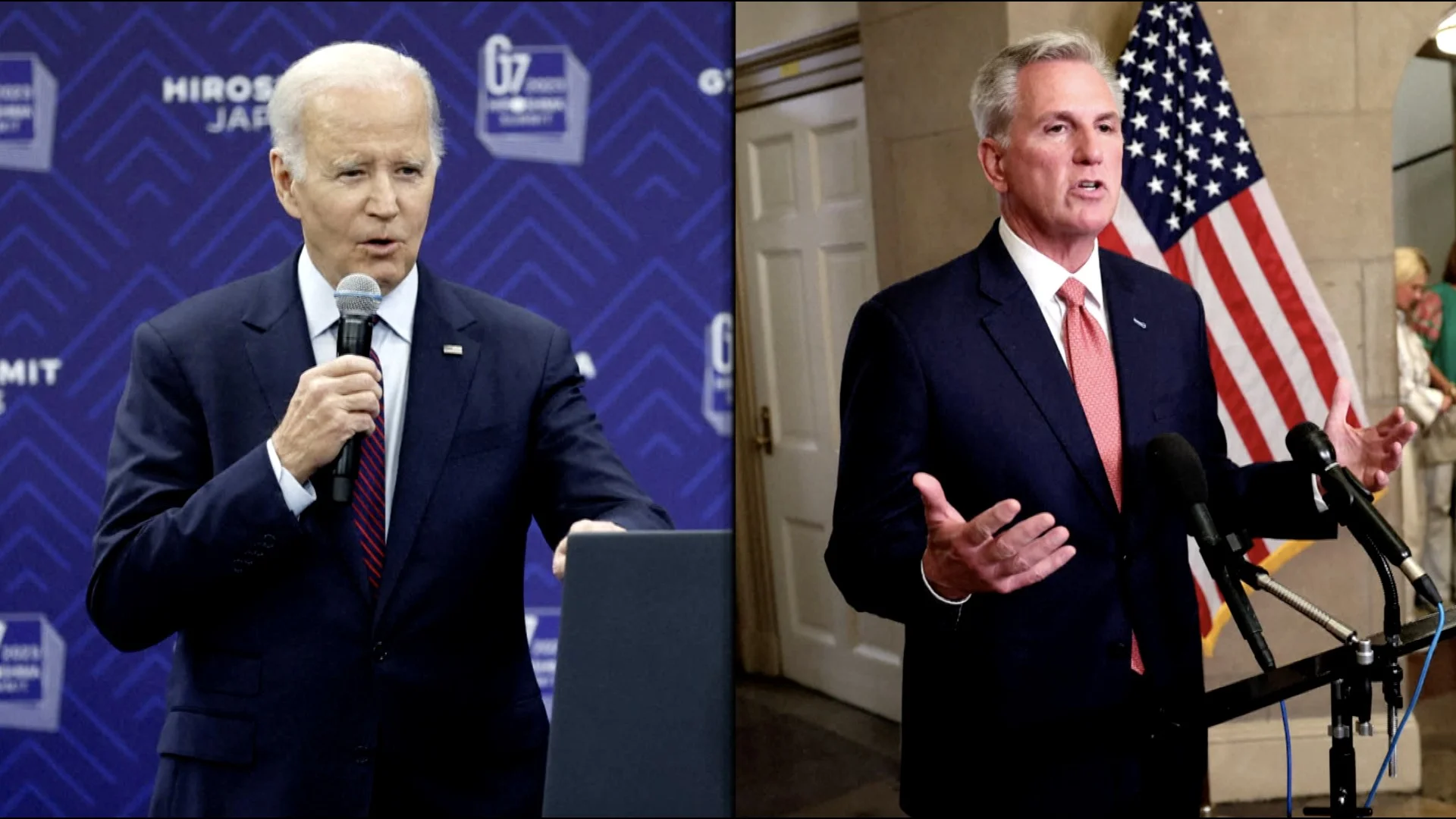
The indictment against Hunter Biden was unveiled just days after Kevin McCarthy, the Republican Speaker of the House of Representatives, announced an impeachment inquiry into President Biden—a move that the White House promptly dismissed as a political maneuver. McCarthy cited “serious and credible allegations” related to the Biden family’s business dealings and the President’s conduct. Republicans are hopeful that this new inquiry will implicate the President in allegations of power abuse and corruption.
However, to date, seven months of investigations into Hunter Biden have yielded only fragments of information from former business associates, an FBI informant, and a couple of IRS agents. Nothing substantial has emerged that could be considered a smoking gun. It remains uncertain whether, as subpoenas start flying, the slim Republican majority in the House would secure an impeachment vote if the inquiry reaches that stage.
What is undeniably clear is that the once well-defined boundary between the political and legal systems has become increasingly blurred. According to Randy Zelin, an adjunct professor of law at Cornell Law School, “Somebody woke up one day and said, boy I have a new toy and that is called the federal criminal justice system, where I’m going to use the criminal system to punish people who don’t agree with my politics.” He goes on to express deep concern about how this ongoing battle is tearing the country apart.
(RNS) — In an online conversation with former U.S. President Bill Clinton on Monday (Sept. 18), Pope Francis stressed the importance of people and nations coming together to care for the environment and to put an end to global conflicts.
“It’s time to shift toward peace and brotherhood. It’s time to put down the weapons and return to dialogue, to diplomacy. Let us cease the pursuit of conquest and military aggression. That’s why I repeat: no to war!” the pope said, answering a question by the former U.S. president.
The conversation between the political and spiritual leaders was livestreamed at the 2023 meeting of the Clinton Global Initiative, taking place in New York City Sept. 18-19. The event seeks to address urgent global issues, such as climate change and the flow of refugees.
To these challenges, Francis added another: “the wind of war that blows throughout the world,” fueling what he described as “the Third World War, fought piecemeal.”
The pope urged all nations to take responsibility and stressed that “no challenge can be faced alone — only together, sisters and brothers, children of God,” he said.
Pope Francis has been a vocal advocate for peace following the Russian invasion of Ukraine and has sought a diplomatic resolution to the conflict. He appointed Cardinal Matteo Zuppi as a peace envoy to meet with the main stakeholders in the war, including President Joe Biden in July.
In his message, the pope also stated that “it is time to work together to stop the ecological catastrophe, before it is too late,” and repeated his intention to publish a new version of his “green” encyclical, “Laudato Si,” for the care and protection of the environment.
Clinton said he had a “wonderful meeting” with the pope at the Vatican in early July.
“You make us all feel empowered and that is perhaps your greatest power as the pope,” Clinton said during the conference. “You make everybody, even those who aren’t members of the Catholic Church, feel like they have power and share in the responsibility.”
The Clinton Global Initiative was created by Bill Clinton in 2005 and collaborates with over 10,000 organizations aiming to provide actionable solutions to global challenges.
Among the main reasons for the online meeting was raising awareness for the Pediatric Hospital Bambino Gesù, commonly referred to as the “pope’s hospital.” The pope spoke of the care that the hospital provides despite its small size, including helping Ukrainian children fleeing the conflict.
“There are illnesses that cannot be cured, but there are no children that cannot be cared for,” he said.
Vivek Ramaswamy has a better chance of winning the primary against Trump as compared to Haley but the results were reversed if the Indian Americans were to contest Biden
The latest Harvard/CAPS Harris Poll, a monthly collaboration between the Center for American Political Studies at Harvard (CAPS) and the Harris Poll and HarrisX, revealed that if it came down to a one-on-one between Nikki Haley and Vivek Ramaswamy against former President Donald Trump, Ramaswamy had a better chance at winning.
If the Republican party primary is down to two choices, Nikki Haley and Donald Trump, 38 per cent of the respondents said they would vote for the former while 62 per cent chose Trump. For the same question but with Ramaswamy and Trump as choices, the results were 40 and 60 per cent respectively.
Nikki Haley and Vivek Ramaswamy.
For the same question, Trump held the maximum number of votes, i.e. 30 per cent, with DeSantis in position two with 7 per cent of the votes, followed by the two Indian American candidates.
The results of Haley and Ramaswamy’s favorability among voters was flipped if they were to compete against President Joe Biden. In head-to-head presidential matchups, Biden would lose the election to Haley by 4 per cent, and Ramaswamy trails behind Biden by 2 per cent, as per poll results.
The Biden administration has reported a significant increase in student loan forgiveness approvals, benefiting hundreds of thousands of borrowers, thanks to initiatives aimed at enhancing the Public Service Loan Forgiveness (PSLF) program. PSLF is a crucial federal student loan forgiveness program that can erase a borrower’s federal student loan debt after 120 “qualifying payments,” equivalent to ten years. However, the PSLF program has long struggled with poor administration, insufficient oversight, resulting in errors, rejections, and approval rates that never exceeded single-digit percentages.
But following a series of reforms initiated by the Biden administration, the approval rates for student loan forgiveness under PSLF have seen a remarkable surge. The U.S. Department of Education stated in a Tuesday announcement, “The Biden-Harris Administration has already approved… $45.7 billion for 662,000 public servants through improvements to Public Service Loan Forgiveness (PSLF).” Furthermore, additional loan forgiveness is expected as these initiatives continue to unfold.
The first of these PSLF improvements, known as the Limited PSLF Waiver, was introduced in 2021. This one-time initiative relaxed the criteria for qualifying PSLF payments, expanding the scope of what could be counted toward loan forgiveness under the program. Previously, only payments made on Direct federal student loans under a 10-year Standard or income-driven repayment (IDR) plan were eligible for loan forgiveness. However, the Limited PSLF Waiver extended eligibility to include almost any period of repayment on any federal student loan, dating back to October 2007, when PSLF was initially established.
The IDR Account Adjustment, an ongoing program, subsequently extended many of the benefits of the Limited PSLF Waiver. While much attention has been given to student loan forgiveness for borrowers on 20- or 25-year repayment plans, it’s important to note that the IDR Account Adjustment can also benefit PSLF borrowers. This adjustment further broadened the range of payments and situations that can count toward student loan forgiveness. It even allows for the crediting of some periods of deferment, forbearance, and recent defaults for borrowers engaged in qualifying employment. The Education Department is implementing this adjustment gradually, and borrowers are receiving PSLF credit and associated loan forgiveness approvals throughout early 2024.
For some borrowers, the federal Direct consolidation program may be necessary to qualify for or maximize the PSLF benefits under the IDR Account Adjustment. Fortunately, there is still time to consolidate loans to take advantage of this adjustment, with the consolidation window closing on December 31, 2023.
On July 1, the U.S. Department of Education implemented new PSLF regulations, intended to provide more enduring benefits to borrowers seeking loan forgiveness through the program. These new rules partially formalize certain aspects of the temporary waiver and adjustment initiatives. They permit specific periods of deferment and forbearance to be counted toward loan forgiveness under PSLF. The reforms also ensure that borrowers can retain some PSLF credit after consolidation, a change from the past where consolidation would erase a borrower’s PSLF credit. Moreover, borrowers now have the option to “buy back” past periods that might not have previously qualified for loan forgiveness.
The new regulations additionally simplify and expand the definition of qualifying PSLF employment, particularly for non-full-time employees, specific contracted workers in limited scenarios, and adjunct faculty. Furthermore, the regulations relax the definition of a qualifying payment, allowing borrowers to make prepayments or lump-sum payments in certain circumstances.
The Biden administration’s initiatives have had a profound impact on student loan forgiveness under the Public Service Loan Forgiveness program. These efforts have led to a substantial increase in approvals, providing substantial relief to borrowers burdened by student loan debt. The Limited PSLF Waiver, IDR Account Adjustment, and new PSLF regulations collectively represent a concerted effort to address the historical challenges associated with the PSLF program, making it more accessible and beneficial to a broader range of borrowers.
During his speech at the 78th session of the United Nations General Assembly (UNGA), in New York, US President Joe Biden reaffirmed the unwavering commitment of the United States to reform the United Nations Security Council membership, thus supporting India’s primary goal of a permanent seat on UNSC. Biden emphasized support for other key US-India strategic endeavors including strengthening of the Quad partnership, advancing Partnership for Global Infrastructure and Investment (PGII), and welcoming the African Union’s inclusion in the G20, accomplished during India’s leadership in that forum.
Addressing world leaders during the UN general debate, President Biden recalled, “In my address to this body, last year, I announced the United States to support expanding the Security Council, increasing the number of permanent and non-permanent members. The United States has undertaken serious consultation with many Member States and will continue to do our part to push more reform efforts forward…”
Biden noted, “This month we strengthened the G20 as a vital forum welcoming the African Union as a permanent member by upgrading and strengthening our institutions… That’s only half of the picture. We must also forge new partnerships, confront new challenges…” adding “In the Indo Pacific, we’ve elevated our Quad partnership with India, Japan, and Australia, to deliver concrete progress to people of the region on everything from vaccines to maritime security.”
“Similarly groundbreaking efforts were announced at the G20 [in New Delhi] connecting India to Europe, through the UAE, Saudi Arabia, Jordan, and Israel – will spur opportunities investment across two continents…” Biden added about the PGII initiative.
Picture : TheUNN
Over 151 Heads of State and Government are participating in the high-level week in New York, where four of the five permanent members of UNSC – Russia, China, France, and the United Kingdom will be absent. US President Joe Biden is the only permanent member of UNSC who participated and addressed global leaders as well.
PM Modi, who successfully hosted the G20 Summit in New Delhi, will not be traveling to New York to address the UNGA session. Instead, India’s Foreign Minister S. Jaishankar will address the session on September 26 and is expected to reaffirm India’s commitment to several vital issues including the Global South.
On the eve of the UNGA session, Permanent Representative of India to the United Nations, Ambassador Ruchira Kamboj said that India’s participation during the current session will underscore its steadfast dedication to the “global cooperation, peace, and sustainable development.” This commitment is rooted in the vision of a unified global family and resonates with the sentiments articulated by PM Modi, according to Kamboj.
Emphasizing India’s focus during the UNGA session, Kamboj noted, “Firstly, as the current President of the G20, India will continue to emphasize issues that are vital to the Global South countries including climate action, finance, and the sustainable development goals. We proudly opened the doors for the African Union to join the G20 recognizing the importance of global collaboration to address contemporary challenges.”
Kamboj pointed out that the G20 New Delhi Leaders’ Declaration underscores India’s dedication to fostering sustainable economic growth and promoting environmentally friendly initiatives. This commitment is exemplified by the collective focus on an inclusive and action driven G20 agenda under PM Modi’s guidance.
On human rights and social issues, Kamboj added “We stand firmly for women’s rights, constructive human rights dialogues, and an intercultural dialogue for peace. India will Chair the 62nd session of the UN Commission for Social Development, the first time since 1975, that India holds this esteemed position.”
About UN reforms, Kamboj said India actively engages in discussion surrounding UNSC reforms with a primary goal of securing permanent membership and emphasizing the need for expansion of both permanent and non-permanent member categories. Furthermore, India will prioritize efforts to revitalize the Non-Aligned Movement.
On September 18, two members of G4 nations, Japan and Brazil met on the sidelines of the UNGA session in New York and discussed ways to carry forward the G20 agenda under India’s Presidency.
“The two Ministers shared the view that Japan and Brazil will continue to strengthen cooperation as ‘strategic global partners’ and that they will work together towards the G20 Rio de Janeiro Summit next year, building on the achievements that led from the G7 Hiroshima Summit to the G20 New Delhi Summit,” Minister for Foreign Affairs of Japan, Kamikawa Yoko, and Minister of Foreign Affairs of the Federative Republic of Brazil, Mauro Vieira said in their joint statement.
The Joint Communiqué of the Fourth Trilateral Meeting of the African Union, the European Union and the United Nations on September 17 also reaffirmed their leaders “commitment to promote effective multilateralism and welcomed the extension of G20 membership to the African Union.” Notably, the African Union was inducted as a permanent member during the recently concluded G20 Leaders’ Summit under India’s Presidency in New Delhi.
(IPS) – Politically, the United Nations has largely been described as a monumental failure —with little or no progress in resolving some of the world’s past and ongoing military conflicts and civil wars, including Palestine, Western Sahara, Kashmir, and more recently, Ukraine, Yemen, Afghanistan, Syria, Sudan and Myanmar, among others.
Still, to give the devil its due, the UN has made some remarkable progress providing food, shelter and medical care to millions of people caught in military conflicts, including in Ukraine, Sudan, Syria, Libya and Somalia. Has the UN been gradually transformed into a humanitarian aid organization — diplomats without borders?
How fair are these characterizations?
Meanwhile, during the high-level meeting of the UN General Assembly beginning September 18, some of the world’s political leaders, representing four of the five permanent members (P5) of the Security Council, were MIAs (missing in action): Prime Minister Rushi Sunak of UK, President Emmanuel Macron of France, President Vladimir Putin of Russia and President Xi Jinping of China.
The only P5 member present was US President Joe Biden. Prime Minister Narendra Modi of India, a country described as one of the world’s rising political and economic powers willing to lead the Global South, was also missing.
Picture: FP
Is there a hidden message here for the UN? And is the UN beginning to outlive its usefulness–politically?
Asked about the absence of four P-5 members of the Security Council, Secretary-General Antonio Guterres was blunt when he told reporters: “I don’t think it is because we have or we have not a leader of a country that the high-level week is more relevant or less relevant. What’s important is the commitments that Governments are ready to make in relation to the SDGs, in relation to many other aspects of this week. So, this is not a vanity fair… What matters is not the presence of this or that leader. What matters is the commitment of the respective government in relation to the objectives of the summit.
Meanwhile, the reform of the UN – including the revitalization of the General Assembly, the increase in the number of permanent members of the Security Council and the lack of gender empowerment at the highest echelons of the UN hierarchy, with nine all-male Secretaries-General and only 4 women out of 78 presidents of the General Assembly – has been discussed for decades. But still these issues have never got off the ground. Or will they ever?
In an interview with IPS, Natalie Samarasinghe, Global Director, Advocacy, Open Society Foundations, said change is challenging at the UN. The organization is predicated on balancing principle with politics — and the former prevails only when it can be aligned with the latter. It has been subversive, supporting the fight against colonialism and apartheid, and helping the marginalized to advance their cause through development and human rights.
At the same time, it has helped to maintain the power structures of 1945. That is reflected in the UN’s priorities,programming and personnel. And this formula seems weaker now, with the UN now seemingly peripheral in the peace and security realm, and struggling to coordinate global responses to the shocks of recent years.
This does not mean the organization cannot change. Today’s UN would be unrecognisable to its founders: with its strong focus on sustainable development, nearly four times the number of member states, and bodies devoted to almost every dimension of human endeavour.
The UN’s charter does not mention the iconic blue helmets or UNICEF — perhaps the organization’s best-known ‘brand’, nor does it allude to the role of the Secretary-General as the world’s top diplomat. The Intergovernmental Panel of Climate Change and GAVI, the multistakeholder vaccine alliance — inconceivable seven decades ago — are further examples of the UN’s ability to adapt to new realities.
A wide view of the General Assembly Hall at the start of the Assembly’s seventy-first annual general debate.
Yet, other parts of the organization seem frozen in time, most obviously the Security Council. So, is change possible? It is depressing that the prospect of a female Secretary-General still feels remote, or that only four of the 78 presidents of the General Assembly have been women. This should not be our ceiling for reform but our floor.
We have regional rotation for positions. Why not gender rotation? This is surely as achievable a change as it is necessary.
The Security Council, meanwhile, is probably the least likely area of movement. But its gridlock — on substance and reform — has increased the appetite for the General Assembly to act as a counterweight to exclusive clubs.
The closest thing we have to a world parliament, the importance of the Assembly has grown as lower-income countries become increasingly frustrated at shouldering the brunt of global shocks without any real say in solutions.
This is part of a broader trend. At the UN, it encompasses improvements to the Secretary-General selection process in 2016, Liechtenstein’s success in ensuring that a Council veto automatically triggers a debate in the Assembly, and the Syria investigative mechanism.
But the real action is likely to be outside the New York. Leaders like Biden and Macron seem to have taken up the calls of Mottley, Akufo-Addo and others to reform the international financial architecture. The G20 in New Delhi echoed language in the Bridgetown Initiative and V20 Agenda on issues such as debt and access to capital.
All of this shows that we may have finally reached a point where smaller, more vulnerable countries can no longer tolerate the status quo, and where larger, richer countries realise that interdependence is not just a concept.
Q: At a press conference last month, Barbara Woodward, Britain’s ambassador to the UN, emphasized the “UK’s ambition to drive forward reform of the multilateral system,” saying, “We want to see expansion of the Council’s permanent seats to include India, Brazil, Germany, Japan and African representation.” But even if this proposal is adopted by the GA and the UNSC, it has to be followed up with an amendment to the UN charter. How arduous and long-drawn-out is the process of amending the charter?
A: Even in 1945, the composition of the Security Council was a compromise, with permanent membership and vetoes intended to encourage the five powers of the time to serve as guardians of the international order. That illusion was shattered before the ink had dried on the charter, as the Cold War cut short the organization’s honeymoon.
Today, our multipolar and polarised world is better described as a hot mess. Longstanding conflicts such as Palestine and Kashmir remain intractable, while crises pile up: Afghanistan, Ethiopia, Haiti, Myanmar, Sudan, Syria, Ukraine.
Some commentators argue that Russia’s wanton aggression is not the first time one of the five permanent members (P5) has invaded a country. Others adopt a reductionist view of the Council’s role: preventing conflict between the P5 rather than maintaining peace and security. But after 18 months of genocidal acts, it’s hard not to see it as emblematic of the UN’s failures and constraints.
Even areas where the UN previously banked successes are flagging. Most people go back two decades to Liberia or Sierra Leone when asked to cite successful peace operations. Until its collapse, the Black Sea grain deal was a rare example of mediation gone right.
Invariably, debates on how to strengthen the UN’s peace and security capacity focus on the Security Council. Since Russia’s full-scale invasion of Ukraine, states including the US have been more vocal on the need for change. Yet renewed interest has not made reform more likely.
Procedurally, reform requires amending the UN charter. This needs approval by two-thirds of the General Assembly’s members and ratification by their legislatures, including the all of the P5. It has happened only once in relation to the Council (in 1965, when the number of members was raised from 11 to 15, and the voting threshold increased accordingly). Politically, one of the biggest hurdles is the lack of agreement within regions on who should get a seat.
Council reform is a prize worth pursuing — and one that merits more creativity, on the role of regional organisations, for instance. But it may be better to channel this energy into how to leverage the collective power of the UN system as a whole.
From sanctions to investigations, there is much more the General Assembly could do on peace and security, including by building on Liechtenstein’s proposal. The Peacebuilding Commission, too, could become more central, for example by bringing in actors such as the international financial institutions. And it is worth looking at how mediation could be done differently, with more resources and a more diverse pool of negotiators.
Q: Civil society organizations (CSOs) have played a significant role in UN’s mandate to provide international peace and security, protect human rights and deliver humanitarian aid. Has the UN given CSOs, their rightful place?
A: Over 200 civil society organizations were at the birth of the UN. Their presence helped to secure references in the Charter to human rights, gender equality and social justice.
Seventy-eight years on, thousands will come to New York for the opening of the General Assembly. Even more work with the UN every day, as its development and humanitarian activities have mushroomed. These areas now account for over 70 percent of its funds and roughly two-thirds of its staff.
But many CSOs engage from the sidelines. Only a fraction will be allowed into UN Headquarters, while those on the ground often face steep barriers to cooperation. For all the talk about partnerships, a similar situation exists for other actors, from local governments to business.
This ignores that perhaps the most profound transformation of the ‘‘international community’ in recent decades has not been geopolitical realignment but the rise of non-state actors.
We live in a world where private sector profits eclipse GDP, where social movements can mobilise millions of people, and influencers can wipe out billions with a single post; and where a girl sitting outside her school with a sign can change the global conversation. And yet the international system remains stubbornly state-centric.
Instead, partnerships should be the norm. CSOs are critical to achieving the Sustainable Development Goals and addressing climate change. They provide essential assistance in humanitarian crises and step into the breach in conflict zones. They stand up for those who are ignored and abused, serving both as the UN’s partners and its conscience.
Their contributions should be valued and harnessed, through a high-level champion for civil society, greater resourcing of grassroots groups; and an overarching strategy for engagement. As concerns around legitimacy and power grow, this strategy should include a gradual transfer of the UN’s development and humanitarian functions to local partners.
This would foster a greater sense of ownership, agency and accountability. It could also breathe new life into the SDGs. From the UN’s vantage point, it would help to alleviate the unsustainable growth in its workload, free up limited resources and mitigate the incompatibility on the ground of various functions it is expected to perform – political, humanitarian, development and human rights.
Such a move is likely to meet with considerable resistance, including from inside the UN. It is easier to cite the number schools built or refugees rescued as evidence of success, especially when geopolitical tensions make advances in areas such as norm-setting and mediation more challenging.
But it is precisely in those areas where the UN is most needed: functions that cannot easily be fulfilled by others — even with two regional organisations on board, the G20 is not the G193; and where it is uniquely placed to make a difference — from emergency coordination to global solidarity.
That should be the guiding spirit leading up to next year’s Summit of the Future: a realistic task list for the UN, greater responsibility for partners, and higher ambition for the world’s people.
(Natalie Samarasinghe has also served as CEO of the United Nations Association – UK, becoming the first woman appointed to that role; she was speechwriter to the 73rd President of the General Assembly; and chief of strategy for the UN’s 75th-anniversary initiative.
A frequent commentator on UN issues, she has edited publications on sustainable development, climate change and conflict; written for Routledge and OUP on human rights; and co-edited the SAGE Major Work on the UN. She has also supported a number of civil society coalitions, including the 1 for 7 Billion campaign to improve the Secretary-General selection process, which she co-founded. IPS UN Bureau Report)
A recent CNN poll has brought concerning news for the White House and President Biden, with his approval rating at just 39 percent, a little over a year before the next election. In contrast, 61 percent of respondents expressed disapproval of Biden’s job performance, marking a significant drop from his 45 percent approval rating earlier in the year.
One of the standout findings of the poll is that former South Carolina Governor Nikki Haley is the only GOP presidential candidate leading in a hypothetical matchup against Biden. The poll, conducted by SSRS, shows Haley ahead of Biden with 49 percent to 43 percent. Notably, all other major Republican candidates are locked in tight races with the incumbent president.
These results are particularly promising for Nikki Haley, who previously served as the United Nations ambassador under President Trump. She aims to capitalize on her strong showing in the recent GOP presidential debate, hoping to challenge her former boss for the Republican nomination. However, it’s important to note that Haley trails significantly behind Trump in polls of Republican primary voters, highlighting the considerable challenge she faces.
Nonetheless, the CNN poll suggests that she could be a more competitive GOP nominee against Biden in the general election compared to her Republican rivals. This potential advantage may become a key talking point as she campaigns in early primary and caucus states like Iowa and New Hampshire.
Other notable GOP candidates also outperformed Biden in the head-to-head polling. Former Vice President Mike Pence and Senator Tim Scott both garnered 46 percent support, while Biden received 44 percent. Former New Jersey Governor Chris Christie secured 44 percent to Biden’s 42 percent, and Florida Governor Ron DeSantis tied with Biden, each at 47 percent. Entrepreneur Vivek Ramaswamy trailed Biden in a head-to-head matchup, with 45 percent to Biden’s 46 percent. Trump held a slim 1-point lead over Biden, with 47 percent to 46 percent.
When respondents were asked about a potential rematch between Trump and Biden, 47 percent indicated they would choose the former president, while 46 percent favored the current president. A small percentage (5 percent) preferred a different candidate, and 2 percent stated they did not plan to vote. These numbers do not bode well for Biden, as he trails five of the seven GOP candidates in the polling.
One significant concern for voters regarding Biden is his age; he is currently 80 years old and will turn 81 in November. The CNN poll reveals that more than half of Democratic voters surveyed are “seriously concerned” about his age. Approximately 60 percent of Democrats expressed apprehension about Biden’s ability to win the 2024 election if he secures the Democratic nomination. Additionally, 62 percent of Democrats and 76 percent of all respondents expressed serious concerns about Biden completing a second term.
While Biden is virtually certain to secure the Democratic nomination, his weaknesses in this poll are likely to heighten anxieties within the Democratic party regarding his strength as a candidate in the upcoming election. According to the poll, 46 percent of voters believe any Republican presidential nominee would be a better choice than Biden in 2024, while 32 percent believe the sitting president is a better option than any of the GOP hopefuls. In contrast, 44 percent of respondents think any Democratic nominee would be better than Trump, and 38 percent consider the former president superior to any Democratic nominee.
Among Democrats, the poll found that 67 percent would prefer the party to nominate someone other than Biden, a significant increase from the 54 percent who expressed the same sentiment in March. Of those who desire a different candidate, 82 percent did not have a specific individual in mind. Only 1 percent stated they would vote for either of Biden’s 2024 Democratic challengers, Marianne Williamson or Robert F. Kennedy Jr.
The CNN poll was conducted by SSRS from August 25 to August 31 among 1,259 registered voters and has a margin of error of 3.5 percentage points.
Despite the challenges Biden faces in this poll, he is currently preparing to attend the G20 summit in India and will return to Washington at the beginning of the following week. While the poll results may boost Republican confidence in defeating Biden, they also raise questions among GOP voters about Trump’s viability as a general election candidate in 2024, considering his ongoing legal issues, including federal indictments and state charges.
The G20, or Group of Twenty, is a coalition of nations that convenes regularly to deliberate on global economic and political matters. Together, these G20 countries contribute to a staggering 85% of the world’s economic output and over 75% of worldwide trade, housing two-thirds of the global population. Comprising the EU and 19 individual nations, including Argentina, Australia, Brazil, Canada, China, France, Germany, India, Indonesia, Italy, Japan, Mexico, Russia, Saudi Arabia, South Africa, South Korea, Turkey, the UK, and the US, the G20 holds a unique position on the world stage.
Established in 1999, the G20 emerged in response to the Asian financial crisis with the primary goal of providing finance ministers and officials a platform to strategize methods for restoring economic stability. In 2008, the group elevated its stature, hosting its inaugural leaders’ summit as a response to the global financial turmoil that year, with the aim of promoting international cooperation.
In recent years, the G20 has widened its purview, incorporating subjects like climate change and sustainable energy into its discussions. Each year, one of the G20 member states takes on the presidency and sets the agenda for the leaders’ summit.
The 2023 G20 summit, presided over by India, will spotlight critical topics such as sustainable development, the pursuit of just and equitable global growth, and debt forgiveness for developing countries. Additionally, US President Joe Biden is expected to engage with leaders from developing nations to propose reforms for the World Bank, potentially unlocking more funds for infrastructure development and climate change mitigation.
Picture : AlJazeera
Crucially, much of the negotiation and diplomacy will occur behind the scenes, in one-on-one meetings between leaders held on the sidelines of the main summit hall. India’s Prime Minister Narendra Modi intends to use the summit as a platform to elevate his country’s global standing and establish himself as a significant world leader, particularly in the run-up to the spring 2024 general election. Modi is keen to ensure that the summit doesn’t get bogged down in disputes over the ongoing conflict in Ukraine, which marred the 2022 summit in Bali, Indonesia. Discord around this issue even prevented the issuance of a joint statement following the G20 foreign ministers’ meeting in Delhi in March.
Remarkably, both Russia’s President Vladimir Putin and China’s President Xi Jinping will be absent from the summit. Putin will be represented by his foreign minister, Sergei Lavrov, while China will send Premier Li Qiang in Xi’s stead.
Aside from the Ukraine conflict, other contentious matters could emerge at the summit. In May 2023, China and Saudi Arabia boycotted a G20 meeting on tourism held in Indian-administered Kashmir, as this region includes territory claimed by both Pakistan and India. Another source of tension has arisen between India and China after Beijing published a map asserting Chinese ownership of Arunachal Pradesh and the Aksai Chin plateau, both disputed territories. The US has urged China to put aside its differences with India and adopt a “constructive role” at the summit.
The G20 has experienced varying degrees of success since its inception. During the 2008 and 2009 leaders’ summits, held in the midst of the financial crisis, leaders reached consensus on numerous measures to salvage the global economic system. However, critics argue that subsequent summits have been less productive, often due to discord between rival global powers. Nevertheless, the one-on-one meetings between leaders have frequently yielded positive outcomes. For instance, at the 2019 summit in Osaka, then-US President Donald Trump and Chinese President Xi Jinping concurred to recommence talks to resolve a major trade dispute.
Security is always a paramount concern at G20 summits, given their propensity to attract anti-globalization protests. The Indian government has taken extensive security measures ahead of the Delhi event, including road closures around the venue and deploying 130,000 security personnel across the city. Unique measures have also been introduced to deter troublesome monkeys from disrupting the summit, as Delhi has a substantial monkey population that authorities wish to keep at bay.
The 2023 G20 summit promises to be a pivotal event, with India at the helm emphasizing sustainable development, equitable global growth, and debt relief for developing nations. While the specter of the Ukraine conflict looms, leaders will engage in discreet discussions to address a range of pressing issues, including World Bank reform and climate change.
The absence of key leaders like Putin and Xi adds an intriguing dimension to the proceedings. However, the G20’s track record, marked by both achievements and challenges, underscores the importance of these high-level diplomatic gatherings in shaping the global agenda. Amidst stringent security measures and innovative tactics to deal with local fauna, the world will be watching closely as the G20 nations convene to chart the course of the global economy and address pressing international concerns.
US President Joe Biden has said that he held “substantial discussions” with Prime Minister Narendra Modi on ways to strengthen the Indo-US partnership and thanked him for his leadership and hosting the G20 Summit in New Delhi. Biden told reporters here in the Vietnamese capital that he also raised the importance of respecting human rights with Prime Minister Modi.
Biden, who arrived in New Delhi on his first visit to India as the US President, held wide-ranging talks with Modi and they vowed to “deepen and diversify” the bilateral major defence partnership while welcoming forward movement in India’s procurement of 31 drones and joint development of jet engines.
“I want to once again thank Prime Minister Modi for his leadership and his hospitality and hosting the G20. He and I have had substantial discussions about how we’re going to continue to strengthen the partnership between India and the US building on the Prime Minister’s visit to the White House last June,” Biden said during a press conference here.
“As I always do, I raised the importance of respecting human rights and the vital role the civil society and a free press have in building a strong and prosperous country with Modi,” he said.
Picture : ParadePhash
According to the joint statement issued on Friday after Modi and Biden held bilateral talks, “The leaders re-emphasised that the shared values of freedom, democracy, human rights, inclusion, pluralism, and equal opportunities for all citizens are critical to the success our countries enjoy and that these values strengthen our relationship.” Biden also talked about the “significant business” he had done in India during the G20 Summit.
“This was an important moment for the United States to demonstrate our global leadership and our commitment to solving the challenges that matter most to people around the world. Investing in inclusive growth and sustainable development, addressing the climate crisis, strengthening food security and education, advancing global health and health security,” he said. “We showed the world the United States is a partner with a positive vision for our shared future,” he added.
On the corridor connecting India to Europe with the Middle East and Israel, he said that are going to open up untold opportunities for transformative economic investment.
He said the “illegal war in Ukraine” was also discussed at the summit and there was sufficient agreement on the need for just and lasting peace.
Responding to questions, President Biden said his goal is to provide stability around the world by building America’s ties with Vietnam and other Asian countries as he insisted that he is not trying to start a “cold war” with China.
“It’s not about containing China. It’s about having a stable base,” said Biden, who is here as Vietnam was elevating the United States to comprehensive strategic partner.
Biden also said that he met with Chinese Premier Li Qiang on the sidelines of the G20 in New Delhi and ”talked about stability.” “It wasn’t confrontational at all,” he added.
Reporters accompanying President Joe Biden to the G20 summit in India did not have the opportunity to ask questions to President Biden and Indian Prime Minister Narendra Modi during their meeting in New Delhi. The White House confirmed this decision despite repeated requests for increased press access.
National Security Adviser Jake Sullivan explained that this meeting was unique because it would take place at the prime minister’s residence, unlike the typical bilateral visits to India where meetings are held in the prime minister’s office. He mentioned that Prime Minister Modi had set specific protocols for the meeting.
Picture : KTVZ
Sullivan acknowledged that the administration had pushed for a pool spray of the meeting, as is customary when President Biden hosts foreign leaders at the White House. He humorously remarked, “We spend our lives asking for pool sprays and other things” for reporters.
Prime Minister Modi, who has faced criticism from press freedom organizations for his government’s crackdown on independent reporting, has rarely taken questions from the press since assuming office.
During a state visit in June, Modi agreed to participate in a news conference at the White House after extensive negotiations between the two sides. Initially, Indian officials were hesitant about the White House’s insistence on holding a news conference.
The Biden administration has been keen to highlight the President’s willingness to address press freedom and humanitarian issues under Modi’s rule. During Modi’s visit in June, six Democratic lawmakers boycotted his address to Congress, citing concerns about India’s treatment of Muslim minorities.
However, President Biden warmly welcomed Prime Minister Modi to the White House during the visit, hosting a formal state dinner in his honor, emphasizing the shared commitment to democracy between the two nations.
White House press secretary Karine Jean-Pierre stated that the administration was making every effort to ensure media access to the President during his trip to India for the G20 summit. Several officials, including Sullivan, White House Communications Director Ben LaBolt, Deputy National Security Adviser Jon Finer, and Deputy Assistant to the President Kurt Campbell, contacted their Indian counterparts to advocate for increased press access, but their efforts were apparently unsuccessful.
Jean-Pierre noted, “We have reached out, we have made the request multiple times and at different pressure points.” She emphasized that the administration had been working diligently to ensure a smooth trip for everyone involved and left it to the Indian government to respond.
She added, “Look, we are all trying to do our best, at the behest of the president, to get this done – and so we’re gonna keep working on it.”
Instead of addressing reporters after the G20 summit’s conclusion in New Delhi, President Biden will hold a news conference in Vietnam, where it is deemed “easier” for him to take questions from reporters.
Jean-Pierre explained the decision by stating that it was logistically simpler to hold the press conference in Vietnam and that it would not change anything, as it would have been a solo press conference by the President regardless.
Regarding formal engagements with world leaders during the G20 summit, Sullivan indicated that there would likely be few formal meetings. He said, “I can’t confirm any (bilateral meetings), and to be honest with you, I think you will not see, because of the way the schedule was structured, a significant number of formal engagements with other leaders.” Instead, most of the interactions with other leaders would be informal and on the margins, rather than formal sit-down meetings.
Xi Jinping’s decision to stay away from the Group of 20 summit may have been intended to deny India its moment. Instead, Prime Minister Narendra Modi — along with the U.S. and Europe — figured out how to more effectively counter China on the world stage.
Fellow G20 nations hailed India’s success in reaching an agreement on a joint communiqué that remained in doubt just days before world leaders gathered in New Delhi for their most significant annual diplomatic event. Apart from finding consensus on Russia’s war in Ukraine, the most difficult issue, they also elevated the African Union as a full G20 member and took action on issues like climate change and debt sustainability that are priorities of emerging markets.
The final outcome irked Ukraine, which saw the compromise on war language as weaker than what leaders produced just 10 months ago in Bali, Indonesia. But for the U.S. and its allies, criticism of a communiqué that on substance was similar to Bali and has little impact on the ground is a small price to pay for giving Modi a win that bolsters India’s status as a rising power capable of blunting China’s global influence.
U.S. President Joe Biden led the charge, seeing in India his administration’s best hope of isolating China and Russia — and providing a booster shot to the U.S.-led world order. The result showed that Washington is finally learning the language of the so-called Global South, with India as its principle guide.
“Some commentators are pointing to watered-down language on Russia-Ukraine as a sign of Western ‘climbdown,’” said Milan Vaishnav, director of the South Asia Program at the Carnegie Endowment for International Peace. “But there’s another way of looking at it: The West is also invested in making sure India got a win. A lack of consensus would have been a huge disappointment for India.”
If there was a moment that illustrated the summit dynamics, it was Biden’s meeting on Saturday to discuss White House-led efforts to deliver more financing to developing nations.
Along with World Bank President Ajay Banga, the first Indian American to hold the role, Biden was pictured with Modi, Brazil’s Luiz Inacio Lula da Silva and Cyril Ramaphosa of South Africa — key members of the BRICS grouping, minus China and Russia. That bloc expanded earlier this month, posing a challenge for the Group of Seven advanced economies.
Earlier in the day, U.S. Deputy National Security Advisor Jon Finer swiped at China by referring to those nations as “the three democratic members of the BRICS,” saying they and the U.S. were all committed to the G20’s success. “And if China is not, that’s unfortunate for everyone,” Finer said. “But much more unfortunate, we believe, for China.”
And the U.S. didn’t stop there. It separately announced a deal with India, the European Union, Saudi Arabia, Israel and other Middle Eastern countries to develop an ambitious rail and maritime network across the region. Biden hailed it as a “game-changing regional investment,” cementing the deal with a three-way handshake that included Modi and Crown Prince Mohammed bin Salman, who the U.S. president had cast as a “pariah” ahead of the last American election.
That kind of pronouncement is more likely to appeal to Middle East interests than badgering over human rights, even if the project’s time line and funding remains vague. The U.S. denied it was meant to counter China’s growing influence in the Gulf, but a French official acknowledged it was designed to provide competition for Xi’s Belt and Road Initiative (BRI), saying that wasn’t a bad thing.
“I want to see China succeed economically,” Biden told reporters Sunday in Hanoi, Vietnam, where he flew after the G20. “But I want to see them succeed by the rules.”
Xi’s move to skip the G20 summit for the first time since he became president in 2013 marked a shift in behavior from last November, when he cast himself as a statesman with a responsibility to “get along with other countries.” China’s negotiators also risked appearing petty in looking to thwart India’s progress, taking a stand on minor issues like Modi’s use of a Sanskrit phrase and the U.S.’s bid to host the G20 gathering in 2026. The Global Times, a newspaper affiliated with the Communist Party, called the U.S. “just a copycat” for its Mideast infrastructure plan.
In a further blow to Beijing, Italian Prime Minister Giorgia Meloni told Premier Li Qiang on the sidelines of the summit that her nation plans to withdraw from the BRI while still looking to maintain friendly relations, according to a person familiar with the matter who asked not to be named. At a press conference after the G20, Meloni said she spoke to Li, representing China in Xi’s absence, about the BRI but a decision had yet to be made.
Going into the summit, British Prime Minister Rishi Sunak accused China of acting as a brake on progress toward a joint statement. At one point in the deliberations behind closed doors, Beijing raised the issue of access to semiconductors in a discussion of climate action, people familiar with the talks said. That prompted National Security Advisor Jake Sullivan — a leading advocate of U.S. export controls on chips and chip technology to China — to decry “the idea of holding climate hostage” to unrelated issues.
China’s Li told leaders that the G20 “needs unity instead of division, cooperation instead of confrontation,” the official Xinhua News Agency reported. That followed a commentary posted hours earlier by a Chinese think tank affiliated with the country’s top spy agency, which criticized India for having “sabotaged the atmosphere for cooperation” at the G20 by pushing its own agenda.
But China relented on its opposition to the communiqué, and India drew praise from all camps for negotiating a compromise. People familiar with the discussions said the breakthrough occurred after India, Indonesia, Brazil and South Africa jointly put forward a proposal on language describing the war.
“This consensus itself shows the cemented role of India as a trustworthy fulcrum of a world bitterly divided on geopolitical issues like the Ukraine war,” said Swasti Rao, an associate fellow at the Europe and Eurasia Center at the Manohar Parrikar Institute for Defense Studies and Analyses. “There is little doubt that middle order powers wish to keep the global economic order multipolar and not fall into the Chinese game of dominating it.”
While the final language on Ukraine made some U.S. allies uneasy, supporting the compromise presented a bigger opportunity to align more closely with major democracies in the Global South that ultimately serve as key swing nations when it comes to Russia’s war and other world issues. G7 leaders publicly praised the outcome, with Sunak insisting that the language adopted was “very strong” and that “Russia is completely isolated.”
‘Just and durable’
For the U.S., any move that bolsters India and amplifies other democracies in the Global South helps to counter China and Russia’s influence, particularly when it comes to bringing about the G20’s call for a “comprehensive, just and durable peace” in Ukraine. Back in May at the G7 summit in Japan, the U.S. and its allies struggled to convince Modi, Lula and Indonesia’s Joko Widodo to side with them on Ukraine, even after President Volodymyr Zelenskiy made a surprise appearance. Zelenskiy wasn’t invited to address India’s G20.
A senior European Union official said the agreement effectively saved the G20 as the last global forum bringing together the world’s major powers. Moreover, the official said, it helped bridge the gap between the G-7 and emerging markets, who would now be partners in holding Russia to account if it doesn’t follow through on seeking a just peace in line with UN principles.
Other senior European officials said China shot itself in the foot by staying away from the summit, allowing India to cement its leadership of the Global South and providing the U.S. and Europe a clear path to strengthen ties with emerging markets.
Even Russia, represented by Foreign Minister Sergei Lavrov after Vladimir Putin stayed home, saw the agreement as a win. Moscow was pleased that BRICS democracies served as interlocutors with the G7, according to a person familiar with the situation, underscoring China’s status as an outsider looking in.
The U.S., of course, could yet stumble in its bid to appeal more to the Global South. Ahead of the G20, Biden skipped a summit in Indonesia hosted by the Association of Southeast Asian Nations, a move that appeared like a snub to Widodo. The U.S. president sought to do damage control in Delhi, meeting the Indonesian leader briefly and pledging to meet him at the White House in November, when world leaders head to the U.S. for the APEC summit.
More significantly, however, was India’s ability to grasp the moment to assert a global leadership role. Modi — who is on pace to extend his decade in power next year — declared that “history has been created” while his chief negotiator, Amitabh Kant, called India “the spokesperson of all the Global South.”
“More than anything else, it has amplified the voice of Global South,” Kant said of the summit outcome. “It has also demonstrated that India has a huge capacity of bringing the world together and leading the world. (TIME.COM)
The US conceded space to the host India in the wording of the final Delhi Declaration of G20 on Russia’s invasion of Ukraine and lauded Indian Prime Minister Narendra Modi’s diplomatic skills that virtually represented a coup as the final document came out despite fractures in the group.
The declaration earned the praise of the US.
US National Security Adviser Jake Sullivan called the statement a “significant milestone for India’s chairmanship and a vote of confidence that the G20 can come together to address a pressing range of issues.”
“The G20 statement includes a set of consequential paragraphs on the war in Ukraine. And from our perspective, it does a very good job of standing up for the principle that states cannot use force to seek territorial acquisition,” Sullivan told newspersons.
Still, the language differed from last year’s G20 declaration, which stated “most members strongly condemned the war in Ukraine.” So, in a way, it was a diplomatic coup for India as the host country took a softer line than the Bali G20 one by not calling it a war but saying, “All states must refrain from the threat or use of force to seek territorial acquisition.”
US and western nations wanted stronger language to condemn the aggression on Ukraine as they succeeded in the Bali G20 conference. The Russian invasion was described as a war in the declaration then.
Picture : Sakshi Post
The softer tone in the Delhi declaration showed that US and western allies yielded space to India, the host country, to word it differently which still had the same effect but also gave India the leverage with its long term ally Russia, whose leader Vladimir Putin did not attend, balancing its equations with US and Russia at the same time – a feat pilled of by the foreign office officials under foreign minister S Jaishankar along with trusted allies .
Russia, as a member of the G20, would have to agree on any consensus statement on Ukraine. Russia and China had resisted stronger language in a final statement, making any kind of agreement difficult. No G20 summit has concluded without a joint declaration of some type, media reports said.
Leaders gathered here for the annual Group of 20 summit managed to agree on a joint statement laying out shared views on climate change and economic development but showed the fractures within the group by stopping short of explicitly condemning Russia’s invasion of Ukraine, CNN reported .
Diplomats virtually burnt the midnight oil to sort out what sort of language and phraseography the final draft joint statement required in the lead-up to the summit . Anticipating snags, Indian foreign office officials along with its allies managed to play down the Ukraine situation as a war.
The eventual compromise statement amounted to a coup for the summit’s host, Prime Minister Modi, but still reflected a position far softer than those the US and its Western allies have adopted individually, CNN reported.
US President Joe Biden’s hopes of convincing the world’s largest economies to rally behind Ukraine during his two-night stay in India for the summit did not bear fruit in the way he wanted, but he still liked the final wording. He also pressed his case for American investment in the developing world.
Even as the summit was midway through on Saturday, the leaders agreed to the joint declaration acknowledging the situation in Ukraine while not papering over the group’s major divides on the issue.
“All states must refrain from the threat or use of force to seek territorial acquisition,” the declaration read, without explicitly singling out Russia for its invasion. The document also stated opposition to the use of nuclear weapons and highlighted the economic effects of the war in an indirect reference to Putin’s threat of using nuclear weapons if NATO allies intervened militarily to help Ukraine.
In a reflection of the deep fractures among the G20 nations, the statement acknowledged “there were different views and assessments of the situation”, US media reports noted.
Ukraine’s Foreign Ministry spokesperson Oleg Nikolenko however criticised the declaration. Kiev was not invited by India to the G20 summit.
“Ukraine is grateful to its partners who tried to include strong wording in the text,” he wrote on Facebook. “At the same time, the G20 has nothing to be proud of in the part about Russia’s aggression against Ukraine. Obviously, the participation of the Ukrainian side would have allowed the participants to better understand the situation. The principle of ‘nothing about Ukraine without Ukraine’ remains as key as ever,” media reports said.
The absence of Chinese leader Xi Jinping and Russian President Vladimir Putin – US President Biden’s arch rivals – provided opportunities for Biden to make a more affirmative case at the summit, White House officials said during the summit.
Biden said Saturday he would have welcomed the presence of his Chinese counterpart at the summit, but that positive outcomes were still possible. “It would be nice to have him here but, no, the summit is going well,” Biden said when questioned about the impact of Xi’s absence.
Biden hoped to leverage on the two leaders absence at the summit to portray the US as a credible counterweight to China’s economic outreach.He announced new plans partnering Europe, the Middle East and Asia to construct a major new transit corridor connecting the regions, thus challenging Beijing’s own efforts at expanding global trade with its belt road initiatives.
“India calls upon the world to come together to transform the global trust deficit into one of trust and reliance. This is the time for all of us to move together,” Prime Minister Modi said as the gathering got underway.
“Be it the divide between North and South, the distance between the East and West, management of food and fuel, terrorism, cyber security, health, energy or water security, we must find a solid solution to this for future generations,” he emphasised. It was a message of unity at a markedly fractured moment for the grouping, the US media observed.
While Biden enjoyed success at other summits convincing European leaders and NATO allies to step up their military support for Ukraine and tighten their punishment of Russia, many nations, particularly in the Global South, weren’t convinced. They viewed the billions of dollars in Western assistance pouring into Ukraine sceptically, and sought a more balanced relationship with Moscow, CNN said.
Biden’s aides claimed the president welcomed the opportunity to make the case for Ukraine, including to audiences that aren’t necessarily on the same page. “Part of what makes the G20 an appealing format for the United States is it gives us a chance to interact with and work with and take constructive steps with a wider range of countries, including some, frankly, that we don’t see eye to eye with on every issue,” US deputy national security adviser Jon Finer told reporters on Saturday.
G20 Leaders Declaration adopted in New Delhi
Prime Minister Narendra Modi while addressing the second session of the G20 Leaders Summit, announced that the leaders declaration has been officially adopted by the member states at the New Delhi Summit.
“There is good news. With everyone’s cooperation, consensus has been reached on New Delhi G20 Leadership Declaration…I announce the adoption of this declaration,” PM Modi told the gathering amid loud applause.
The official document contains 112 outcomes on various developmental and geo-political issues. It mainly focuses on Strong, sustainable, balanced, and inclusive Growth; Accelerating progress on SDGs; Green development pact for a sustainable future; Multilateral institutions for the 21st Century and Reinvigorating multilateralism.
“The #NewDelhiLeadersDeclaration has been officially adopted at the #G20India Leaders’ Summit! Today’s era must be marked as the golden age of human-centric globalisation & India’s G20 Presidency under the leadership of PM @narendramodi has worked tirelessly towards this goal,” G20 Sherpa Amitabh Kant wrote on X.
In the context of the Russia-Ukraine war, the declaration reads, “Concerning the war in Ukraine, while recalling the discussion in Bali, we reiterated our national positions and resolutions adopted at the UN Security Council and the UN General Assembly and underscored that all states must act in a manner consistent with the Purposes and Principles of the UN Charter in its entirety. In line with the UN Charter, all states must refrain from the threat or use of force to seek territorial acquisition against the territorial integrity and sovereignty or political independence of any state. The use or threat of use of nuclear weapons is inadmissible.”
Drawing on Prime Minister Narendra Modi’s earlier statement that ” Today’s era must not be one of war,” the declaration states that all member states will work together to mitigate the war’s negative impact on the global economy and welcome all relevant and constructive initiatives that support a comprehensive, just, and lasting peace in Ukraine.
Starting September 9, New Delhi is scheduled to host the G-20’s 18th annual summit. The event, in the eyes of the Indian government, will mark the country’s growing international importance. “During our G-20 presidency, we shall present India’s experiences, learnings, and models as possible templates for others,” Indian Prime Minister Narendra Modi declared last year, when his country assumed the organization’s leadership. This August, he asserted that India’s presidency would help make the world into “one family” through “historic efforts aimed at inclusive and holistic growth.”
The government’s message was clear: India is becoming a great power under Modi and will usher in an era of global peace and prosperity.
But 1,000 miles away from New Delhi, in the northeastern state of Manipur, India is caught in a conflict that suggests it is in no position to serve as an international leader. Over the last four months, ethnic violence between Manipur’s largest community, the Meiteis, and its second-largest minority, the Kukis, has killed hundreds of people and rendered 60,000 people homeless. Mobs have set fire to over 350 churches and vandalized over a dozen temples. They have burned more than 200 villages.
At first glance, it may seem as if the violence in Manipur will not hinder Modi’s foreign policy ambitions. After all, the prime minister has traveled the world over the last four months without having to talk about the conflict. It did not come up (at least publicly) in June, when U.S. President Joe Biden rolled out the red carpet for Modi in Washington, D.C. It was not mentioned when Modi landed in Paris three weeks later and met French President.
Emmanuel Macron. And the issue has not arisen during his visits this year to Australia, Egypt, Greece, Japan, Papua New Guinea, South Africa, and the United Arab Emirates.
Picture : OPIndia
But make no mistake: the events in Manipur threaten Modi’s goal and vision of a great India. The state’s violence has forced the Indian government to deploy thousands of troops inside Manipur, reducing the country’s capacity to protect its borders from an increasingly aggressive China. The conflict has also hampered India’s efforts to be an influential player in Southeast Asia by making it hard for the country to carry out regional infrastructure projects and by saddling neighboring states with refugees.
And the ongoing violence could give other Indian separatist and ethnic partisan groups an opening to challenge New Delhi’s primacy. If these organizations do begin to rebel, as some of them have in the past, the consequences would be disastrous. India is one of the most diverse countries in the world, home to people from thousands of different cultures and communities. It cannot function if these populations are in intense conflict.
There is little reason to think that tensions will ease under Modi, and plenty of reason to think they will get worse.
The prime minister’s central ideological project is the creation of a Hindu nationalist country where non-Hindu people are, at best, second-class citizens. It is an exclusionary agenda that alienates the hundreds of millions of Indians who do not belong to the country’s Hindu majority. It is also one with a track record of prompting violence and unrest—including, now, in Manipur.
Modi’s allies and supporters like to argue that the prime minister is personally transforming India into a new superpower. Modi’s deputies, for example, suggest that the prime minister has earned respect unmatched by any previous Indian leader. Modi “exudes India in many ways, and I think that has had a big impact as well on the international community,” Subrahmanyam Jaishankar, India’s foreign minister, remarked in June.
The country’s pliant media have declared that Modi is vishwaguru: the world’s teacher and guide. But Manipur shows that India stands little chance of becoming a global leader as long as Modi is at the helm. Great powers need to be stable, and the ruling party’s exclusionary policies will open the country’s various fault lines, creating chasms that lead to violence and drain the state’s capacity. Manipur has sent Modi a warning. He is ignoring it at India’s peril.
SONS OF THE SOIL
Modi is not the first Indian politician to promote Hindu nationalism and majoritarianism. The prime minister’s Bharatiya Janata Party (BJP) and its parent organization, the Rashtriya Swayamsevak Sangh (RSS), have spent decades trying to turn India into a Hindu Rashtra, or a nation exclusively of Hindus. Along the way, the groups have routinely provoked bloodshed. The groups, for example, inspired the man who assassinated Mahatma Gandhi in 1948. The RSS helped destroy a historic mosque in 1992, which set off widespread riots.
But although Hindu nationalism has been around for decades, the movement has amassed more power than it ever has before. Manipur provides an insight into how. In theory, the state should be unfavorable terrain for Hindu supremacists. Its Meitei majority does not traditionally identify as Hindu; they have instead followed an animistic faith, one with its own beliefs and traditions. The community’s language is not Hindi, nor is it one of Hindi’s cousins. In fact, until the late 1990s, the Meitei nationalist movement sought independence from India. Meitei organizations should, if anything, oppose Hindu nationalists ruling the country.
But the BJP and the RSS have worked to get ethnic groups that form the majority in their own states to join their cause (except when they are Muslims), arguing that these groups deserve to dominate their regions—just as Hindus should dominate India overall. Sometimes, the BJP and RSS even try to amalgamate smaller communities of animistic faiths into the Hindu tradition.
Their message does not always land, but in Manipur, it appears to have done so. Many Meiteis now say they are Hindus, and the community’s nationalists identify as part of the BJP’s program. They believe that they are the original inhabitants of Manipur—the sons of the soil—and that Kukis are illegal immigrants from Myanmar. Their argument mirrors the one made everywhere by the RSS, which claims that Hindus are the original inhabitants of India whereas Muslims and Christians are outsiders.
Great powers need to be stable.
The state’s chief minister, Nongthombam Biren Singh, has fashioned himself accordingly. Once a pluralist politician from the Indian National Congress—the main opposition party—Singh joined the BJP in 2017 and has positioned himself as a Meitei partisan since 2022. He won Manipur’s state elections again for the BJP, and he has been leading the charge against the Kukis.
In the months before the conflict began, he adopted a policy of arbitrarily evicting Kuki villages under the pretense of protecting forests. Beginning in February, his government began checking the biometric details of people living in Kuki-dominated hill districts in order to identify “illegal immigrants.” In March, he blamed “illegal immigrants from Myanmar” engaged in the “drug business” for protests against the state’s efforts to evict Kukis from their villages. And in April, he told an RSS-controlled newspaper that “foreigner Kuki immigrants have taken control of the social, political, and economic affairs of the native tribal people of the state.”
Singh’s policies and rhetoric are squarely at odds with the Indian constitution, which was designed to safeguard marginalized groups. The document affords all of the country’s indigenous minorities—including the Kukis—special protections to secure their land, language, and culture. But under Modi, those protections are falling apart.
After winning reelection in 2019, Modi’s government quickly stripped Jammu and Kashmir, India’s only Muslim-majority state, of its constitutionally enshrined protections. He then split the state in two and downgraded the resulting components from states into federally controlled territories. Anticipating widespread unrest, Modi deployed vast numbers of troops into what was already a militarized region and shut off the area’s Internet. It was a brutal response, and one that sent a message to other protected groups.
That included the Kukis, who are now at risk of losing their own protections. In April 2023, the state’s high court ruled that the state government must recommend whether Meiteis should be given access to the same set of privileges granted to the Kukis, including reserved jobs, reserved university seats, and the ability to buy land in Manipur’s hill regions. (In the context of Indian politics, this effectively meant telling the state it had to give Meiteis access to these privileges.)
The decision, immediately condemned by Manipur’s Kuki and other tribal communities, kicked off the recent unrest. As tribal groups marched to protest the order, they began fighting against Meiteis who supported it. Soon, the clashes escalated into organized bloodshed. Meitei-majority areas in the Manipur’s Imphal valley were cleansed of all ethnic Kukis. In response, Kukis targeted Meitei households in their midst.
But even though both sides have resorted to violence, it is clear that tribes have borne the brunt of the carnage. Kuki women have been raped and subjected to other forms sexual violence. Indian soldiers have done little to arrest armed Meitei men. Manipur’s police have done almost nothing while Meitei groups ransacked their armories. Since the conflict started, mobs have taken more than 4,900 weapons and 600,000 rounds of ammunition—including mortars, machine guns, and AK-47s—from Manipur’s stockpiles. Almost 90 percent of these weapons have been taken by Meitei militias.
WEAK LINKS
The Kukis are not an isolated ethnic group. Instead, they belong to a broad network of tribes that live in Manipur, Manipur’s neighboring states, and two of India’s neighboring countries: Bangladesh and Myanmar. As a result, tens of thousands of Kuki families have fled into these jurisdictions, turning Manipur’s conflict into a regional issue.
The exodus and violence have undermined Modi’s grand strategy. Under Modi’s “Act East” policy, for example, India is trying to build infrastructure connecting its remote northeastern states with Southeast Asian countries. But the instability has delayed these ambitious projects.
The government, for instance, cannot begin a planned highway linking India to Myanmar and Thailand until there is peace in Manipur. It also cannot start a project that would improve the Indian northeast’s coastal access by building a road to the Burmese river town of Paletwa. (Civil conflict in Myanmar is holding up these endeavors as well.) India’s bid for greater influence in Southeast Asia therefore remains stalled, even as China continues its heavy regional spending under the Belt and Road Initiative.
The spillover is not the only way that Manipur’s violence has made it harder for New Delhi to compete with Beijing. Over the last 40 months, the Chinese and Indian militaries have been locked in a series of heated—and sometimes lethal—border standoffs, as China works to grab Himalayan territory from India. As a result, protecting India’s borders has become one of the country’s main foreign policy objectives. But to send troops to Manipur, the federal government had to pull a whole mountain division of roughly 15,000 soldiers away from the Chinese-Indian border, weakening India’s defensive posture.
China, of course, may not capitalize on India’s border weakness; Beijing has its own security priorities and issues. But even if the conflict in Manipur does not end up directly helping China, the violence will still degrade India’s international position. Since its independence from British colonial rule in 1947, India has been bedeviled by many separatist insurgencies. Sikh separatists, for example, waged a bloody, failed campaign for independence in the northern state of Punjab during the 1980s and 1990s. Maoist insurgents fought against India in parts of the country’s east and center.
Some of these groups still exist, and they occasionally remind Indians of their presence by carrying out spectacular acts of violence. The central government’s complete collapse in Manipur could embolden all of them to challenge New Delhi, putting India’s security establishment under increased pressure and diverting its energy and resources away from major external threats.
And yet despite these risks, Modi has been remarkably blasé about the conflict. He has not visited Manipur, and he has refused to meet with elected representatives from the state. He has not chaired a meeting about the violence, nor has he issued major statements condemning the deaths or suffering of Manipur’s people. He did not react even when the house of his junior foreign minister was burned by a large, angry mob in the state’s capital. His silence was broken only after 78 days, when he spent all of 36 seconds criticizing the violence after a video of two naked Kuki women being harassed and paraded went viral. Modi talked about the fighting again a few weeks later, but only when opposition parties tabled a no-confidence vote in parliament in order to force him to speak about the issue. Even then, Modi raised the subject about 90 minutes into his remarks, after all the opposition lawmakers staged a walkout in frustration.
KING OF THE ASHES
There are several explanations for Modi’s silence. One is Manipur’s location. The state, tucked into India’s northeast corner, is seen as a distant land—barely connected to the country psychologically, physically, and now digitally. (The government has largely shut down Manipur’s Internet in response to the unrest.) Another is that Manipur is home to just three million people, a tiny fraction of India’s 1.4 billion residents, and so the country’s BJP-friendly media can easily ignore its politics. A third is that Modi may believe he can fix the conflict without saying anything, simply by throwing more troops and police at it.
But the final explanation for Modi’s silence is more chilling: the prime minister cannot condemn what is happening because it would expose the debilitating contradiction between his ideological project and his vision for a strong India. The BJP’s goal is to create an India where Hindus, as the party defines them, control everything. It is encapsulated in the BJP’s old unitary slogan—“Hindi, Hindu, Hindusthan”—and is evidenced in its virulently anti-Muslim election campaigns. (During the 2019 national elections, Amit Shah, now India’s home minister and Modi’s second-in-command, called Muslim immigrants from Bangladesh “termites.”) Letting the Meiteis dominate the Kukis is perfectly in keeping with this majoritarian vision. It may, in other words, be the natural outcome of Modi’s politics.
Modi has certainly behaved as if he does not mind Meitei dominance. The prime minister could fire Singh, or he could use his considerable weight to make the country’s armed forces actually check Meitei violence. But he has not. Instead, Modi has placed his political interests ahead of the requirements of India’s constitution. He has decided that, although the BJP’s behavior in Manipur may alienate some voters, it is more likely to help by rallying Meiteis to the party’s side. Corralling the country’s Hindu majority through exclusionary rhetoric and actions has, after all, helped Modi win commanding national elections.
But in the long run, Modi’s project will take a toll on the authority and credibility of the Indian state. It will open up fault lines between and among India’s many communities—divides that will widen and cement into permanent gulfs. The country could eventually confront what the British Trinidadian writer V. S. Naipaul called “a million mutinies,” threatening India’s own being. The northeast’s various other ethnic groups might begin fighting with each other.
India’s southern states, which have their own distinct languages and identities, could demand more freedoms from New Delhi. Kashmir and Punjab—which do not have Hindu majorities—could experience renewed sectarian violence and insurgencies. Both places are on India’s volatile border, and so conflict in either would bode poorly for New Delhi’s international dreams.
The BJP’s goal is to create an India where Hindus control everything.
Even if Hindu supremacy does not result in widespread civil strife, the Indian government’s nationalist program could still undermine its bid for global leadership. New Delhi likes to argue that its aspirations are peaceful, but the RSS has long spoken of trying to establish Akhand Bharat: a fantastical, greater India in which New Delhi would govern over all or part of Afghanistan, Bangladesh, Bhutan, Myanmar, Nepal, Pakistan, Sri Lanka, and Tibet. When the Modi government unveiled a new parliament building in May, it even featured a mural of the entity. Multiple countries lodged formal complaints in response.
None of those countries, of course, are part of the West, which has nothing to directly fear from India’s regional goals. Indeed, Western governments seem to believe they will gain. The United States and Europe both openly hope that as India grows more powerful, it can serve as a strong check on China. As a result, they have gone out of their way to avoid criticizing New Delhi, irrespective of its bad behavior.
But the violence in Manipur clearly shows the limits of India’s potential under Modi. The country will not be able to effectively defend its borders if it has to divert military force to suppress internal unrest. It cannot serve as a counterweight to China if it is burdening other parts of Asia with domestic conflicts. In fact, India will struggle to be effective anywhere in the world if its government remains largely preoccupied with domestic strife.
For New Delhi’s Western partners, an India that cannot look outward will certainly prove disappointing. But it will be more disappointing for Indians themselves. Theirs is the largest country in the world; it should, by rights, be a global leader. Yet to be stable enough to project substantial authority, India needs to keep peace and harmony among its diverse population—something it can accomplish only by becoming an inclusive, plural, secular, and liberal democracy. Otherwise, it risks turning into a Hindu version of South Asia’s other countries, such as Myanmar and Pakistan, where ethnic dominance has resulted in tumult, violence, and deprivation. Everyone who wants India to succeed should therefore hope that New Delhi can see the problem with its vision—and change course before it is too late. (Courtesy: Foreign Affairs)
In the United States, a substantial backlog in Green Card processing is putting over one lakh Indian children at risk of being separated from their parents. With more than 10.7 lakh Indians in line for employment-based Green Cards, which grant legal permanent residency in the US, the current system’s limitations suggest that completion could take a staggering 135 years. This crisis primarily affects those under H-4 visas, with a recent study by immigration expert David J. Bier from the Cato Institute highlighting that approximately 1.34 lakh Indian children under H-4 visas may age out before their Green Card applications are processed, forcing them into separation from their families.
The Cato Institute, a libertarian think tank based in Washington, DC, has drawn attention to this pressing issue, emphasizing the severity of the problem. When factoring in dropout factors such as death and aging out, the waiting time remains at a staggering 54 years.
Under the H-4 visa system, children moving to the US with their parents, who hold H-1B visas for highly skilled workers, are permitted to stay until they reach the age of 21. Once they reach this age, they can no longer remain in the United States under the H-4 visa category. These young individuals, sometimes referred to as “documented dreamers,” face two difficult choices upon aging out.
Picture : MSN
The first option is to apply for an F-1 or student visa, which allows them to study in the US. However, this route doesn’t grant them the right to work without obtaining an Employment Authorization Document (EAD). The EAD application process is often protracted and expensive, with no guarantees of success, as only a limited number of children manage to secure the F-1 visa.
The second alternative is to return to their home country, which can be an emotionally challenging decision. This is particularly true for those who have spent the majority of their lives in the US, with minimal or no connection to their family in India.
The age limit imposed on H-4 visas and the extensive backlog in the Green Card process have created significant uncertainty and anxiety among Indian families settled in the United States. While the Biden administration has proposed a rule that would permit certain H-4 visa holders who turn 21 to remain in the US and work, it remains uncertain when or if this rule will be put into effect. Additionally, President Biden had pledged to modify the 7 percent country cap for Green Cards, but concrete steps towards this change remain to be seen.
The lengthy waiting times for Green Cards in the United States are endangering the unity of Indian families settled there, especially those with children on H-4 visas. Urgent reforms are needed to address this issue and provide a more compassionate solution to prevent the forced separation of families.
Prime Minister Narendra Modi’s government has replaced the name India with a Sanskrit word in dinner invitations sent to guests attending this week’s Group of 20 (G20) summit, triggering speculation that the name of the country will be officially changed.
Reports suggest, India is likely to be renamed Bharat. Buzz on the country’s name change gained ground after images of the official invite to the G20 Heads of State and ministers for a dinner being hosted by President Droupadi Murmu came to the fore. The invite shows the invite was from “the President of Bharat“.
Picture : Gulte
The name change from “India” to “Bharat” in the formal invite for a global summit, that will see Joe Biden and Rishi Sunak in attendance, could possibly be a hint by the Modi administration that India could soon be renamed.
Several Opposition leaders took to social media to share the invites to the dinner to be held on September 9th, that shed the country’s English name “India”. Narendra Modi’s ruling Hindu nationalist government is rumoured to be looking to change the name during a special parliamentary session this month amid instances of the removal of the traces of previous governments and leaders, including the country’s first prime minister Jawaharlal Nehru, from official landmarks and buildings of national importance.
What is India officially called?
The official name for the country is mentioned in the Indian Constitution as “India, that is Bharat” that “shall be a Union of states”. The Indian Constitution was written and made public in 1951 and the issue had been heavily debated after India gained independence as well, in 1947.
Nehru, also a historian, had said in his book, Discovery of India: “Often, as I wandered from meeting to meeting, I spoke to my audiences of this India of ours, of Hindustan and of Bharata, the old Sanskrit name derived from the mythical founders of the race.” He had mentioned the three most popular names – Hindustan, India and Bharat – with their own roots to the geographical and historical relevance of the country.
All the official documents for the country in English carry the name “India” when referring to the Republic, its ministries, domestic and foreign correspondence, and even while mentioning leaders as Indian leaders. Valid identity cards like passports and voting cards use the term “India” as the official marker of citizenship. The documents published in colloquial Hindi language say “Bharat” instead of “India”.
Where do the names India and Bharat come from?
The earliest records used to identify the country reveal the usage of “Bharat”, “Bharata” or “Bharatvarsha”. These commonly used terms have found a place in the Constitution alongside “India”.
Bharat, a Sanskrit name for the country, comes from ancient Puranic literature and also from one of the two major epics of India – the Mahabharata – in which Indians are believed to be the descendants of king Bharat, a mythical figure Hindus claim had started the Indian race. Many historians believe it dates back to early Hindu texts. The word also means “India” in Hindi.
The name “India” gained relevance when the country was ruled by the British from the late 18th century onwards, and was prominently used in historical maps. After gaining freedom, the country’s new leaders did not do away with the usage, but incorporated it in official documents.
Who is calling for Bharat to be used?
After centuries of the country being known as India outside its borders, the Modi administration is pushing for the name change. This is coincidentally just weeks after the country’s opposition leaders formed an alliance bloc called “INDIA” – short for Indian National Developmental Inclusive Alliance – in a bid to remove Modi’s Bharatiya Janata Party (BJP) from power in elections next year.
Several right-wing leaders of his party cheered on the probable use of “Bharat” as the only official name for the country on Tuesday, after photos widely shared across social media showed an official invite for India’s G20 summit asking foreign dignitaries to join the “President of Bharat” with no mention of India on the card.
Recent media reports about a “special session” of the Indian parliament, coupled with the photo of the invite, have also sparked rumours that BJP is planning to use the rare session to announce its intention to officially rename the country.
Why is it in the news now?
The biggest push came after the opposition rebranded itself as “INDIA” and claimed it wants to protect democracy and the idea of a united nation that it insists has been attacked by Modi’s Hindu nationalist party amid a sharp rise in attacks against other religious minorities in the country, prominently Muslims.
Right-wing political leaders from Mr Modi’s BJP, however, insist “India” was introduced by British colonialists, is a “symbol of slavery” and argue that a name change is an effort to reclaim India’s Hindu past. Large portions of India’s population, however, follow several different religions. Several of Mr Modi’s ministers have dropped India from their social media bios and replaced it with “Bharat” in the past few weeks.
Since then, some officials in Mr Modi’s party have demanded the country be called “Bharat”, without explaining how official documents, prominent national buildings, hospitals, colleges and universities using “India” in their name will be renamed.
US President Joe Biden will travel to India on Thursday to attend the G20 summit. He will also have a meeting with Prime Minister Narendra Modi, on the sidelines of the summit, the White House has announced.
India, President of G20, will host global leaders at the summit, which will take place on September 9 and 10 in New Delhi. On Thursday (September 7), the US President will travel to New Delhi to attend the G20 Leaders’ Summit, the White House said in a statement.
On September 8, he will participate in a bilateral meeting with Prime Minister Modi. On Saturday and Sunday, Biden will participate in the G20 summit, where the US President and G20 partners will discuss a range of joint efforts to tackle global issues, including clean energy transition and combating climate change.
Picture : The Guardian
They will also discuss ways to mitigate the economic and social impact of Russian President Vladimir Putin’s war in Ukraine and increase the capacity of multilateral development banks, including World Bank, to better fight poverty and address global challenges.
The President will participate in the G20 Summit on Saturday and Sunday where he and G20 partners will discuss a range of joint efforts to tackle global issues which include clean energy transition and combating climate change.
They will also mitigate the economic and social impacts of Russia’s war in Ukraine and boost the capacity of multilateral development banks, including the World Bank, to better fight poverty, including by addressing global challenges, the White House said.
“While in New Delhi, the President will also commend Prime Minister Modi’s leadership of the G20 and reaffirm the US commitment to the G20 as the premier forum of economic cooperation, including by hosting it in 2026,” it added.
Earlier, amid the reports of Chinese President Xi Jinping skipping the G20 Summit in New Delhi, Biden had said that he hoped that Xi would attend the meeting in India.
While in New Delhi, the US President will reaffirm the United States’ commitment to the G20 as the premier forum of economic cooperation. The G20 or Group of 20 is an intergovernmental forum of the world’s major developed and developing economies.
The world’s seen hundreds of thousands of pictures of Donald Trump. But this one’s different.
In Donald Trump’s mug shot taken at the Fulton County Jail on Thursday, he’s looking straight into the camera. His platinum blonde cotton candy wisp of hair shimmers in the harsh jailhouse lighting. His eyes are locked in a hard stare. His mouth is flattened in a grimace. Instead of smiling like some of his co-defendants, he appears to be scowling.
The mug shot was released by the Fulton County Sheriff’s Office roughly an hour after the former President was booked as inmate P01135809 over charges that he illegally schemed to overturn his 2020 election loss in Georgia.
Trump’s booking in Atlanta is the fourth time he’s faced criminal charges in six months, but the first time his face has been captured for the iconic symbol of a run-in with the law. In previous cases, the courts agreed Trump didn’t need to have a mug shot taken, prompting his campaign to design a fake mug shot, print it on T-shirts and offer them for sale at $36 each in an effort to galvanize his base.
Mug shots have been taken since the 1800s to help authorities identify people accused of a crime if they escape or don’t show up for court, or later, after being convicted and released, to help authorities recapture them if they’re accused of other crimes. Trump’s face is so well known, taking another image of him is hardly necessary, and authorities during his previous appearances agreed to waive the requirement. But not Fulton County, Georgia.
Speaking to reporters at the Atlanta airport after being booked, Trump said that he did “nothing wrong” and called the case a “travesty of justice.” He added: “We have every right to challenge an election we think is dishonest.”
Trump is the first President to ever pose for a mug shot. The closest history has to offer was the 1872 arrest of President Ulysses S. Grant, who was taken to a local police station in Washington, D.C. for speeding in his horse-drawn carriage. No mug shot was taken in the incident.
The Centers for Medicare & Medicaid Services (CMS), the federal agency overseeing Medicare, has embraced a long-standing truth: families are the cornerstone of care for vulnerable older adults and individuals with disabilities. In a groundbreaking move, CMS has introduced measures to provide crucial assistance to family members involved in caregiving. While some of these proposals hold substantial promise, others are less robust. The pivotal change lies in Medicare’s decision to compensate medical professionals for offering vital guidance to families of individuals with specific medical conditions.
Medicare Advantage and similar managed care models have already incorporated certain forms of support. However, CMS previously maintained that fee-for-service Medicare could solely cover services directed towards beneficiaries, excluding family members in caregiving roles. This stance is now undergoing transformation.
Examining Each Initiative
Caregiver Training
CMS’s initial step involves establishing a billing code to remunerate Medicare providers, which encompass physicians, nurse practitioners, physician assistants, and therapists, for training family caregivers. This new payment structure is projected to commence in the upcoming year, encompassing both individual and group training sessions.
The significance of this development cannot be overstated, as family members are often tasked with delivering complex care without adequate training. They are expected to comprehend tasks ranging from wound care to patient transfers without comprehensive instruction. The introduction of training programs is long overdue. However, a pertinent question arises: who will undertake this responsibility? Physicians often lack knowledge of these diverse skills and may lack the time or capability to educate others. Nurses and therapists are more likely to excel in this capacity.
It appears that the proposal envisions training taking place within medical facilities, akin to other Medicare Part B services. This, however, disregards the practical reality. Overburdened caregivers are unlikely to make the journey to medical offices or therapy centers for such training.
A more feasible approach would involve doctors outsourcing this training to community-based organizations, like senior centers or adult day care facilities. A challenge arises here, as these entities are generally not recognized as Medicare providers. Overcoming this hurdle would be crucial for the success of the initiative.
Care Navigation
The second initiative focuses on Medicare compensating health-related social needs assessments and providing assistance with care navigation. This payment rule permits physicians to collaborate with non-medical entities, including community-based social service organizations and community health workers.
This model, however, is initially limited to specific “high-risk conditions.” It’s imperative that CMS adopts an expansive definition of these conditions to ensure the widest possible benefit from needs assessments and care navigation.
Integrated Dementia Care
The third reform targets families caring for individuals with dementia. The Guiding an Improved Dementia Experience (GUIDE) program, slated to begin in a year, seeks to deliver comprehensive care coordination, caregiver education, support, and respite services over an eight-year period.
GUIDE represents a model of fully coordinated care that’s particularly suited to those with chronic conditions. Medicare’s previous reluctance to fund similar integrated care programs for dementia patients has been a stumbling block, but this initiative holds promise to change that.
While the dementia care model appears promising, a question arises: why restrict such a model solely to dementia patients? Medicare should contemplate implementing this approach for all serious chronic conditions.
Recognizing the Role of Family Caregivers
Despite numerous questions surrounding the implementation of these initiatives—such as payment rates, frequency of services, and defining family caregivers—the introduction of these changes by the Biden administration marks a significant leap forward. They have the potential to dismantle major obstacles to effective family caregiving and enable individuals with chronic conditions to age in their homes for a more extended period. Most importantly, these initiatives underscore the critical role of family caregivers in the healthcare ecosystem.
CMS’s decision to incorporate family caregivers into its reimbursement framework and acknowledge their vital contribution is a milestone. These initiatives hold the promise of not only transforming caregiving dynamics but also reinforcing the central role families play in supporting the health and well-being of their loved ones.
US President Joe Biden is set to make his way to India from September 7 to 10 to participate in the G-20 Leaders’ Summit, an event aimed at tackling a variety of pressing worldwide issues. During this summit, President Biden will engage with fellow leaders in discussions encompassing critical topics, including the ongoing Ukraine conflict, as revealed by the White House on Tuesday.
The White House disclosed that President Biden plans to commend the leadership of Indian Prime Minister Narendra Modi within the G20 framework. This accolade underscores the significance of India’s role as the host country for the upcoming G20 world leaders’ summit scheduled for September 9 and 10 in New Delhi.
AP
This event is anticipated to bring together a notable assembly of global leaders, marking one of India’s most prominent diplomatic efforts. Having assumed the G20 Presidency on December 1, 2022, India took over this mantle from Indonesia.
At the forthcoming summit, President Biden will be actively engaging with his G20 counterparts in a dialogue aimed at addressing a diverse range of shared challenges. Among these issues, the focus will encompass collaborative efforts towards the clean energy transition, a critical element in the fight against climate change. The G20 partners will also be dedicating discussions to devise strategies for managing the socio-economic repercussions of the ongoing Ukraine conflict.
Highlighting the importance of global financial institutions, White House Press Secretary Karine Jean-Pierre emphasized the intent to bolster the capacity of multilateral development banks, including the renowned World Bank.
The goal is to enhance their effectiveness in eradicating poverty while simultaneously addressing the overarching global issues at hand. The discussions are expected to delve into innovative approaches to harnessing these institutions for tackling the intertwined challenges of poverty and global crisis.
As President Biden makes his presence felt in New Delhi, he will extend appreciation towards Prime Minister Modi for his stewardship of the G20. Furthermore, this visit will serve to reaffirm the United States’ unwavering commitment to the G20 as the primary platform for international economic cooperation. An additional testament to this commitment comes in the form of the United States’ decision to host the G20 summit in the year 2026.
In consonance with these developments, Jake Sullivan, the national security adviser at the White House, indicated that President Biden’s conversations with his counterparts during the summit sidelines will revolve around several core themes. High on the agenda will be the issue of climate change, reflecting the urgency of global efforts to combat this existential challenge.
Equally pressing is the topic of Russia’s military involvement in Ukraine, a situation that continues to elicit significant international concern. These engagements reaffirm the collective resolve of the G20 nations to collaborate in finding solutions to the world’s most formidable challenges.
President Joe Biden’s upcoming visit to India for the G-20 Leaders’ Summit signifies a critical juncture for global diplomacy. The summit’s agenda underscores the importance of united efforts in addressing complex issues such as climate change and the ongoing Ukraine conflict. President Biden’s participation further reinforces the United States’ commitment to the G20 framework as a cornerstone of international cooperation, both through his commendation of Prime Minister Modi’s leadership and the nation’s future role in hosting the summit. The summit serves as a reminder that in a world characterized by interconnected challenges, collaborative endeavors among global leaders remain paramount.
US Ambassador to India, Eric Garcetti underscored the Indian diaspora’s unifying strength, urging collective vision and seamless border navigation, described the Indian Diaspora as “A Bridge between the United States and India.”
Garcetti emphasized the deep linkages between India and the United States, highlighting President Biden’s emphasis on India’s importance in the world and expressing his aspiration to live in Bodh Gaya for Buddhist studies, while speaking at the Indiaspora G20 Forum in India’s capital. Garcetti’s remarks further encapsulated the breadth of collaboration between the nations, spanning technology, trade, environment, and space, and the pivotal role of reciprocal investments in driving job creation and mutual development.
“He (President Biden) told me, when he asked me to come here to serve, he said, this is the most important country in the world for me, I think something that no American president has ever uttered in the history of our two countries,” he added.
SA Times
Referencing his early career and his willingness to work closely with India, Garcetti stated “But politics got in the way. I got elected to the student council and I promised I would serve, so my India dream kind of died, or so I thought. But the universe has a curious way of connecting people and dreams. Now suddenly I’m living that dream here when President Biden asked me to consider serving here.”
The US Ambassador said: “From technology to trade, from the environment to women’s empowerment, from small businesses to space, we used to say the sky is the limit, but now that we’re working together in space, not even the sky is the limit. From the seabed to the heavens, the US and India are a force for good and a powerful force to move this world forward.”
Garcetti also pointed at the large population and cited how significant that is. Garcetti said 4 million people represent 1 per cent of the population of America but 6 per cent of the tax base.“ They are 10% of Fortune 500 CEOs.”
Eric Garcetti says Delhi has the second largest mission of the U.S. in the world
The United States will issue record number of visas in 2023, said U.S. Ambassador Eric Garcetti in New Delhi on August 22. Speaking at an event organised by “Indiaspora”, an organisation that works for the advancement of India-U.S. relations, Mr. Garcetti recollected his interaction with President Joe Biden and said the latter described India as “the most important country in the world”. He also reminded that freedom of navigation is not being upheld in the South China Sea.
US Embassy in New Deihi
“Delhi has the second largest mission of the U.S. in the world,” said Mr. Garcetti, highlighting the importance of India in the global diplomacy of the United States.
The Ambassador pointed out that the United States had been optimistic about India from the very beginning of independent India. Independence of India was supported by the fact that President Roosevelt discussed India’s independence with Prime Minister Winston Churchill of Great Britain as something that was “necessary”, said Mr. Garcetti.
Mr. Garcetti, who had served as the Mayor of Los Angeles, earlier recollected that he visited India for the first time in 1985 with his parents who were employees of the Pan Am airlines. He paid tributes to the Indian-American community which, he said, is at present paying 6% of the total tax of the United states. The American envoy also highlighted his multi-cultural heritage and said he is half Jewish and half Mexican with the maternal side of his family going back to the early 20th century Russia.
“Please come to America,” said Mr. Garcetti, presenting the American visa scheme that is being implemented in U.S. missions across India.
The Ambassador did not take the name of any country but said there are threats to freedom of navigation and pointed out the challenges that Philippines is facing in the South China Sea.
US Ambassador to India Eric Garcetti on Tuesday highlighted the profound connection between nations through the Indian diaspora. Delivering the keynote address at the Indiaspora G20 forum, Garcetti said US President Joe Biden had stressed to him the importance of India in the world. Talking about his “dream” to be in India, the envoy said he thought he would come back to live in Bodh Gaya and do a Buddhist studies programme.
“But politics got in the way. I got elected to the student council and I promised I would serve, so my India dream kind of died, or so I thought. But the universe has a curious way of connecting people and dreams. Now suddenly I’m living that dream here when President Biden asked me to consider serving here,” the diplomat said.
“He (President Biden) told me, when he asked me to come here to serve, he said, this is the most important country in the world for me, I think something that no American president has ever uttered in the history of our two countries,” he added.
I thought it was just Joe Biden and he tells the candidate for ambassador to Liechtenstein, “Liechtenstein is the most important country in the world. But he actually meant it because I heard him say it to the prime minister during the state visit.”
Highlighting the importance of the Indian diaspora, Garcetti said 4 million people represent 1 per cent of the population of America but 6 per cent of the tax base.
“They are 10% of Fortune 500 CEOs.”
Garcetti said the best thing “you can have in life is being comfortable crossing borders, navigating between places. We are part of multiple identities. But in reality, we are part of concentric circles,” he said. His keynote address was on ‘The Indian Diaspora – A Bridge between the United States and India’.
As the US tries to break the stranglehold of China on its supply chains, especially in hi-tech, India is emerging as a venue for what is now called ‘friendshoring’ – developing manufacturing in friendly countries that can be reliable partners. From being a recipient of food aid from the US seven decades ago, India has emerged as a partner in defence, space, health and technology.
China, intriguingly, has been a constant factor in the trajectory of India-United States relations, putting them at odds in the first years after Independence but now propelling them to the apex.
In the years after Independence, India under Prime Minister Jawaharlal Nehru backed Beijing while the US supported Taiwan laying the foundation for the many differences between them that would continue in many forms. Now it is China with its aggressive postures from the Himalayas to the South China Sea and beyond that helping strengthen bonds between India and US that share worries about it.
Eurasia Review
Yet, even as the two largest democracies draw closer, a shadow of ambiguity persists in their ties.
India still will not back the US unambiguously, is still dangerously reliant on Russia for defence, and is wary of going too far in provoking China while appearing with them on international forums. And it is the China factor that makes Washington so forgiving of India’s neutrality ignoring calls, especially in the US media tinged with hostility to India, especially under the BJP.
Those in the administration with an unblinkered view of geopolitics know that were India to break with Russia, its defences would be degraded making it vulnerable to China and thus reduce its value as a strategic partner.
Leaving geopolitics aside, perhaps the most momentous development is a person of Indian heritage, Kamala Harris, holding the second highest office in the US – something Franklin D Roosevelt, the US president who laid the groundwork for India becoming free of the colonial yoke, might not have dreamt of.
How initial warmth turned to fissures
Modern India’s ties to the US can be traced to Roosevelt forcing British Prime Minister Winston Churchill, the archetypical racist colonialist, into signing the 1941 Atlantic Charter promising independence for colonies with a clause about self-determination.
“America won’t help England in this war simply so that she will be able to continue to ride roughshod over colonial peoples”, Roosevelt is said to have warned the imperialist.
Roosevelt, who tried unsuccessfully to have an emissary mediate between the British and India’s Independence movement leaders, could not force Churchill to implement it as long as World War II was raging. But ultimately, Roosevelt’s idea prevailed and India became free under both their successors, US President Harry Truman and British Prime Minister Clement Atlee.
Truman had high expectations of a democratic India and sent Prime Minister Jawaharlal Nehru his own plane to bring him from London and went out of his way to greet him on arrival and feted him in 1949.
But China intervened. With Cold War both leaders were hung up on China – Truman was backing Taiwan, then officially recognised as China at the UN and was set against a Communist Beijing, and wanted Nehru, who was behind Mao Zedong, to switch sides.
That was the first overt sign of the fissures between the two countries, yet about three-quarters of a century later, it is China that is drawing them closer.
Truman’s Secretary of State Dean Acheson declared Nehru “one of the most difficult persons”. Shortly after the visit, Nehru declared more firmly the policy of not aligning with blocs, which would later become the concept of non-alignment.
In the Korean War that broke out a year later when the US and Beijing’s forces clashed, India stood neutral, much to the chagrin of Washington.
But the US continued with economic assistance for India and in 1951 Truman pushed through the India Emergency Food Assistance Act when India faced severe food shortage.
The 1962 China war and aftermatch
Engulfed in an ideological fog, Nehru ramped up his rhetoric of nonalignment, which in effect was perceived as critical of the West. The tenuous relationship with Washington continued with a slight warming of ties between Nehru and the wartime general President Dwight Eisenhower, who expressed respect for Nehru in his memoir. In 1959, Eisenhower became the first US president to visit India.
Meanwhile, Pakistan had grown closer to the US, joining the two now-defunct defence collectives, SEATO and CENTO, and benefitted militarily from the US.
India Today
The China war in 1962 shocked Nehru into reality and temporarily abandoning his veneer of nonalignment sought US military aid from President John F Kennedy, which he received.
The Soviet Union, which had broken up with China, began supplying arms to India, notably the MIG21 fighter jets, although the supply began after the war.
The Kennedy administration initially supported Nehru’s request for setting up a massive state-owned steel plant at Bokaro, viewed as a socialist project it faced political opposition. Moscow stepped in to help India set up the steel plant further deepening ties between the two countries.
That was further strengthened at the cost of Washington during the 1965 Pakistan War when Islamabad flung advanced US weaponry at India, which was using mostly British and Soviet arms.
Yet, when the danger of famine loomed over India, President Lyndon Johnson rushed food aid to India in 1966, while also extracting promises to reform agriculture and to tone down criticism of the US internationally. India and the US had already been collaborating in agriculture development and what was probably the greatest achievement in India-US cooperation followed, helping India achieve food self-sufficiency through the Green Revolution in a few short years and making it one of the nations that can extend food aid to others.
The 1971 Bangladesh and dip in ties
The 1971 Bangladesh War of Independence is the nadir in New Delhi-Washington relations. A month before the War, Prime Minister Indira Gandhi visited Washington and met with President Richard Nixon, asking for help to temper the Pakistani military crackdown on what was then East Pakistan and to deal with the crisis of refugees fleeing army terror.
His vulgar personal comments about Indira Gandhi and about Indians emerged from White House tapes that were made public decades later.
Given the deep ties with Pakistan and Islamabad acting as the broker for the US to establish relations with China, Nixon made the infamous “tilt” to Pakistan and tried to intimidate India by sending the Seventh Fleet to the Bay of Bengal.
Under Presidents Jimmy Carter, who visited India, Ronald Reagan, who warmly received both Indira Gandhi and her son Rajiv who succeeded her, and George Bush, the senior, the two countries plodded on with no breakthroughs in their relations.
India’s nuclear test brought sanctions against it from President Bill Clinton, marking another diplomacy dip between the two nations.
Although relations with India had had a rocky start at the start of his administration due to Secretary of State Madeline Albright’s perceived hostility, Clinton came through when Pakistan sent its forces into Kargil in Kashmir in 1999.
A war seeming likely when India began to root out Islamabad’s forces, Clinton called Prime Minister Nawaz Sharif to Washington and read him the riot act, forcing him and then-military chief Pervez Musharraf to withdraw their troops.
The beginning of the embrace
With the emergence of the Indian American community and the onset of India’s economic liberalisation, Clinton started the steps that have led to the embrace of the two countries now.
His visit to India the next year, was the first visit by a US president in 22 years, Prime Minister Atal Bihari Vajpayee went to Washington the same year.
A bipartisan consensus on cooperation with India was becoming entrenched and President George W Bush in 2001 ended all the sanctions against India, that were already beginning to be relaxed.
The 2001 terrorist attack on the US that was orchestrated by Pakistan’s allies in Afghanistan brought a sense of urgency to New Delhi’s and Washington’s war on terror, even as Islamabad took advantage of its geography in the US invasion of Afghanistan.
India and the US began joint military exercises in 2002 and in 2005 signed an agreement on the framework for defence cooperation.
That year the two countries also signed the landmark Civil Nuclear Agreement that allowed them to resume cooperation in the area, while having an impact beyond their borders facilitating trade in nuclear equipment and materials.
The agreement became the centre-piece of the era of Bush and Prime Minister Manmohan Singh. Singh visited Washington in 2005 to discuss it, and in 2008 after it was ok’d by Congress, while Bush went to India in 2006 to finalise it, and during that trip the two countries agreed to increase trade and loosen restrictions.
Singh returned to Washington the next year on a state visit at the invitation of President Barack Obama, and made another visit in 2013. The cerebral Indian leader bonded with the intellectual American and the relations in economy and defence took off.
China has again taken the centre in the relations between the US and India, but this time with a convergence – India jolted from the Nehruvian illusion and the US waking up to the looming threats in the economy, trade and, more importantly, security.
The Quad, the group of India, the US, Australia and Japan, that was to play a greater role later on was launched in 2007, but collapsed quickly when Canberra cooled towards Washington.
Prime Minister Narendra Modi, without ideological baggage and with a fresh outlook on the world, opened up the avenues for ties that bind closer. Once shunned by the US, his election made Washington realise the new realities of India and Obama quickly invited him to visit in 2014.
He arrived like a rock star feted by tens of thousands of Indian Americans. Besides vowing to boost trade, the two leaders turned their focus to climate change and agree on programmes on green energy.
Obama was the guest at India’s Republic Day celebration the next year.
In 2016, Modi addressed a joint session of Congress for the first time and the US gave India the status of Major Defence Partner, which led to an agreement on an agreement to deepen military cooperation
At President Donald Trump’s invitation, Modi visited Washington in 2017 and in 2019 the two of them went together to Houston and paraded at an event billed as “Howdy Modi” that drew about 50,000 people.
Trump went to India in 2020 for his last foreign trip as president and was greeted by a roaring crowd of about 100,000 in Ahmedabad.
During the Covid pandemic, India sent some medicines at the request of Trump, as well as some medical supplies, while the US sent medical equipment.
While New Delhi was already sending vaccines to many countries, the Quad which was revived in 2017 devised a joint programme to provide developing countries with vaccines made by India.
On the trade front, Modi’s “Make in India” clashed with Trump’s “America First” resulting in a mini-trade-war. Trump ended preferential trade status for some Indian products under the Generalised Scheme of Preferences programme asserting that New Delhi does not give “equitable” access to Indian markets for some US products – among them whisky and motorcycles.
India retaliated by hiking tariffs on 28 products, among them almonds, and the US hit back with more duties on Indian aluminium and steel imports.
But they went ahead on the defence and security front, signing a slew of pacts including the Communications Compatibility and Security Agreement (COMCASA) that gives New Delhi access to advanced technologies and realtime military data and the Basic Exchange and Cooperation Agreement (BECA) for intelligence-sharing.
What Next for U.S.-India Military Ties?
A new agreement between top U.S. and Indian officials will deepen military cooperation and bolster strategic tie…
The unthinkable happens
When President Joe Biden came into office and the full impact of China on security, trade and the economy hit him, he revved up cooperation with India.
The Quad meetings were raised to summit status and Modi attended it in Washington in 2021.
Ignoring opposition from the vociferous left in the Democratic Party and the ideologically liberal mainstream media, Biden invited Modi for a state visit last month.
Not only was the US selling India advanced military equipment worth several billions of dollars, but it was also authorising the production of military jet engines jointly in India while promoting cooperation in defence production, something unthinkable some years ago.
(The writer is Nonresident Fellow, Society for Policy Studies, New Delhi, Views are personal) Read more at: https://www.southasiamonitor.org/spotlight/how-china-factor-influenced-us-india-ties-last-76-years
In the aftermath of former U.S. President Donald Trump’s third indictment, which includes accusations of spreading “pervasive and destabilizing lies about election fraud,” the inevitable surge of disinformation looms large. Trump has been fervently fanning the flames as the upcoming election season looms. In May, he disseminated a fabricated video depicting CNN host Anderson Cooper castigating President Joe Biden for ceaselessly perpetuating untruths.
Yet, Trump is not solitary in his imaginative storytelling. Florida Governor Ron DeSantis, contending with Trump for the 2024 Republican nomination, has also joined the ranks of creative spinners. DeSantis’ presidential campaign took to Twitter with a video advertisement showcasing AI-generated visuals of Trump engaging in affectionate gestures with Anthony Fauci, the former chief medical advisor and a polarizing figure on the far right. A separate counterfeit video, now viral, features former Secretary of State Hillary Clinton expressing admiration for DeSantis, “He’s just the kind of guy this country needs, and I really mean that.”
Picture : Nature
The rise of disinformation has acquired a fresh impetus from artificial intelligence (AI), enabling the democratization of deceptive content creation. The advent of novel generative AI tools like DALL-E, Reface, and FaceMagic has effectively democratized political content generation. This phenomenon was further amplified by Meta’s recent revelation regarding its forthcoming generative AI technology for public utilization, potentially fueling an exponential surge in such “creative” disinformation.
The democratization of the disinformation process poses a profound menace to the already vulnerable U.S. democracy, a concern shared even by AI industry luminaries. Former Google CEO Eric Schmidt cautioned against placing trust in visual or auditory information during elections due to AI manipulation. Sam Altman, CEO of OpenAI, expressed his disquiet about AI’s potential impact on the trajectory of democracy.
Reacting to these concerns, legislators are taking decisive steps. Senate Majority Leader Chuck Schumer proposed an innovative framework for AI regulation aimed at averting a potential democratic erosion. Representative Yvette Clarke introduced legislation mandating politicians to disclose their use of AI in campaign ads, a proposal paralleled by similar bills under consideration in the Senate. Several states, including Michigan and Minnesota, are contemplating legislation that would criminalize the deliberate dissemination of false election-related information, and some lawmakers are even receptive to the notion of establishing an entirely new federal agency tasked with overseeing AI regulation.
However, the conundrum remains: the prospect of regulating AI to safeguard U.S. democracy could inadvertently imperil democracies on a global scale. This paradox becomes conspicuous when considering the potential repercussions of more strident regulatory efforts emanating from influential markets such as the United States and the European Union. The more stringent the regulations on disinformation in these regions, the higher the likelihood of unbridled dissemination elsewhere.
Multiple factors contribute to this complex paradox. The major social media platforms, the chief conduits of disinformation, have been progressively downsizing their disinformation detection teams. This has resulted in limited resources being primarily allocated to address concerns in the U.S. and EU. Consequently, there is a dearth of resources available for monitoring content in other regions, exacerbated by the platforms’ preoccupation with other exigencies. This challenge coincides with the tumultuous year of 2024, marked by a plethora of elections far beyond the confines of the United States.
Contemplating the electoral landscape of 2024 underscores its pivotal role in testing democratic systems worldwide. Nations across Asia, including India, Indonesia, and South Korea, grapple with their own disinformation-driven political campaigns. In Africa, over a dozen countries brace for elections, where disinformation frequently exerts significant influence. Similarly, Latin American nations like Mexico and Peru confront rampant disinformation challenges in the run-up to their forthcoming elections.
Against this backdrop, one might naturally expect social media platforms to establish dedicated election war rooms and robust disinformation identification mechanisms. However, the reality paints a different picture. Companies within the tech sector are grappling with pressing profitability concerns, prompting workforce reductions and streamlining of non-revenue-generating divisions. The focus inevitably shifts towards user attraction and enhancing engagement, relegating disinformation monitoring to a secondary concern.
The ascendancy of AI-propelled disinformation presents a multifaceted dilemma. While the urgency to regulate AI for safeguarding domestic democracy is apparent, the inadvertent consequence of inadvertently facilitating disinformation propagation elsewhere demands equal consideration. The delicate equilibrium between domestic security and global ramifications underscores the intricate challenges confronting lawmakers and regulators in addressing this pressing issue. As the world navigates the turbulent electoral landscape of 2024, achieving this balance becomes an imperative of unprecedented magnitude.
Kalpana Kotagal, a civil rights attorney, was sworn in August 9, 2023, as Commissioner of the U.S. Equal Employment Opportunity Commission (EEOC).
Nominated by President Biden on April 1 last year, Kotagal was confirmed on July 14, 2023, to serve as Commissioner, for a term expiring July 1, 2027.
She joins EEOC Chair Charlotte A. Burrows, Vice Chair Jocelyn Samuels, and Commissioners Keith E. Sonderling and Andrea R. Lucas on the presidentially appointed, bipartisan Commission. Kotagal’s swearing in restores the Commission to its full complement.
“We are excited to welcome Kalpana Kotagal to the Commission,” Burrows is quoted saying in the press release “She has dedicated her career to advancing civil rights both in the courtroom and by working collaboratively with employers. Her creative approaches to ensuring equal opportunity, her legal expertise, and her commitment to workers will greatly benefit the Commission.”
Prior to her appointment to the EEOC, Kotagal was a partner at Cohen Milstein, a member of the firm’s Civil Rights & Employment practice group, and chair of the firm’s Hiring and Diversity Committee.
She is considered a highly-acclaimed litigator who has represented women and other marginalized people in employment and civil rights litigation involving issues related to Title VII of the Civil Rights Act, the Equal Pay Act, the Americans with Disabilities Act, and the Family and Medical Leave Act, as well as wage and hour issues and the non-discrimination provision of the Affordable Care Act.
“It’s an honor to start a new chapter as an EEOC Commissioner and an incredible opportunity to apply the experience from my previous work,” Kotagal said. “I look forward to working toward solutions for the issues facing today’s workforce alongside my colleagues on the Commission and in the agency.”
Prior to her work at Cohen Milstein, Kotagal served as a law clerk to the Honorable Betty Binns Fletcher of the United States Court of Appeals for the Ninth Circuit.
A graduate of Stanford University, Kotagal was a Morris K. Udall Scholar and graduated with honors. She earned her J.D., cum laude, from the University of Pennsylvania School of Law, where she was a James Wilson Fellow.
The 41st India Day Parade in New York City, organized by The Federation of Indian Associations (FIA), witnessed a remarkable convergence of Indian creativity, empowerment, spirituality, and art, with the notable participation of two exceptional women: Sadhvi Bhagawati Saraswati Ji, a revered Indian spiritual leader, and Neha Lohia, an award-winning and acclaimed filmmaker. Notable figures like Grammy Award-winning singer Falu Shah and Bollywood actresses Jacquline Fernandes and Samantha Ruth Prabhu also graced the event. This year’s parade celebrated the rich tapestry of Indian culture, tradition, and heritage while highlighting the influential role of women on the global India stage.
Promoting Indian culture globally and established in 1970, The Federation of Indian Associations (FIA) has played a pivotal role in uniting the Indian diaspora in the Northeastern United States. The India Day Parade, widely regarded as the largest parade outside India, brings thousands of Indian Americans together for an extraordinary cultural extravaganza in the heart of New York City.
Picture : TheUNN
Sadhvi Bhagawati Saraswati Ji, known for her transformative journey from Hollywood to the Himalayas, expressed her joy at being part of this celebration: “It’s been such a great blessing to live in India for the last 27 years, on the banks of Mother Ganga, and for my life journey to move both physically and spiritually from Hollywood to the Himalayas. Indian culture, teachings, traditions, sanskriti, and sanskaras are not only relevant to the people born on the land of India but also to individuals from every culture and country. This parade beautifully showcases the universality and gifts of our Indian culture and traditions, available for the whole world to embrace.”
Spirituality and Artistry were in Harmony on this day. The parade was meticulously planned, seamlessly blending Indian spirituality, arts, cinema, culture, music, dance, cuisine, and the message of inner peace. Filmmaker Neha Lohia, known for her heart-centered narratives, shared her deep feelings: “It was a profound experience to stand alongside Sadhviji, nestled in the serene Himalayas, while I represent the vibrant creativity of Hollywood. Witnessing and showcasing India’s enduring legacy of transformation, devotion, integrity, and strength through storytelling, cinema, culture, music, and spirituality at the 41st India Day parade was a true honor.”
Neha Lohia, a versatile filmmaker, brings an Eastern perspective to her work in the USA, with a focus on women-oriented subjects and consciousness-raising projects. With over two decades of storytelling experience in advertising, Hollywood, and Bollywood, she continues to create inspiring content.
Additionally, Sadhvi Bhagawati Saraswati Ji and Neha Lohia were warmly greeted by Dilip Chauhan, Deputy Commissioner of the NYC Mayor’s Office for International Affairs and former Deputy Comptroller of Minority Affairs in Nassau County, New York.
Sadhvi Bhagawati Saraswati Ji, a Spiritual Beacon based in Rishikesh, India, is a world-renowned spiritual leader, motivational speaker, and social activist. Her profound spiritual journey spans over 25 years, from Los Angeles to the banks of the sacred Ganga River. She is the Secretary-General of the Global Interfaith WASH Alliance, President of the Divine Shakti Foundation, and Co-President of Religions for Peace. Her teachings bridge the gap between Western knowledge and Eastern spirituality, making her a global spiritual ambassador.
Sadhvi Ji’s work extends to international platforms, where she shares her wisdom with luminaries such as HH the Dalai Lama, Prince Charles, and world leaders. She has received numerous awards, including the Lifetime Achievement Award from U.S. President Joe Biden for her lifelong commitment to volunteer service. Sadhvi Bhagawati Saraswati Ji continues to oversee humanitarian projects, teach meditation, lecture, write, counsel individuals and families, and serve as a unique female voice of spiritual leadership, inspiring people in India and around the world.
The 41st India Day Parade in New York showcased the indomitable spirit of Indian creativity, empowerment, spirituality, and artistry, reminding the world that the essence of India serves as a beacon of inspiration for all.
A Bipartisan US Congressional delegation in India for the nation’s 77th Independence Day met with India’s Prime Minister Narendra Modi on Wednesday, August 16, 2023 in New Delhi. During the meeting, Modi praised the bipartisan support as key to strengthening the bilateral strategic relationship between the two democracies.
The delegation included US Representative Ro Khanna of California, Democratic co-chair of the India Caucus, Rep. Michael Waltz of Florida, Republican co-chair of the India Caucus, as well as Representatives Ed Case, D-Hawaii, Kat Cammack, R-Florida, Deborah Ross, D-North Carolina, Jasmine Crockett, D-Texas, Rich McCormick, R-Georgia, and Shri Thanedar, D-Michigan.
Taking to X, formerly known as Twitter, PM Modi said, “Glad to receive a Congressional delegation from US, including co-chairs of India Caucus in the House of Representatives, Rep. @RoKhanna and Rep. @michaelgwaltz. Strong bipartisan support from the US Congress is instrumental in further elevating India-US Comprehensive Global Strategic Partnership.”
Picture : New India Abroad
Welcoming the delegation to India, PM Modi conveyed his appreciation for the “consistent and bipartisan support” of the US Congress and highlighted his recent visit. “Prime Minister fondly recalled his historic State Visit to the US in June at the invitation of President Biden during which he had an opportunity to address a Joint Session of the US Congress for a second time,” the Prime Minister’s office said in a press release on Wednesday.
“Prime Minister and the US delegation highlighted that the India-US Comprehensive Global Strategic Partnership is based on shared democratic values, respect for rule of law and strong people-to-people ties,” the PMO said.
During his June visit to US, PM Modi also attended various events, apart from the address to Congress. He was hosted by Biden as well as First Lady Jill Biden for a state dinner at the White House as well as a State Luncheon by the US Secretary of State Antony Blinken, and US Vice President Kamala Harris.
External Affairs Minister S. Jaishankar also met US Congressional delegation on August 16, and discussed the transformation underway in India. The two sides exchanged views on advancing the bilateral partnership between India and US. They discussed the global situation and collaboration between India and US on multilateral, regional and global issues.
“A good interaction with US Congressional delegation today. Glad they could join as we celebrated #IndependenceDay. Discussed the transformation underway in India, especially its outcomes of better governance. Shared our aspirations and expectations for Amritkaal. Also exchanged views on our advancing bilateral partnership. Shared perspectives on the global situation and our collaboration on multilateral, regional and global issues,” Minister Jaishankar tweeted after the meeting.
“Representatives Khanna, Thanedar, Waltz and others are doing a great service to the bilateral relationship in undertaking this visit. The Indian Embassy in Washington, DC and several other stakeholders have been working closely with them to create an impactful itinerary,” says Sanjeev Joshipura, the Washington DC based executive director of Indiaspora.
This historic visit holds symbolic significance, marking the first time Indian American lawmakers are part of a US House delegation to India, highlighting the growing influence of Indian Americans in US politics and their commitment to enhancing bilateral relations.
For Rep. Khanna, this is history coming full circle. His grandfather Amarnath Vidyalankar was an Indian freedom fighter who spent four years in jail alongside Gandhi and later was part of India’s first parliament.
“As co-chairs of the Congressional Caucus on India and Indian Americans, we are proud to lead a bipartisan delegation to India. We will be there to discuss how to strengthen economic and defense ties between our two counties, the oldest and largest democracies,” Khanna said prior ro his visit to India.
“Both of us believe that the U.S. India relationship will be a defining one of the 21st century. India is a key partner in ensuring multipolarity in Asia and the denial of China as a hegemon. We must continue to strive to make progress and build our partnership based on our shared founding values of democracy, freedom of the press and assembly, and human rights. This delegation is a historic opportunity to drive further collaboration and advance shared aims,” Khanna said
Earlier this year, Khanna and Waltz hosted a historic US-India Summit on the Hill featuring panels and remarks from government leaders, experts, and Indian American leaders from across the country.
“His grandfather Amarnath Vidyalankar was an Indian freedom fighter who spent four years in jail alongside Gandhi and later was part of India’s first parliament,” the US government said in its press release referring to the history Ro Khanna and his family share with respect to the Indian Freedom struggle.
On his visit to India, Khanna said, “As co-chairs of the Congressional Caucus on India and Indian Americans, we are proud to lead a bipartisan delegation to India. We will be there to discuss how to strengthen economic and defense ties between our two counties, the oldest and largest democracies.”
After Prime Minister Modi’s much-celebrated visit to the United States, there was a growing debate as to the level of success compared to the previous visits by Modi himself or the former Indian prime Ministers. In an Economic Times report, various industrialists in India called it trend a setting or landmark visit. However, an article in Time magazine called the Biden-Modi meeting a failure for democracy. The truth is somewhere between these two assertions.
Undoubtedly, Biden’s embrace of Modi was a significant endorsement by Washington that has made several of his allies in the progressive wing of the Democratic Party express deep concern about the state of affairs in India. About 75 Washington lawmakers, Senators, and Congressmen wrote to Biden in an open letter demanding that Biden discuss growing human rights violations in India. American mainstream media in general, decried Modi’s past complicity in rights violations and his current governance that discriminates religious minorities across India.
It is to be noted that Modi was on a visit to the United States when one of the states in the union called, Manipur, was burning by ethnic clashes involving Hindu militants and Tribal Christians. Although the BJP propaganda machine has been eager to portray that as a dispute between two ethnic groups involving land rights, the burning of 243 churches in the Meitei heartland alone reveals the hidden agenda of the party in power. It is inconceivable that Mr. Modi hasn’t spoken about Manipur before or after his state visit to Washington.
Washington’s Deep State’ might have embraced Modi, but the mainstream media’s stories tell altogether a different story about the situation in India. In a press conference held in Washington along with President Biden, Modi pretended to be surprised by the question about how India treats its minorities. Not long after that, the Muslim WSJ reporter who asked that question was threatened and trolled mercilessly by those faithful followers of the Prime Minister.
Picture : TheUNN
There is little doubt in independent minds that Modi has been presiding over a period of rapid deterioration of human rights and religious freedom and the increasing criminalization of dissent. Civil Society, once vibrant in the country, is close to extinction as their voices are muted, and their financing channels are blocked. The media, by and large in India, has been taken over by the crony capitalists who have turned them into a Modi worship team. Investigative agencies have been weaponized to silence any organization, media outlet, or political party that would dare to challenge their deception and half-truths.
As the country is about to celebrate its 76th Independence Day from colonialism, one wonders whose independence we will celebrate! It indeed is not the independence of those two women who were marched naked and allegedly gang-raped in Manipur at the beginning of the unrest. The video showed two women stripped naked, held, and groped by a mob of men and dragged to a field. Would a country that prides itself on being the largest democracy and of a great civilization treat its women this way? Moreover, the arbitrary Internet shutdown, another violation of the right to information, covered up this embarrassing news to the public before his impending arrival in the U.S.
It is indeed not the independence of two Muslim men called Junaid and Nasir, from the Rajasthan-Haryana border,
SONY DSC
who were allegedly attacked and abducted by a mob that later set them ablaze, alive while they were inside their car. A gang of self-professed right-wing zealots appears to have taken control of what Indians should eat in that part of the country! A Bajrang Dal leader Monu Manesar is named as the gang leader as accused in the burning of Junaid and Nasir and still at large and probably is the latest provocateur in the Nuh, Haryana riots.
It is indeed not the independence of those hundreds of Muslim families who were made homeless and destitute overnight by the actions of the state machinery that engaged in bulldozing homes of those who were allegedly accused of throwing stones at a march that appeared to have designed to enrage the locals due to the rumored presence of Monu Manesar. Nobody should condone the behavior of those who pelted stones; however, bulldozing their homes and shops that helped a community make a living is a crime against humanity. Don’t we have enough laws on the books to arrest and punish those culprits? Does the extra-judicial and collective punishment we might have copied from the Israeli occupation of Palestine appropriate for real democracy and the land of Mahatma?
After nine years of BJP rule, lynching, burning of people alive, and ethnic cleansing are all assumed to have a sense of normality. However, the institutions that were built to safeguard the values of democracy are all under great duress. It is quite evident that the current government disregards the aspirations of minorities while actively diminishing the power structures that provided political and social equilibrium in the last 65 years or more. The great leaders who have fought for our independence from the British, like Gandhi, Nehru, and Patel, together with B.R. Ambedkar who, have built institutions that guaranteed life and property protection of every citizen regardless of their race, religion, or region, also provided the opportunity to climb up the ladder of success and economic prosperity. What we are witnessing today is not the pursuance of that dream but somewhat revisionist steps on a regressive path that would not bode well for the Republic.
This week, we may witness widespread celebrations of India’s independence that will be held in many cities across the country in the U.S. However, you may not hear a word about whether the hard-fought freedom won by our founding fathers of modern India is in danger of being extinguished! The Indian community, by and large, remains silent on the ever-diminishing freedom or the weakening of its institutions. Five Congressmen of Indian origin are represented in the halls of Congress today, and we should be proud of that achievement. We must be grateful as well for the opportunities and privileges accorded in this great land of our adoption, where we can express our opinions freely and challenge the powers that be when we feel discriminated against. Yet not a single Congressman, who has taken an oath to uphold the American constitution and values, uttered a word when Manipur was burning, and the ethnic cleansing was in progress! They sat there in the joint session of Congress and clapped away, cheering the leader of the ‘mother of democracy’!
There is little doubt that the BJP’s role in the last nine years has ushered in an unprecedented attack on India’s democracy and people’s independence while injecting new elements of intolerance and authoritarianism. Martin Luther King Jr. once said that our lives begin to end when we become silent about things that matter. The question would be whether the Indian Diaspora could ill afford to continue its long-held silence on the current polarization that is ripping the country apart or its open defense of a regime that discriminates and punish the minorities in India! The thirty million-strong Diaspora may need to ponder our status as minority citizens across the globe and how we may be on the verge of undermining our own moral arguments in defense of freedom and justice.
(Writer is the Vice-Chairman of the Indian Overseas Congress, USA)
(AP) — A day after the Jan. 6, 2021, attack on the U.S. Capitol, as the country was still reeling from the violent attempt to halt the transfer of presidential power, a local Republican Party official greeted a group of computer experts outside the election office in a rural county in south Georgia, where they were given access to voting equipment.
Their intent was to copy software and data from the election systems in an attempt to prove claims by President Donald Trump and his allies that voting machines had been rigged to flip the 2020 election to his challenger, Democrat Joe Biden, according to a wide-ranging indictment issued late Monday.
Several of those involved are among the 19 people, including the former president, charged with multiple counts in what Georgia prosecutors describe as a “conspiracy to unlawfully change the outcome of the election in favor of Trump.”
The charges related to the breach of election equipment in Coffee County highlight that the pressure campaign by the former president and his allies didn’t stop with state officials and lawmakers, but extended all the way down to local government. Relying on Georgia’s racketeering law, the type of prosecution more typically associated with mobsters, the indictment alleges the events in Coffee County were part of a wider effort by Trump associates to illegally access voting equipment in multiple states.
“The one thing that Coffee County shows, and these other counties as well, is that the effort behind Jan. 6 didn’t stop on Jan. 6,” said Lawrence Norden, an election security expert with the Brennan Center for Justice at NYU’s School of Law. “The ongoing effort to undermine and sabotage elections has continued.”
The security breach inside the election office in Coffee County, about 200 miles southeast of Atlanta, is among the first known attempts by Trump allies to access voting systems as they sought evidence to back up their unsubstantiated claims that such equipment had manipulated the presidential vote. It was followed a short time later by breaches in three Michigan counties involving some of the same people and again in a western Colorado county that Trump won handily.
While the county-level equipment breaches have raised alarms about election data falling into the wrong hands and prompted two other prosecutions, they were absent from the recent federal indictment of Trump alleging interference in the 2020 election. The Georgia case is the first to argue that the breaches were part of a conspiracy by Trump and his allies to overturn the results.
Four people face six counts related to the breach in Coffee County, including conspiracy to commit election fraud, conspiracy to commit computer theft and conspiracy to defraud the state. They are lawyer and Trump ally Sidney Powell, former Coffee County elections director Misty Hampton, former Coffee County GOP Chair Cathy Latham, who also served as a false elector for Trump, and Scott Graham Hall, an Atlanta-area bail bondsman who prosecutors say is associated with longtime Trump adviser David Bossie.
A lawyer for Powell declined comment, while messages seeking responses from the others were not immediately returned.
After the 2020 election, Trump and Powell pushed various conspiracy theories about voting machines, specifically related to the Dominion Voting Systems equipment used in Georgia. Dominion earlier this year reached a $787 million settlement with Fox News over false claims aired on the network, including by Powell.
Court documents in Georgia show Powell hired a forensic data firm on Dec. 6, 2020, to collect and analyze Dominion equipment in Michigan and elsewhere, and prosecutors allege the breach of election equipment in Coffee County was “subsequently performed under this agreement.”
On Jan. 7, 2021, Hall and employees of the data firm traveled to the election office to copy software and data from voting equipment and were greeted outside by GOP official Latham and then taken on a tour of the office by elections director Hampton, according to the indictment and video surveillance obtained in an unrelated case about Georgia’s electronic voting machines.
Picture: WWNY
Later videos showed Hampton opening the office on Jan. 18, when it was otherwise closed for the Martin Luther King Jr. holiday. She allowed in Douglas Logan and Jeff Lenberg, both of whom have been active nationally in efforts to challenge the 2020 election and were part of the effort to examine voting machines in Michigan.
Neither Logan or Lenberg were charged in Monday’s indictment.
Logan’s company, Cyber Ninjas, a Florida-based firm with little election experience, was later hired by GOP lawmakers in Arizona to conduct a review of the 2020 election in Maricopa County. It ultimately confirmed Biden’s win but claimed to find various irregularities — claims that election experts said were inaccurate, misleading or based on a flawed understanding of the data.
In Coffee County, the men worked late into the evening, returning the following day. Lenberg also was seen at the office on at least three more days later that month, according to information collected in the separate voting machine lawsuit. Hampton resigned soon after their visits amid allegations of fraudulent timesheets.
This week’s indictment also mentions a Dec. 18, 2020, session in the Oval Office, where Trump allies including Powell and Michael Flynn, the former national security adviser, proposed ordering the military to seize voting machines and appoint a special prosecutor to investigate allegations of voter fraud in Georgia and other battleground states Trump lost.
In Michigan, authorities have charged three people in connection with breaches in three counties, including former Republican state attorney general candidate Matthew DePerno, who along with the others has pleaded not guilty.
So far, the special counsel assigned to the case has not charged any of the employees who handed over the voting equipment nor has he charged those who were asked to analyze them. In a statement, the special counsel said they had been deceived.
With Monday’s indictment, Hampton becomes the second top county election official to be charged in connection with a security breach in their office. The first was Tina Peters, the former clerk in Mesa County, Colorado, who has emerged as a prominent figure among those who say voting machines are rigged. Both are no longer working in elections.
Prosecutors allege Peters and her deputy were part of a “deceptive scheme” to provide unauthorized access to the county’s voting systems during a May 2021 breach that eventually resulted in a copy of the voting system hard drive being posted online.
Weeks afterward, Peters appeared at an event hosted by Trump ally Mike Lindell, the MyPillow CEO who has been seeking to prove the 2020 election was stolen and has called for a ban on voting machines.
Peters has denied wrongdoing and faces trial later this year, Her deputy pleaded guilty to lesser charges as part of an agreement with prosecutors.
Experts have described the unauthorized Colorado release as serious, saying it could provide a “practice environment” that would allow anyone to probe for vulnerabilities that could be exploited during a future election. Experts also worry it could be used to spread misinformation about voting equipment.
Colorado’s chief election official, Democratic Secretary of State Jena Griswold, said accountability is crucial to deterring any future attempts to illegally access voting systems. “We cannot allow election officials to destroy elections from within,” she said.
Rep. Greg Steube, a Republican from Florida, has taken a step ahead of his fellow party members, as he introduced articles of impeachment against President Biden on Friday. While various congressional committees are assembling a multifaceted argument for the removal of President Biden from office, Steube emphasized that the time for action has arrived. He submitted impeachment articles against Biden, alleging that the president had been complicit in his son Hunter’s alleged transgressions and had endeavored to shield him from legal consequences.
Steube declared, “The moment to impeach Joe Biden has long passed. He has eroded the credibility of his position, cast a shadow on the Presidency, breached the trust vested in him as President, and engaged in activities that undermine the authority of the law and justice, all at the expense of the American populace.”
The articles of impeachment filed by Steube encompass four allegations of grave offenses and misdemeanors attributed to Biden. The first charge contends that the president abused the power of his office by purportedly accepting bribes, engaging in extortion under the Hobbs Act, and committing honest services fraud in connection to his official role. These allegations stem from claims of Biden’s involvement in familial business transactions, including allegations that Hunter and James Biden (the president’s brother) attempted to sell access to then-Vice President Biden between 2009 and 2017 in exchange for monetary compensation and business openings from both foreign and domestic business partners.
Rep. James Comer, the chairman of the House Oversight Committee and a Republican from Kentucky, released a memorandum on Wednesday claiming that foreign payments to the Biden family totaled over $20 million. However, Democrats assert that none of the evidence suggests that President Biden accepted any payments or engaged in misconduct.
The second impeachment article accuses President Biden of obstructing justice, citing testimony from an IRS whistleblower. This testimony asserts that “members of the Biden campaign inappropriately collaborated with officials from the Justice Department (DOJ) to improperly interfere with investigations into potential tax violations involving Hunter Biden.” Both the Justice Department and special counsel David Weiss, who was appointed to investigate Hunter Biden, have denied any interference by the Biden administration in Weiss’ work.
The third and fourth impeachment articles allege that Biden was involved in “fraud” and financed Hunter Biden’s unlawful drug use and interactions with prostitutes, respectively. Steube emphasized, “The evidence continues to accumulate daily – the Biden family has personally profited from Joe’s governmental positions through acts of bribery, intimidation, and deception. Joe Biden should not be permitted to remain in the White House, jeopardizing our nation for personal gain.”
Simultaneously, on the same day, Steube introduced a legislative proposal requiring the Secret Service chief to present a report on the illicit use of controlled substances within the White House. This initiative followed the conclusion of the Secret Service’s investigation into cocaine discovered at the White House the previous month, which failed to identify a suspect. Steube named the proposed legislation the “Helping Understand Narcotics Traces at the Executive Residence (HUNTER) Act.”
Steube stated, “The United States Secret Service (USSS) boasts itself as one of the most elite law enforcement organizations globally. It is wholly unacceptable that the USSS has been unable to determine who was responsible for introducing cocaine into one of the most secure edifices in the world. The American people merit answers. My legislation demands information concerning the closed investigation into the July discovery of cocaine at the White House and concentrates on how Congress can exert oversight to forestall future unauthorized use of controlled substances at the White House.”
Steube’s articles of impeachment have leapfrogged over at least four committee investigations led by GOP members that were exploring avenues for impeaching Biden or his senior officials. The White House has derided suggestions of removing President Biden from his position.
White House press secretary Karine Jean-Pierre commented in July, “We will not delve into the hypothetical intentions or actions of House Republicans. That is their prerogative. Our focus is solely on the tasks at hand. The economic indicators are surpassing economists’ expectations, largely due to the accomplishments of this President. Our emphasis will remain on how we can enhance the lives of Americans, affording them some additional room to breathe.”
Congressmen Raja Krishnamoorthi (D-IL) and Larry Bucshon, M.D. (R-IN) led 56 of their colleagues have sent in a bipartisan letter July 28, 2023 to Secretary of State Antony Blinken and Department of Homeland Security Secretary Alejandro Mayorkas, urging the Biden Administration to take executive action to provide relief to high-skilled employment-based visa holders.
Indian immigrants comprise the overwhelming number of H1-B visa holders and applicants.
In their letter, lawmakers request that the Administration mark all dates for the filing of employment-based visa applications in the Bureau of Consular Affairs’ published Employment-Based Visa Bulletin as “current.”
Marking all dates as “current” would allow employment-based applications to be filed regardless of applicants’ country-based priority date, which would provide relief to thousands of individuals attempting to legally navigate the U.S. immigration system and could potentially also make some eligible for Employment Authorization Documents (EADs) to change jobs, start businesses, and travel abroad to visit family without penalty.
“Without this administrative action, which was also used during the administration of President George W. Bush, individuals are left in a constant state of limbo and, in some cases, are punished for utilizing a pathway of legal immigration by being forced to stay with one company or organization due to their green card status,” a press release from Krishnamoorthi’s office said.
“I’m proud to join my colleagues in urging the Biden Administration to address bureaucratic delays in our legal immigration system that are holding back our economy while leaving so many families in limbo,” Krishnamoorthi is quoted saying in the press release. “By using its authority under existing law, the Administration can ease this burden while strengthening our economy and helping to create jobs.”
“Indiana is home to many hardworking immigrants who are legally working as doctors, engineers, and in other critical professions. Unfortunately, due to bureaucratic red tape in our nation’s legal immigration system, they are caught in the visa backlog and don’t have the flexibility to change jobs, start businesses, and travel abroad without penalty. I believe that it’s important for the Administration to act within current law to make it easier for these legal immigrants to navigate our immigration system and continue making a positive contribution to our nation and our economy.” said Dr. Bucshon.
“This commonsense measure proposed in the letter by Congressmen Krishnamoorthi and Bucshon would be an absolute game changer to provide basic human rights—such as the ability to change jobs and travel—for nearly 1 million high skilled immigrants whose status in the United States can end at an any moment, and is entirely dependent upon the whims of their employer,” said Aman Kapoor, President of Immigration Voice. “The entire basis for this problem is a discriminatory immigration system that requires Indian nationals to have to wait 200 years for a green card while people from 150 other countries have no wait at all,” Kapoor added.
“While this larger problem cannot be fixed without legislation, our organization of over 100,000 members is absolutely thrilled with the bipartisan effort of Congressmen Krishnamoorthi, Bucshon and 56 other members of Congress to call on the Biden Administration to adopt this change,” calling on the Biden Administration “to do the right thing and heed the call of this rare bipartisan letter and give high-skilled immigrants here for over a decade the same rights to work and travel that people being paroled into the United States for the first time just this week have”.
Congressmen Krishnamoorthi and Bucshon were joined on the letter by U.S. Reps. Auchincloss (D-MA), Baird (R-IN), Bera (D-CA), Blunt Rochester (D-DE), Carter (R-GA), Casar (D-TX), Castro (D-TX), Cherfilus-McCormick (D-FL), Chu (D-CA), Crockett (D-TX), Davis (D-IL), Davis (D-NC), Dean (D-PA), Deluzio (D-PA), Dingell (D-MI), Evans (D-PA), Fitzpatrick (R-PA), Fletcher (D-TX), Frankel (D-FL), Gimenez (R-FL), Goldman (D-NY), Gomez (D-CA), Harder (D-CA) Houlahan (D-PA), Jackson Lee (D-TX), Jayapal (D-WA), Johnson (D-GA), Kamlager-Dove (D-CA), Keating (D-MA), Khanna (D-CA), Kim (D-NJ), Manning (D-NC), McGarvey (D-KY), McGovern (D-MA), Meng (D-NY), Morelle (D-NY), Nadler (D-NY), Pallone (D-NJ), Panetta (D-CA), Phillips (D-MN), Porter (D-CA), Raskin (D-MD), Ross (D-NC), Ruppersberger (D-MD), Salazar (R-FL), Schiff (D-CA), Smith (D-WA), Stanton (D-AZ), Swalwell (D-CA), Thanedar (D-MI), Trahan (D-MA), Trone (D-MD), Velázquez (D-NY), Wasserman Schultz (D-FL), Watson Coleman (D-NJ), Wexton (D-VA).
The letter from the U.S. Representatives is available at Krishnamoorthi.house.gov
The ongoing ethnic/religious violence in the northeastern Indian state of Manipur and the lack of adequate response from the state have been condemned by people and organizations around the world.
The violence erupted on May 3 after the Kuki-Zomi community protested against the Meitei demand for Scheduled Tribe (ST) status. The majority Meiteis account for about 53 per cent of Manipur’s population and live mostly in the Imphal Valley, while tribals, which include Nagas and Kukis, constitute 40 percent and reside mostly in the hill districts.
Reports of tribal Kuki attacks on ethnic Meiteis circulated immediately after the protest, which in turn plunged the Imphal Valley which accommodates 90% of Manipur’s population into an outburst of violence against Kuki tribal Christians. At the same time, ethnic Meitei settlements in the Kuki-dominated hills surrounding the valley also were the targets of violence.
While the official death count now totaling around 150, with the overwhelming majority of the victims being Kuki Christians, human rights observers estimate the figure to be underestimated.
Nearly 60,000 people, most of them Kuki Christians, now have fled their homes to the Kuki-dominated hills and to other states to escape the arson attacks, and more than 300 churches have been burned and destroyed.
According to multiple media reports, a clear anti-Christian political agenda is in play in the strife, with the Hindu nationalist BJP state government condoning the targeted violence by Meitei groups.
The unprecedented attacks on Christian targets in Manipur have galvanized Christians across the country to participate in the street protests, including at the parish level in the southern Christian heartland of Kerala, where Hindu nationalists led by Modi have been trying to woo Christians to support the BJP by assuring them of “security.”
The situation in Manipur has also provoked international concerns. On July 13, the European Union parliament passed a resolution urging India to “take all necessary measures and make the utmost effort to promptly halt the ongoing ethnic and religious violence, to protect all religious minorities, such as Manipur’s Christian community, and to pre-empt any further escalation.”
The US is “shocked and horrified” by the video of an extreme attack on two women in Manipur and supports the Indian Government’s efforts to seek justice for them, Vedant Patel, Deputy Spokesperson of the State Department. a senior Biden administration official said.
The video showing two women being paraded naked and molested by a group of men on May 4 in Kangpokpi district surfaced on July 19, attracting condemnation countrywide.
“We were shocked and horrified by the video of this extreme attack on two women in Manipur. We convey our profound sympathies to the survivors of this act of gender-based violence and support the Indian Government’s efforts to seek justice for them,” Vedant Patel, Deputy Spokesperson of the State Department, told reporters at his daily news conference on Tuesday, July 25th.
Picture : Prokerala
The Executive Committee of the Supreme Court Bar Association of India has expressed its deep concern and condemnation regarding the several incidents of violence in Manipur, including the recent incidents involving women being paraded naked by a group of armed men. “Such incidents in Manipur, which have been taking place, since have not only brought suffering among the people of Manipur, but also have led to the loss of several lives,” a statement issued by the SC Bar Association led by its President Dr. Adish C. Agarwala, Sr., stated. “The Executive Committee expresses its deep concern over the incidents which have tarnished the humanitarian ethics to its core. We categorically condemn the gender-based violence and humiliation as it has far-reaching consequences on the victims’ physical and psychological well-being.”
It is noteworthy to state that from its very inception, the Supreme Court Bar Association has been in the vanguard of the movement for upholding, maintaining and consolidation of the constitutional values of democracy, the rule of law and the independence of the Judiciary. In its meeting dated 4th May 1951, the Executive Committee of the Bar Association consisting of legal luminaries like M. C. Setalvad, C. K. Daphtary and K. M. Munshi spoke of their deep concern against the first amendment of the Indian Constitution.
The prestigious and top Bar Association in the nation also condemned “the inaction of the state police in bringing the culprits to book for a long period of two months and the inability to generally tackle the debilitating violence in the state of Manipur. We call upon the state government and the central government to immediately take action to punish the perpetrators and prevent other acts of violence in the state, which are still continuing,” the statement signed by Rohit Pandey, Honorary Secretary of the Supreme Court Bar Association.
Indian Americans and allies have held protests in the US states of California, New Jersey, and Massachusetts throughout the past weekend to condemn the ongoing ethnic violence in Manipur, which has left hundreds of people dead and thousands displaced. The protests were in part a response to a horrific video last week, showing two young tribal women being paraded naked while being molested by a group of men in the violence-hit state.
Other protest rallies and prayer vigils have been planned across several states including infront of the United Nations, condemning the government’s inaction and in solidarity with the suffering Manipuri people.
Pieter Friedrich, a well-known freelance journalist, has been on hunger strike since July 25 with a call on Representative Ro Khanna to speak about the Manipur issue in US Congress. ‘One thing I know about Ro is that he’s passionate about human rights. It’s close to his heart and he has always been swift to speak about it, even on international issues, except when it comes to India. I want to stand in solidarity with Ro’s grandfather, Amarnath Vidyalankar, who struggled for the freedom of India. I hope that Ro chooses to follow his grandfather’s example by taking this one very small, easy step of speaking on the House floor against the anti-Christian violence which is still happening in Manipur,’ Friedrich told the media. “What is happening in Manipur is far more awful than my experience of not eating. I hope and pray Khanna speaks out,” he said. Two other people have also joined the fast in solidarity as of the 25th, he said.
“The Prime Minister’s reaction has come too late. He should have spoken out when the bloodshed started but just kept quiet all through,” Archbishop Dominic Lumon of Imphal, who heads the Catholic Church in the strife-torn state, told the media. “Fear is pervasive even now [after 79 days] and peace remains a dream for us. Everyone is living in fear as violence keeps erupting in the [Imphal] Valley and its peripheries frequently,” added Archbishop Lumon, who heads the 100,000-member local Catholic Church in the tiny state in northeast India, which has a total population of less than four million people.
Vivek Ramaswamy, a business visionary running for the Republican presidential nomination, has released a rundown of expected decisions for the U.S. Supreme Court, with an end goal to feature his moderate certifications to early-state citizens who might have one or two serious misgivings of an up-and-comer without a political foundation.
The move reverberations one made by Donald J. Trump in the 2016 official mission, when he was all the while confronting inquiries from Republican electors about his past as a Democrat from New York who had once upheld fetus removal privileges and had showed up additional moderate on specific issues.
The roster includes two senators — Ted Cruz, R-Texas, and Mike Lee, R-Utah — former Solicitor General Paul Clement and a half-dozen of the nation’s most conservative federal appellate court judges. Some of them have worked to limit abortion and transgender rights.
Ramaswamy also named seven judges, from various federal district courts, the U.S. Court of International Trade and the U.S. Court of Federal Claims, as a pool from which he would select U.S. circuit court nominees if he is elected.
“We were looking for diversity of vantage points on the Constitution, but without a diversity of commitment to the originalist understanding of the Constitution,” Ramaswamy said in an interview with NBC News.
Ramaswamy’s rundown, detailed prior by Axios, incorporates legal advisers who have controlled on different parts of the Republican culture wars, including strict issues, free discourse, antibody commands and transsexual privileges. In a proclamation, Mr. Ramaswamy looked to differentiate his way to deal with that of President Biden, who promised during his mission to designate the main Person of color to the most noteworthy court, which he did when he named Ketanji Brown Jackson. Mr. Ramaswamy excused that move as “purely skin-deep diversity.”
Ramaswamy stated, “The unwavering dedication to the principles of originalism and commitment to a constitutionalist judicial philosophy is what each of the individuals I would appoint share.” Our courts are the last line of guard against a managerial express that guidelines by fiat, enacts from the seat, smothering opportunity and truth.”
Ramaswamy said he, his staff and what helpers portray as “outsider associations” went over every one of the compositions and choices of the nine appointed authorities on his rundown, zeroing in on originalism — the legal way of thinking that depends on the expressions of the Constitution when it was composed rather than an understanding in light of current perspectives — and a “guarantee to a constitutionalist legal way of thinking.”
In early-state and national polls, Ramaswamy is polling well behind Mr. Trump and Florida Gov. Ron DeSantis. Be that as it may, Mr. Ramaswamy has committed broad opportunity to Iowa, where his rundown of judges for a potential open Supreme Court seat could matter.
His list includes Senators Mike Lee of Utah and Ted Cruz of Texas. Mr. Lee was on Mr. Trump’s initial list in 2016. Mr. Cruz has been mentioned on lists of prospective conservative jurists, but his decision to object to certifying the 2020 election’s Electoral College outcome would raise hackles among Democrats, who may cite other objections as well.
Judge James Ho, who serves on the Court of Appeal for the Fifth Circuit, which incorporates Louisiana, Mississippi and Texas, is additionally on the rundown. An individual from the moderate Federalist Society and a previous representative for Equity Clarence Thomas, Judge Ho has been a vocal rival of the right to a fetus removal.
Another legal adviser, Judge Lawrence Van Dyke of the Court of Appeals for the Ninth Circuit, was designated for that situation by Mr. Trump in 2019. At that point, the American Bar Association said in a letter that it had worries that he wouldn’t be reasonable for L.G.B.T.Q. individuals.
Others on the rundown incorporate Appointed authority Lisa Branch, an individual from the Federalist Society who sits on the Court of Allures for the eleventh Circuit; Paul D. Forebearing, a previous specialist general; Judge Thomas M. Hardiman of the Court of Allures for the Third Circuit, who was on Mr. Trump’s underlying short rundown to supplant Equity Antonin Scalia; Judge Justin R. Walker of the Court of Allures for the Locale of Columbia Circuit; and the Sixth Circuit Court of Appeals Judge John K. Bush.
Former President Trump said Tuesday last week that he has been alerted he is a target of the Justice Department’s Jan. 6 investigation focusing on his efforts to stay in power after losing the 2020 election. Trump said he received the “target letter” Sunday evening.
“Deranged Jack Smith, the prosecutor with Joe Biden’s DOJ, sent a letter (again it was Sunday night!) stating that I am a TARGET of the January 6th Grand Jury investigation, and giving me a very short 4 days to report to the Grand Jury, which almost always means an arrest and indictment.”
It had been clear that Trump’s actions would be a central focus of the Department of Justice (DOJ) investigation, as Attorney General Merrick Garland appointed a special counsel to review the matter last year to determine “whether any person or entity unlawfully interfered with the transfer of power.”
But, as Trump states, receiving a target letter is often a sign someone could soon face charges in a matter where prosecutors have gathered substantial evidence.
Trump pursued a multi-pronged plan to remain in office, turning to the DOJ, state officials and even his own supporters, who ransacked the Capitol after then-Vice President Mike Pence refused Trump’s request to overturn the election results.
It’s unclear what specific charges Trump could face if prosecutors decide to move ahead.
A model prosecution memo analyzing publicly available details about the DOJ investigation suggested the former president could face charges on conspiracy to defraud the United States after creating fake electoral certificates that were submitted to Congress.
Creating those fake electoral certificates could also invoke statutes that prohibit obstruction of an official proceeding, a charge also leveled at numerous rioters who entered the building, including members of the Oath Keepers and military and chauvinist group the Proud Boys.
Prosecutors in recent weeks have called a number of Trump allies before the grand jury, including Trump’s son-in-law Jared Kushner and former aide Hope Hicks. Prosecutors reportedly asked questions about whether Trump knew he had lost the election, as demonstrating intent is key for some charges.
An indictment would mark the third time this year Trump has been charged with a crime, and the second time in a matter of months that he would face federal charges. He was charged in Manhattan in April over an alleged hush money scheme to keep quiet an affair, and in June he pleaded not guilty to federal charges over his handling of classified documents upon leaving office. The former president is still under investigation in Georgia over his efforts to overturn the 2020 election results in the state. The district attorney leading the investigation has signaled charges could be filed in August.
Trump has repeatedly claimed that the myriad investigations into his conduct are part of an attempt to undermine his 2024 White House bid, pointing to his sizable lead in Republican primary polls, as well as some surveys that have shown him narrowly leading President Biden in a hypothetical rematch.
“THIS WITCH HUNT IS ALL ABOUT ELECTION INTERFERENCE AND A COMPLETE AND TOTAL POLITICAL WEAPONIZATION OF LAW ENFORCEMENT!” Trump said Tuesday. “It is a very sad and dark period for our Nation!”
The Biden White House has been adamant that they have had no contact with the DOJ about cases involving Trump.
In the case over his handling of classified materials, a May 19 letter from the DOJ notified Trump he was a target of the investigation, according to court filings. Trump posted on social media June 8 that he had been indicted.
In this case, however, it appears Trump has been given until Thursday to appear before the grand jury in Washington.
Trump’s office did not immediately respond to questions about whether he will appear before the grand jury — a chance to offer his own evidence in the case — and Smith’s office declined to comment on the matter.
In the halls of Congress, Republicans defended Trump, repeating his claims that he is being unfairly targeted.
Speaker Kevin McCarthy (R-Calif.), who in the days after the Jan. 6 attack said that Trump “bears responsibility” for the riot, sounded a different tune Tuesday morning.
“Recently, President Trump went up in the polls and was actually surpassing President Biden for reelection. So, what do they do now? Weaponize government to go after their No. 1 opponent,” he told reporters. “This is not equal justice. They treat people differently and they go after their adversaries.”
On the day of the insurrection, McCarthy called Trump, pleading with him to make a public statement to call off his supporters, at one point reportedly telling the then-president that “they are trying to f ing kill me.” “Yeah, it’s absolute bulls ,” Rep. Marjorie Taylor Greene (R-Ga.) said. “This is the only way that the Democrats have to beat President Trump.”
But Democrats argued Trump’s plan to stay in power was an effort to subvert democracy, one that should carry serious consequences.
“A mob of insurrectionists violently attacked the U.S. Capitol on January 6th in order to halt the peaceful transfer of power,” House Minority Leader Hakeem Jeffries (D-N.Y.) wrote on Twitter.
“The American people deserve to know the truth, the whole truth and nothing but the truth.”
Rep. Jerry Nadler (D-N.Y.), the top Democrat on the House Judiciary Committee, called a potential case among the most serious Trump would face.
“If he’ll be facing charges with respect to the Jan. 6 insurrection, those are perhaps the most serious charges,” he said. “If he’s convicted of insurrection, he’s ineligible to ever hold any office of profit or trust under the United States.”
Former President Trump predicted Wednesday that he will soon face arrest and indictment for his role in the Capitol riot of Jan. 6, 2021.
Trump is basing that assessment on the fact that his attorneys have been informed he is a target of the federal grand jury in Washington, D.C.
If Trump is indeed indicted, it would be the third case in which he has been charged this year. Possible charges loom in a fourth case in Georgia.
Here is a roundup of the legal challenges Trump faces.
New York and the hush money payments
Trump’s first criminal indictment is in many ways the least compelling.
In early April, Manhattan District Attorney Alvin Bragg laid out 34 counts of falsifying business records in the first degree.
The charges relate to three stories about Trump’s personal life. The most famous of these centers on porn actress Stormy Daniels, who alleges she had a sexual encounter with Trump in 2006. A $130,000 deal to buy Daniels’s silence was sealed by Michael Cohen, Trump’s now-estranged attorney, in the closing weeks of the 2016 presidential campaign.
The Bragg indictment also encompasses payments made by Trump allies to another woman — former Playboy model Karen McDougal — who alleges she had a sexual relationship with him, and an additional, smaller deal allegedly aimed at silencing a former Trump Tower doorman.
The charges, in simple terms, are that the Trump Organization concealed these hush-money payments in its official business records.
Theoretically, Trump could face a four-year jail sentence on every count, which would make for a maximum sentence of 136 years. However, most legal experts consider it inconceivable the sentence would be anywhere close to that punitive, even if he is found guilty.
Trump has pleaded not guilty. His allies contend that a criminal case would not even have been brought against a private citizen who engaged in the same conduct.
Mar-a-Lago and the classified documents
Trump’s second indictment — and the first to come from special counsel Jack Smith, who is also investigating Jan. 6 — is significantly stronger.
Trump has been charged with 31 counts of willful retention of national defense information, one count of conspiracy to obstruct justice, one count of making false statements and four additional offenses pertaining to different forms of concealment.
A Trump aide, Walt Nauta, is the co-defendant on five of the charges and has been individually charged for making false statements.
The indictment lays out its case in some detail, with several accompanying photos.
It includes a transcript of a conversation in which Trump appears to acknowledge that at least one document in his possession is “secret information” and “highly confidential.”
There are also allegations that, if true, look like textbook examples of obstruction. The indictment includes an episode where, under subpoena to produce documents, Trump muses as to whether his legal team could simply not “play ball,” or deny he possesses the relevant documents.
There are also allegations that boxes of documents were moved at Trump’s direction, seemingly to hide them from Trump’s own attorney.
The obstruction charge alone carries a maximum sentence of 20 years.
Trump pleaded not guilty to all the charges at a June 13 arraignment in Miami. He has furiously attacked Smith in speeches and on social media, and his legal team has sought to delay a trial until after the 2024 election.
The investigation into Jan. 6
In his Truth Social post Wednesday morning, Trump said that the official notification that he was a target “almost always means an arrest and indictment.”
The former president is correct on that point.
Former Vice President Mike Pence, former White House Chief of Staff Mark Meadows and “Stop the Steal” organizer Ali Alexander are among those reported to have testified to the grand jury.
An indictment is expected any day now, and much speculation concerns what the actual charges will be.
Multiple news outlets reported Wednesday that the warning letter mentions federal statutes relating to deprivation of rights, conspiracy to defraud the U.S. and tampering with a witness.
The referrals made to the Department of Justice (DOJ) by the House Select Committee investigating Jan. 6 late last year also provide some possible clues.
Referrals have no real legal force, but the committee prodded the DOJ to look at possible charges of inciting or aiding an insurrection; obstruction of an official proceeding; conspiracy to defraud the United States; and conspiracy to make a false statement.
If charges are indeed pressed, Trump is virtually certain to plead not guilty.
In a second Truth Social post Wednesday, he contended he had “the right to protest an Election that I am fully convinced was Rigged and Stolen.”
The ongoing Georgia probe
Fulton County (Ga.) District Attorney Fani Willis first asked for a grand jury to be empaneled in January 2022. Her request was fulfilled four months later.
Willis’s original request contended that there was a “reasonable probability” that the 2020 presidential election results in Georgia were “subject to possible criminal disruptions.”
Even among Trump loyalists, there has long been trepidation about the Georgia probe.
The main reason is that Trump was recorded during a phone call with Georgia Secretary of State Brad Raffensperger (R) on Jan. 2, 2021.
In that call, Trump — still the president — pressed Raffensperger to “find” enough votes to overcome President Biden’s narrow margin of victory in the state. Biden had carried the Peach State by fewer than 12,000 votes.
Trump also warned ominously that Raffensperger could face criminal consequences if he did not comply. Raffensperger later wrote that he construed Trump’s words as “a threat.”
It’s possible, of course, that Willis in the end indicts nobody — or that she indicts Trump allies but not the former president himself.
She has suggested a charging decision will be made by Aug. 18
Vice President Kamala Harris officiated at a July 10, 2023, swearing-in ceremony for Geeta Rao Gupta, PhD, the Biden Administration’s choice for Global Women’s Issues Ambassador.
The ceremony was held at the Vice President’s Ceremonial Office in the Eisenhower Executive Office Building in Washington, D.C., where Gupta was accompanied by her husband, Arvind and daughter Nayna, sister-in-law Manjuli Maheshwari, and friend Carolina Rojas.
Following the brief oath-taking, Vice President Harris tweeted, “Congratulations to Geeta Rao Gupta, our next Ambassador-at-Large for Global Women’s Issues at the State Department. A lifelong advocate, Ambassador Gupta will continue the fight to lift up women and girls everywhere and to secure their basic freedoms and rights.”
The Bombay-born Gupta was cleared by the US Senate on May 12, and soon after her swearing-in, she was off on a diplomatic mission to several countries.
A graduate of Delhi University with a PhD from Bangalore University, Gupta has been a well-known women’s issues leader, and is the fourth Ambassador-at-Large for Global Women’s Issues at the State Department, and the first woman of color to hold that position.
Among those credited for pushing her candidature are Senators Charles Schumer, D-NY, Democratic Majority Leader; Jeanne Shaheen, Tim Kaine, and Robert Menendez.
Gupta was most recently at the United Nations Foundation as Executive Director of the 3D Program for Girls and Women .
Prior to that she was Deputy Executive Director at UN International Chiildren’s Education Fund for five years; was a Senior Fellow at the Bill and Melinda Gates Foundation.
She served her longest at the International Center for Research on Women, ICRW, where she rose to become President of the organization, starting as a Project Manager in 1989.
The Biden administration calls it a “student loan safety net.” Opponents call it a backdoor attempt to make college free. And it could be the next battleground in the legal fight over student loan relief.
Starting this summer, millions of Americans with student loans will be able to enroll in a new repayment plan that offers some of the most lenient terms ever. Interest won’t pile up as long as borrowers make regular payments. Millions of people will have monthly payments reduced to $0. And in as little as 10 years, any remaining debt will be canceled.
It’s known as the SAVE Plan, and although it was announced last year, it has mostly been overshadowed by President Joe Biden’s proposal for mass student loan cancellation. But now, after the Supreme Court struck down Biden’s forgiveness plan, the repayment option is taking center stage.
Since the ruling Biden has proposed an alternate approach to cancel debt and also shifted attention to the lesser-known initiative, calling it “the most affordable repayment plan ever.” The typical borrower who enrolls in the plan will save $1,000 a month, he said.
Republicans have fought against the plan, saying it oversteps the president’s authority. Sen. Bill Cassidy, the ranking Republican on the Health, Education, Labor, and Pensions Committee, called it “deeply unfair” to the 87% of Americans who don’t have student loans.
The Congressional Budget Office previously estimated over the next decade the plan would cost $230 billion, which would be even higher now that the forgiveness plan has been struck down. Estimates from researchers at the University of Pennsylvania put the cost at up to $361 billion.
Emboldened by the Supreme Court’s decision on cancellation, some opponents say it’s a matter of time before the repayment plan also faces a legal challenge.
Here’s what to know about the SAVE Plan:
What is an income-driven repayment plan?
The U.S. Education Department offers several plans for repaying federal student loans. Under the standard plan, borrowers are charged a fixed monthly amount that ensures all their debt will be repaid after 10 years. But if borrowers have difficulty paying that amount, they can enroll in one of four plans that offer lower monthly payments based on income and family size. Those are known as income-driven repayment plans.
Income-driven options have been offered for years and generally cap monthly payments at 10% of a borrower’s discretionary income. If a borrower’s earnings are low enough, their bill is reduced to $0. And after 20 or 25 years, any remaining debt gets erased.
How is Biden’s plan different?
As part of his debt relief plan announced last year, Biden said his Education Department would create a new income-driven repayment plan that lowers payments even further. It became known as the SAVE Plan, and it’s generally intended to replace existing income-driven plans.
Borrowers will be able to apply later this summer, but some of the changes will be phased in over time.
Right away, more people will be eligible for $0 payments. The new plan won’t require borrowers to make payments if they earn less than 225% of the federal poverty line — $32,800 a year for a single person. The cutoff for current plans, by contrast, is 150% of the poverty line, or $22,000 a year for a single person.
Another immediate change aims to prevent interest from snowballing.
As long as borrowers make their monthly payments, their overall balance won’t increase. Once they cover their adjusted monthly payment — even if it’s $0 — any remaining interest will be waived.
Other major changes will take effect in July 2024.
Most notably, payments on undergraduate loans will be capped at 5% of discretionary income, down from 10% now. Those with graduate and undergraduate loans will pay between 5% and 10%, depending on their original loan balance. For millions of Americans, monthly payments could be reduced by half.
Next July will also bring a quicker road to loan forgiveness. Starting then, borrowers with initial balances of $12,000 or less will get the remainder of their loans canceled after 10 years of payments. For each $1,000 borrowed beyond that, the cancellation will come after an additional year of payments.
For example, a borrower with an original balance of $14,000 would get all remaining debt cleared after 12 years. Payments made before 2024 will count toward forgiveness.
How do I apply?
The Education Department says it will notify borrowers when the new application process launches this summer. Those enrolled in an existing plan known as REPAYE will automatically be moved into the SAVE plan. Borrowers will also be able to sign up by contacting their loan servicers directly.
It will be available to all borrowers in the Direct Loan Program who are in good standing on their loans.
What about borrowers who missed out on earlier programs?
The administration announced last year it would make fixes to correct mistakes in tracking payments that qualify toward forgiveness under income-driven repayment plans. As a result, the education department said Friday, it will wipe out $39 billion in debt held by more than 800,000 borrowers
Officials said eligible borrowers will be informed starting Friday that they qualify for forgiveness without further action on their part.
“For far too long, borrowers fell through the cracks of a broken system that failed to keep accurate track of their progress towards forgiveness,” Education Secretary Miguel Cardona said.
What are the pros and cons?
Supporters say Biden’s plan will simplify repayment options and offer relief to millions of borrowers. The Biden administration has argued that ballooning student debt puts college out of reach for too many Americans and holds borrowers back financially.
Opponents call it an unfair perk for those who don’t need it, saying it passes a heavy cost onto taxpayers who already repaid student loans or didn’t go to college. Some worry that it will give colleges incentive to raise tuition prices higher since they know many students will get their loans canceled later.
Voices across the political spectrum have said it amounts to a form of free college. Biden campaigned on a promise to make community college free, but it failed to gain support from Congress. Critics say the new plan is an attempt to do something similar without Congress’ approval.
Is it legal?
That depends on who you ask, but the question hasn’t been taken up by a federal court.
Instead of creating a new payment plan from scratch, the Biden administration proposed changes to an existing plan. It cemented those changes by going through a negotiated rulemaking process that allows the Education Department to develop federal regulations without Congress.
It’s a process that’s commonly used by administrations from both political parties. But critics question whether the new plan goes further than the law allows.
More than 60 Republicans lawmakers urged Cardona to withdraw the plan in February, calling it “reckless, fiscally irresponsible, and blatantly illegal.”
Supporters argue that the Obama administration similarly used its authority to create a repayment plan that was more generous than any others at the time.
The Biden administration formally finalized the rule this month. Conservatives believe it’s vulnerable to a legal challenge, and some say it’s just a matter of finding a plaintiff with the legal right — or standing — to sue.
The contracts between the Alliance of Motion Picture and Television Producers (AMPTP) and the Screen Actors Guild-American Federation of Television and Radio Artists (SAG-AFTRA) expired, indicating that no agreement had been reached between the two organizations. The negotiating committee of SAG-AFTRA voted unanimously to suggest a strike to the organization’s national board, which then announced a strike on Thursday afternoon.
On June 5, almost 65,000 of the roughly 160,000 individuals that make up List AFTRA supported a hit approval with a 97.91% “yes” vote. Actors, dancers, DJs, puppeteers, recording artists, singers, stunt performers, voiceover artists, and other professionals in the media are all members of the union.
SAG-AFTRA and the AMPTP—Amazon/MGM, Apple, NBCUniversal, Disney/ABC/Fox, Netflix, Paramount/CBS, Sony, and Warner Brothers—engaged in contract negotiations two days later. On June 30, the agreements between the two were expanded, lapsing at 12 PM on Wednesday.
“There has been a sea change in the entertainment industry, from the proliferation of streaming platforms to the recent explosion of generative AI, and at stake is the ability of our members to make a living,” Duncan Crabtree-Ireland, the SAG-AFTRA National Executive Director and Chief Negotiator, said in a letter about the strike authorization referendum. “We must ensure that new developments in the entertainment industry are not used to devalue or disrespect the performers who bring productions to life.”
On Tuesday, Droop AFTRA consented to AMPTP’s somewhat late solicitation for government intervention, which would get an impartial outsider to help pursue a split the difference. However, SAG-AFTRA made it clear that the negotiations would not be extended a second time.
“We won’t be occupied from haggling in that frame of mind to get a fair and simply bargain by the termination of our understanding,” the organization said in a public statement. ” We are focused on the arranging system and will investigate and debilitate each conceivable chance to make an arrangement, but we are not certain that the businesses have any goal of bartering toward an understanding.”
Among Droop AFTRA’s requests are expanded least compensation rates, expanded streaming residuals (neither of which have stayed aware of expansion), and worked on working circumstances. Eminence installments, which are dependent upon the quantity of a show’s reruns, are at this point not solid. Streaming, which has moved to more limited seasons over longer timeframes, has made less work accessible to entertainers. Additionally, union members demand assurances from studios and production companies regarding the precise manner in which artificial intelligence will be utilized. They want to safeguard their identities and ensure that they are compensated fairly in the event that any of their labor is utilized to train AI.
On June 27, a larger number of than 300 entertainers — including Meryl Streep, Quinta Brunson, and Jennifer Lawrence — marked a letter to the Hang AFTRA Initiative and Arranging Panel expressing that “Droop AFTRA individuals might be prepared to make forfeits that initiative isn’t.”
“We trust you’ve heard the message from us: This is an uncommon expression point in our industry, and what may be viewed as a reasonable setup in some other years is basically sufficiently not,” the letter peruses. ” We believe that the power of our union, our wages, our craft, and our creative freedom have all been diminished over the past decade. We really want to invert those directions.”
“I am shocked by the way the people that we have been in business with are treating us,” Fran Drescher said in a passionate speech on Thursday afternoon when she announced the strike against AMPTP.
At the union’s press conference on Thursday afternoon to announce the strike, Drescher, president of SAG-AFTRA, discussed the impact that AI and streaming have had on the business model of the industry.
“This is a snapshot of history and is a decision time. On the off potential for success that we don’t have tall the present moment, we will be in a difficult situation,” she said. ” We will be in risk of being supplanted by machines and huge business who care more about Money Road than you and your loved ones.”
The association won’t acknowledge “gradual changes on an agreement that no longer distinctions what’s going on right now with this plan of action that was foisted upon us,” Drescher said, adding: ” On the Titanic, what are we doing, moving furniture around? It’s insane. So the dance is up AMPTP.”
Who belongs to SAG-AFTRA?
Entertainers and media experts become qualified for participation in List AFTRA by finishing an entire day of association work in a head or talking job, finishing three days of association fill in as a foundation entertainer, or being utilized under a subsidiary entertainers’ association.
Individuals from various associated associations — AEA, ACTRA, AGMA or AGVA — are qualified for List AFTRA enrollment following one year (and one chief agreement) under their own association’s purview.
Equity, the United Kingdom’s acting union, and SAG-AFTRA jointly issued a statement on Thursday stating that they “will support SAG-AFTRA and its members by all lawful means” for overseas films.
“Value U.K. remains in unflinching fortitude with List AFTRA and its individuals in their work to accomplish a fair and impartial agreement, and to ultimately benefit entertainers working all over the planet,” the assertion read.
However, U.K. actors working under Equity contracts cannot legally strike in support of the U.S. union because of “existing anti-trade union laws.” According to the statement, “SAG-AFTRA members working under an Equity U.K. collective bargaining agreement should continue to report to work.”
When did Hang AFTRA last take to the streets?
Strikes and boycotts have been common in SAG-AFTRA’s long history. In 2021, the association banned Donald Trump from truly rejoining in light of the fact that he hindered the quiet exchange of capacity to Joe Biden — and due to his assaults on columnists. ( Trump had left the gathering before that month.)
After the global advertising agency stated that it would no longer honor its long-standing contract with the union, SAG-AFTRA announced a strike against Bartle Bogle Hegarty in 2018. After ten months, the promoting office consented to sign Droop AFTRA’s new plugs contract.
When SAG and AFTRA merged in 2012, they went on strike together for the first time in 2016 against eleven American video game publishers. This was the longest strike in SAG history.
In 2000, preceding they consolidated, Hang and AFTRA gave a dubious half year work stoppage over the convention for paying entertainers who show up in television ads. Twenty years earlier, Hang and AFTRA mutually required a fruitful blacklist against 1980s’ Emmy Grants, striking for an expansion in least compensations.
How the continuous journalists’ strike factors in
In 1960, Hang took to the streets against AMPTP over pay, joining the Essayists Society of America (WGA), which had proactively been protesting for over a month with comparable requests, to a great extent over pay rates. That was Hollywood’s first industry-wide strike.
Today, the WGA has been on strike since the beginning of May, and if SAG-AFTRA’s demands are not met this time, it will join the WGA on strike, bringing Hollywood to a near standstill. This is a historical echo. SAG-AFTRA has asked members to volunteer to be strike captains, and WGA captains, who are already on strike at a number of studios, have offered to train from the picket lines.
How this affects motion pictures and Network programs
If Hang AFTRA individuals really do protest, any film or television creation that has not as of now been ended by the WGA strike will basically close down. Abroad creations, specifically, where studios have attempted to keep shooting a few shows without WGA essayist makers, are probably going to feel the effect.
Depending on their political affiliation, Americans had a wide range of opinions regarding the most recent decisions made by the Supreme Court, including those that restricted the use of race-based affirmative action in higher education and prevented student loan forgiveness.
New surveying directed by ABC News/Ipsos shows that Americans’ reactions to the High Court have been uneven, with the level of conservatives and free thinkers who view the court’s choices as driven by governmental issues remaining to a great extent unaltered. Meanwhile, Democrats are becoming more and more vocal about their belief that the justices base their decisions on their political opinions rather than the law. While just 33% of conservatives and a big part of free movers say the court leads basically based on hardliner political perspectives, 3/4 of leftists currently have that perspective – – a spike of 20 rate focuses since eighteen months prior when the inquiry was posed to in a January 2022 ABC News/Ipsos survey.
ABC News sought out poll participants to learn more about their perspectives. According to follow-up interviews with poll respondents, there is a high degree of polarization, and opinions within partisan groups are somewhat varied. Individuals from the two players have differing insights about the level of the court’s politicization, whether it involves concern, and the thing to do about it. All respondents requested to be recognized simply by their most memorable names aside from where generally showed.
Conservatives
A solid greater part of conservatives – – around 66%, as indicated by ABC News/Ipsos surveying – – accept that High Court judges pursue their choices based on regulation, not legislative issues.
Asha Urban, who spoke with ABC News earlier this month at a Trump rally in South Carolina, says that the justices are focused on the law. She advised, “Rule on the law, and push other things back to the states that need to be ruled in the states.”
Urban believes that former President Donald Trump’s tenure was marked by the appointment of three Supreme Court justices. She also believes that the Trump-appointed justices are reversing a legacy of politicized rulings prior to his presidency.
She stated, “He campaigned on bringing in conservative judges who would be constitutionalists rather than politicians.” I believe that is what the vast majority of us need.”
Michael, a South Carolina Republican, has a different perspective. He was surprised to learn that Republicans were more likely than Democrats to believe that Supreme Court justices rule based on their personal political views. He is one of about a third of Republicans who believe this.
He jokingly stated, “It distresses me that I might lean toward the Democrats.” He concurs with the court’s new choices on governmental policy regarding minorities in society and understudy loans. In any case, the 74-year-old is worried by the way that the court’s navigation could turn out to be in an exposed fashion political later on – – a pattern he sees as connected with the country’s polarization overall.
He stated, “I’m worried that they’re not following the law.” They weren’t chosen. We have no recourse when a president serves them up—and it’s for life. They can’t be voted out.
Concerns about the direction of the court were expressed by Dwight Edward Allen, a 47-year-old Kentucky man who describes himself as “more of a conservative than a Republican.” While he accepts that the judges pursue sound legitimate choices more often than not, including their new choice with respect to educational loans, he said that the court is turning out to be more political, and explicitly that it is “going in reverse.”
“That is great assuming you’re white or special, yet in the event that you’re simply attempting to scrape by, then, at that point, it’s not,” he said.
Democrats According to ABC News/Ipsos polling, many Democrats view the Supreme Court as an increasingly politicized institution after a year of controversial rulings.
One such Democrat who is concerned about partisanship on the Supreme Court is Natalie. She stated that her upbringing as a Filipina immigrant gave her a profound appreciation for nonpartisan judicial systems and that she is concerned about what she sees as the weakening of democracy in the United States as a whole.
“I know what it’s like to live under a dictatorship because I spent my childhood in the Philippines under martial law. She stated, “I know what it’s like when the politicians in power influence the Supreme Court.”
Natalie said that the Supreme Court’s recent decisions on affirmative action, President Joe Biden’s policy on student loan debt, and abortion show that the court doesn’t always follow the law.
“Experiencing childhood in a nation where we generally admired the majority rule standards of the US, and perceiving how it’s getting disintegrated the present moment, is troubling to me,” she added.
Another Democrat who is concerned about partisanship on the court, Vicki, claims that politics have become more influential on the court in the past year. She shared, “I think that they are more partisan now than they have been in the past.”
Vicki emphasized that justices should adhere to the letter of the law and should not be influenced by political parties or politicians—something that, according to her, has not been the case in recent months.
She stated, “I idealistically believe that they should be ruling based on what is written in the Constitution, rather than what the party supporting the president that appointed them might support.”
According to ABC News/Ipsos polling, independents are roughly evenly divided regarding whether the court rules primarily on the basis of the law.
Greg Freeman, an autonomous, said that albeit the ongoing High Court judges’ decisions convey hardliner inclinations, they are sensible translations of the law.
He stated, “Even though it appears that what they’re doing right now is partisan…” He added, “I think we’re just seeing that the decisions of the court are very reflective of the presidents who nominated them.”
That Freeman still has faith in the Court despite partisanship. The 49-year-old South Carolinian, who asserts that he has major concerns with both political parties, views it as a natural part of a democracy’s power struggles.
“At the point when certain issues were deciphered contrastingly in past High Court decisions, moderates jumped on a ‘liberal’ court. In an email to ABC News, Freeman wrote, “Liberals are railing against a mostly conservative court now that the reverse is arguably true.” Partisanship in the Court is the same old thing, and it has a major impact in how presidents are picked by citizens. Continuously has, consistently will.”
Dan, another California independent, concurred with Freeman’s diagnosis but expressed concern about the trend. He declined to discuss specific cases but stated that he senses that the court has become more political over the past decade. He self-identifies as a swing voter.
“The current court appears to be biased, in my opinion,” he stated. “I’m concerned that the current Supreme Court would change long-term positions.” A decade prior, I could never have said that.”
Dan said that he wouldn’t uphold extending the quantity of judges on the court, an answer that has been proposed by a few Vote based legislators, assuming that the judges were still politically named. However, he expressed broad support for the establishment of term limits for Supreme Court justices and other measures to make the court less partisan.
The high school student government vote in the classic 1999 film “Election” has everything: bare desire, crusade banner destroying, voting form control, unfaithfulness and then some Tracy Flick is played by Reese Witherspoon, who can differentiate between “morals” and “ethics” and always raises her hand first in class. Jim McAllister, who has been named teacher of the year three times, is played by Matthew Broderick. He doesn’t like Tracy and gets a popular jock to run against her for student body president.
In any case, what the skilled author Tom Perotta probably couldn’t envision was a political race wherein two disliked competitors get down to business for president. That doesn’t occur in secondary school, even in an ironical film.
While a great deal can occur before the primaries start one year from now, the two driving competitors right now, President Joe Biden and previous President Donald Trump, are both disagreeable with the American public.
Only 41% of Americans, according to a June CNN poll, approve of Biden’s performance. Trump finished his administration in 2021, days after the January 6 US State house revolt, with a typical endorsement rating that was even lower – 39%. 59% of all Americans believe that Trump should end his campaign following his indictment this year on federal charges of mishandling classified documents.
“This puts a lot of Americans in a position they don’t want to be in,” Harry Enten wrote last month. At this point, a historically high percentage of them dislike either man. “A plurality (36%) viewed neither candidate favorably, while 33% viewed Trump favorably and 32% viewed Biden favorably,” according to a CNN poll.
“Even with his mediocre approval ratings,” Biden has advantages over some of his predecessors, according to historian Julian Zelizer. He has “a formidable legislative record,” as he puts it. He can boast of a robust economy with numerous jobs and price stability now that inflation has subsided. But he argued that Robert F. Kennedy Jr.’s primary challenge must concern the president. Biden also benefits from the specter of a second Trump presidency, which is enough to rally Democrats and scare voters who might otherwise be tempted by a challenger.
Presidents Lyndon Johnson, Jimmy Carter, and George H.W. Bush are just a few examples from history who lost out in crucial primaries. Large numbers of Biden’s 2020 allies are disappointed with the president, and any assaults Kennedy will release could additionally harm Biden and give an establishment to conservatives to pursue him in the mission,” composed Zelizer. If Biden’s name is not on the ballot, RFK Jr. could even win the New Hampshire primary. The president is in favor of depriving that state of its right to hold the first-in-the-nation primary in favor of South Carolina, which was the state that gave Biden’s 2020 campaign a lot of energy.
The climactic finish to the High Court term kept on resonating the week before. It was just a year prior that the court’s moderate larger part upset Roe v. Swim, a disagreeable move that permitted liberals to score a few major political wins and keep away from a lamentable midterm political race.
The current year’s choices, dismissing governmental policy regarding minorities in society in school confirmations and striking down Biden’s understudy loan pardoning plan, are more averse to assemble electors, contended David Imprint.
David Mark wrote, “Democrats plan to put the Supreme Court on trial in the lead up to the elections in 2024.” However, Democrats face the challenge of the court’s views on the issues pertaining to higher education being more in line with voters’ values than their own. However their political fight intend to defame the High Court has as of recently been to a great extent effective, liberals are ready to make a significant error on the off chance that they expect the current year’s choices will push more individuals against the court and in this way further into Popularity based arms… ”
“Consider that in the country’s transcendent blue stronghold of California, Biden cavorted to triumph against Trump. However, on the same ballot, voters rejected a measure repealing California’s affirmative action ban from 1996 by 57%-43%.
Problem with free speech Kara Alaimo wrote that a Supreme Court decision “that makes it harder to hold people responsible for harassment” got lost in the rush of the end of the term. Online harassment is protected by the First Amendment unless the perpetrator disregards a “substantial risk that his communications would be viewed as threatening violence,” according to the court, which overturned a man’s conviction for stalking and inflicting “emotional distress” on singer Coles Whalen.
“While the court may claim to be defending free speech by ruling that the threats were protected by the First Amendment,” the decision is likely to censor and silence harassment victims.
In court and beyond, “Finding the right balance between free speech and protecting people from abuse is difficult.”
India’s position in America’s China strategy is growing as a result of mistrust of Beijing. In the meantime, the relationship between the United States and India has become fueled by cooperation on technological and geoeconomic issues.
For India’s part, public outrage has been sparked by China’s salami-slicing strategies to seize territory along the long Himalayan border between the two countries. New Delhi’s natural partner to counter China’s military advantages is the United States.
India has the potential to be a useful partner for the United States in the fight against China’s efforts to drive Washington out of the Indo-Pacific region and in restoring strategic equilibrium there.
As a result, pragmatism is in charge. Technological cooperation has benefited greatly from the easing of inhibitions between the United States and India that existed during the Cold War. Washington and Delhi have begun to collaborate on a comprehensive partnership that includes semiconductors, supply chains, defense coproduction, and digital public goods.
Given the growing landscape of geoeconomic rivalry between major powers, such cooperation is essential. China and Russia have intensified their geoeconomic ties ever since the Ukraine conflict began. New Delhi naturally feels constrained by the fusion of Eurasian energies to its north, given its historical reliance on Russian defense technologies and border issues with China.
India and the United States see each other as important players in their respective geopolitical and economic strategies.
Washington is establishing a new economic system based on cutting-edge technologies with countries like India and others who share its values. In the coming years, technology appears to be going to be the driving force behind relations between the United States and India. This will lead to enormous economic opportunities, increased national security for both countries, and the formation of a new geoeconomic global order.
The “new Washington consensus” was outlined by Jake Sullivan, the U.S. National Security Advisor, in April.
Restructuring supply chains through “friend-shoring” and “de-risking,” creating economic frameworks to avoid dependence on individual nations, and forming advanced technology coalitions are all essential components of this initiative.
“The Biden administration’s international economic vision is centered on a deeper partnership between the U.S. and India,” Sullivan stated to an Indian newspaper last month.
In May 2022, the U.S. and Indian efforts in quantum computing, artificial intelligence, space, telecommunications, biotechnology, defense, and semiconductors were announced as part of the Initiative on Critical and Emerging Technologies.
During Top state leader Narendra Modi’s visit to Washington last month, he joined an “India-U.S. Greetings Tech Handshake” occasion to encourage associations between the startup biological systems of the two nations. The importance of the relationship to young entrepreneurs is demonstrated by the fact that Zerodha’s co-founder, Nikhil Kamath, was invited to the prestigious White House state dinner for Modi.
Another area in which the partnership is reaching its peak is semiconductors. India is seen as a crucial counterweight as the United States blocks the flow of technology that China needs to support advanced chipmaking.
While Modi was in Washington, U.S. chipmaker Micron Innovation reported that it would contribute $825 million to construct a semiconductor gathering and test plant in Gujarat, the top state leader’s home state. By the year 2020, the brand-new facility should be operational. Applied Materials, another key American chip tech organization, said it would set up a designing place in Bengaluru zeroed in on growing new advances for semiconductor fabricating hardware.
India was also welcomed into the Minerals Security Partnership, a crucial minerals coalition that included Australia, Japan, South Korea, and seven Western allies to support supply line diversification and security. In order to facilitate private investment and public financing, the purpose of this group is to share information on crucial opportunities in the mineral sector.
Several Indian businesses made investments in support of Washington’s efforts to increase domestic production of green technologies while Modi was in Washington. Epsilon Carbon will invest $650 million in a battery component factory in the United States for electric vehicles. VSK Energy said it would put up to $1.5 billion in sunlight based charger producing in Colorado and other U.S. areas. The Ohio foundry of JSW Steel will be upgraded for $145 million to support the production of offshore wind energy platforms.
Strangely, Modi likewise endorsed on to the Artemis Accords, a U.S.- drove astropolitical alliance to advance space participation. India attempted to reconcile the Artemis Accords with the China and Russia-led International Lunar Research Station effort for some time.
A lot of technical talent is required for the rapid advancement of advanced technology. Anecdotal evidence indicates that Silicon Valley is largely supported by Indian-born tech professionals and executives. India is a treasure trove of such talent. Modi and U.S. President Joe Biden have subsequently been coaxing the Indian American people group to get a sense of ownership with coordinating the tech areas of California and Bengaluru.
India and the United States are becoming increasingly entwined on a geopolitical and economic level. By building tough innovative establishments, the two nations can each propel their plans for Indo-Pacific security.
A federal judge in Louisiana has ruled that the Biden administration probably broke the First Amendment by censoring negative views on social media during the coronavirus pandemic, calling the measures “Orwellian.”
Surgeon General Vivek Murthy, Health and Human Services Secretary Xavier Becerra, White House press secretary Karine Jean-Pierre, and all employees of the Justice Department and FBI are all prohibited from having any contact with social media firms for the purpose of discouraging or removing speech protected by the First Amendment, according to a broad preliminary injunction issued by U.S. District Court Judge Terry Doughty.
The decision and request from Bold, a deputy of previous President Donald Trump, are the most recent improvements in a long-running claim led by conservative drove states charging that the organization compelled online entertainment organizations to eliminate posts containing implied deception about the Covid, political race security and different issues.
“During the Coronavirus pandemic, a period maybe best described by broad uncertainty and vulnerability, the US Government appears to play expected a part like an Orwellian ‘Service of Truth,'” Courageous wrote as he would see it, which was delivered as most bureaucratic courts were shut for the Freedom Day occasion.
The ruling by Doughty appears to take effect right away, but the Biden administration can appeal it to the 5th U.S. Circuit Court of Appeals in New Orleans because it is not a final decision on the suit. On Tuesday, the Justice Department declined to provide any commentary. A representative for the White House didn’t quickly answer a solicitation for input.
The judge says in his decision that a wide range of topics, including opposition to Covid vaccines, masking, lockdowns, and the lab-leak theory, were “all suppressed” on social media at the direction of administration officials; opposition to the election’s legitimacy in 2020; opposition to the policies of the president and other officials; and statements asserting that the account of a laptop belonging to Hunter Biden, Biden’s son, was accurate.
Every theme “smothered” was a moderate view, which “is very telling,” Bold pronounced. “This designated concealment of moderate thoughts is an ideal illustration of perspective segregation of political discourse,” he proceeded. ” The evidence presented thus far portrays a scenario that is almost dystopian; American citizens have the right to freely debate the significant issues affecting the nation.
However, the judge also mentioned previous attempts to delete or suppress content from anti-vaccine activist Robert F. Kennedy Jr., who announced in April that he will challenge Biden for the Democratic presidential nomination in 2024.
In a statement released on Tuesday afternoon, Louisiana Attorney General Jeff Landry praised the decision, describing it as a “historic injunction” against the Biden administration that prevents it “from censoring the core political speech of ordinary Americans on social media.”
“The proof for our situation is stunning and hostile,” Landry added. In the case, the Justice Department has argued that federal officials’ speech was protected by the First Amendment because they were simply encouraging social media companies to police their platforms. Although top officials have occasionally harshly criticized the businesses, federal officials have consistently denied using threats or coercion to force the companies to de-platform particular speech or speakers.
“They’re killing individuals,” Biden said in July 2021, subsequent to being gotten some information about the presence of hostile to immunization content on Facebook and different locales. ” The main pandemic we have is among the unvaccinated, and they’re killing individuals.”
Audacious has been regulating the suit the lawyers general of Missouri and Louisiana documented last year guaranteeing that the organization’s tension on Facebook, Twitter and YouTube was extraordinary to such an extent that it added up to oversight. In a censure to Brave in January, the fifth Circuit impeded endeavors to compel previous White House press secretary Jen Psaki to affirm for the situation.
Every nation ought to settle its sovereign debt. We are informed that default is not an option. Yet, has anybody told China? The People’s Republic of China owes the United States approximately $850 billion in interest. However, American bondholders hold China’s sovereign debt, which is currently in default.
This fact has been ignored by subsequent administrations in the United States, allowing normal trade and business with China to continue. Policymakers ought to reconsider this appalling failure of justice now that the relationship with China has soured and the People’s Republic of China has emerged as the greatest adversarial threat to Western and American security.
It’s time for some history. Prior to 1949, the Republic of China (ROC) issued a large quantity of long-term sovereign gold-denominated bonds to private investors and governments for the construction of infrastructure and financing of governmental activities. These bonds were secured by Chinese tax revenues. Set forth plainly, the China we realize today could never have been conceivable missing these bond contributions.
The ROC defaulted on its sovereign debt in 1938, during the conflict it was having with Japan. The ROC government fled to Taiwan after the communists won their military victory. In the end, the People’s Republic of China gained international recognition as China’s new government. The “successor government” doctrine holds that the current Chinese government, led by the Chinese Communist Party, is responsible for repaying the defaulted bonds in accordance with established international law.
These gold-denominated bonds are held by a small group of private Americans. The American Bondholders Foundation (ABF), a group led by citizens, is the trustee with power of attorney for around 20,000 bondholders whose bonds are worth well over $1 trillion.
A British settlement agreement on the same Chinese bonds was reached in 1987 as a result of Margaret Thatcher, the then-prime minister of the United Kingdom,’s tough negotiation stance regarding the return of Hong Kong to China. Thatcher stated that China needed to honor the Chinese sovereign debt held by British subjects that had defaulted in order to gain access to the capital markets in the United Kingdom. China agreed when presented with that stark choice.
Sadly, the United States did not adopt such a sensible stance. Despite publicly rejecting its sovereign debt obligations to American bondholders, China continues to have access to U.S. capital markets today.
It doesn’t matter how old these bonds are, just in case anyone is curious. The fact that this is a sovereign obligation is what matters. In 2015, Great Britain made payments on bonds issued in the 18th century, and the German government made its final payment for World War I reparations in 2010.
The Biden administration and the Congress of the United States have a one-of-a-kind opportunity to uphold the internationally recognized principle that governments must pay their debts. The United States must view the repayment of China’s sovereign debt as essential to its interests in national security, just as the United Kingdom did in 1987. The United States government ought to take one, both, or neither of the two actions that are currently being discussed by members of Congress.
The first would be to acquire the Chinese bonds held by the ABF and use them to offset (partially or completely) China’s ownership of more than $850 billion in U.S. Treasury securities, thereby lowering the amount of daily interest paid to China by up to $95 million. The national debt would be reduced, and the United States’ financial situation would improve globally.
The second is pass regulation that expects China to keep worldwide standards and rules of money, exchange and business. This would include adhering to the rules governing capital markets and exchanges’ transparency, ending its practices of exclusionary settlement, discriminatory payments, selective default, and rejecting the doctrine of settled international law that the successor government has adopted. All U.S. dollar-denominated bond markets and exchanges would be closed to China and its state-controlled entities if those obligations are not met.
Again, this is just common sense, and the Chinese government would do exactly this if the situation were reversed. Throughout the course of recent many years, there has been repetitive bipartisan help in Congress for bondholders to address China’s default with a few legislative goals. Notwithstanding this, progressive U.S. organizations have been quiet on this issue, deciding to put the issue off indefinitely, expecting that China would ultimately change and embrace Western standards and values.
This inaction must end immediately.
This issue can finally be addressed by both Congress and the Biden administration due to the deterioration of relations with China and the consensus among both parties regarding the threat posed by China. Not only is it right and just for bondholders to get a settlement for this defaulted debt, but if done correctly, it could also be a huge win for the taxpayers of the United States.
When asked about the ideal age of a president, around half of Americans (49%) say they prefer someone in their 50s, according to a recent Pew Research Center survey. Another 24% say it’s best for a president to be in their 60s, while 17% say they should be in their 40s.
Just 3% of Americans say they prefer a president to be in their 70s or older. An equally tiny share (3%) say it’s best for a president to be in their 30s. (The minimum age for a presidential candidate is 35.)
The survey asked Americans about the best age for presidents generally. It did not refer to President Joe Biden – at 80, the oldest president in U.S. history – or former President Donald Trump, who is 77.
Age differences in views of the ideal age for a president
Younger adults are more favorable than older Americans toward presidents being in their 30s and 40s. About half (48%) of adults under the age of 30 say it is ideal for a president to be in their 30s or 40s; only 6% of adults over the age of 50 share this view.
By contrast, older adults prefer a president who is in their 60s or older. For example, 41% of adults in their 50s or older say they prefer a president in their 60s or older. Only 11% of adults in their 30s or younger say the same.
Partisan views of the ideal age for a president
Democrats and Republicans have similar views about the best age range for a president.
Democrats and Democratic-leaning independents are slightly more likely than Republicans and Republican leaners (25% vs. 15%) to prefer presidents in their 30s and 40s, while Republicans are slightly more likely than Democrats to prefer presidents in their 60s or older (32% vs. 24%). However, these minor differences are largely due to the age composition of the parties.
During her visit to China, Treasury Secretary Janet L. Yellen expressed the hope that the United States and China could rekindle a relationship that had been in decline for a number of years and had recently veered off course due to significant points of tension, such as the conflict in Ukraine, a Chinese spy balloon that flew over U.S. territory and was shot down by the American military, and the escalating exchange of trade restrictions between the two countries.
Ms. Yellen stated at a news conference on Sunday that she believed the United States and China were on a steadier footing despite their “significant disagreements” after meeting for ten hours over two days in Beijing. “We accept that the world is large enough for both of our nations to flourish,” Ms. Yellen said.
Ms. Yellen said that the two sides would try to talk to each other more often at the highest levels. She said that better communication would stop mistrust from growing in a relationship that she called “one of the most consequential of our time.” Secretary of State Antony J. Blinken made a similar excursion a few weeks earlier. Also, not long from now, John Kerry, the exceptional official emissary for environmental change, will visit China to restart a worldwide temperature alteration talks.
However, a significant decrease in economic tension may not be possible. On Sunday, when Ms. Yellen returned to Washington, she did not make any announcements about any breakthroughs or agreements to close the ever-widening rifts that exist between the two countries. Additionally, Ms. Yellen made it abundantly clear that the Biden administration has serious concerns regarding a number of China’s commercial practices, including the country’s treatment of foreign businesses and policies that the United States regards as attempts at economic coercion.
On her outing, the first by a U.S. Depository secretary in four years, Ms. Yellen met with four of the most remarkable Chinese pioneers engaged with financial policymaking under President Xi Jinping, who is toward the beginning of his third term in office: China’s No. 1 leader, Premier Li Qiang two official Ms. Yellen’s partner, Bad habit Chief He Lifeng; Liu Kun, the minister of finance; what’s more, the recently introduced party head of Individuals’ Bank of China, Skillet Gongsheng.
Xinhua, China’s official news agency, published a report on Ms. Yellen’s visit a few hours before her news conference. The report praised the talks as productive while also reiterating China’s key points of contention. The report communicated China’s proceeded with issues with the Biden organization’s accentuation on saving American public safety through exchange limitations.
According to Xinhua, “China believes that generalizing national security is not conducive to normal trade and economic exchanges.” The Chinese side communicated worry about U.S. sanctions and prohibitive measures against China.”
The U.S.- China relationship is immensely noteworthy. Together, their economies, the two largest in the world, account for 40% of global output and remain important partners in many ways. They sell and purchase basic items from one another, finance each other’s organizations, and make applications and motion pictures for crowds in the two nations.
Chinese authorities raised their own interests with Ms. Yellen. The secretary of the Treasury claimed that they discussed the still-in-place tariffs that the Trump administration imposed on Chinese imports. While Ms. Yellen has reprimanded duties as ineffectual, she proposed that the organization wouldn’t arrive at any conclusion about the tolls until a continuous inside audit of them was closed, emphasizing the place of the organization since President Biden got down to business.
She additionally recognized Chinese worries about approaching U.S. limitations on interest in China and said that she attempted to make sense of that such measures would be barely focused on at specific areas and wouldn’t be planned to comprehensively affect China’s economy. Experts and officials in China are also concerned that the administration’s efforts to restrict China’s access to certain technologies may impede the growth of high-potential industries like quantum computing and artificial intelligence.
Ms. Yellen stated on Sunday’s episode of CBS’s “Face the Nation” that “I explained that President Biden is examining potential controls on outbound investment in certain very narrow high technology areas.” She added that such restrictions “should not be something that will have a significant impact on the investment climate between our two countries.”
Since 2015, China has imposed additional, more stringent restrictions on foreign investment. The country has been encouraging Chinese households and businesses to invest abroad in strategic value sectors like aircraft production, heavy manufacturing, and cybersecurity rather than in overseas real estate speculation.
Wu Xinbo, the senior member of global examinations at Fudan College in Shanghai, forewarned that Ms. Yellen’s outing wouldn’t bring about a meaningful improvement in relations except if it was joined by changes in the Biden organization’s strategies toward China.
“Up to this point, we haven’t seen any sign that Biden will reexamine his financial approach toward China,” he said. Some analysts saw the desire for more dialogue as a significant development, with both nations finally discussing their disagreements after months of silence.
He Weiwen, a previous authority at China’s Service of Trade who is presently a senior individual at the Middle for China and Globalization in Beijing, invited Ms. Yellen’s remark that both China and the US could flourish. ” Because of the profound differences that exist between China and the United States, regular, open exchanges are not only beneficial but of crucial importance, he stated.
The Treasury Department, which has historically valued China as a significant investor in American bonds and as a potential market for American financial services, has a long history of working more closely with Chinese economic policymakers. The Business Division and the Workplace of the US Exchange Agent, with their more noteworthy accentuation on encouraging business and modern independence, have would in general have more peevish associations with their Chinese partners.
This was especially true during the time that Trump was in charge. Before he took over as vice premier four months ago, Liu He was in charge of international economic policy. He made numerous attempts to compromise with Steven Mnuchin, who was the Treasury Secretary under former President Donald J. Trump. In any case, Mr. Mnuchin couldn’t convince Mr. Trump, who wound up monumental levies on a large number of Chinese commodities as reprisal for what he said were unreasonable strategic policies.
Numerous U.S. organizations with binds to China, alongside Chinese authorities, had expected more amicable relations under Mr. Biden. Instead, since the spy balloon incident in February, tensions between the United States and China have only intensified over the past two years.
While Ms. Yellen’s visit was viewed as a positive step, numerous specialists in both China and the US forewarned against anticipating that a ton should change.
According to Mark Sobel, a former longtime Treasury official, “Yellen’s trip will likely turn down the temperature on the economic relationship for a bit and remind the U.S. and China that they share some commercial interests, even if they are waning, and they need to talk through thick and thin — perhaps business conditions will improve at the margins.”
Yet, given public safety worries in the two nations, a discernment in China that the U.S. looks to contain its financial progression and hawkish political language on the two sides, he said, “Yellen’s outing will scarcely adjust the basic dynamic and direction of the monetary relationship.”
Regardless of the conflicts between the U.S. what’s more, China, Ms. Yellen was welcomed energetically during her most memorable visit to Beijing as Depository secretary.
He mentioned that a rainbow had appeared overhead upon her arrival during a meeting with China’s second-highest official, Premier Li Qiang, and suggested that it was a sign of hope that ties between the two countries could be repaired.
After Ms. Yellen was spotted feasting at an eatery that serves food from the territory of Yunnan, Chinese state media expounded on her noteworthy utilization of chopsticks and revealed that appointments at the café were up after she was seen eating mushroom dishes via virtual entertainment.
Ms. Yellen also had lunch with a group of Chinese women who are economists and business owners and met with Chinese experts on climate finance. She recommended that there are numerous regions where the US and China can track down understanding.
Ms. Yellen stated at the lunch that “our people share many things in common — far more than our differences.”
President Biden on Friday reported new activities to offer understudy loan borrowers some pardoning, once again introducing his absolution plan grounded in the Advanced education Act (HEA).
For years, prominent Democrats and advocates for student loans have advocated for using the HEA to alleviate student debt. Proponents of the HEA argue that it grants the education secretary the authority to “compromise, waive, or release” student loans. Before this route can take effect, there will be a period of public comment and notice.
In remarks delivered at the White House on Friday afternoon, he stated, “We need to find a new way, and we’re moving as quickly as we can.”
The organization had tied the understudy obligation alleviation plan — struck somewhere around the High Court — to the public crisis laid out during the Coronavirus general wellbeing emergency, refering to the Advanced education Help Open doors for Understudies (Legends) Act. In the majority opinion that the court issued on Friday morning, Chief Justice John Roberts stated that the HEROES Act does not grant the authority.
Biden said Education Secretary Miguel Cardona has taken steps to start the rulemaking process, but he didn’t say who would qualify or how much debt relief borrowers would get under his new plan to use the HEA.
Friday marked the beginning of the “negotiated rulemaking” procedure, with the department sending out a notice. The main formal review with regards to this issue will happen July 18 to get input from partners. Although the administration stated that it would make every effort to move “as quickly as possible,” the procedure may proceed smoothly until the end of 2023.
“This understudy obligation help isn’t being carried out consequently. This is a disaster. Debt Collective’s press secretary, Braxton Brewington, stated in response to the announcement, “This will be a bureaucratic nightmare.”
In addition, the president said that the administration will start an “on-ramp” repayment program for borrowers who might miss payments when payments start again this fall. The Education Department will not refer borrowers who miss payments to collection agencies or credit bureaus for a year, so there would be no risk of default or harm to credit ratings.
“In the event that you can take care of your month to month bills you ought to, however in the event that you can’t, assuming you miss installments, this entrance briefly eliminates the danger of default or having your credit hurt,” Biden said.
Understudy obligation installments have been stopped since the pandemic, yet in an arrangement with Speaker of the House Kevin McCarthy (R-Calif.) to get an obligation roof understanding, Biden permanently set up the resumption of reimbursements starting in October. At the beginning of September, interest will begin to accrue once more.
More than 40 million borrowers were prevented from receiving loan forgiveness as a result of the Supreme Court’s decision on Friday, which marked a significant setback for one of the president’s most important campaign promises. Biden’s options for keeping that promise are limited by the decision.
If an individual’s income was less than $125,000, the program, which was announced in August, would have canceled up to $20,000 in loans for Pell Grant recipients and $10,000 for other borrowers.
Not long after the High Court struck down the president’s understudy loan pardoning plan, the White House said it was ready and that Biden had another activity to carry out.
The White House has been avoiding discussing its “Plan B” for months as student debt relief has been held up in court, prompting this announcement.
The harassment of Wall Street Journal reporter Sabrina Siddiqui who questioned Prime Minister Narendra Modi during his joint presser with US President Joe Biden last week on religious rights and free speech, is “unacceptable”, the White House said.
At a press briefing, White House National Security Council spokesman John Kirby was asked about the “intense online” harassment the reporter was facing following her questions at the joint conference on June 22.
To this, he replied: “We’re aware of the reports of that harassment. It’s unacceptable. And we absolutely condemn any harassment of journalists anywhere under any circumstances. That’s just — that’s completely unacceptable. And it’s antithetical to the very principles of democracy were on display last week during the state visit.”
At the White House on June 22, after Modi and Biden had read out their prepared statements, the President said: “I’m told there are two questioners: Sabrina (Siddiqui) from The Wall Street Journal and (Rakesh) Kumar from the (Press) Trust of India”.
Siddiqui asked him about criticisms from some in Biden’s party about the treatment of religious minorities and “crackdown on dissent”.
“It is in America’s DNA and, I believe, in India’s DNA that the whole world — the whole world has a stake in our success, both of us, in maintaining our democracies. It makes us appealing partners and enables us to expand democratic institutions across — around the world,” Biden said.
He said that they had a “good discussion about democratic values”, and added, “we’re straightforward with each other, and — and we respect each other”.
Siddiqui then asked, Modi of “what steps are you and your government willing to take to improve the rights of Muslims and other minorities in your country and to uphold free speech?”
Speaking in Hindi, Modi repeated Biden’s remarks about the DNA of democracy in both countries.
He said: “Our ancestors have actually put words to this concept, of democracy and that is in the form of our constitution.
“We have always proved that democracy can deliver. And when I say deliver, this is regardless of caste, creed, religion, gender (and) here’s absolutely no space for discrimination.”
As a result of the question, the reporter faced widespread criticism online.
In response, Siddiqui posted a picture of her wearing a jersey of the Indian cricket team and another one with her father watching a match and cheering for the team.
“Since some have chosen to make a point of my personal background, it feels only right to provide a fuller picture. Sometimes identities are more complex than they seem,” she said in the Twitter post.
Ambassador Eric Garcetti lauds Prime Minister Narendra Modi’s recent visit to the US, emphasizes its potential to strengthen India-US ties and turn dreams into reality
United States Ambassador to India, Eric Garcetti spoke about the importance of Prime Minister’s Narendra Modi’s recent visit to the United States in furthering India-US ties, which he believes have the power to turn dreams into reality.
Speaking at the “Peace, Prosperity, Planet, People : A New Chapter In U.S.-India Relations” event co-organized by the Asia Society Policy Institute and IIT Delhi, Garcetti used the phrase “Sapne sakar karna” (Making dreams into reality). He emphasized the need to work together for peace, prosperity, and the planet with a focus on bolstering bilateral security, promoting freedom, and people-to-people exchanges.
Sharing his experience of the PM’s US visit, the Ambassador said it as a momentous occasion during which he witnessed a profound celebration of the “defining partnership of this century” between the two great democracies.
“I saw history being made and our future framed,” Garcetti said welcoming the slew of joint initiatives announced across various fields which he believed could “change the world.” He highlighted IIT Delhi scholar, Anchal Sharma’s presentation alongside PM Modi and First Lady Jill Biden at the National Science Foundation (NSF), as one of his favorite moments from the visit.
The Ambassador acknowledged the shared dreams and visions of the Indian and American people, emphasizing the desire to leave a positive impact on the world. He highlighted the strong people-to-people ties between the US and India, stating that the Indian diaspora in the US plays a crucial role in fostering friendship and understanding between the two countries. He mentioned several statistics that reflect the close connection between the nations, including the significant number of Indian students studying in the US, the two-way trade volume, and the presence of Indian professionals in key sectors of the US economy.
Garcetti also shed light on the significance of visa policies in the US-India relationship. With over 200,000 Indians studying in the United States, he added, “We set a goal for ourselves to process at least a million visas in 2023, and we’re already more than halfway towards reaching that goal.”
Having completed his studies in India, the Ambassador expressed, “I may not be Indian, but India is a big part of me and has helped shape who I am today.” He went on to share his goal as an Ambassador was to present many more people with similar life-changing experience that he had while in India.
He concluded by stating India and USA are two sides of the same coin, and that he hopes to realize his dream of the countries partnering and bringing transformative changes to challenges together.
Australia Extends Post-Study Work Rights, Work-Hour Cap For Indian Students
Education/Immigration
Starting July 1, 2023, the working hours for international students per fortnight will go up from 40 to 48 hours.
Indian graduates from Australian tertiary institutions will have the opportunity to apply for an eight-year work visa starting July 1, 2023. Additionally, the work-hour limit of 40 hours per fortnight for all international students will go up to 48 hours. This was done to address workforce shortages, as well as to ensure that student visa holders have enough time to dedicate toward studies while gaining work experience and supporting themselves financially.
The new visa rules are an outcome of a bilateral agreement signed between India and Australia in May 2023. Indian PM Narendra Modi and Australian PM Anthony Albanese signed a migration deal, which included a new pilot program called the Mobility Arrangement for Talented Early-professionals Scheme (MATES). The program was devised to benefit university graduates and early-career professionals, precisely 3,000 of them, to live in Australia for two years without requiring visa sponsorship.
Speaking of eligibility, candidates seeking to apply for the MATES visa must be under the age of 31. They must be pass-outs from recognized Indian universities with specialized degrees in the areas of engineering, Artificial Intelligence, Information Technology, Agricultural Technology, Renewable Energy, etc. Details regarding fees and visa processing time for MATES are yet to be announced.
The Biden administration’s student loan debt handout program cannot proceed, the Supreme Court ruled on Friday, June 3oth, 2023.
The court decided, with a vote of 6-3, that the secretary of education cannot cancel more than $430 billion in student loan debt under federal law.
“The Secretary’s arrangement dropped generally $430 billion of government understudy loan adjusts, totally deleting the obligations of 20 million borrowers and bringing down the middle sum owed by the other 23 million from $29,400 to $13,600,” Boss Equity John Roberts composed for the larger part. ” Six States sued, contending that the Legends Act doesn’t approve the advance dropping arrangement. We concur.”
President Biden firmly couldn’t help contradicting the court’s choice and will make a declaration Friday at 3:30 p.m. enumerating new activities to safeguard understudy loan borrowers, the White House said.
In a statement, Biden stated, “I will stop at nothing to find other ways to deliver relief to hard-working middle-class families.”
According to a source at the White House, Biden intends to blame Republicans for failing to provide student loan borrowers with the relief he promised.
Biden’s understudy loan drive, which had been waiting forthcoming case, involved the central government giving up to $10,000 in the red help — and up to $20,000 for Pell Award beneficiaries — for individuals who make under $125,000 every year. It was anticipated that the program would cost the government more than $400 billion.
Biden made the phenomenal push for obligation cancelation in August 2022, and his organization acknowledged about 16 million applications before conservatives protested and the program was required to be postponed.
Republicans argued that Biden did not have the authority to forgive student loans on his own. Gauges from the Legislative Financial plan Office said Biden’s arrangement would cost citizens generally $400 billion. Conservatives were offended at the aggregate, contending the absolution would be out of line to the people who either paid their direction through school, reimbursed their credits or never went to school in any case.
Two distinct legal challenges were presented to the justices. The court ruled that two private borrowers who wanted to challenge the loan forgiveness plan lacked standing to sue in one case, Department of Education v. Brown.
Biden v. Nebraska, in which six states sued to challenge the loan forgiveness program, is the second and more significant case. Because the program would open a state-established nonprofit government corporation called MOHELA, which would face an estimated $44 million in annual fees, the court determined that Missouri at least had standing to sue.
The HEROES Act, according to Biden’s administration, gave the secretary of education authority to “waive or modify any statutory or regulatory provision applicable to the student financial assistance programs… as the secretary deems necessary in connection with a war or other military national emergency.” The law was used to enact the plan.
That argument was rejected by the majority of the court. The position to ‘change’ rules and guidelines permits the Secretary to make unassuming changes and increases to existing guidelines,” Roberts expressed, “not change them.”
Roberts proceeded to say the Branch of Training’s “changes” to the law “made a novel and in a general sense different credit pardoning program” than what Congress expected in the Legends Act. This program successfully conceded advance absolution “to virtually every borrower in the country,” Roberts said.
The chief justice wrote, “The Secretary’s comprehensive debt cancelation plan cannot fairly be called a waiver because it not only nullifies existing provisions, but also significantly augments and expands them.” It can’t be just a change because it’s “effectively the introduction of a whole new regime.” It also can’t be a combination of the two because when the Secretary wants to add to existing law, the fact that he’s “waived” some provisions doesn’t give him a free pass to avoid the limitations of the power to “modify.”
“That language cannot authorize the kind of extensive rewriting of the statute that has been done here, regardless of how broad the meaning of “waive or modify” may be.”
The three liberal justices on the court disagreed. 43 million Americans will no longer be eligible for loan forgiveness as a result of the majority’s decision, which overrules the collective judgment of the Legislative and Executive branches. “With respect, I respectfully disapprove of that decision,” wrote Justice Elena Kagan.
In the event of a ruling in the administration’s favor, Biden’s Education Department had already begun investigating alternate methods for providing handouts.
Conservatives disclosed their own arrangement to address understudy loans and high school costs in June, presenting a progression of five bills. The arrangement from Senate conservatives upholds programs pointed toward ensuring understudies grasp the genuine expense of school and furthermore stop credits for programs that don’t bring about compensations that are sufficiently high to legitimize those advances.
“This would forestall a portion of the most horrendously terrible instances of understudies being taken advantage of for benefit. It would drive schools to cut down cost and to vie for understudies. What an idea,” said Alabama senator Tommy Tuberville, said of the bill. ” Additionally, it would prevent students from becoming entangled in debt they will never be able to repay.”
The United States Supreme Court has come under criticism for its partisan views based on its rulings based on ideology, economic status, and who is able to finance Justices and families for their willingness to accept and use sponsors for their luxury trips around the world for Favors and favorable opinions in cases that favor their financiers,
A Majority of the US public and across the globe have lost faith in the Justices of the US Supreme Court, based on their ideology, political orientations, and the money power of their clients.
In this context, following the US Supreme Court’s rejection of President Biden’s student debt relief plan, Representatives Rohit Khanna and Don Beyer reintroduced The Supreme Court Term Limits and Regular Appointments Act of 2021, which seeks to create an 18-year term limit for justices appointed to the court.
According to a release, a recent poll showed that only 37 percent of Americans have confidence in the Supreme Court while 68 percent support term limits for Supreme Court justices. The proposed legislation, which aims to restore judicial independence, states that after their 18-year terms, justices would be allowed to continue their service in lower courts.
Commenting on the bill’s significance, Indian American Representative Ro Khanna said, “Our Founding Fathers intended for lifetime appointments to ensure impartiality. The decision today demonstrates how justices have become partisan and out of step with the American public. I am proud to reintroduce The Supreme Court Term Limits and Regular Appointments Act to implement term limits to rebalance the Court and stop extreme partisanship.”
Rep. Beyer also joined Khanna on stating the implication of the ruling on the student borrowers. “I have long supported reforming the Supreme Court to limit terms to end lifetime tenures and ensure the Court remains a fair and impartial arbiter of justice. Our bill would achieve this and help restore balance to a heavily politicized Court,” he added.
Reps. Barbara Lee, Rashida Tlaib, Adam Schiff, Katie Porter, Sean Casten. and John Garamendi also extended their support in favour of the bill.
The most significant obstacle President Biden faces in winning re-election next year appears to be voters’ concerns that he is too old to serve another four-year term.
Biden, at 80 years old, is now the most seasoned individual to act as president, and he would be 86 toward the finish of his subsequent term.
The life span would beat whatever other president who served overwhelmingly. Reagan completed his second term at the age of 77, while Trump, who is favored to win the GOP nomination, completed his first term at the age of 74.
In order to persuade voters that he possesses the mental and physical capacity to run for reelection, Biden has some work to do.
An astounding 68 percent of electors in a new NBC News survey said they stress over Biden’s wellbeing with 55% reflecting “major” concerns.
In a USA Today/Suffolk College survey of leftists and Free movers, 37% say the president’s age made them less inclined to decide in favor of him. According to a third survey conducted by The Economist and YouGov, 45% of independents believe that Biden’s health and age “severely limit his ability to do the job.”
“The president’s age is surely going to be a headwind on his re-appointment crusade. The surveying says as much, and the models will surely continue to come as he is in the public eye,” said Stewart Verdery, who served in previous President George W. Bramble’s organization.
However, Monument Advocacy’s CEO, Verdery, suggested that Biden’s age might not be as important in a general election against Trump, who is 77 years old.
“On the off chance that he were possible going against a cutting edge JFK on a boat, it very well may be a greater amount of an issue. However, “the president’s age may cause swing voters to pause before they still pull the lever for him,” he stated, “as long as his main adversary is in Mar-a-Lago.”
Questions about Biden’s health were pushed back this week by the White House.
“The president — shoot, he voyaged yesterday, he’s voyaging again today. During the midterms, you saw how far he traveled. What’s more, particularly his unfamiliar travel, this is somebody who is unquestionably dynamic as president,” press secretary Karine Jean-Pierre said Thursday.
In recent speeches, Biden has become increasingly self-deprecating about his age, joking that he is 198, 103, or 110.
He has reportedly sought advice from Hollywood mogul Jeffrey Katzenberg, who is encouraging him to own his longevity like Harrison Ford and Mick Jagger. He has acknowledged that his age is a concern for some voters.
“Incidentally, I’ve been doing this quite a while. I realize I don’t look that old. I know. I’m somewhat under 103,” Biden said in ongoing comments. ” Yet, in all seriousness … I was a really strong congressperson.”
In any case, the 80-year-old president’s age is likewise now something that persists into all that he does, putting a physical or verbal stagger under an alternate sort of magnifying lens.
At the point when he stumbled and fell at an occasion recently, there were stresses over his wellbeing. To his political enemies, it was proof of his delicate state, regardless of whether a more youthful man could likewise have stumbled.
Biden, who has a long history of making false statements, mistook Ukraine for Iraq twice on Monday night and Tuesday.
These errors are used by opponents as evidence that Biden has fallen behind and should not run for a second term.
Conservative official competitor Florida Gov. Ron DeSantis, in a meeting with Fox News this week, said he thinks California Gov. Gavin Newsom (D) is “moving behind the scenes,” and it would be intriguing to perceive how things work out “on the off chance that Biden doesn’t conclusively make it.”
“They would have a genuine comedian show in the event that Biden couldn’t make it,” he added. His remarks reverberation individual conservative official applicant Nikki Haley, who said in April that Biden is probably not going to “make it” to 86.
A few political examiners think the GOP is behaving recklessly in pursuing Biden’s age, regardless of whether it is an issue for certain electors. According to them, it might enrage older voters.
“You can call attention to it, however you would rather not incline in that frame of mind here,” said GOP specialist Doug Heye. ” Tone is significant here. You can discuss botches that he’s made, etc. However, if you go over the top, you run the risk of being attacked, particularly by older voters.
Jim Kessler, chief VP for strategy for the Majority rule think tank Third Way, said the best thing for the White House to do is center around the president’s achievements.
“They can make a counterargument, which is that his experience has had the effect. And what he has accomplished over the past two and a half years is close to a biblical miracle, if you look at it,” he stated. Like, nobody thought the quantity of bipartisan bills passed the last Congress was conceivable. What’s more, it worked out. He outsmarted Vladimir Putin.”
Biden’s use of a CPAP machine to improve his sleep quality was confirmed this week by the White House after reporters noticed lines on his face.
Republicans say that Trump has an advantage over Biden because of his apparent energy, even though he is close to 80.
If they win the debate and nominations for their respective parties, Heye stated, voters will eventually be able to compare the two.
Democrats are ignoring the verbal gaffes, pointing out that they also occurred when Biden was younger.
“President Biden’s age has been an issue since before the 2020 political race, and he’s been famous for making blunders the majority of his political vocation. “There really isn’t much new here,” a supporter of Biden stated.
Biden faces different difficulties, including the economy and child Tracker Biden’s legitimate issues, which have drawn GOP examination. His lower approval ratings, which have remained around 40%, are also due to these factors.
In any case, many see age as an issue where Biden will by and by need to demonstrate something to the electorate.
“The No. Regardless of where I am, one thing I hear about Biden is his age. Furthermore, that is valid for individuals who like them. That is valid individuals who could do without him,” Heye said. ” Therefore, he has a real issue there.”
US President Joe Biden hails the partnership with India as one of the “most consequential in the world” following Indian Prime Minister Narendra Modi’s grand state visit to Washington. Exploring the potential of this visit in strengthening ties between the two nations, experts highlight the transformative nature of the relationship. According to Michael Kugelman of The Wilson Center, the India-US summit indicates a broad and deep connection that has developed in a relatively short period. He states, “It underscores just how broad and deep it has become in a relatively short time.”
One significant driving factor behind the deepening relationship is the US’s aim to establish India as a counterbalance to China’s growing influence in the Indo-Pacific region. While the promise of India-US ties had previously been limited due to India’s liability law and a fading commitment during former Prime Minister Manmohan Singh’s tenure, the enthusiasm to embrace the US has surged under Prime Minister Modi’s leadership. Seema Sirohi, author of “Friends With Benefits: The India-US Story,” explains, “With Mr Modi, there has been a lot more enthusiasm about embracing the US. Mr Biden has also given an overall broad directive to make it work.”
The US has demonstrated its commitment to the relationship by actively pursuing substantial outcomes during Prime Minister Modi’s visit. Areas of focus include defense-industrial cooperation and technology transfer. Noteworthy collaborations include General Electric and Hindustan Aeronautics Limited partnering to manufacture advanced fighter jet engines in India. This move represents a significant transfer of US jet engine technology, emphasizing Washington’s willingness to not only sell arms but also share military technology.
Additionally, India plans to purchase $3 billion worth of MQ-9B Predator drones from General Atomics, which will establish a facility in India for assembly. This aligns with Prime Minister Modi’s ‘Make in India’ campaign. While Russia remains India’s largest arms supplier, the US aims to become the primary provider in the coming years. The objective, as highlighted by Michael Kugelman, is to “strengthen India’s military capacity to counter China.”
Recognizing the importance of technology and the future, India seeks to establish itself as a semiconductor hub. Micron Technology, a US memory chip giant, plans to invest up to $825 million in building a semiconductor assembly and test facility in India, which will generate numerous job opportunities. Furthermore, Lam Research, a US semiconductor equipment maker, will train 60,000 Indian engineers to accelerate semiconductor education and workforce development. Applied Materials, the largest semiconductor manufacturing equipment supplier, will invest $400 million to establish an engineering center in India.
Seema Sirohi sums up the current focus of the India-US relationship, stating, “It is all about the future now. Both sides are talking about cutting-edge technologies and how to seed and shape the future.” While the relationship between India and the US has experienced fluctuations over the years, the recent visit signifies a more substantial and forward-looking connection.
India’s approach to geopolitics and its position in the global order has shaped its foreign policy, rooted in the strategy of nonalignment established by Jawaharlal Nehru, India’s first prime minister. India has always sought to maintain its independence and avoid being perceived as subservient to any global superpower. Prime Minister Modi continues to uphold the ideals of “strategic altruism” in Indian foreign policy, despite leading a more economically and geopolitically influential India. He has developed close relationships with former US presidents Barack Obama and Donald Trump, and now with President Biden, while preserving India’s “strategic autonomy.”
While the Biden administration may have desired a stronger stance from India on Russia and China, Prime Minister Modi’s approach did not compromise India’s strategic autonomy. Although he refrained from mentioning Russia, he reiterated the importance of humanitarian assistance to Ukraine. He also emphasized the significance of a free and prosperous Indo-Pacific without directly mentioning China. This delicate balance allowed Mr. Modi to push the boundaries of strategic autonomy without undermining the success of his visit.
The defense collaboration between India and the US has strengthened, with increased cooperation, joint exercises, intelligence sharing, and the utilization of each other’s facilities for refueling and maintenance purposes. This progress, without formalizing a full-fledged alliance, demonstrates Mr. Modi’s ability to test the limits of strategic autonomy. Michael Kugelman acknowledges his achievement, stating, “In the sense that he is getting about as close as you can to a major power without signing on to a full-fledged alliance.”
While trade disputes and tariffs have been contentious issues between India and the US in recent years, the two nations announced the resolution of six separate trade disputes, including tariff-related disputes, during the visit. The US is currently India’s top trading partner, and analysts see tremendous untapped potential for further growth, given India’s expanding middle class and its aspiration to become a manufacturing hub and an alternative to China in the global supply chain. Resolving trade disputes will undoubtedly provide a significant boost to India-US trade ties and help unlock their full potential.
Despite concerns raised by critics in Washington regarding democratic backsliding under Prime Minister Modi’s Hindu nationalist Bharatiya Janata Party (BJP), there is a bipartisan agreement to deepen and broaden the relationship between India and the US. While some progressives in the Democratic Party express concerns about the treatment of minorities in India, the broader consensus recognizes the importance of strengthening the relationship, especially considering the growing influence of China. Seema Sirohi asserts that the India-US strategic partnership has indeed reached the next level, characterized by mutual need and mutual benefit.
In conclusion, India’s foreign policy under Prime Minister Modi reflects a delicate balance between preserving strategic autonomy, fostering strong ties with the US, and positioning India as a significant global player. The successful state visit solidified the partnership between India and the US, with a focus on defense collaboration, the resolution of trade disputes, and the recognition of shared interests and benefits.
Prime Minister Narendra Modi expressed his optimism for a prosperous future as he met with business leaders from India and the United States at the White House, highlighting the collaboration between Indian talent and American technological advancement. During the India-U.S. Hi-Tech Handshake Event, PM Modi emphasized the promising outcomes of the meeting, stating, “This morning (meeting) is only among a few friends but has brought with it the guarantee of a bright future,” with President Joe Biden acknowledging his remarks.
PM Modi seized the opportunity to align President Biden’s vision and capabilities with India’s aspirations and possibilities, expressing gratitude for the U.S. leader’s presence at the meeting. Describing the development as “honhaar, shandaar, dhardaar” in Hindi, he emphasized its potential to pave the way for a new future. The timing of the meeting is crucial as both countries aim to deepen their ties in the high-tech sector.
Reiterating the significance of the collaboration between Indian talent and U.S. technological advancement, Prime Minister Modi stressed the diverse representation of business leaders from various sectors, ranging from agriculture to space. Notable participants included Satya Nadella, CEO of Microsoft; Tim Cook, CEO of Apple; Sundar Pichai, CEO of Google; Sam Altman, CEO of OpenAI; Lisa Su, CEO of AMD; and NASA astronaut Sunita Williams, among others. The Indian business delegation comprised prominent figures such as Mukesh Ambani, Chairman and Managing Director of Reliance Industries; Anand Mahindra, Chairman of Mahindra Group; Nikhil Kamath, co-founder of Zerodha and True Beacon; and Vrinda Kapoor, co-founder of 3rdiTech.
President Biden emphasized that their partnership would contribute to a free, secure, and prosperous future for future generations. He stated, “Our cooperation matters, not just for our people but quite frankly to the whole world, as our partnership is about more than the next breakthrough or the next deal as big as they may be.” The President underscored the importance of collaboration in addressing climate change, exploring the universe, alleviating poverty, preventing pandemics, and providing real opportunities for citizens.
PM Modi’s four-day state visit to the U.S. has been hailed as historic and groundbreaking by Indian officials, marking a significant breakthrough in India’s pursuit of critical cooperation in cutting-edge technologies, including technology transfer and joint research. The meeting between the Indian and U.S. business leaders sets the stage for potential collaborations that could drive innovation, economic growth, and societal progress for both nations.
Prime Minister Modi’s meeting with business honchos from India and the United States signifies the fusion of Indian talent and American technological advancements, leading to a promising future. The engagement between the two countries’ leaders and business representatives paves the way for collaborative efforts in various sectors, addressing global challenges and exploring new opportunities for growth and development.
Indian Prime Minister Narendra Modi’s state visit is fueling concerns from activist groups that the Biden administration is putting human rights on the back burner.
During the visit, President Biden held back from public criticism of Modi’s handling of human rights and democratic values — issues that led a handful of progressive lawmakers to boycott his speech to a joint address to Congress.
The president, instead, rolled out the red carpet for Modi with a celebratory welcome and hug, a 21-gun salute and a state dinner with notable White House guests, a charm offensive underscoring India’s economic and foreign policy importance to the United States.
Biden had previously come under criticism last July for a fist bump with Saudi Crown Prince Mohammed bin Salman during a visit to Jeddah that advocates argue effectively ignored the Saudi government’s human rights abuses.
White House officials contend that tough conversations with allies behind closed doors — including Modi — are more productive than grandstanding and scolding in public.
“The prime minister and I had a good discussion about democratic values. … We’re straightforward with each other, and — and we respect each other,” Biden said during a press conference alongside Modi at the White House on Thursday.
But critics say that puts little pressure on governments and leaders like Modi to actually deliver on reforms.
The Indian leader in particular is criticized for failing to counter anti-Muslim hate and is cracking down on civil liberties and press freedoms — issues that strike at the core of respect for democratic governments.
“I would argue that the administration needs to be more explicit about backsliding allies, practically recommitting themselves to fundamental freedoms and the respect for human rights as the basis for an evolving global order,” said Tess McEnery, who previously served as Biden’s director for democracy and human rights at the National Security Council.
During his campaign, Biden put human rights at the center of his foreign policy messaging and identified strengthening democracy — at home and abroad — as key to pushing back against autocratic governments such as Russia and China.
Yet in pushing back on Russia and China, the U.S. also needs allies. And that has complicated efforts with human rights.
The White House sees India as an indispensable partner in its strategy with China; its population of 1.4 billion people is the only market that can compete with Beijing’s.
India represents a needed partner in the administration’s efforts to diversify supply chains away from China for critical materials such as semiconductors and rare earth minerals that are the building blocks of those technologies.
Modi recognized the power that India holds during his address to Congress on Thursday. “When defense and aerospace in India grow, industries in the states of Washington, Arizona, Georgia, Alabama, South Carolina, and Pennsylvania thrive. … When Indians fly more, a single order for aircrafts creates more than a million jobs in 44 states in America,” he said. “When an American phone maker invests in India, it creates an entire ecosystem of jobs and opportunities in both countries.”
The most robust applause from Congress came when Modi said the U.S. was one of India’s “most important defense partners” — an important statement given American efforts to turn New Delhi away from its reliance on on Russia’s defense industry and have it serve a bulwark against China’s growing military.
Being hospitable to Modi also has its domestic political benefits.
The U.S. is home to a more than an Indian-American community of more than 4.5 million people — a key voting bloc that the president hopes to hold onto ahead of what is likely to be a fraught 2024 presidential election.
“I think that President Biden is eager not to cede any of the, kind of, Indian-American community vote to the Republican Party,” said Daniel Markey, senior adviser on South Asia at the United States Institute of Peace (USIP).
Republicans and Democrats in Congress are largely united in supporting a robust U.S. and Indian partnership. A bipartisan and bicameral grouping introduced legislation Thursday to fast-track weapons sales to India in recognition of Modi’s visit.
And while more than 70 House and Senate lawmakers raised concerns over Modi’s human rights record in a letter to Biden ahead of the visit, only a little more than a handful of progressive Democratic lawmakers boycotted the prime minister’s speech.
“We are told that we must now turn a blind eye to the repression because of foreign policy concerns, even though human rights are supposed to be at the center of our foreign policy,” Rep. Ilhan Omar (D-Minn.) said during a policy briefing she hosted with human rights advocates after Modi’s address, which she boycotted.
Among the most pressing criticisms against Modi’s rule is the criminal conviction against Indian opposition leader Rahul Gandhi, who was sentenced to two years in prison for negatively using Modi’s surname during a political rally in 2019.
Advocates have also warned about freedom of speech and press freedoms in India in the wake of a tax raid on the offices of the BBC in India in March, and cases of journalists being jailed.
Freedom House, a nongovernmental organization that tracks democratic freedoms globally, rated India as “partly free” in its Freedom in the World report for 2023. The group claimed Modi’s government and his Hindu nationalist Bharatiya Janata Party “has presided over discriminatory policies and a rise in persecution affecting the Muslim population.”
“The constitution guarantees civil liberties including freedom of expression and freedom of religion, but harassment of journalists, nongovernmental organizations, and other government critics has increased significantly under Modi,” the group wrote.
Rep. Jim McGovern (D-Mass.), co-chairman of the Tom Lantos Human Rights Commission, argued that a balance can be met between calling out human rights concerns while also supporting the U.S.-Indian relationship.
“It’s because we value our friendship with the Indian people that we also have to speak the truth about human rights abuses in India that are ongoing, well-documented by credible observers and deeply troubling,” he said at the policy briefing hosted by Omar.
“We don’t raise these issues to discredit India,” he continued. “We raise them because we know from our own experience that if human rights problems are not confronted and resolved, they will fester and deepen and undermine a country’s promise.”
Markey, of the USIP, said the Biden administration prepared for blowback over the decision to keep criticisms against Modi in private, but added that its excessive references to sharing appreciation for democratic governance did itself no favors.
“I think they went even farther than maybe they needed to do, for Indian consumption,” he said. “They leaned into the shared-democracy issue, rather than pulling back from it,” Markey added. “They gave a lot of ammunition to those who would suggest that this is just pure hypocrisy at this point, rather than kind of edging around it.”
McEnery, who is now the executive director of the Project on Middle East Democracy,said the Biden administration needs to elevate defending democracy and human rights to an “interest” more than a value.
That would mean doing trade and economic deals centered on good governance principles, she said, or reforming arms and security relationships based on human rights.
“I saw this firsthand a lot, where many good, hard-working people inside every arm of the U.S. government, including the National Security Council, tried to make the case for democracy and human rights as a vital national security interest,” she said. “And I would see that shot down time and again by others throughout the government.”
Lawmakers expressed a warm reception as Prime Minister Modi addressed the House Chamber, with applause and a standing ovation. The Washington Post highlighted the grandeur of the state dinner held at the White House, featuring a photograph of Prime Minister Modi alongside President Biden and the Bidens. However, the accompanying article pointed out that the event lacked genuine enthusiasm.
The New York Times featured a front-page photograph of Prime Minister Modi greeting US lawmakers with a traditional ‘Namaste’ during his address to the US Congress. The caption noted that Modi deliberately avoided mentioning the names of Russia and China. Inside the newspaper, there was extensive coverage of the visit, including a photograph of President Biden placing his hand on Modi’s shoulder as they observed the ceremonial guard of honor, with the Washington Monument in the background. The report highlighted the joint initiatives in various fields, such as telecommunications, semiconductors, and artificial intelligence, which symbolized the deepening ties between the two nations.
The Financial Times captured a photograph of both leaders standing for the national anthems on the South Lawn of the White House. The caption emphasized the commitment to a “defining” relationship between the world’s two largest democracies. The report on the second page elaborated on the technology and defense agreements signed during the visit, which included the purchase of US spy drones. The FT report also highlighted the US’s strategic intent to strengthen its alliance with India and engage allies and partners in countering China.
In a separate article titled “US, India announce agreements on technology, defense,” it was reported that both President Biden and Prime Minister Modi announced significant agreements. Among them was a joint venture to manufacture GE fighter jet engines in India and efforts to secure supply chains for crucial technologies like microchips. The article emphasized the importance of these agreements in enhancing bilateral cooperation between the two countries.
Overall, the media coverage reflected the ceremonial aspects of the state visit, with grand gestures and elaborate dinners. The agreements signed between the US and India in areas like defense, technology, and space cooperation demonstrated the intention to strengthen ties and foster a strategic partnership.
Prime Minister Narendra Modi and US President Joe Biden held a series of high-level meetings with American and Indian technology CEOs during Modi’s four-day visit to the United States. The leaders convened at the White House and later attended a luncheon at the State Department hosted by Vice-President Kamala Harris and Secretary of State Antony Blinken. As part of his visit, Modi also addressed business leaders at the Kennedy Center for Performing Arts, emphasizing his “Make in India” initiative.
The meetings between Biden, Modi, and the CEOs aimed to strengthen cooperation on various fronts, including artificial intelligence, semiconductor production, and space exploration. Both leaders emphasized the significance of the “Innovation Handshake” initiative, which seeks to address regulatory challenges hindering collaboration between the two countries and foster job growth in emerging technologies.
During the discussions, President Biden expressed his optimism about the future of technological advancements, stating, “We’re going to see more technological change … in the next 10 years than we’ve seen in the last 50 years.” Modi echoed this sentiment and highlighted the importance of merging talent and technology for a brighter future. He stated, “The coming together of talent and technology guarantees a brighter future.”
Modi had the opportunity to interact with prominent figures in the technology and business world, including Microsoft CEO Satya Nadella, Google CEO Sundar Pichai, NASA astronaut Sunita Williams, Mahindra Group chairman Anand Mahindra, Reliance Industries chairman and MD Mukesh Ambani, and Zerodha & True Beacon co-founder Nikhil Kamath. Modi commended President Biden for recognizing India’s potential and expressed confidence in the future of the bilateral relationship.
At the luncheon hosted by Vice-President Harris and Secretary Blinken, Modi acknowledged the strengthened trust between India and the United States in the field of emerging technologies. He expressed his gratitude to the American leadership for the warm welcome he received during his visit. Modi also took the opportunity to appreciate Vice-President Harris and her family’s connection to India, recounting the story of her mother, Dr. Shyamala Gopalan, who maintained her ties with India despite being thousands of miles away.
In response, Vice-President Harris expressed her appreciation for Prime Minister Modi’s commitment to strengthening US-India ties. She acknowledged the significant contributions of Indian Americans across various sectors in the United States, remarking on their extraordinary impact. Harris also shared her personal connection to India, mentioning her mother’s roots in Chennai and her own deep ties to the country.
Secretary of State Blinken highlighted the indispensable partnership between the United States and India, emphasizing their mutual influence on each other’s cultures. He cited examples such as the popularity of Indian-American comedian Mindy Kaling’s work and the enthusiasm for Indian musician Diljit Dosanjh’s performances at events like Coachella.
In conclusion, Prime Minister Narendra Modi’s visit to the United States culminated in productive discussions and engagements with American and Indian technology leaders. The meetings underscored the commitment of both countries to deepen cooperation in critical areas of innovation and technology. The exchanges between the leaders and CEOs have laid the groundwork for future collaborations, fostering a stronger relationship between India and the United States in the ever-evolving digital age.
The recent visit of Indian Prime Minister Narendra Modi to Washington has ushered in a new era in the relationship between the United States and India. During his visit, Modi successfully advanced a seemingly strong bond between the world’s oldest and the world’s largest democracies, emphasizing cooperation on various fronts such as investment and trade. However, despite the fruitful discussions, Modi stopped short of explicitly endorsing a formal alliance or taking a stance on pressing global issues like the conflict between Ukraine and Russia or the longstanding border disputes between India and China.
This outcome is likely to result in a complex and ambivalent relationship, characterized by ongoing discussions and negotiations on trade, investment, and diplomatic and military priorities. While there may be occasional challenges and disagreements, Modi’s visit to Washington was undoubtedly a highlight that sets the tone for the near future. President Biden encapsulated the positive atmosphere during a state dinner at the White House, raising a toast to “Two great nations, two great friends, and two great powers.” In response, Modi lauded the India-America relationship, stating, “You are soft-spoken, but when it comes to action, you are very strong.”
Despite the cordial exchanges, Modi carefully maintained India’s historic position of neutrality in the power dynamics of Asia. While highlighting the close ties between India and the United States across various domains, he tactfully indicated that India would not abandon its reliance on Russia for defense equipment, including fighter planes. In his address to a joint session of Congress, Modi emphasized, “Today India and the U.S. are working together in space and the seas, in science and semiconductors,” underscoring the vast potential for cooperation. Throughout his three-day visit, tangible agreements were reached between Indians and Americans, spanning areas such as jet engines and supply chains.
President Biden, mindful of India’s relationship with Russia, focused on the overall potential of the India-American partnership, emphasizing their collective efforts in unlocking a shared future. Following their one-on-one conversation at the White House, Biden expressed optimism, stating, “Together we’re unlocking the shared future.” Both leaders, while celebrating the progress made, carefully navigated the complexities of global alliances and India’s strategic considerations, signaling that the path ahead for US-India relations will continue to be nuanced and multifaceted.
Biden emphasized the growing defense partnership and economic ties between India and America, stating, “We are growing our defense partnership with more exercises, and trade between our countries has doubled over the past decade.” Additionally, Indian firms were announced to be making significant investments totaling over $2 billion.
Addressing the sensitive issue of human rights, both Biden and Modi approached it with subtlety, taking into account the criticisms raised against Modi’s past. Biden acknowledged the value of universal human rights, highlighting that Indian-Americans of various faiths and backgrounds were pursuing the American dream.
Modi, while discussing the importance of negotiations and diplomacy for peace, aimed to reassure skeptics about India’s commitment to democracy and equal treatment of its citizens, irrespective of religious, cultural, or linguistic differences. He firmly stated, “Democracy is in our DNA, democracy is in our spirit, democracy runs in our veins. Democracy can deliver. There is no space for discrimination.”
Despite accusations of intimidation, political repression, and censorship of opposition parties and journalists during Modi’s tenure, he passionately defended Indian democracy in his speech to Congress. However, several members, including Rep. Rashida Tlaib, boycotted his speech, criticizing Modi’s human rights record.
Modi, while emphasizing the shared values between India and the United States, described India as the “mother of democracy” and highlighted the country’s diversity. He focused on projecting himself as a unifying figure leading India towards a peaceful path in a turbulent world, calling for dialogue and diplomacy to prevent bloodshed and suffering.
Notably absent from Modi’s remarks were explicit mentions of India’s caste differences, poverty, economic disparities, or the ongoing border clashes with China in the Himalayas. While he acknowledged “dark clouds of confrontation” hanging over the Indo-Pacific, he emphasized the importance of a free and open Indo-Pacific, free from strategic leveraging of power and the need to combat terrorism.
Modi’s speeches aimed to present a unified vision based on the bond between India and America as imperfect democracies, evoking emotional responses and applause in Congress and the White House. He expressed optimism, stating, “We come from different histories, but we are united by a common vision. Democracy will shine brighter, and the world will be a better place.”
Biden emphasized the strengthening defense partnership and economic ties, saying, “We are growing our defense partnership with more exercises, and trade between our countries has doubled over the past decade.”
Modi defended Indian democracy, stating, “Democracy is in our DNA, democracy is in our spirit, democracy runs in our veins. Democracy can deliver. There is no space for discrimination.”
Modi highlighted the shared values between India and the United States, declaring, “We come from different histories, but we are united by a common vision. Democracy will shine brighter, and the world will be a better place.”
“India-US Partnership is the biggest success story of mutually beneficial collaboration of the two great nations, the United States and India, especially in the backdrop of falling relations between the US and China,” said Dr. Sampat Shivangi, a physician, an influential Indian American community leader, and a veteran leader of the American Association of Physicians of Indian Origin (AAPI).
The world order has changed since the Ukraine war, said Dr. Sampat Shivangi, National President of Indian American Forum and the Legislative Committee Chairman of AAPI, after he had attended the Luncheon hosted by the Vice President Kamala Harris in honor of the visiting Prime Minister of India, Shri Narendra Modi on Friday, June 23rd, 20203.
Describing how the growing friendship between the greatest and the largest democracies of the world is mutually beneficial to both nations, Dr. Shivangi said, “The US needs a democratic giant cabot. It cannot find a better nation than India, the fifth largest economy and aspiring to be the third largest economy, as ben stated by Prime Minister Narendra Modi during his historical address to the US Congress last week.”
Dr. Shivangi pointed out the way, President Biden, who was very much aware of negative propaganda against India regarding its treatment of the minorities, did not seem to have raised the issue with the Indian Prime Minister during their meetings in Washington. While Mr. Modi unequivocally defended India’s democratic values and the equal rights accorded to all of its citizens, President Biden “stood solidly behind India and signed historic treaties that include collaborative efforts to produce jet engines for fighter planes in collaboration with GE and HAL, a warning sign to China after a post-QUAD understanding.”
Dr. Shivangi justified President Biden calling China’s President a dictator immediately after the US Secretary of State returned home after so-called successful bilateral meetings between Blinken and his counter parts in Chiba.
Lauding the great achievements and contributions of the powerful Indian American community, Dr. Shivangi said, “They are reciprocal in supporting the several Treaties India and the US signed. The presence of the thousands of Indian Americans at the White House lawns was a testament to the strength and its support in developing newer and stronger ties between the two greatest democracies of our times. US government was quick to assess and make efforts to strengthen such a phenomenal transformation of relations.”
“In a changing world order, post-Ukraine invasion, India and Indian Americans explore the possibility of reduction in defense supplies from Russia to India a steady friend and partner of India for many decades,” the veteran AAPI leader told this writer. Between 2016 and 2020, India accounted for nearly one-quarter (23 per cent) of Russia’s total arms exports and Russia accounted for roughly half (49 per cent) of Indian imports, the CRS report said.
With India being in a tough neighborhood, Dr. Shivangi pointed out how Russia is unable to provide for the Indian defense requirements. “In this context, a treaty signed between India and the US to supply drones and Jet engine production in India is a great way to move forward and the Indian diaspora welcomes it with open arms.”
A conservative lifelong member of the Republican Party, Dr. Shivangi is the founding member of the Republican Indian National Council. Over the past three decades, he has lobbied for several Bills in the US Congress on behalf of India through his enormous contacts with US Senators and Congressmen.
A close friend to the Bush family, he was instrumental in lobbying for the first Diwali celebration in the White House and for President George W. Bush to make his trip to India. He had accompanied President Bill Clinton during his historic visit to India. Dr. Shivangi is Dr. Shivangi has worked enthusiastically in promoting India Civil Nuclear Treaty and recently the US India Defense Treaty that was passed in US Congress and signed by President Obama.
Dr. Shivangi has actively involved in several philanthropic activities, serving with Blind foundation of MS, Diabetic, Cancer and Heart Associations of America. Dr. Shivangi has initiated a number of philanthropic works in India including Primary & middle schools, Cultural Center, IMA Centers that he opened and helped to obtains the first-ever US Congressional grant to AAPI to study Diabetes Mellitus amongst Indian Americans.
Dr. Sampat Shivangi was awarded the highest civilian honor, the Pravasi Bharatiya Diwas Sanman Award in 2016 in Bengaluru by the Hon. President of India, Shri Pranap Mukhejee. He was awarded the prestigious Ellis Island Medal of Honor in New York in 2008. He is married to Dr. Udaya S. Shivangi, MD, and the couple are blessed with two daughters: Priya S. Shivangi, MS (NYU); Pooja S. Shivangi who is an Attorney at Law.
“We proudly and heartily welcome the historical state visit by the Honorable Sri Narendra Modi ji, Prime Minister of the Republic of India to the United States and to the White House hosted by President Biden and First Lady Mrs. Jill Biden,” said Dr. Ravi Kolli, President and Dr. Vishweshwar Ranga, Chair of the Board of Trustees of the American Association of Physicians Of Indian Origin (AAPI) in a joint statement issued here.
Describing the meeting of leaders of the “two powerful and responsible democracies of the world joining together for global peace and prosperity as the greatest success story of our times,” the AAPI leadership called the Indo-US relationship as being “founded on eternal values and noble vision that honors human freedom, dignity and harmony and respect for all diverse cultures and civilizations.”
Pointing to how “India has contributed mightily throughout the millennia to the wisdom and knowledge of humanity and civilization and embraced multitudes of diverse cultures historically providing haven and inclusion for peaceful assimilation constituting the unique nation of Bharat that is India,” the statement said, “India has been the champion and leader of freedom, democracy, responsible and fair development of the global population. India has continuously succeeded defying many negative attitudes and flawed judgments and is now a global leader using its power and influence responsibly and wisely. It is living up to the adage that with great power comes great responsibility.”
While maintaining cherished values of inclusion, freedoms, rule of law, acceptance, and tolerance of diverse opinions and visions, India relentlessly pursued self-reliance proudly in all economic and development spheres of activities such as education, healthcare, technology, infrastructure, transportation, environmental stewardship, women’s and indigent welfare, India has accomplished a cultural and spiritual renaissance and emergence on the world stage being a positive influence and guidance to young minds yearning for deeper meaning and purpose of life, AAPI pointed out.
“India continues to be the greatest wellspring of human resources in every field of science, technologies, and arts and humanities enriching the entire world,” the statement said.
Highlighting how the Indian Diaspora has been the proud ambassadors of our motherland wherever and whenever the need has risen, AAPI emphasized the fact that “We participate peacefully and prominently in all our civic, social, and community responsibilities with dignity and honor befitting our heritage and roots.”
India’s accomplishments in the 75 years of her Independence is nothing but “most stunningly remarkable while preserving and protecting our democracy and constitutional republic,” AAPI said.
In 1947, the life expectancy of an average Indian citizen was around 32 years, and it has increased to 70.19 years in 2022, which is over a 100 percent increase (life expectancy is one of the most important and most used indicators for human development). In the 1940s, the Maternal mortality ratio (MMR) was 2000/100,000 live births, MMR has declined to 103 in 2017-19. Regarding medical education there are now 612 medical colleges in India as compared to 28 in the 1950s with over 92,000 seats. In 1951, India had only 50,000 doctors for a total population of 360 million population. The number of doctors today has reached nearly 1.2 million for a population of 1.3 billion almost reaching the WHO targeted doctor-patient ratio.
referring to some of the major initiatives of AAPI benefitting their motherland, India, the statement stated, AAPI also has been championing the TB elimination campaign in India for many years through its CETI initiative and planning to join hands Ni-Akshay Mitra Initiative officially soon. AAPI has been doing Adopt a Village preventive health screening in the past year in 75 villages in India to commemorate the Azadi ka Amrit Mahotsav and has completed screening over 10,000 rural citizens in over 62 villages so far.
American Association of Physicians of India origin AAPI has formed 41 years ago and is now the largest ethnic medical organization in the USA representing more than120,000 medicals professional in the USA and is deeply engaged in medical education in India through its mentorship activities with medical students in India and annual Global Healthcare Summit program bring together medical experts and academicians from the USA and India to interact with medical students and postgraduates in India with educational seminars and workshops at the summit.
“At AAP, we continue to engage in serving our motherland and feel proud of India’s progress under the able and noble, resolute and responsive leadership of Prime Minister Sri Narendra Modi ji,” Dr. Kolli and Dr. Ranga added.
Indian Prime Minister Narendra Modi received a rousing welcome as he delivered a speech to Congress on Thursday, June 22, 203 celebrating the growing ties and shared ambitions of the world’s two largest democracies.
Modi made the rare address to a joint meeting of Congress on the same day President Joe Biden and first lady Jill Biden hosted him for a state dinner, an honor reserved for the closest allies of the U.S.
Picture : TheUNN
“Now, when our era is at a crossroads, I am here to speak about our calling for this century,” Modi told lawmakers, drawing applause in the House chamber. “I can relate to the battles of passion, persuasion and policy. I can understand the debate of ideas and ideology. But I am delighted to see you come together today to celebrate the bond between the world’s two great democracies: India and the United States. I agree with President Biden that this is a defining partnership of this century,” he said. “Because it serves a larger purpose. Democracy, demography and destiny give us that purpose.”
While Modi has faced criticism from some U.S. lawmakers and advocates over human rights and his country’s reluctance to break with Russia in its war in Ukraine, the Biden administration and leaders of both major parties are unified in their belief that India is a vital ally for Washington’s top foreign policy goal — containing the rise of China — and a partner on defense, technology and energy.
Modi — who has dealt with violentclashes with China on the border it shares with India — visited at a time of rising U.S.-China tensions. “The dark clouds of coercion and confrontation are casting their shadow in the Indo-Pacific,” he told Congress. “The stability of the region has become one of the central concerns of our partnership. We share a vision of a free, open and inclusive Indo-Pacific.
Picture : TheUNN
“Now, the United States has become one of our most important defense partners,” he said to a standing ovation from lawmakers. Modi alluded to the “millions” of Americans of Indian origin, including Vice President Kamala Harris, who sat on the dais with him alongside House Speaker Kevin McCarthy, R-Calif. Others in attendance were Indian American members of Congress such as the Progressive Caucus chair, Rep. Pramila Jayapal, D-Wash.; Rep. Ro Khanna, D-Calif., a Biden surrogate; and Rep. Raja Krishnamoorthi, D-Ill., the ranking member of the House’s select committee on China.
Before the speech, Sens. Mark Warner, D-Va., and John Cornyn, R-Texas, the co-chairs of the Senate India Caucus, introduced a bill to add India to the list of favored nations for U.S. arm sales under the Arms Export Control Act, alongside NATO members and Australia, Japan, Israel, New Zealand and South Korea.
“In the face of rising global authoritarianism, it is more important than ever for our countries — as the world’s two largest democracies — to respect and reaffirm the shared values that are the foundation of both of our countries, and to bolster democracy, universal human rights, tolerance and pluralism, and equal opportunity for all citizens,” Warner said in a statement.
Part of their goal is to cultivate closer U.S.-India ties that would help New Delhi break its dependence on Moscow for military equipment. The senators hope to add it to the annual defense authorization bill.
“We need to continue to encourage India to align itself with the democracies in the world and not the autocracies,” Cornyn said. “And obviously, history is a big influence here, because since — what, 1947? — the United States has been more aligned with Pakistan, and India was then forced in the arms of Russia. And obviously, they’re very dependent, still, on Russian weapons.”
Senate Finance Committee Chair Ron Wyden, D-Ore., and ranking member Mike Crapo, R-Idaho, called on Biden to “prioritize the elimination of India’s significant barriers to U.S. trade and investment on the Indian subcontinent.”
The invitation for Modi to speak on Capitol Hill was signed by the top Democrat and the top Republican in both the House and the Senate, who mounted a show of bipartisanship to praise “the enduring friendship between the United States and India.”
Modi told the Congress members who gave multiple standing ovations: “Today, we stand at a new dawn in our relationship that will not only shape the destiny of our two nations, but also that of the world.”
More than 70 Democratic members of the US Congress on Tuesday urged President Joe Biden in a joint letter to raise “areas of concern” in his meeting with Prime Minister Narendra Modi.
President Biden and Prime Minister Modi are scheduled to hold a private meeting on Wednesday night, followed by further meetings.
President Biden and First Lady Jill Biden will host Prime Minister Modi at a state dinner later on Thursday.
“As longtime supporters of a strong US-India relationship, we also believe that friends can and should discuss their differences in an honest and forthright way,” the lawmakers said in the letter, adding, “That is why we respectfully request that — in addition to the many areas of shared interests between India and the US — you also raise directly with Prime Minister Modi the areas of concern.”
They added: “Credible reports reflect troubling signs in India toward the shrinking of political space, the rise of religious intolerance, the targeting of civil society organisations and journalists, and growing restrictions on press freedom and internet access.”
The joint letter was led by Pramila Jayapal, an Indian-American leader of the Progressive Caucus of the Democratic party in the House of Representatives, and Senator Chris Van Hollen, who went to school in India for a few years.
They were joined among others by Senators Bernie Sanders, Elizabeth Warren and Richard Durbin; and Representatives Jerrold Nadler, Grace Meng, Elissa Slotkin, Seth Moulton, Linda Sanchez and Maxwell Frost.
The lawmakers also cited US reports to underscore their concerns.
“The State Department’s 2022 Country Report on Human Rights Practices in India documents the tightening of political rights and expression. Similarly, the State Department’s 2022 Report on International Religious Freedom in India details the worrisome increase in religious intolerance towards minorities and religiously motivated violence by both private and state actors.”
They further cited Reporters Without Borders to say that “India, a country that has been known in the past for its vibrant and independent press, has fallen significantly in the rankings for press freedom”.
They added, Access Now, which tracks curbs on internet access, rates India as first in terms of the most internet shutdowns for the fifth year in a row.
The lawmakers welcomed Prime Minister Moi’s visit and wrote, “We want a close and warm relationship between the people of the United States and the people of India. We want that friendship to be built not only on our many shared interests, but also on shared values.”
They also made clear, perhaps in view of Congress leader Rahul Gandhi’s recent visit to the US, “We do not endorse any particular Indian leader or political party – that is the decision of the people of India – but we do stand in support of the important principles that should be a core part of American foreign policy.”
The lawmakers urged Biden that “during your meeting with Prime Minister Modi, you discuss the full range of issues important to a successful, strong, and long-term relationship between two great countries”.
The Biden administration is on the verge of permitting New York City to proceed with a groundbreaking initiative that will impose tolls on vehicles entering Lower Manhattan, known as the Central Business District Tolling Program or “congestion pricing.” This program, which is the first of its kind in the United States, aims to charge drivers for entering the traffic-heavy area below 60th Street in Manhattan. Proposed fees range from $9 to $23 during peak hours, with implementation planned for next spring.
After years of delay, the plan reached a significant milestone last month when the Federal Highway Administration approved the release of an environmental assessment. Following the end of the public review period on Monday, the federal government is expected to give its final approval. The New York Metropolitan Transportation Authority (MTA) can then finalize toll rates and establish discounts and exemptions for certain drivers.
Congestion pricing advocates argue that the program is essential for New York City’s recovery from the Covid-19 pandemic and for re-envisioning the city’s future. As Governor Kathy Hochul stated last month, “This program is critical to New York City’s long-term success.” The plan represents the culmination of over 50 years of efforts to implement congestion pricing in the city.
The primary motivation behind congestion pricing has been the need to enhance the city’s public transportation system. Lower Manhattan sees around 700,000 cars, taxis, and trucks enter each day, causing some of the worst gridlock in the country. The toll aims to reduce the number of vehicles entering the congestion zone by at least 10% daily and decrease the number of miles driven within the zone by 5%.
In addition to alleviating traffic, the program aims to minimize accidents, carbon emissions, and pollution. It also seeks to improve public transit, which accounts for approximately 75% of trips downtown. With public transit ridership currently 35% to 45% lower than pre-pandemic levels, the MTA anticipates that congestion fees will generate a vital revenue source to fund $15 billion in future investments to modernize the city’s century-old public transit system.
Kate Slevin, the executive vice president of the Regional Plan Association, emphasizes the importance of public transit for the city: “We’re relying on that revenue to pay for needed upgrades and investments that ensure reliable, good transit service.” Enhancing public transportation is crucial for New York City’s post-pandemic economic recovery and for creating more space for amenities like wider sidewalks, bike lanes, plazas, benches, trees, and public restrooms.
Sam Schwartz, former New York City traffic commissioner and founder of a consulting firm, believes that prioritizing pedestrians is key to the city’s future: “But the future of New York City is that the pedestrian should be king and queen. Everything should be subservient to the pedestrian.”
Congestion pricing has been successfully implemented in cities like Stockholm, London, and Singapore, resulting in benefits such as reduced carbon dioxide emissions, increased average speeds, and decreased traffic congestion. For instance, London experienced a 30% drop in traffic congestion and a similar increase in average speeds just one year after implementing its congestion charge in 2003. In Stockholm, a study revealed that children’s acute asthma visits to doctors dropped by about 50% after the introduction of the program in 2007.
Despite these successes, New York City’s congestion pricing plan faces opposition from several groups, including taxi and ride-share drivers, who are predominantly low-income and immigrant workers. They argue that the program could harm drivers already struggling financially, with the MTA estimating that congestion pricing could reduce taxi demand by up to 17% within the zone. Commuters and legislators from outer boroughs and New Jersey also express concerns that the program unfairly targets drivers who have no alternative means of reaching downtown Manhattan, disproportionately affecting low-income residents. However, the MTA states that only around 16,100 low-income individuals commute to work via car in Lower Manhattan out of a region of 28 million people.
Critics also worry about the potential for increased traffic and pollution from diesel trucks in lower-income areas, such as the Bronx, which already experiences the highest rates of asthma hospitalization in the city. To address these concerns, the MTA and other agencies have developed mitigation measures. For example, taxis and for-hire vehicles will only be tolled once per day, while drivers earning less than $50,000 annually or enrolled in specific government aid programs will receive a 25% discount after their first 10 trips each month. Trucks and other vehicles will benefit from a 50% discount during overnight hours.
Moreover, the MTA has committed $10 million to install air filtration units in schools near highways and $20 million for an asthma-fighting program, along with other investments to improve air quality and the environment in areas where traffic could increase. The outcomes of New York City’s congestion pricing program are being closely monitored by leaders in other cities, as its success could pave the way for similar initiatives in US cities grappling with pandemic recovery, climate change, and aging public infrastructure. As the Los Angeles Times Editorial Board stated last month, “It’s good to see New York City’s program moving forward. Los Angeles should watch, learn, and go next.”
Senate Republicans have announced their own plan to address student debt, which was introduced as the Supreme Court prepares to rule on President Biden’s student debt relief program. The GOP’s “Lowering Education Costs and Debt Act” comprises five bills aimed at tackling the underlying causes of the student debt crisis, including rising tuition fees and students taking out loans they cannot afford. The package was initiated by Senators Bill Cassidy, Chuck Grassley, John Cornyn, Tommy Tuberville, and Tim Scott.
Two of the package’s bills deal specifically with how colleges provide information to prospective students. The “College Transparency Act” would reform the way colleges report on outcomes of their graduates to provide more accurate and useful information for prospective students. On the other hand, the “Understanding the True Cost of College Act” would require colleges to use a standardized format for financial aid letters, including a breakdown of the aid offered, so that students can compare offers more easily.
The remaining three bills in the package concern student loans and look at improving the information provided to borrowers and limiting some forms of borrowing. The “Informed Student Borrower Act” requires individuals to acknowledge receipt of student loan entrance materials, and the materials must include information about loan repayment periods, monthly payment amounts, and potential earnings for graduates of specific programs. This information will be given to students annually.
One of the remaining bills in the package aims to simplify the nine different student loan repayment options available. The proposal cuts that number down to two, leaving the 10-year standard repayment plan in place and modifying the REPAYE repayment plan. The latter provides loan forgiveness to students with low balances and low incomes.
Undergraduate or graduate programs that have not been shown to lead to higher earning potential than high school graduates or bachelor’s degree holders will be ineligible for loans under the bill. The final proposal in the package aims to put pressure on graduate schools to reduce costs, which account for almost half of all student loan debt taken out each year. If passed, this legislation would end Graduate PLUS loans, a type of loan that has been left unrestricted since 2006 and that Republicans consider “inflationary.”
Sen. Cassidy remarked that “our federal higher education financing system contributes more to the problem than the solution. Colleges and universities using the availability of federal loans to increase their tuitions have left too many students drowning in debt without a path for success. Unlike President Biden’s student loan schemes, this plan addresses the root causes of the student debt crisis. It puts downward pressure on tuition and empowers students to make the educational decisions that put them on track to academically and financially succeed.”
Although Republicans do not control the Senate, they have a chance of winning approval for the bill if it gains the support of centrist Democrats, including Sen. Joe Manchin. Manchin recently joined with other senators, including Jon Tester and Kyrsten Sinema, in a vote to overturn President Biden’s student debt relief plan, which was vetoed by the White House. The Republican package was released ahead of a possible Supreme Court decision on the legality of Biden’s student debt relief program, providing the GOP with a plan to present should the high court strike down the president’s initiative.
Overall, the GOP’s Lowering Education Costs and Debt Act represents one approach to addressing student debt and the growing student loan crisis. With rising tuition costs and student debt levels that have reached unsustainable levels, addressing the root causes of the problem is critical to helping students cope with the costs of higher education and providing them with the resources necessary to succeed academically and financially. Whether the bill gains the support needed to become law remains to be seen, but the issue of student debt, and how it is addressed, will remain a key concern for lawmakers and students alike.
The student loan pause has been in place since March 2020, initially enacted by former President Trump using emergency authority in response to the Covid-19 pandemic. This was later solidified through legislation passed by Congress. The moratorium halted payments and interest on government-held federal student loans and ceased collection efforts against defaulting borrowers.
Initially planned for six months, the pause was extended by the Trump administration as the pandemic persisted. Upon taking office, President Biden continued this trend with several short-term extensions. Biden’s latest extension is connected to the Supreme Court legal battle over his separate student loan forgiveness plan.
In the recent bipartisan bill to raise the debt ceiling, Biden succeeded in maintaining his primary student debt relief initiatives, such as his loan forgiveness plan. However, during negotiations with congressional Republicans, he agreed to set the end of the student loan pause for this summer. Payments are now scheduled to recommence after August. Given the new legislation, it is improbable that Biden will be able to extend the student loan pause beyond that, unless a new national emergency arises.
Significant Changes in Student Loan Servicing
As borrowers prepare to resume repayments, they will encounter one of the most substantial changes in the student loan landscape: student loan servicing. Loan servicers are contractors who manage borrower accounts on behalf of the Department of Education.
Over the past three years, the student loan servicing sector has experienced significant upheaval. Several contracted Department of Education servicers have exited the Federal Student Aid system, and others have stepped in to manage those accounts. A recent report by the Consumer Financial Protection Bureau (CFPB) reveals that more than 40% of borrowers will have a different loan servicer compared to before the student loan pause was implemented.
Major changes include FedLoan Servicing’s departure, with accounts being transferred to EdFinancial, MOHELA, and other loan servicers. Navient also transferred its Department of Education accounts to Aidvantage, while Great Lakes Higher Education has been moving its department portfolio to Nelnet.
Student loan servicers fulfill crucial roles such as accepting payments, reviewing repayment plan requests, processing forms and paperwork, and addressing borrowers’ questions. Advocates have cautioned that due to the alterations in loan servicing and financial constraints, the Department of Education’s student loan servicing might struggle to handle the pressure of millions of borrowers resuming repayments simultaneously.
Biden’s Emerging Student Loan Repayment Plan
The Biden administration is currently working on a new income-based student loan repayment plan (essentially revamping an existing income-driven repayment plan). The latest proposal suggests that this plan could decrease some borrowers’ monthly payments by 50% or more and expedite student loan forgiveness.
However, the plan is not yet finalized and won’t be fully accessible when payments restart later this summer. The Department of Education is expected to release updated proposed regulations in the coming months and may begin implementing certain aspects of the plan later this year or in 2024. This would offer borrowers a potential new path to more affordable payments after the student loan pause concludes. As the new plan is introduced, some existing income-driven plans might be phased out, potentially causing confusion among borrowers.
Account Adjustment Potentially Leading to Student Loan Forgiveness This Summer
While President Biden’s flagship student loan forgiveness plan (which can eliminate up to $20,000 in federal student loan debt) awaits a Supreme Court decision, another significant debt relief program is advancing.
The IDR Account Adjustment will enable the Department of Education to credit borrowers with previous loan periods towards their 20- or 25-year student loan forgiveness term under income-driven repayment plans. Borrowers with government-held federal student loans can automatically receive these benefits, even if they aren’t currently enrolled in an IDR plan.
Borrowers who accumulate enough credit to meet the threshold for student loan forgiveness under IDR programs will be eligible for loan discharge. The department anticipates beginning loan balance discharges by August, coinciding with the resumption of repayments. As a result, some borrowers who were expecting to make payments might not have to.
Other borrowers who obtain retroactive IDR credit but fall short of the forgiveness threshold will have their accounts updated sometime next year. These borrowers should then consider switching to or continuing with an IDR plan to make ongoing progress.
New Student Loan Forgiveness Regulations
New student loan forgiveness regulations established by the Biden administration will take effect on July 1. These regulations will influence almost every major federal student loan forgiveness program.
The new rules will solidify some recent temporary flexibilities for Public Service Loan Forgiveness, easing the definitions of qualifying payments and qualifying PSLF employment, enabling more borrowers to receive PSLF credit and ultimately, loan forgiveness.
Additionally, new regulations will expand access and relief and simplify the application process for other student loan forgiveness programs, such as the Total and Permanent Disability (TPD) discharge program and Borrower Defense to Repayment. Unlike Biden’s new student loan repayment plan, which is still being finalized, these regulatory changes are essentially complete and should be in effect when borrowers return to repayment.
The suspension of student loan payments is quickly approaching its end, and it is highly unlikely that President Joe Biden will grant another extension. This means that over 40 million borrowers will have to resume repayments after more than three years – a truly unparalleled situation.
The situation is further complicated by the fact that the student loan environment has undergone significant changes since before the pause, affecting various aspects such as loan servicing, repayment, and forgiveness programs. Advocacy groups for borrowers are worried that these substantial shifts, even if well-intentioned, may lead to confusion and mistakes, ultimately resulting in an increase in defaults.
Data breaches have impacted millions of individuals in Louisiana and Oregon, as well as the US federal government, according to state agencies. The cyberattack has affected 3.5 million residents of Oregon holding driver’s licenses or state ID cards, and an unspecified number of individuals in Louisiana. Casey Tingle, a senior official in the Louisiana governor’s office, revealed that over 6 million records were compromised, but clarified that this figure is duplicative as some people possess both vehicle registrations and driver’s licenses.
Although no specific perpetrator was identified by the states, federal officials have linked the broader hacking campaign to a Russian ransomware group that exploited a vulnerability in the widely-used file-transfer software MOVEit, developed by Massachusetts-based company Progress Software. Hundreds of organizations worldwide have likely experienced data exposure as a result of this flaw.
Several US federal agencies, such as the Department of Energy and the US Office of Personnel Management, have also been affected by the breach. However, none of these incidents have been considered severe, and US officials have characterized the cyberattack as an opportunistic, financially-driven hack that has not disrupted agency services.
The list of confirmed victims expanded on Friday after multinational consulting firm Aon announced that hackers had accessed files relating to “a select number of our clients” through the MOVEit breach. Other major corporations, including British Airways and the BBC, as well as universities like the University of Georgia, have also been impacted.
In Oregon and Louisiana, the breached data from motor vehicle departments may consist of Social Security numbers and driver’s license numbers. Consequently, state authorities are advising residents on how to safeguard themselves against identity theft. Louisiana Gov. John Bel Edwards’ office stated that there is no evidence of the stolen data being sold or released, nor has the state government been contacted by the hackers.
As the search for signs of stolen data continues, Munish Walther-Puri, senior director of critical infrastructure at consultancy Exiger, stressed the importance of considering business relationships alongside technical and security data: “We can’t just rely on […] vulnerable [software installations], but also […] contracts, for example – to really understand how bad this is, and how bad it’s going to get.”
US cybersecurity officials have instructed federal agencies to implement updates from Progress Software. However, the recovery effort was complicated on Thursday by the discovery of an additional vulnerability in the software, which the company is working to address. The hackers, known as Clop, typically demand multimillion-dollar ransoms but have not yet made any demands to US or state governments. Instead, they appear to be targeting companies that may be more likely to pay, adding alleged victims to their dark-web site to apply pressure.
The OPM is among several federal agencies affected by the extensive cyberattack, according to current and former US officials who spoke with CNN on Friday. Investigations are ongoing to determine the extent of data impacted within the OPM’s custody. The agency oversees human resources, retirement, and other services for the vast federal bureaucracy. A spokesperson for the agency declined to comment when contacted by CNN on Friday evening.
In a statement this week, National Security Council spokesperson Adam Hodge emphasized the Biden administration’s commitment to responding quickly to cyber incidents. He referred to a recent public advisory from federal agencies aimed at assisting affected companies and government agencies in identifying compromises and implementing solutions.
An individual with direct knowledge of negotiations between Clop and its victims revealed that the hackers had demanded over $100 million from one corporate victim, an amount that was promptly dismissed. The source, who requested anonymity due to not being authorized to speak to the press, described the hackers as being “extremely aggressive” in their attempts to extort victims.
A senior US official told reporters on Thursday that “several hundred” companies and organizations in the US may be affected by the hacking campaign. This situation poses another challenge to the US government’s capacity to address a cyber incident that could take months to fully comprehend.
However, following a surge in ransomware attacks in 2021, preparations for potential Russian cyberattacks surrounding the Kremlin’s full-scale invasion of Ukraine, and other significant cyber threats, the FBI and the US Cybersecurity and Infrastructure Security Agency (CISA) have become better equipped to manage the influx of notifications and provide assistance, said Jeff Greene, former senior cyber official at the National Security Council. Now serving as the senior director of the Aspen Institute’s cybersecurity program, Greene shared his firsthand experience of witnessing these agencies improve their response capabilities.
India’s Prime Minister Narendra Modi arrived in New York on Tuesday, 20 June 2023 as part of the first leg of his three-day State visit to the United States. Modi’s visit will include an Oval Office meeting with Biden, an invitation to address a joint session of Congress, and a formal state dinner at the White House.
Prime Minister Modi’s visit to New York includes celebration of International Yoga Day at the UN headquarters and interaction with thought leaders as well the Indian diaspora. Modi will lead the International Yoga Day celebrations at the United Nations headquarter lawns. It will be the first time when the yoga day’s main event will be held abroad, nine years after India had proposed to mark it as an annual commemoration.
“Landed in New York City. Looking forward to the programmes here including interaction with thought leaders and the Yoga Day programme tomorrow, 21st June,” Mr. Modi tweeted.
Mr. Modi was received in New York by India’s Ambassador to the U.S., Taranjit Singh Sandhu and India’s Permanent Representative to the United Nations, Ruchira Kamboj.
Modi will meet first with Elon Musk. The meeting between the two since the billionaire took over reins of the social media platform and introduced sweeping changes. Modi will also meet top thought leaders including American astrophysicist Neil deGrasse Tyson, senior World Bank official Paul Romer, Lebanese-American essayist Nassim Nicholas Taleb, investor Ray Dalio, and American singer Falu Shah.
After New York, PM Modi will head straight to the capital Washington DC to meet President Biden and First Lady. On Day 2, PM Modi will be accorded a ceremonial welcome by President Biden at the White House. More than a thousand people including members of the diaspora are expected to attend the event. The prime minister will hold a high level dialogue with the US President. Biden is the third president which Modi will meet in the US, the others being Barack Obama and Donald Trump.
According to reports, both India and United States are expected to take forward movement on crucial defence deals. It includes those for manufacturing GE Aviation’s F414 engine and for acquiring 31 MQ-9 weaponised drones.
After the bilateral meet, Modi will address the joint session of the US Congress, the second time since 2016. Former British prime minister Winston Churchill and South African president Nelson Mandela are some of the world leaders to be accorded this honour twice.
In the evening, Biden and the First Lady will host a state dinner in honour of PM Modi that evening. Several guests including members of Congress, diplomats and celebrities are expected to attend the dinner.
Day after meeting Biden, PM Modi will be jointly hosted at a luncheon by US vice-president Kamala Harris and secretary of state Antony Blinken. He is also scheduled to have interactions with CEOs, professionals and other stakeholders.
The prime minister will address an invitation-only gathering of diaspora leaders at the Ronald Reagan Building and International Trade Center in Washington DC. The event will be for two hours from 7pm to 9pm (local time) on June 23.Award-winning international singer Mary Millben will perform for Modi and other guests.
Previously, Modi has visited the US a total of five times since taking oath as the prime minister in 2014. However, this particular visit has been termed as a milestone in ties between the two countries that would deepen and diversify their partnership as this will be his first with the full diplomatic status of an official State visit.
During this visit, India and the US are expected to expand cooperation in the defence industry and high technology sectors, with India getting access to critical American technologies that Washington rarely shares with non-allies.
Défense deals and tech ties underpin Modi’s visit to Washington.
“My dream is that in 2020, the two closest nations in the world will be India and the United States,” then-Sen. Joe Biden said on a visit to New Delhi in 2006. They may not be quite there yet, but Biden is doing everything to ensure they end up much closer—especially economically and militarily—after Indian Prime Minister Narendra Modi visits next week.
Washington is rolling out the red carpet for Modi, hosting him for a state dinner, the Biden administration’s third such visit after welcoming French President Emmanuel Macron and South Korean President Yoon Suk-yeol within the past year. Modi will also address a joint session of Congress, his second time doing so as Indian prime minister.
It’s not just pomp and symbolism, however. The United States wants to bring India deeper into its manufacturing and defense orbit, with the added benefit of helping wean New Delhi’s military off Russia and U.S. supply chains off China. Although both sides have been tight-lipped on planned announcements, a number of expected agreements on semiconductor chips and fighter jet engines have been in the works for months, bolstered by visits to New Delhi by Secretary of Defense Lloyd Austin and National Security Advisor Jake Sullivan in the weeks leading up to Modi’s trip. This week, the two sides reportedly sealed a deal for India to buy more than two dozen American drones.
“While I will not spill the beans, I can tell you that the ceremonial and substantive parts of the visit will fully complement each other and will be unparalleled,” Taranjit Singh Sandhu, India’s ambassador to Washington, said at a recent event.
The India-U.S. relationship hasn’t always been smooth sailing, and potential frictions remain, but the two countries have increasingly zeroed in on an arena where they can achieve symbiosis. “If you ask me what I would bet on the most, what is that one force multiplier for this relationship, it is tech,” Sandhu said. “It is the master key to unlock the real potential in the relationship.”
Officials from both sides have spent months laying the groundwork—and acronyms. An initiative on critical and emerging technology (iCET), launched in late January by Sullivan and his Indian counterpart, Ajit Doval, commits to cooperation in areas such as artificial intelligence, quantum computing, space exploration, semiconductors, and defense technology. There has been more movement on the last two in particular: U.S. Secretary of Commerce Gina Raimondo and Indian Commerce Minister Piyush Goyal inked a bilateral semiconductor supply chain partnership in New Delhi in March, while Austin’s visit to New Delhi earlier this month yielded INDUS-X, or the India-U.S. Defense Acceleration Ecosystem, described by the Pentagon as a “new initiative to advance cutting-edge technology cooperation” between the two militaries.
The most significant developments are likely to take place on the defense front, particularly if recent discussions on jointly producing jet engines, long-range artillery, and military vehicles come to fruition next week, product of a yearslong rapprochement on sharing defense technology with India. “This is not just manufacturing in India, this is genuine tech transfer,” said Rudra Chaudhuri, director of New Delhi-based think tank Carnegie India. “That’s a big deal.”
In some ways, it is an opportunity for a marriage of convenience. About half of India’s military equipment is Russian-made, and although New Delhi has spent years trying to diversify that supply, Russia’s protracted war in Ukraine has increased the urgency of finding new bedfellows. Washington sees an opening.
“The one relationship which the U.S. has traditionally been wary of in closer defense ties with India has been the India-Russia partnership,” said Aparna Pande, director of the India Initiative at the Hudson Institute. “This is one chance where if India can be weaned away because of a lack of supply parts, problematic equipment, or Russia getting closer to China, [you can] maybe convince India to purchase more from the United States and U.S. partners and allies.”
China is another major source of mutual concern pushing Washington and New Delhi closer together. India’s relationship with China deteriorated earlier and far more dramatically, with military clashes on their shared border leading to an Indian purge of Chinese technology (including, notably, a TikTok ban) nearly three years ago. Chinese naval expansion into the Indian Ocean has also spooked India and reinforced the importance of the so-called Quad group of countries. The United States and its allies, meanwhile, are urgently trying to reorient and “friendshore” global tech supply chains to reduce dependence on China, which has spent years establishing itself as the world’s factory floor.
India presents a ready replacement in many ways, much of it stemming from its new status as the world’s most populous country. That means a large (and youthful) labor force, millions of whom are skilled engineers, and relatively low manufacturing costs that the Modi government is further bolstering with tax incentives under its signature “Make in India” program. Like China, India’s sheer size also presents a huge potential domestic market for U.S. companies, an advantage over other alternatives such as Vietnam and Mexico. If for decades dollars and cents determined the landscape of global technology production, geopolitics have become supreme.
“There’s a sense of Balkanization taking place” in the global tech supply chain, said Mukesh Aghi, CEO of the U.S.-India Strategic Partnership Forum, a Washington-based business advocacy group. “Geopolitical stress points are driving the tech agenda.”
There are still hurdles that need to be overcome, including India’s history of protectionism and red tape that has burned U.S. companies in the past and made it difficult to create the kind of manufacturing infrastructure required to rival what China has built. One large semiconductor push, a $19 billion joint venture between Indian conglomerate Vedanta and Taiwanese manufacturer Foxconn, has reportedly already been stymied by a denial of government incentives.
And while companies will ultimately have to vote with their checkbooks, Biden and Modi are sending nothing but boosterish signals.
“Remember the old saying that trade follows the flag—I think the two governments are waving the flag very mightily to show which direction industry and business ought to be going,” said Atul Keshap, a former diplomat who heads the U.S. Chamber of Commerce’s U.S.-India Business Council. “The two governments tried for a long time to figure out what government-to-government interaction would look like, and now I think they’re realizing the value of letting the private sector collaborate,” he added.
But one casualty of the Modi visit and his newfound status will likely be U.S. willingness to call out concerns about the health of India’s democracy, at least publicly. The Biden administration has been increasingly reluctant to call out Modi’s crackdowns on free speech and violence against minorities, and experts say the strategic imperatives are too great to afford antagonizing a vital partnership.
“There is a desire to emphasize the strategic and the national security imperative over the domestic imperative,” Pande said. “In the current context, India is important, and so what the U.S. is preferring to do is convey a lot of what it wants to say in private and not in public.”
(Rishi Iyengar is a reporter at Foreign Policy. Twitter: @Iyengarish)
In 2006, then-Senator Joe Biden expressed his hope that by 2020, India and the United States would become “the two closest nations in the world.” Although this dream has not yet been fully realized, Biden is taking significant steps to strengthen the bond between the two countries, particularly in economic and military spheres, as Indian Prime Minister Narendra Modi prepares for a visit next week.
The US capital is set to welcome Modi with a state dinner, marking the third such event hosted by the Biden administration following the visits of French President Emmanuel Macron and South Korean President Yoon Suk-yeol within the last year. In addition, Modi is scheduled to address a joint session of Congress for the second time during his tenure as India’s prime minister.
More than just symbolic gestures, the US aims to further integrate India into its manufacturing and defense sectors, while simultaneously reducing India’s reliance on Russian military resources and US supply chain dependence on China. Though official announcements have yet to be made, several agreements concerning semiconductor chips and fighter jet engines have been anticipated for some time, supported by recent visits from Secretary of Defense Lloyd Austin and National Security Advisor Jake Sullivan to New Delhi. This week, reports emerged of a deal for India to purchase over two dozen American drones.
Taranjit Singh Sandhu, India’s ambassador to Washington, spoke of the upcoming visit, stating that “the ceremonial and substantive parts of the visit will fully complement each other and will be unparalleled.” While the India-US relationship has experienced its share of challenges, both nations are increasingly focusing on technology as a key area for collaboration. Sandhu emphasized that tech serves as “the master key to unlock the real potential in the relationship.”
In preparation for this partnership, officials from both countries have been working on various initiatives, including iCET (initiative on critical and emerging technology), which was launched in January by Sullivan and his Indian counterpart, Ajit Doval. This initiative promotes cooperation in fields such as artificial intelligence, quantum computing, space exploration, semiconductors, and defense technology. Notably, progress has been made with regard to semiconductors and defense technology, including a bilateral semiconductor supply chain partnership signed by US Secretary of Commerce Gina Raimondo and Indian Commerce Minister Piyush Goyal in March, as well as the India-US Defense Acceleration Ecosystem (INDUS-X) announced during Austin’s visit to New Delhi earlier this month.
Significant advancements are anticipated in the defense sector, particularly if recent talks on joint production of jet engines, long-range artillery, and military vehicles come to fruition during Modi’s visit. Rudra Chaudhuri, director of New Delhi-based think tank Carnegie India, noted that this collaboration represents “genuine tech transfer,” making it “a big deal.”
In some respects, this partnership presents an opportunity for a strategic alliance. With approximately half of India’s military equipment originating from Russia, New Delhi has been seeking to diversify its supply sources for years. The ongoing conflict in Ukraine has intensified this need, providing Washington with an opening to further develop defense ties with India. Aparna Pande, director of the India Initiative at the Hudson Institute, explained that “this is one chance where if India can be weaned away because of a lack of supply parts, problematic equipment, or Russia getting closer to China, [you can] maybe convince India to purchase more from the United States and U.S. partners and allies.”
The growing mutual concern over China’s influence has brought Washington and New Delhi closer together. India’s relationship with China soured earlier and more dramatically due to border conflicts and a subsequent purge of Chinese technology, including the infamous TikTok ban. Furthermore, China’s naval expansion into the Indian Ocean has alarmed India and emphasized the importance of the Quad group of countries.
As the world’s most populous country, India presents an attractive alternative to China for global tech supply chains. With a large and young labor force, skilled engineers, and relatively low manufacturing costs, India is well-positioned to replace China in many aspects. The “Make in India” program, championed by Prime Minister Modi, offers tax incentives to further boost the country’s manufacturing capabilities. While economic factors once dictated the landscape of global technology production, geopolitics now play a crucial role.
Mukesh Aghi, CEO of the U.S.-India Strategic Partnership Forum, highlights the shift: “There’s a sense of Balkanization taking place” in global tech supply chains, adding that “geopolitical stress points are driving the tech agenda.” However, challenges remain, such as India’s history of protectionism and bureaucratic red tape, which have hindered the development of manufacturing infrastructure required to compete with China.
Despite these obstacles, President Biden and Prime Minister Modi continue to foster a positive atmosphere for collaboration. Atul Keshap, head of the U.S. Chamber of Commerce’s U.S.-India Business Council, notes, “The two governments tried for a long time to figure out what government-to-government interaction would look like, and now I think they’re realizing the value of letting the private sector collaborate.”
Nonetheless, this newfound partnership may come at the expense of addressing concerns about the state of democracy in India. The Biden administration has been increasingly hesitant to publicly criticize Modi’s restrictions on free speech and violence against minorities. Aparna Pande, director of the India Initiative at the Hudson Institute, explains, “There is a desire to emphasize the strategic and the national security imperative over the domestic imperative.” In the current context, she says, “India is important, and so what the U.S. is preferring to do is convey a lot of what it wants to say in private and not in public.”
The White House COVID-19 response coordinator Ashish Jha will be leaving his post, U.S. President Joe Biden said last week in a statement in which he thanked Jha for his handling of the pandemic.
Dr. Ashish Jha is leaving the Biden administration this month for a top position at Brown University. Jha, who has overseen the administration’s pandemic strategy since early 2022, will return to Brown as dean of its School of Public Health on July 1, the school confirmed in a news release Thursday.
Jha said in a statement: “We are in a world drastically altered by the COVID-19 pandemic. For all we have accomplished to reduce illness and save lives, COVID-19 has exposed the weaknesses in our public health and health care systems. I look forward to returning to Brown to continue our groundbreaking work transforming public health education, research and practice to convert these weaknesses to strengths.”
Jha’s departure, first reported by The Wall Street Journal, comes about a month after the Biden administration ended the national emergency and the public health emergency tied to the Covid pandemic. Earlier in May, the World Health Organization declared an end to the global health emergency.
His departure was reported first by the Wall Street Journal, which said Jha will be the last of the Biden administration’s rotating COVID response coordinators. Jha plans to leave June 15 and return July 1 to his previous position as dean of Brown University’s School of Public Health, the newspaper reported.
Jha began his role in spring last year, when the U.S. was still on high alert due to the Omicron variant. Recently, deaths from the outbreak and cases of COVID have continued to decline.
“We’ve now had a sustained period of time with low deaths and hospitalizations. Excess mortality has been down to zero in the past couple of months. As for the impact of COVID on our lives now, we have made a lot of progress,” Jha told the Wall Street Journal in an interview on Thursday.
After the removal of the post of the COVID response coordinator, the director of the White House’s nascent Office of Pandemic Preparedness and Response Policy, who has not been named, will advise the president and coordinate federal responses to various biological and pandemic threats, the newspaper said
The White House had been expected to cut down its COVID response team after the U.S. government in May ended its COVID Public Health Emergency that let millions of Americans receive vaccines, tests and treatments at no cost.
“As one of the leading public health experts in America, he has effectively translated and communicated complex scientific challenges into concrete actions that helped save and improve the lives of millions of Americans,” Biden said of Jha on Thursday. Biden said in September last year he believed the pandemic was over in the United States.
It’s not typical for a chatbot to be associated with emotional sensitivity. We often expect subpar writing, fabricated information, and occasional offensive content from them – something I’ve discussed in the past. However, recent advancements in chatbot technology have enabled these AI creations to generate human-like responses to inquiries, giving them an unexpected advantage in a field that is inherently human: healthcare.
Researchers at the University of California, San Diego conducted an experiment by selecting around 200 questions from r/AskDocs, a Reddit forum where verified healthcare professionals address medical queries. These questions were then fed to ChatGPT, a chatbot, and the resulting responses were evaluated by a separate group of healthcare experts alongside answers provided by human doctors.
The findings were astounding. ChatGPT consistently outperformed human doctors in terms of usefulness, with its answers deemed three to four times more reliable. Additionally, chatbot responses exhibited none of the negative tendencies often associated with AI-generated content. Most strikingly, chatbot answers were rated as seven times more empathetic than those from human doctors. As the author noted, “It’s as if the unfeeling android Mr. Data figured out how to convincingly emulate Dr. Crusher’s comforting bedside manner.”
Although human doctors’ empathy levels may not set a high benchmark, it’s remarkable how effectively chatbots can address medical concerns in both style and substance. While it’s unclear whether AI-powered chatbots will revolutionize journalism or improve internet search, they could potentially transform interactions between patients and healthcare providers within our flawed medical system.
The empathy experiment was not designed to prove that ChatGPT could replace doctors or nurses, but rather to demonstrate its potential role in healthcare. The current for-profit healthcare system is plagued by understaffing and overburdened professionals. John Ayers, a computational epidemiologist at UC San Diego and lead author of the study, notes that “people are disconnected from healthcare, and they’re desperate.” Consequently, patients are increasingly turning to forums like r/AskDocs for answers, a trend that doctors never anticipated. With some fine-tuning, chatbots could significantly enhance the patient experience within the medical industry.
The intensity of responding to patient messages has grown tremendously, especially during the COVID pandemic. Remote communication between doctors and patients increased, with research showing that physicians spent nearly an hour daily managing their email inboxes during the pandemic’s first year. Additionally, doctors dedicate almost half their day to electronic medical record administration. Insurance companies often bill for time spent answering messages, making it a potential revenue stream beyond face-to-face consultations.
Previous studies focused on whether patients and doctors liked using messaging systems, but Ayers’ research examined if the systems were effective. “We used real messages,” he explains. “Nobody has ever done that before.” The outcome, based on interaction quality, was clear-cut: “ChatGPT won in a landslide,” Ayers states. “This stuff is probably ready for prime time.”
Ayers is eager to explore the chatbot’s capabilities further by conducting randomized controlled trials to evaluate patient messaging against patient outcomes. He envisions chatbots assisting heart attack survivors with maintaining a low-salt diet, medication reminders, and treatment updates. “A message in that case could save that patient’s life,” he asserts.
While he concept of a compassionate chatbot may seem unsettling or even dangerous, it could be lifesaving in our current healthcare system. An AI assistant may not be more human, but it could be more humane. Specialized AI systems excel at diagnostics, detecting specific issues like tumors or sepsis. However, these systems are expensive and difficult to develop. Consequently, the medical industry is turning to chatbots as a cost-effective, widespread solution.
Despite 60% of Americans in a recent Pew Research Center survey stating they wouldn’t want AI diagnosing or treating them, it’s likely they will experience it anyway. Many healthcare tasks are somewhat formulaic, such as triage or interpreting test results. These perfunctory, robotic tasks are suited for AI.
A recent study by a Harvard research team demonstrated the potential of chatbots in thiscontext. They presented health problem descriptions to physicians, non-medically trained individuals, and ChatGPT, asking them to diagnose the illness and provide triage recommendations. The results showcased the potential for AI chatbots to excel in these robotic healthcare tasks.
The non-medically trained participants in the study were allowed to use the internet for assistance, often referred to as “Dr. Google” by healthcare professionals. Despite this, their diagnostic abilities remained poor compared to physicians. The chatbot, on the other hand, demonstrated remarkable diagnostic accuracy, scoring over 80% compared to the human doctors’ score of over 90%. When it came to triage, ChatGPT achieved a 70% success rate, which, although not as impressive as the physicians’ 91%, is still noteworthy considering it’s a general-purpose chatbot.
Envision chatbots taking on mundane and time-consuming tasks in healthcare, such as appointment scheduling, insurance authorization, and managing electronic medical records. Teva Brender, a medical resident at UC San Francisco, points out that these tasks are physically and emotionally draining and were never the reason healthcare professionals entered the field. If chatbots could handle the initial stages of these bureaucratic processes, physicians could review and approve the content more efficiently.
The likelihood is that highly trained chatbots will collaborate with doctors, nurses, and physician assistants to provide more empathetic and comprehensive care for patients. In the current healthcare system, people are so desperate for medical help that they resort to posting personal images on forums like r/STD for diagnosis. This highlights the inadequacy of the existing system and suggests that AI could be an improvement.
Jonathan Chen, a physician at Stanford University School of Medicine, believes that patients may prefer imperfect advice from 24/7 automated systems over waiting months for a human expert. To enhance AI-driven systems, teams like Ayers’ are developing smaller language models with specialized medical knowledge. By granting these chatbots access to individuals’ medical records, they could offer more tailored advice. “When this tech gets access to electronic health records, that’s the real game changer,” says Ayers.
The prospect of AI-driven health advice accessing medical records is concerning, especially considering the potential for dystopian outcomes. The FDA has yet to establish a regulatory framework for AI and machine learning in medical devices, and liability issues surrounding chatbot advice must be addressed. Moreover, healthcare AI startups may prioritize profit over patient outcomes, leading to cheaper versions of the technology that could spread dangerous misinformation.
Greg Corrado, the head of Health AI at Google, warns against developing these systems in isolation, emphasizing the importance of collaboration with healthcare experts to ensure privacy, safety, and true benefits to patients. While it won’t be an easy task, utilizing robots to help maintain our health in a system that doesn’t provide adequate human care could be a valuable solution. If they can simulate empathy better than human doctors, it would be a welcome bonus.
Student Loan Payments Set to Resume in August After 3-Year Pause, Affecting 43 Million Borrowers Amid Debt Ceiling Bill Negotiations
As part of the negotiations over the debt ceiling bill, it has been agreed that payments on federally funded student loan debts will resume in August. This comes after a pause of over three years and accrued interest, which was put in place at the start of the pandemic. The end of the pause on payments now has a hard ending date, with two potential end dates. The pause will end either 60 days after the U.S. Supreme Court issues a decision on lawsuits brought against the administration over the loan forgiveness plan, or 60 days after June 30th, 2022, whichever comes first. Therefore, the latest the pause will be lifted is on August 29th, 2022. Payments will resume no later than September 1st, 2022.
The resumption of payments will affect around 43 million borrowers who owe over a trillion dollars in student loan debt. However, one factor that could change the date of the loan repayment is a joint resolution passed by Congress in the past two weeks. The legislation, which was passed with the help of some Democratic senators and representatives, calls for borrowers to begin repaying loans and blocks President Biden’s loan forgiveness program.
Democratic Senators, Joe Manchin of West Virginia and Jon Tester of Montana, voted for the bill, as well as independent Arizona Senator, Kyrsten Sinema. In the House, Maine Representative, Jared Golden, and Washington Representative, Marie Gluesenkamp Perez, both Democrats, voted for the bill. Despite this, President Biden has said he will veto the bill when it gets to his desk.
The joint resolution was introduced in late March using the Congressional Review Act, which allows Congress to roll back any regulation from the executive branch without needing to clear the 60-vote threshold in the Senate that is necessary for most legislation to pass. Republicans believe taxpayers shouldn’t have to pay for people who chose to take out loans
to pay for college educations. Sen. John Thune of South Dakota stated, “We’re asking taxpayers at large to foot the bill for student loan cancellation for Americans who enjoy greater long-term earning potential than many of the Americans who will be helping to shoulder the burden. The president’s student loan giveaway isn’t a government handout for the needy, it’s a government handout that will be disproportionately beneficial to Americans who are better off.”
Democrats, on the other hand, argue that the majority of the help on loans will go to those who can least afford to repay them. Sen. Patty Murray of Washington stated, “I’ve heard from so many people across my state who were so grateful and relieved to have a glimmer of hope, to see a light at the end of the tunnel, and now Republicans want to snuff it out.”
If you have a loan payment coming up, there are some actions you should take. First, make sure your student loan servicer knows where you are. You can do this by going to your servicer’s website and verifying that it has your latest contact information. Your loan servicer may also send out notices by email, text, or mail with information about the resumption of payments. If you do not know who services your loan, go to StudentAid.gov, find your account dashboard, and scroll down to the “My Loan Servicers” section. You can also call the Federal Student Aid Information Center at 1-800-433-3243. “People should know the clock starts ticking and interest starts accruing,” said Scott Buchanan, executive director at the Student Loan Servicing Alliance trade organization, adding that “they should start contacting their servicers now.”
In conclusion, while payments on federally funded student loans are set to resume in August, there is a joint resolution that calls for borrowers to begin repaying loans and block Biden’s loan forgiveness program. With the possibility of a veto by President Biden, the fate of the resolution remains uncertain. Therefore, borrowers should prepare for the resumption of payments and ensure that their loan servicers have their latest contact information.
Following a hiatus of over three years, federal student loan payments are set to resume in the coming months. The recent debt ceiling agreement, signed into law by President Joe Biden, includes a clause that effectively ends the suspension of federal student loan repayments and may make it more difficult for the U.S. Department of Education to prolong the pause. Consequently, around 40 million Americans carrying education debt can expect their next payment due in September.
During the pandemic, the Biden administration has been actively revamping the federal student loan system. As borrowers return to repayment, they may encounter several modifications either already implemented or in the pipeline. Here are three notable changes:
Potential lower payments due to forgiveness
In August, President Biden introduced a groundbreaking proposal to eliminate $10,000 in student debt for tens of millions of Americans, or up to $20,000 for those who received a Pell Grant during their college years. However, legal challenges led to the closure of the application portal within a month.
The Supreme Court is currently reviewing two lawsuits against the plan, with a ruling expected by the end of the month. If approved, around 14 million individuals, or one-third of federal student loan borrowers, would have their entire balances forgiven, according to higher education expert Mark Kantrowitz.
These borrowers “likely won’t have to make a student loan payment again,” he said. For those with remaining balances, the Education Department plans to “re-amortize” their debts, recalculating monthly payments based on the reduced amount and remaining repayment timeline.
A new income-driven repayment option
The Biden administration is developing a more affordable repayment plan for student loan borrowers. This new program, called the Revised Pay as You Earn Repayment Plan, would require borrowers to contribute 5% of their discretionary income toward undergraduate loans, instead of the current 10%.
According to Kantrowitz, this revamped plan could significantly reduce monthly payments for many borrowers. The payment plan is expected to become available by July 2024, but it may be implemented earlier if circumstances permit.
A new servicer handling loans
During the pandemic, several prominent federal student loan servicers, including Navient, Pennsylvania Higher Education Assistance Agency (also known as FedLoan), and Granite State, announced they would no longer manage these loans. Consequently, around 16 million borrowers will likely have a different company handling their loans when payments resume.
Kantrowitz warned that “whenever there is a change of loan servicer, there can be problems transferring borrower data.” Borrowers should be prepared for potential glitches and will receive multiple notices about the change in lender, according to Scott Buchanan, executive director of the Student Loan Servicing Alliance. If a payment is mistakenly sent to the old servicer, it should be forwarded to the new one.
Saudi Arabia has revealed its plan to reduce oil production by 1 million barrels per day starting in July, with the intention of promoting “stability and balance” in the global oil market. Despite not basing production decisions on crude oil prices, this action is widely perceived as an effort to bolster oil prices amid worldwide economic instability and potential declines in international demand.
The announcement followed an OPEC+ meeting in Vienna, although Saudi Arabia’s additional production cuts are being implemented independently. The country has stated that these reductions will persist for at least one month and may be prolonged.
OPEC+ nations also consented to extend the oil production cuts initially declared in April until the end of 2024. This decision will decrease the volume of crude oil they contribute to the global market by over 1 million barrels per day. Notably, OPEC+ countries account for approximately 40% of the world’s crude oil production.
Several African nations and Russia had been urged to diminish production, while the United Arab Emirates plans to augment its crude output. Worldwide oil production currently hovers around 100 million barrels per day.
According to Saudi Arabia’s Ministry of Energy, the nation will now produce 9 million barrels of crude oil daily, a reduction of 1.5 million barrels per day compared to earlier this year. These cuts coincide with the end of Memorial Day in the United States and the beginning of the bustling summer travel season, during which crude oil prices typically impact gasoline costs.
In the previous summer, President Biden visited Saudi Arabia—a nation he once labeled a “pariah” state—to request increased oil production from its leaders. Contrarily, OPEC+ members announced a 2 million barrels per day cut in October, which the White House deemed “shortsighted.”
To counteract rising gas prices, the Biden administration has been tapping into the Strategic Petroleum Reserve since last year, releasing millions of barrels of oil.
Former President Donald Trump appeared somber and quiet in a Miami courtroom, hands clasped and leaning back in his chair at times, speaking aloud only to utter the words “not guilty” to 37 federal counts stemming from his handling of classified documents on Tuesday, June 13th, 2023, marking the first time in US history that a former president will face criminal charges.
This marks the first instance of a former president facing federal charges. Among the charges are a violation of the Espionage Act, obstruction of justice, destruction or falsification of records, conspiracy, and false statements, as confirmed by Trump’s attorney, Jim Trusty, on CNN.
The investigation focuses on Trump’s management of classified documents brought to his Mar-a-Lago Florida resort after leaving the White House in 2021 and any possible obstruction or government attempts to retrieve the material. Trump announced on Truth Social that he was informed of the indictment by the Justice Department and is “summoned to appear at the Federal Courthouse in Miami on Tuesday, at 3 PM.” He referred to the situation as the “Boxes Hoax.”
This federal indictment marks the second time Trump has faced criminal charges this year, following the Manhattan district attorney’s 34-count charge against him for falsifying business in April. However, the special counsel’s indictment signifies a new and more dangerous legal stage for the former president, who is running for office again in 2024 while dealing with criminal charges in two jurisdictions and two ongoing investigations into his conduct.
The charges come seven months after Attorney General Merrick Garland appointed Jack Smith as special counsel, in response to Trump announcing his presidential run, to maintain the investigation’s independence from the Biden Justice Department. Trump now faces federal charges from the special counsel while attempting to defeat President Joe Biden in the upcoming election. The White House declined to comment on the situation Thursday evening.
Trump has consistently criticized the special counsel investigation and other inquiries into his conduct as politically motivated. He maintains that any criminal charges will not hinder his 2024 campaign. In a four-minute video released on Thursday, Trump reiterated past claims, stating that the Justice Department is being weaponized and investigations into him are “election interference.” He insisted, “I am an innocent man. I did nothing wrong.”
CNN sources revealed that Trump and his team pre-recorded the video response before the Justice Department officially informed him of the indictment, as initially reported by The New York Times.
Throughout his personal, professional, and political life, Trump has largely evaded legal consequences. He has settled several private civil lawsuits over the years and resolved disputes involving the Trump Organization. As president, he was impeached twice by the Democrat-led House but avoided conviction by the Senate.
However, after leaving office, Justice Department criminal investigations into the retention of classified information at Trump’s Mar-a-Lago resort and his attempts to overturn the 2020 election cast a shadow over him. Smith’s ongoing investigation into the January 6 events and efforts to overturn the election further darkens this cloud.
In addition to the Manhattan district attorney’s April indictment, Fulton County District Attorney Fani Willis is expected to announce in August whether her investigation into efforts to overturn the 2020 election in Georgia will result in any charges.
Trump’s congressional allies swiftly rallied to his defense on social media, just as they had done when he was indicted in New York in April. House Speaker Kevin McCarthy tweeted that it was “a dark day for the United States of America.” House GOP conference chairwoman Elise Stefanik, a New York Republican, said in a statement, “The radical Far Left will stop at nothing to interfere with the 2024 election in order to prop up the catastrophic presidency and desperate campaign of Joe Biden.” House Judiciary Chairman Jim Jordan, an Ohio Republican, tweeted, “Sad day for America. God Bless President Trump.”
Several Democrats who investigated Trump during his presidency claimed that the indictment demonstrated that no one is above the law. Rep. Adam Schiff, the California Democrat who led the House’s first impeachment of Trump in 2019, wrote, “Trump’s apparent indictment on multiple charges arising from his retention of classified materials is another affirmation of the rule of law. For four years, he acted like he was above the law. But he should be treated like any other lawbreaker. And today, he has been.”
The Justice Department’s inquiry into Trump’s handling of documents from his time in office came to light in August when FBI agents executed a search warrant at Mar-a-Lago, seizing thousands of documents, including around 100 marked as classified. The Trump Organization was also subpoenaed for surveillance footage from the resort. Prosecutors were investigating potential criminal mishandling of national security information and obstruction of justice.
The DOJ previously claimed that classified documents were “likely concealed and removed” from a storage room at Mar-a-Lago in an effort to “obstruct” the FBI’s investigation into Trump’s possible mishandling of classified materials. After Trump returned 15 boxes of materials to the National Archives in January, the Justice Department subpoenaed him in May for any remaining classified documents at Mar-a-Lago.
Trump was indicted last week on 37 counts related to more than 100 classified documents recovered from Mar-a-Lago in August. The charges include willful retention of national defense information and conspiracy to obstruct justice.
Trump surrendered to authorities at the federal courthouse in Miami. He pleaded not guilty and left the courthouse roughly two hours later. At his initial court appearance, Trump was represented by attorney Todd Blanche and former Florida Solicitor General Chris Kise.
Trump signed a bond document that prohibits him from discussing his case with certain witnesses — an unusual anti-witness-tampering provision added by U.S. Magistrate Judge Jonathan Goodman that the prosecution had not sought.
U.S. Magistrate Judge John Goodman presided over the arraignment, but the case will be overseen by U.S. District Judge Aileen Cannon, a Trump appointee who ruled in Trump’s favor in an earlier dispute in the investigation.
Later that night, Trump in a speech to his supporters claimed that according to the Presidential Records Act, “I was supposed to negotiate with NARA, which is exactly what I was doing until Mar-a-Lago was raided by FBI agents.”
The National Archives and Records Administration said in a news release last week that the Presidential Records Act “requires that all records created by Presidents (and Vice-Presidents) be turned over to the National Archives and Records Administration (NARA) at the end of their administrations” and that outgoing presidents are required to separate personal documents from presidential records before they leave office.
US District Judge Aileen Cannon, whom Trump appointed in 2019, is reportedly overseeing the case for now. She previously appointed a special master to examine the documents retrieved from Mar-a-Lago last year at the Trump team’s request, and was criticized for delivering Trump several perplexing legal wins in the first phase of the documents case proceedings.
In the days since his indictment, Trump has indicated on his social network Truth Social that he intends to fight the charges, calling them the product of a political “witch hunt” and an attempt to interfere with the 2024 election.
An ABC News/Ipsos poll released on Sunday showed 61% believe the federal charges “related to Trump’s handling of classified documents are serious.” By contrast, pollsters found that just 52% of those surveyed in April said the same about a New York grand jury indictment against Trump on charges stemming from a hush-money payment to a porn actress in the weeks before the 2016 presidential election.
Special counsel Jack Smith, who brought the charges, says he’s seeking a “speedy trial,” “consistent with the public interest and the rights of the accused.” But “speedy” in the federal justice system is a relative term. It may be months before Trump’s trial begins.
So, what comes next after Trump’s arraignment, where the former president pleaded “not guilty” to more than three dozen federal charges, including willful retention of classified information and obstruction of justice, over his handling of classified documents post-presidency?
For Prime Minister Narendra Modi’s first state visit to the United States from June 21 to June 24, Indian Americans are eagerly preparing to extend a warm welcome to him.
Thousands of expatriate Indians will gather in Washington during the visit of PM Modi, who will arrive in the US at the invitation of at the invitation of President Joe Biden and first Lady Jill Biden.
While a group of Indian Americans are planning to go to Andrews Air Force Base when the Prime Minister’s Air India One lands on June 21 afternoon from New York and over 600 community members are planning to gather at Freedom Plaza in front of the Willard Intercontinental in Washington located near the White House where the PM will be staying during his visit.
At the Freedom Plaza, the community has planned to showcase the cultural fabric of India through cultural events representing India spanning from Kashmir to Kanyakumari, and from West to East, Adapa Prasad, President of Overseas Friends of BJP-USA, told ANI.
“It is India’s diverse cultural show and growth story. We have roughly 25 programs representing Kashmir to Kerala and Maharashtra to the northeast with 160 artists participating,” Prasad said.
“The Indian American community feels that they are part of this historic story. They’re proud that this momentous occasion is happening. That too when India became the fifth largest economy and the third largest, so the community itself is very proud about their country of origin,” Prasad further noted.
On June 22, more than 7000 Indian Americans are planning to be on the South Lawns of the White House when President Biden and the First Lady would welcome the Prime Minister amidst a 21-gun salute. The White House will be closing the registration shortly for those attending the welcome ceremony.
“India was known as an underdeveloped country. All that has changed in the last ten years. Thanks a lot to Shri Modiji who has transformed India not only with the IT generation but by rising high above all the expectations of people in terms of infrastructure development, in terms of financial independence given to all the markets,” said Premkumar Swaminathan who hails from Tamil Nadu in India.
PM Narendra Modi during his visit will also become the first Indian PM to address the Joint Meeting of the US Congress for the second time. Indian Americans said the invitation sent to Prime Minister to address the US Congress serves as a reminder of the historic significance of the relationship between the US and India, reflecting the shared dream and commitment to global peace and prosperity, especially in the Indo-Pacific region.
“I think it is crucial for us to understand kind of the importance of Modiji speaking on the stage. A lot of global leaders have spoken separately in the Union House of Representatives. They have spoken for state dinners and all of that. But, somebody addressing the state of the joint session is something very very unusual. So, that tells how geopolitics has come around, that tells how much Modiji has made an influence in the entire geopolitical world,” said Srilkeha Reddy Palle a resident of Virginia told ANI.
It’s not just Modi’s rockstar-like appeal among the Indian diaspora that is “unique” that connects with the diaspora, some are excited to express gratitude for the recent developments in India.
Mohan Sapru, a member of the Kashmiri Hindu diaspora in Washington, said, “I just want to express our gratitude to the Prime Minister for the abrogation of Article 370 and 35A in Kashmir. And I’m sure together we will be working together with Modiji for resolving all the issues with regard to Kashmiri Hindus’ resettlement safely back in Kashmir.”
In the US, PM Modi will also address the chairman and CEOs of top US companies at John F Kennedy Centre in Washington. Followed by an address to the Indian diaspora at Ronald Reagan Center in DC in the evening.
Several top Indian-Americans have expressed their excitement to join Prime Minister Modi on the north lawns of the UN complex in New York, on June 21, where he will lead the International Yoga Day event soon after arriving in the country. (ANI)
As the technology industry experiences a wave of layoffs, H-1B visa holders are finding themselves in a precarious situation. These skilled foreign workers, who come to the United States to work in specialized fields such as technology and engineering, are now facing uncertainty in their careers and the prospect of having to leave the country.
In a recent report by CNBC, it was highlighted that many H-1B visa holders are being affected by job cuts in the tech sector. The situation is particularly challenging for these individuals, as their visa status is tied to their employment. Losing their job could result in losing their legal status in the United States, forcing them to return to their home countries.
The H-1B visa program has been a significant source of talent for the U.S. tech industry, attracting highly skilled professionals from across the globe. However, the current economic climate and the ongoing pandemic have led to a surge in layoffs, with companies like Uber, Airbnb, and Lyft announcing significant job cuts. This has left thousands of H-1B visa holders scrambling to find new employment within the short period allowed by their visas.
Many H-1B visa holders are also grappling with the uncertainty surrounding the future of the program itself. The Trump administration had introduced various restrictions on the H-1B visa program, making it more difficult for skilled foreign workers to obtain and maintain their visas. While the Biden administration has expressed interest in reversing some of these policies, the future of the program remains uncertain.
This uncertainty has led to an increased sense of urgency among H-1B visa holders to secure new employment. Additionally, the competitive job market has made it more difficult for these individuals to find suitable positions within their fields. Many are left with no choice but to accept lower-paying jobs or positions outside their areas of expertise in order to maintain their legal status.
The challenges faced by H-1B visa holders during these layoffs not only impact the individuals themselves but also the U.S. economy as a whole. The loss of skilled foreign workers could lead to a talent gap in the tech industry, hindering innovation and growth.
As the tech sector continues to navigate through the economic downturn and the ongoing pandemic, the fate of many H-1B visa holders hangs in the balance. For now, these skilled professionals must face the challenges of an uncertain job market and the potential loss of their legal status in the United States.
President Joe Biden on Saturday, June 3rd signed the debt ceiling bill, a capstone to months of negotiations that pushed the U.S. to the brink of default. Biden signed H.R. 3746, the “Fiscal Responsibility Act of 2023,” two days before Monday’s default deadline, on which the U.S. would run out of cash to pay its bills, according to a White House release.
Biden thanked House Speaker Kevin McCarthy, Senate Majority Leader Chuck Schumer and Minority Leader Mitch McConnell “for their partnership.” Biden tweeted: “I just signed into law a bipartisan budget agreement that prevents a first-ever default while reducing the deficit, safeguarding Social Security, Medicare, and Medicaid, and fulfilling our scared obligation to our veterans. Now, we continue the work of building the strongest economy in the world.”
The House of Representatives and the Senate passed the legislation this week after Biden and House of Representatives Speaker Kevin McCarthy reached an agreement following tense negotiations.
The Treasury Department had warned it would be unable to pay all its bills on Monday if Congress had failed to act by then.
Biden, who had experienced the 2011 debt limit crisis, refused to make any concessions for what he considered Congress’s basic duty. However, McCarthy, encouraged by conservatives seeking significant changes to federal spending, was determined to use the nation’s borrowing power as leverage, even if it risked pushing the U.S. towards default.
The ensuing events demonstrated how two influential figures in Washington, both of whom believe in the importance of personal connections despite not having a strong relationship themselves, managed to prevent an unprecedented default that could have seriously damaged the economy and carried unpredictable political repercussions.
However, the standoff was primarily provoked by Republicans who believed that threatening the debt limit was necessary to curb federal spending. Despite a decisive 314-117 House vote and a 63-36 Senate vote, this episode has put McCarthy’s speakership to the test and challenged his capacity to control his party’s rebellious far-right faction.
“IT’S ALL ABOUT THE ENDGAME”
McCarthy now feels empowered and remains undaunted. Reflecting on his election as speaker after the House passed the debt limit package, he mentioned his arduous journey to secure the gavel in January. He stated, “Every question you gave me (was), what could we survive, what could we even do? I told you then, it’s not how you start, it’s how you finish.”
This narrative of the prolonged process through which Washington resolved the debt limit crisis is based on interviews with legislators, senior White House officials, and high-ranking congressional aides, some of whom requested anonymity to disclose private negotiation details.
Key to overcoming the obstacles were Biden and McCarthy’s five negotiators, who brought policy expertise to the table and received full support from their leaders. Republicans particularly appreciated the involvement of presidential counselor Steve Ricchetti, who speaks on behalf of Biden like no one else, and Shalanda Young, the current director of the Office of Management and Budget, who gained invaluable experience as a respected senior congressional aide overseeing the intricate annual appropriations process.
Young and Rep. Patrick McHenry of North Carolina, one of McCarthy’s negotiators, developed such a close rapport that they phoned each other every morning during their respective day care drop-offs. Additionally, Young and the other GOP negotiator, Rep. Garret Graves, playfully debated who had the better gumbo recipe while discussing the debt limit during a White House celebration for the national champion Louisiana State University women’s basketball team.
The five negotiators – Graves, McHenry, Ricchetti, Young, and legislative affairs director Louisa Terrell – convened daily in an elegant office on the Capitol’s first floor, adorned with frescoes by 19th-century muralist Constantino Brumidi. In these meetings, they focused intently on priorities and non-negotiables to determine how they could reach an agreement.
HITTING PAUSE AND A ‘BACKWARD’ PROPOSAL
By May 19, the negotiations were becoming shaky. Republicans grew impatient as the White House seemed unwilling to compromise on reducing federal spending, which was a non-negotiable demand for the GOP.
During a morning meeting that Friday, White House officials urged McHenry and Graves to present a formal proposal. However, the frustrated Republicans opted to go public instead. They informed reporters that the talks had temporarily halted. As he hurried through the Capitol, Graves said, “We decided to press pause because it’s just not productive.” He later explained that he and McHenry were tired of playing games.
Tensions didn’t subside. When negotiations resumed that night, McHenry and Graves presented a new proposal that not only revived numerous rejected provisions from the GOP’s debt limit bill but also incorporated the House Republicans’ border-security bill. A White House official labeled the proposal “regressive.”
The White House expressed its own frustrations as the discussions seemed to be faltering, starting with a lengthy statement from communications director Ben LaBolt and followed by Biden’s comments at a press conference in Hiroshima, Japan, where he was attending a summit of leading democracies. The president stated, “Now it’s time for the other side to move their extreme positions. Because much of what they’ve already proposed is simply, quite frankly, unacceptable.”
HOPE, LONG HOURS, AND GUMMY WORMS
Despite the escalating public rhetoric, there were indications that the talks were improving. Biden called McCarthy from Air Force One as he left Japan, and the speaker appeared more hopeful than he had been in days. Fueled by coffee, gummy worms, and burritos, negotiators worked exhausting hours, primarily at the Capitol but once at the Eisenhower Executive Office Building, where they enjoyed Call Your Mother bagel sandwiches provided by White House Chief of Staff Jeff Zients.
One session lasted until 2:30 a.m., and Graves showed reporters an app tracking his sleep, revealing an average of three hours per night during the final stretch. McCarthy sent lawmakers home over Memorial Day weekend, which McHenry believed was helpful. He said, “The tone of the White House negotiators became much more serious and much more grounded in the realities they were going to have to accept.”
PROMOTING THE AGREEMENT
On May 27, Biden and McCarthy announced a deal in principle and began the task of convincing others. The night before the vote, McCarthy assembled House Republicans in the Capitol’s basement, provided pizza, and explained the bill while challenging Freedom Caucus members to use the same aggressive language they had employed at an earlier news conference. By the meeting’s end, it was evident that McCarthy had quelled the rebellion.
Meanwhile, the White House had its work cut out for them in appeasing rank-and-file Democrats. Biden and McCarthy displayed contrasting styles throughout the negotiations, with the speaker discussing the debt limit talks openly and frequently, while the president remained quiet, wary of jeopardizing the deal before it was finalized.
Biden had been privately addressing his party’s concerns even as the agreement was being finalized. After the Congressional Progressive Caucus criticized the few known details, particularly regarding stricter requirements for federal safety-net programs, Rep. Pramila Jayapal received a call from Biden. He assured her that his negotiators were working diligently to minimize the Republican-drafted changes to food stamp and cash assistance programs.
In a statement after the vote, Biden expressed gratitude and relief, saying, “This budget agreement is a bipartisan compromise. Neither side got everything it wanted. That’s the responsibility of governing.”
U.S. Secretary of State Antony Blinken and External Affairs Minister S. Jaishankar met in Hiroshima on Sunday to discuss plans for Prime Minister Narendra Modi’s upcoming visit to the United States in June. The discussions included possible plans for a “short retreat” outside Washington. While there is no clarity on whether a large diaspora event on the lines of the 2018 “Howdy Modi” address in Houston would be included, the Prime Minister is expected to address a large gathering of U.S. CEOs and Chambers of Commerce, and attend a reception for the Indian diaspora organised by the Indian Embassy.
During their meeting, Secretary Blinken wrote in a tweet, “We look forward to hosting Indian Prime Minister Narendra Modi in June, whose visit will celebrate the deep partnership between the United States and India,” which Mr. Jaishankar thanked him for. U.S. President Biden also reportedly referred to the upcoming visit during the Quad meeting held on the sidelines of the G-7 summit on Saturday. According to reports from media agencies, President Biden had joked that he should seek PM Modi’s “autograph” because there is a “huge demand from people across U.S. to attend the State dinner next month.” However, neither the Ministry of External Affairs nor the U.S. Embassy in Delhi confirmed these remarks.
While the state visit will include a ceremonial welcome at the White House and a state banquet, the visiting dignitaries are also often accorded a lunch at the State Department to meet with the Vice-President and Secretary of State. Moreover, the two governments are discussing a short trip outside Washington by Mr. Biden and Mr. Modi, where officials have discussed the possibility of the two leaders travelling to the U.S. Presidential retreat for hosting foreign dignitaries at Camp David, or Mr. Biden’s private vacation home at Rehoboth beach.
Sources say that a number of possible plans for the visit are still being finalized, including a possible “short retreat.” Mr. Modi has previously shared such “retreat” sojourns with German Chancellor Angela Merkel at the Schloss Meseberg palace outside Berlin, U.K. Prime Minister David Cameron in Chequers, Russian President Vladimir Putin at his Dacha in Sochi, and Chinese President Xi Jinping in Wuhan.
India Caucus co-chair Ro Khanna also confirmed that he was writing to the U.S. Speaker to request that PM Modi also address the U.S. Congress. The Prime Minister is expected to reach Washington on June 22, ahead of the official events on June 23.
Furthermore, President Biden is set to visit India in September this year for the G-20 summit and in 2024, when it will be India’s turn to host the next Quad Summit. PM Modi will be the third State Guest that U.S. President Biden will host during his presidency, after French President Emmanuel Macron in December 2022 and South Korean President Yoon Suk Yeol.
Regarding the U.S. State Department report on international religious freedom that criticised the Modi government for the “continued targeting of minorities” in India, India had sharply rejected the report a week earlier. When asked on Thursday, MEA officials had sidestepped a question on whether the issue would be raised during the India-US bilateral meeting as well.
In conclusion, the visit of Prime Minister Modi to the United States in June is expected to include a number of possible plans and events, including a state banquet, a lunch at the State Department, a large gathering of U.S. CEOs and Chambers of Commerce, and a reception for the Indian diaspora. While details are still being finalized, a possible “short retreat” outside Washington is also being discussed, which could include travelling to the U.S Presidential retreat at Camp David or Mr. Biden’s private vacation home at Rehoboth beach. The visit is expected to celebrate the deep partnership between the United States and India.
The House Republicans have succeeded in passing a resolution to overturn President Biden’s student debt relief plan, which would provide up to $20,000 in loan forgiveness to borrowers. The measure, proposed by Rep. Bob Good (R-Va.), seeks to terminate the pandemic-era student loan payment pause and cancel the potential relief for 40 million borrowers. The Biden plan, which is also subject to the conservative-leaning Supreme Court, could cost around $400 billion. Two Democrats, Reps. Jared Golden (Maine) and Marie Gluesenkamp Perez (Wash.), joined Republicans in supporting the move.
The resolution against the program, which the White House threatens to veto, was brought under the Congressional Review Act (CRA), which allows Congress to suspend executive actions taken by the president. This move was only recently put on the table after the Government Accountability Office said Biden’s plan was subject to the act. Even though the victory is good news for Republicans, it will be an uphill battle to pass the measure in the Senate. Democrats hold the majority in the upper chamber, although centrists, such as Senator Joe Manchin (D-W.Va.), have previously criticized Biden’s student debt relief.
The Congressional Budget Office recently said that if the measure were passed, it would reduce the deficit by around $320 billion over ten years. “This resolution is an unprecedented attempt to undercut our historic economic recovery and would deprive more than 40 million hard-working Americans of much-needed student debt relief,” the administration said in a statement.
Before the vote, a House Education and Workforce investment subcommittee held a hearing with two top Education Department officials about the Biden administration’s student loan policies. The hearing focused on all the different actions the Biden administration has taken regarding student loans, such as changing income-driven repayments and proposing a gainful employment rule.
Democrats raised concerns during the hearing that the CRA measure, if passed, would make borrowers retroactively pay back the interest for when their student loans were on pause in the past three years. Republicans say that would not happen and that the concern is overblown. “I’ve seen different legal opinions about whether it is retroactive or exactly how it would affect borrowers, but I think it is clear that it would be very disruptive and very confusing and make it challenging for borrowers to return to repayment successfully,” Under Secretary of Education James Kvaal said during the hearing.
Republicans used the time during the hearing to point out how much the debt relief would cost the American taxpayer. “The actions of the Biden administration alone have cost more than the federal government has spent on higher education over its entire pre-pandemic history, $744 billion from 1962 to 2019,” said Rep. Erin Houchin (R-Ind.).
The arguments did not stop at the hearing. During the ensuing floor debate, Rep. Maxwell Frost (D-Fla.) said Republicans used “bigoted logic” in their opposition to Biden’s student loan plan. “If we legislated using the logic that you bring to this issue here today, women and Black folks wouldn’t have the right to vote because it would be unfair to those who never got to vote before them,” Frost said. “See, if we legislated using your logic that because there was an injustice, we can’t fix it because it’s unfair to those who never had it fixed, it means we would never progress on any issue in this country. Why do you bring that bigoted logic to this issue as it relates to students but not any other issue?” he added. Rep. Virginia Foxx (R-N.C.), chairwoman of the House Committee on Education and the Workforce, responded by demanding that Frost’s words be taken down. Frost then withdrew the comment.
The measure adds another layer of attack to Biden’s student debt relief, as the plan is also under fire at the Supreme Court, where the administration awaits a ruling on the legality of the relief from the conservative-leaning court.
Biden’s plan aims to provide relief to millions of Americans who are struggling with student loan debt, which is crippling their finances. The plan is a much-needed relief for most of the students who have to pay back their loans in a time when job availability is scarce, and many are struggling to make ends meet. Many students would be able to pay off their loans faster, which would put more money in their pockets and boost the economy in return.
The Republican opposition to the debt relief is based on the fact that it will cost taxpayers a lot of money. However, the cost of not providing relief and leaving millions of Americans with mounting debt is also high, as it will hurt the economy in the long run. Furthermore, the Biden administration has said that the plan would reduce the deficit, and it would free up money for other important initiatives.
As President Joe Biden gears up for a potential second term, he enjoys a significant lead over his declared Democratic challengers. However, a new CNN poll conducted by SSRS reveals that his declining favorability ratings and the perception that his reelection would be detrimental to the nation could pose difficulties.
Only 33% of Americans believe that a Biden victory in 2024 would signify progress or triumph. The poll also highlights a drop in favorable opinions of Biden, from 42% in December to 35% currently. Furthermore, an earlier release of the same poll showed Biden’s presidential approval rating at a meager 40%, one of the lowest for a first-term president since Dwight Eisenhower at this stage in their tenure.
Within the Democratic party, 60% of Democratic and Democratic-leaning voters support Biden as the frontrunner for next year’s Democratic nomination, while 20% favor activist and lawyer Robert F. Kennedy Jr., and 8% support author Marianne Williamson. Another 8% would back an unspecified “someone else.”
The majority of Biden’s primary supporters are unwavering, with 58% stating they will definitely support him, while 42% admit they could change their minds. In contrast, only 19% of those backing other candidates are firmly committed, with 81% open to changing their minds.
The poll indicates that Biden is likely to gain the support of most Democratic-aligned voters in 2024, with only 14% saying they wouldn’t back him in the primary and 7% stating they definitely wouldn’t support him in November 2024 if he secures the party’s nomination.
However, the results suggest that Biden may struggle to retain Democratic-aligned White non-college voters in the general election next year, as 16% say they definitely won’t support him in November 2024, compared to just 1% of White Democratic-aligned voters with college degrees and 5% of Democratic-aligned voters of color.
Biden’s vulnerabilities in the nomination race primarily lie among Democratic-leaning independents (40% support him for the nomination, compared to 67% among self-identified Democrats) and younger voters (49% under 45 years old support him, as opposed to 68% of those aged 45 or older).
A majority of Democratic and Democratic-leaning voters would consider supporting either Kennedy (64% support or would consider him) or Williamson (53% back her or would consider her), but few seem deeply committed to either candidate.
Among those open to considering Kennedy, 20% cite his connection to the Kennedy family as the main reason, with one respondent stating, “I liked his dad (RFK) and his uncle (JFK) a lot. I would hope he has a similar mindset.” Many are simply curious and want to learn more about him, with 17% saying they don’t know enough to rule him out and 10% claiming they are open-minded and would consider any candidate. Some would back any Democrat (10%) or anyone who is not Trump (5%). Only 12% say they would consider him due to their support for his views or policies, and 4% specifically mention his environmental policy stances.
Of those who would consider Williamson, nearly 3 in 10 (28%) say they don’t know enough about her, 16% would consider her because she’s a Democrat, 8% would consider any candidate or are open-minded, and 9% view her as an alternative to Biden. One respondent said, “She is better than Joe Biden. I haven’t heard of her though.” Another 10% desire a female candidate, and 12% support her views or policies. One person commented, “She may not have a great political resume but she cares about important issues.”
The majority of Democrats and Democratic-leaning independent voters do believe it’s likely that Biden will become the party’s candidate, with 55% saying it’s extremely or very likely, 28% deeming it somewhat likely, 11% considering it not too likely, and a mere 5% believing it’s not at all likely.
Securing public support for a second term might be an uphill battle for President Joe Biden. A significant 66% of Americans believe that a Biden victory would result in a setback or disaster for the country. In comparison, former President Donald Trump’s prospects appear slightly better, with 43% considering a Trump win as a triumph or step forward and 56% seeing it as a disaster or setback. Both candidates receive similar percentages regarding the perception of their victory as disastrous (44% for Trump and 41% for Biden). Among independents, 45% view a Trump win as disastrous, while 35% hold the same opinion for a Biden win.
The overarching negativity towards Biden can be attributed to a more pessimistic outlook among his party members compared to the optimism Trump enjoys from Republicans. A substantial 82% of Democrats perceive a Trump victory as disastrous, whereas 83% of Republicans feel the same about a Biden win. However, 85% of Republicans consider a Trump win a triumph or step forward, compared to 73% of Democrats expressing the same sentiment for Biden.
One advantage that Biden held over Trump in the 2020 election – a stronger favorability rating – may have dissipated. The poll reveals that 35% of Americans have a favorable view of Biden, while 57% have an unfavorable one, which is strikingly similar to Trump’s figures. Biden’s positive ratings have dropped from 42% in December, and among independents, his favorability has declined from 35% to 26%.
Biden’s ratings are significantly more negative than those of the three living Democratic past presidents. Barack Obama is the most positively viewed of all the living presidents tested in the poll, with 57% holding a favorable view and 35% an unfavorable one. Public opinion on Jimmy Carter is also positive, with 43% favorable and 21% unfavorable, while 36% are unsure or unable to rate him. Bill Clinton’s ratings are evenly split, with 41% expressing a favorable view and 42% an unfavorable one.
The CNN Poll, conducted by SSRS from May 17-20, included a random national sample of 1,227 adults drawn from a probability-based panel, featuring 432 Democrats and Democratic-leaning independents who are registered to vote. Surveys were administered either online or via telephone with a live interviewer. The full sample results have a margin of sampling error of plus or minus 3.7 points, while the margin of sampling error for Democratic and Democratic-leaning voters is 6.2 points.
The House has passed the debt ceiling bill, allowing the US economy a breather until January 2025. Lawmakers approved the rule just days before June 5, the day Treasury Department Secretary Janet Yellen said the U.S. could plunge into default if the borrowing limit is not raised.
The tally at the governing rule vote to take the Bill to the full House to vote on the Bill was 241 to 187, with 29 Republicans voting “no” and 52 Democrats voting “yes.” Passage of the rule clears the way for a final House vote on the debt ceiling bill.
Rules are typically supported by just the majority party and opposed by the minority, but in this case, Democrats had to cross the aisle to get the rule across the finish line. The GOP defections exposed deep divisions within the House Republican conference.
Democratic leaders instructed their members to let Republicans put up their votes for the rule first, in a strategy for the Democrats: Let Republicans sweat and show how many defections GOP leaders had.
President Joe Biden and Republican House Leader Kevin McCarthy reached a spending deal over the weekend to raise the debt limit. The House is expected to vote on the bill later today.
Senate Minority Leader Mitch McConnell told reporters on Wednesday that he hopes the chamber will finish voting on the debt ceiling agreement tomorrow or Friday.
Still, the timeframe to get the bill passed through both chambers of Congress and signed into law is extremely tight.
While rules votes are typically a partisan, mundane and entirely predictable part of the legislative process, Wednesday’s vote bucked all three trends when more than two dozen Republicans opposed the measure as a last-gasp opportunity to defeat the underlying debt ceiling bill.
And after hanging back, more than 50 Democrats bucked convention to deliver the last-minute votes to push the rule over the finish line.
Before the vote closed, House Minority Leader Hakeem Jeffries (D-N.Y.) held up a green card in an apparent signal of approval for his members to change their votes and help Republicans pass the rule. Democratic members flooded the Well of the House to manually change their votes after voting electronically — though Jeffries remained a ‘nay.’
A number of the Democrats who ultimately voted for the rule are members of the Problem Solvers Caucus, a coalition of bipartisan lawmakers that prides itself on finding common ground.
“We were ready, we had the conversation earlier today — if necessary to be ready to activate and that’s exactly what we did,” Rep. Dean Phillips (D-Minn.), a member of the caucus, told reporters after the rule vote.
“I typically wouldn’t vote for this type of rule,” he later added. “But this is, as I said earlier, this is an extraordinary day, extraordinary measure and required extraordinary consideration.”
The proposal then moves to the Senate, where Majority Leader Chuck Schumer (D-N.Y.) is fighting to pass it before week’s end.
The debt limit bill — titled the Fiscal Accountability Act — came together after more than a week of high-stakes negotiations between emissaries tapped by Biden and McCarthy.
The legislation, which stretches 99 pages, suspends the debt limit until Jan. 1, 2025, implements some spending caps over the next two years, beefs up work requirements for federal assistance programs and claws back billions of dollars of unspent COVID-19 funds, among other provisions.
The agreement would keep nondefense spending roughly flat in the 2024 fiscal year and increase it by 1% the following year, as well as suspend the debt limit until January 2025 — past the next presidential election.
For the next fiscal year, the bill matches Biden’s proposed defense budget of $886 billion and allots $704 billion for nondefense spending.
The bill also requires Congress to approve 12 annual spending bills or face a snapback to spending limits from the previous year, which would mean a 1% cut.
The legislation aims to limit federal budget growth to 1% for the next six years, but that provision would not be enforceable starting in 2025.
Overall, the Congressional Budget Office projected Tuesday that the bill would reduce budget deficits by about $1.5 trillion over the next decade.
Lawmakers are racing against the clock to avert a catastrophic default ahead of June 5, the day the Treasury Department has said it will no longer be able to pay all of the nation’s obligations in full and on time.
The government’s response to the U.S. State Department’s report on religious freedoms in India and other nations was not entirely unexpected. Released by U.S. Secretary of State Antony Blinken, the report highlights numerous incidents that have raised concerns about the ongoing targeting of religious minorities. It also records instances of hate speech by various leaders, including members of the ruling Bharatiya Janata Party (BJP). Following the report, a senior official cited the U.S. Holocaust Museum’s ranking of India as eighth out of 162 countries in terms of the risk of “mass killing” – a grave accusation. The Ministry of External Affairs (MEA) spokesperson dismissed the report as being founded on “misinformation and flawed understanding” and characterized the official’s comments as “motivated and biased.”
India’s rejection of the report aligns with its previous reactions to similar reports from the U.S. Commission on International Religious Freedom (USCIRF) and the U.S. State Department, which have become increasingly critical of the country. These reports note that senior U.S. officials have repeatedly urged New Delhi to denounce religious violence and hate speech, suggesting that their efforts have been unsuccessful. In response, the MEA has stated that it “values” its partnership with the U.S. and engages in “frank exchanges.”
Although the government’s current response is firm, it is not as severe as its reaction to a comparable report in June last year, when the MEA accused the U.S. government of pandering to “vote bank politics.” The timing of this report – just before Prime Minister Narendra Modi’s meeting with U.S. President Joe Biden at the G-7 summit in Japan and ahead of Modi’s state visit to the U.S. in June – may be a factor in the government’s more measured response. Additionally, the government might appreciate that despite its strong criticism, the State Department has not labeled India as a “Country of Particular Concern,” as the USCIRF has frequently recommended.
Considering the consistent reporting on religious persecution in India by the U.S. government, New Delhi may want to address these allegations more proactively and produce its own report on the country’s state of religious freedom as a counter-argument. As Prime Minister Modi noted in a letter to a resident of Jammu and Kashmir, the world is attracted to India due to the “natural and instinctive love” Indians have for diversity. The government must develop more comprehensive strategies to refute unfounded and inaccurate challenges to India’s reputation and make improvements in areas where shortcomings are identified.
On August 6, 1945, following President Harry Truman’s orders, the Enola Gay, a B-29 aircraft, released an atomic bomb on Hiroshima, Japan. This event led to the deaths of over 100,000 people, the city’s devastation, and accelerated the conclusion of World War II. As the 75th anniversary of the bombing approached, Joe Biden, who was campaigning for the presidency at the time, reflected on the horrifying images from Hiroshima and Nagasaki, stating that they “still horrify us.”
He emphasized that these events serve as a reminder of “the hideous damage nuclear weapons can inflict, and our collective responsibility to ensure that such weapons are never again used.” Now-President Biden is set to visit Hiroshima during the G-7 summit, where he and other global leaders will address various issues, including Russia’s invasion of Ukraine, climate change, and the worldwide economy.
Japanese Prime Minister Fumio Kishida, who represents Hiroshima in Japan’s legislature, expressed his hope that the summit’s location would draw attention to the nuclear weapons threat. In this context, the leader of the nation behind the bombing will undoubtedly play a significant role in any commemorative activities. Former President Barack Obama was the first sitting U.S. president to visit the city in 2016, speaking at its Peace Memorial.
Although he did not apologize for the use of atomic weapons, he honored the victims and highlighted the importance of human institutions’ progress alongside technological advancements. He said, “Hiroshima teaches us this truth.” Jon Wolfsthal, who worked on nuclear proliferation during the Obama Administration, shared his experience of planning Obama’s trip and its emotional impact on the people of Hiroshima.
Biden’s visit, though different due to the G-7 context, still holds symbolic importance. As Wolfsthal noted, “You have a sitting U.S. president, a man with control over the world’s most powerful nuclear arsenal, going to the place where nuclear weapons were first used. That has impact.” This visit comes at a time when nuclear tension is at its highest since the Cold War. North Korea’s missile tests and threats towards South Korea have led Biden to reiterate the U.S.’ commitment to defending South Korea with nuclear weapons. Additionally, China is expanding its nuclear arsenal, Iran is pursuing nuclear weaponry, and Russia remains a significant concern.
Since Russia’s invasion of Ukraine, the relationship between the U.S. and Russia has worsened, putting the future of the New START nuclear arms control treaty, set to expire in early 2026, in jeopardy. Furthermore, President Vladimir Putin and other high-ranking Russian officials have consistently threatened to use nuclear weapons in Ukraine, prompting Biden to warn Putin of severe consequences.
Nuclear experts are stunned by this ongoing nuclear posturing. Susan Burk, who worked on nuclear issues at the State Department for decades and is currently on the board of the Center for Arms Control and Non-Proliferation, said that even during the coldest days of the Cold War, the U.S. and Soviets maintained a substantive dialogue on nonproliferation issues. She finds it alarming that Putin frequently references Hiroshima and Nagasaki to highlight that the United States was the first to use nuclear weapons against another nation, stating, “The fact that it was done once doesn’t mean that it would be OK for someone to do it again.”
Burk is among those who have signed a letter urging Biden to seize the opportunity of his visit to Hiroshima to deliver a significant speech on nuclear threats. Jon Wolfsthal argued that regardless of when or where it occurs, Biden must soon outline a clear policy for de-escalating the various growing nuclear threats the world faces. He questioned, “What is the policy that is going to tie these different pieces together? On China, on Russia, on North Korea, on Iran? On our own nuclear arsenal?”
A National Security Council spokesperson downplayed the possibility of a major nuclear speech during Biden’s visit, stating that he plans to “pay his respects to the innocent who lost their lives” and “reaffirm the U.S.’s commitment to nuclear nonproliferation.” However, they noted that the broader G-7 agenda remains the primary focus.
As the future of student loan forgiveness remains uncertain, borrowers may face additional challenges and changes in their journey to repay student loan debt. The U.S. Education Department (ED) has issued new servicing contracts for existing student loans as part of the Biden administration’s alterations to the student loan system.
Education Department officials stated in a release that the new contracts would ultimately benefit borrowers by encouraging improved customer service and enhancing accountability. With the restructuring, five companies will assume responsibility for student loan servicing. Four of these companies already have contracts with the Education Department, while Central Research, Inc is a newcomer to government collaboration. Some borrowers may see their loans transferred to Central Research, while others may experience transfers to different servicers.
The other companies involved are:
MOHELA, which took over loans from FedLoan Servicing last year.
Maximus Education, operating Aidvantage, and assumed some Direct student loans from Navient.
Nelnet, which acquired loans from Great Lakes Higher Education.
EdFinancial.
Although the ED suggests these changes could eventually be advantageous for borrowers, experts predict some obstacles during the transition. For example, payments might be processed late as contracts change hands, potentially leading to unexpected late fees.
In 2015, the Consumer Financial Protection Bureau discovered that modifications in loan ownership resulted in lost payments, paperwork processing issues, missing records, and even late fees for borrowers. Similar problems persisted in 2022 when MOHELA took over servicing many public service loans.
Picture : Twitter
When MOHELA began acquiring contracts from FedLoan Servicing last year, the Washington Post reported over 500 complaints about incorrect payment counts and difficulties contacting customer service. MOHELA had previously acknowledged being “inundated with applications” and “trying to resolve lag times,” according to the Washington Post. Additionally, the organization faced complaints about phone wait times up to four hours and six-month processing delays on Public Service Loan Forgiveness applications, as reported by The Washington Post.
Stay Alert to Safeguard Your Credit
Student loan borrowers may find servicer changes for their loans frustrating, and these changes could continue until 2024. The Education Department has indicated that ongoing contract transitions will proceed, but new contracts will not be effective until 2025.
Thankfully, there are measures you can take to protect yourself and your credit score. Firstly, verify where to send your payments or ensure the new loan servicer has your information for direct payments. Be prepared to see a new company name associated with your loan payment. Examine your bank records to confirm that payments to your new servicer are processed promptly.
It is also wise to check your credit report in case the transition caused any alterations. Your new loan servicer’s name may appear on your credit report, and you can verify whether payments were processed on time.
You might also see your previous loan servicer and an account with a zero balance, indicating the account as “closed.” This could lower your credit score by a few points, especially if the loan has been part of your credit history for many years, as it reduces the average length of your credit history by substituting an older loan with a new one.
Nevertheless, these changes should be short-lived. By continuing to make timely payments on your other debt and maintaining your debt-to-available credit ratio below 30%, your score should recover quickly.
Geeta Rao Gupta, PhD was confirmed by the US Senate on May 10, 2023, in a largely partisan vote of 51-47m, nearly one and a half years since she was nominated by President Joe Biden. She will now assume her role as Ambassador at Large for Global Women’s Issues at the U.S. State Department.
Rao Gupta was nominated on Nov. 12, 2021, to head the State Department’s Office of Global Women’s Issues which was set up in 2009, to ensure US foreign policy integrated women’s development issues.
The Ambassador at Large for Global Women’s Issues works closely with the White House, the U.S. Agency for International Development (USAID), the Department of Defense and other agencies, civil society organizations, and the private sector to advance gender equity in the U.S. and globally.
United States Senator Jeanne Shaheen, D-New Hampshire, who has been a strong supporter of Rao Gupta’s nomination, noted how the confirmation of the Indian American nominee had stalled.
“The Ambassador at Large for Global Women’s Issues will lead our efforts to support women and girls in some of the most precarious situations in the world. Once confirmed, Dr. Gupta will work to support Afghan women who courageously risk their lives to fight for their hard-won rights, ensure justice for Ukrainian women assaulted by invading Russian forces and defend Sudanese women who face gender-based violence as the situation in their country deteriorates.
And those are only a handful of examples of the immense responsibilities that this position is tasked with,” Shaheen said on the Senate floor, May 4, a week before the actual confirmation on. “Despite a great deal of partisan obstruction, this nomination is finally moving forward. I appreciate the support from the few Republican lawmakers who put our national security over party politics to help advance this urgently needed nomination. Dr. Gupta is immensely qualified, and I am sure she will serve admirably.”
Women for Women International, in a statement May 15, said it welcomed Rao Gupta’s confirmation by the US Senate. “The Ambassador-at-Large is the highest-ranking official dedicated to advancing gender equity in the U.S. and globally,” it noted. “At a time when global conflicts and crises are on the rise and human rights -and especially women’s and girls’ rights – are being rolled back within the U.S. and across the globe, this role is more necessary than ever and we welcome Dr. Gupta’s leadership and expertise as she takes it on.”
A Senior Fellow at the United Nations Foundation and President of the International Center for Research on Women, ICRW, for 20 years, Rao Gupta has spent her career on development of women’s agendas for various multilateral agencies, philanthropies, and other organizations and communities.
Rao Gupta ran the Women Studies Program at the Tata Institute of Social Sciences, and also served as Senior Fellow for the Bill & Melinda Gates Foundation, later becoming the Deputy Executive Director at UNICEF, and Executive Director of the UN Foundation’s 3D Program for Girls and Women.
Born in Bombay, Rao Gupta is a graduate of Bangalore University’s doctoral psychology program, and has a master’s degree in philosophy and a master of arts from Delhi University.
US Embassy in India and Consulates have issued 50 per cent more visas this year than in the same period before the pandemic according to Deputy Assistant Secretary for Visa Services, Bureau of Consular Affairs, Julie Stufft. Speaking at a town hall with Indian communities in the United States she said there is no other country in the world where that was happening.
The Town hall was organized the State Department’s Bureau of South and Central Asian Affairs and Bureau of Consular Affairs and the U.S. Citizenship and Immigration Services (USCIS) on inter agency efforts to improve the efficiency and reduce wait times in immigrant and non-immigrant visa processes.
Along with Stufft, the Deputy Assistant Secretary for India, Bureau of South and Central Asia Affairs, Nancy Izzo Jackson, Senior Advisor to the Director of USCIS, Douglas Rand and Chief of Staff, Bureau of South and Central Asian Affairs (SCA), Richa Bhala addressed the event.
In her opening remarks, Assistant Secretary Jackson lauded the US – India relations saying, “President Biden and Secretary Blinken call our relationship with India one of our most consequential global relationships. Our bilateral Partnership cut across our most crucial global strategic priorities in defense, economic and trade to security, health and space, critical emerging technology and our ever growing people to people ties reflecting the importance of this relationship.”
Jackson further said, she was aware of the Indian community’s concerns about the visa situation and had learned more during her interaction with the Indian community in the US. She appreciated the ideas, support and patience expressed by the community and stressed that the government worked hard over the past year to find solutions.
“We are proud that all wait times for all visa categories except first time tourist and business Visa are back to overall pre pandemic levels and express commitment to address the concerns and bring down the wait times in all categories,” she maintained.
In the same direction, Stufft highlighted he various measures brought in place to reduce wait times including creating new positions to increase visa processing capacity and policy to waive of visa interviews for certain students and workers with approved petitions, which benefited more than 30,000 Indians.
In his address, Rand shared his department’s initiatives to address the immigration issues linked to the Indian community. He cited statuary and procedural limitations to address the issues.
During the event, the US government representatives also addressed queries on different categories of Visas including H-1B Visa and green card linked issues. Replying to a query on H-1 B visa holders’ options to stay in the country beyond 60 days after losing a job, the USCIS official shared all the available options that can be explored to extend their stay beyond the sixty days in the US to find new employment.
Dr. Sampat Shivangi, a physician, an influential Indian American community leader, and a veteran leader of the American Association of Physicians of Indian Origin (AAPI) was awarded the prestigious Lifetime Achievement Award by the Xavier University School of Medicine on Friday, May 19th, 2023 at the Xavier’s Campus in Aruba. Dr. Shivangi was conferred with the Life Time Achievement Award by the Honorale Minister of Aruba, Mr. Croes along with the President of Xavier University of School of Medicine Mr. Ravi Bhopalapu.
The award ceremony was part of the Global Leadership Summit organized by the University, which brought together world leaders in the Global Health Care community, who shared their insightful thoughts and expertise on various topics related to healthcare. The summit featured speakers from diverse backgrounds with areas of expertise, including healthcare policy, healthcare technology delivery, and healthcare education.
The summit was aimed at providing education not only to Xavier University School of Medicine students and faculty but also to healthcare professionals and educators, who are passionate about making a positive impact on the healthcare industry and improving patient outcomes worldwide.
“We are excited to bring together stingrays naked ladies from around the world did experiences and insights,” said Dr. Ravi Bhoopalpur, President of Xavier University School of Medicine. “The goal is to create a platform for the exchange of ideas and best practices that will help shape the future of healthcare and improve the lives of people around the world.”
In his response to being chosen for the award, Dr. Shivangi said, “I am truly honored to receive this prestigious Xavier University of Aruba award, which has made a worldwide impression as a premier Institute of learning. It’s even a greater honor to be in such distinguished ranks of those present and past honorees, who have made important contributions to healthcare.”
Describing the honor as “a significant milestone in my life and a moment to cherish,” Dr. Shivangi said, “Health care across the world is regarded as an important determinant in promoting the general, physical, mental, and social well-being of people around the world and can contribute to a significant part of a country’s economy, development, and industrialization when efficiently improving human health and providing access to affordable high-quality health care.”
Addressing the epidemic of mental health, Dr. Shivangi, a champion of women’s health and mental health, and whose work has been recognized nationwide, said, “Mental health illness continues to impact more people each year and is now a global disease.” Quoting the World Health Organization, Dr. Shivangi, said, “WHO estimates 1 in every 8 individuals worldwide suffer from a mental disorder, impairment in childhood, depression, anxiety, substance abuse, & psychosis in maturity and ending with dementia in old age. 5.6 crore Indians suffer from depression, while 3.8 crore suffers from anxiety disorders.”
Focusing on Mental Health, Dr. Shivangi said, “Mental Health literacy is the gateway for mental health intervention. However, there is a lack of awareness, which can lead to overlooking, misjudging or dismissing the signs that someone needs help. Dr. Sivangi, an obstetrician/gynecologist, the first Indian to be on the American Medical Association, the apex law-making body, pointed out that substance abuse in the United States causes over 10,000 youth to die annually.
Quoting studies that point to the fact that Mental Health has emerged as an “ever-challenging task,” Dr. Shivangi said, nearly 1 in 5 Americans has some type of Mental illness. During the Covid pandemic period, 78% of adults were experiencing a mental illness, an equivalent of over 50 million Americans, with millions of adults in the USA experiencing serious thoughts of suicide, with the highest rate amongst multi-racial individuals.
Responding to realities, the US Government has initiated several measures to help people struggling with mental health issues and substance abuse. In this context, he referred to two recent initiatives by the US Government to address the twin issues of mental health and substance abuse:
The exclusive 988 National Emergency Phone Number for the mentally ill has revolutionized the mental system that has saved thousands of lives and reduced by a third of hospital visits. In addition, making the antidote, Naloxone free of cost and available over the counter has helped save so many lives.
Dr. Shivangi said, one can get instant help by calling #911 in crisis; they can call or Text #988 Suicide & Crisis Lifeline, a new Nationwide service, attended by trained staff, and trained crisis counselors who can counsel, guide and get them admitted into nearby crisis center, community mental health center or hospital immediately that includes ambulance service. “This has caught nationwide attention. I would strongly recommend that Aruba should think along these lines.”
The SAMHSA Substance Abuse and Mental Health Services Administration is another major initiative of the US government. Dr. Shivangi serves on the Board of SAMHSA, a prestigious position, appointed by the President of the United States. I was first appointed by President Trump & now by the current President Joe Biden.”
Recalling his recent visit to Poland, where Dr. Shivangi shared about the huge impact through these initiatives, Dr. Shivangi said, the government of Poland was impressed and wanted to use them in their country as a way to save lives. Dr. Shivangi offered similar programs and services made available to the people of Aruba and was open to helping the Government of Aruba make them part of the healthcare delivery in the island nation.
A conservative lifelong member of the Republican Party, Dr. Shivangi is the founding member of the Republican Indian Council and the Republican Indian National Council. Dr. Shivangi is the National President of Indian American Forum for Political Education, one of the oldest Indian American Associations. Over the past three decades, he has lobbied for several Bills in the US Congress on behalf of India through his enormous contacts with US Senators and Congressmen.
A close friend to the Bush family, he was instrumental in lobbying for the first Diwali celebration in the White House and for President George W. Bush to make his trip to India. He had accompanied President Bill Clinton during his historic visit to India. Dr. Shivangi is Dr. Shivangi has worked enthusiastically in promoting India Civil Nuclear Treaty and recently the US India Defense Treaty that was passed in US Congress and signed by President Obama.
Dr. Shivangi has actively involved in several philanthropic activities, serving with Blind foundation of MS, Diabetic, Cancer and Heart Associations of America. Dr. Shivangi has number of philanthropic work in India including Primary & middle schools, Cultural Center, IMA Centers that he opened and helped to obtains the first ever US Congressional grant to AAPI to study Diabetes Mellitus amongst Indian Americans.
Dr. Sampat Shivangi was awarded the highest civilian honor, the Pravasi Bharatiya Diwas Sanman award in 2016 in Bengaluru by the Hon. President of India, Shri Pranap Mukhejee. He was awarded the prestigious Ellis Island Medal of Honor in New York in 2008. He is married to Dr. Udaya S. Shivangi, MD, and the couple are blessed with two daughters: Priya S. Shivangi, MS (NYU); Pooja S. Shivangi who is an Attorney at Law.
Florida Gov. Ron DeSantis formally announced on Wednesday, May 24, 2023 that he is running for president in 2024. “Well, I am running for president of the United States to lead our great American comeback,” he said during an event with Twitter owner Elon Musk on the site’s audio platform. “But we know our country’s going in the wrong direction. We see it with our own eyes. And we feel it in our bones.”
“We must end the culture of losing that has infected the Republican Party in recent years,” DeSantis said on Twitter, in a chat withElon Musk and their mutual ally, David Sacks, a venture capitalist. “The tired dogmas of the past are inadequate for a vibrant future.”
Earlier Wednesday, ahead of the event with Musk, DeSantis also filed with the Federal Election Commission. It makes official a decision that was widely expected since November when DeSantis won reelection in resounding fashion and captured the attention of a party longing to turn the page from recent defeats. He steps into the race for the 2024 GOP presidential nomination later than other contenders and having failed to freeze more still from jumping in, but is better funded, better known and polling higher than all but one: Donald Trump.
The former president has treated DeSantis, whom he once endorsed for Florida governor, as his top foe for months, assailing him regularly on social media and in interviews. A super PAC aligned with Trump has spent millions attacking DeSantis on national television, setting expectations for a bruising primary between the two former allies.
To overcome Trump, DeSantis will need to convince Republican voters he is best positioned to take on President Joe Biden next November. That will likely involve winning over conservatives who may still look back fondly on Trump’s presidency while also coalescing support among Republicans eager for new blood to lead the party.
DeSantis, 44, has spent months laying the groundwork to make that case. He has traveled the country extensively, styling himself as a leader in the right’s culture wars and presenting a new vision for a Republican Party that uses elected powers to punish political opponents and force conservative orthodoxy on institutions and businesses. Working with his state’s GOP-controlled legislature, DeSantis has stacked up multiple policy victories – including banning abortion after six weeks, eliminating permits to carry a concealed gun in public, enacting a universal school voucher law and targeting access to transgender health care – all of which will serve as a platform as he launches his campaign.
“I think that (DeSantis) and former President Donald Trump, they have a lot in common, which they don’t want to hear, but I think it’s the truth,” Wisconsin voter Steve Frazier said after DeSantis spoke at a recent GOP dinner in Marathon County. “Unfortunately, they’re running possibly for the same office, and that’s a conflict for people like myself, in that we may have two very, very qualified men running for the same position.”
DeSantis has continued to generate headlines for his yearlong fight with Disney, his state’s most iconic business and a vital economic engine, over a new law that bans certain instruction about sexual orientation and gender identity in schools. After Disney put out a statement opposing the measure, DeSantis plotted a takeover of the special taxing district that allowed the entertainment giant to build its iconic theme park empire in Central Florida.
The move put Florida businesses on notice and alarmed even some in the GOP, who questioned whether elected executives should use state power to punish a company. Undeterred, DeSantis has made his clash with Disney a central part of his political story, devoting an entire chapter of his recent memoir to the saga. Disney has sued DeSantis, accusing the governor of weaponizing his political power to punish the company for exercising its free speech rights, while DeSantis has vowed not to cave.
Though eager to take on private businesses, reporters and sometimes his own party, DeSantis has largely avoided directly confronting Trump. Instead, he has opted for more subtle comparisons between their tenures in office. He has maligned the lack of action during Trump’s first four years while listing off his own accomplishments as governor. He regularly touts the lack of “drama” and “leaks” in his administration, a clear jab at the chaos that often engulfed the Trump White House.
“If I were to run, I’m running against Biden,” DeSantis said in a recent interview with British television host Piers Morgan.
That same day, though, DeSantis seemed to poke fun at Trump over his alleged affair with an adult film star that is at the heart of a Manhattan district attorney’s case against the former president.
“I don’t know what goes into paying hush money to a porn star,” he said at a news conference. To many, DeSantis had signaled he was ready to mix it up with Trump. But a week later, as Trump was indicted, DeSantis backed off and instead criticized the prosecutor who filed the charges.
The walk back was illustrative of Republican struggles to challenge Trump head-on that date back to the 2016 presidential primary. The former president’s GOP rivals have often opted instead to target the contender perceived as the biggest threat to overcoming Trump: DeSantis. Already, 2024 hopefuls such as former South Carolina Gov. Nikki Haley and entrepreneur Vivek Ramaswamy have lobbed attacks at the Florida governor with more frequency than they have criticized Trump.
“The subject of most of the attacks at the first debate are going to be DeSantis, not Trump,” said Alex Conant, a veteran of several presidential campaigns. Conant is familiar with what it is like to be running behind Trump. He advised Sen. Marco Rubio’s presidential campaign in 2016 and watched as the Florida Republican faced arrows from the rest of the GOP field in a debate leading up to the New Hampshire primary. Rubio never recovered. DeSantis’ team, Conant said, needs “to be eyes-wide-open that he’s going to be targeted at every moment of the first debate.”
DeSantis will have more resources than most to weather those attacks. A super PAC supporting his political ambitions, Never Back Down, had already raised $30 million in its first month after launching and has spent millions boosting DeSantis and responding to negative ads from Trump allies in early primary states. He has more than $85 million parked in a state political committee that his team has for more than a year planned to shift into a federal committee – possibly Never Back Down – though some campaign finance watchdogs have suggested that plan would run afoul of the law.
DeSantis, for a time, was also a favorite among the deep-pocketed Republican donors who have soured on Trump and are ready to finance an alternative. However, that support has somewhat cooled of late, with several key financiers expressing reservations about DeSantis. His hard turn right, his antagonistic feud with Disney and perceived personality faults have caused some to look for others to get behind.
Thomas Peterffy, a billionaire businessman who has donated $570,000 to DeSantis’ political committee over the years, recently told the Financial Times that he and other GOP donors were turned off by DeSantis’ stance on “abortion and book banning” and were “holding our powder dry.” DeSantis has championed a new state law that requires approval of books in classroom libraries and makes it easier for the public to flag schoolbooks to be pulled for review.
However, without another major Trump alternative emerging, DeSantis allies remain convinced that Republican donors ready to move on from the former president will ultimately get behind the Florida governor.
“There’s a broad acceptance that this is really settling into a two-person race, and there is a lot of personal appreciation for President Trump but realistic understanding he does not have the best chance to beat Biden,” former Virginia Attorney General Ken Cuccinelli, founder of the Never Back Down super PAC, told CNN in March. “He does not have the best chance to win the Senate and keep the House as demonstrated by history.”
The US federal government is on the brink of being unable to make debt payments, and it’s up to Congress to vote on raising the nation’s borrowing cap, also known as the debt limit. However, House Speaker Kevin McCarthy (R-Calif.) and President Biden are currently at odds over Republican demands to link the debt limit to spending caps and other policy requirements. Treasury Secretary Janet Yellen has cautioned that the country could exhaust its borrowing authority by June 1, leaving little time for negotiators to reach a consensus.
In a recent meeting with McCarthy, House Democratic Leader Hakeem Jeffries (D-N.Y.), Senate Majority Leader Chuck Schumer (D-N.Y.), and Senate Minority Leader Mitch McConnell (R-Ky.), Biden aimed to find a way forward. Although they didn’t reach an agreement, staff-level discussions continue in an attempt to avert default.
Debt ceiling
You might have some questions about the debt ceiling and the ongoing debate. The debt ceiling, or debt limit, is a restriction on the amount of debt the federal government can accumulate. As Jason Furman, a former economic advisor to President Obama and current economics professor at Harvard, explains, “It used to be that every time you did a Treasury auction where you borrowed, Congress would pass a new law just for that one auction.” However, in 1917, during World War I, Congress opted for a more streamlined approach, allowing the government to borrow up to a specified amount before needing to request an increase. Since 1960, Congress has raised or suspended the debt limit 78 times, according to the Treasury Department.
How do experts know when the government has really run out of funds?
Picture : NBC
Experts determine when the government is nearing its funding limit by examining expected tax revenue, the timing of those payments arriving in Treasury accounts, and scheduled debt payments. This analysis helps establish a timeframe, referred to as an X-Date, when the debt authority might be depleted.
Nonetheless, the Treasury Department has several options, known as extraordinary measures, to prevent default. These measures involve reallocating investments and using accounting techniques to redistribute funds. The federal government technically reached the debt limit in January, but these extraordinary measures have maintained payment flows since then. While experts cannot pinpoint an exact date for when funds will be exhausted, they can estimate a general range, which currently falls between early June and potentially as late as July or August.
Why is there a fight over it?
Debt has generally been viewed unfavorably in American politics, and lawmakers often hesitate to be seen as endorsing more federal borrowing or spending. Additionally, they tend to attach unrelated priorities to must-pass legislation, making the debt limit a prime target for political disputes.
As Maya MacGuineas, president of the Committee for a Responsible Federal Budget, explains, “Everybody uses [bills to increase] the debt ceiling for their favorite policies.” The real issue arises when discussions about defaulting become more serious. Historically, votes to raise the debt limit were relatively uneventful; however, the situation changed in 2011 when the US came dangerously close to default.
Mark Zandi, an analyst at Moody’s Analytics, notes that while there have been previous political battles over the debt, none were as risky or significant as the 2011 conflict. At that time, Republican House Speaker John Boehner (R-Ohio) and President Obama were in a standoff over spending. Republicans demanded deep spending cuts and caps on future spending growth, while Obama insisted on raising the debt limit without any extraneous policies – a clean increase.
Ultimately, Congress reached an agreement to increase the debt limit along with caps on future spending, but not before Standard & Poor’s downgraded the nation’s debt for the first time in history. Today’s situation bears a striking resemblance to the 2011 political struggle, raising serious concerns about the possibility of a default.
What could happen if it’s not raised?
If the debt ceiling is not raised, the Treasury Department would be unable to fulfill its due payments, resulting in a default. This would occur regardless of the type or size of the missed payment.
Some Republicans have proposed a system called payment prioritization, in which certain debts are selected for repayment. However, this would require Congress to pass new legislation, which is politically improbable. Moreover, most experts believe that implementing such a system could be practically unfeasible, and it is not currently being considered as a serious solution.
Has the U.S. ever failed to make these debt payments?
No, the U.S. has never failed to make its debt payments. This reliability is a significant reason why the federal government can easily sell Treasury bonds to investors worldwide and why the U.S. dollar is one of the most trusted currencies.
As MacGuineas points out, “Treasuries are the debt vehicle that are most trusted in the entire world, even if there is an economic crisis that originated in the U.S., people come and buy treasuries because they trust them.” If that trust is jeopardized due to a default or missed interest payment, the U.S. would likely struggle to regain its previous status as the world’s most trusted debtor.
Would capping or cutting spending now resolve the problem?
No, capping or cutting spending now would not resolve the problem, as the debt limit pertains to money already spent due to laws previously passed by Congress. Furman emphasizes that “this borrowing isn’t some unilateral thing that President Biden wants to do… It is in order to accomplish what Congress told him to accomplish.”
Some of the current debt accumulation even results from laws enacted under former presidents, such as Donald Trump. Spending caps and other changes proposed by House Republicans are separate policies designed to address future debt accumulation rather than the immediate need to raise the debt limit.
What else could be affected by a default?
The possibility of a U.S. default may result in a domino effect of negative outcomes across the worldwide financial landscape. The nation’s credit rating could suffer long-term damage, diminishing the value of U.S. treasuries and making it a less attractive investment destination. MacGuineas expressed deep concern, stating, “I am truly concerned there is an actual chance of default and that is so dangerous and such a sign that the U.S. is not able to govern itself in a way that is functioning.”
Zandi cautioned that the fallout might extend beyond merely investment and borrowing rates. He advised, “Don’t worry about your stock portfolio, worry about your job,” emphasizing the potential loss of employment and increased unemployment rates. He added, “This will certainly push us and, you know, it’s going to be about layoffs. Stock portfolios will be the least of people’s worries.”
Furman compared the potential crisis to the 2008 financial meltdown caused by Lehman Brothers Bank’s collapse, suggesting it could be even more severe. “It could be worse than Lehman Brothers, where everyone basically demands their money back because they don’t believe the collateral anymore,” he explained. “And you have the equivalent of a run on the global financial system.”
Is default the same thing as a shutdown?
Default and shutdown are not the same thing. A government shutdown transpires when Congress does not pass annual spending bills before the fiscal year concludes on September 30. Although these two matters may be connected at times, this is because legislators have, on occasion, deliberately synchronized the debt limit extension with the end of the fiscal year to prompt more comprehensive spending debates in conjunction with debt authorization.
Are there other ways this problem could be fixed, aside from just increasing the debt limit?
Apart from merely raising the debt limit, there are alternative solutions to address the issue, as the existing process is widely considered ineffective. MacGuineas from the Committee for a Responsible Federal Budget believes that while Congress should reassess debt and spending priorities, the current debt limit mechanism fails to compel them to make decisions. She stated, “The debt ceiling is a terrible way to try to impose fiscal responsibility,” describing it as a “dumb approach.”
Instead, MacGuineas proposes a system where the debt limit is increased in line with the passage of legislation by Congress. Some economists have even suggested eliminating the debt limit entirely.
Other less conventional ideas involve minting a $1 trillion platinum coin to cover the debt or elevating the limit to such an extent that subsequent debates would be postponed for years or even decades.
As the G7 summit approaches, imagine the host scrambling to find an extendable table and extra dining essentials to accommodate the growing guest list. This year, Japan’s Prime Minister Fumio Kishida has decided to invite eight additional attendees to the meeting, which kicks off on Friday in Hiroshima. The expanded guest list signifies the challenging topics on the agenda, including the conflict in Ukraine and global food security, as well as the shifting international landscape with a focus on two absent nations: Russia and China.
The G7 comprises the world’s seven most affluent democracies—Japan, the United States, the UK, France, Germany, Canada, and Italy—with the European Union also sending representatives, although not officially a member. Host countries have recently begun inviting other nations at their discretion. However, the G7’s economic power has diminished; while they represented over half of the world’s GDP in 1990, they now account for just under 30%. Consequently, the G7 seeks to forge alliances with influential new partners.
In pursuit of a more global coalition, Kishida has welcomed Australia, India, Brazil, South Korea, Vietnam, Indonesia, Comoros (on behalf of the African Union), and the Cook Islands (representing the Pacific Islands Forum) to the table. Over the past 18 months, Kishida has embarked on 16 international trips to countries like India, Africa, and Southeast Asia, demonstrating that there are alternatives to Chinese and Russian influence. As he once said, he is trying to “prove to these regions that there is an alternative to Chinese and Russian money and power.”
His Hiroshima guest list mirrors these efforts to court the so-called “Global South,” encompassing developing nations in Asia, Africa, and Latin America, all of which maintain intricate political and economic relationships with both Russia and China.
Presenting a unified stance
Achieving one of Mr. Kishida’s primary goals—demonstrating a “united front” on Russia’s invasion of Ukraine—will likely prove to be a significant challenge. The G7 is reportedly working on implementing further sanctions targeting the energy and export sectors that support Moscow’s war efforts.
However, many of the additional guests may not approve of this move. For example, India has not adhered to Western sanctions on Russian imports and has not explicitly condemned Russia’s invasion of Ukraine. Apart from their long-standing relationship, India relies on energy imports and has defended its oil purchases, claiming it cannot afford higher prices.
India is not alone in this predicament. Emerging economies have been severely impacted by escalating costs, partially driven by the war in Ukraine. They are now concerned that additional sanctions could lead Moscow to cancel a Black Sea grain agreement, which allows crucial exports from Ukraine. Such a move could worsen food shortages and inflate prices even more.
For some countries, the issue goes beyond the personal cost of sanctions. Nguyen Khac Giang, a visiting fellow at the Institute of South East Asian Studies in Singapore, notes, “Vietnam has a historically close relationship with Russia, which supplies at least 60% of their arms and 11% of their fertilizer.” He adds that Indonesia, though not heavily reliant on Russia, is a significant importer of Russian weapons and maintains positive relations with Moscow.
Giang believes that Hanoi and Jakarta will neither explicitly object to nor support further sanctions on Russia due to the considerable economic and political risks involved, with little benefit in return.
Kishida hopes that the backdrop of Hiroshima, where the atomic bomb killed over 100,000 people, will focus attention on the nuclear threat posed by Russia. Tours around the city will serve as a constant reminder of the destruction such weapons can cause and emphasize the responsibility of the invited nations to prevent their future use.
Ukrainian President Volodymyr Zelensky, present virtually, will also pressure attendees with a heartfelt appeal on behalf of his people who have already suffered greatly. However, this may not be enough to resolve divisions over the extent of sanctions. Frustration is growing among non-G7 countries who feel their voices have often been overlooked by the West. Nonetheless, analysts believe that listening and treating these nations as partners is a step in the right direction.
Nguyen Khac Giang says that involving Vietnam and Indonesia “provides an opportunity to communicate their concerns with G7 leaders on a vast array of issues, from the war in Ukraine and the slowdown of the global economy, to security risks in East Asia, particularly regarding the South China Sea dispute and Taiwan.”
Addressing the China challenge
Taiwan and the surrounding tensions have emerged as one of the most significant crises in recent times. As the only Asian G7 member, Japan sees the summit as an opportunity to respond to China’s increasing military presence around the self-governing island. Tokyo’s message to the West is simple: your fight in Ukraine is our fight, and vice versa.
However, dealing with China, which is deeply embedded in global supply chains, may be even more challenging than addressing Russia. French President Emmanuel Macron recently cautioned Europe against getting “caught up in crises that are not ours,” sparking a minor dispute in the West and reigniting fears of abandonment in East Asia.
Analysts note that China’s voice is heard clearly because its position remains consistent, unlike Western democracies that experience changes following elections. While the US has unwaveringly supported Ukraine and Taiwan, the G7 is also concerned about Beijing’s “economic coercion” – retaliating against actions perceived as critical of China.
It remains uncertain what countermeasures the G7 will adopt or whether they can agree with their EU partners on a united approach. Persuading other countries to follow suit will be even more challenging, as many Global South nations have stronger economic ties to Beijing.
The Pacific Islands represent a region where the struggle for influence is still ongoing, explaining the Cook Islands’ presence on the guest list. These island nations, highly vulnerable to climate change, are using their strategic importance to engage both the US and China.
Kishida’s coalition-building efforts will hinge on the G7’s agreement to address climate change and energy security. This could reduce countries’ reliance on Russian oil and gas or Chinese aid. However, there may already be a weakness in this strategy. President Joe Biden was set to visit Papua New Guinea after the summit – the first sitting US president to do so – but had to shorten his trip due to a domestic crisis.
According to Richard Maud, a senior fellow at the Asia Society Policy Institute and former Australian intelligence chief, this is a setback. He stated at a recent panel discussion, “Turning up is half the battle. China turns up all the time, and so the optics aren’t great.”
For several decades now, neither major political party has been keen on giving unsuccessful nominees a second bite of the apple. The last time that happened was in 1968, when Republicans chose Richard Nixon, who had lost to John F. Kennedy in 1960.
But that hasn’t always been the case. Should a Biden-Trump sequel come about, it would be the seventh presidential rematch in U.S. history, and the first since the 1950s. In the first four rematches, the outcome was different the second time around; in the most recent two, the outcomes were the same as the first match-up.
Here’s a look at the presidential rematches the country has experienced so far, and the varying political contexts in which they came about:
The country’s first actively contested presidential elections proved conclusively that the Constitution’s elaborate mechanism for electing presidents wouldn’t work once parties were added to the mix.
Originally, each presidential elector cast two ballots, with the candidate receiving the most becoming president and the runner-up becoming vice president. This worked fine the first two elections, when George Washington and John Adams were the clear favorites. But in 1796, when the Federalist Party backed Adams for the presidency and the Democratic-Republican Party supported Thomas Jefferson, the system’s flaws quickly became apparent.
In order to elect their preferred pair as president and vice president, both parties tried to arrange for a few of their electors to either cast only one ballot or vote for someone other than their party’s intended running mate (Thomas Pinckney for the Federalists, Aaron Burr for the Democratic-Republicans). In theory, that would ensure that the intended two men came out on top and in the right order. In practice, in an era of slow communications over great distances, such plans would have been difficult to pull off even if the parties were united and firmly disciplined.
Which they weren’t. Neither the Federalists nor the Democratic-Republicans were fully sold on their respective tickets. (Alexander Hamilton, for one, worked secretly to get some Federalist electors from Southern states to withhold their votes for Adams, in hopes of boosting Pinckney into the top spot – a ploy which backfired when New England Federalists found out about it and refused to cast ballots for Pinckney.) And the electors were free to disregard their party’s “official” picks and cast their two votes however they wished, so long as one went to someone from a state other than their own.
The end result was, as historian Gordon Wood called it, “a confused and chaotic affair.” Although records are incomplete, at least nine electors voted for Jefferson and Pinckney. One voted for Adams and Jefferson. Two cast votes for Washington, who had made it clear he didn’t want the job any longer. In all, 13 men received at least one electoral vote. Adams squeaked out a win, but Jefferson came in second and took the vice presidency.
Adams and Jefferson faced each other again in 1800, and the results were almost as chaotic. This time Jefferson and Burr defeated Adams’ ticket, but because all their electors voted for both of them (rather than a few abstaining or voting for someone else), they tied for first place. That meant the outgoing House of Representatives – still controlled by Federalists, whose candidates had lost the election – got to decide whether Jefferson or Burr would be the next president. The House deadlocked for a week and slogged through 35 ballots before finally choosing Jefferson on the 36th. Before the next election, the 12th Amendment was ratified to require separate balloting for president and vice president – and, it was hoped, to prevent this sort of thing from happening again.
John Quincy Adams vs. Andrew Jackson, 1824 and 1828
But the new system wasn’t foolproof either, as the four-sided election of 1824 demonstrated. By that time the Democratic-Republicans, who’d won every election since 1800 and driven the Federalists into near-oblivion, had splintered into rival factions. No fewer than five prominent public figures sought the presidency in 1824: Secretary of State John Quincy Adams, former Gen. Andrew Jackson, House Speaker Henry Clay, Treasury Secretary William H. Crawford and Secretary of War John C. Calhoun (though he eventually decided to stand for vice president instead). When the dust settled, no one had come close to winning a majority of either the popular or electoral votes.
That sent the election to the House again, which had to choose from among the top three vote-getters. Clay, who had been eliminated, used his influence to swing the vote in Adams’ favor; soon after, Adams appointed Clay as secretary of state. That in turn touched off furious charges by Jackson and his supporters that the two men had conspired in a “corrupt bargain” and effectively launched Jackson’s 1828 campaign.
Jacksonians spent four years attacking Adams and building a new party, the Democrats, to take him on. In 1828, Jackson won clear popular- and electoral-vote victories, and he went on to serve two terms as president.
Van Buren, Jackson’s vice president and one of the main architects of the Democratic Party, ran for the top job himself in 1836. But opponents of the Jackson-Van Buren administration were coming together into a new national party: the Whig Party.
The Whigs were still a work in progress in 1836, and Van Buren ended up facing multiple “opposition” candidates who ran in different states. The most successful, retired Gen. William Henry Harrison, carried seven states and won 37% of the popular vote. Although Van Buren won the presidency, Harrison’s performance brought him renewed prominence.
By 1839, the Whigs were organized enough to hold a national convention, which nominated Harrison for the following year’s election. Van Buren’s popularity, meanwhile, had plunged due to the Panic of 1837 and the perception that he was an effete, out-of-touch aristocrat. After a campaign marked by such innovations as sloganeering, mass rallies, image-creation and what today we would call PR stunts, Harrison won the popular vote by 6 percentage points and beat Van Buren decisively in the Electoral College.
Grover Cleveland vs. Benjamin Harrison, 1888 and 1892
In 1884, Democrat Cleveland had broken the Republicans’ 24-year lock on the presidency and was widely praised as honest, thrifty and hardworking. But he was vulnerable, having alienated many important industries by advocating for lower tariffs. Republicans, who favored high “protective” tariffs, nominated Harrison, who had an impressive pedigree (as William Henry Harrison’s grandson), a Civil War record that made him popular with veterans (Cleveland had hired a substitute to serve in his place), and was from the swing state of Indiana. Even though Cleveland outpolled him in the popular vote, Harrison prevailed in the Electoral College.
As Cleveland left the White House, his wife reportedly told the staff to “take good care of all the furniture and ornaments in the house … for I want to find everything just as it is now when we come back again four years from today.” Although Cleveland stayed out of politics at first, by 1891 he was openly criticizing the Harrison administration and the Republican-controlled Congress for raising tariff rates and increasing the money supply by coining more silver dollars. The following year, Cleveland easily won renomination, defeated Harrison and, as Mrs. Cleveland had predicted, returned to the White House.
William McKinley vs. William Jennings Bryan, 1896 and 1900
The Republicans nominated Ohio Gov. William McKinley, a business-oriented conservative who favored high tariffs and the gold standard, which he called “sound money.” McKinley’s campaign raised unprecedented sums from big corporations and used it to forge a coalition of industrial workers and urban dwellers (especially immigrants) in the Northeast and Midwest.
Despite traveling thousands of miles and giving hundreds of speeches, Bryan came up short in both the popular and electoral votes. But he came close enough that he had no real opposition for the Democratic nomination in 1900, when he faced McKinley again.
By then the free-silver issue had receded somewhat, while questions of American imperialism (exemplified by the Spanish-American War and the annexation of Hawaii) came more to the fore. But with the war over and the U.S. economy booming, McKinley won a slightly higher share of the popular vote than he had in 1896, and flipped six states that Bryan had carried four years earlier (while Bryan flipped only one).
Eisenhower, who had led the Allied armies to victory in Europe during World War II, was so popular that both major parties spawned “Draft Eisenhower” movements. Eisenhower eventually declared himself a Republican and won a closely contested battle for the GOP nomination. The Democrats, who had no obvious front-runner after then-President Harry Truman took himself out of the race, eventually nominated Illinois Gov. Adlai Stevenson.
Eisenhower, though a political newcomer, proved to be a formidable campaigner, attacking the Democrats over “Korea, Communism and corruption.” He ended up taking 55% of the popular vote in 1952, winning all but nine states.
Four years later, with the Korean War over and the U.S. economy booming, Eisenhower faced no opposition within his party for another term. Stevenson, however, had to fend off several challengers before securing his renomination. For all that, Stevenson had even less success against Eisenhower his second time around: The incumbent president rolled to victory with 57% of the popular vote and the electoral votes of all but seven states.
Former Wayanad MP and Congress leader Rahul Gandhi is set to visit the United States on May 31 for a ten-day tour. Sources confirmed that on June 4, he will hold a rally in New York’s Madison Square Garden, which is set to attract around 5,000 NRIs. Additionally, he is scheduled to attend a panel discussion and speech at Stanford University in California, where he will meet with politicians and entrepreneurs. Meanwhile, Indian Prime Minister Narendra Modi is also scheduled to visit the US on June 22 for an official state visit. PM Modi will be welcomed by President Joe Biden and First Lady Jill Biden for a State Dinner at the White House.
Mr. Gandhi made headlines after his recent speeches in London, where he was critical of the Indian government, raising concerns about the state of Indian democracy. Speaking at a convention organized by the Association of Journalists in London, Mr. Gandhi said, “Everybody knows, and it’s been in the news a lot, that Indian democracy is under pressure and attack… we are facing an attack on the basic structure of Indian democracy.” The remarks were seized upon by the ruling BJP, who called for an apology. Meanwhile, the Congress Party called for the establishment of a Joint Parliamentary Committee (JPC) to investigate the Adani Group of companies.
In April, Mr. Gandhi was disqualified from his post as a Member of Parliament, following his conviction in a defamation case. According to the Indian Constitution, he was disqualified in accordance with Article 102(1)(e), read with Section 8 of the Representation of People Act, 1951.
Despite this setback, Mr. Gandhi’s visits to the US and the UK have garnered significant attention, both at home and abroad. His speeches have underscored the ongoing debate about democracy and governance in India, highlighting concerns about press freedom, judicial independence, and the role of opposition political parties.
As Mr. Gandhi prepares to embark on his latest visit, the focus once again will be on his speeches and their potential impact on India’s domestic politics. While he is expected to highlight the challenges faced by opposition leaders and parties, he will also face scrutiny from both his political opponents and his own party. Regardless of the outcome, his visit is certain to be closely watched by observers on both sides of the political divide.
The three Indian Americans will play a significant role in mobilizing support for the Biden-Harris campaign among the Indian-American community.
Two Indian-American Congressmen, Ami Bera and Ro Khanna, along with Cincinnati Mayor Aftab Pureval, are among the 50 members appointed to the National Advisory Board announced by the Biden-Harris Campaign for the 2024 elections
Picture : American Bazaar
The board, which will be chaired by former House Speaker Emerita Nancy Pelosi, is aimed at building on and expanding the winning coalition that propelled President Biden to the White House in 2020. As per an official statement, the board members will be involved in consistent media interviews, supporting fundraising initiatives and events, utilizing their networks and platforms to increase the reach of the campaign’s message to voters, and directly interacting with voters through grassroots activities and events in crucial states where the election is closely contested.
Bera, who is the longest-serving Indian-American in the US Congress, and Khanna, who is co-chair of the Congressional India Caucus, are both influential voices in the Indian-American community. Pureval, who is the first-ever Indian-American and Tibetan-American to be elected as Mayor of a city in Ohio, brings a unique perspective to the board. The three Indian-American leaders are expected to play a significant role in mobilizing support for the Biden-Harris campaign among the Indian-American community.
On Capitol Hill this Tuesday, US officials convened for a congressional briefing to discuss the persecution of religious minorities under Indian Prime Minister Narendra Modi’s administration. The conversation also touched on the State Department’s decision not to follow the United States Commission on International Freedom’s (USCIRF) recommendation that India be labeled a Country of Particular Concern (CPC) – the highest warning issued against nations guilty of persecuting religious minorities.
Picture : Financial Times
The briefing, co-organized by various religious, interfaith, and human rights organizations including the Indian American Muslim Council (IAMC), Hindus For Human Rights (HFHR), Sikh American Legal Defense and Education Fund (SALDEF), and others, featured talks from former USCIRF Chair Nadine Maenza, Indian human rights activist Dr. Sandeep Pandey, Former U.S. Ambassador Islam Siddiqui, and Reverend Bryan Nerren, an American Christian pastor who was imprisoned in India for seven months. Representatives from IAMC, HFHR, and SALDEF also addressed the gathering.
In her concluding remarks, Nadine Maenza directly linked recent episodes of religious violence to the discourse, policies, and climate of complicity fostered by PM Modi’s Bharatiya Janata Party (BJP).
“An entire Indian state is burning,” Maenza said, alluding to the recent violent confrontations between Hindus and Christians in Manipur, India, which led to numerous churches being set ablaze. “Due to the growing influence of the BJP’s Hindu supremacist rhetoric, Manipur’s Hindu population has turned against the already vulnerable Christian tribal population. It is quite literally the BJP’s fault that 60 people are now dead, 200 are wounded, and 35,000 are displaced.”
Maenza strongly rebuked US officials who have praised the Modi government, specifically mentioning Secretary of Commerce Gina Raimondo and Assistant Secretary of State Bureau of South and Central Asia Affairs Donald Lu for their commendation of Modi’s “visionary” leadership and assertion that India’s “free press really works,” respectively.
Citing Raimondo and Lu’s comments, Maenza questioned, “Modi is no visionary, and under his control, freedoms for the Indian people have plummeted. How does this charade benefit anyone? Do we want to see the eruption of yet another refugee crisis? Are we alright with India compromising the entire region’s stability by allowing such widespread internal violence?” Maenza highlighted India’s significant drop in ranking on Reporters Without Borders’ annual Press Freedom Index.
Dr. Sandeep Pandey, a Ramon Magsaysay award recipient, often referred to as Asia’s Nobel Prize, presented a comprehensive overview of the economic, political, civil rights, and democratic setbacks brought about by the Modi administration.
Contradicting the positive Western perspective on India’s economic growth, Pandey stated, “The Indian economy is in shambles. India’s 1% population owns 40.5% of wealth. Whereas only 3% of wealth trickled down to the bottom 50% of the population over the nine-year period from 2012 to 2021.” He explained how Modi’s crony capitalist policies have facilitated the disproportionate accumulation of wealth by Gautam Adani, the infamous industrialist and financial criminal.
Regarding criminal justice, Pandey illustrated the religious bias that has nearly obliterated the Indian judiciary. “Your religion decides how the state will deal with you. If you are a Hindu, and especially if you are aligned with the ruling party, then irrespective of how egregious the crime is, you will be released. If you are a Muslim, you will be convicted even if you are innocent. A death sentence is what they want,” he said.
Pandey highlighted the release of 11 Hindu supremacist men who had raped Bilkis Bano during the Gujarat Pogrom and the subsequent acquittal of convicted mass murderer and Hindu supremacist Babu Bajrangi. In contrast, he emphasized the prison sentences handed to Muslim activists who opposed the violently discriminatory Citizenship Amendment Act.
Reverend Bryan Nerren, an American Christian who operated a charity that helped poor children of all faiths in India for nearly two decades, was imprisoned in India after being targeted by police. He described in harrowing detail his experience being imprisoned and the reasons behind it. “Most of you probably never had the opportunity to visit an Indian prison, much less be an Indian prisoner. But I have, and it was because I answered three questions wrong. I’m a Christian. I’ll meet with Christians, and I’ll help Christians,” Nerren said.
Despite never having converted any Indian or Nepalese people, Nerren was given a seven-year prison sentence. A BJP official informed Nerren that he was being arrested for his faith, at the order of higher-ups within the party, and that he was being made into an example to other Christians and religious minorities. “We’re going to see to it that you spend the next seven years in prison for what you’re doing. We are going to stop Western people, especially you Christians, from coming here and lying to the poor children that they can have hope. I hope you die in prison. Here’s what you need to understand about the India of today. In the short future, every person in this country will be Hindu. They will leave the country, or we’re going to eliminate them. And I think you understand what eliminate means,” the BJP official said.
The Trump administration initially refused to negotiate for Nerren’s release, seemingly prioritizing a weapons deal with India over the rights of an American citizen. This highlights how shortsighted economic concerns continue to triumph over the pursuit of long-term stability and the commitment to upholding human rights in U.S. relations with India. “The Biden administration’s refusal to hold the Modi government accountable boils down to the market potential that India presents. The administration is sacrificing human rights at the altar of a more profitable relationship with India,” said HFHR Policy Director Ria Chakrabartty. Chakrabartty outlined various concrete policies Congress members can pursue to pressure the Executive to change its stance toward India, including making military aid to India conditional on improving its human rights policies, aggressive letter-writing campaigns, and interventions in the budgetary process.
Former U.S. Ambassador Islam Siddiqui suggested that the US can easily maintain its trade relations with India while publicly condemning its human rights record. He pointed out how the US continues to maintain economic ties with Saudi Arabia while also speaking out against it in public and designating it a Country of Particular Concern. However, Siddiqui cautioned against putting too much faith in Modi’s leadership capabilities, saying, “It’s a bad bet to bet on Modi as a reliable partner. India can’t rise if all its minorities — 350,000,000 Christians and Hindu, Delhi and Adivasis — are put down. They all must rise.”
SALDEF Policy Manager Jyot Singh highlighted how the Modi regime’s policies have profoundly affected Sikh Americans. Referring to the Modi government’s decision to cut off internet access in Punjab in their attempt to capture one political dissident, Singh said, “Modi’s government cut off the internet for 27 million people. Without homelines, they were cut off from the world and their families in the US. They could not communicate with their loved ones. None of this is acceptable in a country that enjoys an allyship with the global north and calls itself a democracy.”
IAMC Executive Director Rasheed Ahmed connected violence in India to Hindu supremacist group activities within the U.S. “Elected officials here on Capitol Hill have received funding from donors connected with India’s most notorious Hindu supremacist paramilitary group, the RSS, and their goal is to ensure that the United States looks away from the atrocities committed by the Modi regime,”
The Biden administration has begun implementing the IDR Account Adjustment, a significant initiative aimed at expediting student loan forgiveness for numerous borrowers. Recent guidance from the Education Department indicates that the program’s scope may be even more extensive than initially anticipated. Here’s what borrowers need to understand:
How the IDR Account Adjustment Will Lead to Student Loan Forgiveness
Picture : ABC News
Introduced last year by the Biden administration, the IDR Account Adjustment is a long-awaited solution addressing well-known issues with Income-Driven Repayment (IDR) programs. IDR encompasses various repayment plans, allowing borrowers to repay their federal student loans based on factors such as income, marital status, and family size. Payments are recalculated annually, and after 20 or 25 years (depending on the plan), any remaining balance can be completely forgiven.
Historically, IDR plans have had stringent rules. Only time spent in an IDR plan counts towards loan forgiveness, and certain actions like consolidating or failing to re-certify income when required could hinder a borrower’s progress. Investigative reports have also exposed multiple administrative issues with the programs, including loan servicers that “wrongfully steered borrowers into costly forbearances” and a system that inadequately tracked borrowers’ IDR progress.
The IDR Account Adjustment aims to rectify these past problems. This initiative will enable the Education Department to credit borrowers with time that would not typically count towards their 20- or 25-year IDR student loan forgiveness term, including most repayment periods and some non-payment periods like deferment and forbearance. Borrowers don’t even need to be currently enrolled in an IDR plan to benefit from the initiative.
Furthermore, the IDR credit can also be applied to loan forgiveness under the Public Service Loan Forgiveness (PSLF) program, another program plagued by long-standing issues.
The Education Department published comprehensive new guidance last month on the IDR Account Adjustment’s implementation. The Biden administration seems to have broadened the eligible loan periods that can count towards loan forgiveness, possibly offering even more extensive relief to millions of borrowers.
Parent PLUS Loans Eligible for Credit Towards Student Loan Forgiveness
Historically, Parent PLUS loans have been excluded from many federal student loan relief programs, including IDR plans. While Parent PLUS borrowers could consolidate their loans into a federal Direct consolidation loan to qualify for the Income-Contingent Repayment (ICR) plan, this is the most expensive IDR option. Under previous rules, borrowers would receive no IDR or PSLF credit before consolidating, and Parent PLUS borrowers were also excluded from the Limited PSLF Waiver.
However, recent Education Department guidance confirms that Parent PLUS loans, even unconsolidated ones, can receive credit towards loan forgiveness under the IDR Account Adjustment. Borrowers who obtain 25 years of IDR credit can achieve complete loan forgiveness, while others may speed up their progress towards eventual loan forgiveness, reducing their repayment time and saving money.
Parent PLUS borrowers may still need to consider Direct loan consolidation, as they would need to continue making payments under an IDR plan to progress towards loan discharge. The only available IDR plan for Parent PLUS borrowers is ICR, accessible only if their loans are consolidated into a Direct loan.
Recent Default Periods Can Be Credited Toward Student Loan Forgiveness
Initially, the Biden administration stated that default periods would not count towards loan forgiveness under the IDR Account Adjustment. However, updated guidance in April marked a significant change, allowing borrowers to be credited with “periods in default from March 2020 through the month they exit default,” as long as they do so before the end of the “Fresh Start” period (expected to last one year after the current student loan pause ends this summer).
For borrowers who were already in default when the student loan pause began in 2020, this extended eligibility could result in over three years of additional IDR and PSLF credit towards student loan forgiveness, provided they take the required steps to exit default and return to good standing.
Consolidation Can Accelerate Student Loan Forgiveness
The Education Department’s new guidance states that borrowers who consolidate federal student loans with varying repayment lengths will receive the maximum amount of loan forgiveness credit based on the individual loans being consolidated. For example, if one loan has 10 months of credit and another has 80 months, a Direct consolidation loan combining those two loans could receive 80 months of credit towards loan forgiveness under the IDR Account Adjustment.
What Borrowers Need to Know About Student Loan Forgiveness Under IDR Account Adjustment
The Education Department will automatically implement the IDR Account Adjustment for borrowers with government-held federal student loans, including Direct federal student loans and some FFEL-program loans administered by the department.
Borrowers with commercially-held FFEL loans and other non-Direct loans must consolidate those loans before December 31, 2023, to qualify for relief. Other borrowers may also want to consider consolidation (such as those with a mix of older and newer loans, and Parent PLUS borrowers needing access to the Income-Contingent Repayment plan). However, consolidation may have drawbacks that borrowers should consider.
The Biden administration is expected to begin discharging federal student loans under the adjustment later this year for borrowers who immediately qualify for student loan forgiveness. All other borrowers will see the benefits of the adjustment sometime in 2024.
North Korea’s missile program has received around 50% of its funding from cyberattacks and cryptocurrency theft, according to a White House official. The US federal government is looking into how “a country like [North Korea] is so darn creative in this space,” says Anne Neuberger, deputy national security adviser for cyber and emerging technology. Although US intelligence agencies are working to identify North Korean operatives and the Treasury is tracing stolen cryptocurrency, Neuberger says the Biden administration is “putting a lot of time and thought” into the problem. Neuberger’s estimate suggests that hacking and cybercrime are crucial to the North Korean regime’s ability to survive.
The announcement comes amid growing international concern over Pyongyang’s missile and nuclear weapons program. A new intercontinental ballistic missile tested in April could allow the regime to launch long-range nuclear strikes more quickly.
North Korean hackers have stolen billions of dollars from banks and cryptocurrency firms over the last several years, with reports from the United Nations and private firms identifying that US officials have long suspected that at least some of that money has been fueling Pyongyang’s quests for weapons superiority. North Korea’s cyberactivity is regular intelligence products presented to senior US officials, sometimes including President Joe Biden, a senior US official previously told CNN.
The issue of cryptocurrency helping raise funds for North Korea is not new. The US Treasury Department added two hackers linked to North Korea’s WannaCry attacks to its sanctions list back in September 2019. Tensions between North Korea and the US have been continuously rising during the past few years, and with North Korea’s regime showing a constant increase in aggression, there’s every reason to believe that its government will continue to leverage cryptocurrency to advance its weapons program.
A recent CNN investigation found a widespread endeavor by North Korean hackers to steal cryptocurrency and launder it into hard cash that might help fund dictator Kim Jong Un’s weapon programs. One entrepreneur unwittingly sent tens of thousands of dollars to a North Korean IT worker.
Neuberger’s states that, “North Korea uses cyber to gain up to a third of its funds to fuel its missile program” stating that hacking and cybercrime are key to the North Korean regime’s survival and its quest for weapons superiority.
The Biden administration has set its sights on this issue, taking great effort in scrutinizing such activities and monitoring the use of stolen funds. While the issue of cybercrime raising funds for North Korea is far from new, the Biden administration appears to have labeled this a significant priority. It remains to be seen what measures the US will take to combat the regime’s attempts to leverage cryptocurrency to achieve its weapons goals.
Former President Donald Trump is leading over President Joe Biden by three points in a hypothetical 2024 rematch, according to a recent poll released by Emerson College. Forty-four percent of the respondents said they would support Trump in the 2024 presidential election, compared to the 41 percent who said they would back Biden. Meanwhile, 10 percent of those surveyed stated they would support someone else, while 4 percent remained undecided. This is a reversal from Emerson’s previous national poll in November, which showed Biden with a 4-point lead over Trump, 45 percent to 41 percent.
Despite falling behind Trump in a hypothetical match-up, Biden’s approval rating increased by 5 points in Tuesday’s poll, increasing from 39 percent in November to 44 percent in January. A rematch between the two 2020 opponents seems possible, as the majority of both Democrats and Republicans said in the Emerson poll that they would support Biden and Trump as their respective party nominees.
According to the poll, 58 percent of Democratic primary or caucus voters stated that they believe Biden should be the Democratic nominee, while 55 percent of Republicans think Trump should be their nominee. Trump holds a significant 26-point lead over his closest potential primary competitor, Florida Gov. Ron DeSantis. However, DeSantis has slightly gained on Trump since Emerson’s November poll, increasing his support by 4 percentage points.
Trump is the only candidate to have officially launched a 2024 bid so far, after announcing his campaign just one week after the midterm elections in November. Biden is reportedly preparing to launch his reelection campaign in the coming weeks, as multiple sources have told The Hill earlier this month.
The Emerson College poll was conducted from January 19 to 21, among 1,015 registered voters, and had a margin of error of plus or minus 3 percentage points.
On Sunday, May 8, a federal judge in New York dismissed a lawsuit brought by writer E. Jean Carroll accusing former President Donald Trump of defamation. Carroll had accused Trump of sexually assaulting her in a Bergdorf Goodman department store dressing room in the mid-1990s, and then defaming her by publicly denying the alleged assault and claiming that she had made it up to sell books. Trump had also insulted Carroll’s looks, suggesting that he would not have sexually assaulted her because she was not his type.
Carroll sued Trump in 2019 for defamation, but Trump had argued that he was immune from such lawsuits because he had made the allegedly defamatory remarks while he was president. The Department of Justice (DOJ) had also intervened in the case, arguing that Trump was acting in his official capacity as president when he denied the alleged assault and that the federal government should replace Trump as the defendant in the case. However, the DOJ under President Joe Biden reversed its position and declined to defend Trump in court, allowing Carroll’s lawsuit to proceed.
In her ruling, Judge Lewis Kaplan agreed with Trump’s argument that he was immune from lawsuits over his official duties as president, and therefore the lawsuit must be dismissed. Kaplan rejected Carroll’s argument that Trump’s alleged defamation was not part of his official duties, noting that Trump’s denial of the alleged assault was made in response to media inquiries about his fitness for office, and therefore was related to his duties as president.
Carroll’s attorney, Roberta Kaplan, said in a statement that she planned to appeal the ruling, arguing that it was wrong as a matter of law and contrary to the facts of the case. Kaplan also criticized the DOJ for changing its position on the case, saying that it had failed to uphold the rule of law and had undermined the rights of sexual assault survivors.
The ruling is a setback for Carroll and other women who have accused Trump of sexual misconduct, as it effectively shields Trump from accountability for his alleged actions and statements. It is also a blow to the #MeToo movement and efforts to hold powerful men accountable for sexual harassment and assault. However, some legal experts say that the ruling was based on narrow and technical legal grounds, and that it may not have broader implications for other cases or investigations involving Trump.
In conclusion, the federal judge’s decision to dismiss E. Jean Carroll’s defamation lawsuit against former President Donald Trump is a setback for her and other women who have accused him of sexual misconduct. The ruling was based on Trump’s argument that he was immune from lawsuits over his official duties as president, and the judge agreed with him. The ruling may be appealed, but for now, it effectively shields Trump from accountability for his alleged actions and statements.
Former President Donald Trump received a positive response from his supporters when he spoke at a CNN town hall on Wednesday. Trump mocked a woman who accused him of rape, defended his role in the Jan. 6 attack on the U.S. Capitol, and expressed pleasure in terminating Roe v. Wade, which drew the loudest applause from the audience. While these actions might hurt his chances with key groups of voters like women, suburbanites, and independents, it significantly highlights his ability to maintain a grip on conservative voters who will ultimately influence the GOP presidential nomination.
Trump’s rivals for the nomination will ultimately find it challenging to face the former president. During the town hall, Trump successfully converted his political disadvantages into jokes and applause-worthy points for the GOP base. The morning after the event, Republican critics of Trump openly admitted their inability to prevent him from clinching the nomination. “I don’t know how anybody beats him,” Senator Lindsey Graham explained on Fox News. Given his strong connection with conservative voters already, it seems Trump is in an excellent position to win the nomination.
Trump’s Republican opponents have been unsuccessful in their attempts to criticize his most controversial actions, indicating the challenge they will confront in their primary run-ins with the former president. Early public polling implies that Trump is the overwhelming frontrunner, with potential competitors afraid to alienate conservative voters by speaking up.
Notably, none of the possible GOP candidates in the 2024 presidential race have focused on Trump’s legal difficulties, despite a jury this week holding him responsible for sexual assault and defamation against an advice columnist, E. Jean Carroll. There was little reaction to the verdict from Trump’s Republican rivals. Former Vice President Mike Pence, who intends to challenge Trump in the 2024 Republican primary, appeared to dismiss any emphasis on the sexual assault verdict in a recent NBC interview, claiming it is a distraction from important issues such as the economy and public safety.
When questioned if he was comfortable having someone liable for sexual assault as president, Pence replied, “I would tell you in my four and a half years serving alongside the president, I never heard or observed behavior of that nature.” This approach is also echoed in events such as the Jan. 6 attack on the Capitol, with Trump’s opponents unwilling to criticize or comment on the violence for fear of harming their prospects with conservative voters.
Despite facing peril on various fronts, former President Trump’s hold on the Republican Party remains strong, as he continues to enjoy support from the conservative base and is the leading candidate for the GOP nomination. Republican leaders recognize that one point of vulnerability for Trump could be his electability. Despite Trump’s popularity with the conservative base, there are concerns among the broader electorate, particularly women, independents, and college-educated suburban voters, who consider Trump and his politics toxic.
Although this has been the consensus view among party leaders, this has changed in recent weeks, with the Republican Party rallying behind Trump over new legal problems. Though former Vice President Pence has criticized Trump for his role in the Jan. 6 insurrection at the Capitol, Republican presidential candidates have been mostly quiet on his legal troubles. While Trump’s support among conservative voters remains strong, his unpopularity among moderates and independents could be his Achilles heel in the presidential race.
Despite the potential electability concerns that various Republicans have raised about Former President Trump and his chances of winning the 2024 presidential election, it is unclear whether these concerns alone will be sufficient to dislodge him from his position as the frontrunner in the Republican primary. Florida Governor Ron DeSantis has recently criticized Trump and released a memo warning of the disastrous implications for the Republican Party if Trump were to become its nominee.
According to Chris Wilson, head of data for the “Never Back Down” PAC, Trump’s nomination could result in ideological extremism that would alienate non-Republicans and lead to a loss of feasible senate and house seats in a general election. Nonetheless, Trump continues to maintain his strong standing with the Republican base. In contrast, former Democratic President Joe Biden, who is eager for a rematch, has launched a political attack against Trump, releasing a video in response to his remarks during the CNN town hall, which described Jan. 6 as a “beautiful day.”
While some Republicans, such as former New Jersey governor Chris Christie and former Representative Liz Cheney have attempted to cast Trump in a negative light, it remains uncertain if these efforts will be enough to hurt his chances of winning the Republican nomination.
Regardless, Trump appears unconcerned by potential political liabilities ahead of 2024, even suggesting that he may pardon many of his supporters who were convicted of criminal charges after the deadly Capitol insurrection. “Many of them are just great people”, said Trump.
Prime Minister Narendra Modi is set to embark on an official state visit to the United States from June 21 to 24, where he will be welcomed by President Joe Biden at the White House. This marks Modi’s first state visit to the US during his nine-year tenure as prime minister, with the last Indian leader to make a state visit being former Prime Minister Manmohan Singh from November 23 to 25, 2009. Although PM Modi has made several trips to the US, none have been classified as state visits, which hold the highest rank in diplomatic protocol.
State visits are characterized by a head of state or government traveling to a foreign country in their sovereign capacity. As such, they are officially referred to as a “visit of [name of state]” rather than “visit of [name of leader].” In the US, state visits occur only upon the invitation of the president, acting in their capacity as the head of state. These visits often span several days and consist of various elaborate ceremonies, depending on the visiting leader’s itinerary. For instance, in the US, these may include a flight line ceremony, a 21-gun salute White House arrival ceremony, a White House dinner, exchange of diplomatic gifts, an invitation to stay at the Blair House, and flag street lining. Modi’s visit will feature a state dinner on June 22.
Not every trip made by a foreign leader is considered a state visit. State visits hold the highest rank and ceremonial significance compared to other types of visits, and they symbolize the pinnacle of friendly bilateral relations. They are relatively rare in order to maintain their prestige and symbolic status. For example, under US diplomatic policy, the president can host no more than one leader from any nation once every four years.
Lower-ranked visits are classified as official visits, official working visits, working visits, guest-of-government visits, and private visits, according to US diplomatic policy. The key distinction between these visits and a state visit is that state visits are carried out in a sovereign capacity, with only the head of state allowed to make such visits. Other visits can be made by various high-ranking leaders, including crown princes, vice-presidents, and ceremonial heads of state. State visits also involve numerous elaborate ceremonies, whereas invitations for other visits are sent out more freely.
PM Modi’s previous trips to the US were categorized as a working visit (2014), working lunch (2016), and official working visit (2017). The US Department of State website describes his 2019 visit as one where he “Participated in a rally in Houston, Texas.”
Indeed, state visits hold the utmost prestige and ceremonial importance. However, when it comes to actual diplomatic work, the classification of the visit does not necessarily determine its effectiveness. Working visits can be just as successful in nurturing healthy relationships between countries as state visits. In fact, due to the infrequency of state visits and the numerous ceremonial events associated with them, most diplomatic work is often accomplished during other types of visits.

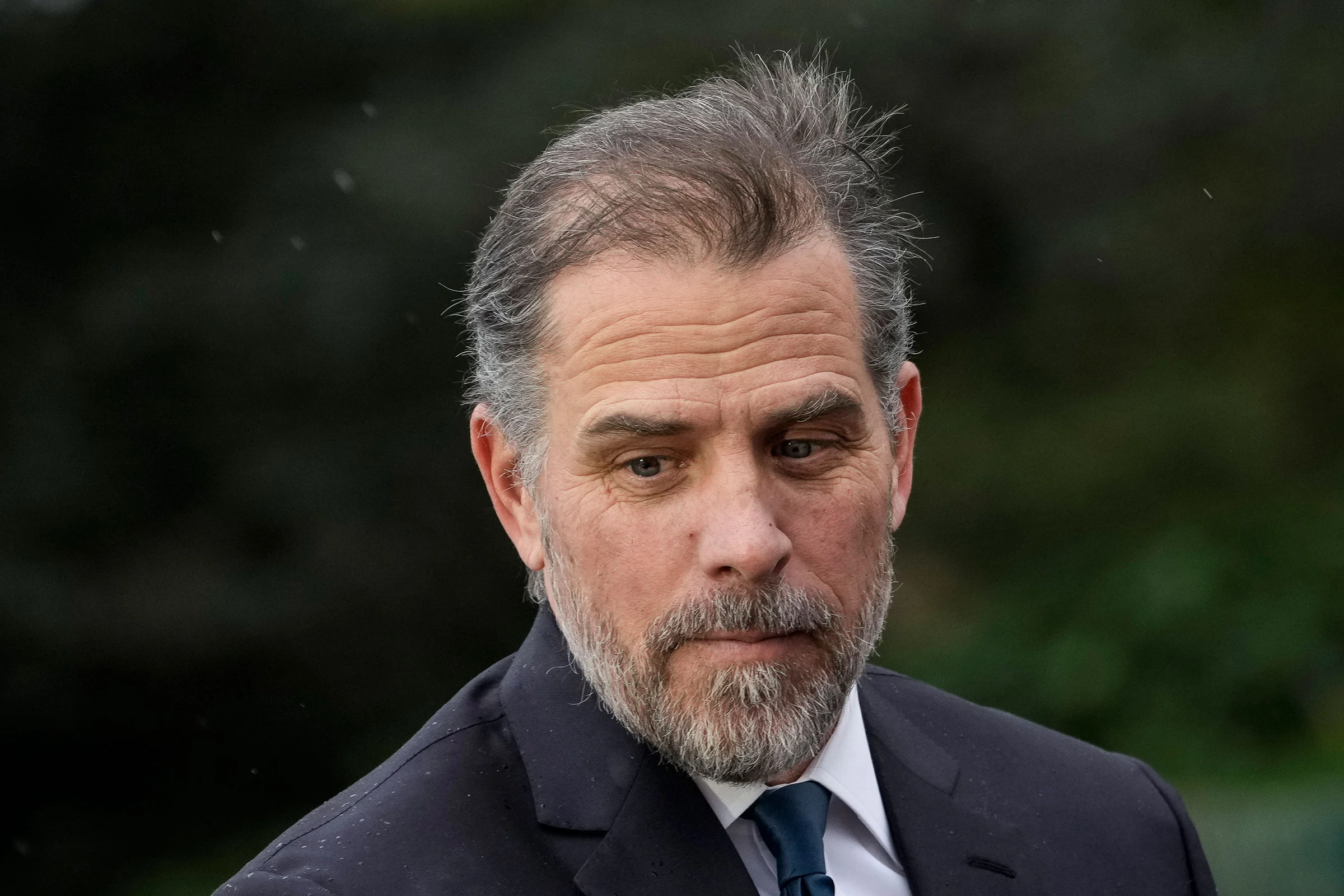
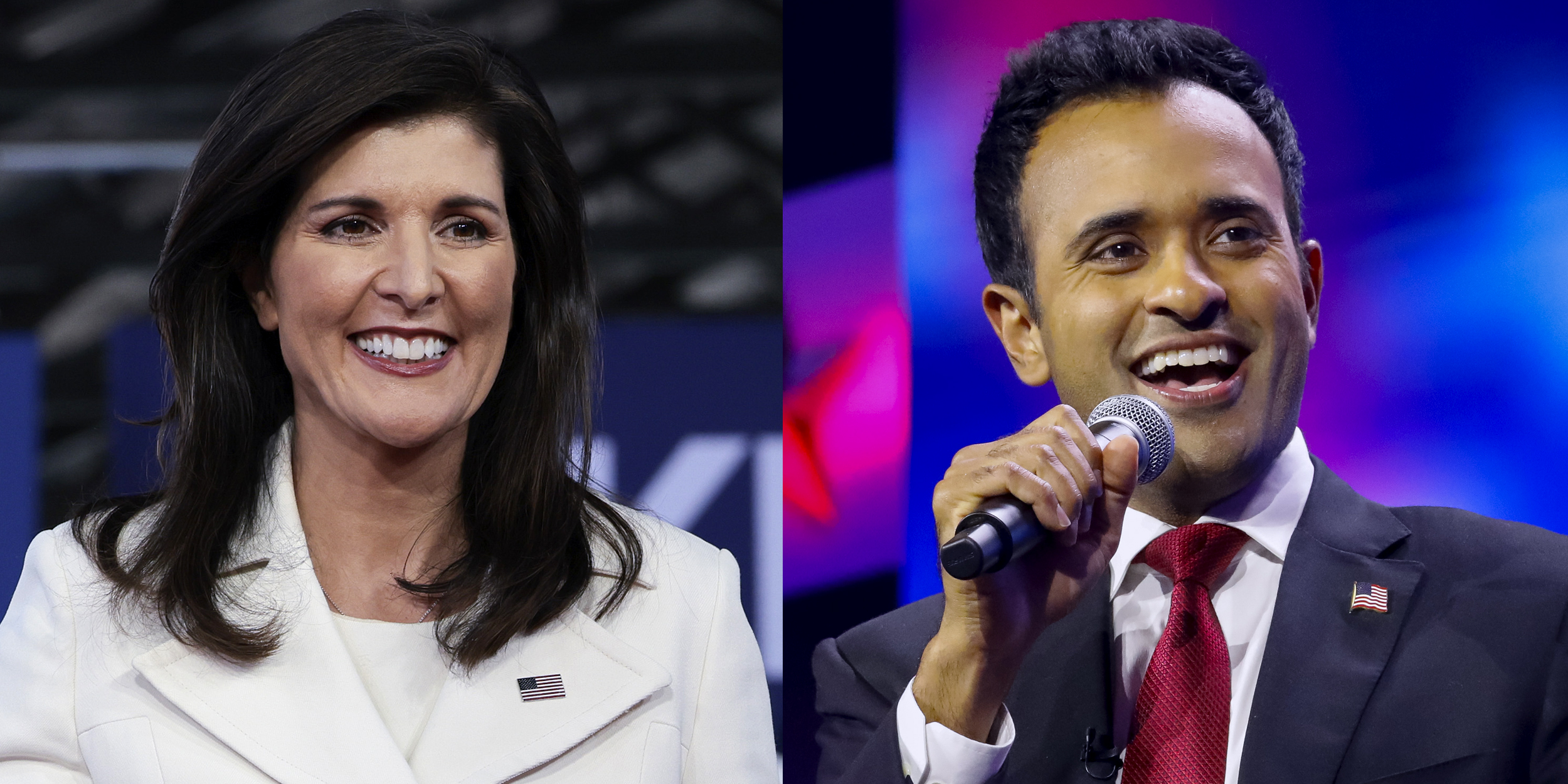
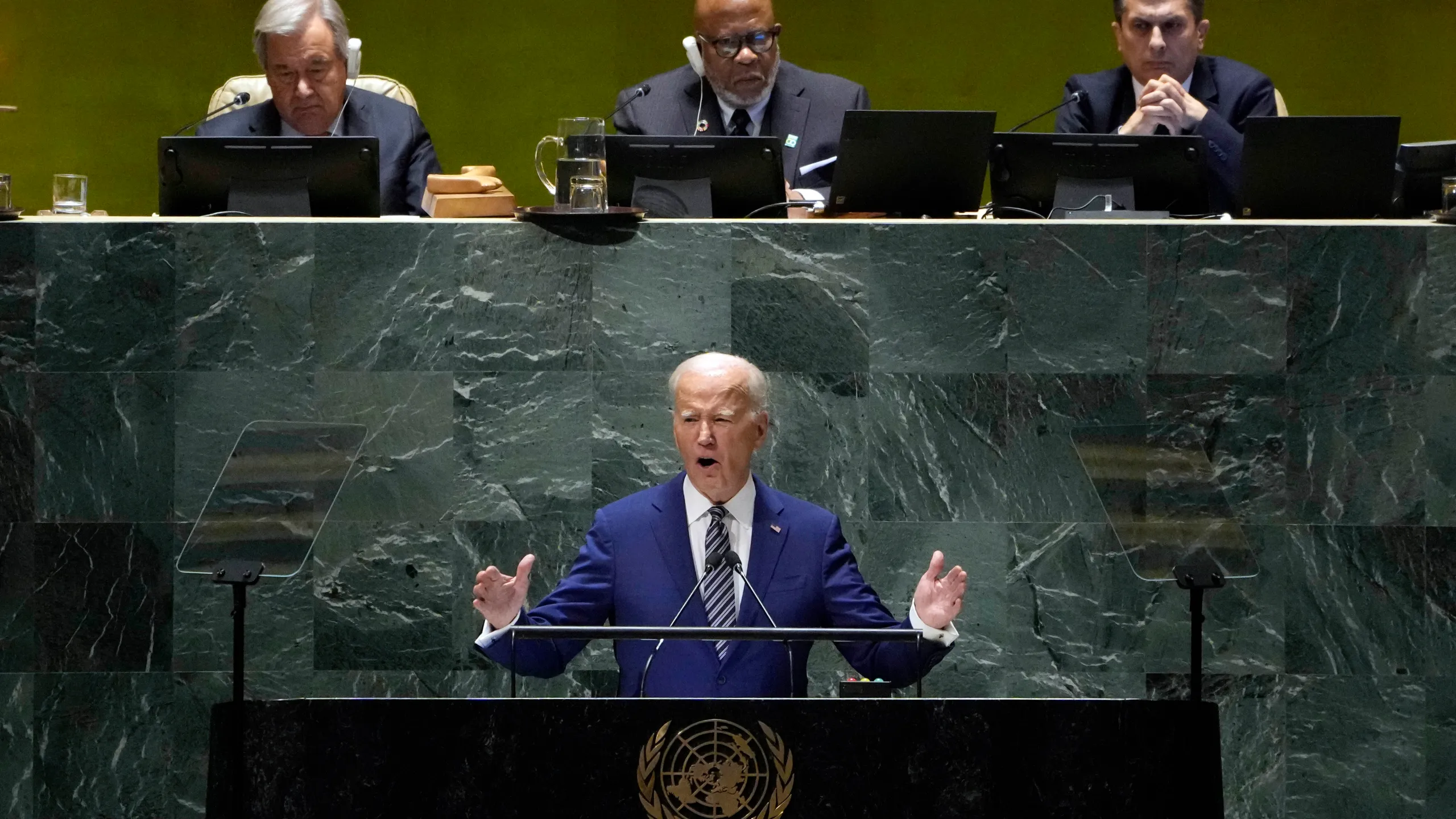
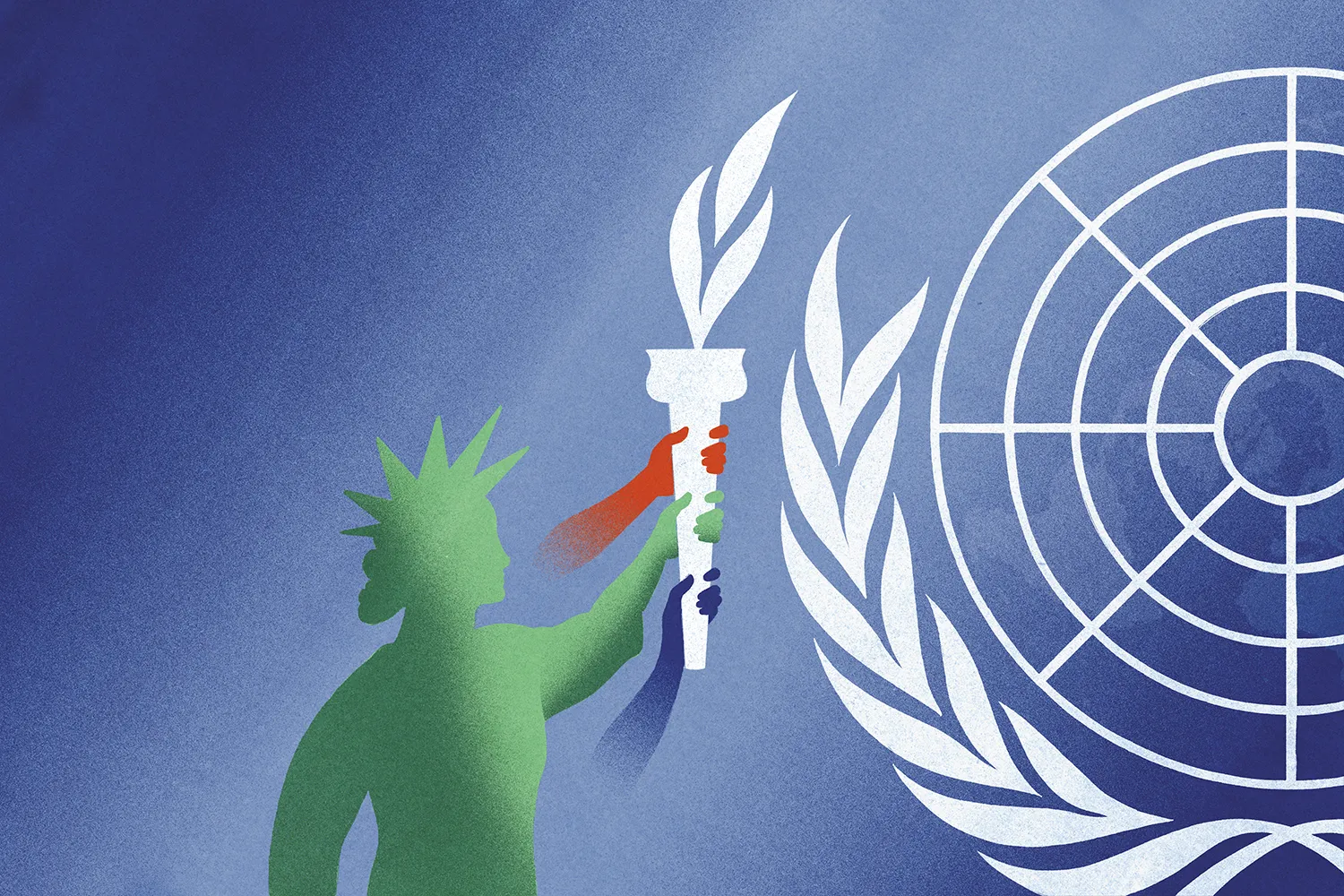
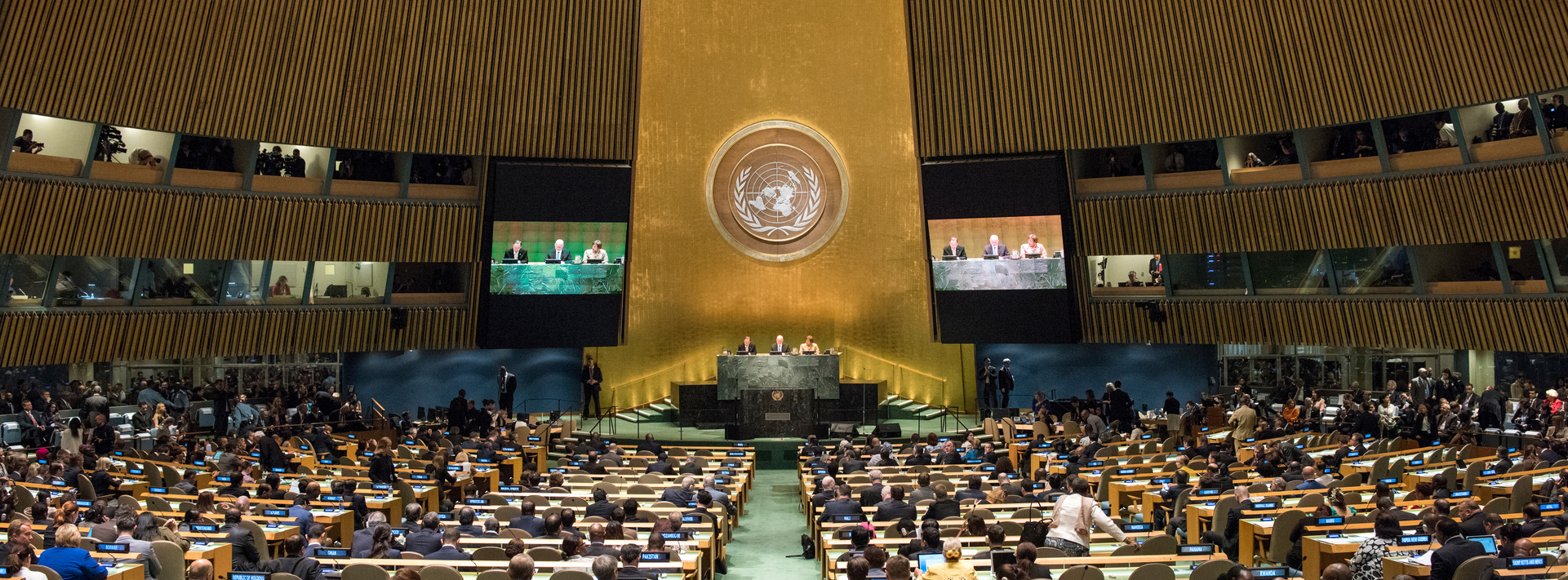
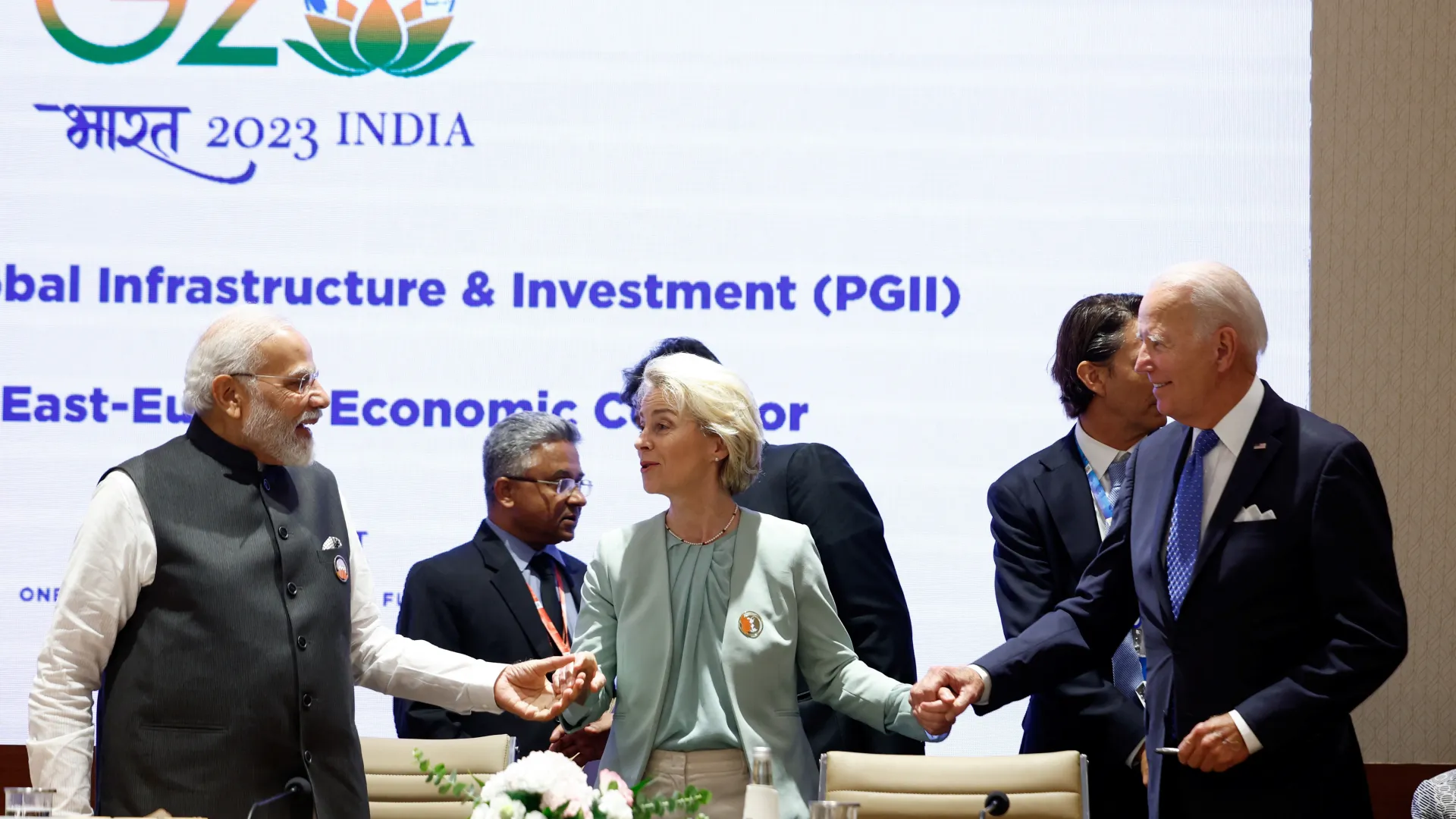
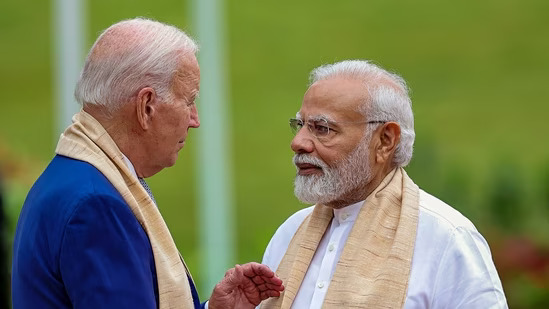
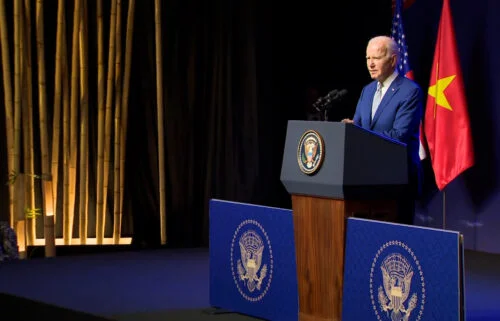
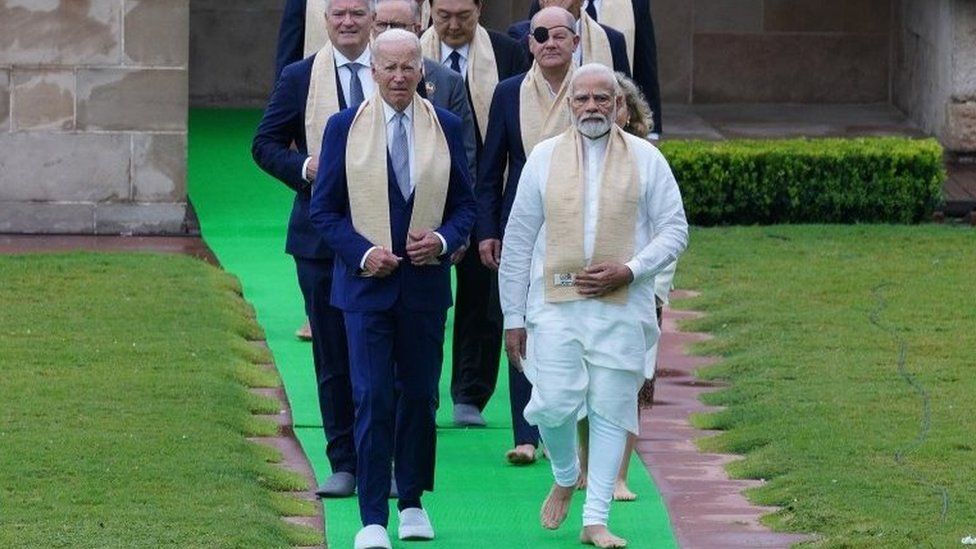
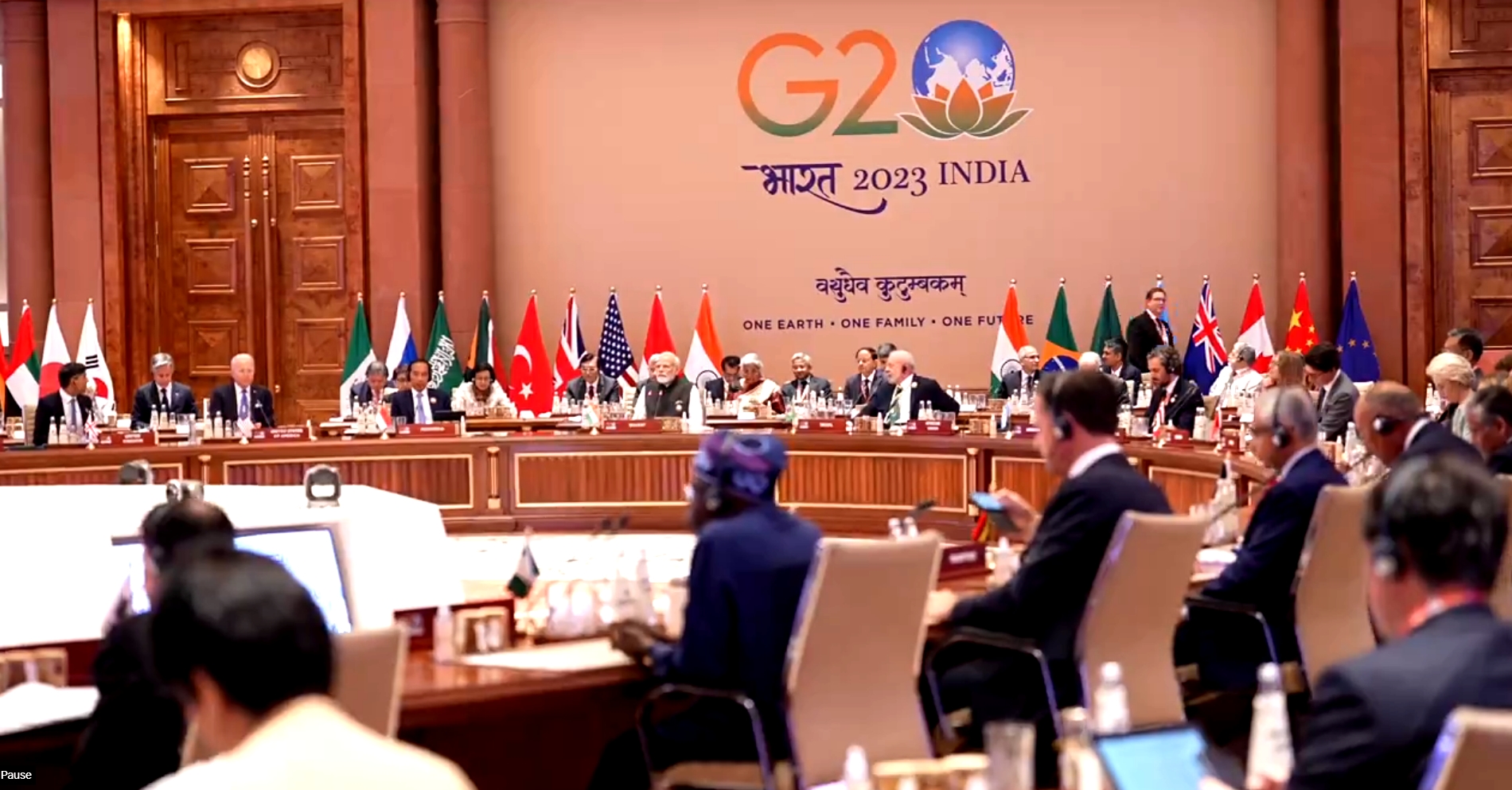
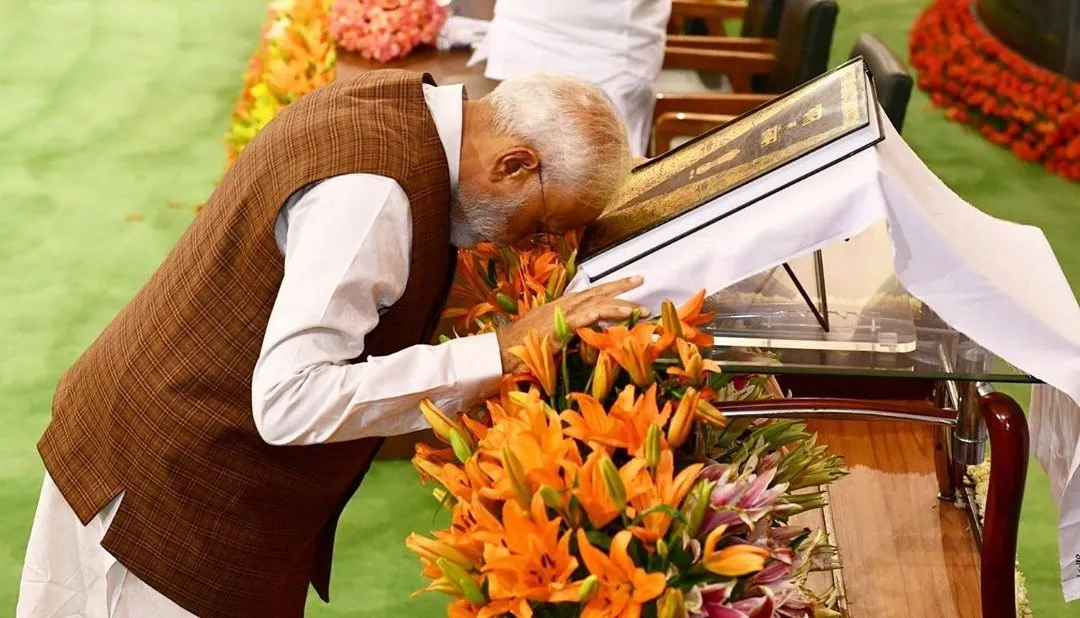
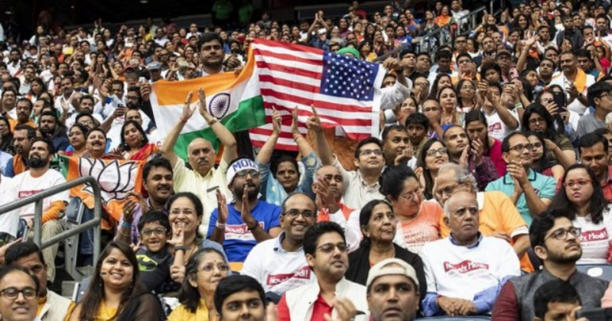
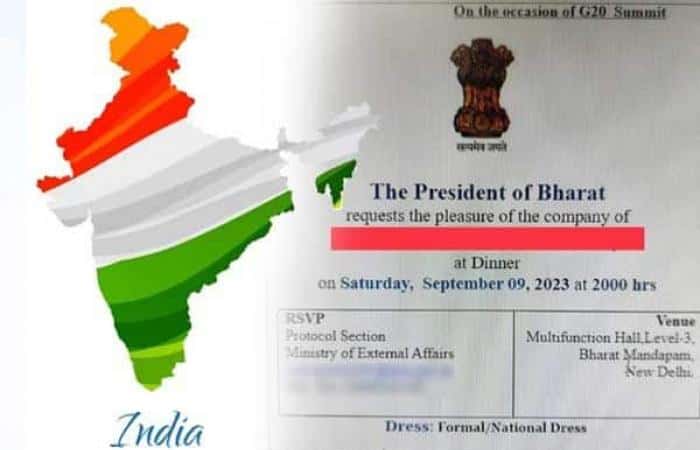
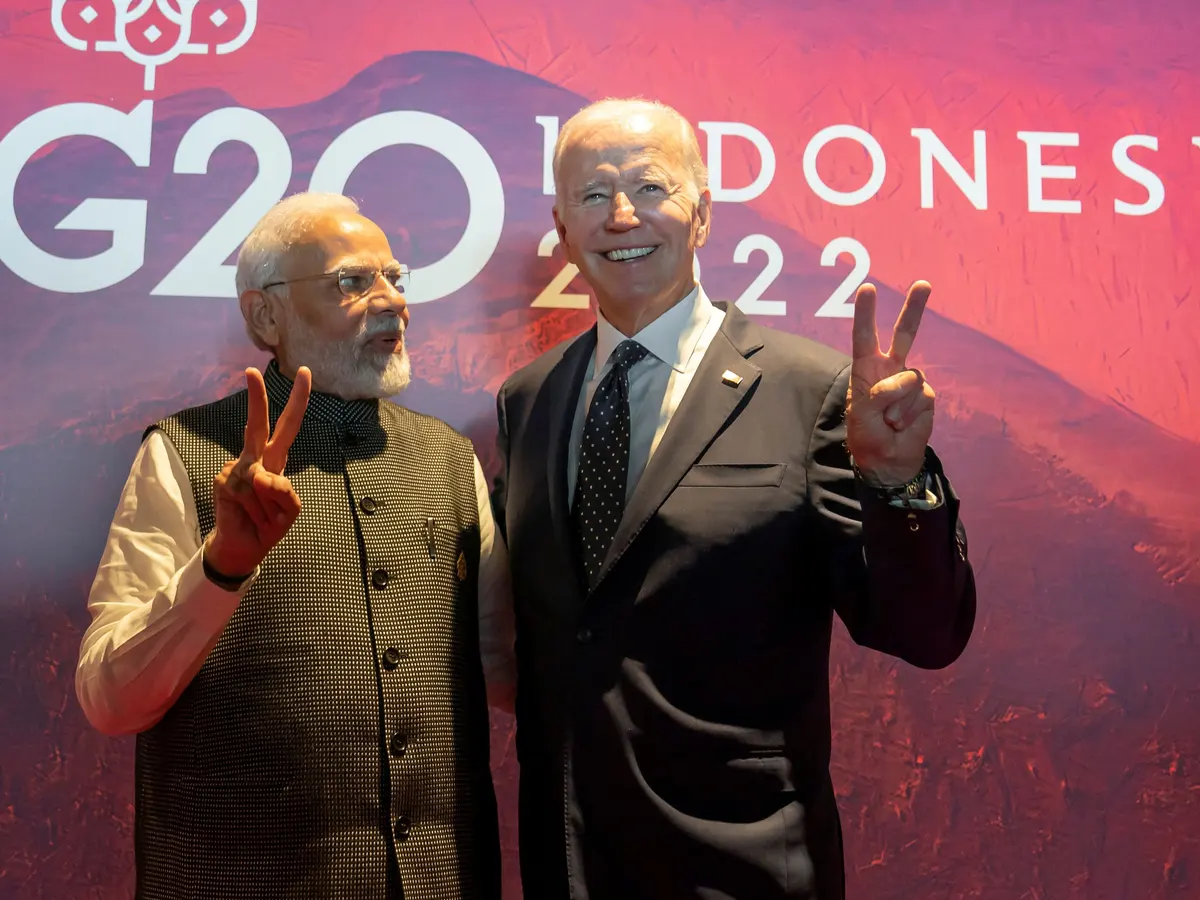
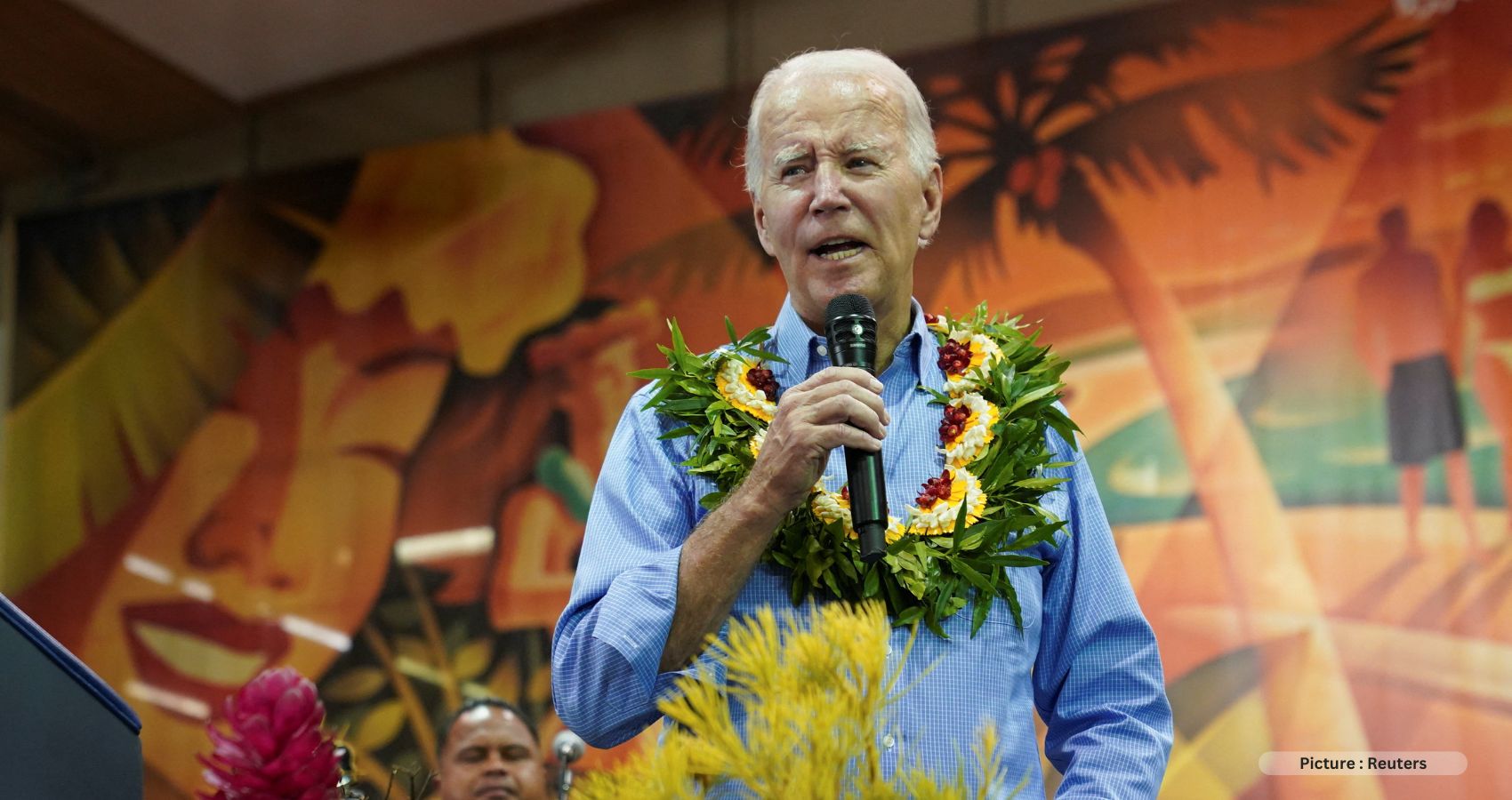
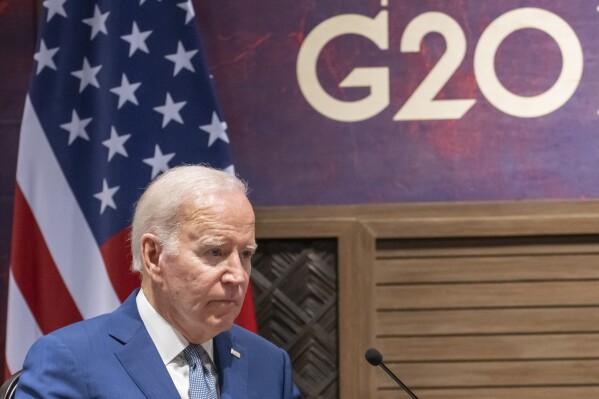
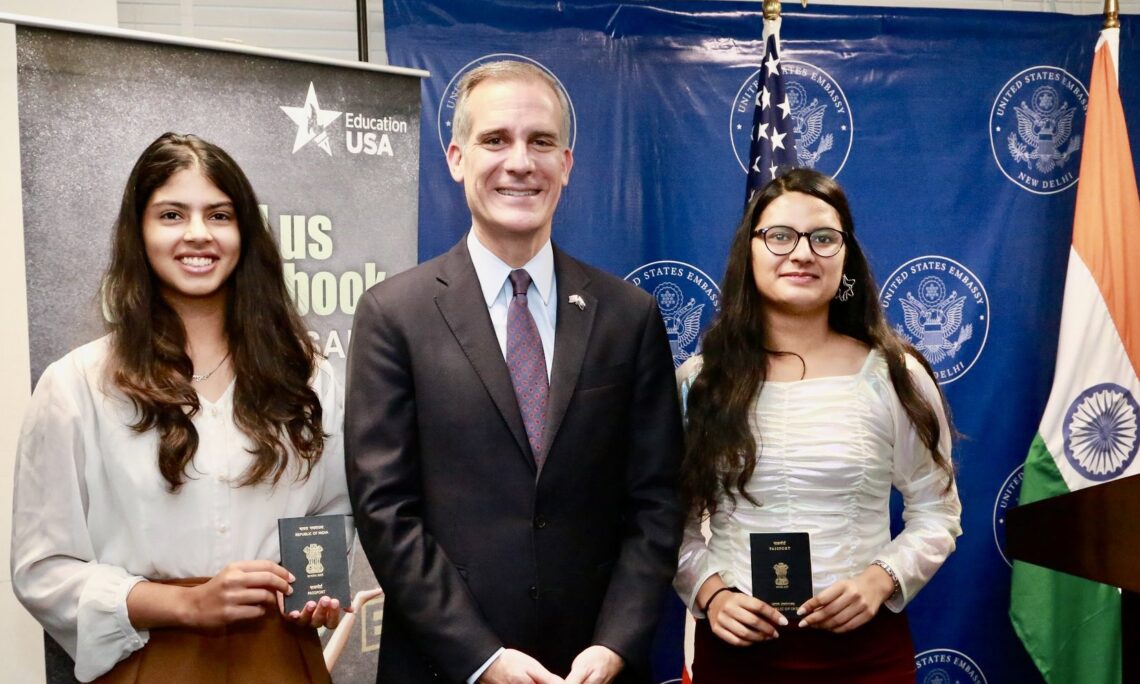
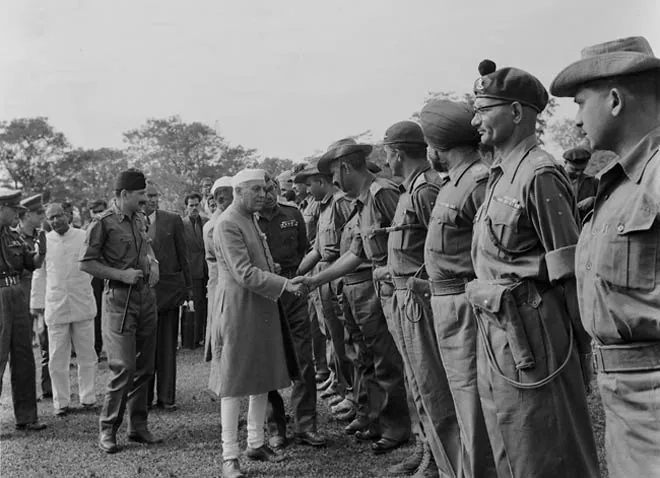
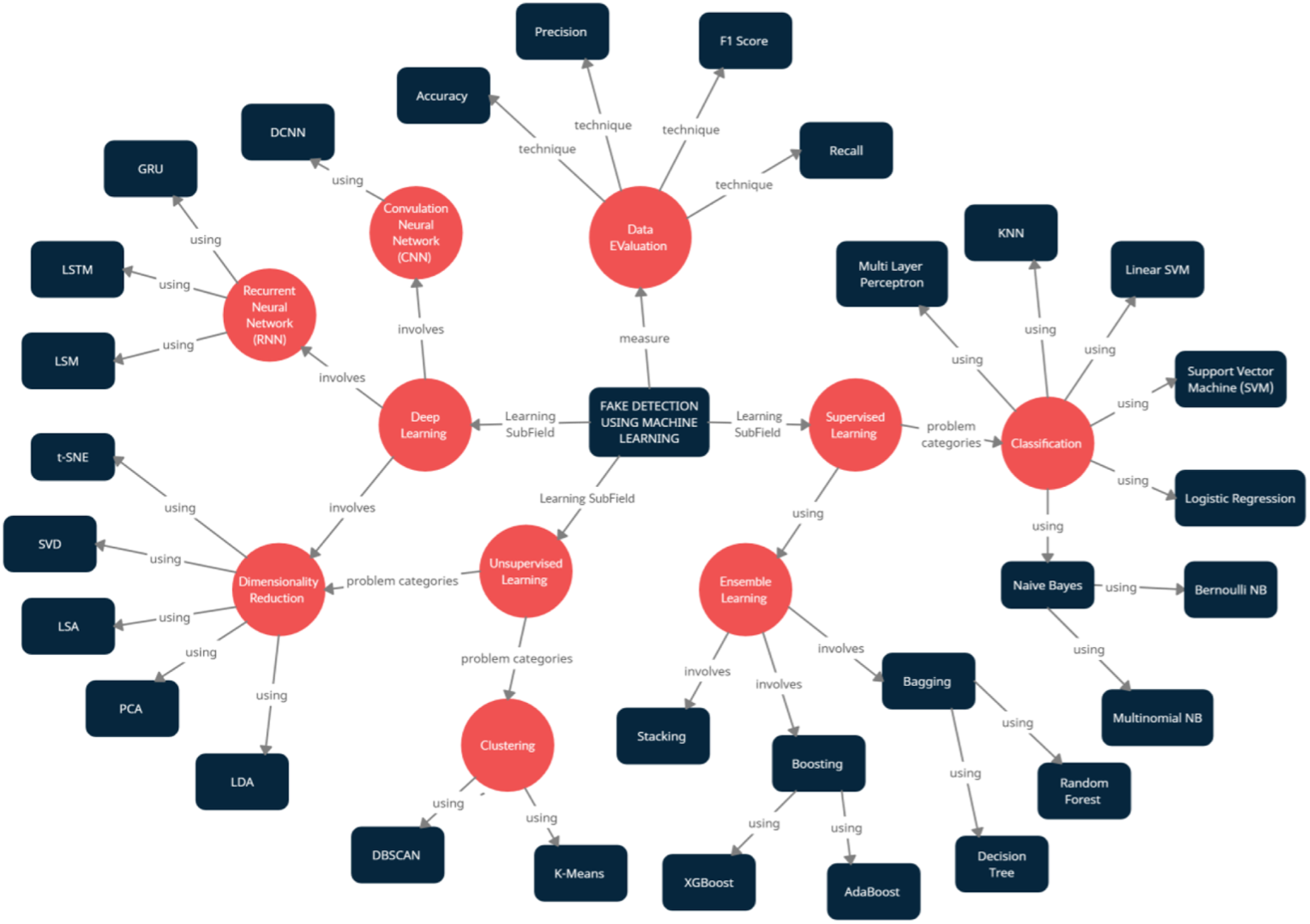
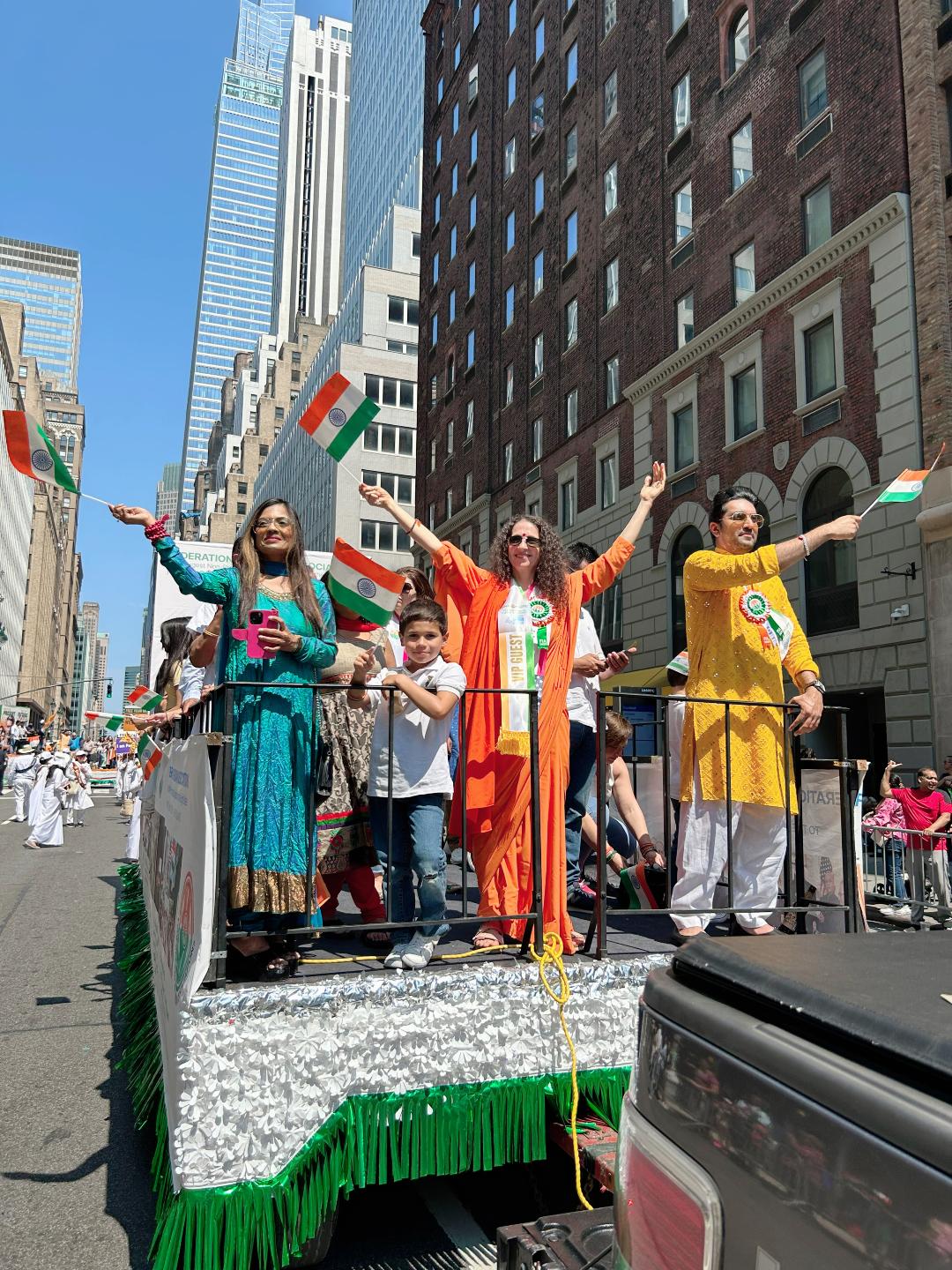
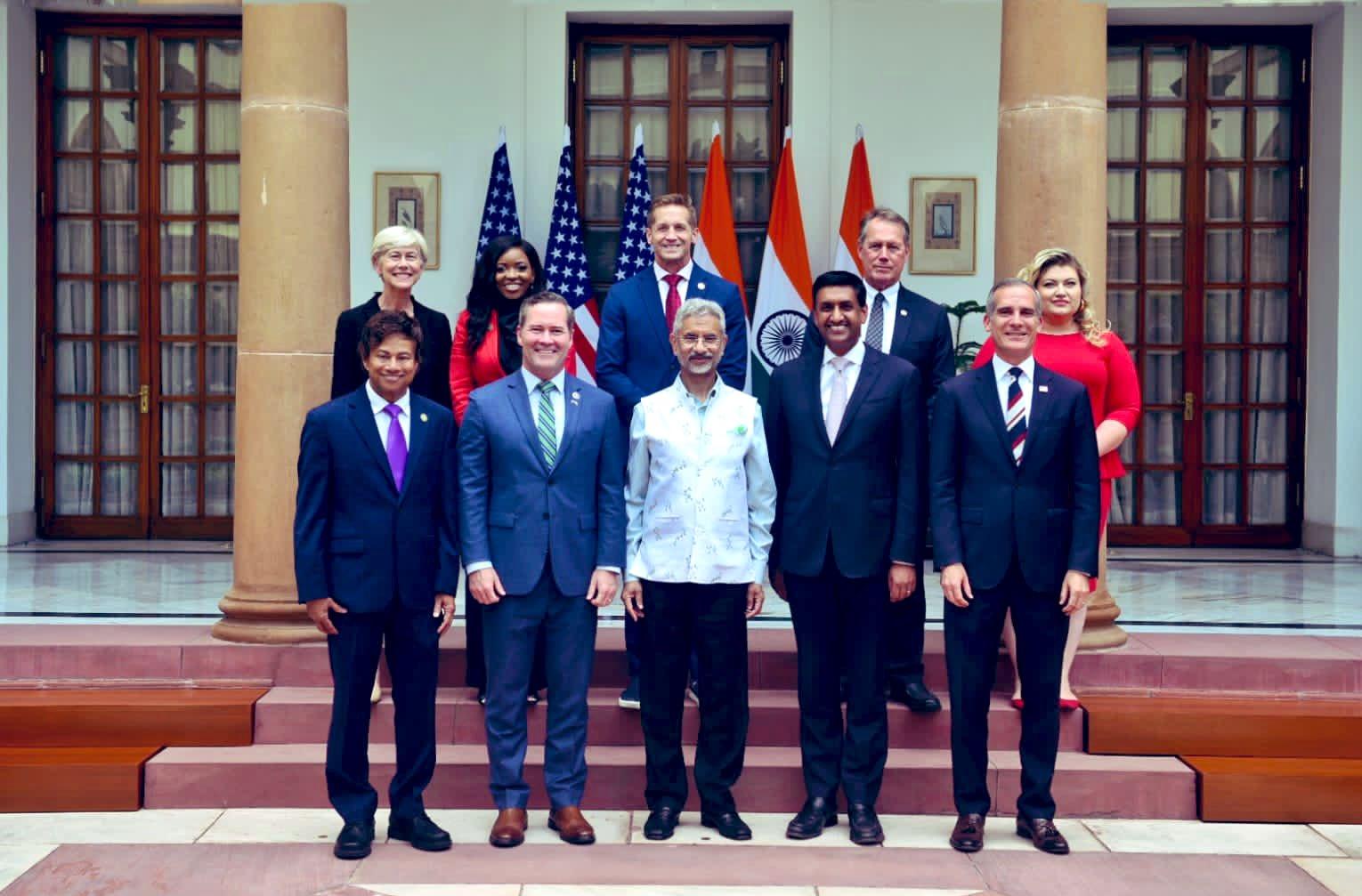
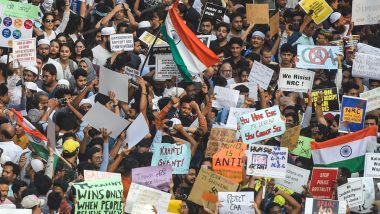

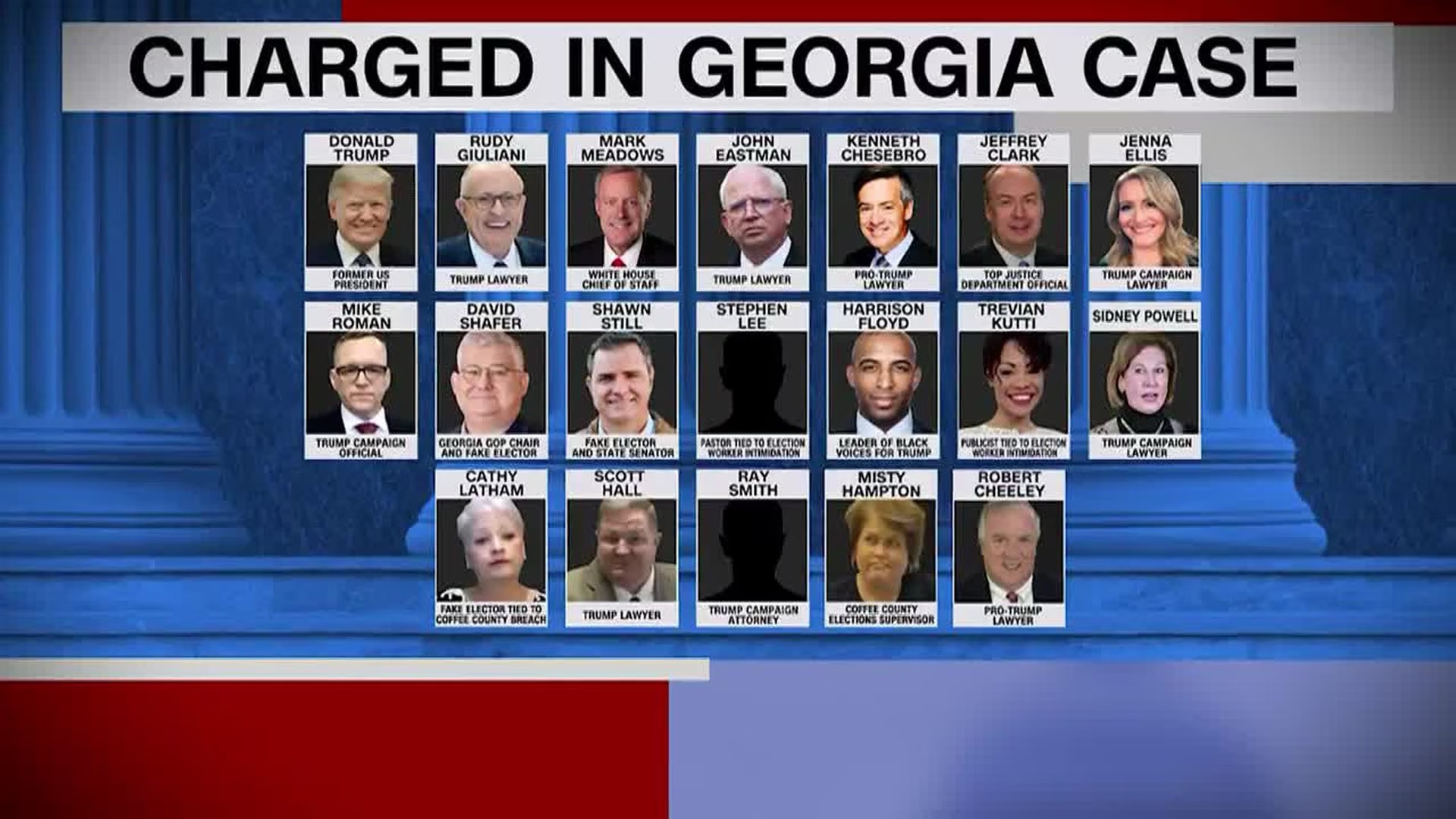
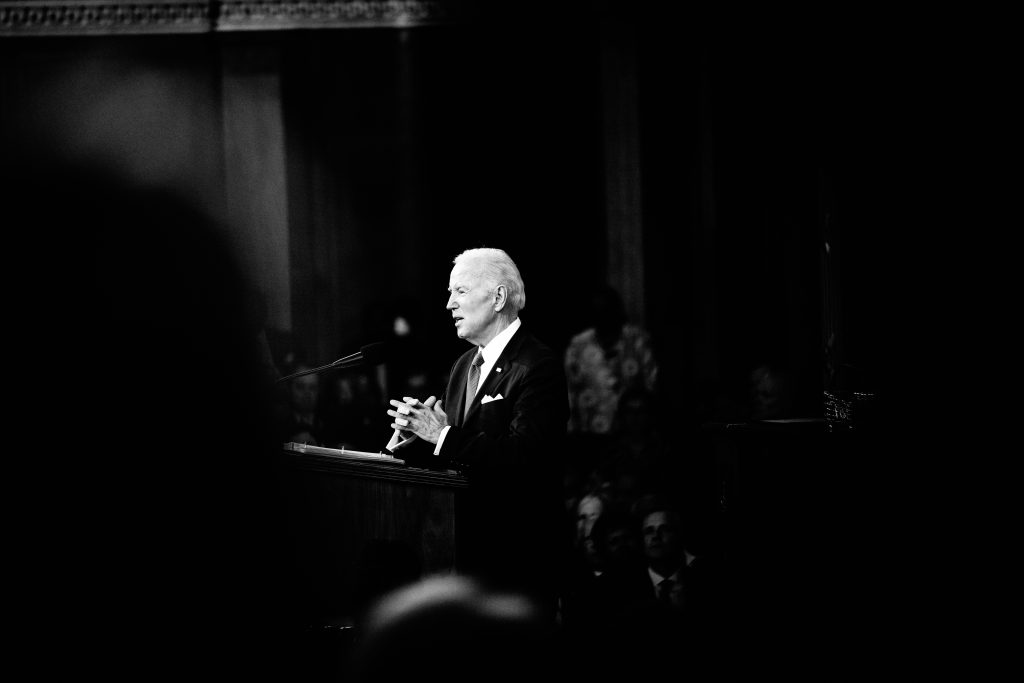 The second impeachment article accuses President Biden of obstructing justice, citing testimony from an IRS whistleblower. This testimony asserts that “members of the Biden campaign inappropriately collaborated with officials from the Justice Department (DOJ) to improperly interfere with investigations into potential tax violations involving Hunter Biden.” Both the Justice Department and special counsel David Weiss, who was appointed to investigate Hunter Biden, have denied any interference by the Biden administration in Weiss’ work.
 The ongoing ethnic/religious violence in the northeastern Indian state of Manipur and the lack of adequate response from the state have been condemned by people and organizations around the world.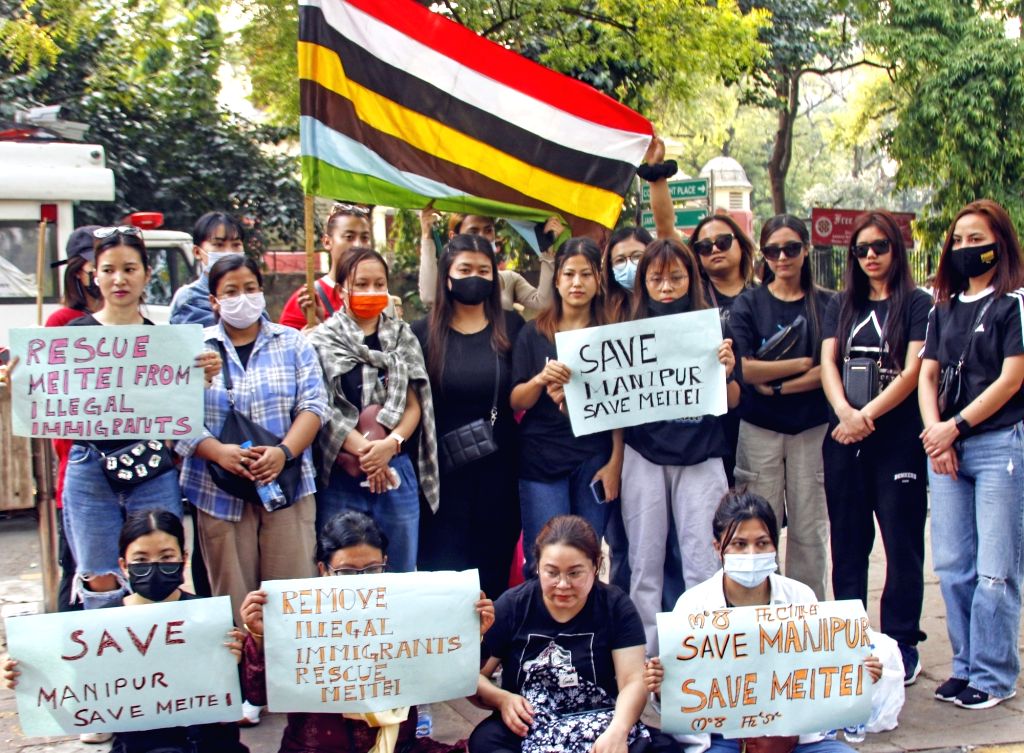
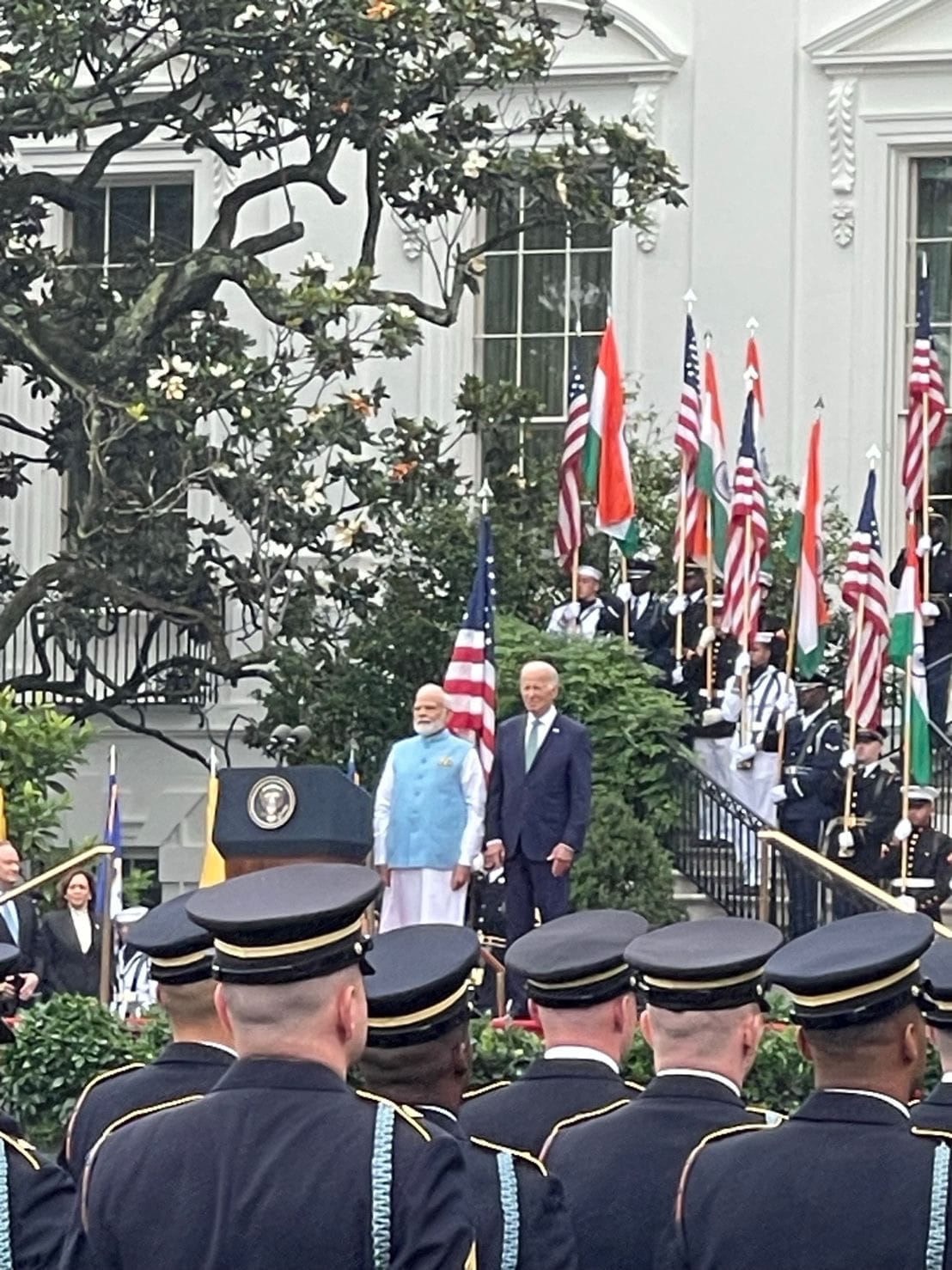 “We proudly and heartily welcome the historical state visit by the Honorable Sri Narendra Modi ji, Prime Minister of the Republic of India to the United States and to the White House hosted by President Biden and First Lady Mrs. Jill Biden,” said Dr. Ravi Kolli, President and Dr. Vishweshwar Ranga, Chair of the Board of Trustees of the American Association of Physicians Of Indian Origin (AAPI) in a joint statement issued here.
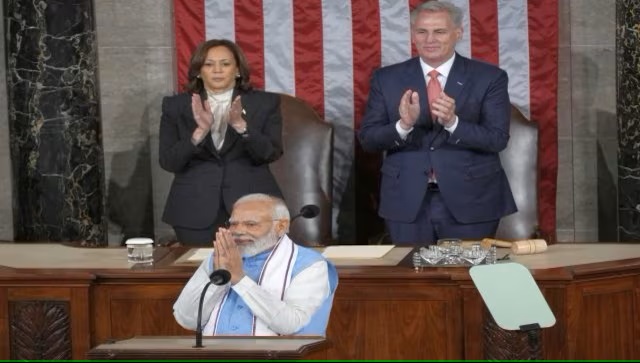
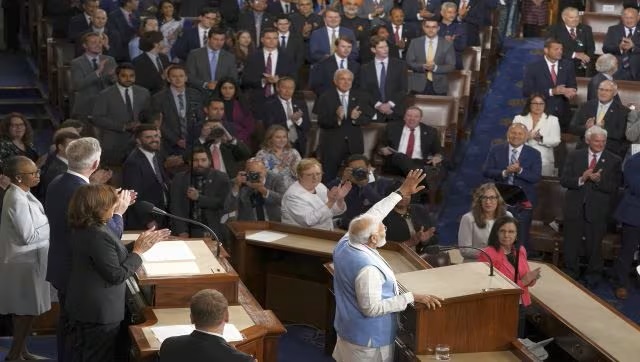
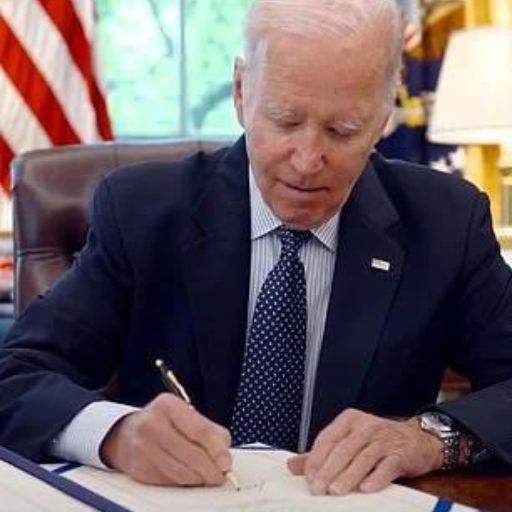 The House of Representatives and the Senate
 In his response to being chosen for the award, Dr. Shivangi said, “I am truly honored to receive this prestigious Xavier University of Aruba award, which has made a worldwide impression as a premier Institute of learning. It’s even a greater honor to be in such distinguished ranks of those present and past honorees, who have made important contributions to healthcare.”