set in Brno, Czechia
Mother sits by herself to pray every day, and today there is a thought that annoys her, one that is an extension of a habitual thought.
Why doesn’t Son call her back?
At first, the thought starts as a little interruption as she says the Lord’s Prayer. It is easy to dismiss as she busies herself reciting her praises to God. Then those prayers end, and there is time to reflect on her day, her shortcomings, and how she is surpassing them. When Mother was busy taking care of her mother-in-law a few months ago, she mostly worried about that. Now there is more empty time, and her mind is focusing on the other people she loves. And that is why prayer is becoming difficult.
When is Son calling back? He’s not responded to her. She’s waiting for his answer. Why isn’t he calling her back? Why not right now?
Thoughts like these ring in her head like the bell at the church in the central plaza. No matter how much she wants to give gratitude to God, that thought comes first. And then it is compounded by others.
Why isn’t her sister calling back, either? She is so selfish. And then there is her friend Marie. Marie used to be so innocent… but that was when they were in touch. Then her mother-in-law got sick, and they barely talked. Now Marie is always drinking and going out for the wrong reasons. Just like Mother’s niece Albinka.
At that point her mind is inundated, and she is distracted, but she eventually turns back and focuses on the image of the cross, and finds herself able to pray with focus and dedication.
The problem is that she called her son yesterday. And unlike the other times, she didn’t hang up at the prompt to leave a voice message. Instead, she left an angry message, yelling coarse insults at him. She was tired of him ignoring her. Yes, she didn’t like how he lived his life having sex with men or travelling the world without a thought about money, but she was his mother. She had the right to express her thoughts and be heard. It wasn’t enough that Son chose every day to go against the wishes of God. What was worse was that she was keeping her true wishes to herself, day in and day out, and she could no longer bear feeling shut out. And so, she yelled again and again, hoping that if she left an antagonistic message, he would come to his senses. She hung up the phone feeling good about herself, but soon afterwards she started to imagine how Son would feel listening to her tirade, and she felt so guilty about what she had said that she barely talked to her husband for the rest of the day. Today, during her morning trip to the market, she could hardly focus on the prices of the peppers and plums. She tried to call Son back, but there was no response. She wondered if he had heard the message and was offended. She wondered if he had heard the message at all.
She is long done with the shopping, she is long done with her breakfast. She ought to be praying. And she is praying—she is kneeling in her altar room, clasping the cross, making an attempt to talk to God and only talk to God.
But the ringing of When is Son calling back? When is Son calling back? is getting too much for her mind to process. She tries to calm herself by looking at the image of Mother Mary on the wall. She feels a relaxed sensation, a mild energy of forgiveness, and a divine voice entering her mind. It’s enough. Mother has done her best. God knows this and accepts her struggle. She is being told by this voice to get up. She says her last prayers and makes the sign of the cross. She knows God has forgiven her.
It’s just that she isn’t ready to forgive herself.
She leaves her prayer room and goes to the kitchen. Unlike how it used to be over the past decades, she is no longer alone at home. Father is at home, eating a sweet roll Mother bought from the bakery in the morning hours. She’s happy to see him. Finally, she has someone to talk to other than God.
,, I left an angry message on Son’s phone. He hasn’t called back.”
,, So, that is why you weren’t talking to me yesterday…” Father concludes. And then he smiles knowingly. He is familiar with Mother’s lack of control over her emotions. ,, Did you tell him the kinds of things you tell me when you are angry?”
,, Ha-ha,” Mother says. She pretends to look for something in the fridge to snack on because she wants to hide her eye roll. The truth is Mother says all sorts of extreme things when she gets angry, but she forgets whatever she was saying the moment her mood returns to normal.
The problem is that while Father easily forgives and forgets, her son is just as sensitive as she is…
She takes out some trdelnik and jam and puts them on the table. She is tempted to munch on one until she notices her husband still smiling to himself.
She wants to flatten whatever he is thinking.
Mother says ,, I told him we’ll never send him money no matter how much trouble he gets in. I told him if he wants to stay in Africa, he can do so for the rest of his life. He isn’t welcome home.”
,, But we don’t send him money,” Father says. He reaches for the round cake ring, getting sugar all over the tablecloth.
,, I know.”
,, And Jan isn’t in Kenya anymore.”
,, And how do you know that?” Mother interrupts. ,, Did he call you?”
Father looks up at the veins bulging on Mother’s face and puts on a nervous smile. ,, I just know.”
Mother tries to open the jam. The cover is too tight, and she feels like she is going to pull a muscle. When Father motions to help, she slams the jam container onto the table. He doesn’t dare touch it. He chews his cake and hesitates before swallowing.
Mother goes back to the fridge, wondering how to busy herself. It is eleven, and it will soon be time for lunch. Father is spoiling his appetite on snacks, but Mother knows she should still cook something. She takes out some pork loins. It will be easy to fry them and serve the sauerkraut she made a few days ago.
She turns and stares at her husband.
He’s still chewing the trdelnik, keeping his mouth busy so he doesn’t have to respond to her.
Mother sees his phone on the table. She thinks about her own. It’d be so easy to pick it up and call him again. But then he still wouldn’t answer. Mother and Father just got back from a trip to Silesia, and Mother thought she’d be busy visiting her sister in their suburb near the airport or catching up with her niece who is finishing her third year of school, but they were all too busy to answer her calls. Whenever they spoke, it was in a superficial way. The thought immediately turned her off. She also has Marie, she has Eliška, but she has no interest in watching them get drunk and embarrass themselves in front of thirtysomethings like they did some months ago.
Mother was so busy taking care of her mother-in-law over the past year, and now that she has died, Mother doesn’t know what to do.
Oh, actually, she has been standing there for the last few minutes, letting the pork sit out on the table for no reason. She might as well get the oil ready and start with the frying.
In the meantime, Father continues snacking. She almost disdains his silence. At the same time, she doesn’t know what to say to him. She’s angry at herself for showing her temper earlier. He’s probably unsure of how to console her, and he doesn’t want to get his feelings hurt. Nonetheless the anger is inside of her, refusing to go away.
The only thing that can make it better is if Son returns that phone call.
,, We are his parents,” she shouts while facing the oil. ,, He cannot act this way.”
,, He’s been acting this way since he turned nineteen.” There is no conflict or confrontation in Father’s voice. He is just informing her of the fact.
,, It was getting better,” Mother says. She is reminded of the time five years ago when Son was stuck at home with them during the COVID pandemic. A few years after that, he got that job in London helping refugees learn English, and it kept him stable, and he became a bit more talkative with them. But a year after doing that, he suddenly quit his job and took an online teaching job so he could effortlessly hop around the world. Since those days, he’s become bad with the phone calls again. It would be easy to say it’s because he is just busy exploring new places and getting lost in new cultures and experiences. But if it were as simple as that, Mother would, deep down, know it as the truth. She wouldn’t be angry. She wouldn’t be hurt.
,, He’s doing this on purpose,” she carries on. ,, He is trying to punish me for praying for him. He is trying to punish me, and he is trying to punish God.”
,, Ale má lásko, he has never asked you to pray for him at all…”
,, I know,” Mother says, and she throws the pork into the oil. ,, And that is why he will burn!”
But as Mother says it, she feels something hot against her skin. It scintillates, again and again, like raindrops that hurt. She has thrown the pork too ferociously into the hot oil, causing the oil to jump out onto the stove, onto the hardwood floor, and onto her skin. She instinctively recoils, but not with enough quickness. Five or six dots land on her arm, and they burn.
Father stands up, shouting ,, Are you okay?” He comes to Mother’s side, inspecting her arm with loving caresses. He turns on the tap, and she soaks her arm under the cold water of the faucet.
She says to Father, incredulously ,, I am the one who was burnt.”
There is an irony in her words. They mean different things. Mother did lose her temper, and she did say a lot of rude things to her son. There is a part of her that feels like she has been given this much anger as a test from God, but there is also a part of her that feels like she doesn’t understand what her role in her son’s life is supposed to be, and that makes the anger far worse. It turns the anger into pain.
Perhaps it isn’t a test from God, whether or not she can control her anger. Perhaps she has been given this anger as a punishment for her own arrogance, for her misplaced belief that she can control another human being, as if she herself were a god. It doesn’t matter whether or not Son is going to pay for his sin. She isn’t going to be around during the day of his judgement. Right now, she is the one who is getting burnt.
What has happened to Mother? What happened to the days when she only felt love and warmth to the child she birthed?
Mother feels a tear in her eye. Perhaps it is because her skin is on fire, but she knows that the heartache she feels is far worse.
She repeats to Father, ,, I am the one who was burnt,” but then she comes to another conclusion. ,, I am the one who is sinning. And I am the one responsible for my own sins, not my son.”

 In tribal regions where access to healthcare is limited, SHED has established Health Centers that provide essential primary medical services. More severe or complex cases are referred to larger hospitals, such as Bhaktivedanta Hospital located in Meera Road. These centers serve as a crucial health lifeline in areas that often lack even basic medical facilities.
 Several distinguished political and community leaders, IAF Board of Trustees, Members, Volunteers, supporters and audience graced the occasion, applauding the distinguished accomplishments of women honorees. Several Board of Trustees and community leaders in presence included Dr Bhupendra Patel, Mukund Mehta (Indo-American Senior Citizens of NY), Jasbir (Jay) Singh, Anil and Sunil Jain (Vass Pipe), Dr. Nitin Doshi (Doshi Diagnostics), Beena Kothari (President-AIA), Dr N Kukar, Dr Jagdish Gupta, Flora Parekh (President – Gift of Life USA), Dr. Bhavani Srinivasan (AAPIQLI), Ravi Bhooplapur (Xaviers Medical College), Shashi Malik (SEVA Center for Humanity), Vimal Goyal & Deepak Bansal (IDPUSA), Rotary Club, Lions Club, Sandy Bhatia (Flushing Bank), Rizwan Quereshi (HAB Bank), Dr. Mamta Shaha, Kalpana Patel (UCI), Sudhir & Swati Vaishnav, Vijay Goswamy, Anju & Sanju Sharma (Registration), Dr. Prachi Dua, Beena Kothari and team produced Souvenir Journal, several past honorees and many other organization leaders.
 Gadkar-Wilcox, an Indian American won in the Democratic Party Primaries for the 22nd District Connecticut State Senate seat, in a four-way primary held on August 13th, 2024. She is pitted against Republican Chris Carrena of Trumbull for the senate seat on the general election ballot in November. CT 22nd District consists of the town of
  professor says. “We put a lot of hard work in, grassroots politics and engagement at the doors with other community members in Trumbull and Monroe coming out. I’m honored to represent us all.” Gadkar-Wilcox hopes her message will continue to resonate with voters. “We need to trust the people that we send up to Hartford, and that I will advocate for the things that I said I’ll advocate for,” she said.
 The resident Doctor’s body was found last week on Friday with multiple injuries and signs of
  Dr. Kathula urged that “hospitals need to implement robust security measures and increase surveillance cameras and security personnel and control the access to sensitive areas. Establishing clear protocols for handling violent incidents and ensuring all staff are trained to manage such situations, and also they should offer training to Doctors and hospital staff in conflict resolution and communication skills to handle these types of situations more effectively. Also, there should be public awareness and education of the people to enhance respectful interactions with healthcare professionals,” he said.
 Gadkar-Wilcox, an Indian American declared that she received the Democratic party’s endorsement and has won in the Primaries held on August 13th, 2024 for the 22nd District Connecticut State Senate Seat. She has won 41.1 percent of the total votes caset, or 1,753 votes, according to unofficial vote counts. She will now likely face Republican Chris Carrena of Trumbull for the seat on the general election ballot in November.
 According to Gadkar-Wilcox, she is running for office out of concern for the “contentious and divided” political environment. “The time is now to take responsibility for getting our state back on the right path. We have an obligation to ensure that our children enjoy quality public education, preparing them to be innovators and problem solvers. We must find sustainable solutions to manage our budget while not imposing an undue burden on our residents. We must responsibly invest in upgrading our infrastructure, which is the economic lifeline to our state.”
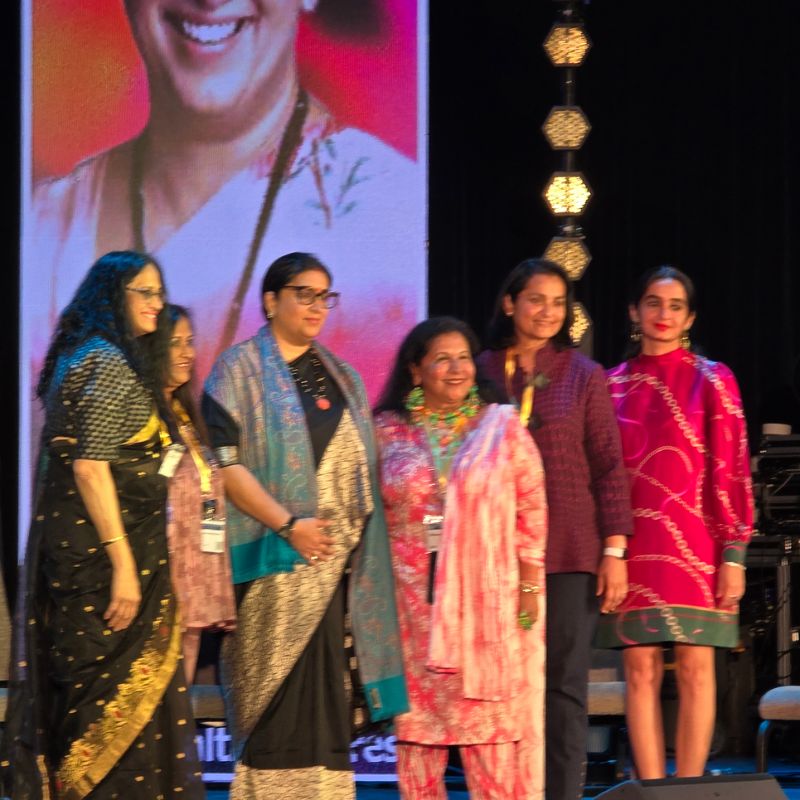 Smiriti Irani highlighted India’s role in bringing women’s leadership to the world forum though its leadership of G 20. She said, “Women don’t have the problem of speaking up, but they have the problem of being heard.” She said, “Women’s values cannot be measured by their success, she needs to be evaluated by what she is.” She paid homage to physicians of Indian origin “for your great contributions” and urged that “AAPI celebrates where every voice of women is celebrated.”
 Currently, Dr. Gupta is serving a 3-year term on the powerful Board of Trustees of AAPI. She will assume charge as the Chair of AAPI’s BOT during the first-ever World Congress of AAPI in New York on July 20th, 2024.
 Dr. Kavita Gupta is board-certified in pain management, physical medicine, and rehabilitation. A prominent practicing pain management physician from the southern New Jersey Tri-state region, Dr. Gupta had started as an engineer but pursued a medical degree “with a mindset to help others.”
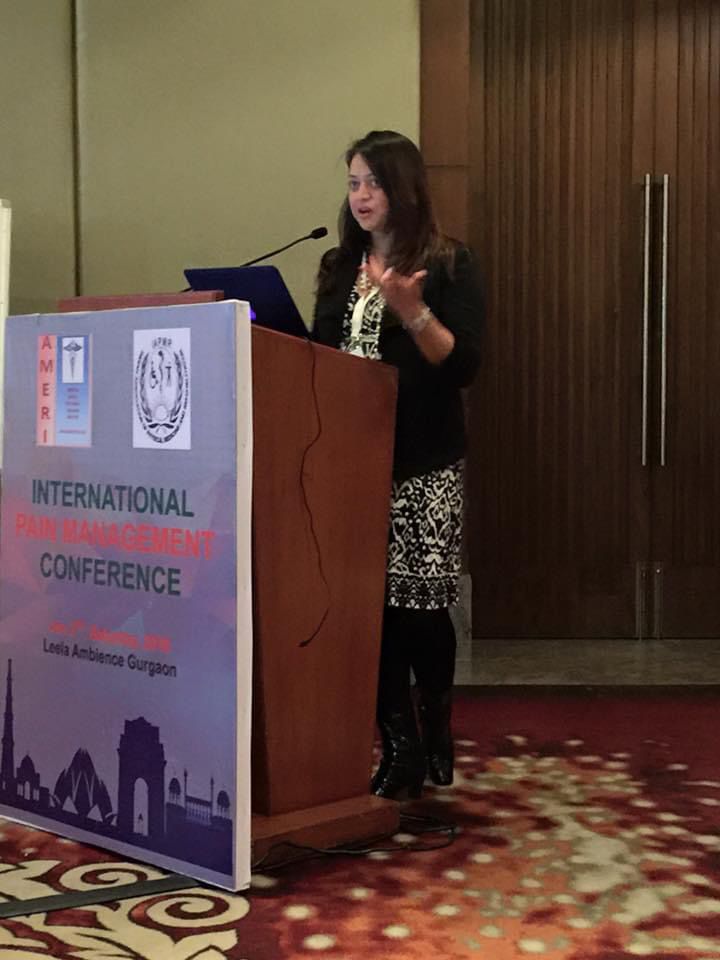 Dr. Gupta grew within AAPI nationally and locally while attending national and local Chapter meetings. She was elected national Vice President of MSRF, Treasurer of YPS, and later on as YPS president. She has been active in the Philadelphia Indian Physician organization, serving as its Secretary and Vice President. She was elected and served as the national Secretary of AAPI in 2013. In addition, Dr. Gupta has served on various national AAPI Committees- from women’s forum/academic affairs /CME speaker/ convention committees and under several past presidents/convention teams.
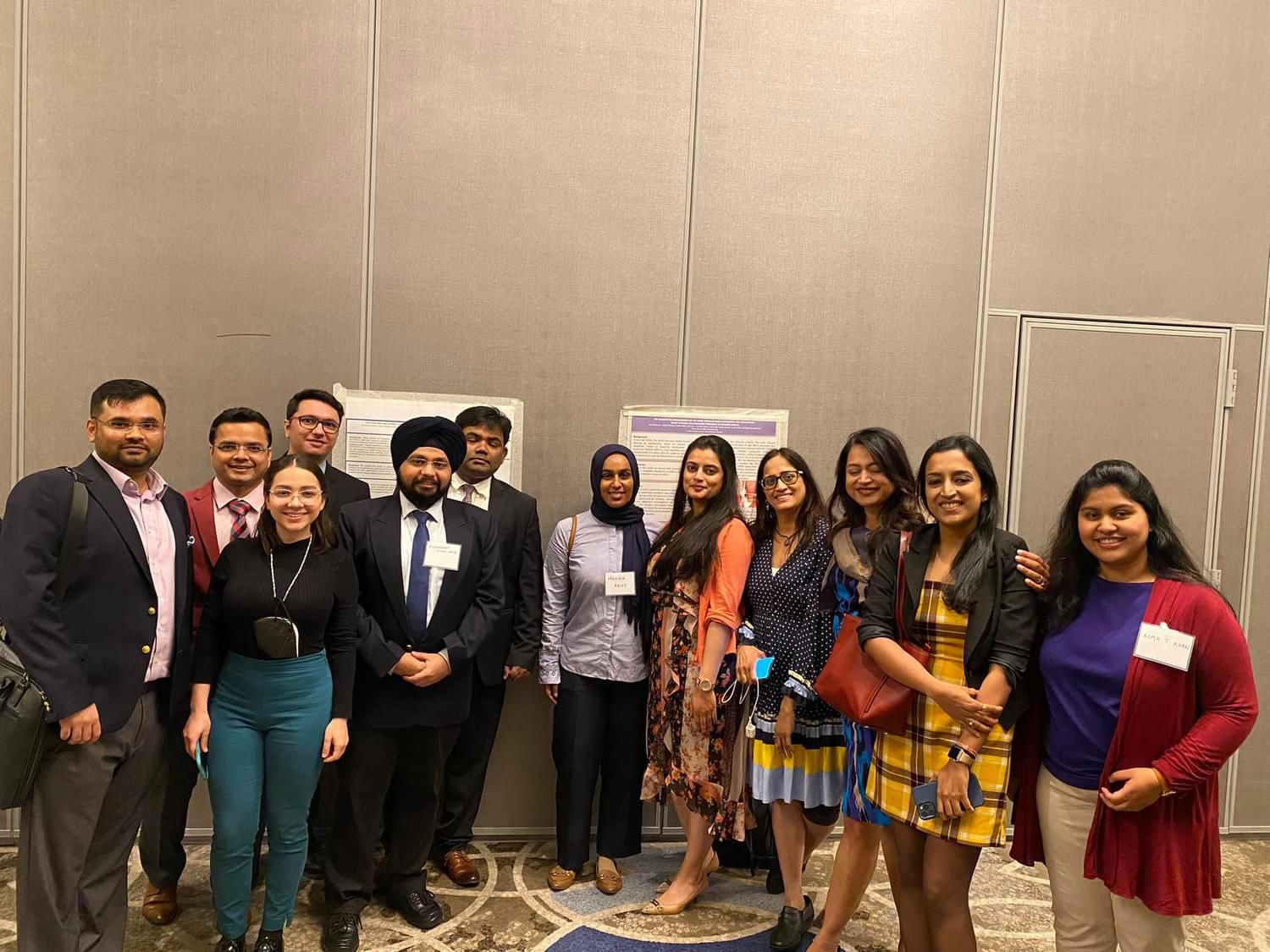 “My passion has been in educating the youth and participating as a judge and advisor for several youth organizations focused on science, research, public speaking, and medical student education,” she says. Dr. Gupta believes “in empowering the youth, staying involved as an educator ever since my residency career and I am currently educating medical students, graduate students and resident physicians.
I enjoy in participating healthcare education platforms for the community and have done many such programs locally, via telehealth, and abroad. I have been a youth advisor for non-profit organizations, high school clubs, and professional development programs.”
“My passion has been in educating the youth and participating as a judge and advisor for several youth organizations focused on science, research, public speaking, and medical student education,” she says. Dr. Gupta believes “in empowering the youth, staying involved as an educator ever since my residency career and I am currently educating medical students, graduate students and resident physicians.
I enjoy in participating healthcare education platforms for the community and have done many such programs locally, via telehealth, and abroad. I have been a youth advisor for non-profit organizations, high school clubs, and professional development programs.” When she is not seeing patients, Dr. Gupta enjoys time with her triplets and husband, Dr. Sanjay Gupta. She gives full credit to her family for supporting her at every step of the way. I have very good friends in AAPI, who have full confidence in me and I can trust them to guide me through all stages in leading AAPI.”
 Further enhancing the summit experience, women who have contributed to Women Who Win will share their journeys through a panel discussion moderated by Jharna Madan, followed by an open mic session led by Ruchika Yadav. Co-founder Shaleen Sheth looks forward to bringing these inspiring narratives to life on stage, enriching the storytelling platform.