Over the past five years, U.S. international student mobility has experienced significant shifts, particularly influenced by the changing dynamics between India and the U.S. amid the pandemic and evolving immigration policies.
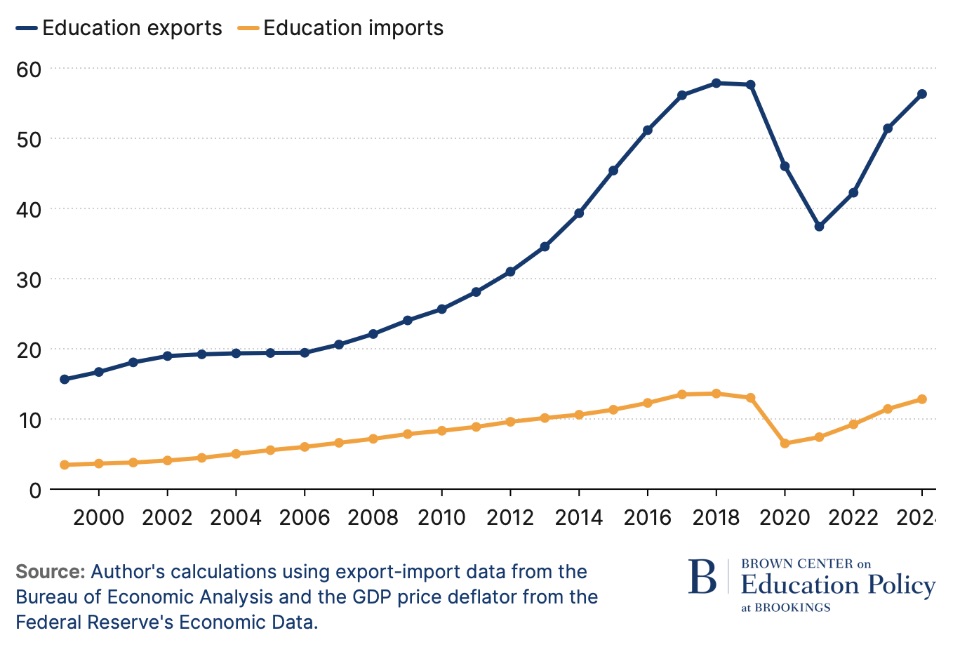
International student mobility has always experienced cycles of highs and lows, but for U.S. inbound mobility, the last five years have been particularly tumultuous. The COVID-19 pandemic initiated one of the most dramatic downturns in recent memory, leading to a steep decline in incoming students from China, which had been the largest sending country for over a decade.
At one point in 2020, the collapse in Chinese enrollments was so sharp that many in the field began to question whether global student mobility would recover or if the landscape had fundamentally shifted. Professional associations, enrollment managers, and international educators openly wondered if international recruitment could return to pre-pandemic levels.
Yet, amid this historic disruption, India emerged as an unexpected stabilizer for U.S. inbound mobility. The narrative of U.S. enrollment during this period became a tale of two countries operating under vastly different global conditions. As U.S.-China relations deteriorated due to geopolitical tensions, trade disputes, and COVID-19 restrictions, mobility between the two nations slowed to a near halt.
In contrast, U.S.-India relations strengthened significantly, with both governments coordinating bilateral air bubbles throughout the pandemic. These agreements enabled thousands of new and continuing Indian students, many of whom had temporarily returned home, to travel back to the U.S. at a time when most of the world remained closed.
When borders around the world finally reopened, enthusiasm among Indian students grew stronger. The U.S. tech sector, unlike many other industries, had not only weathered the pandemic but had also rapidly expanded. Companies were hiring aggressively, driven by digital transformation, remote-work infrastructure, and unprecedented demand for technology services.
For a moment, it seemed that even a basic background in computer science or data analytics could open a pathway into the U.S. tech industry. This tech rush, emerging from one of the most difficult periods in modern history, gave prospective Indian students renewed confidence.
Many students saw signs of stability in the U.S. economy, reassurance in early mass vaccination efforts, and a renewed belief in the opportunities that the U.S. could provide. For U.S. institutions still recovering from the profound enrollment losses of 2020, this moment signaled both opportunity and urgency.
Many universities across the country began reevaluating their China-centric recruitment models and redirecting resources toward India. This strategic pivot was most visible at the graduate level, where Indian students have historically accounted for a substantial share of STEM and business program enrollments. To capitalize on the growing demand, institutions hired India-based recruiters, expanded partnerships with Indian education agents, increased participation in India-focused recruitment tours, and strengthened digital outreach targeting Indian applicants.
A major benefactor during this boom was a group of regional public and private institutions, often located in small college towns or outside major metropolitan centers. These institutions became particularly attractive to Indian graduate students for several reasons.
Many offered significantly lower tuition compared to flagship universities, and a substantial number waived GRE or GMAT requirements entirely, simplifying the admissions process. Some even removed application fees, reducing financial barriers to entry. Coupled with lower costs of housing, transportation, and overall living expenses in smaller U.S. communities, these campuses presented an appealing alternative for cost-conscious international students.
For many Indian applicants, particularly those prioritizing affordability and return on investment, the trade-off between location and lower cost was an easy one to make. This broader transformation was notable because U.S. institutions have historically been the most cautious among the Big Four destinations (the U.S., UK, Canada, and Australia) in working with education agents.
Long-standing concerns around accountability and ethical recruitment practices had discouraged widespread adoption of agent-driven models. However, the combined pressures of pandemic-related losses and soaring demand from India prompted a rapid reevaluation. Enrollment needs increasingly outweighed prior reservations, leading to significant collaborations with Indian education agents across the sector.
At the same time, institutions recognized that academic offerings needed to align with evolving student interests. Demand for STEM programs, particularly those offering three years of Optional Practical Training (OPT), spurred the rapid development of new degree pathways. Long-established programs in computer science, informatics, data science, information systems, and cybersecurity expanded dramatically.
Even professional degrees that had never been categorized as STEM, such as traditional MBAs, began restructuring curricula to meet Department of Homeland Security (DHS) requirements for STEM designation. The Biden administration’s support for STEM expansion accelerated these trends.
Institutions also experimented with shortening traditional two-year master’s programs into one-year or 1.5-year formats to lower the total cost of attendance. For Indian families, who often prioritize return on investment, these condensed programs became highly attractive. As a result, a wave of new and redesigned programs emerged between 2021 and 2023, each tailored to the expectations of prospective Indian students.
Meanwhile, the recruitment boom was mirrored by a historic surge in U.S. visa processing. In 2022 and 2023, U.S. consulates and embassies in India issued record numbers of F-1 visas, signaling strong bilateral cooperation and reinforcing the narrative that the U.S. remained the top destination for Indian students.
Although institutions were aware of the risks associated with overreliance on a single market, lessons learned from previous declines in China and Saudi Arabia made it difficult to diversify quickly. Cities such as Hyderabad, Vijayawada, Guntur, and others across Andhra Pradesh and Telangana became major recruitment hubs.
Institutions built partnerships with local universities, organized graduate fairs, and launched 2+2 and 3+1 pathway programs. The rapidly growing Telugu-speaking diaspora in the U.S. reinforced this pipeline, serving as both a cultural anchor and a visible reminder that the American dream was attainable.
This influence was evident beyond university campuses, seen in mainstream grocery stores stocking Indian staples, the growth of South Asian restaurants, and American theaters screening Tollywood and Bollywood films.
However, as with any period of rapid growth, the boom eventually met resistance. Beginning in Fall 2024, U.S. student visa issuance to India declined sharply. This shift coincided with the arrival of a new U.S. administration and adjustments to immigration and work authorization policies, introducing greater uncertainty into the decision-making process for students and families.
Almost immediately, students began reassessing their options. Many turned toward more affordable destinations in the Global South or considered high-quality programs offered by Indian institutions themselves, including new international branch campuses.
India, one of the youngest countries in the world, with a significant portion of its population under 25, is acutely aware of the need to educate and skill its expanding workforce. The future of Indian outbound mobility will depend heavily on U.S. policy decisions, visa stability, post-study work opportunities, and affordability.
At the same time, India’s domestic higher education sector is rapidly scaling, expanding partnerships, enhancing research capabilities, and introducing new global programs aimed at retaining talent.
Only time will tell how this landscape evolves. However, it is clear that the extraordinary surge of Indian graduate enrollment that revitalized U.S. institutions after the pandemic has begun to slow. An era once defined by unprecedented growth has reached an inflection point, marking the end of one chapter in U.S. international student mobility and the uncertain beginning of another, according to The American Bazaar.