The Worst Thing About Ineffective Communication

If you see yourself or your partner in these examples, it’s likely that neither of you learned effective communication skills growing up. As a therapist specializing in childhood emotional neglect, I’ve observed that many couples’ communication is heavily influenced by their upbringing.

Some families openly and directly address emotions and are comfortable discussing problems. Others are deeply uncomfortable or entirely oblivious to their members’ feelings. Emotionally neglectful families fail to teach their children essential emotional communication skills required for a happy marriage.

If you or your partner were raised in an emotionally neglectful family, there’s a high chance your marriage suffers from a lack of communication skills. This can be frustrating and divisive, but there’s another lesser-known negative result: your messages, feelings, and needs go unheard, and thus, unfulfilled.

Good Communication Skills Examples

Consider the same scenario where Mark feels hurt and angry because Beth disregarded him at a party, even after he requested her to stay with him since he was unfamiliar with the crowd.

  1. At the party, Mark gently places his hand on Beth’s shoulder and whispers in her ear, “Don’t forget, I don’t know anyone here. Please remember to stay with me.”
  2. As they drive home, Mark calmly asks, “Beth, I thought we agreed to stick together at the party tonight. What happened?”

In the first instance, Mark’s communication is spot-on. He conveys his needs to Beth while still at the party, giving her the chance to rectify the situation. His approach is non-confrontational, as he merely reminds her. This way, he not only assumes she isn’t deliberately ignoring him but also encourages her to address the issue.

In the second example, although Beth cannot fix the problem during the party, Mark still communicates in a non-accusatory and non-aggressive manner.

Posing questions is an excellent method for avoiding blame and allowing your partner to explain their actions. It also fosters open discussion rather than inciting an angry or defensive reaction. Remember, “the moment your partner’s defenses are up, you lose their capacity to attend to your feelings or needs.”

The Greatest Benefit of Effective Communication

Effective communication skills offer numerous advantages. They facilitate honesty within the relationship and continuously deepen your understanding of one another—even after 20 years together.

As with poor communication skills, there’s another crucial aspect that most people overlook: when you express yourself appropriately, your partner is more likely to listen, increasing the chances of getting your wants and needs met.

If you or your partner were raised in an emotionally neglectful family and didn’t have the opportunity to learn effective communication skills, it’s essential to know that it’s never too late. As long as you’re willing to learn, you can acquire these skills and even pass them on to your children.

Bill Gates Says Amazon and Google are Facing a Major Threat

Generative artificial intelligence (AI) is a powerful technology that has yet to be incorporated into search engines. Microsoft co-founder Bill Gates has stated that the successful developer of a personal AI assistant will win the AI race and eliminate the need for search engines. The AI assistant will be capable of anticipating its human’s needs and performing tasks such as reading. While Gates believes that we are a long way from seeing this digital super assistant in regular use, smaller tech startup Inflection is working towards creating the AI assistant that Gates envisions. Inflection CEO Mustafa Suleyman wrote, “We don’t have all the answers, but we are setting out to develop a personal intelligence that really does work for you.”

According to Gates, the winner of the AI race has a 50/50 chance of being a tech startup or a leading tech giant. Gates said, “I’d be disappointed if Microsoft didn’t come in there…But I’m impressed with a couple of startups, including Inflection.” Gates envisions a personal AI companion whose “single mission” is to make the user “happier, healthier and more productive.” The AI would help the user articulate their intentions, organize their life, and be present when needed.

Gates also spoke about the potential health innovations of AI, stating that it could lead to drugs that can cure Alzheimer’s and similar diseases. However, he also acknowledged the potential job loss posed by AI-powered robots, as the innovation will be much cheaper to use than humans. During a Senate hearing on AI oversight, AI expert Professor Gary Marcus testified about the enormous risk to jobs presented by this technology. He said, “I think in the long run, artificial general intelligence really will replace a large fraction of human jobs.”

While AI has been part of internet search for a long time, it has yet to be incorporated into search engines in a generative form. Gates believes that a personal digital assistant created using AI technology will eliminate the need for search engines entirely. This has led smaller tech startup Inflection to work towards creating an AI assistant that can anticipate their user’s needs and perform tasks they don’t have time for, including reading.

The potential innovations of AI also extend to the health industry, with Gates stating that while AI could lead to curing diseases such as Alzheimer’s, it could also lead to job loss as AI-powered robots will be much cheaper to use than humans. AI expert Professor Gary Marcus has warned that artificial general intelligence will replace a significant fraction of human jobs in the long run.

Indian Nationals Lead in UK Skilled Worker and Student Visas

New statistics from the UK Home Office have revealed that Indian nationals topped the list for skilled worker and student visas issued in the past year. The figures show that Indians made up the largest group of students granted visas under the new Graduate post-study work route, accounting for 41% of grants, and were the top nationality for cross-sector skilled work, including specifically targeted healthcare visas aimed at filling staff shortages in the NHS. Indian nationals represented a third (33%) of grants for visas in the ‘Worker’ category, and were by far the top nationality for both the ‘Skilled Worker’ and ‘Skilled Worker – Health and Care’ visas. Skilled worker visas granted to Indians rose 63%, from 13,390 in 2021-22 to 21,837 in 2022-23, and in the healthcare visa category, Indians registered a 105% hike from 14,485 to 29,726.

The data also showed that there were 138,532 sponsored study visa grants to Indian nationals in the year ending March 2023, an increase of 53,429 (63%) compared to the previous year and the largest number of study visas granted to any nationality. Grants to study for Indian nationals have risen markedly since 2019 and are now around seven times higher than they were then. Nigeria had the highest number of dependents (66,796) of sponsored study visa holders in the year ending March 2023, increasing from 27,137 in the previous year. Indian nationals had the second-highest number of dependents, increasing from 22,598 to 42,381.

The latest data comes after UK Home Secretary Suella Braverman announced a clampdown on the right of student visa holders to bring dependent family members, limiting it only to PhD level students. “This package includes: removing the right for international students to bring dependents unless they are on postgraduate courses currently designated as research programmes”, Braverman said in a statement to the House of Commons announcing a new package of measures to curb migration. It was widely seen as pre-emptive action ahead of the latest ONS figures revealing that net migration to the UK hit a record 606,000 in 2022-23, up from 504,000 in the previous year and driven by a sharp rise in workers and students from outside the European Union (EU). More people from outside the EU arriving on student and work visas, as well as Ukraine and Hong Kong schemes, all contributed to the rise, the ONS said.

Speaking about the numbers, Prime Minister Rishi Sunak said, “Numbers are too high, it’s as simple as that. And I want to bring them down.” He added, “Well, no, I think the numbers are just too high,” when asked if immigration was out of control. Sunak said that the measures to tighten visa rules for overseas students put in place this week were “significant” and would bring levels down over time. From next year, only those on post-graduate research programmes will be able to bring their families to the UK in a bid to drive down net migration.

The spike in the numbers will intensify calls for a tougher crackdown on immigration norms from within the governing Conservative Party, which has had an election target to bring down overall numbers, especially in the wake of Brexit. However, experts warn that including overseas students within overall net migration statistics is in itself a flawed approach. “We have a situation where migration figures are scaring people and I feel very strongly about this,” said Lord Karan Bilimoria, co-chair of the All-Party Parliamentary Group on International Students, who has raised the issue in Parliament. “We must exclude international students from the net migration figures. America and Australia treat international students as temporary migrants. We are unnecessarily creating a fear of immigration by including them because international students, on the whole, go back to their countries where they come from,” he said.

Republicans Overturn Biden’s $20,000 Student Debt Relief Plan

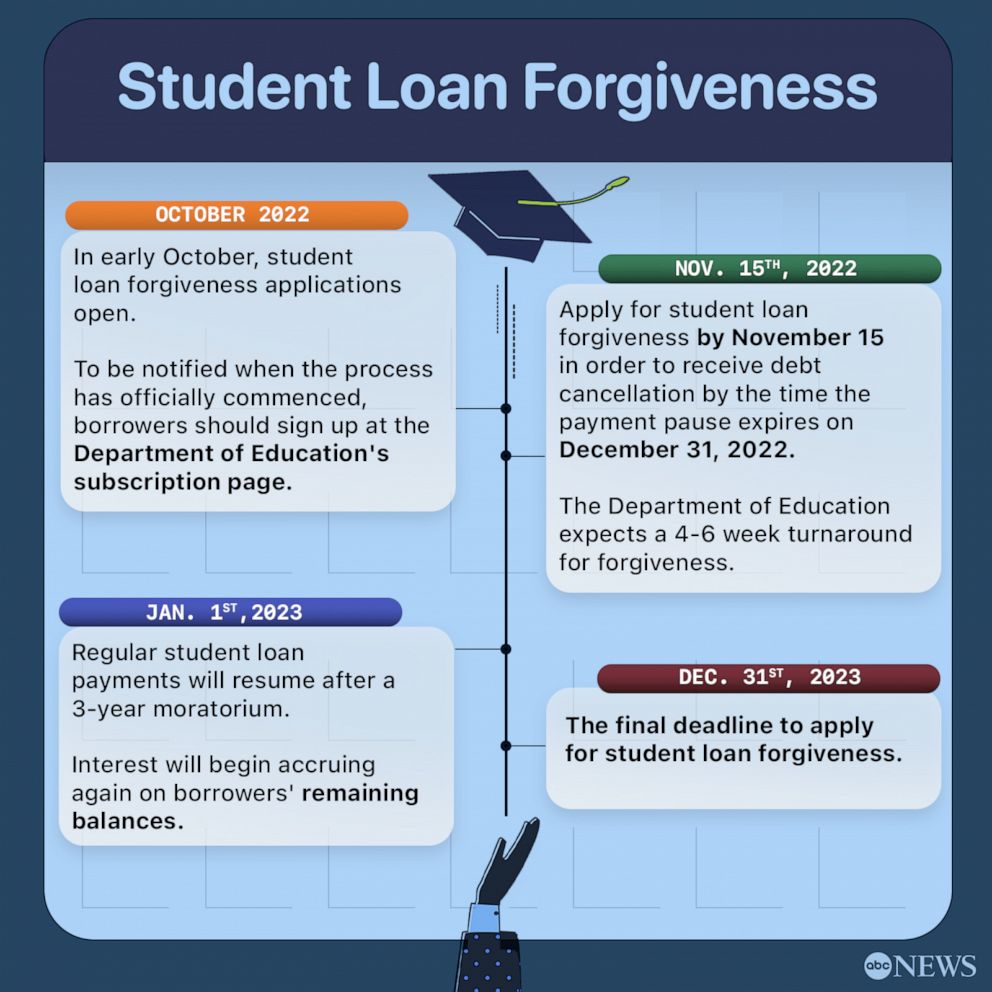
The House Republicans have succeeded in passing a resolution to overturn President Biden’s student debt relief plan, which would provide up to $20,000 in loan forgiveness to borrowers. The measure, proposed by Rep. Bob Good (R-Va.), seeks to terminate the pandemic-era student loan payment pause and cancel the potential relief for 40 million borrowers. The Biden plan, which is also subject to the conservative-leaning Supreme Court, could cost around $400 billion. Two Democrats, Reps. Jared Golden (Maine) and Marie Gluesenkamp Perez (Wash.), joined Republicans in supporting the move.

The resolution against the program, which the White House threatens to veto, was brought under the Congressional Review Act (CRA), which allows Congress to suspend executive actions taken by the president. This move was only recently put on the table after the Government Accountability Office said Biden’s plan was subject to the act. Even though the victory is good news for Republicans, it will be an uphill battle to pass the measure in the Senate. Democrats hold the majority in the upper chamber, although centrists, such as Senator Joe Manchin (D-W.Va.), have previously criticized Biden’s student debt relief.

The Congressional Budget Office recently said that if the measure were passed, it would reduce the deficit by around $320 billion over ten years. “This resolution is an unprecedented attempt to undercut our historic economic recovery and would deprive more than 40 million hard-working Americans of much-needed student debt relief,” the administration said in a statement.

Before the vote, a House Education and Workforce investment subcommittee held a hearing with two top Education Department officials about the Biden administration’s student loan policies. The hearing focused on all the different actions the Biden administration has taken regarding student loans, such as changing income-driven repayments and proposing a gainful employment rule.

Democrats raised concerns during the hearing that the CRA measure, if passed, would make borrowers retroactively pay back the interest for when their student loans were on pause in the past three years. Republicans say that would not happen and that the concern is overblown. “I’ve seen different legal opinions about whether it is retroactive or exactly how it would affect borrowers, but I think it is clear that it would be very disruptive and very confusing and make it challenging for borrowers to return to repayment successfully,” Under Secretary of Education James Kvaal said during the hearing.

Republicans used the time during the hearing to point out how much the debt relief would cost the American taxpayer. “The actions of the Biden administration alone have cost more than the federal government has spent on higher education over its entire pre-pandemic history, $744 billion from 1962 to 2019,” said Rep. Erin Houchin (R-Ind.).

The arguments did not stop at the hearing. During the ensuing floor debate, Rep. Maxwell Frost (D-Fla.) said Republicans used “bigoted logic” in their opposition to Biden’s student loan plan. “If we legislated using the logic that you bring to this issue here today, women and Black folks wouldn’t have the right to vote because it would be unfair to those who never got to vote before them,” Frost said. “See, if we legislated using your logic that because there was an injustice, we can’t fix it because it’s unfair to those who never had it fixed, it means we would never progress on any issue in this country. Why do you bring that bigoted logic to this issue as it relates to students but not any other issue?” he added. Rep. Virginia Foxx (R-N.C.), chairwoman of the House Committee on Education and the Workforce, responded by demanding that Frost’s words be taken down. Frost then withdrew the comment.

The measure adds another layer of attack to Biden’s student debt relief, as the plan is also under fire at the Supreme Court, where the administration awaits a ruling on the legality of the relief from the conservative-leaning court.

Biden’s plan aims to provide relief to millions of Americans who are struggling with student loan debt, which is crippling their finances. The plan is a much-needed relief for most of the students who have to pay back their loans in a time when job availability is scarce, and many are struggling to make ends meet. Many students would be able to pay off their loans faster, which would put more money in their pockets and boost the economy in return.

The Republican opposition to the debt relief is based on the fact that it will cost taxpayers a lot of money. However, the cost of not providing relief and leaving millions of Americans with mounting debt is also high, as it will hurt the economy in the long run. Furthermore, the Biden administration has said that the plan would reduce the deficit, and it would free up money for other important initiatives.

Google Opens Access to Search Labs’ AI-Powered Features

Google’s new platform, Search Labs, is inviting some users to try out its revamped search engine powered by generative AI. The new features, showcased at the I/O 2023 event, use AI to enhance search engine results. One of the features, AI-generated summaries, can show a concise overview of the topic at the top of the search results, replacing the blue links. Users can then interact with the AI by asking follow-up questions or selecting from suggested actions to learn more. The AI also provides links to sources so users can verify accuracy and see how the AI selected pages for review. Additionally, SGE can help users discover a range of products and things to consider while shopping.

Along with SGE, Google Labs currently includes a couple of other features. Add to Sheets adds a button to each link in search results, allowing quick addition of links to the selected sheet. The second feature is Code Tips, an AI-powered solution to help write and fix code. Google has rolled out these features in the US exclusively for now, and there is currently a waitlist. Those attempting to register from India receive a message that the service is not available for their account.

If AI summarization becomes popular, businesses and brands may compete to be included in the AI summary instead of being listed as links below. This competition has the potential to reshape the SEO industry.

These new generative AI features could make a significant impact in the search industry. Google dominates the search engine market with a global share of 90%, and the addition of these features gives them even more power. As more users begin to test the new search engine, we can expect Google to make further refinements.

Google’s use of AI in search engines is not new. However, the introduction of Search Labs marks a distinct shift towards integrating AI to improve the search experience. This improved search engine has the potential to enhance efficiency and productivity by providing reliable and timely information.

“We are excited to offer these new features to users as we continue to enhance the search experience. With our use of generative AI, we believe we can provide relevant and accurate information to our users, helping them make informed decisions and quickly find what they are searching for,” said a Google spokesperson.

Google’s introduction of this platform and the new features it provides demonstrates the technology’s limitless potential for enhancing search engine experiences. We can expect to see further developments and competition in the industry as companies seek to keep up with the latest trends.

Congress Presents ‘9 Saal 9 Sawaal’ to PM Modi at Nine-Year Milestone

As Prime Minister Narendra Modi approaches his nine-year milestone in office on May 30, the Congress party posed nine questions for him on Friday. “We want the prime minister to break his silence on these questions,” stated Jairam Ramesh, Congress General Secretary in charge of communications, during a press conference at the party’s headquarters in Delhi.

During the briefing, the Congress unveiled a document named “9 saal 9 sawaal” (9 years 9 questions), which contained the party’s inquiries on topics such as the economy, corruption, Covid-19, and social justice. “The prime minister must respond to these nine questions before the BJP begins to celebrate,” demanded Congress.

In response to this critique, the BJP labeled the questions as a “bundle of lies and mountain of deception.” Ravi Shankar Prasad, former Union minister and BJP leader, defended the party by highlighting India’s economic growth from the “fragile five” position to the fifth largest in the world, while addressing the points raised by the Congress party.

Below are the questions presented by the main opposition party:

  1. The Economy:Why is it that inflationand unemployment are skyrocketing in India? Why have the rich become richer and the poor poorer? Why is public property being sold to PM Modis friends, even as economic disparities are increasing?
  2. Agriculture and farmers:Why is it that the agreements made with farmers while repealing the three black farm laws have not been honoured? Why has MSPnot been legally guaranteed? Why didn’t farmers’ income double over the last 9 years?
  3. Corruption and cronyism:Why are you putting people’s hard-earned savings in LIC and SBI at risk to benefit your friend Adani? Why are you letting thieves escape? Why are you silent on rampant corruption in BIP-ruled states, and why are you letting Indians suffer?
  4. China and national security:Why is it that even after your clean chit to China in 2020, they continue to occupy Indian territory? 18 meetings have been held with China, yet why do they refuse to yield Indian territory and instead continue with their aggressive tactics?
  5. Social harmony:Why are you deliberately using the politics of hatred for electoral gains and fueling an atmosphere of fear in society?
  6. Social justice:Why is it that your oppressive government is methodically destroying the foundations of social justice? Why are you silent on the atrocities against women, Dalits, SC, ST, OBCs and minorities? Why are you ignoring the demand for a caste census?
  7. Democracy and federalism:Why have you weakened our Constitutional values and democratic institutions in the last nine years? Why are you practicing the politics of revenge against Opposition parties and leaders? And why are you using blatant ‘money power to destabilise governments elected by the people?
  8. Welfare schemes:Why is it that schemes for the welfare of the poor, needy and tribals are being weakened by cutting their budgets and making restrictive rules?
  9. COVID-19mismanagement: Why is it that despite the tragic deaths of over 40 lakh people due to COVID-19, the Modi government has refused to compensate their families? Why did you suddenly impose a lockdown which forced lakhs of workers to return home, and not provide any support?

Jairam Ramesh emphasized that Rahul Gandhi had persistently raised these nine questions during and after the Bharat Jodo Yatra, yet no answers have been provided. “It is time for the prime minister to break his silence,” Ramesh urged.

Congress leader Pawan Khera suggested that the prime minister should declare an “apology day” and apologize to all Indians, as he claimed Modi’s promises were fictitious.

In response to Congress’s allegations, BJP’s Ravi Shankar Prasad defended the government’s stance on national security, arguing that India’s land was seized by China when Congress held power, while India demonstrated its strength in eastern Ladakh during skirmishes with the neighboring country’s army. Prasad also criticized Jairam Ramesh for using harsh language against Modi and advised Congress to “rise above their hatred for Modi.” He confidently predicted a third defeat for Congress in 2024.

Picture : Mint

Prasad called Congress’s accusation of “Covid mismanagement” the “height of shamelessness.” He cited the Oxygen Express trains, improved health infrastructure, and nationwide vaccination efforts as evidence of the government’s actions. Furthermore, he mentioned that even Congress leaders received vaccinations.

Addressing concerns about the economy, Prasad stated that India’s economy has grown from $1 trillion in 2014 to nearly $3.5 trillion today, and the country’s forex reserve has increased to over Rs 50 lakh crore (Indian valuation). Additionally, exports have nearly doubled to Rs 36 lakh crore.

Regarding inflation, Prasad noted that retail inflation stands at 4.7%, while wholesale inflation has dipped into the negative. He compared these figures to higher inflation rates in the US, France, and Germany.

Lastly, Prasad mocked Congress for questioning corruption, asserting that the UPA’s decade-long tenure between 2004-14 was riddled with corruption scandals. He claimed that Congress is synonymous with “four Cs of cut, commission, corruption, and the Congress.”

Retaining Top Talent, Boosting Economic Growth, and Strengthen America’s Global Standing

The wave of job losses that have struck the tech industry since the beginning of the year has forced tens of thousands of H1-B Visa holders to scramble to find new employment within 60 days or risk deportation. For those who acted quickly, the deadline has come and gone. Fortunately, the majority of them were successful.

At Revelio Labs, where we collect publicly accessible workforce data to analyze labor trends, we discovered that over 90% of laid-off H1-B visa holders managed to secure new jobs that met the program’s strict requirements. Interestingly, compared to native workers, immigrants found jobs 10 days quicker, primarily because they were more willing to relocate for new opportunities. However, their flexibility is limited, as visa holders can only accept positions directly related to their specialized training.

Indeed, our research showed that while 67% of non-immigrant workers changed roles after being laid off, only 49% of visa holders did the same. So, how did so many manage to find positions in their specialty despite Big Tech’s drastic cost-cutting measures? The answer lies in market demand.

Tech jobs remain widely available outside of tech companies. Consequently, the stars aligned for laid-off tech workers on H1-B visas, as numerous other doors were open. The H1-B Visa program functions best when it enables participants to adapt seamlessly to market demand, but it is not inherently responsive to market needs. Revelio Labs’ data reveals that 78% of Fortune 500 companies currently have critical roles unfilled for six months or more – a situation that could be improved with greater flexibility in the H1-B visa program and better collaboration between public and private sectors to direct qualified talent where it is most needed.

Despite ongoing layoffs, labor shortages persist. Revelio Labs found that over 43.4% of companies had more than 50 technical positions they were unable to fill in the past year, accounting for 68.8% of approved H-1B visa holders in 2021.

Our visa allocation system, which could otherwise provide a dependable talent pipeline to fill open roles and attract the best candidates globally, is hindered by restrictions that limit visa holders’ mobility in a market that demands flexibility. A truly market-sensitive visa allocation system would enable companies to obtain the staff they need, ultimately stabilizing the workforce, reducing talent shortage costs, and bridging skills gaps – projected to result in a loss of up to $162 billion by 2030.

One of the most criticized and harmful aspects of the H1-B visa process is the annual cap of 65,000 visas (plus an additional 20,000 for U.S. graduate degree holders), which has remained unchanged since the program’s inception over two decades ago. In 2023 alone, this meant that over 483,000 applicants were rejected despite millions of job openings.

This isn’t the first time demand has exceeded this limited supply. Between 2008 and 2020, the cap was reached within the first five business days of opening the application on several instances. Last year, visa registrations increased by 56.8%.

To address the millions of vacant roles, we need adaptable, market-sensitive visa policies to regulate foreign labor flow rather than arbitrary and outdated federal restrictions.

Local municipalities are best suited to determine the number of foreign workers they can accommodate. Companies spend $5,000 to $10,000 more to hire H1-B visa holders than U.S. citizens. Instead of investing time and resources in a federal system that may or may not meet a company or community’s talent needs, companies could pay municipalities where their foreign worker resides and receive a guaranteed visa in return. This arrangement would benefit both companies and municipalities.

Chicago provides a glimpse of what might happen if municipalities were empowered to manage foreign worker hiring. The city recently initiated a coordinated effort between 35 firms willing to hire H1-B visa holders and a nonprofit organization to create a specialized job listing website advertising these jobs as H1-B visa sponsorships. This public-private partnership aims to fill over 400,000 open positions by tapping into the pool of tech sector workers laid off while on a visa. It’s an excellent starting point and a model that would be even more scalable and sustainable if the revenue from companies covering visa application costs went back to the city rather than the federal government.

The recent headlines about massive layoffs in Silicon Valley have left thousands of H-1B visa holders in a precarious position, with only 60 days to secure new opportunities before facing potential deportation. The upheaval caused by such instability is immense, and if we don’t find improved ways to support and retain foreign talent, we risk losing these skilled workers to their home countries or to other nations with more welcoming immigration policies, such as Canada, New Zealand, or Switzerland. This loss of talent will undoubtedly have far-reaching implications for both our local communities and America’s standing in the global economy.

While we’ve made significant progress in addressing discriminatory hiring practices based on race, religion, or gender, our current visa system still allows geographical factors to unfairly hinder even the most qualified candidates. If we were to prioritize market forces and merit over a lottery system when deciding which foreign laborers to welcome, we’d likely see a decrease in job vacancies and an increase in contributions from top talent worldwide to our workforce and communities.

Failing to hire and retain exceptional non-native talent gives our international competitors an advantage that was once America’s greatest strength. Although the complexities of U.S. immigration policy require numerous reforms to better serve our economic interests, the stakes are too high to continue hindering our own progress. Addressing this issue will enable companies to acquire the talent they need, promote city growth, and ultimately create a more efficient and equitable workforce.

Top Battery Stocks Set to Thrive as Global EV Demand Skyrockets and Lithium Prices Rebound

Leading battery stocks are set to stand out as the demand for electric vehicles surges. The International Energy Agency predicts that one in every five cars globally will be electric this year, significantly impacting EV battery demand.

In fact, Fortune Business Insights estimates that the global EV battery market could expand from $37.9 billion in 2021 to nearly $98.9 billion by 2029, benefiting these three battery stocks.

Albemarle (ALB)

A prime investment opportunity in the electric vehicle battery boom lies in lithium stocks, such as Albemarle (NYSE:ALB). Firstly, the company announced a $1.3 billion investment in a new lithium hydroxide plant in South Carolina to address battery demand. Secondly, the facility is expected to generate around 50,000 metric tons of battery-grade lithium, with the capacity to double production.

Thirdly, this output could facilitate the manufacturing of 2.4 million electric vehicles annually. Adding to the potential growth, lithium prices are recovering. Citigroup analysts even suggest that the downturn in lithium prices may have ended, with an anticipated increase of up to 40% by year-end.

Furthermore, Albemarle has now partnered with Ford, providing battery-grade lithium hydroxide for the automaker’s EVs. Under the agreement, Albemarle will supply over 100,000 metric tons of battery-grade lithium hydroxide to power roughly 3 million future Ford EV batteries. The five-year supply contract commences in 2026 and runs through 2030.

Solid Power

Although the chart might not look promising, Solid Power (NASDAQ:SLDP) should not be dismissed. Needham analysts recently reinstated their buy rating for the stock with a $5 price target, referring to SLDP as a “well-funded call option.” Solid Power is also working to strengthen its partnership with BMW (OTCMKTS:BMWYY) through a joint development agreement, which contributed to the company’s $3.8 million revenue in Q1 2023, an increase of $1.6 million YoY.

Moreover, the company has two significant milestones this year: anticipated improvements in key cell performance metrics and the expected delivery of EV cells to partners by late 2023.

Amplify Lithium & Battery Technology ETF (BATT)

With a 0.59% expense ratio, the Amplify Lithium & Battery Technology ETF (NYSEARCA:BATT) offers investors access to international companies involved in lithium battery technology.

As lithium prices recover, the BATT ETF is also gaining momentum. In fact, with the aggressive increase in lithium prices, the BATT ETF has risen from a recent low of $11.60 to $12.59 per share. Moving forward, it would be ideal for the BATT ETF to retest the $14 per share mark.

Revolutionary Battery Pack Promises 1,000km Range and 2 Million km Lifespan

Chinese manufacturer Gotion High-Tech has announced that it will begin mass production of its new Astroinno L600 LMFP battery pack in 2024. The company claims that the battery pack can last for up to 2 million km and deliver a range of 1,000 km per charge. At room temperature, it can complete up to 4,000 full cycles, while at high temperature, it can achieve up to 1,500 cycles of 18-minute fast charging.

The battery cell has a weight energy density of 240Wh/kg, and a volume energy density of 525Wh/L. According to the company’s executive president Dr. Cheng Qian, this performance was achieved through a combination of innovations in the battery material system as well as the pack design. “The the volumetric cell to pack ratio has reached 76% after adopting the L600 cell, and the system energy density has reached 190Wh/kg, surpassing the pack energy density of current mass-produced NCM (nickel cobalt manganese) cells. In recent years, lithium iron phosphate (LFP) technology has regained the recognition of the market with market share continuing to increase. Meanwhile, the energy density growth of mass-produced LFP batteries has encountered bottlenecks, and further improvement requires an upgrade of the chemical system, so manganese doped as called lithium iron manganese phosphate (LMFP) was developed.”

The breakthrough that Gotion High-Tech achieved through its new battery pack is the incredibly high cycle number, which means that the battery could essentially last 2 million km before it starts to deteriorate. While the average Australian car travels around 15,000 km per year, it would take 130 years worth of driving for an average driver to reach the 2 million km mark. The battery pack’s longevity opens up new possibilities for ride-sharing and Transportation as a Service (Taas). According to technology researcher Tony Seba, who was recently interviewed on The Driven podcast, “The day that we get level four, autonomous technology ready and approved by regulators, when that converges with on-demand, and electric transportation we will get what we call transportation as a service. When that happens the cost per mile of transportation is going to drop by anywhere from 10 to 20 times. So even if gasoline automakers gave away their cars, that’s still gonna be a lot more expensive than the cost of transport as a service.”

Gotion High-Tech’s new battery pack not only achieves breakthroughs in the battery material system but also in the pack design. The Astroinno battery pack has a sandwich-structure double-sided liquid cooling technology that, coupled with the minimalist design approach, reduces the number of structural parts of the battery pack by 45% and lowers the weight of structural parts by 32%. According to Dr. Cheng, the company’s minimalist electrical design enabled the length of the battery pack wiring harness to drop from 303 meters to 80 meters.

To achieve the battery pack’s impressive features, the Chinese company spent 10 years on in-house research and development. Gotion High-Tech credited its global R&D efforts for the new technology, and its research institution in Cleveland, Ohio developed a new electrolyte for LMFP that improved the cycle and storage performance at high temperatures. “Gotion High-Tech has solved the challenges of Mn dissolution at high temperatures, low conductivity, and low compaction density through utilising co-precipitation doping encapsulation technology, new granulation technology and new electrolyte additives,” said Dr. Cheng.

Gotion High-Tech’s new battery pack presents a significant milestone in the journey towards electrification and the transition towards autonomous electric vehicles. With the convergence of on-demand transport services, electric vehicles, and autonomy, the cost per mile of transportation is likely to drop considerably. Tony Seba predicted that such a technological breakthrough could cause the global automotive market to drop by 75% by 2030.

Australian Universities Ban Student Intake from Indian States Due to Surge in Fraudulent Visa Applications

Two Australian universities, Federation University in Victoria and Western Sydney University in New South Wales, have recently announced bans on students from certain Indian states, citing concerns regarding a rise in fraudulent visa applications. The Department of Home Affairs in Australia has deemed one in four applications as “fraudulent” or “non-genuine.” The universities have instructed education agents to disregard applications from states such as Punjab, Haryana, Gujarat, Uttarakhand, Uttar Pradesh, and the Union Territory of Jammu and Kashmir.

Federation University stated that it has observed a significant increase in the proportion of visa applications being refused from some Indian regions, and it is clear that there is a trend emerging. Meanwhile, Western Sydney University mentioned that the regions within India that had been identified as presenting the highest attrition risk are Punjab, Haryana, and Gujarat, and due to the urgency of this matter, the university has decided to pause recruitment from these regions in India, effective immediately.

Several renowned educational institutions in Australia have tightened their scrutiny regarding Indian students’ applications due to concerns surrounding a considerable number of applicants who appear to have ulterior motives centered around employment prospects in Australia instead of pursuing their intended studies. Emails obtained from Victoria University, Edith Cowan University, the University of Wollongong, Torrens University, as well as agents affiliated with Southern Cross University, suggest that there has been a noticeable tightening of scrutiny on these Indian students’ applications.

In February, Edith Cowan University in Perth implemented a comprehensive prohibition on accepting applicants from the Indian states of Punjab and Haryana. Subsequently, in March, Victoria University further tightened its restrictions on student applications, extending to eight Indian states, including Uttar Pradesh, Rajasthan, and Gujarat.

Experts state that changing visa regulations and higher scrutiny on visa applications have made it more challenging for Indian students to study in Australia and, as a result, the number of Indian students has declined. According to the Australian government, the number of student visa applications from India fell from around 60,000 in financial year 2018-19 to around 42,000 in 2020. Moreover, Australia’s dependency on the Indian student market has also declined in recent years due to a rise in the number of Chinese students studying in Australia.

The Australian government’s tightened visa regulations follow the country’s concerns over the potential of foreign interference. Australian politicians have been uneasy about China’s influence over the student body in the country. Chinese students comprise the largest overseas student cohort in Australia, with more than 165,000 Chinese students enrolled in Australian schools and universities in 2019.

Australian universities are taking steps to tighten scrutiny on Indian students’ visa applications, given concerns surrounding fraudulent applications, employment prospects within the country, and a decrease in the number of Indian students studying in Australia due to changing visa regulations. The Australian government has been uneasy about Chinese influence on the student body in the country, making it more challenging for Indian students to study in the country also.

Meta Layoffs Leave H1B Visa Holders Scrambling for New Jobs or Facing Deportation

Meta, the parent company of Facebook, has recently announced a second round of mass layoffs, affecting thousands of its employees. Among those most greatly affected are employees working in the US on an H1B visa, who are left with limited time to find alternative employment in the country, otherwise they face deportation.

Kushal Naidu, a program manager at Meta working in Texas, took to LinkedIn to request help in finding a new job which could sponsor his H1B visa. He stated that he had been impacted by the company’s latest round of layoffs and was actively seeking new opportunities in program management, data engineering and data analytics. “I am in the US on a work visa (H1B) and therefore, I need to find a job soon,” Naidu added in his LinkedIn post.

Another employee impacted by the layoffs is Sneha Agarwal, a data specialist who had been with Meta for three years. She also took to LinkedIn to request help in finding new data science & analytics/Analytics Program Manager roles with a company that is willing to sponsor her work visa.

Meta’s latest round of layoffs followed a hiring spree that saw the company expand its workforce since 2020. The cuts brought the company’s headcount back to its mid-2021 levels. CEO Mark Zuckerberg announced that the bulk of the layoffs would take place in three moments over several months, largely finishing in May, with some smaller rounds potentially continuing after that.

The layoffs have left many employees in a difficult position, particularly those on work visas who are now scrambling to find new employment in the US before their visas expire. The uncertainty and instability of the job market has only added to the challenges they face.

Despite the difficulties faced by those impacted by the layoffs, many are turning to their network on LinkedIn in hopes of finding new employment. LinkedIn has a feature that allows job seekers to highlight their H1B visa status, increasing their chances of finding an employer willing to sponsor their visa.

The impact of Meta’s layoffs highlights the challenges faced by foreign workers in the US job market. The H1B visa program has long been criticized for its limitations and complexities, which can leave workers vulnerable to exploitation and uncertainty. The current situation only exacerbates these challenges, leaving many workers anxious about their future in the country. As companies like Meta continue to scale back their workforce, it remains to be seen how the job market will adapt to accommodate those impacted by the layoffs.

High-Income Earners Struggle with Pay check-to-Pay check

Despite a slight easing in inflation, a considerable number of consumers continue to feel the pinch. The proportion of adults who feel financially stretched remained nearly constant at 61% as of April, as per a recent LendingClub report.

Interestingly, the report reveals that high-income earners are experiencing increased pressure. Among those with six-figure incomes, 49% now live paycheck to paycheck, up from 42% last year. On the other hand, individuals earning less than $100,000 saw either a steady percentage or a decline in those living paycheck to paycheck during the same period.

Your financial status might be influenced by where you reside

Anuj Nayar, LendingClub’s Financial Health Officer, explains that “a $100,000 income may not stretch that far” depending on your location. A separate study by SmartAsset examined how far a six-figure salary stretches in the 25 largest cities in the United States. In New York City, for instance, $100,000 is equivalent to just $35,791 after accounting for taxes and the high cost of living.

In contrast, a $100,000 salary goes much further in Memphis, equating to approximately $86,444 thanks to a lower cost of living and no state income tax. LendingClub found that 69% of city dwellers live paycheck to paycheck, which is 25% more than their suburban counterparts. Nayar highlights, “where you live appears to be almost equally important in factoring whether a consumer is living paycheck to paycheck.”

Rising mortgage rates, home prices, and rents in many cities across the country contribute to these financial challenges, as evidenced by the latest data from rental listings site Rent.com. As of the previous month, 29 of the 50 most populous U.S. cities registered year-over-year rent increases.

Jon Leckie, a researcher for Rent.com, notes that compared to two years ago, rents have surged by over 16%—equivalent to a $275 hike in monthly rent bills. He adds, “That kind of growth over such a short period of time is going to put a lot of pressure on pocket books.”

Escaping the paycheck-to-paycheck cycle

It can be challenging, especially for high earners and city dwellers who often fall victim to “lifestyle creep,” according to Carolyn McClanahan, CFP and founder of Life Planning Partners in Jacksonville, Florida.

As people’s incomes increase, their spending habits tend to follow suit, particularly when it comes to dining out, using food delivery services like DoorDash, and subscribing to additional services. McClanahan warns that it’s easy to “fall into the trap of too much convenience spending.”

To overcome this cycle, McClanahan, who is also a member of CNBC’s Advisor Council, recommends evaluating convenience spending and identifying areas that don’t bring value. She advises, “the first thing to do is look at convenience spending and figure out ways to cut the spending that is not bringing them value.” Redirect the money saved from cutting unnecessary expenses towards building an emergency fund.

Once you’ve accumulated three to six months’ worth of expenses in your emergency fund, shift your focus to saving for other financial goals.

Zimbabwe is World’s Most Miserable Country, Switzerland Claims Least Miserable Title

Zimbabwe has earned the unfortunate distinction of being the globe’s most miserable nation, according to Hanke’s Annual Misery Index (HAMI). This southern African country has been grappling with soaring inflation rates, which reached 243.8 percent in the previous year.

The index reveals that President Emmerson Mnangagwa’s policies and those of his ZANU-PF party have significantly contributed to the immense suffering experienced by Zimbabwe’s population.

Economist Steve Hanke determined the 2022 rankings for Hanke’s Annual Misery Index by considering factors such as unemployment, inflation, bank lending rates, and the percentage change in GDP. Out of the 157 countries assessed, Switzerland was deemed the least miserable nation worldwide.

The 15 most miserable countries included Zimbabwe, Venezuela, Syria, Lebanon, Sudan, Argentina, Yemen, Ukraine, Cuba, Turkey, Sri Lanka, Haiti, Angola, Tonga, and Ghana. India was ranked 103rd on the list of the world’s most miserable countries, with unemployment identified as the primary cause of misery in the country.

India performed better in terms of misery compared to countries like Brazil (ranked 27th), Pakistan (35th), Nepal (63rd), and Sweden (88th).

Finland, which has consistently topped the World Happiness Report as the happiest country for six consecutive years, was placed 109th on the misery index. Meanwhile, the United States secured a position among the least miserable nations, ranking 134th.

Anushka Sharma Dazzles at Cannes Film Festival 2023, Celebrating Women in Cinema

Anushka Sharma graces the Cannes Film Festival 2023 with her first appearance. The event celebrates women in the film industry.

Bollywood actress Anushka Sharma made her long-awaited debut at the prestigious 76th Cannes Film Festival. Photos and videos capturing her stunning entrance surfaced on social media Friday evening. For the occasion, she chose a beautiful gown by designer Richard Quinn.

Anushka Sharma’s inaugural Cannes Film Festival look

A video showcases Anushka elegantly descending the stairs at the Cannes Film Festival venue. She dazzled in an off-shoulder dress adorned with striking floral embellishments. Complementing her ensemble, she wore her hair in a sleek bun and opted for a refined makeup look. Minimal jewelry completed her appearance.

The reason behind Anushka Sharma’s presence at Cannes Film Festival

Picture : TheUNN

Anushka is attending the Cannes Film Festival 2023 to pay tribute to women in cinema. She will be joined by renowned actress Kate Winslet at the event. This opportunity arose shortly after Anushka and her husband, cricket star Virat Kohli, met France’s ambassador to India, Emmanuel Lenin, at the French Embassy in New Delhi.

It remains unclear when Anushka arrived in Cannes. On May 22, she was spotted at Mumbai airport with Virat Kohli as they returned from Bengaluru. While in Bengaluru, Anushka supported Virat during his Indian Premier League (IPL) match as part of the Royal Challengers Bangalore team. After arriving in Bengaluru, she shared a glimpse of the city’s rainfall. On May 24, the couple was once again seen at Mumbai airport.

Anushka Sharma’s upcoming film project

Anushka’s most recent appearance was in the film Qala, where she had a special cameo. She will star in the forthcoming sports biopic Chakda Xpress, directed by Prosit Roy. The film, which will exclusively stream on Netflix, is based on the life of former Indian cricketer Jhulan Goswami.

Anushka completed filming for Chakda Xpress in December last year. She shared several photos from the last day of shooting, which took place inside a cricket stadium, and expressed her gratitude in an Instagram post captioned, “It’s a wrap on Chakda ‘Xpress and thank you @JhulanGoswami for the final clap to bring an end to the shoot!.”

Biden Leads Democratic Primary Contenders

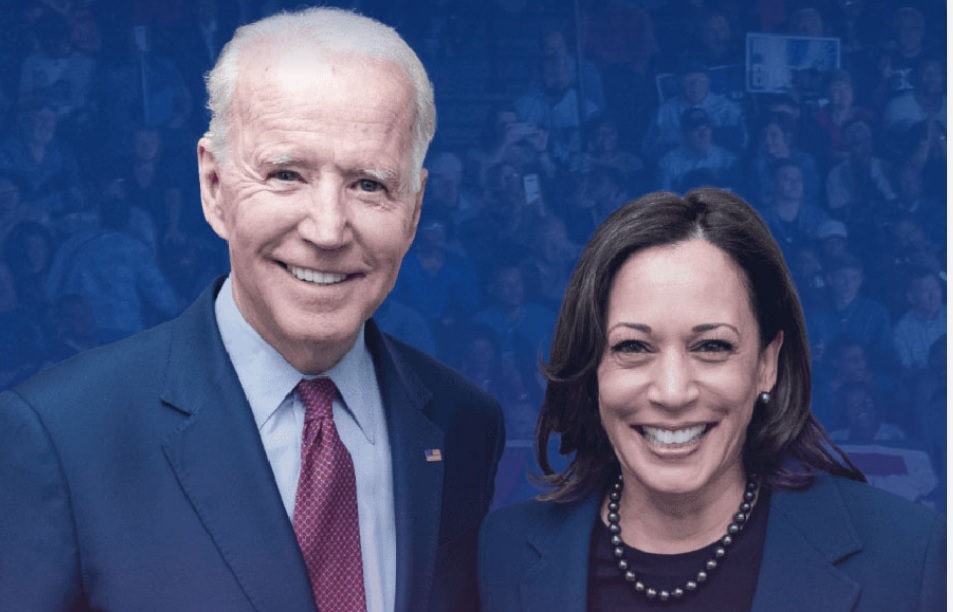
As President Joe Biden gears up for a potential second term, he enjoys a significant lead over his declared Democratic challengers. However, a new CNN poll conducted by SSRS reveals that his declining favorability ratings and the perception that his reelection would be detrimental to the nation could pose difficulties.

Only 33% of Americans believe that a Biden victory in 2024 would signify progress or triumph. The poll also highlights a drop in favorable opinions of Biden, from 42% in December to 35% currently. Furthermore, an earlier release of the same poll showed Biden’s presidential approval rating at a meager 40%, one of the lowest for a first-term president since Dwight Eisenhower at this stage in their tenure.

Within the Democratic party, 60% of Democratic and Democratic-leaning voters support Biden as the frontrunner for next year’s Democratic nomination, while 20% favor activist and lawyer Robert F. Kennedy Jr., and 8% support author Marianne Williamson. Another 8% would back an unspecified “someone else.”

The majority of Biden’s primary supporters are unwavering, with 58% stating they will definitely support him, while 42% admit they could change their minds. In contrast, only 19% of those backing other candidates are firmly committed, with 81% open to changing their minds.

The poll indicates that Biden is likely to gain the support of most Democratic-aligned voters in 2024, with only 14% saying they wouldn’t back him in the primary and 7% stating they definitely wouldn’t support him in November 2024 if he secures the party’s nomination.

However, the results suggest that Biden may struggle to retain Democratic-aligned White non-college voters in the general election next year, as 16% say they definitely won’t support him in November 2024, compared to just 1% of White Democratic-aligned voters with college degrees and 5% of Democratic-aligned voters of color.

Biden’s vulnerabilities in the nomination race primarily lie among Democratic-leaning independents (40% support him for the nomination, compared to 67% among self-identified Democrats) and younger voters (49% under 45 years old support him, as opposed to 68% of those aged 45 or older).

A majority of Democratic and Democratic-leaning voters would consider supporting either Kennedy (64% support or would consider him) or Williamson (53% back her or would consider her), but few seem deeply committed to either candidate.

Among those open to considering Kennedy, 20% cite his connection to the Kennedy family as the main reason, with one respondent stating, “I liked his dad (RFK) and his uncle (JFK) a lot. I would hope he has a similar mindset.” Many are simply curious and want to learn more about him, with 17% saying they don’t know enough to rule him out and 10% claiming they are open-minded and would consider any candidate. Some would back any Democrat (10%) or anyone who is not Trump (5%). Only 12% say they would consider him due to their support for his views or policies, and 4% specifically mention his environmental policy stances.

Of those who would consider Williamson, nearly 3 in 10 (28%) say they don’t know enough about her, 16% would consider her because she’s a Democrat, 8% would consider any candidate or are open-minded, and 9% view her as an alternative to Biden. One respondent said, “She is better than Joe Biden. I haven’t heard of her though.” Another 10% desire a female candidate, and 12% support her views or policies. One person commented, “She may not have a great political resume but she cares about important issues.”

The majority of Democrats and Democratic-leaning independent voters do believe it’s likely that Biden will become the party’s candidate, with 55% saying it’s extremely or very likely, 28% deeming it somewhat likely, 11% considering it not too likely, and a mere 5% believing it’s not at all likely.

Securing public support for a second term might be an uphill battle for President Joe Biden. A significant 66% of Americans believe that a Biden victory would result in a setback or disaster for the country. In comparison, former President Donald Trump’s prospects appear slightly better, with 43% considering a Trump win as a triumph or step forward and 56% seeing it as a disaster or setback. Both candidates receive similar percentages regarding the perception of their victory as disastrous (44% for Trump and 41% for Biden). Among independents, 45% view a Trump win as disastrous, while 35% hold the same opinion for a Biden win.

The overarching negativity towards Biden can be attributed to a more pessimistic outlook among his party members compared to the optimism Trump enjoys from Republicans. A substantial 82% of Democrats perceive a Trump victory as disastrous, whereas 83% of Republicans feel the same about a Biden win. However, 85% of Republicans consider a Trump win a triumph or step forward, compared to 73% of Democrats expressing the same sentiment for Biden.

One advantage that Biden held over Trump in the 2020 election – a stronger favorability rating – may have dissipated. The poll reveals that 35% of Americans have a favorable view of Biden, while 57% have an unfavorable one, which is strikingly similar to Trump’s figures. Biden’s positive ratings have dropped from 42% in December, and among independents, his favorability has declined from 35% to 26%.

Biden’s ratings are significantly more negative than those of the three living Democratic past presidents. Barack Obama is the most positively viewed of all the living presidents tested in the poll, with 57% holding a favorable view and 35% an unfavorable one. Public opinion on Jimmy Carter is also positive, with 43% favorable and 21% unfavorable, while 36% are unsure or unable to rate him. Bill Clinton’s ratings are evenly split, with 41% expressing a favorable view and 42% an unfavorable one.

The CNN Poll, conducted by SSRS from May 17-20, included a random national sample of 1,227 adults drawn from a probability-based panel, featuring 432 Democrats and Democratic-leaning independents who are registered to vote. Surveys were administered either online or via telephone with a live interviewer. The full sample results have a margin of sampling error of plus or minus 3.7 points, while the margin of sampling error for Democratic and Democratic-leaning voters is 6.2 points.

Debt Ceiling Bill Passed

The House has passed the debt ceiling bill, allowing the US economy a breather until January 2025. Lawmakers approved the rule just days before June 5, the day Treasury Department Secretary Janet Yellen said the U.S. could plunge into default if the borrowing limit is not raised.

The tally at the governing rule vote to take the Bill to the full House to vote on the Bill was 241 to 187, with 29 Republicans voting “no” and 52 Democrats voting “yes.” Passage of the rule clears the way for a final House vote on the debt ceiling bill.

Rules are typically supported by just the majority party and opposed by the minority, but in this case, Democrats had to cross the aisle to get the rule across the finish line. The GOP defections exposed deep divisions within the House Republican conference.

Democratic leaders instructed their members to let Republicans put up their votes for the rule first, in a strategy for the Democrats: Let Republicans sweat and show how many defections GOP leaders had.

President Joe Biden and Republican House Leader Kevin McCarthy reached a spending deal over the weekend to raise the debt limit. The House is expected to vote on the bill later today.

Senate Minority Leader Mitch McConnell told reporters on Wednesday that he hopes the chamber will finish voting on the debt ceiling agreement tomorrow or Friday.

Still, the timeframe to get the bill passed through both chambers of Congress and signed into law is extremely tight.

While rules votes are typically a partisan, mundane and entirely predictable part of the legislative process, Wednesday’s vote bucked all three trends when more than two dozen Republicans opposed the measure as a last-gasp opportunity to defeat the underlying debt ceiling bill.

And after hanging back, more than 50 Democrats bucked convention to deliver the last-minute votes to push the rule over the finish line.

Before the vote closed, House Minority Leader Hakeem Jeffries (D-N.Y.) held up a green card in an apparent signal of approval for his members to change their votes and help Republicans pass the rule. Democratic members flooded the Well of the House to manually change their votes after voting electronically — though Jeffries remained a ‘nay.’

A number of the Democrats who ultimately voted for the rule are members of the Problem Solvers Caucus, a coalition of bipartisan lawmakers that prides itself on finding common ground.

“We were ready, we had the conversation earlier today — if necessary to be ready to activate and that’s exactly what we did,” Rep. Dean Phillips (D-Minn.), a member of the caucus, told reporters after the rule vote.

“I typically wouldn’t vote for this type of rule,” he later added. “But this is, as I said earlier, this is an extraordinary day, extraordinary measure and required extraordinary consideration.”

The proposal then moves to the Senate, where Majority Leader Chuck Schumer (D-N.Y.) is fighting to pass it before week’s end.

The debt limit bill — titled the Fiscal Accountability Act — came together after more than a week of high-stakes negotiations between emissaries tapped by Biden and McCarthy.

The legislation, which stretches 99 pages, suspends the debt limit until Jan. 1, 2025, implements some spending caps over the next two years, beefs up work requirements for federal assistance programs and claws back billions of dollars of unspent COVID-19 funds, among other provisions.

The agreement would keep nondefense spending roughly flat in the 2024 fiscal year and increase it by 1% the following year, as well as suspend the debt limit until January 2025 — past the next presidential election.

For the next fiscal year, the bill matches Biden’s proposed defense budget of $886 billion and allots $704 billion for nondefense spending.

The bill also requires Congress to approve 12 annual spending bills or face a snapback to spending limits from the previous year, which would mean a 1% cut.

The legislation aims to limit federal budget growth to 1% for the next six years, but that provision would not be enforceable starting in 2025.

Overall, the Congressional Budget Office projected Tuesday that the bill would reduce budget deficits by about $1.5 trillion over the next decade.

Lawmakers are racing against the clock to avert a catastrophic default ahead of June 5, the day the Treasury Department has said it will no longer be able to pay all of the nation’s obligations in full and on time.

India’s New Parliament Building Inaugurated

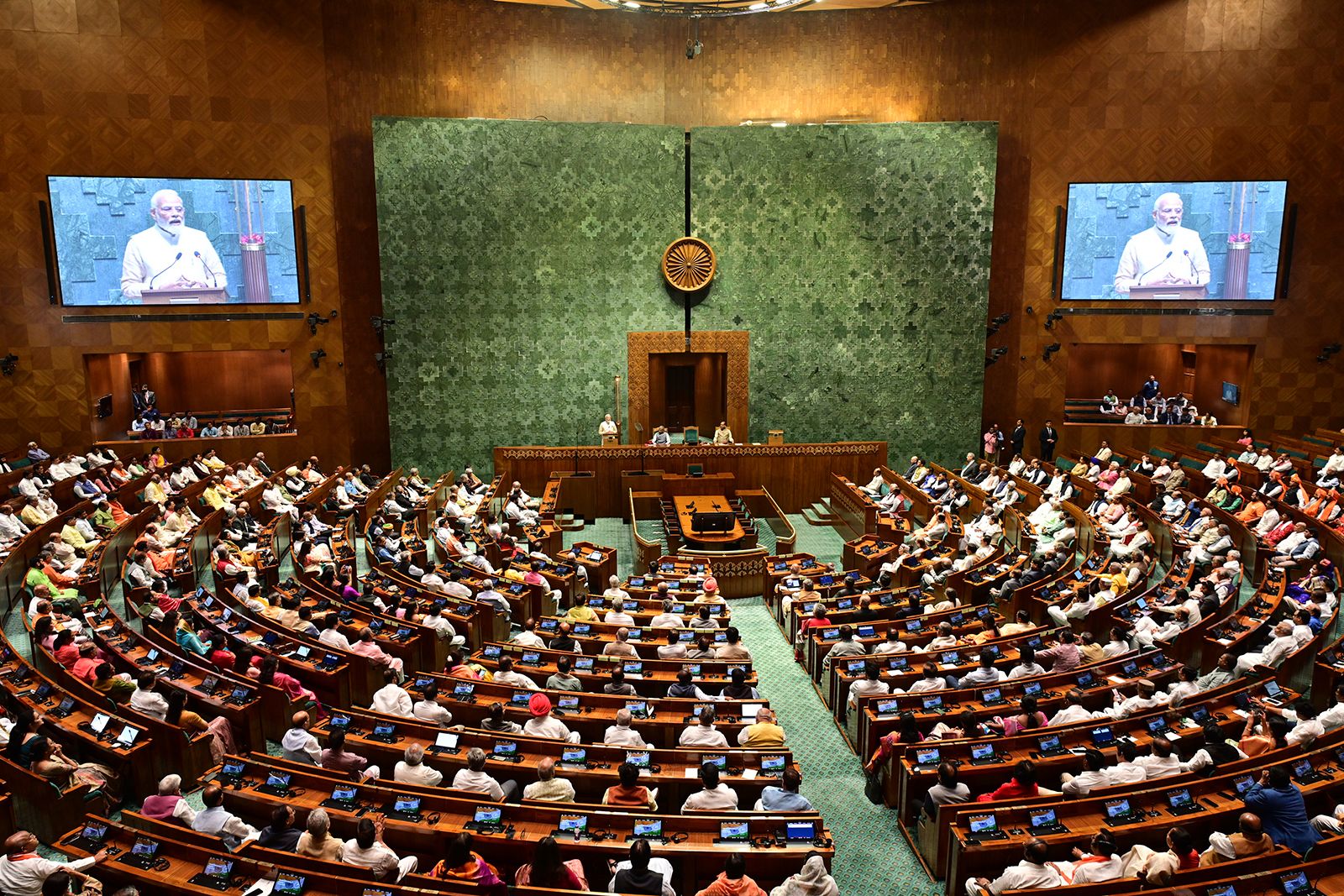
The much-awaited new Parliament building was officially inaugurated at a grand ceremony, marking a significant milestone in India’s democratic journey on Sunday, May 28th, 2023 in New Delhi.

The new Parliament building is a testament to the country’s progress and commitment to democratic values. Spanning over 64,500 square meters, the structure has been designed to accommodate the growing needs of the nation’s legislative body. It features state-of-the-art facilities, including spacious chambers for the Lok Sabha and Rajya Sabha, committee rooms, and office spaces for Members of Parliament and their support staff.

A Symbol of Unity and Progress

Picture : Tribune India

The new Parliament building is an architectural marvel that embodies the spirit of unity and progress. Designed by renowned architect Bimal Patel, the structure seamlessly blends traditional Indian design elements with modern aesthetics. The geometric patterns and motifs adorning the façade pay tribute to India’s rich cultural heritage, while the cutting-edge construction techniques ensure efficiency and sustainability.

As Prime Minister Narendra Modi addressed the gathering, he emphasized the importance of the new Parliament building as a symbol of India’s unity and progress. He highlighted that the structure represents the aspirations of over 1.3 billion Indians and serves as a reminder of the responsibilities entrusted upon the elected representatives.

Key Features of the New Parliament Building

The new Parliament building boasts several impressive features that cater to the evolving needs of the nation’s lawmakers. Some of the key highlights include:

  1. Enhanced Seating Capacity: The Lok Sabha chamber can accommodate 888 members, while the Rajya Sabha chamber can seat 384 members. This increased capacity ensures that all elected representatives have adequate space to carry out their duties effectively.
  2. Digital Infrastructure: The building is equipped with advanced digital infrastructure, enabling seamless communication and access to information for the lawmakers. This includes high-speed internet connectivity, video conferencing facilities, and a robust security system.
  3. Environmentally Sustainable Design: The structure has been designed with sustainability in mind, incorporating energy-efficient systems and eco-friendly materials. It features rainwater harvesting and wastewater recycling systems, solar panels, and green spaces, making it a model for sustainable development.
  4. Accessibility: The new Parliament building is designed to be accessible for people with disabilities, ensuring that all citizens can actively participate in the democratic process.
  5. Art and Culture: The building showcases India’s diverse artistic and cultural heritage through various art installations, sculptures, and murals. These elements serve as a constant reminder of the country’s rich history and vibrant traditions.

A New Chapter for Indian Democracy

Picture : CNN

The inauguration of the new Parliament building marks the beginning of a new chapter in India’s democratic journey. As the nation faces unprecedented challenges, the state-of-the-art facility will provide a conducive environment for lawmakers to debate, discuss, and formulate policies that cater to the needs of a rapidly evolving society.

Prime Minister Narendra Modi expressed his hope that the new building would inspire future generations to uphold the values enshrined in the Constitution and work towards the collective goal of nation-building.

As the ceremony concluded, the new Parliament building stood tall as a symbol of India’s resilience, unity, and progress. It serves as a testament to the country’s unwavering commitment to democracy and the aspirations of its people.

Rahul Gandhi Arrives In San Francisco For 10-Day US Visit

Former Congress chief Rahul Gandhi arrived in the United States (US), landing in San Francisco on May 30th where he was received by Sam Pitroda, who handles the party’s overseas affairs. Pitroda is credited to be the father of India’s telecom revolution.

Rahul Gandhi is on a 10 days visit to the US. Gandhi is scheduled to interact with students at the prestigious Stanford University in San Francisco. He will address a press conference and have meetings with lawmakers and think tanks in Washington DC.

He is also likely to address Indian Americans and interact with Wall Street executives and university students during his week-long tour of the USA. He is slated to conclude his trip with a public gathering in New York on June 4. The interaction would take place at the Javits Center in New York.

The Congress leader is slated to meet technology executives from Silicon Valley to discuss artificial intelligence, as per The Quint report.

He will also deliver a lecture at California’s Stanford University on ‘The New Global Equilibrium’.

Gandhi will also interact with venture capitalists, academics, intellectuals and activists during his San Francisco trip, the report added.

On the first two days of June, the 52-year-old former Wayanad MP will be visiting Washington DC.

Speaking about how the idea for the six-day trip was conceived, Praveen Chakravarty, Congress’ Data Analytics department chairman and Rahul Gandhi’s close aide, told The Quint that it started when the Gandhi scion received an invitation from Stanford University last month to deliver a lecture.

Chakravarty said while the origin of the visit was an invitation for an “intellectual discussion,” it became “more about diaspora outreach, as well as meeting local think tanks, thinkers and academics – to discuss global affairs.”

Notably, Gandhi’s trip has come just weeks before Prime Minister Narendra Modi is set to arrive for a state visit to the White House.

Last week, Indian Overseas Congress chairperson Sam Pitroda said Gandhi’s visit is aimed at promoting shared values and a vision of “real democracy”. “The purpose of his (Gandhi’s) trip is to connect, interact and begin a new conversation with various individuals, institutions, and media, including the Indian diaspora that is growing in numbers in the United States and abroad to promote the shared values and vision of the real democracy with a focus on freedom, inclusion, sustainability, justice, peace, and opportunities world over,” Pitroda said in a statement.

Rahul Gandhi received a new ordinary passport on Sunday, two days after a local court granted its no objection to the issuance of the same, the news agency PTI reported citing sources. The passport office had assured Gandhi in the morning that the passport would be issued to him on Sunday and he got it in the afternoon, the report said. The former Congress chief had applied for an ordinary passport after surrendering the old diplomatic passport issued to him when he was a member of parliament.

International Wrestling Body Condemns Detention of Wrestlers In India

United World Wrestling (UWW), the international wrestling body, has strongly criticized the detention and treatment of wrestlers who were involved in a scuffle with the Delhi Police on May 28. In a statement, UWW expressed concern over the recent events, stating that it is “even more worrying” that the wrestlers were arrested and temporarily detained for organizing a protest march.

The wrestling body voiced its disappointment with the lack of progress in the investigation into the allegations of sexual harassment made against Brij Bhushan Sharan Singh, the Wrestling Federation of India (WFI) chief and BJP MP. UWW called on the authorities to conduct a thorough and impartial investigation into the matter.

UWW also pledged to hold a meeting with the wrestlers to assess their condition and safety, reaffirming their support for a fair and just resolution of the wrestlers’ concerns. Additionally, UWW reminded the federation that the previously set 45-day deadline for holding an elective assembly must be respected. Failure to do so could result in UWW suspending the federation, which would force the athletes to compete under a neutral flag. UWW had already taken action earlier this year by reallocating the Asian Championship, which was initially planned to be held in New Delhi.

Last month, Nenad Lalovic, the President of UWW, sent a letter to the WFI, seeking clarity on the management of the sport in India. Copies of the letter were also sent to PT Usha, the President of the Indian Olympic Association (IOA), and J Poivey, an official from the International Olympic Committee (IOC). In response, the WFI complained of government interference in their affairs.

Picture : The New Indian

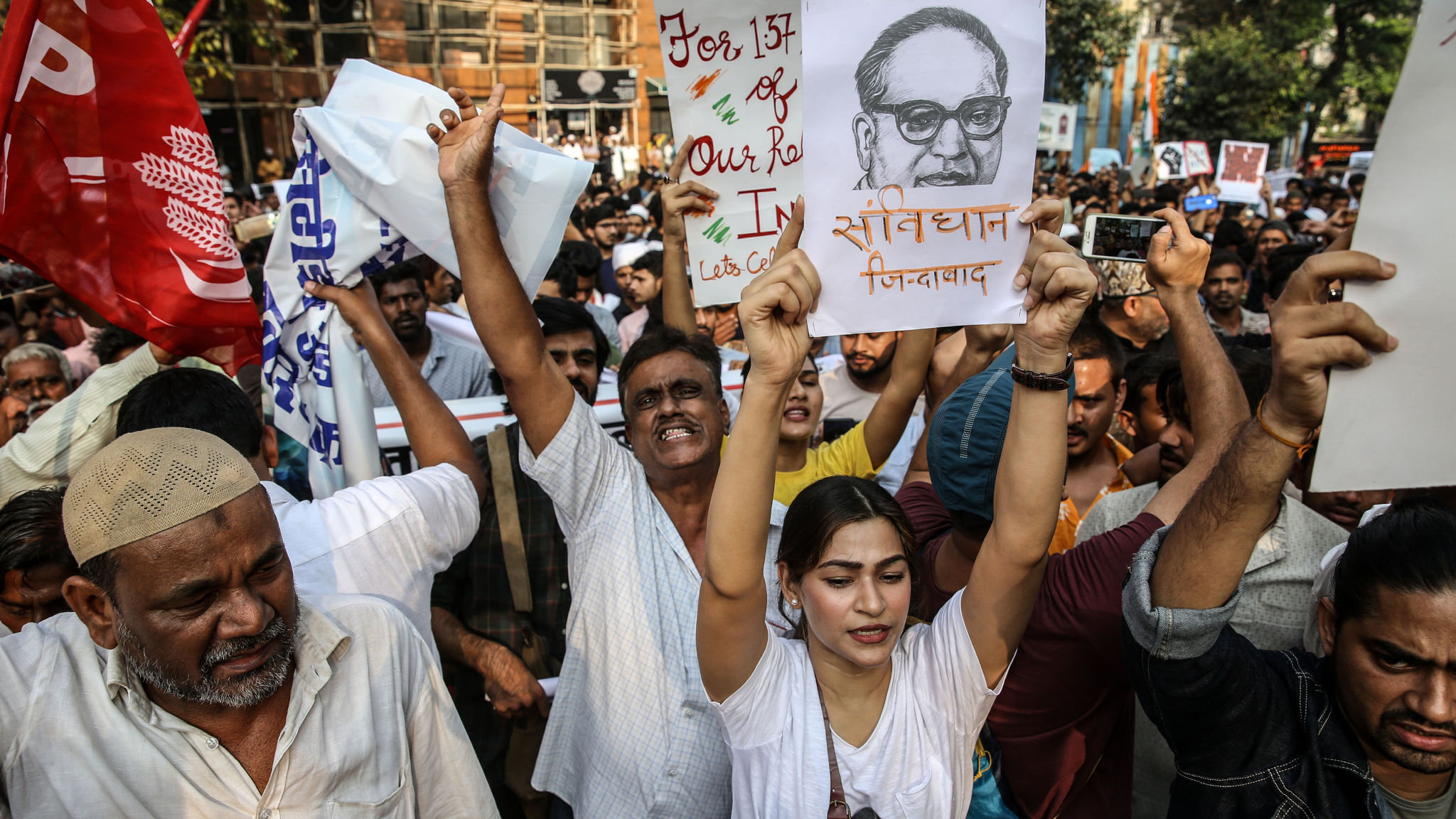
The wrestlers who are protesting against sexual harassment had planned to discard their medals into the Ganga River, a sacred river in India, as a symbol of their ongoing protest. However, their action was postponed after Naresh Tikait, a prominent farm union leader, intervened and persuaded them against doing so. The protest, led by Olympic medalist Sakshi Malik, world championships medalist Vinesh Phogat, and Olympic medalist Bajrang Punia, is aimed at raising awareness about the issue and demanding justice.

On Tuesday evening, the aggrieved wrestlers gathered on the banks of the river in the city of Haridwar, clutching their medals and surrounded by a crowd. Tearfully, they reconsidered their decision after Naresh Tikait arrived at the site and convinced them to give the government five more days to respond to their demands.

UWW’s condemnation of the treatment of the protesting wrestlers and its call for a thorough investigation highlight the international wrestling body’s commitment to protecting the rights and well-being of athletes. The wrestlers’ decision to postpone their symbolic gesture indicates their hope for a positive response from the government within the given timeframe. The ongoing protest serves as a reminder of the importance of addressing and combating issues such as sexual harassment in the world of sports.

Parenting In The Era Of Ubiquitous Screens And Social Media

An increasing number of states are taking action against Big Tech, the internet, and social media platforms. Montana recently became the first state to entirely ban TikTok, though the enforceability of this new law remains questionable. Other states, such as Arkansas and Utah, have introduced legislation to tighten regulations on social media platforms.

There appear to be three primary objectives behind these legal actions: preventing companies from collecting data on users and their children, safeguarding children online, and striking a balance between users’ rights and responsibilities when posting content online. For instance, should a platform be held accountable if it hosts content that results in harm to someone? As of now, the US Supreme Court has ruled “no.”

As a father of three teenage girls, I find the conversations surrounding smartphones and social media deeply personal. Like many parents, I initially viewed devices as mere entertainment for my children and a means of communication in emergencies. However, my perspective changed after reading Jean Twenge’s book, “iGen: Why Today’s Super-Connected Kids Are Growing Up Less Rebellious, More Tolerant, Less Happy – and Completely Unprepared for Adulthood – and What That Means for the Rest of Us.”

In her book, Twenge, a psychology professor at San Diego State University, argues that Generation Z (or iGen) is experiencing a fundamentally different upbringing than previous generations. She informed me that some of the most significant behavioral changes in human history coincided with the advent of smartphones. According to Twenge, today’s 12th-graders resemble eighth-graders from earlier generations, delaying participation in activities associated with independence and adulthood. They are less likely to socialize, drive, attend prom, or consume alcohol compared to their Gen X counterparts, instead spending more time scrolling through social media feeds. Though they may be physically safer, the long-term impact on their mental and brain health remains uncertain.

Twenge shared with me that she “saw just a very, very sudden change, especially in mental health but also in optimism and expectations … between millennials and iGen or Gen Z.” Her words resonated with me but also alarmed me. As a neurosurgeon, I often rely on evidence to address concerns, but when it comes to new technologies, there is a scarcity of data available. We frequently don’t even know what questions to ask, let alone have answers for them.

Consequently, my wife, Rebecca, and I found ourselves in a challenging and uneasy position: determining the appropriate age, duration, and type of screen time for our three iGen daughters based on limited information. I know I’m not alone in this struggle, as I often hear similar concerns from other parents, viewers, readers, and listeners. This is why my podcast, “Chasing Life,” dedicated an entire season to discussing this topic.

Examining the Data

Obtaining consistent statistics is challenging, but a 2023 survey conducted by reviews.org revealed that approximately 89% of American adults check their phones within 10 minutes of waking up. Astoundingly, the same survey indicated that American adults look at their phones an average of 144 times per day, or once every seven waking minutes!

The numbers for children are even more concerning. A 2022 Pew survey of individuals under 18 years old showed that 46% of American teens reported being online “almost constantly.” Additionally, 35% claimed to be “almost constantly” using one of the top five social media apps: YouTube, TikTok, Instagram, Snapchat, and Facebook.

These statistics may not be surprising, considering the endless content available for consumption. In April 2022, data company Domo reported that over 500 hours of video were uploaded to YouTube every minute on average. Meanwhile, an estimated 1.3 billion photos are shared on Instagram daily, according to a photo industry estimate. Furthermore, Snap Inc. stated that over 4 billion Snaps were sent each day as of 2020.

My daughters, aged 17, 16, and 14, are digital natives who have never experienced life without devices. I often think about how this is not the world they chose, but rather the one we handed to them. My youngest daughter once expressed her wish to be a millennial because that generation had phones without smartphones or social media, so they weren’t constantly tethered to their devices. She says that many teenagers today feel compelled to use social media, fearing they will be left behind otherwise.

Lessons Learned

It’s undeniable that screens and technology play a crucial role in modern life, but managing our interactions with them can be challenging. While working on this season of the podcast, I gained valuable insights from experts in the field.

To summarize my findings, I would highlight three main points:

  1. Initiate a meaningful conversation with your child, free from distractions and judgment. By discussing their screen usage, social media preferences, and feelings about online interactions, you may gain surprising insights and foster a more open dialogue. Dr. Michael Rich, co-director of the Clinic for Interactive Media and Internet Disorders at Boston Children’s Hospital, emphasizes the importance of understanding the pain points of young patients, saying, “I want to look more at what their life is from the time they wake up to the time they go to sleep.”
  2. Avoid assuming the worst. While it’s likely that your child spends more time on screens than you’d prefer, not every individual will develop a problem. Dr. Keneisha Sinclair-McBride, a clinical psychologist at Boston Children’s Hospital and an assistant professor of psychology at Harvard Medical School, reminds us that social media isn’t the primary concern for most teens. She explains that the challenges faced by today’s youth are similar to those of previous generations, adding, “It’s not like every kid is going to get mental health treatment because social media is ruining their life. That is definitely not the case at all.”
  3. Keep in mind the words of author Catherine Price: “Life is what we pay attention to.” This empowering concept reminds us that we have control over our experiences. When using our devices, Price suggests asking ourselves three questions: What for? Why now? What else? She explains, “The point is just to make sure that when we’re using our devices or whatever apps are on our devices, it’s the result of an intentional choice instead of just our minds and our brains being hijacked.”

By following these guidelines and making conscious choices, we can navigate the digital landscape more effectively and maintain a healthy balance in our lives.

Navigating the world of screens While exploring the topic of problematic media use during this podcast season, I’ve considered various metaphors to describe it. Is it an addiction like substances or gambling? Are devices designed to keep us hooked? While there are similarities, one key difference is that it’s not feasible to completely avoid technology.

A more fitting analogy might be food: we need both, but we must be mindful of our consumption. Another comparison could be a car or powerful tool: useful and impressive, but requiring control and proper handling. We should view these small supercomputers as tools, not toys for young children.

Did Rebecca and I flawlessly navigate this with our girls? No, but we didn’t have a precedent. “It didn’t exist when we were young, so we are learning how to manage it ourselves,” Rebecca stated. We’re adapting to the learning curve alongside our children.

The kids will be alright Technology is neither good nor bad; it just is. Gen Z acknowledges this and wants improvements. Advocates like Emma Lembke demand change, and lawmakers and tech executives are starting to listen. Lembke told Congress, “Make no mistake, unregulated social media is a weapon of mass destruction that continues to jeopardize the safety, privacy, and well-being of all American youth. It’s time to act.”

Lembke envisions a future where social media is built differently, with more transparent algorithms, an end to autoplay, and image filters that don’t perpetuate beauty standards. She and her peers are concerned for future generations.

We must learn to make better decisions about our digital diets. Dr. Keneisha Sinclair-McBride reminds us that our time and attention are valuable resources, and we should allocate them wisely.

Starting the screentime conversation Unsure how to discuss internet and social media use with your kids? Here are some conversation prompts:

  • Describe your typical phone usage in a day.
  • How much time do you spend on your phone daily? Too much, too little, or just right?
  • What are your favorite apps, games, or platforms, and why?
  • Do you have a healthy relationship with technology and social media? What does that look like?
  • Do you have fair screentime boundaries? Are they easy to stick to? Would you change the rules?
  • Has technology ever interfered with an activity you wanted to do?
  • Do you feel pressure from friends or school to be on your phone?
  • Do you know people who misuse technology?
  • What concerns you about technology or social media?
  • Have you tried reducing screentime? Why, and did it work?
  • Are you hopeful for your future? Why or why not?

Modi Advocates for Humanity and Human Values Amid Ukraine Crisis at G7 Summit

Indian Prime Minister Narendra Modi has spoken out on the conflict in Ukraine, describing the situation as an issue of humanity and human values, rather than politics or economics. Speaking at a G7 Working Session in Hiroshima, Modi called for a collective raising of voice against attempts to change the status quo, saying that all tensions and disputes should be resolved peacefully through dialogue. Modi’s comments came after meeting with Ukrainian President Volodymyr Zelensky the previous day and hearing him seeking global support against Russian aggression. The war in Ukraine had been the focus of the three-day summit.

The Indian Prime Minister said that India would do anything possible to help resolve the conflict, including strong advocacy for dialogue and diplomacy. Modi also called for all countries to respect the international law, territorial integrity of nations, and the UN Charter. He also referred to the border row between India and China in Eastern Ladakh and to Russia’s invasion of Ukraine.

The Prime Minister sought to address the issue of the profound effects of the food, fuel and fertilizer crisis on developing countries, which have limited resources. He said that global peace, stability and prosperity must be a common objective for all nations. Modi also referred to Lord Buddha and his teachings, saying that there was no problem in the modern age that Buddha’s teachings could not resolve, echoing his call for peaceful resolution and rejecting any attempts to change the status quo unilaterally.

The G7 countries represent the richest democracies of the world, and the summit held in Japan invited India and seven other countries. As part of his contribution to the summit, Modi set out India’s view on the Ukraine conflict, believing that it should be seen in a broader context of humanity and human values, rather than political or economic self-interest.

India has consistently pursued a diplomatic solution to conflicts. Following its independence in 1947, India became a leader in the non-aligned movement, which advocated neutrality in international affairs. It has been involved in many peacekeeping operations under the auspices of the UN, sending over 200,000 soldiers and providing aid to countries in need. Modi’s emphasis on peaceful resolution and respect for international law and the UN Charter reflects India’s long-held commitment to global peace and stability. “In India, and here in Japan too, Lord Buddha has been followed for thousands of years. There is no problem in the modern age, whose solution we cannot find in the teachings of Buddha,” said Modi.

The G7 countries discussed various issues at the summit, including the impact of Covid-19 on the global economy, climate change, and partnerships between the member nations on global issues. Japan invited India and seven other countries to the summit, as part of its effort to engage with the wider world and promote cooperation between nations. The G7 Presidency rotates annually among the member countries. Japan hosted the summit in 2016 and will do so again in 2021.

The Ukraine conflict remains unresolved, and Modi’s speech at the G7 highlights the need to address the issues underlying the conflict in a broader context of international relations and human values. By calling on all countries to respect international law and territorial integrity, Modi echoed India’s long-held commitment to peaceful resolution and global cooperation. The speech marks India’s contribution to tackling one of the world’s most pressing conflicts. “We have said from the beginning, that dialogue and diplomacy are the only way. And to solve this situation, we will try as much as possible, whatever can be done from India,” said Modi.

World-Renowned Health Leaders to Lead CMEs at AAP I’s 41st Convention in Philadelphia

(Philadelphia, PA: May 26, 2023)  “The 41st Annual AAPI Convention & Scientific Assembly scheduled to be held from July 6th to 9th, 2023 will feature world-renowned leaders in healthcare and academia, who are well known and are sought after around the world for their expertise and knowledge,” said Dr. Ravi Kolli, President of The American Association of Physicians of Indian Origin (AAPI).  “The multidisciplinary Continuing Medical Education (CME) during the convention allows specialists and primary care physicians to interact in an academic forum. The speakers at the CME will lead discussions on gaps between the current and best practices on wide-ranging topics,” he added.

It’s a well-known fact that physicians of Indian origin excel in their respective areas of work and continue to play key roles in patient care, administration, academics, and medical research. In order to cater to its diversity of medical specialties, AAPI continues to use a multi-disciplinary conference format. “The essence of AAPI is educational,” said Dr. Ravi Kolli, while describing the purpose of CME said.

“The 41st annual AAPI Convention in Philadelphia will provide physicians of Indian origin an opportunity to come together in an atmosphere of collegiality, enabling them to retrace and appreciate their common roots, culture, and bond that unites them as members of this large professional community,” said Dr. V. Ranga, Chair of AAPI BOT.

Picture : TheUNN

According to Dr. Anjana Samadder, President-Elect of AAPI, “This mission of AAPI translates into numerous CME and non-CME seminars by experts in their fields. CME will provide comprehensive and current reviews and guidelines for the diagnosis and treatment of various disease states to reduce morbidity and mortality and achieve cost-effective quality care outcomes. At the end of the activity, it is expected that attendees will gain an understanding of the causation, diagnosis, and best clinical practices for the management of the diverse group of diseases discussed during this program.”

Led by Dr. Sreeni Gangasani, AAPI CME Chair and Dr. Brahma Sharma, AAPI Convention CME Chair, the CME Committee has Drs. Gunjan Shukla, Sunder Rao, and SACHIN MEHTA as members.

“As the Chair of the AAPI CME Committee, I am proud to announce that our program will be providing the highest level talks for AAPI delegates,” said Dr. Sreeni Gangasani. “Our team has worked tirelessly to curate a lineup of speakers and presentations that will provide valuable insights and information to our attendees. We understand the importance of staying up-to-date on the latest research, trends, and best practices in healthcare and beyond, which is why we have chosen speakers who are experts in their fields and who are passionate about sharing their knowledge with our delegates. We hope that our program will inspire and empower our attendees to make a positive impact in their communities and beyond.”

According to Dr. Brahma Sharma, Chair of AAPI Convention CME Chair, “CME has been a major highlight of AAPI conventions.  This year, our teams’ approach has been holistic and balanced, with sessions focusing on both old and new: bedside and bench side and usual care, in addition to personalized approach to chronic diseases which have become our nemesis today. The goal is not just to educate about current concepts of chronic disease management but also inform about emerging concepts like Genomics, Gene-editing, and Artificial Intelligence, which play a critical role in managing chronic conditions. AAPI has been fortunate to be able to tap in some of the world’s leading physician-scientists in these areas of Medicine.”

In addition, there is the popular parallel track for Life style Medicine, which touches Mind- Body side, making it a wholesome CME session, giving everyone something that they would love. I thank Dr. Ravi Kolli for giving me the opportunity to work with him and his team during the convention. I hope all these will be informative as well as enlightening CME sessions, Dr. Sharma added.

The inaugural CME session on July 6th is being led by Dr. Satheesh Kathula, Clinical Professor of Medicine and a Board Certified Hematologist and Oncologist, who will  address the delegates on “Rise of Immunotherapy in Lung Cancer.” Dr. Sujeeth R Punnam, an Interventional, Structural Cardiologist & Certified Cardiac Device Specialist in Stockton, CA will present on: “Update and Long term outcomes on Transcatheter Aortic Valve Replacements.”

Dr. Prasad Chalasani, an Interventional Cardiologist at the Florida Heart Center and the Chief of Cardiology at Lawnwood Regional Medical Center & Heart Institute; Clinical Associate Professor at Florida State University School of Medicine and at Florida Atlantic University School of Medicine will share insights on “Role of LAA Left Atrial Appendage Closure in Atrial Fibrillation.”

“Advancing Access to Care through Licensure Portability and Telemedicine” will be the topic addressed by Dr. Humayun Chaudhary, President and CEO of FSMB.  Dr. Vikas Khurana, Program Director of the Gastroenterology Fellowship Program at The Wright Center for Graduate Medical Education will share his expertise on: “Inflammatory Bowel Disease in South Asian Patients.”

Chronic Disease: Non-Communicable Diseases is the theme for the CME session on July 7th. Dr. Pradeep Natarajan, Director, Preventive Cardiology MGH,  Associate Professor Harvard Medical School will lead the day’s sessions by focusing his address on: “Subclinical Atherosclerosis in South Asians: Early Detection and Management.” This will be followed by a session led by Dr. Sunder Rao, Senior Consultant at the Butler Health System MARS PA on: “Role of SGLT2 in Preventing Heart Failure.”

“Contemporary Approach in Prevention and Management of CKD” is the theme addressed by Dr. Wilcox Christopher, Chief Division of Nephrology and Hypertension, Georgetown. Dr. Rajnish Mago, Clinical Assistant Professor at the
University of Pennsylvania will speak about: “Current Concepts in Management of Bipolar Depression.”

Dr. Surender Neravetla, Cardiothoracic Surgeon, Ohio will provide education on: “Role of Diet/Salt in Pathogenesis of Chronic Disease.” Dr. Indranill Basu Ray, MD
Founder President of the American Academy of Yoga in Medicine will share his insights on: “Yoga/Meditation in Chronic Disease Management.”

Dr. Indira Gurubhagavatula, Associate Professor Medicine and Director Sleep Medicine at UPenn will speak about: “Sleep and Public Health Policy,” while the concluding session for the day will be led by Dr. Vemuri S. Murthy, Adjunct Faculty
at the Department of Emergency Medicine, University of Illinois College of Medicine
Chicago, Illinois, who will address the delegates on: “Update on Sudden Cardiac Arrests during COVID-19 Pandemic & Cardiac Arrest Registries, with Focus on India.”

The final day of the convention, July 9th will have “Frontier of Medicine” as the main theme. Dr. Sek Kathieresan, Director of Preventive Cardiology MGH, and Associate Professor, Harvard Medical School will lead an insightful session on: “Genomics and Gene Editing in Cardiovascular Disease.” Dr. Partho Sengupta, Professor CV Medicine at the Robertwood Johnson Medical School Rutgers University will share with the delegates on: “AI and Cardiovascular Imaging.”

“Percutaneous Mechanical Support in High-Risk PCI/ Cardiogenic Shock” is the theme addressed by Dr. Jon George, Director of Complex PCI at UPenn Hospital. Dr. BK Kishore, Academician, Innovator, and Entrepreneur, University of Utah Health and ePurines, Inc., Salt Lake City, Utah will lead the session on: “Impact of AI on Molecular Diagnosis and Therapy.”

Lifestyle Medicine Track will be the theme during the concurrent session on July 9th morning. Dr. Nina Vasan at the Department of Psychiatry, Stanford University will inaugurate the Track with her address on: “Mental Health and Social Media.” Dr. Natrajan Rangnathan, Founder and Lead Scientist will share his insights on: “Gut Biome/Dysbiosis and Chronic inflammation.”

“Personalized Diabetes Care and Glucose Device Monitoring” is the topic addressed by Dr. Bantwal Baliga, Chief Endocrinology Clinics, Georgia, and the concluding session will be led by Dr. Nori Dattatreyudu, Chair Oncology, NY Presbyterian Hospital, and will focus on: “Prevention and Precision in Cancer.”

“Giving them a platform to celebrate their accomplishments, the annual convention to be attended by nearly 1,500 physicians of Indian origin, it will also provide a forum to renew their professional commitment through continuing medical educations activities,” said Dr. Sanjay Gupta, Convenor of AAPI Convention.

“Physician leaders who will be part this convention have excelled in different specialties and subspecialties and occupy high positions as faculty members of medical schools, heads of departments, and executives of hospital staff. The AAPI Convention offers an opportunity to meet directly with these physicians who are leaders in their fields and play an integral part in the decision-making process regarding new products and services,” Dr. Raghu Lolabhattu, CEO of the Convention said.

American Association of Physicians of Indian Origin (AAPI) represents more than 100,000  Indian American Physicians and reflects the range of physician specialties seen in the physician community at large with 61% in Primary Care, 33% in Medical sub-specialties and 6% in surgical sub-specialties. Medical specialty representation includes pediatrics, psychiatry, anesthesiology/pain management, cardiology, family medicine, obstetrics and gynecology, oncology, gastroenterology pathology, endocrinology, nephrology, rheumatology along with many other fields.

AAPI is an umbrella organization that has nearly 250 local chapters, specialty societies and alumni organizations. For over 40 years, Indian physicians have made significant contributions to health care in this country, not only practicing in inner cities, rural areas and peripheral communities but also at the top medical schools and other academic centers. Almost 12% of medical students entering US schools are of Indian origin. Headquartered in Oak Brook, Illinois, AAPI represents the interests of over 100,000 physicians, medical students, and residents of Indian heritage in the United States. It is the largest ethnic medical organization in the nation. For more details and registration for the convention, please visit:  www.aapiconvention.org and www.aapiusa.org

AAPI Leads Efforts Connecting Medical Education Boards (NREMS) In India With NBME Of USA Conducting USMLE

(Chicago, IL; May 26, 2023) India, home to one of the oldest medicinal systems in the world has made remarkable changes in medical education in the recent past. As the world is changing to meet the ever-changing needs, medical education in India is moving forward with the objective of rendering every medical graduate and postgraduate the best in the world. Several changes are being made for graduates from Indian schools to be at par and for easy mobilization around the world.

India is introducing the NEXT examination, which is the licensing examination similar to USML in the US, while the UKMLE is starting in the UK in 2024 in the place of PLAB examination.

NMC applied for WFME Recognition status, which is mandatory to apply for USMLE examination. 694 Medical schools in India with106,083 MBBs admissions a year selected from 2.1 million applicants through the UG NEET examination, one day across India in 3 hours. With the government policy of one medical college for every district to meet the Indian need,

medical education has many challenges in the transfer of knowledge and quality.

NBEMS is responsible for NEET PG Entrance Test, which is taken up by more than 200,000 students once a year. India’s Health Minister Mandaviya has said that the government of India is working to equal the number of medical UG and PG seats in 4 years: Post-graduate seats have grown from 34,000 to 64,000 in the last 8 years, the Union Health Minister said in a conference. To overcome the shortage of teachers in medical colleges, the Medical Council of India (MCI) has increased the professor-student ratio from 1:2 to 1:3 for postgraduate (PG) courses in all Medical Colleges from the 2018-19 academic session.

In this context, the American Association of Physicians of Indian Origin (AAPI) has led efforts to help streamline medical education in India to meet the global standards for medical practice around the world.

AAPI took the lead last month to bring together the leaders of National Board of Examination in Medical Science (NBEMS) India, National Board of Examination in Medical Science (NBME) USA, and the Federation of State Medical Boards (FSMB) on April 27th at the NBME office in the nation’s capital, Washington, DC.

Dr. Lokesh Edara, BOT-Chair Elect, and Dr. Sumul N. Raval, current Treasurer of AAPI and Secretary-Elect represented AAPI at the meeting.

NBME was represented by Dr. Peter Katsufrakis; Dr. Mike Jodoin, USMLE Program; Dr. Daniel Jurich, Growth and Innovation, Overview National Board of Examinations; and, Pamela Treves, Senior Vice President of NBME’s Growth and Innovation Division.

Dr. Abhijat Sheth represented NMBE – India. FSMB was represented by Dr. Humayun Chaudhry, President and CEO of the Federation of State Medical Boards.

“Overview National Board of Examinations” was the main theme discussed during the meeting. According to Dr. Lokesh Edara, Chair-Elect of AAPI Board of Trustees, “AAPI hoped the excellence gained through long term vision, insight and hard work with both organizations and exchange of ideas and challenges will benefit the medical education system in India and help tens of thousands of medical graduates coming from India to have recognition in the US.”

He urged Dr. Sheth to increase family medicine PG seats and nationalized formative assessment tests in theory part for all post graduates and for post-graduate exit theory examination suggested computerized online test. Nationwide E-Learning systems for higher transfer of Knowledge in medical education

Dr. Raval said, “In order for us to meet the unprecedented demand and to bring up the quality of education, the Indian medical education system is changing rapidly. The meeting today was a great beginning to facilitate collaborative efforts between India and the United States.”

Dr. Sheth presented the NBEMS mission and PG NEET examination, FMGE examination and more than 50 specialties for postgraduate and super specialties courses they are conducting and graduating. He invited all the participants at the meeting to their office in New Delhi during their next visit to India. AAPI leaders invited the leadership of these regulatory groups to the AAPI annual convention in Philadelphia in July 2023 and to the AAPI Global Healthcare Summit meeting in New Delhi in January 2024.

Dr. Katsufrakis provided an update on the NBME history and current examination-system.  Dr. Katsufrakis is a board-certified Family Physician, whose professional focus has been to improve the quality of care provided to patients through effective assessment of health care professionals, and is leading the NBME to grow as an ally in helping health professionals maximize their mastery and performance.

Dr. Humayun Chaudhry, President and CEO of the Federation of State Medical Boards (FSMB), which was founded in 1912 and represents all 70 of the nation’s state and territorial medical licensing boards, represented FSMB at the meeting. FSMB operates the Federation Credentials Verification Service and co-manages the United States Medical Licensing Examination (USMLE) with the National Board of Medical Examiners.

Michael Jodoin is the Senior Vice President for Customer and Portfolio Management at NBME. In this role, he is accountable for the strategic and operational leadership for NBME’s portfolio of products and services and the customers and stakeholders that we serve.

Daniel Jurich serves as associate vice president for the USMLE® program. In this role, he leads and supports various validity, equity, and security initiatives that enhance the quality of USMLE for students, medical educators, clinicians, and licensing authority members.

Pamela Treves is the Senior Vice President of NBME’s Growth and Innovation Division. This division supports the organization’s strategic goals and vision by providing leadership to accelerate the pace of change and innovation for our products and services – in collaboration with medical education and health care to better support learners, advance assessment, and improve the care that patients receive.

Dr. Abhijat Sheth, President, National Board of Examinations, since 2016 completed his post-graduation in Cardiothoracic Surgery from Sheth KM School of Postgraduate Medicine and Research, Ahmedabad. He extensively worked as an academician at various medical colleges in India.  He worked in SMT NHL Medical College while in UK , worked in four NHS Trust Hospitals, and as the Director of Medical Services at Apollo Hospitals International LTD, Ahmedabad in India.

Dr. Lokesh Edara, board certified in Allergy and immunology in Private practice since 1990, is a former President of the Michigan Allergy Asthma Society and former President of Calhoun County Medical Society. He serves as the President of the Association of Allergists and Immunologists from India 2001-2003. He is the Chairmen of AAPI Global Medical Education and Chairmen-Elect of AAPI Board of Trustees 2023-2024.

A board-certified neurologist and authority on brain tumors, Dr. Sumul N. Raval is one of the few neuro-oncologists in private practice in the United States. Dr. Raval is the founder and director of the David S. Zocchi Brain Tumor Center at Monmouth Medical Center – New Jersey’s first and most comprehensive facility specializing in brain tumors. He was recently elected as the Secretary of AAPI for the year, 2023-2024.

Expressing appreciation for Dr. Edara and Dr. Raval for taking the lead in facilitating interaction and dialogue between the Medical Education Boards of India and the United States, Dr. Ravi Kolli, President of AAPI said, “Since its inception over four decades ago, AAPI has been in the forefront advocating for medical school education reform and for the medical graduates from India to be treated on par with their counterparts in India. India is already leading the global pharmaceutical industry, and rebooting medical education will help India enter the league of leaders in healthcare around the world. The meeting today was a great start, and I look forward to AAPI continuing to lead such efforts in the coming years benefitting the medical fraternity.” For more information on AAPI and its many initiatives, please visit: www.aapiusa.org

India’s Response to U.S. State Department Report on Religious Freedom

The government’s response to the U.S. State Department’s report on religious freedoms in India and other nations was not entirely unexpected. Released by U.S. Secretary of State Antony Blinken, the report highlights numerous incidents that have raised concerns about the ongoing targeting of religious minorities. It also records instances of hate speech by various leaders, including members of the ruling Bharatiya Janata Party (BJP). Following the report, a senior official cited the U.S. Holocaust Museum’s ranking of India as eighth out of 162 countries in terms of the risk of “mass killing” – a grave accusation. The Ministry of External Affairs (MEA) spokesperson dismissed the report as being founded on “misinformation and flawed understanding” and characterized the official’s comments as “motivated and biased.”

India’s rejection of the report aligns with its previous reactions to similar reports from the U.S. Commission on International Religious Freedom (USCIRF) and the U.S. State Department, which have become increasingly critical of the country. These reports note that senior U.S. officials have repeatedly urged New Delhi to denounce religious violence and hate speech, suggesting that their efforts have been unsuccessful. In response, the MEA has stated that it “values” its partnership with the U.S. and engages in “frank exchanges.”

Although the government’s current response is firm, it is not as severe as its reaction to a comparable report in June last year, when the MEA accused the U.S. government of pandering to “vote bank politics.” The timing of this report – just before Prime Minister Narendra Modi’s meeting with U.S. President Joe Biden at the G-7 summit in Japan and ahead of Modi’s state visit to the U.S. in June – may be a factor in the government’s more measured response. Additionally, the government might appreciate that despite its strong criticism, the State Department has not labeled India as a “Country of Particular Concern,” as the USCIRF has frequently recommended.

Considering the consistent reporting on religious persecution in India by the U.S. government, New Delhi may want to address these allegations more proactively and produce its own report on the country’s state of religious freedom as a counter-argument. As Prime Minister Modi noted in a letter to a resident of Jammu and Kashmir, the world is attracted to India due to the “natural and instinctive love” Indians have for diversity. The government must develop more comprehensive strategies to refute unfounded and inaccurate challenges to India’s reputation and make improvements in areas where shortcomings are identified.

WHO Urges Not To Use Sugar Substitutes For Weight Loss

Instead of relying on sugar substitutes, individuals should reduce their consumption of sugar-sweetened beverages and opt for raw or lightly processed fruit as a source of sweetness. The new guidelines aim to assist government health organizations in implementing policy changes based on the latest scientific analysis.

The World Health Organization (WHO) recommendation includes both low or no-calorie synthetic sweeteners and natural extracts, such as acesulfame K, aspartame, advantame, cyclamates, neotame, saccharin, sucralose, stevia and stevia derivatives, and monk fruit. According to Francesco Branca, stevia and monk fruit are newer sweeteners with less published research, but they likely share a similar physiological mechanism with other sweeteners. He states, “We cannot say they are different from the others based on the data we have — they play the same role.”

Branca emphasizes the importance of reducing dependence on free sugars and non-nutritive sweeteners, particularly in early childhood. Registered dietitian Lisa Drayer suggests training your taste buds by gradually cutting back on sugar, including artificial sweeteners, and incorporating more protein and fiber-rich foods into your diet. Additionally, she advises Sportschoosing no-sugar-added foods, avoiding sugar-sweetened drinks, enjoying fruit for dessert, and being aware of hidden sugars in various food products.

By checking nutrition facts labels and recognizing alternative names for added sugars, individuals can make healthier choices and reduce their sugar intake. This approach can help tame one’s sweet tooth and lessen dependence on sugar and sweeteners.

Bill Reintroduced In Congress To Protect Ageing Out Kids From Deportation

A group of US lawmakers reintroduced a bipartisan legislation to protect children of long-term visa holders, known as documented dreamers, from ageing out when they turn 21, forcing them to self-deport. The legislation aims to freeze of the dreamers who have grown up in the United States until they find a way to change their visa status.

Congresswoman Deborah Ross and Senator Alex Padilla made the announcement during a press conference at Capitol Hill on May 17, 2023, alongside over 40 dreamers.

The reintroduction of the America’s CHILDREN Act, that aims to offer the youngsters a pathway to citizenship, drew strong support from Indian- American Representatives Ami Bera and Raja Krishnamoorthi. They were joined by  Representatives Mariannette Miller-Meeks, Young Kim and Senator Rand Paul.

Stressing the significance of the bill, Krishnamoorthi said, “Many children of long-term visa holders who have grown up in the United States and embraced the American Dream as their own are forced by the ongoing failures of our immigration system to leave before they can start their careers and write their own American success story.”

“As the proud son of immigrants, I’m honoured to join Representative Ross and Senator Padilla in introducing America’s Children Act to safeguard over 200,000 children at risk of having to self-deport. It’s time that we get this critical legislation across the finish line and signed into law,” Representative Bera said.

Lawmakers emphasized that the immigration system needs to protect those who come to the US legally and support them as they work to contribute to the development of the country.

The proposed bill will protect any child who has been in the United States for an aggregate of eight years before the age of 21 as a dependent of an employment-based non-immigrant by allowing them to remain dependent on their parent’s non-immigrant visa until they can find another status. The bill seeks to establish age-out protections that lock in a child’s age on the date their parents file for a green card and provide work authorization for individuals qualifying for age-out protection.

Welcoming the move, founder of Improve the Dream, Dip Patel said, “Fixing this loophole will ensure that America reaps the benefits of the contributions of the children it raised and educated. Ending ageing-out will empower people to tap into their talents and ambitions, helping us and our country reach our fullest potential.”

In 2021, Representatives Ross, Miller-Meeks, Krishnamoorthi, and Kim first introduced the America’s Children Act in the House. Companion legislation was introduced in the Senate by Senators Padilla and Paul, according to a release.

U.S. Court Approves Extradition of Pakistani-Origin Canadian, Accused in 26/11 Attack in India

Indian officials have secured the extradition of a Pakistani-Canadian businessman, Tahawwur Rana, to face charges in connection with the 2008 Mumbai terrorist attacks. The US court approved India’s request to extradite Mr. Rana, who is a US resident. The National Investigation Agency of India is investigating his alleged role in the attacks. Rana was arrested on an extradition request by India, which accuses him of knowing that his friend, David Coleman Headley, was involved with Lashkar-e-Taiba, an extremist group. The US government has claimed that Rana supported the terrorist group by providing Headley with cover for his activities. Six Americans were among the 166 people who were killed during the 60-hour siege in Mumbai. Federal prosecutors have concluded that Rana has committed the crime of commission of a terrorist act, and he faces charges that include conspiracy to commit murder and terrorism offenses.

Judge Jacqueline Chooljian, US Magistrate Judge of the US District Court Central District of California, reviewed Rana’s case in a 48-page court order. The extradition treaty between India and the United States is responsible for the extradition decision. The judge said that India has issued an arrest warrant and charged Rana with a range of offenses that fall within the jurisdiction of the treaty. The court has given the US Secretary of State jurisdiction over the extradition of Rana to India.

“Based on such a review and consideration, and for the reasons discussed herein, the Court makes the findings set forth below, and CERTIFIES to the Secretary of State of the United States the extraditability of Rana on the charged offenses that are the subject of the Request,” Judge Chooljian said.

The US government has argued that Rana knew about Headley’s meetings, the discussions, and the attack targets. They have further argued that Rana was part of the conspiracy, and there is probable cause that he committed the substantive crime of commission of a terrorist act. Rana’s attorney opposed the extradition, but the court ruled that there is sufficient competent evidence to establish probable cause that Rana is the individual who has been charged in India, and whose extradition has been sought by India.

“The foregoing charged offenses constitute extraditable offenses within the meaning and scope of the Treaty and over which India has jurisdiction,” Judge Chooljian concluded.

The US government approved Mr. Rana’s extradition to India in March, adding that he would be allowed to serve a 14-year sentence that he is currently serving in the US before being sent to India. A few days ago, Judge Chooljian ordered Rana to remain in US custody until the US Secretary of State approved his extradition to India.

Rana’s extradition is significant because it marks the first time that someone has been extradited from the US to India for trial. The US government has shown its commitment to the global fight against terrorism by approving Rana’s extradition despite his residency in the US.

India has long pressed Pakistan to extradite seven men accused of planning and executing the attacks, including Lashkar-e-Taiba’s founder, Hafiz Saeed. However, Pakistan has been reluctant to cooperate with Indian authorities, citing insufficient evidence.

The trial against Rana in India is likely to draw significant media attention, and prosecutors will have to ensure that they have a strong case against him to ensure his conviction. “Rana’s extradition would send a signal to terrorist organizations that they cannot operate with impunity and that the world community is united in combating terrorism,” said US Attorney General Merrick Garland earlier this year.

Report Reveals Staggering Disparity Among Global Top 1%: Monaco Tops the List, India Ranks 22nd

Many people associate wealth with owning a luxurious home, an extravagant car, and other valuable possessions. However, the top one per cent of the world’s wealthiest individuals possess far more than most can fathom.

Global real estate consulting firm Knight Frank recently published its updated Wealth Report, which discloses the amount of wealth required to become part of the elite one per cent in various countries. Monaco leads the pack, where entering the top tier necessitates a net worth of at least eight figures. According to Knight Frank’s findings, the starting point for Monaco’s wealthiest one per cent is $12.4 million.

Wondering about India? The country ranks 22nd on the list of 25 nations featured in the wealth report, with a minimum requirement of $175,000 (Rs 1.44 crore) to join the top one per cent. India places higher than South Africa, the Philippines, and Kenya.

Knight Frank’s 2022 report highlights that the number of ultra-high-net-worth individuals in India grew by 11 per cent, driven by thriving equity markets and a digital revolution. Among Asian countries, Singapore boasts the highest entry threshold, with $3.5 million needed to join the top one per cent, slightly ahead of Hong Kong’s $3.4 million.

Forbes’ 2023 list of billionaires includes 169 Indians, up from 166 the previous year. Mukesh Ambani retains his title as the richest person in both India and Asia, despite an eight per cent decrease in his wealth over the past year.

Knight Frank’s findings emphasize how the pandemic and rising living expenses have exacerbated the divide between affluent and impoverished nations. The entry-level for Monaco’s wealthiest is over 200 times greater than the $57,000 required to be part of the top one percent in the Philippines, which ranks among the lowest in Knight Frank’s study.

Underwater Scanning Project Sheds New Light on Titanic Wreck

The enigmatic sinking of the Titanic in 1912, a luxury passenger liner, has captivated the imagination of many for years. Recent developments in underwater scanning technology might finally shed light on some of the unresolved questions surrounding the catastrophe that claimed over 1,500 lives.

A group of scientists collaborated with deep-sea investigators Magellan and Atlantic Productions to develop a highly accurate digital replica of the Titanic wreck, as mentioned in a Wednesday press release. This groundbreaking project, dubbed the “largest underwater scanning project in history,” has allowed researchers to “reveal details of the tragedy and uncover fascinating information about what really happened to the crew and passengers on that fateful night” of April 14, 1912.

A specialist ship stationed 700 km (435 miles) off the Canadian coast conducted the scans during the summer of 2022. The team strictly adhered to protocols that forbade any disturbance to the wreckage, ensuring it was treated with the utmost respect. The resulting digital model captured every aspect of the three-mile debris field in intricate detail, including both the bow and stern sections that separated during the 1912 sinking.

Titanic expert Parks Stephenson, who has been studying the ship for two decades, lauded the project as a “gamechanger” that revealed “details never seen before.” He said, “We’ve got actual data that engineers can take to examine the true mechanics behind the breakup and the sinking and thereby get even closer to the true story of the Titanic disaster.”

One notable discovery includes the propeller’s serial number, visible for the first time in many years. The expedition amassed approximately 715,000 images and 16 terabytes of data, making it “ten times larger than any underwater 3D model that’s ever been attempted before,” according to Magellan CEO Richard Parkinson.

Parkinson acknowledged the mission’s challenges, such as battling harsh weather conditions and technical difficulties. However, the new mapping technique has “effectively taken away the water and let in the light,” as stated in the press release. Gerhard Seiffert, a 3D capture specialist, explained that the “highly accurate photorealistic 3D model” allows viewers to see the entire wreck for the first time, adding, “This is the Titanic as no one had ever seen it before.”

Stephenson believes this groundbreaking mapping will mark the “beginning of a new chapter” in Titanic research and exploration.

World Leaders In Hiroshima When Nuclear Tensions Are On The Rise

On August 6, 1945, following President Harry Truman’s orders, the Enola Gay, a B-29 aircraft, released an atomic bomb on Hiroshima, Japan. This event led to the deaths of over 100,000 people, the city’s devastation, and accelerated the conclusion of World War II. As the 75th anniversary of the bombing approached, Joe Biden, who was campaigning for the presidency at the time, reflected on the horrifying images from Hiroshima and Nagasaki, stating that they “still horrify us.”

He emphasized that these events serve as a reminder of “the hideous damage nuclear weapons can inflict, and our collective responsibility to ensure that such weapons are never again used.” Now-President Biden is set to visit Hiroshima during the G-7 summit, where he and other global leaders will address various issues, including Russia’s invasion of Ukraine, climate change, and the worldwide economy.

Japanese Prime Minister Fumio Kishida, who represents Hiroshima in Japan’s legislature, expressed his hope that the summit’s location would draw attention to the nuclear weapons threat. In this context, the leader of the nation behind the bombing will undoubtedly play a significant role in any commemorative activities. Former President Barack Obama was the first sitting U.S. president to visit the city in 2016, speaking at its Peace Memorial.

Although he did not apologize for the use of atomic weapons, he honored the victims and highlighted the importance of human institutions’ progress alongside technological advancements. He said, “Hiroshima teaches us this truth.” Jon Wolfsthal, who worked on nuclear proliferation during the Obama Administration, shared his experience of planning Obama’s trip and its emotional impact on the people of Hiroshima.

Biden’s visit, though different due to the G-7 context, still holds symbolic importance. As Wolfsthal noted, “You have a sitting U.S. president, a man with control over the world’s most powerful nuclear arsenal, going to the place where nuclear weapons were first used. That has impact.” This visit comes at a time when nuclear tension is at its highest since the Cold War. North Korea’s missile tests and threats towards South Korea have led Biden to reiterate the U.S.’ commitment to defending South Korea with nuclear weapons. Additionally, China is expanding its nuclear arsenal, Iran is pursuing nuclear weaponry, and Russia remains a significant concern.

Since Russia’s invasion of Ukraine, the relationship between the U.S. and Russia has worsened, putting the future of the New START nuclear arms control treaty, set to expire in early 2026, in jeopardy. Furthermore, President Vladimir Putin and other high-ranking Russian officials have consistently threatened to use nuclear weapons in Ukraine, prompting Biden to warn Putin of severe consequences.

Nuclear experts are stunned by this ongoing nuclear posturing. Susan Burk, who worked on nuclear issues at the State Department for decades and is currently on the board of the Center for Arms Control and Non-Proliferation, said that even during the coldest days of the Cold War, the U.S. and Soviets maintained a substantive dialogue on nonproliferation issues. She finds it alarming that Putin frequently references Hiroshima and Nagasaki to highlight that the United States was the first to use nuclear weapons against another nation, stating, “The fact that it was done once doesn’t mean that it would be OK for someone to do it again.”

Burk is among those who have signed a letter urging Biden to seize the opportunity of his visit to Hiroshima to deliver a significant speech on nuclear threats. Jon Wolfsthal argued that regardless of when or where it occurs, Biden must soon outline a clear policy for de-escalating the various growing nuclear threats the world faces.  He questioned, “What is the policy that is going to tie these different pieces together? On China, on Russia, on North Korea, on Iran? On our own nuclear arsenal?”

A National Security Council spokesperson downplayed the possibility of a major nuclear speech during Biden’s visit, stating that he plans to “pay his respects to the innocent who lost their lives” and “reaffirm the U.S.’s commitment to nuclear nonproliferation.” However, they noted that the broader G-7 agenda remains the primary focus.

Swiggy CEO Says, Food Delivery Business Has Turned Profitable

Swiggy CEO Sriharsha Majety has said that their food delivery business has turned profitable (as of March 2023), after factoring in all corporate costs, excluding employee stock option costs.

Without sharing any numbers, Majety said that this is a milestone for food delivery globally, as Swiggy has become one of the very few global food delivery platforms to achieve profitability in less than nine years since its inception.

“Our teams are more in sync than ever with restaurant partners to improve their experience with Swiggy and create mutual wins. As a result, our restaurant net promoter score (NPS) has improved by over 100 per cent in the past 8 quarters,” he mentioned.

Last year, Swiggy acquired Dineout for around $120 million in an all-stock deal.

Today, “it is the leader in the dining out category with more than 21,000 restaurant partners across 34 cities”, said the CEO.

The CEO also said that the are excited about the trajectory of quick commerce business, Instamart.

“We’ve also made strong progress on the profitability of this business and we’re on track to hit contribution neutrality for this 3-year-old business in the next few weeks,” Majety informed.

According to market research firm RedSeer, the quick commerce domain is anticipated to touch $5.5 billion by 2025.

Swiggy’s losses doubled to Rs 3,629 crore in FY22 compared to Rs 1,617 crore in the last fiscal year.

Its revenue grew 2.2 times to Rs 5,705 crore during FY22 as opposed to Rs 2,547 crore in FY21, according to its annual financial statement with the Registrar of Companies (RoC). (IANS)

US Court Clears Extradition Of 26/11 Attack Accused To India

A US court has cleared the extradition of Pakistani-Canadian businessman Tahawwur Rana to India where he is sought for his involvement in the 2008 Mumbai terror attacks.

Said to be linked with Pakistan’s Inter-Services Intelligence (ISI), Rana, 62, was arrested in the US for his role in attacks that saw 10 Lashkar-e-Taiba (LeT) terrorists storm buildings in Mumbai, killing 164 people, including six Americans, in a 60-hour siege.

“The court has reviewed and considered all of the documents submitted in support of and in opposition to the Request and has considered the arguments presented at the hearing,” Magistrate Judge of the US District Court of California, Judge Jacqueline Chooljian, said in a 48-page court order on Tuesday, which was released on Wednesday.

“Based on such review and consideration and for the reasons discussed herein, the court makes the findings set forth below and certifies to the Secretary of State of the US the extraditability of Rana on the charged offenses that are the subject of the Request,” the judge said in the order.

Rana’s arrest in the US was made at India’s request as per the 1997 Extradition Treaty between the two countries.

He was convicted in Chicago in 2011 of providing material support to the LeT, which planned the Mumbai terror attacks.

The development comes after a US court last month dismissed a status conference motion moved by Rana, stating that it anticipates a ruling on his extradition to India within 30 days.

Prosecutors in the court argued that Rana knew that his childhood friend Pakistani-American David Coleman Headley was involved with the LeT, and helped him in scouting locations and landing zones in Mumbai for carrying out the attack.

Rana was also aware of what was discussed in Headley’s meetings, including planning of the attacks as well as the targets.

While the extradition was contested by his lawyer, the judge ruled that there is sufficient competent evidence to extradite him.

The extradition had been requested for conspiracy to wage war, to commit murder, to commit forgery for the purpose of cheating, to use as genuine a forged document or electronic record, and to commit a terrorist act; waging war; murder; committing a terrorist act; and conspiracy to commit a terrorist act.

“It is therefore ordered that Tahawwur Hussain Rana be and remain committed to the custody of the US Marshal pending a final decision on extradition and surrender by the Secretary of State to India for trial of the offences as to which extradition has been granted pursuant to Title 18, US Code, section 3186 and the Treaty,” the Judge ruled.

Rana was born in Chichawatni in Pakistan’s Punjab province, and attained his medical degree from the Cadet College Hasan Abdal, a military residential college in Hasan Abdal, Attock district.

In this college, he met Headley, who became a major ISI operative. A physician by profession, Rana served as a captain general duty practitioner in the Pakistan Army Medical Corps.

Rana and his wife, who is also a physician, immigrated to Canada in 1997, and obtained Canadian citizenship in June 2001.

The couple lived primarily in Chicago and owns several businesses, including an immigration service agency. (IANS)

Shah Rukh Khan Hosts Ambassador Garcetti In ‘Mannat’

The newly-appointed US Ambassador to India Eric Garcetti was hosted by Bollywood superstar Shah Rukh Khan at his home ‘Mannat’ in Mumbai.

Garcetti took to Twitter, where he shared a string of pictures from his visit, which also features SRK, his wife Gauri and his manager Pooja Dadlani.

He captioned the image: “Is it time for my Bollywood debut? Had a wonderful chat with superstar @iamsrk at his residence Mannat, learning more about the film industry in Mumbai and discussing the huge cultural impact of Hollywood and Bollywood across the globe. #AmbExploresIndia.”

Shah Rukh was seen in a black sweatshirt, matching denims and a cap. Gauri was seen in a black outfit too. Pooja opted for a white shirt and denims. The room, in which they gathered, had a red brick wall on one side in which a huge painting was hung. A chandelier also hung from the ceiling. Couches along with a coffee table were also seen in the picture.

On the acting front, Shah Rukh Khan was recently seen in the blockbuster ‘Pathaan’ alongside John Abraham and Deepika Padukone. He is now gearing up for his next titled ‘Jawan’,by Atlee. The film also features Nayanthara, Vijay Sethupathi and Sanya Malhotra in the lead roles. He also has Rajkumar Hirani’s upcoming film ‘Dunki’ opposite Taapsee Pannu.

The film is all set to hit the theatres on September 7. Earlier the film was scheduled to hit the theatres on June 2. It is billed as an event film with high-octane action sequences. Shah Rukh’s production company Red Chillies Entertainment has produced it. Apart from Jawan, Shah Rukh will also be seen in director Rajkumar Hirani’s upcoming film Dunki opposite Taapsee Pannu.

Indian-American Wins Democratic Nomination For Top County Post In Pennsylvania

Indian-American attorney and educator Neil Makhija has won the Democratic nomination for Montgomery County Commissioner, thus inching closer to becoming the first Asian-American to hold the top post in Pennsylvania state.

Makhija had thrown his hat in the ring for the primary election on Tuesday for Commissioner of Montgomery County, which has one of the largest Asian-American populations in Pennsylvania.

“It’s official! Our underdog campaign succeeded and I have officially won the Democratic nomination for Montgomery County Commissioner,” Makhija took to his Twitter to share the news on Wednesday.

“None of this would have happened without my incredible team + supporters, and for that I am immeasurably grateful. Together, we made history,” he tweeted.

Makhija, who belongs to a Sindhi family from India, will now be competing in the November general election to determine control of the three-member Board of Commissioners in Pennsylvania’s third largest county with over 865,000 people.

If elected, the 36-year-old election law professor at the University of Pennsylvania would be the first South Asian member to serve for the position left open by outgoing commissioner Valerie Arkoosh.

“Congratulations to my friend, @NeilMakhija, on becoming the Democratic nominee for Montgomery County (PA) Commissioner!,” Aruna Miller, Maryland’s first Indian-American Lieutenant Governor, tweeted.

In an email to his supporters, a victorious Makhija said his campaign “inspired a new and diverse coalition of voters to turn out to vote in every corner of the county”.

Montgomery County Commission is the governing body of Montgomery County, consisting of five members who are elected by districts.

Each Commissioner is elected to a four-year term and represents approximately 45,000 constituents.

The Montgomery County Commission’s responsibilities include control of all county public funds, adoption of an annual budget reflecting anticipated income and expenses (by law, expenditures cannot exceed revenue received).

If elected, Makhija, along with other commissioners, will be tasked with managing a budget greater than $500 million and 3,000 employees including elections, courts, district attorney’s office, public health departments and public infrastructure.

The commissioners will also oversee administration of the 2024 presidential election, which is expected to put local election officials in the spotlight in battleground Pennsylvania.

Makhija worked at the White House, Senate, and earned his JD at Harvard Law School on the Horace Lentz Scholarship.

As the son of Indian immigrants, the Pennsylvania native is passionate about enfranchising underrepresented communities and engaging new citizens in state and local politics. (IANS)

N Chandrasekharan Conferred With France’s Highest Civilian Award

Tata Sons chairman, N Chandrasekaran has been conferred with the highest French civilian award, “Chevalier de la Légion d’Honneur” by the Minister for Europe and Foreign Affairs of France, Catherine Colonna, in Paris. The award recognized Chandrasekaran for his outstanding business successes and decisive contribution to strengthening Indo-French economic ties.

Presenting the award French Minister Colonna said, “Dear Natarajan Chandrasekaran, you’re a true friend of France. Tata is a major player in the Indo-French partnership. I was glad to confer the Chevalier of the Légion d’Honneur on its Chairman, on behalf of the French President. Dear Natarajan Chandrasekaran, you’re a true friend of France.”

The chairman was in France to represent his company at the Choose France Summit hosted by French President Macron at the Versailles Castle involving over 180 CEOs from across the world.

The French Embassy in India said in a press statement that Tata Group has a strong historical relationship with France that began in the 1930s with Jehangir Ratanji Dadabhoy Tata (JRD Tata) and is still expanding its presence in industrial and technological fields in India and in France.

Chandrasekaran joined the board of Tata Sons in October 2015, an enterprise established in 1917, and became the chairman in January 2017. He has served Tata Consultancy Services (TCS) in various positions the chief operating officer (COO), executive director, and chief executive officer (CEO).

Chandrasekaran was born in Namakkal, Tamil Nadu, and completed his bachelor’s degree in applied sciences from the Coimbatore Institute of Technology, Tamil Nadu, and his master’s in computer applications from the National Institute of Technology, Tiruchirapalli, Tamil India.

No Indian University Makes It To List Of World’s Top 400 Universities

Indian universities have not been featured among the top 400 universities across the world, according to Central World University Ranking (CWUR) 2023 data that ranks global universities. The data that covers 2000 top universities and has listed 64 universities from India, 314 from China, 114 from Japan, and 332 from the United States.

The Indian Institute of Management Ahmedabad (IIM-A) is the leading Indian institute to feature in the list occupying 419th position. It was followed by Indian Institute of Technology (IIT) Delhi (607th), University of Delhi (621st), IIT Kharagpur (721st), Panjab University (759th), and IIT Kanpur (823rd).

“In the global top 2000, 33 universities from India improved from last year, with 31 falling down the rankings,” CWUR said. It credited the decline to research performance, amid intensified global competition from well-funded institutions.

American universities bagged eight positions among the top ten in the world. Harvard University, Massachusetts Institute of Technology, Stanford University, University of Chicago, and Yale University.

“The Center for World University Rankings grades universities on four factors without relying on surveys and university data submissions: education (25%), employability (25%), faculty (10%), and research (40%). This year, 62 million outcome-based data points were analyzed for the rankings,” a news release mentioned.

Indian Cuisine Flavors At Cannes

Indian Chef Prateek Sadhu presented “The Journey of India” at the inaugural dinner of the 76th Cannes Film Festival on May 16, 2023. The dinner which served cuisine blending Indian and French flavors was hosted by India’s Ministry of Information and Technology.

Manushi Chhillar, Academy Award winner Guneet Monga, actress Urvashi Rautela, and Indian director Madhur Bhandarkar attended the dinner hosted by India’s Ministry of Information and Technology.

Sadhu created a menu that emphasized regional nuances of Indian ingredients and flavours. He presented a dialogue of India’s diversity with the menu by incorporating Tungrymbai from the Northeast region to the Millet Thoran, to promote the International Year of Millets. Tungrymbai cuisine hailing from Meghalaya is prepared by smoking and fermenting soybeans. The menu also included Bengali Sandesh, Maharastra’s Chikki, Mysore Pak, Malvani-style Sole Fish, and Potato Koshimbir.

“As a Chef, I believe in the power of food to bring people together and create meaningful connections. This dinner is an opportunity to showcase the best of Indian food and culture to a global audience and to highlight the vibrant culinary traditions of our country,” he said. The event was attended by Miss World 2017 winner Manushi Chhillar, Academy Award winner EducationGuneet Monga, actress Urvashi Rautela, and Indian director Madhur Bhandarkar.

Chef Sadhu, executive and co-owner of Masque restaurant in Mumbai, India, was born in Kashmir in 1986. He enrolled at a hotel management school in India and graduated from The Culinary Institute of America with two gold medals. In 2016, the 37-year-old was awarded “Most Innovative Chef of the Year” by the Western Culinary Association of India. He then bagged the “Chef of the Year” at the Conde Nast Traveller (CNT) Top Restaurant Awards in December 2017.

Mahendra Singh Dhoni: The Age-Defying Legend Reinventing His Game and Inspiring IPL Glory

Four years after stepping away from international cricket, Mahendra Singh Dhoni has impressively reinvented himself as a powerful lower-order batsman for the Chennai Super Kings (CSK) in the Indian Premier League (IPL). Sports journalist Suresh Menon ponders the extraordinary transformation of the 41-year-old cricket icon.

When this IPL season concludes, it might be worth considering naming the trophy after someone who truly embodies the spirit and significance of the tournament – none other than Dhoni. As a perpetual face of the IPL, the “MS Dhoni Trophy” has an appealing sound.

In the first edition of the IPL in 2008, Dhoni was the highest-priced player, and 15 years later, he remains CSK’s most valuable asset. His presence encapsulates the very best and most thrilling aspects of the T20 franchise tournament.

Even among Chennai’s revered film stars and politicians, Dhoni holds a unique place during IPL season. The bond between CSK and its fans is exceptional, with Dhoni serving as the embodiment of the team. As a gifted six-hitter and skilled leader, he ensures no match is lost as long as he’s on the field.

Since the IPL’s inception in 2008, Dhoni has guided CSK to four victories. Every year since his international retirement, questions about him leaving cricket altogether have arisen. However, Dhoni remains focused on leading CSK to another title, potentially matching the Mumbai Indians’ record of five championships.

Dhoni’s originality as a captain and mentor to young players is still evident in the IPL. As he approaches 42, his leadership alone justifies his place on the team.

Dhoni once said that he desired a team willing to give their all when it mattered most, and he has found that in CSK. Despite carrying a knee injury this year, Dhoni has opted to bat at No. 8, telling his teammates, “Don’t make me run a lot.” His role, he explained, is “to bat at the death and hit out.”

Dhoni’s current strike rate in the IPL is 204, with 96 runs from just 47 balls and a six every 4.7 deliveries. His arrival at the crease as a No. 8 batsman generates immense anticipation.

His teammate Ravindra Jadeja admits to not being eager to enter at No.7, as the crowd often chants “Dhoni, Dhoni” in hopes of witnessing another wicket fall.

Dhoni’s reinvention holds lessons for players who bat below No.3 and for older batters. In T20 cricket, making an impact through big hits is essential. Dhoni demonstrates that a 20 off nine balls is more valuable than a 50 off 70.

Maintaining the fitness and passion to play T20 at 41 requires self-awareness and humility, qualities Dhoni has consistently displayed. He recognizes that the days of scoring big hundreds and fifties may be behind him, and there’s no sense trying to relive past glories.

Dhoni’s future in the IPL remains uncertain, but naming the trophy after him would be a fitting tribute. After all, it was his team that secured India’s victory in the 2007 World Cup, paving the way for the IPL’s inception.

Is Microsoft’s AI System A Step Towards Artificial General Intelligence?

As Microsoft’s computer scientists experimented with a novel AI system last year, they posed a challenge that necessitated a deep comprehension of the physical world. They inquired, “Here we have a book, nine eggs, a laptop, a bottle and a nail. Please tell me how to stack them onto each other in a stable manner.” The AI system’s inventive response astounded the researchers, leading them to wonder if they were witnessing an unprecedented form of intelligence.

In March, the team published a comprehensive 155-page research paper asserting that the system represented progress towards artificial general intelligence (AGI), a machine capable of performing any task the human brain can accomplish. Microsoft’s bold claim, titled “Sparks of Artificial General Intelligence,” reignited an ongoing debate in the tech industry: Are we on the verge of creating something akin to human intelligence, or are we allowing our imaginations to run wild?

Microsoft’s research head, Peter Lee, admitted, “I started off being very skeptical — and that evolved into a sense of frustration, annoyance, maybe even fear.” The pursuit of AGI has long been a source of both excitement and trepidation for technologists. While creating a machine that functions like or surpasses the human brain could revolutionize the world, it also poses potential dangers.

However, some experts argue that recent advancements in AI systems are producing human-like responses and ideas that were not pre-programmed, indicating a shift towards AGI. Microsoft has restructured portions of its research labs to explore this possibility, with one group led by Sébastien Bubeck, the principal author of Microsoft’s AGI paper.

Over the past five years, companies like Google, Microsoft, and OpenAI have developed large language models (LLMs) that analyze vast quantities of digital text. In doing so, these systems learn to generate their own text and even engage in conversations. Microsoft’s researchers were specifically working with OpenAI’s GPT-4, considered the most powerful of these systems.

Dr. Bubeck and his colleagues documented complex behavior exhibited by the system, which they believed demonstrated a “deep and flexible understanding” of human concepts and skills. Dr. Lee noted that people using GPT-4 are “amazed at its ability to generate text,” but it turns out to be even better at “analyzing and synthesizing and evaluating and judging text than generating it.”

The AI’s capabilities were further highlighted when it was asked to draw a unicorn using the TiKZ programming language. Not only did it generate a program to draw a unicorn, but when the code for the unicorn’s horn was removed, the system successfully modified the program to draw a complete unicorn once again.

The researchers posed various tasks to the AI system, such as creating a program that assessed diabetes risk based on personal data, composing a letter endorsing an electron for US president in Mahatma Gandhi’s voice, and writing a Socratic dialogue examining the misuse and dangers of LLMs. The AI system demonstrated understanding across diverse fields like politics, physics, history, computer science, medicine, and philosophy, combining its knowledge to complete these tasks. Dr. Bubeck commented, “All of the things I thought it wouldn’t be able to do? It was certainly able to do many of them — if not most of them.”

However, some AI experts viewed Microsoft’s paper as an attempt to make grand claims about a technology that is not yet fully understood. Critics argue that general intelligence necessitates familiarity with the physical world, which GPT-4 theoretically lacks. Maarten Sap, a researcher and professor at Carnegie Mellon University, said, “The ‘Sparks of AGI’ is an example of some of these big companies co-opting the research paper format into PR pitches.”

Dr. Bubeck and Dr. Lee admitted they were uncertain how to define the system’s behavior and opted for “Sparks of AGI” to capture other researchers’ imaginations. Since Microsoft tested an early version of GPT-4 that had not yet been refined to exclude hate speech and misinformation, the claims made in the paper cannot be verified by external experts.

Though AI systems like GPT-4 sometimes appear to imitate human reasoning, they can also exhibit inconsistencies. Ece Kamar, a research lead at Microsoft, pointed out that these behaviors are not always consistent. Alison Gopnik, a psychology professor and AI researcher at the University of California, Berkeley, argued that while GPT-4 and similar systems are undeniably powerful, it remains unclear whether their generated text truly reflects human reasoning or common sense. She noted that anthropomorphizing these systems is a common tendency, but added, “thinking about this as a constant comparison between AI and humans — like some sort of game show competition — is just not the right way to think about it.”

IRS To Launch Free Online Tax-Filing System

The IRS has revealed plans to initiate a trial of a complimentary, direct online tax-filing system for the 2024 tax season. This decision is based on significant taxpayer interest and a relatively low cost associated with the system.

In their eagerly awaited report, the IRS disclosed that they have developed a prototype system which will be introduced through a pilot program. The program will involve a limited number of taxpayers and offer restricted functionality, enabling the Treasury Department to assess how users engage with the system, according to IRS and Treasury officials.

Laurel Blatchford, who leads the Treasury Department’s office responsible for implementing the Inflation Reduction Act, stated, “Dozens of other countries have provided free tax-filing options to their citizens, and American taxpayers who want to file their taxes for free online should have an acceptable option.”

The Inflation Reduction Act increased IRS funding by $80 billion and mandated the agency to evaluate the feasibility of a direct tax-filing system. If implemented, this program could potentially allow taxpayers to prepare and submit their taxes without relying on popular tax preparation companies, which have invested millions to oppose similar proposals in the past.

IRS considers revamping tax filing process

The IRS has identified a strong demand for a complimentary tax-filing service, now referred to as “Direct File.” Laurel Blatchford mentioned, “Seventy percent of the public is interested in a free option deployed by the IRS, so we think there will be excitement there.” The Treasury Department’s decision to proceed with the pilot program was influenced by evident taxpayer interest.

An IRS-conducted survey revealed that 72 percent of taxpayers expressed high or moderate interest in using the direct file service. Additionally, 68 percent of those who prepare their returns stated they would be highly or moderately likely to switch to the IRS’s free online tool.

Significant impact with minimal expected cost

The report estimates the direct file system’s cost to be only a small portion of the $80 billion budget increase the IRS obtained through the Inflation Reduction Act, most of which is designated for enhanced enforcement capabilities. The report found that “Annual costs of Direct File may range from $64 million (assuming 5 million users and a narrow scope of covered tax situations) to $249 million (assuming 25 million users and a broad scope of covered tax situations).”

Funding for this initiative will be sourced from the IRS’s technology and products budget, as well as its customer support budget. IRS Commissioner Danny Werfel also suggested that systems modernization funds allocated in the Inflation Reduction Act could be utilized to strengthen the system.

Understanding Direct File

The report suggests that taxpayers’ confidence in using the IRS system stems from the fact that the IRS already has access to their personal information. However, Danny Werfel, the IRS Commissioner, stated that the direct file prototype would not likely utilize pre-populated forms to further automate interactions with government software, explaining, “Given that it will be limited in scope, we do not expect pre-population or predetermining tax obligations to be part of it.”

This implies that the prototype software will likely adopt a question-and-answer format, similar to many commercial software options, as indicated by the IRS’s recent strategic operating plan for its expanded budget.

Direct File eligibility

Tuesday’s report outlines various scenarios that the Direct File system could accommodate, ranging from basic wage income taxed with the standard deduction to more complex situations involving state returns. Werfel mentioned that the pilot program would further determine the specific taxpayer cases that could utilize the system.

With nearly 90% of all filers using the standard deduction and wages and salaries being taxed at 99% compliance, the Direct File system might handle the majority of common tax situations. This has led to recommendations for a direct file option from the Government Accountability Office, the National Taxpayer Advocate, and numerous tax experts over the years.

Since the early 2000s, the IRS’s Free File program, an agreement between the IRS and a group of private tax preparation companies, has offered free commercial software to lower-income individuals. However, only a small percentage of eligible taxpayers have used it, resulting in accusations of deceit and a $141 million settlement paid by TurboTax maker Intuit to taxpayers across nine states.

Lawmakers’ opinions on IRS e-filing

Rep. Brad Sherman (D-Calif.) wrote a letter to Werfel this week, encouraging the adoption of an e-filing program and stating, “The IRS established the free e-filing program in 2003, but it did so in partnership with major tax preparation software companies that frequently mislead taxpayers into paying for their services.”

Werfel recently asserted that his agency has the legal authority to proceed with the report’s conclusions, despite opposition from Senate Finance Committee Republicans. He also mentioned being open to other legal interpretations if questions about authority arise.

Both Republican and Democratic administrations have supported the idea of more direct tax filing methods in the past. Kitty Richards, former director of State and Local Fiscal Recovery Funds at the U.S. Department of the Treasury, highlighted proposals from Presidents Ronald Reagan and George W. Bush for voluntary return-free systems and an easy, no-cost online filing option, respectively. However, she noted that the tax preparation industry recognized the threat a free government tax preparation and filing process would pose to their profits.

‘Indiana Jones’ At Cannes Film Festival; Harrison Ford Honored

(AP) — Indiana Jones and Harrison Ford swung into Cannes on Thursday for the world premiere of “Indiana Jones and the Dial of Destiny” in one of the most anticipated events of the French Riviera festival. Fedoras abounded in the throngs of onlookers who watched Ford and company hit the red carpet.

Ford walked hand in hand with his wife, Calista Flockhart, and later joined his cast mates as John Williams’ score played across the red carpet. Among those in attendance were Disney chief Bob Iger, Lucasfilm’s Kathleen Kennedy and filmmaker Steve McQueen.

Ford, 80, who has said “Dial of Destiny” will be his last performance as the character, also received an honorary Palme d’Or from the Cannes Film Festival. Last year, Cannes feted “Top Gun Maverick” and Tom Cruise in a similar manner.

Inside the theater, Ford was greeted with thunderous applause. He beamed and looked around the theater before receiving the honorary Palme.

“I’m very touched. I’m very moved by this. They say when you’re about to die, you, you see your life flash before your eyes. I just saw my life flash before my eyes,” Ford said after a clip reel of his career was played.

“A great part of my life, not all of my life,” Ford continued, thanking Flockhart as well as “Dial of Destiny” director James Mangold and co-star Phoebe Waller-Bridge.

It’s not the first “Indiana Jones” film to premiere in Cannes. The fourth installment, “Indiana and the Kingdom of the Crystal Skull” launched at the 2008 edition of the festival. Critics and fans alike dismissed “Crystal Skull” as a misjudged sequel, though it still made $790 million worldwide.

This time, “Dial of Destiny” is hoping to make a similar if not larger global impact without its famous filmmakers. The new film, which the Walt Disney Co. will release June 30 in the U.S., is the first “Indiana” film not directed by Steven Spielberg or with a story credit to George Lucas. Instead, Mangold (“Ford vs. Ferrari,” “Logan”) takes the reins for a film co-starring Waller-Bridge, Antonio Banderas and Mads Mikkelsen.

Is The End Of Dollar Supremacy Coming?

(IPS) – Half a century ago, the dominance of the United States dollar in the international finance and trade system was indisputable.

By 1977, the US dollar reached a peak of 85 per cent as the prevailing currency in foreign exchange reserves; in 2001, this position was still around 73 per cent. But today, it is at approximately 58 per cent.

The dominance of the dollar and the hegemonic position of the United States have for long been intertwined. And the recent global transformations are affecting American’s ability to sustain this: the gradual movement of the centre of gravity from the West to the East, the unravelling complexities of US domestic politics, the growing muscle of the international projection of China and an international assertiveness among the countries of the Global South have restrained the American dollar’s supremacy and status.

And yet, the currency still holds by far the largest share of global trade, foreign exchange transactions, SWIFT payments and debt issued outside the United States. In fact, Western financial agents, government officials and renowned experts tend to downplay the so-called de-dollarization arguing that a relatively debilitated dollar doesn’t necessarily mean its demise.

Notwithstanding controversial standpoints, it is undeniable that the world system faces more complex, diverse and plural challenges that involve currency competition and new inventive financial pathways.

Resistance against the US Dollar

The so-called de-dollarization in global finance has its landmarks. The launch of the Euro in 1999 was crucial since the European currency, by now, represents 20 per cent of the global foreign exchange reserves. By the dawn of the 21st century, an Asian Currency Unit came to life as well: it represented a salad bowl of 13 currencies from East Asian nations (ASEAN 10 plus Japan, China and South Korea).

Along with the successful spill overs of economic regionalisation, Western-led geopolitics also came to be a source of global financial novelties that affected the US dollar’s pre-eminence.

The growing recourse to a sanction regime against countries such as Iran, especially since 2006, and Russia after the 2014 annexation of Crimea, encouraged alternative currency arrangements. As of today, Washington’s sanctions policy punishes 22 nations.

The invasion of Ukraine by Russia in 2022 and the extension of sanctions hampering the use of the US dollar encouraged even more de-dollarized practices. In response to the decision to disconnect Russia from SWIFT, Moscow advanced bilateral fuel transactions with partial payment in Rubles.

Simultaneously, Russia and a group of African countries initiated talks to establish settlements in national currencies, discontinuing both the US dollar and the Euro. Meanwhile, China is trying to insulate itself from the West and is attempting to internationalise the Renminbi, even though it represents less than 3 per cent of the official reserves worldwide.

Moscow and Beijing are coming closer in terms of financial cooperation, France and Saudi Arabia agreed to use the Renminbi in certain oil and gas deals, while Bangladesh became the 19th country to commerce with India in Rupees.

Last but not least, a gold rush is also picking up. As Ruchir Sharma has recently observed, key buyers are now central banks, which are procuring ‘more tons of gold now than at any time since data begins in 1950 and currently account for a record 33 per cent of monthly global demand for gold […] and 9 of the top 10 are in the developing world.’

Besides, some African nations seem willing to trade in currencies backed by rare-earth metals. In the Global South, in fact, there is a growing perception that de-dollarization is a step towards a multipolar world in which new actors, interests and rules interplay. In that sense, it is becoming evident that a multi-currency trading regime is slowly emerging.

How Brazil ‘de-dollarizes’

De-dollarization has been included in Brazil’s foreign policy strategy. Since the inauguration of his third mandate, President Lula da Silva rapidly disclosed the intention of overcoming his discrepancies with Western rule-setting. An adjourned narrative that contests the Global North’s preponderance in the World Order has resurfaced.

Demands for inclusive reforms in global governance, the condemnation of geopolitical worldviews leading to securitised methods and military escalation, and the questioning of the Dollar’s dominance in international trade and finance have arisen. In the present context of tensions and rivalries between the Great Powers, Brazil strives to speak of an autonomous voice of the Global South.

And thus, Lula has tried to promote peace in Ukraine on the basis of negotiations that recognize the voices of all parties involved in the war.

Lula’s de-dollarization standing has been stimulated by Brazil’s association with the BRICS, as well as its expanded bilateralism with China. The continuously record-breaking Brazilian-Chinese trade relationship reached a peak of $150,5 bn in 2022 (while the Russia-China trade relationship for the same year was $190,2 bn).

As bilateral ties are expanding further, during Lula’s recent state visit to China, novel settlements are being negotiated, aiming to put trade and financial operations on track directly with Chinese Renminbi and Brazilian Reais.

Concurrently, the Brazilian government has decided to use the New Development Bank (NDB), the BRICS’ multilateral bank, as a platform to defend a de-dollarized trade system among its members and with the countries that benefit from NDB credit lines.

By positioning former Brazilian President Dilma Rousseff as the head of the bank, Lula has upgraded the Brazilian political commitment to this frontline. Most certainly, this will become a reiterated pledge in Brazil’s performance in global governance arenas, with mention to its 2024 presidency of the G20.

It is remarkable how the Lula government has sought a prudent strategy balancing its anti-dollar hegemony signals among its BRICS partners with a constructive presence in a dollar-dominating terrain such as the Interamerican Development Bank (IDB).

By holding the presidency of the IDB since last December, supporting the candidacy of Brazilian ex-IMF official Illan Goldfajn, Brazil has stretched its footprint in international finance from Washington to Shanghai.

Beyond Brazil

Brazil has made a first attempt to bring in the de-dollarization card to its South American neighbourhood, particularly together with Argentina. Last February, bilateral talks took off to begin working on a common currency project that could reduce reliance on the US dollar. This could mean ingraining de-dollarization within the MERCOSUR area.

Following Brazil’s example, Argentina has started to consider the use of the Renminbi in its trade with Beijing. For Brazil, these are moves that could, step-by-step, lead to a regional financial terrain with relative distance from US dollar dominance. However, ongoing macroeconomic turbulences in Argentina, together with an extremely low level of foreign exchange reserves, will surely obstruct these plans in the short term.

Besides, more than two will be needed to tango. If a sustained economic recovery of Argentina takes place, Brazil will need to assure the support of extra-regional, heavyweight, non-Western actors, particularly China and India, in investment and trade flows to trigger a renewed insertion of MERCOSUR into the world economy.

De-dollarization could become a part, among others, of a dynamic reconfiguration of financial and productive intersections of Brazil and its neighbours with other regions and economic powerhouses of the global economy. Needless to say, this is a long-term strategy. The key consideration is the role of South America, that, in the near future, may play into the promotion of a multi-currency trading regime.

For now, while a strident flag of Lula’s presidential diplomacy, Brazilian ties with the US Dollar can be reduced but remain of unquestionable relevance. Decision-making in Brazil is conducted by a complex inter-ministerial web responsible for the states’ international sector that cannot avoid the influence of key production segments in the private sector.

Thus, transforming the Brazilian international financial modus operandi will depend on major accommodations that cannot overlook a broad domestic negotiation process, particularly if conjoined with the strengthening of democracy.

Monica Hirst is a research fellow at the National Institute for Science and Technology Studies in Brazil; Juan Gabriel Tokatlian is Provost at the Torcuato Di Tella University, Buenos Aires, Argentina.

Source: International Politics and Society (IPS), published by the Global and European Policy Unit of the Friedrich-Ebert-Stiftung, Hiroshimastrasse 28, D-10785 Berlin. (IPS UN Bureau)

Indian Christians Seek Equal Rights For Dalit Converts

(IPS) – Renuka Kumari is a 45-year-old Christian woman from the Dalit community in India’s northern state of Uttar Pradesh. She faces numerous challenges every day and hopes for a day when her struggles will end and she can lead a comfortable life.

Her husband, Subhash Kumar, sells the handmade brooms she makes from trees in the open market to earn a living. Living in makeshift hutments, Kumari’s family’s meagre income makes it difficult to make ends meet.

Picture : Christianity Today

In the original Hindu social structure, the Dalits had the lowest social standing, and they continue to be regarded as being so impure in the majority of the states that caste Hindus view their presence as contaminating. Many Hindus consider their vocations debasing, such as dealing with leather, night soil, and other filthy work, which accounts for their unclean status in society.

Kumari has two children who study in a nearby government school, and she wants them to receive an education and eventually earn a good living. However, Kumari says that society and the government leave her family in dire straits because of their Christian faith. She believes that Dalits who practice other religions receive government grants, health and education benefits, and reservations in government jobs, but as Christians, they are overlooked.

Despite being economically disadvantaged, Kumari’s family does not qualify for government schemes. Her husband, Subhash Kumar, says that they earn no more than 5000 rupees (USD 80) a month and providing their children with a good education is challenging without government support. Dalit Christians are discriminated against and denied benefits solely because of their faith, adding to their struggles.

Background of Discrimination

After India gained independence from British rule in 1947, the government introduced significant initiatives to uplift the lower castes. These initiatives included reserving seats in various legislatures, government jobs, and enrolment in higher education institutions. The reservation system was implemented to address the historic oppression, inequality, and discrimination experienced by these communities and to provide them with representation. The aim was to fulfil the promise of equality enshrined in the country’s constitution.

On August 11, 1950, the President of India issued the Constitution (Scheduled Castes Order, which provided members of Scheduled Castes with various rights as outlined in Article 341(1) of the Indian Constitution. However, the third paragraph of the order stated that “no person who professes a religion different from Hinduism shall be deemed to be a member of a Scheduled Caste”.

In 1956, Dalit Sikhs demanded inclusion in the Constitution (Scheduled Castes) Order, 1950 and were successful in getting listed in the Presidential SC/ST Order, 1950, through an amendment to Para 3 of Article 341. Dalit Buddhists were also included through an amendment to Para 3 of Article 341 in 1990.

Christians and Muslims of Dalit origin now demand that they get social welfare benefits meant to uplift Dalit people. Both communities have been denied these benefits since 1950 because the government says their religions do not follow the ancient Hindu-caste system.

Legal angles

Nearly 14 Christian organizations in India have filed petitions in the country’s Supreme Court requesting reservations in education and employment for the 20 million Dalit Christians, who account for 75 percent of the total Christian population in India. In India, people are segregated into various castes based on birth, and 80% of the population is Hindu. Although parliament outlawed the practice of untouchability in 1955, India’s lower castes, particularly Dalits, continue to face social discrimination and exclusion.

In April this year, the Supreme Court of India requested that the federal government take a stance on granting reservation benefits in government jobs and educational institutions to Christian converts among the Dalits. The court is scheduled to hear the petition and decide on the status of Dalit Christians.

The Indian government had formed a committee to investigate the possibility of granting Scheduled Caste status to those who had converted to other religions but claimed to have belonged to the community historically. This was the second panel set up by the government after it rejected the recommendations of the first commission, which had recommended including them.

According to Tehmina Arora, a prominent Christian activist and advocate in India, it goes against the core secular values of the country to deny rights to individuals solely based on their religious beliefs. Arora emphasised that even if individuals convert to Christianity or Islam, they continue to live in the same communities that treat them as untouchables, and their circumstances do not change. Therefore, she believes people should not be denied the benefits they previously had due to their faith.

God is Our Hope

Renuka Kumari shares that she prays for her children’s success every day, hoping that God will help them excel in life. She laments that their entitlements are denied solely because they chose Christianity as their faith. She finds it ironic that they are denied government grants for this reason, causing them to live miserable lives and struggle every day to provide their children with education and a better future. Kumari’s two children, Virander and Prerna, are currently in the second and seventh grades. Sujata aspires to become a teacher one day and is passionate about mathematics. She dreams of teaching at her school, just like her favourite teacher, and is particularly fond of algebra. (IPS UN Bureau Report)

Indians Bag Top Honors At NYIFF

Shefali Shah, Jaideep Ahlawat, and Avinash Arun Dhaware emerged as winners at the 2023 New York Indian Film Festival (NYIFF), which celebrated and showcased new Indian cinema to the diaspora and global audience. The festival, which took place from May 11 to 14, featured an impressive lineup of 35 films, including dramas, documentaries, and short films, highlighting the depth and range of contemporary Indian cinema.

The highly acclaimed film “Saudi Vellakka” was honored with the Best Film award, while Avinash Arun Dhaware received the Best Director award for his critically acclaimed film “Three of Us,” featuring Shefali Shah, Jaideep Ahlawat, and Swanand Kirkire.

Picture : The New India Abroad

Shah and Ahlawat were recognized with the Best Actress and Best Actor awards, respectively, for their exceptional performances in “Three of Us,” which also served as the opening film of the festival. The closing film of the extravaganza was “Goldfish,” starring Deepti Naval and Kalki Koechlin.

Other notable winners included “Follower” for Best Screenplay, “To Kill a Tiger” for Best Documentary (Short & Feature), “Birah” for Best Short (Narrative), and Leslie Shampaine, who received the prestigious Best Documentary by a Woman award for “Call Me Dancer.” “Footprints On Water,” featuring Adil Hussain, was declared the Best Debut Film at NYIFF.

One of the highlights of this year’s festival, known as North America’s longest-running and most prestigious Indian film festival, was a special screening of Rahul Chittella’s critically praised film “Gulmohar.” The screening was attended by cinema veterans Sharmila Tagore and Amol Palekar, along with renowned actors Manoj Bajpayee and Simran. Following the screening, a Q&A session was moderated by NYIFF festival director Aseem Chhabra, featuring the film’s team.

Expect Unexpected Late Fees As Student Loan Contracts Change

As the future of student loan forgiveness remains uncertain, borrowers may face additional challenges and changes in their journey to repay student loan debt. The U.S. Education Department (ED) has issued new servicing contracts for existing student loans as part of the Biden administration’s alterations to the student loan system.

Education Department officials stated in a release that the new contracts would ultimately benefit borrowers by encouraging improved customer service and enhancing accountability. With the restructuring, five companies will assume responsibility for student loan servicing. Four of these companies already have contracts with the Education Department, while Central Research, Inc is a newcomer to government collaboration. Some borrowers may see their loans transferred to Central Research, while others may experience transfers to different servicers.

The other companies involved are:

  • MOHELA, which took over loans from FedLoan Servicing last year.
  • Maximus Education, operating Aidvantage, and assumed some Direct student loans from Navient.
  • Nelnet, which acquired loans from Great Lakes Higher Education.
  • EdFinancial.

Although the ED suggests these changes could eventually be advantageous for borrowers, experts predict some obstacles during the transition. For example, payments might be processed late as contracts change hands, potentially leading to unexpected late fees.

In 2015, the Consumer Financial Protection Bureau discovered that modifications in loan ownership resulted in lost payments, paperwork processing issues, missing records, and even late fees for borrowers. Similar problems persisted in 2022 when MOHELA took over servicing many public service loans.

Picture : Twitter

When MOHELA began acquiring contracts from FedLoan Servicing last year, the Washington Post reported over 500 complaints about incorrect payment counts and difficulties contacting customer service. MOHELA had previously acknowledged being “inundated with applications” and “trying to resolve lag times,” according to the Washington Post. Additionally, the organization faced complaints about phone wait times up to four hours and six-month processing delays on Public Service Loan Forgiveness applications, as reported by The Washington Post.

Stay Alert to Safeguard Your Credit

Student loan borrowers may find servicer changes for their loans frustrating, and these changes could continue until 2024. The Education Department has indicated that ongoing contract transitions will proceed, but new contracts will not be effective until 2025.

Thankfully, there are measures you can take to protect yourself and your credit score. Firstly, verify where to send your payments or ensure the new loan servicer has your information for direct payments. Be prepared to see a new company name associated with your loan payment. Examine your bank records to confirm that payments to your new servicer are processed promptly.

It is also wise to check your credit report in case the transition caused any alterations. Your new loan servicer’s name may appear on your credit report, and you can verify whether payments were processed on time.

You might also see your previous loan servicer and an account with a zero balance, indicating the account as “closed.” This could lower your credit score by a few points, especially if the loan has been part of your credit history for many years, as it reduces the average length of your credit history by substituting an older loan with a new one.

Nevertheless, these changes should be short-lived. By continuing to make timely payments on your other debt and maintaining your debt-to-available credit ratio below 30%, your score should recover quickly.

Harvard-Trained Expert Reveals Top Technique for Gaining Trust: ‘That’s What I Would Do’

Establishing trust with others is crucial for success, but setting an example as a leader is not the most effective approach, according to a Harvard-educated leadership consultant. Yasmene Mumby, founder of management consulting firm The Ringgold, tells CNBC Make It that many people believe demonstrating their leadership competence will earn them trust. However, she emphasizes that trust is built when people know “that you have their back, that they’re supported by you and that your support isn’t going to be used for exploitation later.”

Mumby suggests that the key to cultivating this deep connection lies in active listening. By being fully engaged in conversations and demonstrating understanding through your responses, you can gain the trust of others. “Go in utilizing your deep, inquiry-based listening,” Mumby advises, adding, “That’s what I would do.”

Mastering this simple yet not necessarily easy strategy involves maintaining eye contact, remaining still, and waiting for the speaker to complete their thoughts before responding, as mental health coach Amanda O’Bryan suggested in a Positive Psychology blog post. When you do respond, consider asking open-ended follow-up questions, such as “How did that make you feel?” or “How can I help?”

According to Mumby, giving undivided attention is essential, as any form of mental multitasking can detract from the conversation.

A 2010 study from the University of Utah’s psychology department found that only 2.5% of people can multitask effectively. To truly build trust, Mumby emphasizes the need for consistency and repetition in practicing active listening.

She concludes, “You need to be able to demonstrate that you’re consistent and you don’t switch up when the moment is right.”

Durham’s Report Claims FBI Lacked “Actual Evidence” To Investigate Trump’s 2016 Campaign

In a recently released report, U.S. Special Counsel John Durham stated that the FBI had no “actual evidence” to investigate Donald Trump’s 2016 presidential campaign and relied excessively on information provided by Trump’s political adversaries. The 306-page report marks the end of a four-year investigation into possible missteps by the FBI during its early “Crossfire Hurricane” inquiry into potential contacts between Trump’s campaign and Russia.

Durham found that prior to initiating Crossfire Hurricane, U.S. intelligence and law enforcement agencies did not have any solid evidence of collusion between Trump’s campaign and Russia.

He also claimed that the FBI handled the 2016 Trump investigation differently from other politically sensitive inquiries, such as those involving Trump’s Democratic opponent, Hillary Clinton.

Durham wrote, “The Department and the FBI failed to uphold their important mission of strict fidelity to the law in connection with certain events and activities described in this report.”

In response to the report, the FBI stated that it has already implemented numerous corrective actions for some time. Meanwhile, Durham’s findings may serve as political ammunition for Trump, who is planning to run for re-election in 2024 despite facing criminal charges in New York and two federal investigations by Special Counsel Jack Smith.

However, Durham’s investigation has had limited impact, as both defendants he attempted to prosecute in 2022 were acquitted by separate juries.

Durham’s report echoes many concerns raised by the Justice Department’s inspector general regarding the FBI’s process for applying to the Foreign Intelligence Surveillance Court for wiretap applications.

Durham’s report states: “Senior FBI personnel displayed a serious lack of analytical rigor towards the information that they received, especially information from politically affiliated persons and entities.”

India Hosts G20 Tourism Meeting in Kashmir

India has defended its decision to host a Group of 20 (G20) meeting in Jammu and Kashmir, despite criticism from human rights groups and expected boycotts from some countries. Srinagar, the summer capital of Jammu and Kashmir, is scheduled to host a tourism meeting for G20 members, which the Indian government has marketed as an opportunity to showcase the region’s culture. It is the first international event of this scale to be held in the disputed, Muslim-majority region since India revoked its special status and split the former state into two federal territories in 2019.

China has said that it will not attend the meeting, citing its opposition to “holding any kind of G20 meetings in disputed territory “, according to Foreign Ministry spokesperson Wang Wenbin. Ladakh, which was previously part of the state, was separated and turned into another standalone territory. Ladakh is a disputed region along the Line of Actual Control, a de-facto border between India and China. Both countries claim parts of it.

Picture : ET

Tensions along the de factor border have been simmering for more than 60 years and have spilled over into war before. In 1962 a month-long conflict ended in a Chinese victory and India losing thousands of square miles of territory. Other countries, including Saudi Arabia, Egypt, and Turkey, were also expected to boycott the event.

Kashmir is one of the world’s most dangerous flashpoints. Claimed in its entirety by both India and Pakistan, the mountainous region has been the epicenter of more than 70 years of an often-violent territorial struggle between the two nuclear-armed neighbors. A de facto border called the Line of Control divides it between New Delhi and Islamabad.

In April, Pakistan criticized India’s decision to hold the tourism meeting in Kashmir, calling it an “irresponsible” move. Last week, the United Nations Special Rapporteur on Minority Issues, Fernand de Varennes, said the Indian government was “seeking to normalize what some have described as a military operation by instrumentalizing a G20 meeting” in a region where fears of human rights violations and violence are rife.

India has been keen to position itself as a leader of emerging and developing nations since it assumed the G20 presidency. India, the world’s largest democracy with a population of more than 1.4 billion, has been pushing its international credentials, portraying Prime Minister Narendra Modi as a key player in the global order.

India’s tourism secretary, Arvind Singh, said the G20 meeting will not only “showcase (Kashmir’s) potential for tourism” but also “signal globally the restoration of stability and normalcy in the region.” India said the move to revoke Kashmir’s semi-autonomy was to ensure that the nation’s laws were equal for all citizens and to increase economic development in the region. India also alleged that separatist and terrorist groups were aided and abetted by Pakistan, and the move was to put an end to that.

However, rights groups and Pakistan claim that the Indian government’s unilateral move has resulted in human rights violations, including torture, extrajudicial killings, and restrictions on freedom of expression and assembly. The region has been under a military lockdown since August 2019, with mobile internet services shut down for most of that period.

In a statement on Twitter, India’s permanent mission to Geneva rejected de Varennes’s criticism, calling the allegations “baseless and unwarranted.” Earlier this month, India said the G20 meeting in Srinagar “aims to strengthen economic growth, preserve cultural heritage, and promote sustainable development of the region.”

The Indian government’s decision to hold a major international event in Kashmir has raised concerns, especially as the region remains under military lockdown, with a significant military presence. Some countries are boycotting the event, citing the disputed nature of the region. Despite criticism, India maintains that the move is aimed at promoting tourism and economic growth in the region while also signalling the restoration of stability and normalcy. The world will be watching, waiting to see if India can successfully promote tourism and economic development while dealing with the challenges presented by the conflict in the region.

G-20 Tourism Meeting Held in Kashmir

The G20 tourism conference is taking place in the Indian-controlled region of Kashmir under heavy security measures, drawing criticism from both China and Pakistan for hosting the event in the contentious area. The ongoing dispute between India and Pakistan over the Himalayan territory of Kashmir has lasted 75 years since their independence, with both nuclear powers claiming the entire region but only governing parts of it. Two out of the three full-scale wars fought between these nations have been over this territory.

The Indian-administered part of Kashmir, which is the nation’s sole Muslim-majority region, has experienced an armed uprising for decades as rebels demand either independence or unification with Pakistan. This conflict has resulted in the deaths of tens of thousands of civilians, soldiers, and Kashmiri insurgents. Authorities mentioned that security was heightened last week “to avoid any chance of terrorist attack during the G20” meeting, marking the first diplomatic event in the disputed area since New Delhi abolished its limited autonomy and assumed direct control in 2019.

Picture : Indian Express

Taking place on the banks of Dal Lake in Srinagar, the main city of the region, the three-day event commences Monday at a highly secured and expansive venue. Officials have prepared the area to demonstrate what they describe as “normalcy and peace returning” to the region by resurfacing roads leading to the site and illuminating electricity poles with the colors of India’s national flag.

On Monday, Srinagar seemed peaceful, with most security checkpoints either removed or disguised using G20 signage to create cubicle-like stations for security personnel. Authorities have also trained hundreds of officers in what they refer to as “invisible policing” for the event.

‘Graveyard calm’

However, officials closed the primary road leading to the convention center for civilian traffic and shut down numerous schools in the city. The security measures on Monday were in stark contrast to those implemented in the days preceding the event. A large security perimeter was established around the venue by the Dal Lake, with elite naval commandos patrolling the water in rubber boats.

India has been advocating for tourism within its part of Kashmir, attracting over a million visitors last year. Indian authorities hope that the G20 meeting will demonstrate how the 2019 alterations brought “peace and prosperity” to the region. Delegates will explore topics such as sustainable tourism and destination management. Additionally, side events focusing on ecotourism and the role of films in promoting tourist destinations are planned.

Harshvardhan Shringla, India’s chief coordinator for the G20, told reporters on Sunday, “We have the making of a unique meeting.” He highlighted that the event would feature the highest number of foreign delegates compared to previous tourism meetings held in West Bengal and Gujarat earlier this year.

However, Dr. Sheikh Showkat Hussain, a political analyst based in the region, told Al Jazeera that the G20 meeting would only hold significance for the people of Kashmir if there were a sense of normalcy. He stated, “Now, normalcy does not mean normalcy of a graveyard where you have restrictions on media, restrictions on people and people languishing in jails.” He added, “And at the same time you want to project to the world that everything is normal.”

China opts out No Chinese representatives will be present at the event. India and China are currently engaged in a military standoff along their mostly undefined border in the Ladakh region. Beijing lays claim to the entirety of the Indian state of Arunachal Pradesh as part of its Tibet province and regards Kashmir as a disputed territory. “China firmly opposes holding any form of G20 meeting in disputed territory and will not attend such meetings,” foreign ministry spokesman Wang Wenbin informed reporters on Friday.

Turkey, Saudi Arabia, and Indonesia are also reportedly unlikely to participate, according to an AFP news agency report. India, which holds the G20 presidency for 2023, has scheduled over 100 meetings across the nation. China has already abstained from attending events in Ladakh and Arunachal Pradesh.

Pakistan, a non-G20 member that governs a smaller portion of Kashmir, argued that hosting the tourism meeting in the territory contravenes international law, United Nations Security Council resolutions, and bilateral agreements. Pakistan’s Foreign Minister Bilawal Bhutto Zardari stated last week that India was showcasing its “arrogance to the world” and that “it shows their pettiness,” eliciting a strong response from New Delhi. India accuses Pakistan of training and supporting armed insurgents in Kashmir, which Islamabad refutes.

Since India’s 2019 constitutional amendments, the rebellion in Kashmir has been largely suppressed, although young men continue to join the cause. However, dissent has been criminalized, media freedoms restricted, and public protests limited, leading critics to argue that India has severely curtailed civil liberties. Last week, UN Special Rapporteur on Minority Issues, Fernand de Varennes, said that New Delhi was attempting to use the G20 meeting to “portray an international seal of approval” on a situation that “should be decried and condemned.” India dismissed those remarks.

The increased security measures have caused frustration among residents, with hundreds detained in police stations and thousands, including shopkeepers, receiving calls from officials warning them against any “signs of protest or trouble.”

China’s Loans Crush The Poorest Countries

A dozen poor countries are facing economic instability and even collapse under the weight of hundreds of billions of dollars in foreign loans, much of them from the world’s biggest and most unforgiving government lender, China.

An Associated Press analysis of a dozen countries most indebted to China — including Pakistan, Kenya, Zambia, Laos and Mongolia — found paying back that debt is consuming an ever-greater amount of the tax revenue needed to keep schools open, provide electricity and pay for food and fuel. And it’s draining foreign currency reserves these countries use to pay interest on those loans, leaving some with just months before that money is gone.

Behind the scenes is China’s reluctance to forgive debt and its extreme secrecy about how much money it has loaned and on what terms, which has kept other major lenders from stepping in to help. On top of that is the recent discovery that borrowers have been required to put cash in hidden escrow accounts that push China to the front of the line of creditors to be paid.

Countries in AP’s analysis had as much as 50% of their foreign loans from China and most were devoting more than a third of government revenue to paying off foreign debt. Two of them, Zambia and Sri Lanka, have already gone into default, unable to make even interest payments on loans financing the construction of ports, mines and power plants.

In Pakistan, millions of textile workers have been laid off because the country has too much foreign debt and can’t afford to keep the electricity on and machines running.

In Kenya, the government has held back paychecks to thousands of civil service workers to save cash to pay foreign loans. The president’s chief economic adviser tweeted last month, “Salaries or default? Take your pick.”

Since Sri Lanka defaulted a year ago, a half-million industrial jobs have vanished, inflation has pierced 50% and more than half the population in many parts of the country has fallen into poverty.

Experts predict that unless China begins to soften its stance on its loans to poor countries, there could be a wave of more defaults and political upheavals.

“In a lot of the world, the clock has hit midnight,” said Harvard economist Ken Rogoff. “ China has moved in and left this geopolitical instability that could have long-lasting effects.”

HOW IT’S PLAYING OUT

A case study of how it has played out is in Zambia, a landlocked country of 20 million people in southern Africa that over the past two decades has borrowed billions of dollars from Chinese state-owned banks to build dams, railways and roads.

The loans boosted Zambia’s economy but also raised foreign interest payments so high there was little left for the government, forcing it to cut spending on healthcare, social services and subsidies to farmers for seed and fertilizer.

In the past under such circumstances, big government lenders such as the U.S., Japan and France would work out deals to forgive some debt, with each lender disclosing clearly what they were owed and on what terms so no one would feel cheated.

But China didn’t play by those rules. It refused at first to even join in multinational talks, negotiating separately with Zambia and insisting on confidentiality that barred the country from telling non-Chinese lenders the terms of the loans and whether China had devised a way of muscling to the front of the repayment line.

MORE ON THE LOANS

Amid this confusion in 2020, a group of non-Chinese lenders refused desperate pleas from Zambia to suspend interest payments, even for a few months. That refusal added to the drain on Zambia’s foreign cash reserves, the stash of mostly U.S. dollars that it used to pay interest on loans and to buy major commodities like oil. By November 2020, with little reserves left, Zambia stopped paying the interest and defaulted, locking it out of future borrowing and setting off a vicious cycle of spending cuts and deepening poverty.

Inflation in Zambia has since soared 50%, unemployment has hit a 17-year high and the nation’s currency, the kwacha, has lost 30% of its value in just seven months. A United Nations estimate of Zambians not getting enough food has nearly tripled so far this year, to 3.5 million.

“I just sit in the house thinking what I will eat because I have no money to buy food,” said Marvis Kunda, a blind 70-year-old widow in Zambia’s Luapula province whose welfare payments were recently slashed. “Sometimes I eat once a day and if no one remembers to help me with food from the neighborhood, then I just starve.”

A few months after Zambia defaulted, researchers found that it owed $6.6 billion to Chinese state-owned banks, double what many thought at the time and about a third of the country’s total debt.

“We’re flying blind,” said Brad Parks, executive director of AidData, a research lab at William & Mary that has uncovered thousands of secret Chinese loans and assisted the AP in its analysis. “When you look under the cushions of the couch, suddenly you realize, ‘Oh, there’s a lot of stuff we missed. And actually things are much worse.’”

DEBT AND UPHEAVAL

China’s unwillingness to take big losses on the hundreds of billions of dollars it is owed, as the International Monetary Fund and World Bank have urged, has left many countries on a treadmill of paying back interest, which stifles the economic growth that would help them pay off the debt.

Foreign cash reserves have dropped in 10 of the dozen countries in AP’s analysis, down an average 25% in just a year. They have plunged more than 50% in Pakistan and the Republic of Congo. Without a bailout, several countries have only months left of foreign cash to pay for food, fuel and other essential imports. Mongolia has eight months left. Pakistan and Ethiopia about two.

“As soon as the financing taps are turned off, the adjustment takes place right away,” said Patrick Curran, senior economist at researcher Tellimer. “The economy contracts, inflation spikes up, food and fuel become unaffordable.”

Mohammad Tahir, who was laid off six months ago from his job at a textile factory in the Pakistani city of Multan, says he has contemplated suicide because he can no longer bear to see his family of four go to bed night after night without dinner.

“I’ve been facing the worst kind of poverty,” said Tahir, who was recently told Pakistan’s foreign cash reserves have depleted so much that it was now unable to import raw materials for his factory. “I have no idea when we would get our jobs back.”

Poor countries have been hit with foreign currency shortages, high inflation, spikes in unemployment and widespread hunger before, but rarely like in the past year.

Along with the usual mix of government mismanagement and corruption are two unexpected and devastating events: the war in Ukraine, which has sent prices of grain and oil soaring, and the U.S. Federal Reserve’s decision to raise interest rates 10 times in a row, the latest this month. That has made variable rate loans to countries suddenly much more expensive.

All of it is roiling domestic politics and upending strategic alliances. In March, heavily indebted Honduras cited “financial pressures” in its decision to establish formal diplomatic ties to China and sever those with Taiwan.

Last month, Pakistan was so desperate to prevent more blackouts that it struck a deal to buy discounted oil from Russia, breaking ranks with the U.S.-led effort to shut off Vladimir Putin’s funds.

In Sri Lanka, rioters poured into the streets last July, setting homes of government ministers aflame and storming the presidential palace, sending the leader tied to onerous deals with China fleeing the country.

CHINA’S RESPONSE

The Chinese Ministry of Foreign Affairs, in a statement to the AP, disputed the notion that China is an unforgiving lender and echoed previous statements putting the blame on the Federal Reserve. It said that if it is to accede to IMF and World Bank demands to forgive a portion of its loans, so should those multilateral lenders, which it views as U.S. proxies.

“We call on these institutions to actively participate in relevant actions in accordance with the principle of ‘joint action, fair burden’ and make greater contributions to help developing countries tide over the difficulties,” the ministry statement said.

China argues it has offered relief in the form of extended loan maturities and emergency loans, and as the biggest contributor to a program to temporarily suspend interest payments during the coronavirus pandemic. It also says it has forgiven 23 no-interest loans to African countries, though AidData’s Parks said such loans are mostly from two decades ago and amount to less than 5% of the total it has lent.

In high-level talks in Washington last month, China was considering dropping its demand that the IMF and World Bank forgive loans if the two lenders would make commitments to offer grants and other help to troubled countries, according to various news reports. But in the weeks since there has been no announcement and both lenders have expressed frustration with Beijing.

“My view is that we have to drag them — maybe that’s an impolite word — we need to walk together,” IMF Managing Director Kristalina Georgieva said earlier this month. “Because if we don’t, there will be catastrophe for many, many countries.”

The IMF and World Bank say taking losses on their loans would rip up the traditional playbook of dealing with sovereign crises that accords them special treatment because, unlike Chinese banks, they already finance at low rates to help distressed countries get back on their feet. The Chinese foreign ministry noted, however, that the two multilateral lenders have made an exception to the rules in the past.

As time runs out, some officials are urging concessions. Ashfaq Hassan, a former debt official at Pakistan’s Ministry of Finance, said his country’s debt burden is too heavy and time too short for the IMF and World Bank to hold out. He also called for concessions from private investment funds that lent to his country by purchasing bonds. “Every stakeholder will have to take a haircut,” Hassan said.

One good sign: The IMF on Wednesday announced approval of a $3 billion loan for Ghana, suggesting it is hopeful a debt restructuring deal can be struck among creditors.

China has also pushed back on the idea, popularized in the Trump administration, that it has engaged in “debt trap diplomacy,” leaving countries saddled with loans they cannot afford so that it can seize ports, mines and other strategic assets.

On this point, experts who have studied the issue in detail have sided with Beijing. Chinese lending has come from dozens of banks on the mainland and is far too haphazard and sloppy to be coordinated from the top. If anything, they say, Chinese banks are not taking losses because the timing is awful as they face big hits from reckless real estate lending in their own country and a dramatically slowing economy.

But the experts are quick to point out that a less sinister Chinese role is not a less scary one. “There is no single person in charge,” said Teal Emery, a former sovereign loan analyst who now runs consulting group Teal Insights. Adds AidData’s Parks about Beijing, “They’re kind of making it up as they go along. There is no master plan.”

LOAN SLEUTH

Much of the credit for dragging China’s hidden debt into the light goes to Parks, who over the past decade has had to contend with all manner of roadblocks, obfuscations and falsehoods from the authoritarian government.

The hunt began in 2011 when a top World Bank economist asked Parks to take over the job of looking into Chinese loans. Within months, using online data-mining techniques, Parks and a few researchers began uncovering hundreds of loans the World Bank had not known about.

China at the time was ramping up lending that would soon become part of its $1 trillion “Belt and Road Initiative” to secure supplies of key minerals, win allies abroad and make more money off its U.S. dollar holdings. Many developing countries were eager for U.S. dollars to build power plants, roads and ports and expand mining operations.

But after a few years of straightforward Chinese government loans, those countries found themselves heavily indebted, and the optics were awful. They feared that piling more loans atop old ones would make them seem reckless to credit rating agencies and make it more expensive to borrow in the future.

So China started setting up shell companies for some infrastructure projects and lent to them instead, which allowed heavily indebted countries to avoid putting that new debt on their books. Even if the loans were backed by the government, no one would be the wiser.

In Zambia, for example, a $1.5 billion loan from two Chinese banks to a shell company to build a giant hydroelectric dam didn’t appear on the country’s books for years.

In Indonesia, Chinese loans of $4 billion to help build a railway also never appeared on public government accounts. That all changed years later when, overbudget by $1.5 billion, the Indonesian government was forced to bail out the railroad twice.

“When these projects go bad, what was advertised as a private debt becomes a public debt,” Parks said. “There are projects all over the globe like this.”

In 2021, a decade after Parks and his team began their hunt, they had gathered enough information for a blockbuster finding: At least $385 billion of hidden and underreported Chinese debt in 88 countries, and many of those countries were in far worse shape than anyone knew.

Among the disclosures was that China issued a $3.5 billion loan to build a railway system in Laos, which would take nearly a quarter of the country’s annual output to pay off.

Another AidData report around the same time suggested that many Chinese loans go to projects in areas of countries favored by powerful politicians and frequently right before key elections. Some of the things built made little economic sense and were riddled with problems.

In Sri Lanka, a Chinese-funded airport built in the president’s hometown away from most of the country’s population is so barely used that elephants have been spotted wandering on its tarmac.

Cracks are appearing in hydroelectric plants in Uganda and Ecuador, where in March the government got judicial approval for corruption charges tied to the project against a former president now in exile.

In Pakistan, a power plant had to be shut down for fear it could collapse. In Kenya, the last key miles of a railway were never built due to poor planning and a lack of funds.

JUMPING TO THE FRONT OF THE LINE

As Parks dug into the details of the loans, he found something alarming: Clauses mandating that borrowing countries deposit U.S. dollars or other foreign currency in secret escrow accounts that Beijing could raid if those countries stopped paying interest on their loans.

In effect, China had jumped to the front of the line to get paid without other lenders knowing.

In Uganda, Parks revealed a loan to expand the main airport included an escrow account that could hold more than $15 million. A legislative probe blasted the finance minister for agreeing to such terms, with the lead investigator saying he should be prosecuted and jailed.

Parks is not sure how many such accounts have been set up, but governments insisting on any kind of collateral, much less collateral in the form of hard cash, is rare in sovereign lending. And their very existence has rattled non-Chinese banks, bond investors and other lenders and made them unwilling to accept less than they’re owed.

“The other creditors are saying, ‘We’re not going to offer anything if China is, in effect, at the head of the repayment line,’” Parks said. “It leads to paralysis. Everyone is sizing each other up and saying, ‘Am I going to be a chump here?’”

LOANS AS ‘CURRENCY EXCHANGES’

Meanwhile, Beijing has taken on a new kind of hidden lending that has added to the confusion and distrust. Parks and others found that China’s central bank has effectively been lending tens of billions of dollars through what appear as ordinary foreign currency exchanges.

Foreign currency exchanges, called swaps, allow countries to essentially borrow more widely used currencies like the U.S. dollar to plug temporary shortages in foreign reserves. They are intended for liquidity purposes, not to build things, and last for only a few months.

But China’s swaps mimic loans by lasting years and charging higher-than-normal interest rates. And importantly, they don’t show up on the books as loans that would add to a country’s debt total.

Mongolia has taken out $1.8 billion annually in such swaps for years, an amount equivalent to 14% of its annual economic output. Pakistan has taken out nearly $3.6 billion annually for years and Laos $300 million.

The swaps can help stave off default by replenishing currency reserves, but they pile more loans on top of old ones and can make a collapse much worse, akin to what happened in the runup to 2009 financial crisis when U.S. banks kept offering ever-bigger mortgages to homeowners who couldn’t afford the first one.

Some poor countries struggling to repay China now find themselves stuck in a kind of loan limbo: China won’t budge in taking losses, and the IMF won’t offer low-interest loans if the money is just going to pay interest on Chinese debt.

For Chad and Ethiopia, it’s been more than a year since IMF rescue packages were approved in so-called staff-level agreements, but nearly all the money has been withheld as negotiations among its creditors drag on.

“You’ve got a growing number of countries that are in dire financial straits,” said Parks, attributing it largely to China’s stunning rise in just a generation from being a net recipient of foreign aid to the world’s largest creditor.

“Somehow they’ve managed to do all of this out of public view,” he said. “So unless people understand how China lends, how its lending practices work, we’re never going to solve these crises.”


CALL ME DANCER Awarded ‘Best Documentary by a Woman Filmmaker’

Leslie Shampaine’s 84-minute feature documentary, CALL ME DANCER, attracted a full house at the 23rd edition of the New York Indian Film Festival on Saturday, May 13, 2023, at the Village East Cinema by Angelika in Manhattan. The special screening was followed by a Q&A with director Shampaine, lead protagonist Manish Chauhan, and executive producer Jay Sean. At the closing night awards ceremony, the New York Women in Film & Television awarded director Leslie Shampaine “Best Documentary by a Woman Filmmaker.”

“This is the story of how boundless determination and unremitting effort can lead to success in any endeavor – a story that I hope inspires young people across the globe to push beyond their limits to follow their dreams,” said Shampaine, a first-time director and former professional ballet dancer. “Dance films are typically created by looking into our world from the outside. They convey the difficulty of the profession, but what is often lost is the passion and inner joy that pushes dancers past the pain. I knew that as a dancer, I could offer an insider’s sensitivity and perspective.”

International pop icon, singer, and songwriter Jay Sean executive produced the film because the story resonated with his own; as a British-Indian, Sean’s parents wanted him to pursue medicine rather than his dream of becoming a singer. CALL ME DANCER, in English and Hindi (with English subtitles), is a live-your-dream film that charts the journey of Manish, a talented street dancer from Mumbai, who dreams of becoming professional against the wishes of his struggling parents. He meets a master Israeli ballet teacher who gives him the determination to keep going. But when he is pitted against another boy who’s got the attention of the top school in the world, Manish realizes he must push himself to his physical limits if he has any chance to succeed. Filmed in India, Israel, the United Kingdom, and the United States, the dance documentary features two original songs by Jay Sean, music by Bangladeshi American hip-hop artist Anik Khan, and a score by award-winning, British-Indian composer Nainita Desai. Watch teaser HERE.

*Next, the film will have its European premiere at the prestigious London Indian Film Festival on June 27, 2023, at the historic BFI Southbank Cinema.

IDEA Showcases Diversity Of Indian Classical Dance

The Indian Dance Educators Association (IDEA), a community of dance professionals, dedicated to community service through increased artistic opportunities, celebrated its biennial festival “Silver Screen- 75 years of classical dance in Indian cinema” on May 13, 2023, at Olney Theater Center in Washington DC.

IDEA’s biennial event was sponsored by the Embassy of India in Washington DC. The day-long event featured four-panel discussions and six mesmerizing thematic Indian classical dance performances, according to a release.

Picture : NYT

In the inaugural session, a group of experts discussed topics including KahaniKePeeche–The importance of symbolic messages hidden in traditional stories portrayed in Indian dances; NatyaPravaha – Exploring dance through the years – what does classical dance mean today? Balancing the Indian traditions today; Sa Re Ga Ma – Musical influences on dance and film over 75 years and Aaja Nachle – Exploring dance in Indian cinema.

The second half of the event showcased a set of themed dance performances including an ode to classical dancers in Indian cinema through Kathak and Kuchipudi dance by Bratati Saha, Krishnaveni Gurrapu, and their students. A Bharathanatyam performance’ Journey to the Villages of Karnataka’ through the songs of Kannada Cinema was presented by students of Deepti Mukund.

Additionally, attendees of the event enjoyed Kathak performances by a group of students of Arpita Roy, Kuchipudi by students of Arpita Roy, Odissi, Kathak, Bharathanatyam by Arpita Sabud, Srabanti Roya and,  Praneetha Akula, Bharathanatyam by students of Vani Ramesh.

Deputy Chief of the Indian Mission in Washington DC, Ambassador Sripriya Ranganathan participated in the event and appreciated IDEA presenting diverse genres of Indian cinema over 75 years as part of celebrations of Azadi ka Amrit Mahotsav.

Geeta Rao Gupta Confirmed As Ambassador At Large For Global Women’s Issues

Geeta Rao Gupta, PhD was confirmed by the US Senate on May 10, 2023, in a largely partisan vote of 51-47m, nearly one and a half years since she was nominated by President Joe Biden. She will now assume her role as Ambassador at Large for Global Women’s Issues at the U.S. State Department.

Rao Gupta was nominated on Nov. 12, 2021, to head the State Department’s Office of Global Women’s Issues which was set up in 2009, to ensure US foreign policy integrated women’s development issues.

The Ambassador at Large for Global Women’s Issues works closely with the White House, the U.S. Agency for International Development (USAID), the Department of Defense and other agencies, civil society organizations, and the private sector to advance gender equity in the U.S. and globally.

United States Senator Jeanne Shaheen, D-New Hampshire, who has been a strong supporter of Rao Gupta’s nomination, noted how the confirmation of the Indian American nominee had stalled.

“The Ambassador at Large for Global Women’s Issues will lead our efforts to support women and girls in some of the most precarious situations in the world. Once confirmed, Dr. Gupta will work to support Afghan women who courageously risk their lives to fight for their hard-won rights, ensure justice for Ukrainian women assaulted by invading Russian forces and defend Sudanese women who face gender-based violence as the situation in their country deteriorates.

And those are only a handful of examples of the immense responsibilities that this position is tasked with,” Shaheen said on the Senate floor, May 4, a week before the actual confirmation on. “Despite a great deal of partisan obstruction, this nomination is finally moving forward. I appreciate the support from the few Republican lawmakers who put our national security over party politics to help advance this urgently needed nomination. Dr. Gupta is immensely qualified, and I am sure she will serve admirably.”

Women for Women International, in a statement May 15, said it welcomed Rao Gupta’s confirmation by the US Senate.  “The Ambassador-at-Large is the highest-ranking official dedicated to advancing gender equity in the U.S. and globally,” it noted. “At a time when global conflicts and crises are on the rise and human rights -and especially women’s and girls’ rights – are being rolled back within the U.S. and across the globe, this role is more necessary than ever and we welcome Dr. Gupta’s leadership and expertise as she takes it on.”

A Senior Fellow at the United Nations Foundation and President of the International Center for Research on Women, ICRW, for 20 years, Rao Gupta has spent her career on development of women’s agendas for various multilateral agencies, philanthropies, and other organizations and communities.

Rao Gupta ran the Women Studies Program at the Tata Institute of Social Sciences, and also served as Senior Fellow for the Bill & Melinda Gates Foundation, later becoming the Deputy Executive Director at UNICEF, and Executive Director of the UN Foundation’s 3D Program for Girls and Women.

Born in Bombay, Rao Gupta is a graduate of Bangalore University’s doctoral psychology program, and has a master’s degree in philosophy and a master of arts from Delhi University.

Global Economies Seek to Break Free from US Dollar Dominance

Nations worldwide are embarking on an irreversible course to break away from the US dollar, according to seasoned investment expert Matthew Piepenburg. In a recent interview at the Deutsche Goldmesse conference with the Soar Financially YouTube channel, Piepenburg, partner at emerging markets-focused Matterhorn Asset Management, claims that major economies are now evidently trying to distance themselves from dollar dominance.

He asserts that the US Federal Reserve’s interest rate hikes are driving countries like China and Russia to adopt settlement systems that don’t depend on the USD. In addition to China and Russia, both members of the BRICS coalition, Piepenburg reveals that 41 other nations are following suit, possibly concerned about how the US has treated Russia during its conflict with Ukraine.

Piepenburg explains, “So when that dollar gets higher, because Powell is raising the rates, that becomes more onerous and painful for the rest of the world and they begin to break ranks.” He further adds, “Asia in general, China and Russia in particular are very big rank-breaking nations. And, of course, they’re bringing 41 other countries alongside to have trade settlements outside the US dollar.”

The BRICS group, representing the economically-aligned nations of Brazil, Russia, India, China, and South Africa, is considering launching a global currency that does not rely on the US dollar. Several nations reportedly want to participate, including Saudi Arabia, Iran, Argentina, the United Arab Emirates, Algeria, Egypt, Bahrain, Indonesia, two unnamed East African countries, and one from West Africa.

While Piepenburg doesn’t foresee the yuan or any other currency replacing the dollar as the world reserve currency in the near future, he does identify a “clear trend” of countries worldwide bypassing the dollar as the primary, trusted medium of trade. He concludes, “The clear trend of breaking ranks with the US dollar as a trusted, reliable, dependable trade currency and payment system is now I think irrevocable.”

The World Health Organization (WHO) advises against using sugar substitutes for weight loss, as new guidelines reveal that non-sugar sweeteners (NSS) do not provide long-term benefits in reducing body fat for adults or children. Francesco Branca, director of WHO’s Department of Nutrition and Food Safety, stated, “Replacing free sugars with non-sugar sweeteners does not help people control their weight long-term.” The guidance applies to everyone except those with preexisting diabetes.

While the review identified potential undesirable effects from long-term sugar substitute use, such as a mildly increased risk of type 2 diabetes and cardiovascular diseases, Branca clarified that the recommendation doesn’t comment on the safety of consumption. He added, “What this guideline says is that if we’re looking for reduction of obesity, weight control or risk of noncommunicable diseases, that is unfortunately something science been unable to demonstrate.”

50% More Visas To Indians Issued By US This Year

US Embassy in India and Consulates have issued 50 per cent more visas this year than in the same period before the pandemic according to Deputy Assistant Secretary for Visa Services, Bureau of Consular Affairs, Julie Stufft. Speaking at a town hall with Indian communities in the United States she said there is no other country in the world where that was happening.

The Town hall was organized the State Department’s Bureau of South and Central Asian Affairs and Bureau of Consular Affairs and the U.S. Citizenship and Immigration Services (USCIS) on inter agency efforts to improve the efficiency and reduce wait times in immigrant and non-immigrant visa processes.

Along with Stufft, the Deputy Assistant Secretary for India, Bureau of South and Central Asia Affairs, Nancy Izzo Jackson, Senior Advisor to the Director of USCIS, Douglas Rand and Chief of Staff, Bureau of South and Central Asian Affairs (SCA), Richa Bhala addressed the event.

In her opening remarks, Assistant Secretary Jackson lauded the US – India relations saying, “President Biden and Secretary Blinken call our relationship with India one of our most consequential global relationships. Our bilateral Partnership cut across our most crucial global strategic priorities in defense, economic and trade to security, health and space, critical emerging technology and our ever growing people to people  ties reflecting the importance of this relationship.”

Jackson further said, she was aware of the Indian community’s concerns  about the visa situation and had learned more during her interaction with the Indian community in the US. She appreciated the ideas, support and patience expressed by the community and stressed that the government worked hard over the past year to find solutions.

“We are proud that all wait times for all visa categories except first time tourist and business Visa are back to overall pre pandemic levels and express commitment to address the concerns and bring down the wait times in all categories,” she maintained.

In the same direction, Stufft highlighted he various measures brought in place to reduce wait times including creating new positions to increase visa processing capacity and policy to  waive of visa interviews for certain students and workers with approved petitions, which benefited more than  30,000 Indians.

In his address, Rand shared his department’s initiatives to address the immigration issues linked to the Indian community. He cited statuary and procedural limitations to address the issues.

During the event, the US government representatives also addressed queries on different categories of Visas including H-1B Visa and green card linked issues. Replying to  a query on H-1 B visa holders’ options to stay in the country beyond 60 days after losing a job, the USCIS official shared all the available options that can be explored to extend their stay beyond the sixty days in the US to find new employment.

8.3 Million Relatives Of US Citizens And Legal Residents Awaited Green Cards In 2022

The United States hit a new record of about 8.3 million immigrants at various stages in its family-sponsored permanent residence process in 2022—an increase of nearly 1 million since 2019. The staggering number of pending cases is primarily the result of outdated caps on green cards, but processing delays are also affecting a substantial number of applicants.

The U.S. immigration system’s current caps came into effect in fiscal year 1992. Figure 1 breaks down the family‐​based backlog into its two main categories: immediate relatives (“uncapped”) and family preference immigrants (“capped”) from 1992 to 2022. Immediate relatives—spouses, minor children, and parents of adult U.S. citizens—have no direct cap (though their admissions reduce the cap for the family preference (or capped) immigrants from 480,000 to 226,000). The immediate relative backlog has increased from about 73,000 in 1992 to over 1 million in 2022.

Family preference immigrants are spouses and children of legal permanent residents, adult children of U.S. citizens, and siblings of adult U.S. citizens, as well as any spouses and minor children of those relatives. Immigrants who need a cap number available to apply for a green card made up about 86 percent of the family‐​based backlog in 2022. From 1992 to 2022, the number of capped family‐​sponsored immigrants stuck in the backlog increased from about 3.3 million to about 7.1 million. The cap is set at 226,000 annually.

These estimates differ significantly from the most commonly referenced source for information on the family‐​sponsored green card backlog: the State Department’s annual immigrant visa waiting list report. The numbers from that report are shown in orange (Petition Approved‐​Wait Listed (Abroad)), but that report does not include several groups of applicants. It excludes the “immediate relative” or uncapped categories, anyone waiting to apply inside the United States, and—most importantly—anyone whose petition is yet to be adjudicated. As Figure 2 shows, 3.6 million had a sponsor’s petition pending. This massive backlog in pending petitions is largely because of the government’s correct view that it shouldn’t waste resources adjudicating applications that will not result in a green card being issued thanks to the cap.

The overall cap is set at 226,000, but it is divided into 5 categories based on the immigrant’s marital status and relationship to the U.S. sponsor:

F‑1—Married adult children of U.S. citizens: 23,400

F‑2A—Spouses and minor children of legal permanent residents: ~87,900

F‑2B—Unmarried adult children of legal permanent residents: ~26,300

F‑3—Unmarried adult children of U.S. citizens: 23,400

F‑4—Siblings of U.S. citizens: 65,000

In addition, immigrants from each country have a separate limit. No single birthplace can receive more than 7 percent of the green cards, though 75 percent of the F‑2A category aren’t counted against the cap.

As a result of the country caps and category caps, applicants face wildly different potential wait times: anywhere from 6 years to 233 years (effectively infinite). The odds of a new family‐​sponsor surviving to be able to act as a sponsor when a green card is available under the cap is low in many category‐​country combinations. Virtually all new sponsors from Mexico in 2022—outside the F‑2A category—will die before their family member receives a green card.

In fact, nearly 40 percent of all new sponsors in 2022 and 58 percent of sponsors in non‐​F‐​2A categories will die before their relatives get to immigrate. Even if the sponsor survives for eternity, about 1.6 million immigrants currently in the backlog will die before receiving a green card.

Even the shortest wait for F‑2A category—for spouses and minor children of green card holders—is unconscionable. 6 to 10 years to wait to be with your nuclear family? This would be unimaginable in nearly all developed democracies. The United States stands apart in having some of the most restrictive immigration laws among wealthy countries.

12 Habits Successful People Avoid in Social Settings

What differentiates successful people from others in social situations? The answer might be simpler than anticipated: habits. Adopting the right habits can lead to success in business and life, while letting go of harmful ones can help overcome challenges. To achieve greater success, learn from those who have already found it by emulating their habits and identifying any personal behaviors that might hinder your progress. In this article, we’ll discuss key habits that successful individuals avoid in social settings, providing a clear path for personal growth and achievement.

1.They Never Put Anyone Down

The journey to success can sometimes be lonely, especially if what we consider accomplishments aren’t widely recognized. Truly successful people understand this and develop empathy for those striving to succeed. Rejections and obstacles can be disheartening, but knowing that their efforts are appreciated by some can keep them going. Successful people are aware of the struggles involved in reaching the top, so they always advocate for fair treatment. They never intentionally demean anyone in public; instead, they elevate and uplift others’ spirits, encouraging them to keep going.

  1. They Don’t Conform Just to Fit In

Successful individuals know how to adapt in social situations without conforming to ideas that conflict with their values. They consistently align with their core values, embracing authenticity and simplicity while overcoming challenges and expectations. If successful people stopped pursuing their passions after listening to naysayers, they wouldn’t become pioneers in their industries. For them, external validation is appreciated but not necessary for achieving success. Their priority is following their convictions, even if they’re in the minority.

  1. They Don’t Tolerate Disrespect

Truly successful people recognize their worth and refuse to let others disrespect them. Their strong sense of self-respect enables them to distance themselves from situations or individuals who fail to appreciate and value them as they deserve. Disrespect in social settings can manifest in various ways, from subtle to blatant actions or words. However, instead of creating a scene, successful people handle confrontations gracefully. They maintain professionalism but always communicate their feelings and reasons for taking offense.

4.They Never Claim Perfection

Genuinely successful individuals understand that achieving perfection is impossible, and as such, they don’t pretend to be perfect. Maintaining a faultless exterior can be draining, as “it’s easy to slip up and make mistakes.” Society’s concept of perfection is so restrictive that those perceived as perfect often fear taking risks or stepping outside their comfort zones. Successful people acknowledge that certain factors, like the actions of others, are beyond their control. Instead of fretting over things that don’t go according to plan, they concentrate on what they can influence. They never feign perfection and consistently accept responsibility for their failures, rather than burdening themselves with stress and blaming those around them.

5.They Don’t Overcompensate

Successful individuals never feel compelled to overcompensate, as they possess a natural confidence based on a firm grasp of their own identity. They understand that their best efforts are sufficient for any given situation. Moreover, successful people recognize that overcompensation often arises from a need to hide personal deficiencies. With a strong faith in their own abilities, however, they have no reason to disguise any perceived shortcomings. This self-confidence enables them to concentrate on their objectives without succumbing to the pressure to overcompensate. Defining one’s own vision of success is essential – successful people clearly comprehend what accomplishment means to them, which eliminates the urge to overcompensate or overachieve. While they have a guiding compass directing them towards their goals, they’re not impervious to insecurities and failures. Nevertheless, they refuse to allow setbacks to define them or hinder their pursuits, maintaining focus and resilience in the face of adversity.

6.They Always Celebrate Their Achievements

For successful individuals, reaching their current position required a long and challenging journey. Many might have considered giving up along the way, but various motivations and milestones kept them going – which is why it’s crucial for them to consistently celebrate every victory. “Celebrating small wins gives us a feeling of pride and happiness that keeps us working towards bigger goals.” This sentiment is particularly true when others join in the celebration. However, celebrating achievements in social situations doesn’t grant people the right to be boastful or arrogant. Successful people do so because they’re genuinely proud of their accomplishments and wish to share their positivity, not because they want to feel superior to others.

7.They Always Listen to Others

While successful people have a clear sense of their goals, they also appreciate the significance of listening to others – even if it proves challenging at first. They never neglect to listen because they recognize that their ideas may not always be the best – others might have more valuable insights or methods for achieving a shared objective. Effective listening involves more than simply allowing others to speak; it also requires giving full attention and resisting the urge to react defensively. “If you start listening closely to what others have to say, then it’s easier to gain their trust and respect.”

  1. They Always Prioritize Their Friends

Successful individuals understand when to accept requests and invitations, but they also recognize when it’s appropriate to decline. They develop the skill of discerning when to say no over time. These people always make time for their loved ones, ensuring they never cancel plans. Highly successful individuals avoid flaking on others by not overcommitting themselves. They enjoy spending quality time with important people in their lives while also setting boundaries and prioritizing self-care. Success, in their eyes, involves choosing whom to say no to. Effective time management allows them to strike a balance between pursuing their passions and bonding with loved ones.

  1. They Seize Every Opportunity

Highly successful individuals believe that valuable lessons can be found in the most unexpected places. They are confident in their ability to handle any opportunity that comes their way. Many people struggle with self-doubt and impostor syndrome, but successful individuals set themselves apart with their unwavering faith in their own capabilities. Instead of being intimidated by significant opportunities, they confidently embrace them, understanding that even failure provides essential learning experiences. Successful people approach every situation as a chance for growth and improvement.

  1. They Don’t Expect Too Much Too Soon

While successful people do their best to help those around them, they also acknowledge that they are not responsible for meeting everyone’s needs. They believe in earning their success and never anticipate handouts or unearned favors from others. When it comes to offering assistance, they are more than willing to return the support they’ve received during their times of need. Appreciative of the aid they’ve been given, they often form lasting friendships with those who have supported them, cultivating a network of caring, uplifting connections.

  1. They Avoid “Humble Bragging”

Humble bragging is a way of boasting that thinly disguises arrogance with a semblance of humility. Successful people understand that humble bragging is irritating and toxic behavior, so they exercise restraint in their choice of words and tone. They don’t embellish their stories with exaggerations or false details to make them seem more impressive than they are. Their friends and family members take pride in their accomplishments, ensuring that their achievements are recognized and celebrated without the need for humble bragging.

  1. They Never Pretend to Know It All

Successful individuals never claim to have all the answers, especially when their knowledge on a subject is limited. Rather than speaking thoughtlessly, they listen attentively to others and strive to learn from them. Many people lack the intellectual humility to admit their ignorance and seek help, often because they perceive it as a sign of weakness. However, successful individuals recognize that listening to those who possess greater expertise is crucial for achieving their goals. They understand that admitting what they don’t know is perfectly acceptable, as there is always room for growth and improvement.

5 Pieces of Advice Bill Gates Would Give His 21-Year-Old Self

What wise life advice would you offer your younger self if given the chance? Bill Gates addressed this question during his commencement speech at Northern Arizona University (NAU) in Flagstaff.

You might wonder why Gates, who typically declines most commencement invitations, chose to speak at a public college ranked 284th in the U.S. News & World Report college rankings. Gates believes NAU is “redefining the value of a college degree.” Rather than boasting about its exclusivity, the school focuses on inclusivity and transforming as many lives as possible through the power of higher education. NAU welcomes any Arizona high school graduate with a GPA of 3.0 or higher, and tuition is free for those with family incomes below the state’s median of $65,000. Students who don’t qualify for admission are directed to community colleges and encouraged to transfer later.

Gates himself never earned a college degree, aside from honorary ones received for speeches like this one. After three semesters at Harvard, he dropped out to co-found Microsoft. “So, what does a college dropout know about graduation? Not much personally, to be honest,” he told the NAU graduates.

Nevertheless, he envisioned the college graduation ceremony he never had and the valuable insights he could have gained from a commencement speaker. Since he never experienced that, Gates shared his advice with NAU’s new graduates from the perspective of a 67-year-old philanthropist, former CEO, and former world’s richest person.

  1. “Your life isn’t a one-act play.”

When Gates left college to start Microsoft, he thought he would work there for the rest of his life. “I’m so glad I was wrong,” he said.

He’s not alone. Staying in one job or even one profession throughout an entire career is no longer common. In a 2021 survey, 52 percent of Americans considered changing jobs, and 44 percent had actual plans to do so. Experts agree that it’s nearly impossible to predict what you might want in 20 or even 10 years.

Gates told the graduates, “You’re probably facing a lot of pressure right now to make the right decisions about your career.” He reassured them, “It might feel like those decisions are permanent. They’re not. What you do tomorrow–or for the next 10 years–does not have to be what you do forever.”

  1. “You can never be too smart to feel confused.”

Gates left Harvard believing he knew everything necessary, but he was mistaken. He now asserts that the journey to knowledge involves “leaning into what you don’t know, instead of focusing on what you do know.” Eventually, everyone encounters a work problem they can’t solve independently. Gates advises staying calm and seeking guidance from someone knowledgeable. “People want to help you. The key is to not be afraid to ask,” he said. “You may be done with school. But the rest of your life can–and should–still be an education.”

  1. “Seek work that addresses a problem.”

Gates emphasized that more jobs and professions enable you to “make a living by making a difference.” Pursuing such roles is highly rewarding. “When you spend your days doing something that solves a big problem, it energizes you to do your best work. It forces you to be more creative, and it gives your life a stronger sense of purpose,” he explained. A strong sense of purpose can prevent future regrets about wasted time on unimportant work. Moreover, Sanjiv Chopra, a Harvard Medical School professor and author, claims that having a purpose in life will make you happier than winning the lottery.

  1. “Never underestimate the power of friendship.”

Gates reminded listeners that he co-founded Microsoft with his friend Paul Allen and that the graduates’ friends and contacts could significantly impact their success. “They are your network,” he stated. “Your future co-founders and colleagues. Your best sources of support, information, and advice. The only thing more valuable than what you walk offstage with today is whom you walk onstage with.”

  1. “Cutting yourself some slack doesn’t make you a slacker.”

Gates wishes he had learned this lesson earlier. “When I was your age, I didn’t believe in vacations,” he told the students. “I didn’t believe in weekends. I didn’t believe the people I worked with should either.” He used to monitor employees’ hours from his office, but becoming a father changed his perspective. “Don’t wait as long as I did to learn this lesson,” he advised. “Take time to nurture your relationships. To celebrate your successes. And to recover from your losses. Take a break when you need to. Take it easy on the people around you when they need it, too.” He encouraged new graduates to have fun before embarking on the next stage of their lives.

The author’s new book, Career Self-Care, discusses how professionals can balance their dedication to work with self-care and personal relationships. As Gates mentioned, learning this lesson earlier can lead to greater happiness and success. Prioritizing self-care and a life outside work often results in higher career achievements.

6 Powerful Habits To Transform Your Life One Day At A Time

Small habits can often bring about substantial changes in our lives. Incorporating easy yet impactful practices into our everyday routines can lead to enduring self-improvement and transformation. In this article, we delve into six minor habits that can alter your life for the better when consistently applied.

Write Down Your Goals

The initial habit to embrace is recording your objectives. “When you put your aspirations on paper, they become more concrete,” serving as visible, solid reminders of what you want to accomplish. Writing down your goals helps to engrave them in your memory, making it simpler to concentrate on achieving them.

To establish practical objectives, think about using the SMART criteria, which stands for Specific, Measurable, Achievable, Relevant, and Time-bound. By setting SMART goals, monitoring your progress and maintaining motivation becomes easier. With your written goals, you can “refer to them regularly,” supplying you with continuous motivation and guidance.

Establish Systems for Goal Achievement

Although goal-setting is essential, it’s equally important to develop systems that support their realization. A goal signifies the desired result, while a system represents the process leading you there. Having a systematic approach to attaining goals reduces the chances of being sidetracked by unexpected obstacles or distractions.

For instance, if you aim to lose 10 pounds within three months, a potential system could include regular exercise, meal planning, and monitoring your daily calorie consumption. By concentrating on the system rather than the outcome, you can maintain constant effort and enhance your chances of success.

Implementing and sustaining systems necessitates discipline, organization, and occasional reevaluation. Regularly assess your systems’ effectiveness and make adjustments to guarantee ongoing progress.

Apply the Pareto Principle to Prioritize Important Tasks

The Pareto Principle, or the 80/20 rule, implies that roughly 80% of results stem from 20% of efforts. Utilizing this principle in various aspects of your life enables you to concentrate on the most crucial tasks, ensuring that your energy is channeled toward activities with the most significant outcomes.

To effectively employ the Pareto Principle, start by identifying and prioritizing the most vital tasks in your personal and professional life. Focusing on these high-impact activities can lead to “meaningful progress toward your goals” while preventing the risk of overextending yourself.

Learn to Say No

Developing the ability to be selective with your commitments is one of the most influential habits you can cultivate. By declining things that don’t align with your objectives or values, you make room for activities that truly matter.

Establishing boundaries is crucial for maintaining equilibrium and focus in your life. Mastering the art of saying no without causing offense or straining relationships is essential. Practice assertive and transparent communication, and keep in mind that it’s often better to turn down an invitation or request than to overcommit and disappoint others or yourself.

Saying no to the right things can result in heightened focus and productivity, ultimately enabling you to accomplish more in less time.

Treat Time as Your Most Precious Asset

Time is a finite resource that cannot be regained once spent. When you acknowledge the true value of your time, you’re more likely to make choices that mirror your priorities and bring you closer to your goals.

To effectively utilize your time, devise methods for managing and monitoring it. Consider using tools like calendars, planners, and time-tracking apps to stay organized and maintain oversight of your schedule. Set aside time for crucial tasks and ensure you have enough downtime for relaxation and rejuvenation. Periodically evaluate how you use your time and adjust as necessary to maximize this invaluable resource.

Improve a Little Each Day

The notion of continuous improvement highlights the power of small, incremental changes. Rather than aiming for huge leaps forward, concentrate on making daily progress in various aspects of your life, such as health, relationships, and career. Over time, these minor adjustments can accumulate, leading to significant transformation.

To integrate daily improvement into your routine, begin by identifying areas where you want to grow. Next, establish attainable micro-goals that can be addressed each day. For instance, if you want to enhance your fitness, commit to doing ten minutes of exercise daily, gradually increasing the duration or intensity as you become stronger.

Consistency is the key to continuous improvement. Consciously engage in daily activities that promote growth and progress, creating a positive feedback loop that fuels your motivation and reinforces your commitment to change.

Inspirational stories of people who have transformed their lives through small, consistent changes serve as powerful reminders of what can be achieved when we concentrate on daily improvement. Embrace the potential of incremental progress, and you might accomplish more than you ever imagined.

Conclusion

The six habits examined in this article – recording goals, establishing systems for goal achievement, applying the Pareto Principle, learning to say no, valuing time, and pursuing daily improvement – can bring about lasting change when consistently practiced. As you begin your journey toward enduring transformation, remember these habits and commit to incorporating them into your everyday routine.

Change is rarely easy, but with perseverance, determination, and a focus on these minor habits, you can create a life that is more satisfying and more aligned with your values and ambitions. Keep in mind that small, consistent steps lead to major transformations. Start today and harness the power of small habits to change your life forever.

Dr. Sampat Shivangi Honored With Lifetime Achievement Award By Xavier University In Aruba

Dr. Sampat Shivangi, a physician, an influential Indian American community leader, and a veteran leader of the American Association of Physicians of Indian Origin (AAPI) was awarded the prestigious Lifetime Achievement Award by the Xavier University School of Medicine on Friday, May 19th, 2023 at the Xavier’s Campus in Aruba. Dr. Shivangi was conferred with the  Life Time Achievement Award by the Honorale Minister of Aruba, Mr. Croes along with the President of Xavier University of School of Medicine Mr. Ravi Bhopalapu.

The award ceremony was part of the Global Leadership Summit organized by the University, which brought together world leaders in the Global Health Care community, who shared their insightful thoughts and expertise on various topics related to healthcare. The summit featured speakers from diverse backgrounds with areas of expertise, including healthcare policy, healthcare technology delivery, and healthcare education.

The summit was aimed at providing education not only to Xavier University School of Medicine students and faculty but also to healthcare professionals and educators, who are passionate about making a positive impact on the healthcare industry and improving patient outcomes worldwide.

“We are excited to bring together stingrays naked ladies from around the world did experiences and insights,” said Dr. Ravi Bhoopalpur, President of Xavier University School of Medicine. “The goal is to create a platform for the exchange of ideas and best practices that will help shape the future of healthcare and improve the lives of people around the world.”

In his response to being chosen for the award, Dr. Shivangi said, “I am truly honored to receive this prestigious Xavier University of Aruba award, which has made a worldwide impression as a premier Institute of learning. It’s even a greater honor to be in such distinguished ranks of those present and past honorees, who have made important contributions to healthcare.”

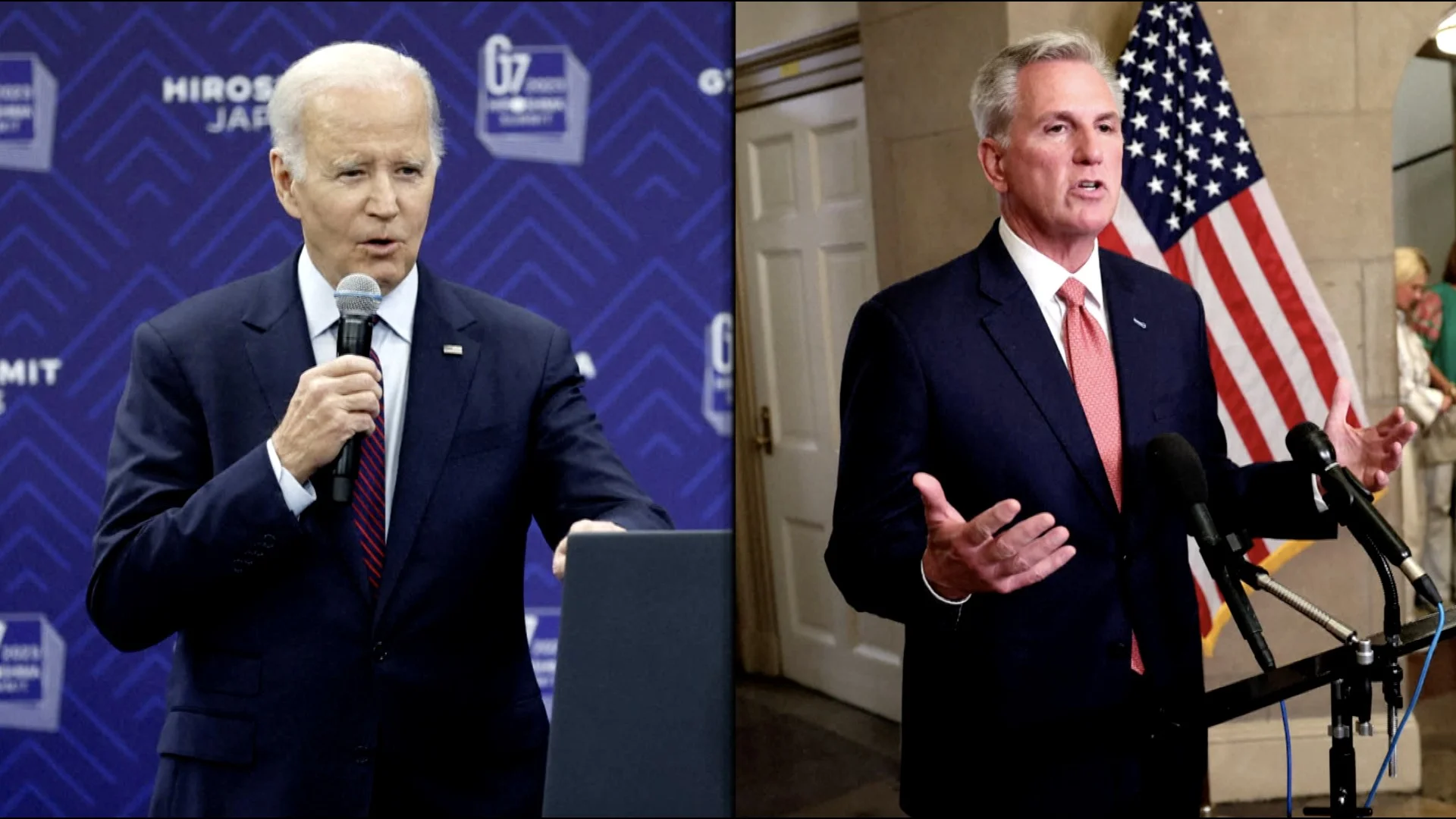
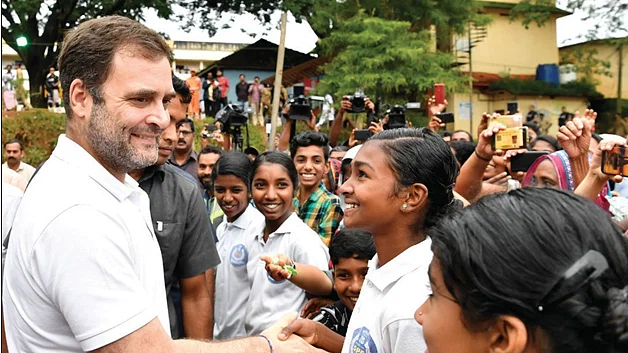
Describing the honor as “a significant milestone in my life and a moment to cherish,” Dr. Shivangi said, “Health care across the world is regarded as an important determinant in promoting the general, physical, mental, and social well-being of people around the world and can contribute to a significant part of a country’s economy, development, and industrialization when efficiently improving human health and providing access to affordable high-quality health care.”

Addressing the epidemic of mental health, Dr. Shivangi, a champion of women’s health and mental health, and whose work has been recognized nationwide, said, “Mental health illness continues to impact more people each year and is now a global disease.” Quoting the World Health Organization, Dr. Shivangi, said, “WHO estimates 1 in every 8 individuals worldwide suffer from a mental disorder, impairment in childhood, depression, anxiety, substance abuse, & psychosis in maturity and ending with dementia in old age. 5.6 crore Indians suffer from depression, while 3.8 crore suffers from anxiety disorders.”

Focusing on Mental Health, Dr. Shivangi said, “Mental Health literacy is the gateway for mental health intervention. However, there is a lack of awareness, which can lead to overlooking, misjudging or dismissing the signs that someone needs help. Dr. Sivangi, an obstetrician/gynecologist, the first Indian to be on the American Medical Association, the apex law-making body, pointed out that substance abuse in the United States causes over 10,000 youth to die annually.

Quoting studies that point to the fact that Mental Health has emerged as an “ever-challenging task,” Dr. Shivangi said, nearly 1 in 5 Americans has some type of Mental illness. During the Covid pandemic period, 78% of adults were experiencing a mental illness, an equivalent of over 50 million Americans, with millions of adults in the USA experiencing serious thoughts of suicide, with the highest rate amongst multi-racial individuals.

Responding to realities, the US Government has initiated several measures to help people struggling with mental health issues and substance abuse. In this context, he referred to two recent initiatives by the US Government to address the twin issues of mental health and substance abuse:

The exclusive 988 National Emergency Phone Number for the mentally ill has revolutionized the mental system that has saved thousands of lives and reduced by a third of hospital visits. In addition, making the antidote, Naloxone free of cost and available over the counter has helped save so many lives.

Dr. Shivangi said, one can get instant help by calling #911 in crisis; they can call or Text #988 Suicide & Crisis Lifeline, a new Nationwide service, attended by trained staff, and trained crisis counselors who can counsel, guide and get them admitted into nearby crisis center, community mental health center or hospital immediately that includes ambulance service. “This has caught nationwide attention. I would strongly recommend that Aruba should think along these lines.”

The SAMHSA Substance Abuse and Mental Health Services Administration is another major initiative of the US government. Dr. Shivangi serves on the Board of SAMHSA, a prestigious position, appointed by the President of the United States. I was first appointed by President Trump & now by the current President Joe Biden.”

Recalling his recent visit to Poland, where Dr. Shivangi shared about the huge impact through these initiatives, Dr. Shivangi said, the government of Poland was impressed and wanted to use them in their country as a way to save lives. Dr. Shivangi offered similar programs and services made available to the people of Aruba and was open to helping the Government of Aruba make them part of the healthcare delivery in the island nation.

A conservative lifelong member of the Republican Party, Dr. Shivangi is the founding member of the Republican Indian Council and the Republican Indian National Council. Dr. Shivangi is the National President of Indian American Forum for Political Education, one of the oldest Indian American Associations. Over the past three decades, he has lobbied for several Bills in the US Congress on behalf of India through his enormous contacts with US Senators and Congressmen.

A close friend to the Bush family, he was instrumental in lobbying for the first Diwali celebration in the White House and for President George W. Bush to make his trip to India. He had accompanied President Bill Clinton during his historic visit to India. Dr. Shivangi is Dr. Shivangi has worked enthusiastically in promoting India Civil Nuclear Treaty and recently the US India Defense Treaty that was passed in US Congress and signed by President Obama.

Dr. Shivangi has actively involved in several philanthropic activities, serving with Blind foundation of MS, Diabetic, Cancer and Heart Associations of America. Dr. Shivangi has number of philanthropic work in India including Primary & middle schools, Cultural Center, IMA Centers that he opened and helped to obtains the first ever US Congressional grant to AAPI to study Diabetes Mellitus amongst Indian Americans.

Dr. Sampat Shivangi was awarded the highest civilian honor, the Pravasi Bharatiya Diwas Sanman award in 2016 in Bengaluru by the Hon. President of India, Shri Pranap Mukhejee. He was awarded the prestigious Ellis Island Medal of Honor in New York in 2008. He is married to Dr. Udaya S. Shivangi, MD, and the couple are blessed with two daughters: Priya S. Shivangi, MS (NYU); Pooja S. Shivangi who is an Attorney at Law.

Florida Gov. Ron Desantis Officially Launches Presidential Run In 2024

Florida Gov. Ron DeSantis formally announced on Wednesday, May 24, 2023 that he is running for president in 2024. “Well, I am running for president of the United States to lead our great American comeback,” he said during an event with Twitter owner Elon Musk on the site’s audio platform. “But we know our country’s going in the wrong direction. We see it with our own eyes. And we feel it in our bones.”

“We must end the culture of losing that has infected the Republican Party in recent years,” DeSantis said on Twitter, in a chat withElon Musk and their mutual ally, David Sacks, a venture capitalist. “The tired dogmas of the past are inadequate for a vibrant future.”

Earlier Wednesday, ahead of the event with Musk, DeSantis also filed with the Federal Election Commission. It makes official a decision that was widely expected since November when DeSantis won reelection in resounding fashion and captured the attention of a party longing to turn the page from recent defeats. He steps into the race for the 2024 GOP presidential nomination later than other contenders and having failed to freeze more still from jumping in, but is better funded, better known and polling higher than all but one: Donald Trump.

The former president has treated DeSantis, whom he once endorsed for Florida governor, as his top foe for months, assailing him regularly on social media and in interviews. A super PAC aligned with Trump has spent millions attacking DeSantis on national television, setting expectations for a bruising primary between the two former allies.

To overcome Trump, DeSantis will need to convince Republican voters he is best positioned to take on President Joe Biden next November. That will likely involve winning over conservatives who may still look back fondly on Trump’s presidency while also coalescing support among Republicans eager for new blood to lead the party.

DeSantis, 44, has spent months laying the groundwork to make that case. He has traveled the country extensively, styling himself as a leader in the right’s culture wars and presenting a new vision for a Republican Party that uses elected powers to punish political opponents and force conservative orthodoxy on institutions and businesses. Working with his state’s GOP-controlled legislature, DeSantis has stacked up multiple policy victories – including banning abortion after six weeks, eliminating permits to carry a concealed gun in public, enacting a universal school voucher law and targeting access to transgender health care – all of which will serve as a platform as he launches his campaign.

“I think that (DeSantis) and former President Donald Trump, they have a lot in common, which they don’t want to hear, but I think it’s the truth,” Wisconsin voter Steve Frazier said after DeSantis spoke at a recent GOP dinner in Marathon County. “Unfortunately, they’re running possibly for the same office, and that’s a conflict for people like myself, in that we may have two very, very qualified men running for the same position.”

DeSantis has continued to generate headlines for his yearlong fight with Disney, his state’s most iconic business and a vital economic engine, over a new law that bans certain instruction about sexual orientation and gender identity in schools. After Disney put out a statement opposing the measure, DeSantis plotted a takeover of the special taxing district that allowed the entertainment giant to build its iconic theme park empire in Central Florida.

The move put Florida businesses on notice and alarmed even some in the GOP, who questioned whether elected executives should use state power to punish a company. Undeterred, DeSantis has made his clash with Disney a central part of his political story, devoting an entire chapter of his recent memoir to the saga. Disney has sued DeSantis, accusing the governor of weaponizing his political power to punish the company for exercising its free speech rights, while DeSantis has vowed not to cave.

Though eager to take on private businesses, reporters and sometimes his own party, DeSantis has largely avoided directly confronting Trump. Instead, he has opted for more subtle comparisons between their tenures in office. He has maligned the lack of action during Trump’s first four years while listing off his own accomplishments as governor. He regularly touts the lack of “drama” and “leaks” in his administration, a clear jab at the chaos that often engulfed the Trump White House.

“If I were to run, I’m running against Biden,” DeSantis said in a recent interview with British television host Piers Morgan.

That same day, though, DeSantis seemed to poke fun at Trump over his alleged affair with an adult film star that is at the heart of a Manhattan district attorney’s case against the former president.

“I don’t know what goes into paying hush money to a porn star,” he said at a news conference. To many, DeSantis had signaled he was ready to mix it up with Trump. But a week later, as Trump was indicted, DeSantis backed off and instead criticized the prosecutor who filed the charges.

The walk back was illustrative of Republican struggles to challenge Trump head-on that date back to the 2016 presidential primary. The former president’s GOP rivals have often opted instead to target the contender perceived as the biggest threat to overcoming Trump: DeSantis. Already, 2024 hopefuls such as former South Carolina Gov. Nikki Haley and entrepreneur Vivek Ramaswamy have lobbed attacks at the Florida governor with more frequency than they have criticized Trump.

“The subject of most of the attacks at the first debate are going to be DeSantis, not Trump,” said Alex Conant, a veteran of several presidential campaigns. Conant is familiar with what it is like to be running behind Trump. He advised Sen. Marco Rubio’s presidential campaign in 2016 and watched as the Florida Republican faced arrows from the rest of the GOP field in a debate leading up to the New Hampshire primary. Rubio never recovered. DeSantis’ team, Conant said, needs “to be eyes-wide-open that he’s going to be targeted at every moment of the first debate.”

DeSantis will have more resources than most to weather those attacks. A super PAC supporting his political ambitions, Never Back Down, had already raised $30 million in its first month after launching and has spent millions boosting DeSantis and responding to negative ads from Trump allies in early primary states. He has more than $85 million parked in a state political committee that his team has for more than a year planned to shift into a federal committee – possibly Never Back Down – though some campaign finance watchdogs have suggested that plan would run afoul of the law.

DeSantis, for a time, was also a favorite among the deep-pocketed Republican donors who have soured on Trump and are ready to finance an alternative. However, that support has somewhat cooled of late, with several key financiers expressing reservations about DeSantis. His hard turn right, his antagonistic feud with Disney and perceived personality faults have caused some to look for others to get behind.

Thomas Peterffy, a billionaire businessman who has donated $570,000 to DeSantis’ political committee over the years, recently told the Financial Times that he and other GOP donors were turned off by DeSantis’ stance on “abortion and book banning” and were “holding our powder dry.” DeSantis has championed a new state law that requires approval of books in classroom libraries and makes it easier for the public to flag schoolbooks to be pulled for review.

However, without another major Trump alternative emerging, DeSantis allies remain convinced that Republican donors ready to move on from the former president will ultimately get behind the Florida governor.

“There’s a broad acceptance that this is really settling into a two-person race, and there is a lot of personal appreciation for President Trump but realistic understanding he does not have the best chance to beat Biden,” former Virginia Attorney General Ken Cuccinelli, founder of the Never Back Down super PAC, told CNN in March. “He does not have the best chance to win the Senate and keep the House as demonstrated by history.”

The Deadline Looms For Debt Ceiling

The US federal government is on the brink of being unable to make debt payments, and it’s up to Congress to vote on raising the nation’s borrowing cap, also known as the debt limit. However, House Speaker Kevin McCarthy (R-Calif.) and President Biden are currently at odds over Republican demands to link the debt limit to spending caps and other policy requirements. Treasury Secretary Janet Yellen has cautioned that the country could exhaust its borrowing authority by June 1, leaving little time for negotiators to reach a consensus.

In a recent meeting with McCarthy, House Democratic Leader Hakeem Jeffries (D-N.Y.), Senate Majority Leader Chuck Schumer (D-N.Y.), and Senate Minority Leader Mitch McConnell (R-Ky.), Biden aimed to find a way forward. Although they didn’t reach an agreement, staff-level discussions continue in an attempt to avert default.

Debt ceiling

You might have some questions about the debt ceiling and the ongoing debate. The debt ceiling, or debt limit, is a restriction on the amount of debt the federal government can accumulate. As Jason Furman, a former economic advisor to President Obama and current economics professor at Harvard, explains, “It used to be that every time you did a Treasury auction where you borrowed, Congress would pass a new law just for that one auction.” However, in 1917, during World War I, Congress opted for a more streamlined approach, allowing the government to borrow up to a specified amount before needing to request an increase. Since 1960, Congress has raised or suspended the debt limit 78 times, according to the Treasury Department.

How do experts know when the government has really run out of funds?

Picture : NBC

Experts determine when the government is nearing its funding limit by examining expected tax revenue, the timing of those payments arriving in Treasury accounts, and scheduled debt payments. This analysis helps establish a timeframe, referred to as an X-Date, when the debt authority might be depleted.

Nonetheless, the Treasury Department has several options, known as extraordinary measures, to prevent default. These measures involve reallocating investments and using accounting techniques to redistribute funds. The federal government technically reached the debt limit in January, but these extraordinary measures have maintained payment flows since then. While experts cannot pinpoint an exact date for when funds will be exhausted, they can estimate a general range, which currently falls between early June and potentially as late as July or August.

Why is there a fight over it?

Debt has generally been viewed unfavorably in American politics, and lawmakers often hesitate to be seen as endorsing more federal borrowing or spending. Additionally, they tend to attach unrelated priorities to must-pass legislation, making the debt limit a prime target for political disputes.

As Maya MacGuineas, president of the Committee for a Responsible Federal Budget, explains, “Everybody uses [bills to increase] the debt ceiling for their favorite policies.” The real issue arises when discussions about defaulting become more serious. Historically, votes to raise the debt limit were relatively uneventful; however, the situation changed in 2011 when the US came dangerously close to default.

Mark Zandi, an analyst at Moody’s Analytics, notes that while there have been previous political battles over the debt, none were as risky or significant as the 2011 conflict. At that time, Republican House Speaker John Boehner (R-Ohio) and President Obama were in a standoff over spending. Republicans demanded deep spending cuts and caps on future spending growth, while Obama insisted on raising the debt limit without any extraneous policies – a clean increase.

Ultimately, Congress reached an agreement to increase the debt limit along with caps on future spending, but not before Standard & Poor’s downgraded the nation’s debt for the first time in history. Today’s situation bears a striking resemblance to the 2011 political struggle, raising serious concerns about the possibility of a default.

What could happen if it’s not raised?

If the debt ceiling is not raised, the Treasury Department would be unable to fulfill its due payments, resulting in a default. This would occur regardless of the type or size of the missed payment.

Some Republicans have proposed a system called payment prioritization, in which certain debts are selected for repayment. However, this would require Congress to pass new legislation, which is politically improbable. Moreover, most experts believe that implementing such a system could be practically unfeasible, and it is not currently being considered as a serious solution.

Has the U.S. ever failed to make these debt payments?

No, the U.S. has never failed to make its debt payments. This reliability is a significant reason why the federal government can easily sell Treasury bonds to investors worldwide and why the U.S. dollar is one of the most trusted currencies.

As MacGuineas points out, “Treasuries are the debt vehicle that are most trusted in the entire world, even if there is an economic crisis that originated in the U.S., people come and buy treasuries because they trust them.” If that trust is jeopardized due to a default or missed interest payment, the U.S. would likely struggle to regain its previous status as the world’s most trusted debtor.

Would capping or cutting spending now resolve the problem?

No, capping or cutting spending now would not resolve the problem, as the debt limit pertains to money already spent due to laws previously passed by Congress. Furman emphasizes that “this borrowing isn’t some unilateral thing that President Biden wants to do… It is in order to accomplish what Congress told him to accomplish.”

Some of the current debt accumulation even results from laws enacted under former presidents, such as Donald Trump. Spending caps and other changes proposed by House Republicans are separate policies designed to address future debt accumulation rather than the immediate need to raise the debt limit.

What else could be affected by a default?

The possibility of a U.S. default may result in a domino effect of negative outcomes across the worldwide financial landscape. The nation’s credit rating could suffer long-term damage, diminishing the value of U.S. treasuries and making it a less attractive investment destination. MacGuineas expressed deep concern, stating, “I am truly concerned there is an actual chance of default and that is so dangerous and such a sign that the U.S. is not able to govern itself in a way that is functioning.”

Zandi cautioned that the fallout might extend beyond merely investment and borrowing rates. He advised, “Don’t worry about your stock portfolio, worry about your job,” emphasizing the potential loss of employment and increased unemployment rates. He added, “This will certainly push us and, you know, it’s going to be about layoffs. Stock portfolios will be the least of people’s worries.”

Furman compared the potential crisis to the 2008 financial meltdown caused by Lehman Brothers Bank’s collapse, suggesting it could be even more severe. “It could be worse than Lehman Brothers, where everyone basically demands their money back because they don’t believe the collateral anymore,” he explained. “And you have the equivalent of a run on the global financial system.”

Is default the same thing as a shutdown?

Default and shutdown are not the same thing. A government shutdown transpires when Congress does not pass annual spending bills before the fiscal year concludes on September 30. Although these two matters may be connected at times, this is because legislators have, on occasion, deliberately synchronized the debt limit extension with the end of the fiscal year to prompt more comprehensive spending debates in conjunction with debt authorization.

Are there other ways this problem could be fixed, aside from just increasing the debt limit?

Apart from merely raising the debt limit, there are alternative solutions to address the issue, as the existing process is widely considered ineffective. MacGuineas from the Committee for a Responsible Federal Budget believes that while Congress should reassess debt and spending priorities, the current debt limit mechanism fails to compel them to make decisions. She stated, “The debt ceiling is a terrible way to try to impose fiscal responsibility,” describing it as a “dumb approach.”

Instead, MacGuineas proposes a system where the debt limit is increased in line with the passage of legislation by Congress. Some economists have even suggested eliminating the debt limit entirely.

Other less conventional ideas involve minting a $1 trillion platinum coin to cover the debt or elevating the limit to such an extent that subsequent debates would be postponed for years or even decades.

Why There Were 8 More Seats At The Table This Year At G7 Summit

As the G7 summit approaches, imagine the host scrambling to find an extendable table and extra dining essentials to accommodate the growing guest list. This year, Japan’s Prime Minister Fumio Kishida has decided to invite eight additional attendees to the meeting, which kicks off on Friday in Hiroshima. The expanded guest list signifies the challenging topics on the agenda, including the conflict in Ukraine and global food security, as well as the shifting international landscape with a focus on two absent nations: Russia and China.

The G7 comprises the world’s seven most affluent democracies—Japan, the United States, the UK, France, Germany, Canada, and Italy—with the European Union also sending representatives, although not officially a member. Host countries have recently begun inviting other nations at their discretion. However, the G7’s economic power has diminished; while they represented over half of the world’s GDP in 1990, they now account for just under 30%. Consequently, the G7 seeks to forge alliances with influential new partners.

In pursuit of a more global coalition, Kishida has welcomed Australia, India, Brazil, South Korea, Vietnam, Indonesia, Comoros (on behalf of the African Union), and the Cook Islands (representing the Pacific Islands Forum) to the table. Over the past 18 months, Kishida has embarked on 16 international trips to countries like India, Africa, and Southeast Asia, demonstrating that there are alternatives to Chinese and Russian influence. As he once said, he is trying to “prove to these regions that there is an alternative to Chinese and Russian money and power.”

His Hiroshima guest list mirrors these efforts to court the so-called “Global South,” encompassing developing nations in Asia, Africa, and Latin America, all of which maintain intricate political and economic relationships with both Russia and China.

Presenting a unified stance

Achieving one of Mr. Kishida’s primary goals—demonstrating a “united front” on Russia’s invasion of Ukraine—will likely prove to be a significant challenge. The G7 is reportedly working on implementing further sanctions targeting the energy and export sectors that support Moscow’s war efforts.

However, many of the additional guests may not approve of this move. For example, India has not adhered to Western sanctions on Russian imports and has not explicitly condemned Russia’s invasion of Ukraine. Apart from their long-standing relationship, India relies on energy imports and has defended its oil purchases, claiming it cannot afford higher prices.

India is not alone in this predicament. Emerging economies have been severely impacted by escalating costs, partially driven by the war in Ukraine. They are now concerned that additional sanctions could lead Moscow to cancel a Black Sea grain agreement, which allows crucial exports from Ukraine. Such a move could worsen food shortages and inflate prices even more.

For some countries, the issue goes beyond the personal cost of sanctions. Nguyen Khac Giang, a visiting fellow at the Institute of South East Asian Studies in Singapore, notes, “Vietnam has a historically close relationship with Russia, which supplies at least 60% of their arms and 11% of their fertilizer.” He adds that Indonesia, though not heavily reliant on Russia, is a significant importer of Russian weapons and maintains positive relations with Moscow.

Giang believes that Hanoi and Jakarta will neither explicitly object to nor support further sanctions on Russia due to the considerable economic and political risks involved, with little benefit in return.

Kishida hopes that the backdrop of Hiroshima, where the atomic bomb killed over 100,000 people, will focus attention on the nuclear threat posed by Russia. Tours around the city will serve as a constant reminder of the destruction such weapons can cause and emphasize the responsibility of the invited nations to prevent their future use.

Ukrainian President Volodymyr Zelensky, present virtually, will also pressure attendees with a heartfelt appeal on behalf of his people who have already suffered greatly. However, this may not be enough to resolve divisions over the extent of sanctions. Frustration is growing among non-G7 countries who feel their voices have often been overlooked by the West. Nonetheless, analysts believe that listening and treating these nations as partners is a step in the right direction.

Nguyen Khac Giang says that involving Vietnam and Indonesia “provides an opportunity to communicate their concerns with G7 leaders on a vast array of issues, from the war in Ukraine and the slowdown of the global economy, to security risks in East Asia, particularly regarding the South China Sea dispute and Taiwan.”

Addressing the China challenge

Taiwan and the surrounding tensions have emerged as one of the most significant crises in recent times. As the only Asian G7 member, Japan sees the summit as an opportunity to respond to China’s increasing military presence around the self-governing island. Tokyo’s message to the West is simple: your fight in Ukraine is our fight, and vice versa.

However, dealing with China, which is deeply embedded in global supply chains, may be even more challenging than addressing Russia. French President Emmanuel Macron recently cautioned Europe against getting “caught up in crises that are not ours,” sparking a minor dispute in the West and reigniting fears of abandonment in East Asia.

Analysts note that China’s voice is heard clearly because its position remains consistent, unlike Western democracies that experience changes following elections. While the US has unwaveringly supported Ukraine and Taiwan, the G7 is also concerned about Beijing’s “economic coercion” – retaliating against actions perceived as critical of China.

It remains uncertain what countermeasures the G7 will adopt or whether they can agree with their EU partners on a united approach. Persuading other countries to follow suit will be even more challenging, as many Global South nations have stronger economic ties to Beijing.

The Pacific Islands represent a region where the struggle for influence is still ongoing, explaining the Cook Islands’ presence on the guest list. These island nations, highly vulnerable to climate change, are using their strategic importance to engage both the US and China.

Kishida’s coalition-building efforts will hinge on the G7’s agreement to address climate change and energy security. This could reduce countries’ reliance on Russian oil and gas or Chinese aid. However, there may already be a weakness in this strategy. President Joe Biden was set to visit Papua New Guinea after the summit – the first sitting US president to do so – but had to shorten his trip due to a domestic crisis.

According to Richard Maud, a senior fellow at the Asia Society Policy Institute and former Australian intelligence chief, this is a setback. He stated at a recent panel discussion, “Turning up is half the battle. China turns up all the time, and so the optics aren’t great.”

US Health Care System Fails to Meet Needs Of 70% of Adults

A staggering 70% of US adults believe the health care system fails to address their needs in at least one aspect, as revealed by recent data from the Harris Poll, obtained exclusively by TIME.

Although the US spends more per capita on health care than any other affluent nation, it lags behind in terms of life expectancy and various health outcomes. The Harris Poll survey, carried out between February and March 2023 and commissioned by the American Academy of Physician Associates, indicates that patient satisfaction is also being negatively impacted by the exorbitant costs, lack of accessibility, and convoluted logistics associated with US medical care.

When questioned about their personal grievances with the medical system, many respondents cited similar issues. A mere 27% of those surveyed claimed the US medical system fulfilled all their needs, while the remaining participants voiced concerns regarding appointment wait times (31% of respondents), high costs (26%), insurance coverage limitations (23%), and inadequate emphasis on preventive care and wellness (19%).More than a fifth of people surveyed said they don’t see a single health care provider on a regular basis, and 44% said they’d skipped or delayed needed care in the past two years.

Despite these challenges, the survey also highlighted potential areas for improvement and progress. Over 75% of respondents acknowledged that providers collaborate with them to enhance their health, while more than 70% expressed a desire for stronger relationships with their providers. Furthermore, over 65% believed their health would improve if they consistently worked with a trusted provider. These responses imply that Americans haven’t entirely lost faith in the system, even in the face of their frustrations.

Rahul Gandhi’s US Visit Aims to Promote Shared Values and Real Democracy

Indian Congress leader Rahul Gandhi is visiting the United States in June to highlight the values and vision of “real democracy”, according to Sam Pitroda, chairperson of the Indian Overseas Congress. Gandhi’s visit will include addresses to public meetings and university students in San Francisco, Washington DC and New York, where he will also meet members of Congress and think tanks and Wall Street executives.

Pitroda explained Gandhi’s agenda saying, “we are not here to complain. We are here to share what is going on in India.” Pitroda continued that the purpose of Gandhi’s America visit is to begin a new conversation with individuals, institutions, media and the Indian diaspora to promote “freedom, inclusion, sustainability, justice, peace and opportunities world over.”

Gandhi is scheduled to visit San Francisco, Washington DC and New York, where he is planning to address two public meetings with Indian Americans, meet lawmakers at Capitol Hill and members of think tanks, interact with university students and meet Wall Street executives, said Indian Overseas Congress, the organizers of the events, on Sunday.

Sharing the agenda and purpose of Gandhis visit to the United States, Pitroda said, “We are not here to complain. We are here to share what is going on in India. Indian democracy is the biggest democracy in the world and we owe it to the people to tell them about the real situation on the ground.” “We are not asking for everybody to come and help us. We can deal with the problems. We want to share with you what is needed,” he told a group of Congress supporters in Chicago.

Picture : National Herald

George Abraham, vice-chairman of the Indian Overseas Congress-USA said, “I hope that Rahul Gandhi’s visit will energise the diaspora into a renewed appreciation of democracy and freedom the Indian diaspora aspires to have.” Gandhi’s itinerary includes meetings with think tanks and universities. The programme is packed with a thousand people due in attendance in San Francisco and a private dinner in Washington, DC.

“It has been worked out. And he (Gandhi) does a great job when he gets a chance to interact with people. He doesnt like to broadcast like a Mann ki Baat. He likes to interact and thats what Indian democracy is all about — to listen to people. So, we hope that we get a good reception on the Capitol Hill,” Pitroda said. In San Francisco, Gandhi is likely to meet a group of artists, while a private dinner has been planned by eminent Indian-American Frank Islam at his mansion in the Potomac suburb of Washington DC.

Gandhi has been criticized for alleging that the structures of Indian democracy are under attack and claiming there is a “full-scale assault” on the country’s institutions. These remarks made while on a March visit to the UK saw the BJP accuse him of maligning India on foreign soil, seeking foreign intervention, and dividing India, among other claims.  The Congress, in reply, cited instances of Prime Minister Narendra Modi raising India’s internal politics abroad.

The Congress party is the oldest party in India, founded in 1885. It dominated Indian politics for the years following the country’s independence in 1947, until India opened its economy in the 1990s, leading to the emergence of the Bharatiya Janata Party (BJP). The BJP has since emerged as the dominant party in Indian politics, and Gandhi’s Congress has struggled to regain political ground against the BJP and its allies.

The Indian Election Commission is also currently investigating allegations of electoral malpractices in the lead up to the general election in May which saw the BJP secure a second term in government.


India Phases Out ₹2,000 Notes, Sets September 30 Deadline for Exchange

New Delhi: The Reserve Bank of India (RBI) has announced its decision to phase out ₹ 2,000 notes and has set a deadline of September 30 for people to exchange or deposit them in their bank accounts. Starting May 23, the RBI’s 19 regional offices and other banks will accept ₹ 2,000 notes in exchange for lower denomination currency. It is important to note that these notes will continue to be considered legal tender, as stated by the RBI.

The RBI has instructed all banks to cease issuing ₹ 2,000 notes with immediate effect.

The introduction of the ₹ 2,000 note took place in November 2016 after Prime Minister Narendra Modi’s sudden demonetization move, which rendered high-value ₹ 1,000 and ₹ 500 notes invalid overnight.

The RBI explained its decision, stating, “The purpose of introducing ₹ 2,000 banknotes was fulfilled once banknotes of other denominations became sufficiently available. Consequently, the printing of ₹ 2,000 banknotes was discontinued in 2018-19.”

To ensure convenience and minimize disruption to regular banking operations, the RBI has allowed the exchange of ₹ 2,000 notes for lower denomination notes, up to a limit of ₹ 20,000 at a time, at any bank beginning May 23, 2023. This facility will be available until September 30, allowing individuals to either exchange or deposit their ₹ 2,000 notes.

Sources informed NDTV that the RBI might extend the deadline beyond September 30 if necessary. However, even after the current deadline, ₹ 2,000 notes will remain valid as legal tender.

The RBI highlighted that approximately 89% of ₹ 2,000 denomination banknotes were issued before March 2017 and are reaching the end of their expected lifespan of four to five years. The total value of these notes in circulation decreased from ₹ 6.73 lakh crore at its peak on March 31, 2018 (comprising 37.3% of the currency in circulation) to ₹ 3.62 lakh crore, representing only 10.8% of the currency in circulation as of March 31, 2023.

The central bank emphasized that the ₹ 2,000 note is not commonly used for transactions. Similar measures were taken by the RBI in 2013-2014 when certain notes were phased out of circulation.

Supreme Court Sides with Google in Terrorism-Related Lawsuits, Raises Questions on Section 230 Immunity

The US Supreme Court has ruled that social media companies cannot be sued by victims of terrorist attacks for the content posted by users on their platforms, stating that a law, known as Section 230, provides the companies with immunity. The case involved victims of the 2015 coordinated terror attacks in Paris and the 2016 Istanbul nightclub bombing, where relatives of the victims had sought damages from Facebook, Twitter, and Google. Writing for the court, Justice Clarence Thomas said the families’ “claims fall far short of plausibly alleging that defendants aided and abetted the Reina attack.”

A federal law allowed Americans who were injured in foreign terrorist attacks to file lawsuits seeking damages from organizations that supported the perpetrators. However, the social media companies enjoyed protection under Section 230 of the Communications Decency Act, which generally exempts platforms from being sued over user-generated content.

The families of the victims had argued that YouTube channels used by the attackers in the Paris and Istanbul attacks would not have been so popular and influential without Google and Facebook’s algorithms promoting the content and driving users to it. They claimed that the companies assisted in the growth of the Islamic State group, which claimed responsibility for both attacks.

According to Reuters, more than 30 lawsuits have been filed against social media companies since 2016 over their alleged inability to stop radical organizations spreading their message and avoiding scrutiny, particularly since most of the platforms do not proactively monitor the content posted on their services.

“Questions about the scope of platforms’ immunity under Section 230 are consequential and will certainly come up soon in other cases,” Anna Diakun, staff attorney at the Knight First Amendment Institute at Columbia University, said following the ruling.

The family members were keen for social media companies to step up their monitoring of extremist content to prevent similar attacks from occurring. Responding to the court ruling, they vowed to continue to fight. A lawyer for the family of Nohemi Gonzalez, who was killed in Paris, said in an email, “We lawyers see this decision as just another hurdle we need to navigate. It took decades to topple Big Tobacco, we’ll eventually rein in reckless and greed driven Big Tech as well.”

Following the decision, Google’s General Counsel Halimah DeLaine Prado stated that the company will “continue our work to safeguard free expression online, combat harmful content, and support businesses and creators who benefit from the internet.” However, critics of this decision had hoped that social media companies would have been held more liable for their role in facilitating the spread of extremist ideologies on their platforms.

Last year, a US appeals court had supported the social media giants, citing the communication act of 1934, which, in some cases, interprets them as intermediaries rather than “publishers” of user-generated content. Tech firms, including Reddit, Microsoft, and Facebook warned of the consequences if the Supreme Court overturned Section 230. Kent Walker, Google’s top lawyer, claimed that “If we undo Section 230, that would break a lot of the internet tools.” Critics also raised the question of how citizen journalists and whistleblowers whose posts revealed corporate or government crimes would be protected if tech giants were unable to gain immunity under the legislation.

Proponents of holding social media giants responsible have pointed to the recent example of Twitter banning the account of former US President Donald Trump after he posted material that was deemed to be incitement to riot. Many have argued that it has taken far too long for social media companies to have taken any meaningful action to police their platforms, and more needs to be done. The ruling is a sign that the US government is unlikely to rapidly change the position that social platforms are rightly protected under the First Amendment.

Rahul Gandhi to Visit USA for Rally and Speeches, Coinciding with PM Modi’s Official State Visit

Former Wayanad MP and Congress leader Rahul Gandhi is set to visit the United States on May 31 for a ten-day tour. Sources confirmed that on June 4, he will hold a rally in New York’s Madison Square Garden, which is set to attract around 5,000 NRIs. Additionally, he is scheduled to attend a panel discussion and speech at Stanford University in California, where he will meet with politicians and entrepreneurs. Meanwhile, Indian Prime Minister Narendra Modi is also scheduled to visit the US on June 22 for an official state visit. PM Modi will be welcomed by President Joe Biden and First Lady Jill Biden for a State Dinner at the White House.

Mr. Gandhi made headlines after his recent speeches in London, where he was critical of the Indian government, raising concerns about the state of Indian democracy. Speaking at a convention organized by the Association of Journalists in London, Mr. Gandhi said, “Everybody knows, and it’s been in the news a lot, that Indian democracy is under pressure and attack… we are facing an attack on the basic structure of Indian democracy.” The remarks were seized upon by the ruling BJP, who called for an apology. Meanwhile, the Congress Party called for the establishment of a Joint Parliamentary Committee (JPC) to investigate the Adani Group of companies.

In April, Mr. Gandhi was disqualified from his post as a Member of Parliament, following his conviction in a defamation case. According to the Indian Constitution, he was disqualified in accordance with Article 102(1)(e), read with Section 8 of the Representation of People Act, 1951.

Despite this setback, Mr. Gandhi’s visits to the US and the UK have garnered significant attention, both at home and abroad. His speeches have underscored the ongoing debate about democracy and governance in India, highlighting concerns about press freedom, judicial independence, and the role of opposition political parties.

As Mr. Gandhi prepares to embark on his latest visit, the focus once again will be on his speeches and their potential impact on India’s domestic politics. While he is expected to highlight the challenges faced by opposition leaders and parties, he will also face scrutiny from both his political opponents and his own party. Regardless of the outcome, his visit is certain to be closely watched by observers on both sides of the political divide.

Siddaramaiah Named Karnataka Chief Minister, DK Shivakumar Appointed Sole Deputy as Congress Leadership Resolves Deadlock

On Thursday, the Congress central leadership revealed that Siddaramaiah is set to become the Chief Minister of Karnataka, with DK Shivakumar appointed as his sole deputy. Karnataka Governor Thaawarchand Gehlot invited Siddaramaiah and Shivakumar to be sworn in alongside their team members at Kanteerava Stadium Bengaluru on May 20 at 12:30 pm.

This announcement resolved a period of uncertainty, confirming that Siddaramaiah would lead the state while DK Shivakumar, the state party chief, would serve as his only deputy. Here are the key developments in the formation of the Karnataka government:

  1. The Congress Legislature Party (CLP) formally elected Siddaramaiah as its leader and Karnataka’s Chief Minister, after which he staked his claim with the governor, who then invited him to form the government.
  2. A gathering of newly-elected Congress MLAs, MLCs, and MPs occurred at Indira Gandhi Bhavan in Bengaluru, attended by AICC General Secretary Randeep Singh Surjewala and two other central observers – former Maharashtra CM Sushil Kumar Shinde and AICC General Secretary Jitendra Singh.
  3. Surjewala reported that Shivakumar proposed a resolution to elect Siddaramaiah as the new CLP leader, which was unanimously endorsed by all members.
  4. Siddaramaiah and Shivakumar received a warm reception upon arriving in Bengaluru that evening.
  5. Top Congress leaders, including Mallikarjun Kharge, Sonia Gandhi, and Rahul Gandhi, engaged in extensive discussions with Siddaramaiah and Shivakumar, eventually resolving the deadlock over Karnataka’s top position.
  6. Reports suggest that Sonia Gandhi, who was on vacation in Shimla, played a key role in mediating the situation. The stalemate ended after she spoke to Shivakumar, a Gandhi family loyalist, on Wednesday night. According to PTI, she also asked Shivakumar to consult with Kharge and Rahul to resolve the issue.
  7. The final decision was made at Kharge’s residence on Wednesday night and followed up with a meeting at AICC General Secretary KC Venugopal’s residence the next morning.
  8. Intense negotiations continued until early Thursday, with both Siddaramaiah and Shivakumar presenting their cases to party leaders. Shivakumar insisted on being made Chief Minister due to the party’s impressive victory in the state under his presidency, prolonging the leadership dispute in Karnataka.
  9. Citing sources, PTI reported that Rahul Gandhi informed Shivakumar that the individual with the majority of MLA support would become Chief Minister, and others must comply, indicating Siddaramaiah’s appointment and Shivakumar’s concession.
  10. To secure his position as the second-in-command in the Karnataka government, Shivakumar was named the only Deputy Chief Minister.

Sameer Wankhede, Former Anti-Drugs Official, Accused of Bribery and Possessing Disproportionate Assets in NCB Report

The Narcotics Control Bureau’s report suggests that Sameer Wankhede, the former anti-drugs official responsible for arresting Aryan Khan, Shah Rukh Khan’s son, in a drug case, took numerous trips abroad with his family and possessed extensive property disproportionate to his income. The Central Bureau of Investigation (CBI) based their First Information Report on this report, obtained by NDTV, accusing Wankhede and others of demanding a ₹ 25 crore bribe from Shah Rukh Khan’s family, threatening to otherwise implicate Aryan Khan in the alleged drug bust.

According to the NCB’s vigilance department report, Aryan Khan and Arbaaz Merchant’s names were added at the last minute while other suspects’ names were removed. Despite recovering rolling paper from one suspect during the raid, she was released, the report states.

The report highlights a series of custody lapses involving Aryan Khan, suggesting that Sameer Wankhede intentionally compromised the situation to allow independent witness Kiran Gosavi in the Mumbai cruise raid to engage in misconduct and violate Central Civil Services laws.

CCTV footage from the NCB office obtained by a probe team had become corrupt. The submitted DVR and hard copy from the night Aryan Khan was brought to the NCB office by the Mumbai team differed, according to the report.

The report also notes that between 2017 and 2021, Sameer Wankhede took six trips abroad with his family to countries such as the UK, Ireland, Portugal, South Africa, and the Maldives, totaling 55 days. However, he claims to have spent only ₹ 8.75 lakh, barely covering airfare costs.

The report lists several expensive watches and properties owned by Wankhede that are disproportionate to his known income sources. This includes a Rolex watch sold to him at a significantly reduced price, four flats in Mumbai, and 41,688 acres of land in Washim.

Wankhede stated that he spent ₹ 82.8 lakh on a fifth flat in Goregaon valued at ₹ 2.45 crore. The report also mentions a ₹ 1.25 crore flat bought by him and his wife before their marriage, with the source of funds remaining unclear.

Wankhede and his wife’s Income Tax returns reveal an annual income of ₹ 45,61,460, which does not account for their foreign trips and other assets.

Codex Sassoon, Oldest Complete Hebrew Bible, Sells for Record $38.1m at Sotheby’s New York Auction

Sotheby’s, the art and book auction house, witnessed a historic moment when Codex Sassoon was sold for $38.1m, making it the most valuable manuscript ever sold at an auction. The 800-year-old Hebrew Bible is said to be the oldest surviving example of a single manuscript containing all 24 books of the Hebrew Bible with punctuation, vowels, and accents. It is considered as the bedrock of Western civilisation and Oded Golan, an Israeli antiques seller, said that “the Bible is the foundation document of Western culture and by extension, world culture and the emergence of the nation-state.” The Codex Sassoon was bought by US lawyer and former ambassador Alfred Moses for the ANU Museum of the Jewish People in Tel Aviv, Israel, to preserve the historical significance of a manuscript that is part of Jewish heritage.

“The Hebrew Bible is the most influential in history as it constitutes the bedrock of Western civilisation,” Mr Moses said on his statement. “I rejoice in knowing that it belongs to the Jewish people.” The sale price exceeded the previous most valuable manuscript, the Codex Leicester, owned by Bill Gates, the co-founder of Microsoft, which was bought for $30.8m in 1994. However, it still fell short of the price set two years ago by hedge fund manager Ken Griffin, who purchased a historically significant document, the first-edition printed copy of the US constitution, for $43.2m.

The Codex Sassoon was named after David Solomon Sassoon, who bought it in 1929, and since then, it has been showcased in different museums worldwide. The manuscript was written around 1,100 years ago and is the oldest Hebrew Bible to have survived in its entirety. It became the pinnacle of the private collection of Hebrew manuscripts at David Solomon Sassoon’s home in London. Carbon dating revealed that the Codex Sassoon was created around 900 BC, making it nearly 1,200 years old. The manuscript is considered to have almost complete books of the Hebrew bible appearing with vowel points and notations.

Known for centuries as Aleppo Codex, the standard masoretic text is considered very authoritative; however, it contains only 295 of its original 487 pages, which survived destruction in a fire in Aleppo, Syria, in 1947. The Codex Sassoon, in contrast, is almost complete, missing only 12 pages, which were torn or cut at the edges.

Sharon Mintz, a senior Jewish artefact specialist at the auction house, said, “It presents to us the first time an almost-complete book of the Hebrew Bible appears with the vowel points, the cantillation and the notes on the bottom telling scribes how the correct text should be written.” Centuries of notations and inscriptions reveal that the manuscript was sold by a man named Khalaf ben Abraham to Isaac ben Ezekiel al-Attar, who later transferred ownership to his two sons, Ezekiel and Maimon.

In the 13th Century, the Codex Sassoon was dedicated to a synagogue in Makisin, a town in present-day Iraq near the border with Iran. After the town was destroyed either by the Mongols in the 13th century or by the Timurids at the beginning of the 15th century, the manuscript was entrusted for safekeeping to Salama ibn Abi al-Fakhr. It then disappeared for 500 years, and the Codex Sassoon’s most recent owner was Swiss investor Jacqui Safra, who bought it at auction in London for £2m ($2.5m) in 1989.

The Codex Sassoon holds immense historical and cultural significance for Jewish people and the world’s literary heritage. Its acquisition by the ANU Museum of the Jewish People in Tel Aviv reflects the importance of preserving and showcasing cultural heritage for generations to come. The sale of the Codex also underscores the value of ancient manuscripts and artefacts, which contribute significantly, to archaeology, history, and literature.

Prime Minister Narendra Modi to Inaugurate New Parliament Building on May 28, Featuring Increased Seating Capacity

On May 28, Prime Minister Narendra Modi is set to inaugurate the highly anticipated new Parliament building. The four-story structure, designed by Ahmedabad-based HCP Design, Planning and Management and built by Tata Projects Limited, cost an estimated ₹970 crore.

The new Parliament will accommodate 888 Lok Sabha members, up from 543 in the previous building, and 300 Rajya Sabha members, an increase from the previous 250. As the new Parliament lacks a Central Hall, joint sittings of both Houses will take place in the Lok Sabha, which can hold 1,280 Members of Parliament during these sessions.

Previously, joint sessions were held in the Central Hall, seating 436 people with additional seats added during joint sittings. The inauguration of the new Parliament comes two days after the Modi government marks nine years in office, with Prime Minister Modi having taken his first oath on May 26, 2014. General Elections are slated for 2024.

“Lok Sabha Speaker Om Birla met Prime Minister Narendra Modi on Thursday and invited him to inaugurate the New Parliament Building. Construction of the new Parliament building is complete now and the new building symbolises the spirit of self,” stated the Lok Sabha Secretariat. Consequently, the monsoon session of Parliament will occur in the new building.

The current Parliament building, completed in 1927, is nearly 100 years old. The primary reasons for constructing a new Parliament are space constraints and modernization requirements. Both the Lok Sabha and Rajya Sabha passed resolutions urging the government to build a new Parliament, with the foundation stone laid by Mr. Modi in December 2020.

Originally, construction was anticipated to finish in 2022, coinciding with India’s 75th Independence anniversary. The old Parliament, whose foundation stone was laid in 1921, will be preserved as a heritage asset.

Bera, Khanna And Pureval Named Biden-Harris Campaign Advisors

The three Indian Americans will play a significant role in mobilizing support for the Biden-Harris campaign among the Indian-American community.

Two Indian-American Congressmen, Ami Bera and Ro Khanna, along with Cincinnati Mayor Aftab Pureval, are among the 50 members appointed to the National Advisory Board announced by the Biden-Harris Campaign for the 2024 elections

Picture : American Bazaar

The board, which will be chaired by former House Speaker Emerita Nancy Pelosi, is aimed at building on and expanding the winning coalition that propelled President Biden to the White House in 2020. As per an official statement, the board members will be involved in consistent media interviews, supporting fundraising initiatives and events, utilizing their networks and platforms to increase the reach of the campaign’s message to voters, and directly interacting with voters through grassroots activities and events in crucial states where the election is closely contested.

Bera, who is the longest-serving Indian-American in the US Congress, and Khanna, who is co-chair of the Congressional India Caucus, are both influential voices in the Indian-American community. Pureval, who is the first-ever Indian-American and Tibetan-American to be elected as Mayor of a city in Ohio, brings a unique perspective to the board. The three Indian-American leaders are expected to play a significant role in mobilizing support for the Biden-Harris campaign among the Indian-American community.

US Congress To Address Immigration Reforms

The U.S. Citizenship Act of 2023 proposes a set of immigration reforms to address long standing issues of immigrants and bolster economic growth of the US.

In a welcome news for thousands of Indians in the United States aiming for citizenship, Democrat Congresswoman Linda T. Sánchez has introduced the U.S. Citizenship Act of 2023 before the House of Representatives on immigration reforms in the US. The bill comes after the expiry of Title-42 order on immigrants’ restriction to enter into the US territory.

The new legislation seeks a series of measures including elimination of per-country green cards caps, work authorization of H-1B holders’ dependents and preventing children of H-1B holders from aging out of the system and being forcefully deported.

The legislation aims to equip the country to responsibly manage the border with smart and effective investments, address the root causes of migration that force people to leave Central America, and restore the United States’ commitment to human rights, according to a press note. It will be a step towards addressing the range of issues of immigrants face and prioritize family reunification and keeping families together and bolster the country’s long-term economic growth.

Commenting on the significance of the bill, Sánchez said ,“As the daughter of immigrant parents from Mexico, I am honored to introduce the U.S. Citizenship Act—a bold, transformative framework that will help fix our broken immigration system.The U.S. Citizenship Act will help us grow our economy, make our borders safer and more secure, and deliver a pathway to citizenship for millions of immigrants already living and working here.”

The U.S. Citizenship Act 2023 establishes an earned road-map to citizenship for all 11 million undocumented immigrants; reforms for the family-based immigration system to keep families together;progress towards country’s economic development; protection for workers from exploitation and improves the employment verification process and supports asylum seekers and other vulnerable populations.    .

In addition to Congresswoman Sánchez, the legislation is cosponsored by 100 members of the House of Representatives, including Indian Americans Pramila Jayapal and  Shri Thanedar.

In a bid to fix the US immigration system, Congresswoman Linda Sanchez and other Democrats introduced a Citizenship Act to deliver a pathway to citizenship for millions of undocumented immigrants living and working in the country.

The US Citizenship Act 2023 will make way for Dreamers, recipients of Temporary Protected Status (TPS), agricultural workers, including their spouses and children, immediately eligible for green cards.

“As the daughter of immigrant parents from Mexico, I am honored to introduce the US Citizenship Act today… a bold, transformative framework that will finally fix our broken immigration system,” Sanchez said in a statement.

“The US Citizenship Act will help us grow our economy, make our borders safer and more secure, and deliver a pathway to citizenship for millions of immigrants already living and working here,” she added.

Nearly 4 million people in the US with approved family-sponsored petitions are waiting for an immigrant visa to become available, and an estimated 4.4 million American citizen children have at least one parent who is undocumented.

Approximately 1.6 million undocumented noncitizens in the country are married to US citizens and roughly 675,000 are married to lawful permanent residents.

The bill protects children from aging out of visa eligibility due to processing delays, and ensures that beneficiaries of family-based petitions retain their earliest priority date even if they later become eligible for a visa under a different category.

It also seeks to reform the family-based immigration system by clearing the immigrant visa backlogs.

It bill recaptures unused family-sponsored visas since FY 1992 and exempts from the numerical limitations — spouses, permanent partners, and children under the age of 21 of lawful permanent residents; derivative spouses and children of principal applicants; and individuals who have been waiting to be reunited with their families for more than 10 years.

The bill also alleviates lengthy wait times for individuals from higher-admission states by raising the per-country limits from 7 per cent to 20 per cent.

To retain talent and strengthen the economy, the bill also exempts individuals with a doctoral degree in a field involving science, technology, engineering, or mathematics from an accredited US institution of higher education from the numerical caps on visas.

Foreign-born workers make up 17 per cent of the workforce and undocumented workers comprise approximately 4.4 per cent.

An estimated five million undocumented workers are serving in essential roles as front-line workers.

Eliminating discrimination against LGBTQ+ families, the bill permits citizens and permanent residents in binational same-sex relationships to sponsor their permanent partners for immigration to the US.

The bill expands current protections to ensure that the death of a sponsor does not prevent the immigrant from establishing eligibility for the relevant benefit and prevents the children of fiances of US citizens from aging out of the visa application and green card processes.

How America Sustains High Deficits Without Economic Collapse

The United States has consistently maintained a high trade deficit for decades, raising questions about how the country manages to avoid economic repercussions that typically accompany such imbalances. This article delves into the factors that enable the US to sustain these high deficits without experiencing financial collapse.

Picture : The Blance

One of the primary reasons the US can maintain high trade deficits is the dominance of the US dollar as the world’s reserve currency. Central banks across the globe hold their foreign exchange reserves in dollars, contributing to the currency’s stability and demand. This status allows the US to run persistent trade deficits without causing a depreciation in its currency value.

Another factor that enables the US to support high trade deficits is the inflow of foreign investments. International investors view the US as a safe haven for their capital due to the country’s strong and stable economy. These investments help finance the trade deficit by providing an influx of foreign funds, which offsets the negative effects of the deficit on the US economy.

The US economy is driven primarily by domestic consumption, which accounts for approximately 70% of its GDP. This strong demand for goods and services helps offset the trade deficit by creating a robust market for imports. As a result, the US can continue importing goods from other countries without significantly harming its own industries.

The US is a global leader in innovation and technological advancements, which contribute to the country’s overall economic strength. These innovations attract foreign investments and facilitate the export of high-value goods and services, such as software, pharmaceutical products, and aerospace technology. This, in turn, helps to mitigate the impact of the trade deficit on the US economy.

The US government’s fiscal policies also play a role in managing the trade deficit. By implementing policies that promote economic growth, the government can stimulate demand for goods and services. Additionally, the US Federal Reserve’s monetary policies influence interest rates and the money supply, which can impact the trade deficit indirectly.

Despite maintaining a high trade deficit, the United States has managed to avoid the economic pitfalls often associated with such imbalances. Factors such as the US dollar’s status as a global reserve currency, foreign investment, strong domestic demand, innovation, and government fiscal policies all contribute to the country’s ability to sustain these deficits. However, it is essential to continue monitoring the trade deficit and its potential long-term impacts on the US economy.

Linda Yaccarino To Be New Twitter CEO

Linda Yaccarino, a former advertising head at NBCUniversal, has been announced as the new CEO of Twitter, taking over from Elon Musk, who had previously indicated that he would be stepping down. Musk made the announcement via Twitter, saying that Yaccarino would be taking over in around six weeks, while he would transition to a position as Executive Chair and Chief Technology Officer. Speaking about her new role, Yaccarino said she would focus on business operations, while Musk would concentrate on product design and new technology.

Yaccarino has worked with NBCUniversal Media for over 10 years, most recently serving as chair of the company’s global advertising and partnerships for over two and a half years, according to her LinkedIn profile. The company confirmed that Yaccarino had left her role, effective immediately. “It has been an absolute honor to be part of Comcast NBCUniversal and lead the most incredible team. We’ve transformed our company and the entire industry — and I am so proud of what we’ve accomplished together, and grateful to my colleagues and mentors, especially Brian Roberts, Mike Cavanagh and the entire NBCU leadership team,” Yaccarino said in a statement.

Prior to her role at NBCUniversal, Yaccarino held management positions for several media sales outlets, before serving at Turner Broadcasting System for nearly two decades in various different roles, including executive vice president and chief operating officer. She joined NBCUniversal in 2011 as President of Cable Entertainment and Digital Ad Sales, overseeing the integration of the companies’ ad sales platforms. She then served as chairwoman of advertising and client partnerships for eight years, in which she was responsible for market strategy and advertising revenue for the company’s entire portfolio of broadcast, cable and digital assets.

Throughout her career, Yaccarino has pushed for the advertising industry to implement changes such as relying less heavily on Nielsen audience measurement ratings. She also introduced One Platform, a digital platform designed to make ad buying practices across different media easier, in order to compete with social media and traditional media companies.

“Linda’s expertise in TV advertising, combined with her digital savvy and understanding of Twitter’s capabilities, will be invaluable to us as we continue to build our business,” highlighted Patrick Pichette, Lead Independent Director of Twitter’s Board, in response to the appointment.

Yaccarino graduated from Pennsylvania State University with a degree in telecommunications in 1985 and currently lives in Sea Cliff, N.Y., with her husband and two children.

USAID Launches Program To Protect Journalists From Legal Threats And Defamation Lawsuits

News media across the globe, operating under both authoritarian and democratic systems, are constantly subjected to fierce assaults and political interference.

“Press freedom serves as the bedrock of democracy and justice, providing us with the information we need to form opinions and challenge authority. However, press freedom is under siege worldwide,” said UN Secretary-General Antonio Guterres on World Press Freedom Day, May 3. Journalists and media personnel face direct threats both online and offline as they conduct their crucial work, enduring routine harassment, intimidation, detention, and imprisonment.

In 2022, a staggering 67 media workers lost their lives – a 50% increase compared to the previous year. The UN reports that nearly three-quarters of female journalists have encountered online violence, while one in four has faced physical threats. Additionally, non-physical attacks are on the rise, such as defamation lawsuits aimed at undermining media organizations’ legitimate right to free expression.

Last week, the US Agency for International Development (USAID) introduced Reporters Shield, an innovative membership program designed to safeguard journalists worldwide who report in the public interest from defamation lawsuits and legal intimidation. Established by the Organized Crime and Corruption Reporting Project (OCCRP) and the Cyrus R. Vance Center for International Justice as a U.S.-based nonprofit organization, Reporters Shield is hailed as a “first-of-its-kind global program that defends investigative reporting around the world from legal threats intended to muzzle critical voices.”

USAID, which boasts an extensive history of nurturing independent media globally, intends to collaborate with Congress to allocate up to $9 million in seed funding for this groundbreaking initiative supporting media outside the United States, as stated in a May 2 press release. According to a statement released last week by USAID, investigative journalists and civil society organizations that report in the public interest increasingly face lawsuits aimed at silencing and harassing them by burdening them with the expenses and time associated with legal defense until they abandon their stories or go out of business entirely.

Reporters Shield aims to mitigate risks by offering training, pre-publication review, and funding for legal representation to combat lawsuits and other legal actions meant to intimidate and financially strain journalists. To maintain sustainability, member organizations participating in Reporters Shield will pay reasonable annual fees based on various factors, such as the outlet’s location and annual story output.

Membership in Reporters Shield requires organizations to be legally registered, focus primarily on news, public interest, and/or investigative reporting; publish in print and/or online; maintain non-profit status or transparent ownership; remain independent from political, commercial, or other undue influence; and adhere to professional editorial standards with editorial independence. Reporters Shield is accepting applications globally and will review them in phases, with some regions receiving benefits in the coming months and others added later this year and in 2024. Organizations interested in applying can visit reporters-shield.org for more information.

Reporters Shield’s development has been supported by pro bono legal assistance from law firms Proskauer, Primmer Piper Eggleston & Cramer PC, and Weil, Gotshal & Manges LLP. Mandeep S. Tiwana, Chief Programmes Officer at CIVICUS, a global alliance of civil society organizations (CSOs), remarked that media freedoms are facing challenging times due to disinformation, attacks on civic space, deepening authoritarianism, populism, and oligarchic wealth consolidation.

Investigative journalists and civil society activists are finding it increasingly dangerous and costly to expose serious human rights violations and high-level corruption. “This initiative comes at a critical time when few companies are willing to sign the Anti-Strategic Lawsuits Against Public Participation (SLAPP) pledge, and cunning politicians are undermining the independence of judiciaries,” Tiwana declared.

According to Global Citizen’s Anti-SLAPP pledge, SLAPPs are not a legitimate business strategy. Functioning democratic societies respect freedom of expression, allowing everyone to express their views without fear. Lawsuits and legal tactics aimed at silencing civil organizations and human rights defenders harm societies and companies alike. Companies that stifle free expression limit their ability to manage risk related to operations and global supply chains.

Committed to operating in societies where people can exercise fundamental rights, Global Citizen pledges to define SLAPPs as lawsuits and legal tactics designed to silence critics and abridge citizens’ rights; refrain from engaging in SLAPPs against human rights and environmental defenders and supporting civil society organizations; recognize the crucial role of civil society organizations and human rights defenders in creating a profitable business environment; and encourage partners and suppliers within their value chain to abstain from engaging in SLAPPs to suppress legitimate activism.

Goddess Traditions and Mother Figures in Religions Around the World

As Mother’s Day approaches, numerous organizations will host special events or services to commemorate the occasion. Mother’s Day was first established in 1908 at Andrews Methodist Episcopal Church in West Virginia and gained national recognition in the United States in 1914. The holiday’s mid-May timing has become popular worldwide, although various countries continue to observe their own dates and customs.

Picture : RNS

Religions across the globe utilize these occasions to acknowledge the significance of diverse forms of nurturing, ranging from traditional celebrations to events that recognize modern parenting, fertility challenges, or the grief of losing a child. However, motherhood and nurturing are not solely honored on specific days. Many religious traditions incorporate goddess-centered practices that regard multiple aspects of the divine feminine as central to their belief systems.

As a professor of religious studies who travels with students to explore different cultures and practices worldwide, I’ve frequently observed their fascination with the diverse goddess traditions we come across.

Asian Traditions

Guan Yin, known by several name variations, is venerated as the goddess of compassion and mercy in numerous Eastern traditions. Interestingly, she originated as a male bodhisattva named Avalokiteshvara before being adapted into a goddess figure in various cultures worldwide. Referred to as Kannon in Japan and Quan Am in Vietnam, she is often the center of temple worship and is considered the protector of sailors and a goddess of fertility.

In Hinduism, one of the most famous yet frequently misunderstood goddesses is Kali. Often perceived as a frightening figure, she is depicted wielding multiple weapons and adorned with garments made from severed heads and arms. However, Kali also embodies a vital motherly role, channeling her fierceness into nurturing and defending all creation. As a manifestation of Shakti’s primal force, Kali essentially encompasses all facets of motherhood, often displaying simultaneous care, love, and ferocity.

The Triple Goddess

Picture : Teen Vogue

Neopaganism, a collective term for various new religious movements prevalent in the United States, Australia, and Europe, often features goddess figures as central figures. Neopaganism’s multiple branches include Wicca and Hellenic reconstructionism, which focuses on the gods and goddesses of Ancient Greece.

The triple goddess, representing the three aspects of maiden, mother, and crone, holds significant importance for many Neopagans. Sometimes, these goddess figures are based on specific ancient deities like Persephone, Demeter, and Hekate, while other times they are worshiped more broadly as symbols of different life stages.

In recent years, these traditions have been deliberately evolving to challenge notions of gender essentialism and embrace a variety of identities. For some Neopagans, examining the meanings of femininity and masculinity in today’s society is a crucial aspect of their religious beliefs and a way to include individuals who have felt excluded from other religious communities.

Goddess-The Beyond

Numerous other religions hold mother figures in high esteem, even if they are not worshiped or regarded as goddesses. Khadija, Prophet Muhammad’s wife and the first convert to Islam, bears the title “Mother of the Believers,” reflecting her significance in shaping the religion. Devotion to Mary, Jesus’ mother, has been widespread throughout Christianity’s history and continues to be popular today. In Judaism, the concept of “Shekinah” has had a profound impact on some feminist thought. Instead of representing a single woman or female figure, Shekinah is viewed as the feminine aspect of the divine, embodying God’s wisdom on Earth.

Nurturing and compassion are central themes across various religions, whether represented by specific goddess figures, feminine archetypes, or new religious developments that embrace evolving notions of gender.

FDA Recommends Over-The-Counter Birth Control Pill In The US

Federal health advisors announced on Wednesday that a long-standing birth control pill could potentially be sold over the counter, potentially leading to the first non-prescription contraceptive medication in the U.S. A panel of FDA advisors unanimously supported Perrigo’s proposal to sell its daily medication alongside products like eye drops and allergy pills. The recommendation came after a two-day meeting discussing whether women could safely and effectively use the pill without professional supervision. The FDA is expected to make its final decision this summer.

Picture : WTSP

If the agency follows the non-binding recommendation, Perrigo’s drug, Opill, would become the first contraceptive pill available without a prescription. The company stated that sales could commence late this year if approved. External experts mostly expressed confidence that women of all ages could use the drug appropriately without consulting a healthcare provider first.

“In the balance between benefit and risk, we’d have a hard time justifying not taking this action,” said Maria Coyle, an Ohio State University pharmacist who chaired the panel. “The drug is incredibly effective, and I think it will be effective in the over-the-counter realm just as it is in the prescription realm.”

Despite numerous criticisms from FDA scientists regarding how Perrigo studied the drug, including questions about whether study participants could understand and follow labeling instructions, the panel largely dismissed these concerns. Instead, they emphasized the advantages of providing more effective birth control, particularly to young people and lower-income groups, than what is currently available over the counter, such as condoms and gels.

Opill belongs to an older class of contraceptives containing only progestin, which generally has fewer side effects and health risks but may be less effective if not taken consistently at the same time daily. Although the FDA’s decision will not apply to other birth control pills, advocates hope that an approval might encourage other drugmakers to seek over-the-counter sales. In many parts of South America, Asia, and Africa, birth control pills are available without a prescription.

Approved in the U.S. five decades ago, Opill was shown to be over 90% effective in preventing pregnancy when taken daily. However, it remains uncertain how popular it might be if approved for over-the-counter use, as Opill has not been marketed in the U.S. since 2005.

Certain women, particularly those with breast cancer, should avoid taking Opill due to the risk of accelerating tumor growth. Women experiencing unusual vaginal bleeding are advised to consult a doctor before using it, as bleeding could signify a severe health issue. However, in reading comprehension studies conducted by Perrigo, 68% of women with unexplained bleeding incorrectly believed they could take the drug. A few women with breast cancer also indicated they could use Opill.

Panel members noted that nearly all women with a history of breast cancer would be under the care of a cancer specialist who would advise against taking hormonal drugs that could exacerbate their condition. “I would think any woman who had a breast cancer diagnosis in the past would be highly aware of that, so I don’t think that’s going to be a concern,” said Dr. Deborah Armstrong of Johns Hopkins University.

Perrigo claimed its 880-patient study demonstrated that women would consistently take the pill daily if made available over the counter. However, the FDA identified several issues with the study, including over 30% of participants who mistakenly reported taking more pills than they were given. FDA reviewers argued that this problem cast doubt on the company’s overall conclusions about the drug’s use and effectiveness.

FDA regulators also suggested that changes in U.S. demographics since the pill was first tested—including increased obesity and other chronic conditions—could diminish the drug’s effectiveness. Despite these concerns, Opill has garnered support from numerous reproductive rights and medical groups advocating for broader access to birth control.

“Opill over the counter would give us one more option for access and the more options that are available the better,” stated Clare Coleman, president of the National Family Planning and Reproductive Health Association. Coleman was among over 25 speakers who endorsed Perrigo’s application during a public comment session on Tuesday.

Catholic organizations, including the United States Conference of Catholic Bishops, oppose the move, arguing that women should be evaluated by a doctor before receiving the drug. Perrigo has not publicly discussed pricing for the drug if approved. Non-prescription medications are typically less expensive, but they are generally not covered by insurance. Requiring insurers to cover over-the-counter birth control would necessitate a regulatory change by the federal government.

US Silence About Modi Regime’s Persecution Of Minorities Condemned

On Capitol Hill this Tuesday, US officials convened for a congressional briefing to discuss the persecution of religious minorities under Indian Prime Minister Narendra Modi’s administration. The conversation also touched on the State Department’s decision not to follow the United States Commission on International Freedom’s (USCIRF) recommendation that India be labeled a Country of Particular Concern (CPC) – the highest warning issued against nations guilty of persecuting religious minorities.

Picture : Financial Times

The briefing, co-organized by various religious, interfaith, and human rights organizations including the Indian American Muslim Council (IAMC), Hindus For Human Rights (HFHR), Sikh American Legal Defense and Education Fund (SALDEF), and others, featured talks from former USCIRF Chair Nadine Maenza, Indian human rights activist Dr. Sandeep Pandey, Former U.S. Ambassador Islam Siddiqui, and Reverend Bryan Nerren, an American Christian pastor who was imprisoned in India for seven months. Representatives from IAMC, HFHR, and SALDEF also addressed the gathering.

In her concluding remarks, Nadine Maenza directly linked recent episodes of religious violence to the discourse, policies, and climate of complicity fostered by PM Modi’s Bharatiya Janata Party (BJP).

“An entire Indian state is burning,” Maenza said, alluding to the recent violent confrontations between Hindus and Christians in Manipur, India, which led to numerous churches being set ablaze. “Due to the growing influence of the BJP’s Hindu supremacist rhetoric, Manipur’s Hindu population has turned against the already vulnerable Christian tribal population. It is quite literally the BJP’s fault that 60 people are now dead, 200 are wounded, and 35,000 are displaced.”

Maenza strongly rebuked US officials who have praised the Modi government, specifically mentioning Secretary of Commerce Gina Raimondo and Assistant Secretary of State Bureau of South and Central Asia Affairs Donald Lu for their commendation of Modi’s “visionary” leadership and assertion that India’s “free press really works,” respectively.

Citing Raimondo and Lu’s comments, Maenza questioned, “Modi is no visionary, and under his control, freedoms for the Indian people have plummeted. How does this charade benefit anyone? Do we want to see the eruption of yet another refugee crisis? Are we alright with India compromising the entire region’s stability by allowing such widespread internal violence?” Maenza highlighted India’s significant drop in ranking on Reporters Without Borders’ annual Press Freedom Index.

Dr. Sandeep Pandey, a Ramon Magsaysay award recipient, often referred to as Asia’s Nobel Prize, presented a comprehensive overview of the economic, political, civil rights, and democratic setbacks brought about by the Modi administration.

Contradicting the positive Western perspective on India’s economic growth, Pandey stated, “The Indian economy is in shambles. India’s 1% population owns 40.5% of wealth. Whereas only 3% of wealth trickled down to the bottom 50% of the population over the nine-year period from 2012 to 2021.” He explained how Modi’s crony capitalist policies have facilitated the disproportionate accumulation of wealth by Gautam Adani, the infamous industrialist and financial criminal.

Regarding criminal justice, Pandey illustrated the religious bias that has nearly obliterated the Indian judiciary. “Your religion decides how the state will deal with you. If you are a Hindu, and especially if you are aligned with the ruling party, then irrespective of how egregious the crime is, you will be released. If you are a Muslim, you will be convicted even if you are innocent. A death sentence is what they want,” he said.

Pandey highlighted the release of 11 Hindu supremacist men who had raped Bilkis Bano during the Gujarat Pogrom and the subsequent acquittal of convicted mass murderer and Hindu supremacist Babu Bajrangi. In contrast, he emphasized the prison sentences handed to Muslim activists who opposed the violently discriminatory Citizenship Amendment Act.

Reverend Bryan Nerren, an American Christian who operated a charity that helped poor children of all faiths in India for nearly two decades, was imprisoned in India after being targeted by police. He described in harrowing detail his experience being imprisoned and the reasons behind it. “Most of you probably never had the opportunity to visit an Indian prison, much less be an Indian prisoner. But I have, and it was because I answered three questions wrong. I’m a Christian. I’ll meet with Christians, and I’ll help Christians,” Nerren said.

Despite never having converted any Indian or Nepalese people, Nerren was given a seven-year prison sentence. A BJP official informed Nerren that he was being arrested for his faith, at the order of higher-ups within the party, and that he was being made into an example to other Christians and religious minorities. “We’re going to see to it that you spend the next seven years in prison for what you’re doing. We are going to stop Western people, especially you Christians, from coming here and lying to the poor children that they can have hope. I hope you die in prison. Here’s what you need to understand about the India of today. In the short future, every person in this country will be Hindu. They will leave the country, or we’re going to eliminate them. And I think you understand what eliminate means,” the BJP official said.

The Trump administration initially refused to negotiate for Nerren’s release, seemingly prioritizing a weapons deal with India over the rights of an American citizen. This highlights how shortsighted economic concerns continue to triumph over the pursuit of long-term stability and the commitment to upholding human rights in U.S. relations with India. “The Biden administration’s refusal to hold the Modi government accountable boils down to the market potential that India presents. The administration is sacrificing human rights at the altar of a more profitable relationship with India,” said HFHR Policy Director Ria Chakrabartty. Chakrabartty outlined various concrete policies Congress members can pursue to pressure the Executive to change its stance toward India, including making military aid to India conditional on improving its human rights policies, aggressive letter-writing campaigns, and interventions in the budgetary process.

Former U.S. Ambassador Islam Siddiqui suggested that the US can easily maintain its trade relations with India while publicly condemning its human rights record. He pointed out how the US continues to maintain economic ties with Saudi Arabia while also speaking out against it in public and designating it a Country of Particular Concern. However, Siddiqui cautioned against putting too much faith in Modi’s leadership capabilities, saying, “It’s a bad bet to bet on Modi as a reliable partner. India can’t rise if all its minorities — 350,000,000 Christians and Hindu, Delhi and Adivasis — are put down. They all must rise.”

SALDEF Policy Manager Jyot Singh highlighted how the Modi regime’s policies have profoundly affected Sikh Americans. Referring to the Modi government’s decision to cut off internet access in Punjab in their attempt to capture one political dissident, Singh said, “Modi’s government cut off the internet for 27 million people. Without homelines, they were cut off from the world and their families in the US. They could not communicate with their loved ones. None of this is acceptable in a country that enjoys an allyship with the global north and calls itself a democracy.”

IAMC Executive Director Rasheed Ahmed connected violence in India to Hindu supremacist group activities within the U.S. “Elected officials here on Capitol Hill have received funding from donors connected with India’s most notorious Hindu supremacist paramilitary group, the RSS, and their goal is to ensure that the United States looks away from the atrocities committed by the Modi regime,”

Student Loan Forgiveness Eligibility in Three Key Areas

The Biden administration has begun implementing the IDR Account Adjustment, a significant initiative aimed at expediting student loan forgiveness for numerous borrowers. Recent guidance from the Education Department indicates that the program’s scope may be even more extensive than initially anticipated. Here’s what borrowers need to understand:

How the IDR Account Adjustment Will Lead to Student Loan Forgiveness

Picture : ABC News

Introduced last year by the Biden administration, the IDR Account Adjustment is a long-awaited solution addressing well-known issues with Income-Driven Repayment (IDR) programs. IDR encompasses various repayment plans, allowing borrowers to repay their federal student loans based on factors such as income, marital status, and family size. Payments are recalculated annually, and after 20 or 25 years (depending on the plan), any remaining balance can be completely forgiven.

Historically, IDR plans have had stringent rules. Only time spent in an IDR plan counts towards loan forgiveness, and certain actions like consolidating or failing to re-certify income when required could hinder a borrower’s progress. Investigative reports have also exposed multiple administrative issues with the programs, including loan servicers that “wrongfully steered borrowers into costly forbearances” and a system that inadequately tracked borrowers’ IDR progress.

The IDR Account Adjustment aims to rectify these past problems. This initiative will enable the Education Department to credit borrowers with time that would not typically count towards their 20- or 25-year IDR student loan forgiveness term, including most repayment periods and some non-payment periods like deferment and forbearance. Borrowers don’t even need to be currently enrolled in an IDR plan to benefit from the initiative.

Furthermore, the IDR credit can also be applied to loan forgiveness under the Public Service Loan Forgiveness (PSLF) program, another program plagued by long-standing issues.

The Education Department published comprehensive new guidance last month on the IDR Account Adjustment’s implementation. The Biden administration seems to have broadened the eligible loan periods that can count towards loan forgiveness, possibly offering even more extensive relief to millions of borrowers.

Parent PLUS Loans Eligible for Credit Towards Student Loan Forgiveness

Historically, Parent PLUS loans have been excluded from many federal student loan relief programs, including IDR plans. While Parent PLUS borrowers could consolidate their loans into a federal Direct consolidation loan to qualify for the Income-Contingent Repayment (ICR) plan, this is the most expensive IDR option. Under previous rules, borrowers would receive no IDR or PSLF credit before consolidating, and Parent PLUS borrowers were also excluded from the Limited PSLF Waiver.

However, recent Education Department guidance confirms that Parent PLUS loans, even unconsolidated ones, can receive credit towards loan forgiveness under the IDR Account Adjustment. Borrowers who obtain 25 years of IDR credit can achieve complete loan forgiveness, while others may speed up their progress towards eventual loan forgiveness, reducing their repayment time and saving money.

Parent PLUS borrowers may still need to consider Direct loan consolidation, as they would need to continue making payments under an IDR plan to progress towards loan discharge. The only available IDR plan for Parent PLUS borrowers is ICR, accessible only if their loans are consolidated into a Direct loan.

Recent Default Periods Can Be Credited Toward Student Loan Forgiveness

Initially, the Biden administration stated that default periods would not count towards loan forgiveness under the IDR Account Adjustment. However, updated guidance in April marked a significant change, allowing borrowers to be credited with “periods in default from March 2020 through the month they exit default,” as long as they do so before the end of the “Fresh Start” period (expected to last one year after the current student loan pause ends this summer).

For borrowers who were already in default when the student loan pause began in 2020, this extended eligibility could result in over three years of additional IDR and PSLF credit towards student loan forgiveness, provided they take the required steps to exit default and return to good standing.

Consolidation Can Accelerate Student Loan Forgiveness

The Education Department’s new guidance states that borrowers who consolidate federal student loans with varying repayment lengths will receive the maximum amount of loan forgiveness credit based on the individual loans being consolidated. For example, if one loan has 10 months of credit and another has 80 months, a Direct consolidation loan combining those two loans could receive 80 months of credit towards loan forgiveness under the IDR Account Adjustment.

What Borrowers Need to Know About Student Loan Forgiveness Under IDR Account Adjustment

The Education Department will automatically implement the IDR Account Adjustment for borrowers with government-held federal student loans, including Direct federal student loans and some FFEL-program loans administered by the department.

Borrowers with commercially-held FFEL loans and other non-Direct loans must consolidate those loans before December 31, 2023, to qualify for relief. Other borrowers may also want to consider consolidation (such as those with a mix of older and newer loans, and Parent PLUS borrowers needing access to the Income-Contingent Repayment plan). However, consolidation may have drawbacks that borrowers should consider.

The Biden administration is expected to begin discharging federal student loans under the adjustment later this year for borrowers who immediately qualify for student loan forgiveness. All other borrowers will see the benefits of the adjustment sometime in 2024.

Pope Francis Meets with Zelensky, Prays for Peace and Stresses Aid for Innocent Victims

Pope Francis and Ukrainian President Volodymyr Zelensky have discussed the humanitarian and political situation in Ukraine caused by the ongoing war, according to a statement from the Holy See. During a 40-minute meeting, they discussed the need to continue humanitarian efforts to support the population affected by the full-scale invasion of Ukraine launched by Russia last year. The Pope emphasised the urgent need to help “the most fragile people, innocent victims” of the conflict. Italy’s Prime Minister Giorgia Meloni reiterated support for a united Ukraine during a meeting with President Zelensky. The Ukrainian leader had talks with Italian President Sergio Mattarella before the working lunch with Meloni. Over 1,000 police were deployed, and a no-fly zone was implemented over Rome.

The Pope has assured President Zelensky of his constant prayers and continuous invocation to the Lord for peace since last February when Russian President Vladimir Putin ordered a full-scale invasion. Pope Francis has previously stated that the Vatican was ready to act as a mediator in the conflict between Russia and Ukraine and is working on a peace plan to end the war. Ukraine’s relationship with the Vatican has been uneasy at times. A few months after the war in Ukraine began, the Pope commented in an interview that Moscow’s invasion was “perhaps somehow provoked”.

Earlier on Saturday, President Zelensky met with Ms Meloni and invited “all the Italian political leaders and representatives of civil society” to visit Ukraine to see first-hand the effects of the war. Ukraine’s ambassador to the Vatican criticised the Pope last August after he referred to Darya Dugina, the daughter of a Russian ultra-nationalist figure killed by a car bomb, as an “innocent” victim of the conflict. Meanwhile, Germany unveiled its largest military aid package for Ukraine yet, worth €2.7bn (£2.4bn).

The Ukrainian President’s visit came as Russia carried out a new wave of air strikes on Kyiv and other Ukrainian cities overnight, with more than 20 people injured in the western city of Khmelnytsky. Critical infrastructure, homes, and government buildings were also hit. Explosions were reported in the Russian-occupied city of Luhansk, about 56 miles behind the front line in eastern Ukraine. Russian-backed separatist forces in the region accused Kyiv of using Storm Shadow missiles, which the UK said it had supplied Ukraine with earlier last week. There were also reports of blasts in Luhansk on Saturday.

Despite Italy’s historic strong ties with Moscow, Meloni stressed that the war would only end when Russia stops its “brutal and unjust aggression” and withdraws from all Ukrainian territory. She also pledged Italy’s support for Ukraine for “as long as necessary”. The German government’s record aid package for Ukraine indicates that Russia is “bound to lose and sit on the bench of historical shame”, according to Mykhailo Podolyak, an adviser to President Zelensky. It was reported earlier this week that President Zelensky is planning to visit Germany following his trip to Italy, although it is yet to be confirmed.

In other news, a helicopter crashed in Russia’s Bryansk region on the border with Ukraine, injuring one woman. Videos circulating on social media appear to show an S-24 warplane crashing in the region on Saturday, although the footage has not been verified.

Google’s Answer To CHATGPT Is Now Open To Everyone In USA

Google has announced the global availability of its AI Chatbot, Bard, in over 180 countries without a waitlist. Bard is receiving upgrades to its abilities, including support for Japanese and Korean, new add-ons to expand its capabilities, and visual responses to queries. Additionally, Bard is getting an upgrade under the hood with Google’s new PaLM 2 interface, which provides advanced math and reasoning skills and better coding capabilities.

Google plans to integrate Google Lens into Bard, which will allow users to upload images with their prompts. Bard will analyze the image, identify its contents, and create captions or responses based on the image’s composition. Furthermore, improvements to Bard will benefit software developers, including an export button for code execution in Colab or Replit and citation for code Bard provides. Bard will even support a dark theme, and Google plans to integrate features from other apps to make Bard’s user experience more convenient.

Google is working to expand Bard’s capabilities by partnering with service providers such as Kayak, OpenTable, ZipRecruiter, Instacart, Wolfram, and Khan Academy to build extensions. Extensions will allow the chatbot to access external resources, and Google showed an example of an extension generating images of unicorns using Adobe Firefly AI image synthesis model. Furthermore, users can export Bard’s responses directly to Gmail or Docs, saving copy-and-paste time.

According to Google, the goal is to integrate generative AI into everything and make Bard more accessible. Currently, Bard is available in English globally, but not yet in Canada or much of Europe. However, Google is actively working to expand Bard’s availability across the globe, and users can access Bard today with a Google account at bard.google.com.

“We believe Bard will be an essential tool for users, and developers, as its abilities continue to evolve,” said Google in a statement. “Bard’s technology will create a more convenient and personalized user experience that will be an indispensable tool across various industries.”

Australian University Recognizes India-Born Alumnus

In an extraordinary demonstration of public diplomacy and relationship building, the internationally ranked University of New South Wales (UNSW) in Australia has named a lecture hall after an Assam-born alumnus – the late Annada Gohain, who had gone to the university in 1955 under the Colombo Plan and stayed on to complete her Master’s degree, becoming the first woman to do so from the University’s prestigious School of Chemical Engineering. Passionately interested in food technology, Annada returned to Assam after her studies and worked in the Agriculture Department of the Assam government and was closely involved with food processing. She retired as Additional Director (Agriculture) from the department. She died at the age of 81 in 2011.

Annada came from a distinguished family of educators and intellectuals in Guwahati. She, herself, played a pioneering role in establishing the food canning industry in Assam and is widely regarded as a trailblazer.

Naming the lecture hall after Annada is an extraordinary gesture. This stellar recognition is part of the university’s project of honouring women, gender equality, and multiculturalism. It reflects the university’s vision of embedding values in the pursuit of excellence in education.

The recognition is particularly interesting because, in comparative terms, the number of students going abroad for higher studies from India’s northeastern states has been relatively small. Many migrate to other cities in India for their studies, as there are few good quality educational institutions in the northeast. This has been the case for multiple reasons, especially poor connectivity, and security concerns. Much of this has now dramatically changed. It is time to establish strong and high-quality learning centres in these states. Such initiatives would radically transform the region’s landscape.

This extraordinary recognition of an Indian student also reflects the university’s strategic focus on India. The rapidly growing interest in the Group of Eight universities in Australia, such as the University of New South Wales, as a preferred destination for high-achieving students, would receive a significant boost because of initiatives of this nature, which demonstrate how universities have come to appreciate the need to remember their alumni for reasons other than to seek financial donations from them. This unique gesture of the university will stand out as an example of how relationship-building is integral to a long-term international education strategy.

Educational dimension to ties

Last month, discussions between  Australian Education Minister Jason Clare and Indian Education Minister Dharmendra Pradhan further consolidated efforts at collaborative education and research. India’s New Education Policy establishes the primacy the government attaches to the role of education in achieving its developmental aspirations. Collaboration with like-minded international partners would help transform lives for the better, which is, in fact, the purpose of education.

Next month Indian Prime Minister Narendra Modi will be in Sydney for the Quad Summit and would also hold bilateral discussions with Australian Prime Minister Anthony Albanese, who was in New Delhi barely a month ago, reflecting the rapidly growing strategic partnership. At the bilateral meeting, education and research are likely to feature as a topic of discussion. Taking advantage of the pathbreaking research in Australian universities, especially in areas of critical interest to India, would further strengthen the bilateral framework.

Several areas come to mind, such as cyber security and critical technologies, space research, geospatial engineering, quantum computing, semiconductors and microchips, disease control and public health, climate change and sustainable development, water, and clean technology, to name a few.

India-Australia relations are only set to grow stronger. Shared concerns will only accelerate the process. But the robustness of a relationship requires that it is multi-faceted and not unidimensional. Education and research can emerge as the key vertical in this regard.

(The author is a former diplomat with a keen interest in international education. He was recently appointed to the Order of Australia. Views are personal.) Read more at: https://www.southasiamonitor.org/spotlight/australian-universitys-recognition-indian-alumnus-reflection-growing-educational-link

Google Introduces AI-Powered Chatbot for Search

Google is set to roll out AI chat features to its core search engine following the success of rival Microsoft’s ChatGPT. The new AI-powered chatbot will offer new features that can answer any search query quicker and more efficiently than ever. One noticeable change will be the alteration of the search results’ look and feel. It will have an automatic AI-generated response in addition to displaying traditional results. Interested users can sign up for a waitlist via the Google app or Chrome’s desktop browser.

This change further solidifies the impact of AI and its potential to threaten Google’s online dominance. The new Google Search will likely be a worthy competitor to ChatGPT, and similar technologies from rival companies. At I/O, Google’s developer event, PaLM 2 was introduced, which is the company’s latest language model AI technology. It is Google’s rival to ChatGPT and can reason better using logic and common sense. Additionally, it can also generate specialized code in different programming languages.

Google is also extending access to its existing chatbot Bard, which can help users outline and draft an essay, plan a baby shower, and get meal ideas based on fridge contents. Previously, the tool was only available via a waitlist in the US, but will soon be available everywhere. Google is also launching extensions for Bard from its own services, enabling users to collaborate and ask questions with the chatbot within Gmail, Sheets, and Docs apps. Despite the many positive aspects of incorporating AI chatbots onto Google’s search engine, there are some risks.

Alongside concerns about accuracy, there are also concerns surrounding tone, which is particularly important as Google’s long-standing code has been the cornerstone of its business. The updates are aimed at maintaining Google’s dominant market position and are expected to roll out in America soon. The company has confirmed that a limited number of users will have access to it before the official launch.

According to reports, ChatGPT’s immense popularity led Google to declare a “code red” situation for its search business, motivating the company to develop AI chatbots and language model algorithms. Although the incorporation of AI chatbots into Google’s search engine comes with some risk, the new technology can assist the company in safeguarding its market dominance and competing with rival companies’ AI technologies.

Experience the Future of Search: Google’s Latest Chatbot Technology Revolutionizes the Search Engine

Unlike other chatbots such as ChatGPT and My AI tool, Google’s AI-powered chatbot has been designed to reflect only information on the web, without offering personal opinions or any kind of persona. The tool scans various websites, extracts relevant information, and compiles it neatly at the top of the results page to help users get the information they want quickly.

However, the chatbot is still quite new, and it may have some limitations and inconsistencies. For example, when one user searched for the best pizza places in New York City, the search results displayed restaurants located in San Francisco. Cathy Edwards, the Vice President of Search at Google, has emphasized their commitment to improving the chatbot continuously. She said, “We really want to learn and iron out the kinks. We don’t want to bring this experience to everyone until we have confidence that we’ve nailed it.” Google is still in the process of testing and improving the chatbot so that it can provide users with a seamless experience.

However, the new chatbot technology’s lack of “persona” has raised questions and concerns among some users who were accustomed to other chatbots’ style of engagement. The chatbot does not express its opinions or offer words of empathy. Edwards explained that Google’s decision for the tool to remain objective was deliberate, so it could avoid any potential biases in the search results.

Despite some users’ concerns, the chatbot has some unique and innovative features. The Google Search tool has a “Perspectives” feature that factors in what other people are buying or thinking about to provide insights into the search results. The “About This Image” tool can understand details about images and offers a better level of understanding to users. Edwards noted that the feature aims to “provide a level of understanding of an image rather than taking it at face value.”

The chatbot technology is in its early stages, and the company’s goal is to continue improving the tool regularly. Google has provided a waitlist that users can sign up for to gain early access to the chatbot in the upcoming weeks and months. Despite the challenges of implementing a functional chatbot, the new technology seems like a positive addition to the Google platform and can enhance the user experience of the search engine significantly.

Google Continues to Push Forward with AI Development Despite Criticisms

Google is continuing to invest in artificial intelligence (AI) technology despite growing concerns about its accuracy. In March, Google’s parent company, Alphabet, suffered a 7.7% fall in shares, equivalent to a $100 billion market value wipe out, following an inaccurate response given by its demo AI chatbot, Bard.

Similarly, Microsoft’s AI chatbot also faced criticism for giving wrong answers in a demo. Nevertheless, Google is moving forward with AI technologies such as ChatGPT, the new Google Search, and Bard, all of which completed vast amounts of data training to generate compelling responses to user inquiries.

These chatbots have been built using large language models and are capable of providing users with a wealth of helpful information. However, they are also known to generate errors or incorrect answers. Despite criticisms, Google is still committed to further improving these chatbots and developing large language models that can be incorporated into its search engine to provide an even richer user experience. Bard is now positioned to complement Google Search and will be added purposefully, according to a Google spokesperson.

“We’ve been on a 25 year journey for search, and it still remains such an unsolved problem,” Edwards said. “The next long arc which will be measured in decades will be this, so we want to be bold but want to be responsible and get it right.”

North Korea Funds Missile Program By Cyberattacks, Cryptocurrency Theft

North Korea’s missile program has received around 50% of its funding from cyberattacks and cryptocurrency theft, according to a White House official. The US federal government is looking into how “a country like [North Korea] is so darn creative in this space,” says Anne Neuberger, deputy national security adviser for cyber and emerging technology. Although US intelligence agencies are working to identify North Korean operatives and the Treasury is tracing stolen cryptocurrency, Neuberger says the Biden administration is “putting a lot of time and thought” into the problem. Neuberger’s estimate suggests that hacking and cybercrime are crucial to the North Korean regime’s ability to survive.

The announcement comes amid growing international concern over Pyongyang’s missile and nuclear weapons program. A new intercontinental ballistic missile tested in April could allow the regime to launch long-range nuclear strikes more quickly.

North Korean hackers have stolen billions of dollars from banks and cryptocurrency firms over the last several years, with reports from the United Nations and private firms identifying that US officials have long suspected that at least some of that money has been fueling Pyongyang’s quests for weapons superiority. North Korea’s cyberactivity is regular intelligence products presented to senior US officials, sometimes including President Joe Biden, a senior US official previously told CNN.

The issue of cryptocurrency helping raise funds for North Korea is not new. The US Treasury Department added two hackers linked to North Korea’s WannaCry attacks to its sanctions list back in September 2019. Tensions between North Korea and the US have been continuously rising during the past few years, and with North Korea’s regime showing a constant increase in aggression, there’s every reason to believe that its government will continue to leverage cryptocurrency to advance its weapons program.

A recent CNN investigation found a widespread endeavor by North Korean hackers to steal cryptocurrency and launder it into hard cash that might help fund dictator Kim Jong Un’s weapon programs. One entrepreneur unwittingly sent tens of thousands of dollars to a North Korean IT worker.

Neuberger’s states that, “North Korea uses cyber to gain up to a third of its funds to fuel its missile program” stating that hacking and cybercrime are key to the North Korean regime’s survival and its quest for weapons superiority.

The Biden administration has set its sights on this issue, taking great effort in scrutinizing such activities and monitoring the use of stolen funds. While the issue of cybercrime raising funds for North Korea is far from new, the Biden administration appears to have labeled this a significant priority. It remains to be seen what measures the US will take to combat the regime’s attempts to leverage cryptocurrency to achieve its weapons goals.

Global Warming’s Impact on Arctic, Antarctic, and Mountain Ice Sheets Threatens Water Supply for Billions

Greenland, the world’s largest island situated in the Arctic, is typically covered in ice. However, as temperatures in the far north are rising more rapidly than in most other regions on Earth, its vast ice sheets are melting into an increasingly warm ocean.

A recent study discovered that Greenland has not experienced such warmth in a millennium. This unprecedented Arctic thaw contributed to 40% of the global sea-level rise in 2019. Researchers are alarmed by the potential disintegration of Greenland’s Petermann Glacier. Located on the ocean’s edge, its retreat will leave the enormous ice sheets behind it exposed to warming seawater. Scientists who have been analyzing the glacier warn that the anticipated sea-level rise could potentially double.

The rapid shrinking of Earth’s largest ice sheet presents a significant risk to low-lying islands and coastal regions susceptible to rising sea levels. Meanwhile, the Indigenous Inuit population in Greenland is quite literally living on fragile ice, which signifies a diminishing habitat for native fauna such as seals, bears, and walruses.

In the southern polar region of Antarctica, the extent of sea ice had been growing by roughly 1% per decade since the 1970s. However, last year it reached its lowest recorded level. Concerns are mounting that the Thwaites Glacier, equivalent in size to Florida and the planet’s largest ice mass, is beginning to fracture due to warming Antarctic waters.

Given the southern polar region’s remoteness, researchers are still attempting to determine the full extent of the potential damage in the area.

Reasons Behind Faster Arctic Warming Compared to Antarctic

Between 1979 and 2021, a span of over four decades, the Arctic experienced warming at a rate four times faster than the rest of the world, according to scientists. Consequently, it is not surprising that researchers have confirmed that two-thirds of global ice melt is occurring in Greenland.

The situation is so dire that the majority of the vast Greenland ice sheet is projected to melt if global temperatures rise by 1.6 degrees Celsius compared to pre-industrial levels around 250 years ago. Currently, the world has warmed by approximately 1.2 degrees Celsius. If the ice sheet melts, sea levels could potentially rise by up to seven meters.

Experts suggest that the Arctic is warming more rapidly than the Antarctic due to the presence of significantly more liquid water surrounding the region during summer and autumn, when sea ice recedes. This water absorbs sunlight, unlike ice which reflects it, leading to increased ocean warming.

As the Arctic primarily consists of an ocean with sea ice, it has been more affected by rising ocean temperatures than the Antarctic, which is predominantly comprised of ice-covered land. Furthermore, the ocean currents in the Southern Ocean tend to draw up deep, cold water, which helps maintain cooler temperatures in the Antarctic region.

Nevertheless, ice melt in the Antarctic is on the rise, showing an increase of approximately 65% compared to the 1990s.

The Importance of Glaciers as “Water Towers”

Global warming, primarily caused by the burning of fossil fuels and the subsequent release of greenhouse gases, is not only affecting polar glaciers but also the world’s mountain glaciers.

There are approximately 200,000 mountain glaciers worldwide, and they are currently melting at a rate faster than they can accumulate. Despite covering less than 0.5% of Earth’s surface, these “water towers” supply fresh water to nearly one-quarter of the global population. These glaciers also contribute to the rivers that irrigate crops essential for the sustenance of hundreds of millions of people across Asia, South America, and Europe. Without these glaciers, many individuals may face both thirst and hunger.

Scientists warn that the retreat of these water towers puts nearly 2 billion people at risk of water scarcity. In South America, cities like Santiago, Chile, have witnessed their drinking water supplies dwindle as nearby Andes Mountain glaciers recede. Furthermore, the European Alps’ glaciers, which provide a significant amount of fresh water throughout the region, have diminished by about half since 1900. If efforts to curb warming are not increased, these glaciers could be nearly ice-free by the end of the century.

The Impact of Rock and Dirt on Glacial Melting Rates

Rock and dirt-covered glaciers typically melt more rapidly than cleaner ice, as the darker materials absorb greater amounts of solar energy. Scientists report that these stones and rocks can reach temperatures as high as 40 degrees Celsius at high elevations, accelerating ice melting and potentially leading to a wider glacial meltdown.

However, a new issue has emerged in the western Greenland ice sheet: the unexplained appearance of purple algae. This algae darkens the ice surface, absorbing more sunlight. In response to UV radiation, the algae blooms turn purple as a protective measure, but eventually become a sooty black color, which further amplifies the heating process.

A Complete Guide On How To Advertise on Pinterest in 2023

With millions of users sharing images and ideas on a daily basis, Pinterest stands out from other social media platforms because its users primarily seek to explore and find new products, making them highly responsive to ads. But not only that. Pinterest is also a promising choice for advertisers because of its lower CPC and free or paid advertising tools that make it easy for them to triple the conversions and get twice the ROI. In this article, Avi-Meir Zaslavskiy — the CEO of 999Global and a marketing specialist gives a complete guide on how businesses can advertise on Pinterest in 2023 and make the most of this powerful platform.

-Create a Business Account
The first step is to create a business account. This account allows advertisers access to a range of tools and features that are not available to regular users. To create a business account, go to the Pinterest homepage and click on the “Join as a Business” button.

-Set Up A Profile
The next thing to do is to set up a profile. According to Avi-Meir, since a profile is the initial point of contact for visitors on your page, it is crucial to create a positive first impression. A profile should include a clear and concise description of the advertiser’s business, a logo, a cover image that represents their brand, and links to their website and other social media accounts.

-Choose An Ad Type
Pinterest offers advertisers three ways to do adverts on the platform. The first is a booster that easily transforms organic Pins into advertisements using a mobile device and just a few simple steps. The second one is an Ads manager. “You can use the Ads Manager to create campaigns, do custom audience targeting, and monitor ads,” says Avi-Meir. The last one is where advertisers collaborate with Pinterest Business Partners, who are authorized partners, to expand their advertising reach and evaluate the effectiveness of their ad campaigns.

-Choose a Marketing Objective
There are four marketing objectives advertisers can choose from when creating an ad on Pinterest.
Awareness: This objective increases a brand or product’s recognition by getting more reach and enhancing visibility.
Consideration: Advertisers can use this objective to generate more interest in their content by attracting higher traffic both on and off Pinterest.
Conversions: This objective encourages the audience to take a desired action, such as purchasing products online, signing up for services, or subscribing to newsletters.
Offline sales: Boost in-store sales by attracting more customers to physical locations with this objective.

-Choose an Ad Format
There are a lot of ad formats that can choose from when advertising on Pinterest and they include:
-Idea Pins: Also known as story pins, these are brief video clips or a series of up to 20 visuals that aim to captivate Pinterest users with interactive educational content.
Try on Product Pins: This format is an innovative feature that merges content with augmented reality to provide a virtual “fitting room” experience for Pinterest users. “This ad type shows users how a product will look on them through the use of their phone’s camera using AR technology,” explains Avi-Meir.
Collection Ads: This type of ad comprises a large, prominent image or video accompanied by three supporting images. If a user clicks on the ad, you can present up to 24 supplementary images on the ad detail page.
Carousel Ads: Pinterest’s carousel ads are designed to resemble organic Pins, but they feature a sequence of images that users can swipe through. Each carousel ad can feature anywhere from 2-5 images — and when a user saves them, the complete carousel is saved to their board.
Promoted Pins: “This ad format is the easiest type of ad to create on Pinterest because you are just boosting an already existing Pin,” says Avi-Meir. These ads consist of a single image or video that appears in a user’s home feed and only differ from organic Pins by featuring a small “Promoted by” label.
Shopping ads: Shopping ad features one video or image pulled from the product catalog. And the great thing about these ads is that anyone can set them up in minutes.

-Create a Custom Audience
Advertisers can discover their ideal audience and ensure that their ads reach the people who matter most to their business through the following targeting options:
Automated targeting: Pinterest’s automated targeting system selects the right audience by analyzing the information in a Pin.
Demographics: Advertisers can refine their target audience by using demographics such as age, gender, location, and language, to help them connect with the right people.
Interest: Target individuals based on their interests, such as recipes or home decor, as they scroll on their home feeds.
Keywords: Direct ads toward individuals who are likely to take action by targeting specific search terms. “Your ads will appear in search results and related Pins when users search for them using the same keyword,” says Avi-Meir.
Customer lists: Advertisers can upload a customer list to reach individuals who have previously interacted with their websites, shops, or Pinterest content.
Actlike audience: “You can also use actalike audiences to locate individuals who share similar interests and behaviors with your current customers,” explains Avi-Meir.

-Optimize The Pins
“You can make your pins stand out by using high-quality images that are visually appealing and eye-catching,” says Avi-Meir. Advertisers can also include relevant keywords and hashtags in their pin descriptions, as this will help the content appear in search results and reach a wider audience.

-Measure Your Results
Avi-Meir emphasizes that it’s crucial to gauge the success of any advertising campaign by measuring the outcomes and assessing the efficacy of your endeavors. Pinterest provides an array of analytical resources that enable marketers to track vital metrics such as saves, clicks, and impressions. By leveraging these tools, you can evaluate the performance of your content and adapt your approach as required.

The Covid-19 Emergency Is Ending. It’s Time For The Patient To Leave The Hospital

After more than three long years, the Covid-19 pandemic is finally coming to an end. On Friday, the World Health Organization (WHO) announced that Covid-19 no longer poses a Public Health Emergency of International Concern, while the United States is set to end its own public health emergency declaration on Thursday. However, this news doesn’t mean that the world is entirely out of the woods. “Although it is a very good sign, it doesn’t mean America or the world is entirely out of the woods,” states a recent news article.

Throughout the pandemic, the United States has been described as a patient by numerous health experts. The end of the public health emergency can be considered as the patient’s discharge from the hospital after a lengthy illness. This discharge follows numerous setbacks and improvements, from stints in the ICU to triumphs of modern medicine and human ingenuity.

However, it’s imperative that all countries keep a close eye on the situation as Covid-19 is still a global threat. Last week, the WHO’s International Health Regulations Emergency Committee decided that the Public Health Emergency of International Concern (PHEIC) should end as a result of decreasing Covid-19-related hospitalizations and deaths, as well as high levels of immunity in the population. The committee advised that it’s time to transition to long-term management of the COVID-19 pandemic.

“During the process of transitioning from emergency to long-term, the level of concern is lower,” said Maria Van Kerkhove, WHO’s Covid-19 technical lead and head of its program on emerging diseases. “While we’re not in crisis mode, we can’t let our guard down. The disease and the coronavirus that causes it are here to stay.”

The WHO also wants to ensure that the pandemic is under control and that everyone follows health regulations, including testing, monitoring, and follow-up appointments, to prevent the possibility of a readmission.

“Covid-19 is still a global threat because the virus can continue to evolve and spread,” said Van Kerkhove. “We need to carefully watch for new variant strains, especially in unvaccinated populations. We also need to ensure that vaccines are accessible to everyone, regardless of where they live.”

US Ends Public Health Emergency

The United States has designated May 11 as the date to end its public health emergency, which was declared in response to the pandemic caused by the SARS-CoV-2 virus. The declaration, which has been renewed 13 times, has given the US government wide-ranging flexibility in the fight against COVID-19. It has allowed for the implementation of certain policies and actions, such as a wider social safety net and free access for Americans to COVID-19 vaccines, tests, and treatments. However, as the pandemic situation improves, the US Centers for Disease Control and Prevention (CDC) will lose access to some data used to measure the severity of the pandemic and guide its public health recommendations.

Dr. Rochelle Walensky, CDC Director, said that at the end of the public health emergency, the CDC will have less access to data. “We will lose our percent positivity. We won’t get laboratory reporting. We won’t get case reporting. So we’ll lose some of that,” she said. Nevertheless, the CDC is “not changing the steam at which we are working through this resolving this public health emergency.” The agency will continue to closely monitor the virus around the country, using novel approaches like genomic sequencing and wastewater testing.

The expiration of the public health emergency declaration means an end to some programs and actions, while others will wind down slowly, and some will remain in place. The US Department of Health and Human Services announced the extension of the public health emergency for the last time, subsequently allowing it to expire. The decision means that the government will no longer have the wide-ranging flexibility it once had in the fight against the pandemic.

Despite the end of the public health emergency, many Americans remain concerned about the pandemic. Experts say people must remain vigilant in adhering to precautions, such as wearing masks and social distancing, to prevent a resurgence of COVID-19 infections. The CDC recommends that people continue to get vaccinated and follow its guidelines for preventing the spread of the virus.

The end of the US public health emergency does not mean the end of the pandemic. It marks a significant milestone in the fight against COVID-19, but precautions must still be taken to prevent the spread of the virus. As Dr. Walensky said, “We must remain vigilant. Nobody wants to see the patient readmitted to the hospital.”

As Covid-19 continues to ravage countries across the globe, the World Health Organization (WHO) has announced the end of the Public Health Emergency of International Concern (PHEIC) for the disease. However, this is not an indication that the pandemic has ended, but rather that it has shifted from an emergency phase to an endemic one. The move is a recognition of the fact that the virus is unlikely to be eradicated, and that it may become a permanent part of the infectious diseases that societies must manage, like the flu.

To understand the decision, it is important to look at the trends in the numbers. The end of January 2020 saw the first PHEIC declaration by the WHO, when no deaths had been reported in the US. Since then, there have been almost 9,900 new hospital admissions related to Covid-19 in the US for the week ending May 1, and around 1,050 deaths per week at the end of April. As a medical professional, the author stresses that while absolute numbers are important, trends are more significant in understanding the course of an illness.

Downward Trend

The decision to end Public Health Emergency (PHE) status in the US may appear premature, given the nearly 9,900 new Covid-related hospital admissions and 1,050 deaths per week. But in medicine, trends tell a richer, more complete story than absolute numbers alone. In this case, while cases, hospitalizations, and deaths are still high, they are moving in the right direction. This trend applies globally and prompted WHO’s decision to end the PHEIC declaration. However, WHO would not hesitate to declare a new global health emergency if necessary.

The philosophical question that arises is how much Covid-related sickness and death societies are willing to tolerate to avoid disruptions to daily life. It’s a question public health and other experts have grappled with for three years. The answer comes down to the number of Covid deaths societies can accept in exchange for restoring normalcy.

If the US maintained its weekly death rate at the end of April for an entire year, Covid would cause around 54,700 deaths annually, comparable to a bad influenza season. However, effective public health strategies, such as wearing high-quality masks and improving indoor ventilation, can only do so much. Social responsibility and collective action are also necessary.

“The pandemic continues to pose a severe threat, but hope is on the horizon,” said Dr. Tedros of WHO. Vaccines have the power to control Covid but require global access to be an effective solution.

“The biggest risk we face now is complacency. People are tired, and understandably so. But we cannot give up. We must continue to do everything we can to save lives,” Tedros added.

Given this state of affairs, it is essential to remember that while the end of PHE calls for cautious optimism, the virus is likely to remain endemic in the long term. Experts recommend prioritizing vaccine access, implementing effective public health strategies, and continuing to monitor trends to prevent future outbreaks.

“We can’t just flip the switch and declare victory over a virus that isn’t done with us yet. This shift in the pandemic may feel sudden, but it’s been a long time coming,” says Dr. Sauers-Ford, a public health expert. “We need to remain vigilant to prevent future spikes in cases, hospitalizations, and deaths.”

Doctor’s Orders on Moving Forward

As we come to the close of this pandemic chapter, it is important to remember that there are still many Americans who are concerned about contracting Covid-19, especially those who are older and sicker. According to the CDC, the risk of hospitalization for those 75 and older is 9 to 15 times higher than for those who are 18 to 29. Additionally, people with pre-existing conditions, such as asthma, hypertension, chronic kidney disease, or severe obesity, have a higher risk of severe illness and hospitalization.

The pandemic has underscored the importance of good health, and the United States’ collective poor health put us at a disadvantage. While we had resources to fight the pandemic, we must focus on improving our overall health. “No amount of wealth can buy good health,” as Dr. Sanjay Gupta, a neurosurgeon and CNN’s Chief Medical Correspondent, writes.

As people begin to venture out of the hospital and back into the world, it is essential to remember a few precautions. If you are sick, stay at home. Talk to your doctor about keeping a course of oral antivirals, such as Paxlovid, in your medicine cabinet if you are at higher risk of hospitalization or death. According to Dr. Anthony Fauci, “If you are vaccinated and boosted and have available therapy, you are not going to die [of Covid], no matter how old you are.” This should be reassuring for people, especially those in their 80s or older.

Furthermore, it is crucial to take care of your health to feel better, happier, and stronger now and in the future. Invest in yourself by adopting healthy habits such as eating well, exercising, and engaging in activities that promote mental and physical well-being.

Despite the challenges posed by the pandemic, we have found ways to adapt, learn, and grow. We can use this experience as a launching point for personal growth and make conscious decisions that support our well-being and that of others.

Dr. Gupta writes, “I wish my patient well. I wish us all well.” Let us move forward with a renewed commitment to our health and well-being.

Happiness Is A Trap

Despite global issues such as the cost-of-living crisis, climate change, and mass shootings, people remain obsessed with happiness. Happiness has become a central focus in modern society, with terms like “Chief Happiness Officer,” the Happy Planet Index, and the World Happiness Report emphasizing its importance. However, despite this, people are often unhappy, with millions suffering from depression and anxiety worldwide.

Happiness has long been seen as a goal and a reward for hard work, even by ancient Greek philosophers like Socrates. However, the positive thinking movement and abundance theory have made it seem like happiness is the primary objective that people can achieve if they try hard enough. However, the phenomenon of affective forecasting shows that people often misjudge what will make them happy, leading to disappointment.

Picture : Freedom and Flourishing

Amidst this confusion, it’s worth asking whether happiness is the right goal to pursue. Instead, what if people pursued wonder, an emotion as universal as happiness and fear? Wonder can make people feel like a small part of a bigger system, which can make their problems seem smaller too. Negative emotions like sadness and fear shouldn’t be avoided, as they contribute to a more profound sense of well-being. Psychologist and philosopher Kirk Schneider calls happiness “potential fool’s gold” and warns against toxic positivity, which can be just as harmful as negative thinking.

Embracing negative emotions and emotional granularity, or emodiversity, can help people broaden their emotional vocabulary, which makes them more resilient. Co-activation, holding positive and negative emotions in one’s mind simultaneously, is also a powerful coping mechanism that increases people’s sense of meaning and gratitude in the face of adversity. Bittersweetness, sympathy, nostalgia, and wonder are mixed or “dually valenced” emotions that can have positive effects.

During times of stress, people often lean on simple emotions like happiness or sadness instead of embracing complex emotions like wonder. However, complex emotions make people more resilient and help them metabolize traumatic experiences. In one study, widows and widowers who recalled both positive and negative elements of their deceased spouses were better able to manage their grief. Author Susan Cain describes mixed emotions as “some of the most sublime aspects of being human,” connected to our appreciation of how fragile life can be.

In conclusion, it’s important to question whether happiness is the right goal to pursue. Wonder and mixed emotions like bittersweetness, nostalgia, and wonder can provide people with more profound well-being and resilience. By embracing complex emotions, people can better metabolize traumatic experiences and find meaning in them.

Trump Leads Hypothetical 2024 Election Rematch against Biden, Poll Shows

Former President Donald Trump is leading over President Joe Biden by three points in a hypothetical 2024 rematch, according to a recent poll released by Emerson College. Forty-four percent of the respondents said they would support Trump in the 2024 presidential election, compared to the 41 percent who said they would back Biden. Meanwhile, 10 percent of those surveyed stated they would support someone else, while 4 percent remained undecided. This is a reversal from Emerson’s previous national poll in November, which showed Biden with a 4-point lead over Trump, 45 percent to 41 percent.

Despite falling behind Trump in a hypothetical match-up, Biden’s approval rating increased by 5 points in Tuesday’s poll, increasing from 39 percent in November to 44 percent in January. A rematch between the two 2020 opponents seems possible, as the majority of both Democrats and Republicans said in the Emerson poll that they would support Biden and Trump as their respective party nominees.

According to the poll, 58 percent of Democratic primary or caucus voters stated that they believe Biden should be the Democratic nominee, while 55 percent of Republicans think Trump should be their nominee. Trump holds a significant 26-point lead over his closest potential primary competitor, Florida Gov. Ron DeSantis. However, DeSantis has slightly gained on Trump since Emerson’s November poll, increasing his support by 4 percentage points.

Trump is the only candidate to have officially launched a 2024 bid so far, after announcing his campaign just one week after the midterm elections in November. Biden is reportedly preparing to launch his reelection campaign in the coming weeks, as multiple sources have told The Hill earlier this month.

The Emerson College poll was conducted from January 19 to 21, among 1,015 registered voters, and had a margin of error of plus or minus 3 percentage points.

Trump Found Liable For Defamation In Civil Lawsuit Over Sexual Abuse Allegations

Former President Donald Trump has been found liable for sexual abuse in a civil lawsuit on Tuesday. The case involved allegations that he raped a magazine columnist in a department-store dressing room nearly 30 years ago. The panel rejected the more serious allegation of rape but found him liable for defaming the victim and awarded her $5 million in damages. E. Jean Carroll, now 79, testified that Trump assaulted her in the dressing room of Bergdorf Goodman in 1996 after a chance encounter in the luxury department store across the street from Trump Tower. She is one of more than a dozen women who have accused Trump of sexual assault or harassment, and she went public with her allegation that Trump raped her in a memoir published in 2019.

Trump, 76, did not attend the trial in federal court in Manhattan, and his defense called no witnesses at the trial. He has insisted that he never met Carroll and dismissed her as a “nut job” who fabricated the story to gin up sales of her book. The judge had instructed the jury that it could consider whether the encounter amounted to rape or to a less serious form of assault, such as forcible touching or abuse. The defamation claim stemmed from dismissive comments Trump made about Carroll on social media, calling her claims a “hoax” and “con job.”

“I have absolutely no idea who this woman is. This verdict is a disgrace—a continuation of the greatest witch hunt of all time!” Trump wrote in a post on Truth Social after the verdict. He has said he would appeal any verdict finding him culpable and awarding damages.

The legal standard for liability in a civil lawsuit is lower than in a criminal case. In a civil suit, liability only requires proving something likely occurred, whereas in a criminal matter, there must be proof beyond a reasonable doubt. Trump has not been convicted of any crime.

The verdict is the latest in a string of legal issues weighing on Trump. In April, he was indicted on 34 counts of falsifying business records in relation to hush-money payments to women shopping stories of having had affairs with him. Trump pleaded not guilty. He is also under investigation for alleged election tampering in Georgia. Meanwhile, a special counsel appointed by the Justice Department is investigating Trump’s possession of classified documents at his home in Florida, as well as whether he bears responsibility for helping foment the Jan. 6 attack on the U.S. Capitol by his supporters who falsely believed he had won reelection in 2020.

The #MeToo movement took center stage in the trial, as it was the first time a former U.S. president has been sued for sexual assault. According to Carroll’s attorney, Roberta Kaplan, the jury’s decision marks a turning point for women who are survivors of sexual violence. “This case has moved the needle on how we talk about and think about sexual assault as survivors know it and as the law has struggled to recognize it. It is a brave thing to stand up and have your voice heard,” she said.

Meanwhile, Trump’s legal team expressed disappointment in the verdict, maintaining the former president’s innocence. “We strongly disagree with the decision and will be appealing,” the team said in a statement.

The verdict is expected to have political implications, as Trump has repeatedly suggested he will run for president again in 2024. Whether or not this verdict is a disqualifying factor for his next presidential run remains to be seen.

Israeli Military Killings Of Journalists Go Unpunished

The Committee to Protect Journalists (CPJ) has published a report detailing the lack of accountability held by the Israeli military regarding their killings of at least 20 journalists over the past 20 years. The report, titled “Deadly Pattern,” exposes a distressing trend in which “a pattern of the killings of journalists by Israel Defense Forces (IDF), after which no accountability is taken,” according to a CPJ press release. The press advocacy group reveals that although the IDF has taken out 20 journalists since 2001, only Palestinian reporters have been affected by such killings, with no one charged or held accountable for the deaths. These events lead to concerns about the reporters’ safety, as the CPJ emphasizes that the lack of accountability and uncooperative nature of the Israeli military regarding the inquiries makes it exceptionally challenging and incredibly dangerous for journalists to report in the region.

The report states that there is a typical pattern when a journalist is killed in the occupied territories at the hands of the IDF. “Israeli officials discount evidence and witness claims, often seeming to clear soldiers for the killings while inquiries are still in progress; IDF’s procedure for examining military killings of civilians such as journalists described as a “black box,” with the results of any such probe kept confidential.” Furthermore, the report highlights that Israeli military investigations into such incidents often take years, and families of the mostly Palestinian journalists have little to no recourse to pursue justice. The IDF’s Military Advocate General’s Office made a statement in September 2021 stating it does not intend to prosecute any of the soldiers involved.

In May of 2021, CNN conducted an investigation after Al Jazeera Arabic correspondent Shireen Abu Akleh, a 51-year-old Palestinian-American, was shot and killed by the IDF while covering an Israeli military operation in Jenin. The investigation uncovered footage and testimonies that proved no active combat or Palestinian militants were present at the time of her death. The report also features a quote by the CPJ’s Middle East and North Africa representative Ignacio Miguel Delgado, stating that “The deliberate targeting of journalists, whether through the use of live rounds, rubber bullets, or tear gas, is unacceptable and must stop.”

The report concludes that the lack of accountability, refusal to cooperate with investigations, and the slow pace of military probes means that the Israeli military are complicit with the killings of journalists and impunity for the death of journalists, and this has become a distressing trend. The report also urges Israeli authorities to take action to curb such incidents and that IDF officials should be held accountable for their actions.

Report finds Israeli forces repeatedly fail to respect press insignia, resulting in deaths of journalists

The Israeli military has been accused of failing to protect journalists in the West Bank and Gaza, according to a report by the Committee to Protect Journalists (CPJ). The report states that 20 journalists have been killed in the regions since 1992, with at least 13 clearly marked as press at the time of their deaths. The report also alleges that Israeli forces continue to ignore the “press insignia” of journalists and media workers. The CPJ claims that it contacted the IDF’s press office multiple times to request interviews with military prosecutors and officials, but was always refused.

The IDF regrets any harm to civilians caused during operational activity and recognises the importance of press freedom and the work of journalists, according to a statement by the agency. The IDF is said to use live fire only as a last resort, and not to target non-combatants. It also investigates its own actions through independent and comprehensive examination and investigation mechanisms including the Fact Finding Assessment. The Israeli military has stated that whenever an allegation of unlawful harm to civilians, including journalists, is raised, an investigative procedure is initiated to clarify these allegations. When there is reasonable suspicion of a criminal offence, a criminal investigation will be opened.

“The degree to which Israel claims to investigate journalist killings depends largely on external pressure,” said Sherif Mansour, CPJ’s Middle East and North Africa program coordinator. “There are cursory probes into the deaths of journalists with foreign passports, but that is rarely the case for slain Palestinian reporters. Ultimately, none has seen any semblance of justice.” The report also states that none of the IDF personnel involved in the deaths of the 20 journalists has ever been held accountable.

Robert Mahoney, CPJ’s director of special projects, said “The killing of Shireen Abu Akleh and the failure of the army’s investigative process to hold anyone responsible is not a one-off event. It is part of a pattern of response that seems designed to evade responsibility. Not one member of the IDF has been held accountable in the deaths of 20 journalists from Israeli military fire over the last 22 years.”

Southeast Asia Experiences Long Heat Wave as Temperature Records Tumble, Sparking Climate Crisis Concerns

Southeast Asia is in the midst of a weeks-long heat wave, breaking temperature records in Vietnam, Laos, and Thailand. In Vietnam, the temperature reached 44.2 degrees Celsius, the highest ever recorded in the country. Laos hit 43.5 degrees Celsius, breaking the national record. Thailand, suffering under temperatures in the upper 30s to low 40s Celsius, saw Bangkok record its hottest ever temperature of 41 degrees Celsius. The heatwave has brought misery to millions, with pollution levels spiking in Thailand’s capital due to increased levels of smog.

The heatwave in Southeast Asia is not a freak event, but the latest in a series of temperature extremes that experts warn will become more common as the climate crisis accelerates. A 2022 study predicts that temperatures of 39.4 degrees Celsius and above will occur between three and 10 times more often by the end of the century. Moreover, in the tropics–which includes much of Asia, days of “extremely dangerous heat”–defined as 51 degrees Celsius–could double, putting the populations of impacted countries at risk.

“By definition, we don’t know what could happen if large populations are exposed to unprecedented heat and humidity stress,” warns Lucas Vargas Zeppetello, the lead author of the study from Harvard University, “but heat waves in the past few decades have already been extremely deadly and there is serious cause for concern in the future.”

The scorching temperatures are causing significant problems in Southeast Asia, where the heat is being exacerbated by pollution from slash-and-burn agriculture. Moreover, the heat is also hindering vaccination efforts in the region. Thailand is among the countries that is struggling to get its population vaccinated, and the heat has further complicated efforts.

As heatwaves become more dangerous, it would become increasingly difficult for populations to adapt to the scorching temperatures. “We found this threshold at which populations begin to be meaningfully impacted by extremely high temperatures,” said Kristina Dahl, a senior climate scientist at the Union of Concerned Scientists. “Climate change is pushing us closer to that threshold faster than we had expected.”

While the heatwave is expected to cool in the coming days, it remains to be seen how frequently such heatwaves will occur in the future as a result of the climate crisis. Research into the causes of these extreme weather patterns is ongoing, with many climate scientists calling for urgent action to be taken before it is too late. As the heatwave in Southeast Asia demonstrates, these extreme weather events can have devastating impacts on human health and well-being.

Judge Rules Trump Is Not Immune From Jean Carroll’s Lawsuit

On Sunday, May 8, a federal judge in New York dismissed a lawsuit brought by writer E. Jean Carroll accusing former President Donald Trump of defamation. Carroll had accused Trump of sexually assaulting her in a Bergdorf Goodman department store dressing room in the mid-1990s, and then defaming her by publicly denying the alleged assault and claiming that she had made it up to sell books. Trump had also insulted Carroll’s looks, suggesting that he would not have sexually assaulted her because she was not his type.

Carroll sued Trump in 2019 for defamation, but Trump had argued that he was immune from such lawsuits because he had made the allegedly defamatory remarks while he was president. The Department of Justice (DOJ) had also intervened in the case, arguing that Trump was acting in his official capacity as president when he denied the alleged assault and that the federal government should replace Trump as the defendant in the case. However, the DOJ under President Joe Biden reversed its position and declined to defend Trump in court, allowing Carroll’s lawsuit to proceed.

In her ruling, Judge Lewis Kaplan agreed with Trump’s argument that he was immune from lawsuits over his official duties as president, and therefore the lawsuit must be dismissed. Kaplan rejected Carroll’s argument that Trump’s alleged defamation was not part of his official duties, noting that Trump’s denial of the alleged assault was made in response to media inquiries about his fitness for office, and therefore was related to his duties as president.

Carroll’s attorney, Roberta Kaplan, said in a statement that she planned to appeal the ruling, arguing that it was wrong as a matter of law and contrary to the facts of the case. Kaplan also criticized the DOJ for changing its position on the case, saying that it had failed to uphold the rule of law and had undermined the rights of sexual assault survivors.

The ruling is a setback for Carroll and other women who have accused Trump of sexual misconduct, as it effectively shields Trump from accountability for his alleged actions and statements. It is also a blow to the #MeToo movement and efforts to hold powerful men accountable for sexual harassment and assault. However, some legal experts say that the ruling was based on narrow and technical legal grounds, and that it may not have broader implications for other cases or investigations involving Trump.

In conclusion, the federal judge’s decision to dismiss E. Jean Carroll’s defamation lawsuit against former President Donald Trump is a setback for her and other women who have accused him of sexual misconduct. The ruling was based on Trump’s argument that he was immune from lawsuits over his official duties as president, and the judge agreed with him. The ruling may be appealed, but for now, it effectively shields Trump from accountability for his alleged actions and statements.

Expedia Launches AI Chat Tool for Hotel Recommendations

Expedia has launched a plug-in in its app using the latest version of AI chat technology to recommend prospective hotels. Travelers can use the ChatGPT function to converse on the best destinations and hotels for their trip. The plug-in saves hotel recommendations to profiles on the Expedia app, adding them to users’ Trip Planning Boards.

The chat function offers a conversational way of shopping and searching for trips and aims to streamline the process. Hotel options are offered through small modules within the chat, and users can save recommended hotels to their profile. The tool is designed to help consumers do basic language discovery. Peter Kern, CEO of Expedia Group, describes the tool as a way to help travelers store options into their Trip Boards before decisions are made.

The ChatGPT plug-in of Expedia’s existing hotel search function both pull from Expedia’s proprietary hotel data, the main difference being a more conversational experience for users. The plug-in uses booking site’s smart-shopping algorithms and various data points like hotel availability, pricing, and machine-learning sorting. Expedia also used algorithms and AI functions to limit conversations to only travel booking.

In the current beta version of the plug-in, ChatGPT recommends and saves three to five different hotel options per search. In the future, the aim is to consistently offer five recommendations for every search as the technology becomes more accurate. “Our platform generates over 600 billion AI predictions a year,” says Rathi Murthy, Expedia Group’s Chief Technology Officer. The new tool utilizes the conversational aspects of the ChatGPT, taking advantage of the technology.

Accuracy has been an issue with early iterations of travel booking with ChatGPT, as have the recommendations being too broad. “ChatGPT’s lack of specificity is exhausting,” wrote Traveler contributor Ashlea Halperin, describing her use of the public version of the chatbot for planning her upcoming honeymoon in the Faroe Islands. The tool provided her with some useful information but nothing she could take as gospel.

Although the chatbot has created a buzz in the travel industry over how it might shift booking methods, the actual impact on travelers’ habits remains to be seen. Kern admits that “we don’t know if travelers will embrace it,” but believes the tool will solve for as many customers’ shopping preferences as possible.

The beta version of the plug-in uses the latest GPT-4 technology. It is now available for all iOS users of the latest version of the Expedia app. “Whether it enhances the discovery process or gets you there faster depends a lot on the person,” Kern says. “Really, we’re trying to solve for as many customers and as many ways they want to shop as we can, and we think there will be interest, and it will help people.”

In conclusion, the ChatGPT plug-in by Expedia is the newest addition to AI chat technology that helps recommend prospective hotels for travelers’ trips. The tool uses smart-shopping algorithms, machine-learning sorting, and various data points to suggest hotels to users on its conversational search function. The tool utilizes the conversational aspect of the ChatGPT technology, and although accuracy has been an issue in its early stages, Expedia is constantly improving it to be more specific and offering more recommendations based on user search. The tool is now available for all iOS users on the latest version of the Expedia app and aims to solve for as many customers and their preferred shopping methods as possible.

Modi Govt. Taxes Outbound Remittances Starting July 1st

The Indian government has raised the tax on remittances from five percent to 20 percent beginning in July 2023, as per the adjusted Income-tax Act of 1961. The new tax increase will be charged on all amounts sent overseas for vacations, investments, and gifts, except in limited cases, such as for educational and medical expenses.

Previously, individuals could send up to INR 20.43 million ($250,000) per year overseas without paying any taxes through the Liberalized Remittance Scheme (LRS) by transferring less than INR 700,000 ($8,500) as part of the tranches.

Consequently, families of four could send up to $1 million abroad annually without being charged taxes. Under the new regulation, taxes will apply to all foreign transfers. Financial analysts think this move is aimed at ensuring High-Net-Worth Individuals (HNIs) pay their fair share before leaving India permanently. Over the last five years, about 30,000-35,000 HNIs have migrated to countries such as the US, UK, UAE, Canada, Australia, Singapore, and Europe, with 8,000 leaving only in 2022.

What are the revised tax rates for outbound remittances starting July 1, 2023?


Particulars

Old tax rates applicable till June 30, 2023 New tax rates applicable from July 1, 2023
PAN is available PAN is unavailable PAN is available PAN is unavailable
Overseas tour program (payment for purchase of ticket, booking hotel, etc.) 5% of remittance amount 10% of remittance amount 20% of remittance amount 40% of remittance amount
LRS – for education and medical treatment 5% of remittance amount in excess of INR 700,000 in a financial year 10% of remittance amount in excess of INR 700,000 in a financial year 5% of remittance amount in excess of INR 700,000 in a financial year 10% of remittance amount in excess of INR 700,000 in a financial year
Remittance related to studies abroad, where source of fund is educational loan 0.5% of remittance amount in excess of INR 700,000 in a financial year 5% of remittance amount in excess of INR 700,000 in a financial year 0.5% of remittance amount in excess of INR 700,000 in a financial year 5% of remittance amount in excess of INR 700,000 in a financial year
LRS – other than education and medical treatment 5% of remittance amount 10% of remittance amount 20% of remittance amount 40% of remittance amount


India’s Liberalized Remittance Scheme (LRS)

The Reserve Bank of India came up with the Liberalized Remittance Scheme or LRS to allow individuals residing in India to transfer funds overseas more conveniently. Under the LRS, individuals can transfer up to US$250,000 annually (April to March) for authorized current or capital account transactions, or both. This scheme facilitates easy foreign fund transfer for Indian residents.

FAQs on the LRS scheme

Q: Can remittances be made only in US Dollars under the LRS scheme?

A: No, remittances can be made in any freely convertible foreign currency.

Q: Is there any restriction on the number of remittances during a fiscal year under the LRS scheme?
A: There is no restriction on the number of transactions that can be made within a fiscal year under the LRS scheme. However, the total amount of foreign exchange remitted through all sources in India should not exceed the LRS limit for the current fiscal year.

Q: Who is eligible to remit funds outside India under the LRS scheme?

A: The LRS scheme is exclusively available for resident individuals, subject to certain terms and conditions. The scheme cannot be accessed by corporates, partnership firms, trusts, etc. The LRS declaration form must be countersigned by the natural guardian if the remitter is a minor.

Q: Do resident individuals require a Permanent Account Number (PAN) for outbound remittances under the LRS scheme?

A: Yes, residents must furnish their PAN details for all transactions made under the LRS scheme through authorized personnel.

Q: Which transactions are strictly prohibited under the LRS scheme?

A: Some transactions are prohibited under the LRS scheme, including remittances for purposes restricted under Schedule-I, remittances for margins or margin calls to overseas exchanges, remittances for Foreign Currency Convertible Bonds (FCCBs), remittances for forex trading abroad, foreign account remittances to “non-cooperative countries and territories”, remittances to individuals suspected of acts of terrorism, and gifting by a resident to another resident in foreign currency for credit to the latter’s foreign currency account abroad.

Q: What current account transactions are allowed under the LRS scheme?

A: The LRS scheme permits several current account transactions, including private visits, gifting or donating to NRIs or PIOs who are close relatives, overseas business trips, medical treatments abroad, pursuing studies outside India, going abroad for employment, and maintenance of close relatives abroad. However, these transactions are subject to a total limit of US$250,000 per financial year.

Q: Which capital account transactions are permissible under LRS scheme?

A: Investments in properties abroad, shares, securities, mutual funds, and establishment of wholly owned subsidiaries or joint ventures outside India for legitimate business purposes with specified terms and conditions are the capital account transactions allowed under the LRS scheme, along with the opening of foreign accounts and providing INR loans to relatives who are NRIs as per the definition in the Companies Act, 2013.

Q: Are resident individuals required to repatriate foreign investment income above the principal amount under the LRS scheme?

A: There is no obligation for investors who have transferred funds under the LRS scheme to repatriate the income generated from their investments. However, any unused foreign exchange received or realized must be repatriated and surrendered to an authorized person within 180 days from the date of receipt, purchase, acquisition, or return to India.

Q: Is it possible to consolidate remittances for family members under the LRS scheme?

A: Yes, remittances can be consolidated for family members under the LRS scheme, as long as each family member complies with the terms and conditions of the scheme. However, it is not permitted for non-co-owners or non-partners of an overseas bank account or investment to club together for capital account transactions.

Q: Are ADs required to verify the nature of the LRS transaction or rely on the remitter’s declaration?

A: The AD is required to verify the remitter’s declaration in Form A2 regarding the nature of the transaction under LRS. Based on this declaration, the AD will certify that the remittance is in line with the RBI’s guidelines. However, the final responsibility for compliance lies with the remitter.

Q: What are the compliance requirements for a remitter under the LRS scheme?

A: The remitter must have maintained a bank account with an AD branch for at least one year prior to the remittance, designate a branch of an AD through which all capital account remittances under the scheme will be made, furnish Form A-2 and confirm that the funds belong to them, and that the funds will not be used for purposes prohibited or regulated under the LRS scheme. Additionally, due diligence will be carried out if the remitter is a new customer, and the AD will verify the source of funds through a bank statement or income tax assessment order or return.

Pakistan’s Rupee Hits Record Low as Violence Erupts Over Ex-PM’s Detention

Following a court order extending the detention of former Pakistani Prime Minister Imran Khan, violence erupted in the country triggering rupee to slump to a record low.

The rupee fell by 1.9% and closed at an all-time low of 290.22 against a dollar based on State Bank of Pakistan data. On Thursday, bonds maturing in 2031 fell to their lowest point since November at 33.10 cents to the dollar due to these circumstances.

In response to the protests, Pakistan’s government requested the aid of their military to end the violent events after a judge ordered the 70-year-old politician to be in the custody of the anti-graft agency for eight days. He was detained on Tuesday.

Impacted by this unrest is Pakistan’s ongoing negotiations with the International Monetary Fund to restart its bailout program, without which the country would fall into default.

“The rupee is weakening on economic and political uncertainty, especially the delay in the IMF loan program,” said Owais-ul-Haq, a currency trader at Arif Habib Ltd. “The arrest of Imran Khan just worsened the situation.”

In CNN Town Hall, Trump’s Hold On Conservative Voters Highlighted

Former President Donald Trump received a positive response from his supporters when he spoke at a CNN town hall on Wednesday. Trump mocked a woman who accused him of rape, defended his role in the Jan. 6 attack on the U.S. Capitol, and expressed pleasure in terminating Roe v. Wade, which drew the loudest applause from the audience. While these actions might hurt his chances with key groups of voters like women, suburbanites, and independents, it significantly highlights his ability to maintain a grip on conservative voters who will ultimately influence the GOP presidential nomination.

Trump’s rivals for the nomination will ultimately find it challenging to face the former president. During the town hall, Trump successfully converted his political disadvantages into jokes and applause-worthy points for the GOP base. The morning after the event, Republican critics of Trump openly admitted their inability to prevent him from clinching the nomination. “I don’t know how anybody beats him,” Senator Lindsey Graham explained on Fox News. Given his strong connection with conservative voters already, it seems Trump is in an excellent position to win the nomination.

Trump’s Republican opponents have been unsuccessful in their attempts to criticize his most controversial actions, indicating the challenge they will confront in their primary run-ins with the former president. Early public polling implies that Trump is the overwhelming frontrunner, with potential competitors afraid to alienate conservative voters by speaking up.

Notably, none of the possible GOP candidates in the 2024 presidential race have focused on Trump’s legal difficulties, despite a jury this week holding him responsible for sexual assault and defamation against an advice columnist, E. Jean Carroll. There was little reaction to the verdict from Trump’s Republican rivals. Former Vice President Mike Pence, who intends to challenge Trump in the 2024 Republican primary, appeared to dismiss any emphasis on the sexual assault verdict in a recent NBC interview, claiming it is a distraction from important issues such as the economy and public safety.

When questioned if he was comfortable having someone liable for sexual assault as president, Pence replied, “I would tell you in my four and a half years serving alongside the president, I never heard or observed behavior of that nature.” This approach is also echoed in events such as the Jan. 6 attack on the Capitol, with Trump’s opponents unwilling to criticize or comment on the violence for fear of harming their prospects with conservative voters.

Despite facing peril on various fronts, former President Trump’s hold on the Republican Party remains strong, as he continues to enjoy support from the conservative base and is the leading candidate for the GOP nomination. Republican leaders recognize that one point of vulnerability for Trump could be his electability. Despite Trump’s popularity with the conservative base, there are concerns among the broader electorate, particularly women, independents, and college-educated suburban voters, who consider Trump and his politics toxic.

Although this has been the consensus view among party leaders, this has changed in recent weeks, with the Republican Party rallying behind Trump over new legal problems. Though former Vice President Pence has criticized Trump for his role in the Jan. 6 insurrection at the Capitol, Republican presidential candidates have been mostly quiet on his legal troubles. While Trump’s support among conservative voters remains strong, his unpopularity among moderates and independents could be his Achilles heel in the presidential race.

Despite the potential electability concerns that various Republicans have raised about Former President Trump and his chances of winning the 2024 presidential election, it is unclear whether these concerns alone will be sufficient to dislodge him from his position as the frontrunner in the Republican primary. Florida Governor Ron DeSantis has recently criticized Trump and released a memo warning of the disastrous implications for the Republican Party if Trump were to become its nominee.

According to Chris Wilson, head of data for the “Never Back Down” PAC, Trump’s nomination could result in ideological extremism that would alienate non-Republicans and lead to a loss of feasible senate and house seats in a general election. Nonetheless, Trump continues to maintain his strong standing with the Republican base. In contrast, former Democratic President Joe Biden, who is eager for a rematch, has launched a political attack against Trump, releasing a video in response to his remarks during the CNN town hall, which described Jan. 6 as a “beautiful day.”

While some Republicans, such as former New Jersey governor Chris Christie and former Representative Liz Cheney have attempted to cast Trump in a negative light, it remains uncertain if these efforts will be enough to hurt his chances of winning the Republican nomination.

Regardless, Trump appears unconcerned by potential political liabilities ahead of 2024, even suggesting that he may pardon many of his supporters who were convicted of criminal charges after the deadly Capitol insurrection. “Many of them are just great people”, said Trump.

-+=