Donald Trump seems to be in a hurry to secure funds to settle a substantial $464 million fraud penalty. Is there a chance the stock market could come to his aid?
Trump Media, the operator of the Truth Social platform, is on the verge of going public following a decisive vote by the majority of Digital World Acquisition Corp shareholders. This move positions Mr. Trump to hold a minimum stake of 58% in the merged entity, which, at the current share prices of Digital World, would be valued at nearly $3 billion.
Despite significant concerns surrounding the deal, including pending lawsuits from past business associates and an $18 million settlement Digital World agreed to pay over alleged fraud in the merger process, shareholders of Digital World, predominantly individual investors, many of whom are believed to be loyal to Trump, seem undeterred.
“This is just the start,” remarked Chad Nedohin, a supporter of the deal, on his show DWAC Live, broadcasted on Rumble. “There’s no reason to freak out.”
Digital World, known as a Special Purpose Acquisition Company (SPAC), will undergo a name change to Trump Media & Technology Group and is poised to begin trading on Nasdaq as DJT possibly next week. However, this move may not immediately resolve Trump’s financial predicaments, such as the substantial fraud fine in New York. Restrictions prevent Trump from selling or transferring his shares for at least six months, although exemptions might be granted by the new company. Alternatively, Trump could seek a loan backed by the share value, though analysts caution that banks may lend him significantly less than the shares’ paper value due to the business’s inherent risks.
Some supporters, like Mr. Nedohin, speculate that backing this deal could aid Trump in his legal battles. “This is putting your money where your mouth is for free speech, to save your country, potentially losing it all,” he remarked on his show.
Analysts warn of significant risks for Digital World shareholders, especially considering the drop in share prices since the announcement of plans to acquire Trump Media in 2021. Despite Friday’s decline, the implied valuation of Trump Media remains substantial, considering its modest revenue of $3.3 million and a loss of nearly $50 million in the first nine months of the preceding year.
The merger injects over $200 million in cash into Trump Media, potentially facilitating growth and expansion. However, Truth Social, positioned as an alternative to major social media platforms, remains relatively small, with approximately 8.9 million sign-ups, as per its claims. The platform does not track user growth or engagement metrics, a fact it doesn’t intend to change, according to regulatory filings. In February, Truth Social received an estimated five million visits, significantly lower than major platforms like X, previously known as Twitter, which recorded over 100 million visits.
Financial experts categorize Digital World as a “meme stock,” wherein share prices detach from a company’s fundamentals, posing an eventual risk of decline. While predictions about the timeline of this collapse remain uncertain, there’s an understanding that it’s a matter of when, not if.
Individual investors, particularly drawn in after the announcement of the Trump deal and his primary win in Iowa, have been instrumental in driving Digital World’s stock activity. However, ahead of the recent vote, there’s been a notable decrease in activity, suggesting that professional firms may be assuming a more dominant role in trading.
Despite Trump’s minimal contributions beyond his name and posts to the platform, he stands to be the primary beneficiary of this deal. Michael Ohlrogge, a law professor at New York University, who has scrutinized listings like Trump Media, describes it as “an enormous transfer of value from [investors]… to Trump, which stands to be extremely lucrative for him.”
New York maintains its lead as the premier destination for wealth in both the United States and globally.
“New York still leads the U.S. and the world when it comes to wealthy cities.”
According to the USA Wealth Report by Henley & Partners and New World Wealth, the Big Apple boasts nearly 350,000 millionaires and 60 billionaires, solidifying its position as the richest city in America. Despite speculation about affluent individuals departing from the city, its millionaire populace has increased by an impressive 48% over the past decade.
“With nearly 350,000 millionaires and 60 billionaires, the Big Apple is the richest city in America, according to the USA Wealth Report from Henley & Partners and New World Wealth.”
The San Francisco Bay Area secures the second spot among America’s wealthiest cities, surpassing New York in terms of billionaires, with over 305,000 millionaires and 68 billionaires. Notably, the Bay Area has witnessed a remarkable 82% growth in its millionaire population over the last 10 years. Experts anticipate that the surge in investment and advancements in artificial intelligence will further propel the region’s prosperity.
“The San Francisco Bay Area ranks as the second richest city in America, despite topping New York for billionaires, with more than 305,000 millionaires and 68 billionaires.”
Among the top 10 cities, Austin, Texas emerges as the fastest-growing hub for the ultra-wealthy in the United States. Over the past decade, Austin has more than doubled its millionaire population to nearly 33,000. Miami also stands out with an 87% increase in millionaires during the same period, albeit with just a fraction of New York City’s total.
“The fastest-growing U.S. city for the ultra wealthy among the top 10 is Austin, Texas, which has more than doubled its millionaire population over the past decade to nearly 33,000. Miami is up there too, with 87% growth in millionaires over the past decade — but with one-tenth the New York City total.”
Despite the trend of wealth migration to the Sun Belt, encompassing the southern third of the United States known for its sunny climate and tax advantages, the primary wealth centers in the U.S. remain resilient.
“The numbers show that the twin wealth hubs in the U.S. endure, despite wealth migration to the Sun Belt — which is roughly defined as the southern third of the U.S. known for its sunny weather and lower tax states.”
Andrew Amoils, head of research at New World Wealth, affirms the continued dominance of New York City and the Bay Area in American wealth landscape.
“Despite the recent rise of major wealth hubs in Texas and Florida, the Bay Area and New York City are expected to remain America’s wealthiest cities for many more decades to come,”
The top 10 cities in the U.S. with the highest concentrations of millionaires and billionaires are as follows:
New York City: 349.5K millionaires, 744 billionaires
Bay Area, California: 305.7K millionaires, 675 billionaires
Los Angeles: 212.1K millionaires, 496 billionaires
Former Vice President Mike Pence has made a significant announcement, opting not to endorse his former running mate, ex-President Trump. The revelation, unveiled on Friday, underscores the strain in their relationship following the tumultuous events of January 6th, where Trump publicly blamed Pence for not returning disputed electoral slates to state legislatures during his role as Senate president.
In an interview on “The Story,” Pence expressed his decision, noting, “It should come as no surprise that I will not be endorsing Donald Trump this year.” Despite this, he maintained pride in the achievements of their administration, highlighting its conservative agenda that he believes enhanced America’s prosperity, security, and judicial landscape.
Reflecting on his own bid for the presidency and the subsequent differences with Trump, Pence reiterated his interpretation of the Electoral Count Act of 1887, stating, “[We have] our differences on my constitutional duties that I exercised on January 6 [2021].”
Pence criticized Trump’s 2024 campaign stance, alleging deviations from conservative principles such as fiscal responsibility and the sanctity of life. He particularly singled out Trump’s recent remarks concerning China and his opposition to banning TikTok, marking a departure from his previous stance as president.
Trump’s shifting position on TikTok, seen in light of his criticism of the Gallagher-Krishnamoorthi TikTok bill, was met with Pence’s skepticism. Pence emphasized his perception of Trump’s divergent agenda, which he believes contradicts their past governance aligned with conservative values.
Speculation arose regarding Trump’s ties to ByteDance through one of its major shareholders, Jeffrey Yass, amid his changing stance on TikTok. However, Trump denied discussing TikTok with Yass, stating that their conversation revolved around school choice instead.
Despite his decision not to endorse Trump, Pence acknowledged the preference of Republican voters for Trump’s candidacy. He reiterated his commitment to advocating for the traditional conservative platform that has historically defined the party’s principles.
In response to queries about a potential third-party run, Pence reaffirmed his loyalty to the Republican Party, dismissing such speculation with a simple assertion: “I’m a Republican, Martha.”
Lastly, Pence clarified that regardless of his stance on Trump, he would not support President Biden in any scenario, maintaining secrecy about his voting intentions.
Pence’s decision not to endorse Trump reflects the ongoing tensions within the Republican Party and highlights the struggle to maintain ideological unity following the events of January 6th.
At a rally in Ohio over the weekend, Donald Trump emphasized the significance of the upcoming presidential election, labeling it as potentially the most crucial moment in American history. He portrayed his candidacy as pivotal for the nation’s trajectory. Trump’s remarks, following his confirmation as the presumptive Republican nominee, included a forewarning of dire consequences if he fails to secure victory, albeit the context behind his mention of a “bloodbath” remained ambiguous, intertwined with comments regarding challenges to the US auto industry.
“The date — remember this, November 5 — I believe it’s going to be the most important date in the history of our country,” Trump reiterated to his supporters in Vandalia, Ohio, reiterating familiar criticisms of his opponent, President Joe Biden, branding him as the “worst” president.
He raised concerns over alleged Chinese intentions to manufacture cars in Mexico for the American market, asserting confidently, “They’re not going to be able to sell those cars if I get elected.”
“If I don’t get elected, it’s going to be a bloodbath for the whole, that’s going to be the least of it, it’s going to be a bloodbath for the country. That’ll be the least of it. But they’re not going to sell those cars,” Trump added.
Trump’s remarks sparked discussions on social media, prompting Biden’s campaign to release a statement characterizing the former president as a “loser” in the 2020 election who now exacerbates concerns with his hints of political upheaval.
“He wants another January 6, but the American people are going to give him another electoral defeat this November because they continue to reject his extremism, his affection for violence, and his thirst for revenge,” Biden’s campaign responded, alluding to the deadly Capitol riot in 2021.
Later, Biden addressed concerns at a dinner in Washington, highlighting the current historical moment as “unprecedented” and stressing the threats faced by democracy.
“Freedom is under assault… The lies about the 2020 election, the plot to overturn it, to embrace the Jan. 6 insurrection pose the greatest threat to our democracy since the American Civil War,” Biden expressed, reflecting on the persistent challenges.
“In 2020, they failed, but … the threat remains,” he added, maintaining a serious tone but interjecting moments of levity as he dismissed doubts about his age and fitness for a second term.
“One candidate’s too old and mentally unfit to be president,” Biden quipped, referring to the presidential race. “The other guy’s me.”
Earlier in the month, both Trump and Biden secured enough delegates to clinch their party nominations for the 2024 presidential race, virtually ensuring a rematch and setting the stage for an extensive campaign period.
Trump’s campaign agenda includes a broad overhaul of what he deems as Biden’s problematic immigration policies, despite his successful efforts to block a bill in Congress that proposed stringent border security measures.
Over the weekend, Trump revisited the issue of immigration, particularly targeting minority voters who traditionally lean Democratic. He accused Biden of betraying African American voters by granting work permits to “millions” of immigrants, cautioning that they, along with Hispanic Americans, would bear the brunt of the consequences.
Ohio, historically regarded as a crucial swing state, has leaned increasingly towards the Republican Party since Trump’s victory in 2016.
The rally in Ohio occurred shortly after Trump’s former vice president, Mike Pence, announced that he would not be endorsing Trump for a second term in the White House.
Fulton County District Attorney Fani Willis has accepted the resignation of Nathan Wade, her top special prosecutor in the former President Donald Trump’s election interference case. This move comes after a Georgia judge made Wade’s stepping aside a condition for Willis to remain on the case, further solidifying the prospects of 15 defendants, including Trump, facing trial in Georgia for their alleged roles in attempting to overturn the 2020 election result.
The decision stems from a 23-page ruling by Fulton Superior Judge Scott McAfee, following extensive courtroom testimony. McAfee ruled that while Willis’ romantic involvement with Wade didn’t necessitate disqualification, it created an appearance of conflict of interest. McAfee emphasized the importance of maintaining the perception of impartiality in legal proceedings, stating, “an outsider could reasonably think that the District Attorney is not exercising her independent professional judgment totally free of any compromising influences.”
McAfee provided a clear directive, giving prosecutors an ultimatum: either Wade resigns from the case or Willis must step aside and refer the prosecution elsewhere. Willis, in accepting Wade’s resignation, commended him for his professionalism.
This development signifies a significant juncture in the ongoing investigation into efforts to undermine the 2020 election result in Georgia. Willis, the first Black woman elected district attorney in Fulton County, has been at the forefront of this case, which has garnered national attention. Despite expected appeals, the focus can now shift back to advancing the case towards trial.
The case, which revolves around alleged attempts by Trump and his allies to overturn Georgia’s election result, has seen various twists and turns. Willis’ utilization of Georgia’s racketeering law and her courtroom prowess have been notable features of the proceedings. The indictment, initially involving 19 individuals, was handed up by a grand jury last August.
Challenges arose earlier when former Trump campaign official Michael Roman accused Willis of misconduct, alleging financial impropriety related to her relationship with Wade. However, McAfee’s ruling found no evidence that Willis’ conduct influenced the case’s progression.
While McAfee acknowledged the seriousness of the situation and criticized the handling of certain aspects of the case, he deemed disqualifying Willis unnecessary, opting for a less drastic remedy. McAfee’s measured approach reflects his reputation for managing complex cases with impartiality.
Trump’s lawyer, Steve Sadow, expressed disappointment with the decision, reiterating their intention to explore all legal avenues to end the case. Meanwhile, the district attorney’s office has yet to respond to McAfee’s order.
Despite the decision, the controversy surrounding Willis and Wade’s relationship could have lasting repercussions. Georgia Republicans have initiated several investigations into Willis for alleged misconduct, potentially undermining public trust in her and the case itself.
As the legal proceedings continue, potential jurors may be influenced by the ongoing drama, raising questions about the integrity of the prosecution. While some defendants have already pleaded guilty, a trial date for the remaining defendants is yet to be determined, as McAfee grapples with the logistical challenges posed by the case’s complexity and the involvement of a former president.
Recent polling indicates that Donald Trump continues to face low favorability ratings among Americans, despite emerging as the probable Republican nominee following his success in the primaries and the withdrawal of his sole remaining rival.
According to a survey conducted by ABC News/Ipsos among 536 U.S. adults on March 8-9, only 29 percent hold a favorable view of the former president, while a majority of 59 percent view him unfavorably.
Trump’s dominance in the primaries, where he secured all but one victory on Super Tuesday, prompted former U.N. ambassador Nikki Haley to exit the race, leaving him uncontested. However, his favorability rating has seen little change since last summer, remaining around 30 percent.
The survey also compared Trump’s popularity with that of President Joe Biden, the presumptive Democratic nominee. Biden’s favorability rating stands at 33 percent, slightly higher than Trump’s, with 54 percent viewing him unfavorably.
Both candidates have struggled to gain widespread approval, with more people disapproving of them than approving. This trend has persisted across various polls, indicating a challenge in rallying voter support.
Regarding trust in their presidential capabilities, 36 percent of respondents believed Trump would do a better job compared to 33 percent for Biden, while 30 percent had no preference for either candidate.
The race between Trump and Biden remains tight in national polls, with only a small margin separating them. However, Trump faces legal challenges as he becomes the first former president to undergo four criminal trials, which he claims are politically motivated.
Meanwhile, concerns over Biden’s age and mental acuity have surfaced, with critics questioning his fitness for another term. Despite being the oldest serving president in U.S. history at 81, Biden has dismissed such concerns, asserting that his “memory is fine” and he knows “what the hell” he’s doing.
Polling data also indicates that nearly half of U.S. adults consider Trump too old for another term, raising questions about his ability to lead. Additionally, Biden has faced criticism for his handling of issues such as undocumented immigration and the Israel-Hamas conflict, with around two-thirds of voters disapproving of his approach.
Despite these challenges, political analysts suggest that Biden’s support base may reluctantly back him to prevent a Trump victory, particularly concerning sensitive issues like the Gaza conflict.
United States Senator Cory Booker, D-NJ, introduced legislation Feb. 29, 2024, that would establish a grant program aimed at strengthening cardiovascular research, promoting heart disease awareness, and improving health outcomes in the South Asian community in honor of American Heart Month.
The Bill mirrors one introduced by Rep. Pramila Jayapal, D-Washington, and Joe Wilson, R-South Carolina last year in the House of Representatives.
Booker’s South Asian Heart Health Awareness Act would raise awareness about the alarming rates of heart disease for South Asians across the United States while also improving resources for all communities disproportionately impacted by cardiovascular diseases.
“Despite the heightened prevalence of cardiovascular diseases among South Asians, their risk for heart disease is not widely understood by the medical community,” Senator Booker said while introducing the bill. “This bill is an important step toward promoting critical research on heart disease, and supporting organizations working to improve heart health for at-risk communities across the nation. To reduce the impact of cardiovascular disease nationally, it is essential to invest in research into communities that are disproportionately at risk.”
Rep. Jayapal, echoing his sentiments, said, “I have seen the devastating impacts of heart disease on our community firsthand, and as the first South Asian American woman ever elected to the House of Representatives, I’m fully committed to increasing understanding of heart disease and the unique risk factor in the South Asian community while ensuring that all those living with it get the resources, treatment, and support they need.”
“No community should face disproportionate health outcomes because of lack of research, understanding, or awareness,” Jayapal added. “I won’t stop fighting for this legislation to make sure we have the research resources and treatments to prevent heart disease cases and deaths in the South Asian community and across the world.”
Rep. Wilson said the Bill expand research and education to benefit those communities most affected by heart disease. “I am grateful that this bipartisan bill passed the house in multiple previous Congresses, and I look forward to its final passage into law,” Wilson added.
Communities of color are disproportionately affected by heart disease with South Asian Americans being particularly at risk, noted Booker’s press release.
The South Asian community has both the highest death rate from heart disease and the highest rate of Type 2 diabetes at lower body weights compared to other racial and ethnic groups.
Despite the prevalence of cardiovascular diseases among South Asians, their risk for heart disease is not widely understood by the medical community. This contributes to a lack of preventative measures being taken which could improve the community’s heart health, the press release said.
Specifically, the South Asian Heart Health Awareness Act would appropriate $2 million for each fiscal year between 2025 and 2029 in planning and implementing grants. These grants can be used to:
Develop culturally appropriate materials on topics related to heart health including nutrition, diet planning, and exercise.
Support heart health promotion activities in community organizations which work with disproportionately affected communities.
Support research conferences or workshops on research practices, methodologies, and designs which include more members of communities disproportionately affected by heart disease in scientific studies.
Conduct research into cardiovascular disease, Type 2 diabetes, and other ailments affecting at-risk populations.
The full text of the Bill can be found on Senator Booker’s website at Booker.senate.gov.
Niraj Antani, a Republican running for US Congress, is aggressively projecting his Hindu faith. Bhavini Patel, a Democrat running for Congress, is battling allegations of courting Hindu nationalist donors. And Indian-descent donors are pressing the Biden-Harris campaign for a “Hindu page” in its 2024 campaign manifesto.
The “Hindu Vote” appears to have become a factor in US politics. There is no rock solid count of Hindus in the US because the US Census does not record religious affiliation in its surveys. But there are several estimates.
Pew Research Center said 0.7 per cent of Americans were Hindu in 2015 and that their number is projected to grow to 4.8 million by 2050. Harvard Divinity School estimated their number to be 2.5 million in 2018. And some Hindu Americans put the number generously at 5 million, which, they concede, includes Sikhs and Jains. As crucial as their number is US politics, so is their ability to write big donation checks.
Niraj Antani, an Ohio state lawmaker who is running in the Republican primary for a congressional seat, has frequently described himself as Hindu and posted this message on X, to mark the inauguration of the Ram temple in Ayodhya: “As the 1st Hindu American State Senator in Ohio history, today it was my privilege to do Darshan to Lord Ram at @BAPS Cincinnati Mandir to mark the opening of his Mandir in Ayodhya. As we celebrate this occasion, let us stand for religious freedom around the world. Jai Shri Ram!” His pinned post on X is an endorsement from the Hindu American PAC.
Picture: The Week
Bhavini Patel, a Democrat who is seeking to unseat the incumbent Democrat in a congressional race in Pennsylvania, is being attacked by her opponent for courting Hindu nationalist donors, as also for her unstinting support for Israel.
A fundraising call she hosted with Mihi Meghani, a co-founder of the Hindu American Foundation was being cited as proof of her courting Hindu groups. Meghani is also the chair of the Hindu American PACs whose endorsement is a pinned post on Antani’s X feed.
The Patel campaign has denied these allegations. The back and forth only demonstrates the growing presence of a Hindu vote in US politics.
“There was always a Hindu vote, which was not recognized publicly,” said Ramesh Kapur, a longtime Democratic donor and strategist.
“But it is being recognized now, and has come to the fore in the context of the 2024 elections.” A bunch of donors are also pressing the Biden-Harris re-election campaign to include a “Hindu Page” in its manifesto, whenever it is announced.
The same group had tried but failed to convince the Biden campaign to feature the same page in its manifesto that ran on the campaign’s website as “Joe’s Vision”. It had sections dedicated to Muslims, Jews, African American, and so on. The campaign did issue Biden’s agenda for Indian Americans but this group of Hindu donors were insistent on a “Hindu Page” in “Joe’s Vision” specially because of the observances in the section for Muslims.
“Joe Biden has been disappointed by the measures that the government of India has taken with the implementation and aftermath of the National Register of Citizens in Assam and the passage of the Citizenship Amendment Act into law,” it had said, referring laws that sought to fast-track citizenship request from non-Muslims fleeing neighboring countries and keeping a national registry of citizens.
Both laws remain un-enforced.
These donors are pressing for the page with an offer to provide President Biden the cushion of Hindu American votes to offset the possible boycott of Arab and Muslim votes over the administration’s support of Israel’s offensive against Hamas in Gaza, especially in the key swing states that tend to determine most presidential races.
A phrase being used frequently in this context is “plug the gap”.
Wisconsin, one of the swing states, will be critical. Biden won this state by 20,000 in 2020. It has an estimated 38,400 Hindu Americans and they may be able to cushion the blow from the boycott by the state’s 68,000 Muslims to an extent. These numbers come from a document prepared by these donors to make their case.
Hindu Americans are more confident of their ability to help Biden better in Georgia, a state he won by roughly 12,000. The state is home to 172,000 Hindu Americans, who can more than compensate for its 123,000 Muslims.
In Pennsylvania, which Biden won by 44,000, Hindu Americans number 129,700 to 149,500 Muslim Americans. Hindu Americans are not able to fill the gap completely but, they are arguing, they can help the campaign fill the gap.
But all this presumes Hindu Americans will turn up and vote and not, as mostly before, staying home. These Hindu Americans feel particularly confident of their clout on account of two key political developments.
One, they believe, they helped Glenn Youngkin, a Republican, win the Governorship of Virginia, and, two, convinced Gavin Newsom, the California Governor with widely acknowledged White House aspirations, to veto a legislation passed by the California legislatures to add “caste” to the list of prohibited discriminatory practices.
Hindu Americans are mostly of Indian descent but a sizable number of them are also from Nepal, Bangladesh, Pakistan, the Caribbean, Afghanistan and American converts such as former congresswoman Tulsi Gabbard’s family.
Indian Americans have been a growing political force in the US, but many among them have begun to differentiate themselves as Hindu Americans, a trend that has been helped along by the rise of the BJP in India, specially the immense popularity of Prime Minister Narendra Modi. Multiple groups have cropped up with names wrapped around the word “Hindu” — Republican Hindu Coalition, American Hindu Coalition, Hindus 4 America, Hindu American PAC (Political Action Committee).
Raja Krishnamoorthi, Ro Khanna and Pramila Jayapal, the three Indian American members of the House of Representatives are all Hindu, but they have rarely, if ever, flouted their faith to further their politics. And they have now been members of US Congress since 2017, serving three terms. Shri Thanedar, who joined them in the House in 2023 has been demonstrably bolder. He heads the Hindu Caucus in the House. (IANS)
A Fox News contributor predicted that Donald Trump will lose the 2024 election because of the significant number of Republican voters who backed Nikki Haley.
Marc Thiessen, the former chief speechwriter for President George W. Bush, said that the results of the GOP primaries suggest that the former president will lose to President Joe Biden in November if he cannot sweep up the voters who backed Haley.
“Nikki Haley won 2.9 million votes in the primary so far. Our Fox News voter analysis shows that somewhere between five in 10 and six in 10 of those Nikki Haley voters said they won’t vote for Trump in November,” Thiessen said.
“If even a fraction of those voters deliver on that promise and stay home or vote third party or just split their votes or something, Trump loses.”
However, others feel differently. According to The Hill, Trump has reasons to be optimistic. He almost never led in any polls during the 2020 election cycle, yet he still came within a few thousand votes of pulling off a second narrow Electoral College victory. In contrast, he now leads in nearly every national poll. He also leads or ties Biden in every important swing state.
Though the numbers are pitted against a Biden win in November, there are more chances for Trump to lose than Biden. The 2024 election has favorable winds for Republicans, with an unpopular president embracing unpopular policies. But nothing is a given for Republicans.
As Nikki Haley said after bowing out of the race last week, Trump has to expand his base of support, and so far, he hasn’t done anything to that end. It will be enough for some people that he is not Joe Biden, but even that won’t be enough to win. For every person motivated to vote against Biden, there is at least one and possibly more motivated to vote against Trump. This is, at best, a zero-sum game, not a pathway to victory.
A recent poll indicates a growing skepticism among U.S. adults regarding President Joe Biden’s cognitive abilities, with many considering his upcoming State of the Union address to be a live evaluation for a potential second term. The survey conducted by The Associated Press-NORC Center for Public Affairs Research reveals that approximately 6 out of 10 individuals express little to no confidence in Biden’s mental aptitude to effectively fulfill his presidential duties, marking a slight uptick from January 2022 when roughly half of the respondents shared similar concerns. Concurrently, nearly 60% also harbor doubts about the mental capacity of former President Donald Trump, the leading Republican candidate at 77 years old.
The looming 2024 election presents a scenario where voters perceive a contest for the demanding role of the presidency between two individuals well beyond conventional retirement age. The next president will confront the daunting tasks of navigating global conflicts, resolving domestic crises, and managing a gridlocked Congress.
Biden is anticipated to address these challenges and more in his forthcoming State of the Union speech on Thursday, aiming to persuade Americans of his suitability for another term. However, the president enters this critical juncture with only 38% of U.S. adults approving of his performance, while a majority of 61% disapprove. Notably, Democrats exhibit a significantly higher approval rate at 74%, in stark contrast to independents at 20% and Republicans at a mere 6%. Nevertheless, dissatisfaction spans across various domains including the economy, immigration, and foreign policy.
While approximately 40% of Americans endorse Biden’s handling of healthcare, climate change, abortion policy, and the Russia-Ukraine conflict, fewer express satisfaction with his management of immigration (29%), the Israeli-Palestinian conflict (31%), and the economy (34%). These issues are poised to feature prominently in his address before Congress.
A prevailing sentiment among 57% of Americans is that the national economy has worsened under Biden’s tenure compared to before he assumed office in 2021. Merely 30% believe the economy has improved under his leadership, although 54% express optimism regarding their personal finances.
The survey respondents evince deep-seated pessimism about their electoral choices in November, citing concerns over age and the potential for cognitive decline. One respondent, 84-year-old Paul Miller, asserts that both Biden and Trump are too old for the presidency, expressing disillusionment with his previous vote for Trump and an aversion to supporting either candidate in the upcoming election.
The president’s age becomes a focal point of scrutiny following unflattering portrayals of his mental state in a special counsel’s report. Despite Biden’s attempts to alleviate concerns through humor and deflecting attention to Trump’s own verbal missteps, his age remains a liability that overshadows his policy achievements.
A notable shift is observed within the Democratic camp, with one-third of Democrats expressing doubts about Biden’s mental acuity, compared to just 14% in January 2022. Independents pose a significant risk for Biden, with 80% expressing lack of confidence in his mental abilities, surpassing the 56% who doubt Trump’s capabilities.
Republicans generally exhibit greater confidence in Trump’s mental fitness, with 59% expressing high confidence in his abilities, while a notable portion, 20%, harbor doubts. Notably, irrespective of party affiliation, a consensus emerges regarding the perceived inadequacy of the opposing party’s nominee.
Biden’s policy agenda struggles to resonate with everyday Americans amidst the cacophony of daily life. For instance, Sharon Gallagher, a 66-year-old from Sarasota, Florida, who voted for Biden in 2020, voices concerns about inflation and perceives insufficient action from the administration to address economic challenges. Similarly, Justin Tjernlund, a 40-year-old from Grand Rapids, Michigan, expresses lukewarm confidence in Biden’s mental state but is drawn to Trump’s personality, finding him “interesting” and “refreshing.”
In light of the candidates’ advanced ages, some voters like 62-year-old Greg Olivo from Valley City, Ohio, prioritize scrutinizing Vice President Kamala Harris and Trump’s potential running mate, acknowledging the possibility of their ascension to the presidency within the next term.
Ultimately, the upcoming State of the Union address serves as a pivotal moment for Biden to confront doubts regarding his mental capabilities and rally support for a potential second term. However, with widespread skepticism persisting across party lines, the road ahead remains fraught with uncertainty.
The U.S. Supreme Court issued a landmark ruling in favor of Donald Trump regarding his eligibility to seek the Republican presidential nomination under Section 3 of the 14th Amendment in light of his actions during the January 6, 2021, assault on the U.S. Capitol. The unanimous decision overturned a prior ruling in Colorado that aimed to remove Trump from the ballot, asserting that only Congress holds the authority to enforce Section 3 against federal officeholders and candidates, not individual states.
The court emphasized that the power to enforce the provision lies exclusively with Congress, extending its decision to apply nationwide to federal offices. It clarified that while states can disqualify individuals from holding state office, they lack the constitutional authority to enforce Section 3 with regard to federal offices, particularly the presidency. The justices expressed concerns about the potential chaos and inconsistency that could arise if states were allowed to independently determine a candidate’s eligibility for federal office, highlighting the necessity for a uniform approach.
Trump hailed the ruling as a significant victory for the nation, praising the court’s decision and its potential to foster national unity. He asserted that the responsibility for removing a candidate lies with the voters, not the courts. The timing of the decision, just before Colorado’s Super Tuesday primary, holds notable implications for the ongoing electoral process.
However, Colorado Secretary of State Jena Griswold expressed disappointment with the Supreme Court’s decision, arguing that states should retain the authority to determine the qualifications of presidential candidates. Despite the court’s unanimity on the outcome, there were dissenting opinions from the liberal justices who disagreed with the majority’s assertion that only Congress can enforce Section 3. They warned against unnecessary constitutional interpretations, emphasizing the need for a resolution that upholds federalism principles.
Justice Amy Coney Barrett echoed similar sentiments in her concurring opinion, underscoring the importance of unanimity amidst politically charged circumstances. She stressed that the court’s decision resolved the immediate issue at hand and cautioned against exacerbating divisions during a contentious election season.
Noah Bookbinder, President of Citizens for Responsibility and Ethics in Washington, argued that while the court’s ruling technically allowed Trump back on the ballot, it did not absolve him of responsibility for his actions. He maintained that various judicial bodies have consistently characterized the events of January 6 as an insurrection incited by Trump, underscoring the importance of accountability moving forward.
In what is anticipated to be one of the most widely-watched speeches preceding the upcoming Democratic convention, President Joe Biden utilized his State of the Union address in Washington on Thursday to delineate a stark contrast between the achievements and priorities of his administration and those of his Republican predecessor, former President Donald Trump.
Touching upon various subjects, Biden addressed abortion rights, the conflicts in Ukraine and Gaza, and the border crisis, placing blame on Republicans for their lack of cooperation. This pivotal speech occurs at a crucial juncture for the 81-year-old President and re-election candidate, facing skepticism about his age and fitness for a second term, compounded by internal party criticism regarding his handling of the Israel-Hamas conflict. Biden aimed to assure the public of his vitality and determination, dismissing suggestions of frailty, even engaging in occasional exchanges with Republican hecklers in the audience.
Opening his speech with an appeal to far-right members of Congress to support Ukraine in its conflict with Russia, Biden argued for continued assistance to Kyiv, emphasizing the need for long-range missiles, ammunition, and artillery. Despite House Speaker Mike Johnson’s applause, there remains resistance within his party to legislation providing $60 billion for Ukraine.
Biden, without directly naming his Republican counterpart, criticized Trump and referenced the January 6, 2021, attack on the U.S. Capitol as the “gravest threat to U.S. democracy since the Civil War.” Emphasizing the need for a united love for the country, Biden aimed to distinguish himself from his predecessor.
Reaffirming his commitment to codifying Roe v. Wade if re-elected with Democratic majorities, Biden criticized the Supreme Court’s decision to overturn the landmark ruling two years ago. Reproductive rights took center stage, reflecting its growing importance in the upcoming election year, with attendees including individuals affected by reproductive care restrictions and Democratic women lawmakers wearing white to signify their commitment to “Fighting for Reproductive Freedom.”
The topic of the border ignited controversy, with Biden accusing Republicans of abandoning a bipartisan border security deal. He responded assertively to groans and boos, defending the proposed bill and challenging his predecessor to support it. However, some progressive Democrats expressed disappointment over his use of the term “illegal” in reference to migrants.
Addressing the Israel-Hamas conflict, Biden faced pressure from progressive Democrats to de-escalate the situation. He announced efforts towards an immediate ceasefire, emphasizing humanitarian aid for Gaza and urging Israel’s Prime Minister Benjamin Netanyahu to prioritize protecting innocent lives. Progressives praised his mention of the humanitarian crisis but called for tangible actions.
The economy took center stage in an extended portion of Biden’s speech, where he highlighted accomplishments, including historic job growth and decreasing inflation. He asserted his identity as a capitalist but advocated for a “billionaire tax” and increased taxes on large corporations, setting the stage for a stark difference between the two political parties in his re-election bid.
Biden concluded by addressing concerns about his age, emphasizing the importance of forward-thinking ideas for the nation’s future. Despite intensified scrutiny over his age and memory, he positioned himself as a leader with a vision for the possibilities of America, emphasizing the need to move beyond antiquated ideas.
In what seems like a deja vu scenario, the upcoming presidential ballot in November is gearing up to showcase a familiar showdown between Joe Biden and Donald Trump.
“After Super Tuesday, it’s becoming increasingly evident that the rematch almost nobody anticipated is on the horizon,” with Trump dominating the GOP contests in 15 states and one territory, leaving only Vermont unconquered and positioning himself within reach of securing the Republican nomination, as his sole remaining GOP contender, former South Carolina Gov. Nikki Haley, exits the race.
Meanwhile, Biden is set to deliver his State of the Union address, using the occasion to kickstart his election-year agenda, focusing once again on the importance of upholding democratic institutions.
However, despite the sense of familiarity, the 2024 campaign is not merely a replay of the events from four years ago. Evolving candidates and global dynamics are reshaping the political landscape, presenting new hurdles, particularly for Biden.
Trump wasted no time in targeting Biden during his victory speech at Mar-a-Lago, dubbing him “the worst president in the history of our country” and indicating the proximity of the November election. Biden, in his response, emphasized the readiness of voters to resist Trump’s regressive agenda.
One significant difference in the 2024 race is the matchup of incumbents. Unlike in 2020, where Trump held the incumbent position, this time, both candidates hold incumbency status, altering the dynamics of their campaign strategies and critiques.
For instance, Biden’s stance on immigration has shifted from campaign promises of a more compassionate approach to addressing the current surge of asylum seekers at the southern border. Trump’s advantage on this issue is notable, as highlighted by an NBC News poll indicating a significant preference for Trump over Biden in handling immigration matters.
Similarly, Biden’s foreign policy credentials have come under scrutiny, particularly following the chaotic withdrawal from Afghanistan and the divisive response to the Israeli-Palestinian conflict. These incidents have sparked dissent within the Democratic Party and have been exploited by Trump to undermine Biden’s leadership image.
While Trump’s bombastic rhetoric remains, his diminished social media presence following the Twitter ban in 2021 has reduced the immediacy and visibility of his attacks, potentially lessening their impact. Additionally, his ability to maintain staunch support despite legal challenges suggests a consolidation of his core base.
Age is another factor playing a role in the campaign discourse, with both candidates facing questions about their mental and physical fitness for office. While Biden’s age was less of an issue in 2020, being the oldest president elected in U.S. history, it has become a more prominent point of contention in the current race.
While the 2024 presidential race may seem like a replay of the past, subtle shifts in candidates, issues, and publicperceptionare shaping a distinct electoral landscape, presenting both challenges and opportunities for Biden and Trump alike.
Former Representative Tulsi Gabbard of Hawaii has expressed her openness to potentially serving as the vice president alongside former President Donald Trump, as indicated during an interview on Fox News. Gabbard stated, “I would be open to that,” in response to a query from host Jesse Watters regarding her willingness to consider a vice presidential position. She emphasized her commitment to serving the nation, stating, “My mission is to serve our country…I wanna be in a position to solve problems, Jesse, and we got a lot of ‘em to solve.”
Former President Trump recently disclosed a roster of potential vice presidential candidates, including Gabbard, Senator Tim Scott of South Carolina, entrepreneur Vivek Ramaswamy, and South Dakota Governor Kristi Noem. While Trump affirmed the names on his shortlist, he did not specify the timeline for announcing his running mate, asserting, “all of those people are good. They’re all solid.”
Additionally, Gabbard is scheduled to attend a fundraiser for the 917 Society at the former president’s Mar-a-Lago resort next week. The event aims to celebrate the Constitution and was detailed in an invitation exclusively shared with The Hill.
Gabbard, a former contender for the Democratic presidential nomination in 2020, announced her departure from the Democratic Party in late 2022. In a video statement, she criticized the party, stating it was “under the complete control of an elitist cabal of warmongers who are driven by cowardly wokeness.” Urging like-minded Democrats to join her in leaving the party, she emphasized the need for a government that serves the people rather than powerful elites, inviting those who disagree with the direction of the party to unite with her.
Boeing has named Uma Amuluru, an Indian American, as its new chief human resources officer and executive vice president for human resources, effective April 1, taking over from Michael D’Ambrose, according to an official statement from the company. Amuluru will report directly to Boeing’s president and CEO, David Calhoun.
In her new role, Amuluru will be responsible for leading Boeing’s strategic human resources functions, including talent planning, global talent acquisition, learning and development, compensation and benefits, employee and labor relations, and diversity and inclusion initiatives.
Calhoun praised Amuluru’s leadership skills and highlighted her impressive history of building teams and strengthening organizations. He emphasized the significance of Boeing’s extensive global workforce of 170,000 employees in maintaining quality standards and enhancing stakeholder confidence.
Amuluru’s previous experience within Boeing, particularly as the company’s inaugural chief compliance officer, was noted by Calhoun as a valuable asset for driving Boeing towards its future objectives.
Boeing stated that Amuluru brings extensive experience to her new role, having served as vice president and general counsel for Boeing defense, space, and security since early 2023. She played a key role in establishing the company’s global compliance organization as its first chief compliance officer. Additionally, Amuluru has held senior positions within the US government, including counselor to the US attorney general and associate White House counsel during the Obama administration.
The company highlighted Amuluru’s diverse background, spanning both corporate and governmental sectors, as a strategic advantage for leading Boeing’s human resources efforts in an evolving global landscape.
Boeing affirmed that Amuluru’s appointment underscores the company’s commitment to nurturing and empowering its workforce as it continues to pursue growth and innovation.
A tragic fire at St. Nicholas Place in Harlem, New York, claimed the life of a 27-year-old Indian man, identified as Fazil Khan. The Indian Consulate in New York released a statement extending condolences and confirming their engagement with Khan’s family and friends. Their statement, as reported on X, expressed deep sorrow over Khan’s demise and assured continued support in repatriating his remains to India.
Fazil Khan, an alumnus of Columbia Journalism School, worked as a data journalist at The Hechinger Report, a media outlet in New York focusing on educational innovation and inequality. Khan had relocated to New York in 2020 to pursue his graduate studies at Columbia University, according to his LinkedIn profile.
The Hechinger Report also mourned Khan’s loss, describing him as a “great colleague and a wonderful person” in their statement following the tragic incident. They expressed profound sadness over his passing and extended sympathies to his family.
According to the Indian Express, the New York City Fire Department attributed the fire’s cause to a lithium-ion battery, terming it “devastating.” Firefighters responded to the scene at approximately 2:14 pm on Feb 23, finding several individuals on the fire escape and others hanging out of windows on the fifth floor. A total of 18 individuals were identified as patients, with four in critical condition. The incident remains under investigation.
The FDNY detailed the rescue efforts, indicating that three firefighters utilized a lifesaving rope to reach victims trapped on the fifth floor, successfully evacuating them. Among the 18 patients, 12 were transported for medical attention, with four in critical condition. Tragically, one individual succumbed to injuries at the hospital. The fire’s cause is still being investigated, as noted in the FDNY’s post on X.
Former President Donald Trump emerged victorious over his primary opponent, former U.N. Ambassador Nikki Haley, in the Republican presidential primary held in South Carolina on Saturday. The Associated Press called the race as polls closed statewide, confirming Trump’s win. Despite Trump clinching victory across the state, Haley managed to secure the counties containing the two largest cities, Columbia and Charleston. Having served two terms as governor of South Carolina, Haley currently resides in Charleston County and also claimed victory in Beaufort County, where Hilton Head is located. While Haley garnered three delegates from South Carolina, Trump secured 47, bringing Haley’s total delegate count to 20 compared to Trump’s 110. The road to clinching the Republican presidential nomination requires a candidate to secure 1,215 delegates.
Trump’s triumph in South Carolina was largely anticipated, given his consistent lead in the polls in Haley’s conservative home state throughout the campaign. The AP based its race call on an analysis of a survey of primary voters, affirming Trump’s substantial lead over Haley statewide. Addressing a jubilant crowd of supporters in South Carolina, Trump expressed his satisfaction with the early and resounding win, stating, “This was a little sooner than we expected … an even bigger win than we anticipated.”
On the other hand, Haley, addressing her supporters, acknowledged the upcoming primary elections in various states in the following weeks and affirmed her commitment to remain in the race, asserting voters’ right to a genuine choice in the electoral process. She emphasized, “They have the right to a real choice, not a Soviet-style election with only one candidate,” underscoring her dedication to providing voters with alternative options. Despite her defeat, Haley conveyed her love for the people of South Carolina and reiterated her determination to continue her presidential bid.
In preparation for future primaries, Haley’s campaign announced a substantial national advertising campaign ahead of Super Tuesday on March 5, signaling her persistence in the race despite the setback in South Carolina. She reiterated her commitment to providing an alternative voice in the Republican primaries, emphasizing the desire among a significant number of Republican voters for an alternative to the current options.
Trump, despite facing numerous legal challenges, has maintained a dominant position in the Republican presidential race, having emerged victorious in every contest where his name appeared on the ballot. His victory in South Carolina underscores his enduring popularity among conservative voters, particularly in the Southern states.
Haley’s loss in South Carolina represents a setback in her quest for the Republican nomination, despite considerable investments of both time and resources in the state. Trump’s continued popularity in the South, coupled with his stronghold among conservative voters, poses significant challenges for any contender seeking to challenge his position within the party.
Analyzing the voting patterns in South Carolina provides insights into Haley’s appeal among more moderate voters and those open to alternatives to Trump within the Republican Party. While she garnered significant support in New Hampshire among independent voters, Trump’s dominance prevailed in the primaries. Independent voter Lynda Higgins cited Haley’s effective governance during her tenure as governor as a key factor in her decision to support her candidacy, expressing a desire for a change in leadership due to perceived societal divisions under Trump’s presidency.
Republicans in South Carolina acknowledge the evolving landscape of the party since Haley’s tenure as governor, noting a shift in perspective regarding the role of the president compared to that of a governor or cabinet member. Despite Haley’s commendable campaign efforts, Trump’s entrenched position as the de facto leader of the party presents formidable obstacles for any challenger.
Looking ahead, Trump expressed confidence in upcoming primary contests, including Michigan’s primary scheduled for the following Tuesday. He also anticipated success on Super Tuesday, citing polls indicating widespread support across various states. Trump emphasized the unity within the Republican Party and the ongoing efforts required to secure victory in the forthcoming elections.
Nikki Haley asserted her commitment to persist in the Republican presidential primary race against former President Trump, affirming her determination during an address in Greenville, South Carolina. “I’m not going anywhere,” she declared, emphasizing her readiness to vocalize uncomfortable truths and her refusal to yield to intimidation. She asserted, “I feel no need to kiss the ring… My own political future is of zero concern.” Haley drew parallels between her contest against Trump and the biblical tale of David and Goliath, dismissing speculation that she seeks the vice presidency or is positioning herself for a future presidential bid.
Despite trailing Trump significantly in South Carolina according to The Hill’s Decision Desk HQ polling average, Haley remained resolute. Trump’s campaign had issued a memo suggesting her impending defeat, characterizing her as a “wailing loser” clinging to a false reality. Haley brushed off such assertions, reaffirming her intention to persevere beyond the primary, declaring, “South Carolina will vote on Saturday, but on Sunday I will still be running for president.”
She did not shy away from criticizing both Trump and President Biden, targeting their age and mental acuity, alleging they are “at risk for dementia” and act as “dividers.” Haley highlighted public concerns over their age, stressing, “Nearly 60 percent of Americans say Trump and Biden are both too old to be president.” She accused Biden of self-inflicted harm and criticized Democrats for what she perceives as anointing him rather than engaging in robust competition.
In an emotional moment, Haley choked up as she discussed her husband Michael Haley, currently deployed abroad with the South Carolina Army National Guard. Her remarks followed a jab from Trump questioning why Michael wasn’t accompanying her on the campaign trail.
Despite her trailing position against Trump in South Carolina and nationally, polling data suggests Haley outperforms Biden in a head-to-head matchup, holding a slim lead over the president according to The Hill’s Decision Desk HQ polling average.
Senator Joe Manchin of West Virginia declared on Friday his decision not to pursue a presidential bid, dispelling persistent conjectures regarding his potential involvement in a third-party campaign.
“I will not be seeking a third-party run. I will not be involved in a presidential run,” Manchin affirmed during his address at West Virginia University, emphasizing his commitment to contributing to the selection of a unifying president for the nation.
The West Virginia senator, renowned for his moderate stance within the Democratic Party, had previously disclosed his intention not to seek reelection for his Senate seat, though he had refrained from definitively ruling out a presidential candidacy.
Speculation surrounding Manchin’s prospective bid had instilled apprehension among Democrats, who feared that his candidacy could siphon votes from President Biden and potentially disrupt the electoral landscape.
Manchin’s association with No Labels, an organization spearheading a ballot access initiative for an independent bid in November, had further fueled speculations. Confirmation of Manchin’s intentions was provided by his spokesperson Jon Kott prior to his official statement on Friday.
The national co-chairs of No Labels, including former Senator Joe Lieberman, Benjamin Chavis, and former North Carolina Governor Pat McCrory, expressed their acknowledgment of Manchin’s efforts to fortify the movement for a pragmatic majority in America. They disclosed ongoing discussions with various distinguished leaders regarding the prospect of forming a unity ticket.
“We are continuing to make great progress on our ballot access efforts and will announce in the coming weeks whether we will offer our line to a Unity ticket,” they stated.
Manchin, having served in the Senate since securing a special election victory in 2010 and subsequently winning reelection in 2012 and 2018, has wielded significant influence as a pivotal swing vote in the closely divided Senate, particularly during the Biden administration.
His decision against pursuing a third term in the Senate reflects the formidable challenge of navigating a reelection campaign in a predominantly conservative state amidst the backdrop of a presidential election year.
Democrats have enjoyed significant victories in various election contests by positioning themselves as champions of reproductive rights, while on another front, Tasini proposed the idea of framing the GOP as obstructive, particularly in light of the collapsed deal linking border security with aid to Ukraine and Israel, amidst strong opposition from Trump.
Carville suggested that Biden should highlight his accomplishments in areas such as lowering drug prices and implementing certain measures for student loan relief. Additionally, he recommended promising investigations into price gouging that occurred in the aftermath of the COVID-19 pandemic.
Currently, Biden’s supporters appear focused on damage control following the release of the special counsel’s report.
At an event on Friday, Harris argued against the characterization of the president’s demeanor in the report, asserting that it was factually incorrect and clearly driven by political motives.
White House Press Secretary Karine Jean-Pierre dismissed the report’s commentary on Biden’s age during a media briefing on Friday, stating that it was detached from reality.
However, regardless of the factual accuracy of Biden’s cognitive abilities, the issue remains persistent.
Independent analysts believe that the president’s recent press conference was a misstep that could have long-lasting repercussions.
Boston University Professor Emeritus Tobe Berkovitz, an expert in political communications, described the press conference as a significant mistake. He suggested that the combination of the press conference and the preceding special counsel report could severely impact the small group of undecided voters.
“If you were on the fence, that pushed you off the fence,” Berkovitz predicted.
The Supreme Court typically takes approximately three months to render a decision following arguments. Major rulings often come at the end of June, regardless of when in the term the cases were initially argued.
However, the case presented on Thursday differs, indicating an imminent ruling.
The justices expedited the case when they agreed to hear it, and both parties have requested a swift decision, emphasizing the urgency of determining whether former President Donald Trump qualifies to be on the ballot. Trump’s legal team stressed to the justices, “urgently require this court’s prompt resolution.”
The attorneys representing six Colorado voters who contested Trump’s eligibility urged the court to decide by Sunday, just before the state sends out primary ballots. They stated, “Having a decision on the merits by Feb. 11 would ensure that every in-state Colorado voter knows of this court’s decision before receiving their ballot and casting their primary vote.”
While this deadline may appear overly ambitious, the court may act before Super Tuesday on March 5, when Colorado and 14 other states hold their presidential primaries.
If the justices adhere to their customary procedures, they will convene in the coming days for a private conference to cast preliminary votes. The senior justice in the majority will assign the majority opinion, possibly retaining it themselves. Draft opinions, likely including concurrences and dissents, will be drafted and exchanged.
Despite the complexity of the legal issues and the high stakes involved, these proceedings are likely to occur at an accelerated pace. However, there is precedent for swift action in significant election cases, as seen in the court’s decision in Bush v. Gore, which was issued the day after arguments.
US President Joe Biden has strongly reacted to an inquiry accusing him of mishandling classified files and struggling to recall important life events. Speaking at a surprise news briefing, he vehemently defended his memory, stating, “My memory is fine.” He emotionally responded to a claim about his recollection of his son’s death, expressing outrage with, “How the hell dare he raise that?”
The investigation, led by Department of Justice Special Counsel Robert Hur, concluded that Biden had “wilfully retained and disclosed” classified documents but opted not to press charges against him. Hur found that Biden had improperly retained classified files related to military and foreign policy concerning Afghanistan after his tenure as vice president.
The report, spanning 345 pages and released earlier in the day, criticized the president’s memory, citing “significant limitations.” Despite Biden’s attempts to address questions regarding his age and mental sharpness, he inadvertently referred to Egyptian leader Abdul Fattah al-Sisi as the “president of Mexico” during the briefing.
During his interview with Hur, Biden reportedly struggled to recall key events, including the timeframe of his vice presidency and the death of his son, Beau Biden, in 2015. At the subsequent news conference, Biden emotionally responded to doubts raised about his memory, stating, “Frankly, when I was asked the question, I thought to myself, was none of their damn business,” emphasizing that he didn’t need reminders about his son’s passing.
Biden defended himself by highlighting his busy schedule during the interview period, coinciding with the Israel-Gaza conflict. He denied sharing sensitive material from handwritten notebooks with a ghostwriter for his memoir, a finding presented in the report.
The special counsel suggested that convicting Biden of mishandling files would be challenging, as he could present himself as a sympathetic elderly man with memory issues. Despite concerns about his age among voters, Biden asserted his qualifications for the presidency, stating, “I am well-meaning… And am elderly. I know what the hell I’m doing. I put this country back on its feet.”
When questioned about his responsibility for classified documents found in his home, Biden blamed his staff, claiming ignorance about the placement of sensitive memos in his garage, near a dog bed. The atmosphere during the news conference was described as tense by a BBC reporter present, particularly when journalists raised concerns about Biden’s age.
Biden vehemently maintained the integrity of his memory, insisting it had not deteriorated during his presidency. His legal team criticized the special counsel’s characterization of his memory lapses as prejudicial, emphasizing that such lapses are common among witnesses recalling events from years prior.
The top-secret files were discovered at Biden’s residence in Wilmington, Delaware, and his former private office from 2022 to 2023. This discovery followed a separate investigation that charged former President Donald Trump with mishandling classified documents after leaving the White House. Trump faces trial in May in that case.
The Hur report draws a distinction between Biden’s case and Trump’s, noting that Biden surrendered the documents to government archivists, while Trump allegedly refused to return them for months and obstructed justice by attempting to destroy evidence and lie about it.
In response to the report, Trump called for the cancellation of his classified files trial, urging the justice department prosecutor to drop all litigation against him. He made this plea on his platform, Truth Social, stating it would help unify the country.
The United States federal agency responsible for overseeing communications has enacted a prohibition on robocalls utilizing AI-generated voices. This announcement was made by the Federal Communications Commission (FCC) on Thursday, with the regulation immediately coming into effect. FCC emphasized that this decision empowers state authorities to pursue legal actions against individuals or entities involved in such calls.
The proliferation of robocalls imitating the voices of well-known personalities and political figures has prompted this regulatory move. FCC Chairwoman Jessica Rosenworcel stated, “Bad actors are using AI-generated voices in unsolicited robocalls to extort vulnerable family members, imitate celebrities, and misinform voters.” She underscored the agency’s determination to combat fraudulent activities associated with these robocalls.
This regulatory action follows an incident from the previous month wherein voters in New Hampshire received robocalls impersonating US President Joe Biden ahead of the state’s presidential primary. These calls, estimated to be between 5,000 to 25,000 in number, urged voters to abstain from participating in the primary. New Hampshire’s attorney general disclosed that investigations are ongoing and have traced the calls back to two companies based in Texas.
FCC highlighted the potential of such calls to mislead consumers by disseminating misinformation while impersonating public figures or even family members. While state attorneys general retain the authority to prosecute individuals and entities behind such calls for offenses like scams or fraud, this latest measure specifically outlaws the utilization of AI-generated voices in robocalls, thereby broadening the legal mechanisms available to hold perpetrators accountable.
This regulatory move was spurred by a joint effort from 26 state attorneys general, who urged the FCC to take action to curb the use of AI in marketing phone calls. Pennsylvania Attorney General Michelle Henry, leading this initiative, emphasized the importance of ensuring that technological advancements are not exploited to prey upon or deceive consumers. This request came subsequent to a Notice of Inquiry issued by the FCC in November 2023, soliciting input nationwide regarding the use of AI technology in consumer communications.
The emergence of deepfakes, which utilize AI to create manipulated video or audio content impersonating individuals, has raised significant concerns globally, especially in the context of major elections. Instances of senior British politicians being targeted by audio deepfakes, alongside occurrences in nations like Slovakia and Argentina, have underscored the potential threats posed by AI-generated fakes to the integrity of electoral processes.
In the United Kingdom, the National Cyber Security Centre has issued warnings regarding the risks posed by AI-generated fakes to the upcoming elections, emphasizing the need for vigilance and regulatory measures to safeguard the democratic process.
A federal appeals court panel declared on Tuesday that there is no legal shield preventing former President Donald Trump from standing trial over allegations that he conspired to overturn the outcome of the 2020 presidential election. This ruling forcefully rebuffed Trump’s claims of immunity from prosecution and reignited a pivotal legal battle that had been stalled for weeks pending the appeal’s resolution.
The court’s decision carries significant weight not only because it dismantles Trump’s unconventional immunity argument but also because it revives a high-profile prosecution that had been effectively halted during the appeal process. However, the one-month gap between the oral arguments and the issuance of the ruling has introduced uncertainty regarding the trial’s scheduling in an already crowded election year calendar. The initial trial date set for March 4th was canceled last week by the overseeing judge due to this uncertainty.
Trump’s legal team has vowed to continue the fight, signaling their intent to appeal the ruling, a move that could potentially prolong the legal proceedings by weeks or even months, especially if the case reaches the Supreme Court. The appeals panel, comprising two judges appointed by President Joe Biden and one by a Republican president, granted Trump a week to petition the Supreme Court for intervention.
The timing of the trial holds significant political implications, with special counsel Jack Smith aiming to proceed with prosecution this year, while Trump, as a leading contender for the Republican nomination, seeks to postpone the trial until after the November elections. If Trump were to win, he might exploit his executive powers to influence the case’s outcome, either by directing a new attorney general to dismiss the charges or by seeking a self-pardon.
This unanimous ruling marks the second instance since December in which judges have affirmed Trump’s liability for actions taken during his presidency and in the lead-up to the January 6, 2021 Capitol riot. The court’s opinion unequivocally rejects Trump’s assertion of absolute immunity for official actions, stating, “For the purpose of this criminal case, former President Trump has become citizen Trump, with all of the defenses of any other criminal defendant.”
The judges emphasized the importance of holding individuals accountable for criminal conduct, dismissing the notion that a president possesses unchecked authority to flout election outcomes or infringe upon citizens’ voting rights. They firmly stated, “We cannot accept that the office of the Presidency places its former occupants above the law for all time thereafter.”
In response to the ruling, a spokesperson for Trump affirmed his intention to appeal, citing the necessity of preserving the integrity of the presidency and the Constitution. Trump himself reiterated his stance on Truth Social, asserting that presidential immunity is essential for effective governance.
The legal battle over Trump’s immunity came to the forefront in the U.S. Court of Appeals for the District of Columbia Circuit after the Supreme Court declined to intervene in December. The absence of a definitive timeline for the Supreme Court’s action leaves the trial proceedings in limbo. If the Supreme Court rejects Trump’s appeal, the trial could resume under the jurisdiction of U.S. District Judge Tanya Chutkan.
However, if the Supreme Court grants Trump’s appeal, the length of the trial’s delay would hinge on the court’s established timetable. Trump’s legal team has argued for extending the immunity from civil to criminal liability for official acts, maintaining that Trump’s contested actions were within the bounds of his presidential duties.
Conversely, Smith’s team contends that such immunity does not exist constitutionally and that Trump’s actions were outside the scope of his official responsibilities. Judge Chutkan had previously dismissed Trump’s claims of immunity, stating that the presidency does not grant lifelong immunity from legal accountability.
During the appellate court proceedings, the judges displayed skepticism towards Trump’s arguments, posing hypothetical scenarios to challenge the validity of his immunity claims. Trump’s lawyer asserted that a president could be prosecuted only after impeachment and conviction by Congress, aligning with their argument that impeachment acquittals shield ex-presidents from prosecution.
Beyond the Washington case, Trump faces legal challenges in Florida, Georgia, and New York, including federal charges related to classified documents and state-level accusations concerning election interference and hush money payments. Despite his denials of wrongdoing, these legal battles loom large as Trump continues his political ambitions.
In a groundbreaking ruling, a federal appeals court panel declared that former President Donald Trump, along with any other former president, could potentially face prosecution for alleged crimes committed while in office. The unanimous decision, encompassing 57 pages, was handed down by a three-judge panel of the D.C. Circuit Court of Appeals. This ruling stands as a significant victory for special counsel Jack Smith, who aims to bring Trump to trial this year on federal felony charges related to his attempts to overturn the 2020 election.
The court’s ruling emphasizes the transition of former President Trump into “citizen Trump,” stripping away any executive immunity he may have enjoyed while in office. The judges underscored that for the purposes of this criminal case, Trump is on equal footing with any other criminal defendant. They explicitly stated, “But any executive immunity that may have protected him while he served as President no longer protects him against this prosecution.”
The decision affirms the groundbreaking conclusion reached by U.S. District Judge Tanya Chutkan, asserting that former presidents can indeed be prosecuted for crimes committed during their time in office, even if those alleged crimes are related to their official duties. Trump had argued against this, contending that former presidents should not be subject to prosecution without first undergoing impeachment and conviction by Congress.
The speed of the appeals court’s action, taking only 28 days after oral arguments, is notable. While this slowed Smith’s case and necessitated a delay in Trump’s scheduled trial, it also keeps the possibility open for a trial to proceed in Washington sometime in the spring.
Despite Trump’s intention to appeal, possibly reaching the Supreme Court as early as Monday, the appellate judges have put their decision on hold until then. If Trump pursues this route, the decision won’t come into effect until the Supreme Court acts on his request. Alternatively, Trump could request a rehearing from the D.C. Circuit, although this would not necessarily delay the case’s return to Judge Chutkan unless the full bench of the D.C. Circuit agrees to a rehearing.
The unanimous nature of Tuesday’s ruling, supported by both liberal and conservative judges, carries significant weight. Rather than a divided decision, the ruling lays down a comprehensive legal and political framework for prosecuting a former president.
The panel, comprising judges appointed by Presidents Joe Biden and George H.W. Bush, concluded that the traditional doctrines of presidential immunity from civil lawsuits related to official duties do not extend to alleged criminal acts, particularly for a former president. They argued that the gravity of the charges against Trump outweighed concerns about potential chilling effects on future presidents.
The judges emphasized that their decision did not factor in policy considerations related to prosecuting a sitting president or a state prosecution of a president, either current or former. They firmly rejected Trump’s claim of “categorical” immunity from prosecution, citing the precedent set by President Richard Nixon’s acceptance of a presidential pardon to forestall potential criminal charges stemming from the Watergate scandal.
Additionally, the panel dismissed Trump’s assertion that former presidents can only be prosecuted after impeachment and conviction by Congress. They pointed out that 30 Republican senators’ refusal to convict Trump during his impeachment trial regarding the Capitol attack signaled a lack of consensus on Congress’s authority to try former presidents.
In response to the court’s ruling, Trump’s spokesperson reiterated Trump’s argument that his indictment would set a dangerous precedent, suggesting that future presidents could face vindictive prosecutions from political adversaries after leaving office.
The federal appeals court’s decision represents a significant development in legal and political discourse surrounding the accountability of former presidents for their actions while in office. It establishes a precedent that former presidents, including Trump, are not immune to prosecution for alleged criminal acts committed during their tenure.
President Joe Biden secured a solid victory in South Carolina’s Democratic primary, reaffirming his strong support among the state’s voters. This win holds significant symbolism as it mirrors his previous triumph in the state during the 2020 primaries, which revitalized his then-struggling campaign. Biden’s success in South Carolina underscores the importance of the state as a crucial battleground for mobilizing Black voters, a key demographic pivotal to his electoral strategy.
“In 2020, it was the voters of South Carolina who proved the pundits wrong, breathed new life into our campaign, and set us on the path to winning the presidency,” Biden emphasized in a statement, expressing gratitude for the continued support. He further asserted his confidence in reclaiming the presidency, framing the upcoming election as another opportunity to defeat former President Donald Trump.
The Associated Press officially declared Biden’s victory, highlighting his decisive lead across key locations in the state. This win not only secures South Carolina’s 55 Democratic delegates but also serves as a testament to the effectiveness of Biden’s reelection campaign’s efforts to engage and mobilize voters.
Biden’s strategic focus on South Carolina is evident in his advocacy for a revamped primary calendar, aimed at prioritizing states with greater racial diversity. This move reflects a broader push within the Democratic National Committee to address concerns about the lack of diversity in the early primary states of Iowa and New Hampshire.
The significance of South Carolina’s primary is underscored by its substantial Black population, comprising 26% of the state’s residents. Black voters played a crucial role in Biden’s 2020 victory, with overwhelming support contributing to his nomination and eventual election as president.
Biden’s longstanding relationships within South Carolina, coupled with the endorsement of influential figures like Rep. Jim Clyburn, have solidified his position within the state’s political landscape. Clyburn’s continued support underscores Biden’s resonance with Black voters and his commitment to advancing their interests.
Throughout his presidency, Biden has consistently expressed gratitude to South Carolina’s Democratic voters for their unwavering support. His acknowledgment of their pivotal role in his political journey reinforces the significance of the state within the broader Democratic Party.
Campaigning in South Carolina, Biden emphasized the state’s critical role in shaping the outcome of the 2020 election, framing it as instrumental in defeating Trump. This narrative reflects the president’s confidence in his ability to secure victory once again, positioning himself as the strongest contender against the GOP’s current frontrunner.
Democratic National Committee Chairman Jaime Harrison, a South Carolina native, hailed Biden’s decision to prioritize the state’s primary, recognizing its historical significance. Harrison emphasized the importance of representation and inclusivity in the electoral process, applauding Biden for acknowledging and addressing these concerns.
Black voters in South Carolina cited various reasons for their continued support for Biden, ranging from his administration’s defense of abortion rights to his commitment to diversity in judicial appointments. Concerns about the age of both Biden and Trump were also acknowledged, yet many voters expressed a preference for Biden based on his policies and leadership qualities.
Despite concerns about age and readiness, Biden’s track record and policy positions resonated strongly with voters, positioning him as the preferred choice over his opponent. This sentiment reflects a broader confidence in Biden’s ability to lead and navigate the challenges facing the nation.
Biden’s victory in South Carolina’s Democratic primary reaffirms his strong support among Black voters and underscores the state’s pivotal role in shaping the outcome of the upcoming election. His strategic focus on engaging diverse communities highlights a commitment to inclusivity and representation within the Democratic Party.
US envoy to India Eric Garcetti lauded the “multiplicative” US-India partnership during his address at the Indo-American Chamber of Commerce Conference on ‘Strengthening Indo-US relationship in Amritkal-Aatmanirbhar Bharat’ held on January 30.
In his speech, the Ambassador discussed ways to strengthen the bilateral cooperation between the two nations by harnessing technology, AI, agriculture, and telecommunications among other powers.
“With technology, we see it harm people, divide people. But we could instead, the US and India together make sure that it connects us, and protects us,” Garcetti said in his address.
He also underlined that 2023 was the best year for the US-India partnership, highlighting strong people-to-people ties and a manifold increase in bilateral trade between the two nations, which positioned Washington as the number one trading partner to New Delhi.
“I am less proud, though it’s a good number, that India is just 10th for us, and I want to see you bring India in the single digits,” he said to the audience.
‘US, India thinks the same way through democracy’
Garcetti noted US cabinet members do not just visit India for a chance to see monuments like the Taj Mahal or with a touch-and-go attitude. Instead, they leave with concrete deliverables like greater cooperation and co production and development in the defense industry, such as the GE Engine deal.
“My message to my Indian friends is, I believe for the first time our heads are aligned, our hearts are aligned, truly. We think the same way now through democracies….So if our heads think together and our hearts feel together, the question is, can our feet now move together?” Garcetti asked.
He concluded by urging India and the US to “march together” for a more equal, just, prosperous, and safe world.
About the IACC Conference
The Indo-American Chamber of Commerce (IACC) was established in 1968. It is the apex bilateral chamber synergizing India-US economic engagement.
The ‘Strengthening Indo-US relationship in Amritkal-Aatmanirbhar Bharat’ conference brought together industry experts to discuss critical topics like investment, travel, and tourism. Esteemed speakers and distinguished guests included India’s Defense Minister Rajnath Singh; U.S. Intellectual Property Counselor for South Asia U.S. Embassy John Cabeca; and Commercial Attache Anastasia Mukherjee, among others.
“Despite constituting less than 1% of the U.S. population, Indian Americans are 3% of the nation’s engineers, 7% of its IT workers and 8% of its physicians and surgeons,” wrote the popular Forbes magazine in 2008. “The overrepresentation of Indians in these fields is striking–in practical terms, your doctor is nine times more likely to be an Indian American than is a random passerby on the street.”
Sixteen years later, in 2024, the Indian American community has grown even stronger; their successes encompassing almost all areas of American life – living the American Dream. The less than four million Indian Americans appear to be gaining prominence and have come to be recognized as a model community, and a force to reckon with in this land of opportunities that they have come to call as their adopted homeland.
In 1960, there were only 12,000 Indian immigrants living in the United States, according to the Migration Policy Institute. Today, the number of Indian Americans or Indian immigrants has climbed to more than 4 million, census data shows. Historically, Indians in the US worked in medicine, science & technology, engineering and mathematics-related jobs. Some, like the Patel community from Gujarat, took to the hotel industry and grew to dominate it. Others were entrepreneurs in Silicon Valley after the digital revolution of the 1980s.
In 1997, Ramani Ayer became the CEO of the Fortune 500 financial firm The Hartford, becoming the first in the list of Indian leaders heading American businesses. At present, 2% of the Fortune 500 companies of American origin — including Microsoft, Alphabet, Adobe, IBM, and Micron Technologies — are led by Indian American CEOs. One in every seven doctors in America is of Indian descent.
Among all these fields, if there is one area, where the influential Indian Americans have come to be recognized more than any other is the political arena, where they are seeking to win elections at the national, state and local levels, vying to occupy top jobs across the nation.
Ever since Gov. Bobby Jindal the first ever major Indian American presidential candidate who had sought to occupy the White House, there have been many others who have followed in his footsteps. Indian Americans have expressed keen interest in carving out their political space at the national table for decades, and now, the fruits of their labor are paying off, with more successes now than ever before.
Four years ago, it was then-California Sen. Kamala Harris, who made headlines and then elected as the vice president, becoming the highest-ranking person of Indian descent in the US government. The rise of Kamala Harris, daughter of an Indian mother, as the Vice President represented a coming-of-age of the Indian American community in the United States. Harris was born to civil rights activist parents a year before the Immigration and Nationality Act of 1965 was passed; this Act relaxed the quota regime that restricted foreigners. At that time, there was one Indian American lawmaker in the US House of Representatives — the Punjab-born Dalip Singh Saund, also from California.
It’s still a relatively small number, compared with the country’s total population of more than 333 million. But Devesh Kapur, co-author of “The Other One Percent: Indians in America,” said he was not surprised to see three Indian Americans in the political spotlight in the 2024 race. “Indian Americans have been selected to be the outliers — they have been selected for success,” Kapur wrote in his book with Sanjoy Chakravorty and Nirvikar Singh.
The 2024 election season in the United States (US) kicked off and now with less than 10 months to go until Election Day and a week before the next Republican primary, one group that has emerged on the national political stage in a way they never have before in U.S. history: Indian Americans.
The current election cycle is shaping up to be historic for the Indian American community at every level, from local to the presidential. After months of campaigning, only a handful of GOP hopefuls were qualified for the last Republican Party Presdetial Debate; two of them were former U.N. Ambassador Nikki Haley and Vivek Ramaswamy, an entrepreneur and commentator whose White House bid has skyrocketed his profile.
While insurgent candidate Vivek Ramaswamy bowed out after finishing fourth in the Iowa Caucus, former South Carolina governor, Nikki Haley, emerged with a strong showing and is now poised to give former President Donald Trump a run for his money in South Carolina primary on Tuesday, February 13.
“You have to sit and wonder, we have these two folks who are showing these all-star abilities — will we end up with an Indian American on this ticket?” said Sara Sadhwani, an assistant professor of politics at Pomona College and co-author of the Indian American Election Survey.
Harris, Haley, and Ramaswamy have many notable political differences. In a way, each is competing against the other in the 2024 election. But together, they represent a remarkable moment in American politics, experts say: Indian Americans account for about 1.3% of the country’s population, according to census data — and three Indian American politicians have risen close to the top of both major parties. “Mathematically, you would not have expected this,” said University of California, Riverside, public policy professor Karthick Ramakrishnan.
Haley had made history as the first female governor of South Carolina and the first Indian American to be appointed to a cabinet-level position, serving as the US ambassador to the United Nations in 2016. “I am the proud daughter of Indian immigrants who reminded my brothers, my sister and me every single day how blessed we were to live in this country,” said Haley, as she announced her presidential campaign last February.
In addition to the leading Presidential aspirants, there are five Indian American members in the current US Congress —Raja Krishnamoorthi (D-IL), Pramila Jayapal (D-WA), Ami Bera (D-CA), Ro Khanna (D-CA), and Shri Thanedar (D-MI) who are seeking re-elections this year. Each of them is expected to be reelected in 2024 due to the advantages of incumbency and their substantial campaign funding.
According to Indian American Impact, an organization dedicated to strengthening the political influence of the community, there are already more than 200 Indian Americans who are elected to positions ranging from school boards and city councils to state assemblies and senates across the country.
However, what is promising as the nation goes into another round of elections is the prospect of several candidates from a wide range of congressional districts across the country from New York to California, and from Illinois to Alabama, are aiming to join the ranks of the “Samosa Caucus.”
Kevin Thomas, a New York state senator vying to win the fourth congressional district, is a prominent Democratic contender to become the sixth Indian American member of the 119th Congress. The district, currently represented by first-term GOP Rep. Anthony D’Esposito, has historically leaned towards the Democratic party, consistently supporting their presidential nominees in the past eight elections. This favorable trend significantly boosts Thomas’ prospects of winning the primary and securing a seat in Congress.
Ohio state senator Niraj Antani is seeking the GOP nomination from the state’s second congressional district. The 32-year-old, who has been in the state legislature since 2014, is expected to get elected to Congress if he wins the Republican primary, as the district is heavily Republican. “In Congress, I will have a steel-spine in standing for life, our 2nd Amendment rights, and for pro-growth economic policies. As a fiercely pro-Trump Republican, I will work hard every day for our community in Congress to ensure every Ohioan has an opportunity to achieve the American Dream.”
Arizona State Rep. Amish Shah, the first Indian American elected to the Arizona legislature, is seeking the Democratic Party’s nomination for Arizona’s first congressional district. Shah, an emergency physician, has raised more than $1 million for his campaign and will have a fair shot in November if he wins the primary in this seat, currently represented by Republican David Schweikert and leans slightly Republican.
Ashwani Jain, a former Gubernatorial candidate of Maryland, is running for Congress from Maryland’s 6th District. He says, “I am running for Congress in the district I live in and call home – not just to be Maryland’s first Millennial, first Asian-American and first Indian-American ever elected – but because I have specific policy solutions that will open the doors of opportunity for our community.” Jain, a cancer survivor, is focused on issues including immigrant rights, climate change, labor rights and raising teachers’ pay, reproductive justice, and gun violence.
Hoboken Mayor in the state of New Jersey, Ravi Bhalla is running for Congress from the 8th District. At Congress, Bhalla says, he “will be an advocate for New Jersey’s working families as he fights to make healthcare a right for everyone, tackle climate change, protect a woman’s right to choose, and build an economy that works for all New Jerseyans.”
Suhas Subramanyam and Krystle Kaul: Two Indian Americans are vying for the Democratic Party nomination in Virginia’s 10th congressional district. Krystle Kaul Kaul, much like Subramanyam, is focusing on issues such as national security, women’s rights, economy & jobs, healthcare, education, and energy & the environment. Subramanyam, a Virginia state senator has been serving in the state legislature for the past four years. Kaul, a veteran of the defence and intelligence community, is running on her national security experience. If either of them wins the primary, they would be formidable candidates to represent this Democratic-leaning district.
Susheela Jayapal, a candidate for Oregon’s third congressional district, and Rishi Kumar, who is running for California’s 16th congressional district are other Indian Americans, who are “strong candidates who have run for office before and have name recognition.” Jayapal had served as the commissioner of Oregon’s most populous county, Multnomah County. In 2020, Kumar secured nearly 37% of the votes against the incumbent and fellow Democrat Anna Eshoo, who is now retiring, boosting his chances of victory in 2024.
Vimal Patel from Alabama’s 2nd district abd Nikhil Bhatia from Illinois’ 7th District are others who are in the fray to enter the Congress this Fall. Another Republican seeking to win on a Republican ticket is Dr. Prashanth Reddy from Kansas’ 3rd district is a physician, who is focused on defending the nation and standing up for parents and students in addition to securing the border, supporting law enforcement, standing up to China, and protecting taxpayers.
In addition, dozens of highly qualified and experienced Indian American candidates are also vying for statewide offices in this election cycle. Among those who have announced their candidacies for statewide offices, include: Minita Sanghvi, a Democrat currently serving as the Saratoga Springs finance commissioner, vying for the 44th state senate district in New York; Tara Sreekrishnan, a member of the Santa Clara County Board of Education, running for the California state assembly from district 26; Ashwin Ramaswami seeking election to the Georgia state senate from senate district 48; and Seema Singh, a member of the Knoxville City Council, running for district 90 of the Tennessee house of representatives.
Irrespective of political differences, the Indian American community is happy about the sharp increase in their political participation, especially over the last three election cycles, and is proud of the rise of another of their own. As Jon Huntsman, former Governor of Utah and United States Ambassador to China, had said: “In the last half-century, Americans of Indian descent epitomize how new waves of immigrants have been renewing our communities and our economy. ”
Shekar Narasimhan, founder and chairman of the AAPI (Asian Americans and Pacific Islanders) Victory Fund, sums it all, saying that while he is happy to see more Asian-Americans gain prominence in politics, “A beautiful thing is happening: Indian-Americans are coming to the forefront. If our children see Americans with a name like Ramaswamy run, and a Khanna or Krishnamoorthi can win, that’s a good thing.”
Molly Manning Walker received the news of her double BAFTA nomination while at the Sundance Film Festival in Park City, Utah. Her film, “How To Have Sex,” was being showcased at the festival, portraying the misadventures of teenagers during a summer holiday. Despite the film’s portrayal of wild partying, Manning Walker celebrated her nomination with a simple cup of tea in the quiet of the mountains.
Reflecting on her own experiences, Manning Walker acknowledged that some of her fondest memories were from similar holidays. Inspired by her time in Magaluf, Spain, the film is set in Malia, Greece, capturing the essence of youthful abandon and the consequences that follow.
One of the central themes of the film is the exploration of consent and its complexities, particularly in the context of teenage experiences. Manning Walker’s portrayal of Tara’s coerced sexual encounter prompts a deeper discussion about consent and its implications.
Following its success at the Cannes Film Festival, where it won a top prize, “How To Have Sex” has garnered BAFTA nominations and sparked conversations about consent in the UK. Manning Walker noted its unexpected resonance globally, with audiences from different countries relating to their own versions of similar coming-of-age experiences.
In an interview, Manning Walker discussed the film’s universal appeal and the societal pressures young people face regarding sex. She emphasized the importance of acknowledging the anxieties and pressures inherent in such experiences and advocating for more open and honest discussions about consent.
The film’s approach to intimacy scenes was carefully managed, with intimacy coordinators on set to ensure the well-being of the cast. Manning Walker emphasized creating a supportive environment where cast members felt comfortable expressing any concerns.
Regarding the portrayal of drunkenness in the film, Manning Walker highlighted the challenge of realistic drunk acting and the rigorous audition process to find actors who could authentically portray intoxication.
Reflecting on the impact of the film, Manning Walker shared emotional moments, including bringing the film into schools to teach consent. Witnessing students engage in discussions about consent and sexual assault was particularly moving, highlighting the potential for films to spark important conversations and empower young people.
As “How To Have Sex” prepares for its US release, Manning Walker hopes the film will continue to foster dialogue and promote understanding about consent and the complexities of sexual experiences.
Former President Trump has managed to sidestep numerous controversies that might have been detrimental to other political candidates. However, recent developments suggest that he may not be entirely impervious to the consequences of his actions, especially in the eyes of voters.
A new survey, released by Bloomberg and Morning Consult, indicates that the outcome of the four criminal trials Trump is currently embroiled in could dramatically influence his political future. According to the poll, a significant majority of voters in crucial swing states would be disinclined to support Trump if he were to be convicted of a criminal offense or sentenced to prison.
The poll, conducted in seven pivotal states including Arizona, Georgia, Michigan, Nevada, North Carolina, Pennsylvania, and Wisconsin, revealed that a conviction could sway the decisions of a substantial portion of voters, potentially impacting the outcome of the election. GOP strategist Doug Heye emphasized the significance of this, noting that a conviction could serve as a decisive factor in an election where either Trump or President Biden could emerge victorious.
The survey also highlighted a noteworthy shift among Trump’s own voter base. Approximately 20 percent of voters in the surveyed states who had previously supported Trump expressed reluctance to vote for him again if he were to face conviction. GOP strategist Dan Judy commented on this trend, suggesting that while Trump might still retain a significant portion of Republican support, any erosion of this base could significantly impact the election outcome.
However, it remains uncertain whether the polling figures accurately reflect potential outcomes in a general election. At present, in the absence of any criminal convictions, Trump maintains a lead of six points among registered voters in battleground states, as indicated by the Bloomberg poll.
Historically, dissatisfied voters have sometimes compromised their reservations and supported candidates who align most closely with their beliefs, regardless of misgivings. For instance, in 2016, despite controversies such as the release of the Access Hollywood tape, Trump managed to secure victory with the backing of his party faithful.
Despite facing four indictments comprising a total of 91 criminal charges last year, Trump’s grip on the Republican nomination appeared to strengthen, with his supporters rallying around him amidst allegations of unfair targeting.
While Trump has emerged victorious in the initial contests of this year’s primary process, a significant disparity exists between the sentiments of the GOP electorate and the broader public. A recent Economist/YouGov poll revealed that while Trump enjoys favorable ratings from 79 percent of Republicans, only 40 percent of the general public view him favorably.
Moreover, Trump faces relentless attacks from the Biden campaign and its supporters, who argue that his reelection would jeopardize democracy itself. Trump maintains his innocence regarding all charges against him, while his legal team continues to seek delays in proceedings.
Currently, Trump faces impending trials in New York, Georgia, and federal courts, with charges ranging from hush money payments to alleged conspiracies to overturn the 2020 election. The timing of these trials presents a challenge, particularly as Trump seeks to secure the GOP nomination and mount a reelection campaign.
Should Trump emerge victorious in the GOP primary cycle, he would be officially nominated at the Republican National Convention in mid-July. However, the possibility of a federal trial relating to events surrounding the 2020 election looms, pending court decisions regarding presidential immunity from prosecution.
Aside from the question of guilt or acquittal, Trump faces the practical dilemma of allocating his time between campaign efforts and legal defense. GOP strategist Dan Judy noted the inherent challenge in balancing these priorities, emphasizing the importance of time as a candidate’s most valuable resource.
Nonetheless, predicting Trump’s future remains uncertain, as his political trajectory has defied conventional wisdom time and again. Despite skepticism, observers acknowledge the absence of historical precedent to guide assessments of Trump’s prospects.
“In many ways, predicting Trump’s fate has been a futile endeavor,” Judy conceded. “There’s no precedent to rely on here, no past events to draw parallels from. It’s impossible to say for certain what lies ahead.”
A jury rendered a substantial verdict of $83.3 million to E. Jean Carroll on Friday, serving as a resounding rebuke to former President Donald Trump for his persistent attacks against the veteran advice columnist on social media, stemming from her allegations of sexual assault against him in a Manhattan store.
This latest award, combined with a prior $5 million verdict for sexual assault and defamation last year from a separate jury in Carroll’s case, brings the total amount Trump owes her to $88.3 million. Trump, vehemently protesting the decision, declared his intention to appeal.
The 80-year-old Carroll, visibly moved, held her lawyers’ hands tightly and smiled upon hearing the verdict delivered by the anonymous jury comprised of seven men and two women. Following the decision, she shared an emotional embrace with her legal team.
While Carroll declined to comment upon leaving the Manhattan federal courthouse, she later released a statement through her publicist, celebrating the victory as not just her own but as a triumph for all women who refuse to be silenced in the face of adversity: “This is a great victory for every woman who stands up when she’s been knocked down, and a huge defeat for every bully who has tried to keep a woman down.”
Trump had attended the trial earlier in the day but stormed out during the closing arguments made by Carroll’s attorney. He returned for his attorney’s closing argument and part of the deliberations but departed the courthouse half an hour before the verdict was announced. Expressing his outrage shortly after the decision, he criticized the legal system, branding it as “out of control” and manipulated for political ends.
His lawyer, Alina Habba, attributed the verdict to strategic forum-shopping by Trump’s adversaries, stating, “It will not deter us. We will keep fighting. And, I assure you, we didn’t win today, but we will win.”
The trial’s conclusion coincides with Trump’s continued pursuit of the Republican presidential nomination for the third consecutive time. Throughout, he has sought to portray his legal battles and vulnerabilities as evidence of a biased political system, resonating with his steadfast supporters.
Despite Trump’s efforts to deflect attention from the verdict, his former rival in the Republican primaries, Nikki Haley, highlighted the financial implications of the decision, diverting focus from pressing national issues.
With the civil case brought by Carroll concluded, Trump still faces 91 criminal charges across four indictments, including allegations of attempting to overturn the 2020 presidential election, mishandling classified documents, and orchestrating hush payments to a porn star.
This marks the second time in less than a year that a civil jury has ruled on Carroll’s allegations stemming from a 1996 encounter with Trump at a Manhattan department store. In May, a jury awarded Carroll $5 million, finding Trump liable for sexual abuse and defamation, albeit not for rape. Trump is appealing that decision as well.
Trump’s legal challenges extend beyond the Carroll case; he awaits a verdict in a New York civil fraud trial, where state prosecutors seek the return of $370 million in alleged ill-gotten gains.
Regarding Trump’s financial capacity to meet the mounting legal obligations, he has claimed assets of approximately $294 million in cash or equivalents, as reported in his most recent financial statement.
Trump’s absence from the initial Carroll trial was followed by his insistence on testifying in the second trial, although the judge limited his testimony, citing missed opportunities to contest Carroll’s allegations. During his brief appearance on the witness stand, Trump denied assaulting Carroll, subsequently lamenting the proceedings, asserting, “this is not America.”
In this recent trial, the jury was tasked solely with determining the damages owed by Trump for two statements he made as president regarding Carroll’s allegations. They were not asked to reevaluate the veracity of the assault claim itself.
In her closing argument, Carroll’s attorney, Roberta Kaplan, sought substantial compensatory and punitive damages, urging the jury to penalize Trump sufficiently to deter future defamation. The jury awarded $18.3 million in compensatory damages and an additional $65 million in punitive damages, aimed at curbing Trump’s disparaging behavior.
Kaplan highlighted Trump’s vast wealth and the need to hold him accountable for his actions, emphasizing the significance of punitive damages in restoring Carroll’s reputation and protecting her from ongoing harassment.
Trump, visibly agitated during Kaplan’s address, abruptly left the courtroom, prompting a rebuke from the judge. Throughout the trial, Trump tested the judge’s patience, leading to warnings of expulsion for disruptive behavior.
Carroll testified to the detrimental impact of Trump’s statements on her life, citing death threats and the need for increased security measures. She emphasized her quest to restore her reputation tarnished by Trump’s allegations.
In contrast, Trump’s lawyer argued that Carroll had profited from her accusations and achieved the fame she desired, suggesting no damages were warranted.
Ultimately, the jury’s verdict stands as a significant legal blow to Trump, underscoring the consequences of his actions and the importance of accountability in matters of defamation and assault.
Vaccines play a vital role in saving lives, preventing diseases, and easing the strain on healthcare systems. Recognizing this, various medical organizations, including the AMA, American Academy of Pediatrics, American Academy of Family Physicians, American College of Physicians, and American Geriatrics Society, have jointly submitted an amicus brief to the U.S. Supreme Court in the case Murthy v. Missouri. This document emphasizes the crucial need to counter vaccine misinformation to safeguard public health.
The brief highlights the collective experience of hundreds of thousands of medical professionals who have witnessed both the life-saving potential of vaccines and the damaging impact of misinformation. Drawing on decades of research and practice, these organizations stress the unparalleled benefits of vaccines as a cornerstone of public health.
On the legal front, Missouri and Louisiana’s attorneys general have filed suits against social media platforms, alleging coercion in censoring individuals critical of COVID-19 policies, masks, and vaccine mandates. Conversely, the Biden administration argues that its engagement with these platforms aimed to curb online misinformation, particularly by flagging content violating platform policies.
A central point of the brief is the detrimental effect of misinformation on COVID-19 vaccine uptake, which undermines the vaccines’ effectiveness in saving lives and controlling the spread of the virus. The government’s intervention, therefore, becomes imperative in combating falsehoods that endanger public health.
The brief underscores the safety of FDA-approved vaccines, emphasizing the rigorous process of clinical trials and ongoing monitoring by regulatory agencies. In contrast, it highlights baseless claims circulating widely, such as individuals becoming “magnetized” post-vaccination or being implanted with tracking microchips, which lack credible evidence.
Moreover, the decline in vaccination rates due to misinformation has led to the resurgence of diseases like measles, once on the brink of eradication. Legal proceedings surrounding the case have seen a district court ruling in July 2023 limiting governmental communication with social media companies, partially upheld by the 5th U.S. Circuit Court of Appeals. The Supreme Court’s intervention in October temporarily halted the district court order until its own ruling, expected in June.
In a related case, the Litigation Center of the American Medical Association and State Medical Societies has filed an amicus brief with the 9th U.S. Circuit Court of Appeals, urging the upholding of a permanent injunction against a 2021 Montana law barring physicians from accessing vaccination status information of employees or patients who decline to disclose it.
“She resilient,” says veteran Indian American Republican Dr. Sampat Shivangi, describing former South Carolina Governor Nikki Haley and her presidential campaign. Haley, who lost to former President Donald Trump in both Iowa and New Hampshire this month, has refused to quit, while her other rivals — Indian American entrepreneur Vivek Ramaswamy and Florida Governor Ron DeSantis — have both ended their campaigns and have endorsed Trump.
Dr Shivangi, founder of the Republican Indian National Council, told indica, “It is only right that she did not quit.”
On her part, Haley, while congratulating Trump on his second consecutive victory, said on Tuesday night, “New Hampshire is first in the nation, it is not last in the nation,” referring to her decision to continue with her campaign. “The race is far from over.“
As of 4 am ET on Wednesday, Trump (77) had won 54.6% of the vote, while Haley (52) was trailing at 43.2%, with 91% of the votes counted. Trump has a comfortable lead of over 35,000 votes. He is projected to win New Hampshire, and take 11 delegates with him.
In the Iowa caucuses, Haley stood third with 19.1% votes, whereas Trump won 51%, and won by a landslide. DeSantis received 21.2% and Vivek Ramaswamy came fourth with less than 8 percent of the votes.
New York is gearing up for early voting in the New York District 3 Congressional special election scheduled for February 13, with the early voting period set from February 3 to February 11, 2024. The Indian community has thrown its support behind Tom Suozzi, a Democrat and long-time congressman from the district.
The special election for his seat has kicked off a season of intense congressional races in New York as Democrats seek to flip a handful of seats in the state and retake control of the House. Suozzi – who previously held Santos’ seat before leaving Congress to run for governor last year – has a lot going for him: name recognition, close relationships with the Democratic establishment.
Suozzi represented the congressional district – one of the nation’s wealthiest – for three terms from 2016 to 2022. In June 2016, Suozzi won a five-way Democratic primary before going on to defeat Republican state Sen. Jack Martins in the general election. Two years later, he defeated Republican nominee Dan DeBono to win reelection. In June 2020, he won a three-way Democratic primary and then went on to defeat Republican nominee Santos by more than 12 points in the general election. Last year, Suozzi gave up his seat in order to run for governor, which cost him an influential spot on the House Ways and Means Committee.
The special election was triggered by the expulsion of George Santos from Congress due to dishonesty. His opponent, Masi Melesa Philip, is the Nasa County Legislator, but chances of success for the opposition seem slim.
A strong advocate for the Indian community, Suozzi has garnered support from notable figures like State Rep. Jennifer Rajkumar, Sanjeev Jindal, Satnam Prahar, Koshi Thomas, and others who participated in a recent meeting in support of Suozzi.
Suozzi, an attorney and CPA, served as the former Nassau County Executive and Glen Cove Mayor. Over his 30 years of public service, he has championed causes such as environmental protection, gun safety, reproductive freedom, and immigration. His track record also includes advocacy for veterans, affordable health care, and fiscal responsibility.
If Suozzi emerges victorious in the special election, the Republican majority in the House will be reduced to 7 seats. Democratic leaders emphasize Suozzi’s background in securing life in Long Island and Queens in a statement.
Highlighting his extensive experience as an attorney and in executive and political roles, Suozzi pointed to his achievements as mayor, where he improved the city’s healthcare system, revitalized downtown businesses, and spearheaded a $100 million cleanup effort. As Nassau County executive, he reduced crime and led a $150 million environmental program.
While in Congress, Suozzi coined his famous mantra “no SALT, no deal” and brought together a coalition of lawmakers from New York, New Jersey, California and Illinois to demand changes to the SALT cap – which limits the amount of state taxes that taxpayers can deduct from their federal tax bill. He fought to either remove or increase the $10,000 cap on state and local tax deductions in high-tax states, pledging to oppose any sweeping tax measures that didn’t include changes to the SALT cap.
Suozzi’s commitment to fighting corruption is evident through initiatives like ‘Fix Albany,’ and he played a key role in passing the statewide Medicaid cap. As chairman of the New York State Property Tax Relief Commission, he worked for the people. In Congress, Suozzi fought to restore the SALT tax cut, negotiated a bipartisan infrastructure bill benefiting New York, and provided substantial aid to the state’s hospitals, small businesses, and residents during the Covid-19 pandemic as Vice Chair of the Problem Solvers Caucus.
In 2016, Tom Suozzi, then a candidate for election to the US Congress, had announced that if elected, he would join the Congressional Caucus on India and Indian Americans. Soon after his election, he kept the promise by joining the influential Caucus.
Suozzi, a member of the House Foreign Affairs Committee had announced, “As part of the India Caucus and as a Representative and friend of so many Indian Americans, I hope to play a special role in enhancing the relationship between our two countries. India and the United States share a special bond based on the shared values of democracy, the rule of law and belief in the intrinsic value of every human being. It is essential that during these times of globalization and accelerating technology, as well as threats from common enemies, that the United States and India strengthen our bonds of friendship and collaboration.”
On June 3rd, 2016, the Indian American Voters Forum had honored Congressman Suozzi at a special reception held after he enrolled himself in the India Caucus, in Long Island, New York.
As a congressman, Suozzi has closely aligned himself with the Indian American community. In 2021, for instance, he had sent Holi greetings to Indian-Americans, stating that the festival of colors sends renewed opportunity to celebrate peace, friendship and opportunity.
On December 19, he unveiled a 10-point plan to help restore sanity to Washington and get things done. The intention of Suozzi rolling out his plan is to demonstrate his belief that Congress needs to move beyond petty, partisan, and performative finger-pointing and focus on working across the aisle to get things done for the people he serves.
The plan details Suozzi’s blueprint to:
1. Lower the Cost of Living, Repeal the SALT Cap, and Further Reduce Prescription Drug Prices
2. Address the Immigration Crisis by Passing the Tom Suozzi-Peter King Compromise
3. Protect the Long Island Sound, Provide Clean Drinking Water, and Address Climate Change
4. Improve Public Safety and Get Guns off the Streets
5. Stand Up to Extreme Attacks on Reproductive Freedom
6. Support Israel and Ukraine
7. Never Forget the Vet
8. Expand Affordable Health Care and Long-Term Care, and Protect Social Security and Medicare
9. Defend Democracy
10. “No Wrong Door”: Comprehensive, Wraparound Social Services for K-12 Students
Suozzi has a long record of working with Democrats and Republicans to tackle the problems that the people of Nassau and Queens face. Suozzi’s 10-Point Plan is in sharp contrast to his opponent Mazi Pilip’s refusing to answer reporter’s questions about her positions on the issues.
“Throughout my career, I have always prioritized delivering results for the people over petty partisan politics,” said Suozzi.
“The growing influence of the far right and far left has led to gridlock in Congress. My 10-point plan is a blueprint to address the real concerns people face and my intention to work with anyone of goodwill who has the same objective of actually addressing challenging problems and working together to come up with a solution.”
Donald J. Trump has been cruising through the primaries in Iowa and New Hampshire, dominating his Republican rivals and basking in the adoration of his supporters who are convinced of his inevitable victory in the presidential race. However, as Trump edges closer to securing the Republican nomination, he faces daunting challenges beyond the party faithful.
Outside the insular world of Republican primaries, Trump’s campaign is grappling with persistent weaknesses that could pose significant risks for his party. These vulnerabilities came to the fore in New Hampshire, where a significant portion of independents, college-educated voters, and Republicans hesitant to overlook his legal troubles threw their support behind his rival, Nikki Haley.
While Trump emerged victorious in New Hampshire, the sizable turnout against him signaled trouble ahead as the presidential race transitions from the realm of die-hard Trump supporters to a broader electorate, many of whom rejected him in the past. Governor Ron DeSantis of Florida acknowledged the issue, stating that Trump must find a way to address the concerns of lifelong conservatives who are reluctant to support him again.
On the other side, President Biden also faces challenges in a potential rematch of the 2020 contest. Despite his victory then, Biden, now 81, grapples with widespread disapproval and skepticism regarding his age and leadership. He seeks to rally his base, independents, and even moderate Republicans around issues such as abortion rights and democracy, although his stance on immigration, inflation, and the conflict in Gaza has alienated some within his party.
Republican pollster Neil Newhouse highlighted the upcoming election as a choice between two unpopular leaders, characterizing it as a “lesser-of-two-evils” scenario.
Trump’s difficulties extend back to his 2016 takeover of the Republican Party, which alienated suburban moderates and independents. His struggles with independent voters were evident in the Iowa caucuses as well, where a majority supported his opponents.
While Trump is expected to regain many of these voters in the general election, a significant portion of Haley supporters in New Hampshire expressed willingness to vote for Biden, indicating a potential fracture within the Republican base.
However, caution is advised in interpreting the New Hampshire results, given the state’s left-leaning tendencies. Nonetheless, the GOP must ensure the election does not become solely a referendum on Trump.
Ruth Axtell, a New Hampshire independent who voted for Haley, expressed her desire to see Trump defeated, even if it meant a victory for a female candidate. Yet, she remains undecided for the general election, reflecting the uncertainty among voters.
New Hampshire’s results underscored Trump’s struggles with college-educated and affluent voters, demographics that once formed the core of his support base.
Even in Iowa, Trump faced challenges in affluent suburbs, indicating potential vulnerabilities in traditionally Republican strongholds.
Despite concerns about winning back Republicans who have turned away from him, Trump remains confident in his ability to secure their support. However, his victory speech in New Hampshire, marked by attacks on Haley rather than calls for party unity, raises questions about his approach.
Both Trump’s aides and super PAC officials view Biden as a formidable opponent, with the latter expressing concerns about Biden’s substantial spending on advertising.
While DeSantis and Haley refrained from directly confronting Trump, Biden’s campaign is expected to vigorously challenge him, countering his attacks with clips of his verbal missteps.
As Trump faces intensifying scrutiny over his role in the Capitol riot and legal troubles, his fixation on the 2020 election and divisive rhetoric could further erode his support among independents and swing voters.
Even in conservative Iowa, a significant portion of Trump’s supporters expressed reservations about voting for him if he were convicted of a crime, underscoring the potential repercussions of his legal battles on his electoral prospects.
Former President Donald Trump has clinched a historic win in the Iowa caucuses, affirming his dominance in the race for the 2024 Republican presidential nomination. Despite facing extreme weather conditions and the lowest turnout in 25 years, Trump secured a staggering 30-point lead, surpassing the previous record set by Bob Dole in 1988.
In the bitterly cold and hazardous conditions, participants gathered across schools, churches, and community centers statewide to cast their votes. The victory margin exceeded expectations, leaving Florida Gov. Ron DeSantis in a distant second place, closely followed by former U.N. Ambassador Nikki Haley.
Trump’s commanding win has reinforced his hold on the GOP nomination, raising questions about the viability of his competitors. While DeSantis and Haley show no immediate signs of exiting the race, the enormity of Trump’s victory has put them on the defensive, struggling to position themselves as the strongest challengers.
Despite Trump’s recent vows of vengeance against political opponents, his victory speech struck a tone of unity. “We want to come together, whether it’s Republican or Democrat or liberal or conservative,” he declared. “We’re going to come together. It’s going to happen soon.”
The GOP contest now shifts to New Hampshire for the first-in-the-nation primary on Jan. 23. Conservative entrepreneur Vivek Ramaswamy suspended his campaign after a disappointing fourth-place finish in Iowa, endorsing Trump. This move further narrows the field, setting the stage for a showdown between Trump, DeSantis, and Haley.
DeSantis, acknowledging the support from his backers, expressed gratitude, saying, “Because of your support, in spite of all they threw at us, we got our ticket punched out of Iowa.” He is set to focus on South Carolina, a conservative stronghold, before heading to New Hampshire later in the day.
Haley, undeterred by the Iowa setback, plans to vigorously compete in New Hampshire, targeting the state’s independent voters. She asserted, “When you look at how well we’re doing in New Hampshire and in South Carolina and beyond, I can safely say tonight Iowa made this Republican primary a two-person race.”
In a remarkable balancing act, Trump faces legal challenges as he campaigns. On Tuesday, he is expected in a New York court to address potential additional damages in a defamation case against him. Trump has strategically used court appearances to portray himself as a victim of a politicized legal system, a tactic resonating with Republican voters.
The Associated Press declared Trump the winner at 7:31 p.m. CST, based on early returns and the results of AP VoteCast from over 1,500 voters planning to participate in the caucuses. Trump’s significant lead was evident in initial results from eight counties, covering urban, small-town, and rural communities. While he showed strength among evangelicals and non-college-educated voters, suburban support remained a relative weakness.
The results highlight Iowa’s historical inconsistency in predicting the eventual Republican nominee, with George W. Bush in 2000 being the last candidate to win Iowa and secure the nomination. Trump’s success underscores the party’s reluctance to move on from a controversial figure, despite his tumultuous term in office and the Capitol attack on January 6, 2021.
Trump faces an array of legal challenges, including 91 felony charges across four criminal cases. The U.S. Supreme Court is deliberating whether states can block him from the ballot due to his role in the Capitol insurrection. Despite these legal hurdles, Trump’s base remains steadfast, viewing the charges as politically motivated attempts to undermine him.
About three-quarters of Iowans, responding to AP VoteCast, dismissed the charges against Trump as politically driven. David Lage, a 64-year-old Trump supporter, expressed this sentiment at Trump’s victory party, stating, “God called us to do that to support Trump.”
In his inaugural major campaign event of 2024, President Joe Biden is set to deliver a significant speech near Valley Forge, Pennsylvania, on the eve of the third anniversary of the January 6, 2021, attack on the U.S. Capitol. The president, deeply involved in crafting the speech, aims to convey that democracy and essential freedoms face a perilous threat if former President Donald Trump were to return to the White House. This assertion follows a series of consultations with historians and scholars at the White House, echoing themes from the 2020 campaign, which Biden characterized as “a battle for the soul of the nation.”
Biden’s speech, scheduled at Montgomery County Community College in Blue Bell, Pennsylvania, will feature attendees motivated by the Jan. 6 attack, including young individuals inspired to engage in politics, “voter protection volunteers” from the 2020 election, and elected officials directly affected by the events of Jan. 6, 2021. The campaign strategically positions the location in the election battleground state as a “stone’s throw” from where Gen. George Washington transformed colonial militias into a unified force during the Revolutionary War nearly 250 years ago.
Campaign manager Julie-Chavez Rodriguez emphasized the historical significance, stating, “This Saturday will mark the three-year anniversary of when, with encouragement from Donald Trump, a violent mob breached our nation’s Capitol.” She added, “It was the first time in our nation’s history that a president tried to prevent the peaceful transfer of power.”
As the Iowa Republican primary approaches and Biden faces persistent polling challenges, there is an anticipation that he will adopt a more assertive stance against Trump. However, some Democratic strategists question the effectiveness of the “threat to democracy” message, considering the passage of three years since Jan. 6 and Trump’s tenure in the White House.
Democratic strategist James Carville emphasized the impact of daily life on public perception, stating, “People live in the economy and experience it many times a day. They don’t live on January 6th.” Meanwhile, Tim Hogan, who worked on presidential campaigns for Democratic figures, urged the Biden campaign to highlight the contrast with Trump, emphasizing the various threats posed by the former president.
Hogan referred to a recent poll indicating that 55% of Americans view Jan. 6, 2021, as an “attack on democracy that should never be forgotten,” with a majority believing Trump is likely guilty of a criminal conspiracy to overturn the election. However, he noted the growing partisan divide in views about the attack, with misinformation influencing opinions.
The poll highlighted that 25% of Americans falsely believe the FBI was responsible for the Jan. 6 attack, and partisan differences emerge regarding the nature of the pro-Trump mob’s actions. Despite these challenges, Hogan emphasized the importance of addressing the multifaceted threats posed by Trump during the campaign.
A Washington Post-University of Maryland poll from this week revealed that while Americans agree on the risk to democracy in 2024, they differ in their reasons. Democrats and independents express concern about a second Trump term, while Republicans believe democracy would weaken under another Biden term.
The speech, initially scheduled for Saturday, was rescheduled to Friday due to anticipated bad weather in Valley Forge. The campaign strategically leverages the symbolic setting to underscore Biden’s commitment to voluntarily leaving office, contrasting with Trump’s tenure. Deputy campaign manager Quentin Fulks emphasized George Washington’s relinquishing of power as a crucial precedent for American democracy.
In closed-door campaign fundraisers, Biden has often referred to Trump as his “predecessor,” but Friday’s speech could see more public and robust condemnations. Biden may specifically address Trump’s anti-immigrant comments, which he characterizes as “Nazi rhetoric,” and criticize Trump’s vision of leadership involving “revenge and retribution.”
Trump, a consistent frontrunner for the Republican nomination, faces 91 criminal charges in four felony cases, one of which relates to his efforts to overturn the 2020 election loss to Biden. Despite the legal challenges, Trump continues to deny any wrongdoing.
The campaign’s choice of locations, including the speech near Valley Forge and a recent visit to Charleston, South Carolina, emphasizes the stakes of the upcoming election. The campaign aims to highlight the ideals of freedom and democracy on which the nation was founded 250 years ago, showcasing a commitment to stand against political violence and extremism.
The Biden campaign, in its first television ad of 2024, frames the preservation of democracy as the central issue of his presidency. Although not mentioning Trump by name, the ad warns against an “extremist movement” that contradicts the basic beliefs in democracy, showcasing images of the Capitol attack and the “Unite the Right” rally in Charlottesville in 2017.
To prepare for the speech, the White House disclosed that Biden had lunch with historians and scholars to discuss “ongoing threats to democracy and democratic institutions both here in America and around the world.” Concurrently, Vice President Kamala Harris is embarking on a series of visits to South Carolina, where she will launch a “reproductive freedoms tour” on the anniversary of the Roe v. Wade decision.
As Trump conducts “commit to caucus” rallies in Iowa, the Biden campaign positions itself to address the overarching theme of preserving democracy, emphasizing the critical choice faced by Americans in the upcoming election.
In a move that could trigger an unprecedented legal showdown, former President Trump has called on the Supreme Court to overturn a pivotal decision by a Colorado court that disqualified him from the state’s 2024 Republican primary ballot under the 14th Amendment’s insurrection ban.
Trump’s legal team argues that the Colorado Supreme Court overstepped its authority by denying him access to the ballot and contends that the court misinterpreted and misapplied Section 3 of the 14th Amendment. In their petition to the Supreme Court, they assert, “The Colorado Supreme Court has no authority to deny President Trump access to the ballot. By doing so, the Colorado Supreme Court has usurped Congressional authority and misinterpreted and misapplied the text of section 3.”
The crux of the matter lies in Section 3 of the 14th Amendment, a clause implemented in the aftermath of the Civil War. This provision prohibits individuals who have sworn an oath to “support” the U.S. Constitution but have “engaged in insurrection” against it from holding federal office. The Supreme Court has never before ruled on this specific section, setting the stage for an extraordinary legal battle.
The Colorado Supreme Court, in a 4-3 decision in December, determined that Trump’s actions, including inflaming his supporters with unfounded claims of election fraud and directing them to the Capitol on January 6, 2021, amounted to insurrection. Consequently, the court barred him from appearing on the state’s primary ballot as he pursues a second term in the White House.
The state court’s ruling also overturned a trial judge’s finding that the 14th Amendment didn’t apply to the presidency, emphasizing that the language of the presidential oath “does not make it anything other than an oath to support the Constitution.” The majority opinion stated, “We do not reach these conclusions lightly. We are mindful of the magnitude and weight of the questions now before us.”
Trump’s legal team, in their petition to the Supreme Court, emphasized the historical significance of the case: “If allowed to stand, the ruling will mark the first time in the history of the United States that the judiciary has prevented voters from casting ballots for the leading major-party presidential candidate.”
Despite the Colorado court putting its ruling on hold until a specified date to allow Trump to seek Supreme Court review, the looming deadline for finalizing Colorado’s presidential primary ballots poses a challenge. With the deadline approaching and the legal process likely extending beyond it, Trump’s name is expected to appear on the primary ballots regardless.
While the immediate impact may be limited to Colorado’s primary, any decision by the Supreme Court could reverberate through the upcoming general election in November, affecting Trump’s candidacy not only in Colorado but potentially in states nationwide.
In response to the legal developments, Trump campaign spokesman Steven Cheung accused adversaries, including the Colorado Supreme Court and the left-wing activist group CREW, of attempting to disenfranchise voters. Cheung stated, “Crooked Joe Biden’s comrades, including the Colorado Supreme Court and CREW, a radical, left-wing activist group, are doing all they can to disenfranchise all American voters by attempting to remove President Trump, the leading candidate in the 2024 Presidential Election, from the primary ballot.”
Adding another layer to the legal saga, the Colorado Republican Party separately appealed the ruling to the Supreme Court, asserting that allowing the state court’s decision to stand would distort the 2024 race and result in “nebulous accusations of insurrection.” While the plaintiffs and the Colorado secretary of state agree that the high court should consider the case, they propose focusing on a narrower set of issues.
Similar legal battles have unfolded in other states, including Michigan and Minnesota, where attempts to remove Trump’s name from state ballots have mostly been unsuccessful. However, the landscape shifted at the turn of the year when Maine became the second state to disqualify Trump from its Republican primary ballots. Trump promptly appealed the decision to state court, setting the stage for a potential Supreme Court involvement in the weeks ahead.
In Maine, Secretary of State Shenna Bellows, a Democrat, cited the weight of evidence in her decision, asserting that Trump was aware of the consequences of his prolonged effort to undermine the democratic election and chose to ignite the turmoil: “The weight of the evidence makes clear that Mr. Trump was aware of the tinder laid by his multi-month effort to delegitimize a democratic election, and then chose to light a match.”
As the legal battles unfold across multiple states, the Supreme Court’s decision in the Colorado case could shape the trajectory of Trump’s political future, influencing both his immediate presence on primary ballots and his viability as a major-party candidate in the 2024 Presidential Election.
Former South Carolina Governor Nikki Haley (R) moved to clarify her controversial remarks on the cause of the Civil War, acknowledging in a New Hampshire radio interview, “Of course the Civil War was about slavery. We know that. That’s the easy part of it. What I was saying was what does it mean to us today? What it means to us today is about freedom. That’s what that was all about.”
Haley faced scrutiny after a video of her exchange with a voter in New Hampshire surfaced on social media. When pressed by a Granite State voter on the cause of the Civil War during a town hall in Berlin, N.H., she responded, “Well, don’t come with an easy question, right? I mean, I think the cause of the Civil War was basically how government was going to run, the freedoms and what people could and couldn’t do.”
The voter expressed astonishment that slavery wasn’t mentioned, to which Haley defended her stance, emphasizing the role of government and the importance of capitalism and economic freedom. The exchange quickly drew attention, with critics questioning her interpretation of historical events.
In response to the backlash, Haley accused the voter of being a “Democrat plant,” as reported by the New Hampshire Journal. This swift attempt to deflect criticism highlighted the potential threat to her campaign. Recent polls in New Hampshire showed a narrowing gap between Haley and former President Trump, with Trump holding a 17-percentage-point lead, down from 27 points on Dec. 6.
Republican and Democratic figures alike criticized Haley’s initial comments, with Rep. Byron Donalds (R-Fla.) bluntly stating on social media that the cause of the Civil War was “slavery, period.” Despite the criticism, Donalds believed that Haley’s remarks wouldn’t impact the outcome, confident that Trump would secure the GOP presidential nomination.
Even Florida Governor Ron DeSantis’s campaign weighed in, sharing the video with a simple caption, “Yikes.” President Biden also reposted the video, reiterating, “It was about slavery.” Democratic Representative Ro Khanna characterized Haley’s remarks as a “sad betrayal of her own story,” pointing to the shared immigrant experience of their fathers in the context of the civil rights movement.
Attempting to address the controversy, Haley’s campaign emphasized the lesson that “freedom matters and individual rights and liberties matter for all people.” She acknowledged slavery as a stain on America’s history but underscored the need to avoid reliving such dark periods and protect freedoms.
In the broader national context, Haley and DeSantis found themselves in a tight race for second place behind Trump in the polls. As of the latest data, Trump led with 63.1 percent support, followed closely by Haley at 10.8 percent and DeSantis at 10.6 percent, according to Decision Desk HQ and The Hill’s polling index. The evolving dynamics of these poll numbers reflected the shifting landscape and the potential impact of controversial statements on candidates’ standings in the presidential race.
Ramaswamy has pledged to bow out of the Colorado state primary elections after the state’s Supreme Court ordered Trump’s name to be struck out from the ballot
Indian American Republican presidential primary candidate Vivek Ramaswamy has threatened withdraw from the ballot following Donald Trump’s disqualification from contesting the presidential elections in Colorado.
“I pledge to withdraw from the Colorado GOP primary ballot until Trump is also allowed to be on the ballot,” Ramaswamy said in a post on X. calling upon the other Republican candidates in the race to follow his lead.
“I demand that Ron DeSantis, Chris Christie, and Nikki Haley do the same immediately – or else they are tacitly endorsing this illegal maneuver which will have disastrous consequences for our country,” his post on X read.
The Colorado Supreme court ruled on December 19 that Trump was disqualified from holding the presidency under the constitution’s insurrection clause, and ordered the Secretary of State to strike his name out from the state’s GOP presidential primary ballot.
According to Ramaswamy, blocking Trump from contesting the elections was “unconstitutional.” He argued that the Deep State does not select the leadership of the U.S., and the right is reserved only for U.S. citizens. He asked DeSantis, Christie, and Haley to pledge the same vow as him, failure to do so would prove they are “complicit in this unconstitutional attack on the way we conduct our constitutional Republic.”
The Indian American has backed Trump several times this year, including when the latter was named in four criminal indictments. Ramaswmay said he would pardon Trump after being elected as President and also urged his GOP opponents to commit to doing the same.
“Each of our paths to electoral success would be easier if President Trump were eliminated from competition, but that is the wrong result for our country,” said a letter circulated by Ramaswamy campaign to every Democratic and Republican White House contender in June 2023, in the wake of the unsealing of a federal indictment against Trump.
“I condemn these charges by the U.S. Department of Justice. Below, I have signed a commitment to pardon President Trump promptly on January 20, 2025, for the federal charges … I respectfully request that you join me in this commitment or else publicly explain why you will not,” Ramaswamy said in the letter.
(AP) — With the GOP primary process just about to start, many Republicans aren’t certain that votes will be counted correctly in their presidential primary contest, amid widespread pessimism about the future of both the Democratic and Republican parties, according to a new poll from The Associated Press-NORC Center for Public Affairs Research.
About one-third of Republicans say they have a “great deal” or “quite a bit” of confidence that votes in the upcoming Republican primary elections and caucuses will be counted correctly. About three in 10 Republicans report a “moderate” amount of confidence, and 32% say they have “only a little” or “none at all.” In contrast, 72% of Democrats have high confidence their party will count votes accurately in its primary contests. Democrats are also slightly more likely than Republicans to have a high level of confidence in the Republican Party’s vote count being accurate.
Republicans continue to be broadly doubtful about votes being counted accurately — in the early contests or beyond them. About one-quarter of Republicans say they have at least “quite a bit” of confidence that the votes in the 2024 presidential election will be counted accurately, significantly lower than Democrats. Slightly fewer than half of U.S. adults overall (46%) believe the same, which is in line with an AP-NORC poll conducted in June.
“Nothing will be fair because the last election was rigged,” said Julie Duggan, 32, of Chicago, a Trump voter, referring to 2020. “I don’t trust any of them at this point.”
The AP-NORC poll found a widespread lack of trust in both major political parties among U.S. adults overall.
About one-quarter of U.S. adults say they have “only a little” confidence or “none at all” that both the Democratic Party and Republican Party have a fair process for selecting a presidential nominee. About half of Independents have that low level of confidence in both party’s processes, compared with one-quarter of Republicans and 19% of Democrats.
The bureaucratic burden of enduring months-long passport processing times may soon be lifted for US travelers, marking a welcome change after a three-year ordeal. As of November 6, the State Department has substantially reduced passport processing times, estimating regular applications to be processed within 7 to 10 weeks and expedited service within 3 to 5 weeks. This stands in stark contrast to earlier this year when wait times, excluding mailing time, stretched to a daunting 13 weeks due to an influx of applications during the peak spring and summer travel seasons.
Despite the delays, the State Department reports a remarkable achievement, processing a record-breaking 24 million passport books and cards between October 2022 and September 2023. This surge, declared “the most ever in our nation’s history” on the department’s website, signals a significant effort to address the passport backlog. Officials express the intention to return to pre-pandemic processing times by the end of 2023, reflecting a time when routine passport processing took a mere 6 to 8 weeks and expedited applications were swiftly processed in 2 to 3 weeks.
To expedite the reduction of processing times, the State Department has mobilized additional resources for its passport teams. A department release states, “We’re addressing the increased workload through a number of efforts, aggressively recruiting and hiring across our passport agencies and centers. Our passport team members contribute tens of thousands of hours of overtime a month, and we have opened a satellite office to help process the large number of applications we are receiving.”
It’s crucial to note that the processing periods provided by the State Department exclude mailing time. These time frames commence when documents reach a passport center. For a more accurate estimate, officials recommend adding up to two weeks on both ends to account for mailing time. For those seeking expedited delivery, an additional $19.53 can secure one- to two-day delivery of the new passport.
While the alleviation of processing times is a positive development, it comes with associated costs. A regular first-time application entails a fee of $165, a regular renewal costs $130, and expedited processing incurs an additional $60. For urgent situations, there are courier services available, albeit at a steep cost, often several hundred dollars on top of the State Department’s charges.
In special circumstances, the State Department offers urgent processing for travelers with international trips in less than 14 days and emergency processing for those with a verifiable life-or-death reason, such as a seriously ill family member, requiring travel outside of the US within three business days. Both options involve contacting the nearest passport agency for an in-person appointment. Securing these appointments can be competitive and demanding, necessitating persistence such as frequent calls and potentially traveling to the first available agency location.
Despite the recent improvements, it remains advisable to avoid procrastination when renewing a passport. Earlier this fall, the State Department recommended submitting passport applications at least six to nine months before an international trip. While wait times have shortened, allowing a six-month window for the entire process is still a prudent approach.
Former presidents often choose between a private life and staying in the public eye. Take George Washington’s retreat to privacy versus the continued spotlight for figures like Bill Clinton and Jimmy Carter. Enter Donald Trump, who maintained his position as the lead contender for the Republican presidential nomination in 2023 amid a cascade of legal challenges, prompting pundits to exhaust the term “unprecedented.” Prior to Trump’s 91 charges spanning four indictments, no former U.S. President had faced even a single indictment.
The legal saga began in March in New York, linking Trump to attempts to conceal an affair with an adult-film actress. Subsequent federal charges in June revolved around classified documents, while charges in August, both federal and in Georgia, related to his endeavors to overturn the 2020 election loss. These cases, unprecedented in scope, will shape the 2024 campaigns and strain the justice and political systems. Meanwhile, they test the system’s ability to hold a former President accountable while fitting into Trump’s narrative of perpetual victimhood due to political retaliation.
The Manhattan district attorney’s initial charges, while grabbing headlines, face challenges in proving their merit. Hinging on an untested legal theory, the case revolves around Trump potentially being charged in New York for falsifying business records to cover up state election-law violations and exceeding federal tax contribution limits. In contrast, Special Counsel Jack Smith’s cases carry weight. He filed the first federal charges against Trump over classified documents taken to his Mar-a-Lago residence after his presidency ended. Subsequent charges allege Trump conspired to subvert American democracy, linking him to the Capitol riot on Jan. 6, 2021. This second case triggered an extraordinary request to the Supreme Court to determine if Trump had immunity from prosecution for actions during his presidency, aiming to expedite proceedings for a potential trial early next year.
However, the most persistent threat to Trump’s legal standing emerges in Georgia, where Fulton County District Attorney Fani Willis contends Trump was central to a broad conspiracy to reverse election results. This case operates independently of federal proceedings, ensuring its continuation even if Trump secures the presidency and attempts to halt federal charges. Evidence in Georgia, including Trump’s recorded request to find votes, seems compelling, with individuals directly in contact with Trump cooperating with prosecutors.
Trump’s legal battles crowd his 2024 calendar, competing with crucial moments in his potential presidential campaign. In January, concurrent with the Iowa caucuses, a civil trial over defaming writer E. Jean Carroll awaits, alongside a class-action lawsuit accusing Trump and his company of a pyramid scheme. March brings the federal trial over Jan. 6, potentially overlapping with Super Tuesday primaries. Later that month, the New York State hush-money case commences, followed by court dates in May for the classified-documents case. Georgia prosecutors might initiate Trump’s trial in early August.
Adding to the mix is the recent move by the Colorado Supreme Court, removing Trump from the Republican primary ballot and asserting his ineligibility for the White House under the U.S. Constitution’s insurrection clause. This case is poised for the U.S. Supreme Court, marking one of several instances where the nine justices may weigh in on Trump’s fate in the coming months.
Trump, previewing his likely belligerent stance in criminal trials, testified in November in a civil fraud trial that threatens his Manhattan real estate empire. Under oath, he admitted adjusting property valuations and reviewing annual reports but faced scolding from the judge for evasive behavior, exaggerated claims, and insults hurled at adversaries. Despite Trump’s resilience in the Republican Party, the outcomes of these cases could significantly impact the November election. While polls indicate Trump leading Joe Biden in a general-election matchup, a notable number of Trump-leaning voters express openness to supporting Biden if Trump is convicted.
This situation poses a substantial test for American democracy, pushing the justice and political systems beyond their designed capacities. Trump’s statements about using the Justice Department to punish political enemies if he returns to the White House only add to the complexity, as he suggests the genie has been released by the act of charging him in court.
The Supreme Court has declined to immediately address special counsel Jack Smith’s plea to rule on whether former President Donald Trump can face prosecution for his alleged actions to overturn the 2020 election results. This decision is considered a scheduling victory for Trump and his legal team, as they have consistently sought to postpone the criminal cases against him while he actively campaigns for the 2024 presidential election. The court’s refusal avoids a prompt ruling on Trump’s claims of immunity, casting further uncertainty on the scheduled March 4 landmark trial.
In light of the Supreme Court’s decision, the responsibility to adjudicate this matter now falls on the U.S. Court of Appeals for the District of Columbia Circuit. This court has signaled its intent to expedite the decision-making process. Special counsel Jack Smith had warned that even if the appellate court acts swiftly, the case might not reach the Supreme Court in time for review and a final decision before the traditional summer break.
Smith had urged the Supreme Court to intervene, emphasizing the significant public interest in a swift resolution to the case. His unusual request to bypass the appeals court, which he acknowledged as “extraordinary,” highlighted prosecutors’ concerns that prolonged legal battles could postpone Trump’s trial beyond the upcoming presidential election in the following year.
The Supreme Court rejected Smith’s plea in a concise order issued on Friday, adhering to its customary practice of providing no explanation for the decision. With the justices refraining from involvement in the dispute at this juncture, it is anticipated that further appeals may ensue, potentially causing additional delays in the case. Should the appeals court, scheduled to hear arguments on Jan. 9, dismiss Trump’s immunity claims, he retains the option to petition the Supreme Court for intervention, providing the justices with another opportunity to determine their stance on the matter.
The 2024 presidential election has taken a decisive turn, with the Supreme Court emerging as the pivotal player, navigating various disputes surrounding the GOP frontrunner, Donald Trump. The court, no stranger to election controversies, faces a critical juncture in determining Trump’s eligibility for the ballot and assessing his immunity to prosecution linked to his attempts to overturn the 2020 election, culminating in the Capitol attack on January 6, 2021.
According to Justin Levitt, an election law specialist at Loyola Law School, these cases, usually avoidable by the Supreme Court, have become unavoidable national controversies thrust upon the court. The stakes are high, given the impact on both the primary and general elections. The Colorado Supreme Court, in a 4-3 decision, ruled Trump constitutionally ineligible for the 2024 run based on the 14th Amendment’s prohibition on insurrectionists holding public office. This decision, anticipating an appeal, awaits resolution at the national level.
Nick Akerman, a former Watergate prosecutor, emphasized the significance of this decision, asserting that its implications extend beyond Colorado to impact all 50 states. The 14th Amendment’s insurrectionist clause, a focal point of the case, awaits the scrutiny of the U.S. Supreme Court, underscoring the national gravity of the issue.
Trump’s legal challenges also encompass claims of immunity from January 6 prosecutors. His strategy relies heavily on asserting presidential immunity to dismiss charges related to his alleged subversion of the 2020 election. Special counsel Jack Smith seeks a prompt resolution, urging the Supreme Court to address the immunity question and double jeopardy concerns. The court’s decision on these matters could significantly influence the trajectory of Trump’s trial, scheduled for March 4.
In a parallel case in Atlanta, the 11th US Circuit Court of Appeals rejected an attempt by former Trump White House chief of staff Mark Meadows to move his criminal case to federal court. This decision, critical in determining the nature of post-election conduct, supports Smith’s argument that Trump’s actions were not within his official capacity as president.
Another key issue the Supreme Court will scrutinize revolves around a federal obstruction law and its applicability to individuals involved in the Capitol attack. The outcome may impact Trump’s case and numerous other DOJ prosecutions related to January 6. The ripple effect is already evident, with defendants seeking modifications in ongoing cases, highlighting the broader implications of the court’s decision.
Trump’s legal battles extend to a dispute over a gag order issued against him in the federal election subversion case. While the DC Circuit upheld most of the gag order, it narrowed restrictions on comments about Smith and altered the prohibition on speaking about witnesses. Trump’s legal team, viewing the order as an unconstitutional restriction on political speech, intends to escalate the fight to the Supreme Court if necessary.
Amidst these legal challenges, the Supreme Court’s docket for the term includes impactful policy issues that will resonate with voters. The court will address the availability of the abortion drug mifepristone, a significant case following its reversal of Roe v. Wade last year. Additionally, a major Second Amendment case and two cases challenging decades-old precedent on federal agency power further contribute to the court’s role in shaping the political landscape.
As the Supreme Court takes center stage in these critical matters, public opinion remains at historic lows, and ethical concerns persist. Chief Justice John Roberts’ recent attempt to address ethics criticism was met with skepticism, highlighting the challenges faced by the court in maintaining public trust.
The Supreme Court’s decisions on Trump’s eligibility, immunity, and other pivotal issues will profoundly impact the 2024 presidential election, marking a defining moment for the court and the nation.
President Joe Biden is grappling with a historic low in job approval, as revealed by the latest Monmouth University survey spanning 22 months of his presidency. The data, collected from 803 respondents between November 30 and December 4, indicates a notable decline from 38% in September to a new low of 34% this month, with a margin of error of five points.
One key driver of this downturn is dissatisfaction across five pivotal policy areas: immigration, inflation, climate change, jobs and unemployment, and transportation and energy infrastructure. The concerning figures come at a time when hypothetical general election matchups show Biden trailing former President Donald Trump by 4 points, according to the RealClearPolitics polling average. Trump’s consistent lead or tie with Biden in nine of the last ten national polls further adds to the challenges faced by the current administration.
President Biden, however, dismisses these polls, stating, “You’re [reading] the wrong polls.” This isn’t the first time he’s rejected such findings, as in November, he insisted that he was either leading or tied with Trump in eight of the ten recent polls, though the specific surveys he referred to remain unclear.
A significant metric reflecting the public’s discontent is the 61% of respondents who now disapprove of Biden—an increase of six points since September and his worst rating since taking office, according to Monmouth University.
Biden’s approval rating has been on a steady decline since the summer, when it reached a 14-month high at 44% in July. The downturn coincided with economic concerns, particularly regarding inflation, which hit a record high last June. The president also faces disapproval in his handling of the Israel-Hamas war, along with persistent concerns about his age, which is now 81.
Despite Biden’s attempts to emphasize key achievements such as the Inflation Reduction Act, efforts to lower healthcare costs, and his student loan forgiveness program, these messages seem to be falling short in resonating with voters. The decline in approval indicates that the public is not fully convinced by these campaign strategies.
Recent reports suggest that Biden is increasingly frustrated with his poll results, expressing dissatisfaction in private. The Washington Post, citing sources familiar with his thinking, reported that Biden has urged his team to address the negative numbers. He has also acknowledged that his messaging strategy on the economy is not effectively connecting with voters.
President Biden is facing a challenging period marked by a historic low in job approval, trailing in hypothetical matchups against Trump, and growing dissatisfaction among respondents across key policy areas. The president’s attempts to address these concerns through various campaign strategies have not yielded the desired results, leaving him frustrated and seeking ways to reverse the negative trends in public opinion.
Joe Biden’s precipitous decline in the polls is proving to be a significant boon for Donald Trump as the 2024 GOP presidential race gains momentum. Biden’s abysmal polling has not only bolstered Trump but also weakened potential Republican rivals, sending a clear signal that “TRUMP CAN WIN.”
In the run-up to the first contests of the 2024 GOP presidential race, Biden’s dismal performance in polls has become a powerful factor in shaping the political landscape. As a neon sign reading “TRUMP CAN WIN” is illuminated, it underscores the impact of Biden’s fading popularity on the broader political narrative.
Trump’s already strong position in the fight for the Republican nomination has been further solidified by two key external events. Firstly, indictments from the Justice Department and Democratic prosecutors triggered a rally-around-Trump effect, propelling him to a higher trajectory in the race. Secondly, Biden’s consistently poor polling has eliminated any grounds for making an electability argument against Trump.
While selecting opponents through strategic advertisements is a common political tactic, Biden’s own weaknesses have unintentionally made Trump more appealing to his supporters. The primary concern among undecided Republicans has never been Trump’s policy priorities or governance effectiveness but rather his perceived ability to win elections.
Following the 2022 elections, where Republicans underperformed, Trump’s standing within the party was momentarily shaken. The electoral success of Ron DeSantis in Florida created an opportunity for an argument centered around electability—stick with Trump and risk losing, or opt for a fresh face and win. However, this electability argument lost its potency due to Biden’s declining poll numbers.
The electability debate sidesteps many issues about Trump that Republicans may prefer to avoid. Asserting that Trump can’t win is presented as a practical claim rather than a moral critique, providing a tone of sorrow rather than anger. Nevertheless, the effectiveness of this argument depends heavily on polling data, which has not cooperated due to Biden’s downward spiral.
In 2016, Trump often relied on less reputable polls to demonstrate his public support. Now, he can reference highly credible polls that depict Biden’s comprehensive collapse. Biden is losing in hypothetical matchups against Trump, with an approval rating scraping the bottom and trailing on major issues.
The latest Wall Street Journal poll indicates Trump leading Biden by 4 points in a two-way race and 6 points in a multi-candidate field. Only 37 percent approve of Biden’s job performance, while 61 percent disapprove. Trump leads significantly on economic issues, inflation, crime, foreign affairs, and public perception of physical and mental fitness for the job.
Despite the possibility of early, showy, and potentially unsustainable Trump support, it’s crucial to note that Trump never led in 2020 polling. Recent polls, including one by CNN, show Trump leading in crucial states like Georgia and Michigan, further fueling the belief among Republican voters that 2024 is a lock.
Trump’s perceived electoral prowess has grown, with polls indicating increasing confidence among Republicans that he would be the strongest general election candidate. Even in the face of criminal charges, belief in Trump’s electability is rising among Republicans, particularly in states like Iowa.
For potential rivals like Ron DeSantis and Nikki Haley, navigating the political landscape becomes challenging. DeSantis, despite claiming victory, faces a significant gap in national polling against Trump. Nikki Haley, while appearing strong against Biden, must contend with the overarching question for Republicans—can Trump win?
The Democrats’ ideal scenario involves Biden’s weakness being illusory, leading Republicans to nominate Trump based on current polling only to discover his weaker standing against Biden. However, the prevailing possibility is that Biden’s political standing is indeed dire, potentially paving the way for Trump’s resurgence to the White House.
In the realm of political axioms among Republicans, the idea that Trump benefits from having formidable enemies finds its best proof in Biden’s political unraveling.
The Shri Swaminarayan Mandir in New Jersey stands as a testament to the grandeur of Hindu architecture in America. Recently expanded and re-inaugurated, this monumental temple is now the largest Hindu temple in the country, constructed with meticulous craftsmanship using hand-carved Italian Carrara marble, Indian pink stone, and limestone. Originally completed in 2017, the temple underwent enhancements in 2023, solidifying its position as a spiritual and architectural marvel in Robbinsville, Central New Jersey.
The Sri Sri Radha Krishna Temple in Utah is renowned for its vibrant celebrations, particularly the Holi Festival of Colors, held in its expansive natural amphitheater with a capacity for thousands of visitors. A true embodiment of Indian festivities, the temple in Utah provides a unique experience, drawing devotees and curious onlookers alike.
In New York, the Ganesh Temple holds the distinction of being the oldest Hindu temple in the United States, tracing its origins back to 1977. Over the years, it has evolved into one of the most celebrated Hindu temples in the country, attesting to the growing presence of Hinduism in the diverse American landscape.
The proliferation of Hindu temples across the United States and Canada is indicative of the flourishing Hindu community. Notably, the United States now hosts the largest Hindu temple outside of Asia, overshadowing the historical significance of Cambodia’s Angkor Wat, which, despite being the largest Hindu temple in the world, was eventually converted into a Buddhist temple. The Temple of the Vedic Planetarium, currently under construction in India, is poised to claim the title of the new largest Hindu temple globally.
From coast to coast, Hindu temples in the USA offer a rich tapestry of spirituality and cultural diversity. Here are ten remarkable Hindu temples worth exploring, each with its own unique charm and significance.
Shri Swaminarayan Mandir, New Jersey:
The recently expanded Shri Swaminarayan Mandir in New Jersey, constructed with Italian Carrara marble, Indian pink stone, and limestone, is now the largest Hindu temple in America. Inaugurated in 2023, it stands as a majestic symbol of Hindu devotion and architectural brilliance.
“The massive Hindu temple Shri Swaminarayan Mandir in New Jersey has just been expanded and re-inaugurated and is the largest Hindu temple in America.”
Sri Sri Radha Krishna Temple, Utah:
Known for hosting large Hindu festivals and events, the Sri Sri Radha Krishna Temple in Utah boasts a spacious natural amphitheater, providing a captivating setting for gatherings and celebrations. The Holi Festival of Colors, a highlight at this temple, offers visitors an authentic Indian experience.
“The Sri Sri Radha Krishna Temple in Utah is famous for its large Hindu festivals and celebrations. The temple has a large natural amphitheater that has the capacity for thousands of visitors.”
Hindu Temple Of Central Indiana, Indiana:
Situated in Indianapolis, the Hindu Temple of Central Indiana is a breathtaking monument to Hindu architecture. Established in 2006, it serves as a key hub for learning about the Hindu community in Indiana, contributing to the cultural mosaic of the region.
“Located in Indianapolis, the Hindu Temple of Central Indiana is something of a breathtaking monument to Hindu architecture. It first opened in 2006 and is one of the top places to visit to learn about the Hindu community in Indiana.”*
Malibu Hindu Temple, California:
Nestled in Calabasas near Malibu, the Malibu Hindu Temple is dedicated to the worship of Lord Venkateswara. With two complexes, each presided over by different deities, this temple offers a serene and spiritual escape in the heart of California.
“The Malibu Hindu Temple is located in Calabasas near Malibu in California and is dedicated to the worship of the Hindu god Venkateswara. It is made up of two complexes.”
Shri Swaminarayan Sanstha, Illinois:
A prominent Hindu temple in Chicago, the Shri Swaminarayan Sanstha covers a sprawling 27 acres. Constructed in 2004 with Turkish limestone and hand-carved Italian marble, it stands as a testament to the artistic and cultural richness of Hinduism.
“One of the top Hindu temples to explore in Chicago is the Shri Swaminarayan Sanstha Hindu temple, which covers 27 acres. It opened in 2004 and was constructed with Turkish limestone and hand-carved Italian marble.”
Ganesh Temple, New York:
Situated in Flushing, New York, the Ganesh Temple is not only the oldest Hindu temple in the United States, built in 1977, but has also become one of the most renowned Hindu temples in the country. Its enduring legacy reflects the remarkable growth of Hinduism in the past five decades.
“The Ganesh Temple in Flushing, New York (in Queens, NYC) is the oldest Hindu temple in the United States. It was built in 1977 and is now considered among the most famous Hindu temples in the country.”
Shri Swaminarayan Mandir, Georgia:
Inaugurated in 2007, the Shri Swaminarayan Mandir in Atlanta is a traditional Hindu place of worship. It held the distinction of being the largest mandir outside India at the time of its construction, featuring a large assembly hall, classrooms, and an exhibition on key Hindu tenets.
“The Shri Swaminarayan Mandir is a traditional Hindu place of worship in Atlanta, inaugurated in 2007. It was the largest mandir (or Hindu place of worship) outside India when it was built.”
Sri Siva Vishnu Temple, Maryland:
Among the largest temples in the United States, the Sri Siva Vishnu Temple in Maryland, built between 1988 and 2002, is located just 12 kilometers from Washington, DC, in the city of Lanham. The temple’s significance lies in its dedication to the main deities, Shiva and Vishnu.
“Sri Siva Vishnu Temple in Maryland is among the largest temples in the United States and was built between 1988 and 2002. It is located only 12 kilometers or 8 miles from Washington, DC, in the Maryland city of Lanham.”
New Vrindaban Temple, West Virginia:
Named after the sacred town of Vrindaban in India, the New Vrindaban Temple in West Virginia, also known as The Palace of God, pays homage to the religious significance of Krishna’s childhood. Set amidst 500 acres of land, it stands as a stunning complex amid the scenic Appalachian Trail.
“The New Vrindaban Temple (also called The Palace of God) is named after the town of Vrindaban in India. Vrindaban is of religious significance to Hinduism, as Krishna is said to have spent most of his childhood in the city.”
Shri Swaminarayan Mandir, Texas:
In Houston, the Shri Swaminarayan Mandir stands as a top Hindu attraction in Texas, crafted from over 33,000 pieces of hand-carved marble and limestone. With a Hindu exhibit elucidating the fundamental tenets of Hinduism, this temple welcomes visitors and worshippers daily, offering a profound cultural experience.
Swaminarayan Mandir in Houston is one of the top Hindu attractions in Texas, built from over 33,000 pieces of hand-carved marble and limestone. The temple has a Hindu exhibit that explains the fundamental tenets of Hinduism for visitors, and it is open every day for visitors and for worshippers.”*
These ten Hindu temples in the United States not only serve as places of worship but also stand as architectural marvels, reflecting the rich tapestry of Hindu culture and spirituality across the diverse landscapes of America. As more individuals seek to explore and understand different cultures, these temples offer a glimpse into the vibrant and enduring traditions of Hinduism on American soil.
The high-stakes fourth Republican presidential debate on Wednesday night highlighted why former President Donald Trump has been avoiding the 2024 primary debate circuit. The event featured four contenders: former South Carolina Gov. Nikki Haley, Florida Gov. Ron DeSantis, former New Jersey Gov. Chris Christie, and entrepreneur Vivek Ramaswamy. However, the debate was marked by intense infighting among the candidates, diverting attention from the primary focus on the frontrunner.
Despite the smallest debate field to date and the Iowa caucuses approaching in less than six weeks, the candidates utilized the two-hour debate to showcase their policy beliefs and emphasize major differences. However, the evening was dominated by personal attacks, with Ramaswamy referring to Haley as “lipstick on a Dick Cheney,” Christie mocking Ramaswamy’s “smartass mouth,” and DeSantis claiming Haley “caves every time the left comes after her.”
The candidates seemed united in their belief that establishing themselves as the GOP’s sole alternative to Trump was essential before making a concentrated case against him. However, this strategy also underscored why Trump’s absence from the debates hasn’t affected his standing in the polls. Although there were occasional attacks on the former president, such as Christie’s anti-Trump campaign message and Haley’s criticism of his China approach, the majority of the debate was dominated by clashes between the present candidates.
DeSantis and Ramaswamy Target Haley
The debate’s first hour highlighted Haley’s increasing prominence in the race, as both DeSantis and Ramaswamy focused on criticizing her. DeSantis wasted no time taking aim at Haley, drawing her into a dispute over transgender bathroom usage. Ramaswamy continued his critique from the third debate, targeting Haley for her association with Boeing while serving on its board.
DeSantis and Ramaswamy collaborated at various points, criticizing Haley’s recent support from donors like Reid Hoffman and Larry Fink. Ramaswamy even held up a notepad with the message “Nikki = Corrupt.” Haley defended herself, stating she welcomed support but wouldn’t let it dictate her policies, adding that her competitors would accept similar support if offered.
Christie, however, broke the pattern by defending Haley against Ramaswamy’s foreign policy insults, emphasizing her intelligence and accomplishments. Haley expressed gratitude for Christie’s support.
Christie’s Resurgence and Criticisms
Chris Christie, who has struggled to recreate the success of the 2016 presidential primary debates, regained some momentum in Tuscaloosa. He portrayed his opponents as immature and unprepared for the job, making it challenging for DeSantis and Ramaswamy.
Christie criticized DeSantis for avoiding basic questions and challenged him on sending US troops to rescue American hostages in Gaza. Later, when asked about Trump’s fitness for office, Christie insisted on a straightforward answer, accusing DeSantis of being afraid or not listening. He also targeted Ramaswamy’s tendency to backtrack on comments, labeling him the “most obnoxious blowhard in America.”
In a departure from his previous allegiance to Trump, Christie reserved his most severe criticism for all three opponents, accusing them of being afraid to offend the former president and emphasizing the importance of speaking the truth.
Avoidance of Trump Criticism
While the candidates engaged in intense personal clashes, Chris Christie attempted to refocus the debate by highlighting Trump’s significant lead in the polls. He compared his rivals to characters avoiding saying the name of the villain in the Harry Potter series, suggesting they were hesitant to directly confront Trump.
Christie implied that candidates refrained from criticizing Trump directly to safeguard their chances of becoming his vice presidential nominee or securing future presidential prospects. He emphasized the necessity of telling the truth, even if it meant offending, to avoid denial and secure the party’s success.
DeSantis’ Culture War and Criticism of Haley
DeSantis, known for his “war on woke,” shifted the focus to domestic culture war issues like environmental, social, and corporate governance (ESG) investing and transgender rights. He used these issues to paint Haley as a moderate, criticizing her stance on gender-affirming care for transgender minors.
DeSantis accused Haley of opposing a bill in Florida to prevent gender mutilation of minors, linking her support from wealthy donors to the ESG investing movement. He argued that these donors sought to impose a left-wing agenda on the country through economic power.
Haley clarified her position, stating that while she believed the law should stay out of it, parents should take the lead in such matters. She emphasized that she did not endorse youth gender transition.
Ramaswamy’s Conspiracy Theories
Vivek Ramaswamy, potentially in his last appearance on a GOP debate stage, embraced extreme conspiracy theories. He asserted that the January 6, 2021, Capitol attack was an “inside job,” claimed the 2020 election was “stolen by Big Tech,” and accused the government of lying about Saudi Arabia’s involvement in the 9/11 attacks.
Ramaswamy also endorsed the “great replacement” theory, a racist conspiracy suggesting non-White people are being brought in to replace White voters. He labeled it a basic statement of the Democratic Party platform. In his closing statement, he declared the “climate change agenda” a hoax.
The fourth Republican primary debate showcased intense personal clashes, candidates avoiding direct criticism of Trump, and a divergence into culture war issues. Each contender sought to position themselves as the GOP’s primary alternative, but the evening was marked by memorable confrontations and minimal attention on Trump’s absence from the debate stage.
In a move not seen in decades, U.N. Secretary-General Antonio Guterres activated a long-dormant provision known as “Article 99” to raise an alarm about the deepening humanitarian crisis in Gaza. As the Israeli offensive intensified and civilian casualties mounted, Guterres utilized this rarely exercised power to alert the Security Council of an impending “humanitarian catastrophe” and called for an immediate humanitarian cease-fire.
Article 99, embedded in the United Nations Charter, grants the secretary-general the authority to bring attention to any situation that, in their judgment, may jeopardize international peace and security. Edith M. Lederer, the chief U.N. correspondent for The Associated Press, elucidates the significance of this seldom-invoked provision.
Lederer explains, “It’s a provision of the United Nations Charter, the U.N.’s constitution. It states that the secretary-general — the U.N.’s top diplomat — may bring to the attention of the Security Council ‘any matter which, in his opinion, may threaten the maintenance of international peace and security.'” This provision bestows added influence upon the secretary-general, recognizing that ultimate authority at the U.N. lies with its 193 member nations and the 15 countries on the Security Council.
The infrequent use of Article 99 is underscored by its last invocation during the 1971 conflict leading to the creation of Bangladesh. Guterres took this step because he perceives the situation in Gaza as at risk of a “complete collapse” of the humanitarian system and civil order, emphasizing the urgency of his action.
Given the pivotal role of the United States, which holds veto power, the effectiveness of Article 99 remains uncertain. Arab and Islamic nations swiftly responded to Guterres’s plea, with the United Arab Emirates presenting a resolution to the Security Council, urging an immediate humanitarian cease-fire. The resolution is slated for a vote on Friday morning.
However, the U.S., Israel’s staunch ally, has not endorsed a cease-fire. Deputy Ambassador Robert Wood expressed on Tuesday that the Security Council’s role is not to impede ongoing diplomacy in the Israel-Gaza conflict, stating that a resolution at this time “would not be useful.” While this suggests a potential veto, the U.S. has not definitively declared its stance.
Despite the potential for a U.S. veto, Guterres invoked Article 99 due to his concern for the deteriorating humanitarian situation in Gaza. He highlighted in his letter that the territory’s humanitarian system and operations are on the brink of collapse. The ongoing Israeli Defense Forces bombardment, coupled with the lack of shelter and essential supplies, may lead to a breakdown of public order, making even limited humanitarian assistance impossible.
Guterres’s letter also warned of escalating conditions, pointing to the possibility of epidemics and a mass displacement of Palestinians into neighboring countries. He envisions a looming disaster and emphasizes the gravity of the situation. Past secretaries-general have brought threats to international peace and security before the Security Council without specifically invoking Article 99. Instances include Congo in 1960, the U.S. hostage crisis in Iran (1979), the Iran-Iraq war (1980), and Myanmar in 2017.
The reasons for not invoking Article 99 in these cases remain unknown, and many of the former secretaries-general are no longer alive. Guterres, however, has been vocal about both the Hamas attacks on Israel and the alarming death toll of Palestinian civilians in Gaza, underscoring the urgency of international intervention.
The final GOP presidential debate of the year unfolded on Wednesday, featuring prominent figures such as Nikki Haley, Ron DeSantis, Chris Christie, and Vivek Ramaswamy. Hosted by NewsNation, a sister news organization of The Hill, the two-hour event in Tuscaloosa, Ala., became a stage where Haley and DeSantis vied to solidify their positions behind former President Trump, who opted to skip the debate once again. Moderators Elizabeth Vargas, Megyn Kelly, and Eliana Johnson pressed the candidates on Trump, casting his shadow over the proceedings. CNN has also announced plans to host two Republican primary debates in January.
Haley, the former United Nations ambassador, found herself under the spotlight as the potential second-tier candidate to beat. Threatening to overshadow DeSantis as the leading Trump alternative, Haley faced challenges from DeSantis and Ramaswamy during the debate. However, former New Jersey Governor Chris Christie came to her defense, rebuffing Ramaswamy’s insults with a firm stance, declaring, “stop insulting her.” Despite the scrutiny, Haley maintained her composure, expressing gratitude for the attention and asserting her neck-and-neck position with DeSantis in recent Iowa caucus polls.
DeSantis, the Governor of Florida, emerged as a winner in the debate, delivering a strong performance that injected new momentum into his campaign. Responding to questions about his low poll numbers, DeSantis dismissed the polls, highlighting his landslide reelection in Florida last year and criticizing Haley for allegedly succumbing to pressure. Once considered a shoo-in alternative to Trump, DeSantis now faces a challenge from Haley’s rising popularity, leaving the primary outcome uncertain.
Chris Christie, despite facing calls to exit the race, demonstrated resilience within the GOP field. Taking a bold stance against Trump, Christie labeled him a “dictator” and a “bully,” urging fellow candidates to denounce the former president. In Alabama, Christie unequivocally stated, “His conduct is unacceptable. He’s unfit, and be careful of what you’re gonna get.” Christie’s refusal to back down showcased his determination to maintain relevance in the crowded GOP race.
Entrepreneur Vivek Ramaswamy, whose favorability among voters continues to decline, utilized the prime-time platform to launch personal attacks and promote conspiracy theories. His performance, including a scribbled note targeting Haley, drew strong reactions from the audience. Christie, in a memorable moment, called out Ramaswamy, saying, “This is the fourth debate that you would be voted in the first 20 minutes as the most obnoxious blowhard in America, so shut up for a while.”
Even in his absence, former President Trump loomed large as a dominant force. Trump’s decision to skip all debates has not diminished his lead in the primary field. The day before the crucial debate, he made headlines with comments during a Fox News town hall, where he asserted that he would not act as a dictator except on day one. While Haley and DeSantis compete for second place in recent polls, with Haley at 10 percent and DeSantis at 11 percent, Trump maintains a commanding 60-point lead over the field.
Meticulously, it is no small matter that the term “homeless” or “homelessness” is dimming the brightness of the major cities of America, but exudes an aura of nasty politics or indirect support to the-drug-mafia!
When American President Trump passed through some of the beautiful roads of India, Trump did not ask why green tarpaulin was beautifully stretched for kilometers on one side.
But when the dark streets of most American cities, especially Los Angeles and San Francisco, in the state of California, are turning into the ‘mecca of homeless’, it is just hypocritical to laugh at the broad-mindedness of this great country and not hide it by applying “Modi tech ” here.
America is the so-called paradise on earth for developing countries, but its streets are rapidly being invaded by the homeless. In many places, morning scenes of their excrement, piles of stale food, and hardboard carton waste are becoming so common and obscure
.Unsheltered homeless means sleeping somewhere at night, not primarily designed for human habitation, such as a car, park, abandoned building, or train station. Over the past seven years, 40 percent of the nation’s homeless are now unsheltered homeless.
What are the causes of homelessness? The causes vary widely, but are often linked to homelessness and poverty. Poor people generally do not have enough money to cover basic needs like housing, food, child care, health care, and education; with the nominal social security benefits they get every month.
Individuals may have terminal illnesses, an accident, or a lack of permanent employment. But the reasons we hear from those living on the streets are many.
Irresponsible gambling, misappropriation of money through money laundering, drug addiction, etc.
Factors that drive young and old to the streets more strongly than other causes are not particularly evident. Unsheltered homeless means sleeping somewhere at night not primarily designed for human habitation, such as a car, park, abandoned building, or train station. Over the past seven years, 40 percent of the nation’s homeless are now unsheltered homeless.
Lack of affordable housing, unemployment, poverty, low wages, mental illness, substance abuse, and lack of needed services are creating more homeless people.
I recently happened to visit Los Angeles and San Francisco, the major cities in the state of California, and the miserable situation of the homeless in these cities prompted me to write a few lines on the subject. All facts and figures are supported by the internet and only my opinions are non-political. By evening, many of San Francisco’s streets were filled with homeless wretches. Homeless people crowded the alley leading to Eddy Street, where there were several hotels. It is not a group of old beggars, but a permanent group of people of all ages who have become homeless due to bad decisions, unemployment, and victims of drug abuse.
In the middle of the night, singing and shouting were heard, like a moment of pure jubilation and celebration. From the window of the fifth floor of the hotel where we were staying, I was astonished to see a young woman dancing naked but wearing only a hat: she could also be seen collecting dollar bills and shoving them into the hat. She also seems to be the one who distributes the drugs. In between, her show seems to have been a bonus for her intoxicated audience.
As light rain began to fall, many people began to move elsewhere. Seeing the old and unable to walk, huddled in the same shelter with the old hardboard sheets they had to sit and lie on, was saddened by the plight of the homeless. But when it came to know that most of them were “drug addicts”, the irresponsibility of the drug policy of this great country began to be realized. Freedom without restraint will never produce good results.
Los Angeles has a very high rate of homelessness. But most of the tents were finished and seemed a little more cramped. According to the city’s own statistics, about 30% of the homeless have already moved there after losing their housing. Another 17% were said to have lived in the city for less than a year before becoming homeless.
As Mayor London Breed admits, one of the reasons people come is because drugs are readily available here. The San Francisco Standard attempted a one-week cleanup two months ago, taking over the homeless encampment at Van Ness Avenue and Eddy Street. A completely different look was seen that day, the planting boxes of plants and trees were lined up at many places on the pavement.
APEC 2023 is the year-long hosting of the Asia-Pacific Economic Cooperation meetings in the United States in 2023 in San Francisco. Although some things were put together for that purpose,
The situation is worse than before.
Minna Street, lined with tents between Seventh and Julia Streets, about a mile from APEC, disappeared two months ago. But neither the political parties nor the rulers are interested in finding a permanent solution.
All of this leads us to several questions: We found many of San Francisco’s homeless population on Willow Street. The busy transit corridor has become the latest scene of controversy over the city’s drug, mental health, and homelessness crises, as residents and visitors alike decry increasingly unsanitary street conditions. They say the situation has had a devastating effect on surrounding businesses. It is becoming difficult to park our car there or eat in a restaurant in peace.
In recent years, court rulings have made it more difficult for cities, especially on the West Coast, to remove homeless encampments. In 2018, the US Ninth Circuit Court found that homeless people cannot be punished for sleeping outside in public places unless adequate alternatives are available.
There is another side to this. In September 2022, the Coalition on Homelessness sued San Francisco for violating its own laws to remove homeless shelters. A federal judge has barred the removal of homeless shelters in San Francisco unless people can find alternative shelter.
Los Angeles will have the largest homeless population in the country in 2022. According to 2022 Department of Housing and Urban Development (HUD) data, approximately 582,000 Americans were homeless on the streets. The city of San Francisco was officially named “Little Saigon” for a portion of the western stretch of Tenderloin, Larkin, and Hyde Streets between Turk and O’Farrell. The area has one of the highest levels of homelessness and crime in the city.
Experts say the biggest reason California’s per capita homelessness rate is five times that of Texas is because housing in California is so expensive;
The average one-bedroom unit in California rents for $2,300 per month, compared to $1,200 in Texas. Although both cities suffer from crime, Los Angeles is actually safer. LA’s crime rate was 2870 per 100,000 residents, 22% higher than the national average. The violent crime rate is 722 per 100,000 residents, 86% higher than the national average. Many advocates claim that providing a welcoming environment for camping and drugs does not attract the homeless and that only more subsidized housing can solve homelessness. San Francisco shows the folly of those arguments.
As Mayor London Breed admits, one of the reasons people come is the easy availability of drugs. Claims that adequate subsidized housing will solve the homelessness problem are belied by San Francisco’s efforts. In the last 15 years, the city has created more than 7,000 permanent housing units, reports said.
It is shameful to say that 7000 units have been built in a place with 70000 homeless people.
Homelessness and how to deal with it has become one of the most pressing political issues in recent elections in liberal cities like Portland, San Diego, Seattle, and Austin. Republicans have portrayed Democrats as incompetent and fearless when it comes to addressing the crisis. The public across the political spectrum wants elected officials to take action.
The local administration has to devise a mission to rehabilitate all the unimaginative-size of homeless people on a wartime basis. This requires the first establishment of bonded facilities, such as correctional centres. There should be strict controls to prevent intoxicants and drug dealers from entering these centers.
Because homeless people who have lived on the streets are accustomed to living with abusing their freedom, these centers may have difficulty keeping them. A good percentage of them are able to work. If nothing else, large farms created with these centers would be able to produce the fruits and grains needed by this country at a low cost.
Or small industrial units manufacturing other goods can be established within these centers.Rehabilitation would be more feasible if the funds for the running of these centers were raised and wages commensurate with the work.
Nothing will be solved if political parties continue to blame each other. True, the current administration may not be giving much importance to it. While the number of poor people in this country is increasing and the homeless people on the streets are dimming the brightness of this country, it is our rulers who turn a blind eye to it and dim the country’s prosperity and the tourists inflow to these cities.
Instead of guaranteeing the basic amenities of those at home, the “hidden agenda” of keeping the walls and gates open for anyone to come into this country and provide luxury living facilities and citizenship to those who come in the name of unaccountable refugees, while common people know, is nothing short of a double standard, USA is prosperous, only if no citizen is found wandering the streets of America as typical homeless. Otherwise the world will proclaim that we run on a shameful double standard policy.
Justice Sandra Day O’Connor, the first female justice on the US Supreme Court, faced a mix of admiration and skepticism when her successor was nominated, with her historic appointment in 1981 carrying the weight of expectations throughout her 26-year term. Despite being a self-professed “cowgirl from the Arizona desert,” O’Connor, a conservative justice, had to continually prove her worth against gender biases.
Quoting O’Connor’s sentiments, “Good in every way, except he’s not a woman,” encapsulated her ambivalence toward her successor. This echoed her consistent effort to demonstrate that she was not just as good as men but also an advocate for women’s rights, a balancing act she accomplished with political acumen gained as a Republican activist and state senator.
While ideologically a moderate, O’Connor often held the decisive swing vote in a sharply divided Supreme Court. Her consequential votes spanned contentious issues such as abortion rights and the disputed 2000 presidential election. As a trailblazer for gender equality, O’Connor paved the way for the second female justice, Ruth Bader Ginsburg, earning the title of the “queen of the court.”
O’Connor’s upbringing on Lazy B, a cattle ranch in the Arizona desert, shaped her independent and hard-working character. Despite facing gender bias in her legal career, she navigated through challenges, even setting up her own legal practice when law firms wouldn’t hire women. A brief hiatus to focus on family was followed by a remarkable return to public life, with O’Connor breaking gender barriers in Arizona’s Senate.
Her journey to the Supreme Court aligned with President Ronald Reagan’s commitment to appoint the first woman to the bench. O’Connor’s nomination was supported by Justice William Rehnquist, her old flame, and she secured an emphatic 99-0 confirmation vote. She became a symbol of progress for women but was also known for her pragmatic approach on legal matters.
O’Connor’s tenure saw her as a core member of the conservative bloc, but she later broke ranks on matters of equality and civil rights. Notably, in the 1992 case Planned Parenthood v Casey, she joined a majority in affirming Roe v Wade, a decision that conflicted with her personal views on abortion. However, her legacy was tarnished by the controversial Bush v Gore decision in 2000, where she voted to halt legal challenges, putting George W. Bush in the White House.
Upon her retirement in 2006, O’Connor dedicated herself to a second career focused on civic education. She expressed regret for leaving the court, but her efforts, including the iCivics initiative, left a lasting impact on educating young Americans. In 2018, O’Connor revealed her diagnosis of the beginning stages of dementia, emphasizing her gratitude for a fulfilling life.
Justice Sandra Day O’Connor’s legacy extends beyond her role as the first woman on the Supreme Court. Her impact on gender equality, constitutional law, and civic education reflects a genuine desire to be a good person and do good things. As she expressed at her confirmation hearings, she hoped her tombstone would read, “Here lies a good judge.”
House Speaker Mike Johnson expressed confidence on Saturday that Republicans possess adequate votes to initiate a formal impeachment inquiry into President Joe Biden. In an interview with Fox News, Johnson stated, “I believe we will. I suspect no Democrats will assist in this effort, but they should.”
He emphasized the GOP’s obligation to proceed with the inquiry, asserting, “we cannot stop the process.” Johnson, joined by House GOP conference chair Elise Stefanik, contended that the inquiry wouldn’t be wielded as a partisan political tool, drawing a distinction from past instances.
“Elise and I both served on the impeachment defense team of Donald Trump twice, when the Democrats used it for brazen partisan political purposes. We decried that use of it. This is very different,” Johnson remarked.
He pointed out impediments faced by the Republicans, asserting, “Now we’re being stalled by the White House because they’re preventing at least two to three DOJ witnesses from coming forward” and withholding evidence from the National Archives. Johnson proposed that a formal impeachment inquiry vote would propel the process forward, deeming it a necessary step.
In response, a spokesman for the White House counsel’s office, Ian Sams, criticized the move, stating, “This is a baseless, politically-motivated attempt to smear President Biden with lies, and it reflects how this chaotic House GOP is focused on the wrong priorities, when they should be working on real issues Americans actually care about like the President is.”
As of now, House Republicans have been striving to formalize their impeachment inquiry into Biden but have encountered challenges in securing sufficient votes. Former House Speaker Kevin McCarthy had urged his committees in September to launch a formal impeachment inquiry into Biden, facing mounting pressure from the right flank. However, the conference remains divided over the existence of evidence warranting the president’s impeachment.
Addressing the issue of Hunter Biden’s lawyers seeking an open hearing instead of a deposition, Stefanik deemed the request “unacceptable” and emphasized, “the only correct response to a subpoena is a deposition.” She reasoned that an open hearing might devolve into a mere public spectacle, advocating for a legal and factual approach through a deposition.
“It’s the precedent,” Johnson added. “Every investigation of Congress in the modern era, the deposition has come first, and the public testimony follows. Why would we break that precedent now?”
This paraphrased rendition maintains the key elements and quotes from the original article while presenting the information in a slightly rephrased manner. The focus remains on the statements of House Speaker Mike Johnson, the White House’s response, and the broader context of the Republicans’ push for a formal impeachment inquiry into President Joe Biden.
In a Fox News debate, Florida Gov. Ron DeSantis (R) and California Gov. Gavin Newsom (D) engaged in a heated exchange over their records and policies. The 90-minute debate, titled “The Great Red vs. Blue State Debate” and moderated by Sean Hannity, delved into key issues such as the COVID-19 pandemic, crime, and abortion. Personal attacks, with both governors labeling each other as bullies, added intensity to the discussion. DeSantis, initially a threat to Donald Trump in the presidential race, now lags behind, while Newsom, despite denying interest in challenging President Biden, gains attention as a potential contender.
Five Takeaways from the Debate:
1.Newsom’s Resilience: Despite a challenging media environment, Newsom maintained composure, deflecting DeSantis’s attacks and launching counterarguments. Notably, he defended California’s COVID-19 response, citing differences in approach and challenging DeSantis’s claims about Florida’s measures.
Newsom responded to DeSantis: “Let’s talk about your record on COVID… Donald Trump laid you out on this.”
2.DeSantis’s Performance:As a GOP presidential primary candidate, DeSantis held his ground, showcasing research and using visual aids, including a map of San Francisco’s issues. Despite impactful moments, the debate felt somewhat biased, with Hannity’s questions often portraying California negatively.
DeSantis labeled Newsom a “liberal bully” and mocked his “shadow campaign” for the 2024 Democratic nomination.
3.Raucous Atmosphere: Hannity’s intent to let the debate flow led to a lively exchange, with frequent interruptions and bickering between DeSantis and Newsom. The lack of an in-person audience allowed for a more direct confrontation without the need for applause pauses.
Hannity remarked on the chaos: “I’m not a potted plant,” expressing frustration during the governors’ back-and-forth.
4.Biden as a Focal Point: DeSantis positioned President Biden as a central theme, connecting Newsom to the Biden-Harris administration. Newsom defended the Democratic agenda, emphasizing the contrast between parties. DeSantis portrayed California as the epitome of the “Biden-Harris agenda on steroids,” predicting disaster for the nation.
5. Limited Impact on Both: Despite the fiery exchanges, the debate is unlikely to significantly alter the political landscape for either governor. DeSantis continues to struggle against Trump in the GOP primary, while Newsom’s boosted national profile may not sway conservative opinions in the hyper-partisan environment.
The debate, though intense, is unlikely to alter the trajectory for either candidate significantly.
The Fox News debate between DeSantis and Newsom provided a platform for a fierce exchange, showcasing their contrasting approaches and political ideologies. While both governors received praise from their respective sides, the event’s broader impact on their political trajectories remains limited.
In anticipation of the 2024 elections, the global political landscape is poised for significant shifts. As we approach November 5, millions of Americans will cast their votes, potentially deciding whether incumbent Joe Biden will secure another term at the age of 86. Despite concerns about Biden’s age, a majority of voters view him as the favored candidate, setting the stage for a potential rematch with former President Donald Trump. However, echoes of disinformation from the previous contentious election, marked by the storming of the US Capitol, are likely to linger.
“Disinformation looks set to be a feature of the campaign,” reflecting the challenges of the past, where misinformation played a role in the polarized political climate. Trump, despite facing multiple criminal trials, stands as the standout favorite for the Republican party nomination.
Across the globe, another enduring political figure, Vladimir Putin, has been at Russia’s helm for 23 years, making him one of the longest-serving leaders. The constitutional amendment in 2020 allows him to extend his rule until 2036, potentially surpassing even Joseph Stalin’s reign. With the war in Ukraine quelling dissent and imprisoning opponents, Putin’s path to another six years seems unhindered, particularly with key challengers like Alexei Navalny and Igor Girkin detained.
Moving to India, where nearly a billion voters are gearing up for the April-May elections, Prime Minister Narendra Modi and his nationalist BJP party aim for a third term. Modi’s political strategy, criticized for stoking tensions with the Muslim minority, has garnered substantial support from the majority Hindu population. Despite concerns about civil liberties, Modi is the clear favorite, credited with elevating India’s global standing, notably achieving milestones in space exploration.
In June, the European Union will witness its largest transnational election, involving over 400 million eligible voters across 27 countries. This election will be a pivotal moment for right-wing populists, testing the momentum gained from recent successes in Dutch and Italian elections. The outcome will influence decisions on issues ranging from mobile phone roaming charges to online data privacy, reflecting the broad impact of the EU Parliament’s decisions.
Meanwhile, in Mexico, the June elections hold the promise of historic change. Two women, former Mexico City mayor Claudia Sheinbaum and businesswoman Xochitl Galvez, are vying to become the first female president in a country with a history of machismo. Sheinbaum, representing the Morena party, leads early polls, while Galvez, part of an opposition coalition, brings a diverse perspective to the race. Samuel Garcia, a young governor, adds another dimension to the electoral landscape.
As the world watches these elections unfold, the political dynamics are undoubtedly complex, with implications reaching far beyond national borders. The challenges of disinformation, power consolidation, and the push for historic milestones underscore the significance of these electoral events on the global stage.
Americans for Prosperity Action, a prominent advocacy organization supported by billionaire Charles Koch and his coalition of wealthy conservatives, has officially thrown its weight behind Nikki Haley as the preferred Republican alternative to Donald Trump in the upcoming 2024 primary, set to kick off in less than 50 days with the Iowa caucus.
According to a memo circulated by Emily Seidel, the CEO of Americans for Prosperity, Haley, a former U.N. ambassador and ex-governor of South Carolina, is seen as offering “America the opportunity to turn the page on the current political era.” Seidel emphasized Haley’s capability to lead a policy agenda that addresses the nation’s major challenges, expressing confidence that the organization’s grassroots and data capabilities uniquely position them to support Haley effectively.
Michael Palmer, a senior adviser to AFP Action, noted that Haley’s policies closely align with the group’s free market ideology, acknowledging that while disagreements on specific issues exist, Haley represents the best chance to enhance the lives of all Americans.
In response to the endorsement, Haley expressed her gratitude, stating, “AFP Action’s members know that there is too much at stake in this election to sit on the sidelines,” underscoring the importance of saving the country and expressing appreciation for AFP Action’s support.
Notably, the Koch-backed group refrained from involvement in the 2016 and 2020 presidential cycles but is now poised to channel significant resources into boosting Haley’s campaign. Although the exact amount of spending remains undisclosed, AFP Action, having raised over $70 million, including substantial contributions from Charles Koch and his nonprofit groups, aims to make a substantial impact.
The organization initially signaled opposition to Trump in February, citing concerns about his ability to defeat President Joe Biden. However, despite these reservations, Trump has strengthened his position within the Republican base, leading his closest primary rival, Florida Gov. Ron DeSantis, by nearly 50 points in national polls. In contrast, Haley trails DeSantis in the national average.
The dynamics shift in early-voting states, where Trump faces a relatively weaker position. DeSantis, Haley, and former New Jersey Gov. Chris Christie are banking on potential upsets in Iowa, New Hampshire, or South Carolina to position themselves as viable alternatives, although their campaigns have yet to significantly erode Trump’s standing.
AFP Action, optimistic about its potential impact, revealed internal memos suggesting that a substantial portion of GOP voters in Iowa and New Hampshire are undecided or believe the primary campaign has just begun. Furthermore, the organization believes that a significant majority of Republicans are open to a Trump alternative if they perceive a better chance of victory.
Following the Tuesday endorsement, AFP Action plans to transition from identifying wavering Trump voters to persuading against him. Their strategy involves concentrated efforts on behalf of their chosen candidate, accompanied by a new ad spot released alongside the endorsement. Large-scale events and efforts to drive turnout are also in the works.
In response to the endorsement, DeSantis’ campaign sought to downplay its significance, labeling Haley as a “moderate” without a viable path to defeating the former president. The Trump campaign, in its statement, characterized AFP Action as part of an “America Last movement” but remained resolute that Washington’s “swamp creatures” would not impede Trump’s bid for the Republican nomination.
The endorsement of Haley introduces a potentially pivotal development in the 2024 race. While no candidate with leads as substantial as Trump’s in the primary has failed to secure their party’s nomination, Trump’s campaign faces unprecedented legal challenges, adding a layer of complexity with court appearances and trial dates.
Seidel, CEO of Americans for Prosperity, highlighted that early in the election cycle, 70% of Americans expressed a preference for neither Trump nor Biden to run. The organization’s endorsement aims to prevent squandering this opportunity for a different political trajectory.
In recent data released by U.S. Customs and Border Protection, an unprecedented surge in the number of undocumented Indian immigrants crossing U.S. borders on foot has been reported. The migration trend, which has been on the rise for several years, has witnessed a dramatic spike, with 96,917 Indians encountered – whether apprehended, expelled, or denied entry – from October 2022 to September 2023, marking a fivefold increase compared to the period from 2019 to 2020, when the figure stood at 19,883.
Experts in immigration attribute this surge to various factors, including the overall increase in global migration post-pandemic, the oppression of minority communities in India, the utilization of more sophisticated smuggling methods, and extreme visa backlogs. The number of undocumented Indians in the U.S. has steadily risen since the borders reopened after the COVID-19 pandemic, with 30,662 encounters in the 2021 fiscal year and 63,927 in the 2022 fiscal year.
Out of the nearly 97,000 encounters in the current year, 30,010 occurred at the Canadian border, and 41,770 took place at the Southern border. Muzaffar Chishti, the director of the Migration Policy Institute’s New York office, noted that the Southern border has become a preferred staging ground for migrants worldwide, as it allows for a quicker entry into the U.S. compared to waiting for a visitor visa in Delhi.Gaurav Khanna, an economics professor at the University of California, San Diego, highlighted the relatively unguarded stretches at the Canadian border, making it an attractive entry point. The migration route from India to the U.S. typically involves multiple legs, with migrants passing through various facilitators and regions like the Middle East, Europe, Africa, and South America before reaching the U.S.
Despite the challenges faced by migrants on these long and treacherous journeys, the overwhelmed immigration systems often leave them in limbo. Customs and Border Protection (CBP) emphasized that families entering the U.S. illegally would face removal, but experts argue that deporting individuals to faraway places is not as straightforward, as countries like Mexico may not readily accept them.
Pawan Dhingra, a professor of American studies at Amherst College, noted that the number of undocumented Indians crossing U.S. borders has been growing for years, reaching an unprecedented level in the current fiscal year. Concerns arise that the spike may be linked to worsening conditions for minorities, such as Muslims, Sikhs, and Christians, in India under Prime Minister Narendra Modi’s government, which has faced criticism for human rights violations.
Dhingra pointed to the agricultural sector deregulation in India in 2020 as a potential trigger, leading to massive protests and unrest, especially in the state of Punjab. While the bills were repealed in December 2021, the destabilization and protests may still constitute grounds for asylum claims.
The promised new life in the U.S. appears ideal to migrants compared to perceived challenges in India, with success stories of Indian Americans and previous migrants serving as attractive factors. Decades-long visa backlogs and the aftermath of COVID-19 have created desperate migrants in India, who, with the help of social media-savvy groups posing as travel agencies, often pay their life savings for the perilous journey.
Gaurav Khanna and Muzaffar Chishti emphasized that misinformation, circulated on platforms like Facebook and WhatsApp, further complicates the situation. The treacherous nature of the journey is not always fully understood by migrants, contributing to the dangers they face. Last year, a tragic incident involved a lower-income family of four found dead near the U.S.-Canada border, underscoring the risks associated with these journeys.
Chishti concluded that the journey is extremely difficult, requiring individuals to either mortgage their life savings or take on significant risks, emphasizing the desperation for economic or political change among those willing to undergo such challenges.
Upon reaching the U.S. border, individuals who have embarked on journeys spanning multiple continents often encounter a disorganized immigration system that lacks the capacity to provide clear answers, according to Chishti. The Southern border processes have historically been designed with the assumption that single Mexican men are entering the country for work. However, the evolving dynamics, including the presence of more families and non-Mexican or Central American migrants, have outpaced the system’s ability to adapt to the new volume and challenges.
The current immigration system struggles to cope with the increased diversity of arrivals, primarily driven by asylum claims. Chishti highlighted the insufficient number of beds and Border Patrol officers to screen individuals, leading to a practice of allowing people in various categories. A spokesperson for U.S. Immigration and Customs Enforcement emphasized that each case is individually assessed, considering the circumstances in accordance with U.S. law and Department of Homeland Security policy.
However, Chishti pointed out that returning asylum-seekers is diplomatically complex and necessitates agreements between countries. The absence of such agreements between the U.S. and India often results in Indian migrants being issued notices to appear before judges, contributing to the existing backlog in immigration courts. Without legal representation, migrants may face significant delays in their hearing dates, exacerbating the strain on the immigration system.
Chishti described the system as buckling under its own weight, and he noted that smugglers exploit this information, using it as part of their marketing strategy.
While other destinations like Europe or the U.K. may be logistically easier for migrants, the U.S. holds a distinct allure for Indian nationals, according to experts. Dhingra emphasized that the perception of the U.S. as a highly developed country with abundant opportunities makes it an attractive destination. Despite the logistical challenges and the strained immigration system, the U.S. remains a promised land for many in the South Asian diaspora.
As the number of undocumented Indian immigrants continues to rise, questions arise about how the Indian American community will respond to this growing group of lower-income immigrants. Dhingra pondered whether the community would advocate for acceptance and support for these migrants or adopt a stance focused on “law and order” with little sympathy for those crossing without full documents. The outcome, he noted, is challenging to predict.
In a recent NBC national poll gauging sentiments for the 2024 general election, former President Donald Trump has emerged ahead of President Joe Biden for the “first time” in the history of the network’s polling, as revealed by NBC host Kristen Welker. During a segment on the network’s “Meet the Press,” Welker, accompanied by national correspondent Steve Kornacki, delved into the latest polling data, indicating that Trump currently maintains a 2-point lead over Biden, holding at 46 percent.
“This is the first time in the history of our poll that former President Trump beats President Biden – still within the margin of error, but still significant,” acknowledged Welker in response to the noteworthy development. The survey, conducted between November 10 and November 14 among 1,000 registered voters, carries a margin of error ranging from 5.5 to 5.6 percentage points.
Highlighting the shift in dynamics, Kornacki pointed out, “In 2019, 2020 when Trump was president, he [Biden] trailed all of them. This year he’s trailed all of them in our poll. First time in more than a dozen polls we’ve seen a result like this.”
Biden, traditionally buoyed by his perceived likability compared to Trump, is now facing a leveled playing field, according to the poll. NBC News initially reported Biden’s likability at 39 percent and Trump’s at 32 percent in January. However, the current figures show both candidates at 36 percent, accompanied by a notable increase in Biden’s disapproval rating, climbing from 46 percent in January to 53 percent.
The younger demographic, aged 18 to 35, is demonstrating a noteworthy tilt towards the former president. The poll indicates Trump garnering 46 percent support among this age group, with Biden trailing at 42 percent.
Recognizing the electorate’s expressed dissatisfaction with the current candidates, the network conducted a hypothetical test pitting Biden against a “generic Republican candidate.” Surprisingly, the results showed that in this scenario, a “generic” Republican would outperform Biden by nearly 11 points, whereas Trump, in a similar matchup against a “generic” Democrat candidate, would lag behind by approximately 6 points.
Amidst these shifting dynamics, Democrats and liberal figures have begun voicing concerns regarding Biden’s viability as the party’s nominee for the 2024 presidential elections. Democratic Minnesota Representative Dean Phillips, for instance, recently challenged Biden for the nomination, emphasizing that it’s time for the president to “pass the torch.”
The evolving landscape of public opinion, as reflected in the NBC poll, suggests a departure from the conventional narrative that favored Biden’s likability over Trump. As the political landscape continues to evolve, the dynamics of the 2024 presidential race are becoming increasingly uncertain, with the emergence of new contenders and shifting voter preferences challenging the established political order.
Former UN Ambassador Nikki Haley has been rising in the polls in early voting states, especially after her strong performances in the three GOP sponsored presidential debates – Milwaukee, San Francisco and Florida. Though she still lags far behind Donald Trump, she argues she’s strongest nominee to take on President Joe Biden, US media reports said.
Her latest debate performance prompted more than $1 million in donations — and drew in Ray Hunt, a billionaire backer. She’s still banking on a breakthrough to catch up to the front-runner. Over the course of the two-hour face-off, Ms. Haley displayed her foreign policy credentials, parried attacks on her record and even transformed her shoes into a campaign weapon.
The Wall Street Journal (WSJ) says she’s what the US “needs to take on Trump and Biden in the 2024 presidential race”. “I don’t think you need to be 80 years old to go be a leader in D.C.,” she told Fox News in January. “It’s time for a new generation of leadership,” she said in the campaign video she released recently.
According to Policitco, “the pioneering former governor of South Carolina and Trump’s first United Nations ambassador, the 51-year-old daughter of Indian immigrants, was a Trump critic who became a Trump appointee who now officially is a Trump rival. Throughout her compelling, nearly two-decade-long political ascent, she has been nimble, or as her critics would say, uncommonly calculating. People who know her call her ambitious because she is.”
Haley was born to Indian Sikh parents who immigrated to the US from Canada. Her father is a biologist and her mother a lawyer turned boutique shop owner, that’s now a million dollar franchise. They came with $8 dollars in their pockets.
At 13, Haley began overseeing the store’s financial books, and after graduating from Clemson in 1994 with a bachelor’s degree in accounting, she became the company’s Chief Financial Officer. Haley met her husband William Michael Haley in the college, and got married in 1996. They have two children.
Haley’s career in politics began in 2004 when she defeated a longstanding incumbent to win a seat in the South Carolina House. Haley then ran for Governor in 2009, making her the first person to be elected the Governor of South Carolina who wasn’t a white. It has been a gradula rise to her prominence to national stage for this talented Indian American presidential candidate.
However, months of campaigning, a series of strong debate performances, healthy campaign accounts and rising numbers in surveys of early voting states haven’t been enough to put Ms. Haley within striking distance of Mr. Trump, who remains the dominant front-runner. While Ms. Haley’s support has increased, particularly in Iowa, voters have yet to flock to her candidacy in overwhelming numbers. One recent poll of Iowa had Ms. Haley tied at 16 percent support with Gov. Ron DeSantis of Florida — with Mr. Trump 27 points ahead.
There are some signs major donors are turning their attention to her. Harlan Crow, a wealthy real estate developer, hosted a fund-raiser for her in October with well-connected real estate and oil and gas donors in attendance. Former Gov. Bruce Rauner of Illinois, a top giver to Mr. DeSantis, transferred his allegiance to Ms. Haley after the first debate. Last week, one of former Vice President Mike Pence’s top donors — the Arkansas poultry magnate Ron Cameron — said he would back her, after Mr. Pence dropped out of the race.
Haley, who served in Trump’s Cabinet as the U.S. ambassador to the United Nations, has said frequently on the campaign trail that Trump is unlikely to beat President Joe Biden in a general election, citing his four criminal indictments and mounting legal troubles.
If Trump becomes the nominee, she said, Republicans could see more losses on down-ballot races. Haley argued she could lead the party to “win up and down the ticket, governor’s races, congressional seats, all of those seats.”
“It’s not just the presidential. We’re trying to win across the board. I can do that,” she added
The U.S. Congress passed a stopgap funding bill late on Saturday with overwhelming Democratic support after Republican House Speaker Kevin McCarthy backed down from an earlier demand by his party’s hardliners for a partisan bill.
The Democratic-majority Senate voted 88-9 to pass the measure to avoid the federal government’s fourth partial shutdown in a decade, sending the bill to President Joe Biden, who signed it into law before the 12:01 a.m. ET (0401 GMT) deadline.
McCarthy abandoned party hardliners’ insistence that any bill pass the House with only Republican votes, a change that could cause one of his far-right members to try to oust him from his leadership role.
The House voted 335-91 to fund the government through Nov. 17, with more Democrats than Republicans supporting it.
Picture: BBC
That move marked a profound shift from earlier in the week, when a shutdown looked all but inevitable. A shutdown would mean that most of the government’s 4 million employees would not get paid – whether they were working or not – and also would shutter a range of federal services, from National Parks to financial regulators.
Federal agencies had already drawn up detailed plans that spell out what services would continue, such as airport screening and border patrols, and what must shut down, including scientific research and nutrition aid to 7 million poor mothers.
“The American people can breathe a sigh of relief: there will be no government shutdown tonight,” Democratic Senate Majority Leader Chuck Schumer said after the vote. “Democrats have said from the start that the only solution for avoiding a shutdown is bipartisanship, and we are glad Speaker McCarthy has finally heeded our message.”
DEMOCRATS CALL IT A WIN
Some 209 Democrats supported the bill, far more than the 126 Republicans who did so, and Democrats described the result as a win.
“Extreme MAGA Republicans have lost, the American people have won,” top House Democrat Hakeem Jeffries told reporters ahead of the vote, referring to the “Make America Great Again” slogan used by former President Donald Trump and many hardline Republicans.
Democratic Representative Don Beyer said: “I am relieved that Speaker McCarthy folded and finally allowed a bipartisan vote at the 11th hour on legislation to stop Republicans’ rush to a disastrous shutdown.”
McCarthy’s shift won the support of top Senate Republican Mitch McConnell, who had backed a similar measure that was moving through the Senate with broad bipartisan support, even though the House version dropped aid for Ukraine.
Democratic Senator Michael Bennet held the bill up for several hours trying to negotiate a deal for further Ukraine aid.
“While I would have preferred to pass a bill now with additional assistance for Ukraine, which has bipartisan support in both the House and Senate, it is easier to help Ukraine with the government open than if it were closed,” Democratic Senator Chris Van Hollen said in a statement.
McCarthy dismissed concerns that hardline Republicans could try to oust him as leader.
“I want to be the adult in the room, go ahead and try,” McCarthy told reporters. “And you know what? If I have to risk my job for standing up for the American public, I will do that.”
He said that House Republicans would push ahead with plans to pass more funding bills that would cut spending and include other conservative priorities, such as tighter border controls.
CREDIT CONCERNS
The standoff comes just months after Congress brought the federal government to the brink of defaulting on its $31.4 trillion debt. The drama has raised worries on Wall Street, where the Moody’s ratings agency has warned it could damage U.S. creditworthiness.
Congress typically passes stopgap spending bills to buy more time to negotiate the detailed legislation that sets funding for federal programs.
This year, a group of Republicans has blocked action in the House as they have pressed to tighten immigration and cut spending below levels agreed to in the debt-ceiling standoff in the spring.
The McCarthy-Biden deal that avoided default set a limit of $1.59 trillion in discretionary spending in fiscal 2024. House Republicans are demanding a further $120 billion in cuts.
The funding fight focuses on a relatively small slice of the $6.4 trillion U.S. budget for this fiscal year. Lawmakers are not considering cuts to popular benefit programs such as Social Security and Medicare.
“We should never have been in this position in the first place. Just a few months ago, Speaker McCarthy and I reached a budget agreement to avoid precisely this type of manufactured crisis,” Biden said in a statement after the vote. “House Republicans tried to walk away from that deal by demanding drastic cuts that would have been devastating for millions of Americans. They failed.”
Reporting by David Morgan, Makini Brice and Moira Warburton, additional reporting by Kanishka Singh, writing by Andy Sullivan; Editing by Scott Malone, Andrea Ricci and William Mallard
Indian American presidential primary candidate Nikki Haley attached little importance to her opponent Donald Trump’s lead among voters in the upcoming elections. In an interview with Fox News on November 12, Haley admitted that Trump has “strong support” but he is followed by “drama and negativity” and that Republicans will fail to win if he wins the GOP nomination.
Former President Trump has emerged as the GOP frontrunner, and polls have found him to be ahead of reigning President Joe Biden, but Haley believes the party will not benefit from his victory in the primary. “I think certainly Trump has some strong support. I’ve always said he was the right president at the right time and I agree with a lot of his policies,” she told Fox News. “The problem is, drama and chaos follow him, whether fairly or not, it is constantly following him and Americans feel it,” she added.
Haley further blamed Trump for the losses faced by GOP candidates recently and the party’s negatively impacted performance. Haley said the GOP has to “pay the price” for the former president’s presence in the party, as per a report. Haley said the Republican party should brace itself for more losses on the ballot races if Trump becomes the nominee for the Presidential elections, and endorsed herself as the better candidate.
“We need to make sure we have a new conservative leader. Republicans have lost the last seven out of eight popular votes for president. The way you do that is you send someone in there that doesn’t just beat Biden by two or three points like Trump does, you get somebody that beats Biden between nine and 13 points,” she said. Haley’s campaign had received a significant boost after the initial debates and polls suggested she could defeat President Biden by a wider margin than her primary rivals.
Haley also said she could be the candidate to lead the GOP to “win up and down the ticket, governor’s races, congressional seats, all of those seats.” She added, “It’s not just the presidential. We’re trying to win across the board. I can do that.”
Lack of Support Among South Asian Americans
Despite being prominently known as Indian American candidates in the race to the Oval Office in 2024, Republicans Vivek Ramaswamy and Nikki Haley are not as popular among or known to Asian Americans, a new poll conducted by AAPI Data and the Associated Press-National Opinion Research Center (NORC) at the University of Chicago revealed.
According to the results, while more AAPI adults have unfavorable views than favorable views of Haley and Ramaswamy, a large proportion of them said they did not know enough about the two candidates to form an opinion.
The study found that only 18 percent and 23 percent of Asian American and Pacific Islander adults had favorable views of Ramaswamy and Haley, respectively, and 36 percent viewed both candidates as unfavorable. 40 percent of the respondents said they were not familiar with Haley, while Ramaswamy is unfamiliar to 46 percent of them.
“This is the first nationally representative survey that includes the views of Asian Americans and Pacific Islanders about the major presidential candidates,” said Karthick Ramakrishnan, founder and director of AAPI Data. “Rather than speculate about where AAPIs stand on candidates like Nikki Haley and Vivek Ramaswamy, we have timely and reliable data that we will continue to follow through the rest of the presidential primary season.
The survey also dug into the political inclination of AAPI communities, with about half identifying as Democrats, over a quarter identifying as Republican, and about one in five identifying as independent or having no attachment to any party.
The current President Joe Biden and Vice President Kamala Harris are viewed more favorably among the AAPI communities, while former President and current contender for the Republican nomination for the upcoming presidential elections, Donald Trump, is viewed unfavorably, as is Florida Gov. Ron DeSantis.
Recent research published on November 13 in JAMA Internal Medicine reveals a concerning trend in U.S. life expectancy, highlighting a growing gender disparity. As of 2021, women in the United States are projected to outlive men by approximately six years, according to the study. This revelation comes amid a broader decline in overall life expectancy, which currently hovers around 76 years. The study sheds light on the contributing factors and emphasizes the need for targeted interventions to address the root causes behind this growing divide.
Gender-Based Life Expectancy Gap:
The gender-based life expectancy gap in the U.S. has reached its widest point since 1996, with women surpassing men in longevity. In 2021, U.S. men had a life expectancy of 73.5 years, in contrast to 79.3 years for women. Historically, women have tended to live longer than men, influenced by both biological and behavioral factors. Hormonal differences and healthier lifestyle choices, such as more frequent doctor visits and lower rates of smoking and excessive drinking among women, have contributed to this trend.
Pre-existing Trend and Acceleration:
The widening gender gap did not emerge solely in response to the COVID-19 pandemic; rather, it began before the pandemic and accelerated from 2019 to 2021. The authors of the study highlight that deaths from COVID-19 and unintentional injuries, including accidental drug overdoses, were the primary drivers behind this acceleration. However, differential rates of homicide, heart disease, and suicides also played a role in this disturbing trend.
Causes of Widening Gap:
The report identifies specific causes contributing to the widening gender-based life expectancy gap. Notably, deaths from COVID-19 and unintentional injuries, categorized to include drug overdoses, were major contributors. Men were disproportionately affected by these causes, as established by existing data that highlights higher mortality rates among men compared to women. In 2021, heart disease, COVID-19, and unintentional injuries ranked among the top five causes of death, underscoring the gravity of the situation.
The Role of Behavioral and Biological Factors:
While the study emphasizes the impact of external factors such as the pandemic and unintentional injuries, it also underscores the enduring influence of behavioral and biological differences. Men’s higher susceptibility to deaths from homicide, heart disease, and suicide compared to women contributes significantly to the widening gender gap. Recognizing and addressing these factors is crucial for developing effective strategies to mitigate the disparities.
Factors Mitigating the Gender Gap:
The authors acknowledge that certain factors helped mitigate the gender gap, preventing it from widening even further. Increases in maternal mortality and decreases in cancer deaths among men had a balancing effect. These findings highlight the complexity of the forces at play and underscore the need for a nuanced understanding of the multiple factors influencing life expectancy.
Implications for Public Health:
The research underscores the ongoing importance of addressing the impact of COVID-19 on life expectancy. Limiting the spread of the virus remains a critical priority. Additionally, the study emphasizes the need for comprehensive strategies to improve national mental health and prevent drug overdoses and suicides, often labeled as “deaths of despair” by experts. These interventions are crucial for addressing the root causes of the widening gender-based life expectancy gap.
The latest research on U.S. life expectancy reveals a disconcerting trend, with women projected to live significantly longer than men. While external factors such as the COVID-19 pandemic and unintentional injuries contribute to this widening gap, behavioral and biological differences also play a crucial role. Understanding the multifaceted nature of these influences is essential for developing targeted interventions to address the root causes and promote a more equitable and healthier society. As the findings highlight, a comprehensive approach that addresses both pandemic-related challenges and longstanding health disparities is imperative for improving overall life expectancy and well-being in the United States.
In a significant development on Tuesday, a Michigan judge dismissed a lawsuit attempting to utilize the 14th Amendment’s “insurrectionist ban” to prevent Donald Trump from appearing on the state’s 2024 ballot. The judge also affirmed that Michigan’s secretary of state lacks the authority under state law to determine the former president’s eligibility based on the 14th Amendment, which prohibits individuals who engaged in insurrection from holding office.
The rulings represent a substantial victory for Trump, who currently leads the 2024 Republican presidential primary race, despite facing legal challenges in various states alleging his involvement in the January 6, 2021, attack on the US Capitol.
Last week, the Minnesota Supreme Court rejected a similar constitutional challenge against Trump, and a comparable case is pending in Colorado, with a ruling expected later this week. Experts anticipate that, regardless of the initial rulings, these cases are likely to reach the US Supreme Court, potentially settling the issue nationwide.
The liberal advocacy group involved in the Michigan case has announced an “immediate appeal” and intends to request the state Supreme Court’s intervention. The 14th Amendment, enacted after the Civil War, bars individuals who took an oath to uphold the Constitution from future office if they engaged in insurrection. However, the Constitution does not specify how to enforce this ban, and it has been applied only twice since 1919, making these challenges widely viewed as a long shot.
While these rulings maintain Trump’s position on key GOP primary ballots, they leave the door open to future challenges regarding his eligibility in the November 2024 general election.
Michigan Court of Claims Judge James Redford emphasized that questions about Trump’s role in the January 6 insurrection should be addressed by elected representatives in Congress, characterizing the matter as a “political question” outside the jurisdiction of the judicial branch. Redford stated, “A court disqualifying Trump would’ve taken that decision away from a body made up of elected representatives of the people of every state in the nation.”
He further argued that he lacked the authority under state law to compel election officials to scrutinize Trump’s eligibility based on the 14th Amendment. Redford’s decision was made in response to two cases seeking to block Trump from the Michigan ballot and a countersuit filed by Trump to preserve his position.
Michigan Secretary of State Jocelyn Benson, a Democrat, had already announced the list of names for the 2024 presidential primaries in the state, including Trump. Rejecting arguments from anti-Trump challengers, the judge deemed it premature to disqualify Trump, considering he has not secured the GOP nomination and the 2024 general election has not taken place.
Redford acknowledged that even if Trump were to win the presidency and subsequently face new lawsuits questioning his eligibility, the 20th Amendment provides a process for addressing a president-elect no longer “qualified” to serve, wherein the vice president-elect would ascend to the presidency.
The Trump campaign welcomed the decision, highlighting victories in similar cases in Minnesota and New Hampshire. Trump campaign spokesman Steven Cheung criticized these legal challenges as “un-Constitutional left-wing fantasies orchestrated by monied allies of the Biden campaign.”
Conversely, Free Speech For People, the advocacy group behind the Michigan and Minnesota cases, condemned the judge’s decision, asserting that he adopted a “discredited theory” about Congress’ role in enforcing the 14th Amendment. The group plans to appeal the decision and continue legal actions in other states to enforce Section 3 of the 14th Amendment against Donald Trump, as stated by Ron Fein, the group’s legal director.
By the end of the century, the U.S. population will be declining without substantial immigration, older adults will outnumber children and white, non-Hispanic residents will account for less than 50% of the population, according to projections released Thursday by the U.S. Census Bureau.
The population projections offer a glimpse of what the nation may look like at the turn of the next century, though a forecast decades into the future can’t predict the unexpected like a global pandemic.
The projections can help the U.S. prepare for change, from anticipating the demands of health care for seniors to providing insight into the number of schools that need to be built over the coming decades, said Paul Ong, a public affairs professor at UCLA.
“As most demographers realize, population projection is not an inevitable destiny, just a glimpse into a possible future,” Ong said. “Seeing that possibility also opens up opportunities for action.”
Population changes due to births and deaths, which are more predictable, and immigration, which is more uncertain. Because of that, the Census Bureau offers three different projections through 2100 based on high, medium and low immigration.
Under the low-immigration scenario, the U.S. population shrinks to 319 million people by 2100 from the current population of 333 million residents. It grows to 365 million people at the end of the century under the medium immigration scenario and to 435 million residents with high immigration. In each immigration scenario, the country is on track to become older and more diverse.
Americans of college age and younger are already part of a majority-minority cohort.
Aliana Mediratta, a 20-year-old student at Washington University in St. Louis, welcomes a future with a more diverse population and believes immigration “is great for our society and our economy.”
But that optimism is tempered by existential worries that things seem to be getting worse, including climate change and gun violence.
“I feel like I have to be optimistic about the future since, if I’m pessimistic, it disables me from doing things that I want to do, that are hard, but morally right to do,” Mediratta said.
Here’s a look at how the U.S. population is expected to change through 2100, using the medium immigration scenario.
2020s
By 2029, older adults will outnumber children, with 71 million U.S. residents aged 65 and older and 69 million residents under age 18.
The numeric superiority of seniors will mean fewer workers. Combined with children, they’ll represent 40% of the population. Only around 60% of the population that is of working age — between 18 and 64 — will be paying the bulk of taxes for Social Security and Medicare.
2030s
“Natural increase” in the U.S. will go negative in 2038, meaning deaths outpacing births due to an aging population and declines in fertility. The Census projects 13,000 more deaths than births in the U.S., and that shortfall grows to 1.2 million more deaths than births by 2100.
2050s
By 2050, the share of the U.S. population that is white and not Hispanic will be under 50% for the first time.
Currently, 58.9% of U.S. residents are white and not Hispanic. By 2050, Hispanic residents will account for a quarter of the U.S. population, up from 19.1% today. African Americans will make up 14.4% of the population, up from 13.6% currently. Asians will account for 8.6% of the population, up from 6.2% today.
Also in the 2050s, Asians will surpass Hispanics as the largest group of immigrants by race or ethnicity.
2060s
The increasing diversity of the nation will be most noticeable in children. By the 2060s, non-Hispanic white children will be a third of the population under age 18, compared to under half currently.
2080s
Under that medium immigration scenario, the U.S. population peaks at more than 369 million residents in 2081. After that, the Census Bureau predicts a slight population decline, with deaths outpacing births and immigration.
2090s
By the end of the 2090s, the foreign population will make up almost 19.5% of U.S. residents, the highest share since the Census Bureau started keeping track in 1850. The highest rate previously was 14.8% in 1890. It currently is 13.9%.
FOREIGN BORN AND IMMIGRATION
Experts say that predicting immigration trends is more difficult than in the past when migration was tightly linked to the pull of economic opportunity in the U.S.
When immigration is instead driven by the push of climate change, social tensions exacerbated by authoritarian rulers and gangs, as well as fluctuating anti-immigrant sentiment in the U.S., it is harder to predict, said Manuel Pastor, a professor of sociology and American Studies & Ethnicity at the University of Southern California.
“In the past we would say we get immigration from economics, and you can make some reasonable projections,” Pastor said. “Now, we have these push pressures for people to come to the U.S., and we have a further racialized reaction to migration, we have a much wider band or error, or the potential to make mistakes.”
RELIABILITY
How reliable will the numbers be, especially as race and ethnic definitions change, and immigration levels are hard to predict?
While there is an extreme level of uncertainty projecting almost eight decades into the future, it is a good starting point, said Ong, the UCLA professor.
“Over 80 years, birth and death rates, fertility rates and migration rates can be changed through policies, programs and resources,” Ong said.
Mediratta, the college student, imagines that 20-year-olds like her two centuries ago were also concerned about the future, but they didn’t have TikTok or Instagram to amplify their worries.
“It seems like things are bad all the time,” Mediratta said. “I feel that things were probably bad all the time 200 years ago, but nobody could tell everyone about it.” (Source: AP)
Amidst the ongoing conflicts in Israel, Hamas, and the Russia-Ukraine war, the ongoing fifth India-US 2+2 Ministerial Level Talks in New Delhi, has been described as very crucial.
US Secretary of State Antony J Blinken and Secretary of Defense Lloyd Austin, both are for meetings with their Indian counterparts, Defense Minister Rajnath Singh and External Affairs Minister S Jaishankar.
Blinken has said that India-US defense cooperation is “a key pillar” for bolstering the partnership of the two countries in “international peace and security, and specifically, working to promote the rules-based order and uphold the principles at the heart of the UN Charter: sovereignty, territorial integrity, independence.”
“Our defense cooperation, which we’re strengthening again today, is a key pillar of that work,” Blinken said in his opening remarks at the 2+2 India-US Ministerial Dialogue that began in the national capital earlier in the day
Also in his opening remarks, US Defense Secretary Lloyd Austin said in his opening remarks that there have been “impressive gains in building our major defense partnership over the past year, and that will help us contribute even more together to the cause of peace and stability. We’re integrating our industrial bases, strengthening our interoperability, and sharing cutting-edge technology,” he added.
Blinken said the two countries were taking very concrete steps to deliver on the vision that President Joe Biden and Prime Minister Narendra Modi put forward at their meeting in Washington in June.
“We are promoting a free and open, prosperous, secure, and resilient Indo-Pacific, including by strengthening our partnership through the Quad, with Japan and Australia,” he explained.
Blinken went on to say that “one significant way we’re doing that is by enhancing maritime domain awareness: sharing commercial satellite data with countries in the region to boost their capacity, for example, to combat illegal fishing, piracy, drug trafficking”.
“We’re also coordinating humanitarian relief and disaster response efforts in the Indo-Pacific. We’re harnessing together the power of innovation to make our economies more resilient and to make our communities more secure, while expanding inclusive economic opportunity.
“That’s evident in the cooperation on semiconductors and advanced biotechnology; on our unprecedented investments in deploying clean energy at scale in our countries as well as across the region; and our joint research and exploration projects in space,” he added.
The top diplomat mentioned the people-to-people ties between the two countries and the steps that are being taken to reduce visa wait times and facilitate travel between India and the US.
Jaishankar held “an open and productive discussion” with visiting US Secretary of State Antony Blinken here on Friday on strengthening strategic New Delhi-Washington ties, the fallout of the raging Israel-Hamas war and regional issues including the geopolitical situation in the Indo-Pacific region.
The meeting took place ahead of the fifth edition of the India-US 2+2 Defence and Foreign Ministers’ Dialogue. “Pleased to meet with Secretary of State @SecBlinken this morning. An open and productive conversation on further developing our strategic partnership,” Jaishankar posted on X.
“This visit has a particular significance because we need to follow up on PM Modi’s June visit and President Biden’s September visit. This is a 2+2 Ministerial Dialogue, so we take a broader view of what we are doing.”
The central focus of these talks is to address the ongoing conflicts and regional security concerns while strengthening the strategic ties between India and the United States. The agenda is expansive, encompassing the India-US Strategic Relationship, as well as exploring avenues to enhance bilateral relations and collaboration within international forums such as the QUAD (Quadrilateral Security Dialogue) and I2U2.
One prominent subject for discussion is the military standoff on the northern borders between India and China. Both countries have a vested interest in resolving this standoff amicably, thereby contributing to regional stability.
Another matter of great concern is the global security implications of the Russia-Ukraine war. As members of the QUAD, a coalition dedicated to ensuring security in the Indo-Pacific region, India and the U.S. are likely to deliberate on their respective roles in the context of this global event. The ongoing conflict between Hamas and Israel in the Gaza region may also find a place on the agenda, with a focus on containment to prevent further escalation.
The fight between Indian-American Republican candidates got nastier with former South Carolina Governor Nikki Haley calling tech entrepreneur Vivek Ramaswamy “just a scumm” for bringing up her daughter as a reference at the party’s third presidential primary debate on Wednesday, November 8th, 2023.
At the debate held in Miami, the two leading Republican candidates sparred over the US policy on TikTok and whether it should be banned in the country because of its Chinese ownership.
The 38-year-old entrepreneur referred to Haley and said: “In the last debate, she made fun of me for actually joining TikTok while her own daughter was actually using the app for a long time, so you might want to take care of your family first.”
Picture: The Guardian
Haley then shot back saying, “Leave my daughter out of your voice”, and as Ramaswamy continued to speak, she told him, “You are just a scum.”
The former South Carolina Governor also took to her X handle on Wednesday to further slam the biotech entrepreneur, which was dismissed by a handful of netizens as “cringe.”
“Vivek, I wear heels. They’re not for a fashion statement — they’re for ammunition,” Haley said, inviting a comment from a user, which said: “All of the comebacks in the world, and you chose cringe.”
The two also locked horns in the previous presidential debate with Haley slamming him for his inexperience on foreign policy issues.
Hitting out at Haley, Ramaswamy’s campaign in a statement said that in a desperate attempt to raise funds for her languishing establishment campaign, the former US ambassador to the UN was intentionally lying about the tech entrepreneur.
Haley blasted Ramaswamy for not backing US allies, and said that “Vivek has no foreign policy experience and it shows.” Ramaswamy also used the ‘Namrata Randhawa’ instead of Nikki Haley on his website, which she said was a “childish name game.”
“I’m not going to get involved in these childish name games. It’s pretty pathetic. First of all, I was born with Nikki on my birth certificate. I was raised as Nikki. I married a Haley. And so that is what my name is,” Haley told Fox News in response.
Haley again called for reforming Social Security and other entitlement programs, drawing a contrast with Trump — and bringing up what Democrats say is a significant vulnerability for her candidacy.
“Any candidate that tells you that they’re not going to take on entitlements is not being serious,” she said. “Right now you have Ron and Trump joining Biden and Pelosi saying they’re not going to change, or do any entitlement reform.”
Haley has long called for making significant changes to the program, including raising the retirement age and removing cost of living increases in favor of increases based on the inflation rate.
She also called for limiting the program for the wealthy — namechecking Bernie Marcus, the former CEO of Home Depot and a major Republican donor, saying that he “hates getting that check.”
In a survey released on Monday by the Des Moines Register, Haley climbed 10 points to 16 per cent, putting her even with Florida Governor Ron DeSantis as he struggles to break through against former President Donald Trump.
In addition to Haley and Ramaswamy, three other candidates were on stage for the third debate — former New Jersey Governor Chris Christie, Florida Governor Ron DeSantis and South Carolina Senator Tim Scott.
The two-hour debate, hosted by NBC News, took off at the Adrienne Arsht Center for the Performing Arts of Miami-Dade County.
Trump, who has so far retained huge leads in polls, again skipped the debate, instead holding a rally not far from the Miami debate site in Hialeah, Florida.
The GOP candidates had one basic message for Israeli Prime Minister Benjamin Netanyahu: Do what you have to do to destroy the Hamas militant group.
“Finish the job,” DeSantis said. “Finish them,” Haley said. “Not only do you have the responsibility and the right to wipe Hamas off of the map, we will support you,” Scott said.
Ramaswamy ended the debate by calling not on his Republican rivals, but on Biden, to drop out. The president should “step aside and end his candidacy now so we can see whether it’s [California Gov. Gavin] Newsom or Michelle Obama or whoever else,” Ramaswamy said at the end of his closing pitch.
The prospect of a 2024 election rematch between President Biden and former President Donald J. Trump has left voters in six battleground states dissatisfied and searching for alternatives, as revealed by recent polls conducted by The New York Times and Siena College.
In these key states, both Mr. Biden and Mr. Trump are viewed unfavorably by the majority of voters. A significant portion of voters dislike both candidates, and overall enthusiasm for the upcoming election has waned compared to the 2020 contest.
This frustration and disillusionment have led voters to consider other options. When asked about the likely 2024 matchup between Mr. Biden and Mr. Trump, only 2 percent of respondents expressed support for another candidate. However, when Robert F. Kennedy Jr.’s name was presented as an alternative, nearly a quarter of respondents indicated they would choose him.
It’s important to note that the support for Mr. Kennedy may be somewhat inflated, as two-thirds of those expressing support for him had previously mentioned a preference for one of the two major-party candidates.
The polling encompassed registered voters in Arizona, Georgia, Michigan, Nevada, Pennsylvania, and Wisconsin, and the results suggest that Mr. Kennedy is less a firmly established political figure in the minds of voters and more a symbol of their discontent with the choice between Mr. Biden and Mr. Trump.
Voters who hold unfavorable views of both major-party candidates, often referred to as “double haters,” played a significant role in the outcomes of recent presidential elections. The number of such voters has more than doubled since four years ago. Mr. Trump now enjoys more support from these voters in five of the six battleground states, with Arizona being the exception. Overall, 42 percent of “double haters” planned to vote for Mr. Trump, while 34 percent favored Mr. Biden, and 24 percent remained undecided.
The disapproval of both Mr. Biden and Mr. Trump is likely to fuel interest in outsider candidates like Mr. Kennedy, who recently transitioned from the Democratic primary to run as an independent. Cornel West, the liberal professor who switched from the Green Party to mount an independent campaign, is another candidate in the spotlight.
The accessibility of the ballot will present a significant challenge for independent candidates. Qualifying for the general election as a political independent is a costly endeavor, and legal obstacles from major parties may further complicate the process.
The appeal of outsider candidates stems from the widespread unpopularity of both Mr. Biden and Mr. Trump among voters in the battleground states. A majority of respondents held unfavorable views of both candidates, except for Black voters who had a favorable view of Mr. Biden.
Voters who dislike both major-party candidates but are open to alternative options are central to the potential impact of outsider candidates like Mr. Kennedy. The outcome in tightly contested states could be influenced by the presence of a candidate like Mr. Kennedy. In some states, he appears to benefit Mr. Trump, while in others, he aids Mr. Biden.
In a political landscape marked by polarization and increasing partisanship, third-party and independent candidates often reflect voter dissatisfaction with the choices offered by the major parties rather than genuine interest in outsider candidates. The impact of Mr. Kennedy as an independent candidate remains uncertain, as his support has fluctuated during his campaign. His potential to influence the 2024 election outcome may become clearer as the election season progresses.
The most recent data from the US Customs and Border Protection (UCBP) reveals a record-breaking surge in the apprehension of Indian nationals attempting to enter the United States illegally. Between October 2022 and September 2023, a staggering 96,917 Indians were arrested while crossing the US border without proper authorization.
This surge in Indians attempting to cross the US border unlawfully represents a five-fold increase over the past few years. To put this into perspective, in 2019-20, the number of Indians apprehended was 19,883. In the following year, 2020-21, this number rose to 30,662. By 2021-22, the figure had skyrocketed to 63,927.
The geographical distribution of these arrests is notable, with 30,010 individuals caught on the Canadian border and 41,770 at the US-Mexico frontier. These apprehended individuals are categorized into four distinct groups: Accompanied Minors (AM), Individuals in a Family Unit (FMUA), Single Adults, and Unaccompanied Children (UC).
Single adults constitute the largest category, with a staggering 84,000 Indian adults crossing into the United States illegally in fiscal year 2023. Additionally, 730 unaccompanied minors were among those arrested during this period.
It’s essential to note that the US federal government’s fiscal year spans from October 1 to September 30.
In a separate development, Senator James Lankford shed light on the lengths some of these individuals go to in their journey to reach the US. Senator Lankford mentioned on the Senate floor that many of these individuals take multiple flights, sometimes including layovers in countries like France, in order to reach Mexico, which serves as the closest airport for their intended border crossing. From there, they take a bus, often arranged by criminal cartels, to reach the US-Mexico border, where they aim to enter the United States.
Senator Lankford also highlighted a concerning aspect of this situation, where individuals claim to be fleeing their home countries due to fear. He stated, “So they can say, ‘I have fear in my country.'”
Moreover, Senator Lankford has consistently emphasized that criminal cartels in Mexico are coaching migrants from various parts of the world on what to say and where to go in order to navigate the asylum process effectively and gain entry into the United States while awaiting an asylum hearing.
He expressed his concern that the United States appears to be one of the few nations still adhering to this approach, stating, “Listen, this doesn’t make sense to just about everyone in the world. Just about everyone in the world has shifted on this except for us. We’re literally inviting people from all over the world to exploit our system.”
Senator Lankford underscored the fact that asylum and refugee status are equivalent under international law. A refugee flees their home country out of fear of persecution and seeks refuge in a designated refugee center, eventually declaring to the United Nations their dramatic fear of persecution in their home country. The UN, in response, facilitates their relocation to various parts of the world, including the United States.
Senator Lankford stressed that asylum seekers are supposed to follow the same international standard, which entails going to the nearest safe place and requesting asylum there. However, the United States appears to deviate from this standard in its policy and practices regarding asylum seekers.
The US dollar could encounter a formidable challenge from BRICS countries due to their expanding size and influence in global trade, warns former White House economist Joe Sullivan.
Sullivan, in a recent op-ed for Foreign Policy, highlighted the rising concerns that BRICS nations might introduce a currency to rival the US dollar in international trade. This potential currency could potentially displace the dollar from its current dominant position in global trade markets and as the primary reserve currency.
Although BRICS officials have denied the existence of such a rival currency, Sullivan cautioned that the bloc of emerging market countries, which has recently welcomed Argentina, Egypt, Ethiopia, Iran, Saudi Arabia, and the United Arab Emirates, poses a threat to the greenback based on its growing influence.
Sullivan also pointed out the substantial influence of the BRICS bloc in commodities markets. Saudi Arabia, Iran, and the United Arab Emirates are among the world’s leading exporters of fossil fuels, while Brazil, China, and Russia are significant exporters of precious metals.
The inclusion of Saudi Arabia, in particular, could provide BRICS+ with a significant advantage, as the Middle Eastern nation holds over $100 billion in US Treasury bonds, contributing to the total holdings of US Treasurys by BRICS countries surpassing $1 trillion, according to Sullivan.
Sullivan argued, “The BRICS+ nations do not need to wait until a shared trade currency meets the technical conditions typical of a global reserve currency before they swing their newly enlarged economic wrecking ball at the dollar.”
He also highlighted the growing prominence of China’s yuan in global trade, as Beijing’s trading partners increasingly use the renminbi.
Sullivan further warned that these trends could eventually place the US dollar in a position similar to that of the British pound in the 1800s when it lost its international dominance.
He explained, “The BRICS+ states do not even necessarily need to have a shared trade currency to chip away at King Dollar’s domain. If BRICS+ demanded that you pay each member in its own national currency to trade with any of them, the dollar’s role in the world economy would diminish. There would not be a clear replacement for the dollar as a global reserve. A variety of currencies would gain in importance.”
However, some economists hold a different view, suggesting that the US dollar’s role as the world’s primary trading and reserve currency will likely persist for an extended period. The data from the Bank of International Settlements and the International Monetary Fund show that the greenback continues to outperform rival currencies in international trade and central bank reserves by a significant margin. The yuan has only recently made modest gains in central banks’ holdings.
A recent survey conducted by NBC News and the Des Moines Register, renowned for its reliability in Iowa, reveals that Vivek Ramaswamy’s popularity is on a downward slope as voters become more familiar with him.
The poll, which places former U.S. Ambassador to the United Nations Nikki Haley and Florida Governor Ron DeSantis at 16% each, positions them as secondary Republican candidates, with Donald Trump leading at 43%. Vivek Ramaswamy is trailing behind, standing at 4%, even falling behind Senator Tim Scott (R-SC) at 7% and former New Jersey Governor Chris Christie at 5%.
The concerning aspect for Ramaswamy is the significant increase in his unfavorable ratings. Back in late summer, 38% of respondents viewed him favorably, while only 20% held an unfavorable opinion. Now, the unfavorable rating has nearly doubled, reaching 37%, while his favorability has increased by just 5% to 43%.
These changes in perception seem closely linked to Iowans’ growing familiarity with Ramaswamy. In August, 41% of respondents didn’t know enough about him to form an opinion. That figure has now dropped to 20%. This shift is supported by anecdotes reported by Meryl Kornfield of The Washington Post.
The unfavorable trends continue for Ramaswamy as he fails to capture the second-choice preference of most Trump supporters. DeSantis is the preferred choice of 41% of Trump voters, followed by Haley at 16%. Even though Haley’s platform differs significantly from Trump’s, she is favored as the second choice by 15% of Trump voters, outperforming Ramaswamy.
Of note is Haley’s growing popularity, which coincides with Ramaswamy’s campaign’s stagnation, despite Ramaswamy’s attempts to position her as his foil. In a recent conversation with Tucker Carlson, Ramaswamy even insinuated that Haley’s call for the destruction of Hamas after a terror attack in Israel was motivated by a profit incentive.
“I don’t think she’s a child; I think that she is somebody, like many politicians, in a position to profit from war,” Ramaswamy told Carlson earlier this month.
This comment prompted a challenging interview from Fox News’ Sean Hannity, focusing on this accusation and Ramaswamy’s broader foreign policy views, ultimately leading to a challenging interview for Ramaswamy.
As the Iowa caucuses draw nearer, the Republican Party finds itself in a race against time to rally behind a single candidate as an alternative to former President Trump. The recent exit of former Vice President Mike Pence from the race has increased pressure on low-polling candidates to follow suit, particularly as figures like former UN Ambassador Nikki Haley gain ground and Florida Governor Ron DeSantis faces a decline in popularity.
A new Iowa poll further underscores the challenge Republicans face in challenging Trump’s dominance. The NBC News/Des Moines Register/Mediacom poll revealed that Trump maintains a substantial 27-point lead over his nearest competitor in Iowa, an increase from his 23-point lead in August. Haley and DeSantis are tied for second place at 16 percent, with Haley gaining 10 points since August, while DeSantis has slipped by 3 points.
Non-Trump candidates continue to vie for the position of the primary alternative, but Trump’s substantial lead in key states and nationally poses a considerable hurdle. Republican consultant Nicole Schlinger of Iowa highlights the importance of undercard candidates confronting Trump head-on to improve their prospects.
While some minor candidates have dropped out during October, Pence’s withdrawal marks a significant exit from the race. Pence, a former Vice President and close ally of Trump, emphasized his conservative and religious values and the continuation of Trump’s policies but struggled to gain traction in polls and fundraising, particularly in a race dominated by Trump. His inability to meet fundraising requirements, despite having met polling criteria for the third GOP debate, demonstrates the challenges he faced.
Even in Iowa, where a strong evangelical base might have offered a significant opportunity for Pence, he garnered only 2 percent support in the poll.
Political economist Michael Strain suggests that candidates, except for Haley, should follow Pence’s lead. DeSantis has consistently held the second position in national and key state polls, though recent polls indicate that Haley is closing the gap. Republican strategist Saul Anuzis believes that the current polling data reflects movements in the race rather than determining the ultimate strength of fundraising or political infrastructure. He emphasizes that it is too early to make definitive judgments.
Anuzis does not expect Pence’s withdrawal to result in a major shift in the polls. However, the collective decision of some candidates to withdraw does increase the pressure on remaining contenders to make decisions about their future in the race.
The most likely opportunity to challenge Trump could be at the Republican convention, where delegates are unbound and allowed to vote for any candidate. The convention’s rules, set at the outset, will determine the viability of an alternative.
Rina Shah, a Republican strategist, believes that a larger field is not necessarily problematic at the beginning of the voting process. Voters have multiple options other than Trump. She suggests that it’s uncertain when a clear single alternative should emerge. Shah argues that Nikki Haley has a compelling case to be the primary alternative, given her strong performances in the first two GOP debates. She anticipates that Haley could benefit if former New Jersey Governor Chris Christie and Senator Tim Scott of South Carolina drop out and support her.
Shah points out that in 2020, many Republican voters felt compelled to support Trump even if they had reservations. Now, they have more choices. In 2020, Trump faced minimal opposition for the nomination, whereas the current larger primary field adds an element of unpredictability to the race.
Donald Trump and three of his children are set to provide testimony in a business fraud case in New York. A recent ruling by a judge has mandated that Ivanka Trump, the former president’s daughter, must testify in the case, despite her previous dismissal as a defendant. Her brothers, Eric and Donald Jr., remain involved in the case. The New York Attorney General’s Office has scheduled testimony from all four family members, starting with Donald Trump Jr., with the former president himself expected to testify on November 6th.
The trial, presided over by Judge Arthur Engoron, centers on allegations that Mr. Trump artificially inflated property values to secure favorable loans. Additionally, it encompasses six other claims, including falsification of business records, insurance fraud, and conspiracy. Trump and his co-defendants have consistently denied these allegations.
Donald Trump has expressed his willingness to testify from the outset. Ivanka, on the other hand, had previously sought to avoid providing testimony, citing her move to Florida and her disassociation from the Trump Organization in 2017. However, Judge Engoron determined that she still maintains connections to Trump-related enterprises and real estate in New York. Prosecutors argue that Ivanka Trump possesses crucial information relevant to the case.
In his decision to compel Ivanka’s testimony, Judge Engoron supported the prosecutors, asserting that “Ms. Trump has clearly availed herself of the privilege of doing business in New York.” He cited documentation illustrating her continued ownership or management involvement in some New York-based businesses and her ownership of Manhattan apartments.
This civil fraud case, initiated by New York Attorney General Letitia James, a Democrat, seeks penalties of $250 million and severe constraints on Mr. Trump’s businesses. The former president, currently the leading contender for the Republican nomination in the 2024 election, has consistently dismissed the case as politically motivated and a “sham.”
Gun violence remains a persistent and divisive issue in the United States, sparking passionate debates between proponents of gun control and advocates of the right to bear arms. We delve into the numbers and trends surrounding firearms in the US, shedding light on the complex landscape of gun-related incidents and their impact on American society.
Rising Mass Shootings
The United States has witnessed a troubling increase in mass shootings, defined as incidents in which four or more individuals are injured or killed. The Gun Violence Archive reports that there have been over 560 mass shootings in the US so far this year. Notably, this issue encompasses shootings occurring both in public spaces and within homes. Over the past three years, the country has consistently experienced over 600 mass shootings annually, averaging nearly two per day.
The most devastating mass shooting occurred in Las Vegas in 2017, resulting in the deaths of more than 50 people and injuries to 500 others. However, the majority of mass shootings claim fewer than 10 lives.
Gun Deaths Breakdown
In 2021, there were 48,830 gun-related deaths in the US, marking an almost 8% increase from the previous year, which itself set a record for firearm-related fatalities. While mass shootings and gun homicides receive significant media attention, more than half of gun-related deaths in 2021 were suicides. Of the total deaths that year, over 20,000 were homicides, according to the US Centers for Disease Control and Prevention (CDC).
Disturbingly, the data indicates that over 50 individuals are killed daily by firearms in the United States. This figure represents a substantially higher proportion of homicides than in several other countries, including Canada, Australia, England, and Wales.
The Proliferation of Guns
Estimating the precise number of privately owned firearms worldwide is a challenging task, but the Small Arms Survey, a Swiss-based research project, reported that there were 390 million guns in circulation in the US in 2018. The US’s gun-to-resident ratio stands at 120.5 firearms per 100 residents, a considerable increase from 88 per 100 residents in 2011.
More recent data suggests a significant surge in gun ownership in recent years. A study published in February by the Annals of Internal Medicine revealed that 7.5 million US adults became new gun owners between January 2019 and April 2021. Consequently, 11 million people were exposed to firearms in their households, including 5 million children. This increase in gun ownership reflects a shift, with roughly 50% of new gun owners being women, and 40% identifying as black or Hispanic.
Gun Control Advocates and Public Opinion
Gun control enjoys broad support among the American public. According to Gallup polling, 57% of Americans surveyed expressed a desire for stricter gun laws, although this figure saw a slight decrease in the past year. Meanwhile, 32% believe that existing laws should remain unchanged, and 10% called for less stringent regulations.
However, the issue remains highly polarized, primarily falling along party lines. Gallup studies highlight this divide, with nearly 91% of Democrats supporting stricter gun laws, while only 24% of Republicans and 45% of Independent voters share this viewpoint.
In response to the ongoing gun violence problem, several states have taken measures to ban or rigorously regulate the ownership of assault weapons, with California leading the way in banning such firearms, allowing limited exceptions.
Conversely, some states have notably relaxed restrictions on gun ownership. Texas, for instance, passed a “permitless carry bill” in June 2021, permitting residents to carry handguns without a license or training. Similarly, Georgia became the 25th state to eliminate the need for a permit to carry a firearm openly or concealed. The NRA supported this move, hailing it as a significant moment for the Second Amendment.
Additional Insights into Gun Violence
Despite the divisive nature of the gun control debate, research and statistics help paint a clearer picture of the ongoing gun violence issue in the United States. While the country continues to experience a disturbing number of mass shootings, it’s important to note that gun deaths encompass not only homicides but also suicides, highlighting the need for comprehensive approaches to address the problem.
Moreover, the proliferation of firearms, including a significant increase in gun ownership over recent years, underscores the challenge of curbing gun violence in the country. These dynamics emphasize the importance of balanced and informed discussions surrounding gun control policies and regulations, taking into account the complexities and deeply held beliefs that underpin this issue.
A judge presiding over Donald Trump’s New York fraud trial confronted a dilemma that the political world has struggled to address: how to rein in the former president’s anger, tantrums, and disregard for rules. This extraordinary day in court saw Trump ordered to testify about his conduct, offering a glimpse of what lies ahead as he faces four criminal trials in the coming year, adding complexity to the upcoming election season.
In a surprising reversal of power dynamics, the judge in New York firmly rebuked the former president, declaring him “not credible” and underscoring that no one is above the law. As a defendant, Trump is now constrained from acting and speaking without restraint, a dynamic that will extend beyond the current trial, setting a pattern for his legal battles as he positions himself as the front-runner for the 2024 GOP nomination.
Despite two impeachments and an electoral defeat, Trump’s ability to incite public outrage, manipulate facts, and distort reality has been largely unchecked. However, the courtroom’s commitment to factual accuracy may pose a challenge.
Trump has exhibited simmering frustration during the ongoing fraud trial, which could result in his eponymous company being prohibited from conducting business in New York. The presiding Judge Arthur Engoron had ruled before the trial began that Trump, his organization, and adult sons had engaged in fraudulent activities by inflating the value of his assets, a ruling the former president has appealed.
Trump’s apparent frustration erupted in unusual incidents on Wednesday. He seemingly violated a gag order by making a new attack on the judge’s clerk, labeling Engoron as partisan. In response, the judge called a hearing and fined Trump $10,000 for breaching the gag order, which specifically prohibited him from targeting court personnel. Trump, however, denied the accusation and claimed he was referring to his former associate, Michael Cohen, who had testified against him. Trump was previously fined $5,000 for an earlier violation of the same gag order, involving a social media post targeting the judge’s clerk.
These fines may be relatively insignificant for Trump, considering his wealth, but they serve as a reminder of the legal consequences he may face in multiple trials. These trials cover a range of topics, from his business dealings to his efforts to overturn the 2020 election, mishandling classified documents, and a hush money payment to an adult film star. Trump denies any wrongdoing in all these pending cases.
In another dramatic moment, Trump left the courtroom in a huff after the judge refused to dismiss the case due to what appeared to be inconsistent testimony from Cohen regarding Trump’s request to inflate financial statements. The judge firmly rejected the motion, contradicting the Trump team’s argument that Cohen was a crucial witness.
Trump’s tendency to provide ongoing commentary to reporters, despite the trial not being televised, indicates that he might be a challenging client for his legal team. This behavior could persist in his future trials, potentially causing more problems. However, the courtroom customs and legal constraints do not bend to emotional or political arguments, rendering Trump’s outbursts ineffective.
Trump’s behavior aligns with his strategy of leveraging his fame and public profile to shape perceptions. While lawyers argue the case in the courtroom, Trump conducts his own public trial in the corridors. Trump expressed his belief that he’s being treated unfairly, stating, “We are being railroaded here.” Nevertheless, unlike his past as a business tycoon and president, his emotional outbursts won’t secure his desired outcomes, as the court’s rules and the law remain steadfast.
CNN’s senior legal analyst, Elie Honig, noted that aggressive cross-examination by Trump’s legal team is permissible, but inconsistencies in testimony do not automatically end a case. “It doesn’t mean game over, let’s go home,” Honig explained.
Trump’s legal defense strategy has evolved into a political campaign that portrays him as a victim of a legal system manipulated by President Joe Biden to undermine his 2024 White House bid. This strategy has been successful in the GOP primary, helping him amass campaign funds to cover legal expenses and maintain a strong media presence, diverting attention from his campaign rivals.
Several judges are grappling with how to handle Trump’s unconventional behavior. Judge Tanya Chutkan, overseeing the federal election subversion trial in Washington, temporarily suspended a gag order to consider Trump’s request to pause the order during his appeal. She previously warned Trump that as a criminal defendant, he has limitations on what he can say about a case, which Trump’s legal team challenged, claiming it’s an attempt to silence him and hinder his presidential campaign.
The American Civil Liberties Union and its Washington, DC, chapter surprisingly supported Trump in this case, arguing that the broad gag order violated his First Amendment rights. However, prosecutors requested Chutkan to reinstate the order, citing Trump’s recent social media posts about potential witnesses.
Trump’s history of acting with impunity, both in business and politics, is now shaping his defense in legal cases. In the federal election subversion case, his team argues that his efforts to overturn the election were part of his official duties and thus immune from prosecution. Special counsel Jack Smith countered this, asserting that such a stance would allow a sitting president to act unlawfully without fear of prosecution.
During his tenure, Trump often claimed unchecked authority, stating that “the authority is total” when one is the president and falsely asserting that he had the right to do anything as president due to Article II. Trump’s constitutional arguments suggest that a potential second term would be even more lawless, as he has hinted at using the legal system for retribution against his adversaries.
Former Rep. Liz Cheney warned that if Trump regains the presidency, there would be “no guardrails” in his administration. While Trump faces legal constraints for now, his future actions as a potential president remain uncertain.
The U.S. State Department issued a global travel advisory on October 19, calling on American citizens to “exercise increased caution” when traveling abroad due to heightened tensions in various parts of the world, the potential for terrorist attacks, and demonstrations or violent actions against U.S. citizens and interests. This advisory is prompted by a combination of factors, including the ongoing conflict between Israel and Hamas in the Middle East and protests happening worldwide. It does not necessarily mean you should cancel your travel plans but serves as a reminder to be vigilant and informed while in unfamiliar environments.
Some travel experts recommend staying informed about your intended destination, considering your destination’s relative risk, and evaluating your personal risk tolerance. They also suggest avoiding areas with ongoing conflicts, studying maps to steer clear of danger zones, and purchasing travel insurance. It’s important to understand that events in one part of a country or region do not necessarily affect the entirety of that area.
The State Department’s travel advisories are usually specified by country, and they have raised advisories for specific regions, such as Lebanon, Israel, and the West Bank, to different levels based on the perceived risks. The highest level is “Level 4: Do not travel.”
Ultimately, the decision to travel or not should be based on your assessment of the specific risks, your own comfort level, and the conditions in your intended destination. Traveling requires preparedness and a readiness to navigate various situations, regardless of where you go. It’s crucial to follow the advisory’s recommendations to stay alert in tourist areas and enroll in the Smart Traveler Enrollment Program (STEP) to receive information and alerts.
While some travelers may choose to postpone their trips, it’s also worth considering that tourism is a significant part of many economies worldwide. The effects of broad travel advisories can be long-lasting, and if you’re uncomfortable traveling at the moment, postponing your trip may be a suitable choice. Ultimately, trust your instincts and make decisions that allow you to enjoy your trip safely.
As we approach the one-year mark before the 2024 presidential election, new polling data sheds light on President Biden’s vulnerability. His consistently low approval ratings, concerns about his age, and neck-and-neck competition with former President Trump in head-to-head polls have raised alarms, particularly in battleground states.
Within the Democratic Party, there’s a division of opinion about the implications of these findings. Some criticize Biden’s team for perceived complacency, while others argue that he needs to energize his base. On a more optimistic note, some Democrats believe that Trump is a risky bet for a general election due in part to the aftermath of the January 6, 2021 events.
A Democratic strategist, speaking on the condition of anonymity, expressed concerns: “What the White House has not come to terms with is, next year’s election is going to be a referendum on the president — and right now he is losing that vote.”
The strategist further highlighted the astonishing aspect of Biden being tied with a former president facing numerous charges. Trump would be a slight favorite in a 2024 rematch if the election were held today, based on national polling and the electoral college dynamics.
National polling averages, such as RealClearPolitics (RCP), have shown Trump leading for the past month, although he trailed Biden during most of the summer. An Emerson College poll even gave Trump a 2-point lead nationally.
Moreover, recent Bloomberg/Morning Consult polls in key states, including Arizona, Georgia, Pennsylvania, and Wisconsin, revealed Biden trailing, though by relatively narrow margins. It’s worth noting that Biden won all four of these states in the 2020 election.
While not all polls indicate a grim outlook for Biden, the closeness of the numbers underscores ongoing concerns within Democratic circles. Biden’s age, as the oldest president ever, has raised red flags. Several surveys have shown that over 70 percent of the public has doubts about his ability to serve a second term.
His overall approval rating, as per data from FiveThirtyEight, was a mere 41 percent with 54 percent disapproving.
Vice President Harris shares a similar approval rating, which becomes electorally relevant due to concerns about Biden’s age. Republican presidential candidate Nikki Haley has consistently argued that a vote for Biden in 2024 would effectively usher in a Harris presidency.
For some on the left, given the tight election polls, it is imperative for Biden to energize the Democratic base, including Black and Latino voters, as well as younger voters.
As President Biden faces the lead-up to the 2024 election, energizing key demographics may prove to be a complex task. There have been limited advancements on issues significant to the Black community, such as voting rights. Immigration remains a contentious topic and one where the President’s approval ratings are notably lower. Additionally, young progressives often hold more progressive policy stances than the President, making it crucial to galvanize this base.
Michele Weindling, the political director of the Sunrise Movement, a youth-oriented progressive group, emphasized that simply portraying Biden as the “lesser of two evils” may not suffice. She noted that Biden’s age isn’t inherently a hindrance to rallying younger voters, pointing to the enthusiasm among youthful progressives for Senator Bernie Sanders, who is over 82 years old.
However, Weindling highlighted significant policy disparities between her group and the President, including issues like climate change and the Israel-Palestine conflict. She stressed the urgency of addressing ongoing conflicts, such as the Israel-Gaza situation.
Some Democrats are more optimistic about Biden’s chances in the 2024 election. They draw parallels with past Democratic presidents like Obama and Clinton, who overcame challenging polling periods in their first terms to secure reelection. Proponents also cite Biden’s robust job creation record, declining inflation, and the expectation that the benefits of his legislative achievements will become more apparent over time.
Biden’s experience and measured demeanor are seen as assets that could appeal to many voters. His recent visit to Israel and his efforts to address international crises, including the war in Ukraine, have been highlighted as indications of his leadership.
Nonetheless, the most significant factor buoying Democratic optimism is the current state of the Republican Party. Former President Trump, the presumed GOP nominee, is entangled in various legal matters, including a civil trial and allegations related to January 6, election interference in Georgia, business conduct in New York, and the handling of sensitive documents at Mar-a-Lago. Additionally, the Republican House has been without a Speaker for over two weeks, reflecting internal divisions and challenges in governing.
The general perception is that these factors may hinder the Republican Party’s ability to effectively govern, contributing to guarded Democratic optimism about the 2024 election. Despite the closeness of the polls, many Democrats would prefer to be in President Biden’s position than that of former President Trump.
As the 2024 election approaches, the political landscape appears finely balanced, keeping many Democrats on edge.
The Supreme Court has granted a second major case on social media, focusing on whether the Biden administration violated the 1st Amendment by urging platforms to combat “misinformation and disinformation” related to COVID-19.
Three conservative justices dissented, advocating to maintain a judge’s order that prohibited administration officials from contacting social media sites, emphasizing the importance of protecting private speech. Justice Samuel A. Alito Jr., joined by Justices Clarence Thomas and Neil M. Gorsuch, criticized the court’s decision to take on the issue, considering it “highly disturbing.”
The Supreme Court now faces two opposing perspectives on how the 1st Amendment’s free speech right applies to social media. These perspectives were supported by conservative judges from the 5th Circuit Court of Appeals in New Orleans.
The first perspective argues that a state (in this case, Texas) doesn’t violate the 1st Amendment by imposing heavy fines on privately operated social media platforms for alleged discrimination against conservative viewpoints.
The second perspective suggests that federal officials violated the 1st Amendment by “significantly encouraging” social media sites to remove disinformation.
In both cases, Republican officials from Texas, Louisiana, and Missouri, along with 5th Circuit judges, assert that conservative viewpoints are unfairly suppressed on social media.
In the previous month, the Supreme Court agreed to hear a free-speech challenge to a Texas law granting the state the authority to regulate prominent social media platforms like Facebook, Twitter, and YouTube. The law was criticized by NetChoice, a coalition of tech groups, for violating the free-speech rights of social media sites, but the 5th Circuit upheld it on the basis of combating “censorship.” The Supreme Court temporarily blocked the law with a 5-4 vote.
The new case emerged from a lawsuit initiated by Republican state attorneys general from Missouri and Louisiana, who alleged that federal officials, including the surgeon general and the FBI, had conspired to “censor disfavored speech” by “significantly encouraging social media platforms” to remove certain content.
They brought their complaint to U.S. District Judge Terry Doughty, a Trump appointee in Monroe, Louisiana, who issued a broad order on the Fourth of July that prohibited numerous federal officials and agencies from “urging or encouraging” the removal of “protected speech” from social media. He described the administration’s actions as “arguably … the most massive attack against free speech in United States’ history.”
The Biden administration appealed to the 5th Circuit, and in early September, a different panel of three judges upheld most of the judge’s ruling. They argued that administration officials had engaged in a campaign to pressure social media companies into suppressing content disapproved by the government.
The injunction prohibits the White House and its employees from taking actions that coerce or significantly encourage social media companies to remove protected free speech content. U.S. Solicitor General Elizabeth B. Prelogar, representing the government, filed an emergency appeal to the Supreme Court, asking it to block the judge’s order and rule on the constitutional dispute.
She contended that the case involves an unprecedented injunction that empowers the U.S. District Court for the Western District of Louisiana to oversee the Executive Branch’s communications with and about social media platforms. She argued that the states lacked standing to sue, and White House officials had the right to speak out against the spread of falsehoods about COVID vaccines or the 2020 election.
The complaints from the Republican state attorneys general extended beyond COVID-19, as they claimed that “the FBI orchestrated a deceptive campaign to induce platforms to censor the New York Post’s October 14, 2020 story about Hunter Biden’s laptop, just before the 2020 election.” They also alleged that federal censorship activities intensified when President Biden took office in early 2021.
Jeff Landry, the Louisiana attorney general who initiated the lawsuit, was elected as the state’s governor last week.
The FBI expanded its data collection to include additional categories of religiously motivated hate crimes, including anti-Sikh incidents as a response to advocacy efforts by organisations like the Sikh Coalition.
Today, the Federal Bureau of Investigation (FBI) released its annual report of hate crimes statistics, reflecting information about hate crimes for 2022. The data reflect the highest-ever reported number of hate crime victimizations, with a 7 percent increase from 2021 to 2022.
Religiously motivated hate crime victimizations were at their highest since 2001, with an increase of 17 percent since 2021. Anti-Sikh hate crime victimizations were recorded by the FBI as the highest number ever at 198, and Sikhs still remain the second-most targeted group in the nation for religiously-motivated hate crime incidents. Victimizations were also on the rise for numerous other faith communities, with 1,217 anti-Jewish hate crimes, 200 anti-Islamic hate crimes, and 29 anti-Hindu hate crimes.
Picture: NDTV
In 2015, the FBI began collecting data about more categories of religiously motivated hate crimes (including anti-Sikh, anti-Hindu, and others) as a result of the Sikh Coalition’s advocacy.
We continue to believe that addressing hate remains an urgent policy priority in the United
States, and that Sikhs remain disproportionately under threat—due to our distinct and highly visible articles of faith as well as other intersectional aspects of identity.
We are encouraged that the White House consulted organizations like the Sikh Coalition to develop “Allied Against Hate: A Toolkit for Faith Communities” to help address hate crimes. However, this FBI data underscores the need for stronger initiatives by the federal government—especially as both international conflicts and divisive political rhetoric (in the United States and abroad) that demonizes marginalized groups continues to fuel more acts of hate against multiple different communities.
At the same time, as the Sikh Coalition has argued for years, the FBI’s hate crime data remains woefully incomplete so long as hate crime reporting is not mandated and undertaken with serious
care and standardized processes in law enforcement agencies across the country. This year’s data shows a fifth consecutive year of declines in law enforcement agency participation in the FBI’s
hate crime statistics program.
The Sikh Coalition and other leading civil rights organizations continue to document additional inaccuracies in hate crime reporting; as a reminder, federal-level estimates from the Bureau of
Justice Statistics put annual hate crime victimizations at 246,900, but this most recent data only captures 4 percent of that number.
Advocacy for federal and state policies that prevent, combat, and track hate crimes remains a top priority for the Sikh Coalition. We recently celebrated the passage of AB 449 in California, which will require every law enforcement agency across the state to adopt a hate crimes policy with detailed, specific protocols instructing officers on how to identify, respond to, and report hate crimes. Additionally, our flagship policy document, Combating Bias, Bigotry, and Backlash: Sikh American Civil Rights Policy Priorities, contains detailed recommendations for both Congress and the Biden Administration on how to improve, enforce, and gain better data from hate crime laws and policies.
Americans place a lot of importance on friendship. In fact, 61% of U.S. adults say having close friends is extremely or very important for people to live a fulfilling life, according to a recent Pew Research Center survey. This is far higher than the shares who say the same about being married (23%), having children (26%) or having a lot of money (24%).
How we did this
We decided to ask a few more questions to better understand how Americans are experiencing friendship today. Here’s what we found:
Number of close friends
A narrow majority of adults (53%) say they have between one and four close friends, while a significant share (38%) say they have five or more. Some 8% say they have no close friends.
There’s an age divide in the number of close friends people have. About half of adults 65 and older (49%) say they have five or more close friends, compared with 40% of those 50 to 64, 34% of those 30 to 49 and 32% of those younger than 30. In turn, adults under 50 are more likely than their older counterparts to say they have between one and four close friends.
There are only modest differences in the number of close friendships men and women have. Half of men and 55% of women say they have between one and four close friends. And 40% of men
and 36% of women say they have five or more close friends.
Gender of friends
Most adults (66%) say all or most of their close friends are the same gender as them. Women are more likely to say this than men (71% vs. 61%).
Among adults ages 50 and older, 74% of women – compared with 59% of men – say all or most of their close friends are the same gender as them. Among adults younger than 50, the difference
is much smaller: 67% of women in this age group say this, as do 63% of men.
majority of adults (63%) say all or most of their close friends are the same race or ethnicity as them – though this varies across racial and ethnic groups. White adults (70%) are more likely than Black (62%), Hispanic (47%) and Asian adults (52%) to say this.
This also differs by age. Adults 65 and older are the most likely (70%) to say all or most of their close friends share their race or ethnicity, compared with 53% of adults under 30 – the lowest
share among any age group.
Satisfaction with friendships
Picture: FOX
The majority of Americans with at least one close friend (72%) say they are either completely or very satisfied with the quality of their friendships. Those 50 and older are more likely than their
younger counterparts to be highly satisfied with their friendships (77% vs. 67%).
The survey also finds that having more friends is linked to being more satisfied with those friendships. Some 81% of those with five or more close friends say they are completely or very satisfied with their friendships. By comparison, 65% of those with one to four close friends say the same.
The survey didn’t ask adults who reported having no close friends about their level of satisfaction with their friendships.
What do friends talk about?
Of the conversation topics asked about, the most common are work and family life. Among those with at least one close friend, 58% say work comes up in conversation extremely often or often,
while 57% say family comes up this often. About half say the same about current events (48%).
There are differences by gender and age in the subjects that Americans discuss with their close friends:
Differences by gender
Women are much more likely than men to say they talk to their close friends about their family extremely often or often (67% vs. 47%).
Women also report talking about their physical health (41% vs. 31%) and mental health (31% vs.15%) more often than men do with close friends. The gender gap on mental health is particularly
wide among adults younger than 50: 43% of women in this age group, compared with 20% of men, say they often discuss this topic with close friends.
By smaller but still significant margins, women are also more likely than men to talk often about their work (61% vs. 54%) and pop culture (37% vs. 32%) with their close friends. Men, in turn, are more likely than women to say they talk with their close friends about sports (37% vs. 13%) and current events (53% vs. 44%).
Differences by age
Those ages 65 and older (45%) are more likely than younger Americans to say they often talk with their close friends about their physical health.
There are two topics where young adults – those under 30 – stand out from other age groups.
About half of these young adults (52%) say they often talk with their friends about pop culture.This compares with about a third or fewer among older age groups. And young adults are more
likely to say they often talk about their mental health with close friends: 37% say this, compared with 29% of those 30 to 49 and 14% of those 50 and older.
GOP Rep. Jim Jordan of Ohio failed in his second attempt to become speaker of the House, again falling short of the 217 votes needed to be elected and casting doubt about the way forward in the still-leaderless lower chamber.
Jordan won just 199 votes in the House on Wednesday morning, with 22 Republicans withholding their support and voting for a variety of protest candidates. All 212 Democrats voted for Rep. Hakeem Jeffries, the party’s leader in the House.
Jordan’s total was one fewer than the 200 he secured on the first ballot on Tuesday, a sign that he has struggled to make any inroads among the GOP holdouts. Four Republicans who voted for him on Tuesday defected in the latest vote, while he picked up support from two others. One member who was absent for the first ballot also supported Jordan in this round.
Republican Lawmakers rejected Rep. Jim Jordan for House speaker on a first ballot Tuesday, October 17th, as an unexpectedly numerous 20 holdouts denied the hard-charging ally of Donald Trump the GOP majority needed to seize the gavel.
Additional voting was postponed as the House hit a standstill, stuck while Jordan works to shore up support from Republican colleagues to replace the ousted Kevin McCarthy for the job. Reluctant Republicans are refusing to give Jordan their votes, viewing the Ohio congressman as too extreme for the powerful position of House speaker, second in line to the presidency. Next votes were expected Wednesday.
“We’re going to keep working,” Jordan said at the Capitol as evening fell. It’s been two weeks of angry Republican infighting since McCarthy’s sudden removal by hard-liners, who are now within reach of a central seat of U.S. power. The vote for House speaker, once a formality in Congress, has devolved into another bitter showdown for the gavel.
Picture: The Hill
Jordan (R-Ohio) secured 200 of the necessary 217 votes, while Minority Leader Hakeem Jeffries (D-N.Y.) got the full backing of Democratic members, with 212 votes. Jordan had gained some major momentum, picking up endorsements from key players who had initially said they would not vote for him. But during Tuesday’s midday vote, 20 Republicans cast votes for other members.
Jordan’s loss of 20 GOP votes – one more than former House Speaker Kevin McCarthy (R-Calif.) in his first of 15 votes to secure the gavel – has left the GOP even more uncertain when it can reach consensus over who should lead the party. A second planned vote was abruptly postponed from Tuesday evening to Wednesday.
Many in the party are rallying behind efforts that would give McHenry more power to act as a temporary Speaker, expanding a role otherwise appears to be largely dedicated to organizing the process of electing a new speaker.
Rep. Carlos Giménez (R-Fla.) – who has pledged to continue to vote for McCarthy for speaker – told reporters Tuesday that moves to further empower McHenry have gained momentum – “as they should.”
The political climb has been steep for Jordan, the combative Judiciary Committee chairman and a founding member of the right-flank Freedom Caucus. He is known more as a chaos agent than a skilled legislator, raising questions about how he would lead. Congress faces daunting challenges, risking a federal shutdown at home if it fails to fund the government and fielding Biden’s requests for aid to help Ukraine and Israel in the wars abroad.
With the House Republican majority narrowly held at 221-212, Jordan can afford to lose only a few votes to reach the 217 majority threshold, if there are no further absences.
Jordan conferred immediately afterward with McCarthy, who fared nearly as badly in January, having lost almost as many votes on the first of what would become a historic 15 ballots for the gavel.
In a recent CNN poll conducted by SSRS, the public’s perception of the Republican Party and its congressional leaders has deteriorated, partly due to a leadership crisis in the House of Representatives. The poll reveals that Republican-aligned Americans are divided on how the GOP should govern, and even though many Americans are dissatisfied with both parties’ handling of the nation’s issues, they still express more confidence in the Republican Party’s leadership in Congress compared to President Joe Biden.
As of the poll, 54% of respondents have more confidence in Republicans in Congress to address major national issues, while 45% have more confidence in President Biden. This balance has remained unchanged since the summer.
Picture: CNN
The removal of Kevin McCarthy as House speaker, which occurred after the poll was conducted, received mixed reactions. Half of Americans approved of McCarthy’s removal, while 49% disapproved. McCarthy himself had a 46% unfavorable view, with 21% having a favorable opinion, and 33% expressing no opinion. Florida Rep. Matt Gaetz, who initiated the motion to remove McCarthy, had an unfavorable rating of 44%, a favorable rating of 14%, and 42% were unsure about him.
Opinions within the Republican camp were divided, with 49% of Republicans and Republican-leaning independents approving of McCarthy’s removal and 50% disapproving. Furthermore, there was little consensus on whether McCarthy’s removal was a good or bad thing for the party, with 30% considering it a positive development and 34% seeing it as detrimental.
These divisions within the Republican Party are reflected in the party’s presidential nomination contest. Among Republican-aligned voters who support former President Donald Trump, 56% approved of McCarthy’s ouster, compared to only 37% of those who didn’t support Trump in the primary.
This internal division is evident across multiple aspects of the Republican Party’s performance and its future direction. For instance, when asked about Republican leaders in Congress, 51% of Trump supporters approved of their work, compared to just 35% of other Republican-aligned voters. On the question of whether Republicans in Congress should compromise or stand firm on their beliefs, 52% of Trump backers favored standing firm, while 77% of other Republicans preferred working across the aisle.
Even on topics where there is agreement between the two factions, disparities exist. For example, Trump’s supporters are more likely to feel entirely unrepresented by the government, with 57% of Trump primary supporters believing they are not well represented in Washington, compared to 47% of other GOP-aligned voters.
Additionally, they are less likely to consider continued aid to Ukraine as important, with 45% of non-Trump Republican voters deeming it very or somewhat important, compared to 27% of Trump supporters. Trump supporters are also more optimistic about the government reaching an agreement to avoid a shutdown before the November 17 deadline, with 67% of Trump supporters viewing it as likely, as opposed to 57% of other Republicans.
In terms of the 2024 presidential nomination race, Trump has extended his lead, with 58% of Republicans and Republican-leaning voters supporting him. Other candidates, such as Florida Gov. Ron DeSantis, former South Carolina Gov. Nikki Haley, former Vice President Mike Pence, and tech entrepreneur Vivek Ramaswamy, garnered less support, each receiving 8% or less in the poll.
Despite these internal party dynamics, the overall public perception of the Republican Party is highly negative. Nearly three-quarters (74%) of respondents disapprove of the way the GOP’s congressional leaders are handling their roles, a notable increase from 67% in January. Furthermore, 52% of respondents have a negative impression of the Republican Party as a whole, an increase from 45% in December. Approval for GOP leadership in Congress has significantly dropped among Republicans and Republican-leaning independents, decreasing from 58% in January to 44% at the time of the poll.
The public’s expectations for positive changes resulting from the Republican majority in the House have also diminished. Only 18% of respondents believe there has been a positive effect on the federal budget, 23% on oversight of the Biden administration, 17% on immigration laws, and 16% on the level of cooperation within the federal government. These figures reflect a decrease in optimism since December.
However, the challenges facing the Republican Party have not improved public opinion of Democrats. Just 35% of respondents approve of the way Democratic leaders in Congress are handling their roles, down from 40% in January. Additionally, 50% of respondents have an unfavorable opinion of the Democratic Party, an increase from 44% in December.
The poll indicates widespread frustration with both political parties, with 58% expressing anger at both parties’ handling of the nation’s problems. Another 15% are only angry at Republicans, and 13% are only angry at Democrats, leaving just 14% who are not angry with either party. Moreover, only 19% feel even somewhat well represented by the federal government in Washington, the lowest percentage in CNN polling since 2015. A substantial 81% now feel they are not represented well by the federal government.
Despite broad preferences for leaders in Congress and the White House to compromise in order to achieve results, 69% of respondents believe it is unlikely that attempts at bipartisanship on upcoming major legislation in Washington will be successful.
Regarding the imminent major legislation to fund the government by November 17, most Americans (57%) believe it is at least somewhat likely that a deal will be reached, with only 10% considering it “very likely.” Additionally, 81% of Americans find it unacceptable for members of Congress to threaten a government shutdown during budget negotiations to achieve their goals, with this sentiment being shared across party lines, including among Democrats (89%), independents (81%), and Republicans (72%).
This CNN Poll was conducted by SSRS from October 4-9 and included a random national sample of 1,255 adults, which also comprised 428 Republican and Republican-leaning independent voters. Surveys were conducted either online or by telephone with a live interviewer. The margin of sampling error for the full sample is plus or minus 3.4 points, and it is 5.7 points for results among Republican and Republican-leaning voters.
The prevalence of unexpected and added fees, encountered by consumers when purchasing airline tickets, renting a car, or even ordering takeout, is the focus of new initiatives announced by the Biden administration. Their aim is to combat these so-called “junk fees” and provide buyers with more transparency regarding their payments.
President Biden expressed his concerns at the White House, saying, “Folks are… tired of being taken advantage of, and being played for suckers.” He emphasized that while these “junk fees” may not be significant to the wealthy, they certainly matter to working-class families.
One significant move unveiled is a proposal by the Federal Trade Commission (FTC) that would prevent companies in various sectors from imposing concealed and deceptive fees. This rule would mandate sellers to disclose all essential costs upfront. The FTC could potentially impose financial penalties on companies that violate this rule. Proponents argue that this regulation will enable consumers to make more informed price comparisons and create a level playing field for businesses that are transparent about their costs.
Additionally, the Consumer Financial Protection Bureau (CFPB) has instructed banks and credit unions to offer basic information to customers, such as their account balances, without any fees. The White House further disclosed that the CFPB will introduce a separate rule later this month, compelling financial institutions to enable customers to conveniently share their data with other banks if they wish to switch.
However, the Biden administration’s actions have sparked criticism from some quarters. Neil Bradley, the executive vice president of the U.S. Chamber of Commerce, argued that the crackdown on “junk fees” would negatively impact consumers. He expressed puzzlement at the notion that the administration believes it can assist consumers by regulating the pricing of the numerous transactions occurring daily.
On the contrary, consumer advocates have lauded the administration’s efforts. They estimate that “junk fees” cost consumers more than $64 billion annually. Erin Witte, the director of consumer protection at the Consumer Federation of America, affirmed that Americans, regardless of their political affiliations, are weary of being subjected to deceitful and worthless fees. She also pointed out that these fees disproportionately affect low-income consumers and communities of color.
Chip Rogers, the president and CEO of the American Hotel & Lodging Association, announced that the organization will review the FTC rule. However, he emphasized their support for establishing a uniform standard for displaying mandatory fees within the lodging industry. This standard would apply across short-term rental platforms, where such fees are prevalent, online travel agencies, metasearch sites, and hotels.
President Biden had previously urged lawmakers to pass the Junk Fees Prevention Act in his State of the Union speech earlier this year. The proposed legislation seeks to limit the excessive fees imposed by companies.
Republicans launched an attack on Robert F. Kennedy Jr. on Monday as the prominent environmental attorney and anti-vaccine activist officially announced his independent bid for the White House. This move has stirred concerns among conservatives that Kennedy, a former Democrat, could siphon votes away from former President Donald Trump in the 2024 election.
The Republican National Committee and Trump’s campaign wasted no time in critiquing Kennedy’s liberal background. Meanwhile, national Democrats remained silent on the matter as Kennedy made it clear in a speech in Philadelphia that he was distancing himself from both political parties.
Trump spokesperson Steven Cheung issued a statement cautioning voters not to be misled by those who feign conservative values. Cheung described Kennedy’s campaign as a “vanity project for a liberal Kennedy looking to cash in on his family’s name.”
This strong reaction highlights the uncertainty surrounding Kennedy’s much-anticipated decision to run as an independent. While it is likely to impact the 2024 race, which is shaping up to be a rematch between Trump and President Joe Biden, the exact implications remain unclear.
Kennedy, a member of one of the most renowned families in Democratic politics, initially pursued an improbable primary bid and surprisingly held more favorability among Republicans than Democrats. Even Trump himself had expressed his positive opinion of Kennedy just two weeks prior, stating, “I like him a lot. I’ve known him for a long time.”
Both Biden and Trump’s allies had, at times, questioned whether Kennedy would act as a spoiler against their respective candidates. Kennedy acknowledged both sides’ concerns, stating, “The truth is, they’re both right. My intention is to spoil it for both of them.”
Speaking from Philadelphia’s Independence Mall, where America’s founding documents were adopted, Kennedy emphasized his desire to distance himself from either political party. He spoke of a “rising tide of discontent” in the nation and expressed his aim to make a “new declaration of independence” from corporations, the media, and the two major political parties.
Hundreds of supporters, holding signs with slogans like “Declare your independence,” and chanting “RFK, all the way!” were enthusiastic about his decision. His supporters comprised a diverse mix of disillusioned Democrats, Trump voters seeking change, and political outsiders whose beliefs did not align with any single party. They believed that Kennedy could bring them together.
Peter Pantazis, a 40-year-old business owner from Delaware, expressed his optimism, saying, “He’s going to win. I’ve been praying that he’s going to decentralize the campaign, get away from the party system, and actually be the candidate of the people for the people. And that’s what he announced today.”
Brent Snyder, a disabled veteran from south Philadelphia, stated, “The last couple of years I’ve been noticing the Republican Party’s been going a way I didn’t like. Not that I agree with everything that’s happening to Trump, but I think right now he has more baggage than his country needs. The division right now is just terrible. We need someone to bring both sides together to make us work.”
The atmosphere among the crowd was filled with joy, hope, and occasionally, the faint scent of marijuana. Kennedy invoked historical figures like John Adams and George Washington to make a case for unity and warned against the pitfalls of partisan politics.
However, Kennedy’s independent campaign faces significant challenges in competing with the well-funded, experienced campaigns of Trump and Biden. During his announcement, there was a brief delay when he found that his speech was loaded upside-down in the teleprompter.
Kennedy’s decision to run independently comes shortly after progressive activist Cornel West abandoned his Green Party bid in favor of an independent presidential run. Additionally, the centrist group No Labels is actively working to secure ballot access for an unnamed candidate.
Recognizing the risk that Kennedy might draw votes away from Republicans, Trump’s allies have begun circulating opposition research aimed at undermining his support among conservative voters. The Republican National Committee released a fact sheet titled “Radical DEMOCRAT RFK Jr.” that highlighted instances of Kennedy’s support for liberal politicians and ideas, as well as his endorsement of conspiracy theories related to COVID-19 and past election claims.
On the other hand, Biden’s allies have largely dismissed Kennedy’s primary campaign as unserious. When asked for comment before the announcement, a Democratic National Committee spokesman responded with an eye-roll emoji. The DNC declined to comment on Monday.
Four of Kennedy’s eight surviving siblings issued a joint statement denouncing his candidacy, expressing concern about the potential harm it could cause to the country. They emphasized that while Bobby shares their family name, his values, vision, and judgment differ significantly from theirs.
Tony Lyons, co-founder and co-chairman of American Values 2024, a super PAC supporting Kennedy, dismissed these comments as part of a strategy to discredit him. He pointed out that disagreements within families are a natural part of democracy.
While Kennedy has historically identified as a Democrat and often invoked the legacies of his late father, Sen. Robert F. Kennedy, and his uncle, President John F. Kennedy, on the campaign trail, he has also developed relationships with far-right figures in recent years. He appeared on a channel associated with Sandy Hook conspiracy theorist Alex Jones and headlined an event on the ReAwaken America Tour, organized by Trump’s former national security adviser Michael Flynn.
Polls indicate that Kennedy is more favorably viewed by Republicans than Democrats. Some far-right conservatives have supported him for his fringe views, including his vocal distrust of COVID-19 vaccines, despite scientific evidence demonstrating their safety and effectiveness in preventing severe disease and death.
Kennedy’s anti-vaccine organization, Children’s Health Defense, is currently involved in a lawsuit against several news organizations, including The Associated Press, alleging antitrust violations related to their actions in countering misinformation about COVID-19 and vaccines. Kennedy had temporarily stepped away from the group upon announcing his presidential run, but he is listed as one of its attorneys in the lawsuit.
In September, the gross national debt of the United States reached a staggering $33 trillion, a new record following its previous milestone of $32 trillion earlier in the year. This alarming figure is accompanied by a concerning trend: the U.S. is currently spending more on paying interest on its national debt than on its national defense, as reported by the Treasury’s monthly statement.
The fiscal year up to August saw the Treasury disbursing $807.84 billion in interest payments on its debt securities, while the Department of Defense’s budget for military programs amounted to only $695.44 billion during the same period. This juxtaposition becomes even more significant when considering that the United States outspends every other nation on defense.
The recent years have been marked by significant government spending, leading to a deficit, which occurs when government expenditures exceed tax revenues in a fiscal year. The COVID-19 pandemic triggered the approval of several substantial bills, including the American Rescue Plan Act, with a price tag of $1.9 trillion. The Congressional Budget Office estimates that the debt ceiling package signed into law in the summer to prevent a national default could reduce the deficit by $1.5 trillion over the next decade. However, the Committee for a Responsible Budget (CRFB), a nonprofit organization specializing in federal budget and fiscal matters, suggests that the actual savings could be closer to $1 trillion, depending on “side deals” outside the agreement.
CRFB President Maya MacGuineas emphasized the necessity of addressing healthcare, Social Security, and the tax code to regain control over the national debt.
The government’s borrowing spree in recent years took place during a period of historically low interest rates. However, as interest rates rise and prices continue to climb, the cost of servicing this debt is set to increase. According to the Peter G. Peterson Foundation, nearly $2 billion is spent daily on interest payments for the national debt.
Furthermore, the government’s substantial debt levels can crowd out other borrowing opportunities in the economy, making it more difficult for corporations to secure loans. As Phillip Braun, a clinical professor of finance at Northwestern University’s Kellogg School of Management, explained, “There’s only so much money in the economy, and so with the government borrowing such large amounts, there’s only so much that people are willing to lend overall in the economy, so it pushes out other types of borrowing.” The government had an opportunity to refinance its debt when interest rates were low, but this opportunity was missed, leading to unnecessarily higher borrowing costs.
Who Owns America’s National Debt?
The national debt in the United States is diverse, similar to having various types of personal debt like credit cards, mortgages, and car payments. The U.S. Department of the Treasury manages the national debt, classifying it into two categories: intragovernmental debt and debt held by the public.
Intragovernmental debt, accounting for approximately $6.8 trillion of the national debt, represents obligations between different government agencies. The larger portion of the debt, around $26.2 trillion, is held by the public. This segment includes ownership by foreign governments, banks, private investors, state and local governments, and the Federal Reserve, primarily in the form of Treasury securities, bills, and bonds.
Foreign governments and private investors are among the most significant holders of public debt, possessing roughly $8 trillion. Approximately 50% of this debt is owned by private and public domestic entities, while the Federal Reserve Bank holds approximately 20%. However, there is a silver lining concerning the debt held by the Federal Reserve.
Phillip Braun explained, “The Federal Reserve owns a lot of government debt. The Treasury does pay interest payments to the Federal Reserve, but then the Federal Reserve turns around and gives it back to the Treasury — that alleviates some of the issues.”
A Warning Signal
Rising interest rates are poised to exacerbate the national debt crisis, complicating the government’s ability to respond to economic slowdowns. Michael A. Peterson, CEO of the Peter G. Peterson Foundation, warned, “As we have seen with recent growth in inflation and interest rates, the cost of debt can mount suddenly and rapidly. With more than $10 trillion of interest costs over the next decade, this compounding fiscal cycle will only continue to do damage to our kids and grandkids.”
Republicans launched an attack on Robert F. Kennedy Jr. on Monday as the prominent environmental attorney and anti-vaccine activist officially announced his independent bid for the White House. This move has stirred concerns among conservatives that Kennedy, a former Democrat, could siphon votes away from former President Donald Trump in the 2024 election.
The Republican National Committee and Trump’s campaign wasted no time in critiquing Kennedy’s liberal background. Meanwhile, national Democrats remained silent on the matter as Kennedy made it clear in a speech in Philadelphia that he was distancing himself from both political parties.
Trump spokesperson Steven Cheung issued a statement cautioning voters not to be misled by those who feign conservative values. Cheung described Kennedy’s campaign as a “vanity project for a liberal Kennedy looking to cash in on his family’s name.”
This strong reaction highlights the uncertainty surrounding Kennedy’s much-anticipated decision to run as an independent. While it is likely to impact the 2024 race, which is shaping up to be a rematch between Trump and President Joe Biden, the exact implications remain unclear.
Kennedy, a member of one of the most renowned families in Democratic politics, initially pursued an improbable primary bid and surprisingly held more favorability among Republicans than Democrats. Even Trump himself had expressed his positive opinion of Kennedy just two weeks prior, stating, “I like him a lot. I’ve known him for a long time.”
Both Biden and Trump’s allies had, at times, questioned whether Kennedy would act as a spoiler against their respective candidates. Kennedy acknowledged both sides’ concerns, stating, “The truth is, they’re both right. My intention is to spoil it for both of them.”
Picture: WPTV
Speaking from Philadelphia’s Independence Mall, where America’s founding documents were adopted, Kennedy emphasized his desire to distance himself from either political party. He spoke of a “rising tide of discontent” in the nation and expressed his aim to make a “new declaration of independence” from corporations, the media, and the two major political parties.
Hundreds of supporters, holding signs with slogans like “Declare your independence,” and chanting “RFK, all the way!” were enthusiastic about his decision. His supporters comprised a diverse mix of disillusioned Democrats, Trump voters seeking change, and political outsiders whose beliefs did not align with any single party. They believed that Kennedy could bring them together.
Peter Pantazis, a 40-year-old business owner from Delaware, expressed his optimism, saying, “He’s going to win. I’ve been praying that he’s going to decentralize the campaign, get away from the party system, and actually be the candidate of the people for the people. And that’s what he announced today.”
Brent Snyder, a disabled veteran from south Philadelphia, stated, “The last couple of years I’ve been noticing the Republican Party’s been going a way I didn’t like. Not that I agree with everything that’s happening to Trump, but I think right now he has more baggage than his country needs. The division right now is just terrible. We need someone to bring both sides together to make us work.”
The atmosphere among the crowd was filled with joy, hope, and occasionally, the faint scent of marijuana. Kennedy invoked historical figures like John Adams and George Washington to make a case for unity and warned against the pitfalls of partisan politics.
However, Kennedy’s independent campaign faces significant challenges in competing with the well-funded, experienced campaigns of Trump and Biden. During his announcement, there was a brief delay when he found that his speech was loaded upside-down in the teleprompter.
Kennedy’s decision to run independently comes shortly after progressive activist Cornel West abandoned his Green Party bid in favor of an independent presidential run. Additionally, the centrist group No Labels is actively working to secure ballot access for an unnamed candidate.
Recognizing the risk that Kennedy might draw votes away from Republicans, Trump’s allies have begun circulating opposition research aimed at undermining his support among conservative voters. The Republican National Committee released a fact sheet titled “Radical DEMOCRAT RFK Jr.” that highlighted instances of Kennedy’s support for liberal politicians and ideas, as well as his endorsement of conspiracy theories related to COVID-19 and past election claims.
On the other hand, Biden’s allies have largely dismissed Kennedy’s primary campaign as unserious. When asked for comment before the announcement, a Democratic National Committee spokesman responded with an eye-roll emoji. The DNC declined to comment on Monday.
Four of Kennedy’s eight surviving siblings issued a joint statement denouncing his candidacy, expressing concern about the potential harm it could cause to the country. They emphasized that while Bobby shares their family name, his values, vision, and judgment differ significantly from theirs.
Tony Lyons, co-founder and co-chairman of American Values 2024, a super PAC supporting Kennedy, dismissed these comments as part of a strategy to discredit him. He pointed out that disagreements within families are a natural part of democracy.
While Kennedy has historically identified as a Democrat and often invoked the legacies of his late father, Sen. Robert F. Kennedy, and his uncle, President John F. Kennedy, on the campaign trail, he has also developed relationships with far-right figures in recent years. He appeared on a channel associated with Sandy Hook conspiracy theorist Alex Jones and headlined an event on the ReAwaken America Tour, organized by Trump’s former national security adviser Michael Flynn.
Polls indicate that Kennedy is more favorably viewed by Republicans than Democrats. Some far-right conservatives have supported him for his fringe views, including his vocal distrust of COVID-19 vaccines, despite scientific evidence demonstrating their safety and effectiveness in preventing severe disease and death.
Kennedy’s anti-vaccine organization, Children’s Health Defense, is currently involved in a lawsuit against several news organizations, including The Associated Press, alleging antitrust violations related to their actions in countering misinformation about COVID-19 and vaccines. Kennedy had temporarily stepped away from the group upon announcing his presidential run, but he is listed as one of its attorneys in the lawsuit.
Charitable giving is a deeply ingrained tradition in the United States, reflecting a blend of entrepreneurial spirit, social consciousness, and religious values. The Philanthropy Roundtable reports that over 80% of all donations to charities and nonprofit organizations in the US come from individuals, and Americans outpace their European counterparts in giving by a factor of seven. Canadians, often known for their generosity, lag behind, contributing about half as much.
The philanthropic landscape in the US can be attributed to three unique elements:
1.Entrepreneurial Spirit: The American dream is synonymous with achieving success and giving back. Many individuals and corporations consider it a duty to help those less fortunate once they’ve achieved their goals.
2.Social Consciousness: From national organizations like the ACLU to local food banks and disaster relief funds, Americans have a rich tradition of assisting their neighbors in times of need.
3.Religion: The United States remains one of the most religious countries globally, with regular giving to churches, synagogues, mosques, temples, and other religious institutions forming an integral part of many Americans’ lives.
Now, let’s delve into the details of charitable giving in the US.
Percentage of American Households Engaging in Charitable Giving
The Philanthropy Roundtable reports that 60% of American households engage in charitable giving, reflecting the nation’s commitment to helping those in need.
Trends in Charitable Giving
Even amidst the global COVID-19 pandemic in 2020, charitable giving in the US continued to follow an upward trajectory. Charity Navigator, a watchdog for charities and nonprofits, notes that since 1977, Americans have increased their giving every year, with a few exceptions in 1987, 2008, and 2009. In this sense, 2020 simply continued the trend of giving more than the previous year.
Religious Giving
Determining which religious group is the most charitable is a complex task due to the diversity of America’s religious makeup. However, recent studies shed some light:
– Jews and Muslims donate more to public society benefit organizations involved in civil rights and social inequalities compared to their Christian and non-Christian counterparts.
– Among Christian groups, Mormons emerge as the most generous, followed by Evangelicals, Protestants, and American Catholics, particularly in the areas of family, children, and human services and causes.
– Jews stand out for their donations to non-Jewish organizations, showcasing the varied giving habits across different beliefs and traditions.
Average Charitable Contributions
The average annual charity donation for Americans in 2020 stood at $737 according to Giving USA. However, this figure can be misleading due to disparities:
– High net worth families donated an average of $29,269.
– For the general population, the average donation was only $2,514.
– The average online donation amounted to $177.
– Non-profit websites received an average of $1.13 from each visitor.
– Many Americans also contribute in-kind donations, such as goods to organizations like Goodwill, the Salvation Army, and local charities, as well as food pantries, which are often not monetarily quantified.
Thus, the average charitable contribution varies significantly based on income, donation method, and recipient.
Charitable Giving by Month
December is the peak month for charitable giving, maintaining its status as the preferred time for generosity in both 2019 and 2020. However, there are interesting nuances:
– In 2020, during the height of the pandemic, charitable giving experienced significant declines in March, April, and May, as reported by Nonprofit Source.
– Charities with recurring monthly giving programs receive an average of $52 each month per donor, showing the effectiveness of this approach.
– Donors who set up recurring monthly donations give 42% more than one-time givers, according to Nonprofit Source.
The Psychology of Asking for $19 a Month
Charities often request donations of $19 a month for two key reasons:
1.Psychology: Studies on consumer behavior suggest that prices ending in numbers like 4, 7, and 9 are perceived as more affordable and appealing. Thus, $19 appears more manageable than $20 to potential donors.
2.IRS Requirements: Charities and nonprofits must provide receipts for annual donations totaling $250 or more. Requesting $19 monthly ensures that the yearly total ($228) falls below this threshold, saving time and costs associated with sending receipts.
Charitable Giving Demographics
Understanding the demographics of charitable donors provides valuable insights:
Age Group: The average age of US donors is 64, predominantly representing the Baby Boomer generation.
Geographical Distribution: Utah stands out as the most charitable state in the US, with over half of the top ten states for total giving located in the South. This correlates with the generosity of Mormons and Evangelical Christians, who are among the country’s most significant donors.
Motivations for Charitable Giving
Research has identified seven key reasons why people give to charities:
1.Happiness: Giving triggers the release of dopamine, the “feel-good” chemical in the brain, leading to increased happiness.
2.Empowerment: Donors feel empowered when they witness their contributions directly benefiting their chosen causes.
3.Personal Connection: Many donors have personal or emotional ties to specific charitable causes.
4.Trustworthiness: Donors prefer charities and nonprofits with a track record of tangible impact.
5.Community: Being part of a larger community and making a difference motivates donors across various sectors, from animal welfare to the arts.
6.Awareness: Charities that effectively capture donors’ attention through advertising, social media, or community events tend to receive more support.
7.Tax Benefits: Tax deductions for charitable donations motivate a significant portion of donors, including those with modest incomes.
Charitable Giving by Income Group
A closer look at charitable giving by income brackets reveals some unexpected trends:
Those earning less than $50,000 annually donate a higher percentage of their income to charity.
Conversely, those with incomes ranging from $100,000 to $500,000 give the least in terms of total charitable donations relative to their gross income.
Charitable Giving Across Generations
Let’s delve into the fascinating world of charitable giving across different age groups, from the tech-savvy Millennials to the seasoned members of the Silent Generation.
Millennials: The Tech-Savvy Donors
Millennials, often associated with digital innovation, contribute an average of $481 to charitable causes annually, with a remarkable 84% engaging in philanthropy. They have a strong penchant for online giving, frequently opting for recurring donations, with over 40% setting up monthly deductions from their credit or debit cards. Furthermore, Millennials are avid users of mobile devices, employing phones, tablets, and laptops to research charities, make donations, and advocate for various causes.
The causes that resonate most with Millennials are children’s charities, health and medical nonprofits, local places of worship, and human rights and international affairs groups.
Generation X: Balancing Giving and Volunteering
Generation X, with an average donation of $732 per individual per year, boasts a 59% participation rate in charitable giving. While their donations may be fewer in number compared to Millennials, Gen Xers are more inclined to initiate fundraising campaigns and actively volunteer for charitable endeavors. Email outreach stands out as the most influential method for engaging this generation in philanthropy.
Gen Xers’ charitable preferences align with local social and human services organizations, animal-related causes, children’s charities, and local places of worship.
Baby Boomers: Generosity Knows No Bounds
Baby Boomers exhibit remarkable generosity, averaging $1,212 in annual donations per person. An impressive 72% of the Baby Boomer generation contributes to charitable causes, representing a significant 43% of all yearly donations. Many of these Boomers, who were once 1960s activists, continue to support causes related to social justice, world peace, and environmental issues.
Their charitable support primarily gravitates toward local social services nonprofits, animal organizations, children’s charities, human rights and international affairs, and local places of worship.
The Silent Generation: Quiet Yet Impactful Giving
The Silent Generation, born between 1927 and 1946, donates an average of $1,367 annually per person, with a remarkable 88% of them participating in charitable giving. Despite comprising only 11% of the US population, they contribute a significant 26% of all charitable donations. Their giving preferences lean toward organizations that reach out via direct mail and causes featured in the news.
Silent Generation donations predominantly support veterans’ causes, local social services, emergency and disaster relief efforts, and local places of worship.
Generational Giving Trends in 2020
In 2020, amidst the challenges posed by the pandemic, only two sub-sectors of nonprofit organizations witnessed notable growth in donations. Local human and social services organizations experienced a 12% surge in giving, while faith-based giving increased by 3%. Conversely, medical researchers and arts and culture subsectors faced declines in donations.
Medical research may have been affected due to the government’s extensive investments in COVID-19 research, potentially overshadowing other medical causes. Additionally, the dominance of COVID-19 news coverage may have diverted donors’ attention away from other health-related issues. Arts, culture, and humanities groups struggled to raise funds due to the limitations imposed by pandemic-related restrictions.
Religious and Church Charitable Giving
Religious giving holds a significant place in the philanthropic landscape, with all four major generational groups contributing to local places of worship.
Most Charitable Giving by Religion
Jewish individuals top the list, contributing an average of $2,526 annually, followed by Protestants at $1,749, Muslims at $1,178, and Catholics at $1,142. Jewish and Muslim donors often direct their contributions to social and human rights organizations, while Christian giving preferences vary by denomination. Nevertheless, 32% of all donations in the US find their way to local places of worship or faith-based nonprofits.
Average Family Contributions to Local Places of Worship
On average, Americans donate $17 weekly to their local places of worship, but surprisingly, 37% of weekly attendees do not contribute at all. Only 5% of congregants are consistent givers. The average weekly church donation per person has experienced a slight decline, dropping nearly 1% since the Great Depression. During the 1930s, Christians contributed 3.3% of their total income to churches, whereas today’s faithful allocate 2.5%.
An intriguing observation is that 75% of non-religious, non-affiliated Americans engage in charitable giving, with many directing their contributions toward faith-based organizations.
Religious Organizations’ Annual Revenue: A Closer Look
Religious organizations are a significant recipient of monetary donations, with approximately one-third of all annual donations flowing in their direction. In 2020, this amounted to a substantial $128.17 billion, as revealed by an extensive survey of IRS tax returns.
Picture: Giving USA
While religious giving has maintained its stability at around the 30% mark for several years, recent trends suggest potential shifts on the horizon. Religious affiliation and regular attendance have been on a decline, with only 36% of American adults claiming to participate in weekly worship.
Volunteer Fundraising Insights: Statistics, Facts, and Trends
We’ve already established that Baby Boomers tend to be the most active volunteers, but there are other intriguing aspects to consider when it comes to volunteering.
The Volunteer Landscape
In the United States, a remarkable 77.34 million adults, equivalent to 30% of the adult population, engaged in volunteering in 2020. These dedicated individuals collectively contributed over 1.6 billion hours of their time, reflecting the spirit of community service.
Volunteer Time Investment
On average, American volunteers devoted 3.5 hours per week to their chosen causes, resulting in an estimated total value of unpaid labor and services amounting to a staggering $255 billion, as reported by Americorps.
Shifting Volunteer Demographics
Notably, there have been discernible shifts in the demographics of volunteers. In 2020, the typical volunteer was more likely to be:
– Married
– Female
– Aged 35-44
– White
– Possessing higher or secondary education
– A parent with children under 18
However, this trend may not persist, given the influence of the pandemic. The pandemic necessitated adjustments, particularly for working mothers who switched to remote work to accommodate their children’s needs when schools closed. This cohort may have chosen to contribute their available “non-lockdown” time to fulfill community needs and simply to escape their homes. Additionally, older generations of volunteers expressed reduced willingness to volunteer due to COVID-19 health concerns.
While Baby Boomers traditionally lead in overall volunteering, in 2020, the younger Gen X and older Millennial mothers emerged as the most active volunteers.
Corporate Giving: A Look into Corporate Generosity
Now, let’s explore corporate philanthropy and what businesses contributed in the previous year.
Average Corporate Contributions
Corporate donations to nonprofit organizations amounted to $24.8 billion in 2020, reflecting a 6% decline, according to Giving USA’s report. Corporate giving closely aligns with pre-tax profits, in contrast to individual giving, which exhibits a stronger correlation with stock market performance. Last year, the stock market thrived while many corporations faced profit reductions due to the pandemic’s economic impact.
Leading Corporate Donors in America
In 2020, Pfizer emerged as the most charitable corporation in the United States, according to the Chronicle of Philanthropy. Completing the list of the top five most generous organizations are:
Pfizer
Gilead Sciences
Merck and Company
Walmart
Google
Corporate Contributions to Religious Organizations
Kroger stands out as Double the Donation Organization’s leading corporation in support of churches and other religious institutions. They generously contribute millions in both monetary funds and products to aid hunger relief, homeless support, and various programs managed by local religious entities.
School Fundraising Statistics: Impact of the Pandemic
In 2020, fundraising for K-12 schools experienced a notable 4.6% decline, as reported by Giving USA. Typically, schools generate approximately $5000 per school each year through fundraising activities. The closure of schools due to the pandemic likely contributed to this decrease in fundraising revenues.
Online Giving Trends: A Digital Perspective on Philanthropy
Online charitable giving experienced substantial growth in 2020, which can largely be attributed to the pandemic’s influence.
Online Charitable Giving Growth
In 2020, every sector witnessed a minimum of a 15% increase in charitable giving compared to previous years, with the overall charitable giving growth rate surging by 20%.
Insights into Giving Tuesday
The popularity of Giving Tuesday has continued to rise since its inception in 2012, with $380 million raised in the most recent year.
Origins of Giving Tuesday
Giving Tuesday was initiated in 2012 by the United Nations Foundation in New York City. It falls on the first Tuesday following the Thanksgiving holiday.
Online Crowdfunding Insights
Online crowdfunding has become an essential tool for nonprofits, with notable campaigns achieving substantial success.
Notable Crowdfunding Campaigns
Two nonprofit crowdfunding campaigns that achieved significant success were conducted by Save the Children and the American Red Cross, raising $20 million and $4.7 million, respectively.
Key Factors Influencing Crowdfunding Success
Success in crowdfunding campaigns largely depends on several factors, including:
– Extensive sharing on social media, with success rates increasing with the number of social media contacts. For instance, having 10 friends share increases success by 9%, while 100 friends lead to a 20% boost.
– Comprehensive campaign descriptions ranging from 300 to 500 words.
– Regular updates to engage and inform supporters; campaigns with updates every 5 days garner three times more donations.
– The inclusion of videos in campaign appeals, resulting in a 150% increase in donations compared to campaigns without video content.
Global Nonprofit Landscape
The world boasts 1.54 million nonprofits registered with the IRS, as documented by the National Center for Charitable Statistics. This expansive array of organizations offers numerous causes to support.
In Conclusion
Even in a year characterized by unprecedented uncertainty and upheaval like 2020, the spirit of giving has endured and, remarkably, flourished. Americans continued to give, and their generosity seemed to grow even amidst adversity, social unrest, and political divisions.
This enduring generosity reflects a remarkable facet of American society.
John Kelly, the former White House chief of staff under Donald Trump, has delivered a scathing critique of the ex-president in an exclusive statement to CNN. Kelly chose to set the record straight by confirming, on the record, several troubling accounts of remarks made by Trump behind closed doors, targeting U.S. service members and veterans. Kelly recounted a series of objectionable comments that he personally witnessed Trump make.
When asked to weigh in on his former boss, Kelly responded, “What can I add that has not already been said?” He proceeded to highlight Trump’s derogatory attitudes towards those who serve in the military and veterans. Kelly recalled Trump referring to them as “suckers” and insinuating that there was nothing in it for them. Trump’s reluctance to be seen with military amputees was another point of concern for Kelly. Additionally, Kelly emphasized Trump’s open contempt for Gold Star families during the 2016 campaign and his derogatory comments about fallen heroes.
Picture:CoopWB
Kelly continued to outline his grievances, noting Trump’s lack of honesty on various issues, including the protection of unborn life, women’s rights, minority rights, evangelical Christians, Jews, and the working class. Kelly expressed his belief that Trump had a fundamental misunderstanding of American values and principles. He accused Trump of showing admiration for autocrats and murderous dictators while displaying contempt for democratic institutions, the Constitution, and the rule of law.
In conclusion, Kelly remarked, “There is nothing more that can be said,” before adding, “God help us.”
Kelly’s statement serves as confirmation, on the record, of several details from a 2020 article in The Atlantic by editor-in-chief Jeffrey Goldberg. This includes an incident where Trump, standing at Arlington National Cemetery’s Section 60 on Memorial Day 2017, questioned, “What was in it for them?” regarding the soldiers killed in Afghanistan and Iraq.
The Atlantic article also delved into Trump’s inability to comprehend the respect given to former prisoners of war and those shot down in combat. Trump’s public dismissal of Senator John McCain’s war hero status and his private labeling of McCain and former President George H. W. Bush as “losers” are among the details confirmed by Kelly.
CNN reached out to the Trump campaign for comment, revealing that a former administration official had confirmed details from The Atlantic’s 2020 story without naming Kelly. The Trump campaign responded by attacking the character and credibility of retired Joint Chiefs of Staff Chairman General Mark Milley, who was not involved in the story. A Trump campaign spokesperson later dismissed Kelly’s statement as “debunked stories.”
Kelly’s statement also sheds light on a story from the book “The Divider: Trump in the White House, 2017-2021,” by Susan Glasser and Peter Baker. In this account, Trump expressed his desire to exclude wounded veterans from a military parade planned in his honor. Trump’s reasoning was that their presence did not “look good for me.” Kelly emphasized that wounded veterans are heroes, and their exclusion contradicted societal values.
This revelation aligns with a recent article by Jeffrey Goldberg in The Atlantic, profiling retired Chairman of the Joint Chiefs of Staff General Mark Milley. The article recounted Trump’s discomfort upon seeing severely wounded Army Captain Luis Avila singing “God Bless America” at an event. Trump’s reaction was, “Why do you bring people like that here? No one wants to see that, the wounded.”
Kelly’s statement also alludes to a comment made by Trump in response to the same article. This article, published in the final days of Trump’s presidency in 2020, detailed how General Milley received intelligence suggesting that the Chinese military was concerned that Trump might order a military strike against them. Acting with authorization from Trump administration officials, Milley reassured his Chinese counterparts that such an attack was not imminent.
In 2021, the revelation of this phone call was first made public in the book “Peril” by Bob Woodward and Robert Costa. However, Trump recently commented on his social media platform, characterizing the call as “an act so egregious that, in times gone by, the punishment would have been DEATH.”
When asked about the suggestion that he deserves execution, Milley declined to provide a direct response but emphasized his commitment to upholding the Constitution in an interview with Norah O’Donnell on “60 Minutes.”
Kelly’s statement to CNN follows an interview with former Trump White House aide Cassidy Hutchinson, who was promoting her new book, “Enough.” During the interview, Hutchinson issued a warning to the public, stating that “Donald Trump is the most grave threat we will face to our democracy in our lifetime, and potentially in American history.”
Interestingly, Hutchinson’s book, “Enough,” includes a scene in which she and then-White House communications director Alyssa Farah Griffin push back against Goldberg’s 2020 story. Griffin had issued a statement to The Atlantic after the story was published, denying its accuracy.
In response to inquiries over the weekend, Griffin remarked, “Despite publicly praising the military and claiming to be the most pro-military president, there’s a demonstrable record of Trump bashing the most decorated service members in our country, from Gen. Mattis to Kelly to Milley, to criticizing the wounded or deceased like John McCain. Donald Trump will fundamentally never understand service the way those who have actually served in uniform will, and it’s one of the countless reasons he’s unfit to be commander in chief.”
It is noteworthy that no other presidential candidate in history has faced such significant criticism from former members of his inner circle. Mark Esper, Trump’s former secretary of defense, conveyed his view to CNN in November 2022, stating, “I think he’s unfit for office. … He puts himself before country. His actions are all about him and not about the country. And then, of course, I believe he has integrity and character issues as well.”
Similarly, Trump’s former attorney general, Bill Barr, shared his perspective with CBS in June, characterizing Trump as “a consummate narcissist” who consistently engages in reckless behavior. Barr emphasized that Trump prioritizes his own interests and ego above all else, including the country’s interests, rendering him unfit for leadership.
In a dramatic twist of events, both the House and Senate successfully passed a measure on Saturday, ensuring that government funding remains in place until mid-November. This timely bipartisan effort materialized after months of fruitless negotiations within a divided Congress, leading many in Washington to brace themselves for an imminent government shutdown.
Had a bill not been passed by midnight, it would have marked the fourth government shutdown in the past decade. This would have dire consequences, affecting hundreds of thousands of federal workers and government contractors who would have been left without pay until a resolution was reached. However, as Saturday afternoon progressed, it became evident that both sides were diligently working towards a compromise to avert this crisis. Republican House Speaker Kevin McCarthy, despite facing resistance from the far-right faction of his party, made a surprising move by introducing a clean stopgap bill. He understood that the bill could only pass with substantial support from Democratic members of the House.
In McCarthy’s words, “It’s alright if Republicans and Democrats join together to do what is right. If somebody wants to make a motion against me, bring it. There has to be an adult in the room.” This measure extended government funding for approximately 45 days and included a $16 billion allocation for disaster relief. Notably, it lacked funding for Ukraine, which had faced opposition from many far-right Republicans. Furthermore, it did not incorporate border security provisions, which had been a priority for many House Republicans. Lawmakers pledged to address both of these issues through separate initiatives.
The swift and suspenseful developments on Capitol Hill on Saturday showcased the precarious position of the functioning federal government. Shortly after passing the House, the Senate also approved the measure with a vote of 88 to 9, forwarding the bill to President Joe Biden, who is expected to sign it before the midnight deadline.
This strategic move appeared to be McCarthy’s last-ditch effort to demonstrate that Republicans were committed to keeping the government operational after their initial attempts to pass their own stopgap bill had failed on Friday. However, it also exposed McCarthy to political risks, as he grapples with ongoing threats from the far-right wing of his party, who have vowed to remove him from the speakership if he collaborates with Democrats on funding. In essence, McCarthy decided to take a gamble on his political future in order to ensure the uninterrupted operation of federal agencies.
With House Republicans facing the challenge of governing with a slim five-seat majority, McCarthy’s leadership is most directly threatened by Florida Rep. Matt Gaetz and at least four other conservative hardliners. Gaetz remarked, “I’ve said that whether or not Kevin McCarthy faces a motion to vacate is entirely within his control because all he had to do was comply with the agreement that he made with us in January. Putting this bill on the floor and passing it with Democrats would be such an obvious, blatant, and clear violation of that. We would have to deal with it.”
Before the vote, House Republican leadership expressed a sense of inevitability, asserting that they had explored all other options. Dissident conservatives had previously derailed an earlier plan, leaving them with little choice but to pass a bill extending funding at the current annual rate of $1.6 trillion through November 17th. This closely aligned with the Senate’s approach, except for the absence of emergency funds worth $6 billion for Ukraine.
The decision to temporarily exclude Ukraine aid represents a significant setback for the White House and President Volodymyr Zelensky. Zelensky had met with President Biden just a week earlier and had urgently requested new weapons systems, including F-16 fighter jets and longer-range ATACMS missiles. The White House had requested $20.6 billion from Congress to support Ukraine in its ongoing conflict with Russia. A House Democrat revealed that Senate Democrats would initiate efforts to secure supplementary funding for Ukraine as early as the following week.
Rep. Mike Quigley of Illinois, the sole House Democrat to vote against the short-term measure, cited the absence of Ukraine funding as his reason, stating, “Putin is celebrating. We’ve got 45 days to fix it.” House Democratic leadership emphasized that Ukraine funding remained a top priority, asserting that they expected McCarthy to advance a bill supporting Ukraine for an up-or-down vote when the House reconvened.
McCarthy’s decision to advance the legislation on Saturday marked a significant departure for the Speaker, who had spent months attempting to appease a dissident faction within his party. Despite offering spending bills with substantial cuts and additional restrictions on migrants, he had failed to secure the necessary support from within his caucus. McCarthy expressed his frustration earlier on Saturday, remarking, “I have tried for eight months…I couldn’t get 218 Republicans.”
Picture: Yahoo
Rep. Steve Scalise, a Louisiana Republican and the majority leader, declared that his party would recommence the appropriations process on Monday. They would continue advocating for border security restrictions and spending cuts until the November 17th deadline. Scalise emphasized, “Believe me, this is not the end. This is the beginning of our continued fight to secure our border, to get government spending under control, and to get our economy back on track.”
The drama on Saturday extended to the Democratic side when Rep. Jamaal Bowman of New York inadvertently triggered a fire alarm in one of the Capitol office buildings. This prompted a building-wide evacuation at a critical moment when House GOP leadership was scrambling to pass the bill and Democrats were requesting more time to comprehend its contents. Bowman later clarified that it was a mistake, and he was hurrying to secure votes. However, Republican leadership has called for an ethics investigation into the incident, alleging that it was an attempt to delay the vote. Republican Rep. Nicole Malliotakis, also from New York, drafted a resolution to expel Bowman from Congress over the incident.
The passage of this legislation on Saturday concluded a nerve-wracking week in Washington, during which federal agencies prepared for a government shutdown that many believed was imminent. Essential workers, including the armed forces, air traffic controllers, and airport security personnel, faced the grim prospect of working without pay until the standoff was resolved.
While Congress successfully avoided an immediate shutdown, they have essentially deferred their problems to mid-November, when the latest legislation is set to expire. Congress has yet to make significant progress on the 12 annual appropriations bills that fund several federal agencies, raising the possibility that a shutdown could still occur, potentially during the Thanksgiving holiday period.
A resolution — titled a motion to vacate — from Rep. Matt Gaetz, R-Fla., passed Tuesday with the support of eight Republicans and all the Democrats present and voting. The vote made McCarthy the first speaker in history to be removed from office, a bitter humiliation that came after less than nine months on the job.
The California Republican told his conference shortly after that he would not run for the job again. It is a stunning outcome in the House that shocked lawmakers of both parties and left them wondering what the future will bring.
Republican Rep. Patrick McHenry, now the acting speaker, declared the House in recess until both parties can decide on a path forward. There is no obvious successor to lead the House Republican majority now that McCarthy has opted not to run for the job again.
McHenry will be unable to bring legislation to the floor or take it off. He also does not have the power to issue subpoenas or sign off on any other official House business that would require the approval of the speaker.
WHAT HAPPENS NEXT?
The first order of business for McHenry would be to elect a new speaker.
As of now, it is unclear who House Republicans will nominate for the speakership. Some members left the chamber Tuesday determined to renominate McCarthy and vote for him for speaker until it passes. But now that he is out of the running, the path is clear for any Republican to jump in.
Picture : Reuters
Some members, including Gaetz, have been broaching potential consensus candidates like Majority Leader Steve Scalise or Whip Tom Emmer who they see as bringing the conference together. Other names up for discussion include Rep. Kevin Hern, chair of the Republican Study Committee, and Rep. Jim Jordan, the chair of the House Judiciary Committee and a favorite of the right flank of the party.
Once Republicans decide who to nominate for speaker, the House would have to vote as many times as it takes for a candidate to receive the majority of those present and voting for speaker. It can quickly become an arduous exercise, as it did in January when it took McCarthy an unprecedented 15 rounds to win the gavel.
ANOTHER SPEAKER?
Once a speaker candidate has won a majority of the vote, the clerk will announce the results of the election.
During a normal speaker election, which takes place at the start of each Congress, a bipartisan committee, usually consisting of members from the home state of the chosen candidate, will then escort the speaker-elect to the chair on the dais where the oath of office is administered. The oath is identical to the one new members will take once a speaker is chosen.
It is unclear if that is the same process that will be followed in this instance. It is customary for the minority leader to join the successor at the speaker’s chair, where they will pass the gavel as a nod to the potential future working relationship between one party leader and another.
Nearly all registered Asian American voters — 97 per cent — say a candidate’s policy positions are more important than their race or ethnicity when deciding whom to vote for, says a new survey.
At the same time, a 68 per cent majority of Asian registered voters say it is extremely or very important to have a national leader who can advance the concerns of the US Asian community, according to the Pew Research Center survey conducted from July 5, 2022 to January 27, 2023.
The findings assume relevance as the 2024 US presidential election approaches with two candidates of Indian ancestry, Nikki Haley and Vivek Ramaswamy, running for the Republican nomination.
The survey — conducted among 7,006 Asian adults living in the US — said Asian Americans continue to be underrepresented among elected officials in the country compared with their share of the country’s population.
As of the beginning of the 118th Congress, 16 House members and two senators claim Asian ancestry.
Asian registered voters tend to prefer the Democratic Party — 62 per cent are Democrats or lean Democratic, while 34 per cent are Republicans leaners.
Issues Asian American voters care most about
About four in 10 registered Asian American voters, or 41 per cent, say inflation is the most important issue facing their local community — by far the most common issue cited during this extended survey period, which ended in January.
Economic inequality (16 per cent) is the second-most mentioned issue, followed by violent crime (11 per cent) and racism (9 per cent).
These concerns follow reports of violence against Asian Americans during the Covid-19 pandemic.
Japanese registered voters (28 per cent) are more likely than Chinese (15 per cent) and Indian (13 per cent) voters to view economic inequality as the biggest issue facing their community.
Picture: VOX
Among Indian registered voters, 15 per cent say climate change is the most important issue facing their community. This is higher than the share saying the same among Filipino (7 per cent), Chinese (6 per cent), Japanese (6 per cent) and Vietnamese (5 per cent) voters.
Asian American voters’ views differ by political party
The survey noted that Asian Republican voters are more likely than their Democratic counterparts to view inflation as the most important issue facing the community they live in.
Even so, it is the most cited top issue for both groups.
Asian Democratic voters are more than twice as likely as Republicans to say economic inequality is the biggest issue facing their community.
Economic inequality is the second-most cited issue among Asian Democratic voters.
Among Asian Republican voters, violent crime is the second-most cited issue.
In addition, Asian registered voters born in the US are slightly more likely than immigrants to view economic inequality as the most important issue facing their community.
However, the importance of issues varies less by nativity than by party among Asian Americans. (IANS)
Anxiety grips 69% of Indian students in Canada due to diplomatic row
77 per cent of students who participated in the survey said their parents are “paranoid” or “worried” amid the Indo-Canadian diplomatic row.
Over 100+ Indian students studying across 20+ colleges and universities were surveyed for a recent report, the findings of which say 69 per cent of these students have experienced anxiety amid the ongoing Indo-Canadian diplomatic row.
The participating colleges included York University, Seneca College, Ryerson University, Centennial College, George Brown College, and Carleton University, among others. The survey was conducted by LooneyTooney, a platform assisting newcomers and potential immigrants in Canada to provide a data point to stakeholders like federal/provincial governments, colleges/universities, and locals to be able to take action to reassure the student community, as per a news release.
The survey found that 69 per cent of students experienced anxiety amid the ongoing tensions between the two countries, female students more than males. The anxiety levels were higher among students who have not spent much time in Canada than those who have been in the country longer.
The findings say 32 per cent of students are more worried about their physical safety than before while 77 per cent of students reported their parents are “paranoid” or “worried”. However, the survey also found that overall, students seem to be hoping that the ongoing situation is a temporary setback. 81 per cent of Indian students in Canada have their long-term plans of staying in Canada unchanged while only 9 per cent are considering leaving the country.
LooneyTooney founder Ashish Bhatia said, “Indian students in Canada are a vital bridge for people-to-people contact between the two countries. The students are worried about the short-term implications of the spat on their career and personal plans. Their well-being should be a paramount concern for various stakeholders who should take actions to mitigate the negative impact of current tensions.”
Indian students from the University of Toronto (UofT) participated in the survey as well. Recently, stated that it is fully committed to making the Indian community on its campus feel safe.
“U of T is proud to be home to more than 2,400 international students from India who enrich our classrooms and campus life, and many more students, faculty, staff, librarians, and alumni with ties to that country. We want to assure all impacted members of our community – and in particular international students – that you are welcome here and we are deeply committed to supporting your wellbeing,” read a part of the statement from Joseph Wong, vice-president, International.
The U.S. Congress passed a stopgap funding bill late on Saturday, September 30, 2023 with overwhelming Democratic support after Republican House Speaker Kevin McCarthy backed down from an earlier demand by his party’s hardliners for a partisan bill.
House Speaker Kevin McCarthy announced the stopgap proposal Saturday morning, a move that came after weeks of infighting among House Republicans and a failed effort to pass a GOP stopgap bill in the chamber. The bill passed the House with an overwhelmingly bipartisan vote, and it then was sent to the Senate. The final vote was 88 to 9. The House voted 335-91 to fund the government through Nov. 17, with more Democrats than Republicans supporting it.
The bill will keep the government open through November 17 and includes natural disaster aid but not additional funding for Ukraine or border security. The Bill will help avoid the federal government’s fourth partial shutdown in a decade, sending the bill to President Joe Biden, who signed it into law before the 12:01 a.m on Octpber 1st, 2023.
McCarthy abandoned party hardliners’ insistence that any bill pass the House with only Republican votes, a change that could cause one of his far-right members to try to oust him from his leadership role.
That move marked a profound shift from earlier in the week, when a shutdown looked all but inevitable. A shutdown would mean that most of the government’s 4 million employees would not get paid – whether they were working or not – and also would shutter a range of federal services, from National Parks to financial regulators.
The decision by McCarthy to put a bill on the floor that would win support from Democrats could put his speakership at risk as hardline conservatives continue to threaten a vote to oust him from the top House leadership post.
McCarthy was defiant after the vote, daring his detractors to try to push him out as he argued he did what was needed to govern effectively.
“If somebody wants to make a motion against me, bring it,” McCarthy told CNN’s Manu Raju at a news conference. “There has to be an adult in the room. I am going to govern with what’s best for this country.”
Federal agencies had already drawn up detailed plans that spell out what services would continue, such as airport screening and border patrols, and what must shut down, including scientific research and nutrition aid to 7 million poor mothers.
“The American people can breathe a sigh of relief: there will be no government shutdown tonight,” Democratic Senate Majority Leader Chuck Schumer said after the vote. “Democrats have said from the start that the only solution for avoiding a shutdown is bipartisanship, and we are glad Speaker McCarthy has finally heeded our message.”
DEMOCRATS CALL IT A WIN
Some 209 Democrats supported the bill, far more than the 126 Republicans who did so, and Democrats described the result as a win.
“Extreme MAGA Republicans have lost, the American people have won,” top House Democrat Hakeem Jeffries told reporters ahead of the vote, referring to the “Make America Great Again” slogan used by former President Donald Trump and many hardline Republicans.
Democratic Representative Don Beyer said: “I am relieved that Speaker McCarthy folded and finally allowed a bipartisan vote at the 11th hour on legislation to stop Republicans’ rush to a disastrous shutdown.”
McCarthy’s shift won the support of top Senate Republican Mitch McConnell, who had backed a similar measure that was moving through the Senate with broad bipartisan support, even though the House version dropped aid for Ukraine.
Democratic Senator Michael Bennett held the bill up for several hours trying to negotiate a deal for further Ukraine aid.
“While I would have preferred to pass a bill now with additional assistance for Ukraine, which has bipartisan support in both the House and Senate, it is easier to help Ukraine with the government open than if it were closed,” Democratic Senator Chris Van Hollen said in a statement.
McCarthy dismissed concerns that hardline Republicans could try to oust him as leader.
“I want to be the adult in the room, go ahead and try,” McCarthy told reporters. “And you know what? If I have to risk my job for standing up for the American public, I will do that.”
He said that House Republicans would push ahead with plans to pass more funding bills that would cut spending and include other conservative priorities, such as tighter border controls.
CREDIT CONCERNS
The standoff comes just months after Congress brought the federal government to the brink of defaulting on its $31.4 trillion debt. The drama has raised worries on Wall Street, where the Moody’s ratings agency has warned it could damage U.S. creditworthiness.
Congress typically passes stopgap spending bills to buy more time to negotiate the detailed legislation that sets funding for federal programs.
This year, a group of Republicans has blocked action in the House as they have pressed to tighten immigration and cut spending below levels agreed to in the debt-ceiling standoff in the spring.
The McCarthy-Biden deal that avoided default set a limit of $1.59 trillion in discretionary spending in fiscal 2024. House Republicans are demanding a further $120 billion in cuts.
The funding fight focuses on a relatively small slice of the $6.4 trillion U.S. budget for this fiscal year. Lawmakers are not considering cuts to popular benefit programs such as Social Security and Medicare.
“We should never have been in this position in the first place. Just a few months ago, Speaker McCarthy and I reached a budget agreement to avoid precisely this type of manufactured crisis,” Biden said in a statement after the vote. “House Republicans tried to walk away from that deal by demanding drastic cuts that would have been devastating for millions of Americans. They failed.” (Reuters)
The United States Senate has mourned the loss of one of its most prominent figures, as Senator Dianne Feinstein (D-Calif.) passed away at her residence in Washington, D.C. at the age of 90. Her death marks the conclusion of a lengthy and illustrious political career that played a crucial role in paving the way for women to attain higher echelons of political authority in the United States.
Senator Feinstein passed away on Thursday night, September 28, 2023 at the age of 90, shortly after casting her final vote, a moment that senators commemorated with heartfelt speeches. Emotions ran high as several senators, standing just a few feet from Feinstein’s Senate desk, which was draped in black and adorned with a crystal vase filled with white flowers, spoke about their esteemed colleague.
Senate Majority Leader Charles Schumer (D-N.Y.) paid tribute to her, saying, “She was smart, she was strong, she was brave, she was compassionate,” his voice occasionally quivering with emotion. He emphasized her “integrity” as the standout quality, describing it as a “diamond” that shone brightly not only in the Senate but also across the nation.
Throughout her career, Senator Feinstein shattered glass ceilings. She was the first woman to represent California in the Senate, the first woman to chair the Senate Judiciary, Rules, and Intelligence Committees, and the first woman to serve as mayor of San Francisco. She was part of the historic 1992 class of women elected to the Senate, often referred to as the “Year of the Woman,” alongside Senators Patty Murray (D-Wash.), Barbara Boxer (D-Calif.), and Carol Moseley-Braun (D-Ill.), which increased the number of women in the Senate from two to six. This number later surged to 25 by the start of the 118th Congress, with Feinstein cited as a significant influence.
Picture: The Hill
Senator Tammy Baldwin (D-Wis.) praised Feinstein as a role model and highlighted her ability to foster bipartisan relationships, especially among female senators, both on and off Capitol Hill.
Feinstein also achieved the distinction of being the longest-serving woman in Senate history at the time of her passing, being likened to titanic figures of the Senate such as Senators Ted Kennedy (D-Mass.) and John McCain (R-Ariz.).
One of her most notable legislative accomplishments was the passage of the 1994 Federal Assault Weapons Ban, signed into law by then-President Bill Clinton. This legislation prohibited the sale and manufacture of assault-style weapons for a decade, despite fierce opposition from the National Rifle Association (NRA). Schumer recalled the NRA’s relentless opposition but praised Feinstein for her unwavering stance against them.
While the ban expired in 2004, a 2020 academic study suggested that the number of mass shootings increased after its lapse. However, the effectiveness of the assault weapons ban remains a subject of contentious debate, and subsequent attempts to pass similar legislation failed, even in the wake of high-profile shootings involving AR-15-style weapons.
Senator Feinstein also played a pivotal role in opposing the U.S. government’s use of torture during the global war on terror that followed the September 11, 2001, attacks. In 2014, she released the Intelligence Committee’s report, which documented the use of “enhanced interrogation techniques” against detainees, including waterboarding and sleep deprivation. This report raised doubts about the effectiveness of such tactics in gathering intelligence.
Senator Sheldon Whitehouse (D-R.I.) recounted the intense struggle to complete the report, as it faced opposition from the Central Intelligence Agency. Feinstein’s stand against torture techniques earned her praise, with Senator Elizabeth Warren (D-Mass.) commending her for her courage.
Feinstein wasn’t afraid to deviate from her party’s leaders on occasion. In 2009, she broke with party leaders who hesitated to seat Roland Burris (D-Ill.) as Senator Barack Obama’s replacement due to ethical concerns surrounding then-Illinois Governor Rod Blagojevich’s handling of the appointment. Feinstein argued that refusing to seat Burris would undermine gubernatorial power, a position that may have played a role in preserving California Governor Gavin Newsom’s authority to appoint her successor.
Throughout her career, Feinstein’s tenacity in pursuing policy goals and her ability to withstand political challenges earned her the nickname “Ali and Frazier” alongside Senator Barbara Boxer. Her personal touch and ability to foster camaraderie were also celebrated, with colleagues recalling warm interactions and gestures of kindness, such as ordering a purse for a fellow senator.
Senator Feinstein’s passing marks the end of an era in the Senate, leaving behind a legacy of trailblazing accomplishments and a commitment to integrity and principled leadership that will be remembered for generations to come.
Chairman of the Joint Chiefs of Staff, Mark Milley, retired on Friday with a passionate address that indirectly criticized former President Trump, asserting that the U.S. military’s allegiance isn’t pledged to a “wannabe dictator.”
In the previous week, Trump had accused Milley of “treason” for allegedly conducting back-channel reassurances with his Chinese counterpart towards the end of his tenure, even suggesting the Army general should face execution.
Milley delivered his remarks at a ceremony in Virginia, stating, “We are unique among the world’s militaries. We don’t take an oath to a country. We don’t take an oath to a tribe. We don’t take an oath to a religion. We don’t take an oath to a king, or a queen, or to a tyrant or a dictator.”
He continued, “And we don’t take an oath to a wannabe dictator. We don’t take an oath to an individual. We take an oath to the Constitution, and we take an oath to the idea that is America — and we’re willing to die to protect it.”
Picture: VOA
Appointed by Trump in 2018, Milley frequently found himself at odds with the former president, notably in the incident involving St. John’s Church in Washington, D.C., during the racial injustice protests ignited by George Floyd’s murder in June 2020.
Milley briefly appeared alongside Trump, wearing combat fatigues, as Trump walked to St. John’s for a photo opportunity. Later, the four-star general publicly apologized for creating the perception that the military was involved in domestic politics, expressing regret for his presence — a move that didn’t sit well with Trump.
During that same summer, Milley supported the initiative to rename Army bases bearing the names of Confederate generals, a position that clashed with Trump’s views.
In the run-up to the 2020 presidential election, Milley sought to ensure a peaceful transition of power when he assured his Chinese counterpart that the American government had no intentions of initiating hostilities, as documented in the book “Peril” by Bob Woodward and Robert Costa.
Following the election, with concerns of a potential coup by Trump, Milley instructed his subordinates not to follow orders from anyone unless he was involved, as reported in “Peril.”
While Trump was not directly mentioned during Friday’s ceremony at Joint Base-Myer Henderson Hall, the speakers lavished praise on Milley for his over four decades of service to the country in the military.
President Biden commended Milley’s invaluable partnership, describing him as “unwavering in the face of danger.” Biden recounted an incident where Milley had run across a bridge laden with mines to prevent two battle tanks from crossing with wounded troops.
Defense Secretary Lloyd Austin referred to Milley as both a scholar and a warrior, emphasizing his dedication to leading the joint military forces.
The ceremony also featured the swearing-in of the incoming Chairman of the Joint Chiefs of Staff, Gen. Charles Q. Brown Jr., formerly the Air Force chief of staff.
In the aftermath of the second Republican debate, Governor Ron DeSantis of Florida shared his candid assessment of the event while sitting in the spin room with Fox News host Sean Hannity. He remarked, “If I was at home watching that, I would have changed the channel.” The debate unfolded as a meandering and often bewildering spectacle, seemingly validating former President Donald J. Trump’s decision to skip it. Apart from sporadic exceptions, the Republican contenders appeared content to engage in petty disputes among themselves. They largely refrained from delivering significant blows to the dominant front-runner, failing to disrupt the political reality that Mr. Trump continues to overshadow his rivals in national polls.
Here are five key takeaways from the two-hour debate characterized by overlapping conversations, unanswered questions, rehearsed comebacks, and a conspicuous absence of any mention of the legal issues surrounding the favored candidate:
Governor DeSantis of Florida initiated the debate by confronting Mr. Trump on a national stage, asserting, “Donald Trump is missing in action… He should be on this stage tonight. He owes it to you to defend his record where they added $7.8 trillion to the debt. That set the stage for the inflation that we have now.” This direct challenge had been long awaited by some allies and donors. However, as the debate progressed, this statement faded into the background, with candidates mostly choosing to ignore Mr. Trump’s commanding lead.
A pro-Mike Pence super PAC had issued a blunt message to donors before the debate, emphasizing the need to shake up the race. Nevertheless, the debate failed to produce any substantial disruptions, leaving the dynamics of the race largely unaltered. The 91 criminal charges against Mr. Trump went unmentioned, both by the moderators and the candidates ostensibly running against him. While the former president faced more criticism compared to the first debate, the seven candidates onstage spent most of the night engaging in disputes with one another, seemingly vying for the second-place position.
During the debate, Tim Scott directed criticism at Nikki Haley concerning curtains and a gas tax, and Ms. Haley reciprocated by challenging Governor DeSantis on fracking. Vivek Ramaswamy faced scrutiny over his past business dealings with China and was accused by Scott of lacking knowledge about the Constitution. Chris Christie attempted to steer the conversation back towards Mr. Trump, even suggesting at one point that he should be “voted off the island.” However, the overall result was a chaotic and unclear exchange.
Governor DeSantis’s performance aligned with what his supporters had been anticipating. Despite initial criticism from the media about his lack of assertiveness in the first debate, his allies believed it was effective. In this debate, he utilized the sole abortion question of the night to criticize Mr. Trump for his stance on Florida’s restrictive abortion ban. He skillfully sidestepped a question about his previous comments regarding slavery in the state’s curriculum. At the outset, Governor DeSantis appeared confident and in control, mostly avoiding heated arguments. Although he struggled initially to find speaking opportunities, he eventually spoke more than any other candidate. Towards the end, he pushed back against the moderators when they asked candidates to indicate which candidate they would vote “off the island,” deeming the question “disrespectful.”
Despite Governor DeSantis’s assertiveness, his sporadic references to Mr. Trump did little to suggest that he could close the substantial gap between himself and the former president. Shortly after the debate concluded, a senior Trump adviser, Chris LaCivita, called for the cancellation of further debates, indicating that Mr. Trump felt no immediate pressure to enter the debate arena.
Nikki Haley solidified her position at the center stage during the debate. Following her strong performance in the first debate, which had sparked renewed interest from major donors, Ms. Haley appeared comfortable in the spotlight. She took aim at Governor DeSantis and defended herself against attacks from Tim Scott, whom she had appointed to the Senate. She even delivered one of the more memorable lines of the evening, telling Vivek Ramaswamy, “every time I hear you, I feel a little bit dumber.” Ms. Haley, like Governor DeSantis, took aim at Mr. Trump, suggesting that he had focused on the wrong issues in dealing with China’s growing influence and highlighting areas where he had left America vulnerable. Her rising stature was further confirmed as rivals began to scrutinize elements of her record as governor and United Nations ambassador.
Tim Scott reasserted himself in this debate after fading into the background during the first one. He had experienced a decline in the polls following the initial debate but made a strong comeback. From the beginning of the contest, he actively sought speaking time and integrated his trademark optimism with pointed criticisms directed at both Vivek Ramaswamy and Nikki Haley. Notably, he refrained from targeting Mr. Trump. His standout moment came during an exchange with Governor DeSantis on Florida’s curriculum regarding slavery, where he chose to emphasize his life story and emphasize his belief that America is not a racist country.
Vivek Ramaswamy adopted a different approach in this debate compared to the first one. In the prior debate, he gained attention by launching personal attacks on his opponents and accusing them of corruption. However, polling data following the debate did not support the narrative of his victory. Republican voters developed a more negative perception of him, and he struggled in early-state polls compared to his performance in national online polls. Consequently, Ramaswamy adopted a conciliatory tone in this debate, chastising his competitors for attacking each other and repeatedly expressing his respect for them. However, this reinvented persona failed to resonate, as the other candidates at times appeared to bond over their shared disapproval of him. Ms. Haley even elicited laughter from the audience when she remarked that she felt “dumber every time he talked,” while Tim Scott criticized his business ties to China. Overall, aside from the critiques directed at President Biden, the harshest criticisms of the night were aimed at Mr. Ramaswamy.
Ramaswamy has a better chance of winning the primary against Trump as compared to Haley but the results were reversed if the Indian Americans were to contest Biden
The latest Harvard/CAPS Harris Poll, a monthly collaboration between the Center for American Political Studies at Harvard (CAPS) and the Harris Poll and HarrisX, revealed that if it came down to a one-on-one between Nikki Haley and Vivek Ramaswamy against former President Donald Trump, Ramaswamy had a better chance at winning.
Picture : ABC News
If the Republican party primary is down to two choices, Nikki Haley and Donald Trump, 38 per cent of the respondents said they would vote for the former while 62 per cent chose Trump. For the same question but with Ramaswamy and Trump as choices, the results were 40 and 60 per cent respectively.
For the same question, Trump held the maximum amount of votes, i.e. 30 per cent, with DeSantis in position two with 7 per cent of the votes, followed by the two Indian American candidates.
The results of Haley and Ramaswamy’s favorability among voters was flipped if they were to compete against President Joe Biden. In head-to-head presidential matchups, Biden would lose the election to Haley by 4 per cent, and Ramaswamy trails behind Biden by 2 per cent, as per poll results.
Vivek Ramaswamy has a better chance of winning the primary against Trump as compared to Haley but the results were reversed if the Indian Americans were to contest Biden
The latest Harvard/CAPS Harris Poll, a monthly collaboration between the Center for American Political Studies at Harvard (CAPS) and the Harris Poll and HarrisX, revealed that if it came down to a one-on-one between Nikki Haley and Vivek Ramaswamy against former President Donald Trump, Ramaswamy had a better chance at winning.
If the Republican party primary is down to two choices, Nikki Haley and Donald Trump, 38 per cent of the respondents said they would vote for the former while 62 per cent chose Trump. For the same question but with Ramaswamy and Trump as choices, the results were 40 and 60 per cent respectively.
Nikki Haley and Vivek Ramaswamy.
For the same question, Trump held the maximum number of votes, i.e. 30 per cent, with DeSantis in position two with 7 per cent of the votes, followed by the two Indian American candidates.
The results of Haley and Ramaswamy’s favorability among voters was flipped if they were to compete against President Joe Biden. In head-to-head presidential matchups, Biden would lose the election to Haley by 4 per cent, and Ramaswamy trails behind Biden by 2 per cent, as per poll results.
A recent CNN poll has brought concerning news for the White House and President Biden, with his approval rating at just 39 percent, a little over a year before the next election. In contrast, 61 percent of respondents expressed disapproval of Biden’s job performance, marking a significant drop from his 45 percent approval rating earlier in the year.
One of the standout findings of the poll is that former South Carolina Governor Nikki Haley is the only GOP presidential candidate leading in a hypothetical matchup against Biden. The poll, conducted by SSRS, shows Haley ahead of Biden with 49 percent to 43 percent. Notably, all other major Republican candidates are locked in tight races with the incumbent president.
These results are particularly promising for Nikki Haley, who previously served as the United Nations ambassador under President Trump. She aims to capitalize on her strong showing in the recent GOP presidential debate, hoping to challenge her former boss for the Republican nomination. However, it’s important to note that Haley trails significantly behind Trump in polls of Republican primary voters, highlighting the considerable challenge she faces.
Nonetheless, the CNN poll suggests that she could be a more competitive GOP nominee against Biden in the general election compared to her Republican rivals. This potential advantage may become a key talking point as she campaigns in early primary and caucus states like Iowa and New Hampshire.
Other notable GOP candidates also outperformed Biden in the head-to-head polling. Former Vice President Mike Pence and Senator Tim Scott both garnered 46 percent support, while Biden received 44 percent. Former New Jersey Governor Chris Christie secured 44 percent to Biden’s 42 percent, and Florida Governor Ron DeSantis tied with Biden, each at 47 percent. Entrepreneur Vivek Ramaswamy trailed Biden in a head-to-head matchup, with 45 percent to Biden’s 46 percent. Trump held a slim 1-point lead over Biden, with 47 percent to 46 percent.
When respondents were asked about a potential rematch between Trump and Biden, 47 percent indicated they would choose the former president, while 46 percent favored the current president. A small percentage (5 percent) preferred a different candidate, and 2 percent stated they did not plan to vote. These numbers do not bode well for Biden, as he trails five of the seven GOP candidates in the polling.
One significant concern for voters regarding Biden is his age; he is currently 80 years old and will turn 81 in November. The CNN poll reveals that more than half of Democratic voters surveyed are “seriously concerned” about his age. Approximately 60 percent of Democrats expressed apprehension about Biden’s ability to win the 2024 election if he secures the Democratic nomination. Additionally, 62 percent of Democrats and 76 percent of all respondents expressed serious concerns about Biden completing a second term.
While Biden is virtually certain to secure the Democratic nomination, his weaknesses in this poll are likely to heighten anxieties within the Democratic party regarding his strength as a candidate in the upcoming election. According to the poll, 46 percent of voters believe any Republican presidential nominee would be a better choice than Biden in 2024, while 32 percent believe the sitting president is a better option than any of the GOP hopefuls. In contrast, 44 percent of respondents think any Democratic nominee would be better than Trump, and 38 percent consider the former president superior to any Democratic nominee.
Among Democrats, the poll found that 67 percent would prefer the party to nominate someone other than Biden, a significant increase from the 54 percent who expressed the same sentiment in March. Of those who desire a different candidate, 82 percent did not have a specific individual in mind. Only 1 percent stated they would vote for either of Biden’s 2024 Democratic challengers, Marianne Williamson or Robert F. Kennedy Jr.
The CNN poll was conducted by SSRS from August 25 to August 31 among 1,259 registered voters and has a margin of error of 3.5 percentage points.
Despite the challenges Biden faces in this poll, he is currently preparing to attend the G20 summit in India and will return to Washington at the beginning of the following week. While the poll results may boost Republican confidence in defeating Biden, they also raise questions among GOP voters about Trump’s viability as a general election candidate in 2024, considering his ongoing legal issues, including federal indictments and state charges.
US President Joe Biden has said that he held “substantial discussions” with Prime Minister Narendra Modi on ways to strengthen the Indo-US partnership and thanked him for his leadership and hosting the G20 Summit in New Delhi. Biden told reporters here in the Vietnamese capital that he also raised the importance of respecting human rights with Prime Minister Modi.
Biden, who arrived in New Delhi on his first visit to India as the US President, held wide-ranging talks with Modi and they vowed to “deepen and diversify” the bilateral major defence partnership while welcoming forward movement in India’s procurement of 31 drones and joint development of jet engines.
“I want to once again thank Prime Minister Modi for his leadership and his hospitality and hosting the G20. He and I have had substantial discussions about how we’re going to continue to strengthen the partnership between India and the US building on the Prime Minister’s visit to the White House last June,” Biden said during a press conference here.
“As I always do, I raised the importance of respecting human rights and the vital role the civil society and a free press have in building a strong and prosperous country with Modi,” he said.
Picture : ParadePhash
According to the joint statement issued on Friday after Modi and Biden held bilateral talks, “The leaders re-emphasised that the shared values of freedom, democracy, human rights, inclusion, pluralism, and equal opportunities for all citizens are critical to the success our countries enjoy and that these values strengthen our relationship.” Biden also talked about the “significant business” he had done in India during the G20 Summit.
“This was an important moment for the United States to demonstrate our global leadership and our commitment to solving the challenges that matter most to people around the world. Investing in inclusive growth and sustainable development, addressing the climate crisis, strengthening food security and education, advancing global health and health security,” he said. “We showed the world the United States is a partner with a positive vision for our shared future,” he added.
On the corridor connecting India to Europe with the Middle East and Israel, he said that are going to open up untold opportunities for transformative economic investment.
He said the “illegal war in Ukraine” was also discussed at the summit and there was sufficient agreement on the need for just and lasting peace.
Responding to questions, President Biden said his goal is to provide stability around the world by building America’s ties with Vietnam and other Asian countries as he insisted that he is not trying to start a “cold war” with China.
“It’s not about containing China. It’s about having a stable base,” said Biden, who is here as Vietnam was elevating the United States to comprehensive strategic partner.
Biden also said that he met with Chinese Premier Li Qiang on the sidelines of the G20 in New Delhi and ”talked about stability.” “It wasn’t confrontational at all,” he added.
US President Joe Biden will travel to India on Thursday to attend the G20 summit. He will also have a meeting with Prime Minister Narendra Modi, on the sidelines of the summit, the White House has announced.
India, President of G20, will host global leaders at the summit, which will take place on September 9 and 10 in New Delhi. On Thursday (September 7), the US President will travel to New Delhi to attend the G20 Leaders’ Summit, the White House said in a statement.
On September 8, he will participate in a bilateral meeting with Prime Minister Modi. On Saturday and Sunday, Biden will participate in the G20 summit, where the US President and G20 partners will discuss a range of joint efforts to tackle global issues, including clean energy transition and combating climate change.
Picture : The Guardian
They will also discuss ways to mitigate the economic and social impact of Russian President Vladimir Putin’s war in Ukraine and increase the capacity of multilateral development banks, including World Bank, to better fight poverty and address global challenges.
The President will participate in the G20 Summit on Saturday and Sunday where he and G20 partners will discuss a range of joint efforts to tackle global issues which include clean energy transition and combating climate change.
They will also mitigate the economic and social impacts of Russia’s war in Ukraine and boost the capacity of multilateral development banks, including the World Bank, to better fight poverty, including by addressing global challenges, the White House said.
“While in New Delhi, the President will also commend Prime Minister Modi’s leadership of the G20 and reaffirm the US commitment to the G20 as the premier forum of economic cooperation, including by hosting it in 2026,” it added.
Earlier, amid the reports of Chinese President Xi Jinping skipping the G20 Summit in New Delhi, Biden had said that he hoped that Xi would attend the meeting in India.
While in New Delhi, the US President will reaffirm the United States’ commitment to the G20 as the premier forum of economic cooperation. The G20 or Group of 20 is an intergovernmental forum of the world’s major developed and developing economies.

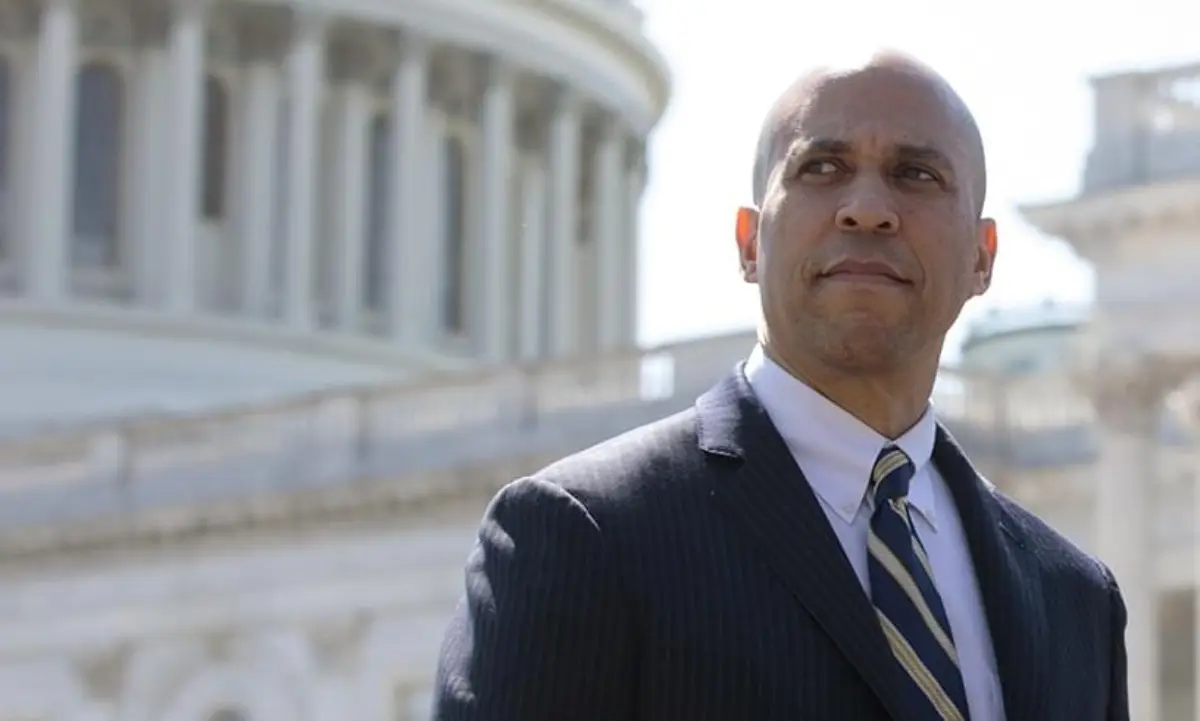 “Despite the heightened prevalence of cardiovascular diseases among South Asians, their risk for heart disease is not widely understood by the medical community,” Senator Booker said while introducing the bill. “This bill is an important step toward promoting critical research on heart disease, and supporting organizations working to improve heart health for at-risk communities across the nation. To reduce the impact of cardiovascular disease nationally, it is essential to invest in research into communities that are disproportionately at risk.”
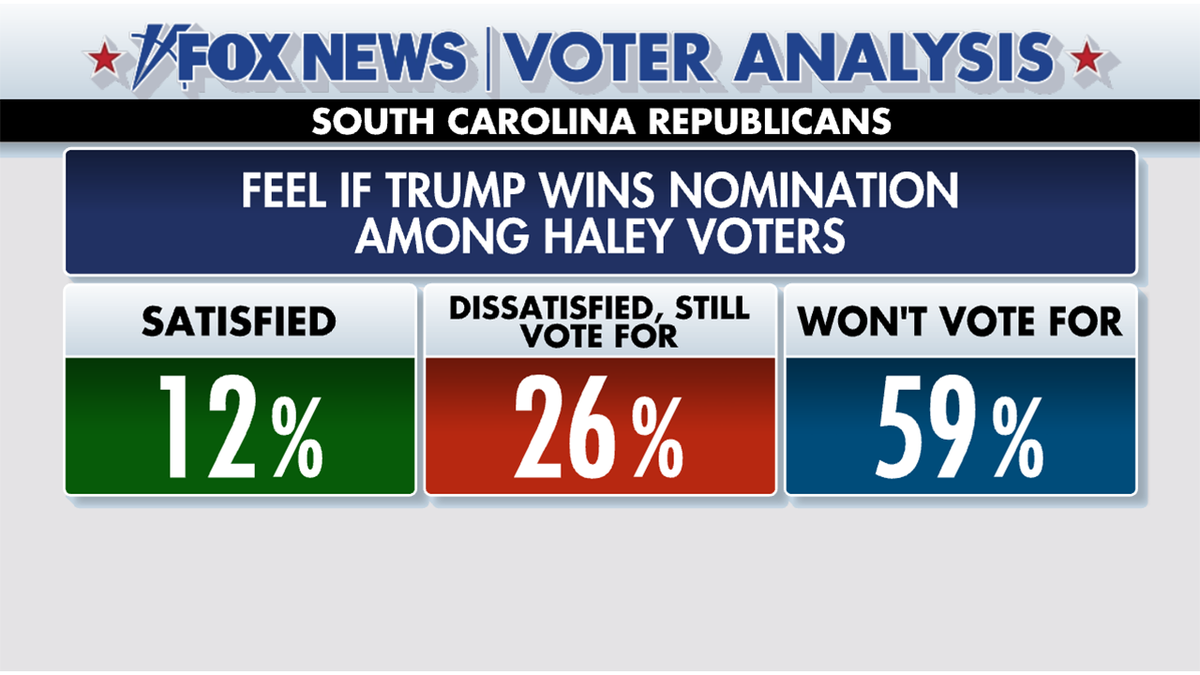 However, others feel differently. According to The Hill, Trump has reasons to be optimistic. He almost never led in any polls during the 2020 election cycle, yet he still came within a few thousand votes of pulling off a second narrow Electoral College victory. In contrast, he now leads in nearly every national poll. He also leads or ties Biden in every important swing state.
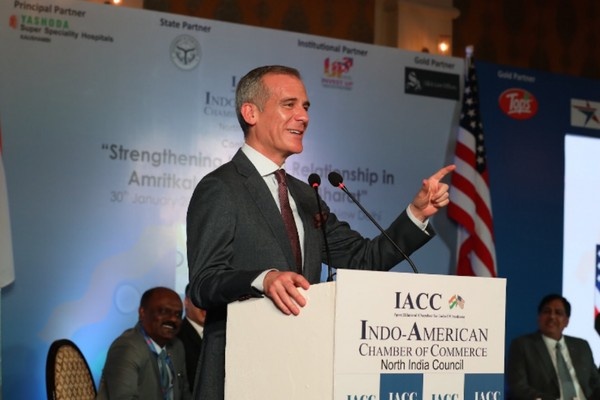 Garcetti noted US cabinet members do not just visit India for a chance to see monuments like the Taj Mahal or with a touch-and-go attitude. Instead, they leave with concrete deliverables like greater cooperation and co production and development in the defense industry, such as the GE Engine deal.
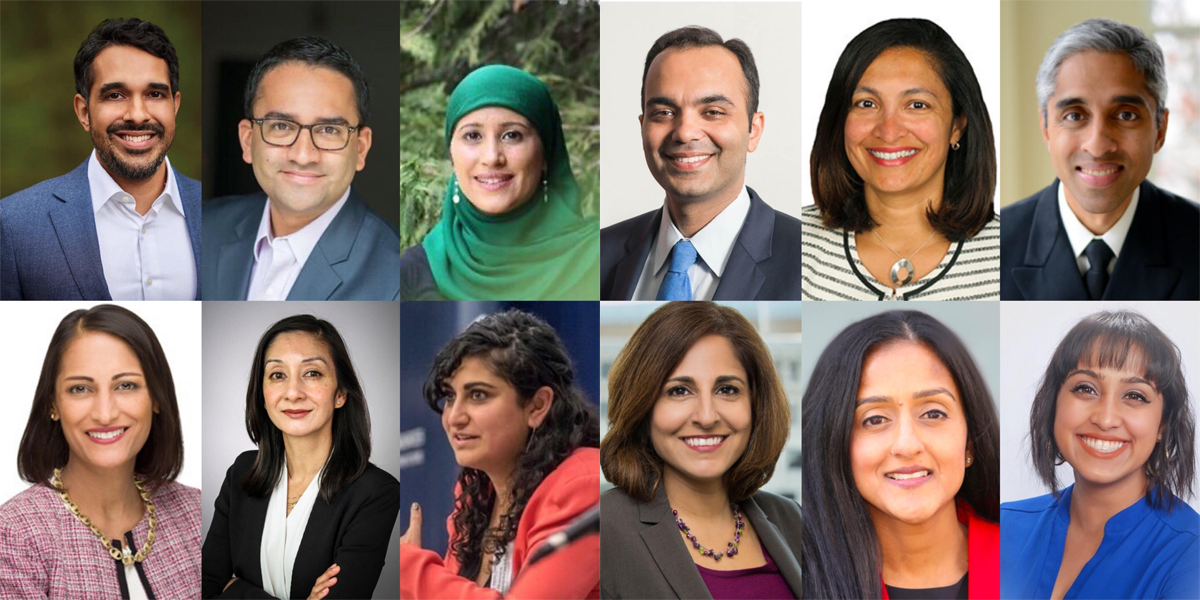 Ever since Gov. Bobby Jindal the first ever major Indian American presidential candidate who had sought to occupy the White House, there have been many others who have followed in his footsteps. Indian Americans have expressed keen interest in carving out their political space at the national table for decades, and now, the fruits of their labor are paying off, with more successes now than ever before.
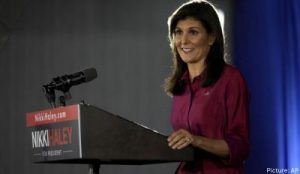
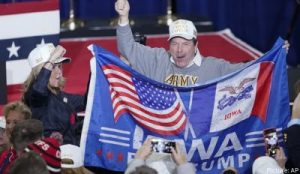
 Republicans continue to be broadly doubtful about votes being counted accurately — in the early contests or beyond them. About one-quarter of Republicans say they have at least “quite a bit” of confidence that the votes in the 2024 presidential election will be counted accurately, significantly lower than Democrats. Slightly fewer than half of U.S. adults overall (46%) believe the same, which is in line with an
  But when the dark streets of most American cities, especially Los Angeles and San Francisco, in the state of California, are turning into the ‘mecca of homeless’, it is just hypocritical to laugh at the broad-mindedness of this great country and not hide it by applying “Modi tech ” here.
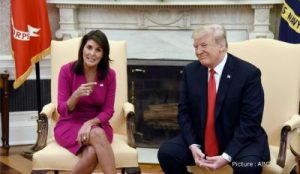
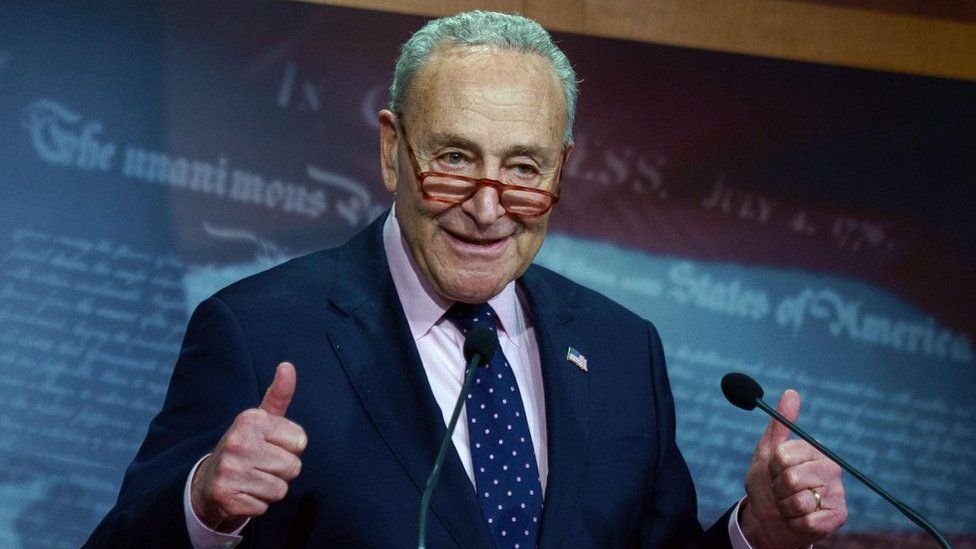
 When immigration is instead driven by the push of climate change, social tensions exacerbated by authoritarian rulers and gangs, as well as fluctuating anti-immigrant sentiment in the U.S., it is harder to predict, said Manuel Pastor, a professor of sociology and American Studies & Ethnicity at the University of Southern California.
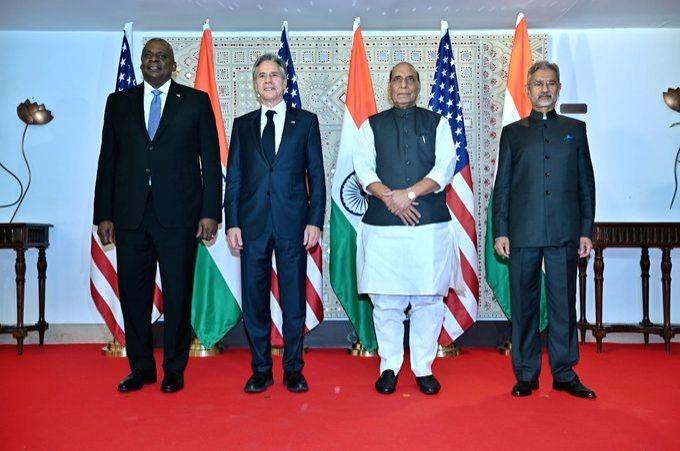 Blinken said the two countries were taking very concrete steps to deliver on the vision that President Joe Biden and Prime Minister Narendra Modi put forward at their meeting in Washington in June.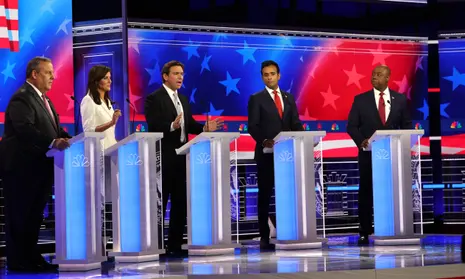


 One significant move unveiled is a proposal by the Federal Trade Commission (FTC) that would prevent companies in various sectors from imposing concealed and deceptive fees. This rule would mandate sellers to disclose all essential costs upfront. The FTC could potentially impose financial penalties on companies that violate this rule. Proponents argue that this regulation will enable consumers to make more informed price comparisons and create a level playing field for businesses that are transparent about their costs.
 The government’s borrowing spree in recent years took place during a period of historically low interest rates. However, as interest rates rise and prices continue to climb, the cost of servicing this debt is set to increase. According to the Peter G. Peterson Foundation, nearly $2 billion is spent daily on interest payments for the national debt.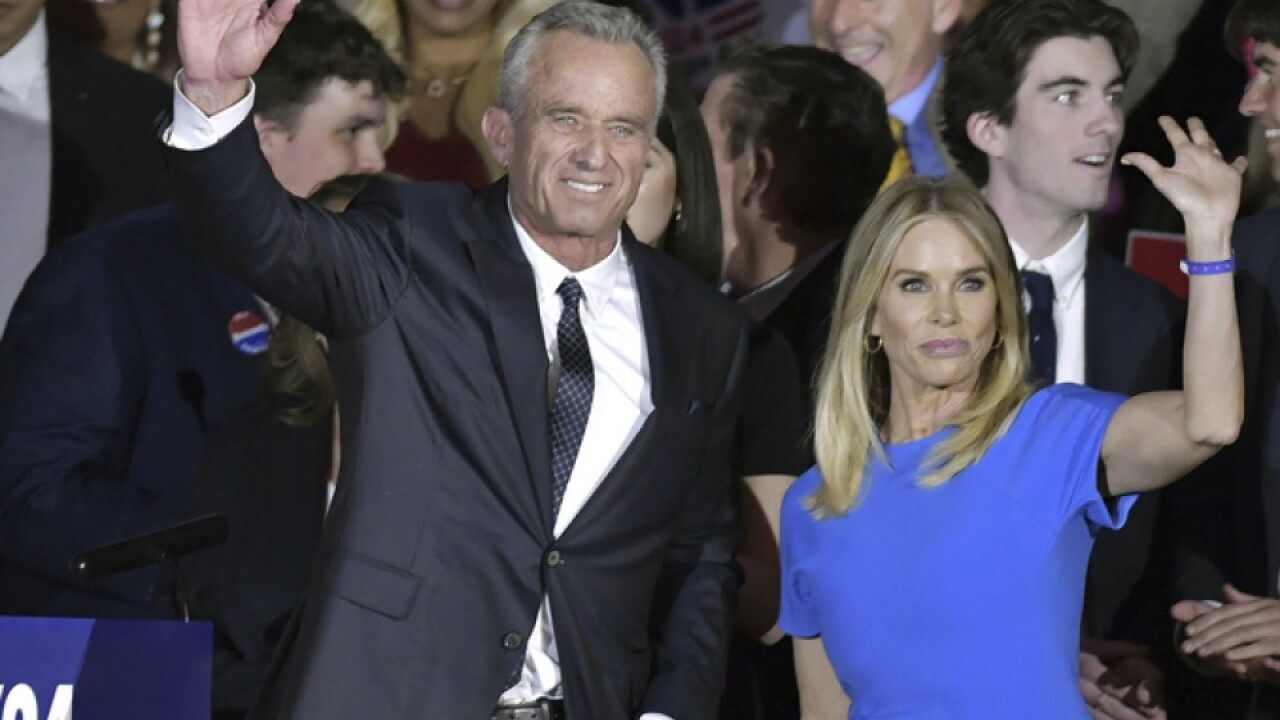
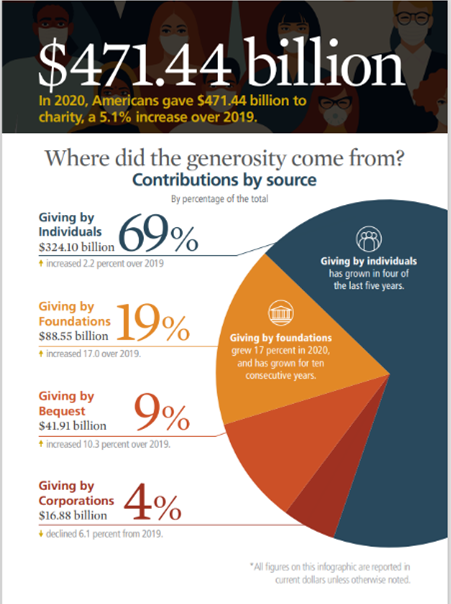
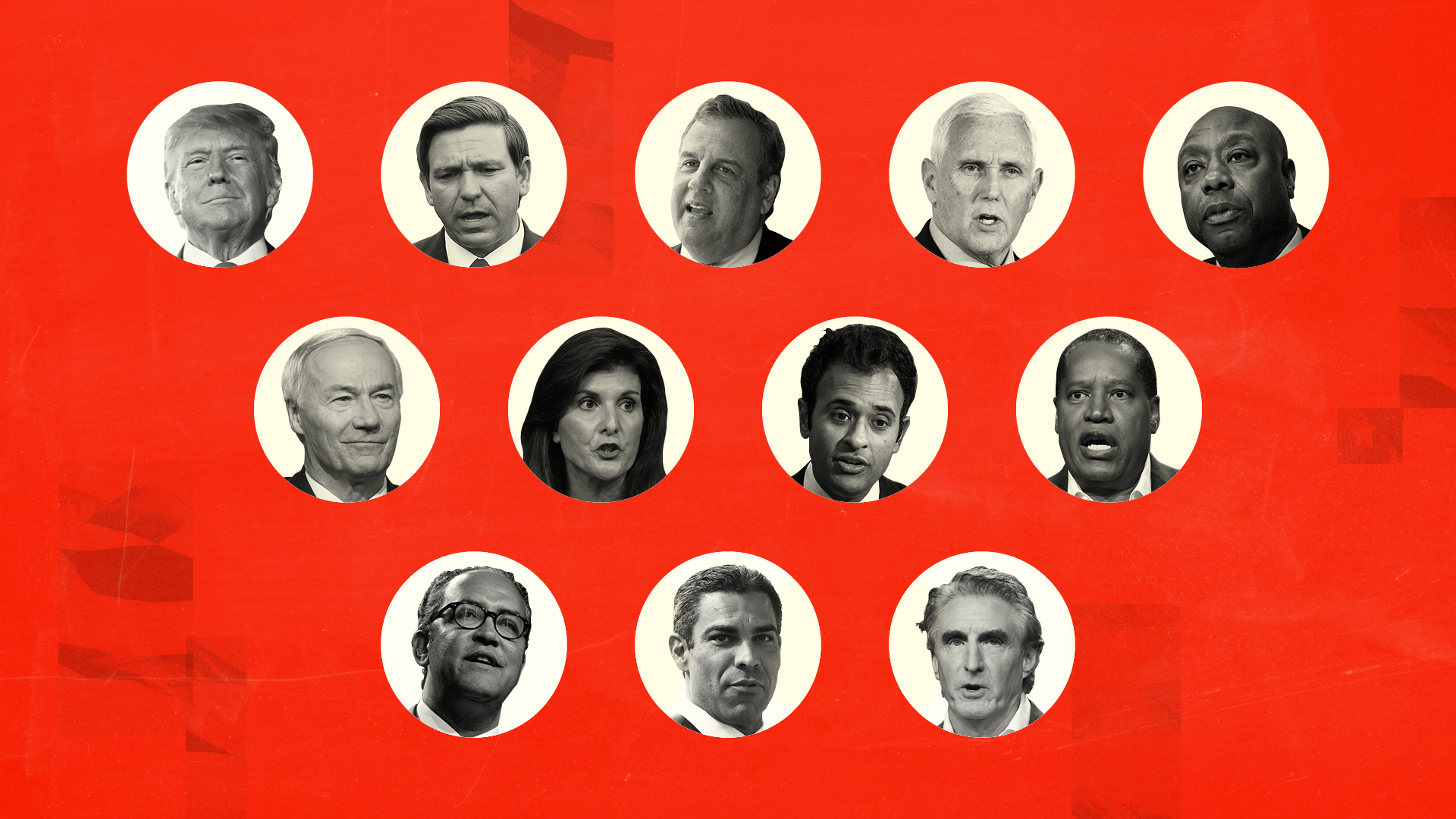
 That move marked a profound shift from earlier in the week, when a shutdown looked all but inevitable. A shutdown would mean that most of the government’s 4 million employees would not get paid – whether they were working or not – and also would shutter a range of federal services, from National Parks to financial regulators.