President Joe Biden secured a solid victory in South Carolina’s Democratic primary, reaffirming his strong support among the state’s voters. This win holds significant symbolism as it mirrors his previous triumph in the state during the 2020 primaries, which revitalized his then-struggling campaign. Biden’s success in South Carolina underscores the importance of the state as a crucial battleground for mobilizing Black voters, a key demographic pivotal to his electoral strategy.
“In 2020, it was the voters of South Carolina who proved the pundits wrong, breathed new life into our campaign, and set us on the path to winning the presidency,” Biden emphasized in a statement, expressing gratitude for the continued support. He further asserted his confidence in reclaiming the presidency, framing the upcoming election as another opportunity to defeat former President Donald Trump.
The Associated Press officially declared Biden’s victory, highlighting his decisive lead across key locations in the state. This win not only secures South Carolina’s 55 Democratic delegates but also serves as a testament to the effectiveness of Biden’s reelection campaign’s efforts to engage and mobilize voters.
Biden’s strategic focus on South Carolina is evident in his advocacy for a revamped primary calendar, aimed at prioritizing states with greater racial diversity. This move reflects a broader push within the Democratic National Committee to address concerns about the lack of diversity in the early primary states of Iowa and New Hampshire.
The significance of South Carolina’s primary is underscored by its substantial Black population, comprising 26% of the state’s residents. Black voters played a crucial role in Biden’s 2020 victory, with overwhelming support contributing to his nomination and eventual election as president.
Biden’s longstanding relationships within South Carolina, coupled with the endorsement of influential figures like Rep. Jim Clyburn, have solidified his position within the state’s political landscape. Clyburn’s continued support underscores Biden’s resonance with Black voters and his commitment to advancing their interests.
Throughout his presidency, Biden has consistently expressed gratitude to South Carolina’s Democratic voters for their unwavering support. His acknowledgment of their pivotal role in his political journey reinforces the significance of the state within the broader Democratic Party.
Campaigning in South Carolina, Biden emphasized the state’s critical role in shaping the outcome of the 2020 election, framing it as instrumental in defeating Trump. This narrative reflects the president’s confidence in his ability to secure victory once again, positioning himself as the strongest contender against the GOP’s current frontrunner.
Democratic National Committee Chairman Jaime Harrison, a South Carolina native, hailed Biden’s decision to prioritize the state’s primary, recognizing its historical significance. Harrison emphasized the importance of representation and inclusivity in the electoral process, applauding Biden for acknowledging and addressing these concerns.
Black voters in South Carolina cited various reasons for their continued support for Biden, ranging from his administration’s defense of abortion rights to his commitment to diversity in judicial appointments. Concerns about the age of both Biden and Trump were also acknowledged, yet many voters expressed a preference for Biden based on his policies and leadership qualities.
Despite concerns about age and readiness, Biden’s track record and policy positions resonated strongly with voters, positioning him as the preferred choice over his opponent. This sentiment reflects a broader confidence in Biden’s ability to lead and navigate the challenges facing the nation.
Biden’s victory in South Carolina’s Democratic primary reaffirms his strong support among Black voters and underscores the state’s pivotal role in shaping the outcome of the upcoming election. His strategic focus on engaging diverse communities highlights a commitment to inclusivity and representation within the Democratic Party.
The United States and the United Kingdom have executed strikes against Houthi targets in Yemen utilizing aerial and surface platforms, including fighter jets, backed by several other nations. According to two US officials, a minimum of 30 targets were hit across at least 10 locations.
The targeted sites encompassed command and control infrastructure, an underground depot for storing weapons, and other armaments utilized by the Houthis to threaten international shipping routes, as stated by an official.
The coalition, comprising the US, UK, Australia, Bahrain, Canada, Denmark, the Netherlands, and New Zealand, issued a joint statement reaffirming their commitment to de-escalate tensions and restore stability in the Red Sea while issuing a warning to the Houthi leadership regarding their actions. The statement emphasized their determination to safeguard lives and ensure the unhindered flow of commerce through one of the world’s vital waterways.
In the operation against Houthi targets in Yemen, two US destroyers, the USS Gravely and USS Carney, fired Tomahawk missiles, serving as a component of the offensive, as per a US official. Additionally, F/A-18 fighter jets from the USS Dwight D. Eisenhower aircraft carrier were engaged in the strikes.
Preceding these strikes, the US intercepted six Houthi anti-ship cruise missiles before they could be launched towards the Red Sea, as confirmed by US Central Command.
These successive strikes come in response to a drone attack that claimed the lives of three US service members and injured many more, prompting the Biden administration to adopt a nuanced approach. Instead of targeting Iran directly, the US is focusing on influential proxies supported by Tehran, signaling a message to Iran’s leadership through indirect means.
While the strikes in Yemen are distinct from those in Iraq and Syria, both operations target Iranian-backed groups in the Middle East. US Defense Secretary Lloyd Austin asserted that the recent strikes aim to disrupt and degrade the capabilities of the Houthi militia, emphasizing a collective resolve to impose consequences if the Houthi attacks on international shipping and naval vessels persist.
President Joe Biden authorized Saturday’s strikes earlier in the week, emphasizing that they are a direct response to Houthi actions and not indicative of a desire for escalation.
Mohammed Al Bukhaiti, a prominent figure in the Houthi Political Council, reiterated the group’s determination in the face of coalition strikes, emphasizing their commitment to ongoing military operations against Israel until certain conditions are met.
Separately, the US conducted unilateral strikes against sites in Syria and Iraq, hitting over 85 targets, including command centers and weapons facilities. While the administration deemed these strikes successful, it pledged further action against Iranian-backed groups in the region.
Austin characterized Friday’s strikes as the beginning of a broader response, without specifying the timeline for subsequent actions.
Approximately 24 hours after the initial strikes in Iraq and Syria, the US carried out additional strikes in Yemen. These strikes mark the third instance in recent weeks of joint US-UK operations targeting Houthi sites. In previous rounds, the coalition targeted weapons storage facilities and radar sites to impede Houthi attacks on critical waterways.
Despite these efforts, the Houthis have remained resolute, expressing defiance towards the US and UK, reaffirming their determination to confront what they perceive as aggression.
In addition to major strikes, the US has undertaken smaller-scale operations targeting Houthi drones. Recent actions included intercepting drones deemed an imminent threat to shipping lanes and US warships in the Red Sea and the Gulf of Aden.
Former President Trump has managed to sidestep numerous controversies that might have been detrimental to other political candidates. However, recent developments suggest that he may not be entirely impervious to the consequences of his actions, especially in the eyes of voters.
A new survey, released by Bloomberg and Morning Consult, indicates that the outcome of the four criminal trials Trump is currently embroiled in could dramatically influence his political future. According to the poll, a significant majority of voters in crucial swing states would be disinclined to support Trump if he were to be convicted of a criminal offense or sentenced to prison.
The poll, conducted in seven pivotal states including Arizona, Georgia, Michigan, Nevada, North Carolina, Pennsylvania, and Wisconsin, revealed that a conviction could sway the decisions of a substantial portion of voters, potentially impacting the outcome of the election. GOP strategist Doug Heye emphasized the significance of this, noting that a conviction could serve as a decisive factor in an election where either Trump or President Biden could emerge victorious.
The survey also highlighted a noteworthy shift among Trump’s own voter base. Approximately 20 percent of voters in the surveyed states who had previously supported Trump expressed reluctance to vote for him again if he were to face conviction. GOP strategist Dan Judy commented on this trend, suggesting that while Trump might still retain a significant portion of Republican support, any erosion of this base could significantly impact the election outcome.
However, it remains uncertain whether the polling figures accurately reflect potential outcomes in a general election. At present, in the absence of any criminal convictions, Trump maintains a lead of six points among registered voters in battleground states, as indicated by the Bloomberg poll.
Historically, dissatisfied voters have sometimes compromised their reservations and supported candidates who align most closely with their beliefs, regardless of misgivings. For instance, in 2016, despite controversies such as the release of the Access Hollywood tape, Trump managed to secure victory with the backing of his party faithful.
Despite facing four indictments comprising a total of 91 criminal charges last year, Trump’s grip on the Republican nomination appeared to strengthen, with his supporters rallying around him amidst allegations of unfair targeting.
While Trump has emerged victorious in the initial contests of this year’s primary process, a significant disparity exists between the sentiments of the GOP electorate and the broader public. A recent Economist/YouGov poll revealed that while Trump enjoys favorable ratings from 79 percent of Republicans, only 40 percent of the general public view him favorably.
Moreover, Trump faces relentless attacks from the Biden campaign and its supporters, who argue that his reelection would jeopardize democracy itself. Trump maintains his innocence regarding all charges against him, while his legal team continues to seek delays in proceedings.
Currently, Trump faces impending trials in New York, Georgia, and federal courts, with charges ranging from hush money payments to alleged conspiracies to overturn the 2020 election. The timing of these trials presents a challenge, particularly as Trump seeks to secure the GOP nomination and mount a reelection campaign.
Should Trump emerge victorious in the GOP primary cycle, he would be officially nominated at the Republican National Convention in mid-July. However, the possibility of a federal trial relating to events surrounding the 2020 election looms, pending court decisions regarding presidential immunity from prosecution.
Aside from the question of guilt or acquittal, Trump faces the practical dilemma of allocating his time between campaign efforts and legal defense. GOP strategist Dan Judy noted the inherent challenge in balancing these priorities, emphasizing the importance of time as a candidate’s most valuable resource.
Nonetheless, predicting Trump’s future remains uncertain, as his political trajectory has defied conventional wisdom time and again. Despite skepticism, observers acknowledge the absence of historical precedent to guide assessments of Trump’s prospects.
“In many ways, predicting Trump’s fate has been a futile endeavor,” Judy conceded. “There’s no precedent to rely on here, no past events to draw parallels from. It’s impossible to say for certain what lies ahead.”
The United States gave its approval on Thursday for a significant $4 billion transaction involving cutting-edge drones destined for India, a move aimed at bolstering India’s military capabilities vis-à-vis China. This approval comes after a delay attributed to an alleged plot to assassinate a Sikh separatist leader on US soil.
This sale signifies a notable shift in India’s procurement strategy from its traditional reliance on Russian arms, which have increasingly faced scrutiny due to sanctions stemming from Russia’s actions in Ukraine.
The discussions regarding the drones began during Prime Minister Narendra Modi’s state visit last year, at the invitation of President Joe Biden. These talks gained urgency against the backdrop of skirmishes between India and both China and Pakistan.
Following extensive deliberations with US lawmakers and Indian authorities, the State Department formally notified Congress about the sale, comprising 31 MQ-9B Sky Guardians, the most advanced variant of General Atomics’ Predator drones.
According to a statement from the State Department, “The proposed sale will improve India’s capability to meet current and future threats by enabling unmanned surveillance and reconnaissance patrols in sea lanes of operation.” It further asserted, “India has demonstrated a commitment to modernizing its military and will have no difficulty absorbing these articles and services into its armed forces.”
While India has historically enjoyed bipartisan support in the US Congress, the sale encountered a setback following allegations by US prosecutors of a plot to assassinate a Sikh separatist leader with US citizenship on American soil. The Justice Department went as far as to allege remote direction of the plan by an Indian government official.
India responded to these allegations with a more measured approach compared to its vehement reaction to similar accusations by Canada in the past. However, some US lawmakers questioned the seriousness with which both the Modi government and the Biden administration addressed these allegations, leading to a temporary halt in the informal approval of the sale.
Despite this, observers anticipate that Congress will not obstruct the sale within the 30-day window it has to do so. Michael Kugelman, director of the Wilson Center’s South Asia Institute, commented, “The notification gets the sale back on track, but it could still encounter some choppy seas in Congress. The assassination allegations against India continue to cast a shadow over US-India relations.” He added, “Strategic imperatives tend to carry the day in this partnership, and that will likely ensure the sale eventually goes through, but one can’t rule out the possibility of some hiccups during the finalization process.”
Regarding the approval process, Randhir Jaiswal, a spokesman for India’s foreign ministry, stated that the United States was following its “internal processes,” refraining from further elaboration.
The drones in question, Sea Guardians, possess the capability to monitor seas, submarines, and remain airborne for up to 35 hours, equipped to fire Hellfire missiles and carry approximately 1,000 pounds (450 kilograms) of bombs.
India’s navy has been operating two Predator drones on lease, utilizing them to monitor the Arabian Sea, safeguarding ships from potential threats posed by Yemen’s Huthi rebels and Somali pirates.
In 2019, India made headlines by conducting airstrikes in Pakistani airspace, marking a departure from past precedents. Additionally, tensions along the Himalayan frontier between India and China, the two most populous nations globally, have been escalating, highlighted by a deadly clash in 2020 that claimed the lives of 20 Indian troops and at least four Chinese soldiers.
Despite concerns expressed by some US lawmakers regarding Modi’s human rights record, US policymakers generally view India as a strategic partner due to shared apprehensions about China.
The recent drone strike in Jordan, resulting in the deaths of three U.S. soldiers and allegedly carried out by Iranian-backed militant factions, has intensified tensions in the already volatile Middle East region. This incident has placed additional pressure on President Biden to address the situation and send a clear message to leaders in Tehran.
The White House now faces the delicate task of formulating a response to Iran that deters future attacks while avoiding a broader conflict, a stance the Biden administration has been steadfast about since the outset of the Israel-Hamas conflict. This attack represents the first instance of U.S. military personnel fatalities in the Middle East since the onset of the Gaza conflict in October, further complicating matters for the White House.
In response to the attack, National Security Spokesperson John Kirby stated, “We do not seek another war. We do not seek to escalate. But we will absolutely do what is required to protect ourselves… and to respond appropriately to these attacks.” President Biden has committed to addressing these recent attacks at a time and in a manner of the administration’s choosing.
Following the incident, President Biden convened with his national security team, including National Security Adviser Jake Sullivan and Defense Secretary Lloyd Austin, who returned to his duties at the Pentagon following surgery for prostate cancer. While Kirby emphasized that the U.S. does not seek war with Iran, he refrained from confirming whether a strike within Iran was under consideration, stating, “I will not get ahead of the president’s decision-making.”
Since late October, American troops have faced more than 160 attacks from Iranian-backed groups. The White House has responded with precision strikes on militia targets and retaliatory actions against the Iranian-backed Houthis in Yemen following attacks on commercial vessels in the Red Sea. However, the deaths of U.S. troops elevate the stakes for Biden, especially among Republican defense hawks in Congress who are advocating for retaliatory measures, potentially including strikes within Iran.
Ali Vaez, director of the Iran Project at the International Crisis Group, suggested that if the U.S. aims to hold Iran accountable, it may target sites or facilities in Iraq or Syria utilized by the Islamic Revolutionary Guard Corps, Iran’s military wing. However, he believes the U.S. is unlikely to target Iranian territory directly, presenting a complex challenge for the Biden administration.
The deaths of U.S. soldiers have sparked outrage in Washington, with some GOP figures criticizing the administration’s response to Iran. Former President Trump accused Biden of “weakness” and warned of the risk of escalating to “World War 3.” Republican lawmakers echoed these sentiments, urging decisive action against Iran.
Iran has denied involvement in the Jordan attack, asserting it does not issue direct orders to militia groups. However, the U.S. holds Iran broadly responsible for attacks carried out by its proxies. Pentagon Deputy Press Secretary Sabrina Singh indicated that the attack bore the hallmarks of an Iranian-backed group in Iraq, Kata’ib Hezbollah, though a definitive attribution has not been made.
Any U.S. retaliation against Iran is likely to provoke further responses from Iranian-backed groups, perpetuating a cycle of violence until the Gaza conflict subsides. These groups claim to be acting in solidarity with Palestinians against American forces.
Barbara Slavin, a Middle East expert at the Stimson Center, described the Jordan attacks as a “dangerous escalation” and anticipated a robust U.S. response. However, she noted that previous U.S. actions have not deterred further attacks, suggesting that a cease-fire in Gaza may be the only effective means of reducing such incidents.
Despite concerns about the effectiveness of deterrence, the Pentagon remains committed to its current strategy against Iranian-backed militants, with Singh affirming that the U.S. will respond at an appropriate time and location.
With expectations of Iranian retaliation to any U.S. strikes, the risk to American troops could escalate, particularly considering past incidents where troops narrowly avoided fatalities. Slavin emphasized that the frequency of attacks by Iranian-backed groups made such casualties inevitable in the long run.
The United States economy is surpassing expectations, with markets soaring and inflation inching closer to the Federal Reserve’s target of 2%. There’s optimism for a soft landing, a scenario where inflation is controlled, and recession is avoided. On the flip side, China is facing economic challenges: markets are sluggish, consumer confidence is waning, growth is slowing, and there’s a demographic decline. Evergrande’s winding-up, mandated by a court, adds uncertainty to China’s real estate crisis.
In light of these economic dynamics, questions arise about the relationship between the world’s two largest economies. Eswar Prasad, a trade policy professor at Cornell University and former head of the IMF’s China division, sheds light on the matter.
Prasad observes the US solidifying its global growth leadership while other nations struggle. He attributes this to the US economy’s resilience compared to China’s, which grapples with labor force decline, a faltering property market, and dwindling confidence in governmental policies.
Regarding US-China tensions, Prasad suggests China’s weak economy fuels its desire to ease trade tensions with the US, especially with the approaching US election season and escalating anti-China rhetoric.
Investors monitoring China should note the government’s efforts to stimulate the economy through increased spending, interest rate cuts, and market interventions. However, these measures have limited efficacy in addressing fundamental issues like low consumer and business confidence.
Transition planning at JPMorgan Chase, led by CEO Jamie Dimon, is in the spotlight. With Dimon nearing 68, speculation mounts about his successor. Marianne Lake’s appointment as the sole CEO of the consumer division, alongside Jennifer Piepszak’s new role leading the commercial and investment bank, signals a potential leadership shift.
Dimon, an influential figure in global banking, has expressed contentment in his current role but hasn’t ruled out a future in politics, citing his love for the country.
In a concerning revelation, it’sdisclosed that the NSA has been purchasing Americans’ web browsing data from commercial brokers without warrants. Oregon Senator Ron Wyden revealed unclassified documents confirming these transactions, highlighting the routine acquisition of sensitive citizen information by government agencies.
These disclosures coincide with fears of foreign governments engaging in similar data purchases, prompting the Biden administration to consider measures to safeguard US citizens’ personal data from foreign exploitation.
The International Court of Justice (ICJ) has issued a directive to Israel, compelling it to enhance its protection of civilians within the Gaza Strip amidst its conflict with Hamas. The court has granted Prime Minister Netanyahu’s administration a one-month window to furnish a comprehensive plan in response to this mandate.
This deadline presents a significant challenge to President Biden’s backing of Israel’s offensive, especially in light of escalating global pressure for a cessation of hostilities. The United States has been a vocal advocate for respecting decisions emanating from international judicial bodies, adding weight to the ICJ’s verdict.
Stephen Rapp, former U.S. Ambassador-at-Large for War Crimes Issues, emphasized the significance of this decision for Israel, stressing that compliance holds substantial consequences in international relations. He noted that key U.S. allies would anticipate Israel’s adherence to the ICJ’s directives, cautioning that defiance could isolate the Israeli government diplomatically.
Despite South Africa’s plea for a ceasefire, which was part of its accusations against Israel presented to the ICJ, the court’s ruling did not explicitly demand one. However, South Africa’s Foreign Minister, Naledi Pandor, asserted that implementing a ceasefire is imperative to fulfill the court’s stipulations, emphasizing the need to mitigate harm to innocent civilians.
The Biden administration has expressed concerns about the humanitarian toll of the conflict, urging Israel to take greater measures to safeguard civilians. While the U.S. acknowledges Israel’s right to self-defense, it advocates for actions aimed at minimizing civilian casualties and facilitating humanitarian aid to Gaza.
The administration’s stance aligns with the ICJ’s ruling, albeit it has rebuffed efforts to impose direct action against Israel, notably at the United Nations Security Council. The U.S. favors “humanitarian pauses” over a blanket ceasefire, aiming to balance Israel’s security concerns with the urgent humanitarian needs of Gaza’s population.
Critics contend that Israel’s military operations have inflicted extensive damage, necessitating an immediate ceasefire to alleviate the humanitarian crisis in Gaza. They also oppose U.S. military aid to Israel, citing the ICJ’s acknowledgment of potential violations of the Convention on the Prevention and Punishment of the Crime of Genocide.
The ICJ’s ruling has prompted reactions within the United States, with some calling for a reassessment of military aid to Israel to avoid complicity in potential violations of international law. Calls for a ceasefire have resonated among Democratic lawmakers, with proposals for increased congressional oversight on arms sales and aid to Israel gaining traction.
While the majority of Congress opposes compelling Israel into a ceasefire, there’s growing concern among Democrats regarding Israel’s conduct of the conflict. Senators are exploring avenues to enhance congressional oversight and ensure that U.S. military assistance aligns with international humanitarian standards.
The ICJ’s comprehensive ruling on the allegation of genocide against Palestinians is anticipated to unfold over several years. Proponents of Israel’s right to self-defense view the initial verdict as a cautionary signal, acknowledging the mounting concern over civilian casualties and humanitarian conditions.
Robert Satloff, Executive Director of the Washington Institute for Near East Policy, cautioned against complacency, emphasizing the real political implications of the international community’s concerns regarding civilian casualties and the humanitarian crisis in Gaza.
Vaccines play a vital role in saving lives, preventing diseases, and easing the strain on healthcare systems. Recognizing this, various medical organizations, including the AMA, American Academy of Pediatrics, American Academy of Family Physicians, American College of Physicians, and American Geriatrics Society, have jointly submitted an amicus brief to the U.S. Supreme Court in the case Murthy v. Missouri. This document emphasizes the crucial need to counter vaccine misinformation to safeguard public health.
The brief highlights the collective experience of hundreds of thousands of medical professionals who have witnessed both the life-saving potential of vaccines and the damaging impact of misinformation. Drawing on decades of research and practice, these organizations stress the unparalleled benefits of vaccines as a cornerstone of public health.
On the legal front, Missouri and Louisiana’s attorneys general have filed suits against social media platforms, alleging coercion in censoring individuals critical of COVID-19 policies, masks, and vaccine mandates. Conversely, the Biden administration argues that its engagement with these platforms aimed to curb online misinformation, particularly by flagging content violating platform policies.
A central point of the brief is the detrimental effect of misinformation on COVID-19 vaccine uptake, which undermines the vaccines’ effectiveness in saving lives and controlling the spread of the virus. The government’s intervention, therefore, becomes imperative in combating falsehoods that endanger public health.
The brief underscores the safety of FDA-approved vaccines, emphasizing the rigorous process of clinical trials and ongoing monitoring by regulatory agencies. In contrast, it highlights baseless claims circulating widely, such as individuals becoming “magnetized” post-vaccination or being implanted with tracking microchips, which lack credible evidence.
Moreover, the decline in vaccination rates due to misinformation has led to the resurgence of diseases like measles, once on the brink of eradication. Legal proceedings surrounding the case have seen a district court ruling in July 2023 limiting governmental communication with social media companies, partially upheld by the 5th U.S. Circuit Court of Appeals. The Supreme Court’s intervention in October temporarily halted the district court order until its own ruling, expected in June.
In a related case, the Litigation Center of the American Medical Association and State Medical Societies has filed an amicus brief with the 9th U.S. Circuit Court of Appeals, urging the upholding of a permanent injunction against a 2021 Montana law barring physicians from accessing vaccination status information of employees or patients who decline to disclose it.
Donald J. Trump has been cruising through the primaries in Iowa and New Hampshire, dominating his Republican rivals and basking in the adoration of his supporters who are convinced of his inevitable victory in the presidential race. However, as Trump edges closer to securing the Republican nomination, he faces daunting challenges beyond the party faithful.
Outside the insular world of Republican primaries, Trump’s campaign is grappling with persistent weaknesses that could pose significant risks for his party. These vulnerabilities came to the fore in New Hampshire, where a significant portion of independents, college-educated voters, and Republicans hesitant to overlook his legal troubles threw their support behind his rival, Nikki Haley.
While Trump emerged victorious in New Hampshire, the sizable turnout against him signaled trouble ahead as the presidential race transitions from the realm of die-hard Trump supporters to a broader electorate, many of whom rejected him in the past. Governor Ron DeSantis of Florida acknowledged the issue, stating that Trump must find a way to address the concerns of lifelong conservatives who are reluctant to support him again.
On the other side, President Biden also faces challenges in a potential rematch of the 2020 contest. Despite his victory then, Biden, now 81, grapples with widespread disapproval and skepticism regarding his age and leadership. He seeks to rally his base, independents, and even moderate Republicans around issues such as abortion rights and democracy, although his stance on immigration, inflation, and the conflict in Gaza has alienated some within his party.
Republican pollster Neil Newhouse highlighted the upcoming election as a choice between two unpopular leaders, characterizing it as a “lesser-of-two-evils” scenario.
Trump’s difficulties extend back to his 2016 takeover of the Republican Party, which alienated suburban moderates and independents. His struggles with independent voters were evident in the Iowa caucuses as well, where a majority supported his opponents.
While Trump is expected to regain many of these voters in the general election, a significant portion of Haley supporters in New Hampshire expressed willingness to vote for Biden, indicating a potential fracture within the Republican base.
However, caution is advised in interpreting the New Hampshire results, given the state’s left-leaning tendencies. Nonetheless, the GOP must ensure the election does not become solely a referendum on Trump.
Ruth Axtell, a New Hampshire independent who voted for Haley, expressed her desire to see Trump defeated, even if it meant a victory for a female candidate. Yet, she remains undecided for the general election, reflecting the uncertainty among voters.
New Hampshire’s results underscored Trump’s struggles with college-educated and affluent voters, demographics that once formed the core of his support base.
Even in Iowa, Trump faced challenges in affluent suburbs, indicating potential vulnerabilities in traditionally Republican strongholds.
Despite concerns about winning back Republicans who have turned away from him, Trump remains confident in his ability to secure their support. However, his victory speech in New Hampshire, marked by attacks on Haley rather than calls for party unity, raises questions about his approach.
Both Trump’s aides and super PAC officials view Biden as a formidable opponent, with the latter expressing concerns about Biden’s substantial spending on advertising.
While DeSantis and Haley refrained from directly confronting Trump, Biden’s campaign is expected to vigorously challenge him, countering his attacks with clips of his verbal missteps.
As Trump faces intensifying scrutiny over his role in the Capitol riot and legal troubles, his fixation on the 2020 election and divisive rhetoric could further erode his support among independents and swing voters.
Even in conservative Iowa, a significant portion of Trump’s supporters expressed reservations about voting for him if he were convicted of a crime, underscoring the potential repercussions of his legal battles on his electoral prospects.
Economic corridors are emerging as transformative agents, capable of fostering increased trade, foreign investment, and societal improvement across participating nations. The India-Middle East-Europe Economic Corridor (IMEC) stands out as a beacon of economic integration, promising to revolutionize interactions among India, the Middle East, and Europe. As we delve into the details of IMEC, its potential as a catalyst for global prosperity becomes increasingly apparent.
At its core, IMEC seeks to establish a multi-modal transport network, seamlessly integrating sea and rail routes, accompanied by innovative infrastructural components like hydrogen pipelines and advanced IT connections. The corridor’s game-changing potential is highlighted by its ability to significantly reduce transit times for goods, offering a more efficient alternative to the Suez Canal and projecting a 40% reduction in transit times. This efficiency not only expedites trade but also renders it more cost-effective, setting the stage for robust economic growth and expanded trade opportunities.
U.S. President Joe Biden’s characterization of IMEC as a “game-changing investment” underscores its potential to influence not only the regions it directly connects but also the global community. The Memorandum of Understanding (MoU) emphasizes the establishment of a “reliable and cost-effective cross-border ship-to-rail transit network,” showcasing the corridor’s potential to reshape global supply chains and international trade dynamics.
European Union President Ursula von der Leyen further emphasizes the corridor’s significance, branding it the “quickest link between India, the Middle East, and Europe.” This accolade positions IMEC as a major catalyst in reducing logistical costs and streamlining trade routes.
Beyond its role in trade facilitation, IMEC holds the promise of driving industrial growth and employment in participating regions. By providing an efficient mechanism for transporting raw materials and finished goods, the corridor is poised to stimulate industrial activity, addressing prevalent employment challenges. The correlation between enhanced transportation infrastructure and economic growth suggests that IMEC’s impact on job creation and industrial development could be substantial.
IMEC’s strategic importance extends to energy security and environmental sustainability. Access to the Middle East’s abundant energy resources is enhanced, bolstering the energy security of participating nations. The corridor’s emphasis on clean energy transportation aligns with global efforts to reduce greenhouse gas emissions, presenting a model for sustainable development.
Furthermore, IMEC’s potential to attract foreign investment and strengthen diplomatic ties positions it as an alternative to China’s Belt and Road Initiative, reshaping global trade dynamics and reducing dependency on traditional maritime routes. The corridor’s focus on cultural integration fosters connections among diverse cultures and civilizations, contributing to enhanced regional connectivity and peace.
IMEC is evidence of India’s strategic realignment towards the Middle East, particularly the Gulf Cooperation Council Countries (GCCs), under Prime Minister Narendra Modi’s leadership. This evolving relationship encompasses security cooperation, cultural ties, and technological exchanges, transcending a simplistic framework of oil trade and market access.
In the context of a shifting global landscape, IMEC represents a transition from a unipolar or bipolar world to a more multipolar system. By knitting together diverse economic, cultural, and political strengths, the corridor contributes to a balanced and resilient global system.
However, the success of IMEC is contingent upon the geopolitical stability of the Middle East. The region’s historical political unrest underscores the global necessity for peace in the Middle East. A stable Middle East is vital for ensuring secure trade routes, reliable energy resources, and unhindered knowledge and people exchange. It creates an environment conducive to the economic and technological collaborations envisioned by IMEC and contributes to global economic stability.
In conclusion, IMEC stands as a testament to the transformative power of economic connectivity, promising to shape a more prosperous and interconnected world. As leaders and nations come together to support this initiative, the potential for IMEC to catalyze global prosperity becomes increasingly tangible, fostering a future of shared economic growth, cultural integration, and geopolitical stability.
Republican presidential hopeful Nikki Haley raised concerns about Donald Trump’s mental acuity on Saturday, following an incident where he seemingly confused her with former House Speaker Nancy Pelosi while discussing the January 6, 2021, assault on the US Capitol.
Haley addressed the issue, stating, “Last night, Trump is at a rally and he’s going on and on mentioning me several times as to why I didn’t take security during the Capitol riots. Why I didn’t handle January 6 better. I wasn’t even in DC on January 6. I wasn’t in office then.”
There were claims that Trump had been mistaken and was referring to Pelosi instead of Haley. However, Haley dismissed these assertions, saying, “They’re saying he got confused. That he was talking about something else. That he was talking about Nancy Pelosi. He mentioned me multiples times in that scenario.”
Expressing her concerns about Trump’s fitness for the presidency, she told voters in Keene, New Hampshire, “The concern I have is – I’m not saying anything derogatory, but when you’re dealing with the pressures of a presidency, we can’t have someone else that we question whether they’re mentally fit to do it.”
This comes in the wake of Trump’s remarks at a campaign rally in New Hampshire, where he stated, “By the way, they never report the crowd on January 6. You know, Nikki Haley, Nikki Haley, Nikki Haley … did you know they destroyed all of the information, all of the evidence, everything, deleted and destroyed all of it? All of it, because of lots of things, like Nikki Haley is in charge of security, we offered her 10,000 people, soldiers, national guards, whatever they want. They turned it down.”
Later on the same day, Trump asserted his cognitive abilities, stating, “A few months ago I took a cognitive test my doctor gave me … and I aced it.” He added, “I’ll let you know when I go bad; I really think I’ll be able to tell you. Because someday we go bad. I feel my mind is stronger now than it was 25 years ago.”
A senior Trump campaign adviser, Chris LaCivita, downplayed the confusion, posting on X, “Nancy ….Nikki ….its a distinction without a difference.”
Despite the mix-up between Haley and Pelosi, Trump’s claim that the speaker of the House is responsible for US Capitol security is inaccurate, as previously fact-checked by CNN.
Haley further emphasized the need for top-tier individuals in leadership roles, stating in a Fox News interview, “We need people at the top of their game. I’m not saying that this is a Joe Biden situation, but I’m saying, are we really going to go and have two eighty-year-olds running for president?”
In the lead-up to the New Hampshire primary, Haley, aged 52, has been highlighting the age gap between herself and Trump, who is 77, as well as President Joe Biden, who is 81. She has also been advocating for term limits and mental competency tests for politicians over the age of 75.
Since the beginning of 2023, Haley and her supporters have invested nearly $28.6 million in advertising in New Hampshire, surpassing Trump and his allies who have spent about $14.4 million. However, in recent weeks, the margin between their advertising expenditures has narrowed. Since the start of the new year, Haley and her allies have spent around $9 million in New Hampshire, while Trump and his allies have spent approximately $8.5 million.
Trump’s campaign has treated Haley as a formidable contender in New Hampshire, evident in a series of attacks on social media and during a rally in the state.
In the unfolding narrative of Donald Trump’s potential bid for the 2024 presidential race, the former president claims to have a clear understanding of who his running mate will be. However, sources within his campaign reveal a more deliberative approach, as senior officials consider various candidates and compile a “short list” for potential vice-presidential contenders, according to insights obtained by Fox Business.
Following a significant triumph in the Iowa caucuses, Trump is positioned to secure victory in the upcoming New Hampshire primary, unless there is an unexpected surge by his primary rivals—former South Carolina Governor Nikki Haley and Florida Governor Ron DeSantis.
A victory for Trump in New Hampshire could prompt one or both of his competitors to exit the race, potentially paving the way for an uncontested GOP nomination and setting the stage for a faceoff against Joe Biden in the November elections.
Despite Trump’s success in Iowa and the anticipated win in New Hampshire, insiders close to the Trump campaign assert that neither Haley nor DeSantis currently feature on Trump’s shortlist for a running mate. Instead, the list prominently includes Ohio GOP Senator JD Vance and Arkansas Governor Sarah Huckabee Sanders, both regarded as rising stars within the GOP and affiliated with the party’s Trump-centric MAGA wing.
New York Congresswoman Elise Stefanik, who recently gained attention for her assertive questioning of Ivy League college chiefs during a hearing on campus antisemitism, is also listed as a potential candidate, albeit with the caveat that she is considered a “long shot,” according to a source familiar with the campaign’s discussions.
Trump is more personally acquainted with Huckabee Sanders, his former White House spokesperson, who valiantly defended him against the press. Similarly, Vance, a former venture capitalist and author, secured his Senate seat in 2022 by adopting the MAGA platform, which deviates from traditional Republican stances on trade and foreign engagement, according to GOP advisers.
Despite the speculation surrounding Trump’s potential running mate, one GOP political strategist cautions against expecting immediate announcements, noting, “I doubt we hear anything anytime soon.” The internal discussions within the Trump campaign continue as they consider various options.
Notably absent from the shortlist is Vivek Ramaswamy, a former Wall Street executive turned author and Trump-styled populist. Ramaswamy, who endorsed Trump for the GOP nomination after his loss in Iowa, faced criticism for his flamboyant campaigning style and once drew the ire of Trump himself for suggesting that the former president might struggle to navigate legal challenges, including five criminal indictments that could potentially result in a prison sentence while in office.
Despite attempts to seek clarification on the matter, a Trump campaign official has not responded to requests for comments on the ongoing considerations for the vice-presidential candidate.
The level of interest from Huckabee Sanders and Vance in the vice-presidential position remains uncertain, as both have not returned calls for comments. On the other hand, Stefanik has expressed her willingness, stating, “I would be honored to serve in the Trump administration in any capacity,” as reported by the Wall Street Journal. Trump, in turn, has praised Stefanik, who has actively championed the MAGA agenda while representing her upstate New York congressional district since 2015.
GOP strategists emphasize that the VP shortlist is dynamic and subject to change, underscoring the fluid nature of the decision-making process within the Trump campaign. Additionally, they caution against taking Trump’s assertion of already knowing his VP choice too seriously, attributing it to his strategic knack for garnering attention and generating substantial free publicity, especially during a Fox News Town Hall. Furthermore, they suggest that Trump may be aiming to solidify his nomination as an inevitable outcome while simultaneously seeking to reduce voter turnout for competitors Haley and DeSantis in New Hampshire.
The White House has unveiled a proposal aimed at significantly lowering the cost of overdrawing a bank account, potentially reducing it to as little as $3. This move, announced by the Consumer Financial Protection Bureau (CFPB), is part of the Biden administration’s ongoing efforts to tackle what it perceives as excessive fees burdening American consumers, especially those living paycheck to paycheck.
President Joe Biden expressed his concerns, stating, “For too long, some banks have charged exorbitant overdraft fees — sometimes $30 or more — that often hit the most vulnerable Americans the hardest, all while banks pad their bottom lines. Banks call it a service — I call it exploitation.”
The proposed rule from the CFPB suggests that banks should only charge customers an amount equal to their cost of providing overdraft services. This would necessitate banks to disclose the operational costs associated with their overdraft services, a requirement that many financial institutions may find challenging.
Alternatively, banks could opt for a benchmark fee applicable across all affected financial institutions. The proposed benchmark fees range from $3 to $14, with the CFPB seeking industry and public input to determine the most suitable amount. The suggested figures are derived from an analysis of the costs incurred by banks in recovering losses from accounts with negative balances that were never repaid.
Another option presented in the proposal is for banks to offer small lines of credit, functioning similarly to credit cards, to allow customers to overdraft. Some banks, such as Truist Bank, already provide such services.
The average overdraft fee, according to Bankrate’s research in August, was $26.61, with certain banks charging as much as $39. Despite various changes made by banks in recent years, the largest banks in the nation still generate around $8 billion annually from overdraft fees, disproportionately impacting low-income households and communities of color.
President Biden, in line with his economic agenda leading into the 2024 election, aims to eliminate what he terms as “junk fees,” with overdraft fees being a major focus. The regulations proposed by the CFPB would exclusively apply to banks with assets exceeding $10 billion, approximately 175 banks that constitute the majority of financial institutions Americans engage with. Smaller banks and credit unions, which often rely more heavily on overdraft fees, would be exempt.
The roots of overdraft services trace back to decades ago when banks initially offered a niche service to allow certain checking account customers to go negative to avoid bouncing paper checks. However, with the surge in popularity of debit cards, overdraft fees became a substantial profit center for banks.
Despite industry changes in response to public and political pressure, the proposed regulations are expected to face strong opposition from the banking sector. The regulations could potentially lead to a prolonged legal battle, with the Supreme Court being the final arbiter. If adopted and successfully navigates political and legal challenges, the new rules are anticipated to take effect in the autumn of 2025.
Acknowledging industry concerns, Lindsey Johnson, President and CEO of the Consumer Bankers Association, warned that the proposal might have unintended consequences, stating, “If enacted, this proposal could deprive millions of Americans of a deeply valued emergency safety net while simultaneously pushing more consumers out of the banking system.”
Despite some banks having introduced measures like reducing fees and adding safeguards to prevent overdrafts, concerns persist that increased regulations might prompt banks to eliminate the service altogether. The fate of the proposal will likely have significant implications for both consumers and the banking industry, setting the stage for a contentious debate on financial regulations and consumer protection.
A coalition of international religious freedom experts is urging Secretary of State Antony Blinken to testify before a congressional hearing regarding the exclusion of Nigeria and India from a list of nations with severe violations of religious freedom. The group, comprising more than 40 religious freedom experts and organizations, sent a letter on Wednesday, expressing concern over the omission of these countries despite alarming instances of religious violence and persecution.
The letter, initially obtained by The Daily Signal, emphasizes the urgent need for accountability and transparency in the decision-making process. The experts cited significant data, stating that since 2009, over 50,000 Christians have been killed in Nigeria, with 18,000 churches and 2,500 Christian schools attacked. In the case of India, they reported that between May of the previous year and the present, 200 to 400 churches and 3,500 Christian homes have been targeted.
In the letter, the religious freedom advocates declared their support for the United States Commission on International Religious Freedom (USCIRF) and its call for a congressional hearing into the State Department’s exclusion of Nigeria and India from the Countries of Particular Concern (CPC) list.
“Nigeria and India have been rocked by alarming instances of religious violence and persecution,” the letter states. “Pursuant to the International Religious Freedom Act, both countries meet the statutory definition of ‘engaging in or tolerating particularly severe violations of religious freedom’ to be designated as CPC. They should be designated as such.”
The designation of a “Country of Particular Concern” is made by the secretary of state if a nation is found to be involved in severe violations of religious freedom under the International Religious Freedom Act (IRFA) of 1998. Under the administration of former President Donald Trump, Nigeria was designated as a CPC, but the Biden administration subsequently removed that designation, and the reasons for this decision remain unclear.
The experts stress the importance of the United States taking an active role in addressing these issues and ensuring that the principles of religious freedom are upheld globally. They call for hearings by both the House Foreign Affairs Committee and the Senate Foreign Relations Committee to thoroughly examine the rationale behind excluding Nigeria and India from the CPC list.
“Accountability and transparency are essential to understanding the State Department’s rationale for declining to designate Nigeria and India as CPCs,” the letter continues. “We urge the House Foreign Affairs Committee and the Senate Foreign Relations Committee to convene hearings to thoroughly examine the reasons behind the exclusion of Nigeria and India from the CPC list. Secretary of State Antony Blinken must answer to Congress and the American people.”
Prominent signatories of the letter include McKenna Wendt from the International Christian Concern, former Representatives Frank Wolf of Virginia and Dan Burton of Indiana, Nadine Maenza, President of the International Religious Freedom Secretariat, Lela Gilbert from the Family Research Council, and William Murray, Chairman of the Religious Freedom Coalition, among others.
Despite the request for comment, the State Department has not responded to inquiries from The Daily Signal at this time. The urgency and gravity of the situation, as highlighted by the religious freedom experts, underscore the need for a thorough examination of the decision-making process and a clear understanding of why Nigeria and India were excluded from the CPC list.
Former President Trump was anticipated to secure a decisive victory in the Iowa caucuses, marking the initial significant trial of the 2024 Republican primary race, as reported by Decision Desk HQ.
In the lead-up to the Hawkeye State’s caucuses, Trump maintained a substantial lead in polling averages over his closest rival, with signs suggesting that he was garnering increased support and drawing backing from evangelical Iowans. Expressing confidence in his success, Trump declared at a rally in the weeks leading to the caucuses, “We’re going to win the Iowa caucuses and then we’re going to crush crooked Joe Biden next November.”
Fox News featured this statement in the introduction to a recent town hall broadcast with Trump, coinciding with a debate between rivals Nikki Haley and Ron DeSantis on CNN. Decision Desk HQ officially declared Trump the winner just before 9 p.m. Eastern, leaving the second-place position in suspense, with Haley and DeSantis in a tight race.
Despite DeSantis’ significant investment in Iowa and securing the endorsement of Gov. Kim Reynolds (R), his projected loss to Trump poses a substantial obstacle for his campaign going forward.
“The people of Iowa sent a clear message tonight: Donald Trump will be the next Republican nominee for President. It’s now time to make him the next President of the United States,” asserted Alex Pfeiffer, communications director for the pro-Trump super PAC Make America Great Again Inc., following the Iowa race announcement.
With the focus now shifting to New Hampshire, which is set to host its first-in-the-nation Republican primary on Jan. 23, attention is drawn to the competition between Trump and Haley. Despite her Iowa setback, Haley has been narrowing the gap in New Hampshire, although Trump maintains a considerable lead in the state.
Political strategists posit that a dual triumph for Trump in both Iowa and New Hampshire could be a game-changer for the rest of the election cycle, making it exceedingly challenging for another GOP candidate to catch up before the general election.
In Trump’s 2016 presidential bid, he faced a setback in Iowa, losing to then-candidate Sen. Ted Cruz (R-Texas), but subsequently rebounded by winning in New Hampshire and securing the nomination. In the current race, Trump positions himself as a de facto incumbent, striving to return to the White House. However, he confronts significant hurdles, including multiple criminal indictments and ongoing legal battles nationwide.
Trump’s eligibility to run is further complicated by efforts in some states to remove him from the ballot. Last month, Colorado’s Supreme Court ruled that Trump is disqualified from the race under the 14th Amendment’s insurrection clause, citing his actions around Jan. 6, 2021. Similarly, Maine’s Secretary of State also disqualified Trump under the 14th Amendment.
Despite these legal challenges, Trump portrays them as politically motivated attacks, characterizing himself as the victim of a “witch hunt” as he seeks another term. Meanwhile, fellow Republican candidates find themselves in a delicate position as they strive to campaign against Trump without alienating his supporters, crucial for gaining ground in the race.
During a CNN debate in Iowa, both Haley and DeSantis voiced reservations about another Trump term but predominantly directed their criticism at each other. The unexpected withdrawal of former New Jersey Gov. Chris Christie from the race last week added an element of surprise. Although Christie used the opportunity to caution against another Trump presidency, he was inadvertently captured on a hot mic disparaging both Haley and DeSantis.
Trump, unfazed by speculation that Haley could benefit from Christie’s exit, dismissed concerns during his Fox News town hall, stating, “I have polls that show me leading by a tremendous amount in New Hampshire and a lot in Iowa. And nationwide, we’re leading by almost 60 points. So, I’m not exactly worried about it. I think we’re going to do very well in New Hampshire.”
As the primary spotlight shifts to New Hampshire, the unfolding dynamics will reveal whether Trump can maintain his lead and solidify his position as the frontrunner in the Republican primary race.
In a significant revelation, External Affairs Minister (EAM) S Jaishankar emphasized a perceptible change in the way America perceives India today, highlighting that the two countries now engage on a more equal footing. Speaking at the Manthan: Townhall meeting in Nagpur, Maharashtra, Jaishankar shared his observations from the visit to the United States in June, accompanying Prime Minister Modi.
“Last June, when I went to the US with PM Modi, I felt there is a difference in the way in which America views India today. The level of how we deal with each other is more equal,” noted Jaishankar during the townhall meeting.
This shift in dynamics, according to Jaishankar, is underpinned by the acknowledgment of India’s crucial role in the global technology landscape. Furthermore, he highlighted the evolving enthusiasm among American businesses for India, signifying a positive change in bilateral interactions.
“The level of how we deal with each other is more equal,” reiterated Jaishankar, emphasizing the growing parity between the two nations.
On the historical context of India-US relations, Jaishankar remarked on the transformation from a challenging and somewhat negative relationship post-Independence in 1947. He credited the beginning of this shift to Atal Bihari Vajpayee’s tenure as the Indian Prime Minister, particularly citing the nuclear deal as a pivotal moment.
Speaking on India-US relations, he said: “What was a very difficult, almost negative relationship from 1947 till the next 50 years, started changing under Atal ji and the change continued thereafter. We saw the nuclear deal.”
Atal Bihari Vajpayee, serving three terms as the Indian Prime Minister, played a crucial role in reshaping the narrative, with a notable period from 1998 to 2004.
The Indo-US nuclear agreement, initiated in July 2005 during Prime Minister Manmohan Singh’s visit to the US, focused on non-proliferation of weapons of mass destruction. This agreement laid the foundation for enhanced cooperation between the two nations in subsequent years.
The recent statements by President Joe Biden underscore the significance of the friendship between the United States and India, deeming it among the most consequential globally. The two countries have signed several major deals aimed at elevating their strategic technology partnership.
Earlier, the United States expressed support for India’s emergence as a leading global power and a vital partner in promoting a peaceful, stable, and prosperous Indo-Pacific region. The US-India relationship is characterized as one of the most strategic and consequential of the 21st century, according to a fact sheet released by the US State Department.
Key highlights from the fact sheet include the establishment of strong defense industrial cooperation, with a focus on co-development and co-production of essential military capabilities for both countries. In a significant move in 2023, the US approved a groundbreaking manufacturing license for the co-production of GE F414 engines in India.
Furthermore, both nations launched an educational series aimed at preparing startups and young innovators to contribute to the defense industries in both countries. Cooperation extends to the bilateral US-India Counterterrorism Joint Working Group and the Defence Policy Group, as outlined in the fact sheet.
The United States and India share a common vision for deploying clean energy at scale, evident in both countries’ ambitious 2030 targets for climate action and clean energy. Exploring avenues for increased mineral security cooperation, they aim to advance their clean energy goals through initiatives like the Minerals Security Partnership.
Collaboration extends to the Strategic Clean Energy Partnership and the Climate Action and Finance Mobilisation Dialogue. India’s signing of the Artemis Accords in June signals a common vision for the future of space exploration for the benefit of humanity, as stated by the US State Department.
Multilateral cooperation is evident in their engagement through various organizations and fora, including the United Nations, G20, Association of Southeast Asian Nations (ASEAN)-related fora, International Monetary Fund, World Bank, and World Trade Organization.
“The vibrant people-to-people ties between our countries are a tremendous source of strength for the strategic partnership,” states the fact sheet. Highlighting the Indian community of over 4 million in the United States as a vital driver of collaboration, innovation, and job creation in both countries.
In essence, the evolving dynamics between the United States and India signify a paradigm shift towards a more equal and collaborative relationship. The acknowledgment of India’s significance on the global stage, coupled with joint initiatives across various sectors, paints a picture of a robust and mutually beneficial partnership poised for further growth and development.
If we examine the trajectory of American favorability on the global stage since World War II, two significant troughs emerge: the invasion of Iraq in 2003 and the election of Donald Trump thirteen years later.
These moments, though seemingly disparate, share a common thread, portraying an America characterized by testosterone-driven decisions, bluster, xenophobia, and nativism—a nation that adheres to a “my way or the highway” ethos. In essence, theyrepresent 21st-century incarnations of the Ugly American stereotype from the 1950s.
During the Trump Administration from 2017 to 2020, U.S. favorability witnessed a decline across major global regions, especially among key security and trade partners. The country’s favorability ratings plummeted from the 70s to the 20s and 30s. Under Joe Biden’s leadership, there was a significant effort to rebuild international credibility, bringing the median favorability rating to 62%. However, recent events, particularly America’s stance on the Israel-Hamas conflict, have reignited anti-American sentiments worldwide.
President Biden acknowledged concerns about diminishing global support for the U.S. and Israel during a campaign event in December. Subsequently, a UN General Assembly vote in favor of a ceasefire in Gaza, with only 10 states, including the U.S., opposing, signaled a potential resurgence of global anti-Americanism.
The apprehension about America’s image globally is deeply ingrained in the nation’s history. Dating back to 1630, John Winthrop envisioned America as a “city on a hill,” emphasizing the scrutiny of the world’s eyes. The Founders, cognizant of the opinions of mankind, meticulously crafted a narrative that projected America as both a revolutionary force and a model for the existing world order.
Over the centuries, America’s global reputation has fluctuated, from a revolutionary upstart to a global superpower. The Cold War era cast a shadow on America’s image, characterized by perceived brutishness and heavy-handedness, diverging from the ideals it purportedly stood for. The post-Soviet era marked the U.S. as the lone superpower, promoting the “Washington Consensus” of democratic free-market capitalism for global prosperity and security.
However, the goodwill garnered from this era waned after the invasion of Iraq post-9/11. The present echoes of global disapproval surrounding America’s unwavering support for Israel parallel the aftermath of the Iraq invasion.
Public Diplomacy, as defined by Harvard professor Joe Nye, embodies “soft power”—influence through culture, music, movies, and ideas. The author, having served as President Obama’s Under Secretary of State for Public Diplomacy, emphasizes the impact of cultural influence on international perceptions. Yet, during times of controversial policy decisions, such as the Iraq invasion or the Trump administration’s “Muslim ban,” American soft power loses ground.
The author cites an example of declining Coca-Cola sales after the Iraq invasion, highlighting a Pew survey noting global dislike for the spread of U.S. ideas and customs. Presently, social media depicts Arab boycotts of American companies, symbolized by images of empty McDonald’s, Starbucks, and Domino’s outlets across the Middle East.
The Obama administration brought a shift in Brand America, aligning it with innovation and technological prowess. However, the election of Donald Trump reversed this trend, contributing to a decline in global favorability. The U.S. experienced a notable hit during the COVID-19 pandemic, revealing a lack of manufacturing capabilities despite being the birthplace of technological innovations like the iPhone.
Biden’s presidency saw a gradual recovery in global favorability, yet challenges persist. The author underscores the indelible global image of the Capitol attack on January 6th, characterizing it as a negative-Statue of Liberty. While U.S. favorability has improved to a median of 62% across 12 nations, it no longer resonates as a model for democracy. Only 17% consider the U.S. a good example, a significant drop from the previous 57%.
The Israel-Hamas conflict has further complicated America’s image, with Israel perceived as an oppressor and the U.S. as its enabler. The strategy of normalizing relations with Sunni nations while marginalizing Palestinians has backfired, and America is losing ground in the messaging battlespace, particularly in Arab nations.
The global landscape is witnessing an existential struggle between the Western rules-based order and the Chinese/Russian might-makes-right approach. China and Russia advocate for a sphere-of-influence diplomacy, challenging the democratic ideals upheld by the U.S. This shift is part of a broader global decline in democracy, as evidenced by the decrease in the number of democratic countries over the last fifteen years.
The author highlights the contrast between the Enlightenment principles of democratic self-government and individual rights and the 21st-century authoritarianism of China and Russia. As the world grapples with this ideological struggle, the U.S. faces internal challenges, with a significant minority supporting an authoritarian leader and a growing appetite for an American “strongman.”
The article concludes by acknowledging America’s unique foundation based on uncommon ideas rather than common blood or religion. The nation’s commitment to universal human rights, even in the face of difficult choices, remains a defining aspect. However, the global narrative surrounding American exceptionalism is evolving, and the U.S. must confront the current reality where hard power choices overshadow its historical advantage in soft power.
This adaptation is derived from a speech given to the Virginia Civil Rights Law Institute.
In a significant escalation of the Middle East conflict, both the U.S. and U.K. conducted strikes against multiple Houthi rebel targets in Yemen on Thursday, January 11. This action follows the Houthis’ missile attacks on cargo ships passing through the Red Sea towards Israeli ports, initiated shortly after the commencement of the Israel-Hamas war in October.
Understanding the roots of the conflict involves delving into the Houthis’ resentment towards perceived corruption and mismanagement within the Yemeni government during the 2000s. This discontent manifested in several insurgencies against the government from 2004 to 2010. The Arab Spring in 2011 saw mass protests demanding the resignation of President Ali Abdullah Saleh, who had ruled for over three decades. After Saleh’s resignation, Saudi Arabia supported Abdrabbuh Mansur Hadi as the new leader, leading to Houthi opposition and the onset of an ongoing civil war.
The Houthi rebels’ conflict with the Saudi-backed government strengthened their alignment with Iran, from which they receive some support. However, experts caution against labeling them as a direct proxy of Iranian interests.
“They do have a relationship with and support from Iran, but are not a straightforward proxy of Iranian interests. They have their own locally defined interests, and so I think that their actions in the past two months have reflected that,” remarked Philbrick Yadav to TIME in December.
The Houthi rebels’ recent attacks on ships in the Red Sea are strategic moves influenced by regional dynamics. In the Arab world, the Palestinian cause holds significant appeal, often symbolizing progressive values. By targeting Israeli ships, the Houthis aim to broaden their support base across Yemen and the Arab world. Additionally, the group seeks to disrupt the Saudi normalization with Israel, a diplomatic process that was in progress.
The involvement of the U.S. and U.K. in striking Yemen is rooted in the economic ramifications of the Houthi attacks on international maritime vessels. More than 80% of globally traded goods rely on cargo ships for transportation, given the cost-effectiveness compared to air travel for large items and bulk goods. The Red Sea serves as a crucial passage for ships accessing the Suez Canal, the sole waterway facilitating direct transit between Europe and Asia.
The Houthi attacks have led to a substantial increase in insurance prices for ships, prompting many shipping companies to opt for longer routes around the African continent as a safety measure. This adjustment is anticipated to elevate the prices of various consumer goods, from clothing to coffee.
President Biden underscored the necessity of the strikes in response to what he characterized as unprecedented Houthi attacks on international maritime vessels, including the deployment of anti-ship ballistic missiles. In a statement, he affirmed, “These strikes are in direct response to unprecedented Houthi attacks against international maritime vessels in the Red Sea—including the use of anti-ship ballistic missiles for the first time in history. I will not hesitate to direct further measures to protect our people and the free flow of international commerce as necessary.”
This recent military intervention by the U.S. and U.K. signals a heightened involvement in the Middle East conflict and underscores the geopolitical complexities that continue to unfold in the region. As the situation develops, global attention remains focused on the evolving dynamics between the Houthi rebels, regional powers, and international actors.
In recent times, a substantial portion of the U.S. population has found themselves grappling with respiratory illnesses, constituting 7% of all outpatient healthcare visits during the week ending December 30, as per data from the U.S. Centers for Disease Control and Prevention (CDC). While flu, RSV, and other routine winter viruses contribute to this surge, the highly contagious JN.1 variant of COVID-19 is playing a significant role, presenting a challenging start to the year. Epidemiologist Katelyn Jetelina, author of the Your Local Epidemiologist newsletter, asserts that Americans are witnessing a potential glimpse into their “new normal.”
Jetelina laments, “Unfortunately, signs are pointing to this [being] the level of disruption and disease we’re going to be faced with in years to come.”
The absence of active COVID-19 case tracking by the CDC complicates the assessment of the virus’s spread. Wastewater analysis, while not a perfect substitute, currently serves as a real-time signal, and its data indicate that the ongoing surge may only be surpassed by the initial Omicron wave in early 2022. Some projections suggest that over a million individuals in the U.S. could be contracting the virus daily at the peak of this surge.
Hospitalizations due to COVID-19 have seen an increase, with almost 35,000 recorded during the week ending December 30, a 20% rise from the previous week in 2023. Deaths, typically lagging behind hospitalizations, are already at around 1,000 per week in the U.S.
Despite these concerning trends, everyday activities such as working in offices, attending schools, dining in restaurants, and sitting in crowded movie theaters continue with minimal masking. Dr. Ashish Jha, dean of the Brown University School of Public Health, and former COVID-19 response coordinator for the Biden Administration, emphasizes that the changing landscape is influenced by factors such as widespread immunity, available treatments like Paxlovid, and the general population’s familiarity with mitigation measures.
Jha states, “COVID is not gone, it’s not irrelevant, but it’s not the risk it was four years ago, or even two years ago.” He advocates for a balanced approach, acknowledging the persistent risks for certain groups while asserting that vaccines and treatments should instill confidence in resuming normalcy.
Dr. Robert Wachter, chair of medicine at the University of California, San Francisco, acknowledges the challenge of adjusting to this new reality after years of heightened vigilance. Wachter advises adapting behavior based on individual risk tolerance and vulnerability to severe disease, recommending additional precautions during surges.
With precise COVID-19 data less available, Jetelina suggests aligning behavior with specific objectives. For example, individuals aiming to protect vulnerable family members may choose to avoid crowded places before visits. Dr. Peter Hotez of the Texas Children’s Hospital Center for Vaccine Development emphasizes the need for more people to receive updated vaccines targeting newer variants to enhance overall protection.
Despite vaccination efforts, Long COVID remains a challenging risk to address. Jetelina notes that staying up-to-date on vaccines reduces the risk but does not eliminate it entirely. Hannah Davis from the Patient-Led Research Collaborative for Long COVID advocates for adopting precautionary measures such as wearing quality masks, improving ventilation, and testing before gatherings.
Davis contends that the government should do more to inform the public about the persistent risks of Long COVID and reinfections. She suggests policy measures, such as ventilation requirements for public places and mask mandates on public transportation, to supplement individual efforts.
While some mask mandates have been reinstated in certain healthcare facilities and nursing homes, Jha argues against widespread mandates, asserting that with the current array of tools available, they are less crucial. Jetelina anticipates a potential relaxation of COVID-19 guidance in 2024, speculating on changes to isolation guidelines by the CDC.
Looking ahead, Wachter predicts that the threat of COVID-19 will become integrated into background risks, similar to other potential health hazards. Jha emphasizes the need to move forward rather than attempting to revert to pre-pandemic norms. He expresses hope that lessons learned during the pandemic will lead to a comprehensive approach to respiratory diseases, standardizing guidance on vaccines, masks, ventilation, and sick-leave policies for all infectious diseases, not just COVID-19.
In a scenario eerily reminiscent of pivotal presidential elections with far-reaching consequences for the world, Taiwan, a dynamic Asian democracy neighboring a powerful authoritarian state, is set to hold presidential and parliamentary elections this Saturday. The implications of this electoral contest extend well beyond Taiwan’s borders, drawing close scrutiny from China’s Communist leadership, which has persistently asserted its claim over Taiwan despite never having governed it.
The majority of Taiwanese citizens adamantly reject Chinese rule, particularly as President Xi Jinping consolidates power domestically and China adopts a more assertive stance towards its neighbors. China frames the election as a pivotal choice between “war and peace, prosperity and decline,” a sentiment underscored by Xi’s New Year’s Eve warning, asserting the inevitability of reunification with Taiwan.
The United States, Taiwan’s primary international supporter and arms supplier, has had tumultuous relations with China over the Taiwan issue. The upcoming election in Taiwan is poised to test the delicate balance between these global superpowers, with the potential to either ease tensions or escalate towards confrontation and conflict.
The Candidates and Their Platforms
Three contenders vie to succeed President Tsai Ing-wen, who, after eight years in office, cannot seek re-election due to term limits. The frontrunner, Lai Ching-te from the ruling Democratic Progressive Party (DPP), advocates for Taiwan’s de-facto sovereignty and distinct identity from China. While initially branded as a “practical worker for Taiwan independence,” Lai has moderated his stance, pledging to maintain the status quo and engage in dialogue with Beijing on equal terms.
Hou Yu-ih, a former police officer and mayor of New Taipei City from the opposition Kuomintang (KMT), emphasizes peaceful relations with China through open dialogue and increased economic and social ties. Hou criticizes the DPP for provoking China and advocates for a stronger Taiwanese defense.
Ko Wen-je, representing the Taiwan People’s Party (TPP), founded in 2019, positions himself as a political outsider. Focusing on everyday issues, Ko proposes a “middle path” in relations with China, criticizing both the DPP for hostility and the KMT for excessive deference.
The potential re-election of the DPP for a third term, unprecedented in Taiwan’s democratic history, would signify the failure of China’s aggressive approach towards Taiwan.
China’s Response and Current Dynamics
Under Xi’s leadership, China has predominantly utilized a coercive approach, diminishing communications with Taiwan, isolating it diplomatically, and escalating military pressure. Cross-strait relations have reached historic lows, with fewer than 3% of Taiwanese identifying as Chinese and less than 10% supporting unification.
China urges Taiwanese voters to make the “correct choice,” implying favoring candidates other than the DPP. Taiwan accuses China of interference, citing disinformation campaigns and economic coercion. Military provocations, including fighter jets, drones, and warships near Taiwan, reflect China’s efforts to influence public morale.
While an outright invasion seems unlikely, China has various means to display displeasure, from military exercises to trade sanctions or a blockade. The international community closely monitors these actions, particularly given existing global tensions.
The U.S.-Taiwan Relationship
Since formally severing ties with Taiwan in 1979, the U.S. has maintained unofficial relations and is obligated by law to support Taiwan’s defense. However, the U.S. has remained ambiguous on whether it would defend Taiwan against a Chinese attack. Under Presidents Biden and Trump, the U.S. increased support and arms sales to Taiwan, raising questions about its longstanding “strategic ambiguity.”
China perceives Taiwan as a red line in its relations with the U.S., warning against interference. Despite U.S. assurances of neutrality in Taiwan’s election, tensions persist. As the U.S. endeavors to stabilize relations with China, Taiwan’s election adds complexity to an already challenging geopolitical landscape.
As the world anxiously watches the unfolding dynamics between Taiwan, China, and the U.S., the outcome of Taiwan’s election and its aftermath will undoubtedly reverberate across the globe. Against the backdrop of escalating conflicts in Europe and the Middle East, the choices made by Taiwanese voters may set the course for international relations in the years to come. Concurrently, the U.S. presidential election later in the year will be closely monitored by Taiwan’s new leadership and its population, further influencing the intricate web of global politics.
Former New Jersey Governor Chris Christie has exited the presidential race, concluding his bid with a pointed remark aimed at frontrunner Donald Trump.
“I am going to make sure that in no way do I enable Donald Trump to ever be president of the United States again,” stated the once Trump ally, now turned critic.
Christie, a Republican, had been under pressure to step aside, allowing the party to coalesce around a viable contender against Mr. Trump. However, he refrained from endorsing any candidate upon bowing out.
On a hot microphone just before officially announcing the end of his campaign, Christie expressed skepticism about the potential of Nikki Haley, a candidate gaining ground on Trump in some polls. He asserted that she was “going to get smoked, and you and I both know it.” Christie also remarked that another rival, Florida Governor Ron DeSantis, seemed “petrified.”
At 61 years old, Christie, polling nationally in the low single figures, announced the suspension of his campaign during a town hall event in New Hampshire on Wednesday afternoon.
His departure, five days prior to the Iowa caucuses, the initial state-by-state contests in which Republican voters choose their preferred presidential candidate, raised eyebrows. The ultimate victor will be named the Republican nominee in July, subsequently challenging the Democratic nominee, likely Joe Biden, in the November general election.
Christie, encouraged to withdraw before the upcoming New Hampshire contest, where polls suggested Haley might be narrowing the gap with Trump, stressed the urgency for Republican voters to reject the former president. Accusing Trump of “putting himself before the people of this country,” Christie implored voters to reconsider their support.
The northeastern state of New Hampshire, known for its large faction of unaffiliated voters and unpredictable outcomes, poses a potential shift in dynamics. With Christie polling at 12%, a significant portion of his supporters may now pivot towards Haley.
In response to Christie’s departure, Haley issued a statement acknowledging him as “a friend for many years” and commending his “hard-fought campaign.” However, opponents, notably DeSantis, echoed Christie’s sentiment that Haley was destined to be defeated.
Trump, in his response, suggested he might start liking Christie again after the former governor’s “very truthful statement” about Haley. The ex-president’s political action committee claimed victory, asserting that he had already defeated eight challengers before a single vote had been cast.
This marked Christie’s second unsuccessful attempt to secure the Republican nomination, having lost to Trump in 2016. His strategy in this campaign aimed to act as an attack dog for Trump’s rivals, delivering memorable moments during primary debates. However, without Trump on stage, Christie failed to land any direct blows.
Matthew Bartlett, a Republican strategist based in New Hampshire, commented on Christie facing political reality. “Republican voters do not want to hear the same attacks that they’ve heard from Democrats or even the media for the better part of eight years,” Bartlett observed.
Congressional leaders have successfully reached a consensus on a framework aimed at averting a government shutdown and ensuring federal funding until the conclusion of the fiscal year. This strategic agreement establishes top-line spending levels, allocating $886 billion for defense and approximately $773 billion for non-defense spending in the current fiscal year. The defense allocation aligns with the accord forged last year between President Joe Biden and former Republican House Speaker Kevin McCarthy.
While the framework is in place, the detailed text of the deal still requires finalization by appropriators, and Congress must pass the bills before the looming government funding deadline on January 19. The proposed agreement is poised to encounter opposition from far-right House conservatives, who had demanded substantial spending cuts and stringent border restrictions as conditions for supporting a spending bill.
Representative Chip Roy, a member of the far-right Freedom Caucus, expressed discontent with the agreement, deeming it “terrible” and emphasizing that it “gives away the leverage accomplished in the (already not great) caps deal.” He conveyed skepticism about the prospect of meaningful policy riders, pointing to the National Defense Authorization Act (NDAA) as an unsatisfactory preview. Roy also criticized the continued trend of escalating spending, remarking, “as usual, we keep spending more money we don’t have.”
The resistance from far-right Republicans implies that the legislation will likely require substantial support from Democrats in the Republican-controlled House to secure passage. Despite potential challenges, Senate Majority Leader Chuck Schumer and House Democratic Leader Hakeem Jeffries issued a joint statement, asserting that the framework agreement empowers appropriators to address significant challenges both domestically and abroad. They also highlighted the continuation of investments for American families secured through the legislative achievements of President Biden and Congressional Democrats.
Senator Johnson expressed satisfaction with the deal, noting its provisions for funding veterans and ensuring additional cuts to the IRS and COVID relief funds. Acknowledging that the spending levels may not satisfy everyone and fall short of desired cuts, Johnson emphasized that the agreement positions Congress to advocate for additional policy riders and spending reductions in the future.
President Biden welcomed the agreement in a statement, characterizing it as a crucial step toward preventing an unnecessary government shutdown and safeguarding vital national priorities. Senate Minority Leader Mitch McConnell also conveyed encouragement regarding the deal, underscoring the pressing need for Congress to promptly deliver the resources required to address serious national security challenges.
As the next step, lawmakers must collaborate on crafting legislation that secures passage in Congress before funding expires for key programs on January 19. The expiration of funding for the remainder of the government is set for February 2. The timeline adds urgency to the legislative process, demanding swift action to avoid disruptions in essential government functions and services.
The congressional leaders’ agreement on a funding framework provides a pathway to avoid a government shutdown, establishing spending levels for defense and non-defense sectors. However, challenges lie ahead as far-right conservatives express dissatisfaction, potentially necessitating bipartisan support for successful legislation. The impending deadlines for key programs and overall government funding underscore the urgency for lawmakers to finalize and pass legislation promptly.
Colorado Secretary of State Jena Griswold revealed on Friday that she had officially certified the Republican and Democrat ballots for the 2024 presidential primary election. In a statement, Griswold announced, “Colorado’s 2024 Presidential primary ballot is certified. The United States Supreme Court has accepted the case, and Donald Trump will appear on the ballot as a result.”
The certification process ensures that voters affiliated with a major party, either Republican or Democrat, by Feb. 12 will receive a ballot from the party with which they are associated. Unaffiliated voters, on the other hand, will receive ballots from both parties but are allowed to cast their vote on only one, which will be counted.
This development comes in the wake of the Supreme Court’s decision to review a contentious ruling from Colorado’s highest court. The state court had declared Trump ineligible for the presidency, intending to exclude him from the primary ballot. This legal clash holds significant implications for the 2024 presidential election, prompting the Supreme Court to set a swift schedule for filings and schedule arguments for Feb. 8, with a potential decision shortly thereafter.
At the heart of the dispute lies the Constitution’s insurrection clause, a provision dating back to the Civil War era. This clause prohibits individuals who have sworn an oath to defend the Constitution and subsequently engaged in insurrection from holding public office.
The Colorado Supreme Court, in a divided 4-3 decision on Dec. 19, concluded that Trump’s involvement in the January 6, 2021, attack on the U.S. Capitol disqualified him from serving as president. Consequently, they barred him from being listed on the state’s primary ballot. However, the state court temporarily halted its decision, allowing Trump and the Colorado GOP time to appeal.
Regarding the certification, Griswold stated, “The United States Supreme Court has accepted the case, and Donald Trump will appear on the ballot as a result.” This underscores the critical role the Supreme Court’s review will play in shaping the lineup of candidates for the 2024 Colorado presidential primary.
The Colorado Secretary of State’s Office provided additional information about the candidates who have submitted a statement of intent and filing fee to appear on the Colorado Presidential Primary Ballot. The Democratic Party candidates, in ballot order, include Jason Michael Palmer, Gabriel Cornejo, Frankie Lozada, Dean Phillips, Stephen P Lyons, Marianne Williamson, Joseph R Biden Jr, and Armando “Mando” Perez-Serrato, along with a “Noncommitted Delegate.”
The Republican Party candidates, listed in ballot order, are Vivek Ramaswamy, Asa Hutchinson, Nikki Haley, Ron DeSantis, Chris Christie, Ryan L Binkley, and Donald J. Trump. Additionally, there are Republican write-in candidates Rachel Hannah “Mohawk” Swift and Walter Iwachiw.
The Colorado Democratic Party has also submitted a request for a “Noncommitted Delegate” to appear on the 2024 Presidential Primary Ballot under the provisions of Colorado Revised Statutes 1-4-1204(3). This allows electors with no presidential candidate preference to register a vote for a noncommitted delegate to the political party’s national convention.
As the legal battle unfolds, important dates for the 2024 Presidential Primary Election in Colorado include the deadline to send ballots to registered military and overseas voters on January 20. February 12 marks the first day ballots can be mailed to registered Colorado voters (excluding military and overseas voters) and the last day for voters to change or withdraw their party affiliation to participate in a different party’s Presidential Primary.
February 16 is the deadline for mail ballots to be sent to registered eligible voters, and by February 26, the minimum number of required Voter Service and Polling Centers (VSPCs) must be open. The same day also serves as the deadline to submit an application to register to vote through various channels, including online, to receive a mail ballot. February 26 is also the last suggested day to return ballots by mail.
On February 27, the minimum number of required drop boxes must be open to accept mail ballots statewide, and it is suggested that voters submit their ballots at Voting Centers or drop boxes rather than by mail. Finally, March 5 is Election Day, and eligible voters must have submitted their ballot or be in line to vote by 7 p.m. for their ballot to be counted.
These dates and procedures are crucial for ensuring a smooth and fair electoral process, with the Supreme Court’s decision looming large over the entire 2024 presidential primary landscape in Colorado. The outcome of this legal battle could significantly impact the list of candidates that voters will find on their ballots come March 5.
As the nation marks the third anniversary of the Capitol storming on January 6, experts are expressing increasing concern about the current state of American democracy, especially as the country heads into an election year with deep divisions over the significance of that fateful day.
The violent events of January 6, 2021, resulted in multiple fatalities, the desecration of the Capitol building, the subsequent prosecution of former President Trump, and a wave of shock as the public witnessed the disturbing scenes unfolding from the heart of American democracy.
However, the collective reflection on that dark day proved short-lived. Former President Trump has consistently sought to deflect responsibility for the attack, downplaying it as mere expressions of concerns about the election. He continues to propagate unfounded claims of election fraud while endorsing conspiracy theories surrounding the assault. Notably, Republicans who initially condemned Trump shortly after the attack realigned themselves with the former president just weeks later.
On the first anniversary of January 6, only one GOP lawmaker, Rep. Brian Fitzpatrick (R-Pa.), joined Democrats in commemorating the day. Rachel Kleinfeld, a democracy expert and senior fellow at the Carnegie Endowment for World Peace, expressed her concern about the direction of the Republican Party, stating, “I think among the signs of concern regarding our democracy, the biggest concern is that we have one of our two main political parties being taken over by a faction that is probably only about a third of its voters but is very willing to eschew democratic rules.”
“We now seem to think that if we don’t have another major riot that disrupts the transfer of presidential power, things aren’t so bad…And we just need to take a big step back and say, is this where we want our society to go?” she added.
The anniversary arrives amidst troubling indicators regarding the strength of America’s democracy. A recent USA TODAY/Suffolk University Poll revealed that just over half of Trump supporters lack confidence in the accuracy of the 2024 election results, aligning with the former president’s claims of a “rigged” last presidential election. In contrast, 81 percent of President Biden’s supporters expressed strong confidence in the upcoming election’s accuracy.
A Washington Post-UMD poll found that a quarter of Americans believe in the conspiracy theory that the FBI orchestrated and encouraged the Capitol attack. Furthermore, several polls indicate a growing openness among Americans to resorting to violence for political ends. A Public Religion Research Institute-Brookings Institution poll in October discovered that 23 percent of Americans agreed that “American patriots may have to resort to violence to save our country,” marking an increase from 15 percent in 2021.
These studies coincide with the steady decline in America’s Freedom House ranking over the past decade, attributed to factors such as rising political polarization, extremism, and partisan pressure on the electoral process, according to Freedom House President Michael Abramowitz.
Abramowitz highlighted the role of social media in exacerbating these issues, stating, “The rise of social media has really made it harder for the country to unite around a shared narrative or shared set of facts…There’s not a shared agreement on the facts. There’s not a shared agreement on what actually happened,” referring specifically to the events of January 6.
Matt Hall, a professor at Notre Dame University involved in the January 6th, 2025, Project, emphasized how social media has contributed to the contradictory viewpoints held by many Trump supporters regarding the Capitol attack. He explained, “Somehow January 6th was no big deal, just a minor protest overhyped by the media, and it did happen but it was a false-flag operation perpetrated by Democrats, and it was actually a deep-state conspiracy to keep Trump out of power, and it was a completely justified effort to defend our democracy.”
Despite widespread divisions in news sources and perspectives, Kleinfeld argued that the current polarization in U.S. politics is more nuanced than perceived. While Americans may hold mixed views on various topics, a failure to bridge emotional polarization persists. Efforts to address political divides face challenges within a system where politicians are rewarded for playing to their polarized bases.
Hall contended that Trump is exploiting these divisions and distrust to foster a “revival of fascist politics.” He explained, “MAGA politicians like Donald Trump are using divisive rhetoric to divide us into an ‘us’ versus ‘them’…Fascist leaders are then able to exploit these social divisions to break down basic social norms and shared understandings about our politics.”
Kleinfeld stressed the importance of political leaders calling out actions that erode democracy, acknowledging the difficulty in doing so within the current environment. She stated, “A lot of times the media reports on our democratic breakdown as left versus right or right versus left. But in fact, what’s happening is that a small faction of the Republican Party is trying to take over, and fellow Republicans who want to uphold the rule of law and liberal ideals — those are the ones being ejected from the party, threatened with violence, called all sorts of names and [had] their children threatened.”
Recent statistics released by the Justice Department highlighted that out of over 1,265 people charged in connection with January 6, 2021, 718 have pleaded guilty, and 139 have been convicted at trial. Trump has pledged to pardon them.
Abramowitz concluded, “The January 6 attack tested the strength of American democracy, and American democracy did hold…But we can’t take that for granted in the future. And so I think we really do have our work cut out for us when it comes to reinforcing American institutions and democratic safeguards.”
In the lead-up to the Iowa caucuses, two prominent 2024 Republican presidential contenders, Florida Governor Ron DeSantis and former South Carolina Governor Nikki Haley, sought to sway voters by challenging the assumption that former President Donald Trump is a shoo-in for the party’s nomination. Both emphasized the potential risks of nominating Trump again, suggesting it could jeopardize the GOP’s chances in the November election. The candidates also aimed to showcase their own electability and distinct policy positions.
During a CNN town hall, DeSantis aimed to present a more relatable persona, starting the event by handing a jersey to CNN moderator Kaitlan Collins in a lighthearted gesture. He then delved into policy, expressing support for a “flat tax” and advocating for the abolition of the Internal Revenue Service. In contrast, Haley emphasized her readiness to tackle challenging issues, highlighting fiscal responsibility, advocating robust support for Israel in its conflict with Hamas, and recounting her efforts to remove the Confederate flag from the South Carolina statehouse grounds during her governorship.
Both candidates raised concerns about the potential impact of Trump’s legal battles on the party’s ability to defeat President Joe Biden in the general election. They did not directly criticize Trump over the legal challenges he faces but framed him as a candidate whose personal controversies could harm the GOP’s chances. Haley asserted that the country couldn’t afford “four more years of chaos,” emphasizing the need for stability.
Here are six key takeaways from their CNN town halls:
Setting Expectations
Despite polls indicating Trump’s lead in Iowa, both DeSantis and Haley insisted they were committed to competing until the last moment. DeSantis encouraged voters not to let media or pundits influence their decision, emphasizing the importance of choosing the best president. Haley acknowledged the significance of the New Hampshire primary for her campaign but underscored her determination to fight until the end in Iowa and every state.
Taking on Trump
Both candidates argued that nominating Trump for a third consecutive time posed a risk for the Republican Party. While avoiding direct criticism of Trump’s legal challenges, they portrayed him as a candidate whose personal drama could hinder the GOP. Haley stressed the need for stability, stating, “We have a country to save, and that means no more drama.” DeSantis acknowledged the boost Trump received from his legal troubles in the primary but warned Iowa voters of potential damage in the general election.
DeSantis’ Evolution
DeSantis displayed a different demeanor in the town hall compared to earlier appearances in the 2024 Republican primary. He adopted a more relatable tone, using folksy language and refraining from immediately addressing social issues like transgender healthcare bans or abortion. DeSantis positioned himself as a candidate running for the average voter, signaling a departure from his previous image as overly stiff and unrelatable.
Addressing Gun Violence
The town hall occurred hours after a school shooting in Perry, Iowa. DeSantis addressed the issue of gun violence, referencing reforms passed in Florida after the Parkland shooting. He emphasized the importance of mental health and instant background checks, expressing opposition to mandatory waiting periods. Haley focused on mental health and security measures for schools, opposing restrictions on gun rights and advocating a holistic approach.
Haley’s Civil War Answer
Haley revisited a controversial moment from the previous week when she failed to mention slavery when discussing the Civil War. Acknowledging her mistake, she explained that she was thinking beyond slavery and focused on the lessons learned. She also shared personal experiences dealing with racism, emphasizing the need to show commonality rather than differences.
DeSantis on Abortion
DeSantis faced persistent questions about his stance on abortion, adopting a softer tone while reaffirming his anti-abortion record. He was evasive about the onus on women to access exceptions in Florida’s six-week prohibition. DeSantis also criticized Trump from the right on abortion, suggesting a misalignment between Trump’s current positions and his earlier beliefs, particularly for pro-life voters in Iowa.
DeSantis and Haley strategically positioned themselves as viable alternatives to Trump, emphasizing the potential risks of his candidacy and presenting their own policy positions and electability. The town halls provided insight into their evolving campaign strategies and their efforts to appeal to a broader audience, addressing issues ranging from taxes and gun violence to historical controversies.
In his inaugural major campaign event of 2024, President Joe Biden is set to deliver a significant speech near Valley Forge, Pennsylvania, on the eve of the third anniversary of the January 6, 2021, attack on the U.S. Capitol. The president, deeply involved in crafting the speech, aims to convey that democracy and essential freedoms face a perilous threat if former President Donald Trump were to return to the White House. This assertion follows a series of consultations with historians and scholars at the White House, echoing themes from the 2020 campaign, which Biden characterized as “a battle for the soul of the nation.”
Biden’s speech, scheduled at Montgomery County Community College in Blue Bell, Pennsylvania, will feature attendees motivated by the Jan. 6 attack, including young individuals inspired to engage in politics, “voter protection volunteers” from the 2020 election, and elected officials directly affected by the events of Jan. 6, 2021. The campaign strategically positions the location in the election battleground state as a “stone’s throw” from where Gen. George Washington transformed colonial militias into a unified force during the Revolutionary War nearly 250 years ago.
Campaign manager Julie-Chavez Rodriguez emphasized the historical significance, stating, “This Saturday will mark the three-year anniversary of when, with encouragement from Donald Trump, a violent mob breached our nation’s Capitol.” She added, “It was the first time in our nation’s history that a president tried to prevent the peaceful transfer of power.”
As the Iowa Republican primary approaches and Biden faces persistent polling challenges, there is an anticipation that he will adopt a more assertive stance against Trump. However, some Democratic strategists question the effectiveness of the “threat to democracy” message, considering the passage of three years since Jan. 6 and Trump’s tenure in the White House.
Democratic strategist James Carville emphasized the impact of daily life on public perception, stating, “People live in the economy and experience it many times a day. They don’t live on January 6th.” Meanwhile, Tim Hogan, who worked on presidential campaigns for Democratic figures, urged the Biden campaign to highlight the contrast with Trump, emphasizing the various threats posed by the former president.
Hogan referred to a recent poll indicating that 55% of Americans view Jan. 6, 2021, as an “attack on democracy that should never be forgotten,” with a majority believing Trump is likely guilty of a criminal conspiracy to overturn the election. However, he noted the growing partisan divide in views about the attack, with misinformation influencing opinions.
The poll highlighted that 25% of Americans falsely believe the FBI was responsible for the Jan. 6 attack, and partisan differences emerge regarding the nature of the pro-Trump mob’s actions. Despite these challenges, Hogan emphasized the importance of addressing the multifaceted threats posed by Trump during the campaign.
A Washington Post-University of Maryland poll from this week revealed that while Americans agree on the risk to democracy in 2024, they differ in their reasons. Democrats and independents express concern about a second Trump term, while Republicans believe democracy would weaken under another Biden term.
The speech, initially scheduled for Saturday, was rescheduled to Friday due to anticipated bad weather in Valley Forge. The campaign strategically leverages the symbolic setting to underscore Biden’s commitment to voluntarily leaving office, contrasting with Trump’s tenure. Deputy campaign manager Quentin Fulks emphasized George Washington’s relinquishing of power as a crucial precedent for American democracy.
In closed-door campaign fundraisers, Biden has often referred to Trump as his “predecessor,” but Friday’s speech could see more public and robust condemnations. Biden may specifically address Trump’s anti-immigrant comments, which he characterizes as “Nazi rhetoric,” and criticize Trump’s vision of leadership involving “revenge and retribution.”
Trump, a consistent frontrunner for the Republican nomination, faces 91 criminal charges in four felony cases, one of which relates to his efforts to overturn the 2020 election loss to Biden. Despite the legal challenges, Trump continues to deny any wrongdoing.
The campaign’s choice of locations, including the speech near Valley Forge and a recent visit to Charleston, South Carolina, emphasizes the stakes of the upcoming election. The campaign aims to highlight the ideals of freedom and democracy on which the nation was founded 250 years ago, showcasing a commitment to stand against political violence and extremism.
The Biden campaign, in its first television ad of 2024, frames the preservation of democracy as the central issue of his presidency. Although not mentioning Trump by name, the ad warns against an “extremist movement” that contradicts the basic beliefs in democracy, showcasing images of the Capitol attack and the “Unite the Right” rally in Charlottesville in 2017.
To prepare for the speech, the White House disclosed that Biden had lunch with historians and scholars to discuss “ongoing threats to democracy and democratic institutions both here in America and around the world.” Concurrently, Vice President Kamala Harris is embarking on a series of visits to South Carolina, where she will launch a “reproductive freedoms tour” on the anniversary of the Roe v. Wade decision.
As Trump conducts “commit to caucus” rallies in Iowa, the Biden campaign positions itself to address the overarching theme of preserving democracy, emphasizing the critical choice faced by Americans in the upcoming election.
In a move that could trigger an unprecedented legal showdown, former President Trump has called on the Supreme Court to overturn a pivotal decision by a Colorado court that disqualified him from the state’s 2024 Republican primary ballot under the 14th Amendment’s insurrection ban.
Trump’s legal team argues that the Colorado Supreme Court overstepped its authority by denying him access to the ballot and contends that the court misinterpreted and misapplied Section 3 of the 14th Amendment. In their petition to the Supreme Court, they assert, “The Colorado Supreme Court has no authority to deny President Trump access to the ballot. By doing so, the Colorado Supreme Court has usurped Congressional authority and misinterpreted and misapplied the text of section 3.”
The crux of the matter lies in Section 3 of the 14th Amendment, a clause implemented in the aftermath of the Civil War. This provision prohibits individuals who have sworn an oath to “support” the U.S. Constitution but have “engaged in insurrection” against it from holding federal office. The Supreme Court has never before ruled on this specific section, setting the stage for an extraordinary legal battle.
The Colorado Supreme Court, in a 4-3 decision in December, determined that Trump’s actions, including inflaming his supporters with unfounded claims of election fraud and directing them to the Capitol on January 6, 2021, amounted to insurrection. Consequently, the court barred him from appearing on the state’s primary ballot as he pursues a second term in the White House.
The state court’s ruling also overturned a trial judge’s finding that the 14th Amendment didn’t apply to the presidency, emphasizing that the language of the presidential oath “does not make it anything other than an oath to support the Constitution.” The majority opinion stated, “We do not reach these conclusions lightly. We are mindful of the magnitude and weight of the questions now before us.”
Trump’s legal team, in their petition to the Supreme Court, emphasized the historical significance of the case: “If allowed to stand, the ruling will mark the first time in the history of the United States that the judiciary has prevented voters from casting ballots for the leading major-party presidential candidate.”
Despite the Colorado court putting its ruling on hold until a specified date to allow Trump to seek Supreme Court review, the looming deadline for finalizing Colorado’s presidential primary ballots poses a challenge. With the deadline approaching and the legal process likely extending beyond it, Trump’s name is expected to appear on the primary ballots regardless.
While the immediate impact may be limited to Colorado’s primary, any decision by the Supreme Court could reverberate through the upcoming general election in November, affecting Trump’s candidacy not only in Colorado but potentially in states nationwide.
In response to the legal developments, Trump campaign spokesman Steven Cheung accused adversaries, including the Colorado Supreme Court and the left-wing activist group CREW, of attempting to disenfranchise voters. Cheung stated, “Crooked Joe Biden’s comrades, including the Colorado Supreme Court and CREW, a radical, left-wing activist group, are doing all they can to disenfranchise all American voters by attempting to remove President Trump, the leading candidate in the 2024 Presidential Election, from the primary ballot.”
Adding another layer to the legal saga, the Colorado Republican Party separately appealed the ruling to the Supreme Court, asserting that allowing the state court’s decision to stand would distort the 2024 race and result in “nebulous accusations of insurrection.” While the plaintiffs and the Colorado secretary of state agree that the high court should consider the case, they propose focusing on a narrower set of issues.
Similar legal battles have unfolded in other states, including Michigan and Minnesota, where attempts to remove Trump’s name from state ballots have mostly been unsuccessful. However, the landscape shifted at the turn of the year when Maine became the second state to disqualify Trump from its Republican primary ballots. Trump promptly appealed the decision to state court, setting the stage for a potential Supreme Court involvement in the weeks ahead.
In Maine, Secretary of State Shenna Bellows, a Democrat, cited the weight of evidence in her decision, asserting that Trump was aware of the consequences of his prolonged effort to undermine the democratic election and chose to ignite the turmoil: “The weight of the evidence makes clear that Mr. Trump was aware of the tinder laid by his multi-month effort to delegitimize a democratic election, and then chose to light a match.”
As the legal battles unfold across multiple states, the Supreme Court’s decision in the Colorado case could shape the trajectory of Trump’s political future, influencing both his immediate presence on primary ballots and his viability as a major-party candidate in the 2024 Presidential Election.
In recent developments in the Middle East, the targeted killing of a top Hamas leader in Lebanon and mysterious explosions in Iran have heightened concerns about the region’s stability. While American, Israeli, and Lebanese officials emphasize a desire to avoid a broader conflict, the events of the past week have brought the Middle East, and the United States, closer to the brink of a potential regional war.
On Tuesday, a senior Hamas leader, Saleh al-Arouri, was assassinated in a Beirut suburb, prompting Hezbollah, a powerful Lebanese militant group and a key ally to Hamas, to vow a response. The situation escalated with the deaths resulting from twin explosions in Iran on Wednesday, during a memorial event for Iran’s former general, Qassim Suleimani. The circumstances surrounding the explosions remain unclear, with Iran pointing fingers at Israel, while European and American officials express doubt about Israeli involvement.
The Biden administration, which has been working to prevent a wider conflict since Hamas’s attacks on Israel on October 7, is now facing increased challenges. Following the incidents, the United States and 12 allies issued a warning to the Houthi militia in Yemen, which has been carrying out frequent attacks on commercial vessels. The statement called for an immediate end to these attacks and the release of unlawfully detained vessels and crews, warning of consequences if such actions continue.
While the U.S. has refrained from direct retaliation against Houthi bases in Yemen to preserve a fragile truce in the country’s civil war, officials are indicating that their patience is running out. The warning, issued by the U.S. and its allies, stopped short of threatening military strikes, but tensions remain high in the region.
President Biden has expressed a desire to avoid direct military engagement with the Houthis to prevent further escalation in the Middle East. The U.S. Navy had recently sunk three Houthi boats in response to an attack on American helicopters aiding a Maersk cargo ship. The deployment of an Iranian flotilla of warships to the region has added another layer of complexity to the situation, with Iran signaling support for the Houthis but stating no intention of engaging in a direct confrontation with U.S. naval vessels.
Iran’s Supreme Leader, Ayatollah Ali Khamenei, blamed the explosions in Iran on the nation’s “malicious and criminal enemies” without explicitly naming any group or country. While some speculate on the involvement of the Islamic State or another terrorist group, no final conclusions have been drawn.
Hezbollah’s pledge to respond to the assassination of the Hamas leader and the potential involvement of Iran in supporting the Houthis raise concerns about the risk of a broader conflict. The Biden administration, along with Middle East analysts, acknowledges the fragility of the situation, with efforts to contain the conflict between Israel and Hamas facing challenges.
Secretary of State Antony J. Blinken is expected to travel to the Middle East to engage in diplomatic efforts aimed at preventing further escalation. The Pentagon, which had deployed two aircraft carriers and increased the number of American warplanes in the region, is now facing a fraying strategy. Iranian-backed militias have targeted U.S. troops in Iraq and Syria, leading to retaliatory airstrikes by the Pentagon.
While there is speculation about potential military strikes against Houthi bases in Yemen, concerns persist about playing into Iran’s strategy of engaging Israel and its allies on multiple fronts. The recent events have increased the chances of a regional war, according to retired Adm. James Stavridis, though the likelihood remains relatively low.
The loss of Saleh al-Arouri, a key figure in both tactical operations and strategic diplomacy for Hamas, is seen as a setback for the group. Western leaders, including French President Emmanuel Macron, have urged caution to avoid further escalation, emphasizing the importance of diplomatic efforts in the region.
As tensions continue to rise, the Biden administration faces a delicate balancing act to prevent the conflict from spreading while navigating the complexities of regional dynamics and power struggles. The situation remains fluid, with the international community closely monitoring developments in the Middle East.
In a significant move towards the 2024 presidential race, Robert F. Kennedy Jr. has officially filed to run as an independent candidate in Utah after successfully meeting the 1,000-signature requirement essential for ballot inclusion. This marks the inaugural state where the prominent anti-vaccine activist and independent candidate has qualified for the upcoming election.
At a campaign event in Salt Lake City, Kennedy, surrounded by volunteers, disclosed the submission of his candidacy in Utah earlier that day. Campaign spokesperson Stefanie Spear affirmed that Utah is the first state where Kennedy’s campaign has submitted signatures and achieved ballot access, with expectations that Arizona might follow suit.
Kennedy seized the opportunity to critique the formidable barriers faced by candidates without major party backing, emphasizing that stringent requirements in certain states create almost insurmountable challenges to challenge the political “chokehold” exerted by Republicans and Democrats in U.S. politics. He asserted, “This process is forcing us to build our army now, and we’re going to have a better army on the street and in the trenches in November 2024.”
The scion of the renowned Democratic Kennedy family, an environmental lawyer by profession, diverged from the party last fall to embark on an independent White House bid. As the son of former senator and U.S. Attorney General Robert F. Kennedy and a nephew of Democratic President John F. Kennedy, Kennedy brings a unique political lineage to the race.
Kennedy gained prominence during the COVID-19 pandemic for his endorsement of public health conspiracy theories, amassing a dedicated following of individuals who question the scientific consensus on vaccine safety and effectiveness.
Successfully gaining ballot access in Utah, Kennedy’s candidacy rekindles discussions about the potential spoiler role that an independent candidate could play for the eventual Democratic and Republican nominees. While it remains unlikely for an independent or third-party candidate to secure the presidency, they have the potential to divert support from major candidates, influencing the outcome.
Concerns about Kennedy acting as a spoiler have arisen among allies of both President Joe Biden and former President Donald Trump, who are the probable nominees for their respective parties. Both Biden and Trump face challenges in popularity, increasing the prospect that third-party support could sway the results in the 2024 elections.
In an era of escalating political polarization, Kennedy positions himself in the middle, aligning with influential figures on the far right while highlighting his environmentalist background.
The extent of Kennedy’s ballot access across states remains uncertain, as each state establishes its own unique requirements. The process of collecting signatures and navigating legal obstacles can be financially burdensome for candidates lacking support from major parties.
American Values 2024, a super PAC backing Kennedy, has committed to investing up to $15 million to assist him in securing ballot access in crucial states. Kennedy’s success in Utah was facilitated by a legal triumph in a lawsuit filed last month, challenging the state’s candidate filing deadline.
Complicating matters, Kennedy’s anti-vaccine organization is currently entangled in a lawsuit against several news organizations, including The Associated Press, alleging violations of antitrust laws for taking action to identify misinformation about COVID-19 and COVID-19 vaccines. Although Kennedy distanced himself from the group upon announcing his presidential bid, he is still listed as one of its attorneys in the ongoing lawsuit. The AP and other news entities have sought the dismissal of the lawsuit.
Former South Carolina Governor Nikki Haley (R) moved to clarify her controversial remarks on the cause of the Civil War, acknowledging in a New Hampshire radio interview, “Of course the Civil War was about slavery. We know that. That’s the easy part of it. What I was saying was what does it mean to us today? What it means to us today is about freedom. That’s what that was all about.”
Haley faced scrutiny after a video of her exchange with a voter in New Hampshire surfaced on social media. When pressed by a Granite State voter on the cause of the Civil War during a town hall in Berlin, N.H., she responded, “Well, don’t come with an easy question, right? I mean, I think the cause of the Civil War was basically how government was going to run, the freedoms and what people could and couldn’t do.”
The voter expressed astonishment that slavery wasn’t mentioned, to which Haley defended her stance, emphasizing the role of government and the importance of capitalism and economic freedom. The exchange quickly drew attention, with critics questioning her interpretation of historical events.
In response to the backlash, Haley accused the voter of being a “Democrat plant,” as reported by the New Hampshire Journal. This swift attempt to deflect criticism highlighted the potential threat to her campaign. Recent polls in New Hampshire showed a narrowing gap between Haley and former President Trump, with Trump holding a 17-percentage-point lead, down from 27 points on Dec. 6.
Republican and Democratic figures alike criticized Haley’s initial comments, with Rep. Byron Donalds (R-Fla.) bluntly stating on social media that the cause of the Civil War was “slavery, period.” Despite the criticism, Donalds believed that Haley’s remarks wouldn’t impact the outcome, confident that Trump would secure the GOP presidential nomination.
Even Florida Governor Ron DeSantis’s campaign weighed in, sharing the video with a simple caption, “Yikes.” President Biden also reposted the video, reiterating, “It was about slavery.” Democratic Representative Ro Khanna characterized Haley’s remarks as a “sad betrayal of her own story,” pointing to the shared immigrant experience of their fathers in the context of the civil rights movement.
Attempting to address the controversy, Haley’s campaign emphasized the lesson that “freedom matters and individual rights and liberties matter for all people.” She acknowledged slavery as a stain on America’s history but underscored the need to avoid reliving such dark periods and protect freedoms.
In the broader national context, Haley and DeSantis found themselves in a tight race for second place behind Trump in the polls. As of the latest data, Trump led with 63.1 percent support, followed closely by Haley at 10.8 percent and DeSantis at 10.6 percent, according to Decision Desk HQ and The Hill’s polling index. The evolving dynamics of these poll numbers reflected the shifting landscape and the potential impact of controversial statements on candidates’ standings in the presidential race.
On December 19, 2023, the bustling streets of New York City witnessed an extraordinary event that turned heads and sparked critical conversations. On Fifth Avenue, a giant puppet resembling Indian Prime Minister Narendra Modi rode in a convertible, brandishing a banner with a provocative message: “I could shoot someone on Fifth Avenue and get away with it, OK?” This audacious display, echoing a controversial statement made by former presidential candidate Donald Trump in 2016, was more than a theatrical stunt; it was a stark symbol of protest and a desperate cry for global attention.
The Collaborative Effort of Diaspora Groups
This remarkable demonstration was the brainchild of leading Hindu, Sikh, and Muslim diaspora organizations. These groups came together in a show of unity and strength to highlight a disturbing and pressing issue: the alleged strategy of the Indian government in assassinating and intimidating US citizens of Indian descent, as well as other activists living abroad. The audacity of this act in a foreign nation and its implications for international relations and human rights have raised significant alarms.
Alarming Incidents and International Concerns
The backdrop to this protest is a series of troubling events that have unfolded both in the United States and Canada. In June, reports emerged of an alleged attempt by Indian authorities to assassinate a US citizen in New York. This harrowing incident occurred simultaneously with the killing of a prominent Canadian Sikh activist. The situation escalated to such an extent that the FBI felt compelled to warn several activists in California about similar threats. These incidents are not random or isolated; they represent a clear and disturbing pattern of behavior that has caught the attention of US prosecutors and the international community.
Voices of Protest and the Demand for Action
Sunita Viswanath of Hindus for Human Rights put forth a powerful message: “The point we make is deadly serious. American lives are not chips in trade deals. It’s high time President Biden acknowledges this reality and communicates unequivocally to both American citizens and Prime Minister Modi that our lives matter and are to be protected.”
Echoing these sentiments, Safa Ahmed of the Indian American Muslim Council highlighted the urgency of the situation: “We find ourselves asking who is next and what will it take for our government to intervene? America needs to stand up not just for its citizens but also for the principles of democracy and human rights across the globe.”
The Significance of the Stunt and the Path Forward
Today’s event in NYC was not just a visual spectacle; it was a powerful and symbolic act of protest and a call for urgent action. It reminds us of the critical role of democratic nations in safeguarding the rights and lives of individuals, regardless of their nationality or location. The Biden administration, along with the global community, faces a crucial test in responding to these allegations and taking concrete steps to ensure the safety and rights of diaspora communities.
In the wake of this demonstration, we are left with pressing questions: How will the global community respond to these alleged acts of cross-border violence? What measures will be taken to protect the vulnerable and hold perpetrators accountable? The answers to these questions will shape the future of international relations, human rights, and the very essence of democratic values.
As we reflect on the events of today, let us remember that the struggle for human rights and justice knows no borders. It is a universal pursuit that demands our collective attention and action.
Tyler Raygor knocked on the door of a gray, single-story house in a neighborhood in northern Ames, Iowa. He patiently waited until a man in a hoodie and jeans emerged before launching into his pitch.
In this encounter, the man, Mike Morton, expressed his inclination to vote for either Gov. Ron DeSantis of Florida or former President Donald J. Trump in the upcoming caucuses. However, Mr. Morton hadn’t considered Nikki Haley, the former governor of South Carolina. Mr. Raygor, the state director for Americans for Prosperity Action, a super PAC supporting Ms. Haley, seized the opportunity. He referred to a recent poll showing Ms. Haley with a significant lead over President Biden in a general election matchup and emphasized her tenure as the U.S. ambassador to the United Nations. After handing Mr. Morton a Haley campaign flier, Mr. Morton acknowledged that he would now take a closer look at Haley, noting, “If you didn’t come to my house, I probably would overlook her a little bit more.”
With less than a month remaining before January’s caucuses, Ms. Haley’s campaign, along with Americans for Prosperity Action, is actively working to build on the momentum gained in recent months. The goal is to reach persuadable voters and firmly position her as the primary alternative to Mr. Trump for the Republican nomination.
Ms. Haley received a last-minute boost with the endorsement of Americans for Prosperity Action, a well-funded organization founded by billionaire industrialists Charles and David Koch. This endorsement provided access to donors and injected much-needed funds into her campaign for television spots and mail advertisements. While her campaign initially faced challenges in Iowa against better-funded rivals, the A.F.P. Action apparatus has come to life, deploying a network of volunteers and staff members across the state to engage voters.
The super PAC has mobilized approximately 150 volunteers and part-time staff members to canvass Iowa, with a goal of knocking on 100,000 doors before the caucuses, according to Drew Klein, a senior adviser with A.F.P. Action. Since endorsing Ms. Haley, the super PAC has spent over $5.7 million on pro-Haley advertisements and canvassing efforts nationwide. Financial filings with the Federal Election Commission indicate that the organization had more than $74 million on hand as of July.
Both Ms. Haley and Mr. DeSantis are vying for a pool of undecided voters, although Mr. Trump continues to maintain a significant lead. Recent polls indicate that Mr. Trump is the top choice for 51 percent of Republicans likely to caucus, up from 43 percent in October. Mr. DeSantis’s support increased slightly to 19 percent, while Ms. Haley’s remained at 16 percent. However, the super PAC’s efforts might be insufficient to overtake Mr. DeSantis, who has invested considerable time and money in Iowa.
Despite recent challenges, including the departure of top strategist Jeff Roe from Never Back Down, an affiliated super PAC supporting Mr. DeSantis, the Florida governor has established a strong presence in Iowa. He has visited all 99 counties, and his well-funded ground operation, managed by Never Back Down, has been active for months, boasting over 801,000 doors knocked.
The A.F.P. Action’s endorsement is considered by some, like Republican strategist Jimmy Centers in Iowa, as the potential “missing link” for Ms. Haley. However, the group faces a time constraint. Mr. Centers poses the open question of whether Ms. Haley peaked too soon in Iowa and if A.F.P. has sufficient time to catch up. A spokesman for Mr. DeSantis, Andrew Romeo, dismisses A.F.P. Action’s efforts as a “rent-a-campaign gambit” by Ambassador Haley, asserting that grassroots success cannot be bought.
A critical component of A.F.P. Action’s strategy is the ground game, aiming to reach voters just as attention to the Republican nomination race intensifies. Mr. Raygor, addressing criticism from the Trump campaign about door-knocking on Christmas, stated, “Maybe not on Christmas, but we’ll be knocking on the 23rd. We’ll be knocking on the 26th. My team’s knocked in negative-30-degree wind chills before. Winter does not scare us.”
However, a recent visit to Ames revealed the challenges of a last-minute push. Among the six Republican voters Mr. Raygor spoke with, one was already a Haley supporter, two were persuadable, and three were firmly supporting either Mr. Trump or Vivek Ramaswamy. One voter, Barbara Novak, emphatically declared, “You’re not going to get me off of Trump, ever.”
In another neighborhood in Cedar Rapids, the efforts of A.F.P. Action staff members Cheryl Jontz and Kyla Higgins to promote Ms. Haley proved less successful. Few residents were interested in answering their doors in freezing morning temperatures, and those who did mostly expressed their support for Mr. Trump. One voter, Lisa Andersen, was somewhat open-minded, indicating a willingness to consider Ms. Haley if former President Trump faced legal troubles.
A spokesperson for the Haley campaign maintains that A.F.P. Action’s support hasn’t altered the campaign’s strategic approach and ground game in Iowa. The campaign has intensified its efforts in the final weeks before the caucuses, including a five-day swing through the state. Additional staff members, such as Pat Garrett, a former adviser to the Iowa governor, have been brought on board to lead the Iowa press team.
David Oman, a Republican strategist and Haley supporter, believes that Ms. Haley is focusing on the metro areas where the majority of Iowa’s voters reside, running a nimble campaign with a small core staff and dedicated volunteers. As Ms. Haley’s team makes a final push in Iowa, the outcome of the caucuses remains uncertain, and the effectiveness of A.F.P. Action’s endorsement and ground game will be closely watched.
Former presidents often choose between a private life and staying in the public eye. Take George Washington’s retreat to privacy versus the continued spotlight for figures like Bill Clinton and Jimmy Carter. Enter Donald Trump, who maintained his position as the lead contender for the Republican presidential nomination in 2023 amid a cascade of legal challenges, prompting pundits to exhaust the term “unprecedented.” Prior to Trump’s 91 charges spanning four indictments, no former U.S. President had faced even a single indictment.
The legal saga began in March in New York, linking Trump to attempts to conceal an affair with an adult-film actress. Subsequent federal charges in June revolved around classified documents, while charges in August, both federal and in Georgia, related to his endeavors to overturn the 2020 election loss. These cases, unprecedented in scope, will shape the 2024 campaigns and strain the justice and political systems. Meanwhile, they test the system’s ability to hold a former President accountable while fitting into Trump’s narrative of perpetual victimhood due to political retaliation.
The Manhattan district attorney’s initial charges, while grabbing headlines, face challenges in proving their merit. Hinging on an untested legal theory, the case revolves around Trump potentially being charged in New York for falsifying business records to cover up state election-law violations and exceeding federal tax contribution limits. In contrast, Special Counsel Jack Smith’s cases carry weight. He filed the first federal charges against Trump over classified documents taken to his Mar-a-Lago residence after his presidency ended. Subsequent charges allege Trump conspired to subvert American democracy, linking him to the Capitol riot on Jan. 6, 2021. This second case triggered an extraordinary request to the Supreme Court to determine if Trump had immunity from prosecution for actions during his presidency, aiming to expedite proceedings for a potential trial early next year.
However, the most persistent threat to Trump’s legal standing emerges in Georgia, where Fulton County District Attorney Fani Willis contends Trump was central to a broad conspiracy to reverse election results. This case operates independently of federal proceedings, ensuring its continuation even if Trump secures the presidency and attempts to halt federal charges. Evidence in Georgia, including Trump’s recorded request to find votes, seems compelling, with individuals directly in contact with Trump cooperating with prosecutors.
Trump’s legal battles crowd his 2024 calendar, competing with crucial moments in his potential presidential campaign. In January, concurrent with the Iowa caucuses, a civil trial over defaming writer E. Jean Carroll awaits, alongside a class-action lawsuit accusing Trump and his company of a pyramid scheme. March brings the federal trial over Jan. 6, potentially overlapping with Super Tuesday primaries. Later that month, the New York State hush-money case commences, followed by court dates in May for the classified-documents case. Georgia prosecutors might initiate Trump’s trial in early August.
Adding to the mix is the recent move by the Colorado Supreme Court, removing Trump from the Republican primary ballot and asserting his ineligibility for the White House under the U.S. Constitution’s insurrection clause. This case is poised for the U.S. Supreme Court, marking one of several instances where the nine justices may weigh in on Trump’s fate in the coming months.
Trump, previewing his likely belligerent stance in criminal trials, testified in November in a civil fraud trial that threatens his Manhattan real estate empire. Under oath, he admitted adjusting property valuations and reviewing annual reports but faced scolding from the judge for evasive behavior, exaggerated claims, and insults hurled at adversaries. Despite Trump’s resilience in the Republican Party, the outcomes of these cases could significantly impact the November election. While polls indicate Trump leading Joe Biden in a general-election matchup, a notable number of Trump-leaning voters express openness to supporting Biden if Trump is convicted.
This situation poses a substantial test for American democracy, pushing the justice and political systems beyond their designed capacities. Trump’s statements about using the Justice Department to punish political enemies if he returns to the White House only add to the complexity, as he suggests the genie has been released by the act of charging him in court.
President Joe Biden is grappling with a historic low in job approval, as revealed by the latest Monmouth University survey spanning 22 months of his presidency. The data, collected from 803 respondents between November 30 and December 4, indicates a notable decline from 38% in September to a new low of 34% this month, with a margin of error of five points.
One key driver of this downturn is dissatisfaction across five pivotal policy areas: immigration, inflation, climate change, jobs and unemployment, and transportation and energy infrastructure. The concerning figures come at a time when hypothetical general election matchups show Biden trailing former President Donald Trump by 4 points, according to the RealClearPolitics polling average. Trump’s consistent lead or tie with Biden in nine of the last ten national polls further adds to the challenges faced by the current administration.
President Biden, however, dismisses these polls, stating, “You’re [reading] the wrong polls.” This isn’t the first time he’s rejected such findings, as in November, he insisted that he was either leading or tied with Trump in eight of the ten recent polls, though the specific surveys he referred to remain unclear.
A significant metric reflecting the public’s discontent is the 61% of respondents who now disapprove of Biden—an increase of six points since September and his worst rating since taking office, according to Monmouth University.
Biden’s approval rating has been on a steady decline since the summer, when it reached a 14-month high at 44% in July. The downturn coincided with economic concerns, particularly regarding inflation, which hit a record high last June. The president also faces disapproval in his handling of the Israel-Hamas war, along with persistent concerns about his age, which is now 81.
Despite Biden’s attempts to emphasize key achievements such as the Inflation Reduction Act, efforts to lower healthcare costs, and his student loan forgiveness program, these messages seem to be falling short in resonating with voters. The decline in approval indicates that the public is not fully convinced by these campaign strategies.
Recent reports suggest that Biden is increasingly frustrated with his poll results, expressing dissatisfaction in private. The Washington Post, citing sources familiar with his thinking, reported that Biden has urged his team to address the negative numbers. He has also acknowledged that his messaging strategy on the economy is not effectively connecting with voters.
President Biden is facing a challenging period marked by a historic low in job approval, trailing in hypothetical matchups against Trump, and growing dissatisfaction among respondents across key policy areas. The president’s attempts to address these concerns through various campaign strategies have not yielded the desired results, leaving him frustrated and seeking ways to reverse the negative trends in public opinion.
The US Commission on International Religious Freedom (USCIRF), an independent federal government commission, has once again urged the Biden administration to categorize India as a “country of particular concern” under the US Religious Freedom Act. This call is based on allegations of India targeting religious minorities beyond its borders. The USCIRF expressed concern over the Indian government’s recent actions, stating that attempts to silence activists, journalists, and lawyers abroad pose a significant threat to religious freedom.
In an official statement, the USCIRF implored the US Department of State to designate India as a Country of Particular Concern, citing India’s systematic, ongoing, and egregious violations of freedom of religion or belief. The commission emphasized the seriousness of the situation and urged decisive action.
USCIRF Commissioner Stephen Schneck raised concerns about the alleged involvement of the Indian government in the killing of Sikh activist Hardeep Singh Nijjar in Canada. Additionally, Schneck highlighted a reported plot to assassinate another Sikh activist, Gurpatwant Singh Pannun, in the United States, deeming these developments “deeply troubling.” Notably, the Indian embassy in Washington did not provide an immediate response to these allegations, and the Indian government consistently denies any discrimination in the Hindu-majority nation.
Federal prosecutors in Manhattan recently disclosed that an Indian national collaborated with an unnamed Indian government employee in a plot to assassinate a New York City resident advocating for a sovereign Sikh state in northern India. However, India’s government has vehemently denied any involvement in this alleged plot. This development adds a layer of complexity to the situation, as it involves sensitive diplomatic considerations between India and the Biden administration, both seeking closer ties in the face of a perceived threat from an ascendant China.
The USCIRF revealed that it has recommended, annually since 2020, that the State Department designate India as a country of particular concern, leveraging the authority granted by the 1998 US Religious Freedom Act. While the act allows for a range of policy responses, including sanctions or waivers, these measures are not automatic and require a deliberate decision-making process.
Commissioner David Curry of the USCIRF emphasized the gravity of India extending domestic repression to target religious minorities residing abroad, deeming it “especially dangerous” and underscoring the need for attention to this issue. The delicate nature of the matter is evident as both India and the Biden administration work to strengthen their ties amid shared concerns about an increasingly influential China perceived as a threat to democratic nations.
In response to the USCIRF’s previous recommendation in 2020, India’s foreign ministry had dismissed it, criticizing the remarks as “biased and tendentious.” This indicates a longstanding divergence in perspectives on the issue, further complicating efforts to address concerns related to religious freedom and human rights.
Joe Biden’s precipitous decline in the polls is proving to be a significant boon for Donald Trump as the 2024 GOP presidential race gains momentum. Biden’s abysmal polling has not only bolstered Trump but also weakened potential Republican rivals, sending a clear signal that “TRUMP CAN WIN.”
In the run-up to the first contests of the 2024 GOP presidential race, Biden’s dismal performance in polls has become a powerful factor in shaping the political landscape. As a neon sign reading “TRUMP CAN WIN” is illuminated, it underscores the impact of Biden’s fading popularity on the broader political narrative.
Trump’s already strong position in the fight for the Republican nomination has been further solidified by two key external events. Firstly, indictments from the Justice Department and Democratic prosecutors triggered a rally-around-Trump effect, propelling him to a higher trajectory in the race. Secondly, Biden’s consistently poor polling has eliminated any grounds for making an electability argument against Trump.
While selecting opponents through strategic advertisements is a common political tactic, Biden’s own weaknesses have unintentionally made Trump more appealing to his supporters. The primary concern among undecided Republicans has never been Trump’s policy priorities or governance effectiveness but rather his perceived ability to win elections.
Following the 2022 elections, where Republicans underperformed, Trump’s standing within the party was momentarily shaken. The electoral success of Ron DeSantis in Florida created an opportunity for an argument centered around electability—stick with Trump and risk losing, or opt for a fresh face and win. However, this electability argument lost its potency due to Biden’s declining poll numbers.
The electability debate sidesteps many issues about Trump that Republicans may prefer to avoid. Asserting that Trump can’t win is presented as a practical claim rather than a moral critique, providing a tone of sorrow rather than anger. Nevertheless, the effectiveness of this argument depends heavily on polling data, which has not cooperated due to Biden’s downward spiral.
In 2016, Trump often relied on less reputable polls to demonstrate his public support. Now, he can reference highly credible polls that depict Biden’s comprehensive collapse. Biden is losing in hypothetical matchups against Trump, with an approval rating scraping the bottom and trailing on major issues.
The latest Wall Street Journal poll indicates Trump leading Biden by 4 points in a two-way race and 6 points in a multi-candidate field. Only 37 percent approve of Biden’s job performance, while 61 percent disapprove. Trump leads significantly on economic issues, inflation, crime, foreign affairs, and public perception of physical and mental fitness for the job.
Despite the possibility of early, showy, and potentially unsustainable Trump support, it’s crucial to note that Trump never led in 2020 polling. Recent polls, including one by CNN, show Trump leading in crucial states like Georgia and Michigan, further fueling the belief among Republican voters that 2024 is a lock.
Trump’s perceived electoral prowess has grown, with polls indicating increasing confidence among Republicans that he would be the strongest general election candidate. Even in the face of criminal charges, belief in Trump’s electability is rising among Republicans, particularly in states like Iowa.
For potential rivals like Ron DeSantis and Nikki Haley, navigating the political landscape becomes challenging. DeSantis, despite claiming victory, faces a significant gap in national polling against Trump. Nikki Haley, while appearing strong against Biden, must contend with the overarching question for Republicans—can Trump win?
The Democrats’ ideal scenario involves Biden’s weakness being illusory, leading Republicans to nominate Trump based on current polling only to discover his weaker standing against Biden. However, the prevailing possibility is that Biden’s political standing is indeed dire, potentially paving the way for Trump’s resurgence to the White House.
In the realm of political axioms among Republicans, the idea that Trump benefits from having formidable enemies finds its best proof in Biden’s political unraveling.
In one corner stands Pope Francis, championing a merciful and inclusive Catholic Church, often likened to a “field hospital” tending to the wounds of a suffering humanity. In the opposing corner, a vocal minority, led by US Cardinal Raymond Burke, challenges the Pope’s reforms, setting the stage for a significant showdown.
Pope Francis, committed to upholding the doctrine and principles of the church, aims to propel it forward by shedding certain customs he deems hindering to its mission. The clash arises from differing stances on issues such as communion for divorced and remarried Catholics, pastoral acceptance of LGBTQ individuals, and the Pope’s emphasis on migrants and the climate crisis. Critics desire a Pope who delivers doctrine in unequivocal terms, while Francis advocates for a humbler, service-oriented church focused on bringing the Christian message to the world.
Despite enduring criticisms, Pope Francis has demonstrated resilience, often turning the other cheek and appointing leaders with opposing views to Vatican departments. However, as he enters the 11th year of his papacy and faces health challenges, he has decided to take more assertive measures to address opposition, particularly concentrated in the US and certain Roman circles.
In a significant move, Pope Francis has curtailed privileges for Cardinal Burke, a longstanding opponent. This includes withdrawing a subsidy for Burke’s sizable apartment and monthly stipend. This decision follows the Pope’s recent removal of Texan Bishop Joseph Strickland, who accused Francis of undermining key church teachings. The move has sparked debates, with supporters of Burke and Strickland characterizing Francis as a “dictator” pope, suppressing dissent, while others argue that the Pope is merely addressing critics.
Austen Ivereigh, a papal biographer, shed light on the Pope’s rationale, stating, “Francis told me that he was taking away the apartment and salary of Cardinal Burke because he was using these privileges ‘against the church.’” Ivereigh highlighted the significance of Burke’s prolonged questioning of Francis’ authority and teaching, emphasizing the unusual nature of such dissent within the Catholic Church.
The roots of opposition to Pope Francis extend beyond theological disagreements and delve into the realm of secular politics. Cardinal Burke, aligned with conservative views, expressed satisfaction with President Donald Trump’s election and, along with other bishops, called for denying communion to President Joe Biden due to his support for abortion laws. The intersection of church and politics, particularly amid the polarizing landscape of US politics, is a key element in the resistance to Francis.
Dawn Eden Goldstein, a theologian and canon lawyer, noted that there are forces wishing to see Burke’s vision dominate the church for political purposes. Burke’s alignment with a group critical of Catholic teachings on issues such as care for the poor and the environment further underscores the ideological divide within the church.
The Pope’s decision to strip Burke of privileges may carry unintended consequences, potentially turning him into a “martyr” for the cause, as suggested by church historian Massimo Faggioli. Burke’s support base in the US and the reported financial backing could enable him to maintain a prominent role, akin to the “crown cardinals” of the early modern era.
Critics warn that the Pope’s actions could influence future papal elections by alienating cardinal electors who may seek a candidate governing differently from Francis. However, Pope Francis, seemingly aware of the risks, remains committed to his mission of pivoting the church towards what he deems essential to the Christian faith.
As the Pope navigates this turbulent terrain, it is evident that the clash between traditionalist views and Francis’ vision for a more inclusive and service-oriented church will continue to shape the narrative within the Catholic Church. The tension underscores the broader societal and political challenges that intersect with the ecclesiastical landscape, reflecting the complexities of leading a global religious institution in the modern era.
US President Joe Biden will not attend India’s Republic Day parade in January 2024, and the Quad summit, initially scheduled around the same time, is being postponed to the latter part of 2024, according to sources on Tuesday.
“We are looking for revised dates (for Quad) as the dates currently under consideration do not work with all the Quad partners,” the source said.
India had invited President Biden for the Republic Day celebrations, intending to host the Quad leaders’ summit in January next year. The Indian Express reported on September 7 New Delhi’s plans to invite the US President for Republic Day along with other Quad leaders and hold the Quad summit in January.
US Ambassador Eric Garcetti confirmed on September 20 that President Joe Biden had been invited by Prime Minister Narendra Modi for the Republic Day celebrations. The invitation was extended during their bilateral meeting on the sidelines of the G20 Summit in New Delhi.
A final decision would be made after confirming the availability of leaders—President Biden, Australian Prime Minister Anthony Albanese, and Japan Prime Minister Fumio Kishida. Albanese’s commitment to Australian national day on January 26 and the Japanese parliament, the Diet, being in session posed scheduling challenges.
Biden’s schedule awaited by the other three sides, the Quad summit could have taken place on January 27, a day after Republic Day celebrations on January 26. An invitation to be the Republic Day Chief Guest is highly symbolic and is usually extended only after informal confirmation of leaders’ availability.
Biden’s unavailability coincides with the US investigating an alleged assassination plot of a Khalistan separatist on US soil. Given an Indian official’s alleged involvement, the Indian government is also investigating information shared by US agencies. Federal prosecutors filed an indictment in November detailing the alleged plot against the separatist with dual US-Canadian nationality.
This marks the second time a US President couldn’t attend Republic Day celebrations. Former President Donald Trump, invited in 2018 for January 2019 celebrations, also couldn’t make it. South African President Cyril Ramaphosa was invited as a replacement. The only instance of a US President attending Republic Day was in January 2015 when President Barack Obama visited during the first year of the Modi government.
While officials emphasize that Biden’s unavailability should not cast a shadow on bilateral ties amid the Pannun assassination plot, they stress the deep stakes and vital interests the two sides share. The Quad grouping is expected to convene towards the end of the year, after elections and before the US election cycle takes over.
Despite ongoing US-China engagement, with Biden meeting Chinese President Xi Jinping in California, officials affirm the commitment to the Quad grouping. A summit, even at a later date, will send a strong signal to China, whose aggressive behavior in the Indo-Pacific region has brought the four countries together.
The 16-mile Kochi Metro from Aluva to Tripunithura, which has been hyped for twelve years and is yet to be completed, could be a “miracle” for Indians and especially to Keralites!
Alas, here is the first news of starting a new high-speed railway line from Las Vegas, Nevada, to Los Angeles, California, a distance of 218 miles running in 85 minutes! America doesn’t run big trains for passengers like in India for many reasons.
Getting from Los Angeles to Las Vegas, Nevada is always a hectic problem. After last week’s Thanksgiving festivities, on Monday, vehicles returning from Las Vegas were backed up for 15 miles. On most weekends, people from Los Angeles rush down the sprawling highway I-15 to Las Vegas, the entertainment city of the world, and return on Monday morning.
Going by flight is faster but more expensive. Driving costs less but is slower. However, in a few years here comes the best option.This traffic block in an American highway can be solved by running a bullet train that connects the two regions in just one and a half hours. Private rail company Brightline says it has led to a smart decision.
A train that draws visitors from across California to Nevada in half the time it takes by car. Rail operator Brightline West announced late last month that it had struck a deal with the High-Speed Rail Labor Coalition to begin work on the nation’s first high-speed rail project. The all-electric train will connect a station in Apple Valley, east of downtown LA, to Las Vegas via Interstate 15. A train traveling at 200 mph takes about 85 minutes to travel 218 miles.
“Americans want high-speed rail and Brightline West, and the High-Speed Rail Labor Coalition will make it happen,” said a statement from the coalition, which includes 13 rail labor unions representing 160,000 freight, regional, commuter, and passenger railroad workers in the US.
Brightline West, the developer of the high-speed rail connecting Las Vegas to Southern California, is unveiling a groundbreaking idea. Not only will the unionists and ministers not come out to disrupt the project like in our country, but they will be ready to complete the work within the time limit.
Construction is pending because Brightline is still awaiting the results of a grant application for $3.70 billion in federal funding. Developers say they hope to complete the project in time for the 2028 Olympics in Los Angeles. The station in Rancho Cucamonga will connect to the Metrolink San Bernardino line that already runs to Los Angeles.
Newly built in four years, this railroad connecting the two bustling cities of Hollywood and the Sin City will be a milestone in American history.
“President Joe Biden on Friday hailed the promise of a long-awaited high-speed rail system between Las Vegas and Los Angeles and said $3 billion in federal funds awarded this week will ensure it gets built”.
Biden said. “Together we’re finally going to make high-speed rail happen between Las Vegas and Los Angeles. Folks, we’ve been talking about this project for decades, now, we’re really getting it done.”
Tens of thousands are converging on Dubai this December for COP28, the annual United Nations-led international climate summit. With the urgency to avert irreversible damage from fossil fuel pollution, global leaders, negotiators, climate advocates, and industry representatives are focusing on adapting to increasingly lethal heatwaves, more powerful storms, and catastrophic sea-level rise.
In a bid to understand the nuances of the world’s most crucial climate change conference, it’s imperative to delve into the roots of COP. Over 30 years ago, a UN treaty was signed by over 150 nations to curb the alarming rise of planet-warming pollution. The inaugural Conference of the Parties (COP) convened in Berlin in 1995. In 2015, COP21 saw over 190 countries endorsing the Paris Agreement, aiming to limit global warming to well below 2 degrees Celsius, preferably to 1.5 degrees. Despite its landmark status, the agreement lacked specificity on implementation strategies.
As COP28 unfolds, controversy surrounds its host, the United Arab Emirates (UAE), a major oil-producing nation. Critics argue that appointing Sultan Al Jaber, head of the UAE’s national oil company, as COP president, creates a conflict of interest. Responding to concerns, the UAE initiated a campaign to enhance its green credentials ahead of the summit. The controversy led over 100 US Congress and European Parliament members to call for Al Jaber’s resignation, citing potential undermining of negotiations. However, some, including US climate envoy John Kerry, praised Al Jaber’s appointment, emphasizing the UAE’s commitment to emissions reduction targets.
The roster of attendees at COP28 is illustrious, with over 160 nations, including major players like the UK, France, Germany, and Japan. Notably, King Charles III will address the opening ceremony, and while Pope Francis had planned to attend, his cancellation due to health reasons has been a setback. Notably absent from the speaker list are US President Joe Biden and China’s Xi Jinping, leaders of the world’s top polluting countries. In their stead, US Vice President Kamala Harris will attend, marking a response to criticism over Biden’s absence.
A notable presence at COP28 is expected from major oil-producing countries such as Saudi Arabia, Syria, Russia, and Iran. Despite concerns that the Israel-Hamas conflict could overshadow climate action, representatives from both Israel and the Palestinian territories are slated to speak. Additionally, the UAE has extended invitations to fossil fuel executives, anticipating new commitments to decarbonize. Wall Street heavyweights, led by BlackRock CEO Larry Fink, are also expected, bringing financial perspectives to the climate talks.
Eight years post-Paris Agreement, the global stocktake at COP28 reveals minimal progress in slashing climate pollution. The first scorecard, published in September, highlights the urgent need for action. Melanie Robinson, the global climate program director for the World Resources Institute, acknowledges the wake-up call provided by the stocktake, urging a roadmap for effective climate goal achievement.
Central to COP28 are carryovers from COP27, namely finalizing a “loss and damage” fund and navigating the transition away from planet-warming fossil fuels. A crucial debate centers on whether to “phase out” or “phase down” fossil fuels. At COP27, nations like China and Saudi Arabia obstructed a proposal to phase out all fossil fuels, emphasizing the importance of unequivocal language covering all fossil fuels.
The loss and damage fund, a pivotal issue from the previous agreement, aims to channel funds from wealthy countries responsible for the majority of climate crisis impacts to poorer nations. The goal is to operationalize the fund by 2024, with a special committee recommending the World Bank as its temporary trustee. Nate Warszawski, a research associate with WRI’s International Climate Action team, underscores the delicate nature of the loss and damage fund, identifying it as a key determinant of COP28’s success or failure.
As COP28 unfolds, the world watches with anticipation, hoping for resolutions that propel global efforts toward mitigating climate change. The dynamics of this conference underscore the urgency and complexity of addressing the climate crisis on a global scale.
The US ambassador to India, Eric Garcetti, expressed optimism about the India-US relationship, stating that it is a “force of good for the world” with a “positive romantic ambiguity” for the future. Speaking at Carnegie’s Global Tech Summit 2023, Garcetti highlighted the growing breadth and depth of ties between the two nations, emphasizing efforts to negotiate differences and plan for the future.
In his address, Garcetti humorously likened the historical status of the relationship to a Facebook status of “It’s complicated,” suggesting that it has evolved into a phase resembling dating. He remarked on the complexities of merging habits, symbolizing the ongoing efforts to understand and navigate the partnership’s direction. Despite the uncertainties, he underscored a shared desire on both sides to advance the relationship.
Quoting Garcetti, “There’s a positive romantic ambiguity about where this will ultimately lead… But there’s a strong desire on both [sides to take the relationship forward].”
Reflecting on the partnership’s effectiveness, Garcetti pointed to the G20 Summit as a notable example. He commended the collaboration between India and the US, emphasizing how their joint efforts surpassed a simple additive relationship, producing a historic consensus involving 20 countries.
Quoting Garcetti, “India-US relationship is not additive, its multiplicative. We demonstrated that at G20, where it was more than just 1+1 equals 2 countries, 1+1 actually produced 20 countries together with a historic and strongest, deepest statement ever put forward by a G20.”
The ambassador highlighted Prime Minister Narendra Modi’s state visit to the United States as a significant milestone in the relationship’s growth. He noted the extensive discussions and numerous deliverables, emphasizing the unprecedented nature of the continued communication between the two nations.
Quoting Garcetti, “if you get three to five deliverables, that’s a strong state dinner. The week before [the state dinner], we were ploughing through 123 different deliverables.”
Garcetti concurred with External Affairs Minister Jaishankar’s perspective that the state dinner should be viewed not as the pinnacle but as a new base for US-India relations. He emphasized President Joe Biden’s recognition of the relationship as the most consequential in the world.
Quoting Garcetti, “[President Joe Biden] is the very first president to say this is most consequential relationship in the world.”
Addressing the role of China in the bilateral ties, Garcetti acknowledged its importance but refuted the notion that the relationship was primarily centered around China. He asserted that 95% of the relationship was fundamentally about other matters, characterizing China as a component related to deterrence.
Quoting Garcetti, “Peace is critical, but deterring war, respecting borders and sovereignty, making sure that we don’t have people who steal intellectual property, that we are not overly dependent on any one place for a supply chain, is a deterrent peace.”
Responding to concerns about India’s ability to absorb the impact of US-China derisking, Garcetti emphasized that missing this opportunity would be a loss. He also addressed challenges hindering the desired flow of Foreign Direct Investment, pointing to India’s status as the “highest taxed input major economy in the world.”
Quoting Garcetti, “It’s not a criticism…but it’s harming your own internal capacity to be the manufacturing powerhouse that India should be. That we want it to be. That it is starting to accelerate to become but it will require some fundamentally deeper changes.”
G20 Chief Coordinator Harsh Vardhan Shringla, participating in the discussions, echoed the sentiment that the relationship is multifaceted and constantly evolving. He emphasized the collaborative role of the US and India as a force for good in the world beyond their individual interests.
Quoting Shringla, “The relationship is amazingly multifaceted, but it’s also constantly evolving. US and India are a force for good in the world together, not just for our countries.”
A Bill aimed at strengthening US efforts to push China to negotiate with the Dalai Lama’s envoys and resolve the ongoing Tibet-China dispute can now proceed to the House floor, following a unanimous vote by the US House Foreign Affairs Committee on Wednesday, November 29, 2023.
The bipartisan legislation, known as the Resolve Tibet Act, received approval at a markup meeting attended by Tibetan Americans, according to the Washington-based advocacy group International Campaign for Tibet (ICT).
The Resolve Tibet Act establishes official US policy that China must resume dialogue with the Dalai Lama’s envoys, emphasizing the unresolved conflict between Tibet and China and Tibet’s undetermined legal status under international law.
Additionally, the US could also explore activities to improve prospects for dialogue leading to a negotiated agreement on Tibet and coordinate with other governments in multilateral efforts towards the goal of a negotiated agreement on Tibet. Furthermore, it should encourage the Chinese government to address the aspirations of the Tibetan people regarding their distinct historical, cultural, religious and linguistic identity.
The repression in Tibet has intensified over the decades and China’s constant attacks have constantly deteriorated the lives of Tibetan people, Voice Against Autocracy reported.
The bill, an amended House version of the legislation, was introduced last year; however, the dialogue process has been stalled since 2010. The bill aims to pressure China to resume negotiations with the Dalai Lama’s envoys or democratically elected Tibetan leaders, according to the International Campaign for Tibet (ICT).
The bill also seeks to dismiss as inaccurate the Chinese claim that Tibet has been part of China since antiquity, and it will empower the State Department to actively counter China’s disinformation about Tibetan history, people and institutions.
According to the Resolve Tibet Act, China’s policies are “systematically suppressing the ability of the Tibetan people to preserve their religion, culture, language, history, way of life and environment.”
The Resolve Tibet Act states that Tibetans “are a people with a distinct religious, cultural, linguistic and historical identity,” as per the ICT.
The approval of the bill comes just days after President Joe Biden met Chinese President Xi Jinping on the sidelines of the Asia-Pacific Economic Cooperation summit in San Francisco, where the White House said that Biden raised concerns about China’s human rights abuses in Tibet.
The Promoting a Resolution to the Tibet-China Dispute Act states that it is US policy that the dispute between Tibet and China must be resolved in accordance with international law, including the UN Charter, by peaceful means through dialogue and without preconditions, the ICT stated.
According to the legislation, the US should promote substantive dialogue without preconditions between the Chinese government and the Dalai Lama, his representatives or the democratically elected leaders of the Tibetan community.
Additionally, the US could also explore activities to improve prospects for dialogue leading to a negotiated agreement on Tibet and coordinate with other governments in multilateral efforts towards the goal of a negotiated agreement on Tibet.
Furthermore, it should encourage the Chinese government to address the aspirations of the Tibetan people regarding their distinct historical, cultural, religious and linguistic identity.
What happens in COP28 on Dubai’s climate conference battleground in the first half of December 2023 may not result in bloodshed but its consequences could be drenched in blood, mass migration, and starvation.
Happily, about 70,000 participants including political leaders, diplomats, business managers, academicians, and researchers will be participating in COP28. The COP -Conference of Parties – is held annually by the United Nations Framework Convention on Climate Change (UNFCCC). This is the 28th COP scheduled to start in Dubai, United Arab Emirates, known as the expo-city, ever happy to welcome tourists and visitors.
Picture: Yahoo
Sadly, it is the time when the number of battlegrounds around the world is on the rise without any end in sight! Ukraine and Russia in northern Europe; Israel and Palestine in the Middle East; internal wars in Syria, Sudan and Sahel. United Nations Security Council, which is charged with ensuring international peace and security, continues the efforts to stall the battles but has not succeeded in ensuring the peace.
One more battleground, on the Gulf of Oman and the Persian Gulf, is opening from 30th November to 12th December in the expo-city of Dubai. The battleground will be over on 12th December, but the planetary-level war will certainly continue. It has the potential to be termed World War III, the war between humanity and nature. The UN Security Council is not charged to even start a dialogue for a ceasefire and making peace in that war. It is left to Bonn, Germany-based UNFCCC to fight the cause of WWII!
Categorically, all humans to varying degrees are responsible for starting and continuing this war. The choice of path to human development has now caused nearly irreversible damage to nature. It is the turn of nature now to hit back. Nature is reacting by causing droughts, floods, landslides, and wildfires that have started affecting human society across the borders of the countries. The hostages are poor of the world and they are rising in numbers.
World caught in a vicious cycle of chaos
As per a UN report released this year, extreme weather has caused the deaths of two million people and $4.3 trillion in economic damage over the past 50 years. The tragedy is that the poor suffer the most in extreme weather. Rich people have economic muscles, not only to ensure their survival but continue their onslaught on nature by emitting greenhouse gases. The richest one percent of the global population is responsible for the same amount of carbon emissions as the world’s poorest two-thirds, or five billion people, according to the research results released in November 2023. The worst is that rich people continue to invest their money more in polluting industries.
The planet is caught in a vicious circle of chaos in which even the rich would perish. We do not know when but perish they will. Because the rich depend on the market consisting of these five billion people to make their money. As the market starts suffering the rich would suffer too! As the doomsday scenario says, ‘sixth planetary extinction’ is on the way. The fifth extinction was 65 million years ago when dinosaurs and the ecosystem vanished.
To use the United Nations term used in Agenda 21, rather sarcastically, ‘No one is left behind’ by nature in its climate onslaught. And nature has been literally ‘inclusive’ in the destruction of human habitats! But let us not make a mistake, this larger war is also the result of the battles between factions. Factions include global south and global north, developed and developing countries. The list of factions also includes small-island-developing countries (SIDS), least developed countries (LDCs), indigenous groups, powerful fossil fuel businesses, farmers, and so on.
What happens in COP28 on Dubai’s climate conference battleground in the first half of December 2023 may not result in bloodshed but its consequences could be drenched in blood, mass migration, and starvation. COP after COP, the post-Paris Climate Agreement in 2015, the pledges and promises made by 198 countries that are party to climate conventions. 195 countries that are Parties to the Paris Climate Agreement committed through Nationally Determined Contributions NDCs to reduce emissions of greenhouse gases. What is more, the commitments are made by the developed countries to provide USD 100 billion to the developing countries for reducing emissions. But the promises and pledges are not met, and implementation is not only slow but miserable and inadequate and almost suicidal.
The decade from 2010 to 2019 had the highest increase in greenhouse gas emissions in human history; the last four months of 2023 are the hottest on record; the last 11 months have caused the highest economic losses due to extreme climate events. The window to limit warming to 1.5°C, the target set by the world leaders in the Paris Climate Agreement, is rapidly closing; and the gap between where emissions should be and where they are is widening fast as per the UNEP Emission Gap Report (EGR) released recently.
So what one should expect from 2023
Experts have stated over the last year the expectations: strong action-oriented negotiations; making mitigation and adaptation finance available to developing countries as a matter of emergency; operationalizing loss and damage fund; focussing on non-CO2 greenhouse gases like methane; community-based and sub-national climate actions; undertaking out-of-box technologies, including carbon dioxide removal (CDR); space reflected solar electricity and so on.
And what is NOT expected from COP28
Firstly, the world is not expecting non-verified claims by countries, particularly by world leaders in COP28. Such claims promote greenwashing – misleading the public to believe that climate action is being taken for net zero. There is more risk from greenwashing than the climate crisis itself, as stated by UN Secretary-General Antonio Guterres.
Secondly, the world is NOT expecting that the vital issues related to mitigation, adaptation and finance are sidelined and duped by conned climate diplomacy. Recently, we have witnessed commotions like denouncing UAE’s presidency as ‘oil nation’s presidency’; prioritizing the action on mitigating fugitive methane by ignoring the reduction of emissions of carbon dioxide; including private finance in meeting the governmental public finance pledge of USD100 billion annually from 2020; asking China to contribute to the finances to developing countries; prioritizing carbon-offset; changing the definitions of developing countries to ‘least-developing-countries; uncertain schemes like carbon-trading and carbon removal by overlooking the mitigation through lifestyle change.
Thirdly, the world is NOT expecting speeches by world leaders with deceptive declarations and diplomacy-coated false promises delivered in the COP. In this context decision of President Joe Biden not to attend COP28 is indeed welcome. Better not to be there than tricking the world with fake pledges!
Fourthly, the world is NOT expecting alternative technologies like battery-operated EVs and solar panels to be considered climate-friendly unless the environmentally friendly reuse, recycling and disposal of panels and batteries are integral parts of such technologies.
Fifthly, the world is not expecting the issue of climate justice to be discussed without historical context. Recently, the report has revealed that carbon emissions during colonial rules of Europeans and Japanese were assigned to the countries that were engaged in colonial rules after the industrial revolutions. The world, in this context, is not expecting to keep the International Court of Justice excluded from the issue of climate crimes during World War III. Punitive measures could range from exposing the countries by ‘naming and shaming’ to more serious ‘climate-sanctions’.
Can Dubai succeed in meeting these expectations? Let us wait to see by the end of COP28 if the negotiators are serious about delivering what the world is expecting and also not expecting.
(The author is a noted environmentalist, former Director UNEP, and Founder Director, Green TERRE Foundation, Pune, India. Views are personal)
Read more at: https://www.southasiamonitor.org/spotlight/hopes-and-expectations-cop28-world-tipping-point-climate-change
House Speaker Mike Johnson expressed confidence on Saturday that Republicans possess adequate votes to initiate a formal impeachment inquiry into President Joe Biden. In an interview with Fox News, Johnson stated, “I believe we will. I suspect no Democrats will assist in this effort, but they should.”
He emphasized the GOP’s obligation to proceed with the inquiry, asserting, “we cannot stop the process.” Johnson, joined by House GOP conference chair Elise Stefanik, contended that the inquiry wouldn’t be wielded as a partisan political tool, drawing a distinction from past instances.
“Elise and I both served on the impeachment defense team of Donald Trump twice, when the Democrats used it for brazen partisan political purposes. We decried that use of it. This is very different,” Johnson remarked.
He pointed out impediments faced by the Republicans, asserting, “Now we’re being stalled by the White House because they’re preventing at least two to three DOJ witnesses from coming forward” and withholding evidence from the National Archives. Johnson proposed that a formal impeachment inquiry vote would propel the process forward, deeming it a necessary step.
In response, a spokesman for the White House counsel’s office, Ian Sams, criticized the move, stating, “This is a baseless, politically-motivated attempt to smear President Biden with lies, and it reflects how this chaotic House GOP is focused on the wrong priorities, when they should be working on real issues Americans actually care about like the President is.”
As of now, House Republicans have been striving to formalize their impeachment inquiry into Biden but have encountered challenges in securing sufficient votes. Former House Speaker Kevin McCarthy had urged his committees in September to launch a formal impeachment inquiry into Biden, facing mounting pressure from the right flank. However, the conference remains divided over the existence of evidence warranting the president’s impeachment.
Addressing the issue of Hunter Biden’s lawyers seeking an open hearing instead of a deposition, Stefanik deemed the request “unacceptable” and emphasized, “the only correct response to a subpoena is a deposition.” She reasoned that an open hearing might devolve into a mere public spectacle, advocating for a legal and factual approach through a deposition.
“It’s the precedent,” Johnson added. “Every investigation of Congress in the modern era, the deposition has come first, and the public testimony follows. Why would we break that precedent now?”
This paraphrased rendition maintains the key elements and quotes from the original article while presenting the information in a slightly rephrased manner. The focus remains on the statements of House Speaker Mike Johnson, the White House’s response, and the broader context of the Republicans’ push for a formal impeachment inquiry into President Joe Biden.
In a Fox News debate, Florida Gov. Ron DeSantis (R) and California Gov. Gavin Newsom (D) engaged in a heated exchange over their records and policies. The 90-minute debate, titled “The Great Red vs. Blue State Debate” and moderated by Sean Hannity, delved into key issues such as the COVID-19 pandemic, crime, and abortion. Personal attacks, with both governors labeling each other as bullies, added intensity to the discussion. DeSantis, initially a threat to Donald Trump in the presidential race, now lags behind, while Newsom, despite denying interest in challenging President Biden, gains attention as a potential contender.
Five Takeaways from the Debate:
1.Newsom’s Resilience: Despite a challenging media environment, Newsom maintained composure, deflecting DeSantis’s attacks and launching counterarguments. Notably, he defended California’s COVID-19 response, citing differences in approach and challenging DeSantis’s claims about Florida’s measures.
Newsom responded to DeSantis: “Let’s talk about your record on COVID… Donald Trump laid you out on this.”
2.DeSantis’s Performance:As a GOP presidential primary candidate, DeSantis held his ground, showcasing research and using visual aids, including a map of San Francisco’s issues. Despite impactful moments, the debate felt somewhat biased, with Hannity’s questions often portraying California negatively.
DeSantis labeled Newsom a “liberal bully” and mocked his “shadow campaign” for the 2024 Democratic nomination.
3.Raucous Atmosphere: Hannity’s intent to let the debate flow led to a lively exchange, with frequent interruptions and bickering between DeSantis and Newsom. The lack of an in-person audience allowed for a more direct confrontation without the need for applause pauses.
Hannity remarked on the chaos: “I’m not a potted plant,” expressing frustration during the governors’ back-and-forth.
4.Biden as a Focal Point: DeSantis positioned President Biden as a central theme, connecting Newsom to the Biden-Harris administration. Newsom defended the Democratic agenda, emphasizing the contrast between parties. DeSantis portrayed California as the epitome of the “Biden-Harris agenda on steroids,” predicting disaster for the nation.
5. Limited Impact on Both: Despite the fiery exchanges, the debate is unlikely to significantly alter the political landscape for either governor. DeSantis continues to struggle against Trump in the GOP primary, while Newsom’s boosted national profile may not sway conservative opinions in the hyper-partisan environment.
The debate, though intense, is unlikely to alter the trajectory for either candidate significantly.
The Fox News debate between DeSantis and Newsom provided a platform for a fierce exchange, showcasing their contrasting approaches and political ideologies. While both governors received praise from their respective sides, the event’s broader impact on their political trajectories remains limited.
In anticipation of the 2024 elections, the global political landscape is poised for significant shifts. As we approach November 5, millions of Americans will cast their votes, potentially deciding whether incumbent Joe Biden will secure another term at the age of 86. Despite concerns about Biden’s age, a majority of voters view him as the favored candidate, setting the stage for a potential rematch with former President Donald Trump. However, echoes of disinformation from the previous contentious election, marked by the storming of the US Capitol, are likely to linger.
“Disinformation looks set to be a feature of the campaign,” reflecting the challenges of the past, where misinformation played a role in the polarized political climate. Trump, despite facing multiple criminal trials, stands as the standout favorite for the Republican party nomination.
Across the globe, another enduring political figure, Vladimir Putin, has been at Russia’s helm for 23 years, making him one of the longest-serving leaders. The constitutional amendment in 2020 allows him to extend his rule until 2036, potentially surpassing even Joseph Stalin’s reign. With the war in Ukraine quelling dissent and imprisoning opponents, Putin’s path to another six years seems unhindered, particularly with key challengers like Alexei Navalny and Igor Girkin detained.
Moving to India, where nearly a billion voters are gearing up for the April-May elections, Prime Minister Narendra Modi and his nationalist BJP party aim for a third term. Modi’s political strategy, criticized for stoking tensions with the Muslim minority, has garnered substantial support from the majority Hindu population. Despite concerns about civil liberties, Modi is the clear favorite, credited with elevating India’s global standing, notably achieving milestones in space exploration.
In June, the European Union will witness its largest transnational election, involving over 400 million eligible voters across 27 countries. This election will be a pivotal moment for right-wing populists, testing the momentum gained from recent successes in Dutch and Italian elections. The outcome will influence decisions on issues ranging from mobile phone roaming charges to online data privacy, reflecting the broad impact of the EU Parliament’s decisions.
Meanwhile, in Mexico, the June elections hold the promise of historic change. Two women, former Mexico City mayor Claudia Sheinbaum and businesswoman Xochitl Galvez, are vying to become the first female president in a country with a history of machismo. Sheinbaum, representing the Morena party, leads early polls, while Galvez, part of an opposition coalition, brings a diverse perspective to the race. Samuel Garcia, a young governor, adds another dimension to the electoral landscape.
As the world watches these elections unfold, the political dynamics are undoubtedly complex, with implications reaching far beyond national borders. The challenges of disinformation, power consolidation, and the push for historic milestones underscore the significance of these electoral events on the global stage.
Americans for Prosperity Action, a prominent advocacy organization supported by billionaire Charles Koch and his coalition of wealthy conservatives, has officially thrown its weight behind Nikki Haley as the preferred Republican alternative to Donald Trump in the upcoming 2024 primary, set to kick off in less than 50 days with the Iowa caucus.
According to a memo circulated by Emily Seidel, the CEO of Americans for Prosperity, Haley, a former U.N. ambassador and ex-governor of South Carolina, is seen as offering “America the opportunity to turn the page on the current political era.” Seidel emphasized Haley’s capability to lead a policy agenda that addresses the nation’s major challenges, expressing confidence that the organization’s grassroots and data capabilities uniquely position them to support Haley effectively.
Michael Palmer, a senior adviser to AFP Action, noted that Haley’s policies closely align with the group’s free market ideology, acknowledging that while disagreements on specific issues exist, Haley represents the best chance to enhance the lives of all Americans.
In response to the endorsement, Haley expressed her gratitude, stating, “AFP Action’s members know that there is too much at stake in this election to sit on the sidelines,” underscoring the importance of saving the country and expressing appreciation for AFP Action’s support.
Notably, the Koch-backed group refrained from involvement in the 2016 and 2020 presidential cycles but is now poised to channel significant resources into boosting Haley’s campaign. Although the exact amount of spending remains undisclosed, AFP Action, having raised over $70 million, including substantial contributions from Charles Koch and his nonprofit groups, aims to make a substantial impact.
The organization initially signaled opposition to Trump in February, citing concerns about his ability to defeat President Joe Biden. However, despite these reservations, Trump has strengthened his position within the Republican base, leading his closest primary rival, Florida Gov. Ron DeSantis, by nearly 50 points in national polls. In contrast, Haley trails DeSantis in the national average.
The dynamics shift in early-voting states, where Trump faces a relatively weaker position. DeSantis, Haley, and former New Jersey Gov. Chris Christie are banking on potential upsets in Iowa, New Hampshire, or South Carolina to position themselves as viable alternatives, although their campaigns have yet to significantly erode Trump’s standing.
AFP Action, optimistic about its potential impact, revealed internal memos suggesting that a substantial portion of GOP voters in Iowa and New Hampshire are undecided or believe the primary campaign has just begun. Furthermore, the organization believes that a significant majority of Republicans are open to a Trump alternative if they perceive a better chance of victory.
Following the Tuesday endorsement, AFP Action plans to transition from identifying wavering Trump voters to persuading against him. Their strategy involves concentrated efforts on behalf of their chosen candidate, accompanied by a new ad spot released alongside the endorsement. Large-scale events and efforts to drive turnout are also in the works.
In response to the endorsement, DeSantis’ campaign sought to downplay its significance, labeling Haley as a “moderate” without a viable path to defeating the former president. The Trump campaign, in its statement, characterized AFP Action as part of an “America Last movement” but remained resolute that Washington’s “swamp creatures” would not impede Trump’s bid for the Republican nomination.
The endorsement of Haley introduces a potentially pivotal development in the 2024 race. While no candidate with leads as substantial as Trump’s in the primary has failed to secure their party’s nomination, Trump’s campaign faces unprecedented legal challenges, adding a layer of complexity with court appearances and trial dates.
Seidel, CEO of Americans for Prosperity, highlighted that early in the election cycle, 70% of Americans expressed a preference for neither Trump nor Biden to run. The organization’s endorsement aims to prevent squandering this opportunity for a different political trajectory.
(IPS) – The widespread use of American weapons by Israel, which has killed thousands of civilians in Gaza, has triggered accusations of war crimes against the United States.
But US has always escaped these charges in contemporary military conflicts –particularly in the killing fields of Afghanistan and Iraq –and also in the use of American weapons in Yemen where thousands have been killed.
The United Nations once described the deaths and destruction in the eight-year-old civil war in Yemen as “the world’s worst humanitarian disaster”.
The killings of mostly civilians have been estimated at over 100,000, with accusations of war crimes against a coalition led by Saudi Arabia and the United Arab Emirates (UAE), whose primary arms supplier is the US.
And now, the killings of Palestinians in Gaza have come back to haunt the Americans in a new war zone. But still, the US is unlikely to be hauled before the International Criminal Court (ICC).
Picture: Global Issues
“If U.S. officials don’t care about Palestinian civilians facing atrocities using U.S. weapons, perhaps they will care a bit more about their own individual criminal liability for aiding Israel in carrying out these atrocities,” said Sarah Leah Whitson, executive director of Democracy for the Arab World Now (DAWN), an American non-profit organization that advocates democracy and human rights in the Middle East.
“The American people never signed up to help Israel commit war crimes against defenseless civilians with taxpayer funded bombs and artillery,” she noted.
According to DAWN, U.S. law requires that United States monitor and ensure that weapons and munitions it provides to Israel are not used to commit war crimes in Gaza.
The advocacy group reminded both Secretary of State Antony Blinken and Secretary of Defense Lloyd J. Austin III in a letter sent last week.
“Failure to comply with end-use monitoring requirements not only breaches U.S. laws but also could expose U.S. officials to prosecution by the International Criminal Court (ICC) for aiding and abetting war crimes,” warned DAWN.
In a separate letter to ICC Prosecutor Karim Khan, DAWN asked the Prosecutor urgently to issue a public statement reminding the parties to the conflict of the ongoing investigation there and send an investigative team to the Gaza region of Palestine to document and investigate potential crimes under the Rome Statute.
Mouin Rabbani, Co-Editor, Jadaliyya, an independent ezine produced by the Arab Studies Institute, told IPS the United States is in violation of international law, as well as its own domestic legislation, by providing weapons to Israel in the full knowledge that these are being used for the express purpose of committing war crimes and crimes against humanity.
“I would go further and state that it is providing them to Israel for precisely this reason. This is because the US is determined to see Israel achieve its objectives in the Gaza Strip; Washington recognizes that Israel does not have the military capacity and political will to physically occupy the Gaza Strip for a prolonged period and eradicate Hamas and other groups, and has instead — with unqualified US support — adopted as its primary objective the systematic destruction of the Gaza Strip and mass killings of Palestinian civilians”, he pointed out.
As for international law and domestic US legislation, these are as irrelevant as Palestinian lives in this context. That’s how the US-designed rules-based international order works and was designed to work, he said.
“US legislation, the laws of war, and international law more generally, are rigorously applied to rivals and adversaries, while the US and its partners are free to violate them with total impunity, Rabbani argued.
It would be fair to say that ICC Prosecutor Karim Khan is the personification of this system — fearlessly prosecuting official enemies and adversaries with rabid zeal, but more docile than a dead canary when similar or greater crimes are committed by states his government and its Western partners support without qualification, said Rabbani.
If there’s one thing US officials complicit in Israel’s war crimes don’t have to worry about, it is prosecution by the ICC, he declared.
Asked about US weapons in killings in Gaza, Matthew Miller, Spokesperson for the State Department told reporters last week that American weapons cannot be deliberately used against civilians.
“Of course – and one of the tragedies of war –is that there are always civilian deaths. It is one of the great tragedies of war, and what we try to do is work to minimize civilian deaths to the greatest extent possible,” he said.
Asked if there is “any concern among the administration that by supplying this military assistance, the US might be involved in any possible war crimes against civilians”, Miller said: “No, I would say that we have made very clear that we expect Israel to conduct its operations in compliance with international law.”
“That is the standard we hold – uphold – that’s the standard we hold ourselves to; it’s the standard we hold our partners to; it’s the standard every democracy ought to be held to. And we will continue to work with them and continue to deliver messages to them that they should conduct their military operations in – and to the maximum extent possible to protect civilians from harm,” he declared.
According to the Washington-based Stimson Center, Israel is the largest cumulative recipient of U.S. military assistance since the Second World War, amounting to more than $158 billion over the past seven decades– not adjusted for inflation.
In recent years, U.S. assistance to Israel has been outlined in a 10-year memoranda of understandings, the most recent of which was signed in 2016 and pledges $38 billion in military assistance between FY2019-FY2028.
Dr Ramzy Baroud, Palestinian journalist and author, told IPS asking the US to clarify the End Use Monitoring (EUM) measures, or Israel’s compliance with the use of American weapons in its war against Gaza, may give the impression that Washington lacks awareness of how US weapons, and US tax payers money are being used.
“Never before in the history of the US’s relationship with the Middle East has Washington been so directly involved in an Israeli war. The closest was the 1973 war, and even then, the US involvement arrived a week later, and was hardly as direct,” he said.
Every statement made by top US officials, starting with Biden, to Blinken to Sullivan, to all others, indicate that the US is a party in the war, not an outsider, a benefactor, and certainly not a mediator. They even sat in on meetings to discuss Israeli war plans on Gaza. They cannot claim ignorance, Dr, Baroud pointed out.
“In the past, Israel has violated the US’s rules on the use of US arms against civilians, and repeatedly so. Much has been written about this subject, particularly in terms of Israeli violation of the Lehy Laws.”
But what is happening right now is a whole different reality. By sending massive arm shipments, aircraft carriers, and even soldiers to Israel, the US has become a party in the world, therefore it is responsible for the unprecedented war crimes in Gaza, he argued.
“The fingerprints of US weapons are on the body of every Palestinian killed in Gaza, from the Al-Ahli Baptist Hospital, to UN schools, to every house and every street.
We don’t demand clarification regarding the use of these weapons. We know precisely how they are being used. We demand accountability from war criminals, whether in Tel Aviv or Washington,” he noted.
Meanwhile, a report on Cable News Network (CNN) October 22 said the death toll in Gaza since October 7 has risen to 4,651, with more than 14,245 wounded, according to the Palestinian Ministry of Health in Gaza.
In a recent NBC national poll gauging sentiments for the 2024 general election, former President Donald Trump has emerged ahead of President Joe Biden for the “first time” in the history of the network’s polling, as revealed by NBC host Kristen Welker. During a segment on the network’s “Meet the Press,” Welker, accompanied by national correspondent Steve Kornacki, delved into the latest polling data, indicating that Trump currently maintains a 2-point lead over Biden, holding at 46 percent.
“This is the first time in the history of our poll that former President Trump beats President Biden – still within the margin of error, but still significant,” acknowledged Welker in response to the noteworthy development. The survey, conducted between November 10 and November 14 among 1,000 registered voters, carries a margin of error ranging from 5.5 to 5.6 percentage points.
Highlighting the shift in dynamics, Kornacki pointed out, “In 2019, 2020 when Trump was president, he [Biden] trailed all of them. This year he’s trailed all of them in our poll. First time in more than a dozen polls we’ve seen a result like this.”
Biden, traditionally buoyed by his perceived likability compared to Trump, is now facing a leveled playing field, according to the poll. NBC News initially reported Biden’s likability at 39 percent and Trump’s at 32 percent in January. However, the current figures show both candidates at 36 percent, accompanied by a notable increase in Biden’s disapproval rating, climbing from 46 percent in January to 53 percent.
The younger demographic, aged 18 to 35, is demonstrating a noteworthy tilt towards the former president. The poll indicates Trump garnering 46 percent support among this age group, with Biden trailing at 42 percent.
Recognizing the electorate’s expressed dissatisfaction with the current candidates, the network conducted a hypothetical test pitting Biden against a “generic Republican candidate.” Surprisingly, the results showed that in this scenario, a “generic” Republican would outperform Biden by nearly 11 points, whereas Trump, in a similar matchup against a “generic” Democrat candidate, would lag behind by approximately 6 points.
Amidst these shifting dynamics, Democrats and liberal figures have begun voicing concerns regarding Biden’s viability as the party’s nominee for the 2024 presidential elections. Democratic Minnesota Representative Dean Phillips, for instance, recently challenged Biden for the nomination, emphasizing that it’s time for the president to “pass the torch.”
The evolving landscape of public opinion, as reflected in the NBC poll, suggests a departure from the conventional narrative that favored Biden’s likability over Trump. As the political landscape continues to evolve, the dynamics of the 2024 presidential race are becoming increasingly uncertain, with the emergence of new contenders and shifting voter preferences challenging the established political order.
Former UN Ambassador Nikki Haley has been rising in the polls in early voting states, especially after her strong performances in the three GOP sponsored presidential debates – Milwaukee, San Francisco and Florida. Though she still lags far behind Donald Trump, she argues she’s strongest nominee to take on President Joe Biden, US media reports said.
Her latest debate performance prompted more than $1 million in donations — and drew in Ray Hunt, a billionaire backer. She’s still banking on a breakthrough to catch up to the front-runner. Over the course of the two-hour face-off, Ms. Haley displayed her foreign policy credentials, parried attacks on her record and even transformed her shoes into a campaign weapon.
The Wall Street Journal (WSJ) says she’s what the US “needs to take on Trump and Biden in the 2024 presidential race”. “I don’t think you need to be 80 years old to go be a leader in D.C.,” she told Fox News in January. “It’s time for a new generation of leadership,” she said in the campaign video she released recently.
According to Policitco, “the pioneering former governor of South Carolina and Trump’s first United Nations ambassador, the 51-year-old daughter of Indian immigrants, was a Trump critic who became a Trump appointee who now officially is a Trump rival. Throughout her compelling, nearly two-decade-long political ascent, she has been nimble, or as her critics would say, uncommonly calculating. People who know her call her ambitious because she is.”
Haley was born to Indian Sikh parents who immigrated to the US from Canada. Her father is a biologist and her mother a lawyer turned boutique shop owner, that’s now a million dollar franchise. They came with $8 dollars in their pockets.
At 13, Haley began overseeing the store’s financial books, and after graduating from Clemson in 1994 with a bachelor’s degree in accounting, she became the company’s Chief Financial Officer. Haley met her husband William Michael Haley in the college, and got married in 1996. They have two children.
Haley’s career in politics began in 2004 when she defeated a longstanding incumbent to win a seat in the South Carolina House. Haley then ran for Governor in 2009, making her the first person to be elected the Governor of South Carolina who wasn’t a white. It has been a gradula rise to her prominence to national stage for this talented Indian American presidential candidate.
However, months of campaigning, a series of strong debate performances, healthy campaign accounts and rising numbers in surveys of early voting states haven’t been enough to put Ms. Haley within striking distance of Mr. Trump, who remains the dominant front-runner. While Ms. Haley’s support has increased, particularly in Iowa, voters have yet to flock to her candidacy in overwhelming numbers. One recent poll of Iowa had Ms. Haley tied at 16 percent support with Gov. Ron DeSantis of Florida — with Mr. Trump 27 points ahead.
There are some signs major donors are turning their attention to her. Harlan Crow, a wealthy real estate developer, hosted a fund-raiser for her in October with well-connected real estate and oil and gas donors in attendance. Former Gov. Bruce Rauner of Illinois, a top giver to Mr. DeSantis, transferred his allegiance to Ms. Haley after the first debate. Last week, one of former Vice President Mike Pence’s top donors — the Arkansas poultry magnate Ron Cameron — said he would back her, after Mr. Pence dropped out of the race.
Haley, who served in Trump’s Cabinet as the U.S. ambassador to the United Nations, has said frequently on the campaign trail that Trump is unlikely to beat President Joe Biden in a general election, citing his four criminal indictments and mounting legal troubles.
If Trump becomes the nominee, she said, Republicans could see more losses on down-ballot races. Haley argued she could lead the party to “win up and down the ticket, governor’s races, congressional seats, all of those seats.”
“It’s not just the presidential. We’re trying to win across the board. I can do that,” she added
“The physician shortage that we have long feared—and warned was on the horizon—is here. It’s an urgent crisis hitting every corner of this country—urban, rural—with the most direct impact hitting families with high needs and limited means,” said Dr. Ehrenfeld, an anesthesiologist.
“Imagine walking into an emergency room in your moment of crisis, in desperate need of a physician’s care, and finding no one there to take care of you. That’s what we are up against.”
Physicians, Dr. Ehrenfeld said, know exactly how America finds itself in this crisis mode. Among the factors contributing to burnout that is leading physicians to retire early, cut back hours or leave medicine all together, are:
Administrative hassles that burden physicians daily and make them feel powerless to make meaningful changes.
Consolidation that gives more power to the country’s largest hospital, health systems and insurers that leaves patients and physicians with less autonomy and fewer choices.
Falling Medicare payment rates—when adjusted for inflation, a 26% drop since 2001.
“Sadly, every day we wait, the size of this public health crisis grows,” said Dr. Ehrenfeld, who is a senior associate dean, tenured professor of anesthesiology and director of the Advancing a Healthier Wisconsin Endowment at the Medical College of Wisconsin.
Here’s what needs to change
Legislative solutions to many of the problems that Dr. Ehrenfeld outlined are already pending before Congress—and they even have strong bipartisan support.
“There isn’t much that our two major political parties see eye to eye on right now, but on these issues they do,” Dr. Ehrenfeld said in his remarks. “We just need the will—and the urgency—to get it done. We need leaders in Congress to step forward and make this happen.”
Give doctors the financial support they need to care for patients. Congress needs to pass the Strengthening Medicare for Patients and Providers Act, which would give physicians an annual payment update to account for practice cost inflations as reflected in the Medicare Economic Index. It’s a benefit others already get.
Reduce administrative burdens, including the overused and inefficient prior authorization process. The Improving Seniors’ Timely Access to Care Act would expand prior authorization reforms that the Centers for Medicare & Medicaid Services finalized, and the Biden administration can improve the landscape if it finalizes proposed regulations. State legislatures also have the power to reform.
Expand residency training options, provide greater student loan support and create smoother pathways for foreign-trained physicians. The Conrad State 30 and the Physician Access Reauthorization Act, the Retirement Parity for Student Loans Act, the Healthcare Workforce Resilience Act, and the Physician Shortage GME Cap Flex Act would all help ease the physician shortage. Ensure that physicians aren’t punished for taking care of their own mental health needs. State medical boards, hospitals and health systems need to remove questions about past diagnoses and counseling and focus on whether a current health condition exists that, left untreated, would affect patient safety.
“Our nation’s physician shortage is not a problem to set aside and deal with tomorrow. It is an urgent problem we need to address today,” Dr. Ehrenfeld concluded. “We must take action to create a stronger and more resilient physician workforce to care for an ever-changing nation.”
The U.S. Congress passed a stopgap funding bill late on Saturday with overwhelming Democratic support after Republican House Speaker Kevin McCarthy backed down from an earlier demand by his party’s hardliners for a partisan bill.
The Democratic-majority Senate voted 88-9 to pass the measure to avoid the federal government’s fourth partial shutdown in a decade, sending the bill to President Joe Biden, who signed it into law before the 12:01 a.m. ET (0401 GMT) deadline.
McCarthy abandoned party hardliners’ insistence that any bill pass the House with only Republican votes, a change that could cause one of his far-right members to try to oust him from his leadership role.
The House voted 335-91 to fund the government through Nov. 17, with more Democrats than Republicans supporting it.
Picture: BBC
That move marked a profound shift from earlier in the week, when a shutdown looked all but inevitable. A shutdown would mean that most of the government’s 4 million employees would not get paid – whether they were working or not – and also would shutter a range of federal services, from National Parks to financial regulators.
Federal agencies had already drawn up detailed plans that spell out what services would continue, such as airport screening and border patrols, and what must shut down, including scientific research and nutrition aid to 7 million poor mothers.
“The American people can breathe a sigh of relief: there will be no government shutdown tonight,” Democratic Senate Majority Leader Chuck Schumer said after the vote. “Democrats have said from the start that the only solution for avoiding a shutdown is bipartisanship, and we are glad Speaker McCarthy has finally heeded our message.”
DEMOCRATS CALL IT A WIN
Some 209 Democrats supported the bill, far more than the 126 Republicans who did so, and Democrats described the result as a win.
“Extreme MAGA Republicans have lost, the American people have won,” top House Democrat Hakeem Jeffries told reporters ahead of the vote, referring to the “Make America Great Again” slogan used by former President Donald Trump and many hardline Republicans.
Democratic Representative Don Beyer said: “I am relieved that Speaker McCarthy folded and finally allowed a bipartisan vote at the 11th hour on legislation to stop Republicans’ rush to a disastrous shutdown.”
McCarthy’s shift won the support of top Senate Republican Mitch McConnell, who had backed a similar measure that was moving through the Senate with broad bipartisan support, even though the House version dropped aid for Ukraine.
Democratic Senator Michael Bennet held the bill up for several hours trying to negotiate a deal for further Ukraine aid.
“While I would have preferred to pass a bill now with additional assistance for Ukraine, which has bipartisan support in both the House and Senate, it is easier to help Ukraine with the government open than if it were closed,” Democratic Senator Chris Van Hollen said in a statement.
McCarthy dismissed concerns that hardline Republicans could try to oust him as leader.
“I want to be the adult in the room, go ahead and try,” McCarthy told reporters. “And you know what? If I have to risk my job for standing up for the American public, I will do that.”
He said that House Republicans would push ahead with plans to pass more funding bills that would cut spending and include other conservative priorities, such as tighter border controls.
CREDIT CONCERNS
The standoff comes just months after Congress brought the federal government to the brink of defaulting on its $31.4 trillion debt. The drama has raised worries on Wall Street, where the Moody’s ratings agency has warned it could damage U.S. creditworthiness.
Congress typically passes stopgap spending bills to buy more time to negotiate the detailed legislation that sets funding for federal programs.
This year, a group of Republicans has blocked action in the House as they have pressed to tighten immigration and cut spending below levels agreed to in the debt-ceiling standoff in the spring.
The McCarthy-Biden deal that avoided default set a limit of $1.59 trillion in discretionary spending in fiscal 2024. House Republicans are demanding a further $120 billion in cuts.
The funding fight focuses on a relatively small slice of the $6.4 trillion U.S. budget for this fiscal year. Lawmakers are not considering cuts to popular benefit programs such as Social Security and Medicare.
“We should never have been in this position in the first place. Just a few months ago, Speaker McCarthy and I reached a budget agreement to avoid precisely this type of manufactured crisis,” Biden said in a statement after the vote. “House Republicans tried to walk away from that deal by demanding drastic cuts that would have been devastating for millions of Americans. They failed.”
Reporting by David Morgan, Makini Brice and Moira Warburton, additional reporting by Kanishka Singh, writing by Andy Sullivan; Editing by Scott Malone, Andrea Ricci and William Mallard
Indian American presidential primary candidate Nikki Haley attached little importance to her opponent Donald Trump’s lead among voters in the upcoming elections. In an interview with Fox News on November 12, Haley admitted that Trump has “strong support” but he is followed by “drama and negativity” and that Republicans will fail to win if he wins the GOP nomination.
Former President Trump has emerged as the GOP frontrunner, and polls have found him to be ahead of reigning President Joe Biden, but Haley believes the party will not benefit from his victory in the primary. “I think certainly Trump has some strong support. I’ve always said he was the right president at the right time and I agree with a lot of his policies,” she told Fox News. “The problem is, drama and chaos follow him, whether fairly or not, it is constantly following him and Americans feel it,” she added.
Haley further blamed Trump for the losses faced by GOP candidates recently and the party’s negatively impacted performance. Haley said the GOP has to “pay the price” for the former president’s presence in the party, as per a report. Haley said the Republican party should brace itself for more losses on the ballot races if Trump becomes the nominee for the Presidential elections, and endorsed herself as the better candidate.
“We need to make sure we have a new conservative leader. Republicans have lost the last seven out of eight popular votes for president. The way you do that is you send someone in there that doesn’t just beat Biden by two or three points like Trump does, you get somebody that beats Biden between nine and 13 points,” she said. Haley’s campaign had received a significant boost after the initial debates and polls suggested she could defeat President Biden by a wider margin than her primary rivals.
Haley also said she could be the candidate to lead the GOP to “win up and down the ticket, governor’s races, congressional seats, all of those seats.” She added, “It’s not just the presidential. We’re trying to win across the board. I can do that.”
Lack of Support Among South Asian Americans
Despite being prominently known as Indian American candidates in the race to the Oval Office in 2024, Republicans Vivek Ramaswamy and Nikki Haley are not as popular among or known to Asian Americans, a new poll conducted by AAPI Data and the Associated Press-National Opinion Research Center (NORC) at the University of Chicago revealed.
According to the results, while more AAPI adults have unfavorable views than favorable views of Haley and Ramaswamy, a large proportion of them said they did not know enough about the two candidates to form an opinion.
The study found that only 18 percent and 23 percent of Asian American and Pacific Islander adults had favorable views of Ramaswamy and Haley, respectively, and 36 percent viewed both candidates as unfavorable. 40 percent of the respondents said they were not familiar with Haley, while Ramaswamy is unfamiliar to 46 percent of them.
“This is the first nationally representative survey that includes the views of Asian Americans and Pacific Islanders about the major presidential candidates,” said Karthick Ramakrishnan, founder and director of AAPI Data. “Rather than speculate about where AAPIs stand on candidates like Nikki Haley and Vivek Ramaswamy, we have timely and reliable data that we will continue to follow through the rest of the presidential primary season.
The survey also dug into the political inclination of AAPI communities, with about half identifying as Democrats, over a quarter identifying as Republican, and about one in five identifying as independent or having no attachment to any party.
The current President Joe Biden and Vice President Kamala Harris are viewed more favorably among the AAPI communities, while former President and current contender for the Republican nomination for the upcoming presidential elections, Donald Trump, is viewed unfavorably, as is Florida Gov. Ron DeSantis.
In the ongoing conflict in Gaza, which has seen more than 11,000 lives lost since October 7, tensions have escalated, prompting international concern and calls for action. Following a deadly Hamas attack, Israel declared war, leading to a military offensive in the densely-populated region home to over 2 million people. Despite a four-hour daily humanitarian pause in northern Gaza, brokered by U.S. President Biden, concerns persist over the well-being of civilians caught in the crossfire.
The severity of the situation has prompted significant developments, including the resignation of Craig Mokhiber, a United Nations director, citing the organization’s “failure” to address what he deemed a “textbook case of genocide.” A coalition of U.N. experts echoed this sentiment, expressing concern about the Palestinians facing a “grave risk of genocide.” Furthermore, three Palestinian human rights organizations have taken legal action by filing a lawsuit with the International Criminal Court (ICC), seeking arrest warrants against Israeli leaders, including Prime Minister Benyamin Netanyahu, for alleged genocide.
Amidst these developments, scholars have weighed in on the classification of the conflict as genocide, considering legal, social scientific, and conventional perspectives. The legal definition, as per the U.N. Convention on the Prevention and Punishment of the Crime of Genocide, requires proving specific intent to destroy a national, ethnic, racial, or religious group. However, experts acknowledge the difficulty in establishing genocidal intent definitively.
Ernesto Verdeja, a professor at the University of Notre Dame, notes the narrow focus of the legal definition, emphasizing the exclusion of victims based on socioeconomic status or political identity. Alexander Hinton, UNESCO Chair on genocide prevention at Rutgers University, emphasizes a broader, colloquial definition centered on large-scale destruction and acts against a population.
Raz Segal, the program director of genocide studies at Stockton University, categorically labels the current situation as a “textbook case of genocide.” He points to Israeli forces’ alleged genocidal acts, including killing, causing bodily harm, and implementing measures to destroy the group. Segal cites explicit statements of intent from Israeli leaders, such as President Isaac Herzog’s remarks, suggesting a broad characterization of all Palestinians as “an enemy population.”
Scholars differ in their assessments. David Simon of Yale University emphasizes Israel’s explicit goal of targeting Hamas, not a religious, ethnic, or racial group, raising doubts about meeting the legal definition of genocide. Ben Kiernan, director of the Cambodian Genocide Program at Yale University, concurs, stating that Israel’s actions, while indiscriminate, do not meet the legal threshold for genocide.
Victoria Sanford, a City University of New York professor, draws parallels between the Gaza situation and the Guatemalan genocide, highlighting similarities in the targeting of Mayans and Palestinians. Sanford, along with other scholars, supports legal action, urging the ICC to address the “Israeli intention to commit genocide visibly materializing on the ground.”
While scholars debate the classification of the conflict, some argue that such debates are a “bad use of focus.” Verdeja suggests that proving genocide takes time and does not prevent further loss of life. Hinton echoes this sentiment, cautioning against rigidly focusing on defining a moment as genocide, emphasizing the need for broader perspectives.
The significance of labeling the conflict as genocide is a point of contention among scholars. Segal underscores the importance of truth-telling, drawing parallels with past instances where reluctance to use the term hindered intervention. He argues for naming the situation truthfully to facilitate a reckoning with the events that unfolded and to guide future actions.
In the complex landscape of the Gaza conflict, the discourse on genocide highlights the challenges of applying legal definitions to evolving situations while emphasizing the broader impact on affected populations. As international attention remains focused on the region, the nuanced perspectives of scholars contribute to a comprehensive understanding of the ongoing crisis.
In a significant development on Tuesday, a Michigan judge dismissed a lawsuit attempting to utilize the 14th Amendment’s “insurrectionist ban” to prevent Donald Trump from appearing on the state’s 2024 ballot. The judge also affirmed that Michigan’s secretary of state lacks the authority under state law to determine the former president’s eligibility based on the 14th Amendment, which prohibits individuals who engaged in insurrection from holding office.
The rulings represent a substantial victory for Trump, who currently leads the 2024 Republican presidential primary race, despite facing legal challenges in various states alleging his involvement in the January 6, 2021, attack on the US Capitol.
Last week, the Minnesota Supreme Court rejected a similar constitutional challenge against Trump, and a comparable case is pending in Colorado, with a ruling expected later this week. Experts anticipate that, regardless of the initial rulings, these cases are likely to reach the US Supreme Court, potentially settling the issue nationwide.
The liberal advocacy group involved in the Michigan case has announced an “immediate appeal” and intends to request the state Supreme Court’s intervention. The 14th Amendment, enacted after the Civil War, bars individuals who took an oath to uphold the Constitution from future office if they engaged in insurrection. However, the Constitution does not specify how to enforce this ban, and it has been applied only twice since 1919, making these challenges widely viewed as a long shot.
While these rulings maintain Trump’s position on key GOP primary ballots, they leave the door open to future challenges regarding his eligibility in the November 2024 general election.
Michigan Court of Claims Judge James Redford emphasized that questions about Trump’s role in the January 6 insurrection should be addressed by elected representatives in Congress, characterizing the matter as a “political question” outside the jurisdiction of the judicial branch. Redford stated, “A court disqualifying Trump would’ve taken that decision away from a body made up of elected representatives of the people of every state in the nation.”
He further argued that he lacked the authority under state law to compel election officials to scrutinize Trump’s eligibility based on the 14th Amendment. Redford’s decision was made in response to two cases seeking to block Trump from the Michigan ballot and a countersuit filed by Trump to preserve his position.
Michigan Secretary of State Jocelyn Benson, a Democrat, had already announced the list of names for the 2024 presidential primaries in the state, including Trump. Rejecting arguments from anti-Trump challengers, the judge deemed it premature to disqualify Trump, considering he has not secured the GOP nomination and the 2024 general election has not taken place.
Redford acknowledged that even if Trump were to win the presidency and subsequently face new lawsuits questioning his eligibility, the 20th Amendment provides a process for addressing a president-elect no longer “qualified” to serve, wherein the vice president-elect would ascend to the presidency.
The Trump campaign welcomed the decision, highlighting victories in similar cases in Minnesota and New Hampshire. Trump campaign spokesman Steven Cheung criticized these legal challenges as “un-Constitutional left-wing fantasies orchestrated by monied allies of the Biden campaign.”
Conversely, Free Speech For People, the advocacy group behind the Michigan and Minnesota cases, condemned the judge’s decision, asserting that he adopted a “discredited theory” about Congress’ role in enforcing the 14th Amendment. The group plans to appeal the decision and continue legal actions in other states to enforce Section 3 of the 14th Amendment against Donald Trump, as stated by Ron Fein, the group’s legal director.
In recent months, foreign businesses have been withdrawing capital from China at a pace surpassing their investments, according to official data. The apprehension stems from a combination of factors, including China’s economic slowdown, low interest rates, and heightened geopolitical tensions with the United States. The upcoming meeting between Chinese leader Xi Jinping and US President Joe Biden is eagerly anticipated, as it may offer insights into the future economic landscape. However, businesses are already exhibiting caution, expressing concerns about geopolitical risks, policy uncertainty, and slowing growth.
Nick Marro from the Economist Intelligence Unit (EIU) highlights the prevailing sentiments, stating, “Anxieties around geopolitical risk, domestic policy uncertainty, and slower growth are pushing companies to think about alternative markets.”
The data reveals a noteworthy shift, with China recording a deficit of $11.8 billion (£9.6 billion) in foreign investment in the three months ending September – a first since records began in 1998. This suggests a trend where foreign companies are not reinvesting their profits in China; instead, they are choosing to relocate their funds elsewhere.
A spokesperson for Swiss industrial machinery manufacturer Oerlikon, which withdrew 250 million francs ($277 million; £227 million) from China last year, emphasized the need for corrections in the face of China’s economic slowdown. Despite the challenges, China remains a vital market for Oerlikon, with close to 2,000 employees, representing over a third of its sales.
Oerlikon’s spokesperson remarked, “In 2022, we were one of the first companies to transparently communicate that we expect the economic slowdown in China to impact our business. Consequently, we began early to implement actions and measures to mitigate these effects.”
The impact of the pandemic has added another layer of complexity for businesses operating in China, the world’s largest market. The stringent “zero-Covid” policy implemented by China disrupted supply chains, affecting companies like Apple, which diversified its production to India. The tensions between China and the US, with fresh export restrictions on critical materials for advanced chips, have also contributed to the shift in business strategies.
While established multinational firms may not be exiting the Chinese market, there is a noticeable reassessment in terms of new investments. Nick Marro notes, “We aren’t seeing many companies pulling out of China. Many of the big multinational firms have been in the market for decades, and they’re not willing to give up market share that they’ve spent 20, 30 or 40 years cultivating. But in terms of new investment, in particular, we are seeing a reassessment.”
Interest rates play a significant role in this reassessment. While many countries raised rates sharply last year, China took a different path by reducing the cost of borrowing to support its economy and struggling property industry. This, coupled with a depreciation of the yuan by over 5% against the dollar and euro, has prompted businesses to redirect their funds overseas for higher investment returns.
The European Union Chamber of Commerce in China emphasizes this trend, stating, “Those with excess cash and earnings in China have been increasingly transferring these funds overseas, where they will earn a higher investment return compared to investments in China.”
Michael Hart, president of the American Chamber of Commerce in China, notes that the withdrawal of profits does not necessarily indicate dissatisfaction with China but rather signifies the maturation of investments. He views it as encouraging, indicating that companies can integrate their China operations into their global operations.
Canada-based aerospace electronics company Firan Technology Group exemplifies this trend. Having invested up to C$10 million ($7.2 million; £5.9 million) in China over the past decade, the company withdrew C$2.2 million from the country last year and in the first quarter of 2023. Firan’s president and chief executive, Brad Bourne, clarifies, “We are not exiting China at all. We are investing and growing our business there and taking out any excess cash to invest elsewhere in the world.”
As uncertainties loom over future interest rates and China-US ties, analysts anticipate potential moves by China’s central bank to lower interest rates further to support the economy. However, this decision comes with challenges, as lowering interest rates could exert additional pressure on the depreciating yuan.
The business community remains cautiously optimistic about the upcoming meeting between Presidents Xi and Biden. Nick Marro suggests, “Direct meetings between the two presidents tend to exert a stabilizing force on bilateral ties.” However, he also notes that until companies and investors feel confident navigating the uncertainties, the drag on foreign investment into China is likely to persist.
The evolving economic landscape in China, coupled with geopolitical tensions and global economic shifts, has prompted foreign businesses to reassess their investments. While established companies may not be abandoning the Chinese market, the trend of redirecting funds overseas reflects a cautious approach influenced by economic uncertainties and a desire for higher investment returns. The upcoming meeting between leaders Xi and Biden is anticipated to provide some clarity, but until then, businesses remain vigilant in navigating the complex dynamics of the Chinese market.
In the realm of U.S. presidential elections, the dominance of Democrats and Republicans is a steadfast norm. However, current polls are indicating a noteworthy exception: Independent Robert F. Kennedy Jr. is garnering higher support than any third-party or independent candidate in recent memory, potentially influencing the outcome of the 2024 election.
A Quinnipiac University poll reveals Kennedy’s significant standing, reaching 22% among registered voters. This statistic is remarkable, prompting a comparison with historical data. The last independent candidate to surpass the 20% mark within a year of the election was Ross Perot in 1992, ultimately securing 19% of the popular vote. Typically, independent or third-party candidates witness a decline in popularity as elections draw near. For instance, John Anderson’s 1980 campaign, initially polling above 20%, resulted in a mere 7% of the votes in November. George Wallace, a third-party candidate in 1968, peaked at 21% in pre-election polls but received 14% in the actual vote.
The uniqueness of Kennedy’s position lies in joining this exclusive group of non-major-party candidates who achieved over 20% within a year of the election. While the final outcome for Kennedy remains uncertain, his numbers in swing states are noteworthy. New York Times/Siena College surveys indicate Kennedy’s support ranging from the high teens to over 25% in the six closely contested states that Biden won in 2020 over Trump: Georgia, Arizona, Wisconsin, Pennsylvania, Nevada, and Michigan.
These polls have added complexity to the electoral landscape. Notably, Trump outpaced Biden in five of these states among registered voters and in four among likely voters, leading to potential victory for Trump if the results mirrored these polls. However, when Kennedy entered the equation among likely voters, Trump only led in Georgia and Nevada. The previously clear Trump advantage became a muddled scenario with no distinct frontrunner in the Electoral College due to Kennedy’s influence.
Kennedy’s impact is evident in reshaping the electoral dynamics. Both Biden and Trump had unfavorable ratings in the high 50s in the Times/Siena poll, reflecting their status as historically disliked front-runners. The emergence of other independent and third-party candidates, such as Cornel West and Jill Stein, further emphasizes the dissatisfaction with major parties. West secured 6% and 4% in recent Quinnipiac and CNN/SSRS surveys, respectively. Jill Stein, announcing her 2024 Green Party nomination bid, gained 1% nationally in 2016 but made notable strides in key states.
Moreover, the decision by West Virginia Sen. Joe Manchin not to seek reelection and his earlier contemplation of running as a third-party candidate indicates a growing trend of non-major-party candidates entering the fray. Manchin polled at 10% as a No Labels candidate in a summer PRRI poll.
While these non-major-party candidates may not be frontrunners for victory, their significance lies in their potential to capture a substantial share of the vote from disenchanted Americans. With both major-party candidates facing high unfavorability ratings, the ultimate winner in 2024 might secure victory with less than a majority. Political analysts need to consider the substantial support for candidates like Kennedy, surpassing 20% in polls, as a potential indicator of the direction the 2024 election might take.
The Asia Society Policy Institute(ASPI) hosted Secretary of the Treasury Janet Yellen to deliver an address outlining the Biden administration’s economic strategy toward the Indo-Pacific this afternoon on Thursday, November 2.
Below is the transcript of the opening speech delivered by Wendy Cutler, Vice President of the Asia Society Policy Institute, who introduced Secretary Yellen, as well as quotes from a brief Q&A session between Ms. Cutler and on-site reporters directly after the event. Additionally, two photos from the event are included below, and can be used with credit to Asia Society/Leigh Vogel.
TRANSCRIPT: Wendy Cutler’s Opening Speech
Good afternoon, everyone. Thank you for joining us today – in person and online. I’m Wendy Cutler, Vice President at the Asia Society Policy Institute and I run our D.C. office. Our institute is part of the broader Asia Society, and we focus on tackling policy challenges in the Indo-Pacific region and advancing solutions to these problems. We work with policy makers in both the United States and throughout Asia to promote fresh thinking on critical and emerging matters.
It is in this spirit that we are so delighted to be able to welcome Janet Yellen, the U.S. Secretary of Treasury, to our stage.
Secretary Yellen is a world-renowned economist, a widely-cited academic, a consummate public servant, an inspirational leader, and I also hear she’s great to work for and work with. As the only person in history to head the Treasury Department, the Federal Reserve Board and the Council of Economic Advisors, she has been a pioneer in her professional accomplishments and pursuits, and she heads the department at a time when Treasury’s role could not be more important with respect to domestic and international challenges.
Today, we are fortunate that she will share her insights and vision on the Biden administration’s economic strategy in the Indo-Pacific region, the fastest-growing and most dynamic region in the world.
The Treasury Department in particular has played a key role in developing and implementing the Biden administration’s economic agenda in this vital region. She and her colleagues have clearly heard the voices in the region that have pressed the U.S. to augment our security presence with a robust economic agenda.
Under her leadership and in close collaboration with other agencies, we have witnessed stepped up engagement on the economic front through bilateral initiatives, with allies and partners, through existing international and regional organizations like the G20 and APEC, as well as through new groupings like the Quad and IPEF.
The Secretary’s recent visit to China has helped stabilize our bilateral relationship and has re-opened important channels of communication.
But importantly, China has not been her sole focus. Her recent travels have taken her all over the region, including India, where I think she’s made four trips in the past year, Vietnam, Indonesia, Japan and Korea. These visits have underscored the administration’s commitment to promoting an affirmative economic agenda in the region, and not just one that is viewed through the prism of China.
This month’s going to be a very busy month for U.S.-Indo Pacific economic engagement with President Biden hosting APEC, with expected announcements to be announced under IPEF, and through a possible Biden and Xi summit that looks more likely every day.
But our regional economic engagement must not stop there. It will be important to build on these initiatives, and by doing so, we will leave no doubt in the minds of our regional allies and partners that the U.S. will continue to be an important and reliable financial trade, investment and supply chain partner, as we promote an economic security agenda that takes their concerns and interests into account.
Enough from me. I am delighted to turn the podium over to Secretary Yellen. Please join me in giving her a warm welcome.
Wendy Cutler’s Post-Speech Analysis
The Asia Society Policy Institute was honored to host U.S. Treasury Secretary Janet Yellen for a major speech today describing the Biden administration’s economic objectives, engagements, and initiatives in the Indo-Pacific region.
While a number of Cabinet officials have discussed U.S.-China relations, today’s speech refreshingly and crucially broadened the focus to the entire Indo-Pacific region. Her remarks explained how U.S. interests in the broader region are served by cultivating and building an affirmative economic agenda with countries, such as India and Vietnam, and by reinforcing economic ties with stalwart allies, such as Japan and South Korea.
I was pleased that the speech highlighted the mutual benefits of increasing trade and investment between the United States and its Indo-Pacific partners.
Secretary Yellen pointed to the rapid growth in trade and investment flows between the United States and the Indo-Pacific, which is a promising but not entirely unexpected development in light of the dynamism in the region. She did not signal, however, an interest pursuing market opening agreements, which is unfortunate given that these deals are being concluded between others without us.
Secretary Yellen provided several promising examples of how the administration is engaging in the region through bilateral initiatives with Vietnam and India, for example, and multilaterally through the G20, APEC, IPEF, the QUAD, and other channels.
If there was anything left unaddressed that the audience was eager to hear, it was probably the scarcity of details on next steps both during the APEC Leaders week, but also beyond then. In light of the upcoming APEC Summit in San Francisco this month, I had hoped to hear a general preview of the anticipated “deliverables” to be announced there, both with respect to APEC and IPEF. But, I’m sure we will be hearing more on this in the weeks ahead.
Finally, while the Secretary highlighted US-Vietnam economic ties, it would have been welcome to learn more about our ongoing and new intiaitives with other countries in Southeast Asia, an extremely innovative and fast growing sub-region of the broader Indo-Pacific.
On her assessment of Yellen’s speech:
Given my background, I couldn’t help but applaud the emphasis she put on bolstering trade and investment in the region and her making the case for why trade is important. You don’t hear that a lot in Washington these days, and I thought she was pretty forthcoming. She also very skillfully focused on the issues of tomorrow, including climate and supply chains. She’s a trooper — when you look at her travels over the past year or so, she’s probably been to Asia more than I have.
On Yellen’s engagement with the Chinese in setting up new consultation groups:
Those groups met for the first time this past week. My understanding was it was virtual and more of a discussion. I think these discussions on these Treasury-led issues are increasingly important, particularly given what’s going on in the global economy. But I would give this time, because maybe we will see modest deliverables coming out of not only these working groups but also out of the working groups that the Commerce Department is leading as well.
On how the message of Yellen’s speech might impact the state of US-China relations:
I think we are seeing a stabilization of the relationship. Remember, after her visit, we saw Secretary Raimondo and other high-level and working-level engagements, and obviously, we’re all anticipating the summit meeting between President Biden and Xi. So I think we’re in a different phase of US-China relations.
But our relations with China are strained. It took a while for them to get to this low and you’re not going to turn them around overnight. So in my view, we should have low expectations and really look to modest steps which over time could help build trust and maybe deliver some outcomes that are mutually beneficial.
On the potential Biden-Xi summit:
We should not have high expectations of major announcements coming out of this meeting. I don’t think there’ll be any breakthroughs. But as Secretary Yellen said, I think this continued engagement at all levels is extremely important. Even if we don’t see eye to eye on many issues, sitting down and talking is important not only to deepen our understanding of each other’s positions, but also hopefully to avert any mishaps that can happen and lead to an escalation in tensions between our two countries.
On IPEF negotiations:
My understanding is that there will be announcements made on specific outcomes and specific pillars in IPEF, and it’s quite possible that the pillars led by the Commerce Department will announce substantial conclusion. They’ve already concluded the supply chain pillar. The two other pillars might also be substantially concluded.
The trade pillar is facing some challenges. I’m not surprised by that. Trade negotiations take a long time, even when you’re offering market access. When you’re not offering market access, the onus is more on the demander – in this case, the United States — to show these other countries that there are benefits. But I do expect that coming out of the trade pillar, we’ll see certain chapters of the trade pillar substantially concluded, such as good regulatory practices or trade facilitation or inclusivity.
As I see it, there are currently three sticking points in the trade pillar: labor, environment and digital. On labor and the environment, my understanding is the U.S. is making robust requests to other countries and many are just not prepared at this juncture to agree. They just they need more time. With respect to digital, we may see some aspects of digital announced – for example, the aspects dealing with what I would call the trade facilitation aspects of digital, like promoting e-invoices, e-signatures, things like that. These are important frankly, and they’re important for businesses in the region, so I wouldn’t discount them. Obviously, there’s a lot of concern in our business community about the US position on data flows, source codes and localization. The administration needs more time to work those issues out.
On what up-and-coming topics she feels will emerge in the U.S. economic policy as pertaining to China:
I don’t discount that we may announce new restrictions through our export control policy or through our entity list in the coming months. There are some rumors of additional things that are being worked on. But from my perspective, I think the issue of excess capacity that particularly now we’re seeing in electric vehicles is an issue that the US, Europe, Japan, Korea and other countries are going to need to deal with, because the Chinese companies that are highly subsidized are changing the international landscape.
China is going to be the largest exporter of vehicles this year. This has happened very quickly. Companies are subsidized. Europe’s looking at restrictions through its countervailing duty law. In the US, we already have high tariffs and we also have restrictions under the IRA.
I was just in Japan and had some discussions on where Japan is headed in this area, and I’ve had similar discussions with Korea, so I think this is an area that we may be hearing a lot more about. I spent a lot of my career negotiating auto market access with respect to Japan and Korea, and even with our allies, those issues were so sensitive and so difficult to negotiate. So I think with respect to China, this is going to be an issue of growing concern.
Amidst the ongoing conflicts in Israel, Hamas, and the Russia-Ukraine war, the ongoing fifth India-US 2+2 Ministerial Level Talks in New Delhi, has been described as very crucial.
US Secretary of State Antony J Blinken and Secretary of Defense Lloyd Austin, both are for meetings with their Indian counterparts, Defense Minister Rajnath Singh and External Affairs Minister S Jaishankar.
Blinken has said that India-US defense cooperation is “a key pillar” for bolstering the partnership of the two countries in “international peace and security, and specifically, working to promote the rules-based order and uphold the principles at the heart of the UN Charter: sovereignty, territorial integrity, independence.”
“Our defense cooperation, which we’re strengthening again today, is a key pillar of that work,” Blinken said in his opening remarks at the 2+2 India-US Ministerial Dialogue that began in the national capital earlier in the day
Also in his opening remarks, US Defense Secretary Lloyd Austin said in his opening remarks that there have been “impressive gains in building our major defense partnership over the past year, and that will help us contribute even more together to the cause of peace and stability. We’re integrating our industrial bases, strengthening our interoperability, and sharing cutting-edge technology,” he added.
Blinken said the two countries were taking very concrete steps to deliver on the vision that President Joe Biden and Prime Minister Narendra Modi put forward at their meeting in Washington in June.
“We are promoting a free and open, prosperous, secure, and resilient Indo-Pacific, including by strengthening our partnership through the Quad, with Japan and Australia,” he explained.
Blinken went on to say that “one significant way we’re doing that is by enhancing maritime domain awareness: sharing commercial satellite data with countries in the region to boost their capacity, for example, to combat illegal fishing, piracy, drug trafficking”.
“We’re also coordinating humanitarian relief and disaster response efforts in the Indo-Pacific. We’re harnessing together the power of innovation to make our economies more resilient and to make our communities more secure, while expanding inclusive economic opportunity.
“That’s evident in the cooperation on semiconductors and advanced biotechnology; on our unprecedented investments in deploying clean energy at scale in our countries as well as across the region; and our joint research and exploration projects in space,” he added.
The top diplomat mentioned the people-to-people ties between the two countries and the steps that are being taken to reduce visa wait times and facilitate travel between India and the US.
Jaishankar held “an open and productive discussion” with visiting US Secretary of State Antony Blinken here on Friday on strengthening strategic New Delhi-Washington ties, the fallout of the raging Israel-Hamas war and regional issues including the geopolitical situation in the Indo-Pacific region.
The meeting took place ahead of the fifth edition of the India-US 2+2 Defence and Foreign Ministers’ Dialogue. “Pleased to meet with Secretary of State @SecBlinken this morning. An open and productive conversation on further developing our strategic partnership,” Jaishankar posted on X.
“This visit has a particular significance because we need to follow up on PM Modi’s June visit and President Biden’s September visit. This is a 2+2 Ministerial Dialogue, so we take a broader view of what we are doing.”
The central focus of these talks is to address the ongoing conflicts and regional security concerns while strengthening the strategic ties between India and the United States. The agenda is expansive, encompassing the India-US Strategic Relationship, as well as exploring avenues to enhance bilateral relations and collaboration within international forums such as the QUAD (Quadrilateral Security Dialogue) and I2U2.
One prominent subject for discussion is the military standoff on the northern borders between India and China. Both countries have a vested interest in resolving this standoff amicably, thereby contributing to regional stability.
Another matter of great concern is the global security implications of the Russia-Ukraine war. As members of the QUAD, a coalition dedicated to ensuring security in the Indo-Pacific region, India and the U.S. are likely to deliberate on their respective roles in the context of this global event. The ongoing conflict between Hamas and Israel in the Gaza region may also find a place on the agenda, with a focus on containment to prevent further escalation.
The fight between Indian-American Republican candidates got nastier with former South Carolina Governor Nikki Haley calling tech entrepreneur Vivek Ramaswamy “just a scumm” for bringing up her daughter as a reference at the party’s third presidential primary debate on Wednesday, November 8th, 2023.
At the debate held in Miami, the two leading Republican candidates sparred over the US policy on TikTok and whether it should be banned in the country because of its Chinese ownership.
The 38-year-old entrepreneur referred to Haley and said: “In the last debate, she made fun of me for actually joining TikTok while her own daughter was actually using the app for a long time, so you might want to take care of your family first.”
Picture: The Guardian
Haley then shot back saying, “Leave my daughter out of your voice”, and as Ramaswamy continued to speak, she told him, “You are just a scum.”
The former South Carolina Governor also took to her X handle on Wednesday to further slam the biotech entrepreneur, which was dismissed by a handful of netizens as “cringe.”
“Vivek, I wear heels. They’re not for a fashion statement — they’re for ammunition,” Haley said, inviting a comment from a user, which said: “All of the comebacks in the world, and you chose cringe.”
The two also locked horns in the previous presidential debate with Haley slamming him for his inexperience on foreign policy issues.
Hitting out at Haley, Ramaswamy’s campaign in a statement said that in a desperate attempt to raise funds for her languishing establishment campaign, the former US ambassador to the UN was intentionally lying about the tech entrepreneur.
Haley blasted Ramaswamy for not backing US allies, and said that “Vivek has no foreign policy experience and it shows.” Ramaswamy also used the ‘Namrata Randhawa’ instead of Nikki Haley on his website, which she said was a “childish name game.”
“I’m not going to get involved in these childish name games. It’s pretty pathetic. First of all, I was born with Nikki on my birth certificate. I was raised as Nikki. I married a Haley. And so that is what my name is,” Haley told Fox News in response.
Haley again called for reforming Social Security and other entitlement programs, drawing a contrast with Trump — and bringing up what Democrats say is a significant vulnerability for her candidacy.
“Any candidate that tells you that they’re not going to take on entitlements is not being serious,” she said. “Right now you have Ron and Trump joining Biden and Pelosi saying they’re not going to change, or do any entitlement reform.”
Haley has long called for making significant changes to the program, including raising the retirement age and removing cost of living increases in favor of increases based on the inflation rate.
She also called for limiting the program for the wealthy — namechecking Bernie Marcus, the former CEO of Home Depot and a major Republican donor, saying that he “hates getting that check.”
In a survey released on Monday by the Des Moines Register, Haley climbed 10 points to 16 per cent, putting her even with Florida Governor Ron DeSantis as he struggles to break through against former President Donald Trump.
In addition to Haley and Ramaswamy, three other candidates were on stage for the third debate — former New Jersey Governor Chris Christie, Florida Governor Ron DeSantis and South Carolina Senator Tim Scott.
The two-hour debate, hosted by NBC News, took off at the Adrienne Arsht Center for the Performing Arts of Miami-Dade County.
Trump, who has so far retained huge leads in polls, again skipped the debate, instead holding a rally not far from the Miami debate site in Hialeah, Florida.
The GOP candidates had one basic message for Israeli Prime Minister Benjamin Netanyahu: Do what you have to do to destroy the Hamas militant group.
“Finish the job,” DeSantis said. “Finish them,” Haley said. “Not only do you have the responsibility and the right to wipe Hamas off of the map, we will support you,” Scott said.
Ramaswamy ended the debate by calling not on his Republican rivals, but on Biden, to drop out. The president should “step aside and end his candidacy now so we can see whether it’s [California Gov. Gavin] Newsom or Michelle Obama or whoever else,” Ramaswamy said at the end of his closing pitch.
Since 1947, when the UN General Assembly endorsed the partitioning of Palestine into Jewish and Arab states, the Middle East has been a focal point of UN deliberations. In the ongoing Israeli-Palestinian conflict, the UN has followed a consistent pattern: the US employs its veto to thwart criticism of Israel at the Security Council, while Arab states rally developing nations to support the Palestinians. Recent discussions at the UN after Hamas’s October 7 attack on Israel have adhered to this familiar script. The US vetoed a Security Council resolution urging a cease-fire in Gaza, but a General Assembly resolution for a “humanitarian truce” passed overwhelmingly in late October.
However, diplomats at UN offices in New York and Geneva express a sense that this crisis is distinct and could have repercussions beyond Israel and Gaza, impacting the UN’s integrity. Their concerns stem not only from the brutality of Hamas, the mounting casualties in Gaza, and the potential for regional escalation but also from a broader loss of confidence in the UN. Doubts about the effectiveness of an institution designed for twentieth-century power dynamics to address postwar challenges are not new. In the past year, the UN has appeared particularly adrift, failing to respond effectively to crises in Sudan, Nagorno-Karabakh, and the coup in Niger. Tensions between Russia and the West over Ukraine have further hindered UN discussions on unrelated issues in Africa and the Middle East. UN Secretary-General António Guterres warned of a “great fracture” in the global governance system at the annual General Assembly meeting in September.
The conflict between Israel and Hamas could exacerbate the erosion of the UN’s credibility in crisis response. This situation prompts a crucial reckoning for national governments and UN officials on how the UN can contribute to peace and security in a world where common ground among major powers is shrinking. The post-Cold War era witnessed calls for the UN to address conflicts as a matter of routine, but now the institution seems to be confronting its geopolitical limitations.
A revamped UN, suitable for the contemporary age, must adjust its ambitions. On security matters, the organization should prioritize a limited set of key issues and delegate crisis management responsibilities when possible. Some international problems will still necessitate the coordination uniquely possible at the UN. Even when diplomatic efforts among nations falter, the institution remains a platform where adversaries can negotiate differences and identify opportunities for collaboration. Rather than allowing ongoing conflicts to fracture the UN, both national governments and UN officials must collaborate to preserve its essential functions.
STARTING TO SPIRAL
The crisis of confidence in the UN has been escalating since Russia’s full-scale invasion of Ukraine. Initially, diplomats feared that tensions among major powers would paralyze the UN. However, despite intense debates over the war in Ukraine, Russia, the US, and European allies continued to coordinate on other matters. The Security Council imposed new sanctions on criminal gangs in Haiti and agreed on a mandate for the UN to collaborate with the Taliban government in Kabul to provide aid to suffering Afghans. Both Russia and the West demonstrated a willingness to use the UN for residual cooperation.
This delicate balance began to unravel in the spring. Russia increasingly acted as a spoiler at the UN, withdrawing UN peacekeepers from Mali and vetoing the renewal of a mandate for aid agencies in rebel-held parts of Syria. Moscow also exited the Black Sea Grain Initiative, disrupting a deal brokered by the UN and Turkey in 2022. The war in the Middle East highlighted this more aggressive approach to UN diplomacy. While China maintained a relatively neutral stance, Russia capitalized on the situation, criticizing the US for vetoing a resolution on humanitarian aid to Gaza and implying American complicity in fueling the conflict.
The US’s unwavering support for Israel has compounded diplomatic challenges, particularly in the General Assembly. The coalition of states supporting Ukraine fractured over Gaza, leading to a resolution for a “humanitarian truce” passing with a divided vote. The US voted against the resolution, citing its failure to condemn Hamas, causing a ripple effect. Diplomats from developing countries hinted at rejecting future UN resolutions supporting Ukraine due to perceived Western disregard for Palestinian concerns.
This recent division may undermine the US’s efforts to improve relations with the global South at the UN. The Biden administration’s push for Security Council reforms and promises to collaborate with financial institutions for developing countries now faces headwinds, as its stance on Israel and Gaza risks undoing progress made with these nations before the current conflict.
The wars in Ukraine and the Middle East have intensified diplomatic tensions among UN member states and placed significant strain on UN Secretary-General Guterres and the organization’s conflict-management system. The absence of unified support from the Security Council has hindered the UN’s ability to effectively manage conflicts, with trouble spots like Sudan, Mali, and the Democratic Republic of the Congo experiencing challenges in cooperation and peacekeeping efforts.
Governments and warring parties in these regions have resisted collaboration with UN mediators, and demands for the withdrawal of UN peacekeepers have been made without facing substantial consequences. Despite maintaining a humanitarian presence in places like Afghanistan, the UN is grappling with funding shortfalls due to reduced aid budgets from Western donors allocating significant resources to military and humanitarian assistance for Ukraine.
Guterres has become entangled in diplomatic disputes, particularly concerning events in the Middle East. His remarks on Hamas’s attack on Israel led to calls for his resignation from Israel, affecting cooperation with UN humanitarian officials. The incident underscores the vulnerability of UN aid operations to political discord, with tragic consequences on the ground, including the death of nearly 100 UN employees in Gaza.
The future of the UN’s presence in the Middle East hinges on the duration and extent of the conflict between Israel and Hamas. In a post-conflict scenario, the UN may play a significant role in recovery efforts or even be tasked with administering Gaza after the removal of Hamas. However, an extended and broader regional war could jeopardize the UN’s longstanding peacekeeping missions in southern Lebanon and the Golan Heights.
Regardless of the outcomes in the Middle East and Ukraine, ongoing trends at the UN signal future challenges. Diplomatic divisions and operational vulnerabilities are likely to persist or worsen as global rifts deepen. While the UN may not return to its Cold War-era prominence, it can adapt to a diminished role. Guterres’s “New Agenda for Peace” emphasizes a reduced focus on peacekeeping missions and encourages member states to address new security threats.
The UN could shift from deploying its own forces to supporting other crisis managers, including regional organizations and individual countries. This approach is already being tested, such as Kenya leading a multinational security assistance mission in Haiti. Despite current disagreements, the Security Council could find a new equilibrium, serving as a venue for resolving conflicts among major powers and addressing shared interests in cooperation.
Even with the Security Council facing challenges, the wider UN system retains a substantial role in international conflict management. UN relief agencies possess unique capacities to mitigate violence’s effects, and efforts are underway to explore conflict prevention methods independent of Security Council oversight, such as utilizing World Bank funds to support basic services in vulnerable states. In a period of geopolitical tension, the UN may not lead in resolving major crises, but it can contribute significantly to protecting vulnerable populations.
(November 9th, 2023: Atlantic City, NJ) Networking, learning, and sharing of knowledge, great and highly acclaimed speakers, insightful workshops, collaborating with one another, strengthening bonds, celebrating one’s achievements and accomplishments, cultural and fun events, awards ceremony, showcasing of business booths and products, and delicious and multi-ethnic cuisine, and attended by over 2,200 members of ITServe Alliance, who are small and medium size companies of Information Technology were only some of the highlights of ITServe Alliance’s flagship Synergy 2023 held from October 26th to 27th, 2023 at the popular Harrah’s Resort in Atlantic City, NJ.
In his presidential address, Vinay K. Mahajan, National President of ITServe Alliance, welcomed the members, leaders, chapter presidents, sponsors, and volunteers to Synergy 2023 and expressed his “sincere gratitude for your unwavering commitment, and dedication, and for investing your time and energy and resources. You are the backbone of our organization, and your unwavering commitment is what propels us forward.”
Describing the mission of ITServe Mahajan said, “We are the voice representing the interests of small and medium scale enterprises of IT industry, protecting our members’ interests. We give back to the community and invest in startups, which is to help the United States maintain its leadership in innovation and technology. It is about coming together, collaborating, and liberating our collective strength. It is about finding synergy, not only within our own businesses but also across our entire community.”
Vinodbabu Uppu, Governing Board Chair of ITServe said, “Synergy 2023 is the only one-of-a-kind conference delivering innovative strategies, unique insights, and proven tactics for success, exclusively for IT service companies and individuals. Synergy 2023 will focus on developing strategic relationships with our partner organizations, sponsors, and supporters to work for a better technology environment by building greater understanding.”
Venu Sangani, Director of Synergy 2023 said, “As we gather here, let’s remember that our unity as a community is our strength. I took on this leadership role, an opportunity, driven with a single objective: to help at the end of the conference, each attendee departs with concrete insight to grow their business to the next level. Because in all of you here today, there is both gratitude and a deep sense of accomplishment, knowing our collective vision is alive and thriving.”
Sangani, who led a dedicated and visionary team organizing this historic event said, “Synergy 2023 is our landmark flagship gathering. The essence of synergy lies not only very knowledge exchange but inspiring one another. Let the success stories of fellow entrepreneurs ignite your ambitions, be it scaling your business to the next level, diversifying investments or starting new territories. Let’s make the most of Synergy.”
Jagadish Mosali, President-Elect of ITServe said, “Hope everyone at our flagship event has enjoyed Synergy 2023. Some of you know and some might not know the countless amount of time our “Volunteer CEOs” from the Synergy Team as well as the Board have spent to make the event successful as you have seen. My deepest appreciation to both Sung Hero’s as well as the “Unsung Heroes. Thank you all for your service and commitment to the organization and giving back to the community.”
Secretary of State Hillary Rodham Clinton, the Chief Guest at Synergy 2023 delivered the Keynote Address during an interactive session with ITServe members on October 27th evening. Ms. Clinton, the 67th Secretary of State of the United States has dedicated over four decades in public service as an advocate, attorney, First Lady, and US Senator.
During a candid “Fireside Chat” Secretary Clinton shared with the audience very candidly about her private life, growing up as a child, her marriage to Bill Clinton, struggles in managing careers as a daughter, wife, mother, and a public figure holding numerous important positions locally, nationally and internationally.
Secretary Clinton praised the contributions and accomplishments of the fast-growing and influential ITServe Alliance members. She said, “I’m so proud of the many accomplishments of the Diaspora in the United States. I want to thank you and commend you for your extraordinary contributions to the nation. I am so impressed by the many contributions you’ve made, in addition to building your businesses and providing employment for people.”
Secretary Clinton urged the ITServe member community “to continue to be involved in your communities, to be members of civic clubs, volunteer groups and take part in American society in every way possible, and also decide if you so may choose to become an American citizen. And for those of you who have children, who are American citizens, guide them to be very active. Not just getting their education or being a successful person economically but being involved in civic life. There’s a lot to it. I know you are good role models for people in many parts of our country. So, I am very grateful for the many contributions that you are making and will make in the future.”
Steve Forbes, Chairman and Editor-in-Chief of Forbes Media spoke about “Leadership Lessons: The Stunning Parallels Between Great Leaders of the World and Today’s Top Business Leaders.” He said, “You have to do things even if you feel you’re not fully ready to do it. The next year or two will be very severe. But also keep in mind that enormous positive changes are coming. There will be in 2025, after the elections, with your help a new immigration law on H1 B Visas, virtually unlimited to meet the needs of a growing economy.” Giving hope in this world of wars, Forbes pointed to areas of hope. “We saw it in the meeting between President Biden and Prime Minister Modi weeks ago. These forces are coming together to make sure there is peace in the world.”
Phaneesh Murthy, Founder & CEO of Primentor addressed the audience with his insightful talk on, “Strategies for Scaling and Sustaining a Successful IT Company from One to 100 Million Plus” The keynote address by Zack Kass, Technology Futurist, and Generative AI Solutions Specialist focused on: “AI for Small Business Success: Navigating the Future of Entrepreneurship.”
Ashish Agarwal from Turbo Start, DVC led the Startup Cube Panel on “GTM Pitfalls Faced by Growing Startups.” Post Lunch, a Financial Panel Discussion explored “Alternative Investments for Diversified Business Portfolios and Funding Solutions for Diversified Growth.” The Breakout Session in the Afternoon was about: “Mastering the Art of Effective Recruiting in the Staffing Industry” by Barbara Bruno.
“State, County, City, High-Ed & Federal Government Contracting: Opportunities & Challenges” was yet another important topic at the Breakout Session in the afternoon and was led by Nazeera Dawood, CEO of Vendorship.net. The M & A Panel Discussion deliberated on, “Driving Growth and Value Through Strategic M&A: Opportunities and Challenges: Accelerating Business Expansion.”
Another interesting Breakout Session on the first day was about, “Increase Cash Flow $$$ and Collect Bad Debt,” led by Douglas Fuchs at Goldman, Evans & Trammell LLC.
Kevin O’Leary, a Venture Capitalist and Star of ABC’s Shark Tank delivered the Evening keynote address on: “The Path to Profit: Strategies for Building a Successful Business.” Through specific portrayals from his popular Shark Tank, his insightful address to the loud applause from the crowd referred to successful business strategies to enhance business profits.
During the Gala ITServe honored the Grand Sponsors: Four Oaks Insurance and TrackEx, as well as the Platinum Sponsors of Synergy 2023: AG FinTax, BBI Law Group, Ceipal, Imagility, Oorwin, Q 1 Technologies, SOMIREDDY Law, Tech Insurance Agency, and Vitel Global were honored for their generous support to ITServe Alliance and its Synergy 2023. In addition, 20 Platinum Members of ITServe were honored during the Gala with Mementos.
The morning of October 27th began with the keynote address on “Navigating the Financial Crises and Regulatory Landscape: Lessons Learned and Insights for IT Staffing Company Owners” by Sheila Bair, Former FDIC Chair.
Other sessions in the morning included a Startup Cube Finals on GTM Pitfalls Faced by Growing Startups, which Ashish Agarwal, Turbo Start, DVC led. The Immigration Panel Discussion focused on “Navigating Immigration Challenges and Policies.” The CXO Panel focused on “The Evolving Role of IOs and CTOs in AI and ChatGPT Powered Digital Transformation.” Other panel discussions addressed issues related to “Contracts And Litigations,” and “Direct Client Engagement in the World of Contingent Workforce.”
A Special Guest Session at Synergy was a “Dialogue with Yuvraj Singh,” a highly popular international Cricketer, Entrepreneur, and Philanthropist. Synergy 2023 will conclude with a Live Musical Concert by Bollywood Playback Singer and Filmfare Awardee Kanika Kapoor.
During Synergy 2023, ITServe honored high-achieving Entrepreneurs with Leadership Awards. ITServe Alliance recognized and honored companies that have demonstrated exceptional growth and success during a specific period. The ITServe Fastest Growing Company Awards were a testament to the impact of businesses that embrace innovation and strive for excellence.
Ashok Dandamudi, PR Director for ITServe said, “Synergy 2023 offered participants a platform to come together to hear industry leaders speak, engage in discussions with lawmakers, participate in interactive breakout sessions, deliberate on the latest trends, challenges, and opportunities in the world of IT Staffing and Technology.
Amar Varada, Chair of Synergy 2023 said, “Synergy 2023 had prominent speakers, and valuable sponsorships, and helped grow a community network of industry professionals across the country. We are grateful to the unwavering support of our members, volunteers, and sponsors, whose collective efforts made this event a memorable one for all.”
Anil Atyam, Chair of Speakers for Synergy 2023 emphasized the curated lineup of speakers and panels. “We are thrilled to have a diverse and esteemed set of speakers for this year’s conference. From policymakers, and technology leaders to industry innovators, our speakers are pivotal in shaping the discussions and providing invaluable insights that can be immediately applied in various sectors of the IT industry.”
As a participant at Synergy put it, “Synergy 2023 an incredible experience, and I feel so grateful to have been a part of it. The energy and enthusiasm that you brought to the event were truly inspiring, and I came away with a wealth of knowledge and new connections. Once again, thank you for all of your hard work in putting together such a fantastic event.”
With cultural events, music, dance, and sumptuous food, in addition to all the learning and sharing of knowledge, Synergy 2023 provided actionable insights and strategies that companies can directly implement, serving as a catalyst for taking businesses to the next level. Beyond being an arena for networking and knowledge sharing, Synergy 2023 has proved to be a veritable marketplace for ideas and innovations.
Led by an amazing, energetic, and inspiring leadership, ITServe is a fully voluntary organization, where its members and leaders dedicate their valuable time and resources, working selflessly to strengthen the organization and its mission to give back to the larger society. ITServe’s core leadership consists of: Vinodbabu Uppu, Governing Board Chair; Vinay Mahajan, President; Jagadeesh Mosali, President-Elect; Anju Vallabhaneni, Secretary; Mahesh Sake, Treasurer; Ravi K. Komatireddy, Joint Secretary; Sunil Savili, Joint Treasurer. The Governing Board Members include Vinodbabu Uppu, Governing Board Chair; Shashidhar Devireddy, National President 2016; Gopi Kandukuri, National President 2018; Amar Varada, Synergy Chair 2023, & National President 2020; Raghu Chittimalla, National President 2021; Devender Aerrabolu, National President 2022; and, Vinay Mahajan, current National President.
In addition to the 21 ITServe Chapter Presidents across the United States and the dozens of various Committee Chairs, the Executive Board of Directors of ITSeve, who play a critical role in enhancing the mission and vision of ITServe Alliance include: Manish Mehra, Director Chapter Relations; Samba Movva, Director-Corporate Social Responsibility; Srikanth Dasugari, Director-Membership; Ram Nandyala, Director-Benefits & New Chapters Launch; Siva Moopanar, Director-Political Action Committee; Ashok Dandamudi, Director – Public Relations & Media; Omprakash Nakka. Director- Products & Startups; Dasarath Kunapaneni, Director – Sponsorship; Venu Sangani, Director – Synergy; Vinay Parachuri, Director – Bylaws; and, Anil Atyam, Director – Technology.
Founded in 2010, ITServe Alliance is the largest association of Information Technology Services organizations functioning across the United States. Established to be the voice of all prestigious Information Technology companies functioning with similar interests across the United States, ITServe Alliance has evolved as a resourceful and respected platform to collaborate and initiate measures in the direction of protecting common interests and ensuring collective success. ITServe Alliance now has 21 Chapters in several states across the United States, bringing the Synergy Conference to every part of this innovation country. For more information, please visit: www.itserve.org
The prospect of a 2024 election rematch between President Biden and former President Donald J. Trump has left voters in six battleground states dissatisfied and searching for alternatives, as revealed by recent polls conducted by The New York Times and Siena College.
In these key states, both Mr. Biden and Mr. Trump are viewed unfavorably by the majority of voters. A significant portion of voters dislike both candidates, and overall enthusiasm for the upcoming election has waned compared to the 2020 contest.
This frustration and disillusionment have led voters to consider other options. When asked about the likely 2024 matchup between Mr. Biden and Mr. Trump, only 2 percent of respondents expressed support for another candidate. However, when Robert F. Kennedy Jr.’s name was presented as an alternative, nearly a quarter of respondents indicated they would choose him.
It’s important to note that the support for Mr. Kennedy may be somewhat inflated, as two-thirds of those expressing support for him had previously mentioned a preference for one of the two major-party candidates.
The polling encompassed registered voters in Arizona, Georgia, Michigan, Nevada, Pennsylvania, and Wisconsin, and the results suggest that Mr. Kennedy is less a firmly established political figure in the minds of voters and more a symbol of their discontent with the choice between Mr. Biden and Mr. Trump.
Voters who hold unfavorable views of both major-party candidates, often referred to as “double haters,” played a significant role in the outcomes of recent presidential elections. The number of such voters has more than doubled since four years ago. Mr. Trump now enjoys more support from these voters in five of the six battleground states, with Arizona being the exception. Overall, 42 percent of “double haters” planned to vote for Mr. Trump, while 34 percent favored Mr. Biden, and 24 percent remained undecided.
The disapproval of both Mr. Biden and Mr. Trump is likely to fuel interest in outsider candidates like Mr. Kennedy, who recently transitioned from the Democratic primary to run as an independent. Cornel West, the liberal professor who switched from the Green Party to mount an independent campaign, is another candidate in the spotlight.
The accessibility of the ballot will present a significant challenge for independent candidates. Qualifying for the general election as a political independent is a costly endeavor, and legal obstacles from major parties may further complicate the process.
The appeal of outsider candidates stems from the widespread unpopularity of both Mr. Biden and Mr. Trump among voters in the battleground states. A majority of respondents held unfavorable views of both candidates, except for Black voters who had a favorable view of Mr. Biden.
Voters who dislike both major-party candidates but are open to alternative options are central to the potential impact of outsider candidates like Mr. Kennedy. The outcome in tightly contested states could be influenced by the presence of a candidate like Mr. Kennedy. In some states, he appears to benefit Mr. Trump, while in others, he aids Mr. Biden.
In a political landscape marked by polarization and increasing partisanship, third-party and independent candidates often reflect voter dissatisfaction with the choices offered by the major parties rather than genuine interest in outsider candidates. The impact of Mr. Kennedy as an independent candidate remains uncertain, as his support has fluctuated during his campaign. His potential to influence the 2024 election outcome may become clearer as the election season progresses.
Israel has rejected a plea from US Secretary of State Antony Blinken for a “humanitarian pause” in Gaza. Blinken discussed the idea with Israeli Prime Minister Benjamin Netanyahu and other officials during their meetings in Tel Aviv. However, Netanyahu, in a televised statement, dismissed the proposal, stating that Israel would not accept “a temporary ceasefire that does not include the release of our hostages.” He affirmed that Israel would continue its operations against Hamas.
The US diplomatic effort unfolded as Israeli military commanders reported that they had encircled Gaza City and were engaged in a challenging urban battle. Israel’s offensive, involving airstrikes and ground forces, was initiated in response to an attack on October 7, during which Hamas fighters killed 1,400 people in Israel and took more than 240 hostages.
Since then, Israel’s assault has resulted in the deaths of at least 9,200 people in Gaza, according to the Hamas-run health ministry.
During his visit to Tel Aviv, Blinken reiterated the United States’ support for Israel and sought assurances that Israel would take steps to protect Palestinian civilians. He addressed various key questions raised during their discussions, including how to enhance the flow of humanitarian aid, linking the pause to the release of hostages, and preventing Hamas from exploiting these pauses. Blinken also highlighted the entry of over 100 aid trucks into Gaza in the past 24 hours, emphasizing the need for more.
Blinken stated that the US had offered guidance to Israel on minimizing civilian casualties while pursuing its objectives against Hamas. He also discussed measures to allow more aid, including fuel, to reach Gaza. However, Netanyahu firmly stated that he would not permit any fuel into Gaza and rejected any talk of a ceasefire, insisting on the release of hostages as a condition for a temporary truce.
The US secretary of state emphasized that Israel’s security could only be achieved through the establishment of a Palestinian state, reaffirming the US commitment to a two-state solution. He stressed, “Two states for two peoples. Again, that is the only way to ensure lasting security for a Jewish and democratic Israel.”
During a news conference alongside Israeli President Isaac Herzog, Blinken acknowledged Israel’s right and duty to defend itself, aiming to prevent the events of October 7 from recurring. Herzog revealed efforts to warn Gazans about airstrikes, displaying a pamphlet dropped in the Strip instructing civilians to leave the conflict zone in the north.
Meanwhile, the families of Israelis taken hostage protested nearby. Herzog expressed sympathy for them, while Blinken reassured that the US was continually thinking about the hostages, including Israelis, Americans, and other nationals. White House officials revealed that Hamas had been preventing foreign nationals from leaving Gaza, suggesting that a significant pause in the Israeli offensive was necessary to have any hope of freeing the hostages.
On a political note, a Democratic representative, Rashida Tlaib, criticized President Biden for not demanding a ceasefire and accused him of supporting the “genocide of the Palestinian people.” She issued a warning, stating, “Support a ceasefire now or don’t count on us in 2024,” in reference to Biden’s potential re-election campaign.
Blinken is currently in Jordan, where earlier, the country recalled its ambassador from Israel. He is scheduled to meet with Arab leaders who have been increasingly critical of Israel’s actions in Gaza.
(November 1st, 2023: Atlantic City, NJ) Networking, learning and sharing of knowledge, great and hignly acclaimed speakers, insightful workshops, collaborating with one another, strengthening bonds, celebrating one’s achievements and accomplishments, cultural and fun events, awards ceremony, showcasing of business booths and products, and delicious and multi-ethnic cuisine, and attended by over 2,200 members of ITServe Alliance, who are small and medium size companies of Information Technology were only some of the highlights of ItServe Alliance’s flagship Synergy 2023 held from October 26th to 27th, 2023 at the popular Harrahs Resport in Atlantic City, NJ.
In his Presidential address, Vinay K. Mahajan, National President of ITServe Alliance, welcomed the members, leaders, chapter presidents, sponsors, and volunteers to Synergy 2023 and expressed his “sincere gratitude for your unwavering commitment, and dedication, and for investing your time and energy and resources. You are the backbone of our organization, and your unwavering commitment is what propels us forward.”
Describing the mission of ITServe Mr. Mahajan said, “We are the voice represent the interests of small and medium scale enterprises of IT industry, protecting our members’ interests. We give back to the community, and invest in startups, which is to help the United States maintain the leadership in innovation and technology. It is about coming together, collaborating and liberating our collective strength. It is about finding synergy, not only within our own businesses but also across our entire community.”
Venu Sangani, Director of Synergy 2023 said, “As we gather here, let’s remember that our unity as a community is our strength. I took on this leadership role, an opportunity, driven with a single objective: to help at the end of the conference, each attendee departs with concrete insight to grow their business to the next level. Because in all of you here today, there is both gratitude and deep sense of accomplishment, knowing our collective vision is alive and thriving.”
Sanghani, who led a dedicated and visionary team organizing this historic event said, “Synergy 2023 is our landmark flagship gathering. The essence of it so synergy lies not only very knowledge exchange, but inspiring one another. Let the success stories of fellow entrepreneurs ignite your ambitions, be it scaling your business to the next level, or diversifying investments or starting new territories. Let’s make the most of Synergy.”
Vinodbabu Uppu, Governing Board Chair of ITServe said, “Synergy 2023 is the only one-of-a-kind conference delivering innovative strategies, unique insights, and proven tactics for success, exclusively for IT service companies and individuals. Synergy 2023 will focus on developing strategic relationships with our partner organizations, sponsors, and supporters to work for a better technology environment by building greater understanding.”
Jagadish Modsali, President-Elect of ITServe said, “Hope everyone at our flagship event has enjoyed Synergy 2023. Some of you know and some might not know the countless amount of time our “Volunteer CEOs” from Synergy Team as well as the Board have spent to make the event successful as you have seen. My deepest appreciation to both Sung Hero’s as well as the “Unsung Heroes.”. Thank you all for your service and commitment to the organization and giving back to community.”
Secretary of State Hillary Rodham Clinton, the Chief Guest at Synergy 2023 delivered the Keynote Address during an interactive session with ITServe members on October 27th evening. Ms. Clinton, the 67th Secretary of State of the United States has dedicated over four decades in public service as an advocate, attorney, First Lady, and US Senator.
During a candid “Fireside Chat” Secretary Clinton shared with the audience very candidly about her private life, growing up as a child, her marriage to Bill Clinton, struggles in managing careers as a daughter, wife, mother, and a public figure holding numerous important positions locally, nationally and internationally.
Secretary Clinton praised the contributions and accomplishments of the fast-growing Indian Americans. She said, “I’m so proud of the many accomplishments of the Indian diaspora in the United States. I really want to thank you and commend you for the extraordinary contributions to the nation. I was so impressed by the many contributions you’ve made, in addition to building your businesses and providing employment for people.:
Secretary Clinton urged the Indian Diaspora “to continue to be involved in your communities,to be members of civic clubs. volunteer groups, and really take part in American society in every way possible, and also to make the decision if you so choose, to become an American citizen and as you wish to do. And for those of you who are the children, who are American citizens, guide them to be very active. Not just getting their education or being a successful person economically, but to be involved in things. There’s a lot to it. So, I think that the Indian diaspora, you know are good role models for people in many parts of our country. So, I personally am very grateful for the many contributions that you are making and will make in the future.”
Steve Forbes, Chairman and Editor-in-Chief, Forbes Media spoke about “Leadership Lessons: The Stunning Parallels Between Great Leaders of the World and Today’s Top Business Leaders.” He said, “You have to do things even if you feel you’re not fully ready to do it. The next year or two will be very severe. But also keep in mind that enormous positive changes are coming. There will be in 2025, after the elections, with your help a new immigration law on H1 B Visas, virtually unlimited to meet the needs of a growing economy.” Giving hope in this world of wars, Forbes pointed to areas of hope. “We saw it in the meeting between President Biden, Prime Minister Modi weeks ago. These forces are coming together to make sure there is peace in the world.”
Phaneesh Murthy, Founder & CEO of Primentor addressed the audience with his insightful talk on, “Strategies for Scaling and Sustaining a Successful IT Company from One to 100 Million Plus” The keynote address by Zack Kass, Technology Futurist, and Generative AI Solutions Specialist focused on: “AI for Small Business Success: Navigating the Future of Entrepreneurship.”
Ashish Agarwal from Turbo Start, DVC led the Startup Cube Panel on “GTM Pitfalls Faced by Growing Startups.” Post Lunch, a Financial Panel Discussion explored “Alternative Investments for Diversified Business Portfolios and Funding Solutions for Diversified Growth.” The Breakout Session in the Afternoon was about: “Mastering the Art of Effective Recruiting in the Staffing Industry” by Barbara Bruno.
“State, County, City, High-Ed & Federal Government Contracting: Opportunities & Challenges” was yet another important topic at the Breakout Session in the afternoon and was led by Nazeera Dawood, CEO of Vendorship.net. The M & A Panel Discussion deliberated on, “Driving Growth and Value Through Strategic M&A: Opportunities and Challenges: Accelerating Business Expansion.” Another interesting Breakout Session on the first day was about, “Increase Cash Flow $$$ and Collect Bad Debt,” led by Douglas Fuchs at Goldman, Evans & Trammell LLC.
Kevin O’Leary, a Venture Capitalist, Star of ABC’s Shark Tank delivered the Evening keynote address on: “The Path to Profit: Strategies for Building a Successful Business.” Through specific portrayals from his popular Shark Tank, his insightful address to the loud applauses from the crowd referred to successful business strategies to enhance business profits.
During the evening Gala Grand Sponsors: Four Oaks Insurance and TrackEx as well as the Platinum Sponsors of Synergy 2023: AG Fintax, BBI Law Group, Ceipa; Corp, Imagility, Oorwin, Q 1 Technologies, Somireddy Law, T I A Tech Insurance Agency, and Vitel Global were honored for their generous support to ITSereve Alliance.
As a participant at Synergy put it, “Synergy 2023 an incredible experience, and I feel so grateful to have been a part of it. The energy and enthusiasm that you brought to the event were truly inspiring, and I came away with a wealth of knowledge and new connections. Once again, thank you for all of your hard work in putting together such a fantastic event.”
With cultural events, music and dance, sumptuous food, in addition to all the learning and sharing of knowledge, Synergy 2023 provided actionable insights and strategies that companies can directly implement, serving as a catalyst for taking businesses to the next level. Beyond being an arena for networking and knowledge sharing, Synergy 2023 has proved to be a veritable marketplace for ideas and innovations.
“Synergy 2023 had prominent speakers, and valuable sponsorships, and helped grow a community network of industry professionals across the country,” said Amar Varada, Chair of Synergy 2023.
Anil Atyam, Chair of Speakers for Synergy 2023 emphasized the curated lineup of speakers and panels. “We are thrilled to have a diverse and esteemed set of speakers for this year’s conference. From policymakers, and technology leaders to industry innovators, our speakers are pivotal in shaping the discussions and providing invaluable insights that can be immediately applied in various sectors of the IT industry.”
Ashok Dandamudi, PR Director for ITServe said, “Synergy 2023 offered participants with a platform to come together to hear industry leaders speak, engage in discussions with lawmakers, participate in interactive breakout sessions, deliberate on the latest trends, challenges, and opportunities in the world of IT Staffing and Technology.
The morning of October 27th began with the keynote address on “Navigating the Financial Crises and Regulatory Landscape: Lessons Learned and Insights for IT Staffing Company Owners” by Sheila Bair, Former FDIC Chair.
Other sessions in the morning included a Startup Cube Finals on GTM Pitfalls Faced by Growing Startups, which were led by Ashish Agarwal, Turbo Start, DVC. The Immigration Panel Discussion focused on “Navigating Immigration Challenges and Policies.” The CXO Panel’s focused on “The Evolving Role of IOs and CTOs in AI and ChatGPT Powered Digital Transformation.” Other panel discussions addressed issues related to “Contracts And Litigations,” and “Direct Client Engagement in the World of Contingent Workforce.”
A Special Guest Session at Synergy was a “Dialogue with Yuvraj Singh,” a highly popular international Cricketer, Entrepreneur, and Philanthropist. Synergy 2023 will conclude with a Live Musical Concert by Bollywood Playback Singer and Filmfare Awardee Kanika Kapoor.
During Synergy 2023, ITServe honored high achieving Entrepreneurs with Leadership Awards. ITServe Alliance recognized and honored companies that have demonstrated exceptional growth and success during a specific period. The ITServe Fastest Growing Company Awards were a testament to the impact of businesses that embrace innovation and strive for excellence.
Founded in 2010, ITServe Alliance is the largest association of Information Technology Services organizations functioning across the United States. Established to be the voice of all prestigious Information Technology companies functioning with similar interests across the United States, ITServe Alliance has evolved as a resourceful and respected platform to collaborate and initiate measures in the direction of protecting common interests and ensuring collective success. ITServe Alliance now has 21 Chapters in several states across the United States, bringing the Synergy Conference to every part of this innovation country. For more information, please visit: www.itserve.org
The FBI director issued a warning on Tuesday, highlighting how the Israel-Hamas conflict has elevated the threat level for potential attacks against Americans and intensified dangers for Jewish and Muslim communities in the United States.
Christopher A. Wray, Director of the FBI, expressed concerns about foreign terrorist organizations inciting violence against Jews in response to the October 7 terrorist attacks carried out by Hamas in Gaza. The conflict led Israel to impose a siege and bombardment of Gaza, which is controlled by Hamas.
Wray stated, “We assess that the actions of Hamas and its allies will serve as an inspiration the likes of which we haven’t seen since ISIS launched its so-called caliphate several years ago.”
He emphasized that the ongoing Middle East conflict has raised the threat of attacks against Americans within the United States, especially from violent extremists or lone actors influenced by messages promoting hatred and violence.
Before the Israel-Hamas conflict, the United States had already witnessed a surge in antisemitic incidents, partly attributed to white supremacist propaganda and nationalist groups. However, since the October 7 attack by Hamas, the frequency of antisemitic threats and acts has considerably increased. Director Wray described it as “a threat that is reaching in some way sort of historic levels.”
Wray underlined that the Jewish community is a target for various types of terrorists, including homegrown violent extremists, foreign terrorist organizations, and domestic violent extremists.
Foreign terrorist groups, in response to the Hamas attacks, have issued calls to attack Americans, particularly Jews. Notably, the Islamic State (ISIS) has called for attacks on Jewish communities in the United States and Europe, while Al Qaeda issued a specific call to attack the United States, making it the most explicit call to attack the U.S. in the past five years.
Wray emphasized the significance of this unprecedented level of calls for attacks by foreign terrorist organizations, raising the potential terror threats to the United States.
The Israel-Hamas conflict has also sparked division within the United States. Protests against Israel’s response to the attack and its treatment of Palestinians have led to the removal of posters depicting victims kidnapped by Hamas on several college campuses. Private companies, universities, and organizations such as the Writers Guild of America have faced criticism for their statements or lack thereof regarding the violence in the Middle East.
Alejandro N. Mayorkas, the Secretary of Homeland Security, mentioned that federal officials have witnessed an increase in threats against Jewish, Muslim, and Arab American communities and institutions in the United States since October 7.
While Jews make up less than 3% of the U.S. population, they were already the target of approximately 60% of religious-based hate crimes before the Israel-Hamas conflict, according to Wray, citing 2022 statistics.
Between October 7 and October 23, there were 312 antisemitic incidents in the United States, with 190 directly linked to the Israel-Hamas conflict, according to the Anti-Defamation League. These incidents include a case on October 15 at Grand Central Terminal in New York, where a Jewish woman was reportedly punched in the face due to her Jewish identity.
Wray also mentioned a recent arrest in Houston on October 19 of a Palestinian asylum seeker, Sohaib Abuayyash, who had been in the United States since June 2019 on an expired travel visa. Abuayyash was found to have been studying how to build bombs and had expressed support for violence against Jewish people. He was also illegally in possession of a firearm and had engaged with individuals who shared a radical mindset, according to the criminal complaint.
The Biden administration has maintained regular contact with Jewish communities across the country, with the FBI creating an intelligence fusion cell dedicated to addressing hate crimes and domestic terrorism. This proactive approach aims to comprehensively understand and respond to the evolving threat landscape.
In response to the rising number of antisemitic attacks and hate crimes against Palestinians after the Israel-Hamas conflict, New York Governor Kathy Hochul announced grants of up to $75 million for local police departments and houses of worship.
The conflict has not only fueled antisemitic incidents but has also led to an increase in hate-fueled attacks against Muslims and Arabs in the United States since October 7. The Council on American Islamic Relations reported over 700 complaints of bias incidents and threats against American Muslims between October 7 and October 25, reaching levels not seen since December 2015 when then-presidential candidate Donald Trump proposed a ban on Muslim travel to the United States.
One prominent incident involved the murder of a 6-year-old Palestinian American in Illinois, with the landlord arrested for stabbing the boy and his mother in what is being treated as a hate crime.
In New York, two men were arrested and charged with hate crimes for their involvement in an October 11 attack on three men, during which they shouted anti-Muslim slurs. The 2022 FBI report indicated that nearly 8% of religious-based hate crimes targeted Muslims, a level similar to 2021.
Israel’s leadership has issued strong statements regarding their intentions in the conflict with Hamas in Gaza. Prime Minister Benjamin Netanyahu has declared, “Every Hamas member is a dead man,” in response to a brutal attack by the militant group that left over 1,400 people dead. The Israeli government aims to dismantle Hamas’s “terror machine” and political structure. The military operation, known as Operation Swords of Iron, is expected to be more ambitious and lengthy than previous engagements in Gaza.
Picture: BBC News
The operation’s goals, however, raise questions about their feasibility and the potential risks involved. To fully dismantle Hamas, a group rooted in extremist Islamic ideology and part of the Muslim Brotherhood, is seen as highly complex. Amir Bar Shalom, a military analyst, suggests that the more realistic objective may be weakening Hamas to limit its operational capabilities.
Hamas is not just a military organization; it also has a significant social welfare infrastructure with tens of thousands of members. Destroying Hamas entirely would mean uprooting an ideological idea that has influenced Islamist movements globally. The primary aim for Israel is to disable Hamas’s military capacity, preventing it from threatening or harming Israeli civilians.
Picture: BBC News
The ground invasion poses numerous challenges and risks. Hamas’s armed wing, the Izzedine al-Qassam Brigades, is prepared for Israeli offensive actions with explosive devices, ambush plans, and a network of tunnels for attacks. Previous conflicts in Gaza have resulted in heavy losses for Israeli infantry battalions and civilian casualties.
The Israeli government has demanded the evacuation of the northern half of the Gaza Strip as a precaution. International pressure for a ceasefire is growing as the conflict continues, leading to a rising death toll, shortages of essential resources, and UN warnings of a potential humanitarian catastrophe.
Yossi Melman, a prominent security and intelligence journalist, notes that Israel currently believes it has international support but acknowledges that this might change if the situation deteriorates. He suggests that Israel’s allies might intervene if the conflict leads to mass starvation or an extended occupation of Gaza.
The operation’s complexity is heightened by the presence of hostages, including both Israelis and foreign citizens. The release of these hostages is a matter of concern for several governments, including the US, France, and the UK. The Israeli government faces the difficult choice of prioritizing hostage safety or causing as much harm as possible to Hamas.
The pressure on Israel’s leaders is mounting as families of hostages make emotional appeals. It’s worth noting that a previous prisoner exchange in 2011 led to the release of Yahya Sinwar, who has since become Hamas’s political leader in Gaza. This experience might influence Israel’s decisions regarding future prisoner releases.
Picture: BBC News
The duration and outcome of a ground offensive in Gaza are closely watched not only by Israel but also by its neighbors. Egypt, in particular, is under pressure due to the humanitarian crisis at the Rafah border crossing with Gaza, where limited aid is entering while foreign nationals and Palestinians with foreign passports seek to leave.
Ofir Winter from Israel’s Institute for National Security Studies points out that as Gazans suffer from the Israeli military campaign, Egypt is compelled to appear supportive of Palestinians. However, this doesn’t translate into Egypt allowing a mass influx of Gazans into northern Sinai. President Abdul Fattah al-Sisi has warned against such a move, as it could trigger massive protests in Egypt.
Jordan’s King Abdullah has also drawn a “red line” concerning any attempt to push Palestinian refugees out of Gaza, asserting that there would be no acceptance of refugees in Jordan or Egypt.
On Israel’s northern border with Lebanon, there have been cross-border attacks involving Hezbollah, an Islamist militant group. Communities on both sides have been evacuated, but it hasn’t escalated into a new front against Israel.
Iran, Hezbollah’s primary sponsor, is threatening to open “new fronts” against Israel, prompting a warning from US President Joe Biden against exploiting the situation.
The US has deployed two aircraft carriers, the USS Gerald Ford and USS Eisenhower, to the eastern Mediterranean, and placed 2,000 troops on alert to respond to unfolding events.
The question of Israel’s endgame for Gaza looms if Hamas were significantly weakened. Israel withdrew its army and settlers from Gaza in 2005, and it has no intention of returning as an occupying force. President Joe Biden emphasizes that this would be a mistake.
However, a power vacuum in Gaza could pose serious risks. Shifting power could potentially pave the way for the gradual return of the Palestinian Authority (PA), which was ousted from Gaza by Hamas in 2007. While the PA currently controls parts of the West Bank, its presence is weak there, and persuading it to return to Gaza would be highly complicated.
The international community might provide an interim solution, similar to when the UN administered Kosovo after Serbian forces withdrew in 1999. However, the UN faces significant mistrust in Israel.
Another option is to establish an administration in Gaza, managed by mayors, tribes, clans, and non-governmental organizations, with the involvement of Egypt, the US, the PA, and other Arab states.
Egypt’s president has shown little interest in controlling Gaza but has emphasized that if a “demilitarized Palestinian state had been created long ago in negotiations, there would not be a war now.”
Rebuilding Gaza’s devastated infrastructure will be a pressing issue. Israel will likely seek tighter restrictions on “dual-use goods” entering Gaza, items with both military and civilian purposes. There are also calls for an expanded buffer zone along the Gaza fence to enhance the protection of Israeli communities.
Regardless of the war’s outcome, Israel will be determined to prevent a similar attack in the future.
Israel’s leadership has issued strong statements regarding their intentions in the conflict with Hamas in Gaza. Prime Minister Benjamin Netanyahu has declared, “Every Hamas member is a dead man,” in response to a brutal attack by the militant group that left over 1,400 people dead. The Israeli government aims to dismantle Hamas’s “terror machine” and political structure. The military operation, known as Operation Swords of Iron, is expected to be more ambitious and lengthy than previous engagements in Gaza.
The operation’s goals, however, raise questions about their feasibility and the potential risks involved. To fully dismantle Hamas, a group rooted in extremist Islamic ideology and part of the Muslim Brotherhood, is seen as highly complex. Amir Bar Shalom, a military analyst, suggests that the more realistic objective may be weakening Hamas to limit its operational capabilities.
Hamas is not just a military organization; it also has a significant social welfare infrastructure with tens of thousands of members. Destroying Hamas entirely would mean uprooting an ideological idea that has influenced Islamist movements globally. The primary aim for Israel is to disable Hamas’s military capacity, preventing it from threatening or harming Israeli civilians.
The ground invasion poses numerous challenges and risks. Hamas’s armed wing, the Izzedine al-Qassam Brigades, is prepared for Israeli offensive actions with explosive devices, ambush plans, and a network of tunnels for attacks. Previous conflicts in Gaza have resulted in heavy losses for Israeli infantry battalions and civilian casualties.
The Israeli government has demanded the evacuation of the northern half of the Gaza Strip as a precaution. International pressure for a ceasefire is growing as the conflict continues, leading to a rising death toll, shortages of essential resources, and UN warnings of a potential humanitarian catastrophe.
Yossi Melman, a prominent security and intelligence journalist, notes that Israel currently believes it has international support but acknowledges that this might change if the situation deteriorates. He suggests that Israel’s allies might intervene if the conflict leads to mass starvation or an extended occupation of Gaza.
The operation’s complexity is heightened by the presence of hostages, including both Israelis and foreign citizens. The release of these hostages is a matter of concern for several governments, including the US, France, and the UK. The Israeli government faces the difficult choice of prioritizing hostage safety or causing as much harm as possible to Hamas.
The pressure on Israel’s leaders is mounting as families of hostages make emotional appeals. It’s worth noting that a previous prisoner exchange in 2011 led to the release of Yahya Sinwar, who has since become Hamas’s political leader in Gaza. This experience might influence Israel’s decisions regarding future prisoner releases.
The duration and outcome of a ground offensive in Gaza are closely watched not only by Israel but also by its neighbors. Egypt, in particular, is under pressure due to the humanitarian crisis at the Rafah border crossing with Gaza, where limited aid is entering while foreign nationals and Palestinians with foreign passports seek to leave.
Ofir Winter from Israel’s Institute for National Security Studies points out that as Gazans suffer from the Israeli military campaign, Egypt is compelled to appear supportive of Palestinians. However, this doesn’t translate into Egypt allowing a mass influx of Gazans into northern Sinai. President Abdul Fattah al-Sisi has warned against such a move, as it could trigger massive protests in Egypt.
Jordan’s King Abdullah has also drawn a “red line” concerning any attempt to push Palestinian refugees out of Gaza, asserting that there would be no acceptance of refugees in Jordan or Egypt.
On Israel’s northern border with Lebanon, there have been cross-border attacks involving Hezbollah, an Islamist militant group. Communities on both sides have been evacuated, but it hasn’t escalated into a new front against Israel.
Iran, Hezbollah’s primary sponsor, is threatening to open “new fronts” against Israel, prompting a warning from US President Joe Biden against exploiting the situation.
The US has deployed two aircraft carriers, the USS Gerald Ford and USS Eisenhower, to the eastern Mediterranean, and placed 2,000 troops on alert to respond to unfolding events.
The question of Israel’s endgame for Gaza looms if Hamas were significantly weakened. Israel withdrew its army and settlers from Gaza in 2005, and it has no intention of returning as an occupying force. President Joe Biden emphasizes that this would be a mistake.
However, a power vacuum in Gaza could pose serious risks. Shifting power could potentially pave the way for the gradual return of the Palestinian Authority (PA), which was ousted from Gaza by Hamas in 2007. While the PA currently controls parts of the West Bank, its presence is weak there, and persuading it to return to Gaza would be highly complicated.
The international community might provide an interim solution, similar to when the UN administered Kosovo after Serbian forces withdrew in 1999. However, the UN faces significant mistrust in Israel.
Another option is to establish an administration in Gaza, managed by mayors, tribes, clans, and non-governmental organizations, with the involvement of Egypt, the US, the PA, and other Arab states.
Egypt’s president has shown little interest in controlling Gaza but has emphasized that if a “demilitarized Palestinian state had been created long ago in negotiations, there would not be a war now.”
Rebuilding Gaza’s devastated infrastructure will be a pressing issue. Israel will likely seek tighter restrictions on “dual-use goods” entering Gaza, items with both military and civilian purposes. There are also calls for an expanded buffer zone along the Gaza fence to enhance the protection of Israeli communities.
Regardless of the war’s outcome, Israel will be determined to prevent a similar attack in the future.
Mike Johnson, the freshly minted House speaker, is undergoing a swift transformation from relative anonymity to the highest-ranking elected Republican in the nation. In a candid conversation with Sean Hannity on Fox News, Johnson offered insights into his perspective, deeply rooted in the Bible, addressing concerns regarding his past opposition to LGBTQ rights, keeping his stance against abortion rights vague, and expressing his intention to tighten House rules to protect his position.
Despite these issues, Johnson’s immediate priority is negotiation with the White House on funding bills, with a clear message that Republican support comes with conditions.
Financial Wrangling: A Potential Shutdown and Ukraine Aid
Johnson emphasized his stance on budget cuts when it comes to funding the government, making it clear that he will insist on reductions when government funding lapses in less than three weeks. Given the current state of short-term funding bills, Johnson did not rule out the possibility of another stopgap measure when funding expires on November 17. Although he did not endorse a specific plan, Johnson and Hannity discussed a Republican proposal for an 8% cut in government spending, a measure unlikely to gain White House or Senate approval.
Johnson’s commitment to Ukraine’s support was evident, as he advocated for more funding to help Ukraine resist Russian aggression. However, he outlined 12 specific demands that Republicans would like to see met to ensure the effective use of these funds. The extent of aid that Republicans are willing to provide remains uncertain, considering the White House’s request for over $60 billion.
Furthermore, Johnson stressed that Republicans will not simply pass a bill providing additional funding to Ukraine and Israel without a catch. They will insist on separating these two issues and will demand budget cuts elsewhere in exchange for the $14.3 billion earmarked for Israel.
Congressional Oversight of Military Action: A Potential Shift
In a possible shift from the past, Johnson suggested that Republicans might attempt to restrict President Joe Biden’s authority to deploy U.S. military forces in the Middle East. Historically, every president since George W. Bush has relied on executive power to deploy troops for counterterrorism efforts. Johnson indicated that if U.S. troops were needed to rescue American hostages in Israel, Congress should have a say in the decision, emphasizing the limited authority of the executive branch without congressional consent.
Blaming the Human Heart, Not Guns
Regarding mass shootings and gun control, Johnson dismissed the idea that guns are responsible for these tragic events, arguing that the root cause lies in the human heart. He compared regulating guns to regulating vehicles, as both could potentially be used for harm. While he mentioned that he would consider legislation related to mental health, he didn’t go into specifics.
Respect for Biden Amid Criticism of His Leadership
Despite criticism of President Biden’s leadership, Johnson expressed respect for Biden’s position as the head of the nation. He acknowledged that while he might disagree with some of Biden’s policies, the presidency deserves respect. However, he agreed with Hannity that Biden’s mental acuity has declined in recent years, a point frequently raised by Republicans to question Biden’s leadership.
Core Principles of Conservatism: Guiding Johnson’s Approach
Johnson laid out a set of core principles he follows in both his speech to fellow lawmakers and his interview with Hannity. These principles, which he defines as “core principles of American conservatism,” include individual freedom, limited government, the rule of law, peace through strength, fiscal responsibility, free markets, and human dignity. Johnson intends to use these principles to counter the push towards what he sees as European-style socialism and to convince Democrats of his perspective.
A Worldview Rooted in the Bible
During his conversation with Hannity, Johnson addressed past writings and positions on LGBTQ rights that seem out of step with current societal norms. He clarified that many of his previous positions were based on religious freedom and emphasized his commitment to following the rule of law and treating all individuals with respect. He defended his beliefs and mentioned that his worldview is deeply rooted in the Bible.
Culture War Issues Take a Back Seat
While Johnson has not ruled out pushing for legislation related to gender or abortion rights, he asserted that there are more pressing issues to address, such as Israel, Ukraine, China, Iran, the economy, the border, and the fentanyl epidemic. Johnson considers these matters to be of higher priority, dismissing others as politically motivated attacks.
A Call for Opportunity and Collaboration
Johnson urged Democrats to give him a chance and expressed the hope that they would work together to address the nation’s challenges. Democrats will need to cooperate with him to pass legislation, making collaboration essential.
In his swift rise to prominence, Mike Johnson brings a unique blend of conservative values, religious conviction, and a focus on key national issues. His vision for America and his leadership style will undoubtedly be put to the test as he navigates the complex and often contentious world of politics in the United States.
The longest House leadership conflict in modern times has finally concluded, but not without leaving scars on both sides. Congressman Mike Johnson assumed the role of the 56th Speaker of the House of Representatives amid cheers and standing ovations from his Republican colleagues. This outcome was unexpected, as tensions within the party had divided them for three weeks.
What made Johnson stand out was not just who he was but, perhaps more importantly, who he wasn’t. Unlike the previous three Speaker-designees, he did not belong to the existing Republican House leadership, which had faced resistance from hardline conservatives. He was also not an ideological firebrand like Jim Jordan, who had the support of Donald Trump and the party’s populist wing but faced resistance from centrists and institutionalists.
Johnson, a former chair of the House’s conservative Republican Study Committee, had the trust of the party’s right-wing without the baggage that created enemies elsewhere. While he had taken controversial stances on issues such as a nationwide abortion ban, supporting Trump’s election result challenges, and opposing gay marriage, he had done so quietly and, for the most part, away from television cameras.
His lack of ambition, evident by entering the Speaker race relatively late, made him a suitable choice for Republicans eager to move past weeks of political turmoil without specific concessions or commitments.
Congressman Ken Buck, who had previously objected to others for not acknowledging Joe Biden’s presidential victory, voted for Johnson without objection. Even those who may not agree with him on every issue praised his honesty and truthfulness.
However, Johnson faces significant challenges ahead. The Biden administration and Senate allies are advocating for a multi-billion dollar military aid bill for Israel, Ukraine, and Taiwan. Additionally, a temporary funding measure is set to expire on November 17, which could lead to a government shutdown unless Congress acts.
In a letter to his Republican colleagues, Johnson acknowledged the potential need for another temporary funding bill to buy more time for annual appropriations. He also stressed the importance of negotiating “from a position of strength” with Democrats in the Senate and the Biden White House.
During these negotiations, Johnson’s leadership will be put to the test. His predecessor, Kevin McCarthy, lost support when he was perceived to have conceded too much to Democrats on issues like raising the national debt cap and avoiding a government shutdown without obtaining significant concessions.
Johnson may have more flexibility with his party’s right-wing due to his established ties to them, but he will inevitably face strategic and ideological divisions within the party. He will need to determine when to compromise with the Democrats, who share control in Washington, and whether he can sell any agreement to the rest of his party.
Furthermore, there’s the question of whether Republicans will consider changing the rules that allowed a small group of them to join with Democrats to derail McCarthy’s leadership. Restoring the norms of House Republicans supporting the party in procedural votes and rallying behind the leadership chosen by a majority of their ranks will be another challenge.
Mike Johnson’s tenure as Speaker will be marked by the need to navigate complex legislative issues, negotiate with Democrats, and reconcile ideological divisions within the Republican Party. The success of his speakership will depend on his ability to unite his party and effectively lead in a highly polarized political environment.
A judge presiding over Donald Trump’s New York fraud trial confronted a dilemma that the political world has struggled to address: how to rein in the former president’s anger, tantrums, and disregard for rules. This extraordinary day in court saw Trump ordered to testify about his conduct, offering a glimpse of what lies ahead as he faces four criminal trials in the coming year, adding complexity to the upcoming election season.
In a surprising reversal of power dynamics, the judge in New York firmly rebuked the former president, declaring him “not credible” and underscoring that no one is above the law. As a defendant, Trump is now constrained from acting and speaking without restraint, a dynamic that will extend beyond the current trial, setting a pattern for his legal battles as he positions himself as the front-runner for the 2024 GOP nomination.
Despite two impeachments and an electoral defeat, Trump’s ability to incite public outrage, manipulate facts, and distort reality has been largely unchecked. However, the courtroom’s commitment to factual accuracy may pose a challenge.
Trump has exhibited simmering frustration during the ongoing fraud trial, which could result in his eponymous company being prohibited from conducting business in New York. The presiding Judge Arthur Engoron had ruled before the trial began that Trump, his organization, and adult sons had engaged in fraudulent activities by inflating the value of his assets, a ruling the former president has appealed.
Trump’s apparent frustration erupted in unusual incidents on Wednesday. He seemingly violated a gag order by making a new attack on the judge’s clerk, labeling Engoron as partisan. In response, the judge called a hearing and fined Trump $10,000 for breaching the gag order, which specifically prohibited him from targeting court personnel. Trump, however, denied the accusation and claimed he was referring to his former associate, Michael Cohen, who had testified against him. Trump was previously fined $5,000 for an earlier violation of the same gag order, involving a social media post targeting the judge’s clerk.
These fines may be relatively insignificant for Trump, considering his wealth, but they serve as a reminder of the legal consequences he may face in multiple trials. These trials cover a range of topics, from his business dealings to his efforts to overturn the 2020 election, mishandling classified documents, and a hush money payment to an adult film star. Trump denies any wrongdoing in all these pending cases.
In another dramatic moment, Trump left the courtroom in a huff after the judge refused to dismiss the case due to what appeared to be inconsistent testimony from Cohen regarding Trump’s request to inflate financial statements. The judge firmly rejected the motion, contradicting the Trump team’s argument that Cohen was a crucial witness.
Trump’s tendency to provide ongoing commentary to reporters, despite the trial not being televised, indicates that he might be a challenging client for his legal team. This behavior could persist in his future trials, potentially causing more problems. However, the courtroom customs and legal constraints do not bend to emotional or political arguments, rendering Trump’s outbursts ineffective.
Trump’s behavior aligns with his strategy of leveraging his fame and public profile to shape perceptions. While lawyers argue the case in the courtroom, Trump conducts his own public trial in the corridors. Trump expressed his belief that he’s being treated unfairly, stating, “We are being railroaded here.” Nevertheless, unlike his past as a business tycoon and president, his emotional outbursts won’t secure his desired outcomes, as the court’s rules and the law remain steadfast.
CNN’s senior legal analyst, Elie Honig, noted that aggressive cross-examination by Trump’s legal team is permissible, but inconsistencies in testimony do not automatically end a case. “It doesn’t mean game over, let’s go home,” Honig explained.
Trump’s legal defense strategy has evolved into a political campaign that portrays him as a victim of a legal system manipulated by President Joe Biden to undermine his 2024 White House bid. This strategy has been successful in the GOP primary, helping him amass campaign funds to cover legal expenses and maintain a strong media presence, diverting attention from his campaign rivals.
Several judges are grappling with how to handle Trump’s unconventional behavior. Judge Tanya Chutkan, overseeing the federal election subversion trial in Washington, temporarily suspended a gag order to consider Trump’s request to pause the order during his appeal. She previously warned Trump that as a criminal defendant, he has limitations on what he can say about a case, which Trump’s legal team challenged, claiming it’s an attempt to silence him and hinder his presidential campaign.
The American Civil Liberties Union and its Washington, DC, chapter surprisingly supported Trump in this case, arguing that the broad gag order violated his First Amendment rights. However, prosecutors requested Chutkan to reinstate the order, citing Trump’s recent social media posts about potential witnesses.
Trump’s history of acting with impunity, both in business and politics, is now shaping his defense in legal cases. In the federal election subversion case, his team argues that his efforts to overturn the election were part of his official duties and thus immune from prosecution. Special counsel Jack Smith countered this, asserting that such a stance would allow a sitting president to act unlawfully without fear of prosecution.
During his tenure, Trump often claimed unchecked authority, stating that “the authority is total” when one is the president and falsely asserting that he had the right to do anything as president due to Article II. Trump’s constitutional arguments suggest that a potential second term would be even more lawless, as he has hinted at using the legal system for retribution against his adversaries.
Former Rep. Liz Cheney warned that if Trump regains the presidency, there would be “no guardrails” in his administration. While Trump faces legal constraints for now, his future actions as a potential president remain uncertain.
(October 27, 2023: Atlantic City, NJ) ItServe Alliance’s flagship Synergy 2023 was inaugurated here on Thursday, October 26th, 2023 as over 2,200 members of ITServe Alliance, who are small and medium size companies of Information Technology came together at Harras Resort in Atlantic City in New Jersey for networking, learning and sharing of knowledge, collaborating with one another, strengthening bonds, and celebrating their achievements and accomplishments.
In his Presidential Welcome address, Vinay K. Mahajan, National President of ITServe Alliance, welcomed the members, leaders, chapter presidents, sponsors, and volunteers to Synergy 2023 and expressed his “sincere gratitude for your unwavering commitment, and dedication, and for investing your time and energy and resources. You are the backbone of our organization, and your unwavering commitment is what propels us forward.”
Describing the mission of ITServe Mr. Mahajan said, “We’re in the forefront, guiding and empowering its members. ITServe today is a powerful force focused on safeguarding the interests of small and medium business enterprises. We have more than 2,200 member companies, spread over 21 Chapters, they generate 175,000 high paying jobs across the United States. Our members contribute almost $12 billion to the US GDP. We at ITServe Alliance are immensely proud of us for being very successful. We are the voice represent the interests of small and medium scale enterprises of IT industry, protecting our members’ interests. We give back to the community, and invest in startups, which is to help the United States maintain the leadership in innovation and technology.”
Mahajan went on to say, “I always thank you members, because of you, we are all strong together. Our success today is not about working alone in isolation. It is about coming together, collaborating and liberating our collective strength. It is about finding synergy, not only within our own businesses but also across our entire community. As we navigate the challenges and opportunities of the digital age, our role today is even more critical. We are not just service providers. We are architects of transformation. We shape the future of industries and enhance the lives of individuals worldwide. This event is dedicated to you. Together we will innovate and lead the way in the IT services industry. Thank you for being part of synergy. Let us embark on the journey together and fueled by the spirit of collaboration and the pursuit of success.”
In his opening remarks,Venu Sangani, Director of Synergy 2023 said, “As we gather here, let’s remember that our unity as a community is our strength. Last year in Orlando, Florida, I took on this leadership role, an opportunity, driven with a single objective: to help at the end of the conference, each attendee departs with concrete insight to grow their business to the next level. Because in all of you here today, there is both gratitude and deep sense of accomplishment, knowing our collective vision is alive and thriving.”
Sanghani, who led a dedicated and visionary team organizing this historic event said, “ Synergy 2023 is our landmark flagship gathering, whether you’re a familiar face from previous years, or you’re experiencing this your first time, I promise you that the opportunities for growth and learning forging a path with connections during this event unmatching with featuring seven keynote sessions from seven different domain panels, panel discussions, interactive breakout sessions and I encourage each one of you to be fully present, engage dynamically and above all, collaborate with fellow members. The essence of it so synergy lies not only very knowledge exchange, but inspiring one another. Let the success stories of fellow entrepreneurs ignite your ambitions, be it scaling your business to the next level, or diversifying investments or starting new territories. That is going to happen at Synergy 2023. Let’s make the most of Synergy.”
Vinodbabu Uppu, Governing Board Chair of ITServe said, “Synergy 2023 is the only one-of-a-kind conference delivering innovative strategies, unique insights, and proven tactics for success, exclusively for IT service companies and individuals. Synergy 2023 will focus on developing strategic relationships with our partner organizations, sponsors, and supporters to work for a better technology environment by building greater understanding.”
In his inspiring inaugural keynote address, Steve Forbes, Chairman and Editor-in-Chief, Forbes Media sooke about “Leadership Lessons: The Stunning Parallels between Great Leaders of the World and Today’s Top Business Leaders.” Forbes said, “You have to do things even if you feel you’re not fully ready to do it. The next year or two will be very severe. But also keep in mind that enormous positive changes are coming. For example, the issue of immigration today looks hopeless in a town called Washington, which is becoming the epitome of hopelessness. There will be in 2025, after the elections, with your help a new immigration law on H1 B Visas, virtually unlimited to meet the needs of a growing economy.”
Referring to the global situation, Forbes said, “We know we live in a world today, where Russia, China, North Korea and Iran feel that the United States is a declining power. China has made very clear it wants world domination. Russia under Putin has made it very clear he wants to recreate the Soviet empire. Iran wants to be the hegemony of the Middle East and control the oil and dominate the region and ultimately eliminate Israel. In the crazy border wars, China keeps pushing against India. Not a good environment.”
Giving hope in this world of wars, Forbes pointed to areas of hope. “We saw it in the meeting between President Biden, Prime Minister Modi weeks ago. The meetings with South Korea, Japan and the United States. Whoever would have thought that Japan and South Korea would be cooperating with one another. These forces are coming together to make sure there is peace in the world.” In the domestic front, Forbes advocated for tangible, practical and cost-effective measures with minimum regulations to address the issues affecting the United States, which includes, rising inflation, climate change, labor market and annual growth of the economy.
Phaneesh Murthy, Founder & CEO of Primentor addressed the audience with his insightful talk on, “Strategies for Scaling and Sustaining a Successful IT Company from One to 100 Million Plus” The keynote address by Zack Kass, Technology Futurist, and Generative AI Solutions Specialist focused on: “AI for Small Business Success: Navigating the Future of Entrepreneurship.”
Ashish Agarwal from Turbo Start, DVC led the Startup Cube Panel on “GTM Pitfalls Faced by Growing Startups.” Post Lunch, a Financial Panel Discussion explored “Alternative Investments for Diversified Business Portfolios and Funding Solutions for Diversified Growth.” The Breakout Session in the Afternoon was about: “Mastering the Art of Effective Recruiting in the Staffing Industry” by Barbara Bruno.
“State, County, City, High-Ed & Federal Government Contracting: Opportunities & Challenges” was yet another important topic at the Breakout Session in the afternoon and was led by Nazeera Dawood, CEO of Vendorship.net. The M & A Panel Discussion deliberated on, “Driving Growth and Value Through Strategic M&A: Opportunities and Challenges: Accelerating Business Expansion.” Another interesting Breakout Session on the first day was about, “Increase Cash Flow $$$ and Collect Bad Debt,” led by Douglas Fuchs at Goldman, Evans & Trammell LLC.
Kevin O’Leary, a Venture Capitalist, Star of ABC’s Shark Tank delivered the Evening keynote address on: “The Path to Profit: Strategies for Building a Successful Business.” Through specific portrayals from his popular Shark Tank, his insightful address to the loud applauses from the crowd referred to successful business strategies to enhance business profits.
During the evening Gala Grand Sponsors: Four Oaks Insurance and TrackEx as well as the Platinum Sponsors of Synergy 2023: AG Fintax, BBI Law Group, Ceipa; Corp, Imagility, Oorwin, Q 1 Technologies, Somireddy Law, T I A Tech Insurance Agency, and Vitel Global were honored for their generous support to ITSereve Alliance.
With cultural events, music and dance, sumptuous food in addition to all the learning and sharing of knowledge, Synergy 2023 has been curated to provide actionable insights and strategies that companies can directly implement, serving as a catalyst for taking your business to the next level. Beyond being an arena for networking and knowledge sharing, Synergy 2023 has proved to be a veritable marketplace for ideas and innovations.
Founded in 2010, ITServe Alliance is the largest association of Information Technology Services organizations functioning across the United States. Established to be the voice of all prestigious Information Technology companies functioning with similar interests across the United States, ITServe Alliance has evolved as a resourceful and respected platform to collaborate and initiate measures in the direction of protecting common interests and ensuring collective success. ITServe Alliance now has 21 Chapters in several states across the United States, bringing the Synergy Conference to every part of this innovation country. For more information, please visit: www.itserve.org
As we approach the one-year mark before the 2024 presidential election, new polling data sheds light on President Biden’s vulnerability. His consistently low approval ratings, concerns about his age, and neck-and-neck competition with former President Trump in head-to-head polls have raised alarms, particularly in battleground states.
Within the Democratic Party, there’s a division of opinion about the implications of these findings. Some criticize Biden’s team for perceived complacency, while others argue that he needs to energize his base. On a more optimistic note, some Democrats believe that Trump is a risky bet for a general election due in part to the aftermath of the January 6, 2021 events.
A Democratic strategist, speaking on the condition of anonymity, expressed concerns: “What the White House has not come to terms with is, next year’s election is going to be a referendum on the president — and right now he is losing that vote.”
The strategist further highlighted the astonishing aspect of Biden being tied with a former president facing numerous charges. Trump would be a slight favorite in a 2024 rematch if the election were held today, based on national polling and the electoral college dynamics.
National polling averages, such as RealClearPolitics (RCP), have shown Trump leading for the past month, although he trailed Biden during most of the summer. An Emerson College poll even gave Trump a 2-point lead nationally.
Moreover, recent Bloomberg/Morning Consult polls in key states, including Arizona, Georgia, Pennsylvania, and Wisconsin, revealed Biden trailing, though by relatively narrow margins. It’s worth noting that Biden won all four of these states in the 2020 election.
While not all polls indicate a grim outlook for Biden, the closeness of the numbers underscores ongoing concerns within Democratic circles. Biden’s age, as the oldest president ever, has raised red flags. Several surveys have shown that over 70 percent of the public has doubts about his ability to serve a second term.
His overall approval rating, as per data from FiveThirtyEight, was a mere 41 percent with 54 percent disapproving.
Vice President Harris shares a similar approval rating, which becomes electorally relevant due to concerns about Biden’s age. Republican presidential candidate Nikki Haley has consistently argued that a vote for Biden in 2024 would effectively usher in a Harris presidency.
For some on the left, given the tight election polls, it is imperative for Biden to energize the Democratic base, including Black and Latino voters, as well as younger voters.
As President Biden faces the lead-up to the 2024 election, energizing key demographics may prove to be a complex task. There have been limited advancements on issues significant to the Black community, such as voting rights. Immigration remains a contentious topic and one where the President’s approval ratings are notably lower. Additionally, young progressives often hold more progressive policy stances than the President, making it crucial to galvanize this base.
Michele Weindling, the political director of the Sunrise Movement, a youth-oriented progressive group, emphasized that simply portraying Biden as the “lesser of two evils” may not suffice. She noted that Biden’s age isn’t inherently a hindrance to rallying younger voters, pointing to the enthusiasm among youthful progressives for Senator Bernie Sanders, who is over 82 years old.
However, Weindling highlighted significant policy disparities between her group and the President, including issues like climate change and the Israel-Palestine conflict. She stressed the urgency of addressing ongoing conflicts, such as the Israel-Gaza situation.
Some Democrats are more optimistic about Biden’s chances in the 2024 election. They draw parallels with past Democratic presidents like Obama and Clinton, who overcame challenging polling periods in their first terms to secure reelection. Proponents also cite Biden’s robust job creation record, declining inflation, and the expectation that the benefits of his legislative achievements will become more apparent over time.
Biden’s experience and measured demeanor are seen as assets that could appeal to many voters. His recent visit to Israel and his efforts to address international crises, including the war in Ukraine, have been highlighted as indications of his leadership.
Nonetheless, the most significant factor buoying Democratic optimism is the current state of the Republican Party. Former President Trump, the presumed GOP nominee, is entangled in various legal matters, including a civil trial and allegations related to January 6, election interference in Georgia, business conduct in New York, and the handling of sensitive documents at Mar-a-Lago. Additionally, the Republican House has been without a Speaker for over two weeks, reflecting internal divisions and challenges in governing.
The general perception is that these factors may hinder the Republican Party’s ability to effectively govern, contributing to guarded Democratic optimism about the 2024 election. Despite the closeness of the polls, many Democrats would prefer to be in President Biden’s position than that of former President Trump.
As the 2024 election approaches, the political landscape appears finely balanced, keeping many Democrats on edge.
The Supreme Court has granted a second major case on social media, focusing on whether the Biden administration violated the 1st Amendment by urging platforms to combat “misinformation and disinformation” related to COVID-19.
Three conservative justices dissented, advocating to maintain a judge’s order that prohibited administration officials from contacting social media sites, emphasizing the importance of protecting private speech. Justice Samuel A. Alito Jr., joined by Justices Clarence Thomas and Neil M. Gorsuch, criticized the court’s decision to take on the issue, considering it “highly disturbing.”
The Supreme Court now faces two opposing perspectives on how the 1st Amendment’s free speech right applies to social media. These perspectives were supported by conservative judges from the 5th Circuit Court of Appeals in New Orleans.
The first perspective argues that a state (in this case, Texas) doesn’t violate the 1st Amendment by imposing heavy fines on privately operated social media platforms for alleged discrimination against conservative viewpoints.
The second perspective suggests that federal officials violated the 1st Amendment by “significantly encouraging” social media sites to remove disinformation.
In both cases, Republican officials from Texas, Louisiana, and Missouri, along with 5th Circuit judges, assert that conservative viewpoints are unfairly suppressed on social media.
In the previous month, the Supreme Court agreed to hear a free-speech challenge to a Texas law granting the state the authority to regulate prominent social media platforms like Facebook, Twitter, and YouTube. The law was criticized by NetChoice, a coalition of tech groups, for violating the free-speech rights of social media sites, but the 5th Circuit upheld it on the basis of combating “censorship.” The Supreme Court temporarily blocked the law with a 5-4 vote.
The new case emerged from a lawsuit initiated by Republican state attorneys general from Missouri and Louisiana, who alleged that federal officials, including the surgeon general and the FBI, had conspired to “censor disfavored speech” by “significantly encouraging social media platforms” to remove certain content.
They brought their complaint to U.S. District Judge Terry Doughty, a Trump appointee in Monroe, Louisiana, who issued a broad order on the Fourth of July that prohibited numerous federal officials and agencies from “urging or encouraging” the removal of “protected speech” from social media. He described the administration’s actions as “arguably … the most massive attack against free speech in United States’ history.”
The Biden administration appealed to the 5th Circuit, and in early September, a different panel of three judges upheld most of the judge’s ruling. They argued that administration officials had engaged in a campaign to pressure social media companies into suppressing content disapproved by the government.
The injunction prohibits the White House and its employees from taking actions that coerce or significantly encourage social media companies to remove protected free speech content. U.S. Solicitor General Elizabeth B. Prelogar, representing the government, filed an emergency appeal to the Supreme Court, asking it to block the judge’s order and rule on the constitutional dispute.
She contended that the case involves an unprecedented injunction that empowers the U.S. District Court for the Western District of Louisiana to oversee the Executive Branch’s communications with and about social media platforms. She argued that the states lacked standing to sue, and White House officials had the right to speak out against the spread of falsehoods about COVID vaccines or the 2020 election.
The complaints from the Republican state attorneys general extended beyond COVID-19, as they claimed that “the FBI orchestrated a deceptive campaign to induce platforms to censor the New York Post’s October 14, 2020 story about Hunter Biden’s laptop, just before the 2020 election.” They also alleged that federal censorship activities intensified when President Biden took office in early 2021.
Jeff Landry, the Louisiana attorney general who initiated the lawsuit, was elected as the state’s governor last week.
The FBI expanded its data collection to include additional categories of religiously motivated hate crimes, including anti-Sikh incidents as a response to advocacy efforts by organisations like the Sikh Coalition.
Today, the Federal Bureau of Investigation (FBI) released its annual report of hate crimes statistics, reflecting information about hate crimes for 2022. The data reflect the highest-ever reported number of hate crime victimizations, with a 7 percent increase from 2021 to 2022.
Religiously motivated hate crime victimizations were at their highest since 2001, with an increase of 17 percent since 2021. Anti-Sikh hate crime victimizations were recorded by the FBI as the highest number ever at 198, and Sikhs still remain the second-most targeted group in the nation for religiously-motivated hate crime incidents. Victimizations were also on the rise for numerous other faith communities, with 1,217 anti-Jewish hate crimes, 200 anti-Islamic hate crimes, and 29 anti-Hindu hate crimes.
Picture: NDTV
In 2015, the FBI began collecting data about more categories of religiously motivated hate crimes (including anti-Sikh, anti-Hindu, and others) as a result of the Sikh Coalition’s advocacy.
We continue to believe that addressing hate remains an urgent policy priority in the United
States, and that Sikhs remain disproportionately under threat—due to our distinct and highly visible articles of faith as well as other intersectional aspects of identity.
We are encouraged that the White House consulted organizations like the Sikh Coalition to develop “Allied Against Hate: A Toolkit for Faith Communities” to help address hate crimes. However, this FBI data underscores the need for stronger initiatives by the federal government—especially as both international conflicts and divisive political rhetoric (in the United States and abroad) that demonizes marginalized groups continues to fuel more acts of hate against multiple different communities.
At the same time, as the Sikh Coalition has argued for years, the FBI’s hate crime data remains woefully incomplete so long as hate crime reporting is not mandated and undertaken with serious
care and standardized processes in law enforcement agencies across the country. This year’s data shows a fifth consecutive year of declines in law enforcement agency participation in the FBI’s
hate crime statistics program.
The Sikh Coalition and other leading civil rights organizations continue to document additional inaccuracies in hate crime reporting; as a reminder, federal-level estimates from the Bureau of
Justice Statistics put annual hate crime victimizations at 246,900, but this most recent data only captures 4 percent of that number.
Advocacy for federal and state policies that prevent, combat, and track hate crimes remains a top priority for the Sikh Coalition. We recently celebrated the passage of AB 449 in California, which will require every law enforcement agency across the state to adopt a hate crimes policy with detailed, specific protocols instructing officers on how to identify, respond to, and report hate crimes. Additionally, our flagship policy document, Combating Bias, Bigotry, and Backlash: Sikh American Civil Rights Policy Priorities, contains detailed recommendations for both Congress and the Biden Administration on how to improve, enforce, and gain better data from hate crime laws and policies.
Vatican insiders reveal that Pope Francis is considering attending the upcoming COP28 climate conference in Dubai, set to commence next month. This historic move would mark the first time a Pope has participated in a United Nations climate change conference since their inception in 1995.
Cardinal Pietro Parolin, the Vatican’s Secretary of State, expressed Pope Francis’ desire to travel to Dubai during a recent Catholic-Jewish event in Rome, stating that a final decision had yet to be made. According to other Vatican sources, the likelihood of the Pope’s attendance at the event, scheduled from November 30 to December 12, stands at a substantial 90 percent.
Typically, heads of state attend the opening sessions of such conferences, delivering keynote speeches. For instance, U.S. President Joe Biden addressed the commencement of the previous two conferences held in Sharm el-Sheikh, Egypt, in the previous year and Glasgow, Scotland, in 2021. These conferences also provide opportunities for bilateral meetings between world leaders.
Pope Francis, at 86 years old, has prioritized environmental protection throughout his papacy. Recently, he held a meeting with Sultan al-Jaber, the President of COP28. In a significant statement on October 4, Pope Francis appealed to climate change skeptics and hesitant politicians, urging them to recognize the human impact on climate change and the importance of scientific evidence. He emphasized that the planet may be on the brink of a crisis. This document, referred to as an Apostolic Exhortation and titled “Laudate Deum” (Praise God), serves as a follow-up to Pope Francis’ 2015 environmental encyclical, “Laudato Si” (Praise Be). It was spurred by the occurrence of recent extreme weather events and mentioned the challenges that COP28 faces on multiple occasions.
The document also warns that failure at the Dubai conference would be a grave disappointment and would jeopardize the progress made thus far. Despite mobility challenges due to a knee ailment, Pope Francis has maintained an active schedule. In September, he undertook trips to Mongolia and the French city of Marseilles.
There is a strong possibility that Pope Francis will attend the COP28 climate conference in Dubai next month, signaling a significant moment in the history of United Nations climate change conferences. The Pope’s commitment to addressing climate change and his willingness to participate in this event underscore the urgency of the global environmental crisis.
GOP Rep. Jim Jordan of Ohio failed in his second attempt to become speaker of the House, again falling short of the 217 votes needed to be elected and casting doubt about the way forward in the still-leaderless lower chamber.
Jordan won just 199 votes in the House on Wednesday morning, with 22 Republicans withholding their support and voting for a variety of protest candidates. All 212 Democrats voted for Rep. Hakeem Jeffries, the party’s leader in the House.
Jordan’s total was one fewer than the 200 he secured on the first ballot on Tuesday, a sign that he has struggled to make any inroads among the GOP holdouts. Four Republicans who voted for him on Tuesday defected in the latest vote, while he picked up support from two others. One member who was absent for the first ballot also supported Jordan in this round.
Republican Lawmakers rejected Rep. Jim Jordan for House speaker on a first ballot Tuesday, October 17th, as an unexpectedly numerous 20 holdouts denied the hard-charging ally of Donald Trump the GOP majority needed to seize the gavel.
Additional voting was postponed as the House hit a standstill, stuck while Jordan works to shore up support from Republican colleagues to replace the ousted Kevin McCarthy for the job. Reluctant Republicans are refusing to give Jordan their votes, viewing the Ohio congressman as too extreme for the powerful position of House speaker, second in line to the presidency. Next votes were expected Wednesday.
“We’re going to keep working,” Jordan said at the Capitol as evening fell. It’s been two weeks of angry Republican infighting since McCarthy’s sudden removal by hard-liners, who are now within reach of a central seat of U.S. power. The vote for House speaker, once a formality in Congress, has devolved into another bitter showdown for the gavel.
Picture: The Hill
Jordan (R-Ohio) secured 200 of the necessary 217 votes, while Minority Leader Hakeem Jeffries (D-N.Y.) got the full backing of Democratic members, with 212 votes. Jordan had gained some major momentum, picking up endorsements from key players who had initially said they would not vote for him. But during Tuesday’s midday vote, 20 Republicans cast votes for other members.
Jordan’s loss of 20 GOP votes – one more than former House Speaker Kevin McCarthy (R-Calif.) in his first of 15 votes to secure the gavel – has left the GOP even more uncertain when it can reach consensus over who should lead the party. A second planned vote was abruptly postponed from Tuesday evening to Wednesday.
Many in the party are rallying behind efforts that would give McHenry more power to act as a temporary Speaker, expanding a role otherwise appears to be largely dedicated to organizing the process of electing a new speaker.
Rep. Carlos Giménez (R-Fla.) – who has pledged to continue to vote for McCarthy for speaker – told reporters Tuesday that moves to further empower McHenry have gained momentum – “as they should.”
The political climb has been steep for Jordan, the combative Judiciary Committee chairman and a founding member of the right-flank Freedom Caucus. He is known more as a chaos agent than a skilled legislator, raising questions about how he would lead. Congress faces daunting challenges, risking a federal shutdown at home if it fails to fund the government and fielding Biden’s requests for aid to help Ukraine and Israel in the wars abroad.
With the House Republican majority narrowly held at 221-212, Jordan can afford to lose only a few votes to reach the 217 majority threshold, if there are no further absences.
Jordan conferred immediately afterward with McCarthy, who fared nearly as badly in January, having lost almost as many votes on the first of what would become a historic 15 ballots for the gavel.
Indian American teenager Gitanjali Rao was one of fifteen young women leaders recognized by First Lady Jill Biden for their outstanding efforts in driving positive change and shaping a brighter future in their respective communities throughout the United States.
The White House Gender Policy Council has carefully selected the participants for the “Girls Leading Change” event at the White House, a testament to the profound impact these young women are making within their communities and their unwavering commitment to fortifying the future of our nation.
First Lady Jill Biden expressed her deep honor in celebrating this remarkable group, remarking, “These young women are safeguarding and preserving our environment, crafting narratives that alter perspectives, and transforming their challenges into meaningful missions.”
At just 17 years old, Rao is currently a freshman at the Massachusetts Institute of Technology. A budding scientist and inventor, she earned the title of “America’s Top Young Scientist” from Discovery Education/3M and was the recipient of the EPA Presidential Award for her groundbreaking lead contamination detection tool.
Rao delved into a project in the Department of Cell Biology at the University of Colorado Denver, where she harnessed cutting-edge genetic engineering techniques to create a colorimetry-based application and device for the treatment of prescription opioid addiction. Her initiative garnered global recognition as a world finalist in the Technovation Girl Challenge and received a Health Pillar award from the TCS Ignite Innovation challenge on a national level.
Additionally, Rao had the opportunity to share her innovative invention on TEDtalksNayibaat, the Indian version of the TED platform. Notably, she also serves as a board member for the Children’s Kindness Network, a non-profit organization dedicated to spreading an anti-bullying message and emphasizing the significance of kindness.
Among her many notable achievements, one stands out: her book, “Young Innovator’s Guide to STEM,” has been widely adopted as a STEM curriculum in schools around the globe.
Rao, who was named Time Magazine’s inaugural “Kid of the Year,” is deeply committed to not only continuing her journey as a scientist and inventor but also to expanding her STEM education initiative, which has already impacted over 80,000 students in elementary, middle, and high schools. In 2021, her dedication to making a difference was acknowledged when she received the title of “Young Activists Summit Laureate” from the United Nations in Geneva
In a recent CNN poll conducted by SSRS, the public’s perception of the Republican Party and its congressional leaders has deteriorated, partly due to a leadership crisis in the House of Representatives. The poll reveals that Republican-aligned Americans are divided on how the GOP should govern, and even though many Americans are dissatisfied with both parties’ handling of the nation’s issues, they still express more confidence in the Republican Party’s leadership in Congress compared to President Joe Biden.
As of the poll, 54% of respondents have more confidence in Republicans in Congress to address major national issues, while 45% have more confidence in President Biden. This balance has remained unchanged since the summer.
Picture: CNN
The removal of Kevin McCarthy as House speaker, which occurred after the poll was conducted, received mixed reactions. Half of Americans approved of McCarthy’s removal, while 49% disapproved. McCarthy himself had a 46% unfavorable view, with 21% having a favorable opinion, and 33% expressing no opinion. Florida Rep. Matt Gaetz, who initiated the motion to remove McCarthy, had an unfavorable rating of 44%, a favorable rating of 14%, and 42% were unsure about him.
Opinions within the Republican camp were divided, with 49% of Republicans and Republican-leaning independents approving of McCarthy’s removal and 50% disapproving. Furthermore, there was little consensus on whether McCarthy’s removal was a good or bad thing for the party, with 30% considering it a positive development and 34% seeing it as detrimental.
These divisions within the Republican Party are reflected in the party’s presidential nomination contest. Among Republican-aligned voters who support former President Donald Trump, 56% approved of McCarthy’s ouster, compared to only 37% of those who didn’t support Trump in the primary.
This internal division is evident across multiple aspects of the Republican Party’s performance and its future direction. For instance, when asked about Republican leaders in Congress, 51% of Trump supporters approved of their work, compared to just 35% of other Republican-aligned voters. On the question of whether Republicans in Congress should compromise or stand firm on their beliefs, 52% of Trump backers favored standing firm, while 77% of other Republicans preferred working across the aisle.
Even on topics where there is agreement between the two factions, disparities exist. For example, Trump’s supporters are more likely to feel entirely unrepresented by the government, with 57% of Trump primary supporters believing they are not well represented in Washington, compared to 47% of other GOP-aligned voters.
Additionally, they are less likely to consider continued aid to Ukraine as important, with 45% of non-Trump Republican voters deeming it very or somewhat important, compared to 27% of Trump supporters. Trump supporters are also more optimistic about the government reaching an agreement to avoid a shutdown before the November 17 deadline, with 67% of Trump supporters viewing it as likely, as opposed to 57% of other Republicans.
In terms of the 2024 presidential nomination race, Trump has extended his lead, with 58% of Republicans and Republican-leaning voters supporting him. Other candidates, such as Florida Gov. Ron DeSantis, former South Carolina Gov. Nikki Haley, former Vice President Mike Pence, and tech entrepreneur Vivek Ramaswamy, garnered less support, each receiving 8% or less in the poll.
Despite these internal party dynamics, the overall public perception of the Republican Party is highly negative. Nearly three-quarters (74%) of respondents disapprove of the way the GOP’s congressional leaders are handling their roles, a notable increase from 67% in January. Furthermore, 52% of respondents have a negative impression of the Republican Party as a whole, an increase from 45% in December. Approval for GOP leadership in Congress has significantly dropped among Republicans and Republican-leaning independents, decreasing from 58% in January to 44% at the time of the poll.
The public’s expectations for positive changes resulting from the Republican majority in the House have also diminished. Only 18% of respondents believe there has been a positive effect on the federal budget, 23% on oversight of the Biden administration, 17% on immigration laws, and 16% on the level of cooperation within the federal government. These figures reflect a decrease in optimism since December.
However, the challenges facing the Republican Party have not improved public opinion of Democrats. Just 35% of respondents approve of the way Democratic leaders in Congress are handling their roles, down from 40% in January. Additionally, 50% of respondents have an unfavorable opinion of the Democratic Party, an increase from 44% in December.
The poll indicates widespread frustration with both political parties, with 58% expressing anger at both parties’ handling of the nation’s problems. Another 15% are only angry at Republicans, and 13% are only angry at Democrats, leaving just 14% who are not angry with either party. Moreover, only 19% feel even somewhat well represented by the federal government in Washington, the lowest percentage in CNN polling since 2015. A substantial 81% now feel they are not represented well by the federal government.
Despite broad preferences for leaders in Congress and the White House to compromise in order to achieve results, 69% of respondents believe it is unlikely that attempts at bipartisanship on upcoming major legislation in Washington will be successful.
Regarding the imminent major legislation to fund the government by November 17, most Americans (57%) believe it is at least somewhat likely that a deal will be reached, with only 10% considering it “very likely.” Additionally, 81% of Americans find it unacceptable for members of Congress to threaten a government shutdown during budget negotiations to achieve their goals, with this sentiment being shared across party lines, including among Democrats (89%), independents (81%), and Republicans (72%).
This CNN Poll was conducted by SSRS from October 4-9 and included a random national sample of 1,255 adults, which also comprised 428 Republican and Republican-leaning independent voters. Surveys were conducted either online or by telephone with a live interviewer. The margin of sampling error for the full sample is plus or minus 3.4 points, and it is 5.7 points for results among Republican and Republican-leaning voters.
Maju Varghese, a former official from the Biden administration, has assumed the role of principal at NEWCO Strategies, a comprehensive strategic consulting firm renowned for its diverse leadership, composed primarily of minority, female, and LGBTQ individuals.
In a social media announcement on X (formerly Twitter), NEWCO Strategies welcomed Varghese with enthusiasm, highlighting his extensive career in various high-profile roles: “We’re thrilled to announce @moojv77 is joining NEWCO Strategies as a principal. Maju was the former COO and Sr. Advisor for the Biden 2020 campaign, executive director of the Presidential Inaugural Committee, and served in senior roles in the Biden and Obama Administrations.”
Expressing his thoughts on his new position, Varghese conveyed his excitement: “Excited to join Jess O’Connell and her team at NEWCO Strategies. Running organizations and leading teams in today’s landscape is a hard task, and I can attest that leaders are hungry for sound advice, practical solutions, and partners that can help them navigate challenges. I want to apply the lessons I’ve learned, particularly managing through difficult times, to help others.”
Before his appointment at NEWCO Strategies, Varghese held the position of Chief Operating Officer (COO) at the National Endowment for Democracy (NED), an organization dedicated to promoting democratic activities worldwide. His responsibilities included overseeing a vast team engaged in supporting the White House.
Prior to his role at NED, Varghese served as the Director of the White House Military Office and Deputy Assistant to the President. In this capacity, he led a team of approximately 3,000 military and civilian employees, responsible for providing essential services to the White House.
Varghese’s professional journey also encompassed a significant role as the Chief Operating Officer and Senior Advisor during the Biden Campaign. In this capacity, he played a pivotal role in supervising national operations, personnel matters, travel logistics, vetting processes, and compliance, a responsibility that extended from the primaries to the general election.
Maju Varghese’s academic background includes a Juris Doctor degree from Hofstra University’ Maurice A. Dean School of Law and a Bachelor of Arts in Political Science and Economics, obtained from the University of Massachusetts.
The prevalence of unexpected and added fees, encountered by consumers when purchasing airline tickets, renting a car, or even ordering takeout, is the focus of new initiatives announced by the Biden administration. Their aim is to combat these so-called “junk fees” and provide buyers with more transparency regarding their payments.
President Biden expressed his concerns at the White House, saying, “Folks are… tired of being taken advantage of, and being played for suckers.” He emphasized that while these “junk fees” may not be significant to the wealthy, they certainly matter to working-class families.
One significant move unveiled is a proposal by the Federal Trade Commission (FTC) that would prevent companies in various sectors from imposing concealed and deceptive fees. This rule would mandate sellers to disclose all essential costs upfront. The FTC could potentially impose financial penalties on companies that violate this rule. Proponents argue that this regulation will enable consumers to make more informed price comparisons and create a level playing field for businesses that are transparent about their costs.
Additionally, the Consumer Financial Protection Bureau (CFPB) has instructed banks and credit unions to offer basic information to customers, such as their account balances, without any fees. The White House further disclosed that the CFPB will introduce a separate rule later this month, compelling financial institutions to enable customers to conveniently share their data with other banks if they wish to switch.
However, the Biden administration’s actions have sparked criticism from some quarters. Neil Bradley, the executive vice president of the U.S. Chamber of Commerce, argued that the crackdown on “junk fees” would negatively impact consumers. He expressed puzzlement at the notion that the administration believes it can assist consumers by regulating the pricing of the numerous transactions occurring daily.
On the contrary, consumer advocates have lauded the administration’s efforts. They estimate that “junk fees” cost consumers more than $64 billion annually. Erin Witte, the director of consumer protection at the Consumer Federation of America, affirmed that Americans, regardless of their political affiliations, are weary of being subjected to deceitful and worthless fees. She also pointed out that these fees disproportionately affect low-income consumers and communities of color.
Chip Rogers, the president and CEO of the American Hotel & Lodging Association, announced that the organization will review the FTC rule. However, he emphasized their support for establishing a uniform standard for displaying mandatory fees within the lodging industry. This standard would apply across short-term rental platforms, where such fees are prevalent, online travel agencies, metasearch sites, and hotels.
President Biden had previously urged lawmakers to pass the Junk Fees Prevention Act in his State of the Union speech earlier this year. The proposed legislation seeks to limit the excessive fees imposed by companies.
Republicans launched an attack on Robert F. Kennedy Jr. on Monday as the prominent environmental attorney and anti-vaccine activist officially announced his independent bid for the White House. This move has stirred concerns among conservatives that Kennedy, a former Democrat, could siphon votes away from former President Donald Trump in the 2024 election.
The Republican National Committee and Trump’s campaign wasted no time in critiquing Kennedy’s liberal background. Meanwhile, national Democrats remained silent on the matter as Kennedy made it clear in a speech in Philadelphia that he was distancing himself from both political parties.
Trump spokesperson Steven Cheung issued a statement cautioning voters not to be misled by those who feign conservative values. Cheung described Kennedy’s campaign as a “vanity project for a liberal Kennedy looking to cash in on his family’s name.”
This strong reaction highlights the uncertainty surrounding Kennedy’s much-anticipated decision to run as an independent. While it is likely to impact the 2024 race, which is shaping up to be a rematch between Trump and President Joe Biden, the exact implications remain unclear.
Kennedy, a member of one of the most renowned families in Democratic politics, initially pursued an improbable primary bid and surprisingly held more favorability among Republicans than Democrats. Even Trump himself had expressed his positive opinion of Kennedy just two weeks prior, stating, “I like him a lot. I’ve known him for a long time.”
Both Biden and Trump’s allies had, at times, questioned whether Kennedy would act as a spoiler against their respective candidates. Kennedy acknowledged both sides’ concerns, stating, “The truth is, they’re both right. My intention is to spoil it for both of them.”
Speaking from Philadelphia’s Independence Mall, where America’s founding documents were adopted, Kennedy emphasized his desire to distance himself from either political party. He spoke of a “rising tide of discontent” in the nation and expressed his aim to make a “new declaration of independence” from corporations, the media, and the two major political parties.
Hundreds of supporters, holding signs with slogans like “Declare your independence,” and chanting “RFK, all the way!” were enthusiastic about his decision. His supporters comprised a diverse mix of disillusioned Democrats, Trump voters seeking change, and political outsiders whose beliefs did not align with any single party. They believed that Kennedy could bring them together.
Peter Pantazis, a 40-year-old business owner from Delaware, expressed his optimism, saying, “He’s going to win. I’ve been praying that he’s going to decentralize the campaign, get away from the party system, and actually be the candidate of the people for the people. And that’s what he announced today.”
Brent Snyder, a disabled veteran from south Philadelphia, stated, “The last couple of years I’ve been noticing the Republican Party’s been going a way I didn’t like. Not that I agree with everything that’s happening to Trump, but I think right now he has more baggage than his country needs. The division right now is just terrible. We need someone to bring both sides together to make us work.”
The atmosphere among the crowd was filled with joy, hope, and occasionally, the faint scent of marijuana. Kennedy invoked historical figures like John Adams and George Washington to make a case for unity and warned against the pitfalls of partisan politics.
However, Kennedy’s independent campaign faces significant challenges in competing with the well-funded, experienced campaigns of Trump and Biden. During his announcement, there was a brief delay when he found that his speech was loaded upside-down in the teleprompter.
Kennedy’s decision to run independently comes shortly after progressive activist Cornel West abandoned his Green Party bid in favor of an independent presidential run. Additionally, the centrist group No Labels is actively working to secure ballot access for an unnamed candidate.
Recognizing the risk that Kennedy might draw votes away from Republicans, Trump’s allies have begun circulating opposition research aimed at undermining his support among conservative voters. The Republican National Committee released a fact sheet titled “Radical DEMOCRAT RFK Jr.” that highlighted instances of Kennedy’s support for liberal politicians and ideas, as well as his endorsement of conspiracy theories related to COVID-19 and past election claims.
On the other hand, Biden’s allies have largely dismissed Kennedy’s primary campaign as unserious. When asked for comment before the announcement, a Democratic National Committee spokesman responded with an eye-roll emoji. The DNC declined to comment on Monday.
Four of Kennedy’s eight surviving siblings issued a joint statement denouncing his candidacy, expressing concern about the potential harm it could cause to the country. They emphasized that while Bobby shares their family name, his values, vision, and judgment differ significantly from theirs.
Tony Lyons, co-founder and co-chairman of American Values 2024, a super PAC supporting Kennedy, dismissed these comments as part of a strategy to discredit him. He pointed out that disagreements within families are a natural part of democracy.
While Kennedy has historically identified as a Democrat and often invoked the legacies of his late father, Sen. Robert F. Kennedy, and his uncle, President John F. Kennedy, on the campaign trail, he has also developed relationships with far-right figures in recent years. He appeared on a channel associated with Sandy Hook conspiracy theorist Alex Jones and headlined an event on the ReAwaken America Tour, organized by Trump’s former national security adviser Michael Flynn.
Polls indicate that Kennedy is more favorably viewed by Republicans than Democrats. Some far-right conservatives have supported him for his fringe views, including his vocal distrust of COVID-19 vaccines, despite scientific evidence demonstrating their safety and effectiveness in preventing severe disease and death.
Kennedy’s anti-vaccine organization, Children’s Health Defense, is currently involved in a lawsuit against several news organizations, including The Associated Press, alleging antitrust violations related to their actions in countering misinformation about COVID-19 and vaccines. Kennedy had temporarily stepped away from the group upon announcing his presidential run, but he is listed as one of its attorneys in the lawsuit.
In a clear demonstration of ongoing economic strength, American payrolls experienced a significant increase of 336,000 in September, as reported by the Labor Department on Friday. This growth, nearly double what economists had predicted, reaffirmed the robustness of the labor market and the resilience of the economy, which has been grappling with various challenges.
Remarkably, this marked the 33rd consecutive month of job expansion, with September’s surge being the most substantial since January. Meanwhile, the unemployment rate, based on household surveys, remained stable at 3.8 percent, maintaining a level below 4 percent for nearly two years—an achievement not witnessed since the late 1960s.
Samuel Rines, an economist and managing director at Corbu, a financial research firm, commented, “This is an economy on fire,” reflecting the enthusiasm surrounding the economic performance.
Notably, data revisions also brought good news, with hiring figures for July and August being adjusted upwards, revealing an additional 119,000 jobs compared to previous records. These revisions underscored employers’ confidence in the ongoing economic recovery and their belief that there is ample room for further growth.
Andrew Flowers, a labor economist at Appcast, a firm specializing in online recruiting, pointed out that “Fears of an imminent recession have been easing since the spring, allowing businesses to revisit hiring plans they put on hold.”
The release of these figures drew considerable attention from Federal Reserve policymakers, who have been grappling with the challenge of balancing wage and price control through interest rate adjustments. Robust job growth often triggers a sell-off among investors due to concerns over potential rate hikes, which can negatively impact stock and bond prices.
Surprisingly, the market’s response on Friday was generally positive, primarily because the report indicated that the economy was still expanding while wage growth remained moderate, leading many to believe that the Federal Reserve would maintain steady interest rates. Average hourly earnings for workers showed a 0.2 percent increase from the previous month and a 4.2 percent increase from September 2022. While these figures were solid, they fell slightly short of expectations, with the one-year growth rate being the slowest since March 2020.
David Cervantes, founder of Pine Brook Capital Management, an asset management firm, emphasized, “I don’t think the headline jobs number necessarily means an inflationary impulse because average hourly earnings gains are going down,” providing reassurance for those concerned about the inflationary impact of rising wages.
Officials from the Biden administration hailed the report as unequivocally positive, with Jared Bernstein, chair of the White House Council of Economic Advisers, stating, “Simply put, good news is good news, full stop,” highlighting the persistently strong job market under Bidenomics.
The economy’s resilience, more than three years into the recovery from Covid pandemic shutdowns, is evident in various ways. Inflation-adjusted economic growth has accelerated over the summer, even as overall price increases have slowed compared to a year ago. While spending has moderated since its rapid pace in 2021, demand for travel, hospitality, and event tickets remains high, and jobless claims are at their lowest levels since February 2020.
Furthermore, the accumulated savings of Americans during the pandemic have endured longer than expected. In 2019, U.S. households held approximately $980 billion in “checkable deposits,” including checking, savings, and easily cashable money market accounts. In 2023, this figure has surged to over $4 trillion.
However, there are reasons for caution. The suspension of mandatory federal student loan repayments, a pandemic relief measure, is ending this month. The housing market has been affected by a shortage of supply and rising interest rates, resulting in nearly frozen activity and record high home prices.
Consumer sentiment, as measured by the University of Michigan’s index, has improved significantly compared to the previous year but remains well below late 2010s levels. Additionally, it appears that high interest rates will persist for an extended period, posing challenges not only for households but also for businesses in need of fresh financing.
Nevertheless, for the time being, economic activities continue to progress steadily. The MetLife and U.S. Chamber of Commerce Small Business Index, which gauges confidence among small business owners, reached its highest level this quarter since the beginning of the pandemic. This score is roughly in line with late 2019 levels, with 66 percent of small businesses reporting that business conditions are healthy, and 72 percent expressing comfort with their cash flow, despite increased labor costs.
Tom Sullivan, vice president of small business policy at the U.S. Chamber of Commerce, observed, “Main Street employers are showing remarkable resiliency in the face of high inflation and a shortage of workers,” adding that small business owners are feeling more optimistic compared to a year ago, with recession fears receding and inflation gradually easing.
Throughout this year, there has been an ongoing struggle between an economy delivering greater-than-expected overall growth and the concerns of many American families still grappling with the impact of two years of significant increases in living costs. The reduction of federal aid and tax credits has led to an increase in poverty, and energy prices have experienced unpredictable fluctuations.
Most leading indicators, which aim to identify and predict significant shifts in the business cycle, still exhibit warning signs. However, some argue that these data may be influenced by the peculiarities of an economy returning to normalcy after the shock of the pandemic.
Michael Kantrowitz, chief investment strategist at Piper Sandler & Company, noted, “The reality of the business cycle is that there are only two times when ‘all’ the data are moving in the same direction: a recovery and a recession,” indicating that mixed and less clear data outside of these extreme phases should not be dismissed.
As markets grapple with uncertainty, many workers are advocating for a larger share of the still-expanding economic pie. While nonsupervisory employees have seen recent wage increases, private sector hourly workers are currently averaging approximately $17 per hour this year, according to payroll processor ADP. Nevertheless, many workers continue to feel that their wages do not adequately meet their needs.
Jonathan Quito, a 27-year-old ramp agent at La Guardia Airport, shared his perspective, stating that despite a $1 per hour raise last year, he finds it insufficient to cover the rising costs of living in New York City, including groceries, public transportation, and rent. He emphasized the importance of worker advocacy and unionization efforts to secure better wages and improved living conditions.
He concluded, “Eventually, you know, I want to be able to start my own family and stuff,” highlighting his aspiration for a more secure financial future.
Republicans launched an attack on Robert F. Kennedy Jr. on Monday as the prominent environmental attorney and anti-vaccine activist officially announced his independent bid for the White House. This move has stirred concerns among conservatives that Kennedy, a former Democrat, could siphon votes away from former President Donald Trump in the 2024 election.
The Republican National Committee and Trump’s campaign wasted no time in critiquing Kennedy’s liberal background. Meanwhile, national Democrats remained silent on the matter as Kennedy made it clear in a speech in Philadelphia that he was distancing himself from both political parties.
Trump spokesperson Steven Cheung issued a statement cautioning voters not to be misled by those who feign conservative values. Cheung described Kennedy’s campaign as a “vanity project for a liberal Kennedy looking to cash in on his family’s name.”
This strong reaction highlights the uncertainty surrounding Kennedy’s much-anticipated decision to run as an independent. While it is likely to impact the 2024 race, which is shaping up to be a rematch between Trump and President Joe Biden, the exact implications remain unclear.
Kennedy, a member of one of the most renowned families in Democratic politics, initially pursued an improbable primary bid and surprisingly held more favorability among Republicans than Democrats. Even Trump himself had expressed his positive opinion of Kennedy just two weeks prior, stating, “I like him a lot. I’ve known him for a long time.”
Both Biden and Trump’s allies had, at times, questioned whether Kennedy would act as a spoiler against their respective candidates. Kennedy acknowledged both sides’ concerns, stating, “The truth is, they’re both right. My intention is to spoil it for both of them.”
Picture: WPTV
Speaking from Philadelphia’s Independence Mall, where America’s founding documents were adopted, Kennedy emphasized his desire to distance himself from either political party. He spoke of a “rising tide of discontent” in the nation and expressed his aim to make a “new declaration of independence” from corporations, the media, and the two major political parties.
Hundreds of supporters, holding signs with slogans like “Declare your independence,” and chanting “RFK, all the way!” were enthusiastic about his decision. His supporters comprised a diverse mix of disillusioned Democrats, Trump voters seeking change, and political outsiders whose beliefs did not align with any single party. They believed that Kennedy could bring them together.
Peter Pantazis, a 40-year-old business owner from Delaware, expressed his optimism, saying, “He’s going to win. I’ve been praying that he’s going to decentralize the campaign, get away from the party system, and actually be the candidate of the people for the people. And that’s what he announced today.”
Brent Snyder, a disabled veteran from south Philadelphia, stated, “The last couple of years I’ve been noticing the Republican Party’s been going a way I didn’t like. Not that I agree with everything that’s happening to Trump, but I think right now he has more baggage than his country needs. The division right now is just terrible. We need someone to bring both sides together to make us work.”
The atmosphere among the crowd was filled with joy, hope, and occasionally, the faint scent of marijuana. Kennedy invoked historical figures like John Adams and George Washington to make a case for unity and warned against the pitfalls of partisan politics.
However, Kennedy’s independent campaign faces significant challenges in competing with the well-funded, experienced campaigns of Trump and Biden. During his announcement, there was a brief delay when he found that his speech was loaded upside-down in the teleprompter.
Kennedy’s decision to run independently comes shortly after progressive activist Cornel West abandoned his Green Party bid in favor of an independent presidential run. Additionally, the centrist group No Labels is actively working to secure ballot access for an unnamed candidate.
Recognizing the risk that Kennedy might draw votes away from Republicans, Trump’s allies have begun circulating opposition research aimed at undermining his support among conservative voters. The Republican National Committee released a fact sheet titled “Radical DEMOCRAT RFK Jr.” that highlighted instances of Kennedy’s support for liberal politicians and ideas, as well as his endorsement of conspiracy theories related to COVID-19 and past election claims.
On the other hand, Biden’s allies have largely dismissed Kennedy’s primary campaign as unserious. When asked for comment before the announcement, a Democratic National Committee spokesman responded with an eye-roll emoji. The DNC declined to comment on Monday.
Four of Kennedy’s eight surviving siblings issued a joint statement denouncing his candidacy, expressing concern about the potential harm it could cause to the country. They emphasized that while Bobby shares their family name, his values, vision, and judgment differ significantly from theirs.
Tony Lyons, co-founder and co-chairman of American Values 2024, a super PAC supporting Kennedy, dismissed these comments as part of a strategy to discredit him. He pointed out that disagreements within families are a natural part of democracy.
While Kennedy has historically identified as a Democrat and often invoked the legacies of his late father, Sen. Robert F. Kennedy, and his uncle, President John F. Kennedy, on the campaign trail, he has also developed relationships with far-right figures in recent years. He appeared on a channel associated with Sandy Hook conspiracy theorist Alex Jones and headlined an event on the ReAwaken America Tour, organized by Trump’s former national security adviser Michael Flynn.
Polls indicate that Kennedy is more favorably viewed by Republicans than Democrats. Some far-right conservatives have supported him for his fringe views, including his vocal distrust of COVID-19 vaccines, despite scientific evidence demonstrating their safety and effectiveness in preventing severe disease and death.
Kennedy’s anti-vaccine organization, Children’s Health Defense, is currently involved in a lawsuit against several news organizations, including The Associated Press, alleging antitrust violations related to their actions in countering misinformation about COVID-19 and vaccines. Kennedy had temporarily stepped away from the group upon announcing his presidential run, but he is listed as one of its attorneys in the lawsuit.
Reactions began pouring in thick and fast on Saturday as soon as California Governor Gavin Newsom vetoed the controversial and groundbreaking caste discrimination Bill SB 403, a legislation that would have added caste to the anti-discriminatory clause of state law. It is no surprise that California’s Democratic Governor Newsom has shamefully vetoed the statewide bill that would have banned caste discrimination. Just days ago, Newsom (who is a multimillionaire himself) outrageously vetoed a bill backed by WGA, SAG-AFTRA, and other labor unions, which would have given unemployment benefits to workers on strike.
This veto on the bill to ban caste discrimination is not coincidentally coming at a time when US imperialism, led currently by President Biden and the Democrats, is courting the regime of Indian Prime Minister Narendra Modi and his far-right BJP.
In fact, the Biden administration has said that the Modi regime is a “linchpin” in the US agenda in the New Cold War. And the Hindu right-wing organizations, such as the Hindu American Foundation, which opposed the anti-caste-discrimination bill, are closely aligned with the Modi regime.
It’s clear that Biden and the Democratic Party care far more for the strategic relations of the American ruling class with the reactionary Modi regime than they do for oppressed-caste and other marginalized people.
This is a setback, and it’s important activists and working people learn the lessons and understand why we won in Seattle but not in California.
As Socialist Alternative and I have said since we won our historic first-in-the-nation Seattle legislation against caste discrimination in February, we won because we built a fighting struggle of rank-and-file activists and workers, not putting our faith in Seattle’s Democratic Party establishment.
Here in Seattle too, Democrats, including self-described progressive ones, were initially opposed to our bill, some of them repeating Hindu right-wing talking points.
Seattle Democrats were forced to vote YES only because of the strength of our grassroots, working-class campaign. If anything, given the high stakes in a prominent state like California, such a fighting strategy was even more necessary.
Unfortunately, the NGOs that led the California effort failed to take this approach. They instead worked in collaboration with Democratic politicians, and refused to build a fighting campaign.
Ajay Shah, Convenor, HInduPACT and President of World Hindu Council of America (VHPA) said: “When politically motivated California assembly and senate succumbed to an 18-year long systematic multi-pronged attack engineered by forces inimical to Hindus in various forms, Hindus kept their struggle for truth, justice and equality alive. Today, we thank Gov. Newsom for rejecting Hinduphobic SB-403. SB-403 would have targeted Hindus kids in the elementary schools and Hindu professionals and business owners. It would have led to the bullying of Hindu children and baseless and yet relentless persecution and prosecution of Hindu professionals as we have seen in the CISCO case. I want to especially remember community organizer Milind Makwana who sacrificed his life as he fought against this Bill”
Rakhi Israni, HinduPACT Executive Director, Legal said: “We are grateful to Governor Newsom for standing up for the privacy of Californians. SB-403 would have made it easier for companies to collect and sell our personal information without our knowledge or consent. This is a critical issue, and we appreciate the Governor’s leadership in protecting our privacy. Governor Newsom’s veto of SB-403 is a victory for privacy. It sends a clear message that California will not stand for companies that track and sell our personal information without our consent. We urge the Legislature to sustain the Governor’s veto.”
Amitabh Mittal, General Secretary of World Hindu Council of America (VHPA) said: “Thank you, Gov Newson, for vetoing this draconian bill that attempted to harass and divide the entire Hindu community under the garb of a non-existent “caste” issue in the US. Congtulations to all Hindu, Buddhist, Sikh and Jain American Community members for this crucial victory. We’re proud of all the Leaders who worked relentlessly to make it happen. Nefarious designs of hate, divide and destroy have no place in these United States.
Tejal Shah, Convenor of HMEC (Hindu Mandir Empowerment Council), an initiative of World Hindu Council of America (VHPA), representing hundreds of North American temples said: “The impact of SB-403 on the Hindu temples and culture would have been devastating. Chanting of Sanskrit mantras during prayers would have been construed as castetist act. Today, we thank Gov. Newsom for protecting the right of Hindus to practice their religion in privacy and freely.”
Newsom’s veto of these pro-working-class and anti-oppression bills is a reminder, once again, of how the Democratic Party is as tied to the interests of the ruling class as the Republicans are. Working people and those fighting against caste discrimination and other forms of oppression need to build independent movements and fight to build our own political organizations, because the Democratic Party is a graveyard of social movements.
In a dramatic twist of events, both the House and Senate successfully passed a measure on Saturday, ensuring that government funding remains in place until mid-November. This timely bipartisan effort materialized after months of fruitless negotiations within a divided Congress, leading many in Washington to brace themselves for an imminent government shutdown.
Had a bill not been passed by midnight, it would have marked the fourth government shutdown in the past decade. This would have dire consequences, affecting hundreds of thousands of federal workers and government contractors who would have been left without pay until a resolution was reached. However, as Saturday afternoon progressed, it became evident that both sides were diligently working towards a compromise to avert this crisis. Republican House Speaker Kevin McCarthy, despite facing resistance from the far-right faction of his party, made a surprising move by introducing a clean stopgap bill. He understood that the bill could only pass with substantial support from Democratic members of the House.
In McCarthy’s words, “It’s alright if Republicans and Democrats join together to do what is right. If somebody wants to make a motion against me, bring it. There has to be an adult in the room.” This measure extended government funding for approximately 45 days and included a $16 billion allocation for disaster relief. Notably, it lacked funding for Ukraine, which had faced opposition from many far-right Republicans. Furthermore, it did not incorporate border security provisions, which had been a priority for many House Republicans. Lawmakers pledged to address both of these issues through separate initiatives.
The swift and suspenseful developments on Capitol Hill on Saturday showcased the precarious position of the functioning federal government. Shortly after passing the House, the Senate also approved the measure with a vote of 88 to 9, forwarding the bill to President Joe Biden, who is expected to sign it before the midnight deadline.
This strategic move appeared to be McCarthy’s last-ditch effort to demonstrate that Republicans were committed to keeping the government operational after their initial attempts to pass their own stopgap bill had failed on Friday. However, it also exposed McCarthy to political risks, as he grapples with ongoing threats from the far-right wing of his party, who have vowed to remove him from the speakership if he collaborates with Democrats on funding. In essence, McCarthy decided to take a gamble on his political future in order to ensure the uninterrupted operation of federal agencies.
With House Republicans facing the challenge of governing with a slim five-seat majority, McCarthy’s leadership is most directly threatened by Florida Rep. Matt Gaetz and at least four other conservative hardliners. Gaetz remarked, “I’ve said that whether or not Kevin McCarthy faces a motion to vacate is entirely within his control because all he had to do was comply with the agreement that he made with us in January. Putting this bill on the floor and passing it with Democrats would be such an obvious, blatant, and clear violation of that. We would have to deal with it.”
Before the vote, House Republican leadership expressed a sense of inevitability, asserting that they had explored all other options. Dissident conservatives had previously derailed an earlier plan, leaving them with little choice but to pass a bill extending funding at the current annual rate of $1.6 trillion through November 17th. This closely aligned with the Senate’s approach, except for the absence of emergency funds worth $6 billion for Ukraine.
The decision to temporarily exclude Ukraine aid represents a significant setback for the White House and President Volodymyr Zelensky. Zelensky had met with President Biden just a week earlier and had urgently requested new weapons systems, including F-16 fighter jets and longer-range ATACMS missiles. The White House had requested $20.6 billion from Congress to support Ukraine in its ongoing conflict with Russia. A House Democrat revealed that Senate Democrats would initiate efforts to secure supplementary funding for Ukraine as early as the following week.
Rep. Mike Quigley of Illinois, the sole House Democrat to vote against the short-term measure, cited the absence of Ukraine funding as his reason, stating, “Putin is celebrating. We’ve got 45 days to fix it.” House Democratic leadership emphasized that Ukraine funding remained a top priority, asserting that they expected McCarthy to advance a bill supporting Ukraine for an up-or-down vote when the House reconvened.
McCarthy’s decision to advance the legislation on Saturday marked a significant departure for the Speaker, who had spent months attempting to appease a dissident faction within his party. Despite offering spending bills with substantial cuts and additional restrictions on migrants, he had failed to secure the necessary support from within his caucus. McCarthy expressed his frustration earlier on Saturday, remarking, “I have tried for eight months…I couldn’t get 218 Republicans.”
Picture: Yahoo
Rep. Steve Scalise, a Louisiana Republican and the majority leader, declared that his party would recommence the appropriations process on Monday. They would continue advocating for border security restrictions and spending cuts until the November 17th deadline. Scalise emphasized, “Believe me, this is not the end. This is the beginning of our continued fight to secure our border, to get government spending under control, and to get our economy back on track.”
The drama on Saturday extended to the Democratic side when Rep. Jamaal Bowman of New York inadvertently triggered a fire alarm in one of the Capitol office buildings. This prompted a building-wide evacuation at a critical moment when House GOP leadership was scrambling to pass the bill and Democrats were requesting more time to comprehend its contents. Bowman later clarified that it was a mistake, and he was hurrying to secure votes. However, Republican leadership has called for an ethics investigation into the incident, alleging that it was an attempt to delay the vote. Republican Rep. Nicole Malliotakis, also from New York, drafted a resolution to expel Bowman from Congress over the incident.
The passage of this legislation on Saturday concluded a nerve-wracking week in Washington, during which federal agencies prepared for a government shutdown that many believed was imminent. Essential workers, including the armed forces, air traffic controllers, and airport security personnel, faced the grim prospect of working without pay until the standoff was resolved.
While Congress successfully avoided an immediate shutdown, they have essentially deferred their problems to mid-November, when the latest legislation is set to expire. Congress has yet to make significant progress on the 12 annual appropriations bills that fund several federal agencies, raising the possibility that a shutdown could still occur, potentially during the Thanksgiving holiday period.
After a pause of more than three years due to the economic upheaval caused by the coronavirus pandemic, student loan payments officially resume this Sunday. The Biden administration has made the decision to reactivate all student loan accounts, affecting over 28 million borrowers. Despite ongoing resistance from advocates and concerns about a potential government shutdown, this move has been met with mixed reactions.
Natalia Abrams, President and Founder of the Student Debt Crisis Center, expressed her dismay, saying, “It’s a sad day for student loan borrowers and for the country that student loans have to come back on, especially with the threat of a looming government shutdown, potentially on the same day. It’s just wild.”
A survey conducted by Life and My Finances in July revealed that half of borrowers claimed they did not earn enough to afford their student loan payments, and at the time, only 22 percent had a plan in place for repayment. Some borrowers have resorted to a “student debt strike,” refusing to make payments as a form of protest against the system.
President Biden, who had made relief for student loan borrowers a central promise of his 2020 campaign, has introduced an “on-ramp” repayment plan. Under this plan, borrowers can miss their monthly payments for the next year with fewer consequences than before. The Department of Education will not label borrowers as delinquent, garnish their wages, or send them to debt collectors if they miss payments. However, interest will continue to accrue on their loans, potentially affecting their credit scores, even though missed payments will not be reported to credit card companies.
Jacob Channel, Senior Economist and Student Loan Repayment Expert at Lending Tree, explained, “There could be situations where potentially because you’re not making your payments, the value of your loan is increasing because it’s collecting interest, so you will owe more money. The credit bureau takes that into account, and maybe your credit score gets dinged a little bit.”
Before the pandemic-induced pause, it was already evident that student loans were causing financial strain for millions of Americans, influencing significant life decisions. Nearly half of student loan borrowers in 2019 postponed homeownership due to their educational debt, according to real estate platform Clever.
Natalia Abrams highlighted the broader impact, stating, “In typical pre-COVID times, when people are paying their student loans, they’re not buying their children’s medication, they’re not able to save for a house or retirement. We know from polling borrowers for so many years that they were using their COVID pandemic money to pay for basic needs, and so the worry is that now they won’t be able to.”
The Biden administration has taken measures to alleviate the burden on borrowers before the repayment restart. This includes forgiving $117 billion in student loans for more than 3.4 million borrowers, primarily stemming from the borrower defense program, which forgives the debt of individuals defrauded by their schools.
President Biden had initially attempted to forgive at least $10,000 in student loans for all 45 million borrowers, but the Supreme Court rejected this plan in June. Nonetheless, the administration introduced a new income-driven repayment (IDR) program known as the Saving on Valuable Education (SAVE) plan, implemented in two phases.
The first phase, set to commence this year, increases the income exemption from 150 percent to 225 percent above the federal poverty guidelines. This means that an individual borrower earning up to $32,800 annually would have monthly payments of $0 on their student loans. A family of four with an income below $67,500 would also have monthly payments of $0.
Another significant change this year is the cessation of interest growth on unpaid balances for borrowers. In the following year, additional changes will be introduced, including halving monthly payments from 10 percent of discretionary income to 5 percent.
Natalia Abrams noted the significance of the SAVE plan for certain borrowers, saying, “The SAVE plan is a lifeline if you’re able to get on a $0 payment, and we have worked with some borrowers, especially older borrowers on Social Security, to get on that plan.” However, she also pointed out that the plan may not be beneficial for those whose income increased during the pandemic, as they could face higher payment requirements if they were previously on a different IDR plan.
As the resumption of student loan payments looms, a divide among politicians and policymakers has taken center stage. With 45 million borrowers, only 28 million are set to restart repayments in October, while others remain in various states of account suspension, including those still in school, in default, or awaiting debt discharge.
Republicans have welcomed the impending repayment restart, contending that delays and Biden administration promises have left borrowers in an unfavorable position. Adam Kissel, a visiting fellow at the Heritage Foundation’s Center for Education Policy, emphasized the need to address the root issue, stating, “This conversation distracts us from the core problem, which is making student loan money too easy, which causes tuition to rise and does not address what’s needed, which is that colleges need tough love to end their addiction to tuition.”
The Republican perspective has long centered on the argument that federal student debt relief is inequitable to those who never attended college or managed to pay off their student loans independently. They have put forward their proposals aimed at increasing transparency in the cost of college education.
“Republicans have brought forth a solution that holds colleges accountable for rising costs and empowers students and families to make the best decisions for their college careers and beyond. But if Congress fails to act, students will continue to drown in debt without a path to success,” emphasized Sen. Bill Cassidy (R-La.), ranking member of the Health, Education, Labor, and Pensions Committee.
The revival of student loan payments also coincides with Congress’s ongoing struggles to keep the government operational. Even before the shutdown debate emerged, it was clear that student loan servicers were grappling with customer service challenges due to insufficient funding, potentially affecting wait times for borrowers seeking assistance.
Picture: ABC
However, according to the White House, a government shutdown, particularly if prolonged, could exacerbate the situation. Karine Jean-Pierre, Biden’s press secretary, noted, “So, you know, if this happens, if Republicans in Congress, you know, go down this road of shutting down the government, we anticipate that key activities at Federal Student Aid will continue for a couple of weeks.” She added that “an extreme Republican shutdown, if this occurs, could be disruptive.”
The resumption of repayments also arrives just a year before the 2024 presidential election, a politically sensitive time to displease student loan advocates. Progressive Democrats are expected to exert more pressure on President Biden to provide greater student debt relief than he has been willing to consider thus far.
Even prior to a Supreme Court ruling, prominent Democrats like Senate Majority Leader Chuck Schumer (N.Y.) and Sen. Elizabeth Warren (Mass.) had been advocating for $50,000 in student loan relief for all borrowers. Warren, in particular, had asserted, “It’s the right number, it’s where a lot of people intersect that we could transform an entire generation.”
In response, the Department of Education is actively pursuing an alternative path to provide some relief. They intend to utilize the negotiated rulemaking process under the Higher Education Act. While the department has unveiled its initial policy considerations for the new plan, these seem to be considerably more targeted than the broad relief previously promised.
The administration aims to offer targeted relief for specific groups of borrowers. However, these considerations are not set in stone, and the first meeting regarding the future proposal is scheduled for October 10th and 11th. Finalizing any plan is expected to extend well into 2024, with potential legal challenges likely to further delay any relief.
The imminent resumption of student loan repayments has reignited political debates, with Republicans emphasizing accountability in higher education costs and Democrats, particularly progressives, pushing for more extensive debt relief. Amidst these political divisions, the Department of Education is exploring alternative avenues for targeted relief, but any significant changes are still on the horizon and subject to potential legal battles.
The U.S. Congress passed a stopgap funding bill late on Saturday, September 30, 2023 with overwhelming Democratic support after Republican House Speaker Kevin McCarthy backed down from an earlier demand by his party’s hardliners for a partisan bill.
House Speaker Kevin McCarthy announced the stopgap proposal Saturday morning, a move that came after weeks of infighting among House Republicans and a failed effort to pass a GOP stopgap bill in the chamber. The bill passed the House with an overwhelmingly bipartisan vote, and it then was sent to the Senate. The final vote was 88 to 9. The House voted 335-91 to fund the government through Nov. 17, with more Democrats than Republicans supporting it.
The bill will keep the government open through November 17 and includes natural disaster aid but not additional funding for Ukraine or border security. The Bill will help avoid the federal government’s fourth partial shutdown in a decade, sending the bill to President Joe Biden, who signed it into law before the 12:01 a.m on Octpber 1st, 2023.
McCarthy abandoned party hardliners’ insistence that any bill pass the House with only Republican votes, a change that could cause one of his far-right members to try to oust him from his leadership role.
That move marked a profound shift from earlier in the week, when a shutdown looked all but inevitable. A shutdown would mean that most of the government’s 4 million employees would not get paid – whether they were working or not – and also would shutter a range of federal services, from National Parks to financial regulators.
The decision by McCarthy to put a bill on the floor that would win support from Democrats could put his speakership at risk as hardline conservatives continue to threaten a vote to oust him from the top House leadership post.
McCarthy was defiant after the vote, daring his detractors to try to push him out as he argued he did what was needed to govern effectively.
“If somebody wants to make a motion against me, bring it,” McCarthy told CNN’s Manu Raju at a news conference. “There has to be an adult in the room. I am going to govern with what’s best for this country.”
Federal agencies had already drawn up detailed plans that spell out what services would continue, such as airport screening and border patrols, and what must shut down, including scientific research and nutrition aid to 7 million poor mothers.
“The American people can breathe a sigh of relief: there will be no government shutdown tonight,” Democratic Senate Majority Leader Chuck Schumer said after the vote. “Democrats have said from the start that the only solution for avoiding a shutdown is bipartisanship, and we are glad Speaker McCarthy has finally heeded our message.”
DEMOCRATS CALL IT A WIN
Some 209 Democrats supported the bill, far more than the 126 Republicans who did so, and Democrats described the result as a win.
“Extreme MAGA Republicans have lost, the American people have won,” top House Democrat Hakeem Jeffries told reporters ahead of the vote, referring to the “Make America Great Again” slogan used by former President Donald Trump and many hardline Republicans.
Democratic Representative Don Beyer said: “I am relieved that Speaker McCarthy folded and finally allowed a bipartisan vote at the 11th hour on legislation to stop Republicans’ rush to a disastrous shutdown.”
McCarthy’s shift won the support of top Senate Republican Mitch McConnell, who had backed a similar measure that was moving through the Senate with broad bipartisan support, even though the House version dropped aid for Ukraine.
Democratic Senator Michael Bennett held the bill up for several hours trying to negotiate a deal for further Ukraine aid.
“While I would have preferred to pass a bill now with additional assistance for Ukraine, which has bipartisan support in both the House and Senate, it is easier to help Ukraine with the government open than if it were closed,” Democratic Senator Chris Van Hollen said in a statement.
McCarthy dismissed concerns that hardline Republicans could try to oust him as leader.
“I want to be the adult in the room, go ahead and try,” McCarthy told reporters. “And you know what? If I have to risk my job for standing up for the American public, I will do that.”
He said that House Republicans would push ahead with plans to pass more funding bills that would cut spending and include other conservative priorities, such as tighter border controls.
CREDIT CONCERNS
The standoff comes just months after Congress brought the federal government to the brink of defaulting on its $31.4 trillion debt. The drama has raised worries on Wall Street, where the Moody’s ratings agency has warned it could damage U.S. creditworthiness.
Congress typically passes stopgap spending bills to buy more time to negotiate the detailed legislation that sets funding for federal programs.
This year, a group of Republicans has blocked action in the House as they have pressed to tighten immigration and cut spending below levels agreed to in the debt-ceiling standoff in the spring.
The McCarthy-Biden deal that avoided default set a limit of $1.59 trillion in discretionary spending in fiscal 2024. House Republicans are demanding a further $120 billion in cuts.
The funding fight focuses on a relatively small slice of the $6.4 trillion U.S. budget for this fiscal year. Lawmakers are not considering cuts to popular benefit programs such as Social Security and Medicare.
“We should never have been in this position in the first place. Just a few months ago, Speaker McCarthy and I reached a budget agreement to avoid precisely this type of manufactured crisis,” Biden said in a statement after the vote. “House Republicans tried to walk away from that deal by demanding drastic cuts that would have been devastating for millions of Americans. They failed.” (Reuters)
Chairman of the Joint Chiefs of Staff, Mark Milley, retired on Friday with a passionate address that indirectly criticized former President Trump, asserting that the U.S. military’s allegiance isn’t pledged to a “wannabe dictator.”
In the previous week, Trump had accused Milley of “treason” for allegedly conducting back-channel reassurances with his Chinese counterpart towards the end of his tenure, even suggesting the Army general should face execution.
Milley delivered his remarks at a ceremony in Virginia, stating, “We are unique among the world’s militaries. We don’t take an oath to a country. We don’t take an oath to a tribe. We don’t take an oath to a religion. We don’t take an oath to a king, or a queen, or to a tyrant or a dictator.”
He continued, “And we don’t take an oath to a wannabe dictator. We don’t take an oath to an individual. We take an oath to the Constitution, and we take an oath to the idea that is America — and we’re willing to die to protect it.”
Picture: VOA
Appointed by Trump in 2018, Milley frequently found himself at odds with the former president, notably in the incident involving St. John’s Church in Washington, D.C., during the racial injustice protests ignited by George Floyd’s murder in June 2020.
Milley briefly appeared alongside Trump, wearing combat fatigues, as Trump walked to St. John’s for a photo opportunity. Later, the four-star general publicly apologized for creating the perception that the military was involved in domestic politics, expressing regret for his presence — a move that didn’t sit well with Trump.
During that same summer, Milley supported the initiative to rename Army bases bearing the names of Confederate generals, a position that clashed with Trump’s views.
In the run-up to the 2020 presidential election, Milley sought to ensure a peaceful transition of power when he assured his Chinese counterpart that the American government had no intentions of initiating hostilities, as documented in the book “Peril” by Bob Woodward and Robert Costa.
Following the election, with concerns of a potential coup by Trump, Milley instructed his subordinates not to follow orders from anyone unless he was involved, as reported in “Peril.”
While Trump was not directly mentioned during Friday’s ceremony at Joint Base-Myer Henderson Hall, the speakers lavished praise on Milley for his over four decades of service to the country in the military.
President Biden commended Milley’s invaluable partnership, describing him as “unwavering in the face of danger.” Biden recounted an incident where Milley had run across a bridge laden with mines to prevent two battle tanks from crossing with wounded troops.
Defense Secretary Lloyd Austin referred to Milley as both a scholar and a warrior, emphasizing his dedication to leading the joint military forces.
The ceremony also featured the swearing-in of the incoming Chairman of the Joint Chiefs of Staff, Gen. Charles Q. Brown Jr., formerly the Air Force chief of staff.
The 2023 United Nations General Assembly, much like the previous year, has been engaged in discussions concerning the role of the United Nations and its member nations in addressing the crisis in Ukraine.
The United States and its allies continue to assert that the UN Charter mandates countries to support Ukraine in the conflict until its pre-2014 internationally recognized borders are restored. They argue that this obligation stems from Article 2:4 of the UN Charter, which prohibits the threat or use of force against a state’s territorial integrity or political independence in international relations.
According to their interpretation, Russia’s invasion of Ukraine constitutes a violation of Article 2:4, making any compromise or negotiated settlement unacceptable, regardless of the consequences of prolonging the war.
In contrast, other nations have advocated for a peaceful diplomatic resolution of the Ukraine conflict, emphasizing Article 2:3 of the UN Charter, which encourages members to settle international disputes through peaceful means to preserve international peace, security, and justice.
They also point to the UN’s purposes, outlined in Article 1:1, which include the resolution of international disputes through peaceful means, highlighting the urgency of diplomacy to swiftly end the war, given the risks of escalation and nuclear conflict.
The Amir of Qatar expressed this sentiment to the General Assembly, stating, “A long-term truce has become the most looked-for aspiration by people in Europe and all over the world. We call on all parties to comply with the UN Charter and international law and resort to a radical peaceful solution based on these principles.”
This year’s General Assembly has also addressed various other global crises, such as the failure to address climate change, the limited progress on the Sustainable Development Goals established in 2000, the persisting neocolonial economic system, and the pressing need for reform of the UN Security Council, which has fallen short of its primary duty to maintain peace and prevent conflict.
Leaders from different nations have raised concerns about abuses of power by the United States and Western nations. These include the occupation of Palestine, controversial and unlawful U.S. sanctions against countries like Cuba, Western exploitation of Africa, and a global financial system that exacerbates wealth and power inequalities worldwide.
Brazil’s President Lula da Silva addressed the Ukraine crisis, emphasizing the importance of dialogue and the UN’s role in promoting peace. He said, “The war in Ukraine exposes our collective inability to enforce the purposes and principles of the UN Charter. I have reiterated that work needs to be done to create space for negotiations… The international community must choose between the expansion of conflicts, furthering inequalities, and the renewal of multilateral institutions dedicated to promoting peace.”
President Biden’s speech at the General Assembly received criticism for being unclear and disjointed. President Gustavo Petro of Colombia highlighted the irony of humanity’s focus on war and conflict instead of working to extend life beyond Earth. He called for an end to wars in Ukraine, Palestine, and elsewhere and proposed two peace conferences, one for Ukraine and one for Palestine, to guide global peace efforts.
Other leaders, such as Prime Minister Ralph Gonsalves of St. Vincent and the Grenadines, rejected the notion that the central global struggle is between democracies and autocracies. He argued that the real conflict revolves around control, ownership, and distribution of the world’s resources. Gonsalves also urged Russia, NATO, and Ukraine to embrace peace to avoid a potential nuclear catastrophe.
Some NATO members, including Bulgaria, Hungary, and Spain, combined their denunciations of Russian aggression with pleas for peace, emphasizing the need to end the killing and destruction.
African leaders also took the opportunity to call for peace in Ukraine, highlighting the stark contrast between the world’s attention to the Ukraine conflict and its neglect of Africa’s challenges. They stressed the importance of ending the Ukraine conflict for global peace, energy security, and food security.
Leaders from approximately 50 countries voiced their support for peace in Ukraine at the 2023 UN General Assembly. They emphasized the principles of the UN Charter, the urgency of diplomatic solutions, and the need to prevent further violence in Ukraine. The international community appears united in its commitment to preserving territorial integrity, sovereignty, and peace.
In the aftermath of the second Republican debate, Governor Ron DeSantis of Florida shared his candid assessment of the event while sitting in the spin room with Fox News host Sean Hannity. He remarked, “If I was at home watching that, I would have changed the channel.” The debate unfolded as a meandering and often bewildering spectacle, seemingly validating former President Donald J. Trump’s decision to skip it. Apart from sporadic exceptions, the Republican contenders appeared content to engage in petty disputes among themselves. They largely refrained from delivering significant blows to the dominant front-runner, failing to disrupt the political reality that Mr. Trump continues to overshadow his rivals in national polls.
Here are five key takeaways from the two-hour debate characterized by overlapping conversations, unanswered questions, rehearsed comebacks, and a conspicuous absence of any mention of the legal issues surrounding the favored candidate:
Governor DeSantis of Florida initiated the debate by confronting Mr. Trump on a national stage, asserting, “Donald Trump is missing in action… He should be on this stage tonight. He owes it to you to defend his record where they added $7.8 trillion to the debt. That set the stage for the inflation that we have now.” This direct challenge had been long awaited by some allies and donors. However, as the debate progressed, this statement faded into the background, with candidates mostly choosing to ignore Mr. Trump’s commanding lead.
A pro-Mike Pence super PAC had issued a blunt message to donors before the debate, emphasizing the need to shake up the race. Nevertheless, the debate failed to produce any substantial disruptions, leaving the dynamics of the race largely unaltered. The 91 criminal charges against Mr. Trump went unmentioned, both by the moderators and the candidates ostensibly running against him. While the former president faced more criticism compared to the first debate, the seven candidates onstage spent most of the night engaging in disputes with one another, seemingly vying for the second-place position.
During the debate, Tim Scott directed criticism at Nikki Haley concerning curtains and a gas tax, and Ms. Haley reciprocated by challenging Governor DeSantis on fracking. Vivek Ramaswamy faced scrutiny over his past business dealings with China and was accused by Scott of lacking knowledge about the Constitution. Chris Christie attempted to steer the conversation back towards Mr. Trump, even suggesting at one point that he should be “voted off the island.” However, the overall result was a chaotic and unclear exchange.
Governor DeSantis’s performance aligned with what his supporters had been anticipating. Despite initial criticism from the media about his lack of assertiveness in the first debate, his allies believed it was effective. In this debate, he utilized the sole abortion question of the night to criticize Mr. Trump for his stance on Florida’s restrictive abortion ban. He skillfully sidestepped a question about his previous comments regarding slavery in the state’s curriculum. At the outset, Governor DeSantis appeared confident and in control, mostly avoiding heated arguments. Although he struggled initially to find speaking opportunities, he eventually spoke more than any other candidate. Towards the end, he pushed back against the moderators when they asked candidates to indicate which candidate they would vote “off the island,” deeming the question “disrespectful.”
Despite Governor DeSantis’s assertiveness, his sporadic references to Mr. Trump did little to suggest that he could close the substantial gap between himself and the former president. Shortly after the debate concluded, a senior Trump adviser, Chris LaCivita, called for the cancellation of further debates, indicating that Mr. Trump felt no immediate pressure to enter the debate arena.
Nikki Haley solidified her position at the center stage during the debate. Following her strong performance in the first debate, which had sparked renewed interest from major donors, Ms. Haley appeared comfortable in the spotlight. She took aim at Governor DeSantis and defended herself against attacks from Tim Scott, whom she had appointed to the Senate. She even delivered one of the more memorable lines of the evening, telling Vivek Ramaswamy, “every time I hear you, I feel a little bit dumber.” Ms. Haley, like Governor DeSantis, took aim at Mr. Trump, suggesting that he had focused on the wrong issues in dealing with China’s growing influence and highlighting areas where he had left America vulnerable. Her rising stature was further confirmed as rivals began to scrutinize elements of her record as governor and United Nations ambassador.
Tim Scott reasserted himself in this debate after fading into the background during the first one. He had experienced a decline in the polls following the initial debate but made a strong comeback. From the beginning of the contest, he actively sought speaking time and integrated his trademark optimism with pointed criticisms directed at both Vivek Ramaswamy and Nikki Haley. Notably, he refrained from targeting Mr. Trump. His standout moment came during an exchange with Governor DeSantis on Florida’s curriculum regarding slavery, where he chose to emphasize his life story and emphasize his belief that America is not a racist country.
Vivek Ramaswamy adopted a different approach in this debate compared to the first one. In the prior debate, he gained attention by launching personal attacks on his opponents and accusing them of corruption. However, polling data following the debate did not support the narrative of his victory. Republican voters developed a more negative perception of him, and he struggled in early-state polls compared to his performance in national online polls. Consequently, Ramaswamy adopted a conciliatory tone in this debate, chastising his competitors for attacking each other and repeatedly expressing his respect for them. However, this reinvented persona failed to resonate, as the other candidates at times appeared to bond over their shared disapproval of him. Ms. Haley even elicited laughter from the audience when she remarked that she felt “dumber every time he talked,” while Tim Scott criticized his business ties to China. Overall, aside from the critiques directed at President Biden, the harshest criticisms of the night were aimed at Mr. Ramaswamy.
The expulsions follow claims by Canadian Prime Minister Justin Trudeau that there are “credible allegations” linking the Indian government of Narendra Modi with the death of Hardeep Singh Nijjar. Nijjar, a prominent member of the Khalistan movement seeking to create an independent Sikh homeland in the Indian state of Punjab, was shot dead on June 18, 2023, outside a Sikh cultural center in Surrey, British Columbia.
With tensions between the two countries rising, The Conversation reached out to Mark Juergensmeyer – an expert on religious violence and Sikh nationalism – at the University of California, Santa Barbara, to bring context to a diplomatic spat few saw coming.
1. What is the Khalistan movement?
“Khalistan” means “the land of the pure,” though in this context the term “khalsa” refers broadly to the religious community of Sikhs, and the term “Khalistan” implies that they should have their own nation. The likely location for this nation would be in Punjab state in northern India where 18 million Sikhs live. A further 8 million Sikhs live elsewhere in India and abroad, mainly in the U.K., the U.S. and Canada.
Picture : Bloomberg
The idea for an independent land for Sikhs goes back to pre-partition India, when the concept of a separate land for Muslims in India was being considered.
Some Sikhs at that time thought that if Muslims could have “Pakistan” – the state that emerged through partition in 1947 – then there should also be a “Sikhistan,” or “Khalistan.” That idea was rejected by the Indian government, and instead the Sikhs became a part of the state of Punjab. At that time the boundaries of the Punjab were drawn in such a way that the Sikhs were not in the majority.
But Sikhs persisted, in part because one of the central tenets of the faith is “miri-piri” – the idea that religious and political leadership are merged. In their 500-year history, Sikhs have had their own kingdom, have fought against Moghul rule and constituted the backbone of the army under India’s colonial and independent rule.
In the 1960s, the idea of a separate homeland for Sikhs reemerged and formed part of the demand for redrawing the boundaries of Punjab state so that Sikhs would be in the majority. The protests were successful, and the Indian government created Punjabi Suba, a state whose boundaries included speakers of the Punjabi language used by most Sikhs. They now compose 58% of the population of the revised Punjab.
The notion of a “Khalistan” separate from India resurfaced in a dramatic way in the large-scale militant uprising that erupted in the Punjab in the 1980s. Many of those Sikhs who joined the militant movement did so because they wanted an independent Sikh nation, not just a Sikh-majority Indian state.
2. Why is the Indian government especially concerned about it now?
Thousands of lives were lost on both sides in violent encounters between the Sikh militants and security forces. The conflict came to a head in 1984 when Prime Minister Indira Gandhi launched Operation Blue Star to liberate the Sikh’s Golden Temple from militants in the pilgrimage center of Amritsar and capture or kill the figurehead of the Khalistan movement, Sant Jarnail Singh Bhindranwale. He was killed in the attack, and Sikhs around the world were incensed that their sacred place was violated by police action. Indira Gandhi was assassinated in retaliation by Sikh members of her own bodyguard.
In recent years, several firebrand Sikh activists in India have reasserted the idea of Khalistan, and the Indian government fears a return of the violence and militancy of the 1980s. The government of Narendra Modi wants to nip the movement in the bud before it gets too large and extreme.
3. What is the connection between the Khalistan movement and Canada?
After the Sikh uprising was crushed in the early 1990s, many Sikh activists fled India and went to Canada, where they were welcomed by a large Sikh community – many of whom had been sympathetic to the Khalistan idea. A sizable expatriate community of Sikhs has been growing in the country since the early 20th century, especially in British Columbia and Ontario.
Sikhs have been attracted to Canada not only because of its economic opportunities but also because of the freedom to develop their own ideas of Sikh community. Though support for Khalistan is illegal in India, in Canada Sikh activists are able to speak freely and organize for the cause.
Though Khalistan would be in India, the Canadian movement in favor of it helps to cement the diaspora Sikh identity and give the Canadian activists a sense of connection to the Indian homeland.
4. Has the Canadian government been sympathetic to the Khalistan movement?
The diaspora community of Sikhs constitutes 2.1% of Canada’s population – a higher percentage of the total population than in India. They make up a significant voting block in the country and carry political clout. In fact, there are more Sikhs in Canada’s cabinet than in India’s.
Although Trudeau has assured the Indian government that any acts of violence will be punished, he also has reassured Canadians that he respects free speech and the rights of Sikhs to speak and organize freely as long as they do not violate Canadian laws.
5. What is the broader context of Canada-India relations?
The Bharata Janata Party, or BJP, of India’s Prime Minister Modi tends to support Hindu nationalism.
Recently, the Modi government used “Bharat” rather than “India” when referring to the country while hosting the G20 conference, attended by President Joe Biden, among other world dignitaries. “Bharat” is the preference of Hindu nationalists. This privileging, along with an increase in hate crimes, has led to an environment of fear and distrust among minorities, including Sikhs and Muslims, in India.
Considering the high percentage of Sikhs in Canada’s population, Trudeau understandably wants to assert the rights of Sikhs and show disapproval of the drift toward Hindu nationalism in India.
And this isn’t the only time that Trudeau and Modi have clashed over the issue. In 2018, Trudeau was condemned in India for his friendship with Jaspal Singh Atwal, a Khalistani supporter in Canada who was convicted of attempting to assassinate the chief minister of Punjab.
Yet both countries have reasons to try to move on from the current diplomatic contretemps. India and Canada have close trading ties and common strategic concerns with relationship to China. It is likely that, in time, both sides will find ways to cool down the tensions from this difficult incident.
World leaders have issued a call for the expansion of the World Bank to enhance its lending capacity. However, the bank has underscored that this expansion hinges on securing funding from the private sector, as reported in a recent statement.
The President of the World Bank, Ajay Banga, conveyed that the institution’s focus has broadened beyond poverty eradication to encompass pressing global challenges such as pandemics, climate change, and food security. In an exclusive interview with CNBC’s Tanvir Gill during the Group of 20 (G20) leaders’ summit in New Delhi, Banga emphasized the need for private sector involvement. He stated, “There’s no way there’s enough money in the multilateral development bank, or even in governments… that can drive the kinds of changes we need for this polycrisis. Getting the private sectors’ capital and ingenuity into the game is going to be very important.”
Banga further elaborated on the bank’s efforts to boost its lending capacity, stating, “We are digging deep to boost our lending capacity, but we are going further, creating new mechanisms that would allow us to do even more.” He shared these insights during the G20 leaders’ summit, highlighting the bank’s commitment to expanding concessional financing to assist more low-income countries in achieving their goals. Additionally, he mentioned a creative approach to fostering international cooperation in addressing shared challenges.
At the summit, U.S. President Joe Biden echoed the sentiment that the World Bank cannot tackle these challenges alone. Biden called on G20 leaders to provide increased support to the World Bank and other multilateral development banks over the next year, with the goal of enhancing the institution’s capacity to aid low and middle-income nations.
To achieve this objective, Biden requested Congress to allocate more than $25 billion in additional financing for the World Bank. This financial injection is expected to empower the bank to further assist developing countries in their pursuit of development and economic objectives. The White House noted that this initiative would strengthen the World Bank and enable it to provide resources at the scale and speed required to address global challenges and meet the urgent needs of the poorest countries.
The World Bank, originally established in 1944 to support post-World War II reconstruction in Europe and Japan, has evolved significantly over the years. It began with just 38 member nations and has since expanded to include a majority of the world’s countries.
Biden’s administration has previously emphasized the need to provide developing countries with alternative funding sources to reduce their reliance on China and support their recovery from the effects of Russia’s war on Ukraine. As part of this effort, the administration sought $3.3 billion to bolster development and infrastructure finance provided by the World Bank.
In addition to increasing resources for poverty reduction in developing countries, the expansion of the World Bank also aims to assist these nations in transitioning to renewable energy sources. President Banga expressed his vision of securing funds for renewable energy initiatives, which could potentially attract private sector investments at ratios of one-to-one, two-to-one, or even three-to-one. He highlighted the enthusiasm of investors to engage in renewable energy projects in developing countries, emphasizing their confidence in the profitability of ventures related to solar, wind, and geothermal energy.
Both the World Bank and the International Monetary Fund (IMF) have pledged to strengthen their partnership to support countries facing challenges related to debt, sustainability, and digital transformation. In a separate interview with CNBC’s Martin Soong at the G20 summit, the IMF’s Managing Director, Kristalina Georgieva, emphasized the evolving landscape of global lending institutions. She stressed the importance of addressing the pressing issue of mounting debt, with approximately 25% of emerging market debt approaching distressed levels. Georgieva highlighted the increasing number of low-income countries experiencing or nearing financial distress.
Georgieva further emphasized the complementary roles of the World Bank and the IMF, explaining that the World Bank possesses deep sectoral expertise that the IMF does not. The IMF’s strengths lie in advising on fiscal policies to facilitate the transition to a digital economy, assessing new types of risks, including those associated with cryptocurrencies and climate change, and utilizing data to inform policymakers on current and future concerns.
In conclusion, the call for the World Bank’s expansion to confront global challenges beyond poverty eradication has garnered support from world leaders, including President Biden. The key to realizing this expansion lies in securing private sector funding. As the institution evolves to address a broader array of global issues, it aims to provide increased concessional financing to low-income countries while fostering international cooperation.
The World Bank’s expansion also aims to support developing nations in their transition to renewable energy sources. Moreover, the partnership between the World Bank and the IMF is set to strengthen, with a focus on addressing debt-related challenges and promoting synergies to tackle global issues effectively. These developments reflect the changing landscape of international financial institutions and their commitment to working together for the greater good.
In a surprising turn of events, Speaker Kevin McCarthy announced on Tuesday last week that he was instructing House Republicans to initiate an impeachment inquiry into President Joe Biden. Speaking from the U.S. Capitol, McCarthy delivered a concise formal statement, stating, “Today, I am directing our House committee to open a formal impeachment inquiry into President Joe Biden.” McCarthy chose not to field questions from the assembled reporters.
McCarthy’s previous stance had suggested that there would be a full House vote to initiate an impeachment inquiry, as had been the practice in previous instances. However, as of Tuesday, it appeared that McCarthy did not have the necessary support to hold such a vote. A spokesperson for McCarthy confirmed that there would not be a vote to kickstart the impeachment inquiry.
This move had been foreshadowed by McCarthy for several weeks. Part of the motivation appeared to be an effort to appease staunch GOP members and gain access to financial records and documents related to President Biden and his son, Hunter. McCarthy elucidated his rationale on Tuesday, saying, “This logical next step will give our committees the full power to gather the full facts and answers for the American public. That’s exactly what we want to know—the answers. I believe the president would want to answer these questions and allegations as well.”
The individuals selected to lead the impeachment inquiry were also disclosed by McCarthy. He designated House Oversight Committee Chairman James Comer, House Judiciary Committee Chairman Jim Jordan, and House Ways and Means Committee Chairman Jason Smith for this role.
Picture: NPR
House Republicans had been engaged in investigations for several months, attempting to establish links between President Biden and his son’s business dealings. However, no concrete evidence of wrongdoing by the president had been uncovered. McCarthy revealed that House Republicans, during the August recess, had come across what he termed as “serious and credible allegations into President Biden’s conduct.” When viewed collectively, these allegations painted a picture, in McCarthy’s words, of “a culture of corruption.”
Speaker McCarthy emphasized the gravity of his decision, stating, “I do not make this decision lightly. Regardless of your party, or who you voted for, these facts concern all Americans.”
Responding to McCarthy’s call for a formal impeachment inquiry into President Biden, White House spokesperson Ian Sams commented, “House Republicans have been investigating the President for 9 months, and they’ve turned up no evidence of wrongdoing. His own GOP members have said so. He vowed to hold a vote to open impeachment, now he flip-flopped because he doesn’t have support. Extreme politics at its worst.”
Hunter Biden’s attorney, Abbe Lowell, expressed his perspective on McCarthy’s actions, saying, “McCarthy has shown he will do anything to hold on to his gavel,” including launching an impeachment inquiry “based on repackaged, inaccurate conspiracies about Hunter Biden and his legitimate business activities.”
After leaving the House floor, McCarthy spoke to reporters once more, reiterating the importance of initiating an impeachment inquiry as a means to access more information. When asked if he believed President Biden had committed an impeachable offense, McCarthy replied, “All I’ve said is an impeachment inquiry allows us to get answers to get questions that are out there. Don’t you think the public wants answers?”
Former President Donald Trump had privately discussed an impeachment inquiry into President Biden with House Republicans, according to sources. Rep. Elise Stefanik, a member of Republican leadership, spoke with Trump and updated him on the impeachment inquiry on Tuesday afternoon, according to two sources.
Senate Republicans are scheduled to be briefed by Reps. Jordan and Comer during their lunch on Wednesday, confirming the seriousness of the matter. This briefing will be the first direct exposure to the evidence that Jordan and Comer claim to have uncovered, which could be pivotal for senators seeking more information about the House’s findings before making decisions on supporting further actions.
In a joint statement, Comer, Jordan, and Smith expressed their support for the impeachment inquiry, asserting, “The House Committees on Oversight and Accountability, Judiciary, and Ways and Means will continue to work to follow the facts to ensure President Biden is held accountable for abusing public office for his family’s financial gain. The American people demand and deserve answers, transparency, and accountability for this blatant abuse of public office.”
Sen. Mitt Romney, one of seven Senate Republicans who voted in 2021 to remove former President Donald Trump from office due to his involvement in the January 6 insurrection, endorsed the use of an impeachment inquiry to gain access to more information regarding President Biden’s business dealings. Romney explained, “The fact that the White House has been singularly silent and has coddled Hunter Biden suggests an inquiry is not inappropriate. That’s very different than an impeachment, an actual impeachment would require the evidence of a high crime or misdemeanor that has not been alleged. But inquiring is something the president and the White House could have avoided.”
Sen. Chuck Grassley, who has been investigating Hunter Biden’s business dealings for years, emphasized the distinction between an inquiry and an impeachment, stating, “An inquiry is an inquiry, it’s not an impeachment. And it seems to me it will open up an avenue to get a lot of information that we feel we’ve been stonewalled.”
Regarding the impeachment inquiry’s timing, this development arises as McCarthy aims to prevent a potential revolt from conservative hardliners and avert a government shutdown.
The House resumed its session on Tuesday, facing an impending September 30 deadline to pass a spending measure to keep the government operational. House Republican leaders are currently considering the passage of a continuing resolution, or a short-term funding extension, to provide additional time for negotiations on a comprehensive appropriations package.
However, members of the House Freedom Caucus, the same group that previously opposed McCarthy’s bid for the speakership and his debt limit agreement with President Biden, have indicated that they would not endorse a continuing resolution unless it includes specific provisions related to border security and the “weaponization of the DOJ.” Additionally, the group opposes further aid to Ukraine, potentially setting the House at odds with Senate Republican Leader Mitch McConnell.
In the midst of this tension, Florida Rep. Matt Gaetz publicly threatened to initiate a motion to vacate against McCarthy. Such a motion would compel a vote to determine McCarthy’s continued tenure as speaker. McCarthy downplayed the threat when speaking to reporters on Monday evening, stating that Gaetz “should go ahead and do it… Matt’s, Matt.” Gaetz reiterated this warning during a floor speech shortly after McCarthy’s announcement regarding the impeachment inquiry, describing McCarthy’s move as a “baby step” in response to pressure from House conservatives.
As the Group of 20 summit commenced, India’s Foreign Minister, S. Jaishankar, emphasized India’s role in promoting geopolitical harmony amidst the backdrop of intensifying great power rivalry. During the conclusion of contentious negotiations over the joint leaders’ declaration in New Delhi, Jaishankar acknowledged the challenge of leading a “very broad, very diverse” group of member states and stated, “There’s a spectrum of views and interests out there that we have tried to harmonize to produce the declaration.”
The focal point of this “spectrum of views” revolved primarily around Russia’s invasion of Ukraine, with G20 officials striving to find common ground. Since the commencement of the conflict in early 2022, India had consistently advocated for a peaceful resolution while refraining from overtly condemning Russia. India shares a long history of partnership with Russia and depends on the country for weapons and affordable oil shipments.
While the G20 traditionally serves as a forum for economic and developmental discussions, recent years have witnessed the intrusion of geopolitical concerns into its agenda. As the summit approached, analysts anticipated difficulties in reaching a consensus on the statement’s wording, especially with the U.S. advocating for a clear denunciation of Russia’s invasion.
Ultimately, the declaration produced was largely influenced by India’s discreet diplomatic efforts, reflecting the host country’s balanced foreign policy approach. The declaration refrains from direct condemnation of Russia and instead includes a general summary of the United Nations’ principles, emphasizing the avoidance of force for territorial acquisition by states. It also acknowledges the human suffering and adverse impacts of the conflict in Ukraine. This stance marked a contrast from the previous year’s declaration, which expressed strong condemnation of Russia’s aggression and demanded its unconditional withdrawal from Ukrainian territory.
Another significant outcome of the summit was the African Union’s admission as a full member of the G20. This accomplishment was part of India’s concerted efforts to engage with developing countries in what it terms a “multialignment” strategy. In a world where the U.S. and China vie for global influence, India is seizing the opportunity to emerge as an alternative, focusing on the Global South and representing it in a polarized international order. This position echoes India’s stance during much of the Cold War when Prime Minister Jawaharlal Nehru helped establish the nonaligned movement, representing the “Third World” as a neutral force amid competing ideological blocs.
While some Asian countries like Japan and South Korea are strengthening their ties with the U.S. in response to China’s rise, India is pursuing a policy of hedging its bets. India’s role in mediating disagreements among G20 members regarding Russia’s Ukraine war could be seen as a pivotal moment in its ascent as a dealmaker and champion of a more flexible international order.
Harsh V. Pant, a professor of international relations at King’s College London and vice president of studies and foreign policy at the Observer Research Foundation, noted, “In some ways, the Global South approach that India has favored has [caught on], and that’s one metric of success. As major powers contest and compete, India will be more favorably positioned as a country that has channels of communication open with different stakeholders.”
Supporters of India’s “multialignment” foreign policy highlight its economic benefits. India has procured discounted Russian crude oil following Western sanctions on Russian oil exports. This affordable oil has significantly contributed to India’s economic growth, with K.C. Ramesh, executive director of Oil and Natural Gas Corporation, India’s largest oil company, affirming its positive impact.
Despite criticism from Western nations regarding its oil imports from Russia, India’s relations with the U.S. and the West have remained intact. In fact, India has witnessed a surge in exports to the U.S. over the past two years, with the U.S. surpassing China to become India’s largest trading partner in 2022, according to data from the Indian Commerce Ministry. Harsh V. Pant observed, “Despite Ukraine, India’s ties with the U.S. and West have not really suffered. You see greater acceptance of the logic of India’s position today.”
Vincent Magwenya, a spokesperson for South African President Cyril Ramaphosa, commended India for setting an attractive example for developing countries. He remarked, “We have expressly stated that we are not aligned to any particular global power, so what India has done is very much in line with our own foreign policy.”
Despite championing the cause of the Global South, India remains part of the U.S.-led Quadrilateral Security Dialogue (Quad), which includes Australia and Japan. Additionally, India is a member of the China- and Russia-led Shanghai Cooperation Organization, emphasizing its commitment to engaging with partners globally based on national interests. In an interview with Nikkei Asia before his participation as a special guest at the Group of Seven summit in Hiroshima, Prime Minister Narendra Modi stated, “As a member of the Global South, our interest in any plurilateral setting is to serve as a bridge between diverse voices and contribute to a constructive and positive agenda.”
The compromise regarding the language concerning Russia’s Ukraine invasion aligns with India’s broader diplomatic pattern, prioritizing tangible benefits such as trade and infrastructure that directly enhance domestic prosperity over ideological commitments and shared values in international relations. Praveen Donthi, senior analyst for India at the International Crisis Group, noted the divergence between the so-called rules-based international order and India’s pragmatic approach. He emphasized that India positions itself as a narrative shaper, a voice of the Global South, and an independent force pursuing multialignment.
Alongside the leaders’ statement on Russia’s Ukraine invasion, Prime Minister Modi worked on several deals during the G20 summit. This included a railway and ports project aimed at connecting the Middle East and South Asia, offering an alternative to China’s Belt and Road initiative. The project involves various partners, including the European Union, the U.S., and Saudi Arabia, demonstrating India’s proactive approach to regional connectivity and economic cooperation.
The Challenges of India’s Diplomatic Role
In the aftermath of a recent leaders’ declaration, Indian officials have found themselves fielding questions regarding a notable shift in language compared to the previous year’s G20 summit in Bali, Indonesia. While last year’s statement explicitly mentioned Russia in the context of the ongoing war and its impact on global stability, the current declaration, issued from New Delhi, takes a different approach. When asked about this divergence, India’s External Affairs Minister, Jaishankar, offered a succinct response: “I can only say Bali was Bali and New Delhi is New Delhi. Bali was a year ago, the situation was different. Many things have happened since then.”
This shift in rhetoric reflects India’s evolving role on the global stage, as it joins other non-Western countries in presenting an alternative vision of international relations. According to Sarang Shidore, director of the Global South Program at the Quincy Institute for Responsible Statecraft, this new vision seeks to forge “alternative, more equitable pathways to development that plug existing gaps in the U.S.-led order.” It’s a vision that resonates with many nations in the Global South, offering an alternative perspective on global governance.
However, not all experts in international relations are convinced that India’s newfound prominence will be sustainable. The ongoing war in Ukraine and the intensifying superpower rivalry between the United States and China have placed India in a position where it is courted from all sides. Yet, the durability of India’s current status remains uncertain unless it can establish relationships founded on shared values and principles rather than short-term expediency.
Sumit Ganguly, an expert on Indian foreign policy at Indiana University, points out that while Jaishankar and Prime Minister Modi are skillfully leveraging their relationships with global powers, the lack of durable ties based on values and shared beliefs may prove detrimental in the long run. In essence, building genuine friendships, rather than transactional alliances, should be India’s focus.
India’s need for true allies becomes particularly evident in light of escalating tensions with China, centered around the Himalayan border. The violent clashes in 2020 resulted in casualties on both sides and underscored the seriousness of the border dispute. In the face of an increasingly assertive China, India’s strategy of deliberate nonalignment stands in stark contrast to the recent foreign policy approaches of other Asian powers, such as Japan and South Korea.
Picture : CSIS
Japan and South Korea, despite historical tensions stemming from Japan’s occupation of the Korean Peninsula from 1910 to 1945, have taken steps to deepen their security ties with each other and with the United States. They emphasize the importance of a “rules-based international order,” a stark contrast to India’s nonaligned stance.
South Korean President Yoon Suk Yeol, known for his strict adherence to rules and principles, cites common values of democracy and global trade as the basis for deeper cooperation between Japan and South Korea. The two nations also face shared threats from China and North Korea, which continues to advance its weapons programs. In an unexpected turn, Yoon took part in a summit with Japanese Prime Minister Fumio Kishida and U.S. President Joe Biden in which they agreed to share real-time information on North Korean missiles. Such cooperation would have been unthinkable a few years ago.
The emphasis on alliances among democracies is closely tied to growing concerns about China’s intentions and actions. As Park Hwee-rak, a professor of political science at Kookmin University in Seoul, points out, China has failed to convince South Korea and other neighbors of its commitment to democracy and regional leadership. Consequently, the U.S. appears to be the only reliable partner for democracies like South Korea, which cannot be replaced by China.
Turning our focus back to India, the G20 summit held significant importance for Prime Minister Modi. It allowed him to project an image of a strong and influential India just ahead of general elections. Modi’s investment in the G20 summit was, in part, aimed at presenting an India that diverges from the daily struggles experienced by many of its citizens. Despite longstanding expectations of India becoming Asia’s economic powerhouse, some analysts argue that Indian policymakers have failed to foster a robust middle class, and the country still lags behind in key measures of well-being, including access to food and medical care.
Critics of Modi’s leadership argue that his control over the country is characterized less by harmony and more by division and fear. In the weeks leading up to the G20 Summit, India was marred by incidents such as a mob setting fire to a mosque near New Delhi and violent clashes in Manipur. Opposition leader Rahul Gandhi has been among those criticizing Modi for failing to quell such violence, alleging that his politics of Hindu supremacism have fueled social unrest.
Despite Modi’s rhetoric about spearheading an alternative diplomatic approach and bridging the gap between the Global South and industrialized nations, his primary focus appears to be harnessing foreign policy for domestic political gains. As noted by the International Crisis Group’s Donthi, the government excels at offering intangible benefits such as boosting India’s global prestige while constantly strategizing to secure electoral victories.
India’s evolving role on the global stage, as seen through its participation in the G20 summit, signifies a departure from previous diplomatic approaches. While India’s nonaligned stance and emphasis on alternative visions of international relations may hold appeal for some nations, the sustainability of its newfound prominence remains uncertain. Building lasting relationships based on shared values and principles, rather than mere expediency, will be key to India’s success in the complex world of international diplomacy.
Senator Robert Menendez of New Jersey, Chairman of the Senate Foreign Relations Committee and a Democrat, faced serious charges on Friday, accused of accepting substantial bribes, including gold bullion bars, to leverage his influence both domestically and internationally.
A three-count federal indictment unveiled a audacious scheme that unfolded during clandestine dinners, through text messages, and on encrypted calls, much of it focused on increasing U.S. support for Egypt and assisting New Jersey businessmen.
Mr. Menendez’s spouse, Nadine Menendez, is alleged to have acted as an intermediary, relaying messages to American-Egyptian businessman Wael Hana, known for his close ties to Egyptian military and intelligence figures. In one text message to an Egyptian general, Mr. Hana referred to Senator Menendez, who wielded significant influence over military sales, financing, and aid, as “our man.”
In a robust response to the charges, Senator Menendez expressed confidence that the matter would be “successfully resolved once all of the facts are presented.”
The charges filed on Friday paint a picture of a mingling of New Jersey’s rough-and-tumble backroom politics and delicate Middle Eastern security concerns. These allegations represent the latest chapter in a long political career that took Senator Menendez, the child of Cuban immigrants, from the Union City, New Jersey, school board to the hallowed halls of the Senate. His career has been marked by accusations of corruption and an earlier federal indictment that resulted in a hung jury.
These new charges not only jeopardize Mr. Menendez’s considerable political influence but also his personal freedom.
Governor Philip D. Murphy of New Jersey, a close Democratic ally, called for Senator Menendez’s resignation, a call echoed by numerous political leaders across the state. Senator Menendez, however, rebuffed these demands, asserting in a statement on Friday evening, “I’m not going anywhere.”
In accordance with Senate Democratic rules, Senator Menendez did notify Senate Majority Leader Chuck Schumer of New York that he would step down as Chairman of the Foreign Relations Committee.
Picture : NYT
The indictment goes beyond allegations of corruption related to foreign aid. Senator Menendez is accused of using his position to manipulate criminal investigations involving two other New Jersey businessmen, one of whom had long been a fundraiser for him. In furtherance of this goal, the Senator recommended that President Biden nominate attorney Philip R. Sellinger as the U.S. attorney for New Jersey, believing that he could influence Sellinger’s handling of the fundraiser’s case. However, Sellinger, who ultimately assumed the role, remained unswayed by Senator Menendez’s efforts, according to prosecutors.
Additionally, Senator Menendez stands accused of interfering in an investigation by the New Jersey attorney general’s office by offering “advice and pressure” in an attempt to persuade a senior prosecutor to show leniency in the case of two associates of an individual who gifted Ms. Menendez a Mercedes-Benz convertible. The prosecutor deemed Senator Menendez’s actions “inappropriate” and declined to intervene, as stated in the indictment.
In return for these actions, the indictment alleges that the Senator and his spouse received cash, gold, contributions toward a home mortgage, the luxury car, and other valuable items. The day after a trip to Egypt in 2021, Senator Menendez reportedly conducted an internet search inquiring “how much is one kilo of gold worth.”
During a news conference announcing the charges, Damian Williams, the U.S. Attorney for the Southern District of New York, contended that Senator Menendez’s actions were intended to benefit a select few.
Williams noted that Senator Menendez’s Senate website explicitly outlined the types of services he would not provide due to their impropriety, including influencing private business matters and interfering in judicial matters and criminal trials.
“Constituent service is part of any legislator’s job – Senator Menendez is no different,” Williams remarked. However, he added, “Behind the scenes, Senator Menendez was doing those things for certain people – the people who were bribing him and his wife.”
Shortly after the news conference, Senator Menendez issued a vehement one-page rebuttal of the charges, attributing them to unidentified “forces behind the scenes” that have consistently attempted to silence him and undermine his political career.
“The excesses of these prosecutors are evident,” he asserted. “They have misrepresented the standard work of a congressional office. Moreover, not content with making false accusations against me, they have attacked my wife for the longstanding friendships she had prior to our meeting.”
David Schertler, Ms. Menendez’s attorney, affirmed that his client had not violated any laws.
“Mrs. Menendez denies any criminal wrongdoing and will vigorously contest these charges in court,” Mr. Schertler stated.
These charges against Senator Menendez, aged 69, and others come after a lengthy investigation by the FBI and federal prosecutors in Manhattan, nearly six years following his previous trial on unrelated corruption allegations, which resulted in a hung jury.
James Smith, who leads the New York FBI office, expressed on Friday that the conduct outlined in the indictment “erodes the public’s trust in our government system and unfairly tarnishes the reputations of honest and dedicated public servants who faithfully carry out their duties every day.”
The businessmen named in the indictment, which was unsealed in Manhattan federal court, include Mr. Hana, a close friend of Ms. Menendez who founded a halal meat certification company; Fred Daibes, a New Jersey real estate developer and a fundraiser for Senator Menendez; and Jose Uribe, involved in the trucking and insurance sectors.
The 39-page indictment levels charges of conspiracy to commit bribery and conspiracy to commit honest services wire fraud against the Senator, his wife, and the businessmen. It further accuses Senator Menendez and his spouse of conspiracy to commit extortion under the color of official right, signifying their use of his official position to coerce individuals into providing something of value.
In a recent indictment, Ms. Menendez once boasted that her actions would elevate Mr. Hana’s status above that of the Egyptian president.
Back in 2018, when Ms. Menendez, aged 56, and Mr. Hana were in the early stages of their relationship, they orchestrated meetings and dinners with Egyptian officials, with the involvement of Mr. Menendez. During these encounters, the Egyptian officials presented requests related to foreign military sales and financing, among other matters. In exchange for Mr. Menendez’s commitment to facilitate such transactions, the indictment revealed that Mr. Hana promised to employ Ms. Menendez in a role where she would perform minimal or no work.
Following one meeting with Egyptian officials, Mr. Menendez managed to obtain sensitive, nonpublic information about the staffing and nationalities of individuals serving at the U.S. Embassy in Egypt from the State Department. This information was considered highly confidential, and its disclosure could pose security risks. Mr. Menendez shared this information via text with Ms. Menendez, who then forwarded it to Mr. Hana. Subsequently, Mr. Hana transmitted it to an Egyptian official.
Around the same time, during a dinner engagement, Mr. Menendez disclosed additional nonpublic details regarding United States military aid. Shortly afterward, Mr. Hana communicated with another Egyptian official, informing them that the embargo on small arms and ammunition to Egypt had been lifted, enabling sales, including sniper rifles.
The indictment further exposed the close rapport cultivated by Ms. Menendez and Mr. Hana between her husband and Egyptian officials. On one occasion, Mr. Menendez convened a meeting in his Senate office with Ms. Menendez, Mr. Hana, and an Egyptian intelligence officer to address a human rights issue impacting aid to Egypt. Later that evening, the group reconvened for dinner at a Washington steakhouse.
In 2019, Mr. Hana established IS EG Halal, his company. Within a year, the Egyptian government designated it as the sole entity authorized to certify the preparation of halal meat according to Islamic law for imports to Egypt from any part of the world.
When a high-ranking official at the U.S. Department of Agriculture voiced concerns about this monopoly’s impact on U.S. interests, Mr. Menendez personally contacted the official. He insisted that the U.S.D.A. cease its opposition to IS EG Halal’s exclusive status as a halal certifier, as detailed in the indictment. The halal company served as a source of revenue for Mr. Hana, allowing him to fulfill the bribe payments he had committed to.
The indictment also highlighted the involvement of Mr. Daibes and Mr. Uribe, the other businessmen facing charges in this case, in providing payments to Ms. Menendez.
In 2019, Ms. Menendez expressed frustration to her husband regarding an expected check that had not arrived. She texted Mr. Menendez, stating, “I am soooooo upset,” and mentioned that Mr. Hana had not left her an envelope. She inquired about whether she should contact Mr. Daibes, to which Mr. Menendez responded, “No, you should not text or email.”
Shortly afterward, Ms. Menendez reached out to Mr. Daibes, leading Mr. Hana’s company to issue a $10,000 check to a consulting firm owned by Ms. Menendez.
During a search of the Menendez’s residence in Englewood Cliffs, N.J., and a safe deposit box registered in Ms. Menendez’s name, investigators discovered $550,000 in cash. A significant portion of this money was concealed within clothing, closets, and a safe. Some of the cash was stored in envelopes bearing the fingerprints or DNA of Mr. Daibes or his unidentified driver.
In addition to the cash, investigators located over $100,000 worth of gold bars, with photographs of some of these bars included in the indictment.
A spokeswoman for Mr. Hana commented that, following an initial review of the charges, they found them to be without merit. Mr. Daibes’s lawyer, Tim Donohue, expressed confidence that Mr. Daibes would be completely exonerated from all charges. As of now, there has been no response from Mr. Uribe’s representative.
Senator Menendez, his wife, and their three co-defendants are scheduled to appear in Manhattan federal court soon, as confirmed by Nicholas Biase, a spokesperson for the Southern District.
This isn’t Senator Menendez’s first legal encounter. In 2015, he faced bribery charges in New Jersey, involving a purported scheme with a wealthy eye doctor to exchange political favors for gifts valued at nearly $1 million. These gifts included luxurious Caribbean vacations and campaign contributions. His corruption trial in 2017 ended in a mistrial after the jury failed to reach a verdict. The judge later acquitted Mr. Menendez of several charges, and the Justice Department dismissed the rest.
Friday’s indictment reverberated across Washington and New Jersey, with calls for Senator Menendez to step down emerging from members of his own party and Congress. Notably, Senator Cory Booker of New Jersey, a close ally of Mr. Menendez, has remained silent on the allegations and resignation demands.
Senator Menendez is already facing at least one Democratic challenger in his bid for a fourth Senate term, with the Republican mayor of Mendham Borough, N.J., also announcing her intention to compete for the seat. If Senator Menendez were to resign, as Governor Murphy has proposed, the governor would appoint a replacement.
Governor Murphy commented on the charges, stating, “These are serious charges that implicate national security and the integrity of our criminal justice system. The alleged facts are so serious that they compromise the ability of Senator Menendez to effectively represent the people of our state.”
U.S. Senator Bob Menendez and his spouse have been hit with charges of accepting bribes from three New Jersey businessmen, potentially complicating the Democrats’ efforts to maintain their narrow Senate majority in the upcoming elections.
Menendez has temporarily stepped down from his role as the chairman of the Senate’s Foreign Relations Committee until the case is resolved, according to Senate Majority Leader Chuck Schumer. Schumer emphasized Menendez’s right to due process in a statement.
The U.S. Attorney’s office in Manhattan has alleged that Menendez, aged 69, received hundreds of thousands of dollars in cash and gold bars in exchange for leveraging his power and influence as New Jersey’s senior senator to benefit Egypt’s government and obstruct investigations into the businessmen.
Menendez has been a significant ally to President Joe Biden in the administration’s efforts to regain U.S. influence globally, garner support for congressional aid to Ukraine, and counter the rise of China.
Calls for Menendez’s resignation have come from prominent Democratic figures, including New Jersey Governor Phil Murphy, as well as other Democratic state officials and members of the U.S. House of Representatives. Murphy, who would appoint a temporary replacement if Menendez resigns, stated, “The alleged facts are so serious that they compromise the ability of Senator Menendez to effectively represent the people of our state.”
However, Menendez has firmly stated that he has no intention of resigning. He asserted, “It is not lost on me how quickly some are rushing to judge a Latino and push him out of his seat. I am not going anywhere.”
Prosecutors are aiming to have Menendez forfeit assets, including his New Jersey residence, a 2019 Mercedes-Benz convertible, and approximately $566,000 in cash, gold bars, and funds from a bank account. The indictment includes images of gold bars seized from Menendez’s home and envelopes filled with cash discovered in jackets bearing his name in his closet. Prosecutors claim to have found over $480,000 in cash in his residence.
Damian Williams, the chief federal prosecutor in Manhattan, pointed out that Menendez’s website clearly states that as a senator, he cannot exert influence to favor individuals or intervene in private business matters. Williams stated, “Behind the scenes, Senator Menendez was doing those things for certain people – the people that were bribing him and his wife.” He confirmed that the investigation is ongoing.
Menendez countered the allegations, asserting that prosecutors had misrepresented routine legislative work. He stated, “The excesses of these prosecutors are apparent. The facts are not as presented.”
Nadine Menendez, aged 56, who has been married to the senator since 2020, has denied any wrongdoing. Her lawyer stated that she would vigorously defend against the allegations in court.
This investigation marks the third time that Menendez has been scrutinized by federal prosecutors, though he has never been convicted. In January 2018, federal prosecutors in New Jersey dropped a case in which Menendez was charged with accepting private flights, campaign contributions, and other bribes in exchange for official favors. A trial in 2017 on these charges ended in a jury deadlock. He was also investigated in 2006.
Senate Democratic rules stipulate that any member charged with a felony must relinquish their leadership position, with the option to resume it if found not guilty. Senator Ben Cardin is expected to step in as foreign relations chairman, as he did after Menendez was indicted in 2015. Menendez, currently in his third term, has expressed his intention to seek re-election next year.
While an investigation could potentially complicate the Democrats’ efforts to expand their narrow 51-49 seat majority in the 100-member Senate, it’s worth noting that New Jersey has not elected a Republican senator since 1972.
Menendez, of Cuban American heritage, has been a staunch opponent among Biden’s fellow Democrats regarding any softening of policies towards Cuba and Venezuela. He has also been one of the Senate’s most vocal critics of Saudi Arabia and Crown Prince Mohammed bin Salman, particularly opposing major weapons deals for the kingdom.
Criminal charges against members of the 100-seat Senate are relatively uncommon. Former Republican Senator Ted Stevens of Alaska was found guilty of corruption in 2008, but the conviction was later overturned due to prosecutorial misconduct. Republican Senator Larry Craig of Idaho was arrested for lewd conduct in a bathroom in 2007 and pleaded guilty to a lesser charge of disorderly conduct.
In addition to Menendez, his wife, Bob and Nadine Menendez, the businessmen involved in this case – Wael Hana, Jose Uribe, and Fred Daibes – are scheduled to appear in Manhattan federal court on September 27 to face charges of conspiracy to commit bribery and conspiracy to commit honest services fraud.
Both Bob and Nadine Menendez also face one count each of conspiracy to commit extortion under color of official right. While they could potentially face up to 45 years in prison if convicted, any sentence would ultimately be determined by a judge and is likely to be much shorter.
According to the indictment, Hana, originally from Egypt, arranged meetings in 2018 between the senator and Egyptian officials, during which officials pressured Menendez to approve military aid that the U.S. had withheld due to concerns about Egypt’s human rights record. In return, Hana, aged 40, placed Nadine Menendez on the payroll of a company he controlled, which had exclusive rights to certify halal meat shipments from the U.S. to Egypt.
Later, the senator sought to influence the U.S. Department of Agriculture to refrain from taking any action that would interfere with the company’s monopoly status, according to the indictment.
“We are still reviewing the charges but based upon our initial review, they have absolutely no merit,” a spokesperson for Hana stated in response.
The Egyptian embassy in Washington has not yet responded to requests for comment.
Prosecutors allege that Uribe, who worked in the trucking and insurance industries, provided Nadine Menendez with $15,000 in cash to assist in purchasing a Mercedes-Benz convertible. This occurred after her husband had asked an official at the New Jersey attorney general’s office to resolve fraud investigations into Uribe’s associates favorably.
Daibes, a real estate developer, reportedly gave Menendez gold bars and cash after the senator attempted to influence a federal criminal case in New Jersey involving Daibes, who had allegedly obtained loans under false pretenses. Daibes pleaded guilty and received a probationary sentence.
Attorneys for Uribe and Daibes have not immediately responded to requests for comment.
~ Directed by Rohan Sippy, the second season will witness a face-off between Amit Sadh and Gulshan Devaiah’s characters ~
Global, 21st September 2023: ZEE5 Global, the world’s largest streaming platform for South Asian content, announces the second season of the much-awaited series, ‘Duranga’. The official adaptation of the Korean show, ‘Flower of Evil’, Duranga S1 went on to become a much-loved romantic thriller series. It kept the audiences hooked to their screens with the constant twists and turns. Now the second season will see the return of Gulshan Devaiah, Drashti Dhami, Barkha Sen Gupta, Rajesh Khattar reprising their respective roles and it will see Amit Sadh play a critical lead role.
Produced by Goldie Behl’s Rose Audio Visuals and directed by Rohan Sippy, Duranga S2 will witness the real Sammit Patel [Played by Amit Sadh] wake up from coma and go after Abhishek Banne [played by Gulshan Devaiah] who has been living as Sammit Patel. Amit Sadh will be seen portraying a critical role, challenging Gulshan Devaiah to put everything at stake to protect his family. These three central characters’ aims will collide during this season and keep the viewers on the edge of their seats.
Archana Anand, Chief Business Officer, ZEE5 Global said, “The success of the first season of Duranga served as a testament to the increasing appetite for thrillers on the platform. We are happy to now announce the much-awaited second season of the series for our viewers. We are confident that this season will raise the bar for romantic thrillers for viewers across the globe.”
Producer Goldie Behlsaid, “I am grateful for the overwhelming reaction to season 1 of Duranga. I am even more excited for season 2 which is sharper, stronger and has far more twists and turns. Season 1 ended on a cliffhanger where we saw the character of Amit Sadh coming out of a coma. Season 2 takes off from there but in a far more complex and entertaining manner. It’s been a pleasure collaborating with Rohan Sippy, Drashti Dhami, Gulshan Devaiah and Amit Sadh; all brilliant at their craft. A heartfelt thank you to ZEE5 Global and Nimisha Pandey who have been excellent to work with. I cannot wait for the audience to savour this season”.
Director Rohan Sippysaid, “I’m very thankful that I got an opportunity to work once again with Rose & ZEE5 Global, this time to take a successful franchise like Duranga forward. The cast and crew have worked very hard in all departments to add even more excitement and emotional engagement this time around, and we can’t wait to share it with the audience very soon!”.
Watch the romantic thriller series ‘Duranga 2 coming soon on ZEE5 Global
Viewers can catch ZEE5 Global’s unmissable slate and stock up on their yearlong entertainment by subscribing to the Annual pack and grabbing the limited-time special offer price.
Users can download the ZEE5 Global app from Google Play Store / iOS App Store. It is available on Roku devices, Apple TVs, Android TVs, Amazon Fire TV and Samsung Smart TVs and on www.ZEE5.com
About ZEE5 Global
ZEE5 Global is the digital entertainment destination launched by Zee Entertainment Enterprises Limited (ZEEL), a global Media and Entertainment powerhouse. The platform launched across 190+ countries in October 2018 and has content across 18 languages: Hindi, English, Bengali, Malayalam, Tamil, Telugu, Kannada, Marathi, Oriya, Bhojpuri, Gujarati, Punjabi, including six international languages Malay, Thai, Bahasa, Urdu, Bangla and Arabic. ZEE5 Global is home to 200,000+ hours of on-demand content. The platform brings together the best of Originals, Movies and TV Shows, Music, Health and Lifestyle content in one destination. In addition, ZEE5 Global offers features like 15 navigational languages, content download options, seamless video playback and Voice Search.
The Biden administration has unveiled new proposals to remove medical bills from credit reports. White House officials on Thursday said they are pursuing the effort to lessen Americans’
medical debt burden as millions of people contend with the higher cost of living and historic inflation. Medical debt has lowered people’s credit scores, which affects their ability to buy a
home, get a mortgage or own a small business, Vice President Kamala Harris said in a call with reporters announcing the initiative. If the rule is finalized, consumer credit companies would be
barred from including medical debt and collection information on reports that creditors use to make underwriting decisions.
Ramaswamy has a better chance of winning the primary against Trump as compared to Haley but the results were reversed if the Indian Americans were to contest Biden
The latest Harvard/CAPS Harris Poll, a monthly collaboration between the Center for American Political Studies at Harvard (CAPS) and the Harris Poll and HarrisX, revealed that if it came down to a one-on-one between Nikki Haley and Vivek Ramaswamy against former President Donald Trump, Ramaswamy had a better chance at winning.
Picture : ABC News
If the Republican party primary is down to two choices, Nikki Haley and Donald Trump, 38 per cent of the respondents said they would vote for the former while 62 per cent chose Trump. For the same question but with Ramaswamy and Trump as choices, the results were 40 and 60 per cent respectively.
For the same question, Trump held the maximum amount of votes, i.e. 30 per cent, with DeSantis in position two with 7 per cent of the votes, followed by the two Indian American candidates.
The results of Haley and Ramaswamy’s favorability among voters was flipped if they were to compete against President Joe Biden. In head-to-head presidential matchups, Biden would lose the election to Haley by 4 per cent, and Ramaswamy trails behind Biden by 2 per cent, as per poll results.


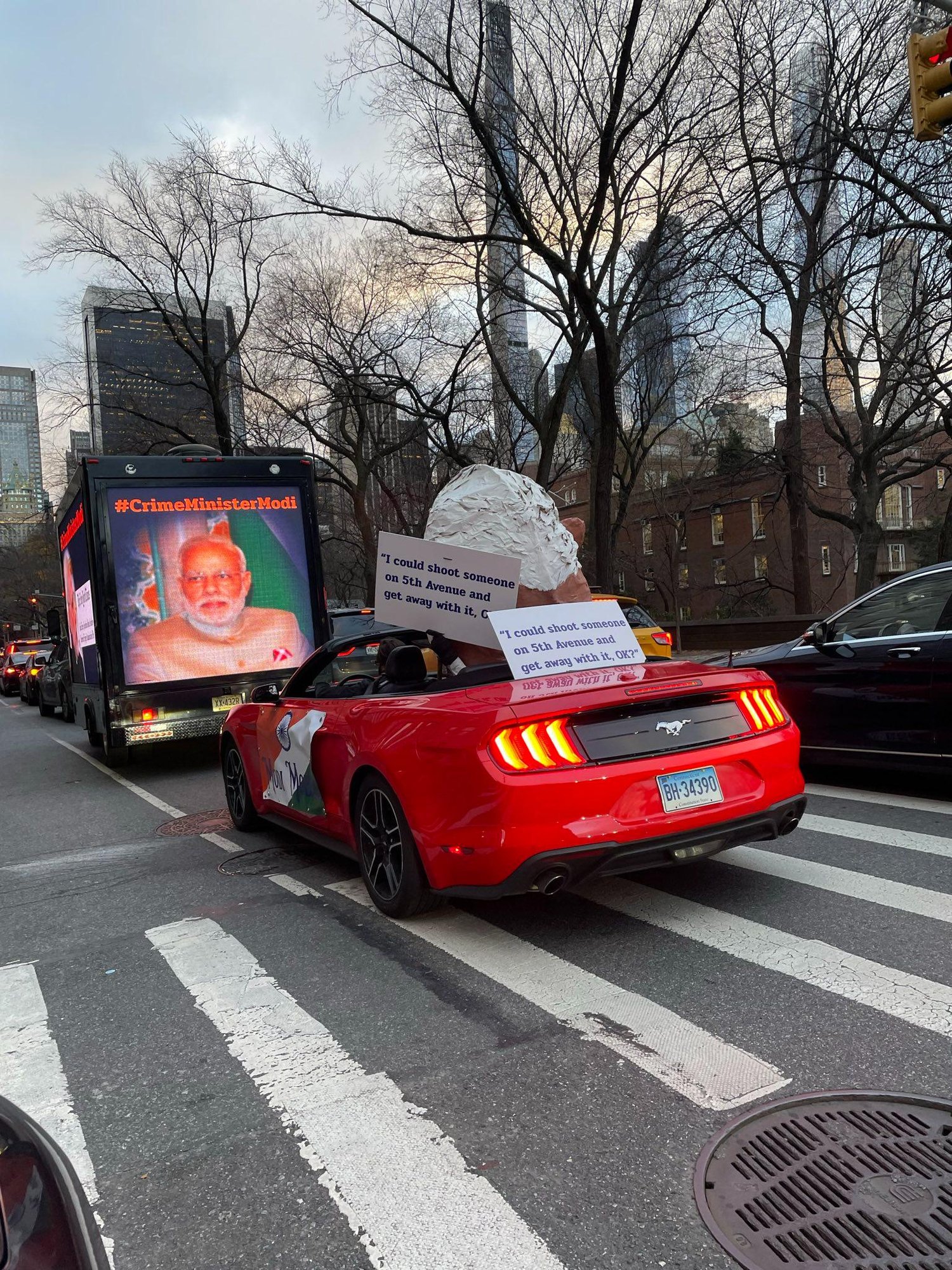 The backdrop to this protest is a series of troubling events that have unfolded both in the United States and Canada. In June, reports emerged of an alleged attempt by Indian authorities to assassinate a US citizen in New York. This harrowing incident occurred simultaneously with the killing of a prominent Canadian Sikh activist. The situation escalated to such an extent that the FBI felt compelled to warn several activists in California about similar threats. These incidents are not random or isolated; they represent a clear and disturbing pattern of behavior that has caught the attention of US prosecutors and the international community.
 Additionally, the US could also explore activities to improve prospects for dialogue leading to a negotiated agreement on Tibet and coordinate with other governments in multilateral efforts towards the goal of a negotiated agreement on Tibet. Furthermore, it should encourage the Chinese government to address the aspirations of the Tibetan people regarding their distinct historical, cultural, religious and linguistic identity.


 Consolidation that gives more power to the country’s largest hospital, health systems and insurers that leaves patients and physicians with less autonomy and fewer choices.
 The Treasury Department in particular has played a key role in developing and implementing the Biden administration’s economic agenda in this vital region. She and her colleagues have clearly heard the voices in the region that have pressed the U.S. to augment our security presence with a robust economic agenda.
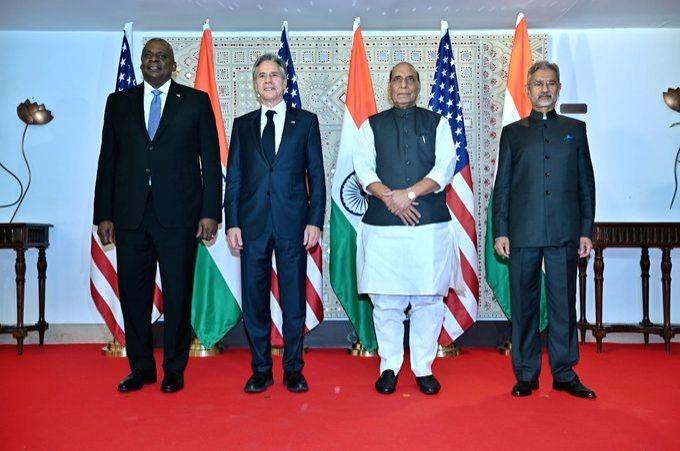 Blinken said the two countries were taking very concrete steps to deliver on the vision that President Joe Biden and Prime Minister Narendra Modi put forward at their meeting in Washington in June.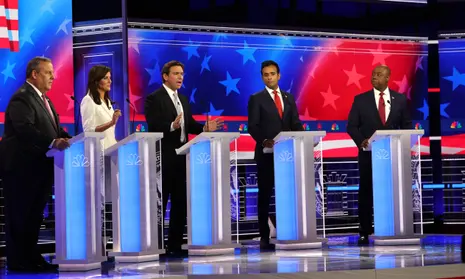
 In his presidential address, Vinay K. Mahajan, National President of ITServe Alliance, welcomed the members, leaders, chapter presidents, sponsors, and volunteers to Synergy 2023 and expressed his “sincere gratitude for your unwavering commitment, and dedication, and for investing your time and energy and resources. You are the backbone of our organization, and your unwavering commitment is what propels us forward.”
 Venu Sangani, Director of Synergy 2023 said, “As we gather here, let’s remember that our unity as a community is our strength. I took on this leadership role, an opportunity, driven with a single objective: to help at the end of the conference, each attendee departs with concrete insight to grow their business to the next level. Because in all of you here today, there is both gratitude and a deep sense of accomplishment, knowing our collective vision is alive and thriving.”
 Secretary of State Hillary Rodham Clinton, the Chief Guest at Synergy 2023 delivered the Keynote Address during an interactive session with ITServe members on October 27th evening. Ms. Clinton, the 67th Secretary of State of the United States has dedicated over four decades in public service as an advocate, attorney, First Lady, and US Senator.
 Secretary Clinton urged the ITServe member community “to continue to be involved in your communities, to be members of civic clubs, volunteer groups and take part in American society in every way possible, and also decide if you so may choose to become an American citizen. And for those of you who have children, who are American citizens, guide them to be very active. Not just getting their education or being a successful person economically but being involved in civic life. There’s a lot to it. I know you are good role models for people in many parts of our country. So, I am very grateful for the many contributions that you are making and will make in the future.”
 Phaneesh Murthy, Founder & CEO of Primentor addressed the audience with his insightful talk on, “Strategies for Scaling and Sustaining a Successful IT Company from One to 100 Million Plus” The keynote address by Zack Kass, Technology Futurist, and Generative AI Solutions Specialist focused on: “AI for Small Business Success: Navigating the Future of Entrepreneurship.”
 Kevin O’Leary, a Venture Capitalist and Star of ABC’s Shark Tank delivered the Evening keynote address on: “The Path to Profit: Strategies for Building a Successful Business.” Through specific portrayals from his popular Shark Tank, his insightful address to the loud applause from the crowd referred to successful business strategies to enhance business profits.
 Other sessions in the morning included a Startup Cube Finals on GTM Pitfalls Faced by Growing Startups, which Ashish Agarwal, Turbo Start, DVC led. The Immigration Panel Discussion focused on “Navigating Immigration Challenges and Policies.” The CXO Panel focused on “The Evolving Role of IOs and CTOs in AI and ChatGPT Powered Digital Transformation.” Other panel discussions addressed issues related to “Contracts And Litigations,” and “Direct Client Engagement in the World of Contingent Workforce.”
 Amar Varada, Chair of Synergy 2023 said, “Synergy 2023 had prominent speakers, and valuable sponsorships, and helped grow a community network of industry professionals across the country. We are grateful to the unwavering support of our members, volunteers, and sponsors, whose collective efforts made this event a memorable one for all.”
 With cultural events, music, dance, and sumptuous food, in addition to all the learning and sharing of knowledge, Synergy 2023 provided actionable insights and strategies that companies can directly implement, serving as a catalyst for taking businesses to the next level. Beyond being an arena for networking and knowledge sharing, Synergy 2023 has proved to be a veritable marketplace for ideas and innovations.
 In addition to the 21 ITServe Chapter Presidents across the United States and the dozens of various Committee Chairs, the Executive Board of Directors of ITSeve, who play a critical role in enhancing the mission and vision of ITServe Alliance include:
 Secretary Clinton urged the Indian Diaspora “to continue to be involved in your communities,to be members of civic clubs. volunteer groups, and really take part in American society in every way possible, and also to make the decision if you so choose, to become an American citizen and as you wish to do. And for those of you who are the children, who are American citizens, guide them to be very active. Not just getting their education or being a successful person economically, but to be involved in things. There’s a lot to it. So, I think that the Indian diaspora, you know are good role models for people in many parts of our country. So, I personally am very grateful for the many contributions that you are making and will make in the future.”
 Kevin O’Leary, a Venture Capitalist, Star of ABC’s Shark Tank delivered the Evening keynote address on: “The Path to Profit: Strategies for Building a Successful Business.” Through specific portrayals from his popular Shark Tank, his insightful address to the loud applauses from the crowd referred to successful business strategies to enhance business profits.
 Anil Atyam, Chair of Speakers for Synergy 2023 emphasized the curated lineup of speakers and panels. “We are thrilled to have a diverse and esteemed set of speakers for this year’s conference. From policymakers, and technology leaders to industry innovators, our speakers are pivotal in shaping the discussions and providing invaluable insights that can be immediately applied in various sectors of the IT industry.”
 A Special Guest Session at Synergy was a “Dialogue with Yuvraj Singh,” a highly popular international Cricketer, Entrepreneur, and Philanthropist. Synergy 2023 will conclude with a Live Musical Concert by Bollywood Playback Singer and Filmfare Awardee Kanika Kapoor.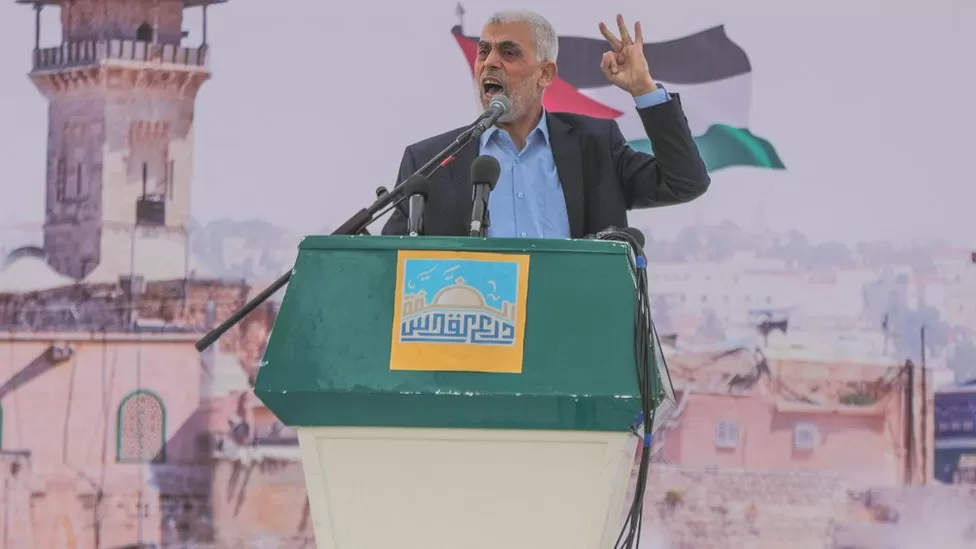


 Describing the mission of ITServe Mr. Mahajan said, “We’re in the forefront, guiding and empowering its members. ITServe today is a powerful force focused on safeguarding the interests of small and medium business enterprises. We have more than 2,200 member companies, spread over 21 Chapters, they generate 175,000 high paying jobs across the United States. Our members contribute almost $12 billion to the US GDP. We at ITServe Alliance are immensely proud of us for being very successful. We are the voice represent the interests of small and medium scale enterprises of IT industry, protecting our members’ interests. We give back to the community, and invest in startups, which is to help the United States maintain the leadership in innovation and technology.”
 Mahajan went on to say, “I always thank you members, because of you, we are all strong together. Our success today is not about working alone in isolation. It is about coming together, collaborating and liberating our collective strength. It is about finding synergy, not only within our own businesses but also across our entire community. As we navigate the challenges and opportunities of the digital age, our role today is even more critical. We are not just service providers. We are architects of transformation. We shape the future of industries and enhance the lives of individuals worldwide. This event is dedicated to you. Together we will innovate and lead the way in the IT services industry. Thank you for being part of synergy. Let us embark on the journey together and fueled by the spirit of collaboration and the pursuit of success.”
 In his opening remarks, Venu Sangani, Director of Synergy 2023 said, “As we gather here, let’s remember that our unity as a community is our strength. Last year in Orlando, Florida, I took on this leadership role, an opportunity, driven with a single objective: to help at the end of the conference, each attendee departs with concrete insight to grow their business to the next level. Because in all of you here today, there is both gratitude and deep sense of accomplishment, knowing our collective vision is alive and thriving.”
 Referring to the global situation, Forbes said, “We know we live in a world today, where Russia, China, North Korea and Iran feel that the United States is a declining power. China has made very clear it wants world domination. Russia under Putin has made it very clear he wants to recreate the Soviet empire. Iran wants to be the hegemony of the Middle East and control the oil and dominate the region and ultimately eliminate Israel. In the crazy border wars, China keeps pushing against India. Not a good environment.”

 Rao delved into a project in the Department of Cell Biology at the University of Colorado Denver, where she harnessed cutting-edge genetic engineering techniques to create a colorimetry-based application and device for the treatment of prescription opioid addiction. Her initiative garnered global recognition as a world finalist in the Technovation Girl Challenge and received a Health Pillar award from the TCS Ignite Innovation challenge on a national level.
 Expressing his thoughts on his new position, Varghese conveyed his excitement: “Excited to join Jess O’Connell and her team at NEWCO Strategies. Running organizations and leading teams in today’s landscape is a hard task, and I can attest that leaders are hungry for sound advice, practical solutions, and partners that can help them navigate challenges. I want to apply the lessons I’ve learned, particularly managing through difficult times, to help others.”
 One significant move unveiled is a proposal by the Federal Trade Commission (FTC) that would prevent companies in various sectors from imposing concealed and deceptive fees. This rule would mandate sellers to disclose all essential costs upfront. The FTC could potentially impose financial penalties on companies that violate this rule. Proponents argue that this regulation will enable consumers to make more informed price comparisons and create a level playing field for businesses that are transparent about their costs.
 Nevertheless, for the time being, economic activities continue to progress steadily. The MetLife and U.S. Chamber of Commerce Small Business Index, which gauges confidence among small business owners, reached its highest level this quarter since the beginning of the pandemic. This score is roughly in line with late 2019 levels, with 66 percent of small businesses reporting that business conditions are healthy, and 72 percent expressing comfort with their cash flow, despite increased labor costs.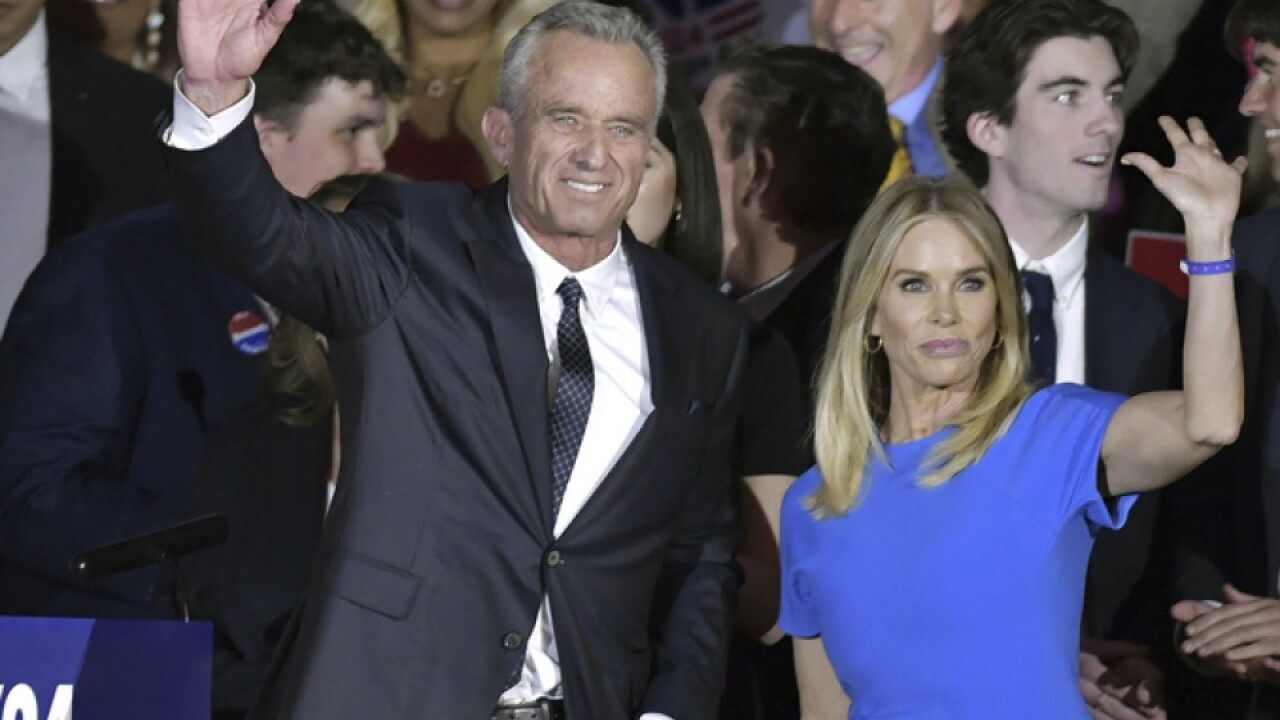
 Amitabh Mittal, General Secretary of World Hindu Council of America (VHPA) said: “Thank you, Gov Newson, for vetoing this draconian bill that attempted to harass and divide the entire Hindu community under the garb of a non-existent “caste” issue in the US. Congtulations to all Hindu, Buddhist, Sikh and Jain American Community members for this crucial victory. We’re proud of all the Leaders who worked relentlessly to make it happen. Nefarious designs of hate, divide and destroy have no place in these United States.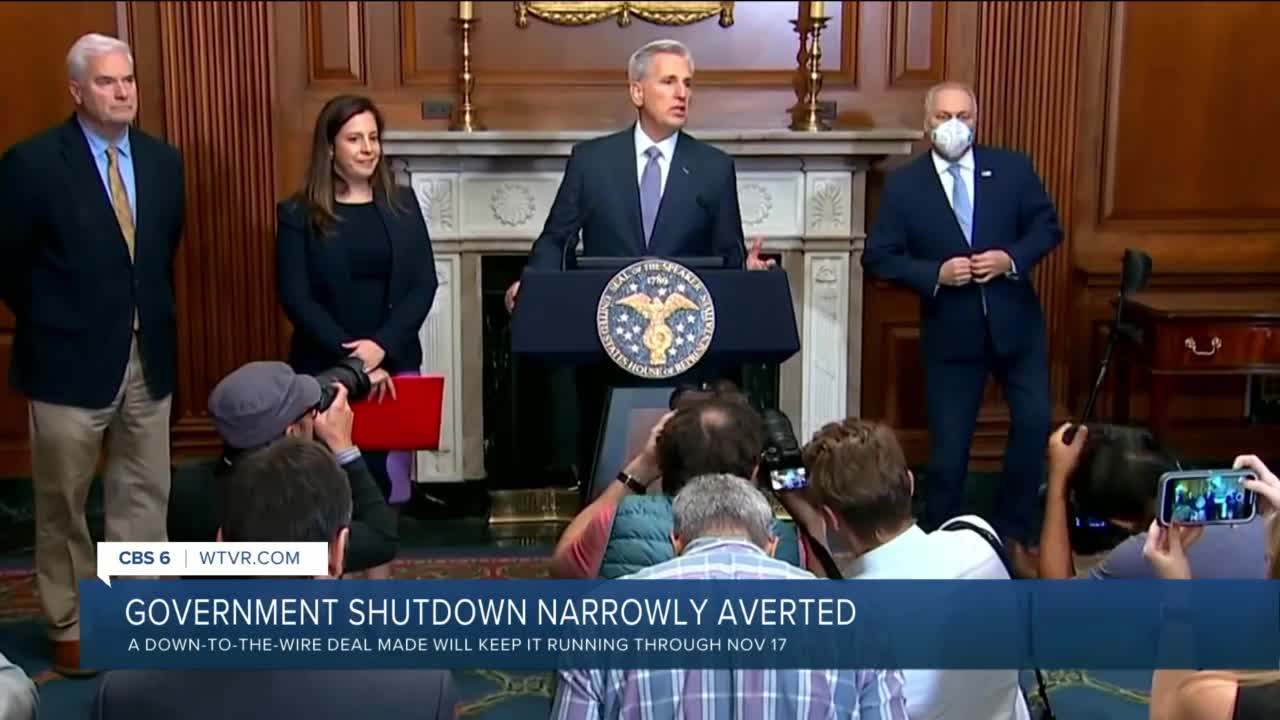
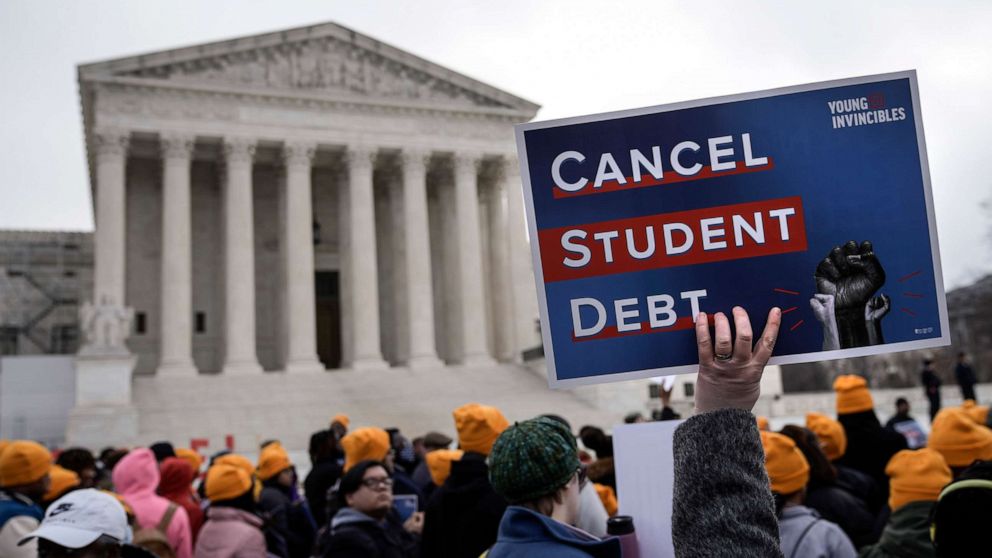
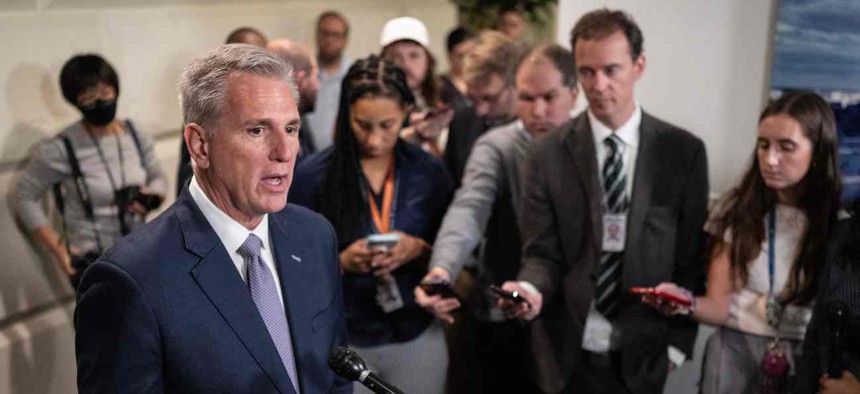 That move marked a profound shift from earlier in the week, when a shutdown looked all but inevitable. A shutdown would mean that most of the government’s 4 million employees would not get paid – whether they were working or not – and also would shutter a range of federal services, from National Parks to financial regulators.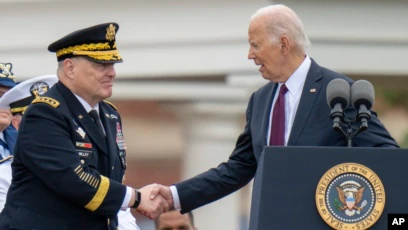
 The Amir of Qatar expressed this sentiment to the General Assembly, stating, “A long-term truce has become the most looked-for aspiration by people in Europe and all over the world. We call on all parties to comply with the UN Charter and international law and resort to a radical peaceful solution based on these principles.”

 To achieve this objective, Biden requested Congress to allocate more than $25 billion in additional financing for the World Bank. This financial injection is expected to empower the bank to further assist developing countries in their pursuit of development and economic objectives. The White House noted that this initiative would strengthen the World Bank and enable it to provide resources at the scale and speed required to address global challenges and meet the urgent needs of the poorest countries.