House Speaker Mike Johnson expressed confidence on Saturday that Republicans possess adequate votes to initiate a formal impeachment inquiry into President Joe Biden. In an interview with Fox News, Johnson stated, “I believe we will. I suspect no Democrats will assist in this effort, but they should.”
He emphasized the GOP’s obligation to proceed with the inquiry, asserting, “we cannot stop the process.” Johnson, joined by House GOP conference chair Elise Stefanik, contended that the inquiry wouldn’t be wielded as a partisan political tool, drawing a distinction from past instances.
“Elise and I both served on the impeachment defense team of Donald Trump twice, when the Democrats used it for brazen partisan political purposes. We decried that use of it. This is very different,” Johnson remarked.
He pointed out impediments faced by the Republicans, asserting, “Now we’re being stalled by the White House because they’re preventing at least two to three DOJ witnesses from coming forward” and withholding evidence from the National Archives. Johnson proposed that a formal impeachment inquiry vote would propel the process forward, deeming it a necessary step.
In response, a spokesman for the White House counsel’s office, Ian Sams, criticized the move, stating, “This is a baseless, politically-motivated attempt to smear President Biden with lies, and it reflects how this chaotic House GOP is focused on the wrong priorities, when they should be working on real issues Americans actually care about like the President is.”
As of now, House Republicans have been striving to formalize their impeachment inquiry into Biden but have encountered challenges in securing sufficient votes. Former House Speaker Kevin McCarthy had urged his committees in September to launch a formal impeachment inquiry into Biden, facing mounting pressure from the right flank. However, the conference remains divided over the existence of evidence warranting the president’s impeachment.
Addressing the issue of Hunter Biden’s lawyers seeking an open hearing instead of a deposition, Stefanik deemed the request “unacceptable” and emphasized, “the only correct response to a subpoena is a deposition.” She reasoned that an open hearing might devolve into a mere public spectacle, advocating for a legal and factual approach through a deposition.
“It’s the precedent,” Johnson added. “Every investigation of Congress in the modern era, the deposition has come first, and the public testimony follows. Why would we break that precedent now?”
This paraphrased rendition maintains the key elements and quotes from the original article while presenting the information in a slightly rephrased manner. The focus remains on the statements of House Speaker Mike Johnson, the White House’s response, and the broader context of the Republicans’ push for a formal impeachment inquiry into President Joe Biden.
In a Fox News debate, Florida Gov. Ron DeSantis (R) and California Gov. Gavin Newsom (D) engaged in a heated exchange over their records and policies. The 90-minute debate, titled “The Great Red vs. Blue State Debate” and moderated by Sean Hannity, delved into key issues such as the COVID-19 pandemic, crime, and abortion. Personal attacks, with both governors labeling each other as bullies, added intensity to the discussion. DeSantis, initially a threat to Donald Trump in the presidential race, now lags behind, while Newsom, despite denying interest in challenging President Biden, gains attention as a potential contender.
Five Takeaways from the Debate:
1.Newsom’s Resilience: Despite a challenging media environment, Newsom maintained composure, deflecting DeSantis’s attacks and launching counterarguments. Notably, he defended California’s COVID-19 response, citing differences in approach and challenging DeSantis’s claims about Florida’s measures.
Newsom responded to DeSantis: “Let’s talk about your record on COVID… Donald Trump laid you out on this.”
2.DeSantis’s Performance:As a GOP presidential primary candidate, DeSantis held his ground, showcasing research and using visual aids, including a map of San Francisco’s issues. Despite impactful moments, the debate felt somewhat biased, with Hannity’s questions often portraying California negatively.
DeSantis labeled Newsom a “liberal bully” and mocked his “shadow campaign” for the 2024 Democratic nomination.
3.Raucous Atmosphere: Hannity’s intent to let the debate flow led to a lively exchange, with frequent interruptions and bickering between DeSantis and Newsom. The lack of an in-person audience allowed for a more direct confrontation without the need for applause pauses.
Hannity remarked on the chaos: “I’m not a potted plant,” expressing frustration during the governors’ back-and-forth.
4.Biden as a Focal Point: DeSantis positioned President Biden as a central theme, connecting Newsom to the Biden-Harris administration. Newsom defended the Democratic agenda, emphasizing the contrast between parties. DeSantis portrayed California as the epitome of the “Biden-Harris agenda on steroids,” predicting disaster for the nation.
5. Limited Impact on Both: Despite the fiery exchanges, the debate is unlikely to significantly alter the political landscape for either governor. DeSantis continues to struggle against Trump in the GOP primary, while Newsom’s boosted national profile may not sway conservative opinions in the hyper-partisan environment.
The debate, though intense, is unlikely to alter the trajectory for either candidate significantly.
The Fox News debate between DeSantis and Newsom provided a platform for a fierce exchange, showcasing their contrasting approaches and political ideologies. While both governors received praise from their respective sides, the event’s broader impact on their political trajectories remains limited.
In anticipation of the 2024 elections, the global political landscape is poised for significant shifts. As we approach November 5, millions of Americans will cast their votes, potentially deciding whether incumbent Joe Biden will secure another term at the age of 86. Despite concerns about Biden’s age, a majority of voters view him as the favored candidate, setting the stage for a potential rematch with former President Donald Trump. However, echoes of disinformation from the previous contentious election, marked by the storming of the US Capitol, are likely to linger.
“Disinformation looks set to be a feature of the campaign,” reflecting the challenges of the past, where misinformation played a role in the polarized political climate. Trump, despite facing multiple criminal trials, stands as the standout favorite for the Republican party nomination.
Across the globe, another enduring political figure, Vladimir Putin, has been at Russia’s helm for 23 years, making him one of the longest-serving leaders. The constitutional amendment in 2020 allows him to extend his rule until 2036, potentially surpassing even Joseph Stalin’s reign. With the war in Ukraine quelling dissent and imprisoning opponents, Putin’s path to another six years seems unhindered, particularly with key challengers like Alexei Navalny and Igor Girkin detained.
Moving to India, where nearly a billion voters are gearing up for the April-May elections, Prime Minister Narendra Modi and his nationalist BJP party aim for a third term. Modi’s political strategy, criticized for stoking tensions with the Muslim minority, has garnered substantial support from the majority Hindu population. Despite concerns about civil liberties, Modi is the clear favorite, credited with elevating India’s global standing, notably achieving milestones in space exploration.
In June, the European Union will witness its largest transnational election, involving over 400 million eligible voters across 27 countries. This election will be a pivotal moment for right-wing populists, testing the momentum gained from recent successes in Dutch and Italian elections. The outcome will influence decisions on issues ranging from mobile phone roaming charges to online data privacy, reflecting the broad impact of the EU Parliament’s decisions.
Meanwhile, in Mexico, the June elections hold the promise of historic change. Two women, former Mexico City mayor Claudia Sheinbaum and businesswoman Xochitl Galvez, are vying to become the first female president in a country with a history of machismo. Sheinbaum, representing the Morena party, leads early polls, while Galvez, part of an opposition coalition, brings a diverse perspective to the race. Samuel Garcia, a young governor, adds another dimension to the electoral landscape.
As the world watches these elections unfold, the political dynamics are undoubtedly complex, with implications reaching far beyond national borders. The challenges of disinformation, power consolidation, and the push for historic milestones underscore the significance of these electoral events on the global stage.
Americans for Prosperity Action, a prominent advocacy organization supported by billionaire Charles Koch and his coalition of wealthy conservatives, has officially thrown its weight behind Nikki Haley as the preferred Republican alternative to Donald Trump in the upcoming 2024 primary, set to kick off in less than 50 days with the Iowa caucus.
According to a memo circulated by Emily Seidel, the CEO of Americans for Prosperity, Haley, a former U.N. ambassador and ex-governor of South Carolina, is seen as offering “America the opportunity to turn the page on the current political era.” Seidel emphasized Haley’s capability to lead a policy agenda that addresses the nation’s major challenges, expressing confidence that the organization’s grassroots and data capabilities uniquely position them to support Haley effectively.
Michael Palmer, a senior adviser to AFP Action, noted that Haley’s policies closely align with the group’s free market ideology, acknowledging that while disagreements on specific issues exist, Haley represents the best chance to enhance the lives of all Americans.
In response to the endorsement, Haley expressed her gratitude, stating, “AFP Action’s members know that there is too much at stake in this election to sit on the sidelines,” underscoring the importance of saving the country and expressing appreciation for AFP Action’s support.
Notably, the Koch-backed group refrained from involvement in the 2016 and 2020 presidential cycles but is now poised to channel significant resources into boosting Haley’s campaign. Although the exact amount of spending remains undisclosed, AFP Action, having raised over $70 million, including substantial contributions from Charles Koch and his nonprofit groups, aims to make a substantial impact.
The organization initially signaled opposition to Trump in February, citing concerns about his ability to defeat President Joe Biden. However, despite these reservations, Trump has strengthened his position within the Republican base, leading his closest primary rival, Florida Gov. Ron DeSantis, by nearly 50 points in national polls. In contrast, Haley trails DeSantis in the national average.
The dynamics shift in early-voting states, where Trump faces a relatively weaker position. DeSantis, Haley, and former New Jersey Gov. Chris Christie are banking on potential upsets in Iowa, New Hampshire, or South Carolina to position themselves as viable alternatives, although their campaigns have yet to significantly erode Trump’s standing.
AFP Action, optimistic about its potential impact, revealed internal memos suggesting that a substantial portion of GOP voters in Iowa and New Hampshire are undecided or believe the primary campaign has just begun. Furthermore, the organization believes that a significant majority of Republicans are open to a Trump alternative if they perceive a better chance of victory.
Following the Tuesday endorsement, AFP Action plans to transition from identifying wavering Trump voters to persuading against him. Their strategy involves concentrated efforts on behalf of their chosen candidate, accompanied by a new ad spot released alongside the endorsement. Large-scale events and efforts to drive turnout are also in the works.
In response to the endorsement, DeSantis’ campaign sought to downplay its significance, labeling Haley as a “moderate” without a viable path to defeating the former president. The Trump campaign, in its statement, characterized AFP Action as part of an “America Last movement” but remained resolute that Washington’s “swamp creatures” would not impede Trump’s bid for the Republican nomination.
The endorsement of Haley introduces a potentially pivotal development in the 2024 race. While no candidate with leads as substantial as Trump’s in the primary has failed to secure their party’s nomination, Trump’s campaign faces unprecedented legal challenges, adding a layer of complexity with court appearances and trial dates.
Seidel, CEO of Americans for Prosperity, highlighted that early in the election cycle, 70% of Americans expressed a preference for neither Trump nor Biden to run. The organization’s endorsement aims to prevent squandering this opportunity for a different political trajectory.
(IPS) – The widespread use of American weapons by Israel, which has killed thousands of civilians in Gaza, has triggered accusations of war crimes against the United States.
But US has always escaped these charges in contemporary military conflicts –particularly in the killing fields of Afghanistan and Iraq –and also in the use of American weapons in Yemen where thousands have been killed.
The United Nations once described the deaths and destruction in the eight-year-old civil war in Yemen as “the world’s worst humanitarian disaster”.
The killings of mostly civilians have been estimated at over 100,000, with accusations of war crimes against a coalition led by Saudi Arabia and the United Arab Emirates (UAE), whose primary arms supplier is the US.
And now, the killings of Palestinians in Gaza have come back to haunt the Americans in a new war zone. But still, the US is unlikely to be hauled before the International Criminal Court (ICC).
Picture: Global Issues
“If U.S. officials don’t care about Palestinian civilians facing atrocities using U.S. weapons, perhaps they will care a bit more about their own individual criminal liability for aiding Israel in carrying out these atrocities,” said Sarah Leah Whitson, executive director of Democracy for the Arab World Now (DAWN), an American non-profit organization that advocates democracy and human rights in the Middle East.
“The American people never signed up to help Israel commit war crimes against defenseless civilians with taxpayer funded bombs and artillery,” she noted.
According to DAWN, U.S. law requires that United States monitor and ensure that weapons and munitions it provides to Israel are not used to commit war crimes in Gaza.
The advocacy group reminded both Secretary of State Antony Blinken and Secretary of Defense Lloyd J. Austin III in a letter sent last week.
“Failure to comply with end-use monitoring requirements not only breaches U.S. laws but also could expose U.S. officials to prosecution by the International Criminal Court (ICC) for aiding and abetting war crimes,” warned DAWN.
In a separate letter to ICC Prosecutor Karim Khan, DAWN asked the Prosecutor urgently to issue a public statement reminding the parties to the conflict of the ongoing investigation there and send an investigative team to the Gaza region of Palestine to document and investigate potential crimes under the Rome Statute.
Mouin Rabbani, Co-Editor, Jadaliyya, an independent ezine produced by the Arab Studies Institute, told IPS the United States is in violation of international law, as well as its own domestic legislation, by providing weapons to Israel in the full knowledge that these are being used for the express purpose of committing war crimes and crimes against humanity.
“I would go further and state that it is providing them to Israel for precisely this reason. This is because the US is determined to see Israel achieve its objectives in the Gaza Strip; Washington recognizes that Israel does not have the military capacity and political will to physically occupy the Gaza Strip for a prolonged period and eradicate Hamas and other groups, and has instead — with unqualified US support — adopted as its primary objective the systematic destruction of the Gaza Strip and mass killings of Palestinian civilians”, he pointed out.
As for international law and domestic US legislation, these are as irrelevant as Palestinian lives in this context. That’s how the US-designed rules-based international order works and was designed to work, he said.
“US legislation, the laws of war, and international law more generally, are rigorously applied to rivals and adversaries, while the US and its partners are free to violate them with total impunity, Rabbani argued.
It would be fair to say that ICC Prosecutor Karim Khan is the personification of this system — fearlessly prosecuting official enemies and adversaries with rabid zeal, but more docile than a dead canary when similar or greater crimes are committed by states his government and its Western partners support without qualification, said Rabbani.
If there’s one thing US officials complicit in Israel’s war crimes don’t have to worry about, it is prosecution by the ICC, he declared.
Asked about US weapons in killings in Gaza, Matthew Miller, Spokesperson for the State Department told reporters last week that American weapons cannot be deliberately used against civilians.
“Of course – and one of the tragedies of war –is that there are always civilian deaths. It is one of the great tragedies of war, and what we try to do is work to minimize civilian deaths to the greatest extent possible,” he said.
Asked if there is “any concern among the administration that by supplying this military assistance, the US might be involved in any possible war crimes against civilians”, Miller said: “No, I would say that we have made very clear that we expect Israel to conduct its operations in compliance with international law.”
“That is the standard we hold – uphold – that’s the standard we hold ourselves to; it’s the standard we hold our partners to; it’s the standard every democracy ought to be held to. And we will continue to work with them and continue to deliver messages to them that they should conduct their military operations in – and to the maximum extent possible to protect civilians from harm,” he declared.
According to the Washington-based Stimson Center, Israel is the largest cumulative recipient of U.S. military assistance since the Second World War, amounting to more than $158 billion over the past seven decades– not adjusted for inflation.
In recent years, U.S. assistance to Israel has been outlined in a 10-year memoranda of understandings, the most recent of which was signed in 2016 and pledges $38 billion in military assistance between FY2019-FY2028.
Dr Ramzy Baroud, Palestinian journalist and author, told IPS asking the US to clarify the End Use Monitoring (EUM) measures, or Israel’s compliance with the use of American weapons in its war against Gaza, may give the impression that Washington lacks awareness of how US weapons, and US tax payers money are being used.
“Never before in the history of the US’s relationship with the Middle East has Washington been so directly involved in an Israeli war. The closest was the 1973 war, and even then, the US involvement arrived a week later, and was hardly as direct,” he said.
Every statement made by top US officials, starting with Biden, to Blinken to Sullivan, to all others, indicate that the US is a party in the war, not an outsider, a benefactor, and certainly not a mediator. They even sat in on meetings to discuss Israeli war plans on Gaza. They cannot claim ignorance, Dr, Baroud pointed out.
“In the past, Israel has violated the US’s rules on the use of US arms against civilians, and repeatedly so. Much has been written about this subject, particularly in terms of Israeli violation of the Lehy Laws.”
But what is happening right now is a whole different reality. By sending massive arm shipments, aircraft carriers, and even soldiers to Israel, the US has become a party in the world, therefore it is responsible for the unprecedented war crimes in Gaza, he argued.
“The fingerprints of US weapons are on the body of every Palestinian killed in Gaza, from the Al-Ahli Baptist Hospital, to UN schools, to every house and every street.
We don’t demand clarification regarding the use of these weapons. We know precisely how they are being used. We demand accountability from war criminals, whether in Tel Aviv or Washington,” he noted.
Meanwhile, a report on Cable News Network (CNN) October 22 said the death toll in Gaza since October 7 has risen to 4,651, with more than 14,245 wounded, according to the Palestinian Ministry of Health in Gaza.
In a recent NBC national poll gauging sentiments for the 2024 general election, former President Donald Trump has emerged ahead of President Joe Biden for the “first time” in the history of the network’s polling, as revealed by NBC host Kristen Welker. During a segment on the network’s “Meet the Press,” Welker, accompanied by national correspondent Steve Kornacki, delved into the latest polling data, indicating that Trump currently maintains a 2-point lead over Biden, holding at 46 percent.
“This is the first time in the history of our poll that former President Trump beats President Biden – still within the margin of error, but still significant,” acknowledged Welker in response to the noteworthy development. The survey, conducted between November 10 and November 14 among 1,000 registered voters, carries a margin of error ranging from 5.5 to 5.6 percentage points.
Highlighting the shift in dynamics, Kornacki pointed out, “In 2019, 2020 when Trump was president, he [Biden] trailed all of them. This year he’s trailed all of them in our poll. First time in more than a dozen polls we’ve seen a result like this.”
Biden, traditionally buoyed by his perceived likability compared to Trump, is now facing a leveled playing field, according to the poll. NBC News initially reported Biden’s likability at 39 percent and Trump’s at 32 percent in January. However, the current figures show both candidates at 36 percent, accompanied by a notable increase in Biden’s disapproval rating, climbing from 46 percent in January to 53 percent.
The younger demographic, aged 18 to 35, is demonstrating a noteworthy tilt towards the former president. The poll indicates Trump garnering 46 percent support among this age group, with Biden trailing at 42 percent.
Recognizing the electorate’s expressed dissatisfaction with the current candidates, the network conducted a hypothetical test pitting Biden against a “generic Republican candidate.” Surprisingly, the results showed that in this scenario, a “generic” Republican would outperform Biden by nearly 11 points, whereas Trump, in a similar matchup against a “generic” Democrat candidate, would lag behind by approximately 6 points.
Amidst these shifting dynamics, Democrats and liberal figures have begun voicing concerns regarding Biden’s viability as the party’s nominee for the 2024 presidential elections. Democratic Minnesota Representative Dean Phillips, for instance, recently challenged Biden for the nomination, emphasizing that it’s time for the president to “pass the torch.”
The evolving landscape of public opinion, as reflected in the NBC poll, suggests a departure from the conventional narrative that favored Biden’s likability over Trump. As the political landscape continues to evolve, the dynamics of the 2024 presidential race are becoming increasingly uncertain, with the emergence of new contenders and shifting voter preferences challenging the established political order.
Former UN Ambassador Nikki Haley has been rising in the polls in early voting states, especially after her strong performances in the three GOP sponsored presidential debates – Milwaukee, San Francisco and Florida. Though she still lags far behind Donald Trump, she argues she’s strongest nominee to take on President Joe Biden, US media reports said.
Her latest debate performance prompted more than $1 million in donations — and drew in Ray Hunt, a billionaire backer. She’s still banking on a breakthrough to catch up to the front-runner. Over the course of the two-hour face-off, Ms. Haley displayed her foreign policy credentials, parried attacks on her record and even transformed her shoes into a campaign weapon.
The Wall Street Journal (WSJ) says she’s what the US “needs to take on Trump and Biden in the 2024 presidential race”. “I don’t think you need to be 80 years old to go be a leader in D.C.,” she told Fox News in January. “It’s time for a new generation of leadership,” she said in the campaign video she released recently.
According to Policitco, “the pioneering former governor of South Carolina and Trump’s first United Nations ambassador, the 51-year-old daughter of Indian immigrants, was a Trump critic who became a Trump appointee who now officially is a Trump rival. Throughout her compelling, nearly two-decade-long political ascent, she has been nimble, or as her critics would say, uncommonly calculating. People who know her call her ambitious because she is.”
Haley was born to Indian Sikh parents who immigrated to the US from Canada. Her father is a biologist and her mother a lawyer turned boutique shop owner, that’s now a million dollar franchise. They came with $8 dollars in their pockets.
At 13, Haley began overseeing the store’s financial books, and after graduating from Clemson in 1994 with a bachelor’s degree in accounting, she became the company’s Chief Financial Officer. Haley met her husband William Michael Haley in the college, and got married in 1996. They have two children.
Haley’s career in politics began in 2004 when she defeated a longstanding incumbent to win a seat in the South Carolina House. Haley then ran for Governor in 2009, making her the first person to be elected the Governor of South Carolina who wasn’t a white. It has been a gradula rise to her prominence to national stage for this talented Indian American presidential candidate.
However, months of campaigning, a series of strong debate performances, healthy campaign accounts and rising numbers in surveys of early voting states haven’t been enough to put Ms. Haley within striking distance of Mr. Trump, who remains the dominant front-runner. While Ms. Haley’s support has increased, particularly in Iowa, voters have yet to flock to her candidacy in overwhelming numbers. One recent poll of Iowa had Ms. Haley tied at 16 percent support with Gov. Ron DeSantis of Florida — with Mr. Trump 27 points ahead.
There are some signs major donors are turning their attention to her. Harlan Crow, a wealthy real estate developer, hosted a fund-raiser for her in October with well-connected real estate and oil and gas donors in attendance. Former Gov. Bruce Rauner of Illinois, a top giver to Mr. DeSantis, transferred his allegiance to Ms. Haley after the first debate. Last week, one of former Vice President Mike Pence’s top donors — the Arkansas poultry magnate Ron Cameron — said he would back her, after Mr. Pence dropped out of the race.
Haley, who served in Trump’s Cabinet as the U.S. ambassador to the United Nations, has said frequently on the campaign trail that Trump is unlikely to beat President Joe Biden in a general election, citing his four criminal indictments and mounting legal troubles.
If Trump becomes the nominee, she said, Republicans could see more losses on down-ballot races. Haley argued she could lead the party to “win up and down the ticket, governor’s races, congressional seats, all of those seats.”
“It’s not just the presidential. We’re trying to win across the board. I can do that,” she added
“The physician shortage that we have long feared—and warned was on the horizon—is here. It’s an urgent crisis hitting every corner of this country—urban, rural—with the most direct impact hitting families with high needs and limited means,” said Dr. Ehrenfeld, an anesthesiologist.
“Imagine walking into an emergency room in your moment of crisis, in desperate need of a physician’s care, and finding no one there to take care of you. That’s what we are up against.”
Physicians, Dr. Ehrenfeld said, know exactly how America finds itself in this crisis mode. Among the factors contributing to burnout that is leading physicians to retire early, cut back hours or leave medicine all together, are:
Administrative hassles that burden physicians daily and make them feel powerless to make meaningful changes.
Consolidation that gives more power to the country’s largest hospital, health systems and insurers that leaves patients and physicians with less autonomy and fewer choices.
Falling Medicare payment rates—when adjusted for inflation, a 26% drop since 2001.
“Sadly, every day we wait, the size of this public health crisis grows,” said Dr. Ehrenfeld, who is a senior associate dean, tenured professor of anesthesiology and director of the Advancing a Healthier Wisconsin Endowment at the Medical College of Wisconsin.
Here’s what needs to change
Legislative solutions to many of the problems that Dr. Ehrenfeld outlined are already pending before Congress—and they even have strong bipartisan support.
“There isn’t much that our two major political parties see eye to eye on right now, but on these issues they do,” Dr. Ehrenfeld said in his remarks. “We just need the will—and the urgency—to get it done. We need leaders in Congress to step forward and make this happen.”
Give doctors the financial support they need to care for patients. Congress needs to pass the Strengthening Medicare for Patients and Providers Act, which would give physicians an annual payment update to account for practice cost inflations as reflected in the Medicare Economic Index. It’s a benefit others already get.
Reduce administrative burdens, including the overused and inefficient prior authorization process. The Improving Seniors’ Timely Access to Care Act would expand prior authorization reforms that the Centers for Medicare & Medicaid Services finalized, and the Biden administration can improve the landscape if it finalizes proposed regulations. State legislatures also have the power to reform.
Expand residency training options, provide greater student loan support and create smoother pathways for foreign-trained physicians. The Conrad State 30 and the Physician Access Reauthorization Act, the Retirement Parity for Student Loans Act, the Healthcare Workforce Resilience Act, and the Physician Shortage GME Cap Flex Act would all help ease the physician shortage. Ensure that physicians aren’t punished for taking care of their own mental health needs. State medical boards, hospitals and health systems need to remove questions about past diagnoses and counseling and focus on whether a current health condition exists that, left untreated, would affect patient safety.
“Our nation’s physician shortage is not a problem to set aside and deal with tomorrow. It is an urgent problem we need to address today,” Dr. Ehrenfeld concluded. “We must take action to create a stronger and more resilient physician workforce to care for an ever-changing nation.”
The U.S. Congress passed a stopgap funding bill late on Saturday with overwhelming Democratic support after Republican House Speaker Kevin McCarthy backed down from an earlier demand by his party’s hardliners for a partisan bill.
The Democratic-majority Senate voted 88-9 to pass the measure to avoid the federal government’s fourth partial shutdown in a decade, sending the bill to President Joe Biden, who signed it into law before the 12:01 a.m. ET (0401 GMT) deadline.
McCarthy abandoned party hardliners’ insistence that any bill pass the House with only Republican votes, a change that could cause one of his far-right members to try to oust him from his leadership role.
The House voted 335-91 to fund the government through Nov. 17, with more Democrats than Republicans supporting it.
Picture: BBC
That move marked a profound shift from earlier in the week, when a shutdown looked all but inevitable. A shutdown would mean that most of the government’s 4 million employees would not get paid – whether they were working or not – and also would shutter a range of federal services, from National Parks to financial regulators.
Federal agencies had already drawn up detailed plans that spell out what services would continue, such as airport screening and border patrols, and what must shut down, including scientific research and nutrition aid to 7 million poor mothers.
“The American people can breathe a sigh of relief: there will be no government shutdown tonight,” Democratic Senate Majority Leader Chuck Schumer said after the vote. “Democrats have said from the start that the only solution for avoiding a shutdown is bipartisanship, and we are glad Speaker McCarthy has finally heeded our message.”
DEMOCRATS CALL IT A WIN
Some 209 Democrats supported the bill, far more than the 126 Republicans who did so, and Democrats described the result as a win.
“Extreme MAGA Republicans have lost, the American people have won,” top House Democrat Hakeem Jeffries told reporters ahead of the vote, referring to the “Make America Great Again” slogan used by former President Donald Trump and many hardline Republicans.
Democratic Representative Don Beyer said: “I am relieved that Speaker McCarthy folded and finally allowed a bipartisan vote at the 11th hour on legislation to stop Republicans’ rush to a disastrous shutdown.”
McCarthy’s shift won the support of top Senate Republican Mitch McConnell, who had backed a similar measure that was moving through the Senate with broad bipartisan support, even though the House version dropped aid for Ukraine.
Democratic Senator Michael Bennet held the bill up for several hours trying to negotiate a deal for further Ukraine aid.
“While I would have preferred to pass a bill now with additional assistance for Ukraine, which has bipartisan support in both the House and Senate, it is easier to help Ukraine with the government open than if it were closed,” Democratic Senator Chris Van Hollen said in a statement.
McCarthy dismissed concerns that hardline Republicans could try to oust him as leader.
“I want to be the adult in the room, go ahead and try,” McCarthy told reporters. “And you know what? If I have to risk my job for standing up for the American public, I will do that.”
He said that House Republicans would push ahead with plans to pass more funding bills that would cut spending and include other conservative priorities, such as tighter border controls.
CREDIT CONCERNS
The standoff comes just months after Congress brought the federal government to the brink of defaulting on its $31.4 trillion debt. The drama has raised worries on Wall Street, where the Moody’s ratings agency has warned it could damage U.S. creditworthiness.
Congress typically passes stopgap spending bills to buy more time to negotiate the detailed legislation that sets funding for federal programs.
This year, a group of Republicans has blocked action in the House as they have pressed to tighten immigration and cut spending below levels agreed to in the debt-ceiling standoff in the spring.
The McCarthy-Biden deal that avoided default set a limit of $1.59 trillion in discretionary spending in fiscal 2024. House Republicans are demanding a further $120 billion in cuts.
The funding fight focuses on a relatively small slice of the $6.4 trillion U.S. budget for this fiscal year. Lawmakers are not considering cuts to popular benefit programs such as Social Security and Medicare.
“We should never have been in this position in the first place. Just a few months ago, Speaker McCarthy and I reached a budget agreement to avoid precisely this type of manufactured crisis,” Biden said in a statement after the vote. “House Republicans tried to walk away from that deal by demanding drastic cuts that would have been devastating for millions of Americans. They failed.”
Reporting by David Morgan, Makini Brice and Moira Warburton, additional reporting by Kanishka Singh, writing by Andy Sullivan; Editing by Scott Malone, Andrea Ricci and William Mallard
Indian American presidential primary candidate Nikki Haley attached little importance to her opponent Donald Trump’s lead among voters in the upcoming elections. In an interview with Fox News on November 12, Haley admitted that Trump has “strong support” but he is followed by “drama and negativity” and that Republicans will fail to win if he wins the GOP nomination.
Former President Trump has emerged as the GOP frontrunner, and polls have found him to be ahead of reigning President Joe Biden, but Haley believes the party will not benefit from his victory in the primary. “I think certainly Trump has some strong support. I’ve always said he was the right president at the right time and I agree with a lot of his policies,” she told Fox News. “The problem is, drama and chaos follow him, whether fairly or not, it is constantly following him and Americans feel it,” she added.
Haley further blamed Trump for the losses faced by GOP candidates recently and the party’s negatively impacted performance. Haley said the GOP has to “pay the price” for the former president’s presence in the party, as per a report. Haley said the Republican party should brace itself for more losses on the ballot races if Trump becomes the nominee for the Presidential elections, and endorsed herself as the better candidate.
“We need to make sure we have a new conservative leader. Republicans have lost the last seven out of eight popular votes for president. The way you do that is you send someone in there that doesn’t just beat Biden by two or three points like Trump does, you get somebody that beats Biden between nine and 13 points,” she said. Haley’s campaign had received a significant boost after the initial debates and polls suggested she could defeat President Biden by a wider margin than her primary rivals.
Haley also said she could be the candidate to lead the GOP to “win up and down the ticket, governor’s races, congressional seats, all of those seats.” She added, “It’s not just the presidential. We’re trying to win across the board. I can do that.”
Lack of Support Among South Asian Americans
Despite being prominently known as Indian American candidates in the race to the Oval Office in 2024, Republicans Vivek Ramaswamy and Nikki Haley are not as popular among or known to Asian Americans, a new poll conducted by AAPI Data and the Associated Press-National Opinion Research Center (NORC) at the University of Chicago revealed.
According to the results, while more AAPI adults have unfavorable views than favorable views of Haley and Ramaswamy, a large proportion of them said they did not know enough about the two candidates to form an opinion.
The study found that only 18 percent and 23 percent of Asian American and Pacific Islander adults had favorable views of Ramaswamy and Haley, respectively, and 36 percent viewed both candidates as unfavorable. 40 percent of the respondents said they were not familiar with Haley, while Ramaswamy is unfamiliar to 46 percent of them.
“This is the first nationally representative survey that includes the views of Asian Americans and Pacific Islanders about the major presidential candidates,” said Karthick Ramakrishnan, founder and director of AAPI Data. “Rather than speculate about where AAPIs stand on candidates like Nikki Haley and Vivek Ramaswamy, we have timely and reliable data that we will continue to follow through the rest of the presidential primary season.
The survey also dug into the political inclination of AAPI communities, with about half identifying as Democrats, over a quarter identifying as Republican, and about one in five identifying as independent or having no attachment to any party.
The current President Joe Biden and Vice President Kamala Harris are viewed more favorably among the AAPI communities, while former President and current contender for the Republican nomination for the upcoming presidential elections, Donald Trump, is viewed unfavorably, as is Florida Gov. Ron DeSantis.
In the ongoing conflict in Gaza, which has seen more than 11,000 lives lost since October 7, tensions have escalated, prompting international concern and calls for action. Following a deadly Hamas attack, Israel declared war, leading to a military offensive in the densely-populated region home to over 2 million people. Despite a four-hour daily humanitarian pause in northern Gaza, brokered by U.S. President Biden, concerns persist over the well-being of civilians caught in the crossfire.
The severity of the situation has prompted significant developments, including the resignation of Craig Mokhiber, a United Nations director, citing the organization’s “failure” to address what he deemed a “textbook case of genocide.” A coalition of U.N. experts echoed this sentiment, expressing concern about the Palestinians facing a “grave risk of genocide.” Furthermore, three Palestinian human rights organizations have taken legal action by filing a lawsuit with the International Criminal Court (ICC), seeking arrest warrants against Israeli leaders, including Prime Minister Benyamin Netanyahu, for alleged genocide.
Amidst these developments, scholars have weighed in on the classification of the conflict as genocide, considering legal, social scientific, and conventional perspectives. The legal definition, as per the U.N. Convention on the Prevention and Punishment of the Crime of Genocide, requires proving specific intent to destroy a national, ethnic, racial, or religious group. However, experts acknowledge the difficulty in establishing genocidal intent definitively.
Ernesto Verdeja, a professor at the University of Notre Dame, notes the narrow focus of the legal definition, emphasizing the exclusion of victims based on socioeconomic status or political identity. Alexander Hinton, UNESCO Chair on genocide prevention at Rutgers University, emphasizes a broader, colloquial definition centered on large-scale destruction and acts against a population.
Raz Segal, the program director of genocide studies at Stockton University, categorically labels the current situation as a “textbook case of genocide.” He points to Israeli forces’ alleged genocidal acts, including killing, causing bodily harm, and implementing measures to destroy the group. Segal cites explicit statements of intent from Israeli leaders, such as President Isaac Herzog’s remarks, suggesting a broad characterization of all Palestinians as “an enemy population.”
Scholars differ in their assessments. David Simon of Yale University emphasizes Israel’s explicit goal of targeting Hamas, not a religious, ethnic, or racial group, raising doubts about meeting the legal definition of genocide. Ben Kiernan, director of the Cambodian Genocide Program at Yale University, concurs, stating that Israel’s actions, while indiscriminate, do not meet the legal threshold for genocide.
Victoria Sanford, a City University of New York professor, draws parallels between the Gaza situation and the Guatemalan genocide, highlighting similarities in the targeting of Mayans and Palestinians. Sanford, along with other scholars, supports legal action, urging the ICC to address the “Israeli intention to commit genocide visibly materializing on the ground.”
While scholars debate the classification of the conflict, some argue that such debates are a “bad use of focus.” Verdeja suggests that proving genocide takes time and does not prevent further loss of life. Hinton echoes this sentiment, cautioning against rigidly focusing on defining a moment as genocide, emphasizing the need for broader perspectives.
The significance of labeling the conflict as genocide is a point of contention among scholars. Segal underscores the importance of truth-telling, drawing parallels with past instances where reluctance to use the term hindered intervention. He argues for naming the situation truthfully to facilitate a reckoning with the events that unfolded and to guide future actions.
In the complex landscape of the Gaza conflict, the discourse on genocide highlights the challenges of applying legal definitions to evolving situations while emphasizing the broader impact on affected populations. As international attention remains focused on the region, the nuanced perspectives of scholars contribute to a comprehensive understanding of the ongoing crisis.
In a significant development on Tuesday, a Michigan judge dismissed a lawsuit attempting to utilize the 14th Amendment’s “insurrectionist ban” to prevent Donald Trump from appearing on the state’s 2024 ballot. The judge also affirmed that Michigan’s secretary of state lacks the authority under state law to determine the former president’s eligibility based on the 14th Amendment, which prohibits individuals who engaged in insurrection from holding office.
The rulings represent a substantial victory for Trump, who currently leads the 2024 Republican presidential primary race, despite facing legal challenges in various states alleging his involvement in the January 6, 2021, attack on the US Capitol.
Last week, the Minnesota Supreme Court rejected a similar constitutional challenge against Trump, and a comparable case is pending in Colorado, with a ruling expected later this week. Experts anticipate that, regardless of the initial rulings, these cases are likely to reach the US Supreme Court, potentially settling the issue nationwide.
The liberal advocacy group involved in the Michigan case has announced an “immediate appeal” and intends to request the state Supreme Court’s intervention. The 14th Amendment, enacted after the Civil War, bars individuals who took an oath to uphold the Constitution from future office if they engaged in insurrection. However, the Constitution does not specify how to enforce this ban, and it has been applied only twice since 1919, making these challenges widely viewed as a long shot.
While these rulings maintain Trump’s position on key GOP primary ballots, they leave the door open to future challenges regarding his eligibility in the November 2024 general election.
Michigan Court of Claims Judge James Redford emphasized that questions about Trump’s role in the January 6 insurrection should be addressed by elected representatives in Congress, characterizing the matter as a “political question” outside the jurisdiction of the judicial branch. Redford stated, “A court disqualifying Trump would’ve taken that decision away from a body made up of elected representatives of the people of every state in the nation.”
He further argued that he lacked the authority under state law to compel election officials to scrutinize Trump’s eligibility based on the 14th Amendment. Redford’s decision was made in response to two cases seeking to block Trump from the Michigan ballot and a countersuit filed by Trump to preserve his position.
Michigan Secretary of State Jocelyn Benson, a Democrat, had already announced the list of names for the 2024 presidential primaries in the state, including Trump. Rejecting arguments from anti-Trump challengers, the judge deemed it premature to disqualify Trump, considering he has not secured the GOP nomination and the 2024 general election has not taken place.
Redford acknowledged that even if Trump were to win the presidency and subsequently face new lawsuits questioning his eligibility, the 20th Amendment provides a process for addressing a president-elect no longer “qualified” to serve, wherein the vice president-elect would ascend to the presidency.
The Trump campaign welcomed the decision, highlighting victories in similar cases in Minnesota and New Hampshire. Trump campaign spokesman Steven Cheung criticized these legal challenges as “un-Constitutional left-wing fantasies orchestrated by monied allies of the Biden campaign.”
Conversely, Free Speech For People, the advocacy group behind the Michigan and Minnesota cases, condemned the judge’s decision, asserting that he adopted a “discredited theory” about Congress’ role in enforcing the 14th Amendment. The group plans to appeal the decision and continue legal actions in other states to enforce Section 3 of the 14th Amendment against Donald Trump, as stated by Ron Fein, the group’s legal director.
In recent months, foreign businesses have been withdrawing capital from China at a pace surpassing their investments, according to official data. The apprehension stems from a combination of factors, including China’s economic slowdown, low interest rates, and heightened geopolitical tensions with the United States. The upcoming meeting between Chinese leader Xi Jinping and US President Joe Biden is eagerly anticipated, as it may offer insights into the future economic landscape. However, businesses are already exhibiting caution, expressing concerns about geopolitical risks, policy uncertainty, and slowing growth.
Nick Marro from the Economist Intelligence Unit (EIU) highlights the prevailing sentiments, stating, “Anxieties around geopolitical risk, domestic policy uncertainty, and slower growth are pushing companies to think about alternative markets.”
The data reveals a noteworthy shift, with China recording a deficit of $11.8 billion (£9.6 billion) in foreign investment in the three months ending September – a first since records began in 1998. This suggests a trend where foreign companies are not reinvesting their profits in China; instead, they are choosing to relocate their funds elsewhere.
A spokesperson for Swiss industrial machinery manufacturer Oerlikon, which withdrew 250 million francs ($277 million; £227 million) from China last year, emphasized the need for corrections in the face of China’s economic slowdown. Despite the challenges, China remains a vital market for Oerlikon, with close to 2,000 employees, representing over a third of its sales.
Oerlikon’s spokesperson remarked, “In 2022, we were one of the first companies to transparently communicate that we expect the economic slowdown in China to impact our business. Consequently, we began early to implement actions and measures to mitigate these effects.”
The impact of the pandemic has added another layer of complexity for businesses operating in China, the world’s largest market. The stringent “zero-Covid” policy implemented by China disrupted supply chains, affecting companies like Apple, which diversified its production to India. The tensions between China and the US, with fresh export restrictions on critical materials for advanced chips, have also contributed to the shift in business strategies.
While established multinational firms may not be exiting the Chinese market, there is a noticeable reassessment in terms of new investments. Nick Marro notes, “We aren’t seeing many companies pulling out of China. Many of the big multinational firms have been in the market for decades, and they’re not willing to give up market share that they’ve spent 20, 30 or 40 years cultivating. But in terms of new investment, in particular, we are seeing a reassessment.”
Interest rates play a significant role in this reassessment. While many countries raised rates sharply last year, China took a different path by reducing the cost of borrowing to support its economy and struggling property industry. This, coupled with a depreciation of the yuan by over 5% against the dollar and euro, has prompted businesses to redirect their funds overseas for higher investment returns.
The European Union Chamber of Commerce in China emphasizes this trend, stating, “Those with excess cash and earnings in China have been increasingly transferring these funds overseas, where they will earn a higher investment return compared to investments in China.”
Michael Hart, president of the American Chamber of Commerce in China, notes that the withdrawal of profits does not necessarily indicate dissatisfaction with China but rather signifies the maturation of investments. He views it as encouraging, indicating that companies can integrate their China operations into their global operations.
Canada-based aerospace electronics company Firan Technology Group exemplifies this trend. Having invested up to C$10 million ($7.2 million; £5.9 million) in China over the past decade, the company withdrew C$2.2 million from the country last year and in the first quarter of 2023. Firan’s president and chief executive, Brad Bourne, clarifies, “We are not exiting China at all. We are investing and growing our business there and taking out any excess cash to invest elsewhere in the world.”
As uncertainties loom over future interest rates and China-US ties, analysts anticipate potential moves by China’s central bank to lower interest rates further to support the economy. However, this decision comes with challenges, as lowering interest rates could exert additional pressure on the depreciating yuan.
The business community remains cautiously optimistic about the upcoming meeting between Presidents Xi and Biden. Nick Marro suggests, “Direct meetings between the two presidents tend to exert a stabilizing force on bilateral ties.” However, he also notes that until companies and investors feel confident navigating the uncertainties, the drag on foreign investment into China is likely to persist.
The evolving economic landscape in China, coupled with geopolitical tensions and global economic shifts, has prompted foreign businesses to reassess their investments. While established companies may not be abandoning the Chinese market, the trend of redirecting funds overseas reflects a cautious approach influenced by economic uncertainties and a desire for higher investment returns. The upcoming meeting between leaders Xi and Biden is anticipated to provide some clarity, but until then, businesses remain vigilant in navigating the complex dynamics of the Chinese market.
In the realm of U.S. presidential elections, the dominance of Democrats and Republicans is a steadfast norm. However, current polls are indicating a noteworthy exception: Independent Robert F. Kennedy Jr. is garnering higher support than any third-party or independent candidate in recent memory, potentially influencing the outcome of the 2024 election.
A Quinnipiac University poll reveals Kennedy’s significant standing, reaching 22% among registered voters. This statistic is remarkable, prompting a comparison with historical data. The last independent candidate to surpass the 20% mark within a year of the election was Ross Perot in 1992, ultimately securing 19% of the popular vote. Typically, independent or third-party candidates witness a decline in popularity as elections draw near. For instance, John Anderson’s 1980 campaign, initially polling above 20%, resulted in a mere 7% of the votes in November. George Wallace, a third-party candidate in 1968, peaked at 21% in pre-election polls but received 14% in the actual vote.
The uniqueness of Kennedy’s position lies in joining this exclusive group of non-major-party candidates who achieved over 20% within a year of the election. While the final outcome for Kennedy remains uncertain, his numbers in swing states are noteworthy. New York Times/Siena College surveys indicate Kennedy’s support ranging from the high teens to over 25% in the six closely contested states that Biden won in 2020 over Trump: Georgia, Arizona, Wisconsin, Pennsylvania, Nevada, and Michigan.
These polls have added complexity to the electoral landscape. Notably, Trump outpaced Biden in five of these states among registered voters and in four among likely voters, leading to potential victory for Trump if the results mirrored these polls. However, when Kennedy entered the equation among likely voters, Trump only led in Georgia and Nevada. The previously clear Trump advantage became a muddled scenario with no distinct frontrunner in the Electoral College due to Kennedy’s influence.
Kennedy’s impact is evident in reshaping the electoral dynamics. Both Biden and Trump had unfavorable ratings in the high 50s in the Times/Siena poll, reflecting their status as historically disliked front-runners. The emergence of other independent and third-party candidates, such as Cornel West and Jill Stein, further emphasizes the dissatisfaction with major parties. West secured 6% and 4% in recent Quinnipiac and CNN/SSRS surveys, respectively. Jill Stein, announcing her 2024 Green Party nomination bid, gained 1% nationally in 2016 but made notable strides in key states.
Moreover, the decision by West Virginia Sen. Joe Manchin not to seek reelection and his earlier contemplation of running as a third-party candidate indicates a growing trend of non-major-party candidates entering the fray. Manchin polled at 10% as a No Labels candidate in a summer PRRI poll.
While these non-major-party candidates may not be frontrunners for victory, their significance lies in their potential to capture a substantial share of the vote from disenchanted Americans. With both major-party candidates facing high unfavorability ratings, the ultimate winner in 2024 might secure victory with less than a majority. Political analysts need to consider the substantial support for candidates like Kennedy, surpassing 20% in polls, as a potential indicator of the direction the 2024 election might take.
The Asia Society Policy Institute(ASPI) hosted Secretary of the Treasury Janet Yellen to deliver an address outlining the Biden administration’s economic strategy toward the Indo-Pacific this afternoon on Thursday, November 2.
Below is the transcript of the opening speech delivered by Wendy Cutler, Vice President of the Asia Society Policy Institute, who introduced Secretary Yellen, as well as quotes from a brief Q&A session between Ms. Cutler and on-site reporters directly after the event. Additionally, two photos from the event are included below, and can be used with credit to Asia Society/Leigh Vogel.
TRANSCRIPT: Wendy Cutler’s Opening Speech
Good afternoon, everyone. Thank you for joining us today – in person and online. I’m Wendy Cutler, Vice President at the Asia Society Policy Institute and I run our D.C. office. Our institute is part of the broader Asia Society, and we focus on tackling policy challenges in the Indo-Pacific region and advancing solutions to these problems. We work with policy makers in both the United States and throughout Asia to promote fresh thinking on critical and emerging matters.
It is in this spirit that we are so delighted to be able to welcome Janet Yellen, the U.S. Secretary of Treasury, to our stage.
Secretary Yellen is a world-renowned economist, a widely-cited academic, a consummate public servant, an inspirational leader, and I also hear she’s great to work for and work with. As the only person in history to head the Treasury Department, the Federal Reserve Board and the Council of Economic Advisors, she has been a pioneer in her professional accomplishments and pursuits, and she heads the department at a time when Treasury’s role could not be more important with respect to domestic and international challenges.
Today, we are fortunate that she will share her insights and vision on the Biden administration’s economic strategy in the Indo-Pacific region, the fastest-growing and most dynamic region in the world.
The Treasury Department in particular has played a key role in developing and implementing the Biden administration’s economic agenda in this vital region. She and her colleagues have clearly heard the voices in the region that have pressed the U.S. to augment our security presence with a robust economic agenda.
Under her leadership and in close collaboration with other agencies, we have witnessed stepped up engagement on the economic front through bilateral initiatives, with allies and partners, through existing international and regional organizations like the G20 and APEC, as well as through new groupings like the Quad and IPEF.
The Secretary’s recent visit to China has helped stabilize our bilateral relationship and has re-opened important channels of communication.
But importantly, China has not been her sole focus. Her recent travels have taken her all over the region, including India, where I think she’s made four trips in the past year, Vietnam, Indonesia, Japan and Korea. These visits have underscored the administration’s commitment to promoting an affirmative economic agenda in the region, and not just one that is viewed through the prism of China.
This month’s going to be a very busy month for U.S.-Indo Pacific economic engagement with President Biden hosting APEC, with expected announcements to be announced under IPEF, and through a possible Biden and Xi summit that looks more likely every day.
But our regional economic engagement must not stop there. It will be important to build on these initiatives, and by doing so, we will leave no doubt in the minds of our regional allies and partners that the U.S. will continue to be an important and reliable financial trade, investment and supply chain partner, as we promote an economic security agenda that takes their concerns and interests into account.
Enough from me. I am delighted to turn the podium over to Secretary Yellen. Please join me in giving her a warm welcome.
Wendy Cutler’s Post-Speech Analysis
The Asia Society Policy Institute was honored to host U.S. Treasury Secretary Janet Yellen for a major speech today describing the Biden administration’s economic objectives, engagements, and initiatives in the Indo-Pacific region.
While a number of Cabinet officials have discussed U.S.-China relations, today’s speech refreshingly and crucially broadened the focus to the entire Indo-Pacific region. Her remarks explained how U.S. interests in the broader region are served by cultivating and building an affirmative economic agenda with countries, such as India and Vietnam, and by reinforcing economic ties with stalwart allies, such as Japan and South Korea.
I was pleased that the speech highlighted the mutual benefits of increasing trade and investment between the United States and its Indo-Pacific partners.
Secretary Yellen pointed to the rapid growth in trade and investment flows between the United States and the Indo-Pacific, which is a promising but not entirely unexpected development in light of the dynamism in the region. She did not signal, however, an interest pursuing market opening agreements, which is unfortunate given that these deals are being concluded between others without us.
Secretary Yellen provided several promising examples of how the administration is engaging in the region through bilateral initiatives with Vietnam and India, for example, and multilaterally through the G20, APEC, IPEF, the QUAD, and other channels.
If there was anything left unaddressed that the audience was eager to hear, it was probably the scarcity of details on next steps both during the APEC Leaders week, but also beyond then. In light of the upcoming APEC Summit in San Francisco this month, I had hoped to hear a general preview of the anticipated “deliverables” to be announced there, both with respect to APEC and IPEF. But, I’m sure we will be hearing more on this in the weeks ahead.
Finally, while the Secretary highlighted US-Vietnam economic ties, it would have been welcome to learn more about our ongoing and new intiaitives with other countries in Southeast Asia, an extremely innovative and fast growing sub-region of the broader Indo-Pacific.
On her assessment of Yellen’s speech:
Given my background, I couldn’t help but applaud the emphasis she put on bolstering trade and investment in the region and her making the case for why trade is important. You don’t hear that a lot in Washington these days, and I thought she was pretty forthcoming. She also very skillfully focused on the issues of tomorrow, including climate and supply chains. She’s a trooper — when you look at her travels over the past year or so, she’s probably been to Asia more than I have.
On Yellen’s engagement with the Chinese in setting up new consultation groups:
Those groups met for the first time this past week. My understanding was it was virtual and more of a discussion. I think these discussions on these Treasury-led issues are increasingly important, particularly given what’s going on in the global economy. But I would give this time, because maybe we will see modest deliverables coming out of not only these working groups but also out of the working groups that the Commerce Department is leading as well.
On how the message of Yellen’s speech might impact the state of US-China relations:
I think we are seeing a stabilization of the relationship. Remember, after her visit, we saw Secretary Raimondo and other high-level and working-level engagements, and obviously, we’re all anticipating the summit meeting between President Biden and Xi. So I think we’re in a different phase of US-China relations.
But our relations with China are strained. It took a while for them to get to this low and you’re not going to turn them around overnight. So in my view, we should have low expectations and really look to modest steps which over time could help build trust and maybe deliver some outcomes that are mutually beneficial.
On the potential Biden-Xi summit:
We should not have high expectations of major announcements coming out of this meeting. I don’t think there’ll be any breakthroughs. But as Secretary Yellen said, I think this continued engagement at all levels is extremely important. Even if we don’t see eye to eye on many issues, sitting down and talking is important not only to deepen our understanding of each other’s positions, but also hopefully to avert any mishaps that can happen and lead to an escalation in tensions between our two countries.
On IPEF negotiations:
My understanding is that there will be announcements made on specific outcomes and specific pillars in IPEF, and it’s quite possible that the pillars led by the Commerce Department will announce substantial conclusion. They’ve already concluded the supply chain pillar. The two other pillars might also be substantially concluded.
The trade pillar is facing some challenges. I’m not surprised by that. Trade negotiations take a long time, even when you’re offering market access. When you’re not offering market access, the onus is more on the demander – in this case, the United States — to show these other countries that there are benefits. But I do expect that coming out of the trade pillar, we’ll see certain chapters of the trade pillar substantially concluded, such as good regulatory practices or trade facilitation or inclusivity.
As I see it, there are currently three sticking points in the trade pillar: labor, environment and digital. On labor and the environment, my understanding is the U.S. is making robust requests to other countries and many are just not prepared at this juncture to agree. They just they need more time. With respect to digital, we may see some aspects of digital announced – for example, the aspects dealing with what I would call the trade facilitation aspects of digital, like promoting e-invoices, e-signatures, things like that. These are important frankly, and they’re important for businesses in the region, so I wouldn’t discount them. Obviously, there’s a lot of concern in our business community about the US position on data flows, source codes and localization. The administration needs more time to work those issues out.
On what up-and-coming topics she feels will emerge in the U.S. economic policy as pertaining to China:
I don’t discount that we may announce new restrictions through our export control policy or through our entity list in the coming months. There are some rumors of additional things that are being worked on. But from my perspective, I think the issue of excess capacity that particularly now we’re seeing in electric vehicles is an issue that the US, Europe, Japan, Korea and other countries are going to need to deal with, because the Chinese companies that are highly subsidized are changing the international landscape.
China is going to be the largest exporter of vehicles this year. This has happened very quickly. Companies are subsidized. Europe’s looking at restrictions through its countervailing duty law. In the US, we already have high tariffs and we also have restrictions under the IRA.
I was just in Japan and had some discussions on where Japan is headed in this area, and I’ve had similar discussions with Korea, so I think this is an area that we may be hearing a lot more about. I spent a lot of my career negotiating auto market access with respect to Japan and Korea, and even with our allies, those issues were so sensitive and so difficult to negotiate. So I think with respect to China, this is going to be an issue of growing concern.
Amidst the ongoing conflicts in Israel, Hamas, and the Russia-Ukraine war, the ongoing fifth India-US 2+2 Ministerial Level Talks in New Delhi, has been described as very crucial.
US Secretary of State Antony J Blinken and Secretary of Defense Lloyd Austin, both are for meetings with their Indian counterparts, Defense Minister Rajnath Singh and External Affairs Minister S Jaishankar.
Blinken has said that India-US defense cooperation is “a key pillar” for bolstering the partnership of the two countries in “international peace and security, and specifically, working to promote the rules-based order and uphold the principles at the heart of the UN Charter: sovereignty, territorial integrity, independence.”
“Our defense cooperation, which we’re strengthening again today, is a key pillar of that work,” Blinken said in his opening remarks at the 2+2 India-US Ministerial Dialogue that began in the national capital earlier in the day
Also in his opening remarks, US Defense Secretary Lloyd Austin said in his opening remarks that there have been “impressive gains in building our major defense partnership over the past year, and that will help us contribute even more together to the cause of peace and stability. We’re integrating our industrial bases, strengthening our interoperability, and sharing cutting-edge technology,” he added.
Blinken said the two countries were taking very concrete steps to deliver on the vision that President Joe Biden and Prime Minister Narendra Modi put forward at their meeting in Washington in June.
“We are promoting a free and open, prosperous, secure, and resilient Indo-Pacific, including by strengthening our partnership through the Quad, with Japan and Australia,” he explained.
Blinken went on to say that “one significant way we’re doing that is by enhancing maritime domain awareness: sharing commercial satellite data with countries in the region to boost their capacity, for example, to combat illegal fishing, piracy, drug trafficking”.
“We’re also coordinating humanitarian relief and disaster response efforts in the Indo-Pacific. We’re harnessing together the power of innovation to make our economies more resilient and to make our communities more secure, while expanding inclusive economic opportunity.
“That’s evident in the cooperation on semiconductors and advanced biotechnology; on our unprecedented investments in deploying clean energy at scale in our countries as well as across the region; and our joint research and exploration projects in space,” he added.
The top diplomat mentioned the people-to-people ties between the two countries and the steps that are being taken to reduce visa wait times and facilitate travel between India and the US.
Jaishankar held “an open and productive discussion” with visiting US Secretary of State Antony Blinken here on Friday on strengthening strategic New Delhi-Washington ties, the fallout of the raging Israel-Hamas war and regional issues including the geopolitical situation in the Indo-Pacific region.
The meeting took place ahead of the fifth edition of the India-US 2+2 Defence and Foreign Ministers’ Dialogue. “Pleased to meet with Secretary of State @SecBlinken this morning. An open and productive conversation on further developing our strategic partnership,” Jaishankar posted on X.
“This visit has a particular significance because we need to follow up on PM Modi’s June visit and President Biden’s September visit. This is a 2+2 Ministerial Dialogue, so we take a broader view of what we are doing.”
The central focus of these talks is to address the ongoing conflicts and regional security concerns while strengthening the strategic ties between India and the United States. The agenda is expansive, encompassing the India-US Strategic Relationship, as well as exploring avenues to enhance bilateral relations and collaboration within international forums such as the QUAD (Quadrilateral Security Dialogue) and I2U2.
One prominent subject for discussion is the military standoff on the northern borders between India and China. Both countries have a vested interest in resolving this standoff amicably, thereby contributing to regional stability.
Another matter of great concern is the global security implications of the Russia-Ukraine war. As members of the QUAD, a coalition dedicated to ensuring security in the Indo-Pacific region, India and the U.S. are likely to deliberate on their respective roles in the context of this global event. The ongoing conflict between Hamas and Israel in the Gaza region may also find a place on the agenda, with a focus on containment to prevent further escalation.
The fight between Indian-American Republican candidates got nastier with former South Carolina Governor Nikki Haley calling tech entrepreneur Vivek Ramaswamy “just a scumm” for bringing up her daughter as a reference at the party’s third presidential primary debate on Wednesday, November 8th, 2023.
At the debate held in Miami, the two leading Republican candidates sparred over the US policy on TikTok and whether it should be banned in the country because of its Chinese ownership.
The 38-year-old entrepreneur referred to Haley and said: “In the last debate, she made fun of me for actually joining TikTok while her own daughter was actually using the app for a long time, so you might want to take care of your family first.”
Picture: The Guardian
Haley then shot back saying, “Leave my daughter out of your voice”, and as Ramaswamy continued to speak, she told him, “You are just a scum.”
The former South Carolina Governor also took to her X handle on Wednesday to further slam the biotech entrepreneur, which was dismissed by a handful of netizens as “cringe.”
“Vivek, I wear heels. They’re not for a fashion statement — they’re for ammunition,” Haley said, inviting a comment from a user, which said: “All of the comebacks in the world, and you chose cringe.”
The two also locked horns in the previous presidential debate with Haley slamming him for his inexperience on foreign policy issues.
Hitting out at Haley, Ramaswamy’s campaign in a statement said that in a desperate attempt to raise funds for her languishing establishment campaign, the former US ambassador to the UN was intentionally lying about the tech entrepreneur.
Haley blasted Ramaswamy for not backing US allies, and said that “Vivek has no foreign policy experience and it shows.” Ramaswamy also used the ‘Namrata Randhawa’ instead of Nikki Haley on his website, which she said was a “childish name game.”
“I’m not going to get involved in these childish name games. It’s pretty pathetic. First of all, I was born with Nikki on my birth certificate. I was raised as Nikki. I married a Haley. And so that is what my name is,” Haley told Fox News in response.
Haley again called for reforming Social Security and other entitlement programs, drawing a contrast with Trump — and bringing up what Democrats say is a significant vulnerability for her candidacy.
“Any candidate that tells you that they’re not going to take on entitlements is not being serious,” she said. “Right now you have Ron and Trump joining Biden and Pelosi saying they’re not going to change, or do any entitlement reform.”
Haley has long called for making significant changes to the program, including raising the retirement age and removing cost of living increases in favor of increases based on the inflation rate.
She also called for limiting the program for the wealthy — namechecking Bernie Marcus, the former CEO of Home Depot and a major Republican donor, saying that he “hates getting that check.”
In a survey released on Monday by the Des Moines Register, Haley climbed 10 points to 16 per cent, putting her even with Florida Governor Ron DeSantis as he struggles to break through against former President Donald Trump.
In addition to Haley and Ramaswamy, three other candidates were on stage for the third debate — former New Jersey Governor Chris Christie, Florida Governor Ron DeSantis and South Carolina Senator Tim Scott.
The two-hour debate, hosted by NBC News, took off at the Adrienne Arsht Center for the Performing Arts of Miami-Dade County.
Trump, who has so far retained huge leads in polls, again skipped the debate, instead holding a rally not far from the Miami debate site in Hialeah, Florida.
The GOP candidates had one basic message for Israeli Prime Minister Benjamin Netanyahu: Do what you have to do to destroy the Hamas militant group.
“Finish the job,” DeSantis said. “Finish them,” Haley said. “Not only do you have the responsibility and the right to wipe Hamas off of the map, we will support you,” Scott said.
Ramaswamy ended the debate by calling not on his Republican rivals, but on Biden, to drop out. The president should “step aside and end his candidacy now so we can see whether it’s [California Gov. Gavin] Newsom or Michelle Obama or whoever else,” Ramaswamy said at the end of his closing pitch.
Since 1947, when the UN General Assembly endorsed the partitioning of Palestine into Jewish and Arab states, the Middle East has been a focal point of UN deliberations. In the ongoing Israeli-Palestinian conflict, the UN has followed a consistent pattern: the US employs its veto to thwart criticism of Israel at the Security Council, while Arab states rally developing nations to support the Palestinians. Recent discussions at the UN after Hamas’s October 7 attack on Israel have adhered to this familiar script. The US vetoed a Security Council resolution urging a cease-fire in Gaza, but a General Assembly resolution for a “humanitarian truce” passed overwhelmingly in late October.
However, diplomats at UN offices in New York and Geneva express a sense that this crisis is distinct and could have repercussions beyond Israel and Gaza, impacting the UN’s integrity. Their concerns stem not only from the brutality of Hamas, the mounting casualties in Gaza, and the potential for regional escalation but also from a broader loss of confidence in the UN. Doubts about the effectiveness of an institution designed for twentieth-century power dynamics to address postwar challenges are not new. In the past year, the UN has appeared particularly adrift, failing to respond effectively to crises in Sudan, Nagorno-Karabakh, and the coup in Niger. Tensions between Russia and the West over Ukraine have further hindered UN discussions on unrelated issues in Africa and the Middle East. UN Secretary-General António Guterres warned of a “great fracture” in the global governance system at the annual General Assembly meeting in September.
The conflict between Israel and Hamas could exacerbate the erosion of the UN’s credibility in crisis response. This situation prompts a crucial reckoning for national governments and UN officials on how the UN can contribute to peace and security in a world where common ground among major powers is shrinking. The post-Cold War era witnessed calls for the UN to address conflicts as a matter of routine, but now the institution seems to be confronting its geopolitical limitations.
A revamped UN, suitable for the contemporary age, must adjust its ambitions. On security matters, the organization should prioritize a limited set of key issues and delegate crisis management responsibilities when possible. Some international problems will still necessitate the coordination uniquely possible at the UN. Even when diplomatic efforts among nations falter, the institution remains a platform where adversaries can negotiate differences and identify opportunities for collaboration. Rather than allowing ongoing conflicts to fracture the UN, both national governments and UN officials must collaborate to preserve its essential functions.
STARTING TO SPIRAL
The crisis of confidence in the UN has been escalating since Russia’s full-scale invasion of Ukraine. Initially, diplomats feared that tensions among major powers would paralyze the UN. However, despite intense debates over the war in Ukraine, Russia, the US, and European allies continued to coordinate on other matters. The Security Council imposed new sanctions on criminal gangs in Haiti and agreed on a mandate for the UN to collaborate with the Taliban government in Kabul to provide aid to suffering Afghans. Both Russia and the West demonstrated a willingness to use the UN for residual cooperation.
This delicate balance began to unravel in the spring. Russia increasingly acted as a spoiler at the UN, withdrawing UN peacekeepers from Mali and vetoing the renewal of a mandate for aid agencies in rebel-held parts of Syria. Moscow also exited the Black Sea Grain Initiative, disrupting a deal brokered by the UN and Turkey in 2022. The war in the Middle East highlighted this more aggressive approach to UN diplomacy. While China maintained a relatively neutral stance, Russia capitalized on the situation, criticizing the US for vetoing a resolution on humanitarian aid to Gaza and implying American complicity in fueling the conflict.
The US’s unwavering support for Israel has compounded diplomatic challenges, particularly in the General Assembly. The coalition of states supporting Ukraine fractured over Gaza, leading to a resolution for a “humanitarian truce” passing with a divided vote. The US voted against the resolution, citing its failure to condemn Hamas, causing a ripple effect. Diplomats from developing countries hinted at rejecting future UN resolutions supporting Ukraine due to perceived Western disregard for Palestinian concerns.
This recent division may undermine the US’s efforts to improve relations with the global South at the UN. The Biden administration’s push for Security Council reforms and promises to collaborate with financial institutions for developing countries now faces headwinds, as its stance on Israel and Gaza risks undoing progress made with these nations before the current conflict.
The wars in Ukraine and the Middle East have intensified diplomatic tensions among UN member states and placed significant strain on UN Secretary-General Guterres and the organization’s conflict-management system. The absence of unified support from the Security Council has hindered the UN’s ability to effectively manage conflicts, with trouble spots like Sudan, Mali, and the Democratic Republic of the Congo experiencing challenges in cooperation and peacekeeping efforts.
Governments and warring parties in these regions have resisted collaboration with UN mediators, and demands for the withdrawal of UN peacekeepers have been made without facing substantial consequences. Despite maintaining a humanitarian presence in places like Afghanistan, the UN is grappling with funding shortfalls due to reduced aid budgets from Western donors allocating significant resources to military and humanitarian assistance for Ukraine.
Guterres has become entangled in diplomatic disputes, particularly concerning events in the Middle East. His remarks on Hamas’s attack on Israel led to calls for his resignation from Israel, affecting cooperation with UN humanitarian officials. The incident underscores the vulnerability of UN aid operations to political discord, with tragic consequences on the ground, including the death of nearly 100 UN employees in Gaza.
The future of the UN’s presence in the Middle East hinges on the duration and extent of the conflict between Israel and Hamas. In a post-conflict scenario, the UN may play a significant role in recovery efforts or even be tasked with administering Gaza after the removal of Hamas. However, an extended and broader regional war could jeopardize the UN’s longstanding peacekeeping missions in southern Lebanon and the Golan Heights.
Regardless of the outcomes in the Middle East and Ukraine, ongoing trends at the UN signal future challenges. Diplomatic divisions and operational vulnerabilities are likely to persist or worsen as global rifts deepen. While the UN may not return to its Cold War-era prominence, it can adapt to a diminished role. Guterres’s “New Agenda for Peace” emphasizes a reduced focus on peacekeeping missions and encourages member states to address new security threats.
The UN could shift from deploying its own forces to supporting other crisis managers, including regional organizations and individual countries. This approach is already being tested, such as Kenya leading a multinational security assistance mission in Haiti. Despite current disagreements, the Security Council could find a new equilibrium, serving as a venue for resolving conflicts among major powers and addressing shared interests in cooperation.
Even with the Security Council facing challenges, the wider UN system retains a substantial role in international conflict management. UN relief agencies possess unique capacities to mitigate violence’s effects, and efforts are underway to explore conflict prevention methods independent of Security Council oversight, such as utilizing World Bank funds to support basic services in vulnerable states. In a period of geopolitical tension, the UN may not lead in resolving major crises, but it can contribute significantly to protecting vulnerable populations.
(November 9th, 2023: Atlantic City, NJ) Networking, learning, and sharing of knowledge, great and highly acclaimed speakers, insightful workshops, collaborating with one another, strengthening bonds, celebrating one’s achievements and accomplishments, cultural and fun events, awards ceremony, showcasing of business booths and products, and delicious and multi-ethnic cuisine, and attended by over 2,200 members of ITServe Alliance, who are small and medium size companies of Information Technology were only some of the highlights of ITServe Alliance’s flagship Synergy 2023 held from October 26th to 27th, 2023 at the popular Harrah’s Resort in Atlantic City, NJ.
In his presidential address, Vinay K. Mahajan, National President of ITServe Alliance, welcomed the members, leaders, chapter presidents, sponsors, and volunteers to Synergy 2023 and expressed his “sincere gratitude for your unwavering commitment, and dedication, and for investing your time and energy and resources. You are the backbone of our organization, and your unwavering commitment is what propels us forward.”
Describing the mission of ITServe Mahajan said, “We are the voice representing the interests of small and medium scale enterprises of IT industry, protecting our members’ interests. We give back to the community and invest in startups, which is to help the United States maintain its leadership in innovation and technology. It is about coming together, collaborating, and liberating our collective strength. It is about finding synergy, not only within our own businesses but also across our entire community.”
Vinodbabu Uppu, Governing Board Chair of ITServe said, “Synergy 2023 is the only one-of-a-kind conference delivering innovative strategies, unique insights, and proven tactics for success, exclusively for IT service companies and individuals. Synergy 2023 will focus on developing strategic relationships with our partner organizations, sponsors, and supporters to work for a better technology environment by building greater understanding.”
Venu Sangani, Director of Synergy 2023 said, “As we gather here, let’s remember that our unity as a community is our strength. I took on this leadership role, an opportunity, driven with a single objective: to help at the end of the conference, each attendee departs with concrete insight to grow their business to the next level. Because in all of you here today, there is both gratitude and a deep sense of accomplishment, knowing our collective vision is alive and thriving.”
Sangani, who led a dedicated and visionary team organizing this historic event said, “Synergy 2023 is our landmark flagship gathering. The essence of synergy lies not only very knowledge exchange but inspiring one another. Let the success stories of fellow entrepreneurs ignite your ambitions, be it scaling your business to the next level, diversifying investments or starting new territories. Let’s make the most of Synergy.”
Jagadish Mosali, President-Elect of ITServe said, “Hope everyone at our flagship event has enjoyed Synergy 2023. Some of you know and some might not know the countless amount of time our “Volunteer CEOs” from the Synergy Team as well as the Board have spent to make the event successful as you have seen. My deepest appreciation to both Sung Hero’s as well as the “Unsung Heroes. Thank you all for your service and commitment to the organization and giving back to the community.”
Secretary of State Hillary Rodham Clinton, the Chief Guest at Synergy 2023 delivered the Keynote Address during an interactive session with ITServe members on October 27th evening. Ms. Clinton, the 67th Secretary of State of the United States has dedicated over four decades in public service as an advocate, attorney, First Lady, and US Senator.
During a candid “Fireside Chat” Secretary Clinton shared with the audience very candidly about her private life, growing up as a child, her marriage to Bill Clinton, struggles in managing careers as a daughter, wife, mother, and a public figure holding numerous important positions locally, nationally and internationally.
Secretary Clinton praised the contributions and accomplishments of the fast-growing and influential ITServe Alliance members. She said, “I’m so proud of the many accomplishments of the Diaspora in the United States. I want to thank you and commend you for your extraordinary contributions to the nation. I am so impressed by the many contributions you’ve made, in addition to building your businesses and providing employment for people.”
Secretary Clinton urged the ITServe member community “to continue to be involved in your communities, to be members of civic clubs, volunteer groups and take part in American society in every way possible, and also decide if you so may choose to become an American citizen. And for those of you who have children, who are American citizens, guide them to be very active. Not just getting their education or being a successful person economically but being involved in civic life. There’s a lot to it. I know you are good role models for people in many parts of our country. So, I am very grateful for the many contributions that you are making and will make in the future.”
Steve Forbes, Chairman and Editor-in-Chief of Forbes Media spoke about “Leadership Lessons: The Stunning Parallels Between Great Leaders of the World and Today’s Top Business Leaders.” He said, “You have to do things even if you feel you’re not fully ready to do it. The next year or two will be very severe. But also keep in mind that enormous positive changes are coming. There will be in 2025, after the elections, with your help a new immigration law on H1 B Visas, virtually unlimited to meet the needs of a growing economy.” Giving hope in this world of wars, Forbes pointed to areas of hope. “We saw it in the meeting between President Biden and Prime Minister Modi weeks ago. These forces are coming together to make sure there is peace in the world.”
Phaneesh Murthy, Founder & CEO of Primentor addressed the audience with his insightful talk on, “Strategies for Scaling and Sustaining a Successful IT Company from One to 100 Million Plus” The keynote address by Zack Kass, Technology Futurist, and Generative AI Solutions Specialist focused on: “AI for Small Business Success: Navigating the Future of Entrepreneurship.”
Ashish Agarwal from Turbo Start, DVC led the Startup Cube Panel on “GTM Pitfalls Faced by Growing Startups.” Post Lunch, a Financial Panel Discussion explored “Alternative Investments for Diversified Business Portfolios and Funding Solutions for Diversified Growth.” The Breakout Session in the Afternoon was about: “Mastering the Art of Effective Recruiting in the Staffing Industry” by Barbara Bruno.
“State, County, City, High-Ed & Federal Government Contracting: Opportunities & Challenges” was yet another important topic at the Breakout Session in the afternoon and was led by Nazeera Dawood, CEO of Vendorship.net. The M & A Panel Discussion deliberated on, “Driving Growth and Value Through Strategic M&A: Opportunities and Challenges: Accelerating Business Expansion.”
Another interesting Breakout Session on the first day was about, “Increase Cash Flow $$$ and Collect Bad Debt,” led by Douglas Fuchs at Goldman, Evans & Trammell LLC.
Kevin O’Leary, a Venture Capitalist and Star of ABC’s Shark Tank delivered the Evening keynote address on: “The Path to Profit: Strategies for Building a Successful Business.” Through specific portrayals from his popular Shark Tank, his insightful address to the loud applause from the crowd referred to successful business strategies to enhance business profits.
During the Gala ITServe honored the Grand Sponsors: Four Oaks Insurance and TrackEx, as well as the Platinum Sponsors of Synergy 2023: AG FinTax, BBI Law Group, Ceipal, Imagility, Oorwin, Q 1 Technologies, SOMIREDDY Law, Tech Insurance Agency, and Vitel Global were honored for their generous support to ITServe Alliance and its Synergy 2023. In addition, 20 Platinum Members of ITServe were honored during the Gala with Mementos.
The morning of October 27th began with the keynote address on “Navigating the Financial Crises and Regulatory Landscape: Lessons Learned and Insights for IT Staffing Company Owners” by Sheila Bair, Former FDIC Chair.
Other sessions in the morning included a Startup Cube Finals on GTM Pitfalls Faced by Growing Startups, which Ashish Agarwal, Turbo Start, DVC led. The Immigration Panel Discussion focused on “Navigating Immigration Challenges and Policies.” The CXO Panel focused on “The Evolving Role of IOs and CTOs in AI and ChatGPT Powered Digital Transformation.” Other panel discussions addressed issues related to “Contracts And Litigations,” and “Direct Client Engagement in the World of Contingent Workforce.”
A Special Guest Session at Synergy was a “Dialogue with Yuvraj Singh,” a highly popular international Cricketer, Entrepreneur, and Philanthropist. Synergy 2023 will conclude with a Live Musical Concert by Bollywood Playback Singer and Filmfare Awardee Kanika Kapoor.
During Synergy 2023, ITServe honored high-achieving Entrepreneurs with Leadership Awards. ITServe Alliance recognized and honored companies that have demonstrated exceptional growth and success during a specific period. The ITServe Fastest Growing Company Awards were a testament to the impact of businesses that embrace innovation and strive for excellence.
Ashok Dandamudi, PR Director for ITServe said, “Synergy 2023 offered participants a platform to come together to hear industry leaders speak, engage in discussions with lawmakers, participate in interactive breakout sessions, deliberate on the latest trends, challenges, and opportunities in the world of IT Staffing and Technology.
Amar Varada, Chair of Synergy 2023 said, “Synergy 2023 had prominent speakers, and valuable sponsorships, and helped grow a community network of industry professionals across the country. We are grateful to the unwavering support of our members, volunteers, and sponsors, whose collective efforts made this event a memorable one for all.”
Anil Atyam, Chair of Speakers for Synergy 2023 emphasized the curated lineup of speakers and panels. “We are thrilled to have a diverse and esteemed set of speakers for this year’s conference. From policymakers, and technology leaders to industry innovators, our speakers are pivotal in shaping the discussions and providing invaluable insights that can be immediately applied in various sectors of the IT industry.”
As a participant at Synergy put it, “Synergy 2023 an incredible experience, and I feel so grateful to have been a part of it. The energy and enthusiasm that you brought to the event were truly inspiring, and I came away with a wealth of knowledge and new connections. Once again, thank you for all of your hard work in putting together such a fantastic event.”
With cultural events, music, dance, and sumptuous food, in addition to all the learning and sharing of knowledge, Synergy 2023 provided actionable insights and strategies that companies can directly implement, serving as a catalyst for taking businesses to the next level. Beyond being an arena for networking and knowledge sharing, Synergy 2023 has proved to be a veritable marketplace for ideas and innovations.
Led by an amazing, energetic, and inspiring leadership, ITServe is a fully voluntary organization, where its members and leaders dedicate their valuable time and resources, working selflessly to strengthen the organization and its mission to give back to the larger society. ITServe’s core leadership consists of: Vinodbabu Uppu, Governing Board Chair; Vinay Mahajan, President; Jagadeesh Mosali, President-Elect; Anju Vallabhaneni, Secretary; Mahesh Sake, Treasurer; Ravi K. Komatireddy, Joint Secretary; Sunil Savili, Joint Treasurer. The Governing Board Members include Vinodbabu Uppu, Governing Board Chair; Shashidhar Devireddy, National President 2016; Gopi Kandukuri, National President 2018; Amar Varada, Synergy Chair 2023, & National President 2020; Raghu Chittimalla, National President 2021; Devender Aerrabolu, National President 2022; and, Vinay Mahajan, current National President.
In addition to the 21 ITServe Chapter Presidents across the United States and the dozens of various Committee Chairs, the Executive Board of Directors of ITSeve, who play a critical role in enhancing the mission and vision of ITServe Alliance include: Manish Mehra, Director Chapter Relations; Samba Movva, Director-Corporate Social Responsibility; Srikanth Dasugari, Director-Membership; Ram Nandyala, Director-Benefits & New Chapters Launch; Siva Moopanar, Director-Political Action Committee; Ashok Dandamudi, Director – Public Relations & Media; Omprakash Nakka. Director- Products & Startups; Dasarath Kunapaneni, Director – Sponsorship; Venu Sangani, Director – Synergy; Vinay Parachuri, Director – Bylaws; and, Anil Atyam, Director – Technology.
Founded in 2010, ITServe Alliance is the largest association of Information Technology Services organizations functioning across the United States. Established to be the voice of all prestigious Information Technology companies functioning with similar interests across the United States, ITServe Alliance has evolved as a resourceful and respected platform to collaborate and initiate measures in the direction of protecting common interests and ensuring collective success. ITServe Alliance now has 21 Chapters in several states across the United States, bringing the Synergy Conference to every part of this innovation country. For more information, please visit: www.itserve.org
The prospect of a 2024 election rematch between President Biden and former President Donald J. Trump has left voters in six battleground states dissatisfied and searching for alternatives, as revealed by recent polls conducted by The New York Times and Siena College.
In these key states, both Mr. Biden and Mr. Trump are viewed unfavorably by the majority of voters. A significant portion of voters dislike both candidates, and overall enthusiasm for the upcoming election has waned compared to the 2020 contest.
This frustration and disillusionment have led voters to consider other options. When asked about the likely 2024 matchup between Mr. Biden and Mr. Trump, only 2 percent of respondents expressed support for another candidate. However, when Robert F. Kennedy Jr.’s name was presented as an alternative, nearly a quarter of respondents indicated they would choose him.
It’s important to note that the support for Mr. Kennedy may be somewhat inflated, as two-thirds of those expressing support for him had previously mentioned a preference for one of the two major-party candidates.
The polling encompassed registered voters in Arizona, Georgia, Michigan, Nevada, Pennsylvania, and Wisconsin, and the results suggest that Mr. Kennedy is less a firmly established political figure in the minds of voters and more a symbol of their discontent with the choice between Mr. Biden and Mr. Trump.
Voters who hold unfavorable views of both major-party candidates, often referred to as “double haters,” played a significant role in the outcomes of recent presidential elections. The number of such voters has more than doubled since four years ago. Mr. Trump now enjoys more support from these voters in five of the six battleground states, with Arizona being the exception. Overall, 42 percent of “double haters” planned to vote for Mr. Trump, while 34 percent favored Mr. Biden, and 24 percent remained undecided.
The disapproval of both Mr. Biden and Mr. Trump is likely to fuel interest in outsider candidates like Mr. Kennedy, who recently transitioned from the Democratic primary to run as an independent. Cornel West, the liberal professor who switched from the Green Party to mount an independent campaign, is another candidate in the spotlight.
The accessibility of the ballot will present a significant challenge for independent candidates. Qualifying for the general election as a political independent is a costly endeavor, and legal obstacles from major parties may further complicate the process.
The appeal of outsider candidates stems from the widespread unpopularity of both Mr. Biden and Mr. Trump among voters in the battleground states. A majority of respondents held unfavorable views of both candidates, except for Black voters who had a favorable view of Mr. Biden.
Voters who dislike both major-party candidates but are open to alternative options are central to the potential impact of outsider candidates like Mr. Kennedy. The outcome in tightly contested states could be influenced by the presence of a candidate like Mr. Kennedy. In some states, he appears to benefit Mr. Trump, while in others, he aids Mr. Biden.
In a political landscape marked by polarization and increasing partisanship, third-party and independent candidates often reflect voter dissatisfaction with the choices offered by the major parties rather than genuine interest in outsider candidates. The impact of Mr. Kennedy as an independent candidate remains uncertain, as his support has fluctuated during his campaign. His potential to influence the 2024 election outcome may become clearer as the election season progresses.
Israel has rejected a plea from US Secretary of State Antony Blinken for a “humanitarian pause” in Gaza. Blinken discussed the idea with Israeli Prime Minister Benjamin Netanyahu and other officials during their meetings in Tel Aviv. However, Netanyahu, in a televised statement, dismissed the proposal, stating that Israel would not accept “a temporary ceasefire that does not include the release of our hostages.” He affirmed that Israel would continue its operations against Hamas.
The US diplomatic effort unfolded as Israeli military commanders reported that they had encircled Gaza City and were engaged in a challenging urban battle. Israel’s offensive, involving airstrikes and ground forces, was initiated in response to an attack on October 7, during which Hamas fighters killed 1,400 people in Israel and took more than 240 hostages.
Since then, Israel’s assault has resulted in the deaths of at least 9,200 people in Gaza, according to the Hamas-run health ministry.
During his visit to Tel Aviv, Blinken reiterated the United States’ support for Israel and sought assurances that Israel would take steps to protect Palestinian civilians. He addressed various key questions raised during their discussions, including how to enhance the flow of humanitarian aid, linking the pause to the release of hostages, and preventing Hamas from exploiting these pauses. Blinken also highlighted the entry of over 100 aid trucks into Gaza in the past 24 hours, emphasizing the need for more.
Blinken stated that the US had offered guidance to Israel on minimizing civilian casualties while pursuing its objectives against Hamas. He also discussed measures to allow more aid, including fuel, to reach Gaza. However, Netanyahu firmly stated that he would not permit any fuel into Gaza and rejected any talk of a ceasefire, insisting on the release of hostages as a condition for a temporary truce.
The US secretary of state emphasized that Israel’s security could only be achieved through the establishment of a Palestinian state, reaffirming the US commitment to a two-state solution. He stressed, “Two states for two peoples. Again, that is the only way to ensure lasting security for a Jewish and democratic Israel.”
During a news conference alongside Israeli President Isaac Herzog, Blinken acknowledged Israel’s right and duty to defend itself, aiming to prevent the events of October 7 from recurring. Herzog revealed efforts to warn Gazans about airstrikes, displaying a pamphlet dropped in the Strip instructing civilians to leave the conflict zone in the north.
Meanwhile, the families of Israelis taken hostage protested nearby. Herzog expressed sympathy for them, while Blinken reassured that the US was continually thinking about the hostages, including Israelis, Americans, and other nationals. White House officials revealed that Hamas had been preventing foreign nationals from leaving Gaza, suggesting that a significant pause in the Israeli offensive was necessary to have any hope of freeing the hostages.
On a political note, a Democratic representative, Rashida Tlaib, criticized President Biden for not demanding a ceasefire and accused him of supporting the “genocide of the Palestinian people.” She issued a warning, stating, “Support a ceasefire now or don’t count on us in 2024,” in reference to Biden’s potential re-election campaign.
Blinken is currently in Jordan, where earlier, the country recalled its ambassador from Israel. He is scheduled to meet with Arab leaders who have been increasingly critical of Israel’s actions in Gaza.
(November 1st, 2023: Atlantic City, NJ) Networking, learning and sharing of knowledge, great and hignly acclaimed speakers, insightful workshops, collaborating with one another, strengthening bonds, celebrating one’s achievements and accomplishments, cultural and fun events, awards ceremony, showcasing of business booths and products, and delicious and multi-ethnic cuisine, and attended by over 2,200 members of ITServe Alliance, who are small and medium size companies of Information Technology were only some of the highlights of ItServe Alliance’s flagship Synergy 2023 held from October 26th to 27th, 2023 at the popular Harrahs Resport in Atlantic City, NJ.
In his Presidential address, Vinay K. Mahajan, National President of ITServe Alliance, welcomed the members, leaders, chapter presidents, sponsors, and volunteers to Synergy 2023 and expressed his “sincere gratitude for your unwavering commitment, and dedication, and for investing your time and energy and resources. You are the backbone of our organization, and your unwavering commitment is what propels us forward.”
Describing the mission of ITServe Mr. Mahajan said, “We are the voice represent the interests of small and medium scale enterprises of IT industry, protecting our members’ interests. We give back to the community, and invest in startups, which is to help the United States maintain the leadership in innovation and technology. It is about coming together, collaborating and liberating our collective strength. It is about finding synergy, not only within our own businesses but also across our entire community.”
Venu Sangani, Director of Synergy 2023 said, “As we gather here, let’s remember that our unity as a community is our strength. I took on this leadership role, an opportunity, driven with a single objective: to help at the end of the conference, each attendee departs with concrete insight to grow their business to the next level. Because in all of you here today, there is both gratitude and deep sense of accomplishment, knowing our collective vision is alive and thriving.”
Sanghani, who led a dedicated and visionary team organizing this historic event said, “Synergy 2023 is our landmark flagship gathering. The essence of it so synergy lies not only very knowledge exchange, but inspiring one another. Let the success stories of fellow entrepreneurs ignite your ambitions, be it scaling your business to the next level, or diversifying investments or starting new territories. Let’s make the most of Synergy.”
Vinodbabu Uppu, Governing Board Chair of ITServe said, “Synergy 2023 is the only one-of-a-kind conference delivering innovative strategies, unique insights, and proven tactics for success, exclusively for IT service companies and individuals. Synergy 2023 will focus on developing strategic relationships with our partner organizations, sponsors, and supporters to work for a better technology environment by building greater understanding.”
Jagadish Modsali, President-Elect of ITServe said, “Hope everyone at our flagship event has enjoyed Synergy 2023. Some of you know and some might not know the countless amount of time our “Volunteer CEOs” from Synergy Team as well as the Board have spent to make the event successful as you have seen. My deepest appreciation to both Sung Hero’s as well as the “Unsung Heroes.”. Thank you all for your service and commitment to the organization and giving back to community.”
Secretary of State Hillary Rodham Clinton, the Chief Guest at Synergy 2023 delivered the Keynote Address during an interactive session with ITServe members on October 27th evening. Ms. Clinton, the 67th Secretary of State of the United States has dedicated over four decades in public service as an advocate, attorney, First Lady, and US Senator.
During a candid “Fireside Chat” Secretary Clinton shared with the audience very candidly about her private life, growing up as a child, her marriage to Bill Clinton, struggles in managing careers as a daughter, wife, mother, and a public figure holding numerous important positions locally, nationally and internationally.
Secretary Clinton praised the contributions and accomplishments of the fast-growing Indian Americans. She said, “I’m so proud of the many accomplishments of the Indian diaspora in the United States. I really want to thank you and commend you for the extraordinary contributions to the nation. I was so impressed by the many contributions you’ve made, in addition to building your businesses and providing employment for people.:
Secretary Clinton urged the Indian Diaspora “to continue to be involved in your communities,to be members of civic clubs. volunteer groups, and really take part in American society in every way possible, and also to make the decision if you so choose, to become an American citizen and as you wish to do. And for those of you who are the children, who are American citizens, guide them to be very active. Not just getting their education or being a successful person economically, but to be involved in things. There’s a lot to it. So, I think that the Indian diaspora, you know are good role models for people in many parts of our country. So, I personally am very grateful for the many contributions that you are making and will make in the future.”
Steve Forbes, Chairman and Editor-in-Chief, Forbes Media spoke about “Leadership Lessons: The Stunning Parallels Between Great Leaders of the World and Today’s Top Business Leaders.” He said, “You have to do things even if you feel you’re not fully ready to do it. The next year or two will be very severe. But also keep in mind that enormous positive changes are coming. There will be in 2025, after the elections, with your help a new immigration law on H1 B Visas, virtually unlimited to meet the needs of a growing economy.” Giving hope in this world of wars, Forbes pointed to areas of hope. “We saw it in the meeting between President Biden, Prime Minister Modi weeks ago. These forces are coming together to make sure there is peace in the world.”
Phaneesh Murthy, Founder & CEO of Primentor addressed the audience with his insightful talk on, “Strategies for Scaling and Sustaining a Successful IT Company from One to 100 Million Plus” The keynote address by Zack Kass, Technology Futurist, and Generative AI Solutions Specialist focused on: “AI for Small Business Success: Navigating the Future of Entrepreneurship.”
Ashish Agarwal from Turbo Start, DVC led the Startup Cube Panel on “GTM Pitfalls Faced by Growing Startups.” Post Lunch, a Financial Panel Discussion explored “Alternative Investments for Diversified Business Portfolios and Funding Solutions for Diversified Growth.” The Breakout Session in the Afternoon was about: “Mastering the Art of Effective Recruiting in the Staffing Industry” by Barbara Bruno.
“State, County, City, High-Ed & Federal Government Contracting: Opportunities & Challenges” was yet another important topic at the Breakout Session in the afternoon and was led by Nazeera Dawood, CEO of Vendorship.net. The M & A Panel Discussion deliberated on, “Driving Growth and Value Through Strategic M&A: Opportunities and Challenges: Accelerating Business Expansion.” Another interesting Breakout Session on the first day was about, “Increase Cash Flow $$$ and Collect Bad Debt,” led by Douglas Fuchs at Goldman, Evans & Trammell LLC.
Kevin O’Leary, a Venture Capitalist, Star of ABC’s Shark Tank delivered the Evening keynote address on: “The Path to Profit: Strategies for Building a Successful Business.” Through specific portrayals from his popular Shark Tank, his insightful address to the loud applauses from the crowd referred to successful business strategies to enhance business profits.
During the evening Gala Grand Sponsors: Four Oaks Insurance and TrackEx as well as the Platinum Sponsors of Synergy 2023: AG Fintax, BBI Law Group, Ceipa; Corp, Imagility, Oorwin, Q 1 Technologies, Somireddy Law, T I A Tech Insurance Agency, and Vitel Global were honored for their generous support to ITSereve Alliance.
As a participant at Synergy put it, “Synergy 2023 an incredible experience, and I feel so grateful to have been a part of it. The energy and enthusiasm that you brought to the event were truly inspiring, and I came away with a wealth of knowledge and new connections. Once again, thank you for all of your hard work in putting together such a fantastic event.”
With cultural events, music and dance, sumptuous food, in addition to all the learning and sharing of knowledge, Synergy 2023 provided actionable insights and strategies that companies can directly implement, serving as a catalyst for taking businesses to the next level. Beyond being an arena for networking and knowledge sharing, Synergy 2023 has proved to be a veritable marketplace for ideas and innovations.
“Synergy 2023 had prominent speakers, and valuable sponsorships, and helped grow a community network of industry professionals across the country,” said Amar Varada, Chair of Synergy 2023.
Anil Atyam, Chair of Speakers for Synergy 2023 emphasized the curated lineup of speakers and panels. “We are thrilled to have a diverse and esteemed set of speakers for this year’s conference. From policymakers, and technology leaders to industry innovators, our speakers are pivotal in shaping the discussions and providing invaluable insights that can be immediately applied in various sectors of the IT industry.”
Ashok Dandamudi, PR Director for ITServe said, “Synergy 2023 offered participants with a platform to come together to hear industry leaders speak, engage in discussions with lawmakers, participate in interactive breakout sessions, deliberate on the latest trends, challenges, and opportunities in the world of IT Staffing and Technology.
The morning of October 27th began with the keynote address on “Navigating the Financial Crises and Regulatory Landscape: Lessons Learned and Insights for IT Staffing Company Owners” by Sheila Bair, Former FDIC Chair.
Other sessions in the morning included a Startup Cube Finals on GTM Pitfalls Faced by Growing Startups, which were led by Ashish Agarwal, Turbo Start, DVC. The Immigration Panel Discussion focused on “Navigating Immigration Challenges and Policies.” The CXO Panel’s focused on “The Evolving Role of IOs and CTOs in AI and ChatGPT Powered Digital Transformation.” Other panel discussions addressed issues related to “Contracts And Litigations,” and “Direct Client Engagement in the World of Contingent Workforce.”
A Special Guest Session at Synergy was a “Dialogue with Yuvraj Singh,” a highly popular international Cricketer, Entrepreneur, and Philanthropist. Synergy 2023 will conclude with a Live Musical Concert by Bollywood Playback Singer and Filmfare Awardee Kanika Kapoor.
During Synergy 2023, ITServe honored high achieving Entrepreneurs with Leadership Awards. ITServe Alliance recognized and honored companies that have demonstrated exceptional growth and success during a specific period. The ITServe Fastest Growing Company Awards were a testament to the impact of businesses that embrace innovation and strive for excellence.
Founded in 2010, ITServe Alliance is the largest association of Information Technology Services organizations functioning across the United States. Established to be the voice of all prestigious Information Technology companies functioning with similar interests across the United States, ITServe Alliance has evolved as a resourceful and respected platform to collaborate and initiate measures in the direction of protecting common interests and ensuring collective success. ITServe Alliance now has 21 Chapters in several states across the United States, bringing the Synergy Conference to every part of this innovation country. For more information, please visit: www.itserve.org
The FBI director issued a warning on Tuesday, highlighting how the Israel-Hamas conflict has elevated the threat level for potential attacks against Americans and intensified dangers for Jewish and Muslim communities in the United States.
Christopher A. Wray, Director of the FBI, expressed concerns about foreign terrorist organizations inciting violence against Jews in response to the October 7 terrorist attacks carried out by Hamas in Gaza. The conflict led Israel to impose a siege and bombardment of Gaza, which is controlled by Hamas.
Wray stated, “We assess that the actions of Hamas and its allies will serve as an inspiration the likes of which we haven’t seen since ISIS launched its so-called caliphate several years ago.”
He emphasized that the ongoing Middle East conflict has raised the threat of attacks against Americans within the United States, especially from violent extremists or lone actors influenced by messages promoting hatred and violence.
Before the Israel-Hamas conflict, the United States had already witnessed a surge in antisemitic incidents, partly attributed to white supremacist propaganda and nationalist groups. However, since the October 7 attack by Hamas, the frequency of antisemitic threats and acts has considerably increased. Director Wray described it as “a threat that is reaching in some way sort of historic levels.”
Wray underlined that the Jewish community is a target for various types of terrorists, including homegrown violent extremists, foreign terrorist organizations, and domestic violent extremists.
Foreign terrorist groups, in response to the Hamas attacks, have issued calls to attack Americans, particularly Jews. Notably, the Islamic State (ISIS) has called for attacks on Jewish communities in the United States and Europe, while Al Qaeda issued a specific call to attack the United States, making it the most explicit call to attack the U.S. in the past five years.
Wray emphasized the significance of this unprecedented level of calls for attacks by foreign terrorist organizations, raising the potential terror threats to the United States.
The Israel-Hamas conflict has also sparked division within the United States. Protests against Israel’s response to the attack and its treatment of Palestinians have led to the removal of posters depicting victims kidnapped by Hamas on several college campuses. Private companies, universities, and organizations such as the Writers Guild of America have faced criticism for their statements or lack thereof regarding the violence in the Middle East.
Alejandro N. Mayorkas, the Secretary of Homeland Security, mentioned that federal officials have witnessed an increase in threats against Jewish, Muslim, and Arab American communities and institutions in the United States since October 7.
While Jews make up less than 3% of the U.S. population, they were already the target of approximately 60% of religious-based hate crimes before the Israel-Hamas conflict, according to Wray, citing 2022 statistics.
Between October 7 and October 23, there were 312 antisemitic incidents in the United States, with 190 directly linked to the Israel-Hamas conflict, according to the Anti-Defamation League. These incidents include a case on October 15 at Grand Central Terminal in New York, where a Jewish woman was reportedly punched in the face due to her Jewish identity.
Wray also mentioned a recent arrest in Houston on October 19 of a Palestinian asylum seeker, Sohaib Abuayyash, who had been in the United States since June 2019 on an expired travel visa. Abuayyash was found to have been studying how to build bombs and had expressed support for violence against Jewish people. He was also illegally in possession of a firearm and had engaged with individuals who shared a radical mindset, according to the criminal complaint.
The Biden administration has maintained regular contact with Jewish communities across the country, with the FBI creating an intelligence fusion cell dedicated to addressing hate crimes and domestic terrorism. This proactive approach aims to comprehensively understand and respond to the evolving threat landscape.
In response to the rising number of antisemitic attacks and hate crimes against Palestinians after the Israel-Hamas conflict, New York Governor Kathy Hochul announced grants of up to $75 million for local police departments and houses of worship.
The conflict has not only fueled antisemitic incidents but has also led to an increase in hate-fueled attacks against Muslims and Arabs in the United States since October 7. The Council on American Islamic Relations reported over 700 complaints of bias incidents and threats against American Muslims between October 7 and October 25, reaching levels not seen since December 2015 when then-presidential candidate Donald Trump proposed a ban on Muslim travel to the United States.
One prominent incident involved the murder of a 6-year-old Palestinian American in Illinois, with the landlord arrested for stabbing the boy and his mother in what is being treated as a hate crime.
In New York, two men were arrested and charged with hate crimes for their involvement in an October 11 attack on three men, during which they shouted anti-Muslim slurs. The 2022 FBI report indicated that nearly 8% of religious-based hate crimes targeted Muslims, a level similar to 2021.
Israel’s leadership has issued strong statements regarding their intentions in the conflict with Hamas in Gaza. Prime Minister Benjamin Netanyahu has declared, “Every Hamas member is a dead man,” in response to a brutal attack by the militant group that left over 1,400 people dead. The Israeli government aims to dismantle Hamas’s “terror machine” and political structure. The military operation, known as Operation Swords of Iron, is expected to be more ambitious and lengthy than previous engagements in Gaza.
Picture: BBC News
The operation’s goals, however, raise questions about their feasibility and the potential risks involved. To fully dismantle Hamas, a group rooted in extremist Islamic ideology and part of the Muslim Brotherhood, is seen as highly complex. Amir Bar Shalom, a military analyst, suggests that the more realistic objective may be weakening Hamas to limit its operational capabilities.
Hamas is not just a military organization; it also has a significant social welfare infrastructure with tens of thousands of members. Destroying Hamas entirely would mean uprooting an ideological idea that has influenced Islamist movements globally. The primary aim for Israel is to disable Hamas’s military capacity, preventing it from threatening or harming Israeli civilians.
Picture: BBC News
The ground invasion poses numerous challenges and risks. Hamas’s armed wing, the Izzedine al-Qassam Brigades, is prepared for Israeli offensive actions with explosive devices, ambush plans, and a network of tunnels for attacks. Previous conflicts in Gaza have resulted in heavy losses for Israeli infantry battalions and civilian casualties.
The Israeli government has demanded the evacuation of the northern half of the Gaza Strip as a precaution. International pressure for a ceasefire is growing as the conflict continues, leading to a rising death toll, shortages of essential resources, and UN warnings of a potential humanitarian catastrophe.
Yossi Melman, a prominent security and intelligence journalist, notes that Israel currently believes it has international support but acknowledges that this might change if the situation deteriorates. He suggests that Israel’s allies might intervene if the conflict leads to mass starvation or an extended occupation of Gaza.
The operation’s complexity is heightened by the presence of hostages, including both Israelis and foreign citizens. The release of these hostages is a matter of concern for several governments, including the US, France, and the UK. The Israeli government faces the difficult choice of prioritizing hostage safety or causing as much harm as possible to Hamas.
The pressure on Israel’s leaders is mounting as families of hostages make emotional appeals. It’s worth noting that a previous prisoner exchange in 2011 led to the release of Yahya Sinwar, who has since become Hamas’s political leader in Gaza. This experience might influence Israel’s decisions regarding future prisoner releases.
Picture: BBC News
The duration and outcome of a ground offensive in Gaza are closely watched not only by Israel but also by its neighbors. Egypt, in particular, is under pressure due to the humanitarian crisis at the Rafah border crossing with Gaza, where limited aid is entering while foreign nationals and Palestinians with foreign passports seek to leave.
Ofir Winter from Israel’s Institute for National Security Studies points out that as Gazans suffer from the Israeli military campaign, Egypt is compelled to appear supportive of Palestinians. However, this doesn’t translate into Egypt allowing a mass influx of Gazans into northern Sinai. President Abdul Fattah al-Sisi has warned against such a move, as it could trigger massive protests in Egypt.
Jordan’s King Abdullah has also drawn a “red line” concerning any attempt to push Palestinian refugees out of Gaza, asserting that there would be no acceptance of refugees in Jordan or Egypt.
On Israel’s northern border with Lebanon, there have been cross-border attacks involving Hezbollah, an Islamist militant group. Communities on both sides have been evacuated, but it hasn’t escalated into a new front against Israel.
Iran, Hezbollah’s primary sponsor, is threatening to open “new fronts” against Israel, prompting a warning from US President Joe Biden against exploiting the situation.
The US has deployed two aircraft carriers, the USS Gerald Ford and USS Eisenhower, to the eastern Mediterranean, and placed 2,000 troops on alert to respond to unfolding events.
The question of Israel’s endgame for Gaza looms if Hamas were significantly weakened. Israel withdrew its army and settlers from Gaza in 2005, and it has no intention of returning as an occupying force. President Joe Biden emphasizes that this would be a mistake.
However, a power vacuum in Gaza could pose serious risks. Shifting power could potentially pave the way for the gradual return of the Palestinian Authority (PA), which was ousted from Gaza by Hamas in 2007. While the PA currently controls parts of the West Bank, its presence is weak there, and persuading it to return to Gaza would be highly complicated.
The international community might provide an interim solution, similar to when the UN administered Kosovo after Serbian forces withdrew in 1999. However, the UN faces significant mistrust in Israel.
Another option is to establish an administration in Gaza, managed by mayors, tribes, clans, and non-governmental organizations, with the involvement of Egypt, the US, the PA, and other Arab states.
Egypt’s president has shown little interest in controlling Gaza but has emphasized that if a “demilitarized Palestinian state had been created long ago in negotiations, there would not be a war now.”
Rebuilding Gaza’s devastated infrastructure will be a pressing issue. Israel will likely seek tighter restrictions on “dual-use goods” entering Gaza, items with both military and civilian purposes. There are also calls for an expanded buffer zone along the Gaza fence to enhance the protection of Israeli communities.
Regardless of the war’s outcome, Israel will be determined to prevent a similar attack in the future.
Israel’s leadership has issued strong statements regarding their intentions in the conflict with Hamas in Gaza. Prime Minister Benjamin Netanyahu has declared, “Every Hamas member is a dead man,” in response to a brutal attack by the militant group that left over 1,400 people dead. The Israeli government aims to dismantle Hamas’s “terror machine” and political structure. The military operation, known as Operation Swords of Iron, is expected to be more ambitious and lengthy than previous engagements in Gaza.
The operation’s goals, however, raise questions about their feasibility and the potential risks involved. To fully dismantle Hamas, a group rooted in extremist Islamic ideology and part of the Muslim Brotherhood, is seen as highly complex. Amir Bar Shalom, a military analyst, suggests that the more realistic objective may be weakening Hamas to limit its operational capabilities.
Hamas is not just a military organization; it also has a significant social welfare infrastructure with tens of thousands of members. Destroying Hamas entirely would mean uprooting an ideological idea that has influenced Islamist movements globally. The primary aim for Israel is to disable Hamas’s military capacity, preventing it from threatening or harming Israeli civilians.
The ground invasion poses numerous challenges and risks. Hamas’s armed wing, the Izzedine al-Qassam Brigades, is prepared for Israeli offensive actions with explosive devices, ambush plans, and a network of tunnels for attacks. Previous conflicts in Gaza have resulted in heavy losses for Israeli infantry battalions and civilian casualties.
The Israeli government has demanded the evacuation of the northern half of the Gaza Strip as a precaution. International pressure for a ceasefire is growing as the conflict continues, leading to a rising death toll, shortages of essential resources, and UN warnings of a potential humanitarian catastrophe.
Yossi Melman, a prominent security and intelligence journalist, notes that Israel currently believes it has international support but acknowledges that this might change if the situation deteriorates. He suggests that Israel’s allies might intervene if the conflict leads to mass starvation or an extended occupation of Gaza.
The operation’s complexity is heightened by the presence of hostages, including both Israelis and foreign citizens. The release of these hostages is a matter of concern for several governments, including the US, France, and the UK. The Israeli government faces the difficult choice of prioritizing hostage safety or causing as much harm as possible to Hamas.
The pressure on Israel’s leaders is mounting as families of hostages make emotional appeals. It’s worth noting that a previous prisoner exchange in 2011 led to the release of Yahya Sinwar, who has since become Hamas’s political leader in Gaza. This experience might influence Israel’s decisions regarding future prisoner releases.
The duration and outcome of a ground offensive in Gaza are closely watched not only by Israel but also by its neighbors. Egypt, in particular, is under pressure due to the humanitarian crisis at the Rafah border crossing with Gaza, where limited aid is entering while foreign nationals and Palestinians with foreign passports seek to leave.
Ofir Winter from Israel’s Institute for National Security Studies points out that as Gazans suffer from the Israeli military campaign, Egypt is compelled to appear supportive of Palestinians. However, this doesn’t translate into Egypt allowing a mass influx of Gazans into northern Sinai. President Abdul Fattah al-Sisi has warned against such a move, as it could trigger massive protests in Egypt.
Jordan’s King Abdullah has also drawn a “red line” concerning any attempt to push Palestinian refugees out of Gaza, asserting that there would be no acceptance of refugees in Jordan or Egypt.
On Israel’s northern border with Lebanon, there have been cross-border attacks involving Hezbollah, an Islamist militant group. Communities on both sides have been evacuated, but it hasn’t escalated into a new front against Israel.
Iran, Hezbollah’s primary sponsor, is threatening to open “new fronts” against Israel, prompting a warning from US President Joe Biden against exploiting the situation.
The US has deployed two aircraft carriers, the USS Gerald Ford and USS Eisenhower, to the eastern Mediterranean, and placed 2,000 troops on alert to respond to unfolding events.
The question of Israel’s endgame for Gaza looms if Hamas were significantly weakened. Israel withdrew its army and settlers from Gaza in 2005, and it has no intention of returning as an occupying force. President Joe Biden emphasizes that this would be a mistake.
However, a power vacuum in Gaza could pose serious risks. Shifting power could potentially pave the way for the gradual return of the Palestinian Authority (PA), which was ousted from Gaza by Hamas in 2007. While the PA currently controls parts of the West Bank, its presence is weak there, and persuading it to return to Gaza would be highly complicated.
The international community might provide an interim solution, similar to when the UN administered Kosovo after Serbian forces withdrew in 1999. However, the UN faces significant mistrust in Israel.
Another option is to establish an administration in Gaza, managed by mayors, tribes, clans, and non-governmental organizations, with the involvement of Egypt, the US, the PA, and other Arab states.
Egypt’s president has shown little interest in controlling Gaza but has emphasized that if a “demilitarized Palestinian state had been created long ago in negotiations, there would not be a war now.”
Rebuilding Gaza’s devastated infrastructure will be a pressing issue. Israel will likely seek tighter restrictions on “dual-use goods” entering Gaza, items with both military and civilian purposes. There are also calls for an expanded buffer zone along the Gaza fence to enhance the protection of Israeli communities.
Regardless of the war’s outcome, Israel will be determined to prevent a similar attack in the future.
Mike Johnson, the freshly minted House speaker, is undergoing a swift transformation from relative anonymity to the highest-ranking elected Republican in the nation. In a candid conversation with Sean Hannity on Fox News, Johnson offered insights into his perspective, deeply rooted in the Bible, addressing concerns regarding his past opposition to LGBTQ rights, keeping his stance against abortion rights vague, and expressing his intention to tighten House rules to protect his position.
Despite these issues, Johnson’s immediate priority is negotiation with the White House on funding bills, with a clear message that Republican support comes with conditions.
Financial Wrangling: A Potential Shutdown and Ukraine Aid
Johnson emphasized his stance on budget cuts when it comes to funding the government, making it clear that he will insist on reductions when government funding lapses in less than three weeks. Given the current state of short-term funding bills, Johnson did not rule out the possibility of another stopgap measure when funding expires on November 17. Although he did not endorse a specific plan, Johnson and Hannity discussed a Republican proposal for an 8% cut in government spending, a measure unlikely to gain White House or Senate approval.
Johnson’s commitment to Ukraine’s support was evident, as he advocated for more funding to help Ukraine resist Russian aggression. However, he outlined 12 specific demands that Republicans would like to see met to ensure the effective use of these funds. The extent of aid that Republicans are willing to provide remains uncertain, considering the White House’s request for over $60 billion.
Furthermore, Johnson stressed that Republicans will not simply pass a bill providing additional funding to Ukraine and Israel without a catch. They will insist on separating these two issues and will demand budget cuts elsewhere in exchange for the $14.3 billion earmarked for Israel.
Congressional Oversight of Military Action: A Potential Shift
In a possible shift from the past, Johnson suggested that Republicans might attempt to restrict President Joe Biden’s authority to deploy U.S. military forces in the Middle East. Historically, every president since George W. Bush has relied on executive power to deploy troops for counterterrorism efforts. Johnson indicated that if U.S. troops were needed to rescue American hostages in Israel, Congress should have a say in the decision, emphasizing the limited authority of the executive branch without congressional consent.
Blaming the Human Heart, Not Guns
Regarding mass shootings and gun control, Johnson dismissed the idea that guns are responsible for these tragic events, arguing that the root cause lies in the human heart. He compared regulating guns to regulating vehicles, as both could potentially be used for harm. While he mentioned that he would consider legislation related to mental health, he didn’t go into specifics.
Respect for Biden Amid Criticism of His Leadership
Despite criticism of President Biden’s leadership, Johnson expressed respect for Biden’s position as the head of the nation. He acknowledged that while he might disagree with some of Biden’s policies, the presidency deserves respect. However, he agreed with Hannity that Biden’s mental acuity has declined in recent years, a point frequently raised by Republicans to question Biden’s leadership.
Core Principles of Conservatism: Guiding Johnson’s Approach
Johnson laid out a set of core principles he follows in both his speech to fellow lawmakers and his interview with Hannity. These principles, which he defines as “core principles of American conservatism,” include individual freedom, limited government, the rule of law, peace through strength, fiscal responsibility, free markets, and human dignity. Johnson intends to use these principles to counter the push towards what he sees as European-style socialism and to convince Democrats of his perspective.
A Worldview Rooted in the Bible
During his conversation with Hannity, Johnson addressed past writings and positions on LGBTQ rights that seem out of step with current societal norms. He clarified that many of his previous positions were based on religious freedom and emphasized his commitment to following the rule of law and treating all individuals with respect. He defended his beliefs and mentioned that his worldview is deeply rooted in the Bible.
Culture War Issues Take a Back Seat
While Johnson has not ruled out pushing for legislation related to gender or abortion rights, he asserted that there are more pressing issues to address, such as Israel, Ukraine, China, Iran, the economy, the border, and the fentanyl epidemic. Johnson considers these matters to be of higher priority, dismissing others as politically motivated attacks.
A Call for Opportunity and Collaboration
Johnson urged Democrats to give him a chance and expressed the hope that they would work together to address the nation’s challenges. Democrats will need to cooperate with him to pass legislation, making collaboration essential.
In his swift rise to prominence, Mike Johnson brings a unique blend of conservative values, religious conviction, and a focus on key national issues. His vision for America and his leadership style will undoubtedly be put to the test as he navigates the complex and often contentious world of politics in the United States.
The longest House leadership conflict in modern times has finally concluded, but not without leaving scars on both sides. Congressman Mike Johnson assumed the role of the 56th Speaker of the House of Representatives amid cheers and standing ovations from his Republican colleagues. This outcome was unexpected, as tensions within the party had divided them for three weeks.
What made Johnson stand out was not just who he was but, perhaps more importantly, who he wasn’t. Unlike the previous three Speaker-designees, he did not belong to the existing Republican House leadership, which had faced resistance from hardline conservatives. He was also not an ideological firebrand like Jim Jordan, who had the support of Donald Trump and the party’s populist wing but faced resistance from centrists and institutionalists.
Johnson, a former chair of the House’s conservative Republican Study Committee, had the trust of the party’s right-wing without the baggage that created enemies elsewhere. While he had taken controversial stances on issues such as a nationwide abortion ban, supporting Trump’s election result challenges, and opposing gay marriage, he had done so quietly and, for the most part, away from television cameras.
His lack of ambition, evident by entering the Speaker race relatively late, made him a suitable choice for Republicans eager to move past weeks of political turmoil without specific concessions or commitments.
Congressman Ken Buck, who had previously objected to others for not acknowledging Joe Biden’s presidential victory, voted for Johnson without objection. Even those who may not agree with him on every issue praised his honesty and truthfulness.
However, Johnson faces significant challenges ahead. The Biden administration and Senate allies are advocating for a multi-billion dollar military aid bill for Israel, Ukraine, and Taiwan. Additionally, a temporary funding measure is set to expire on November 17, which could lead to a government shutdown unless Congress acts.
In a letter to his Republican colleagues, Johnson acknowledged the potential need for another temporary funding bill to buy more time for annual appropriations. He also stressed the importance of negotiating “from a position of strength” with Democrats in the Senate and the Biden White House.
During these negotiations, Johnson’s leadership will be put to the test. His predecessor, Kevin McCarthy, lost support when he was perceived to have conceded too much to Democrats on issues like raising the national debt cap and avoiding a government shutdown without obtaining significant concessions.
Johnson may have more flexibility with his party’s right-wing due to his established ties to them, but he will inevitably face strategic and ideological divisions within the party. He will need to determine when to compromise with the Democrats, who share control in Washington, and whether he can sell any agreement to the rest of his party.
Furthermore, there’s the question of whether Republicans will consider changing the rules that allowed a small group of them to join with Democrats to derail McCarthy’s leadership. Restoring the norms of House Republicans supporting the party in procedural votes and rallying behind the leadership chosen by a majority of their ranks will be another challenge.
Mike Johnson’s tenure as Speaker will be marked by the need to navigate complex legislative issues, negotiate with Democrats, and reconcile ideological divisions within the Republican Party. The success of his speakership will depend on his ability to unite his party and effectively lead in a highly polarized political environment.
A judge presiding over Donald Trump’s New York fraud trial confronted a dilemma that the political world has struggled to address: how to rein in the former president’s anger, tantrums, and disregard for rules. This extraordinary day in court saw Trump ordered to testify about his conduct, offering a glimpse of what lies ahead as he faces four criminal trials in the coming year, adding complexity to the upcoming election season.
In a surprising reversal of power dynamics, the judge in New York firmly rebuked the former president, declaring him “not credible” and underscoring that no one is above the law. As a defendant, Trump is now constrained from acting and speaking without restraint, a dynamic that will extend beyond the current trial, setting a pattern for his legal battles as he positions himself as the front-runner for the 2024 GOP nomination.
Despite two impeachments and an electoral defeat, Trump’s ability to incite public outrage, manipulate facts, and distort reality has been largely unchecked. However, the courtroom’s commitment to factual accuracy may pose a challenge.
Trump has exhibited simmering frustration during the ongoing fraud trial, which could result in his eponymous company being prohibited from conducting business in New York. The presiding Judge Arthur Engoron had ruled before the trial began that Trump, his organization, and adult sons had engaged in fraudulent activities by inflating the value of his assets, a ruling the former president has appealed.
Trump’s apparent frustration erupted in unusual incidents on Wednesday. He seemingly violated a gag order by making a new attack on the judge’s clerk, labeling Engoron as partisan. In response, the judge called a hearing and fined Trump $10,000 for breaching the gag order, which specifically prohibited him from targeting court personnel. Trump, however, denied the accusation and claimed he was referring to his former associate, Michael Cohen, who had testified against him. Trump was previously fined $5,000 for an earlier violation of the same gag order, involving a social media post targeting the judge’s clerk.
These fines may be relatively insignificant for Trump, considering his wealth, but they serve as a reminder of the legal consequences he may face in multiple trials. These trials cover a range of topics, from his business dealings to his efforts to overturn the 2020 election, mishandling classified documents, and a hush money payment to an adult film star. Trump denies any wrongdoing in all these pending cases.
In another dramatic moment, Trump left the courtroom in a huff after the judge refused to dismiss the case due to what appeared to be inconsistent testimony from Cohen regarding Trump’s request to inflate financial statements. The judge firmly rejected the motion, contradicting the Trump team’s argument that Cohen was a crucial witness.
Trump’s tendency to provide ongoing commentary to reporters, despite the trial not being televised, indicates that he might be a challenging client for his legal team. This behavior could persist in his future trials, potentially causing more problems. However, the courtroom customs and legal constraints do not bend to emotional or political arguments, rendering Trump’s outbursts ineffective.
Trump’s behavior aligns with his strategy of leveraging his fame and public profile to shape perceptions. While lawyers argue the case in the courtroom, Trump conducts his own public trial in the corridors. Trump expressed his belief that he’s being treated unfairly, stating, “We are being railroaded here.” Nevertheless, unlike his past as a business tycoon and president, his emotional outbursts won’t secure his desired outcomes, as the court’s rules and the law remain steadfast.
CNN’s senior legal analyst, Elie Honig, noted that aggressive cross-examination by Trump’s legal team is permissible, but inconsistencies in testimony do not automatically end a case. “It doesn’t mean game over, let’s go home,” Honig explained.
Trump’s legal defense strategy has evolved into a political campaign that portrays him as a victim of a legal system manipulated by President Joe Biden to undermine his 2024 White House bid. This strategy has been successful in the GOP primary, helping him amass campaign funds to cover legal expenses and maintain a strong media presence, diverting attention from his campaign rivals.
Several judges are grappling with how to handle Trump’s unconventional behavior. Judge Tanya Chutkan, overseeing the federal election subversion trial in Washington, temporarily suspended a gag order to consider Trump’s request to pause the order during his appeal. She previously warned Trump that as a criminal defendant, he has limitations on what he can say about a case, which Trump’s legal team challenged, claiming it’s an attempt to silence him and hinder his presidential campaign.
The American Civil Liberties Union and its Washington, DC, chapter surprisingly supported Trump in this case, arguing that the broad gag order violated his First Amendment rights. However, prosecutors requested Chutkan to reinstate the order, citing Trump’s recent social media posts about potential witnesses.
Trump’s history of acting with impunity, both in business and politics, is now shaping his defense in legal cases. In the federal election subversion case, his team argues that his efforts to overturn the election were part of his official duties and thus immune from prosecution. Special counsel Jack Smith countered this, asserting that such a stance would allow a sitting president to act unlawfully without fear of prosecution.
During his tenure, Trump often claimed unchecked authority, stating that “the authority is total” when one is the president and falsely asserting that he had the right to do anything as president due to Article II. Trump’s constitutional arguments suggest that a potential second term would be even more lawless, as he has hinted at using the legal system for retribution against his adversaries.
Former Rep. Liz Cheney warned that if Trump regains the presidency, there would be “no guardrails” in his administration. While Trump faces legal constraints for now, his future actions as a potential president remain uncertain.
(October 27, 2023: Atlantic City, NJ) ItServe Alliance’s flagship Synergy 2023 was inaugurated here on Thursday, October 26th, 2023 as over 2,200 members of ITServe Alliance, who are small and medium size companies of Information Technology came together at Harras Resort in Atlantic City in New Jersey for networking, learning and sharing of knowledge, collaborating with one another, strengthening bonds, and celebrating their achievements and accomplishments.
In his Presidential Welcome address, Vinay K. Mahajan, National President of ITServe Alliance, welcomed the members, leaders, chapter presidents, sponsors, and volunteers to Synergy 2023 and expressed his “sincere gratitude for your unwavering commitment, and dedication, and for investing your time and energy and resources. You are the backbone of our organization, and your unwavering commitment is what propels us forward.”
Describing the mission of ITServe Mr. Mahajan said, “We’re in the forefront, guiding and empowering its members. ITServe today is a powerful force focused on safeguarding the interests of small and medium business enterprises. We have more than 2,200 member companies, spread over 21 Chapters, they generate 175,000 high paying jobs across the United States. Our members contribute almost $12 billion to the US GDP. We at ITServe Alliance are immensely proud of us for being very successful. We are the voice represent the interests of small and medium scale enterprises of IT industry, protecting our members’ interests. We give back to the community, and invest in startups, which is to help the United States maintain the leadership in innovation and technology.”
Mahajan went on to say, “I always thank you members, because of you, we are all strong together. Our success today is not about working alone in isolation. It is about coming together, collaborating and liberating our collective strength. It is about finding synergy, not only within our own businesses but also across our entire community. As we navigate the challenges and opportunities of the digital age, our role today is even more critical. We are not just service providers. We are architects of transformation. We shape the future of industries and enhance the lives of individuals worldwide. This event is dedicated to you. Together we will innovate and lead the way in the IT services industry. Thank you for being part of synergy. Let us embark on the journey together and fueled by the spirit of collaboration and the pursuit of success.”
In his opening remarks,Venu Sangani, Director of Synergy 2023 said, “As we gather here, let’s remember that our unity as a community is our strength. Last year in Orlando, Florida, I took on this leadership role, an opportunity, driven with a single objective: to help at the end of the conference, each attendee departs with concrete insight to grow their business to the next level. Because in all of you here today, there is both gratitude and deep sense of accomplishment, knowing our collective vision is alive and thriving.”
Sanghani, who led a dedicated and visionary team organizing this historic event said, “ Synergy 2023 is our landmark flagship gathering, whether you’re a familiar face from previous years, or you’re experiencing this your first time, I promise you that the opportunities for growth and learning forging a path with connections during this event unmatching with featuring seven keynote sessions from seven different domain panels, panel discussions, interactive breakout sessions and I encourage each one of you to be fully present, engage dynamically and above all, collaborate with fellow members. The essence of it so synergy lies not only very knowledge exchange, but inspiring one another. Let the success stories of fellow entrepreneurs ignite your ambitions, be it scaling your business to the next level, or diversifying investments or starting new territories. That is going to happen at Synergy 2023. Let’s make the most of Synergy.”
Vinodbabu Uppu, Governing Board Chair of ITServe said, “Synergy 2023 is the only one-of-a-kind conference delivering innovative strategies, unique insights, and proven tactics for success, exclusively for IT service companies and individuals. Synergy 2023 will focus on developing strategic relationships with our partner organizations, sponsors, and supporters to work for a better technology environment by building greater understanding.”
In his inspiring inaugural keynote address, Steve Forbes, Chairman and Editor-in-Chief, Forbes Media sooke about “Leadership Lessons: The Stunning Parallels between Great Leaders of the World and Today’s Top Business Leaders.” Forbes said, “You have to do things even if you feel you’re not fully ready to do it. The next year or two will be very severe. But also keep in mind that enormous positive changes are coming. For example, the issue of immigration today looks hopeless in a town called Washington, which is becoming the epitome of hopelessness. There will be in 2025, after the elections, with your help a new immigration law on H1 B Visas, virtually unlimited to meet the needs of a growing economy.”
Referring to the global situation, Forbes said, “We know we live in a world today, where Russia, China, North Korea and Iran feel that the United States is a declining power. China has made very clear it wants world domination. Russia under Putin has made it very clear he wants to recreate the Soviet empire. Iran wants to be the hegemony of the Middle East and control the oil and dominate the region and ultimately eliminate Israel. In the crazy border wars, China keeps pushing against India. Not a good environment.”
Giving hope in this world of wars, Forbes pointed to areas of hope. “We saw it in the meeting between President Biden, Prime Minister Modi weeks ago. The meetings with South Korea, Japan and the United States. Whoever would have thought that Japan and South Korea would be cooperating with one another. These forces are coming together to make sure there is peace in the world.” In the domestic front, Forbes advocated for tangible, practical and cost-effective measures with minimum regulations to address the issues affecting the United States, which includes, rising inflation, climate change, labor market and annual growth of the economy.
Phaneesh Murthy, Founder & CEO of Primentor addressed the audience with his insightful talk on, “Strategies for Scaling and Sustaining a Successful IT Company from One to 100 Million Plus” The keynote address by Zack Kass, Technology Futurist, and Generative AI Solutions Specialist focused on: “AI for Small Business Success: Navigating the Future of Entrepreneurship.”
Ashish Agarwal from Turbo Start, DVC led the Startup Cube Panel on “GTM Pitfalls Faced by Growing Startups.” Post Lunch, a Financial Panel Discussion explored “Alternative Investments for Diversified Business Portfolios and Funding Solutions for Diversified Growth.” The Breakout Session in the Afternoon was about: “Mastering the Art of Effective Recruiting in the Staffing Industry” by Barbara Bruno.
“State, County, City, High-Ed & Federal Government Contracting: Opportunities & Challenges” was yet another important topic at the Breakout Session in the afternoon and was led by Nazeera Dawood, CEO of Vendorship.net. The M & A Panel Discussion deliberated on, “Driving Growth and Value Through Strategic M&A: Opportunities and Challenges: Accelerating Business Expansion.” Another interesting Breakout Session on the first day was about, “Increase Cash Flow $$$ and Collect Bad Debt,” led by Douglas Fuchs at Goldman, Evans & Trammell LLC.
Kevin O’Leary, a Venture Capitalist, Star of ABC’s Shark Tank delivered the Evening keynote address on: “The Path to Profit: Strategies for Building a Successful Business.” Through specific portrayals from his popular Shark Tank, his insightful address to the loud applauses from the crowd referred to successful business strategies to enhance business profits.
During the evening Gala Grand Sponsors: Four Oaks Insurance and TrackEx as well as the Platinum Sponsors of Synergy 2023: AG Fintax, BBI Law Group, Ceipa; Corp, Imagility, Oorwin, Q 1 Technologies, Somireddy Law, T I A Tech Insurance Agency, and Vitel Global were honored for their generous support to ITSereve Alliance.
With cultural events, music and dance, sumptuous food in addition to all the learning and sharing of knowledge, Synergy 2023 has been curated to provide actionable insights and strategies that companies can directly implement, serving as a catalyst for taking your business to the next level. Beyond being an arena for networking and knowledge sharing, Synergy 2023 has proved to be a veritable marketplace for ideas and innovations.
Founded in 2010, ITServe Alliance is the largest association of Information Technology Services organizations functioning across the United States. Established to be the voice of all prestigious Information Technology companies functioning with similar interests across the United States, ITServe Alliance has evolved as a resourceful and respected platform to collaborate and initiate measures in the direction of protecting common interests and ensuring collective success. ITServe Alliance now has 21 Chapters in several states across the United States, bringing the Synergy Conference to every part of this innovation country. For more information, please visit: www.itserve.org
As we approach the one-year mark before the 2024 presidential election, new polling data sheds light on President Biden’s vulnerability. His consistently low approval ratings, concerns about his age, and neck-and-neck competition with former President Trump in head-to-head polls have raised alarms, particularly in battleground states.
Within the Democratic Party, there’s a division of opinion about the implications of these findings. Some criticize Biden’s team for perceived complacency, while others argue that he needs to energize his base. On a more optimistic note, some Democrats believe that Trump is a risky bet for a general election due in part to the aftermath of the January 6, 2021 events.
A Democratic strategist, speaking on the condition of anonymity, expressed concerns: “What the White House has not come to terms with is, next year’s election is going to be a referendum on the president — and right now he is losing that vote.”
The strategist further highlighted the astonishing aspect of Biden being tied with a former president facing numerous charges. Trump would be a slight favorite in a 2024 rematch if the election were held today, based on national polling and the electoral college dynamics.
National polling averages, such as RealClearPolitics (RCP), have shown Trump leading for the past month, although he trailed Biden during most of the summer. An Emerson College poll even gave Trump a 2-point lead nationally.
Moreover, recent Bloomberg/Morning Consult polls in key states, including Arizona, Georgia, Pennsylvania, and Wisconsin, revealed Biden trailing, though by relatively narrow margins. It’s worth noting that Biden won all four of these states in the 2020 election.
While not all polls indicate a grim outlook for Biden, the closeness of the numbers underscores ongoing concerns within Democratic circles. Biden’s age, as the oldest president ever, has raised red flags. Several surveys have shown that over 70 percent of the public has doubts about his ability to serve a second term.
His overall approval rating, as per data from FiveThirtyEight, was a mere 41 percent with 54 percent disapproving.
Vice President Harris shares a similar approval rating, which becomes electorally relevant due to concerns about Biden’s age. Republican presidential candidate Nikki Haley has consistently argued that a vote for Biden in 2024 would effectively usher in a Harris presidency.
For some on the left, given the tight election polls, it is imperative for Biden to energize the Democratic base, including Black and Latino voters, as well as younger voters.
As President Biden faces the lead-up to the 2024 election, energizing key demographics may prove to be a complex task. There have been limited advancements on issues significant to the Black community, such as voting rights. Immigration remains a contentious topic and one where the President’s approval ratings are notably lower. Additionally, young progressives often hold more progressive policy stances than the President, making it crucial to galvanize this base.
Michele Weindling, the political director of the Sunrise Movement, a youth-oriented progressive group, emphasized that simply portraying Biden as the “lesser of two evils” may not suffice. She noted that Biden’s age isn’t inherently a hindrance to rallying younger voters, pointing to the enthusiasm among youthful progressives for Senator Bernie Sanders, who is over 82 years old.
However, Weindling highlighted significant policy disparities between her group and the President, including issues like climate change and the Israel-Palestine conflict. She stressed the urgency of addressing ongoing conflicts, such as the Israel-Gaza situation.
Some Democrats are more optimistic about Biden’s chances in the 2024 election. They draw parallels with past Democratic presidents like Obama and Clinton, who overcame challenging polling periods in their first terms to secure reelection. Proponents also cite Biden’s robust job creation record, declining inflation, and the expectation that the benefits of his legislative achievements will become more apparent over time.
Biden’s experience and measured demeanor are seen as assets that could appeal to many voters. His recent visit to Israel and his efforts to address international crises, including the war in Ukraine, have been highlighted as indications of his leadership.
Nonetheless, the most significant factor buoying Democratic optimism is the current state of the Republican Party. Former President Trump, the presumed GOP nominee, is entangled in various legal matters, including a civil trial and allegations related to January 6, election interference in Georgia, business conduct in New York, and the handling of sensitive documents at Mar-a-Lago. Additionally, the Republican House has been without a Speaker for over two weeks, reflecting internal divisions and challenges in governing.
The general perception is that these factors may hinder the Republican Party’s ability to effectively govern, contributing to guarded Democratic optimism about the 2024 election. Despite the closeness of the polls, many Democrats would prefer to be in President Biden’s position than that of former President Trump.
As the 2024 election approaches, the political landscape appears finely balanced, keeping many Democrats on edge.
The Supreme Court has granted a second major case on social media, focusing on whether the Biden administration violated the 1st Amendment by urging platforms to combat “misinformation and disinformation” related to COVID-19.
Three conservative justices dissented, advocating to maintain a judge’s order that prohibited administration officials from contacting social media sites, emphasizing the importance of protecting private speech. Justice Samuel A. Alito Jr., joined by Justices Clarence Thomas and Neil M. Gorsuch, criticized the court’s decision to take on the issue, considering it “highly disturbing.”
The Supreme Court now faces two opposing perspectives on how the 1st Amendment’s free speech right applies to social media. These perspectives were supported by conservative judges from the 5th Circuit Court of Appeals in New Orleans.
The first perspective argues that a state (in this case, Texas) doesn’t violate the 1st Amendment by imposing heavy fines on privately operated social media platforms for alleged discrimination against conservative viewpoints.
The second perspective suggests that federal officials violated the 1st Amendment by “significantly encouraging” social media sites to remove disinformation.
In both cases, Republican officials from Texas, Louisiana, and Missouri, along with 5th Circuit judges, assert that conservative viewpoints are unfairly suppressed on social media.
In the previous month, the Supreme Court agreed to hear a free-speech challenge to a Texas law granting the state the authority to regulate prominent social media platforms like Facebook, Twitter, and YouTube. The law was criticized by NetChoice, a coalition of tech groups, for violating the free-speech rights of social media sites, but the 5th Circuit upheld it on the basis of combating “censorship.” The Supreme Court temporarily blocked the law with a 5-4 vote.
The new case emerged from a lawsuit initiated by Republican state attorneys general from Missouri and Louisiana, who alleged that federal officials, including the surgeon general and the FBI, had conspired to “censor disfavored speech” by “significantly encouraging social media platforms” to remove certain content.
They brought their complaint to U.S. District Judge Terry Doughty, a Trump appointee in Monroe, Louisiana, who issued a broad order on the Fourth of July that prohibited numerous federal officials and agencies from “urging or encouraging” the removal of “protected speech” from social media. He described the administration’s actions as “arguably … the most massive attack against free speech in United States’ history.”
The Biden administration appealed to the 5th Circuit, and in early September, a different panel of three judges upheld most of the judge’s ruling. They argued that administration officials had engaged in a campaign to pressure social media companies into suppressing content disapproved by the government.
The injunction prohibits the White House and its employees from taking actions that coerce or significantly encourage social media companies to remove protected free speech content. U.S. Solicitor General Elizabeth B. Prelogar, representing the government, filed an emergency appeal to the Supreme Court, asking it to block the judge’s order and rule on the constitutional dispute.
She contended that the case involves an unprecedented injunction that empowers the U.S. District Court for the Western District of Louisiana to oversee the Executive Branch’s communications with and about social media platforms. She argued that the states lacked standing to sue, and White House officials had the right to speak out against the spread of falsehoods about COVID vaccines or the 2020 election.
The complaints from the Republican state attorneys general extended beyond COVID-19, as they claimed that “the FBI orchestrated a deceptive campaign to induce platforms to censor the New York Post’s October 14, 2020 story about Hunter Biden’s laptop, just before the 2020 election.” They also alleged that federal censorship activities intensified when President Biden took office in early 2021.
Jeff Landry, the Louisiana attorney general who initiated the lawsuit, was elected as the state’s governor last week.
The FBI expanded its data collection to include additional categories of religiously motivated hate crimes, including anti-Sikh incidents as a response to advocacy efforts by organisations like the Sikh Coalition.
Today, the Federal Bureau of Investigation (FBI) released its annual report of hate crimes statistics, reflecting information about hate crimes for 2022. The data reflect the highest-ever reported number of hate crime victimizations, with a 7 percent increase from 2021 to 2022.
Religiously motivated hate crime victimizations were at their highest since 2001, with an increase of 17 percent since 2021. Anti-Sikh hate crime victimizations were recorded by the FBI as the highest number ever at 198, and Sikhs still remain the second-most targeted group in the nation for religiously-motivated hate crime incidents. Victimizations were also on the rise for numerous other faith communities, with 1,217 anti-Jewish hate crimes, 200 anti-Islamic hate crimes, and 29 anti-Hindu hate crimes.
Picture: NDTV
In 2015, the FBI began collecting data about more categories of religiously motivated hate crimes (including anti-Sikh, anti-Hindu, and others) as a result of the Sikh Coalition’s advocacy.
We continue to believe that addressing hate remains an urgent policy priority in the United
States, and that Sikhs remain disproportionately under threat—due to our distinct and highly visible articles of faith as well as other intersectional aspects of identity.
We are encouraged that the White House consulted organizations like the Sikh Coalition to develop “Allied Against Hate: A Toolkit for Faith Communities” to help address hate crimes. However, this FBI data underscores the need for stronger initiatives by the federal government—especially as both international conflicts and divisive political rhetoric (in the United States and abroad) that demonizes marginalized groups continues to fuel more acts of hate against multiple different communities.
At the same time, as the Sikh Coalition has argued for years, the FBI’s hate crime data remains woefully incomplete so long as hate crime reporting is not mandated and undertaken with serious
care and standardized processes in law enforcement agencies across the country. This year’s data shows a fifth consecutive year of declines in law enforcement agency participation in the FBI’s
hate crime statistics program.
The Sikh Coalition and other leading civil rights organizations continue to document additional inaccuracies in hate crime reporting; as a reminder, federal-level estimates from the Bureau of
Justice Statistics put annual hate crime victimizations at 246,900, but this most recent data only captures 4 percent of that number.
Advocacy for federal and state policies that prevent, combat, and track hate crimes remains a top priority for the Sikh Coalition. We recently celebrated the passage of AB 449 in California, which will require every law enforcement agency across the state to adopt a hate crimes policy with detailed, specific protocols instructing officers on how to identify, respond to, and report hate crimes. Additionally, our flagship policy document, Combating Bias, Bigotry, and Backlash: Sikh American Civil Rights Policy Priorities, contains detailed recommendations for both Congress and the Biden Administration on how to improve, enforce, and gain better data from hate crime laws and policies.
Vatican insiders reveal that Pope Francis is considering attending the upcoming COP28 climate conference in Dubai, set to commence next month. This historic move would mark the first time a Pope has participated in a United Nations climate change conference since their inception in 1995.
Cardinal Pietro Parolin, the Vatican’s Secretary of State, expressed Pope Francis’ desire to travel to Dubai during a recent Catholic-Jewish event in Rome, stating that a final decision had yet to be made. According to other Vatican sources, the likelihood of the Pope’s attendance at the event, scheduled from November 30 to December 12, stands at a substantial 90 percent.
Typically, heads of state attend the opening sessions of such conferences, delivering keynote speeches. For instance, U.S. President Joe Biden addressed the commencement of the previous two conferences held in Sharm el-Sheikh, Egypt, in the previous year and Glasgow, Scotland, in 2021. These conferences also provide opportunities for bilateral meetings between world leaders.
Pope Francis, at 86 years old, has prioritized environmental protection throughout his papacy. Recently, he held a meeting with Sultan al-Jaber, the President of COP28. In a significant statement on October 4, Pope Francis appealed to climate change skeptics and hesitant politicians, urging them to recognize the human impact on climate change and the importance of scientific evidence. He emphasized that the planet may be on the brink of a crisis. This document, referred to as an Apostolic Exhortation and titled “Laudate Deum” (Praise God), serves as a follow-up to Pope Francis’ 2015 environmental encyclical, “Laudato Si” (Praise Be). It was spurred by the occurrence of recent extreme weather events and mentioned the challenges that COP28 faces on multiple occasions.
The document also warns that failure at the Dubai conference would be a grave disappointment and would jeopardize the progress made thus far. Despite mobility challenges due to a knee ailment, Pope Francis has maintained an active schedule. In September, he undertook trips to Mongolia and the French city of Marseilles.
There is a strong possibility that Pope Francis will attend the COP28 climate conference in Dubai next month, signaling a significant moment in the history of United Nations climate change conferences. The Pope’s commitment to addressing climate change and his willingness to participate in this event underscore the urgency of the global environmental crisis.
GOP Rep. Jim Jordan of Ohio failed in his second attempt to become speaker of the House, again falling short of the 217 votes needed to be elected and casting doubt about the way forward in the still-leaderless lower chamber.
Jordan won just 199 votes in the House on Wednesday morning, with 22 Republicans withholding their support and voting for a variety of protest candidates. All 212 Democrats voted for Rep. Hakeem Jeffries, the party’s leader in the House.
Jordan’s total was one fewer than the 200 he secured on the first ballot on Tuesday, a sign that he has struggled to make any inroads among the GOP holdouts. Four Republicans who voted for him on Tuesday defected in the latest vote, while he picked up support from two others. One member who was absent for the first ballot also supported Jordan in this round.
Republican Lawmakers rejected Rep. Jim Jordan for House speaker on a first ballot Tuesday, October 17th, as an unexpectedly numerous 20 holdouts denied the hard-charging ally of Donald Trump the GOP majority needed to seize the gavel.
Additional voting was postponed as the House hit a standstill, stuck while Jordan works to shore up support from Republican colleagues to replace the ousted Kevin McCarthy for the job. Reluctant Republicans are refusing to give Jordan their votes, viewing the Ohio congressman as too extreme for the powerful position of House speaker, second in line to the presidency. Next votes were expected Wednesday.
“We’re going to keep working,” Jordan said at the Capitol as evening fell. It’s been two weeks of angry Republican infighting since McCarthy’s sudden removal by hard-liners, who are now within reach of a central seat of U.S. power. The vote for House speaker, once a formality in Congress, has devolved into another bitter showdown for the gavel.
Picture: The Hill
Jordan (R-Ohio) secured 200 of the necessary 217 votes, while Minority Leader Hakeem Jeffries (D-N.Y.) got the full backing of Democratic members, with 212 votes. Jordan had gained some major momentum, picking up endorsements from key players who had initially said they would not vote for him. But during Tuesday’s midday vote, 20 Republicans cast votes for other members.
Jordan’s loss of 20 GOP votes – one more than former House Speaker Kevin McCarthy (R-Calif.) in his first of 15 votes to secure the gavel – has left the GOP even more uncertain when it can reach consensus over who should lead the party. A second planned vote was abruptly postponed from Tuesday evening to Wednesday.
Many in the party are rallying behind efforts that would give McHenry more power to act as a temporary Speaker, expanding a role otherwise appears to be largely dedicated to organizing the process of electing a new speaker.
Rep. Carlos Giménez (R-Fla.) – who has pledged to continue to vote for McCarthy for speaker – told reporters Tuesday that moves to further empower McHenry have gained momentum – “as they should.”
The political climb has been steep for Jordan, the combative Judiciary Committee chairman and a founding member of the right-flank Freedom Caucus. He is known more as a chaos agent than a skilled legislator, raising questions about how he would lead. Congress faces daunting challenges, risking a federal shutdown at home if it fails to fund the government and fielding Biden’s requests for aid to help Ukraine and Israel in the wars abroad.
With the House Republican majority narrowly held at 221-212, Jordan can afford to lose only a few votes to reach the 217 majority threshold, if there are no further absences.
Jordan conferred immediately afterward with McCarthy, who fared nearly as badly in January, having lost almost as many votes on the first of what would become a historic 15 ballots for the gavel.
Indian American teenager Gitanjali Rao was one of fifteen young women leaders recognized by First Lady Jill Biden for their outstanding efforts in driving positive change and shaping a brighter future in their respective communities throughout the United States.
The White House Gender Policy Council has carefully selected the participants for the “Girls Leading Change” event at the White House, a testament to the profound impact these young women are making within their communities and their unwavering commitment to fortifying the future of our nation.
First Lady Jill Biden expressed her deep honor in celebrating this remarkable group, remarking, “These young women are safeguarding and preserving our environment, crafting narratives that alter perspectives, and transforming their challenges into meaningful missions.”
At just 17 years old, Rao is currently a freshman at the Massachusetts Institute of Technology. A budding scientist and inventor, she earned the title of “America’s Top Young Scientist” from Discovery Education/3M and was the recipient of the EPA Presidential Award for her groundbreaking lead contamination detection tool.
Rao delved into a project in the Department of Cell Biology at the University of Colorado Denver, where she harnessed cutting-edge genetic engineering techniques to create a colorimetry-based application and device for the treatment of prescription opioid addiction. Her initiative garnered global recognition as a world finalist in the Technovation Girl Challenge and received a Health Pillar award from the TCS Ignite Innovation challenge on a national level.
Additionally, Rao had the opportunity to share her innovative invention on TEDtalksNayibaat, the Indian version of the TED platform. Notably, she also serves as a board member for the Children’s Kindness Network, a non-profit organization dedicated to spreading an anti-bullying message and emphasizing the significance of kindness.
Among her many notable achievements, one stands out: her book, “Young Innovator’s Guide to STEM,” has been widely adopted as a STEM curriculum in schools around the globe.
Rao, who was named Time Magazine’s inaugural “Kid of the Year,” is deeply committed to not only continuing her journey as a scientist and inventor but also to expanding her STEM education initiative, which has already impacted over 80,000 students in elementary, middle, and high schools. In 2021, her dedication to making a difference was acknowledged when she received the title of “Young Activists Summit Laureate” from the United Nations in Geneva
In a recent CNN poll conducted by SSRS, the public’s perception of the Republican Party and its congressional leaders has deteriorated, partly due to a leadership crisis in the House of Representatives. The poll reveals that Republican-aligned Americans are divided on how the GOP should govern, and even though many Americans are dissatisfied with both parties’ handling of the nation’s issues, they still express more confidence in the Republican Party’s leadership in Congress compared to President Joe Biden.
As of the poll, 54% of respondents have more confidence in Republicans in Congress to address major national issues, while 45% have more confidence in President Biden. This balance has remained unchanged since the summer.
Picture: CNN
The removal of Kevin McCarthy as House speaker, which occurred after the poll was conducted, received mixed reactions. Half of Americans approved of McCarthy’s removal, while 49% disapproved. McCarthy himself had a 46% unfavorable view, with 21% having a favorable opinion, and 33% expressing no opinion. Florida Rep. Matt Gaetz, who initiated the motion to remove McCarthy, had an unfavorable rating of 44%, a favorable rating of 14%, and 42% were unsure about him.
Opinions within the Republican camp were divided, with 49% of Republicans and Republican-leaning independents approving of McCarthy’s removal and 50% disapproving. Furthermore, there was little consensus on whether McCarthy’s removal was a good or bad thing for the party, with 30% considering it a positive development and 34% seeing it as detrimental.
These divisions within the Republican Party are reflected in the party’s presidential nomination contest. Among Republican-aligned voters who support former President Donald Trump, 56% approved of McCarthy’s ouster, compared to only 37% of those who didn’t support Trump in the primary.
This internal division is evident across multiple aspects of the Republican Party’s performance and its future direction. For instance, when asked about Republican leaders in Congress, 51% of Trump supporters approved of their work, compared to just 35% of other Republican-aligned voters. On the question of whether Republicans in Congress should compromise or stand firm on their beliefs, 52% of Trump backers favored standing firm, while 77% of other Republicans preferred working across the aisle.
Even on topics where there is agreement between the two factions, disparities exist. For example, Trump’s supporters are more likely to feel entirely unrepresented by the government, with 57% of Trump primary supporters believing they are not well represented in Washington, compared to 47% of other GOP-aligned voters.
Additionally, they are less likely to consider continued aid to Ukraine as important, with 45% of non-Trump Republican voters deeming it very or somewhat important, compared to 27% of Trump supporters. Trump supporters are also more optimistic about the government reaching an agreement to avoid a shutdown before the November 17 deadline, with 67% of Trump supporters viewing it as likely, as opposed to 57% of other Republicans.
In terms of the 2024 presidential nomination race, Trump has extended his lead, with 58% of Republicans and Republican-leaning voters supporting him. Other candidates, such as Florida Gov. Ron DeSantis, former South Carolina Gov. Nikki Haley, former Vice President Mike Pence, and tech entrepreneur Vivek Ramaswamy, garnered less support, each receiving 8% or less in the poll.
Despite these internal party dynamics, the overall public perception of the Republican Party is highly negative. Nearly three-quarters (74%) of respondents disapprove of the way the GOP’s congressional leaders are handling their roles, a notable increase from 67% in January. Furthermore, 52% of respondents have a negative impression of the Republican Party as a whole, an increase from 45% in December. Approval for GOP leadership in Congress has significantly dropped among Republicans and Republican-leaning independents, decreasing from 58% in January to 44% at the time of the poll.
The public’s expectations for positive changes resulting from the Republican majority in the House have also diminished. Only 18% of respondents believe there has been a positive effect on the federal budget, 23% on oversight of the Biden administration, 17% on immigration laws, and 16% on the level of cooperation within the federal government. These figures reflect a decrease in optimism since December.
However, the challenges facing the Republican Party have not improved public opinion of Democrats. Just 35% of respondents approve of the way Democratic leaders in Congress are handling their roles, down from 40% in January. Additionally, 50% of respondents have an unfavorable opinion of the Democratic Party, an increase from 44% in December.
The poll indicates widespread frustration with both political parties, with 58% expressing anger at both parties’ handling of the nation’s problems. Another 15% are only angry at Republicans, and 13% are only angry at Democrats, leaving just 14% who are not angry with either party. Moreover, only 19% feel even somewhat well represented by the federal government in Washington, the lowest percentage in CNN polling since 2015. A substantial 81% now feel they are not represented well by the federal government.
Despite broad preferences for leaders in Congress and the White House to compromise in order to achieve results, 69% of respondents believe it is unlikely that attempts at bipartisanship on upcoming major legislation in Washington will be successful.
Regarding the imminent major legislation to fund the government by November 17, most Americans (57%) believe it is at least somewhat likely that a deal will be reached, with only 10% considering it “very likely.” Additionally, 81% of Americans find it unacceptable for members of Congress to threaten a government shutdown during budget negotiations to achieve their goals, with this sentiment being shared across party lines, including among Democrats (89%), independents (81%), and Republicans (72%).
This CNN Poll was conducted by SSRS from October 4-9 and included a random national sample of 1,255 adults, which also comprised 428 Republican and Republican-leaning independent voters. Surveys were conducted either online or by telephone with a live interviewer. The margin of sampling error for the full sample is plus or minus 3.4 points, and it is 5.7 points for results among Republican and Republican-leaning voters.
Maju Varghese, a former official from the Biden administration, has assumed the role of principal at NEWCO Strategies, a comprehensive strategic consulting firm renowned for its diverse leadership, composed primarily of minority, female, and LGBTQ individuals.
In a social media announcement on X (formerly Twitter), NEWCO Strategies welcomed Varghese with enthusiasm, highlighting his extensive career in various high-profile roles: “We’re thrilled to announce @moojv77 is joining NEWCO Strategies as a principal. Maju was the former COO and Sr. Advisor for the Biden 2020 campaign, executive director of the Presidential Inaugural Committee, and served in senior roles in the Biden and Obama Administrations.”
Expressing his thoughts on his new position, Varghese conveyed his excitement: “Excited to join Jess O’Connell and her team at NEWCO Strategies. Running organizations and leading teams in today’s landscape is a hard task, and I can attest that leaders are hungry for sound advice, practical solutions, and partners that can help them navigate challenges. I want to apply the lessons I’ve learned, particularly managing through difficult times, to help others.”
Before his appointment at NEWCO Strategies, Varghese held the position of Chief Operating Officer (COO) at the National Endowment for Democracy (NED), an organization dedicated to promoting democratic activities worldwide. His responsibilities included overseeing a vast team engaged in supporting the White House.
Prior to his role at NED, Varghese served as the Director of the White House Military Office and Deputy Assistant to the President. In this capacity, he led a team of approximately 3,000 military and civilian employees, responsible for providing essential services to the White House.
Varghese’s professional journey also encompassed a significant role as the Chief Operating Officer and Senior Advisor during the Biden Campaign. In this capacity, he played a pivotal role in supervising national operations, personnel matters, travel logistics, vetting processes, and compliance, a responsibility that extended from the primaries to the general election.
Maju Varghese’s academic background includes a Juris Doctor degree from Hofstra University’ Maurice A. Dean School of Law and a Bachelor of Arts in Political Science and Economics, obtained from the University of Massachusetts.
The prevalence of unexpected and added fees, encountered by consumers when purchasing airline tickets, renting a car, or even ordering takeout, is the focus of new initiatives announced by the Biden administration. Their aim is to combat these so-called “junk fees” and provide buyers with more transparency regarding their payments.
President Biden expressed his concerns at the White House, saying, “Folks are… tired of being taken advantage of, and being played for suckers.” He emphasized that while these “junk fees” may not be significant to the wealthy, they certainly matter to working-class families.
One significant move unveiled is a proposal by the Federal Trade Commission (FTC) that would prevent companies in various sectors from imposing concealed and deceptive fees. This rule would mandate sellers to disclose all essential costs upfront. The FTC could potentially impose financial penalties on companies that violate this rule. Proponents argue that this regulation will enable consumers to make more informed price comparisons and create a level playing field for businesses that are transparent about their costs.
Additionally, the Consumer Financial Protection Bureau (CFPB) has instructed banks and credit unions to offer basic information to customers, such as their account balances, without any fees. The White House further disclosed that the CFPB will introduce a separate rule later this month, compelling financial institutions to enable customers to conveniently share their data with other banks if they wish to switch.
However, the Biden administration’s actions have sparked criticism from some quarters. Neil Bradley, the executive vice president of the U.S. Chamber of Commerce, argued that the crackdown on “junk fees” would negatively impact consumers. He expressed puzzlement at the notion that the administration believes it can assist consumers by regulating the pricing of the numerous transactions occurring daily.
On the contrary, consumer advocates have lauded the administration’s efforts. They estimate that “junk fees” cost consumers more than $64 billion annually. Erin Witte, the director of consumer protection at the Consumer Federation of America, affirmed that Americans, regardless of their political affiliations, are weary of being subjected to deceitful and worthless fees. She also pointed out that these fees disproportionately affect low-income consumers and communities of color.
Chip Rogers, the president and CEO of the American Hotel & Lodging Association, announced that the organization will review the FTC rule. However, he emphasized their support for establishing a uniform standard for displaying mandatory fees within the lodging industry. This standard would apply across short-term rental platforms, where such fees are prevalent, online travel agencies, metasearch sites, and hotels.
President Biden had previously urged lawmakers to pass the Junk Fees Prevention Act in his State of the Union speech earlier this year. The proposed legislation seeks to limit the excessive fees imposed by companies.
Republicans launched an attack on Robert F. Kennedy Jr. on Monday as the prominent environmental attorney and anti-vaccine activist officially announced his independent bid for the White House. This move has stirred concerns among conservatives that Kennedy, a former Democrat, could siphon votes away from former President Donald Trump in the 2024 election.
The Republican National Committee and Trump’s campaign wasted no time in critiquing Kennedy’s liberal background. Meanwhile, national Democrats remained silent on the matter as Kennedy made it clear in a speech in Philadelphia that he was distancing himself from both political parties.
Trump spokesperson Steven Cheung issued a statement cautioning voters not to be misled by those who feign conservative values. Cheung described Kennedy’s campaign as a “vanity project for a liberal Kennedy looking to cash in on his family’s name.”
This strong reaction highlights the uncertainty surrounding Kennedy’s much-anticipated decision to run as an independent. While it is likely to impact the 2024 race, which is shaping up to be a rematch between Trump and President Joe Biden, the exact implications remain unclear.
Kennedy, a member of one of the most renowned families in Democratic politics, initially pursued an improbable primary bid and surprisingly held more favorability among Republicans than Democrats. Even Trump himself had expressed his positive opinion of Kennedy just two weeks prior, stating, “I like him a lot. I’ve known him for a long time.”
Both Biden and Trump’s allies had, at times, questioned whether Kennedy would act as a spoiler against their respective candidates. Kennedy acknowledged both sides’ concerns, stating, “The truth is, they’re both right. My intention is to spoil it for both of them.”
Speaking from Philadelphia’s Independence Mall, where America’s founding documents were adopted, Kennedy emphasized his desire to distance himself from either political party. He spoke of a “rising tide of discontent” in the nation and expressed his aim to make a “new declaration of independence” from corporations, the media, and the two major political parties.
Hundreds of supporters, holding signs with slogans like “Declare your independence,” and chanting “RFK, all the way!” were enthusiastic about his decision. His supporters comprised a diverse mix of disillusioned Democrats, Trump voters seeking change, and political outsiders whose beliefs did not align with any single party. They believed that Kennedy could bring them together.
Peter Pantazis, a 40-year-old business owner from Delaware, expressed his optimism, saying, “He’s going to win. I’ve been praying that he’s going to decentralize the campaign, get away from the party system, and actually be the candidate of the people for the people. And that’s what he announced today.”
Brent Snyder, a disabled veteran from south Philadelphia, stated, “The last couple of years I’ve been noticing the Republican Party’s been going a way I didn’t like. Not that I agree with everything that’s happening to Trump, but I think right now he has more baggage than his country needs. The division right now is just terrible. We need someone to bring both sides together to make us work.”
The atmosphere among the crowd was filled with joy, hope, and occasionally, the faint scent of marijuana. Kennedy invoked historical figures like John Adams and George Washington to make a case for unity and warned against the pitfalls of partisan politics.
However, Kennedy’s independent campaign faces significant challenges in competing with the well-funded, experienced campaigns of Trump and Biden. During his announcement, there was a brief delay when he found that his speech was loaded upside-down in the teleprompter.
Kennedy’s decision to run independently comes shortly after progressive activist Cornel West abandoned his Green Party bid in favor of an independent presidential run. Additionally, the centrist group No Labels is actively working to secure ballot access for an unnamed candidate.
Recognizing the risk that Kennedy might draw votes away from Republicans, Trump’s allies have begun circulating opposition research aimed at undermining his support among conservative voters. The Republican National Committee released a fact sheet titled “Radical DEMOCRAT RFK Jr.” that highlighted instances of Kennedy’s support for liberal politicians and ideas, as well as his endorsement of conspiracy theories related to COVID-19 and past election claims.
On the other hand, Biden’s allies have largely dismissed Kennedy’s primary campaign as unserious. When asked for comment before the announcement, a Democratic National Committee spokesman responded with an eye-roll emoji. The DNC declined to comment on Monday.
Four of Kennedy’s eight surviving siblings issued a joint statement denouncing his candidacy, expressing concern about the potential harm it could cause to the country. They emphasized that while Bobby shares their family name, his values, vision, and judgment differ significantly from theirs.
Tony Lyons, co-founder and co-chairman of American Values 2024, a super PAC supporting Kennedy, dismissed these comments as part of a strategy to discredit him. He pointed out that disagreements within families are a natural part of democracy.
While Kennedy has historically identified as a Democrat and often invoked the legacies of his late father, Sen. Robert F. Kennedy, and his uncle, President John F. Kennedy, on the campaign trail, he has also developed relationships with far-right figures in recent years. He appeared on a channel associated with Sandy Hook conspiracy theorist Alex Jones and headlined an event on the ReAwaken America Tour, organized by Trump’s former national security adviser Michael Flynn.
Polls indicate that Kennedy is more favorably viewed by Republicans than Democrats. Some far-right conservatives have supported him for his fringe views, including his vocal distrust of COVID-19 vaccines, despite scientific evidence demonstrating their safety and effectiveness in preventing severe disease and death.
Kennedy’s anti-vaccine organization, Children’s Health Defense, is currently involved in a lawsuit against several news organizations, including The Associated Press, alleging antitrust violations related to their actions in countering misinformation about COVID-19 and vaccines. Kennedy had temporarily stepped away from the group upon announcing his presidential run, but he is listed as one of its attorneys in the lawsuit.
In a clear demonstration of ongoing economic strength, American payrolls experienced a significant increase of 336,000 in September, as reported by the Labor Department on Friday. This growth, nearly double what economists had predicted, reaffirmed the robustness of the labor market and the resilience of the economy, which has been grappling with various challenges.
Remarkably, this marked the 33rd consecutive month of job expansion, with September’s surge being the most substantial since January. Meanwhile, the unemployment rate, based on household surveys, remained stable at 3.8 percent, maintaining a level below 4 percent for nearly two years—an achievement not witnessed since the late 1960s.
Samuel Rines, an economist and managing director at Corbu, a financial research firm, commented, “This is an economy on fire,” reflecting the enthusiasm surrounding the economic performance.
Notably, data revisions also brought good news, with hiring figures for July and August being adjusted upwards, revealing an additional 119,000 jobs compared to previous records. These revisions underscored employers’ confidence in the ongoing economic recovery and their belief that there is ample room for further growth.
Andrew Flowers, a labor economist at Appcast, a firm specializing in online recruiting, pointed out that “Fears of an imminent recession have been easing since the spring, allowing businesses to revisit hiring plans they put on hold.”
The release of these figures drew considerable attention from Federal Reserve policymakers, who have been grappling with the challenge of balancing wage and price control through interest rate adjustments. Robust job growth often triggers a sell-off among investors due to concerns over potential rate hikes, which can negatively impact stock and bond prices.
Surprisingly, the market’s response on Friday was generally positive, primarily because the report indicated that the economy was still expanding while wage growth remained moderate, leading many to believe that the Federal Reserve would maintain steady interest rates. Average hourly earnings for workers showed a 0.2 percent increase from the previous month and a 4.2 percent increase from September 2022. While these figures were solid, they fell slightly short of expectations, with the one-year growth rate being the slowest since March 2020.
David Cervantes, founder of Pine Brook Capital Management, an asset management firm, emphasized, “I don’t think the headline jobs number necessarily means an inflationary impulse because average hourly earnings gains are going down,” providing reassurance for those concerned about the inflationary impact of rising wages.
Officials from the Biden administration hailed the report as unequivocally positive, with Jared Bernstein, chair of the White House Council of Economic Advisers, stating, “Simply put, good news is good news, full stop,” highlighting the persistently strong job market under Bidenomics.
The economy’s resilience, more than three years into the recovery from Covid pandemic shutdowns, is evident in various ways. Inflation-adjusted economic growth has accelerated over the summer, even as overall price increases have slowed compared to a year ago. While spending has moderated since its rapid pace in 2021, demand for travel, hospitality, and event tickets remains high, and jobless claims are at their lowest levels since February 2020.
Furthermore, the accumulated savings of Americans during the pandemic have endured longer than expected. In 2019, U.S. households held approximately $980 billion in “checkable deposits,” including checking, savings, and easily cashable money market accounts. In 2023, this figure has surged to over $4 trillion.
However, there are reasons for caution. The suspension of mandatory federal student loan repayments, a pandemic relief measure, is ending this month. The housing market has been affected by a shortage of supply and rising interest rates, resulting in nearly frozen activity and record high home prices.
Consumer sentiment, as measured by the University of Michigan’s index, has improved significantly compared to the previous year but remains well below late 2010s levels. Additionally, it appears that high interest rates will persist for an extended period, posing challenges not only for households but also for businesses in need of fresh financing.
Nevertheless, for the time being, economic activities continue to progress steadily. The MetLife and U.S. Chamber of Commerce Small Business Index, which gauges confidence among small business owners, reached its highest level this quarter since the beginning of the pandemic. This score is roughly in line with late 2019 levels, with 66 percent of small businesses reporting that business conditions are healthy, and 72 percent expressing comfort with their cash flow, despite increased labor costs.
Tom Sullivan, vice president of small business policy at the U.S. Chamber of Commerce, observed, “Main Street employers are showing remarkable resiliency in the face of high inflation and a shortage of workers,” adding that small business owners are feeling more optimistic compared to a year ago, with recession fears receding and inflation gradually easing.
Throughout this year, there has been an ongoing struggle between an economy delivering greater-than-expected overall growth and the concerns of many American families still grappling with the impact of two years of significant increases in living costs. The reduction of federal aid and tax credits has led to an increase in poverty, and energy prices have experienced unpredictable fluctuations.
Most leading indicators, which aim to identify and predict significant shifts in the business cycle, still exhibit warning signs. However, some argue that these data may be influenced by the peculiarities of an economy returning to normalcy after the shock of the pandemic.
Michael Kantrowitz, chief investment strategist at Piper Sandler & Company, noted, “The reality of the business cycle is that there are only two times when ‘all’ the data are moving in the same direction: a recovery and a recession,” indicating that mixed and less clear data outside of these extreme phases should not be dismissed.
As markets grapple with uncertainty, many workers are advocating for a larger share of the still-expanding economic pie. While nonsupervisory employees have seen recent wage increases, private sector hourly workers are currently averaging approximately $17 per hour this year, according to payroll processor ADP. Nevertheless, many workers continue to feel that their wages do not adequately meet their needs.
Jonathan Quito, a 27-year-old ramp agent at La Guardia Airport, shared his perspective, stating that despite a $1 per hour raise last year, he finds it insufficient to cover the rising costs of living in New York City, including groceries, public transportation, and rent. He emphasized the importance of worker advocacy and unionization efforts to secure better wages and improved living conditions.
He concluded, “Eventually, you know, I want to be able to start my own family and stuff,” highlighting his aspiration for a more secure financial future.
Republicans launched an attack on Robert F. Kennedy Jr. on Monday as the prominent environmental attorney and anti-vaccine activist officially announced his independent bid for the White House. This move has stirred concerns among conservatives that Kennedy, a former Democrat, could siphon votes away from former President Donald Trump in the 2024 election.
The Republican National Committee and Trump’s campaign wasted no time in critiquing Kennedy’s liberal background. Meanwhile, national Democrats remained silent on the matter as Kennedy made it clear in a speech in Philadelphia that he was distancing himself from both political parties.
Trump spokesperson Steven Cheung issued a statement cautioning voters not to be misled by those who feign conservative values. Cheung described Kennedy’s campaign as a “vanity project for a liberal Kennedy looking to cash in on his family’s name.”
This strong reaction highlights the uncertainty surrounding Kennedy’s much-anticipated decision to run as an independent. While it is likely to impact the 2024 race, which is shaping up to be a rematch between Trump and President Joe Biden, the exact implications remain unclear.
Kennedy, a member of one of the most renowned families in Democratic politics, initially pursued an improbable primary bid and surprisingly held more favorability among Republicans than Democrats. Even Trump himself had expressed his positive opinion of Kennedy just two weeks prior, stating, “I like him a lot. I’ve known him for a long time.”
Both Biden and Trump’s allies had, at times, questioned whether Kennedy would act as a spoiler against their respective candidates. Kennedy acknowledged both sides’ concerns, stating, “The truth is, they’re both right. My intention is to spoil it for both of them.”
Picture: WPTV
Speaking from Philadelphia’s Independence Mall, where America’s founding documents were adopted, Kennedy emphasized his desire to distance himself from either political party. He spoke of a “rising tide of discontent” in the nation and expressed his aim to make a “new declaration of independence” from corporations, the media, and the two major political parties.
Hundreds of supporters, holding signs with slogans like “Declare your independence,” and chanting “RFK, all the way!” were enthusiastic about his decision. His supporters comprised a diverse mix of disillusioned Democrats, Trump voters seeking change, and political outsiders whose beliefs did not align with any single party. They believed that Kennedy could bring them together.
Peter Pantazis, a 40-year-old business owner from Delaware, expressed his optimism, saying, “He’s going to win. I’ve been praying that he’s going to decentralize the campaign, get away from the party system, and actually be the candidate of the people for the people. And that’s what he announced today.”
Brent Snyder, a disabled veteran from south Philadelphia, stated, “The last couple of years I’ve been noticing the Republican Party’s been going a way I didn’t like. Not that I agree with everything that’s happening to Trump, but I think right now he has more baggage than his country needs. The division right now is just terrible. We need someone to bring both sides together to make us work.”
The atmosphere among the crowd was filled with joy, hope, and occasionally, the faint scent of marijuana. Kennedy invoked historical figures like John Adams and George Washington to make a case for unity and warned against the pitfalls of partisan politics.
However, Kennedy’s independent campaign faces significant challenges in competing with the well-funded, experienced campaigns of Trump and Biden. During his announcement, there was a brief delay when he found that his speech was loaded upside-down in the teleprompter.
Kennedy’s decision to run independently comes shortly after progressive activist Cornel West abandoned his Green Party bid in favor of an independent presidential run. Additionally, the centrist group No Labels is actively working to secure ballot access for an unnamed candidate.
Recognizing the risk that Kennedy might draw votes away from Republicans, Trump’s allies have begun circulating opposition research aimed at undermining his support among conservative voters. The Republican National Committee released a fact sheet titled “Radical DEMOCRAT RFK Jr.” that highlighted instances of Kennedy’s support for liberal politicians and ideas, as well as his endorsement of conspiracy theories related to COVID-19 and past election claims.
On the other hand, Biden’s allies have largely dismissed Kennedy’s primary campaign as unserious. When asked for comment before the announcement, a Democratic National Committee spokesman responded with an eye-roll emoji. The DNC declined to comment on Monday.
Four of Kennedy’s eight surviving siblings issued a joint statement denouncing his candidacy, expressing concern about the potential harm it could cause to the country. They emphasized that while Bobby shares their family name, his values, vision, and judgment differ significantly from theirs.
Tony Lyons, co-founder and co-chairman of American Values 2024, a super PAC supporting Kennedy, dismissed these comments as part of a strategy to discredit him. He pointed out that disagreements within families are a natural part of democracy.
While Kennedy has historically identified as a Democrat and often invoked the legacies of his late father, Sen. Robert F. Kennedy, and his uncle, President John F. Kennedy, on the campaign trail, he has also developed relationships with far-right figures in recent years. He appeared on a channel associated with Sandy Hook conspiracy theorist Alex Jones and headlined an event on the ReAwaken America Tour, organized by Trump’s former national security adviser Michael Flynn.
Polls indicate that Kennedy is more favorably viewed by Republicans than Democrats. Some far-right conservatives have supported him for his fringe views, including his vocal distrust of COVID-19 vaccines, despite scientific evidence demonstrating their safety and effectiveness in preventing severe disease and death.
Kennedy’s anti-vaccine organization, Children’s Health Defense, is currently involved in a lawsuit against several news organizations, including The Associated Press, alleging antitrust violations related to their actions in countering misinformation about COVID-19 and vaccines. Kennedy had temporarily stepped away from the group upon announcing his presidential run, but he is listed as one of its attorneys in the lawsuit.
Reactions began pouring in thick and fast on Saturday as soon as California Governor Gavin Newsom vetoed the controversial and groundbreaking caste discrimination Bill SB 403, a legislation that would have added caste to the anti-discriminatory clause of state law. It is no surprise that California’s Democratic Governor Newsom has shamefully vetoed the statewide bill that would have banned caste discrimination. Just days ago, Newsom (who is a multimillionaire himself) outrageously vetoed a bill backed by WGA, SAG-AFTRA, and other labor unions, which would have given unemployment benefits to workers on strike.
This veto on the bill to ban caste discrimination is not coincidentally coming at a time when US imperialism, led currently by President Biden and the Democrats, is courting the regime of Indian Prime Minister Narendra Modi and his far-right BJP.
In fact, the Biden administration has said that the Modi regime is a “linchpin” in the US agenda in the New Cold War. And the Hindu right-wing organizations, such as the Hindu American Foundation, which opposed the anti-caste-discrimination bill, are closely aligned with the Modi regime.
It’s clear that Biden and the Democratic Party care far more for the strategic relations of the American ruling class with the reactionary Modi regime than they do for oppressed-caste and other marginalized people.
This is a setback, and it’s important activists and working people learn the lessons and understand why we won in Seattle but not in California.
As Socialist Alternative and I have said since we won our historic first-in-the-nation Seattle legislation against caste discrimination in February, we won because we built a fighting struggle of rank-and-file activists and workers, not putting our faith in Seattle’s Democratic Party establishment.
Here in Seattle too, Democrats, including self-described progressive ones, were initially opposed to our bill, some of them repeating Hindu right-wing talking points.
Seattle Democrats were forced to vote YES only because of the strength of our grassroots, working-class campaign. If anything, given the high stakes in a prominent state like California, such a fighting strategy was even more necessary.
Unfortunately, the NGOs that led the California effort failed to take this approach. They instead worked in collaboration with Democratic politicians, and refused to build a fighting campaign.
Ajay Shah, Convenor, HInduPACT and President of World Hindu Council of America (VHPA) said: “When politically motivated California assembly and senate succumbed to an 18-year long systematic multi-pronged attack engineered by forces inimical to Hindus in various forms, Hindus kept their struggle for truth, justice and equality alive. Today, we thank Gov. Newsom for rejecting Hinduphobic SB-403. SB-403 would have targeted Hindus kids in the elementary schools and Hindu professionals and business owners. It would have led to the bullying of Hindu children and baseless and yet relentless persecution and prosecution of Hindu professionals as we have seen in the CISCO case. I want to especially remember community organizer Milind Makwana who sacrificed his life as he fought against this Bill”
Rakhi Israni, HinduPACT Executive Director, Legal said: “We are grateful to Governor Newsom for standing up for the privacy of Californians. SB-403 would have made it easier for companies to collect and sell our personal information without our knowledge or consent. This is a critical issue, and we appreciate the Governor’s leadership in protecting our privacy. Governor Newsom’s veto of SB-403 is a victory for privacy. It sends a clear message that California will not stand for companies that track and sell our personal information without our consent. We urge the Legislature to sustain the Governor’s veto.”
Amitabh Mittal, General Secretary of World Hindu Council of America (VHPA) said: “Thank you, Gov Newson, for vetoing this draconian bill that attempted to harass and divide the entire Hindu community under the garb of a non-existent “caste” issue in the US. Congtulations to all Hindu, Buddhist, Sikh and Jain American Community members for this crucial victory. We’re proud of all the Leaders who worked relentlessly to make it happen. Nefarious designs of hate, divide and destroy have no place in these United States.
Tejal Shah, Convenor of HMEC (Hindu Mandir Empowerment Council), an initiative of World Hindu Council of America (VHPA), representing hundreds of North American temples said: “The impact of SB-403 on the Hindu temples and culture would have been devastating. Chanting of Sanskrit mantras during prayers would have been construed as castetist act. Today, we thank Gov. Newsom for protecting the right of Hindus to practice their religion in privacy and freely.”
Newsom’s veto of these pro-working-class and anti-oppression bills is a reminder, once again, of how the Democratic Party is as tied to the interests of the ruling class as the Republicans are. Working people and those fighting against caste discrimination and other forms of oppression need to build independent movements and fight to build our own political organizations, because the Democratic Party is a graveyard of social movements.
In a dramatic twist of events, both the House and Senate successfully passed a measure on Saturday, ensuring that government funding remains in place until mid-November. This timely bipartisan effort materialized after months of fruitless negotiations within a divided Congress, leading many in Washington to brace themselves for an imminent government shutdown.
Had a bill not been passed by midnight, it would have marked the fourth government shutdown in the past decade. This would have dire consequences, affecting hundreds of thousands of federal workers and government contractors who would have been left without pay until a resolution was reached. However, as Saturday afternoon progressed, it became evident that both sides were diligently working towards a compromise to avert this crisis. Republican House Speaker Kevin McCarthy, despite facing resistance from the far-right faction of his party, made a surprising move by introducing a clean stopgap bill. He understood that the bill could only pass with substantial support from Democratic members of the House.
In McCarthy’s words, “It’s alright if Republicans and Democrats join together to do what is right. If somebody wants to make a motion against me, bring it. There has to be an adult in the room.” This measure extended government funding for approximately 45 days and included a $16 billion allocation for disaster relief. Notably, it lacked funding for Ukraine, which had faced opposition from many far-right Republicans. Furthermore, it did not incorporate border security provisions, which had been a priority for many House Republicans. Lawmakers pledged to address both of these issues through separate initiatives.
The swift and suspenseful developments on Capitol Hill on Saturday showcased the precarious position of the functioning federal government. Shortly after passing the House, the Senate also approved the measure with a vote of 88 to 9, forwarding the bill to President Joe Biden, who is expected to sign it before the midnight deadline.
This strategic move appeared to be McCarthy’s last-ditch effort to demonstrate that Republicans were committed to keeping the government operational after their initial attempts to pass their own stopgap bill had failed on Friday. However, it also exposed McCarthy to political risks, as he grapples with ongoing threats from the far-right wing of his party, who have vowed to remove him from the speakership if he collaborates with Democrats on funding. In essence, McCarthy decided to take a gamble on his political future in order to ensure the uninterrupted operation of federal agencies.
With House Republicans facing the challenge of governing with a slim five-seat majority, McCarthy’s leadership is most directly threatened by Florida Rep. Matt Gaetz and at least four other conservative hardliners. Gaetz remarked, “I’ve said that whether or not Kevin McCarthy faces a motion to vacate is entirely within his control because all he had to do was comply with the agreement that he made with us in January. Putting this bill on the floor and passing it with Democrats would be such an obvious, blatant, and clear violation of that. We would have to deal with it.”
Before the vote, House Republican leadership expressed a sense of inevitability, asserting that they had explored all other options. Dissident conservatives had previously derailed an earlier plan, leaving them with little choice but to pass a bill extending funding at the current annual rate of $1.6 trillion through November 17th. This closely aligned with the Senate’s approach, except for the absence of emergency funds worth $6 billion for Ukraine.
The decision to temporarily exclude Ukraine aid represents a significant setback for the White House and President Volodymyr Zelensky. Zelensky had met with President Biden just a week earlier and had urgently requested new weapons systems, including F-16 fighter jets and longer-range ATACMS missiles. The White House had requested $20.6 billion from Congress to support Ukraine in its ongoing conflict with Russia. A House Democrat revealed that Senate Democrats would initiate efforts to secure supplementary funding for Ukraine as early as the following week.
Rep. Mike Quigley of Illinois, the sole House Democrat to vote against the short-term measure, cited the absence of Ukraine funding as his reason, stating, “Putin is celebrating. We’ve got 45 days to fix it.” House Democratic leadership emphasized that Ukraine funding remained a top priority, asserting that they expected McCarthy to advance a bill supporting Ukraine for an up-or-down vote when the House reconvened.
McCarthy’s decision to advance the legislation on Saturday marked a significant departure for the Speaker, who had spent months attempting to appease a dissident faction within his party. Despite offering spending bills with substantial cuts and additional restrictions on migrants, he had failed to secure the necessary support from within his caucus. McCarthy expressed his frustration earlier on Saturday, remarking, “I have tried for eight months…I couldn’t get 218 Republicans.”
Picture: Yahoo
Rep. Steve Scalise, a Louisiana Republican and the majority leader, declared that his party would recommence the appropriations process on Monday. They would continue advocating for border security restrictions and spending cuts until the November 17th deadline. Scalise emphasized, “Believe me, this is not the end. This is the beginning of our continued fight to secure our border, to get government spending under control, and to get our economy back on track.”
The drama on Saturday extended to the Democratic side when Rep. Jamaal Bowman of New York inadvertently triggered a fire alarm in one of the Capitol office buildings. This prompted a building-wide evacuation at a critical moment when House GOP leadership was scrambling to pass the bill and Democrats were requesting more time to comprehend its contents. Bowman later clarified that it was a mistake, and he was hurrying to secure votes. However, Republican leadership has called for an ethics investigation into the incident, alleging that it was an attempt to delay the vote. Republican Rep. Nicole Malliotakis, also from New York, drafted a resolution to expel Bowman from Congress over the incident.
The passage of this legislation on Saturday concluded a nerve-wracking week in Washington, during which federal agencies prepared for a government shutdown that many believed was imminent. Essential workers, including the armed forces, air traffic controllers, and airport security personnel, faced the grim prospect of working without pay until the standoff was resolved.
While Congress successfully avoided an immediate shutdown, they have essentially deferred their problems to mid-November, when the latest legislation is set to expire. Congress has yet to make significant progress on the 12 annual appropriations bills that fund several federal agencies, raising the possibility that a shutdown could still occur, potentially during the Thanksgiving holiday period.
After a pause of more than three years due to the economic upheaval caused by the coronavirus pandemic, student loan payments officially resume this Sunday. The Biden administration has made the decision to reactivate all student loan accounts, affecting over 28 million borrowers. Despite ongoing resistance from advocates and concerns about a potential government shutdown, this move has been met with mixed reactions.
Natalia Abrams, President and Founder of the Student Debt Crisis Center, expressed her dismay, saying, “It’s a sad day for student loan borrowers and for the country that student loans have to come back on, especially with the threat of a looming government shutdown, potentially on the same day. It’s just wild.”
A survey conducted by Life and My Finances in July revealed that half of borrowers claimed they did not earn enough to afford their student loan payments, and at the time, only 22 percent had a plan in place for repayment. Some borrowers have resorted to a “student debt strike,” refusing to make payments as a form of protest against the system.
President Biden, who had made relief for student loan borrowers a central promise of his 2020 campaign, has introduced an “on-ramp” repayment plan. Under this plan, borrowers can miss their monthly payments for the next year with fewer consequences than before. The Department of Education will not label borrowers as delinquent, garnish their wages, or send them to debt collectors if they miss payments. However, interest will continue to accrue on their loans, potentially affecting their credit scores, even though missed payments will not be reported to credit card companies.
Jacob Channel, Senior Economist and Student Loan Repayment Expert at Lending Tree, explained, “There could be situations where potentially because you’re not making your payments, the value of your loan is increasing because it’s collecting interest, so you will owe more money. The credit bureau takes that into account, and maybe your credit score gets dinged a little bit.”
Before the pandemic-induced pause, it was already evident that student loans were causing financial strain for millions of Americans, influencing significant life decisions. Nearly half of student loan borrowers in 2019 postponed homeownership due to their educational debt, according to real estate platform Clever.
Natalia Abrams highlighted the broader impact, stating, “In typical pre-COVID times, when people are paying their student loans, they’re not buying their children’s medication, they’re not able to save for a house or retirement. We know from polling borrowers for so many years that they were using their COVID pandemic money to pay for basic needs, and so the worry is that now they won’t be able to.”
The Biden administration has taken measures to alleviate the burden on borrowers before the repayment restart. This includes forgiving $117 billion in student loans for more than 3.4 million borrowers, primarily stemming from the borrower defense program, which forgives the debt of individuals defrauded by their schools.
President Biden had initially attempted to forgive at least $10,000 in student loans for all 45 million borrowers, but the Supreme Court rejected this plan in June. Nonetheless, the administration introduced a new income-driven repayment (IDR) program known as the Saving on Valuable Education (SAVE) plan, implemented in two phases.
The first phase, set to commence this year, increases the income exemption from 150 percent to 225 percent above the federal poverty guidelines. This means that an individual borrower earning up to $32,800 annually would have monthly payments of $0 on their student loans. A family of four with an income below $67,500 would also have monthly payments of $0.
Another significant change this year is the cessation of interest growth on unpaid balances for borrowers. In the following year, additional changes will be introduced, including halving monthly payments from 10 percent of discretionary income to 5 percent.
Natalia Abrams noted the significance of the SAVE plan for certain borrowers, saying, “The SAVE plan is a lifeline if you’re able to get on a $0 payment, and we have worked with some borrowers, especially older borrowers on Social Security, to get on that plan.” However, she also pointed out that the plan may not be beneficial for those whose income increased during the pandemic, as they could face higher payment requirements if they were previously on a different IDR plan.
As the resumption of student loan payments looms, a divide among politicians and policymakers has taken center stage. With 45 million borrowers, only 28 million are set to restart repayments in October, while others remain in various states of account suspension, including those still in school, in default, or awaiting debt discharge.
Republicans have welcomed the impending repayment restart, contending that delays and Biden administration promises have left borrowers in an unfavorable position. Adam Kissel, a visiting fellow at the Heritage Foundation’s Center for Education Policy, emphasized the need to address the root issue, stating, “This conversation distracts us from the core problem, which is making student loan money too easy, which causes tuition to rise and does not address what’s needed, which is that colleges need tough love to end their addiction to tuition.”
The Republican perspective has long centered on the argument that federal student debt relief is inequitable to those who never attended college or managed to pay off their student loans independently. They have put forward their proposals aimed at increasing transparency in the cost of college education.
“Republicans have brought forth a solution that holds colleges accountable for rising costs and empowers students and families to make the best decisions for their college careers and beyond. But if Congress fails to act, students will continue to drown in debt without a path to success,” emphasized Sen. Bill Cassidy (R-La.), ranking member of the Health, Education, Labor, and Pensions Committee.
The revival of student loan payments also coincides with Congress’s ongoing struggles to keep the government operational. Even before the shutdown debate emerged, it was clear that student loan servicers were grappling with customer service challenges due to insufficient funding, potentially affecting wait times for borrowers seeking assistance.
Picture: ABC
However, according to the White House, a government shutdown, particularly if prolonged, could exacerbate the situation. Karine Jean-Pierre, Biden’s press secretary, noted, “So, you know, if this happens, if Republicans in Congress, you know, go down this road of shutting down the government, we anticipate that key activities at Federal Student Aid will continue for a couple of weeks.” She added that “an extreme Republican shutdown, if this occurs, could be disruptive.”
The resumption of repayments also arrives just a year before the 2024 presidential election, a politically sensitive time to displease student loan advocates. Progressive Democrats are expected to exert more pressure on President Biden to provide greater student debt relief than he has been willing to consider thus far.
Even prior to a Supreme Court ruling, prominent Democrats like Senate Majority Leader Chuck Schumer (N.Y.) and Sen. Elizabeth Warren (Mass.) had been advocating for $50,000 in student loan relief for all borrowers. Warren, in particular, had asserted, “It’s the right number, it’s where a lot of people intersect that we could transform an entire generation.”
In response, the Department of Education is actively pursuing an alternative path to provide some relief. They intend to utilize the negotiated rulemaking process under the Higher Education Act. While the department has unveiled its initial policy considerations for the new plan, these seem to be considerably more targeted than the broad relief previously promised.
The administration aims to offer targeted relief for specific groups of borrowers. However, these considerations are not set in stone, and the first meeting regarding the future proposal is scheduled for October 10th and 11th. Finalizing any plan is expected to extend well into 2024, with potential legal challenges likely to further delay any relief.
The imminent resumption of student loan repayments has reignited political debates, with Republicans emphasizing accountability in higher education costs and Democrats, particularly progressives, pushing for more extensive debt relief. Amidst these political divisions, the Department of Education is exploring alternative avenues for targeted relief, but any significant changes are still on the horizon and subject to potential legal battles.
The U.S. Congress passed a stopgap funding bill late on Saturday, September 30, 2023 with overwhelming Democratic support after Republican House Speaker Kevin McCarthy backed down from an earlier demand by his party’s hardliners for a partisan bill.
House Speaker Kevin McCarthy announced the stopgap proposal Saturday morning, a move that came after weeks of infighting among House Republicans and a failed effort to pass a GOP stopgap bill in the chamber. The bill passed the House with an overwhelmingly bipartisan vote, and it then was sent to the Senate. The final vote was 88 to 9. The House voted 335-91 to fund the government through Nov. 17, with more Democrats than Republicans supporting it.
The bill will keep the government open through November 17 and includes natural disaster aid but not additional funding for Ukraine or border security. The Bill will help avoid the federal government’s fourth partial shutdown in a decade, sending the bill to President Joe Biden, who signed it into law before the 12:01 a.m on Octpber 1st, 2023.
McCarthy abandoned party hardliners’ insistence that any bill pass the House with only Republican votes, a change that could cause one of his far-right members to try to oust him from his leadership role.
That move marked a profound shift from earlier in the week, when a shutdown looked all but inevitable. A shutdown would mean that most of the government’s 4 million employees would not get paid – whether they were working or not – and also would shutter a range of federal services, from National Parks to financial regulators.
The decision by McCarthy to put a bill on the floor that would win support from Democrats could put his speakership at risk as hardline conservatives continue to threaten a vote to oust him from the top House leadership post.
McCarthy was defiant after the vote, daring his detractors to try to push him out as he argued he did what was needed to govern effectively.
“If somebody wants to make a motion against me, bring it,” McCarthy told CNN’s Manu Raju at a news conference. “There has to be an adult in the room. I am going to govern with what’s best for this country.”
Federal agencies had already drawn up detailed plans that spell out what services would continue, such as airport screening and border patrols, and what must shut down, including scientific research and nutrition aid to 7 million poor mothers.
“The American people can breathe a sigh of relief: there will be no government shutdown tonight,” Democratic Senate Majority Leader Chuck Schumer said after the vote. “Democrats have said from the start that the only solution for avoiding a shutdown is bipartisanship, and we are glad Speaker McCarthy has finally heeded our message.”
DEMOCRATS CALL IT A WIN
Some 209 Democrats supported the bill, far more than the 126 Republicans who did so, and Democrats described the result as a win.
“Extreme MAGA Republicans have lost, the American people have won,” top House Democrat Hakeem Jeffries told reporters ahead of the vote, referring to the “Make America Great Again” slogan used by former President Donald Trump and many hardline Republicans.
Democratic Representative Don Beyer said: “I am relieved that Speaker McCarthy folded and finally allowed a bipartisan vote at the 11th hour on legislation to stop Republicans’ rush to a disastrous shutdown.”
McCarthy’s shift won the support of top Senate Republican Mitch McConnell, who had backed a similar measure that was moving through the Senate with broad bipartisan support, even though the House version dropped aid for Ukraine.
Democratic Senator Michael Bennett held the bill up for several hours trying to negotiate a deal for further Ukraine aid.
“While I would have preferred to pass a bill now with additional assistance for Ukraine, which has bipartisan support in both the House and Senate, it is easier to help Ukraine with the government open than if it were closed,” Democratic Senator Chris Van Hollen said in a statement.
McCarthy dismissed concerns that hardline Republicans could try to oust him as leader.
“I want to be the adult in the room, go ahead and try,” McCarthy told reporters. “And you know what? If I have to risk my job for standing up for the American public, I will do that.”
He said that House Republicans would push ahead with plans to pass more funding bills that would cut spending and include other conservative priorities, such as tighter border controls.
CREDIT CONCERNS
The standoff comes just months after Congress brought the federal government to the brink of defaulting on its $31.4 trillion debt. The drama has raised worries on Wall Street, where the Moody’s ratings agency has warned it could damage U.S. creditworthiness.
Congress typically passes stopgap spending bills to buy more time to negotiate the detailed legislation that sets funding for federal programs.
This year, a group of Republicans has blocked action in the House as they have pressed to tighten immigration and cut spending below levels agreed to in the debt-ceiling standoff in the spring.
The McCarthy-Biden deal that avoided default set a limit of $1.59 trillion in discretionary spending in fiscal 2024. House Republicans are demanding a further $120 billion in cuts.
The funding fight focuses on a relatively small slice of the $6.4 trillion U.S. budget for this fiscal year. Lawmakers are not considering cuts to popular benefit programs such as Social Security and Medicare.
“We should never have been in this position in the first place. Just a few months ago, Speaker McCarthy and I reached a budget agreement to avoid precisely this type of manufactured crisis,” Biden said in a statement after the vote. “House Republicans tried to walk away from that deal by demanding drastic cuts that would have been devastating for millions of Americans. They failed.” (Reuters)
Chairman of the Joint Chiefs of Staff, Mark Milley, retired on Friday with a passionate address that indirectly criticized former President Trump, asserting that the U.S. military’s allegiance isn’t pledged to a “wannabe dictator.”
In the previous week, Trump had accused Milley of “treason” for allegedly conducting back-channel reassurances with his Chinese counterpart towards the end of his tenure, even suggesting the Army general should face execution.
Milley delivered his remarks at a ceremony in Virginia, stating, “We are unique among the world’s militaries. We don’t take an oath to a country. We don’t take an oath to a tribe. We don’t take an oath to a religion. We don’t take an oath to a king, or a queen, or to a tyrant or a dictator.”
He continued, “And we don’t take an oath to a wannabe dictator. We don’t take an oath to an individual. We take an oath to the Constitution, and we take an oath to the idea that is America — and we’re willing to die to protect it.”
Picture: VOA
Appointed by Trump in 2018, Milley frequently found himself at odds with the former president, notably in the incident involving St. John’s Church in Washington, D.C., during the racial injustice protests ignited by George Floyd’s murder in June 2020.
Milley briefly appeared alongside Trump, wearing combat fatigues, as Trump walked to St. John’s for a photo opportunity. Later, the four-star general publicly apologized for creating the perception that the military was involved in domestic politics, expressing regret for his presence — a move that didn’t sit well with Trump.
During that same summer, Milley supported the initiative to rename Army bases bearing the names of Confederate generals, a position that clashed with Trump’s views.
In the run-up to the 2020 presidential election, Milley sought to ensure a peaceful transition of power when he assured his Chinese counterpart that the American government had no intentions of initiating hostilities, as documented in the book “Peril” by Bob Woodward and Robert Costa.
Following the election, with concerns of a potential coup by Trump, Milley instructed his subordinates not to follow orders from anyone unless he was involved, as reported in “Peril.”
While Trump was not directly mentioned during Friday’s ceremony at Joint Base-Myer Henderson Hall, the speakers lavished praise on Milley for his over four decades of service to the country in the military.
President Biden commended Milley’s invaluable partnership, describing him as “unwavering in the face of danger.” Biden recounted an incident where Milley had run across a bridge laden with mines to prevent two battle tanks from crossing with wounded troops.
Defense Secretary Lloyd Austin referred to Milley as both a scholar and a warrior, emphasizing his dedication to leading the joint military forces.
The ceremony also featured the swearing-in of the incoming Chairman of the Joint Chiefs of Staff, Gen. Charles Q. Brown Jr., formerly the Air Force chief of staff.
The 2023 United Nations General Assembly, much like the previous year, has been engaged in discussions concerning the role of the United Nations and its member nations in addressing the crisis in Ukraine.
The United States and its allies continue to assert that the UN Charter mandates countries to support Ukraine in the conflict until its pre-2014 internationally recognized borders are restored. They argue that this obligation stems from Article 2:4 of the UN Charter, which prohibits the threat or use of force against a state’s territorial integrity or political independence in international relations.
According to their interpretation, Russia’s invasion of Ukraine constitutes a violation of Article 2:4, making any compromise or negotiated settlement unacceptable, regardless of the consequences of prolonging the war.
In contrast, other nations have advocated for a peaceful diplomatic resolution of the Ukraine conflict, emphasizing Article 2:3 of the UN Charter, which encourages members to settle international disputes through peaceful means to preserve international peace, security, and justice.
They also point to the UN’s purposes, outlined in Article 1:1, which include the resolution of international disputes through peaceful means, highlighting the urgency of diplomacy to swiftly end the war, given the risks of escalation and nuclear conflict.
The Amir of Qatar expressed this sentiment to the General Assembly, stating, “A long-term truce has become the most looked-for aspiration by people in Europe and all over the world. We call on all parties to comply with the UN Charter and international law and resort to a radical peaceful solution based on these principles.”
This year’s General Assembly has also addressed various other global crises, such as the failure to address climate change, the limited progress on the Sustainable Development Goals established in 2000, the persisting neocolonial economic system, and the pressing need for reform of the UN Security Council, which has fallen short of its primary duty to maintain peace and prevent conflict.
Leaders from different nations have raised concerns about abuses of power by the United States and Western nations. These include the occupation of Palestine, controversial and unlawful U.S. sanctions against countries like Cuba, Western exploitation of Africa, and a global financial system that exacerbates wealth and power inequalities worldwide.
Brazil’s President Lula da Silva addressed the Ukraine crisis, emphasizing the importance of dialogue and the UN’s role in promoting peace. He said, “The war in Ukraine exposes our collective inability to enforce the purposes and principles of the UN Charter. I have reiterated that work needs to be done to create space for negotiations… The international community must choose between the expansion of conflicts, furthering inequalities, and the renewal of multilateral institutions dedicated to promoting peace.”
President Biden’s speech at the General Assembly received criticism for being unclear and disjointed. President Gustavo Petro of Colombia highlighted the irony of humanity’s focus on war and conflict instead of working to extend life beyond Earth. He called for an end to wars in Ukraine, Palestine, and elsewhere and proposed two peace conferences, one for Ukraine and one for Palestine, to guide global peace efforts.
Other leaders, such as Prime Minister Ralph Gonsalves of St. Vincent and the Grenadines, rejected the notion that the central global struggle is between democracies and autocracies. He argued that the real conflict revolves around control, ownership, and distribution of the world’s resources. Gonsalves also urged Russia, NATO, and Ukraine to embrace peace to avoid a potential nuclear catastrophe.
Some NATO members, including Bulgaria, Hungary, and Spain, combined their denunciations of Russian aggression with pleas for peace, emphasizing the need to end the killing and destruction.
African leaders also took the opportunity to call for peace in Ukraine, highlighting the stark contrast between the world’s attention to the Ukraine conflict and its neglect of Africa’s challenges. They stressed the importance of ending the Ukraine conflict for global peace, energy security, and food security.
Leaders from approximately 50 countries voiced their support for peace in Ukraine at the 2023 UN General Assembly. They emphasized the principles of the UN Charter, the urgency of diplomatic solutions, and the need to prevent further violence in Ukraine. The international community appears united in its commitment to preserving territorial integrity, sovereignty, and peace.
In the aftermath of the second Republican debate, Governor Ron DeSantis of Florida shared his candid assessment of the event while sitting in the spin room with Fox News host Sean Hannity. He remarked, “If I was at home watching that, I would have changed the channel.” The debate unfolded as a meandering and often bewildering spectacle, seemingly validating former President Donald J. Trump’s decision to skip it. Apart from sporadic exceptions, the Republican contenders appeared content to engage in petty disputes among themselves. They largely refrained from delivering significant blows to the dominant front-runner, failing to disrupt the political reality that Mr. Trump continues to overshadow his rivals in national polls.
Here are five key takeaways from the two-hour debate characterized by overlapping conversations, unanswered questions, rehearsed comebacks, and a conspicuous absence of any mention of the legal issues surrounding the favored candidate:
Governor DeSantis of Florida initiated the debate by confronting Mr. Trump on a national stage, asserting, “Donald Trump is missing in action… He should be on this stage tonight. He owes it to you to defend his record where they added $7.8 trillion to the debt. That set the stage for the inflation that we have now.” This direct challenge had been long awaited by some allies and donors. However, as the debate progressed, this statement faded into the background, with candidates mostly choosing to ignore Mr. Trump’s commanding lead.
A pro-Mike Pence super PAC had issued a blunt message to donors before the debate, emphasizing the need to shake up the race. Nevertheless, the debate failed to produce any substantial disruptions, leaving the dynamics of the race largely unaltered. The 91 criminal charges against Mr. Trump went unmentioned, both by the moderators and the candidates ostensibly running against him. While the former president faced more criticism compared to the first debate, the seven candidates onstage spent most of the night engaging in disputes with one another, seemingly vying for the second-place position.
During the debate, Tim Scott directed criticism at Nikki Haley concerning curtains and a gas tax, and Ms. Haley reciprocated by challenging Governor DeSantis on fracking. Vivek Ramaswamy faced scrutiny over his past business dealings with China and was accused by Scott of lacking knowledge about the Constitution. Chris Christie attempted to steer the conversation back towards Mr. Trump, even suggesting at one point that he should be “voted off the island.” However, the overall result was a chaotic and unclear exchange.
Governor DeSantis’s performance aligned with what his supporters had been anticipating. Despite initial criticism from the media about his lack of assertiveness in the first debate, his allies believed it was effective. In this debate, he utilized the sole abortion question of the night to criticize Mr. Trump for his stance on Florida’s restrictive abortion ban. He skillfully sidestepped a question about his previous comments regarding slavery in the state’s curriculum. At the outset, Governor DeSantis appeared confident and in control, mostly avoiding heated arguments. Although he struggled initially to find speaking opportunities, he eventually spoke more than any other candidate. Towards the end, he pushed back against the moderators when they asked candidates to indicate which candidate they would vote “off the island,” deeming the question “disrespectful.”
Despite Governor DeSantis’s assertiveness, his sporadic references to Mr. Trump did little to suggest that he could close the substantial gap between himself and the former president. Shortly after the debate concluded, a senior Trump adviser, Chris LaCivita, called for the cancellation of further debates, indicating that Mr. Trump felt no immediate pressure to enter the debate arena.
Nikki Haley solidified her position at the center stage during the debate. Following her strong performance in the first debate, which had sparked renewed interest from major donors, Ms. Haley appeared comfortable in the spotlight. She took aim at Governor DeSantis and defended herself against attacks from Tim Scott, whom she had appointed to the Senate. She even delivered one of the more memorable lines of the evening, telling Vivek Ramaswamy, “every time I hear you, I feel a little bit dumber.” Ms. Haley, like Governor DeSantis, took aim at Mr. Trump, suggesting that he had focused on the wrong issues in dealing with China’s growing influence and highlighting areas where he had left America vulnerable. Her rising stature was further confirmed as rivals began to scrutinize elements of her record as governor and United Nations ambassador.
Tim Scott reasserted himself in this debate after fading into the background during the first one. He had experienced a decline in the polls following the initial debate but made a strong comeback. From the beginning of the contest, he actively sought speaking time and integrated his trademark optimism with pointed criticisms directed at both Vivek Ramaswamy and Nikki Haley. Notably, he refrained from targeting Mr. Trump. His standout moment came during an exchange with Governor DeSantis on Florida’s curriculum regarding slavery, where he chose to emphasize his life story and emphasize his belief that America is not a racist country.
Vivek Ramaswamy adopted a different approach in this debate compared to the first one. In the prior debate, he gained attention by launching personal attacks on his opponents and accusing them of corruption. However, polling data following the debate did not support the narrative of his victory. Republican voters developed a more negative perception of him, and he struggled in early-state polls compared to his performance in national online polls. Consequently, Ramaswamy adopted a conciliatory tone in this debate, chastising his competitors for attacking each other and repeatedly expressing his respect for them. However, this reinvented persona failed to resonate, as the other candidates at times appeared to bond over their shared disapproval of him. Ms. Haley even elicited laughter from the audience when she remarked that she felt “dumber every time he talked,” while Tim Scott criticized his business ties to China. Overall, aside from the critiques directed at President Biden, the harshest criticisms of the night were aimed at Mr. Ramaswamy.
The expulsions follow claims by Canadian Prime Minister Justin Trudeau that there are “credible allegations” linking the Indian government of Narendra Modi with the death of Hardeep Singh Nijjar. Nijjar, a prominent member of the Khalistan movement seeking to create an independent Sikh homeland in the Indian state of Punjab, was shot dead on June 18, 2023, outside a Sikh cultural center in Surrey, British Columbia.
With tensions between the two countries rising, The Conversation reached out to Mark Juergensmeyer – an expert on religious violence and Sikh nationalism – at the University of California, Santa Barbara, to bring context to a diplomatic spat few saw coming.
1. What is the Khalistan movement?
“Khalistan” means “the land of the pure,” though in this context the term “khalsa” refers broadly to the religious community of Sikhs, and the term “Khalistan” implies that they should have their own nation. The likely location for this nation would be in Punjab state in northern India where 18 million Sikhs live. A further 8 million Sikhs live elsewhere in India and abroad, mainly in the U.K., the U.S. and Canada.
Picture : Bloomberg
The idea for an independent land for Sikhs goes back to pre-partition India, when the concept of a separate land for Muslims in India was being considered.
Some Sikhs at that time thought that if Muslims could have “Pakistan” – the state that emerged through partition in 1947 – then there should also be a “Sikhistan,” or “Khalistan.” That idea was rejected by the Indian government, and instead the Sikhs became a part of the state of Punjab. At that time the boundaries of the Punjab were drawn in such a way that the Sikhs were not in the majority.
But Sikhs persisted, in part because one of the central tenets of the faith is “miri-piri” – the idea that religious and political leadership are merged. In their 500-year history, Sikhs have had their own kingdom, have fought against Moghul rule and constituted the backbone of the army under India’s colonial and independent rule.
In the 1960s, the idea of a separate homeland for Sikhs reemerged and formed part of the demand for redrawing the boundaries of Punjab state so that Sikhs would be in the majority. The protests were successful, and the Indian government created Punjabi Suba, a state whose boundaries included speakers of the Punjabi language used by most Sikhs. They now compose 58% of the population of the revised Punjab.
The notion of a “Khalistan” separate from India resurfaced in a dramatic way in the large-scale militant uprising that erupted in the Punjab in the 1980s. Many of those Sikhs who joined the militant movement did so because they wanted an independent Sikh nation, not just a Sikh-majority Indian state.
2. Why is the Indian government especially concerned about it now?
Thousands of lives were lost on both sides in violent encounters between the Sikh militants and security forces. The conflict came to a head in 1984 when Prime Minister Indira Gandhi launched Operation Blue Star to liberate the Sikh’s Golden Temple from militants in the pilgrimage center of Amritsar and capture or kill the figurehead of the Khalistan movement, Sant Jarnail Singh Bhindranwale. He was killed in the attack, and Sikhs around the world were incensed that their sacred place was violated by police action. Indira Gandhi was assassinated in retaliation by Sikh members of her own bodyguard.
In recent years, several firebrand Sikh activists in India have reasserted the idea of Khalistan, and the Indian government fears a return of the violence and militancy of the 1980s. The government of Narendra Modi wants to nip the movement in the bud before it gets too large and extreme.
3. What is the connection between the Khalistan movement and Canada?
After the Sikh uprising was crushed in the early 1990s, many Sikh activists fled India and went to Canada, where they were welcomed by a large Sikh community – many of whom had been sympathetic to the Khalistan idea. A sizable expatriate community of Sikhs has been growing in the country since the early 20th century, especially in British Columbia and Ontario.
Sikhs have been attracted to Canada not only because of its economic opportunities but also because of the freedom to develop their own ideas of Sikh community. Though support for Khalistan is illegal in India, in Canada Sikh activists are able to speak freely and organize for the cause.
Though Khalistan would be in India, the Canadian movement in favor of it helps to cement the diaspora Sikh identity and give the Canadian activists a sense of connection to the Indian homeland.
4. Has the Canadian government been sympathetic to the Khalistan movement?
The diaspora community of Sikhs constitutes 2.1% of Canada’s population – a higher percentage of the total population than in India. They make up a significant voting block in the country and carry political clout. In fact, there are more Sikhs in Canada’s cabinet than in India’s.
Although Trudeau has assured the Indian government that any acts of violence will be punished, he also has reassured Canadians that he respects free speech and the rights of Sikhs to speak and organize freely as long as they do not violate Canadian laws.
5. What is the broader context of Canada-India relations?
The Bharata Janata Party, or BJP, of India’s Prime Minister Modi tends to support Hindu nationalism.
Recently, the Modi government used “Bharat” rather than “India” when referring to the country while hosting the G20 conference, attended by President Joe Biden, among other world dignitaries. “Bharat” is the preference of Hindu nationalists. This privileging, along with an increase in hate crimes, has led to an environment of fear and distrust among minorities, including Sikhs and Muslims, in India.
Considering the high percentage of Sikhs in Canada’s population, Trudeau understandably wants to assert the rights of Sikhs and show disapproval of the drift toward Hindu nationalism in India.
And this isn’t the only time that Trudeau and Modi have clashed over the issue. In 2018, Trudeau was condemned in India for his friendship with Jaspal Singh Atwal, a Khalistani supporter in Canada who was convicted of attempting to assassinate the chief minister of Punjab.
Yet both countries have reasons to try to move on from the current diplomatic contretemps. India and Canada have close trading ties and common strategic concerns with relationship to China. It is likely that, in time, both sides will find ways to cool down the tensions from this difficult incident.
World leaders have issued a call for the expansion of the World Bank to enhance its lending capacity. However, the bank has underscored that this expansion hinges on securing funding from the private sector, as reported in a recent statement.
The President of the World Bank, Ajay Banga, conveyed that the institution’s focus has broadened beyond poverty eradication to encompass pressing global challenges such as pandemics, climate change, and food security. In an exclusive interview with CNBC’s Tanvir Gill during the Group of 20 (G20) leaders’ summit in New Delhi, Banga emphasized the need for private sector involvement. He stated, “There’s no way there’s enough money in the multilateral development bank, or even in governments… that can drive the kinds of changes we need for this polycrisis. Getting the private sectors’ capital and ingenuity into the game is going to be very important.”
Banga further elaborated on the bank’s efforts to boost its lending capacity, stating, “We are digging deep to boost our lending capacity, but we are going further, creating new mechanisms that would allow us to do even more.” He shared these insights during the G20 leaders’ summit, highlighting the bank’s commitment to expanding concessional financing to assist more low-income countries in achieving their goals. Additionally, he mentioned a creative approach to fostering international cooperation in addressing shared challenges.
At the summit, U.S. President Joe Biden echoed the sentiment that the World Bank cannot tackle these challenges alone. Biden called on G20 leaders to provide increased support to the World Bank and other multilateral development banks over the next year, with the goal of enhancing the institution’s capacity to aid low and middle-income nations.
To achieve this objective, Biden requested Congress to allocate more than $25 billion in additional financing for the World Bank. This financial injection is expected to empower the bank to further assist developing countries in their pursuit of development and economic objectives. The White House noted that this initiative would strengthen the World Bank and enable it to provide resources at the scale and speed required to address global challenges and meet the urgent needs of the poorest countries.
The World Bank, originally established in 1944 to support post-World War II reconstruction in Europe and Japan, has evolved significantly over the years. It began with just 38 member nations and has since expanded to include a majority of the world’s countries.
Biden’s administration has previously emphasized the need to provide developing countries with alternative funding sources to reduce their reliance on China and support their recovery from the effects of Russia’s war on Ukraine. As part of this effort, the administration sought $3.3 billion to bolster development and infrastructure finance provided by the World Bank.
In addition to increasing resources for poverty reduction in developing countries, the expansion of the World Bank also aims to assist these nations in transitioning to renewable energy sources. President Banga expressed his vision of securing funds for renewable energy initiatives, which could potentially attract private sector investments at ratios of one-to-one, two-to-one, or even three-to-one. He highlighted the enthusiasm of investors to engage in renewable energy projects in developing countries, emphasizing their confidence in the profitability of ventures related to solar, wind, and geothermal energy.
Both the World Bank and the International Monetary Fund (IMF) have pledged to strengthen their partnership to support countries facing challenges related to debt, sustainability, and digital transformation. In a separate interview with CNBC’s Martin Soong at the G20 summit, the IMF’s Managing Director, Kristalina Georgieva, emphasized the evolving landscape of global lending institutions. She stressed the importance of addressing the pressing issue of mounting debt, with approximately 25% of emerging market debt approaching distressed levels. Georgieva highlighted the increasing number of low-income countries experiencing or nearing financial distress.
Georgieva further emphasized the complementary roles of the World Bank and the IMF, explaining that the World Bank possesses deep sectoral expertise that the IMF does not. The IMF’s strengths lie in advising on fiscal policies to facilitate the transition to a digital economy, assessing new types of risks, including those associated with cryptocurrencies and climate change, and utilizing data to inform policymakers on current and future concerns.
In conclusion, the call for the World Bank’s expansion to confront global challenges beyond poverty eradication has garnered support from world leaders, including President Biden. The key to realizing this expansion lies in securing private sector funding. As the institution evolves to address a broader array of global issues, it aims to provide increased concessional financing to low-income countries while fostering international cooperation.
The World Bank’s expansion also aims to support developing nations in their transition to renewable energy sources. Moreover, the partnership between the World Bank and the IMF is set to strengthen, with a focus on addressing debt-related challenges and promoting synergies to tackle global issues effectively. These developments reflect the changing landscape of international financial institutions and their commitment to working together for the greater good.
In a surprising turn of events, Speaker Kevin McCarthy announced on Tuesday last week that he was instructing House Republicans to initiate an impeachment inquiry into President Joe Biden. Speaking from the U.S. Capitol, McCarthy delivered a concise formal statement, stating, “Today, I am directing our House committee to open a formal impeachment inquiry into President Joe Biden.” McCarthy chose not to field questions from the assembled reporters.
McCarthy’s previous stance had suggested that there would be a full House vote to initiate an impeachment inquiry, as had been the practice in previous instances. However, as of Tuesday, it appeared that McCarthy did not have the necessary support to hold such a vote. A spokesperson for McCarthy confirmed that there would not be a vote to kickstart the impeachment inquiry.
This move had been foreshadowed by McCarthy for several weeks. Part of the motivation appeared to be an effort to appease staunch GOP members and gain access to financial records and documents related to President Biden and his son, Hunter. McCarthy elucidated his rationale on Tuesday, saying, “This logical next step will give our committees the full power to gather the full facts and answers for the American public. That’s exactly what we want to know—the answers. I believe the president would want to answer these questions and allegations as well.”
The individuals selected to lead the impeachment inquiry were also disclosed by McCarthy. He designated House Oversight Committee Chairman James Comer, House Judiciary Committee Chairman Jim Jordan, and House Ways and Means Committee Chairman Jason Smith for this role.
Picture: NPR
House Republicans had been engaged in investigations for several months, attempting to establish links between President Biden and his son’s business dealings. However, no concrete evidence of wrongdoing by the president had been uncovered. McCarthy revealed that House Republicans, during the August recess, had come across what he termed as “serious and credible allegations into President Biden’s conduct.” When viewed collectively, these allegations painted a picture, in McCarthy’s words, of “a culture of corruption.”
Speaker McCarthy emphasized the gravity of his decision, stating, “I do not make this decision lightly. Regardless of your party, or who you voted for, these facts concern all Americans.”
Responding to McCarthy’s call for a formal impeachment inquiry into President Biden, White House spokesperson Ian Sams commented, “House Republicans have been investigating the President for 9 months, and they’ve turned up no evidence of wrongdoing. His own GOP members have said so. He vowed to hold a vote to open impeachment, now he flip-flopped because he doesn’t have support. Extreme politics at its worst.”
Hunter Biden’s attorney, Abbe Lowell, expressed his perspective on McCarthy’s actions, saying, “McCarthy has shown he will do anything to hold on to his gavel,” including launching an impeachment inquiry “based on repackaged, inaccurate conspiracies about Hunter Biden and his legitimate business activities.”
After leaving the House floor, McCarthy spoke to reporters once more, reiterating the importance of initiating an impeachment inquiry as a means to access more information. When asked if he believed President Biden had committed an impeachable offense, McCarthy replied, “All I’ve said is an impeachment inquiry allows us to get answers to get questions that are out there. Don’t you think the public wants answers?”
Former President Donald Trump had privately discussed an impeachment inquiry into President Biden with House Republicans, according to sources. Rep. Elise Stefanik, a member of Republican leadership, spoke with Trump and updated him on the impeachment inquiry on Tuesday afternoon, according to two sources.
Senate Republicans are scheduled to be briefed by Reps. Jordan and Comer during their lunch on Wednesday, confirming the seriousness of the matter. This briefing will be the first direct exposure to the evidence that Jordan and Comer claim to have uncovered, which could be pivotal for senators seeking more information about the House’s findings before making decisions on supporting further actions.
In a joint statement, Comer, Jordan, and Smith expressed their support for the impeachment inquiry, asserting, “The House Committees on Oversight and Accountability, Judiciary, and Ways and Means will continue to work to follow the facts to ensure President Biden is held accountable for abusing public office for his family’s financial gain. The American people demand and deserve answers, transparency, and accountability for this blatant abuse of public office.”
Sen. Mitt Romney, one of seven Senate Republicans who voted in 2021 to remove former President Donald Trump from office due to his involvement in the January 6 insurrection, endorsed the use of an impeachment inquiry to gain access to more information regarding President Biden’s business dealings. Romney explained, “The fact that the White House has been singularly silent and has coddled Hunter Biden suggests an inquiry is not inappropriate. That’s very different than an impeachment, an actual impeachment would require the evidence of a high crime or misdemeanor that has not been alleged. But inquiring is something the president and the White House could have avoided.”
Sen. Chuck Grassley, who has been investigating Hunter Biden’s business dealings for years, emphasized the distinction between an inquiry and an impeachment, stating, “An inquiry is an inquiry, it’s not an impeachment. And it seems to me it will open up an avenue to get a lot of information that we feel we’ve been stonewalled.”
Regarding the impeachment inquiry’s timing, this development arises as McCarthy aims to prevent a potential revolt from conservative hardliners and avert a government shutdown.
The House resumed its session on Tuesday, facing an impending September 30 deadline to pass a spending measure to keep the government operational. House Republican leaders are currently considering the passage of a continuing resolution, or a short-term funding extension, to provide additional time for negotiations on a comprehensive appropriations package.
However, members of the House Freedom Caucus, the same group that previously opposed McCarthy’s bid for the speakership and his debt limit agreement with President Biden, have indicated that they would not endorse a continuing resolution unless it includes specific provisions related to border security and the “weaponization of the DOJ.” Additionally, the group opposes further aid to Ukraine, potentially setting the House at odds with Senate Republican Leader Mitch McConnell.
In the midst of this tension, Florida Rep. Matt Gaetz publicly threatened to initiate a motion to vacate against McCarthy. Such a motion would compel a vote to determine McCarthy’s continued tenure as speaker. McCarthy downplayed the threat when speaking to reporters on Monday evening, stating that Gaetz “should go ahead and do it… Matt’s, Matt.” Gaetz reiterated this warning during a floor speech shortly after McCarthy’s announcement regarding the impeachment inquiry, describing McCarthy’s move as a “baby step” in response to pressure from House conservatives.
As the Group of 20 summit commenced, India’s Foreign Minister, S. Jaishankar, emphasized India’s role in promoting geopolitical harmony amidst the backdrop of intensifying great power rivalry. During the conclusion of contentious negotiations over the joint leaders’ declaration in New Delhi, Jaishankar acknowledged the challenge of leading a “very broad, very diverse” group of member states and stated, “There’s a spectrum of views and interests out there that we have tried to harmonize to produce the declaration.”
The focal point of this “spectrum of views” revolved primarily around Russia’s invasion of Ukraine, with G20 officials striving to find common ground. Since the commencement of the conflict in early 2022, India had consistently advocated for a peaceful resolution while refraining from overtly condemning Russia. India shares a long history of partnership with Russia and depends on the country for weapons and affordable oil shipments.
While the G20 traditionally serves as a forum for economic and developmental discussions, recent years have witnessed the intrusion of geopolitical concerns into its agenda. As the summit approached, analysts anticipated difficulties in reaching a consensus on the statement’s wording, especially with the U.S. advocating for a clear denunciation of Russia’s invasion.
Ultimately, the declaration produced was largely influenced by India’s discreet diplomatic efforts, reflecting the host country’s balanced foreign policy approach. The declaration refrains from direct condemnation of Russia and instead includes a general summary of the United Nations’ principles, emphasizing the avoidance of force for territorial acquisition by states. It also acknowledges the human suffering and adverse impacts of the conflict in Ukraine. This stance marked a contrast from the previous year’s declaration, which expressed strong condemnation of Russia’s aggression and demanded its unconditional withdrawal from Ukrainian territory.
Another significant outcome of the summit was the African Union’s admission as a full member of the G20. This accomplishment was part of India’s concerted efforts to engage with developing countries in what it terms a “multialignment” strategy. In a world where the U.S. and China vie for global influence, India is seizing the opportunity to emerge as an alternative, focusing on the Global South and representing it in a polarized international order. This position echoes India’s stance during much of the Cold War when Prime Minister Jawaharlal Nehru helped establish the nonaligned movement, representing the “Third World” as a neutral force amid competing ideological blocs.
While some Asian countries like Japan and South Korea are strengthening their ties with the U.S. in response to China’s rise, India is pursuing a policy of hedging its bets. India’s role in mediating disagreements among G20 members regarding Russia’s Ukraine war could be seen as a pivotal moment in its ascent as a dealmaker and champion of a more flexible international order.
Harsh V. Pant, a professor of international relations at King’s College London and vice president of studies and foreign policy at the Observer Research Foundation, noted, “In some ways, the Global South approach that India has favored has [caught on], and that’s one metric of success. As major powers contest and compete, India will be more favorably positioned as a country that has channels of communication open with different stakeholders.”
Supporters of India’s “multialignment” foreign policy highlight its economic benefits. India has procured discounted Russian crude oil following Western sanctions on Russian oil exports. This affordable oil has significantly contributed to India’s economic growth, with K.C. Ramesh, executive director of Oil and Natural Gas Corporation, India’s largest oil company, affirming its positive impact.
Despite criticism from Western nations regarding its oil imports from Russia, India’s relations with the U.S. and the West have remained intact. In fact, India has witnessed a surge in exports to the U.S. over the past two years, with the U.S. surpassing China to become India’s largest trading partner in 2022, according to data from the Indian Commerce Ministry. Harsh V. Pant observed, “Despite Ukraine, India’s ties with the U.S. and West have not really suffered. You see greater acceptance of the logic of India’s position today.”
Vincent Magwenya, a spokesperson for South African President Cyril Ramaphosa, commended India for setting an attractive example for developing countries. He remarked, “We have expressly stated that we are not aligned to any particular global power, so what India has done is very much in line with our own foreign policy.”
Despite championing the cause of the Global South, India remains part of the U.S.-led Quadrilateral Security Dialogue (Quad), which includes Australia and Japan. Additionally, India is a member of the China- and Russia-led Shanghai Cooperation Organization, emphasizing its commitment to engaging with partners globally based on national interests. In an interview with Nikkei Asia before his participation as a special guest at the Group of Seven summit in Hiroshima, Prime Minister Narendra Modi stated, “As a member of the Global South, our interest in any plurilateral setting is to serve as a bridge between diverse voices and contribute to a constructive and positive agenda.”
The compromise regarding the language concerning Russia’s Ukraine invasion aligns with India’s broader diplomatic pattern, prioritizing tangible benefits such as trade and infrastructure that directly enhance domestic prosperity over ideological commitments and shared values in international relations. Praveen Donthi, senior analyst for India at the International Crisis Group, noted the divergence between the so-called rules-based international order and India’s pragmatic approach. He emphasized that India positions itself as a narrative shaper, a voice of the Global South, and an independent force pursuing multialignment.
Alongside the leaders’ statement on Russia’s Ukraine invasion, Prime Minister Modi worked on several deals during the G20 summit. This included a railway and ports project aimed at connecting the Middle East and South Asia, offering an alternative to China’s Belt and Road initiative. The project involves various partners, including the European Union, the U.S., and Saudi Arabia, demonstrating India’s proactive approach to regional connectivity and economic cooperation.
The Challenges of India’s Diplomatic Role
In the aftermath of a recent leaders’ declaration, Indian officials have found themselves fielding questions regarding a notable shift in language compared to the previous year’s G20 summit in Bali, Indonesia. While last year’s statement explicitly mentioned Russia in the context of the ongoing war and its impact on global stability, the current declaration, issued from New Delhi, takes a different approach. When asked about this divergence, India’s External Affairs Minister, Jaishankar, offered a succinct response: “I can only say Bali was Bali and New Delhi is New Delhi. Bali was a year ago, the situation was different. Many things have happened since then.”
This shift in rhetoric reflects India’s evolving role on the global stage, as it joins other non-Western countries in presenting an alternative vision of international relations. According to Sarang Shidore, director of the Global South Program at the Quincy Institute for Responsible Statecraft, this new vision seeks to forge “alternative, more equitable pathways to development that plug existing gaps in the U.S.-led order.” It’s a vision that resonates with many nations in the Global South, offering an alternative perspective on global governance.
However, not all experts in international relations are convinced that India’s newfound prominence will be sustainable. The ongoing war in Ukraine and the intensifying superpower rivalry between the United States and China have placed India in a position where it is courted from all sides. Yet, the durability of India’s current status remains uncertain unless it can establish relationships founded on shared values and principles rather than short-term expediency.
Sumit Ganguly, an expert on Indian foreign policy at Indiana University, points out that while Jaishankar and Prime Minister Modi are skillfully leveraging their relationships with global powers, the lack of durable ties based on values and shared beliefs may prove detrimental in the long run. In essence, building genuine friendships, rather than transactional alliances, should be India’s focus.
India’s need for true allies becomes particularly evident in light of escalating tensions with China, centered around the Himalayan border. The violent clashes in 2020 resulted in casualties on both sides and underscored the seriousness of the border dispute. In the face of an increasingly assertive China, India’s strategy of deliberate nonalignment stands in stark contrast to the recent foreign policy approaches of other Asian powers, such as Japan and South Korea.
Picture : CSIS
Japan and South Korea, despite historical tensions stemming from Japan’s occupation of the Korean Peninsula from 1910 to 1945, have taken steps to deepen their security ties with each other and with the United States. They emphasize the importance of a “rules-based international order,” a stark contrast to India’s nonaligned stance.
South Korean President Yoon Suk Yeol, known for his strict adherence to rules and principles, cites common values of democracy and global trade as the basis for deeper cooperation between Japan and South Korea. The two nations also face shared threats from China and North Korea, which continues to advance its weapons programs. In an unexpected turn, Yoon took part in a summit with Japanese Prime Minister Fumio Kishida and U.S. President Joe Biden in which they agreed to share real-time information on North Korean missiles. Such cooperation would have been unthinkable a few years ago.
The emphasis on alliances among democracies is closely tied to growing concerns about China’s intentions and actions. As Park Hwee-rak, a professor of political science at Kookmin University in Seoul, points out, China has failed to convince South Korea and other neighbors of its commitment to democracy and regional leadership. Consequently, the U.S. appears to be the only reliable partner for democracies like South Korea, which cannot be replaced by China.
Turning our focus back to India, the G20 summit held significant importance for Prime Minister Modi. It allowed him to project an image of a strong and influential India just ahead of general elections. Modi’s investment in the G20 summit was, in part, aimed at presenting an India that diverges from the daily struggles experienced by many of its citizens. Despite longstanding expectations of India becoming Asia’s economic powerhouse, some analysts argue that Indian policymakers have failed to foster a robust middle class, and the country still lags behind in key measures of well-being, including access to food and medical care.
Critics of Modi’s leadership argue that his control over the country is characterized less by harmony and more by division and fear. In the weeks leading up to the G20 Summit, India was marred by incidents such as a mob setting fire to a mosque near New Delhi and violent clashes in Manipur. Opposition leader Rahul Gandhi has been among those criticizing Modi for failing to quell such violence, alleging that his politics of Hindu supremacism have fueled social unrest.
Despite Modi’s rhetoric about spearheading an alternative diplomatic approach and bridging the gap between the Global South and industrialized nations, his primary focus appears to be harnessing foreign policy for domestic political gains. As noted by the International Crisis Group’s Donthi, the government excels at offering intangible benefits such as boosting India’s global prestige while constantly strategizing to secure electoral victories.
India’s evolving role on the global stage, as seen through its participation in the G20 summit, signifies a departure from previous diplomatic approaches. While India’s nonaligned stance and emphasis on alternative visions of international relations may hold appeal for some nations, the sustainability of its newfound prominence remains uncertain. Building lasting relationships based on shared values and principles, rather than mere expediency, will be key to India’s success in the complex world of international diplomacy.
Senator Robert Menendez of New Jersey, Chairman of the Senate Foreign Relations Committee and a Democrat, faced serious charges on Friday, accused of accepting substantial bribes, including gold bullion bars, to leverage his influence both domestically and internationally.
A three-count federal indictment unveiled a audacious scheme that unfolded during clandestine dinners, through text messages, and on encrypted calls, much of it focused on increasing U.S. support for Egypt and assisting New Jersey businessmen.
Mr. Menendez’s spouse, Nadine Menendez, is alleged to have acted as an intermediary, relaying messages to American-Egyptian businessman Wael Hana, known for his close ties to Egyptian military and intelligence figures. In one text message to an Egyptian general, Mr. Hana referred to Senator Menendez, who wielded significant influence over military sales, financing, and aid, as “our man.”
In a robust response to the charges, Senator Menendez expressed confidence that the matter would be “successfully resolved once all of the facts are presented.”
The charges filed on Friday paint a picture of a mingling of New Jersey’s rough-and-tumble backroom politics and delicate Middle Eastern security concerns. These allegations represent the latest chapter in a long political career that took Senator Menendez, the child of Cuban immigrants, from the Union City, New Jersey, school board to the hallowed halls of the Senate. His career has been marked by accusations of corruption and an earlier federal indictment that resulted in a hung jury.
These new charges not only jeopardize Mr. Menendez’s considerable political influence but also his personal freedom.
Governor Philip D. Murphy of New Jersey, a close Democratic ally, called for Senator Menendez’s resignation, a call echoed by numerous political leaders across the state. Senator Menendez, however, rebuffed these demands, asserting in a statement on Friday evening, “I’m not going anywhere.”
In accordance with Senate Democratic rules, Senator Menendez did notify Senate Majority Leader Chuck Schumer of New York that he would step down as Chairman of the Foreign Relations Committee.
Picture : NYT
The indictment goes beyond allegations of corruption related to foreign aid. Senator Menendez is accused of using his position to manipulate criminal investigations involving two other New Jersey businessmen, one of whom had long been a fundraiser for him. In furtherance of this goal, the Senator recommended that President Biden nominate attorney Philip R. Sellinger as the U.S. attorney for New Jersey, believing that he could influence Sellinger’s handling of the fundraiser’s case. However, Sellinger, who ultimately assumed the role, remained unswayed by Senator Menendez’s efforts, according to prosecutors.
Additionally, Senator Menendez stands accused of interfering in an investigation by the New Jersey attorney general’s office by offering “advice and pressure” in an attempt to persuade a senior prosecutor to show leniency in the case of two associates of an individual who gifted Ms. Menendez a Mercedes-Benz convertible. The prosecutor deemed Senator Menendez’s actions “inappropriate” and declined to intervene, as stated in the indictment.
In return for these actions, the indictment alleges that the Senator and his spouse received cash, gold, contributions toward a home mortgage, the luxury car, and other valuable items. The day after a trip to Egypt in 2021, Senator Menendez reportedly conducted an internet search inquiring “how much is one kilo of gold worth.”
During a news conference announcing the charges, Damian Williams, the U.S. Attorney for the Southern District of New York, contended that Senator Menendez’s actions were intended to benefit a select few.
Williams noted that Senator Menendez’s Senate website explicitly outlined the types of services he would not provide due to their impropriety, including influencing private business matters and interfering in judicial matters and criminal trials.
“Constituent service is part of any legislator’s job – Senator Menendez is no different,” Williams remarked. However, he added, “Behind the scenes, Senator Menendez was doing those things for certain people – the people who were bribing him and his wife.”
Shortly after the news conference, Senator Menendez issued a vehement one-page rebuttal of the charges, attributing them to unidentified “forces behind the scenes” that have consistently attempted to silence him and undermine his political career.
“The excesses of these prosecutors are evident,” he asserted. “They have misrepresented the standard work of a congressional office. Moreover, not content with making false accusations against me, they have attacked my wife for the longstanding friendships she had prior to our meeting.”
David Schertler, Ms. Menendez’s attorney, affirmed that his client had not violated any laws.
“Mrs. Menendez denies any criminal wrongdoing and will vigorously contest these charges in court,” Mr. Schertler stated.
These charges against Senator Menendez, aged 69, and others come after a lengthy investigation by the FBI and federal prosecutors in Manhattan, nearly six years following his previous trial on unrelated corruption allegations, which resulted in a hung jury.
James Smith, who leads the New York FBI office, expressed on Friday that the conduct outlined in the indictment “erodes the public’s trust in our government system and unfairly tarnishes the reputations of honest and dedicated public servants who faithfully carry out their duties every day.”
The businessmen named in the indictment, which was unsealed in Manhattan federal court, include Mr. Hana, a close friend of Ms. Menendez who founded a halal meat certification company; Fred Daibes, a New Jersey real estate developer and a fundraiser for Senator Menendez; and Jose Uribe, involved in the trucking and insurance sectors.
The 39-page indictment levels charges of conspiracy to commit bribery and conspiracy to commit honest services wire fraud against the Senator, his wife, and the businessmen. It further accuses Senator Menendez and his spouse of conspiracy to commit extortion under the color of official right, signifying their use of his official position to coerce individuals into providing something of value.
In a recent indictment, Ms. Menendez once boasted that her actions would elevate Mr. Hana’s status above that of the Egyptian president.
Back in 2018, when Ms. Menendez, aged 56, and Mr. Hana were in the early stages of their relationship, they orchestrated meetings and dinners with Egyptian officials, with the involvement of Mr. Menendez. During these encounters, the Egyptian officials presented requests related to foreign military sales and financing, among other matters. In exchange for Mr. Menendez’s commitment to facilitate such transactions, the indictment revealed that Mr. Hana promised to employ Ms. Menendez in a role where she would perform minimal or no work.
Following one meeting with Egyptian officials, Mr. Menendez managed to obtain sensitive, nonpublic information about the staffing and nationalities of individuals serving at the U.S. Embassy in Egypt from the State Department. This information was considered highly confidential, and its disclosure could pose security risks. Mr. Menendez shared this information via text with Ms. Menendez, who then forwarded it to Mr. Hana. Subsequently, Mr. Hana transmitted it to an Egyptian official.
Around the same time, during a dinner engagement, Mr. Menendez disclosed additional nonpublic details regarding United States military aid. Shortly afterward, Mr. Hana communicated with another Egyptian official, informing them that the embargo on small arms and ammunition to Egypt had been lifted, enabling sales, including sniper rifles.
The indictment further exposed the close rapport cultivated by Ms. Menendez and Mr. Hana between her husband and Egyptian officials. On one occasion, Mr. Menendez convened a meeting in his Senate office with Ms. Menendez, Mr. Hana, and an Egyptian intelligence officer to address a human rights issue impacting aid to Egypt. Later that evening, the group reconvened for dinner at a Washington steakhouse.
In 2019, Mr. Hana established IS EG Halal, his company. Within a year, the Egyptian government designated it as the sole entity authorized to certify the preparation of halal meat according to Islamic law for imports to Egypt from any part of the world.
When a high-ranking official at the U.S. Department of Agriculture voiced concerns about this monopoly’s impact on U.S. interests, Mr. Menendez personally contacted the official. He insisted that the U.S.D.A. cease its opposition to IS EG Halal’s exclusive status as a halal certifier, as detailed in the indictment. The halal company served as a source of revenue for Mr. Hana, allowing him to fulfill the bribe payments he had committed to.
The indictment also highlighted the involvement of Mr. Daibes and Mr. Uribe, the other businessmen facing charges in this case, in providing payments to Ms. Menendez.
In 2019, Ms. Menendez expressed frustration to her husband regarding an expected check that had not arrived. She texted Mr. Menendez, stating, “I am soooooo upset,” and mentioned that Mr. Hana had not left her an envelope. She inquired about whether she should contact Mr. Daibes, to which Mr. Menendez responded, “No, you should not text or email.”
Shortly afterward, Ms. Menendez reached out to Mr. Daibes, leading Mr. Hana’s company to issue a $10,000 check to a consulting firm owned by Ms. Menendez.
During a search of the Menendez’s residence in Englewood Cliffs, N.J., and a safe deposit box registered in Ms. Menendez’s name, investigators discovered $550,000 in cash. A significant portion of this money was concealed within clothing, closets, and a safe. Some of the cash was stored in envelopes bearing the fingerprints or DNA of Mr. Daibes or his unidentified driver.
In addition to the cash, investigators located over $100,000 worth of gold bars, with photographs of some of these bars included in the indictment.
A spokeswoman for Mr. Hana commented that, following an initial review of the charges, they found them to be without merit. Mr. Daibes’s lawyer, Tim Donohue, expressed confidence that Mr. Daibes would be completely exonerated from all charges. As of now, there has been no response from Mr. Uribe’s representative.
Senator Menendez, his wife, and their three co-defendants are scheduled to appear in Manhattan federal court soon, as confirmed by Nicholas Biase, a spokesperson for the Southern District.
This isn’t Senator Menendez’s first legal encounter. In 2015, he faced bribery charges in New Jersey, involving a purported scheme with a wealthy eye doctor to exchange political favors for gifts valued at nearly $1 million. These gifts included luxurious Caribbean vacations and campaign contributions. His corruption trial in 2017 ended in a mistrial after the jury failed to reach a verdict. The judge later acquitted Mr. Menendez of several charges, and the Justice Department dismissed the rest.
Friday’s indictment reverberated across Washington and New Jersey, with calls for Senator Menendez to step down emerging from members of his own party and Congress. Notably, Senator Cory Booker of New Jersey, a close ally of Mr. Menendez, has remained silent on the allegations and resignation demands.
Senator Menendez is already facing at least one Democratic challenger in his bid for a fourth Senate term, with the Republican mayor of Mendham Borough, N.J., also announcing her intention to compete for the seat. If Senator Menendez were to resign, as Governor Murphy has proposed, the governor would appoint a replacement.
Governor Murphy commented on the charges, stating, “These are serious charges that implicate national security and the integrity of our criminal justice system. The alleged facts are so serious that they compromise the ability of Senator Menendez to effectively represent the people of our state.”
U.S. Senator Bob Menendez and his spouse have been hit with charges of accepting bribes from three New Jersey businessmen, potentially complicating the Democrats’ efforts to maintain their narrow Senate majority in the upcoming elections.
Menendez has temporarily stepped down from his role as the chairman of the Senate’s Foreign Relations Committee until the case is resolved, according to Senate Majority Leader Chuck Schumer. Schumer emphasized Menendez’s right to due process in a statement.
The U.S. Attorney’s office in Manhattan has alleged that Menendez, aged 69, received hundreds of thousands of dollars in cash and gold bars in exchange for leveraging his power and influence as New Jersey’s senior senator to benefit Egypt’s government and obstruct investigations into the businessmen.
Menendez has been a significant ally to President Joe Biden in the administration’s efforts to regain U.S. influence globally, garner support for congressional aid to Ukraine, and counter the rise of China.
Calls for Menendez’s resignation have come from prominent Democratic figures, including New Jersey Governor Phil Murphy, as well as other Democratic state officials and members of the U.S. House of Representatives. Murphy, who would appoint a temporary replacement if Menendez resigns, stated, “The alleged facts are so serious that they compromise the ability of Senator Menendez to effectively represent the people of our state.”
However, Menendez has firmly stated that he has no intention of resigning. He asserted, “It is not lost on me how quickly some are rushing to judge a Latino and push him out of his seat. I am not going anywhere.”
Prosecutors are aiming to have Menendez forfeit assets, including his New Jersey residence, a 2019 Mercedes-Benz convertible, and approximately $566,000 in cash, gold bars, and funds from a bank account. The indictment includes images of gold bars seized from Menendez’s home and envelopes filled with cash discovered in jackets bearing his name in his closet. Prosecutors claim to have found over $480,000 in cash in his residence.
Damian Williams, the chief federal prosecutor in Manhattan, pointed out that Menendez’s website clearly states that as a senator, he cannot exert influence to favor individuals or intervene in private business matters. Williams stated, “Behind the scenes, Senator Menendez was doing those things for certain people – the people that were bribing him and his wife.” He confirmed that the investigation is ongoing.
Menendez countered the allegations, asserting that prosecutors had misrepresented routine legislative work. He stated, “The excesses of these prosecutors are apparent. The facts are not as presented.”
Nadine Menendez, aged 56, who has been married to the senator since 2020, has denied any wrongdoing. Her lawyer stated that she would vigorously defend against the allegations in court.
This investigation marks the third time that Menendez has been scrutinized by federal prosecutors, though he has never been convicted. In January 2018, federal prosecutors in New Jersey dropped a case in which Menendez was charged with accepting private flights, campaign contributions, and other bribes in exchange for official favors. A trial in 2017 on these charges ended in a jury deadlock. He was also investigated in 2006.
Senate Democratic rules stipulate that any member charged with a felony must relinquish their leadership position, with the option to resume it if found not guilty. Senator Ben Cardin is expected to step in as foreign relations chairman, as he did after Menendez was indicted in 2015. Menendez, currently in his third term, has expressed his intention to seek re-election next year.
While an investigation could potentially complicate the Democrats’ efforts to expand their narrow 51-49 seat majority in the 100-member Senate, it’s worth noting that New Jersey has not elected a Republican senator since 1972.
Menendez, of Cuban American heritage, has been a staunch opponent among Biden’s fellow Democrats regarding any softening of policies towards Cuba and Venezuela. He has also been one of the Senate’s most vocal critics of Saudi Arabia and Crown Prince Mohammed bin Salman, particularly opposing major weapons deals for the kingdom.
Criminal charges against members of the 100-seat Senate are relatively uncommon. Former Republican Senator Ted Stevens of Alaska was found guilty of corruption in 2008, but the conviction was later overturned due to prosecutorial misconduct. Republican Senator Larry Craig of Idaho was arrested for lewd conduct in a bathroom in 2007 and pleaded guilty to a lesser charge of disorderly conduct.
In addition to Menendez, his wife, Bob and Nadine Menendez, the businessmen involved in this case – Wael Hana, Jose Uribe, and Fred Daibes – are scheduled to appear in Manhattan federal court on September 27 to face charges of conspiracy to commit bribery and conspiracy to commit honest services fraud.
Both Bob and Nadine Menendez also face one count each of conspiracy to commit extortion under color of official right. While they could potentially face up to 45 years in prison if convicted, any sentence would ultimately be determined by a judge and is likely to be much shorter.
According to the indictment, Hana, originally from Egypt, arranged meetings in 2018 between the senator and Egyptian officials, during which officials pressured Menendez to approve military aid that the U.S. had withheld due to concerns about Egypt’s human rights record. In return, Hana, aged 40, placed Nadine Menendez on the payroll of a company he controlled, which had exclusive rights to certify halal meat shipments from the U.S. to Egypt.
Later, the senator sought to influence the U.S. Department of Agriculture to refrain from taking any action that would interfere with the company’s monopoly status, according to the indictment.
“We are still reviewing the charges but based upon our initial review, they have absolutely no merit,” a spokesperson for Hana stated in response.
The Egyptian embassy in Washington has not yet responded to requests for comment.
Prosecutors allege that Uribe, who worked in the trucking and insurance industries, provided Nadine Menendez with $15,000 in cash to assist in purchasing a Mercedes-Benz convertible. This occurred after her husband had asked an official at the New Jersey attorney general’s office to resolve fraud investigations into Uribe’s associates favorably.
Daibes, a real estate developer, reportedly gave Menendez gold bars and cash after the senator attempted to influence a federal criminal case in New Jersey involving Daibes, who had allegedly obtained loans under false pretenses. Daibes pleaded guilty and received a probationary sentence.
Attorneys for Uribe and Daibes have not immediately responded to requests for comment.
~ Directed by Rohan Sippy, the second season will witness a face-off between Amit Sadh and Gulshan Devaiah’s characters ~
Global, 21st September 2023: ZEE5 Global, the world’s largest streaming platform for South Asian content, announces the second season of the much-awaited series, ‘Duranga’. The official adaptation of the Korean show, ‘Flower of Evil’, Duranga S1 went on to become a much-loved romantic thriller series. It kept the audiences hooked to their screens with the constant twists and turns. Now the second season will see the return of Gulshan Devaiah, Drashti Dhami, Barkha Sen Gupta, Rajesh Khattar reprising their respective roles and it will see Amit Sadh play a critical lead role.
Produced by Goldie Behl’s Rose Audio Visuals and directed by Rohan Sippy, Duranga S2 will witness the real Sammit Patel [Played by Amit Sadh] wake up from coma and go after Abhishek Banne [played by Gulshan Devaiah] who has been living as Sammit Patel. Amit Sadh will be seen portraying a critical role, challenging Gulshan Devaiah to put everything at stake to protect his family. These three central characters’ aims will collide during this season and keep the viewers on the edge of their seats.
Archana Anand, Chief Business Officer, ZEE5 Global said, “The success of the first season of Duranga served as a testament to the increasing appetite for thrillers on the platform. We are happy to now announce the much-awaited second season of the series for our viewers. We are confident that this season will raise the bar for romantic thrillers for viewers across the globe.”
Producer Goldie Behlsaid, “I am grateful for the overwhelming reaction to season 1 of Duranga. I am even more excited for season 2 which is sharper, stronger and has far more twists and turns. Season 1 ended on a cliffhanger where we saw the character of Amit Sadh coming out of a coma. Season 2 takes off from there but in a far more complex and entertaining manner. It’s been a pleasure collaborating with Rohan Sippy, Drashti Dhami, Gulshan Devaiah and Amit Sadh; all brilliant at their craft. A heartfelt thank you to ZEE5 Global and Nimisha Pandey who have been excellent to work with. I cannot wait for the audience to savour this season”.
Director Rohan Sippysaid, “I’m very thankful that I got an opportunity to work once again with Rose & ZEE5 Global, this time to take a successful franchise like Duranga forward. The cast and crew have worked very hard in all departments to add even more excitement and emotional engagement this time around, and we can’t wait to share it with the audience very soon!”.
Watch the romantic thriller series ‘Duranga 2 coming soon on ZEE5 Global
Viewers can catch ZEE5 Global’s unmissable slate and stock up on their yearlong entertainment by subscribing to the Annual pack and grabbing the limited-time special offer price.
Users can download the ZEE5 Global app from Google Play Store / iOS App Store. It is available on Roku devices, Apple TVs, Android TVs, Amazon Fire TV and Samsung Smart TVs and on www.ZEE5.com
About ZEE5 Global
ZEE5 Global is the digital entertainment destination launched by Zee Entertainment Enterprises Limited (ZEEL), a global Media and Entertainment powerhouse. The platform launched across 190+ countries in October 2018 and has content across 18 languages: Hindi, English, Bengali, Malayalam, Tamil, Telugu, Kannada, Marathi, Oriya, Bhojpuri, Gujarati, Punjabi, including six international languages Malay, Thai, Bahasa, Urdu, Bangla and Arabic. ZEE5 Global is home to 200,000+ hours of on-demand content. The platform brings together the best of Originals, Movies and TV Shows, Music, Health and Lifestyle content in one destination. In addition, ZEE5 Global offers features like 15 navigational languages, content download options, seamless video playback and Voice Search.
The Biden administration has unveiled new proposals to remove medical bills from credit reports. White House officials on Thursday said they are pursuing the effort to lessen Americans’
medical debt burden as millions of people contend with the higher cost of living and historic inflation. Medical debt has lowered people’s credit scores, which affects their ability to buy a
home, get a mortgage or own a small business, Vice President Kamala Harris said in a call with reporters announcing the initiative. If the rule is finalized, consumer credit companies would be
barred from including medical debt and collection information on reports that creditors use to make underwriting decisions.
Ramaswamy has a better chance of winning the primary against Trump as compared to Haley but the results were reversed if the Indian Americans were to contest Biden
The latest Harvard/CAPS Harris Poll, a monthly collaboration between the Center for American Political Studies at Harvard (CAPS) and the Harris Poll and HarrisX, revealed that if it came down to a one-on-one between Nikki Haley and Vivek Ramaswamy against former President Donald Trump, Ramaswamy had a better chance at winning.
Picture : ABC News
If the Republican party primary is down to two choices, Nikki Haley and Donald Trump, 38 per cent of the respondents said they would vote for the former while 62 per cent chose Trump. For the same question but with Ramaswamy and Trump as choices, the results were 40 and 60 per cent respectively.
For the same question, Trump held the maximum amount of votes, i.e. 30 per cent, with DeSantis in position two with 7 per cent of the votes, followed by the two Indian American candidates.
The results of Haley and Ramaswamy’s favorability among voters was flipped if they were to compete against President Joe Biden. In head-to-head presidential matchups, Biden would lose the election to Haley by 4 per cent, and Ramaswamy trails behind Biden by 2 per cent, as per poll results.
In the realm of politics today, there exist two distinct Americas, each harboring its own set of grievances and suspicions. One segment is deeply distressed and appalled by the 91 federal and state criminal charges looming over the former President, Donald Trump. They perceive this as the result of a vast conspiracy masterminded by what they view as a politicized Department of Justice under President Joe Biden’s leadership.
Conversely, the other America firmly believes that this very Department of Justice has spent an unfair five years relentlessly pursuing Hunter Biden, the President’s son, for alleged misconduct related to his tax affairs and his past struggles as a self-proclaimed, repentant drug addict. In essence, both sides of the political spectrum contend that the department responsible for upholding the nation’s laws has fallen under the sway of its ideological opponents and has become irreversibly entangled in politics.
In response to the news of Hunter Biden’s indictment on three federal gun-related charges, his legal counsel fired back by accusing the prosecutor of yielding to “improper and partisan interference” from Republicans who support Donald Trump. On the other side of the aisle, Andy Biggs, a conservative member of Congress, suggested that these charges were merely a smokescreen to create the illusion of impartiality within the justice department. He stated, “Don’t fall for it. They’re trying to protect him from way more serious charges coming his way!” via X, previously known as Twitter.
While Hunter Biden’s legal issues are undoubtedly a personal setback for his father and family, their implications extend far beyond their immediate circle. Republicans have long regarded the President’s son as a potential vulnerability. Exploiting this vulnerability not only has the potential to provoke a strong reaction from Joe Biden but also serves as a means to divert attention from their own challenges regarding legal issues surrounding Donald Trump.
Moreover, it’s worth noting that a substantial portion of Democrats, when asked, do not express enthusiasm about Joe Biden’s candidacy for the 2024 presidential race. For some, Hunter Biden’s troubles provide yet another reason to push for the 80-year-old President to make way for the next generation.
Picture : TIME
All these dynamics collectively signify that the outcome of Hunter Biden’s case will be a pivotal factor in what promises to be a tumultuous election year. However, Republicans find themselves in a somewhat precarious position. While it is true that the three felony charges related to firearms are serious, and further charges might surface in connection to Hunter Biden’s tax matters and foreign dealings, none of it currently appears to approach the scale and quantity of alleged crimes associated with Donald Trump.
Hence, any attempt by Republicans to weaponize Hunter Biden’s legal issues might inadvertently invite comparisons between the two cases. Additionally, Democrats are likely to emphasize that Hunter Biden is not a candidate for any public office, let alone the presidency of the United States.
An intriguing aspect of Hunter Biden’s legal situation is that his lawyers appear to believe that the previously collapsed plea deal from July could potentially be revived. They also suggest that recent expansions of Second Amendment rights by various courts might factor into his defense. After all, there is nothing in the Constitution that bars individuals with a history of drug addiction from bearing arms. This irony isn’t lost, given the general stance of most Democrats on gun control.
The indictment against Hunter Biden was unveiled just days after Kevin McCarthy, the Republican Speaker of the House of Representatives, announced an impeachment inquiry into President Biden—a move that the White House promptly dismissed as a political maneuver. McCarthy cited “serious and credible allegations” related to the Biden family’s business dealings and the President’s conduct. Republicans are hopeful that this new inquiry will implicate the President in allegations of power abuse and corruption.
However, to date, seven months of investigations into Hunter Biden have yielded only fragments of information from former business associates, an FBI informant, and a couple of IRS agents. Nothing substantial has emerged that could be considered a smoking gun. It remains uncertain whether, as subpoenas start flying, the slim Republican majority in the House would secure an impeachment vote if the inquiry reaches that stage.
What is undeniably clear is that the once well-defined boundary between the political and legal systems has become increasingly blurred. According to Randy Zelin, an adjunct professor of law at Cornell Law School, “Somebody woke up one day and said, boy I have a new toy and that is called the federal criminal justice system, where I’m going to use the criminal system to punish people who don’t agree with my politics.” He goes on to express deep concern about how this ongoing battle is tearing the country apart.
(RNS) — In an online conversation with former U.S. President Bill Clinton on Monday (Sept. 18), Pope Francis stressed the importance of people and nations coming together to care for the environment and to put an end to global conflicts.
“It’s time to shift toward peace and brotherhood. It’s time to put down the weapons and return to dialogue, to diplomacy. Let us cease the pursuit of conquest and military aggression. That’s why I repeat: no to war!” the pope said, answering a question by the former U.S. president.
The conversation between the political and spiritual leaders was livestreamed at the 2023 meeting of the Clinton Global Initiative, taking place in New York City Sept. 18-19. The event seeks to address urgent global issues, such as climate change and the flow of refugees.
To these challenges, Francis added another: “the wind of war that blows throughout the world,” fueling what he described as “the Third World War, fought piecemeal.”
The pope urged all nations to take responsibility and stressed that “no challenge can be faced alone — only together, sisters and brothers, children of God,” he said.
Pope Francis has been a vocal advocate for peace following the Russian invasion of Ukraine and has sought a diplomatic resolution to the conflict. He appointed Cardinal Matteo Zuppi as a peace envoy to meet with the main stakeholders in the war, including President Joe Biden in July.
In his message, the pope also stated that “it is time to work together to stop the ecological catastrophe, before it is too late,” and repeated his intention to publish a new version of his “green” encyclical, “Laudato Si,” for the care and protection of the environment.
Clinton said he had a “wonderful meeting” with the pope at the Vatican in early July.
“You make us all feel empowered and that is perhaps your greatest power as the pope,” Clinton said during the conference. “You make everybody, even those who aren’t members of the Catholic Church, feel like they have power and share in the responsibility.”
The Clinton Global Initiative was created by Bill Clinton in 2005 and collaborates with over 10,000 organizations aiming to provide actionable solutions to global challenges.
Among the main reasons for the online meeting was raising awareness for the Pediatric Hospital Bambino Gesù, commonly referred to as the “pope’s hospital.” The pope spoke of the care that the hospital provides despite its small size, including helping Ukrainian children fleeing the conflict.
“There are illnesses that cannot be cured, but there are no children that cannot be cared for,” he said.
Vivek Ramaswamy has a better chance of winning the primary against Trump as compared to Haley but the results were reversed if the Indian Americans were to contest Biden
The latest Harvard/CAPS Harris Poll, a monthly collaboration between the Center for American Political Studies at Harvard (CAPS) and the Harris Poll and HarrisX, revealed that if it came down to a one-on-one between Nikki Haley and Vivek Ramaswamy against former President Donald Trump, Ramaswamy had a better chance at winning.
If the Republican party primary is down to two choices, Nikki Haley and Donald Trump, 38 per cent of the respondents said they would vote for the former while 62 per cent chose Trump. For the same question but with Ramaswamy and Trump as choices, the results were 40 and 60 per cent respectively.
Nikki Haley and Vivek Ramaswamy.
For the same question, Trump held the maximum number of votes, i.e. 30 per cent, with DeSantis in position two with 7 per cent of the votes, followed by the two Indian American candidates.
The results of Haley and Ramaswamy’s favorability among voters was flipped if they were to compete against President Joe Biden. In head-to-head presidential matchups, Biden would lose the election to Haley by 4 per cent, and Ramaswamy trails behind Biden by 2 per cent, as per poll results.
The Biden administration has reported a significant increase in student loan forgiveness approvals, benefiting hundreds of thousands of borrowers, thanks to initiatives aimed at enhancing the Public Service Loan Forgiveness (PSLF) program. PSLF is a crucial federal student loan forgiveness program that can erase a borrower’s federal student loan debt after 120 “qualifying payments,” equivalent to ten years. However, the PSLF program has long struggled with poor administration, insufficient oversight, resulting in errors, rejections, and approval rates that never exceeded single-digit percentages.
But following a series of reforms initiated by the Biden administration, the approval rates for student loan forgiveness under PSLF have seen a remarkable surge. The U.S. Department of Education stated in a Tuesday announcement, “The Biden-Harris Administration has already approved… $45.7 billion for 662,000 public servants through improvements to Public Service Loan Forgiveness (PSLF).” Furthermore, additional loan forgiveness is expected as these initiatives continue to unfold.
The first of these PSLF improvements, known as the Limited PSLF Waiver, was introduced in 2021. This one-time initiative relaxed the criteria for qualifying PSLF payments, expanding the scope of what could be counted toward loan forgiveness under the program. Previously, only payments made on Direct federal student loans under a 10-year Standard or income-driven repayment (IDR) plan were eligible for loan forgiveness. However, the Limited PSLF Waiver extended eligibility to include almost any period of repayment on any federal student loan, dating back to October 2007, when PSLF was initially established.
The IDR Account Adjustment, an ongoing program, subsequently extended many of the benefits of the Limited PSLF Waiver. While much attention has been given to student loan forgiveness for borrowers on 20- or 25-year repayment plans, it’s important to note that the IDR Account Adjustment can also benefit PSLF borrowers. This adjustment further broadened the range of payments and situations that can count toward student loan forgiveness. It even allows for the crediting of some periods of deferment, forbearance, and recent defaults for borrowers engaged in qualifying employment. The Education Department is implementing this adjustment gradually, and borrowers are receiving PSLF credit and associated loan forgiveness approvals throughout early 2024.
For some borrowers, the federal Direct consolidation program may be necessary to qualify for or maximize the PSLF benefits under the IDR Account Adjustment. Fortunately, there is still time to consolidate loans to take advantage of this adjustment, with the consolidation window closing on December 31, 2023.
On July 1, the U.S. Department of Education implemented new PSLF regulations, intended to provide more enduring benefits to borrowers seeking loan forgiveness through the program. These new rules partially formalize certain aspects of the temporary waiver and adjustment initiatives. They permit specific periods of deferment and forbearance to be counted toward loan forgiveness under PSLF. The reforms also ensure that borrowers can retain some PSLF credit after consolidation, a change from the past where consolidation would erase a borrower’s PSLF credit. Moreover, borrowers now have the option to “buy back” past periods that might not have previously qualified for loan forgiveness.
The new regulations additionally simplify and expand the definition of qualifying PSLF employment, particularly for non-full-time employees, specific contracted workers in limited scenarios, and adjunct faculty. Furthermore, the regulations relax the definition of a qualifying payment, allowing borrowers to make prepayments or lump-sum payments in certain circumstances.
The Biden administration’s initiatives have had a profound impact on student loan forgiveness under the Public Service Loan Forgiveness program. These efforts have led to a substantial increase in approvals, providing substantial relief to borrowers burdened by student loan debt. The Limited PSLF Waiver, IDR Account Adjustment, and new PSLF regulations collectively represent a concerted effort to address the historical challenges associated with the PSLF program, making it more accessible and beneficial to a broader range of borrowers.
During his speech at the 78th session of the United Nations General Assembly (UNGA), in New York, US President Joe Biden reaffirmed the unwavering commitment of the United States to reform the United Nations Security Council membership, thus supporting India’s primary goal of a permanent seat on UNSC. Biden emphasized support for other key US-India strategic endeavors including strengthening of the Quad partnership, advancing Partnership for Global Infrastructure and Investment (PGII), and welcoming the African Union’s inclusion in the G20, accomplished during India’s leadership in that forum.
Addressing world leaders during the UN general debate, President Biden recalled, “In my address to this body, last year, I announced the United States to support expanding the Security Council, increasing the number of permanent and non-permanent members. The United States has undertaken serious consultation with many Member States and will continue to do our part to push more reform efforts forward…”
Biden noted, “This month we strengthened the G20 as a vital forum welcoming the African Union as a permanent member by upgrading and strengthening our institutions… That’s only half of the picture. We must also forge new partnerships, confront new challenges…” adding “In the Indo Pacific, we’ve elevated our Quad partnership with India, Japan, and Australia, to deliver concrete progress to people of the region on everything from vaccines to maritime security.”
“Similarly groundbreaking efforts were announced at the G20 [in New Delhi] connecting India to Europe, through the UAE, Saudi Arabia, Jordan, and Israel – will spur opportunities investment across two continents…” Biden added about the PGII initiative.
Picture : TheUNN
Over 151 Heads of State and Government are participating in the high-level week in New York, where four of the five permanent members of UNSC – Russia, China, France, and the United Kingdom will be absent. US President Joe Biden is the only permanent member of UNSC who participated and addressed global leaders as well.
PM Modi, who successfully hosted the G20 Summit in New Delhi, will not be traveling to New York to address the UNGA session. Instead, India’s Foreign Minister S. Jaishankar will address the session on September 26 and is expected to reaffirm India’s commitment to several vital issues including the Global South.
On the eve of the UNGA session, Permanent Representative of India to the United Nations, Ambassador Ruchira Kamboj said that India’s participation during the current session will underscore its steadfast dedication to the “global cooperation, peace, and sustainable development.” This commitment is rooted in the vision of a unified global family and resonates with the sentiments articulated by PM Modi, according to Kamboj.
Emphasizing India’s focus during the UNGA session, Kamboj noted, “Firstly, as the current President of the G20, India will continue to emphasize issues that are vital to the Global South countries including climate action, finance, and the sustainable development goals. We proudly opened the doors for the African Union to join the G20 recognizing the importance of global collaboration to address contemporary challenges.”
Kamboj pointed out that the G20 New Delhi Leaders’ Declaration underscores India’s dedication to fostering sustainable economic growth and promoting environmentally friendly initiatives. This commitment is exemplified by the collective focus on an inclusive and action driven G20 agenda under PM Modi’s guidance.
On human rights and social issues, Kamboj added “We stand firmly for women’s rights, constructive human rights dialogues, and an intercultural dialogue for peace. India will Chair the 62nd session of the UN Commission for Social Development, the first time since 1975, that India holds this esteemed position.”
About UN reforms, Kamboj said India actively engages in discussion surrounding UNSC reforms with a primary goal of securing permanent membership and emphasizing the need for expansion of both permanent and non-permanent member categories. Furthermore, India will prioritize efforts to revitalize the Non-Aligned Movement.
On September 18, two members of G4 nations, Japan and Brazil met on the sidelines of the UNGA session in New York and discussed ways to carry forward the G20 agenda under India’s Presidency.
“The two Ministers shared the view that Japan and Brazil will continue to strengthen cooperation as ‘strategic global partners’ and that they will work together towards the G20 Rio de Janeiro Summit next year, building on the achievements that led from the G7 Hiroshima Summit to the G20 New Delhi Summit,” Minister for Foreign Affairs of Japan, Kamikawa Yoko, and Minister of Foreign Affairs of the Federative Republic of Brazil, Mauro Vieira said in their joint statement.
The Joint Communiqué of the Fourth Trilateral Meeting of the African Union, the European Union and the United Nations on September 17 also reaffirmed their leaders “commitment to promote effective multilateralism and welcomed the extension of G20 membership to the African Union.” Notably, the African Union was inducted as a permanent member during the recently concluded G20 Leaders’ Summit under India’s Presidency in New Delhi.
(IPS) – Politically, the United Nations has largely been described as a monumental failure —with little or no progress in resolving some of the world’s past and ongoing military conflicts and civil wars, including Palestine, Western Sahara, Kashmir, and more recently, Ukraine, Yemen, Afghanistan, Syria, Sudan and Myanmar, among others.
Still, to give the devil its due, the UN has made some remarkable progress providing food, shelter and medical care to millions of people caught in military conflicts, including in Ukraine, Sudan, Syria, Libya and Somalia. Has the UN been gradually transformed into a humanitarian aid organization — diplomats without borders?
How fair are these characterizations?
Meanwhile, during the high-level meeting of the UN General Assembly beginning September 18, some of the world’s political leaders, representing four of the five permanent members (P5) of the Security Council, were MIAs (missing in action): Prime Minister Rushi Sunak of UK, President Emmanuel Macron of France, President Vladimir Putin of Russia and President Xi Jinping of China.
The only P5 member present was US President Joe Biden. Prime Minister Narendra Modi of India, a country described as one of the world’s rising political and economic powers willing to lead the Global South, was also missing.
Picture: FP
Is there a hidden message here for the UN? And is the UN beginning to outlive its usefulness–politically?
Asked about the absence of four P-5 members of the Security Council, Secretary-General Antonio Guterres was blunt when he told reporters: “I don’t think it is because we have or we have not a leader of a country that the high-level week is more relevant or less relevant. What’s important is the commitments that Governments are ready to make in relation to the SDGs, in relation to many other aspects of this week. So, this is not a vanity fair… What matters is not the presence of this or that leader. What matters is the commitment of the respective government in relation to the objectives of the summit.
Meanwhile, the reform of the UN – including the revitalization of the General Assembly, the increase in the number of permanent members of the Security Council and the lack of gender empowerment at the highest echelons of the UN hierarchy, with nine all-male Secretaries-General and only 4 women out of 78 presidents of the General Assembly – has been discussed for decades. But still these issues have never got off the ground. Or will they ever?
In an interview with IPS, Natalie Samarasinghe, Global Director, Advocacy, Open Society Foundations, said change is challenging at the UN. The organization is predicated on balancing principle with politics — and the former prevails only when it can be aligned with the latter. It has been subversive, supporting the fight against colonialism and apartheid, and helping the marginalized to advance their cause through development and human rights.
At the same time, it has helped to maintain the power structures of 1945. That is reflected in the UN’s priorities,programming and personnel. And this formula seems weaker now, with the UN now seemingly peripheral in the peace and security realm, and struggling to coordinate global responses to the shocks of recent years.
This does not mean the organization cannot change. Today’s UN would be unrecognisable to its founders: with its strong focus on sustainable development, nearly four times the number of member states, and bodies devoted to almost every dimension of human endeavour.
The UN’s charter does not mention the iconic blue helmets or UNICEF — perhaps the organization’s best-known ‘brand’, nor does it allude to the role of the Secretary-General as the world’s top diplomat. The Intergovernmental Panel of Climate Change and GAVI, the multistakeholder vaccine alliance — inconceivable seven decades ago — are further examples of the UN’s ability to adapt to new realities.
A wide view of the General Assembly Hall at the start of the Assembly’s seventy-first annual general debate.
Yet, other parts of the organization seem frozen in time, most obviously the Security Council. So, is change possible? It is depressing that the prospect of a female Secretary-General still feels remote, or that only four of the 78 presidents of the General Assembly have been women. This should not be our ceiling for reform but our floor.
We have regional rotation for positions. Why not gender rotation? This is surely as achievable a change as it is necessary.
The Security Council, meanwhile, is probably the least likely area of movement. But its gridlock — on substance and reform — has increased the appetite for the General Assembly to act as a counterweight to exclusive clubs.
The closest thing we have to a world parliament, the importance of the Assembly has grown as lower-income countries become increasingly frustrated at shouldering the brunt of global shocks without any real say in solutions.
This is part of a broader trend. At the UN, it encompasses improvements to the Secretary-General selection process in 2016, Liechtenstein’s success in ensuring that a Council veto automatically triggers a debate in the Assembly, and the Syria investigative mechanism.
But the real action is likely to be outside the New York. Leaders like Biden and Macron seem to have taken up the calls of Mottley, Akufo-Addo and others to reform the international financial architecture. The G20 in New Delhi echoed language in the Bridgetown Initiative and V20 Agenda on issues such as debt and access to capital.
All of this shows that we may have finally reached a point where smaller, more vulnerable countries can no longer tolerate the status quo, and where larger, richer countries realise that interdependence is not just a concept.
Q: At a press conference last month, Barbara Woodward, Britain’s ambassador to the UN, emphasized the “UK’s ambition to drive forward reform of the multilateral system,” saying, “We want to see expansion of the Council’s permanent seats to include India, Brazil, Germany, Japan and African representation.” But even if this proposal is adopted by the GA and the UNSC, it has to be followed up with an amendment to the UN charter. How arduous and long-drawn-out is the process of amending the charter?
A: Even in 1945, the composition of the Security Council was a compromise, with permanent membership and vetoes intended to encourage the five powers of the time to serve as guardians of the international order. That illusion was shattered before the ink had dried on the charter, as the Cold War cut short the organization’s honeymoon.
Today, our multipolar and polarised world is better described as a hot mess. Longstanding conflicts such as Palestine and Kashmir remain intractable, while crises pile up: Afghanistan, Ethiopia, Haiti, Myanmar, Sudan, Syria, Ukraine.
Some commentators argue that Russia’s wanton aggression is not the first time one of the five permanent members (P5) has invaded a country. Others adopt a reductionist view of the Council’s role: preventing conflict between the P5 rather than maintaining peace and security. But after 18 months of genocidal acts, it’s hard not to see it as emblematic of the UN’s failures and constraints.
Even areas where the UN previously banked successes are flagging. Most people go back two decades to Liberia or Sierra Leone when asked to cite successful peace operations. Until its collapse, the Black Sea grain deal was a rare example of mediation gone right.
Invariably, debates on how to strengthen the UN’s peace and security capacity focus on the Security Council. Since Russia’s full-scale invasion of Ukraine, states including the US have been more vocal on the need for change. Yet renewed interest has not made reform more likely.
Procedurally, reform requires amending the UN charter. This needs approval by two-thirds of the General Assembly’s members and ratification by their legislatures, including the all of the P5. It has happened only once in relation to the Council (in 1965, when the number of members was raised from 11 to 15, and the voting threshold increased accordingly). Politically, one of the biggest hurdles is the lack of agreement within regions on who should get a seat.
Council reform is a prize worth pursuing — and one that merits more creativity, on the role of regional organisations, for instance. But it may be better to channel this energy into how to leverage the collective power of the UN system as a whole.
From sanctions to investigations, there is much more the General Assembly could do on peace and security, including by building on Liechtenstein’s proposal. The Peacebuilding Commission, too, could become more central, for example by bringing in actors such as the international financial institutions. And it is worth looking at how mediation could be done differently, with more resources and a more diverse pool of negotiators.
Q: Civil society organizations (CSOs) have played a significant role in UN’s mandate to provide international peace and security, protect human rights and deliver humanitarian aid. Has the UN given CSOs, their rightful place?
A: Over 200 civil society organizations were at the birth of the UN. Their presence helped to secure references in the Charter to human rights, gender equality and social justice.
Seventy-eight years on, thousands will come to New York for the opening of the General Assembly. Even more work with the UN every day, as its development and humanitarian activities have mushroomed. These areas now account for over 70 percent of its funds and roughly two-thirds of its staff.
But many CSOs engage from the sidelines. Only a fraction will be allowed into UN Headquarters, while those on the ground often face steep barriers to cooperation. For all the talk about partnerships, a similar situation exists for other actors, from local governments to business.
This ignores that perhaps the most profound transformation of the ‘‘international community’ in recent decades has not been geopolitical realignment but the rise of non-state actors.
We live in a world where private sector profits eclipse GDP, where social movements can mobilise millions of people, and influencers can wipe out billions with a single post; and where a girl sitting outside her school with a sign can change the global conversation. And yet the international system remains stubbornly state-centric.
Instead, partnerships should be the norm. CSOs are critical to achieving the Sustainable Development Goals and addressing climate change. They provide essential assistance in humanitarian crises and step into the breach in conflict zones. They stand up for those who are ignored and abused, serving both as the UN’s partners and its conscience.
Their contributions should be valued and harnessed, through a high-level champion for civil society, greater resourcing of grassroots groups; and an overarching strategy for engagement. As concerns around legitimacy and power grow, this strategy should include a gradual transfer of the UN’s development and humanitarian functions to local partners.
This would foster a greater sense of ownership, agency and accountability. It could also breathe new life into the SDGs. From the UN’s vantage point, it would help to alleviate the unsustainable growth in its workload, free up limited resources and mitigate the incompatibility on the ground of various functions it is expected to perform – political, humanitarian, development and human rights.
Such a move is likely to meet with considerable resistance, including from inside the UN. It is easier to cite the number schools built or refugees rescued as evidence of success, especially when geopolitical tensions make advances in areas such as norm-setting and mediation more challenging.
But it is precisely in those areas where the UN is most needed: functions that cannot easily be fulfilled by others — even with two regional organisations on board, the G20 is not the G193; and where it is uniquely placed to make a difference — from emergency coordination to global solidarity.
That should be the guiding spirit leading up to next year’s Summit of the Future: a realistic task list for the UN, greater responsibility for partners, and higher ambition for the world’s people.
(Natalie Samarasinghe has also served as CEO of the United Nations Association – UK, becoming the first woman appointed to that role; she was speechwriter to the 73rd President of the General Assembly; and chief of strategy for the UN’s 75th-anniversary initiative.
A frequent commentator on UN issues, she has edited publications on sustainable development, climate change and conflict; written for Routledge and OUP on human rights; and co-edited the SAGE Major Work on the UN. She has also supported a number of civil society coalitions, including the 1 for 7 Billion campaign to improve the Secretary-General selection process, which she co-founded. IPS UN Bureau Report)
A recent CNN poll has brought concerning news for the White House and President Biden, with his approval rating at just 39 percent, a little over a year before the next election. In contrast, 61 percent of respondents expressed disapproval of Biden’s job performance, marking a significant drop from his 45 percent approval rating earlier in the year.
One of the standout findings of the poll is that former South Carolina Governor Nikki Haley is the only GOP presidential candidate leading in a hypothetical matchup against Biden. The poll, conducted by SSRS, shows Haley ahead of Biden with 49 percent to 43 percent. Notably, all other major Republican candidates are locked in tight races with the incumbent president.
These results are particularly promising for Nikki Haley, who previously served as the United Nations ambassador under President Trump. She aims to capitalize on her strong showing in the recent GOP presidential debate, hoping to challenge her former boss for the Republican nomination. However, it’s important to note that Haley trails significantly behind Trump in polls of Republican primary voters, highlighting the considerable challenge she faces.
Nonetheless, the CNN poll suggests that she could be a more competitive GOP nominee against Biden in the general election compared to her Republican rivals. This potential advantage may become a key talking point as she campaigns in early primary and caucus states like Iowa and New Hampshire.
Other notable GOP candidates also outperformed Biden in the head-to-head polling. Former Vice President Mike Pence and Senator Tim Scott both garnered 46 percent support, while Biden received 44 percent. Former New Jersey Governor Chris Christie secured 44 percent to Biden’s 42 percent, and Florida Governor Ron DeSantis tied with Biden, each at 47 percent. Entrepreneur Vivek Ramaswamy trailed Biden in a head-to-head matchup, with 45 percent to Biden’s 46 percent. Trump held a slim 1-point lead over Biden, with 47 percent to 46 percent.
When respondents were asked about a potential rematch between Trump and Biden, 47 percent indicated they would choose the former president, while 46 percent favored the current president. A small percentage (5 percent) preferred a different candidate, and 2 percent stated they did not plan to vote. These numbers do not bode well for Biden, as he trails five of the seven GOP candidates in the polling.
One significant concern for voters regarding Biden is his age; he is currently 80 years old and will turn 81 in November. The CNN poll reveals that more than half of Democratic voters surveyed are “seriously concerned” about his age. Approximately 60 percent of Democrats expressed apprehension about Biden’s ability to win the 2024 election if he secures the Democratic nomination. Additionally, 62 percent of Democrats and 76 percent of all respondents expressed serious concerns about Biden completing a second term.
While Biden is virtually certain to secure the Democratic nomination, his weaknesses in this poll are likely to heighten anxieties within the Democratic party regarding his strength as a candidate in the upcoming election. According to the poll, 46 percent of voters believe any Republican presidential nominee would be a better choice than Biden in 2024, while 32 percent believe the sitting president is a better option than any of the GOP hopefuls. In contrast, 44 percent of respondents think any Democratic nominee would be better than Trump, and 38 percent consider the former president superior to any Democratic nominee.
Among Democrats, the poll found that 67 percent would prefer the party to nominate someone other than Biden, a significant increase from the 54 percent who expressed the same sentiment in March. Of those who desire a different candidate, 82 percent did not have a specific individual in mind. Only 1 percent stated they would vote for either of Biden’s 2024 Democratic challengers, Marianne Williamson or Robert F. Kennedy Jr.
The CNN poll was conducted by SSRS from August 25 to August 31 among 1,259 registered voters and has a margin of error of 3.5 percentage points.
Despite the challenges Biden faces in this poll, he is currently preparing to attend the G20 summit in India and will return to Washington at the beginning of the following week. While the poll results may boost Republican confidence in defeating Biden, they also raise questions among GOP voters about Trump’s viability as a general election candidate in 2024, considering his ongoing legal issues, including federal indictments and state charges.
The G20, or Group of Twenty, is a coalition of nations that convenes regularly to deliberate on global economic and political matters. Together, these G20 countries contribute to a staggering 85% of the world’s economic output and over 75% of worldwide trade, housing two-thirds of the global population. Comprising the EU and 19 individual nations, including Argentina, Australia, Brazil, Canada, China, France, Germany, India, Indonesia, Italy, Japan, Mexico, Russia, Saudi Arabia, South Africa, South Korea, Turkey, the UK, and the US, the G20 holds a unique position on the world stage.
Established in 1999, the G20 emerged in response to the Asian financial crisis with the primary goal of providing finance ministers and officials a platform to strategize methods for restoring economic stability. In 2008, the group elevated its stature, hosting its inaugural leaders’ summit as a response to the global financial turmoil that year, with the aim of promoting international cooperation.
In recent years, the G20 has widened its purview, incorporating subjects like climate change and sustainable energy into its discussions. Each year, one of the G20 member states takes on the presidency and sets the agenda for the leaders’ summit.
The 2023 G20 summit, presided over by India, will spotlight critical topics such as sustainable development, the pursuit of just and equitable global growth, and debt forgiveness for developing countries. Additionally, US President Joe Biden is expected to engage with leaders from developing nations to propose reforms for the World Bank, potentially unlocking more funds for infrastructure development and climate change mitigation.
Picture : AlJazeera
Crucially, much of the negotiation and diplomacy will occur behind the scenes, in one-on-one meetings between leaders held on the sidelines of the main summit hall. India’s Prime Minister Narendra Modi intends to use the summit as a platform to elevate his country’s global standing and establish himself as a significant world leader, particularly in the run-up to the spring 2024 general election. Modi is keen to ensure that the summit doesn’t get bogged down in disputes over the ongoing conflict in Ukraine, which marred the 2022 summit in Bali, Indonesia. Discord around this issue even prevented the issuance of a joint statement following the G20 foreign ministers’ meeting in Delhi in March.
Remarkably, both Russia’s President Vladimir Putin and China’s President Xi Jinping will be absent from the summit. Putin will be represented by his foreign minister, Sergei Lavrov, while China will send Premier Li Qiang in Xi’s stead.
Aside from the Ukraine conflict, other contentious matters could emerge at the summit. In May 2023, China and Saudi Arabia boycotted a G20 meeting on tourism held in Indian-administered Kashmir, as this region includes territory claimed by both Pakistan and India. Another source of tension has arisen between India and China after Beijing published a map asserting Chinese ownership of Arunachal Pradesh and the Aksai Chin plateau, both disputed territories. The US has urged China to put aside its differences with India and adopt a “constructive role” at the summit.
The G20 has experienced varying degrees of success since its inception. During the 2008 and 2009 leaders’ summits, held in the midst of the financial crisis, leaders reached consensus on numerous measures to salvage the global economic system. However, critics argue that subsequent summits have been less productive, often due to discord between rival global powers. Nevertheless, the one-on-one meetings between leaders have frequently yielded positive outcomes. For instance, at the 2019 summit in Osaka, then-US President Donald Trump and Chinese President Xi Jinping concurred to recommence talks to resolve a major trade dispute.
Security is always a paramount concern at G20 summits, given their propensity to attract anti-globalization protests. The Indian government has taken extensive security measures ahead of the Delhi event, including road closures around the venue and deploying 130,000 security personnel across the city. Unique measures have also been introduced to deter troublesome monkeys from disrupting the summit, as Delhi has a substantial monkey population that authorities wish to keep at bay.
The 2023 G20 summit promises to be a pivotal event, with India at the helm emphasizing sustainable development, equitable global growth, and debt relief for developing nations. While the specter of the Ukraine conflict looms, leaders will engage in discreet discussions to address a range of pressing issues, including World Bank reform and climate change.
The absence of key leaders like Putin and Xi adds an intriguing dimension to the proceedings. However, the G20’s track record, marked by both achievements and challenges, underscores the importance of these high-level diplomatic gatherings in shaping the global agenda. Amidst stringent security measures and innovative tactics to deal with local fauna, the world will be watching closely as the G20 nations convene to chart the course of the global economy and address pressing international concerns.
US President Joe Biden has said that he held “substantial discussions” with Prime Minister Narendra Modi on ways to strengthen the Indo-US partnership and thanked him for his leadership and hosting the G20 Summit in New Delhi. Biden told reporters here in the Vietnamese capital that he also raised the importance of respecting human rights with Prime Minister Modi.
Biden, who arrived in New Delhi on his first visit to India as the US President, held wide-ranging talks with Modi and they vowed to “deepen and diversify” the bilateral major defence partnership while welcoming forward movement in India’s procurement of 31 drones and joint development of jet engines.
“I want to once again thank Prime Minister Modi for his leadership and his hospitality and hosting the G20. He and I have had substantial discussions about how we’re going to continue to strengthen the partnership between India and the US building on the Prime Minister’s visit to the White House last June,” Biden said during a press conference here.
“As I always do, I raised the importance of respecting human rights and the vital role the civil society and a free press have in building a strong and prosperous country with Modi,” he said.
Picture : ParadePhash
According to the joint statement issued on Friday after Modi and Biden held bilateral talks, “The leaders re-emphasised that the shared values of freedom, democracy, human rights, inclusion, pluralism, and equal opportunities for all citizens are critical to the success our countries enjoy and that these values strengthen our relationship.” Biden also talked about the “significant business” he had done in India during the G20 Summit.
“This was an important moment for the United States to demonstrate our global leadership and our commitment to solving the challenges that matter most to people around the world. Investing in inclusive growth and sustainable development, addressing the climate crisis, strengthening food security and education, advancing global health and health security,” he said. “We showed the world the United States is a partner with a positive vision for our shared future,” he added.
On the corridor connecting India to Europe with the Middle East and Israel, he said that are going to open up untold opportunities for transformative economic investment.
He said the “illegal war in Ukraine” was also discussed at the summit and there was sufficient agreement on the need for just and lasting peace.
Responding to questions, President Biden said his goal is to provide stability around the world by building America’s ties with Vietnam and other Asian countries as he insisted that he is not trying to start a “cold war” with China.
“It’s not about containing China. It’s about having a stable base,” said Biden, who is here as Vietnam was elevating the United States to comprehensive strategic partner.
Biden also said that he met with Chinese Premier Li Qiang on the sidelines of the G20 in New Delhi and ”talked about stability.” “It wasn’t confrontational at all,” he added.
Reporters accompanying President Joe Biden to the G20 summit in India did not have the opportunity to ask questions to President Biden and Indian Prime Minister Narendra Modi during their meeting in New Delhi. The White House confirmed this decision despite repeated requests for increased press access.
National Security Adviser Jake Sullivan explained that this meeting was unique because it would take place at the prime minister’s residence, unlike the typical bilateral visits to India where meetings are held in the prime minister’s office. He mentioned that Prime Minister Modi had set specific protocols for the meeting.
Picture : KTVZ
Sullivan acknowledged that the administration had pushed for a pool spray of the meeting, as is customary when President Biden hosts foreign leaders at the White House. He humorously remarked, “We spend our lives asking for pool sprays and other things” for reporters.
Prime Minister Modi, who has faced criticism from press freedom organizations for his government’s crackdown on independent reporting, has rarely taken questions from the press since assuming office.
During a state visit in June, Modi agreed to participate in a news conference at the White House after extensive negotiations between the two sides. Initially, Indian officials were hesitant about the White House’s insistence on holding a news conference.
The Biden administration has been keen to highlight the President’s willingness to address press freedom and humanitarian issues under Modi’s rule. During Modi’s visit in June, six Democratic lawmakers boycotted his address to Congress, citing concerns about India’s treatment of Muslim minorities.
However, President Biden warmly welcomed Prime Minister Modi to the White House during the visit, hosting a formal state dinner in his honor, emphasizing the shared commitment to democracy between the two nations.
White House press secretary Karine Jean-Pierre stated that the administration was making every effort to ensure media access to the President during his trip to India for the G20 summit. Several officials, including Sullivan, White House Communications Director Ben LaBolt, Deputy National Security Adviser Jon Finer, and Deputy Assistant to the President Kurt Campbell, contacted their Indian counterparts to advocate for increased press access, but their efforts were apparently unsuccessful.
Jean-Pierre noted, “We have reached out, we have made the request multiple times and at different pressure points.” She emphasized that the administration had been working diligently to ensure a smooth trip for everyone involved and left it to the Indian government to respond.
She added, “Look, we are all trying to do our best, at the behest of the president, to get this done – and so we’re gonna keep working on it.”
Instead of addressing reporters after the G20 summit’s conclusion in New Delhi, President Biden will hold a news conference in Vietnam, where it is deemed “easier” for him to take questions from reporters.
Jean-Pierre explained the decision by stating that it was logistically simpler to hold the press conference in Vietnam and that it would not change anything, as it would have been a solo press conference by the President regardless.
Regarding formal engagements with world leaders during the G20 summit, Sullivan indicated that there would likely be few formal meetings. He said, “I can’t confirm any (bilateral meetings), and to be honest with you, I think you will not see, because of the way the schedule was structured, a significant number of formal engagements with other leaders.” Instead, most of the interactions with other leaders would be informal and on the margins, rather than formal sit-down meetings.
Xi Jinping’s decision to stay away from the Group of 20 summit may have been intended to deny India its moment. Instead, Prime Minister Narendra Modi — along with the U.S. and Europe — figured out how to more effectively counter China on the world stage.
Fellow G20 nations hailed India’s success in reaching an agreement on a joint communiqué that remained in doubt just days before world leaders gathered in New Delhi for their most significant annual diplomatic event. Apart from finding consensus on Russia’s war in Ukraine, the most difficult issue, they also elevated the African Union as a full G20 member and took action on issues like climate change and debt sustainability that are priorities of emerging markets.
The final outcome irked Ukraine, which saw the compromise on war language as weaker than what leaders produced just 10 months ago in Bali, Indonesia. But for the U.S. and its allies, criticism of a communiqué that on substance was similar to Bali and has little impact on the ground is a small price to pay for giving Modi a win that bolsters India’s status as a rising power capable of blunting China’s global influence.
U.S. President Joe Biden led the charge, seeing in India his administration’s best hope of isolating China and Russia — and providing a booster shot to the U.S.-led world order. The result showed that Washington is finally learning the language of the so-called Global South, with India as its principle guide.
“Some commentators are pointing to watered-down language on Russia-Ukraine as a sign of Western ‘climbdown,’” said Milan Vaishnav, director of the South Asia Program at the Carnegie Endowment for International Peace. “But there’s another way of looking at it: The West is also invested in making sure India got a win. A lack of consensus would have been a huge disappointment for India.”
If there was a moment that illustrated the summit dynamics, it was Biden’s meeting on Saturday to discuss White House-led efforts to deliver more financing to developing nations.
Along with World Bank President Ajay Banga, the first Indian American to hold the role, Biden was pictured with Modi, Brazil’s Luiz Inacio Lula da Silva and Cyril Ramaphosa of South Africa — key members of the BRICS grouping, minus China and Russia. That bloc expanded earlier this month, posing a challenge for the Group of Seven advanced economies.
Earlier in the day, U.S. Deputy National Security Advisor Jon Finer swiped at China by referring to those nations as “the three democratic members of the BRICS,” saying they and the U.S. were all committed to the G20’s success. “And if China is not, that’s unfortunate for everyone,” Finer said. “But much more unfortunate, we believe, for China.”
And the U.S. didn’t stop there. It separately announced a deal with India, the European Union, Saudi Arabia, Israel and other Middle Eastern countries to develop an ambitious rail and maritime network across the region. Biden hailed it as a “game-changing regional investment,” cementing the deal with a three-way handshake that included Modi and Crown Prince Mohammed bin Salman, who the U.S. president had cast as a “pariah” ahead of the last American election.
That kind of pronouncement is more likely to appeal to Middle East interests than badgering over human rights, even if the project’s time line and funding remains vague. The U.S. denied it was meant to counter China’s growing influence in the Gulf, but a French official acknowledged it was designed to provide competition for Xi’s Belt and Road Initiative (BRI), saying that wasn’t a bad thing.
“I want to see China succeed economically,” Biden told reporters Sunday in Hanoi, Vietnam, where he flew after the G20. “But I want to see them succeed by the rules.”
Xi’s move to skip the G20 summit for the first time since he became president in 2013 marked a shift in behavior from last November, when he cast himself as a statesman with a responsibility to “get along with other countries.” China’s negotiators also risked appearing petty in looking to thwart India’s progress, taking a stand on minor issues like Modi’s use of a Sanskrit phrase and the U.S.’s bid to host the G20 gathering in 2026. The Global Times, a newspaper affiliated with the Communist Party, called the U.S. “just a copycat” for its Mideast infrastructure plan.
In a further blow to Beijing, Italian Prime Minister Giorgia Meloni told Premier Li Qiang on the sidelines of the summit that her nation plans to withdraw from the BRI while still looking to maintain friendly relations, according to a person familiar with the matter who asked not to be named. At a press conference after the G20, Meloni said she spoke to Li, representing China in Xi’s absence, about the BRI but a decision had yet to be made.
Going into the summit, British Prime Minister Rishi Sunak accused China of acting as a brake on progress toward a joint statement. At one point in the deliberations behind closed doors, Beijing raised the issue of access to semiconductors in a discussion of climate action, people familiar with the talks said. That prompted National Security Advisor Jake Sullivan — a leading advocate of U.S. export controls on chips and chip technology to China — to decry “the idea of holding climate hostage” to unrelated issues.
China’s Li told leaders that the G20 “needs unity instead of division, cooperation instead of confrontation,” the official Xinhua News Agency reported. That followed a commentary posted hours earlier by a Chinese think tank affiliated with the country’s top spy agency, which criticized India for having “sabotaged the atmosphere for cooperation” at the G20 by pushing its own agenda.
But China relented on its opposition to the communiqué, and India drew praise from all camps for negotiating a compromise. People familiar with the discussions said the breakthrough occurred after India, Indonesia, Brazil and South Africa jointly put forward a proposal on language describing the war.
“This consensus itself shows the cemented role of India as a trustworthy fulcrum of a world bitterly divided on geopolitical issues like the Ukraine war,” said Swasti Rao, an associate fellow at the Europe and Eurasia Center at the Manohar Parrikar Institute for Defense Studies and Analyses. “There is little doubt that middle order powers wish to keep the global economic order multipolar and not fall into the Chinese game of dominating it.”
While the final language on Ukraine made some U.S. allies uneasy, supporting the compromise presented a bigger opportunity to align more closely with major democracies in the Global South that ultimately serve as key swing nations when it comes to Russia’s war and other world issues. G7 leaders publicly praised the outcome, with Sunak insisting that the language adopted was “very strong” and that “Russia is completely isolated.”
‘Just and durable’
For the U.S., any move that bolsters India and amplifies other democracies in the Global South helps to counter China and Russia’s influence, particularly when it comes to bringing about the G20’s call for a “comprehensive, just and durable peace” in Ukraine. Back in May at the G7 summit in Japan, the U.S. and its allies struggled to convince Modi, Lula and Indonesia’s Joko Widodo to side with them on Ukraine, even after President Volodymyr Zelenskiy made a surprise appearance. Zelenskiy wasn’t invited to address India’s G20.
A senior European Union official said the agreement effectively saved the G20 as the last global forum bringing together the world’s major powers. Moreover, the official said, it helped bridge the gap between the G-7 and emerging markets, who would now be partners in holding Russia to account if it doesn’t follow through on seeking a just peace in line with UN principles.
Other senior European officials said China shot itself in the foot by staying away from the summit, allowing India to cement its leadership of the Global South and providing the U.S. and Europe a clear path to strengthen ties with emerging markets.
Even Russia, represented by Foreign Minister Sergei Lavrov after Vladimir Putin stayed home, saw the agreement as a win. Moscow was pleased that BRICS democracies served as interlocutors with the G7, according to a person familiar with the situation, underscoring China’s status as an outsider looking in.
The U.S., of course, could yet stumble in its bid to appeal more to the Global South. Ahead of the G20, Biden skipped a summit in Indonesia hosted by the Association of Southeast Asian Nations, a move that appeared like a snub to Widodo. The U.S. president sought to do damage control in Delhi, meeting the Indonesian leader briefly and pledging to meet him at the White House in November, when world leaders head to the U.S. for the APEC summit.
More significantly, however, was India’s ability to grasp the moment to assert a global leadership role. Modi — who is on pace to extend his decade in power next year — declared that “history has been created” while his chief negotiator, Amitabh Kant, called India “the spokesperson of all the Global South.”
“More than anything else, it has amplified the voice of Global South,” Kant said of the summit outcome. “It has also demonstrated that India has a huge capacity of bringing the world together and leading the world. (TIME.COM)
The US conceded space to the host India in the wording of the final Delhi Declaration of G20 on Russia’s invasion of Ukraine and lauded Indian Prime Minister Narendra Modi’s diplomatic skills that virtually represented a coup as the final document came out despite fractures in the group.
The declaration earned the praise of the US.
US National Security Adviser Jake Sullivan called the statement a “significant milestone for India’s chairmanship and a vote of confidence that the G20 can come together to address a pressing range of issues.”
“The G20 statement includes a set of consequential paragraphs on the war in Ukraine. And from our perspective, it does a very good job of standing up for the principle that states cannot use force to seek territorial acquisition,” Sullivan told newspersons.
Still, the language differed from last year’s G20 declaration, which stated “most members strongly condemned the war in Ukraine.” So, in a way, it was a diplomatic coup for India as the host country took a softer line than the Bali G20 one by not calling it a war but saying, “All states must refrain from the threat or use of force to seek territorial acquisition.”
US and western nations wanted stronger language to condemn the aggression on Ukraine as they succeeded in the Bali G20 conference. The Russian invasion was described as a war in the declaration then.
Picture : Sakshi Post
The softer tone in the Delhi declaration showed that US and western allies yielded space to India, the host country, to word it differently which still had the same effect but also gave India the leverage with its long term ally Russia, whose leader Vladimir Putin did not attend, balancing its equations with US and Russia at the same time – a feat pilled of by the foreign office officials under foreign minister S Jaishankar along with trusted allies .
Russia, as a member of the G20, would have to agree on any consensus statement on Ukraine. Russia and China had resisted stronger language in a final statement, making any kind of agreement difficult. No G20 summit has concluded without a joint declaration of some type, media reports said.
Leaders gathered here for the annual Group of 20 summit managed to agree on a joint statement laying out shared views on climate change and economic development but showed the fractures within the group by stopping short of explicitly condemning Russia’s invasion of Ukraine, CNN reported .
Diplomats virtually burnt the midnight oil to sort out what sort of language and phraseography the final draft joint statement required in the lead-up to the summit . Anticipating snags, Indian foreign office officials along with its allies managed to play down the Ukraine situation as a war.
The eventual compromise statement amounted to a coup for the summit’s host, Prime Minister Modi, but still reflected a position far softer than those the US and its Western allies have adopted individually, CNN reported.
US President Joe Biden’s hopes of convincing the world’s largest economies to rally behind Ukraine during his two-night stay in India for the summit did not bear fruit in the way he wanted, but he still liked the final wording. He also pressed his case for American investment in the developing world.
Even as the summit was midway through on Saturday, the leaders agreed to the joint declaration acknowledging the situation in Ukraine while not papering over the group’s major divides on the issue.
“All states must refrain from the threat or use of force to seek territorial acquisition,” the declaration read, without explicitly singling out Russia for its invasion. The document also stated opposition to the use of nuclear weapons and highlighted the economic effects of the war in an indirect reference to Putin’s threat of using nuclear weapons if NATO allies intervened militarily to help Ukraine.
In a reflection of the deep fractures among the G20 nations, the statement acknowledged “there were different views and assessments of the situation”, US media reports noted.
Ukraine’s Foreign Ministry spokesperson Oleg Nikolenko however criticised the declaration. Kiev was not invited by India to the G20 summit.
“Ukraine is grateful to its partners who tried to include strong wording in the text,” he wrote on Facebook. “At the same time, the G20 has nothing to be proud of in the part about Russia’s aggression against Ukraine. Obviously, the participation of the Ukrainian side would have allowed the participants to better understand the situation. The principle of ‘nothing about Ukraine without Ukraine’ remains as key as ever,” media reports said.
The absence of Chinese leader Xi Jinping and Russian President Vladimir Putin – US President Biden’s arch rivals – provided opportunities for Biden to make a more affirmative case at the summit, White House officials said during the summit.
Biden said Saturday he would have welcomed the presence of his Chinese counterpart at the summit, but that positive outcomes were still possible. “It would be nice to have him here but, no, the summit is going well,” Biden said when questioned about the impact of Xi’s absence.
Biden hoped to leverage on the two leaders absence at the summit to portray the US as a credible counterweight to China’s economic outreach.He announced new plans partnering Europe, the Middle East and Asia to construct a major new transit corridor connecting the regions, thus challenging Beijing’s own efforts at expanding global trade with its belt road initiatives.
“India calls upon the world to come together to transform the global trust deficit into one of trust and reliance. This is the time for all of us to move together,” Prime Minister Modi said as the gathering got underway.
“Be it the divide between North and South, the distance between the East and West, management of food and fuel, terrorism, cyber security, health, energy or water security, we must find a solid solution to this for future generations,” he emphasised. It was a message of unity at a markedly fractured moment for the grouping, the US media observed.
While Biden enjoyed success at other summits convincing European leaders and NATO allies to step up their military support for Ukraine and tighten their punishment of Russia, many nations, particularly in the Global South, weren’t convinced. They viewed the billions of dollars in Western assistance pouring into Ukraine sceptically, and sought a more balanced relationship with Moscow, CNN said.
Biden’s aides claimed the president welcomed the opportunity to make the case for Ukraine, including to audiences that aren’t necessarily on the same page. “Part of what makes the G20 an appealing format for the United States is it gives us a chance to interact with and work with and take constructive steps with a wider range of countries, including some, frankly, that we don’t see eye to eye with on every issue,” US deputy national security adviser Jon Finer told reporters on Saturday.
G20 Leaders Declaration adopted in New Delhi
Prime Minister Narendra Modi while addressing the second session of the G20 Leaders Summit, announced that the leaders declaration has been officially adopted by the member states at the New Delhi Summit.
“There is good news. With everyone’s cooperation, consensus has been reached on New Delhi G20 Leadership Declaration…I announce the adoption of this declaration,” PM Modi told the gathering amid loud applause.
The official document contains 112 outcomes on various developmental and geo-political issues. It mainly focuses on Strong, sustainable, balanced, and inclusive Growth; Accelerating progress on SDGs; Green development pact for a sustainable future; Multilateral institutions for the 21st Century and Reinvigorating multilateralism.
“The #NewDelhiLeadersDeclaration has been officially adopted at the #G20India Leaders’ Summit! Today’s era must be marked as the golden age of human-centric globalisation & India’s G20 Presidency under the leadership of PM @narendramodi has worked tirelessly towards this goal,” G20 Sherpa Amitabh Kant wrote on X.
In the context of the Russia-Ukraine war, the declaration reads, “Concerning the war in Ukraine, while recalling the discussion in Bali, we reiterated our national positions and resolutions adopted at the UN Security Council and the UN General Assembly and underscored that all states must act in a manner consistent with the Purposes and Principles of the UN Charter in its entirety. In line with the UN Charter, all states must refrain from the threat or use of force to seek territorial acquisition against the territorial integrity and sovereignty or political independence of any state. The use or threat of use of nuclear weapons is inadmissible.”
Drawing on Prime Minister Narendra Modi’s earlier statement that ” Today’s era must not be one of war,” the declaration states that all member states will work together to mitigate the war’s negative impact on the global economy and welcome all relevant and constructive initiatives that support a comprehensive, just, and lasting peace in Ukraine.
Starting September 9, New Delhi is scheduled to host the G-20’s 18th annual summit. The event, in the eyes of the Indian government, will mark the country’s growing international importance. “During our G-20 presidency, we shall present India’s experiences, learnings, and models as possible templates for others,” Indian Prime Minister Narendra Modi declared last year, when his country assumed the organization’s leadership. This August, he asserted that India’s presidency would help make the world into “one family” through “historic efforts aimed at inclusive and holistic growth.”
The government’s message was clear: India is becoming a great power under Modi and will usher in an era of global peace and prosperity.
But 1,000 miles away from New Delhi, in the northeastern state of Manipur, India is caught in a conflict that suggests it is in no position to serve as an international leader. Over the last four months, ethnic violence between Manipur’s largest community, the Meiteis, and its second-largest minority, the Kukis, has killed hundreds of people and rendered 60,000 people homeless. Mobs have set fire to over 350 churches and vandalized over a dozen temples. They have burned more than 200 villages.
At first glance, it may seem as if the violence in Manipur will not hinder Modi’s foreign policy ambitions. After all, the prime minister has traveled the world over the last four months without having to talk about the conflict. It did not come up (at least publicly) in June, when U.S. President Joe Biden rolled out the red carpet for Modi in Washington, D.C. It was not mentioned when Modi landed in Paris three weeks later and met French President.
Emmanuel Macron. And the issue has not arisen during his visits this year to Australia, Egypt, Greece, Japan, Papua New Guinea, South Africa, and the United Arab Emirates.
Picture : OPIndia
But make no mistake: the events in Manipur threaten Modi’s goal and vision of a great India. The state’s violence has forced the Indian government to deploy thousands of troops inside Manipur, reducing the country’s capacity to protect its borders from an increasingly aggressive China. The conflict has also hampered India’s efforts to be an influential player in Southeast Asia by making it hard for the country to carry out regional infrastructure projects and by saddling neighboring states with refugees.
And the ongoing violence could give other Indian separatist and ethnic partisan groups an opening to challenge New Delhi’s primacy. If these organizations do begin to rebel, as some of them have in the past, the consequences would be disastrous. India is one of the most diverse countries in the world, home to people from thousands of different cultures and communities. It cannot function if these populations are in intense conflict.
There is little reason to think that tensions will ease under Modi, and plenty of reason to think they will get worse.
The prime minister’s central ideological project is the creation of a Hindu nationalist country where non-Hindu people are, at best, second-class citizens. It is an exclusionary agenda that alienates the hundreds of millions of Indians who do not belong to the country’s Hindu majority. It is also one with a track record of prompting violence and unrest—including, now, in Manipur.
Modi’s allies and supporters like to argue that the prime minister is personally transforming India into a new superpower. Modi’s deputies, for example, suggest that the prime minister has earned respect unmatched by any previous Indian leader. Modi “exudes India in many ways, and I think that has had a big impact as well on the international community,” Subrahmanyam Jaishankar, India’s foreign minister, remarked in June.
The country’s pliant media have declared that Modi is vishwaguru: the world’s teacher and guide. But Manipur shows that India stands little chance of becoming a global leader as long as Modi is at the helm. Great powers need to be stable, and the ruling party’s exclusionary policies will open the country’s various fault lines, creating chasms that lead to violence and drain the state’s capacity. Manipur has sent Modi a warning. He is ignoring it at India’s peril.
SONS OF THE SOIL
Modi is not the first Indian politician to promote Hindu nationalism and majoritarianism. The prime minister’s Bharatiya Janata Party (BJP) and its parent organization, the Rashtriya Swayamsevak Sangh (RSS), have spent decades trying to turn India into a Hindu Rashtra, or a nation exclusively of Hindus. Along the way, the groups have routinely provoked bloodshed. The groups, for example, inspired the man who assassinated Mahatma Gandhi in 1948. The RSS helped destroy a historic mosque in 1992, which set off widespread riots.
But although Hindu nationalism has been around for decades, the movement has amassed more power than it ever has before. Manipur provides an insight into how. In theory, the state should be unfavorable terrain for Hindu supremacists. Its Meitei majority does not traditionally identify as Hindu; they have instead followed an animistic faith, one with its own beliefs and traditions. The community’s language is not Hindi, nor is it one of Hindi’s cousins. In fact, until the late 1990s, the Meitei nationalist movement sought independence from India. Meitei organizations should, if anything, oppose Hindu nationalists ruling the country.
But the BJP and the RSS have worked to get ethnic groups that form the majority in their own states to join their cause (except when they are Muslims), arguing that these groups deserve to dominate their regions—just as Hindus should dominate India overall. Sometimes, the BJP and RSS even try to amalgamate smaller communities of animistic faiths into the Hindu tradition.
Their message does not always land, but in Manipur, it appears to have done so. Many Meiteis now say they are Hindus, and the community’s nationalists identify as part of the BJP’s program. They believe that they are the original inhabitants of Manipur—the sons of the soil—and that Kukis are illegal immigrants from Myanmar. Their argument mirrors the one made everywhere by the RSS, which claims that Hindus are the original inhabitants of India whereas Muslims and Christians are outsiders.
Great powers need to be stable.
The state’s chief minister, Nongthombam Biren Singh, has fashioned himself accordingly. Once a pluralist politician from the Indian National Congress—the main opposition party—Singh joined the BJP in 2017 and has positioned himself as a Meitei partisan since 2022. He won Manipur’s state elections again for the BJP, and he has been leading the charge against the Kukis.
In the months before the conflict began, he adopted a policy of arbitrarily evicting Kuki villages under the pretense of protecting forests. Beginning in February, his government began checking the biometric details of people living in Kuki-dominated hill districts in order to identify “illegal immigrants.” In March, he blamed “illegal immigrants from Myanmar” engaged in the “drug business” for protests against the state’s efforts to evict Kukis from their villages. And in April, he told an RSS-controlled newspaper that “foreigner Kuki immigrants have taken control of the social, political, and economic affairs of the native tribal people of the state.”
Singh’s policies and rhetoric are squarely at odds with the Indian constitution, which was designed to safeguard marginalized groups. The document affords all of the country’s indigenous minorities—including the Kukis—special protections to secure their land, language, and culture. But under Modi, those protections are falling apart.
After winning reelection in 2019, Modi’s government quickly stripped Jammu and Kashmir, India’s only Muslim-majority state, of its constitutionally enshrined protections. He then split the state in two and downgraded the resulting components from states into federally controlled territories. Anticipating widespread unrest, Modi deployed vast numbers of troops into what was already a militarized region and shut off the area’s Internet. It was a brutal response, and one that sent a message to other protected groups.
That included the Kukis, who are now at risk of losing their own protections. In April 2023, the state’s high court ruled that the state government must recommend whether Meiteis should be given access to the same set of privileges granted to the Kukis, including reserved jobs, reserved university seats, and the ability to buy land in Manipur’s hill regions. (In the context of Indian politics, this effectively meant telling the state it had to give Meiteis access to these privileges.)
The decision, immediately condemned by Manipur’s Kuki and other tribal communities, kicked off the recent unrest. As tribal groups marched to protest the order, they began fighting against Meiteis who supported it. Soon, the clashes escalated into organized bloodshed. Meitei-majority areas in the Manipur’s Imphal valley were cleansed of all ethnic Kukis. In response, Kukis targeted Meitei households in their midst.
But even though both sides have resorted to violence, it is clear that tribes have borne the brunt of the carnage. Kuki women have been raped and subjected to other forms sexual violence. Indian soldiers have done little to arrest armed Meitei men. Manipur’s police have done almost nothing while Meitei groups ransacked their armories. Since the conflict started, mobs have taken more than 4,900 weapons and 600,000 rounds of ammunition—including mortars, machine guns, and AK-47s—from Manipur’s stockpiles. Almost 90 percent of these weapons have been taken by Meitei militias.
WEAK LINKS
The Kukis are not an isolated ethnic group. Instead, they belong to a broad network of tribes that live in Manipur, Manipur’s neighboring states, and two of India’s neighboring countries: Bangladesh and Myanmar. As a result, tens of thousands of Kuki families have fled into these jurisdictions, turning Manipur’s conflict into a regional issue.
The exodus and violence have undermined Modi’s grand strategy. Under Modi’s “Act East” policy, for example, India is trying to build infrastructure connecting its remote northeastern states with Southeast Asian countries. But the instability has delayed these ambitious projects.
The government, for instance, cannot begin a planned highway linking India to Myanmar and Thailand until there is peace in Manipur. It also cannot start a project that would improve the Indian northeast’s coastal access by building a road to the Burmese river town of Paletwa. (Civil conflict in Myanmar is holding up these endeavors as well.) India’s bid for greater influence in Southeast Asia therefore remains stalled, even as China continues its heavy regional spending under the Belt and Road Initiative.
The spillover is not the only way that Manipur’s violence has made it harder for New Delhi to compete with Beijing. Over the last 40 months, the Chinese and Indian militaries have been locked in a series of heated—and sometimes lethal—border standoffs, as China works to grab Himalayan territory from India. As a result, protecting India’s borders has become one of the country’s main foreign policy objectives. But to send troops to Manipur, the federal government had to pull a whole mountain division of roughly 15,000 soldiers away from the Chinese-Indian border, weakening India’s defensive posture.
China, of course, may not capitalize on India’s border weakness; Beijing has its own security priorities and issues. But even if the conflict in Manipur does not end up directly helping China, the violence will still degrade India’s international position. Since its independence from British colonial rule in 1947, India has been bedeviled by many separatist insurgencies. Sikh separatists, for example, waged a bloody, failed campaign for independence in the northern state of Punjab during the 1980s and 1990s. Maoist insurgents fought against India in parts of the country’s east and center.
Some of these groups still exist, and they occasionally remind Indians of their presence by carrying out spectacular acts of violence. The central government’s complete collapse in Manipur could embolden all of them to challenge New Delhi, putting India’s security establishment under increased pressure and diverting its energy and resources away from major external threats.
And yet despite these risks, Modi has been remarkably blasé about the conflict. He has not visited Manipur, and he has refused to meet with elected representatives from the state. He has not chaired a meeting about the violence, nor has he issued major statements condemning the deaths or suffering of Manipur’s people. He did not react even when the house of his junior foreign minister was burned by a large, angry mob in the state’s capital. His silence was broken only after 78 days, when he spent all of 36 seconds criticizing the violence after a video of two naked Kuki women being harassed and paraded went viral. Modi talked about the fighting again a few weeks later, but only when opposition parties tabled a no-confidence vote in parliament in order to force him to speak about the issue. Even then, Modi raised the subject about 90 minutes into his remarks, after all the opposition lawmakers staged a walkout in frustration.
KING OF THE ASHES
There are several explanations for Modi’s silence. One is Manipur’s location. The state, tucked into India’s northeast corner, is seen as a distant land—barely connected to the country psychologically, physically, and now digitally. (The government has largely shut down Manipur’s Internet in response to the unrest.) Another is that Manipur is home to just three million people, a tiny fraction of India’s 1.4 billion residents, and so the country’s BJP-friendly media can easily ignore its politics. A third is that Modi may believe he can fix the conflict without saying anything, simply by throwing more troops and police at it.
But the final explanation for Modi’s silence is more chilling: the prime minister cannot condemn what is happening because it would expose the debilitating contradiction between his ideological project and his vision for a strong India. The BJP’s goal is to create an India where Hindus, as the party defines them, control everything. It is encapsulated in the BJP’s old unitary slogan—“Hindi, Hindu, Hindusthan”—and is evidenced in its virulently anti-Muslim election campaigns. (During the 2019 national elections, Amit Shah, now India’s home minister and Modi’s second-in-command, called Muslim immigrants from Bangladesh “termites.”) Letting the Meiteis dominate the Kukis is perfectly in keeping with this majoritarian vision. It may, in other words, be the natural outcome of Modi’s politics.
Modi has certainly behaved as if he does not mind Meitei dominance. The prime minister could fire Singh, or he could use his considerable weight to make the country’s armed forces actually check Meitei violence. But he has not. Instead, Modi has placed his political interests ahead of the requirements of India’s constitution. He has decided that, although the BJP’s behavior in Manipur may alienate some voters, it is more likely to help by rallying Meiteis to the party’s side. Corralling the country’s Hindu majority through exclusionary rhetoric and actions has, after all, helped Modi win commanding national elections.
But in the long run, Modi’s project will take a toll on the authority and credibility of the Indian state. It will open up fault lines between and among India’s many communities—divides that will widen and cement into permanent gulfs. The country could eventually confront what the British Trinidadian writer V. S. Naipaul called “a million mutinies,” threatening India’s own being. The northeast’s various other ethnic groups might begin fighting with each other.
India’s southern states, which have their own distinct languages and identities, could demand more freedoms from New Delhi. Kashmir and Punjab—which do not have Hindu majorities—could experience renewed sectarian violence and insurgencies. Both places are on India’s volatile border, and so conflict in either would bode poorly for New Delhi’s international dreams.
The BJP’s goal is to create an India where Hindus control everything.
Even if Hindu supremacy does not result in widespread civil strife, the Indian government’s nationalist program could still undermine its bid for global leadership. New Delhi likes to argue that its aspirations are peaceful, but the RSS has long spoken of trying to establish Akhand Bharat: a fantastical, greater India in which New Delhi would govern over all or part of Afghanistan, Bangladesh, Bhutan, Myanmar, Nepal, Pakistan, Sri Lanka, and Tibet. When the Modi government unveiled a new parliament building in May, it even featured a mural of the entity. Multiple countries lodged formal complaints in response.
None of those countries, of course, are part of the West, which has nothing to directly fear from India’s regional goals. Indeed, Western governments seem to believe they will gain. The United States and Europe both openly hope that as India grows more powerful, it can serve as a strong check on China. As a result, they have gone out of their way to avoid criticizing New Delhi, irrespective of its bad behavior.
But the violence in Manipur clearly shows the limits of India’s potential under Modi. The country will not be able to effectively defend its borders if it has to divert military force to suppress internal unrest. It cannot serve as a counterweight to China if it is burdening other parts of Asia with domestic conflicts. In fact, India will struggle to be effective anywhere in the world if its government remains largely preoccupied with domestic strife.
For New Delhi’s Western partners, an India that cannot look outward will certainly prove disappointing. But it will be more disappointing for Indians themselves. Theirs is the largest country in the world; it should, by rights, be a global leader. Yet to be stable enough to project substantial authority, India needs to keep peace and harmony among its diverse population—something it can accomplish only by becoming an inclusive, plural, secular, and liberal democracy. Otherwise, it risks turning into a Hindu version of South Asia’s other countries, such as Myanmar and Pakistan, where ethnic dominance has resulted in tumult, violence, and deprivation. Everyone who wants India to succeed should therefore hope that New Delhi can see the problem with its vision—and change course before it is too late. (Courtesy: Foreign Affairs)
In the United States, a substantial backlog in Green Card processing is putting over one lakh Indian children at risk of being separated from their parents. With more than 10.7 lakh Indians in line for employment-based Green Cards, which grant legal permanent residency in the US, the current system’s limitations suggest that completion could take a staggering 135 years. This crisis primarily affects those under H-4 visas, with a recent study by immigration expert David J. Bier from the Cato Institute highlighting that approximately 1.34 lakh Indian children under H-4 visas may age out before their Green Card applications are processed, forcing them into separation from their families.
The Cato Institute, a libertarian think tank based in Washington, DC, has drawn attention to this pressing issue, emphasizing the severity of the problem. When factoring in dropout factors such as death and aging out, the waiting time remains at a staggering 54 years.
Under the H-4 visa system, children moving to the US with their parents, who hold H-1B visas for highly skilled workers, are permitted to stay until they reach the age of 21. Once they reach this age, they can no longer remain in the United States under the H-4 visa category. These young individuals, sometimes referred to as “documented dreamers,” face two difficult choices upon aging out.
Picture : MSN
The first option is to apply for an F-1 or student visa, which allows them to study in the US. However, this route doesn’t grant them the right to work without obtaining an Employment Authorization Document (EAD). The EAD application process is often protracted and expensive, with no guarantees of success, as only a limited number of children manage to secure the F-1 visa.
The second alternative is to return to their home country, which can be an emotionally challenging decision. This is particularly true for those who have spent the majority of their lives in the US, with minimal or no connection to their family in India.
The age limit imposed on H-4 visas and the extensive backlog in the Green Card process have created significant uncertainty and anxiety among Indian families settled in the United States. While the Biden administration has proposed a rule that would permit certain H-4 visa holders who turn 21 to remain in the US and work, it remains uncertain when or if this rule will be put into effect. Additionally, President Biden had pledged to modify the 7 percent country cap for Green Cards, but concrete steps towards this change remain to be seen.
The lengthy waiting times for Green Cards in the United States are endangering the unity of Indian families settled there, especially those with children on H-4 visas. Urgent reforms are needed to address this issue and provide a more compassionate solution to prevent the forced separation of families.
Prime Minister Narendra Modi’s government has replaced the name India with a Sanskrit word in dinner invitations sent to guests attending this week’s Group of 20 (G20) summit, triggering speculation that the name of the country will be officially changed.
Reports suggest, India is likely to be renamed Bharat. Buzz on the country’s name change gained ground after images of the official invite to the G20 Heads of State and ministers for a dinner being hosted by President Droupadi Murmu came to the fore. The invite shows the invite was from “the President of Bharat“.
Picture : Gulte
The name change from “India” to “Bharat” in the formal invite for a global summit, that will see Joe Biden and Rishi Sunak in attendance, could possibly be a hint by the Modi administration that India could soon be renamed.
Several Opposition leaders took to social media to share the invites to the dinner to be held on September 9th, that shed the country’s English name “India”. Narendra Modi’s ruling Hindu nationalist government is rumoured to be looking to change the name during a special parliamentary session this month amid instances of the removal of the traces of previous governments and leaders, including the country’s first prime minister Jawaharlal Nehru, from official landmarks and buildings of national importance.
What is India officially called?
The official name for the country is mentioned in the Indian Constitution as “India, that is Bharat” that “shall be a Union of states”. The Indian Constitution was written and made public in 1951 and the issue had been heavily debated after India gained independence as well, in 1947.
Nehru, also a historian, had said in his book, Discovery of India: “Often, as I wandered from meeting to meeting, I spoke to my audiences of this India of ours, of Hindustan and of Bharata, the old Sanskrit name derived from the mythical founders of the race.” He had mentioned the three most popular names – Hindustan, India and Bharat – with their own roots to the geographical and historical relevance of the country.
All the official documents for the country in English carry the name “India” when referring to the Republic, its ministries, domestic and foreign correspondence, and even while mentioning leaders as Indian leaders. Valid identity cards like passports and voting cards use the term “India” as the official marker of citizenship. The documents published in colloquial Hindi language say “Bharat” instead of “India”.
Where do the names India and Bharat come from?
The earliest records used to identify the country reveal the usage of “Bharat”, “Bharata” or “Bharatvarsha”. These commonly used terms have found a place in the Constitution alongside “India”.
Bharat, a Sanskrit name for the country, comes from ancient Puranic literature and also from one of the two major epics of India – the Mahabharata – in which Indians are believed to be the descendants of king Bharat, a mythical figure Hindus claim had started the Indian race. Many historians believe it dates back to early Hindu texts. The word also means “India” in Hindi.
The name “India” gained relevance when the country was ruled by the British from the late 18th century onwards, and was prominently used in historical maps. After gaining freedom, the country’s new leaders did not do away with the usage, but incorporated it in official documents.
Who is calling for Bharat to be used?
After centuries of the country being known as India outside its borders, the Modi administration is pushing for the name change. This is coincidentally just weeks after the country’s opposition leaders formed an alliance bloc called “INDIA” – short for Indian National Developmental Inclusive Alliance – in a bid to remove Modi’s Bharatiya Janata Party (BJP) from power in elections next year.
Several right-wing leaders of his party cheered on the probable use of “Bharat” as the only official name for the country on Tuesday, after photos widely shared across social media showed an official invite for India’s G20 summit asking foreign dignitaries to join the “President of Bharat” with no mention of India on the card.
Recent media reports about a “special session” of the Indian parliament, coupled with the photo of the invite, have also sparked rumours that BJP is planning to use the rare session to announce its intention to officially rename the country.
Why is it in the news now?
The biggest push came after the opposition rebranded itself as “INDIA” and claimed it wants to protect democracy and the idea of a united nation that it insists has been attacked by Modi’s Hindu nationalist party amid a sharp rise in attacks against other religious minorities in the country, prominently Muslims.
Right-wing political leaders from Mr Modi’s BJP, however, insist “India” was introduced by British colonialists, is a “symbol of slavery” and argue that a name change is an effort to reclaim India’s Hindu past. Large portions of India’s population, however, follow several different religions. Several of Mr Modi’s ministers have dropped India from their social media bios and replaced it with “Bharat” in the past few weeks.
Since then, some officials in Mr Modi’s party have demanded the country be called “Bharat”, without explaining how official documents, prominent national buildings, hospitals, colleges and universities using “India” in their name will be renamed.
US President Joe Biden will travel to India on Thursday to attend the G20 summit. He will also have a meeting with Prime Minister Narendra Modi, on the sidelines of the summit, the White House has announced.
India, President of G20, will host global leaders at the summit, which will take place on September 9 and 10 in New Delhi. On Thursday (September 7), the US President will travel to New Delhi to attend the G20 Leaders’ Summit, the White House said in a statement.
On September 8, he will participate in a bilateral meeting with Prime Minister Modi. On Saturday and Sunday, Biden will participate in the G20 summit, where the US President and G20 partners will discuss a range of joint efforts to tackle global issues, including clean energy transition and combating climate change.
Picture : The Guardian
They will also discuss ways to mitigate the economic and social impact of Russian President Vladimir Putin’s war in Ukraine and increase the capacity of multilateral development banks, including World Bank, to better fight poverty and address global challenges.
The President will participate in the G20 Summit on Saturday and Sunday where he and G20 partners will discuss a range of joint efforts to tackle global issues which include clean energy transition and combating climate change.
They will also mitigate the economic and social impacts of Russia’s war in Ukraine and boost the capacity of multilateral development banks, including the World Bank, to better fight poverty, including by addressing global challenges, the White House said.
“While in New Delhi, the President will also commend Prime Minister Modi’s leadership of the G20 and reaffirm the US commitment to the G20 as the premier forum of economic cooperation, including by hosting it in 2026,” it added.
Earlier, amid the reports of Chinese President Xi Jinping skipping the G20 Summit in New Delhi, Biden had said that he hoped that Xi would attend the meeting in India.
While in New Delhi, the US President will reaffirm the United States’ commitment to the G20 as the premier forum of economic cooperation. The G20 or Group of 20 is an intergovernmental forum of the world’s major developed and developing economies.
The world’s seen hundreds of thousands of pictures of Donald Trump. But this one’s different.
In Donald Trump’s mug shot taken at the Fulton County Jail on Thursday, he’s looking straight into the camera. His platinum blonde cotton candy wisp of hair shimmers in the harsh jailhouse lighting. His eyes are locked in a hard stare. His mouth is flattened in a grimace. Instead of smiling like some of his co-defendants, he appears to be scowling.
The mug shot was released by the Fulton County Sheriff’s Office roughly an hour after the former President was booked as inmate P01135809 over charges that he illegally schemed to overturn his 2020 election loss in Georgia.
Trump’s booking in Atlanta is the fourth time he’s faced criminal charges in six months, but the first time his face has been captured for the iconic symbol of a run-in with the law. In previous cases, the courts agreed Trump didn’t need to have a mug shot taken, prompting his campaign to design a fake mug shot, print it on T-shirts and offer them for sale at $36 each in an effort to galvanize his base.
Mug shots have been taken since the 1800s to help authorities identify people accused of a crime if they escape or don’t show up for court, or later, after being convicted and released, to help authorities recapture them if they’re accused of other crimes. Trump’s face is so well known, taking another image of him is hardly necessary, and authorities during his previous appearances agreed to waive the requirement. But not Fulton County, Georgia.
Speaking to reporters at the Atlanta airport after being booked, Trump said that he did “nothing wrong” and called the case a “travesty of justice.” He added: “We have every right to challenge an election we think is dishonest.”
Trump is the first President to ever pose for a mug shot. The closest history has to offer was the 1872 arrest of President Ulysses S. Grant, who was taken to a local police station in Washington, D.C. for speeding in his horse-drawn carriage. No mug shot was taken in the incident.
The Centers for Medicare & Medicaid Services (CMS), the federal agency overseeing Medicare, has embraced a long-standing truth: families are the cornerstone of care for vulnerable older adults and individuals with disabilities. In a groundbreaking move, CMS has introduced measures to provide crucial assistance to family members involved in caregiving. While some of these proposals hold substantial promise, others are less robust. The pivotal change lies in Medicare’s decision to compensate medical professionals for offering vital guidance to families of individuals with specific medical conditions.
Medicare Advantage and similar managed care models have already incorporated certain forms of support. However, CMS previously maintained that fee-for-service Medicare could solely cover services directed towards beneficiaries, excluding family members in caregiving roles. This stance is now undergoing transformation.
Examining Each Initiative
Caregiver Training
CMS’s initial step involves establishing a billing code to remunerate Medicare providers, which encompass physicians, nurse practitioners, physician assistants, and therapists, for training family caregivers. This new payment structure is projected to commence in the upcoming year, encompassing both individual and group training sessions.
The significance of this development cannot be overstated, as family members are often tasked with delivering complex care without adequate training. They are expected to comprehend tasks ranging from wound care to patient transfers without comprehensive instruction. The introduction of training programs is long overdue. However, a pertinent question arises: who will undertake this responsibility? Physicians often lack knowledge of these diverse skills and may lack the time or capability to educate others. Nurses and therapists are more likely to excel in this capacity.
It appears that the proposal envisions training taking place within medical facilities, akin to other Medicare Part B services. This, however, disregards the practical reality. Overburdened caregivers are unlikely to make the journey to medical offices or therapy centers for such training.
A more feasible approach would involve doctors outsourcing this training to community-based organizations, like senior centers or adult day care facilities. A challenge arises here, as these entities are generally not recognized as Medicare providers. Overcoming this hurdle would be crucial for the success of the initiative.
Care Navigation
The second initiative focuses on Medicare compensating health-related social needs assessments and providing assistance with care navigation. This payment rule permits physicians to collaborate with non-medical entities, including community-based social service organizations and community health workers.
This model, however, is initially limited to specific “high-risk conditions.” It’s imperative that CMS adopts an expansive definition of these conditions to ensure the widest possible benefit from needs assessments and care navigation.
Integrated Dementia Care
The third reform targets families caring for individuals with dementia. The Guiding an Improved Dementia Experience (GUIDE) program, slated to begin in a year, seeks to deliver comprehensive care coordination, caregiver education, support, and respite services over an eight-year period.
GUIDE represents a model of fully coordinated care that’s particularly suited to those with chronic conditions. Medicare’s previous reluctance to fund similar integrated care programs for dementia patients has been a stumbling block, but this initiative holds promise to change that.
While the dementia care model appears promising, a question arises: why restrict such a model solely to dementia patients? Medicare should contemplate implementing this approach for all serious chronic conditions.
Recognizing the Role of Family Caregivers
Despite numerous questions surrounding the implementation of these initiatives—such as payment rates, frequency of services, and defining family caregivers—the introduction of these changes by the Biden administration marks a significant leap forward. They have the potential to dismantle major obstacles to effective family caregiving and enable individuals with chronic conditions to age in their homes for a more extended period. Most importantly, these initiatives underscore the critical role of family caregivers in the healthcare ecosystem.
CMS’s decision to incorporate family caregivers into its reimbursement framework and acknowledge their vital contribution is a milestone. These initiatives hold the promise of not only transforming caregiving dynamics but also reinforcing the central role families play in supporting the health and well-being of their loved ones.
US President Joe Biden is set to make his way to India from September 7 to 10 to participate in the G-20 Leaders’ Summit, an event aimed at tackling a variety of pressing worldwide issues. During this summit, President Biden will engage with fellow leaders in discussions encompassing critical topics, including the ongoing Ukraine conflict, as revealed by the White House on Tuesday.
The White House disclosed that President Biden plans to commend the leadership of Indian Prime Minister Narendra Modi within the G20 framework. This accolade underscores the significance of India’s role as the host country for the upcoming G20 world leaders’ summit scheduled for September 9 and 10 in New Delhi.
AP
This event is anticipated to bring together a notable assembly of global leaders, marking one of India’s most prominent diplomatic efforts. Having assumed the G20 Presidency on December 1, 2022, India took over this mantle from Indonesia.
At the forthcoming summit, President Biden will be actively engaging with his G20 counterparts in a dialogue aimed at addressing a diverse range of shared challenges. Among these issues, the focus will encompass collaborative efforts towards the clean energy transition, a critical element in the fight against climate change. The G20 partners will also be dedicating discussions to devise strategies for managing the socio-economic repercussions of the ongoing Ukraine conflict.
Highlighting the importance of global financial institutions, White House Press Secretary Karine Jean-Pierre emphasized the intent to bolster the capacity of multilateral development banks, including the renowned World Bank.
The goal is to enhance their effectiveness in eradicating poverty while simultaneously addressing the overarching global issues at hand. The discussions are expected to delve into innovative approaches to harnessing these institutions for tackling the intertwined challenges of poverty and global crisis.
As President Biden makes his presence felt in New Delhi, he will extend appreciation towards Prime Minister Modi for his stewardship of the G20. Furthermore, this visit will serve to reaffirm the United States’ unwavering commitment to the G20 as the primary platform for international economic cooperation. An additional testament to this commitment comes in the form of the United States’ decision to host the G20 summit in the year 2026.
In consonance with these developments, Jake Sullivan, the national security adviser at the White House, indicated that President Biden’s conversations with his counterparts during the summit sidelines will revolve around several core themes. High on the agenda will be the issue of climate change, reflecting the urgency of global efforts to combat this existential challenge.
Equally pressing is the topic of Russia’s military involvement in Ukraine, a situation that continues to elicit significant international concern. These engagements reaffirm the collective resolve of the G20 nations to collaborate in finding solutions to the world’s most formidable challenges.
President Joe Biden’s upcoming visit to India for the G-20 Leaders’ Summit signifies a critical juncture for global diplomacy. The summit’s agenda underscores the importance of united efforts in addressing complex issues such as climate change and the ongoing Ukraine conflict. President Biden’s participation further reinforces the United States’ commitment to the G20 framework as a cornerstone of international cooperation, both through his commendation of Prime Minister Modi’s leadership and the nation’s future role in hosting the summit. The summit serves as a reminder that in a world characterized by interconnected challenges, collaborative endeavors among global leaders remain paramount.
US Ambassador to India, Eric Garcetti underscored the Indian diaspora’s unifying strength, urging collective vision and seamless border navigation, described the Indian Diaspora as “A Bridge between the United States and India.”
Garcetti emphasized the deep linkages between India and the United States, highlighting President Biden’s emphasis on India’s importance in the world and expressing his aspiration to live in Bodh Gaya for Buddhist studies, while speaking at the Indiaspora G20 Forum in India’s capital. Garcetti’s remarks further encapsulated the breadth of collaboration between the nations, spanning technology, trade, environment, and space, and the pivotal role of reciprocal investments in driving job creation and mutual development.
“He (President Biden) told me, when he asked me to come here to serve, he said, this is the most important country in the world for me, I think something that no American president has ever uttered in the history of our two countries,” he added.
SA Times
Referencing his early career and his willingness to work closely with India, Garcetti stated “But politics got in the way. I got elected to the student council and I promised I would serve, so my India dream kind of died, or so I thought. But the universe has a curious way of connecting people and dreams. Now suddenly I’m living that dream here when President Biden asked me to consider serving here.”
The US Ambassador said: “From technology to trade, from the environment to women’s empowerment, from small businesses to space, we used to say the sky is the limit, but now that we’re working together in space, not even the sky is the limit. From the seabed to the heavens, the US and India are a force for good and a powerful force to move this world forward.”
Garcetti also pointed at the large population and cited how significant that is. Garcetti said 4 million people represent 1 per cent of the population of America but 6 per cent of the tax base.“ They are 10% of Fortune 500 CEOs.”
Eric Garcetti says Delhi has the second largest mission of the U.S. in the world
The United States will issue record number of visas in 2023, said U.S. Ambassador Eric Garcetti in New Delhi on August 22. Speaking at an event organised by “Indiaspora”, an organisation that works for the advancement of India-U.S. relations, Mr. Garcetti recollected his interaction with President Joe Biden and said the latter described India as “the most important country in the world”. He also reminded that freedom of navigation is not being upheld in the South China Sea.
US Embassy in New Deihi
“Delhi has the second largest mission of the U.S. in the world,” said Mr. Garcetti, highlighting the importance of India in the global diplomacy of the United States.
The Ambassador pointed out that the United States had been optimistic about India from the very beginning of independent India. Independence of India was supported by the fact that President Roosevelt discussed India’s independence with Prime Minister Winston Churchill of Great Britain as something that was “necessary”, said Mr. Garcetti.
Mr. Garcetti, who had served as the Mayor of Los Angeles, earlier recollected that he visited India for the first time in 1985 with his parents who were employees of the Pan Am airlines. He paid tributes to the Indian-American community which, he said, is at present paying 6% of the total tax of the United states. The American envoy also highlighted his multi-cultural heritage and said he is half Jewish and half Mexican with the maternal side of his family going back to the early 20th century Russia.
“Please come to America,” said Mr. Garcetti, presenting the American visa scheme that is being implemented in U.S. missions across India.
The Ambassador did not take the name of any country but said there are threats to freedom of navigation and pointed out the challenges that Philippines is facing in the South China Sea.
US Ambassador to India Eric Garcetti on Tuesday highlighted the profound connection between nations through the Indian diaspora. Delivering the keynote address at the Indiaspora G20 forum, Garcetti said US President Joe Biden had stressed to him the importance of India in the world. Talking about his “dream” to be in India, the envoy said he thought he would come back to live in Bodh Gaya and do a Buddhist studies programme.
“But politics got in the way. I got elected to the student council and I promised I would serve, so my India dream kind of died, or so I thought. But the universe has a curious way of connecting people and dreams. Now suddenly I’m living that dream here when President Biden asked me to consider serving here,” the diplomat said.
“He (President Biden) told me, when he asked me to come here to serve, he said, this is the most important country in the world for me, I think something that no American president has ever uttered in the history of our two countries,” he added.
I thought it was just Joe Biden and he tells the candidate for ambassador to Liechtenstein, “Liechtenstein is the most important country in the world. But he actually meant it because I heard him say it to the prime minister during the state visit.”
Highlighting the importance of the Indian diaspora, Garcetti said 4 million people represent 1 per cent of the population of America but 6 per cent of the tax base.
“They are 10% of Fortune 500 CEOs.”
Garcetti said the best thing “you can have in life is being comfortable crossing borders, navigating between places. We are part of multiple identities. But in reality, we are part of concentric circles,” he said. His keynote address was on ‘The Indian Diaspora – A Bridge between the United States and India’.
As the US tries to break the stranglehold of China on its supply chains, especially in hi-tech, India is emerging as a venue for what is now called ‘friendshoring’ – developing manufacturing in friendly countries that can be reliable partners. From being a recipient of food aid from the US seven decades ago, India has emerged as a partner in defence, space, health and technology.
China, intriguingly, has been a constant factor in the trajectory of India-United States relations, putting them at odds in the first years after Independence but now propelling them to the apex.
In the years after Independence, India under Prime Minister Jawaharlal Nehru backed Beijing while the US supported Taiwan laying the foundation for the many differences between them that would continue in many forms. Now it is China with its aggressive postures from the Himalayas to the South China Sea and beyond that helping strengthen bonds between India and US that share worries about it.
Eurasia Review
Yet, even as the two largest democracies draw closer, a shadow of ambiguity persists in their ties.
India still will not back the US unambiguously, is still dangerously reliant on Russia for defence, and is wary of going too far in provoking China while appearing with them on international forums. And it is the China factor that makes Washington so forgiving of India’s neutrality ignoring calls, especially in the US media tinged with hostility to India, especially under the BJP.
Those in the administration with an unblinkered view of geopolitics know that were India to break with Russia, its defences would be degraded making it vulnerable to China and thus reduce its value as a strategic partner.
Leaving geopolitics aside, perhaps the most momentous development is a person of Indian heritage, Kamala Harris, holding the second highest office in the US – something Franklin D Roosevelt, the US president who laid the groundwork for India becoming free of the colonial yoke, might not have dreamt of.
How initial warmth turned to fissures
Modern India’s ties to the US can be traced to Roosevelt forcing British Prime Minister Winston Churchill, the archetypical racist colonialist, into signing the 1941 Atlantic Charter promising independence for colonies with a clause about self-determination.
“America won’t help England in this war simply so that she will be able to continue to ride roughshod over colonial peoples”, Roosevelt is said to have warned the imperialist.
Roosevelt, who tried unsuccessfully to have an emissary mediate between the British and India’s Independence movement leaders, could not force Churchill to implement it as long as World War II was raging. But ultimately, Roosevelt’s idea prevailed and India became free under both their successors, US President Harry Truman and British Prime Minister Clement Atlee.
Truman had high expectations of a democratic India and sent Prime Minister Jawaharlal Nehru his own plane to bring him from London and went out of his way to greet him on arrival and feted him in 1949.
But China intervened. With Cold War both leaders were hung up on China – Truman was backing Taiwan, then officially recognised as China at the UN and was set against a Communist Beijing, and wanted Nehru, who was behind Mao Zedong, to switch sides.
That was the first overt sign of the fissures between the two countries, yet about three-quarters of a century later, it is China that is drawing them closer.
Truman’s Secretary of State Dean Acheson declared Nehru “one of the most difficult persons”. Shortly after the visit, Nehru declared more firmly the policy of not aligning with blocs, which would later become the concept of non-alignment.
In the Korean War that broke out a year later when the US and Beijing’s forces clashed, India stood neutral, much to the chagrin of Washington.
But the US continued with economic assistance for India and in 1951 Truman pushed through the India Emergency Food Assistance Act when India faced severe food shortage.
The 1962 China war and aftermatch
Engulfed in an ideological fog, Nehru ramped up his rhetoric of nonalignment, which in effect was perceived as critical of the West. The tenuous relationship with Washington continued with a slight warming of ties between Nehru and the wartime general President Dwight Eisenhower, who expressed respect for Nehru in his memoir. In 1959, Eisenhower became the first US president to visit India.
Meanwhile, Pakistan had grown closer to the US, joining the two now-defunct defence collectives, SEATO and CENTO, and benefitted militarily from the US.
India Today
The China war in 1962 shocked Nehru into reality and temporarily abandoning his veneer of nonalignment sought US military aid from President John F Kennedy, which he received.
The Soviet Union, which had broken up with China, began supplying arms to India, notably the MIG21 fighter jets, although the supply began after the war.
The Kennedy administration initially supported Nehru’s request for setting up a massive state-owned steel plant at Bokaro, viewed as a socialist project it faced political opposition. Moscow stepped in to help India set up the steel plant further deepening ties between the two countries.
That was further strengthened at the cost of Washington during the 1965 Pakistan War when Islamabad flung advanced US weaponry at India, which was using mostly British and Soviet arms.
Yet, when the danger of famine loomed over India, President Lyndon Johnson rushed food aid to India in 1966, while also extracting promises to reform agriculture and to tone down criticism of the US internationally. India and the US had already been collaborating in agriculture development and what was probably the greatest achievement in India-US cooperation followed, helping India achieve food self-sufficiency through the Green Revolution in a few short years and making it one of the nations that can extend food aid to others.
The 1971 Bangladesh and dip in ties
The 1971 Bangladesh War of Independence is the nadir in New Delhi-Washington relations. A month before the War, Prime Minister Indira Gandhi visited Washington and met with President Richard Nixon, asking for help to temper the Pakistani military crackdown on what was then East Pakistan and to deal with the crisis of refugees fleeing army terror.
His vulgar personal comments about Indira Gandhi and about Indians emerged from White House tapes that were made public decades later.
Given the deep ties with Pakistan and Islamabad acting as the broker for the US to establish relations with China, Nixon made the infamous “tilt” to Pakistan and tried to intimidate India by sending the Seventh Fleet to the Bay of Bengal.
Under Presidents Jimmy Carter, who visited India, Ronald Reagan, who warmly received both Indira Gandhi and her son Rajiv who succeeded her, and George Bush, the senior, the two countries plodded on with no breakthroughs in their relations.
India’s nuclear test brought sanctions against it from President Bill Clinton, marking another diplomacy dip between the two nations.
Although relations with India had had a rocky start at the start of his administration due to Secretary of State Madeline Albright’s perceived hostility, Clinton came through when Pakistan sent its forces into Kargil in Kashmir in 1999.
A war seeming likely when India began to root out Islamabad’s forces, Clinton called Prime Minister Nawaz Sharif to Washington and read him the riot act, forcing him and then-military chief Pervez Musharraf to withdraw their troops.
The beginning of the embrace
With the emergence of the Indian American community and the onset of India’s economic liberalisation, Clinton started the steps that have led to the embrace of the two countries now.
His visit to India the next year, was the first visit by a US president in 22 years, Prime Minister Atal Bihari Vajpayee went to Washington the same year.
A bipartisan consensus on cooperation with India was becoming entrenched and President George W Bush in 2001 ended all the sanctions against India, that were already beginning to be relaxed.
The 2001 terrorist attack on the US that was orchestrated by Pakistan’s allies in Afghanistan brought a sense of urgency to New Delhi’s and Washington’s war on terror, even as Islamabad took advantage of its geography in the US invasion of Afghanistan.
India and the US began joint military exercises in 2002 and in 2005 signed an agreement on the framework for defence cooperation.
That year the two countries also signed the landmark Civil Nuclear Agreement that allowed them to resume cooperation in the area, while having an impact beyond their borders facilitating trade in nuclear equipment and materials.
The agreement became the centre-piece of the era of Bush and Prime Minister Manmohan Singh. Singh visited Washington in 2005 to discuss it, and in 2008 after it was ok’d by Congress, while Bush went to India in 2006 to finalise it, and during that trip the two countries agreed to increase trade and loosen restrictions.
Singh returned to Washington the next year on a state visit at the invitation of President Barack Obama, and made another visit in 2013. The cerebral Indian leader bonded with the intellectual American and the relations in economy and defence took off.
China has again taken the centre in the relations between the US and India, but this time with a convergence – India jolted from the Nehruvian illusion and the US waking up to the looming threats in the economy, trade and, more importantly, security.
The Quad, the group of India, the US, Australia and Japan, that was to play a greater role later on was launched in 2007, but collapsed quickly when Canberra cooled towards Washington.
Prime Minister Narendra Modi, without ideological baggage and with a fresh outlook on the world, opened up the avenues for ties that bind closer. Once shunned by the US, his election made Washington realise the new realities of India and Obama quickly invited him to visit in 2014.
He arrived like a rock star feted by tens of thousands of Indian Americans. Besides vowing to boost trade, the two leaders turned their focus to climate change and agree on programmes on green energy.
Obama was the guest at India’s Republic Day celebration the next year.
In 2016, Modi addressed a joint session of Congress for the first time and the US gave India the status of Major Defence Partner, which led to an agreement on an agreement to deepen military cooperation
At President Donald Trump’s invitation, Modi visited Washington in 2017 and in 2019 the two of them went together to Houston and paraded at an event billed as “Howdy Modi” that drew about 50,000 people.
Trump went to India in 2020 for his last foreign trip as president and was greeted by a roaring crowd of about 100,000 in Ahmedabad.
During the Covid pandemic, India sent some medicines at the request of Trump, as well as some medical supplies, while the US sent medical equipment.
While New Delhi was already sending vaccines to many countries, the Quad which was revived in 2017 devised a joint programme to provide developing countries with vaccines made by India.
On the trade front, Modi’s “Make in India” clashed with Trump’s “America First” resulting in a mini-trade-war. Trump ended preferential trade status for some Indian products under the Generalised Scheme of Preferences programme asserting that New Delhi does not give “equitable” access to Indian markets for some US products – among them whisky and motorcycles.
India retaliated by hiking tariffs on 28 products, among them almonds, and the US hit back with more duties on Indian aluminium and steel imports.
But they went ahead on the defence and security front, signing a slew of pacts including the Communications Compatibility and Security Agreement (COMCASA) that gives New Delhi access to advanced technologies and realtime military data and the Basic Exchange and Cooperation Agreement (BECA) for intelligence-sharing.
What Next for U.S.-India Military Ties?
A new agreement between top U.S. and Indian officials will deepen military cooperation and bolster strategic tie…
The unthinkable happens
When President Joe Biden came into office and the full impact of China on security, trade and the economy hit him, he revved up cooperation with India.
The Quad meetings were raised to summit status and Modi attended it in Washington in 2021.
Ignoring opposition from the vociferous left in the Democratic Party and the ideologically liberal mainstream media, Biden invited Modi for a state visit last month.
Not only was the US selling India advanced military equipment worth several billions of dollars, but it was also authorising the production of military jet engines jointly in India while promoting cooperation in defence production, something unthinkable some years ago.
(The writer is Nonresident Fellow, Society for Policy Studies, New Delhi, Views are personal) Read more at: https://www.southasiamonitor.org/spotlight/how-china-factor-influenced-us-india-ties-last-76-years
In the aftermath of former U.S. President Donald Trump’s third indictment, which includes accusations of spreading “pervasive and destabilizing lies about election fraud,” the inevitable surge of disinformation looms large. Trump has been fervently fanning the flames as the upcoming election season looms. In May, he disseminated a fabricated video depicting CNN host Anderson Cooper castigating President Joe Biden for ceaselessly perpetuating untruths.
Yet, Trump is not solitary in his imaginative storytelling. Florida Governor Ron DeSantis, contending with Trump for the 2024 Republican nomination, has also joined the ranks of creative spinners. DeSantis’ presidential campaign took to Twitter with a video advertisement showcasing AI-generated visuals of Trump engaging in affectionate gestures with Anthony Fauci, the former chief medical advisor and a polarizing figure on the far right. A separate counterfeit video, now viral, features former Secretary of State Hillary Clinton expressing admiration for DeSantis, “He’s just the kind of guy this country needs, and I really mean that.”
Picture : Nature
The rise of disinformation has acquired a fresh impetus from artificial intelligence (AI), enabling the democratization of deceptive content creation. The advent of novel generative AI tools like DALL-E, Reface, and FaceMagic has effectively democratized political content generation. This phenomenon was further amplified by Meta’s recent revelation regarding its forthcoming generative AI technology for public utilization, potentially fueling an exponential surge in such “creative” disinformation.
The democratization of the disinformation process poses a profound menace to the already vulnerable U.S. democracy, a concern shared even by AI industry luminaries. Former Google CEO Eric Schmidt cautioned against placing trust in visual or auditory information during elections due to AI manipulation. Sam Altman, CEO of OpenAI, expressed his disquiet about AI’s potential impact on the trajectory of democracy.
Reacting to these concerns, legislators are taking decisive steps. Senate Majority Leader Chuck Schumer proposed an innovative framework for AI regulation aimed at averting a potential democratic erosion. Representative Yvette Clarke introduced legislation mandating politicians to disclose their use of AI in campaign ads, a proposal paralleled by similar bills under consideration in the Senate. Several states, including Michigan and Minnesota, are contemplating legislation that would criminalize the deliberate dissemination of false election-related information, and some lawmakers are even receptive to the notion of establishing an entirely new federal agency tasked with overseeing AI regulation.
However, the conundrum remains: the prospect of regulating AI to safeguard U.S. democracy could inadvertently imperil democracies on a global scale. This paradox becomes conspicuous when considering the potential repercussions of more strident regulatory efforts emanating from influential markets such as the United States and the European Union. The more stringent the regulations on disinformation in these regions, the higher the likelihood of unbridled dissemination elsewhere.
Multiple factors contribute to this complex paradox. The major social media platforms, the chief conduits of disinformation, have been progressively downsizing their disinformation detection teams. This has resulted in limited resources being primarily allocated to address concerns in the U.S. and EU. Consequently, there is a dearth of resources available for monitoring content in other regions, exacerbated by the platforms’ preoccupation with other exigencies. This challenge coincides with the tumultuous year of 2024, marked by a plethora of elections far beyond the confines of the United States.
Contemplating the electoral landscape of 2024 underscores its pivotal role in testing democratic systems worldwide. Nations across Asia, including India, Indonesia, and South Korea, grapple with their own disinformation-driven political campaigns. In Africa, over a dozen countries brace for elections, where disinformation frequently exerts significant influence. Similarly, Latin American nations like Mexico and Peru confront rampant disinformation challenges in the run-up to their forthcoming elections.
Against this backdrop, one might naturally expect social media platforms to establish dedicated election war rooms and robust disinformation identification mechanisms. However, the reality paints a different picture. Companies within the tech sector are grappling with pressing profitability concerns, prompting workforce reductions and streamlining of non-revenue-generating divisions. The focus inevitably shifts towards user attraction and enhancing engagement, relegating disinformation monitoring to a secondary concern.
The ascendancy of AI-propelled disinformation presents a multifaceted dilemma. While the urgency to regulate AI for safeguarding domestic democracy is apparent, the inadvertent consequence of inadvertently facilitating disinformation propagation elsewhere demands equal consideration. The delicate equilibrium between domestic security and global ramifications underscores the intricate challenges confronting lawmakers and regulators in addressing this pressing issue. As the world navigates the turbulent electoral landscape of 2024, achieving this balance becomes an imperative of unprecedented magnitude.
Kalpana Kotagal, a civil rights attorney, was sworn in August 9, 2023, as Commissioner of the U.S. Equal Employment Opportunity Commission (EEOC).
Nominated by President Biden on April 1 last year, Kotagal was confirmed on July 14, 2023, to serve as Commissioner, for a term expiring July 1, 2027.
She joins EEOC Chair Charlotte A. Burrows, Vice Chair Jocelyn Samuels, and Commissioners Keith E. Sonderling and Andrea R. Lucas on the presidentially appointed, bipartisan Commission. Kotagal’s swearing in restores the Commission to its full complement.
“We are excited to welcome Kalpana Kotagal to the Commission,” Burrows is quoted saying in the press release “She has dedicated her career to advancing civil rights both in the courtroom and by working collaboratively with employers. Her creative approaches to ensuring equal opportunity, her legal expertise, and her commitment to workers will greatly benefit the Commission.”
Prior to her appointment to the EEOC, Kotagal was a partner at Cohen Milstein, a member of the firm’s Civil Rights & Employment practice group, and chair of the firm’s Hiring and Diversity Committee.
She is considered a highly-acclaimed litigator who has represented women and other marginalized people in employment and civil rights litigation involving issues related to Title VII of the Civil Rights Act, the Equal Pay Act, the Americans with Disabilities Act, and the Family and Medical Leave Act, as well as wage and hour issues and the non-discrimination provision of the Affordable Care Act.
“It’s an honor to start a new chapter as an EEOC Commissioner and an incredible opportunity to apply the experience from my previous work,” Kotagal said. “I look forward to working toward solutions for the issues facing today’s workforce alongside my colleagues on the Commission and in the agency.”
Prior to her work at Cohen Milstein, Kotagal served as a law clerk to the Honorable Betty Binns Fletcher of the United States Court of Appeals for the Ninth Circuit.
A graduate of Stanford University, Kotagal was a Morris K. Udall Scholar and graduated with honors. She earned her J.D., cum laude, from the University of Pennsylvania School of Law, where she was a James Wilson Fellow.
The 41st India Day Parade in New York City, organized by The Federation of Indian Associations (FIA), witnessed a remarkable convergence of Indian creativity, empowerment, spirituality, and art, with the notable participation of two exceptional women: Sadhvi Bhagawati Saraswati Ji, a revered Indian spiritual leader, and Neha Lohia, an award-winning and acclaimed filmmaker. Notable figures like Grammy Award-winning singer Falu Shah and Bollywood actresses Jacquline Fernandes and Samantha Ruth Prabhu also graced the event. This year’s parade celebrated the rich tapestry of Indian culture, tradition, and heritage while highlighting the influential role of women on the global India stage.
Promoting Indian culture globally and established in 1970, The Federation of Indian Associations (FIA) has played a pivotal role in uniting the Indian diaspora in the Northeastern United States. The India Day Parade, widely regarded as the largest parade outside India, brings thousands of Indian Americans together for an extraordinary cultural extravaganza in the heart of New York City.
Picture : TheUNN
Sadhvi Bhagawati Saraswati Ji, known for her transformative journey from Hollywood to the Himalayas, expressed her joy at being part of this celebration: “It’s been such a great blessing to live in India for the last 27 years, on the banks of Mother Ganga, and for my life journey to move both physically and spiritually from Hollywood to the Himalayas. Indian culture, teachings, traditions, sanskriti, and sanskaras are not only relevant to the people born on the land of India but also to individuals from every culture and country. This parade beautifully showcases the universality and gifts of our Indian culture and traditions, available for the whole world to embrace.”
Spirituality and Artistry were in Harmony on this day. The parade was meticulously planned, seamlessly blending Indian spirituality, arts, cinema, culture, music, dance, cuisine, and the message of inner peace. Filmmaker Neha Lohia, known for her heart-centered narratives, shared her deep feelings: “It was a profound experience to stand alongside Sadhviji, nestled in the serene Himalayas, while I represent the vibrant creativity of Hollywood. Witnessing and showcasing India’s enduring legacy of transformation, devotion, integrity, and strength through storytelling, cinema, culture, music, and spirituality at the 41st India Day parade was a true honor.”
Neha Lohia, a versatile filmmaker, brings an Eastern perspective to her work in the USA, with a focus on women-oriented subjects and consciousness-raising projects. With over two decades of storytelling experience in advertising, Hollywood, and Bollywood, she continues to create inspiring content.
Additionally, Sadhvi Bhagawati Saraswati Ji and Neha Lohia were warmly greeted by Dilip Chauhan, Deputy Commissioner of the NYC Mayor’s Office for International Affairs and former Deputy Comptroller of Minority Affairs in Nassau County, New York.
Sadhvi Bhagawati Saraswati Ji, a Spiritual Beacon based in Rishikesh, India, is a world-renowned spiritual leader, motivational speaker, and social activist. Her profound spiritual journey spans over 25 years, from Los Angeles to the banks of the sacred Ganga River. She is the Secretary-General of the Global Interfaith WASH Alliance, President of the Divine Shakti Foundation, and Co-President of Religions for Peace. Her teachings bridge the gap between Western knowledge and Eastern spirituality, making her a global spiritual ambassador.
Sadhvi Ji’s work extends to international platforms, where she shares her wisdom with luminaries such as HH the Dalai Lama, Prince Charles, and world leaders. She has received numerous awards, including the Lifetime Achievement Award from U.S. President Joe Biden for her lifelong commitment to volunteer service. Sadhvi Bhagawati Saraswati Ji continues to oversee humanitarian projects, teach meditation, lecture, write, counsel individuals and families, and serve as a unique female voice of spiritual leadership, inspiring people in India and around the world.
The 41st India Day Parade in New York showcased the indomitable spirit of Indian creativity, empowerment, spirituality, and artistry, reminding the world that the essence of India serves as a beacon of inspiration for all.
A Bipartisan US Congressional delegation in India for the nation’s 77th Independence Day met with India’s Prime Minister Narendra Modi on Wednesday, August 16, 2023 in New Delhi. During the meeting, Modi praised the bipartisan support as key to strengthening the bilateral strategic relationship between the two democracies.
The delegation included US Representative Ro Khanna of California, Democratic co-chair of the India Caucus, Rep. Michael Waltz of Florida, Republican co-chair of the India Caucus, as well as Representatives Ed Case, D-Hawaii, Kat Cammack, R-Florida, Deborah Ross, D-North Carolina, Jasmine Crockett, D-Texas, Rich McCormick, R-Georgia, and Shri Thanedar, D-Michigan.
Taking to X, formerly known as Twitter, PM Modi said, “Glad to receive a Congressional delegation from US, including co-chairs of India Caucus in the House of Representatives, Rep. @RoKhanna and Rep. @michaelgwaltz. Strong bipartisan support from the US Congress is instrumental in further elevating India-US Comprehensive Global Strategic Partnership.”
Picture : New India Abroad
Welcoming the delegation to India, PM Modi conveyed his appreciation for the “consistent and bipartisan support” of the US Congress and highlighted his recent visit. “Prime Minister fondly recalled his historic State Visit to the US in June at the invitation of President Biden during which he had an opportunity to address a Joint Session of the US Congress for a second time,” the Prime Minister’s office said in a press release on Wednesday.
“Prime Minister and the US delegation highlighted that the India-US Comprehensive Global Strategic Partnership is based on shared democratic values, respect for rule of law and strong people-to-people ties,” the PMO said.
During his June visit to US, PM Modi also attended various events, apart from the address to Congress. He was hosted by Biden as well as First Lady Jill Biden for a state dinner at the White House as well as a State Luncheon by the US Secretary of State Antony Blinken, and US Vice President Kamala Harris.
External Affairs Minister S. Jaishankar also met US Congressional delegation on August 16, and discussed the transformation underway in India. The two sides exchanged views on advancing the bilateral partnership between India and US. They discussed the global situation and collaboration between India and US on multilateral, regional and global issues.
“A good interaction with US Congressional delegation today. Glad they could join as we celebrated #IndependenceDay. Discussed the transformation underway in India, especially its outcomes of better governance. Shared our aspirations and expectations for Amritkaal. Also exchanged views on our advancing bilateral partnership. Shared perspectives on the global situation and our collaboration on multilateral, regional and global issues,” Minister Jaishankar tweeted after the meeting.
“Representatives Khanna, Thanedar, Waltz and others are doing a great service to the bilateral relationship in undertaking this visit. The Indian Embassy in Washington, DC and several other stakeholders have been working closely with them to create an impactful itinerary,” says Sanjeev Joshipura, the Washington DC based executive director of Indiaspora.
This historic visit holds symbolic significance, marking the first time Indian American lawmakers are part of a US House delegation to India, highlighting the growing influence of Indian Americans in US politics and their commitment to enhancing bilateral relations.
For Rep. Khanna, this is history coming full circle. His grandfather Amarnath Vidyalankar was an Indian freedom fighter who spent four years in jail alongside Gandhi and later was part of India’s first parliament.
“As co-chairs of the Congressional Caucus on India and Indian Americans, we are proud to lead a bipartisan delegation to India. We will be there to discuss how to strengthen economic and defense ties between our two counties, the oldest and largest democracies,” Khanna said prior ro his visit to India.
“Both of us believe that the U.S. India relationship will be a defining one of the 21st century. India is a key partner in ensuring multipolarity in Asia and the denial of China as a hegemon. We must continue to strive to make progress and build our partnership based on our shared founding values of democracy, freedom of the press and assembly, and human rights. This delegation is a historic opportunity to drive further collaboration and advance shared aims,” Khanna said
Earlier this year, Khanna and Waltz hosted a historic US-India Summit on the Hill featuring panels and remarks from government leaders, experts, and Indian American leaders from across the country.
“His grandfather Amarnath Vidyalankar was an Indian freedom fighter who spent four years in jail alongside Gandhi and later was part of India’s first parliament,” the US government said in its press release referring to the history Ro Khanna and his family share with respect to the Indian Freedom struggle.
On his visit to India, Khanna said, “As co-chairs of the Congressional Caucus on India and Indian Americans, we are proud to lead a bipartisan delegation to India. We will be there to discuss how to strengthen economic and defense ties between our two counties, the oldest and largest democracies.”
After Prime Minister Modi’s much-celebrated visit to the United States, there was a growing debate as to the level of success compared to the previous visits by Modi himself or the former Indian prime Ministers. In an Economic Times report, various industrialists in India called it trend a setting or landmark visit. However, an article in Time magazine called the Biden-Modi meeting a failure for democracy. The truth is somewhere between these two assertions.
Undoubtedly, Biden’s embrace of Modi was a significant endorsement by Washington that has made several of his allies in the progressive wing of the Democratic Party express deep concern about the state of affairs in India. About 75 Washington lawmakers, Senators, and Congressmen wrote to Biden in an open letter demanding that Biden discuss growing human rights violations in India. American mainstream media in general, decried Modi’s past complicity in rights violations and his current governance that discriminates religious minorities across India.
It is to be noted that Modi was on a visit to the United States when one of the states in the union called, Manipur, was burning by ethnic clashes involving Hindu militants and Tribal Christians. Although the BJP propaganda machine has been eager to portray that as a dispute between two ethnic groups involving land rights, the burning of 243 churches in the Meitei heartland alone reveals the hidden agenda of the party in power. It is inconceivable that Mr. Modi hasn’t spoken about Manipur before or after his state visit to Washington.
Washington’s Deep State’ might have embraced Modi, but the mainstream media’s stories tell altogether a different story about the situation in India. In a press conference held in Washington along with President Biden, Modi pretended to be surprised by the question about how India treats its minorities. Not long after that, the Muslim WSJ reporter who asked that question was threatened and trolled mercilessly by those faithful followers of the Prime Minister.
Picture : TheUNN
There is little doubt in independent minds that Modi has been presiding over a period of rapid deterioration of human rights and religious freedom and the increasing criminalization of dissent. Civil Society, once vibrant in the country, is close to extinction as their voices are muted, and their financing channels are blocked. The media, by and large in India, has been taken over by the crony capitalists who have turned them into a Modi worship team. Investigative agencies have been weaponized to silence any organization, media outlet, or political party that would dare to challenge their deception and half-truths.
As the country is about to celebrate its 76th Independence Day from colonialism, one wonders whose independence we will celebrate! It indeed is not the independence of those two women who were marched naked and allegedly gang-raped in Manipur at the beginning of the unrest. The video showed two women stripped naked, held, and groped by a mob of men and dragged to a field. Would a country that prides itself on being the largest democracy and of a great civilization treat its women this way? Moreover, the arbitrary Internet shutdown, another violation of the right to information, covered up this embarrassing news to the public before his impending arrival in the U.S.
It is indeed not the independence of two Muslim men called Junaid and Nasir, from the Rajasthan-Haryana border,
SONY DSC
who were allegedly attacked and abducted by a mob that later set them ablaze, alive while they were inside their car. A gang of self-professed right-wing zealots appears to have taken control of what Indians should eat in that part of the country! A Bajrang Dal leader Monu Manesar is named as the gang leader as accused in the burning of Junaid and Nasir and still at large and probably is the latest provocateur in the Nuh, Haryana riots.
It is indeed not the independence of those hundreds of Muslim families who were made homeless and destitute overnight by the actions of the state machinery that engaged in bulldozing homes of those who were allegedly accused of throwing stones at a march that appeared to have designed to enrage the locals due to the rumored presence of Monu Manesar. Nobody should condone the behavior of those who pelted stones; however, bulldozing their homes and shops that helped a community make a living is a crime against humanity. Don’t we have enough laws on the books to arrest and punish those culprits? Does the extra-judicial and collective punishment we might have copied from the Israeli occupation of Palestine appropriate for real democracy and the land of Mahatma?
After nine years of BJP rule, lynching, burning of people alive, and ethnic cleansing are all assumed to have a sense of normality. However, the institutions that were built to safeguard the values of democracy are all under great duress. It is quite evident that the current government disregards the aspirations of minorities while actively diminishing the power structures that provided political and social equilibrium in the last 65 years or more. The great leaders who have fought for our independence from the British, like Gandhi, Nehru, and Patel, together with B.R. Ambedkar who, have built institutions that guaranteed life and property protection of every citizen regardless of their race, religion, or region, also provided the opportunity to climb up the ladder of success and economic prosperity. What we are witnessing today is not the pursuance of that dream but somewhat revisionist steps on a regressive path that would not bode well for the Republic.
This week, we may witness widespread celebrations of India’s independence that will be held in many cities across the country in the U.S. However, you may not hear a word about whether the hard-fought freedom won by our founding fathers of modern India is in danger of being extinguished! The Indian community, by and large, remains silent on the ever-diminishing freedom or the weakening of its institutions. Five Congressmen of Indian origin are represented in the halls of Congress today, and we should be proud of that achievement. We must be grateful as well for the opportunities and privileges accorded in this great land of our adoption, where we can express our opinions freely and challenge the powers that be when we feel discriminated against. Yet not a single Congressman, who has taken an oath to uphold the American constitution and values, uttered a word when Manipur was burning, and the ethnic cleansing was in progress! They sat there in the joint session of Congress and clapped away, cheering the leader of the ‘mother of democracy’!
There is little doubt that the BJP’s role in the last nine years has ushered in an unprecedented attack on India’s democracy and people’s independence while injecting new elements of intolerance and authoritarianism. Martin Luther King Jr. once said that our lives begin to end when we become silent about things that matter. The question would be whether the Indian Diaspora could ill afford to continue its long-held silence on the current polarization that is ripping the country apart or its open defense of a regime that discriminates and punish the minorities in India! The thirty million-strong Diaspora may need to ponder our status as minority citizens across the globe and how we may be on the verge of undermining our own moral arguments in defense of freedom and justice.
(Writer is the Vice-Chairman of the Indian Overseas Congress, USA)
(AP) — A day after the Jan. 6, 2021, attack on the U.S. Capitol, as the country was still reeling from the violent attempt to halt the transfer of presidential power, a local Republican Party official greeted a group of computer experts outside the election office in a rural county in south Georgia, where they were given access to voting equipment.
Their intent was to copy software and data from the election systems in an attempt to prove claims by President Donald Trump and his allies that voting machines had been rigged to flip the 2020 election to his challenger, Democrat Joe Biden, according to a wide-ranging indictment issued late Monday.
Several of those involved are among the 19 people, including the former president, charged with multiple counts in what Georgia prosecutors describe as a “conspiracy to unlawfully change the outcome of the election in favor of Trump.”
The charges related to the breach of election equipment in Coffee County highlight that the pressure campaign by the former president and his allies didn’t stop with state officials and lawmakers, but extended all the way down to local government. Relying on Georgia’s racketeering law, the type of prosecution more typically associated with mobsters, the indictment alleges the events in Coffee County were part of a wider effort by Trump associates to illegally access voting equipment in multiple states.
“The one thing that Coffee County shows, and these other counties as well, is that the effort behind Jan. 6 didn’t stop on Jan. 6,” said Lawrence Norden, an election security expert with the Brennan Center for Justice at NYU’s School of Law. “The ongoing effort to undermine and sabotage elections has continued.”
The security breach inside the election office in Coffee County, about 200 miles southeast of Atlanta, is among the first known attempts by Trump allies to access voting systems as they sought evidence to back up their unsubstantiated claims that such equipment had manipulated the presidential vote. It was followed a short time later by breaches in three Michigan counties involving some of the same people and again in a western Colorado county that Trump won handily.
While the county-level equipment breaches have raised alarms about election data falling into the wrong hands and prompted two other prosecutions, they were absent from the recent federal indictment of Trump alleging interference in the 2020 election. The Georgia case is the first to argue that the breaches were part of a conspiracy by Trump and his allies to overturn the results.
Four people face six counts related to the breach in Coffee County, including conspiracy to commit election fraud, conspiracy to commit computer theft and conspiracy to defraud the state. They are lawyer and Trump ally Sidney Powell, former Coffee County elections director Misty Hampton, former Coffee County GOP Chair Cathy Latham, who also served as a false elector for Trump, and Scott Graham Hall, an Atlanta-area bail bondsman who prosecutors say is associated with longtime Trump adviser David Bossie.
A lawyer for Powell declined comment, while messages seeking responses from the others were not immediately returned.
After the 2020 election, Trump and Powell pushed various conspiracy theories about voting machines, specifically related to the Dominion Voting Systems equipment used in Georgia. Dominion earlier this year reached a $787 million settlement with Fox News over false claims aired on the network, including by Powell.
Court documents in Georgia show Powell hired a forensic data firm on Dec. 6, 2020, to collect and analyze Dominion equipment in Michigan and elsewhere, and prosecutors allege the breach of election equipment in Coffee County was “subsequently performed under this agreement.”
On Jan. 7, 2021, Hall and employees of the data firm traveled to the election office to copy software and data from voting equipment and were greeted outside by GOP official Latham and then taken on a tour of the office by elections director Hampton, according to the indictment and video surveillance obtained in an unrelated case about Georgia’s electronic voting machines.
Picture: WWNY
Later videos showed Hampton opening the office on Jan. 18, when it was otherwise closed for the Martin Luther King Jr. holiday. She allowed in Douglas Logan and Jeff Lenberg, both of whom have been active nationally in efforts to challenge the 2020 election and were part of the effort to examine voting machines in Michigan.
Neither Logan or Lenberg were charged in Monday’s indictment.
Logan’s company, Cyber Ninjas, a Florida-based firm with little election experience, was later hired by GOP lawmakers in Arizona to conduct a review of the 2020 election in Maricopa County. It ultimately confirmed Biden’s win but claimed to find various irregularities — claims that election experts said were inaccurate, misleading or based on a flawed understanding of the data.
In Coffee County, the men worked late into the evening, returning the following day. Lenberg also was seen at the office on at least three more days later that month, according to information collected in the separate voting machine lawsuit. Hampton resigned soon after their visits amid allegations of fraudulent timesheets.
This week’s indictment also mentions a Dec. 18, 2020, session in the Oval Office, where Trump allies including Powell and Michael Flynn, the former national security adviser, proposed ordering the military to seize voting machines and appoint a special prosecutor to investigate allegations of voter fraud in Georgia and other battleground states Trump lost.
In Michigan, authorities have charged three people in connection with breaches in three counties, including former Republican state attorney general candidate Matthew DePerno, who along with the others has pleaded not guilty.
So far, the special counsel assigned to the case has not charged any of the employees who handed over the voting equipment nor has he charged those who were asked to analyze them. In a statement, the special counsel said they had been deceived.
With Monday’s indictment, Hampton becomes the second top county election official to be charged in connection with a security breach in their office. The first was Tina Peters, the former clerk in Mesa County, Colorado, who has emerged as a prominent figure among those who say voting machines are rigged. Both are no longer working in elections.
Prosecutors allege Peters and her deputy were part of a “deceptive scheme” to provide unauthorized access to the county’s voting systems during a May 2021 breach that eventually resulted in a copy of the voting system hard drive being posted online.
Weeks afterward, Peters appeared at an event hosted by Trump ally Mike Lindell, the MyPillow CEO who has been seeking to prove the 2020 election was stolen and has called for a ban on voting machines.
Peters has denied wrongdoing and faces trial later this year, Her deputy pleaded guilty to lesser charges as part of an agreement with prosecutors.
Experts have described the unauthorized Colorado release as serious, saying it could provide a “practice environment” that would allow anyone to probe for vulnerabilities that could be exploited during a future election. Experts also worry it could be used to spread misinformation about voting equipment.
Colorado’s chief election official, Democratic Secretary of State Jena Griswold, said accountability is crucial to deterring any future attempts to illegally access voting systems. “We cannot allow election officials to destroy elections from within,” she said.
Rep. Greg Steube, a Republican from Florida, has taken a step ahead of his fellow party members, as he introduced articles of impeachment against President Biden on Friday. While various congressional committees are assembling a multifaceted argument for the removal of President Biden from office, Steube emphasized that the time for action has arrived. He submitted impeachment articles against Biden, alleging that the president had been complicit in his son Hunter’s alleged transgressions and had endeavored to shield him from legal consequences.
Steube declared, “The moment to impeach Joe Biden has long passed. He has eroded the credibility of his position, cast a shadow on the Presidency, breached the trust vested in him as President, and engaged in activities that undermine the authority of the law and justice, all at the expense of the American populace.”
The articles of impeachment filed by Steube encompass four allegations of grave offenses and misdemeanors attributed to Biden. The first charge contends that the president abused the power of his office by purportedly accepting bribes, engaging in extortion under the Hobbs Act, and committing honest services fraud in connection to his official role. These allegations stem from claims of Biden’s involvement in familial business transactions, including allegations that Hunter and James Biden (the president’s brother) attempted to sell access to then-Vice President Biden between 2009 and 2017 in exchange for monetary compensation and business openings from both foreign and domestic business partners.
Rep. James Comer, the chairman of the House Oversight Committee and a Republican from Kentucky, released a memorandum on Wednesday claiming that foreign payments to the Biden family totaled over $20 million. However, Democrats assert that none of the evidence suggests that President Biden accepted any payments or engaged in misconduct.
The second impeachment article accuses President Biden of obstructing justice, citing testimony from an IRS whistleblower. This testimony asserts that “members of the Biden campaign inappropriately collaborated with officials from the Justice Department (DOJ) to improperly interfere with investigations into potential tax violations involving Hunter Biden.” Both the Justice Department and special counsel David Weiss, who was appointed to investigate Hunter Biden, have denied any interference by the Biden administration in Weiss’ work.
The third and fourth impeachment articles allege that Biden was involved in “fraud” and financed Hunter Biden’s unlawful drug use and interactions with prostitutes, respectively. Steube emphasized, “The evidence continues to accumulate daily – the Biden family has personally profited from Joe’s governmental positions through acts of bribery, intimidation, and deception. Joe Biden should not be permitted to remain in the White House, jeopardizing our nation for personal gain.”
Simultaneously, on the same day, Steube introduced a legislative proposal requiring the Secret Service chief to present a report on the illicit use of controlled substances within the White House. This initiative followed the conclusion of the Secret Service’s investigation into cocaine discovered at the White House the previous month, which failed to identify a suspect. Steube named the proposed legislation the “Helping Understand Narcotics Traces at the Executive Residence (HUNTER) Act.”
Steube stated, “The United States Secret Service (USSS) boasts itself as one of the most elite law enforcement organizations globally. It is wholly unacceptable that the USSS has been unable to determine who was responsible for introducing cocaine into one of the most secure edifices in the world. The American people merit answers. My legislation demands information concerning the closed investigation into the July discovery of cocaine at the White House and concentrates on how Congress can exert oversight to forestall future unauthorized use of controlled substances at the White House.”
Steube’s articles of impeachment have leapfrogged over at least four committee investigations led by GOP members that were exploring avenues for impeaching Biden or his senior officials. The White House has derided suggestions of removing President Biden from his position.
White House press secretary Karine Jean-Pierre commented in July, “We will not delve into the hypothetical intentions or actions of House Republicans. That is their prerogative. Our focus is solely on the tasks at hand. The economic indicators are surpassing economists’ expectations, largely due to the accomplishments of this President. Our emphasis will remain on how we can enhance the lives of Americans, affording them some additional room to breathe.”
Congressmen Raja Krishnamoorthi (D-IL) and Larry Bucshon, M.D. (R-IN) led 56 of their colleagues have sent in a bipartisan letter July 28, 2023 to Secretary of State Antony Blinken and Department of Homeland Security Secretary Alejandro Mayorkas, urging the Biden Administration to take executive action to provide relief to high-skilled employment-based visa holders.
Indian immigrants comprise the overwhelming number of H1-B visa holders and applicants.
In their letter, lawmakers request that the Administration mark all dates for the filing of employment-based visa applications in the Bureau of Consular Affairs’ published Employment-Based Visa Bulletin as “current.”
Marking all dates as “current” would allow employment-based applications to be filed regardless of applicants’ country-based priority date, which would provide relief to thousands of individuals attempting to legally navigate the U.S. immigration system and could potentially also make some eligible for Employment Authorization Documents (EADs) to change jobs, start businesses, and travel abroad to visit family without penalty.
“Without this administrative action, which was also used during the administration of President George W. Bush, individuals are left in a constant state of limbo and, in some cases, are punished for utilizing a pathway of legal immigration by being forced to stay with one company or organization due to their green card status,” a press release from Krishnamoorthi’s office said.
“I’m proud to join my colleagues in urging the Biden Administration to address bureaucratic delays in our legal immigration system that are holding back our economy while leaving so many families in limbo,” Krishnamoorthi is quoted saying in the press release. “By using its authority under existing law, the Administration can ease this burden while strengthening our economy and helping to create jobs.”
“Indiana is home to many hardworking immigrants who are legally working as doctors, engineers, and in other critical professions. Unfortunately, due to bureaucratic red tape in our nation’s legal immigration system, they are caught in the visa backlog and don’t have the flexibility to change jobs, start businesses, and travel abroad without penalty. I believe that it’s important for the Administration to act within current law to make it easier for these legal immigrants to navigate our immigration system and continue making a positive contribution to our nation and our economy.” said Dr. Bucshon.
“This commonsense measure proposed in the letter by Congressmen Krishnamoorthi and Bucshon would be an absolute game changer to provide basic human rights—such as the ability to change jobs and travel—for nearly 1 million high skilled immigrants whose status in the United States can end at an any moment, and is entirely dependent upon the whims of their employer,” said Aman Kapoor, President of Immigration Voice. “The entire basis for this problem is a discriminatory immigration system that requires Indian nationals to have to wait 200 years for a green card while people from 150 other countries have no wait at all,” Kapoor added.
“While this larger problem cannot be fixed without legislation, our organization of over 100,000 members is absolutely thrilled with the bipartisan effort of Congressmen Krishnamoorthi, Bucshon and 56 other members of Congress to call on the Biden Administration to adopt this change,” calling on the Biden Administration “to do the right thing and heed the call of this rare bipartisan letter and give high-skilled immigrants here for over a decade the same rights to work and travel that people being paroled into the United States for the first time just this week have”.
Congressmen Krishnamoorthi and Bucshon were joined on the letter by U.S. Reps. Auchincloss (D-MA), Baird (R-IN), Bera (D-CA), Blunt Rochester (D-DE), Carter (R-GA), Casar (D-TX), Castro (D-TX), Cherfilus-McCormick (D-FL), Chu (D-CA), Crockett (D-TX), Davis (D-IL), Davis (D-NC), Dean (D-PA), Deluzio (D-PA), Dingell (D-MI), Evans (D-PA), Fitzpatrick (R-PA), Fletcher (D-TX), Frankel (D-FL), Gimenez (R-FL), Goldman (D-NY), Gomez (D-CA), Harder (D-CA) Houlahan (D-PA), Jackson Lee (D-TX), Jayapal (D-WA), Johnson (D-GA), Kamlager-Dove (D-CA), Keating (D-MA), Khanna (D-CA), Kim (D-NJ), Manning (D-NC), McGarvey (D-KY), McGovern (D-MA), Meng (D-NY), Morelle (D-NY), Nadler (D-NY), Pallone (D-NJ), Panetta (D-CA), Phillips (D-MN), Porter (D-CA), Raskin (D-MD), Ross (D-NC), Ruppersberger (D-MD), Salazar (R-FL), Schiff (D-CA), Smith (D-WA), Stanton (D-AZ), Swalwell (D-CA), Thanedar (D-MI), Trahan (D-MA), Trone (D-MD), Velázquez (D-NY), Wasserman Schultz (D-FL), Watson Coleman (D-NJ), Wexton (D-VA).
The letter from the U.S. Representatives is available at Krishnamoorthi.house.gov
The ongoing ethnic/religious violence in the northeastern Indian state of Manipur and the lack of adequate response from the state have been condemned by people and organizations around the world.
The violence erupted on May 3 after the Kuki-Zomi community protested against the Meitei demand for Scheduled Tribe (ST) status. The majority Meiteis account for about 53 per cent of Manipur’s population and live mostly in the Imphal Valley, while tribals, which include Nagas and Kukis, constitute 40 percent and reside mostly in the hill districts.
Reports of tribal Kuki attacks on ethnic Meiteis circulated immediately after the protest, which in turn plunged the Imphal Valley which accommodates 90% of Manipur’s population into an outburst of violence against Kuki tribal Christians. At the same time, ethnic Meitei settlements in the Kuki-dominated hills surrounding the valley also were the targets of violence.
While the official death count now totaling around 150, with the overwhelming majority of the victims being Kuki Christians, human rights observers estimate the figure to be underestimated.
Nearly 60,000 people, most of them Kuki Christians, now have fled their homes to the Kuki-dominated hills and to other states to escape the arson attacks, and more than 300 churches have been burned and destroyed.
According to multiple media reports, a clear anti-Christian political agenda is in play in the strife, with the Hindu nationalist BJP state government condoning the targeted violence by Meitei groups.
The unprecedented attacks on Christian targets in Manipur have galvanized Christians across the country to participate in the street protests, including at the parish level in the southern Christian heartland of Kerala, where Hindu nationalists led by Modi have been trying to woo Christians to support the BJP by assuring them of “security.”
The situation in Manipur has also provoked international concerns. On July 13, the European Union parliament passed a resolution urging India to “take all necessary measures and make the utmost effort to promptly halt the ongoing ethnic and religious violence, to protect all religious minorities, such as Manipur’s Christian community, and to pre-empt any further escalation.”
The US is “shocked and horrified” by the video of an extreme attack on two women in Manipur and supports the Indian Government’s efforts to seek justice for them, Vedant Patel, Deputy Spokesperson of the State Department. a senior Biden administration official said.
The video showing two women being paraded naked and molested by a group of men on May 4 in Kangpokpi district surfaced on July 19, attracting condemnation countrywide.
“We were shocked and horrified by the video of this extreme attack on two women in Manipur. We convey our profound sympathies to the survivors of this act of gender-based violence and support the Indian Government’s efforts to seek justice for them,” Vedant Patel, Deputy Spokesperson of the State Department, told reporters at his daily news conference on Tuesday, July 25th.
Picture : Prokerala
The Executive Committee of the Supreme Court Bar Association of India has expressed its deep concern and condemnation regarding the several incidents of violence in Manipur, including the recent incidents involving women being paraded naked by a group of armed men. “Such incidents in Manipur, which have been taking place, since have not only brought suffering among the people of Manipur, but also have led to the loss of several lives,” a statement issued by the SC Bar Association led by its President Dr. Adish C. Agarwala, Sr., stated. “The Executive Committee expresses its deep concern over the incidents which have tarnished the humanitarian ethics to its core. We categorically condemn the gender-based violence and humiliation as it has far-reaching consequences on the victims’ physical and psychological well-being.”
It is noteworthy to state that from its very inception, the Supreme Court Bar Association has been in the vanguard of the movement for upholding, maintaining and consolidation of the constitutional values of democracy, the rule of law and the independence of the Judiciary. In its meeting dated 4th May 1951, the Executive Committee of the Bar Association consisting of legal luminaries like M. C. Setalvad, C. K. Daphtary and K. M. Munshi spoke of their deep concern against the first amendment of the Indian Constitution.
The prestigious and top Bar Association in the nation also condemned “the inaction of the state police in bringing the culprits to book for a long period of two months and the inability to generally tackle the debilitating violence in the state of Manipur. We call upon the state government and the central government to immediately take action to punish the perpetrators and prevent other acts of violence in the state, which are still continuing,” the statement signed by Rohit Pandey, Honorary Secretary of the Supreme Court Bar Association.
Indian Americans and allies have held protests in the US states of California, New Jersey, and Massachusetts throughout the past weekend to condemn the ongoing ethnic violence in Manipur, which has left hundreds of people dead and thousands displaced. The protests were in part a response to a horrific video last week, showing two young tribal women being paraded naked while being molested by a group of men in the violence-hit state.
Other protest rallies and prayer vigils have been planned across several states including infront of the United Nations, condemning the government’s inaction and in solidarity with the suffering Manipuri people.
Pieter Friedrich, a well-known freelance journalist, has been on hunger strike since July 25 with a call on Representative Ro Khanna to speak about the Manipur issue in US Congress. ‘One thing I know about Ro is that he’s passionate about human rights. It’s close to his heart and he has always been swift to speak about it, even on international issues, except when it comes to India. I want to stand in solidarity with Ro’s grandfather, Amarnath Vidyalankar, who struggled for the freedom of India. I hope that Ro chooses to follow his grandfather’s example by taking this one very small, easy step of speaking on the House floor against the anti-Christian violence which is still happening in Manipur,’ Friedrich told the media. “What is happening in Manipur is far more awful than my experience of not eating. I hope and pray Khanna speaks out,” he said. Two other people have also joined the fast in solidarity as of the 25th, he said.
“The Prime Minister’s reaction has come too late. He should have spoken out when the bloodshed started but just kept quiet all through,” Archbishop Dominic Lumon of Imphal, who heads the Catholic Church in the strife-torn state, told the media. “Fear is pervasive even now [after 79 days] and peace remains a dream for us. Everyone is living in fear as violence keeps erupting in the [Imphal] Valley and its peripheries frequently,” added Archbishop Lumon, who heads the 100,000-member local Catholic Church in the tiny state in northeast India, which has a total population of less than four million people.
Vivek Ramaswamy, a business visionary running for the Republican presidential nomination, has released a rundown of expected decisions for the U.S. Supreme Court, with an end goal to feature his moderate certifications to early-state citizens who might have one or two serious misgivings of an up-and-comer without a political foundation.
The move reverberations one made by Donald J. Trump in the 2016 official mission, when he was all the while confronting inquiries from Republican electors about his past as a Democrat from New York who had once upheld fetus removal privileges and had showed up additional moderate on specific issues.
The roster includes two senators — Ted Cruz, R-Texas, and Mike Lee, R-Utah — former Solicitor General Paul Clement and a half-dozen of the nation’s most conservative federal appellate court judges. Some of them have worked to limit abortion and transgender rights.
Ramaswamy also named seven judges, from various federal district courts, the U.S. Court of International Trade and the U.S. Court of Federal Claims, as a pool from which he would select U.S. circuit court nominees if he is elected.
“We were looking for diversity of vantage points on the Constitution, but without a diversity of commitment to the originalist understanding of the Constitution,” Ramaswamy said in an interview with NBC News.
Ramaswamy’s rundown, detailed prior by Axios, incorporates legal advisers who have controlled on different parts of the Republican culture wars, including strict issues, free discourse, antibody commands and transsexual privileges. In a proclamation, Mr. Ramaswamy looked to differentiate his way to deal with that of President Biden, who promised during his mission to designate the main Person of color to the most noteworthy court, which he did when he named Ketanji Brown Jackson. Mr. Ramaswamy excused that move as “purely skin-deep diversity.”
Ramaswamy stated, “The unwavering dedication to the principles of originalism and commitment to a constitutionalist judicial philosophy is what each of the individuals I would appoint share.” Our courts are the last line of guard against a managerial express that guidelines by fiat, enacts from the seat, smothering opportunity and truth.”
Ramaswamy said he, his staff and what helpers portray as “outsider associations” went over every one of the compositions and choices of the nine appointed authorities on his rundown, zeroing in on originalism — the legal way of thinking that depends on the expressions of the Constitution when it was composed rather than an understanding in light of current perspectives — and a “guarantee to a constitutionalist legal way of thinking.”
In early-state and national polls, Ramaswamy is polling well behind Mr. Trump and Florida Gov. Ron DeSantis. Be that as it may, Mr. Ramaswamy has committed broad opportunity to Iowa, where his rundown of judges for a potential open Supreme Court seat could matter.
His list includes Senators Mike Lee of Utah and Ted Cruz of Texas. Mr. Lee was on Mr. Trump’s initial list in 2016. Mr. Cruz has been mentioned on lists of prospective conservative jurists, but his decision to object to certifying the 2020 election’s Electoral College outcome would raise hackles among Democrats, who may cite other objections as well.
Judge James Ho, who serves on the Court of Appeal for the Fifth Circuit, which incorporates Louisiana, Mississippi and Texas, is additionally on the rundown. An individual from the moderate Federalist Society and a previous representative for Equity Clarence Thomas, Judge Ho has been a vocal rival of the right to a fetus removal.
Another legal adviser, Judge Lawrence Van Dyke of the Court of Appeals for the Ninth Circuit, was designated for that situation by Mr. Trump in 2019. At that point, the American Bar Association said in a letter that it had worries that he wouldn’t be reasonable for L.G.B.T.Q. individuals.
Others on the rundown incorporate Appointed authority Lisa Branch, an individual from the Federalist Society who sits on the Court of Allures for the eleventh Circuit; Paul D. Forebearing, a previous specialist general; Judge Thomas M. Hardiman of the Court of Allures for the Third Circuit, who was on Mr. Trump’s underlying short rundown to supplant Equity Antonin Scalia; Judge Justin R. Walker of the Court of Allures for the Locale of Columbia Circuit; and the Sixth Circuit Court of Appeals Judge John K. Bush.
Former President Trump said Tuesday last week that he has been alerted he is a target of the Justice Department’s Jan. 6 investigation focusing on his efforts to stay in power after losing the 2020 election. Trump said he received the “target letter” Sunday evening.
“Deranged Jack Smith, the prosecutor with Joe Biden’s DOJ, sent a letter (again it was Sunday night!) stating that I am a TARGET of the January 6th Grand Jury investigation, and giving me a very short 4 days to report to the Grand Jury, which almost always means an arrest and indictment.”
It had been clear that Trump’s actions would be a central focus of the Department of Justice (DOJ) investigation, as Attorney General Merrick Garland appointed a special counsel to review the matter last year to determine “whether any person or entity unlawfully interfered with the transfer of power.”
But, as Trump states, receiving a target letter is often a sign someone could soon face charges in a matter where prosecutors have gathered substantial evidence.
Trump pursued a multi-pronged plan to remain in office, turning to the DOJ, state officials and even his own supporters, who ransacked the Capitol after then-Vice President Mike Pence refused Trump’s request to overturn the election results.
It’s unclear what specific charges Trump could face if prosecutors decide to move ahead.
A model prosecution memo analyzing publicly available details about the DOJ investigation suggested the former president could face charges on conspiracy to defraud the United States after creating fake electoral certificates that were submitted to Congress.
Creating those fake electoral certificates could also invoke statutes that prohibit obstruction of an official proceeding, a charge also leveled at numerous rioters who entered the building, including members of the Oath Keepers and military and chauvinist group the Proud Boys.
Prosecutors in recent weeks have called a number of Trump allies before the grand jury, including Trump’s son-in-law Jared Kushner and former aide Hope Hicks. Prosecutors reportedly asked questions about whether Trump knew he had lost the election, as demonstrating intent is key for some charges.
An indictment would mark the third time this year Trump has been charged with a crime, and the second time in a matter of months that he would face federal charges. He was charged in Manhattan in April over an alleged hush money scheme to keep quiet an affair, and in June he pleaded not guilty to federal charges over his handling of classified documents upon leaving office. The former president is still under investigation in Georgia over his efforts to overturn the 2020 election results in the state. The district attorney leading the investigation has signaled charges could be filed in August.
Trump has repeatedly claimed that the myriad investigations into his conduct are part of an attempt to undermine his 2024 White House bid, pointing to his sizable lead in Republican primary polls, as well as some surveys that have shown him narrowly leading President Biden in a hypothetical rematch.
“THIS WITCH HUNT IS ALL ABOUT ELECTION INTERFERENCE AND A COMPLETE AND TOTAL POLITICAL WEAPONIZATION OF LAW ENFORCEMENT!” Trump said Tuesday. “It is a very sad and dark period for our Nation!”
The Biden White House has been adamant that they have had no contact with the DOJ about cases involving Trump.
In the case over his handling of classified materials, a May 19 letter from the DOJ notified Trump he was a target of the investigation, according to court filings. Trump posted on social media June 8 that he had been indicted.
In this case, however, it appears Trump has been given until Thursday to appear before the grand jury in Washington.
Trump’s office did not immediately respond to questions about whether he will appear before the grand jury — a chance to offer his own evidence in the case — and Smith’s office declined to comment on the matter.
In the halls of Congress, Republicans defended Trump, repeating his claims that he is being unfairly targeted.
Speaker Kevin McCarthy (R-Calif.), who in the days after the Jan. 6 attack said that Trump “bears responsibility” for the riot, sounded a different tune Tuesday morning.
“Recently, President Trump went up in the polls and was actually surpassing President Biden for reelection. So, what do they do now? Weaponize government to go after their No. 1 opponent,” he told reporters. “This is not equal justice. They treat people differently and they go after their adversaries.”
On the day of the insurrection, McCarthy called Trump, pleading with him to make a public statement to call off his supporters, at one point reportedly telling the then-president that “they are trying to f ing kill me.” “Yeah, it’s absolute bulls ,” Rep. Marjorie Taylor Greene (R-Ga.) said. “This is the only way that the Democrats have to beat President Trump.”
But Democrats argued Trump’s plan to stay in power was an effort to subvert democracy, one that should carry serious consequences.
“A mob of insurrectionists violently attacked the U.S. Capitol on January 6th in order to halt the peaceful transfer of power,” House Minority Leader Hakeem Jeffries (D-N.Y.) wrote on Twitter.
“The American people deserve to know the truth, the whole truth and nothing but the truth.”
Rep. Jerry Nadler (D-N.Y.), the top Democrat on the House Judiciary Committee, called a potential case among the most serious Trump would face.
“If he’ll be facing charges with respect to the Jan. 6 insurrection, those are perhaps the most serious charges,” he said. “If he’s convicted of insurrection, he’s ineligible to ever hold any office of profit or trust under the United States.”
Former President Trump predicted Wednesday that he will soon face arrest and indictment for his role in the Capitol riot of Jan. 6, 2021.
Trump is basing that assessment on the fact that his attorneys have been informed he is a target of the federal grand jury in Washington, D.C.
If Trump is indeed indicted, it would be the third case in which he has been charged this year. Possible charges loom in a fourth case in Georgia.
Here is a roundup of the legal challenges Trump faces.
New York and the hush money payments
Trump’s first criminal indictment is in many ways the least compelling.
In early April, Manhattan District Attorney Alvin Bragg laid out 34 counts of falsifying business records in the first degree.
The charges relate to three stories about Trump’s personal life. The most famous of these centers on porn actress Stormy Daniels, who alleges she had a sexual encounter with Trump in 2006. A $130,000 deal to buy Daniels’s silence was sealed by Michael Cohen, Trump’s now-estranged attorney, in the closing weeks of the 2016 presidential campaign.
The Bragg indictment also encompasses payments made by Trump allies to another woman — former Playboy model Karen McDougal — who alleges she had a sexual relationship with him, and an additional, smaller deal allegedly aimed at silencing a former Trump Tower doorman.
The charges, in simple terms, are that the Trump Organization concealed these hush-money payments in its official business records.
Theoretically, Trump could face a four-year jail sentence on every count, which would make for a maximum sentence of 136 years. However, most legal experts consider it inconceivable the sentence would be anywhere close to that punitive, even if he is found guilty.
Trump has pleaded not guilty. His allies contend that a criminal case would not even have been brought against a private citizen who engaged in the same conduct.
Mar-a-Lago and the classified documents
Trump’s second indictment — and the first to come from special counsel Jack Smith, who is also investigating Jan. 6 — is significantly stronger.
Trump has been charged with 31 counts of willful retention of national defense information, one count of conspiracy to obstruct justice, one count of making false statements and four additional offenses pertaining to different forms of concealment.
A Trump aide, Walt Nauta, is the co-defendant on five of the charges and has been individually charged for making false statements.
The indictment lays out its case in some detail, with several accompanying photos.
It includes a transcript of a conversation in which Trump appears to acknowledge that at least one document in his possession is “secret information” and “highly confidential.”
There are also allegations that, if true, look like textbook examples of obstruction. The indictment includes an episode where, under subpoena to produce documents, Trump muses as to whether his legal team could simply not “play ball,” or deny he possesses the relevant documents.
There are also allegations that boxes of documents were moved at Trump’s direction, seemingly to hide them from Trump’s own attorney.
The obstruction charge alone carries a maximum sentence of 20 years.
Trump pleaded not guilty to all the charges at a June 13 arraignment in Miami. He has furiously attacked Smith in speeches and on social media, and his legal team has sought to delay a trial until after the 2024 election.
The investigation into Jan. 6
In his Truth Social post Wednesday morning, Trump said that the official notification that he was a target “almost always means an arrest and indictment.”
The former president is correct on that point.
Former Vice President Mike Pence, former White House Chief of Staff Mark Meadows and “Stop the Steal” organizer Ali Alexander are among those reported to have testified to the grand jury.
An indictment is expected any day now, and much speculation concerns what the actual charges will be.
Multiple news outlets reported Wednesday that the warning letter mentions federal statutes relating to deprivation of rights, conspiracy to defraud the U.S. and tampering with a witness.
The referrals made to the Department of Justice (DOJ) by the House Select Committee investigating Jan. 6 late last year also provide some possible clues.
Referrals have no real legal force, but the committee prodded the DOJ to look at possible charges of inciting or aiding an insurrection; obstruction of an official proceeding; conspiracy to defraud the United States; and conspiracy to make a false statement.
If charges are indeed pressed, Trump is virtually certain to plead not guilty.
In a second Truth Social post Wednesday, he contended he had “the right to protest an Election that I am fully convinced was Rigged and Stolen.”
The ongoing Georgia probe
Fulton County (Ga.) District Attorney Fani Willis first asked for a grand jury to be empaneled in January 2022. Her request was fulfilled four months later.
Willis’s original request contended that there was a “reasonable probability” that the 2020 presidential election results in Georgia were “subject to possible criminal disruptions.”
Even among Trump loyalists, there has long been trepidation about the Georgia probe.
The main reason is that Trump was recorded during a phone call with Georgia Secretary of State Brad Raffensperger (R) on Jan. 2, 2021.
In that call, Trump — still the president — pressed Raffensperger to “find” enough votes to overcome President Biden’s narrow margin of victory in the state. Biden had carried the Peach State by fewer than 12,000 votes.
Trump also warned ominously that Raffensperger could face criminal consequences if he did not comply. Raffensperger later wrote that he construed Trump’s words as “a threat.”
It’s possible, of course, that Willis in the end indicts nobody — or that she indicts Trump allies but not the former president himself.
She has suggested a charging decision will be made by Aug. 18
Vice President Kamala Harris officiated at a July 10, 2023, swearing-in ceremony for Geeta Rao Gupta, PhD, the Biden Administration’s choice for Global Women’s Issues Ambassador.
The ceremony was held at the Vice President’s Ceremonial Office in the Eisenhower Executive Office Building in Washington, D.C., where Gupta was accompanied by her husband, Arvind and daughter Nayna, sister-in-law Manjuli Maheshwari, and friend Carolina Rojas.
Following the brief oath-taking, Vice President Harris tweeted, “Congratulations to Geeta Rao Gupta, our next Ambassador-at-Large for Global Women’s Issues at the State Department. A lifelong advocate, Ambassador Gupta will continue the fight to lift up women and girls everywhere and to secure their basic freedoms and rights.”
The Bombay-born Gupta was cleared by the US Senate on May 12, and soon after her swearing-in, she was off on a diplomatic mission to several countries.
A graduate of Delhi University with a PhD from Bangalore University, Gupta has been a well-known women’s issues leader, and is the fourth Ambassador-at-Large for Global Women’s Issues at the State Department, and the first woman of color to hold that position.
Among those credited for pushing her candidature are Senators Charles Schumer, D-NY, Democratic Majority Leader; Jeanne Shaheen, Tim Kaine, and Robert Menendez.
Gupta was most recently at the United Nations Foundation as Executive Director of the 3D Program for Girls and Women .
Prior to that she was Deputy Executive Director at UN International Chiildren’s Education Fund for five years; was a Senior Fellow at the Bill and Melinda Gates Foundation.
She served her longest at the International Center for Research on Women, ICRW, where she rose to become President of the organization, starting as a Project Manager in 1989.
The Biden administration calls it a “student loan safety net.” Opponents call it a backdoor attempt to make college free. And it could be the next battleground in the legal fight over student loan relief.
Starting this summer, millions of Americans with student loans will be able to enroll in a new repayment plan that offers some of the most lenient terms ever. Interest won’t pile up as long as borrowers make regular payments. Millions of people will have monthly payments reduced to $0. And in as little as 10 years, any remaining debt will be canceled.
It’s known as the SAVE Plan, and although it was announced last year, it has mostly been overshadowed by President Joe Biden’s proposal for mass student loan cancellation. But now, after the Supreme Court struck down Biden’s forgiveness plan, the repayment option is taking center stage.
Since the ruling Biden has proposed an alternate approach to cancel debt and also shifted attention to the lesser-known initiative, calling it “the most affordable repayment plan ever.” The typical borrower who enrolls in the plan will save $1,000 a month, he said.
Republicans have fought against the plan, saying it oversteps the president’s authority. Sen. Bill Cassidy, the ranking Republican on the Health, Education, Labor, and Pensions Committee, called it “deeply unfair” to the 87% of Americans who don’t have student loans.
The Congressional Budget Office previously estimated over the next decade the plan would cost $230 billion, which would be even higher now that the forgiveness plan has been struck down. Estimates from researchers at the University of Pennsylvania put the cost at up to $361 billion.
Emboldened by the Supreme Court’s decision on cancellation, some opponents say it’s a matter of time before the repayment plan also faces a legal challenge.
Here’s what to know about the SAVE Plan:
What is an income-driven repayment plan?
The U.S. Education Department offers several plans for repaying federal student loans. Under the standard plan, borrowers are charged a fixed monthly amount that ensures all their debt will be repaid after 10 years. But if borrowers have difficulty paying that amount, they can enroll in one of four plans that offer lower monthly payments based on income and family size. Those are known as income-driven repayment plans.
Income-driven options have been offered for years and generally cap monthly payments at 10% of a borrower’s discretionary income. If a borrower’s earnings are low enough, their bill is reduced to $0. And after 20 or 25 years, any remaining debt gets erased.
How is Biden’s plan different?
As part of his debt relief plan announced last year, Biden said his Education Department would create a new income-driven repayment plan that lowers payments even further. It became known as the SAVE Plan, and it’s generally intended to replace existing income-driven plans.
Borrowers will be able to apply later this summer, but some of the changes will be phased in over time.
Right away, more people will be eligible for $0 payments. The new plan won’t require borrowers to make payments if they earn less than 225% of the federal poverty line — $32,800 a year for a single person. The cutoff for current plans, by contrast, is 150% of the poverty line, or $22,000 a year for a single person.
Another immediate change aims to prevent interest from snowballing.
As long as borrowers make their monthly payments, their overall balance won’t increase. Once they cover their adjusted monthly payment — even if it’s $0 — any remaining interest will be waived.
Other major changes will take effect in July 2024.
Most notably, payments on undergraduate loans will be capped at 5% of discretionary income, down from 10% now. Those with graduate and undergraduate loans will pay between 5% and 10%, depending on their original loan balance. For millions of Americans, monthly payments could be reduced by half.
Next July will also bring a quicker road to loan forgiveness. Starting then, borrowers with initial balances of $12,000 or less will get the remainder of their loans canceled after 10 years of payments. For each $1,000 borrowed beyond that, the cancellation will come after an additional year of payments.
For example, a borrower with an original balance of $14,000 would get all remaining debt cleared after 12 years. Payments made before 2024 will count toward forgiveness.
How do I apply?
The Education Department says it will notify borrowers when the new application process launches this summer. Those enrolled in an existing plan known as REPAYE will automatically be moved into the SAVE plan. Borrowers will also be able to sign up by contacting their loan servicers directly.
It will be available to all borrowers in the Direct Loan Program who are in good standing on their loans.
What about borrowers who missed out on earlier programs?
The administration announced last year it would make fixes to correct mistakes in tracking payments that qualify toward forgiveness under income-driven repayment plans. As a result, the education department said Friday, it will wipe out $39 billion in debt held by more than 800,000 borrowers
Officials said eligible borrowers will be informed starting Friday that they qualify for forgiveness without further action on their part.
“For far too long, borrowers fell through the cracks of a broken system that failed to keep accurate track of their progress towards forgiveness,” Education Secretary Miguel Cardona said.
What are the pros and cons?
Supporters say Biden’s plan will simplify repayment options and offer relief to millions of borrowers. The Biden administration has argued that ballooning student debt puts college out of reach for too many Americans and holds borrowers back financially.
Opponents call it an unfair perk for those who don’t need it, saying it passes a heavy cost onto taxpayers who already repaid student loans or didn’t go to college. Some worry that it will give colleges incentive to raise tuition prices higher since they know many students will get their loans canceled later.
Voices across the political spectrum have said it amounts to a form of free college. Biden campaigned on a promise to make community college free, but it failed to gain support from Congress. Critics say the new plan is an attempt to do something similar without Congress’ approval.
Is it legal?
That depends on who you ask, but the question hasn’t been taken up by a federal court.
Instead of creating a new payment plan from scratch, the Biden administration proposed changes to an existing plan. It cemented those changes by going through a negotiated rulemaking process that allows the Education Department to develop federal regulations without Congress.
It’s a process that’s commonly used by administrations from both political parties. But critics question whether the new plan goes further than the law allows.
More than 60 Republicans lawmakers urged Cardona to withdraw the plan in February, calling it “reckless, fiscally irresponsible, and blatantly illegal.”
Supporters argue that the Obama administration similarly used its authority to create a repayment plan that was more generous than any others at the time.
The Biden administration formally finalized the rule this month. Conservatives believe it’s vulnerable to a legal challenge, and some say it’s just a matter of finding a plaintiff with the legal right — or standing — to sue.
The contracts between the Alliance of Motion Picture and Television Producers (AMPTP) and the Screen Actors Guild-American Federation of Television and Radio Artists (SAG-AFTRA) expired, indicating that no agreement had been reached between the two organizations. The negotiating committee of SAG-AFTRA voted unanimously to suggest a strike to the organization’s national board, which then announced a strike on Thursday afternoon.
On June 5, almost 65,000 of the roughly 160,000 individuals that make up List AFTRA supported a hit approval with a 97.91% “yes” vote. Actors, dancers, DJs, puppeteers, recording artists, singers, stunt performers, voiceover artists, and other professionals in the media are all members of the union.
SAG-AFTRA and the AMPTP—Amazon/MGM, Apple, NBCUniversal, Disney/ABC/Fox, Netflix, Paramount/CBS, Sony, and Warner Brothers—engaged in contract negotiations two days later. On June 30, the agreements between the two were expanded, lapsing at 12 PM on Wednesday.
“There has been a sea change in the entertainment industry, from the proliferation of streaming platforms to the recent explosion of generative AI, and at stake is the ability of our members to make a living,” Duncan Crabtree-Ireland, the SAG-AFTRA National Executive Director and Chief Negotiator, said in a letter about the strike authorization referendum. “We must ensure that new developments in the entertainment industry are not used to devalue or disrespect the performers who bring productions to life.”
On Tuesday, Droop AFTRA consented to AMPTP’s somewhat late solicitation for government intervention, which would get an impartial outsider to help pursue a split the difference. However, SAG-AFTRA made it clear that the negotiations would not be extended a second time.
“We won’t be occupied from haggling in that frame of mind to get a fair and simply bargain by the termination of our understanding,” the organization said in a public statement. ” We are focused on the arranging system and will investigate and debilitate each conceivable chance to make an arrangement, but we are not certain that the businesses have any goal of bartering toward an understanding.”
Among Droop AFTRA’s requests are expanded least compensation rates, expanded streaming residuals (neither of which have stayed aware of expansion), and worked on working circumstances. Eminence installments, which are dependent upon the quantity of a show’s reruns, are at this point not solid. Streaming, which has moved to more limited seasons over longer timeframes, has made less work accessible to entertainers. Additionally, union members demand assurances from studios and production companies regarding the precise manner in which artificial intelligence will be utilized. They want to safeguard their identities and ensure that they are compensated fairly in the event that any of their labor is utilized to train AI.
On June 27, a larger number of than 300 entertainers — including Meryl Streep, Quinta Brunson, and Jennifer Lawrence — marked a letter to the Hang AFTRA Initiative and Arranging Panel expressing that “Droop AFTRA individuals might be prepared to make forfeits that initiative isn’t.”
“We trust you’ve heard the message from us: This is an uncommon expression point in our industry, and what may be viewed as a reasonable setup in some other years is basically sufficiently not,” the letter peruses. ” We believe that the power of our union, our wages, our craft, and our creative freedom have all been diminished over the past decade. We really want to invert those directions.”
“I am shocked by the way the people that we have been in business with are treating us,” Fran Drescher said in a passionate speech on Thursday afternoon when she announced the strike against AMPTP.
At the union’s press conference on Thursday afternoon to announce the strike, Drescher, president of SAG-AFTRA, discussed the impact that AI and streaming have had on the business model of the industry.
“This is a snapshot of history and is a decision time. On the off potential for success that we don’t have tall the present moment, we will be in a difficult situation,” she said. ” We will be in risk of being supplanted by machines and huge business who care more about Money Road than you and your loved ones.”
The association won’t acknowledge “gradual changes on an agreement that no longer distinctions what’s going on right now with this plan of action that was foisted upon us,” Drescher said, adding: ” On the Titanic, what are we doing, moving furniture around? It’s insane. So the dance is up AMPTP.”
Who belongs to SAG-AFTRA?
Entertainers and media experts become qualified for participation in List AFTRA by finishing an entire day of association work in a head or talking job, finishing three days of association fill in as a foundation entertainer, or being utilized under a subsidiary entertainers’ association.
Individuals from various associated associations — AEA, ACTRA, AGMA or AGVA — are qualified for List AFTRA enrollment following one year (and one chief agreement) under their own association’s purview.
Equity, the United Kingdom’s acting union, and SAG-AFTRA jointly issued a statement on Thursday stating that they “will support SAG-AFTRA and its members by all lawful means” for overseas films.
“Value U.K. remains in unflinching fortitude with List AFTRA and its individuals in their work to accomplish a fair and impartial agreement, and to ultimately benefit entertainers working all over the planet,” the assertion read.
However, U.K. actors working under Equity contracts cannot legally strike in support of the U.S. union because of “existing anti-trade union laws.” According to the statement, “SAG-AFTRA members working under an Equity U.K. collective bargaining agreement should continue to report to work.”
When did Hang AFTRA last take to the streets?
Strikes and boycotts have been common in SAG-AFTRA’s long history. In 2021, the association banned Donald Trump from truly rejoining in light of the fact that he hindered the quiet exchange of capacity to Joe Biden — and due to his assaults on columnists. ( Trump had left the gathering before that month.)
After the global advertising agency stated that it would no longer honor its long-standing contract with the union, SAG-AFTRA announced a strike against Bartle Bogle Hegarty in 2018. After ten months, the promoting office consented to sign Droop AFTRA’s new plugs contract.
When SAG and AFTRA merged in 2012, they went on strike together for the first time in 2016 against eleven American video game publishers. This was the longest strike in SAG history.
In 2000, preceding they consolidated, Hang and AFTRA gave a dubious half year work stoppage over the convention for paying entertainers who show up in television ads. Twenty years earlier, Hang and AFTRA mutually required a fruitful blacklist against 1980s’ Emmy Grants, striking for an expansion in least compensations.
How the continuous journalists’ strike factors in
In 1960, Hang took to the streets against AMPTP over pay, joining the Essayists Society of America (WGA), which had proactively been protesting for over a month with comparable requests, to a great extent over pay rates. That was Hollywood’s first industry-wide strike.
Today, the WGA has been on strike since the beginning of May, and if SAG-AFTRA’s demands are not met this time, it will join the WGA on strike, bringing Hollywood to a near standstill. This is a historical echo. SAG-AFTRA has asked members to volunteer to be strike captains, and WGA captains, who are already on strike at a number of studios, have offered to train from the picket lines.
How this affects motion pictures and Network programs
If Hang AFTRA individuals really do protest, any film or television creation that has not as of now been ended by the WGA strike will basically close down. Abroad creations, specifically, where studios have attempted to keep shooting a few shows without WGA essayist makers, are probably going to feel the effect.
Depending on their political affiliation, Americans had a wide range of opinions regarding the most recent decisions made by the Supreme Court, including those that restricted the use of race-based affirmative action in higher education and prevented student loan forgiveness.
New surveying directed by ABC News/Ipsos shows that Americans’ reactions to the High Court have been uneven, with the level of conservatives and free thinkers who view the court’s choices as driven by governmental issues remaining to a great extent unaltered. Meanwhile, Democrats are becoming more and more vocal about their belief that the justices base their decisions on their political opinions rather than the law. While just 33% of conservatives and a big part of free movers say the court leads basically based on hardliner political perspectives, 3/4 of leftists currently have that perspective – – a spike of 20 rate focuses since eighteen months prior when the inquiry was posed to in a January 2022 ABC News/Ipsos survey.
ABC News sought out poll participants to learn more about their perspectives. According to follow-up interviews with poll respondents, there is a high degree of polarization, and opinions within partisan groups are somewhat varied. Individuals from the two players have differing insights about the level of the court’s politicization, whether it involves concern, and the thing to do about it. All respondents requested to be recognized simply by their most memorable names aside from where generally showed.
Conservatives
A solid greater part of conservatives – – around 66%, as indicated by ABC News/Ipsos surveying – – accept that High Court judges pursue their choices based on regulation, not legislative issues.
Asha Urban, who spoke with ABC News earlier this month at a Trump rally in South Carolina, says that the justices are focused on the law. She advised, “Rule on the law, and push other things back to the states that need to be ruled in the states.”
Urban believes that former President Donald Trump’s tenure was marked by the appointment of three Supreme Court justices. She also believes that the Trump-appointed justices are reversing a legacy of politicized rulings prior to his presidency.
She stated, “He campaigned on bringing in conservative judges who would be constitutionalists rather than politicians.” I believe that is what the vast majority of us need.”
Michael, a South Carolina Republican, has a different perspective. He was surprised to learn that Republicans were more likely than Democrats to believe that Supreme Court justices rule based on their personal political views. He is one of about a third of Republicans who believe this.
He jokingly stated, “It distresses me that I might lean toward the Democrats.” He concurs with the court’s new choices on governmental policy regarding minorities in society and understudy loans. In any case, the 74-year-old is worried by the way that the court’s navigation could turn out to be in an exposed fashion political later on – – a pattern he sees as connected with the country’s polarization overall.
He stated, “I’m worried that they’re not following the law.” They weren’t chosen. We have no recourse when a president serves them up—and it’s for life. They can’t be voted out.
Concerns about the direction of the court were expressed by Dwight Edward Allen, a 47-year-old Kentucky man who describes himself as “more of a conservative than a Republican.” While he accepts that the judges pursue sound legitimate choices more often than not, including their new choice with respect to educational loans, he said that the court is turning out to be more political, and explicitly that it is “going in reverse.”
“That is great assuming you’re white or special, yet in the event that you’re simply attempting to scrape by, then, at that point, it’s not,” he said.
Democrats According to ABC News/Ipsos polling, many Democrats view the Supreme Court as an increasingly politicized institution after a year of controversial rulings.
One such Democrat who is concerned about partisanship on the Supreme Court is Natalie. She stated that her upbringing as a Filipina immigrant gave her a profound appreciation for nonpartisan judicial systems and that she is concerned about what she sees as the weakening of democracy in the United States as a whole.
“I know what it’s like to live under a dictatorship because I spent my childhood in the Philippines under martial law. She stated, “I know what it’s like when the politicians in power influence the Supreme Court.”
Natalie said that the Supreme Court’s recent decisions on affirmative action, President Joe Biden’s policy on student loan debt, and abortion show that the court doesn’t always follow the law.
“Experiencing childhood in a nation where we generally admired the majority rule standards of the US, and perceiving how it’s getting disintegrated the present moment, is troubling to me,” she added.
Another Democrat who is concerned about partisanship on the court, Vicki, claims that politics have become more influential on the court in the past year. She shared, “I think that they are more partisan now than they have been in the past.”
Vicki emphasized that justices should adhere to the letter of the law and should not be influenced by political parties or politicians—something that, according to her, has not been the case in recent months.
She stated, “I idealistically believe that they should be ruling based on what is written in the Constitution, rather than what the party supporting the president that appointed them might support.”
According to ABC News/Ipsos polling, independents are roughly evenly divided regarding whether the court rules primarily on the basis of the law.
Greg Freeman, an autonomous, said that albeit the ongoing High Court judges’ decisions convey hardliner inclinations, they are sensible translations of the law.
He stated, “Even though it appears that what they’re doing right now is partisan…” He added, “I think we’re just seeing that the decisions of the court are very reflective of the presidents who nominated them.”
That Freeman still has faith in the Court despite partisanship. The 49-year-old South Carolinian, who asserts that he has major concerns with both political parties, views it as a natural part of a democracy’s power struggles.
“At the point when certain issues were deciphered contrastingly in past High Court decisions, moderates jumped on a ‘liberal’ court. In an email to ABC News, Freeman wrote, “Liberals are railing against a mostly conservative court now that the reverse is arguably true.” Partisanship in the Court is the same old thing, and it has a major impact in how presidents are picked by citizens. Continuously has, consistently will.”
Dan, another California independent, concurred with Freeman’s diagnosis but expressed concern about the trend. He declined to discuss specific cases but stated that he senses that the court has become more political over the past decade. He self-identifies as a swing voter.
“The current court appears to be biased, in my opinion,” he stated. “I’m concerned that the current Supreme Court would change long-term positions.” A decade prior, I could never have said that.”
Dan said that he wouldn’t uphold extending the quantity of judges on the court, an answer that has been proposed by a few Vote based legislators, assuming that the judges were still politically named. However, he expressed broad support for the establishment of term limits for Supreme Court justices and other measures to make the court less partisan.
The high school student government vote in the classic 1999 film “Election” has everything: bare desire, crusade banner destroying, voting form control, unfaithfulness and then some Tracy Flick is played by Reese Witherspoon, who can differentiate between “morals” and “ethics” and always raises her hand first in class. Jim McAllister, who has been named teacher of the year three times, is played by Matthew Broderick. He doesn’t like Tracy and gets a popular jock to run against her for student body president.
In any case, what the skilled author Tom Perotta probably couldn’t envision was a political race wherein two disliked competitors get down to business for president. That doesn’t occur in secondary school, even in an ironical film.
While a great deal can occur before the primaries start one year from now, the two driving competitors right now, President Joe Biden and previous President Donald Trump, are both disagreeable with the American public.
Only 41% of Americans, according to a June CNN poll, approve of Biden’s performance. Trump finished his administration in 2021, days after the January 6 US State house revolt, with a typical endorsement rating that was even lower – 39%. 59% of all Americans believe that Trump should end his campaign following his indictment this year on federal charges of mishandling classified documents.
“This puts a lot of Americans in a position they don’t want to be in,” Harry Enten wrote last month. At this point, a historically high percentage of them dislike either man. “A plurality (36%) viewed neither candidate favorably, while 33% viewed Trump favorably and 32% viewed Biden favorably,” according to a CNN poll.
“Even with his mediocre approval ratings,” Biden has advantages over some of his predecessors, according to historian Julian Zelizer. He has “a formidable legislative record,” as he puts it. He can boast of a robust economy with numerous jobs and price stability now that inflation has subsided. But he argued that Robert F. Kennedy Jr.’s primary challenge must concern the president. Biden also benefits from the specter of a second Trump presidency, which is enough to rally Democrats and scare voters who might otherwise be tempted by a challenger.
Presidents Lyndon Johnson, Jimmy Carter, and George H.W. Bush are just a few examples from history who lost out in crucial primaries. Large numbers of Biden’s 2020 allies are disappointed with the president, and any assaults Kennedy will release could additionally harm Biden and give an establishment to conservatives to pursue him in the mission,” composed Zelizer. If Biden’s name is not on the ballot, RFK Jr. could even win the New Hampshire primary. The president is in favor of depriving that state of its right to hold the first-in-the-nation primary in favor of South Carolina, which was the state that gave Biden’s 2020 campaign a lot of energy.
The climactic finish to the High Court term kept on resonating the week before. It was just a year prior that the court’s moderate larger part upset Roe v. Swim, a disagreeable move that permitted liberals to score a few major political wins and keep away from a lamentable midterm political race.
The current year’s choices, dismissing governmental policy regarding minorities in society in school confirmations and striking down Biden’s understudy loan pardoning plan, are more averse to assemble electors, contended David Imprint.
David Mark wrote, “Democrats plan to put the Supreme Court on trial in the lead up to the elections in 2024.” However, Democrats face the challenge of the court’s views on the issues pertaining to higher education being more in line with voters’ values than their own. However their political fight intend to defame the High Court has as of recently been to a great extent effective, liberals are ready to make a significant error on the off chance that they expect the current year’s choices will push more individuals against the court and in this way further into Popularity based arms… ”
“Consider that in the country’s transcendent blue stronghold of California, Biden cavorted to triumph against Trump. However, on the same ballot, voters rejected a measure repealing California’s affirmative action ban from 1996 by 57%-43%.
Problem with free speech Kara Alaimo wrote that a Supreme Court decision “that makes it harder to hold people responsible for harassment” got lost in the rush of the end of the term. Online harassment is protected by the First Amendment unless the perpetrator disregards a “substantial risk that his communications would be viewed as threatening violence,” according to the court, which overturned a man’s conviction for stalking and inflicting “emotional distress” on singer Coles Whalen.
“While the court may claim to be defending free speech by ruling that the threats were protected by the First Amendment,” the decision is likely to censor and silence harassment victims.
In court and beyond, “Finding the right balance between free speech and protecting people from abuse is difficult.”
India’s position in America’s China strategy is growing as a result of mistrust of Beijing. In the meantime, the relationship between the United States and India has become fueled by cooperation on technological and geoeconomic issues.
For India’s part, public outrage has been sparked by China’s salami-slicing strategies to seize territory along the long Himalayan border between the two countries. New Delhi’s natural partner to counter China’s military advantages is the United States.
India has the potential to be a useful partner for the United States in the fight against China’s efforts to drive Washington out of the Indo-Pacific region and in restoring strategic equilibrium there.
As a result, pragmatism is in charge. Technological cooperation has benefited greatly from the easing of inhibitions between the United States and India that existed during the Cold War. Washington and Delhi have begun to collaborate on a comprehensive partnership that includes semiconductors, supply chains, defense coproduction, and digital public goods.
Given the growing landscape of geoeconomic rivalry between major powers, such cooperation is essential. China and Russia have intensified their geoeconomic ties ever since the Ukraine conflict began. New Delhi naturally feels constrained by the fusion of Eurasian energies to its north, given its historical reliance on Russian defense technologies and border issues with China.
India and the United States see each other as important players in their respective geopolitical and economic strategies.
Washington is establishing a new economic system based on cutting-edge technologies with countries like India and others who share its values. In the coming years, technology appears to be going to be the driving force behind relations between the United States and India. This will lead to enormous economic opportunities, increased national security for both countries, and the formation of a new geoeconomic global order.
The “new Washington consensus” was outlined by Jake Sullivan, the U.S. National Security Advisor, in April.
Restructuring supply chains through “friend-shoring” and “de-risking,” creating economic frameworks to avoid dependence on individual nations, and forming advanced technology coalitions are all essential components of this initiative.
“The Biden administration’s international economic vision is centered on a deeper partnership between the U.S. and India,” Sullivan stated to an Indian newspaper last month.
In May 2022, the U.S. and Indian efforts in quantum computing, artificial intelligence, space, telecommunications, biotechnology, defense, and semiconductors were announced as part of the Initiative on Critical and Emerging Technologies.
During Top state leader Narendra Modi’s visit to Washington last month, he joined an “India-U.S. Greetings Tech Handshake” occasion to encourage associations between the startup biological systems of the two nations. The importance of the relationship to young entrepreneurs is demonstrated by the fact that Zerodha’s co-founder, Nikhil Kamath, was invited to the prestigious White House state dinner for Modi.
Another area in which the partnership is reaching its peak is semiconductors. India is seen as a crucial counterweight as the United States blocks the flow of technology that China needs to support advanced chipmaking.
While Modi was in Washington, U.S. chipmaker Micron Innovation reported that it would contribute $825 million to construct a semiconductor gathering and test plant in Gujarat, the top state leader’s home state. By the year 2020, the brand-new facility should be operational. Applied Materials, another key American chip tech organization, said it would set up a designing place in Bengaluru zeroed in on growing new advances for semiconductor fabricating hardware.
India was also welcomed into the Minerals Security Partnership, a crucial minerals coalition that included Australia, Japan, South Korea, and seven Western allies to support supply line diversification and security. In order to facilitate private investment and public financing, the purpose of this group is to share information on crucial opportunities in the mineral sector.
Several Indian businesses made investments in support of Washington’s efforts to increase domestic production of green technologies while Modi was in Washington. Epsilon Carbon will invest $650 million in a battery component factory in the United States for electric vehicles. VSK Energy said it would put up to $1.5 billion in sunlight based charger producing in Colorado and other U.S. areas. The Ohio foundry of JSW Steel will be upgraded for $145 million to support the production of offshore wind energy platforms.
Strangely, Modi likewise endorsed on to the Artemis Accords, a U.S.- drove astropolitical alliance to advance space participation. India attempted to reconcile the Artemis Accords with the China and Russia-led International Lunar Research Station effort for some time.
A lot of technical talent is required for the rapid advancement of advanced technology. Anecdotal evidence indicates that Silicon Valley is largely supported by Indian-born tech professionals and executives. India is a treasure trove of such talent. Modi and U.S. President Joe Biden have subsequently been coaxing the Indian American people group to get a sense of ownership with coordinating the tech areas of California and Bengaluru.
India and the United States are becoming increasingly entwined on a geopolitical and economic level. By building tough innovative establishments, the two nations can each propel their plans for Indo-Pacific security.
A federal judge in Louisiana has ruled that the Biden administration probably broke the First Amendment by censoring negative views on social media during the coronavirus pandemic, calling the measures “Orwellian.”
Surgeon General Vivek Murthy, Health and Human Services Secretary Xavier Becerra, White House press secretary Karine Jean-Pierre, and all employees of the Justice Department and FBI are all prohibited from having any contact with social media firms for the purpose of discouraging or removing speech protected by the First Amendment, according to a broad preliminary injunction issued by U.S. District Court Judge Terry Doughty.
The decision and request from Bold, a deputy of previous President Donald Trump, are the most recent improvements in a long-running claim led by conservative drove states charging that the organization compelled online entertainment organizations to eliminate posts containing implied deception about the Covid, political race security and different issues.
“During the Coronavirus pandemic, a period maybe best described by broad uncertainty and vulnerability, the US Government appears to play expected a part like an Orwellian ‘Service of Truth,'” Courageous wrote as he would see it, which was delivered as most bureaucratic courts were shut for the Freedom Day occasion.
The ruling by Doughty appears to take effect right away, but the Biden administration can appeal it to the 5th U.S. Circuit Court of Appeals in New Orleans because it is not a final decision on the suit. On Tuesday, the Justice Department declined to provide any commentary. A representative for the White House didn’t quickly answer a solicitation for input.
The judge says in his decision that a wide range of topics, including opposition to Covid vaccines, masking, lockdowns, and the lab-leak theory, were “all suppressed” on social media at the direction of administration officials; opposition to the election’s legitimacy in 2020; opposition to the policies of the president and other officials; and statements asserting that the account of a laptop belonging to Hunter Biden, Biden’s son, was accurate.
Every theme “smothered” was a moderate view, which “is very telling,” Bold pronounced. “This designated concealment of moderate thoughts is an ideal illustration of perspective segregation of political discourse,” he proceeded. ” The evidence presented thus far portrays a scenario that is almost dystopian; American citizens have the right to freely debate the significant issues affecting the nation.
However, the judge also mentioned previous attempts to delete or suppress content from anti-vaccine activist Robert F. Kennedy Jr., who announced in April that he will challenge Biden for the Democratic presidential nomination in 2024.
In a statement released on Tuesday afternoon, Louisiana Attorney General Jeff Landry praised the decision, describing it as a “historic injunction” against the Biden administration that prevents it “from censoring the core political speech of ordinary Americans on social media.”
“The proof for our situation is stunning and hostile,” Landry added. In the case, the Justice Department has argued that federal officials’ speech was protected by the First Amendment because they were simply encouraging social media companies to police their platforms. Although top officials have occasionally harshly criticized the businesses, federal officials have consistently denied using threats or coercion to force the companies to de-platform particular speech or speakers.
“They’re killing individuals,” Biden said in July 2021, subsequent to being gotten some information about the presence of hostile to immunization content on Facebook and different locales. ” The main pandemic we have is among the unvaccinated, and they’re killing individuals.”
Audacious has been regulating the suit the lawyers general of Missouri and Louisiana documented last year guaranteeing that the organization’s tension on Facebook, Twitter and YouTube was extraordinary to such an extent that it added up to oversight. In a censure to Brave in January, the fifth Circuit impeded endeavors to compel previous White House press secretary Jen Psaki to affirm for the situation.
Every nation ought to settle its sovereign debt. We are informed that default is not an option. Yet, has anybody told China? The People’s Republic of China owes the United States approximately $850 billion in interest. However, American bondholders hold China’s sovereign debt, which is currently in default.
This fact has been ignored by subsequent administrations in the United States, allowing normal trade and business with China to continue. Policymakers ought to reconsider this appalling failure of justice now that the relationship with China has soured and the People’s Republic of China has emerged as the greatest adversarial threat to Western and American security.
It’s time for some history. Prior to 1949, the Republic of China (ROC) issued a large quantity of long-term sovereign gold-denominated bonds to private investors and governments for the construction of infrastructure and financing of governmental activities. These bonds were secured by Chinese tax revenues. Set forth plainly, the China we realize today could never have been conceivable missing these bond contributions.
The ROC defaulted on its sovereign debt in 1938, during the conflict it was having with Japan. The ROC government fled to Taiwan after the communists won their military victory. In the end, the People’s Republic of China gained international recognition as China’s new government. The “successor government” doctrine holds that the current Chinese government, led by the Chinese Communist Party, is responsible for repaying the defaulted bonds in accordance with established international law.
These gold-denominated bonds are held by a small group of private Americans. The American Bondholders Foundation (ABF), a group led by citizens, is the trustee with power of attorney for around 20,000 bondholders whose bonds are worth well over $1 trillion.
A British settlement agreement on the same Chinese bonds was reached in 1987 as a result of Margaret Thatcher, the then-prime minister of the United Kingdom,’s tough negotiation stance regarding the return of Hong Kong to China. Thatcher stated that China needed to honor the Chinese sovereign debt held by British subjects that had defaulted in order to gain access to the capital markets in the United Kingdom. China agreed when presented with that stark choice.
Sadly, the United States did not adopt such a sensible stance. Despite publicly rejecting its sovereign debt obligations to American bondholders, China continues to have access to U.S. capital markets today.
It doesn’t matter how old these bonds are, just in case anyone is curious. The fact that this is a sovereign obligation is what matters. In 2015, Great Britain made payments on bonds issued in the 18th century, and the German government made its final payment for World War I reparations in 2010.
The Biden administration and the Congress of the United States have a one-of-a-kind opportunity to uphold the internationally recognized principle that governments must pay their debts. The United States must view the repayment of China’s sovereign debt as essential to its interests in national security, just as the United Kingdom did in 1987. The United States government ought to take one, both, or neither of the two actions that are currently being discussed by members of Congress.
The first would be to acquire the Chinese bonds held by the ABF and use them to offset (partially or completely) China’s ownership of more than $850 billion in U.S. Treasury securities, thereby lowering the amount of daily interest paid to China by up to $95 million. The national debt would be reduced, and the United States’ financial situation would improve globally.
The second is pass regulation that expects China to keep worldwide standards and rules of money, exchange and business. This would include adhering to the rules governing capital markets and exchanges’ transparency, ending its practices of exclusionary settlement, discriminatory payments, selective default, and rejecting the doctrine of settled international law that the successor government has adopted. All U.S. dollar-denominated bond markets and exchanges would be closed to China and its state-controlled entities if those obligations are not met.
Again, this is just common sense, and the Chinese government would do exactly this if the situation were reversed. Throughout the course of recent many years, there has been repetitive bipartisan help in Congress for bondholders to address China’s default with a few legislative goals. Notwithstanding this, progressive U.S. organizations have been quiet on this issue, deciding to put the issue off indefinitely, expecting that China would ultimately change and embrace Western standards and values.
This inaction must end immediately.
This issue can finally be addressed by both Congress and the Biden administration due to the deterioration of relations with China and the consensus among both parties regarding the threat posed by China. Not only is it right and just for bondholders to get a settlement for this defaulted debt, but if done correctly, it could also be a huge win for the taxpayers of the United States.



 Consolidation that gives more power to the country’s largest hospital, health systems and insurers that leaves patients and physicians with less autonomy and fewer choices.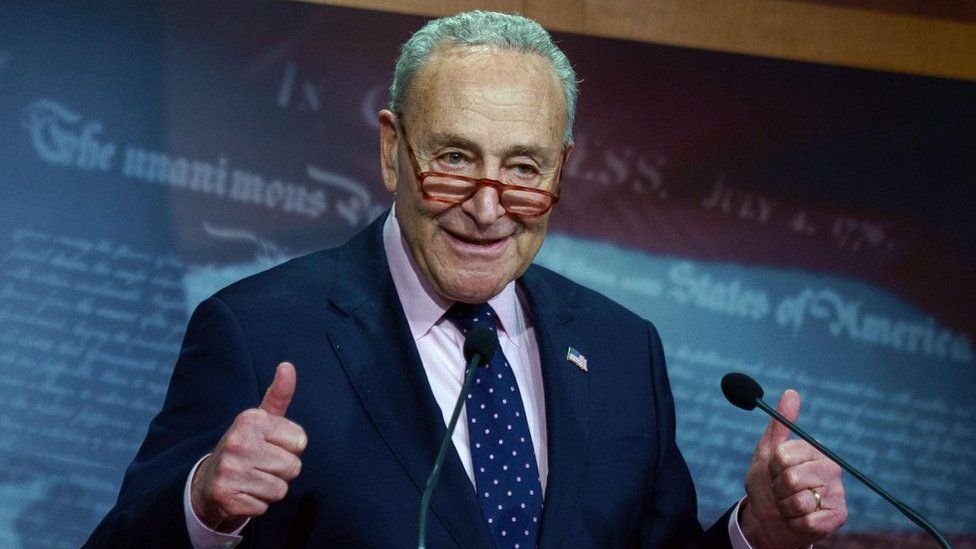
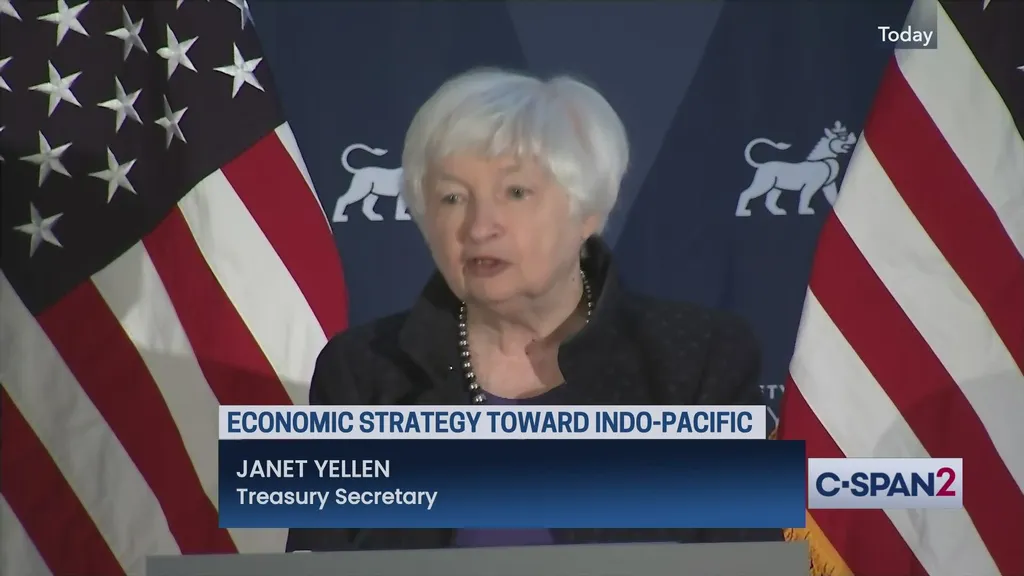 The Treasury Department in particular has played a key role in developing and implementing the Biden administration’s economic agenda in this vital region. She and her colleagues have clearly heard the voices in the region that have pressed the U.S. to augment our security presence with a robust economic agenda.
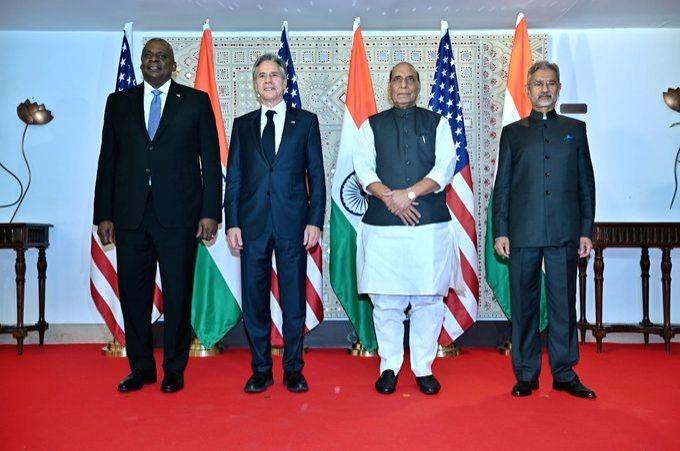 Blinken said the two countries were taking very concrete steps to deliver on the vision that President Joe Biden and Prime Minister Narendra Modi put forward at their meeting in Washington in June.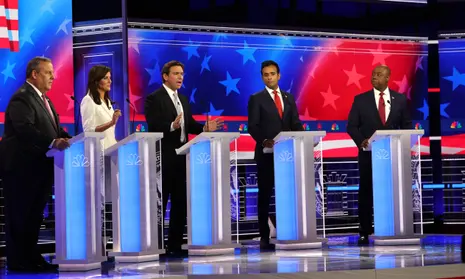
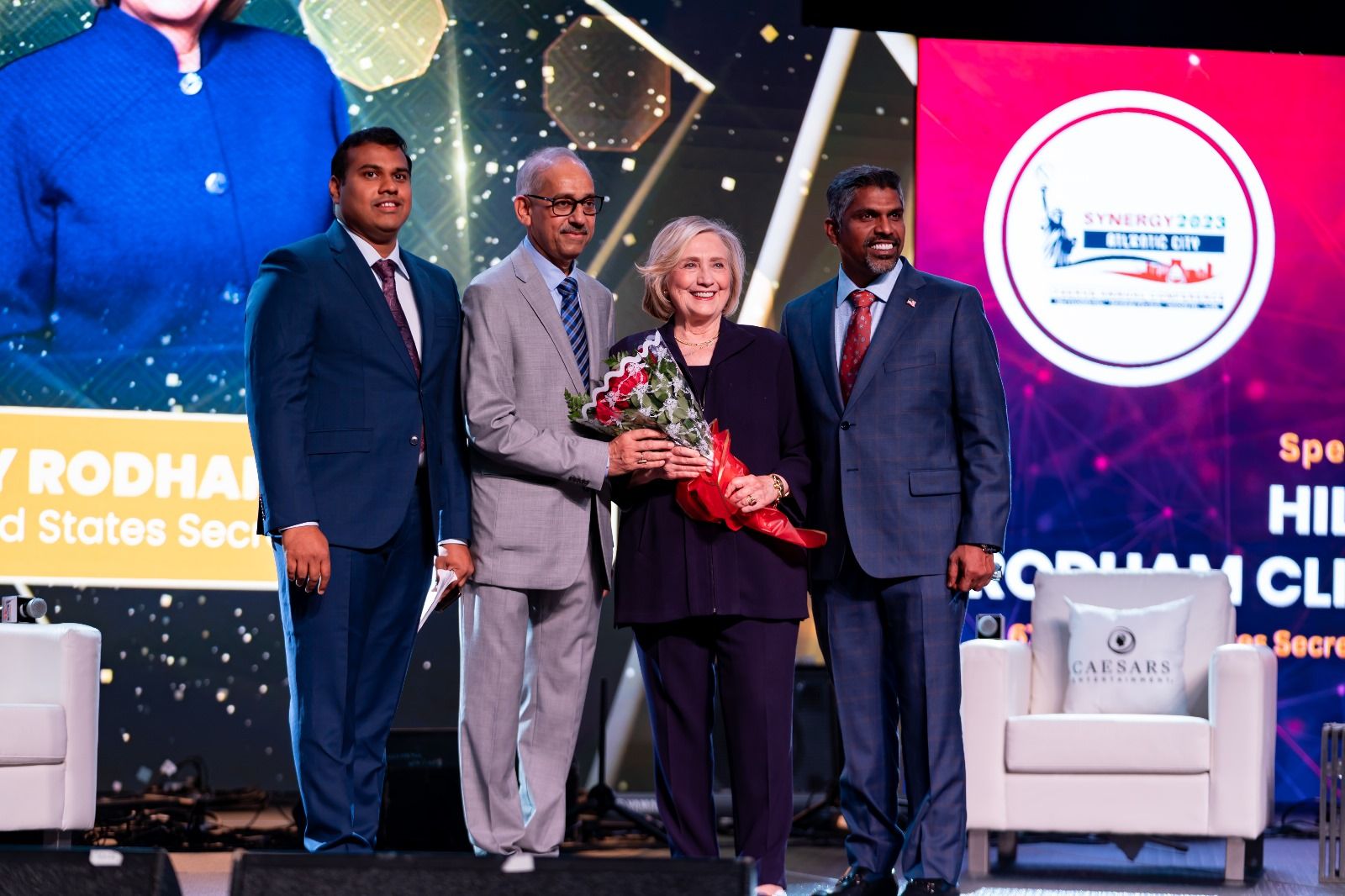 In his presidential address, Vinay K. Mahajan, National President of ITServe Alliance, welcomed the members, leaders, chapter presidents, sponsors, and volunteers to Synergy 2023 and expressed his “sincere gratitude for your unwavering commitment, and dedication, and for investing your time and energy and resources. You are the backbone of our organization, and your unwavering commitment is what propels us forward.”
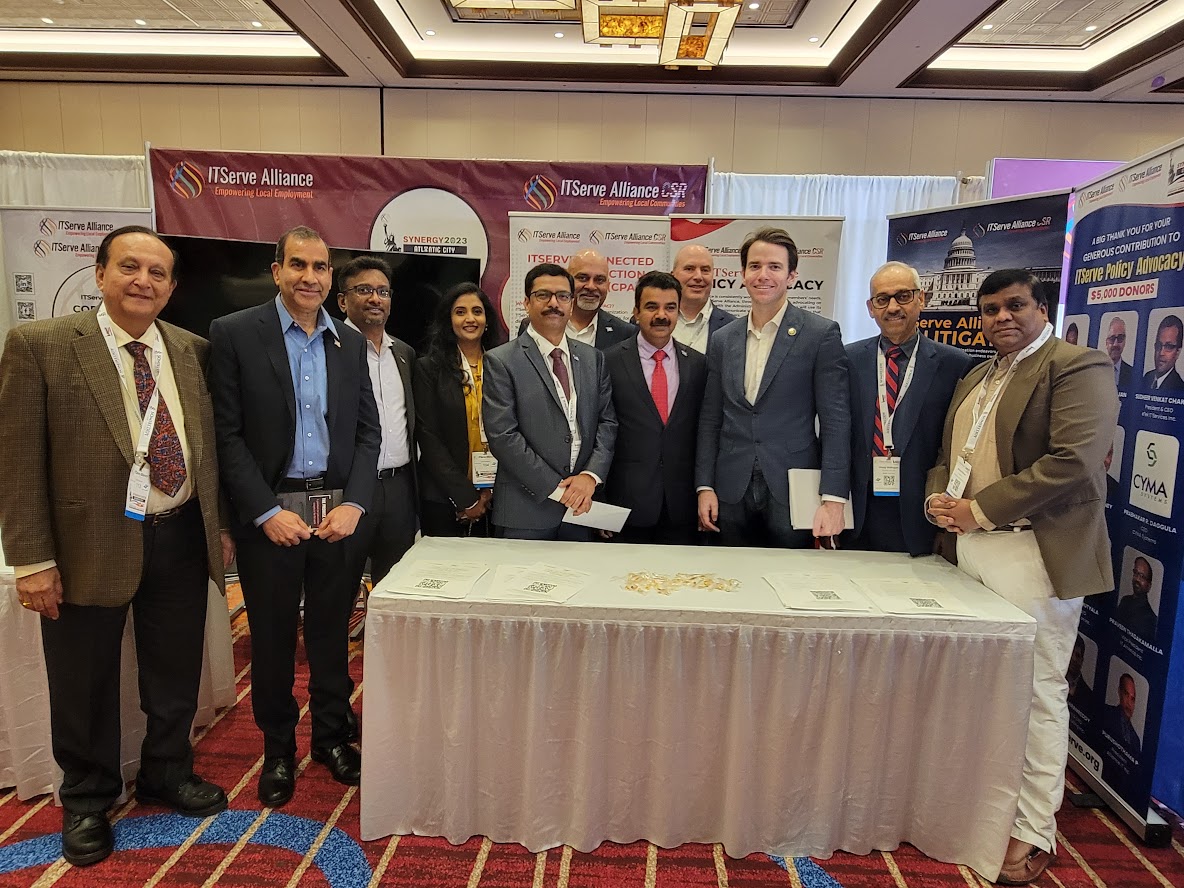 Venu Sangani, Director of Synergy 2023 said, “As we gather here, let’s remember that our unity as a community is our strength. I took on this leadership role, an opportunity, driven with a single objective: to help at the end of the conference, each attendee departs with concrete insight to grow their business to the next level. Because in all of you here today, there is both gratitude and a deep sense of accomplishment, knowing our collective vision is alive and thriving.”
 Secretary of State Hillary Rodham Clinton, the Chief Guest at Synergy 2023 delivered the Keynote Address during an interactive session with ITServe members on October 27th evening. Ms. Clinton, the 67th Secretary of State of the United States has dedicated over four decades in public service as an advocate, attorney, First Lady, and US Senator.
 Secretary Clinton urged the ITServe member community “to continue to be involved in your communities, to be members of civic clubs, volunteer groups and take part in American society in every way possible, and also decide if you so may choose to become an American citizen. And for those of you who have children, who are American citizens, guide them to be very active. Not just getting their education or being a successful person economically but being involved in civic life. There’s a lot to it. I know you are good role models for people in many parts of our country. So, I am very grateful for the many contributions that you are making and will make in the future.”
 Phaneesh Murthy, Founder & CEO of Primentor addressed the audience with his insightful talk on, “Strategies for Scaling and Sustaining a Successful IT Company from One to 100 Million Plus” The keynote address by Zack Kass, Technology Futurist, and Generative AI Solutions Specialist focused on: “AI for Small Business Success: Navigating the Future of Entrepreneurship.”
 Kevin O’Leary, a Venture Capitalist and Star of ABC’s Shark Tank delivered the Evening keynote address on: “The Path to Profit: Strategies for Building a Successful Business.” Through specific portrayals from his popular Shark Tank, his insightful address to the loud applause from the crowd referred to successful business strategies to enhance business profits.
 Other sessions in the morning included a Startup Cube Finals on GTM Pitfalls Faced by Growing Startups, which Ashish Agarwal, Turbo Start, DVC led. The Immigration Panel Discussion focused on “Navigating Immigration Challenges and Policies.” The CXO Panel focused on “The Evolving Role of IOs and CTOs in AI and ChatGPT Powered Digital Transformation.” Other panel discussions addressed issues related to “Contracts And Litigations,” and “Direct Client Engagement in the World of Contingent Workforce.”
 Amar Varada, Chair of Synergy 2023 said, “Synergy 2023 had prominent speakers, and valuable sponsorships, and helped grow a community network of industry professionals across the country. We are grateful to the unwavering support of our members, volunteers, and sponsors, whose collective efforts made this event a memorable one for all.”
 With cultural events, music, dance, and sumptuous food, in addition to all the learning and sharing of knowledge, Synergy 2023 provided actionable insights and strategies that companies can directly implement, serving as a catalyst for taking businesses to the next level. Beyond being an arena for networking and knowledge sharing, Synergy 2023 has proved to be a veritable marketplace for ideas and innovations.
 In addition to the 21 ITServe Chapter Presidents across the United States and the dozens of various Committee Chairs, the Executive Board of Directors of ITSeve, who play a critical role in enhancing the mission and vision of ITServe Alliance include:
 Secretary Clinton urged the Indian Diaspora “to continue to be involved in your communities,to be members of civic clubs. volunteer groups, and really take part in American society in every way possible, and also to make the decision if you so choose, to become an American citizen and as you wish to do. And for those of you who are the children, who are American citizens, guide them to be very active. Not just getting their education or being a successful person economically, but to be involved in things. There’s a lot to it. So, I think that the Indian diaspora, you know are good role models for people in many parts of our country. So, I personally am very grateful for the many contributions that you are making and will make in the future.”
 Kevin O’Leary, a Venture Capitalist, Star of ABC’s Shark Tank delivered the Evening keynote address on: “The Path to Profit: Strategies for Building a Successful Business.” Through specific portrayals from his popular Shark Tank, his insightful address to the loud applauses from the crowd referred to successful business strategies to enhance business profits.
 Anil Atyam, Chair of Speakers for Synergy 2023 emphasized the curated lineup of speakers and panels. “We are thrilled to have a diverse and esteemed set of speakers for this year’s conference. From policymakers, and technology leaders to industry innovators, our speakers are pivotal in shaping the discussions and providing invaluable insights that can be immediately applied in various sectors of the IT industry.”
 A Special Guest Session at Synergy was a “Dialogue with Yuvraj Singh,” a highly popular international Cricketer, Entrepreneur, and Philanthropist. Synergy 2023 will conclude with a Live Musical Concert by Bollywood Playback Singer and Filmfare Awardee Kanika Kapoor.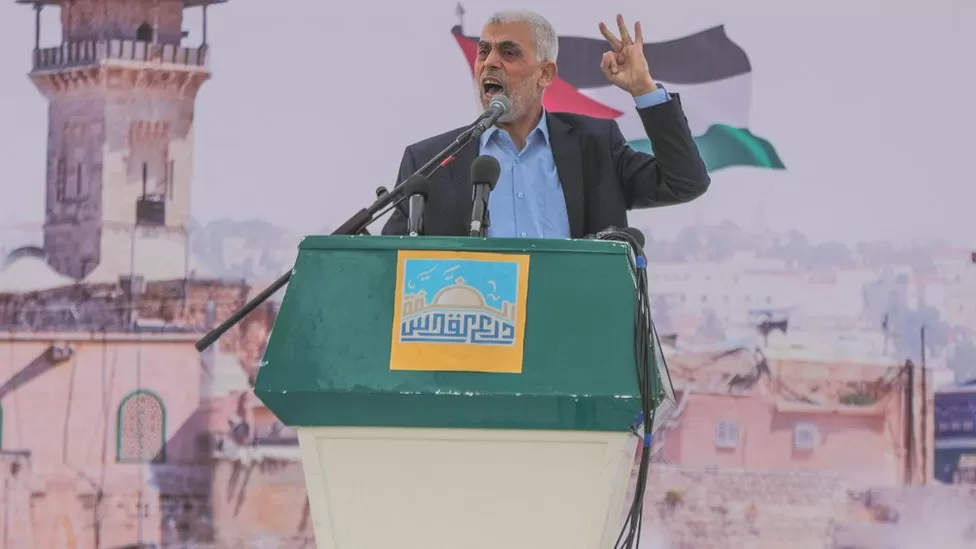

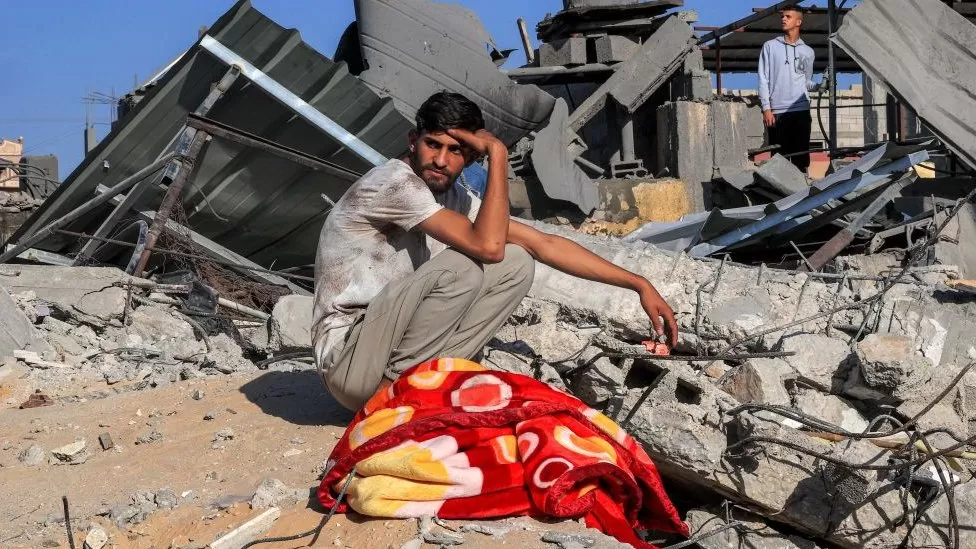
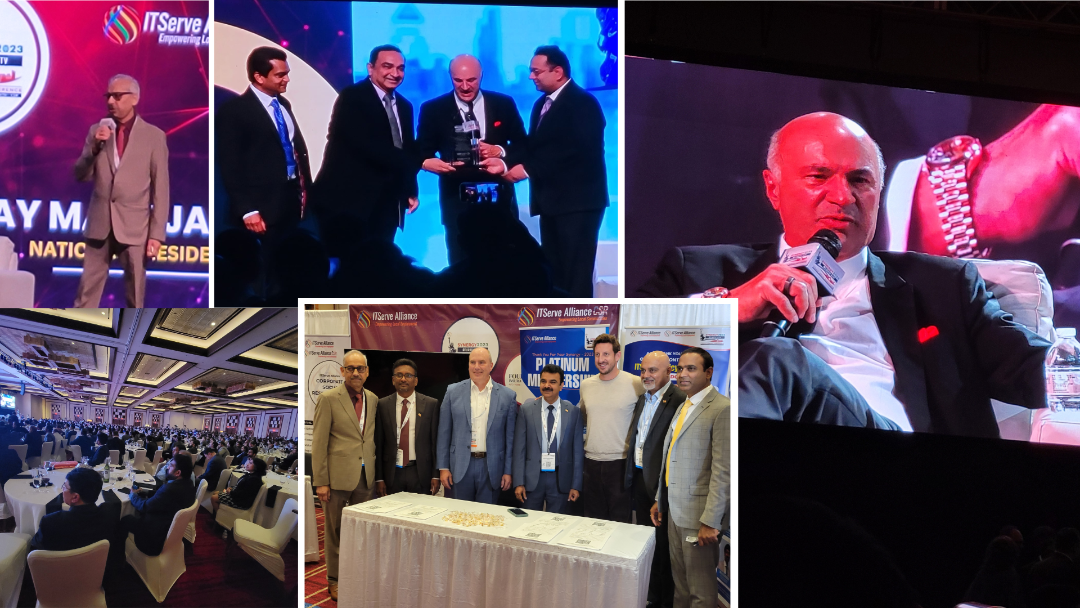 Describing the mission of ITServe Mr. Mahajan said, “We’re in the forefront, guiding and empowering its members. ITServe today is a powerful force focused on safeguarding the interests of small and medium business enterprises. We have more than 2,200 member companies, spread over 21 Chapters, they generate 175,000 high paying jobs across the United States. Our members contribute almost $12 billion to the US GDP. We at ITServe Alliance are immensely proud of us for being very successful. We are the voice represent the interests of small and medium scale enterprises of IT industry, protecting our members’ interests. We give back to the community, and invest in startups, which is to help the United States maintain the leadership in innovation and technology.”
 Mahajan went on to say, “I always thank you members, because of you, we are all strong together. Our success today is not about working alone in isolation. It is about coming together, collaborating and liberating our collective strength. It is about finding synergy, not only within our own businesses but also across our entire community. As we navigate the challenges and opportunities of the digital age, our role today is even more critical. We are not just service providers. We are architects of transformation. We shape the future of industries and enhance the lives of individuals worldwide. This event is dedicated to you. Together we will innovate and lead the way in the IT services industry. Thank you for being part of synergy. Let us embark on the journey together and fueled by the spirit of collaboration and the pursuit of success.”
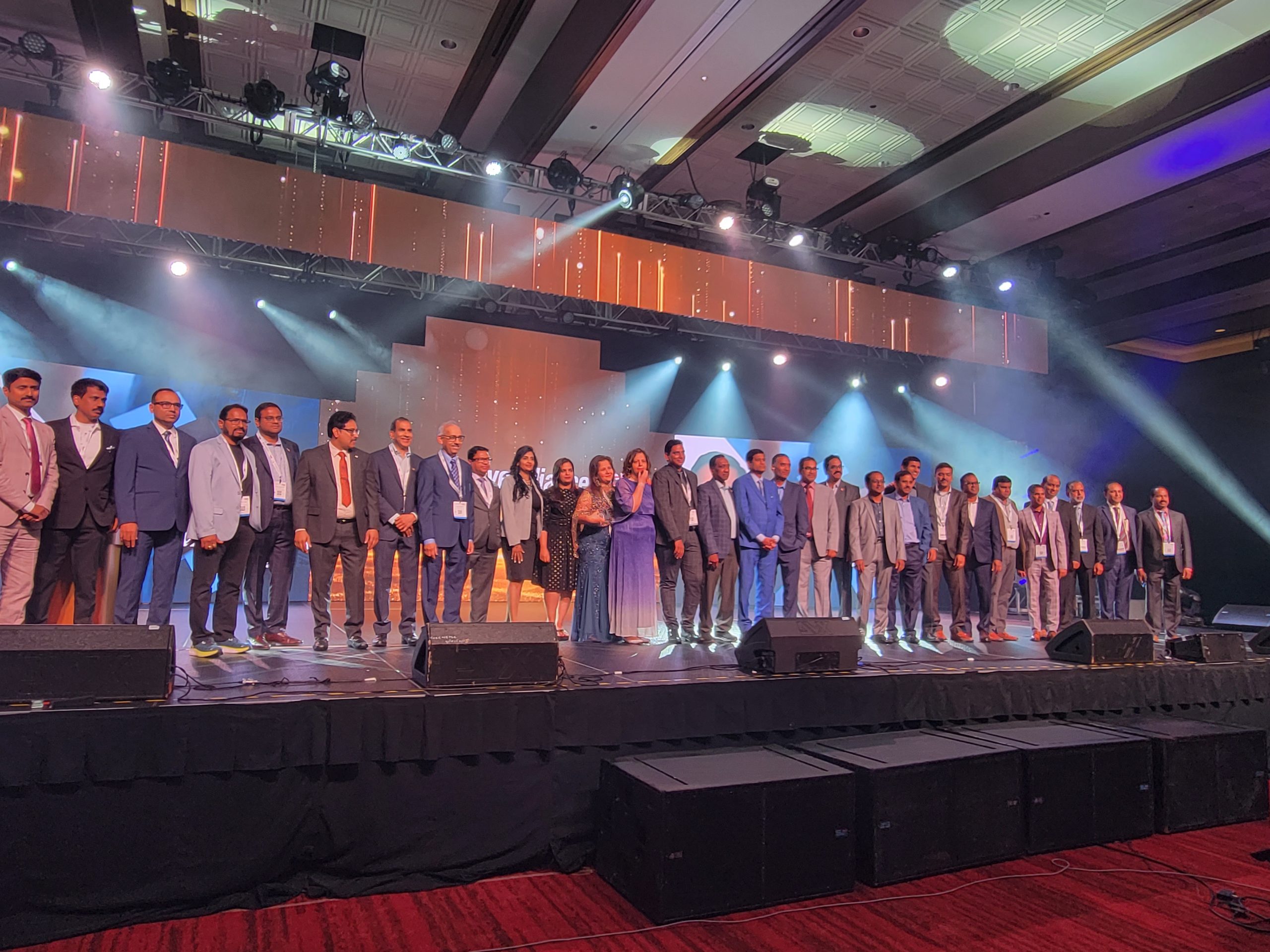 In his opening remarks, Venu Sangani, Director of Synergy 2023 said, “As we gather here, let’s remember that our unity as a community is our strength. Last year in Orlando, Florida, I took on this leadership role, an opportunity, driven with a single objective: to help at the end of the conference, each attendee departs with concrete insight to grow their business to the next level. Because in all of you here today, there is both gratitude and deep sense of accomplishment, knowing our collective vision is alive and thriving.”
 Referring to the global situation, Forbes said, “We know we live in a world today, where Russia, China, North Korea and Iran feel that the United States is a declining power. China has made very clear it wants world domination. Russia under Putin has made it very clear he wants to recreate the Soviet empire. Iran wants to be the hegemony of the Middle East and control the oil and dominate the region and ultimately eliminate Israel. In the crazy border wars, China keeps pushing against India. Not a good environment.”

 Rao delved into a project in the Department of Cell Biology at the University of Colorado Denver, where she harnessed cutting-edge genetic engineering techniques to create a colorimetry-based application and device for the treatment of prescription opioid addiction. Her initiative garnered global recognition as a world finalist in the Technovation Girl Challenge and received a Health Pillar award from the TCS Ignite Innovation challenge on a national level.
 Expressing his thoughts on his new position, Varghese conveyed his excitement: “Excited to join Jess O’Connell and her team at NEWCO Strategies. Running organizations and leading teams in today’s landscape is a hard task, and I can attest that leaders are hungry for sound advice, practical solutions, and partners that can help them navigate challenges. I want to apply the lessons I’ve learned, particularly managing through difficult times, to help others.”
 One significant move unveiled is a proposal by the Federal Trade Commission (FTC) that would prevent companies in various sectors from imposing concealed and deceptive fees. This rule would mandate sellers to disclose all essential costs upfront. The FTC could potentially impose financial penalties on companies that violate this rule. Proponents argue that this regulation will enable consumers to make more informed price comparisons and create a level playing field for businesses that are transparent about their costs.
 Nevertheless, for the time being, economic activities continue to progress steadily. The MetLife and U.S. Chamber of Commerce Small Business Index, which gauges confidence among small business owners, reached its highest level this quarter since the beginning of the pandemic. This score is roughly in line with late 2019 levels, with 66 percent of small businesses reporting that business conditions are healthy, and 72 percent expressing comfort with their cash flow, despite increased labor costs.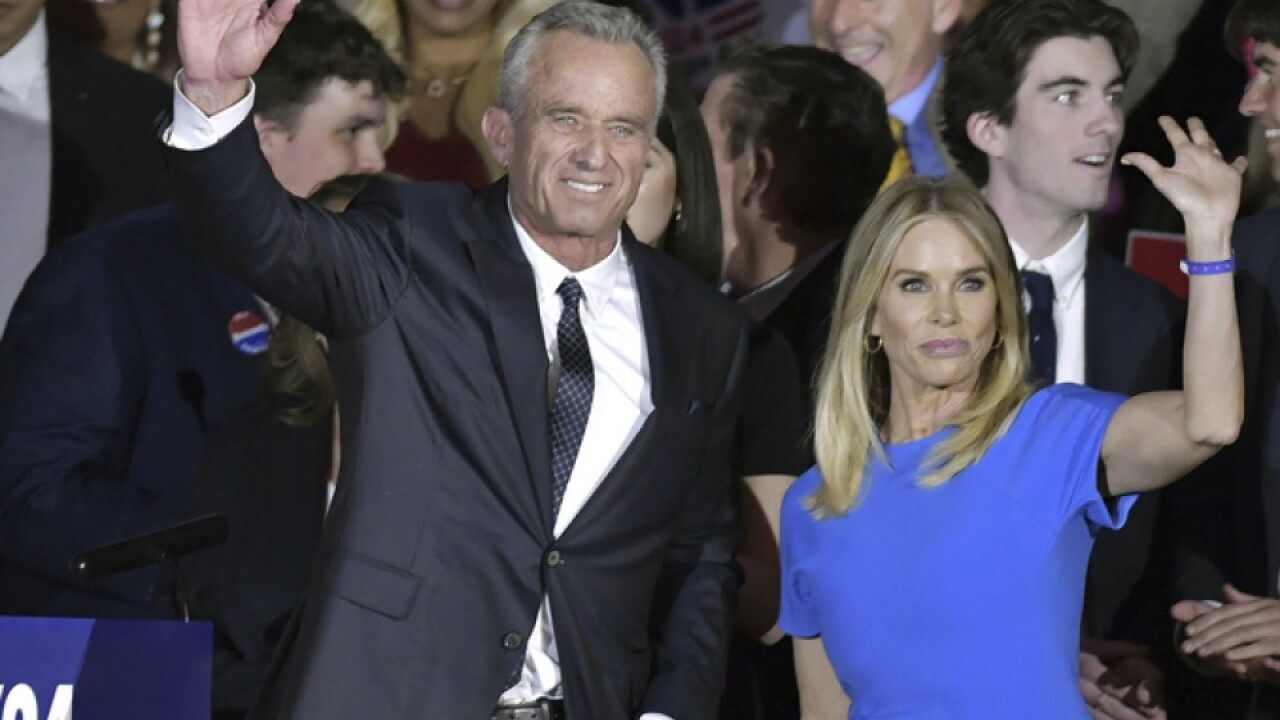
 Amitabh Mittal, General Secretary of World Hindu Council of America (VHPA) said: “Thank you, Gov Newson, for vetoing this draconian bill that attempted to harass and divide the entire Hindu community under the garb of a non-existent “caste” issue in the US. Congtulations to all Hindu, Buddhist, Sikh and Jain American Community members for this crucial victory. We’re proud of all the Leaders who worked relentlessly to make it happen. Nefarious designs of hate, divide and destroy have no place in these United States.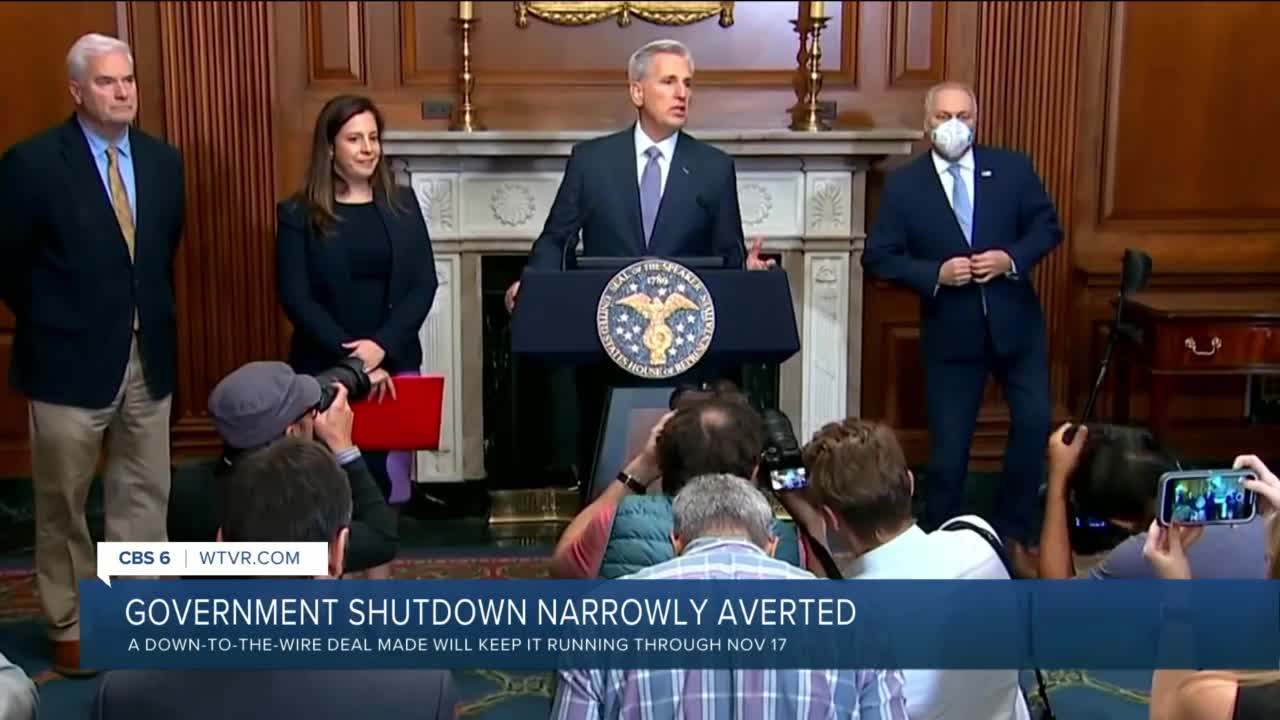
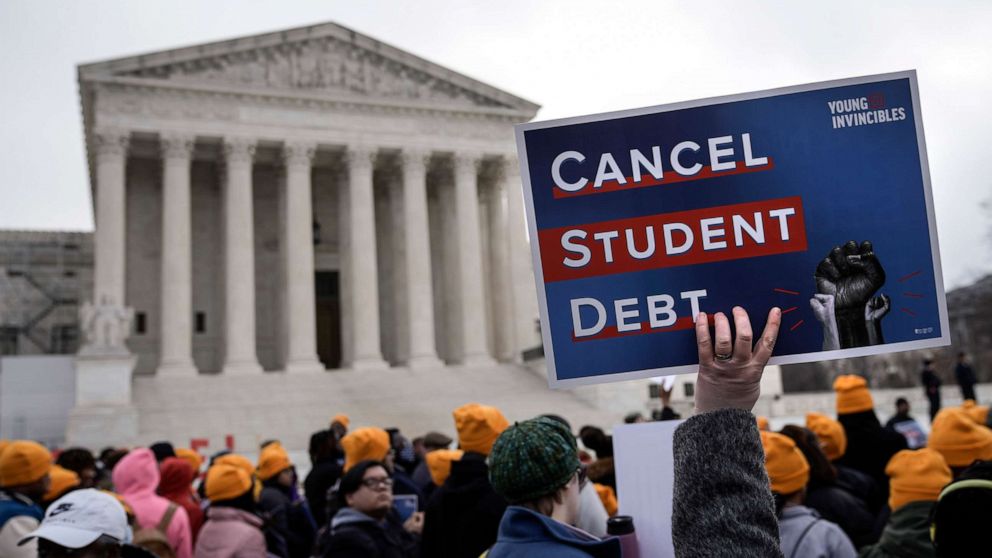
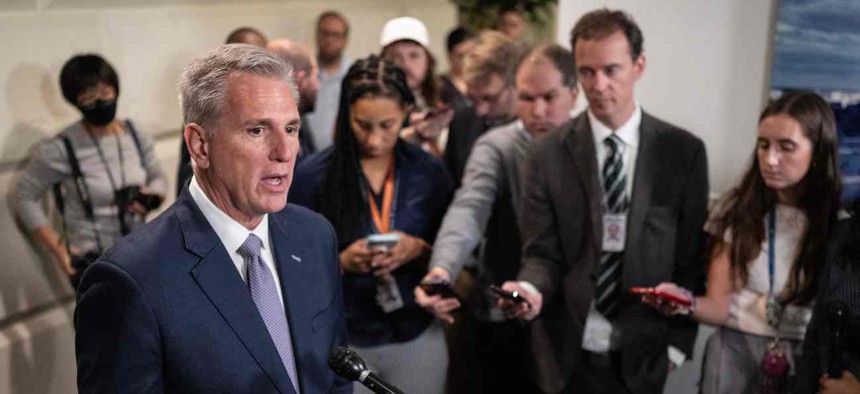 That move marked a profound shift from earlier in the week, when a shutdown looked all but inevitable. A shutdown would mean that most of the government’s 4 million employees would not get paid – whether they were working or not – and also would shutter a range of federal services, from National Parks to financial regulators.
 The Amir of Qatar expressed this sentiment to the General Assembly, stating, “A long-term truce has become the most looked-for aspiration by people in Europe and all over the world. We call on all parties to comply with the UN Charter and international law and resort to a radical peaceful solution based on these principles.”
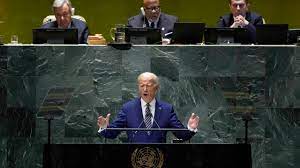 To achieve this objective, Biden requested Congress to allocate more than $25 billion in additional financing for the World Bank. This financial injection is expected to empower the bank to further assist developing countries in their pursuit of development and economic objectives. The White House noted that this initiative would strengthen the World Bank and enable it to provide resources at the scale and speed required to address global challenges and meet the urgent needs of the poorest countries.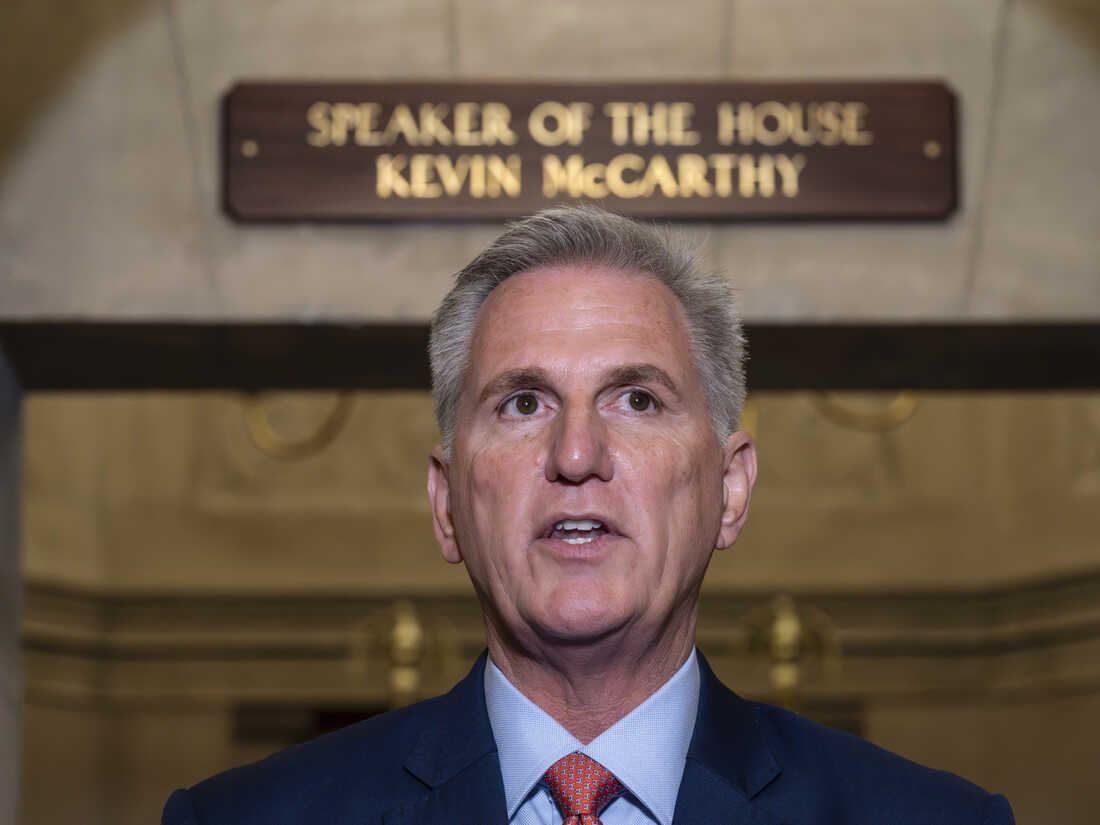
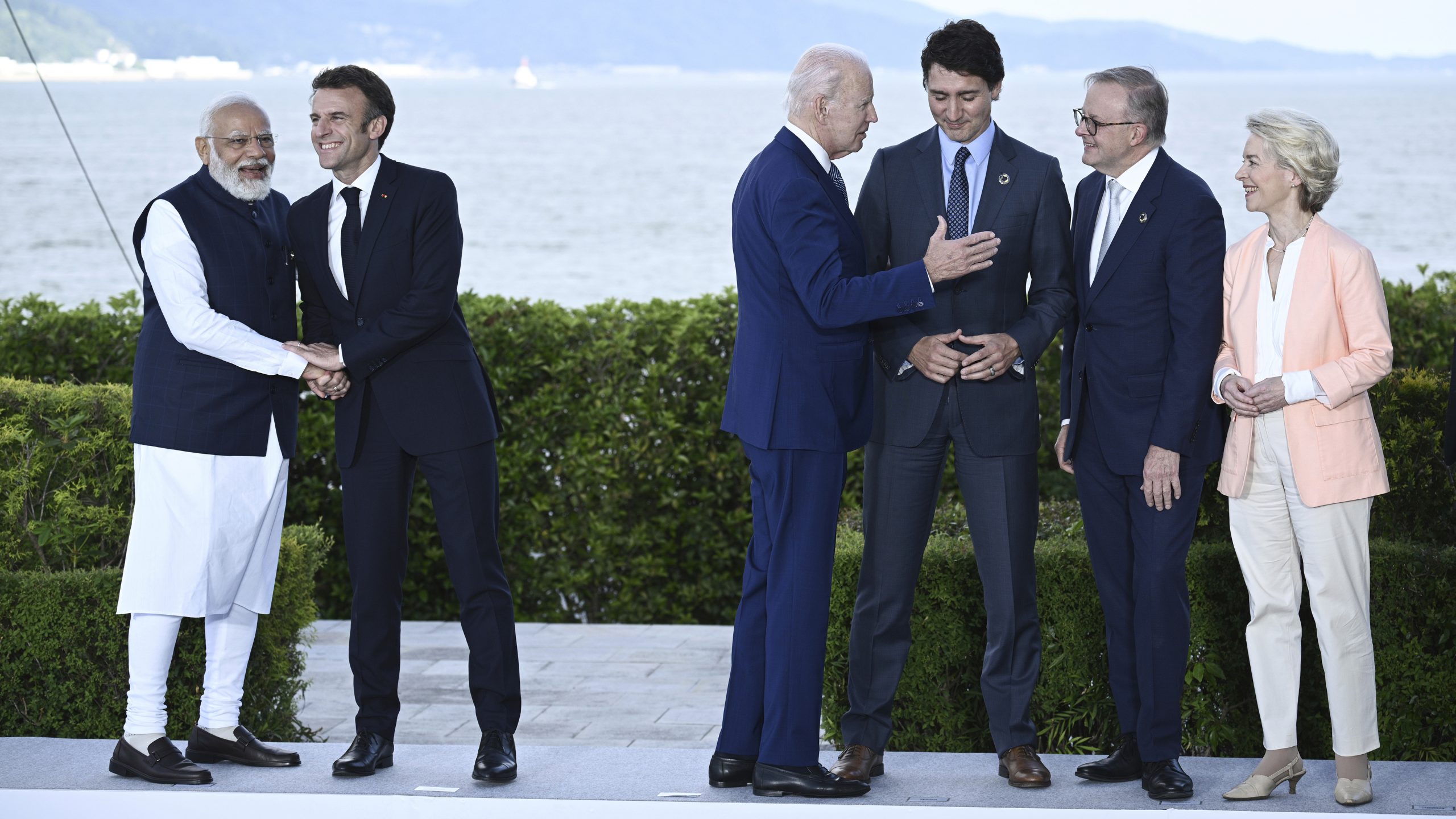
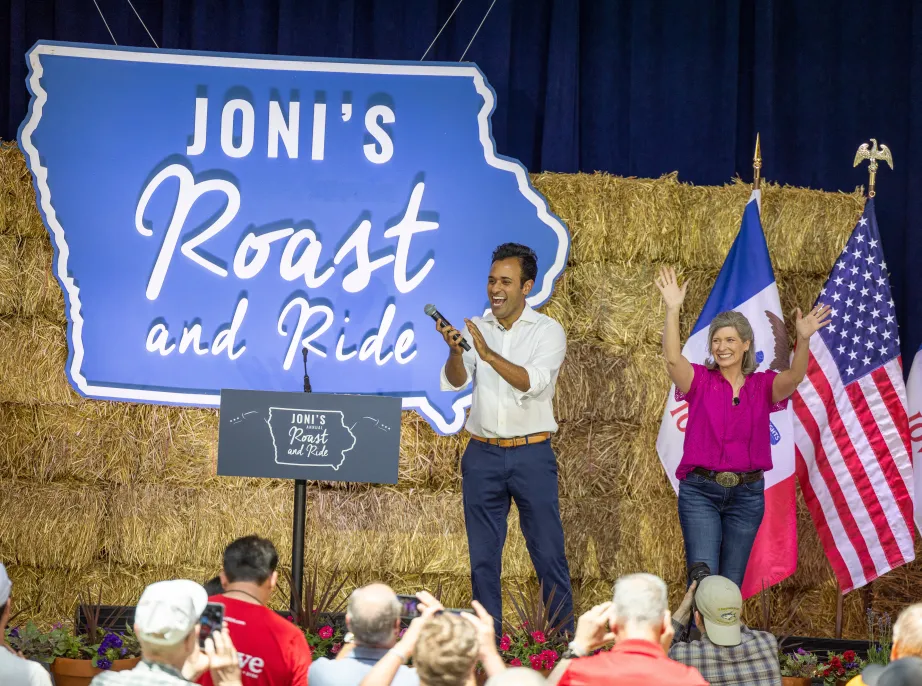
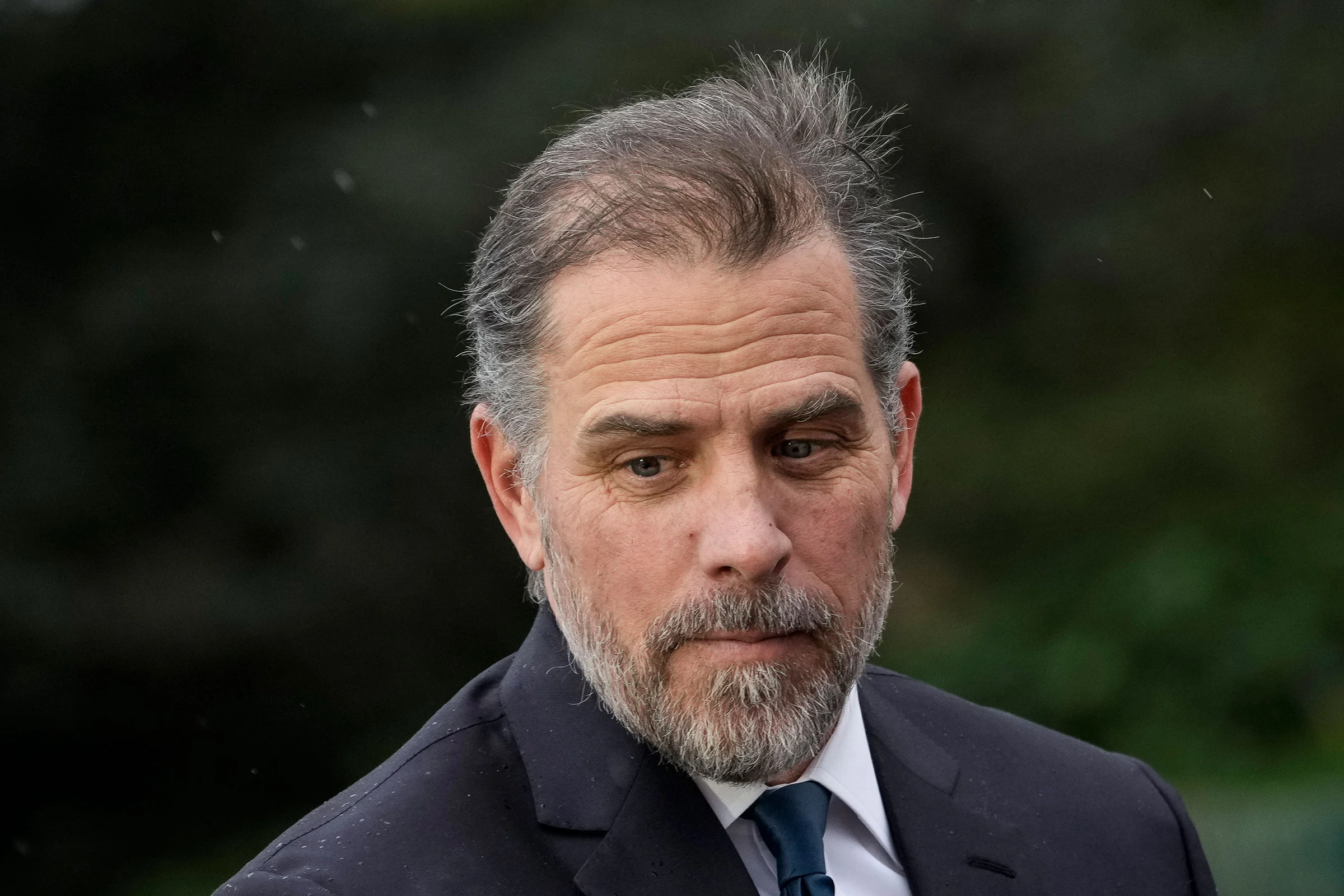
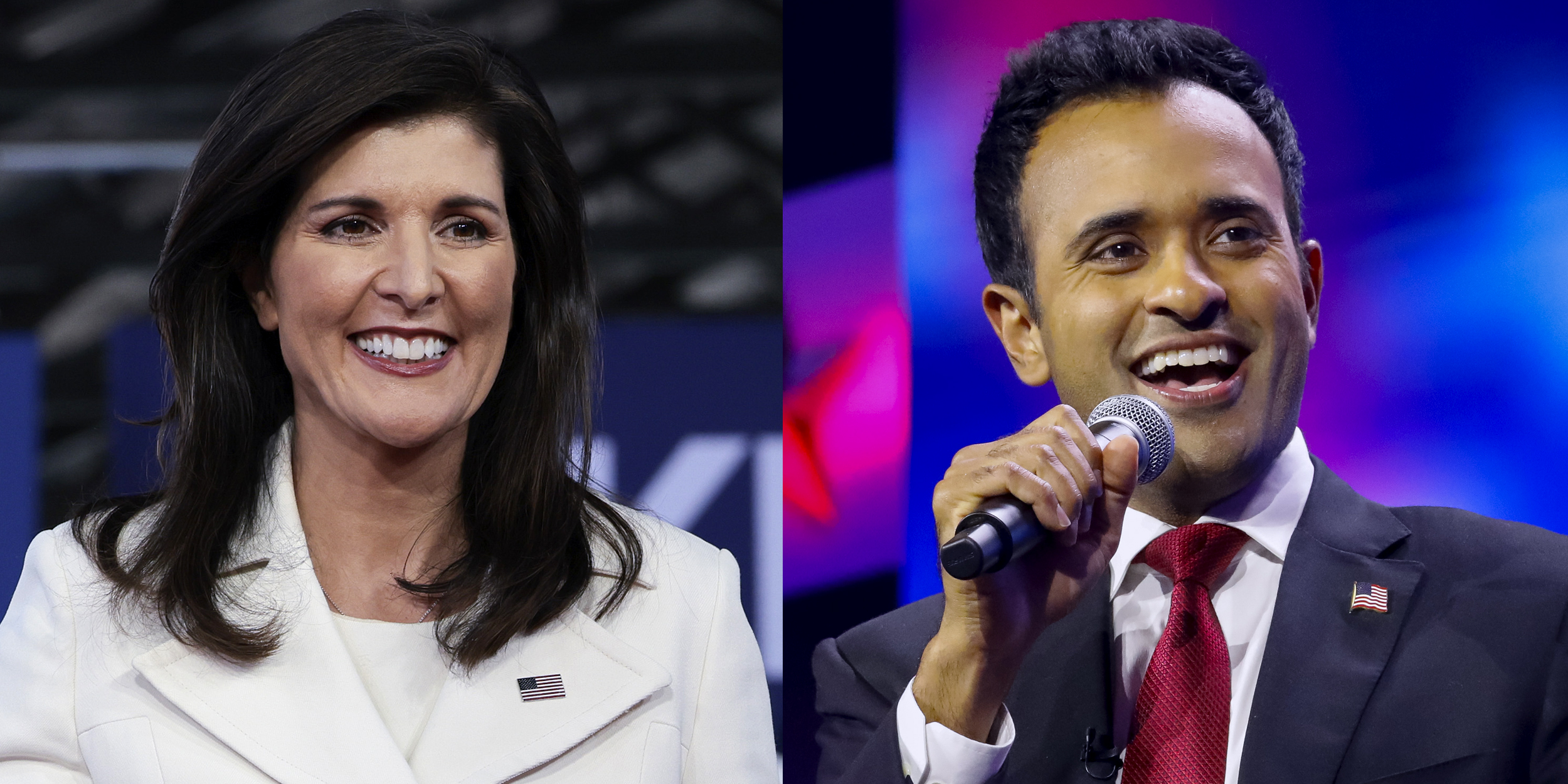
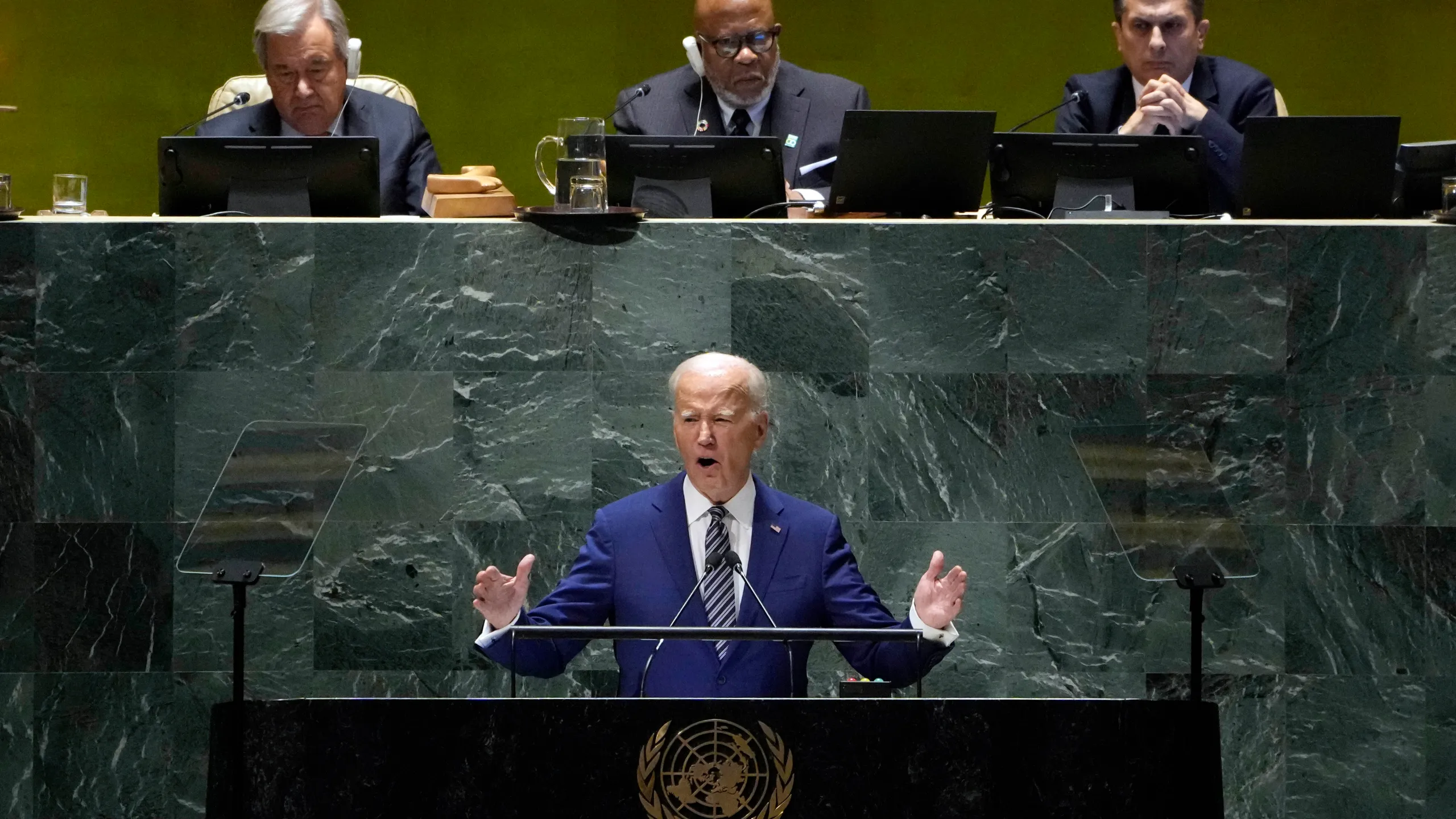
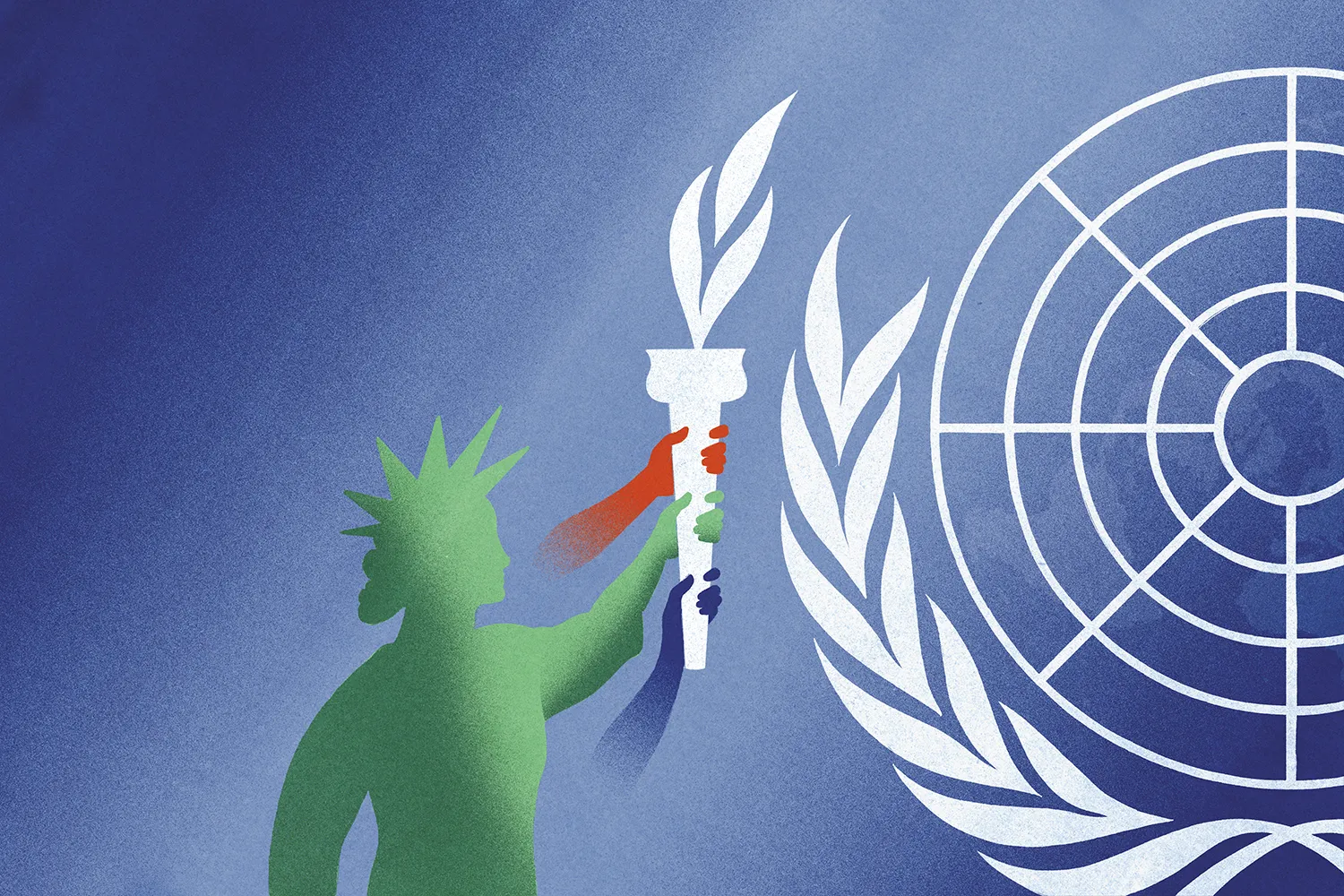
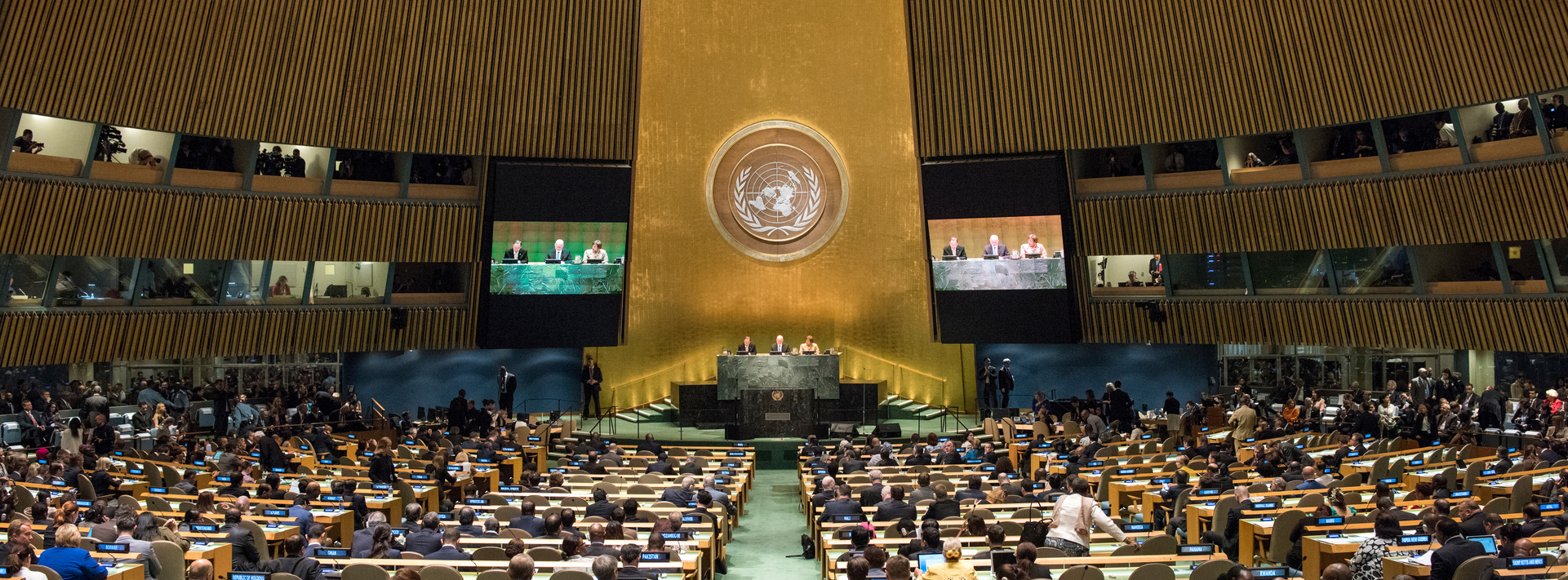
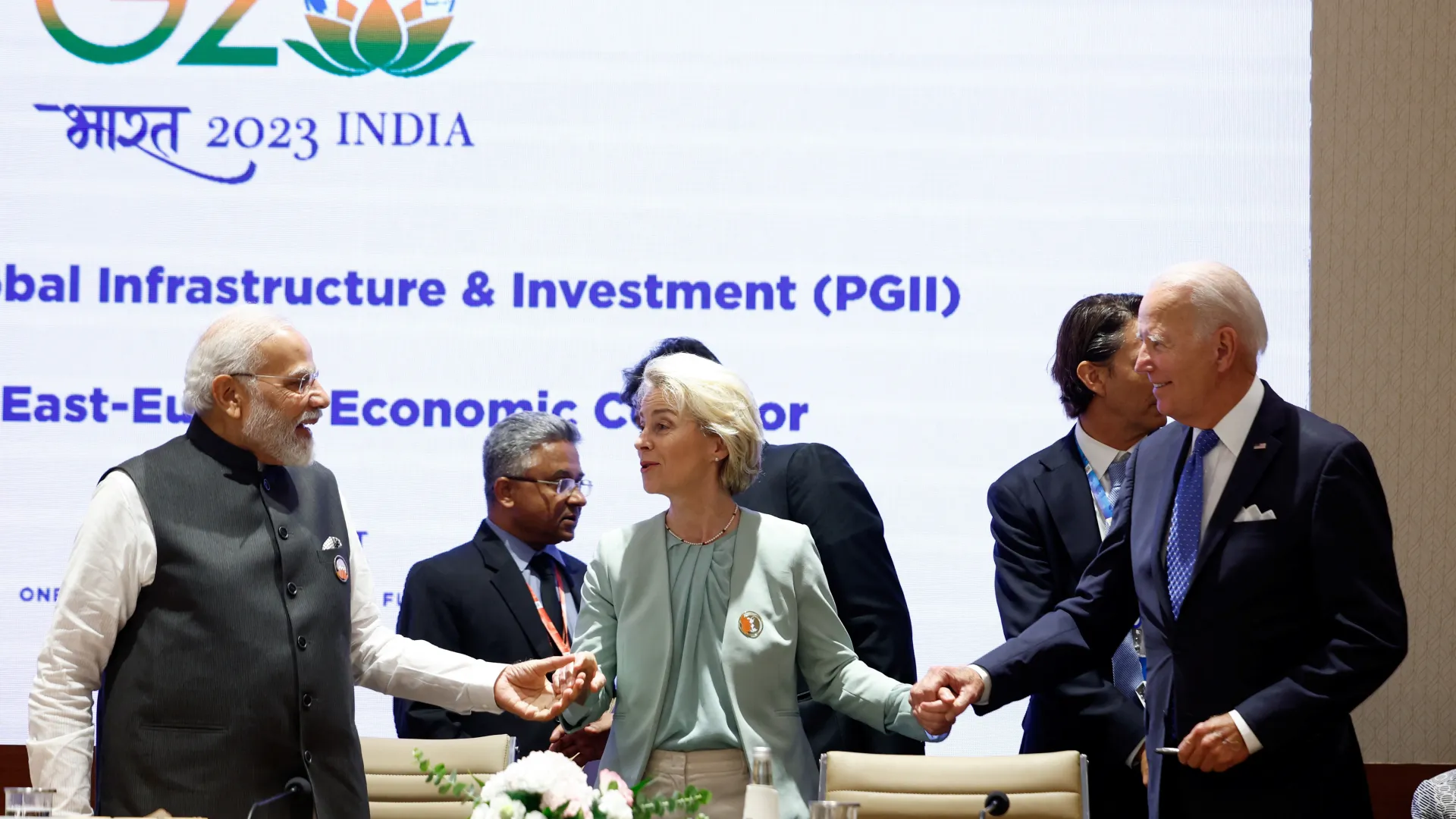
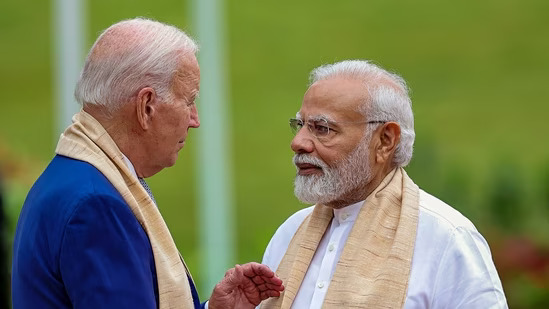
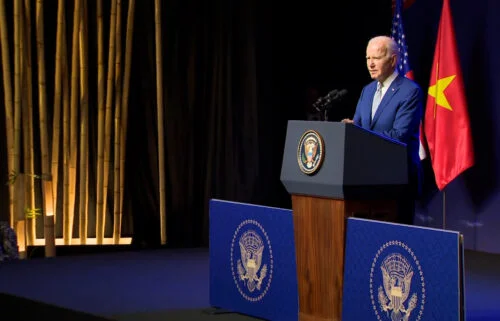
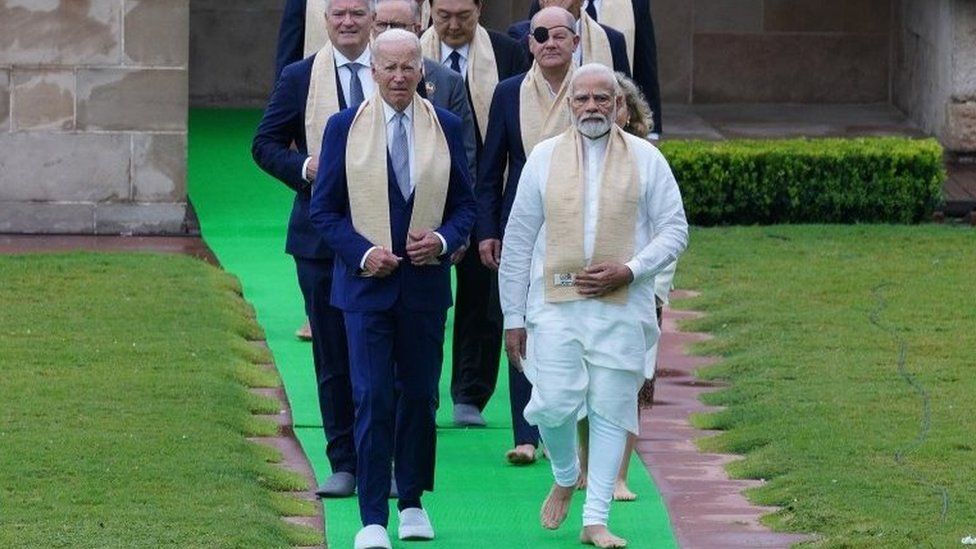
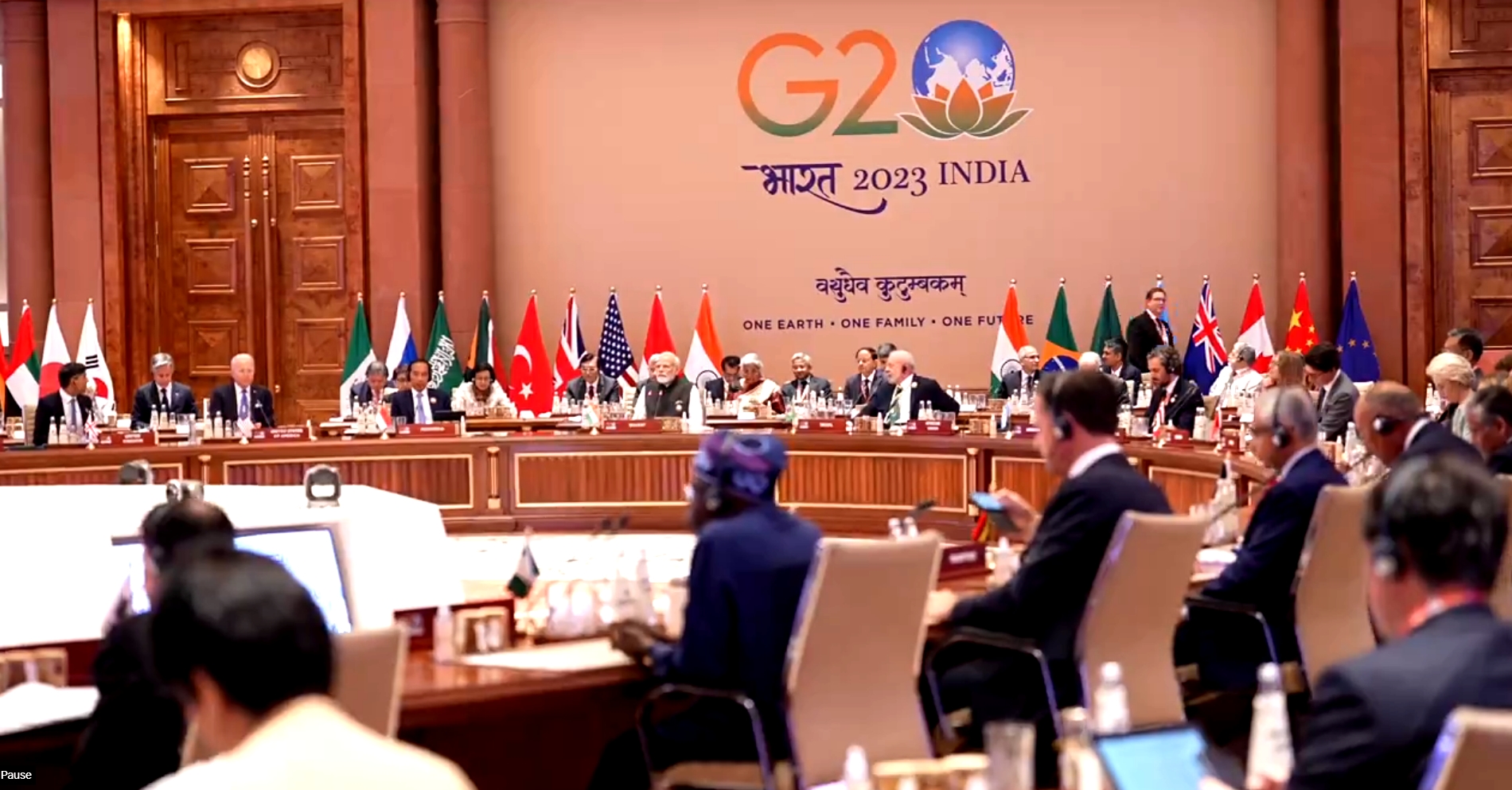
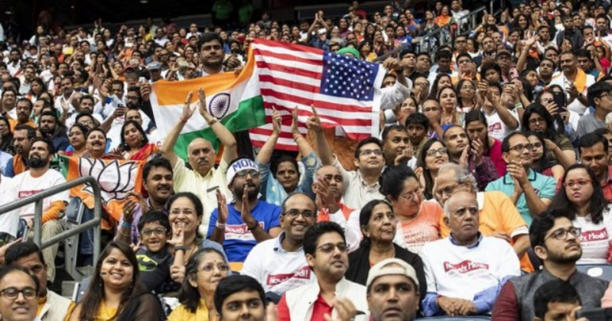
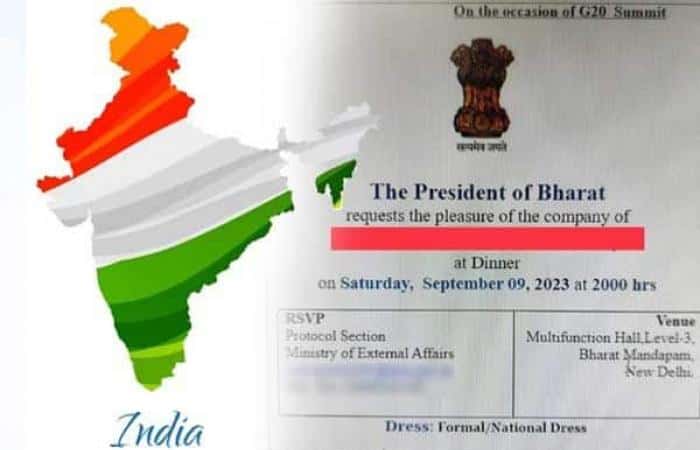
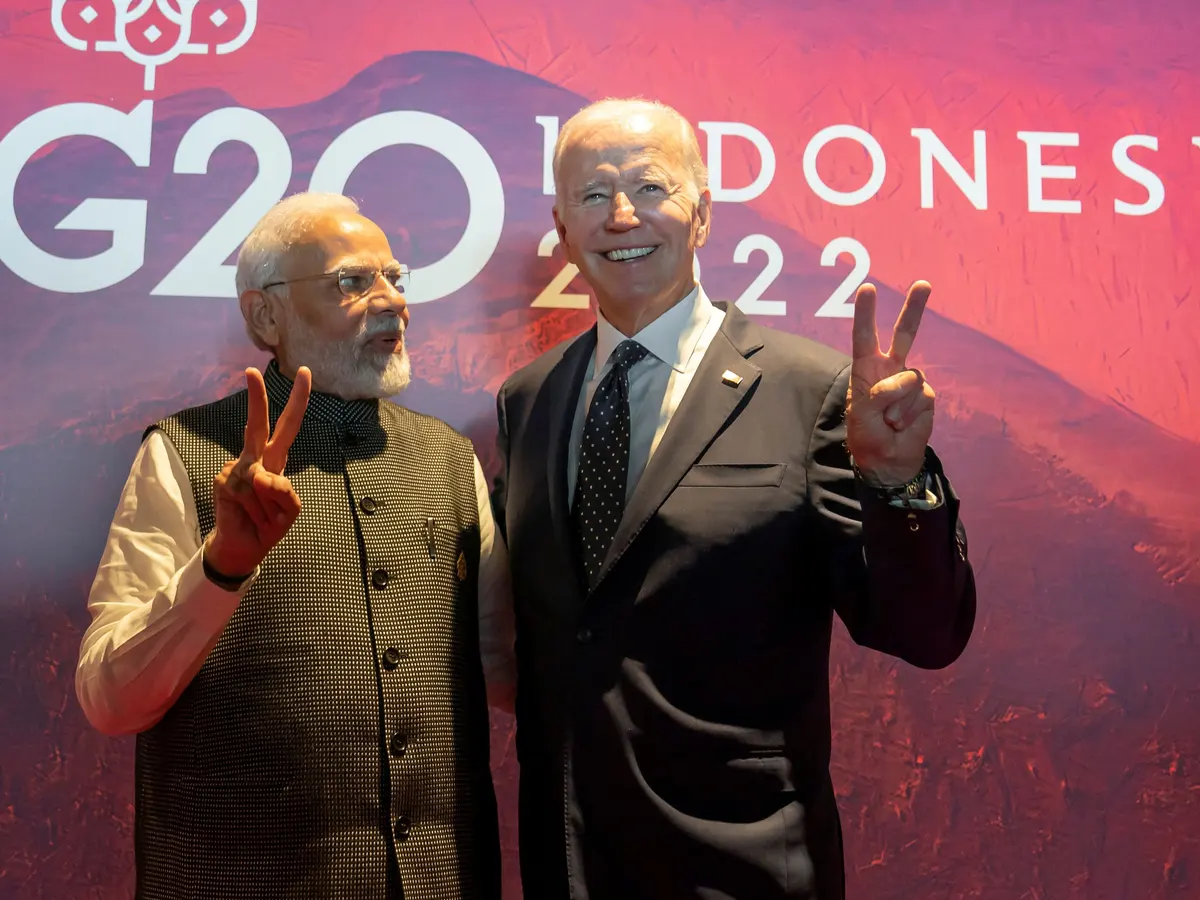
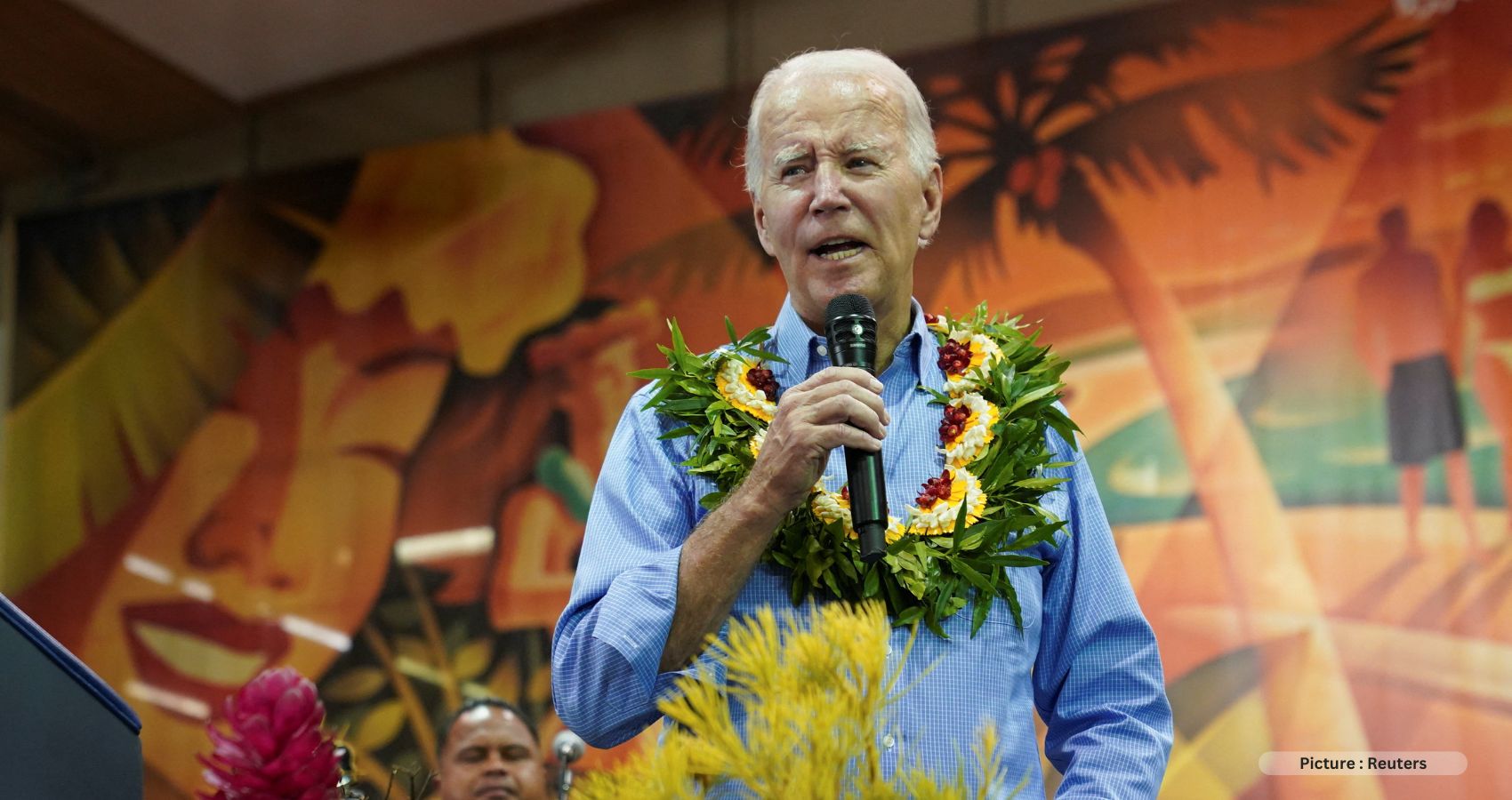
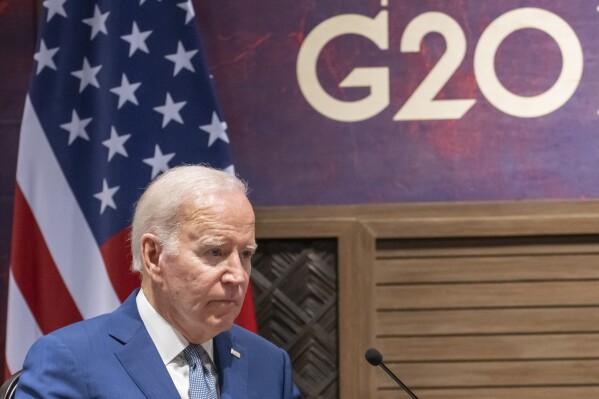
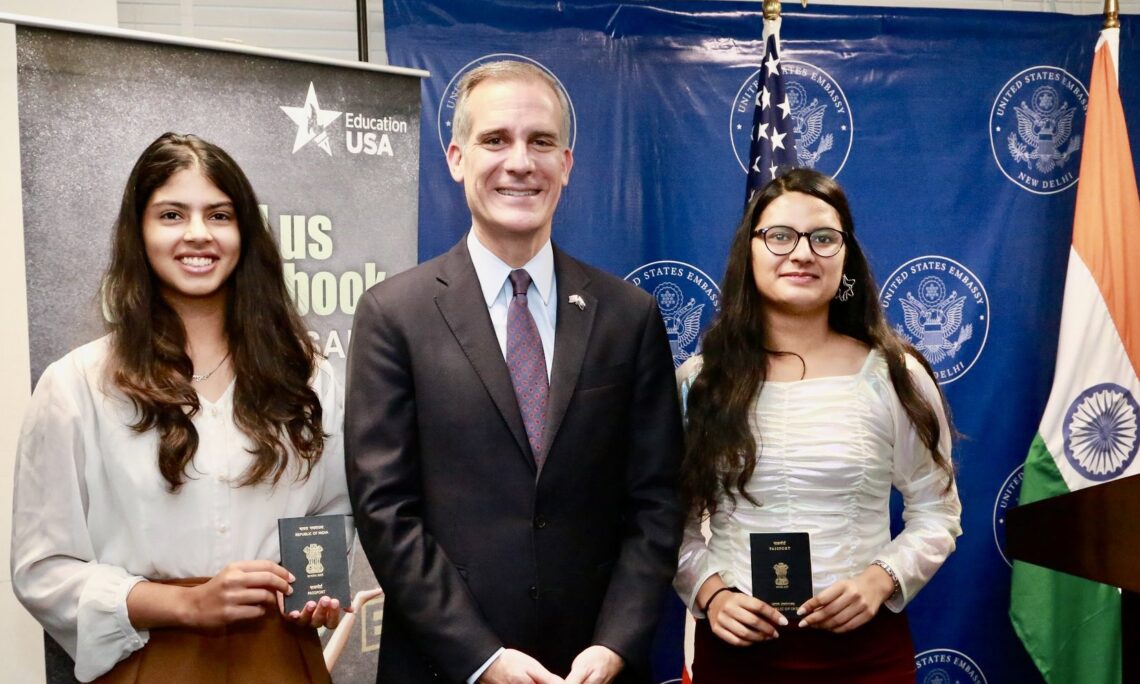


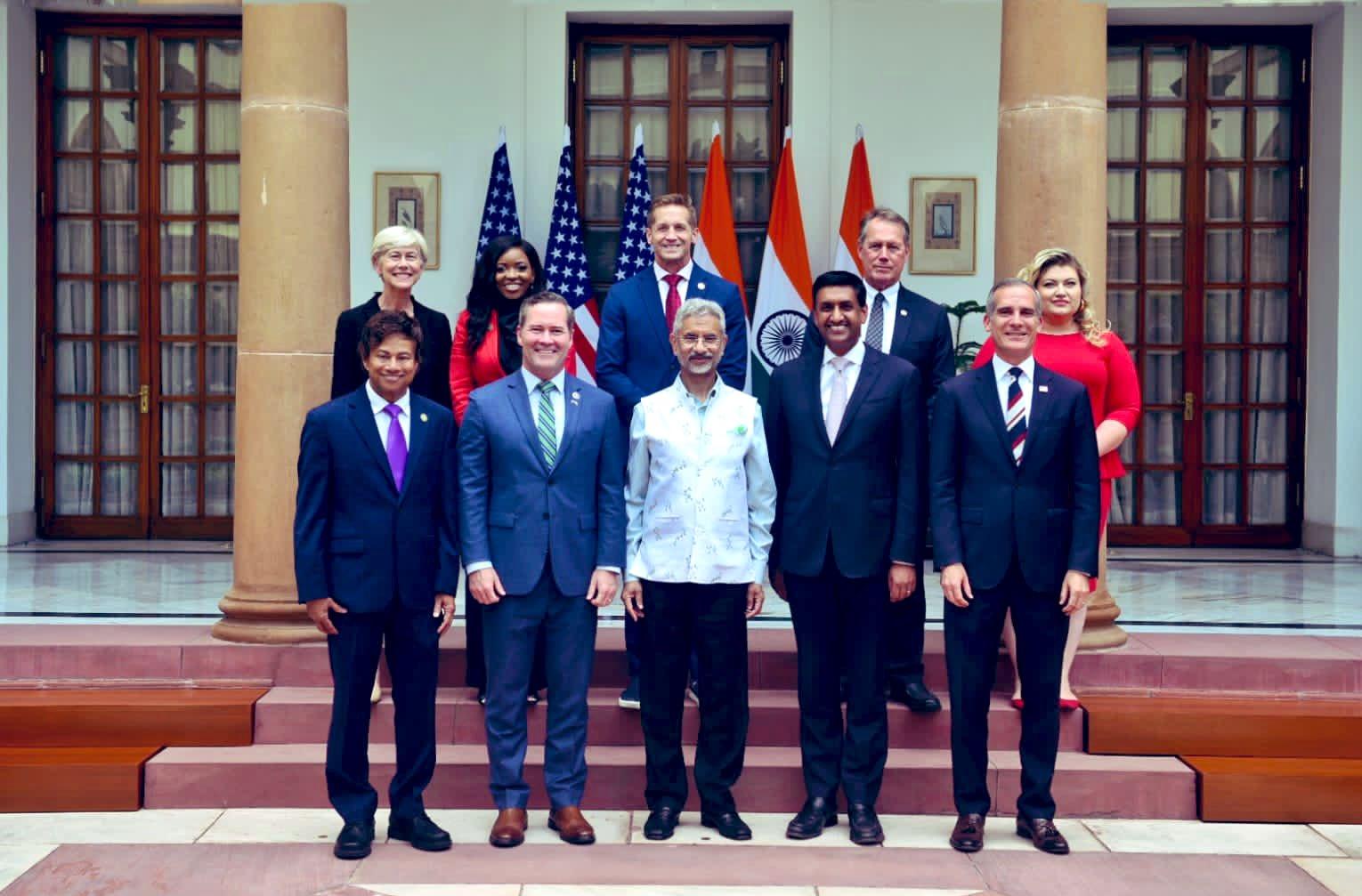

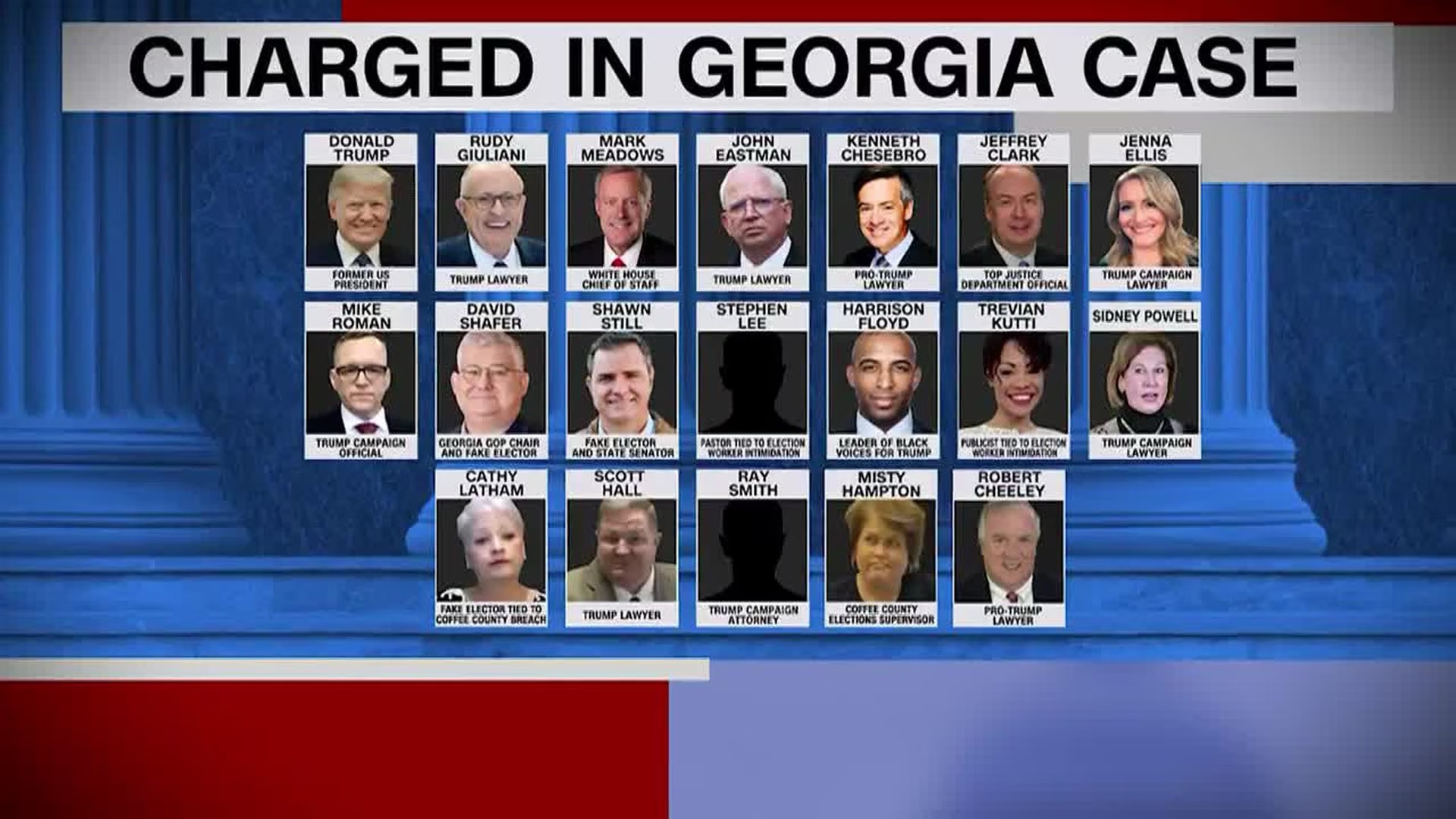
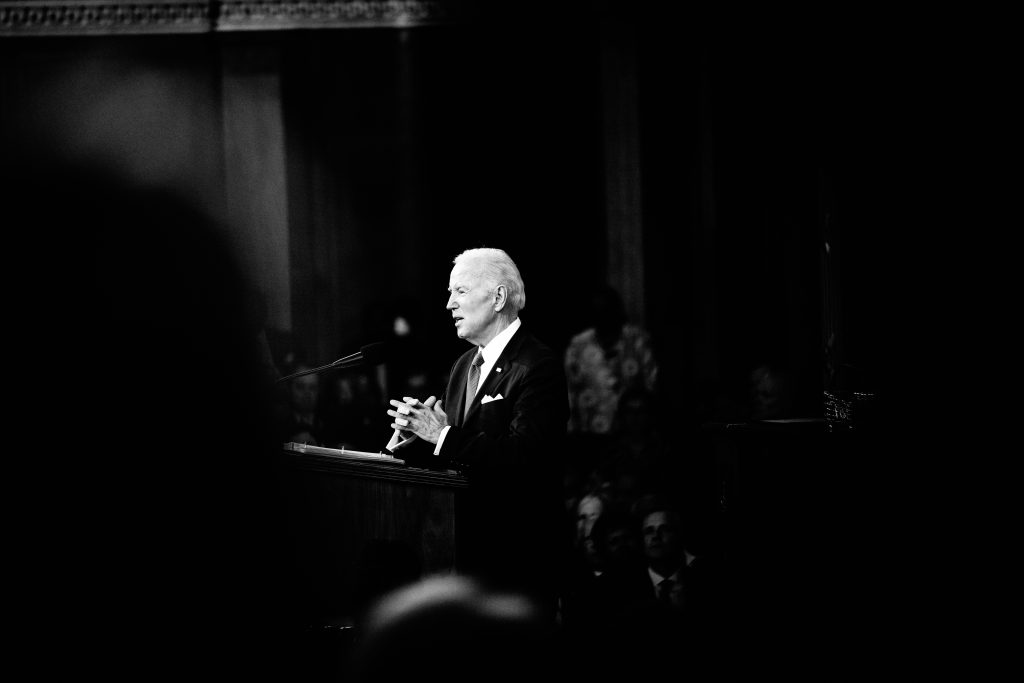 The second impeachment article accuses President Biden of obstructing justice, citing testimony from an IRS whistleblower. This testimony asserts that “members of the Biden campaign inappropriately collaborated with officials from the Justice Department (DOJ) to improperly interfere with investigations into potential tax violations involving Hunter Biden.” Both the Justice Department and special counsel David Weiss, who was appointed to investigate Hunter Biden, have denied any interference by the Biden administration in Weiss’ work.
 The ongoing ethnic/religious violence in the northeastern Indian state of Manipur and the lack of adequate response from the state have been condemned by people and organizations around the world.