US Judges Order Reinstatement of Fired Federal Workers, Call Dismissals a “Sham”

Two U.S. judges have ordered multiple federal agencies to restore the jobs of probationary employees who were dismissed en masse by the Trump administration last month.

In California, District Judge William Alsup described the mass firings as part of a “sham” strategy designed to bypass proper protocols for reducing the federal workforce.

His ruling—followed by a similar one from a judge in Maryland—affects thousands of probationary workers dismissed from various departments, including defense, energy, treasury, and veterans affairs.

The Department of Justice (DOJ) has maintained that the terminations were based on guidance rather than a direct order from the Office of Personnel Management (OPM). The BBC has reached out to OPM for comment.

OPM, traditionally a low-profile agency overseeing the federal government’s civil service, has come under scrutiny as President Donald Trump has moved to shrink the size of the federal workforce.

During a hearing in San Francisco, California, on Thursday, Judge Alsup countered the DOJ lawyer’s arguments, citing termination letters that explicitly stated the firings were carried out under OPM’s instructions.

“That should not have been done in our country,” Judge Alsup stated. “It was a sham in order to avoid statutory requirements.”

Danielle Leonard, an attorney representing a coalition of government employee unions, argued that probationary employees had been specifically targeted because they lacked the right to appeal their dismissals.

Judge Alsup also expressed concern over the firing of a government worker in Albuquerque, New Mexico, who had received top performance ratings yet was dismissed under the pretense of poor performance.

“I just want to say it is a sad day when our government would fire a good employee and say it’s for performance when they know good and well that’s a lie,” Judge Alsup said.

Following Alsup’s ruling, District Judge James Bredar in Baltimore, Maryland, issued a similar order, concluding that the Trump administration had violated regulations and casting doubt on claims that employees had been individually terminated for unsatisfactory performance.

Reacting to the initial ruling, White House press secretary Karoline Leavitt accused Judge Alsup of “attempting to unconstitutionally seize the power of hiring and firing from the executive branch.”

She emphasized that the authority to make such decisions rested with the president, arguing that “singular district court judges cannot abuse the power of the entire judiciary to thwart the president’s agenda.”

“The Trump administration will immediately fight back against this absurd and unconstitutional order,” Leavitt added.

Elon Musk’s name was not explicitly mentioned in the California hearing, but he has been entrusted by President Trump with leading efforts to reduce the federal workforce through the newly formed Department of Government Efficiency, informally referred to as Doge.

“He was on everybody’s mind,” said Luz Fuller, president of a Sacramento branch of the American Federation of Government Employees, which represents over 4,500 workers in Northern California.

The White House has denied that Musk is officially heading the agency, though Trump referred to him as such during his Congressional address last week.

Trump’s Economic Policies Stir Recession Concerns Amid Market Turbulence

During his election campaign last year, Donald Trump assured Americans that he would bring in a new wave of economic prosperity. However, two months into his presidency, his messaging has shifted. He has now warned that lowering prices will be challenging and has advised the public to brace for a “little disturbance” before he can restore wealth to the U.S. economy.

Despite recent data indicating that inflation is cooling, analysts suggest that the likelihood of an economic downturn is rising, with many pointing to his policies as a contributing factor. This raises the question: Is Trump steering the world’s largest economy toward a recession?

Markets React as Recession Risks Escalate

In the U.S., a recession is defined as a prolonged and widespread decline in economic activity, often accompanied by rising unemployment and falling incomes. Recently, several economic analysts have sounded the alarm that the risks of such a scenario are mounting.

A report from JP Morgan has raised the probability of a recession to 40%, up from 30% at the beginning of the year, cautioning that U.S. policies are now “tilting away from growth.” Similarly, Mark Zandi, chief economist at Moody’s Analytics, has increased his estimate of recession odds from 15% to 35%, citing the impact of tariffs.

These warnings have coincided with a significant decline in the S&P 500, which tracks 500 of the largest U.S. companies. The index has now dropped to its lowest point since September, signaling growing fears about the economic future.

Market instability has been partially fueled by concerns over new import taxes, known as tariffs, that Trump has imposed since taking office. His administration has targeted imports from America’s three largest trading partners with these tariffs and has threatened to expand them further. Analysts believe these actions will drive up prices and slow economic growth.

Meanwhile, official data from the U.S. Labor Department shows that inflation eased slightly in February, with prices rising 2.8% over the past year compared to 3% in January. Despite this, Trump and his economic advisors continue to caution the public to expect economic challenges. This marks a stark departure from his first term, when he frequently touted the stock market as a measure of his success.

“There will always be changes and adjustments,” Trump said last week in response to business leaders calling for more economic stability.

His stance has intensified investor concerns regarding his economic strategy. Goldman Sachs recently raised its own recession risk estimate from 15% to 20%, identifying policy changes as the primary threat to economic stability. However, the investment firm also noted that the White House could still “pull back if the downside risks begin to look more serious.”

“If the White House remained committed to its policies even in the face of much worse data, recession risk would rise further,” analysts at Goldman Sachs warned.

Impact of Tariffs, Uncertainty, and Economic Slowdown

For many businesses, the greatest uncertainty stems from Trump’s tariffs, which have increased costs for American companies by imposing taxes on imports. As the administration continues to roll out its tariff plans, many firms are seeing their profit margins shrink. In response, some companies are holding back on new investments and hiring as they try to navigate an unpredictable future.

Investors are also worried about deep cuts to the government workforce and federal spending reductions.

Brian Gardner, chief of Washington policy strategy at the investment bank Stifel, explained that businesses and investors initially assumed Trump was using tariffs as a bargaining tool.

“But what the president and his cabinet are signaling is actually a bigger deal. It’s a restructuring of the American economy,” he said. “And that’s what’s been driving markets in the last couple of weeks.”

Even before these developments, the U.S. economy was experiencing a slowdown, partly due to actions taken by the Federal Reserve, which has kept interest rates elevated to cool economic activity and stabilize prices.

Recently, some economic data has pointed to a more pronounced weakening. Retail sales declined in February, and consumer and business confidence—which had surged following Trump’s election—has since fallen. Major corporations, including airlines, retailers like Walmart and Target, and manufacturers, have all issued warnings about reduced spending.

Some analysts fear that a continued decline in the stock market could lead to even tighter consumer spending, particularly among wealthier households. Since the U.S. economy is heavily dependent on consumer spending, and higher-income households play an increasingly significant role, such a shift could have major repercussions—especially as lower-income families continue to struggle with inflation.

Federal Reserve Chair Jerome Powell attempted to reassure the public in a speech last week, arguing that economic sentiment has not always been a reliable indicator of actual behavior.

“Despite elevated levels of uncertainty, the U.S. economy continues to be in a good place,” Powell stated.

However, the U.S. economy is deeply interconnected with global markets, a reality that adds another layer of complexity to the situation. Kathleen Brooks, research director at XTB, pointed out that these tariffs could create significant disruptions at a time when signs of economic weakness are already emerging.

“The fact that tariffs could disrupt that at the same time that there were signs that the U.S. economy was weakening anyway … is really fueling recession fears,” she said.

Tech Stock Market Correction and AI Bubble Concerns

Not all of the turmoil in the stock market can be attributed to Trump’s policies. Investors were already on edge about the possibility of a market correction, particularly after the substantial gains recorded over the last two years. Much of this growth has been fueled by enthusiasm surrounding artificial intelligence (AI) and the tech sector.

For instance, chipmaker Nvidia saw its share price skyrocket from under $15 at the start of 2023 to nearly $150 by November of last year. Such dramatic increases have sparked debate over whether an “AI bubble” has formed. Many investors are now closely watching for signs that the bubble may burst, which could have significant consequences for the broader market—regardless of what’s happening in the wider economy.

As concerns about the U.S. economy intensify, sustaining the optimism surrounding AI has become even more challenging.

Tech analyst Gene Munster of Deepwater Asset Management expressed his growing doubts on social media this week, admitting that his confidence had “taken a step back” due to the rising likelihood of a recession.

“The bottom line is that if we enter a recession, it will be extremely difficult for the AI trade to continue,” he said.

With the combination of Trump’s economic policies, stock market volatility, and uncertainty in the tech sector, investors and analysts remain on high alert. Whether the administration chooses to adjust its approach in response to mounting risks could determine whether the U.S. economy avoids a full-blown recession or slides into one in the months ahead.

Ukraine Accepts US-Proposed 30-Day Ceasefire, Awaits Russia’s Response

Ukraine has announced its willingness to accept an immediate 30-day ceasefire with Russia, a proposal put forth by the United States following discussions between the two nations in Saudi Arabia.

US Secretary of State Marco Rubio stated that he would present the proposal to Moscow, emphasizing that “the ball is in their court.” However, Russia has yet to issue a public response to the offer.

Ukrainian President Volodymyr Zelensky expressed optimism about the proposal, asserting that it is now Washington’s responsibility to persuade Russia to agree to the “positive” plan.

The meeting in Jeddah on Tuesday marked the first formal engagement between Ukraine and the US since the heated confrontation between Zelensky and US President Donald Trump at the Oval Office on February 28.

In a joint statement, the US declared its commitment to resuming intelligence-sharing and security assistance to Ukraine, which had been previously halted due to the public dispute at the White House.

“Both delegations agreed to name their negotiating teams and immediately begin negotiations toward an enduring peace that provides for Ukraine’s long-term security,” the statement read.
During a press conference in Jeddah late Tuesday, Rubio expressed hope that Russia would accept the ceasefire proposal.
Ukraine, he stated, was “ready to stop shooting and start talking,” adding that if Russia were to reject the proposal, “then we’ll unfortunately know what the impediment is to peace here.”

“Today we made an offer that the Ukrainians have accepted, which is to enter into a ceasefire and into immediate negotiations,” Rubio said.

“We’ll take this offer now to the Russians, and we hope they’ll say yes to peace. The ball is now in their court,” he added.

Trump’s special envoy, Steve Witkoff, who was present at the Jeddah talks, is expected to travel to Russia in the coming days, a source with knowledge of the planning told the BBC. However, this plan remains subject to change.
The proposed ceasefire extends beyond Zelensky’s initial call for a partial truce, which had been limited to air and naval conflicts.

Following the meeting, Zelensky expressed gratitude toward Trump, acknowledging “the constructiveness” of the discussions in Jeddah.

In a video message, he urged Russia to demonstrate its willingness to “stop the war or continue the war.”
“It is time for the full truth,” he declared.

The Kremlin has yet to provide an official reaction. However, on Tuesday, Moscow indicated that it would release a statement after Washington briefed it on the outcome of the discussions.
Prominent Russian lawmaker Kostantin Kosachev remarked that any agreements would be made “on our terms, not American.”

Kosachev, chairman of the Federation Council’s international affairs committee, further stated that “real agreements are still being written… at the front,” underscoring that Russian forces were continuing their advance in Ukraine.
Since launching its full-scale invasion of Ukraine in February 2022, Russia has seized control of approximately 20% of Ukrainian territory.

Meanwhile, at the White House, Trump told reporters that he planned to engage in discussions with Russian President Vladimir Putin, expressing hope that he would agree to the ceasefire.
“It takes two to tango, as they say,” Trump remarked, voicing optimism that the deal could be reached in the coming days.

“We have a big meeting with Russia tomorrow, and some great conversations hopefully will ensue,” he said.
Trump also mentioned that he was open to inviting Zelensky back to Washington.
Maria Zakharova, the Russian Foreign Ministry’s spokeswoman, indicated that Moscow had not ruled out further discussions with US representatives in the coming days, according to Russia’s state-owned news agency Tass.
Asked about whether Trump and Zelensky’s relationship was “back on track,” Rubio dismissed the notion, instead emphasizing that “peace” was the true priority.

“This is not Mean Girls, this is not some episode of some television show,” Rubio stated.

“Today people will die in this war, they died yesterday and—sadly—unless there’s a ceasefire, they will die tomorrow.”
The US and Ukrainian teams convened in Jeddah following a series of overnight drone strikes near Moscow, which left at least three people dead. Russian officials argued that these attacks demonstrated Ukraine’s unwillingness to pursue a diplomatic resolution to the war.

As tensions continue, questions remain about the origins of the conflict.
Why did Putin’s Russia invade Ukraine?

In a significant escalation, the Moscow region suffered its largest drone attack since the start of the full-scale war.
Additionally, Ukraine hopes that an agreement with the US regarding critical minerals will help secure Washington’s continued support.

During the talks, Trump and Zelensky reaffirmed their commitment to finalizing a key minerals agreement “as soon as possible,” according to their joint statement.

Ukraine has proposed granting the US access to its rare earth mineral reserves in exchange for American security guarantees. However, this arrangement was previously disrupted by tensions at the White House.
Rubio clarified that the minerals agreement was not a primary focus of Tuesday’s discussions, but had instead been negotiated separately by the US and Ukrainian treasuries.

Also present at the Jeddah meeting was US National Security Adviser Mike Waltz.
The joint US-Ukraine statement emphasized Kyiv’s stance that Europe must play a role in any future peace process.
Washington’s evolving approach to the conflict—including efforts to sideline European nations in negotiations—has sparked emergency meetings among European leaders in recent weeks.

European Commission President Ursula von der Leyen welcomed the “positive development” emerging from Tuesday’s discussions.

The pursuit of a swift resolution to the war in Ukraine has been a major policy objective for the US president.
Trump has increasingly pressured Zelensky to accept a ceasefire, though he has refrained from providing the immediate security guarantees that the Ukrainian leader has insisted upon.

On Friday, Trump issued an unusual warning of additional sanctions against Moscow as part of his efforts to broker a deal. Russia is already heavily sanctioned by the US over the war.

Trump justified the potential new measures by stating that “Russia is absolutely ‘pounding’ Ukraine on the battlefield right now.”

Meanwhile, hostilities continued on the ground on Tuesday.

In the Moscow region, three men were killed in what Russian officials described as the most extensive drone assault on the Russian capital since the beginning of the full-scale war.

Health authorities reported that an additional 18 people, including three children, sustained injuries in the attacks.
According to Russia’s defense ministry, a total of 337 drones were intercepted across Russian territory, with 91 of them being shot down over the Moscow region.

Ukraine also faced continued bombardment, with officials reporting Russian drone strikes on Kyiv and multiple other regions.

Ukraine’s air force claimed to have intercepted 79 of the 126 drones launched by Russia, along with an Iskander-M ballistic missile.

At the time of reporting, there were no immediate details on casualties resulting from the Ukrainian strikes.

Immigration Drove All U.S. Population Growth in 2022-23 for the First Time Since 1850

For the first time since the U.S. Census Bureau began tracking nativity data in 1850, all population growth in the country during the 2022-23 period was due to immigration rather than births, a migration research institute reported Wednesday.

The Migration Policy Institute (MPI) attributed this trend to declining birth rates in the U.S., noting that immigration was the sole driver of population growth. The findings were part of MPI’s latest edition of “Frequently Requested Statistics on Immigrants and Immigration in the United States.”

Between 2022 and 2023, the immigrant population expanded by 1.6 million, reaching a record 47.8 million by 2023. This marked a 3.6% increase in the foreign-born population, the highest annual growth since 2010, according to the institute’s analysis.

Despite the increase in numbers, the proportion of foreign-born individuals in the U.S. stood at 14.3% of the total population. This remains slightly below the historical peak of 14.8% recorded in 1890, MPI noted.

MPI’s report highlighted that nearly three-quarters, or 73%, of immigrants residing in the U.S. have legal status. Almost half of them are naturalized citizens. Other legally present individuals include green-card holders (permanent residents), refugees, and individuals granted asylum. Additionally, those with long-term visas, such as students, temporary workers, and individuals in other visa categories, are also considered legally present.

Meanwhile, birth rates in the U.S. declined to an all-time low in 2023, dropping 2% from the previous year, according to data from the Centers for Disease Control and Prevention (CDC). The country’s fertility rate decreased from 56 births per 1,000 females aged 15-44 in 2022 to 54.5 births per 1,000 in 2023.

The Census Bureau initially collected nativity data in 1850, when immigrants numbered 2.2 million and comprised 10% of the total U.S. population.

This demographic shift comes at a time when U.S. immigration policy is undergoing significant changes. The Trump administration has introduced several measures aimed at restricting immigration, primarily targeting unauthorized entries. However, some legal immigration and naturalization pathways have also been affected by these policy shifts.

Americans Disapprove of Trump’s Economic Stewardship, CNN Poll Shows

A new CNN poll conducted by SSRS reveals that a majority of Americans are dissatisfied with President Donald Trump’s handling of the economy, despite his approval ratings on other key issues reaching some of their highest levels during his presidency.

With financial markets experiencing declines and investors expressing concerns over Trump’s trade policies, 56% of Americans disapprove of his economic management—the worst rating he has received on this issue during his presidency. In contrast, 51% of respondents approve of his immigration policies, particularly his stricter enforcement measures, marking a 7-point increase from previous approval levels during his tenure.

Public opinion is divided regarding Trump’s management of the federal budget and government operations, with 48% approving and about half disapproving in both areas. His approval ratings are even lower for health care policy (43%), foreign affairs (42%), and tariffs (39%).

Currently, Trump’s overall job approval stands at 45%, while 54% disapprove. These figures align with his ratings from March 2017 and match the highest approval ratings of his presidency. Meanwhile, 35% of Americans believe the country is on the right track—an increase from 29% in January, driven largely by a surge in optimism among Republicans. However, Trump’s approval remains highly polarized, with Republicans being roughly ten times more likely than Democrats to view his performance favorably.

A broad consensus exists across party lines that Trump has taken a unique approach to presidential power. An overwhelming 86% of Americans, including more than three-quarters of both Democrats and Republicans, believe his exercise of presidential authority differs significantly from past presidents. Nearly half (49%) consider this a negative shift, while 37% see it as a positive change. Only 14% believe his governing style aligns with historical presidential norms.

Economic Concerns Dominate Voter Priorities

Economic issues remain the primary concern for Americans, with 42% ranking the economy as the top issue out of a list of seven. This is more than twice the percentage who identified any other issue as their biggest concern, including democracy (19%), the functioning of the federal government (14%), immigration (12%), health care (6%), foreign policy (3%), and climate change (2%).

Across party lines, the economy remains a key focus. Among Democrats, concerns about democracy slightly outweigh economic worries (36% versus 33%). However, among Republicans and independents, the economy is the dominant concern, with 45% in both groups selecting it as the top issue.

Trump’s perceived ability to deliver change and effectively manage the government has improved since his first term. Currently, 50% of Americans believe he can bring necessary change, and 49% think he can manage the government efficiently. Both figures have risen from 43% and 42%, respectively, in November 2019. Additionally, 51% believe Trump possesses the stamina and mental sharpness required for the job, though fewer consider him an effective world leader (46%) or believe he respects the rule of law (38%).

Concerns Over Musk’s Role and Government Downsizing

Trump’s return to office has been marked by efforts to cut federal spending and reduce the government workforce. However, the public’s reaction to these initiatives—and to the prominent role Trump has given tech billionaire Elon Musk—has been largely negative.

Only 35% of Americans hold a favorable view of Musk, compared to 53% who view him negatively, with 11% expressing no opinion. This makes Musk both more recognizable and more unpopular than Vice President JD Vance, whom 33% view positively and 44% unfavorably, with 23% undecided.

Skepticism about Musk’s role in government is widespread. About 60% of Americans believe he lacks the necessary experience and judgment to influence government operations. Even among Trump supporters who back government reform, 28% doubt Musk’s ability to carry out such changes effectively.

Public opinion is also split on Trump’s government reforms. A majority (55%) believe his administration’s changes are primarily intended to advance his political agenda, while 45% see them as necessary for improving government efficiency.

When asked about the potential impact of Trump’s federal budget cuts, 62% express concern that the reductions could go too far and result in the elimination of essential programs. Meanwhile, 37% worry that the cuts do not go far enough in eliminating fraud and waste. Partisan divisions are stark: 90% of Democrats and 69% of independents fear the loss of crucial government programs, while 73% of Republicans are more concerned about the persistence of government inefficiencies.

Lingering Doubts From Trump’s First Term

Many of the opinions surrounding Trump’s second presidency mirror those from his first term. Only 40% of Americans believe he genuinely cares about people like them, and just 34% think he can unite the country—figures that remain largely unchanged since 2019.

Strong disapproval of Trump’s presidency continues to surpass strong approval. In this latest survey, 41% of Americans say they strongly disapprove of Trump, compared to 26% who strongly approve.

A consistent trend throughout Trump’s political career has been the public’s skepticism about whether he has the right priorities. In the latest poll, 57% say he has not focused on the country’s most pressing issues. Furthermore, 59% of respondents consider Trump’s views and policies to be too extreme, up slightly from 54% of registered voters who held this view last September, just before his reelection.

Despite widespread criticism, some Americans express nuanced opinions about Trump’s policies and leadership. For instance, 12% approve of his handling of immigration but disapprove of his economic management. Similarly, 15% believe Trump fails to respect the rule of law but still think he can bring necessary change to the country.

Methodology and Survey Details

The CNN poll, conducted by SSRS, surveyed a random national sample of 1,206 U.S. adults from March 6-9. The participants were selected from a probability-based panel, with interviews conducted online or by telephone with a live interviewer. The margin of error for the overall results is ±3.3 percentage points.

Recession Fears Grip Markets Amid Policy Uncertainty

Just 20 days ago, the U.S. stock market was at record highs, the economy was expanding steadily, and a recession seemed far from reality. However, in a dramatic turnaround, concerns about an economic downturn are now widespread.

Worries about a potential recession are rattling the stock market, leading to downward revisions in GDP forecasts. Meanwhile, President Donald Trump and his economic advisors are facing increased scrutiny regarding the possibility of a recession but have so far failed to calm growing unease.

On Tuesday, U.S. stocks declined again, unable to recover from Monday’s sharp losses. The Dow fell by approximately 400 points (about 1%), and the Nasdaq continued its slide after suffering its worst day in two and a half years.

Selling pressure intensified following Trump’s announcement of a 50% tariff on steel and aluminum imports from Canada, with warnings that additional tariffs might follow.

The swift shift in investor sentiment is striking. Just a few months ago, there were concerns that the economy was performing too strongly, yet now, fears of a serious downturn have taken hold.

Despite the market’s turbulence, the U.S. economy does not appear to be on the verge of an imminent recession. Economic growth remained solid at the end of last year, and the first quarter has yet to conclude. Furthermore, the job market remained on an upward trajectory in January and February.

It is far too soon to declare that a recession—a prolonged economic slump marked by widespread job losses, bankruptcies, and foreclosures—is inevitable.

Previous recession alarms have, in hindsight, been overblown. The 2022 panic, for instance, included predictions that placed the likelihood of a recession at 99%.

However, economists now acknowledge that the risk of a recession has increased, even if it remains relatively low.

Uncertainty surrounding Trump’s economic policies—particularly his tariff strategies—is a significant factor fueling market instability.

“This is a very resilient economy. It can take a licking and keep on ticking. But it doesn’t like this uncertainty,” said David Kelly, chief global strategist at JPMorgan Asset Management.

On Monday, former Treasury Secretary Larry Summers expressed concern, telling CNN that a recession is a “real possibility.”

“We’ve got a real possibility of a vicious cycle where a weakening economy leads to weaker markets, and then weaker markets lead to a weakening economy,” Summers said during an interview.

Business Community Faces Uncertainty

Kelly described the economy and financial markets as suffering from an “uncertainty tax” stemming from questions about Trump’s tariffs, federal spending reductions, and widespread federal job cuts.

“Right now, a lot of businesspeople are like deer in headlights. That’sa very dangerous place to be,” he warned.

Bill Dudley, former president of the New York Federal Reserve, echoed these concerns in an interview with CNN on Monday. While he called it “premature” to predict a recession, he acknowledged that the risk has “definitely gone up.” Dudley attributed this to confusion surrounding trade policy.

“Tariffs have two effects: One, they push up prices. And two, they push down growth,” he explained. “The Trump administration is making things worse with this on-again, off-again approach. The uncertainty level is higher than it needs to be.”

Summers emphasized the importance of stability in financial markets, noting that they have instead experienced “surprise after surprise after surprise.”

“All of this emphasis on tariffs and all of the ambiguity and uncertainty created about tariffs has, ironically, both chilled demand, made businesses not invest, made consumers think they should hold off before making big spending commitments,” he said.

Market Declines Intensify

The market turmoil has continued to escalate.

Following its worst week in six months, the S&P 500 declined nearly 3% on Monday. The index has now fallen about 9% since reaching its all-time high on February 19.

“The stock market is losing confidence in the Trump 2.0 policies,” Ed Yardeni, president of investment advisory Yardeni Research, said in a phone interview with CNN. “Everything is at risk now, mostly because of the administration’s rush to establish so many objectives in a very short period of time — with unintended consequences.”

CNN’s Fear & Greed Index, which measures market sentiment, plunged further into “extreme fear” territory on Monday, a sharp shift from the “neutral” rating of just a few weeks prior.

Tech stocks have been particularly hard hit as investors flee from riskier assets in favor of defensive sectors such as utilities, healthcare, and consumer staples.

On Monday, the Nasdaq tumbled 4%—its biggest one-day drop since September 2022. The losses were led by the “Magnificent 7,” a group of seven high-growth tech stocks that previously seemed unstoppable. Tesla saw its stock price plunge 13%, while Nvidia, Apple, and Alphabet each dropped by more than 5%.

Potential Real-World Economic Impact

It is important to note that stock market fluctuations do not always directly reflect economic conditions.

Unemployment remains low at 4.1%, and the U.S. economy continued adding jobs in February, marking the 50th consecutive month of employment growth—the second-longest uninterrupted job growth period in modern history.

However, there is a risk that ongoing market instability could spill over into the broader economy.

Consumer confidence, which has already been declining in recent months, may fall further as Americans become increasingly aware of the market turmoil. A decline in consumer sentiment could negatively impact spending, which serves as the primary driver of the U.S. economy.

Delta Air Lines revised its profit outlook downward on Monday, citing deteriorating corporate and consumer confidence as factors dampening travel demand.

Yardeni raised concerns about the “negative wealth effects” that could arise if market losses continue.

“Trump is going to have to rethink his notion that it’s okay to let the market go down while he is experimenting with tariffs and slashing federal payrolls,” he said.

Another troubling sign is the growing number of corporate bankruptcies.

According to S&P Global Market Intelligence, there were 129 U.S. corporate bankruptcies in the first two months of 2025—the highest figure for this period since 2010, when the country was still reeling from the Great Recession.

Goldman Sachs Raises Recession Odds

Concerns over heightened tariffs prompted Goldman Sachs to increase its recession probability estimate on Friday, though the revision was modest. The investment bank now projects a 20% chance of a recession within the next 12 months, up from its previous 15% estimate.

“We raised it by only a limited amount at this point because we see policy changes as the key risk, and the White House has the option to pull back if the downside risks begin to look more serious,” Goldman Sachs economists wrote in a note to clients.

Essentially, Goldman Sachs is betting that Trump will reverse course on tariffs if a recession becomes more likely.

However, if Trump refuses to change course, the risk of a downturn will increase.

“If the White House remained committed to its policies even in the face of much worse data,” the Goldman Sachs economists cautioned, “recession risk would rise further.”

Another major question is how the Federal Reserve will respond to these economic uncertainties.

Dudley, the former New York Fed president, pointed out that Trump’s tariff policies complicate the Fed’s decision-making by simultaneously pushing prices higher while slowing economic growth.

This could leave the Fed in a difficult position, making it reluctant to either raise or lower interest rates.

“I wouldn’t be surprised if the Fed is locked on hold for many, many months,” Dudley said. He added that while some Wall Street analysts expect a rate cut in May, he believes that timeline is “way too soon.”

The U.S. economy has demonstrated significant resilience in recent years.

It has weathered COVID-19 variants, supply chain disruptions, a 40-year high in inflation, and the Federal Reserve’s aggressive efforts to combat inflation.

However, it now faces a fresh challenge—one largely driven by policy uncertainty in Washington.

Tulsi Gabbard Set to Visit India as Part of Indo-Pacific Tour

Tulsi Gabbard, who served as the Director of National Intelligence during Donald Trump’s administration, is preparing to visit India as part of a broader multi-nation tour across the Indo-Pacific.

Providing insights into her trip, Gabbard stated that her visit is intended to bolster ties and encourage transparent communication to further President Trump’s objectives of promoting peace and freedom.

“I am wheels up on a multi-nation trip to the Indo-Pacific, a region I know very well having grown up as a child of the Pacific. I’ll be going to Japan, Thailand, and India, with a brief stop in France enroute back to DC (sic),” Gabbard shared on Twitter.

This marks Gabbard’s first trip to India since she took office as the Director of National Intelligence. Additionally, she is the first female combat veteran to assume the role in Trump’s second administration.

Back in February, Prime Minister Narendra Modi had a meeting with Gabbard in Washington during his U.S. visit. Notably, she was the first U.S. official to meet Modi at Blair House.

Following the meeting, PM Modi tweeted about their discussion on different aspects of India-U.S. relations.

“Met USA’s Director of National Intelligence, Tulsi Gabbard in Washington DC. Congratulated her on her confirmation. Discussed various aspects of the India-USA friendship, of which she’s always been a strong votary,” PM Modi wrote on X.

Gabbard’s Indo-Pacific tour will commence in Honolulu, where she will meet Intelligence Community partners, senior officials of the U.S. Indo-Pacific Command, and U.S. troops undergoing training. However, she has not yet disclosed when she will be arriving in India.

A former representative of Hawaii’s 2nd Congressional District in the U.S. House of Representatives, Gabbard holds the distinction of being the first Hindu elected to the U.S. Congress.

US Secretary of State Sees Promise in Ukraine’s Partial Ceasefire Proposal Ahead of Saudi Talks

The United States’ top diplomat has expressed optimism about Ukraine’s proposal for a partial ceasefire with Russia, viewing it as a potential step toward ending the ongoing war. This statement comes just before scheduled discussions in Saudi Arabia on Tuesday between US and Ukrainian officials.

“I’m not saying that alone is enough, but it’s the kind of concession you would need to see in order to end the conflict,” said US Secretary of State Marco Rubio on Monday.

During the upcoming negotiations in Jeddah, Kyiv is expected to put forward a proposal for an aerial and naval ceasefire with Russia. However, Moscow has previously dismissed such ideas, arguing that any temporary truce would merely serve as a stalling tactic to prevent Ukraine’s military from collapsing.

In a separate event, at least three individuals lost their lives in what was described as a “massive” overnight drone assault on Moscow and its surrounding areas, according to Governor Andrei Vorobyev. The attack damaged seven apartments in a residential complex.

Moscow Mayor Sergei Sobyanin reported that 74 drones aimed at the city were intercepted and shot down. He further stated that debris from a downed drone damaged the roof of one building.

The drone strike led to temporary disruptions in one of Moscow’s district train networks and imposed flight restrictions at the city’s airports.

Meanwhile, Ukrainian President Volodymyr Zelensky arrived in Saudi Arabia on Monday to meet Crown Prince Mohammed bin Salman. However, he is not expected to take a formal role in the negotiations between US and Ukrainian representatives.

In a video message late on Monday, Zelensky expressed his hopes for “a practical result” from the discussions, stating that Ukraine’s stance would be “absolutely constructive.”

The Ukrainian delegation at the talks will include Andriy Yermak, Zelensky’s chief of staff, along with the country’s national security adviser and several foreign and defense ministers.

On the US side, Rubio will lead the delegation alongside National Security Adviser Mike Waltz and US Middle East envoy Steve Witkoff.

Speaking before his arrival in Jeddah, Rubio emphasized the importance of clarifying Ukraine’s stance on a potential peace agreement. He noted that both sides must prepare for tough compromises if the conflict is to be resolved.

“I’m not going to set any conditions on what they have to or need to do,” he said. “We want to listen to see how far they’re willing to go, and compare that to what the Russians want, and then see how far apart we truly are.”

Rubio stressed that both Ukraine and Russia must acknowledge that “there’s no military solution” to the war and that diplomacy is the only viable path forward.

Meanwhile, reports from Bloomberg and Axios suggest that Witkoff is scheduled to meet Russian President Vladimir Putin in Moscow later this week, though the Kremlin has not officially commented on the matter.

The discussions in Jeddah coincide with increased pressure from US President Donald Trump on Zelensky to agree to a ceasefire with Russia. Notably, this push comes without any firm commitments from the US regarding security guarantees for Ukraine.

This meeting marks the first official encounter between US and Ukrainian officials since Zelensky’s contentious visit to the White House last month. That meeting reportedly ended in frustration, leading the US to suspend military aid and intelligence sharing with Ukraine—a move seen as an attempt to push Kyiv toward negotiations.

Rubio suggested that the suspension of aid could be reversed depending on the outcomes of Tuesday’s discussions.

“The pause came about because we felt that they [Ukraine] were not committed to any sort of peace process,” he explained. “If that changes, obviously our posture can change.”

He added, “The president is going to use whatever tools he has at his disposal to try to get both sides to that table so this war will end.”

Earlier on Monday, Trump’s special envoy, Steve Witkoff, expressed optimism about the upcoming negotiations, saying he expected “substantial progress.”

When asked if he believed Zelensky would return to the US later in the week to sign a minerals agreement, Witkoff told Fox News, “I am really hopeful. All the signs are very, very positive.”

Zelensky has previously signaled willingness to sign a minerals deal with the US, which would create a joint fund derived from the sale of Ukrainian minerals.

According to Witkoff, the Saudi Arabia talks will cover multiple topics, including security protocols for Ukraine and territorial issues.

He emphasized that, despite the suspension of military aid, the US had not cut off intelligence sharing for any defensive needs that Ukraine might have. Trump also told Fox News on Sunday that he had “just about” lifted the intelligence-sharing freeze on Ukraine.

UK Prime Minister Sir Keir Starmer also spoke with Trump ahead of the Jeddah talks. According to a statement from Downing Street, Starmer conveyed that “he hoped there would be a positive outcome to the talks that would enable US aid and intelligence-sharing to be restarted.”

Russia launched its full-scale invasion of Ukraine in February 2022 and currently controls roughly one-fifth of Ukraine’s territory, including Crimea, which it annexed in 2014.

Markets Plunge Amid Tariff Concerns as Spending and Ukraine Talks Take Center Stage

President Donald Trump remained off-camera today, an unusual move for him, as the U.S. stock market experienced a sharp decline. This drop followed Trump’s reluctance to rule out the possibility of a recession. When questioned about the market downturn, the White House attributed the president’s economic policies to increased investment and emphasized his first-term economic track record. However, the primary factor behind the market selloff was growing uncertainty over the impact of Trump’s tariffs.

As a deadline looms, a potential government shutdown is becoming a pressing concern. The president has urged Republican lawmakers to maintain unity and support a temporary funding measure before Friday’s cutoff to prevent a shutdown. Meanwhile, House Democratic Leader Hakeem Jeffries has advised his party members to oppose the proposal. This opposition puts Republican Speaker Mike Johnson in a precarious position, as his slim majority in the House leaves little margin for error.

On the international stage, discussions about the Ukraine war are gaining momentum. U.S. Secretary of State Marco Rubio stated that the U.S. wants to understand what compromises Ukraine might be willing to consider in negotiations with Russia. His remarks came just ahead of a crucial meeting between U.S. and Ukrainian officials in Saudi Arabia, where these potential concessions will be discussed.

Judge Rules DOGE Likely Subject to FOIA Requests

A federal judge determined Monday that the U.S. Department of Government Efficiency (DOGE) is likely subject to the Freedom of Information Act (FOIA), a law designed to promote transparency by allowing the public to access government records.

The decision, issued by U.S. District Court Judge Casey Cooper, represents a significant victory for watchdog organizations and others seeking insight into DOGE’s operations. The department, which has been instrumental in President Trump’s efforts to revamp federal bureaucracy, is spearheaded by Elon Musk.

Despite the ruling, the immediate release of DOGE records remains uncertain. The government has the option to appeal Cooper’s decision, which could delay the disclosure of documents requested by the Citizens for Responsibility and Ethics in Washington (CREW), the group that filed the lawsuit.

In the meantime, Cooper has issued a preservation order requiring the administration to safeguard the records CREW has requested. Should DOGE fail to take proper measures to retain its documents, it could face legal consequences, including contempt charges.

The judge found that the Trump administration failed to counter the argument that DOGE possesses “substantial independent authority,” thereby making it subject to FOIA regulations. He pointed out that Trump’s executive orders related to DOGE appeared to “endow USDS with substantial authority independent of the President.” Additionally, public statements from both Trump and Musk suggested that DOGE was actively exercising significant decision-making power.

Rejecting claims that DOGE merely serves in an advisory capacity, Cooper noted Musk’s frequent social media posts boasting about the agency’s sweeping changes. “These statements and reports suggest that the President and USDS leadership view the department as wielding decision-making authority to make cuts across the federal government,” Cooper stated.

GOP Faces Internal Divide Over Stopgap Spending Bill

Two conservative Republican lawmakers informed CNN on Monday that they currently oppose a House GOP proposal to fund the government through September. Their opposition signals a potential hurdle for Speaker Mike Johnson and President Trump, who must rally enough support within their own party to pass the bill and avert a shutdown.

With House Democrats expected to vote against the legislation, Johnson can only afford one Republican defection. However, GOP Representative Thomas Massie has already stated his opposition, making the margin for error even smaller. If Congress fails to approve funding legislation by the end of the week, the government will shut down after 11:59 p.m. ET on Friday.

Republican Representatives Tim Burchett and Rich McCormick expressed reservations about the bill, although they have not yet spoken with Trump directly. “Currently, but I’d like to talk some more,” Burchett remarked when asked about his stance. He emphasized his concern about military spending and called for greater oversight.

The Tennessee lawmaker acknowledged that he appreciates aspects of Johnson’s proposal, which includes $13 billion in domestic spending cuts and an additional $6 billion allocated for defense. However, he took issue with “the fact that they push it over to the war pimps at the Pentagon, once again.”

McCormick, representing Georgia, was more direct in his opposition. When asked if he would support the bill, he replied, “Nope.” He argued that extending current funding levels until the fiscal year’s end while postponing decisions on federal cuts gives excessive power to the executive branch, circumventing the constitutional appropriations process.

When pressed on whether he was firmly against the bill, McCormick remained noncommittal. “No, I refuse to paint myself into the corner,” he said.

Kennedy Moves to Close FDA Loophole on Food Safety

Robert F. Kennedy Jr., who serves as the U.S. Secretary of Health and Human Services, announced Monday that he has instructed the acting commissioner of the Food and Drug Administration (FDA) to take steps toward eliminating a controversial regulation known as Generally Recognized As Safe (GRAS).

This rule, part of the Federal Food, Drug, and Cosmetic Act, allows certain food additives to bypass premarket approval requirements if experts have determined them to be safe for consumption. The FDA states that substances intentionally used as food additives must receive approval “unless the substance is generally recognized, among qualified experts, as having been adequately shown to be safe under the conditions of its intended use.”

Initially, the GRAS designation was intended for common ingredients such as sugar, vinegar, and baking soda. However, in the late 1990s, the FDA found itself overwhelmed by an increasing number of requests for additive approvals. To manage this, the agency implemented a voluntary GRAS notification program to ensure that these ingredients remained safe for their intended use.

The voluntary nature of this system, however, has led to concerns about regulatory oversight. The FDA itself has acknowledged that this guidance “does not establish legally enforceable responsibilities.” Critics argue that manufacturers can exploit this loophole by introducing new additives into food products without formally notifying regulators.

A 2022 study by the Environmental Working Group revealed that since 2000, nearly 99% of newly approved food-contact chemicals were cleared by the food and chemical industries rather than the FDA. Over this 22-year period, food manufacturers requested FDA approval for a new chemical only 10 times, according to the analysis.

“By 1997, FDA had tentatively concluded that it could no longer devote substantial resources to the GRAS affirmation petition process,” the agency states on its website. This led to the establishment of the voluntary notification program, which has since been criticized for lacking sufficient regulatory enforcement.

Kennedy’s move to eliminate GRAS could mark a significant shift in food safety policy, closing a loophole that has allowed manufacturers to introduce additives with minimal oversight.

Trump Claims India Agrees to Cut Tariffs “Way Down” Amid Trade Talks

US President Donald Trump asserted on Friday, February 7, that India had agreed to significantly lower its tariffs, attributing the decision to increased scrutiny of the country’s trade practices. “Somebody is finally exposing them for what they’ve done,” Trump remarked.

His comments came shortly after New Delhi, in response to Trump’s earlier threat of reciprocal tariffs, stated that negotiations for a trade deal remained ongoing. The discussions were initially announced during Prime Minister Narendra Modi’s visit to Washington.

Speaking to the media from the Oval Office, Trump criticized India’s trade barriers, calling them excessive. “India charges massive tariffs on American goods. You can’t even sell anything into India, it’s almost restrictive—it is restrictive. You know, we do very little business inside,” he said.

Trump continued: “They’ve agreed—by the way, they want to cut their tariffs way down now because somebody’s finally exposing them for what they’ve done.”

This was one of many instances where Trump had expressed frustration over Indian tariffs since taking office. Earlier in the week, he had threatened to impose reciprocal tariffs, including non-monetary measures, starting April 2.

When asked to comment on Trump’s Tuesday remarks, Randhir Jaiswal, spokesperson for India’s Ministry of External Affairs, reiterated that both countries were focused on finalizing a trade deal that would be beneficial for both sides.

“I would like to repeat what we had mentioned there. Our objective through the BTA [bilateral trade agreement] is to strengthen and deepen India-US two-way trade across goods and services, increase market access, reduce tariff and non-tariff barriers, and deepen supply chain integration between the two countries,” Jaiswal stated.

He added, “So, that is how we look at the issue of tariffs as far as India-US is concerned.”

When asked whether Washington had assured India against reciprocal tariffs or if Trump’s comments were viewed as an “act of bad faith” amid ongoing talks, Jaiswal gave a similar response, emphasizing the ongoing negotiations.

He also noted that Union Commerce and Industry Minister Piyush Goyal was in the US from Tuesday to Thursday, where he engaged in discussions with his American counterparts on trade, tariffs, and other issues.

Meanwhile, Howard Lutnick, who serves as the US Commerce Secretary, spoke at the India Today Conclave via videoconference on Friday, arguing that India should lower tariffs on American goods.

“It’s time to do something big, something grand, something that connects India and the United States together but does it on a broad scale, not product by product, but rather the whole thing. Let’s bring India’s tariff policy towards America down, and America will invite India in to have really an extraordinary opportunity and relationship with us,” Lutnick said.

In response, India Today journalist Rahul Kanwal pointed out that reducing tariffs on agricultural imports could be politically damaging for the Modi government. Lutnick, however, maintained that India’s agricultural market needed to open up.

“It has to open up, it can’t just stay closed,” he stated. “Now, how you do that and the scale by which you do that—maybe you do quotas, maybe you do limits, you can be smarter when you have your most important trading partner on the other side of the table.”

He further argued, “You can’t just say, as you said, ‘Oh, it’s off the table’; that’s just not an attractive way of doing business.”

India has long maintained high tariffs to protect its agricultural sector, which supports millions of small farmers.

Lutnick described India’s tariffs as “some of the highest in the world” and suggested that reassessing the trade relationship with the US would be necessary to strengthen the “special relationship” between the two nations.

He also emphasized the need for India to reduce its dependence on Russia for military supplies.

During Modi’s visit to Washington last month, both countries agreed to finalize a trade deal addressing mutual concerns, with the first phase set to be negotiated before the fall of this year.

Trump also announced that India would significantly increase its purchases of American weapons this year, amounting to “billions of dollars.”

“We’re also paving the way to ultimately provide India with the F-35 stealth fighters,” Trump stated. However, New Delhi later downplayed the significance of this claim.

Reflecting on his discussions with Modi, Trump described their exchange regarding tariffs: “And I said, ‘You know what we do?’ I told Prime Minister Modi yesterday—he was here. I said, ‘Here’s what you do. We’re going to do—be very fair with you.’ They charge the highest tariffs in the world, just about.”

He continued, “I said, ‘Here’s what we’re going to do: reciprocal. Whatever you charge, I’m charging.’ He [Modi] goes, ‘No, no, I don’t like that.’ ‘No, no, whatever you charge, I’m going to charge.’ I’m doing that with every country.”

As negotiations continue, the US remains firm on its demand for India to reduce tariffs, while India seeks to maintain trade protections, especially in sensitive sectors like agriculture.

Bernie Sanders Leads the Charge Against Trump’s Second Term

Bernie Sanders stands on the back of a pickup truck, using a bullhorn to address an enthusiastic crowd outside a suburban Detroit high school. Several hundred supporters, unable to fit inside the packed gymnasium and overflow rooms, eagerly listen as he shares a remarkable turnout figure.

“What all of this tells me, is not just in Michigan or in Vermont, the people of this country will not allow us to move toward oligarchy. They will not allow Trump to take us into authoritarianism,” Sanders declared, prompting cheers. “We’re prepared to fight. And we’re going to win.”

At 83, Sanders is not seeking the presidency again, but the seasoned democratic socialist has positioned himself at the forefront of the movement resisting Donald Trump’s return to power. By openly challenging Trump’s governance and condemning his plans to dismiss tens of thousands of government workers, Sanders is defying those who want Democrats to focus on economic issues or remain passive.

For now, Sanders stands alone as the only progressive leader actively mobilizing national opposition to Trump.

His rally in Kenosha, Wisconsin, attracted 4,000 attendees. The following morning, he addressed about 2,600 in Altoona, a small town of under 10,000 people. The Detroit rally exceeded expectations, drawing 9,000 supporters. Each event was strategically held in a swing congressional district represented by a Republican.

Newly reelected for a fourth Senate term from Vermont, Sanders acknowledges that this is not the role he expected at this stage in his career.

His team initially delayed launching what they now call the “stop oligarchy tour” to see if a prominent Democrat would take on the role. But as no one stepped up, Sanders—who is not officially a Democrat despite his close ties to Senate Democrats and past presidential bids—found himself at the center of speculation about another White House run.

“This is like presidential campaign rallies, isn’t it? But I’m not running for president, and this is not a campaign,” Sanders told The Associated Press. “You gotta do what you gotta do. The country’s in trouble and I want to play my role.”

A Fractured Democratic Opposition

Since losing the White House, Democrats have struggled to form a unified strategy or rally behind a single leader to counter Trump’s aggressive policies, including his efforts to reduce government oversight and strengthen the influence of billionaire Elon Musk.

No coordinated effort has emerged to organize the anti-Trump resistance.

“You look around—who else is doing it? No one,” said Rep. Alexandria Ocasio-Cortez, D-N.Y., when asked about Sanders’ efforts. “My hope is that the dam will break in terms of Democrats going on the offense … We need to take the argument directly to the people.”

Ocasio-Cortez, a longtime Sanders ally, plans to join him on the road and make independent appearances in Republican-held districts in Pennsylvania and New York, particularly where GOP lawmakers have avoided in-person town halls.

“It’s not about whether Bernie should or shouldn’t be doing this. It’s about that we all should,” she said. “But he is unique in this country, and so long as we are blessed to have that capacity on our side, I think we should be thankful for it.”

Apart from Sanders, much of the organizing has fallen to grassroots groups like Indivisible, which have successfully pressured some House Republicans. In response to public outcry, some GOP lawmakers have distanced themselves from Musk or questioned the policies being pushed by his allies.

Ezra Levin, co-founder of Indivisible, who has frequently criticized Democratic leadership, praised Sanders’ activism.

“I wish more Democrats were traveling the country, including to red states, to rally the majority against Musk and Project 2025,” Levin said. “Sure as hell beats (House Democratic leader Hakeem) Jeffries traveling the country for his children’s book tour during a constitutional crisis.”

Jeffries, during the last congressional recess, made two appearances promoting a children’s book on democracy. He also traveled in support of House Democrats and was recently in Selma, Alabama, to mark the 60th anniversary of Bloody Sunday.

The reality is that few Democratic leaders can draw large crowds on short notice or manage a national-scale operation. Rising Democratic figures with 2028 presidential potential, such as California Gov. Gavin Newsom, Michigan Gov. Gretchen Whitmer, and Pennsylvania Gov. Josh Shapiro, have yet to establish strong national presences.

Connecticut Sen. Chris Murphy, one of Trump’s more vocal critics in Congress, said Democrats must improve their organization.

“People are desperate to be plugged into action right now. People see the threat. They are anxious and angry and motivated and they want to be sent in a direction to help,” he said.

Murphy acknowledged that Sanders still faces resistance from many Democrats who see his progressive proposals—such as Medicare for All, free public college, and the Green New Deal—as too extreme.

Five years ago, Democrats united around Joe Biden to prevent Sanders from securing the 2020 presidential nomination.

“There still are a lot of folks who view Bernie as a danger to the party,” Murphy admitted. “Whereas I see his message as the core of what we need to build on.”

Sanders’ Focus on the Working Class

While Sanders was a staunch Biden supporter over the past four years, he criticized the Democratic Party after Kamala Harris’ defeat, arguing that Trump’s win was possible only because Democrats had “abandoned” the working class.

United Auto Workers President Shawn Fain, who introduced Sanders in Michigan, urged Democrats to follow Sanders’ example.

“They’ve got to take a hard look in the mirror, in my opinion, and decide who the hell they want to represent,” Fain said. “We’ve been clear as a union, if they aren’t looking out for working-class people, we’re not going to be there for them.”

Voices from the Crowd

The diverse crowds attending Sanders’ rallies included some who had never supported his previous campaigns but now see him as the strongest opposition to Trump.

“I’m here because I’m afraid for our country. The last six weeks have been horrible,” said Diana Schack, a 72-year-old retired lawyer at her first Sanders rally. “I am becoming a more avid Bernie fan, especially in light of the work he’s doing traveling around the country. These are not normal times.”

In Kenosha, Amber Schulz, a 50-year-old medical worker, demanded more action from Democrats.

“Bernie is the only politician I trust,” she said.

Tony Gonzales, a 56-year-old independent voter from Pleasant Prairie, Wisconsin, expressed concern that Trump might try to extend his presidency beyond two terms, despite constitutional limits.

“It’s a dangerous time right now,” Gonzales said. “What Bernie has to say—and the turnout—is important. His voice is still being heard.”

Over the weekend, Sanders continued to push his long-standing populist message, calling for expanded social programs, free health care, and free public higher education. He especially criticized Trump’s administration, which he said is dominated by billionaires like Musk.

“They want to dismantle the federal government and cut programs that working people desperately need,” Sanders warned.

“Yes, the oligarchs are enormously powerful. They have endless amounts of money. They control our economy. They own much of the media, and they have enormous influence over our political system,” he continued. “But from the bottom of my heart, I believe that if we stand together, we can beat them.”

Sanders’ Future in the Fight

At 83, with a history of heart issues, Sanders’ long-term role in the movement remains uncertain. However, his spokesperson confirmed he has not had health concerns since his 2019 hospitalization.

For now, Sanders shows no signs of slowing down. His 2020 campaign manager, Faiz Shakir, is helping coordinate his stops, backed by a team of former campaign staffers working on a contract basis.

Shakir, who unsuccessfully ran for chair of the Democratic National Committee, acknowledged differing strategies within the party on how to confront Trump.

Last month, veteran political strategist James Carville suggested Democrats should “roll over and play dead,” hoping that Trump’s actions would lead to a backlash.

“One theory is you can play dead; you can strategically retreat,” Shakir said. “Or, you play alive, and you go out to people and you talk to them with conviction and integrity.”

China Calls for Stronger Ties with India Amid US Trade Tensions

As tensions escalate between China and the United States due to US President Donald Trump’s broad tariffs on Chinese goods, Beijing is now advocating for stronger cooperation with India to “oppose hegemonism and power politics” while upholding global norms.

During a press conference on the sidelines of China’s annual parliamentary session in Beijing, Chinese Foreign Minister Wang Yi emphasized the need for India and China to work together. “China and India should be partners that contribute to each other’s success. A cooperative pas de deux (dance involving two people) of the dragon and the elephant is the only right choice for both sides,” he stated.

“To support each other rather than undercut each other, work with each other rather than guard against each other — this is the path that truly serves the fundamental interests of both China and India and their peoples. When China and India join hands, the prospects for greater democracy in international relations and a stronger Global South will improve greatly,” he added.

Wang stressed that the only way forward for both nations is a cooperative partnership, which aligns with their fundamental interests and helps protect global norms. “China stands ready to work with India to sum up past experience and forge a fast forward and advance China-India relations on the track of sound and stable development,” he affirmed.

Wang Highlights ‘Positive Strides’ in India-China Relations

Wang also noted that India-China relations have made “positive strides” and achieved significant progress following a successful meeting between Prime Minister Narendra Modi and Chinese President Xi Jinping last year. The discussions aimed at resolving the four-year-long military standoff in eastern Ladakh.

According to Wang, the leaders of both nations provided strategic direction to enhance bilateral ties during their meeting in Kazan in October 2023. He pointed out that both sides acted upon their leaders’ shared vision by “strengthening exchanges and practical cooperation at all levels.”

Following extensive negotiations, India and China completed the disengagement process by finalizing a withdrawal agreement for troops stationed at Depsang and Demchok, the last two contentious areas in eastern Ladakh. Two days after this agreement was reached, Prime Minister Modi and President Xi held discussions in Kazan on October 23. During this meeting, both leaders agreed to revive multiple dialogue mechanisms to strengthen diplomatic and strategic communication.

Boundary Issues Should Not Define India-China Ties

Additionally, Wang emphasized that as each other’s largest neighbors, India and China share a common goal of advancing their development and revitalization. He insisted that their bilateral relationship should not be overshadowed by border disputes.

“As two ancient civilizations, we have enough wisdom and capability to maintain peace and tranquility in the border areas pending a fair and reasonable solution. We should never allow bilateral relations to be defined by the boundary question, or let specific differences affect the overall picture of our bilateral ties,” he remarked.

This year marks the 75th anniversary of diplomatic relations between India and China. Earlier, Beijing had conveyed its willingness to collaborate with New Delhi to commemorate this milestone and inject fresh momentum into bilateral ties.

Last month, Wang met Indian External Affairs Minister S Jaishankar at the G20 Foreign Ministers’ Meeting in Johannesburg, South Africa. During their discussion, he underscored that restoring mutual trust and achieving win-win cooperation align with the aspirations of both nations.

Jaishankar, in turn, acknowledged the progress made in improving bilateral relations and expressed India’s willingness to strengthen ties. “India values the hard-won progress in improving bilateral relations and is willing to work with China to accelerate the restoration of cooperative mechanisms, enhance cultural exchanges, facilitate people-to-people ties, and jointly maintain peace and stability in the border regions,” he stated.

Jaishankar’s remarks followed Trump’s offer to mediate the longstanding border issue between India and China during Prime Minister Modi’s visit to the White House earlier that month. However, India reiterated that such matters should be “resolved bilaterally.”

Mark Carney Takes Charge Amid Canada-U.S. Trade War, Vows Retaliation Against Trump’s Tariffs

Mark Carney has secured a landslide victory to become Canada’s next prime minister, replacing Justin Trudeau. In his first major statement, he has committed to winning the ongoing trade war with U.S. President Donald Trump, vowing to impose retaliatory tariffs on American goods until, in his words, “Americans show us respect.”

Meanwhile, Ontario Premier Doug Ford has announced plans to impose retaliatory electricity tariffs on the U.S. He is set to discuss these measures in a live address, emphasizing that Canada will take firm action in response to U.S. economic pressures.

Canada to Launch Advertising Campaign in U.S.

Ford addressed questions regarding a marketing and advertising campaign in the U.S., stating, “We need to inform the American people.” He emphasized the importance of delivering a strong message to Americans, calling them Canada’s “greatest allies in the fight against these tariffs.”

Tariff Impact Will ‘Reverberate’ Across U.S., Says Energy Minister

Stephen Lecce, Minister of Energy and Electrification, highlighted Canada’s role as a major power exporter to the U.S., stating, “They need our power.” He explained that the objective is to “maximize pressure on America and minimize the impacts on Ontario.” Lecce warned that the repercussions of these tariffs will “reverberate” across the U.S., affecting states that rely on and profit from reselling Canadian power.

Ford: Tariffs Could Add $100 to U.S. Utility Bills

Ford outlined the potential consequences of Ontario’s countermeasures, estimating that 1.5 million homes and businesses in Minnesota, Michigan, and New York would be affected. According to Ford, these states could face a surcharge of up to $400,000 per day, potentially increasing bills for American consumers by approximately $100.

While acknowledging the difficulties this would create, Ford stated he “will not hesitate” to raise the charge further or even halt electricity exports entirely. However, he also expressed regret for the impact on American citizens, stating, “I feel terrible for the American people who did not start this trade war.”

‘We Will Apply Maximum Pressure,’ Says Ford

Ford described the situation as an escalating conflict, noting that President Trump is now targeting steel and aluminum with additional tariffs. He asserted that these trade policies are detrimental to families on both sides of the border and affirmed Ontario’s determination to resist. “We will apply maximum pressure to maximize leverage,” he stated, confirming that Ontario will proceed with a 25% surcharge on electricity exports.

Ford Congratulates Carney, Praises His Leadership

Doug Ford, in his public remarks, congratulated Mark Carney on his victory, expressing optimism about the country’s new leadership. He emphasized the need for decisive action, stating, “It’s never been more important to build big things.” Ford also took a moment to thank Justin Trudeau for his service to the country.

‘Every Tool in the Toolbox’ Will Be Used in Response to U.S. Tariffs

Stephen Lecce, addressing the media, stated that Ontario has been a critical energy supplier to the U.S. for years, helping to “keep the lights on” in American homes, factories, and farms. However, he made it clear that Canada would not stand by idly. “When under attack, we will use every tool in the toolbox,” he declared.

Ontario’s Retaliatory Tariffs to Be Unveiled Soon

Ford is scheduled to present a detailed plan for retaliatory tariffs against the U.S., reinforcing his stance from last week, when he warned that Canada could cut off electricity supplies if President Trump’s tariff policies persisted. Around 1.5 million Americans in Michigan, New York, and Minnesota rely on electricity imported from Canada.

Ford’s statements align with his recent post on X, in which he congratulated Carney and declared, “Together, let’s unleash the Canadian economy and make our country more secure by building big, bold projects—starting with the Ring of Fire.”

U.S. Stock Markets React to Trump’s Tariff Strategy

As U.S. markets opened for trading, investor concerns over Trump’s economic policies intensified. Fears of increased costs, business uncertainty, and economic disruption have contributed to a market downturn.

The S&P 500 dropped by approximately 1.7%, while the Dow Jones Industrial Average declined by 0.7%. The tech-heavy Nasdaq took the biggest hit, falling by 2.8%. The market turbulence comes as optimism about artificial intelligence-driven growth fades and fears of a recession rise, particularly after Trump declined to rule out an economic downturn.

The Meaning Behind Canada’s ‘Elbows Up’ Slogan

In his farewell address, Justin Trudeau drew loud applause when he declared, “Elbows up!” The phrase has gained traction as a rallying cry against Trump’s tariff threats and his recent suggestion that Canada could become the 51st U.S. state.

Canadian actor Mike Myers recently echoed the phrase on Saturday Night Live, mouthing the words while pointing to his elbow. The slogan originates from ice hockey, symbolizing readiness to fight back—a sentiment many Canadians now embrace in response to Trump’s trade policies.

Ford Calls Carney’s Leadership Critical Amid Tariff Conflict

Shortly after Carney’s landslide victory in the Liberal leadership race, Doug Ford extended his congratulations, describing the moment as pivotal. “Your election comes at a critical time as our country continues to stare down the ongoing threat of President Trump’s tariffs,” Ford stated.

The Ontario Premier is expected to further elaborate on his plan to impose a 25% surcharge on electricity exports to Michigan, New York, and Minnesota. He has also indicated that, if necessary, he may completely cut off power exports to these states.

What’s Next?

As Canada undergoes a significant political transition, here’s a summary of recent developments and upcoming steps:

  • Mark Carney’s Victory: The former Bank of England governor won 85.9% of the vote in the Liberal leadership race and will be sworn in as prime minister in the coming days.
  • Justin Trudeau’s Departure: Trudeau must formally resign before Carney can take office. He will remain in position until he meets with Governor General Mary Simon.
  • Upcoming Election: A general election must take place by October 20, but it is widely expected to be called sooner.
  • Carney’s First Address: In his victory speech, Carney declared, “Americans should make no mistake… in trade, as in hockey, Canada will win.”
  • International Reactions: UK Prime Minister Keir Starmer and French President Emmanuel Macron have extended their congratulations to Carney, signaling strong international support for Canada’s new leadership.

Carney’s Background: A Banker Turned Prime Minister

Mark Carney, Canada’s 24th prime minister, has an extensive background in economics and finance.

  • Early Life: Born in Fort Smith, Northwest Territories, Carney grew up in a politically engaged family, with his father once running as a Liberal candidate in Edmonton-South.
  • Education: He studied at Harvard University on a scholarship and later earned a PhD in economics from Oxford University.
  • Career in Banking: Carney served as governor of both the Bank of Canada and the Bank of England.
  • Political Entry: Despite previous dismissals of a political career—once joking, “Why don’t I become a circus clown?”—Carney’s expertise in financial crises has now positioned him as Canada’s leader during a tense economic standoff with the U.S.
  • International Influence: He has participated in G20 meetings alongside Trump and chaired the Financial Stability Board. Recalling a past encounter, he remarked, “Trump only respects power… Good luck with that” when discussing efforts to appease the former U.S. president.

Liberal Party Gathers Momentum for Snap Election

Following months of poor polling, Liberals now sense an opportunity for a political resurgence. Carney’s resounding victory—securing more votes than Trudeau did in 2013—has energized the party.

“There’s no sense that we should delay,” said David McGuinty, the federal public safety minister. “I’m really, really excited for what’s coming. And frankly, it’s time for an election.”

Although no official date has been set for the transfer of power from Trudeau to Carney, political insiders anticipate a swift transition, with an election announcement likely to follow shortly after.

As Canada braces for a new chapter under Carney’s leadership, the nation prepares for an intensified trade battle with the U.S., setting the stage for one of the most consequential political and economic showdowns in recent history.

Trump’s NIH Nominee Jay Bhattacharya Pledges to Address Chronic Disease Crisis and Reform Scientific Integrity

Dr. Jay Bhattacharya, President Donald Trump’s nominee for Director of the National Institutes of Health (NIH), emphasized his commitment to tackling the chronic disease crisis in the United States. If confirmed, he pledged to leverage cutting-edge science and innovation to address the nation’s pressing health concerns.

During his confirmation hearing before the Senate Health, Education, Labor, and Pensions Committee on March 5, Bhattacharya underscored the need for NIH funding to focus on studying population aging, chronic diseases, and obesity.

“The NIH can and must solve the crisis of scientific data reliability, under my leadership if confirmed it will do so,” he stated. “Third, if confirmed, I will establish a culture of respect for free speech in science and scientific descent at the NIH. Over the last few years, top NIH officials oversaw a culture of cover-up and a lack of tolerance for ideas that differed from theirs. I’ll foster a culture where NIH leadership will actively encourage different perspectives and create an environment where scientists who disagree with me can express disagreement respectfully.”

Bhattacharya also outlined his broader agenda for NIH reforms. “Fourth on my agenda is that the NIH must recommit to its mission to fund the most Innovative biomedical research agenda possible to improve American Health. I plan to ensure that the NIH invests in cutting-edge research in every field to make big advances rather than just small incremental progress over the years,” he explained.

He further emphasized the importance of transparency and regulation in high-risk research. “Fifth, the NIH must embrace and vigorously regulate risky research that has the possibility of causing a pandemic. It should embrace transparency in all its operations. While the vast majority of biomedical research poses no risk of harm to research subjects or the public, the NIH must ensure that it never supports work that might cause harm. If confirmed, I will work with Congress and the administration to guarantee that happens,” he asserted.

Bhattacharya acknowledged existing challenges within public scientific institutions and vowed to align NIH operations with Trump’s agenda. “While I believe there are real problems to be addressed, if confirmed, I’ll carry out President Trump’s agenda of making the public science institutions of this country worthy of trust and serve to make America healthy again,” he said.

He referenced a November 2024 Pew Research Center study highlighting a decline in public confidence in scientists, with only 26% expressing a high degree of trust in scientists to act in the public’s best interest, while 23% expressed little to no confidence. “Post-pandemic American biomedical sciences are at a crossroads,” he remarked.

He elaborated on his professional background and connection to the NIH. “The NIH has played a pivotal role in my career. I served for a decade as a standing member of NIH grant committees and helped train many trainees for scientific careers with NIH support. I want NIH funding to study population aging chronic disease and obesity. I’ve made the study of scientific institutions, including the NIH itself, a focus of my own scientific work. The NIH is the crown jewel of American Biomedical Sciences with a long and illustrious history of supporting breakthroughs in biology and medicine,” he noted.

Bhattacharya laid out five key priorities for his tenure if confirmed as NIH director. “First, NIH should focus on research that solves the American chronic disease crisis. American Health is going backwards. Life expectancy flatlined between 2012 and 2019 and plummeted during the pandemic and still has not bounced back to pre-pandemic levels,” he said.

He stressed the urgency of addressing chronic diseases, noting that “the chronic disease crisis is severe, with hundreds of millions of Americans, children and adults suffering from obesity, heart disease, cancer, and more.” He reiterated his commitment to Trump and Secretary Kennedy’s agenda of prioritizing chronic health issues with rigorous science and innovation.

He also raised concerns about the reliability of biomedical research. “NIH-supported science should be replicable, reproducible, and generalizable. Unfortunately, much of our modern biomedical science fails this basic test,” he said. He pointed to a research integrity scandal related to Alzheimer’s disease, which put the credibility of hundreds of research papers into question.

“If the data generated by scientists is not reliable, the products of such science cannot help anyone. It is no stretch to think that the slow progress on Alzheimer’s disease is linked to this problem,” Bhattacharya added.

Despite decades of research debunking claims of a connection between vaccines and autism, Bhattacharya did not rule out funding additional studies on the subject. “I don’t generally believe there’s a link between vaccines and autism,” he said during his confirmation hearing. However, he acknowledged public skepticism regarding vaccines and the ongoing lack of clarity surrounding the increasing autism rates.

“I would support a broad scientific agenda, based on data, to get an answer to that,” he stated.

The discussion over NIH resources was a focal point of Bhattacharya’s hearing. NIH currently operates with a budget of nearly $50 billion, making it the world’s largest funder of biomedical research. However, a policy change by the Trump administration in February suspended NIH reviews of new grant applications, effectively halting funding for new research. Additionally, a policy was introduced to reduce indirect funding to universities, a move that has raised concerns among experts who fear it could hinder the development of life-saving treatments.

“I am deeply concerned about the funding and the research that has been stopped,” said Sen. Patty Murray, D-Wash. She pressed Bhattacharya for assurances, stating, “I want strong assurances that you would get that moving again.”

Similarly, Sen. Maggie Hassan, D-N.H., asked, “If confirmed, will you commit to reversing funding freezes at NIH?”

Bhattacharya avoided a direct answer, citing his pending confirmation. However, he promised to evaluate the situation. “I’m going to assess it Day 1. I’m going to understand the resources the whole NIH needs and make sure that the scientists working at NIH have resources to do the lifesaving work that they do and that the scientists that are supported by the NIH also have that,” he assured.

Another contentious issue was the potential for job cuts at NIH. Bhattacharya was questioned about billionaire Elon Musk’s Department of Government Efficiency initiative, which aims to reduce federal spending across agencies. When asked about possible staff reductions at NIH, Bhattacharya dismissed the idea.

“I don’t have any intention to cut anyone at the NIH,” he asserted.

As his confirmation process moves forward, Bhattacharya’s leadership approach at NIH will be closely scrutinized, particularly regarding his handling of research funding, chronic disease priorities, and scientific integrity reforms.

Race to Replace Trudeau: Who Will Lead Canada’s Liberals?

The competition to succeed Canadian Prime Minister Justin Trudeau is in full swing. Leading candidates for the leadership of Trudeau’s ruling Liberal Party, including the globally recognized Chrystia Freeland and Mark Carney, are vying to steer Canada through pressing domestic and international challenges, such as escalating trade disputes with the United States.

After a tumultuous year marked by political crises, Trudeau announced in January that he would resign as Liberal leader once his successor was chosen, eventually stepping down as prime minister.

This Sunday, the Liberals will finally count the votes and declare their new leader, a decision that comes as Canada gears up for a general election later this year.

Why is Trudeau stepping down?

Trudeau has led the Liberal Party for more than a decade. He first brought the Liberals to power in 2015, promising “sunny ways” for Canada. Since then, he has been re-elected twice, most recently in 2021, though that victory cost him his governing majority.

During his tenure, he championed progressive causes, including tackling climate change and addressing historic injustices against Indigenous communities. However, economic dissatisfaction has increasingly overshadowed his leadership in recent years. His administration was further shaken when Freeland, who was serving as deputy prime minister and finance minister, unexpectedly resigned just hours before delivering her annual fiscal update.

Trudeau is stepping down as the Liberal Party faces a significant challenge in the upcoming general elections, expected by October. The party has been trailing in polls against the Conservatives, led by right-wing politician Pierre Poilievre. However, recent weeks have seen the gap narrow as Trudeau’s potential successors, such as Carney, take assertive stances on trade tensions with the United States.

Though Trudeau will relinquish his role as Liberal leader after Sunday’s vote, he has not specified a timeline for stepping down as prime minister. His successor will have the authority to request new federal elections at any time—whether within days, weeks, or months.

What role does the US play?

Relations between Canada and the United States have deteriorated under President Donald Trump. Over the past three months, Trump has blamed Canada for illegal immigration into the U.S., threatened to annex Canada as the U.S.’s 51st state, and imposed steep tariffs on Canadian imports. The White House justifies these tariffs as necessary to curb fentanyl smuggling into the U.S.

The heated rhetoric between Trump and Trudeau has stirred nationalist sentiments in Canada. At NHL and NBA games in the country, some Canadian fans have even taken to booing the U.S. national anthem.

These cross-border tensions may have provided an unexpected boost to the Liberal Party, as Conservative leader Poilievre—often compared to Trump—has sought to distance himself from the U.S. president. At a press conference on Tuesday, Poilievre emphasized, “I am not MAGA.”

“Canadian politics is being convulsed by the Trump government’s assertions about Canada’s future as he saw it, and secondly by the tariffs that were very puzzling to a lot of people given the depth of interdependence between the Canadian and American economies,” said Allan Tupper, a political science professor at the University of British Columbia.

Tupper added that Trudeau’s successor would need to be a skilled negotiator, particularly regarding tariffs. “It just may be a different kind of Canada to deal with. It’s going to be more assertive, more nationalistic, and more in charge of its destiny.”

Who are the leading candidates?

Mark Carney

One of the frontrunners in the race, Carney is a former governor of both the Bank of England and the Bank of Canada. His campaign has focused on clean energy, climate policies, and fostering economic growth.

Carney has emphasized his role in helping Canada manage its debt during the 2008 financial crisis and in navigating the British economy through Brexit. He has also advocated leveraging Canada’s natural resources to drive prosperity while positioning the country as a leader in clean energy.

Experts suggest Carney enjoys significant support from Liberal lawmakers and members of Trudeau’s cabinet. His financial expertise makes him a compelling candidate at a time when economic concerns are at the forefront.

“He’s very competent in economics, so with these tariffs, this economic war, a lot of people are supporting him,” said Charles-Etienne Beaudy, a political science professor at the University of Ottawa and author of Radio Trump: How he won the first time.

Carney has not shied away from addressing tensions with the Trump administration. Speaking to CNN in February, he stated, “Despite being insulted on multiple occasions by senior members of the administration, we are not going to reciprocate in those insults.”

Following the announcement of U.S. tariffs last month, Carney has strongly advocated for dollar-for-dollar retaliatory tariffs that would hurt the U.S. while minimizing the impact on Canada.

Chrystia Freeland

Freeland, a former journalist and another leading contender in the race, was one of Trudeau’s most high-profile cabinet ministers before her resignation.

Born to a Ukrainian mother in Alberta, Freeland studied at Harvard University and later worked as a journalist covering Russia and Ukraine. Entering politics in 2013, she quickly rose through the ranks of the Liberal Party, securing key cabinet positions under Trudeau.

She has prior experience negotiating with Trump on trade. As Canada’s foreign minister in 2018, she played a crucial role in renegotiating the North American Free Trade Agreement (NAFTA) with the U.S. and Mexico—a deal that Trump has expressed interest in revisiting. She also clashed with the U.S. administration when it imposed tariffs on Canadian steel and aluminum imports.

Trump has personally targeted Freeland, calling her “totally toxic and not at all conducive to making deals.”

Her resignation in December signaled the beginning of Trudeau’s political decline.

On the campaign trail, Freeland has indicated support for a stricter immigration stance and has backed targeted retaliatory tariffs against the U.S.

Karina Gould

Gould, the youngest woman to ever serve as a Canadian minister, has branded herself as a candidate representing a generational shift in leadership. Launching her campaign in January, she stated that the Liberal Party “needs to embrace this shift too.”

Gould has proposed increasing corporate taxes on large businesses earning over $500 million annually. She argues that this policy would incentivize corporations to reinvest in productivity and business development, or else face higher taxes.

Her top priority, if elected, is resolving Canada’s trade dispute with the U.S. before calling for a general election. Like her competitors, she has taken a tough stance against Trump.

Frank Baylis

A businessman from Montreal, Baylis previously served as a lawmaker from 2015 to 2019. In February, he proposed constructing two pipelines to transport natural gas to Europe and Asia, reducing Canada’s economic reliance on the United States.

Baylis has warned against Canada’s heavy dependence on a single trading partner. He has also criticized Trudeau’s handling of Trump, arguing that Canadian leaders made missteps, including traveling to Mar-a-Lago to meet the U.S. president.

“Anybody that’s ever dealt with a bully successfully knows that you don’t give an inch,” Baylis told The Canadian Press last month.

As Canada prepares for new leadership, the next Liberal prime minister will face significant challenges—both at home and abroad. With the U.S. relationship in flux and economic uncertainty looming, the outcome of Sunday’s vote could shape the country’s trajectory for years to come.

Trump Announces India’s Commitment to Reducing Tariffs Amid Growing Trade Talks

US President Donald Trump stated on Friday that India has agreed to significantly reduce its tariffs.

Speaking from the Oval Office, Trump remarked, “India charges us massive tariffs, massive—you can’t even sell anything in India. It’s almost… it is restrictive. You know, we do very little business inside. They have agreed, by the way. They want to cut their tariffs way down now because somebody’s finally exposing them for what they have done.”

His comments came just hours after India announced that it was exploring ways to deepen trade relations with the US, including reducing tariff and non-tariff barriers under a bilateral trade agreement.

Randhir Jaiswal, spokesperson for the Ministry of External Affairs, noted that during Prime Minister Narendra Modi’s visit to the US last month, both countries had revealed plans to negotiate a mutually beneficial, multi-sector Bilateral Trade Agreement (BTA).

Commerce Minister Piyush Goyal was in the US for discussions with his counterparts, as both governments continued working on advancing talks related to the multi-sector trade pact, Jaiswal added.

“Our objective through the BTA is to strengthen and deepen India-US two-way trade across the goods and services sector, increase market access, reduce tariff and non-tariff barriers, and deepen supply chain integration between the two countries,” Jaiswal stated.

In his latest remarks, the US President also addressed a joint session of Congress, where he listed India alongside the European Union, China, and Canada as countries that impose high tariffs on American products.

Trump asserted that for decades, other nations had used tariffs against the US, and now it was “our turn” to impose them in return.

On February 13, Prime Minister Modi met with Trump in Washington, DC, where both leaders agreed to finalize a major trade agreement by the end of the year. They also set an ambitious goal of reaching USD 500 billion in annual trade by 2030, aiming to narrow the trade deficit.

“Recognizing that this level of ambition would require new, fair-trade terms, the leaders announced plans to negotiate the first tranche of a mutually beneficial, multi-sector Bilateral Trade Agreement (BTA) by fall of 2025,” stated a joint press release summarizing the Modi-Trump meeting.

In its Union Budget for 2025-26, India disclosed plans to lower tariffs on products such as bourbon whiskey, wines, and the electric vehicle (EV) sector—widely interpreted as an effort to accommodate US concerns.

Meanwhile, Washington has been urging New Delhi to purchase more American oil, gas, and defense equipment to help reduce the trade deficit, which currently favors India by approximately USD 45 billion.

The US remained India’s largest trading partner in 2023, with total bilateral trade in goods and services reaching USD 190 billion.

Trump Temporarily Eases Tariffs on Canada and Mexico Amid Market Turmoil

U.S. President Donald Trump announced a temporary suspension of steep tariffs on Canada and Mexico on Thursday, March 6, 2025, offering a brief reprieve for businesses and consumers following strong backlash from global markets.

The decision came after the implementation of tariffs of up to 25% on imports from the two neighboring countries on Tuesday, March 4, 2025. The move had caused stock markets to drop significantly, with economists cautioning that such broad tariffs could slow U.S. economic growth and contribute to rising inflation in the near term.

Although the Republican president rejected claims that his trade policies were responsible for market instability, he opted to temporarily pause the tariffs on trade with Canada and Mexico that falls under a regional agreement.

Additionally, Mr. Trump reduced the newly imposed 25% tariff on Canadian potash, a crucial component in fertilizer. U.S. officials noted that their country does not produce large amounts of this resource, making the import levy particularly impactful.

The suspension of these tariffs, which will remain in effect until April 2, follows a similar move a day earlier when the White House announced temporary relief for automakers.

“These changes make conditions much more favorable for our American car manufacturers,” Mr. Trump said on Thursday, March 6, 2025.

However, he emphasized that significant updates would be announced on April 2, when he is expected to introduce “reciprocal tariffs” aimed at addressing what Washington perceives as unfair trade practices. He made it clear that Canadian and Mexican goods could still be subject to new levies after that date.

At the same time, Mr. Trump confirmed that tariffs on steel and aluminum, set to take effect next week, would remain unchanged.

‘Good’ Relationship With Mexico

Explaining the temporary relief for some Mexican imports, Mr. Trump stated on Truth Social that he made the decision “as an accommodation, and out of respect for” Mexican President Claudia Sheinbaum. He added, “Our relationship has been a very good one.”

His remarks about Mexico stood in stark contrast to his tense relations with Canadian Prime Minister Justin Trudeau.

On Thursday, March 6, 2025, Mr. Trudeau acknowledged that some industries might receive temporary exemptions but maintained that Canada would remain in a trade conflict with the U.S. for the foreseeable future.

“Our goal remains to get these tariffs, all tariffs removed,” Mr. Trudeau asserted.

‘Economic Reality’

Scott Lincicome, vice president of general economics at the Cato Institute, described Mr. Trump’s decision to ease tariffs on Mexico as “a recognition of economic reality.”

He explained that the move demonstrated an understanding of how tariffs disrupt supply chains, place financial burdens on consumers, and create uncertainty that markets dislike. “The market doesn’t like them and certainly doesn’t like the uncertainty surrounding them,” Mr. Lincicome told AFP.

Since beginning his second term in January, Mr. Trump has frequently threatened tariffs against both allies and adversaries.

He has defended tariffs on Canada, Mexico, and China as necessary measures to curb illegal immigration and combat the trafficking of fentanyl, a powerful synthetic opioid.

However, official data from both Canadian and U.S. government sources indicate that Canada contributes less than 1% of the fentanyl in the illicit U.S. supply. Furthermore, Canada is not a major source of illegal immigration, particularly in comparison to migration across the southern border with Mexico.

Meanwhile, China has rejected U.S. accusations regarding its role in fentanyl trafficking, asserting that the issue is a domestic matter for the U.S. and that tariffs will not address it.

Inflation and Trade Deficit Concerns

U.S. Treasury Secretary Scott Bessent dismissed concerns on Thursday, March 6, 2025, that Mr. Trump’s tariffs would drive up inflation, stating that any effect on prices would likely be temporary.

Mr. Trump has consistently portrayed tariffs as a tool for generating government revenue and correcting trade imbalances.

New government data released on Thursday, March 6, 2025, showed that the U.S. trade deficit had reached an all-time high in January.

The Commerce Department reported that the overall trade deficit of the world’s largest economy surged by 34% to $131.4 billion, driven by a sharp increase in imports.

Analysts suggested that a significant portion of the rise in the trade deficit was due to increased gold imports. However, data also indicated that many businesses had boosted their imports in anticipation of potential new tariffs.

Jaishankar Downplays Dedollarisation, Backs Rupee Internationalisation Amid Trump’s Threats

Amid U.S. President Donald Trump’s warnings, India’s External Affairs Minister S. Jaishankar has downplayed discussions on dedollarisation and instead emphasized the global expansion of the Indian rupee.

During a discussion at Chatham House, a think tank in the United Kingdom, Jaishankar clarified that India does not have a formal policy to move away from the U.S. dollar, nor is there a unanimous stance on this matter within the BRICS alliance.

“I don’t think there’s any policy on our part to replace the dollar. As I said, at the end of the day, the dollar as the reserve currency is the source of international economic stability. And right now, what we want in the world is more economic stability, not less,” said Jaishankar.

In a post on social media platform X, formerly known as Twitter, Jaishankar shared insights from his discussion at Chatham House, reaffirming India’s stance on the issue.

In recent months, Trump has repeatedly warned of imposing 100 percent tariffs on BRICS nations if they proceed with efforts to replace the U.S. dollar as the dominant currency for global trade.

No Unified BRICS Position on Dedollarisation

Jaishankar asserted that BRICS countries do not hold a single, unified stance regarding an alternative to the U.S. dollar.

“As far as India is concerned, instead of replacing the dollar, India is interested in the internationalisation of the Indian rupee,” said Jaishankar.

He further elaborated, “I would also say in all honesty, I don’t think there’s a unified BRICS position on this. I think BRICS members, and now that we have more members, have very diverse positions on this matter. So the suggestion or the assumption that somewhere there is a united BRICS position against the dollar I think is not borne out by facts. To me, it’s kind of deterministic that there is multi-polarity, multi-polarity has to translate itself into a currency multi-polarity. It doesn’t have to.”

Highlighting India’s approach, Jaishankar emphasized that New Delhi is focused on expanding the rupee’s global presence rather than challenging the dollar’s dominance.

“We are clearly promoting the internationalization of the rupee because we are actively globalizing India. More Indians are travelling and living abroad, and India’s trade and investment sectors have expanded. As a result, the use of the rupee will also grow. In many cases, we have established mechanisms for cashless payments between India and other countries and have supported trade settlements, particularly in nations facing a shortage of hard currency, especially dollars…This reflects a steady externalization of rupee transactions as part of India’s globalization. Regarding the role of the dollar, we are realistic. We have no issue with the dollar, and our relations with the U.S. are at their best. We have no interest in undermining the dollar,” Jaishankar stated.

Trump’s Threats Against BRICS

In recent months, Trump has intensified his criticism of BRICS and has repeatedly threatened member nations with 100 percent tariffs.

Echoing his earlier stance on the European Union, Trump has characterized BRICS as an alliance designed to harm the United States.

“I don’t care, but BRICS was put there for a bad purpose, and most of those people don’t want it. They don’t even want to talk about it now. They’re afraid to talk about it because I told them if they want to play games with the dollar, then they’re going to be hit with a 100 percent tariff,” Trump stated.

Government by Chaos Returns Under Trump’s Leadership

President Donald Trump’s approach to governance has once again thrown global and domestic affairs into turmoil. One day, he imposed steep tariffs on Canada and Mexico; the next, he temporarily halted auto tariffs after realizing their potential damage to the American automotive industry—something experts had warned about.

Last week, Ukrainian President Volodymyr Zelensky visited the White House to sign a deal on rare-earth minerals, which Trump hailed as a significant achievement for the U.S. However, after being provoked by Vice President JD Vance, Zelensky left abruptly, creating a diplomatic debacle that European leaders have been scrambling to address.

Meanwhile, Elon Musk is aggressively dismantling government bureaucracy, firing workers indiscriminately, and causing instability for citizens and industries reliant on federal assistance. This is happening at a time when the economy is already fragile and susceptible to shocks.

Trump’s initial surge of executive orders and policy shifts provided a burst of energy, especially compared to the perceived stagnation of President Joe Biden’s final months in office. However, six weeks into his term, as Trump disrupts post-Cold War security structures, global trade, and federal agencies that helped establish U.S. supremacy, a stark realization is emerging—there appears to be no coherent plan.

His unpredictable policies on Ukraine, trade tariffs meant to revive Rust Belt industries, and sweeping cuts to government are driven by instinct rather than strategy. This approach, reminiscent of his campaign-style “weave” speeches, leaves global leaders uncertain and on edge.

“There’s too much unpredictability and chaos coming out of the White House right now,” remarked Canadian Foreign Minister Mélanie Joly on Wednesday, describing U.S. trade policy as a “psychodrama” that Canada cannot endure every month.

Unpredictable Leadership Yields Mixed Results

Trump’s erratic leadership often leaves allies questioning his motives. On Wednesday, he criticized Canada for not doing enough to prevent fentanyl trafficking, even though the quantities involved are negligible. At other times, he blames Canada for unauthorized migration southward, despite low numbers. He also aims to shift manufacturing away from Canada to the U.S., leading some in Ottawa to suspect he is trying to weaken Canada for potential annexation.

Despite the turmoil, Trump’s aggressive foreign policy has yielded some results. His alarm over a Hong Kong-based firm owning two ports on the Panama Canal prompted U.S. investment giant BlackRock to negotiate their acquisition. While Trump’s claim that China controlled the canal was inaccurate, the deal could still bolster U.S. strategic interests.

Additionally, while he is diminishing the strength of NATO, Trump’s pressure has spurred an unprecedented military buildup among European allies—something past U.S. presidents had urged for years.

However, Trump often appears more interested in asserting personal power than executing a long-term plan.

Michael Froman, former U.S. trade representative and chair of the Council on Foreign Relations, told CNN’s Jim Sciutto that while tariffs generally have more costs than benefits, they can serve as leverage in negotiations. This has worked with Mexico, which has broader trade issues with the U.S. than Canada. However, Froman added, “You have to know what it is you want them to do for that leverage to be useful.”

Trump’s Chaos as a Political Strategy

To some extent, disorder is intentional. Trump thrives on political theatrics, using headline-grabbing maneuvers to rally his base. However, his administration often overlooks the domestic political constraints of allied nations.

Mexican President Claudia Sheinbaum, who, like Trump, is newly in office, hinted Wednesday that Mexico could seek alternative trade partners if necessary.

In the U.K., Prime Minister Keir Starmer recently honored British soldiers who fought alongside the U.S. in Iraq and Afghanistan. His speech appeared to counter Vice President Vance’s comment on Fox News that Ukraine needed stronger security guarantees than those from “some random country that has not fought a war in 30 or 40 years.” The remark, widely interpreted as a slight against Britain and France, caused significant outrage. Vance later claimed on X that such an interpretation was “absurdly dishonest.” However, Britain and France are currently the only two nations to have openly committed troops to a post-war security force in Ukraine.

French President Emmanuel Macron, acknowledging the shift in global dynamics since Trump’s return to power, stated Wednesday that he is considering extending France’s nuclear protection to European allies.

For Trump’s staunchest supporters, his ability to enrage Democrats, the media, and foreign governments is a success in itself. His populist nationalist base views the destruction of government institutions as a necessary step toward dismantling the “administrative state.”

Trump’s leadership style was honed in his Manhattan real estate empire, where he used aggressive tactics—making extreme demands, engaging in public disputes, and abruptly shifting positions—to throw opponents off balance. Now, he employs the same approach in politics, using unpredictability as a tool to consolidate power amid disorder.

However, while unpredictability may be a strength in business negotiations, it is a liability when managing a country, an economy, and international alliances—where stability and consistency are essential.

“It’s just constant, and it’s exhausting,” said Julian Vikan Karaguesian, a former Canadian Ministry of Finance official, about Trump’s aggressive trade policies. “It’s almost surreal. Is it real? Is it going to be real this time?” Now a lecturer at McGill University, Karaguesian added, “Maybe the modus operandi here is uncertainty. It’s not tariffs, it’s not anything else, but intentionally creating a sense of chaos and a sense of uncertainty.”

Trump’s Auto Tariff Reversal

Trump’s sudden decision Wednesday to pause auto tariffs for a month, just a day after imposing a blanket 25% tariff on Canada and Mexico, highlights his tendency to second-guess his own moves.

Market forces may have influenced his reversal. The announcement led to a near-500-point rebound in the Dow Jones Industrial Average, following two days of significant losses.

CNN reported that Trump relented after discussions with the CEOs of the Big Three automakers. White House Press Secretary Karoline Leavitt later stated that Trump was open to “hearing about additional exemptions.”

The notion that corporate executives can lobby for exemptions unavailable to ordinary Americans contradicts principles of economic fairness. Trump has repeatedly dismissed the value of rules-based systems that prevent patronage and corruption—characteristics more common in autocratic regimes.

This suggests that Trump prefers using tariff threats as leverage rather than enforcing them. However, by repeatedly issuing and retracting threats, he is creating uncertainty for businesses, disrupting supply chains, and discouraging consumer spending—factors that could harm the already slowing economy.

“There’s so much uncertainty about what the administration is doing that the mere prospect of tariffs is creating a big anchor on the economy,” said Bharat Ramamurti, former deputy director of Biden’s National Economic Council. “The prospect of significant tariffs on our allies has resulted in withholding investments and preemptive price increases that are going to be borne by small businesses and, ultimately, by consumers.”

Long-Term Risks of Trump’s Approach

Trump’s pattern of antagonizing allies while seemingly advancing Russia’s interests in Ukraine could weaken U.S. power in the long run.

“What we have seen this week is that the dollar has suffered a very sharp decline,” said Ruchir Sharma, founder of Breakout Capital, on CNN International. “It’s revealing that the rest of the world is getting its act together … and I think investors are beginning to notice there are other countries worth investing in, given all this policy volatility that is emerging in the U.S.”

The broader risk is that another four years of Trump’s policies could reshape the global economic landscape in a way that diminishes U.S. influence rather than reinforcing it. While geography ensures that Canada and Mexico will continue trading with the U.S., both nations may also find it beneficial to deepen ties with China. Similarly, the European Union—expecting its own round of Trump-imposed tariffs—could seek economic partnerships elsewhere.

America’s closest allies have long-standing ties with Washington and do not want to see it falter. However, they also have national interests to protect. While Canada lacks the economic strength to win a trade war against the U.S., its patience is wearing thin over Trump’s combative tactics.

Doug Ford, the Premier of Ontario, Canada’s largest economic hub, insists that Trump must eliminate tariffs altogether instead of selectively lifting them by industry.

“All this gives us is uncertainty again,” Ford told CNN’s Phil Mattingly on Wednesday. “There is one person that’s causing that problem today: that’s President Trump.”

Indian Americans More Confident, Socially Active, and Politically Engaged: Dr. Ratan Sharda

Dr. Ratan Sharda, a longtime member of the Rashtriya Swayamsevak Sangh (RSS), has observed a significant shift in the engagement levels of Indian Americans, noting that they are now more confident, socially involved, and politically active than ever before.

Having been associated with the RSS since childhood and actively involved in the Akhil Bharatiya Vidyarthi Parishad (ABVP) during a time of crisis in India, Dr. Sharda shared his insights in an interview about the evolving Indian diaspora in the United States.

“I see a different kind of Indian here,” he remarked. “The previous generation was primarily focused on establishing their lives, ensuring their children received quality education, and securing stable careers. But the new generation is more confident, outgoing, and engaged in politics and social causes. The notion that Indians are a privileged class is entirely incorrect. I have witnessed their struggles.”

He highlighted that young Indian Americans are now more assertive about their Indian identity and have adopted a different perspective on American society, politics, and social life. “The new generation is very assertive about their Indianness,” he noted.

Shifting Political Preferences in the Indian American Community

Dr. Sharda also discussed the evolving political inclinations among Indian Americans, particularly during Donald Trump’s presidency.

“Earlier, there was a clear divide, with most aligning with the Democrats. However, I now see a significant number of Indians supporting the Republican Party. That said, those who are Democrats remain strong Democrats.”

He also pointed out changing perceptions regarding US-India relations. Indians in India often feel that the United States prioritizes its own interests above all else. There is a belief that America can abruptly impose sanctions or cut off essential supplies. He cited examples such as the pressure on India to purchase American vaccines during the COVID-19 pandemic and delays in military equipment deliveries, which have led Indians to question the reliability of their relationship with the U.S.

Despite these concerns at the policy level, he emphasized that Indians hold a deep admiration for the United States. “People love America. They see it as a land of opportunity and appreciate the democratic values it upholds,” he said.

Loss of Trust in India-US Relations

Addressing the issue of trust deficits in diplomatic relations, Dr. Sharda pointed to historical events that continue to shape Indian perceptions of America.

“An ordinary Indian still remembers 1971 when America supported Pakistan despite its blatant human rights violations. Even today, when Hindus and other minorities face atrocities in Bangladesh, America remains silent. This inconsistency in America’s approach to human rights creates cynicism.”

Perceptions of Right-Wing, Left-Wing, and the US

Rejecting claims by Left-wing parties that anti-American sentiment exists in India, Dr. Sharda clarified, “There is no anti-American narrative from the BJP government or the people of India. People love America, but when it comes to policies, there is a sense of distrust.”

He also dismissed suggestions that the Indian right-wing is influenced by Left-wing narratives. “The Left was the biggest traitor during the 1962 war. This is not about Left or Right; it is about how ordinary Indians perceive things.”

India and America: A Shared Democratic Vision

Dr. Sharda expressed his belief that India and the U.S. are natural allies, despite occasional differences.

“As the world’s two largest democracies, we share common values—freedom of the press, pluralism, and religious freedom. There is no reason why the two nations should not work together.”

He also highlighted the increasing appreciation for Trump among Indians. “There is positive sentiment for Trump, even more so than before. Historically, Democratic presidents have been more anti-India in their policies.”

While acknowledging variations in foreign policy approaches, he emphasized the importance of a collective vision for global peace. “Prime Minister Modi has repeatedly stated that this is not an era of war, and Trump has tried to prevent conflicts. The way forward for India and the U.S. is to collaborate for global stability.”

RSS’s Influence on Economic and Foreign Policy

Dr. Sharda clarified that the RSS does not dictate government policies but noted that Modi’s economic strategies align with the organization’s philosophy.

“Modi is following an economic policy that reflects the RSS philosophy—Deendayal Upadhyay’s concept of unwavering humanism, ensuring that the last person in the queue is reached.”

He pointed to initiatives such as expanding access to bank accounts, providing credit facilities, and ensuring basic amenities for the underprivileged as evidence of this philosophy in action. “We talk about economic instability under capitalism, but the reality is that the last person in the queue rarely benefits. The RSS philosophy is about directly reaching out to them,” he explained.

Discussing foreign policy, he emphasized that while the RSS does not provide direct advice to the government, it has consistently supported strengthening ties with the Indian diaspora. “The first Pravasi Bharatiya Divas and Pravasi Bharatiya Awards were introduced by Atal Bihari Vajpayee because the Indian diaspora is an asset. These individuals contribute to the economies of their host countries, serve their societies, and remain deeply connected to India.”

Trump’s Address to Congress: Six Key Takeaways

After an intense six weeks back in the White House, President Trump delivered a bold and partisan speech to a joint session of Congress on Tuesday night.

Lasting just under 100 minutes, it became the longest such address in modern history. The speech also saw a Democratic lawmaker being ejected, multiple Democrats walking out at different points, and a Republican Party that stood firmly behind its president.

Here are six major takeaways from the speech:

  1. Trump Praised His Actions So Far, Including Controversial Moves

“America is back,” Trump declared at the start of his speech. Ironically, this was the same phrase Joe Biden used at the beginning of his presidency following Trump’s first term.

The similarity highlights the deep division in the country regarding its values, identity, and direction for the future.

Trump has pursued what he describes as a “commonsense revolution,” characterized by “swift and unrelenting action.” This effort has been led by Elon Musk and his Department of Government Efficiency (DOGE), with Trump spotlighting and praising Musk’s initiatives. These moves have been popular among the GOP base but strongly opposed by many others, including independents.

A recent NPR/PBS News/Marist poll showed that only 34% of independents approve of Trump’s performance, and Musk and DOGE received the same 34% favorability rating. Additionally, two-thirds of respondents felt that Trump was implementing changes too quickly without fully considering their impact on the federal government.

  1. A Speech Geared Toward MAGA Supporters, Not Bipartisanship

While Americans remain divided on Trump’s leadership, his speech did not attempt to bridge that divide. Instead, it focused primarily on issues that resonate with MAGA supporters.

Trump dismissed Democrats, referring to them as “these people” and “radical left lunatics.” He also used his controversial nickname “Pocahontas” when discussing Senator Elizabeth Warren and the ongoing war in Ukraine. Warren later responded, stating that she was applauding U.S. aid to Ukraine, which Trump has since halted.

Trump claimed that Democrats would never support his policies, so he concentrated on topics favored by his base, including the anti-trans culture war, opposition to pro-diversity programs, his push to make English the country’s official language, and his effort to rename North America’s highest peak back to Mount McKinley. (The peak was renamed Denali during Obama’s presidency to reflect the preferences of most Alaskans.)

“Our country will be woke no longer,” Trump proclaimed.

During his speech, Trump spoke more forcefully about cracking down on illegal immigration than about the economy and inflation—despite rising prices playing a crucial role in his 2024 election victory.

Presidents often receive more credit or blame for the economy than they deserve, as they have limited control over prices. However, one tool they do have—tariffs—can lead to higher prices in the short term, according to economists.

Trump’s speech coincided with the implementation of steep tariffs on Mexico and Canada. He defended these measures, calling tariffs essential to saving the “soul” of the country—a phrase Biden has also used but in a different context.

Experts, business owners, and most Americans disagree with Trump’s approach. In the NPR poll, conducted before the latest round of tariffs, 57% of respondents anticipated higher prices in the next six months. Additionally, more people believed Trump’s economic policies would worsen conditions rather than improve them.

Despite these concerns, Trump largely avoided discussing the economy, instead repeatedly blaming Biden. He mentioned the former president 13 times, stating, “Joe Biden especially let the price of eggs get out of control. The egg prices, out of control. And we’re working hard to get it back down.”

However, the recent spike in egg prices has primarily been attributed to a bird flu outbreak.

While it is common for presidents to blame their predecessors for economic struggles, accountability eventually shifts to the person currently in office.

  1. Numerous False or Misleading Claims

Trump made several inaccurate statements throughout his speech, many of which have been thoroughly fact-checked. NPR compiled an in-depth analysis of over 20 misleading claims.

Among the most notable were:

— Trump claimed DOGE uncovered “hundreds of billions” in fraud, but even DOGE’s own estimates do not support this figure. He exaggerated the amount even beyond what the agency itself reports.

— He alleged that numerous people over 120 years old were still receiving Social Security payments. However, even Trump’s own Social Security Administration head refuted this claim, clarifying that these individuals lack recorded death dates but are not fraudulently receiving benefits.

— Trump stated that tariffs on China during his first term generated trillions of dollars for the U.S. This is inaccurate. While tariffs were imposed on about $380 billion in goods, they did not result in a net economic gain. In fact, economists argue they may have harmed the GDP in the long run.

— Trump falsely claimed the U.S. spent $350 billion on the war in Ukraine. The actual amount is closer to $115 billion over three years, with some funds allocated to domestic weapons production rather than direct aid to Ukraine. While the U.S. has provided more military aid than any single country, European nations collectively have contributed around $130–140 billion.

  1. Legislative Priorities for the Republican-Led Congress

Trump outlined several policy requests, offering insight into his legislative agenda for the coming year. His asks included:

— Increased funding for deportations

— Another round of major tax cuts

— Enhanced police protections (with no mention of the January 6 attack on officers at the U.S. Capitol)

— A new crime bill

— A mandate for the death penalty for anyone convicted of murdering a police officer (noting that the death penalty varies by state)

— The creation of a “Golden Dome” missile defense system, similar to Israel’s Iron Dome but intended for U.S. use.

  1. Reality-TV-Style Moments, A Trump Staple

While this speech lacked some of the theatrics of past Trump addresses, it still included dramatic moments, such as:

— Announcing an executive order naming a wildlife refuge after a girl allegedly killed by undocumented immigrants.

— Naming a 13-year-old cancer survivor as an honorary Secret Service agent.

— Publicly recognizing a high school student’s acceptance to West Point.

— Declaring the capture of the suspect responsible for the Abbey Gate bombing in Afghanistan.

  1. Elissa Slotkin’s Response: A Speech for Democrats to Note

Michigan Senator Elissa Slotkin delivered what many consider one of the strongest rebuttals to a presidential address in recent history. Comparisons were drawn to former Senator Jim Webb’s fiery response to George W. Bush in 2007 during the Iraq War.

Unlike previous opposition responses, which have often been met with criticism, Slotkin’s speech was commanding and poised. Speaking before a backdrop of American flags, she leaned on her background as a former CIA officer and the daughter of a Republican father and Democratic mother. She also highlighted her success in a state that Trump won in 2024.

Slotkin emphasized that the “middle class is the engine of our country” and warned against reckless policymaking. She criticized Trump’s tax plans for benefiting billionaires at the expense of essential public programs. Additionally, she took aim at Musk and his team, accusing them of improperly accessing sensitive personal data.

“As a Cold War kid, I’m thankful it was Reagan and not Trump in office in the 1980s,” she remarked, referencing Trump’s handling of the war in Ukraine. “Trump would have lost us the Cold War.”

Slotkin’s speech provided a clear strategy for Democrats struggling to respond to Trump’s presidency. Her composed delivery stood in stark contrast to the chaotic reaction from Rep. Al Green, whose loud interruptions led to his removal from the chamber.

As Trump moves forward with his agenda, the battle lines in Washington appear more firmly drawn than ever.

Trump’s Tariff War Escalates: Impact on Economy, Markets, and Politics

On Tuesday, President Donald Trump intensified a trade war by imposing significant tariffs on the top three U.S. trading partners—Canada, Mexico, and China.

The newly announced tariffs include a 25 percent import tax on Canada and Mexico, while duties on Chinese goods were raised from 10 percent to 20 percent.

These measures will impact more than $1 trillion worth of imported goods. In 2022, these three countries exported a combined $1.4 trillion in goods to the U.S., representing over 5 percent of that year’s gross domestic product (GDP).

Trump has made several tariff-related announcements during his tenure, some of which he later reversed or postponed. However, Tuesday’s decision marks the most significant escalation yet in his broader effort to reshape U.S. trade policy, fulfilling a campaign pledge.

Short-Term Market Reaction

The financial markets reacted negatively to Trump’s latest trade move. On Monday, stock prices plummeted after he stated there was “no room left” for Canada and Mexico to negotiate on tariffs.

The market downturn continued into Tuesday. The Dow Jones Industrial Average, which tracks major U.S. companies, dropped by more than 685 points, representing a 1.6 percent decline. The S&P 500 index fell by 1.3 percent, while the tech-focused Nasdaq Composite ended the day down by 0.4 percent.

Goldman Sachs estimated that these tariffs, particularly the 25 percent duties on Canada and Mexico and the higher levies on China, would reduce its earnings-per-share forecasts for the S&P 500 by 2 to 3 percent.

Rising Consumer Costs

Businesses and economic analysts have cautioned that Trump’s import duties could lead to higher consumer prices.

“Tariff-induced disruptions risk exacerbating inflation, increasing the cost of essential goods, and placing financial strain on businesses and consumers alike,” the National Association of Wholesale Distributors stated on Tuesday.

Although tariffs do not automatically translate to price hikes, companies can absorb the increased costs or adjust their supply chains. Trump’s 2018 tariffs did not significantly drive inflation as the COVID-19 pandemic did in 2020.

However, the current tariffs could lead to supply chain disruptions in North America, potentially raising consumer prices. A study by the Anderson Economic Group estimated that the price of some vehicles manufactured in North America could rise by as much as $12,000 due to these import taxes.

Economic Consequences

Economic models suggest the new tariffs will slow U.S. economic growth.

According to the Yale Budget Lab, real GDP growth is expected to be 0.6 percentage points lower in 2025 and 0.1 percentage points lower in 2026 because of these tariffs.

Lower-income Americans will likely feel the impact more than wealthier households. “The percent change in disposable income resulting from the tariffs is almost three times as much for households in the second decile by income as it is for households in the top decile,” Yale researchers reported.

The U.S. economy has been performing well in recent quarters, but consumer spending has been slowing amid concerns over persistent inflation. The Federal Reserve Bank of Atlanta has projected a contraction in the U.S. economy for the first quarter of the year.

Despite concerns about economic performance, some labor groups see potential benefits. The Teamsters union acknowledged the risks but suggested tariffs could be worth it if they support American industries.

“We support any solution that brings work back to America,” a Teamsters spokesperson told The Hill.

Political and Diplomatic Fallout

Trump campaigned on reducing costs for Americans, capitalizing on voter frustration over inflation. The cost of living was a key issue in the 2024 election.

If the tariffs lead to higher prices and a slowing economy, they could undermine Trump’s economic credibility, which has been one of his strongest advantages with voters.

Even some Republicans have expressed concern about the tariffs’ impact. When asked whether he was worried about their effects, Sen. Markwayne Mullin (R-Okla.) responded, “Of course.”

Democrats have seized on the potential economic fallout.

“It’s only taken the president 43 days to wreak havoc on our economy and the American people,” said Rep. Richard Neal (D-Mass.), the ranking Democrat on the House Ways and Means Committee. “The outlook for economic growth has plummeted into the negative, consumer sentiment has plunged, and small businesses and farmers from coast to coast fear what’s to come with his trade war.”

The tariffs could also strain diplomatic relations between the U.S. and its North American neighbors.

Following Trump’s initial tariff announcement in February, Canadian Prime Minister Justin Trudeau urged Canadians to avoid vacationing in the U.S.

A recent YouGov poll revealed shifting perceptions between the two countries. Half of Canadians now view the U.S. as “unfriendly” or an “enemy,” while only 6 percent of Americans feel the same way about Canada.

Uncertainty Over the Tariffs’ Future

Trump has a history of imposing tariffs and then reversing them. It remains uncertain whether he will maintain these latest levies.

For example, after he placed tariffs on Chinese shipments worth $800 or less, he reversed the decision two days later when U.S. ports became overwhelmed with undelivered packages.

Many businesses hope Trump will reconsider the latest tariffs as well.

“We urge reconsideration of this policy and a swift end to these tariffs,” said Neil Bradley, the chief policy officer at the U.S. Chamber of Commerce, in a statement on Monday.

Mexico has already signaled plans to retaliate. Mexican President Claudia Sheinbaum dismissed Trump’s tariff threats as a bluff in the past but stated that Mexico would respond if the measures remain in place.

“We have decided to respond with both tariff and non-tariff measures that I will announce in a public square on Sunday,” Sheinbaum said.

With economic, political, and diplomatic consequences looming, the coming weeks will determine whether these tariffs remain in effect or become another short-lived trade policy shift.

Arab Leaders Approve $53 Billion Gaza Reconstruction Plan in Response to Trump’s Proposal

A $53 billion (£41.4 billion) reconstruction initiative, seen as a counter to former U.S. President Donald Trump’s idea of “taking over Gaza” and relocating over two million Palestinians, has been endorsed by Arab leaders at an emergency summit held in Cairo, Egypt.

“The Egypt plan is now an Arab plan,” declared Ahmed Aboul Gheit, secretary general of the Arab League, following the prolonged meeting.

Without directly mentioning Trump’s proposal, Aboul Gheit emphasized the unified Arab stance against any form of Palestinian displacement, whether voluntary or forced.

Egypt developed a comprehensive blueprint, encapsulated in a 91-page glossy document filled with images depicting green neighborhoods and grand public structures, aiming to provide an alternative to a U.S.-led scheme dubbed the “Middle East Riviera,” which had sparked widespread alarm across the Arab world and beyond.

The new plan extends beyond real estate development, focusing on political solutions and the rights of Palestinians.

Egyptian President Abdul Fattah al-Sisi, in his opening speech, urged for a simultaneous political process alongside the reconstruction effort, advocating for a two-state solution—a Palestinian state coexisting with Israel. This framework is widely recognized by Arab nations and much of the international community as the only viable resolution to the conflict, yet it remains firmly opposed by Israeli Prime Minister Benjamin Netanyahu and his allies.

Under this new proposal, Gaza would temporarily be administered by a “Gaza management committee under the umbrella of the Palestinian government,” composed of skilled technocrats.

The document does not clarify what role, if any, Hamas would have in this administration. It only briefly alludes to militant groups as an “obstacle” and suggests that their presence would be addressed if the fundamental causes of the conflict with Israel were resolved.

Opinions among Arab states vary regarding Hamas’ future; some call for its complete dissolution, while others believe that decision should be left to the Palestinian people. Reports suggest that Hamas has acknowledged it will not participate in governing Gaza but remains adamant that it will not disarm.

Netanyahu, who has called Trump’s plan “visionary,” has ruled out any future governance by both Hamas and the Palestinian Authority.

The critical issue of security is addressed by calling for the deployment of international peacekeepers under the United Nations Security Council.

A large-scale international conference is scheduled for next month to secure the necessary funds for the ambitious reconstruction effort.

Wealthy Gulf nations have signaled a willingness to contribute to the massive financial requirement. However, potential donors remain hesitant, unwilling to invest unless assured that their contributions will not be obliterated in another conflict.

The fragility of the current ceasefire, now appearing to be at risk of collapse, only heightens this uncertainty.

The Arab reconstruction plan outlines a three-phase process, beginning with an initial six-month “early recovery stage” focused on clearing the extensive debris and unexploded ordnance. The following two phases are expected to span several years.

During the early stage, approximately 1.5 million displaced Palestinians would be housed in temporary container units. The proposal’s accompanying images showcase these units as well-constructed homes surrounded by landscaped environments.

Trump continues to question, “Why wouldn’t they want to move?” His characterization of Gaza as a “demolition site” underscores the devastation in the territory, with the United Nations estimating that 90% of homes are either damaged or destroyed.

Essential services such as schools, hospitals, sewage infrastructure, and electricity grids have been almost entirely obliterated.

Trump further stirred controversy by posting an AI-generated video on his Truth Social account, depicting a gleaming, luxurious vision of Gaza. The video featured a golden statue of himself, Elon Musk snacking on a beach, and shirtless images of Trump and Netanyahu basking in the sun—all set to a catchy tune proclaiming, “Trump Gaza is finally here.”

“They had President Trump in mind,” observed a Western diplomat who attended a briefing on Egypt’s plan at the foreign ministry in Cairo. “It’s very glossy and very well-prepared.”

Egypt’s proposal reportedly draws from a broad array of expertise, incorporating insights from World Bank specialists on sustainability and Dubai developers on hospitality.

Additionally, the blueprint reflects lessons learned from the rebuilding of cities devastated by war, including Hiroshima, Beirut, and Berlin. Egypt’s own experience in constructing its ambitious “New Cairo” project, a costly new administrative capital emerging from the desert, has also played a role in shaping the design.

Trump has stated that he will not “force” his vision on anyone but insists that his plan is “the one that really works.”

Now, it is up to Arab states and their allies to demonstrate that their proposal is the definitive solution.

UN Faces Existential Threat as Trump Administration Pushes for Drastic Funding Cuts

The United Nations, an institution that has endured for nearly eight decades, now faces an existential crisis as the Trump administration continues its threats to significantly cut funding and withdraw from various UN agencies that primarily offer humanitarian aid worldwide.

Tech billionaire Elon Musk, who wields considerable influence over President Trump, has advocated for the U.S. to leave both the North Atlantic Treaty Organization (NATO) and the United Nations. Responding to a right-wing political commentator’s post suggesting, “It’s time” for the U.S. to exit NATO and the UN, Musk simply wrote, “I agree.”

Widely described as Trump’s most powerful advisor, Musk has aggressively targeted the U.S. federal bureaucracy in his role as the head of the Department of Government Efficiency (DOGE). This has raised concerns about whether the UN will be his next target.

The threat to the UN has gained momentum with a group of Republican lawmakers recently introducing a bill calling for the U.S. to withdraw from the organization. They argue that the UN does not align with Trump’s “America First” agenda.

Kul Chandra Gautam, a former UN assistant secretary-general and former Deputy Executive Director of UNICEF, told IPS that if any proof was needed of the Trump-Musk administration’s “mean & malevolent intentions,” this is it.

As part of its cost-cutting measures, the U.S. has decided to terminate funding for several critical global programs, including those targeting polio, HIV/AIDS, malaria, and nutrition. Many of these initiatives have been implemented by reputable international non-governmental organizations (INGOs), UN agencies, governments, and private contractors known for their efficiency and success. Previously, the State Department had deemed these programs essential and granted them waivers to continue receiving funding.

“Here is a case of throwing the baby with the bathwater—millions of children and women cruelly condemned to become sick, malnourished, and dying to satisfy the ego and hubris of the world’s richest man and a would-be Master of the Universe,” Gautam said.

He further noted that this move shattered the illusion of a “waiver” for essential and lifesaving projects, exposing the lack of credibility in Trump and Senator Marco Rubio’s assurances that crucial humanitarian efforts would be protected.

UN Secretary-General Antonio Guterres addressed the crisis in a press briefing last week, expressing deep concern.

“I want to start by expressing my deep concern about information received in the last 48 hours by UN agencies—as well as many humanitarian and development NGOs—regarding severe cuts in funding by the United States. These cuts impact a wide range of critical programs,” Guterres said.

He highlighted the far-reaching consequences of the funding reductions, affecting areas ranging from lifesaving humanitarian aid to support for communities recovering from war or natural disasters, as well as development efforts, counterterrorism initiatives, and the fight against illicit drug trafficking.

“The consequences will be especially devastating for vulnerable people around the world,” he warned.

Andreas Bummel, executive director of Democracy Without Borders, told IPS that while calls for a U.S. withdrawal from the UN have periodically emerged from the Republican Party, Trump’s position remains uncertain.

“While it seems unlikely, it cannot be ruled out that Trump will support this at some point or at least use the scenario to build up diplomatic pressure,” Bummel said.

He pointed out that the U.S. stands to lose more than it gains from such a move. However, Trump’s decisions are not always rational or aligned with America’s best interests. “Certainly, it can be expected that the U.S. first will reduce or threaten to reduce its UN contributions,” he added.

Currently, the U.S. provides 22 percent of the UN’s budget through assessed contributions. The organization’s 2024 regular and peacekeeping budget stands at $3.59 billion.

When asked whether the U.S. can unilaterally cut its contributions, Ambassador Anwarul K. Chowdhury of Bangladesh, a former UN Under-Secretary-General and High Representative, explained that it cannot.

“No, the U.S. cannot do that unilaterally,” Chowdhury told IPS. He clarified that changes in contributions are negotiated in the Committee on Contributions and must be approved by the Fifth Committee, typically by consensus, before being confirmed by the UN General Assembly.

He pointed out that U.S. Ambassador Richard Holbrooke played a crucial role in 2000-2001 in securing an agreement to lower the U.S. contribution from 25% to 22%, which required negotiations with all member states.

Because UN contributions must total 100%, any reduction by one country must be offset by increases from others. However, if the U.S. withdraws from a UN entity, it would no longer be obligated to pay.

“In cases of pending contributions, negotiations would follow,” Chowdhury said. He recalled that in the past, the U.S. has used tactics such as delaying full payments or making partial contributions to exert financial pressure on the UN.

In 2000, Ambassador Holbrooke convinced Senator Jesse Helms, chairman of the Senate Foreign Relations Committee, to agree to clear U.S. arrears to the UN in exchange for a reduction in the country’s contribution rate.

When asked how much money the UN stands to lose and which programs would be affected, UN Spokesperson Stephane Dujarric told reporters on February 28 that the situation remains chaotic.

“We have been informed, and this started a while back but intensified over the last few days, that various agencies have gotten letters. We don’t have a ballpark figure, because this has been done in a bit of a… frankly, in a chaotic way,” Dujarric said.

He provided specific examples of the impact, stating that the UN Office on Drugs and Crime (UNODC) has had approximately 50 projects terminated. The agency’s Mexico office, which works to curb fentanyl trafficking, may have to shut down, affecting programs in Central America and the Darien Gap that focus on combating human trafficking.

“The IOM’s (International Organization for Migration) programs in the Democratic Republic of Congo (DRC) have basically shut down. Their programs in Haiti are at risk. And our FAO (Food and Agriculture Organization) colleagues received 27 termination letters, and the list goes on,” he said.

Guterres has been in contact with the heads of major humanitarian and development agencies to discuss the situation and assess the scale of the crisis. However, Dujarric described the overall outlook as grim.

Agencies are attempting to reach out to their U.S. government counterparts for clarification, but those efforts have yielded little engagement.

“So, we’re continuing to try to seek some clarity. But I can tell you that for our side, our priority and our focus and our determination remain on doing everything we can to continue to provide life-saving aid to those who urgently need it,” Dujarric stated.

He emphasized that the U.S. has been a critical and founding member of the UN for decades, with American generosity helping to lift millions out of poverty, eradicate diseases, and promote global stability.

“The generosity of the American people has helped to lift millions out of poverty, has helped to eradicate diseases, has frankly helped to build a more prosperous and safer world for which Americans benefit and the whole world benefits. We have tried at a fairly senior level to engage, especially on this issue, but I can’t say we’ve detected much interest in engaging on this issue,” he noted.

When asked whether the UN is considering cost-cutting measures as a contingency plan, Dujarric acknowledged that the organization is exploring ways to diversify funding sources and increase efficiency.

“Our colleague, Tom Fletcher, the Coordinator of Humanitarian Affairs, who chairs what we call the Interagency Committee—which brings together UN agencies and NGOs—his message has also been clear, which is that we have to figure out how we can save money,” Dujarric said.

He added that efforts are underway to eliminate inefficiencies, overlaps, and bureaucratic turf wars, recognizing that any organization can find ways to work more effectively.

Trump’s Tariffs on Canada and Mexico Could Raise Prices on Everyday Goods

President Donald Trump has introduced tariffs on Canada and Mexico, a move that threatens to escalate into a trade conflict between the United States and its neighboring countries. Goods entering the U.S. from these nations will now face a 25% tax. In response, Canada has announced retaliatory tariffs, and Mexico has stated it will also implement countermeasures.

The three countries have closely connected economies, with supply chains that facilitate the movement of around $2 billion (£1.6 billion) worth of manufactured goods across their borders each day.

Trump has defended the tariffs, saying they are necessary to safeguard American industries. However, many economists caution that these duties could drive up prices for U.S. consumers. This is because the tax is paid by American importers, who may either pass on the increased costs to customers or reduce imports, which would result in a decrease in available products.

Possible Price Increases on Consumer Goods

Automobiles

The cost of cars is expected to rise, with TD Economics estimating an increase of approximately $3,000 per vehicle.

Car manufacturing involves components crossing the U.S., Canadian, and Mexican borders multiple times before final assembly. Several major automakers, including Audi, BMW, Ford, General Motors, and Honda, rely on this cross-border trade.

With the introduction of tariffs, higher costs incurred on imported parts are likely to be passed on to customers.

“Suffice it to say that disrupting these trends through tariffs… would come with significant costs,” noted Andrew Foran, an economist at TD Economics.

He emphasized that “uninterrupted free trade” in the automotive industry had existed for decades, leading to lower prices for consumers.

Alcoholic Beverages: Beer, Whisky, and Tequila

Popular Mexican beer brands such as Modelo and Corona could become more expensive for U.S. consumers if American importers choose to pass on the additional tax costs. However, companies might also decide to reduce the amount they import instead of raising prices.

Modelo, which became the best-selling beer in the U.S. in 2023, continues to hold the top position.

Spirits face a more complex situation. Since the 1990s, the industry has largely operated without tariffs. Prior to the new tariffs, industry organizations from the U.S., Canada, and Mexico issued a joint statement expressing their “deep concern.”

They pointed out that certain spirits, including Bourbon, Tennessee whiskey, tequila, and Canadian whisky, are “recognized as distinctive products and can only be produced in their designated countries.”

Because production cannot simply be relocated, these beverages may face supply shortages, potentially leading to price hikes. The industry groups also noted that many companies own various spirit brands across all three countries.

Housing Costs

Canada supplies approximately one-third of the softwood lumber used in the U.S. annually. This essential building material will now be subject to the tariffs imposed by Trump. Despite Trump’s claim that the U.S. has “more lumber than we ever use,” the National Association of Home Builders (NAHB) has urged the administration to exempt building materials, warning that the tariffs could negatively impact housing affordability.

The NAHB has voiced “serious concerns” that tariffs on lumber will drive up the cost of home construction—especially since most U.S. homes are primarily built with wood. The group fears this could deter developers from building new houses.

“Consumers end up paying for the tariffs in the form of higher home prices,” the NAHB stated.

Lumber from Canada is not the only material at risk. A second potential threat now looms over most timber and lumber imports into the U.S., regardless of their country of origin.

On March 1, Trump ordered an investigation into whether additional tariffs should be applied to lumber and timber imports from all countries or if incentives should be introduced to boost domestic production. The findings of this inquiry are expected by the end of the year.

Maple Syrup

For American households, one of the most noticeable effects of the trade dispute with Canada may be the rising cost of Canadian maple syrup, according to Thomas Sampson, an associate professor of economics at the London School of Economics.

Canada’s maple syrup industry is valued at over a billion dollars and accounts for 75% of global production. Approximately 90% of this syrup comes from Quebec, home to the world’s only strategic maple syrup reserve, established 24 years ago.

“That maple syrup is going to become more expensive. And that’s a direct price increase that households will face,” Sampson said.

He added, “If I buy goods that are domestically produced in the U.S., but that are produced using inputs from Canada, the price of those goods is also going to go up.”

Fuel Prices

Canada is the leading foreign supplier of crude oil to the United States. Official trade data indicates that between January and November last year, 61% of U.S. oil imports came from Canada.

While the new tariffs impose a 25% tax on Canadian imports, energy imports will face a lower 10% tariff.

Although the U.S. does not have a shortage of oil, its refineries are specifically designed to process “heavier” crude oil, which primarily comes from Canada and, to a lesser extent, Mexico.

“Many refineries need heavier crude oil to maximize flexibility of gasoline, diesel, and jet fuel production,” according to the American Fuel and Petrochemical Manufacturers.

If Canada retaliates by reducing crude oil exports to the U.S., gasoline prices at the pump could increase as a result.

Avocados

One of the most significant potential price increases for U.S. consumers involves avocados.

Mexico, known for its warm and humid climate, is the primary supplier of avocados to the U.S., accounting for nearly 90% of the American avocado market each year.

Should tariffs be imposed, the U.S. Department of Agriculture has cautioned that the cost of avocados could surge, affecting prices for popular avocado-based dishes like guacamole.

Conclusion

The new tariffs imposed by President Trump on Canada and Mexico have sparked concerns about potential price increases on several consumer goods, including cars, alcoholic beverages, housing materials, maple syrup, fuel, and avocados. While the administration argues that these measures will protect American industries, economists warn that they may ultimately burden U.S. consumers with higher costs. With Canada and Mexico already planning retaliatory tariffs, the trade dispute could escalate further, impacting prices and supply chains across North America.

Trump Moves Forward with Tariffs on Canada, Mexico, and China Amid Trade Tensions

President Donald Trump has confirmed the implementation of 25% tariffs on goods imported from Canada and Mexico into the United States, stating that negotiations had reached their limit.

Following this announcement, U.S. stock markets reacted negatively, with major indices experiencing significant declines. These tariffs, which Trump had been warning about for months, are set to take effect on Tuesday. Additionally, an extra 10% tariff on Chinese imports is expected to be imposed, subjecting all three of the U.S.’s largest trading partners to increased trade barriers in a short span of time.

“There’s no room left for Mexico or for Canada,” Trump said from the White House on Monday. “The tariffs, you know, they’re all set. They go into effect tomorrow.”

Following his remarks, the Dow Jones Industrial Average closed 1.4% lower, the S&P 500 fell by 1.75%, and the Nasdaq dropped by 2.6%.

Canadian Prime Minister Justin Trudeau responded strongly, stating, “Canada will not let this unjustified decision go unanswered.”

Canadian Foreign Minister Mélanie Joly told the press that Ottawa is planning retaliatory tariffs on U.S. imports valued at C$155 billion ($107 billion; £84 billion), with an immediate first round of C$30 billion targeting essential consumer goods such as pasta, clothing, and perfume.

Joly also emphasized the severity of the situation, calling the tariffs “an existential threat to us,” adding that “thousands of jobs in Canada [are] at stake.”

Meanwhile, China’s commerce ministry condemned the new U.S. tariffs, promising countermeasures. The ministry accused the Trump administration of attempting to “shift the blame” and “bully” Beijing, particularly over the issue of fentanyl distribution.

In a statement, the Chinese ministry urged Washington to “immediately withdraw” the tariffs, calling them “unreasonable and groundless, harmful to others.”

The state-run media outlet The Global Times reported on Monday that China is likely to target U.S. agricultural and food products with a combination of tariff and non-tariff restrictions.

Mexico also declared its intent to retaliate against the new U.S. tariffs, raising concerns about an escalating trade dispute.

Trump justified the tariffs as a measure against what he described as an unacceptable influx of illegal drugs and undocumented immigrants into the U.S. He has previously argued that tariffs, which function as a tax on imported goods, are a necessary tool for economic protection.

These tariffs were initially scheduled to take effect last month, but the U.S. granted Canada and Mexico a one-month reprieve to allow further negotiations. However, the U.S. had already moved ahead with a 10% tariff on Chinese exports in February, effectively raising the total duty on Chinese goods entering the country to at least 20%.

Trump has consistently defended tariffs as a mechanism to correct trade imbalances and bolster U.S. manufacturing.

Despite concerns about the potential economic fallout, particularly in North America, where businesses have long benefited from free trade agreements, Trump dismissed fears of harm to the U.S. economy.

“What they’ll have to do is build their car plants, frankly, and other things, in the United States, in which case they have no tariffs,” he said.

Negotiators from Canada and Mexico had been engaged in discussions in Washington in an attempt to prevent the tariffs from being implemented.

Mexican President Claudia Sheinbaum appeared to address Trump’s actions directly during a public event in Colima earlier on Monday, asserting that “Mexico has to be respected.”

“Co-operation [and] co-ordination, yes, subordination, never,” she declared.

Meanwhile, Prime Minister Trudeau, who was in the United Kingdom, met with King Charles on Monday. Ahead of their meeting, he stated that he planned to raise key issues concerning Canadians, particularly “standing up for our sovereignty and our independence as a nation.”

A day prior, Trudeau had spoken at a summit in London, refuting U.S. claims that Canada was a major contributor to America’s fentanyl crisis.

According to U.S. data, only 1% of fentanyl seized within the country is believed to have originated from Canada.

The Canada Border Services Agency (CBSA) also defended its role in controlling fentanyl trafficking, stating that it has been intensifying its efforts to prevent the drug’s entry into the U.S.

Further escalating trade tensions, Trump also announced a 25% tariff on all steel and aluminum imports, scheduled to take effect on March 12.

Beyond North America and China, he has additionally threatened to introduce “reciprocal” tariffs against specific countries and impose a 25% duty on goods from the European Union.

Trump Imposes Sweeping Tariffs on Canada, Mexico, and China Amid Economic Concerns

President Donald Trump implemented broad tariffs at midnight on imports from Canada and Mexico while also increasing duties on Chinese goods. In response, Mexico’s president announced retaliatory tariffs set to take effect on Sunday.

The new tariffs impose a 25% duty on imports from Canada and Mexico. Additionally, Trump raised tariffs on Chinese imports, doubling the existing 10% duty imposed in February. Economists have cautioned that such aggressive trade policies could have global repercussions, including inflation that could negatively impact consumers.

Following Trump’s announcement on Monday, the stock market experienced a sharp downturn. The S&P 500 declined by 1.8%, marking its worst performance since December and pushing it into negative territory for the year. On Tuesday, stocks remained under pressure, with the Nasdaq Composite nearing correction territory.

Bernstein analysts predict the auto sector will be particularly hard hit by the tariffs. The firm referred to the policy as “the return of the tariff man,” estimating that it could create a $110 million daily burden for the industry.

“If trade flows remain unchanged, we project an annual impact of up to $40 billion on the U.S. automotive sector,” wrote analyst Daniel Roeska. “However, proactive strategies—such as building up inventory, reallocating production, and reducing imports from Mexico—could mitigate the overall burden. In the initial weeks, the industry may manage to keep additional costs minimal, but prolonged tariffs will increase risks significantly.”

He further warned that in the long run, tariffs could slash free cash flow for the automotive industry by up to 60%.

New England Governors Raise Concerns Over Higher Energy Costs

Governors from New England voiced concerns that Trump’s 10% tariff on energy imports from Canada could drive up gasoline and home heating prices.

Massachusetts Governor Maura Healey stated on Monday that the tariffs would cause energy costs to “skyrocket,” estimating an annual cost of $370 million for Massachusetts and $1 billion for the entire New England region.

Maine Governor Janet Mills emphasized that her state’s economy is “deeply intertwined” with Canada, adding that Maine depends more on Canadian home heating oil than any other state. More than 80% of its gasoline and heating oil is imported from Canada.

Trump’s energy tariffs target a wide range of imports, including crude oil, natural gas, refined products, uranium, coal, biofuels, geothermal energy, hydroelectric power, and critical minerals.

Trump Falsely Claims U.S. Banks Are Barred from Canada

On Tuesday, Trump inaccurately stated that American banks are prohibited from operating in Canada, following the imposition of a 25% tariff on Canadian imports.

“Canada doesn’t allow American Banks to do business in Canada, but their banks flood the American Market. Oh, that seems fair to me, doesn’t it?” he posted on Truth Social.

However, despite Canada’s highly regulated banking sector, American banks are permitted to operate within the country.

Trump Encourages Companies to Shift Manufacturing to the U.S.

Trump reiterated that businesses manufacturing in the U.S. would avoid tariffs.

“IF COMPANIES MOVE TO THE UNITED STATES, THERE ARE NO TARIFFS!!!” he stated in a social media post on Tuesday.

Best Buy CEO Warns of Consumer Price Increases

Best Buy CEO Corie Barry cautioned that tariffs are “highly likely” to result in higher consumer prices.

“Trade is critically important to our business and industry; the consumer electronic supply chain is highly global, technical, and complex,” Barry said. “We expect our vendors across our entire assortment will pass along some level of tariff costs to retailers, making price increases for American consumers highly likely.”

Barry revealed that 60% of Best Buy’s product costs originate from China, while Mexico is the company’s second-largest importer.

Mexico Vows to Defend Its Sovereignty

Mexico’s President Claudia Sheinbaum announced plans to counter Trump’s tariffs on Sunday. However, she made extensive remarks about the situation on Tuesday, as translated by CNBC.

“No one wins with this decision. On the contrary, it affects the people we represent,” Sheinbaum stated.

She emphasized the importance of U.S.-Mexico economic integration, saying, “We should be integrating our economies to strengthen the region amid the economic and commercial growth of other regions.”

Sheinbaum also insisted that diplomatic discussions should continue. “We will keep the dialog going to find solutions with arguments and rationality.”

“I reiterate: It’s time to defend Mexico and its sovereignty,” she concluded.

Commerce Secretary: Tariffs Aimed at Stopping Drug Flow

Commerce Secretary Howard Lutnickstated that the tariffs imposed on Canada and Mexico were not part of a broader trade war but were intended to curb the influx of fentanyl into the U.S.

“The current tariff policy is a drug-related policy. There’s opioids pouring into this country. They’re killing about 75,000 autopsied Americans a year,” Lutnick said in an interview on CNBC’s Squawk Box.

He pointed fingers at China and North American trade partners, saying, “China makes the opioid products, and then Mexico and Canada feed them into America, and that’s got to end. They’ve done a nice job on the border, but they haven’t stopped the flow of fentanyl.”

Lutnick suggested that the tariffs could be lifted if significant progress is made in stopping drug trafficking.

“If they can stop the flow of fentanyl, and they can prove to the president they can stop the flow of fentanyl, then of course the president can remove these tariffs,” he stated.

He also differentiated the current tariffs from those set to take effect on April 2, which he described as a “reset” of trade policy focused on regulating the flow of goods and services. Lutnick acknowledged that consumers may experience short-term price increases but assured that the long-term impact would be different.

Oil Prices Decline Amid Tariff Uncertainty

Oil prices dropped on Tuesday morning as Trump’s tariffs on Canada and Mexico coincided with increased supply from OPEC+, dampening the crude oil outlook.

By 9:20 a.m. ET, U.S. crude oil had declined by 70 cents (1.02%) to $67.67 per barrel, while Brent crude was down $1.02 (1.42%) at $70.60 per barrel.

Trump’s tariffs include a 10% duty on energy imports from Canada, a move that could disrupt crude flows in North America. Many U.S. refiners, especially those in the Midwest, rely heavily on heavy crude imports from Canada.

While the energy tariffs are expected to disrupt supply chains, the broader 25% tariffs on Canada and Mexico—America’s two largest trading partners—could slow economic growth and reduce oil demand.

Shares of refiners Marathon Petroleum, Phillips 66, and Valero fell in premarket trading following the tariff announcement.

Meanwhile, OPEC+ confirmed on Monday that it will gradually return 2.2 million barrels per day to the market starting in April, further affecting supply-and-demand balances.

Target CEO Warns of Produce Price Hikes

Target CEO Brian Cornell cautioned that the 25% tariffs on Mexican imports could result in higher prices for produce as soon as this week.

During an interview on CNBC’s Squawk Box, Cornell explained that Target relies heavily on Mexican imports for certain fruits and vegetables during winter months.

“Those are categories where we’ll try to protect pricing, but the consumer will likely see price increases over the next couple of days,” Cornell said.

He identified strawberries, avocados, and bananas as key products that could be affected.

“We’re going to try and make sure we can do everything we can to protect pricing, but if there’s a 25% tariff, those prices will go up,” he added.

Europe Seeks United Front on Ukraine as Starmer Calls for Action

The West faces a “crossroads in history,” British Prime Minister Keir Starmer declared at a crucial summit in London on Sunday. The gathering aimed to shift control of negotiations over the Russia-Ukraine war away from the United States and establish a unified European approach, particularly as tensions between Kyiv and Washington reached a breaking point.

“This is not a moment for more talk. It’s time to act,” Starmer emphasized after an intense day of diplomacy in London, where European leaders worked to pave the way for a ceasefire in Ukraine.

The urgency of the meeting, held at Lancaster House, escalated after U.S. President Donald Trump criticized Ukrainian President Volodymyr Zelensky in the Oval Office. The encounter alarmed Western allies while seemingly benefiting Moscow. Zelensky and numerous European leaders attended the summit, a critical moment given the heightened anxieties surrounding the conflict.

Starmer revealed that he was collaborating with France and a select group of nations to develop a proposal to halt the hostilities, which would then be presented to the United States.

French President Emmanuel Macron outlined the framework of this initiative in an interview with Le Figaro, stating that France and the UK had suggested a one-month limited ceasefire in Ukraine.

The initial phase of this Franco-British alternative peace plan would enforce a temporary truce covering air, sea, and energy infrastructures, Macron explained to the French publication. The next stage, he added, would address ground forces. CNN sought comments from Downing Street regarding the proposal.

This initiative appears to rival the negotiation process Trump’s administration launched with Russia the previous month. It also acknowledges the possibility that direct negotiations between Trump and Zelensky could reignite tensions rather than resolve them.

Nevertheless, securing American backing remains essential. During a Sunday press conference, Starmer reinforced this notion, stressing that the U.S. was “not an unreliable ally.” His reassurance came after Trump’s heated dispute with Zelensky deeply unsettled European leaders.

Sunday’s summit aimed to reignite momentum in peace efforts that had been making progress throughout the week, only to collapse after Friday’s confrontation. The meeting underscored European unity, as multiple leaders pushed back against the perception that the continent was merely a spectator in the ongoing negotiations.

“In the end, a deal will have to involve Russia, of course it will, but we can’t approach this on the basis that Russia dictates the terms of any security guarantee before we’ve even got to a deal – otherwise, we won’t make any progress at all,” Starmer asserted.

The UK and France have been working to assemble a “coalition of the willing” that would deploy to Ukraine once an agreement is secured. “If a deal is done, it has to be a deal that is then defended,” Starmer said.

Zelensky commended the summit on social media platform X, stating, “Europe’s unity is at an exceptionally high level, one that has not been seen in a long time.” Separately, he asserted that any potential peace agreement should begin with a prisoner exchange “and the return of children.” This step, he argued, would “demonstrate Russia’s true intention for peace.”

Macron highlighted the advantages of the Franco-British ceasefire proposal, noting its straightforward monitoring process. “We know how to measure it,” he stated. “In the event of a ceasefire, it would be very difficult to verify that the front is respected.”

Macron, who Le Figaro reported had spoken with Trump on Friday, clarified that “no European troops” would be deployed to Ukraine “in the coming weeks.” The French newspaper also reported that Macron remained skeptical about any ceasefire agreement negotiated solely between the U.S. and Russia, arguing that he was “convinced that Vladimir Putin will seek to humiliate Ukraine.”

When asked whether he was aware of the proposal, Zelensky responded that he was “aware of everything” but did not explicitly state whether he supported the ceasefire plan.

‘Nobody Wants to See That’

Zelensky received a warm reception from Starmer on Saturday, a stark contrast to the tense welcome he experienced at the White House. Additionally, King Charles met with the Ukrainian leader at his Sandringham estate on Sunday.

The earlier confrontation between Trump, Vice President J.D. Vance, and Zelensky, where they accused him of being ungrateful for American military aid and of risking “World War III” by resisting Russia’s invasion, cast a shadow over the weekend’s diplomatic efforts.

The episode encapsulated Europe’s worst fears. “Nobody wants to see that,” Starmer remarked to the BBC on Sunday. He disclosed that he immediately began reaching out to leaders after witnessing the heated exchange, adding, “My driving purpose has been to bridge this.”

Zelensky returned to Kyiv with more than just diplomatic assurances. On Saturday, Britain announced a plan to expedite$2.8 billion in loans to Ukraine. According to the UK government, the first installment of the funding would be released the following week.

In a Telegram post on Saturday, Zelensky stated, “The money will go toward the production of weapons in Ukraine. This is the fair way: the one who started the war should pay.” He further noted that “the loan will strengthen our defense capabilities.”

On Sunday, Starmer introduced another agreement permitting Ukraine to use £1.6 billion ($2 billion) in UK export finance to procure more than 5,000 advanced air defense missiles, which would be manufactured in Belfast.

‘A Once-in-a-Generation Moment’

“We gather here today because this is a once-in-a-generation moment for the security of Europe, and we all need to step up,” Starmer declared at the summit’s opening.

Downing Street outlined three primary objectives for the meeting: addressing Ukraine’s immediate requirements, securing a “lasting deal” to end the conflict, and formulating robust security guarantees.

“I hope you know that we are all with you and the people of Ukraine for as long as it takes, everyone around this table,” Starmer reassured Zelensky in his opening remarks.

The summit brought together key global figures, including French President Emmanuel Macron, Canadian Prime Minister Justin Trudeau, and leaders from various European nations, along with representatives from the European Union and NATO.

Italian Prime Minister Giorgia Meloni emphasized the need for unity during her discussion with Starmer on Sunday, stressing that it is “very, very important that we avoid the risk that the West divides” over Ukraine.

Both Starmer and Meloni are expected to play crucial roles in advancing the peace process. Their established relationships with Trump may prove instrumental in persuading him to take European proposals seriously.

Trump Signs Executive Order Making English the Official Language of the U.S.

President Donald Trump has issued an executive order declaring English as the official language of the United States.

Under this order, government agencies and federally funded organizations now have the option to decide whether they will offer services and documents in languages other than English. This move overturns a policy introduced by former President Bill Clinton in 2000, which required such entities to provide language assistance to individuals who do not speak English.

“Establishing English as the official language will not only streamline communication but also reinforce shared national values, and create a more cohesive and efficient society,” the order states.

This decision marks the first time in nearly 250 years that the U.S. has designated an official language at the federal level.

However, the order clarifies that agencies are not required to eliminate or discontinue any language assistance services they currently provide.

“In welcoming new Americans, a policy of encouraging the learning and adoption of our national language will make the United States a shared home and empower new citizens to achieve the American dream,” it further states.

The executive order also argues that proficiency in English is beneficial both economically and socially, stating, “Speaking English not only opens doors economically, but it helps newcomers engage in their communities, participate in national traditions, and give back to our society.”

At the same time, it acknowledges America’s multilingual history, emphasizing that the country has a “long tradition of multilingual American citizens who have learned English and passed it to their children for generations to come.”

According to the U.S. Census Bureau, nearly 68 million residents out of the country’s 340 million people speak a language other than English at home. Among these, there are over 160 Native American languages.

Spanish, various Chinese languages, and Arabic are among the most widely spoken languages in the U.S. after English, according to Census Bureau data.

Efforts to declare English as the official language have been made in the past, particularly by Republican lawmakers. Members of the House introduced legislation in 2021 seeking to establish English as the official national language, but the bill did not pass.

Critics of such measures have argued that there is no need for an official language, as English is already widely spoken across the U.S. They have also expressed concerns that this move could lead to discrimination against individuals who do not speak English fluently.

During his 2024 presidential campaign, Trump made references to non-English languages while advocating for stricter immigration policies.

“It’s the craziest thing – they have languages that nobody in this country has ever heard of. It’s a very horrible thing,” he told his supporters in February 2024.

Across the world, around 180 countries have designated official national languages, and many of them recognize multiple official languages.

Some nations, including the United Kingdom, do not have an official language.

Currently, more than 30 U.S. states have already designated English as their official language. Additionally, Alaska and Hawaii have granted official status to several indigenous languages.

Norway Faces Pressure to Boost Ukraine Aid Amid European Crisis

Europe finds itself in turmoil following a tense confrontation between former U.S. President Donald Trump and Ukrainian President Volodymyr Zelenskyy at the White House. Reports indicate that the Trump administration is considering halting all military aid to Ukraine, raising concerns across European nations.

Norway, home to the world’s largest sovereign wealth fund valued at €1.7 trillion, has benefited from an estimated €109 billion in war-related profits due to surging gas prices in 2022 and 2023. Despite its vast financial resources, Norway has contributed only €3.35 billion to Ukraine’s war effort. This figure was strongly criticized by leading Swedish and Danish newspaper editors, who described the amount as “pathetic” and “reprehensible.” In comparison, Sweden and Denmark have donated €5.41 billion and €8.05 billion, respectively.

Liberal Party leader Guri Melby emphasized the need for increased contributions, stating on Saturday, “Norway is one of the few countries that has large amounts of money readily available, and we must therefore multiply our support for Ukraine immediately.”

Norway’s former Conservative Prime Minister, Erna Solberg, echoed the call for swift action. She urged a significant and rapid increase in aid, adding, “The government can safely assume there is will in Parliament to give more.”

In response to growing pressure, the Liberal Party and the Socialist Left Party have requested an emergency parliamentary session. However, Euractiv reports that they are now awaiting a formal proposal from the government before proceeding further.

Meanwhile, Sylvi Listhaug, leader of the conservative Progress Party—Norway’s second-largest party according to recent polls—proposed increasing defense spending to 3% of GDP by 2030. At present, Norway allocates approximately 2% of its GDP to defense.

The leader of the Green Party, which currently polls at 2.7%, took an even more ambitious stance, suggesting that Norway should commit €85.5 billion to support Ukraine.

A spokesperson from Norway’s foreign ministry defended the country’s contributions, asserting, “Norway is among the largest donors to Ukraine. We have so far committed at least NOK 167 billion (€14.7 billion) in support until 2030.” The spokesperson also emphasized the importance of long-term investments, noting that both Ukraine and NATO allies value the predictability of Norway’s assistance. “For 2025, based on a cross-party agreement in Norway’s parliament, we have so far pledged and allocated 35 billion NOK.”

Norwegian Prime Minister Jonas Gahr Støre assured that additional support measures are forthcoming. “We will present a proposal to increase Ukraine support for parliament soon,” he said. Støre is also set to participate in a meeting of European leaders in London tomorrow.

Calls to Utilize Sovereign Wealth Fund

Since 2001, Norway has adhered to a fiscal rule limiting annual withdrawals from its sovereign wealth fund to 4%, later reduced to 3%. This policy was established under the leadership of Jens Stoltenberg’s first cabinet and has enjoyed broad political backing. Stoltenberg, who previously served as NATO’s Secretary General, now holds the position of Norway’s finance minister, coinciding with renewed scrutiny of the budget rule.

Amid escalating security concerns, discussions on using the sovereign wealth fund to bolster European defense and support Ukraine have gained traction in Norway. One proposal suggests reallocating approximately €300 billion of the fund’s €450 billion in liquid bonds into European defense bonds, with the stipulation that the funds be used exclusively to enhance Europe’s defense capabilities.

On Friday, Solberg reinforced the argument for increased spending, stating that Norway must leverage its oil wealth to strengthen its own defense. Some of her party’s high-ranking members had previously advocated for tighter regulations on how the fund’s money should be allocated. “Peace is more important than shortsightedness and inflation,” she asserted.

However, Stoltenberg cautioned against altering the budgetary framework, warning on February 7, “It is a dangerous idea to break the budgetary rule to give more money to Ukraine.”

Norway’s Expansive Financial Resources

Despite adhering to its fiscal guidelines, Norway remains in a strong financial position to expand its aid commitments.

Sveinung Rotevatn, deputy chair and financial policy lead for the Liberal Party, revealed that a proposal currently under discussion in Norway’s Parliament, the Storting, aims to increase Ukraine support by an additional 100 billion Norwegian kroner this year. If approved, this would elevate Norway’s financial assistance to Ukraine for 2025 from €3 billion to €11.5 billion.

Norway’s Foreign Ministry declined to specify further details on potential increases in aid, instead referring to Prime Minister Støre’s recent statement on the matter.

Rotevatn underscored the urgency of the situation, declaring, “It has become unequivocally clear that all of Europe must shift gears in our support and policy towards Ukraine and to ensure security in Europe.”

Minister of Foreign Affairs Espen Barth Eide reinforced this stance, asserting, “All other policies we pursue assume that we are a free and independent country and that we have a functioning international world order.”

As European nations grapple with the potential consequences of the U.S. withdrawing military support from Ukraine, Norway faces increasing pressure to step up its financial commitments. With vast sovereign wealth at its disposal, the question remains: Will Norway heed the calls for greater contributions, or will it continue to adhere to its longstanding fiscal restraints?

Atlanta Fed GDP Tracker Signals Economic Contraction Amid Trade and Policy Uncertainty

The latest update from the Atlanta Federal Reserve’s GDP tracker suggests that the U.S. economy is heading toward a 1.5% contraction in the first quarter, a stark shift from the 2.3% growth forecasted just days ago. This also represents a sharp decline from the previous quarter when the economy expanded by 2.3%. Several economic indicators have begun signaling trouble as businesses and consumers prepare for the impact of Trump’s tariffs and reductions in federal jobs.

Less than two weeks ago, the U.S. economy appeared to be on stable ground, but a series of troubling indicators have since emerged. The most dramatic development occurred on Friday when the Atlanta Fed’s GDPNow tracker revised its first-quarter estimate from 2.3% growth on February 19 to a 1.5% contraction.

This sudden shift also marks a notable downturn from the fourth quarter’s 2.3% economic growth, which had reinforced the notion of “American exceptionalism.” The U.S. had previously appeared resilient compared to other major economies like China and Europe, both of which were experiencing economic slowdowns.

According to the Atlanta Fed, this abrupt reversal is due to new data on the U.S. trade deficit, which acts as a drag on growth, along with declining consumer spending.

On Friday, the trade balance in goods revealed a record $153.3 billion deficit for January, driven by a surge in imports totaling $34.6 billion, while exports increased by only $3.3 billion.

Although most of former President Donald Trump’s tariffs have yet to take effect, businesses and consumers have been stockpiling imported goods since the election to avoid potential price increases. The latest durable goods orders report, which showed an increase, may also be evidence of a rush to purchase imports before costs rise further.

Despite this spike in imports, overall demand appears to be weakening. Separate data released on Friday showed that Americans cut their spending in January at the fastest rate in four years. While unseasonably cold weather may have played a role, Trump’s policies—particularly plans to significantly reduce federal spending and shrink the workforce—have also contributed to the decline.

“Increased uncertainty surrounding trade, fiscal and regulatory policy is casting a shadow over the outlook,” said Lydia Boussour, a senior economist at EY, in an interview with the Associated Press.

Several other economic indicators are flashing warning signs. Jobless claims increased last week as layoffs linked to DOGE impacted the labor market, pending home sales fell to record lows, and consumer confidence declined due to concerns over tariff-driven inflation.

Additionally, regional Federal Reserve surveys have reported a deteriorating economic outlook, along with declining plans for capital investments.

However, a single quarter of economic contraction does not necessarily indicate a recession. The widely accepted definition of a recession involves two consecutive quarters of negative growth, though the official determination is made by the National Bureau of Economic Research, often retroactively.

Economists at JPMorgan have revised their first-quarter growth projection downward from 2.25% to 1.5%. They anticipate that while economic activity was weak in January, a rebound in February and March could offset some of the decline.

“For now, we are not inclined to hit the panic button,” JPMorgan economists said on Friday, pointing out that labor market data does not currently align with an economy in decline.

The U.S. Labor Department is set to release weekly jobless claims data on Thursday, followed by the February employment report on Friday.

Apollo Management Chief Economist Torsten Slok commented in a note on Saturday that the U.S. economy is likely to experience a “modest stagflationary shock” but should avoid a recession.

“In other words, DOGE and tariffs combined are a mild temporary shock to the economy that will put modest upward pressure on inflation and modest downward pressure on GDP,” Slok wrote.

Inside the Vatican’s Power Struggles: The Papal Election and Its Historical Echoes

As a historian and editor of a three-volume history of the papacy, watching the newly released film Conclave was practically obligatory. The movie, featuring Ralph Fiennes as the dean of the College of Cardinals, is a political thriller centered around the death of a fictional pope and the intense internal battle to elect his successor. It portrays the Vatican as a place filled with intrigue, scandals, and ruthless competition for power.

The film has gained additional relevance with real-world events, as Pope Francis has recently been hospitalized in critical condition in Rome due to double pneumonia. Despite his health struggles, the Vatican announced this week that the 88-year-old pope continued his duties, appointing four new bishops from his hospital bed. However, today, he suffered a setback with a severe breathing crisis.

Adapted from Robert Harris’ 2016 novel, the film has received numerous award nominations and several major wins. It provides a close look at the politics involved in electing a pope to lead the world’s 1.36 billion Catholics. The movie presents a stark divide between reactionary cardinals who wish to restore traditional practices, including the Latin Mass, and reformist cardinals who support modernization and inclusivity, such as interfaith dialogue and broader acceptance within the Church. Remarkably, the deceased pope in the movie influences the Church’s future leadership even after his passing.

Last month, I conducted research in the Vatican Apostolic Archives, and I found the language and behavior of the film’s characters strikingly authentic. Even more compelling was how closely the onscreen struggle between Vatican factions mirrors the ongoing power dynamics within the Catholic Church today.

Rival Factions in the Vatican: Fiction and Reality

Pope Francis represents a more progressive faction within the Church and has been vocal on contemporary political matters. He has openly supported efforts to combat climate change, called for workers’ rights, and has not hesitated to criticize world leaders. Notably, he has condemned former U.S. President Donald Trump for his stance on refugees and migrants, as well as former Vice President Kamala Harris for her support of abortion rights. Furthermore, he has approved blessings for same-sex couples and individuals in “irregular” circumstances, including divorced and LGBTQ+ Catholics.

Despite his efforts to modernize the Church, a significant conservative faction remainsfirmly opposed to his reforms. These traditionalists resist his leniency on issues related to LGBTQ+ and divorced Catholics, preferring a return to older traditions such as the Latin Mass and stricter gender roles. This internal struggle makes predicting the next papal election particularly difficult.

Within the College of Cardinals, conservatives hold a numerical advantage. Of the approximately 252 members, only 138 are eligible to vote in the papal election. However, much like the late pope in the film, Francis has taken strategic steps to shape the future of the Church. Since becoming pope in 2013, he has appointed 149 new cardinals, many from underrepresented developing nations. By diversifying the College of Cardinals, he may be increasing the chances of a progressive successor.

The future leadership of the Catholic Church will ultimately bedetermined in the next conclave, and despite some modern changes, the process remains remarkably similar to what it was centuries ago.

The Evolution of Papal Elections

The term “conclave” originates from Latin, meaning “with key,” referencing how cardinals are sequestered—effectively locked away—during the process of electing a new pope. The method of papal selection has undergone significant transformations over the centuries, largely to prevent corruption and external interference.

During the Middle Ages, popes wielded far greater power than they do today. In addition to providing spiritual guidance, they played a key role in politics, diplomacy, and economic affairs, controlling the wealthiest institution in Europe. As a result, papal elections were often chaotic and fraught with violence.

Initially, the selection of a pope was decided by the “people of Rome,” but in practice, this meant that the process was dominated by mobs, aristocrats, monarchs, or any influential figure who controlled the city. Elections could be settled either through negotiation or by brute force. It was not uncommon for those in power to handpick the next pope.

Power Struggles and Looting

Alongside external pressures, an unfortunate tradition emerged where mobs would loot the deceased pope’s possessions—including the garments from his very corpse. This gruesome practice is subtly referenced in Conclave, when a cardinal asks Fiennes’ character if he can take the late pope’s chess set.

There were several reasons behind this looting—greed was certainly a factor, but so was the belief that relics belonging to a holy figure held special significance. Additionally, the common people may have resented the loss of their role in selecting the pope and sought compensation through theft.

In an effort to bring order to this chaotic process, Pope Nicholas II issued a decree in 1059 stating that only clergy—specifically cardinal-bishops—could elect the pope. A century later, Pope Alexander III expanded voting rights to include all cardinals and established the two-thirds majority rule, which remains in place today.

However, these reforms did not eliminate the turbulence surrounding papal elections. For centuries, conflicts and rivalries continued, and looting expanded to include the homes of cardinals. Running for pope remained a dangerous ambition—often leading to violence or destruction of property.

The Establishment of the Conclave System

In 1274, Pope Gregory X introduced a key reform: sequestering cardinals in strict isolation during the election process. This ensured that external influences could not manipulate the outcome. Additionally, the uncomfortable conditions—limited attendants, simple living quarters, and reduced meals—encouraged cardinals to reach a decision swiftly. If they failed toelect a pope within three days, they were restricted to just one daily meal. The motivation to avoid hunger likely expedited many elections.

Despite these precautions, controversies still arose. Following the death of Pope Gregory XI in 1378, the cardinals elected Pope Urban VI but quickly regretted their decision. Just months later, they deposed him and elected a new pope, Clement VII. This led to the Great Western Schism (1378–1417), during which two rival popes, one in Rome and one in Avignon, France, divided the Catholic Church for nearly 40 years.

Modern Papal Elections and the Next Conclave

While modern conclaves are unlikely to produce dual papacies, the next election—whenever it takes place—will still be significant. Cardinals will once again be isolated and left to vote based on their conscience.

The practice of using smoke signals to communicate election results is a relatively recent tradition, originating in the 1800s. Initially, the Vatican burned paper ballots to indicate whether a decision had been reached. Over time, this evolved into a more elaborate system: black smoke signals a deadlock, while white smoke announces that a new pope has been chosen.

Though modern conclaves take place behind closed doors, political maneuvering remains a part of the process. Cardinals continue to lobby for their preferred candidates, shaping the future direction of the Catholic Church. Whether the next pope will continue Francis’ progressive approach or revert to more traditional values will depend on the collective decision of these cardinals.

Joëlle Rollo-Koster, a professor of medieval history at the University of Rhode Island and editor of The Cambridge History of the Papacy, brings extensive knowledge of papal history to her work. Her expertise offers valuable insight into both the historical and contemporary significance of the conclave system.

Americans Divided on Birthright Citizenship, New Survey Finds

A recent YouGov survey reveals that Americans are largely split on the issue of birthright citizenship, with differing opinions on whether all children born in the U.S. should automatically be granted citizenship.

According to the survey, released on Friday, 51 percent of respondents support the idea that “all children born in the U.S. should automatically become citizens.” Meanwhile, 39 percent believe that “children born in the U.S. should automatically become citizens only if their parents are citizens,” and another 9 percent remain uncertain.

The findings highlight a slight partisan divide on the issue. Among those who believe all children born in the U.S. should be granted citizenship, 76 percent are Democrats, 54 percent are independents, and 26 percent are Republicans. On the other hand, 68 percent of Republicans support limiting birthright citizenship only to children whose parents are citizens, compared to 33 percent of independents and 16 percent of Democrats.

Generational differences also play a role in shaping opinions on birthright citizenship. Younger Americans are generally more supportive of granting citizenship to all children born in the country. Among adults under the age of 30, 71 percent favor birthright citizenship for all children, while 20 percent believe it should be granted only if their parents are citizens. The support drops among those aged 30 to 44, with 53 percent supporting birthright citizenship for all children and 36 percent favoring it only for children of citizens.

The trend continues with older age groups. Among those between 45 and 64 years old, only 38 percent support birthright citizenship for all children, while a majority—52 percent—believe it should be reserved for children of U.S. citizens. Among seniors aged 65 and older, opinions shift slightly, with 51 percent supporting birthright citizenship for all children born in the U.S., while 43 percent believe it should apply only to children of citizens.

The debate over birthright citizenship has been a contentious issue in U.S. politics. During his presidency, Donald Trump issued an executive order restricting birthright citizenship for children born in the U.S. to noncitizen parents. The move sparked concerns from both sides of the political spectrum and led to multiple lawsuits. Several federal judges blocked the executive order, preventing it from being implemented.

More recently, an appeals court rejected the Trump administration’s request to reinstate parts of the executive order limiting birthright citizenship.

The 14th Amendment to the U.S. Constitution, ratified in 1868, states, “All persons born or naturalized in the United States, and subject to the jurisdiction thereof, are citizens of the United States and of the State wherein they reside.” Despite this, some Republican lawmakers argue that the amendment has been misinterpreted and exploited in ways its original framers never intended. They believe the language should be revised to clarify birthright citizenship policies.

The survey included responses from 1,124 U.S. adult citizens and was conducted between January 27 and February 2, 2025. The margin of error for the survey is 4.1 percentage points.

Andrew Cuomo Announces Run for New York City Mayor in Political Comeback Attempt

Former New York Governor Andrew Cuomo announced his candidacy for mayor of New York City on Saturday, aiming to make a political comeback. In a 17-minute video posted on his website, Cuomo delivered his message while images of the city played alongside him.

“We know that today our New York City is in trouble,” Cuomo said as footage of homeless individuals, graffiti-covered streets, and subway stations appeared on the screen. “You see it in the empty storefronts, the grime, the migrant influx, and the random violence. The city just feels threatening, out of control, and in crisis.”

Cuomo’s decision to enter the already crowded mayoral race represents his attempt to reestablish himself in politics following his resignation in 2021 due to a sexual harassment scandal. Eleven women accused him of misconduct, allegations that were detailed in a report by the state attorney general. Cuomo denied the accusations at the time.

His candidacy sets up a direct challenge to incumbent Mayor Eric Adams, who has faced increased scrutiny. Calls for Adams to step down have grown louder, especially after the Trump-led Department of Justice dropped corruption charges against him. Adams has consistently denied any wrongdoing, and his campaign declined to comment on Cuomo’s announcement.

Since leaving office, Cuomo has largely remained out of the public eye. However, CNN previously reported that he and his team had been laying the groundwork for a mayoral run for months, particularly in light of Adams’ recent controversies. Last week, signs of his intentions became clearer when allies launched a super PAC under the name “Fix the City,” according to State Board of Elections records.

Opponents Respond Swiftly

Cuomo’s announcement was met with immediate pushback from his competitors. There are at least eight other candidates in the race, and some lawmakers who oppose his return to office have been working behind the scenes to recruit additional challengers to counter his bid.

New York City Comptroller Brad Lander criticized Cuomo’s campaign, calling him an “agent of chaos.”

“The greatest city in the world deserves better than this,” Lander stated.

Scott Stringer, who ran for mayor in 2021 and is again a candidate, also responded with a video, arguing that Cuomo has always prioritized his own interests over the needs of New Yorkers.

“Being mayor of New York may help Andrew Cuomo, but it doesn’t do a damn thing for New Yorkers,” Stringer said.

Meanwhile, New York State Attorney General Letitia James, who led the investigation into the sexual harassment allegations against Cuomo, has reportedly been working to encourage City Council Speaker Adrienne Adams to enter the race. While Adrienne Adams has yet to officially announce her candidacy, she recently opened a campaign committee account, signaling she is seriously considering joining the contest.

Shortly after making his campaign announcement, Cuomo hit the campaign trail, beginning with a visit to the headquarters of the 32BJ SEIU union in Manhattan for a candidate screening. He later stopped for lunch at a Dominican restaurant in the Kingsbridge section of the Bronx. Videos posted on social media showed Cuomo shaking hands and greeting diners.

Leveraging Political Experience

Cuomo, the son of former New York Governor Mario Cuomo, has spent decades in politics. Before running for office, he served as President Bill Clinton’s Secretary of Housing and Urban Development. He initially ran for New York governor in 2002 but dropped out after a racially charged primary against then-State Comptroller Carl McCall. The experience was a major political setback, which Cuomo has described as one of the lowest points in his life.

He later rebounded by successfully running for New York attorney general in 2006 and then for governor in 2010.

During the height of the COVID-19 pandemic, Cuomo gained national prominence with his daily televised briefings, which became must-watch events for Americans under lockdown. However, his handling of the pandemic came under scrutiny, particularly a directive that required nursing homes to accept recovering COVID-19 patients. His administration faced accusations of manipulating data to conceal the impact of that policy on nursing home deaths.

Allegations of sexual harassment against Cuomo first emerged in December 2020. Charlotte Bennett, a former aide, claimed Cuomo asked her inappropriate questions about her sex life and mentioned his openness to relationships with younger women. Another former aide, Lindsey Boylan, alleged that Cuomo forcibly kissed her during a private meeting in his office.

Cuomo denied any wrongdoing but acknowledged that his comments may have been misinterpreted.

“I never touched anyone inappropriately,” he said. “I never knew at the time that I was making anyone feel uncomfortable.”

Boylan responded to Cuomo’s mayoral bid by stating, “New York City deserves better.” In a Vanity Fair article, she warned voters that Cuomo’s leadership could be worse than Adams’.

A Bid for Redemption

Cuomo’s return to politics has been in the works for months. According to a source familiar with his strategy, his campaign is not about apologizing but about presenting himself as the right leader to tackle the city’s problems. With concerns over crime, public safety, and affordability dominating voters’ minds, Cuomo believes his experience makes him the best candidate for the job.

The political landscape has shifted since his departure. Although opponents are certain to highlight his past controversies, Cuomo has recently secured some legal victories that may help him reshape his narrative. Charlotte Bennett dropped her lawsuit against him in December, just before she was scheduled to be deposed. However, she later accused Cuomo of using the legal process to intimidate her and her loved ones.

“Throughout this extraordinarily painful two-year case, I’ve many times believed that I’d be better off dead than endure more of his litigation abuse,” Bennett said. “I desperately need to live my life. That’s the choice I am making today.”

After the case was dropped, Cuomo quickly announced his intention to sue Bennett for defamation.

Cuomo’s campaign is relying on a close-knit team of veteran aides, including Melissa DeRosa, his former secretary, and Richard Azzopardi, his longtime spokesperson. He has also sought advice from campaign strategists like Chris Coffey and Steven Cohen, who previously worked in his attorney general’s office.

With only four months until the primary, Cuomo’s candidacy adds a significant twist to the race. He has nearly $8 million in campaign funds that he may be able to use, giving him a financial edge over his opponents.

A Familiar Strategy

Despite never running for mayor before, Cuomo understands New York City’s political dynamics. Winning requires building a coalition of Black and Latino voters, union members, and moderate White voters. While New York City remains a Democratic stronghold, the city’s political climate has shifted slightly rightward in recent years, as some voters have grown disenchanted with progressive policies.

In his campaign video, Cuomo does not directly criticize Trump but expresses a willingness to collaborate with the federal government.

“I have worked with President Trump in many different situations, and I hope President Trump remembers his hometown and works with us to make it better,” Cuomo says.

Although he promotes his leadership experience, Cuomo faces significant obstacles, including his past scandals and the city’s ranked-choice voting system, which may complicate his path to victory.

Cuomo frames himself as a moderate Democrat capable of addressing New York City’s crisis, emphasizing public safety and economic recovery. His proposals include expanding the NYPD’s presence in subways, improving public housing, and regulating e-bikes.

“We know that today our New York City is in trouble. You feel it when you walk down the street and try not to make eye contact with a mentally ill homeless person or when the anxiety rises in your chest as you walk into the subway,” Cuomo states. “The city just feels threatening, out of control, and in crisis.”

Without mentioning Adams by name, Cuomo criticizes what he calls “failed Democratic leadership” and the absence of “intelligent action” in city government.

His entrance into the race ensures that the 2025 mayoral election will be one of the most competitive in decades.

European Leaders Rally Behind Zelenskyy as Trans-Atlantic Ties Fray

Even before the dramatic Oval Office confrontation between President Donald Trump and Ukrainian President Volodymyr Zelenskyy, relations between the U.S. and Europe were growing increasingly strained.

Following Friday’s diplomatic breakdown between Trump, Zelenskyy, and Vice President JD Vance, the future of the trans-Atlantic alliance, which has endured for eight decades, appears uncertain.

In a striking rebuke to Trump, European leaders expressed their unwavering support for Zelenskyy. Trump had accused Zelenskyy of being “disrespectful” and “gambling with World War III” by continuing Ukraine’s resistance against Russia’s invasion.

European Commission President Ursula von der Leyen praised Zelenskyy’s resolve, posting on X, “Zelenskyy’s dignity honors the bravery of the Ukrainian people. Be strong, be brave, be fearless. You are never alone, dear President Zelenskyy. We will continue working with you for a just and lasting peace.”

Germany’s likely next leader, Friedrich Merz, reaffirmed his stance, emphasizing that “we must never confuse aggressor and victim in this terrible war.” French President Emmanuel Macron also voiced strong support, stressing the importance of respecting the Ukrainians “fighting for their dignity, their independence, for their children and for the security of Europe.”

Perhaps the most striking statement came from European Union foreign minister Kaja Kallas, who asserted, “Today it became clear that the free world needs a new leader. It’s up to us, Europeans, to take this challenge.”

However, not everyone sided against Trump. Hungarian Prime Minister Viktor Orban characterized the tense Oval Office meeting as “difficult” but commended Trump, saying he “stood bravely for peace.” Meanwhile, some observers argued that Zelenskyy escalated tensions unnecessarily by publicly challenging a far more powerful negotiating partner upon whom Ukraine heavily depends.

For Zelenskyy’s supporters, these European leaders’ strong backing reflects a belief that Ukraine’s struggle is not just a localized war but part of a broader hybrid conflict. They contend that Russia’s aggression extends beyond the battlefield, encompassing cyberattacks on Western democracies. They fear that granting Moscow a symbolic victory in Ukraine could embolden further expansionist moves. This concern is heightened by accusations that Trump is undermining the alliance by pressuring U.S. allies while fostering closer ties with Russian President Vladimir Putin, who is widely regarded in Europe as a war criminal.

This growing unease explains why U.S.-Europe relations were fraying even before the recent diplomatic debacle. Over the past several weeks, there have been increasing indications that European powers are seeking greater autonomy from their long-standing reliance on Washington.

Following his center-right Christian Democratic Union party’s victory in Germany’s elections, Merz signaled a shift in priorities. “My absolute priority will be to strengthen Europe as quickly as possible so that, step by step, we can really achieve independence from the U.S.,” he declared. He also questioned whether NATO’s upcoming June summit would maintain the alliance in its current form or require the rapid establishment of an independent European defense structure.

His remarks were particularly striking, given his traditionally pro-American stance. They suggested not only a willingness to boost defense spending—something Trump has long demanded—but also a desire for Europe to chart its own course. “I never thought I would have to say such a thing on a television program,” he admitted.

Yet, many questions remain about what this European military independence would entail. Would it require Europe to match U.S. defense spending within NATO? Leaders like Macron and British Prime Minister Keir Starmer have expressed no desire to reduce cooperation with Washington. Alternatively, would the U.S. gradually withdraw from its European commitments altogether?

Regardless of the approach, the challenges are immense. The U.S. military’s deep integration into Europe means that its removal would leave critical gaps in air defense, military satellites, and cyber capabilities. Sven Biscop, a director at the Brussels-based Egmont Institute, warned that such a shift would create “huge holes” in European security infrastructure.

Since World War II, the U.S. has provided military protection to Europe in exchange for influence across the continent. Unraveling this interdependence would require hundreds of billions of dollars—costs that would likely fall on European taxpayers already struggling with a cost-of-living crisis and cuts to public services.

Last year, the European Union’s collective defense budget stood at $457 billion, far below the U.S. defense budget of $968 billion. Even Russia’s military spending, at $462 billion, surpassed that of the EU, despite Russia’s smaller economy. Since its invasion of Ukraine three years ago, Moscow has refocused its entire economy on military production.

Achieving full European military deterrence without U.S. support would take a minimum of five years, according to Luigi Scazzieri, assistant director at the London-based Centre for European Reform. “You can probably get something that fills a large part of the gap in two to three years—but only with a lot of urgency,” he added.

Despite these logistical hurdles, Merz’s statements reflect an acknowledgment that trans-Atlantic relations are entering a new phase. Sophia Besch, a senior Europe fellow at the Carnegie Endowment for International Peace, noted that the Trump administration “no longer acknowledges shared community of values, shared interests, and puts forward a very ‘great power competition’ view of the world, where Europe is a side player and Russia is an equal.”

Merz is not alone in his call for European self-reliance. Macron has long advocated for Europe to reduce its dependence on Washington. In response to Merz’s remarks, Macron declared, “We are experiencing a historic moment. It can lead to an unprecedented Franco-German agreement.”

Biscop believes that European leaders must act swiftly to organize this shift in defense strategy. He suggested forming a European “war Cabinet” to coordinate efforts, potentially including leaders such as Britain’s Starmer, Polish Prime Minister Donald Tusk, NATO Secretary-General Mark Rutte, and the EU’s von der Leyen.

“They need agility and they need to move fast,” Biscop urged. “Even faster on Ukraine—because the Americans and Russians are already negotiating.”

As tensions between Washington and Europe continue to rise, the question remains whether Europe can truly break free from its historical reliance on U.S. military and economic support. For now, leaders across the continent appear determined to chart a new course—one that may redefine the future of the trans-Atlantic alliance.

Indian Students Face Rising Costs as Rupee Weakens Against US Dollar

With the Indian rupee continuing its decline against the US dollar, students from India planning to study abroad are facing increasing financial hurdles. Recently, the rupee crossed the 87-mark against the dollar, making it more expensive for students heading overseas for higher education.

Adding to their concerns, US President Donald Trump’s anti-immigration policies have unsettled many students who aspire to settle in the United States after completing their studies. Given that a large number of Indian students invest substantial amounts in their education in the US with long-term settlement in mind, these policy changes are causing anxiety among them.

Over the past month, the Reserve Bank of India (RBI) has intervened in the foreign exchange market to curb the rupee’s decline. While these efforts have helped strengthen the rupee by about one per cent against the dollar, the currency still remains nearly five per cent weaker than its value a year ago.

As a result, students heading to the US or other Western nations this year will need to pay significantly more in Indian rupees to cover tuition and living expenses.

A decline of 5 per cent in one year

According to Investing.com data, the US dollar was valued at approximately ₹82.87 against the Indian rupee a year ago. As of February 25, the dollar is trading at ₹87.089 per unit, marking a depreciation of over five per cent in just one year.

Studying in the US comes with a hefty price tag, typically ranging between $60,000 and $100,000 annually. In addition, students must account for living expenses, which can amount to another $20,000 per year.

This means that the overall annual cost of studying in the US is around $80,000. With the current exchange rate, this translates to ₹69.67 lakh instead of ₹66 lakh, an increase of ₹3.67 lakh per year. For a two-year program, this additional expense doubles to ₹7.34 lakh.

Larger budgets required

Financial experts are advising students and their families to prepare for higher expenses this year, not just for tuition fees but also for accommodation and other living costs. They also recommend hedging against currency fluctuations by diversifying investments.

“The depreciation of the Indian rupee significantly impacts the cost of studying abroad, making tuition fees, living expenses, and other expenditures more expensive in rupee terms. For instance, if the rupee weakens against the US dollar or other major currencies, students have to allocate a higher budget for education expenses by compromising on retirement or other goals, increasing the financial burden,” says Rozy Efzal, Co-founder of Invest4edu.

She further advises, “Parents and students must proactively hedge against currency risks by investing in such assets as mutual funds and foreign currency deposits.”

Zelensky Urges Stronger U.S. Support After Heated Clash with Trump

Ukrainian President Volodymyr Zelensky has called on the United States to “stand more firmly on our side” following what he described as a “tough dialogue” with former U.S. President Donald Trump.

Zelensky stated that Ukraine is prepared to finalize the U.S.-proposed minerals deal but stressed that Kyiv requires concrete security guarantees from Washington.

His remarks follow a heated exchange at the White House on Friday, during which Trump accused him of “gambling with World War Three.”

Meanwhile, the British government has confirmed that Prime Minister Keir Starmer will host Zelensky at Downing Street today. This meeting comes ahead of an important summit with European leaders set for Sunday.

How U.S. Media Outlets Are Reacting

American media outlets are actively covering the fallout from last night’s public diplomatic standoff between Zelensky and Trump.

Fox News ran the headline “‘World War III’ fears,” previewing an interview with Zelensky conducted by host Bret Baier. In the interview, Baier questioned whether Zelensky believed the relationship with Trump could be salvaged after the confrontation.

Bloomberg’s front page carried the headline: “President Zelensky’s blow-up with Trump leaves allies facing disaster.”

The Washington Post reported that the “fiery meeting” in the Oval Office had “upended Trump’s Russia-Ukraine peace deal.” Meanwhile, CNN focused on the global implications, running the headline: “Western leaders scramble to back Ukraine.”

MSNBC’s Anthony L. Fisher characterized the encounter as a disgraceful moment for the United States, writing, “Trump’s Oval Office meeting with Zelensky was a shameful moment for America.”

The New York Times framed the incident as emblematic of a broader shift in U.S. foreign policy, stating that the meeting “points to Trump’s foreign policy revolution.”

Ukrainian Reactions: ‘Trump Looks Like a Partner for Russia’

The reaction in Ukraine has been swift, particularly from residents in Lviv, located in the western part of the country.

One local commented that Trump does not seem to be aligned with Ukraine’s interests, saying, “He looks like a partner for Russia.”

Another citizen expressed the need for greater European involvement, stating, “Europe should be much more active economically and in terms of military support.”

A third resident noted that he had low expectations ahead of Zelensky’s trip to Washington, suggesting that the recent developments have only reinforced doubts about U.S. commitment.

Observers have pointed out that the once-solid alliance between Ukraine and the U.S. appears to be fracturing, forcing European nations to step in and fill the gaps, particularly in terms of military aid.

The White House meeting itself has drawn mixed interpretations—some viewing it as a moment of necessary bluntness, while others see it as a display of arrogance.

Senator JD Vance’s involvement in the confrontation also stood out. Typically, vice presidents play a more restrained role in high-level diplomatic meetings, but Vance’s aggressive approach surprised many.

Zelensky, appearing visibly frustrated, engaged in the verbal sparring, escalating tensions further. “I’ve never seen anything like last night’s argument in the White House before,” an observer remarked. Some speculate that the confrontation was orchestrated to provoke the Ukrainian leader.

Moscow Watches as U.S.-Ukraine Tensions Rise

The Kremlin has taken a cautious approach in responding to the fallout from the White House meeting. Russian President Vladimir Putin has not commented on the situation, though analysts believe the confrontation played into Moscow’s hands.

During a meeting with Russian security officials, Putin acknowledged that Trump’s stance on Russia offers some “hope” but refrained from making any predictions about whether improved relations with Washington could influence the war in Ukraine.

Despite increased diplomatic engagement between Moscow and the White House, no concrete agreements have emerged, and there is no scheduled meeting between Trump and Putin.

For Russia, the optics of Trump and Vance confronting Zelensky serve as an unexpected strategic advantage. Nevertheless, while rhetoric may be shifting, the war in Ukraine persists, and fears over U.S. aid reductions have yet to materialize.

Putin appears to be treading carefully, ensuring that his comments do not alienate the Trump administration while also maintaining Russia’s longstanding adversarial stance toward the U.S.

A Devastating Visit for Ukraine

Regardless of whether Zelensky was intentionally provoked or should have handled the situation with greater diplomacy, the visit to Washington proved to be disastrous for Ukraine.

Many Ukrainians watching from Kyiv perceived the encounter as a moment of existential importance for their nation.

Yulia, a Kyiv resident, defended Zelensky’s approach, saying, “It was an emotional conversation, but I understand our president. Maybe it wasn’t diplomatic, but it was sincere. It’s about life, we want to live.”

Andriy, a 30-year-old local, criticized Trump and Vance’s conduct. “They were so rude,” he said. “They don’t respect the people of Ukraine.”

Dmytro, 26, voiced concerns that U.S. policy might be shifting in Russia’s favor. “It looks like Washington supports Russia,” he observed.

Inna Sovsun, a Ukrainian member of parliament, described the reaction in Kyiv as one of “shock.”

“It was difficult to watch a president who’s been a victim of Russian aggression being attacked by the leader of the free world,” she said. “It’s painful.”

Moscow Declares Zelensky’s Trip a Failure

Russia has wasted no time in labeling Zelensky’s visit to Washington as a diplomatic disaster.

Maria Zakharova, the Kremlin’s foreign ministry spokeswoman, claimed the Ukrainian leader was “obsessed” with prolonging the war. She reiterated Moscow’s goals of “demilitarizing” Ukraine and permanently annexing occupied territories.

Zakharova also accused Zelensky of being a reckless instigator of global conflict. “With his outrageously rude behavior during his stay in Washington, Zelensky confirmed that he is the most dangerous threat to the world community as an irresponsible instigator of a major war,” she said.

She added that Kyiv and certain European capitals must recognize this reality if there is to be any hope for a peaceful resolution to the crisis.

Meanwhile, Putin remains silent on the Oval Office incident. While world leaders have weighed in, the Russian president has opted to observe developments from the sidelines.

However, former Russian President Dmitry Medvedev did not hold back. Writing on social media, Medvedev said Zelensky had been “slapped down in the Oval Office” and urged Washington to halt military assistance to Ukraine.

Zelensky Calls for U.S. Support as the War Continues

Zelensky has reiterated his plea for stronger U.S. backing, emphasizing that Ukraine needs more than just diplomatic assurances.

Posting on X, he reaffirmed his willingness to sign a minerals deal with Trump but underscored the necessity of clear security commitments from Washington.

His remarks come in the wake of the contentious Oval Office meeting, where he faced sharp criticism from Trump and Vice President JD Vance.

Trump has since characterized the encounter as a misstep for Zelensky, asserting that the Ukrainian leader “overplayed his hand with a weak set of cards.”

Following his Washington visit, Zelensky has arrived in London, where he is set to meet Prime Minister Keir Starmer. Later, he will attend a European summit where Ukraine’s security and military aid will be key discussion points.

Meanwhile, the war rages on in Ukraine. The city of Kharkiv has suffered further casualties following a Russian drone attack, highlighting the ongoing devastation despite the political drama unfolding on the world stage.

European Leaders Rally Behind Zelensky After White House Clash with Trump

European leaders have expressed strong support for Ukrainian President Volodymyr Zelensky following his tense encounter with former U.S. President Donald Trump at the White House.

Leaders from Germany, France, Spain, Poland, and the Netherlands took to social media to reaffirm their backing for Ukraine. Zelensky responded to each message, personally thanking them for their solidarity.

Zelensky has since traveled to London for a summit hosted by UK Prime Minister Sir Keir Starmer, whose government has emphasized its unwavering commitment to Ukraine, according to Downing Street.

The show of European unity follows a heated exchange in the Oval Office on Friday, where Trump told Zelensky to negotiate a settlement with Russia or risk losing U.S. support.

During the confrontation, Trump criticized Zelensky for not showing enough gratitude for the military and political aid the U.S. has provided to Ukraine in its war against Russia. Trump warned him that failing to appreciate this assistance was akin to “gambling with World War Three.”

As international leaders reacted to the confrontation, social media was flooded with messages of support for Ukraine, including statements from the prime ministers of Canada, Australia, and New Zealand. Zelensky responded to each one with a simple but direct acknowledgment: “Thank you for your support.”

French President Emmanuel Macron strongly condemned Russia’s actions, stating, “There is an aggressor: Russia. There is a victim: Ukraine. We were right to help Ukraine and sanction Russia three years ago—and to keep doing so.”

Dutch Prime Minister Dick Schoof reiterated the Netherlands’ commitment, writing, “We support Ukraine now more than ever. We want a lasting peace and an end to the war of aggression started by Russia. For Ukraine and its people, and for Europe.”

Germany’s outgoing Chancellor Olaf Scholz stressed the Ukrainian people’s desire for peace, remarking, “No one wants peace more than the citizens of Ukraine.” His expected successor, Friedrich Merz, reinforced this stance, stating, “We stand with Ukraine” and emphasizing that the world “must never confuse aggressor and victim in this terrible war.”

Spain’s Prime Minister Pedro Sánchez kept his message straightforward: “Ukraine, Spain stands with you.” Meanwhile, Poland’s Prime Minister Donald Tusk addressed Zelensky and the Ukrainian people directly, stating, “Dear [Zelensky], dear Ukrainian friends, you are not alone.”

European Commission President Ursula von der Leyen praised Zelensky’s leadership, stating, “Your dignity honors the bravery of the Ukrainian people.”

Beyond Europe, Canadian Prime Minister Justin Trudeau assured, “Canada will continue to stand with Ukraine and Ukrainians in achieving a just and lasting peace.”

Australian Prime Minister Anthony Albanese echoed similar sentiments, writing, “Australia has proudly supported the brave people of Ukraine in their struggle to defend their sovereignty against the brutality of Russian aggression and in support of international law.”

Additional statements of support came from Austria, Belgium, Croatia, Denmark, Estonia, Finland, Ireland, Latvia, Lithuania, Luxembourg, Moldova, Romania, Sweden, and Slovenia.

However, Hungarian Prime Minister Viktor Orbán offered a different perspective, siding with Trump. He posted, “Strong men make peace, weak men make war. Today President @realDonaldTrump stood bravely for peace. Even if it was difficult for many to digest. Thank you, Mr. President!”

Following his confrontation with Trump, Zelensky left the White House earlier than expected. Nevertheless, he later expressed gratitude to Trump on social media, writing, “Ukraine needs just and lasting peace, and we are working exactly for that.”

On Saturday, Zelensky took to the messaging platform Telegram to emphasize the significance of global attention on Ukraine. “It is very important for us that Ukraine is heard and that no one forgets about it, neither during the war nor after,” he wrote.

He added, “It is important for people in Ukraine to know that they are not alone, that their interests are represented in every country, in every corner of the world.”

In an interview with Fox News after his White House visit, Zelensky admitted that his dispute with Trump was “not good for both sides” but expressed hope that their working relationship could be repaired.

The tense encounter unfolded as the two leaders were set to sign an agreement granting the U.S. access to Ukraine’s deposits of rare earth minerals. However, the conversation took a turn when U.S. Vice President JD Vance, who was present in the meeting, suggested that the war needed to be concluded through diplomatic means.

Zelensky pushed back, asking, “What kind of diplomacy?” He referenced a 2019 ceasefire agreement negotiated before Russia’s full-scale invasion, a deal that took place while Moscow was still backing separatist forces in eastern Ukraine.

Vance, in response, accused Zelensky of being disrespectful and “litigating” the conflict in front of the media. The conversation grew increasingly tense as both sides interrupted each other.

Italian Prime Minister Giorgia Meloni has since called for an urgent summit between the U.S., Europe, and other allies to address the situation in Ukraine.

On Sunday, Sir Keir Starmer is set to host critical talks at Downing Street, where European leaders will discuss potential strategies for enforcing a future peace agreement.

The UK Prime Minister believes that any lasting settlement will require U.S. military assets to play a role in monitoring and enforcing the terms. This could include intelligence-sharing, surveillance efforts, and possibly even air support to deter further aggression from Russian President Vladimir Putin.

Trump and Zelenskyy Clash in Heated White House Meeting Over Ukraine War

A dramatic confrontation unfolded at the White House between U.S. President Donald Trump and Ukrainian President Volodymyr Zelenskyy, shocking many observers.

The tense encounter on Friday escalated into what was described as a “virtual shouting match” between the two leaders, all of which played out in front of the cameras.

During the intense discussion, Trump accused Zelenskyy of “gambling with World War Three,” while U.S. Vice President JD Vance criticized the Ukrainian leader for being “disrespectful.” In response, Zelenskyy challenged Vance, asking, “What kind of diplomacy are you speaking about?”

The primary topic of discussion was a potential peace deal between Russia and Ukraine. Trump issued a stark ultimatum to Zelenskyy, stating, “You’re either going to make a deal or we’re out. And if we’re out, you’ll fight it out. I don’t think it’s going to be pretty, but you’ll fight it out.” This strong rebuke underscored Trump’s growing impatience with the prolonged conflict.

How American Media Covered the Trump-Zelenskyy Showdown

New York Times

The New York Times reported that the confrontation took on the tone of a “verbal brawl,” suggesting that Trump appeared to take offense on behalf of Russian President Vladimir Putin. According to the newspaper, Trump scolded Zelenskyy “for hostility toward the man who had invaded his country.”

During the exchange, Zelenskyy labeled Putin a “killer” and a “terrorist,” intensifying the already charged atmosphere. The publication further noted that “the verbal brawl in the Oval Office on Friday between President Trump and President Volodymyr Zelensky of Ukraine startled Washington, unnerved Europe, outraged Kyiv, and delighted Moscow.”

Another article in The New York Times ran under the headline: ‘JD Vance Positions Himself as Trump’s Attack Dog During Blowup With Zelensky’. The report claimed that Vice President Vance “ambushed” Zelenskyy, setting off a heated argument of a kind rarely seen in the Oval Office.

Washington Post

The Washington Post focused on the broader implications of the meeting, running a headline that read, “Fiery meeting with Zelensky upends Trump’s Russia-Ukraine peace deal.” The newspaper reported that the intense Oval Office exchange left U.S. officials offering conflicting statements about the future of a potential peace agreement. At the same time, European allies struggled to interpret the impact of the encounter.

The Washington Post noted that the heated discussion introduced fresh uncertainty about America’s role in brokering an end to the three-year war between Russia and Ukraine.

Fox News

Fox News secured an exclusive interview with Zelenskyy following what it described as an “explosive Oval Office press conference” on Friday.

In the interview, Zelenskyy attempted to clarify his position, stating, “It’s not about [being] mad.” He emphasized that his frustration with Trump’s administration stemmed from a series of controversial remarks made in the five weeks following Trump’s inauguration.

Zelenskyy specifically took issue with comments from U.S. officials about Ukraine’s situation. “[When you hear] president, vice president or somebody or senators — doesn’t matter, big politicians — when they, for example, say that Ukraine is almost destroyed, that our soldiers run away, that they are not heroes, that Ukraine lost millions of civilians, that his president is dictator. The reaction is that, where is our friendship between Ukraine and United States?” he asked.

Zelenskyy’s remarks highlighted the strain in relations between Kyiv and Washington, as well as his concerns about how Ukraine was being portrayed by American leaders.

Political Fallout and Global Reactions

The fiery exchange in the Oval Office sent shockwaves through the political landscape in both the United States and abroad. In Washington, lawmakers and analysts debated the significance of Trump’s remarks and his apparent ultimatum to Ukraine. Some viewed the confrontation as a sign of Trump’s willingness to cut U.S. support for Ukraine, while others saw it as a calculated effort to push Zelenskyy toward negotiations with Russia.

Meanwhile, in Europe, the confrontation left officials scrambling to assess its implications for the ongoing war. European leaders, many of whom have strongly backed Ukraine, expressed concern that Trump’s stance could weaken Kyiv’s position in future peace talks.

Moscow, on the other hand, reportedly welcomed the Oval Office dispute, viewing it as evidence of deepening divisions between Ukraine and its Western allies. Russian media outlets framed the clash as a sign of diminishing American support for Kyiv.

Trump’s Approach to the Ukraine Conflict

Trump has repeatedly signaled a different approach to the Ukraine war compared to the Biden administration. While President Joe Biden has prioritized military aid to Kyiv and taken a firm stance against Russia, Trump has emphasized negotiation and hinted at scaling back U.S. involvement.

His remarks to Zelenskyy, particularly the ultimatum to either reach a deal or face the war alone, reinforced his long-standing skepticism about America’s deep engagement in the conflict. Trump’s comments also suggested that he sees little benefit in prolonging U.S. aid to Ukraine without tangible results.

JD Vance’s strong rebuke of Zelenskyy further illustrated the Trump administration’s tough stance. As vice president, Vance has been vocal about re-evaluating U.S. commitments abroad, and his remarks during the meeting underscored the administration’s frustration with Kyiv’s resistance to negotiations.

Zelenskyy’s Dilemma and Ukraine’s Position

For Zelenskyy, the White House showdown presented a difficult challenge. As Ukraine’s leader, he has consistently called for unwavering Western support in the fight against Russia. However, Trump’s comments signaled a potential shift in U.S. policy, raising questions about Ukraine’s ability to maintain its current level of international backing.

Zelenskyy’s pointed remarks about U.S. officials questioning Ukraine’s resilience reflected his growing concerns about Washington’s commitment. His criticism of statements that painted Ukraine as weakened or leaderless suggested he fears a narrative shift that could undermine his country’s morale and international standing.

What Comes Next?

The explosive Oval Office encounter has left many unanswered questions about the future of U.S.-Ukraine relations and the broader geopolitical landscape.

Will Trump follow through on his warning to withdraw support if a peace deal is not reached? If so, what impact will this have on Ukraine’s ability to defend itself?

How will European allies respond if the U.S. takes a step back? And will Moscow attempt to capitalize on the apparent tensions between Washington and Kyiv?

As the dust settles from the heated confrontation, the world is watching closely to see what direction U.S. policy on Ukraine will take under Trump’s leadership. The Oval Office showdown may have been just a moment in time, but its repercussions could shape the future of the war and global diplomacy for months, if not years, to come.

Moulton Slams Trump and Vance Over Tense Meeting with Zelenskyy

United States Democratic Representative Seth Moulton (D-MA) delivered sharp criticism of President Donald Trump and Vice President JD Vance after their tense Oval Office meeting with Ukrainian President Volodymyr Zelenskyy.

In an interview with CNN, Moulton did not hold back, referring to Trump as a “coward” and a “puppet” of Russian President Vladimir Putin. He labeled the meeting an “embarrassment” for the country.

“The President of the United States is a coward who is Vladimir Putin’s puppet,” Moulton told CNN’s Boris Sanchez. “And the vice president is a coward who is Donald Trump’s puppet. What we saw in that meeting was two cowardly puppets facing a hero. Whether you support them or not, as an American, it’s embarrassing that the only real hero in that room was the Ukrainian president.”

Rejecting the notion that Zelenskyy should have been more measured in his approach compared to European leaders like Emmanuel Macron and Keir Starmer, Moulton questioned the basis for such deference. “Deferential to what?” he asked. “To a president who let a deal collapse in his first term because Putin ignored it? To a vice president who didn’t even visit Ukraine? I hardly know anyone in Congress who cares about national security and hasn’t been to Ukraine during this war.”

He further argued that Zelenskyy was under no obligation to show deference to Trump or Vance. “Zelenskyy doesn’t owe anyone in that Oval Office any deference. In fact, I wish he had put them in their place even more forcefully.”

Moulton’s comments add to the mounting criticism of Trump’s handling of the US-Ukraine relationship, especially after Trump suggested that Zelenskyy was ungrateful and pushed for a diplomatic resolution with Russia.

Trump and Zelenskyy to Meet Amid Tensions Over Peace Talks and U.S. Policy Shift on Russia

President Donald Trump and Ukrainian President Volodymyr Zelenskyy are set to meet at the White House on Friday following heated exchanges over peace negotiations and an unexpected shift in U.S. policy toward Vladimir Putin and Russia.

As the conflict nears its third anniversary, Trump has referred to Zelenskyy as a “dictator without elections” and a “modestly successful comedian,” while adopting a more accommodating stance toward Putin. Trump suggested that the U.S. would negotiate the terms of a settlement with Russia.

Zelenskyy, in response, accused Trump of being trapped in a “web of disinformation,” particularly after preliminary discussions between U.S. and Kremlin officials in Saudi Arabia. Trump also falsely claimed that Ukraine initiated the war, disregarding the fact that Russia launched the invasion.

The key issue at stake, which could influence the course of peace talks, is an agreement granting the U.S. access to Ukraine’s mineral resources. Trump has framed this deal as a means to ensure that American taxpayers receive some form of reimbursement for the financial aid provided to Ukraine during its conflict with Russia.

“We’ll be digging. We’ll be dig, dig, digging. Dig, we must,” Trump stated on Thursday, emphasizing that the U.S. would be actively involved in extracting rare earth minerals in Ukraine. “It’ll be great for Ukraine. It’s like a huge economic development project. So, it’ll be good for both countries.”

Zelenskyy, however, has presented the deal differently, viewing it primarily as a strategy to maintain U.S. support.

Although the agreement does not offer the security guarantees Zelenskyy deems essential for a lasting peace settlement, Trump administration officials argue that significant U.S. investment in Ukraine’s economy could function as a deterrent against further Russian aggression.

“I will meet with President Trump,” Zelenskyy stated on Wednesday. “For me, and for all of us in the world, it is crucial that America’s assistance is not stopped. Strength is essential on the path to peace.”

Details of the Agreement

According to officials familiar with the discussions, the agreement involves U.S.-Ukraine collaboration in extracting valuable minerals and other natural resources from Ukrainian soil.

Unlike previous proposals, this version does not require Ukraine to allocate revenue from mineral sales to repay the U.S. $500 billion—an amount the Trump administration previously described as “payback” for the approximately $183 billion in aid provided to Ukraine, as reported by the U.S. special inspector general overseeing Ukrainian assistance.

Instead, the deal proposes the creation of a joint investment fund for Ukraine’s post-war reconstruction. The specifics regarding the management and operation of this fund will be determined through subsequent negotiations.

Much of the success of this initiative will depend on market forces.

“The profitability of the fund is entirely dependent on the success of new investments in Ukraine’s resources,” said Gracelin Baskaran, director of the Critical Minerals Security Program at the Center for Strategic and International Studies, and Meredith Schwartz, a research associate at the same program.

“Therefore, the response of private industry is key to the success of the fund and will determine how much value the United States ultimately derives,” they explained.

However, Ukrainian officials made some concessions. Initially, Kyiv sought firm security guarantees within the agreement, but the finalized framework lacks these provisions.

“However, the idea is that with joint U.S.-Ukraine investment in the nation’s resources, the United States will continue to have a stake in Ukraine’s security, stability, and lasting peace and therefore be incentivized to uphold and defend Ukrainian security,” Baskaran and Schwartz stated.

Should the deal prove successful, they suggest that the U.S. may enhance its mineral security, but tangible benefits might not materialize for decades.

“Mining is a long-term effort—so the United States may not yield benefits for another 20 years,” they noted.

Trump himself acknowledged the uncertainty.

“You know, you dig and maybe things aren’t there like you think they’re there,” he remarked on Thursday.

A Shift in Trump’s Rhetoric

After days of harsh criticism directed at Zelenskyy, Trump moderated his stance on Thursday.

When asked whether he still considered Zelenskyy a dictator—an assertion he made just over a week ago—Trump replied, “Did I say that? I can’t believe I said that,” before quickly moving on.

Later in the day, Trump also commended Zelenskyy and Ukrainian forces for their resilience in combat.

“We’ve given him a lot of equipment and a lot of money, but they have fought very bravely. No matter how you figure it, they have really fought,” Trump acknowledged. “Somebody has to use that equipment. And they have been very brave in that sense.”

Ukrainian officials advocating for the mineral deal may view Trump’s softened rhetoric as validation of their argument—that signing the agreement could strengthen ties between Kyiv and the Trump administration, whereas delaying it might further strain Trump’s perception of Zelenskyy.

However, whether this positive shift in tone will endure remains uncertain.

“Critical mineral resource access is the latest arena for Trump to focus his transactional methods of diplomacy,” Baskaran and Schwartz stated. “But the viability of the deal remains to be seen as tensions continue to rise between the two world leaders.”

Given Trump’s well-known impatience, some U.S. officials anticipate that slow progress on the deal could lead to frustration.

Additionally, any discord during Friday’s White House meeting could quickly sour Trump’s attitude toward Zelenskyy once again. While Trump is expected to emphasize the economic benefits of the agreement for the U.S., Zelenskyy is likely to push for additional security assurances.

Nonetheless, Trump projected optimism ahead of the meeting.

“I think we’re going to have a very good meeting,” he said. “We’re going to get along really well. Okay. We have a lot of respect. I have a lot of respect for him.”

John E. Herbst, senior director of the Atlantic Council’s Eurasia Center and a former U.S. ambassador to Ukraine, believes that the very fact that the meeting is taking place is a positive development for Ukraine.

“Zelenskyy’s visit highlights how far he has come from two weeks back, when Trump spoke of seeing Putin as many as three times in the near future, or even last week, when senior Russian and U.S. officials were meeting in Riyadh,” Herbst said. “Yet now it is Zelenskyy, not Putin, in the Oval Office.”

Ongoing Peace Talks

While public attention has largely shifted to negotiations over the mineral deal, discussions aimed at ultimately resolving the war in Ukraine are continuing through separate diplomatic channels.

On Thursday, American and Russian officials convened in Istanbul for a six-hour meeting focused on expanding the staffing of their respective embassies in Moscow and Washington. Secretary of State Marco Rubio previously emphasized that such diplomatic expansion was necessary to facilitate cooperation, including efforts to end the war in Ukraine.

Officials from both sides described the meeting’s outcome as favorable, predicting that a stronger diplomatic presence could pave the way for broader peace negotiations and a potential summit between Trump and Putin.

As European leaders push for U.S. security guarantees to enforce a truce in Ukraine, Trump has repeatedly asserted his confidence in Putin’s commitment to honoring a peace agreement.

“I’ve known him for a long time now,” Trump said. “I don’t believe he’s going to violate his word. I don’t think he’ll be back. When we make a deal, I think the deal is going to hold.”

However, before meeting with British Prime Minister Keir Starmer, Trump added an important qualifier.

“You know, look, it’s trust and verify, let’s call it that,” he remarked.

Clifford D. May, president of the Foundation for Defense of Democracies, stressed the importance of Trump maintaining a realistic perspective on Putin.

“As President Trump attempts to negotiate a halt to Russia’s war against Ukraine, it’s not unreasonable for him to show respect for Mr. Putin (as he has been) if he believes that will make Mr. Putin more likely to agree to concessions,” May said.

“But it’s imperative that President Trump harbor no illusions about Mr. Putin—about his character, ambitions, ideology, and his abiding hatred for American greatness,” he added.

USCIS Proposes Alien Registration Requirement Under Executive Order

On February 25, 2025, the United States Citizenship and Immigration Services (USCIS) introduced a proposed alien registration requirement, mandating many foreign nationals in the United States to complete an online registration and undergo fingerprinting. Individuals aged 18 and above will be required to carry proof of registration at all times.

This directive stems from President Trump’s controversial executive order, “Protecting the American People Against Invasion,” issued on January 20, 2025. Section 7 of this order, titled “Identification of Unregistered Illegal Aliens,” mandates compliance with a 1952 statute requiring the registration and fingerprinting of certain unregistered foreign nationals.

According to USCIS, “No alien will have an excuse for failure to comply with this law.” The agency further warned, “Failure to comply will result in criminal and civil penalties, up to and including misdemeanor prosecution and the payment of fines.”

Many foreign nationals in the U.S. are already considered “registered” because they were inspected upon entry, applied for immigration benefits, or have been placed in removal proceedings. However, the new requirement will apply to specific groups who remain in the country for 30 days or longer.

Individuals subject to this requirement include those who were not inspected and lawfully admitted at entry, visitors from Canada who entered by land without inspection, and certain foreign nationals under Deferred Action for Childhood Arrivals (DACA), Temporary Protected Status (TPS), or similar programs not listed under 8 C.F.R. § 264.1(a) who lack an employment authorization document (EAD).

Registration must be completed within 30 days for aliens aged 14 or older who have not been previously registered. Parents or legal guardians must register children under 14 who remain in the U.S. for more than 30 days. Additionally, any alien turning 14 in the U.S. must register within 30 days of their birthday, regardless of prior registration status.

Certain foreign nationals are exempt from this requirement, including lawful permanent residents, those paroled into the U.S. under INA 212(d)(5), nonimmigrants with Form I-94 or I-94W (even if expired), those issued immigrant or nonimmigrant visas before arrival, individuals placed in removal proceedings, and those holding an EAD. USCIS notes that DACA and TPS recipients with EADs likely qualify as registered and are therefore exempt. Additionally, applicants for lawful permanent residence who filed Forms I-485, I-687, I-691, I-698, or I-700 (even if denied) and holders of Border Crossing Cards are also exempt.

All foreign nationals over 18 must carry proof of registration at all times. USCIS stated that DHS would “soon announce” the required form and registration process. Foreign nationals subject to this requirement are advised to create a USCIS Online Account.

This policy is expected to increase ICE arrests and removal proceedings. While creating a USCIS Online Account is not currently mandated, affected individuals may consider delaying registration until further details emerge. Foreign nationals aged 18 or older should ensure they carry proof of legal status at all times.

The registration requirement is likely to face legal challenges, and ongoing updates regarding its enforceability are expected.

Deputy Commissioner Dilip Chauhan Inaugurates Green Mentors Inc.’s Global Office at the Iconic Trump Building, Wall Street, New York

New York, February 2, 2025 – Green Mentors Inc., a global leader in sustainable education, proudly inaugurated its first U.S. office at the iconic Trump Building, 40 Wall Street, New York—an architectural landmark that once stood as the tallest building in the world. This milestone event coincided with Basant Panchami, a day celebrating knowledge and wisdom, underscoring the organization’s commitment to education and sustainability.

The prestigious inauguration ceremony welcomed distinguished dignitaries, including:

  • Mr. Dilip Chauhan, Deputy Commissioner, NYC Mayor’s Office for International Affairs
  • Dr. Nick Pozek, Assistant Director, Parker School of Foreign & Comparative Law, Columbia University
  • Navroop K. Sahdev, CEO, The Digital Economist
  • Vida Sabbaghi, Director, COPE NYC
  • Dr. Claudinette Fetus, Principal, Manhattan Charter School, New York
  • Matbar Singh Negi, Former United Nations Officer

Their presence highlighted the vital collaboration between public service and nonprofit initiatives in tackling climate change and fostering environmental responsibility.

Pic A Deputy Commissioner Dilip Chauhan Navroop Sachdev and Founder of Green Mentors Virendra Rawat unfolding the inaugural ribbon
Deputy Commissioner Dilip Chauhan, Navroop Sachdev and Founder of Green Mentors Virendra Rawat unfolding the inaugural ribbon

Green Mentors Inc.: A Vision for Sustainability

Dr. Virendra Rawat, Founder of Green Mentors Inc., reaffirmed the organization’s mission, stating, “Our vision is to make America great again through environmental responsibility and ecological consciousness. Every student must embrace accountability for their future, and every school must cultivate Nature Champions to lead the sustainability movement.” With over 15 years of experience in green education across 45 countries, Green Mentors Inc. holds special consultative status at ECOSOC, United Nations, and actively contributes to UNESCO’s Greening Education initiative.

Deputy Commissioner Dilip Chauhan commended Green Mentors’ efforts, emphasizing their alignment with New York City’s sustainability objectives. “New York City thrives on visionary leaders and organizations dedicated to a greener future. Green Mentors’ mission complements our city’s commitment to combating climate change and advancing green technology,” he stated, highlighting the city’s ongoing investments in sustainable infrastructure and clean energy.

Pic B Group Photo of Inaugural Ceremony
Group Photo of Inaugural Ceremony

Pioneering Green Education & Workforce Development

The inaugural event also introduced Green Mentors Inc.’s flagship programs, including:

  • Green Accreditation for Schools and Universities – Assisting institutions in integrating sustainability into their curricula.
  • Green Teacher Training & Curriculum Development – Equipping educators with climate-focused teaching methodologies.
  • Green Graduate Program – Certifying university graduates and placing them in green enterprises worldwide.
  • Green Jobs & Workforce Development – Connecting certified graduates with employment opportunities in green industries across the U.S., India, and China.

With its new headquarters in New York, Green Mentors Inc. is poised to expand its mission across the United States, fostering collaborations with educational institutions and businesses to advance sustainability education and workforce development.

About Green Mentors Inc.
Headquarters: Ahmedabad, India | New York City, USA
Presence in: 45+ countries
Special Consultative Status: ECOSOC, United Nations
UNESCO Partner in Greening Education

For media inquiries or collaboration opportunities, please contact:
Office: 2824, 40 Wall Street, New York, NY 10005
Email: info@greenmentors.world
Website: www.greenmentors.world
Phone: +1 (646) 480-4860

Together, let’s build a greener, more sustainable future—one school, one teacher, and one student at a time!

Pope Francis’ Historic Papacy: Embracing the Marginalized and Facing Controversy

Pope Francis, who remains in critical condition due to pneumonia in both lungs, was elected to the papacy on March 13, 2013, following the unexpected resignation of Benedict XVI.

Before assuming the role of pope, he was known as Jorge Mario Bergoglio, the archbishop of Buenos Aires. His election marked several historic firsts—he was the first pontiff from the Americas and the first to choose the name Francis, a tribute to St. Francis of Assisi, the 13th-century mystic known for his compassion for the poor and deep connection to nature.

Unlike his predecessors, Pope Francis opted for simpler attire, forgoing the traditional red shoes and silk vestments. However, his impact on the church extended beyond his appearance. His leadership opened the church to the wider world in unprecedented ways.

Care for the marginalized

Pope Francis was deeply committed to reaching out to those on the fringes of society. He personally engaged with the poor, going so far as to transform a Vatican plaza into a sanctuary for the homeless, whom he referred to as “nobles of the street.”

His compassion extended to migrants and prisoners, whose feet he washed during the traditional Holy Thursday foot-washing ceremony. In a break from tradition, he also washed the feet of non-Christians, a move that was considered groundbreaking for a pope.

He also fostered a more inclusive approach toward LGBTQ+ individuals, inviting transgender people to the Vatican and encouraging a welcoming stance toward gay and lesbian Catholics.

On doctrinal matters, however, he upheld many traditional Catholic teachings. While he affirmed that homosexual behavior was a “sin,” he also clarified that it should not be criminalized. He was critical of gender theory, arguing that it “blurs” the distinctions between men and women.

Although he maintained the long-standing position that only men could be ordained as priests, he introduced significant reforms that expanded leadership roles for women. For the first time in history, he appointed a woman to head an administrative office at the Vatican. Women were also included in the 70-member body responsible for selecting bishops and the 15-member council overseeing Vatican finances. Additionally, he appointed Sister Raffaella Petrini as president of Vatican City, marking another milestone in female leadership within the church.

Not shy of controversy

Some of Pope Francis’ positions provoked resistance from within the Catholic Church.

One of the more contentious issues was his embrace of religious diversity. Speaking at the Seventh Congress of Leaders of World and Traditional Religions in Kazakhstan in 2022, he declared that people of different faiths were “children of the same heaven.”

While visiting Morocco, he discouraged Catholics from actively seeking conversions, instead urging them to live “in brotherhood with other faiths.” However, some critics felt such statements undermined the belief in Christianity’s unique truth.

Another source of controversy was his push for “synodality,” a call for a more democratic approach to church governance. His synod meetings in November 2023 included laypeople and women as voting members, a significant departure from past practices. This initiative was met with skepticism from bishops who feared it would diminish the authority of priests as spiritual leaders.

Pope Francis also made strategic appointments that could shape the future of the church. He increased the number of cardinals from the Global South, a move that reflected Catholicism’s demographic shift. However, not all Global South bishops aligned with his teachings. For instance, African bishops publicly opposed his December 2023 ruling that allowed blessings for individuals in same-sex relationships.

One of his most controversial actions was restricting the use of the Latin Mass, reversing a decision by Benedict XVI that had expanded its practice. Traditionalists saw the Latin Mass as a cherished part of Catholic heritage, while Francis believed its widespread use created divisions among worshippers.

His commitment to unity also led him to discipline high-profile critics within the church. Bishop Joseph Strickland of Tyler, Texas, and Cardinal Raymond Burke were among those penalized for their opposition to his reforms. Additionally, former Vatican ambassador Carlo Maria Viganò was excommunicated for inciting “schism.”

Pope Francis did not shy away from political matters either. He openly criticized the Trump administration’s immigration policies, particularly efforts to deport migrants. In a letter to U.S. bishops, he invoked the Holy Family, reminding them that Jesus, Mary, and Joseph had themselves been refugees in Egypt. He also asserted that undocumented migrants should not be treated as criminals, emphasizing their inherent dignity as human beings.

Writings on “the common good”

Pope Francis’ encyclicals—formal letters addressing critical issues—reflected his vision for a more just world. A recurring theme in his writings was the “common good,” or the shared rights and responsibilities necessary for human flourishing.

His first encyclical, Lumen Fidei (“The Light of Faith”), published in 2013, explored how faith can unite people across different backgrounds.

In Laudato Si’ (“Praise Be to You”), he addressed the environmental crisis, highlighting pollution, climate change, and economic inequality. He called for an “integral ecology” that respects both humanity and the natural world.

His 2020 encyclical, Fratelli Tutti (“Brothers All”), condemned what he termed a “throwaway culture,” where vulnerable groups—such as the poor, the unborn, and the elderly—are cast aside. Uniquely, he concluded this letter by acknowledging non-Catholic figures who inspired him, including Martin Luther King Jr., Desmond Tutu, and Mahatma Gandhi.

His final encyclical, Dilexit Nos (“He Loved Us”), centered on God’s love, symbolized by the Sacred Heart of Jesus. This sacred image, with flames emanating from Christ’s wounded heart, represents divine love and mercy.

Pope Francis also declared a special “Year of Mercy” in 2015-2016, urging the church to embrace compassion. He frequently described Jesus as “the face of God’s mercy,” reinforcing his message of forgiveness and inclusion.

A historic papacy

Pope Francis’ tenure has been one of historic significance. His commitment to the marginalized set him apart from his predecessors, as he extended the church’s mission to include those often overlooked by society.

He not only reinforced the Catholic Church’s dedication to the poor but also expanded its decision-making processes to be more inclusive. However, his rapid reforms were met with opposition from traditionalists who believed he moved too quickly. The longevity of his changes remains uncertain and will largely depend on his successor.

One of his lasting legacies will be his shift of influence in the Catholic Church from Western Europe to the Global South, where the majority of Catholics now reside. His papacy redefined the church’s engagement with social justice, interfaith dialogue, and governance, ensuring that his impact will be felt for generations to come.

Trump Administration’s Move to Control Press Pool Sparks Media Uproar

A dispute over a long-standing media practice in Washington has become a flashpoint in the broader struggle between the Trump administration and the press.

At the center of the controversy is the White House press pool, a rotating team of journalists who cover the president when it is not feasible for the entire press corps to be present. Traditionally, the White House Correspondents’ Association (WHCA) has overseen this arrangement—but that changed this week.

On Tuesday, White House press secretary Karoline Leavitt announced that the administration would now decide which journalists would be part of the pool. She argued that the WHCA had unfairly maintained a “monopoly over the privilege of press access.”

Leavitt framed the move as an effort to modernize the press corps, stating it was designed to align with “the media habits of the American people in 2025, not 1925.” She added that the White House sought to “restore power to the American people who President Trump was elected to serve.”

However, the WHCA and press freedom advocates see this shift in starkly different terms.

Critics argue that the administration’s move is a deliberate attempt to exert control over media coverage of Trump, prioritizing outlets favorable to the administration while sidelining those that take a more independent stance.

WHCA President Eugene Daniels warned that the decision “tears at the independence of a free press in the United States.” He added, “It suggests the government will choose the journalists who cover the president. In a free country, leaders must not be able to choose their own press corps.”

This battle over the press pool is emblematic of a larger pattern in Trump’s approach to the media.

Trump played a key role in redefining the term “fake news,” which originally referred to deliberately misleading content spread on social media for profit. He repurposed the phrase to discredit critical reporting, turning it into a rallying cry against mainstream media.

Although most presidents have had conflicts with the press, Trump’s hostility stands out.

During his first term, he frequently branded the media as “enemies of the people.” On multiple occasions, he shared memes depicting violent attacks on CNN, one of his main media adversaries.

Now, just over a month into his second term, Trump is engaged in a legal battle with The Associated Press (AP). The dispute stems from the AP’s refusal to adopt Trump’s preferred terminology for a body of water bordering southern Louisiana, western Florida, and eastern Mexico.

For decades, it has been known as the Gulf of Mexico. However, Trump issued an executive order renaming it the Gulf of America.

The AP has refused to comply fully, citing its large international audience and journalistic standards. The agency stated that it would continue referring to the Gulf of Mexico while acknowledging Trump’s executive order.

This stance did not satisfy the administration, which responded by barring the AP from key events and excluding it from the press pool.

The AP has challenged the decision in court. While a judge recently denied its request for immediate reinstatement, a full hearing is scheduled for next month.

Meanwhile, another media controversy erupted on Wednesday when Trump misrepresented a dispute involving CBS’s “60 Minutes” and former Vice President Kamala Harris during last year’s campaign.

Trump has sued CBS over an edited quotation from Harris that he claims constituted election interference. Many journalists argue that the edit was a routine practice used to accommodate time constraints.

During remarks on Wednesday, Trump alleged that CBS had manipulated Harris’s statements. “They gave her an answer … And they wrote out a—they put her words from another question that was asked about a half an hour later, and they put that into the question,” he claimed.

CBS, however, has denied any wrongdoing, stating that Harris’s words were not taken out of context.

Despite these various disputes, much of the attention in Washington remains focused on the White House press pool.

The pool was created out of necessity due to space limitations. The entire White House press corps cannot fit into locations like the Oval Office or Air Force One. As a result, a smaller group of reporters takes turns covering events and provides updates to the rest of the media.

Participation in the pool often comes with significant travel costs, which can be prohibitive for journalists from smaller or independent outlets. Those who are included typically follow a rotating schedule that is assigned on a monthly, alphabetical basis.

Following Leavitt’s announcement, a new controversy emerged when HuffPost revealed that its reporter, S.V. Dáte, had been removed from the press pool rotation.

Dáte had been scheduled to cover the White House on Wednesday but was informed late the previous night—after 10 p.m.—that there was “no room” for him in the pool. However, Axios ultimately took his place.

An Axios spokesperson later told Politico that the outlet had been “unaware” of the circumstances under which it was given the assignment.

As tensions escalate, the dispute has sparked rare moments of media solidarity.

Conservative outlets such as Newsmax and Fox News have publicly supported the AP’s efforts to challenge the White House’s restrictions.

On Tuesday, Fox News Senior White House Correspondent Jacqui Heinrich issued a warning to right-wing social media users who cheered the Trump administration’s press pool decision.

“Just wait til a Dem admin plays that same game. You’ll hate it,” Heinrich posted on social media.

House Republicans Clear Key Hurdle for Trump’s Domestic Agenda

President Donald Trump’s domestic agenda took a significant step forward on Tuesday as House Republicans managed to overcome internal divisions over spending to pass a crucial framework for a multitrillion-dollar plan covering defense, energy, immigration, and tax policy.

The approval of this framework is a vital milestone, as it allows Republicans to utilize a complex legislative process known as reconciliation. This tool enables them to bypass a Democratic filibuster in the Senate, but they first had to come to an agreement on a budget blueprint to unlock it.

“We got it done,” House Speaker Mike Johnson told reporters following the vote. “This is the first important step in opening up the reconciliation process. We have a lot of hard work ahead of us, but we are going to deliver the America First agenda.”

With a slim majority in the House, Republicans needed nearly unanimous support from their members. The measure ultimately passed by a narrow 217-215 margin, with just one Republican opposing the budget resolution.

Tuesday’s vote represents an early victory in what is expected to be a long and challenging road to passing the GOP’s policy priorities. The Senate, which is also under Republican control, had already advanced its own budget reconciliation plan, frustrated by the delays in the House. Now, both chambers must pass an identical bill to move the process forward.

At the start of the day, GOP leaders were still working to consolidate support. Johnson and his team spent weeks engaged in difficult negotiations, struggling to reconcile the demands of various factions within their party.

Fiscal conservatives pushed for deep spending cuts, while other Republicans voiced concerns about reductions affecting Medicaid, the government insurance program that provides health coverage for millions of low-income and disabled Americans.

The House’s budget proposal includes a funding boost for securing the southern border, an increase in military spending, and an increase in the nation’s debt limit by $4 trillion.

Additionally, the plan calls for $4.5 trillion in tax cuts over the next decade. These include an extension of the 2017 Trump tax cuts, which are set to expire at the end of the year, as well as other tax proposals Trump championed during his campaign, such as eliminating taxes on tips, overtime pay, and Social Security benefits.

Spending Cut Compromise

To advance the budget proposal to this stage, Johnson had to concede to demands from some conservative lawmakers for $2 trillion in spending reductions. However, the exact details of these cuts will be determined later by various House committees.

For instance, the House Energy and Commerce Committee has been assigned the task of finding $880 billion in savings. Given that this committee oversees spending on major programs like Medicare and Medicaid, moderate Republicans worry that essential social safety net programs could be targeted for cuts.

Democrats quickly seized on these concerns, particularly regarding Medicaid, which serves low-income, elderly, and disabled Americans.

“The House Republican budget resolution will set in motion the largest Medicaid cut in American history,” House Minority Leader Hakeem Jeffries, D-N.Y., told reporters after the vote.

Ahead of Tuesday’s vote, several House members had expressed reservations. However, in the end, only one Republican, Rep. Thomas Massie of Kentucky, voted against the resolution.

On Monday, Massie voiced his opposition in a social media post, writing, “If the Republican budget passes, the deficit gets worse, not better.” His statement drew a response from billionaire Elon Musk, who replied, “That sounds bad.”

House Budget Committee Chair Jodey Arrington, R-Texas, credited Speaker Johnson for successfully rallying enough support to pass the resolution. Arrington acknowledged that there were multiple holdouts before the vote but said Johnson was instrumental in securing the outcome.

“I think that small margin forces you to work together,” Arrington said. “This was a historic election. We know this is a monumental opportunity for us to course correct, for us to reverse course on the last four years, to be frank, and nobody wants to miss that. And everybody had to make some sacrifice or some pain involved.”

Trump Proposes ‘Gold Card’ Visa for Foreign Investors Seeking US Residency

US President Donald Trump on Tuesday suggested launching a new “gold card” visa initiative aimed at foreigners willing to invest in the United States and generate employment opportunities.

The proposed “gold card” visa would serve as an alternative to the existing EB-5 visa program, which has been a popular route for High Net-worth Individuals (HNIs) from India seeking US residency and eventual citizenship.

Further details about Trump’s “gold card” visa initiative are still awaited. Meanwhile, it remains unclear whether this visa would provide a direct path to US citizenship for foreign investors.

What is the “Gold Card” Visa?

The “gold card” program is designed to grant residency to foreign investors who pay a $5 million fee for the card. It would also offer green card benefits, such as US permanent residency and authorization to work in the country.

While unveiling the program, Trump stated, “We’re going to be putting a price on that card of about $5 million, and that’s going to give you green card privileges.”

Will the “Gold Card” Visa Lead to US Citizenship?

Although the “gold card” visa does not immediately grant US citizenship, it provides a pathway for investors to eventually obtain American citizenship.

Trump emphasized that the program would extend green card benefits and serve as a “route to American citizenship” for affluent individuals. This means that “gold card” holders would initially become permanent US residents, making them eligible for citizenship in the future.

According to US Citizenship and Immigration Services, a person who has maintained US permanent resident status for five years can apply for American citizenship through the naturalization process.

What is the EB-5 Immigrant Investor Visa Program?

The newly proposed “gold card” initiative is expected to replace the EB-5 immigrant investor visa program. The existing EB-5 program enables foreign investors to secure US residency by investing a specified amount—ranging between $800,000 and $1,050,000—into US businesses.

However, the EB-5 visa program has faced scrutiny due to allegations of fraud and misuse.

Commerce Secretary Howard Lutnick addressed these concerns on Tuesday, stating, “The EB-5 programme … it was full of nonsense, make-believe and fraud, and it was a way to get a green card that was low price.”

Trump Proposes ‘Gold Card’ Visa for Foreign Investors Seeking US Residency

US President Donald Trump on Tuesday suggested launching a new “gold card” visa initiative aimed at foreigners willing to invest in the United States and generate employment opportunities.

The proposed “gold card” visa would serve as an alternative to the existing EB-5 visa program, which has been a popular route for High Net-worth Individuals (HNIs) from India seeking US residency and eventual citizenship.

Further details about Trump’s “gold card” visa initiative are still awaited. Meanwhile, it remains unclear whether this visa would provide a direct path to US citizenship for foreign investors.

What is the “Gold Card” Visa?

The “gold card” program is designed to grant residency to foreign investors who pay a $5 million fee for the card. It would also offer green card benefits, such as US permanent residency and authorization to work in the country.

While unveiling the program, Trump stated, “We’re going to be putting a price on that card of about $5 million, and that’s going to give you green card privileges.”

Will the “Gold Card” Visa Lead to US Citizenship?

Although the “gold card” visa does not immediately grant US citizenship, it provides a pathway for investors to eventually obtain American citizenship.

Trump emphasized that the program would extend green card benefits and serve as a “route to American citizenship” for affluent individuals. This means that “gold card” holders would initially become permanent US residents, making them eligible for citizenship in the future.

According to US Citizenship and Immigration Services, a person who has maintained US permanent resident status for five years can apply for American citizenship through the naturalization process.

What is the EB-5 Immigrant Investor Visa Program?

The newly proposed “gold card” initiative is expected to replace the EB-5 immigrant investor visa program. The existing EB-5 program enables foreign investors to secure US residency by investing a specified amount—ranging between $800,000 and $1,050,000—into US businesses.

However, the EB-5 visa program has faced scrutiny due to allegations of fraud and misuse.

Commerce Secretary Howard Lutnick addressed these concerns on Tuesday, stating, “The EB-5 programme … it was full of nonsense, make-believe and fraud, and it was a way to get a green card that was low price.”

Trump Expresses Optimism on Ukraine War Resolution as Macron Stresses Caution

President Donald Trump voiced optimism that Russia’s war in Ukraine is approaching a resolution as he met with French President Emmanuel Macron on Monday, marking the third anniversary of the invasion. However, Macron emphasized the importance of ensuring that any potential agreement with Moscow does not equate to Ukraine’s surrender.

The discussions took place amid significant uncertainty regarding the future of transatlantic relations, as Trump seeks to reshape American foreign policy. His approach has largely sidelined European leadership while he pursues a swift resolution to the conflict in Ukraine.

Although Trump and Macron displayed cordiality at the White House, their respective nations were engaged in a dispute at the United Nations over resolutions that labeled Russia as the aggressor in the war.

Addressing the broader conflict, Trump stated that he believed Russian President Vladimir Putin would be open to the presence of European peacekeepers in Ukraine.

“Yeah, he will accept it,” Trump said to reporters. “I have asked him that question. Look, if we do this deal, he’s not looking for more war.”

Trump also expressed hope that the war could conclude within weeks. He suggested that Ukrainian President Volodymyr Zelenskyy would soon travel to the United States to finalize an agreement allowing America access to Ukraine’s essential minerals, which are crucial for advanced technology.

The economic deal Trump is promoting is intended to compensate for some of the $180 billion in U.S. aid that has been allocated to Kyiv since the war began. A portion of these funds has been utilized domestically to replenish aging weapons that were supplied to Ukraine.

“It looks like we’re getting very close,” Trump said regarding the minerals deal before his meeting with Macron. He indicated that Zelenskyy might visit Washington this week or next to sign the agreement.

Ukraine’s Security Considerations

Ukraine is also seeking long-term security assurances as part of any settlement. However, Trump did not specify whether the developing agreement would include such commitments from the United States. Instead, he remarked, “Europe is going to make sure nothing happens.”

A French official familiar with the discussions between Macron and Trump indicated that the U.S. president did not oppose the idea of American security guarantees in a potential peace agreement, though the specifics were still being negotiated. The official spoke anonymously, as they were not authorized to comment publicly.

During a joint press conference, Macron acknowledged that European nations must increase their defense efforts but warned against conceding too much to Russia.

“This peace must not mean a surrender of Ukraine,” Macron asserted. “It must not mean a ceasefire without guarantees. This peace must allow for Ukrainian sovereignty.”

Macron had ceased direct communication with Putin after Russian forces carried out atrocities in the Kyiv suburb of Bucha early in the conflict. However, he stated that the situation had evolved and expressed hope that Trump’s engagement with Putin could lead to progress.

“Now, there is a big chance because there is a new U.S. administration, so this is a new context,” Macron said. “So there is good reason for President Trump to reengage with President Putin.”

Putin, however, stated on Monday that he had not discussed a detailed resolution to the conflict with Trump. Additionally, Russian and American negotiation teams had not delved into specifics when they met in Saudi Arabia last week.

Putin also mentioned that Russia was open to including European nations—who were initially excluded from the talks in Riyadh—in future peace negotiations.

A Shift in American Foreign Policy

The third anniversary of the war and the discussions at the White House occurred at a time of considerable unease in Europe. Trump’s administration has ushered in a drastic shift in U.S. foreign policy.

Trump has made bold territorial demands involving Greenland, Canada, Gaza, and the Panama Canal. Just over a month into his second term, his “America First” approach has raised concerns among diplomats and former government officials who previously viewed the United States as a pillar of global stability.

Despite occasional missteps, the United States’ military, economic, and diplomatic influence has defined the post-World War II era, particularly after the Soviet Union’s collapse ended the Cold War. Many fear that Trump’s strategy could dismantle these long-standing principles, including those that underpin the United Nations and other international institutions.

“The only conclusion you can draw is that 80 years of policy in standing up against aggressors has just been blown up without any sort of discussion or reflection,” said Ian Kelly, a former U.S. ambassador to Georgia during the Obama and first Trump administrations and currently a professor at Northwestern University.

Meetings with European Leaders

Trump is set to meet with another key European leader, British Prime Minister Keir Starmer, on Thursday.

His approach to Ukraine has unsettled European allies, particularly his repeated criticism of Zelenskyy for not engaging in negotiations to end the war. Trump has also pushed for Ukraine to sign an economic deal granting the U.S. access to its vital mineral resources, which are valuable to American aerospace, medical, and technology industries.

Initially, Zelenskyy resisted the proposal, citing the lack of security guarantees. On Sunday, he wrote on X that “we are making great progress” but insisted that “we want a good economic deal that will be part of a true security guarantee system for Ukraine.”

During a public dispute, Trump accused Zelenskyy of residing in a “Russian-made disinformation space” and labeled him a “dictator,” falsely asserting that Kyiv had instigated the war. In reality, Russia invaded its smaller, less-equipped neighbor in February 2022.

When asked on Monday whether he considered Putin a dictator as well, Trump declined to use the term, stating, “I don’t use those words lightly.”

Differences Among Allies

While Macron and Trump engaged in discussions, including a virtual meeting with fellow Group of Seven (G7) leaders, the United States diverged from its European allies at the United Nations. The U.S. refrained from endorsing resolutions that explicitly blamed Russia for the invasion of Ukraine.

The United States ultimately abstained from voting on its own resolution after European countries, led by France, succeeded in amending it to explicitly identify Russia as the aggressor.

Before meeting with Trump, Macron emphasized that he would urge the U.S. president to recognize the shared interest of Americans and Europeans in not appearing weak in front of Putin.

“It’s not you, it’s not your trademark, it’s not in your interest,” Macron said. “How can you then be credible in the face of China if you’re weak in the face of Putin?”

Despite this stance, Trump has indicated his desire for Russia to rejoin the G7, from which it was expelled in 2014 following its annexation of Crimea.

“I really believe he wants to make a deal,” Trump said regarding Putin. “I may be wrong, but I believe he wants to make a deal.”

Vivek Ramaswamy Announces Candidacy for Ohio Governor with Promises of Economic and Education Reforms

Vivek Ramaswamy, a Cincinnati-born biotech entrepreneur who stepped down from the Department of Government Efficiency initiative on President Donald Trump’s first day in office, launched his campaign for Ohio governor on Monday. He has pledged to introduce work requirements for Medicaid and implement merit-based pay for all public school educators and administrators.

At 39, Ramaswamy officially kicked off his campaign in Cincinnati, entering the 2026 Republican primary just weeks after presumed front-runner and then-Lt. Gov. Jon Husted withdrew to accept an appointment to the U.S. Senate.

Ramaswamy had previously pursued the Republican nomination for president in 2024 before suspending his campaign to support Trump. His loyalty to Trump earned him a role co-chairing the efficiency initiative alongside billionaire Elon Musk. Nearly a billionaire himself, Ramaswamy has actively highlighted his relationship with Trump while securing key endorsements and financial backers for his gubernatorial campaign. Trump formally endorsed Ramaswamy on social media Monday night.

“I spent most of last year working tirelessly to help send Donald Trump back to the White House because it was a fork in the road,” Ramaswamy declared to a cheering crowd. “It was a fork in the road for the future of the country.”

Trump, posting on his Truth Social platform, praised Ramaswamy as “something SPECIAL.”

“He’s Young, Strong, and Smart!” Trump wrote. “Vivek is also a very good person, who truly loves our Country. He will be a GREAT Governor of Ohio, will never let you down, and has my COMPLETE AND TOTAL ENDORSEMENT!”

Ramaswamy’s entrance into the race intensifies an already competitive Republican primary to succeed Gov. Mike DeWine, a 78-year-old center-right politician who is ineligible for re-election due to term limits.

Ohio Attorney General Dave Yost had already announced his candidacy in January, while Heather Hill, a Black entrepreneur from Appalachia, is also in the running. Meanwhile, Dr. Amy Acton, the former Ohio health director who played a pivotal role in navigating the state through the initial stages of the COVID-19 pandemic, is seeking the Democratic nomination.

The candidates will vie for the governorship in a state that, though once considered a political bellwether, has leaned solidly Republican in recent years. Trump secured Ohio in three consecutive elections by margins exceeding eight percentage points. The Republican Party also dominates statewide, holding all executive offices, a majority on the Ohio Supreme Court, and supermajorities in both legislative chambers.

At his campaign launch event, Ramaswamy promised to “end the war on work” by reinstating work requirements for Medicaid and other welfare programs.

He also vowed to eliminate income and property taxes, positioning Ohio as the first state to implement a merit-based compensation system for every teacher, principal, superintendent, and administrator.

Reflecting on Ohio’s industrial heyday, Ramaswamy recalled when the state was home to leading global industries such as glass, rubber, and steel. He argued that Ohio could reclaim its economic prominence, albeit in different sectors such as semiconductor manufacturing, nuclear energy, biotechnology, and cryptocurrency.

“I believe deep in my bones that Ohio can lead the way again,” he stated. “If Silicon Valley was at the leading edge of the American economy for the last 10 years, it will be the Ohio River Valley for the next 10 years.”

Shortly after Ramaswamy’s campaign announcement, Yost issued a pointed statement welcoming him to the race “for however long he sticks around.”

A practicing Hindu, Ramaswamy has outlined his 10 fundamental beliefs, first introduced during his presidential campaign. These include declarations such as “God is real” and “there are two genders,” themes central to his 2024 book, Truths: The Future of America First. He initially gained national recognition with his 2021 book, Woke Inc: Inside Corporate America’s Social Justice Scam, in which he criticized corporations for exploiting social justice causes to further self-serving agendas.

Ramaswamy’s gubernatorial run represents a departure from the conventional path to Ohio’s top executive office, which typically involves extensive government experience spanning decades. Instead, he is attempting a Trump-style ascent directly from the business world into high-level political office.

This strategy has proven effective in recent years for political newcomers such as Vice President JD Vance and U.S. Sen. Bernie Moreno. Both won Senate seats with Trump’s endorsement in 2022 and 2024, respectively. However, Ramaswamy will be the first to test this approach in a statewide executive race in Ohio in recent memory.

DeWine had previously passed over Ramaswamy when filling the Senate vacancy left by Vance, opting instead for Husted due to his extensive experience in public office. Husted, a former Ohio House speaker and secretary of state, had secured numerous key endorsements and major donors before suspending his gubernatorial bid. Now, many of those endorsements and donors are back in play.

While speculation about Ramaswamy’s candidacy had been circulating for some time, Yost entered the race early, likely anticipating the entrepreneur’s eventual announcement. Since then, Ramaswamy has gained endorsements from Ohio Treasurer Robert Sprague and Republican Secretary of State Frank LaRose, strengthening his position in the race.

India-US Bilateral Trade Agreement to Be the “Mother of All Deals,” Says Piyush Goyal

India and the United States are set to embark on discussions for a comprehensive Bilateral Trade Agreement (BTA), which Union Commerce and Industry Minister Piyush Goyal has described as the “mother of all deals.”

Speaking at the ‘Invest Kerala Global Summit’ on Friday, Goyal announced that India would soon initiate negotiations on a robust and influential trade deal with the US.

“It will be the mother of all deals, providing huge opportunities for both Indians and Americans while complementing each other’s strengths in a turbulent economic world,” Goyal stated.

He also highlighted Kerala’s potential, emphasizing that the state offers significant opportunities across various sectors, including tourism, manufacturing, and logistics.

The BTA was initially proposed during Prime Minister Narendra Modi’s visit to Washington, DC, where he met with then-US President Donald Trump. The primary objective of the agreement is to double bilateral trade between the two nations, aiming to reach $500 billion by 2030.

Negotiations for the first phase of the BTA are expected to conclude by the end of 2025. In preparation for this, both India and the US are set to appoint senior representatives who will spearhead discussions and facilitate the agreement’s progression.

Earlier in the week, Goyal emphasized that India and the US share a complementary economic relationship rather than a competitive one. He stated that ongoing discussions with stakeholders—both within and outside the government—aim to further strengthen trade ties.

During a virtual address at the NDTV Profit Conclave, the minister underscored the strong partnership between the two nations. “This is a relationship between two friendly nations, trusted partners, and powerful democracies, and we do not compete as much as we complement each other,” he said.

Goyal further noted that India’s approach to global trade negotiations has been reinforced by its commitment to protecting domestic industries from non-market economies that operate without transparent trading systems.

India-US trade relations have already seen significant progress through various strategic, bilateral, and multilateral engagements. These include collaborations in defense, education, and cultural exchanges that have deepened the connection between the two countries.

Prime Minister Modi’s visit to the US led to several concrete outcomes, such as enhanced cooperation in defense, counter-terrorism, and energy security, spanning both fossil fuels and nuclear power. Additionally, trade and investment opportunities have been strengthened, with a focus on leveraging India’s skilled workforce.

USCCB Sues State Department Over Refugee Assistance Suspension

Last week, the U.S. Conference of Catholic Bishops (USCCB) filed a lawsuit against the U.S. State Department for halting refugee assistance to programs operated by church agencies under its oversight. The suspension is widely regarded as unjustified and detrimental.

For 45 years, long before the faith-based initiative introduced by George W. Bush, the USCCB has received federal funding allocated by Congress to assist legally admitted refugees. These individuals, often forced to flee their home countries due to threats or extreme hardship, rely on this support to integrate into American society. Under the Bureau of Population, Refugees, and Migration within the State Department, Catholic agencies play a crucial role in helping refugees obtain Social Security cards, secure health insurance, and enroll in English language programs. Additionally, they receive cultural orientation and employment assistance for their first 90 days in the country.

As the largest non-governmental organization dedicated to refugee resettlement in the U.S., the USCCB is responsible for assisting 17% of all admitted refugees. For the current fiscal year, it was awarded $65 million in government contracts and contributed an additional $4 million of its own funds. However, with the sudden suspension of assistance, the program has been forced to lay off 50 employees. Without reimbursement from the government for ongoing expenditures, the organization faces the grim reality of scaling back services for the 6,700 refugees under its care.

The Trump administration has justified this move by claiming that it aligns with executive orders aimed at pausing foreign development aid and “realigning” refugee admissions policy. However, this reasoning appears flawed, as aiding refugees already admitted to the U.S. has little to do with either objective. In its letter to the USCCB, the administration stated that the funds “may no longer effectuate agency priorities” but failed to clarify what those priorities are or why the funding no longer aligns with them.

The administration’s priorities regarding refugees are clear. Under Trump’s leadership, policies have consistently sought to limit the entry of both refugees and immigrants into the U.S. When he previously held office, Trump slashed the annual refugee admissions cap to 20,000, a dramatic reduction from the 86,000 permitted during the final year of the Obama administration. Historically, the U.S. has accepted more than 90,000 refugees per year on average.

The decision to make life more difficult for those already admitted serves these priorities. The USCCB has highlighted the importance of refugee assistance programs, stating that they “promote the successful settlement of refugees in their communities, including by promoting gainful employment or connections to educational opportunities, thereby diminishing the likelihood that newly arriving refugees will be dependent on ongoing public support.” In other words, ensuring that refugees become self-sufficient undermines the administration’s broader agenda of restricting refugee resettlement.

In its lawsuit, the USCCB argues that the suspension violates multiple legal statutes and disrupts the constitutional separation of powers, as Congress had appropriated the funds in question. However, beyond the legal argument, the organization also emphasizes religious motivations for its involvement in refugee assistance.

The lawsuit asserts that refugee assistance is “an expression of charity taken in fulfillment of Christ’s commandment to serve those in need.” It further states that “The Catholic Church has cared for refugees since the earliest days of Christianity.” Additionally, it cites a passage from the Gospel, emphasizing the church’s moral obligation: “I was hungry and you gave me food, I was thirsty and you gave me drink, a stranger and you welcomed me.”

The USCCB also references Pope Paul VI’s words on the duty of hospitality: “The ‘duty of giving foreigners a hospitable reception’ is ‘imposed by human solidarity and by Christian charity.’” Furthermore, Cardinal Blase Cupich has underscored the church’s commitment to this mission, stating, “USCCB does so not because the refugees are Catholic (many are not), but because we are Catholic.”

While the lawsuit raises religious arguments, it does not claim that the suspension violates the USCCB’s religious liberty under the First Amendment. The Catholic Church does not have an inherent right to federal funding for religiously motivated humanitarian work, and if the State Department’s policy applies to all recipients equally, there is no legal basis to argue that the church’s free exercise rights have been infringed.

However, this decision contradicts the rhetoric of an administration and political party that have positioned “religious liberty” as a core issue. Despite championing religious freedoms in other contexts, the administration appears indifferent when those freedoms intersect with immigration policy. The prevailing attitude seems to be: “Religious liberty be damned.”

This pattern is evident in other immigration-related actions taken under Trump. On the day of his second inauguration, the Department of Homeland Security revoked its long-standing “sensitive locations” policy, which had previously limited Immigration and Customs Enforcement (ICE) from conducting raids, arrests, and other enforcement actions at houses of worship.

Following this change, multiple religious organizations filed a lawsuit arguing that the new policy violates the federal Religious Freedom Restoration Act. Just this past Monday, a federal judge in Maryland ruled against the administration, temporarily blocking ICE from conducting enforcement actions at the places of worship of the religious groups that had sued.

Meanwhile, in Texas, state Attorney General Ken Paxton is working to shut down Annunciation House, a Catholic nonprofit that has provided shelter to immigrants and refugees in the El Paso area since 1976. In a lawsuit argued before the Texas Supreme Court last month, Paxton contended that Annunciation House is not a Catholic institution and that its work—offering food and housing to impoverished migrants—does not constitute a religious practice.

This argument has been met with strong opposition from the Catholic bishops of Texas. In an amicus brief, they refuted Paxton’s claim, stating:

“The Catholic bishop of El Paso and his predecessors in office have determined that Annunciation House, whose very name invokes the angel Gabriel’s announcement of the incarnation of Christ, is and has been for many years a Catholic ministry. Determining who is Catholic or what ministerial activity is Catholic is left only to the Catholic Church, not to state actors. To allow otherwise would impermissibly place governance of the faith with the state rather than the religious organization itself, trampling on the very idea of free exercise of religion.”

Given these circumstances, one might expect legal organizations that have zealously defended religious freedoms in other contexts to support Annunciation House. After all, these same groups have fought for the right of religious institutions to refuse services to LGBTQ+ individuals, to keep places of worship open during public health emergencies, and to exclude abortion coverage from employee health plans.

However, when it comes to immigration, their silence is deafening.

Republicans Tout Musk’s Young Tech Team as Government Saviors Amid Privacy Concerns

Concerns have been raised about billionaire Trump adviser Elon Musk’s access to sensitive government data, with critics viewing his group of young tech experts as an unregulated risk to privacy. However, conservatives see the situation differently.

Influential voices in right-wing politics characterize these engineers, most of whom are in their early 20s, as some of the world’s brightest minds, stepping in to rescue the U.S. government from excessive bureaucracy.

This development comes at a time when young progressives feel sidelined by the Democratic Party, with the party’s grip on younger voters—particularly young men—weakening. Republicans have seized on this contrast as a promotional opportunity.

Charlie Kirk, founder of Turning Point, a group that has organized Republican voter turnout efforts, praised the engineers as “young prodigies” and “all-stars” with IQs so high they would “melt the charts.”

“This is a Gen Z, millennial takeover of the federal government,” Kirk said on his February 4 podcast. “And we always thought it was coming from the left. But this is the geriatric, the kind of nursing home regime that has been pushing the country into oblivion. Now the young guns are taking over the country for the better.”

Since President Donald Trump returned to the White House, Musk’s Department of Government Efficiency, or DOGE, has rapidly integrated itself into federal agencies, restructuring operations with little oversight while gaining access to sensitive taxpayer data.

Musk, the world’s richest man, has referred to the DOGE team as “some of the world’s best software engineers.” Trump, in a recent interview with Fox News Channel host Sean Hannity, also praised them as “very brilliant young people.”

“He attracts a young, very smart type of person,” Trump said of Musk. “I call them high-IQ individuals.”

Many of the engineers linked to DOGE have ties to Musk’s companies, while some are connected to Silicon Valley billionaire and longtime Musk associate Peter Thiel, according to WIRED magazine. One staffer, who resigned amid controversy over past racist social media posts, was quickly rehired. The Wall Street Journal initially linked the 25-year-old employee, Marko Elez, to an account that had posted statements such as “I was racist before it was cool” and “Normalize Indian hate.”

Kirk and other conservative commentators have celebrated the engineers’ involvement in the Trump administration. During the February 4 episode of the “Happy Women” podcast, host Jen Horn said, “these kids … are literally just living and breathing these numbers.” Her co-host, Katie Gorka, added, “I’ve often thought we’re going to be saved ultimately by these kids.”

A heated exchange over DOGE erupted between Transportation Secretary Sean Duffy and former Secretary of State Hillary Clinton on Musk’s social media platform, X. The debate revolved around the Trump administration’s decision to enlist DOGE in efforts to upgrade aviation safety.

“They have no relevant experience,” Clinton commented in response to Duffy’s announcement of DOGE’s involvement. “Most of them aren’t old enough to rent a car.”

Duffy fired back, saying, “We’re moving on without you because the American people want us to make America’s transportation system great again. And yes, we’re bringing the 22-year-olds with us.”

The Republican embrace of Musk’s engineers reflects their strategy in gaining support from younger voters in last year’s election.

Trump’s Democratic opponent in 2024, then-Vice President Kamala Harris, barely secured a victory among voters under 30, with nearly half opting for Trump, according to AP VoteCast, a survey of more than 120,000 voters. This marked a significant shift from 2020 when Joe Biden, the Democratic candidate, won around 60% of voters under 30 against Trump. Although other age groups also leaned more toward Trump last year, the shift was most pronounced among young voters.

For Alex Dwyer, chairman of the Kansas Federation of Young Republicans, the recognition of young DOGE engineers has been exhilarating. As a 28-year-old financial analyst in Wichita, he has long felt that young professionals were overlooked in both government and the workplace.

“DOGE is showing that our talents and abilities are finally being recognized as having value,” Dwyer said. “… The party has finally woken up that if you want to appeal to the youth, you have to involve them in the party.”

Trump’s campaign effectively engaged young men like Dwyer, many of whom were concerned about the economy and felt alienated by progressive social policies and the so-called “culture wars,” according to Melissa Deckman, CEO of the Public Religion Research Institute and author of The Politics of Gen Z.

Trump’s outreach strategy targeted young men through alternative media, including right-wing podcasts and social media platforms that amplify far-right views. Deckman noted that the glorification of DOGE in these spaces reinforces the message that young men are being prioritized.

“Historically, you think of the GOP being the party of old fuddy-duddy white guys not passing the baton, and then suddenly there’s this cultural shift to highlighting the contributions of younger people,” she said. “… Meanwhile, when given the chance to pass the torch, Democrats lately have not been very successful in doing that, and young people are fed up.”

However, not all young voters are buying into this narrative.

Sunjay Muralitharan, national president of College Democrats of America, dismissed DOGE as an “unconstitutional threat to American democracy” and doubted that it would significantly boost Republican youth support.

“Most young people can see through this surface-level pandering,” he said. “The image of the richest man in the world gutting vital agencies speaks more here.”

Muralitharan pointed out that young leaders have also been making an impact within the Democratic Party. Recent examples include gun control advocate David Hogg, who was elected vice chair of the party this month, and Florida Democratic Representative Maxwell Frost, currently the youngest member of the U.S. House.

John Della Volpe, director of polling at the Harvard Kennedy School Institute of Politics, argued that Democrats simply fail to highlight their young leaders as effectively as Republicans do.

“Democrats have plenty of young people in consequential jobs,” he said. “They’re just not as good at letting us know about it.”

Della Volpe added that seeing DOGE engineers influence real-world policy could serve as a powerful signal to young voters, further complicating Democratic efforts to mobilize a younger generation already questioning what the party has done for them.

“Republicans are seeing a weakness in Democrats through young people, and they’re taking advantage of it,” he said.

Basil Smikle, a Democratic political strategist and professor at Columbia University’s School of Professional Studies, noted that many young men disillusioned with the current political landscape might view DOGE as proof that they, too, can wield power. He urged Democratic leaders to step aside and give young people a greater role in shaping the party’s message.

“If you don’t, Republicans are going to go back to the same playbook and beat us every time,” he warned.

Conservatives Win Narrow Victory in Germany as Far-Right AfD Sees Historic Surge

The opposition conservatives, led by Friedrich Merz, secured a modest victory in Germany’s election on Sunday, while the far-right Alternative for Germany (AfD) saw its support double, marking the strongest performance for an extreme-right party since World War II, according to projections.

Chancellor Olaf Scholz acknowledged defeat for his center-left Social Democrats, calling it “a bitter election result.” Projections from ARD and ZDF public television indicated that his party had finished in third place, marking its worst postwar performance in a national parliamentary election.

Merz expressed his intention to form a coalition government by Easter, though assembling such an alliance is expected to be challenging.

A Discontented Electorate

The election was held seven months ahead of schedule after Scholz’s unpopular coalition collapsed in November. His three-year tenure had been plagued by internal divisions, leading to widespread dissatisfaction among voters. However, there was little enthusiasm for any of the candidates.

Key concerns during the campaign included the prolonged economic stagnation in Europe’s largest economy and the pressure to control migration. Merz, in recent weeks, had strongly advocated for stricter immigration policies, fueling debate. Additionally, uncertainty surrounding Ukraine’s future and Europe’s alliance with the United States added to voter concerns.

As the most populous country in the European Union and a leading NATO member, Germany plays a crucial role in shaping Europe’s responses to global challenges. It has been the second-largest supplier of weapons to Ukraine, following the United States. The outcome of the election is expected to influence Germany’s stance on issues such as U.S. foreign policy under a potential new Trump administration.

According to projections based on exit polls and preliminary results, Merz’s Union bloc garnered around 28.5% of the vote, while the anti-immigration AfD received approximately 20.5%—nearly double its 2021 result.

Scholz’s Social Democrats managed just over 16%, significantly lower than their previous election performance and worse than their postwar low of 20.5% in 2017. The Greens, who had been part of the outgoing coalition government, secured about 12%.

Among the smaller parties, the hard-left Left Party showed resilience, making a comeback with up to 9% of the vote. The pro-business Free Democrats, also a part of the collapsed government, appeared poised to lose their parliamentary representation, with support hovering around 4.5%. Meanwhile, the Sahra Wagenknecht Alliance (BSW) was on the brink of the 5% threshold required to enter parliament.

Merz Faces Tough Road Ahead

The ability of Merz to form a coalition government depends on whether he can secure a majority with the Social Democrats or if a second partner, likely the Greens, will be necessary. The inclusion of the BSW in parliament could also influence coalition dynamics.

“The most important thing is to reestablish a viable government in Germany as quickly as possible,” Merz emphasized.

“I am aware of the responsibility,” he stated. “I am also aware of the scale of the task that now lies ahead of us. I approach it with the utmost respect, and I know that it will not be easy.”

Merz also warned that prolonged coalition negotiations would be detrimental. “The world out there isn’t waiting for us, and it isn’t waiting for long-drawn-out coalition talks and negotiations,” he told his cheering supporters.

Vice Chancellor Robert Habeck, the Greens’ candidate for chancellor, urged Merz to adopt a more moderate approach following an intense campaign.

“We have seen the center is weakened overall, and everyone should look at themselves and ask whether they didn’t contribute to that,” Habeck remarked. “Now he must see that he acts like a chancellor.”

Despite its role in Scholz’s unpopular administration, the Greens fared relatively well compared to their coalition partners. Matthias Miersch, the Social Democrats’ general secretary, admitted that their defeat had been long in the making. “This election wasn’t lost in the last eight weeks,” he observed.

A Triumphant Yet Isolated Far-Right Party

AfD co-leader Tino Chrupalla celebrated the party’s historic gains, addressing enthusiastic supporters. “We have achieved something historic today,” he declared.

“We are now the political center and we have left the fringes behind us,” Chrupalla asserted. AfD’sprevious best result was 12.6% in 2017 when it first entered parliament.

Alice Weidel, AfD’s candidate for chancellor, signaled the party’s openness to coalition talks with Merz’s conservatives. “We are open for coalition negotiations” with the Union, she said, adding, “Otherwise, no change of policy is possible in Germany.”

However, Merz and other mainstream leaders have consistently rejected working with AfD, and he reiterated this stance in a televised discussion with Weidel and other political leaders after the election.

Weidel suggested that AfD would not need to compromise much in any theoretical coalition, arguing that the Union had largely adopted its policies. She dismissed Merz’s victory as hollow, stating, “It won’t be able to implement it with left-wing parties.”

She predicted instability if Merz formed an alliance with the Social Democrats and the Greens. “It will be an unstable government that doesn’t last four years, there will be an interim Chancellor Friedrich Merz, and in the coming years, we will overtake the Union,” Weidel claimed.

Merz dismissed the possibility of a coalition with AfD, emphasizing that their policy positions were fundamentally at odds. “We have fundamentally different views, for example, on foreign policy, on security policy, in many other areas, regarding Europe, the euro, NATO,” he stated.

“You want the opposite of what we want, so there will be no cooperation,” he added.

Scholz also condemned AfD’s rising influence, asserting, “That must never be something that we will accept. I will not accept it and never will.”

The election saw more than 59 million eligible voters participate in choosing the 630 members of the Bundestag, Germany’s lower house of parliament, who will take their seats under the iconic glass dome of Berlin’s Reichstag building.

Trump Administration’s Mass Layoffs Spark Fears of Public Health Crisis

The Trump administration’s sweeping overhaul of the federal government, led by Elon Musk and the Department of Government Efficiency (DOGE), has triggered concerns among public health experts, researchers, and advocacy groups. They fear a significant brain drain and severe consequences for public health.

In the past week alone, termination notices were sent to thousands of employees across various health agencies as the administration aggressively downsized the federal government.

These now-unemployed workers were engaged in critical projects such as infectious disease research, medical device safety, food safety, reducing healthcare costs, and improving maternal health outcomes.

“The federal government has a huge footprint. [These layoffs] will interrupt all fields of research. Every phase of our scientific endeavor has been interrupted, including that research that is essential for our national security,” said Georges Benjamin, executive director of the American Public Health Association.

Benjamin expressed concerns that the damage inflicted by the administration could deter the next generation of scientists from pursuing careers in public service.

“I am very concerned that this generation of people will be so dissuaded that it’s going to take a lot more work and coaxing and assurances, even when things settle down, to get people to see this as a career that’s dependable,” he said.

Lawmakers and advocates warn that unless the job cuts are reversed, lives will be at risk. Senate Democrats have already taken action, sending a letter on Friday to Health and Human Services Secretary Robert F. Kennedy Jr., demanding transparency about the dismissals and whether any impact assessment was conducted beforehand.

“The Trump Administration is firing staff and harming programs that Americans rely on every day, and these arbitrary cuts will endanger children, seniors, and at-risk communities, set medical progress back by decades, curtail patient access to care, and make the nation less prepared for emerging public health threats,” the senators wrote.

Lisa Lacasse, president of the American Cancer Society Cancer Action Network, warned in a statement that the cuts could “dismantle the critical government infrastructure that has played a pivotal role in cancer survivorship for 18 million individuals who are alive today in the U.S., resulting in more suffering from cancer nationwide.”

She further explained the consequences: “Without the appropriate workforce necessary to drive the essential services and programs within HHS, active clinical trials could be abandoned, the nation’s drug shortages could worsen, the time it takes to review innovative new cancer treatments could lengthen, cancer prevention efforts may be halted and access to lifesaving cancer screenings could be cut off for millions of people in America.”

One former scientist at the Centers for Disease Control and Prevention (CDC) had been researching human papillomavirus, a virus that can sometimes lead to cancer.

Then, on a Saturday evening, an email arrived, informing the scientist that their position had been eliminated.

“They said, I’m probationary, and have poor performance, and I’m gone,” the individual said.

The layoffs appear to have disproportionately affected employees in the Food and Drug Administration’s (FDA) food, tobacco, and medical device divisions. One former worker, a medical device reviewer, said their team was slashed by nearly half overnight.

This employee had been hired just a year ago as part of an effort to expand the agency’s review capacity for medical devices.

What puzzled them the most was that their position—like many others in the FDA’s drug and medical device divisions—was not funded by taxpayer dollars but rather by industry-paid user fees.

“We spent a lot of money trying to hire these very qualified candidates because almost everybody in my team has a PhD or a master’s degree and has eight plus years of industry experience,” the employee said. “That’s taxpayer money wasted. You spend all the money hiring people, interviewing people, and now they just fired all of them without any reason.”

Nearly half of the FDA’s $7.2 billion budget is sourced from fees paid by the companies it regulates. Under federal law, businesses pay user fees to the FDA to ensure timely reviews of their products. These fees fund the additional scientists needed to conduct those evaluations.

The medical device trade group AdvaMed has urged HHS to reconsider the layoffs.

“Unfortunately, as a result of these reductions, FDA will lose hundreds of new employees, the best and most innovative hires under our most recent agreement,” AdvaMed President and CEO Scott Whitaker said in a statement.

A current employee in the FDA’s food safety division revealed that 10 scientists had been laid off from their office of 90.

“What’s going to happen with the work that they were in the middle of doing?” the employee asked. “We’re already understaffed … just to get these new people coming in the past year or two is a huge help, but we’re still below what we need. We’re close to our backs breaking, to be honest with you, to make up for all the work that the rest of us will pick up.”

Another FDA food division employee described widespread confusion surrounding the firings, as even managers were uncertain about who was being let go and when.

“We suspected they might be coming, but you know, none of our leadership knew … our office is still trying to take stock of who was even fired,” the employee said.

A recent office-wide conference call was described as somber.

“The mood was like a wake. The grief is palpable,” said one employee.

Despite the chaos and uncertainty, many remaining employees remain committed to their mission.

“How do we figure out what they were working on? How do we figure out who’s going to take that work? We’re going to keep doing what we said we were going to do, just keep the food supply safe,” the employee said.

Neera Tanden Returns as President and CEO of Center for American Progress

Neera Tanden, who previously served as President Joe Biden’s domestic policy advisor, has returned to the Washington, D.C.-based think tank, the Center for American Progress (CAP), as its president and CEO, the organization announced.

A veteran Democratic policy advisor, Tanden had earlier led CAP and its advocacy division, the Center for American Progress Action Fund.

Tanden made history as the first Indian American to head any of the major White House advisory councils while serving as Biden’s domestic policy advisor. In this role, she was responsible for managing the White House Domestic Policy Council and directing policy efforts across economic, social, and governance issues.

Expressing support for her appointment, CAP board chair John Podesta highlighted the importance of the organization at this juncture. “This is a moment where the Center for American Progress is more important than ever. There is a competition of ideas in the country. And this time calls for both a strong critique of the Trump administration’s policies and the development of an alternative agenda to solve the country’s problems,” he stated.

Podesta acknowledged CAP’s influence in shaping major policy initiatives, citing its role in the development of the Affordable Care Act under President Barack Obama and its contributions to climate investment strategies implemented by President Joe Biden. He voiced strong confidence in Tanden’s ability to lead the think tank, referencing her extensive experience in three different White House administrations and her efforts in defending the Affordable Care Act (ACA) from repeal during the Trump presidency.

Tanden expressed enthusiasm about her return to CAP and her opportunity to contribute to policy formation at a pivotal time in American politics. “I’m thrilled to join the Center for American Progress, with its talented leaders across multiple issues, at this critical moment in history,” she stated.

She further emphasized CAP’s commitment to developing a strong agenda in response to the political landscape, saying, “As CAP has done before, it will develop an agenda to build a resilient coalition and take on the Trump administration’s assault on core American values and its harms to Americans from all walks of life.”

Tanden, an Indian American, has held prominent positions in the Biden, Obama, and Clinton administrations. Additionally, she served as a senior adviser during Hillary Clinton’s presidential campaigns. She holds a law degree from Yale and completed her undergraduate studies at UCLA.

Trump to Appoint Kash Patel as Acting ATF Director Amid Controversy

President Donald Trump has decided to appoint newly confirmed FBI Director Kash Patel as the acting head of the Bureau of Alcohol, Tobacco, Firearms and Explosives (ATF), according to a source familiar with the matter who spoke to Reuters on February 22.

A staunch Trump ally, Patel will now lead the FBI, the nation’s top law enforcement agency, during a period of increasing instability, while simultaneously heading the ATF, which is responsible for enforcing U.S. gun laws.

Despite strong opposition from Democrats and two moderate Republicans, Patel secured enough support from the Republican majority to be confirmed as FBI director. Critics had voiced concerns over his previous statements advocating retribution against Trump’s detractors, arguing that such a stance rendered him unfit to oversee the FBI. However, these objections failed to prevent his confirmation.

Patel, who has been endorsed by the pro-gun rights organization Gun Owners of America, is expected to implement significant changes at the ATF, likely shifting its mission away from firearm regulation.

During his presidential campaign, Trump had frequently criticized the ATF, accusing it of being overly aggressive toward gun owners and arbitrarily revoking licenses.

Just days before Patel’s appointment, Attorney General Pam Bondi took decisive action by firing Pamela Hicks, the ATF’s longtime chief counsel, on February 20. According to a source familiar with the situation, Hicks was abruptly dismissed without any prior notice or explanation and was escorted out of the building by security.

Explaining the decision in an interview with Fox News, Bondi stated, “These people were targeting gun owners.”

Bondi has since directed the ATF to prioritize assisting the Department of Justice in addressing illegal immigration rather than its traditional responsibilities of regulating firearms, tobacco, and alcohol.

Patel is not the only Trump administration official taking on dual roles. Secretary of State Marco Rubio is also serving as the acting administrator of the United States Agency for International Development (USAID), an agency Trump has proposed dismantling and merging into the State Department.

Similarly, Russ Vought, the director of the Office of Management and Budget, has been appointed as the acting head of the Consumer Financial Protection Bureau, another agency the administration seeks to eliminate.

Additionally, Interior Secretary Doug Burgum and Energy Secretary Chris Wright have been named co-chairs of Trump’s newly established National Energy Dominance Council.

FBI Director Kash Patel Halts Employee Responses to Trump Administration’s Directive Amid Federal Job Cuts

Newly appointed FBI Director Kash Patel has instructed agency employees to refrain from responding to an email from the Donald Trump administration that requested federal workers to list their accomplishments from the past week. The directive comes as billionaire entrepreneur Elon Musk intensifies efforts to significantly reduce the size of the federal government.

Hundreds of thousands of federal employees had been given just over 48 hours to report their achievements to the Office of Personnel Management (OPM), creating confusion within key agencies, including the United States’ top law enforcement body, the FBI.

However, Patel, who was confirmed by the Senate on Thursday, countered the directive. As reported by ABC News, the FBI is now seeking additional guidance from the U.S. Department of Justice regarding how to proceed.

“FBI personnel may have received an email from OPM requesting information,” Patel stated in a message to his employees. “The FBI, through the Office of the Director, is in charge of all of our review processes, and will conduct reviews in accordance with FBI procedures. When and if further information is required, we will coordinate the responses. For now, please pause any responses.”

Patel’s statement came amid reports that he might also be appointed as the acting head of the Bureau of Alcohol, Tobacco, Firearms and Explosives (ATF), another domestic law enforcement agency that, like the FBI, falls under the Department of Justice.

Meanwhile, U.S. Attorney John Durham, the chief federal prosecutor for the Eastern District of New York, similarly instructed his staff to hold off on responding to the OPM request.

“Of course, a majority of our work is law enforcement sensitive (in addition to much classified work), so even assuming this is legitimate, we will need to be careful in how we respond to this inquiry. As noted, the deadline isn’t until 11:59 p.m. on Monday, so we have plenty of time,” Durham wrote in his communication.

Additionally, the Department of Defense also issued a similar directive.

“The Department of Defense is responsible for reviewing the performance of its personnel and will conduct any review in accordance with its own procedures,” the department’s undersecretary for personnel and readiness stated in a message, according to CNN’s Natasha Bertrand. “When and if required, the department will coordinate responses to the email you have received from OPM.”

While multiple federal agencies resisted the directive, Trump’s national health secretary, Robert F. Kennedy Jr., took a different approach. Unlike Patel, Durham, and the Department of Defense, Kennedy required his staff to comply with the OPM request.

“This is a legitimate email,” Kennedy’s agency informed its employees in an email. “Please read and respond per the instructions.”

The controversy stems from Musk’s expanded role in Donald Trump’s second administration, where he has been tasked with overseeing efforts to cut government spending. Musk signaled the sweeping directive through his social media platform on Saturday.

“Consistent with [Trump’s] instructions, all federal employees will shortly receive an email requesting to understand what they got done last week,” Musk posted on X, the platform he owns. “Failure to respond will be taken as a resignation.”

Shortly after Musk’s post, federal employees—including judges, court staff, and officials from federal prisons—received an email that read: “Please reply to this email with approx. 5 bullets of what you accomplished last week and cc your manager.”

The deadline for responses was set for Monday at 11:59 p.m., but the email itself did not include Musk’s social media warning that failure to reply would be considered a resignation.

Musk’s directive has created further upheaval across already strained federal agencies, including the National Weather Service, the State Department, and the federal court system. Senior officials scrambled to verify the email’s legitimacy and, in some instances, directed their employees to ignore the request.

Everett Kelley, president of the American Federation of Government Employees (AFGE), which represents 800,000 federal workers, issued a strong statement condemning the directive.

“Elon Musk and the Trump administration have shown their utter disdain for federal employees and the critical services they provide to the American people,” Kelley said.

“It is cruel and disrespectful to hundreds of thousands of veterans who are wearing their second uniform in the civil service to be forced to justify their job duties to this out-of-touch, privileged, unelected billionaire who has never performed one single hour of honest public service in his life,” Kelley added.

The administration’s aggressive approach to reducing government employment has already resulted in the forced departure of thousands of federal employees. Over the past month, both newly hired and long-term government workers have been dismissed or offered buyouts as part of sweeping workforce reductions.

Musk and the White House’s newly formed “Department of Government Efficiency” (Doge) have instructed agency leaders to prepare for “large-scale reductions in force” while freezing trillions of dollars in federal grant allocations.

While there is no official count of total layoffs or firings, the Associated Press has estimated that hundreds of thousands of employees across the country have been affected. Many of these job cuts have impacted agencies outside Washington, D.C., including the Department of Veterans Affairs, the Department of Defense, the Department of Health and Human Services, the Internal Revenue Service, and the National Park Service.

Musk has been openly celebrating his role in these reductions. At a recent conservative gathering, he brandished a massive chainsaw in the air, calling it “the chainsaw for bureaucracy.”

“Waste is pretty much everywhere in the federal government,” Musk declared.

Trump’s Executive Orders and the Shift Toward Autocratic Rule

Over the past month, concerns have grown that former President Donald Trump is seeking to consolidate power in a way that resembles a monarchy or dictatorship. While his supporters dismiss such claims as exaggerated, recent developments indicate otherwise.

Beyond Trump’s own statements hinting at monarchical aspirations, his latest executive orders—particularly one that aims to dismantle the independence of federal agencies—along with the actions of Justice Department officials, signify a major step toward authoritarian rule.

A dictatorship, like absolute monarchy, is defined by the idea that law—its creation, interpretation, and enforcement—stems solely from the will of one individual. King James I of England expressed this notion in his 1598 work The True Law of Free Monarchies, where he wrote that kings existed:

“before any estates or ranks of men, before any parliaments were holden, or laws made, and by them was the land distributed, which at first was wholly theirs. And so it follows of necessity that kings were the authors and makers of the laws, and not the laws of the kings.”

Acting on this philosophy, James ruled without Parliament for extended periods, granted legal exemptions to allies, and governed through special courts that ruled according to his will. His son, Charles I, took this belief in absolute sovereignty even further, sparking a civil war that ended with his execution in 1649 and Oliver Cromwell’s rise to power.

Following the monarchy’s restoration in 1660, British rulers conceded that statutory law could only be established through collaboration between the crown and Parliament. They also acknowledged that laws applied to the monarch’s actions and that judges, rather than the king, were responsible for legal interpretation.

The next major constitutional shift occurred in 1688 when King James II was deposed and replaced by his daughter Mary and her husband, William of Orange. To secure the throne, they had to accept the English Bill of Rights, which abolished the monarch’s power to nullify statutory law, either broadly or for individuals. Parliament also revised the coronation oath to require monarchs to govern according to laws enacted by Parliament and the established legal traditions of the realm. By the time of the American Revolution in 1776, even King George III—whom the American colonies viewed as tyrannical—was bound by the rule of law.

The founders of the United States sought both democratic governance and the rule of law, fearing that unchecked democracy could allow a demagogue to manipulate the public and seize absolute power. To prevent this, they designed a system with separate branches of government, ensuring that lawmaking and judicial interpretation remained outside the president’s sole control. They also borrowed from Britain’s constitutional system by requiring the president to swear an oath to uphold the Constitution:

“I do solemnly swear … that I will … to the best of my ability, preserve, protect and defend the Constitution of the United States.”

The founders’ fears of dictatorship were validated shortly after the Constitution’s adoption. In 1799, a Corsican officer named Napoleon Bonaparte overthrew the post-Revolution French government, first declaring himself “First Consul” and later assuming the title of Emperor. Trump’s recent reference to Napoleon’s alleged claim that “he who saves his Country does not violate any Law” echoes the mindset of a leader our founders despised. As Thomas Jefferson wrote in 1815, Napoleon was a “Usurper” and “Autocrat” driven by a “tyrannical soul” and a “ravenous thirst for human blood.”

While the end of European monarchies after World War I might have seemed like a victory for democracy, it instead gave rise to modern non-hereditary dictatorships, with Adolf Hitler’s regime as the most infamous example. The Nazi doctrine of Führerprinzip (leader principle) placed Hitler above all legal authority, rendering him the ultimate arbiter of law and policy. Dissenters faced dismissal, financial ruin, imprisonment, torture, or execution.

An American dictator would exhibit similar characteristics—proclaiming himself above the law, acting without legal constraints, and targeting those who uphold legal principles.

This brings us to Trump’s recent executive order on independent agencies. In the 20th century, Congress recognized its limitations in crafting highly technical legislation and increasingly delegated regulatory authority to executive agencies. These agencies create regulations following strict procedures under the Administrative Procedure Act.

Additionally, the judicial system lacked sufficient expertise and manpower to handle all regulatory disputes, leading to the creation of administrative law judges within federal agencies. This resulted in a system where law is developed and interpreted not just by Congress and the courts, but also by specialized executive officials.

Some of these regulatory agencies operate within Cabinet departments, whose heads are appointed and removed by the president. However, Congress deemed that certain agencies should function with greater independence. Institutions like the Securities and Exchange Commission (SEC), the Federal Trade Commission (FTC), and the Commodity Futures Trading Commission (CFTC) were established as “independent agencies,” meaning their leaders could only be removed under specific circumstances.

On Tuesday, Trump issued an executive order seeking to eliminate this independence.

First, the order attempts to revoke the autonomy of congressionally established agencies, subjecting their leadership to performance standards determined by the White House Office of Management and Budget. This blatant power grab directly contradicts Supreme Court precedent.

Second, it reinforces Trump’s previous claim that he can disregard Congress’ directives on how appropriated funds should be spent. The ease with which he asserts this suggests he is confident that Republican lawmakers will not challenge his usurpation of Congress’ constitutional authority over federal spending, implying that the legislative branch has already submitted to his will.

Beyond independent agencies, the order asserts that the president and attorney general hold the final authority in interpreting all laws. It states:

“No employee of the executive branch acting in their official capacity may advance an interpretation of the law as the position of the United States that contravenes the President or the Attorney General’s opinion on a matter of law, including but not limited to the issuance of regulations, guidance, and positions advanced in litigation, unless authorized to do so by the President or in writing by the Attorney General.”

In essence, Trump is declaring that he alone determines how laws should be written, interpreted, and enforced.

For instance, if Trump decides that SEC regulations do not apply to Elon Musk, then no SEC commissioner may challenge this stance.

If he declares that procedural protections for immigrants outlined in the Immigration and Nationality Act are invalid, then no Homeland Security official or immigration judge can argue otherwise.

If he determines that regulations on oil and gas industries should be loosened to benefit campaign donors, then his ruling is final.

Perhaps most alarmingly, if Trump asserts that the FBI and Justice Department may launch criminal investigations against his political opponents without factual basis, then that, too, is an “authoritative interpretation of law.” The recent forced resignations of multiple Justice Department prosecutors in New York and Washington, D.C., demonstrate that those who oppose such actions will be dismissed, branded as disloyal, and possibly investigated themselves.

While some may dismiss Trump’s social media posts featuring Napoleonic quotes or images of him wearing a crown as mere theatrics, his executive orders and the actions of his Justice Department paint a far more serious picture. Having already neutralized congressional opposition, Trump has now proclaimed that his will is the supreme legal authority within the executive branch. Those who resist will be removed.

This is not just an assertion of presidential power—it is the adoption of Führerprinzip, a system where dissent is crushed, the law is whatever the leader declares, and government officials serve only at his pleasure.

Judge Rejects Union Request to Halt Trump Administration’s Federal Workforce Cuts

A federal judge on Thursday declined a request from a coalition of government employee unions to prevent the Trump administration from proceeding with significant reductions to the federal workforce.

U.S. District Judge Christopher Cooper ruled that federal law requires the unions to bring their case before the Federal Labor Relations Authority (FLRA), which handles labor disputes within the federal government, rather than pursuing legal action in a federal district court.

The ruling marks another legal victory for the Trump administration’s Justice Department, which has been defending against multiple lawsuits challenging various executive orders, including those aimed at reducing government spending and restructuring federal agencies.

“The first month of President Trump’s second administration has been defined by an onslaught of executive actions that have caused, some say by design, disruption and even chaos in widespread quarters of American society,” Cooper wrote.

He further noted, “Affected citizens and their advocates have challenged many of these actions on an emergency basis in this Court and others across the country. Certain of the President’s actions have been temporarily halted; others have been permitted to proceed, at least for the time being. These mixed results should surprise no one.”

The unions’ lawsuit contested the administration’s decision to terminate a large number of probationary employees, its broader plans for additional layoffs—commonly referred to as a reduction in force—and its offer of buyouts to most federal employees.

A separate lawsuit previously sought to block the buyouts but was dismissed by another federal judge. However, litigation concerning the dismissal of probationary employees remains ongoing, as a coalition of unions filed a new lawsuit on Thursday to challenge those terminations.

The case was brought by several unions, including the National Treasury Employees Union (NTEU), the National Federation of Federal Employees, the International Association of Machinists and Aerospace Workers, the International Federation of Professional and Technical Engineers, and the United Auto Workers.

These unions argued that the administration’s workforce reduction strategy violates both the constitutional separation of powers and the established regulations governing how federal job cuts should be carried out.

Cooper did not weigh in on the merits of these claims, instead determining that the unions had filed their challenge in the incorrect venue.

“The Court acknowledges that district court review of these sweeping executive actions may be more expedient. But NTEU provides no reason why it could not seek relief from the FLRA on behalf of a class of plaintiffs and admits that it would ask other agencies to follow an administrative judge’s ruling in its favor,” Cooper wrote.

Meanwhile, President Trump recently dismissed Susan Grundmann, the Democratic-appointed chair of the FLRA. Grundmann, however, is contesting her removal in court.

Kash Patel Confirmed as FBI Director Amid Democratic Opposition and Concerns Over Independence

The Republican-led Senate voted on Thursday to confirm Kash Patel as the new director of the FBI, despite ongoing concerns regarding his qualifications and temperament to lead the country’s most influential law enforcement agency.

Patel, a staunch ally of former President Donald Trump and a vocal critic of the FBI, secured confirmation with a narrow 51-49 vote. Republican Senators Susan Collins and Lisa Murkowski broke ranks with their party and joined all Democrats in opposing his appointment.

His confirmation marks a significant milestone in Patel’s career, which has included roles as a public defender, federal prosecutor, and congressional aide. During Trump’s first term, he served as a national security official and later became a prominent figure in right-wing media, frequently appearing on conservative podcasts while maintaining strong loyalty to Trump.

Republicans embraced Patel’s confirmation, arguing that the FBI has unfairly targeted conservatives in recent years and that Patel is the right person to address these concerns.

“Kash is the right man to clean up the FBI to restore Americans’ confidence and trust that the FBI is not a political organization, it is a law enforcement organization,” Senator Lindsey Graham, R-S.C., stated in a post on X.

Despite Republican backing, Patel’s confirmation faced intense resistance from Democrats, who questioned his ability—and willingness—to uphold the FBI’s traditional independence from the White House.

The slim margin of his confirmation vote underscored these concerns. In contrast, his three immediate predecessors—Christopher Wray, James Comey, and Robert Mueller—all received overwhelming bipartisan support, each securing at least 92 votes in their confirmations.

Democrats Highlight “Red Flags”

On Thursday morning, Senate Democrats from the Judiciary Committee gathered outside FBI headquarters to publicly denounce Patel’s appointment.

“Mr. Patel will be a political and national security disaster, if confirmed,” warned Illinois Senator Dick Durbin, the committee’s top Democrat.

“I’m convinced he has neither the experience, the judgment nor the temperament to lead the FBI,” Durbin continued. “My Senate Republican colleagues are willfully ignoring myriad red flags about Mr. Patel, especially his recurring instinct to threaten retribution against his perceived enemies. This is an extremely dangerous flaw for someone who seeks to lead the nation’s most powerful domestic investigative agency for the next 10 years.”

Historically, FBI directors are appointed to serve a 10-year term, but neither of Patel’s most recent predecessors completed theirs. Trump dismissed James Comey in 2017 and subsequently appointed Christopher Wray to replace him.

Following Trump’s election victory last November, he nominated Patel to take over the FBI, effectively forcing Wray out of the position.

Unlike Comey and Wray, Patel has no prior experience as a senior law enforcement official, a factor that has fueled doubts about his qualifications for the role.

However, opposition to his nomination has been more centered on his allegiance to Trump and his past remarks about dismantling what he refers to as the “deep state.” Critics have raised concerns over his rhetoric about targeting political opponents, including those within the FBI.

During one podcast appearance, Patel vowed to shut down FBI headquarters on his first day and convert it into a “museum of the deep state.”

During his confirmation hearing, Patel attempted to downplay concerns regarding his past statements, telling senators, “Any accusations leveled against me that I would somehow put political bias before the Constitution are grotesquely unfair.”

A Bureau in Transition

Patel assumes leadership of the FBI at a turbulent moment for the agency. In recent weeks, the newly installed Justice Department leadership has forced out at least eight senior FBI officials and demanded a list of all personnel involved in investigating the January 6 attack on the U.S. Capitol—a probe that Trump and his allies have repeatedly criticized.

These developments have sparked fears within the bureau that mass firings could be imminent as part of a broader retaliation effort. The FBI Agents Association (FBIAA), which represents most FBI agents, has taken legal action to block the release of names of FBI employees who were identified to the Justice Department.

Despite the tensions, the association acknowledged Patel’s confirmation on Thursday.

“We look forward to partnering with him as he leads the Bureau forward in our shared mission to keep America safe,” FBIAA President Natalie Bara said in a statement.

“As the new leadership team considers and implements reform measures, the FBIAA stands ready to serve as a valuable resource, ensuring that Special Agents can continue safeguarding the American people from emerging threats while upholding the Constitution.”

Haley Criticizes Trump Over Ukraine Comments, Calls Remarks “Russian Talking Points”

Former Republican presidential candidate Nikki Haley took issue with President Trump’s recent remarks about Ukraine and its leader, Volodymyr Zelensky. She criticized Trump for his stance on the ongoing war in Eastern Europe and his negative comments about Zelensky, calling them “classic Russian talking points” and “exactly what Putin wants.”

On Tuesday, Trump appeared to place blame on Zelensky and Ukraine’s leadership for the war, which is now nearing its third anniversary. The following day, he reinforced his criticism, stating that Zelensky had done a “terrible job” leading the embattled country. Trump also accused Ukraine’s president of exploiting Washington, pointing to the extensive financial aid the U.S. has provided over the past three years.

Haley, who withdrew from the 2024 race and later endorsed Trump, took issue with his statements. As a strong advocate for U.S. foreign policy interests, she has consistently supported Ukraine and has argued that aiding Kyiv aligns with America’s national security priorities.

Trump’s criticisms of Zelensky coincided with a meeting in Saudi Arabia on Tuesday, where U.S. officials, including Secretary of State Marco Rubio and national security adviser Mike Waltz, engaged in discussions with Russian representatives. The talks aimed to explore potential peace negotiations and a re-establishment of diplomatic relations, which had weakened following Russia’s invasion of Ukraine in February 2022. Notably, Ukraine was not represented in the meeting.

The following day, Trump escalated his attacks, referring to Zelensky as a “dictator” and accusing him of failing to hold nationwide elections. He also claimed that Zelensky’s approval rating had plummeted to single digits. However, under Ukraine’s martial law, elections are not permitted. A survey published Wednesday by the Kyiv International Institute of Sociology indicated that 57 percent of Ukrainians still trust their president.

Zelensky did not remain silent in the face of Trump’s remarks. In response to Trump’s Tuesday comments, he fired back, stating that the former U.S. president was operating within a Russian “disinformation space.”

Haley’s criticism of Trump aligns with her longstanding foreign policy views. Since joining the Hudson Institute think tank after exiting the presidential race, she has maintained that supporting Ukraine is vital to U.S. interests. She has also voiced her backing for Ukraine’s eventual inclusion in NATO, further underscoring her commitment to Kyiv.

Trump’s recent remarks on Ukraine have not only drawn pushback from Haley but also from his former vice president and one-time 2024 primary rival, Mike Pence.

“Mr. President, Ukraine did not ‘start’ this war. Russia launched an unprovoked and brutal invasion claiming hundreds of thousands of lives. The Road to Peace must be built on the Truth,” Pence stated in a pointed message on Wednesday.

Some Republican senators have also expressed concerns over Trump’s rhetoric. Many have defended Zelensky’s leadership, emphasizing that Russia was the aggressor in 2022, eight years after annexing Crimea.

Sen. Thom Tillis (R-N.C.), who recently traveled to Kyiv with Senate Democrats, acknowledged Zelensky’s challenges but praised his leadership. “Zelensky is frustrated, but he’s also been the right head of state for the time. He’s kept a nation together focused on Russian occupiers, and I think we should give them a fair amount of credit for that work,” Tillis said.

GOP Divided Over Elon Musk’s Role in Trump’s Government Overhaul

Republicans in Congress are split on Elon Musk’s prominent involvement in President Trump’s efforts to shrink the government. While some appreciate his outsider perspective, others are increasingly concerned about his high-profile role, particularly as he becomes a target of Democratic criticism.

Several GOP senators worry that Musk’s outspoken approach to cutting federal jobs—many of which are in their home states—sends the wrong message at a time when inflation remains a significant challenge, and many Americans struggle financially.

Senate Majority Leader John Thune (R-S.D.) has defended Musk’s role in reforming federal agencies, but other Republican senators have expressed frustration with the way it has been handled. They argue that the process has been “flawed,” particularly as Musk has shut down agencies and pressured employees to resign.

One GOP senator criticized Musk’s buyout offer, which provided more than seven months of severance, calling it “poorly executed.” They also took issue with his latest effort to reduce the federal workforce, saying it lacked proper consideration for how agencies would be affected.

“I think they’re just looking to reduce numbers—it’s not efficiency, it’s not output. It’s, ‘We just need bodies gone.’ And I don’t know that’s the metric that you use,” the senator said.

The senator was also upset by Musk’s call for a “wave of judicial impeachments” in response to federal judges blocking Trump’s executive orders.

“Wrong, wrong, wrong. Get him out of the White House. Get him out, the sooner the better,” the senator said. “Every day that he’s there, he seems more destructive.”

Polls indicate that Musk is unpopular with independent and moderate voters, who are crucial for Republican senators seeking reelection in battleground states.

An Economist/YouGov poll conducted from Feb. 9-11 among 1,595 adult citizens found that independents disapproved of Musk’s handling of the Department of Government Efficiency (DOGE) by 18 points, with 31% approving and 49% disapproving. Among self-described moderates, 33% approved while 54% disapproved, a 21-point gap.

Another GOP senator expressed concern that Musk’s “Fork in the Road” buyout plan and subsequent workforce reductions were causing chaos. Federal workers, particularly those working remotely, have been calling Washington in a panic, unsure of what the changes mean for them.

“There’s a lot of concern among my constituents. The concern is, ‘Who is this guy?’ He’s a billionaire, which puts him in a certain category. ‘How does he have the authority if he’s not elected by anybody to do what he’s doing?’” the senator said, adding that their state has “a lot” of federal workers.

The senator also described widespread “confusion” over Musk’s buyout plan, noting that it was offered, then withdrawn, put on hold by a judge, reinstated, and now applies only to certain agencies.

Musk’s decision to dismantle the U.S. Agency for International Development (USAID) has also raised concerns, particularly among farmers who rely on it for selling products used in global food assistance programs.

Another Republican senator noted that several Head Start programs in their state were shut down, while nonprofit organizations that depend on regular federal funding now face uncertainty.

A separate GOP senator was troubled by reports that Musk’s team had accessed the Department of Veterans Affairs (VA), which serves 9 million enrolled veterans through more than 1,200 facilities. The VA has over 43,000 probationary employees, many of whom were alarmed when the U.S. Office of Personnel Management, now under Musk’s control, directed agencies to begin terminating recently hired workers.

Some Republicans have publicly criticized Musk’s prominent role.

Senate Appropriations Committee Chair Susan Collins (R-Maine) stated that Trump had given Musk too much authority.

“There’s no doubt that the president appears to have empowered Elon Musk to go far beyond what I think is appropriate,” she told reporters earlier this month.

Collins also questioned Trump’s decision to suspend enforcement of the Foreign Corrupt Practices Act for 180 days. The law had previously resulted in penalties for two of Tesla’s suppliers.

“First of all, I don’t think the administration should be suspending laws. That’s the basic issue here,” she said.

She has also pushed back against Trump and Musk’s moves to freeze broad federal grants and loans and to reorganize federal agencies without notifying Congress.

Republican senators say Musk’s aggressive online presence has alarmed constituents who are already skeptical about his access to federal programs, the Treasury Department’s sensitive payment systems, and millions of Americans’ personal data.

Musk boasted on his social media platform X, “We spent the weekend feeding USAID into the woodchipper. Could have gone to some great parties. Did that instead.”

Speaking virtually at Dubai’s annual World Government Summit, Musk compared federal agencies to invasive weeds.

“I think we do need to delete entire agencies, as opposed to leave part of them behind. … It’s kind of like leaving a weed,” he said. “If you don’t remove the roots of the weed, then it’s easy for the weed to grow back.”

Musk’s actions have given Democrats ample material to argue that Trump has effectively handed over control of the government to someone with numerous conflicts of interest.

Sens. Elizabeth Warren (D-Mass.), Jeff Merkley (D-Ore.), and Adam Schiff (D-Calif.) have led a group of lawmakers calling for Musk, who holds a special government position, to publicly release his financial disclosures.

“Given the scale of your power to carry out sweeping administrative policies and your vast personal financial interests, the American people deserve to know how you stand to profit from your role in the Trump administration,” the senators wrote in a letter to Musk on Thursday.

They highlighted his access to the Treasury Department’s payment systems, which store Americans’ Medicare, Social Security, and student loan data—potentially violating the Privacy Act of 1974.

Additionally, they accused him of “illegally” attempting to dismantle USAID and the Consumer Financial Protection Bureau.

Despite criticism, some Republicans support Musk’s aggressive approach to reforming the federal bureaucracy.

Thune told Fox News’s “America’s Newsroom” that “people are very supportive, and we are, too,” of Musk’s efforts at DOGE.

“This is a scrub that’s long overdue. There are so many systems in our federal government that are antiquated,” he said. “You know, people operating in silos, bureaucracies built on top of bureaucracies.

“I’m delighted that it’s happening, and we want to do everything we can to be supportive,” he said.

Sen. Kevin Cramer (R-N.D.) laughed when asked about Musk’s low approval ratings among moderates and independents.

“That’s funny, I’ve always thought of him as a bit of a moderate independent,” he said, though he acknowledged Musk’s “provocative” presence on social media.

“I think he fits right in with Donald Trump, certainly with the people that are glad to see a ball-breaker in there,” he said. “I’ve talked about the need for some guardrails if he’s getting too close to the areas he could benefit from. Even if it’s just for appearance’s sake.”

“Otherwise, most people I know are cheering him on,” he said.

How Trump vs. Judiciary Could Bring a Constitutional Crisis, According to the Author of “The Courts and the President”

Newswise — Charles Wise, an expert in public law and public administration, said history offers insight into ramifications of any potential clash between our nation’s judiciary and President Donald Trump.

Wise is faculty emeritus at the John Glenn College of Public Affairs and author of the 2024 book “The Courts and the President.”

For a very long time, he said, judicial review was supportive of presidential directives, but in more recent times those rulings have been more restrictive.

As of now, courts have issued temporary restraining orders preventing implementation to allow time for court hearings on Trump’s policy orders. If the courts eventually decide against them on constitutionality or federal statute grounds, the president and federal agencies will have to decide whether to comply. If they decide not to comply, Wise said, then it could be termed that we have a Constitutional crisis, and the courts will have to decide what to do to try to enforce its orders. Officials of agencies refusing to comply could be held in contempt of court and face court-ordered penalties including professional discipline, fines or even jail time. That could precipitate a clash between federal law enforcement agencies who have to enforce the order. The resulting public reaction would affect whether the administration will pursue its actions.

Wise said the tension between the president and the courts has implications for presidential, Congressional and federal agency policymaking. Presidents, their appointees and administrative agencies who want to implement new policy may need to first determine how specific statutes authorize them to do so. If there’s not a clear statute of a previous decision by Congress, then the administration will need to get that approval from Congress before proceeding.

While obtaining Congressional authorization through the lawmaking process involves more than one branch and can be complicated, the country’s founders never meant for government to be simple, Wise said.

“That’s what the whole checks and balances system was about,” he said. “They wanted it to be complicated, for very good reason. They thought this would produce deliberative action in which proposers of legislation had to demonstrate widespread public support, and that any threats to people’s freedom would be stopped in such a process.”

Wise, who teaches federal policy and management to students in the Glenn College’s Master of Public Affairs-Washington, D.C., program, has published extensively in public administration journals and law reviews. In 2024 he published the book “The Courts and the President,” which analyzes the evolution of federal judicial treatment of presidential directives and the legal bases and principles employed in federal court decisions. It also illuminates the implications for presidential, congressional and federal agency policymaking. Wise also served in the United States Department of Justice, first as special assistant for policy analysis in the Office of Legislative Affairs and then as director of Intergovernmental Relations for the department.

Indian Drugmakers Hope Bilateral Talks Will Avert Trump’s Proposed Tariffs

Indian pharmaceutical companies are looking to ongoing discussions between India and the United States to prevent the implementation of President Donald Trump’s proposed tariffs of at least 25% on pharmaceutical imports, according to a trade association. India, often referred to as the “pharmacy of the world,” manufactures cost-effective generic versions of complex, innovative drugs in its large-scale production facilities and exports them to more than 200 countries. Government data indicates that the U.S. is the largest market for these exports.

In the 2024 fiscal year, India’s pharmaceutical exports to the U.S. amounted to $8.7 billion, accounting for approximately 31% of the country’s total pharmaceutical exports, according to data from the government-supported trade body Pharmexcil. The possibility of increased tariffs led to a decline in the stock prices of Indian pharmaceutical companies on Wednesday.

“This (tariff) matter will be discussed through bilateral engagements between the two countries and further steps will be determined accordingly,” stated Sudarshan Jain, secretary general of the Indian Pharmaceutical Alliance (IPA), in a statement on Wednesday. “We are confident that continued dialogue among stakeholders will help address the subject.”

Research firm IQVIA reported that in 2022, Indian pharmaceutical companies supplied nearly half of all generic drug prescriptions in the U.S. This contributed to savings of about $408 billion for the American healthcare system, highlighting the crucial role of the Indian pharmaceutical industry in providing affordable, quality-assured medicines.

“This (tariff) move is going to be inflationary to the U.S. as they don’t have the requisite manufacturing infrastructure in-house to replace the scale of supply that India does,” said Vishal Manchanda, an analyst at Systematix Institutional Equities.

The IPA represents several leading Indian pharmaceutical companies, including Sun Pharmaceutical, Dr. Reddy’s, Cipla, and Zydus Lifesciences, along with local divisions of U.S.-based firms such as Abbott.

Earlier this week, Sun Pharma Managing Director Dilip Shanghvi told local media that if these tariffs are imposed, the additional costs will ultimately be passed on to consumers.

Tuned Into Issues and Turned off By Candidates, Many Young Voters Stayed Home

Newswise — One of the biggest stories of the 2024 presidential election was young voters’ apparent shift toward voting for President-elect Donald Trump. According to exit polls, youth ages 18-29 preferred President Biden to Trump by 24 points in 2020, but backed Vice President Harris over Trump by just 4 points in 2024.

Less talked about, but even more significant to our civic health, is the fact that youth voter turnout dropped from over 50% in 2020 to 42% in 2024, according to early estimates from the Center for Information & Research on Civic Learning and Engagement (CIRCLE), one of the research centers focused on democracy at Tufts University’s Tisch College of Civic Life, where I serve as dean.

That drop in participation, which mirrors overall voter turnout, reverses recent trends among young voters. Now a new post-election poll of young people, conducted by our CIRCLE team, helps to explain why–and could serve as a roadmap for the work ahead to fully re-engage youth in our democracy.

The new analysis makes two things clear. First, young people are driven to vote (or not) by issues, not influencers. Forty-six percent of youth said they voted to have an impact on issues; less than 1% because they were motivated by a celebrity. They remain profoundly committed to taking action on the myriad issues they care about–especially, the economy, health care and climate–and playing a leading role in the civic life of the country.

Secondly, they are deeply dissatisfied with our flawed democracy, which they see as unresponsive to their needs and ideas. And when our politics–and our candidates–don’t live up to their expectations, they are liable to stay home on Election Day.

None of this is completely new. We have known for years that young people have abysmally low trust in institutions like Congress, the courts, and political parties. We also know that young people continue to face barriers to political participation stemming from a lack of access, outreach, and support.

In our survey, more than a third of young people, and almost half (48%) of youth without college experience, were not contacted by any type of political or community organization about voting in 2024. Among youth who weren’t registered to vote last year, 26said they either missed the deadline, had trouble with forms, or simply didn’t know how.

Economic struggles are also playing a role. More than 40% of young people said that they sometimes or often find it difficult to meet basic financial needs. Among youth who didn’t vote, 62% report struggling financially. It’s no surprise, then, that economic concerns were top of mind for youth. In fact, young people who didn’t vote were even more likely to prioritize inflation and jobs than young people who cast ballots, suggesting that economically disadvantaged youth are getting left further behind in our democracy.

All of those numbers are an indictment of a weak and inequitable civic engagement infrastructure that is still leaving out too many young people.

We know how to solve some of these problems. Stronger nonpartisan civic education in schools. Facilitative policies like automatic voter registration and same-day registration. And a renewed focus on electoral outreach to young people that treats them as essential stakeholders, not as unlikely voters who are at the bottom of campaigns’ priorities.

All of those efforts would strengthen youth voting; in fact, when and where they happen, research shows they already do. But we must also grapple with the fact that young people’s disenchantment and disconnect with democracy runs deeper, and will require far bigger transformations to our system.

When asked about the main reason they didn’t cast a ballot in 2024, 20% of respondents who didn’t vote said it wasn’t important to them, and 24% said it was because they didn’t like either of the candidates. Those were the most common reasons for not voting.

These are the warning signs of a potential democratic crisis. If the nation’s youth continue to lose faith in our political system, and in the choices that system presents to them, the American experiment itself is at risk.

That crisis cannot be addressed by tinkering around the edges. It must be confronted with a wholesale reassessment of how we do democracy. It requires an inclusive approach that reaches all potential voters. It demands a commitment to centering young people’s views and voices in leadership opportunities–across the political spectrum–on the issues at the heart of our national conversations, and on the minds of candidates who end up on the ballot.

It’s easy to fixate on the movement of groups of voters in a close election. It is certainly interesting to ask: why did some young people shift toward Donald Trump? Or where did youth turnout decrease in this or that county or state? But the real questions that should keep us up at night are: first, are young people giving up on democracy? And second, what should we do about that?

Dayna Cunningham is the Pierre and Pamela Omidyar Dean of the Jonathan M. Tisch College of Civic Life at Tufts University.

New Paper | ASEAN Caught Between China’s Export Surge and Global De-Risking

Thursday, February 20, 2025 – Asia Society Policy Institute (ASPI) has published “ASEAN Caught Between China’s Export Surge and Global De-Risking,” written by Brendan Kelly, Fellow on Chinese Economy and Technology at ASPI’s Center for China Analysis, and Shay Wester, ASPI’s Director of Asian Economic Affairs. The paper examines how China’s industrial overcapacity is impacting ASEAN economies across key sectors, analyzes responses by ASEAN countries and China, and offers policy recommendations to Washington and ASEAN governments.

“ASEAN overtook the United States and the European Union as China’s largest export market in 2023, with Chinese exports to the region increasing by an additional 12% in 2024, while ASEAN exports to China rose by only 2%,” write Kelly and Wester. “This influx of Chinese goods, including intermediate goods for re-export and consumer goods for ASEAN markets, has widened trade deficits and intensified pressures on local industries.”

Alongside surging imports from China, Kelly and Wester identify three other trends impacting ASEAN economies:

  1. China’s industrial overcapacity is displacing ASEAN exports to third markets.
  2. ASEAN is increasingly becoming the key offshore manufacturing base for Chinese companies, particularly in the clean energy sector.
  3. The U.S., EU, and other economies like Japan and India are intensifying their scrutiny of exports from Chinese companies operating in or processed through third countries.

“ASEAN governments now face a double balancing act: managing growing economic integration with China while contending with mounting pressures from advanced economies to reduce reliance on Chinese supply chains,” write Kelly and Wester. “These pressures ASEAN faces are already building and are likely to be shaped and accelerated under the new Trump administration and China’s decoupling efforts.”

To address these mounting challenges, the authors suggest that ASEAN must strengthen trade tools, enhance regional coordination to manage import surges, invest in their own competitiveness, and diversify supply chains away from China. The paper also provides recommendations for U.S. engagement with ASEAN.

Read the paper here. Members of the media interested in interviewing Kelly and Wester should email pr@asiasociety.org.

Don’t miss ASPI’s upcoming events online and in New York:

Changing Geopolitics of China and Russia in the Arctic

Tuesday, 25 February 2025
8 – 10:30 a.m. EST

New York

The China-Russia Program at the Asia Society Policy Institute’s Center of China Analysis (CCA) is convening a panel to discuss the evolving dynamics of cooperation and competition between China and Russia in the Arctic. The panel will feature Jo Inge Bekkevold, Senior China Fellow at the Norwegian Institute for Defence Studies/Norwegian Defence University College; Katarzyna Zysk, Professor of International Relations and Contemporary History at the Norwegian Institute for Defence Studies; and Elizabeth Wishnick, Senior Research Scientist in the China and Indo-Pacific Security Affairs Division at the Center for Naval Analyses and Senior Research Scholar at the Weatherhead East Asian Institute at Columbia University. The discussion will be moderated by Lyle J. Morris, CCA Senior Fellow on Foreign Policy and National Security.

That’s What (Economic) Friends Are For: Working with Indo-Pacific Partners to Enhance Supply Chain Resilience

Tuesday, 4 March 2025
8 – 9 a.m. EST

Online

We invite you to join a virtual panel discussion with experts from the Indo-Pacific and the U.S. to explore the impact of US friendshoring policy. The panel will feature: Iman Pambagyo, former Chief Trade Negotiator for Indonesia; Jayant Menon, Senior Fellow at the Institute of Southeast Asian Studies (ISEAS) -Yusof Ishak Institute in Singapore; Yasuyuki Todo, Professor at the Graduate School of Economics at Waseda University; and Wendy Cutler, Vice President of Asia Society Policy Institute. Jane Mellsop, ASPI Director of Trade, Investment, and Economic Security, will moderate.

The Two Sessions: What Will China Do on Stimulus, Trade Wars, and Tech Competition?

Thursday, 6 March 2025
9 – 10 a.m. EST

Online

Join us for a panel discussion on what China’s government work report delivered by Xi Jinping on March 5 can tell us about what to expect from China in the year ahead. To analyze these developments, ASPI CCA is pleased to present a next-day webinar with CCA Fellows Michael HirsonLizzi C. Lee, and Senior Fellow Guoguang Wu, moderated by Fellow Neil Thomas.

Members of the media interested in attending any of our in person events should contact pr@asiasociety.org.

India Braces for Impact as U.S. Threatens Reciprocal Tariffs

U.S. President Donald Trump’s warning of imposing reciprocal tariffs starting in early April has raised concerns across India’s export sectors, spanning from automobiles to agriculture. Analysts at Citi Research project that these tariffs could result in annual losses of approximately $7 billion for India.

Government officials are currently awaiting details on how the tariffs will be calculated before fully assessing their economic impact. However, they are preparing strategies to counter them and working on a trade proposal aimed at reducing tariffs while enhancing bilateral trade with the United States.

Sectors at Risk

According to Citi analysts, India’s most vulnerable industries include chemicals, metal products, and jewellery, followed by automobiles, pharmaceuticals, and food products.

India’s merchandise exports to the U.S. in 2024 were estimated at nearly $74 billion. Among these, pearls, gems, and jewellery accounted for $8.5 billion, pharmaceuticals contributed $8 billion, and petrochemicals were valued at around $4 billion.

Overall, India imposed a weighted average tariff of approximately 11% in 2023, which was about 8.2 percentage points higher than the tariffs the U.S. applied to Indian exports, according to Citi estimates.

U.S. Exports to India

In 2024, U.S. manufacturing exports to India were worth nearly $42 billion and faced significantly higher tariffs. These ranged from 7% on wood products and machinery to 15%-20% on footwear and transport equipment. Food items faced the steepest tariff, reaching nearly 68%.

A White House fact sheet released last week highlighted the tariff discrepancies, stating that the U.S. applied an average Most Favored Nation (MFN) tariff of 5% on agricultural goods, whereas India’s average MFN tariff on such products stood at 39%.

Additionally, the U.S. criticized India for imposing a 100% tariff on American motorcycles, while the U.S. levied only a 2.4% tariff on Indian motorcycles.

Agriculture Sector

India’s agriculture and food exports, which have the highest tariff differentials despite relatively low trade volumes, could face significant setbacks if the U.S. chooses to extend reciprocal tariffs to a wider range of farm products.

Textile, Leather, and Wood Products

The textile, leather, and wood product industries, which are labor-intensive, face relatively lower risks due to smaller tariff gaps and their limited share in U.S.-India trade.

Moreover, many American companies manufacture these products in South Asia, benefiting from India’s free trade agreements. This allows them to sell their products in the Indian market at reduced tariffs.

Worst-Case Scenario

Economists at Standard Chartered Bank estimate that in a worst-case scenario—where the U.S. imposes a uniform 10% tariff hike on all Indian imports—India’s economy could experience a decline of 50 to 60 basis points. This projection assumes an 11%-12% drop in Indian exports to the U.S.

India’s Response

To ease trade tensions, India has already reduced tariffs on several goods. For instance, it lowered tariffs on high-end motorcycles from 50% to 30% and slashed duties on bourbon whiskey from 150% to 100%. Furthermore, India has pledged to reassess other tariffs, increase energy imports, and purchase more defense equipment in an effort to address U.S. trade concerns.

Experts Highlight Challenges Migrants Face Under Trump-Era Policies

The policies enacted during the Trump administration have introduced new obstacles for migrants and those assisting them, according to a panel of experts at a Johns Hopkins University event on February 6. The discussion coincided with the launch of the new Critical Diaspora Studies undergraduate major at the Chloe Center.

Hosted by the Chloe Center for the Critical Study of Racism, Immigration, and Colonialism, the event, titled From the Borderlands to Baltimore: Meeting the Challenges for Refugees Today, was organized in collaboration with the Center for Social Concern and the Program in Latin American, Caribbean, and Latinx Studies. The panel examined the impact of shifting policies on migrant communities and the professionals supporting them.

The discussion featured Susana Gastelum from SAMU First Response, Yaneldis Boullon from Esperanza Center Health Services, and immigration lawyer Fatmata Barrie of Barrie Law Center.

Gastelum, who previously worked at a now-closed migrant shelter in Tucson, Arizona, described how policy changes have affected not only migrants but also local businesses that depended on them.

“We were employing food companies, janitorial companies, transportation. And now all these people have been laid off,” she said.

She further explained that asylum restrictions had left many individuals stranded in small border towns, uncertain about their future due to the cancellation of scheduled appointments with U.S. authorities.

The panelists also addressed how policy changes have instilled fear among undocumented migrants and asylum seekers. Boullon pointed out that many migrants now avoid essential services such as hospitals and schools because of the potential risk of encountering immigration enforcement.

“The reality is that depending on the county in Maryland that one lives in, one might be more at risk of being questioned,” Boullon said. She noted that deportations have historically been a government practice but are now being used to create fear among immigrant communities.

Barrie, an immigration attorney, spoke about the psychological burden these policies place on migrants and the role that legal professionals play in guiding them through the complex system.

“They say an attorney is a counselor, and I am doing a lot of the counselor part—having to calm people down and have them understand that the images they see online are purposeful,” she said. “We’ve always had removals and deportations. It’s nothing new, but the images are purposeful. It’s there to imprint people’s minds and psyches to be frozen with fear.”

Despite these challenges, the demand for services in Baltimore remains high, according to Boullon. The Esperanza Center continues to provide critical support to migrants in the city.

The panel also addressed the emotional toll faced by professionals working in high-stress environments. Gastelum shared that her motivation comes from wanting to create a better world for her child and for other mothers, while Boullon highlighted the importance of celebrating and supporting her community.

Myriam Amosu, a senior who attended the event, expressed gratitude for the panelists’ perspectives.

“If it’s stressful for us just hearing about it, you can’t imagine how much it must be for them, actually being there and trying to help as many people as possible,” she told The News-Letter.

The discussion also placed these issues in a broader global framework. Barrie argued that both past and present neocolonial systems have contributed to forced migration, making it essential to understand migration through a historical lens.

Following the event, The News-Letter interviewed Christopher Amanat, a first-year student majoring in History and Critical Diaspora Studies, who played a role in organizing the panel. Amanat, who had previously worked with Gastelum in a migrant shelter, expressed his desire to raise awareness about the difficulties faced by those working in immigration under the current administration.

“If you are an immigrant yourself, or if you have family who are immigrants, or if you have a family member who is undocumented, and you feel afraid and you feel alone, know there are people fighting for you,” he said. “I am fighting for you. We can only make a change together.”

Russia and U.S. Agree to Work Toward Ending Ukraine War and Strengthening Ties

Russia and the United States reached an agreement on Tuesday to begin efforts toward ending the war in Ukraine and enhancing their diplomatic and economic relations, according to statements from both nations’ top diplomats. This marks a dramatic shift in U.S. foreign policy under President Donald Trump.

In an interview with The Associated Press following the discussions, U.S. Secretary of State Marco Rubio outlined three primary objectives that both parties broadly agreed upon. These include restoring staffing levels at their respective embassies in Washington and Moscow, forming a high-level team to assist in Ukraine peace negotiations, and exploring opportunities for closer diplomatic and economic ties.

However, Rubio emphasized that the meeting, which included his Russian counterpart Sergey Lavrov and senior officials from both sides, was merely the beginning of a dialogue, with substantial work still ahead.

Lavrov echoed this sentiment, telling reporters that “the conversation was very useful.” He further stated, “We not only listened, but also heard each other.”

Among those present at the meeting were Trump’s national security adviser, Michael Waltz, and special Mideast envoy Steven Witkoff, along with Lavrov and Russian President Vladimir Putin’s foreign affairs adviser, Yuri Ushakov.

Despite the significant discussions, no Ukrainian representatives were involved. The talks took place as Ukraine continues to struggle in the face of superior Russian military strength in a prolonged conflict that began nearly three years ago.

Ukrainian President Volodymyr Zelenskyy made it clear that his country would not recognize any conclusions reached in the talks, given that Kyiv had no participation. In response, he postponed his planned visit to Saudi Arabia, originally scheduled for Wednesday.

European allies also voiced concerns about potentially being sidelined in the discussions.

Trump, however, showed little tolerance for Ukraine’s complaints about being excluded. He criticized Ukraine’s leaders for failing to prevent the war, implying that they should have made compromises with Russia before the full-scale invasion in 2022.

“Today I heard, ‘Oh, well, we weren’t invited.’ Well, you been there for three years. You should have ended it three years ago,” Trump remarked at a news conference at his Florida residence. “You should have never started it. You could have made a deal.”

Efforts to Improve U.S.-Russia Relations

Relations between the U.S. and Russia have deteriorated significantly over the years, reaching their lowest point in decades. The decline began with Russia’s annexation of Crimea in 2014 and worsened with Moscow’s full-scale invasion of Ukraine.

The U.S., in coordination with European nations, imposed extensive sanctions on Russia to weaken its economy. Additionally, diplomatic tensions escalated as both nations expelled large numbers of each other’s diplomats and implemented restrictions on their embassies.

Rubio suggested on Tuesday that resolving the war in Ukraine could serve as a gateway to unlocking “incredible opportunities” for U.S.-Russia cooperation on mutual interests. He expressed optimism that such collaboration could be beneficial for global stability and lead to improved bilateral relations in the long term.

His remarks signified a striking shift in U.S. policy toward Russia. Under Trump’s predecessor, Joe Biden, Washington spearheaded global efforts to isolate Moscow diplomatically and economically.

Tuesday’s discussions were also intended to lay the groundwork for a potential summit between Trump and Putin. However, according to Ushakov and Waltz, no date has been set for such a meeting. Ushakov indicated that a summit was “unlikely” to occur next week, while Waltz suggested that an arrangement could be made in the coming weeks.

Speaking to reporters post-meeting, Lavrov reiterated the same three objectives outlined by Rubio. He further stated that Washington and Moscow agreed to assign representatives for “regular consultations” on Ukraine.

“I have reason to believe that the American side has started to better understand our position,” Lavrov remarked.

This meeting marked the most extensive diplomatic engagement between the two nations since Russia launched its invasion on February 24, 2022. Previously, Lavrov and then-U.S. Secretary of State Antony Blinken had only engaged in brief discussions on the sidelines of a G-20 meeting in India nearly two years ago, during a period of heightened tensions.

Concerns Over Being Sidelined

The recent U.S. diplomatic push regarding the Ukraine war has left Kyiv and key Western allies scrambling to ensure they are involved in any decisions. Many fear that Washington and Moscow might pursue an agreement that does not align with their interests.

Ukraine’s exclusion from Tuesday’s discussions frustrated many in the country. In response, France called an emergency meeting of European Union member states and the United Kingdom on Monday to deliberate over the war. During Biden’s presidency, U.S. policy was firm in ensuring Ukraine’s participation in such negotiations.

U.S. State Department spokeswoman Tammy Bruce clarified that the talks were designed to gauge Russia’s seriousness about achieving peace and to assess whether formal negotiations could commence.

Rubio assured that there would be “engagement and consultation with Ukraine, with our partners in Europe and others. But ultimately, the Russian side will be indispensable to this effort.”

He further acknowledged that ending the war would require concessions from all parties and emphasized that the U.S. “is not going to predetermine” what those concessions might be.

Meanwhile, U.S. Defense Secretary Pete Hegseth suggested last week that NATO membership for Ukraine was unrealistic. He also hinted that Kyiv may need to abandon its goal of reclaiming all territories lost to Russia—two critical demands from Putin’s side.

French President Emmanuel Macron disclosed that he had phone conversations with both Trump and Zelenskyy after Monday’s European meeting.

“We seek a strong and lasting peace in Ukraine,” Macron wrote on the social media platform X. “To achieve this, Russia must end its aggression, and this must be accompanied by strong and credible security guarantees for the Ukrainians.” He pledged to “work on this together with all Europeans, Americans, and Ukrainians.”

Saudi Arabia’s Role in the Talks

The meeting was held at the Diriyah Palace in Riyadh, the capital of Saudi Arabia, highlighting the kingdom’s aspirations to be a major diplomatic force. Crown Prince Mohammed bin Salman has been actively working to bolster his international standing, particularly after his reputation was damaged by the 2018 killing of Washington Post journalist Jamal Khashoggi.

Saudi state media reported that the discussions were held under the prince’s directive. Like the United Arab Emirates, Saudi Arabia has maintained strong relations with Russia throughout the Ukraine war, both through its participation in the OPEC+ oil cartel and diplomatic engagements.

Saudi Arabia has also played a role in prisoner exchanges and hosted Zelenskyy during an Arab League summit in 2023.

However, Zelenskyy postponed his visit to Saudi Arabia this week, possibly to avoid any perception that his trip was linked to the U.S.-Russia talks, given Ukraine’s exclusion. His visit has been rescheduled for March 10.

Ongoing Conflict in Ukraine

Despite diplomatic efforts, Russia has continued its military offensive against Ukraine. According to Ukraine’s military, Russian forces launched a large-scale drone attack overnight.

The Ukrainian air force reported that Russian troops deployed 176 drones, most of which were intercepted or disabled through electronic jamming.

One Russian drone managed to hit a residential building in Dolynska, located in Ukraine’s Kirovohrad region. As a result, a mother and her two children were injured, prompting the evacuation of 38 apartments, as confirmed by the regional administration.

Trump’s Approval Rating Dips as Economic Concerns Grow Amid Tariff Threats

U.S. President Donald Trump’s approval rating has seen a slight decline in recent days as concerns about the U.S. economy rise. According to a Reuters/Ipsos poll, more Americans are worried about the country’s economic direction, especially as the president continues to threaten multiple nations with tariffs.

The six-day poll, which concluded on Tuesday, found that 44% of respondents approved of Trump’s performance as president. This represents a slight drop from the 45% approval rating recorded in a Reuters/Ipsos poll conducted from January 24-26. His approval was slightly higher at 47% in a separate poll conducted on January 20-21, just as he returned to the White House.

Meanwhile, disapproval of Trump’s presidency has increased more significantly. The latest poll found that 51% of Americans disapproved of his job performance, a notable jump from 41% in the immediate aftermath of his return to office.

Despite the overall decline in approval, Trump continues to receive considerable support for his immigration policies. The poll found that 47% of respondents approved of his stance on immigration, which includes promises to intensify deportations of undocumented migrants. This level of support has remained relatively unchanged since January.

However, economic concerns among the public appear to be growing. The percentage of Americans who believe the economy is headed in the wrong direction increased to 53% in the latest poll, up from 43% in the January 24-26 survey. Additionally, public confidence in Trump’s handling of the economy has dropped. His approval rating for economic management fell from 43% in the previous poll to 39% in the most recent one.

Economic performance has been a cornerstone of Trump’s political appeal, with many voters believing that his policies would benefit the economy. His current approval rating on economic matters is still higher than the final rating of his Democratic predecessor, Joe Biden, who left office with just 34% approval on economic issues. However, Trump’s standing on this front has weakened compared to earlier in his presidency. In February 2017, during the first full month of his first term, Reuters/Ipsos polling showed him with a 53% approval rating on the economy.

Inflation remains a particularly troubling issue for Trump. In the latest survey, only 32% of respondents approved of his handling of inflation, signaling potential early disappointment in his economic policies. This follows several years of rising prices, which contributed to Biden’s struggles in the last presidential election. Trump won that election by securing a victory in the Electoral College while also narrowly winning the popular vote against Biden’s vice president, Kamala Harris.

Recent data from the U.S. Labor Department highlights ongoing economic challenges, as consumer prices in January rose at their fastest rate in nearly a year and a half. Americans are facing higher costs for various goods and services, and additional economic reports suggest that U.S. households anticipate inflation to increase further. These concerns have been exacerbated by Trump’s February 1 announcement of steep tariffs on imports from China, Mexico, and Canada.

Although tariffs on Mexico and Canada have been postponed until March, Trump has set March 12 as the start date for other duties on imported steel and aluminum. He has also instructed his administration to design a system of global reciprocal tariffs.

The poll reveals that the majority of Americans are not in favor of new tariffs on imported goods. Fifty-four percent of respondents opposed such measures, while 41% expressed support. However, the public appears to be more divided on tariffs specifically targeting Chinese imports. In this case, 49% of respondents were in favor, while 47% were opposed.

Conducted online, the Reuters/Ipsos poll surveyed 4,145 U.S. adults across the country. The survey has a margin of error of approximately two percentage points in either direction

TCS Faces Allegations of Visa Fraud in the US

Tata Consultancy Services (TCS), India’s largest IT outsourcing firm based in Mumbai, is reportedly under scrutiny over allegations of visa fraud. Whistleblowers claim that the company misused special work visas to bypass US labor laws. According to lawsuits and an investigation by Bloomberg News, TCS allegedly exploited L-1A manager visas to bring frontline workers to the US while falsely identifying them as managers.

Anil Kini, a former IT manager for TCS in Denver, has accused company executives of instructing him to manipulate internal organizational charts to misrepresent employees’ job roles. Kini alleges that this occurred in 2017 when the Trump administration intensified its oversight of employment visas. According to Bloomberg, the goal was to align job titles with visa applications to avoid federal scrutiny.

Along with two other former TCS employees, Kini filed lawsuits under the federal False Claims Act, alleging that the company systematically misused the L-1A visa program. Unlike H-1B visas, which have strict wage and education requirements, L-1A visas are intended for managerial transfers and are subject to fewer regulations. Bloomberg reported that while Kini’s lawsuit was dismissed earlier this year, he has since appealed the decision.

Between October 2019 and September 2023, the US Citizenship and Immigration Services (USCIS) approved over 90,000 L-1A visas, primarily used by IT outsourcing firms to manage technology operations for US companies. TCS led the approvals, securing more than 6,500 L-1A visas—more than the next seven largest recipients combined.

Despite receiving a high number of these visas, TCS reported a significantly lower count of managerial employees in the US compared to the number of visas granted. In its 2022 report to the Equal Employment Opportunity Commission (EEOC), TCS stated that among its 31,000 employees based in the US, fewer than 600 held executive or managerial positions. However, that same year, the company received approvals for 1,969 new or renewed L-1A visas. Similarly, in 2021, TCS reported having 564 executives and managers in the US but obtained approvals for 1,447 L-1A visas.

TCS has strongly denied any wrongdoing. “TCS does not comment on ongoing litigation, however we strongly refute these inaccurate allegations by certain ex-employees, which have previously been dismissed by multiple courts and tribunals. TCS rigorously adheres to all US laws,” a company spokesperson told the news outlet.

Legal experts warn that misrepresenting job titles to obtain L-1A visas for employees who do not meet the managerial criteria violates the Immigration and Nationality Act. Some attorneys have pointed out that weak enforcement by federal agencies has allowed certain employers to exploit this loophole.

Kini’s appeal highlights ongoing concerns about visa fraud and raises questions about how outsourcing firms influence the US labor market.

The H-1B visa, distinct from the L-1A visa, is a non-immigrant visa allowing US employers to temporarily hire foreign workers in specialized fields that typically require a bachelor’s degree or its equivalent. Employers must sponsor workers and submit the necessary petitions to USCIS. Due to high demand, there is an annual limit on new H-1B visas, and if applications exceed the cap, a lottery system determines which petitions are processed. H-1B visas are initially granted for three years but can be extended.

Trump Seeks Half of Ukraine’s Mineral Revenue in Exchange for Security Guarantees

Former U.S. President Donald Trump is reportedly seeking half of the revenue from Ukraine’s mineral resources and veto power over licensing in exchange for providing security guarantees if a peace agreement is reached between Moscow and Kyiv, according to leaked documents.

Trump had previously suggested that Ukraine should compensate the U.S. for financial and military support by granting Washington access to its vast but largely untapped rare earth mineral reserves. However, newly revealed documents indicate that a potential deal could extend U.S. access beyond rare earths to Ukraine’s ports, infrastructure, and oil and gas resources.

Ukrainian President Volodymyr Zelensky has expressed willingness to negotiate a deal with Trump that involves U.S. participation in the development of Ukraine’s significant deposits of rare earth minerals and other crucial resources.

The Kremlin responded swiftly to these reports, asserting that they highlight how the U.S. is no longer offering aid to Ukraine without conditions. A Kremlin spokesperson further stated that Russia is opposed to Trump providing any form of assistance to Kyiv.

However, according to a newly surfaced draft agreement obtained by The Telegraph, the U.S. and Ukraine would establish a joint investment fund to ensure that “hostile parties to the conflict do not benefit from the reconstruction of Ukraine.”

The document, labeled “Privileged & Confidential” and dated February 7, reportedly outlines terms regarding Ukraine’s economic assets, including “mineral resources, oil and gas resources, ports, and other infrastructure (as agreed).”

Under the proposed agreement, the U.S. would receive 50 percent of Ukraine’s recurring revenues from resource extraction, along with half of the financial value from “all new licenses issued to third parties” for future resource monetization, The Telegraph reported.

The contract, which was allegedly drafted by private legal firms rather than the U.S. Department of State or the Department of Commerce, further specifies: “For all future licenses, the U.S. will have a right of first refusal for the purchase of exportable minerals.”

According to the documents seen by The Telegraph, the joint investment fund “shall have the exclusive right to establish the method, selection criteria, terms, and conditions” for all future licenses and projects.

Rare earth minerals, a group of 17 metals, play a critical role in modern technology, as they are used in magnets that convert power into motion for applications such as electric vehicles, smartphones, missile systems, and various electronics. Currently, there are no viable substitutes for these essential materials.

The U.S. Geological Survey classifies 50 minerals as critical, including multiple rare earth elements, nickel, and lithium.

Ukraine possesses deposits of 22 of the 34 minerals that the European Union has identified as critical, according to data from Ukraine’s Economy Ministry. These resources include industrial and construction materials, ferroalloys, precious and non-ferrous metals, and some rare earth elements.

Zelensky recently stated that Russian forces currently control approximately half of Ukraine’s rare earth mineral deposits.

Ukraine is also known for its significant coal reserves. However, much of this coal-rich land is now under Russian occupation.

In addition to rare earth elements, Ukraine is regarded as a potential key supplier of lithium, beryllium, manganese, gallium, zirconium, graphite, apatite, fluorite, and nickel, according to the World Economic Forum.

The ongoing war has inflicted severe destruction across Ukraine, with Russia now controlling roughly one-fifth of Ukrainian territory. Ukraine’s coal reserves, which were once essential for its steel industry, are largely concentrated in the east—an area that has been largely lost to Russian occupation.

According to estimates by Ukrainian think tanks We Build Ukraine and the National Institute of Strategic Studies, roughly 40 percent of Ukraine’s metal resources are now under Russian control, based on data from the first half of 2024.

The specifics of any agreement between the U.S. and Ukraine will likely be refined in future discussions between officials from both countries.

SEC Seeks India’s Help in Adani Group Investigation Over Alleged Securities Fraud and Bribery

The U.S. Securities and Exchange Commission (SEC) has sought assistance from Indian authorities in its probe into Adani Group founder Gautam Adani and his nephew, Sagar Adani, over allegations of securities fraud and a $265-million bribery scheme, according to a court filing on Tuesday.

The regulator informed a New York district court that it was attempting to serve its complaint on both individuals and had approached India’s law ministry for assistance in doing so.

Neither Gautam Adani nor Sagar Adani is in U.S. custody, as both are currently in India.

“The SEC has requested assistance … under the Hague service convention,” the court document stated.

Adani Group and India’s law ministry did not immediately respond to Reuters’ request for comment regarding the matter.

Last week, Prime Minister Narendra Modi clarified that he did not discuss the Adani case with U.S. President Donald Trump during his Washington visit. Addressing reporters, he emphasized that it was an individual issue and had never been a topic of discussion between leaders.

India’s opposition Congress party has demanded Adani’s arrest, alleging that Modi has either shielded him or favored him in past business dealings. However, both Modi’s party and Adani have denied these accusations.

In the previous year, federal prosecutors in Brooklyn unveiled an indictment against Adani, accusing him of bribing Indian officials to secure government purchases of electricity generated by Adani Green Energy, a subsidiary of Adani Group.

The indictment also alleged that Adani misled U.S. investors by presenting reassuring information about the company’s anti-corruption measures.

Adani Group has strongly refuted these claims, describing them as “baseless” and asserting its intention to pursue “all possible legal recourse.”

In January, Adani Green announced that it had engaged independent law firms to examine the U.S. indictment against the company.

112 Indians Deported from US Arrive in Amritsar Amid Immigration Crackdown

A total of 112 Indian nationals, who had been deported from the United States for residing in the country illegally, landed in Amritsar on Sunday night. This marks the third such deportation in just ten days, occurring as part of the Trump administration’s intensified crackdown on undocumented immigrants.

According to sources, the deportees arrived aboard a C-17 Globemaster aircraft operated by the U.S. Air Force. The plane touched down at Amritsar International Airport at approximately 10:03 p.m.

Among those deported, 31 individuals hail from Punjab, 44 from Haryana, 33 from Gujarat, two from Uttar Pradesh, and one each from Himachal Pradesh and Uttarakhand. Some of their families had gathered at the airport to receive them upon arrival.

Following standard procedures, the deportees will be permitted to return to their respective homes after the completion of all necessary formalities, including immigration procedures, verification, and background checks. Authorities have made arrangements for their transportation to their respective destinations, sources confirmed.

This latest deportation follows two similar instances earlier in the month. The first took place on February 5, when a U.S. military aircraft transported 104 Indians to Amritsar. A second deportation flight carrying 116 Indian nationals arrived on Saturday.

During the first deportation, individuals were reportedly shackled and restrained throughout the journey and were only released upon reaching India. This led to a significant political uproar in India, sparking debates in both Houses of Parliament during the Budget session. Similar allegations of mistreatment have now been raised by those who returned on Saturday.

Responding to the growing criticism, External Affairs Minister S. Jaishankar stated that the Indian government is in discussions with the United States to ensure that deported individuals are treated with dignity. He also pointed out that such deportations are not a new phenomenon, emphasizing that the U.S. has been sending back illegal immigrants for years.

Prime Minister Narendra Modi, who recently visited the United States, reiterated India’s stance on the issue. He assured that India would accept its citizens who are found to be living illegally in the U.S. However, he stressed the importance of tackling human trafficking.

“Our bigger fight is against that entire ecosystem, and we are confident that President Trump will fully cooperate with India in finishing this ecosystem,” Modi stated.

Meanwhile, the U.S. Embassy in India defended the deportations, underscoring their importance to national security and public safety.

“Enforcing our nation’s immigration laws is critically important to the national security and public safety of the United States,” an embassy spokesperson said. “It is the policy of the United States to faithfully execute the immigration laws against all inadmissible and removable aliens.”

India ranks as the third-largest source of undocumented immigrants in the U.S., following Mexico and El Salvador.

Many of those deported, particularly from Punjab, had initially sought to migrate to the U.S. in hopes of securing a better future for their families. However, their aspirations were crushed when they were caught at the U.S. border and sent back to India in shackles.

Indian Migration to the U.S.: Trends, Challenges, and Policy Shifts

Donald Trump has prioritized the large-scale deportation of undocumented foreign nationals as a key policy, with reports indicating that U.S. authorities have identified approximately 18,000 Indian nationals suspected of entering the country illegally.

During his recent visit to Washington, Indian Prime Minister Narendra Modi acknowledged the issue, stating that India would repatriate its citizens residing unlawfully in the U.S. while also intensifying efforts to dismantle the “human trafficking ecosystem.”

“These are children of very ordinary families, and they are lured by big dreams and promises,” Modi remarked.

Now, a new study by Abby Budiman and Devesh Kapur from Johns Hopkins University offers a detailed examination of the numbers, demographics, entry methods, locations, and trends of undocumented Indian nationals in the U.S. over time.

The Size of the Undocumented Indian Population

Unauthorized immigrants constitute approximately 3% of the U.S. population and 22% of all foreign-born residents. However, estimates regarding the number of undocumented Indians vary significantly due to differing methodologies.

According to Pew Research Center and the Center for Migration Studies of New York (CMS), there were about 700,000 undocumented Indians in 2022, making them the third-largest group after Mexico and El Salvador. Conversely, the Migration Policy Institute (MPI) estimated 375,000, placing India fifth among countries of origin.

Official data from the Department of Homeland Security (DHS) reported a much lower figure of 220,000 unauthorized Indian immigrants in 2022. The stark differences between these estimates underscore the uncertainty surrounding the true number of undocumented Indian nationals.

Decline from Peak Levels

While Indian migrants form only a small fraction of the overall unauthorized population in the U.S., their numbers have fluctuated over time. If Pew and CMS estimates are correct, nearly one in four Indian immigrants in the U.S. lacks legal status—an unlikely scenario, given broader migration trends.

The DHS estimated a sharp decline in undocumented Indians, dropping 60% from a peak of 560,000 in 2016 to 220,000 in 2022. However, the reasons for this decline remain unclear. Kapur suggests that possible explanations include some individuals obtaining legal status or voluntarily returning to India, particularly during COVID-19-related disruptions.

Despite an increase in border crossings by Indians in 2023, U.S. government estimates showed no significant rise in the overall undocumented Indian population between 2020 and 2022.

Encounters, a term used to describe instances where non-citizens are apprehended by U.S. authorities at borders with Mexico or Canada, have risen. However, visa overstays among Indians have remained steady at around 1.5% since 2016.

Additionally, the number of Indian beneficiaries of the Deferred Action for Childhood Arrivals (DACA) program, which provides protections for migrants who arrived as children, has declined from 2,600 in 2017 to 1,600 in 2024.

Overall, the share of undocumented Indians among all unauthorized immigrants rose from 0.8% in 1990 to 3.9% in 2015, before declining to 2% in 2022.

Changing Migration Routes and Increased Border Crossings

The U.S. has two major land borders: the southern border, which spans Arizona, California, New Mexico, and Texas, and the northern border, covering 11 states adjacent to Canada.

Before 2010, the number of Indians apprehended at these borders was minimal, never exceeding 1,000 encounters annually. However, since 2010, nearly all recorded encounters involving Indian nationals occurred at the U.S.-Mexico border.

A notable shift occurred in 2024, with 36% of Indian border crossings happening at the U.S.-Canada border—up from just 4% the previous year. Canada has become an increasingly viable entry point for Indian nationals due to shorter visa processing times compared to the U.S.

The overall surge in migration attempts since 2021 reached a peak in 2023, coinciding with a broader trend of increased border crossings following Joe Biden’s election.

“This is not specific to Indians. It is part of a larger surge of migrants trying to come into the U.S. after Biden was elected. It is as if there was a high tide of migrants and Indians were a part of it,” Kapur explained.

Where Are Undocumented Indians Residing?

The study found that the states with the largest Indian immigrant populations—California (112,000), Texas (61,000), New Jersey (55,000), New York (43,000), and Illinois (31,000)—also host the highest numbers of unauthorized Indian immigrants.

Indians constitute a significant share of the total undocumented population in several states, including Ohio (16%), Michigan (14%), New Jersey (12%), and Pennsylvania (11%). Additionally, states such as Tennessee, Indiana, Georgia, Wisconsin, and California have over 20% of their Indian immigrant population lacking legal status.

“We expect this because it’s easier to blend in and find work in an ethnic business—like a Gujarati working for a Gujarati-American or a Punjabi/Sikh in a similar setup,” Kapur noted.

Asylum Seekers from India

The U.S. immigration system permits individuals detained at the border who fear persecution in their home countries to undergo “credible fear screenings.” Those who pass these screenings can apply for asylum in court, leading to an increase in asylum applications alongside rising border apprehensions.

While administrative data does not provide a detailed demographic breakdown of Indian asylum seekers, court records based on spoken languages offer some insight.

Punjabi speakers from India have accounted for 66% of asylum claims from 2001 to 2022, followed by Hindi (14%), English (8%), and Gujarati (7%) speakers. This suggests that Punjab and the neighboring state of Haryana are key sources of Indian migrants seeking asylum.

Approval rates also vary: Punjabi speakers had the highest asylum acceptance rate at 63%, followed by Hindi speakers at 58%, while only 25% of Gujarati-speaking applicants were successful.

Rise in Asylum Requests and System Exploitation

Data from the Organisation for Economic Co-operation and Development (OECD) shows that asylum applications from Indians in the U.S. surged tenfold, increasing from 5,000 in 2021 to over 51,000 in 2023.

Although the most dramatic rise occurred in the U.S., similar trends were observed in Canada, the UK, and Australia. Kapur suggests that many Indian asylum claims are not driven by genuine fears of persecution but are instead a strategic attempt to exploit lengthy asylum processing times.

“This is largely a way to game the asylum system rather than an objective fear of persecution, as processing takes years,” Kapur said.

Despite this surge in asylum claims, there is no clear indication of significant political repression in Punjab, which has been governed by the Congress Party (2017-2022) and the Aam Aadmi Party (2022-present).

With Trump aiming for a second term, asylum requests are expected to decrease significantly. His administration has already taken steps to shut down a key migrant app, removing it from app stores and canceling nearly 300,000 pending appointments, including asylum hearings.

Economic Drivers of Migration

Data suggests that most Indian asylum seekers are from wealthier states, such as Punjab and Gujarat, where migration is financially viable. Meanwhile, marginalized groups, Indian Muslims, and those from conflict zones like Kashmir rarely seek asylum.

Migrating to the U.S. through unauthorized routes, including Latin America or as fraudulent students in Canada, can cost 30 to 100 times India’s per capita income. As a result, only those with significant assets can afford these journeys.

Given that Punjab and Gujarat have long histories of emigration, economic aspirations rather than political persecution appear to be the primary motivators for migration. The demand for a better life is driven not by absolute poverty but by “relative deprivation,” as families seek to emulate the success of others abroad.

Deportations of Indian Nationals

Between 2009 and 2024, approximately 16,000 Indians were deported, according to India’s Ministry of External Affairs.

Annual deportations averaged 750 during Barack Obama’s presidency, rose to 1,550 under Trump’s first term, and declined to 900 under Biden. The highest number of deportations occurred in 2020, when nearly 2,300 Indians were removed.

More recently, deportations of Indian nationals have spiked again between 2023 and 2024.

Trump’s First Month: Rapid Overhaul, Economic Shifts, and Global Ambitions

As President Donald Trump nears the end of his first month in his second term, he has swiftly and forcefully taken steps to reshape American social and political norms, alter the economy, and redefine the nation’s global role.

Simultaneously, he has given significant influence to Elon Musk, a billionaire originally from South Africa, allowing him to play a key role in dismissing thousands of federal employees and potentially dismantling entire agencies established by Congress.

These actions have largely overshadowed Trump’s crackdowns on immigration and border security with Mexico, as well as his social policy revisions, which include eliminating diversity, equity, and inclusion programs and reversing transgender rights protections.

Additionally, the president has implemented numerous tariffs on U.S. trading partners and has warned of further measures, despite economists cautioning that such moves could lead to increased consumer costs and contribute to inflation.

Mass Firings and Agency Disruptions

In the initial weeks of his presidency, the Trump administration terminated thousands of workers who were still within their probationary periods, a standard practice for new hires. Some employees were given less than an hour to vacate their offices.

Those impacted include professionals in medical research, energy infrastructure, foreign service, the FBI, prosecution, education and agricultural data, overseas aid, and even human resources personnel responsible for overseeing these dismissals.

At the Consumer Financial Protection Bureau (CFPB), which was established following the 2008 financial crisis to safeguard consumers, staff members report that the administration aims to eliminate nearly the entire workforce and erase 12 years of accumulated data. However, a judge has ordered the administration to halt any further action against the agency until March 3.

Trump campaigned on promises to shake up Washington, but his approach could have long-term consequences, not just for thousands of federal employees nationwide but also for the broader economy, potentially increasing the unemployment rate if mass layoffs continue.

Legal Challenges to Trump’s Agenda

From Inauguration Day onward, legal battles have erupted over Trump’s policies. As of now, around 70 lawsuits have been filed across the country challenging his executive orders and his administration’s moves to reduce the size of the federal government.

With little opposition from the Republican-majority Congress, the judiciary has become the primary battleground for resistance. Judges have issued over a dozen rulings that temporarily block elements of Trump’s policies, including an executive order ending automatic U.S. citizenship for those born in the country and granting Musk’s team access to sensitive federal data.

While many of these rulings come from judges appointed by Democratic presidents, some decisions against Trump have also been handed down by judges nominated by Republicans. In response, Trump has suggested he might take action against the judiciary, stating, “Maybe we have to look at the judges.” Meanwhile, his administration has pledged to appeal the rulings, with White House press secretary Karoline Leavitt denouncing the legal setbacks as “an abuse of the rule of law.”

Despite these legal hurdles, the administration has also achieved victories, most notably securing judicial approval for a deferred resignation program led by Musk.

Economic Indicators Show Trouble Ahead

Amid Trump’s policy changes, recent economic data presents a challenge for the White House.

According to the Labor Department, inflation rose by 0.5% in January, with the consumer price index increasing at an annualized rate of 4.5% over the past three months. This suggests inflation is once again accelerating after a period of decline in 2024.

During his campaign, Trump assured voters he could quickly lower inflation. However, White House press secretary Leavitt, while blaming former President Joe Biden, acknowledged that the latest inflation figures were “worse than expected.”

Additional economic concerns arose when the Commerce Department reported a 0.9% drop in retail sales for January. Such a significant decline could indicate weakening consumer confidence and slowing economic growth.

Furthermore, the Federal Reserve’s industrial production report found that manufacturing output fell by 0.1% in January, with a notable 5.2% decline in automobile and parts production.

While these data points may prove temporary, the upcoming economic reports for February will be crucial in determining whether these trends continue.

Trump’s ‘Fair Trade’ Approach Sparks Controversy

After already imposing tariffs on China and preparing new trade restrictions on Canada and Mexico, Trump has introduced what he calls “the big one.” He announced plans to implement additional tariffs in the coming months that will match the rates imposed by other countries.

However, many foreign governments argue that Trump’s approach is not truly fair.

From their perspective, he is factoring in elements such as value-added taxes, which function similarly to sales taxes. This results in considerably higher rates than standard European tariffs.

In addition, Trump has proposed separate tariffs on automobiles, computer chips, and pharmaceuticals, in addition to the 25% tariffs on steel and aluminum announced earlier in the week.

It remains unclear whether these trade policies are primarily negotiating tactics or revenue-generating measures. So far, Trump has indicated that they serve both purposes.

Congress Faces Power Struggles, Some Resistance Emerges

Congress has struggled to counter Trump’s rapid actions, as its authority—particularly its constitutional power over federal spending—is being steadily diminished.

House Speaker Mike Johnson, a Republican from Louisiana, expressed enthusiasm for Musk’s role in the administration, stating that he found their efforts “very exciting” and that Trump was “taking legitimate executive action.”

However, even within the Republican ranks, some lawmakers have begun to push back. While their responses have been limited—mainly letters and phone calls—they are advocating for the protection of their states’ interests as government funding and contracts face cuts.

Republican Representative Carlos Gimenez of Florida, for instance, urged the Department of Homeland Security to avoid mass deportations of Venezuelan migrants residing in the Miami area. “I’m not powerless. I’m a member of Congress,” he asserted.

Meanwhile, Democratic lawmakers have joined protesters outside closed federal offices, arguing that Trump and Musk have overstepped their authority. They have introduced legislative measures to safeguard various programs and have even filed articles of impeachment against Trump over his plan to demolish and redevelop parts of Gaza.

A Shift in Global Diplomacy

In a recent call with Russian President Vladimir Putin, Trump signaled his intent to broker a resolution to Russia’s ongoing war with Ukraine.

Following the conversation, both leaders agreed to have their respective teams “start negotiations immediately.” Trump subsequently called Ukrainian President Volodymyr Zelenskyy to discuss bringing both sides to the negotiating table.

This diplomatic move marks a significant development in a war that has resulted in hundreds of thousands of deaths and injuries.

However, the road ahead is complex.

Zelenskyy has stated that he will not meet with Putin until Trump formulates a concrete peace plan. Trump, in turn, has faced sharp criticism from European leaders and U.S. Defense Secretary Pete Hegseth for suggesting that Ukraine’s NATO membership is not a viable option.

The White House now faces a strategic dilemma, as Zelenskyy is pressing for security guarantees from the U.S. and other nations. He insists that any agreement outlining the terms of peace be negotiated directly with Trump.

Conclusion

As Trump’s first month back in office concludes, his administration has embarked on a dramatic transformation of federal governance, economic policy, and foreign relations. His sweeping changes have sparked widespread legal challenges, economic concerns, and congressional tensions. Meanwhile, his approach to global diplomacy, particularly regarding Ukraine, has drawn both intrigue and criticism.

With the pace of these changes showing no signs of slowing, the next few months will be critical in determining how Trump’s policies shape the nation and its role on the world stage.

Trump Pushes Costly F-35 Fighter Sales to India Despite Criticism from Adviser

President Donald Trump appears to be urging India to buy the expensive F-35 Lightning II stealth fighters, even though one of his closest advisers has strongly criticized the aircraft’s design and performance.

“The F-35 design was broken at the requirements level because it was required to be too many things to too many people,” Elon Musk stated on X in November. He argued that the aircraft became overly complex and costly, failing to excel in any single role. According to Musk, success was never a realistic outcome for the F-35 program.

He took his criticism further, using a trash can emoji while attacking Lockheed Martin, the company responsible for the aircraft’s design and production. Musk called its designers “idiots” for persisting with the program despite its flaws. He also suggested that piloted fighter jets like the F-35 were becoming obsolete, as drones could fulfill similar roles at a lower cost and without endangering human lives.

Trump’s Announcement on Expanding Military Sales to India

During Prime Minister Narendra Modi’s recent one-day visit to Washington, Trump revealed that the U.S. would significantly increase military sales to India this year, adding billions of dollars in new deals.

“We’re also paving the way to ultimately provide India with F-35 stealth fighters,” Trump stated in a joint press conference with Modi.

However, it remains unclear whether the F-35s will be part of India’s existing requirement for 114 Multi-Role Fighter Aircraft (MRFA) for the Indian Air Force (IAF) or if they will be sold through a separate agreement. Reports from Washington indicated that neither the White House nor Lockheed Martin provided clarification on Trump’s statement regarding the potential sale of F-35s to India.

Trump’s remark about boosting military sales suggests that a significant number of F-35s could be supplied to the IAF, likely through the U.S. government’s Foreign Military Sales (FMS) program. However, manufacturing the F-35 in India under a technology transfer agreement seems unlikely due to the aircraft’s highly classified nature.

The only official response came from Indian Foreign Secretary Vikram Misri, who described the potential sale as being at a “proposal stage.” He did not confirm whether the Indian delegation was taken by surprise by Trump’s statement.

Misri also emphasized that military procurement in India follows a structured process that includes issuing a request for proposal (RFP), and no such process had been initiated for the F-35.

IAF Officers Skeptical About the F-35’s Suitability

Trump’s unexpected announcement has raised concerns among senior IAF officers, who fear the purchase might be driven by political considerations rather than operational and financial feasibility.

“The F-35 simply does not fit into the IAF’s overall operational requirements and profile,” said retired Air Marshal V.K. “Jimmy” Bhatia, a military analyst.

He noted that American defense equipment, particularly fighter aircraft, comes with multiple operational restrictions. Instead of purchasing F-35s—which cost between $80 million and $115 million per unit—Bhatia argued that India should focus on developing its own fifth-generation fighter with future upgrade capabilities.

Other IAF officers, speaking anonymously, suggested that Trump’s administration might be leveraging the F-35 sale to extract concessions on other issues, such as allegations of India’s involvement in a planned assassination of Sikh separatist Gurpatwant Pannun in New York or the ongoing U.S. investigation into businessman Gautam Adani over bribery and fraud.

“F-35s are not the best buy for the IAF despite their lethality, versatility, and stealth capabilities, as they are extremely expensive to procure and operate amid shrinking budgets,” said a two-star IAF officer. He pointed out that each F-35 costs approximately $36,000 per flight hour, making large-scale deployment financially challenging.

Even if India proceeded with the purchase, deliveries would take years. Another senior IAF officer explained that negotiations for such a deal would take considerable time, and even after an agreement was reached, the U.S. would likely prioritize deliveries to NATO allies before supplying aircraft to India.

Restrictions on U.S. Military Equipment Limit India’s Customization Options

A major drawback of acquiring F-35s is the limitation it imposes on India’s ability to customize and upgrade military equipment—something the IAF has traditionally done to enhance operational effectiveness.

India’s capacity to modify U.S. military hardware is severely restricted by agreements such as the End Use Monitoring Agreement (EUMA), finalized in 2009. Under this agreement, India cannot modify or upgrade American military platforms without explicit approval from the U.S. government and the Original Equipment Manufacturer (OEM). Historically, the U.S. has rarely granted such permissions.

“Such cradle-to-grave restrictions provide Washington with lasting leverage over the recipient country,” stated a one-star IAF officer. Unlike defense equipment from other countries, U.S. military hardware is subject to strict compliance with American strategic, political, and diplomatic objectives.

Among the more than 80 countries that have signed EUMAs with the U.S., only a few exceptions exist—most notably Israel. The Israeli Air Force has been allowed to integrate locally developed weapons and sensors into Lockheed Martin’s F-16s and, more recently, into some F-35s.

Additionally, all U.S. military sales to India under the FMS program are governed by the stringent “Golden Sentry” EUMA, which mandates physical verification of the equipment and dictates its eventual disposal. This agreement is even more restrictive than the “Blue Lantern” EUMA, which applies to direct commercial sales of American military hardware.

Although India’s Congress-led United Progressive Alliance (UPA) government claimed in 2009 that it had secured favorable terms for the EUMA—allowing India to determine the timing and location of verification inspections—it did not address the long-term dependency on U.S. manufacturers for maintenance and upgrades.

Despite these restrictions, military officers argue that jugaad—India’s innovative approach to modifying and optimizing military equipment—has been crucial in enhancing the performance of imported weapons systems. Over the years, jugaad has allowed India to improve aircraft, ordnance, and military platforms, sometimes making them more effective than originally designed.

Jugaad has been extensively applied to Soviet/Russian and French fighter jets, often with no restrictions from the manufacturers. This flexibility has enabled India to adapt its military equipment for extreme climates, varied terrains, and diverse operational scenarios.

Capabilities of the F-35 Fighter Family

The F-35 family consists of three variants, designed for air superiority and strike missions:

  • F-35A (conventional takeoff and landing)
  • F-35B (short takeoff and vertical landing)
  • F-35C (carrier-based version with catapult-assisted takeoff)

All three versions have electronic warfare and intelligence, surveillance, and reconnaissance (ISR) capabilities.

Powered by Pratt & Whitney F135-PW-100 turbofan engines, the F-35 cockpit features large touchscreens instead of traditional gauges. Pilots use a helmet-mounted display system that provides real-time data and access to the aircraft’s Distributed Aperture System (DAS), which includes six infrared cameras for enhanced situational awareness. The fighter can carry a weapons payload of 6,000 to 8,100 kg.

Will the F-35 Deal Materialize?

In the coming months, it will become clear whether the proposed F-35 sale moves forward or if Trump’s statement was simply a negotiating tactic to gain concessions from India on other geopolitical and economic issues.

Sir John Major Warns of Growing Threats to Democracy Amid U.S. Isolationism

Sir John Major has cautioned that democracy is at risk as the United States retreats from its global leadership role.

The former British prime minister expressed concern that President Donald Trump’s policy of American “isolation” is leaving a power vacuum, potentially emboldening nations such as Russia and China.

Sir John, who led the UK from 1990 to 1997, remarked that the progress achieved since the Soviet Union’s collapse was now being undone. He asserted that Russia was likely to invade other countries in the near future. “There is no doubt in my mind that democracy has been in modest decline over the last 18 years,” he said, emphasizing that “ugly nationalism” was emerging, contributing to an increasingly unstable global situation.

His warning coincides with preparations by European leaders for an emergency summit on the war in Ukraine. Meanwhile, U.S. and Russian officials are set to engage in peace talks, raising concerns that European nations, including Ukraine, are being excluded from negotiations.

Sir John also dismissed U.S. Vice President JD Vance’s recent criticism of Europe’s record on free speech. He argued that such remarks should have been directed at Moscow or Beijing instead. Speaking to BBC Radio 4’s The World This Weekend, he stated, “It’s extremely odd to lecture Europe on the subject of free speech and democracy at the same time as they’re cuddling [Russian President Vladimir] Putin.”

He further condemned Russia’s suppression of dissent, saying, “In Mr. Putin’s Russia, people who disagree with him disappear, or die, or flee the country, or—on a statistically unlikely level—fall out of high windows somewhere in Moscow.”

Sir John highlighted the shifting geopolitical landscape, stating, “The world is changing and may not be reshaping in a way that is congenial to the West.” He pointed to Russia’s aggressive actions in Ukraine as evidence that past diplomatic gains were being undone. “Many of the gains we made over recent years, when the Soviet Union collapsed, are now being reversed, and you see a very aggressive Russia again in Ukraine,” he said. He warned that if Russia succeeded in its objectives in Ukraine, “no doubt they’d be elsewhere before too long.”

Discussing the broader decline of democracy, Sir John reiterated, “There is an ugly nationalism growing, mostly from the intolerant right… So it is a very unsettled time.”

Addressing domestic political matters, the former Conservative leader acknowledged the economic difficulties faced by the UK government, particularly Chancellor Rachel Reeves. However, he suggested that the current global climate might necessitate increased defense spending. “It’s very, very easy to say from outside government, ‘I’d just do this and I’d spend all this money,'” he said. “I would prefer to say I would realise in my plans that we have to make a very material increase in the level of defence expenditure and do it as a priority as soon as it is credible to do so.”

Speaking separately on the BBC’s Sunday with Laura Kuenssberg program, Business Secretary Jonathan Reynolds emphasized the need for the UK and Europe to respond to U.S. calls for greater contributions toward their “collective defense” in the face of “greater threats.”

Reynolds confirmed that the government would outline a roadmap to increase defense spending from 2.3% to 2.5% of the nation’s economic output. However, he did not specify a timeline for achieving this target.

Despite growing tensions between the U.S. and its allies regarding the Ukraine conflict, Reynolds maintained that there was “still a great deal of common ground” between the nations.

Sir John has voiced his concerns on multiple occasions in recent years, particularly regarding Russia’s full-scale invasion of Ukraine, which began in 2022. In the early stages of the war, he joined former Prime Minister Gordon Brown and others in signing a petition demanding that Vladimir Putin face a Nuremberg-style trial for war crimes over his actions in Ukraine.

Defense Stocks Plunge as Trump Suggests Massive Military Budget Cuts

Defense stocks saw a sharp decline Thursday afternoon following remarks from President Donald Trump, who suggested that the United States could significantly reduce its defense spending.

Speaking at the White House, Trump proposed that U.S. military expenditures might be slashed by half in the future. His comments arose while discussing the possibility of holding a defense spending conference with China and Russia.

“At some point, when things settle down, I’m going to meet with China and I’m going to meet with Russia, in particular those two, and I’m going to say there’s no reason for us to be spending almost $1 trillion on the military … and I’m going to say we can spend this on other things,” Trump stated.

He further elaborated, “When we straighten it all out, then one of the first meetings I want to have is with President Xi of China and President Putin of Russia, and I want to say let’s cut our military budget in half. And we can do that, and I think we’ll be able to do that.”

Following Trump’s remarks, defense stocks that had previously been trading higher in the day quickly turned downward. Shares of Lockheed Martin dropped 1.6%, Northrop Grumman fell by 3.4%, and General Dynamics declined 2.1%.

Throughout his 2024 campaign and the early days of his presidency, Trump has sent mixed signals regarding military spending.

On one hand, he has enlisted billionaire entrepreneur Elon Musk and the so-called Department of Government Efficiency to identify areas where government spending, including defense, could be trimmed. Additionally, Trump has advocated for a swift resolution to the war in Ukraine, a conflict that has led to significant purchases of American weaponry.

Conversely, Trump has repeatedly emphasized the necessity of maintaining a strong military. He has signed an executive order to explore the development of an “Iron Dome of America” missile defense system and has frequently praised U.S. military capabilities. On Thursday, he reiterated, “Right now, people are confused by a number of different crosscurrents” on defense spending.

TD Cowen policy analyst Roman Schweizer commented on the situation, telling CNBC last week, “Right now, people are confused by a number of different crosscurrents” regarding U.S. military expenditures.

Rubio: Ukraine and Europe Must Be Part of Any Real Peace Talks with Russia

U.S. Secretary of State Marco Rubio stated on Sunday that Ukraine and Europe would be included in any “real negotiations” to end Moscow’s war, emphasizing that upcoming U.S.-Russia talks would test Russian President Vladimir Putin’s sincerity about peace.

Speaking in an interview with CBS, Rubio sought to reassure European leaders who had expressed concerns about being excluded from the initial discussions between the U.S. and Russia, which are set to take place in Saudi Arabia. He clarified that a formal negotiation process had not yet begun, but if it progressed, Ukraine and other European nations would be included.

A report from Reuters earlier on Sunday revealed that U.S. officials had sent European counterparts a questionnaire, inquiring about the number of troops they could contribute to enforcing a potential peace agreement between Ukraine and Russia.

“President Trump spoke to Vladimir Putin last week, and in it, Vladimir Putin expressed his interest in peace, and the president expressed his desire to see an end to this conflict in a way that was enduring and that protected Ukrainian sovereignty,” Rubio said on CBS’s Meet the Press.

“Now, obviously it has to be followed up by action, so the next few weeks and days will determine whether it’s serious or not. Ultimately, one phone call does not make peace,” he added.

U.S. Middle East envoy Steve Witkoff and national security adviser Mike Waltz were scheduled to depart for Saudi Arabia on Sunday evening, Witkoff confirmed during an interview with Fox News.

Rubio noted that his trip to Saudi Arabia had been planned earlier as part of official travel, and the final composition of the Russian delegation remained uncertain.

The discussions in Saudi Arabia coincide with U.S. efforts to negotiate a deal with Kyiv, aimed at opening Ukraine’s natural resources to U.S. investment. In an interview with NBC aired on Sunday, Ukrainian President Volodymyr Zelenskiy raised concerns over whether mineral-rich areas controlled by Russia would be handed over to Putin.

Former President Donald Trump, who spoke with Putin last Wednesday and later stated that the Russian leader was seeking peace, reiterated on Sunday his confidence that Putin would not attempt to seize all of Ukraine.

“That would have caused me a big problem, because you just can’t let that happen. I think he wants to end it,” Trump told reporters in West Palm Beach, Florida.

Trump also assured that Zelenskiy would play a role in the discussions to bring the war to an end.

Europe’s Role in Peace Talks Questioned

Despite Trump’s Ukraine envoy, Keith Kellogg, implying at the Munich Security Conference that European nations might not have a role in peace talks, both Rubio and Witkoff dismissed concerns that Ukraine and other European leaders would be excluded from negotiations.

In an interview on Fox News’ Sunday Morning Futures, Witkoff pointed out that Ukrainian officials had engaged with multiple U.S. representatives at the Munich conference and that Trump himself had spoken with Zelenskiy just last week.

Rubio reiterated that meaningful negotiations would inevitably involve Ukraine and Europe.

“Ultimately, it will reach a point—if it’s real negotiations, and we’re not there yet—but if that were to happen, Ukraine will have to be involved because they’re the ones that were invaded, and the Europeans will have to be involved because they have sanctions on Putin and Russia as well,” Rubio said.

“We’re just not there yet,” he added.

French President Emmanuel Macron is set to host European leaders on Monday for an emergency summit on the Ukraine war, according to his office, following Kellogg’s remarks.

European officials have been taken aback by the Trump administration’s recent approach toward Ukraine, Russia, and European defense. Their primary concern is whether they can still rely on U.S. military support, fearing that Trump might broker a Ukraine peace deal with Putin that compromises Kyiv’s security and weakens broader European defense interests.

When asked whether he had discussed the possibility of lifting sanctions on Russia during a Saturday phone call with Russian Foreign Minister Sergei Lavrov, Rubio declined to confirm details, stating only that they “did not go into any details.”

Following the call, Moscow announced that the two had discussed removing “unilateral barriers” imposed by the previous U.S. administration on U.S.-Russia relations.

Rubio acknowledged that he had addressed the “difficult” working conditions of the U.S. embassy in Moscow with Lavrov. He noted that for any progress to be made in Ukraine peace efforts, both Russia and the U.S. needed to maintain properly functioning embassies in each other’s countries.

Trump Administration Cuts FDA Workforce, Raising Concerns Over Public Health Oversight

The Trump administration’s initiative to reduce the size of the federal workforce has now impacted the Food and Drug Administration (FDA), with recently hired employees responsible for reviewing food ingredients, medical devices, and other products being dismissed.

Probationary employees across the FDA received termination notices on Saturday evening, according to three FDA staffers who spoke to The Associated Press on the condition of anonymity because they were not authorized to discuss the matter publicly.

The exact number of eliminated positions remained unclear as of Sunday. However, the terminations appeared to primarily affect staff in the agency’s centers for food, medical devices, and tobacco products, including those responsible for overseeing electronic cigarettes. It was uncertain whether employees involved in drug reviews were exempt from the layoffs.

On Friday, some officials anticipated that the U.S. Department of Health and Human Services (HHS) would terminate 5,200 probationary employees across its agencies, based on an audio recording from a National Institutes of Health (NIH) department meeting. HHS supervises various agencies, including the NIH, FDA, and the Centers for Disease Control and Prevention (CDC).

According to sources who spoke anonymously with the AP on Friday, nearly 1,300 probationary employees at the CDC were expected to be laid off. However, as of early Sunday afternoon, approximately 700 employees had received termination notices, according to three people familiar with the matter. They noted that none of the CDC layoffs affected young doctors and researchers working in the Epidemic Intelligence Service, which tracks diseases.

The FDA, headquartered in the Maryland suburbs outside Washington, employs nearly 20,000 people. The agency has long been a target of newly sworn-in Health Secretary Robert Kennedy Jr., who previously accused the FDA of waging a “war on public health” by failing to approve unproven treatments, including psychedelics, stem cells, and chelation therapy.

Kennedy has also advocated for banning thousands of chemicals and artificial colorings from U.S. foods. However, the FDA layoffs include staff responsible for reviewing the safety of new food additives and ingredients, according to an FDA staffer familiar with the situation.

A spokesperson for HHS did not immediately respond to a request for comment on Sunday afternoon.

Nearly half of the FDA’s $6.9 billion budget is funded by fees paid by the companies it regulates, such as pharmaceutical and medical device manufacturers. These fees allow the agency to employ additional scientists to expedite product reviews. Consequently, eliminating these positions will not contribute to reducing government spending.

A former FDA official warned that cutting recent hires could be counterproductive, as it would remove younger staff members with more up-to-date technical expertise. The FDA workforce is largely composed of older employees who have spent one or two decades at the agency. Additionally, a 2022 report from the Government Accountability Office highlighted the FDA’s historical difficulties in recruiting and retaining talent, largely due to better pay in the private sector.

“You want to bring in new blood,” said Peter Pitts, a former FDA associate commissioner under President George W. Bush. “You want people with new ideas, greater enthusiasm, and the latest thinking in terms of technology.”

Mitch Zeller, former FDA director for tobacco, criticized the terminations, saying they were designed to “demoralize and undermine the spirit of the federal workforce.”

“The combined effect of what they’re trying to do is going to destroy the ability to recruit and retain talent,” Zeller said.

The FDA’s inspection team has been under increasing pressure in recent years, especially following a wave of departures during the COVID-19 pandemic. Many of the agency’s current inspectors are recent hires, but it was unclear whether they were affected by the layoffs.

FDA inspectors oversee thousands of food, drug, tobacco, and medical device facilities worldwide. However, the AP reported last year that the agency was dealing with a backlog of around 2,000 uninspected drug manufacturing facilities that had not been visited since before the pandemic.

The agency’s inspection team has also faced criticism for failing to act quickly on recent safety concerns related to infant formula, baby food, and eyedrops.

Trump Administration’s Aggressive Overhaul Faces Legal Hurdles

The Trump administration and its Department of Government Efficiency (DOGE) team continue to push forward with sweeping changes to federal agencies, leading to mass layoffs and the abrupt shutdown of ongoing work.

This aggressive restructuring represents a historic power move by the president. However, the disorganized approach may be weakening the administration’s legal standing, as multiple lawsuits pile up and court orders repeatedly block DOGE’s actions.

“I hope that the court system is going to allow us to do what we have to do,” Trump stated during an extended Oval Office discussion with reporters. “We got elected to, among other things, find all of this fraud, abuse, all of this, this horrible stuff going on.”

Despite Trump’s claims of “fraud,” the primary targets of these reforms appear to be programs he simply disfavors, such as diversity initiatives.

Legal experts across the political spectrum, including both conservatives and liberals, have raised concerns over the administration’s abrupt moves. The freezing of vast amounts of federal funds approved by Congress, gaining access to sensitive Treasury payment systems, and attempts to shut down entire agencies overnight have alarmed many.

“From the chaos in and around the administration, to the chaos in the courts who are trying to grapple with it, and for all of us who are watching it happen,” said Adam White of the conservative American Enterprise Institute, “we can all agree this is no way to run a country.”

White pointed out that the administration’s lack of strategic planning and explanation makes judges more likely to question and reject its actions. Other experts on executive authority share similar views.

“Every other presidential administration in modern American history spends a fair bit of time explaining in legal language and in legal arguments why what they’re doing is actually legal,” said Deborah Pearlstein, a constitutional scholar at Princeton University who previously served in the Clinton White House.

“Even if it appears like a huge power grab and almost certainly beyond the scope of the president’s power, they have some argument,” she added.

However, Pearlstein observed that in Trump’s second term, the administration has failed to present a legal justification for its actions. As a result, the DOGE restructuring initiative is not being implemented in a legally sustainable way.

She noted that the conservative-leaning Supreme Court might be sympathetic to certain efforts to expand executive power. However, she emphasized that experience in the White House quickly teaches that every major action should be reviewed by skilled legal advisors to ensure compliance with the law. Trump and billionaire Elon Musk, who is leading the DOGE initiative, seem to believe they can act first and leave legal concerns for later.

“That seems to me pretty likely with some of the DOGE stuff to be what’s going on,” Pearlstein said. “And in part for that reason, a lot of that stuff is going to get struck down by the courts pretty quickly.”

Indeed, legal challenges have already begun to stall the administration’s efforts.

On Thursday, two different federal judges temporarily blocked Trump’s attempt to shut down the United States Agency for International Development (USAID). One judge ruled that the administration must lift the freeze on foreign aid funding, while another blocked the government from placing thousands of USAID employees on leave.

Additionally, a federal judge in Manhattan ruled on Friday that DOGE will continue to be barred from accessing sensitive Treasury Department records and systems. That same day, another judge in Washington, D.C., issued an order temporarily preventing layoffs at the Consumer Financial Protection Bureau, an agency that Musk has openly expressed a desire to dismantle.

Despite these setbacks, the administration did secure a legal victory in Massachusetts, where a federal judge allowed its controversial “Fork in the Road” resignation plan to proceed. The ruling determined that the labor unions that sued over the policy lacked the legal standing to challenge it.

Adam White of the American Enterprise Institute acknowledged that he does not support the administration’s chaotic methods. However, he questioned whether this flurry of executive actions is simply a temporary burst of policymaking energy early in the term.

He expressed hope that the pace would eventually slow down, bringing more clarity. However, he also posed a crucial question: “If this is going to be the style of governance for four entire years… we’ll see.”

Historically, previous administrations have also pledged to combat waste, fraud, and abuse in government spending.

“Under President Reagan there was something called the Grace Commission,” said Linda Bilmes, a government efficiency expert at the Harvard Kennedy School.

“He charged the commission to work like bloodhounds—don’t leave any stone unturned in your search to root out inefficiency,” she explained.

However, Bilmes pointed out that both Reagan and President Bill Clinton worked within the existing system. Clinton and Vice President Al Gore sought input from civil servants to identify cost-saving measures. Reagan collaborated with Congress to pass lasting legislative reforms.

In contrast, Bilmes described the current approach as a more reckless assault on the system.

“Not only is this effort not accomplishing the task of weeding out inefficiency, but… it’s like cutting off your arm to lose weight,” she said.

In other words, while such drastic measures might appear effective in the short term, they ultimately create more problems than they solve.

Some political analysts suggest that the aggressive tactics of DOGE may appeal to Trump’s voter base and serve as a short-term political win.

However, even with Republican control of both the Senate and the House, along with a conservative Supreme Court, many experts find it puzzling that the administration is pursuing this confrontational approach rather than passing legislation. This remains an ongoing mystery for political and legal observers alike.

Vivek Ramaswamy Launches Campaign for Ohio Governor, Promises a Unique Approach

Vivek Ramaswamy has officially begun his campaign to become Ohio’s next governor, vowing that his bid will not be “your usual gubernatorial dog-and-pony show.”

The biotech entrepreneur and former Republican presidential candidate marked Valentine’s Day by submitting paperwork to the Ohio Secretary of State’s office, signaling his intent to run in the 2026 election.

Ramaswamy, a 39-year-old Cincinnati native, has yet to make a formal announcement about his campaign. However, he has repeatedly hinted at his interest in pursuing an elected position at the state level.

“Big announcement in Ohio coming on Feb 24. It won’t be your usual gubernatorial dog-and-pony show,” he told The Post on Saturday.

His campaign is expected to officially launch on February 24 at CTL Aerospace Inc. in Cincinnati, followed by a speech at Axium Packaging near Columbus, according to a report by the Associated Press.

A website that appears to be associated with Ramaswamy’s campaign teases “a big announcement” and is funded by “Vivek Ramaswamy for Ohio,” further confirming his political aspirations.

Speculation about Ramaswamy’s gubernatorial ambitions began after he abandoned plans to co-lead the newly proposed Department of Government Efficiency alongside Elon Musk last month.

At that time, a Trump-Vance transition spokesperson informed The Post that Ramaswamy’s interest in running for governor was the primary reason for his departure from the committee tasked with identifying ways to reduce the size of the federal government.

By entering the race, Ramaswamy will compete in a Republican primary to replace Ohio Governor Mike DeWine, who is limited by term restrictions. Other candidates in the GOP primary include Ohio Attorney General Dave Yost and Heather Hill, a former member of the Buckeye State’s Martin Luther King Jr. Commission.

Jon Husted, the former lieutenant governor of Ohio and a perceived frontrunner in the race, withdrew last month after being appointed to the U.S. Senate seat previously held by Vice President JD Vance.

Ramaswamy has already secured endorsements from two Republican officials holding statewide office: Secretary of State Frank LaRose and Treasurer Robert Sprague.

Modi Returns from U.S. Meeting with Unmet Trade Demands and Tariff Concerns

Indian Prime Minister Narendra Modi had been banking on a series of concessions before his meeting with U.S. President Donald Trump to maintain favorable ties with Washington, especially after weeks of tariff threats.

However, these efforts fell short.

As Modi heads back to New Delhi, he faces the looming prospect of increased duties on Indian exports and heightened pressure to purchase more American products—ranging from energy to advanced U.S. weapons systems. The meeting highlighted that the warm rapport the two leaders shared during Trump’s first term has its limits.

The discussions marked the first official meeting between Modi and Trump since 2020 and underscored Trump’s determination to revamp trade relationships with all nations, including close U.S. allies. Hours before their meeting, Trump announced that the U.S. would begin imposing “reciprocal” tariffs. He also openly criticized India’s trade policies while standing alongside Modi at a press conference.

“India has been to us just about the highest-tariffed nation in the world,” Trump said at the White House, with Modi standing beside him. “Whatever India charges, we’re charging them.”

Indian officials familiar with the meeting emphasized that it was not entirely negative. While India is waiting for details on the reciprocal tariffs, officials noted that an agreement to pursue a bilateral trade pact provides a platform for negotiation. They spoke on the condition of anonymity due to the sensitive nature of the discussions.

Modi was one of the earliest foreign leaders to visit Trump, joining the ranks of the prime ministers of Japan and Israel. The visit followed years of strengthening ties between India and the U.S., as Washington has strategically engaged India as a counterbalance to China’s growing influence in the region.

Several U.S. corporations, including Apple Inc. and Starbucks Corp., have significantly expanded their operations in India, tapping into the country’s growing consumer market while seeking to diversify away from Chinese supply chains.

Even during Trump’s first term, when he and Modi had a friendly rapport, India’s tariff policies remained a recurring point of contention. Now, with Trump’s second term underway, Modi has taken a more flexible stance, reducing import tariffs on various goods, including Harley-Davidson Inc. motorcycles.

Further demonstrating its willingness to accommodate U.S. demands, New Delhi announced on Thursday a reduction in taxes on American bourbon, cutting the rate from 150% to 100%—a key demand from Washington.

A senior U.S. official, speaking to Bloomberg News anonymously, described these steps as minor but welcomed. However, it was evident that Modi left Washington with a list of further actions to take, as Trump underscored his intent to reduce the U.S.’s $41 billion trade deficit with India.

“We believe that India still remains in Trump’s line of fire on reciprocal tariffs, even as the two countries have reiterated their strategic partnership,” said Sonal Varma, chief economist for India at Nomura Singapore Ltd.

India’s Ministry of External Affairs and Finance Ministry did not immediately respond to requests for further clarification.

Increased U.S. Defense Sales on the Horizon

Among India’s most notable commitments was its pledge to increase purchases of American energy and military equipment. India currently relies primarily on Russia for its defense needs and energy supplies, but Washington has long sought to reduce Moscow’s influence in these sectors.

In response, Trump announced that the U.S. would offer India the opportunity to purchase Lockheed Martin Corp.’s F-35 fighter jets, further strengthening defense cooperation between the two countries. However, any such deal faces hurdles due to the jet’s exorbitant cost and concerns about technology security, given India’s deep defense ties with Russia.

“The timeframe for the F-35 sale remains unclear, but it’s clearly something Trump will push hard given the revenue that the U.S. can draw from selling such an expensive system,” said Michael Kugelman, director at the South Asia Institute of the Wilson Center.

Despite these defense discussions, Modi did not secure any definitive commitment from Trump regarding the continuation of the H-1B visa program, which facilitates legal immigration for high-skilled Indian workers to the U.S. This program is a key concern for India’s technology sector. However, Modi did express openness to repatriating undocumented Indian migrants from the U.S., a stance that has drawn political criticism back home.

One topic that was notably absent from the discussions was the ongoing legal troubles of Indian billionaire Gautam Adani, who has been indicted in the U.S. for allegedly paying hundreds of millions of dollars in bribes to Indian government officials. Adani, a close ally of Modi, has denied the allegations.

“Personal Matters” Off the Table

“When it comes to such personal matters, two leaders of two countries will not get together on the topic and discuss anything on an individual matter,” Modi stated during the press conference.

Despite their disagreements, Modi and Trump concluded their meeting on a positive note by setting ambitious goals for future cooperation. Both leaders committed to expanding bilateral trade to $500 billion by 2030, a significant increase from $126.6 billion in 2023. Additionally, they reaffirmed their commitment to deepening defense and technological collaboration.

However, the discrepancy between India’s tariffs on U.S. imports and America’s relatively lower duties remains a critical sticking point. This imbalance puts India in a weaker negotiating position when discussing a comprehensive trade deal with the U.S., according to Shumita Deveshwar, chief India economist at GlobalData.TS Lombard.

“There are more concessions to be made because, for us, the U.S. is a far bigger market than India is for the U.S.,” she noted. “We do come from a position of disadvantage into these talks.”

As Modi returns to India, his government must now navigate the next steps in trade negotiations, balancing Washington’s demands while safeguarding India’s economic interests.

Munich Security Conference Highlights Growing NATO Divisions Amid Ukraine Crisis

U.S. Vice President JD Vance, Ukraine’s President Volodymyr Zelensky, and nearly 60 world leaders and policymakers are set to gather in Munich for the annual Munich Security Conference (MSC) over the next three days.

For nearly two decades, this event has been a focal point for global security discussions, but this year, the stakes appear higher than ever. A senior Western official described the current global security climate as “the most dangerous and contested time” of their career.

Cracks in the International Order

The established global security structure, often referred to as the International Rules-based Order, is facing unprecedented strain. Some argue it is already beginning to collapse.

When Russian President Vladimir Putin launched his full-scale invasion of Ukraine three years ago, much of the world condemned the move. NATO, the European Union, and Western nations demonstrated remarkable unity in supporting Ukraine, ensuring it could defend itself without direct Western military intervention.

While Hungary and Slovakia occasionally expressed reservations, there was broad consensus that Putin’s invasion needed to fail to prevent Russia from further aggression, possibly against NATO members like Estonia. The prevailing belief was that Ukraine should receive whatever it needed to achieve a strong negotiating position for lasting peace.

U.S. Shifts Policy on Ukraine

However, that unity has begun to fray. Former President Donald Trump has significantly undermined Ukraine’s stance by declaring—through his Defense Secretary Pete Hegseth—that restoring Ukraine’s pre-2014 borders is “not realistic.” Additionally, the U.S. has dismissed Kyiv’s aspirations for NATO membership, a key goal for President Zelensky, and ruled out sending troops to defend Ukraine from potential future Russian invasions.

Further rattling Western allies, Trump recently held a cordial 90-minute phone call with Putin, abruptly ending a three-year diplomatic freeze. This shift in U.S. policy suggests a preference for quickly ending the war, even if it means meeting many of Moscow’s demands.

Over the coming days in Munich, Trump’s team is expected to outline their plans for Ukraine, with retired U.S. Army General Keith Kellogg traveling to Kyiv next week for further discussions. However, a clear rift has emerged between Washington and Europe. While the U.S. prioritizes ending the war swiftly, European leaders had, until recently, believed that sustained pressure on Moscow—amid significant Russian battlefield casualties and economic struggles—could secure a more favorable peace for Ukraine.

NATO’s Growing Divisions

Beyond Ukraine, other cracks are emerging within NATO. Trump’s recent announcement of his interest in “buying” Greenland—an autonomous territory of Denmark—has sparked fresh tensions. When Danish Prime Minister Mette Frederiksen firmly stated that “Greenland is not for sale,” Trump reportedly reacted with a “horrendous” phone call and did not rule out using force to take the territory.

The notion of a NATO country threatening to seize another member’s land was once unthinkable. In Greenland’s case, U.S. security interests are already well-served, as the island hosts more American troops than Danish forces, and Copenhagen has been open to strengthening mutual defense arrangements.

While many in Scandinavia hope Trump’s proposal is mere rhetoric, the broader damage is already done. His remarks signal a troubling precedent—that using force against neighbors for territorial gain is acceptable.

Former UK National Security Adviser and Ambassador to Washington, Lord Kim Darroch, warned that Trump’s threats against Denmark—whether economic or military—send a dangerous message. “Even if nothing comes from it, it’s done great damage. It’s another signal of Trump’s disdain for NATO. And it will be interpreted in Moscow and Beijing as a message that they have a free hand in Ukraine and Taiwan respectively,” he said.

At the Munich Security Conference, European allies will seek reassurance from Washington that NATO remains strong. However, Trump appears determined to reshape America’s global role and seems unlikely to heed European concerns.

Americans See Federal Overspending but Want More Funding for Social Security and Key Programs

Many Americans believe the federal government is overspending, yet polling suggests that a significant number, including Republicans, think funding for major programs like Social Security is insufficient.

Surveys from The Associated Press-NORC Center for Public Affairs Research indicate that as former President Donald Trump and adviser Elon Musk advocate for sweeping budget cuts—including reductions in humanitarian aid and potential cuts to the Department of Education and the military—many Americans may not support their approach to trimming federal expenditures.

A January AP-NORC poll found that about two-thirds of Americans believe the government is spending too little on Social Security and education. Additionally, roughly six in ten think more funding should go toward assistance for the poor, and a similar percentage say that Medicare—the health insurance program for seniors—is underfunded. Many also believe Medicaid lacks adequate financial support. Meanwhile, about half of respondents feel that border security is not receiving enough funding.

This presents an ongoing dilemma for lawmakers: while most Americans believe the government isn’t allocating enough money to key programs, they also broadly support budget cuts. A March 2023 AP-NORC poll revealed that six in ten U.S. adults thought the government was spending too much overall.

Foreign Aid Seen as a Primary Area of Overspending

One area where Americans largely agree on overspending is foreign aid. The 2023 AP-NORC poll showed that a majority of Americans believe too much money is directed to other countries.

Approximately seven in ten U.S. adults said the government allocated excessive funds to “assistance to other countries.” This sentiment was particularly strong among Republicans—nearly nine in ten thought foreign aid was overfunded, compared to just over half of Democrats.

Richard Tunnell, a 33-year-old veteran from Huntsville, Texas, believes the U.S. intervenes too frequently in international affairs. An independent voter who supported Trump in the last election, Tunnell appreciates Trump’s “America First” agenda.

“Americans need to worry about Americans,” Tunnell said. “There’s atrocities happening on American soil just as much as there is on foreign soil. You know, if we can’t clean up our own house, why the hell are we trying to clean up somebody else’s house?”

However, surveys suggest that many Americans overestimate how much of the federal budget is spent on foreign aid. Research from KFF found that, on average, Americans believe foreign aid accounts for 31% of the budget, when in reality, it is closer to 1% or less.

Bipartisan Agreement on Social Security and Medicare

Few Americans, regardless of political affiliation, think the country spends too much on Social Security or Medicare. However, opinions diverge when it comes to military spending, border security, Medicaid, and assistance programs for low-income individuals.

About one-third of U.S. adults believe the military receives excessive funding, while another third think the budget is about right. The remaining third feel the military is underfunded. A partisan divide is evident: most Republicans argue that military funding is too low, while nearly half of Democrats say it receives too much money.

Jeremy Shouse, a 38-year-old Democrat from Durham, North Carolina, believes social programs should receive as much funding as the military.

“I think it’s really a slap in our faces as Americans,” Shouse said, expressing frustration over the lack of funding for programs like Medicaid, which he has personally relied on.

“When it comes down to school, Medicaid, any type of government assistance programs, the money is just kind of not there,” he added. “Not like it is for the military or the Army.”

A strong majority of Democrats believe too little is spent on assistance for the poor, education, Social Security, Medicare, and Medicaid. When it comes to border security, Democrats are more divided—about four in ten feel the funding is appropriate, while the remaining respondents are evenly split between those who believe it’s too high and those who think it’s too low. Regarding federal law enforcement agencies such as the CIA and FBI, most Democrats feel funding levels are about right.

Republicans, on the other hand, tend to support increased funding for border security, Social Security, and the military. About eight in ten Republicans believe the government allocates too little to border security, while roughly two-thirds say Social Security needs more funding.

Despite these divisions, the overall data suggests a paradox: while Americans frequently argue that the federal government overspends, many simultaneously believe that crucial domestic programs remain underfunded.

Grassley Criticizes Trump’s Watchdog Firings, Says Law Was Violated

President Donald Trump’s recent dismissals of key federal watchdogs responsible for overseeing government accountability violated the law, Sen. Chuck Grassley (R-Iowa) said Wednesday.

On Tuesday, Trump fired the inspector general of the U.S. Agency for International Development (USAID) following a damning report from the office detailing the administration’s efforts to dismantle the agency, which put nearly $500 million worth of food aid at risk of spoiling. This move comes after Trump removed 18 inspectors general from other federal agencies last month.

Federal law requires the administration to notify Congress 30 days in advance and provide specific reasons before terminating an inspector general. The Trump administration failed to meet this requirement.

Grassley, a longtime advocate for inspectors general and their oversight role established after President Richard Nixon’s Watergate scandal, indicated that he supported the dismissal of USAID Inspector General Paul Martin, stating that Martin “wasn’t doing his job.” However, he criticized the president for bypassing legal protocols.

“I’d like to alert the president to the fact that he can abide by the law and still get rid of the people he wants to get rid of,” Grassley said. “He can put them on administrative leave for 30 days and send us a letter.”

When asked if he intended to inform Trump directly, Grassley responded, “I just did, by talking to you.”

Grassley previously sent a letter to Trump seeking clarification on the earlier inspector general firings but has yet to receive a response. Despite this, the senator was recently seen dining with the president at his Florida estate, sharing a photo online.

A report from the USAID Office of Inspector General on Monday highlighted how the administration’s decision to freeze nearly all USAID operations and halt foreign assistance led to significant confusion and delays in aid distribution.

“While initial guidance following the pause in foreign assistance funding provided a waiver for emergency food assistance, shipments of in-kind food assistance have been delayed around the world,” the report stated.

“This uncertainty put more than $489 million of food assistance at ports, in transit, and in warehouses at risk of spoilage, unanticipated storage needs, and diversion,” it continued.

Many Republicans have backed Trump’s push to downsize USAID, despite previously supporting the agency’s role in countering China and Russia’s influence in Africa and other regions.

“USAID is an agency that let us all down,” Sen. Lindsey Graham (R-S.C.) said Tuesday, criticizing the agency’s spending practices.

However, in 2021, Graham called USAID “a force for good.” Other Republicans, including Secretary of State Marco Rubio and Ivanka Trump, have also praised the agency in the past.

Last week, a federal judge ordered the Trump administration to reinstate some USAID employees while the courts assess the legality of the agency’s closure. Despite this ruling, the administration has continued to restrict workers from entering the Washington headquarters, indicating that portions of the office space may be repurposed for U.S. Customs and Border Protection officials.

Indian-Americans, H-1B Visas, and the Struggle for Fair Recognition

The H-1B visa program, designed to help U.S. businesses access specialized foreign professionals, has become a battleground for political and cultural disputes. Prominent figures like former President Donald Trump and entrepreneur Elon Musk champion the program, emphasizing its role in sustaining American innovation and global competitiveness. However, staunch MAGA conservatives such as Steve Bannon and Stephen Miller strongly oppose it, arguing that it displaces American workers and lowers wages. This division within the MAGA movement has intensified the controversy, placing Indian professionals—the largest group of H-1B recipients—at the center of a heated national debate, inadvertently casting a shadow over the broader Indian-American community.

For Indian-Americans like myself, especially those active on social media, the hostility directed at H-1B visa holders has become deeply personal and often toxic. My social media feed on X is inundated with inflammatory rhetoric, misleading information, and outright racist commentary. The criticism extends beyond immigration and employment issues, touching even my religion—Hinduism—which is frequently distorted, ridiculed, or misrepresented. What initially began as a policy discussion has morphed into an aggressive campaign against Indian professionals and their cultural identity.

These narratives are not limited to online platforms; they reverberate across global media. News outlets in India and beyond amplify these stories, portraying the United States as a nation struggling with racism, xenophobia, and religious intolerance. This depiction damages America’s reputation abroad, leading many to believe that the American dream is fading. Such perceptions overlook the significant contributions Indian-Americans have made to this country in various fields.

However, both the critics of the H-1B visa program and international skeptics fail to grasp the full picture. Indian-Americans are not defined by these attacks. They are not passive participants in America’s story—they are key contributors shaping its present and future. Through leadership, innovation, and an unwavering commitment to American ideals, Indian-Americans are helping propel the nation forward.

Indian-Americans are excelling in government, business, and technology, redefining leadership roles at every level. Kash Patel, a prominent attorney, is poised to assume the leadership of the FBI. Harmeet Dhillon, a civil rights lawyer from Chandigarh, has been appointed Assistant Attorney General. Meanwhile, entrepreneur and political commentator Vivek Ramaswamy is considering a run for governor in Ohio, potentially becoming the first Indian-American to lead a crucial swing state.

Former congresswoman Tulsi Gabbard, a practicing Hindu, has been selected by President Trump to serve as Director of National Intelligence. Her appointment highlights the increasing presence of Indian-Americans in national security and the growing recognition of religious diversity in U.S. leadership. Gabbard’s outspoken embrace of her Hindu faith underscores the need to counter religious prejudice with education and pride.

In another historic milestone, Usha Vance, the wife of Vice President JD Vance, has become the first Indian-American Second Lady. A highly respected legal expert and former clerk for Supreme Court Chief Justice John Roberts, Usha Vance exemplifies the contributions Indian-Americans continue to make to the country’s political and cultural landscape.

These figures represent just a fraction of the Indian-American impact on the U.S. Across generations, Indian-Americans have shattered barriers and transformed industries. Vice President Kamala Harris, whose mother immigrated from India, became the highest-ranking woman in U.S. history, with a potential path to the presidency. Tech industry titans Sundar Pichai and Satya Nadella continue to lead Google and Microsoft, revolutionizing the global technology sector.

Indian-American influence extends far beyond government and technology. In healthcare, approximately 100,000 Indian-American doctors and medical professionals serve communities across the country, providing essential care and contributing to medical advancements. In academia, Indian professors and researchers are shaping disciplines, mentoring future generations, and pushing the boundaries of scientific discovery. Their influence reaches finance, where Indian-Americans hold executive roles in major financial institutions, and entertainment, where they enrich American culture through storytelling and artistic expression.

Despite these remarkable achievements, Indian-Americans remain grounded in their heritage while embracing their American identity. They do not engage in divisive acts like flag-burning or denouncing their adopted homeland. Instead, they celebrate America’s values, contribute actively to its progress, and turn obstacles into opportunities. They take immense pride in their dual identities, strengthening the fabric of American society.

Nevertheless, criticisms of the H-1B visa program are not entirely unfounded. The program has undoubtedly provided a gateway for skilled professionals to contribute to the U.S. economy, but it is far from perfect. Many employers exploit the system, using it as a means to underpay workers and sideline American job seekers. For visa holders, the H-1B process often feels like a form of modern indentured servitude, trapping them in bureaucratic backlogs and limiting their career mobility.

The uncertainty surrounding visa renewals, coupled with the inability to change jobs freely, places immense stress on H-1B workers and their families. These structural flaws highlight the urgent need for reform. The system should be designed to reward merit and contributions rather than create hurdles that impede talented professionals from fully integrating into the workforce.

Fixing the H-1B program is not just about fairness—it is about unlocking the full potential of America’s workforce. Meaningful reform would introduce greater transparency, establish wage protections, and ensure that skilled immigrants are not exploited. By addressing these issues, the U.S. can maintain its competitive edge in science, technology, and innovation. With Silicon Valley’s continued advocacy and influence on policymakers, there is hope that these longstanding problems will finally be resolved.

The story of Indian-Americans is one of perseverance, ambition, and extraordinary success. They have overcome adversity, broken through barriers, and left an indelible mark on every sector of American life. Their contributions far outweigh the hostility of critics, proving that America remains a land of opportunity for those who strive to make a difference.

By reforming broken systems and addressing systemic challenges, the U.S. can fully harness the talents of Indian-Americans and other immigrant communities. This is not just about fixing an immigration policy—it is about reaffirming the principles that make America a beacon of hope and progress.

Indian-Americans will continue to rise above the noise, driven by resilience and the pursuit of excellence. Their presence in leadership, business, and innovation will shape America’s future, ensuring that the nation remains at the forefront of global progress. The challenges they face only serve to strengthen their resolve, reinforcing the idea that hard work and determination can overcome even the most entrenched prejudices.

In the end, the American dream remains alive—not just for Indian-Americans but for all who believe in the promise of a better future through perseverance and contribution.

Indian Rupee Hits Record Low Amid U.S. Tariff Concerns, RBI Intervenes

The Indian rupee fell to a record low on Monday as concerns over potential U.S. trade tariffs triggered losses across regional currencies, prompting likely intervention from the Reserve Bank of India (RBI), traders reported.

The rupee slid to 87.95 per U.S. dollar in early trading, breaching its previous all-time low of 87.5825 recorded last week. By 9:40 a.m. IST, the currency was quoted at 87.9050, marking a 0.5% decline for the day.

State-run banks were observed selling U.S. dollars before the local spot market opened, an action traders attributed to RBI intervention aimed at stabilizing the currency. While the rupee was poised to weaken further past the 88 level, these interventions helped it hold above this psychological threshold.

On Sunday, U.S. President Donald Trump announced plans to impose fresh 25% tariffs on steel and aluminum imports and introduce reciprocal tariffs on all countries matching their respective trade levies. This news drove the dollar index higher to 108.3, while Asian currencies weakened between 0.1% and 0.6%.

Since Trump’s victory in the U.S. elections last November, the rupee has depreciated by approximately 4.5%. The decline has been exacerbated by slowing economic growth and persistent foreign capital outflows.

Foreign investors have offloaded more than $7.5 billion from Indian stocks and bonds on a net basis so far this year, adding pressure on the rupee.

Amid these headwinds, the RBI has frequently intervened to curb excessive currency volatility. However, these efforts have strained India’s foreign exchange reserves, which are hovering near an 11-month low.

“We believe the risks to INR over coming months are skewed towards relative weakness. If the broad USD were to weaken, we believe the downside in USD/INR would be mitigated by active RBI FX purchases,” Nomura noted in a report.

Modi and Trump Discuss Trade, Tariffs, and Strategic Partnerships

Indian Prime Minister Narendra Modi and US President Donald Trump convened at the White House to deliberate on trade and other bilateral matters.

During their meeting, Trump disclosed an agreement for India to increase imports of American oil and gas, a move intended to help reduce the trade deficit between the two nations.

This discussion followed Trump’s recent announcement of a new reciprocal tariff policy. The US president remarked that “our allies are worse than our enemies” regarding import duties, emphasizing his administration’s stance on trade imbalances.

The reciprocal tariffs, which will be applicable to all US trading partners, are the latest in a series of trade measures introduced by the Trump administration. However, a definitive implementation date has yet to be established. Trump has previously used tariff threats as a negotiation strategy.

Trade and Tariffs Take Center Stage

Donald Trump has often referred to tariffs as “the most beautiful word in the dictionary,” and today was no exception.

Before sitting down with Modi, Trump spent nearly an hour addressing the media about his “reciprocal tariffs” strategy. Details remain scarce, but the approach seems to involve imposing tariffs on countries based on the trade restrictions they impose on US goods.

The meeting between Modi and Trump largely focused on this issue. “Whatever India charges, we charge them,” Trump told a room packed with reporters awaiting an update on their bilateral discussions.

Apart from tariff talks, the two leaders worked on strengthening trade relations. Modi highlighted India’s interest in securing its energy needs through increased trade in oil and gas with the US. Meanwhile, Trump confirmed that military sales to India would also be expanded.

Concerns Over Immigration Policies

Trump’s return to the White House has rekindled anxiety among Indian professionals working in the US, particularly those on H-1B visas.

During his first term, Trump tightened restrictions on the H-1B visa program, significantly increasing rejection rates from 5-8% under President Obama to 24% in 2018. Although it remains uncertain whether such policies will be reinstated, many Indian workers fear renewed challenges.

While some industry leaders, including Tesla CEO Elon Musk, have expressed support for the H-1B system, Trump’s administration remains divided on immigration policy.

Indians, who account for 72% of all H-1B visas issued, are especially vulnerable. Their concerns extend beyond visa restrictions to potential hostility toward Indian immigrants.

One of the most pressing issues is Trump’s attempt to deny automatic US citizenship to children born to temporary foreign workers. Although blocked by federal courts, the policy could be revived through higher judicial rulings.

A shift in birthright citizenship laws would disproportionately impact the Indian community. With over five million Indians in the US holding non-immigrant visas, many expectant parents are anxiously seeking clarity on their children’s legal status.

From ‘Namaste Trump!’ to ‘Howdy, Modi!’

Trump and Modi have shared a warm diplomatic relationship. In 2020, Modi hosted Trump in India with a grand rally at the world’s largest cricket stadium in Ahmedabad, Gujarat. The event, called “Namaste Trump!,” featured music and dance performances, drawing tens of thousands of attendees.

During his address, Modi lauded Trump’s leadership, stating, “Trump thinks big and the world knows what he has done to realise the American dream.”

This visit followed the “Howdy, Modi!” event in 2019, where Modi and Trump addressed 50,000 members of the Indian diaspora at a Houston football stadium. The two leaders exchanged smiles and hugs while making strong proclamations about their growing partnership.

However, analysts suggest that these events, while grand spectacles, are also strategic diplomatic moves aimed at solidifying ties between the two nations.

Shifts Since the ‘Howdy, Modi!’ Event

Much has changed since Modi’s 2019 visit to Houston, where he and Trump were the center of a large-scale community event.

At the time, Trump described the gathering as a “profoundly historic event,” possibly the largest reception of a foreign leader in US history. For Modi, the event was a platform to showcase India’s growing global influence and his popularity among the Indian diaspora.

Five years later, their relationship remains strong, but the US-India dynamic has grown more complex.

Modi, though still a popular leader, has faced political challenges at home, failing to secure an outright majority in last year’s elections. India’s economy has slowed, prompting foreign investors to withdraw capital.

Tensions over trade and H-1B visa policies persist, and diplomatic relations were tested last year after an alleged plot by an Indian agent to assassinate a Sikh separatist in the US.

However, India’s role as a strategic counterbalance to China remains a crucial element of US foreign policy.

Modi’s Agenda in Washington

Modi’s visit comes at a delicate moment, as his “Make in India” initiative faces challenges from Trump’s “America First” policy.

Unlike their 2017 meeting in Washington, which was marked by camaraderie, this visit is overshadowed by global trade disputes and Trump’s emphasis on tariffs. The White House has already announced plans for new reciprocal tariffs on Indian imports.

Modi’s primary goal is to mitigate the impact of these tariffs while ensuring that India remains an indispensable US ally.

He stated that he is open to lowering tariffs on American goods, repatriating undocumented Indian nationals, and increasing US imports of American oil to help balance trade.

Beyond trade, Modi aims to enhance cooperation in technology, defense, and energy, emphasizing common strategic interests.

Politically, he is using the visit to reaffirm India’s status as a key US partner in the Indo-Pacific, particularly in countering China’s growing influence.

While Trump’s voter base views India as an economic competitor, the personal rapport between the two leaders may help ease tensions.

The Strategic Importance of US-India Relations

Modi is among the first foreign leaders to visit Trump in his second presidential term, underscoring the significance of US-India relations.

Both nations share deep concerns over China’s ambitions and are part of the Quad alliance, aimed at countering Beijing’s influence in the Asia-Pacific.

Trade ties between the two countries are also substantial. The US is India’s second-largest trading partner, while India serves as a major market for American multinational corporations.

In recent years, companies like Taiwan’s Foxconn—an Apple supplier—have been shifting production to India as part of a broader move away from reliance on China.

The two countries also maintain strong people-to-people ties, driven by the large Indian diaspora in the US. However, illegal migration from India has become a growing concern for Washington.

Earlier this month, a US military aircraft deported a group of shackled Indian migrants back to India. Their treatment sparked outrage among India’s opposition leaders, adding another layer of diplomatic tension to an already complex relationship.

Robert F. Kennedy Jr. Sworn in as Trump’s Health Secretary Amid Vaccine Skepticism

Robert F. Kennedy Jr. officially took office as Secretary of the Health and Human Services (HHS) Department on Thursday after a narrow Senate confirmation vote, placing him in charge of a $1.7 trillion budget that oversees vaccine policies, food safety regulations, and health insurance programs that impact nearly half of the U.S. population.

The Senate voted 52-48 in favor of Kennedy, with nearly all Republicans backing former President Donald Trump’s nominee despite reservations about his controversial views on vaccines. Every Democrat opposed his confirmation.

The only Republican to break ranks was Kentucky Sen. Mitch McConnell, who had polio as a child. His opposition mirrored his stance against Trump’s previous nominees for Secretary of Defense and Director of National Intelligence.

“I’m a survivor of childhood polio. In my lifetime, I’ve watched vaccines save millions of lives from devastating diseases across America and around the world,” McConnell stated. “I will not condone the re-litigation of proven cures, and neither will millions of Americans who credit their survival and quality of life to scientific miracles.”

Shortly after taking office, Kennedy appeared on Fox News with Laura Ingraham and announced his intention to establish a more rigorous system to monitor vaccine side effects.

Republicans have largely embraced Kennedy’s approach to public health, particularly his focus on tackling chronic illnesses like obesity.

“We’ve got to get into the business of making America healthy again,” said Sen. Mike Crapo, R-Idaho, who believes Kennedy will introduce a “fresh perspective” to the role.

During his swearing-in ceremony at the Oval Office, Kennedy was accompanied by his wife, other family members, and several members of Congress. Supreme Court Justice Neil Gorsuch administered the oath. Reflecting on his connection to the White House, Kennedy recalled visiting as a child in 1961, when his uncle, President John F. Kennedy, was in office.

Trump announced that Kennedy would lead a new commission to study chronic diseases, an initiative Kennedy praised. He described Trump as a “pivotal historical figure” and expressed gratitude for his role in his life and career.

Kennedy, 71, has long been in the public eye due to his family legacy and personal tragedies. Over the years, he has cultivated a dedicated following through his outspoken views on food safety, chemicals, and vaccines—stances that have at times veered into extreme territory.

His influence grew significantly during the COVID-19 pandemic when he devoted much of his efforts to a nonprofit organization that filed lawsuits against vaccine manufacturers. He also leveraged social media to foster skepticism about vaccines and the government agencies responsible for promoting them.

Despite his history of questioning vaccine safety, Kennedy, with Trump’s endorsement, argued that he was in a unique position to restore trust in public health institutions like the Food and Drug Administration (FDA), the Centers for Disease Control and Prevention (CDC), and the National Institutes of Health (NIH).

Sen. Thom Tillis, R-N.C., voiced optimism about Kennedy’s potential to reshape the health care system, saying he hoped Kennedy “goes wild” in curbing medical costs and improving overall public health.

However, before offering his support, Sen. Bill Cassidy, R-La., a physician and chairman of the Senate Health, Education, Labor and Pensions Committee, sought assurances from Kennedy that he would not alter existing vaccine recommendations.

During his confirmation hearings, Senate Democrats repeatedly challenged Kennedy to disavow the long-debunked claim that vaccines cause autism. Some legislators also raised concerns about whether Kennedy could personally profit from altering vaccine policies or weakening legal protections for pharmaceutical companies that manufacture vaccines.

Financial disclosures revealed that Kennedy earned more than $850,000 last year through a referral arrangement with a law firm that has sued the manufacturers of Gardasil, a human papillomavirus (HPV) vaccine that helps prevent cervical cancer. To address potential conflicts of interest, Kennedy pledged that if confirmed, he would redirect the earnings from this arrangement to his son.

Kennedy assumes leadership of HHS amid a sweeping federal restructuring led by billionaire Elon Musk. This overhaul has resulted in the suspension—at least temporarily—of billions of dollars in public health funding, leaving thousands of federal employees uncertain about their job security.

On Friday, the NIH announced that it would limit billions of dollars allocated to medical research, particularly in areas such as cancer and Alzheimer’s treatment.

Kennedy has also called for a major shake-up within the NIH, FDA, and CDC. Last year, he vowed to terminate 600 employees at the NIH, which serves as the nation’s largest financial supporter of biomedical research.

In his Fox News interview, Kennedy reiterated his plans to overhaul staffing at HHS and its affiliated agencies, targeting officials responsible for what he views as poor decisions regarding nutrition guidelines and Alzheimer’s treatments.

“I have a list in my head,” Kennedy said, referring to potential dismissals within the agency.

Trump Faces Challenges in Delivering Economic Promises Amid Inflation Concerns

During his 2024 presidential campaign, Donald Trump made bold economic promises aimed at addressing what was one of the top concerns for voters. “Starting on Day 1, we will end inflation and make America affordable again,” he declared at an August campaign event.

Trump’s sweeping economic pledges were widely seen as a significant factor in his electoral success. However, since taking office, he has shifted his stance on how quickly his plans will yield results.

For instance, as CNBC reported, inflation remains a pressing issue:

The consumer price index, which tracks the cost of goods and services across the U.S. economy, rose by a seasonally adjusted 0.5% in the past month, bringing the annual inflation rate to 3%, according to the Bureau of Labor Statistics. These figures surpassed Dow Jones estimates, which had projected monthly inflation at 0.3% and an annual rate of 2.9%. Additionally, the annual rate showed a 0.1 percentage point increase from December.

Following the release of this report, Trump was quick to blame his predecessor. “BIDEN INFLATION UP!” he posted on Truth Social.

While various factors contribute to rising prices, experts argue that inflation cannot be attributed solely to either Trump or former President Joe Biden. However, analysts have suggested that Trump’s proposed economic policies—such as tax cuts and tariffs—could potentially worsen inflation.

Trump began tempering expectations regarding his campaign trail promises soon after securing victory. In a late November interview with Time magazine, he acknowledged the difficulty of reducing costs. “I would like to bring down the price of groceries,” he stated. “But it’s hard to bring things down once they’re up. You know, it’s very hard. But I think that they will.”

Since returning to office, Trump’s administration has also sought to adjust public expectations. Vice President JD Vance remarked in an interview with CBS News last month that addressing grocery prices would require patience. “It’s going to take a little bit of time,” he said.

“Rome wasn’t built in a day,” Vance added.

White House press secretary Karoline Leavitt also echoed this sentiment, telling reporters last week that the president is “doing everything he can” to lower high consumer prices in the U.S. However, when asked for a specific timeline and whether Americans would be willing to wait for the administration’s measures to take effect, she admitted, “I don’t have a timeline.”

Trump Proposes Reciprocal Tariffs to Match Foreign Tax Rates, Sparking Trade Concerns

President Donald Trump announced on Thursday a plan to raise U.S. tariffs to align with the tax rates imposed by other countries on imports. This move could lead to broader economic tensions with both allies and competitors as Trump aims to eliminate trade imbalances.

“I’ve decided for purposes of fairness that I will charge a reciprocal tariff,” Trump declared during a proclamation signing in the Oval Office. “It’s fair to all. No other country can complain.”

Trump’s Republican administration has argued that these new tariffs would create a level playing field for U.S. and foreign manufacturers. However, current laws suggest that the additional taxes would ultimately be borne by American consumers and businesses, either directly or through increased prices. The exact tariff rates are expected to be determined in the coming weeks, potentially allowing room for negotiations or prolonging economic uncertainty.

The political risks associated with tariffs could prove detrimental to Trump if they contribute to inflation and slow economic growth. This move represents a high-stakes gamble for a president eager to assert control over the U.S. economy. The tariff increases will be tailored to individual countries, partly to initiate new trade talks. However, these nations may retaliate with tariffs on American goods, adding to economic instability. To mitigate the fallout, Trump may need to reassure consumers and businesses about the potential benefits of his policy.

While the United States generally maintains low average tariffs, Trump’s proclamation appears to focus more on increasing import taxes than ensuring fairness, according to Scott Lincicome, a trade expert at the libertarian think tank Cato Institute.

“It will inevitably mean higher tariffs, and thus higher taxes for American consumers and manufacturers,” Lincicome stated, adding that Trump’s trade strategy “reflects a fundamental misunderstanding of how the global economy works.”

Trump’s plan considers value-added taxes—common in the European Union and similar to sales taxes—as trade barriers that should be accounted for in reciprocal tariff calculations. The administration will also examine foreign tariff rates, industrial subsidies, regulatory constraints, and currency devaluations when determining the new U.S. tariff rates.

A senior White House official, speaking anonymously to reporters, indicated that the anticipated tariff revenues would help offset the projected $1.9 trillion budget deficit. The official also noted that the necessary reviews could be completed in weeks or months.

The proposed increases in taxes on imports and exports could be significant, especially when compared to the relatively moderate tariffs Trump imposed during his first term. Trade between the U.S. and Europe amounted to approximately $1.3 trillion last year, with the U.S. running a $267 billion trade deficit, according to Census Bureau data.

Trump has recently escalated tensions with multiple trading partners, issuing tariff threats and prompting potential retaliation that could push the economy into a trade war.

He has already imposed a 10% tariff on Chinese imports, citing China’s role in opioid fentanyl production. In addition, he has prepared tariffs on Canada and Mexico, the United States’ largest trading partners, which could take effect in March following a 30-day suspension. On Monday, Trump removed exemptions from the steel and aluminum tariffs introduced in 2018. He has also suggested new tariffs on computer chips and pharmaceutical drugs.

However, Trump acknowledged that these sector-specific tariffs, imposed for national security and other reasons, would be separate from the reciprocal tariff plan, meaning that U.S. trading partners might still face additional barriers.

Regarding the 25% tariffs on steel and aluminum, Trump clarified, “That’s over and above this.” He added that automobiles, semiconductors, and pharmaceuticals would also be subject to tariffs exceeding those set under the reciprocal tariff framework.

Key U.S. trading partners, including the European Union, Canada, and Mexico, are preparing countermeasures to respond to Trump’s policies, potentially harming the U.S. economy. Meanwhile, China has already retaliated by imposing tariffs on American energy, agricultural machinery, and large-engine automobiles. Additionally, Chinese regulators have launched an antitrust investigation into Google.

The White House has defended its tariff strategy, arguing that imposing equal import taxes as other nations would enhance trade fairness while generating revenue for the U.S. government. Additionally, the administration claims that reciprocal tariffs could serve as a bargaining tool in future trade negotiations.

Trump’s approach, however, also relies on the assumption that voters will tolerate a rise in inflation. Inflation spikes in 2021 and 2022 severely weakened the approval ratings of then-President Joe Biden, as the rising cost of living frustrated voters. This discontent ultimately contributed to Trump’s return to the White House, as many voters believed he could better manage economic challenges.

Since Trump’s election in November, inflation has continued to rise, with the latest government report showing that the consumer price index is increasing at an annual rate of 3%.

The Trump administration has dismissed criticisms of its tariff strategy, even while acknowledging the likelihood of some economic pain. Officials argue that the benefits of extending and expanding Trump’s 2017 tax cuts, coupled with regulatory rollbacks and cost-cutting measures under billionaire adviser Elon Musk’s Department of Government Efficiency initiative, would outweigh any short-term economic hardship.

However, the effectiveness of this approach may depend on the sequencing of Trump’s policies. A prolonged trade conflict could deter investment and hiring, exacerbating inflationary pressures.

A Wells Fargo report released Thursday suggested that Trump’s tariffs would likely hinder economic growth in the near term. However, the report also indicated that an extension of Trump’s tax cuts could stimulate growth in 2026, offering a potential long-term benefit.

Trump has downplayed concerns about inflation, insisting that his policies would have only a minor impact on prices. When asked whether he would direct agencies to analyze the potential effects of his tariffs on consumer prices, the president declined.

“There’s nothing to study,” Trump said. “It’s going to go well.”

Modi’s U.S. Visit to Test His Relationship with Trump Amid Tariff Concerns

Prime Minister Narendra Modi’s established camaraderie with President Donald Trump faces a significant test as he begins his visit to Washington on Wednesday. Modi is keen to ensure India avoids tariffs that have been imposed on other nations and to mitigate the risk of additional taxes on Indian imports.

India, recognized as a crucial strategic ally of the United States, has not yet been subjected to any new tariffs. The two leaders have nurtured a personal bond, with Modi—often criticized for India’s democratic decline—welcoming Trump’s return to the White House. Modi aims to recalibrate India’s relationship with the West, especially in light of his refusal to denounce Russia for its invasion of Ukraine.

Despite this relationship, Trump has frequently labeled India as a “tariff king” and pushed for the South Asian nation to facilitate the deportation of migrants. In response, India has shown openness to lowering tariffs on American goods, accepting the return of Indian citizens, and increasing its purchase of U.S. oil.

However, with tariff threats still looming, the crucial question remains: How much does personal rapport between the two leaders matter, and how far is India willing to go to reach a trade agreement?

Scrutiny on Body Language

During Trump’s first term, Modi built a strong working relationship with the U.S. president. The two leaders can capitalize on areas of alignment and “minimize areas of friction without conceding on core areas of national interest,” stated Meera Shankar, India’s former ambassador to the U.S.

“Most other partners have their reciprocal lists ready from the word go, because it’s a point of leverage when you negotiate,” Shankar explained, expressing optimism that India “will find the right balance between firmness and flexibility” when dealing with tariffs.

Modi, strengthened by his Hindu nationalist party’s victory in last weekend’s crucial state legislature election in India’s federal territory, including New Delhi, described the visit as an “opportunity to build upon” past collaboration and “deepen our partnership” in sectors such as technology, trade, defense, and energy.

Trump’s Expectations

During a conversation with Modi in January, Trump underscored the need for India to increase purchases of U.S.-made military equipment and weapons, as well as reduce the trade deficit. In 2023, the United States imported $50 billion more in goods from India than it exported.

According to a White House readout at the time, Trump “emphasized the importance of India increasing its procurement of American-made security equipment and moving toward a fair bilateral trading relationship.”

Earlier this month, India complied with a U.S. request to accept the return of 104 migrants on a military plane, marking the first such repatriation flight under a crackdown ordered by the Trump administration.

Additionally, Modi’s government has lowered certain high tariffs, including reducing duties on some Harley-Davidson motorcycles from 50% to 40%. In 2023, India also lifted retaliatory tariffs on American almonds, apples, chickpeas, lentils, and walnuts.

“Another thing we can expect is that Modi would offer to purchase more American (natural) gas to narrow the U.S. trade deficit,” said Lisa Curtis, director of the Indo-Pacific security program at the Washington-based Center for a New American Security. “This will help a little bit.”

Concerns Regarding China

India plays a pivotal role in the U.S. strategy to counterbalance China in the Indo-Pacific region. Later this year, it is set to host a summit of the Quad alliance, which includes the U.S., India, Japan, and Australia.

However, India might have to reassess its position if Trump’s administration pursues a diplomatic thaw with China.

“Trump’s outreach to China will complicate India’s ability to cultivate the American desire to use India as a proxy against China without actually ever becoming one,” noted Happymon Jacob, founder of the New Delhi-based Council for Strategic and Defense Research.

India recently took steps to improve ties with China. In December, both countries agreed to work toward resolving their longstanding border dispute in the Himalayas, which had led to a deadly military clash in 2020.

“Even a tactical accommodation between the U.S. and China has implications for India,” Shankar remarked.

Potential Defense Agreements

The United States remains India’s largest trading partner, with a trade imbalance of $50 billion in favor of India. The total Indo-U.S. trade in goods and services reached approximately $190.1 billion in 2023. According to India’s External Affairs Ministry, U.S. exports to India were valued at nearly $70 billion, while Indian exports to the U.S. stood at $120 billion.

India remains heavily reliant on Russia for military supplies, with about 60% of its defense equipment sourced from Moscow. However, uncertainties surrounding the Ukraine war have pushed New Delhi to explore alternative suppliers, including the U.S., Israel, and Britain.

A recent deal will enable U.S.-based General Electric to collaborate with Hindustan Aeronautics in manufacturing jet engines for Indian fighter aircraft. Additionally, India has agreed to purchase U.S.-made MQ-9B SeaGuardian armed drones.

Since 2008, India has signed contracts for over $20 billion worth of American defense equipment.

“For India, that could also be an area where we see some synergies with the U.S.,” Shankar stated, adding that Trump is expected to encourage further defense procurements by India.

Raja Mohan, an analyst at the Institute of South Asian Studies in Singapore, views Modi’s visit as a crucial moment to advance Indo-U.S. ties.

“India’s diplomatic skills will be tested, so the general goodwill that exists between Trump and Modi should be translated into concrete outcomes,” Mohan emphasized.

Senate Confirms Tulsi Gabbard as Director of National Intelligence in Partisan Vote

The Senate confirmed Tulsi Gabbard as the director of national intelligence in a largely party-line vote on Wednesday, overcoming strong objections from Democrats and initial concerns from Republicans regarding her qualifications and past statements. The 52-48 vote concluded two months of deliberations on whether the former Hawaii congresswoman was suited to lead the nation’s 18 intelligence agencies and brief President Trump daily on security matters.

Senate Minority Leader Mitch McConnell was the sole Republican to vote against Gabbard’s confirmation. Some Republican senators had initially questioned her stance on intelligence-gathering practices, particularly her past opposition to Section 702 of the Foreign Intelligence Surveillance Act (FISA). While serving in the House, Gabbard had pushed for repealing the law, which grants broad surveillance authority. Additionally, concerns arose over her past remarks about Syrian leader Bashar Assad and Russian President Vladimir Putin.

During confirmation hearings, both Democratic and Republican senators pressed Gabbard on whether she viewed former National Security Agency (NSA) contractor Edward Snowden as a traitor. Snowden had stolen 1.5 million classified documents, an act that frustrated many lawmakers. Despite repeated questioning, Gabbard declined to label him a traitor, which further frustrated Republicans.

Republican senators also noted that Gabbard struggled to articulate clear answers in private meetings. Senator Susan Collins was among those initially doubtful, questioning whether Gabbard had genuinely embraced the surveillance powers under Section 702, which provides roughly 60% of the intelligence included in the president’s daily brief.

However, Republicans eventually united behind Gabbard after Vice President J.D. Vance played a key role in swaying support. Vance worked closely with Senator Todd Young, a former Marine intelligence officer, to ease GOP concerns. Additionally, Senate Intelligence Committee Chair Tom Cotton remained a steadfast supporter of Gabbard’s nomination, strengthening Republican backing.

Supporters of Gabbard argue that she represents the kind of “disruptor” Trump seeks in leadership roles. They compare her to Pete Hegseth, the recently confirmed Pentagon chief, and claim that she will overhaul the intelligence community, which they believe has been “weaponized” against Trump. Many Trump allies continue to cite a controversial 2020 letter signed by 51 former intelligence officials, which suggested that reports about Hunter Biden’s laptop could be a “Russian influence operation.”

Vance was instrumental in ensuring Young’s support, holding multiple discussions with him between Gabbard’s turbulent confirmation hearing and the committee vote. The Senate Intelligence Committee ultimately advanced her nomination with full Republican support, leading to a procedural vote on Monday where all Republicans present voted in favor of moving toward final confirmation.

Senate Majority Leader John Thune praised Gabbard as a “patriot, motivated by service,” highlighting her extensive background. “Tulsi Gabbard has worn the uniform of our country for the last 22 years, leading American soldiers in some of the most dangerous parts of the world,” Thune stated. He also emphasized her eight years in Congress, where she served on the House Homeland Security, Foreign Affairs, and Armed Services committees.

Democrats, however, strongly opposed her appointment, arguing that she lacked the necessary experience and had displayed poor judgment on critical intelligence matters. They pointed to her skepticism of U.S. intelligence findings on Assad’s use of chemical weapons and her alignment with Putin’s reasoning for invading Ukraine.

“By any objective measure and by every objective measure as well, she is not qualified,” said Senate Democratic Leader Chuck Schumer. “From the moment she was nominated, both Democrats and Republicans were puzzled by the choice.”

Schumer criticized Trump’s selection, stating, “Of all people Donald Trump could have picked to oversee national intelligence, he picked someone known for repeating Russian propaganda and getting duped by conspiracy theories.” He went on to claim that if the vote had been conducted by secret ballot, Gabbard would have received no more than 10 votes.

Senator Mark Warner, the vice chair of the Intelligence Committee, was also outspoken in his opposition. He argued that Gabbard had “demonstrated she’s not up to the task” of representing the intelligence community, citing her defense of Assad’s claim that he had not used chemical weapons, despite U.S. intelligence reports stating otherwise.

Warner further contended that Gabbard had “knowingly met with the Syrian cleric who threatened to conduct serial bomb attacks against the United States” and had unfairly blamed the U.S. and NATO for Russia’s invasion of Ukraine. He pointed to her past assertions that the Biden administration had failed to acknowledge Putin’s concerns about Ukraine joining NATO.

Republican senators faced considerable pressure to support Trump’s controversial nominees, including Gabbard, Hegseth, and Robert F. Kennedy Jr., whose confirmation vote for Secretary of Health and Human Services is set for later this week.

Senator Sheldon Whitehouse was among the most vocal critics of Gabbard’s appointment, characterizing it as “part of a pattern of unilateral disarmament by the Trump administration against Russia.”

Citing a Washington Post article from November, Whitehouse noted that “Gabbard’s appointment as head of national intelligence elicited the most excitement in Russia because she has long been regarded as a darling of the propagandist Russian R.T. network.”

“Russian TV has called Ms. Gabbard ‘our friend Tulsi,’” Whitehouse said. “[A] Russian newspaper published an op-ed, and it was titled, ‘The CIA and FBI are trembling [that] Trump protégé Tulsi Gabbard will support Russia.’”

Despite these objections, Gabbard’s confirmation received strong backing from Republican leadership. Tom Cotton, a key figure on national security within the GOP, defended her against accusations of disloyalty.

“Let me remind everyone that Ms. Gabbard has served in our Army for more than two decades, she has multiple combat tours, and she still wears the uniform today,” Cotton stated. “She has undergone five FBI background checks.”

One of the primary hurdles Gabbard faced during her confirmation was her prior advocacy for repealing Section 702 of FISA. In the past, she criticized the law as an “overreach” that infringed on civil liberties. However, in private meetings with Republican senators, she clarified that her stance had evolved due to recent reforms to the program.

Senator James Lankford, a member of the Intelligence Committee, revealed that he decided to back Gabbard after she reassured him that she now supported Section 702, describing it as a “vital” tool for national security.

Lankford noted in an interview with NBC’s “Meet the Press” that Gabbard had convinced him she would uphold the surveillance authority, which played a crucial role in securing Republican votes for her confirmation.

Ultimately, Gabbard’s path to confirmation reflected the deep divisions in the Senate, with Republicans rallying behind Trump’s pick despite lingering concerns, while Democrats staunchly opposed her, citing her past positions and perceived sympathies toward Russia and Assad.

Indian Students in the US Fear Tightening of OPT Program Amid Political Scrutiny

Indian students and professionals in the United States are growing increasingly concerned about the potential tightening of the Optional Practical Training (OPT) program, which serves as a crucial avenue for gaining work experience and transitioning to H-1B visas. Ongoing political debates have led to criticisms that the program is unfair to American workers, leaving thousands of Indian students uncertain about their career prospects.

The Optional Practical Training (OPT) and Curricular Practical Training (CPT) programs have long played an essential role for international students on F-1 visas, providing opportunities for work experience. During the 2022-2023 academic year, around 69,000 Indian students participated in the OPT program. However, recent policy discussions and the legacy of former President Donald Trump’s stricter immigration stance have put the future of these programs at risk.

Understanding OPT and CPT

OPT permits students to work in the U.S. either before or after graduation, granting 12 months of work authorization. Those in STEM (Science, Technology, Engineering, and Mathematics) fields can apply for a 24-month extension, bringing their total work authorization period to 36 months.

CPT, on the other hand, is tailored for work experiences that are directly tied to a student’s coursework. It allows part-time or full-time employment but comes with a critical restriction—students who complete more than 12 months of full-time CPT become ineligible for OPT.

Both programs require formal approval. While universities oversee the initial process through their Designated School Officials (DSOs), OPT participants must also secure authorization from U.S. Citizenship and Immigration Services (USCIS).

Increased Scrutiny on OPT and CPT

During a U.S. House Judiciary Committee hearing on January 22, 2025, Jessica M. Vaughan, Director of Policy Studies at the Center for Immigration Studies, criticized both OPT and CPT, claiming they lack congressional authorization and are exploited by diploma mills that issue fraudulent work permits. “They should be eliminated or much more closely regulated,” Vaughan stated, emphasizing that these programs have contributed to the growth of the largest guest worker population in the U.S., with approximately 540,000 former students working under minimal oversight.

Concerns over the impact on American workers have also driven legal challenges. In 2022, the Washington Alliance of Technology Workers (WashTech) filed a lawsuit arguing that OPT enables employers to sidestep the H-1B visa cap, ultimately disadvantaging U.S. workers.

Adding to the scrutiny, instances of fraud and security risks have heightened calls for reform. In 2016, U.S. authorities created the fictitious University of Northern New Jersey to expose fraudulent CPT users. Jon Feere, former chief of staff at U.S. Immigration and Customs Enforcement (ICE), has since highlighted multiple concerns regarding the program’s oversight.

The Issue of No Cap on OPT

The sheer scale of participation in these programs is noteworthy. In the fiscal year 2023, 539,382 foreign students were employed under OPT, STEM OPT, and CPT combined. Unlike the H-1B visa program, which is subject to an annual cap, these programs have no numerical limitations. The breakdown includes 276,452 students under OPT, 122,101 under STEM OPT, and 140,829 under CPT.

Proposed policy changes aim to introduce stricter regulations. Vaughan has suggested implementing stronger oversight on educational institutions that issue visa paperwork, advocating for the revocation of certifications for schools with high student overstay rates. Feere has proposed limiting OPT to fields where practical training is essential for all students, not just international ones, ensuring that the program maintains its educational purpose rather than turning into a source of inexpensive labor.

Pushback from Universities and Tech Industry

Universities have resisted these potential restrictions, arguing that OPT is crucial for attracting international students, who collectively contribute billions of dollars to the U.S. economy. Institutions such as the University of California, Berkeley, actively support OPT as a valuable tool for students to gain real-world experience, enhancing their professional development.

Additionally, leading technology companies—including Google, Microsoft, and Amazon—rely heavily on the OPT program to recruit international talent for roles in software engineering, data science, and product management. These companies value the diverse skill sets and perspectives that international students bring to the workforce, further reinforcing the argument for maintaining the program.

With the future of OPT and CPT under increasing political scrutiny, Indian students in the U.S. are left in a state of uncertainty, hoping that policy decisions will continue to support their career aspirations while addressing broader economic and workforce concerns.

Pope Francis Condemns U.S. Deportation Plans, Warns of Consequences

Pope Francis issued a strong criticism on Tuesday regarding the Trump administration’s mass deportation plans, cautioning that expelling individuals solely based on their illegal status strips them of their dignity and will have dire consequences.

In an unprecedented move, Francis directly addressed the U.S. crackdown on migrants through a letter to American bishops, appearing to challenge Vice President JD Vance’s theological defense of the deportation strategy.

U.S. border czar Tom Homan promptly dismissed the pope’s comments, pointing out that the Vatican is a city-state enclosed by walls and arguing that border security should remain under his jurisdiction.

As the first Latin American pontiff, Francis has long prioritized the rights and welfare of migrants, frequently citing biblical teachings that emphasize welcoming strangers. He has called on nations to provide protection, integration, and support to those fleeing violence, poverty, and environmental crises, though he acknowledges that governments must operate within their means.

Tensions between the Argentine Jesuit and President Donald Trump on immigration matters date back to Trump’s first campaign. In 2016, Francis famously declared that anyone who builds walls to keep migrants out was “not a Christian.”

In his letter, Francis acknowledged the right of countries to ensure security and safeguard their communities from criminal threats.

“That said, the act of deporting people who in many cases have left their own land for reasons of extreme poverty, insecurity, exploitation, persecution or serious deterioration of the environment, damages the dignity of many men and women, and of entire families, and places them in a state of particular vulnerability and defenselessness,” he wrote.

Referencing the Book of Exodus and Jesus Christ’s own experiences, Francis defended the right of people to seek safety in other countries. He described the deportation plan as a “major crisis” unfolding in the United States.

He urged Christians to critically assess policies that conflate undocumented status with criminal behavior.

“Anyone schooled in Christianity cannot fail to make a critical judgment and express its disagreement with any measure that tacitly or explicitly identifies the illegal status of some migrants with criminality,” he said.

Francis further warned that policies rooted in force rather than fundamental human dignity are doomed to fail.

“What is built on the basis of force, and not on the truth about the equal dignity of every human being, begins badly and will end badly,” he cautioned.

Archbishop Timothy Broglio, president of the U.S. Conference of Catholic Bishops, expressed gratitude for the pope’s message in his response.

“With you, we pray that the U.S. government keep its prior commitments to help those in desperate need,” Broglio wrote. “Boldly I ask for your continued prayers so that we may find the courage as a nation to build a more humane system of immigration, one that protects our communities while safeguarding the dignity of all.”

White House press secretary Karoline Leavitt reported last week that over 8,000 people had been arrested in immigration raids since Trump’s inauguration on January 20. Some individuals have already been deported, while others remain in federal custody, including at Guantanamo Bay Naval Base in Cuba.

Vance, a Catholic convert, has defended the administration’s hardline immigration approach by invoking the medieval Catholic concept of “ordo amoris,” which describes a hierarchy of love—placing family first, followed by neighbors, local communities, and then the broader world.

Francis appeared to challenge Vance’s interpretation in his letter.

“Christian love is not a concentric expansion of interests that little by little extend to other persons and groups,” he wrote. “The true ordo amoris that must be promoted is that which we discover by meditating constantly on the parable of the ‘Good Samaritan,’ that is, by meditating on the love that builds a fraternity open to all, without exception.”

David Gibson, director of Fordham University’s Center on Religion and Culture, remarked on social media that Francis’ letter directly countered Vance’s theological claims.

“[It] takes aim at every single absurd theological claim by JD Vance and his allies in conservative Catholicism (and the Catholic electorate),” Gibson posted.

Vance’s argument had gained traction among conservative Catholics, including the Catholic League, which backed his interpretation of the hierarchy of Christian love.

In Crisis Magazine, editor Eric Sammons defended Vance’s stance, citing the teachings of St. Augustine and St. Thomas Aquinas.

“For Augustine, every love, even the love of neighbor, must be ordered beneath the love of God,” Sammons wrote. “This hierarchy extends to our human relationships where love for family, community, and nation should precede our love for the world at large, not in intensity but in priority of duty and responsibility.”

Homan, also a Catholic, dismissed the pope’s stance and argued that Francis should focus on Church affairs rather than U.S. border policy.

“He wants to attack us for securing our border. He’s got a wall around the Vatican, does he not?” Homan told reporters in a video posted by The Hill. “So he’s got a wall around that protects his people and himself, but we can’t have a wall around the United States.”

The Vatican, a 44-hectare (108-acre) walled city-state within Rome, has also implemented strict border measures. A law enacted in December imposes prison sentences of up to four years and fines of up to 25,000 euros ($25,873) on those who enter illegally using force, threats, or deception to bypass security.

The U.S. bishops conference had previously criticized Trump’s immigration policies, calling them “deeply troubling” in an unusually strong statement. The bishops warned that measures concerning immigration, foreign aid, capital punishment, and environmental policies would have harmful consequences, especially for vulnerable populations.

This marked a notable rebuke from the Catholic hierarchy in the U.S., which has traditionally prioritized opposition to abortion as a central political concern. Many bishops had previously supported the Supreme Court’s 2022 decision—enabled by Trump-appointed justices—to overturn constitutional protections for abortion.

Despite tensions between the Church and Trump’s policies, Catholic voters helped secure his victory in the 2024 election, giving him 54% of their votes—a notable increase from the 50% he received in 2020 when he ran against President Joe Biden, a fellow Catholic.

Bishop Mark Seitz of El Paso, Texas, who leads the U.S. Conference of Catholic Bishops’ migration committee, welcomed the pope’s letter as an important source of support in a challenging climate.

“We are dealing with these very threatening circumstances towards immigrants, towards our immigrant brothers and sisters, and also towards those who assist them in any way,” Seitz stated.

Speaking to The Associated Press, Seitz emphasized that while it’s important to acknowledge the concerns of Americans, including Catholic Trump supporters, regarding immigration, Church leaders must continue to uphold its teachings.

“But we have to just steadfastly announce the truth as best we understand it, both in terms of the teaching of the church and the reality on the ground,” he added.

Trump Adviser Criticizes India’s High Tariffs, Suggests Reciprocal Trade Measures

India imposes “enormously high” tariffs that restrict imports, U.S. President Donald Trump’s chief economic adviser Kevin Hassett stated on Monday. He added that Indian Prime Minister Narendra Modi would have significant trade discussions with Trump in their upcoming meeting.

During an interview with CNBC, Hassett emphasized that Trump advocates for reciprocal tariffs, ensuring that U.S. duties match those imposed by other nations. “If they go down, we’ll go down,” he remarked, indicating that the U.S. would reduce tariffs if other countries lowered theirs.

Hassett pointed out that most U.S. trade partners maintain tariffs significantly higher than those of the United States. He noted that while Canada, Mexico, and Britain have similar tariff structures, many other countries impose much steeper trade barriers.

Earlier on Monday, Reuters reported that Modi was preparing to introduce further tariff reductions ahead of his two-day visit to Washington, beginning Wednesday.

Meanwhile, Trump plans to announce new 25% tariffs on all steel and aluminum imports into the U.S. on Monday. These will be in addition to the existing duties on metals. Reciprocal tariffs are expected to be announced on Tuesday or Wednesday, with implementation set to follow almost immediately.

Trump has previously criticized India’s trade policies, describing the country as a “very big abuser” in global trade. He has also urged India to increase its purchases of American-made security equipment to establish a more balanced trade relationship.

In response, India is evaluating potential tariff reductions across at least a dozen sectors, including electronics, medical equipment, and chemicals. According to three government officials, these reductions aim to facilitate U.S. exports while aligning with New Delhi’s domestic production strategies.

Trump Reverses Federal Push Against Plastic Straws, Reigniting Environmental Debate

Straws might seem trivial, often sparking humor in discussions about plastic versus paper alternatives, but plastic straws have become emblematic of a global pollution crisis in the past decade.

On Monday, former President Donald Trump reignited the controversy by signing an executive order reversing federal efforts to phase out plastic straws. Defending the use of plastic over paper, Trump asserted that paper straws “don’t work” and lack durability. He further stated, “It’s OK” to continue using plastic straws, despite concerns that they contribute to ocean pollution and endanger marine life.

The debate over plastic straws gained widespread attention in 2015 when a video surfaced of a marine biologist extracting a plastic straw from a turtle’s nose, sparking global outrage. This led to a wave of bans, beginning with Vanuatu, a Pacific Island nation, and Seattle in 2018.

The Fate of Plastic Straws

According to the Turtle Island Restoration Network, over 390 million plastic straws are used daily in the United States, typically for no more than 30 minutes before being discarded. These straws often end up littering beaches and waterways, posing a threat to marine animals that may ingest them, mistaking them for food.

Due to their small size, plastic straws are not recyclable and can take at least 200 years to decompose, according to the advocacy group. As they degrade, they break down into microplastics—fragments tinier than a grain of rice—that have been detected in various human body tissues. Although research remains limited, increasing concerns suggest that microplastics in the body might be linked to heart disease, Alzheimer’s, dementia, and other health issues.

Trump’s executive order argued that paper straws contain chemicals that could pose health risks and are more costly to produce than plastic alternatives. A 2023 study from the University of Antwerp found that “forever chemicals” known as PFAS were present in paper, bamboo, glass, and plastic straws but not in stainless steel ones.

Despite the cost argument, Beyond Plastics, an environmental advocacy group, contends that skipping straws altogether is the most economical and sustainable choice.

Judith Enck, a former Environmental Protection Agency (EPA) regional administrator and current president of Beyond Plastics, expressed concern over the executive order. She encouraged individuals and local governments to push back against the decision by actively reducing their use of plastic straws.

“It’s easy to just kind of almost poke fun of this, ignore it,” Enck remarked on Tuesday. “But this is a moment that we as individuals and state and local policymakers can make a statement that they disagree with this executive order and are committed to using less plastic straws. It’s not that hard to do.”

Across the country, several states and cities have already imposed bans on plastic straws, while some restaurants have opted to stop automatically providing them to customers.

Global Efforts Against Plastic Waste

Under President Joe Biden, the administration had committed to eliminating single-use plastics—including plastic straws—from federal food service operations, events, and packaging by 2027, with a complete phase-out from all federal operations by 2035.

This initiative signaled formal acknowledgment from the federal government of the severity of plastic pollution and the level of response necessary to combat the crisis effectively.

Erin Simon, a plastics and packaging expert at the World Wildlife Fund, emphasized the significance of this effort, stating that it sent a global message: “If we can make change happen at scale, so can you.”

The Biden administration’s pledge came in July, just months before international negotiators convened in South Korea to draft a treaty aimed at addressing plastic pollution on a global scale. While the negotiations did not yield a final agreement last year, discussions are set to resume this year.

Initially, the U.S. under Biden took a position that was perceived as industry-friendly, advocating for individual countries to create their own plastic management plans rather than adopting global regulations. China, the U.S., and Germany dominate the global plastics trade, making their stances particularly influential in shaping international policy.

However, ahead of the South Korea talks, the U.S. revised its stance, voicing support for including provisions in the treaty that would regulate plastic production. More than 100 nations back a robust agreement that not only limits plastic production but also promotes cleanup efforts and enhances recycling systems.

With Trump’s return to the political spotlight, U.S. manufacturers have urged him to remain engaged in negotiations while reverting to the previous industry-focused approach, which emphasized redesigning plastic products, expanding recycling efforts, and promoting reuse rather than outright reduction of plastic production.

The Broader Plastic Pollution Crisis

Plastic straws represent only a fraction of the larger environmental issue posed by single-use plastics. Items such as water bottles, takeout containers, coffee lids, and shopping bags contribute significantly to plastic pollution.

The United Nations reports that over 400 million tons of new plastic are produced annually, with approximately 40% used for packaging.

According to Ocean Conservancy, in 2023 alone, volunteers collected over 61,000 plastic straws and stirrers from polluted beaches and waterways across the United States. However, plastic straws were far from the most prevalent waste—cigarette butts, plastic bottles, bottle caps, and food wrappers were collected in even greater numbers.

Most plastics are derived from fossil fuels, and their production remains closely tied to the oil and gas industry. During the United Nations’ COP28 climate talks in 2023, negotiators reached an agreement emphasizing the global need to transition away from fossil fuels and triple renewable energy use.

As global efforts to curtail fossil fuel consumption intensify, oil and gas companies have increasingly looked to the plastics sector as a potential growth market. Trump has been a strong advocate of the oil and gas industry and continues to receive significant support from it.

While the debate over plastic straws may seem symbolic, it underscores a larger battle over environmental policy, corporate interests, and the future of plastic consumption worldwide.

Dr. Sampat Shivangi – A Tribute

Dr. Sampat Shivangi, a physician, philanthropist, influential Indian American community leader, and a veteran leader of the American Association of Physicians of Indian Origin (AAPI) for several decades suddenly passed away due to health reasons in his hometown, Jackson, Mississippi on February 10, 2025. In him, the Indian-American community has lost a great leader, and friend whose contributions will continue to resonate for generations.
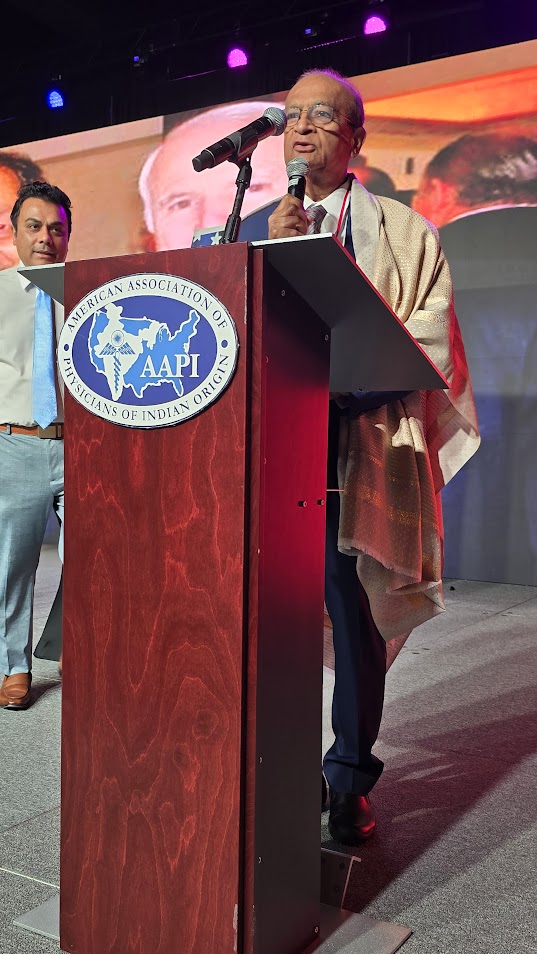
A trailblazer of the Indian Diaspora, Dr. Shivangi has left an indelible mark on the Indian American community. Over the decades, he dedicated his time, resources,  and efforts to serving AAPI and numerous other Indian-American organizations. His leadership, vision, and tireless commitment to advocating for the community set him apart as a pillar of strength and guidance.Dr Sampat Shivangi – A Tribute

It was only about a month ago that the President of India, Droupadi Muramu inaugurated the newly built Dr. Sampat Kumar S. Shivangi Cancer Hospital in Belagavi, Karnataka. Spanning 1,75,000 square feet with a capacity of 300 beds, the hospital was built with cutting-edge technology with funds donated and raised by Dr. Sampat Shivangi, a distinguished Indian American community leader with a profound impact on healthcare, education, and cultural preservation across India and the United States.

Shivangi Hospital coverShivangi Hospital 0

“A dream comes true! It fills my heart with immense pride and gratitude for the new state-of-the-art Dr. Sampat Kumar S Shivanagi Cancer Hospital in my beloved home state, Belagavi, has finally become a reality,” Dr. Sampat Shivangi, who donated his family fortunes to build this much needed, cancer hospital in a rural region in the state of Karnataka, said.

“Having lived in India for three decades, in not so privileged and progressive parts of the world, it always touched my heart and Atma why so and why not we all have equal playing field on earth,’ Dr. Shivangi said, when asked about what led him to to donate his money, time, efforts and skills.

“During my years in hospitals as a student, resident and staff, I was devastated. I had a great desire to do something that helps people, including for the need to establish a cancer hospital in my native town, where people have to travel hundreds of miles away for such a treatment and possibly could not afford the travel, stay, or medical expenses.”

Describing the goals of the Cancer Hospital and the Charitable Foundation, Dr. Shivangi, a soft-spoken physician says, “The Charitable Foundation was set up several years ago to establish, promote, and provide the needy and the downtrodden fellow human beings with opportunities to access quality education, promote mental health awareness, ensure healthcare equity, support tribal communities in their holistic development, empower women to break barriers, and leverage sports as a catalyst for positive change.”

In addition to establishing the Dr. Sampat Kumar S. Shivangi Cancer Hospital in Karnataka, through the Dr. Sampat Shivangi Foundation, Dr. Shivangi has established multiple charitable institutions in India, including primary and middle schools, community halls, and healthcare facilities, greatly enhancing educational and healthcare access for underserved communities.

Dr. Shivangi has been actively involved in several philanthropic activities, serving with Blind Foundation of MS, Diabetic, Cancer and Heart Associations of America. Dr. Shivangi has a number of philanthropic works in India including Primary & Middle Schools, Cultural Center, and IMA Centers that he opened and helped to obtain the first ever US Congressional grant to AAPI to study Diabetes Mellitus amongst Indian Americans.

Dr. Shivangi was deeply involved in numerous organizations, both in the U.S. and India, and worked on initiatives that supported healthcare, education, and cultural preservation. Notably, he played a key role in organizing AAPI’s Legislative Day, a pivotal event where lawmakers and community leaders discuss critical issues affecting Indian Americans.Simple Photo Collage Pasta Recipes YouTube Thumbnail

In the U.S., Dr. Shivangi has contributed to establishing a Hindu Temple in Jackson, Mississippi, providing a cultural and spiritual hub for the Hindu community and beyond. Recognized for his exemplary service, a street in Mississippi bears his name, a testament to his contributions to healthcare and community welfare.

Over the years, in the pursuit of its vision, the Dr. Sampat Shivangi Foundation has come to be known for its belief and tireless efforts that every individual deserves an opportunity to thrive, and is a beacon of hope, fostering resilience and building a more inclusive and harmonious world for all.

At the heart of societal transformation, the Dr. Sampat Shivangi Foundation stands as a testament to unwavering commitment and compassion. The foundation is built upon the pillars of education, healthcare, mental well-being, tribal support, women’s empowerment, and sports development. With a profound understanding of the multifaceted needs of underprivileged communities, we have designed a range of initiatives that address these vital aspects of human well-being.

Born in Athani, Karnataka in India on October27, 1940, Dr. Shivangi studied medicine at Karnataka Medical College, Hubli Kasturba Medical College, Manipal, and at the Washington University School of Medicine, St. Louis, Missouri. He migrated to the US in 1976.

Dr. Shivangi served as Advisor to the US Secretary of Health and Human Services from 2005 to 2008 during the George W. Bush administration. He was the founding president of the American Association of Physicians of Indian Origin in Mississippi and was a former president and chair of the India Association of Mississippi. Dr. Shivangi attended several National Republican Conventions as a Delegate. He was recognized as Person of the Year by the Indian American Republican Committee.

As the first Indian American to serve on the Board of the Mississippi State Department of Mental Health, Dr. Shivangi has made significant strides in mental health advocacy. His leadership extends to national positions, serving on the National Board of Directors for the Substance Abuse and Mental Health Services Administration (SAMHSA), appointed by Presidents Donald Trump and Joe Biden.

A dedicated advocate for Indo-U.S. relations, Dr. Shivangi has contributed to key initiatives, including the Indo-U.S. Civil Nuclear Agreement, collaborating with President George W. Bush to strengthen ties between the two nations. His commitment to India is further reflected in his coordination efforts with the White House to lift sanctions against India during President Bill Clinton’s administration.

A recipient of numerous awards, including the Pravasi Bharatiya Samman Award, The US Congressional Recognition Award, the Ellis Medal of Honor Award, Lifetime Achievement Award by the Indo-American Press Club, Dr. Shivangi’s legacy reflects a lifelong dedication to improving lives through healthcare, philanthropy, and international diplomacy. He joined the Executive Advisory Board of the Washington, D.C.-based think tank International Leaders Summit. The state of Mississippi honored Dr. Shivangi by naming a lane after him in one of the premier medical facilities at Boswell Regional Medical Center.

Dr. Shivangi said, he always thought about why, the Indian Americans especially, the Physician fraternity, consisting of more than 100,000 physicians in the United States are not willing to undertake philanthropy in their homeland or in USA. “My hope and prayers is that, many more will follow me just as my dream has come true today. I urge my fellow Indo-American physicians to join this movement and help change the world for the better. My humble request is that let us be the change, and bring this movement to make our world different tomorrow.  I hope my prayers will be answered one day and all humanity lives in a better world.”

Shivangi is married to Dr. Udaya S. Shivangi, MD, and the couple are blessed with two daughters: Priya S. Shivangi, MS (NYU); and Pooja S. Shivangi, who is an Attorney at Law. His passing leaves a profound void in the community, but his legacy will continue to inspire future generations and his absence will be deeply felt. Our thoughts and prayers are with his family and loved ones during this profoundly difficult time.

-+=