
Indri: India’s Emerging Premium Single Malt Whisky Brand

Indri Whisky from India is revolutionizing the industry by combining traditional methods with innovative flair, making its premium single malts stand out on the global stage.

Indri, one of India’s burgeoning premium whisky brands, epitomizes a shift from mass-market blends to acclaimed single malts, demonstrating the country’s evolving strength in the global whisky market. Rooted in Haryana’s rich agricultural plains near the Himalayan foothills, Indri blends ancient Indian traditions with contemporary distilling techniques.

Named after the village of its distillery in Karnal district, Haryana, Indri thrives in a distinct microclimate characterized by hot summers and tempered winters, courtesy of the brisk Himalayan winds. This climate aids in creating a maturation profile that balances rich fruit and layered oak with spice, offering a surprising structural finesse to whisky connoisseurs accustomed to rapid maturation in tropical climates.

Part of Piccadily Distilleries, itself a division of Piccadily Agro Industries Group founded in 1967, the Indri distillery was established in 2012. Prior to its launch, the company had already gained local prominence through brands like Whistler and Kamet. Inspired by the global accolades received by Indian single malt pioneers such as Amrut and Paul John, the distillery ventured into crafting authentic single malts. Sourcing high-quality six-row Indian barley from Rajasthan and employing copper pot stills manufactured in India, the distillery ensures an authentic local touch.

The maturation process at Indri involves a mix of cask types, including ex-bourbon barrels, premium French red wine casks, and Pedro Ximénez (PX) sherry casks. With the first domestic single malt release in 2020 and international spread in 2021, they practice small-batch craftsmanship with careful cask management, which is vital due to India’s accelerated maturation rates owing to its warm climate.

Indri’s signature bottling, Trini – The Three Wood, matures in three different cask types: ex-bourbon, French wine, and PX sherry. This variety infuses a smooth, fruit-forward character with layered spice notes, presenting an appealing option for whisky novices and aficionados alike. Moreover, for those seeking bolder flavors, the DRU (Distiller’s Reserve Unfiltered) at cask strength and other Single-Cask releases, such as the 7-Year-Old Red Wine Cask, provide deeper tasting experiences. Each expression showcases the brand’s innovation and dedication to authentic craftsmanship, reflecting Indri’s ability to challenge conventional whisky-making narratives.

Indri’s whiskies consistently meld orchard and tropical fruit notes, sweet malt aromas, and seasoned oak spices, evident of careful maturation practices. Since its global debut, Indri has rapidly been recognized in international spirit competitions, with critics lauding its balanced complexity and market value, solidifying its status among the top Indian single malts and emerging global brands.

The DRU (Distiller’s Reserve Unfiltered) Single Malt stands out with its bold, unfiltered character. Bottled at natural cask strength, it offers an intense array of caramel, toasted oak, tropical fruit, and nuanced baking spices. The robust mouthfeel and high proof amplify these flavors, contributing to a long, warming finish.

Meanwhile, Indri’s 7-Year-Old Single Malt matured in a red wine cask enriches its robust malt with vinous depth, providing an aromatic collage of dark berries, spiced plum, and creamy butterscotch. This single-cask release offers a smooth palate with jam-like notes, caramelized sugar, and subtleties of tannins, culminating in a lingering, fruit-forward finish.

The Trini – The Three Wood, as the distillery’s flagship, exemplifies its balanced craftsmanship. Matured in three cask types, it delivers a rich profile with honeyed malt, dried fruits, and seasoned oak, ensuring an approachable yet complex tasting adventure.

In essence, Indri represents India’s bold stride into the world of premium single malt whiskies, paralleled with the finest Scotch and Japanese offerings. Its terroir-driven production attracts both local and international enthusiasts eager to explore India’s single malt sensation, making Indri a compelling choice for whisky enthusiasts worldwide.

Source: Original article
Natural Discovery May Restore Eyesight, Scientists Report

Scientists in South Korea have identified a protein that could unlock the body’s ability to regenerate damaged retinal cells, potentially leading to groundbreaking treatments for vision loss.

Millions around the world live with vision loss once deemed irreversible, but this new discovery by South Korean researchers could change that outlook. The researchers have identified a protein, PROX1, which plays a crucial role in regenerating vision cells. Located in the human eye, PROX1 acts as a molecular gatekeeper, blocking the body’s natural capacity to regrow damaged retinal cells.

In a significant breakthrough, the scientists successfully blocked the PROX1 protein in mice, resulting in the regeneration of critical retinal cells for an impressive duration of six months. This marks a substantial milestone for mammals, comparable in many ways to the natural regenerative abilities demonstrated by zebrafish and amphibians for years.

Researchers are enthusiastic about the implications this finding could have, not just for animals but potentially for humans as well. If applied to human medicine, this development could revolutionize treatments for vision loss, providing hope for millions suffering from retinal degeneration and other eye diseases.

The work has sparked conversations in the field of regenerative medicine, an indication of the monumental impact this discovery could have. Retinal cells, as explained by experts, can be seen as extensions of the brain due to their critical role in processing and transmitting visual information. With the ability to regenerate these cells, a vast array of possibilities opens up for innovative treatments addressing degenerative conditions.

Editorial commentary from Popular Mechanics editors Andrew Daniels and Manasee Wagh shed light on why this research represents a pivotal moment in the scientific understanding and potential treatment of blindness. Their discussion highlights the transformative potential of such findings for countless individuals, as well as for pets like Andrew’s dog suffering from similar degenerative disorders.

This breakthrough in South Korea represents a significant leap forward in regenerative medicine, offering a glimpse into a future where vision restoration is not just a possibility but a realized benefit for millions, according to Popular Mechanics.

Source: Original article

Trump Uses Office to Boost Family Business Profits

President Donald Trump’s second term has been marked by leveraging the power of his office for unprecedented personal gain, drawing scrutiny over perceived conflicts of interest.

In a stark departure from the promises of his first term, President Donald Trump has increasingly entwined his political role with his business interests during his second term, resulting in significant financial gains for the Trump family businesses. From investments in cryptocurrency to international development deals, the Trump Organization has seen an unprecedented influx of wealth since Trump’s election, amassed from varied sources, including foreign governments and billionaires.

James Thurber, an emeritus professor at American University specializing in political corruption, noted the abnormal nature of these developments, emphasizing that Trump appears to prioritize personal wealth over public interest. The scale of the Trump Organization’s income during his second term surpasses that of the first, with sprawling ambitions stretching from virtual currencies to global development projects.

A notable shift in the Trump family’s business operations involves cryptocurrencies, where they have reportedly garnered substantial returns. A conservative estimate pegs one of Trump’s crypto ventures at generating at least $320 million since January, while another secured a $2 billion investment from a foreign sovereign wealth fund.

Trump’s family members have been active internationally as well, pursuing new development opportunities in the Middle East and working on a Mediterranean island resort in partnership with Albania’s government. First lady Melania Trump, too, has cashed in, securing a $40 million documentary deal with Amazon, a company whose founder was a frequent target of Trump’s criticisms.

The Trump administration’s intertwining of presidential duties with business interests has drawn criticism for apparent conflicts of interest. However, little consequence is expected, as a Republican-controlled Congress and a Supreme Court with a conservative majority have created an environment where Trump is unlikely to face serious repercussions. Notably, Congress has relaxed oversight mechanisms that previously held presidents accountable for such conflicts.

In some cases, Trump’s own allies have cautioned against certain actions, but these warnings have largely gone unheeded. For instance, Trump accepted a $400 million airplane from the Qatari government, announcing it would be added to his presidential library after leaving office. Such moves have led critics, like Oregon Senator Jeff Merkley, to label the situation as highly corrupt.

Since the scandal surrounding President Richard Nixon, most presidents have taken measures to distance themselves from financial conflicts. However, Trump deviates from this precedent, having handed control of his business empire to his children rather than placing it in a blind trust. This arrangement leaves his financial dealings closely tied to his presidency.

Trump’s foray into cryptocurrencies highlights a significant conflict of interest, as he once criticized them but has since promoted crypto ventures he and his family stand to benefit from. His administration’s efforts to relax industry oversight raise questions about whether his policies are influenced by personal profit rather than national interest.

The Trump Organization has not provided comments regarding its cryptocurrency activities, and White House statements claim that Trump’s legislative actions in the crypto sector aim to position the U.S. as a global leader in digital finance, rather than self-driven financial motives.

Trump’s burgeoning crypto ventures—managed by his sons and associates—underscore the potential for financial gain. For instance, his meme coin, $Trump, earned substantial fees after initial elections. Transparent conflict issues remain as industry insiders reportedly promised financial backing for Trump’s campaign.

The administration’s recent crypto policies, such as the prohibition of certain cryptocurrencies by Congress members, were sought by the industry and have benefited Trump’s business connections. High-profile foreign investors linked to questionable dealings have also surfaced, including Justin Sun, whose investments in Trump’s crypto projects correlate with potential legal indulgences.

Amid these controversies, Trump continues to host events that enhance the allure of his brand, such as a dinner for top crypto investors. Such strategies amplify concerns among experts who equate Trump’s monetization of the presidency with sidestepping traditional political finance laws.

While other political figures have adhered to stringent regulations on campaign contributions, Trump’s incorporation of cryptocurrency appears to bypass these legal frameworks, raising alarms among legal professionals.

According to The Associated Press, Trump’s ventures represent a significant departure from previous presidential norms, suggesting an evolving landscape where digital assets redefine political finance dynamics.

Japan-India Collaboration Unveils New High-Speed Bullet Train

India’s Mumbai-Ahmedabad high-speed rail corridor will serve as the debut platform for Japan’s cutting-edge E10 Shinkansen bullet trains, reflecting deepening ties between the two nations.

The Indian Ministry of Railways announced on Monday that both India and Japan will simultaneously launch the next-generation E10 Shinkansen bullet trains. As the successors to the E5 model currently operating in Japan, the E10 trains represent a significant technological advancement in high-speed rail.

This collaboration underscores the strengthening technological and economic partnership between India and Japan. The decision to introduce the E10 trains in India highlights Japan’s trust and willingness to share its celebrated high-speed rail technology with a key international partner.

The Mumbai-Ahmedabad corridor, India’s first high-speed rail line, will utilize E10 trains following successful trials with the E5 model. The E10 series is slated for its commercial debut in Japan by 2030, aligning with the timeline for full connectivity of the Indian rail project to Mumbai.

A statement from the Indian Ministry of Railways emphasized the strategic partnership underpinning this venture: “The Japanese Shinkansen [system] is currently running E5 trains. Next generation trains are E10. In the spirit of strategic partnership between Japan and India, the Japanese government has agreed to introduce E10 Shinkansen trains in the Mumbai-Ahmedabad Bullet train project.”

This rollout marks the first instance where Japan has simultaneously launched its most advanced rail technology both domestically and internationally.

Trials for the E10 high-speed trains are scheduled between 2026 and 2027, with full-scale commercial service anticipated by 2027. The trains will cover a route connecting 12 stations, with limited-stop services reducing end-to-end travel time to just over two hours. Achievements in speed are notable, reaching almost 200 miles per hour, with the route spanning across Gujarat, Dadra and Nagar Haveli, and Maharashtra.

The project began construction in September 2017 and has seen significant progress, with five of the 12 planned stations completed and others nearing completion. Additionally, 15 river bridges have been constructed, with four more set to be completed soon.

Recent reports suggested that India might opt for domestically produced trains for the project, rather than partnering with Japan. However, the Ministry of Railways refuted these claims, maintaining that the collaboration with Japan remains in place. The Press Information Bureau of India reiterated: “Some articles and social media posts claim that the Ministry of Railways has decided to not run the Japanese bullet train on the Mumbai-Ahmedabad route. This claim is misleading. The Railway Ministry has made no such decision. Work on the Mumbai-Ahmedabad bullet train corridor is progressing as per the planned schedule.”

With commercial operations targeted for a 2027 rollout and the concurrent debut of the E10 in Japan set for 2030, the Mumbai-Ahmedabad corridor is poised to become a symbol of international collaboration in rail technology, melding Indian ambition with Japanese innovation.

Top 10 Cities for Millionaires to Live and Invest by 2025

The list of the world’s richest cities in 2025 reveals a dynamic shift, with emerging metropolises like Singapore and Sydney gaining prominence among the ultra-wealthy alongside established financial hubs.

The financial landscape of the world is undergoing a significant transformation as we approach 2025, with new trends emerging in the distribution of wealth. While cities such as New York and the Bay Area remain at the forefront as major financial hubs, other cities like Singapore and Sydney are seeing a rise in prominence as top destinations for the affluent. This shift is encapsulated in a recent report from Henley & Partners in collaboration with New World Wealth, which outlines the world’s wealthiest cities based on millionaire and billionaire populations.

New York City continues to lead as the richest city globally, boasting approximately 384,500 millionaires, 818 centimillionaires (individuals with assets exceeding $100 million), and 66 billionaires. The city’s financial industry, coupled with its high-end real estate market and cultural attractions, makes it an enduring draw for the ultra-wealthy despite challenges such as high living costs and concerns about safety.

In the United States, the Bay Area, encompassing Silicon Valley and San Francisco, holds its place as a burgeoning center of wealth. With a staggering 98% increase in prosperity over the past decade, the area is now home to around 305,700 millionaires. Its renowned tech sector and culture of innovation are key factors driving this economic surge.

Tokyo establishes itself as the wealthiest city in Asia, with 298,300 millionaires. The steady accumulation of wealth in the city is attributed to technological advancements, a strong corporate presence, and a stable economy.

Singapore is emerging as a favored enclave for affluent individuals, with 244,800 millionaires and 30 billionaires residing in the city-state. Its appeal is rooted in factors such as safety, a lack of capital gains tax, and pro-business regulations, which together foster an environment conducive to wealth accumulation.

Los Angeles finds its niche by blending entertainment with business, hosting 43 billionaires, 516 centimillionaires, and 212,100 millionaires. Though Hollywood remains its claim to fame, the city is also a major hub for industries such as real estate and technology.

Although London has experienced a 15% decline in its wealthy population over the past decade, with 227,000 millionaires, it remains an appealing destination due to its historical and cultural significance. Challenges like Brexit, increased taxes, and changes to domicile laws have impacted its affluent demographics, but the city’s allure persists.

Paris, with 165,000 millionaires, is the richest city in mainland Europe. Its unique combination of business, fashion, and culture ensures its ongoing attraction for wealthy individuals.

Hong Kong continues to be a vital financial hub, home to 154,900 millionaires. Despite a slight dip in its affluent population, the city’s financial services industry and strategic location maintain its draw for the wealthy.

Sydney, with its growing community of 152,900 high-net-worth individuals, is increasingly popular among the world’s wealthy elite. Economic growth and a high standard of living are key drivers of its rising status among affluent citizens.

Chicago rounds out the top ten wealthiest cities with 127,100 millionaires. Its diverse economy and strategic location make it a significant center of wealth within the United States.

The global distribution of wealth is notably shifting, as cities that were not traditionally seen as financial epicenters begin to attract and cultivate significant concentrations of wealth. This trend signifies a change in where the ultra-rich choose to live and invest their fortunes, pointing to broader economic and social transformations on the global stage.

Latvia Becomes Key Investment Gateway for Malayalees in Europe

A rising number of global Malayalees are turning to Europe, particularly Latvia, for long-term residency, investment, and family relocation.

An increasing trend has seen global Malayalees focusing their attention on Europe, not merely for educational or tourist endeavors, but for more lasting pursuits such as residency, investment, and family relocation. This shift is being prominently led by Latvia, a tranquil and cost-effective EU country, which offers one of the most accessible residency-by-investment schemes in Europe.

Latvia’s program allows Malayalee families to secure a residence permit for the entire family, including spouses and children, with a real estate investment starting at €250,000. This opportunity has become increasingly appealing amid rising global interest.

According to Imperio, a reputable Europe-based advisory firm that assists clients globally, interest from Malayalees in regions such as the Gulf, the United Kingdom, Canada, and Kerala has significantly increased over the last year. The rising inclination towards Latvia is seen as a desirable choice due to its enticing offerings.

Gulzar from Imperio highlights that, though often overlooked, Latvia provides a comprehensive package with EU residency, safety, education in English, and a lower cost of living than that found in Western Europe. This investment promises families long-term security, the ability to move freely within the Schengen area, and a promising future for their children, according to Gulzar.

The appeal of Latvia’s residency-by-investment program lies in its straightforward nature and the broad benefits it confers, making it an attractive prospect for those looking to establish long-term roots in Europe. This option is now on the radar for many Malayalees worldwide, seeking a reliable gateway into the EU.

Saheli Names Deepali Gulati as Executive Director for Growth

Deepali Gulati will lead Saheli, a nonprofit focused on aiding South Asian and Arab women and families affected by domestic violence, as its new Executive Director starting August 1, 2025.

Saheli, a prominent nonprofit dedicated to supporting South Asian and Arab women and families facing domestic and gender-based violence, has appointed Deepali Gulati as its new Executive Director. Her term officially begins on August 1, 2025.

This decision was unanimously made by Saheli’s Board of Directors during their July meeting, following a compelling presentation by Gulati outlining her vision and plans for the organization.

“Deepali has overhauled projects that required streamlining for our auditors. Her notable achievements include establishing processes and collaborating with various entities, such as the Department of Public Health and federal grants, while being accountable to the Board at every step. The grants acquired under her leadership are particularly impressive,” stated Saheli President Neelam Wali in an email.

Joining Saheli in 2020, Gulati has played a vital role in developing key programs focused on survivors, including immigration advocacy, legal support, housing stabilization, and economic empowerment. Her initiatives have assisted hundreds in achieving safety, dignity, and independence.

“I joined Saheli because its mission is deeply personal to me — supporting survivors as they regain safety, dignity, and hope,” Gulati expressed. “As a South Asian woman, I am familiar with the cultural and community barriers many survivors encounter. My aim is to help dismantle these barriers with compassion and trust.”

Over the past six months, Gulati served as the interim Executive Director, guiding Saheli with what board members described as “clarity and purpose.” Under her interim leadership, the organization significantly benefited from a grant awarded by the Cummings Foundation, a milestone that will aid in sustaining and expanding services.

Gulati also spearheaded the expansion of Saheli’s Outreach and Prevention initiatives, initiated new collaborations with educational institutions, and founded the annual Domestic Violence Awareness Walk—a powerful community-driven event for raising awareness and promoting healing.

“I encourage all staff to welcome Deepali as our new Executive Director and share your ideas and vision at our meetings. Saheli’s advancement depends on your cooperation… You are all integral to Saheli’s success. Thank you,” added Wali.

Gulati’s credentials include a Nonprofit Management Certificate from Harvard Extension School, a Master’s degree in Communications from the University of Missouri, and a Bachelor’s degree from Delhi University. Her leadership is characterized by strategic insight, empathy, and cultural awareness.

Gulati commented, “Saheli is more than a service provider—it’s a community. My objective is to foster an environment where every survivor feels acknowledged and supported, and every team member is empowered to perform at their best. Together, we will continue placing survivors at the heart of our mission.”

India Seeks Court Limits on Overseas Citizens’ Children’s Citizenship

The Indian government has urged the Delhi High Court to limit the precedent set by a May 2024 ruling that granted citizenship to a 17-year-old born to Overseas Citizen of India cardholders, fearing it could lead to widespread similar claims and dilute citizenship laws.

India’s Ministry of Home Affairs (MHA) is pressing the Delhi High Court to reconsider the implications of a recent case involving citizenship for children born in India to parents holding Overseas Citizen of India (OCI) cards. The government expressed concerns that the court’s decision could undermine the existing framework of India’s citizenship laws.

The court case centered around Rachita Francis Xavier, who was born in 2006 in Andhra Pradesh. Her parents are of Indian origin but had acquired U.S. citizenship in 2001 and 2005. Despite their U.S. citizenship, they stayed in India through OCI status, which allows long-term residency for foreign nationals of Indian descent without granting Indian citizenship.

Rachita encountered citizenship issues in 2019 when she was denied an Indian passport, resulting in her lack of recognized citizenship in both India and the United States. In May 2024, a single-judge bench of the High Court ruled that Rachita could not be classified as an “illegal migrant” and should be recognized as a “person of Indian origin.” The court ordered the government to grant her Indian citizenship, which was subsequently confirmed on July 31.

The Ministry of Home Affairs, represented by government counsel Abhigyan Siddhant, appeared before a division bench, including Chief Justice D K Upadhyaya and Justice Tushar Rao Gedela, to argue the case. The MHA contends that this ruling misinterprets the Citizenship Act of 1955. Although the government has not contested Rachita’s citizenship status, it opposes the broader legal interpretation that others might invoke in future similar scenarios.

As outlined by the ministry, children born in India to foreign nationals, including those with OCI cards, are not automatically granted Indian citizenship. These individuals could be considered “illegal migrants” if they lack valid visas or travel documents.

The MHA further argued that broadly categorizing all post-1947 descendants of Indian citizens as “persons of Indian origin” contradicts the legislative intentions behind India’s citizenship policies. This could potentially extend such status to individuals born in other countries such as Pakistan or Bangladesh, both of which emerged as separate nations following India’s independence.

The Delhi High Court has scheduled another hearing on this matter for October 15, providing an opportunity for further examination of these complex legal issues and their implications on India’s citizenship laws.

This report is based on information provided by New India Abroad.

USISPF Appoints Taranjit Sandhu as Board Advisor and Institute Chair

The US-India Strategic Partnership Forum (USISPF) has appointed Taranjit Singh Sandhu, a veteran Indian diplomat, as an advisor to the board and chairman of its geopolitical institute.

The US-India Strategic Partnership Forum (USISPF) has announced the appointment of Taranjit Singh Sandhu, a seasoned Indian diplomat, to the roles of board advisor and chairman of its geopolitical institute. Sandhu brings nearly four decades of diplomatic experience to the position, previously serving as India’s ambassador to the United States.

During his extensive career, Sandhu played a significant role in bolstering U.S.-India relations. His new role will see him guide USISPF’s strategic initiatives, particularly focusing on major geopolitical projects such as the India-Middle East-Europe Economic Corridor (IMEC), the Quad (Indo-Pacific Quadrilateral Dialogue), and the I2U2 group, which includes India, Israel, the U.S., and the UAE.

In a statement about his appointment, Sandhu remarked, “I have had the opportunity to work on as well as follow the India-US story for over three decades. The relationship has evolved into a Comprehensive Global Strategic Partnership, underpinned by shared values and interests, matured in character, and nurtured by the vibrant people-to-people ties between the two countries.”

Under Sandhu’s leadership, U.S.-India relations achieved significant milestones, such as Prime Minister Narendra Modi’s 2023 state visit to the U.S., President Joe Biden’s participation in the G20 summit in New Delhi, and President Donald Trump’s visit to India in 2020. Sandhu’s earlier tenure in Washington as Deputy Chief of Mission involved crucial diplomatic engagements, including facilitating Modi’s noteworthy 2014 Madison Square Garden address.

Mukesh Aghi, the president of USISPF, praised Sandhu’s extensive experience and diplomatic acumen, describing him as “one of the brightest minds New Delhi has sent to Washington.” Aghi expressed enthusiasm about collaborating with Sandhu in his new capacity at USISPF, stating, “Having worked closely with Ambassador Sandhu during his diplomatic days, I am eager to engage with him in this new avatar, this time with his new USISPF hat.”

Sandhu is expected to enhance USISPF’s efforts in multilateral forums, contribute to supply chain resilience, support energy security initiatives, and foster deeper people-to-people connections. His leadership within the Forum is anticipated to further solidify the strategic ties between the U.S. and India, the world’s largest democracies.

Report: Nearly Half of California AAPI Adults Faced Hate in 2024

A 2025 survey revealed that 48 percent of Asian American and Pacific Islander adults in California experienced hate in 2024.

A recent report by Stop AAPI Hate unveiled that 48 percent of Asian American and Pacific Islander (AAPI) adults in California reported experiencing hate in 2024. This data was drawn from a survey conducted in January 2025, involving 515 AAPI adults, and highlights ongoing concerns about racial animosity in the state.

The latest figures are consistent with those from the previous year when approximately 49 percent of respondents reported similar experiences in 2023. These statistics underline California’s position as the national epicenter of anti-AAPI hatred, reflecting broader patterns of racial discrimination and violence.

California is home to the largest AAPI population in the United States, contributing to its status as a focal point for such discriminatory acts. The survey’s findings emphasize the persistent challenges faced by the AAPI community, despite ongoing efforts to combat racial and ethnic prejudice.

The data from this survey serves as a critical reminder of the need for continued advocacy and policy initiatives aimed at reducing hate crimes and improving the social climate for minority communities.

The survey was conducted by Stop AAPI Hate, an organization dedicated to tracking and addressing anti-AAPI bias in the United States.

Rupee Declines as US Inflation Concerns Elevate Dollar

The Indian rupee weakened slightly as U.S. inflation reports signaled rising costs due to tariffs, diminishing expectations for Federal Reserve rate cuts and boosting the dollar.

The Indian rupee closed at 85.94 per U.S. dollar on Wednesday, marking a decline of 0.1% from its previous close of 85.81. This move was influenced by the latest U.S. inflation data, which indicated that tariffs were starting to drive up prices, consequently weakening the likelihood of rate cuts by the Federal Reserve. This pushed U.S. Treasury yields higher and gave a lift to the dollar.

The dollar index stood at 98.5, close to the three-week high reached on Tuesday, while most Asian currencies traded flat to slightly lower. U.S. consumer prices showed the largest jump in five months in June, highlighting the impact of tariffs on certain goods.

According to the CME’s FedWatch tool, the probability of the Federal Reserve maintaining its current rate levels in September has increased to almost 50%, a significant rise from about 30% the previous week. This shift comes amid ongoing pressure from U.S. President Donald Trump, who has consistently criticized Federal Reserve Chair Jerome Powell for not reducing benchmark interest rates.

MUFG noted, “Building evidence of the pick-up in inflation from tariffs supports the Fed’s caution over resuming rate cuts in the near-term despite the barrage of criticism from the Trump administration.”

The stronger dollar pushed the rupee below the 86 mark during early trading on Wednesday. However, the rupee recovered as a surge of dollar selling interest emerged at this level, noted traders from a state-run bank. They also highlighted dollar sales by large custodian banks, typically indicating foreign portfolio inflows, as another factor bolstering the rupee.

In India’s stock markets, the BSE Sensex and the Nifty 50 indices closed slightly higher, despite declines seen in most regional markets.

Market participants are now focusing on upcoming U.S. wholesale inflation data and remarks from Federal Reserve policymakers for further indications on the future path of U.S. interest rates. Additionally, updates on U.S. trade negotiations remain in view, although market reactions to these have become more muted compared to earlier in the year.

Indian Film Sees 1200% Profit, Surpassing Major Hits

In a remarkable turn of events, the Tamil film “Tourist Family” has emerged as India’s most profitable film of 2025, achieving an extraordinary profit margin of 1200% on a modest budget.

As the cinematic landscape of 2025 entered its midpoint, the industry took stock of what had succeeded and what had faltered at the box office. While major productions like “Chhaava” and “L2: Empuraan” dominated with impressive earnings, it was the unassuming “Tourist Family” that captured the spotlight with its unparalleled profitability. Directed by Abishan Jeevinth, the film was crafted on a budget of just ₹7 crore and has grossed an impressive ₹90 crore worldwide.

“Tourist Family,” a Tamil slice-of-life comedy drama, made its debut on April 29. The film features an ensemble cast including M. Sasikumar, Simran, Mithun Jai Sankar, and Kamalesh Jagan. Garnering praise from critics and audiences alike, the film’s success was fueled by its engaging storytelling and relatable themes. In its initial week, the movie collected ₹23 crore. However, buoyed by strong word-of-mouth promotion, it saw an even stronger second week, adding ₹29 crore to its earnings.

The film’s trajectory over five weeks culminated in a worldwide collection of ₹90 crore, with ₹62 crore accruing within India. This impressive financial performance underscored its humble origins and stands in stark contrast to much bigger budget projects.

While “Chhaava” holds the title of the highest-grossing Indian film of the year with ₹808 crore globally, its substantial budget of ₹90 crore results in a profit of 800%. In comparison, “Tourist Family’s” higher profit percentage demonstrates a remarkable return on investment, unmatched by even the most lavish Bollywood productions. Likewise, “Housefull 5,” despite grossing ₹300 crore worldwide, and Salman Khan’s “Sikandar” have yet to achieve profitability due to their costly productions. Aamir Khan’s “Sitaare Zameen Par,” with a budget of ₹65 crore, has managed a 300% profit margin on earnings of ₹260 crore.

Other regional films have also mirrored this trend of higher profitability margins. For instance, the Tamil film “Dragon” and the Malayalam hit “Thudarum” have achieved 300% and 720% profits, respectively. The Telugu film “Sankranthiki Vasthunam,” the highest-grossing film in its region, matched that with a 300% profit on its ₹60-crore investment.

According to the Hindustan Times, the unexpected success of “Tourist Family” signals a shift in viewer preferences and highlights the rising impact of regional cinema on India’s broader entertainment landscape.

Nearly 600 Killed in Southern Syria Violence, Monitoring Group Reports

Recent sectarian violence in southern Syria has resulted in the deaths of 594 people, amid ongoing tensions between the Druze religious minority and government forces.

The UK-based Syrian Observatory of Human Rights (SOHR) reports a significant rise in violence in Suweida province, primarily affecting the Druze community since last Sunday. The monitoring group documented the deaths of 594 people over the course of this conflict.

Among the dead are 300 members of the Druze minority, which includes 146 fighters and 154 civilians. Out of the civilian death toll, 83 individuals were reported to have been summarily executed by government forces, the SOHR stated on Thursday evening.

The measure of violence extended to government personnel and Bedouin fighters as well. A reported 257 government forces and 18 Bedouin fighters lost their lives, while three Bedouin civilians were allegedly killed by Druze fighters, according to the same monitoring group.

This spike in conflict was triggered by a disagreement between the Bedouin and Druze communities. In a separate wave of violence, 15 government members were killed in Israeli airstrikes, which Israel justified as necessary to protect the Druze and push government forces out of Suweida.

Although the specifics of the SOHR’s figures couldn’t be independently verified, other security sources estimate the toll at around 300. Meanwhile, the Syrian Network for Human Rights accounts for at least 169 civilian deaths during this period.

By Thursday, most of Suweida had experienced a tense calm after the withdrawal of government forces from this Druze-majority area. Residents reported extensive damage and looting, with some uncovering bodies in local streets.

Islamist-led government forces in Syria entered Suweida on Monday, supposedly to restore order amidst ongoing Druze-Bedouin clashes. However, their presence escalated the fighting and deepened divisions within Syria’s Druze community—which stems from Shia Islam but maintains its own distinct beliefs and identity.

As the Syrian government declared a ceasefire on Wednesday and initiated its withdrawal, a prominent Druze figure, Sheikh Hikmat al-Hajri, dismissed it, urging continued resistance until “our province is liberated from gangs,” referring to the government forces.

Sheikh Hajri, whose followers actively resist against the government, has fostered relations with Israel. In contrast, other parts of Suweida’s Druze community collaborate more closely with Syria’s new Islamist-led government. There is also a significant Druze population in Israel and the Golan Heights, adding a regional element to the conflict.

On Thursday, Israeli Prime Minister Benjamin Netanyahu articulated Israel’s intention to assert its interests in Syria using force. While defending their actions as protection for the Druze community, Netanyahu affirmed a broader strategy to prevent Syrian military movements in the country’s southern regions, particularly near Damascus.

Netanyahu emphasized this policy would persist, with efforts to ensure no Syrian army presence south of Damascus or harm to the Druze population. The recent Israeli airstrikes notably caused extensive damage to the Syrian Ministry of Defense in Damascus and targeted areas near the presidential palace, marking a substantial escalation in Israeli operations against Syria since the Syrian regime’s collapse under Bashar al-Assad last December.

In a televised address, Syria’s interim president Ahmed al-Sharaa rebuked Israel’s strikes, calling them an effort to destabilize Syria. He asserted, “We find ourselves in the heart of a battle to protect the unity of our land, the dignity of our people and the resilience of our nation. The Israeli entity, which has consistently targeted our stability and sown discord since the fall of the former regime, now seeks once again to turn our sacred land into a theater of endless chaos.”

Addressing Syria’s Druze, al-Sharaa pledged a strong commitment to their rights and freedoms, opposing internal or external attempts at creating division.

Fed Reports Businesses Passing Tariff Costs to Consumers

Businesses are transferring increased input costs due to tariffs onto consumers, resulting in higher prices, according to the Federal Reserve’s latest report.

The Federal Reserve’s recently released “Beige Book,” an anecdotal survey of domestic economic conditions, has highlighted a widespread trend wherein businesses across various sectors are raising prices to counter the additional costs imposed by tariffs. This trend was reported across all 12 of the Fed’s regional districts, reflecting a national impact.

“Many firms passed on at least a portion of cost increases to consumers through price hikes or surcharges,” noted the Beige Book. Companies that opted not to pass these costs on to consumers encountered narrowed profit margins, as consumer price sensitivity continues to grow.

The Labor Department reported an increase in the Consumer Price Index (CPI) in June, partially attributed to these tariffs, with the annual rise reaching 2.7% up from 2.4% in May and 2.3% in April. This increase aligns with economists’ predictions, who anticipated that the inflationary pressures from tariffs would become visible as summer progressed and as prior inventories cleared.

Fitch Ratings has cited the aggregate U.S. tariff rate at 14.1%, marking the highest rate in decades. This figure encompasses President Trump’s 10% general tariff, along with specific tariffs targeting China and certain individual goods. However, the country-specific “reciprocal” tariffs are currently on hold amid ongoing trade negotiations, and will remain paused until August 1.

Import prices recorded a modest increase of 0.1% in June, according to the Labor Department, yet they are down 0.2% compared to the previous year due to lower energy prices. This outcome fell short of economists’ expectations. Fuel import prices decreased by 0.7% in June, following a significant 5% drop in May, as tensions in the Middle East influenced global energy markets. West Texas Intermediate crude oil witnessed a decline of over 10% this month.

Excluding fuel and food imports, core import prices saw a moderate rise of 0.2% in June, following a smaller 0.1% increase in May.

Adding to the economic dynamics, the U.S. dollar has depreciated by approximately 9% since the start of the year, a trend exacerbated by the ongoing trade war initiated by President Trump. Economists suggest that this decline in the dollar’s value could further exacerbate inflation.

Michael Pearce, deputy chief U.S. economist at Oxford Economics, commented to Reuters, “Since the Trump administration began imposing tariffs, the dollar has depreciated, which could lead to a larger pass-through from tariffs to consumer prices.” He underscored the potential for a weaker dollar to amplify the likelihood of firms transferring a more significant share of tariff costs to consumers.

Government Prioritizes Energy Security in Response to NATO

In response to NATO Secretary General Mark Rutte’s warning about the potential imposition of secondary sanctions on countries trading with Russia, India’s Ministry of External Affairs emphasized the nation’s priority on securing energy needs while cautioning against double standards.

In a direct counter to NATO Secretary General Mark Rutte’s recent comments, India has stressed the importance of fulfilling its energy requirements, cautioning against what it perceives as “double standards.” Rutte suggested that countries like India, China, and Brazil could face severe consequences through secondary sanctions if they choose to continue business dealings with Russia.

Rutte’s remarks, delivered after his meeting with U.S. senators, suggested that the leaders of these nations should reconsider their trade with Russia. He intimated that continuing to buy Russian oil and gas could result in significant repercussions for their economies if Russia does not engage seriously in peace negotiations regarding the war in Ukraine.

Responding to these assertions, on Thursday, Randhir Jaiswal, spokesperson for India’s Ministry of External Affairs, stressed India’s commitment to securing its energy needs based on available global market conditions. “Securing the energy needs of our people is understandably an overriding priority for us,” Jaiswal stated. He further urged caution against the application of double standards in international responses to energy trade.

In tandem with these diplomatic statements, India’s Petroleum Minister Hardeep Singh Puri expressed confidence in India’s energy supply chain. Speaking at New Delhi’s UrjaVarta 2025 event, Puri emphasized that India does not perceive an immediate threat of oil disruption due to its diversified sources of supply. “I don’t feel any pressure,” he stated, underscoring that India’s expanded crude sourcing from around 40 countries ensures it can adapt if disruptions occur.

India has strategically diversified its oil imports over the years, which now largely include Russian crude. Russian oil accounts for about 40 percent of India’s imports, up from less than 2 percent prior to the conflict in Ukraine, mainly due to competitive pricing and the availability of discounted oil. Despite Western sanctions, Russian oil remains free from direct bans, though it is subject to a price cap of $60 per barrel, limiting Western participation in its sale if this cap is exceeded.

Jaiswal and Puri’s statements reflect India’s pragmatic approach to navigating international pressures while maintaining national energy security. With India meeting approximately 88 percent of its crude oil needs through imports, it must juggle geopolitical and economic factors in its energy policy decisions.

The broader conversation about potential tariffs related to India’s import of Russian oil introduces further complexities. The Trump administration during its tenure exhibited unpredictability regarding trade tariffs, making sweeping announcements, then pausing for negotiations. However, the current stance of the U.S. on imposing such tariffs could potentially push India to revert to its traditional suppliers from the West Asian region, thus potentially increasing the import costs.

While the geopolitical dynamics continue to evolve, India remains focused on ensuring its energy security amid external pressures. Whether secondary sanctions will be levied remains uncertain, but India’s stance is clear in maintaining its energy autonomy as it closely monitors global market conditions and diplomatic developments, according to The Indian Express.

Coca-Cola Disputes Trump’s Sugar Claim, Supports Corn Syrup Safety

The Coca-Cola Company has disputed former President Donald Trump’s assertion that it would replace high-fructose corn syrup with cane sugar in its U.S. beverages.

The Coca-Cola Company has publicly refuted a claim made by Donald Trump regarding a potential switch from high-fructose corn syrup to cane sugar in their U.S. beverages. Trump, in a post on Truth Social, stated that he had discussions with Coca-Cola executives and that the company had agreed to use “REAL Cane Sugar” in their products. He expressed his gratitude toward Coca-Cola’s decision-makers, suggesting that the change would be beneficial.

Initially, the beverage giant responded with a polite statement acknowledging the former president’s enthusiasm. Coca-Cola expressed interest in exploring new offerings within their product line but did not confirm any shift to cane sugar. By Thursday, however, the company released a more comprehensive statement defending the use of high-fructose corn syrup, which has been a subject of debate and concern over its links to obesity.

In its statement, Coca-Cola clarified that high-fructose corn syrup, despite its long name, is merely a corn-derived sweetener. The company emphasized its safety, noting that HFCS contains calories similar to table sugar and is metabolized similarly in the body. Furthermore, Coca-Cola referenced the American Medical Association (AMA), which has indicated that HFCS is no more culpable for obesity than table sugar or other full-calorie sweeteners. Coca-Cola assured consumers that its products do not contain harmful substances.

The American Medical Association in 2023 declared that there is insufficient evidence to specifically limit high-fructose corn syrup use in the food supply or necessitate warning labels on products containing HFCS. According to a report by The Guardian, Trump has been known for his preference for Diet Coke, including the installation of a button in the Oval Office to summon a butler with a can. Interestingly, Diet Coke is sweetened with aspartame, an artificial low-calorie sweetener, rather than corn syrup or cane sugar.

This development follows repeated discussions and controversies surrounding sugar alternatives in food and beverage products in the United States, with varying opinions among experts and consumers about their health implications.

According to The Guardian, Coca-Cola’s continued defense of high-fructose corn syrup highlights the company’s commitment to maintaining its current formulation at least for now with a focus on addressing public health concerns through accurate information.

Russia Warns US of World War Three Risks

Russia has issued a stark warning to the Western world, cautioning that a potential World War Three would not be limited to European borders, following Ukraine’s attack on Russia’s Kursk region.

In the wake of a Ukrainian attack on the western Kursk region of Russia, which has resulted in significant territorial gains for Ukraine, Russian officials have escalated their rhetoric toward the West. The assault, described as the largest foreign incursion on Russian soil since World War Two, prompted a response from Russian President Vladimir Putin who warned of a “worthy” retaliatory action.

Russian Foreign Minister Sergei Lavrov, speaking from Moscow, accused the West of attempting to exacerbate the situation in Ukraine. He cautioned against the potential approval of Ukraine’s request to strike deeper into Russian territory with Western-supplied missiles. Lavrov emphasized the dangers posed by such actions, likening them to “playing with fire” and underscoring the risk of nuclear conflict.

“Americans unequivocally associate conversations about a Third World War as something that, God forbid, if it happens, will affect Europe exclusively,” Lavrov stated, indicating the wider implications of the conflict.

Russia also reiterated its military doctrine concerning the use of nuclear weapons, established in 2020, which reserves the use of such weapons as a retaliatory measure to attacks involving nuclear arms or other weapons of mass destruction that threaten the state’s very existence.

Ukrainian President Volodymyr Zelenskiy dismissed Kremlin threats of retaliation as bluffs, asserting that the attack on Kursk was a demonstration of their resolve. He highlighted existing restrictions by allies as limitations to Ukraine’s ability to target Russian military positions effectively. Zelenskiy called upon Ukraine’s allies to take bolder steps in supporting Kyiv’s military efforts.

The Kremlin accused Western countries, particularly the United States and Britain, of supplying tactical support and weaponry to Ukraine. This includes British tanks and U.S. rocket systems, which Kyiv has confirmed were part of their operations in Kursk. The U.S.-supplied HIMARS missiles were specifically used to sabotage bridges in the region.

The United States maintains that it was unaware of Ukraine’s plans for the operation in Kursk, emphasizing that it played no active role in the campaign. Nevertheless, The New York Times reported that intelligence provided by the United States and Britain, including satellite imagery, was shared with Ukraine post-attack to aid in tracking Russian troop movements.

Despite Western assertions to the contrary, Russian Deputy Foreign Minister Sergei Ryabkov labeled the involvement of the United States as an “obvious fact.” Meanwhile, Sergei Naryshkin, head of Russian foreign intelligence, also questioned Western denials of involvement in the Kursk attack.

As tensions remain high, the international community watches closely, aware that any further escalation could have far-reaching consequences beyond the European continent.

Trump Presidency News on July 17, 2025

House Republican leaders are working to expedite the passage of President Donald Trump’s proposed $9 billion federal funding cuts amid negotiations with party members pushing for a vote on a Jeffrey Epstein-related measure.

In efforts to secure enough support, House Republican leaders are gearing up for an extended session as they seek to advance a $9 billion package of federal funding cuts championed by President Donald Trump. The legislative push follows a day marked by intense discussions with GOP members who are advocating for a vote on a measure related to Jeffrey Epstein.

Simultaneously, a report from the Wall Street Journal has surfaced concerning a controversial letter allegedly linked to President Trump. The report highlighted a collection of letters given to Epstein on his 50th birthday in 2003, among which was a note purportedly bearing Trump’s name alongside an outline of a naked woman. In response, President Trump has denied authoring the letter and expressed intentions to file a lawsuit against the publication.

Adding to the developments surrounding the president, the White House has provided an update on Trump’s health. Recently, medical examinations were conducted on him due to swelling observed in his legs. According to his doctor, the diagnosis is chronic venous insufficiency, a condition prevalent among older individuals. The examination ruled out severe complications such as heart failure, arterial disease, or other significant illnesses.

The health update aims to allay concerns regarding the president’s well-being, as the administration simultaneously manages its legislative aims and addresses emerging issues tied to Trump’s long-standing affiliations and public controversies.

This article information is attributed to the Wall Street Journal, as well as the latest communications from the White House.

Maurene Comey Criticizes Trump DOJ Actions in Memo

Maurene Comey, former federal prosecutor and daughter of ex-FBI Director James Comey, urged her former colleagues to resist fear as a tool of tyranny following her abrupt dismissal by the Justice Department.

Maurene Comey, known for her work on high-profile cases involving Jeffrey Epstein and Sean “Diddy” Combs, was dismissed from her position at the U.S. Attorney’s Office for the Southern District of New York on Wednesday. In a candid email to her former colleagues, Comey expressed concerns that her unexplained firing could instill fear among those who continue to serve.

“If a career prosecutor can be fired without reason, fear may seep into the decisions of those who remain,” she wrote in the email obtained by CNN. “Do not let that happen.”

Her message emphasized that “fear is the tool of a tyrant, wielded to suppress independent thought.” She called upon her colleagues to let this moment ignite “a fire of righteous indignation at abuses of power,” and to maintain their commitment to justice and truth.

Comey, who had been with the office for nearly a decade, reflected on the ethos of the U.S. Attorney’s Office, encapsulated in the phrase: “Without Fear or Favor.” She stressed the importance of doing their work for the right reasons without fear of retribution or favoritism toward the powerful.

During her tenure, Comey noted that the concept of fear seemed irrelevant. The office prided itself on acting without favoritism, ensuring that individuals with access, wealth, and power received no differential treatment. “We have the luxury of exceptional security keeping us physically safe; and, so long as we did our work with integrity, we would get to keep serving the public in this office,” she said.

However, with her sudden removal, Comey acknowledged that the notion of operating “without fear” now poses a challenge. She urged her colleagues to stay committed to their principles and to act with integrity.

Concluding her message, she reaffirmed the honor it has been to fight for these principles alongside her team. Comey’s departure marks a notable shift within the department and raises concerns about the potential influence of politics on prosecutorial decisions.

This development comes amid a broader discussion on the independence of federal prosecutors and their role in ensuring justice is served without external pressure or influence.

Comey’s firing, lacking a provided reason, remains a point of concern and has possibly wider implications for the operation and morale of the Justice Department, according to CNN.

Larry Ellison Becomes Second Richest After Oracle AI Investments

Oracle founder Larry Ellison, at 80, has surpassed Mark Zuckerberg to become the world’s second-richest person, with a net worth climbing to $251 billion following Oracle’s strong earnings and strategic investments in AI infrastructure.

At the age of 80, Larry Ellison has surpassed Mark Zuckerberg, becoming the world’s second-richest person. Ellison’s net worth now sits at $251 billion, bolstered by a dramatic increase of nearly $60 billion in 2025 alone, as reported by the Bloomberg Billionaires Index.

Ellison’s financial ascent is largely attributed to his substantial 40% stake in Oracle, the database company he founded in 1977. Oracle’s value has surged by 41% so far this year, with substantial gains seen in recent weeks.

The soaring stock value comes amid a favorable market landscape for artificial intelligence investments, a sector in which Ellison has been heavily involved. The tech industry has benefited from policies under Trump’s second presidency that favor AI stocks. For instance, Nvidia’s CEO Jensen Huang, similar to Ellison, has seen significant growth in wealth, partially due to the government’s approval for his company to ship advanced microchips to China.

Ellison prominently aligned himself with President Trump during the unveiling of Stargate, a major initiative aimed at strengthening the U.S. position in AI development. This ambitious project plans to invest $500 billion into AI infrastructure over the coming four years, with Oracle, SoftBank, OpenAI, and MGX serving as initial equity founders. Oracle and OpenAI are also pivotal technology collaborators alongside companies like Arm, Microsoft, and Nvidia.

Recent increases in Oracle’s value are linked to the company’s robust performance and heightened commitment to AI investments. Oracle recently announced impressive year-end results, reporting Q4 revenues of $15.9 billion, marking an 11% increase, while remaining performance obligations rose by 41% to $138 billion.

Continuing its AI focus, Oracle has committed an additional $3 billion to expand cloud services and AI infrastructure in Germany and the Netherlands. Despite the positive investor response to Oracle’s moves, some analysts urge caution regarding future projections for the company.

A report from Goldman Sachs following Oracle’s fiscal results adopted a ‘neutral’ stance, with analysts noting Oracle’s strong Oracle Cloud Infrastructure demand momentum. Nonetheless, they warned of potential risks, suggesting that the company might overcommit to low-margin, capital-intensive training cycles that could impact its future free cash flow generation.

Countries That Prohibit Dual Citizenship Revealed in New Map

Data mapped by Newsweek reveals that at least 39 countries around the world do not allow dual citizenship, highlighting diverse global perspectives on nationality and identity.

A recent survey by the Harris Poll found that 42 percent of U.S. adults have considered or plan to move abroad to improve their lifestyle or financial situation. The percentage increases among younger generations, with 63 percent of Gen Z and 52 percent of millennials expressing similar sentiments.

According to Henley & Partners, a U.K.-based investment migration consultancy, many countries restrict dual citizenship to preserve national identity, ensure loyalty, and avoid complex legal scenarios. The consultancy identified several nations that do not permit individuals to hold more than one nationality.

In Africa, countries like Botswana, Cameroon, the Democratic Republic of Congo, Equatorial Guinea, Eritrea, Ethiopia, Eswatini, Guinea, Libya, Mauritania, Senegal, Tanzania, and the Republic of Congo prohibit dual citizenship. Meanwhile, in the Americas, Cuba and Suriname uphold similar rules. European countries with this restriction include Andorra, Estonia, Monaco, and San Marino.

Asian nations with bans on dual citizenship encompass a wide range, from Azerbaijan, Bhutan, and Brunei to China, India, Japan, Kazakhstan, Kuwait, Laos, Malaysia, Myanmar, Nepal, North Korea, Oman, Qatar, Saudi Arabia, Singapore, and Uzbekistan. Each country has specific reasons for maintaining these restrictions, often revolving around issues like divided allegiance and potential security threats, such as military conflicts or espionage. Legal complexities related to taxation and rights, along with fears that dual nationality might undermine cultural or political cohesion, also play a role in these decisions.

For example, China completely bans dual citizenship, emphasizing the need for loyalty to safeguard national unity. India also prohibits dual nationality to maintain legal and administrative clarity but provides an alternative through the Overseas Citizenship of India (OCI) status. This status offers limited rights without granting full citizenship. Singapore enforces a strict one-citizenship policy, underlining national allegiance and requiring proof of renunciation of other citizenships before granting naturalization.

Tim Osiecki, the director of thought leadership and trends at The Harris Poll, noted a shift in the American Dream. “For most of modern history, the American Dream was rooted in one place: America. But that’s shifting,” he previously told Newsweek. According to Osiecki, dual citizenship is increasingly becoming a goal for middle-class Americans who seek greater control over their future in an uncertain world, marking a mindset shift from a singular national allegiance to adaptability.

Osiecki also pointed out that while the intent to move abroad among younger Americans is significant, it is not indicative of a mass migration. “This isn’t about a mass migration overnight, but we are at a tipping point,” he said. “One in five younger Americans say they’re seriously considering moving abroad, and that kind of intent matters.” He emphasizes that although it is not yet an exodus, it signals a changing perception of life in the United States.

The notion of the American Dream might not be fading; it could simply be evolving to accommodate the growing desire for mobility and flexibility in an increasingly interconnected world.

California Physician Jasmeet Bains Announces Congressional Bid

Jasmeet Bains, an Indian American physician and California Assemblymember, has announced her candidacy for Congress in California’s 22nd district, seeking to unseat Republican incumbent David Valadao.

Jasmeet Bains, noted for being the first Sikh American elected to the California state legislature, declared her Congressional campaign on July 16. Representing California’s 35th Assembly District since 2022, Bains has garnered attention as one of the most moderate Democrats in the chamber, with her work primarily concentrated on improving rural healthcare access, emergency response, and workforce development.

Bains emphasizes her identity as a physician rather than a career politician and cites her frontline experience as pivotal in understanding the challenges faced by Valley residents. She expressed her congressional bid as a response to the unmet needs of the community, particularly in holding their elected officials accountable. “I’m running for Congress because we deserve better than broken promises and backroom deals, and our communities are tired of getting left behind,” Bains stated in her announcement video. “We deserve a representative who will actually show up and stand up for the Valley.”

Her campaign centers on criticizing incumbent David Valadao’s political decisions, notably his support for the House GOP’s federal budget proposal, which Bains argues would negatively impact healthcare and food assistance programs crucial to the district. Bains accused Valadao of prioritizing political donors and D.C. insiders over the district’s constituents. She highlighted his vote that might reduce Medi-Cal funding—a crucial source of affordable healthcare in the community—and criticized potential increases in prescription drug prices and cuts to food assistance programs. “That’s not leadership—that’s betrayal,” Bains said of Valadao’s actions.

Jasmeet Bains was born in Delano to Punjabi Sikh immigrants and grew up working at her father’s auto dealership in Taft, California. Her personal experiences during the Great Recession, particularly related to the collapse of local healthcare services, motivated her to pursue a career in medicine. Bains holds a Bachelor of Science in biology from the Illinois Institute of Technology and a Doctor of Medicine from the American University of Antigua.

Before stepping into the political arena, Bains served as a resident physician at Clinica Sierra Vista and later practiced at Omni Family Health. Her medical expertise was further amplified by her work with the California Emergency Medical Services Authority, and she held an appointment to the California Healthcare Workforce Policy Commission by former Governor Jerry Brown in 2017.

Bains underscores her commitment to her roots and professional background as the foundation of her congressional bid. “Caring for patients in rural communities, deploying to treat firefighters at wildfires—I’m there when people need me most,” she remarked, identifying these experiences as critical inspirations for her decision to run for Congress.

The outcome of this race could signify a notable shift in California’s 22nd district representation, as Bains brings a blend of local understanding and professional acumen to her Congressional campaign, seeking to focus on healthcare, economic stability, and community resilience.

Source: Original article

US-India Summit Hosted on Capitol Hill Highlights Strategic Partnership

The Foundation for India and Indian Diaspora Studies (FIIDS) hosted an event on the U.S. Capitol that highlighted the strengthening strategic partnerships and diaspora engagement between the United States and India.

The Foundation for India and Indian Diaspora Studies (FIIDS) organized the U.S.-India Summit and Capitol Hill Legislative Day on July 15, 2025, at the U.S. Capitol in Washington, D.C. This significant event aimed to highlight the deepening ties between the two nations, gathering U.S. and Indian American lawmakers alongside other influential figures.

Throughout the day, nearly 150 delegates from over 20 states interacted with more than 120 elected officials. The discussions covered various policy areas, including the U.S.-India partnership, the Quad and I2U2 alliances, trade, security, and investment opportunities, as well as immigration reform, counterterrorism, and religious tolerance.

India’s Ambassador to the United States, Vinay Kwatra, lauded FIIDS for its role in strengthening bilateral ties. He highlighted the Indian diaspora’s role as a ‘living bridge’ connecting both societies and economies. Ambassador Kwatra also commended Congressman Shri Thanedar for his support of U.S.-India relations.

Rep. Shri Thanedar (MI-13) underscored the importance of political engagement within the Indian American community. He encouraged deeper civic participation to enhance the community’s influence, asserting that Indian Americans still lack the political power they deserve. He stressed the crucial role immigrants play in maintaining America’s innovation leadership.

FIIDS President Khanderao Kand clarified the summit’s purpose, emphasizing that the meetings with lawmakers were substantive. Delegates discussed critical issues such as artificial intelligence, quantum computing, Indo-Pacific security, and comprehensive immigration reforms, including the reintroduction of the EAGLE Act.

Congressman Raja Krishnamoorthi (IL-8) highlighted the expanding dimensions of the U.S.-India relationship, describing it as ‘stronger, deeper, and wider’ across trade, security, and people-to-people connections. He noted the impressive growth in bilateral trade, which increased from $20 billion in 2000 to over $200 billion today, and affirmed the relationship’s bipartisan support.

Congressman Ro Khanna (CA-17) emphasized the significance of sustained political engagement to develop influence over time. He praised Kand and FIIDS for advancing shared causes and recalled the Congressional Caucus on India and Indian Americans’ firm support for India’s right to self-defense following the Pahalgam attacks.

Congressman Suhas Subramanyam (VA-10) stressed the need to empower the next generation of Indian Americans. He commended FIIDS for encouraging young individuals to connect with their cultural roots while engaging in American civic life. He also mentioned the existence of a policy program for Indian American students.

Congressman Andy Barr (KY-6) reaffirmed his commitment to advancing U.S.-India strategic cooperation within the Quad framework. He humorously suggested replacing Scotch whisky with Kentucky bourbon in trade deals with India, pairing well with Indian spicy cuisine.

Congressman Sanford Bishop from Georgia’s second district highlighted the influence of India’s independence struggle on the U.S. Civil Rights Movement and emphasized Georgia’s economic ties with India.

Congresswoman Judy Chu (CA-28), a member of the Congressional Asian Pacific American Caucus, addressed challenges facing the Indian American community, such as visa delays and restrictions on international students. She vowed to advocate for increased educational opportunities and visa reforms.

Congressman Robert P. Bresnahan (PA-8) discussed his work on emerging technologies and collaboration with Indian entrepreneurs in agriculture. He expressed support for ongoing innovation within U.S.-India relations.

Congressman Randy Fine (FL-6), the first Republican Jewish member elected from his district, shared his connection to India and spotlighted shared values between Indian and Jewish communities. He advocated for legal immigration reforms and reinforced strong U.S.-India ties.

Congressman Jimmy Panetta (CA-19) acknowledged the vibrant Indian American community in his district and emphasized the bilateral relationship’s significance to national, economic, and domestic security. He also called for increased visa allocations and comprehensive immigration reform.

Congressman Jonathan Jackson (IL-1) recognized the parallels between Indian and American civil rights histories, acknowledging the impact of Mahatma Gandhi’s Satyagraha movement on the American Civil Rights Movement.

Other attendees, including Congressmen Mark Harris (NC-8), David Taylor (OH-2), Nate Moron (TX-1), and several other legislators, voiced their support for the U.S.-India partnership. Narasimha Koppula of FIIDS concluded the event by delivering the vote of thanks.

Source: Original article

India-U.S. Relations Based on Reality, Not Posturing: Expert

India-U.S. relations are rooted in substantial engagement and strategic cooperation, not merely political rhetoric, according to Priyam Gandhi-Mody of the Vishwamitra Research Foundation Bharat.

Founder and Director of the Vishwamitra Research Foundation (VRF) Bharat, Priyam Gandhi-Mody, highlighted the depth of the India-U.S. relationship, noting that despite the appearance of political posturing, the partnership is strongly anchored in reality. She emphasized that the substantial engagement between the two nations is evidenced by an annual trade volume of $200 billion.

“The reality is that India and the United States are engaged in $200 billion dollars of trade annually,” Gandhi-Mody pointed out, underscoring that both countries view each other as strategically significant. While the surface-level posturing may differ, the core conversations are addressed with utmost seriousness, she explained. Gandhi-Mody expressed her belief that the U.S.-India relationship holds promising potential for contributing positively to global affairs.

During a recent visit to the United States, Gandhi-Mody worked to bolster relationships with key partners in line with VRF’s mission. Her itinerary included strategic discussions in Washington D.C., New York, and San Francisco, focusing on trade corridors and emerging technologies, which align with the Mumbai-based think tank’s geo-economic aspirations.

At the India–Middle East–Europe Economic Corridor (IMEC) Summit in Mumbai, Gandhi-Mody described IMEC as a “game changer.” She explained that IMEC is about reviving ancient trade routes, reconnecting distant regions for economic upliftment along its entire route. She emphasized the corridor’s role in rekindling historical connections aimed at common economic development.

Further aligning the interests of India and the U.S., she discussed the need for cooperation in initiatives like IMEC and the U.S.-India TRUST initiative, which targets technology collaboration. Gandhi-Mody advocated for increased engagements and trust-building measures between the private sectors and governments of both nations.

She also touched upon the I2U2 alliance, consisting of India, Israel, the UAE, and the U.S., which is exploring new technological domains such as responsible artificial intelligence, space exploration, deep-sea research, and sustainability. Gandhi-Mody remains optimistic that these collaborative efforts will solidify over time.

In a recent opinion piece, she critiqued Congress Parliamentary Party Chairperson Sonia Gandhi’s remarks on India’s foreign policy, labeling them “ill-informed.” Gandhi-Mody argued that foreign policy decisions should prioritize national interest over passion, suggesting that some suggested policies could have led to unfavorable outcomes. She articulated that India’s “strategic silence” underscores its growing standing on the global stage, allowing the country to act decisively when its voice and actions are impactful.

Gandhi-Mody highlighted India’s ongoing diplomatic engagements with countries involved in global conflicts, such as Russia, Ukraine, Israel, and Iran. She emphasized the importance of maintaining communication channels to protect Indian nationals abroad and ensure supply chain stability.

India’s economic ascent was another focal point for Gandhi-Mody, who noted its position as the fourth-largest economy. She stressed the country’s focus on domestic growth and avoiding international conflicts, reaffirming India’s trajectory towards becoming a developed nation by 2047.

Reflecting on Prime Minister Narendra Modi’s statement to Russian President Vladimir Putin, she stated, “This is not an era of war,” but an era of growth, asserting, “When India grows, we take the world along.”

According to South Asian Herald, Gandhi-Mody’s insights paint a picture of a strong, cooperative India-U.S. relationship that transcends apparent political moves.

Source: Original article

Trump Administration Shares Medicaid Data with ICE

Immigration and Customs Enforcement (ICE) officials are now authorized to access the personal data of 79 million Medicaid enrollees to locate individuals living illegally in the United States, as per a recently signed agreement between the Centers for Medicare and Medicaid Services (CMS) and the Department of Homeland Security (DHS).

In a bold move by the Trump administration, Immigration and Customs Enforcement (ICE) officials will gain access to extensive personal data from the nation’s Medicaid program to identify immigrants residing illegally within the U.S. This agreement, unveiled by The Associated Press, is part of an ongoing crackdown on illegal immigration.

The agreement, signed Monday, outlines that the Department of Homeland Security (DHS) will utilize Medicaid enrollee data to trace the locations of undocumented immigrants. This unprecedented sharing of personal health data with deportation authorities marks a significant escalation in the Trump administration’s efforts to bolster immigration enforcement.

While the agreement was not publicly announced, it has sparked considerable debate regarding the legality and ethics of such data sharing. Some lawmakers and officials within the Centers for Medicare and Medicaid Services (CMS) have expressed concerns, highlighting potential violations of privacy.

The shared information will include names, home addresses, birth dates, racial and ethnic data, and Social Security numbers, which ICE will access through a controlled database from 9 a.m. to 5 p.m., Monday to Friday, until September 9. ICE officials are prohibited from downloading the data but are afforded access for a limited period.

Tricia McLaughlin, the assistant secretary at the DHS, stated in an email that the initiative aims to ensure Medicaid benefits are not wrongfully extended to undocumented aliens. However, specific details on whether the DHS has accessed this data remain unclear.

The sensitive nature of the data sharing has been met with resistance and skepticism, especially since federal law mandates that all states provide emergency Medicaid services for life-saving situations, regardless of the patient’s citizenship status. The potential ramifications could deter individuals from seeking necessary medical attention, fearing repercussions from ICE.

Hannah Katch, who served as a CMS adviser during the Biden administration, criticized the agreement, emphasizing that CMS historically did not share personally identifiable information outside the agency except for investigations related to waste, fraud, or abuse.

Last month, the Trump administration pursued access to detailed Medicaid enrollee data from seven states where lawfully present but non-citizen immigrants could enroll in full Medicaid programs. Those states, namely California, New York, Washington, Oregon, Illinois, Minnesota, and Colorado, all led by Democratic governors, have resisted this federal push. These states committed not to charge the federal government for coverage related to these immigrants, and have expressed concerns over privacy violations.

This controversy has led to lawsuits from 20 states alleging breaches of health privacy laws, challenging the CMS’s decision to comply with DHS data access requests. Internal communications at CMS reveal hesitation regarding the data exchange amid ongoing litigation, with discussions about seeking a delay from the White House.

Political opposition has been vocal. Democratic Sen. Adam Schiff and other members of Congress have directly addressed DHS and HHS officials, asserting that the data transfer constitutes a substantial infringement on privacy rights and could dissuade citizens from seeking essential healthcare services.

Despite criticisms, HHS officials maintain that their actions are lawful and comply with regulations, emphasizing that the initiative seeks to ensure that Medicaid benefits are properly allocated. Spokesman Andrew Nixon reiterated this position while responding to the ongoing legal challenges.

Source: Original article

US Airport Security: Potential Increase in Liquid Allowances

Travelers may soon carry more liquid in their carry-on luggage, as Homeland Security Secretary Kristi Noem considers revising the current TSA guidelines.

Homeland Security Secretary Kristi Noem announced potential changes to airport security procedures, particularly concerning the current restrictions on liquid amounts travelers can bring in their carry-on luggage.

Speaking at a conference hosted by “The Hill” on Wednesday, Noem expressed her willingness to review current Transportation Security Administration (TSA) practices. She mentioned the possibility of altering the size restrictions for liquids in carry-on bags, although no specific details or timelines were provided.

Present TSA regulations allow travelers to carry liquids in travel-sized containers, each no larger than 3.4 ounces (100 milliliters). These containers must fit into a one-quart, resealable plastic bag. Larger bottles are only permissible in checked luggage, with exceptions made for medications and baby formula.

The current rules for liquids have been in place since 2006, instated to prevent incidents similar to a thwarted plot in the same year where liquid explosives were almost smuggled onto planes. This guidance has led to a usual scene at TSA checkpoints where passengers often discard or hastily consume beverages and other liquid items that exceed the size limit.

Noem’s consideration for changes comes shortly after her announcement on July 8 that passengers would no longer be required to remove their shoes during security screenings. This aspect of the security process was revised following a successful pilot program indicating that TSA had the necessary equipment to ensure safety without the need for shoe removal. This policy had been enforced since the 2006 implementation, a response to the “shoe bomber” Richard Reid’s attempt in late 2001 to bring down a flight from Paris to Miami.

In addition to discussing liquid restrictions, Noem shared her broader vision for the future of airport travel, ultimately aiming for a streamlined entry process. “Hopefully, the future of an airport,” she said, “is that you walk in the door with your carry-on suitcase, you walk through a scanner, and go right to your plane. It takes you one minute.”

The TSA currently maintains a comprehensive list on its website detailing what constitutes a liquid. Items such as yogurt, peanut butter, jam, and jelly are all subject to the 3.4-ounce rule. Discussions often arise over these definitions as travelers navigate what they can and cannot bring through security.

These proposed changes reflect ongoing adjustments within Homeland Security to adapt to evolving threats while striving to improve the travel experience, according to The Associated Press.

Source: Original article

Musk’s $20 Trillion Plan Could Merge Two Continents

Elon Musk’s ambitious plan to construct a $20 trillion transatlantic tunnel aims to connect New York and London, cutting travel time to under an hour with high-speed magnetic trains.

Elon Musk, known for reshaping the transportation and infrastructure landscape through ventures like Tesla and SpaceX, is now turning his attention toward an audacious project: a $20 trillion plan to build a tunnel under the Atlantic Ocean. The goal is to link New York and London via magnetic trains traveling in low-pressure tubes, potentially reducing the trip to under an hour. This new project would be an extension of his work with The Boring Company, which has previously focused on shorter urban transit solutions.

The Boring Company claims that the transatlantic tunnel could be constructed at a fraction of the cost of traditional methods—up to 1,000 times cheaper. The trains within this tunnel would reportedly reach speeds close to 4,800 kilometers per hour. The concept isn’t entirely new to Musk, as he first introduced a high-speed transit system in 2013 with the Hyperloop, aimed at connecting San Francisco and Los Angeles. However, the Hyperloop has remained largely experimental, hindered by cost and technical challenges, even as test tracks have been developed in countries like India and China.

Historically, the idea of a transatlantic tunnel has fascinated engineers and futurists for more than a century, first proposed in the early 1900s. Yet, past attempts have never materialized due to the astronomical costs and the significant engineering hurdles involved. A tunnel stretching over 3,000 miles under the Atlantic would either need to traverse beneath the seabed or hang suspended underwater. For perspective, the Channel Tunnel between France and the U.K. is only 23 miles long yet took six years to complete. A project on the scale of an Atlantic tunnel could potentially take centuries to build.

Despite the excitement surrounding the proposal, there is currently no detailed plan, budget, or timeline for the monumental project. Although technology continues to advance, the notion of zipping under the Atlantic Ocean remains largely theoretical. Should the tunnel eventually come into existence, it could more than just reduce travel times. It has the potential to overhaul global trade routes, reshape economic ties, and redefine how nations interact. From an engineering standpoint, it represents a tremendous leap—pushing the boundaries of what’s feasible for oceanic infrastructure construction. However, the immense technical, financial, and political hurdles make the idea a distant prospect for now.

The formidable oceanic pressures beneath the Atlantic present a considerable challenge for any proposed tunnel design. Critics argue that the presented cost estimates challenge accepted engineering and logistical practicalities. The deep-sea pressures, combined with the extensive scale of excavation required and the various geopolitical obstacles, compound the hurdles to be overcome. Nevertheless, discussions regarding the transatlantic tunnel are no longer limited to speculative discussions or far-off future fantasies. As global transportation seeks its next significant evolution and with Musk’s history of turning the improbable into reality, enthusiasm for the project is beginning to gain momentum in influential circles.

According to EcoPortal, this ambitious vision reflects a broader interest in overhauling transportation infrastructure to meet future needs. The ongoing development of high-speed, long-distance travel technologies suggests this is a pivotal area of focus that may one day revolutionize global connections.

Source: Original article

Rural Impact Feared From Trump NPR, PBS Funding Cuts

Public media stations across the United States are facing potential financial turmoil following the Senate’s approval of a bill eliminating federal funding for PBS and NPR.

Public television stations will confront difficult decisions in the coming weeks and months, PBS CEO Paula Kerger announced Thursday, following the Senate’s late-night approval of a bill rescinding all federal funding for PBS and NPR.

The impact could see radio and TV stations laying off staff and cutting back on programming, potentially reaching fewer people with popular shows like “Daniel Tiger’s Neighborhood.” The longstanding financial system underpinning iconic figures such as Big Bird from “Sesame Street” is being dismantled.

Pending expected approval from the House, the Corporation for Public Broadcasting’s budget will be eliminated for the first time since its inception in 1967, marking a sharp transition from black-and-white television to today’s digital age without federal support.

This development signifies a significant triumph for President Trump, who has vocally criticized PBS and NPR newscasts for perceived bias. It also marks a feared shift for local stations dependent on taxpayer funding.

The precise repercussions remain uncertain, as alternate funders might mitigate some of the financial shortfall. However, public media executives caution that some smaller broadcasters could be driven off the air over time.

Advocates voice concerns that the entire noncommercial media framework will diminish without taxpayer support, leading to fewer original productions and reduced local news coverage.

“These cuts will significantly impact all of our stations, but will be especially devastating to smaller stations and those serving large rural areas,” Kerger stated, emphasizing the stations’ role in delivering unique local programming and emergency alerts.

Senators Lisa Murkowski and Susan Collins, the only Republicans to oppose the budget rescission, valued public media’s educational and emergency services, despite critiquing certain NPR programming biases.

Most Republicans promoted the argument that the system is outdated in the era of streaming services, highlighting concerns of bias.

David Bozell, president of the Media Research Center, expressed enthusiasm for the “historic rollback” via an online post, celebrating the milestone against federal funding.

In contrast, public media officials assert that critics mischaracterize station content. NPR, for instance, presented a neutral report on the funding cut on “Morning Edition,” distancing its management from the news coverage of their own financial predicament.

NPR CEO Katherine Maher highlighted the network’s reliance by nearly 75% of Americans for news and alerts, characterizing NPR as a “lifeline.”

America’s Public Television Stations, a representative body, conveyed early Thursday that the funding rescission disregards public sentiment and congressional actions that had already designated funding for the fiscal year.

The Corporation for Public Broadcasting, founded in 1967, traditionally received bipartisan support in light of its educational, instructional, and cultural contributions, producing beloved programs like “Sesame Street” and “Antiques Roadshow.” Despite conservative attempts to curtail funding, previous efforts were largely ignored by Congress, even with Republican presidents proposing cuts.

However, President Trump has decisively advanced these endeavors, prioritizing the rollback before the planned funding for October could be delivered.

Trump proudly declared the change last month, noting that despite longstanding promises, it took his administration to actualize such cuts.

With nearly $1.1 billion intended for the next two years now slated to dry up this fall, some local stations are already adjusting.

WNYC in New York announced CEO LaFontaine Oliver’s transition to an executive chair role aimed at developing new funding avenues. Meanwhile, San Francisco’s KQED laid off around 15% of its staff, citing financial instabilities.

Despite these challenges, PBS CEO Kerger affirmed a commitment to continuing to uphold essential services to the American public.

Source: Original article

Trust in US Dollar’s Global Supremacy Diminishing

Global de-dollarization is not a threat to stability but rather a rebalancing of global monetary dynamics as countries reject an economic system historically tilted in Washington’s favor.

For over eighty years, the U.S. dollar has held the position of the world’s leading reserve currency, established at the 1944 Bretton Woods Conference and reinforced by the United States’ postwar industrial prowess and military influence.

Today, this dominance is increasingly being challenged from various fronts worldwide—from African revolutionary initiatives to economic recalibrations within Europe, and from the collective counteractions of BRICS nations to the geopolitical complexities involving Ukraine and Israel.

The erosion of global trust in Washington’s leadership of the international financial order has hastened a long-anticipated shift toward a multi-polar monetary structure.

The BRICS economic alliance, consisting of Brazil, Russia, India, China, and South Africa, and recently expanded to include Egypt, Saudi Arabia, Argentina, Ethiopia, Iran, and the United Arab Emirates, is spearheading this de-dollarization trend. Now surpassing the G7 in purchasing power parity (PPP), BRICS is increasingly pushing for a reformed global financial system.

Nations within this bloc have begun trading in their own currencies, reducing reliance on the U.S. dollar. For example, India and Russia conduct oil transactions in rupees and rubles, while China and Brazil have developed processes for settling trade in yuan and Brazilian reals. Russia’s exclusion from the SWIFT financial system following its invasion of Ukraine has expedited this transition.

Economist Jeffrey Sachs has criticized the United States for using the dollar as a geopolitical tool through financial sanctions and trade restrictions. In response, countries in the global south are vigorously pursuing economic autonomy.

A quiet yet significant movement is unfolding in Africa, especially across the Sahel region. Influential leaders, such as Ibrahim Traoré of Burkina Faso, have declared intentions to abandon the CFA franc, a currency historically linked to French control and the euro. Traoré has emerged as a prominent voice in the call for economic self-governance, proposing the establishment of a pan-African currency to serve as a symbol of decolonization.

The proposed unified African currency, supported by countries like Mali, Niger, and Guinea, represents more than monetary policy; it signals a decades-long economic revolution. The West African bloc ECOWAS is actively discussing the long-overdue “Eco” currency as a challenge to U.S. and European monetary dominance.

African intellectuals and economists, including Kenyan professor PLO Lumumba, argue that political independence must coincide with economic sovereignty. This transformation is as much about identity and dignity as it is about financial transactions.

Recent calls in Italy and Germany to retrieve parts of their gold reserves from the United States highlight the underlying global uncertainty. Previously, the Bundesbank demonstrated its skepticism by recalling gold during the Obama administration. The potential for a second Trump presidency and his aggressive policies have further catalyzed these precautionary measures.

As the U.S. faces mounting national debt exceeding $36 trillion and annual interest payments surpassing $1 trillion, its reliance on the dollar’s reserve status to finance deficits is increasingly questioned. Unlike other nations, the U.S.’s monetary policy allows it to print dollars freely, maintaining an economic equilibrium others do not share.

Nobel laureate Joseph Stiglitz has repeatedly cautioned against the continuous exploitation of this “exorbitant privilege,” which seems unsustainable. Emerging economies bear the brunt of inflationary pressures resulting from U.S. monetary practices, enduring economic volatility not of their own making.

Ongoing military expenditures in Ukraine and Israel undermine confidence in American fiscal responsibility and the dollar’s stability. These conflicts, supported through deficit financing, amplify doubts about the sustainability of U.S. financial practices.

Despite this, over 58% of global reserves remain dollar-denominated, and nearly 90% of currency exchanges involve the dollar, underscoring its entrenched global presence. However, the strength of any currency fundamentally relies on trust, which appears to be waning. A shift toward a multi-currency global economy with regional financial systems is increasingly plausible.

The critical issue is not if but when the dollar will relinquish its supremacy. As former President Donald Trump proposes steep tariffs on BRICS nations, the path forward for the U.S. depends on whether it will embrace financial modernization or hold onto privileges that the world may soon leave behind.

Initially, the dollar’s dominance was built on U.S. moral authority and industrial strength, but the contemporary landscape has evolved post-COVID and post-colonization. Nations worldwide are redefining economic sovereignty, critiquing a financial system long perceived as biased toward Washington.

In 2025, the persistent conflict involving the Palestinian people has exacerbated global discontent, further tarnishing the U.S.’s moral standing. The de-dollarization movement represents a recalibration of global economic power, not a threat. The global south is no longer petitioning for change; it is materializing it. Continued U.S. intransigence risks forfeiting both its currency leadership and international influence.

As Sachs noted, reliance on force is unsustainable for global leadership. The global community is realigning, each nation asserting its place in the evolving financial landscape.

Source: Original article

JAINA Convention 2025 Highlights Unity in Chicago

The 23rd Biennial JAINA Convention held from July 3-6, 2025, in Schaumburg, Illinois, epitomized a global gathering of the Jain community, focusing on spirituality, culture, and unity with more than 5,000 participants from around the world.

JAINA Convention 2025 Highlights Unity in Chicago 2The 23rd Biennial JAINA Convention, hosted by the Federation of Jain Associations in North America (JAINA) in collaboration with the Jain Society of Metropolitan Chicago (JSMC), took place at the Renaissance Schaumburg Convention Center and Hyatt Regency in Schaumburg, Illinois. From July 3 to July 6, 2025, the convention gathered delegates from 72 Jain Centers across the U.S. and Canada, alongside attendees from 10 other countries including India, the UK, Germany, Oman, Dubai, and Kenya. Celebrated under the theme “Unity in Diversity: A Path to Peace,” this event highlighted Jain principles such as Ahimsa (non-violence), Anekantvad (multiple viewpoints), and Aparigraha (non-possessiveness).
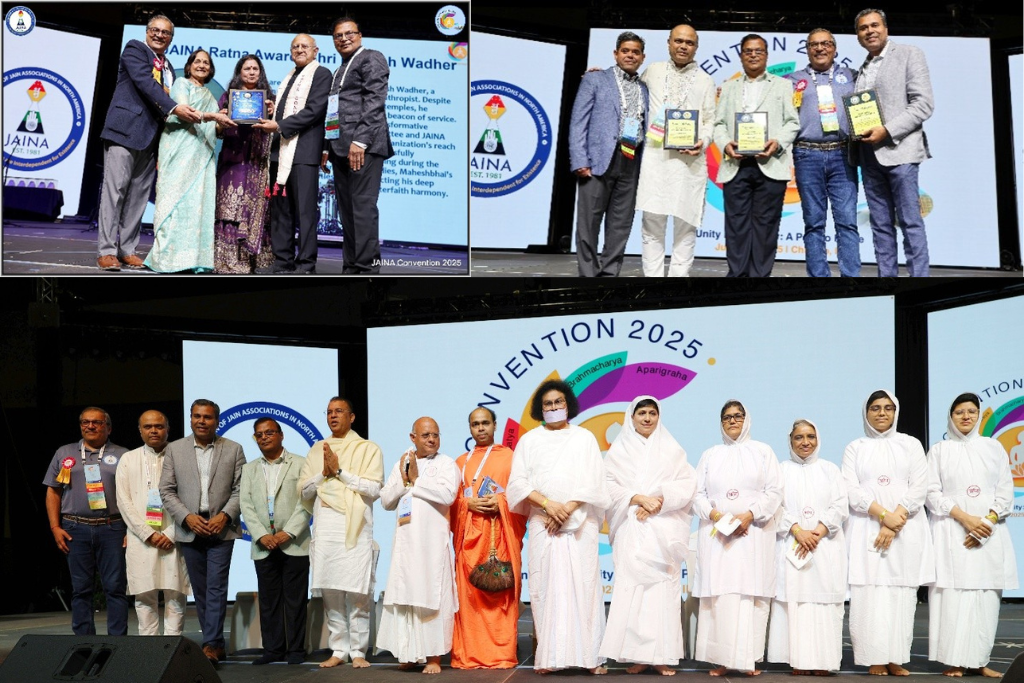
The convention commenced on July 3 with registration and a memorable Temple Dwar Opening Ceremony,JAINA Convention 2025 Highlights Unity in Chicago 1 featuring Ashtapad—a unique creation showcasing 24 Tirthankaras—with sacred rituals and chants embracing the essence of Jainism. This was followed by the Exhibition Inauguration Ceremony displaying art, literature, and artifacts that emphasized the rich cultural heritage of Jainism.

A grand cultural procession in the South Parking area added to the vibrancy, with decorated vehicles and traditional dances performing under the banner of an overhead airplane marking the convention’s presence. The evening’s Opening Ceremony combined spirituality and artistry, welcoming delegates with blessings from renowned Jain spiritual leaders like Pujya Acharya Dr. Lokesh Muniji. A memorable performance of the Broadway-style production Sthulibhadra & Kosha—Nritya Natika, portraying Jain stories of love and renunciation, captivated the audience.

JAINA Convention 2025 Highlights Unity in Chicago 3 (1)Day two on July 4 began with calming yoga and meditation sessions, led by Samani Dr. Pratibha Pragyaji and Samani Punya Pragyaji, fostering inner peace among attendees. The day’s events included stirring speeches by JAINA President Bindesh Shah and JSMC President Pragnesh Shah, followed by a keynote by Pujya Dr. Gyanvatsal Swamiji on spiritual resilience. A variety of sessions included “મૈત્રીવાદ નો શંખવાદ” by Dr. Tej Sahebji and “The Most Urgent Act of True Ahimsa: What We Eat” by Dr. Faraz Harsini advocating for veganism.

The afternoon’s program included discussions on parenting within Jain principles led by Seema Jain, and a WomenJAINA Convention 2025 Highlights Unity in Chicago 3 Empowerment Forum featuring Judge Neera Bahl among others. Keynote presentations and sessions explored diverse themes such as ecological crises and crisis care, enriching attendees with knowledge and inspiration. A blood drive that started on this day exemplified Jainism’s commitment to compassion, potentially impacting 276 lives.

July 5, day three, saw a session with Jessica Cox, the world’s first licensed armless pilot, whose life story inspired many. Distinguished speaker Saman Shrut Pragyaji shared insights on living with compassion. The JAINA Awards recognized outstanding contributions within the community, awarding the prestigious JAINA Ratna to past president Mahesh Wadher of California.

JAINA Convention 2025 Highlights Unity in Chicago 3 (2)Attendees gained perspectives from sessions such as Digital Karma by Pinkesh Shah, exploring AI’s ethical dimensions, alongside unity and diversity topics. The evening culminated with cultural performances and a keynote by Bollywood icon Sonu Sood emphasizing charitable actions.
On the final day, July 6, meditation set a serene start to the day, with a closing ceremony that featured musical prodigy Sparsh Shah’s inspiring keynote, galvanizing attendees to embrace purpose and compassion in their lives. Conveners and JAINA leaders expressed gratitude to the volunteers, sponsors, and committees who ensured the convention’s success, highlighting crucial support roles such as that of the food committee led by Hitesh Shah and the transportation team.

JAINA, founded in 1981, connects over 200,000 members through its educational and humanitarian initiatives. Its reach and influence are further endorsed by USAID certification and UN Special Consultative Status. The event’s success reinforced the legacy of unity and collaboration within the Jain community. For more information, visit the original source.

Source: Original article

India, China Wealth Increased Through Rice Cultivation

Rice has long been central to economic growth in both India and China, fostering social structures that allowed entrepreneurial independence and later contributing significantly to the colonial economies through its adaptable cultivation.

Professor Emerita Francesca Bray of the University of Edinburgh, specializing in social anthropology, has explored the significant role of rice in historical agricultural societies. Her research reveals how rice cultivation shaped both the economic and social landscapes of regions, particularly in pre-colonial and colonial eras.

Initially delving into the history of agriculture in China, Bray’s interest broadened to agrarian networks and social systems, with a particular focus on rice due to its unique characteristics. Unlike global commodities like wheat and corn, which are traded and consumed internationally, rice is primarily consumed locally within the countries that produce it. This local consumption has kept rice fields smaller in scale and maintained a diversity of crops and occupations, unlike the standardized industrial monocultures prevalent with other grains.

This smaller scale of rice farming allowed for a deviation from feudal agricultural models. Many rice farms were managed by small-scale farmers rather than landlords, allowing them entrepreneurial freedom. As long as these farmers met rent obligations, they had autonomy and often evolved from tenants to landowners, a testament to the economic upward mobility facilitated by rice cultivation. In southern China and Malaysia, this system encouraged the accumulation of wealth within generations, as farmers frequently contributed taxes or reinvested into their own communities without the constraints of feudal labor systems.

Historian Roy Bin Wong’s work, “China Transformed,” challenges common characterizations of rice-based economies as less advanced than their Western counterparts. Bray highlights that the rice-centered economy of southern China evolved into a global economic powerhouse over centuries, developing sophisticated financial systems essential in global capitalism, even if it did not experience an industrial revolution akin to Europe’s.

With the onset of colonialism, rice became integral to the burgeoning global industrial economy. During the 18th century, it was a staple in the slave trade between West Africa and the Americas and became a primary food source for colonial workforces across the tropics. Rice cultivation expanded significantly under European colonial powers, who established export-driven rice zones in regions like Indochina and Indonesia. This expansion often displaced local markets and made rice a key commodity in supporting the global colonial labor force.

Colonial administrators imposed policies that formalized intensive labor practices, as noted by historian Peter Boomgaard. The expansion of rice fields often involved harsh conditions and tied workers to their labor through debt and cash taxes, a situation that later provided a foundation for the Green Revolution of the 1960s and 1970s.

Gender also played a significant role in rice production, differing from region to region. In China, traditional notions dictated that men worked the fields while women engaged in textile production at home, though the commercialization of the textile industry eventually saw more male participation. Despite many women working in rice fields, their contributions were underrepresented in historical records, highlighting a gendered perception of labor roles.

Rice’s historic and ongoing socio-economic impact in regions like India and China underscores its vital role in agricultural economies and its influence on broader global economic systems, according to Francesca Bray.

Source: Original article

International Students Overlook India’s Growing Business Schools

Despite India’s booming economy and the increasing stature of its business schools, international student enrollment remains low due to a lack of brand awareness and understanding of the benefits of studying in the country.

India’s economy is booming, and its top business schools are climbing the global rankings, making the country a rising star in higher education. Despite this growth, international students remain scarce in India’s educational landscape, particularly within its business schools.

A new report from the education consultancy CarringtonCrisp provides insights into this phenomenon. Titled the International India study, the report is based on responses from 4,160 prospective business students across 22 countries. It found that while a substantial 79% of respondents are interested in studying abroad, a mere 8% consider India a likely destination for their studies. This low level of interest persists even amidst positive perceptions of India’s economy, visa accessibility, and welcoming environment.

“Despite the rapid growth of the Indian economy and the increasing prominence of its business schools, international students are rare, especially compared to the traditional education powerhouses of Europe, Australia, and North America,” says Andrew Crisp, the study’s author and co-founder of CarringtonCrisp. He attributes the low numbers to a significant lack of brand awareness and understanding of the advantages offered by studying in India.

The study highlights just how far behind India is in attracting international talent compared to its global peers. According to the All India Survey on Higher Education (AISHE), only 46,000 international students were enrolled in nearly 2,400 Indian institutions in the 2021-22 academic year, with more than a quarter coming from neighboring Nepal.

In stark contrast, the United Kingdom hosted over 750,000 international students in 2022-23, Australia reported more than 450,000 in 2023, and the United States saw its international student population rise to a record high of more than 1.1 million in 2024.

Recognizing this gap, the Indian government has sought to increase international enrollments by allowing institutions to admit up to 25% more students beyond their domestic capacity, specifically reserving these additional seats for international students. However, achieving growth in this area requires a deeper understanding of how India is viewed by prospective students globally—a focus of CarringtonCrisp’s report.

Despite India’s strengths, the report identified significant barriers to international enrollment, with awareness at the forefront. A full third of respondents admitted they could not name a single reputable Indian business school. Other cited barriers included a preference for studying in other countries (21%), lack of available scholarships (19%), and unease about living in India (17%).

However, there are notable advantages that Indian schools can leverage. India was rated second only to the United States for having a strong and dynamic economy (50% versus 52%), and as the most welcoming destination for international students (57%). It was also viewed as the easiest country to secure a student visa (56%).

Furthermore, India’s relative affordability is appealing. Nearly half (45%) of potential students saw India as offering excellent value for a business degree, and 41% found travel to the country affordable and convenient given its geographical proximity. Interest is particularly high among students in Nigeria (18%), the UAE (15%), and South Africa (15%).

Though long-term full-degree enrollment may be limited at present, there is strong enthusiasm among international students for shorter-term or hybrid programs with Indian institutions. Over 80% of survey respondents expressed a very or extreme interest in joint degrees between an Indian business school and one in their home country. There was also considerable interest in studying a single module for up to three months in India or engaging in multiple short, intensive courses offered by Indian schools.

“Building partnerships with institutions in other countries is a big opportunity for Indian business schools,” Crisp points out. “These programs can help schools build brand awareness, communicate the benefits of studying in India, and showcase the quality of their academic offerings.”

India’s top business schools are already expanding their global reach. IIM Ahmedabad recently launched its first international campus in Dubai, while the Indian School of Business (ISB) has expanded collaborations with leading universities in the U.S. and Europe. Additionally, more Indian schools are pursuing international accreditations and climbing global rankings published by organizations like The Financial Times and Poets&Quants.

These efforts, while promising, remain in their early stages compared with more established international education destinations. As the International India report emphasizes, building global appeal will require time, consistency, and creative partnerships.

Nevertheless, the report suggests a growing interest, particularly in education models that allow students to “sample” Indian education before committing to a full degree program. The challenge lies in converting this curiosity into actual enrollment.

“India has a strong story to tell,” Crisp concludes. “Now it needs to be heard.”

Source: Original article

“`

Hindu Temple Preservation Efforts Highlight Community Struggles

Shri Shakti Mariammaa, a Hindu temple in Queens, New York, serving as a refuge for women and LGBTQ community members, faces closure without $150,000 in necessary upgrades, reflecting its vital role and challenges in maintaining a safe spiritual space.

Since its establishment in 2008, the Shri Shakti Mariammaa temple has been a sanctuary for a diverse group, particularly women and the LGBTQ community, offering a unique spiritual experience in Richmond Hill, Queens. Under the glow of a skylight, the temple houses a significant figure of the goddess Mariamman, renowned as an incarnation of Kali. This deity, symbolizing time and death, is central to the temple’s worship, where incense and rum, alongside traditional offerings, create a distinct atmosphere.

The temple’s practices diverge from mainstream Hindu traditions, with congregants primarily of Indo-Caribbean descent celebrating the goddess Kali, noted for her representation of transcendental knowledge and spiritual possession. During worship, it is common to witness a pujari, or lay priest, visibly moved by divine energy, reflecting the temple’s role as a healing refuge.

Sharda Ramsami, one of the temple’s founding members, emphasized its importance as a haven for those seeking both physical and spiritual solace. She noted that, for many, the temple represents a last resort where they find solutions to issues no other place provided.

Distinguished by its inclusive ethos, the temple performs same-sex weddings, catering to those shunned by other religious institutions. Unlike traditional temples that may restrict women’s roles or access, Shri Shakti Mariammaa empowers women, including appointing women as priestesses.

However, the temple now confronts the threat of closure due to its need for significant building improvements—a financial hurdle of over $150,000. Without these upgrades, mandated to comply with NYC regulations for community spaces, the temple could be forced out, a scenario that deeply troubles its community.

Shri Shakti Mariammaa has encountered local resistance, notably from a neighbor who, after complaints of noise during religious festivities, opposed the temple’s structural proposals and related activities. Such opposition reflects deeper cultural misunderstandings surrounding the temple’s symbolic and ritualistic practices.

Historically, the temple’s roots can be traced to the 19th-century Indo-Caribbean migration of indentured laborers, who brought their indigenous religious practices from southern India to the Caribbean. These traditions, sustained by the temple’s founders, remain relevant and vibrant in today’s Queens community.

Despite financial challenges, the temple currently survives through donations for specific rituals, adhering to a principle of accessible worship without financial obligations. Efforts to fundraise, such as a GoFundMe campaign endorsed by local organizations, highlight the collective effort to support the temple’s mission and secure its future.

The temple also fosters cultural engagement beyond worship, hosting events like the Om Night open mic series. Rohan Narine, representing Hindus for Human Rights, praised the temple for its raw spiritual energy, urging broader acceptance of varied Hindu practices within the Indo-Caribbean community.

As Shri Shakti Mariammaa faces uncertainty, its supporters remain adamant about preserving the temple’s distinct spiritual space, advocating for a recognition of the full spectrum of Hindu worship practices.

Source: Original article

Mohanlal’s Film ‘Swapnamalika’ Finally Set for Release

After a 16-year delay, “Swapnamalika,” the first film penned by Malayalam superstar Mohanlal, is set for a theatrical release this October.

After languishing in post-production limbo for more than a decade and a half, “Swapnamalika” is finally poised to make its debut on the big screen. Directed by the late Adv K A Devarajan, the film stars Mohanlal, who also wrote the original story. Completed in the early 2000s but beset by numerous setbacks, the film is expected to resonate with audiences this October.

The storyline of “Swapnamalika” is based on “Tharpanam,” a short story written by Mohanlal. Screenplay adaptation was handled by S Suresh Babu, ensuring that the emotional depth and complexity of the original narrative are vividly brought to life. The film initially generated significant excitement upon production, only to be shelved due to unforeseen issues after filming wrapped.

In the movie, Mohanlal takes on the role of Dr. Appu Nair, an oncologist traveling to Varanasi on a poignant mission to immerse his father’s ashes. During his journey, Dr. Nair encounters Radha Carmel, a foreigner played by Israeli actress Eleena. This meeting and the evolving events form the crux of the narrative, promising an emotional exploration of themes like grief and cross-cultural connection.

The film’s cast also features some of the stalwarts of Indian cinema, including the late Thilakan, Innocent, and Sukumari, along with Urmila Unni, Kottayam Nazeer, Saju Kodiyan, Kulappulli Leela, Shivani, and Vidya, among others. The music, composed by Rajamani and Jayakishan, is set to complementary lyrics written by Aparna, daughter of the late director Devarajan.

The path to this release has been fraught with challenges, involving script revisions and other disputes that indefinitely stalled its progress. Unfortunately, the director, Devarajan, passed away in April of the previous year, unable to witness the premiere of his long-awaited project.

Despite these hurdles, “Swapnamalika” offers fans an opportunity to appreciate Mohanlal’s unique storytelling and artistic vision, presenting a film that seemed destined to remain a lost piece of cinematic history.

For an audience that has waited so long, the release of “Swapnamalika” marks a significant cultural moment and a return to a project that had risked fading away over the years.

According to Mathrubhumi, the impending release brings a sense of closure to a project that has been deeply anticipated by fans and cinephiles alike.

Source: Original article

Visitor Guard Offers WhatsApp Support for Indian Travelers in US

Visitor Guard has introduced a new WhatsApp support feature, offering real-time assistance to Indian travelers in the U.S. to address medical emergencies and insurance queries.

Visitor Guard, a prominent provider of travel insurance for international visitors to the United States, has rolled out a new feature aimed at enhancing support for Indian travelers. The company recognizes India as a major contributor to the annual influx of visitors to the U.S. and has introduced the WhatsApp support service to tackle a common issue faced by travelers: the lack of accessible assistance during medical emergencies in a foreign country.

The new service offers real-time aid directly via smartphones, allowing users to receive prompt insurance guidance, emergency directions, and help with claims processing. This development is particularly beneficial for Indian visitors due to the widespread use of WhatsApp in their daily lives.

“We know how critical it is for Indian visitors to get reliable help, especially when unexpected medical issues arise thousands of miles from home,” said Chiranth Nataraj, the founder of Visitor Guard. He noted that by providing real-time support on a familiar and trusted communication platform like WhatsApp, the company ensures travelers have a simple, secure way to reach out for help around the clock.

The WhatsApp service boasts 24/7 availability, with responses typically delivered in under 10 minutes during business hours. It supports communication in multiple Indian languages, including English, Hindi, Marathi, and Kannada. The service allows travelers to request essential documents such as ID cards, claim forms, and visa letters. Additionally, it assists users in finding in-network hospitals and understanding their policy benefits. Importantly, during emergencies, travelers can receive instant guidance on the necessary steps to take and where to seek medical care.

Visitor Guard offers a variety of renowned insurance plans, such as Venbrook Premier, Safe Travels USA Comprehensive, and Atlas America, which cover a range of needs like hospitalizations, accidental injuries, and even the acute onset of pre-existing conditions. With over 15 years of experience in the travel insurance industry, the launch of WhatsApp support aligns with the company’s mission to provide affordable, customer-focused care tailored to the specific needs of Indian travelers visiting the U.S.

According to New India Abroad, the introduction of this support feature is a testament to Visitor Guard’s commitment to improving the travel experience for its clients by leveraging popular and user-friendly technology.

Source: Original article

Turkey’s Anti-India Policy Affects BRICS Membership Prospects

Amid a backdrop of geopolitical tensions, Turkey’s pursuit of BRICS membership appears thwarted, suggesting India’s opposition may have played a crucial role.

Turkey’s ambition to join BRICS, a prominent intergovernmental organization that includes 10 member countries, among them India, seems to have reached an impasse amid strained relations between Turkey and India, primarily due to Turkey’s support for Pakistan in recent conflicts.

Turkey’s government has expressed a strong interest in becoming part of BRICS, claiming last year to have been offered partner country status by the group. The nation viewed joining BRICS as a strategic move to balance its relations between the Eastern and Western worlds. In 2024, Ankara made an official bid to be the first NATO country admitted to the BRICS economic bloc.

As the latest BRICS summit unfolded in Rio de Janeiro, Brazil, Turkey’s aspirations appeared to falter. Speculations suggest that India’s opposition could be a significant factor influencing Turkey’s stalled membership. The bloc’s criteria require unanimous consent from existing members for new countries to join.

Although Turkey was represented at the summit by its Minister of Foreign Affairs, Hakan Fidan, there was no official disclosure of Turkey’s standing regarding membership or partnership following the meetings. While BRICS welcomed countries such as Belarus, Bolivia, Kazakhstan, Uzbekistan, and Cuba as partner countries, no formal statement was issued about Turkey’s position.

According to Turkish media outlet Turkiye Gazetezi, India’s reservations were a decisive element in Turkey’s BRICS membership bid. The report indicated that India’s cautious approach was partly due to Turkey’s NATO membership and differing stances on certain regional issues.

Sources with knowledge of the matter informed Middle East Eye that both China and India had reservations about Turkey’s full membership in BRICS last year, creating a roadblock for Ankara. A Brazilian diplomat commented, “Turkey is Nato,” noting that several countries had concerns about how Turkey’s membership would align with the bloc’s dynamics. The diplomat also highlighted that India was the principal opponent of Turkey’s accession.

Speculations regarding India’s opposition to Turkey’s entry as a BRICS partner country have surfaced before; these claims were initially reported in a German daily. However, Ankara dismissed the allegations against its entry applications in previous discussions.

Source: Original article

Democratic Senators Question Trump’s New Citizenship Data System

Three Democratic U.S. senators have expressed concerns over a citizenship data system developed under the Trump administration, warning it could disenfranchise eligible voters.

Three Democratic U.S. senators are calling attention to a searchable citizenship data system developed during the Trump administration, raising concerns that its use could lead to the wrongful disenfranchisement of eligible voters.

The tool, detailed first by NPR, is enabled by the U.S. Citizenship and Immigration Services (USCIS) and is used to verify the citizenship status of individuals listed on state voter rolls when provided with a Social Security number, name, and date of birth.

Developed by the Department of Homeland Security (DHS), the system connects federal immigration databases with Social Security Administration data. This integration allows state and county election officials to verify the citizenship status of not only foreign-born naturalized citizens but native U.S. citizens for the first time.

The rapid advancement and linking of government data sets under the Trump administration have raised questions about potential governmental use of shared voter roll data. Legal and privacy experts, speaking with NPR recently, expressed alarm over the new data system, which upgrades the existing USCIS platform known as the Systematic Alien Verification for Entitlements (SAVE). They criticized its quick rollout without the transparency or public notices typically required by federal privacy laws.

Senators Alex Padilla of California, Gary Peters of Michigan, and Jeff Merkley of Oregon underscored these points in a letter addressed to DHS Secretary Kristi Noem. They emphasized the need for public transparency and assurances that citizens’ rights, including privacy, are adequately protected.

“Unfortunately, DHS has not issued any of the routine and required documentation about the program’s operations and safeguards or any public notice or notice to Congress,” the senators wrote.

They also questioned the tool’s accuracy and potential for mistakenly flagging eligible citizens as ineligible to vote.

In the build-up to the 2024 election, former President Trump and his allies disseminated unsubstantiated claims that Democrats allowed migrants to enter the country to illegally vote and manipulate election outcomes. However, this narrative lacks evidence, with state audits indicating that noncitizen voting instances are rare and often occur due to noncitizens erroneously believing that they are permitted to vote in federal elections.

Despite the lack of evidence for widespread noncitizen voting, Republicans at different government levels have continued to advocate for additional verification processes to prevent such occurrences.

In a March 25 executive order on voting, Trump instructed DHS to offer states “access to appropriate systems” at no cost for verifying voter citizenship and directed the attorney general to prioritize prosecuting noncitizens who register or vote.

USCIS spokesperson Matthew Tragesser described the SAVE system upgrades as a “game changer” for eliminating benefit and voter fraud among the alien population.

DHS did not immediately respond to requests for comments on the senators’ letter.

The department has divulged little information about the tool publicly, although a DHS staff member privately presented it to the Election Integrity Network, a group aligned with Trump known for promoting misleading election fraud narratives. This presentation drew the senators’ attention.

The senators voiced their grave concern over DHS sharing information with the Election Integrity Network—an organization founded by Cleta Mitchell, a lawyer who sought to overturn the 2020 election results—while keeping lawmakers and the public in the dark.

Their letter urged USCIS to brief the Senate committees on Rules and Administration, and Homeland Security and Governmental Affairs, providing all materials shared with the Election Integrity Network.

Additionally, the senators requested Secretary Noem address several questions, such as whether public notice was provided before launching the data system, how the tool’s accuracy was tested, how personal data is safeguarded, and if the federal agency will retain voter roll data.

Source: Original article

World’s Wealthiest Family Worth $1.4 Trillion Outpaces Musk, Bezos

The House of Saud, the ruling family of Saudi Arabia, boasts a staggering net worth of $1.4 trillion, surpassing the combined fortunes of prominent billionaires Elon Musk and Jeff Bezos.

The world often turns its gaze toward the immense wealth of individuals like Elon Musk, Jeff Bezos, Mukesh Ambani, Mark Zuckerberg, and Warren Buffett. However, a royal dynasty quietly eclipses them all in terms of combined fortune—the House of Saud, the ruling family of Saudi Arabia. Originating not from the corporate or financial hubs of Silicon Valley or Wall Street, their wealth instead hails from the heart of the Middle East, where they govern one of the most resource-rich nations on the planet.

The House of Saud’s financial empire is vast, with a net worth estimated at a staggering $1.4 trillion (£1.1 trillion). This outsized fortune towers over other notable figures, with Musk’s net worth around $396 billion (£313 billion), and Bezos at $240 billion (£190 billion). Saudi Arabia’s royal family far surpasses each, maintaining wealth on an unmatched scale.

The source of this wealth is deeply rooted in oil. As the ruling family of the world’s largest oil-exporting country, they control one of Earth’s most valuable natural resources. Central to this is Saudi Aramco, the national oil company considered among the most profitable worldwide, significantly contributing to the family’s financial dominion. Yet, their wealth doesn’t reside solely in oil. The House of Saud has wisely diversified, investing in real estate, art, technology, and private business ventures, extending its reach far beyond its oil-rich borders.

There’s little secrecy about the opulent lifestyle maintained by the Saudi royals. Their assets are breathtaking, including private jets, mega-yachts, palatial residences, priceless art collections, and an array of exotic cars. Notably, the family owns the world’s largest private jet, a customized Boeing 747-400, renowned for its lavish interior. Royals ride in style, with some vehicles in their garage, like gold-plated Lamborghini Aventadors and Rolls-Royce Phantoms, tallying a worth of over $22 million. Al Yamamah Palace, the king’s residence, is an epitome of grandeur—reportedly containing over 1,000 rooms.

An expansive family, the House of Saud includes approximately 15,000 members, yet true power remains concentrated among about 2,000 close relatives. Spearheading this dynasty is King Salman bin Abdulaziz Al Saud, who ascended the throne in 2015. The king is one of the renowned “Sudairi Seven,” sons born to the favored wife of Ibn Saud, the kingdom’s founding leader. He is succeeded by Crown Prince Mohammed bin Salman, known as MBS since 2017. MBS stands as a pivotal and sometimes polarizing figure, credited with Vision 2030—a sweeping reform initiative aimed at modernizing Saudi Arabia and reducing its economic dependence on oil. His tenure, however, has faced criticism regarding human rights concerns, involvement in the Yemen conflict, and the suppression of dissent. Despite these contentious issues, MBS’s wealth and opulent lifestyle are extraordinary, with assets such as the $400 million superyacht Serene featuring helipads, underwater observation areas, and lavish suites.

The Al Saud dynasty has governed Saudi Arabia for over 80 years, tracing its roots as far back as the 18th century. As one of the world’s oldest and most influential monarchies, the family seamlessly blends conservative Islamic governance with immense modern wealth. Unlike other royal families that often serve a symbolic role, the House of Saud remains actively engaged in governance, wielding influence over politics, religion, economics, and global affairs. This stands in stark contrast to the British royal family, whose financial worth and global influence, notably under the leadership of the late Queen Elizabeth II and now King Charles III, remain modest in comparison to the towering trillions managed by the Saudis.

Source: Original article

UAE Proposes Underwater Train from Dubai to Mumbai

UAE unveils ambitious plans for the world’s first underwater bullet train, envisioned to link Dubai to Mumbai, transforming long-distance travel with its blend of speed and panoramic marine views.

The United Arab Emirates has set its sights on a revolutionary transportation project that aims to reshape long-distance travel. Plans have been announced for a colossal underwater train that would connect Fujairah, a port city in the UAE, with Mumbai, India’s bustling financial center.

Spanning approximately 1,200 miles beneath the Arabian Sea, this engineering feat is projected to offer a unique blend of speed, luxury, and scenic immersion. With travel speeds estimated between 600 and 1,000 kilometers per hour, the journey could surpass traditional flights by providing a smoother and more visually engaging experience.

“This is not just about transport, but an immersive experience,” stated Dr. Ahmed Al Hariri, head of the UAE’s National Advisor Bureau. Initially conceived in 2018, the train project has transcended its conceptual phase and is now actively under consideration, aiming to merge functionality with spectacle.

The train’s tunnel will feature panoramic windows, allowing passengers to view the underwater world as they navigate beneath the waves. As both nations aim to bolster trade and tourism, this project presents more than just an engineering marvel—it serves as a strategic link between two thriving regions.

Beyond its role in transportation, the high-speed rail is designed for dual functionality, facilitating the transport of goods such as freshwater from India to the UAE and oil in the opposite direction. The UAE envisions the project as a means to deepen its trade relations with India while also revolutionizing tourism.

Comparisons have emerged between this ambitious plan and Saudi Arabia’s $1 trillion NEOM city initiative, as both Gulf countries compete to spearhead the region’s next wave of futuristic infrastructure. Successfully completing this undersea route ahead of NEOM’s launch could provide Dubai with a symbolic advantage. Sara Ahmed, a Dubai-based travel blogger, remarked on the project’s intrigue, saying, “The underwater train isn’t just about getting from point A to B. It’s about relishing the wonders of the marine world.”

The rivalry between the UAE and Saudi Arabia extends beyond mere spectacle; both nations aspire to become global icons of innovation. While Saudi Arabia is developing artificial islands and futuristic skylines, the UAE is venturing into the ocean depths to solidify its legacy.

Construction of such a monumental structure presents numerous engineering and financial challenges. The train must endure significant water pressure, guarantee passenger safety at high velocities, and maintain reliability across numerous journeys. Additionally, psychological barriers exist for some travelers who might feel uneasy about traveling underwater.

Rajesh Verma, a Mumbai-based businessman, voiced his caution: “I’ve always been wary of the ocean’s depths. As much as I love the idea, I’ll likely stick to conventional modes of transport.” For many, acceptance hinges not only on technological advancements but also on trust in the system’s flawless operation.

Financial concerns are not the primary hurdle for the UAE, which is known for executing iconic projects like the world’s tallest skyscraper and the man-made Palm Islands. With substantial financial resources, Dubai’s leadership emphasizes technological feasibility over cost. Experts estimate the project may require several billion dollars, depending on materials, design, and tunnel complexity.

Early reports propose using transparent materials instead of conventional opaque bricks, thus offering passengers a rare view into the marine ecosystem. This vision aligns with the broader aim of delivering an unforgettable travel experience, not merely a faster commute.

According to The Brighter Side News, the UAE’s ambitious project reflects its commitment to pioneering innovative infrastructure solutions, setting the stage for a new era in transportation.

Source: Original article

US Outlines Steps to Address Syria Violence After Israeli Strikes

Israel launched strikes on Syria’s defense ministry in Damascus and military targets in southern regions as sectarian violence flared in Suweida, signaling an intensifying situation involving Druze militias and Bedouin tribes.

Israel’s military action against Syrian government targets extended into a third day on Wednesday, amid escalating sectarian violence in Suweida, a predominantly Druze province. This comes after Prime Minister Benjamin Netanyahu expressed support for Druze communities, saying Israel is “working to save our Druze brothers.”

The intensifying conflict has resulted in more than 350 deaths since violent clashes erupted in the region between Druze militias and Bedouin tribes on Sunday. The fighting prompted the Syrian military to begin withdrawing its forces from Suweida late Wednesday, following talks mediated by the United States aimed at de-escalating the conflict.

U.S. Secretary of State Marco Rubio announced on social media platform X that specific steps had been agreed upon to end the violence, an assertion supported by the Syrian state news agency Sana, which confirmed the troop withdrawal as part of an agreement with local religious leaders.

Despite the purported ceasefire efforts, Israel has not commented on these developments. Instead, earlier strikes beginning Monday targeted Syrian security forces and their weapons, deployed to Suweida following the ousting of President Bashar al-Assad by Sunni Islamist rebels in December.

Sectarian tensions have intensified over the past eight months, aggravated by an incident in May that saw clashes between Druze, government forces, and allied militants result in numerous fatalities. The Druze minority, an offshoot of Shia Islam, harbors suspicions toward Interim Syrian President Ahmed al-Sharaa, fueling their fear over repeated outbreaks of violence.

Israel’s latest involvement appears to be driven by its commitment to protecting the Druze population, which has historical ties to Israel and the Israeli-occupied Golan Heights. Following crossed-border incursions by Druze individuals on Wednesday, Israeli troops resorted to tear gas to dissuade further crossings. Netanyahu called on Israeli citizens among them to return home and allow the military to address the situation.

Israel’s intensified air campaign aimed to compel a swift Syrian military withdrawal from Suweida. Defence Minister Israel Katz indicated on X that military warnings in Damascus had concluded, pledging continued operations against forces attacking the Druze until their complete withdrawal is achieved. Reports also noted the destruction of armoured vehicles and military infrastructure in southern Syria.

Syria’s foreign ministry condemned the Israeli strikes, which it claimed targeted civilian facilities and government institutions in Damascus and Suweida, accusing Israel of inciting chaos and violating international laws. These reports were corroborated by the UK-based Syrian Observatory for Human Rights, highlighting severe humanitarian conditions in Suweida, including shortages of essential supplies and destruction of medical facilities.

Eyewitness accounts described widespread panic and violence, with hospitals overwhelmed by hundreds of casualties. Local testimonies to the BBC relayed harrowing accounts of sniper attacks and residential looting, contributing to the escalating death toll.

The Syrian Observatory for Human Rights reported that sectarian hostilities between Bedouin tribes and Druze militias allegedly began over an abduction incident last Friday. The violence swiftly engulfed Suweida, spreading to surrounding areas as Druze fighters seized a Bedouin-occupied neighborhood, leading to intensified tribal clashes.

Intervention by Syrian government forces, criticized for their conduct, appears to have exacerbated tensions within these communities. Reports accuse them of destructive activities and the humiliation of local leaders, further escalating an already volatile situation.

The broader geopolitical context includes Israel’s longstanding position on President Sharaa’s government and affiliated groups like Hayat Tahrir al-Sham. Despite past military interventions in Syria targeting such entities, the current situation underscores the complex and evolving dynamics in the region.

Source: Original article

Obama Couple Responds to Recent Divorce Rumors

Former President Barack Obama and former First Lady Michelle Obama have humorously dismissed persistent divorce rumors during a podcast appearance, emphasizing the strength of their decades-long marriage.

In a recent episode of the podcast “IMO,” hosted by Michelle Obama’s brother, Craig Robinson, the Obamas together addressed the speculative rumors about their marriage that have circulated over the past year.

As the episode centered around the topic of raising young men, the conversation began with lighthearted comments about the rumors. Robinson greeted Barack Obama by jokingly asking, “Wait, you guys like each other?” to which Michelle Obama humorously replied, “Oh yeah, the rumor mill.”

Playing along, Barack Obama added, “She took me back. It was touch and go for a while.” Continuing the playful banter, Robinson remarked on the couple being in the same room, prompting his sister to comment, “I know, ’cause when we aren’t, folks think we’re divorced.”

Speculation about the former first couple’s relationship began earlier this year when Barack Obama attended several public events without his wife, including the funeral for former President Jimmy Carter and the second inauguration of President Donald Trump.

In response to the gossip, Michelle Obama has clarified her absence from certain events, noting her newfound freedom to make personal choices after her daughters became adults and her husband’s departure from public office.

During an earlier episode of the same podcast series, aired on July 9, Michelle Obama expressed, “This stage in life for me is the first time that I have been completely free.”

On the recent “IMO” episode, she further assured listeners that her marriage remains strong. “There hasn’t been one moment in our marriage where I thought about quittin’ my man. And we’ve had some really hard times,” Michelle Obama shared. “We have had a lot of fun times, a lot of adventures, and I have become a better person because of the man I’m married to.”

Barack and Michelle Obama celebrated their marriage in Chicago in 1992. Their enduring partnership was highlighted this past Valentine’s Day when Barack Obama shared a heartfelt message on Instagram, posting a photo of them together. “Thirty-two years together and you still take my breath away,” he captioned the image.

Michelle Obama echoed the sentiment on her social media, sharing the same photo and stating, “If there’s one person I can always count on, it’s you, @BarackObama. You’re my rock. Always have been. Always will be.”

Such affirmations from the couple continue to counter the unfounded rumors, demonstrating the steadfast bond they maintain despite public speculation.

Source: Original article

India Tests Hypersonic Missile with 1,500 km Range

India has conducted a test of a hypersonic missile capable of reaching eight times the speed of sound and targeting areas as far as 1,500 kilometers, marking a significant advancement in its defense technology.

India has reportedly tested the Extended Trajectory Long Duration Hypersonic Cruise Missile (ET-LDHCM), designed under the Defence Research and Development Organisation’s (DRDO) Project Vishnu. This new missile can travel at Mach 8, approximately 11,000 km/h, and can strike targets as far as 1,500 kilometers away, significantly surpassing the capabilities of the existing BrahMos cruise missile. The BrahMos, by contrast, reaches speeds of Mach 3, or about 3,675 km/h, and a maximum range of around 450 kilometers from its initial 290 kilometers.

The development of the ET-LDHCM underscores India’s ongoing efforts to modernize its defense systems amid escalating global tensions. The geopolitical landscape is fraught with conflict, including issues between Israel and Iran and deteriorating relations between India and Pakistan. India is further prompted to enhance its missile systems, such as the BrahMos, Agni-5, and Akash, due to growing alliances like that between Turkey and Pakistan.

Powered by a scramjet engine utilizing air-breathing propulsion, the ET-LDHCM gains speed from atmospheric oxygen instead of a traditional rotating compressor. This technological leap allows it to perform long-range, high-speed operations with extraordinary precision and stealth. Its low-altitude flight capability helps to evade radar detection, enhancing its strategic efficiency.

This hypersonic missile, capable of carrying a payload between 1,000 to 2,000 kilograms, is engineered to deliver both conventional and nuclear warheads. It can be launched from land, sea, or air platforms, offering flexibility in deployment. Additionally, the missile’s capability to alter its trajectory mid-flight allows for adaptability in dynamic battlefield conditions.

The ET-LDHCM is designed to withstand extreme thermal stress, maintaining stability at temperatures up to 2,000°C during hypersonic travel. This resilience is essential for achieving sustained speed and targeting accuracy.

Currently, only Russia, the United States, and China possess operational hypersonic cruise missile technology. With the successful test of the ET-LDHCM, India positions itself among an elite group of nations with indigenous hypersonic capabilities. The deployment of such advanced technology aims to bolster India’s deterrence strategy, particularly against Pakistan, while serving as a counterbalance to China’s expanding influence in the Indo-Pacific region.

The strategic advancements achieved through the development of the ET-LDHCM exemplify India’s commitment to strengthening its national security infrastructure, thereby ensuring preparedness in the face of potential regional threats, according to Economic Times.

Source: Original article

3,000 Indian Professionals Eligible for UK Visa in July Ballot

Under the UK-India Young Professionals Scheme, 3,000 working professionals from India aged 18 to 30 will have the opportunity to live and work in the UK for up to two years.

The UK-India Young Professionals Scheme, launched in February 2023, provides Indian citizens aged 18 to 30 with the opportunity to reside and work in the United Kingdom for a duration of two years. To be eligible for this visa, applicants must possess an eligible qualification and hold at least £2,530 in savings.

The selection process begins with a ballot, which will open for 48 hours starting at 1:30 p.m. on July 22 and closing at 1:30 p.m. on July 24. There is no cost to enter the ballot, but once selected, applicants must pay a £319 fee while applying for the visa.

Entering the ballot requires potential applicants to provide their name, date of birth, passport details, a scan or photo of their passport, phone number, and email address.

Once selected in the ballot, applicants must submit a valid passport or other proof of identity and nationality, evidence of holding at least £2,530 in their bank account via bank statements, qualifications documentation, and present tuberculosis (TB) test results if residing in India. Additionally, a police report or clearance certificate from India is required.

A total of 3,000 visas are available for 2025 within this scheme. Most of these positions were offered in February, with the remaining slots to be distributed in July when the final ballot is conducted.

Those successful in the ballot will be contacted via email and will then have 90 days to complete the visa application process online. This process includes paying a visa application fee and the immigration health surcharge (IHS), as well as providing biometric information, such as fingerprints and a photo.

If individuals are selected in the ballot but decide against applying for the visa, they are under no obligation to proceed.

For more detailed guidance on the UK-India Young Professionals Scheme and the ballot system, interested individuals can visit the official UK government website.

According to World Malayalee Voice, the UK is committed to strengthening bilateral relations with India through this unique opportunity for young professionals.

Indian Diaspora Strengthens India-US Partnership, Says Ambassador Kwatra

India’s Ambassador to the United States, Vinay Mohan Kwatra, has lauded the Indian American community for its crucial contribution to strengthening the strategic partnership between India and the United States.

During a keynote speech at the US–India Partnership Summit on Capitol Hill, Ambassador Vinay Mohan Kwatra expressed his appreciation for the Indian diaspora’s increasing involvement in American public affairs. He highlighted their role as “one of the most valuable custodians” of the relationship between the two nations.

The summit, which took place on July 15, served as a platform for discussing the dynamic US–India partnership and the multifaceted connections binding the two countries. Ambassador Kwatra emphasized the significance of the Indian American community as a vital bridge in fostering bilateral ties, underscoring their influence on the evolving interactions between India and the United States.

Kwatra’s acknowledgment of the diaspora reflects its instrumental role in promoting mutual understanding and collaboration across diverse sectors, ranging from economic and technological to social and cultural domains. Their engagement in public life in the United States not only strengthens bilateral relations but also enriches the societal landscape of both countries.

As the Indian American community continues to grow and integrate into US society, their contributions to the India–US partnership are poised to become even more substantial, according to experts and observers. The summit highlighted the ongoing commitment to deepening these ties and the pivotal role the diaspora plays in sustaining this enduring relationship.

According to New India Abroad, Ambassador Kwatra’s remarks serve as a testament to the enduring connection between India and the United States, fueled by the vibrant presence of the Indian diaspora.

Gold and Silver Prices Drop Due to Global Tariff Uncertainty

Gold and silver prices experienced a downturn on Tuesday due to growing uncertainty over U.S. tariff policy.

After enjoying a two-day rise, gold and silver prices took a hit as global markets reacted to increasing uncertainties surrounding U.S. tariffs. The India Bullion and Jewellers Association (IBJA) reported a significant decline in the price of 24-carat gold, which saw a reduction of over ₹300. The cost for ten grams of 24-carat gold fell by ₹387, decreasing from ₹98,303 to ₹97,916.

Similarly, 22-carat gold prices also registered a decline. Ten grams of this gold category dropped ₹354, from ₹90,045 to ₹89,691. In parallel, 18-carat gold experienced a reduction of ₹290, settling at ₹73,437 from its prior price of ₹73,727.

Jateen Trivedi, an analyst at LKP Securities, commented on the situation, saying, “Continued tariff escalations by the U.S. on its global trade partners have kept uncertainty high, which typically supports safe-haven buying in gold.”

Silver markets mirrored this downward trend as prices dropped by ₹1,870 per kilogram, moving from ₹1,13,867 to ₹1,11,997.

Despite these declines in the spot market, futures trading showed mixed results. Gold futures, set to expire on August 5, 2025, rose slightly by 0.04% to ₹97,815 on the Multi Commodity Exchange (MCX). Conversely, silver futures expiring on September 5 decreased by 0.29% to ₹1,12,611.

This pattern was echoed on international markets. On the Comex, silver prices fell 0.38% to $38.59 per ounce, while gold saw a minor increase of 0.21%, reaching $3,366.20 per ounce. Trivedi further explained, “Gold traded within a narrow band of ₹97,750 to ₹98,050, tracking positive momentum on Comex near $3,365 with a $20 gain.”

Upcoming U.S. Consumer Price Index (CPI) data expected later this week has also kept traders vigilant, with many anticipating ongoing volatility in gold prices. Analysts predict the price to fluctuate between ₹97,500 and ₹98,500.

However, the drop in prices on Tuesday did present a brief opportunity for buyers to acquire gold and silver at reduced prices before further market fluctuations occur.

According to IANS, these developments reflect a complex global economic landscape where investors continue to grapple with uncertainty.

India Misses Tariff Deal, Signals Potential Future Agreement

President Donald Trump sent out new tariff rate letters last week to over two dozen countries, but notably omitted India, Taiwan, and Switzerland, signaling potential trade agreements may soon be formalized with these nations.

President Donald Trump recently dispatched letters to over 24 countries, detailing their new tariff rates and categorizing them as “trade deals.” However, India, Taiwan, and Switzerland, which did not receive any letters, are believed to be nearing potential agreements, with announcements possibly coming in the next few weeks.

Trump has previously hinted that an agreement with India is on the horizon, although specifics are still being finalized. Former officials familiar with U.S.-India trade relations interpret the absence of a letter as positive, suggesting that receiving one could have offended the Indian government, potentially disrupting a nearly concluded agreement between the two nations.

According to Mark Linscott, a former negotiator for the U.S. Trade Representative’s Office, “The letters are pretty aggressive and direct.” He explained that India might perceive such a letter as disrespectful unless it recognized the progress made in negotiations, thus derailing talks.

On Tuesday, Trump reiterated the possibility of a deal with India, assuring reporters that “we’re going to have access into India.” Despite this, the Indian embassy in Washington chose not to comment.

India’s trade delegation, led by Rajesh Agrawal, chief negotiator and special secretary in the Department of Commerce, arrived in Washington on Monday, rekindling hopes of an imminent trade deal. India stands as the largest U.S. trading partner among the nations subjected to Trump’s reciprocal tariffs but not served a letter. The European Union, South Korea, Japan, Canada, and Mexico, among others, have received threats of tariffs between 25 and 35 percent effective August 1.

This intense round of trade negotiations occurs amid sensitive economic conditions in the U.S. The Bureau of Labor Statistics reported Tuesday that the Consumer Price Index rose by 2.7% in June over the previous year, up from 2.4% in May, raising concerns that Trump’s higher tariffs might be inflating prices. This scenario has fueled worry among economists and the business community that trade uncertainties are adversely impacting the broader economy.

Alongside the impending August 1 deadline for instituting substantial tariffs on a multitude of countries, Trump is also contemplating additional tariffs unrelated to prior discussions, potentially complicating ongoing trade talks.

Trump has expressed dissatisfaction with the group of emerging market nations known as BRICS, which includes India. The president is considering a 50 percent tariff on Brazil due to the bloc’s recent initiatives to distance from the dollar as the global standard. He has also threatened a 10 percent tariff on all BRICS countries and even a 100 percent tariff on nations purchasing oil and gas from Russia amid the ongoing war in Ukraine. Notably, India is the second-largest importer of fossil fuels from Russia.

The initial agreement expected between India and the United States is seen as the first stage of a more all-encompassing trade deal anticipated by fall. In Trump’s administration, no deal is deemed complete until the president officially confirms it, as indicated by his last-minute intervention in a recent agreement made with Vietnam.

Lisa Curtis, former deputy assistant to the president and senior director for South and Central Asia on the National Security Council, remarked, “This is Trump. Until everything is signed, sealed, and delivered, there’s going to be a certain amount of nervousness.”

An unnamed White House official disclosed that currently, no additional tariff letters are being prepared, although they noted the situation remains “fluid.”

India began trade talks with the U.S. in February when Trump unveiled his ambitious global trade restructuring agenda. Despite the president’s ongoing discussions about mediating peace between India and Pakistan earlier this year complicating relations, the hope is still alive for a deal that Prime Minister Narendra Modi can present domestically.

In a previous administration, Trump nearly finalized a bilateral trade agreement with India akin to those negotiated with Japan and South Korea. However, the deal fell apart over disagreements on agricultural disputes and other contentious issues. Linscott noted, “India has put a heck of a lot on the table, particularly with respect to tariffs.”

Similar to India, Taiwan and Switzerland, which also conduct significant trade with the U.S. and didn’t receive letters, are in negotiations aimed at evading high “reciprocal” tariffs and those affecting vital sectors like Taiwan’s semiconductor and Switzerland’s pharmaceutical industries. Both countries have made substantial foreign investments in the U.S., including Taiwan Semiconductor Manufacturing Company’s $165 billion investment in semiconductor production in Arizona.

Notably, a list of 36 nations not receiving letters includes smaller countries with limited U.S. trade but still facing enormous tariff hikes. Trump previously lowered the steepest tariff rates for countries like Cambodia and Laos, but it’s uncertain if he will extend similar reductions to nations like Madagascar (47 percent), Mauritius (40 percent), or Lesotho, which currently faces a 50 percent tariff, the same punitive rate expected for Brazil.

An official from Paraguay expressed “relief” that the country hadn’t received a letter, though they couldn’t ascertain why their nation was spared while others were not. “There is no pattern still,” remarked the official. “All those countries have been involved in trade talks and controversies with the USA.”

The official lamented, “It is bad for everyone. We worked hard for so many years to have a trading system predictable and rules based,” emphasizing that the current situation reflects the opposite.

For countries like India not receiving letters, reaching substantive agreements seems more plausible.

Psychologist Shares 5 Habits of Happiest Couples on Weekdays

In the chaos of daily life, truly connecting with a partner each weekday demands focused intention and simple, meaningful rituals to strengthen intimacy.

Amidst the hustle of work, commutes, and looming deadlines, weekdays often pass in a blur, leaving couples struggling to find quality time together. However, maintaining a close connection doesn’t require additional hours, only deliberate effort.

For psychologist Mark Travers, PhD, who studies relationships and participates in one himself, everyday rituals can profoundly enhance intimacy between partners, particularly during busy times. Importantly, nurturing a relationship isn’t limited to weekends.

Here are five practices that people in the happiest relationships regularly engage in during weekdays, which are often overlooked by others:

1. Building a Mini Morning Routine

Morning routines tend to be chaotic as people rush to meet alarms, deadlines, and the need to get out the door. Consequently, the limited shared moments might be confined to waking up together and a fleeting kiss before parting ways.

Happy couples, however, find small ways to start their day together, even if it’s just for a brief five or ten minutes. This could involve setting the alarm a tad earlier for morning cuddles, making the bed together while chatting, or simply sharing a quiet coffee moment side-by-side. The specifics are less important than the act of doing it, reminding each other: “No matter what the day holds, we have each other.”

2. Sending Thoughtful Check-ins

Maintaining connection during workdays doesn’t necessitate lengthy conversations. A humorous meme, a brief anecdote from the office, or a quick “thinking of you” message can significantly boost emotional intimacy.

The happiest couples make brief check-ins not to discuss logistics, but to remind each other they are always on each other’s mind. Even the act of taking a few seconds from a lunch break, coffee run, or bathroom break for a quick message can be powerful. These small gestures, although seemingly trivial, uplift moods and strengthen your partner’s sense of being valued.

3. Making Time to Reset Individually

Workday stress often sneaks its way into quality couple time, manifesting through constant email-checking or irritability. To counter this, the happiest couples allocate time to unwind separately after work. Whether it’s a solo walk, a quick gym session, or zoning out with a favored TV show, this personal time helps clear mental clutter, enabling partners to be more present and patient for each other.

Although it might seem counterintuitive, recharging separately can be a crucial step towards meaningful reconnection.

4. Prioritizing Daily ‘Us Time’

Evenings may often be consumed by separate routines—one partner cleaning up, the other scrolling through social media, or both relaxing apart on opposite ends of the sofa. However, the happiest couples intentionally create a shared daily moment free from distractions and multitasking.

This may involve enjoying a meal together, playing a quick game, or watching a trivia show with enthusiastic involvement. It isn’t about what the activity looks like, but purely about it being shared and protected. In these moments, household distractions and notifications take a backseat.

5. Ending the Day with a Quiet Check-in

Nightly check-ins aren’t meant to resolve issues but focus on maintaining emotional alignment and preventing small concerns from escalating. Simple questions like “How are you, really?” or “Are we okay?” facilitate these discussions.

Sometimes these exchanges are statement-based, offering thanks, apologies, or minor reflections missed during the day. These quick nightly check-ins ensure that silence doesn’t dominate only to errupt during weekends. They are essential for maintaining a connection without overexerting.

Dr. Mark Travers highlights these practices as key elements that enhance and sustain happy relationships. He is the leading psychologist at Awake Therapy, a telehealth provider of online psychotherapy, counseling, and coaching, and he is also the curator at Therapytips.org, a wellness website.

Trump’s Disapproval Rating Reaches Record High Second Term

President Donald Trump’s disapproval rating has reached the highest level of his second term, according to a recent Economist/YouGov poll.

President Donald Trump’s disapproval rating has hit a new peak since the start of his second term, as reported by the latest Economist/YouGov poll conducted over the weekend. The survey indicates that 55 percent of Americans disapprove of Trump’s performance in office, while 41 percent express approval. This marks a slight change from the previous week, where the figures stood at 53 percent disapproval and 42 percent approval. The pattern had remained the same in the week before that.

At the beginning of his second term, Trump had an approval rating of 49 percent, while 43 percent of respondents expressed disapproval. The most recent statistic of 55 percent disapproval represents the highest disapproval rating during this term. A decline in support has been noteworthy since Trump assumed office, largely attributed to dwindling approval among Democrats and independents.

In a survey carried out late in January, Trump’s approval rating among Democrats was recorded at 12 percent. This figure has now fallen to merely 3 percent. Independents have shown a similar trend, with 41 percent approving of Trump’s job performance at the onset of his second term, a figure that has since decreased to 29 percent. The Republican base, however, shows consistent support, with an approval rating that has barely fluctuated. When Trump began his term, 94 percent of Republicans approved his handling of the presidency, compared to 92 percent in the current survey.

The Economist/YouGov survey also differentiates between self-identified MAGA Republicans and Republicans who do not align with the MAGA movement, identifying each group as making up half of the Republican survey respondents. Among MAGA Republicans, Trump’s approval rating remains exceptionally high, consistently hovering around 98 percent. By contrast, Republicans unaffiliated with the MAGA movement exhibited an initial approval rate of 90 percent at the start of Trump’s term. This figure dipped to 70 percent by mid-April but has rebounded to 85 percent in the latest poll.

This latest survey included 1,680 U.S. adults and was conducted between July 11 and 14. The poll has a margin of error of 3.4 percentage points, according to The Economist/YouGov.

GOPIO Hosts Webinar Series to Inform Indian-American Diaspora

The Global Organization of People of Indian Origin (GOPIO) is launching a series of webinars designed to engage and inform the Indian diaspora on crucial topics ranging from immigration to technology.

The Global Organization of People of Indian Origin (GOPIO) is set to organize a monthly webinar series starting in July. These virtual events aim to educate and galvanize the Indian diaspora by addressing a diverse array of pressing issues relevant to the community.

Commencing on July 12, the webinars will take place on the second Saturday of each month, according to the USA’s time zone. The kickoff event is scheduled for July 12 at 9 a.m. ET, which corresponds to 6 a.m. PT, 2 p.m. in the UK, 3-5 p.m. across Europe, Africa, and the Middle East, 6:30 p.m. in India, and 11 p.m. in Australia, extending to July 13 at 1 a.m. in New Zealand.

The inaugural webinar will focus on “Immigration Issues: Migration Issues Worldwide with Focus on North America and Europe,” a topic that has gained increased significance given the current geopolitical climate. Lord Bhikhu Parekh, a member of the House of Lords and a former professor at the University of Hull and the University of Westminster, will serve as the chief guest.

In the following month, on August 9, technology experts will converge to simplify the concept of Artificial Intelligence for a wider audience with a session titled, “What can AI do for me (Smart Living: Everyday Uses of AI Made Simple)?”

September’s session will be themed “What can Ancient Wisdom do to help me: Diabetes, Heart Disease and Today’s Health Issues?” Subsequent topics for the year include “Involvement in India’s Growth Story – Role of the Diaspora” on October 11, “Diaspora’s Role in the Technology of the Future” on November 8, and “Coping with Technological Challenges and Changes” on December 13.

Thomas Abraham, the Founder President and Chairman of GOPIO, articulated the reasoning behind these webinars, emphasizing the need for a platform that can connect and energize the widely dispersed Indian diaspora. “These events will certainly energize and harness the power of the Indians who have now become powerhouses of influence everywhere,” he said.

Prakash Shah, President of GOPIO, underscored the need to unify the diaspora community in the face of rapid technological changes. “We believe now that the age of robotics will usher in cataclysmic changes that need to be addressed in an unprecedented manner,” Shah expressed.

Shah further commented on the technological prowess of Indians, stating, “With technology mastery and leadership, Indians are better poised to offer compelling solutions to the issues that are unfolding around the world. Solving problems at scale in collaboration with our homeland communities is only possible when we unleash the cumulative intellectual capital that the Non-Resident Indians possess.”

According to New India Abroad, GOPIO aims to make these webinars an essential resource for the global Indian community.

Emmy Nominations 2025: AppleTV+ Dominates with 50 Total Nods

“Severance” led the Emmy pack with 27 nominations in a stellar year for Apple TV+, followed by “The Studio” with 23, marking Apple’s significant presence in the television industry.

Apple TV+ asserted its dominance in this year’s Emmy nominations as its drama series “Severance” received a remarkable 27 nods on Tuesday. The dystopian workplace series has peaked both critical acclaim and viewer interest during its second season, outpacing all other contenders in the drama category.

Key nominations for “Severance” included recognition for lead actors Adam Scott and Britt Lower, who portray dual roles of “innie” work selves and “outie” home selves. Tramell Tillman got a supporting actor nomination for his performance as their enigmatic supervisor, while Ben Stiller was acknowledged with a directing nomination.

The comedy genre spotlight was stolen by Apple’s “The Studio,” which led with 23 nominations and surpassed other contenders like “Hacks,” with 14 nominations, and “The Bear,” with 13. The show, which is a satirical look at Hollywood, also earned co-creator Seth Rogen three personal nods in acting, writing, and directing. A-list guest stars Martin Scorsese, Ron Howard, Bryan Cranston, Anthony Mackie, and Zoë Kravitz also scored nominations for their appearances on the series.

Another standout is HBO’s “The Penguin”, a dark drama entrenched in the “Batman” universe, achieving 24 nominations in the limited series category. Lead roles by Colin Farrell and Cristin Milioti earned individual recognition.

Netflix’s “Adolescence,” acclaimed for its engaging narrative, gathered 13 nominations, highlighted by a supporting actor nod for the young Owen Cooper, who plays a 13-year-old accused of a crime.

In the race for best drama series, the nominees are “Andor,” “Paradise,” “Severance,” “Slow Horses,” “The Diplomat,” “The Pitt,” “The Last of Us,” and “The White Lotus.” The best comedy series contenders include “Hacks,” “The Bear,” “The Studio,” “Only Murders in the Building,” “Abbott Elementary,” “Nobody Wants This,” “Shrinking,” and “What We Do in the Shadows.”

The limited series category features nominees “Adolescence,” “Black Mirror,” “Dying For Sex,” “Monsters: The Lyle And Erik Menendez Story,” and “The Penguin.”

Leading the best comedy actor list is Seth Rogen of “The Studio,” joined by Martin Short, Jeremy Allen-White, Adam Brody, and Jason Segel. On the comedy actress front, contenders are Uzo Aduba, Kristen Bell, Quinta Brunson, Jean Smart, and Ayo Edibiri.

Two of the categories were announced early on “CBS Mornings.” Competing for best talk series are “The Daily Show with Jon Stewart,” “Jimmy Kimmel Live,” and “The Late Show with Stephen Colbert.” Nominees for reality competition series include “The Amazing Race,” “RuPaul’s Drag Race,” “Survivor,” “Top Chef,” and “The Traitors.”

“Severance” solidifies Apple TV+ as a major player in the Emmy race. Despite previous successes with series like “The Morning Show” and “Slow Horses,” along with comedies such as “Ted Lasso,” Apple had not claimed the same prestige in dramas that perennial Emmy favorite HBO often enjoys. This year might signal a change, as evidenced by the multiple nominations for its strong dramatic and comedic programming.

All nominated shows reflect the evolving landscape of television shaped by streaming services. Viewership statistics illustrate this shift; for example, an average of 10 million watched “The Pitt” on HBO Max, compared to 30 million viewers of “ER” on NBC three decades ago. The role of broadcast networks in the Emmys has diminished, although successes such as ABC’s “Abbott Elementary” and CBS’s “Matlock” continue to shine in a few areas.

The 77th Primetime Emmy Awards is set to air on CBS, broadcasting from the Peacock Theater in Los Angeles on September 14, with Nate Bargatze hosting the ceremony.

Trump Expresses Disappointment with Putin in BBC Interview

In a recent phone interview with the BBC, President Donald Trump expressed his disappointment with Russian leader Vladimir Putin while outlining plans to send weapons to Ukraine and warning of severe tariffs if a ceasefire is not reached within 50 days.

President Donald Trump, in a recent conversation with the BBC, expressed a spectrum of views on international relations, particularly concerning Russian President Vladimir Putin and the ongoing conflict in Ukraine. Despite voicing disappointment with Putin, Trump insisted he remained open to diplomatic efforts, hours after unveiling plans to send arms to Ukraine and threatening Russia with significant tariffs if no ceasefire is reached in 50 days.

When asked about his trust in the Russian leader, Trump stated, “I trust almost nobody,” indicating a cautious stance. This sentiment was shared following his discussions with NATO chief Mark Rutte at the White House, during which Trump outlined frustration over missed opportunities to resolve the conflict in Ukraine, a situation he hoped to negotiate with Russia. “I’m disappointed in him, but I’m not done with him. But I’m disappointed in him,” Trump reiterated.

Pressed on potential strategies to halt the violence, Trump suggested ongoing efforts, stating, “We’re working at it, Gary,” and described a dynamic where perceived progress towards peace could be abruptly halted by aggressive actions from Russia, such as missile strikes on Kyiv.

The conflict has seen increased drone and missile assaults on Ukrainian cities, contributing to high civilian casualties since Russia’s full-scale invasion in 2022. While Putin has advocated for peace, claiming threats from Kyiv, NATO, and Western nations must first be addressed, Trump’s administration remains aligned with NATO’s strategic objectives. Formerly critical of the alliance, Trump has since acknowledged its evolving importance as member countries commit to increasing defense spending.

Discussing NATO, Trump highlighted, “It’s now becoming the opposite of [obsolete] because the alliance was paying their own bills,” and praised the agreement to boost defense spending to 5% of economic output, a feat he described as “amazing” and previously deemed implausible.

Turning to relations with the United Kingdom, Trump spoke warmly of his personal and professional connections, attributing his fondness to successful trade deals and describing a “special bond” with the nation. He also offered candid remarks on Brexit’s aftermath, noting that while the UK had been slow to capitalize on it, progress was being made. Trump shared his intention to visit the UK again in September.

On his domestic agenda, Trump’s administration reportedly achieved declines in illegal border crossings at the US-Mexico border. The focus has now shifted to identifying, detaining, and deporting migrants in the country illegally. Trump declined to specify success metrics for deportations but emphasized the expulsion of criminals as a priority. Notably, a controversial deportation agreement involved transporting gang members to El Salvador.

In his reflection on legal challenges to administration policies, Trump underscored a series of appellate victories after initial setbacks in lower courts, describing some judges as “radical left lunatics.” His administration achieved successes, such as a Supreme Court ruling permitting migrant deportations to third countries.

Financially, Trump lauded the expansive tax reforms enacted during his tenure, including extending cuts from his first term and introducing new breaks and Medicaid cuts. He claimed, “We have the largest tax cuts in history.”

Asked about his legacy, Trump optimistically remarked, “Saving America,” and argued that the nation had been revitalized under his leadership. “I think America is now a great country, and it was a dead country one year ago,” he concluded.

Rakesh Gangwal Named on Forbes’ 2025 Richest Immigrants List

Rakesh Gangwal, co-founder of IndiGo Airlines and Chairman of Southwest Airlines’ board, has secured the 29th position on Forbes’ 2025 list of America’s richest immigrants, with a net worth of $6.6 billion.

Forbes recently published its 2025 rankings of the richest Americans, highlighting a notable presence of immigrant billionaires among the country’s elite. While Elon Musk from South Africa, Sergey Brin from Russia, and Jensen Huang from Taiwan topped the list with net worths of $393.1 billion, $139.7 billion, and $137.9 billion respectively, the list also features Rakesh Gangwal at the 29th spot.

Gangwal, a prominent figure in the aviation industry, co-founded IndiGo Airlines, India’s largest airline by market share. He also serves as the Chairman of the board of directors for Southwest Airlines. His financial holdings are primarily tied to his 14 percent stake in InterGlobe Aviation, the parent company of IndiGo, based in Gurgaon, India. According to the Bloomberg Billionaire Index, his estimated net worth is around $7.83 billion, attributed largely to his interests in the aviation sector.

Born in 1953 in Kolkata, India, Gangwal obtained a bachelor’s degree in engineering from the India Institute of Technology Kanpur in 1975 and later pursued an MBA from the Wharton School at the University of Pennsylvania. His career began at Ford Motor Co. as a financial analyst, followed by a role as a production and planning engineer with Philips India.

Gangwal’s journey in the airline industry began in 1980 when he joined United Airlines. By 1984, he advanced to the position of manager for strategic planning. He furthered his career as an executive vice president for Air France in 1994 and later served as CEO of US Airways from 1998 until his resignation in 2001. In 2006, he co-founded IndiGo, which was publicly listed in 2015.

The Forbes list underscores the contributions and success of immigrant billionaires in the United States. India’s prominence is significant, topping the list with 12 immigrant billionaires, an increase from seven in 2022. It is followed by Israel and Taiwan, which each boast 11 immigrant billionaires. Canada and China have also shown increased numbers, contributing nine and eight billionaires, respectively, this year.

Germany and Iran each account for six US-based billionaire immigrants, while France, Hungary, and Ukraine follow with five and four, respectively. This year, a record 125 foreign-born individuals were named as billionaires in the United States, up from 92 in 2022.

The collective wealth of these immigrant billionaires stands at an impressive $1.3 trillion, which represents 18 percent of America’s total billionaire wealth of $7.2 trillion. A notable 93 percent of these individuals are self-made, with nearly 70 percent earning their fortunes in the technology and finance industries.

According to Source Name, this year’s list exemplifies the remarkable achievements and significant economic contributions of immigrants in the United States.

Ganapathy Sachchidananda Swamiji Leads Bhagavad Gita Festival in Dallas

A grand global celebration of the Bhagavad Gita, led by Ganapathy Sachchidananda Swamiji, concluded at Allen Stadium in Frisco, Dallas, with participation from over 10,000 devotees worldwide.

The event, which took place at Allen Stadium in Frisco, Dallas, was marked by the collective chanting of all 700 verses of the Bhagavad Gita. Under the guidance of Ganapathy Sachchidananda Swamiji, head of the Avadhoota Datta Peetham, attendees experienced a spiritual journey that many have described as transformative.

This year’s festival followed the unprecedented success of last year’s program. Devotees from 14 countries came together again to celebrate and further their understanding of the spiritual teachings of the Bhagavad Gita. Many participants, inspired by Swamiji’s leadership and insight, have memorized the scripture and reported profound spiritual transformations in their lives.

Swamiji has dedicated his life to spreading the message of the Bhagavad Gita globally, working to promote spiritual unity and understanding. For the past 65 years, he has guided thousands of followers through mantra deeksha, enlightening discourses, and by establishing temples devoted to Karya Siddhi Hanuman and Lord Dattatreya both in India and abroad. His efforts continue to uphold the core values of Sanatana Dharma.

Over the last decade, Swamiji has spearheaded a robust international movement in the United States aimed at promoting the teachings of the Bhagavad Gita. His efforts have reached children, youth, and adults alike, sharing the timeless wisdom of Lord Krishna around the globe.

The SGS Gita Foundation and the Gita Mahayajna program, both founded by Swamiji, will celebrate their tenth anniversary in 2025. These initiatives are part of a visionary movement that aims to make the Bhagavad Gita accessible to people everywhere. To date, the foundation has trained over 500 teachers and inspired spiritual seekers ranging in age from 3 to 85, with ongoing activities in 14 countries.

In the United States, 30 learning centers are currently in operation. These centers have over 250 volunteer teachers who conduct regular classes, ensuring the teachings of the Bhagavad Gita reach a wide audience.

Ganapathy Sachchidananda Swamiji, with his unwavering devotion and divine compassion, continues to serve as a beacon of spiritual light. His mission is to guide humanity toward a peaceful, righteous, and awakened society through the eternal teachings of the Bhagavad Gita, according to ANI.

Local Leaders Support Krishnamoorthi’s US Senate Bid in Illinois

More than 40 local leaders across Illinois have endorsed Congressman Raja Krishnamoorthi in his bid for the U.S. Senate.

In a show of growing support, Congressman Raja Krishnamoorthi has received endorsements from more than 40 local leaders throughout Illinois as he sets his sights on the U.S. Senate. This latest wave of endorsements builds on previous backing from two dozen mayors, further solidifying his campaign’s momentum.

“Local leaders know their communities better than anyone, and I am honored to have the support of this long and growing list of Illinois leaders,” Krishnamoorthi, a Democrat from Illinois, stated in a campaign press release. “From Cook County to downstate and everywhere in between, I will continue to collaborate with those who know their residents best so that together, we can build an Illinois where everyone has the opportunity to thrive.”

Notable endorsements come from Palos Township Trustee Tasneem Abuzir, Rich Township Clerk Arlene “Sugar” Al-Amin, and former Metropolitan Water Reclamation District Commissioner Frank Avila, Sr. Others include Aurora Alderwoman Shweta Baid, former Illinois Senator Michael Bond, and Will County Board Member Herb Brooks Jr.

Congressman Krishnamoorthi’s support extends across a diverse array of community leaders. For instance, Schaumburg Township Trustee Holly Fath expressed her pride in endorsing Krishnamoorthi, highlighting his model public service abilities. Similarly, Peoria County Board Member Phil Salzer commended the Congressman’s dedication to public service, insisting that Krishnamoorthi will maintain his tradition of stellar constituent services as a U.S. Senator.

Elected to Congress in 2016, Raja Krishnamoorthi is currently serving his fifth term in representing Illinois’ 8th District, which encompasses Chicago’s western and northwestern suburbs and the city’s 41st ward. He is an active participant in numerous Congressional bodies, serving as the Ranking Member of the Select Committee on Strategic Competition between the United States and the Chinese Communist Party. This role places him as the first South Asian American in history leading a Congressional Committee.

His legislative roles include serving on the House Permanent Select Committee on Intelligence, the Committee on Oversight and Government Reform as Ranking Member of the Subcommittee on Health Care and Financial Services, Vice-Chair of the Equality Caucus, and Co-Chair of the Congressional Asian Pacific American Caucus (CAPAC) Immigration Task Force. Furthermore, he is the founder and Chairman of the bipartisan Congressional Caucus to End Youth Vaping and the bipartisan Solar Caucus.

Raja Krishnamoorthi’s roots trace back to Indian immigrants in Peoria, Illinois. His academic journey saw him excel as a valedictorian in high school and later graduate summa cum laude from Princeton University, majoring in mechanical engineering and earning a certificate from the Princeton School of Public and International Affairs. He pursued further education at Harvard Law School, graduating with honors and clerking for a federal judge before practicing law in Chicago.

Krishnamoorthi’s campaign continues to focus on grassroots support, evidenced by his recent statement on social media platforms expressing the importance of partnering with community leaders to ensure representation for all Illinoisans in Washington, D.C.

According to News India Times, the endorsements mark a significant milestone in Krishnamoorthi’s campaign, reflecting broad grassroots and institutional support, offering potential bolstered visibility for his Senate race.

Summer Fancy Food Show Highlights Global Food Trends in NYC

The New York Summer Fancy Food Show highlighted emerging global food trends, showcasing a plethora of innovative cuisines and products that signal where American palates are heading.

The Summer Fancy Food Show in New York City serves as a beacon for global food enthusiasts, offering a rich tapestry of culinary trends and products. The three-day event stands out even in a city famed for its dynamic food scene, gathering an impressive array of cuisines and innovations from around the world.

Among the thousands of exhibits, notable standouts included African honeys endorsed by Jane Goodall, spiced Indian sodas, and indulgent chocolates from Dubai. Protein-enriched foods were prominent, reflecting America’s evolving taste and dietary preferences.

The event dramatically illustrated cultural fusion, epitomized by moments like sampling Korean carbonara-flavored ramen before encountering an opera-singing chef serving traditional Italian carbonara topped with black truffles. Such vignettes epitomize the show’s role in highlighting culinary creativity.

This year’s show was the largest in almost a decade, with 2,500 companies, including 400 first-time exhibitors, spanning 340,000 square feet. Bill Lynch, president of the Specialty Food Organization, noted its significant growth since the previous year.

According to the 2025 Specialty Food Industry Outlook Report, the specialty food market—including gourmet chocolates, cheeses, snacks, and meats—is projected to grow by 5.5% this year. This growth is largely driven by the wellness trend, with products featuring reduced sugar and enhanced protein offerings taking center stage. Yet, economic uncertainty hovers, as 53% of U.S. consumers voice concerns about the economy.

Indian-influenced snacks captured significant attention. Jessie Kimsey of Misfits Market Inc. highlighted this trend amidst declining interest in traditional salty snacks. Exhibitors like Keya’s Snacks, with its Bombay Spice and Kala Namak chips, and Niranaya Foods’ grain-free naan pretzels, showcased this flavorful shift. Sach introduced a paneer-based pizza line with flavors like tikka masala, while Bollygood offered a new take on nimbu pani—an Indian sparkling lemonade—attracting a surprising fanbase for its lime-basil-cumin flavor.

The show also spotlighted unique beverage offerings. Narichan’s Kimchi Me, a drink based on white kimchi brine, and Emilio, a balsamic vinegar-filled aperitif from Terra del Tuono, illustrated the event’s diverse palate. These innovations reflect a broader trend toward adventurous, global tastes.

Indulgence in smaller formats, such as Unreal’s snacking chocolates, appears aligned with the current dietary zeitgeist, where GLP-1 treatments moderate but do not erase consumer desires. Companies are creatively addressing this with products like Baris’ frozen chocolate-dipped raspberries and protein-enriched items across product lines, including pasta and chocolate from Barilla and Rummo.

On the chocolate front, Dubai-inspired creations took center stage despite rising cacao prices, as did luxury chocolates with Asian influences. Companies like Kesshō and Marou blended local flavors with premium ingredients, offering bars infused with traditional tastes such as black sesame, hojicha, and Mekong kumquat.

Classic snacks like potato chips also found a spotlight. Companies like Folds and Beefy’s Own reimagined traditional favorites with innovative cooking methods and ingredients, presenting options like beef tallow chips reminiscent of fast-food fries from decades past.

Throughout, one topic loomed large: tariffs. During a panel discussion, industry leaders expressed concerns about their impact on product innovation and development. Factors such as package production in China complicate new ventures, according to Chitra Agrawal of Brooklyn Delhi and Ori Zohar of Burlap & Barrel.

René Bollier of Andre’s Confiserie Suisse encapsulated the mood of small businesses at the show. Despite apprehensions, the presence of numerous buyers brought optimism for continued growth in this vibrant market.

The show encapsulates the dynamism of the global food landscape, showcasing the rich interplay of tradition and innovation that continues to redefine culinary experiences worldwide, according to News India Times.

Green Card News Issued by U.S. Immigration Officials

The U.S. Citizenship and Immigration Services (USCIS) has published its August 2025 visa bulletin, detailing significant updates on the processing dates for various immigrant visa categories.

The monthly release of the visa bulletin serves as a crucial resource for individuals and families aiming for permanent residency in the United States, guiding them through what is often a challenging and prolonged process.

For applicants seeking green cards, keeping abreast of the visa bulletin is essential. It helps determine the timeline for adjusting their immigration status by providing updates on when they become eligible, which primarily depends on the date a sponsorship petition was filed by either an employer or family member. This establishes the priority date, distinct from the date of filing for permanent residence, which the bulletin governs to indicate when immigrants can move forward with their applications.

The USCIS’s latest bulletin arrives at a time when the agency is grappling with a significant backlog of approximately 11.3 million pending applications. The new updates in the bulletin are vital for applicants who need clarity on when they can proceed with their green card applications.

The State Department’s issuance of the bulletin includes updated priority dates that provide a framework for when applicants can either file their visa applications or adjust their immigration status. For the fiscal year 2025, family-sponsored immigrants face a limit of 226,000 visas, as outlined in Section 201 of the Immigration and Nationality Act (INA). Meanwhile, employment-based preference immigrants have a global cap of at least 140,000 visas annually.

Further, per the INA’s Section 202, country-specific limits are enforced for preference immigrants, capping each nation’s share at 7 percent of the total annual family-sponsored and employment-based visa numbers combined—amounting to about 25,620 visas per country. Dependent territories have a separate limit of 2 percent or 7,320 visas.

These statutory constraints heavily influence visa availability and wait times, especially for countries with high demand such as India and China. The bulletin’s findings illustrate how important these priority dates are for Indian nationals, who often face extended wait times due to these limits and the existing backlog.

While some family-based visa categories have seen minimal progress with queues advancing by a month, the employment-based visa categories largely remain stagnant. Notably, Indian applicants in high-demand professional fields are particularly affected by these persistent backlogs.

In a modest development, the August bulletin indicates that the employment-based second preference EB-2 visa for Indian nationals has advanced by around one month, a slight but meaningful improvement for many applicants waiting in line. Conversely, other significant employment-based categories, like EB-3 for India, remain static, further highlighting the ongoing challenges faced by Indian professionals striving for green cards.

EB-2 and EB-3 are critical categories for employment-based green cards that allow foreign nationals to secure permanent residency in the United States through their professional work. EB-2 is intended for those with advanced degrees or exceptional ability in fields like science, arts, or business. EB-3 caters to skilled workers with at least two years of experience, professionals with a bachelor’s degree, and individuals in unskilled positions requiring less than two years of training. Despite differences in eligibility and processing times, both categories offer pathways to a green card.

The bulletin similarly outlines a stagnant situation for Chinese applicants in employment-based categories. For family-based immigration, however, some categories continue with gradual progress, offering slight relief to families prolonged by extensive visa wait times.

Applicants must consider the “dates for filing” section in the bulletin, which indicates the earliest time they can submit applications for status adjustment or an immigrant visa, based on their visa category and country of origin. The “final action dates” signal when a visa number becomes available, permitting an application to be approved, thereby leading to permanent residency.

To apply in August 2025, applicants need a priority date that precedes the date listed for their respective visa category and country of chargeability in the bulletin, confirming their eligibility to proceed. The final action dates are crucial to processing green card applications as they dictate when a case can be approved, affecting the wait time for obtaining a green card.

Doug Rand, a former senior official at USCIS during the Biden administration, commented on the situation: “There are two very different backlogs at play. USCIS and the State Department have administrative backlogs, which are cases ready to process as soon as possible. But the visa bulletin reflects a statutory backlog—Congress imposed annual limits on green cards back in 1990, and this has created huge bottlenecks that the executive branch can’t fix on its own,” according to Newsweek.

U.S. Introduces Visa Integrity Fee for Non-Immigrants

The newly enacted “One Big Beautiful Bill Act” introduces a $250 “visa integrity fee” for most non-immigrant U.S. visas, significantly increasing costs for applicants.

The U.S. has established a $250 “visa integrity fee” for non-immigrant visa applicants as part of the “One Big Beautiful Bill Act,” otherwise known as H.R.-1. This fee will come into effect in fiscal 2026 and applies to most categories of non-immigrant visas, including B-1/B-2 for tourism and business, F and M for students, H-1B for workers, and J for exchange visitors.

According to Fragomen, a U.S.-based immigration firm, President Donald Trump signed H.R.-1 into law on July 4. The legislation also involves additional non-waivable travel surcharges, such as a $24 I-94 fee, a $13 Electronic System for Travel Authorization (ESTA) fee for Visa Waiver Program travelers, and a $30 Electronic Visa Update System (EVUS) fee for certain Chinese nationals with 10-year B-1/B-2 visas.

These changes mean that a B-1/B-2 visa for Indian nationals, currently costing about $185, could see its cost rise to approximately $472 when factoring in the $250 integrity fee, $24 I-94 fee, and $13 ESTA fee. The total cost of a B-1/B-2 visa for Indian nationals may increase to nearly two-and-a-half times the current amount due to the new surcharges.

The law allows for future fee increases through regulation, which advocates claim will enhance compliance and reduce visa overstays. The initial $250 fee set for fiscal 2025 could be higher if adjusted by the Department of Homeland Security. From 2026 onward, the fee will be indexed to inflation, rising annually according to changes in the Consumer Price Index.

Additional fee increases include a $1,000 charge for asylum applications and parolees, a $500 fee for Temporary Protected Status, a $100 annual charge for asylum seekers with pending cases, and a $1,500 fee for adjusting to lawful permanent resident status.

Diplomatic applicants categorized under A and G are exempt from this fee. The legislation stipulates in 14 instances that the fee “shall not be waived or reduced.”

The possibility of a refund exists for applicants who comply with visa conditions, though it requires submitting documentation such as timely departure records or proof of status adjustment. Refunds will not happen automatically; the Secretary of Homeland Security may provide reimbursement after the visa’s validity period expires if compliance can be demonstrated. Otherwise, the fee is to be transferred to the U.S. Treasury’s general fund.

Additionally, the U.S. is considering a significant change to its visa policy by imposing fixed stays for F, J, and I visa holders, a move that could impact over 420,000 Indian students. In June, the U.S. Embassy in India mandated that Indian applicants for F, M, or J student visas must set their social media accounts to ‘public’ before their visa interviews.

These developments underscore the evolving landscape for non-immigrant visas in the U.S., driven by efforts to ensure integrity and compliance, though they present potential financial and procedural hurdles for applicants worldwide.

Source: Original article

Rupee Hits Two-Week Low Amid Corporate Dollar Bids

The Indian rupee fell to a two-week low against the U.S. dollar, driven by corporate dollar demand and equity outflows amid uncertainties over U.S. trade policies.

The Indian rupee weakened past the 86 per U.S. dollar mark on Monday, reaching its lowest level in over two weeks. This decline is attributed to significant corporate dollar demand and equity-related outflows, traders reported, coinciding with uncertainties surrounding U.S. trade policies.

The rupee closed at 85.9850 against the U.S. dollar, marking a 0.2% decrease from its previous close at 85.80 on Friday. Earlier in the session, the currency dipped to 86.0475, its weakest point since June 25. Traders pointed to dollar demand from a major Indian conglomerate and other companies, alongside anticipated outflows from Indian equities, as key factors exerting pressure on the rupee.

India’s benchmark equity indices, the BSE Sensex and Nifty 50, both experienced a 0.3% decline, contrasting with the positive movements seen across most regional equities.

Meanwhile, European stocks also suffered losses, and the euro showed slight weakness against the dollar following U.S. President Donald Trump’s weekend threat to impose a 30% tariff on imports from the region, exacerbating the ongoing trade conflict.

In the U.S., equity futures were similarly affected, with the S&P 500 futures dropping by 0.3%. Analysts from ING suggested that these moves have not been more substantial because investors view these threats as a negotiation tactic by Washington to coax a deal from the other side.

India remains among the few major U.S. trading partners yet to receive a tariff notice. Further negotiations between Indian and U.S. officials are anticipated, focusing on areas of contention such as auto components, steel, and agricultural products.

Amit Pabari, managing director at FX advisory firm CR Forex, commented on the situation, noting that prospects for the rupee to strengthen are limited. He expects resistance for the rupee around the 85.40-85.50 levels.

Attention is now directed toward India’s consumer inflation data, expected later in the day. A Reuters poll of 50 economists suggests that inflation figures, buoyed by moderate food prices and a high base effect, have likely eased to a six-year low of 2.50% in June.

Indian-Americans Abandon Green Cards Within Six Years: US Report

Indians are expeditiously transitioning from green card holders to U.S. citizens, completing the process in just under six years on average.

Recent data from the U.S. Citizenship and Immigration Services (USCIS) indicates that Indian nationals are rapidly advancing through the naturalization process, becoming U.S. citizens in an average of 5.9 years, significantly quicker than peers from other countries. This figure sits comfortably below the national average of 7.5 years for obtaining U.S. citizenship after acquiring a green card.

In comparison, Mexican nationals, who represent the largest group in terms of overall naturalizations, face a wait period of nearly 11 years. While they lead in sheer numbers, Indians are swiftly progressing through the citizenship process. The USCIS stipulates that to become a U.S. citizen, an individual must have been a permanent resident for at least five years, or three years in cases where the residency is marriage-based.

The path to citizenship is relatively direct for many non-resident Indians (NRIs). After five years of permanent residency, candidates are eligible to take the English and civics test required for naturalization. The success rate for first-time test-takers is notably high, with nearly 90 percent passing on their initial attempt.

Interestingly, this trend is not limited to any particular demographic within the Indian community in the United States. The median age for NRIs obtaining citizenship is 42, and women constitute about 55 percent of the applicants. While the stereotype of tech workers dominates the narrative, this data suggests a broader cross-section of the Indian diaspora is pursuing citizenship.

The drive towards acquiring U.S. citizenship is spurred by several factors, including visa uncertainties and the complexities surrounding H-1B visas, which have been exacerbated by political climates, particularly under the Trump administration. For many, U.S. citizenship represents more than just legal security; it offers the freedom to change jobs without visa constraints and removes the looming threat of deportation.

Ultimately, for Indians, the American dream transcends the attainment of a green card. With the assurance that only an American passport can provide, citizenship is seen as the ultimate goal, offering unparalleled safety and stability.

India Poised to Become World’s Third-Largest Economy

India is on course to become the world’s third-largest economy by 2028, driven by its robust macroeconomic indicators, urbanization, a rising middle class, and burgeoning industries.

India is well on its way to cementing its place among the world’s largest economies, having recently surpassed Japan to become the fourth-largest economy. Projections indicate that by 2028, India will surpass Germany to secure the third spot, driven by a Compound Annual Growth Rate (CAGR) of 9% in nominal GDP from 2025 to 2047. This growth trajectory is supported by strong macroeconomic fundamentals, a growing capital market, and ongoing structural reforms.

The resilience of India’s economy is evident despite external pressures, with nominal terms suggesting that India could become a USD 30 trillion economy by 2047. The country’s gross savings to GDP ratio is expected to improve, reaching a projected 48% by 2036-37, which will support investment-led growth. While concerns over the current account balance and currency depreciation persist, the services and manufacturing sectors remain crucial growth drivers.

Urbanization and infrastructure development are poised to be central to India’s economic ascent, with urban areas expected to contribute nearly 70% of India’s GDP by 2036. The country’s urbanization rate is projected to cross 50% in the coming decade, supported by the rise of megacities and megacorridors. Such urban transformation will be backed by significant investments, including more than USD 290 billion annually on infrastructure through 2030.

The growth of India’s middle class is another key factor, with an anticipated increase of more than 597 million people between 2015 and 2040. This demographic change is expected to drive over 75% of expenditure growth, opening up new market opportunities and reducing the percentage of destitute households significantly. States like Maharashtra, Gujarat, and Tamil Nadu are projected to reach a GDP of USD 1 trillion each by 2035, highlighting their role as economic powerhouses.

India’s thriving capital market, characterized by supportive policies and an expanding retail investor base, presents attractive investment opportunities. India has seen a growing interest in equities, with demat account ownership expected to rise significantly by 2035.

The manufacturing sector, supported by initiatives like ‘Make in India’ and ‘Production-Linked Incentive’, aims to exceed USD 2 trillion in exports by 2030. India is diversifying its trade to new markets and negotiating free trade agreements with major economies to bolster its manufacturing and export sectors.

Several industries promise exceptional growth and are central to India’s economic transformation. The automotive industry is expected to significantly expand its production capacity by 2030, while the chemicals sector focuses on specialty chemicals and sustainable production. The oil and gas industry, healthcare, space, and tech sectors also present significant growth opportunities, and combined, these industries shape the core of India’s economic future.

India’s space sector aims to capture a larger share of the global market, while its tech industry is projected to contribute significantly to GDP by 2030. The semiconductor and electronics industry has plans to develop domestic manufacturing capabilities and reduce reliance on imports.

The food and beverages sector is also on track to reach a trillion-dollar milestone by 2030, driven by food processing innovations and modern retail strategies. The synergy between these industries fuels India’s economic transformation, fostering growth and innovation.

As India stands on the brink of becoming an economic powerhouse, its growth trajectory signals a transformative journey. The potential to generate substantial manufacturing value, create new jobs, and lift millions out of poverty marks India’s significant economic transformation as it contributes to reshaping the global economic landscape.

According to Forbes, India’s economic juggernaut is set to accelerate further, creating a promising future for the nation and its people.

Dr. Lokesh Edara Presented With TANA Foundation Lifetime Achievement Award

Dr. Lokesh Edara was honored with the Ravindranadh Guttikonda Lifetime Achievement Award by the Telugu Association of North America Foundation for his remarkable contributions to community service, medical education, and public health.

Dr Lokesh Edara (1)

Dr. Lokesh Edara, a distinguished physician and former Chair of the Board of Trustees of the American Association of Physicians of Indian Origin (AAPI), received the prestigious Ravindranadh Guttikonda Lifetime Achievement Award from the Telugu Association of North America (TANA) Foundation. This recognition, awarded at a ceremony in Novi, Michigan, on July 3, 2025, highlights his exceptional and sustained contributions to community service, medical education, and public health.

“Your unwavering commitment, leadership, and compassion have made a lasting impact and exemplify the values this award honors,” said Sasikanth Vallepalli, Chair of the TANA Foundation, during the presentation ceremony.

Upon receiving the award, Dr. Edara expressed his gratitude, stating, “I am deeply honored and humbled to receive the Ravindranadh Guttikonda Lifetime Achievement Award for Community Service from the TANA Foundation and TANA. This recognition holds special meaning for me, as it comes from a community and organization that I deeply respect and cherish.”

Dr. Edara, a Board-Certified Physician in Allergy and Immunology, has been in private practice since 1990. He has been guided by the belief that service to others is among the highest callings, contributing through community outreach, medical education, and public health initiatives to uplift lives and strengthen the future. He completed his Fellowship in Allergy & Immunology at Thomas Jefferson University, Philadelphia, and immigrated to the United States from India in 1983. He currently serves as an Assistant Professor at Western Michigan University School of Medicine in Kalamazoo, Michigan, and is a past president of the Michigan Allergy Asthma Society and the Calhoun County Medical Society.

Dr. Edara’s influence extends beyond his clinical credentials. He is a former House Delegate at the American College of Allergy, Asthma, and Immunology and served as the Chairman of AAPI Global Medical Education from 2023 to 2024. His efforts have focused on enhancing the skills of medical graduates from India, collaborating with the Government of India to achieve excellence in medical education.

Dr. Edara’s service to TANA has been exceptional. He served as Treasurer, Chairman of the TANA Foundation for three years, and was the founder of TANA Foundation India. His vision led to the establishment of water purification plants, mobile eye camps, and lifesaving surgical programs across Andhra Pradesh and Telangana. He played a pivotal role in obtaining FCRA approval, allowing the TANA Foundation India to execute charitable projects on a larger scale.

Even after his tenure as Chairman, Dr. Edara continues to initiate and support numerous initiatives. His global work in medical education includes founding the Global Association of Indian Medical Students and launching The Global Journal of Medical Students. He continues to advocate for emergency medicine training in India and has published research on digital medical education and pandemic response strategies.

In addition to his past roles, Dr. Edara co-founded the Indian Resuscitation Council Federation (IRCF) and is a Council Member of the International Liaison Committee on Resuscitation (ILCOR). He has been instrumental in establishing emergency medicine departments in all 701 medical schools in India, a mandate now approved by the Government of India and the Indian Medical Association.

Dr. Edara’s scholarly contributions are extensive, having published numerous articles and contributing to assessments in medical education in India. He champions eLearning systems as vital tools for medical education and supports initiatives to enhance the preparedness of medical students for national assessments.

His advocacy continues with plans to promote the establishment of Emergency Medicine and EMT BSE Training across India. Dr. Edara remains committed to expanding global medical education and improving health systems worldwide.

In his closing remarks, Dr. Edara expressed his appreciation for the honor and acknowledged the support of TANA and his colleagues. “I am grateful to the TANA Foundation for this meaningful honor, and I accept it on behalf of all those who have inspired, supported, and worked alongside me. Together, we have made a difference—and together, we will continue to do so. Thank you for this profound recognition.”

Vermont Ranked Top State for Quality of Life

Vermont has been recognized as the state with the highest quality of life by CNBC for the fifth consecutive year, highlighting its inclusive laws, low crime rate, and protections for reproductive rights.

Vermont has once again been named the best state for quality of life by CNBC, maintaining its position for the fifth year running. The announcement, made on Monday, placed Vermont at the top of a list that also includes Maine, New Jersey, Minnesota, Connecticut, Hawaii, North Dakota, Massachusetts, Nebraska, and Virginia among the top ten states with high living standards.

The Green Mountain state received an impressive A+ rating, earning a score of 228 out of a possible 265 points for its living standards. Researchers pointed to Vermont’s strong performance in several key areas, including inclusiveness, health, air quality, low crime rates, and reproductive rights, as significant factors contributing to its top ranking.

CNBC highlighted Vermont’s inclusive and welcoming state laws, noting that they provide broad protections against discrimination of all kinds. The state has been a leader in reproductive rights, becoming the first in the nation to enshrine these rights in its constitution in 2022.

The report identified no significant weaknesses in Vermont’s rankings related to quality of life issues. It praised the state’s voting process, which offers 45 days of early voting both in person and by mail, ensuring smooth electoral participation.

While Vermont excelled in quality of life metrics, CNBC’s annual project—which also evaluates states for their business environment—found the state lagging in infrastructure and access to capital. Despite these business challenges, Vermont boasts a low unemployment rate of 2.6 percent, with a population nearing 648,493 residents.

The state’s economic profile includes a top corporate tax rate of 8.5 percent and a top individual income tax rate of 8.75 percent, figures relevant for residents and businesses considering Vermont as a place to live and work.

According to The Hill, Vermont’s consistent high rankings in quality of life are a testament to its commitment to creating an inclusive, safe, and healthy environment for its residents.

Fauja Singh, Oldest Marathon Runner, Dies at 114

Fauja Singh, known as the Turbaned Torpedo and believed to be the world’s oldest marathon runner, died at 114 after being struck by a car.

Fauja Singh, an inspiring figure in both India and the global running community, has tragically passed away at the age of 114. The Indian-born runner, who earned the nickname “Turbaned Torpedo,” succumbed to injuries following a hit-and-run accident in his native village near Jalandhar, Punjab, local media reported. The incident occurred on Monday, and despite receiving medical care, Singh was unable to recover from the severe head injuries sustained.

His passing was confirmed by his London-based running club, Sikhs In The City. Tributes quickly poured in, with Indian Prime Minister Narendra Modi acknowledging Singh’s profound impact, stating that Singh was “extraordinary because of his unique persona and the manner in which he inspired the youth of India on a very important topic of fitness.”

Singh became an icon after he completed a full marathon in Toronto in 2011 at the age of 100, making him the oldest man known to achieve such a feat. Although Guinness World Records did not officially recognize this accomplishment due to the absence of a birth certificate, Singh’s British passport cited his birth date as April 1, 1911. Additionally, Indian government officials explained that birth records were not maintained in 1911.

His journey to running legend began under remarkable circumstances. Singh took up running at the age of 89 following the deaths of his wife and son, events that plunged him into deep depression. Notably, his son’s tragic passing in 1994 affected him severely. While both were checking their fields amid a storm, a piece of corrugated metal decapitated his son, Kuldip, in a horrific accident witnessed by Singh. Left alone after his other children emigrated, Singh found solace in running.

After moving to London to live with his youngest son, Singh immersed himself in the local Sikh community’s sports events and was inspired by fellow Sikh marathon runners. Witnessing a marathon on television sparked his desire to pursue long-distance running. He completed his first marathon in London in 2000, at 89, and participated in a total of nine marathons. His best marathon time was 5 hours and 40 minutes, achieved at the 2003 Toronto Marathon.

Despite the tragic path that led him to running, Singh reflected on its transformative power, saying, “From a tragedy has come a lot of success and happiness.”

Singh ran his final competitive race in 2013, at 101 years old, completing the Hong Kong Marathon’s 10-kilometer (6.25-mile) segment in 1 hour, 32 minutes, and 28 seconds. After retiring, Singh hoped to remain in the public memory, stating, “I hope people will remember me and not forget me,” and expressed a wish to continue attending events beyond his running career.

Prime Minister Modi encapsulated the sentiments of many admirers, describing Singh as “an exceptional athlete with incredible determination,” and expressed sorrow at Singh’s passing, noting how his thoughts are with Singh’s family and admirers worldwide.

Singh’s legacy endures through the inspiration he provided to countless people, and his story remains a testament to human resilience and the possibility of reinvention even later in life.

Source: Original article

Trump Confronts Crisis Amid Epstein Conspiracy Theories

President Donald Trump’s efforts to downplay the controversy surrounding the Jeffrey Epstein investigation have failed to quell the demands for transparency from his supporters.

President Donald Trump faces increased pressure from supporters demanding the release of documents related to Jeffrey Epstein’s sex trafficking investigation. His attempts to minimize the issue and call off his supporters have done little to halt the uproar, a situation of his own making after years of promoting conspiracy theories.

The Justice Department and FBI recently announced that no Epstein client list existed, leaving many of Trump’s supporters feeling disillusioned and demanding further transparency. Trump responded by defending Attorney General Pam Bondi while criticizing reporters for inquiries about the documents.

While speaking to reporters during a flight back to Washington, D.C., Trump labeled the Epstein case as “pretty boring,” stating, “I don’t understand why the Jeffrey Epstein case would be of interest to anybody.” Yet, his downplay of the situation contrasts with the significant interest in these documents among his followers.

Over the weekend, Trump attempted to redirect the focus away from Epstein. He urged his supporters on his Truth Social platform to shift attention toward investigating Democrats and criminals rather than dwelling on Epstein-related documents. However, right-wing figures such as Laura Loomer and Jack Posobiec continue to push for comprehensive disclosure of the files.

This political crisis underscores a broader challenge for Trump, who, throughout his political career, has cultivated a base attentive to conspiratorial narratives. Now in power, he faces the consequences of these narratives. Matt Dallek, a political scientist at George Washington University, noted, “The faulty assumption Trump and others make is they can peddle conspiracy theories without any blowback.”

Despite the Justice Department and FBI’s assertion that no client list exists, past statements by administration officials suggested otherwise, fueling conspiracy theories. Bondi had previously alluded to the existence of such documents but later clarified she was referring to Epstein’s case file in general.

Experts like Josephine Lukito from the University of Texas at Austin, caution that more transparency won’t necessarily alter the beliefs of those entrenched in conspiracy theories, as they often dismiss contradictory evidence.

The Epstein controversy presents an acute dilemma for the Trump administration. Trump and his allies in the administration, including FBI figures like Director Kash Patel, have historically allied themselves with such narratives, gaining significant political traction through them. But as the case revolves around tangible crimes by Epstein, additional transparency may either restore or undermine trust among Trump’s core supporters.

This issue extends beyond just political consequences. It highlights administrative challenges and inter-agency discord. There have been reports of intense discussions between Bondi and FBI Deputy Director Dan Bongino concerning their roles in handling the Epstein files. Laura Loomer claimed that Bongino is considering resignation amid this discord, highlighting the strain within Trump’s administration.

The Epstein case could prove costly for Trump’s broader political ambitions, according to critics like Steve Bannon, who warned that mishandling the situation might erode support from the MAGA movement. Some Democrats also suggest that Trump’s reluctance to release the files may be tied to the potential implications for himself or his close associates.

As the calls for transparency continue to resonate throughout political circles, the situation exemplifies the broader stakes of governance amid political theater. Trump finds himself at a crossroads where the maintenance of his political base competes with the imperatives of government transparency and accountability.

According to AP News, this controversy serves as a reminder of the intricate dynamics between political narratives and the expectations of truth among the electorate.

Historic Gathering of Gujarati Physicians Held in Atlanta

In a remarkable demonstration of unity, innovation, and cultural pride, the Gujarati Physicians Convention 2025 gathered over 2,000 physicians in Atlanta, highlighting the influence of the Gujarati medical community in America.

The Gujarati Physicians Convention 2025, held from July 2 to 6 at the Signia Hilton in Atlanta, Georgia, brought together a diverse group of medical professionals from across the United States and beyond. This landmark five-day event was a blend of academic excellence and cultural heritage, showcasing the strength and influence of the Gujarati medical community in America.

Under the visionary leadership of Chairman Dr. Ajeet Kothari, and Co-Chairs Dr. Shirish Patel, Dr. Gunjan Shukla, Dr. Sumul Rawal, and Dr. Raj Bhayani, the organizing team curated a dynamic experience focused on empowerment, education, and connection. The event was lauded for the leadership provided by Dr. Ajeet Kothari, which was instrumental in its success.

The Consul General of India in Atlanta, Mr. Babu, graced the occasion with his presence, praising the event’s leadership and assembly. Dr. Kiran Patel, a prominent Gujarati leader, was recognized for his dedication to the medical field. Financial support for the convention was robust, as Dr. Ashok Jain, Finance Committee Co-Chair, and Dr. Dalsukh Madia, Finance Committee Chair, along with other core members, helped raise record funds.

A Lifetime Achievement Award was bestowed upon Dr. Madhu Parikh for his significant contributions and dedication to uniting Gujarati physicians. The core planning team, which included Dr. Mukesh Patel, Dr. Manoj Shah, Dr. Vinod Shah, and Dr. Naresh Parikh, ensured that every detail highlighted excellence, hospitality, and tradition.

The participation of numerous physician leaders, such as Dr. Kishan Agarwal, Dr. Madhu Agarwal, Dr. Shobha Gupta, Dr. Ajeet Singhvi, Dr. Surendra Purohit, Dr. Anjana and Gautam Sammaders, and Dr. Smita Lodha, was greatly appreciated by all.

The convention featured a world-class Continuing Medical Education (CME) program led by Dr. Gunjan Shukla and Dr. Durve. Attendees were treated to sessions covering a range of topics from clinical updates and global health trends to leadership in medicine and digital transformation. These sessions were well-attended, with delegates appreciating the high quality of the discussions and presentations.

Beyond education, the culinary experience was a celebration of traditional and diverse Indian cuisine, with authentic Gujarati fare provided by Rajbhog caterers. The evenings came alive with performances, dance, music, and laughter, bringing together generations of Gujarati-American physicians under one roof.

This gathering also presented valuable networking opportunities, allowing physicians to exchange ideas, collaborate across states and specializations, and build lasting friendships. For many young physicians, the event served as a mentorship hub, while for veterans, it was a celebration of legacy.

The grand sponsors, including Dr. Bharat Sanghani from Ignite and Encore investments, Questcorp Mining, Phoenix Capital Partners, Wall Street Alliance Group, Maulesh Patel of Bridgewater Assets, and others, were integral to the event’s success. The Federation of Indian Physicians Associations (FIPA) expressed gratitude to the organizing committee for being part of this historic event.

A notable highlight was the performance by the Sonali Vyas Jani Dance Company. Their breathtaking choreography and rhythmic precision captivated the audience, earning standing ovations and applause. Mr. Jatin Shah and his team provided logistical support, ensuring smooth transportation for attendees.

The Gujarati Physicians Convention 2025 was more than just a conference; it was a movement celebrating identity, achievement, and togetherness. With the groundwork laid this year, the community looks forward to achieving even greater milestones. Attendees left with a sense of gratitude towards Dr. Ajeet Kothari and his team, eagerly anticipating next year’s convention, with the details to be announced soon.

According to FIPA leadership

Source: Original article

Human Rights Group Petitions Against Minority Harassment in Bangladesh

The Human Rights Congress for Bangladesh Minorities has filed a Public Interest Litigation with the High Court, claiming pervasive misuse of legal processes to target and disenfranchise religious minorities in Bangladesh.

The Human Rights Congress for Bangladesh Minorities (HRCBM) has initiated a Public Interest Litigation (PIL) in the High Court of Bangladesh, asserting that the legal system is being exploited to harass and dispossess Hindus and other religious minorities in the country.

In a statement issued on Monday, HRCBM described the PIL filed at the High Court Division of the Bangladesh Supreme Court as not merely a legal maneuver but a profound appeal for justice. The group highlighted a backdrop where over 3.9 million criminal cases languish unresolved, with frequent misuse of prosecutorial powers.

A pointed example cited by HRCBM is the case of Chinmoy Krishna Brahmachari, a respected monk and social reformer. He remains detained on charges of sedition unlawfully initiated by a private individual—an action permissible only by the state under Section 196 of the Bangladeshi Code of Criminal Procedure.

Despite widespread agreement on the baselessness of these charges and rising public outcry, Brahmachari, also known as Chinmoy Prabhu, remains incarcerated. His bail application has been pending in the Appellate Division of the Supreme Court for several months while he has been implicated in additional alleged cases, including false murder accusations.

The organization questioned whether his sole offense was speaking truth to power and advocating for the marginalized communities in Bangladesh. According to HRCBM, his ongoing legal troubles exemplify the broader state inaction and adoption of a legal system that fails in its mission to deliver justice.

The HRCBM’s thorough investigation covered 15 criminal cases filed between October 31 and December 19, 2024. These cases reportedly implicated 5,701 individuals, many charged without specific allegations, listed under vague First Information Reports (FIRs). The organization stated that such broad accusations, especially against unnamed suspects, are often used by police and local actors to unjustly target minority community members, with this tendency notably prevalent in Chittagong and other urban centers.

The group argued that these actions not only contravene constitutional rights but further isolate already marginalized populations. The HRCBM stressed that religious minorities in Bangladesh have historically endured cycles of violence, displacement, and legal persecution. The current misuse of criminal charges, they contend, represents a novel form of systemic oppression—silent yet extensive in its impact.

Through its PIL, the HRCBM is urging the judiciary to cease arbitrary applications of FIRs, enforce initial inquiries in susceptible cases, take disciplinary measures against officers engaged in malicious prosecutions, and establish a judicial inquiry or commission to scrutinize and document the misuse of criminal charges against minorities, according to IANS.

Source: Original article

Trump Administration to Omit Climate Reports from NASA Website

The Trump administration’s decision to stop making key climate assessments easily accessible online is raising concerns about transparency and the public’s right to information.

The Trump administration has once again restricted access to crucial scientific reports detailing the country’s climate change risks by making it more challenging for the public to locate and access these assessments. Following the recent blackout of official government websites hosting the national climate assessments, NASA announced this week that it will not fulfill its earlier promise to host the reports on its platform, leaving climate data less accessible to the public.

These authoritative and peer-reviewed national climate assessments are vital for informing state and local governments, as well as the general public, about the impacts of a warming climate on their localities and offer guidelines on how to adapt. Although the White House had initially indicated that NASA would take over hosting duties in alignment with a 1990 law requiring these reports, that plan has now been retracted.

According to NASA Press Secretary Bethany Stevens, the space agency will no longer display the climate assessments or related data. Stevens stated in an email that NASA met its obligations by delivering the reports to Congress but has no further legal responsibility to host the information.

Earlier in July, NASA had assured the public that all previous reports would remain accessible through its website, thus maintaining continuity in reporting. However, this assurance has since been nullified.

Texas Tech climate scientist and past national climate assessment co-author, Katharine Hayhoe, emphasized the importance of these documents, stating, “This document was written for the American people, paid for by the taxpayers, and it contains vital information we need to keep ourselves safe in a changing climate.”

Despite the government’s decision, past reports remain available at the National Oceanic and Atmospheric Administration’s library, and interactive versions of the latest report can still be accessed online.

The administration’s maneuver has been criticized as a deliberate attempt to hide essential climate data, with former Obama White House science adviser John Holdren calling it a classic example of misdirection. He accused the Trump administration of trying to suppress or bury critical scientific information regarding climate change.

Holdren highlighted the importance of these reports to government bodies and the general public, as they are crafted to help individuals understand the current and future impacts of climate change on their lives and environments. Holdren further accused the administration of taking away a valuable resource that helps citizens prepare for and mitigate climate-related challenges.

The 2023 climate assessment revealed significant adverse effects of climate change on the security, health, and livelihoods of people across the United States, with minority groups and Native American communities facing greater risks.

According to Associated Press, this step by the Trump administration to retract essential climate information poses a threat to public awareness and informed decision-making in addressing the ongoing and future consequences of climate change.

Source: Original article

US Imposes 17% Duty on Mexican Tomatoes to Aid Domestic Production

The U.S. government has imposed a 17% duty on most fresh Mexican tomatoes, a move expected to raise prices for American consumers but boost the domestic tomato industry.

The new import tax comes after negotiations between the United States and Mexico failed to reach an agreement to prevent the tariff. Proponents of the duty argue it will revitalise the U.S. tomato industry, which has seen a steady decline over the years. Currently, Mexico supplies approximately 70% of tomatoes consumed in the U.S., a significant increase from 30% two decades ago, according to the Florida Tomato Exchange.

Robert Guenther, executive vice president of the trade group, hailed the imposition of the duty as “an enormous victory for American tomato farmers and American agriculture.” He believes the measure will secure jobs and promote the cultivation of tomatoes within the U.S.

Opponents of the tariff, however, claim it will lead to higher prices for U.S. consumers. Marcelo Ebrard, Mexico’s Economic Secretary, reiterated the Mexican government’s intent to seek a suspension of the tariff. Ebrard warned that the duty would negatively affect American consumers’ wallets and labelled it unfair both to Mexican producers and the American industry.

Additionally, he argued that the success of Mexican tomato imports in the U.S. is due to the quality of the produce rather than any unfair trade practices.

Differing cultivation methods between the two countries could further impact the market. Mexican greenhouses focus on vine-ripened tomatoes, while Florida growers typically harvest green tomatoes from fields.

Tim Richards, a professor of agribusiness at Arizona State University, suggested that U.S. retail prices for tomatoes could increase by approximately 8.5% due to the 17% duty. In areas heavily reliant on Mexican tomatoes, the price increase may reach nearly 10%, according to Jacob Jensen, a trade policy analyst at the American Action Forum. Other parts of the U.S. could see smaller price hikes closer to 6%.

Lance Jungmeyer, president of the Fresh Produce Association of the Americas, expressed concern over these price increases. “As an industry, we are saddened that American consumers will have to pay more for a reduced selection of the tomatoes they prefer,” he said, referring to popular varieties such as tomatoes on the vine, grape tomatoes, and Romas.

The duty is part of a long-term U.S. complaint regarding Mexican tomato exports and is separate from the broader 30% base tariff on products from Mexico and the European Union announced by President Donald Trump.

This development follows the Commerce Department’s announcement in April that it would withdraw from the Tomato Suspension Agreement, a 2019 pact with Mexico designed to address allegations of dumping—selling tomatoes at artificially low prices. Although the agreement was subject to regular reviews, it had consistently helped avoid imposing duties in the past.

Commerce Secretary Howard Lutnick stated that withdrawing from the agreement aligns with the Trump administration’s trade policies. “For far too long, our farmers have been crushed by unfair trade practices that undercut pricing on produce like tomatoes. That ends today,” Lutnick said.

Several organizations, including the U.S. Chamber of Commerce and the National Restaurant Association, had urged the Commerce Department to maintain the agreement. Both Texas Governor Greg Abbott, a Republican, and Arizona Governor Katie Hobbs, a Democrat, also advocated for retaining the agreement. In a letter to Lutnick, the U.S. Chamber of Commerce warned that withdrawing from the deal could lead to retaliatory measures against other U.S. products, complicating an already challenging trade environment.

The letter noted that U.S. companies employ 50,000 workers and generate $8.3 billion in economic benefits by moving tomatoes from Mexico into U.S. communities, highlighting the significant impact the tariff could have on both businesses and consumers.

Source: Original article

Times Square Ad Targets Mamdani for Ramawamy Campaign

A Times Square billboard has stirred controversy by urging New Yorkers to flee Zohran Mamdani’s “socialist tyranny” for the conservative policies of Ohio gubernatorial candidate Vivek Ramaswamy.

A new advertisement in New York City’s Times Square is sparking political debate, urging residents to consider escaping what it describes as Zohran Mamdani’s “socialist tyranny” and relocating to Ohio. The billboard, which debuted on July 14, has attracted attention for its bold messaging in one of the city’s most prominent tourist locations.

The controversial ad was funded by “Vivek Super PAC — Victors, not Victims,” a group backing Vivek Ramaswamy’s campaign for governor of Ohio. Ramaswamy, a biotech entrepreneur and political newcomer, is being positioned as a conservative alternative to Mamdani, a 33-year-old Democratic Socialist who recently won the Democratic primary for mayor of New York City.

According to the New York Post, the $50,000 billboard campaign paints Mamdani as a “radical socialist” and presents a stark choice between Ramaswamy’s conservative vision and Mamdani’s progressive policies. Both Indian-origin politicians are emerging as influential figures in their respective party lines.

Vivek Ramaswamy gained recognition during the 2024 presidential primaries and made history by achieving the largest first-quarter fundraising total for any gubernatorial candidate in Ohio, raising $9.7 million without including any personal contributions.

Meanwhile, Zohran Mamdani, currently a state assemblymember, has built his mayoral campaign on grassroots support, focusing on tenant advocacy and proposing systemic reforms in policing and housing. His campaign has garnered endorsements from several prominent Democratic politicians, including Senator Bernie Sanders and Congresswoman Pramila Jayapal, as he aims to become the first Muslim and South Asian mayor of New York City.

Source: Original article

India Condemns Attack on Toronto Rath Yatra Procession

India has strongly condemned the egg attack on the Rath Yatra procession in Toronto and urged Canada to uphold religious safety and accountability.

India has called upon Canadian authorities to ensure accountability and safeguard the religious freedom of all communities following an attack on the 53rd annual Rath Yatra in Toronto on July 11.

The Ministry of External Affairs (MEA) spokesperson, Randhir Jaiswal, described the incident as “despicable” and “regrettable,” asserting that it detracts from the festival’s core values of unity, inclusivity, and social harmony. “We have strongly taken up the matter with Canadian authorities to hold the perpetrators of the act accountable. We hope the Canadian Government will take necessary action to protect the religious rights of people,” Jaiswal stated.

The incident unfolded in downtown Toronto, where thousands of devotees had congregated to participate in the Rath Yatra, a religious procession organized by the International Society for Krishna Consciousness (ISKCON). Despite the attack, consisting of unknown individuals reportedly throwing eggs at the procession, the event continued amid shock and astonishment among the gathered participants.

The act has sparked significant response from both political and community leaders in India. Former Odisha Chief Minister and Biju Janata Dal (BJD) president, Naveen Patnaik, expressed his deep concern regarding the incident, urging the Ministry of External Affairs to formally protest. “Such incidents not only grievously hurt the sentiments of Lord Jagannatha’s devotees worldwide but also cause deep anguish to the people of Odisha, for whom this festival holds profound emotional and cultural significance,” Patnaik asserted.

He further emphasized the need for the Odisha Government to treat the matter seriously and consult with the Ministry of External Affairs to ensure a strong protest is lodged with Canadian authorities, should the media reports prove accurate.

In addition to calls for action, the event highlights ongoing concerns over religious freedoms and safety for minority communities abroad. The Rath Yatra, revered as an essential cultural and spiritual event by the Hindu community, emphasizes communal inclusivity, a principle believed to be threatened by the attack.

According to New India Abroad, the Canadian government has been approached to address and rectify the situation, ensuring the respect and protection of religious rights internationally.

Source: Original article

Trump Aims to Dismantle Education Department Post-Supreme Court Ruling

Following a Supreme Court decision, Education Secretary Linda McMahon will move forward with plans to dismantle the Department of Education by reallocating its functions to other federal agencies, as part of the Trump administration’s broader goal.

Education Secretary Linda McMahon is set to advance the Trump administration’s plan to dismantle the Department of Education. This follows a U.S. Supreme Court ruling allowing the administration to proceed with plans to dissolve nearly 1,400 positions and distribute the department’s responsibilities among other federal entities.

The Supreme Court’s decision on Monday effectively lifted a lower court order that had stopped the layoffs and questioned the legality of President Donald Trump’s initiative to outsource the Education Department’s functions. With this judicial backing, Trump and McMahon are poised to continue with the department’s dismantling, an effort Trump promoted during his presidential campaign.

President Trump highlighted the strategic shift on Truth Social, stating, “The Federal Government has been running our Education System into the ground, but we are going to turn it all around by giving the Power back to the PEOPLE.” He expressed gratitude to the Supreme Court for their decision.

While acknowledging that only Congress has the authority to fully dissolve the Education Department, Trump and McMahon have noted that its primary roles could be redistributed across various federal entities. One critical decision involves the management of the federal student loan portfolio, which comprises $1.6 trillion and impacts nearly 43 million borrowers.

In March, Trump suggested the Small Business Administration could oversee federal student loans. However, a court filing in June indicated the Treasury Department is expected to assume this responsibility. The Education Department had been in discussions with Treasury regarding a contract, which were paused due to court intervention, and are now expected to resume.

Already, nine Education Department employees have been reassigned to Treasury under a separate agreement, according to court documents. Additionally, an arrangement has been made to outsource the management of several workforce training and adult education grant programs to the Department of Labor, with $2.6 billion allocated to Labor to manage these grants distributed to states and educational institutions.

The agreement posits that combining educational and workforce training programs across the departments of Education and Labor would establish a more coordinated federal approach, potentially streamlining processes and resources.

Further collaboration is anticipated with other federal agencies. McMahon, during her Senate confirmation hearing, suggested that the Department of Health and Human Services could oversee enforcement of the Individuals with Disabilities Education Act. Similarly, she proposed civil rights responsibilities, including enforcement, could be migrated to the Department of Justice.

Democracy Forward, representing plaintiffs in the ongoing legal challenge, has stated its commitment to “pursue every legal option” to advocate for children’s education rights. The group’s federal lawsuit continues, but the Supreme Court’s interim decision allows the Education Department to downsize in the interim.

“No court in the nation — not even the Supreme Court — has found that what the administration is doing is lawful,” said Skye Perryman, president and CEO of Democracy Forward, in a statement.

The decision to reduce the number of employees is a continuation of Trump’s campaign pledge to dismantle the agency. In March, he instructed it to be downsized “to the maximum extent appropriate and permitted by law.” McMahon had initiated significant reductions, resulting in approximately 1,400 layoffs.

The American Federation of Government Employees Local 252, which represents some department staff, noted that affected employees have been on paid leave since March. These employees were protected from termination by the lower court order, though they had not resumed work. Without intervention, these layoffs would have taken effect in early June.

Melanie Storey, president and CEO of the National Association of Student Financial Aid Administrators, indicated that eliminating department staff has already caused operational issues, particularly in student loan services. She reported delays and technical difficulties, including extended outages on the StudentAid.gov platform, noting a deterioration in communication with the department post-layoffs.

“It is concerning that the Court is allowing the Trump administration to continue with its planned reduction in force, given what we know about the early impact of those cuts on delivering much-needed financial assistance to students seeking a postsecondary education,” Storey said.

The reduction in the department’s workforce could impair the federal government’s capacity to enforce civil rights laws, affecting minorities, girls, students with disabilities, LGBTQ+ students, and students of color, according to Gaylynn Burroughs, vice president at the National Women’s Law Center. Staff from the Office of Civil Rights, now reduced, were responsible for managing thousands of cases.

“Without enough staff and resources, students will face more barriers to educational opportunity and have fewer places to turn to when their rights are violated,” Burroughs said in a statement. “This is part of a coordinated plan by the Trump administration to dismantle the federal government and roll back hard-won civil rights protections.”

The Associated Press’ education coverage receives financial support from several private foundations, though AP maintains sole responsibility for its content.

Source: Original article

Democrats Prepare for 2028 Presidential Race in Key States

The race for the 2028 Democratic presidential nomination is heating up unusually early, with multiple prospects already engaging with key primary states like South Carolina, New Hampshire, and Iowa.

With the first presidential primary votes still over two and a half years away, Democratic hopefuls are actively positioning themselves for a possible 2028 nomination. Over a span of ten days in July, at least three potential Democratic candidates are scheduled to visit South Carolina, underscoring the increasing importance of the Palmetto State in presidential politics.

California Governor Gavin Newsom made headlines during his recent two-day tour in South Carolina when he was referred to as a presidential candidate — despite his assertion that his visit was aimed at strengthening the Democratic Party ahead of the 2026 midterms. Audience members responded to his speech with shouts of “2028!”

Meanwhile, Kentucky Governor Andy Beshear, who has openly acknowledged consideration of a 2028 presidential bid, is set to focus his South Carolina visit this week on engaging union members and celebrating the state’s Black community. His remarks are expected to implicitly contrast with Newsom on cultural issues.

California Congressman Ro Khanna, known for his alignment with the progressive wing of the Democratic Party, will also target Black voters during his upcoming visit to South Carolina, alongside the son of a civil rights leader.

The excitement in South Carolina is mirrored by increased activity in other early-primary states. Former Chicago Mayor Rahm Emanuel is reportedly having private discussions with influential South Carolinians, including Rep. Jim Clyburn, about a potential presidential run.

Such early maneuvers are fueled by the Democratic Party’s push to redefine its strategy following its loss of the White House and Congress in 2024. Republicans, unable to benefit from incumbency since former President Donald Trump is constitutionally barred from a third term, provide Democrats with an opportunity for a fresh start in the 2028 elections.

Analysts foresee as many as 30 prominent Democrats potentially entering the 2028 primary, a number reminiscent of the overcrowded 2020 field. Democratic figures like Rep. Jasmine Crockett of Texas emphasize the necessity of visibility and a new wave of leadership.

Beshear’s visit to South Carolina will mark the start of his political engagements in the state. He plans to address union workers and reach out to Black voters in areas that have staunchly supported Trump in the past. His speech is expected to highlight the necessity of claiming the political center and rebuilding trust in the Democratic brand.

Beyond their planned speeches, Newsom and Beshear represent two disparate approaches within the Democratic Party, each striving to influence policy direction and voter allegiance. Newsom has previously critiqued the party for overemphasizing “woke” agendas, while Beshear’s governance in Kentucky includes policies like recognizing Juneteenth as a state holiday and promoting diversity through executive orders.

Khanna, who is scheduled to hold town-hall meetings in South Carolina, frames his comparatively lower profile as a virtue in the crowded Democratic field. He noted the absence of a “status quo person” as beneficial for the party, describing this as a time for openness and innovation.

While some potential candidates like Pennsylvania Governor Josh Shapiro and Michigan Governor Gretchen Whitmer are negotiating political priorities and avoiding early-state travel for now, others, such as Maryland Governor Wes Moore and Minnesota Governor Tim Walz, have already started engaging with South Carolina Democrats. Former Transportation Secretary Pete Buttigieg, who ran in 2020, hosted a town hall in Iowa earlier this year.

Even as contenders like these seek to make their mark, others like Minnesota Senator Amy Klobuchar are focused on forthcoming elections, with Klobuchar notably campaigning in New Hampshire to support local Democratic candidates.

Voters in New Hampshire and South Carolina are eager for the campaign season to begin, some seeing it as an opportunity to rejuvenate local Democratic efforts. According to Jane Lescynski, a worker at a New Hampshire facility, the early activity indicates a promising lead-up to the next presidential election.

Jody Gaulin, chair of a predominantly Republican South Carolina county, expressed hope that such visits could invigorate the local Democratic scene. With early speculation building excitement, states like South Carolina and New Hampshire are poised to play crucial roles in shaping the future of the Democratic Party.

Source: Original article

Tesla Unveils Mumbai Showroom After Years of Delay in India

Elon Musk’s Tesla has officially ventured into India, inaugurating its first showroom in Mumbai amid ongoing challenges in global markets and import duty concerns.

In a significant move for Tesla, the electric vehicle (EV) giant opened its inaugural showroom in India, providing the country with a tangible presence in the form of a new store in Mumbai’s Bandra Kurla Complex—the city’s prime commercial district. The opening event took place on Tuesday, amid increasing anticipation.

This showroom represents a culmination of Tesla’s efforts since 2016 when CEO Elon Musk announced pre-bookings for the Model 3 in countries beyond North America, including India. The new Mumbai location is complemented by a service center and warehouse, situated approximately six kilometers from the showroom, emphasizing Tesla’s commitment to establishing a firm foothold in India’s burgeoning EV market.

Recent months have seen Tesla import over $1 million worth of vehicles, chargers, and accessories from China and the United States, according to a Reuters report. The shipments reportedly included six Model Y vehicles, which are expected to be featured in the Mumbai showroom.

Staffing at the new Mumbai showroom involves over three dozen hired personnel, fulfilling roles such as store managers, sales, and service executives. The company has also advertised positions for supply chain engineers and vehicle operators, who will be responsible for data collection particularly relevant to Tesla’s autopilot features.

Tuesday’s inauguration comes at a crucial time for Tesla, marking its entry into the world’s third-largest car market while the company navigates declining sales in key global markets like China and faces issues related to surplus manufacturing capacity.

Despite the excitement surrounding Tesla’s entry into India, the company faces significant financial hurdles. The nation’s stringent import duties mean Tesla will have to pay around 70% import duty and other levies on the vehicles it brings into the country. Musk has previously voiced concerns over India’s high import tariffs, which could pose challenges to Tesla’s price competitiveness in the market.

Clearance from the authorities for the showroom has been achieved, with a senior regional official from the Regional Transport Office confirming that a trade certificate has been issued to Tesla India after a thorough inspection of its facilities, including the showroom, vehicle parking area, and warehouse.

Amid the anticipation and readiness to operate, a newly created Tesla India social media handle shared a message on X (formerly Twitter), stating, “Coming soon.”

The journey from announcement to the first showroom has been a process filled with ups and downs, particularly given Tesla’s initial announcement in 2016 that allowed Indian customers to place a refundable deposit for a Model 3 vehicle. Fast-forward to this year, Tesla refunded those reservation fees as the Model 3 has been discontinued. The company communicated to early bookers its plans to finalize offerings for India at a later stage.

The timing of Tesla’s entry into India aligns with strategic moves to reinvigorate company sales amid rising competition from Chinese EV competitors like BYD, which has been advancing in auto technology and pricing leadership. As a result, Tesla must navigate both competitive markets abroad and new markets at home.

While there have been governmental efforts to encourage local manufacturing through reduced duty incentives in exchange for significant investments, Tesla has shown little interest in such moves, preferring to focus on retail expansion for now. Union Heavy Industries Minister H D Kumaraswamy mentioned that while other global carmakers have shown interest in local manufacturing, Tesla appears more focused on opening its retail stores, with discussions of a second location potentially in Delhi.

As Tesla continues its foray into India, the company’s ability to navigate these complexities while leveraging its brand and technological prowess will be critical to its success, as it seeks to secure a place in one of the world’s fastest-growing auto markets.

According to Indian Express

Source: Original article

USPS Adjusts Stamp Prices: Key Details to Know

The United States Postal Service (USPS) has once again increased the price of stamps, adding to a series of recent hikes as the agency struggles with substantial financial losses.

Americans will now pay more to mail a letter, as the cost of stamps rose effective July 13. The price increase has long been anticipated, with discussions dating back to April, indicating the USPS’s need to address its financial challenges.

The agency has reportedly lost over $100 billion since 2007, including $9.5 billion in the fiscal year ending September 30, 2024. These financial struggles have put pressure on the USPS, which has faced calls for privatization and scrutiny from the former administration of President Donald Trump. Currently, the USPS is in search of a new permanent leader after the resignation of Postmaster General Louis DeJoy in March.

The USPS has not yet commented on the recent changes, despite efforts by Newsweek to obtain a statement.

The latest rate hike impacts millions of Americans who depend on the USPS for personal and business correspondence. Serving nearly 169 million addresses, the USPS handles a larger volume of mail and packages than any postal service worldwide.

Unfortunately, this is not the first increase that customers have had to endure. The USPS has already raised rates several times since 2020, sparking public backlash. The recent hike marks the seventh increase since then, with a previous rise occurring in January 2025 and now another this week.

According to the USPS website, the agency continues to be the leading mail carrier in the United States, despite its ongoing financial tribulations.

Source: Original article

Air India Partially Resumes International Flights

Air India has announced the partial resumption of its international flight schedule previously halted following a plane crash in Ahmedabad earlier this year.

Air India will partially restore its international flight schedule, which was put on hold after an incident involving flight AI171 on June 12, the airline announced on Tuesday. The suspension allowed the airline to conduct additional precautionary checks on its Boeing 787 aircraft and manage longer flight times due to airspace restrictions over Pakistan and the Middle East.

The airline stated that it would resume its thrice-weekly service between Ahmedabad and London Heathrow from August 1 to September 30. This service will momentarily replace the five-times-a-week flights currently operating between Ahmedabad and London Gatwick.

In a detailed update regarding its international flights, Air India announced several changes, particularly concerning routes to Europe. Flights from Delhi to London (Heathrow) will see the return of two weekly flights previously halted, with all 24 weekly flights operational from July 16. The Delhi-Zurich route will be increased from four to five flights weekly starting August 1.

The Bengaluru-London (Heathrow) line will continue at a reduced frequency of six weekly flights, which will further decrease to four weekly flights effective August 1, 2025. The Amritsar-Birmingham route, which remains reduced to two weekly flights until August 31, is set to increase to three weekly flights starting September 1. Meanwhile, Delhi-Birmingham will continue with two flights a week.

Several other European routes will face reductions. The Delhi-Paris route will be trimmed from 12 to 7 weekly flights starting August 1. Flights from Delhi to Milan will decrease from four to three times weekly, effective July 16, while the Delhi-Copenhagen and Delhi-Vienna routes will remain at three weekly flights.

The Delhi-Amsterdam route, currently operating five times a week, will be renewed to seven weekly flights starting August 1. Similar reinstatements will occur for flights to the Far East, with the Delhi-Tokyo (Haneda) route fully restoring its seven weekly flights from August 1, while Delhi-Seoul (Incheon) flights will return to five weekly from September 1.

Changes will also remain in effect for North American routes. Flights from Delhi to Washington (Dulles) will continue three times a week, with Delhi-Chicago temporarily reduced to three weekly flights, increasing to four in August. The Delhi-San Francisco route will maintain a frequency of seven flights a week, while Delhi-Toronto and Delhi-Vancouver will continue at seven and four weekly flights, respectively.

Some flights to New York will see slight adjustments, with Delhi’s flights to JFK shifting from seven to six times weekly on July 16, and a similar reduction in Mumbai’s flights to JFK, effective August 1. Additionally, Delhi’s flights to Newark Liberty will decrease to four weekly flights starting July 16.

In other regions, the Delhi-Melbourne and Delhi-Sydney routes will continue with five weekly flights each. In Africa, services on the Delhi-Nairobi route will operate three times a week until August 31 before being suspended in September.

Additional routes include the Amritsar-London (Gatwick) and Goa (Mopa)-London (Gatwick) routes, both operating three times weekly, and high-frequency flights between Bengaluru-Singapore and Pune-Singapore, with seven and five weekly flights, respectively, on those routes.

These changes follow a strategic reassessment of Air India’s flight operations to ensure fleet efficiency and accommodate airspace changes, according to the original report from World Malayalee Voice.

Source: Original article

Andrew Cuomo Announces NYC Mayoral Run Against Zohran Mamdani

Former Governor Andrew Cuomo announced he plans to run for New York City mayor as a third-party candidate, setting up a competitive showdown against Democratic nominee Zohran Mamdani and other contenders.

Andrew Cuomo, who previously served as New York’s governor, declared his intention to continue his pursuit of the New York City mayoral position as a third-party candidate. His announcement follows a defeat to Zohran Mamdani in the recent Democratic primary, setting the stage for a competitive general election later this year.

“I’m in it to win it,” Cuomo emphasized in a social media post, underscoring his commitment to the campaign.

Cuomo, who resigned from his gubernatorial position in 2021 amid multiple sexual harassment accusations, was long seen as a prominent figure in the Democratic primary due to his extensive political experience and connections within the party’s establishment.

Mamdani, a 33-year-old state assemblyman, had significant late-campaign momentum, promoting a progressive agenda focused on leading the city in a new direction, which resonated with voters.

In his recent statement, Cuomo criticized Mamdani, describing his campaign as one offering “slick slogans but no real solutions.”

“We need a city with lower rent, safer streets, where buying your first home is once again possible, where childcare won’t bankrupt you,” Cuomo stated, echoing the themes central to Mamdani’s campaign. “That’s the New York City we know, that’s the one that’s still possible. You haven’t given up on it, and you deserve a mayor with the experience and ideas to make it happen again — and the guts to take on anyone who stands in the way.”

Cuomo acknowledged feedback from supporters regarding his lack of visibility during the primary, committing to a more hands-on approach in the upcoming months.

“Every day I’m going to be hitting the streets, meeting you where you are, to hear the good and the bad, problems and solutions, because for the next few months it’s my responsibility to earn your vote. So let’s do this,” he asserted.

While Cuomo and his supporters had previously highlighted his experience opposing former President Donald Trump, this reference was less prominent in his most recent comments, which prioritized daily challenges like affordability, an issue central to Mamdani’s campaign success.

Mamdani quickly responded to Cuomo’s announcement with a critique aimed at both Cuomo and incumbent Mayor Eric Adams, who is also running on a third-party ticket for the upcoming election.

“While Andrew Cuomo and Eric Adams trip over each other to win the approval of billionaires in backrooms, our campaign remains focused on working New Yorkers and their clear desire for a different kind of politics,” Mamdani wrote.

Prior to Cuomo’s formal announcement, footage surfaced showing him filming campaign material on New York streets, prompting Mamdani to accuse him on social media of mimicking the Democratic nominee’s successful video-driven campaign strategy.

Though Cuomo has yet to detail his third-party run mechanics for November, he is expected to leverage the “Fight and Deliver” party line he established earlier this year, which provides an avenue for independent candidacy.

During the primary night concession speech, Cuomo acknowledged his opponent’s effective outreach and campaign strategy.

“Tonight was not our night. Tonight was Assemblyman Mamdani’s night, and he put together a great campaign, and he touched young people and inspired them and moved them and got them to come out and vote, and he really ran a highly impactful campaign. I called him. I congratulated him,” he said. “He deserved it, he won.”

Besides Mamdani and Adams, Cuomo will face independent candidate Jim Walden, a former prosecutor, and Curtis Sliwa, a well-known radio host and Republican nominee.

Cuomo’s critics have implied that his continued candidacy might offer constituents an alternative to Mamdani’s policies, which some view as excessively liberal despite the city’s strong Democratic leaning. Former Democratic Governor David Paterson has urged opponents to unite behind the candidate best positioned to challenge Mamdani in the general election.

Cuomo echoed Paterson’s sentiment in a letter to his supporters, stating, “All of us who love New York City must be united in running the strongest possible candidate against Zohran Mamdani in the November general election for mayor.”

Source: Original article

Proposed High-Speed Train to Connect NYC and Los Angeles

A high-speed rail line proposed by Ameristar Rail aims to connect Los Angeles to New York City by May 2026, just in time for the FIFA World Cup.

A proposed high-speed rail project, named “The Transcontinental Chief,” seeks to link Los Angeles to New York City within 72 hours, potentially transforming cross-country travel in the United States. The ambitious plan, proposed to both Amtrak and President Trump, is spearheaded by Delaware-based Ameristar Rail. It aims to utilize existing rail infrastructure rather than undertaking an expensive new public project.

The project intends to leverage tracks owned by Amtrak and other regional rail lines, including routes through major urban centers such as Kansas City, Chicago, and Philadelphia. This innovative approach is designed to sidestep the significant costs associated with constructing new tracks, allowing for a more efficient implementation timeline.

Ameristar Rail plans to fund the venture through private investors, effectively eliminating the need for taxpayer money. The rail service would accommodate both passengers and vehicles, drawing inspiration from Europe’s truck transport trains model. Ameristar Rail’s chief operating officer, Scott Spencer, emphasized the project’s potential in a letter to Amtrak.

According to Spencer, this partnership with the private sector could rejuvenate Amtrak’s long-distance offerings, which have historically been unprofitable, and help enter a new era of rail travel benefitting business ventures and the public. The timing aligns with America’s 250th birthday celebrations in 2026, adding a patriotic dimension to the endeavor.

Projected to commence on May 10, 2026, which coincides with National Train Day, the service is intended to efficiently transport tourists visiting North America for the FIFA World Cup. The tournament will be hosted across the continent, with the finals set at MetLife Stadium in New Jersey.

A significant feature of the proposal is its reliance on private funding, circumventing the need for new congressional legislation or increased federal expenditure. The operation is contingent on securing agreements with host rail operators such as BNSF, Norfolk Southern, and New Jersey Transit, which would facilitate the rail line’s use of existing tracks.

Despite its promising attributes, The Transcontinental Chief proposal has yet to receive an official response from Amtrak, indicating ongoing deliberations or negotiations may be necessary to advance the project from proposal to reality. As discussions continue, the potential for such a transformative infrastructure project remains an intriguing prospect for the future of American rail travel.

The original report of this proposal was highlighted by Newsweek, indicating its significance among proposals presented to the federal administration and transportation authorities.

Source: Original article

Tech Giants Collaborate for Historic U.S. Deployment

Major tech companies such as Meta, Amazon, and Google have committed to a landmark pledge to support the tripling of global nuclear energy capacity by 2050, aiming to strengthen energy security and decrease reliance on fossil fuels.

In a historic move, some of the world’s largest tech companies are engaging in a collaborative effort to significantly expand nuclear energy as part of a global initiative to reduce fossil fuel dependency. This unprecedented alliance was sealed with the signing of a pledge during the CERAWeek conference in Houston. Leading tech giants like Meta, Amazon, and Google have joined forces with other industries to bolster nuclear power production, marking the largest deployment of its kind in history.

The pledge, facilitated by the World Nuclear Association (WNA), is designed to increase nuclear energy capacity to three times its current level by the year 2050. Beyond the tech sector, industries such as maritime, aviation, and oil and gas are anticipated to add their support in the coming months. This concerted effort aligns with the commitments made during the 2023 U.N. Climate Change Conference, where over 30 countries, along with prominent financial institutions like Bank of America, Goldman Sachs, and Morgan Stanley, vowed to expand nuclear capacity.

The WNA’s ‘Large Energy Consumers Pledge’ represents a breakthrough moment, as it attracts advocates from beyond the traditional nuclear sector. The initiative underscores the growing consensus among businesses, financial entities, and governments on the critical role of nuclear energy in transitioning to cleaner power sources. As a reliable provider of stable energy, nuclear power is increasingly viewed as essential for sustainable growth globally.

Currently, nuclear power accounts for just 9% of the world’s electricity, generated by 439 power reactors with a combined capacity of 371 gigawatts. As countries grapple with the volatility of fossil fuel markets and geopolitical uncertainties, expanding nuclear energy proves vital for many, providing an avenue toward energy security and reduced fossil fuel reliance.

Tech corporations like Meta, Amazon, and Google have realized that current renewable energy solutions alone cannot fully meet their extensive energy needs. The Large Energy Consumers Pledge unites these technology leaders to operationalize their commitment to long-term energy strategies. Meta’s Head of Global Energy, Urvi Parekh, articulated this motivation: “As global economies expand, the need for a reliable, clean, and resilient energy supply is paramount. Nuclear energy, with its ability to provide continuous power, can help meet this rising demand. We’re excited to join alongside this multi-organisational effort with the Tripling Nuclear Pledge to reiterate our commitment to nuclear energy.”

In addition to their commitment, Amazon and Google have initiated plans to back the development of small nuclear reactors, a technology poised to revolutionize reactor construction by reducing costs and lead times. These initiatives are part of broader strategies to position nuclear power as a central component of future energy systems capable of supporting artificial intelligence centers and other energy-intensive technologies.

This strategic shift underscores a critical pivot in the race to attain net-zero carbon emissions, positioning nuclear energy as a linchpin in the quest for a sustainable energy future. As more industries and government bodies recognize the benefits of nuclear expansion, the pledge signals a pronounced move toward solidifying nuclear energy’s role in global energy strategies.

According to Ecoportal, this collaborative effort marks a pivotal step toward establishing nuclear power as a pivotal player in the global energy landscape, ensuring enduring reliability and sustainability.

Source: Original article

Trump Proposes Russia Tariffs Alongside New Ukraine Weapons Plan

US President Donald Trump has announced the United States will send advanced weaponry to Ukraine through NATO allies and warned of imposing severe tariffs on Russia if a peace agreement isn’t reached within 50 days.

US President Donald Trump has declared a strategic enhancement in support of Ukraine amid its ongoing conflict with Russia. Following a meeting with NATO Secretary-General Mark Rutte in Washington, Trump revealed plans to furnish Ukraine with top-tier military equipment to bolster its defense efforts.

The United States’ initiative involves extensive collaboration with NATO countries. Rutte affirmed the decision, highlighting that NATO nations will facilitate the supply of necessary weaponry to Ukraine, while Europeans are expected to cover the costs.

Among the defense capabilities to be supplied are European Patriot air defense systems, which play a crucial role in countering Russia’s targeted airstrikes. These systems will be replenished by US contributions over time, according to Trump.

Although specific details regarding the military aid were sparse, Trump underscored the value of the weaponry package, hinting at its rapid deployment and significant fiscal investment. “Top-of-the-line weapons,” he noted, would soon be on their way to the Ukrainian front lines.

NATO’s intensified support arrives as a strategic move, aiming to compel Russian President Vladimir Putin to engage more earnestly in peace negotiations. Rutte alluded to the heightened pressure this development places on Russia’s leadership, suggesting it might influence their approach towards diplomatic solutions.

Ukrainian President Volodymyr Zelensky expressed gratitude towards Trump’s commitment to Ukraine. In a statement shared on social media, Zelensky emphasized their joint efforts to fortify Ukraine’s defenses and work diligently toward securing peace.

In addition to military assistance, Trump articulated a robust economic strategy: the imposition of 100% secondary tariffs on Russia’s trade allies should a peace accord remain elusive. These tariffs target any nation conducting business with Russia, afflicting countries like India if they continue purchasing Russian resources.

The tariff plan aims to significantly disrupt Russia’s economic stability. By targeting countries involved in energy trade with Russia, it seeks to stifle Moscow’s primary revenue streams derived from oil and gas exports, which constitute a substantial portion of its economic framework.

Despite the stern measures, the Moscow Stock Exchange witnessed a notable rise post-announcement. Observers attributed this reaction to previous teases by Trump of a potentially more severe proclamation regarding Russia.

This initiative marks Trump’s first significant military pledge to Ukraine since reassuming the presidency. His rhetoric during the briefing demonstrated a marked shift toward a more confrontational stance against Putin, implicitly placing some responsibility for the ongoing conflict on Kyiv.

While Trump remarked on his endeavors to negotiate with Putin, he expressed disillusionment over the lack of tangible progress. Communicating his frustrations, he mentioned repeated instances where positive discussions with Putin were contradicted by subsequent Russian military actions.

Recent ceasefire negotiations between Russia and Ukraine have yet to yield a sustainable resolution, with Moscow attributing delays to Ukraine. Nevertheless, dialogue continues, with US envoy Keith Kellogg engaged in talks with Zelensky in Kyiv.

Reactions from within Russia displayed skepticism toward Trump’s strategy. Pro-Kremlin figures labeled the tariff proposals as ineffective bluffs, suggesting limited direct impacts on Russian stability.

Conversely, Trump’s decision garnered commendation from unlikely quarters, including members of the Democratic Party. Senator Jeanne Shaheen, emphasizing the humanitarian impact of deploying Patriot missiles, advocated for continued US and allied support to encourage an end to the war.

The move was met with relief by some Ukrainians, who perceived it as a gradual alignment of European influence with US policy actions. This reflection underscored the perception that European diplomatic efforts have gradually swayed US leadership to provide critical support to Ukraine.

Source: Original article

AI’s Impact on Job Market: Which Roles Are Threatened First?

As artificial intelligence rapidly automates repetitive tasks across various sectors, workers face a crossroads: embrace higher-value, human-driven roles or risk obsolescence.

Artificial intelligence (AI) continues to accelerate its reach into various fields, automating repetitive tasks and challenging the status quo of numerous professions. This technological evolution leaves workers at a critical juncture—adapting to higher-value roles that leverage human creativity and judgment or risking the potential obsolescence of their occupations.

A common reaction among professionals is skepticism regarding AI’s impact. Many have dabbled with AI tools once, found them lacking, and subsequently dismissed them as inconsequential. However, this underestimation belies the reality: AI is quietly reshaping industries through enhanced efficiency and cost-effectiveness, a progression often met with surprise by industry insiders who initially believed they had ample time to adapt.

Psychologists refer to this phenomenon as the “anchoring effect,” where individuals cling to familiar routines and downplay the visible changes around them. This mindset is illustrated by the case of Guy, a recruitment manager at a Herzliya-based tech firm. In a recent notification from his CEO, he learned that the efficiency of OpenAI’s Recruiter-GPT had outpaced human efforts—compressing a week’s work into hours, thus leading to a reduction of his team from five members to two.

The recruitment sector is not alone in facing such transformations. Legal professionals also notice AI’s prowess: A major firm drastically reduced the time needed to review complex real estate contracts, from 12 hours to a mere nine minutes, freeing lawyers to focus more on strategy and client consultation rather than mundane clause checks.

Such advancements are not merely theoretical; they are the operational realities of today. As AI systems such as GPT-4o and recruitment platforms like HeroHunt.ai’s Uwi efficiently handle candidate screenings, similar automation is poised to affect roles in administration, customer service, and more. Hence, the repetitive and rule-based tasks commonly found in many occupations are at considerable risk of being automated first.

Despite fears of job displacement, the landscape isn’t solely grim. New roles are emerging alongside technological advances. Professions that emphasize AI oversight—like AI ethics consulting, data verification, and professional prompt engineering—are gaining relevance. These roles underscore the continued necessity of human creativity and decision-making in an AI-enhanced economy.

Reflecting on historical precedents, it is essential to recognize how past innovations once faced skepticism. The candle maker, dismissive of the light bulb, and the horse trader, who underestimated the automobile, are reminders of the folly in clinging too tightly to the old ways.

In one notable example, a 2023 study by Harvard Business School and Boston Consulting Group studied GPT-4’s impact on strategic consulting. While initial concerns centered on AI undermining expertise, top consultants who embraced the technology found it augmented their work quality by 40%. They employed AI as a creative aid but ensured their professional judgment informed final decisions, turning a potential threat into an asset.

Ultimately, AI challenges society to hone its inherently human skills—creativity, empathy, and critical thinking. Optimists predict that AI’s ultimate benefit will be its role in compelling humanity to focus on these irreplaceable qualities, nurturing interpersonal connections and fostering deeper cultural and spiritual growth.

The road ahead may appear daunting, marked by both opportunities and challenges. Still, as AI’s footprint expands, it’s crucial to recognize that it doesn’t merely present a technological shift but a transformative moment, redefining the very essence of work and human potential.

For those maintaining that technology’s clang remains distant, it’s time to reassess and prepare for this inevitable change—not as a disruption but as an opportunity for reinvention and progress.

Source: Original article

Jobs Likely Replaced by AI First

Artificial intelligence is transforming industries by automating repetitive tasks, which can either free workers for more valuable roles or render them obsolete.

The pace of automation in various industries is accelerating as artificial intelligence (AI) continues to advance. This evolution impacts fields ranging from recruitment and legal work to administration and customer service. AI is taking over repetitive tasks, allowing workers to focus on more valuable, human-centric activities, or, in some cases, eliminating their roles altogether.

Despite the clear trajectory of AI integration in the workplace, many remain skeptical. Successful professionals often dismiss AI’s potential impact, having tested certain technologies once without being impressed. However, ignoring AI’s growing presence could mean turning a blind eye to emerging opportunities and new realities.

This tendency to deny visible changes is sometimes attributed to psychological phenomena like the anchoring effect, where individuals steadfastly anchor themselves to familiar routines without considering the shift around them. The “it’ll be fine” mentality offers comfort but can also serve as a barrier to adaptation.

Consider the example of Guy, a recruitment manager at a high-tech company in Herzliya. Recently, he was informed by his CEO that their recruitment team would be cut drastically, owing to the rapid efficiency brought by AI systems like OpenAI’s Recruiter-GPT. While it once took a team of managers a week to sift through resumes, AI now completes this task in mere minutes. This efficiency enables recruitment teams to focus on higher-level tasks such as interviews and candidate assessment.

AI-driven advancements are not limited to recruitment. In legal circles, AI has dramatically reduced time-intensive processes. Tasks that once required painstaking hours, like reviewing complex real estate contracts, are now accomplished in minutes with AI, leaving lawyers more time for strategic and advisory roles.

The transition AI is bringing to workplaces is not a sudden upheaval akin to a disruptive crash. Instead, it silently builds a more efficient, cost-effective system alongside existing structures. Many jobs predicted to disappear share a key characteristic: they are repetitive and governed by rules. This includes administrative roles, basic accounting, routine insurance processing, and front-line customer support.

However, as certain job categories become outdated, new roles are emerging. The demand for AI ethics consultants, data verification specialists, and human-machine interaction trainers is on the rise, reflecting a shift towards integrating AI with creative and strategic tasks.

Historical precedents remind us that while initial resistance to innovation is common, adaptation often follows. Energy once spent dismissing AI’s potential could be redirected toward harnessing its strengths. A recent study by Harvard Business School and Boston Consulting Group found that consultants who judiciously applied AI saw marked improvements in their work’s quality.

AI’s ultimate achievement may be its ability to enhance our uniquely human capacities by taking over mechanical chores. It offers a chance to deepen human experiences, improve partnerships, and advance intellectually and spiritually. While some misuse of AI could occur, the widespread potential for positive applications is expected to outweigh the negatives.

Moreover, starting small, such as using AI tools to edit mundane documents or identify contract discrepancies, can be an effective way to appreciate AI’s capabilities. Contemplating the repetitive tasks that occupy our daily routines can reveal potential efficiencies AI might offer, thus challenging our commitment to traditional roles.

As the relentless advance of AI continues, the choice becomes clear: either embrace and adapt to the new landscape, reaping the benefits, or risk obsolescence by clinging to outdated ways. The message is undeniable; facing these changes is not a mere preference but a necessary approach for survival in the modern workforce.

Source: Original article

Archbishop Gallagher Visits India

Archbishop Paul Richard Gallagher, Secretary for Relations with States and International Organizations, is visiting India to strengthen diplomatic relations between the Holy See and India.

Archbishop Paul Richard Gallagher, the Vatican’s Secretary for Relations with States and International Organizations, embarked on a visit to India this week. His visit aims to bolster ties of friendship and partnership between the Vatican and the Republic of India.

The Holy See’s Secretariat of State announced Archbishop Gallagher’s trip through a post on its official X account, @TerzaLoggia. According to the announcement, the Archbishop arrived in India on Sunday, July 13, and will stay in the country until Saturday, July 19.

The trip is part of ongoing efforts to consolidate and enhance the relationship between the Vatican and India. Despite Catholics constituting less than two percent of India’s predominantly Hindu population, their presence is significant, with over 23 million adherents across the nation.

The Catholic Church in India operates through three main rites: the Latin, Syro-Malabar, and Syro-Malankara. These diverse rites reflect the rich tapestry of traditions within the Church, which continues to be a vital part of the country’s religious landscape.

The visit by Archbishop Gallagher highlights the importance the Vatican places on its relationship with India, a nation noted for its cultural and religious diversity.

According to Vatican News, the visit is part of the Holy See’s broader efforts to foster international collaboration and dialogue.

Source: Original article

H-1B Techie Concerned About Cultural Adjustment for Children

An H-1B visa holder employed by a major tech company in the U.S. may soon have to return to India, raising concerns over how his children will adapt to the cultural changes.

A non-resident Indian (NRI) working for a leading technology company in the U.S. is facing the possibility of losing his job, which might force him and his family to relocate to India. He articulated his apprehensions in a post on Reddit, noting the uncertainty surrounding his employment status and the challenges of the current job market.

The NRI, who is on an H-1B visa and employed by a FAANG firm, stated, “I am now working for a FAANG business in the US, but there is a very high chance that my position will be cut in the next few months.” He expressed concerns about finding new employment opportunities in the near future if he loses his current job.

Beyond career worries, the NRI also voiced concern for his children, who are currently in elementary and high school. The family plans to relocate to Bangalore, and he is particularly anxious about how well his children will adjust to the cultural shift they would face in India.

On social media, fellow users shared various perspectives regarding the potential move. One user commented, “It will be a big deal only if you make it one. Kids are a lot more resilient than we give them credit for.” Others echoed similar sentiments, with personal anecdotes of moving back and finding success in helping their children adapt.

Some, however, acknowledged the challenges associated with adjusting to a new lifestyle and work culture, pointing out that the quality of life and job market in India could pose significant hurdles. A user remarked on the difficulty his own children faced when adapting to the Indian educational system after spending time in the U.S., though he noted that perseverance ultimately allowed them to succeed.

Further discussion included the complexities surrounding children’s citizenship status and the potential impact on familial relationships. One commenter highlighted that the elder child, not being a U.S. citizen, might face distinct challenges if in the future, they decide to return to the U.S., suggesting it may create familial rifts.

Overall, the situation underscores the multiple dimensions of uncertainty that NRIs face when contemplating a return to their home country, balancing career prospects, and family welfare.

Source: Original article

Cuomo Announces New York City Mayor Election Bid

Andrew Cuomo has announced a long-shot independent bid for New York City mayor following his decisive loss to Zohran Mamdani in the Democratic primary.

After losing by 12 points to Zohran Mamdani in the Democratic mayoral primary, former New York Governor Andrew Cuomo declared his intention to run as an independent candidate in the general election. Cuomo made the announcement through a social media post featuring images of him engaging with New Yorkers on the street, seemingly echoing Mamdani’s popular campaign videos. The 67-year-old framed the race primarily as a contest between himself and Mamdani, a 33-year-old democratic socialist, omitting mention of incumbent Mayor Eric Adams, Republican Curtis Sliwa, and independent Jim Walden.

“The general election is in November and I am in it to win it,” Cuomo stated, criticizing Mamdani’s campaign for offering “slick slogans, but no real solutions.”

Cuomo’s independent run marks an attempt to reposition himself after his primary loss, when he was criticized for running a low-energy campaign and failing to engage voters directly. In contrast, Mamdani emphasized voter interaction, including a walk the length of Manhattan the night before the primary, which contributed to his success.

In the campaign video, Cuomo thanked supporters and apologized, emphasizing key issues such as affordability, which had been central to Mamdani’s campaign strategy. “We need a city with lower rents, safer streets, where buying your first home is once again possible, where child care won’t bankrupt you,” Cuomo said. He pledged to meet voters on the streets, suggesting a hands-on approach to campaigning this time around.

The video differed starkly from his formal 17-minute primary announcement in March, signaling a reset for Cuomo. Now, wearing more casual attire and in a shorter video, he presented his vision for New York City.

Cuomo faces the challenge of appealing to voters and donors without the institutional backing he had during the primary. His former campaign was criticized for not focusing adequately on voter turnout, a misstep he now aims to correct with a new campaign team and strategy.

Zohran Mamdani remained confident in his campaign following the primary win, stating, “I welcome everyone to this race, and I am as confident as I’ve been since three weeks ago on primary night.” He highlighted his focus on issues affecting working New Yorkers, contrasting himself with Cuomo and Adams.

Eric Adams, who did not participate in the Democratic primary due to his controversial ties with former President Donald Trump, and whose campaign focuses on blue-collar voters of color and Jewish New Yorkers, has criticized Cuomo’s continued presence in the race. Adams released a statement denouncing Cuomo’s attempt to regain footing, accusing him of undermining a Black elected official’s position.

The upcoming general election poses a significant challenge for Cuomo, as New York City is a predominantly Democratic city. Recent polls show Cuomo as a strong second to Mamdani, potentially benefiting from the vote split between Mamdani, Adams, and others. Nevertheless, key labor unions and critical supporters from the primary have yet to endorse his independent run.

While Cuomo has advocated for a united front against Mamdani, suggesting that the strongest candidate should lead the charge, it seems unlikely that his opponents will withdraw in his favor. Meanwhile, Adams has been meeting with donors who previously supported Cuomo, further complicating the dynamics of the upcoming election.

According to Politico, Cuomo’s previous supporters have acknowledged the difficulty of both men staying in the race, which could ultimately favor Mamdani.

Source: Original article

Richard Gere Undergoes Transformation Following Dalai Lama Influence

Richard Gere has revealed a notable physical transformation since forming a deep bond with the Dalai Lama, showcasing the impact of their decades-long friendship centered on Buddhist philosophy and shared admiration for Tibet.

Richard Gere, renowned for his roles in Pretty Woman and An Officer and a Gentleman, has showcased on social media the significant physical changes he has experienced following his connection with the Dalai Lama. Despite originating from very different backgrounds, Gere and the Dalai Lama found common ground in their devotion to Buddhist philosophy and a shared passion for Tibet, leading to a lasting friendship.

Gere recently offered a glimpse into this profound relationship by sharing personal, never-before-seen photographs with his spiritual mentor. These shared memories were revealed in celebration of a notable occasion: the 90th birthday of the Tibetan spiritual leader. These images capture the early stages of a bond forged in the late 1980s, when Gere had already established himself as a Hollywood star.

At the time of their initial meeting, Gere did not have his iconic white hair, and the photographs depict the pair with expressions of joy and connection, even in moments of silence. This friendship has endured for more than 40 years, during which time Gere has experienced not only internal growth but also a visible transformation in his physical appearance.

Throughout these years, Gere’s lifestyle has taken on a more serene quality, attributed to his adoption of meditation and reflection practices influenced by his spiritual teacher. This evolution has also been evident in his outward appearance, marking a notable change since the early days of his relationship with the Dalai Lama.

This bond and the transformation it sparked are a testament to the profound impact that spiritual teachings and relationships can have on an individual’s life, both internally and externally.

According to Catalunya Diari, Gere’s personal journey and the public years-long connection with the Dalai Lama reflect the actor’s commitment to his own spiritual growth and the influence of his teacher’s guiding principles.

Source: Original article

Pre-Release Screening of ‘The Bengal Files’ in New Jersey

Filmmaker Vivek Ranjan Agnihotri’s latest historical drama, “The Bengal Files,” offers a gripping portrayal of Bengal’s past and invites audiences in New Jersey for an exclusive pre-release screening and interaction with the filmmakers.

The renowned filmmaker behind “The Kashmir Files,” Vivek Ranjan Agnihotri, alongside actress Pallavi Joshi, presents another thought-provoking film, “The Bengal Files,” which delves into the lesser-known chapters of Bengal’s history. This compelling film, already generating significant anticipation, is set to captivate audiences with its powerful narrative and historical revelations.

The pre-release screening of “The Bengal Files” promises to be a unique experience for attendees, providing them not only the opportunity to be among the first to see the film but also to engage in a live Q&A session. Filmmakers Vivek Ranjan Agnihotri and Pallavi Joshi will be present to discuss the creative process behind their latest project, answer questions, and interact with the audience.

This exclusive event is organized by the Coalition of Hindus of North America (CoHNA), the Global Kashmiri Pandit Diaspora (GKPD), and the I am Buddha Foundation, providing a platform for film enthusiasts to connect with the creators and delve deeper into the film’s themes.

The screening will take place at AMC New Brunswick 18, located at 17 US-1, New Brunswick, NJ, 08901. Following the film, a dinner will be held at Royal Albert’s Palace, situated at 1050 King Georges Post Rd., Fords, NJ, 08863, offering further opportunities for attendees to discuss the film and its impact.

As seating is limited, interested individuals are encouraged to secure their tickets promptly to ensure they do not miss this rare cinematic experience.

According to Eventbrite, this event provides a significant opportunity to witness an epic drama expected to leave audiences both enlightened and contemplative.

Source: Original article

US Plans Aerial Release of Flies for Environmental Control

Efforts to combat an outbreak of New World screwworms across Central America have intensified as the U.S. prepares to open a new facility for breeding sterile flies near its border with Mexico.

Hundreds of millions of flies released from airplanes might sound like a nightmare scenario, but experts assert that this strategy serves as a crucial defense against a flesh-eating threat making its way toward the southwestern United States.

The outbreak of New World screwworms, which are larvae of a fly known for infesting the wounds of warm-blooded animals and slowly consuming them, has spread across Central America since early 2023. Countries including Panama, Costa Rica, Nicaragua, Honduras, Guatemala, Belize, and El Salvador have recorded infestations after nearly two decades without significant problems.

The fly’s arrival in southern Mexico in November spurred U.S. agricultural officials to act, leading to the closure of several border-area trading ports for cattle, horses, and bison. The U.S. previously eradicated screwworm populations from 1960 to 1970 through a strategy of breeding sterile male flies and releasing them from planes to mate with wild females, effectively suppressing reproduction.

As the threat approaches the U.S., officials hope to apply the same method again, despite challenges posed by the need for more sterile flies. Currently, only one facility in Panama produces these flies, and hundreds of millions more are required to manage the outbreak effectively. On June 17, 80 U.S. lawmakers highlighted this shortfall in a letter, prompting the U.S. Department of Agriculture (USDA) to announce plans for a “fly factory” near the Texas-Mexico border.

Understanding the screwworm danger underscores the urgency of such measures. The parasitic larvae of the Cochliomyia hominivorax fly, unlike other blowflies, target living animals, explained Dr. Phillip Kaufman, head of Texas A&M University’s entomology department. These maggots inflict severe wounds, mainly on livestock such as cows and horses. Even humans and pets can occasionally fall victim.

“After mating, the female fly finds a living host, lands on its wound, and lays 200 to 300 eggs,” Kaufman said. These hatch within 24 hours, burrowing into the host’s tissue. After several days of feeding, they drop to the ground to pupate and later emerge as adult flies, noted Thomas Lansford, deputy executive director of the Texas Animal Health Commission.

Since 2023, over 35,000 screwworm infestations have been reported, with cattle comprising a significant portion of affected animals, according to the Panama–United States Commission for the Eradication and Prevention of Screwworm Infestation in Livestock (COPEG). Treatment involves wound cleaning and antiseptic measures, but the flies can easily spread if untreated, threatening ranchers’ livelihoods.

Rancher Stephen Diebel, first vice president of the Texas & Southwestern Cattle Raisers Association, emphasized the necessity of daily inspections to prevent infestations and warned of the considerable economic impact they pose. Furthermore, there are no vaccines or effective repellents available, necessitating preventive measures like avoiding wounds on livestock during warm months.

Addressing the spread is complicated by the diverse ways the flies travel, ranging from livestock trading to affecting wildlife such as deer and rodents, Diebel noted.

The core of the strategy to combat screwworms is breeding sterile flies. In facilities, fly pupae undergo gamma radiation that disrupts DNA, rendering male flies infertile without harming people or animals, explained the USDA. Female flies, mating once in their 20-day lifespan, lay unfertilized eggs, leading to population decline.

While specifics on dispersal methods in the U.S. remain unconfirmed, sterile flies are typically released from planes over rural areas, keeping them out of urban environments, Kaufman stated.

Currently, COPEG produces and disperses about 100 million sterile flies weekly across affected regions in southern Mexico and Central America. The new U.S. facility plans to be set at Moore Air Base in Texas, with an estimated cost of $8.5 million, while lawmakers anticipate the factory itself could cost $300 million. Renovating an old Mexican fly factory will also require $21 million.

Despite high costs, rancher Diebel views this investment as essential for protecting the multibillion-dollar livestock industry. “Offsetting $300 million for facility costs against $10 billion in potential economic impact is a straightforward trade-off,” he said, highlighting the importance of domestic production for efficient sterile fly distribution.

Following the USDA’s June 18 announcement, plans to reopen livestock trading ports in Arizona, Texas, and New Mexico are underway, reflecting progress in efforts to curb the screwworm spread in Mexico.

As the U.S. strengthens its defenses against screwworm infestations, the agricultural community anticipates further updates on advancements from COPEG and other involved agencies.

Jannik Sinner Wins First Wimbledon Title, Defeats Carlos Alcaraz

World No. 1 Jannik Sinner captured his first Wimbledon title with a gripping victory over two-time reigning champion Carlos Alcaraz.

In a thrilling contest at Wimbledon, Jannik Sinner, the top-ranked men’s singles player in the world, claimed his first title at the prestigious tournament. He triumphed in a hard-fought battle against Carlos Alcaraz, the two-time defending champion, securing a 4-6, 6-4, 6-4, 6-4 victory. The match was intensely competitive throughout, with Sinner managing to gain the upper hand in the final sets to clinch the win.

After sealing his victory, an elated Sinner climbed into the stands to celebrate with his loved ones and his team. He later expressed gratitude to them for their unwavering support, crediting them as key to his success on the court. Meanwhile, Carlos Alcaraz, who fought valiantly, showed sportsmanship in his on-court remarks. With a smile, he congratulated Sinner and confidently stated his intention to return to Centre Court for another Wimbledon final in the future.

The match between Sinner and Alcaraz highlighted the epic rivalry between two of the brightest young stars in tennis. This encounter was a rematch of last month’s French Open final, which has already been marked as one of the greatest matches in tennis history. As these dynamic players continue to climb the ranks in the sport, their competitive spirit and skill promise many more thrilling encounters.

According to CNN, this breathtaking matchup is a testament to the growth and quality of the new generation of tennis talent, signaling exciting times ahead for fans worldwide.

Experts Predict AI to Generate New Jobs Despite Forecasts

The swift rise of artificial intelligence is reshaping labor markets, triggering both job displacement and the potential for new employment opportunities, analysts told ABC News.

The rapid integration of artificial intelligence (AI) in various industries has led to fears about the future of jobs, with some predicting a significant workforce upheaval. However, experts suggest that while AI may displace certain positions, it could also create new job opportunities, enabling workers to oversee and integrate AI tools or focus on creative and complex tasks that computers cannot manage alone.

Harry Holzer, a professor of public policy at Georgetown University and a former chief economist at the U.S. Department of Labor, argued that AI is not entirely beyond human control. “There are places where we do have control,” Holzer said regarding the potential changes incoming in the workforce due to AI.

Forecasts on the extent of job disruption caused by AI vary widely. Dario Amodei, CEO of Anthropic, warned in May that AI could potentially reduce U.S. entry-level jobs by half over the next five years. Conversely, the World Economic Forum conducted a survey of 1,000 large global companies, identifying AI as the primary driver of job creation by 2030. The survey estimated that AI could create 170 million jobs worldwide over five years, a number that significantly surpasses the 92 million jobs projected to be lost.

Historically, advances in technology have typically resulted in net job gains, a point observed by Ethan Mollick, a business professor at the University of Pennsylvania. Nonetheless, he noted that AI stands out as a unique technological challenge. “Every time that happens, we worry, ‘It will be different this time around.’ It may be different this time around – AI is a very different technology,” Mollick said, emphasizing the uncertainty surrounding AI’s impact on job markets.

In anticipation of AI’s growing influence, new AI-centered roles are already emerging across various sectors. According to Chris Martin, lead researcher at Glassdoor, the share of job listings focused on AI roles more than doubled between 2023 and 2024, with a subsequent 56% increase in 2025 compared to the previous year. These AI roles are divided into two broad categories: existing positions that have evolved to include AI tools and entirely new roles specifically created for AI-related tasks.

A large number of current AI roles involve adapting existing positions, like software engineers or attorneys, to focus on AI specialization. However, AI-centered jobs, such as those involved in AI training, are growing rapidly and predominantly operate on a freelance basis. Glassdoor data shows that AI training roles quadrupled in 2024 and continue to expand this year.

Some AI-specific positions have seen a decline. For example, the demand for “prompt engineers”—individuals who craft queries to produce effective AI responses—has diminished, as noted by Martin.

Looking ahead, there is little clarity about what new roles AI might bring about in the coming years. Some analysts suggest that AI could generate jobs focused on assessing AI outputs’ quality and authenticity. Others believe that AI could render such roles obsolete if it reaches a level of proficiency that eliminates the need for human oversight.

Experts like Mollick caution that the ultimate impact of AI on the labor market depends significantly on the technological evolution of AI systems. “The question in some ways is: What happens next with these systems,” Mollick noted.

Dave Autor, a professor at the Massachusetts Institute of Technology specializing in technological change and the labor force, highlighted the challenges in predicting newly created jobs in an AI-transformed economy. “We’re not good at predicting what the new work will be; we’re good at predicting how current work will change,” Autor stated.

The ongoing evolution of AI calls for caution among workers as they consider adapting to the future labor landscape, Mollick advised, warning against making significant career decisions based solely on current AI developments. “The worst thing you could do right now is make a complex career decision based on what AI is doing today, because we just don’t know,” he said.

The prospects of AI-driven career opportunities remain filled with uncertainty, leaving analysts and workers alike contemplating how best to position themselves for what lies ahead in the AI-revolutionized labor market.

Nvidia CEO Urges US to Onshore Technology Manufacturing

Jensen Huang, CEO of Nvidia, advocates for re-industrializing technology manufacturing in the U.S., emphasizing its economic and societal benefits.

During a recent interview with CNN’s Fareed Zakaria, Jensen Huang, the CEO of Nvidia, expressed strong support for re-industrializing the United States’ technology manufacturing sector. Based out of Santa Clara, California, Nvidia is a dominant player in the artificial intelligence (AI) chip market. According to Huang, the country should focus on revitalizing its manufacturing sector, which he believes is currently underdeveloped.

Huang highlighted the value of manufacturing skills in contributing to both economic growth and societal stability. “That passion, the skill, the craft of making things; the ability to make things is valuable for economic growth — it’s value for a stable society with people who can create a wonderful life and a wonderful career without having to get a PhD in physics,” Huang explained.

In recent years, the U.S. government has implemented various measures to rejuvenate domestic manufacturing. These have included significant tariffs aimed at invigorating the nation’s declining manufacturing industries, particularly in the automotive and energy sectors, and enhancing technology investments. In April, White House press secretary Karoline Leavitt stated, “President Trump has made it clear America cannot rely on China to manufacture critical technologies such as semiconductors, chips, smartphones, and laptops” following a temporary tariff pause on certain electronics.

Huang emphasized the strategic significance of onshoring manufacturing, suggesting that it would alleviate pressure on Taiwan, home to the world’s largest semiconductor manufacturer, Taiwan Semiconductor Manufacturing Company (TSMC). In March, former President Trump announced that TSMC would invest a minimum of $100 billion in U.S.-based manufacturing.

Huang remarked, “Having a rich ecosystem of industries and manufacturing so that we could, on the one hand, make the United States better but also reduce our dependency — sole dependency — on other countries, is a smart move.”

The growing investment in AI, which has spurred a notable technology boom, has raised discussions about its impact on the labor market. A report from the World Economic Forum in January indicated that 41% of employers plan to downsize their workforce by 2030 due to AI-driven automation.

Nvidia, which briefly achieved a market value of $4 trillion, has developed technologies that support data centers essential for the AI models and cloud services of companies like Microsoft, Amazon, and Google. “Everybody’s jobs will be affected. Some jobs will be lost. Many jobs will be created and what I hope is that the productivity gains that we see in all the industries will lift society,” Huang noted.

Huang also discussed the company’s internal use of AI, emphasizing its importance: “Every software engineer and chip designer at Nvidia uses AI, and I encourage it to the point of mandating it.”

The discussion extended to the ethical concerns surrounding AI, particularly with generative response platforms such as Elon Musk’s Grok and OpenAI’s ChatGPT, which have encountered various controversies. Grok faced criticism after Musk’s xAI altered the chatbot, allowing it to produce more “politically incorrect” responses, including content deemed antisemitic.

xAI released a statement on Saturday attributing Grok’s behavior to outdated code susceptible to user input on X, including extremist content. The code has since been rectified. Huang commented on the incident, describing Grok as “younger” but praised Musk’s advancements within 18 months. “Of course there’s the fine tuning, there’s the guardrailing, and that just takes time to polish,” he stated.

Concerns also arise around AI’s potential for “hallucinations,” where the technology generates incorrect information. Despite these risks, Huang maintains that these fears stem from a lack of understanding of AI’s interconnected systems designed for safety. He asserted that global standards and practices are crucial for maintaining security.

“It will be overwhelmingly positive. Some harm will be done. The world has to jump on top of it when it happens, but it will be overwhelmingly, incredibly powerful,” he remarked.

Huang further explored the role of AI in healthcare, suggesting that AI models could revolutionize drug discovery by learning about proteins and chemicals. This process, more complex than language modeling due to the extensive data involved, could lead to breakthroughs in disease understanding and treatment.

“Not only will we accelerate the discovery of drugs, we’ll improve our understanding of disease. But over time, we’re going to have virtual assistant researchers and scientists to help us essentially cure all disease,” Huang predicted. “I think that day is coming.”

Moreover, real-world applications of AI are expanding. Current generative models, like Google’s Veo 3, can create videos and Huang anticipates the development of robots capable of physical tasks, a process involving vision-language-action models distinct from large-language models.

“The technology exists today. It works today,” Huang asserted, anticipating widespread technological adoption in “three to five years.”

This profound transition underscores Huang’s perspective on enhancing U.S. manufacturing and the transformative potential of AI across various industries, both of which are poised to redefine economic and societal frameworks.

Hands-On Review: Samsung Galaxy Z Fold and Z Flip 7

Samsung unveils its latest suite of foldable smartphones, including the Galaxy Z Fold 7, Z Flip 7, and a new, budget-friendly Z Flip 7 Fan Edition, bringing advanced functionalities and design refinements to its foldable lineup.

The tech giant Samsung has expanded its lineup of folding smartphones from two to three models, introducing a more affordable Fan Edition of the Galaxy Z Flip 7 alongside the Z Fold 7 and Z Flip 7. All three phones come with Android 16, One UI 8, and the latest Galaxy AI functionalities, with prices starting at $900 and reaching beyond $2,000. Each model showcases the company’s continued evolution towards a more refined and user-friendly foldable phone experience.

The seventh generation of the Z Fold series marks significant strides in design. The Galaxy Z Fold 7 is substantially thinner and lighter than its predecessors, measuring 0.35 inches when folded and 0.16 inches opened, with a weight of just 7.58 ounces. This design includes a new Advanced Armor Aluminum frame to reduce weight while enhancing strength. Samsung has also redesigned the Armor FlexHinge to improve movement fluidity and display protection. The slimmer, lighter form factor allows the device to be more comfortably portable, matching the ease of carrying a standard slab phone.

The same enhancements are applied to the Z Flip 7, which is slightly thinner at 0.26 inches and lighter, weighing 6.63 ounces. Changes include a broader and shorter construction, optimizing the aspect ratio for easier typing on both the outer and inner screens. The Flip 7 Fan Edition (FE) retains more of the Z Flip 6’s design attributes but remains a viable option for those seeking a functional foldable device without the full premium features.

Hinge durability has been a notable evolution across all models, with a more solid and smooth-feeling hinge that significantly differentiates them from the initial iterations’ creaky designs. Both the Z Fold 7 and Z Flip 7 are crafted using the durable Gorilla Glass Ceramic 2 in the front and Gorilla Glass Victus 2 at the rear, while the inner screen of the Fold has a new Grade 4 titanium layer for added protection. Details on the Flip 7 FE’s durability specifications were not disclosed.

Color choices are simpler this year. The Z Fold 7 is available in black, blue, or silver, while the Flip 7 comes in black, blue, or coral red. The FE’s minimalist options are black or white. Exclusive mint green versions of the Fold 7 and Flip 7 are available for online orders, offering vibrant alternatives that stand out.

Screen designs have seen favorable updates with a focus on usability. The Z Fold 7’s outer screen now measures 6.5 inches with a 21:9 aspect ratio, whilst the inner display has expanded to 8.0 inches, akin to a small tablet. Both screens maintain a 120Hz adaptive refresh rate and utilize Dynamic AMOLED 2x technology for exceptional sharpness and brightness. However, S Pen compatibility has been sacrificed in the Fold 7 to achieve its reduced thickness.

The Z Flip 7 enjoys a notable display upgrade, with its exterior screen growing to 4.1 inches, featuring narrow bezels that create a near-full glass facade. The inner screen has increased to 6.9 inches, with improved typing space due to a wider aspect ratio. Samsung has integrated Vision Booster technology to enhance outdoor visibility, ensuring the screen remains bright even in direct sunlight.

The Z Flip 7 FE maintains similarities with the previous Flip 6, with its smaller 3.6-inch Flex Window appearing more compact compared to the enhanced Flip 7.

Camera technology in the Z Fold 7 features the 200MP sensor from Samsung’s flagship S25 Ultra and an advanced ProVisual Engine for superior photo and video processing. The sensor captures images at varying resolutions, with improved capabilities for macro shots. The photography suite includes multiple camera options tailored for different shooting needs, such as telephoto and ultra-wide lenses.

Meanwhile, the Z Flip 7 possesses a 50MP main camera, supported by the same ProVisual Engine for enhanced image quality. Samsung has improved its selfie capabilities—a new Auto Zoom for effortless hands-free photos and a handy one-handed Zoom Slider allow precise control over zoom levels. The Flip 7 FE shares similar camera specifications but utilizes a different processing engine.

Under the hood, Samsung’s upgrades incorporate powerful components to maximize performance. The Z Fold 7 operates on Qualcomm’s Snapdragon 8 Gen Elite for Galaxy processor, carrying forward storage options of up to 1TB. The Z Flip 7 is equipped with a home-grown Exynos 2500 chip, coming with up to 512GB of storage and 12GB RAM. The specifics for the FE’s processor were not detailed, although storage options include 128GB and 256GB configurations.

Despite these advancements, the battery capacities remain unchanged from last year, with both the Z Fold 7 and Z Flip 7 continuing to offer equivalent battery life and charging speeds. The Z Fold 7 promises up to 26 hours of video playback, while the Z Flip 7 can reportedly reach 31 hours under optimal conditions. Samsung’s conservative approach to charging speed leaves both models at 25W wired charging, a step behind competitors boasting faster capabilities.

Connectivity includes the latest Bluetooth 5.4, Wi-Fi 7 support, and 5G compatibility, though details regarding which 5G frequencies are supported by each model were not fully provided. It is expected that the Fold and Flip 7 include comprehensive 5G support, while the FE model might have some limitations.

This year’s lineup signifies Samsung’s focused effort to consolidate design refinement, advanced hardware, and broader accessibility in the foldable smartphone market.

The Science Behind Living a Fulfilling Life

As scientists increasingly explore what defines a good life, they focus on three primary visions: happiness, meaning, and psychological richness, highlighting the need for individuals to reflect on which aspect they might be neglecting.

One of the fundamental questions people consider is “How do I want to live?” In recent times, psychological scientists have concentrated on three distinct interpretations of a good life: happiness, meaning, and psychological richness. Each vision offers a unique perspective on how life can be fulfilling and rewarding.

A life centered around happiness is often marked by pleasure, stability, and comfort. The pursuit of happiness seeks to minimize pain, instability, and discomfort. Although happiness is subjective and different for everyone, research frequently underscores the importance of close relationships in this vision of a good life. For instance, a recent study noted that participants considered hosting a party as a daily activity most likely to bring happiness. Elizabeth Gilbert’s “Eat, Pray, Love” illustrates a pursuit of happiness through her enjoyment of Italian cuisine, emphasizing how personal pleasure can define this lifestyle. Those aiming to cultivate happiness might benefit from regularly asking themselves, “What would I most enjoy?”

The second vision of a good life involves seeking meaning, characterized by a sense of purpose, coherence, and significance. This quest for meaning aims to avert aimlessness, fragmentation, and insignificance. Individuals who focus on this vision often feel they contribute positively to the world. Religious and spiritual activities frequently play an essential role in this lifestyle. In “Eat, Pray, Love,” Gilbert’s journey involved devotion through yoga and meditation in India, illustrating how spiritual engagement can foster a meaningful life. To pursue this vision, individuals might ponder, “What would be most meaningful?”

A third vision that psychologists increasingly discuss is that of a psychologically rich life, filled with diverse and interesting experiences that lead to shifts in perspective. The antithesis of a psychologically rich life might involve monotony, boredom, and stagnation. Research suggests that experiences abroad during college enhance feelings of psychological richness. Live music, in-person art, and other stimulating experiences contribute significantly to this vision. Those aspiring to this lifestyle might frequently consider, “What would be most interesting?”

The emphasis placed on each vision of a good life can significantly impact various societal aspects. For example, a community college primarily offering online courses might prioritize happiness by focusing on helping students complete their degrees efficiently to secure well-paid employment. On the other hand, a small liberal arts college that fosters questioning and experiential learning through on-campus living, regular field trips, and encouragement to study abroad highlights the value of psychological richness.

When asked to choose, most people express a preference for a life of happiness. However, many find elements of all three visions appealing. The idea of a good life may, therefore, be an amalgamation of happiness, meaning, and psychological richness. This perspective invites individuals to consider what aspect of a good life they may have overlooked and what they wish to prioritize next. Questions such as “What have I been most neglecting: happiness, meaning, or psychological richness?” and “What do I want to prioritize next?” become pertinent in this exploration of a good life.

This examination into the science and practice of a good life underscores the importance of introspection in finding personal fulfillment, urging individuals to reflect on what aspect of life they value most and wish to cultivate further.

GLOBAL MALAYALEE FESTIVAL JULY 15, 2025

ONLINE REGISTRATION LAUCHES FOR GLOBAL MALAYALEE FESTIVAL TO BE HELD ON JANUARY 1 & 2, 2026AT CROWN PLAZA HOTEL KOCHI

Malayalee Festival Federation an NGO registered in India as a Section 8 Not For Profit Company, who organizes the Global Malayalee Festival has announced that the Reservation  of  Hotel Rooms can be done online now. Early Registration for the Global Malayalee Festival can be done  online also

The main two events of the Festival is the Global Malayalee Trade and Investment Meet  on Jan 2 during the day and Global Malayalee Rana Awards Ceremony in the evening when our main guests will attend including the Chief Minister of Kerala, Ministers, Central Ministers, Other elected officials, political leaders and Malayalee elected officials from other democratic countries.

We are looking for nominations for Global Malayalee Ratna awards in Medicine, Engineering, Technology, Economy, Education, Business, Arts, Community Service, Cinema, Industry, Manufacturing and Charity from all over the World from Malayalee who have contributed and had high achievements in these area. Please send their names, contacts, pictures and a small write up to Andrew whatsup USA 1 2014013955

Global Malayalee Traders, Businesspersons and Financial Investors are urged to participate in the Global Trade and Investment Meet. The major objectives of the Meet to  connect Global Malayalee Entrepreneurs, Showcasing Kerala’s potential for investments in Tourism and Technology, Sharing valuable information and government policies on Trade and investments. Please send your information and request to participate to Abdullah, Saudi Arabia whatsup 966 55 9944863

A new Global Board of Trustees was formed to organize and manage the activities of Global Malayalee Festival Federation. The members of the Board are, Andrew Pappachen USA, Abdullah Manjeri Saudi Arabia, T. N. Krishnakumar UAE, Rdhakrishnan Theruvath Sri Lanka, Sobha Zachariah Kochi, Haridas Potteckal Calicut, Sicily Jacob Nigeria, Suphil Thomas Saudi Arabia, Rashmi Radhakrishnan Kochi, Thaju Ayyari Saudi Arabia, Abdul Hameed, Saudi Arabia, Binu Varghese Delhi, Jacob Mathew Rawanda, Priya Abraham Calicut, Noufel Khan Bahrain and Sandhya Sekhar Abu Dhabi. T. N Krishnakumar will be the chair of the Board, Andrew Pappachen CEO, Abdullah Manjeri  Managing Director. Rashmi Radhakrishnan Chief Marketing Officer, Haridas Potteckal Chief Administrative Officer and Priya Abraham Chief Liaison Officer

We urge Malayalee living at any part of the World including Kerala and India and participate in this great event for Global Malayalee, especially the new generation to connect to your roots and heritage

India’s Progress Reflected in Women Soldiers and Astronauts

Karnataka Chief Minister Siddaramaiah has hailed the growing number of women in India’s armed forces and space sector as a strong symbol of progress and empowerment.

Bengaluru – Karnataka Chief Minister Siddaramaiah on Friday praised the increasing presence of women in the armed forces and space sector, describing it as a significant indicator of social advancement and women’s empowerment in India.

During a speech at the 300th birth anniversary celebration of Rani Ahilyabai Holkar at Ravindra Kalakshetra, the Chief Minister commended the achievements of young women who are excelling academically and moving into fields traditionally dominated by men.

“It is heartening to see girls topping exams and serving the nation in the Army and space sectors. Their presence is a testament to how far women have come — from being denied education to now leading India’s progress,” Siddaramaiah stated.

Reflecting on the contributions of Dr. B.R. Ambedkar, Siddaramaiah recounted Ambedkar’s mantra of “Education, Organisation, and Struggle,” emphasizing how Ambedkar fought to ensure educational access for oppressed castes and women, who had long been excluded.

“My own grandmother once said, ‘Kurubas are far from education, why study?’ But I chose to go to school, earned a law degree, and today, I stand before you as Chief Minister. Had I not seized the opportunity, I would have ended up grazing cattle. That is why I believe Rani Ahilyabai’s educational legacy remains so important — it continues to inspire generations,” he shared in an emotional address.

The Chief Minister also highlighted Rani Ahilyabai Holkar’s reign, noting her commitment to social reform, effective governance, and simplicity.

“Despite being in power for 20 years and having a full royal treasury, she never sought to expand her kingdom. Instead, she chose to improve lives, fight social evils like child marriage, and promote inter-caste marriages. Her secular mindset and progressive leadership made her one of history’s true visionaries,” he noted.

Moving to present-day concerns, Siddaramaiah addressed critics of the government’s welfare initiatives, countering claims that these schemes create dependency.

“No one becomes lazy because of welfare. Instead, these schemes empower people socially and economically,” he explained, highlighting initiatives such as Gruha Lakshmi and Shakti aimed at raising women’s status.

“These programs have given women the strength to stand on their feet. Empowered women build empowered societies,” he asserted.

Siddaramaiah also announced that the government would allocate land in Bengaluru for the Karnataka Ahilyabai Mahila Samaja, recognizing its contributions to women’s development.

He congratulated the Karnataka State Ahilyabai Holkar Women’s Association for achieving 25 years of service and praised the leadership of figures like Yellamma, who played vital roles in its success.

“Completing 25 years is no small feat. Your work honors Rani Ahilyabai’s legacy and continues to uplift thousands of women across the state,” he commented.

According to IANS.

Reduce Stress in Aging by Avoiding These 10 Behaviors

As people age, finding peace often involves letting go of behaviors that contribute to stress and mental clutter.

Growing older often brings clarity about what truly matters and what is simply adding unnecessary stress to our lives. Many discover that maintaining peace sometimes requires saying goodbye to certain behaviors.

In their 40s, people may view stress as an inevitable part of life. By the time they reach their 50s, they might start questioning this belief. By their 60s, some conclude that anything threatening their peace may not be worth holding onto. This conclusion can lead to letting go of habits that contribute to stress, achieved by embracing simplicity and letting go of what no longer serves them.

One such habit is the compulsion to win every argument. Some individuals find themselves constantly needing to have the last word, whether the topic is heated or benign, like politics or the ideal room temperature. As people mature, they might learn to allow others their opinions. Nodding, shrugging, and smiling can become their responses, choosing peace over the need to be “right.”

Another behavior that can be burdensome is saying “yes” to activities or favors that leave them drained. With age comes the realization that both time and energy are finite and incredibly valuable. Instead of attending social events out of obligation or guilt, or agreeing to tasks that breed resentment, saying “no” can become a form of self-care. Understanding that no explanation is necessary, simply choosing not to engage can greatly enhance one’s sense of well-being.

Holding onto grudges is a third habit that people might outgrow. Clinging to past grievances can take up emotional space and weigh heavily over time. Letting go of grudges doesn’t equate to condoning past wrongs or rekindling old friendships; instead, it’s about refusing to let old anger dictate one’s present state of mind. Forgiveness, in this case, isn’t about justifying past actions but about freeing oneself to reclaim inner tranquility. Closure may not always come from others, but giving it to yourself can be liberating.

By recognizing and relinquishing these habits, many find themselves on a path to less stress and more peace as they grow older. Deciding on what’s not worth one’s peace is a personal journey, but letting go of the need to argue, saying no to draining obligations, and releasing long-held grudges can be worthwhile steps in achieving a serene state of mind.

These insights are drawn from experiences shared in a piece from GrowthEditions.

Top American Immigrant Billionaires in 2025

America’s wealthiest immigrants, a group now numbering 125 individuals hailing from 41 countries, collectively hold $1.3 trillion in assets, reflecting their significant impact and presence in the nation’s economic landscape.

Emerging from humble beginnings, billionaires like Steven Udvar-Hazy exemplify the transformative journey many immigrants undertake when they move to America. Having arrived from Hungary as a child, Udvar-Hazy began his life in the U.S. packing boxes in a Manhattan warehouse for 30 cents an hour at age 14. Today, he stands as a pioneer in the airplane leasing industry, illustrating the stark contrast between his early life experiences and his present achievements.

Udvar-Hazy speaks to the unique mindset immigrants possess, having left behind totalitarian or hardship conditions in their home countries. “When you get out of that situation and come to America, you have a completely different value system,” he explains, highlighting the stark differences in motivation and appreciation compared to those born and raised in the U.S.

This perspective isn’t limited to Udvar-Hazy. Immigrants comprise a record 14% of America’s nearly 900 billionaires, according to Forbes’ latest list. These 125 foreign-born citizens collectively represent 18% of the $7.2 trillion in total billionaire wealth in the United States.

Remarkably, three out of the top ten richest people in America are immigrants. Elon Musk tops the list as both America’s and the world’s wealthiest individual, with an estimated net worth of $393.1 billion. Born in South Africa, Musk’s journey brought him to the U.S. via Canada as a college student. Google cofounder Sergey Brin follows as the second richest immigrant, worth approximately $139.7 billion. His family’s immigration from Russia to escape anti-Semitism played a crucial role in his path to success.

Jensen Huang, cofounder and CEO of Nvidia, stands as America’s third richest immigrant, with a net worth of $137.9 billion. Born in Taiwan and later relocated to Thailand, Huang was sent to the U.S. at age nine to flee social unrest. His story is among many from Taiwan, which ties with Israel for the second most billionaire immigrants in the U.S., witnessing an increase from 4 to 11 Taiwanese billionaires since 2022. Notably, Huang’s cousin, Lisa Su, CEO of AMD, has also entered the billionaire ranks, one of 17 female billionaire immigrants, compared to 10 two years ago.

The latest list also showcases new faces like Maky Zanganeh, who hails from Iran. As co-CEO of Summit Therapeutics, Zanganeh was propelled into the billionaire classification after the company’s stock skyrocketed by nearly 200%, driven by a promising lung cancer drug candidate. She emphasizes the adaptive mindset necessary for immigrants, stating, “In business, you must stay sharp, evolve constantly, and be resilient.”

India has made a significant contribution, displacing Israel as the birth country of the most billionaire immigrants in the U.S., with a total of 12 individuals. Recent additions from India include Sundar Pichai, CEO of Alphabet; Satya Nadella, CEO of Microsoft; and Nikesh Arora, CEO of Palo Alto Networks.

These stories highlight not only the diverse origins of America’s wealthiest but also underscore the entrepreneurial spirit and determination that define many immigrants’ successes.

World Bank Allocates $80 Billion for Ukraine Reconstruction Efforts

The World Bank has mobilized $81 billion to aid Ukraine’s recovery, focusing on essential services, infrastructure repair, and future growth planning, amid ongoing conflict.

The Ukraine Recovery Conference took place in Rome from July 10-11, drawing government officials, international organizations, and financial institutions to discuss strategies for aiding Ukraine, a nation still gripped by conflict. Ukrainian President Volodymyr Zelensky attended the event alongside Anna Bjerde, Managing Director of Operations at the World Bank, who provided insights into the bank’s efforts in an interview with Vatican News.

Bjerde highlighted the World Bank Group’s extensive efforts over the past three years to support Ukraine amidst its ongoing crisis. The bank has not only provided substantial financial aid from its resources but also facilitated partnerships with Ukraine’s key development partners through platforms and trust funds directed at channeling further resources.

According to Bjerde, the World Bank’s efforts focus on three primary areas: supporting the Ukrainian government in delivering essential services such as education, healthcare, and social programs; aiding the swift recovery and repair of damaged infrastructure, particularly in sectors such as energy and housing; and engaging in thorough diagnostics and economic modeling to pinpoint areas primed for future growth. Altogether, the World Bank has mobilized approximately $81 billion in funding for Ukraine, incorporating both public and private resources.

The energy sector has been a critical area of focus, as noted by Bjerde. In February, the World Bank published its fourth damage and needs assessment for Ukraine, indicating that the country will require $524 billion over the upcoming decade for recovery and reconstruction. The assessment revealed a staggering 70% increase in damage to Ukraine’s energy infrastructure compared to the previous year. Efforts by the World Bank have prioritized supplying essential repair equipment and promoting renewable energy initiatives through private sector projects, notably in wind energy.

Trade in Ukraine has been severely disrupted due to the conflict and intermittent blockades of the Black Sea. The World Bank has played a key role in reinforcing railway and road infrastructure while simplifying trade processes. These measures have facilitated an increase in Ukraine’s export activity and attracted direct investment, a vital step towards economic stabilization.

Agriculture, another cornerstone of Ukraine’s economy, has benefited from direct World Bank support to local farmers, thereby boosting agricultural production and yields. This improvement not only bolsters Ukraine’s export capacities but also enhances food security and economic livelihood within the country.

Industrial activities have been similarly impacted by the war, with the World Bank concentrating on enhancing energy transport connectivity in collaboration with other partners and investing in infrastructure projects. Efforts are underway to provide access to finance, improve business environments, and de-risk investments to maintain operations. The resilience of Ukraine’s domestic private sector and state-owned enterprises has been a positive note amidst the challenges.

Bjerde also noted the importance of raising international awareness about Ukraine’s needs and the potential opportunities available for international companies looking to engage in trade and investment with Ukraine. The World Bank is assisting interested companies through various financial avenues, including trade finance and blended finance options, aiming to draw further investments and financial support.

While the economic and infrastructural challenges are significant, stories of resilience emanate from Ukraine. Bjerde shared her admiration for the people working on Ukraine’s railway system, a critical lifeline during the conflict, and the dedication of teachers, healthcare professionals, and officials. These individuals often operate under night-time conditions and in bomb shelters, driven by a shared sense of national identity and purpose.

Reflecting on her personal experiences in Ukraine, Bjerde expressed her awe at the bravery and determination she has witnessed, which not only inspires the World Bank team based in Kyiv but also fuels continued commitment to supporting Ukraine’s recovery and future growth.

The Ukraine Recovery Conference underscored the united international effort to assist Ukraine and highlighted the significant role the World Bank continues to play in catalyzing the nation’s comprehensive recovery strategy.

Earth’s Rotation Accelerates, Shortening Days, Geophysics Experts Say

This summer, Earth’s rotation has accelerated, causing days to be slightly shorter, a phenomenon largely attributed to lunar gravity.

It’s been a familiar refrain, “how fast the world moves,” but this summer, the world is quite literally moving faster. Recent observations reveal that Earth’s rotation has sped up, leading to slightly shorter days. Though the change is imperceptible without precise instruments, it is scientifically significant, resulting in days that are between 1.3 and 1.5 milliseconds shorter than what we’ve come to know as 24-hour days.

Three specific dates this year—July 9, July 22, and August 5—are notable for being shorter by these minute fractions of time. While these changes may sound trivial, they are intriguing enough to catch the attention of scientists globally.

The phenomenon, while unusual, does not indicate the planet will spin uncontrollably. The primary reason for these changes is the gravitational influence of the Moon on Earth’s rotation. The Moon’s position relative to Earth’s equator affects the planet’s rotational speed. When the Moon is closer, its gravitational pull increases, making Earth spin slightly faster. Conversely, when it is further away, the pull decreases, causing a slower rotation.

Understanding Earth’s rotation speeds has a historical precedent. Billions of years ago, a day on Earth was significantly shorter, lasting approximately 19 hours. Since then, the Moon has gradually moved away from Earth, slowing Earth’s rotation and gradually increasing the length of a day to the current 24-hour cycle. However, scientists have noted a reversal of this trend in recent years. In 2020, Earth experienced its fastest rotation since record-keeping began.

In July 2024, Earth recorded its shortest day ever, measuring a day as 1.66 milliseconds shorter than the usual 24-hour standard. While this brief reduction in time does not affect daily activities, it does require adjustments in timekeeping. Agencies such as the International Earth Rotation and Reference Systems Service (IERS) occasionally add or subtract “leap seconds” to ensure atomic clocks align with Earth’s real rotation period.

Beyond astronomical influences, Earth’s rotational speed can also be impacted by climate change. Factors such as the melting of polar ice, which increases surface water, redistributes Earth’s mass, affecting its rotational dynamics. Researchers have found that climate change contributes to the increment of day length by about 1.33 milliseconds per century.

Even seasonal changes like leaf growth in summer can contribute to variations in Earth’s rotation. As vegetation grows during the northern hemisphere’s summer, it changes the surface mass distribution, further affecting rotational speed.

Looking to the future, any noticeable changes in day length are far beyond our lifetime, taking millions of years to manifest. However, understanding these shifts contributes to a broader knowledge of Earth’s interactions with cosmic and environmental factors.

The continued study of Earth’s rotational speed is crucial, not for any immediate concern of the planet spinning us into oblivion, but as part of the meticulous tracking and understanding of the planet’s dynamics. So while the differences in day length are minute, each millisecond contributes to an ongoing dialogue between Earth and the cosmos.

According to Union Rayo

Indian H-1B Worker Cautions on US Property Purchase Risks

With interest rates on the rise, job insecurity, and changing immigration policies, an H-1B visa holder in the U.S. has ignited a debate, urging fellow Indians to reconsider buying a house.

An H-1B visa holder in the United States has sparked significant discussion on Reddit, cautioning others against purchasing property under the current economic conditions. The user’s post, shared on the subreddit r/h1b, carries the straightforward headline: “Please don’t buy a house in this environment. Just my advice of course.”

The Reddit user argues that, given the present market conditions, renting often appears to be a more financially prudent choice. This viewpoint is grounded in several factors currently affecting potential homebuyers, particularly those on visas, who might face additional challenges and uncertainty.

Rising interest rates are a primary concern, with potential homeowners facing higher mortgage costs that could stretch finances too thin. The user also points out job insecurity as another critical factor. Many individuals on visas are employed in sectors that could be vulnerable to economic shifts, which might jeopardize their financial stability and, in turn, their ability to maintain mortgage payments.

Adding to the financial considerations are the complexities of immigration policies, which continue to evolve. These policies can have far-reaching implications for those on work visas, further complicating decisions about long-term investments like homeownership.

The Reddit post outlines how, under these conditions, the traditional wisdom of purchasing a home as a secure investment might not hold true for everyone. Instead, renting provides more flexibility, enabling individuals to adapt more quickly to changing personal and financial circumstances.

This discussion comes at a time when potential homebuyers, particularly those on work visas, need to navigate a complex landscape of economic and policy-related challenges. By sharing their perspective, the user has encouraged others to carefully assess their situations and consider whether entering the real estate market is the right decision at this time.

Original insights like those shared on Reddit provide a valuable perspective for many, especially those facing similar situations, underlining the importance of community discussions in navigating today’s uncertain economic environment, according to Business Today.

Graham Staines Case Convict Converts to Christianity

In a remarkable transformation, Chengu Hansdah, a former juvenile convict involved in the 1999 murder of Australian missionary Graham Staines and his sons, has embraced Christianity, contrasting his past actions driven by religious animosity.

Aliganj, India – In a significant personal transformation, Chengu Hansdah, once convicted for his role in the brutal murder of Australian missionary Graham Staines and his young sons, has chosen to embrace Christianity. Hansdah was part of the mob that attacked the missionary and his family in January 1999 in Odisha’s Keonjhar district, setting fire to their vehicle as they slept. The incident, fueled by religious tensions, led to widespread condemnation both nationally and internationally. Once a juvenile offender, Hansdah served his sentence and was later released.

Hansdah’s conversion, reportedly beginning after his release, marks a profound shift from his earlier life. Local sources suggest that his new faith provided solace as he confronted the weight of his past actions. Social media posts highlight that his conversion is aligned with the forgiving message of Gladys Staines, widow of the missionary, who publicly forgave her family’s aggressors and hoped they would find faith in Jesus Christ. “Gladys Staines did not seek revenge but prayed that those responsible would also follow Jesus,” noted a post by @TheJonahProjec2 on X, highlighting the emotional gravity of Hansdah’s new path.

The baptism took place without much fanfare in a local church in Aliganj, attended by a small group of worshippers. Church members relay that Hansdah has become a regular at the services, often sharing his reflective journey from violence to redemption. “I was lost, but now I’ve found peace in Christ,” he reportedly mentioned at a recent church gathering.

This development has stirred mixed reactions. While some within the Christian community celebrate Hansdah’s conversion as a testament to the power of forgiveness and redemption, reflecting the grace shown by Gladys Staines, others remain cautious, given the severity of his past actions. Local authorities have not commented on Hansdah’s conversion, and he has consciously stayed away from engaging with the media.

The story unfolds amidst broader discussions in India about religious conversions, with varying reports of tension over potential coercion in certain regions. Recently, in Uttar Pradesh, Chief Minister Yogi Adityanath publicly denounced illegal conversions as a “conspiracy against the nation.” In contrast, Hansdah’s conversion appears more as a personal, voluntary change rather than a result of external pressures.

Hansdah’s journey highlights the intricate dynamics of faith, forgiveness, and reconciliation in a region characterized by its religious diversity and, at times, conflict. As he continues along his spiritual path, his story serves as a powerful reminder of the potential for personal transformation and the enduring impact of grace, even in the wake of profound tragedy.

-+=