Among the Sliver Lining, There Are Dark Clouds Hovering Over The Very Idea Of India And The Constitution Embodies
India has come a long way since it attained freedom on August 15th, 1947. As people of Indian heritage, spread across every corner of the world celebrate the 75th anniversary of India’s independence, it is also time to take stock. The India we see and are proud of is the result of decades of deliberate planning, benefitting hundreds of millions of rural and urban population in every part of India.
The India we see and are proud of is a result of decades of consciously focused planning towards an all-inclusive growth by several governments led by visionary leaders. Quoting Ambassador A. R. Ghanshyam, who wrote in a previous edition of theunn.com, pointing to the vibrancy of Indian democracy. He wrote: “Independent India has witnessed seventeen free and fair Parliamentary Elections with fifteen Prime Ministers at the helm – each contributing his/her mite to the growth, stability and development of the Indian Nation, its society and economy. How individual Prime Ministers of India tried to build a modern India from the debris of two centuries’ rule by the British Empire is in itself a great story and has been narrated by many authors, Indian and foreign.”
India was primarily an agrarian economy in 1947The contributions to Indian GDP by agriculture, industry and services sectors were 56%, 15% and 29% respectively. Agriculture employed the largest workforce of 72% with Manufacturing and Services providing 10% and 18% jobs respectively.
Today, the service sector accounts for 54% of Indian GDP. The Industry and agriculture follow with 25.92% and 20.19% respectively. Life expectancy on the eve of independence was 32 years. It has now gone up to 70 years.
In 1950, infant mortality rate in India was 145.6/1000 live births and maternal mortality ratio in the 1940s was 2000/100,000 live births which declined to 1000 in the 1950s. There were just 50,000 doctors across the entire country and the number of primary healthcare centers was 725. Today, infant mortality is 27.7 per 1000 births and maternal mortality rate is 103 per 100,000. India now has more than 1.2 million doctors. There are 54,618 Sub-Health Centers (SHC), 21,898 Primary Health Centers (PHC) and 4,155 Urban Primary Health Centers (UPHC), as on December 8, 2021. There are as many as 70,000 public and private hospitals. As of April 5, 2022 there were 117,771 Ayushman Bharat-Health and Wellness Centers (AB-HWCs) are operational in India apart from 748 e-Hospitals established across the country as part of the ‘Digital India’ initiative of the government.
And we salute and honor this India, where people belonging to different faiths, languages, and social strata live together, peacefully. The forces of division will fail, while diversity and the rich cultural heritage of India where people of all walks of life are respected and given due dignity.
While we are proud of India’s accomplishments and realizing that India is emerging as a world leader on its own merits, it is at the same time, an occasion to remember all those who laid down their lives during a long struggle to make India free from the yoke of colonial rule. It is a call for all of us to ponder as there are dark clouds that are hovering over the very idea of India that the freedom fighters stood for and the constitution embodies.
We continue to share in this edition, reflections from eminent Indian Americans on India and what they perceive India to be “Today – Tomorrow:”
Happy 75th Anniversary of India’s Glorious Independence Day!
Ajay Ghosh, Chief Editor, www.theunn.com
It’s A Mile Stone With Mixed Feelings
India @ 75! It’s a mile stone with mixed feelings, one with a sense of pride and joy for all the accomplishments and progress we have made, while preserving our integrity, unity, core values of freedoms, democracy and respect for different cultures and the groups that live and thrive in our beloved motherland.
Recently while in India on August 15th, I witnessed the spectacular and proud display of the tricolors. I also saw scrawny and swarthy street kids hawking flags at the traffic light stops to wealthy fatcats chauffeured in big SUVS. That was a jarring scene and would love to see that relegated to distant history.
So I also have this sense of impatience and expectations for the nation, aspiring for greater heights and successes in lifting the entire population out of the poverty and in providing all the basic necessities of health, education, opportunities equitably to realize our fullest human potential in all realms of and walks of life.
We now have the cultural resurgence and the national determination, to take our rightful place in the world and history and to contribute and to lead the global humanity to end sufferings and bring peace and prosperity to one and all. It is our destiny and destination. I have no doubt we are fully capable of accomplishing that goal. We shall continue to be vigilant and jubilant going forward. Happy 75 th Anniversary to Independent India!!
Ravi Kolli, President, AAPI
No Citizen Should Be Denied Of Healthcare
India in the last few decades made great progress on digital technology and energy industries. But Health sector development still seems to be at snail pace, post 75 years of independence! No citizen should be denied of healthcare due to lack of access or lack of facilities.
India spends only 1.3% of GDP on public health sector which is very low compared to most developed nations. Why small sight to health sector? Public healthcare is both inefficient and inequitable and it is still not reachable to the rural population who constitute 60-70 % of Indian population. Non communicable diseases (Diabetes, Hypertension, Heart disease, Anemia, Kidney diseases are at its worst and have become a healthcare burden. Spending out of pocket for poor man is burdensome.
American Association of Physicians of Indian Origin (AAPI) has initiated preventive health screening camps in 75 villages to emphasize “ Prevention is better than Cure “ and the data obtained will give more outlook of Rural health in India. India should develop Preventive Task Force guidelines with mandatory annual healthcare screenings and divert healthcare model more towards prevention than disease cure model.
In contrast, India has become a hub for Medical tourism for out of country residents which is driving Indian Doctors to practice more in corporate setup in urban cities and doctors are reluctant to work in government healthcare facilities in rural PHCs. More innovative changes in healthcare are needed to address rural India using digital technology.
Looking forward for more accessible and affordable Healthcare to every rural citizen and better and safer provisions for young doctors to work at PHCs by 2047! Thank you and Jai Hind!

Anupama Gotimukula
Immediate Past President, AAPI (2021-22)
Soon, India Is Going To Be A Super Power.
As a young physician in the early 1980s, I left India seeking greener pastures to earn a living and to find ways to grow professionally. I came to the United States with an ambition to succeed. As a beginner in the US, the land of opportunities, I was paid $20 a month in foreign exchange for pocket allowance. Today, $15,000 foreign exchange is being provided by Indian government to their citizens.
Thousands of my colleagues, who came to the US seeking professional achievements and a better living have similar stories to share. However, now, as we celebrate India’s 75th anniversary of obtaining freedom, India has grown tremendously in every field.
Physicians of my time, wanted to leave India and go overseas for name and fame and fortune. However, today I meet physicians in India who are highly successful and have careers that are noteworthy and successful. Healthcare in India is fast growing.
From being an importer of healthcare services, India has become a maker and supplier of healthcare services. India leads the world in providing cheap and affordable medicine to the world. India has become a hub for alternate medicine.
Kudos to the leadership of Prime Minister Narendra Modi and past Indian Prime Ministers, who have helped develop the country beyond, with their vision, and imagination for a better India for all. I am confident, soon, India is going to be a Super Power.

Dr. Sudhakar Jonnalgadda, Past President of AAPI.
Stand United And Work In A Cohesive Manner As A Nation
India celebrated its 75th Independence Day on August 15th 2022, which marked its Independence from British rule and is indelible in history and in people’s collective memories.
We are blessed to have our independence and have the right to speak and be heard because of the sacrifices made by our past leaders who let nothing deter them from their goals of seeking and acquiring independence for our future generations.
Our tribute to our freedom fighters will be to always stand united and work in a cohesive manner as a nation. May this spirit of freedom lead our nation to all success and glory. Once again saluting our entire nation and Happy Independence Day.

Anjana Samadder, President-Elect, AAPI
Need For Fertile Soil In India For The Growth Of Its Seeds Within Its Boundaries
As India celebrates its 75th Independence Day, those of us who left India due to lack of opportunities to pursue our passions and professions, heartfully wish that the twenty-first century India focuses on making its soil fertile for the growth of its own seeds within its boundaries, so that they need not go to other countries to grow into trees.
That needs development of institutes and systems which can function autonomously and responsibly promoting the meritorious. Then only India becomes a major world power.
BK. Kishore, M.D., Ph.D., MBA
Academician, Innovator, & Entrepreneur
India’s Tricolor Flag Is Unique; Should Be Displayed In Every Home
I am very proud to be celebrating the 75th Independence Day of India, which achieved Freedom led by a peaceful non-violent method, led by Mahatma Gandhi. India’s 75th Independence celebration is followed by Indian citizens and others all over the world. It brings pride and joy to all of us.
At this time, I proudly would like to add that the First Flag that was hoisted at Delhi Red Fort and by the Madras Government, now Tamil Nadu, was woven by one of my husband’s relative Mr. R. Venkatachalam, owner of Hindustan Fabrication at my husband Jagadeesan Poola’s hometown of Gudiyattam in Vellore District, in Tamil Nadu. The company was also given huge order to weave flags at that time.
India’s Tricolor flag is so unique and should be displayed in every home in India and Indian Homes outside of India. This unites all of us without prejudice of religion and language. India is a Union of people belonging to many languages and Religions. This should be followed by the Government also in every state and Delhi. The Governments are elected to serve the people without discrimination.
India is self-reliant in many ways but needs to go much further. If the present Government of India is taking the honor of Economic stability – why is the value of Rupee is highest ever – Rs 79 to $1. The value of Indian Rupee keeps falling.
Happy 75th Independence Day To Everyone of INDIAN origin!
Kanchana Poola, Past President of Tamil Sangam, Philanthropist, and Community Leader
A Tribute to Indian Healthcare Professionals
As we proudly celebrate the 75th Anniversary of Indian Independence, we need to continue strengthening international collaborations and partnerships in the healthcare sector in this day and age of globalized medicine in order to eradicate pandemics such as COVID-19 and enhance outcomes in non-communicable diseases (NCDs) as well.
One of the biggest, current global healthcare challenges is heart disease (# 1 global killer). Indians and Indian immigrants are especially vulnerable.
As a visiting university professor, I have worked closely for a number of years with Indian physician peers involved in medical university resuscitation education and training, community healthcare and cardiac arrest research projects. I genuinely admire and appreciate their contributions to the rapidly advancing global medicine.
Diseases have no geographical barriers, and neither should our efforts to eradicate or mitigate them. Internationally shared evidence-based knowledge and medical practices through global collaborations have a proven track record of enhancing healthcare outcomes.
While celebrating our Indian heritage and independence on this occasion, let us recognize and thank our Indian Physicians and other healthcare professionals for their ongoing, valuable global contributions. Their selfless efforts and personal sacrifices during the COVID-19 pandemic can’t be thanked enough.
Finally, let us look forward to more Indo-US governmental and non-governmental collaborations in the healthcare sector cementing our existing relationships!
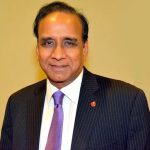
Vemuri S Murthy, MD, A Global Champion of Resuscitation Medicine
A Self-Reliant India Is A Strong Successful India
India is celebrating it’s 75th birthday! To commemorate this proud and happy moment, the Government introduced Azadi Ka Amrit Mahotsav. This highlights the glorious past, celebrates the present groundbreaking achievements and points towards the bright future. This comprises of 5 pillars a) Freedom struggle b) Ideas@75 c) Resolve@75 d) Actions@75 e) Achievements@75.
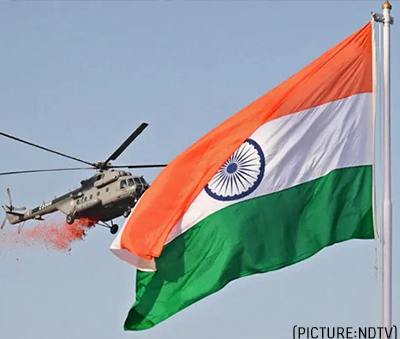
Har Ghar Tiranga: A bold vision, this ignites the spirit of patriotism and nationalism, and is part of the Government of India’s campaign to have the Indian tricolor in 20 crore houses! This may garner a spot in the Guinness World Records!!
A self-reliant India is a strong successful India. A 20-lakh crore economic package will help in Atma Nirbhar Bharat. Multiple programs are in place across the country, designed to empower citizens, especially women and give them technical expertise.
Basic Vocational tailoring, teaching Areca Leaf Plate making, professional cake training, women farmers recycling domestic waste, getting a computer into the hands of every student, aiming for a tobacco free India (with the proper education and tools), an innovative wrist band to help senior citizens, these are some of the programs helping folks in rural and urban areas.
Jai Hind!

Bhavani Srinivasan MD MPH, Chair Women’s Affairs AAPIQLI; Vice President NIAASC;
President GMC Alumni USA Inc.
Freedom Is, In Fact, The Autonomy To Express One’s Views In Public Without Fear
As India is celebrating its 75th Independence Day, the Diaspora worldwide is joining in the festivity with parades, proclamations, and plays. Undoubtedly, there is so much to celebrate for getting freed from the yoke of colonialism and the clutches of the British. They all who had fought for our freedom deserve our eternal gratitude for their grit and ceaseless efforts that brought us victory.
However, becoming independent necessarily doesn’t mean that one is free. Freedom is, in fact, the autonomy of expressing views in public places against the government and having the right to go everywhere with anyone, wear anything of their own choice, and believe or not to believe in any religion while affording protection from the state for life and property. Are these true in Today’s India?
As India celebrates its 75th Independence Day, there is little doubt that individual liberties guaranteed under the constitution are steadily vanishing while the judiciary that is supposed to protect personal freedom and the rule of law is finding common ground with the Executive branch that is increasingly set on a path towards majoritarian authoritarianism. It has been said that “democracy dies in darkness,” and the provisions in India’s constitution, like the one in the U.S., are like “parchment barriers – fragile bulwarks intended to preserve liberty. To be effective, these barriers need to be respected by the government and ordinary citizens alike both in law and custom.” Wishing the nation a happy 75th Independence Day.
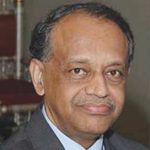
George Abraham, vice-chairman, Indian Overseas Congress, USA





 This article is adapted from The Paradox of Democracy: Free Speech, Open Media, and Perilous Persuasion by Zac Gershberg and Sean Illing (University of Chicago Press, 320 pp., $30, June 2022).
 But the right to say anything opened the door to all manners of subversion, and this has been a challenge to every democracy that has ever existed. The emergence of isegoria in Athens, for instance, was accompanied by the joint rituals of ostracism and tribalism. In today’s language, you might say that Socrates was the first notable citizen to be “canceled” by the same democratic forces that made his speech free in the first place. This is the defining tension of any democratic society.
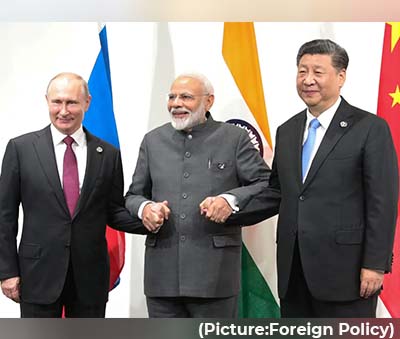 At the
 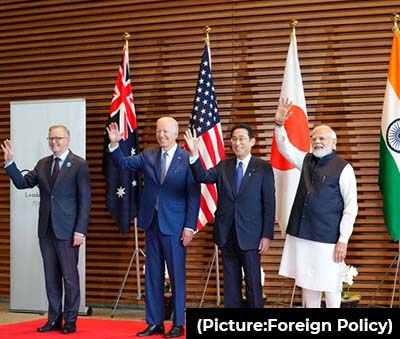 Over the last few months, India has also preserved its close ties to Russia by repeatedly
 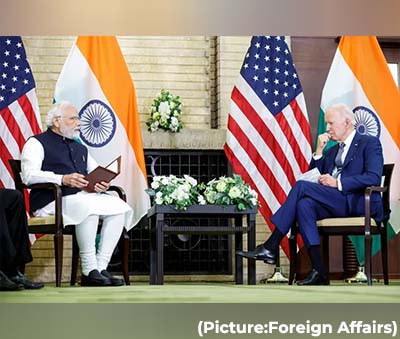 The prospect of upsetting Washington should be particularly concerning for Indian policymakers. The United States has become one of New Delhi’s most important partners, particularly as India tries to stand up to Chinese aggression in the Himalayas. But although Washington is not happy that New Delhi has refused to condemn Russian aggression, Indian policymakers have calculated that their country is so central to U.S. efforts to counterbalance China that India will remain immune to a potential backlash. So far, they’ve been right; the United States has issued only muted criticisms of Indian neutrality. Yet Washington’s patience is not endless, and the longer Russia prosecutes its war without India changing its position, the more likely the United States will be to view India as an unreliable partner. It may not want to, but ultimately New Delhi will have to pick between Russia and the West.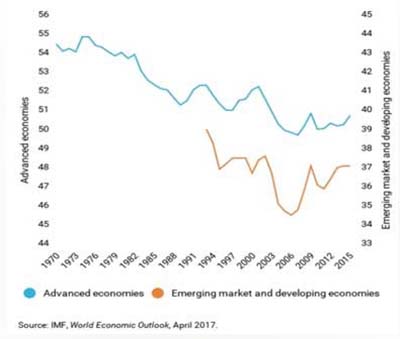
 ‘Social partnerships’ have also been important in Austria and Sweden. A series of political understandings – or ‘bargains’ – between successive governments and major interest groups enabled national wage agreements from 1952 until the mid-1970s.
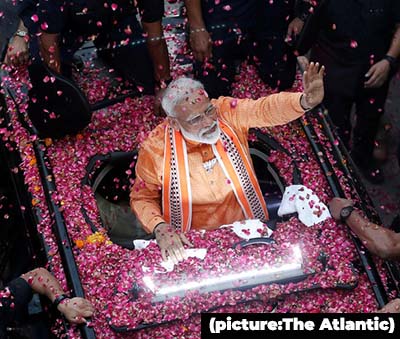 That founding ideology, however, has long been disputed by Hindu nationalists. “To be a Hindu means a person who sees this land, from the Indus River to the sea, as his country but also as his Holy Land,” wrote the politician and activist Vinayak Damodar Savarkar in his 1923 book, Hindutva: Who Is a Hindu? (Hindutva, meaning “Hindu-ness,” has become shorthand for Hindu nationalism itself.) In Savarkar’s view, only those who regard India as both their country and their sacred Hindu homeland could be truly Indian. While Christians and Muslims could fulfill the first requirement, of patriotism, they would never be able to achieve the second. “Their holyland is far off in Arabia or Palestine,” Savarkar wrote. “Consequently their names and their outlook smack of a foreign origin. Their love is divided.”
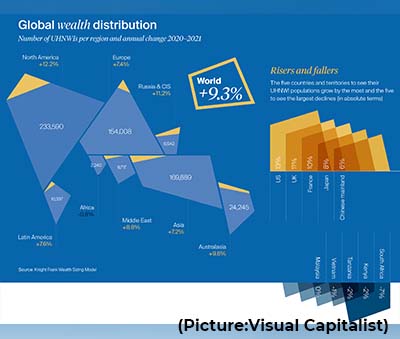 The fortunes of food and energy billionaires have risen by $453 billion in the last two years, equivalent to $1 billion every two days, says Oxfam.
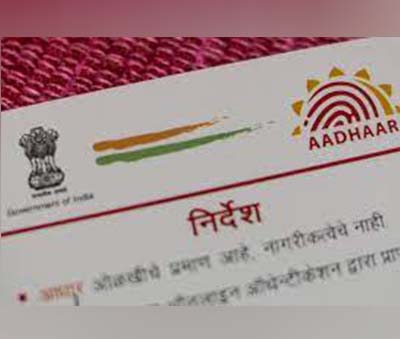 The Aadhaar-EPIC controversy illustrates the serious problems that can arise when large biometric identity databases are expanded beyond their remit. Far from making India’s elections more secure, the marriage of the two systems could lead to disenfranchisement and increased voter microtargeting. With countries around the world launching or already administering biometric databases, India’s efforts to marry its biometric identification system to its voter registration database will provide an important precedent for how governments deploy such systems. India’s experience with biometric identification systems should be a lesson for policymakers overseeing similar efforts about the importance of investing in the security of the information ecosystem in which biometric and voting data is housed, how access to this data is regulated and monitored, and how the technology is actually deployed in voter registration and identification.
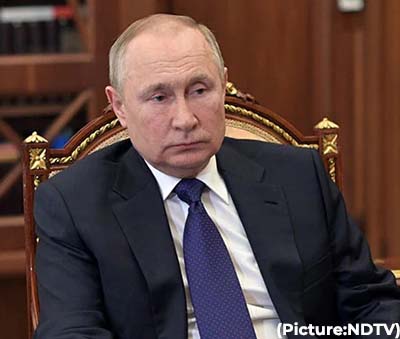
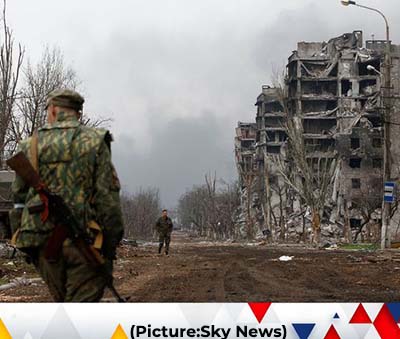 ‘However, one wonders how a genuine national leader could allow the subjugation of his people to this level of destruction and suffering and let his motherland be laid to ruins.’ He has been urging women and children of Ukraine to welcome the Russians with Molotov cocktails while lamenting the toll of the civilian deaths. Now that he has succeeded in keeping Russia’s army at bay from taking Kyiv, he must be dreaming about becoming the ultimate warrior who has saved Europe from the Russians. Of course, the power elites in Washington must be reassuring him of their unflinching support and are delighted to see the travails of the Russians on the battlefield.
 Do Ukrainians still have different views regarding politicians, economic development, and even the state of their foreign policy? Yes, absolutely, as any other democratic nation should.
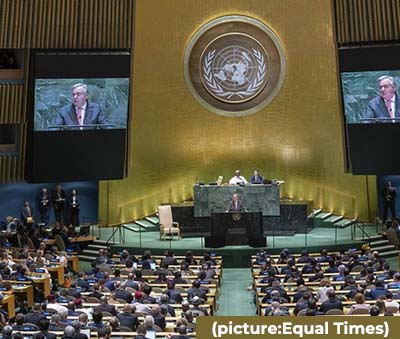 Some countries tried to expel South Africa, which was one of the 51 founding members of the United Nations in 1945, because of its policy of apartheid, but the three permanent members of the Security Council – France, UK, and US – used their veto power to block that move.
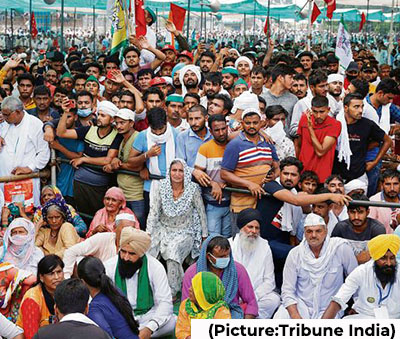 Journalists who traveled extensively into the Hindi heartland say that they found the voters constantly complaining about lack of jobs, high inflation, cooking gas, petrol prices, and many other issues. But when asked who they would vote for, their choice was unanimous: BJP. What was the rationale? They said that Modi was in for the big fight, so they wanted to support him and his party. What they meant by the big fight was Hindus versus Muslims.
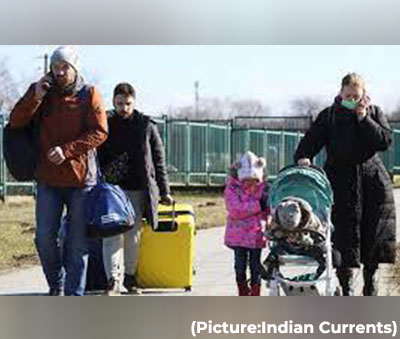 In fact, the Russians were talking about a hysteria of the West for fear of the annexation of Ukraine which, they said, was never on their mind, but only a fiction of the hysterical minds of the West. And then came the onslaught on Ukraine and the Ukrainians, turning the seeming glimmer of goodness and hope into a lie. And what a lie it was! The reports are that, as I am writing this, over 2 million of Ukrainian refugees have sought refuge in neighbouring countries like Poland, Moldova, Lithuania, Slovakia, Hungary, Romania. Besides, millions of people have been displaced within the country, and they are going about helplessly trying to find a safe place for themselves.
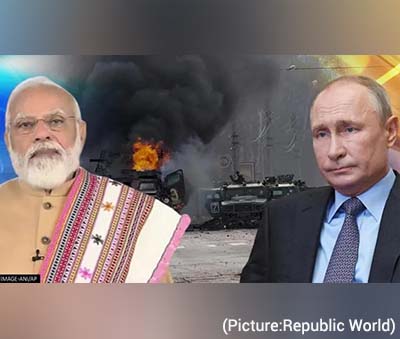 “It had little to do with the Soviet Union because it was about ideologies such as anti-colonialism, anti-imperialism, anti-apartheid, and pro-Palestine, which were the basis of non-allied nations. We also supported the Soviet block, “explains TP Sreenivasan, India’s former Deputy Standing Representative for the United Nations in New York. In her article, Das writes that the tendency towards the Soviet Union is likely to be partly due. “India and the former Soviet Union share a position as an economically developing country rather than an inherent idealistic affinity.”
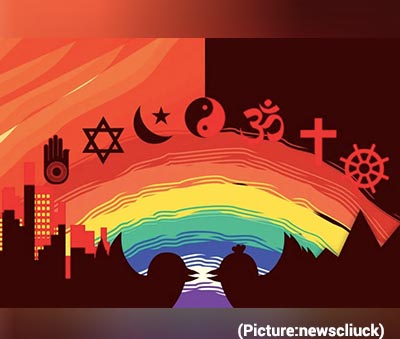 During the colonial period, divisive tendencies in the name of religion reared their head due to the British policy of divide and rule. The elite sections of society initiated and encouraged these tendencies. However, they were overshadowed by the integrative and all-inclusive freedom movement. It is here that the magical interpretation of Hinduism by Gandhi succeeded in mobilising people of all religions within the single thread of Indian nationalism. The charisma of Gandhi’s movements left a deep impression on people of all faiths. People recited shlokas from the Gita and verses from the Koran and the Bible in his prayer meetings.
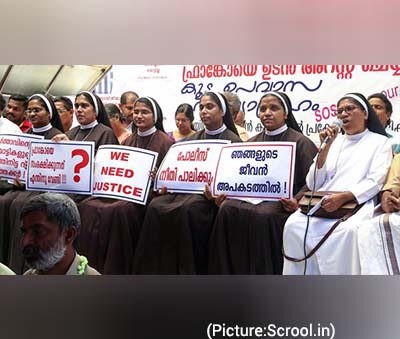 This has led in case after case to the subversion of justice. It is open season for destroying the survivor’s credibility and her narration of the facts. It is not the rapist but the survivor who becomes the accused, having to prove herself credible. Thus a direction to give special consideration to a survivor’s testimony is turned into a legal instrument against her. The onus shifts to the survivor to prove that she is credible as a “sterling witness.” When the eyes and ears of the law are not tuned in to hear the survivor, or to understand her circumstances or how the world appears to her, when the law fails to see in her silences the power of the perpetrator, then you can be sure that justice will be a long time coming.
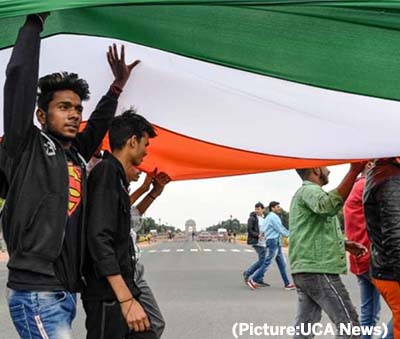 Jawaharlal Nehru, the first prime minister of India, played a crucial role in leading India on the path of secularism. Although Vallabhbhai Patel had huge success as the party chief, Mahatma Gandhi chose Nehru to succeed him and also as the first prime minister of the country.
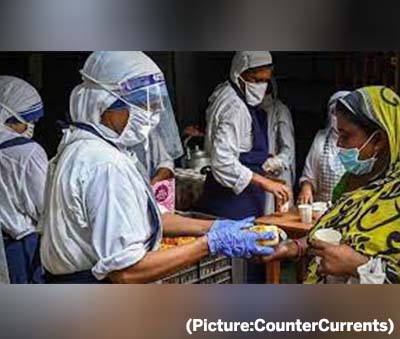 These leaders appear to be unimpressed with the vital work done by many of these civic organizations in blunting the fury of the pandemic by providing food and assistance when the government was found missing in action. Missionaries of Charity, an organization founded by Mother Teresa, is one of the impacted organizations and might have garnered the most attention. However, so many of those organizations on that list might soon be depriving a dying patient of urgent medical care due to their inability to pay or denying a meal to a hungry person from the ranks of the poor and disadvantaged.
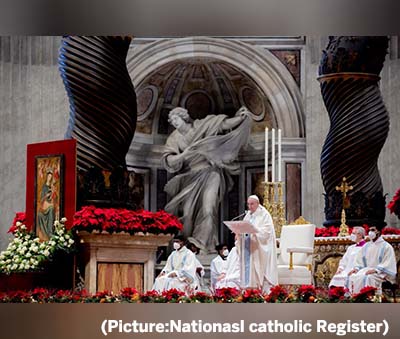 Pope Francis proposes three paths for building lasting peace. First, Dialogue between Generations, second, Education and third Work. A word on each:
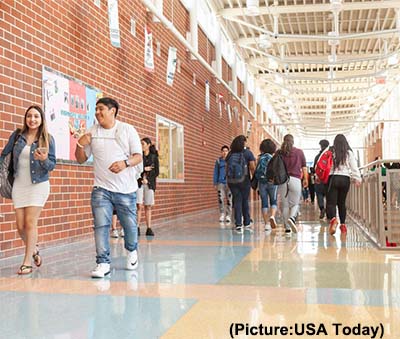 This reformative initiative requires the schools to display language outside of restrooms, informing students, whether male or female, that they may use the restroom that aligns with their gender identity. CPS prompted others, “We require all schools to adopt new signage to make our restrooms more inclusive. This is a big step forward for gender equity for our students and staff.” Is it going to influence the schooling practices themselves, or will it just be ignored?
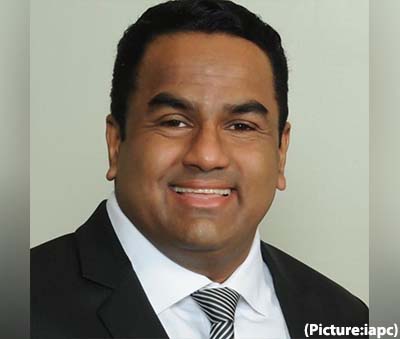 The World Health Organization says that cancer is diagnosed in more than 14 million people worldwide annually and ends up killing approximately 8.8 million. What is most shocking is that two-thirds of these deaths are in low-middle income countries where diagnosis is found to be inadequate.
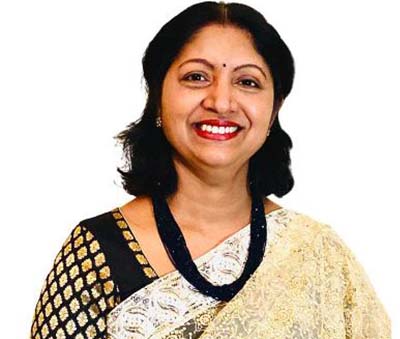 The annual physical exam is part of the larger discussion about primary care and whether it is necessary. In the U.S., India, and other countries around the world, medicine has become the way you manage disease, not prevent it. Primary care, on the other hand, is a way to prevent disease by talking with patients about their potential health risks and giving them practical advice on how to care for their health, while considering their unique lifestyle challenges.
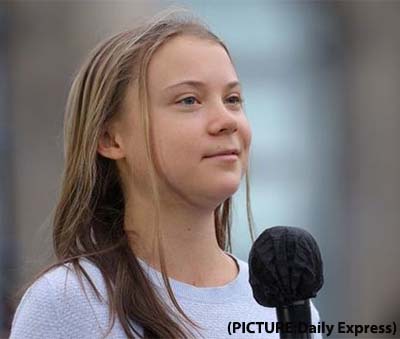 Yet, despite these efforts, the fact is that we started out late in combating climate change and now need to accelerate corrective action if humans are not to go the way of the dinosaurs. The climate crisis is a global issue and requires action from all countries, but many developing economies, including some of the most climate-vulnerable ones, lack the financial wherewithal to do enough on their own. Some emerging economies, including South Africa and much of South and Southeast Asia, are hugely reliant on coal, and will have to undergo a disruptive green transition.
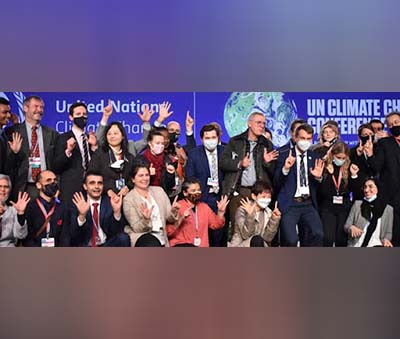 He even warned “It is time to go into emergency mode — or our chance of reaching net zero will itself be zero.” At the same time, Secretary-General’s rather confusing, ill-composed comment in his remarks at the conclusion of COP 26 that “We are still knocking on the door of climate catastrophe” left many wondering what he was trying to convey.
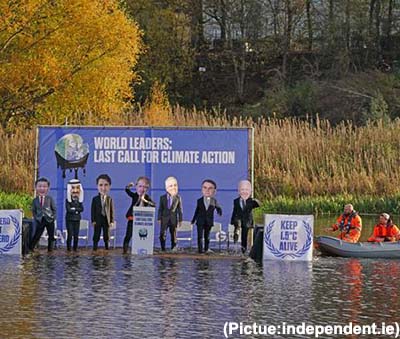 In a significant move, countries would urge one another to “accelerate the phasing out of coal and subsidies for fossil fuels” in the draft, though it has no explicit reference to ending the use of oil and gas. There has been a big push among developed nations to shut down coal-fired power plants, which are a major source of heat-trapping gases, but the fuel remains a critical and cheap source of electricity for countries like China and
  As per the long history cut short; Mullaperiyar dam was built in the late 1800s in the princely state of Travancore (present-day Kerala) and given to British-ruled Madras Presidency on a 999-year lease in 1886. The agreement granted full rights to the secretary of state of Tamil Nadu, a British official, to construct irrigation projects on the land. The dam was built to divert a part of the west-flowing Periyar river eastwards to feed the arid areas of Tamil Nadu. Now there is no princely state or British rule, so better forget about the 999 year lease. Only thing we need to care is the safety and fraternity among neighboring states and mutual help by each other.
 Access, ownership and use of digital tools are not gender-neutral
 As we know some countries have dealt with the spreading virus more effectively and efficiently than others because they relied on the correct professional advice and had the right people in the places instead of dilettantes with inflated egos. The immediacy of the pandemic with its daily effects on health care and peoples’ livelihoods is seen as urgent political and health issues unlike the dangers surrounding our planet which, to many, appear light miles away while still others treat it with large doses of skepticism.
 Delhi’s
 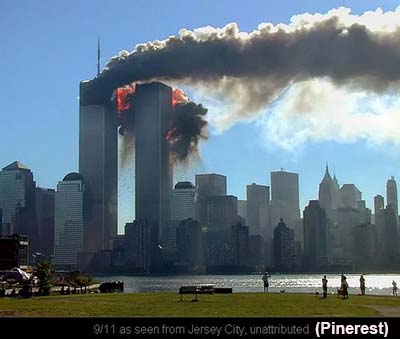 Lauren had left two messages that morning, as he slept with the phone ringer off in the bedroom. First, with good news that she was taking an earlier flight from New Jersey home to San Francisco. Then she called from the plane. There was “a little problem,” his wife said, but she was “comfortable for now.” She did not say she would call back, Grandcolas recalls. She said: “I love you more than anything, just know that. Please tell my family I love them too. Goodbye, honey.” “That moment I looked over at the television and there was a smoldering hole on the ground in Pennsylvania. They said it was United Flight 93,” said Grandcolas, 58. “That’s when I dropped to the ground.” All 44 people on board were killed. Lauren was 38 years old and three months pregnant with their first child. She had traveled East to attend her grandmother’s funeral in New Jersey, and then stayed a few extra days to announce the pregnancy — a little “good news to lift the spirits of her parents and sisters after burying their grandmother,” Grandcolas said.
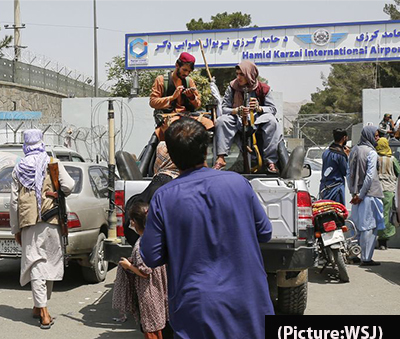
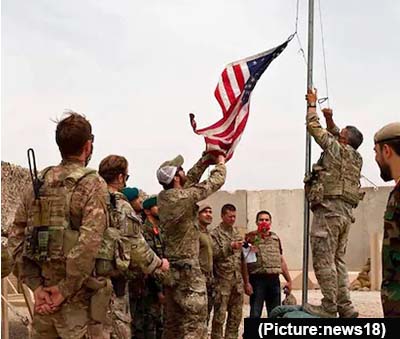 When U.S. troops withdrew from Kabul’s Hamid Karzai International Airport within the stipulated time, the nation’s most prolonged war cost was more than $ 2.3 trillion. During the last 20 years, more than 2,400 U.S. service members have been killed in Afghanistan alone. World astonished to hear that even while retrieving, thirteen U.S. soldiers were killed in the latest suicide bombing in Kabul Airport. Taliban’s praise of China is aimed at gaining recognition for their government at the international level by establishing links with power like China. China and Pakistan are now the only countries in the region that fully support the Taliban.
 China
China QUOTES
 Most of them might not have served a single day in the
  “Many of the Desi civil rights organizations in this country would make loud protests, justifiably so, at the slightest discrimination or physical attack on an Indian but remain largely silent to any level of atrocities committed to vulnerable groups in
  Last February 13, 2021, marks the civil rights lawyer and activist Sudha Bharadwaj’s 900 days in detention under the UAPA law.
 Bishop Kevin C. Rhoades, who leads the doctrine committee of the U.S. Conference of Catholics Bishops, reiterated that the document will not bar any individuals from receiving Communion and said it is “going to be addressed to all Catholics, not a particular person or a single issue in the part on Eucharistic consistency.”
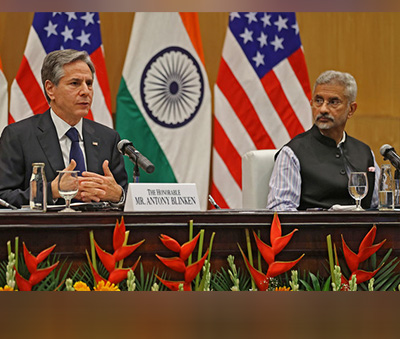 However, this does not give justice to hundreds of Christians and other minorities who sacrificed their lives due to the quest of the ruling party to declare India as a Hindu state. The poor departed souls must have been churning in their graves when they hear such statements. The injustices suffered by the 84-year-old Fr. Stan Sway alone should have been reason enough for Mr. Blinken to have been more cautious in his statements about human rights and respect for democratic principles by the government of India.
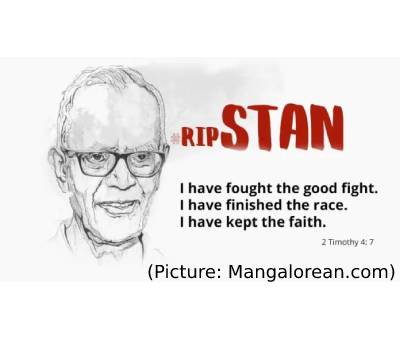 We listened to your heartfelt words shortly before your arrest on Oct. 8, 2020: “What is happening to me is not something unique — happening to me alone. It is a broader process that is taking place all over the country … In a way I am happy to be part of this process. I am not a silent spectator, but part of the game, and ready to pay the price whatever be it.” On May 21, you told Bombay High Court about the sufferings you were undergoing in jail. It had been eight months since you were brought there with your body fully functional. You could have a bath by yourself and also do some writing.
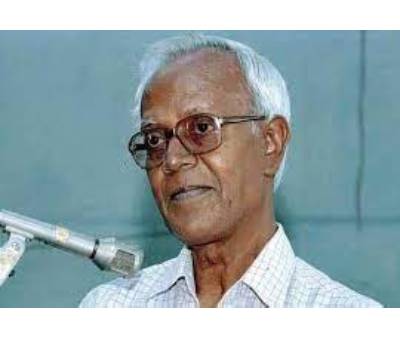 Secondly, I feel happy for him because Fr. Stan is now in a better state than he was, while alive in circumstances such were inflicted on him for reasons he could not understand. There is a school of thought that it is easier for an innocent man to suffer. They think so because they have never suffered, innocently or otherwise. The anguish in guilt-less suffering is that one’s suffering makes no sense. It is absurd. What is absurd is unendurable. If you are punished for your wrongdoings, then you can reconcile yourself to your plight. Think, if you dare, of the plight of an old and chronically ill man in a prison. Prison-life conditions, including the psychological poison that goes with it, being what they are, even individuals much younger than Fr. Stan and in better states of health disintegrate fast. Fr. Stan himself said that it is better to die than to be in prison the way he was. So, why shouldn’t we celebrate his release from misery through the mercy of death, for neither mercy nor justice was likely to reach him in any other way?
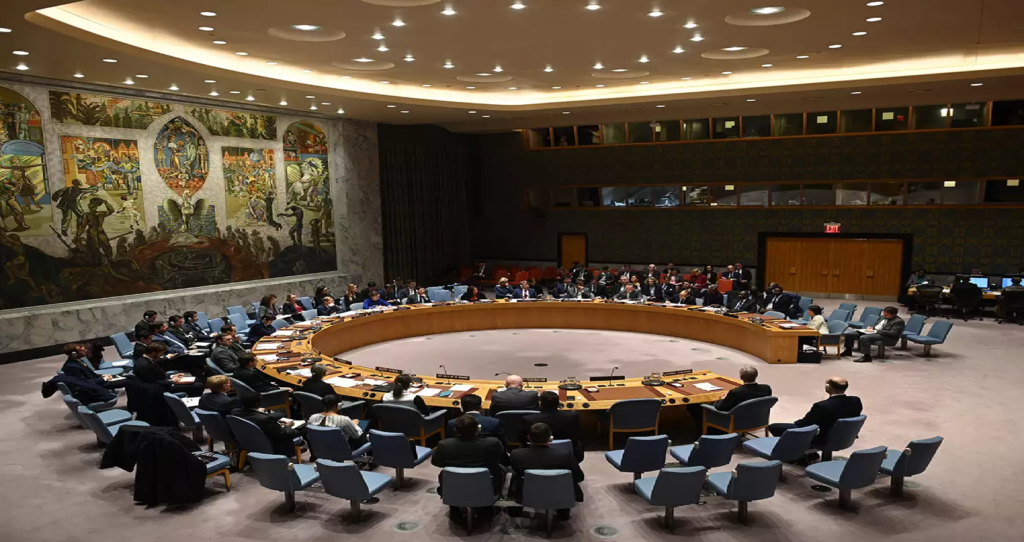 Ever since the fall of the USSR, he said, the UN Secretary-General has become subservient to the US government (“we saw this shockingly with the treatment of former Secretary-General Boutros Boutros-Ghali”). The new ‘Group of Friends to Defend the UN Charter’, which includes China and Russia, is a positive development, said Prashad.