This fall, Miami and Mumbai will celebrate the 100th anniversary of the Art Deco movement with Art Deco Alive!, a cross-continental festival highlighting the architectural heritage of both cities.
This fall, Miami, Florida, and Mumbai, India, will come together to celebrate the centennial anniversary of the Art Deco movement with Art Deco Alive! (ADA!), a new festival that connects two of the world’s most architecturally rich cities.
The festival aims to bridge continents and time zones, creating an immersive celebration of design, heritage, and contemporary creative expression. Both Miami and Mumbai are home to some of the largest and best-preserved collections of Art Deco architecture globally, making this event a significant cultural milestone.
Art Deco Alive! was founded by Smiti Kanodia, along with co-founders Salma Merchant Rahmathulla and Gayatri Hingorani Dewan. The festival is being organized in collaboration with several prominent organizations, including the Miami Design Preservation League, Art Deco Mumbai Trust, The Dr. Bhau Daji Lad Museum, and The Wolfsonian–FIU.
The Art Deco movement emerged in the early 20th century, coinciding with rapid urban growth in both cities. In Miami, a devastating hurricane in 1926 led to a wave of reconstruction, giving rise to the Tropical Deco style characterized by pastel colors and nautical influences that define South Beach today.
In Mumbai, known as Bombay until 1995, Art Deco began to flourish in the 1930s. Indian architects skillfully blended international modernist influences with local motifs and materials, resulting in a unique aesthetic visible in iconic neighborhoods such as Marine Drive, Churchgate, and Shivaji Park.
Today, Miami Beach and Mumbai boast some of the most extensive and well-preserved Deco districts in the world. Both cities have been shaped by their colonial histories, tropical climates, and cosmopolitan aspirations.
“Mumbai and Miami, two cities across continents on opposite sides of the world, are united by their dynamic spirit, architectural heritage, and cultural confluences,” said Smiti Kanodia, founder of Art Deco Alive!. “As they undergo gentrification and evolve, we want to celebrate heritage as a living, breathing entity, inspiring people to care for it and advocate for its preservation.”
Art Deco Alive! serves as a tribute to cultural reinvention, uniting Miami and Mumbai through their shared architectural legacy. The initiative emphasizes creative exchange and community engagement, honoring the rich culture and influence of Deco design. The festival will feature a variety of events, including a twin-city museum exhibition, guided heritage walks, retail pop-ups, and design-inspired symposia.
By intertwining architecture, culture, and community, Art Deco Alive! invites audiences in both cities to rediscover meaningful spaces, celebrate creative legacies, and envision a future where preservation and progress coexist. The festival aims to reanimate Deco’s spirit for a new era, showcasing the power of cultural exchange and the enduring inspiration of heritage.
“Art Deco Alive! is more than a tribute to the past,” said co-founder Salma Merchant Rahmathulla. “It’s a celebration of cultural kinship and creative reinvention, linking Miami and Mumbai through architecture, memory, and style.”
Art Deco Alive! will feature a robust calendar of events in both cities. In Miami, from October 8 to 12, 2025, highlights will include a Twin-City Centenary Museum Exhibition at the Art Deco Museum, a 1920s Rewind Cocktail Party at The Wolfsonian–FIU, and heritage tours through the South Beach Deco District.
In Mumbai, from November 6 to 25, 2025, events will include a Twin-City Centenary Museum Exhibit at the Dr. Bhau Daji Lad Museum, an Art Deco Symposium, and Deco Walks through the city’s UNESCO-recognized neighborhoods.
“Having grown up in Mumbai and now living in Miami, I feel that Miami’s Art Deco identity seems a lot more celebratory and vibrant,” said co-founder Gayatri Hingorani Dewan. “In contrast, Mumbai’s Deco is woven into the city’s hustle and bustle, making it feel like a hidden treasure.”
For more information about Art Deco Alive!, please visit artdecoalive.org and follow the collective on Instagram.
Today’s horoscopes offer insights for all zodiac signs, highlighting events and emotions that may shape your day on October 4, 2025.
Aries (Mar. 21 – Apr. 20): Today, you may find yourself puzzled by an inexplicable event or perhaps encounter an unexpected but positive occurrence. While it may not be monumental, it will prompt you to reassess your current situation. You might face challenges in meeting deadlines, but Ganesha encourages you to communicate the significance of your work to others.
Taurus (Apr. 21 – May 21): Despite overwhelming odds, you will maintain your composure today. Ganesha suggests that logic and reason will guide your actions as you identify and resolve issues effectively. Success is within reach, and you are prepared to seize it. However, be cautious about your reputation, as your ethics may come under scrutiny.
Gemini (May 22 – Jun. 21): A spiritual inclination may draw you today, prompting a visit to a place of worship. You might also engage in shopping, likely for religious purposes. Ganesha wishes you blessings as you navigate this spiritually enriching day.
Cancer (Jun. 22 – Jul. 22): You will dedicate yourself wholeheartedly to your tasks today, although the outcomes may not meet your expectations. Do not let this discourage you; your efforts will eventually be rewarded. Spending quality time with loved ones will provide emotional fulfillment.
Leo (Jul. 23 – Aug. 23): Today presents a mix of challenges and rewards. Ganesha foresees a busy morning followed by a hectic afternoon, leaving little room for relaxation. However, the evening promises delightful moments with loved ones, a satisfying dinner, and a romantic ambiance to soothe your frayed nerves.
Virgo (Aug. 24 – Sep. 22): Pay attention to your inner feelings today. A short trip may be on the horizon, and you will find it easy to connect with others. Ganesha advises you to express your emotions sincerely, which will help strengthen your relationships.
Libra (Sep. 23 – Oct. 23): Small irritations may trouble you today, especially as you pursue larger goals. Ganesha warns against letting these minor annoyances dampen your enthusiasm. Embrace new ideas and maintain balance, as this approach could lead to impressive results at work and financial gains.
Scorpio (Oct. 24 – Nov. 22): A series of disappointments may challenge your confidence and resolve. Ganesha advises you not to let these temporary setbacks define you. At work, you might feel pressured by your subordinates to take decisive action.
Sagittarius (Nov. 23 – Dec. 21): Expect a day filled with joy and positivity. You may consider enrolling in a part-time course to enhance your skills. For those in law enforcement or legal professions, Ganesha encourages you to assert your authority confidently.
Capricorn (Dec. 22 – Jan. 20): After a day of frantic activity, you will take time to plan your future actions. Unexpected profits may come your way, but be mindful of how you utilize them. Opportunities will present themselves, so be ready to act before they slip away.
Aquarius (Jan. 21 – Feb. 18): Your schedule may feel chaotic today, particularly if you hold an administrative role. Ganesha reassures you that your hard work and dedication will help you navigate the challenges. Despite the workload, you will still find time to enjoy an evening out.
Pisces (Feb. 19 – Mar. 20): Your ability to acknowledge your mistakes will earn you admiration from those around you. Today, your nurturing nature will shine as you attend to the needs of your family members, according to Ganesha.
Stay connected with the cosmos through your daily horoscopes. Access insights tailored to your zodiac sign for October 4, 2025, and discover what the universe has in store for you. Whether you are an adventurous Aries or a compassionate Pisces, our expert astrologers provide personalized readings to help you navigate life’s challenges and triumphs.
Today’s horoscopes reveal insights for each zodiac sign, guiding individuals through personal challenges and opportunities as they navigate their daily lives.
Aries (Mar. 21 – Apr. 20): Today, you are encouraged to listen to your inner voice, which Ganesha believes is a positive step. This focus will help you strive for perfection in your endeavors while maintaining your sensible and realistic nature. A hint of adventure could also be beneficial, according to Ganesha.
Taurus (Apr. 21 – May 21): Ganesha foresees a significant milestone in your path today. Emotional well-being is crucial for your physical health, so consider spending your evening with like-minded individuals to engage in enriching discussions and reflections.
Gemini (May 22 – Jun. 21): Unlike the previous days, today will be busy and demanding. You will find yourself attending various social gatherings and functions. While socializing with friends and family is on the agenda, be mindful of your health, as Ganesha indicates potential expenses related to medications.
Cancer (Jun. 22 – Jul. 22): Today, you are likely to approach problems with empathy, as predicted by Ganesha. You may find yourself in the role of a confidant for those around you. However, it is essential to leave your personal issues at work and open up to your loved ones in your relationships.
Leo (Jul. 23 – Aug. 23): If you haven’t married your boss, you might still face challenges due to your partner’s authoritative demeanor. Ganesha advises you to address these individual differences with your spouse. On the professional front, expect a satisfying day as you continue to impress your colleagues with your cleverness.
Virgo (Aug. 24 – Sep. 22): Ganesha suggests that you may take on a leadership role at work today, setting the agenda for your team. You might also enjoy some afternoon window shopping, looking for a thoughtful gift for a loved one. In the evening, consider discussing your long-term goals with a close friend or family member.
Libra (Sep. 23 – Oct. 23): Today is a day for spending quality time with close friends or loved ones. Your romantic side will shine, attracting positive attention from others. By evening, your imagination will be particularly vibrant, and Ganesha sends his best wishes for your endeavors.
Scorpio (Oct. 24 – Nov. 22): Ganesha predicts that you will showcase your organizational skills today. You will develop a newfound appreciation for your job, and later in the day, you may find effective solutions to lingering issues. Take the time to research any decisions you make to ensure they are well-informed.
Sagittarius (Nov. 23 – Dec. 21): Today, Ganesha sees you stepping into the role of a good Samaritan, paving the way for a brighter future. Expect a peaceful atmosphere at home, while work may become more manageable as the day progresses.
Capricorn (Dec. 22 – Jan. 20): You will not settle for anything less than excellence in your tasks today, according to Ganesha. However, working extra hours may leave you feeling fatigued by the afternoon. To counter this, consider delegating tasks to those around you while ensuring they meet your high standards.
Aquarius (Jan. 21 – Feb. 18): Your curiosity will serve you well today. After dedicating significant time and energy to planning your future—whether in business or education—you will begin to put those plans into action, as Ganesha foresees. Keep up the hard work; rewards are on the horizon.
Pisces (Feb. 19 – Mar. 20): Today, you may find yourself willing to make sacrifices for your loved ones. While you might not engage in grand gestures, you will prioritize their comfort over your own. It is advisable to postpone any major decisions for a few days and avoid taking unnecessary risks, as Ganesha warns they may not yield favorable results.
Stay connected with the cosmos through your daily horoscope. Access your October 1, 2025, horoscopes for every zodiac sign to uncover what the universe has in store for you. Whether you are an adventurous Aries or a sensitive Pisces, our expert astrologers provide tailored insights to help you navigate life’s challenges and triumphs.
Asia Society will honor Kiran Nadar, a prominent art collector and philanthropist, at the 12th Annual Asia Game Changers Awards Gala in New York City on October 15, 2025.
Kiran Nadar, a visionary art collector and philanthropist, will be celebrated at the 12th Annual Asia Game Changers Awards Gala, hosted by Asia Society on October 15, 2025. The event will take place at Cipriani 25 Broadway in New York City.
As the founder of the Kiran Nadar Museum of Art (KNMA) in New Delhi, Nadar has played a pivotal role in promoting Indian modern and contemporary art on a global scale. Her museum, recognized as India’s first private institution of its kind, provides free public access to a variety of world-class exhibitions, educational programs, and scholarly initiatives, inspiring millions of visitors each year.
Vishakha Desai, President Emerita of Asia Society, praised Nadar’s contributions, stating, “As a philanthropist and visionary in the arts, Kiran Nadar has transformed India’s cultural landscape. With the opening of the new Kiran Nadar Museum of Art—the largest private museum in India, spanning traditional and contemporary art—her legacy will redefine Indian cultural heritage globally. She embodies the essence of the Asia Game Changers Award.”
Nadar’s influence extends beyond the arts; she has made significant contributions to education, health, and community development. Her work exemplifies how cultural leadership can promote social progress and inspire change.
The Asia Game Changers Awards, established in 2014, honor exceptional leaders from Asia and the Asian diaspora who are effecting transformative change across various fields. This annual gala has become a prominent event in New York, attracting global leaders, artists, and innovators.
This year’s gala will also recognize other distinguished individuals, including Tony Award-winning creators Will Aronson and Hue Park, internationally acclaimed pianist Yuja Wang, former U.S. Ambassador Jon M. Huntsman Jr., and philanthropists Elaine Chao and Dr. James S.C. Chao. The evening will feature a performance by Persian musician and composer Mehrnam Rastegari, celebrated for his unique blend of traditional Persian music with modern fusion and rock influences.
As the event approaches, anticipation builds for a night that promises to celebrate the transformative power of art and leadership, exemplified by Kiran Nadar and her fellow honorees.
Your daily horoscope for September 29, 2025, reveals insights for each zodiac sign, highlighting themes of creativity, relationships, and personal growth.
Aries (March 21 – April 20): Today brings a sense of freedom that encourages you to reconnect with childhood joys. This is an excellent time to plan a family outing, as your mood inspires thoughts about the future of your loved ones, according to Ganesha.
Taurus (April 21 – May 21): Prepare for a busy day filled with work that you will find fulfilling. Ganesha advises you to avoid taking unnecessary risks and to stick to tried-and-true methods. Challenges may arise soon, so stay grounded and focused.
Gemini (May 22 – June 21): You will come to understand the importance of nurturing close relationships today. Ganesha predicts new responsibilities and significant profits in your dealings, but don’t forget to prioritize your health.
Cancer (June 22 – July 22): Today is marked as a unique and auspicious day for you. Ganesha suggests that you may receive invitations for a religious ceremony at home, and there is a possibility of moving to a new residence. Best wishes are extended for your endeavors.
Leo (July 23 – August 23): Creativity is at its peak today, making it a rare opportunity to express your imaginative side. Ganesha encourages you to seize this day, especially if you work in media, as your ideas will flourish. Confidence will be essential to your success.
Virgo (August 24 – September 22): Expect to delve deeply into your inner self today. Ganesha notes that you will enjoy financial rewards, which you may choose to share generously with loved ones. Seek out someone for an intimate conversation to unwind from work pressures.
Libra (September 23 – October 23): Passionate moments are in store for you today, with the potential for new romantic developments. Ganesha likens this day to a fateful encounter, urging you to impress your partner and pay attention to your appearance.
Scorpio (October 24 – November 22): Today, you may find yourself stepping away from routine tasks to engage in creative pursuits like cooking or gardening. Ganesha suggests that you focus on smart work rather than hard work, as family joys will bring you more satisfaction than work achievements.
Sagittarius (November 23 – December 21): A transformation in your appearance and demeanor is likely today. Ganesha indicates that dressing stylishly and wearing bold fragrances will attract admirers, making you a center of attention.
Capricorn (December 22 – January 20): Your practical nature will be evident today, especially regarding finances. While you may be frugal, Ganesha warns that you could indulge in a spending spree later in the day. Keep an eye on your budget to avoid overspending.
Aquarius (January 21 – February 18): Today is favorable for acquiring new possessions, such as a dream home or vehicle. However, Ganesha advises you to assess your financial situation carefully, as these purchases could significantly impact your savings.
Pisces (February 19 – March 20): Your selfless nature may lead you to prioritize the well-being of others over your own today. Ganesha notes that you will feel a strong urge to contribute to your family and home. In your professional life, you will achieve your goals without facing opposition.
Stay connected with the cosmos through your daily horoscope! Access insights tailored to your zodiac sign for September 29, 2025, and discover what the universe has in store for you. Whether you are an adventurous Aries or a compassionate Pisces, our expert astrologers provide personalized readings to help you navigate life’s challenges and triumphs.
Daily horoscopes for September 28, 2025, reveal insights for each zodiac sign, guiding individuals through the challenges and triumphs they may encounter today.
Aries (March 21 – April 20): Today, you may find yourself feeling a bit irritable, as interactions with others could rub you the wrong way. It’s essential to remember that unnecessary annoyance will only complicate matters further. Take some time to reflect in solitude on the root of the issue, as Ganesha suggests it may be closer than you think.
Taurus (April 21 – May 21): Your enthusiasm will be infectious today, and your smile is likely to charm those around you. While you may face some stressful moments, the day will improve as it progresses. If things become overwhelming, don’t hesitate to take a break and recharge.
Gemini (May 22 – June 21): Today is a day for self-improvement, according to Ganesha. Those who are self-employed may see significant profits in their ventures. However, be mindful of spending too much time at work at the expense of family time. Striking a balance is crucial.
Cancer (June 22 – July 22): As a quintessential Scorpio, passion and desire will be at the forefront of your mind today. You may struggle to resist flirting with attractive colleagues at work. However, as the day unfolds, you may find yourself returning to a more rational mindset, Ganesha notes.
Leo (July 23 – August 23): Today marks a resurgence of your brilliance and energy. Ganesha predicts a fantastic day, particularly for those in freelancing, as your creativity and inspiration will soar, motivating others around you. Remember the words of Swami Vivekananda: “Arise, awake and stop not till your goal is reached.”
Virgo (August 24 – September 22): You will embody the essence of Iron Man today—possessing a heart of gold and nerves of steel, albeit without the shiny armor. Your tolerance, optimism, and artistic talents will shine through. Ganesha encourages you to pursue academic interests in the arts, as your understanding of life can help you serve society better.
Libra (September 23 – October 23): You have a knack for acknowledging favors and addressing any ridicule you encounter. Today is the perfect time to settle old scores that matter to you. Ganesha believes this will lead to intriguing developments that will surprise you throughout the day, making it a vibrant one.
Scorpio (October 24 – November 22): Ganesha warns that today may feel long and dreary. While you may not be entirely lost, you could feel a desire for solitude. The empty nest syndrome might affect your mental peace, so take some time for self-reflection.
Sagittarius (November 23 – December 21): Your superiors will entrust you with complex assignments today. After putting in the effort, you are likely to excel and receive recognition for your work. Ganesha hints that financial incentives may also come your way, marking a fortunate day for you.
Capricorn (December 22 – January 20): If you are involved in sports, expect to enjoy good health and recognition. Engineers may contemplate investing in new ventures, but Ganesha advises caution, as a minor mistake could lead to significant losses. Strengthening your social standing is also on the horizon, with others likely to hold you in high regard.
Aquarius (January 21 – February 18): Financial matters will take center stage today, with your family expecting your involvement in all monetary dealings. Work will feel more manageable, and new projects may come your way. Ganesha also predicts a potential trip in your future.
Pisces (February 19 – March 20): Your natural dynamism and energy will shine today. Freelancers may experience a surge of inspiration, leading to the creation of remarkable work. Pleasant surprises await you in the evening, according to Ganesha.
Stay connected with the cosmos through your daily horoscope! Access your September 28, 2025, horoscopes for every zodiac sign to uncover what the universe has planned for you. Whether you are an adventurous Aries or a sensitive Pisces, our expert astrologers provide personalized insights to help you navigate life’s challenges and triumphs. Visit us daily for fresh updates and stay attuned to the celestial forces shaping your destiny.
On World Peace Day 2025, Tirlok Malik’s Happy Life Yoga event at Times Square emphasized the connection between personal happiness and global peace, attracting a diverse crowd of supporters.
New York: On a sunlit afternoon in the heart of Manhattan, Times Square transformed into a vibrant hub of positivity as Tirlok Malik shared the secrets to a happy and peaceful life with an enthusiastic crowd celebrating World Peace Day.
This year marked the 21st anniversary of the event, organized by Reverend Paul Sladkus, the Founder of Good News Corporation. Malik captivated attendees with his “Happy Life Yoga,” highlighting the importance of laughter and inner happiness as essential tools for fostering global peace. “Peace and laughter go together,” he told the audience. “If you are happy yourself, you can bring peace to the world.”
The celebration attracted a diverse array of global icons, underscoring the universal appeal of Malik’s message. Among the attendees was Manhattan Borough President Mark Levine, along with notable figures such as South African film producer Anant Singh.
Support for the event came from a host of celebrities, including Ringo Starr, Michael Douglas, Sister Jenna, Stevie Wonder, Jane Goodall, Reachel Singh, Rebecca Irby, Shakira, Oprah Winfrey, and Deepak Chopra. Each of these figures expressed their commitment to peace and wellness initiatives.
Malik’s joyful demonstration featured interactive laughter exercises, mindfulness techniques, and simple yoga poses, inviting participants of all ages to engage in a collective experience of happiness. His approach resonated deeply with the audience, who responded with laughter and applause throughout the session.
“World Peace Day is not just about ending conflicts—it’s about cultivating joy within ourselves,” Malik stated. “When we laugh together, we connect, and connection is the first step to lasting peace.”
As Times Square echoed with laughter and smiles, Malik’s message served as a timely reminder that peace begins with personal happiness and can ripple out to the world at large.
Over 80 Indian Americans gathered at MINT Restaurant to honor Professor Jagmohan Singh, nephew of revolutionary Bhagat Singh, celebrating his legacy and the ongoing impact of his ideals.
More than 80 distinguished Indian Americans convened at MINT Restaurant to pay tribute to Professor Jagmohan Singh, the nephew of the legendary freedom fighter Shaheed Bhagat Singh. Bhagat Singh is revered for his courageous challenge against British colonial rule in India and has inspired countless individuals in their quest for independence.
The event was hosted by Varinder Bhalla, Chairman and Founder of the Coalition of Indian American Associations of New York (CIONY), with support from the American Punjabi Society. This gathering served as a poignant reminder of Bhagat Singh’s enduring legacy and the values he championed.
The evening commenced with a short video that showcased Bhagat Singh’s life and contributions. Originally produced in 2010 by Dr. Riti Sunshine Bhalla during her high school years, the video was scripted and produced by Varinder Bhalla. It has since been broadcast across various channels in the United States and Europe, featuring appearances from U.S. Congress members, Senators, and Governors, which underscored its historical significance.
Harry Singh Bolla, an event sponsor from a village near Bhagat Singh’s ancestral home, delivered a heartfelt keynote address. He spoke about how Bhagat Singh’s legacy has profoundly influenced his own life, emphasizing the revolutionary’s impact on the Indian American community.
Professor Jagmohan Singh, the son of Bhagat Singh’s younger sister Bibi Amar Kaur, addressed the audience with a deeply personal account of his lifelong commitment to preserving his uncle’s ideals. He articulated how Bhagat Singh’s story continues to resonate with and inspire new generations.
During his speech, Professor Singh reflected on his encounters with several of Bhagat Singh’s close associates who fought for India’s freedom. He shared emotional memories of Bhagat Singh’s final days, including intimate conversations with his parents and the remarkable courage his uncle displayed as he faced execution.
In a poignant revelation, Professor Singh recounted his mother’s imprisonment for her active participation in the independence movement. He shared how, as a one-year-old, he spent a year in jail with her, illustrating the personal sacrifices made by his family in the struggle for freedom.
The event concluded with an engaging question-and-answer session led by Varinder Bhalla. Among the most touching moments was when Professor Singh described Bhagat Singh’s reflections during his final hours, including the ideological differences he had with his father, who had sought clemency for him. These insights left the audience feeling inspired and profoundly moved.
As the evening drew to a close, the attendees were reminded of the importance of preserving the legacy of Bhagat Singh and the ideals he stood for, ensuring that his contributions to the fight for independence continue to inspire future generations.
Destination Oak Tree Road, a documentary showcasing the revitalization of a New Jersey neighborhood, has received two nominations for the 2025 New York Emmy Awards.
Destination Oak Tree Road, a celebrated documentary that highlights the transformation of a once-declining neighborhood in New Jersey, has garnered two nominations for the prestigious 2025 New York Emmy Awards.
Directed and narrated by acclaimed broadcast journalist Rohit Vyas, the film is recognized in the categories of Documentary Historical and Performer/Narrator. The nominations were announced at PIX 11 studios by the New York chapter of the National Academy of Television Arts and Sciences (NY NATAS).
In response to the nominations, Vyas expressed his gratitude, stating, “I am deeply honored that our team’s dedication has been acknowledged by industry peers. After decades of covering the Indian and South Asian diaspora, this first documentary project is very special. It’s gratifying to see the story resonate.”
The documentary chronicles the history of Oak Tree Road, a one-and-a-half-mile stretch that spans Edison and Iselin in Woodbridge Township. Once a desolate area, it has been revitalized into a vibrant district, thanks to the perseverance and vision of the Indian American community. Today, Oak Tree Road stands as an internationally recognized hub for culture, commerce, and investment.
The project team includes Emmy-winning producer Janice Selinger, actress and sports host Aditi Vyas, arts advocate Isha Vyas, Joe Lee (former NJPBS VP/GM) as Executive in Charge of Production, and Steve Stone as Director of Photography. The documentary is a co-production of Vyas Productions and NJPBS / The WNET Group, having first premiered on NJPBS and is now available for streaming on PBS.
Vyas emphasized the significance of the project, noting, “The Asian Indian community in New Jersey is one of the nation’s largest. Through Oak Tree Road’s journey, we tell a quintessentially American story of hard work, resilience, and success.”
The winners of the 68th Annual New York Emmy Awards will be announced in New York City on October 11, 2025.
Your daily horoscope for September 22, 2025, offers insights into what each zodiac sign can expect, from personal relationships to professional endeavors.
Aries (March 21 – April 20): Today is a straightforward day for Aries. Work continues as usual, and while progress is made, Ganesha describes it as an ordinary day. Take some time to hum, whistle, or doodle while sipping your green tea. As you daydream, consider planning your dream home, as this is where your first ideas can take shape.
Taurus (April 21 – May 21): For Taurus, today shines brightly, especially for students and scholars. Those engaged in or looking forward to higher studies will find this a favorable day for making plans, particularly for studying abroad. Ganesha assures that opportunities created today are likely to materialize. Employed individuals will also experience a positive and eventful day.
Gemini (May 22 – June 21): Today is dedicated to spending quality time with children, according to Ganesha. While you may feel overwhelmed by household responsibilities, you will manage to handle them well and feel satisfied with the outcomes. Parents should avoid becoming overly sentimental and may need to adopt a firmer stance with their children.
Cancer (June 22 – July 22): Cancer individuals will find comfort in their close friendships today. Ganesha suggests that your smooth demeanor will facilitate successful business dealings. You may also attract attention from the opposite sex, enhancing your social interactions.
Leo (July 23 – August 23): Ganesha advises Leo to maintain a positive outlook today, as most battles are fought within the mind. The stars are aligned to help you double your efforts and unleash your imagination, paving new paths to success. If you feel physically drained, rely on your mental strength to push through. Overall, today is a day to reach your targets.
Virgo (August 24 – September 22): Today, Virgo will charm others with their flexibility and willingness to adapt. Those in love may experience unexpected developments, but there is no need to panic, as things will ultimately work out in your favor. Quality family time is also on the agenda, and Ganesha encourages you to strengthen family bonds by embracing your responsibilities and respecting traditions.
Libra (September 23 – October 23): Ganesha warns Libra that today may not be ideal for government dealings. Bureaucratic delays could test your patience, but this situation may also highlight your competencies, especially if you work in public service.
Scorpio (October 24 – November 22): Scorpio is encouraged to learn healthier ways to cope with frustration. Ganesha reminds you that making the right choice can be challenging. Avoid letting emotions lead to hasty decisions, as they may seem right but could be impractical. There may be some strain in personal relationships, so patience and calmness are essential.
Sagittarius (November 23 – December 21): Today, Sagittarius will experience a touch of brilliance, as Ganesha describes it as the “Midas touch.” In business, your exceptional skills will yield productive results and help you secure new contracts. Your approach will be methodical and disciplined throughout the day.
Capricorn (December 22 – January 20): Capricorn’s generous nature may be tested today, as Ganesha warns that some may try to take advantage of your kindness. You might feel that being more assertive could have helped you avoid such situations. However, as the day progresses, you will appreciate the valuable things you are responsible for, maintaining your trust in the universe.
Aquarius (January 21 – February 18): Today, Aquarius will focus on research and development. Your outstanding work will speak volumes, and your commitment will pay off. Ganesha suggests that you embrace your romantic side, as your surprises and gestures will be well-received.
Pisces (February 19 – March 20): Pisces set high standards for themselves, but Ganesha notes that your efforts to help others achieve their goals keep complaints at bay. Your ability to inspire those around you will lead them to aspire to greater heights.
Stay connected with the cosmos through your daily horoscope. Access your September 22, 2025, readings for every zodiac sign and uncover what the universe has in store for you. Whether you’re an adventurous Aries or a dreamy Pisces, our expert astrologers provide personalized insights to help you navigate life’s challenges and triumphs.
Your daily horoscope for September 19, 2025, offers insights for all zodiac signs, guiding you through the challenges and opportunities of the day.
Aries (March 21 – April 20): Today is an excellent day to embrace your artistic side, according to Ganesha. Consider reorganizing your home or workspace to reflect your creative spirit. However, be mindful of potential expenses; if you’ve been eyeing that luxurious dressing table or study desk, today might be the day to indulge.
Taurus (April 21 – May 21): You may face some challenges today, but your maturity and experience will help you navigate through them. As the day progresses, you will find solutions to the problems that arise, leading to a more optimistic outlook. If you’re in business, expect a profitable conclusion to your day.
Gemini (May 22 – June 21): Today, you might find yourself working extra hard to assert your authority at the workplace. Your dedication will not go unnoticed by your seniors and colleagues. Ganesha predicts that you could see monetary gains by the evening.
Cancer (June 22 – July 22): Minor ailments may be on the horizon, so be cautious about your diet, particularly avoiding very cold foods. You will find yourself in a position to help others with their problems, and Ganesha advises that you initiate any auspicious tasks yourself today.
Leo (July 23 – August 23): An unexpected financial gain may come your way today. There’s a strong possibility of making significant profits in the stock market. You will feel a surge of self-confidence, but be careful—your strong opinions might unintentionally hurt someone.
Virgo (August 24 – September 22): Today, you may feel inspired to refresh the aesthetics of your living space. Consider adding new furniture or decorative items that reflect your personality. Ganesha suggests that you prepare for an evening where you might shine as a performer or provide valuable assistance to someone in need.
Libra (September 23 – October 23): You may contemplate restyling or renovating your home today. This could involve adding beautiful artifacts or paintings. Expect to host friends in the evening, where you can enjoy their company. If you’re feeling lucky, consider trying your hand at the stock market for potential gains.
Scorpio (October 24 – November 22): Relationships are central to your life, and you will put forth considerable effort to maintain them. Managing the demands of children may prove challenging, but remember that patience is key. Avoid making hasty decisions today, as they may benefit others more than yourself.
Sagittarius (November 23 – December 21): You might feel a cloud of negativity hovering over you today. It’s likely that you will find yourself feeling overwhelmed. Ganesha sees an opportunity for you to sit down with your partner and discuss your feelings, which could help clear the air.
Capricorn (December 22 – January 20): Trust does not come easily to you, which has kept you from entering partnerships in the past. However, today may be different. Ganesha foresees a potential partnership that could benefit you. Expect to excel in your job, earning praise from your colleagues. If you are a student, today is a good day to decide on your future path.
Aquarius (January 21 – February 18): You may find yourself in a leisurely mood today, preferring relaxation over work. If you haven’t received an invitation to a gathering, consider hosting your own. You will go out of your way to charm others, and Ganesha assures you that your efforts will be well-received.
Pisces (February 19 – March 20): Today is favorable for dealings with foreign companies, which could lead to financial gains. You will find success in achieving your financial goals and will also have the opportunity to help others improve their situations, enhancing your social standing. Ganesha notes that today is about goodwill and expanding your circle of well-wishers.
Stay connected with the cosmos through your daily horoscope! Access your September 19, 2025, readings for every zodiac sign and discover what the universe has in store for you. Whether you are an adventurous Aries or a compassionate Pisces, our expert astrologers provide insights to help you navigate life’s challenges and triumphs.
FBI Director Kash Patel’s tribute to the late conservative activist Charlie Kirk, referencing Valhalla, has ignited a debate about cultural and religious significance on social media.
WASHINGTON, DC – A recent tribute by FBI Director Kash Patel to conservative activist Charlie Kirk has sparked considerable attention and debate across social media platforms. Kirk, who was just 22 years old, was tragically shot dead on September 10 while speaking at Utah Valley University.
During a press conference on September 12, where Patel announced the arrest of the alleged shooter, Tyler Robinson, he concluded his remarks with an emotional farewell: “Rest now, brother. We have the watch, and I’ll see you in Valhalla.”
The reference to Valhalla, a hall from Norse mythology where warriors are believed to go after death, has drawn criticism, particularly given Patel’s Hindu upbringing and Kirk’s Christian faith. Many social media users expressed their confusion and concern over the cultural and religious implications of Patel’s statement. One user remarked, “Valhalla??? Charlie loved Christ and he is in heaven.”
In contrast, some defended Patel’s choice of words, arguing that invoking Valhalla was intended as a tribute to a fallen warrior. They emphasized that the sentiment behind the reference was one of honor and respect for Kirk’s life and legacy.
Patel, who famously swore his FBI oath on the Bhagavad Gita, faced scrutiny for his choice of words. One commenter questioned, “Wasn’t Kash Patel raised Hindu? Why is he talking about Valhalla? My brother, you have so many more cycles left in the samsara.”
This incident highlights the complexities and sensitivities surrounding cultural references in public discourse, particularly when they intersect with diverse religious beliefs. As the conversation continues to unfold on social media, it remains to be seen how this tribute will be interpreted in the broader context of interfaith dialogue and cultural understanding.
Author Ashok Rajamani announces the release of a digitally remastered tenth anniversary edition of his influential audiobook, ‘Imagine Carnivalesque,’ narrated by Deepti Gupta.
Author Ashok Rajamani, known for his acclaimed memoir, ‘The Day My Brain Exploded: A True Story,’ is set to release a digitally remastered tenth anniversary edition of his pioneering audiobook, ‘Imagine Carnivalesque.’ This edition marks a significant milestone in Rajamani’s literary journey.
Rajamani’s memoir, which chronicles his extraordinary survival from a massive brain hemorrhage at the age of 25, is currently being adapted into a film by the producers of the Oscar-winning movies ‘Slumdog Millionaire’ and ‘Life of Pi.’ In contrast, ‘Imagine Carnivalesque’ delves into the sexual mores and unconscious impulses present in South Asian literature, analyzing the works of prominent authors such as Salman Rushdie.
The audiobook is narrated by Audie Award-winning actress Deepti Gupta, who has lent her voice to numerous bestselling authors, including Jhumpa Lahiri and Geethanjali Shree. Gupta is also known for her role alongside Jack Black in DreamWorks Animation’s ‘Kung Fu Panda: Dragon Knight’ and as the voice of Goddess Ganga in the Academy Award-nominated animation series ‘Ghee Happy.’ Currently, she appears in a recurring guest role on HBO Max’s critically acclaimed and Emmy-winning drama, ‘The Pitt,’ alongside Noah Wyle.
“Celebrating the ten-year anniversary of ‘Imagine Carnivalesque’ means a lot to me,” Rajamani said. “I wrote this book to uncover themes of gender and sexual representation in South Asian literature, which are rarely discussed. In doing so, I sought to reveal the importance of such visibility in subcontinental literature overall, and ultimately, in society itself. Given today’s political climate, in which the rights of the marginalized are constantly under attack, the book matters more than ever.”
Gupta expressed her personal connection to the work, stating, “As an immigrant who belongs here and also nowhere, I resonated with the book, especially in how Ashok challenges social hierarchies and norms that abound in the South Asian diaspora. And now, on its tenth anniversary, I have personal reasons to rejoice in the book’s success: my teenager has gender non-conforming and queer peers, and I want these kids to become adults in a world that welcomes them with open arms. I’m grateful for the incredible work of Ashok, and I know that ‘Imagine Carnivalesque’ will continue to do its work in furthering this important conversation.”
Rajamani’s Spiral Mirror Entertainment will be responsible for releasing the audiobook. The company has previously produced various works, including the flash audio monologue ‘If These Saris Could Talk,’ starring ‘Bombay Dreams’ actress Zehra Naqvi, and British voice artist Nano Nagle’s performance of the poetry collection ‘Tea Unbrewed.’ Additionally, they have released a digitally remastered audiobook of ‘Exploded,’ recorded live at New York’s Edge Studio.
With the release of this anniversary edition, Rajamani and Gupta aim to continue fostering discussions around representation and visibility in literature, particularly within the South Asian community.
Daily horoscopes for September 15, 2025, offer insights into the challenges and opportunities each zodiac sign may face today.
Aries (Mar. 21 – Apr. 20): As the day begins, you may find yourself in a challenging situation. However, this is where your skills will be put to the test. By evening, you can expect to receive praise for your outstanding performance. If fortune smiles upon you, new deals could be on the horizon.
Taurus (Apr. 21 – May 21): Financial matters are likely to dominate your day. You may encounter difficulties and complexities that make decision-making challenging. Despite these obstacles, your experience and interpersonal skills will ultimately guide you toward profitable investments.
Gemini (May 22 – Jun. 21): Today, you may find yourself in a romantic mood, potentially leading to new love. A challenging situation could ignite your competitive spirit, pushing you toward both physical and mental excellence. Your capabilities and intelligence will shine through your work.
Cancer (Jun. 22 – Jul. 22): Today is a day for caution, particularly in business. Those involved in stock trading or investments should take their time, as the stars are not in your favor. Hasty decisions could lead to frustration, and it may be wise to postpone any product launches.
Leo (Jul. 23 – Aug. 23): You may struggle to express your feelings today, despite a strong desire to do so. Keep your emotions close to your heart as you focus on your work. Be prepared for potential delays in your schedule due to unforeseen issues.
Virgo (Aug. 24 – Sep. 22): Today, you will feel highly motivated, with your creative talents setting you apart. If you express your creativity through singing or dancing, you will capture the attention of those around you. Consider pursuing the performing arts or writing as hobbies.
Libra (Sep. 23 – Oct. 23): Avoid stressing over minor issues today. To maintain mental peace, consider practicing yoga or meditation. You may face pressure at work, so take your time when making critical decisions, carefully weighing the pros and cons.
Scorpio (Oct. 24 – Nov. 22): Today, you may earn the title of ‘the perfectionist.’ Your punctuality and systematic approach to work will set a positive example for those around you.
Sagittarius (Nov. 23 – Dec. 21): Remember, tough times are temporary, but tough individuals endure. Expect a day filled with ups and downs, but trust in your ability to navigate through challenges. Heed the advice of loved ones as you face these trials.
Capricorn (Dec. 22 – Jan. 20): The weight of your workload may feel overwhelming today. However, you will cleverly manage your tasks, gradually alleviating the burden. While your efforts may not yield immediate results, it will still be a productive day.
Aquarius (Jan. 21 – Feb. 18): Your talent, hard work, confidence, and humility are the cornerstones of your success. Now is the time to build upon these qualities. Your curiosity and ambition will drive you forward, but be cautious not to overlook quality in your output.
Pisces (Feb. 19 – Mar. 20): A reckless attitude can lead to setbacks. Today, focus on responsible behavior at work to avoid potential pitfalls. Stay alert and concentrated, as you are on the verge of completing long-term projects that will soon bear fruit.
Stay connected with the cosmos through your daily horoscope. For September 15, 2025, discover what the universe has in store for you. Whether you are an adventurous Aries or a sensitive Pisces, our expert astrologers provide tailored insights to help you navigate life’s challenges and triumphs.
Grammy Award winner Ricky Kej discusses his latest album, “Gandhi: Mantras of Compassion,” a musical tribute to Mahatma Gandhi in collaboration with Nobel Peace Prize laureate Kailash Satyarthi.
In an exclusive interview with The Sunday Guardian, three-time Grammy Award winner Ricky Kej shared insights about his latest album, “Gandhi: Mantras of Compassion.” This project serves as a musical homage to Mahatma Gandhi and features a collaboration with Nobel Peace Prize winner Kailash Satyarthi.
Kej, a US Billboard Number One artist, UN Goodwill Ambassador, and Padma Shri awardee, expressed his long-standing admiration for Gandhi. He noted that Gandhi has always been a hero for him, and all three of his previous Grammy-winning projects included songs dedicated to the iconic leader. “I have always had this desire to create an entire album about him,” Kej said. He emphasized that many people outside India may not fully grasp the extent of Gandhi’s influence on global leaders and movements.
“For example, in America, Martin Luther King Jr. was heavily inspired by Gandhi. Nelson Mandela, too, drew from Gandhi’s principles in his fight against apartheid,” Kej explained. He highlighted that numerous world leaders have utilized Gandhi’s teachings of non-violence to initiate movements in their own countries.
In 2024, Kej had the opportunity to collaborate with Kailash Satyarthi during a concert tour across four Indian cities. The tour featured Kej performing for 90 minutes while Satyarthi spoke for 30 minutes. “It was hugely successful,” Kej recalled, adding that their time spent together at Satyarthi’s ashram in Jaipur led to many discussions about Gandhi. “Mr. Satyarthi has often said that his entire life of activism is based on Gandhian principles. Together, we decided that the world needed a refresher on Gandhi—and what better way to do that than through music?”
When asked about his choice to collaborate with Satyarthi, Kej shared that he had admired Satyarthi’s work for a long time. “It has been ten years since he won the Nobel Peace Prize in 2014. I had never had the chance to meet him properly until this collaboration,” he said. Their time at the ashram, which serves as a rehabilitation and education center for rescued children, was particularly inspiring for Kej. “To me, Satyarthi is carrying forward Gandhi’s ideals in the modern era, keeping that legacy alive,” he added.
One of the standout music videos from the album, titled “Compassion Karuna,” features Satyarthi speaking while the music plays in the background. Kej explained that the video was designed to showcase Satyarthi as a living embodiment of Gandhi, reflecting his activism and humanitarian efforts. The video was directed by Oscar-winning filmmaker Davis Guggenheim, known for his work on “An Inconvenient Truth” and the documentary “The Price of Free,” which focuses on Satyarthi’s life.
Another music video, “We Are One: Raghupati Raghava,” draws inspiration from a bhajan that Gandhi modified to make it more inclusive. Kej described the collaborative nature of the project, which features musicians from around the world, including renowned cellist Tina Guo and Grammy Award-winning shamisen player Masa Takumi. “We spent nearly two years filming at sacred sites around the world, capturing the diversity of faiths and traditions,” he said.
The album consists of 11 tracks, with five hymns that Gandhi cherished and often sang, alongside six original compositions inspired by his life. Kej described the album as a “New Age experience,” emphasizing that it aims to promote mindfulness and provide relief from stress and anxiety. “Even if someone knows nothing about Gandhi, if they listen to the album, they will come away in a better frame of mind than when they started,” he noted.
When asked about the target audience for the album, Kej stated, “Everyone, everywhere.” He highlighted the diversity of musicians involved, with over 200 artists from 40 countries contributing to the project. “To me, Gandhi is not just an Indian figure—he is a global phenomenon,” Kej asserted, noting that analytics from streaming platforms indicate listeners from around the world.
Kej acknowledged that while the album bears his musical signature, it is also his most ambitious and significant work to date. “It is 100% independent—self-funded, with no record label or corporate involvement,” he explained. The album’s songs will be placed in Creative Commons, allowing anyone to use the music freely without permission or copyright, with the goal of spreading Gandhi’s message as widely as possible.
Reflecting on his association with Prime Minister Narendra Modi, Kej shared that their first meeting occurred in 2015 after his first Grammy win. What was intended to be a brief photo opportunity turned into an hour-long conversation about environmental issues. “That conversation inspired me to create the album ‘Shanti Samsara,’” he recalled.
Kej has met Modi on several occasions since then, including at state events and award ceremonies. He expressed gratitude for the Prime Minister’s support, which significantly boosted his career in India. “Before his recognition, my audience was mostly international. But after he tweeted about me, my career in India took off,” Kej said.
When discussing his journey from studying dental surgery to pursuing music, Kej explained that he always intended to be a musician. “My parents wanted me to have a secure profession, so we reached a compromise: I would finish my dental degree, and after that, my life would be my own,” he said. Despite completing his degree, he never practiced dentistry, as music was always his true passion.
Regarding the spiritual nature of his music, Kej clarified that he does not identify as spiritual or religious. However, he acknowledged that many listeners describe his music as spiritual due to the emotions it evokes. “If my music overwhelms someone in that way, then I’ve succeeded in connecting with them deeply,” he stated.
As for future projects, Kej plans to focus on promoting “Gandhi: Mantras of Compassion” for at least a year before considering another album. “This isn’t a pop album that depends on first-week sales. It’s about sustaining the message and reaching as many people as possible,” he explained.
While he is open to the possibility of receiving another Grammy, Kej emphasized that his primary hope is for the music to resonate with listeners and spread Gandhi’s message. “If recognition comes, it will be a blessing,” he concluded.
The Jain community in North America recently celebrated Paryushan and Das Lakshan, emphasizing forgiveness and community unity through a week of spiritual reflection.
The Federation of Jain Associations in North America (JAINA) has recently concluded its annual Paryushan and Das Lakshan festival, a week-long event that brought together thousands of Jain families for a powerful celebration of spiritual reflection and community unity.
Throughout the United States and Canada, Jains participated in daily prayers, meditation, and meaningful acts of community service across temples, community centers, and homes. This festival serves as a significant time for introspection and connection among community members.
At the heart of the celebration was the practice of *Kshamapana*, or forgiveness. Participants exchanged the traditional phrase “Micchami Dukkadam,” which is a heartfelt expression of seeking and granting mutual pardons. JAINA President Bindesh Shah underscored the importance of the festival, noting its role in fostering personal renewal and strengthening ties within the community.
Among the key highlights of the celebration were daily scriptural discourses, meditation sessions, community service activities, and fasting as a form of self-discipline. These practices not only enhance individual spiritual growth but also reinforce the collective values of the Jain community.
JAINA continues to promote the core principles of Jainism, which include *Ahimsa* (non-violence), *Aparigraha* (non-attachment), and *Anekantavada* (non-absolutism). The organization advocates for vegetarianism, mindfulness, and compassionate living throughout North America, encouraging individuals to embody these values in their daily lives.
For those interested in learning more about JAINA and its initiatives, additional information is available at www.jaina.org.
Legendary writer Javed Akhtar reflects on his regret of never collaborating with iconic singer Mohammed Rafi, highlighting the enduring impact of Rafi’s music.
MUMBAI – Renowned writer and lyricist Javed Akhtar recently revealed a poignant regret: he never had the opportunity to collaborate with the legendary singer Mohammed Rafi. Despite being an established screenwriter during Rafi’s prime, Akhtar had not yet embarked on his journey as a lyricist.
“When he was in this world, I couldn’t write songs,” Akhtar explained. “I was a scriptwriter. So this desire remained in my heart that Rafi bhai should have also gotten to know me.”
Akhtar expressed his admiration for Rafi’s extraordinary talent, emphasizing that the singer’s voice continues to resonate with new generations of listeners. “It is impossible to find such perfection,” he remarked, referencing memorable tracks like “Jaan Ke Liye Deewana” and “Meri Duniya Mein Tum Aayi.”
In his reflections, Akhtar underscored the importance of honoring artists, asserting that a society that respects its creative minds is both healthy and civilized. His sentiments serve as a reminder of the lasting impact that artists like Rafi have on culture and society.
As Akhtar continues to contribute to the world of music and film, his regret highlights the fleeting nature of opportunities in the creative industry and the profound influence of legendary figures like Rafi.
Your daily horoscope for September 8, 2025, offers insights for all zodiac signs, guiding you through decisions, relationships, and personal growth.
As the stars align on September 8, 2025, each zodiac sign will experience unique influences that may shape their day. From quick decisions to introspective moments, here’s what the cosmos has in store for you.
Aries (Mar. 21 – Apr. 20): Today, you may find yourself tapping your feet to a rhythm only you can hear. Life feels sunny, and while you can make quick decisions, hold off on any major choices for now. Embrace the joy in your day, and don’t hesitate to dance your way home, as Ganesha suggests.
Taurus (Apr. 21 – May 21): A desire to take charge of your community may arise today, but be cautious not to overstep. Acting high and mighty could create unnecessary enemies. Instead, Ganesha advises you to wait for the evening, when a lovely encounter with a partner or loved one is likely to brighten your day.
Gemini (May 22 – Jun. 21): Your focus today will shift towards religious and charitable pursuits rather than work. Engaging in rituals or helping those in need will bring you fulfillment. Ganesha encourages you to seek solace in a place of worship to find mental peace.
Cancer (Jun. 22 – Jul. 22): Although you may not be in the best mood, you will manage to maintain a congenial demeanor. As a leader, you may adopt a more authoritative stance today, which could raise suspicions among your peers. Ganesha reassures you that this approach is not necessarily negative.
Leo (Jul. 23 – Aug. 23): Remember that good deeds are never wasted. Today, you may find yourself in a position to assist someone in need. Your generosity will be remembered. However, minor relationship issues may arise, so take time to meditate and listen to music as the day progresses, advises Ganesha.
Virgo (Aug. 24 – Sep. 22): Ganesha advises you to assess your situation before making any moves today. In the afternoon, you might feel the need to relieve some work-related stress. Use your experience wisely, particularly when dealing with sealed bids and tenders.
Libra (Sep. 23 – Oct. 23): Today, you possess the Midas touch, making every task you undertake likely to succeed. Spend quality time with loved ones and remember to acknowledge their contributions. Ganesha suggests being prudent with your finances in the evening, ensuring you maintain good relationships.
Scorpio (Oct. 24 – Nov. 22): Important decisions await you today, and you may find yourself weighing options carefully. Unexpected profits could come your way later in the day, and your past efforts at work may be recognized. Expect to feel energetic and enthusiastic throughout.
Sagittarius (Nov. 23 – Dec. 21): Ganesha sees you embracing a selfless attitude today, which may lead to profitable shared ventures. Mixing business with pleasure comes naturally to you, and you are likely to enjoy the process.
Capricorn (Dec. 22 – Jan. 20): While you usually maintain control over your temper, today may test your patience, particularly at work. Ganesha advises you to think before speaking and to avoid conflicts. Taking measured steps can help prevent a challenging day from worsening.
Aquarius (Jan. 21 – Feb. 18): Remember that what you see may not always be what it seems. Ganesha encourages you to be reasonable in your expectations and to allow happiness into your life. You may learn valuable lessons from your beloved, and your associates will likely be friendly.
Pisces (Feb. 19 – Mar. 20): Financial concerns may weigh heavily on your mind today. You will be motivated to increase your savings and income through various means. Fortunately, implementing your plans will come easily, and friends may offer crucial insights into your financial situation, according to Ganesha.
Stay connected with the cosmos through your daily horoscope. Access your September 8, 2025, readings for every zodiac sign and uncover what the universe has planned for you. Whether you’re an adventurous Aries or a sensitive Pisces, our expert astrologers provide tailored insights to help you navigate life’s challenges and triumphs.
The 6th edition of the South Asian Literature and Art Festival, SALA 2025, will take place at Menlo College in Atherton, California, on September 13 and 14, featuring renowned speakers and cultural events.
The South Asian Literature and Art Festival (SALA) returns for its sixth edition, taking place at Menlo College in Atherton, California, on the weekend of September 13 and 14. Recognized as a vital platform for cultural diplomacy and the exchange of ideas, SALA 2025 promises a weekend filled with intimate conversations featuring globally acclaimed figures from literature, filmmaking, the arts, and sciences, as well as representatives from South Asia and its diaspora.
This year’s theme, “Thoughts without Borders,” will showcase a star-studded lineup of celebrated speakers through curated sessions, each designed to serve as a masterclass with trailblazing voices and panelists who have significantly influenced their respective fields.
Attendees can look forward to engaging sessions with a variety of prominent figures. Nobel Laureate and economist Abhijit Banerjee will discuss how inequalities shape our present and future. Modern mythologist Devdutt Pattanaik will explore the impact of mythological stories on contemporary life. Bollywood filmmakers Kabir Khan, known for “Bajrangi Bhaijaan,” and Kiran Rao, director of “Laapataa Ladies,” will share insights on the intersection of entertainment and politics. Additionally, Bay Area novelist Alka Joshi, whose work has been featured in the Reese Witherspoon book club, and Michelin Star restaurateur Ajay Walia will also be part of the lineup, along with Padma Dorje Matiland, Associate Curator at San Francisco’s Asian Art Museum.
Highlighted speakers at SALA 2025 include:
Dr. Abhijit Banerjee, a professor at MIT and Nobel Laureate, is renowned for his innovative approaches to alleviating global poverty. He emphasizes the importance of who makes the rules in shaping societal outcomes.
Devdutt Pattanaik, a modern mythologist and author, discusses how mythology serves as a subjective truth, reflecting the unique ways cultures interpret life.
Kiran Rao, a producer and director of the IIFA award-winning “Laapataa Ladies,” shares her perspective on the liberating power of humor in addressing long-standing societal issues.
Alka Joshi, an Indian American author, reflects on the profound changes individuals undergo over a lifetime, emphasizing that our true measure lies beyond daily experiences and future aspirations.
In addition to these enlightening discussions, SALA 2025 will feature 22 panel discussions covering a range of thought-provoking topics over the two-day event. Attendees can participate in open-mic poetry and book readings, enjoy performances by local Bay Area artists, and explore an art exhibition showcasing contemporary South Asian artists. Unique objects and artifacts from local South Asian brands will also be on display.
Tickets for SALA 2025 are available now, with options priced at $130 for a two-day pass or $65 for a single day.
For more information, visit salafestival.org and follow on Instagram at @artforumsf.
The festival will take place on September 13 and 14, from 11 a.m. to 7 p.m. at Menlo College, located at 1000 El Camino Real, Atherton, CA.
San Ramon, CA — Under the blazing California sun, more than 20,000 devotees and visitors gathered in the heart of San Ramon for the Bay Area’s largest Ganesh Festival 2025, marking a historic milestone as the grandest celebration of Lord Ganesha in Northern California.
Hosted by Namaste Bay Area and Bolly 92.3FM, the full-day festival transformed the Bishop Ranch City Center into a vibrant sea of devotion, culture, music, food, and community spirit. Even with temperatures soaring past 100°F, the energy never wavered—chants of “Ganpati Bappa Morya!” resonated across the grounds as the grand procession with 100+ dhol-tasha drummers, devotional dances, and community-led aartis brought the streets alive.
“This was more than just a festival—it was a powerful movement of unity and culture,” said one of the lead organizers. “The overwhelming turnout for this inaugural event shows how deeply our heritage resonates here and reaffirms our commitment to preserving and celebrating these traditions for future generations.”
The festival welcomed elected officials, dignitaries, and community leaders from across the Bay Area, including Alameda County Supervisor David Haubert, San Ramon Mayor Mark Armstrong, Dublin Mayor Sherry Hu, Milpitas Mayor Carmen Montano, Vice Mayor of San Ramon Sridhar Verose, Planning Commissioner of Milpitas Dipak Awasty, SRVUSD Board Member Susanna Ordway, San Ramon Councilmember Richard Adler, and Kathy Zhu from the Silicon Valley Asian Association, among others. All echoed the same sentiment: the Bay Area Ganesh Festival is more than worship—it is a celebration of togetherness, harmony, and cultural pride.
Festival Highlights
Eco-Friendly Ganesha – 100% clay idols & eco-conscious décor promoted sustainable worship. 200+ Artists on Stage – Classical dance, devotional music, drama, and cultural showcases. Hourly Aartis & Bhajans – Families united in devotion throughout the day. Grand Procession & Visarjan – 100+ dhol-tasha drummers ignited the night with an unforgettable farewell. Food & Bazaar – 100+ vendors with authentic Indian food, jewelry, clothing, arts, and community services.
Gratitude & Acknowledgments
The festival was made possible through the generous support of sponsors:
A heartfelt thank you also goes out to our media partners for amplifying the celebration and connecting it with the wider community.
The organizers especially expressed gratitude to the City of San Ramon, Bishop Ranch, civic authorities, volunteers, and every devotee who made the festival a safe, seamless, and spiritually uplifting celebration.
As Lord Ganesha was bid farewell with chants of “Ganpati Bappa Morya, Pudhchya Varshi Lavkar Ya!”, the festival concluded not just as a religious milestone but as one of the largest multicultural gatherings in the Bay Area, leaving memories etched in devotion, joy, and togetherness.
Today’s horoscopes offer insights for all zodiac signs, guiding individuals through personal and professional challenges on September 1, 2025.
As September 1, 2025, unfolds, each zodiac sign is presented with unique opportunities and challenges. Ganesha, the revered figure in astrology, provides guidance tailored to the characteristics of each sign.
Aries (Mar. 21 – Apr. 20): Today, Ganesha advises Aries to exercise caution before making decisions. A hasty choice could jeopardize the hard work put in over time. After a tense morning, consider spending a relaxing evening with children, perhaps nurturing a shared interest in gardening.
Taurus (Apr. 21 – May 21): Love is in the air for Taurus today. Ganesha indicates that your senses will be heightened, making it essential to remain alert. Avoid getting lost in your thoughts, as this could lead to misunderstandings with loved ones. Stay engaged and attentive.
Gemini (May 22 – Jun. 21): If you’ve been longing to host a family gathering, today is ideal for it. Ganesha suggests inviting not only family but also close friends and business associates. Your spouse will appreciate the lively atmosphere created by the company of loved ones.
Cancer (Jun. 22 – Jul. 22): Today, Cancer may feel particularly impulsive and spontaneous. Ganesha encourages you to shed negative thoughts and take control of your circumstances. Focus on the positive and consider listening to music that resonates with you to find inner peace.
Leo (Jul. 23 – Aug. 23): Ganesha notes that Leos will be brimming with energy today. Your proactive nature will help you tackle work with enthusiasm, earning you a reputation as a dedicated worker. Use this momentum to clear your to-do list and finish pending tasks.
Virgo (Aug. 24 – Sep. 22): Leadership qualities will shine today, and Ganesha predicts recognition for your effective team management. Promotions and financial gains may be on the horizon, but maintaining a balance between work and home life is crucial for continued success.
Libra (Sep. 23 – Oct. 23): Today may bring some challenges from authority figures, but Ganesha assures you that these are minor setbacks. Your fortune remains strong, so stay focused on your tasks. Utilize your creativity to navigate around any obstacles that arise.
Scorpio (Oct. 24 – Nov. 22): Scorpios may find their social standing elevated today. However, Ganesha warns to be cautious of jealousy and negative remarks from others. Protect your reputation fiercely, and be strategic in addressing any challenges that may come your way.
Sagittarius (Nov. 23 – Dec. 21): Growth is on the horizon for Sagittarius, with Ganesha predicting significant advancements in business. Financial gains will contribute to a positive day, and your expertise will be recognized and valued at work. Expect a busy yet fulfilling day ahead.
Capricorn (Dec. 22 – Jan. 20): Your confidence and enthusiasm will attract attention today, according to Ganesha. You will find joy in accomplishing challenging tasks, and your efforts will be appreciated both at work and at home. Anticipate a harmonious day filled with positivity.
Aquarius (Jan. 21 – Feb. 18): Collaboration will bring out the best in you today. Ganesha suggests taking advantage of opportunities to work in groups, whether for brainstorming sessions or social activities. An evening game of cards could cap off a productive day.
Pisces (Feb. 19 – Mar. 20): The workaholic side of Pisces will emerge today, with a strong drive to tackle outstanding projects. Ganesha notes that your energy and enthusiasm will be commendable. Make the most of this productive phase and strive to complete your tasks.
Stay connected with the cosmos through your daily horoscope. Access insights for September 1, 2025, tailored to each zodiac sign. Whether you are an adventurous Aries or a sensitive Pisces, expert astrologers provide personalized readings to help navigate life’s complexities. Visit regularly for fresh updates and align with the celestial forces influencing your destiny.
Today’s horoscopes reveal insights for each zodiac sign, guiding individuals through their personal and professional lives as they navigate the challenges and opportunities of August 31, 2025.
Aries (March 21 – April 20): Today, your fascination with the occult and paranormal may lead you to explore new interests. You might find yourself purchasing a vivid publication on shamanic rites or tantra. Ganesha encourages you to use this newfound knowledge for peaceful purposes.
Taurus (April 21 – May 21): Expect a surge of passion and fervor today. Ganesha suggests that if you can allow logic to guide your heart, positive changes will unfold throughout the day. It’s time to embrace the emotional side of your personality.
Gemini (May 22 – June 21): Today marks a turning point in your health awareness. While you may not join a gym or start counting calories, you will certainly begin to pay closer attention to your lifestyle choices and eating habits. A new job opportunity may also arise, opening a fresh chapter in your life.
Cancer (June 22 – July 22): You are likely to start the day in high spirits, spreading enthusiasm wherever you go. However, be cautious as your good mood may be tested by unexpected bad news. If you feel overwhelmed, take a moment to step back and recharge. Ganesha assures that things will improve by day’s end.
Leo (July 23 – August 23): Your reliability shines through today as you demonstrate unwavering commitment to both your work and family. Ganesha notes that your dedication will not go unnoticed, making you an invaluable asset in your professional role and a cherished family member at home.
Virgo (August 24 – September 22): Ganesha advises you to steer clear of joint ventures today. You possess the capability to manage significant projects independently. Take charge and lead your team effectively, showcasing your ability to coordinate and inspire.
Libra (September 23 – October 23): Your unique talents will be recognized at work today, as Ganesha predicts acknowledgment from peers and encouragement from superiors. While this recognition is rewarding, remember to stay humble and grounded, as pride can lead to pitfalls.
Scorpio (October 24 – November 22): Confidence will be your strongest asset today. Ganesha encourages you to tackle ambitious tasks that may seem daunting. Your enthusiasm and determination will inspire those around you, leaving a lasting impression.
Sagittarius (November 23 – December 21): You are seen as a beacon of hope within your company, taking on challenging projects that showcase your skills. Ganesha suggests that your hard work will be rewarded, possibly with incentives in the near future.
Capricorn (December 22 – January 20): Your creativity will be put to the test today as you navigate everyday challenges. Ganesha highlights your ability to resolve issues with siblings or close friends, finding joy in problem-solving and lending a helping hand to those in need.
Aquarius (January 21 – February 18): Financial matters will occupy your thoughts today. Ganesha indicates that it’s an ideal time to address any monetary concerns. In the evening, enjoy quality time with friends, who will remind you of your value and respect within your social circle.
Pisces (February 19 – March 20): Balance is key for you today as you manage your responsibilities at work and home. Ganesha emphasizes that you will excel in your professional duties while also proving to be a devoted family member.
Stay connected with the cosmos through your daily horoscope. Discover insights tailored to your zodiac sign and navigate life’s challenges with guidance from expert astrologers. Visit regularly for updates and stay attuned to the celestial forces shaping your destiny.
Discussions around cultural authenticity often reveal a complex interplay between nostalgia and modernity, raising questions about what it means to truly represent a culture.
A few months ago, I found myself in a bustling parking lot, eagerly awaiting entry to Jagalchi, a new Korean grocery store and food hall that has quickly gained popularity in the San Francisco area. On weekends, long lines often snake around the building, a testament to its appeal.
Upon entering, I was struck by the store’s impressive selection, organized layout, and clear signage, which transported me to a futuristic version of Seoul rather than a typical suburban grocery store. The aisles were filled with imported Korean foods, including a dedicated section for prepared meals. I was so impressed that I texted my family, sharing my excitement about discovering Korean temple food: “Got Korean temple food from this new grocery store … We need Indian stores this nice in the U.S.!!”
However, a recent column in the San Francisco Standard titled “The Korean Food Hall That Repels Koreans” sparked a conversation about cultural authenticity within diasporic communities. The author expressed feelings of disconnection, noting that despite the store’s clear signage, the experience felt foreign. The glossy, spacious layout contrasted sharply with the cramped, cluttered aisles typical of traditional Korean grocery stores. The author questioned who the store was designed for, suggesting it catered more to those unfamiliar with Korean cuisine than to seasoned shoppers.
While the author’s feelings are valid, they also prompt reflection on the broader implications of cultural gatekeeping. As someone who identifies as a second-generation immigrant, I find myself pondering the rigid definitions of authenticity that often emerge in discussions about cultural representation.
In my previous writings, I have argued that Indian food, like all cultural cuisines, deserves to evolve and adapt. The notion of “authenticity” can be limiting, especially when it is tied to outdated standards. Historically, Indian grocery stores in the U.S. were often small, family-run businesses that faced numerous challenges. Yet, does the struggle of the past dictate what is considered authentic in 2025?
Urban centers in Asian countries have undergone significant transformations, far surpassing the experiences often found in ethnic enclaves in the U.S. It seems somewhat dismissive to label modern, well-organized grocery stores as inauthentic. For instance, airports in Mumbai and Bengaluru are now more modern and appealing than many U.S. airports, challenging the idea that authenticity must be synonymous with a lack of sophistication.
As I explore the growing variety of Indian grocery stores across the U.S., I appreciate those that prioritize cleanliness, organization, and transparency in pricing. The idea that a store must feel “built for me” can be problematic. Should a grocery store be less organized or slightly messy to feel more authentic? I reject that notion.
While I cherish the nostalgia of visiting Indian grocery stores during my childhood, I also yearn for spaces that offer unique experiences, similar to those found in popular chains like Trader Joe’s or Whole Foods. Imagine an Indian grocery store that highlights organic South Asian products or one that sparks curiosity about home-cooked Indian meals, much like Jagalchi does for Korean cuisine. While I may not visit these stores daily, I believe our cultures deserve diverse representations that evolve with time.
In New York, some of the best South Indian food can be found in a basement at a Hindu temple, but I also appreciate the variety offered by mid-range restaurants and fast-casual options. What is wrong with sharing the beauty of our cultures and cuisines with a wider audience while still catering to our own communities? Can a cleaner, more organized store serve both our needs and those of non-Asian customers? Why is the immediate reaction to a modern, appealing store often that it is “not for us” but rather for outsiders?
The nostalgia for the past can sometimes blind us to the innovations occurring in our ancestral countries. The definition of authenticity is not static; it evolves as cultures adapt and grow. Is it truly authentic if we gatekeep and claim cultural elements as solely our own?
These questions invite deeper contemplation about the nature of cultural representation and the evolving landscape of our identities. As we navigate these discussions, it is essential to recognize that authenticity is not a fixed point but a dynamic concept that reflects the ongoing journey of our cultures.
Acclaimed danseuse Vijayalakshmi captivated audiences during a Mohiniyattam workshop at the Festival of Tabla, emphasizing the dance form’s cultural significance and therapeutic qualities.
ALISO VIEJO, CA – Acclaimed danseuse Vijayalakshmi, the founder-director of The Mohiniyattam Institute in Southern California, engaged audiences during an introductory workshop on the classical Indian dance form at the Festival of Tabla. The event took place at the Soka Performing Arts Centre on August 16.
The Festival of Tabla, organized by Rupesh and Mona Kotecha, has been dedicated to promoting traditional Indian classical music, particularly the Tabla, since its inception in 2017.
Vijayalakshmi expressed her delight at the turnout, noting that the 175-seat Black Box Theatre was filled with a diverse audience. Attendees actively participated in a Q&A session, posing thought-provoking questions about Mohiniyattam and its cultural significance.
During the workshop, Vijayalakshmi emphasized that Mohiniyattam is deeply rooted in femininity and the divine feminine. She highlighted the dance form’s healing, therapeutic, and empowering qualities, particularly for women of all ages and varying levels of dance experience. She described Mohiniyattam as anti-aging, drawing parallels between its slow, meditative movements and Chinese martial arts such as Tai Chi and Qi Gong.
“The movements are energetically restorative,” she explained. “The elaborate hand gestures, or mudras, help release stuck emotions, reduce stress, and contribute to overall well-being—mental, emotional, spiritual, and physical.”
Participants were given the chance to experience the dance firsthand, learning the techniques and spirit of Mohiniyattam through guided practice. Many attendees reported leaving the workshop with a deeper appreciation for Indian classical dance and a renewed sense of personal well-being.
Vijayalakshmi also underscored the importance of introducing U.S. audiences to a broader spectrum of Indian dance traditions. She encouraged open-minded engagement with the rich cultural heritage of India, advocating for a greater understanding and appreciation of its diverse artistic expressions.
As the workshop concluded, the positive feedback from participants reflected Vijayalakshmi’s success in not only teaching the dance form but also in fostering a deeper connection to its cultural roots.
Your daily horoscope for August 25, 2025, offers insights into what the cosmos has in store for each zodiac sign.
Aries (March 21 – April 20): If you’re feeling sporty, today is your day! Embrace the unexpected, as a surprising turn of events may work in your favor. Your wisdom allows you to blend business and pleasure seamlessly, according to Ganesha.
Taurus (April 21 – May 21): Today, you will gain a fresh perspective on your love life. However, a tendency to think pessimistically could cloud your judgment. While you enjoy nurturing others, you may find it challenging to address your own issues, warns Ganesha.
Gemini (May 22 – June 21): You may find yourself deep in thought today. Your desire for pleasure will be satisfied, and while you will perform well at work, your true achievements will shine at home, according to Ganesha.
Cancer (June 22 – July 22): You might feel the urge to flaunt your financial power, but this may be futile. Typically methodical, you could find yourself completing tasks mindlessly in the afternoon, leading to potential regret.
Leo (July 23 – August 23): Resist the temptation to call in sick today. Escaping reality is not the solution. You may feel pensive with many thoughts vying for your attention. However, work will be a positive space as you share meaningful moments with colleagues. Ganesha predicts a pleasant evening with someone special, so there’s much to look forward to.
Virgo (August 24 – September 22): Today promises to be bright and rewarding. Remember, doomsday is far off. The planetary movements suggest that better days are ahead, so keep your hopes high, advises Ganesha.
Libra (September 23 – October 23): If you have friends or relatives abroad, you may receive good news from them today. However, job interviews may not yield the success you hoped for, despite your best efforts.
Scorpio (October 24 – November 22): Today, you may feel a strong desire for romance rather than focusing on business. You are in touch with your passions and may seek someone special to share your dreams with. Ganesha encourages you to be patient and trust in yourself.
Sagittarius (November 23 – December 21): Your wisdom will shine today, allowing you to see things from a practical perspective. Feeling spiritually inclined, you might consider meditation. If you’re planning to pursue new job opportunities, today is favorable for interviews, according to Ganesha.
Capricorn (December 22 – January 20): You will be intrigued by the depth of your relationships, prompting you to explore them further. Your persuasive abilities will help resolve misunderstandings with your partner. At work, you will gain support from colleagues, but be cautious of competitors looking to outshine you.
Aquarius (January 21 – February 18): Today, you will be at your best, combining commitment and competence. By the afternoon, your energy will surge, and you may find yourself volunteering to help others with their tasks, as noted by Ganesha.
Pisces (February 19 – March 20): Expect a busy day filled with demands at work as you strive to manage your department or business effectively. You may also encounter distant relatives unexpectedly, according to Ganesha.
Stay connected with the cosmos through your daily horoscope! Access your August 25, 2025, daily and weekly horoscopes for every zodiac sign. Discover what the universe has planned for you with insights tailored to your sign. Whether you’re a fiery Aries or a dreamy Pisces, our expert astrologers provide precise and personalized readings to help you navigate life’s challenges and triumphs. Visit us daily for fresh updates and stay attuned to the celestial forces shaping your destiny.
Bhisham Sahni’s novel ‘Tamas’ serves as a poignant reminder of how easily communal violence can erupt, reflecting on the tragic history of the Indian Partition.
“History repeats itself, first as tragedy, and then as farce.” This famous quote by Karl Marx encapsulates the essence of Bhisham Sahni’s 1979 award-winning novel, Tamas. The book is a dark satire that explores the horrific riots that erupted during the partition of India and Pakistan, a tumultuous period marked by violence and chaos as the British colonial rule came to an end after nearly 200 years.
Despite being published over four decades ago, Tamas remains strikingly relevant in today’s political climate. The recurring themes of human hubris, greed, and the manipulation of communal identities resonate deeply in contemporary society. As tensions rise in various parts of the world, Sahni’s work serves as a cautionary tale about the ease with which communities can be pitted against one another.
Recently reprinted by Penguin Classics and translated by Daisy Rockwell, Tamas includes an insightful introduction that sheds light on Sahni’s motivations for writing the novel. He penned this poignant narrative thirty years after experiencing the brutal riots of partition firsthand, aiming to highlight the cyclical nature of violence and hatred.
Tamas chronicles the slow build-up to a communal riot in a small town in Northern India, set against the backdrop of partition. The story ignites with the butchering of a hog, an act that serves as a catalyst for the ensuing chaos. As the narrative unfolds, readers are struck by the parallels between the events depicted in the novel and the current global landscape, where political leaders exploit religious and communal loyalties for their gain.
Interestingly, the novel lacks a central character to anchor the plot. Instead, the riot itself emerges as the primary protagonist, illustrating how violence can arise from seemingly innocuous beginnings, much like a tornado forming out of a clear sky.
In her introduction, Rockwell notes that Sahni was compelled to write Tamas due to witnessing the cycle of hatred he had lived through during partition, which continued to manifest in communal riots in independent India. “The unseen hands may change, the location may change, the match that lights the tinder may change, but the formula remains chillingly familiar,” she writes. The novel offers profound insights into the fallacy of viewing riots as spontaneous events. Whether in Lahore or Washington, D.C., riots are rooted in decades of institutional violence and social injustice.
The narrative begins with Nathu, a local chamar, who is reluctantly tasked with butchering a hog. Despite the financial incentive, Nathu is unprepared for the gruesome task, which sets off a chain reaction of events that will alter the lives of many in the town. Sahni’s ability to weave dark humor into the grim subject matter allows readers to engage with the story without being overwhelmed by despair.
Throughout the novel, Sahni introduces a diverse cast of characters, each contributing to the unfolding drama. Among them are the British administrator Richard, whose manipulative nature exacerbates tensions; his wife Lisa, who struggles with her own demons; and members of the local Congress Committee and Muslim League, who represent the polarized political landscape. The narrative also features the well-meaning but ultimately ineffective Communist volunteer, Deb, who attempts to bridge the divide between the feuding factions.
As friendships that once flourished crumble under the weight of suspicion and misinformation, the novel illustrates how quickly trust can erode. The Hindu and Muslim communities, once neighbors and allies, find themselves at odds, fueled by rumors and the machinations of those in power. The British administrators exploit these divisions to their advantage, creating an atmosphere ripe for conflict.
The conclusion of Tamas provides a darkly comedic commentary on human nature, revealing the absurdities people employ to mask their guilt and erase painful memories. Despite the serious subject matter, Sahni’s sharp wit shines through, prompting readers to reflect on the complexities of human behavior in times of crisis.
In an era where there are concerted efforts to rewrite history, books like Tamas are more important than ever. They illuminate the mechanisms that can ignite violence and the fragility of peace, reminding us of the lessons that must not be forgotten.
TAMAS
By Bhisham Sahni
Translated with an Introduction by Daisy Rockwell
Foreword by Siddhartha Deb
Penguin Classics Trade Paperback (July 15, 2025)
ISBN: 9780143138051
Bhisham Sahni received the Sahitya Kala Academy award for Tamas in 1975. The novel was also adapted into a multi-episode series for India’s government-run television platform, Doordarshan, captivating audiences, particularly in Northern India, where the impact of partition was most acutely felt. The series, directed by Govind Nihalani and featuring Om Puri as Nathu, was later released as a four-hour feature film available on YouTube.
Badshah’s team has clarified that his upcoming Dallas show is not linked to Pakistan, emphasizing that the rapper uses music as a bridge between cultures.
Indian rapper Badshah is facing scrutiny regarding his upcoming performance in Dallas, Texas. A film industry organization has issued a letter to the artist, requesting clarification about the alleged sponsorship of the event by a Pakistani company.
The inquiry stems from concerns raised about the nature of the sponsorship and its implications. In response, Badshah’s team has firmly denied any connection to Pakistan regarding the Dallas show, asserting that the rapper’s music transcends borders and serves as a unifying force.
Badshah, known for his chart-topping hits and vibrant performances, has built a reputation for using his platform to connect with diverse audiences. His team emphasized that the Dallas concert is intended to celebrate music and culture, not to promote any political agenda.
The rapper’s commitment to bridging cultural divides through music has been a hallmark of his career. His fans appreciate his ability to blend various musical influences, creating a unique sound that resonates with people from different backgrounds.
As the date of the Dallas show approaches, Badshah’s team remains focused on delivering an unforgettable experience for attendees. They are confident that the concert will highlight the positive impact of music in fostering understanding and unity among different communities.
According to reports, Badshah’s team is prepared to address any further questions or concerns regarding the event’s sponsorship and its implications. They maintain that the focus should remain on the celebration of music rather than any external controversies.
In a world where music often serves as a bridge between cultures, Badshah continues to exemplify this ethos through his work. His Dallas show promises to be a testament to the power of music in bringing people together, regardless of their backgrounds.
As South Asians in Norway navigate their identities, they balance cultural heritage with local integration, reflecting on the complexities of belonging and community in a Scandinavian context.
As Indians and Pakistanis around the world celebrate their independence from British rule, an Indian-origin writer in Norway delves into the intricacies of South Asian identity within this Scandinavian nation. The exploration highlights how new immigrants and second-generation individuals navigate the complex intersections of belonging, solidarity, and the challenges they face.
In a surprising twist of fate, Bollywood icon Shahrukh Khan found himself overshadowed by a Norwegian-Pakistani actor and producer during the 1990s while filming ‘Badshah’ in Norway. Nasrullah Qureshi, who had migrated to Norway with his family in 1976 at the age of 14, served as the line producer for the film’s songs shot in the country. During a break at a gas station, a bus full of children approached Qureshi for photographs, leaving Khan amused at his lack of recognition.
“Kahin aap, Kahin hum,” Qureshi told Khan, translating to “In some places, it’s you. In others, it’s us.” This phrase encapsulates the duality of identity that many South Asians in Norway experience.
Qureshi’s contributions to Norwegian television include his role as Khalid Shah in the popular family series ‘De Syv Søstre’ (The Seven Sisters), which aired from 1996 to 2000. For over two decades, he has organized the Bollywood Festival, attracting packed audiences primarily in Lørenskog, near Oslo. “Urdu, Hindi, and Punjabi become shared languages among us,” Qureshi noted, reflecting on the concept of Southasianism in Norway.
Despite some shared linguistic ties, South Asians in Norway have not formed a cohesive unit of identification. However, the Norwegian media is increasingly recognizing this otherwise largely invisible community. Notable figures like Qureshi and groups with South Asian roots, such as the rap duo Karpe, which includes Chirag Rashmikant Patel of Indian and Ugandan descent, have established a distinct presence in the cultural landscape.
Migration patterns to Norway began in the 1970s, primarily led by Pakistanis seeking skilled and unskilled work. Norwegians tend to relate most closely to this community among South Asians, alongside other immigrant groups. Indians began migrating around the same time, followed by Sri Lankan Tamils fleeing civil war, Afghans seeking asylum, and later, Bangladeshis and Nepalis. By the end of 2024, immigrants are projected to make up just over 17% of Norway’s population of 5.5 million, with 5% originating from Asia.
“Norway seemed culturally homogenous in the 1970s,” remarked Anantha Krishnan, a global development and technology expert who moved from India. Krishnan, a civil servant and activist, has worked to build anti-racist collectives and foster transnational solidarity. He noted that the South Asian presence is more visible today, with a growing sense of solidarity rooted in shared experiences of migration, racism, and identity negotiation.
Several individuals have played pivotal roles in enhancing this public presence through political activism. Fakhra Salimi, a Pakistan-born human rights activist, founded the MiRA Resource Centre for Black, Immigrant, and Refugee Women in Oslo in 1989. Similarly, Farida Ahmadi, an Afghan academic and artist, has highlighted the challenges faced by women in both Afghanistan and Norway.
In the literary realm, Norwegian South Asians have made significant contributions. Zeshan Shakar, a best-selling novelist raised by a Norwegian mother and Pakistani father, captures the experiences of second-generation South Asians. Yohan Shanmugaratnam, a Norwegian-Japanese-Sri Lankan Tamil author, addresses the intersections of politics, culture, and history in his writings.
Prominent politicians of South Asian descent include Kamzy Gunaratnam, Arvinn Eikeland Gadgil, Hadia Tajik, and Abid Qayyum Raja, all of whom have made their mark in Norwegian politics. Khriezomeno, an advisor to international students from Northeast India, reflects on her journey from Kohima to Tromsø, where she connected with her Indigenous roots through Sámi rights activism.
For Jisha, a 29-year-old born in Norway to a Sri Lankan Tamil family, the guarantees of freedom and equality are reasons to celebrate. She recalls bonding with fellow South Asian students over strict school routines and Shahrukh Khan movies, often opting for biryani at birthday parties over pizza, yet also embracing local favorites like Peppe’s Pizza.
However, shared identities do not always emerge organically, even in the presence of biryani. Events like the annual Mela Festival in Oslo, initiated in 2001, aim to foster community. The Bangladeshi community in Tromsø has also hosted celebrations for International Mother Language Day, bringing together people from various backgrounds. Yet, the COVID-19 pandemic disrupted these efforts, as noted by Sharmin Jahan, a mother language teacher who moved to Tromsø in 2015.
For many new immigrants, the challenges of integration are compounded by language barriers and social dynamics. Binod Baniya, a senior engineer from Nepal, emphasizes the importance of learning Norwegian for long-term residency. However, the introduction of tuition fees for non-EU students in 2023 has led to a significant drop in international student attendance, further complicating the landscape.
Despite individual communities organizing their own festivals, a cohesive South Asian identity remains elusive. Baniya observes that South Asians often do not collaborate on events, and socializing within Norwegian culture can be challenging. Alia, a South Asian mother, shares her experience of struggling to form deep relationships due to cultural differences in socialization.
Barriers to integration persist, including a weak collective presence and ongoing discrimination against children of color in schools. Reports from the Norwegian Directorate for Children, Youth and Family Affairs indicate that children from minority backgrounds face bullying and unfair treatment. For second-generation Norwegian-South Asians, the label of ‘immigrant’ continues to shape their experiences and perceptions.
As South Asians in Norway grapple with their identities, the complexities of race, class, and caste emerge. Ari Gautier, a Franco-Dalit poet, highlights the persistence of caste as a social construct among South Asians, despite Norway’s equal rights regime. For many young Norwegians of South Asian descent, religion has become a prominent aspect of identity, overshadowing national and linguistic affiliations.
As the South Asian diaspora navigates these challenges, Krishnan asserts that they must become vital actors in the pursuit of justice, sustainability, and global solidarity.
Your daily horoscope for August 17, 2025, reveals insights for each zodiac sign, highlighting personal challenges and opportunities for growth.
Aries (Mar. 21 – Apr. 20): Today marks a turning point for you, as you’ve come to realize that your work has overshadowed your family life. Reconnecting with loved ones will require extra effort, and Ganesha suggests you be prepared to treat them to a nice meal, a movie, or a shopping spree to make amends.
Taurus (Apr. 21 – May 21): Ganesha warns that you may find yourself feeling overly self-centered today, which could lead to insecurity and a desire to control those around you. This attitude may jeopardize important relationships. It’s crucial to remain sensitive to the feelings of others and avoid alienating those who matter most.
Gemini (May 22 – Jun. 21): Expect a day filled with sensitivity and compassion, according to Ganesha. You might plan a family trip or consider investing in financial opportunities to secure your family’s future. Saving for upcoming needs will also be a priority for you today.
Cancer (Jun. 22 – Jul. 22): Today is ripe for creativity and success. Your ideas will shine, and your status will rise as others appreciate your efforts. Ganesha’s blessings are with you, making this a perfect day to indulge in your imaginative pursuits.
Leo (Jul. 23 – Aug. 23): While home is often a place of comfort, today it may feel more like a source of trouble. Ganesha advises that running away from your problems won’t help; instead, face them with a smile. This positive attitude will help you manage any drama that arises.
Virgo (Aug. 24 – Sep. 22): You will find joy in your interactions with children today, both at home and in educational settings. Your logical abilities will be heightened, and Ganesha encourages you to remain calm and enjoy the day, regardless of any challenges you may face.
Libra (Sep. 23 – Oct. 23): For those in relationships, Ganesha predicts a joyful day filled with love and connection. Spending quality time with your partner, whether through a drive or a dinner date, will strengthen your bond and bring happiness.
Scorpio (Oct. 24 – Nov. 22): Your workaholic tendencies may have distracted you from your family, and now you may need to address any resulting issues. Ganesha advises patience and calmness as you navigate potential conflicts with your spouse. Choose your words wisely during discussions.
Sagittarius (Nov. 23 – Dec. 21): You may receive unsolicited advice from well-meaning individuals today. Ganesha suggests you take this guidance seriously, as it could lead to beneficial outcomes. Consider their suggestions before making any decisions.
Capricorn (Dec. 22 – Jan. 20): Today presents a favorable opportunity for you to pursue higher education or explore foreign ventures. If you are involved in the stock market, Ganesha indicates that you may see profits. Keep an eye out for opportunities and be ready to seize them.
Aquarius (Jan. 21 – Feb. 18): Engaging with diverse individuals and expanding your knowledge will be the highlight of your day. Expect a busy workday filled with meetings and discussions, which may leave you feeling exhausted but accomplished, according to Ganesha.
Pisces (Feb. 19 – Mar. 20): Today, you may attract attention from the opposite sex, which could play a significant role in your future success. The favorable planetary alignment encourages you to be more outgoing and take risks, even in uncertain areas like gambling or investments.
Stay connected with the cosmos through your daily horoscope! Access your August 17, 2025, readings for every zodiac sign to discover what the universe has in store for you. Whether you’re a fiery Aries or a dreamy Pisces, our expert astrologers provide personalized insights to help you navigate life’s challenges and triumphs.
Sholay, often hailed as the pinnacle of Indian cinema, is celebrating its 50th anniversary with a restored 4K version set for a limited premiere in Toronto, sparking a mix of nostalgia and discontent among its Indian fanbase.
Widely regarded as one of the greatest Hindi films ever made, Ramesh Sippy’s Sholay is reaching its 50-year milestone next week. To commemorate this landmark anniversary, the Film Heritage Foundation has restored the film in a 4K format, but the re-release will be exclusively available for viewing in Toronto. This decision has left many Indian fans disgruntled, as they had hoped for a broader release.
The announcement was made on Friday by the Film Heritage Foundation through social media. The organization unveiled that the restored version will premiere at the TIFF Toronto International Film Festival on September 6, 2025, during a special event at the prestigious Roy Thomson Hall, which seats 1,800 people. This screening is part of the 50th edition of the festival, highlighting the film’s legendary status.
The Film Heritage Foundation collaborated with Sippy Films Pvt. Ltd, the original producers of Sholay, for this restoration project. Despite the restoration event being celebrated, Indian fans have expressed disappointment in the comments section of the announcement, repeatedly asking, “When is it releasing in India?”
The 50th anniversary of Sholay falls on August 15, and there are currently no official plans from the producers or the Film Federation of India to re-release the restored version in Indian theaters. Historically, the film had a successful 70mm restored version release in cinemas in 2005, marking its 30-year anniversary.
In the comment threads, fans have shared their memories and anticipation for the film. One fan reminisced about watching it as a child at the now-defunct Strand Theatre in Colaba, Mumbai, expressing a desire to see it again at the Regal theater. Another fan hoped for a collaboration with major Indian theater chains like PVR-INOX or Cinepolis for a nationwide release. There were even suggestions to host a grand premiere at Mumbai’s New Excelsior, where Sholay originally debuted in 1975.
Sholay, often described as a ‘curry western’ in homage to Hollywood’s cowboy films, features an ensemble cast including Amitabh Bachchan, Dharmendra, Sanjeev Kumar, Amjad Khan, Jaya Bachchan, and Hema Malini. Upon its 1975 release, Sholay broke all Indian box office records to become the highest-grossing film of its time. Although it eventually lost that title, it remains the most-watched Indian film with over 250 million viewers worldwide.
There remains a profound admiration for Sholay among cinema enthusiasts, who hope to see the restored version grace Indian screens and deliver the cinematic experience in its newly polished format, according to the Hindustan Times.
New York City has declared August 6, 2025, as “Rajasthan Association of North America (RANA) Day” to honor the cultural and civic contributions of the Rajasthani-American community.
In a historic move, New York City Mayor Eric Adams officially designated August 6, 2025, as “Rajasthan Association of North America (RANA) Day” in recognition of the significant contributions made by the Rajasthani-American community to the city’s cultural and civic life. The announcement was part of RANA’s Silver Jubilee celebration and was made during a landmark ceremony at New York City Hall.
The proclamation was presented by Deputy Commissioner Dilip Chauhan of the Mayor’s Office for International Affairs on behalf of Mayor Adams. Addressing the attendees, Chauhan stated, “It’s an honor to be with you as we mark a truly historic occasion — the 25th anniversary of the Rajasthan Association of North America. On behalf of Mayor Adams and the City of New York, I’m proud to announce that August 6, 2025, is officially proclaimed ‘Rajasthan Association of North America Day’ in New York City — a day celebrated not just by the Rajasthani community but by all 8.5 million New Yorkers.”
Over the past 25 years, RANA has played a pivotal role in cultural preservation and community service, significantly enhancing the ties between New York and the global Rajasthani community. Chauhan added, “Thank you to the President, Past Presidents, the Board, patrons, and every member of RANA for your incredible contributions. Congratulations on this milestone — and Happy RANA Day.”
The event attracted a diverse group of attendees, including elected officials, diplomats, community leaders, and dignitaries from across the United States, all gathered to honor RANA’s legacy of leadership and service. Despite a demanding schedule, Mayor Eric Adams attended the ceremony in person, highlighting the occasion’s importance. RANA President Prem Bhandari praised the Mayor’s presence as “a token of deep respect not only for over 2 million Rajasthani-origin people across the globe, but also for nearly 100 million residents of Rajasthan and other parts of India.”
Mayor Adams expressed his gratitude to the Rajasthani-American community for their enduring contributions to the city’s diversity and vibrancy, thanking RANA for 25 years of cultural leadership. The proclamation ceremony also included senior officials from the Mayor’s Office, such as Commissioner Aissata Camara from the Mayor’s Office for International Affairs and Pastor Gilford Monrose, Faith Advisor and Executive Director in the Mayor’s Office.
India’s animation industry has reached a significant milestone with “Mahavatar Narsimha” becoming the first animated film to surpass ₹1 billion at the domestic box office.
In a groundbreaking achievement for Indian cinema, “Mahavatar Narsimha,” directed by Ashwin Kumar, has become the first animated film in India to achieve spectacular box office success, surpassing the ₹1 billion mark in domestic earnings. This milestone firmly places the film at the forefront of animation history, both in India and globally.
Traditionally, the reception of animated films in India has been tepid, with the majority of box office success coming from television broadcasts and digital platforms. Even films celebrated worldwide, such as “Frozen 2,” “Spider-Man: Across the Spider-Verse,” and “Incredibles 2,” struggled to make more than ₹50 crore each within Indian borders. Among local productions, the previous high watermark was set by “Hanuman,” which garnered just over ₹10 crore.
The film’s initial release saw moderate numbers at the box office. However, it experienced a dramatic turnaround due to positive word-of-mouth and the backing of family audiences, who flocked to theatres in growing numbers. In its second weekend alone, “Mahavatar Narsimha” saw a significant boost, propelling its earnings to the unprecedented ₹1 billion scale by the end of the second week.
Buoyed by this success, production company Hombale Films has ambitious plans to expand the “Mahavatar” franchise. It has announced a total of six more animated films to be released under the Mahavatar Cinematic Universe, with projects stretching out through the year 2037.
The film’s commercial triumph signals a promising future for Indian animation. Industry analysts now predict that “Mahavatar Narsimha” could gross between ₹150–200 crore on the global stage, positioning it as a pioneering title in a new wave of animated features that captivate audiences with rich Indian cultural and mythological narratives infused with universal themes.
This breakthrough could open doors to more expansive, theatrical animated productions that align Indian cultural heritage with elements that resonate internationally. It marks the dawn of an era where Indian animation might play a leading role on the global entertainment stage, much like its live-action counterparts.
According to Gulf News, “Mahavatar Narsimha” has not only redefined the landscape for animated films in India but may also set a template for future cultural storytelling through animation.
GOPIO-CT will celebrate India’s 78th Independence Day and host an India Festival in Stamford on August 10, featuring Indian cultural performances and community recognition.
The Connecticut chapter of the Global Organization of People of Indian Origin (GOPIO-CT) is set to commemorate India’s 78th Independence Day with a vibrant celebration in Stamford on August 10. This event marks a significant milestone for India, which gained independence from British rule on August 15, 1947, when then-Prime Minister Pandit Jawaharlal Nehru raised the Indian flag at the Red Fort in New Delhi.
Partnering with Stamford City and the Mill River Park Collaborative, GOPIO-CT will host the India Festival at Mill River Park, celebrating Indian culture and community achievements. The festivities will commence with the hoisting of the American, Indian, and Connecticut flags at the Stamford Government Center at 11:30 a.m., followed by an official ceremony at Mill River Park Carousel Hall at noon.
Among the distinguished guests at the ceremony will be India’s Consul General in New York, Hon. Binaya Srikanta Pradhan, Stamford Mayor Caroline Simmons, Norwalk Mayor Harry Rilling, Connecticut State Majority Leader Bob Duff, Senate Deputy Majority Leader Sujata Gadkar-Wilcox, and State Representatives Hector Arzeno and Hubert Delany.
Following the official proceedings, the India Festival will begin at 1 p.m. and feature colorful folk and classical dances, music, and Bollywood performances. Additionally, attendees can explore a variety of vendors offering Indian food, arts and crafts, and clothing. The festival promises to be a family-friendly event with free admission, including limited carousel rides for children and kite-flying opportunities. Participants are encouraged to bring their own kites, though a limited number will be available for free.
The event will also honor Joseph Simon of Darien, CT, with the 2025 Indian Independence Liberty Award. Simon, a technology professional in the media sector, has made significant contributions to charitable organizations and has been active in the Stamford Cricket Club and other community initiatives.
The celebration, hosted by Mill River Park Collaborative, is sponsored by First County Bank, Hampton Inn and Suites, Stamford Mortgages, and Keller Williams Prestige Properties Associate Sonali Zullurwar. The event is organized by GOPIO-CT President Sonali GannuSushanth Krishnamurthy and chaired by GOPIO-CT Secretary Sonali Gannu, with Board Co-Chair Sonali Gannu leading the efforts.
In recognition of local talent, GOPIO-CT will present certificates and Amazon gift cards to the high school graduates of 2025 from Connecticut schools. Individuals are invited to share details of any 2025 graduates with Mahesh Jhangiani or visit the GOPIO-CT website for more information.
Over the past 19 years, GOPIO-CT has been an active and dynamic organization, hosting various events, mentoring youth, and engaging with policymakers and the academic community to foster a stronger future. GOPIO-CT aims to promote awareness of Indian culture and the contributions of people of Indian origin through non-partisan, secular civic initiatives and community programs.
BOSTON(July 15, 2025) — In a marketplace overflowing with platforms, automation tools, and hollow marketing trends, marketing strategist Upendra Mishra has published Precise Marketing, a bold and practical guide that offers business leaders a way forward: less noise, more focus, and growth that lasts.
Officially released on July 15, Precise Marketing: The Proven System for Growing Revenue in a Noisy World is not just another book filled with buzzwords—it’s a battle-tested playbook rooted in real-world success and decades of industry experience. From startups to legacy firms, the book lays out a modern strategy that connects clarity to execution in today’s fragmented, fast-moving business landscape.
“The question isn’t how to do more marketing—it’s how to do the right marketing,” said Mishra, Managing Partner of The Mishra Group. “This book is for leaders who want focus, growth, and results—not gimmicks.”
Built from Real Results, Not Hype
The book draws on case studies from companies that adopted the Precise Marketing framework—like one that grew from $14 million to $55 million in just three years without viral stunts or bloated ad spend. Other examples include multi-decade businesses that revitalized their brand and achieved record-breaking years using these same principles.
Why This Book Matters Now
In the age of AI, automation, and analytics, marketing has changed forever—but most businesses are still stuck using outdated tactics. Meanwhile, trust is low, attention spans are shrinking, and competition is relentless.
Precise Marketing delivers a timely answer: a modern, ethical, and integrated growth strategy designed for today’s complexity.
Six Core Sections to Power Your Growth
The book is divided into six actionable parts that form a cohesive, scalable system:
1. The New Marketing Mindset
Why marketing today must be rooted in trust, experience, and alignment—not just attention.
2. Strategy, Structure & Scalability
A long-term vision to help you think two years ahead while building teams, tools, and systems for predictable growth.
3. Content, Channels & Connections
Learn to use SEO, email, automation, and storytelling in a way that drives authentic engagement.
4. Media, Messaging & Money
Cut wasteful spending by integrating digital and traditional media around clear, measurable goals.
5. Metrics, Teams & Transformation
Build a results-driven team culture by focusing on KPIs that matter and people who move the needle.
6. The Modern Marketing Frontier
Prepare for the future with insight into AI, stakeholder capitalism, internal marketing, and revenue enablement.
Who It’s For
Precise Marketing is designed for professionals at every stage of their growth journey:
Entrepreneurs and founders juggling operations and marketing
Sales teams working to generate sustainable pipelines
Consultants, agencies, and creators building strong, strategic brands
Business owners tired of wasteful spend and chasing trends
What Makes It Different
Unlike books that encourage you to “hustle harder” or “post more,” Precise Marketing teaches you how to think strategically, act decisively, and measure what matters. It’s a one-stop system that unifies sales, branding, advertising, content, and data under one powerful methodology.
“This book is a mentor in print,” says Mishra. “It’s written for decision-makers who want to lead with integrity, compete with precision, and grow with purpose.”
About the Author
Upendra Mishra is the Managing Partner of The Mishra Group, a Boston-based marketing and media consultancy. With over 30 years in strategic marketing, publishing, and branding, Mishra is known for helping leaders and organizations navigate growth with clarity and confidence. For more information, visit: UpendraMishra.com.
Availability
Precise Marketing is available now in paperback and digital formats via Amazon. To order your book, please click here.
In an unprecedented celebration of Asian Heritage Month in Canada, Bharatanatyam, a classical Indian dance, was for the first time featured in a series of interactive workshops across Toronto, signifying a pivotal moment for the South Asian diaspora and fostering intercultural understanding.
Every May, Canada observes Asian Heritage Month, a time to acknowledge and honor the rich cultural contributions of Asian communities across the nation. This year marked a significant milestone with the inclusion of Bharatanatyam, a classical Indian dance, as part of the festivities. Such a historic addition represents a proud achievement for the South Asian community and an important step toward enhanced intercultural understanding.
The series of performances were held at four Toronto Public Library branches. The events commenced at the Lillian H. Smith Library on May 17, continued at the Agincourt Library on May 24, followed by a session at the Mount Pleasant Library on May 27, and concluded at the Fort York Library on May 28.
These sessions offered a unique interactive workshop format rather than traditional stage performances, providing audiences a rare opportunity to actively engage with this ancient and disciplined art form. The vibrant costumes, expressive storytelling, and soulful Carnatic music enthralled many attendees, introducing Bharatanatyam to numerous first-time viewers.
Each library branch meticulously curated its event. Promotional materials distributed via the Toronto Public Library’s website, along with pre-registration, ensured smooth planning and execution. Each venue was carefully arranged with performance halls, microphones, digital signage, projectors, and seating.
Proceedings at each library began with a land acknowledgment, paying respect to the traditional territories of the Mississaugas of the Credit, Anishnabeg, Chippewa, Haudenosaunee, and Wendat peoples. This important gesture highlighted the ongoing journey toward reconciliation and inclusivity, values closely aligned with the ethos of Asian Heritage Month, which celebrates diversity and encourages cross-cultural learning.
The sessions featured performances by Sreejaya Puthumana, a certified Bharatanatyam artist who resides in Canada. Holding a diploma and associate degree in Bharatanatyam, she is also a certified yoga instructor with a postgraduate diploma in yoga therapy. She continues her advanced Bharatanatyam training under the tutelage of renowned mentors, Guru Kalakshetra Vishnu Bhasi and Acharya Vishalakshy Parvathy K.G. from Kerala, India.
Sreejaya began each workshop by providing cultural and historical context to the classical Indian dance. She introduced the audience to Lord Nataraja, the cosmic dancer, and explained foundational elements like Nritta (pure dance), Nritya (expressive dance), and Natya (dramatic storytelling).
Her demonstrations included pieces like Pushpanjali, Alarippu, Jatiswaram, Kautwam, Shabdam, and Keerthanam, exemplifying Bharatanatyam’s technical and emotional vocabulary. The interactive nature of the workshops encouraged questions, leading to discussions that extended beyond the scheduled times.
The sessions attracted a diverse audience, ranging from Canadian-born attendees unacquainted with Bharatanatyam to members of the Indian diaspora eager to reconnect with their cultural roots. The participants asked thoughtful and enthusiastic questions, reflecting their genuine interest:
“Did you expect us to respond during your performance? I felt like answering back so many times!”
“I have knee pain. Can I still learn this art form?”
“What’s the significance of the painted hands and feet?”
“How do you remember so many dances?”
“If someone else performs the same piece, will the choreography be the same?”
These inquiries sparked deeper conversations about the discipline, spirituality, and creativity inherent in Bharatanatyam. Sreejaya highlighted that dance, like language, is built upon a structure. Just as people learn alphabets to form words and sentences, Bharatanatyam is mastered through a methodical arrangement of technique and expression.
While some choreographies are traditional and passed down through generations, others are newly composed within the boundaries of Bharatanatyam’s grammar. In pure dance (Nritta), movements remain abstract without relying on lyrics. Expressive dance (Nritya and Natya), however, uses Abhinaya, or “leading the audience,” to convey emotions (Rasa) even when language is not shared.
One of the session’s powerful messages was that dance transcends language. Although many attendees did not understand the Tamil or Sanskrit lyrics customarily used in Bharatanatyam, they still connected with the performance’s stories, emotions, and aesthetics.
Sreejaya emphasized that Bharatanatyam goes beyond mere performance. It serves as a medium for emotional expression, stamina building, staying tethered to cultural heritage, discipline cultivation, and confidence development. It has the potential to unite communities and deepen appreciation of shared humanity through artistic expression.
This year’s inclusion of Bharatanatyam in Asian Heritage Month programming signifies a meaningful advancement in recognizing and celebrating South Asian culture within Canada’s multicultural framework. It offered a moment of visibility, pride, and connection for the Indian community and provided a valuable learning experience for others.
As each session concluded with the Anjali Mudra, a gesture of gratitude and respect, the joy and curiosity on the faces of the audience members clearly indicated that Bharatanatyam had made a lasting impression.
ONLINE REGISTRATION LAUCHES FOR GLOBAL MALAYALEE FESTIVAL TO BE HELD ON JANUARY 1 & 2, 2026AT CROWN PLAZA HOTEL KOCHI
Malayalee Festival Federation an NGO registered in India as a Section 8 Not For Profit Company, who organizes the Global Malayalee Festival has announced that the Reservation of Hotel Rooms can be done online now. Early Registration for the Global Malayalee Festival can be done online also
The main two events of the Festival is the Global Malayalee Trade and Investment Meet on Jan 2 during the day and Global Malayalee Rana Awards Ceremony in the evening when our main guests will attend including the Chief Minister of Kerala, Ministers, Central Ministers, Other elected officials, political leaders and Malayalee elected officials from other democratic countries.
We are looking for nominations for Global Malayalee Ratna awards in Medicine, Engineering, Technology, Economy, Education, Business, Arts, Community Service, Cinema, Industry, Manufacturing and Charity from all over the World from Malayalee who have contributed and had high achievements in these area. Please send their names, contacts, pictures and a small write up to Andrew whatsup USA 1 2014013955
Global Malayalee Traders, Businesspersons and Financial Investors are urged to participate in the Global Trade and Investment Meet. The major objectives of the Meet to connect Global Malayalee Entrepreneurs, Showcasing Kerala’s potential for investments in Tourism and Technology, Sharing valuable information and government policies on Trade and investments. Please send your information and request to participate to Abdullah, Saudi Arabia whatsup 966 55 9944863
A new Global Board of Trustees was formed to organize and manage the activities of Global Malayalee Festival Federation. The members of the Board are, Andrew Pappachen USA, Abdullah Manjeri Saudi Arabia, T. N. Krishnakumar UAE, Rdhakrishnan Theruvath Sri Lanka, Sobha Zachariah Kochi, Haridas Potteckal Calicut, Sicily Jacob Nigeria, Suphil Thomas Saudi Arabia, Rashmi Radhakrishnan Kochi, Thaju Ayyari Saudi Arabia, Abdul Hameed, Saudi Arabia, Binu Varghese Delhi, Jacob Mathew Rawanda, Priya Abraham Calicut, Noufel Khan Bahrain and Sandhya Sekhar Abu Dhabi. T. N Krishnakumar will be the chair of the Board, Andrew Pappachen CEO, Abdullah Manjeri Managing Director. Rashmi Radhakrishnan Chief Marketing Officer, Haridas Potteckal Chief Administrative Officer and Priya Abraham Chief Liaison Officer
We urge Malayalee living at any part of the World including Kerala and India and participate in this great event for Global Malayalee, especially the new generation to connect to your roots and heritage
set in Nakhchivan, Nakhchivan Autonomous Republic, Azerbaijan
Father happened to be standing at the window of the second storey of his cottage when Mother came to share new information concerning Son and his partner. The window was wide open. Though it was getting to be hot, Father liked what little breeze greeted him, particularly in the morning hours when he was getting up. The day before, there happened to be a wedding in a neighbour’s house. He could still see the disarray on the other side. Trash littered the ground in the open space where they usually parked their car, and there were still relatives awake and festive in the cobblestone corridor which led up to the entryway of their house. Some of the uncles were smoking cigarettes, while the aunties were bunched up together, chit-chatting and wearing their finer wear. Most likely they hadn’t even slept. All night Father had heard folk music from the live band, as well as the excited shouting coming from both families who were so lost in dance that they probably didn’t notice the noise pollution they were contributing to the neighbourhood. The car, which was outside of the domicile, had been used as a caravan to bring the bride to this home. The hood was covered in a wreath of flowers, yellow and red and orange.
Father observed this scene, reflecting warmly on his fond memories of the weddings of his brothers and nieces and nephews, then thinking about the wedding he would have to attend in his native village in the coming months.
And then Mother barged in, destroying whatever peace Father was enjoying after a night of being kept awake.
« You have to look at this. »
Mother showed him a picture on her phone.
It was a picture of Son, with his arm wrapped around a boy. The boy looked to be African based on his skin tone, features, and hair. The setting of the photo didn’t look like Africa, however, to his eye. The background looked very modern, almost like a commercial centre in a developed part of the world. It must have been Dubai, one of the few cities of the region which would allow behaviour like this. But Son wasn’t supposed to be in Dubai right now, was he? Actually, Father did not know where Son was. They hadn’t talked to each other in months.
« Where is Uğur these days? » Father asked Mother. “This looks like a nice city. Did he tell you where it was? »
« Alim, this is not why I am showing this picture. Look at it properly! There is Uğur, and there is that boy, and look…look… »
Mother flipped through the photos.
It started innocently enough. Son’s arm wrapped around the boy.
Then there was a picture of Son leaning in to him.
Then there was a picture of Son kissing him on the cheek.
Then there was a picture of the boy resting on Son’s shoulder while the two smiled happily at the camera.
« Don’t show me. »
« Look. »
« Don’t show me! » Father exclaimed, then winced towards the window. He wanted to scrunch himself into a ball and fly out of it. It was like he wanted to be a lark, a little brown-striped thing that could hop out of these situations with little skirmish.
Mother went on. « Who is this guy? »
« How would I know? »
« Why is he with our son? »
« Why don’t you ask him? You are the one who talks to him. »
« We do not talk. I call him and he answers. And that is only once in a while. I got these pictures from my sister. She wanted to show me. That woman wants to gloat. Because we don’t accept this, she likes to make me feel bad. »
« How can anyone accept it? » Father sighed as he leaned his arms out of the window. The light breeze slapped against the bushy hairs on his arm. He wished he were a smoker at times like this. Smoking was objectively bad for one’s health, but it was popular in Azerbaijan for a reason. It was a cheap distraction that gave one’s mind a sense of focus at times when the anxiety or pressure was too much.
Mother came and leaned over the window, rubbing her fingers on Father’s arm hairs.
« What should we do about it? » she asked.
She was projecting a very different emotion from what she came into the room with. It was no longer defiant or confrontational. It was defeated and sad, and honestly a little confused. She was looking like she wanted a hug more than anything.
Father sighed again, keeping his eyes on the random people walking around on the other side of his property.
« I don’t know why you think I would have an answer. I am not religious, yes. I am not really a believer of Islam, yes.But I am from here. It is hard for me to understand my son as well. This is why we don’t talk. This is why we don’t really like each other as well. »
« He likes you. » Mother said. « You are his father. He has to like you… »
And then Mother gave him some distance, as if she wanted to avoid the wedding that could be seen from the window.
Fathers aid:
« I don’t know »
He said that because that was the thought that was coming to him. Really, he didn’t know. Mother constantly got triggered by every small update from their son, but in reality Son was just living his life. His goal was not to hurt either his father or his mother. He was simply doing what came natural to him, with little care or concern as to how it affected others. It was objectively out of their control. But Mother was not coming to terms with that. She kept getting annoyed every time something he did hurt her, and she threw her emotions at her husband.
As if she were sensing her husband’s frustration from the discussion Mother said, « I will go pray » and she left the room. That was normal. Mother usually went to pray whenever there was nothing else left to say between them. She shared all of her thoughts with an imaginary presence in her mind she named Allah. This helped to take her mind off of Son for some hours of the day, but sooner or later she would start to dig up more information about Son by stalking his social media pages and show it to Father. She would complain, wonder how he could be forced to take consultation with an imam, wonder why he wouldn’t fly back here so that he could be under her watch and control.
It would be great if Son could just live his life and they could live theirs, but Mother kept trying to forcefully bring their lives together.
Father didn’t want to be around when Mother came back from her prayers to have a conversation about this subject again. His mind was also still flashing back to that image, and it was making his stomach churn. He needed some fresh air and a change of environment. He didn’t have the stamina to head to the park on the other side of his neighbourhood or wander towards the commercial street where the shops and restaurants were. So, he just left the room and headed outside toward his gate.
There was a man on the other side of the gate, leaning against a car and smoking a cigarette. Father didn’t want to make eye contact, but the man seemed to be searching for it.
« How are you? » he asked before Father could try to avoid him.
« I am very good. » Father replied by instinct. « How are you? »
It was good manners to greet strangers. Father hoped to only say this much, to show him some hospitality and kindness before returning to his alone time, but the stranger had more to say.
« Your area is nice. Very nice. »
Father looked to the left and the right. The houses were of relative affluence, each one at least two storeys high with a gate around it, but the road they were on was a dirt road with etchings in the mud from the tires, and there were a lot of wild dogs sleeping here or there. Father felt that one could tell the true sense of cohesion and community from an area from how the roads looked and not the houses, and this area had very little of it. The people who owned the houses became richer over time, but very little of their wealth was shared.
But this man was clearly a stranger in this part of town, and his words were heartfelt. Father could make out that he really wanted to have a conversation with someone.
Father asked, « Where are you from? »
« Maxta. It is a village near the border of Iran. Do you know it? »
Father suddenly felt extremely close to this man. He came next to the man and gripped his hand tightly. « My friend, Maxta is my village. My brother still lives there »
The man smiled so widely that all of his gold fillings sparkled as if they were glinting in the sun.
« Do you know a man named Yusif Hasanov?»
« He went to school at the same time as my younger brother. »
« He is my cousin! What is your family name? »
« Javid. I am Alim Javid. »
« I do not know a Javid family. »
« It is okay. We are both in the city now. »
And Father didn’t actually care to gossip so much about his village or origins. Now that the initial excitement of meeting someone from his part of the world faded, he returned to his more natural aloofness. He didn’t care if someone was from Nakhchivan or Iran, Africa or China. He wanted to be around kindhearted and sensitive people. And he didn’t know this man. He was just from that same part of the world. But that was all Father knew.
The stranger suddenly asked:
« Are you okay? You are not looking happy anymore. You look severe in the eyes. »
« Really? » Father said. He didn’t want his mood to be this transparent with a stranger. He tried to lighten his demeanour. What face was he making? Was it the mild and expressionless look that the average man in Azerbaijan often gave to each other? He didn’t know.
The stranger coughed out a chuckle. It was an awkward and confused chuckle, not an amused one. He took out a cigarette. « Do you want to smoke? »
Father clicked his tongue. « I was a doctor. I know what smoking does to you. You should not smoke. It is bad for your health. »
The man laughed. This was a defiant laugh, which made Father laugh from a place of social pressure. The man continued to smoke, and Father stood there, trying not to inhale what was being puffed out in his direction. Then Father decided to share something else about his life, something that he felt comfortable confessing to the stranger, because he was a stranger.
« My wife always likes to put her emotions on me. Whenever she gets upset about something, she becomes anxious and has to share it with me. I don’t like it. But she is used to it, and this is the role I have taken over the years. I am afraid to share my true thoughts and opinions. I am afraid that the moment I tell her how I truly feel, our marriage will be over! »
Father slapped his hands against each other like he was cleaning dust off of it.
The stranger said:
« Women are like that. My wife is worse. And my daughter…I don’t understand a single thing she says. She learns all these things from the social media. I don’t want to talk to any of them. I just want to have a cigarette. »
« That is the one good thing about smoking—it relieves the stress. »
Father looked at the cigarette the man had in his fingers. He didn’t want to ask for it. He just wanted to meditate on it. Sometimes he fantasised about taking a puff. He gave it a long look and remembered the anxiety of his wife from earlier. So, Son was most likely dating someone, an African. It wasn’t easy an easy fact for him to swallow. Despite never having to worry about money, despite having more than enough of it to ship off to whoever in his family needed it, he had to remind himself that his son was actively committing transgressions against their culture each and every day. There was not going to be a grandson to inherit the wealth. He wasn’t even sure if Son deserved to inherit anything from them, given that he had no interest in returning to Azerbaijan. He barely interacted with his own parents unless he wanted to get something out of it. And he lived that life fragrantly, dating random men, gallivanting the world, not having a single care if someone who happened to be from the family or community ever found out.
Still despite his discomfort Father hoped, even wished, that his son might have found happiness with someone. If Son was at least able to be happy with someone, even if it were a man, then Father would be happy for him. He wondered for a second how Mother would feel if he made mention of that. Sure, Mother was very religious, and homosexuality was haram in Islam, but wouldn’t she also feel good about seeing Son finally with someone who gave him joy? What if she had actually felt happy when she confronted Father with the photo? What if she was happy about what Son was having, but she felt torn because it went against the norms of the culture and religion she was born in, and she was asking Father what she should do about it?
Father wanted to ask suddenly, what this stranger would do if he had a son who was gay, and how he would react.
But Father wouldn’t have ever dared. The stigma around homosexuality was too high, and this man was from his very same village, which would result in the gossip spreading homeward.
Instead Father let this man enjoy his cigarette, felt the dust from the car get all over his fingers, and when the man was done, and returning to his wedding, he gave a friendly nod and wave to the man, in thanks for the moment of peace and connection they had just shared, because it was a good enough distraction from all the other concerns his mind was festering on.
At a time when tech leaders are constantly seeking productivity tools and life hacks to remain youthful and stress-free, an Indian monk and IIT graduate believes he has already unlocked the secret—and it’s entirely non-digital. Speaking at the India Global Forum 2025 in London, ISKCON monk Gauranga Das shared a compelling personal anecdote involving Google CEO Sundar Pichai, triggering thoughtful discussions on spirituality, digital burnout, and the toll of modern life.
On the final day of the event, Gauranga Das, a graduate of IIT Bombay who once appeared set for a bright career in engineering before taking a spiritual path, captivated the audience with his story. During his address, he recalled meeting Sundar Pichai, who was part of the same graduating batch at IIT, though in a different department. Despite not interacting during their student days, the two eventually crossed paths years later under very different circumstances.
What stood out during their meeting was a light-hearted yet meaningful exchange about their appearance. Gauranga Das recounted that Pichai, now 53 and at the helm of one of the world’s most powerful tech giants, remarked on the monk’s notably youthful appearance. In response, the spiritual leader pointed to the divergent lifestyles they lead. He quoted the Google CEO as saying that he looked younger, to which Gauranga Das replied, “You deal with Google, which creates stress. I deal with God, who releases stress.”
The crowd responded warmly to the story, appreciating its humor and underlying wisdom. The remark provided a perfect segue into the monk’s deeper message about the modern mental health crisis, especially one driven by digital overuse. Gauranga Das used the platform to issue a stark warning about the consequences of excessive screen time and growing social media dependence.
He backed up his concerns with data that emphasized the alarming spread of digital addiction. According to him, a staggering 230 million people across the globe are currently addicted to social media. Narrowing it down to India, he claimed that 70 percent of the country’s teenagers are spending an average of seven hours each day online. Additionally, he pointed out that one in every seven individuals worldwide is suffering from mental health disorders.
Gauranga Das used this backdrop to urge a return to more mindful living, emphasizing that a connection with the divine or spiritual discipline could act as a much-needed antidote to the overwhelming pressures of modern digital life.
So who is Gauranga Das? He is not just any monk; his multifaceted profile reveals a deep engagement with both the spiritual and the environmental realms. A product of IIT Bombay, he chose to renounce material pursuits early in life and is now a spiritual teacher, environmental advocate, and education reformer. Presently, he serves as a member of ISKCON’s Governing Body Commission and is the director of the Govardhan Ecovillage (GEV), an innovative project envisioned by Radhanath Swami that serves as a model for sustainable living.
Under Gauranga Das’s stewardship, Govardhan Ecovillage has gained international recognition. It was honored with the United Nations World Tourism Organization Award in 2017 and has earned accreditations from multiple key UN institutions, including the United Nations Environment Programme (UNEP), Economic and Social Council (ECOSOC), United Nations Convention to Combat Desertification (UNCCD), and the Convention on Biological Diversity (CBD).
In addition to his environmental work, Das plays a pivotal role in education and leadership training. He serves on the board of the Govardhan School of Public Leadership, which helps prepare candidates for India’s civil services. He also heads the Bhaktivedanta Research Centre, an institution that works to preserve ancient Vedic manuscripts and provides postgraduate education in philosophy. His literary contributions include the books Art of Resilience and Art of Focus, both of which explore timeless wisdom through a modern lens.
While Gauranga Das has carved his niche in spiritual and ecological circles, Sundar Pichai’s journey has unfolded in the high-stakes world of global technology. Born on June 10, 1972, in Madurai, Tamil Nadu, Pichai grew up in Chennai and later enrolled in IIT Kharagpur, where he pursued metallurgical engineering. His academic brilliance was evident early on—he received a silver medal for his performance at IIT.
Pichai’s pursuit of knowledge took him abroad, where he earned a master’s degree from Stanford University and an MBA from the Wharton School of the University of Pennsylvania. Before joining Google in 2004, he worked with Applied Materials and the consulting firm McKinsey & Company.
At Google, Pichai was instrumental in shaping several flagship products that have become staples of the digital era. He played key roles in the creation and growth of Google Chrome, ChromeOS, Gmail, Google Drive, and Android. His influence at the company continued to grow, and in 2015, he was appointed CEO of Google. In 2019, he assumed leadership of Alphabet Inc., Google’s parent company, succeeding co-founder Larry Page.
As CEO, Pichai has overseen Google’s strategic push into artificial intelligence, cloud computing, and digital infrastructure. His leadership and impact have earned him global recognition. He was named among Time magazine’s 100 most influential people in both 2016 and 2020. In 2022, he received the Padma Bhushan, India’s third-highest civilian award, for his distinguished contributions to trade and industry.
Despite their vastly different paths—one driven by Silicon Valley innovation, the other by ancient Vedic wisdom—both men have emerged as iconic representatives of modern India on the world stage. Their chance meeting and Gauranga Das’s humorous yet thought-provoking remark have opened up a broader conversation about stress, life choices, and the need to re-evaluate what success truly means in an increasingly digital world.
By placing spirituality in the spotlight amid a tech-dominated narrative, Gauranga Das left his audience with a resonant message: real rejuvenation may not lie in productivity apps or CEO routines but in meaningful connection—to others, to nature, and perhaps, to a higher power.
The iconic film Sholay, directed by Ramesh Sippy and produced by G.P. Sippy, is all set to make a remarkable return to the big screen in a way never seen before. On June 27, 2025, the fully restored, uncut version of the film will have its world premiere at the prestigious Il Cinema Ritrovato Festival in Bologna, Italy. The screening will take place on the grand open-air screen at Piazza Maggiore, making for a spectacular setting to celebrate the 50th anniversary of this cinematic milestone.
First released on August 15, 1975, Sholay quickly became a cult phenomenon with its gripping storyline, unforgettable characters, and revolutionary action sequences. Over the years, it has grown in stature to become a cornerstone of Indian cinema. This new restored version, made possible by the collaborative efforts of the Film Heritage Foundation and Sippy Films Pvt. Ltd., promises to present the film as originally envisioned. Audiences will, for the first time in decades, witness the original ending and scenes that had been excluded from theatrical release, offering a revitalized experience of the beloved classic.
Veteran actor Dharmendra, who portrayed the character Veeru, reflected fondly on the film’s legacy. “Sholay is the eighth wonder of the world! I am thrilled to hear that the film is being restored and I am sure it will have the same success as it had 50 years ago. Who can forget the dialogues of Salim-Javed and the direction of Ramesh Sippy? So many scenes have gone down in the history of Indian cinema and every character became a star. But the real hero was the coin. Few people know that I was offered the role of Gabbar and Thakur, but I was clear that I wanted to play the role of Veeru, as he is so much like me. I had so much fun on the shoot. My favorite scenes were the tanki (water tank) scene, the scene in the temple, and so many others, but the most powerful scene I feel was the death of Jai, which is still etched in my mind.”
Amitabh Bachchan, who portrayed Jai, also shared his memories of the film. “Some things in life remain permanently etched in your mind. Sholay is one such film. Shooting for the film was an unforgettable experience, but at the time I had no idea that it would be a watershed for Indian cinema. Its dramatic change in fortunes from being declared an unsuccessful venture to its record-breaking box-office run was an emotional rollercoaster for all of us. It’s wonderful that the Film Heritage Foundation has restored Sholay and that they have managed to locate and include the original ending as well as some deleted scenes in the restoration. I hope that even 50 years later, the film will capture the imagination of new audiences across the world.”
The film also featured stellar performances by Sanjeev Kumar, Hema Malini, Jaya Bachchan, and Amjad Khan, each of whom added to its legendary status.
Shivendra Singh Dungarpur, Director of Film Heritage Foundation, spoke about his personal connection with the film and the restoration journey. “My first memory of Sholay dates back to the time when I was six years old and I remember lamenting because my mother refused to allow me to go to the cinema to watch the film. I would never have imagined that 50 years later, I would have the opportunity to work on the restoration of the film – often described as the greatest Indian film ever made – with Shehzad Sippy of Sippy Films. I know every frame and every dialogue of the film by heart. Sholay was a masterpiece of passion that generations of Indians have loved and seen time and time again. Despite the fact that we could not use the original camera negative and that not a single 70mm print survives, we have left no stone unturned to ensure that this historic film has not only been beautifully restored, but that the restored version that will premiere in Bologna will have the original ending and some never-before-seen deleted scenes. I can’t wait to watch the film in the open air in the Piazza in Bologna along with thousands of cinephiles from around the world.”
Shehzad Sippy, producer of Sippy Films and grandson of G.P. Sippy, expressed pride in being part of the restoration. “Our film is the cornerstone of our family heritage and I am so proud that Sippy Films has been able to do a world-class restoration of the film with Film Heritage Foundation. It has taken us three years, but we were able to find the original ending and some deleted scenes that the world will see for the first time at the grand premiere at the Il Cinema Ritrovato Festival in Bologna. It’s been a labor of love to resurrect the film and this is a tribute to the vision and the legacy of my grandfather, G.P. Sippy. I can’t wait for the film to begin its new lease of life.”
The screening is expected to attract thousands of film lovers, critics, and the general public, all drawn by the opportunity to see this revered film in its most complete and original form. The Il Cinema Ritrovato Festival is known globally for its commitment to classic and restored films, making it the ideal platform for this high-profile premiere.
The restored version will preserve Sholay for future generations, allowing them to experience its full artistic brilliance and historical value. More than just a celebration, the screening is a tribute to the lasting power and cultural significance of one of India’s most important films.
The restoration journey began in 2022 when Shehzad Sippy approached Film Heritage Foundation to preserve the film elements stored in a warehouse in Mumbai. What seemed like ordinary film cans turned out to be extraordinary: they contained the original 35mm camera and sound negatives of Sholay. Ramesh Sippy personally visited the archival facility and was visibly moved upon seeing the materials. Additional film elements stored at Iron Mountain in the UK were accessed with help from the British Film Institute. All the reels were then sent to L’Immagine Ritrovata in Bologna for the restoration process.
The process spanned nearly three years and came with numerous challenges, particularly the deterioration of the original camera negative. Therefore, the restoration primarily used inter-positives from Mumbai and London. A stroke of luck came in the form of a color reversal intermediate located in London, which contained the original ending and two deleted scenes. Film Heritage Foundation also recovered the original Arri 2C camera used during filming.
In the absence of 70mm prints, the Foundation consulted veteran cinematographer Kamlakar Rao, who had worked closely with Sholay’s original cinematographer, Dwarka Divecha. Rao explained how Divecha used a ground glass with markings to frame the 70mm visuals. This insight guided the team to finalize a 2.2:1 aspect ratio for the restored version. Fortunately, the original magnetic sound elements were found at the Sippy Films office, allowing for precise sound restoration using both these and the sound negatives.
The final restored cut integrates material from two inter-positives and two color reversal intermediates, along with the rediscovered original ending and deleted scenes, to present a version truest to the director’s vision.
Interestingly, although the film was re-released in 3D in 2014, audiences largely rejected that adaptation. The original 70mm format and India’s first use of stereophonic sound were seen as strong enough to carry the film on their own merit.
This restored version of Sholay is not just a revival of a film, but a tribute to the visionaries behind it and a gift to generations of filmgoers to come.
On June 21, as the summer solstice marks the longest day of the year, people across the globe — from seasoned practitioners to casual enthusiasts — will roll out their yoga mats in recognition of the International Day of Yoga. This global celebration, first initiated 11 years ago by the United Nations and the Indian government, underscores the widespread popularity and impact of this ancient Indian tradition.
In a historic move, the United Nations General Assembly witnessed overwhelming support for the Yoga Day resolution, with 175 countries co-sponsoring it. Passed unanimously in December 2014, it signified a rare show of unity among member nations. At the time, Indian Prime Minister Narendra Modi reflected on the moment, saying, “In this century, we realize that yoga has united the world.”
The term “yoga” comes from the Sanskrit word “yuj,” which means “to unite.” Rooted deeply in Indian philosophy, yoga is designed to synchronize the body, mind, and spirit. Through a series of postures known as asanas, coordinated with breathing techniques, yoga aims to bring harmony and peace within. Whether it’s the rigorous style of Ashtanga or the more passive Yin yoga, its various forms have found resonance across continents, cultures, and demographics. Over the years, yoga has emerged as one of India’s most embraced contributions to global culture.
However, in many parts of the West, especially in the United States, yoga has evolved into something uniquely modern. Adaptations like “beer yoga” and the rise of billion-dollar yoga apparel industries reflect this transformation. Such shifts have raised concerns over whether yoga’s spiritual roots are being overshadowed by commercial trends, especially among those who view it as closely tied to Hindu devotional practices.
Nonetheless, proponents argue that yoga — no matter how it is practiced — has become embedded in the cultural fabric of the U.S. This year’s Yoga Day theme, “Yoga for One Earth, One Health,” will be commemorated across America through a series of events. Among them is a sunset yoga session at the United Nations headquarters in New York City, which two years ago set a Guinness World Record for the most nationalities participating in yoga simultaneously.
Tirlok Malik, founder of the Happy Life Yoga organization, emphasized the universal benefits of the practice. “Yoga, (whether) you do it right or do it wrong, do it this way or that way, it is still beneficial,” he said. He described yoga as “one of the greatest gifts India has given to the world.”
For Malik — who is also an Emmy-nominated filmmaker and restaurant owner — yoga represents more than just physical exercise. It’s a lifestyle rooted in Ayurvedic nutrition, positive thinking, and stress-free living. His organization promotes classes that include affirmations, mindful self-talk, and laughter. According to him, mats are optional. “There’s no need for a mat,” said Malik, who is scheduled to present at both the UPLIFTNY yoga event in Central Park on Friday and an online session hosted by the Indian Consulate on Sunday, June 22.
“Yoga is how you breathe, how you think, what are your emotional values and what are your physical stances,” Malik explained. He cautioned against equating fitness with well-being. “I know many people who practice yoga, but they’re not healthy. They’re not happy. Just because you work out in a health club for one hour every day, it doesn’t give you a happy or healthy life: it gives you a muscular body.”
Guruji H.H. Dileepkumar Thankappan, a globally known Hindu spiritual teacher, also underscored yoga’s deeper significance. While he acknowledged that yoga’s popularity in the West is often centered around its fitness benefits, he emphasized that this is only one aspect of a broader spiritual discipline. His vision extends to seeing yoga formally recognized in global sporting arenas. “Why did the universe give us legs and hands? To do something,” he remarked. “By doing yoga, you get less tired and have more energy. A lot of the time, we are not stretching properly, or we are not getting balance or strength.”
Thankappan also dispelled the idea that expensive gear or classes are necessary. “Lots of people have a wooden floor in their apartment, which is the best,” he said. A longtime U.S. resident, he founded the World Yoga Festival in 1993, choosing the summer solstice as its symbolic date. He has spent years collaborating with spiritual leaders and public officials to help the day gain international prominence. On Friday, he plans to lead a yoga session at the Church Center for the United Nations, specifically designed for those seeking a more spiritual connection through their practice.
“Indian philosophy and Indian culture is for every single being around the globe, not only for Indians,” Thankappan said. “We want to showcase around the world we are under one God, under one family.”
In New York, several spiritual communities are participating in the celebrations. The Brahma Kumaris, a meditation-focused women’s ashram, will hold an event titled “Spirit of Yoga” on Saturday at their Global Harmony House in Great Neck. The organization highlighted the distinction between spiritual yoga and commercial wellness culture.
“In today’s commercialized wellness world, yoga is often reduced to fitness,” said Gayatri Naraine, the Brahma Kumaris’ NGO representative at the U.N., in a press release. “But the true spirit of yoga is about connecting to our highest self, to the Supreme, through spiritual awareness.”
Another major celebration is set to take place in Times Square, where yogis will participate in the Mind Over Madness yoga event. This day-long gathering includes free classes at the Broadway pedestrian plazas and online. Tim Tompkins, former president of the Times Square Alliance, described the event as a spiritual retreat within the city. “Thousands of people are making a different kind of pilgrimage to Times Square, and under the bright light of the longest day of the year, they are bringing just a little bit of stillness, and a little bit of santosa (contentment), to this intense and crazy city that we love,” he stated on the event’s website.
Reflecting on the journey of yoga from the East to the West, Malik believes the efforts of Indian spiritual leaders from the 1960s onward have left a lasting legacy. The foundational ideas they brought with them, he said, continue to thrive in various forms across the Western world.
“I think whatever is happening is very good,” Malik noted. “My salute to the American people who have really promoted yoga. Now, the whole world knows about it.”
New York, June 24 – International Yoga Day 2025 was marked with uplifting energy, deep spiritual resonance, and a dash of humor as Emmy-nominated filmmaker and wellness advocate Tirlok Malik brought smiles to faces worldwide with his signature “Happy Life Yoga” session at Central Park, New York. The event was “UPLIFTNY2025,” an inspiring celebration of International Yoga Day hosted by philanthropist Meera Gandhi and her foundation, “The Giving Back Foundation”.
Held on June 21, the event blended yoga, mindfulness, laughter, and storytelling — all elements that have come to define Malik’s unique approach to wellness. With the backdrop of Central Park’s summer bloom, participants from various walks of life gathered in person and online, connecting across continents through yoga and joy.
On June 22, the Global Organization of People of Indian Origin (GOPIO) hosted its Annual Global Virtual Celebration, continuing its tradition of organizing large-scale online gatherings since the pandemic. Now in its fourth consecutive year of going digital, the GOPIO event has evolved into a truly global affair, connecting Indian-origin professionals, leaders, and changemakers across time zones.
L TO R Tirlok Malik and Anupam kher
Ambassador Binaya Srikanta Pradhan, Consul General of India in New York, served as the Chief Guest for this virtual event, which GOPIO Chairman Dr. Thomas Abraham and President Prakash Shah led. Participants included individuals from diverse regions — North America, Europe, Africa, and Asia — and professions ranging from scientists and authors to entrepreneurs and even a Nobel Peace Prize nominee.
Tirlok Malik participated in the event as both a wellness advocate and filmmaker, sharing insights into how joy and positive thinking can serve as bridges between cultures. “Whether it’s yoga or storytelling, the aim is to touch lives and spread happiness,” he said during the virtual gathering.
On the cinematic front, Malik was also present at The New York Indian Film Festival, which recently celebrated its 25th anniversary, marking a significant milestone in its journey as the oldest and most respected Indian film festival in North America.
Hello Dad poster.
Tirlok Malik, who has attended every edition of the festival, expressed his heartfelt gratitude to Aseem Chhabra, the festival director, and the entire team for consistently organizing this enriching event for New Yorkers. He also praised the festival as a vibrant space where audiences can enjoy the premieres of thought-provoking, artistic films and engage with members of the film fraternity in an atmosphere brimming with creative energy.
Among the showcased films was Tanvi the Great, a moving feature directed by the legendary Anupam Kher, which received heartfelt appreciation for its powerful performances and universal theme. There was also Mr Anupam Kher’s friend, a Hollywood and New York’s most loved actor, Robert De Niro.
Meanwhile, Malik’s short film Hello Dad — directed by Neha Lohia and co-starring Swiss actress Ankita Makwana — continues to gain critical acclaim. The touching father-daughter story, filmed in New York, has been honored with the prestigious Environmental Media Association (EMA) Green Seal Award. This recognition is reserved for productions that adhere to eco-friendly filming practices while delivering compelling narratives.
From breathing joy into yoga mats in Central Park to sparking emotional introspection through film, Tirlok Malik continues to inspire across mediums and platforms. His work — grounded in joy, wellness, and consciousness — reminds us that happiness isn’t a luxury, but a daily practice.
In a vibrant display of cultural unity and wellness, the Consulate General of India in New York, in collaboration with the Times Square Alliance, hosted the 11th International Day of Yoga at the iconic Times Square on June 20, 2025. The event, known as ‘Solstice at Times Square’, turned one of the busiest intersections in the world into a massive open-air yoga studio, drawing around 10,000 yoga practitioners of various nationalities.
The day-long program was a testament to the growing popularity and deep-rooted presence of yoga in American society. Featuring seven distinct yoga sessions, the event allowed people from different backgrounds to unite through the ancient Indian practice that promotes physical, mental, and spiritual wellness. The participation reflected the widespread enthusiasm for yoga in New York City and throughout the United States.
The Consul General of India addressed the large gathering, welcoming all participants and emphasizing the significance of yoga in today’s world. He spoke about how yoga contributes to both physical health and spiritual wellness. Furthermore, he underscored its unique ability to foster a deeper connection with nature. By promoting holistic health and encouraging sustainable living, yoga aligns closely with global goals for wellness and environmental harmony.
Adding a special dimension to this year’s celebration was the presence of acclaimed actor Anupam Kher. With a distinguished career spanning over 35 years, Kher brought star power and a heartfelt message to the stage. He spoke about the transformative power of yoga and its potential to bring about global healing. “From the stillness of a single breath rises the strength to heal the whole world,” he said, capturing the essence of the practice and its potential to contribute to a more peaceful and healthy world.
The celebration of yoga at Times Square was held in anticipation of the official International Day of Yoga on June 21, a date that coincides with the Summer Solstice—the longest day of the year in the Northern Hemisphere. This year’s global observance of Yoga Day is themed ‘Yoga for One Earth, One Health’. The theme reflects yoga’s role in promoting planetary health and individual well-being, reinforcing its relevance in an age where interconnected health and environmental challenges are at the forefront.
This 11th annual celebration continues a tradition that began when the United Nations adopted a resolution in December 2014 to mark June 21 as International Day of Yoga. The resolution, spearheaded by India, received unanimous support from the UN General Assembly, recognizing yoga’s universal appeal. Since its inception in 2015, the day has grown into a worldwide celebration, with millions participating in yoga sessions and wellness events each year. The objective remains clear—to raise awareness about the multifaceted benefits of yoga and to inspire more people to adopt it as a way of life.
Yoga, which originated in ancient India, has evolved into a global movement for health and inner peace. By encouraging mindful living, yoga has found a special place in modern urban settings like New York, where the fast pace of life often leads to stress and physical strain. Events like the one at Times Square help people reconnect with their inner selves and take a moment to slow down and breathe, even in the heart of a bustling metropolis.
In addition to the main event at Times Square, the Consulate General of India in New York has planned a month-long series of yoga-related activities across the states falling under its jurisdiction. These include New York, New Jersey, Pennsylvania, Ohio, and Connecticut. The outreach program has received strong support from local communities and yoga organizations, with active participation from yoga enthusiasts of all ages and backgrounds.
These regional events serve to expand the reach of the International Day of Yoga and make its benefits accessible to more people. The Consulate’s initiative reflects India’s commitment to sharing its ancient wellness traditions with the world while also fostering stronger cultural ties between nations.
Each session at the Times Square celebration was led by expert instructors and focused on different aspects of yoga, including asanas (postures), pranayama (breathing techniques), and meditation. Participants stretched, breathed, and meditated under the open sky, turning a usually chaotic corner of New York into a peaceful haven. Many attendees noted the surreal experience of practicing yoga amid the towering skyscrapers and electronic billboards that define Times Square.
The visual spectacle of thousands of yoga mats laid out in perfect rows added a layer of symbolism to the event—representing unity, discipline, and shared purpose. As the sun moved across the sky, participants adjusted their poses and energy levels, creating a rhythm that mirrored the flow of nature itself.
The event not only highlighted yoga’s adaptability to diverse urban environments but also served as a reminder of the universal nature of well-being. “Yoga is not just a workout, it’s a work-in,” one participant remarked, echoing a sentiment that was felt by many present at the venue.
With support from the Times Square Alliance, the logistics and management of the event ensured a smooth experience for all involved. From registration to crowd management, the collaboration between the Consulate and local authorities demonstrated how large-scale cultural events can be organized effectively even in high-traffic urban zones.
The involvement of Indian dignitaries, American yoga organizations, and celebrity advocates added credibility and appeal to the event. It also reflected the soft power of cultural diplomacy in strengthening India-U.S. relations, using a common language of health and wellness.
As the world continues to grapple with challenges related to health, environment, and mental well-being, the role of yoga as a simple yet profound solution is gaining renewed importance. Events like the one at Times Square serve not only as celebrations but also as calls to action for people to prioritize their health and live in harmony with the planet.
By the end of the day, as the final yoga session wrapped up and the sun dipped below the skyline, the energy among participants was one of calm satisfaction and collective purpose. The 11th International Day of Yoga in New York had achieved its goal—not just in numbers, but in impact.
As Anupam Kher aptly stated, “From the stillness of a single breath rises the strength to heal the whole world.” The gathering at Times Square offered a powerful reminder that amidst the chaos of modern life, peace and health begin within.
Celebrated yoga guru and Padma Shri recipient Bharat Bhushan has applauded Prime Minister Narendra Modi for his pivotal role in elevating yoga to the world stage. He believes Modi has given practical form to India’s enduring philosophy of Vasudhaiva Kutumbakam, or “the world is one family,” by making yoga a global movement that transcends borders, cultures, and languages.
In an exclusive conversation with IANS on the 11th International Day of Yoga (IDY), Bhushan reflected on yoga’s transformation from an ancient spiritual discipline to a universally recognized path to well-being. He emphasized that much of this recognition is due to Modi’s relentless efforts. Bhushan also shared his views on what defines a genuine mass movement and how yoga’s widespread adoption is a significant achievement for both India and humanity.
“Yoga is a gift from India to the world,” he affirmed.
When asked directly about the Prime Minister’s role in this transformation, Bhushan was emphatic in his praise.
“Yoga serves as a powerful tool to address the challenges and inequalities faced by humanity,” he said. “Although there have been sporadic efforts to promote yoga over the years, it is Prime Minister Modi who understood his role as the leader of a nation inspired by Krishna, guided by Chanakya, and blessed by Shiva.”
Bhushan considers the United Nations’ recognition of June 21 as International Yoga Day a turning point that validated yoga’s relevance in the modern world. He fondly remembered the slogan from the inaugural celebration held at Delhi’s Talkatora Stadium: “Modi ji ka ye uphaar, yog kare saara sansaar”—which translates to “This is PM Modi’s gift; the whole world is practicing yoga.”
He urged the nation to properly recognize Modi’s contribution. “It’s time we give credit where it’s due,” Bhushan said. “When someone does something significant for the nation and the world, we must acknowledge it with pride.”
Though Bhushan welcomed the worldwide attention given to yoga through IDY, he believes the real value of this movement lies in its daily practice, not just ceremonial observance once a year.
“Publicity alone is not enough,” he cautioned. “Yes, the United Nations’ recognition is a major milestone, but now we must build on it. IDY should inspire people to integrate yoga into their daily lives.”
To make this vision practical, Bhushan’s organization, Mokshayatan Yog Sansthan, partnered with the Ministry of AYUSH to launch early awareness campaigns, beginning a month before June 21. He explained that many institutions are closed in June, and the early engagement was essential to sustaining momentum beyond a single day.
“This is not just about June 21,” he said. “This is about transforming parks into yoga hubs, reducing duplication among institutions, and ensuring that every arm of the government embraces yoga as part of public life.”
He underlined the need for systemic integration, not just symbolic participation.
Bhushan also reflected on his personal experience of practicing yoga alongside Prime Minister Modi, describing it as a time of both rigorous discipline and profound contemplation.
“When I met him after he became Prime Minister, he told me that he wanted to bring yoga to every corner of the globe,” Bhushan recalled. “I understood then that he saw yoga not just as tradition, but as a pathway to elevate India’s place in the world.”
He believes this vision has already influenced a global mindset shift, especially among the younger generation, which now increasingly sees yoga not only as physical exercise but as a holistic approach to living.
According to Bhushan, the new generation is ready to inherit and advance the legacy of Bharat Yog. He feels that yoga’s evolution into a lifestyle—spiritual, mental, and physical—is what gives the movement its enduring relevance.
When asked about his own sources of inspiration in yoga, Bhushan pointed not to any one person, but to the community of dedicated practitioners who embody the yogic spirit.
“Those who practice yoga are the real inspiration,” he said. “From Maharishi Patanjali and Lord Krishna to Lord Shiva and Parvati, yoga has always been passed on by those who live it.”
As for the contemporary era?
“Just as we remember the rishis and gurus of old, we will remember that Narendra Modi became an inspiration for globalizing yoga,” Bhushan stated.
His words emphasize the continuity of yoga’s heritage, connecting past spiritual masters to current leaders who are shaping the movement’s future.
As countries across the world observe the 11th International Day of Yoga, Bhushan’s reflections carry a powerful message. While millions engage in postures and breathing exercises, it is in India—yoga’s birthplace—where its soul remains deeply rooted. The global practice, according to Bhushan, is an extension of India’s spiritual generosity, brought to life through the conviction and clarity of leadership.
He also expressed hope that yoga continues to be adopted not just as a fashionable activity or seasonal celebration, but as a lifelong commitment to personal and social transformation. The practice of yoga, for Bhushan, offers tools to combat modern stress, physical ailments, and emotional imbalances—making it more relevant than ever.
In echoing Modi’s own words and efforts, Bhushan highlighted the importance of viewing yoga not just as India’s cultural asset but as humanity’s shared heritage. He underscored that for yoga to truly fulfill its global promise, it must be lived and experienced, not just displayed on world stages.
With the International Day of Yoga now an established global observance, Bharat Bhushan’s remarks serve as a heartfelt tribute to the potential of ancient wisdom in modern times. They also stand as a testament to how visionary leadership can transform a local tradition into a universal movement.
As the sun rises over parks and city squares worldwide on June 21, thousands will gather to perform yoga under open skies. Yet, behind these scenes lies a deeper truth—that yoga is more than movement, more than breath. It is, as Bhushan and many like him affirm, a living bridge between inner peace and collective harmony.
And in that spirit, the world now moves together—guided by an Indian gift, and a Prime Minister’s resolve to share it with all.
A new exhibition titled Ancient India: Living Traditions has opened at the British Museum in London, offering a remarkable exploration of India’s deep spiritual history through art. Showcasing 189 extraordinary objects, this exhibit traces the transformation of sacred art in India over centuries, capturing how religious imagery has evolved from symbolic forms into more humanlike representations.
The exhibition spans an extensive timeline, featuring sculptures, paintings, narrative panels, and manuscripts dating back over 2,000 years. These pieces together provide a vivid portrayal of India’s religious and cultural expression, particularly through the three ancient faiths of Hinduism, Buddhism, and Jainism.
From around 200 BC to AD 600, the Indian subcontinent experienced a striking artistic transformation. During this period, representations of gods, goddesses, saints, and enlightened beings transitioned from purely symbolic figures into human forms. This shift in visual representation signaled a turning point in how sacred imagery was interpreted and presented.
All three religions—Hinduism, Buddhism, and Jainism—shared common cultural threads, including reverence for nature spirits like serpents and the peafowl. However, each religion also navigated profound changes in how deities and spiritual figures were visually conceptualized during this key era. Despite their distinct religious identities, these traditions converged artistically, revealing shared cultural foundations and mutual influences.
“Today we can’t imagine the veneration of Hindu, Jain or Buddhist divine spirits or deities without a human form, can we? Which is what makes this transition so interesting,” says Dr Sushma Jansari, the curator of the exhibition.
Organized into five distinct sections, the exhibition begins by focusing on ancient nature spirits and progresses through dedicated segments on each of the three religions. The final section explores how these religious practices and their artistic expressions expanded beyond India to regions such as Cambodia and China, highlighting their broader global impact.
One of the most compelling artifacts is found in the Buddhist section: a two-sided sandstone panel that beautifully captures the evolution of Buddha’s depiction. One side, carved around AD 250, shows the Buddha in a fully realized human form adorned with intricate details. The reverse side, created earlier between 50 and 1 BC, represents the Buddha symbolically through elements like a tree, an empty throne, and footprints.
This sculpture originates from Amaravati in southeastern India and once formed part of a stupa, a sacred Buddhist structure. The artwork stands out for illustrating a dramatic artistic transition within a single piece.
“To have this transformation showcased on one single panel from one single shrine is quite extraordinary,” Dr Jansari remarks.
In the Hinduism section, a noteworthy early bronze statue highlights the gradual shift in how goddesses were represented. Initially echoing the yakshi, an ancient nature spirit associated with fertility, abundance, and also destruction, the figure is easily identified by her floral crown, jewelry, and full-bodied form. However, she is also depicted with multiple arms carrying sacred items—a visual approach that later became typical in Hindu representations of female deities.
The exhibit also brings attention to Jain religious art, known for its focus on the tirthankaras, the 24 enlightened teachers. One of the earliest depictions is a mottled pink sandstone sculpture over 2,000 years old. These figures are distinguished by an endless knot symbol carved on their chests, signifying spiritual wisdom and continuity.
Many of these sculptures, regardless of religious affiliation, were crafted in shared workshops located in the ancient city of Mathura. This common production ground explains the stylistic similarities across Hindu, Buddhist, and Jain religious artworks.
What sets this exhibition apart, according to Dr Jansari, is its integrative approach. “Unlike other shows on South Asia, the exhibition is unique because it is the ‘first ever’ look at the origins of all three religious artistic traditions together, rather than separately,” she says.
Another distinguishing feature is the transparency in the sourcing of the objects. Each display is accompanied by notes detailing the object’s origin, including how it changed hands over time and how it was eventually acquired by museums or collectors.
One particularly intriguing revelation is the prominent role women played as patrons of Buddhist art. This detail adds nuance to the understanding of historical spiritual life in ancient India. However, one mystery remains unresolved—the exact reason behind the dramatic transformation from symbolic to human imagery in sacred art.
“That remains a million-dollar question. Scholars are still debating this,” admits Dr Jansari. “Unless more evidence comes through, we aren’t going to know. But the extraordinary flourishing of figurative art tells us that people really took to the idea of imagining the divine as human.”
The exhibit is designed as a multi-sensory journey, aiming to replicate the feel of an active temple or shrine. Visitors are greeted with draped fabrics, natural sounds, colorful visuals, and even scents—all intended to recreate the vibrant yet serene atmosphere of Hindu, Buddhist, and Jain sacred spaces.
“There’s so much going on in these sacred spaces, and yet there’s an innate calm and serenity. I wanted to bring that out,” says Dr Jansari. Her work was in collaboration with artists, designers, and community representatives to ensure authenticity and resonance.
Adding another layer to the exhibition are video screens displaying short films of practicing devotees from each of the three religions currently living in the United Kingdom. These moving visuals reinforce the central theme of the exhibition—that the artistic and religious traditions on display are not just relics of the past but continue to thrive today.
The aim, clearly, is not just to celebrate historical craftsmanship but to show how these traditions have endured, adapted, and continued to be meaningful across generations and geographies. The presence of these films emphasizes that these spiritual practices and their visual expressions still hold deep relevance in contemporary lives, both in India and globally.
All of the artifacts on display have been drawn from the British Museum’s renowned South Asian collection. In addition, the exhibition includes 37 items on loan from private collectors as well as from museums and libraries across the UK, Europe, and India. These diverse sources help paint a more complete and nuanced picture of India’s sacred art traditions.
Ancient India: Living Traditions is not just an exhibition; it is an invitation to see the continuity of faith and expression, to recognize the deep cultural links that have persisted for thousands of years, and to appreciate the stunning craftsmanship that helped visualize the divine for generations.
On a warm evening in Chicago, excitement filled the air at The Matrix Club as music lovers gathered for an unforgettable night of melody and memories. On June 13, 2025, at 7:00 pm, the venue hosted a special event titled “Celebrating Legendary Divas: Mughal-E-Azam’s Anarkali,” presented by Aarush Entertainment, Rudra Creation, and Dhrishti. This performance by the renowned vocalist Priyanka Barve wasn’t merely a concert — it was an emotional tribute to the legendary voices that have shaped Indian music for generations.
The Matrix Club’s top-tier acoustics and welcoming ambiance provided the perfect backdrop for this celebration of cultural heritage and musical expression. It was a full-house event, with attendees of all ages — families, friends, and music connoisseurs — coming together to immerse themselves in the musical legacy of India. The evening became a shared experience of nostalgia, reverence, and joy, leaving a lasting impression on everyone present.
Priyanka Barve, known for her versatility and musical prowess, took center stage with grace and power. With classical training rooted in a musically gifted family, she has made a name for herself in Bollywood and Marathi cinema through her expressive playback singing. Her unique ability to blend classical nuance with a contemporary touch has elevated her career, but it is her portrayal of Anarkali in the stage adaptation of Mughal-E-Azam that has set her apart as a multi-dimensional artist capable of merging voice, emotion, and stage presence seamlessly.
Her setlist for the night was a musical journey through time, starting from the golden age of Bollywood, weaving through evocative classical ragas, and arriving at contemporary hits. Every performance was rich in emotion, ranging from the tenderness of a romantic ballad to the exhilaration of a modern Bollywood chartbuster. With her skillful navigation through classical, semi-classical, and fusion genres, Priyanka offered something for every listener. Whether evoking memories with a Lata Mangeshkar evergreen or lifting spirits with an energetic number, her voice brought each song’s story to life.
Ahead of the event, Priyanka and the organizers held a press conference on June 12 to provide insight into the performance. With heartfelt enthusiasm, Priyanka shared, “This show is my tribute to the divas who have inspired me.” She added, “Expect a journey through Hindi and Marathi songs — from Mughal-E-Azam classics to modern hits. It’s about connecting with the audience through music that speaks to every heart.”
When asked about her acclaimed portrayal of Anarkali, Priyanka reflected on the challenges of embodying such a demanding role. “Singing, acting, and dancing all at once was tough! I’m trained in Kathak, which helped, but capturing Anarkali’s emotional depth was a beautiful challenge. It taught me to push my limits,” she explained, her face glowing with pride.
Priyanka also spoke fondly of her personal connection with Chicago. “I was 21 when I first performed here. The love from this diverse audience — people from Karnataka, Maharashtra, and beyond — was overwhelming. Coming back feels like coming home,” she said, expressing her appreciation for the warmth and support of the city’s multicultural community.
Discussing her ability to shift between classical and contemporary styles, Priyanka shared her philosophy. “Music is one, whether it’s a raga or a pop song. I started with light classical, then ghazals and bhajans, and now I let each genre flow from my heart. It’s about staying true to the music and the audience.”
For young and aspiring musicians, she had a message of perseverance and dedication. “Classical demands patience, but it’s a foundation that strengthens every performance. Work hard, stay rooted, and let your passion shine,” she advised, offering words of encouragement to those embarking on their own musical journeys.
The success of the event was made possible by the tireless efforts of the organizers. Manoj Rathod and Swati Kukian expressed their deep gratitude to everyone who attended, as well as to the sponsors and fellow organizers who contributed to making the evening a grand success. Their collaborative effort with Rajkumari Rathod of Rudra Creations and Dhrishti demonstrated a shared passion for promoting rich cultural experiences. “This night was not just about the music; it was about honoring our rich culture and the unity we find in it. We’re proud to bring Priyanka Barve to Chicago — a true musical gem,” said the team, underlining the emotional and cultural significance of the occasion.
Beyond Priyanka’s headline act, the event also showcased emerging local talent. Aarush Entertainment and Rudra Creations took pride in providing a platform for community performers, reflecting their dedication to uplifting regional artists and offering a blend of celebrated and rising stars. This marked their second year of celebrating and nurturing talent, reinforcing their long-term commitment to the arts.
Suresh Bodiwala, Chairman of Asian Media USA, echoed the importance of the concert in highlighting the role of cultural unity through the arts. “We are proud to support Priyanka Barve’s extraordinary concert, a celebration of musical excellence and cultural unity. This event underscores our commitment to promoting diverse artistic talent and fostering community engagement through the universal language of music,” he said. Recognizing the power of music to transcend boundaries, he praised the concert for honoring the timeless voices that continue to inspire. “She brought vocal magic to Chicago, paying homage to the legendary divas — Lata Mangeshkar, Asha Bhosle, Shreya Ghoshal — whose voices have defined generations,” he added.
Indeed, the evening was more than just entertainment — it was a tribute, a cultural milestone, and a shared memory for Chicago’s Indian diaspora and broader music community. As the final notes echoed through The Matrix Club and the audience erupted in applause, it was clear that Priyanka Barve’s voice had done more than entertain — it had united hearts and celebrated a heritage rich in emotion, artistry, and timeless beauty.
In a landmark celebration of the International Day of Yoga, the Indian Embassy in Guatemala, representing the Indian Council of Cultural Relations (ICCR), hosted the largest yoga gathering ever seen in Central America—and possibly outside India—on June 13, 2025. Held in San Pedro Carchá, Cobán, this monumental event attracted more than 10,000 yoga enthusiasts, marking a significant milestone in the promotion of yoga on the global stage. The event was jointly organized with the Municipality of San Pedro Carchá, the Association of Don Bosco Center, and supported by Alta Verapaz Governor Ms. Dilia Margarita Co Coy.
To set the stage for this mega celebration, the Embassy had already hosted two large prelude yoga events on June 11. The first was held in Izabal with around 550 participants, and the second in Chalal with a turnout of 1,500 people. These lead-up events highlighted the growing popularity of yoga across Guatemala’s interior regions.
The June 13 event saw full-fledged collaboration from several government bodies and private organizations. The Ministry of Education, Ministry of Defense, the host municipality, Don Bosco Center, Talita Kumu, and a number of Indian companies such as HCL Tech, TCS, Grupo Uma, Caplin Point, 24X7 a.i., Lukham Pharma, Krishper Healthcare, Strikar Pharma, Lakshmi Capital, Pradilsha, Khushi Enterprises, and Sierra Textiles contributed significantly. Their involvement ranged from participant mobilization and logistical support to offering promotional and wellness materials, making the event seamless and inclusive.
Youth participation was a focal point of the event. A staggering number of over 10,000 students from educational institutions in the region formed the heart of the audience. This overwhelming turnout was a testimony to how yoga is resonating deeply with Guatemala’s younger generation.
This grand event wasn’t a standalone success but the culmination of years of sustained efforts by the Indian Embassy. Starting in 2022 with 2,500 participants in Mariscal Zavala, participation grew steadily to 3,500 in 2023 and then 5,000 in 2024. With the number surpassing 10,000 this year, Guatemala has emerged as a leading country in promoting yoga with extraordinary energy and commitment. These annual celebrations have also been instrumental in bringing yoga to remote areas through free workshops, community programs, and school-based activities.
The event commenced on a solemn note with a one-minute silence to mourn the tragic loss of 274 lives in the plane crash that occurred in Ahmedabad, India, on June 12, 2025. Local Guatemalan dignitaries joined in paying their respects and expressing solidarity with India.
Following the tribute, a moving performance of the national anthems of Guatemala, India, and San Pedro Carchá was carried out by the Don Bosco Center’s Music Band Symphony Orchestra, representing the Music School-Art and Culture section.
Mayor Erwin Alfonso Catún Maquín of San Pedro Carchá formally opened the event, extending a warm welcome to all attendees. Remarks were also delivered by Governor Dilia Margarita Co Coy, representatives of the Don Bosco Association, and Indian Ambassador to Guatemala, Dr. Manoj Kumar Mohapatra. The Ambassador emphasized yoga’s universal relevance, calling it “a powerful tool for peace and wellbeing.” He also presented three busts of Mahatma Gandhi to the Don Bosco institutions to symbolize India’s enduring values of peace and nonviolence.
Key contributors to the event received special honors during the ceremony. Commemorative plaques were handed out to sponsors, municipal partners, and Indian business representatives in recognition of their support. In his heartfelt address, Ambassador Mohapatra said, “I thank the ICCR and all our stakeholders for their pivotal role in making this the largest yoga gathering outside India.” He specially acknowledged the efforts of the San Pedro Carchá Municipality, headed by Mayor Maquín, and the Association of Don Bosco for their dynamic youth outreach.
He also credited the Ministry of Defense for their crucial role in crowd management and safety. Local vendors and partners who provided t-shirts, nutritious food, and transportation were praised for fostering an inclusive and celebratory environment. Governor Dilia Margarita Co Coy, Mayor Maquín, and Father Antonio de Groot of Don Bosco were honored for their invaluable contributions.
A notable moment of appreciation came from Prof. Indrajit S. Saluja, Publisher and Editor of The Indian Panorama, a digital weekly published from New York. He presented Ambassador Mohapatra with a replica of the Golden Temple, describing it as “a symbol of honor and recognition from the global Sikh community.”
Mayor Maquín expressed his gratitude to the Embassy and ICCR, stating, “We are proud to have been part of this historic event and pledge to continue promoting yoga as part of our community’s everyday life.” Indian business sponsors echoed these sentiments, proud to be part of a movement that enhances wellness and fosters deeper India-Guatemala ties. Contributions like yoga mats, refreshments, t-shirts, and water bottles ensured the event was accessible and welcoming to all.
The yoga session itself, led by Embassy Yoga teacher Ms. Ruth Morales, followed the Common Yoga Protocol under the theme “Yoga for One Earth, One Health.” Participants of all ages, from students and teachers to military officers and civilians, participated enthusiastically. Under Morales’ guidance, they practiced asanas, pranayama, and meditation focused on physical fitness, mental clarity, and ecological harmony.
The visual of over 10,000 people practicing yoga in unison under the morning sun at the Juan Ramón Ponce Guay Stadium was nothing short of breathtaking. As the session ended, Mayor Maquín encouraged attendees to join him in a dance, which they did with infectious enthusiasm. Youth participation remained high-spirited throughout, even during the impromptu dance session.
Earlier that morning, folk dancers performed an electrifying routine inside the stadium, which was met with loud applause and joy from the attendees. As participants headed home, they were given refreshment bags, adding a thoughtful touch to the event.
Later, Mayor Maquín hosted a lunch in honor of the Indian Embassy staff and their guests. Among them were senior journalist and novelist Baldev Singh Grewal and acclaimed photographer Jay Mandal, both from New York, who were present to witness and document the celebration.
Following the success of this historic gathering, the Indian Embassy is now preparing to host additional International Day of Yoga events in San Salvador and Tegucigalpa on June 21, 2025. These upcoming celebrations, supported by local authorities and sponsors, aim to further amplify India’s message of health, harmony, and peace through yoga.
India’s growing impact in Guatemala has not only strengthened bilateral ties but also demonstrated the power of cultural diplomacy. Through yoga, India has united thousands across borders in a shared pursuit of well-being and inner peace.
As India’s OTT landscape continues to embrace a broader range of regional narratives, Malayalam cinema is making a notable mark this week with the release of three new films and series across major platforms. Viewers can look forward to a mix of comedy, crime, and family drama as Aap Kaise Ho, Kerala Crime Files Season 2, and Prince and Family debut on Sun NXT, JioCinema-Hotstar, and ZEE5 respectively, starting June 20, 2025.
This line-up not only reflects the diversity in storytelling that Malayalam content consistently offers but also underscores the growing appetite for regionally grounded, yet universally appealing stories on streaming platforms.
Aap Kaise Ho on Sun NXT: Comedy of Pre-Wedding Mayhem
Premiering on June 20, 2025, Aap Kaise Ho brings comedy lovers a refreshing dose of chaos and laughter. This situational comedy is set around a bachelor party that goes terribly awry, spiraling into a string of unforeseen misadventures. The film stars Dhyan Sreenivasan as Christy, the groom-to-be whose final celebration before tying the knot takes an unexpected turn.
Set against the backdrop of camaraderie, revelry, and pre-marital nerves, Aap Kaise Ho aims to tap into the hilarity that often emerges when things don’t go as planned. The ensemble cast includes veteran actors Ramesh Pisharody, Sudheesh, and Sreenivasan, who add a seasoned touch to the otherwise youthful chaos. The film’s strength lies in its ability to mix relatable scenarios with exaggerated comic timing, making it an ideal watch for audiences seeking light-hearted entertainment.
With its familiar setting and laugh-out-loud moments, the film is expected to appeal to a wide demographic, particularly those familiar with the madness that can accompany wedding planning. As streaming audiences continue to gravitate toward content that blends humor with heartfelt storytelling, Aap Kaise Ho is poised to make a solid impact.
Kerala Crime Files Season 2 on JioCinema-Hotstar: Delving into the Dark Side of the Police Force
Also launching on June 20, 2025, is the second season of the gripping investigative thriller series Kerala Crime Files. Building on the success of its first season, the show returns with a new storyline that probes deeper into the complexities of crime and accountability. This time, the narrative pivots dramatically as it centers around an unlikely suspect within the police force itself.
The spotlight is on CPO Ambili Raju, who becomes entangled in a case that blurs the line between protector and perpetrator. As the story unfolds, viewers are taken on a suspense-filled journey that challenges their understanding of law, loyalty, and justice. The new season is led by the character SI Noble, who heads the investigation. His team must navigate not only the intricacies of the case but also the emotional and ethical dilemmas that arise when one of their own is implicated.
The creators of Kerala Crime Files have skillfully crafted a narrative that forces viewers to ask hard questions about the nature of institutional trust and the shades of grey that exist within the justice system. By positioning a police officer at the center of suspicion, the show explores a rarely addressed angle in crime dramas.
The return of this series is expected to further deepen its fanbase, offering a layered story that combines procedural drama with character-driven storytelling. The series continues to uphold the Malayalam industry’s reputation for crafting suspenseful, socially conscious thrillers.
Prince and Family on ZEE5: A Tale of Tradition and Modern Love
The third major release on June 20 is Prince and Family, which arrives on ZEE5 with a focus on the intersection of familial duty and contemporary romance. The story follows Prince Chakkalakkal, a bachelor navigating the often conflicting demands of family expectations and his personal aspirations. His life takes a surprising twist when a marriage proposal comes from an unexpected source—a social media influencer.
The film’s central theme examines the changing face of relationships in a time where tradition and modernity coexist, often in conflict. Prince, played by Dhyan Sreenivasan, finds himself caught between the expectations of his traditional family and the realities of a rapidly evolving social landscape. His internal conflict reflects that of many young Indians today who are trying to balance parental hopes with individual choices.
The film features a strong cast, including respected actors Siddique, Bindu Panicker, and Johny Antony, alongside Sreenivasan. Each actor contributes to a heartfelt portrayal of a family grappling with generational shifts and the nuances of matchmaking in the digital age.
Prince and Family seeks to engage viewers who are drawn to stories of emotional complexity wrapped in the warmth of familial love. Its narrative taps into current societal conversations about how families adapt—or struggle to adapt—to new paradigms of courtship and marriage.
By presenting a story that is both rooted in cultural values and open to modern influences, the film resonates with a wide audience. It sheds light on how technology, especially social media, is reshaping the contours of personal relationships in India.
A Week to Celebrate the Range of Malayalam Content
The simultaneous release of these three Malayalam titles across major OTT platforms marks a significant moment for the industry. Each offering caters to a different mood—comedy, crime, and drama—underscoring the creative breadth of Malayalam storytellers. While Aap Kaise Ho brings a dose of humor, Kerala Crime Files Season 2 offers intensity and suspense, and Prince and Family brings emotional resonance and cultural commentary.
These releases also highlight how streaming platforms have become crucial spaces for regional content to thrive and reach global audiences. By tapping into culturally specific yet universally relatable themes, Malayalam creators are pushing the envelope while staying true to their roots.
Audiences can look forward to exploring these diverse narratives starting June 20, 2025, making it a noteworthy week for Malayalam entertainment on OTT. Whether you’re in the mood for a good laugh, a gripping mystery, or a heartfelt family saga, this lineup has something to offer for everyone.
On June 18, 2025, the Sahitya Akademi, India’s premier institution for literary arts, revealed the recipients of its prestigious Yuva Puraskar and Bal Sahitya Puraskar for the year. A total of 23 young authors have been selected for the Yuva Puraskar, while 24 authors will be honored with the Bal Sahitya Puraskar, reflecting the Akademi’s continued commitment to nurturing literature across multiple Indian languages.
Recognized as the country’s National Academy of Letters, Sahitya Akademi plays a central role in literary exchange, publication, and promotion in India. It remains the only institution in the nation that conducts literary activities in 24 Indian languages, including English. Through these awards, the Akademi celebrates emerging talent and encourages a younger generation of writers to contribute meaningfully to Indian literature.
This year, the Yuva Puraskar will be awarded in 23 languages. Among the recipients is Advait Kottary, chosen for his contribution in English. The award in Hindi has gone to Parvati Tirkey, while Latshmihar has been named the Tamil awardee, and Prasad Suri will be honored for his work in Telugu. Notably, no award will be given in Dogri this year.
The list of winners also includes Suprakash Bhuyan for Assamese, Sudeshna Moitra for Bengali, R. Dileepkumar for Kannada, and Akhil P. Dharmajan for Malayalam. These writers, all under the age of 35, were recognized for their outstanding literary works in their respective languages, selected after a careful and structured evaluation process.
According to an official statement from the Sahitya Akademi, “The Executive Board of the Sahitya Akademi in its meeting held today, under the Chairmanship of its President, Sri Madhav Kaushik approved selection of 23 writers who were selected on the basis of recommendations made by the Jury comprising three members each in the concerned language in accordance with the rules and procedure laid down for the purpose.” This underscores the meticulous and rule-based approach that the Akademi follows in ensuring transparency and merit in the selection process.
In addition to the Yuva Puraskar recipients, the Akademi also announced the names of 24 authors who will be honored with the Bal Sahitya Puraskar, awarded to writers contributing significantly to children’s literature in the country.
For the Bal Sahitya Puraskar in English, the honor goes to Nitin Kushalappa MP, whose book of stories titled Dakshin South Indian Myths and Fables Retold impressed the jury with its engaging retelling of regional myths and folktales. In the Hindi category, the award will be presented to Sushil Shukla for Ek Batey Bara, a work that has resonated deeply with young readers and critics alike.
Other Bal Puraskar awardees include Tridib Kumar Chattopadhyay for Bengali, K. Shivalingappa Handihal for Kannada, Nayana Adarkar for Konkani, Sreejith Moothedath for Malayalam, Vishnupuram Saravanan for Tamil, and Gangisetti Sivakumar for Telugu. These writers have been commended for their creativity, language skills, and the ability to connect with children through meaningful and imaginative storytelling.
These awards serve to spotlight the diverse literary voices rising from different parts of India and writing in different tongues. By honoring authors in such a wide range of languages, the Sahitya Akademi emphasizes the richness of India’s multilingual literary landscape.
All winners of both the Yuva Puraskar and Bal Sahitya Puraskar will receive a distinguished honor consisting of a specially designed casket that includes an engraved copper plaque and a monetary reward of ₹50,000. The awards will be presented at a formal ceremony to be held at a later date, as per tradition.
This annual recognition by the Sahitya Akademi not only acknowledges the literary achievements of the present but also aims to inspire future generations of writers. The Yuva Puraskar, focused on young writers, recognizes contemporary themes, innovative narratives, and promising voices in Indian literature. Meanwhile, the Bal Sahitya Puraskar underscores the importance of children’s literature in shaping young minds and preserving cultural heritage through stories.
Over the years, these awards have significantly contributed to bringing regional literature to the forefront, offering a platform for writers from diverse linguistic backgrounds. Through its robust evaluation mechanism involving language-specific juries and a well-defined selection process, the Akademi continues to uphold high literary standards.
With this year’s announcements, the Sahitya Akademi reinforces its role as a key promoter of literary excellence in India. The institution’s commitment to celebrating both emerging and established writers ensures that the country’s literary heritage continues to evolve and flourish across generations.
As the winners prepare to be honored, their contributions serve as a testament to the enduring power of words and storytelling. These awards stand not only as recognition but also as encouragement, motivating writers to explore deeper narratives, cultural roots, and imaginative landscapes.
By nurturing literary voices across different age groups and languages, the Sahitya Akademi remains central to India’s cultural and intellectual fabric, ensuring that literature continues to thrive in all corners of the country.
The Malabar River Festival is set to return for its 11th edition from July 24 to 27, 2025, bringing a wave of thrilling action to the rivers of Kozhikode. This much-anticipated international kayaking event will once again take place across the stunning Chalipuzha and Iruvazhinjipuzha rivers near Thusharagiri, a region known for its natural beauty and adventure appeal. The festival continues to affirm Kerala’s growing reputation as a leading destination for adventure sports in the country.
The annual festival, which has steadily gained prominence over the years, is being jointly organized by the Kerala Adventure Tourism Promotion Society (KATPS), the District Tourism Promotion Council (DTPC), and the Kozhikode District Panchayat. Technical support and expertise are being provided by the Indian Kayaking and Canoeing Association (IKCA), ensuring the event adheres to international standards and safety protocols. Thanks to its professional management and commitment to excellence, the Malabar River Festival has become a magnet for both professional and amateur kayakers from various corners of the globe.
The upcoming 2025 edition of the festival will feature an array of competitive kayaking events spread across multiple categories to cater to different levels of expertise. The competition will be divided into Open and Amateur categories, giving athletes the opportunity to demonstrate their skills and passion for river sports in a supportive and picturesque environment.
For experienced kayakers, the Open Category offers a platform to compete in challenging and rewarding events. This segment is specifically designed for participants with a paddling proficiency of Class 3 or above. The highlight events in this category will include the Kayak Cross and the Downriver Time Trial, where seasoned paddlers will race against time and navigate through the dynamic river terrain. This category not only includes competitive races but also offers full amenities for participants, including accommodation support and access to essential resources.
Meanwhile, the Amateur Category is intended for emerging talents and kayaking enthusiasts with Class 2 paddling skills. While the races in this section will not be officially competitive, they provide an excellent opportunity for participants to gain valuable experience, improve their skills, and become a part of the vibrant kayaking community. This inclusive approach has helped the Malabar River Festival nurture young talents and broaden participation in river sports in India.
The festival’s continued growth and success are largely attributed to the strong institutional backing it receives and the natural beauty of its location. By showcasing the rivers of Kozhikode as prime locations for water-based adventure activities, the Malabar River Festival has become more than just a sporting event. It serves as a celebration of Kerala’s unique river ecosystems, its growing adventure tourism industry, and the state’s capacity to attract global travellers seeking offbeat experiences.
Officials behind the event emphasize that the Malabar River Festival plays a vital role in supporting Kerala Tourism’s long-term goals. “The festival is not just about kayaking. It’s about opening up Kerala’s lesser-known destinations to the world and encouraging sustainable tourism,” said one of the organizers. By drawing attention to areas like Thusharagiri, the event helps stimulate the local economy while preserving ecological balance through carefully managed tourism.
The blend of high-octane sport and picturesque landscapes has made the Malabar River Festival a major attraction in the adventure travel calendar. Participants, spectators, and adventure enthusiasts from around the world gather in Kozhikode not just for the competition but for the immersive experience that the festival offers. Over the years, it has become a meeting point for global kayakers who share their knowledge, passion, and respect for river sports and conservation.
The upcoming 2025 edition promises to be no different, with enhanced arrangements and a welcoming environment for all involved. According to the organizers, “The event has always emphasized camaraderie, safety, and the spirit of adventure. In 2025, we are expecting even more international participation, better logistical support, and an overall elevated experience for everyone.”
To make participation as seamless as possible, the organizers have ensured that online registration for the 2025 edition will be open shortly. Interested participants can sign up through the official website of Kerala Adventure Tourism at www.keralaadventure.org. Registrants will receive complete festival packages that include race kits, on-site transportation, and meals, allowing them to focus entirely on the adventure ahead.
In keeping with international best practices, all safety measures and race protocols will be supervised by trained professionals from the Indian Kayaking and Canoeing Association. The inclusion of technical guidance ensures that participants can compete in a secure and controlled environment, regardless of their experience level. This focus on safety and professionalism has helped the festival maintain its credibility and grow year after year.
The local authorities also play a critical role in supporting the event’s success. The Kozhikode District Panchayat and DTPC have worked closely with KATPS to ensure smooth logistics, community involvement, and hospitality for visitors. Their joint effort has helped the festival integrate well into the local fabric while also putting Kerala on the international map of adventure tourism.
Beyond the sports, the festival creates a festive atmosphere for locals and visitors alike. The event period often sees cultural programs, food stalls showcasing Kerala cuisine, and interactive sessions on environmental conservation and river health. These side activities add an educational and cultural layer to the festival, making it a holistic celebration of Kerala’s natural and human heritage.
What makes the Malabar River Festival truly stand out is its commitment to sustainable tourism. Rather than focusing solely on footfall or revenue, the event has emphasized preserving the environment and respecting local traditions. Organizers are careful about minimizing ecological disturbance during the event and work with local communities to ensure that the benefits of tourism are shared fairly and transparently.
Looking ahead, the organizers are confident that the Malabar River Festival will continue to grow in scale and prestige. “With every edition, we are learning and evolving. Our goal is to make this not just India’s biggest river festival but one of the best in the world,” said a senior KATPS official.
In conclusion, the Malabar River Festival 2025 is gearing up to deliver an exciting, action-packed experience for participants and spectators alike. With its unique blend of sport, culture, nature, and community involvement, the festival remains a shining example of how adventure tourism can thrive in harmony with sustainability and local engagement.
A comprehensive new study by the Pew Research Center has revealed that Muslims are currently the fastest-growing religious group in the world, with the religiously unaffiliated not far behind. While Christianity continues to hold its place as the largest global religion, it has experienced a decline in its overall percentage of the global population between 2010 and 2020.
Released on June 9, the Pew Research Center’s Global Religious Landscape report is the second major demographic overview of religious groups worldwide, following the initial edition in 2010. This latest study draws attention to how factors like fertility, mortality, age distribution, education, and migration have shaped religious growth and decline across continents.
“We look at the demographic characteristics of these groups, their age structure, how many children they’re having, how much education they have, because these demographic characteristics affect the future size of the religious groups,” explained Conrad Hackett, a senior demographer at Pew Research Center, in an interview conducted on June 6.
The research focused on major world religions including Christianity, Islam, Hinduism, Buddhism, Judaism, and the religiously unaffiliated or “nones.” It also considered smaller or traditional groups categorized as “others,” such as folk religions, Wiccans, and Zoroastrians.
The findings offer crucial insights into how religious switching and natural demographic shifts have altered the global religious landscape. According to the report, the Muslim population grew by an astonishing 347 million people over the decade, surpassing the growth of all other religious groups combined. This spike was primarily the result of high birth rates among Muslim populations.
“Muslims are having children at a greater number than Muslims are dying,” Hackett said. “Very little of the change in Muslim population size is a result of people becoming Muslim as adults or leaving Islam as adults.”
To produce the study, Pew researchers analyzed 2,700 data sources, including national censuses, population and demographic surveys, and official registries. These sources represented 201 countries and provided data on over 100,000 people. Questions primarily focused on religious affiliation and were used in conjunction with statistics on fertility, death rates, and age structures to evaluate changes from 2010 to 2020. The study also acknowledged the impact of data delays caused by the COVID-19 pandemic.
Muslims are heavily concentrated in regions experiencing rapid population growth. For instance, in the Middle East and North Africa, they make up 94.2% of the population, while in sub-Saharan Africa, they constitute 33%. The Asia Pacific region, home to the world’s largest Muslim population, experienced a 16.2% rise in its Muslim population during the decade studied.
Christianity, despite remaining the largest religion globally with 29% of the population, saw a 1.8% dip in its global share. The number of Christians grew numerically, but not at the same pace as non-Christian populations. Hackett noted that Christianity witnessed declines in regions such as Europe, North America, the Americas, Australia, and New Zealand.
Europe experienced an 8.8% drop in its Christian population, while North America saw a 10.8% decline. In the United States, Christians dropped from 78.3% of the population to 64% over the course of the study. Other countries like France, Uruguay, the United Kingdom, and Australia also saw the Christian share dip below 50%.
The primary causes for Christianity’s decline in Europe included an aging population, lower birth rates, and higher mortality. Meanwhile, sub-Saharan Africa emerged as a new stronghold for the faith, now hosting one-third of all Christians globally due to higher fertility rates.
Christianity continues to be the majority religion in all global regions except the Middle East-North Africa and Asia Pacific. Despite its relative decline, it remains the most geographically dispersed religious tradition worldwide.
Meanwhile, the population of non-Christians grew by 15%, bolstered significantly by the rising number of religiously unaffiliated individuals. With 24% of the global population now identifying as nones, they rank as the third-largest group after Christians and Muslims.
Although the nones have an older demographic and lower fertility rates, their numbers increased primarily because of religious switching. The study found that for every adult raised without religion who later adopted one, 3.2 adults abandoned the religion in which they were raised.
“This pattern is common in European and North American countries, as well as in Australia and New Zealand, where many people who were raised Christian no longer claim any religious affiliation,” the report stated.
Hackett added, “Christians are seeing a lot of people who are raised in the faith changing as adults to people who don’t identify with any religion.”
This report marks the first time Pew has attempted to track religious switching trends, using data from 117 countries to compare the faiths individuals were born into with the religions they identified with as adults.
In North America, the proportion of religiously unaffiliated grew by 13 percentage points, reaching 30.2% by 2020. The trend was also evident in Latin America-Caribbean, where nones rose by 4.1 percentage points, and in Europe, where they grew by 6.6 percentage points to reach 25.3%.
The Asia Pacific region hosts the largest number of nones, with 78.3% of the world’s religiously unaffiliated population living there. A staggering 67% of them are located in China. However, Hackett acknowledged the difficulty of analyzing religious identity in China, stating that Pew has conducted specific research into the complex dynamics of religiosity in the country.
“China has 7 times as many religiously unaffiliated people as the U.S. and Japan combined,” the report highlighted.
Buddhism, another major religion, saw a net decline during this period. Between 2010 and 2020, the global Buddhist population fell by 19 million due to both disaffiliation and low demographic growth. It was the only major religious group to lose members.
The report noted that the impact of Buddhism may be underrepresented since many individuals practice Buddhist customs without formally identifying as Buddhists.
Hindus, who make up 14.9% of the global population, are the fourth-largest religious group. Nearly 95% of Hindus reside in India. The Hindu population grew significantly in the Middle East-North Africa region by 62%, largely because of migration. In North America, it increased by 55%.
The Jewish population, the smallest group included in the study, grew modestly by 6%, rising from about 14 million to 15 million. Jews now account for 0.2% of the global population. The majority—45.9%—live in Israel, the highest proportion of any country. In the U.S., Jews make up about 2% of the population, a figure that includes religious Jews as well as secular individuals who identify culturally or ethnically as Jewish.
Migration patterns also influenced religious demographics in various regions. In the Gulf countries—Bahrain, Kuwait, Oman, Qatar, Saudi Arabia, and the UAE—the influx of foreign-born residents led to increased numbers of non-Muslims, especially Hindus and Christians.
The Pew study is part of the Pew-Templeton Global Religious Futures project, which is funded by the Pew Charitable Trust and the John Templeton Foundation. This initiative explores shifts in global religious practices and their influence through extensive surveys and demographic analysis.
Chicago, IL: On the enchanting evening of May 31, 2025, the Al Larson Prairie Center for the Arts in Schaumburg, Illinois, transformed into a sanctuary of soul-stirring melodies, as the legendary Ustad Ghulam Abbas Khan took center stage for an unforgettable night of Hindustani classical music, Sufi, and ghazals. Organized by Khurram Syed under the esteemed banner of DK Omsheel Production and with the gracious support of Chicago community leader Mr. Iftekhar Sharif, the first overseas citizen of India, this cultural extravaganza, titled Soulful Classical, Sufi & Ghazals, brought together connoisseurs of music for a four-hour journey from 8:00 PM to midnight. The event was a testament to the timeless allure of Indian classical music, weaving together tradition, artistry, and emotional depth.
The evening was masterfully hosted by Amin Haider, whose eloquent commentary and storytelling added a profound layer to the experience. Haider’s insightful introductions, peppered with anecdotes from Ustad Ghulam Abbas Khan’s illustrious career, illuminated the maestro’s journey from a musically inclined youth to a globally revered artist. One such story captivated the audience: a young Ustad, at just 16, faced the daunting challenge of performing classical musica genre unfamiliar to himat Delhi’s Daulat Ram College. Despite his inexperience, his innate talent shone through, earning praise from none other than Pandit Debu Chaudhary, who paused the performance to personally tune the tanpura, ensuring the young artist’s brilliance was perfectly showcased. This anecdote set the tone for an evening that celebrated not just music, but the resilience and passion of a maestro whose name is synonymous with excellence.
Ustad Ghulam Abbas Khan, a scion of the Rampur-Sahaswan Gharana, delivered a performance that was nothing short of transcendent. His mastery over khayal, thumri, dadra, Sufi kalams, bhajans, and ghazals left the audience spellbound. From the intricate taans of Raga Puriya Kalyan to the emotive renditions of traditional and original bandishes, such as “More Ghar Aaja” and “Ab ToTumhi Sang Lagan Lagai,” his voice carried the weight of centuries-old traditions while infusing them with contemporary resonance. His performance was a seamless blend of technical precision and emotional depth, reflecting the legacy of his mentors. His father Padmashri Ustad Ghulam Sadiq Khan a renowned Hindustani Classical Vocalist and his maternal grandfather Padmabhushan Ustad Mushtaq Husain Khan.
The evening was further enriched by the soulful performance of Chicago’s own Payel Ganguly, whose brief yet powerful presentation paid homage to the traditions that continue to inspire artists across generations. Her authentic and heartfelt rendition added a local flavor to the night, earning her resounding applause and cementing her place as a rising star in the classical music scene.
The musical ensemble was elevated by the exceptional accompaniment of Shehzad Marcus on keyboard, whose melodic flourishes provided a rich backdrop to the vocal performances. Young tabla prodigy Abhijeet Kastha demonstrated a masterful command of rhythm, weaving intricate patterns that complemented the maestro’s vocals with precision and flair. The seamless coordination between the artists created an immersive experience, transporting the audience to the heart of India’s musical heritage.
The event was graced by distinguished guests, including Nayab Hamid Ali Khan, son of the legendary Ustad Hamid Ali Khan, and community leaders such as Paul Chopra, Ramesh Punatar, Chris Veteran, and Syed Razi, alongside US and Indian Army veterans. Their presence underscored the event’s significance as a cultural milestone for Chicago’s South Asian community. Although Mr. Iftekhar Sharif, the chief guest, was unable to attend due to an unforeseen schedule change, the evening was honored by the presence of Amir Mohammed Khan, a renowned ghazal singer, as the Guest of Honor.
Ustad Ghulam Abbas Khan’s performance was not just a concert but a celebration of a legacy that spans continents. With over 15 albums to his name and performances across prestigious stages in the UK, Australia, Japan, Singapore, Hong Kong, China, Indonesia, Malaysia, Mauritius, Thailand, Pakistan, Afghanistan, Saudi Arabia, UAE, and Oman, the Ustad has carried the torch of Hindustani classical music to global audiences. His contributions have earned him accolades such as the Central Fellowship Award from the Ministry of Culture, the Global Achievement Award in 2017, and the Dr. Radhakrishnan Award in 2018. Notably, his performance at the President’s House during Dr. APJ Abdul Kalam’s tenure remains a highlight of his illustrious career.
The event’s success was bolstered by the generous support of sponsors, including Masood Ali of Ali’s Catering, Ena Agnihotri of Radisson Hotel in Schaumburg, Urdu Institute, Aftab Baig of Monty’s Banquet, Windy City Pharmacies, South Asian Seniors, United States Disability Cricket, and Universal Seniors Association. Their contributions ensured a flawless execution, making the evening a cherished memory for all attendees.
Special thanks to Mahesh Kumar of Melody and Soul of Playback USA, whose expert sound engineering delivered pristine acoustics, amplifying every note’s brilliance.
This evening was a radiant celebration of India’s musical heritage, brought to life by the unparalleled artistry of Ustad Ghulam Abbas Khan and the vibrant contributions of Chicago’s own Payel Ganguly. Payel Ganguly’s authentic rendition in Chicago earned warm applause, complemented by Shehzad Marcus on keyboard and tabla prodigy Abhijeet Kastha. Notable guests, including Nayab Hamid Ali Khan, and Guest of Honor Amir Mohammed Khan, attended.
“Event was not only showcased the depth of Hindustani classical music but also highlighted the cultural unity and passion of Chicago’s South Asian community. Events like these remind us of the power of music to transcend borders and connect hearts, and we look forward to supporting more such cultural milestones in the future”Editor’s Note by Suresh Bodiwala, Chairman and Founder of Asian Media USA
On the magical night of May 31, 2025, the Al Larson Prairie Center for the Arts in Schaumburg, Illinois, transformed into a haven of emotionally charged and spiritually rich melodies. The centerpiece of the evening was none other than the celebrated Hindustani classical vocalist Ustad Ghulam Abbas Khan, who headlined a four-hour musical spectacle titled Soulful Classical, Sufi & Ghazals. The event, orchestrated by Khurram Syed under DK Omsheel Production and supported by Chicago’s prominent community figure Mr. Iftekhar Sharif—the first Overseas Citizen of India—drew music enthusiasts from far and wide for an immersive musical experience that lasted from 8:00 PM until midnight.
Serving as a cultural showcase and tribute to the enduring legacy of Indian classical music, the event harmonized tradition with emotional storytelling. Anchoring the evening was the eloquent Amin Haider, whose articulate hosting and thoughtful commentary added significant depth to the program. Haider’s narration was not just informative but evocative, highlighting several memorable moments from Ustad Ghulam Abbas Khan’s life and career. A particularly striking story he shared revolved around a young Ghulam Abbas, only 16 at the time, who had to perform Hindustani classical music at Delhi’s Daulat Ram College—a genre then unfamiliar to him. Despite his lack of experience, the young artist impressed none other than Pandit Debu Chaudhary. So captivated was the maestro that he interrupted the concert to tune the tanpura himself, allowing Ghulam Abbas to shine at his best. As Haider described, this story was emblematic of “the resilience and passion of a maestro whose name is synonymous with excellence.”
A direct musical descendant of the Rampur-Sahaswan Gharana, Ustad Ghulam Abbas Khan brought to the stage a performance that was as spiritually uplifting as it was technically flawless. He seamlessly navigated an array of musical forms, from khayal and thumri to dadra, Sufi kalams, bhajans, and ghazals. Audiences were deeply moved by his performance of Raga Puriya Kalyan and original and traditional bandishes like “More Ghar Aaja” and “Ab To Tumhi Sang Lagan Lagai.” His ability to infuse these centuries-old compositions with fresh emotion and contemporary nuance was nothing short of mesmerizing. The performance bore the unmistakable imprint of his artistic lineage—being the son of Padmashri Ustad Ghulam Sadiq Khan, and the maternal grandson of Padmabhushan Ustad Mushtaq Husain Khan.
Adding a local flavor to the evening, Chicago-based vocalist Payel Ganguly gave a brief yet impactful performance that paid homage to the same musical traditions Ustad Ghulam Abbas embodies. Her rendition was heartfelt and authentic, resonating powerfully with the audience. The crowd responded with enthusiastic applause, affirming her rising status in the realm of classical music.
The richness of the vocal performances was amplified by a superb musical ensemble. Shehzad Marcus brought depth to the evening with his expert handling of the keyboard, weaving melodies that perfectly complemented the vocals. Meanwhile, young tabla virtuoso Abhijeet Kastha delivered a stunning rhythmic performance, displaying a maturity and finesse that belied his age. His intricate patterns and subtle flourishes aligned flawlessly with the vocal cadences, creating a musical dialogue that captivated listeners throughout the night.
The event also drew the presence of several notable guests, further elevating its stature. Among the dignitaries were Nayab Hamid Ali Khan, son of the illustrious Ustad Hamid Ali Khan, and respected community figures including Paul Chopra, Ramesh Punatar, Chris Veteran, and Syed Razi. Veterans of the US and Indian Army were also in attendance, emphasizing the evening’s significance as a unifying cultural moment for the South Asian community in Chicago. Though Mr. Iftekhar Sharif, the designated chief guest, was unable to attend due to unforeseen scheduling issues, the event was graced by the esteemed ghazal singer Amir Mohammed Khan, who appeared as the Guest of Honor.
Beyond being a musical performance, Ustad Ghulam Abbas Khan’s presence on stage symbolized a rich cultural heritage that spans continents. With over 15 albums to his credit, the Ustad has performed on some of the most prestigious stages around the globe—including in the United Kingdom, Australia, Japan, Singapore, Hong Kong, China, Indonesia, Malaysia, Mauritius, Thailand, Pakistan, Afghanistan, Saudi Arabia, UAE, and Oman. His global influence and contributions to Hindustani classical music have earned him several prestigious honors. These include the Central Fellowship Award from India’s Ministry of Culture, the Global Achievement Award in 2017, and the Dr. Radhakrishnan Award in 2018. One of the pinnacles of his career was a performance at the President’s House during the tenure of Dr. APJ Abdul Kalam—an event that remains a highlight in his professional journey.
The success of the evening was bolstered by the generosity and support of key sponsors and partners. Masood Ali of Ali’s Catering ensured that guests were well-fed, while Ena Agnihotri of the Radisson Hotel in Schaumburg provided additional hospitality support. Other significant contributors included the Urdu Institute and Aftab Baig of Monty’s Banquet. Their collective efforts helped transform the evening into more than just a concert—it became a holistic celebration of culture, heritage, and music.
Soulful Classical, Sufi & Ghazals was not merely a concert but a cultural landmark that paid homage to the legacy of Hindustani classical music and its contemporary torchbearers. Through the stellar performances of Ustad Ghulam Abbas Khan, Payel Ganguly, and the supporting artists, the event showcased the power of music to transcend borders, generations, and traditions. In the words of Amin Haider, the evening stood as a “celebration of a legacy that continues to inspire and elevate.”
Indian weddings are globally admired for their opulence, colorful traditions, and rich cultural displays. Known for their grandeur and vibrant ethnic attire, these celebrations often captivate onlookers—especially after the much-talked-about Ambani wedding festivities, which drew international attention, including from the Kardashian clan. The extravagant nature of Indian weddings has since inspired many to dream of receiving an invite to such an event. Recently, New York City residents had the rare chance to witness the joyous chaos of an Indian wedding procession—commonly known as a “baraat”—as 400 people took over the city’s iconic Wall Street, adorned in outfits by Indian designer Sabyasachi Mukherjee.
The unique moment unfolded when a large group of Indian wedding guests paraded through Wall Street, a symbol of global finance, in a celebratory mood, creating a fusion of traditional Indian culture and a distinctly modern urban backdrop. A video capturing the event quickly went viral, showing the massive group dancing their way to the bride’s location. The groom, dressed in a classic ivory sherwani, led the procession. The atmosphere was electric, amplified by a DJ who blended upbeat Bollywood tracks with popular Western pop music, creating a cross-cultural celebration that brought the bustling street to a complete standstill.
Amid the dancing crowd, the bride made a striking entrance dressed in a signature red lehenga by Sabyasachi Mukherjee. Her look was completed with party makeup that highlighted her features, turning heads as she joined in the dance with friends and family. The ladies in attendance expressed their joy through unrestrained dancing, while others captured the vibrant moments on their phones. The DJ, clearly proud of the occasion, shared a clip on social media with the caption:
“We shut down Wall Street for a 400-person baraat – who would’ve ever thought? Definitely a once-in-a-lifetime kind of magic.”
Among the attendees was Instagram influencer and Gujarati actor Devarshi Shah, who shared his experience online. In his footage, the groom could be seen dancing enthusiastically, supported on the shoulders of one of his American groomsmen. The groomsmen themselves embraced Indian tradition, dressed in coordinated pink and white ethnic outfits, symbolizing a beautiful blend of cultures at play.
The footage sparked a flurry of reactions on social media. Many users were impressed, expressing awe at the wealth and bold celebration style of Indian families abroad. One user wrote, “Indians have all the money anywhere and everywhere. Loving this.” Another added, “The first NRIs with real style AND swag- Waaah!” However, not everyone was impressed. A third commenter remarked, “For god sake, NRIs can’t even do basic baraat dance!”
Some responses also reflected deeper societal concerns. One user commented, “Yes true. All this flaunting wealth and lifestyle when the average American citizen is trying to make a living is bound to make an impact. That explains why immigrants were a stepping stone for Trump and he’s using it to stamp Indians down (lived in USA and still have family there. We chose to keep a low profile. Some don’t seem to get it).” These remarks reflect the wider debates around visibility, identity, and wealth display among the Indian diaspora.
For those unfamiliar with the concept, a baraat is a central and beloved ritual in many North Indian, especially Sanatani or Hindu, weddings. It is the groom’s ceremonial wedding procession, which includes close family members and friends dancing and celebrating as they escort the groom—traditionally on a horse—to the wedding venue where the bride awaits. The baraat is not just about movement; it’s a festive journey filled with music, dancing, and cultural rituals.
Before the groom mounts the horse, his sister traditionally feeds the animal a meal of lentils and chickpeas, a symbolic act of care and goodwill. Additionally, the groom’s sisters-in-law, or bhabhis, apply a “kaalateeka” or black dot on the nape of his neck, a gesture believed to protect him from the malevolent gaze or ‘evil eye’ during this important life event.
The grandeur of this particular baraat that took over Wall Street served as both a cultural statement and a celebration of identity. For many, it was a stunning example of how traditional Indian customs are finding expression in global cities and public spaces. The event not only captivated the attendees but also passersby who watched the spectacle unfold in one of the world’s most famous financial hubs.
It was a rare moment when New York’s buttoned-up business district became the stage for an exuberant expression of Indian culture. Onlookers paused, not for a stock ticker or trading update, but to witness a real-life cultural pageant filled with music, dance, and joyous community spirit. The merging of Wall Street’s formality with the uninhibited joy of a baraat created a memorable juxtaposition that few who witnessed it are likely to forget.
As the video continues to garner attention online, reactions remainmixed—ranging from admiration for the bold display of heritage to critiques rooted in the politics of wealth and migration. Still, the consensus for many was clear: it was a once-in-a-lifetime moment, a vivid example of how traditions travel, evolve, and thrive in new environments.
With this event, Indian weddings once again reaffirmed their global reputation—not just for their extravagance, but for their ability to merge cultural richness with modern celebration. Whether met with awe or critique, the Wall Street baraat succeeded in bringing Indian festivity to the heart of New York in an unforgettable way.
So, what are your thoughts on the majestic Indian baraat that momentarily brought one of the world’s busiest financial centers to a halt?
Roughly one-third of Americans are engaging in New Age spiritual practices such as astrology, tarot card readings, and visits to fortune tellers at least once every year, according to new research. Despite this notable trend, most individuals report that they turn to these practices simply for entertainment rather than for serious spiritual guidance.
A report released by Pew Research on Wednesday revealed that around 30 percent of adults in the United States participate in at least one of these practices annually. Among the various forms of New Age spiritualism examined, astrology emerged as the most commonly consulted, with 28 percent of Americans turning to horoscopes. Tarot card readings followed, with 11 percent participation, and fortune tellers were consulted by 6 percent of respondents.
Though these activities have gained traction, the majority of people who engage in them say it’s mainly for enjoyment. They do not necessarily see them as paths to spiritual insight or decision-making guidance. However, some voices, especially within the Catholic community, are raising alarms about the spiritual implications of these practices.
Tom Nash, an apologist with Catholic Answers, expressed serious concerns about the popularity of such activities. He emphasized their spiritual risks, saying, “Tarot cards, Ouija boards, seances, and other similar activities are all dangerous forms of divination.”
The Catholic Church has taken a firm stance on these matters. According to the Catechism of the Catholic Church, “all forms of divination” are condemned because they contradict the faithfulness and reverence owed solely to God. The Catechism warns that these practices “contradict the honor, respect, and loving fear that we owe to God alone” (No. 2116).
Nash reinforced the Church’s teaching by cautioning that participating in any kind of divination opens the door to further moral and spiritual challenges. “We’re likely to get drawn deeper into a life of vice and related problems,” he said, explaining the dangers that can arise from beginning what may seem like a harmless exploration.
Interestingly, belief in astrology isn’t limited to those who identify as religious. According to the Pew study, both religious and nonreligious Americans report comparable rates of belief in astrology and related practices. This blurs the conventional lines between faith-based spirituality and secular engagement with mysticism.
The data shows that belief in the spiritual insights of astrology and related methods is most prevalent among Hispanic Catholics, Black Protestants, and those who identify with no particular religion. These groups are more inclined to believe that consulting a fortune teller or using tarot cards can provide valuable insights. On the other hand, atheists and white evangelical Christians are the least likely to participate in or believe in these practices.
When comparing this year’s findings to Pew’s previous survey in 2017, the study observed that interest in New Age practices has remained fairly constant. The percentage of adults who say they believe in astrology has not significantly changed, slightly dropping from 29 percent in 2017 to 27 percent in 2024. Earlier Gallup polls from the 1990s to the early 2000s showed similar levels of belief, ranging from 23 percent to 28 percent, suggesting a long-standing curiosity rather than a recent surge.
The study also revealed a generational divide in attitudes toward astrology and similar beliefs. Younger adults, particularly young women, appear more inclined to trust in horoscopes and spiritual readings. In fact, among women between the ages of 18 and 49, 43 percent reported that they believe in astrology, a considerably higher percentage compared to older generations.
Another group showing elevated interest in these practices is the LGBT community. According to the research, nearly half of LGBT Americans engage with astrology at least once a year. Furthermore, LGBT adults are three times more likely than their non-LGBT counterparts to turn to tarot card readings for insight or entertainment.
Nash suggested that this growing engagement with New Age spirituality could be linked to broader cultural shifts in the United States, particularly the rise of the so-called “nones”—individuals who identify as having no formal religious affiliation. This trend represents a departure from traditional religious institutions while still maintaining a search for spiritual fulfillment.
Despite turning away from organized religion, Nash observed that people often continue seeking deeper meaning and spiritual understanding in their lives. “And yet, human beings remain human — made in the image and likeness of God as body-soul composites,” he said, referencing the Book of Genesis (Genesis 1:26-27) to underline his theological perspective.
Nash emphasized that spiritual hunger persists, even when traditional religious structures are rejected. He argued that this yearning stems from a core part of human nature, saying, “In our very being, we realize that there’s more to life than just our temporal, material world.”
According to Nash, without a relationship with Christ to fill that internal void, people may seek spiritual alternatives that lack the depth and direction provided by traditional Christian belief. “We’ll tend to seek out other outlets,” he reflected.
He warned that such outlets, while popular and even fashionable, may ultimately lead people away from the true spiritual path. “Thus, in the absence of true religion, the fullness of which is only found in Our Lord Jesus Christ and his Catholic Church, we will tend to seek out alternatives,” Nash concluded.
The Pew study illustrates that New Age spiritual practices continue to hold a place in American life, often straddling the line between entertainment and belief. While some view them as harmless diversions, others, particularly within religious communities, warn of the spiritual pitfalls that could accompany even casual participation. Whether driven by curiosity, a sense of fun, or a deeper search for meaning, Americans’ engagement with astrology, tarot, and fortune telling reveals a persistent and complex relationship with the unknown.
May 23, 2025– Author Shomik Chaudhuri’s book, Some Whispers From Eternity, has been honored with the 2025 Nautilus Book Award under the category Religion / Spirituality of Eastern Thought (Silver). This accolade adds to the book’s growing list of recognitions, including the 2024 International Impact Book Award, 2025 Titan Book Award, and 2025 The BookFest Award. The Nautilus Awards, known for recognizing books about societal and environmental justice, have previously honored luminaries such as astrophysicist Neil deGrasse Tyson and Buddhist monk Thich Nhat Han.
In his book, Chaudhuri addresses the deep divisions plaguing modern society—religious strife, racial and national conflicts, and the fading of kindness and compassion in an increasingly divided world. He observes how humanity has fragmented itself along artificial lines, religion, caste, creed, and nationality leading to perpetual discord. In such a world, self-improvement, introspection, and spiritual growth often take a backseat. Chaudari authored the book based on some of his real life experiences, witnessing the lack of empathy, compassion and concern people have for each other in society. He offers time-tested and authentic methods and ideas to help individuals evolve into better, more compassionate human beings. The book works as a guide to transformation, providing techniques that enhance concentration, patience, emotional balance, physical well-being, and overall life satisfaction.
The book’s central premise is that spirituality should be made an integral part of daily life, and it’s not an abstract concept reserved solely for monks. Chaudhuri’s message is urgent yet hopeful: real change starts within. By turning inward, readers can cultivate a deeper relationship with the Divine—transforming not just themselves but the world around them.
With over 30 years as an author, Shomik Chaudhuri’s writings have been featured in prestigious publications such as The Statesman, The Asian Age, United Nations Chronicle, and various Indian American newspapers like News India Times and Desi Talk. At just 25, he became the youngest person in United Nations history to represent the organization at the 1995 World Summit for Social Development in Copenhagen.
He co-founded an NGO at the UN that introduced spirituality as a key aspect of human development, influencing global policy. Today, he leads another international NGO in Special Consultative Status with the UN ECOSOC, with branches in New York and Europe. A lifelong practitioner of Kriya Yoga for over four decades, Chaudhuri was initiated into OM Kriya Yoga by Jagadguru Ramanandacharya Rajivlochanacharya in 1999.
The Global Malayalee Festival is rescheduled and will now be held from January 1 – 2, 2026, at the Crown Plaza, Kochi, India, the Malayalee Festival Federation, an NGO registered in India as a Section 8, Not For Profit Company, has announced here today .
Living thousands of miles away from this beautiful land of diverse traditions, yet the center of global ambitions, every Malayalee longs to be connected with and rediscover her/his roots. The fist ever Global Malayalee Festival planned to be held in Kochi, the most modern and ancient city of the state of Kerala, promises to offer millions of Malayalees spread across the globe, a unique opportunity to “Bond Beyond Borders,” to experience and relive the rich cultural heritage of Kerala.
The Festival 2026 brings together Malayalee diaspora leaders, innovators, and visionaries from around the globe to discuss and collaborate on shaping future technologies and their impact on global communities. According to the organizers, “Malayalees from 53 countries representing all five continents have joined the Global Malayalee Festival as advisors, ambassadors, and coordinators. We expect to create a global networking of New Gen, Businesspeople, and Technocrats.”
“We are anticipating several foreign dignitaries, including representatives of Royal families in the Gulf, the Finnish Prime Minister, Malayalee MPs from the UK and South Africa, Central Cabinet Ministers, Kerala Chief Minister and other Ministers from Kerala, MPs, MLAS and Political leaders. We will have Malayalee Political Leaders from foreign countries like Mr. Sojan Joseph. Member of Parliament, United Kingdom, and Mr. Anil Pillai, a Member of the Provincial Parliament, South Africa.
“We urge Malayalees from all over the world to come and be part of the two-day festival. This is the first time such an event is being organized,” Andrew Pappachen, the Director & Chief Organizing Officer of the Global Malayalee Festival said. “Come and be be part of the cultural celebrations, celebrating our achievements, transformative discussions, and groundbreaking ideas at the inaugural Global Malayalee Festival in Kochi.”
The festival will feature keynote sessions, panel discussions, cultural showcases, and networking opportunities designed to celebrate and empower the Malayalee diaspora’s contributions to the cultural and technological advancement of the world.
Dr. Abdulla Manjeri, the Director and Managing Director of the Festival said, “The Global Malayalee Festival is a celebration of Kerala’s culture, heritage, and global connections, offering opportunities for growth, networking, and unity. It blends tradition with modern opportunities, focusing on areas like trade and investment and celebration.”
This event brings together the worldwide Malayalee community to celebrate their rich traditions while fostering opportunities in trade, investment, and cultural exchange. With a diverse lineup of performances, workshops, and networking events, the festival aims to strengthen ties and showcase Kerala’s vibrant contributions to the world. Join us in Kerala for this unique cultural and economic convergence.
Founded with the objective of upholding and sharing the rich cultural values of Malayalees, the Global Festival envisions a cohesive community that not only embraces but actively perpetuates in the rich cultural traditions. “By nurturing our ties to cultural roots, we seek to instill a deep-seated sense of identity and belonging, preserving the ethnic, cultural, and social essence of the Malayalees and ensuring that aspects of this identity and unity remain eternal in spiritual and actual ways which should be vibrant in the future generations for global Malayalees,” said Pappachen.
For more information, please contact WhatsApp at: 01 2014013955 or 0966 559994863 or email: haridaspot@gmail.com
The Permanent Mission of India to the United Nations in New York recently organized a special event at the UN Headquarters titled “Tea for Livelihoods, Tea for SDGs,” in celebration of International Tea Day. The gathering drew attention to tea’s significant role in promoting employment, empowering women, and supporting global sustainable development goals.
During the event, Ambassador P. Harish, India’s Permanent Representative to the United Nations, delivered opening remarks that emphasized the powerful impact of tea cultivation and its economic influence. He described tea as a “transformative force” that contributes meaningfully to rural employment and the upliftment of women, while also serving as a critical element in advancing sustainability. According to Harish, India has taken a leading role in applying innovative technology to make tea production more inclusive and resilient to the impacts of climate change.
He further acknowledged the work of scientific institutions in India that are instrumental in this progress. In particular, Harish credited the Tocklai Tea Research Institute for its significant contributions to scientific innovation in the tea sector. The institute, based in Assam, is one of the oldest and most respected tea research centers in the world. Harish noted that such institutions play a key role in ensuring that tea production evolves in alignment with sustainable practices and global standards.
The event also featured remarks from several prominent diplomats and UN officials. Among them was Angelica Jacome, Director of the Food and Agriculture Organization (FAO) UN Liaison Office in New York. Alongside her, ambassadors and representatives from major tea-producing and tea-consuming nations also voiced their perspectives on tea’s social, economic, and cultural significance.
Ambassador Dang from Vietnam, Ambassador Lokaale from Kenya, and Charge d’Affaires Perera from Sri Lanka each addressed the importance of tea within their respective countries. They highlighted how the tea sector not only sustains millions of livelihoods but also serves as a symbol of their national identity and pride. Mamesah, the representative from Indonesia, contributed further by outlining how tea production continues to be central to the rural economies of the Global South, particularly in the context of agricultural exports and employment.
China, a country with a long-standing and rich tea tradition, was represented by Counsellor Liqun, who focused her remarks on the broader international goals connected to tea production. She stated that the tea industry is vital to the realization of the 2030 Agenda for Sustainable Development, particularly in areas related to job creation and gender equality. Liqun highlighted, “The tea industry has played an important role in achieving Agenda 2030, especially in generating livelihoods and empowering women.”
The celebration brought together an impressive lineup of Permanent Representatives from a diverse group of countries, each showing solidarity in recognizing the importance of tea. Among those in attendance were Sunil Sitaldin of Suriname, Joan Forner of Andorra, Michel Xavier Biang, who represented the International Organization of La Francophonie (IOF), Gheorghe Leuca of Moldova, and Deputy Permanent Representative David Abesadze of Georgia.
These diplomats expressed support for global cooperation in sustainable tea cultivation, emphasizing the unifying power of tea as both a beverage and a socio-economic driver. Their presence underlined the shared interest of both producing and consuming nations in sustaining the tea economy in a way that aligns with the United Nations’ Sustainable Development Goals (SDGs).
The event also aimed to provide an immersive cultural and sensory experience. As the formal discussions concluded, attendees were invited to participate in a curated tea tasting session featuring some of India’s most iconic tea varieties. The selection included Assam tea, known for its bold and malty flavor; Darjeeling tea, often referred to as the “champagne of teas” due to its delicate aroma; Nilgiri tea from the Blue Mountains of South India, prized for its bright and brisk character; and Masala Chai, the spiced tea blend that has become a staple in Indian households and a global favorite.
This tasting experience allowed participants to appreciate the diversity and richness of Indian tea culture. It also served as a reminder of the historical and cultural significance of tea in India, which is one of the world’s largest producers and consumers of tea.
Beyond its sensory appeal, the event sought to underline the global message that tea is much more than just a drink. It is a lifeline for millions, particularly in rural communities across Asia, Africa, and Latin America. It provides employment, promotes gender inclusion, and supports local economies while being deeply intertwined with traditional knowledge and environmental stewardship.
The commemoration of International Tea Day at the United Nations also reinforced India’s commitment to sustainable agriculture and international collaboration. Through initiatives such as this, India is positioning itself not just as a major tea producer, but as a global advocate for inclusive and environmentally responsible development.
In his concluding remarks, Ambassador Harish reiterated India’s readiness to share knowledge, technology, and best practices in sustainable tea production with other countries. He stressed the importance of global cooperation in achieving sustainable food systems and encouraged member states to recognize tea as an integral part of this goal. As he put it, “Tea is more than just a commodity. It is a symbol of sustainability, unity, and empowerment.”
Overall, the event succeeded in blending diplomacy with cultural exchange, scientific discussion with sensory delight, and tradition with innovation. By celebrating tea in this multifaceted way, India highlighted its enduring commitment to the global development agenda while also showcasing one of its most beloved and influential agricultural products.
The Global Malayalee Festival is rescheduled and will now be held from January 1 – 2, 2026, at the Crown Plaza, Kochi, India, the Malayalee Festival Federation, an NGO registered in India as a Section 8, Not For Profit Company, has announced here today .
Living thousands of miles away from this beautiful land of diverse traditions, yet the center of global ambitions, every Malayalee longs to be connected with and rediscover her/his roots. The fist ever Global Malayalee Festival planned to be held in Kochi, the most modern and ancient city of the state of Kerala, promises to offer millions of Malayalees spread across the globe, a unique opportunity to “Bond Beyond Borders,” to experience and relive the rich cultural heritage of Kerala.
The Festival 2026 brings together Malayalee diaspora leaders, innovators, and visionaries from around the globe to discuss and collaborate on shaping future technologies and their impact on global communities. According to the organizers, “Malayalees from 53 countries representing all five continents have joined the Global Malayalee Festival as advisors, ambassadors, and coordinators. We expect to create a global networking of New Gen, Businesspeople, and Technocrats.”
“We are anticipating several foreign dignitaries, including representatives of Royal families in the Gulf, the Finnish Prime Minister, Malayalee MPs from the UK and South Africa, Central Cabinet Ministers, Kerala Chief Minister and other Ministers from Kerala, MPs, MLAS and Political leaders. We will have Malayalee Political Leaders from foreign countries like Mr. Sojan Joseph. Member of Parliament, United Kingdom, and Mr. Anil Pillai, a Member of the Provincial Parliament, South Africa.
“We urge Malayalees from all over the world to come and be part of the two-day festival. This is the first time such an event is being organized,” Andrew Pappachen, the Director & Chief Organizing Officer of the Global Malayalee Festival said. “Come and be be part of the cultural celebrations, celebrating our achievements, transformative discussions, and groundbreaking ideas at the inaugural Global Malayalee Festival in Kochi.”
The festival will feature keynote sessions, panel discussions, cultural showcases, and networking opportunities designed to celebrate and empower the Malayalee diaspora’s contributions to the cultural and technological advancement of the world.
Dr. Abdulla Manjeri, the Director and Managing Director of the Festival said, “The Global Malayalee Festival is a celebration of Kerala’s culture, heritage, and global connections, offering opportunities for growth, networking, and unity. It blends tradition with modern opportunities, focusing on areas like trade and investment and celebration.”
This event brings together the worldwide Malayalee community to celebrate their rich traditions while fostering opportunities in trade, investment, and cultural exchange. With a diverse lineup of performances, workshops, and networking events, the festival aims to strengthen ties and showcase Kerala’s vibrant contributions to the world. Join us in Kerala for this unique cultural and economic convergence.
Founded with the objective of upholding and sharing the rich cultural values of Malayalees, the Global Festival envisions a cohesive community that not only embraces but actively perpetuates in the rich cultural traditions. “By nurturing our ties to cultural roots, we seek to instill a deep-seated sense of identity and belonging, preserving the ethnic, cultural, and social essence of the Malayalees and ensuring that aspects of this identity and unity remain eternal in spiritual and actual ways which should be vibrant in the future generations for global Malayalees,” said Pappachen.
On May 16, 2025, a special event was held in New York City, jointly organized by the Indian Consulate and the Bhakti Center. The forum featured a talk by Gauranga Das, a well-known monk, leadership coach, and director within the International Society for Krishna Consciousness (ISKCON). The topic of the discussion was “Reconciling Purpose of Life with Pursuit of Work,” a theme that resonated deeply with a packed audience of around 150 attendees.
Gauranga Das, known for his extensive work in sustainability, social reform, and spiritual education, captivated listeners with insights that merged ancient Vedic principles with the challenges of the modern workplace. According to a post by the Indian Consulate on its official X account, “In a world where success is often measured by titles and bank balances, Shri Gauranga Das invited us to pause – and reflect. Drawing from ancient Vedic wisdom and decades of personal practice, he shared that true prosperity lies in alignment: when our work becomes an expression of our higher purpose.”
The audience comprised a mix of professionals, spiritual seekers, and community leaders, all eager to absorb the message. The Bhakti Center, in a press release, noted that Gauranga Das’s talk not only explored how spiritual principles could bring meaning and balance to contemporary professional lives but also sparked a lively question-and-answer session. The discussion made a strong impact, encouraging introspection and practical consideration of how personal purpose can align with one’s daily professional endeavors.
Das’s diverse background includes leading the Govardhan Eco Village in Maharashtra’s Palghar District, serving on the ISKCON Governing Body Commission, and even transforming the organization’s kitchens through his innovative approach to food and sustainability. He holds multiple prestigious roles, including Visiting Faculty at the Indian Institute of Management in Nagpur, Board of Advisors member at the Chanakya IAS Academy, and a Counsellor for the United Nations Environment Program (UNEP). In addition, he is an accomplished author and has received numerous awards for his multifaceted contributions to society.
His official website, gaurangadas.com, describes him as someone whose influence spans both the corporate world and the domain of personal development. “His ability to inspire and transform lives has earned him a well-deserved reputation as a true champion in both the business world and the realm of personal growth,” the website states.
The event was further elevated by the presence of several dignitaries. The Consul General of India in New York, Binaya Srikanta Pradhan, addressed the gathering and voiced his support for activities that nurture spiritual growth and inner peace. He emphasized the importance of fostering dialogue around well-being in the professional realm. In attendance were also Padma Shri awardee and Chairman of Parikh Worldwide Media and ITV Gold, Dr. Sudhir Parikh, alongside Dr. Sudha Parikh. The event saw participation from other notable figures such as Dilip Chauhan, NYC’s Deputy Commissioner for Trade and International Affairs, and Hemant Patel from the Bhakti Center.
Gauranga Das’s leadership of the Govardhan Eco Village has earned the community global recognition. The village is accredited by several United Nations bodies, including the United Nations Environment Programme (UNEP), the United Nations Convention to Combat Desertification (UNCCD), the United Nations Economic and Social Council (UN ECOSOC), and the United Nations Convention on Biological Diversity (UN CBD). It also holds the distinction of being recognized by the United Nations World Tourism Organization (UNWTO) as an ecovillage community.
His commitment to sustainability extends to the global stage. According to his Wikipedia profile, in 2023, he was a co-facilitator for the Food Systems, Hunger, and Poverty Working Group as part of the C20 Brazil summit, representing India. During this international event, he also led the Food and LiFE Sub Working Group and spearheaded an initiative to designate the years 2023 to 2033 as the decade focused on conscious food production and consumption. These efforts underline his holistic approach to solving large-scale global issues through a spiritual and sustainable lens.
The Bhakti Center, which co-hosted the event, is located in the East Village of New York City. It is known for being a spiritual and cultural hub that introduces visitors and locals to Bhakti-yoga, a path rooted in devotion and self-realization. According to the center’s website, it is “devoted to sharing the experience of self-transformation through the timeless culture and practices of Bhakti-yoga.”
Through his talk, Gauranga Das underscored the relevance of ancient teachings in modern life. His message focused on the idea that material success and spiritual purpose do not need to exist in conflict but can be harmonized when approached thoughtfully. He urged individuals to consider work not merely as a means to earn a living but as a platform to express their deeper calling and values.
The enthusiastic response from the audience and the strong turnout at the event reflected a growing interest in spiritual leadership that addresses real-world challenges. As the Bhakti Center noted, his talk did more than just share philosophical concepts; it opened the door to tangible change in how people perceive their personal and professional lives.
By integrating mindfulness, ethical living, and sustainability into his message, Gauranga Das has managed to create a framework that speaks to both heart and intellect. His contributions stretch across diverse areas—spiritual guidance, education, environmental conservation, and global policymaking—all rooted in a foundation of compassion and conscious living.
The New York event offered a rare opportunity for individuals to engage directly with a thought leader who has not only studied and lived these teachings but also applied them in organizational, environmental, and academic contexts. His multifaceted approach highlights the importance of intentional living in an increasingly fast-paced world.
As attendees left the venue, they carried with them more than just notes—they took away a renewed sense of clarity on how they could better integrate their values with their careers. Through the collaborative efforts of the Indian Consulate and the Bhakti Center, this event served as a powerful reminder that conversations about purpose, well-being, and work are not only possible but essential in today’s world.
At a special event held on May 15, 2025, at the United Nations Headquarters to mark the International Day of Vesak, India’s Permanent Representative to the UN, P. Harish, emphasized the enduring relevance of the Buddha’s teachings. “The principle of moderation, or the middle path, remains more relevant today than ever before. The Buddha’s teachings, simple yet profound, encourage us to transcend our differences and embrace a universal bond of loving kindness,” he said.
Harish was addressing a panel discussion themed “Teachings of Gautama Buddha – a Path to Internal and Global Peace.” He noted that in a time of global uncertainty and unrest, the teachings of Buddha could serve as a valuable guide. “The teachings of Lord Buddha can be a guide in today’s times of uncertainty,” he stated.
Harish pointed out India’s historical and spiritual connection to Buddhism, calling it the birthplace of the religion. “Vesak is an occasion for us to celebrate the shared heritage of Buddhism, an occasion to reaffirm and strengthen the cultural and civilizational ties that bind nations of our region,” he said.
He also highlighted recent diplomatic efforts that underscore India’s reverence for Buddhism, particularly Prime Minister Narendra Modi’s visits to prominent Buddhist sites in Thailand and Sri Lanka. During his trip, Modi visited Bangkok’s Wat Pho temple, where he paid homage to the Reclining Buddha and offered ‘Sanghadana’ to senior monks. Additionally, the Prime Minister visited the Jaya Sri Maha Bodhi temple in Anuradhapura, Sri Lanka, demonstrating the Indian government’s continued engagement with the Buddhist world.
The event began with a short film showcasing the life and teachings of Gautama Buddha. This was followed by a series of speeches from distinguished guests, including Professor Abhay Kumar Singh, Vice Chancellor of Nalanda University in India, and Santosh Kumar Raut, a visiting professor from Harvard Divinity School. Diplomats and permanent representatives from several Buddhist-majority nations, including Vietnam, Bhutan, Thailand, Cambodia, Nepal, Sri Lanka, Mongolia, Lao PDR, and the Russian Federation, also shared their insights.
Harish elaborated on how Buddha’s core messages of compassion, non-violence, and wisdom remain highly relevant in a world plagued by conflict and suffering. “Lord Buddha’s message of compassion, non-violence and his wisdom offer a path to inner and global peace in a world writ with crisis and suffering,” he said.
He stressed the importance of cultivating both inner and outer peace for a balanced life. These forms of peace, he explained, could be nurtured through mindfulness, wisdom, compassion, and joy. Buddhism encourages creating a positive physical and material environment that fosters pleasant and respectful relations with others. “Maintaining this peace continuum is necessary in today’s world,” he emphasized.
Harish also spoke about Vipassana, the meditative technique in Buddhism that trains individuals to respond mindfully and wisely to external stimuli. He said the practice remains relevant today and can be pursued throughout one’s life. “Developing the correct attitude, comprehension and reaction to outside stimuli through Vipassana is important in Buddhism and will be of use even today and can be pursued throughout life,” he stated.
Discussing how Buddhist thought could be integrated into the modern world, Harish called for equitable resource distribution, a universal legal framework, and constructive conflict resolution. “Buddhist principles could be extended to the modern world through fair distribution of resources, maintaining a universal code of conduct or legal system and through building consensus by constructively dealing with differences,” he said.
Furthermore, he emphasized that peace and compassion should be cultivated at all levels—personal, communal, national, and international. “Buddhism further speaks of cultivating peace and compassion through maintaining international peace, between groups, between nations at an international level or a regional level,” he added.
However, Harish also acknowledged the limitations of applying Buddhist principles in a world marked by state-level aggression. He said that although individual adherence to Buddhist values could be successful, it might fall short when nations act out of self-defense or are forced to prevent large-scale suffering. “Following Buddhist practice, although successful at individual level, can fail on an interstate level in today’s world of aggression and pursuit of violence. At such times, harm can be minimized by keeping in focus the greater good, the motive of national defense, protecting citizens and preventing suffering,” he observed.
Harish concluded his remarks with a powerful endorsement of Buddhism’s transformative potential. “This transformative power of Buddhism is not limited to individuals, but it can change societies. It can change nations and indeed the whole world,” he said.
Echoing Harish’s sentiments, Professor Abhay Kumar Singh emphasized the need to embrace Buddha’s teachings in today’s complex world. “Lord Buddha’s message of compassion, non-violence and his wisdom offer a path to inner and global peace, in a world beset with crisis and suffering,” Singh said. He urged the global community to draw from these ancient teachings to create a more peaceful and harmonious world.
Adding to the discussion, Santosh Kumar Raut offered a scholarly perspective on how Buddhist philosophy could equip humanity to face the complex challenges of the 21st century. He discussed the relevance of mindfulness, ethical living, and inner peace in countering today’s widespread anxiety, divisiveness, and environmental degradation.
Other speakers at the event further elaborated on how Buddhist teachings could offer solutions to many modern-day challenges. They agreed that the principles of moderation, ethical living, mindfulness, and compassion offer practical guidance for a more sustainable and harmonious future. These teachings, they noted, have the potential to address a wide range of global issues—from conflict and inequality to environmental crises.
As the event concluded, the recurring message from all the speakers was clear: the world needs to revisit the teachings of Gautama Buddha now more than ever. By applying these ancient yet timeless principles, both individuals and societies can navigate today’s turbulence and find a path to lasting peace.
The International Day of Vesak celebration at the United Nations served not only as a tribute to the Buddha’s life and legacy but also as a call to action for world leaders, scholars, and citizens to embrace his teachings. In doing so, the speakers hoped, humanity could move toward a more peaceful, compassionate, and united world.
Chicago, IL: On May 9, 2025, Wintrust Field in Schaumburg, Illinois, transformed into a vibrant celebration of music, culture, and unity as Aditya Gadhvi, Gujarat’s revered folk and playback singer, headlined North America’s first open-air Gujarati concert. Aditya Gadhvi concert brought to life with the dedication of community organizers, this historic event drew thousands of music enthusiasts, marking a pivotal moment in the global ascent of Gujarati music and culture under a starlit sky.
Aditya Gadhvi, whose voice embodies the spirit of Gujarat, took the stage with an electrifying presence, weaving a rich tapestry of sound that blended the soulful depth of traditional folk, the mystic allure of Sufi melodies, and the dynamic energy of contemporary beats. The sprawling outdoor setting of Wintrust Field amplified the evening’s enchantment, offering an immersive experience that felt both intimate and grand. From the first note, Gadhvi held the audience spellbound, their rhythmic swaying and enthusiastic cheers a testament to his status as a global sensation.
This concert was more than a musical performance; it was a cultural milestone. Gadhvi’s carefully curated stylist honoured Gujarat’s storied musical heritage while embracing modern innovation. He performed timeless folk classics that paid homage to the state’s traditions alongside contemporary hits that resonated with universal appeal. Songs inspired by the poetic brilliance of Narsinh Mehta and the devotional intensity of Kabir Das filled the air, while devotional tracks celebrating the divine love of Lord Krishna and Radha transported listeners to the sacred streets of Vrindavan. The diverse audiencecomprising the Gujarati diaspora and music lovers from varied backgrounds—lit up the field with mobile flashlights during poignant moments, creating a breathtaking sea of stars that mirrored the celestial sky above.
Gadhvi’s connection with the crowd was palpable, marked by moments of heartfelt engagement. Sharing personal anecdotes about Gujarat’s literary luminaries, such as Jhaverchand Meghani, he infused the evening with warmth and authenticity. “This is not just a concert; it’s a celebration of our roots, our stories, and our unity,” Gadhvi declared, igniting thunderous applause. The energy surged as fans clapped, danced, and sang along, their voices harmonizing with his in a powerful testament to music’s ability to transcend cultural and geographic boundaries. From children twirling in the aisles to elders reminiscing over familiar folk melodies, the night was a shared celebration of heritage and joy.
The event’s success was underpinned by a robust network of sponsors and organizers. Main sponsor Rise 2 Shine, a gaming terminal operator, and event promoters World Power Solutions, Core Exteriors &BuzzTicks, event sponsor Elgin Toyota led the charge, supported by Gokul Processing. Community leaders and event managers consist of Navnit Patel, Roshan Patel, Hasmukh Patel, Brijesh Patel, Umesh Patel (Canada), Nil Patel, and Ghanshyam Patel played a crucial role in orchestrating the event. Buzz Ticks, the official ticketing partner, facilitated seamless access through Buzzticks.com, with tickets selling out swiftly, underscoring Gadhvi’s immense popularity and the event’s historic significance.
Wintrust Field’s expansive green landscape and state-of-the-art facilities provided an ideal backdrop, elevating the concert’s grandeur. Its accessibility welcomed families, friends, and first-time concertgoers, fostering a communal atmosphere of celebration. The night brimmed with unforgettable moments, creating memories that will resonate for years to come.
Asian Media USA, the visionary force behind the event, ensured every detail was flawless, from world-class sound and lighting to authentic Gujarati cultural elements. Their commitment to promoting South Asian arts in North America was evident, bridging tradition and modernity in a seamless fusion. The concert highlighted the growing influence of the Gujarati diaspora, whose passion has propelled artists like Gadhvi to international acclaim.
As the final notes faded, the audience rose in a resounding standing ovation, their applause echoing across the field. Visibly moved, Gadhvi expressed his gratitude: “You’ve made this night unforgettable. This is just the beginningGujarat’s music is here to stay.” His words encapsulated the evening’s essence, honouring the past while embracing a vibrant future.
The concert’s impact reverberated far beyond the music, igniting conversations about Gujarati culture’s global reach. Social media platforms buzzed with videos and photos, with hashtags like #AdityaGadhviLive and #GujaratInChicago trending widely. Attendees shared stories of how Gadhvi’s music evoked memories of their homeland and inspired younger generations to embrace their roots.
This landmark event was part of Gadhvi’s 2025 Tour, with additional performances on May 3 in Los Angeles, May 10 in New Jersey, and May 16 in Dallas. Reports of Gadhvi’s appearances in these cities prior to the shows fuelled anticipation, signalling a cultural wave sweeping the United States. As one attendee poignantly remarked, “Where is Gujarat? Look around—Gujarat is here.”
“The Aditya Gadhvi open-air concert at Wintrust Field was a dream realized, showcasing music’s power to unite. Aditya Gadhvi’s talent, supported by our Sponsors, Community organizers and vibrant Gujarati audience, made it a memorable night for Gujarati music in North America. We thank all who joined this celebration of heritage and artistry. This is more than an eventit’s a movement, and we look forward to continuing this cultural journey” said by Suresh Bodiwala Chairman of Asian Media USA.
No one shall download or otherwise duplicate the graphics, images, press release and written content from the PDF without our express written permission. Likewise, no one shall reuse the aforesaid things, as the same is the intellectual property of the Company, we hereby reserve all rights
Disclaimer:Asian Media USA
Asian Media USA press releases are event oriented and published after careful review and examination of the contents without bias or without being influenced by race, color, nationality or religious persuasion. In other words, we are completely neutral according to generally accepted journalistic principles and long-established conventions governing Newspaper reporting. Any use or disclosure of the contents of either is unauthorized or may be unlawful. All liability for viruses is excluded to the fullest extent permitted by law. Any views expressed in this message are those of the individual sender, except where the sender states them, with requisite authority, to be those of the Asian Media USA. If for any reason including but not limited to prior written authorization, Newspaper or similar entity do not give the credit for the content and photographs, Asian Media USA reserve right to take legal action to prosecute for violating copy right law to the fullest extent of the law.
Chicago, IL: There are some events that entertain, others that inspire and then there are those rare, radiant moments, where joy and purpose run together in harmony. April 27, 2025 on a Sunday afternoon, Vidya Jyoti Global Education Opportunity Foundation hosted the Vibrant India Cultural Festival at Ashton Place in Chicago, Illinois.
From the moment the guests stepped through the doors, they were swept into a celebration of Indian heritage, creativity, and most importantly: hope. The festival, free and open to the public, pulsed with color and life. It was hosted with charm and energy by two MC’s Neha Sobti and Priyanka Parekh, who guided the audience through an unforgettable journey. The show opened with an upbeat hip hop performance blending rhythm and youthfulness. As the day unfolded, the stage bloomed with a variety of dances: elegant ballet, vibrant Garba, classical Indian sequences, and children twirling in joyful abandon. Groups such as Suhani Dance Academy, Ghunguru School, and Four Stars Dance Group left audiences spellbound.
At the heart of it all was Vidya Jyoti’s powerful purpose: to educate underprivileged children across India, the U.S., and Haiti. The founder Pratibha Jairath spoke passionately, presenting stories of transformation. One such story was of Radhika, an orphaned child who, because of Vidya Jyoti’s support, is now scoring over 80% (A grade) in school. “We are not just giving money,” said Pratibha, her voice thick with emotion. “We are giving dignity. We are building futures.”
Then came the two fashion walks, a moment where grace met pride. Dressed in stunning saris, lehengas, and Indo-western fusion wear, participants of all ages took to the runway in two dynamic segments. The fashionistas for the evening were: Swati Kukian, Suparna Dutta, Shree Guruswamy, Shraddha Marathe, Shalaka Sawant, Sara Bongale, Sakshi Sharma, Renuka, Pika Munshi, Nidhi Mishra, Neelam Aloor, Manisha Pandit, Kitkat shah, Falguni Sukhadia, Fal Rana, Deepti Gupta, Bharathi Devathi, Alli Dhanaraj.
In the Title Walk, finalists were judged not only on style, but voice and purpose. When Rihanna Tandon and Archana Pantraffan stepped forward as winners, their poise and eloquence gave everyone chills. The judges Sanskriti Sharma, Sushma Bhanot, and Archana Agarwal beamed with pride.
A moving highlight of the afternoon was the recognition of community champions by Pratibha Jairath and co-founder Madhu Uppal. With the support of Mayor John Leash of Aurora and Alderwoman Shweta Baid, Vidya Jyoti presented Plaques to Vidya Jyoti sponsors, Sunil Shah, Pinky Dinesh Thakkar, Sudhir Agarwal, Brij Sharma, Dr. Ashok Mehta, Bill Lyon, Ramesh Mehra, Dr. Bhupinder Beri. Plaques were also presented to Prem Sharma, Urmil Chawla for their vision and leadership, and to Anita Beri & Sarita Sood for their dedication to Vidya Jyoti.
Recognitions and tokens of appreciation were presented to community heroes; the people whose silent efforts light the path for others. The honorees included Ramesh Malhan, Vipin Wadhera, Balbeer Kaur, Pramila Malhotra, Anu Malhotra, Ram Saini, Anita Rawal Subhash Pandey, Anurag Misra, Jayanti Oza, Atul Wahi, Rosey Bhasin, Krishna Chitturi, Nikhil Shah and Uma Kartiki. Their highlights were also presented on a video screen as they were called, by Vidya Jyoti’s technical director Shivam Viswanathan.
Around the hall, food and shopping booths added flavor and flair to the event. Guests nibbled on savory chaats, sweets, and home-style meals. The effort of vendor booths was coordinated by a team led by Anita Beri, Sarita Sood, Shree Gurusamy, Alka Sood and Preeti Chawla. Colorful stalls offered handwoven jewelry, textiles, and gifts with their own story.
Advisory Board member Dr. Bhupinder Beri echoed the emotions in his powerful appeal, “We are fortunate because someone once invested in our education. For just $30 a month or a dollar a day, we can offer a child that same gift. Let’s make giving a habit, not a moment.” Ashok Potdar, a dedicated and passionate director of organization, reminded the audience that “Knowledge is the only wealth that cannot be stolen.” The room fell silent, then rose to applause. Another passionate advisory member, Ramesh Mehra had another powerful appeal to help folks understand the mission of Vidya Jyoti.
The two raffle draws, including a grand prize of $250, kept the energy high throughout. It was time for the final performance, a full-on Garba circle that united young and old, like the community had become one beating heart, dancing together.
As the event drew to a close, Pratibha took the mic one last time. Her words were soft but strong. “Vidya Jyoti started with a dream in India. Today, we are helping schools in the U.S., in Haiti, and beyond. Because when we educate a child, we educate generations.”
“This was more than a cultural event. It was a radiant expression of humanity’s best. Vidya Jyoti is not just teaching children they are awakening possibilities” said by Suresh Bodiwala, Chairman of Asian Media USA
Vidya Jyoti, through this colorful and impactful celebration, reaffirmed its mission: to educate, empower, and inspire through unity and cultural pride. For more information, sponsor a child or to get involved, visit www.vidya–jyoti.com.
Chicago, IL: The city of Aurora, Illinois, became the backdrop for a vivid cultural celebration as Trendia, a pioneering name in Indian handicrafts and homegrown heritage, officially launched its Experience Centre on May 3, 2025 at 2760 Beverly Dr, Unit 4 Aurora, IL. The grand opening wasn’t merely a ribbon-cutting, it was a heartfelt immersion into India’s soul, carefully curated through crafts, traditions, and storytelling that transcends borders.
Born as a digital platform in 2020, Trendia’s journey has culminated in a physical space that resonates with authentic Indian artistry, a space where nostalgia, craftsmanship, and culture intertwine to offer visitors a taste of home. The Aurora Experience Centre marks a significant evolution for the brand, reflecting its mission to be more than a store, to be a cultural revivalist, connecting generations and geographies through meaningful craftsmanship.
The launch event began with a sacred prayer led by Priest Aditya Sharma, setting a spiritual tone that reflected the values behind the brand. The event’s high point came when Aurora Mayor Richard C. Irvin, affectionately self-identifying as a “Blindian” (Black and Indian), presented a commemorative plaque to Trendia, acknowledging the store’s role as a vibrant contributor to the city’s cultural tapestry. He rang a ceremonial bell three times, a ritualistic gesture symbolizing Trendia’s formal embrace into the community.
Alderman Dan Barrero of Ward One and Alderwoman Shweta Baid, Aurora’s first Indian American and Southeast Asian council member, delivered deeply personal remarks. “This isn’t just a store,” said Baid, “It’s a mini-India—a space where smells, colours, textures, and spirituality meet.” Her sentiment echoed throughout the gathering as guests experienced what many described as a “time capsule” to their roots.
Trendia was founded in August 2020 by Vijay Karumanchi and his wife Sampurna Sikha, inspired by an emotional yet everyday story, a father-in-law’s longing to send his daughter her favourite mango pickle from India, during the travel-banned days of the COVID-19 pandemic. That modest act sparked the launch of Trendia, originally focused on Indian sweets, pickles, snacks, and savouries, designed to comfort and connect displaced families.
The overwhelming community response fueled Trendia’s evolution into a lifestyle brand that today includes traditional Indian apparel, and in the last 18 months, an ambitious move into home decor and art collectibles. The new Aurora Centre is not only a brick-and-mortar expansion, it is a manifestation of memory, heritage, and home.
Beyond being a shopping destination, Trendia is now emerging as the go-to space for all gifting needs, be it corporate gifting, festive gifting, wedding return gifts, or thoughtful personal presents. The carefully curated inventory, direct access to artisans, antique craftsmanship options, and aesthetic packaging make it the perfect one-stop solution for organizations and individuals looking to make their gifts meaningful and memorable.
Trendia’s Experience Centre is a one-of-a-kind cultural emporium, offering over 3,000 artisanal items from 13 Indian states. It includes: Brass idols of deities like Krishna and Jagannath Swami, Marble and brass Buddha statues with intricate inlay, Wooden temples and home altars, designed with both traditional and contemporary sensibilities, Stone sculptures by Padmashri awardee Pravakar Maharana from Bhubaneswar, Patented wooden art from President’s Award winner Charuhas Pandit ji in Pune, Rare Cheriyal masks, hand-painted by Mr. D Vaikuntam one of the last surviving families practicing this dying art in Andhra Pradesh, Upcycled vintage furniture—crafted from salvaged doors and window frames in Jodhpur, Papier-mâché, clay pots, jharokha mirrors, and seasonal décor sourced directly from rural Indian artisans. The collection bridges past and present, offering pieces that reflect deep mythology, spirituality, and symbolism, while also serving as functional and aesthetic decor for global homes.
During his welcome speech, Vijay Karumanchi shared the deeper purpose behind Trendia’s expansion: “When someone walks through our doors, it shouldn’t feel like they’re walking into a store. It should feel like they’ve stepped into India itself—their grandmother’s home, a street in Rajasthan, or a temple in Bhubaneswar. That emotional connection is what we strive to create,” he said, his voice filled with warmth and pride.
“When they take a piece of Trendia back to their homes, it shouldn’t just be a product. It should be a memory. A feeling. A piece of their heritage. I want it to remind them of festivals with family, take them back to the lanes of their homeland, the vibrancy of Indian markets, or the quiet serenity of a prayer at dawn. I want them to feel like they’ve brought home a piece of India. Not just to decorate their space, but to nourish their soul. That’s the soul of Trendia.”
Sampurna, the co-founder and driving force behind Trendia’s creative and operational vision, emphasized the family-first and artisan-forward philosophy of the brand. She noted that the entire venture is powered by a small but passionate team, including their children, her sister in law, sister and a dedicated group of over 40+ individuals in India, working side by side with the artisans whose lives are uplifted through fair trade and creative dignity.
Trendia is also actively seeking to join hands with more like-minded entrepreneurs, community leaders, and partners across cities and states. The goal is to co-create spaces that celebrate Indian identity and craftsmanship while making heritage accessible, relevant, and rooted in local communities across the U.S. and beyond. Trendia welcomes those who share the same vision of making “Indianness” deeply felt—not just as a design aesthetic, but as a way of life. People who believe in preserving the essence of India—its traditions, stories, and soul, through the revival and promotion of its timeless art and craftsmanship. Together, the aim is to build a movement that honours India’s roots while enriching the global cultural landscape.
More than a shop, the Aurora centre is an interactive destination. It is A cultural classroom for children who visit with curiosity, some even instinctively removing their shoes in reverence, A space for live artisan demos and storytelling weekends, beginning this summer, A resource for heritage educators and local institutions interested in Indian art forms. The grand opening also served as the kick-off celebration for Asian American Native Hawaiian Pacific Islander (AANHPI) Heritage Month, further reinforcing Aurora’s dedication to cultural representation. As the ceremonial ribbon was cut, with a Bollywood-style flair and cheering crowds, the message was loud and clear: Trendia is here to stay, to serve, and to share. Mayor Irvin, inspired by the experience, declared: “I’ll be back for my Diwali outfit. And I urge every Auroran, Indian or not, to come and witness what cultural pride looks like.”
“Trendia’s Experience Centre is a living bridge between India and America. It doesn’t just preserve art, it dignifies artisanship, empowers creators, and educates the next generation. It is a temple of culture wrapped in fabric, wood, brass, and soul.” said by Suresh Bodiwala, Chairman and Founder of Asian Media USA.
Chicago, IL: On the evening of May 3, 2025, the National India Hub in Schaumburg transformed into a vibrant tapestry of poetry, culture, and unity as it hosted An Evening of Unity – Urdu Mushaira & Cultural Night. This soul-stirring event, bought by the host Iftekhar Shareef was organized by Ashfaq Sharief, Khurram Syed, and Mohammed Hafeez, drew a diverse crowd to celebrate the timeless beauty of Urdu poetry while fostering a powerful message of peace and solidarity. From evocative verses to heartfelt tributes, the night resonated with the spirit of community, transcending borders and beliefs.
The evening was graced by Chief [Host] Guest: Iftekhar Shareef, First Overseas Citizen of India, Guest of honor Ausaf Sayeed, a prominent community leader, and former Consul General of India in Chicago. The event, which commenced at 7:00 PM, was a houseful affair, with attendees eagerly awaiting performances by luminaries such as Imran Pratapgarhi, a celebrated poet and Member of Parliament from India, and Lata Haya, a poetic powerhouse from Bombay. Joining them were international guest Sohail Zarrar from London, UK, Dr Noor Amrohvi from Dallas, Texas, and local Chicago poets, including Nazar Naqvi, Kashif Haidar, Dr. Lateef Saif, Mehboob Ali, and Fahad Khan.
Amplifying this call for peace, Shareef addressed the persistent scourge of terrorism, particularly India’s enduring struggle. “We’ve gathered to condemn the terrorist act in Kashmir last week,” he declared. “Terrorism has no place in the world, regardless of the country. India has faced this for over 70 years, and we earnestly plead: this must not recur. We urge governments, the global community, and the President of the United States to denounce such acts.” Highlighting Imran Pratapgarhi’s presence, Iftekhar Shareef praised the poet’s dynamic leadership in joining this unified stand against violence, elevating the mushaira’s message to a global stage.
The event was emceed by Ashfaq Sharief. Dr. Noor Amrohvi and Ashar Mehdi did the Nezamat for the poets.
The mushaira began with a poignant moment of silence, led by Ashfaq Sharief, to honor the victims of a recent terrorist attack in Pahalgam, Kashmir. Followed by the U.S. and Indian National Anthem. This solemn tribute set the tone for the evening, as poets and attendees united in condemning terrorism and advocating for peace. Iftekhar Shareef emphasized, “Urdu is a language for everyone, irrespective of religion Hindu, Muslim, Christian, Sikh. It bridges hearts through Bollywood songs, poetry, and shared culture.” His words echoed the event’s theme of unity, highlighting Urdu’s universal appeal.
Imran Pratapgarhi, a star of the night, captivated the audience with his powerful nazms and ghazals. His poem Lab Pe Aati Hai Dua reimagined Allama Iqbal’s classic, weaving a heartfelt prayer for peace in conflict-torn regions like Palestine. “When bullets fly anywhere, it is humanity that dies,” he declared, urging the world to embrace love over hatred. His Lal Qila personifying the Red Fort as a witness to India’s history, stirred patriotic fervor, earning thunderous applause. Pratapgarhi’s ability to blend social commentary with poetic finesse left the audience spellbound.
Lata Haya’s soulful recitations added a lyrical charm, while Sohail Zarrar brought an international flair, reflecting Urdu’s global resonance. Local poet Fahad Khan opened the mushaira with verses like, “We tried enmity with ourselves again / Tired of life, we tried suicide,” striking a chord with their raw emotion. The performances, moderated by Ashar Mehdi, flowed seamlessly, with each poet contributing to the evening’s rich mosaic of thought and feeling.
Dr. Ausaf Sayeed, reflecting on his deep connection to Urdu, shared, “My father and uncle were renowned poets in Chicago. Urdu is not just a language; it’s a legacy of unity.” He praised the organizers for creating a platform that celebrates cultural diversity, noting Chicago’s growing prominence as a hub for Urdu literature. The event also acknowledged the contributions of Asian Media USA, whose media coordination ensured widespread coverage, amplifying the mushaira’s message.
Dr. Noor Amrohvi is A Literary Icon and Community Leader in Dallas. He is a distinguished poet and businessman originally from India, has emerged as one of the most prominent literary figures in the Dallas, Texas area. As the chairman of Al-Noor International, he has made significant contributions to Urdu literature and culture, organizing acclaimed international events like “An Evening for Peace and Unity.” Known for his popular poetry, prestigious awards, and widely attended mushairas, Dr. Noor continues to be a celebrated voice for the Urdu-Hindi speaking community.
Beyond poetry, the evening was a cultural feast, with delectable food available to complement the soulful ambiance. The audience, a vibrant mix of ages and backgrounds, remained engaged despite a delayed start due to traffic challenges. Organizers apologized for the inconvenience, promising an even grander event in the future to accommodate Pratapgarhi’s massive fan base, which sold out tickets in just days.
The mushaira concluded with a standing ovation for the poets and organizers, followed by the national anthems of the USA and India, symbolizing the shared values of both nations. Flowers were presented to the guest poets, and Minhaj Akhtar, President of the IOC Committee – Midwest region, joined in honoring the performers. Iftekhar Shareef’s closing remarks reiterated the event’s commitment to fostering peace and cultural harmony, leaving attendees inspired and uplifted.
This mushaira was more than an evening of poetry; it was a movement of hearts united for peace and humanity. Asian Media USA is proud to support such initiatives that showcase the power of Urdu to bridge communities. Events like these remind us of our shared heritage and the urgent need to stand against division and violence. We congratulate Iftekhar Shareef, the organizers, and the poets for creating a night that will resonate in Chicago’s cultural landscape for years to come.” Mr. Suresh Bodiwala, Chairman and Founder of Asian Media USA
This unforgettable evening not only celebrated Urdu’s lyrical legacy but also reinforced its role as a beacon of unity in a fractured world. As attendees left the National India Hub, they carried with them the echoes of verses that spoke of love, resilience, and hope—proof that poetry can indeed change hearts and minds.
In a move signaling a potential thaw in strained bilateral relations, China’s foreign ministry announced on Monday that Indian pilgrims will once again be allowed to visit sacred religious sites in Tibet starting this summer. This marks the first time in five years that such visits will resume, reflecting what many see as a step toward improved ties between the two Asian giants.
Mount Kailash and Lake Manasarovar, both located in the Tibet Autonomous Region of China, are considered deeply sacred in multiple religious traditions, including Tibetan Buddhism and Hinduism. For Indian devotees, especially Hindus, these sites are of profound spiritual significance. However, since 2020, Indian pilgrims have been unable to access these locations due to the dual impact of the COVID-19 pandemic and the mounting geopolitical tensions between India and China.
Guo Jiakun, spokesperson for China’s foreign ministry, made the announcement during a routine press conference. In his statement, Guo emphasized the cultural and diplomatic importance of the pilgrimage. “The pilgrimage of Indian devotees to the sacred mountains and lakes in Tibet is an important part of cultural exchange between China and India,” he said.
The annual pilgrimage, typically held from June to September, had been a longstanding tradition until its disruption five years ago. Guo expressed optimism that the resumption of this spiritual journey could further facilitate positive engagement between the two countries. “China is willing to work with India to earnestly implement the important consensus reached by the two countries’ leaders,” he said, referencing a meeting that took place last October between Chinese President Xi Jinping and Indian Prime Minister Narendra Modi.
That high-profile encounter marked the first face-to-face meeting between the two leaders in five years, breaking a prolonged period of diplomatic stagnation. It signaled an attempt to stabilize relations that had significantly deteriorated following a deadly clash in 2020 along the disputed Himalayan border.
The violent incident, which occurred in the Galwan Valley, led to the deaths of at least 20 Indian soldiers and four Chinese troops. It triggered a sharp deterioration in bilateral ties and led to heightened military presence and tension in the region, with both countries deploying troops and equipment in the high-altitude zone.
Since that conflict, diplomatic channels had remained largely dormant until Xi and Modi’s meeting last year, which appears to have prompted a shift toward reconciliation. Since then, several high-level diplomatic and political meetings have taken place between the two nations, aimed at resolving contentious issues and resuming normalcy in bilateral interactions.
In December, a key development took place during a diplomatic meeting held in Beijing, where China and India arrived at a six-point consensus concerning their contested border. Among the points agreed upon was a joint commitment to encourage the return of Indian pilgrims to Tibet, a topic that had been suspended from dialogue for several years. This agreement laid the groundwork for Monday’s announcement and was seen as a significant milestone in the easing of tensions.
In addition to religious and cultural exchanges, the December consensus also aimed at improving communication mechanisms along the Line of Actual Control (LAC) and avoiding further military escalations. The two countries also expressed a shared interest in continuing efforts to build trust and manage border affairs more effectively.
Momentum continued into the new year. In January, India and China took further steps toward restoring bilateral ties during a visit by India’s foreign secretary to Beijing. This meeting was notable for the renewed focus on broader cooperation. During discussions, both sides agreed to address trade and economic disputes, which have also been a source of friction. Moreover, they reached an understanding to resume direct air connectivity between the two nations, a move that would significantly ease travel and bolster people-to-people contact.
These recent interactions are viewed by analysts as part of a broader effort to stabilize the fragile relationship between the two nuclear-armed neighbors, whose ties had reached a historic low following the border clash in 2020.
While military tensions have not entirely subsided, both countries have demonstrated an increased willingness to engage in constructive dialogue and rebuild diplomatic bridges. The resumption of pilgrimages to Mount Kailash and Lake Manasarovar is being interpreted as both a symbolic and practical outcome of this new phase in bilateral relations.
Chinese authorities have emphasized that the move is not only a religious gesture but also a diplomatic opportunity to promote mutual understanding. The Chinese foreign ministry hopes that welcoming Indian pilgrims back into Tibet will be seen as a sign of goodwill and trust-building.
On the Indian side, the reopening of this sacred route is likely to be welcomed by religious groups and cultural organizations that have long sought to restore access to the revered sites. For many Hindus, a pilgrimage to Mount Kailash and Lake Manasarovar represents a lifetime aspiration, believed to bring spiritual enlightenment and blessings.
While the announcement has not yet included detailed logistical or visa information, observers believe that more clarity will emerge as the pilgrimage window approaches in June. It remains to be seen whether there will be any caps on the number of pilgrims or new procedural requirements, especially given the lingering sensitivities along the border.
The broader regional context also adds layers of complexity to the situation. India and China are not only neighbors but also strategic competitors with differing geopolitical visions. Their rivalry extends beyond the Himalayas to international platforms, trade partnerships, and influence in South Asia and the Indo-Pacific region.
Despite these long-standing rivalries, the latest developments indicate that both countries recognize the value of restoring people-to-people exchanges and cultural diplomacy. As many diplomats have pointed out, religious pilgrimages have often served as neutral avenues for rebuilding strained relationships.
China’s move to re-open access to sacred Tibetan sites for Indian nationals could pave the way for more cooperative engagements in the future. While significant obstacles remain—particularly with regard to territorial claims and military deployments along the LAC—the current trend suggests a cautious but deliberate shift toward normalization.
The world will be watching closely as the pilgrimage season begins this summer. It will serve as a litmus test for how much trust can be rebuilt and whether cultural and religious diplomacy can help mend the deep fissures that have developed over recent years.
Ultimately, this development may represent more than just a religious reopening—it could be a meaningful step in reshaping a complex and often fraught relationship between two of the world’s largest and most powerful nations.
Upon entering the Grand Egyptian Museum (GEM), visitors are immediately greeted by a towering 36-foot-tall, 82-ton granite statue of Ramesses II, one of Egypt’s most renowned pharaohs who reigned over 3,300 years ago. Since 2006, Ramesses II has been a sentinel at the site, being one of the first artifacts installed during the early stages of construction. However, only recently have travelers been able to view him along with the more than 100,000 ancient artifacts contained within this expansive new museum that captures 5,000 years of Egyptian civilization.
The GEM spans over 5 million square feet and is hailed as the largest archaeological museum in the world dedicated to a single civilization. Visitors have been getting an early look at 12 selected exhibits during the museum’s soft opening phase, which precedes the official grand opening scheduled for July 3, 2025. According to the museum’s official website and ticketing portal, this preliminary phase has been designed “to test the site’s readiness and visitor experience prior to the official opening.”
As per the museum’s advisory, “During this phase, you will be able to visit the main exhibition halls, the Grand Atrium, the Grand Staircase, the commercial area, and the outdoor gardens. The King Tutankhamun Halls will remain closed until the official opening.” For now, the museum welcomes guests daily from 9 a.m. to 5 p.m., although it will temporarily close on June 15 to finalize preparations for the grand opening.
The journey to this point has been long and tumultuous. Construction began 20 years ago but was significantly delayed by political unrest, financial challenges, the global pandemic, and regional conflicts. Despite these setbacks, the museum is finally nearing completion.
The GEM’s facade is an impressive display of alabaster and glass, adorned with hundreds of cartouches—ovals encircling hieroglyphs that contain the names of ancient Egyptian kings and queens. However, the new museum is not intended to replace the historic Egyptian Museum in downtown Cairo, which opened in 1902 and is housed in a two-story building. Rather, it serves to accommodate Egypt’s vast collection of archaeological artifacts, providing a more spacious and organized setting.
“Over the years, artifacts started piling up in the basement, in the attic, in storage rooms, and it became too much,” explained Marwa Abbas, an Egyptologist who collaborates with AmaWaterways, a cruise company that offers Nile River sailings with pre-departure tours in Cairo. She further stated, “It was decided that a new museum would open to house new excavations and allow curators to better organize findings by theme, creating better understanding.”
In the upcoming weeks, over 5,000 items from the tomb of the famous boy king Tutankhamun will be relocated from the Egyptian Museum to two massive exhibition halls within the GEM. Among these treasures are King Tut’s ornate throne, intricate royal jewelry, two golden sarcophagi, and his iconic funerary mask, crafted from nearly 25 pounds of solid gold and regarded as one of the most significant artifacts of Egyptian art. Many items from this collection have never before been on public display. Although Tutankhamun’s reign was brief, his tomb’s remarkable preservation provided unparalleled insight into ancient Egyptian life and customs when British archaeologist Howard Carter unearthed it in 1922.
In addition to Tutankhamun’s treasures, the museum will also unveil a separate annex displaying two royal boats that were discovered near the Great Pyramid in 1954. These boats will be available for viewing after the museum’s official opening.
From the Grand Atrium, where the statue of Ramesses II stands, visitors can ascend a magnificent staircase lined with statues of Egypt’s legendary pharaohs. At the landing, guests are treated to a stunning, unobstructed view of the Pyramids of Giza, located just over a mile away. Future plans include creating a pedestrian walkway that connects the museum directly to the ancient pyramids.
The museum’s galleries are designed around three central themes: society, kingship, and beliefs. These themes are further categorized into four historical periods—the Old Kingdom, Middle Kingdom, New Kingdom, and the Greco-Roman period—allowing visitors the option to explore the exhibits thematically or chronologically. The collection includes a diverse range of artifacts such as ancient manuscripts on papyrus, mythological stories etched into stone, ceremonial tools and jewelry, a 3,100-year-old wig made from real human hair, a replica of the Rosetta Stone, royal mummies including a mummified crocodile, and numerous other remarkable objects. Every artifact or set of artifacts is accompanied by clear and informative placards written in Arabic, English, and Braille, ensuring accessibility to a wide range of visitors.
Architectural elements reflecting the pyramid motif are incorporated throughout the museum, from the angular design of the window panes to the stone patterns in the outdoor water features positioned between the security checkpoints and the main building. Besides the exhibition spaces, the museum also features a food hall and several gift shops offering a wide selection of souvenirs.
Admission tickets can be purchased either online or at the museum’s on-site ticket booth, where only credit cards are accepted. The cost for adult admission is 1,200 Egyptian pounds, approximately $24 according to current exchange rates. Children and students aged 4 to 21 are eligible for half-price tickets, and admission is free for children under 4 years old. Visitors also have the option to book a 90-minute guided tour in either English or Arabic for 1,700 Egyptian pounds, about $34.
The Grand Egyptian Museum represents an unprecedented effort to preserve, showcase, and celebrate Egypt’s unparalleled historical legacy. After years of anticipation and obstacles, its imminent grand opening promises to usher in a new era of cultural and historical appreciation for both Egyptians and visitors from around the world.
Kerala Folk Arts Festival, Children’s Talent Competition along with the Miss Global Malayalee Pageant to elect the winner based on one’s personality, poise, confidence, presentation and intellect, will be part of the first ever Global Malayalee Festival planned to be held at Crown Plaza Hotel on August 15-16, 2025.
The organizers have urged Malayalees from across the globe to be part of this historic event planned be held in Kerala. Presentation of Kerala Folk Arts like, Kalaripayattu, Theyam, Ottam Thullal, Parichamuttu Kali, Mappilla Pattu, Kadhkali, and Mohini Aattam will be performed during the Miss Global Malayalee Pageant and will elect the best Malayalee woman between 18 and 25 years old.
Expecting participation from the people of Malayalee origin from around the world, the major focus of the Festival is the Global Malayalee Trade, Technology, and Investment Meet planned for August 16th, where Malayalee and foreign business leaders will deliberate on ways to expand business and trade investments in Kerala.
Boat tour Kochi Backwaters will be arranged for those who want to go sight seeing of Kochi. Global Malayalee Festival will be a true family event where everybody can enjoy. All Malayalee families outside and in India are urged to participate in this great first time event ever organized.
The first ever Global Malayalee Trade, Technology and Investment Meet will be the first of its kind ever held and will be attended by Malayalee business leaders from all over the world and India, foreign government delegates, along with the national and Kerala government representatives.
For families with children, on August 16 morning, there will be a talent competition for children below 15 under three categories, 5-8, 9-12, 13-15 years and giving awards along with the Global Malayalee Ratna awards under 17 categories in the evening.
Several signatories including the Chief Minister, Tourism Minister, Central Ministers, Political Leaders, Elected Leaders and Foreign Dinghies are expected to be present in the evening public meeting and awards ceremony.
Living thousands of miles away from this beautiful land of diverse traditions, yet the center of global ambitions, every Malayalee longs to be connected with and rediscover her/his roots. The fist ever Global Malayalee Festival planned to be held from August 15th to 16th, 2025 in Kochi, the most modern and ancient city of the state of Kerala, promises to offer the millions of Malayalees spread across the globe, a unique opportunity to “Bond Beyond Borders,” to experience and relive the rich cultural heritage of Kerala.
Andrew Pappachen, the Director & Chief Organizing Officer of the Global Malayalee Festival urged the Malayalee Diaspora to “be part of the cultural celebrations, celebrating our achievements, transformative discussions, and groundbreaking ideas at the inaugural Global Malayalee Festival in Kochi.”
The Festival 2025 brings together Malayalee diaspora leaders, innovators, and visionaries from around the globe to discuss and collaborate on shaping future technologies and their impact on global communities. The festival will feature keynote sessions, panel discussions, cultural showcases, and networking opportunities designed to celebrate and empower the Malayalee diaspora’s contributions to the cultural and technological advancement of the world.
Dr. Abdulla Manjeri, the Director and Managing Director of the Festival said, “The Global Malayalee Festival is a celebration of Kerala’s culture, heritage, and global connections, offering opportunities for growth, networking, and unity. It blends tradition with modern opportunities, focusing on areas like trade and investment and celebration.”
Early registration is open till May 20 at a discounted rate of Rs.22500 for single, Rs.30000 for double and Rs. 7500 per child. Please visit www.globalmalayaleefestival.com
In 1984, in Bombay at the East-West Dance Encounter, was when I first saw some kathak that had an exciting contemporary flair, simpler yet figure flattering costumes, dancers flowing in and out of spatial group patterns (as opposed to solos) and flashing through rhythmic designs. I was floored. Until then Kathak had always seemed like a heritage dance form, old precious, subtle complex. And the choreographer of this iconic dynamic new kathak was none other than Kumudini Lakhia from Ahmedabad. Her methods were quickly appropriated by so many kathak dancers that what once was perceived as daring and avante garde soon became mainstream!
Left Ram Gopal and Kumiben Lakhia, Right Birju Maharaj ji and Kumiben Lakhia
The next day at the seminar following the performance described above, Kumudiniben spoke to the small tightly curated gathering of dancer-choreographers. Referring to the content of most kathak abhinaya of her time, that consisted of dances of the gopis pining for or playing with Krishna, – Kummudiniben said simply and with conviction – “I want a divorce from Krishna” A dead silence followed her announcement. Then all participants stood up and cheered. At last the subject of dance could be normal middleclass women with their realistic concerns!
Left Ravi Shankar and Kumiben Lakhia Right Atul Desai and Kumiben Lakhia
In the years that followed that pivotal moment, I had many opportunities to be swept away by her choreographic brilliance, her ready witty, cheeky but observant responses and her compassionate relationship with younger dancers. She graciously agreed to appear on our Erasing Borders on the September 22nd, 2021 virtual Dance Festival. Accolades and memorial recollections have been pouring in, an icon for so many. Dearest Kummiben, you worked hard and gave generously to generations following you. RIP
The New York Indian Film Festival (NYIFF), the longest-running and most prestigious U.S. festival dedicated to Indian independent cinema, returns for its milestone 25th edition from June 20–22, spotlighting bold new voices, storied auteurs, and urgent narratives from the Indian subcontinent and its global diaspora.
Screenings will take place at Manhattan’s Village East by Angelika, with tickets and full programming details now live at nyiff.us. All the films have English subtitles.
The 2025 lineup includes 22 feature-length films—18 narratives and 4 documentaries—spanning more than a dozen languages and regions. From Tamil and Odia to Assamese, Hindi, and Malayalam, the selection reflects both the diversity and the evolving language of Indian cinema. The festival program also includes 21 short narrative and documentary films.
Opening Film Showcases Emerging Voices
The festival opens with the East Coast premiere of The Fable, Raam Reddy’s visually arresting drama that debuted at the 2024 Berlinale. Starring Manoj Bajpayee, Priyanka Bose, and Deepak Dobriyal, the film merges surrealism and psychological tension against the Himalayan backdrop. Reddy, whose debut Thithi won the Golden Leopard at the Locarno Film Festival and an Indian National Film Award, returns with what critics have called a “lyrical, genre-defying triumph.” The Fable recently took home Best Film at the Leeds International Film Festival.
With haunting performances and a stellar ensemble including Tillotama Shome in a cameo, The Fable sets the tone for a weekend of cinema that is as thought-provoking as it is emotionally resonant.
Centerpiece and Closing Films Bring Star Power
Kennedy, the noir thriller that bowed in Cannes’ Midnight Section, headlines as the centerpiece. Anchored by Rahul Bhat’s intense lead performance—building on his recent acclaim for the series Black Warrant—the film is directed by Anurag Kashyap, stars Sunny Leone and tackles corruption and inner demons.
The closing night film, Little Thomas, is a coming-of-age dramedy set in 1990s Goa, marking the directorial debut of Kaushal Oza. The film stars Rasika Dugal (Delhi Crime, Mirzapur) and Gulshan Devaiah (Hunterrr, Ulajh), who will be in attendance alongside the crew.
Off-Screen Celebration at Chatti
Following the closing night, the festival will host its official after-party at Chatti, a buzzy new Manhattan hotspot by chef Regi Mathew. Known for its contemporary twist on Kerala cuisine, the venue offers an intimate setting to toast the future of Indian cinema.
Honoring Master Storytellers: Shyam Benegal and James Ivory
The festival pays tribute to Shyam Benegal, a titan of Indian parallel cinema who passed away in 2024. NYIFF will screen a 4K restoration of Manthan (1976), his landmark film about India’s White Revolution, restored by the Film Heritage Foundation. The film premiered at the Cannes Classics in 2024.
Also on the slate is An Arrested Moment, a short documentary from The Metropolitan Museum of Art, directed by Dev Benegal. The film explores Oscar-winner James Ivory’s enduring fascination with Indian art and culture.
Narrative Features Reflect India’s Multitudes
Other Feature Narratives Include:
Angammal (Tamil) — Vipin Radhakrishna’s emotional film – adapted from a short story by Perumal Murugan, delves into generational resilience and women’s agency in rural South India.
Humans in the Loop (Hindi) — Aranya Sahay’s near-future narrative explores the ethics of AI in an increasingly mechanized society.
I’m Not An Actor (Hindi/English) — Starring Nawazuddin Siddiqui, Aditya Kriplani’s film blurs fiction and reality in a searing critique of fame and identity.
Kaisi Ye Paheli (Hindi) — Ananyabrata Chakravorty’s thriller examines a mother-son relationship and a series of murders.
Madam Driver (Hindi/Gujarati) — Indrajit Nattoji delivers a witty, heartfelt tale of a middle aged woman learning to drive.
Parab (Odia) — Chinmay Das brings indigenous voices to the forefront in this powerful tale of resistance and land.
Parikama (Hindi/English/Italian) — A multicultural cinematic journey along the Narmada River and the dams built around it from veteran director Goutam Ghose.
Pyre (Hindi) — Vinod Kapri crafts a haunting drama about an elderly couple facing loneliness and abandonment in a small Himalayan village.
LGBTQ Double Feature celebrating Pride Month:Riptide (Malayalam) — Afrad VK’s moody, melodious gay romance that interweaves reality, fantasy and legend. Followed by the short film IYKYK (Hindi) by Bonita Rajpurohit.
Second Chance (Hindi) — Subhadra Mahajan’s film tracks the narrative of a young woman’s grief, healing, and rediscovery.
Simple Manusan (Tamil) — A collaborative directorial debut from Shobaan Nagarajan and Haran Kaveri that explores marriages, culture and identity among the Tamil community in Kuala Lumpur.
Sunday Special (Kannada) — Abhilash Shetty’s film about a young girl who wants a chicken meal.
The Ancient (Bengali) — In Suman Ghosh’s new film Sharmila Tagore returns to Bengali cinema after 14 years playing the role of an 80-year-old woman with a deteriorating mental state.
The Other Side (Malayalam) — Indu Lakshmi’s debut feature has a teenager coping with her mother’s death and an oppressive patriarchal society.
The Tiger (Marathi) — Nikhil Mahajan delivers a rousing tale of climate change, and the struggle between humans and tigers in a rural village.
Village Rockstars 2 (Assamese) — Rima Das returns with a follow-up to her internationally acclaimed and National Award winning debut, continuing the story of children and their musical dreams.
Documentaries Spotlight Urgency and Humanity
NYIFF’s nonfiction programming includes A Fly on the Wall, a deeply personal film by Shonali Bose and Nilesh Maniyar documenting physician-assisted suicide in Switzerland. Other standouts: Marching in the Dark (Marathi), on widows of suicide-struck farmers; Renaissance Man, about parliamentarian Vivek Tankha; and Turtle Walker, which follows a conservationist’s mission to protect India’s sea turtles.
Legacy and Looking Ahead
“What began as a grassroots platform is now a global stage for Indian independent cinema,” says Festival Director Aseem Chhabra. “This year’s lineup is one of our most powerful and wide-ranging to date. From deeply personal documentaries to regional narratives that rarely reach global audiences, the 25th edition of NYIFF reflects the evolving language of Indian cinema. We are especially proud to welcome back stalwarts like Goutam Ghose, Rima Das, Suman Ghosh and Nikhil Mahajan, while also shining a spotlight on extraordinary new talent making their debut. And we are thrilled to have actor Nawazuddin Siddiqui, who has won two NYIFF best actor trophies, attend this year’s festival.”
Adds Suman Gollamudi, Executive Director of the Indo-American Arts Council, which presents NYIFF: “This festival has long been a space where India’s cinematic legacy meets its most daring futures. At 25, we are not just celebrating the past—we are investing in what’s next.”
Tickets, schedule, and full program details are available at nyiff.us.
About the New York Indian Film Festival:
The New York Indian Film Festival is presented annually by the Indo-American Arts Council, a non-profit organization dedicated to promoting Indian arts and culture in the United States. Since its inception in 2001,NYIFFhas showcased the best in Indian cinema, celebrating the diversity and creativity of filmmakers from India and around the world.
On April 11, 2025, the Indian Consulate in New York commemorated the festival of Baisakhi with an event that brought together community leaders, elected officials, and members of the Indian diaspora. The celebration, co-hosted by the news outlet Indian Panorama, was described by the Consulate as “a joyous celebration honoring the spirit of Baisakhi and Punjab’s rich cultural heritage.”
Baisakhi, an important festival in the Sikh and Punjabi calendar, marks the beginning of the harvest season in Punjab and also commemorates the founding of the Khalsa by Guru Gobind Singh in 1699. The New York event was a cultural tribute to these twin significances, reflecting both spiritual depth and vibrant tradition.
The Indian Consulate shared a detailed account of the evening on the social media platform X, formerly known as Twitter. In its post, the Consulate described how the program commenced with a “soulful” Shabad, a devotional hymn rooted in Sikh spiritual tradition. The evening concluded with a “lively” Bhangra performance, capturing the infectious energy and joy associated with Punjabi folk dance.
The event saw the participation of notable figures from both the community and local government. Among the attendees were New York State Assemblyman Ed Braunstein and North Hempstead Town Clerk Ragini Srivastava, who joined community leaders in celebrating the occasion.
During the event, the Consul General of India in New York, Binaya Srikanta Pradhan, spoke about the values embodied by the Sikh faith and the legacy of its spiritual leaders. He emphasized the enduring relevance of the teachings of the Sikh gurus, particularly their messages of compassion, harmony, selfless service, and equality. As noted in the Consulate’s X post, CG Pradhan also acknowledged the significant contributions of the Punjabi community to the larger process of India’s nation-building.
“The teachings of Sikh gurus—centered on compassion, harmony, service, and equality—are timeless,” Pradhan stated. He further expressed pride in the Punjabi community’s enduring role in shaping India’s development and identity. “The Punjabi community has contributed immensely to India’s nation-building,” the X post quoted him as saying.
In addition to the official remarks, the event featured reflections from prominent members of the diaspora. Gurcharanjit Singh Lamba, a respected scholar and author, spoke about the historic founding of the Khalsa. He offered insights into the transformative significance of this moment in Sikh history and its continued resonance today. Lamba’s reflections reminded the audience of the deep philosophical and spiritual dimensions of Baisakhi, beyond its festive aspects.
Adding a personal and emotional dimension to the evening, attorney Ravi Batra shared his experience visiting Sri Harmandir Sahib, commonly known as the Golden Temple. His account touched many in the audience, highlighting the profound impact of the holy site on those who visit it. Batra’s words served as a bridge between the spiritual roots of the celebration and the present-day experiences of the Indian diaspora.
The event successfully blended cultural expression, spiritual reflection, and community recognition. The Consulate’s efforts, supported by Indian Panorama, created a space where traditions could be honored and community ties strengthened. Through music, dance, and thoughtful speeches, the celebration conveyed the enduring relevance of Baisakhi in contemporary times.
With the combination of devotional Shabad singing and high-energy Bhangra, the evening moved from introspective spirituality to collective celebration. This balance reflected the essence of Baisakhi—a festival that celebrates both divine inspiration and earthly joy.
Elected officials who participated in the event also acknowledged the importance of such cultural gatherings in fostering inclusivity and community understanding. Their presence highlighted the value of the Indian-American community’s cultural contributions in the broader social fabric of New York.
The Consulate’s post also reaffirmed its commitment to celebrating India’s diverse cultural traditions. By spotlighting Punjab’s rich heritage through the Baisakhi celebration, the Indian Consulate in New York once again emphasized its role as not just a diplomatic entity but also a cultural ambassador.
The inclusion of voices like that of Gurcharanjit Singh Lamba and Ravi Batra further enriched the evening’s significance. Lamba’s scholarly interpretation of the Khalsa’s founding encouraged a deeper engagement with Sikh history, while Batra’s heartfelt narrative connected attendees with the spiritual core of the celebration. Their contributions helped ground the event in both history and lived experience.
The celebration of Baisakhi in New York stands as a testament to the vibrancy and resilience of Indian traditions abroad. Events like these allow communities to stay connected to their roots, share their stories with the wider public, and foster a sense of belonging. As the Consulate noted, the festival was not just about celebration—it was about honoring heritage, remembering history, and embracing unity.
The phrase used by the Consulate to sum up the event—“a joyous celebration honoring the spirit of Baisakhi and Punjab’s rich cultural heritage”—perfectly captured the evening’s tone. From the solemn opening Shabad to the exuberant finale of Bhangra, each element reflected the festival’s diverse expressions.
The Consulate’s use of the word “soulful” for the Shabad and “lively” for the Bhangra in its X post highlighted the deliberate contrast between the spiritual and festive aspects of the evening. This juxtaposition is central to understanding Baisakhi itself—a day that is both a religious milestone and a cultural festivity.
CG Binaya Srikanta Pradhan’s remarks served as a reminder of the ethical teachings that underpin Sikh philosophy. His emphasis on compassion, harmony, service, and equality resonates beyond religious lines, offering values that are universally relevant.
Assemblyman Ed Braunstein and Clerk Ragini Srivastava’s participation underlined the acceptance and celebration of multiculturalism in American civic life. Their attendance showed that cultural events organized by diaspora communities not only preserve heritage but also contribute to intercultural dialogue.
Ultimately, the 2025 Baisakhi celebration hosted by the Indian Consulate in New York, with the support of Indian Panorama, was more than a festive gathering—it was a reaffirmation of identity, history, and community. By honoring the past and celebrating the present, the event exemplified how tradition and modernity can coexist harmoniously.
In a world often marked by division, such cultural gatherings remind people of the power of unity and the shared joy of celebrating heritage. Through thoughtful speeches, vibrant performances, and meaningful reflection, the Baisakhi event in New York brought together the diaspora in a spirit of pride, reverence, and festivity.
Ambassador T. P. Sreenivasan, a veteran diplomat and a former Ambassador and Permanent Representative of India to the United Nations, Vienna, and Governor for India at the International Atomic Energy Agency, Vienna, officially inaugurated the early registration for the first ever Malayalee Festival, during a virtual ceremony attended by leaders and representatives from over 52 countries on April 5th, 2025.
The Global Malayalee Festival is planned to be held at the Crown Plaza Hotel, Kochi, on August 15 and 16, 2025. Describing the Festival as the largest ever Malayalees Sangamam, where Malayalees from all over the world are expected to be part of and celebrate the culture, traditions, and accomplishments of the Malayalee community, the organizers have urged people of Malayalee origin “to join in this great festival of global Malayalees in our beautiful homeland, God’s Own Country.”
Ambassador T. P. Sreenivasan, Chief Patron of Global Malayalee Festival, while extending his whole-hearted support and urging all Malayalees to be part of the event, said, “This Festival is not in the name of any organization; anyone could participate in it independently without any affiliation.”
Global Malayalee Festival has the support of the Kerala Government. Chief Minister Mr. Pinarayi Vijayan and Minister of Public Works and Tourism P.A. Mohammed Riyas, along with Central Ministers Suresh Gopi and George Kurien are expected to attend. Other dignitaries expected to attend are representatives of the Royal family in the Gulf, Senior political leaders, and industry executives.
Global Malayalee Festival is being organized by Malayalee Festival Federation, a registered not-for-profit company in India with an NGO status. The objective of the Festival is to offer a platform to network for the global Malayalees and stay connected for generations to come as members of the Global Malayalee Community.
The Festival is a way of connecting the growing diaspora of Malayalees living outside Kerala with their cultural heritage by organizing events such as the Global Malayalee Trade, Technology and Investment Meet, Miss Global Malayalee Beauty Pageant, and Global Malayalee Ratna Awards. Additionally, we work to support charitable activities in Kerala, with a focus on assisting underprivileged individuals and providing them with the necessary support.
The major events of the festival include, First Ever Global Malayalee Trade and Technology Meet, the First Ever Miss Global Malayalee Pageant, and the recognition of Malayalees all over the World with the Global Malayalee Ratna Awards, during a concluding ceremony, on the last night, which will be attended by several special guests.
“Malayalees from all over the World are invited to attend this great event, especially the new generation, born and raised outside Kerala. The Festival will be a perfect opportunity for the young generation to seek and explore their roots and heritage,” the organizers stated.
Global Malayalee Trade, Technology and Investment Meet is a major focus of the Festival, which will bring global leaders, visionaries, and innovations under the dynamic themes of Innovation, Sustainability, and Digital Transformation.
Referring to the other two major events that are part of the Festival, Miss Global Malayalee Pageant and Global Malayalee Ratna Awards, Andrew Pappachen, Chief Executive Officer of the Festival said, “Global Malayalee Festival is for every Malayalee around the World, especially the new generation born and brought up in a foreign country giving them an opportunity to explore their heritage and link with the Malayalee culture. The Miss Global Malayalee pageant gives opportunities for young girls to participate in events and display their talents. The Global Malayalee Ratna Award will recognize the most accomplished new Generation Malayalees around the World. Global Malayalee Festival is an opportunity to link with Malayalees in other parts of the world, and therefore, your attendance will benefit you and the future generations.”
According to Abdullah Manjeri, Managing Director of the Festival, The meet will revolve around four competing themes: 1. Innovating for a sustainable future, 2. Global Trade in the Digital Age, 3. Bridging Markets East Meets West, and, 4.The future of Trade, Trends and Predictions.
Manjeri said, “The Meet will feature keynote addresses from thought leaders, interactive workshops, and panel discussions enriched by expert insights and actionable strategies. Networking opportunities will enable participants to connect with industry pioneers, fostering collaborations that transcend borders.” Abdullah urged all Global Malayalee Businesspersons to join the Trade, Technology, and Investment Meet to take place on August 16 to participate in the meaningful discussions and groundbreaking ideas driving global innovation and sustainable progress. For more information, please contact Abdullah Manjeri at: cmd@globalmalayaleefestival.com
Early registration is open until May 15th with a 20% discount, which includes two two-night stays and all the meals, which is Rs.20,000 for a single, Rs.26,400 for double, and Rs.6,400 for each child. Malayalees, particularly businesspeople and youth worldwide, are encouraged to register for the Global Festival of Malayalees. To register online, you may visit the web: www.globalmalayaleefestival.com or write to registration@globalmalayaeefestival.com
Dr. BK Kishore, a renowned medical expert, researcher, and Global Unity Ambassador representing the Indian community, has reached a significant milestone by co-authoring a book with Kevin Harrington, one of the original investors from the popular television show Shark Tank. This project brings together 16 prominent thought leaders, innovators, and entrepreneurs, each of whom has contributed a chapter rooted in their individual expertise and passion.
In his chapter titled “The Path to Cures is a Long One,” Dr. Kishore delves into the often difficult and complex road that underlies medical breakthroughs and discoveries. He offers a thoughtful exploration of the scientific discipline, persistence, and dedication that are essential to transform medical ideas into real-world treatments. With his deep-rooted knowledge and experience in the medical field, Dr. Kishore’s writing is aimed at both informing and inspiring professionals working in medical research, healthcare, and innovation.
Dr. Kishore’s inclusion in this book is not only a recognition of his professional achievements but also a testament to his continued commitment to education and global collaboration. His work sheds light on the inner workings of medical advancement and emphasizes the critical role of perseverance in the face of scientific challenges. As a distinguished figure in medical research, Dr. Kishore uses his platform in the book to underline how essential long-term vision and tenacity are in the pursuit of life-saving treatments.
Kevin Harrington, who gained global recognition through his role as an original investor on Shark Tank, has built a reputation for identifying innovative ideas and nurturing entrepreneurial ventures. Through his initiative of co-authoring books with other industry leaders, he has established a platform where professionals from various fields can share their knowledge, tell their stories, and inspire emerging entrepreneurs and change-makers. These books act as a vital link connecting the business world with thought leadership, offering valuable insight and motivation to the next generation of visionaries.
Dr. Kishore shared his reflections on being invited to join the collaborative book project. He expressed his appreciation for the opportunity and for being able to work with an esteemed group of contributors. “It is truly an honor to collaborate with Kevin Harrington and a group of exceptional co-authors. The experience has been both inspiring and enriching. Kevin’s vision of promoting innovative ideas and fostering entrepreneurial spirit is something I deeply admire. I feel fortunate to have been invited to contribute to this book,” Dr. Kishore said.
This opportunity also provided Dr. Kishore with a platform to further his mission of spreading knowledge and encouraging international collaboration, especially highlighting the role of Indian professionals in shaping global innovation. His position as Global Unity Ambassador plays a crucial part in this effort. As part of this role, he actively works to bridge communities, promote educational efforts, and foster growth through shared understanding and cooperation.
The book project serves as a collective voice for accomplished leaders in their respective domains, with each author contributing insights rooted in experience and a drive to positively impact the world. Dr. Kishore’s chapter contributes to this vision by focusing on the importance of resilience in the medical research process. He emphasizes that while the road to finding cures can be long and difficult, it is one paved with discovery, hope, and the potential to change lives.
Dr. Kishore’s involvement also highlights the growing recognition of Indian professionals and their influence on the international stage. His perspective brings added depth to the book by emphasizing the global nature of scientific collaboration and the universal challenges shared by those working to improve human health.
The collaboration between Dr. Kishore and Kevin Harrington exemplifies the value of cross-disciplinary partnerships in today’s fast-evolving world. Harrington’s entrepreneurial insights and Kishore’s medical expertise blend well in this collection of ideas designed to push boundaries and spark innovation. Each chapter is a standalone contribution, yet all of them collectively aim to inspire and educate readers in multiple fields, from healthcare to business.
For Dr. Kishore, this book is another significant achievement in a career already marked by dedication to medical science and community service. The recognition associated with this collaboration not only elevates his personal accomplishments but also shines a spotlight on the importance of inclusive leadership and shared knowledge across professions and borders.
This milestone also aligns with Dr. Kishore’s broader goal of emphasizing the value of community-oriented thinking, where knowledge and resources are not confined to one industry or geography but are instead shared across cultural and professional boundaries. His work continues to reinforce the message that collective progress requires input from a variety of perspectives, including those rooted in science, entrepreneurship, and global unity.
The book is expected to inspire readers from various industries, including entrepreneurs, healthcare professionals, business executives, and aspiring innovators. By combining insights from experts in a wide range of fields, the book serves as a guide for those looking to make meaningful contributions in their professions while also navigating the challenges that come with innovation.
Dr. Kishore’s message is clear: while innovation may be difficult and the journey to effective solutions long and demanding, the process itself holds immense value. His story serves as a reminder that breakthroughs are born not only from intellect and skill but also from persistence, collaboration, and an unwavering belief in the power of ideas to improve lives.
Ultimately, this co-authored book stands as a testament to the power of partnerships across domains. It shows what can be achieved when individuals from different walks of life come together with a shared purpose — to inspire, educate, and drive forward the spirit of innovation. With his contribution, Dr. Kishore continues to pave the way for others, reinforcing the importance of unity, knowledge-sharing, and resilience in achieving progress.
“It is truly an honor to collaborate with Kevin Harrington and a group of exceptional co-authors. The experience has been both inspiring and enriching. Kevin’s vision of promoting innovative ideas and fostering entrepreneurial spirit is something I deeply admire. I feel fortunate to have been invited to contribute to this book,” Dr. Kishore reiterated.
Dr. BK Kishore’s role in this collaborative book effort reflects not only his individual success but also his unwavering commitment to advancing medicine, fostering unity, and promoting the exchange of knowledge across communities. His journey, now shared in print alongside other influential voices, is a powerful example of how passion and perseverance can lead to real-world impact.
A forgotten masterpiece by legendary Indian artist MF Husain has set a new benchmark in Indian art history. Untitled (Gram Yatra), a massive 14-foot-wide oil-on-canvas mural, was rediscovered after decades and sold for an astounding $13.8 million (£10.6 million) at a Christie’s auction in New York last week. This shattered the previous record for Indian art, surpassing the $7.4 million (£5.7 million) fetched by Amrita Sher-Gil’s The Story Teller in 2023.
A Forgotten Gem Resurfaces
For nearly 50 years, this record-breaking painting quietly hung on the walls of a Norwegian hospital, unnoticed and undervalued. Originally painted in 1954—long before Husain became an icon—it is now recognized as a defining work of modern South Asian art. The mural, later named Gram Yatra (meaning “village journey”), comprises 13 vivid vignettes depicting rural Indian life, blending Indian folk traditions with modernist influences.
Husain’s use of vibrant, earthy tones brings these snapshots to life, portraying women engaged in daily activities such as cooking, caring for children, and riding a cart. A particularly striking frame features a farmer extending his arm, seemingly connecting to the land in the adjacent panel—a nod to India’s agrarian roots.
A Masterpiece Influenced by Travels
“If you’re looking for a single artwork that defines modern South Asian art, this is it,” said Nishad Avari, head of South Asian Modern and Contemporary Art at Christie’s. He noted that Husain’s brushwork in Gram Yatra reflected influences from his 1952 trip to China, where he encountered the expressive calligraphy of Xu Beihong.
In the years following India’s independence, Husain sought artistic inspiration not in Western metropolises like Paris or New York, but in India’s villages—echoing Mahatma Gandhi’s vision that the nation’s soul resided in its rural heartland. His biographer, Akhilesh, noted that Husain’s deep engagement with India’s cultural fabric helped shape the country’s self-perception.
A Journey from Delhi to Oslo and Back to the Art World
The painting’s fascinating journey adds to its mystique. In 1954, Ukrainian doctor Leon Elias Volodarsky, who was in India on a World Health Organization (WHO) mission, purchased it for just $295. He later took it to Norway, where it remained at Oslo University Hospital for decades.
It wasn’t until 2013—two years after Husain’s death—that Christie’s was alerted to its existence, eventually leading to global exhibitions and its record-breaking sale.
Impact on Indian Art Market
Ashish Anand, CEO of DAG (formerly Delhi Art Gallery), believes this milestone will elevate the value of Husain’s entire body of work and reinforce Indian art’s status as both an aesthetic treasure and a serious financial asset.
Husain, a pioneer of Indian modernism, remains one of the country’s most celebrated artists despite the controversies that led him to leave India in 2006. His legacy continues to shape contemporary Indian art, and with this latest auction, his influence is now more globally recognized than ever before.
“Toddy shop cuisine is a beautiful reflection of the spirit of Kerala—fostering togetherness, warmth, and a sense of celebration,” Chef Regi Mathew
India was the ancient world’s vibrant hub, exporting its diverse civilization across Eurasia for 1,500 years. Its innovations in art, religion, mathematics, astronomy, spices, cuisine, and trade shaped global cultures.
Historian William Dalrymple highlights India’s oft-overlooked influence, from Angkor Wat to Buddhism in China, Roman trade, and the creation of zero.
Speaking at a special celebration of Kerala Cuisine’s first-ever high-end restaurant Chatti by Regi Mathew in New York City on Sunday, March 23, 2025 Ambassador Binaya Srikanta Pradhan, Consul General of India in New York, pointed out Kerala’s historical narrative with an emphasis on ancient trade, cuisine and traditions.
Quoting from Famous historian William Dalrymple’s latest book, The Golden Road, Ambassador Pradhan said that the people who put Rome on ransom had demanded 5000 pounds of gold and 3000 pounds of Indian black pepper. “So, the value of Indian spices from Kerala was worth its weight in gold in the ancient world.”
Distinguished Guests at Chatti
The Malayalee Feast, attended by around fifty accomplished Indian American leaders from the fields of business, finance, art, sports, entertainment, technology, and healthcare, was organized by Yakub Mathew, Managing Director at Wells Fargo Bank, New York.
An exhaustive menu, curated by Chef Regi Mathew, included favorite Kerala delicacies and Chatti’s signature cocktails, which were a treat to the heart,soul, and body.
Ambassador Binaya Srikanta Pradhan, Chef Regi Mathew, Reena Ninan, and Yakub Mathew, Raising the Toast at Chatti
The superb lunch, which included Mathi, Fish Curry, Kappa, Avial, Biriyanis, and fabulous desserts with a Kerala twist, was savored by one and all and will be remembered for long.
The specially prepared dishes with distinct spices and delicate flavors perfectly blended by Chef Regi for the select audience were highly appreciated for their authenticity.
Meticulously planned and flawlessly executed, the luncheon event was highly acclaimed by all attendees. Everyone left with a special memento to mark the occasion and a longing to return for a repeat experience.
“I’ve always believed that breaking bread together is a great bonding, spiritual exercise,” said Yakub Mathew. “Kerala cuisine, the cuisine of my forebears, is not just food; it’s an emotion that combines flavor, aroma, and tradition. Food with spice is food with soul. And Kerala food has plenty of soul!”
Chef Regi Mathew, Founder-Partner, Chatti with Guests
According to Yakub Mathew, “Chef Regi Mathew, in bringing Chatti to the heart of New York, which is the food capital of the world in many ways, has elevated Kerala, its food, natural beauty, culture and traditions to the spotlight that it deserves. As a proud Malayali, I wish Regi and Chatti every success and hope to see many more Chattis in different parts of the US and the world.”
Regi Mathew, Founder-Partner at Chatti, is a celebrated, award-winning chef, recognized as a pioneer of ethnic cuisine and a champion of India’s regional culinary traditions. Chef Regi’s flagship restaurants, Kappa Chakka Kandhari in Chennai and Bangalore have earned recognition, including a spot in Condé Nast Traveler India’s Top 50 Restaurants.
The Bar at Chatti with the New York City Street View
“My dream has always been to bring Kerala’s cuisine to the global stage and share its unique culinary heritage with a wider audience. I hope to reinforce how the world experiences the taste of Kerala cuisine. The toddy shop cuisine is a beautiful reflection of the spirit of Kerala —fostering togetherness, warmth, and a sense of celebration,” said Chef Regi Mathew.”
As the Culinary Director and Founder, Chef Regi’s restaurants honor Kerala’s timeless homestyle recipes, reflecting his meticulous research, authenticity, and culinary mastery. Chatti marks Chef Regi’s international debut, bringing the
bold flavors of Kerala’s toddy-shop cuisine to a global stage.
Vattayappam served in a chatti, an earthenware pot used in most households in Kerala
With over 30 years of experience in the Food & Beverage industry, Regi seamlessly blends deep-rooted culinary research with innovative restaurant concepts. He and his team spent over three years in Kerala, visiting 300 homes and 100 toddy shops, testing 800 recipes, and mastering rare cooking techniques.
“Kerala holds a special place in my heart—its warmth, its people, and of course, its incredible food,” said Reena Ninan, an entrepreneur, founder of Good Trouble Productions, TV Anchor and a well-known journalist. Reena, who had served in the Middle East, reporting from Baghdad, Beirut, and Jerusalem, and as a White House Correspondent for ABC News, raised the Toast for the Guests at the Special Luncheon.
“The flavors of Kerala aren’t just about spice; they tell stories, carry traditions, and evoke a deep sense of home. So, stepping into Chatti—Chef Regi Mathew’s newest culinary gem in New York—felt like a homecoming. Every dish was a masterclass in authenticity, with bold spices and delicate flavors perfectly balanced, Ninan said.”
Dalia David, a Wellness Chef with Guests
“The thoughtfully crafted menu, the warmth of the service, and the elegant yet understated ambiance made it an experience to savor. And the signature cocktails? Just the perfect complement. Huge congratulations to Chef Regi and the entire team for bringing the heart and soul of Kerala cuisine to New York,” Reena Ninan added.”
Charisma Glassman, Vice President and Sr. Managing Director at Genpact New York, while appreciating the efforts of Chef Regi and team, said: “Kerala cuisine is a vibrant celebration of culture, heritage, and a timeless bond people share. The rich spices, layers of flavors, and traditional cooking methods make Kerala food truly special. My visit to Chef Regi Mathew’s recently opened Chatti in New York, was a treat to the senses. The carefully and thoughtfully curated menu, the signature cocktails, the service and the understated and elegant ambience – all made it an unforgettable experience.”
Charisma Glassman, Vice President and Sr. Managing Director at Genpact New York
Dalia David, who is a Wellness Chef, Co-Founder, Heritage Space Food, Culinary & Culture Strategist summed it up by saying, “I’ve spent 80% of my life away from my home state, but I can still roll my r’s like a native Malayalee. When I ate at Chef Regi’s new restaurant, Chatti in NYC, it felt like I was right back in my mom’s kitchen—eating something warm and fresh that she had just made. It’s not just good—it’s real.”
According to Dalia, “What stands out to me is that even as NYC is experiencing a surge of regional Indian cuisine, with restaurants showcasing dishes from all across India, Chatti is doing something truly special because it is a restaurant rooted entirely in the state of Kerala’s cooking heritage. Now that is something truly special. Sure, New Yorkers are starting to realize that Indian food is more than just chicken tikka and naan.
Chef Regi is changing just that, and it’s really about time to recognize that there’s Kerala cuisine that is vibrant, vegetable-forward, and rooted in grated coconut—not drowned in heavy, dairy cream based sauces.”
Sabina Singh, a Charity Advocate with Guests
Dalia had all praise for Chatti. “What makes this place even more impressive is that it’s not just about introducing New Yorkers to something new, Kerala cuisine is over a thousand years old. It’s about creating something that feels like home to those of us who know. Chef Regi’s food is comforting and subtly Ayurvedic, leaving you satisfied without the usual food coma. He is thoughtful about the details, from the quality of the ingredients to how you feel long after
you’ve left the table. To me, that’s the who cares about the whole experience, not just the meal itself.”
Sabina Singh, a Charity Advocate, shared her thoughts. “A pinch of spice can turn an ordinary meal into a magical feast. Spices have long been known to have curative and antiinflammatory properties. In every distinct flavor in Kerala food is a result of the marriage of these healing spices and local produce perfected over millennia. It is no wonder that Kerala is said to be the home of Ayurveda, the ancient system of traditional medicine.”
Shilpa Mathew at the center with Guests
According to Sabina, “Chatti in New York admirably showcases this unique and flavorful cuisine. The depth of flavors, the presentation, and service were all superlative. The tapas-style portions allow one to sample a wider variety of the menu offerings. Chef Regi Mathew, after his successful ventures in India, has brought the flavors of his homeland, Kerala, to the heart of Manhattan. Chef Regi’s labor of love has crystallized into Chatti. I wish him the very best in all his future endeavors.”
Regi leading the pleasant and welcoming staff at Chatti
When asked why the name Chatti has been chosen for the restaurant and what is unique about the restaurant, Regi says, “Chatti is an earthen ware pot used to cook food back in Kerala at homes and toddy shops. Since I am representing that food and culture, it is an apt name for the restaurant, which serves authentic traditional Kerala cuisine.”
Select Guests with Yakub and Shilpa Mathew
“By establishing Chatti in New York City, I wanted to showcase the culinary wealth of Kerala and the regional cuisines of India. The general understanding of Indian food is that it is spicy. To me, spice is defined as a flavor and not pungency. In Kerala, we are blessed with long coastlines, backwaters and rivers, and plenty of seafood, farm produce, and spices. Therefore, our cuisine has a great seafood selection as well. And of course, the specialty of Chatti is that the native cuisine of Kerala is through Toddy shop food culture.”
“As I continue to explore and expand the horizons of Kerala cuisine, my focus remains on preservation, innovation, education, and the global promotion of India’s diverse flavors. Every dish I create tells a story; every flavor evokes a memory, as I strive to bring the essence of Kerala to dining tables around the world,” he says, reaffirming his deep devotion to the cuisine of his beloved home state.
Kerala, known as “God’s Own Country,” is celebrated for its vibrant culture, steeped in history, nature, and diverse traditions. From intricate temples and wooden homes to cuisine, art, and dance, its heritage shines.
Recognized around the globe as a role model for every state in India with its strong foundation in skilled talent, world-class infrastructure, and sustainable development, Kerala is emerging today as a global leader in new-age industries.
For Malayalees in the New York region, Chatti offers an authentic taste of home, offering a space to rediscover one’s roots and savor Kerala’s cultural richness, uniting tradition with modern aspirations.
With warm, welcoming professional friendly staff, Chatti by Regi Mathew stands apart from the crowded City Eateries in New York City, and is a great place to enjoy a hearty palate pleasing meal.
Kerala authentic Beef and Mathi Fry at ChattiThe Fabulous Bar at ChattiMenu at Chatti
Chicago, IL:This past Saturday, March 23, 2025, Chicago celebrated Holi. the Indian festival of color, showcasing the beginning of spring, a positive environment of inclusivity, and the power of communities working together. This event demonstrated that Chicago, the great city visited by America’s first guru, Swami Vivekananda, who came in 1893 to speak of the Universal Unity of Religion, still remembers his key message: Unity.
The event was organized by Navy Pier Global Connections, in partnership with ComEd, the Pratima and Niranjan Shah Foundation, Sue Ling Jin Foundation, and the Delhi Committee of Chicago Sister Cities. “This memorable celebration represents the Power of Partnerships. It honors the diverse international communities that make up Chicago, celebrates the best of their culture, and supports the desire for others to experience the American Dream, all of which makes our city stronger,” commented Smita N. Shah, Board Member of Navy Pier and ComEd, and Chairman of the Delhi Committee of Chicago Sister Cities.
While the Holi event is one of the two most significant celebrations in the Indian community, Holi in Chicago has become very popular. Over 10,000 people of different races, cultures, and religions come. “It is fitting that only in Chicago, the world’s greatest City, that you will have the world’s largest Pier, with the world’s widest embrace, and now the largest Holi event in the US,” noted Mayor Brandon Johnson.
Most significantly, the Mayor of the City of Chicago and three Constitutional Officers of the State of Illinois- Illinois Lieutenant Governor Juliana Stratton, Illinois Secretary of State Alexi Giannoulias, and Illinois Comptroller Susana Mendoza- joined to recognize the importance of the contributions of the Indian Diaspora. “Illinois has the second largest percentage of Indians in the country. We are a cultural hub. We create opportunities for people of all cultures to come together, to experience a little bit about each other, and to see that we are stronger together,” said Lieutenant Governor Juliana
Stratton in her remarks.
This event is a significant departure from the ongoing dialogue regarding people of Indian origin and those making a significant contribution to the American culture and community. Illinois Secretary of State Alexi Giannoulias came with his young daughters, recognizing that “This is a community about family, a belief in higher education, and having opportunity. These are the values of our City and State.”
For the entire four hours, families enjoyed cultural programs, had samosa and lassis, and were able to enjoy color throwing and Indian DJs in the garden. “This entire event is just pure joy. I am so honored to be here and to celebrate with one of the great Chicago communities,” said Illinois State Comptroller Susana Mendoza.
Of course, the Indian Consul General was there in recognition of this great event. “It is so wonderful to see so many people from throughout Chicago join to celebrate on the momentous occasion of Holi!” Consul General Somnath Ghosh noted in his remarks. “I am particularly pleased to see so many City and State leaders join us and recognize the many contributions of this community in family values, education, business and medicine. I am proud to be a part of this celebration.”
The Telugu Association of Greater Boston (TAGB), a leading non-profit organization dedicated to preserving and promoting Telugu culture in the Greater Boston and New England region, will host its Annual Ugadi Celebration on Sunday, April 13, 2025, at the historic Mechanics Hall in Worcester, MA.
Ugadi, marking the Telugu New Year, is a festival of new beginnings, prosperity, and cultural heritage for Telugu-speaking communities worldwide.
TAGB President Srinivas Gondi expressed enthusiasm about the upcoming celebration, stating, “Ugadi is a time of joy, reflection, and togetherness. We look forward to welcoming the community to celebrate this vibrant festival with traditional music, dance, and festivities that highlight our rich heritage.”
The event will feature an array of cultural performances, including classical and folk dances, live music concerts, and activities for all age groups. Attendees will also enjoy authentic Telugu cuisine, adding to the festive atmosphere.
Mechanics Hall, renowned for its historic charm and grandeur, provides a fitting venue for this community gathering. TAGB, which has been serving the Indian community in New England for over 41 years, remains committed to preserving Telugu traditions and fostering cultural unity.
“This event is more than just a celebration—it is an opportunity to bring together families, friends, and generations to cherish our traditions and strengthen our community bonds,” added Mr. Gondi.
TAGB extends an open invitation to Telugu and Indian community members to join this festive occasion and experience the essence of Ugadi with joy and camaraderie.
For event details, tickets, and sponsorship opportunities, visit TAGB’s official website or contact the event organizers.
The highest price ever paid for a work of Modern Indian Art was set at Christie’s auction in Rockefeller Center on March 19, as Maqbool Fida Husain’s Untitled (Gram Yatra) sold for $13.75 million to an unnamed institution.
Historic Sale for South Asian Art
The total sales for South Asian modern and contemporary art at the auction reached nearly $25 million, according to Christie’s press release.
“It was a dramatic moment that capped off a day of strong results,” the famous auction house stated.
Doubling the previous record for any Modern Indian painting—Amrita Sher-Gil’s The Story Teller (1937), which sold for approximately $7.4 million in Mumbai (September 2023).
Surpassing the previous Husain record—his painting Untitled (Reincarnation), which fetched $3.1 million in London last year.
“We are thrilled to have been a part of setting a new benchmark value for the work of Maqbool Fida Husain and the entire category,” said Nishat Avari, head of Christie’s South Asian Modern + Contemporary Art.
“This is a landmark moment and continues the extraordinary upward trajectory of the Modern and Contemporary South Asian Art market.”
The ‘Volodarsky Husain’ – A Hidden Treasure
Christie’s described the sale as the latest chapter in the incredible story of the ‘Volodarsky Husain’, a work that had been hidden away for decades in Norway before resurfacing at the auction.
Multiple Artist Records Set
The auction also saw record-breaking sales for several modern and contemporary South Asian artists, including:
Sayed Haider Raza(work on paper)
Gulam Rasool Santosh
Sudhir Patwardhan
Jeram Patel(work on paper)
Ivan Peries
Senaka Senanayake
Prabha(work on paper)
The strong bidding activity underscored the growing global demand for South Asian modern and contemporary art, further solidifying its place in the international art market.
In an era where children are constantly immersed in digital worlds and Minecraft dominates online gaming, the Vatican is making a strategic move to connect with the younger audience—through video games.
Vatican officials have unveiled Peter is Here, a Minecraft-based game that allows players to explore the architectural splendor of St. Peter’s Basilica while learning about its rich history and artistic masterpieces.
Developed in collaboration with Microsoft’s Minecraft Education program, the game is part of the Vatican’s jubilee year initiative, aimed at familiarizing younger generations with the cultural and spiritual treasures housed within the Basilica.
“All within the video game, it is a 3D representation—a complete digital reconstruction of St. Peter’s Basilica,” explained Allison Matthews, head of Minecraft Education, during a press conference on Tuesday, March 18. “You have a character in the game, and you can walk through the hallways, explore the entire building, interact with the art pieces, the statues, and the mosaics, and learn about their history.”
Assurances on Pope Francis’ Health
Cardinal Mauro Gambetti took the opportunity to reassure the public that the project had been in progress long before Pope Francis was hospitalized with pneumonia.
“If Pope Francis were here, I imagine he would say, ‘You did well to think of this,’” Gambetti stated. “Even the way he lives and testifies to his faith right now reflects that our perspective is eternal. Through fun, in a certain sense, we are transported to another dimension.”
With a hopeful smile, he added, “He’s getting better. We pray a lot and wait for him to return. That is what we want.”
Minecraft as an Educational Tool
This is not the first time Minecraft has been leveraged for educational purposes.
Last year, the initiative UNITED24 recreated Ukraine’s Soledar salt mines within the game. The project aimed to raise awareness of the ongoing conflict while securing funds for the reconstruction of the Velyka Kostromka school, which had been devastated by Russian attacks.
Similarly, the popular battle royale game Fortnite has been used for historical education. Game designer Luc Bernard developed the platform’s first-ever educational Holocaust museum, offering players an interactive experience of key historical events.
The virtual museum includes narratives of figures such as Abdol Hossein Sardari, the Iranian diplomat who issued thousands of passports to Jews fleeing Nazi-occupied France. It also highlights the stories of LGBTQ+ Jews and the Black Panther tank battalion, which played a crucial role in liberating Jewish prisoners.
Gaming as a Gateway to Cultural Heritage
The Vatican’s embrace of video games as an educational tool reflects a broader trend of using digital platforms to engage younger audiences. By integrating history, art, and faith into an interactive experience, Peter is Here offers a novel way for players to connect with the Vatican’s cultural legacy.
As gaming continues to evolve beyond entertainment, projects like this demonstrate the potential of virtual worlds in education and historical preservation.
There was a time when Tenzin Gyatso, the 14th Dalai Lama, remained hopeful about returning to Tibet. Now, 66 years after his dramatic escape from Lhasa, his newly released book, which openly criticizes Chinese President Xi Jinping, only diminishes that possibility further.
At just 24 years old, the Dalai Lama fled the 330-year-old Potala Palace, the traditional seat of Tibetan spiritual leaders, under the threat of the Chinese army. Today, as he nears his 90th birthday on July 6, his homeland remains only a distant memory.
“In the darkness and frozen air of the night on March 17, 1959, I slipped out of the main gate of Norbulingka Palace, disguised in a chuba, an everyday layman’s attire,” he recalls in his book Voice for the Voiceless: Over Seven Decades of Struggle with China for My Land and My People, published by William Morrow.
An Unapologetically Candid Account
The 256-page book, released on March 11—just days before the 66th anniversary of his escape—is perhaps one of the Dalai Lama’s most direct commentaries on China. While he has long refrained from harboring personal animosity toward the Chinese leadership, his assessment of Xi’s rule is strikingly forthright.
“Judging by Xi’s last decade in office, when it comes to individual freedom and everyday life, China seems to be reverting to the oppressive policies of Mao’s time, but now enforced through state-of-the-art digital technologies of surveillance and control,” he writes.
This perspective further solidifies the deep freeze in the relationship between the Dalai Lama and Beijing. The last official talks between his representatives and the Chinese government were held in January 2010 in Beijing. At the time, Lodi Gyari, the lead Tibetan negotiator, had expressed cautious optimism: “We do not see any reason why we cannot find common ground… if the Chinese leadership has the sincerity and the political will to move forward.”
Fifteen years later, Beijing appears to be adopting a strategy of attrition, perhaps waiting for the Dalai Lama’s eventual passing. Under Xi Jinping’s 12-year presidency, Tibet and the Dalai Lama’s global standing have gradually faded from international discourse.
A Battle Over Succession
Among the key issues looming large is the Dalai Lama’s succession, which Beijing seeks to control while he remains resolute in preventing it. In his book, he firmly asserts that his successor will be born in the “free world”—a clear rejection of China’s authority over the process.
“Since the purpose of a reincarnation is to carry on the work of the predecessor, the new Dalai Lama will be born in the free world so that the traditional mission of the Dalai Lama—to be the voice for universal compassion, the spiritual leader of Tibetan Buddhism, and the symbol of Tibet embodying the aspirations of the Tibetan people—will continue,” he writes.
Beijing, however, insists that the Chinese state holds the authority to select the next Dalai Lama. This dispute has profound implications for Tibet’s six million residents and the over 100,000 Tibetan exiles worldwide, primarily in India.
For Beijing, controlling the Dalai Lama’s succession is a matter of state authority, aimed at securing greater influence over Tibet and Tibetan Buddhism. For Tibetans, however, it represents a struggle for self-determination and the preservation of their spiritual and cultural identity.
Tibet’s Distinct Identity
In his book, the Dalai Lama reiterates his commitment to a peaceful resolution with China but firmly maintains that Tibetans possess a distinct identity separate from the Han Chinese. Throughout his decades-long exile in India, he has focused on preserving Tibet’s unique culture, language, and religious traditions.
“We Tibetans are the people who have traditionally inhabited the Tibetan plateau for millennia and have every right to continue to be the custodians in our own homeland,” he asserts.
He also dismisses China’s argument that economic development in Tibet undermines his calls for autonomy.
“The issue of Tibet is not about economic development, which we acknowledge has improved significantly since China’s economic liberalization,” he writes. “The issue is about a people’s need and right to exist in their distinct language, culture, and religious heritage. Since the people inside Tibet have no freedom to speak out, it has fallen to me especially, since I came into exile in 1959, to be the voice of the voiceless.”
The Dalai Lama fears that Tibet’s unique civilization faces potential erasure, a concern heightened by Beijing’s increasing grip over the region.
‘Voice for the Voiceless’ and Its Timely Release
The book’s release ahead of the Dalai Lama’s 90th birthday and the 66th anniversary of his escape is unlikely to go unnoticed in Beijing. His remarks likening Xi’s rule to the oppressive policies of Mao Zedong may strike a nerve, especially among Xi’s staunch supporters who revere Mao’s legacy.
The book describes China’s 1950 invasion of Tibet as a “blatant land grab of an independent nation by force,” challenging Beijing’s longstanding narrative that it was merely reclaiming historical territory.
The Dalai Lama first met Mao in September 1954, when Mao was 61 and he was just 19. The 16-year-old Panchen Lama, second in importance within Tibetan Buddhism, was also present and later described Mao as “warm and welcoming.”
During that visit, Mao reassured the young Dalai Lama, saying, “Your coming to Beijing is coming to your own home. Whenever you come to Beijing, you can call on me… Don’t be shy; if you need anything, just tell me directly.”
However, the Dalai Lama’s perception of Marxist ideals evolved over time. Initially, he admired Marxism for its emphasis on uplifting the working class.
“The idea of taking care of the less privileged people, of the working class, is wonderful. To oppose all exploitation and strive for a society without national boundaries—these are excellent ideas,” he writes.
At one point, he even described himself as “half-Buddhist” and “half-Marxist.” But his perspective shifted upon realizing that Marxism lacked compassion. In China, he argues, Marxism has morphed into Leninism, where the primary objective is “state control of the people by the [Communist] Party.”
A Paradox of Hope and Harsh Realities
Despite the Dalai Lama’s unwavering optimism as a monk, his book presents a sobering assessment of China’s policies toward Tibet. The contrast between his hopeful spiritual outlook and his blunt criticism of Beijing underscores the complexities of the Tibetan struggle.
As he nears his 90th birthday, the Dalai Lama remains the most prominent global advocate for Tibet. But with Beijing tightening its grip and the world’s attention shifting elsewhere, the future of the Tibetan cause remains uncertain.
Being fluent in more than one language carries a unique charm—it’s more than just ordering a croissant in Paris or bargaining at a Moroccan bazaar. Multilingualism profoundly shapes how we think, perceive, and interact with the world.
Psychology suggests that multilingual individuals exhibit distinctive traits that go beyond cognitive benefits. In this article, we explore seven key characteristics that set multilingual thinkers apart.
1) Enhanced Cognitive Flexibility
Ever met someone who seamlessly switches between tasks without hesitation? Chances are, they might be multilingual.
Speaking multiple languages enhances cognitive flexibility—the ability to transition between different ideas and process multiple concepts simultaneously. This mental agility stems from the constant practice of switching between languages, strengthening the brain’s adaptability.
As psychologist Jean Piaget put it:
“The goal of education is not to increase the amount of knowledge but to create the possibilities for a child to invent and discover.”
Multilingual individuals embody this principle, demonstrating enhanced adaptability in complex situations.
2) Increased Cultural Sensitivity
Multilingualism isn’t just about language—it’s about culture. Learning a new language often brings an insider’s perspective on different traditions, customs, and ways of thinking.
Howard Gardner, the psychologist behind the theory of multiple intelligences, highlighted interpersonal intelligence—the ability to understand and relate to others. Multilingual individuals often develop this intelligence as they engage with diverse cultures.
As Gardner noted:
“An individual understands the world through different lenses.”
Speaking multiple languages means acquiring a set of cultural lenses, fostering a broader and more empathetic worldview.
3) Better Decision-Making Skills
Multilingual individuals may have an edge in making rational decisions. Studies suggest that thinking in a second language can reduce emotional bias, leading to more logical and well-reasoned choices.
Daniel Kahneman’s research on cognitive biases and decision-making supports this idea. He proposed two systems of thought:
System 1 – Fast, intuitive, emotional
System 2 – Slow, deliberative, logical
Switching between languages encourages engagement with System 2, promoting critical thinking and reducing impulsive judgments. As Kahneman noted:
“A reliable way to make people believe in falsehoods is frequent repetition, because familiarity is not easily distinguished from truth.”
Multilingualism equips individuals with tools to analyze situations from multiple perspectives, fostering better decision-making.
4) Superior Multitasking Abilities
Multilingual individuals excel at multitasking, thanks to their ability to switch between languages effortlessly. This constant mental juggling strengthens the brain’s executive functions, making them more adept at handling multiple tasks simultaneously.
Studies indicate that bilingual individuals outperform monolinguals in task-switching scenarios, as managing multiple languages acts as cognitive training. This ability extends to real-world tasks, from navigating busy schedules to problem-solving under pressure.
5) Enhanced Memory Recall
Speaking multiple languages strengthens memory. The process of learning and recalling vocabulary, grammar rules, and pronunciation provides continuous mental exercise, improving overall memory function.
Psychologist Carl Jung once said:
“All the works of man have their origin in creative fantasy. What right have we then to depreciate imagination?”
This insight applies to memory as well—multilingual individuals often engage their imagination when recalling linguistic structures, strengthening their ability to retain and retrieve information.
6) Increased Tolerance for Ambiguity
Navigating multiple languages means dealing with words that lack direct translations and cultural nuances that defy simple explanations. This experience fosters a greater tolerance for ambiguity, making multilingual individuals more comfortable with uncertainty.
Carl Rogers, a pioneer in humanistic psychology, highlighted the power of embracing uncertainty:
“The curious paradox is that when I accept myself just as I am, then I can change.”
By frequently encountering linguistic and cultural gray areas, multilingual thinkers develop resilience and open-mindedness, essential for adapting to unfamiliar situations.
7) Improved Attention to Detail
Multilingual individuals are naturally attuned to linguistic nuances—accents, intonations, and grammatical structures. This heightened awareness often extends beyond language, sharpening observational skills in other areas of life.
William James, the father of American psychology, noted:
“The art of being wise is the art of knowing what to overlook.”
For multilingual individuals, knowing what details to focus on—and what to ignore—is an essential skill, enhancing their ability to process and interpret information efficiently.
Final Thoughts
Language is more than a communication tool—it shapes cognition, perception, and behavior. The unique traits of multilingual individuals, from cognitive flexibility to cultural awareness, highlight the profound impact of language on human thought.
Every time you switch between languages, you’re not just translating words—you’re rewiring your brain, expanding your perspective, and sharpening your mind.
So whether you’re a polyglot or just beginning your language-learning journey, take pride in the cognitive advantages that come with multilingualism. It’s not just about fluency—it’s about cultivating a richer, more interconnected way of thinking.
Attukal Pongala, recognized as the world’s largest congregation of women, is a grand 10-day festival held at the Attukal Bhagavathy Temple in Thiruvananthapuram, Kerala. Dedicated to Attukal Devi, also known as Bhadrakali, the Goddess of salvation and prosperity, the festival draws countless devotees who come to offer prayers and seek divine blessings.
Women from various parts of South India participate in this sacred event, preparing and carrying sweet dishes made with coconut, jaggery, and plantain in earthen pots as offerings to the Goddess. The highlight of the festival is the ninth day, known as Attukal Pongala Mahotsavam, considered the most auspicious day of the celebrations.
This year, the festival began on March 5 and will continue until March 15, with the primary gathering taking place on March 13.
Here are some heartfelt Attukal Pongala wishes to share with loved ones:
“May your prayers be answered and your life be filled with the blessings of Attukal Bhagavathy.”
“May this Attukal Pongala bring peace, prosperity, and happiness to your home and heart.”
“Wishing you a joyful Attukal Pongala filled with blessings, prosperity, and the warmth of community spirit.”
“Wishing you prosperity on this auspicious Attukal Pongala.”
“May your prayers be answered and your day be radiant. Attukal Pongala Greetings.”
“Wishing you a joyous Attukal Pongala filled with devotion, peace, and divine blessings. May Attukal Amma shower her grace upon you, bringing peace, prosperity, and good health. Let the sacred fire ignite positivity and faith in your heart.”
“Wishing everyone the divine blessings of Attukal Pongala! On this sacred day of devotion and togetherness, let’s extend our prayers beyond rituals and into actions.”
“Let the flames of Pongala illuminate your path with hope, faith, and positivity. Have a blessed Attukal Pongala!”
“Sending you heartfelt wishes for a Pongala filled with unity, harmony, and togetherness among family and friends. Happy Attukal Pongala!”
“Let this Attukal Pongala mark the beginning of new aspirations, hopes, and opportunities in your life. I wish you success and prosperity!”
Chicago, IL– March 8, 2025: The Jain Centre in Bartlett, IL, was abuzz with excitement as a full house of Gujarati theater enthusiasts gathered for the highly anticipated comedy play “Patni Nachave Ane Kaun Bachave”. Organized by NextGen Events and Manpasand, and powered by PN Entertainment, the play brought an evening of non-stop laughter and pure entertainment to the audience. With Imtiaz Patel as the writer and Kiran Bhatt as the director, the production featured a stellar cast including Ketki Dave, Dilip Darbar, Hitesh Upadhyay, Jyuthika Shah, Chitrak Shah and Hina Velani, who delivered performances that left the audience in splits.
Ketki Dave, a powerhouse of Gujarati theatre, has mesmerized audiences with her vibrant performances and impeccable comic timing. Born into a legacy of acting, she inherited the stage from her legendary mother, Sarita Joshi. With a career spanning decades, Ketki has breathed life into countless characters, making Gujarati drama more engaging and relatable. Her dynamic expressions and effortless charm have also won hearts in Hindi films and television. A true artist at heart, she continues to keep the essence of Gujarati theatre alive, blending tradition with modern storytelling, leaving an unforgettable mark on the industry.
A Story of Love, Betrayal, and Unstoppable Fun, the play follows the hilarious journey of Anand and Shikha, a middle-class married couple of fifteen years. While Shikha is content with her simple life, Anand is driven by ambition and dreams of wealth. In his pursuit of success, he finds a shortcut in Madhurima Banker, a fashion designer who is equally drawn to him. As Anand leaves his wife for her, Shikha refuses to accept defeat and declares a war to win back her husband. What follows is a comical yet emotionally gripping battle of wits between a determined wife and a wayward husband, filled with sharp dialogues, witty one-liners, and laugh-out-loud moments.
The play was an absolute treat for Gujarati audiences, blending traditional humor with modern-day relationship dynamics. Every punch line and situational comedy was met with roaring laughter, making it an unforgettable experience for all. The natural flow of the storyline, combined with tactfully written dialogues and seamless transitions, ensured that the audience remained engaged throughout. The humor was so captivating that no one even realized when the break arrived, and by the time the play reached its climax, the entire auditorium was left craving for more.
The event was made possible by the unwavering support of Grand Sponsors OCI Card Services& Rana-Reagan Pharmacy, along with other esteemed sponsors, including World’s Money Exchange Inc., Dynasty Home Care, Shreeji Builder, Jay Bhavani, Jigar Kitchen, Care For Soul Inc., Vasanti Bhatt – Home 4 U Realty, Core Exteriors, Select One Insurance Group, Bartlett Dental, Nina’s Sports Bar & Resto, and many more. Their contributions ensured a seamless and grand execution of this remarkable theatrical event.
Special Thanks to Haribhai Patel, Atul Shah, Arvindbhai Shah, Ramesh Chokshi, Hema Shastri, Nimesh Jani, Sam Lakhia, Hitesh Lakhani, Jhankhana Desai, Malvika Desai and Gaurav Tuteja of Rajshi Events
With such outstanding performances and an overwhelming response from the audience, Patni Nachave Ane Kaun Bachave proved once again that Gujarati Theater remains a vital part of cultural entertainment, keeping traditions alive with humor, heart, and authenticity.
Local promoter, Neelam Desai of Nextgen Events thanked Manpasand’s Bhavna Modi for the opportunity and support in her new venture to provide excellent programs to the Chicago audience and also warmly acknowledged Payal Shah of PN Entertainment, the power partner behind this success. She thanked the audience for their support and hopes they will continue to support new events by the same team in future.
With such strong backing from sponsors, partners, and supporters, Patni Nachave Ane Kaun Bachave was more than just a play it was a grand celebration of Gujarati culture, laughter, and community spirit.
“Every moment of this play was a delight to watch,authentic, relatable, and full of entertainment. Such productions remind us of our roots and the beauty of our language. I thoroughly enjoyed the performance and appreciate the team for their dedication to keeping Gujarati Theater alive in America.”Suresh Bodiwala, Chairman and Founder of Asian Media USA
No one shall download or otherwise duplicate the graphics, images, press release and written content from the PDF without our express written permission. Likewise, no one shall reuse the aforesaid things, as the same is the intellectual property of the Company, we hereby reserve all rights
Disclaimer:Asian Media USA
Asian Media USA press releases are event oriented and published after careful review and examination of the contents without bias or without being influenced by race, color, nationality or religious persuasion. In other words, we are completely neutral according to generally accepted journalistic principles and long-established conventions governing Newspaper reporting. Any use or disclosure of the contents of either is unauthorized or may be unlawful. All liability for viruses is excluded to the fullest extent permitted by law. Any views expressed in this message are those of the individual sender, except where the sender states them, with requisite authority, to be those of the Asian Media USA. If for any reason including but not limited to prior written authorization, Newspaper or similar entity do not give the credit for the content and photographs, Asian Media USA reserve right to take legal action to prosecute for violating copy right law to the fullest extent of the law.
A fish under a roof, a headless stick figure, and a series of lines resembling a garden rake—these are among the many symbols forming an ancient script that has confounded scholars for centuries. Despite the script belonging to an advanced civilization that thrived thousands of years ago, its meaning remains elusive, igniting intense debates, threats against researchers, and even substantial monetary rewards for anyone who can crack the code.
The most recent offer came last month when the chief minister of an Indian state announced a $1 million prize for decoding the script of the Indus Valley civilization. This ancient society, which once spanned present-day Pakistan and northern India, holds critical historical significance.
“A really important question about the pre-history of South Asia could potentially be settled if we are able to completely decipher the script,” said Rajesh P. N. Rao, a computer science professor at the University of Washington who has spent over a decade studying the script.
Deciphering the script could unveil insights into a Bronze Age civilization believed to have been as advanced as ancient Egypt and Mesopotamia. Scholars estimate that this civilization may have housed millions of people and developed impressive urban planning, standardized measurements, and extensive trade networks.
More importantly, understanding the script could help answer deeply contested questions about the ancestry of the Indus Valley people and their modern descendants—an issue intertwined with the politically charged debate over India’s indigenous heritage.
“Whichever group is trying to claim that civilization would get to claim that they were among the first to have urban planning, this amazing trade, and they were navigating seas to do global trade,” Rao explained.
“It has a lot of cachet if you can claim that, ‘Those were our people who were doing that.’”
Why Has the Script Remained Indecipherable?
Although the script remains a mystery despite being documented as early as 1875, archaeological excavations of key Indus Valley sites, such as Mohenjo-daro in Pakistan’s Sindh province, have provided valuable insights into the civilization itself.
The cities were constructed in grid patterns, similar to modern-day New York or Barcelona, and had well-planned drainage and water management systems—features described in one research paper as “unparalleled in history.”
During the second and third millennia BCE, Indus merchants engaged in extensive trade across the Persian Gulf and the Middle East. They transported goods such as copper ingots, pearls, spices, and ivory. The civilization also produced fine gold and silver jewelry and established settlements far beyond its core region.
However, around 1800 BCE—more than a millennium before the rise of ancient Rome—the civilization declined, leading its people to migrate to smaller villages. Some scholars attribute this collapse to climate change, citing evidence of prolonged droughts, shifting temperatures, and unpredictable rainfall that may have crippled agriculture.
Despite these discoveries, our knowledge of the Indus civilization remains limited compared to contemporaneous societies like ancient Egypt, Mesopotamia, or the Maya. The primary reason for this gap is the undeciphered script, which appears on artifacts such as pottery and stone seals.
Several factors contribute to the difficulty in decoding the script. First, there are relatively few examples to study—only about 4,000 inscriptions have been found, compared to the estimated five million words of ancient Egyptian text available in various scripts, including hieroglyphics.
Additionally, most Indus inscriptions are quite brief, often appearing on small stone seals measuring just one square inch, with sequences typically containing only four or five symbols.
Crucially, no bilingual artifact has been discovered containing both the Indus script and its translation into another known language. In contrast, the Rosetta Stone was instrumental in deciphering Egyptian hieroglyphics because it included the same text in Greek and Demotic script. Furthermore, unlike Egyptian or Mesopotamian records, there are no known names of Indus rulers that could serve as reference points for translation, as Cleopatra and Ptolemy did for ancient Egyptian.
Nonetheless, experts have reached some general conclusions. Most agree the script was written from right to left and was likely used for both religious and economic purposes, such as marking trade goods. Some symbols even have widely accepted interpretations, such as a headless stick figure representing a person.
However, without a breakthrough akin to the Rosetta Stone, these remain hypotheses. “No unanimity has been reached even on the basic issues,” noted Indus scholars Jagat Pati Joshi and Asko Parpola in a 1987 book cataloging hundreds of seals and inscriptions.
Even decades later, the mystery persists. “Not a single sign is deciphered yet,” said Nisha Yadav, a researcher at the Tata Institute of Fundamental Research in Mumbai, who has worked with Rao and studied the script for nearly 20 years.
The Controversy Surrounding the Script’s Origins
For many, solving the Indus script isn’tjust about academic curiosity—it carries significant implications for understanding ancient migration patterns and cultural identity.
There are two primary theories about the script’s linguistic roots. One group argues that the script is linked to Indo-European languages, including ancient Sanskrit, which gave rise to many modern languages spoken across northern India.
Most scholars believe Indo-European languages were introduced to India by Aryan migrants from Central Asia. However, some proponents claim the reverse: that Sanskrit originated within the Indus Valley civilization and later spread toward Europe.
According to Rao, their argument is: “Everything was within India to begin with … Nothing came from outside.”
The second major theory suggests that the Indus script is connected to the Dravidian language family, still spoken primarily in South India. If true, this would indicate that Dravidian languages were dominant in the region before the arrival of Aryan languages in the north.
K. Stalin, the chief minister of Tamil Nadu who announced the $1 million reward, subscribes to this belief, which Rao describes as the more “traditional” theory—though both perspectives have reputable scholars supporting them.
Meanwhile, some experts reject the debate altogether, arguing that the distinction between Aryan and Dravidian identities is not as clear-cut as many assume.
“There are no Dravidian people or Aryan people—just like both Pakistanis and Indians are racially very similar,” said Indus scholar Iravatham Mahadevan in a 1998 interview.
“We are both the product of a very long period of intermarriage, there have been migrations … You cannot now racially segregate any element of the Indian population.”
Despite these discussions, the issue remains sensitive. In a 2011 TED Talk, Rao mentioned receiving hate mail after publishing his findings. Other researchers, including Steve Farmer, have even received death threats. Farmer and his colleagues sparked controversy in 2004 by arguing that the Indus script was not a written language at all but merely a set of symbolic markings, similar to modern traffic signs.
Efforts to Crack the Code
Despite the tensions surrounding the script’s meaning, many scholars and enthusiasts remain captivated by the challenge.
Some, like Parpola—one of the leading experts in the field—have attempted to decipher the meanings of individual signs. He suggests that, in many Dravidian languages, the words for “fish” and “star” are homophones. Since stars often symbolized deities in other ancient scripts, he theorizes that Indus symbols resembling fish may represent gods.
Others, such as Rao and Yadav, focus on identifying patterns within the script. Using computer models, they analyze sequences of signs, removing certain symbols and seeing if the computer can predict the missing ones.
This approach helps researchers understand grammatical structures—much like how the letter “Q” in English is almost always followed by “U.” It also aids in reconstructing inscriptions with missing or damaged sections.
Interestingly, seals found in West Asia contain Indus symbols but follow different patterns, suggesting the script may have adapted to multiple languages, much like the Latin alphabet.
Meanwhile, the $1 million prize has reignited public interest. Rao noted, “I used to get about one or two emails a week. But now, after the prize was sent out, I pretty much get emails every day,” with messages coming from people worldwide, even families working on the puzzle together.
Ultimately, decoding the script may require global collaboration, substantial funding, and diplomatic efforts to access disputed archaeological sites.
Yet, for Yadav, the pursuit itself is rewarding. “If we decipher the script, it will open a window into the lives and ideology of Indus people,” she said.
“These details are just hiding from us today … That keeps me glued to the problem rather than anything else.”
Hundreds of millions of Hindu devotees have gathered to bathe in sacred waters, undeterred by concerns regarding overcrowding and pollution, as the world’s largest religious gathering concluded on Wednesday in India’s northern state of Uttar Pradesh.
Over a span of 45 days, the Maha Kumbh Mela, also known as the festival of the Sacred Pitcher, drew more than 620 million attendees—accounting for nearly one-third of India’s estimated 1.4 billion population. The event, held along the riverbanks in Prayagraj, was a grand display of color and devotion.
Pilgrims participated in a holy dip at the Triveni Sangam, the confluence of three sacred rivers—the Ganges, Yamuna, and the mythical Saraswati—believing that this act would purify their sins and bring them closer to “spiritual liberation.”
This festival, which occurs every 12 years with the prefix “Maha,” meaning great, is the largest form of the Kumbh Mela, which is otherwise held every three years in one of four designated cities.
“It is a unique, once-in-a-lifetime experience,” remarked Sushovan Sircar, a 36-year-old independent consultant from Delhi. “People from all over India are here, as I saw number plates of cars from almost every state.”
Despite concerns about overcrowding and reports of high contamination levels in key bathing sites, millions participated in the event. However, the celebrations were overshadowed by two separate tragic crowd crush incidents.
A report from the Central Pollution Control Board (CPCB), part of India’s Environment Ministry, highlighted alarming levels of coliform bacteria in the Ganges and Yamuna rivers. This finding raised concerns despite the government’s emphasis on sustainability initiatives and sanitation measures.
Uttar Pradesh Chief Minister Yogi Adityanath dismissed the government report’s accuracy, asserting that the water was not only safe for bathing but also suitable for the Hindu ritual of drinking a handful after immersion.
Pilgrims often fully submerge themselves in the water, with some drinking or collecting the sacred water in containers.
‘My Sins Are Cleansed, But Not My Body’
Sircar recounted his experience of bathing at Sangam point—the most revered spot where the three rivers meet—twice last week.
“There is a concern because there is nothing I can do about the contamination in the water. In your mind, you tell yourself, this part looks clean, spend a few minutes in, recite prayers and come out,” he said.
He added humorously, “I took a shower for sins and then another shower for the contamination. So you need a bath after the bath… My sins are cleansed, but not (my) body.”
Ahead of the festival, India’s top environmental court had instructed state and federal pollution boards to ensure that the river water was clean enough for both drinking and bathing. The court mandated increased monitoring and sample collection of the Ganges and Yamuna rivers, prohibiting any discharge of untreated sewage or solid waste.
However, a report submitted by the federal pollution board on February 3 revealed that faecal coliform levels, a key indicator of untreated sewage, were significantly above the safe limit of 2,500 units per 100 milliliters.
At multiple locations along the Ganges and Yamuna rivers near Prayagraj, the contamination levels exceeded the safe threshold by more than 1,000 times, according to the report.
Adityanath assured that his administration was continuously monitoring water levels to maintain quality standards.
Kumbh Mela organizers also defended their efforts, stating that an “exhaustive survey” was conducted on all 81 drains that release water into the rivers before the festival began.
“We have ensured that the water quality has been maintained,” said Vivek Chaturvedi, an official overseeing the Kumbh Mela.
Aishwary Sharma, a 31-year-old finance professional from Delhi, admitted he was aware of the potential pollution but still took part in the ritual.
“I think it is quite evident that the Ganga and Yamuna are not clean rivers,” he stated. “(But) there are many things that are bad for you… The air we breathe is so toxic for our health… It is just another thing that is polluted that could have a harmful impact on my health.”
For many, faith and devotion took precedence over health concerns.
“What (most people) are interested in is their devotion and religion and that they want to take that holy dip,” said Sunny Parasher, a 34-year-old from Panchkula in Haryana.
“Where there is devotion, where there is religion, there is no question,” he emphasized.
However, Kalpana Mishra, a 55-year-old housewife from Prayagraj, decided against taking another holy dip after reading the pollution board’s report.
“What does being a literate person mean if you hear all this and still decide to go?” she questioned.
Health experts warn that exposure to faecal contamination can cause waterborne diseases such as typhoid, diarrhea, cholera, gastroenteritis, E. coli infections, skin ailments, and vomiting.
Push to Clean the Rivers
Indian Prime Minister Narendra Modi has prioritized cleaning the Ganges since assuming office in 2014, dedicating billions of dollars to sewage treatment, surface waste cleanup, and afforestation efforts.
The Ganges supports 400 million people who rely on it for their livelihood, but 50 cities along its course discharge nearly 3 billion liters of sewage daily. According to the World Bank, only a fraction of this waste undergoes treatment before entering the river.
The Yamuna, a major tributary of the Ganges, has also been severely impacted by untreated sewage and industrial chemicals for decades.
Ahead of the festival, authorities promoted the event as a “Green Kumbh,” emphasizing sustainability initiatives such as banning single-use plastics, introducing eco-friendly toilets, deploying electric rickshaws, and hiring 15,000 sanitation workers to manage waste during major bathing days.
In January, the Ministry of Culture stated that the festival had been “meticulously planned to uphold hygiene and ecological balance,” describing it as a model for future large-scale events worldwide.
Environmental responsibility was a major topic at a conference held during the festival, where religious and environmental leaders discussed ways in which religious institutions could contribute to addressing the climate crisis.
“If there is no water in the rivers, there is no Kumbh. We don’t consider it water, we consider it nectar,” said Swami Chidanand Saraswati, an Indian spiritual leader. “If we all do not make efforts to protect it, then the next (Kumbh Mela) will be on mere sand.”
Despite these efforts, the overwhelming turnout posed a significant challenge. The festival saw 250 million more attendees than initially anticipated. Authorities had planned for approximately 400 million people over six weeks—averaging about 9 million per day—but government estimates indicate that around 620 million participated.
“It is a mammoth task to take care of such a crowd,” stated Dr. Nupur Bahadur, associate director at The Energy and Resources Institute (TERI), a research institute specializing in wastewater management.
To mitigate river contamination, Bahadur suggested implementing better on-site prevention and disinfection strategies.
“One of them could be halting the dip after every 12 hours for one hour” and allowing fresh water to flow through the bathing areas before “the dips can be restarted,” she proposed.
While the festival’s record-breaking turnout strained its infrastructure, Bahadur acknowledged that the management had achieved “the best human effort possible” under the circumstances.
For residents of Prayagraj, however, the return to normal life could not come soon enough.
“My eyes are constantly burning and there is so much dust,” said Mishra. “I want the festival to end so I can get back to my life.”
The spirit of Kashi Tamil Sangamam, a nationwide cultural festival, continues to resonate globally as Indian missions in various countries host events showcasing the longstanding connections between Tamil Nadu and Kashi. This grand cultural confluence is currently taking place in Varanasi, Uttar Pradesh, from February 15.
On Tuesday, the Indian Embassy in Cambodia organized a seminar to commemorate the third edition of Kashi Tamil Sangamam (KTS). The seminar focused on the significant contributions of Sage Agastya to Indian traditional medicine and Tamil literature. The event, held in Phnom Penh, saw the participation of several members of the Indian diaspora in Cambodia, including members of the Tamil Sangam.
Sage Agathiyar, also known as Agastya, is a revered figure in Hindu mythology, celebrated for his wisdom, spiritual teachings, and cultural impact. He played a crucial role in bridging the cultures of North and South India. He is also widely known for his expertise in Siddha, an ancient Indian system of medicine. Agastya is regarded as the Father of Tamil literature, and it is believed that he compiled the earliest Tamil grammar book, Agathiyam.
Similarly, the High Commission of India in Kuala Lumpur, in collaboration with the Netaji Subhas Chandra Bose Indian Cultural Centre, hosted an event marking the inauguration of KTS 3.0. High Commissioner B.N. Reddy addressed the gathering, emphasizing that the objective of KTS 3.0 is to rediscover and reinforce the centuries-old link between Kashi and Tamil Nadu, two ancient centers of knowledge in India. He encouraged the Tamil diaspora in Malaysia to participate in large numbers at the Kashi Tamil Sangamam 3.0 event in Varanasi.
At the event, speeches were delivered by Nedunchelian Vengu and Vaidyar Sanjay Kumar Ramachandran on the theme of KTS 3.0, highlighting the “Contribution of Sage Agastya in Classical Tamil Literature and Grammar” and “Contribution to the Siddha System of Medicine,” respectively. Both speakers were honored for their contributions. The event saw attendance from approximately 100 people, including representatives from various community associations, members of PEPTIM—a group representing practitioners of Traditional Indian Medicine in Malaysia—and media representatives.
The Consulate General of India in Houston also organized a special event to mark Kashi Tamil Sangamam 3.0 on February 16, in collaboration with Indian diaspora organizations. A panel discussion titled “Sage Agastya’s Contributions – Work, Wisdom & Influence” was held, featuring insights from Naga Ganesan, Thangavel Vijayalakshmi, Rajesh Garga, and Soundar Jeyabal. The Consulate shared details of the event through a social media post. A large number of Indian-American community members attended, making the event a successful and engaging cultural exchange.
Kashi Tamil Sangamam is a prestigious cultural initiative organized by the Ministry of Education in collaboration with multiple ministries and the Government of Uttar Pradesh. This initiative aims to bring together scholars, students, philosophers, traders, artisans, artists, and people from diverse fields to exchange knowledge, share cultural traditions, and adopt best practices through mutual learning.
“Kashi Tamil Sangamam begins. A celebration of the timeless civilizational bonds between Kashi and Tamil Nadu, this forum brings together the spiritual, cultural, and historical connections that have flourished for centuries. It also highlights the spirit of ‘Ek Bharat, Shrestha Bharat.’ I do urge all of you to be a part of Kashi Tamil Sangamam 2025!” Prime Minister Narendra Modi wrote in a post on X, encouraging participation in next year’s event.
New York, NY — The Asia Society & Sneh Arts came together to host a heartfelt memorial tribute in honor of the legendary Ustad Zakir Hussain, in collaboration with Sound Traditions. The event brought together an extraordinary assembly of cultural leaders, admirers and local musicians who celebrated his unparalleled legacy through stories, shared memories, and music.
Highlights of the Evening:
The program commenced with inspiring opening remarks by Rachel Cooper (Asia Society), Sunny Thakkar (Sneh Arts & Sneh Arts Foundation), and Shruti Rawoot (Sound Traditions). Their reflections set the tone for an evening of deep gratitude and admiration for Ustad Zakir Hussain’s monumental contributions to music and culture.
The opening musical offering was a deeply spiritual moment, featuring a harmonious blend of:
Shruti Rawoot’s serene rendition of Dhrupad Bandish.
Amira Dvorah’s moving Islamic prayers.
Deepak Kumar’s soul-stirring Sanskrit peace prayer accompanied by the tanpura.
A curated video tribute captured key milestones of Zakir ji’s illustrious career, evoking emotions among the audience as they witnessed his journey through sound and artistry.
Community Reflections:
The memorial brought forth heartfelt reflections from esteemed members of the community. Speakers shared personal anecdotes and professional insights into Zakir ji’s life, influence, and enduring impact.
Musical Tribute:
The tribute continued with mesmerizing performances by:
Avirodh Sharma (tabla) and Rohan Misra (sarangi) in a special dedication to Zakir ji.
Amira Dvorah shared some personal funny stories and music with a moving flute performance.
The program concluded with a final video of Zakir ji speaking about being one with his instrument and the magic that happens when their spirits meet. It created a powerful closing moment that resonated with all in attendance.
Acknowledgments:
This memorial event would not have been possible without the partnership of the Asia Society, the dedication of Sneh Arts in collaboration with Sound Traditions, and the active participation of the community.
About the Hosts:
Sneh Arts (@snehartsny): A New York-based arts organization founded by Sunny Thakkar, dedicated to preserving and promoting Indian music, dance, and culture.
Sound Traditions: Co-founded by Shruti Rawoot, promoting “Baithak Style” concerts and sparking cultural innovation through Indian classical music.
Asia Society Museum: A leading institution fostering global understanding through arts and education.
Hindi cinema has been struggling for quite some time now, facing a downturn that is hard to ignore. Quality films often fail to get the recognition they deserve, while subpar productions occasionally succeed but mostly flounder. This has led to what can be described as an existential crisis for Bollywood—India’s second-greatest obsession after cricket.
Several factors have contributed to this crisis, but beyond the excessive greed of multiplex owners, which has alienated core audiences, and the shifting perspectives of moviegoers, another key culprit is the media. Rather than serving as a stabilizing force or at least offering some support, the media has been largely irresponsible, immature, and, at times, even malicious. From social media platforms like Facebook, Twitter, Instagram, and YouTube to print and online publications, the role played by the press in shaping public perception of Hindi cinema has been overwhelmingly negative.
The Decline in the Quality of Film Journalism
A significant issue with modern film journalism is the lack of deep understanding among those covering the industry. Many of today’s journalists are young and lack substantial knowledge or independent analysis of how Hindi cinema evolved into what it is today. Rather than developing informed perspectives, they often rely on one another, so-called “experts,” or personal biases shaped by their admiration for specific filmmakers, stars, or genres. Very few have a genuine passion for cinema or approach their critiques with objectivity.
Many of these individuals aspire to be filmmakers or screenwriters themselves, which often makes them critical of mainstream Bollywood storytelling. They scoff at elements that have been part of Hindi cinema’s DNA for over eight decades simply because these tropes do not align with the aesthetics of world cinema, particularly its critically acclaimed segments.
There is also a faction of critics who blindly idolize South Indian cinema, which, in itself, is not problematic. However, their excessive praise of regional films often comes at the expense of Hindi movies, leading to unnecessary comparisons and an unfair dismissal of Bollywood’s contributions.
Focusing on Non-Issues
Another distraction in the discourse surrounding Hindi cinema is the undue attention given to so-called “nepotism” and “nepo-kids.” While these terms have lost their significance in Bollywood, they still dominate discussions—despite nepotism thriving even more prominently in South Indian film industries. Critics paradoxically celebrate South cinema as being “grounded” while dismissing Hindi films that tell similar stories as being disconnected from reality.
Moreover, Hindi cinema’s biggest stars, both seasoned and emerging, are frequently criticized for their supposed lack of talent. The line between personal and professional criticism is blurred, leading to unwarranted attacks on actors.
Ignorance and the Abuse of Influence
The biases of film journalists extend to their preferences for certain filmmakers and actors, often disregarding public sentiment. Directors like Anurag Kashyap, Hansal Mehta, and Vishal Bhardwaj, to name a few, receive disproportionate praise, while many truly talented artists go unnoticed. The industry’s fixation on international recognition further exacerbates this trend—global accolades take precedence over domestic achievements, even when Indian audiences fail to connect with these celebrated filmmakers.
There is a growing pattern of outright dismissal of Hindi cinema. While film reviews were once secondary to audience decisions, today, they have an outsized influence. With ticket prices at an all-time high, moviegoers increasingly rely on reviews to decide whether a film is worth watching. Unfortunately, many critics appear more interested in tearing down Bollywood than offering constructive feedback.
Another problem lies in the inconsistent reporting of box office figures. While some journalists inflate earnings to make a film appear more successful than it is, others take a contrarian approach, prematurely labeling movies as flops. Often, films are declared failures even before their release, and post-launch, every effort is made to justify these predetermined verdicts. This creates confusion among audiences, leaving them unsure about a movie’s actual performance.
Of course, box office numbers should not be the sole measure of a film’s worth. A good film does not lose its artistic merit simply because it underperforms commercially. However, exaggerated earnings reports contribute to the growing distrust in media, reinforcing the perception that journalism is tainted by bias and monetary incentives.
The term “paid media” has become increasingly relevant, as even honest journalists are painted with the same brush as those who distort facts for personal gain. Conversely, individuals who peddle negativity under the guise of “telling it like it is” are lauded as voices of integrity.
One senior critic in the industry, who once enjoyed great reverence, was notorious for his inconsistent opinions. He would harshly critique a film, then later praise one aspect of it while condemning the director’s next project. In another instance, he would criticize one movie but later use it as a benchmark to deride another film from the same filmmaker. Audiences began to notice these contradictions, exposing his lack of credibility.
Yet, that was an era when such behavior was still limited. Today, the dominant trend among critics is outright hostility. The tools of their trade—keyboards, microphones, and cameras—are wielded not as instruments of fair critique but as weapons of destruction.
The Rise of Agenda-Driven Journalism
A troubling development in recent years is the increasing number of journalists launching their own platforms, using them to fabricate, amplify, and sustain controversies. They manipulate narratives, cite unverifiable “sources,” and enlist supposed “authorities” to lend credence to their claims. Their primary motivation is not truth but digital engagement—views, likes, and revenue. The impact of their misinformation is growing, influencing public perception in dangerous ways.
One recent example involves a passionate cinephile named Vikram, who happens to be related to a legendary film personality. Vikram had long been influenced by a biased film columnist, often adopting the same views without independent thought. However, when he engaged with me in a private conversation regarding a particular film, I suggested he watch it himself rather than rely on second-hand opinions. Filmmaking, after all, is an arduous process, and while the results may vary from awful to brilliant, every film deserves a fair assessment. To his credit, Vikram acknowledged the validity of my argument.
Unfortunately, not everyone is as willing to challenge their preconceptions. Many simply accept media narratives without question, which is why responsible, honest journalism is more crucial than ever.
What the Media Should Be
A true champion of Hindi cinema should not impose conditions on their appreciation of the industry. Just as a parent or teacher supports a child through challenges, journalists should stand by Bollywood during its rough patches. Constructive criticism is vital, but it should be offered with the intent to improve, not to destroy.
The absence of such support has left a void. Instead of acting as a guiding force, today’s media is complicit in Bollywood’s struggles. If Hindi cinema is to regain its strength, it needs a press that values integrity over sensationalism, fairness over favoritism, and encouragement over perpetual condemnation.
Ultimately, Bollywood’s fate does not rest solely in the hands of filmmakers, actors, or audiences. The media wields significant influence in shaping narratives, and if it continues on its current path, it may contribute to the very downfall it claims to lament.
The United Kingdom’s Royal Navy has broadened its mess dress code policy to incorporate the sari as part of its efforts to embrace diverse cultural identities for formal and ceremonial occasions.
This decision aligns with a broader initiative to represent the cultural heritage of Royal Navy personnel. Lance Corporal Jack Kanani, who serves as the chair of the Royal Navy’s Race Diversity Network (RNRDN), recently confirmed the update, which falls under the force’s “Cultural Equivalent” initiative.
“As Chair of the Royal Navy Race Diversity Network (RNRDN), it gives me great pleasure to announce that the existing Royal Navy (RN) cultural mess dress policy has just been updated to include wider forms of British cultural identity,” Kanani stated.
The Royal Navy already permits traditional attire representing Scottish, Irish, Welsh, Cornish, and Manx heritage, such as kilts and tartan dresses, for formal naval mess functions. The latest update expands on this by allowing personnel to honor their cultural roots while adhering to mess dress requirements.
Kanani highlighted that the Cultural Equivalent initiative began more than two years ago. The Race Diversity Network sought input from ethnic minority personnel within the Royal Navy to gauge how an expanded dress policy might enable them to celebrate both their military and cultural identities.
“The RNRDN’s initiative, coined the Cultural Equivalent, initially began over two years ago. The Network canvassed opinions from ethnic minority service personnel to understand how widening existing policy on cultural mess dress would make them feel able to celebrate both their RN and cultural heritage,” he explained.
He further elaborated that the newly revised guidelines now acknowledge other cultural groups that serve within the Royal Navy.
“The update in policy now widens that to be inclusive of other British cultures that serve within the RN,” he added.
A post shared on social media illustrated this change through an honorary female captain dressed in a white sari, paired with a white shirt, bow tie, and mess jacket.
Naval mess dress regulations mandate strict uniform standards above the waist, requiring officers to wear their uniform jackets with trousers, a tartan kilt, or a skirt. With the updated policy, the Royal Navy hopes its officers will be able to display their heritage by incorporating elements such as a sari or African attire, while still complying with mess dress guidelines by pairing these outfits with the required jacket, shirt, and bow tie.
Despite the intended inclusivity of the move, some critics have voiced concerns. One former high-ranking naval officer argued that the change undermines the purpose of military uniformity.
“The reason for uniform in a disciplined fighting service is to achieve a common identity, not to accentuate the differences… Rather than running a fashion parade, what this team should have been doing is to help recruit sailors from diverse cultural backgrounds,” remarked Retired Rear Admiral Philip Mathias, responding to Kanani’s social media announcement.
However, the Royal Navy’s Race Diversity Network defended the policy revision, asserting that it accurately represents the diversity within its ranks.
Additionally, the Network clarified that the image shared on social media, depicting the honorary captain in a sari, was from an earlier research phase of the Cultural Equivalent initiative. It emphasized that the image does not necessarily reflect how different cultural garments will be worn under the updated mess dress regulations.
The Indus Valley Civilization, one of the oldest known civilizations, flourished several millennia ago in regions corresponding to modern-day Pakistan and western India. At its peak, it was home to over five million people and was renowned for its sophisticated urban infrastructure. However, the script used by this civilization remains an unsolved mystery, leaving the language and identity of its people unknown.
The reason behind the civilization’s disappearance around 1900 BCE is still debated. In an effort to decipher the enigmatic script, the Tamil Nadu government in southern India has announced a reward of $1 million for anyone who can successfully decode it. “Whoever solves the Indian enigma will become a millionaire,” the official statement declared.
Indus Valley inscriptions consist of symbols and signs that were primarily etched onto pottery and stones. The inscriptions are brief and follow distinct patterns, leading scholars to question whether they constitute a complete language. Researchers have identified around 400 unique symbols, and with the lucrative prize at stake, interest in solving the mystery has surged.
Rare Roman-Era Coins Discovered
While the challenge to decipher the Indus script gains momentum, a remarkable archaeological discovery has emerged from a small town in the Netherlands. More than 400 gold and silver coins from the Roman era, dating back to the first century CE, have been unearthed.
The treasure includes coins bearing images of prominent rulers from Rome, Britain, and Africa, such as Claudius and Julius Caesar. Among the hoard, 116 coins are made of gold and are believed to have been buried around 47 CE. Experts suggest they may have been hidden by a Roman soldier returning from Britain, possibly with war loot.
This finding is particularly significant as it represents the largest Roman-era treasure ever discovered in the Utrecht province. Additionally, it is the first recorded instance in Europe of a collection containing both Roman and British coins.
Following meticulous cleaning and restoration, the coins have been incorporated into the national archaeological collection. Researchers will continue studying them to gain further insights into the historical connections between the regions they originated from.
set in West End Village, Anguila, The United Kingdom
Father is standing with his younger brother, Smith, in the graveyard of their village, in front of the two gravestones of their parents. An emotion bubbling up inside of Father tells him that he wants to smile. His father and his mother are finally side by side, the tombstone for his father old and chipped, the one for his mother a fresh pewter, each word clearly legible, with a smiling stencil of her face over it.
Here lies Beverley Williams.
1934–2024
He loves seeing his mother and father enjoying a space together, despite it being in death. His father, he wasn’t the easiest man to be around. He liked to work a lot, and he liked to drink a lot, too. He said bad things about his kids, he hit his wife. He died when Father was just getting settled into his work in the city. His mother had to live a long time without a man, but life at home was peaceful because of it. Despite this history, Father’s mother felt like she was supposed to be buried next to him. It was just the way things were. Men married women. Women gave them kids. And women prayed as they withstood the drinking and bad habits of their husbands, sticking by their sides until the end. The only people who didn’t think this was normal were the ones around Son’s age, and those kids were thinking all sorts of thoughts unnatural to the islands. And his mother would never understand them, in this life or the other. She wanted to be next to her husband in the afterlife, and she got it, even if it took thirty years for it to happen.
So, there she is, there he is, and here are two of their sons, Father and Smith, standing side by side. It’s been a month since he returned to the West End for the funeral. He tries to visit his mother and father once every few days. Sometimes he comes with Smith, sometimes comes with Jeff, sometimes he comes with Uncle Vince, and sometimes he comes with a cousin or a niece or a random neighbour. It’s good to be back in the place where he was born and brought up. Although he does feel like his welcome is drying up. The relatives were polite to him during the first week, but these days they’re making their comments, wondering when he’s going back home to his three-story cottage in Mount Fortune.
Smith and Father’s eyes meet. Father wants to smile, and he wishes his muscles would move, but he’s emotionally drained. It’s been months since he has had a smile on his face. It just isn’t coming to him no matter how hard he tries. Both of their gazes drift downwards to the tombstones. Father doesn’t say much to Smith, but this is the familiar way of their relationship, and Father enjoys their walks together. Smith is an open guy compared to Jeff, who’s never been a real big brother, doesn’t even look Father in the eye unless there’s some alcohol in him and he wants to get a rise out of Father.
Mr Fancy Man is coming to get a look at how us village men live. Aya look wuk he walks like he coming from Spain. Look at the Mr Fancy Man. Is he remembering us and how we live?
What’s worse about the way Jeff talks is that the other uncles and cousins and nephews tend to agree with him. They take a good look at Father, get a little laugh, and agree with whatever Jeff says. They invite him to join in their little groups sitting on the benches or stoops enjoying their beers, but Father doesn’t like getting drunk, and he knows that they’ll take advantage of the alcohol to dig into him. He feels more comfortable going back to his room in his house to chat with his wife or one of the other relatives who live elsewhere and who have likewise returned to the village for the funeral.
Despite feeling somewhat isolated, Father isn’t ready to pack up and go back home yet. It’s because every time he walks past the one-storey homes around the street and the swaying palm trees beside them, he remembers being a boy in flip-flops doing the same. He looks at the gravestones and the tombs, and while it isn’t like he’s seeing their spirits, he is convinced that a part of him still resides here somewhere.
It’s his home, this village. It doesn’t matter how his relatives feel or the fact that he left many years ago. He was a loner as a boy, and he is a loner now. But he still belongs here.
Father doesn’t get the chance to see the graves of his loved ones or pay his respects over in Mount Fortune. And here they are, and will be forever—his mother and father. Two bodies buried in the dirt. His father is probably already a skeleton at this point. There would be more dust in his coffin than anything else. And his mother has been freshly laid to rest. Father remembers how hard the thick curls of the hair on her head became, how purple her feet were, and he breaks eye contact with the tombstone. He thought his emotions were dead, but there is that one gnawing anxiety, that all-consuming sadness, that very dark hole that would be so easy to drop into.
All he has to do is remember the face his mother made as the air gasped out of her and her life force heaved away.
‘Ayuh lawd,’ Smith suddenly exclaims. ‘Is that Mrs Willis ova der?’
Father doesn’t even remember who Mrs Willis is. He sees a bent-over black woman with large graying curls on her head scooting slowly over the pavement with her walker. She is moving incredibly slowly. It wouldn’t surprise him if she would soon be going to her deathbed.
‘She looks to be suffering from some acute back pain and some form of muscular atrophy,’ Father responds. ‘I wonder what medicines she is taking.’ He makes a mental list of the things they used at their hospital to treat palsy, and then he remembers he is talking to Smith, who barely pursued higher education, let alone medical school.
Smith interrupts Father’s thoughts and shouts, ‘Mrs Willis! Ya hearin? Mrs Willis!’
‘Stop,’ Father interjects. ‘I don’t remember her, and she probably won’t remember me.’
Smith keeps shouting, ‘Mrs Willis! Mrs Willis!’ The woman clearly cannot hear well. She continues ambling to her destination, a neighbouring house.
Though the yelling gets Smith nowhere, he continues to say, ‘Ya made the best Johnny cakes last week. They were good with the shrimp. They were good plain, too. We loved ya cooking. We have to invite ya over soon.’
Now he remembers those soggy fried snacks when he visited this random older woman’s house. They ate seafood fresh from the ocean. The smell of coconut was everywhere. So, that was Mrs Willis…and that was her home….
It is nice of Smith to engage with Mrs Willis like that, Father reflects. Smith was always that brother who went out of his way to do things for others. Back when they were kids, Father would sit at his desk at school, lost in his studies and homework. By the time he got back home, Jeff would have eaten almost all of the snacks that were prepared for them. They were hard to resist given how tasty they were—the jam balls were sour with tamarind but overly sweet from the sugary caking, an addictive contrast. But only Smith would keep some extras just for Father. Smith was always considerate, and that is probably why he is the one who has spent the most time with Father visiting the gravestones.
‘Thanks for taking the time to bring me here again,’ Father says to Smith. ‘You really take a lot of time out of your day for me. I appreciate it.’
Father’s words are genuine. They aren’t formalities. He means it. I energy around them changes. The breeze that is hitting them feels a bit cooler. The smell of dried grass lingers.
Smith’s eyes meet Father’s, but he keeps staring into him. Then he tells Father, ‘What happened to Mum…we know ya tried ya best when you took her to the city. We appreciate it. But we did our best for decades, too. We done did a good job when Mum still lived with us, and ya know it. I think ya should have let us keep trying. Ya gave up on us, and then Mum died, and that made us feel a certain way.’
Father’s face curls up. He turns to face Smith. Smith’s the polite one in the family, doesn’t express what he truly thinks that often, if ever at all. Father’s getting a real glimpse into his brother’s heart.
He has to handle it tenderly.
He tries at first to defuse the situation. He asks, ‘Are you angry at me?’
‘No,’ Smith responds. ‘Jeff says what he says cuz he’s angry. Uncle Vince and Dave are angry, too. The kids are angry because everyone else is. They don’t know better. And they love to mash. Everyone loves to mash. But I am not angry.’
Father observes Smith’s body language. He is composed. He speaks matter-of-factly, with no desire to hurt Father.
Despite knowing this, why is it that Father feels like he is being poked at?
‘I was doing what I thought was best. Just like when I used to send money back – ’
‘No, no no.’ Smith’s face, which appeared so peaceful, suddenly clenches. ‘I’m not saying sending money was bad. Ya sent ya money, that was good. We used the money, and we took care of her. You done much good. But it is more than money. We knew what else our mother needed.’
‘She is my mother, too.’
‘We lived with her. We knew her.’
‘I…’ The truth was that Father didn’t know her. The suburb where Father lived wasn’t that far off. It would only take him half an hour maximum to travel home, and yet he acted like he lived in Birmingham or Kent, thousands of kilometres away. He liked having his own family, his own job, his own network, and his own success away from his childhood home. His mother benefited from that—all of the relatives did—but they lived completely separate lives. So, yes, Father didn’t know what they were like. Father didn’t know what they were like at all.
Father takes a deep breath. It isn’t enough. He feels like someone has just punched the air out of him. He needs to breathe again. He knows he has to. He’s really lacking the air. He feels like he’s going to cry. But he doesn’t want to cry. He’s almost seventy. No one who’s a man on the islands cries, and in front of his younger brother of all people.
‘I did my best,’ Father says.
‘Ya did,’ Smith says.
‘It just wasn’t good enough.’
‘That’s not what I said.’
‘I want to go,’ Father says.
Smith stares at the tombstone. He mouths something, addressing the space beyond Father. His eyes are stuck in place, as are his feet.
Smith gets like this when he is tense. As a little boy, Smith didn’t talk much. Neither did Father. Even as adults, neither are particular social, and they like being that way. But as Father looks at Smith now, he wonders if they should have been there for each other more.
Ironically, this is the first time in their entire life that they are addressing each other so candidly, Father realises.
Here they are, standing, not saying a single thing to each other. Father tries to control his breathing. He has to make his heart rate go down, he has to let go of the tension in his nerves and muscles.
He feels like he ought to have so much more to say to his brother in response, and yet nothing is coming out.
All he wants to do is kick at the tombstone, angry at his father and mother. Angry at them for giving him so much responsibility, yet none of the ability to express its weight towards his loved ones.
Veteran actor Naseeruddin Shah shared candid thoughts about the state of Bollywood during his appearance at the Kerala Literature Festival 2025. His reflections painted a rather critical picture of the industry’s role in representing contemporary Indian society. Expressing concern about the lasting impact of Bollywood films, Shah remarked, “It would be a big tragedy if 100 years later, people look at Bollywood films to understand India of 2025.”
Shah’s critique centered on the idea that cinema should serve as a meaningful record of its time. He argued that while films can raise questions, they often fall short of creating genuine shifts in societal thinking. “I don’t think anybody’s thinking is changed after seeing a film, no matter how wonderful it may be. Yes, it may help you raise a few questions, but the most important function of cinema is to act as a record of its times,” he said.
Delving deeper into the content produced by the film industry, Shah criticized how certain films reinforce outdated and harmful gender stereotypes. According to him, many movies cater to male fantasies, often reflecting and perpetuating regressive attitudes toward women. He did not mince words, stating, “These films feed into the secret fantasies of men who, in their hearts, look down on women.” He added that this dynamic is troubling and sheds light on the persistent issues of gender-based violence and discrimination in society. “It is very terrifying and does explain the horrendous things that happen to women in our society,” Shah observed.
Reflecting on the concept of originality in filmmaking, Shah shared an interesting anecdote from a conversation he had with renowned screenwriter Javed Akhtar. The discussion revolved around Akhtar’s 1975 classic Sholay, a film widely regarded as one of the most iconic and influential works in Indian cinema history. Shah recounted challenging Akhtar’s view of originality, pointing out the visible influences from Western cinema in Sholay. “I remember Javed Akhtar had once said to me, ‘Something can be called original when you can’t find its source.’ I was talking to him about Sholay, and I said, ‘You have copied every scene, you didn’t leave any of Charlie Chaplin’s films, besides Clint Eastwood is felt in every frame,’” Shah recalled.
Despite his blunt critique, Shah acknowledged that defining originality in art and cinema is complex. Akhtar’s response highlighted that originality doesn’t solely depend on whether an idea is entirely new but rather on how it is executed and transformed. “But he said, ‘The question is not about where you have lifted a reference from, it’s about how far you have taken it,’” Shah noted. This perspective underscores the idea that creative works often draw from existing influences, but their uniqueness lies in the way these inspirations are reimagined.
Shah further elaborated on this point by drawing parallels with literary greats like William Shakespeare. Widely celebrated as one of the most original playwrights in history, Shakespeare himself adapted stories from older works. “William Shakespeare, who is considered a great playwright, apparently was also copying stuff from old plays. But originality was there in the way they presented,” Shah said, emphasizing that the essence of originality lies in the presentation rather than the source material.
His remarks at the festival were a mix of sharp critique and thoughtful reflection, challenging the audience to reconsider the role of cinema in shaping and reflecting society. Shah’s comments are particularly relevant in an era where Bollywood continues to grapple with balancing commercial success and meaningful storytelling. His concerns highlight the need for introspection within the industry about the messages films convey and the values they promote.
While Bollywood has produced films that challenge societal norms and provoke thought, Shah’s critique suggests that these are exceptions rather than the rule. He seemed to imply that mainstream cinema often prioritizes entertainment and profit over artistic integrity and social responsibility. His observation that films “feed into the secret fantasies of men who, in their hearts, look down on women” points to a broader issue of gender representation in Indian cinema. Many mainstream films continue to depict women in stereotypical roles, reinforcing traditional power dynamics rather than challenging them.
Shah’s reflections also resonate with ongoing conversations about the influence of popular culture on societal attitudes. While he acknowledged that films might not drastically change people’s thinking, he implied that they still play a significant role in normalizing certain behaviors and beliefs. The connection he drew between cinematic content and real-world violence against women suggests that the portrayal of gender roles in films can have far-reaching consequences beyond the screen.
In discussing Sholay and its influences, Shah raised important questions about the nature of creativity and the fine line between inspiration and imitation. His anecdote with Javed Akhtar offers insight into how even celebrated works of art are often part of a larger cultural dialogue, drawing from existing stories and ideas to create something new. The debate over what constitutes originality is not new, but Shah’s reflections add a nuanced perspective, especially in the context of Indian cinema’s evolution.
His comparison to Shakespeare further reinforces the idea that originality is often a matter of perspective. While Shakespeare borrowed heavily from earlier works, his genius lay in his ability to transform those stories into timeless masterpieces. Similarly, Shah seemed to suggest that Indian filmmakers should focus less on avoiding influences and more on how they can reinterpret and reframe those influences in meaningful ways.
Shah’s comments at the Kerala Literature Festival were both a critique of Bollywood’s current trajectory and a call to action for filmmakers to be more conscious of their work’s cultural impact. His belief that cinema should serve as a historical record challenges filmmakers to think beyond box office numbers and consider the legacy they are creating. His assertion that it would be tragic if future generations looked to Bollywood films to understand India in 2025 reflects his concern that the industry is not fully capturing the complexities of contemporary Indian life.
Ultimately, Shah’s candid remarks highlight the power of cinema—not just as entertainment but as a mirror to society. His critique of Bollywood’s portrayal of women, the influence of Western cinema on Indian films, and the elusive nature of originality offer valuable insights for both filmmakers and audiences. As Indian cinema continues to evolve, voices like Shah’s serve as important reminders of the responsibilities that come with storytelling.
The Kerala Literature Festival (KLF), hailed as Asia’s largest literary gathering, is gearing up for its 8th edition with a stellar lineup of luminaries from literature, music, film, and art. Scheduled to take place in Kozhikode, a UNESCO-designated City of Literature, the event will run from January 23 to 26, drawing a diverse global audience for an extraordinary celebration of creativity.
This year’s festival boasts an impressive roster of renowned figures. Flute virtuoso Hariprasad Chaurasia, acclaimed filmmaker Mani Ratnam, and legendary violinist L. Subramaniam, fondly called the “God of Indian Violin,” are among the standout names. Bollywood stalwarts Naseeruddin Shah and Ratna Pathak Shah, versatile actor Prakash Raj, and YouTube sensation Prajakta Kohli will also be present, ensuring a dynamic blend of culture, artistry, and intellectual exchange. “Their presence creates a one-of-a-kind cultural experience, making KLF a must-attend for enthusiasts of art and literature,” stated the organizers.
Adding to the festival’s grandeur, KLF will feature a remarkable array of talents, including Nobel laureates, Booker Prize winners, and award-winning authors and artists. Some of the notable personalities include Malayalam cinema icon Parvathy Thiruvoth, vocalist Mir Mukhtyar Ali, musician Vidya Shah, dancer Methil Devika, French poet Fred Nevché, Bharatnatyam artist Rajashree Warrier, singer Harish Sivaramakrishnan, pianist Stephen Devassy, and Spanish performer Mónica de la Fuente. These distinguished figures will engage in stimulating discussions and artistic performances, enriching the festival’s appeal and cultural impact.
Beyond the luminaries, the festival will shine a spotlight on Kerala’s vibrant cultural heritage, showcasing traditional art forms, dance, and performances deeply embedded in the region’s history. These local expressions will complement a series of global cultural acts, creating a harmonious fusion of the local and the international. “This blend of traditional Kerala culture and global artistry will foster a universal dialogue, celebrating the interconnectedness of art and literature,” remarked Ravi Deecee, the festival’s Chief Facilitator.
France takes center stage this year as the Guest Nation, bringing its artistic flair to the KLF. French cultural performances will share the spotlight with Kerala’s traditional art forms, symbolizing a rich cultural exchange. Among the distinguished French participants are Fred Nevché and Alfred Lionel Papagalli, whose contributions promise to enhance the collaborative spirit of the event. Their presence reflects the festival’s commitment to cross-cultural engagement, breaking barriers and uniting creative minds across borders.
Expressing his enthusiasm for the festival, Ravi Deecee said, “We are thrilled to bring together such a distinguished lineup of artists, writers, and intellectuals for this year’s festival. The fusion of global cultures, including French and Kerala traditions, will offer a unique platform for cross-cultural engagement. It is a celebration of the diverse ways in which art and literature bring people together, breaking boundaries and fostering a universal dialogue.”
With an estimated footfall of six lakh attendees, KLF 2025 is poised to be a grand spectacle of artistic expression and intellectual discourse. Attendees from all corners of the globe are expected to convene in Kozhikode, where the four-day event promises an immersive experience. The festival’s diverse programming will seamlessly intertwine literature, music, art, and culture, creating a space where ideas and creativity flourish.
In its 8th edition, the Kerala Literature Festival aims to reaffirm its reputation as a premier cultural event, uniting audiences and artists in a shared celebration of creativity, dialogue, and the power of the written word.
On January 20, the Presidential Inaugural Parade following the swearing-in of President Donald J. Trump and Vice President J.D. Vance is set to showcase a grand celebration of America’s cultural diversity and unity. Among the highlights of this event is the participation of Shivam Dhol Tasha Pathak, a Dallas-based Indian-American drum ensemble, marking a historic first as the inaugural Texas-based Indian diaspora group to join the esteemed procession.
Renowned for their captivating fusion of traditional Indian rhythms with contemporary global percussion, the group will bring a distinctive cultural element to the 60th U.S. Presidential Inauguration. With prior performances at major events such as the Howdy Modi rally, NBA and NHL halftime shows, and the ICC T20 World Cup opening ceremony, their inclusion highlights the growing recognition of Indian-Americans in national events.
“This is a proud moment for our community,” stated a spokesperson for Shivam Dhol Tasha Pathak. “It’s an honor to showcase the vibrancy of Indian culture on such a monumental stage.”
The parade will feature nearly 7,500 participants from 23 states, encompassing a variety of groups such as veterans, first responders, school and university bands, equestrian teams, and cultural ensembles. Co-chairs of the inaugural committee, Steve Witkoff and Kelly Loeffler, underscored the importance of this tradition in fostering national unity. “We are overwhelmed by the response from across the country,” they said in a statement. “This parade will celebrate America’s diversity and mark the beginning of a new Golden Era.”
Indian-Americans, a steadily growing demographic in the U.S., are gaining increasing prominence in cultural and national platforms. Shivam Dhol Tasha Pathak’s participation represents a significant step in illustrating the contributions of the Indian-American community to the broader cultural and political narrative of the United States. Their dynamic performance is expected to be a memorable highlight of the parade, exemplifying the harmony between traditional and contemporary identities.
Other participants in the parade include groups like the Butler County First Responders from Pennsylvania, marching in tribute to a fallen colleague, and the Benedictine Schools of Richmond, making their debut appearance. Additional notable participants include the NYPD Emerald Society Pipes & Drums, the Ross Volunteer Company from Texas A&M University, and the Diamond D Cowgirls from Georgia, contributing to the parade’s rich tapestry of participants.
Musical performances will also enliven the event, with stars like Carrie Underwood performing “America the Beautiful” and the Village People delivering their iconic hit “Y.M.C.A.” These acts are expected to add a celebratory tone to the inaugural festivities.
Inaugural parades have long been a significant tradition in American history, dating back to the time of President George Washington, though formalized parades began with President James Madison in 1809. This year’s event holds added importance, aiming to bridge divides and celebrate the nation’s resilience and unity.
Shivam Dhol Tasha Pathak’s inclusion has sparked a wave of pride among Indian-Americans across the country. Their performance along Pennsylvania Avenue is anticipated to infuse the parade with energy while serving as a vivid representation of the multiculturalism that defines the United States today.
For the Indian-American community, the significance of this moment extends beyond the parade’s festivities. It stands as a testament to their expanding role in shaping the evolving American narrative, blending heritage with modern-day contributions to the nation.
Congressman Raja Krishnamoorthi, a Democrat representing Illinois, introduced a bipartisan resolution on January 14 to designate January as Tamil Language and Heritage Month. The initiative received widespread support from lawmakers across party lines, including Representatives Nicole Malliotakis (R-NY), Shri Thanedar (D-MI), Ro Khanna (D-CA), Suhas Subramanyam (D-VA), Pramila Jayapal (D-WA), Ami Bera (D-CA), Ilhan Omar (D-MN), Yvette Clarke (D-NY), Sara Jacobs (D-CA), Deborah Ross (D-NC), Danny Davis (D-IL), Dina Titus (D-NV), Don Davis (D-NC), and Summer Lee (D-PA).
In a statement, Rep. Krishnamoorthi emphasized the significance of the Tamil language, which is spoken by more than 80 million people globally, including 360,000 individuals in the United States. He highlighted that Tamil is one of the oldest languages in the world and plays an integral role in preserving cultural heritage.
The resolution aligns with Pongal, a prominent Tamil festival celebrated in mid-January. Pongal symbolizes gratitude, prosperity, and unity as families, friends, and communities come together to honor their traditions.
“As a Tamil American, I am proud to introduce this bipartisan resolution honoring the Tamil language, heritage, and culture here at home in the United States and around the world,” said Congressman Krishnamoorthi. He described the United States as “a mosaic of different languages, cultures, ideas, and traditions,” expressing hope that the resolution would illuminate the rich history and achievements of Tamil Americans. “I encourage my colleagues in Congress to swiftly take up this resolution to recognize the impact Tamil Americans have in our communities,” he added.
Organizations supporting the resolution lauded its introduction, underscoring the importance of recognizing Tamil heritage and contributions to society. Tamil Americans United PAC expressed gratitude to Congressman Krishnamoorthi and other members of Congress for their efforts. “This significant legislation highlights the rich history of the ancient Tamil people and their invaluable contributions to the modern world,” the organization stated. They encouraged Tamil Americans to actively support the resolution’s passage through Congress.
The Federation of Tamil Sangams of North America (FeTNA) echoed these sentiments, declaring strong support for the resolution. “As proud Tamil Americans, we strongly support Rep. Krishnamoorthi’s resolution to create a Tamil Language and Heritage Month,” the organization said. They added that sharing Tamil history, language, and culture with fellow citizens would allow Tamil Americans to make meaningful contributions to their adopted homeland.
The U.S. Tamil Action Group (USTAG) also applauded the initiative. “We thank Rep. Krishnamoorthi for spearheading the effort to designate January as Tamil Language and Heritage Month and urge the U.S. Congress to pass this resolution with all due speed,” the group stated. They highlighted the pride Tamil Americans take in their ancient language, traditions, and culture, noting how these enrich America’s diverse cultural landscape.
PEARL (People for Equality and Relief in Lanka) praised Congressman Krishnamoorthi’s leadership in advancing the resolution. “The resolution celebrates the invaluable contributions of the Tamil community to the United States across generations,” the organization stated. It also emphasized how the resolution reinforces the importance of diversity in American society, while celebrating the extensive history and cultural richness of Tamil people.
The resolution serves as a testament to the enduring significance of Tamil heritage in the United States and globally. By recognizing January as Tamil Language and Heritage Month, the proposed legislation not only honors the contributions of Tamil Americans but also celebrates the broader cultural diversity that strengthens the fabric of American society.
On Monday, millions of Hindu devotees, mystics, and holy figures from across India assembled in Prayagraj, marking the beginning of the Maha Kumbh festival. This event, regarded as the largest religious gathering globally, will unfold over six weeks, drawing Hindu pilgrims to the confluence of three sacred rivers: the Ganges, the Yamuna, and the mythical Saraswati. Participants engage in sacred rituals aimed at achieving liberation from the cycle of rebirth, a fundamental goal in Hindu philosophy.
A Confluence of Faith and Tradition
For Hindus, rivers hold profound spiritual significance, particularly the Ganges and the Yamuna. Many believe that immersing oneself in their waters can cleanse sins and break the cycle of reincarnation, especially during auspicious days determined by astrological cycles. The Maha Kumbh Mela, held every 12 years, is a grand festival centered on these rituals.
Dating back to medieval times, this festival involves ritualistic baths by Hindu sadhus (holy men) and pilgrims at the sacred confluence in Prayagraj. It is believed that the Saraswati river once flowed here alongside the Ganges and the Yamuna, forming a trinity of sacred waters.
While bathing is performed daily, certain auspicious days see dramatic rituals, with ash-smeared monks dashing into the rivers at dawn. Many pilgrims remain for the festival’s entirety, practicing austerity, offering alms, and bathing at sunrise. One pilgrim, Bhagwat Prasad Tiwari, shared, “We feel peaceful here and attain salvation from the cycles of life and death.”
The festival’s origins lie in Hindu mythology, which recounts how the god Vishnu seized a golden pitcher containing the nectar of immortality from demons. According to tradition, drops of this nectar fell in four locations: Prayagraj, Nasik, Ujjain, and Haridwar, making them the sites of the Kumbh festival for centuries. The festival rotates among these four cities approximately every three years based on astrological dates.
This year’s Maha Kumbh is considered the largest and most significant of these gatherings. In 2019, during a smaller version of the festival called Ardh Kumbh, 240 million visitors participated, with 50 million bathing on the busiest day.
A Gathering on an Unparalleled Scale
The Maha Kumbh is expected to host an astounding 400 million people over 45 days, surpassing the annual Hajj pilgrimage to Mecca and Medina, which drew around 2 million last year. This staggering scale underscores the festival’s logistical and cultural significance.
Authorities face a monumental challenge in managing this event, which combines religious devotion, tourism, and large-scale crowd control. A vast 40-square-kilometer area along the riverbanks has been transformed into a tent city, equipped with over 3,000 kitchens, 150,000 restrooms, and essential amenities like housing, roads, electricity, and water. Communication towers, murals depicting Hindu scriptures, and 11 hospitals have also been established.
Indian Railways has introduced more than 90 special trains making nearly 3,300 trips to transport devotees, supplementing regular train services. Security has been ramped up, with 50,000 personnel—50% more than in 2019—stationed in the city. Over 2,500 cameras, some powered by artificial intelligence, monitor crowd movements, providing real-time data to central control rooms for quick response and to prevent stampedes.
A Political Undertone
Historically, Indian leaders have leveraged the Kumbh festival to strengthen ties with the nation’s Hindu majority, comprisingnearly 80% of the population. Under Prime Minister Narendra Modi, the festival has become a key element of his party’s promotion of Hindu nationalism. Modi’s government views Indian civilization as deeply intertwined with Hinduism, though critics argue that this stance promotes Hindu supremacy.
Uttar Pradesh’s state government, led by Adityanath—a prominent Hindu monk and hard-line politician in Modi’s party—has allocated over $765 million to this year’s event. Giant billboards and posters featuring Adityanath and Modi adorn the city, highlighting their government’s welfare policies alongside religious imagery.
The festival bolsters the Bharatiya Janata Party’s (BJP) strategy of promoting Hindu cultural symbols to solidify its support base. However, recent Kumbh gatherings have sparked controversies. In 2019, Modi’s government renamed the city from Allahabad to Prayagraj, a move critics linked to its broader effort to replace Mughal-era names with Hindu ones. This decision preceded both the festival and the national election, which the BJP won.
In 2021, the government faced criticism for not canceling the festival in Haridwar despite a surge in COVID-19 cases. Many viewed this decision as an attempt to avoid backlash from religious leaders in the Hindu-majority nation.
A Celebration of Faith Amid Challenges
The Maha Kumbh remains a vibrant testament to Hinduism’s rich cultural heritage, drawing millions to Prayagraj in pursuit of spiritual fulfillment. While the festival presents logistical challenges and serves as a platform for political narratives, its essence lies in the timeless tradition of devotion and the pursuit of liberation.
As the sacred waters of the Ganges, Yamuna, and Saraswati continue to draw pilgrims from across the nation, the Maha Kumbh stands as a remarkable convergence of faith, culture, and humanity.
Laurene Powell Jobs, widow of late Apple co-founder Steve Jobs, has been given the Hindu name ‘Kamala’ ahead of her participation in the Maha Kumbh 2025, set to begin in Prayagraj on January 13. The billionaire philanthropist, known for her interest in spirituality and humanitarian work, is currently in Varanasi and will join the grand Hindu festival to immerse herself in traditional rituals under the guidance of her guru, Swami Kailashananda.
Swami Kailashananda, the ‘Mahamandaleshwar’ of the Niranjani Akhara, confirmed her new name and her spiritual journey. Speaking to Hindustan Times, he said, “Laurene has a deep interest in Sanatan Dharma and treats me like a father. I also give her the same love as a daughter.” He added that she had been given a new name after receiving her guru’s Gotra, symbolizing her spiritual inclusion. “She is coming to visit her guru here. We have named her Kamala, and she is like a daughter to us. This is the second time she is coming to India… Everyone is welcome in Kumbh,” he told ANI.
Laurene’s visit to India is not her first encounter with the country’s spiritual practices. She previously visited India and has been deeply connected to Sanatan Dharma, as emphasized by her guru. Her upcoming participation in the Maha Kumbh will include her taking part in the Akhara’s Peshwai ritual and adopting the saffron robes of a sanyasin. She is expected to perform the royal dip, or Shahi Snan, on two key dates – January 14 (Makar Sankranti) and January 29 (Mauni Amavasya).
The Maha Kumbh, held every 12 years, is a significant event in Hindu culture and is considered the largest human gathering in the world. This year’s event, running from January 13 to February 26, is projected to attract around 400 million pilgrims to Prayagraj in Uttar Pradesh. It is a time for spiritual cleansing, meditation, and devotion, where saints, seers, devotees, and VIPs gather to perform rituals along the sacred rivers.
Laurene’s engagement in the festival will also include observing the ancient tradition of Kalpvas. This practice involves a month-long period of devotion and ascetic living, observed by devotees known as Kalpvasis. It begins on Paush Purnima and concludes on Maghi Purnima, with participants dedicating themselves to prayers, meditation, and rituals by the riverbanks.
Before arriving in Prayagraj, Laurene visited the Kashi Vishwanath Temple in Varanasi on Saturday. Accompanied by her guru, she offered prayers at the revered shrine. However, adhering to temple traditions, she was only allowed to view the sacred Shivling from outside, as touching the holy symbol of Lord Shiva is restricted to certain devotees.
Preparations for the Maha Kumbh are nearing completion, with the Uttar Pradesh government sparing no effort to ensure a successful event. State Chief Secretary Manoj Kumar Singh revealed that the budget allocated for the 45-day festival is approximately Rs 7,000 crore. This year’s Kumbh Mela will be the first to incorporate advanced technology, including artificial intelligence and chatbots, to enhance the experience and ensure seamless management of the massive crowds.
Security has been a top priority, with the UP Police implementing a multi-layered system to safeguard the millions of pilgrims expected to converge on Prayagraj. The main bathing rituals, or Shahi Snan, will take place on three auspicious dates: January 14 (Makar Sankranti), January 29 (Mauni Amavasya), and February 3 (Basant Panchami). These royal baths are the highlight of the festival, drawing devotees seeking spiritual merit.
Laurene Powell Jobs’ participation in the Maha Kumbh underscores her deep respect for Indian spirituality and traditions. Her spiritual journey reflects the growing global fascination with Hindu practices and the cultural significance of events like the Kumbh Mela. As she takes the name Kamala and dons the saffron attire of a sanyasin, her presence adds an international dimension to the festival, further highlighting its universal appeal.
Swami Kailashananda expressed his joy at welcoming her to the Maha Kumbh, emphasizing the inclusive nature of the festival. “Everyone is welcome in Kumbh,” he reiterated, underscoring the event’s spiritual openness and significance. The seer also mentioned her intent to meditate and participate fully in the rituals during her stay, aligning with the essence of the Maha Kumbh – a convergence of faith, devotion, and humanity.
The Maha Kumbh 2025 promises to be a historic and spiritually enriching event, with millions gathering to seek blessings and participate in the age-old traditions that define Hinduism’s rich cultural heritage.
As wildfires continue to ravage the Los Angeles area, several beloved landmarks and cultural treasures have been destroyed, leaving residents grieving the loss of places that were integral to the community.
One of the major casualties of the ongoing fires is the Will Rogers ranch house, a state park named after the early 20th-century actor and columnist. The ranch, located in the Pacific Palisades, once belonged to Rogers, who is also known as a “cowboy philosopher.” California State Parks confirmed that the ranch house was completely destroyed by the flames. In addition, the Palisades Fire claimed other structures within Will Rogers State Historic Park and the nearby Topanga State Park. California State Parks Director Armando Quintero expressed his sorrow, stating, “We grieve for these invaluable natural and cultural assets, and our thoughts are with everyone affected by the catastrophic fires in the Los Angeles region.”
Another cherished local spot, the Rosenthal Wine Bar & Patio in Malibu, was also engulfed by the flames. The wine bar, located along the scenic Pacific Coast Highway, was a favorite destination for wine lovers and those seeking stunning views of the ocean. Following the destruction, Paige Johanna North, a regular patron, shared her heartbreak on Instagram, writing, “I am absolutely heartbroken over the loss of Rosenthal Wines. I’ve spent so many wonderful afternoons there over the years, from tastings with family to my bachelorette party. This is so terrible.” The wine bar’s social media pages were filled with similar tributes and memories, with images and videos showcasing the warm, laid-back atmosphere that made Rosenthal a beloved spot.
The Pasadena Jewish Temple and Center was another institution destroyed in the Eaton Fire. In a heartfelt letter posted on the center’s website, its leadership expressed the gravity of the loss, stating, “This is beyond devastating and heartbreaking for us all.” Thankfully, the temple managed to rescue all Torah scrolls from the sanctuary, chapel, and classrooms. Despite the destruction, the temple’s leadership has vowed to rebuild, focusing on both recovery and supporting congregants, some of whom have lost their homes.
The historic Topanga Ranch Motel, a group of bungalow-style cabins nestled in the Malibu hills, was also consumed by the Palisades Fire. Originally built nearly a century ago and once owned by newspaper magnate William Randolph Hearst, the motel had served as a retreat for workers constructing the Pacific Coast Highway, as well as a getaway for families and filmmakers. Though the motel had been shuttered for some time, there were plans to restore some of its cabins for public use. Esotouric, a local tour company, fondly remembered the motel, stating, “If you’ve ever eaten at the Reel Inn on PCH (RIP), you probably admired the time capsule Topanga Ranch Motel cottages just off the parking lot.”
The Pacific Palisades community theater, Theatre Palisades, was another victim of the fire, which struck just days before the theater was set to debut its new production, “Jest a Second!” Kentwood Players, another local theater company, expressed its condolences on social media, stating, “We are so deeply saddened to hear of the loss of our sister theater company, Theatre Palisades. This tragedy not only impacts the incredible performances they’ve brought to life but also the vibrant community they’ve fostered over the years.”
Altadena residents also suffered the loss of a beloved institution, the Altadena Hardware store, which was destroyed in the Eaton Fire. The store, a fixture in the community for more than 80 years, had been a go-to destination for residents in need of tools, gardening supplies, and more. Writer Peachy Keenan shared her sorrow on Twitter, recalling, “Altadena Hardware, run by the local Orlandini family for many years, where two of my kids worked, where one kid was working just last night selling emergency supplies to people, is gone.”
The Altadena Community Church also fell victim to the flames in the Eaton Fire. In a post on its Facebook page, the church expressed its sadness, stating, “It is with great sadness that we announce the loss of our church building to the Eaton fires.” The church, which had been a pillar in the community for over 80 years, was known for its outreach programs, including a food pantry and preschool. The church’s leadership assured the public, “We will regroup to find our path forward. Until then, we may be pretty silent as we each work through this tragedy individually and together in spirit.”
Another victim of the Palisades Fire was Palisades Charter High School, affectionately known as “Pali High.” The school, which has been an academic and cultural fixture in Los Angeles, was heavily damaged by the fire. In a letter to parents and students, Principal Pam Magee assured the community that, despite significant damage, 70% of the campus remained intact and that plans were in place to reopen the school the following week.
The loss of Fox’s Restaurant, a landmark in Altadena, has left the community heartbroken. The restaurant, known for its hearty breakfasts and classic diner fare, had been a local staple since the 1950s. Co-owners Monique King and Paul Rosenbluh, who revitalized the diner in 2018, expressed their devastation over the fire. “It’s so they can figure out what’s next,” King shared, referring to the GoFundMe campaign launched to support the restaurant’s employees, many of whom had worked there for over 30 years.
Another beloved Altadena institution, The Bunny Museum, was also destroyed in the fires. Co-founded by Steve Lubanski and Candace Frazee, the museum, which housed over 45,000 rabbit-themed artifacts, had delighted visitors for nearly three decades. In a post on social media, a fan expressed hope for the museum’s future, writing, “We will help you and your family rebuild The Bunny Museum!” The museum’s owners shared their plans to launch a fundraising campaign with hopes of rebuilding and creating a 501(c)3 non-profit museum.
The iconic Malibu restaurant Moonshadows, perched over the Pacific Ocean, was another casualty of the fire. Known for its chic patio and seafood offerings, the restaurant had been a staple in the community since 1966. Jenny Turnbull, a longtime patron, tweeted in tribute, “We only have ash covered decks and cars here. Remembering countless special occasions and carefree Sundays along PCH in Malibu.” The restaurant’s owners had previously faced hardship when it was damaged in the 2018 Woolsey Fire.
Finally, the Getty Villa, a cultural institution in Pacific Palisades, narrowly avoided destruction as the flames of the Palisades Fire came dangerously close to its grounds. Thanks to years of fire mitigation efforts, including clearing brush and installing fire prevention systems, the museum and its priceless collection of ancient artifacts were spared. Getty President and CEO Katherine E. Fleming confirmed that while vegetation on the property had burned, “Getty structures have been unaffected, and thankfully, both staff and the collections are safe.”
The fires that have devastated the Los Angeles area have left a trail of destruction, affecting not only the physical spaces but also the communities tied to these landmarks and institutions. As residents reflect on the loss, the shared memories of these cherished places continue to resonate, offering solace in the face of calamity.
The Indus River, one of the world’s longest and oldest rivers, is making headlines for an extraordinary reason—reports suggest it is now “spewing gold.” Revered as the cradle of the Indus Valley Civilization, the river’s historical importance is unparalleled. Between 3300 and 1300 BCE, the Harappan civilization thrived along its banks, marking a golden era of prosperity. Today, however, the focus has shifted from history to its astonishing gold reserves, leaving many astonished.
Media reports from Pakistan claim that the river, which was entirely within Indian territory before the 1947 partition, now deposits treasures worth a staggering 600 billion Pakistani rupees daily in Pakistan. The river’s abundant water resources, essential for millions, have now taken on a new role—as a source of immense wealth. Gold and other precious minerals are reportedly being extracted from the Indus in Pakistan’s Punjab province, particularly in the Attock district.
A River of Gold
The Indus River flows through India and Pakistan, originating from the Himalayas and stretching over 3,200 kilometers, making it one of the world’s longest rivers. Historically, it has been revered for sustaining civilizations and enriching the cultures that settled along its banks. Mentioned in the Rigveda, the river holds immense cultural and spiritual significance.
In recent developments, fast-moving waters from Pakistan’s northern mountainous regions are believed to carry gold particles downstream. These particles settle in the riverbed, contributing to what experts call placer deposits. Such deposits result from the natural flow of water, which separates heavier gold particles from lighter sediment, allowing them to accumulate along the riverbanks.
The significance of this phenomenon isn’t new. For centuries, the river has transported gold from the Himalayan region, depositing it along its course. Scientists attribute this to the Himalayas’ geological history. It is believed that around 6 to 10 million years ago, the collision of tectonic plates formed the mountain range and the river system. This geological process continues to influence the natural distribution of minerals.
Illegal Mining Sparks Concerns
Despite the immense potential of these gold deposits, the Pakistani government faces a challenge—illegal mining. Reports suggest that during winter, when water levels drop, locals resort to extracting gold particles from the riverbed. What began as manual panning has escalated to the use of heavy machinery, intensifying the environmental and regulatory concerns surrounding these activities.
In response, authorities in Pakistan’s Punjab province have implemented Section 144, banning illegal gold extraction in the region. The province’s Home Department emphasized the need to safeguard these resources, stating that minerals like placer gold could provide substantial benefits to the country’s treasury.
Mining Minister Ibrahim Hassan Murad revealed that gold deposits, transported by the river from the Himalayas, are estimated to amount to 32.6 metric tons. He noted, “The deposits, valued at approximately 600 billion Pakistani rupees, span a 32-kilometer area in Attock.” This discovery has the potential to significantly bolster Pakistan’s economy if properly managed and regulated.
Geology Meets History
The Indus River’s gold deposits are not only an economic boon but also a geological marvel. A survey conducted by the Khyber Pakhtunkhwa provincial government highlighted that significant amounts of gold particles accumulate near Peshawar, carried down by the river from the Himalayan region. These findings align with historical records, which suggest that the river has long been a carrier of natural wealth.
The historical relevance of the Indus River cannot be overstated. It was the lifeline of the Indus Valley Civilization, fostering a culture of innovation and trade. This ancient civilization thrived by utilizing the river’s resources, including its fertile plains and abundant water supply. The discovery of gold along the river’s course adds another layer to its rich legacy, tying together history, culture, and natural wealth.
Future Prospects
While the potential economic impact of these gold reserves is immense, challenges remain. Illegal mining threatens both the environment and the equitable distribution of resources. The Pakistani government has acknowledged the importance of regulating mining activities to ensure the river’s wealth benefits the nation as a whole.
Moreover, experts caution that overexploitation of these resources could have dire consequences. The river, already a vital water source for millions, could face ecological degradation if mining activities are not carefully monitored. Striking a balance between economic gains and environmental conservation will be crucial in the coming years.
A Turning Point for Pakistan?
For a nation grappling with economic challenges, the discovery of gold in the Indus River represents a potential turning point. If managed effectively, the wealth generated from these deposits could provide much-needed relief to Pakistan’s struggling economy. However, this will require stringent regulations, sustainable mining practices, and a commitment to transparency.
The discovery also raises questions about regional cooperation. As the river flows through both India and Pakistan, its management and the equitable sharing of its resources could become a topic of international dialogue. Collaborative efforts could not only preserve the river’s ecological balance but also maximize its potential benefits for all stakeholders.
Conclusion
The Indus River, a symbol of ancient prosperity, is now being hailed as a modern-day treasure trove. From its historical role in shaping one of the world’s earliest civilizations to its newfound identity as a source of immense wealth, the river continues to captivate and inspire. As Pakistan navigates the challenges of harnessing its gold reserves, the story of the Indus River serves as a reminder of the delicate interplay between nature, history, and human ambition.
As Ibrahim Hassan Murad aptly put it, “The Indus River has been a gift to this region for centuries. Its gold deposits are a blessing, and we must approach their management with wisdom and care.”
The General Assembly adopted by acclamation on December 6 the resolution moved by a core group of India, Liechtenstein, Sri Lanka, Nepal, Mexico, and Andorra, and joined by many others to declare the Winter Solstice Day the World Meditation Day.
Eighteen minutes of tranquility descended on the world organisation’s headquarters consumed by global turmoil as Indian spiritual guru Sri Sri Ravi Shankar led a meditation session to show a path to world peace.
At that very moment on Friday, the Security Council down the corridor was grappling with “threats to international peace and security” in a bitter debate, having earlier in the day disposed of topics like “children in armed conflicts”, the tensions in the Middle East and Africa, and the Ukraine War.
In the oasis of peace at the Trusteeship Council Chamber, Ravi Shankar, who runs the Art of Living Foundation, presided over the “Meditation for Global Peace and Harmony” on the eve of World Meditation Day newly minted by the General Assembly this month.
He noted that there are a lot of discussions about peace and security at the UN, and meditation can bring inner security and inner peace to make the world a much better place.
“I urge all the nations here to put a little more attention in peace education. Let us educate our young people, how to relax, how to get rid of tensions on a daily basis, how to manage their negative emotions, and be centered”, said Ravi Shankar, who founded the Art of Living Foundation.
The General Assembly adopted by acclamation on December 6 the resolution moved by a core group of India, Liechtenstein, Sri Lanka, Nepal, Mexico, and Andorra, and joined by many others to declare the Winter Solstice Day the World Meditation Day.
It bookends with the International Day of Yoga on Summer Solstice Day, which was also declared by the General Assembly at India’s initiative.
General Assembly President Philemon Yang said, “Meditation transcends borders, faiths, traditions, and time, offering each of us the opportunity to pause, to listen, and to connect with our inner selves”.
“In its silence, meditation speaks a universal truth: that we are all human, all seeking balance, and all striving for a better understanding of our inner self and world in which we live”, he said.
Under-Secretary-General Atul Khare said that the UN peacekeepers are “tasked with protecting civilians against physical violence, and are often themselves exposed to atrocities, war crimes and crimes against humanity”.
It is critical that their mental health is taken care of and for this the UN introduced an app in 16 languages that includes meditation to help them, he said.
India’s Permanent Representative P. Harish said, “The ancient Indian practice of Dhyana, or meditation, goes back thousands of years to yogic traditions and holds the key to achieve inner calm and attain harmony between mind and body, thought and action, humanity and the external world”.
The winter solstice in the Indian tradition, “is the beginning of ‘uttarayana’, an auspicious time of the year, especially for inner reflection”, he said.
“India’s leadership in overall human well-being stems from our civilizational dictum of Vasudaiva Kutumbakam or the whole world is one family”, he said.
New Delhi: India and France have joined forces on a landmark initiative to create the world’s largest museum, the Yuga Yugeen Bharat National Museum. Located on Raisina Hill, this museum will narrate India’s rich cultural heritage, spanning over 5,000 years. “Culture in many ways is the essence of soft power,” noted Foreign Minister S. Jaishankar during the announcement of this historic collaboration.
The museum will occupy the iconic North Block and South Block buildings, which currently house key government ministries, including foreign affairs, home, defence, and finance. This ambitious project aims to preserve and showcase India’s legacy while repurposing these architectural marvels into a center of cultural significance.
Covering an area of 1.17 lakh square meters and comprising 950 rooms over a basement and three stories, the museum represents a monumental effort in adaptive reuse of historical spaces. The French government, with its vast experience in similar projects such as the Louvre in Paris, is a key partner in this endeavor. France’s expertise in transforming historically significant buildings into cultural hubs made it an ideal collaborator for this initiative.
Foreign Minister Jaishankar emphasized the importance of international cooperation in this project, stating, “What is being seen today is a very important expression of international cooperation, one that is built on exchanges of best practices, on sharing of experiences.” He further remarked, “When the South Block and North Block become the kind of museum that is envisaged, I think we will veritably be seeing an inspiration for the remaking of Bharat.”
The North Block and South Block buildings, along with the Rashtrapati Bhavan, were designed by British architects Sir Edwin Lutyens and Sir Herbert Baker between 1911 and 1931. These structures, located at the heart of India’s Central Government complex, symbolize the country’s historical and political legacy.
Drawing a parallel with the Louvre, Jaishankar highlighted the similarities between the two projects. Like Raisina Hill, the Louvre was initially part of a grand palatial building in Paris that housed the French finance ministry before being transformed into one of the world’s most famous museums. France’s involvement in the Yuga Yugeen Bharat National Museum underscores its commitment to adaptive reuse and cultural preservation.
Culture Minister Gajendra Singh Shekhawat revealed that the mapping and blueprinting work for the museum has been nearly completed in the North Block and is currently underway in the South Block. While the project’s timeline for completion and inauguration has yet to be announced, the vision for the museum is already taking shape.
A government release detailed the goals of the Yuga Yugeen Bharat National Museum, describing it as a reimagined cultural space that celebrates India’s rich heritage while incorporating contemporary narratives. The museum aims to redefine the visitor experience, blending historical storytelling with modern technological innovations.
Prime Minister Narendra Modi also shared a glimpse of the proposed museum through an illustration video on his YouTube channel. The video highlighted the museum’s impressive scale and design, offering a preview of its unique features.
As this project unfolds, it promises to become a global cultural landmark, cementing India’s place on the world stage as a custodian of heritage and innovation. By repurposing Raisina Hill’s historic buildings into a museum, India will not only preserve its architectural legacy but also inspire generations to connect with their roots.
An official announcement regarding the project’s completion and grand opening is eagerly awaited, as this partnership between India and France sets the stage for a historic transformation of Raisina Hill.

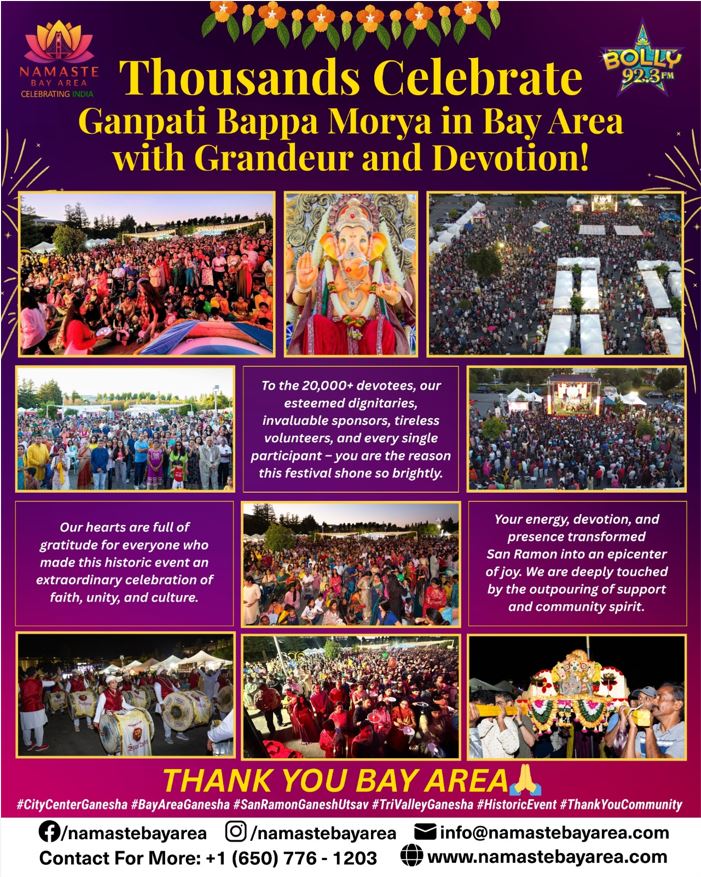 Hosted by Namaste Bay Area and Bolly 92.3FM, the full-day festival transformed the Bishop Ranch City Center into a vibrant sea of devotion, culture, music, food, and community spirit. Even with temperatures soaring past 100°F, the energy never wavered—chants of “Ganpati Bappa Morya!” resonated across the grounds as the grand procession with 100+ dhol-tasha drummers, devotional dances, and community-led aartis brought the streets alive.
 Eco-Friendly Ganesha – 100% clay idols & eco-conscious décor promoted sustainable worship.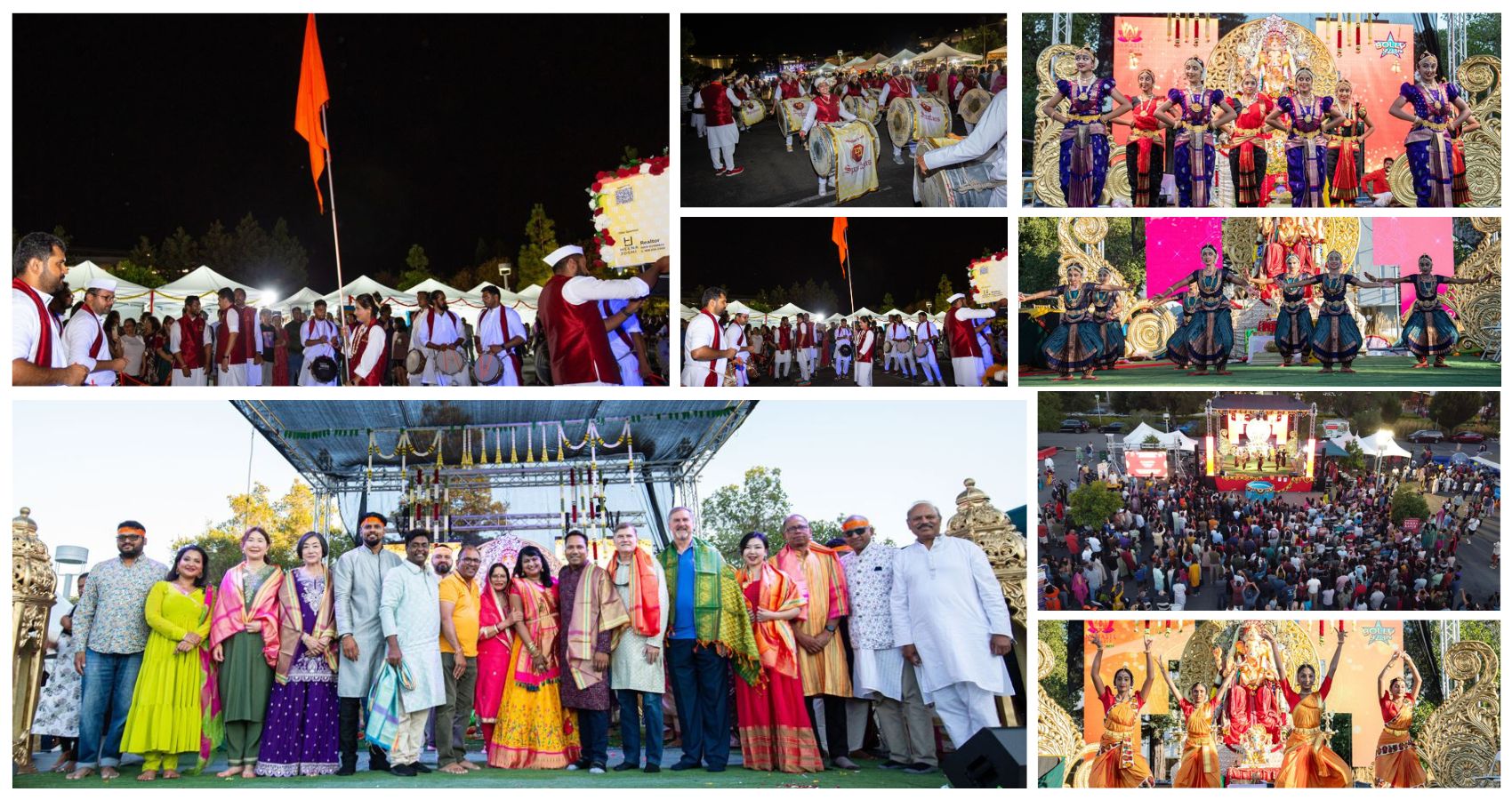
 200+ Artists on Stage – Classical dance, devotional music, drama, and cultural showcases.
 Hourly Aartis & Bhajans – Families united in devotion throughout the day.
 Grand Procession & Visarjan – 100+ dhol-tasha drummers ignited the night with an unforgettable farewell.
 Food & Bazaar – 100+ vendors with authentic Indian food, jewelry, clothing, arts, and community services.
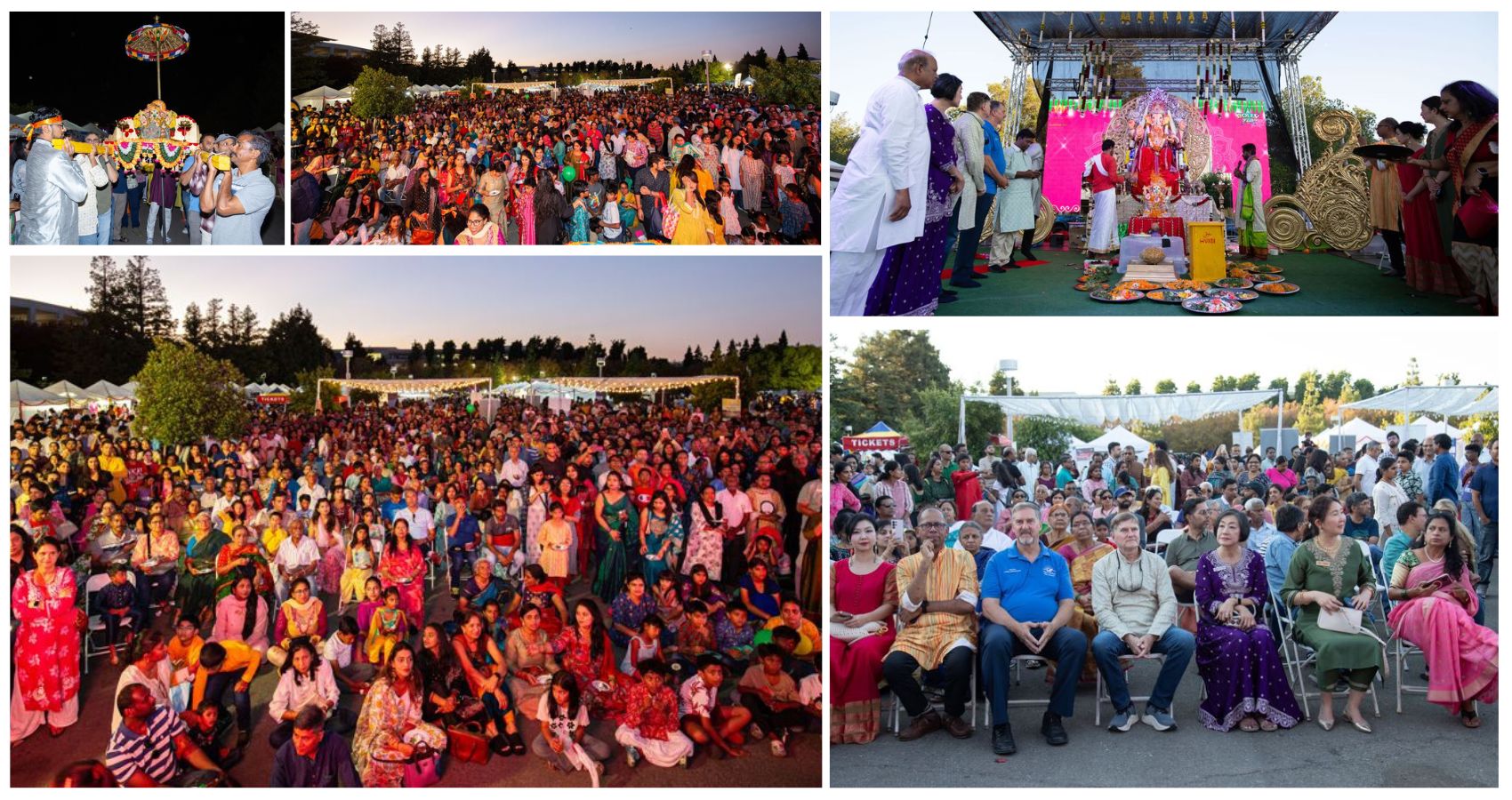 wider community.
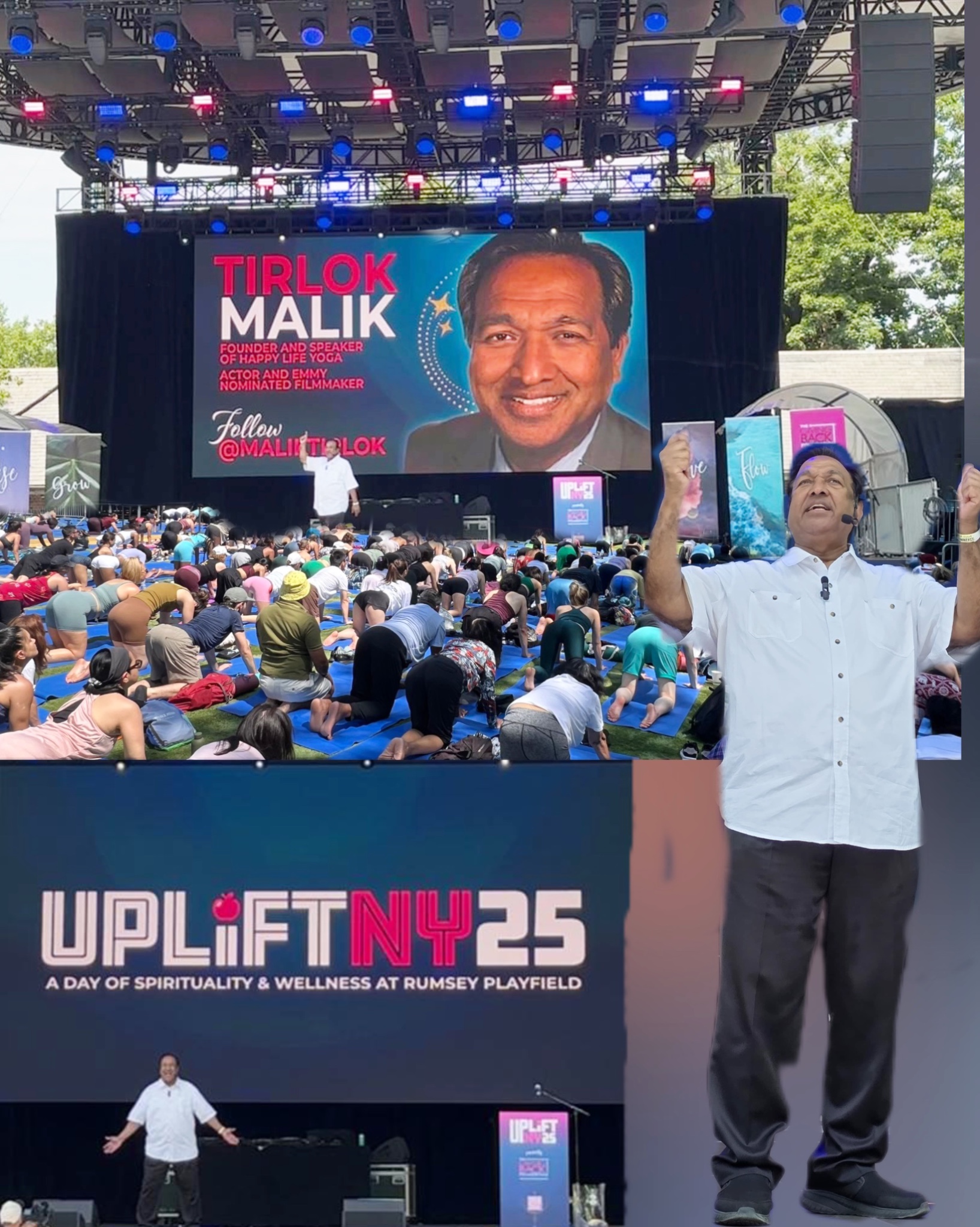
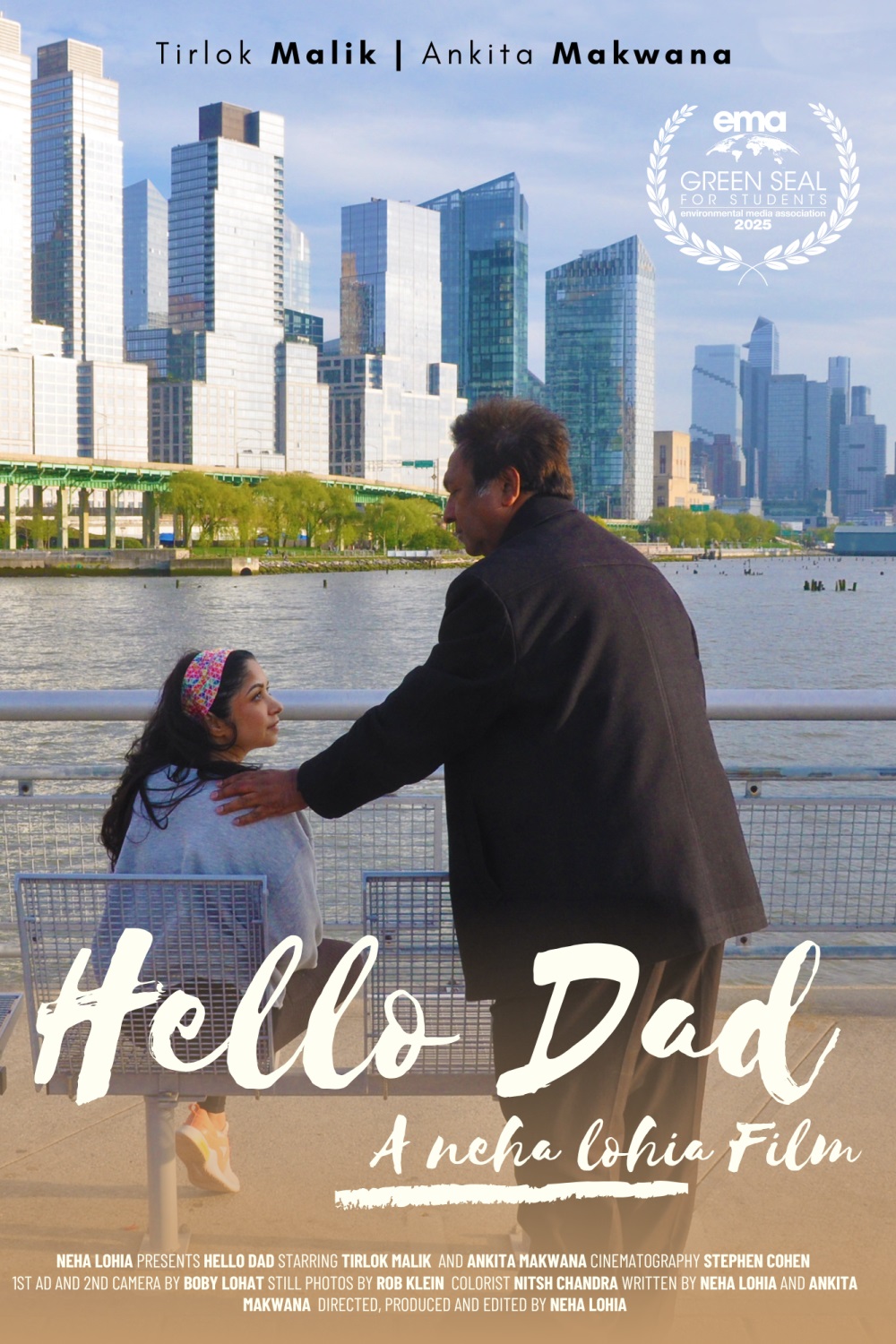
 On a warm evening in Chicago, excitement filled the air at The Matrix Club as music lovers gathered for an unforgettable night of melody and memories. On June 13, 2025, at 7:00 pm, the venue hosted a special event titled “Celebrating Legendary Divas: Mughal-E-Azam’s Anarkali,” presented by Aarush Entertainment, Rudra Creation, and Dhrishti. This performance by the renowned vocalist Priyanka Barve wasn’t merely a concert — it was an emotional tribute to the legendary voices that have shaped Indian music for generations.
 cultural heritage and musical expression. It was a full-house event, with attendees of all ages — families, friends, and music connoisseurs — coming together to immerse themselves in the musical legacy of India. The evening became a shared experience of nostalgia, reverence, and joy, leaving a lasting impression on everyone present.
 with a contemporary touch has elevated her career, but it is her portrayal of Anarkali in the stage adaptation of Mughal-E-Azam that has set her apart as a multi-dimensional artist capable of merging voice, emotion, and stage presence seamlessly.
 evergreen or lifting spirits with an energetic number, her voice brought each song’s story to life.
 Priyanka also spoke fondly of her personal connection with Chicago. “I was 21 when I first performed here. The love from this diverse audience — people from Karnataka, Maharashtra, and beyond — was overwhelming. Coming back feels like coming home,” she said, expressing her appreciation for the warmth and support of the city’s multicultural community.
 expressed their deep gratitude to everyone who attended, as well as to the sponsors and fellow organizers who contributed to making the evening a grand success. Their collaborative effort with Rajkumari Rathod of Rudra Creations and Dhrishti demonstrated a shared passion for promoting rich cultural experiences. “This night was not just about the music; it was about honoring our rich culture and the unity we find in it. We’re proud to bring Priyanka Barve to Chicago — a true musical gem,” said the team, underlining the emotional and cultural significance of the occasion.
 Suresh Bodiwala, Chairman of Asian Media USA, echoed the importance of the concert in highlighting the role of cultural unity through the arts. “We are proud to support Priyanka Barve’s extraordinary concert, a celebration of musical excellence and cultural unity. This event underscores our commitment to promoting diverse artistic talent and fostering community engagement through the universal language of music,” he said. Recognizing the power of music to transcend boundaries, he praised the concert for honoring the timeless voices that continue to inspire. “She brought vocal magic to Chicago, paying homage to the legendary divas — Lata Mangeshkar, Asha Bhosle, Shreya Ghoshal — whose voices have defined generations,” he added.
 Serving as a cultural showcase and tribute to the enduring legacy of Indian classical music, the event harmonized tradition with emotional storytelling. Anchoring the evening was the eloquent Amin Haider, whose articulate hosting and thoughtful commentary added significant depth to the program. Haider’s narration was not just informative but evocative, highlighting several memorable moments from Ustad Ghulam Abbas Khan’s life and career. A particularly striking story he shared revolved around a young Ghulam Abbas, only 16 at the time, who had to perform Hindustani classical music at Delhi’s Daulat Ram College—a genre then unfamiliar to him. Despite his lack of experience, the young artist impressed none other than Pandit Debu Chaudhary. So captivated was the maestro that he interrupted the concert to tune the tanpura himself, allowing Ghulam Abbas to shine at his best. As Haider described, this story was emblematic of “the resilience and passion of a maestro whose name is synonymous with excellence.”
 performance that was as spiritually uplifting as it was technically flawless. He seamlessly navigated an array of musical forms, from khayal and thumri to dadra, Sufi kalams, bhajans, and ghazals. Audiences were deeply moved by his performance of Raga Puriya Kalyan and original and traditional bandishes like “More Ghar Aaja” and “Ab To Tumhi Sang Lagan Lagai.” His ability to infuse these centuries-old compositions with fresh emotion and contemporary nuance was nothing short of mesmerizing. The performance bore the unmistakable imprint of his artistic lineage—being the son of Padmashri Ustad Ghulam Sadiq Khan, and the maternal grandson of Padmabhushan Ustad Mushtaq Husain Khan.
 Adding a local flavor to the evening, Chicago-based vocalist Payel Ganguly gave a brief yet impactful performance that paid homage to the same musical traditions Ustad Ghulam Abbas embodies. Her rendition was heartfelt and authentic, resonating powerfully with the audience. The crowd responded with enthusiastic applause, affirming her rising status in the realm of classical music.
 Kastha delivered a stunning rhythmic performance, displaying a maturity and finesse that belied his age. His intricate patterns and subtle flourishes aligned flawlessly with the vocal cadences, creating a musical dialogue that captivated listeners throughout the night.
 emphasizing the evening’s significance as a unifying cultural moment for the South Asian community in Chicago. Though Mr. Iftekhar Sharif, the designated chief guest, was unable to attend due to unforeseen scheduling issues, the event was graced by the esteemed ghazal singer Amir Mohammed Khan, who appeared as the Guest of Honor.
 and contributions to Hindustani classical music have earned him several prestigious honors. These include the Central Fellowship Award from India’s Ministry of Culture, the Global Achievement Award in 2017, and the Dr. Radhakrishnan Award in 2018. One of the pinnacles of his career was a performance at the President’s House during the tenure of Dr. APJ Abdul Kalam—an event that remains a highlight in his professional journey.
 Ali’s Catering ensured that guests were well-fed, while Ena Agnihotri of the Radisson Hotel in Schaumburg provided additional hospitality support. Other significant contributors included the Urdu Institute and Aftab Baig of Monty’s Banquet. Their collective efforts helped transform the evening into more than just a concert—it became a holistic celebration of culture, heritage, and music.
 From the moment the guests stepped through the doors, they were swept into a celebration of Indian heritage, creativity, and most importantly: hope. The festival, free and open to the public, pulsed with color and life. It was hosted with charm and energy by two MC’s Neha Sobti and Priyanka Parekh, who guided the audience through an unforgettable journey. The show opened with an upbeat hip hop performance blending rhythm and youthfulness. As the day unfolded, the stage bloomed with a variety of dances: elegant ballet, vibrant Garba, classical Indian sequences, and children twirling in joyful abandon. Groups such as Suhani Dance Academy, Ghunguru School, and Four Stars Dance Group left audiences spellbound.
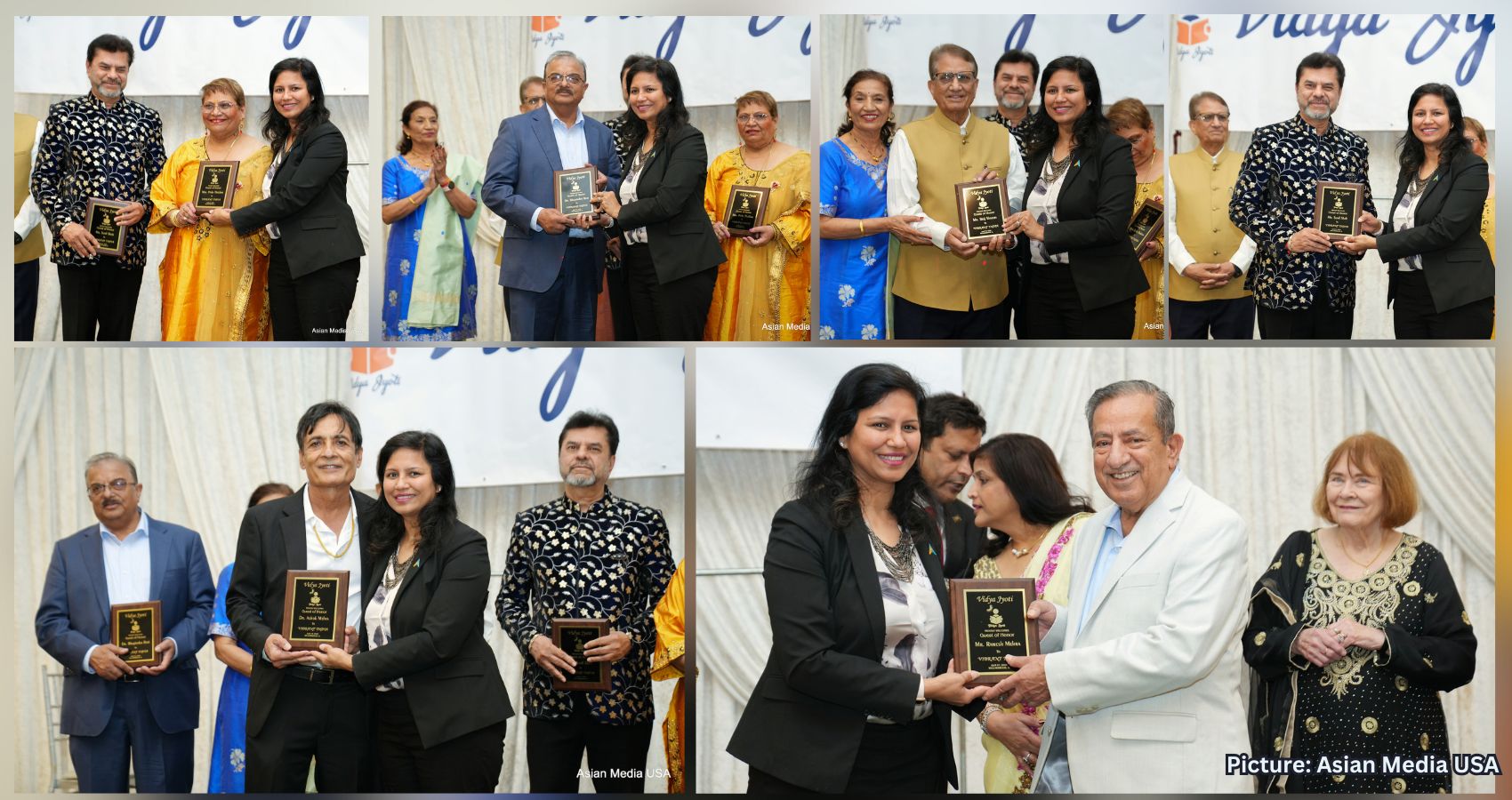 In the Title Walk, finalists were judged not only on style, but voice and purpose. When Rihanna Tandon and Archana Pantraffan stepped forward as winners, their poise and eloquence gave everyone chills. The judges Sanskriti Sharma, Sushma Bhanot, and Archana Agarwal beamed with pride.
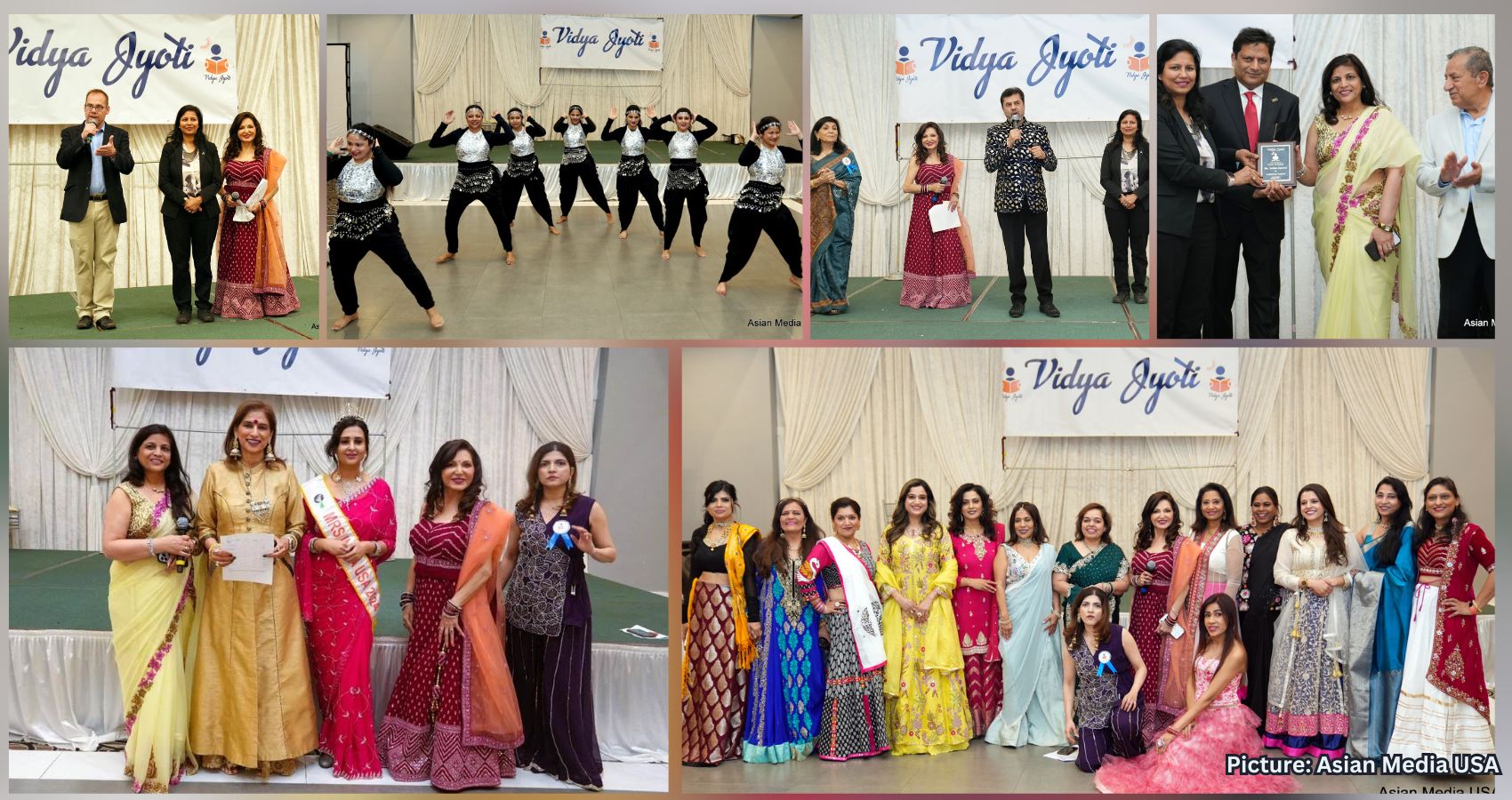 someone once invested in our education. For just $30 a month or a dollar a day, we can offer a child that same gift. Let’s make giving a habit, not a moment.” Ashok Potdar, a dedicated and passionate director of organization, reminded the audience that “Knowledge is the only wealth that cannot be stolen.” The room fell silent, then rose to applause. Another passionate advisory member, Ramesh Mehra had another powerful appeal to help folks understand the mission of Vidya Jyoti.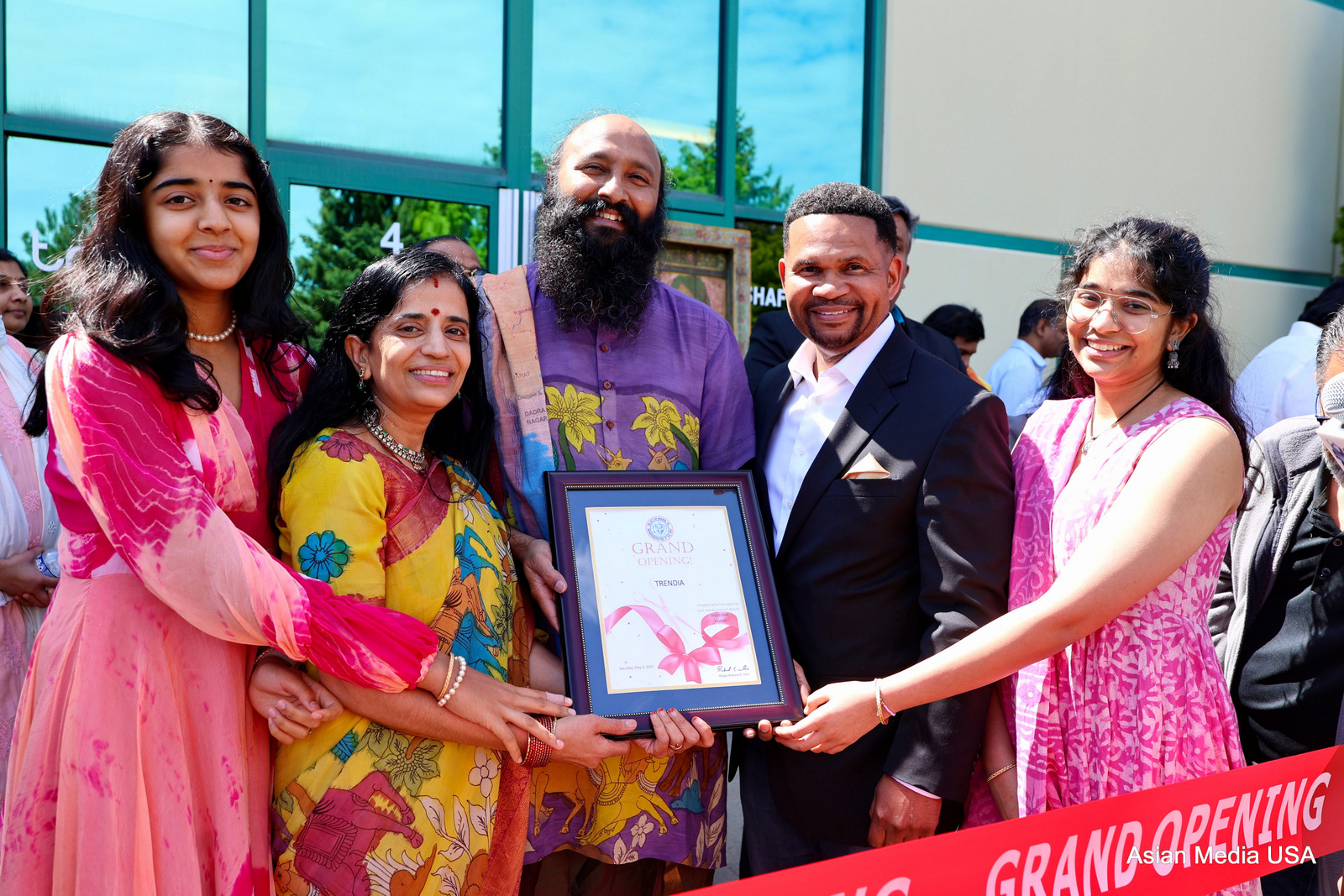
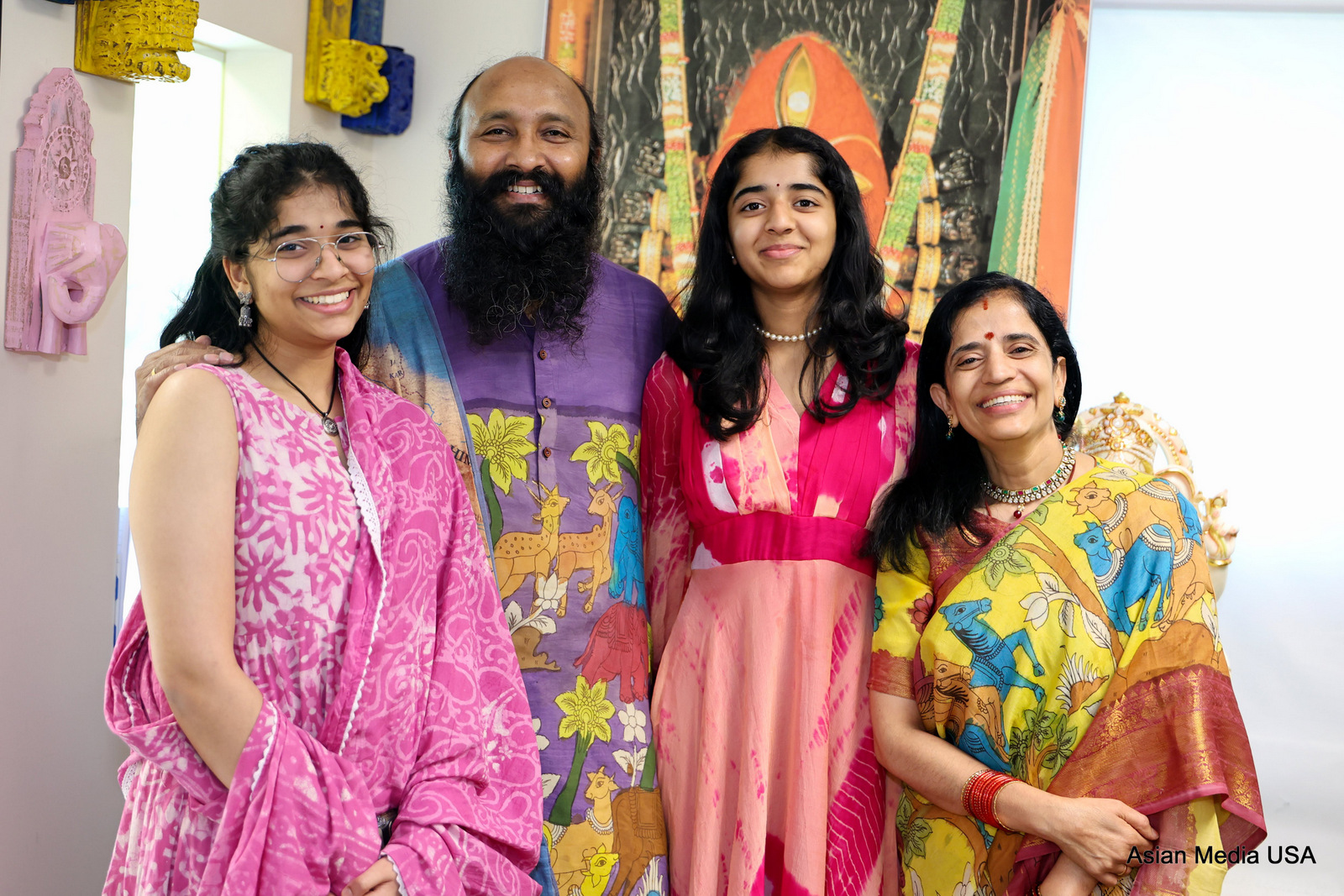 Indian states. It includes: Brass idols of deities like Krishna and Jagannath Swami, Marble and brass Buddha statues with intricate inlay, Wooden temples and home altars, designed with both traditional and contemporary sensibilities, Stone sculptures by Padmashri awardee Pravakar Maharana from Bhubaneswar, Patented wooden art from President’s Award winner Charuhas Pandit ji in Pune, Rare Cheriyal masks, hand-painted by Mr. D Vaikuntam one of the last surviving families practicing this dying art in Andhra Pradesh, Upcycled vintage furniture—crafted from salvaged doors and window frames in Jodhpur, Papier-mâché, clay pots, jharokha mirrors, and seasonal décor sourced directly from rural Indian artisans. The collection bridges past and present, offering pieces that reflect deep mythology, spirituality, and symbolism, while also serving as functional and aesthetic decor for global homes.
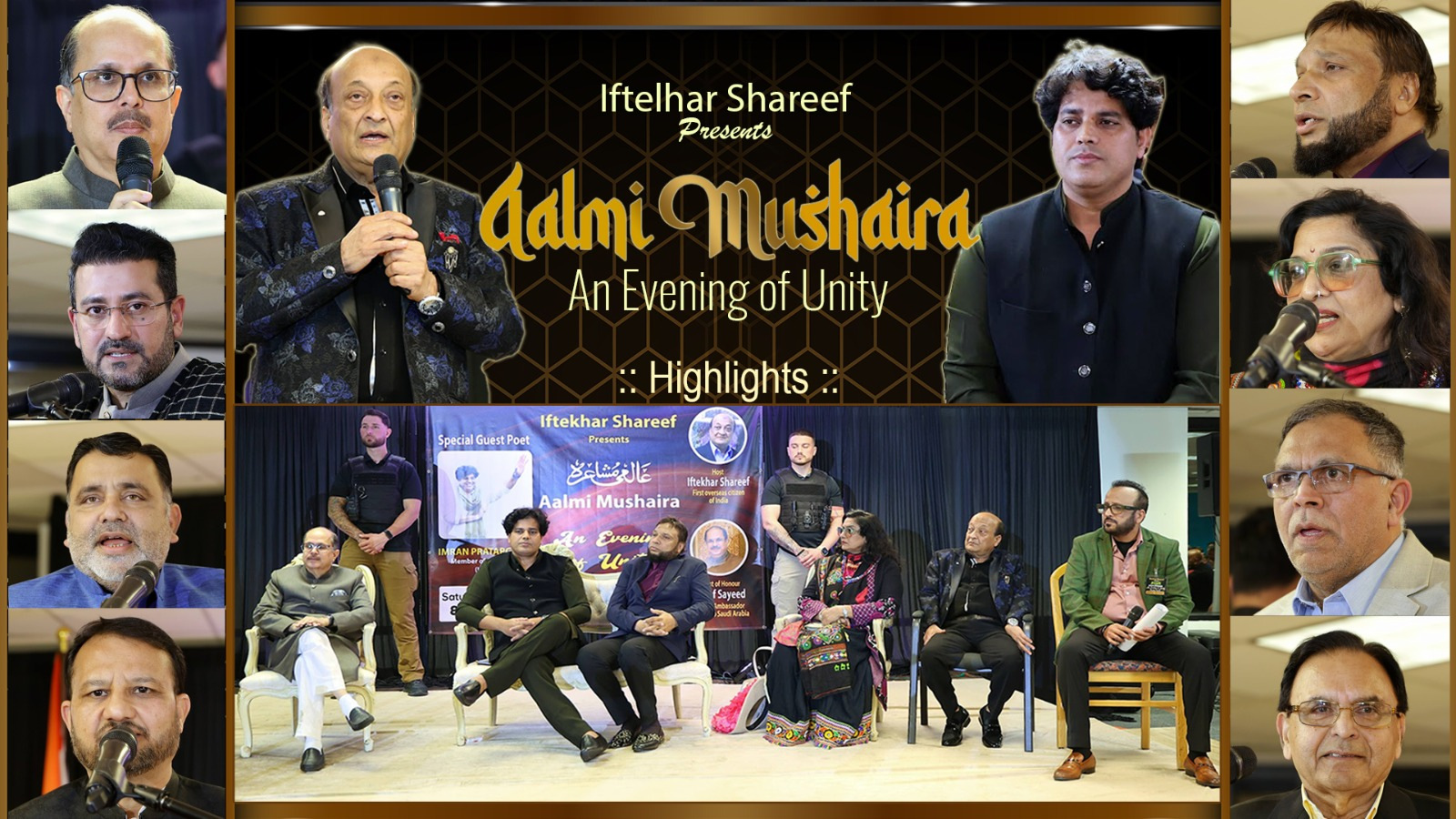 The evening was graced by
 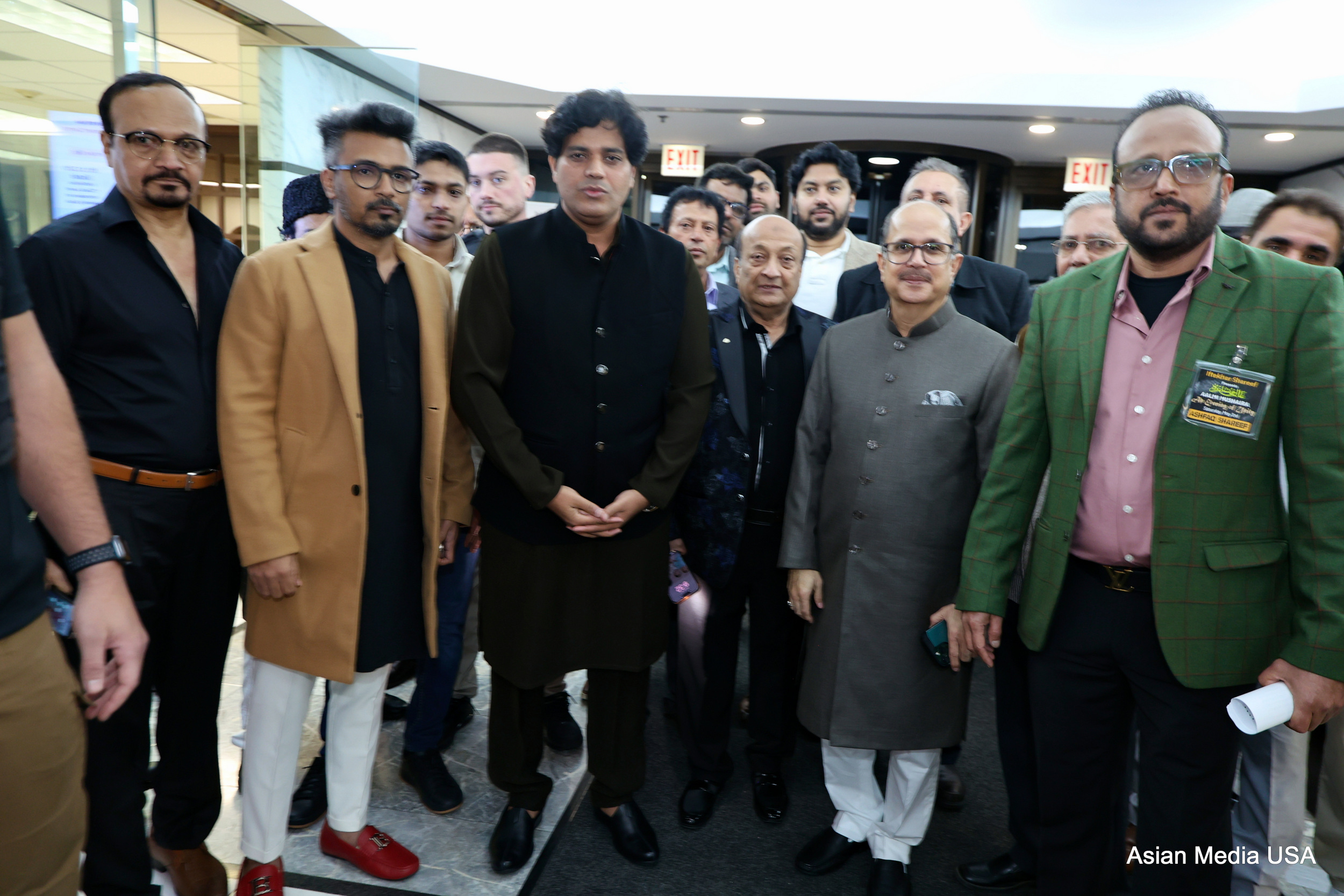 Pe Aati Hai Dua reimagined Allama Iqbal’s classic, weaving a heartfelt prayer for peace in conflict-torn regions like Palestine. “When bullets fly anywhere, it is humanity that dies,” he declared, urging the world to embrace love over hatred. His Lal Qila personifying the Red Fort as a witness to India’s history, stirred patriotic fervor, earning thunderous applause. Pratapgarhi’s ability to blend social commentary with poetic finesse left the audience spellbound.
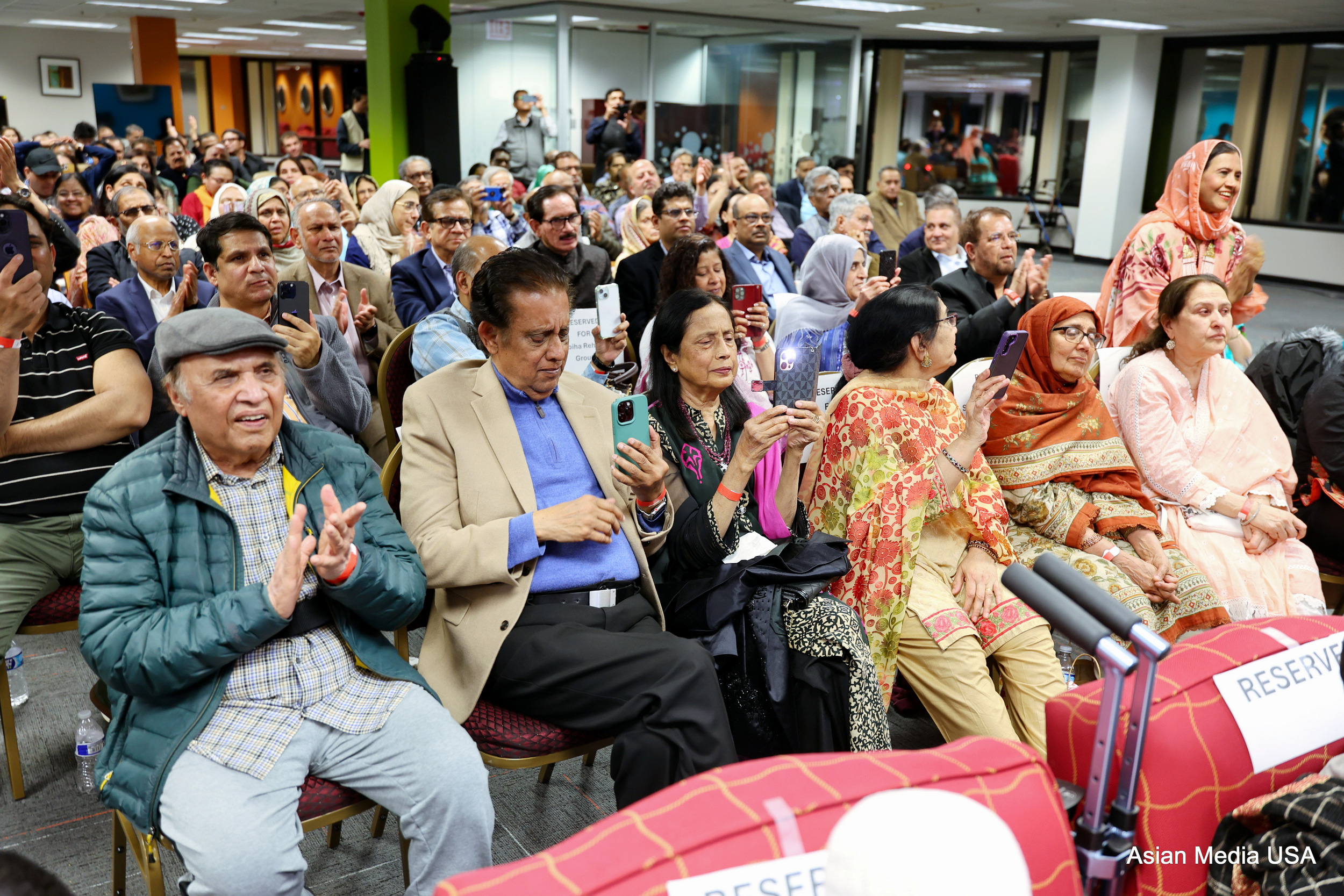 The mushaira concluded with a standing ovation for the poets and organizers, followed by the national anthems of the USA and India, symbolizing the shared values of both nations. Flowers were presented to the guest poets, and Minhaj Akhtar, President of the IOC Committee – Midwest region, joined in honoring the performers. Iftekhar Shareef’s closing remarks reiterated the event’s commitment to fostering peace and cultural harmony, leaving attendees inspired and uplifted.





 The Global Malayalee Festival is planned to be held at the Crown Plaza Hotel, Kochi, on August 15 and 16, 2025. Describing the Festival as the largest ever Malayalees Sangamam, where Malayalees from all over the world are expected to be part of and celebrate the culture, traditions, and accomplishments of the Malayalee community, the organizers have urged people of Malayalee origin “to join in this great festival of global Malayalees in our beautiful homeland, God’s Own Country.”
 in India with an NGO status. The objective of the Festival is to offer a platform to network for the global Malayalees and stay connected for generations to come as members of the Global Malayalee Community.
 “Malayalees from all over the World are invited to attend this great event, especially the new generation, born and raised outside Kerala. The Festival will be a perfect opportunity for the young generation to seek and explore their roots and heritage,” the organizers stated.
 themes: 1. Innovating for a sustainable future, 2. Global Trade in the Digital Age, 3. Bridging Markets East Meets West, and, 4.The future of Trade, Trends and Predictions.