Vice President Harris has found herself at the center of multiple key policy pushes and national debates in recent weeks, giving her a significant platform as she and President Biden ready a reelection campaign.
Harris became the highest-ranking Biden administration official to visit Africa when she traveled to the continent late last month. Last week, she made a quickly arranged trip to Nashville after two Black Democrats were expelled from the state legislature for engaging in gun violence protests.
And Harris has again found herself as the administration’s leading voice on protecting reproductive rights in the face of a judge’s ruling against a popular abortion drug and a Florida ban on the procedure after six weeks of pregnancy.
“I’ve been thrilled to see her in the spotlight on these two issues in particular over the past couple of weeks here. And it makes sense as we’re really starting to focus on the reelection campaign here,” said David Thomas, a Democratic strategist who was an aide to then-Vice President Al Gore.
“These are two issues, guns and abortion, that are really such stark contrasts between Democrats and Republicans, and the fact she’s out there being really active on these outside of Washington, D.C., is exactly where she should be,” Thomas added.
Picture : Citrus County Chronicle
The vice president stepped into the foreign policy spotlight late last month when she traveled to Ghana, Tanzania and Zambia as part of a week-long trip to Africa. Harris’s presence was intended to reiterate the Biden administration’s commitment to the continent, and it was backed up by billions of dollars in government and private sector investments in bolstering economic opportunities for women and efforts to adapt to the changing climate.
The trip also took on a personal tone for Harris, who is the first African American woman to serve as vice president. After touring an old slave trading post in Ghana, she delivered somber remarks about the need to remember history and learn from it.
Upon returning to the U.S., Harris quickly found herself at the center of a major national news story when she flew to Nashville with little notice to meet with the “Tennessee Three,” a trio of state lawmakers who were targeted for expulsion because of protests over gun violence on the state House floor following a school shooting.
Former government officials were particularly impressed with how rapidly the trip came together, as Harris was on the ground speaking with lawmakers in Tennessee within 24 hours of the expulsion votes.
This week, Harris has reprised her role as the White House’s leading voice on the issue of reproductive rights, with key developments over access to abortion playing out in the courts and statehouses.
A federal judge invalidated the Food and Drug Administration’s (FDA) approval of mifepristone, a popular abortion medication, in a decision the Justice Department appealed to the Supreme Court, which issued a temporary stay on Friday afternoon.
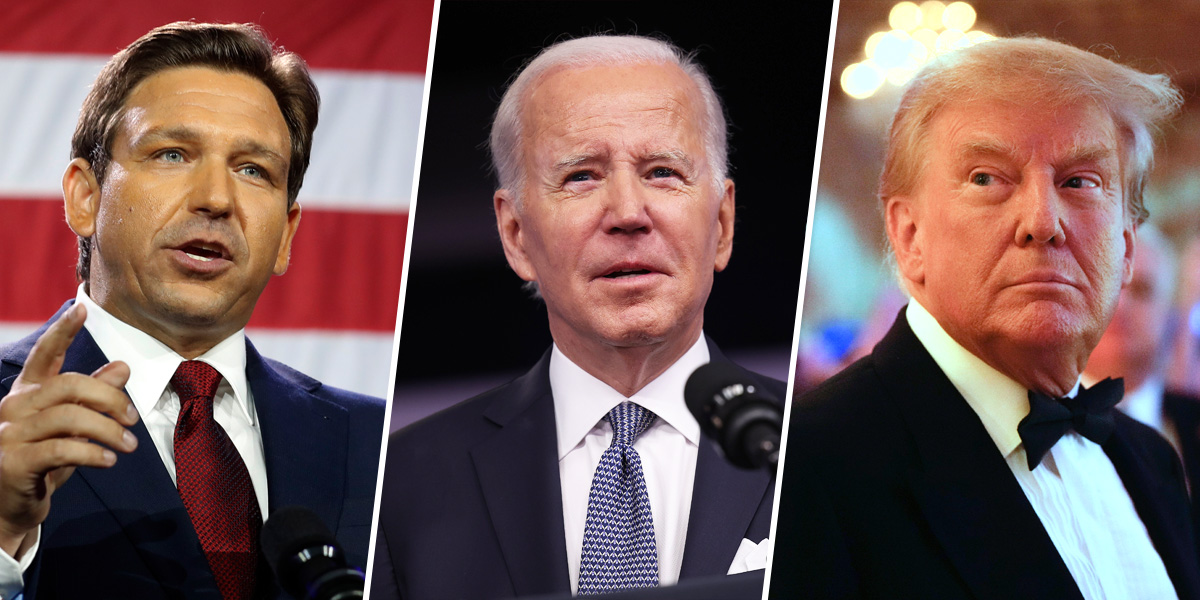
Meanwhile, in Florida, Gov. Ron DeSantis, a potential 2024 GOP presidential candidate, signed into law a ban on abortions after six weeks of pregnancy, though many women do not yet know they are pregnant by that point. Advocates have expressed concern that the Florida law will drastically limit abortion access across the South.
Harris on Wednesday hosted a meeting of the White House’s task force on reproductive health care to discuss ways to protect patient privacy. On Saturday, she appeared at a Los Angeles rally in support of reproductive rights.
On Tuesday, she will travel to Nevada for an event with actress Rosario Dawson and Reno Mayor Hillary Schieve to discuss how the fight for abortion access impacts young Americans.
“Let us clearly understand the moment we are in: a moment in which our hard-won freedoms are under attack,” Harris told a crowd of supporters Friday at the National Action Network’s convention.
A spokesperson for Harris stressed that the vice president has been active in addressing gun violence and abortion access throughout the Biden administration, noting her response to a shooting in Highland Park, Ill., and her visit to Buffalo, N.Y., after a shooting at a grocery store.
The recent stretch in the spotlight has been notable for Harris, who frequently attracts scrutiny from Republicans, particularly over her role as the White House’s point person on addressing migration from Central America.
Conservatives have repeatedly zeroed in on the influx of migrants at the southern border, placing the blame on Harris and questioning whether she’s qualified for the job.
Among Democrats, Harris’s performance has at times sparked speculation about whether Biden should consider picking a different running mate for 2024 — or if Democrats would unite behind Harris should Biden opt not to run for a second term. Sen. Elizabeth Warren (D-Mass.) made waves in January when she was asked if Harris should remain Biden’s running mate and said she’d defer to Biden.
A March 21 survey from Monmouth University found Harris with a 36 percent approval rating, 5 percentage points lower than Biden’s in the same poll. The vice president’s approval rating in that poll among Democrats was 76 percent, 10 percentage points lower than Biden’s with the same group.
Biden and his team have repeatedly voiced public support for Harris, and some Democratic strategists and Harris allies believe the vice president has shown she can be a valuable asset when she is outside of Washington, discussing issues such as gun violence and abortion, which have proven to be key drivers of turnout for the party.
Rev. Al Sharpton, a leading civil rights activist, welcomed Harris on Friday as a keynote speaker at the National Action Network’s convention in New York, hailing her as a symbolically and substantively important politician and comparing the vice president to the Biblical figure Esther.
“She was built for this. She was born for this. She was raised for this. She can take every shot you shoot, because she’s been through shots worse than this,” Sharpton said. “She’s tough enough, she’s strong enough.”
Florida hotelier Bharat Patel, CHO, CHIA, is the new Chairman of AAHOA’s Board of Directors. Patel became chairman at the conclusion of the 2023 AAHOA Convention & Trade Show in Los Angeles, CA., which set a record level of booth sales for the Trade Show, making it the largest in AAHOA history.
“I am honored to serve America’s hotel owners as the newest AAHOA Chairman,” Patel said. “Like the theme from AAHOACON23, I look forward to honoring the past and creating a bolder future by working with AAHOA’s nearly 20,000 Members to ensure we reestablish strong partnerships with our state associations, grow the AAHOA PAC to new record levels, and make advocacy front and center to AAHOA’s mission and vision.”
Patel has been an active member of AAHOA since 2008. He served as an Ambassador for several years before his election to the Board of Directors as the Regional Director for Florida in 2015.
Bharat is a second-generation hotelier who learned the hotel business through hands-on experience at properties owned by his parents. Today, he is Partner at Gulf Coast Hospitality, a company based in Sarasota, Fla.
From a young age, I wanted to make a difference, which is why I wanted to join AAHOA,” Patel said. “AAHOA Leadership meets with legislators at the highest levels of government, and we’re doing so while simultaneously showing the industry, and beyond, that representation matters.”
Bharat plays an active role in his community and previously served on the Florida Restaurant & Lodging Association Board of Directors, the Florida Department of Business and Professional Regulation Hotel and Restaurant Advisory Council, the Sarasota County Tourism Development Council, and the Sarasota County Sheriff’s Office Advisory Board.
“Congratulations to Bharat Patel on becoming AAHOA’s newest Chairman,” said AAHOA President & CEO Laura Lee Blake. “Working alongside you as Vice Chairman over the past year has been a pleasure, and I am looking forward to all that you will accomplish in the year ahead.”
Patel is a graduate of the University of Florida and resides in Sarasota with his wife, Manisha, and their two children.
“My main focus is all about AAHOA priorities, strategic planning, and laying the path for the future of AAHOA,” Patel said. “We will continue to create educational and networking opportunities for the next generation, create new revenue streams for AAHOA, new sponsorship opportunities, and focus on how AAHOA can provide more value for our members and loyal industry partners for years to come.”
Rahul Patel of Bradenton, Florida, is the new AAHOA Secretary. Patel is the Proprietor of Wisdom Group, LLC.
AAHOA Members also elected the following ten members to the Board of Directors:
Arkansas Regional Director: Danny (Chintu) Patel
Florida Regional Director: Chetan (Chris) Patel
Georgia Regional Director: Vikesh (Vik) Zaver
Greater Los Angeles Area Regional Director: Naresh (ND) Bhakta
North Central Regional Director: Bhavesh N. Patel
North Pacific Regional Director: Ankit Panchal
North Texas Regional Director: Dhiren Masters
Director at Large Western Division: Nalin (Neil) Patel
Young Professional Director Eastern Division: Dylan Patel
Women Hoteliers Director Eastern Division: Purnima Patel
“Congratulations to our new AAHOA Secretary, Rahul Patel, and all of our newly elected board members. It is truly encouraging to see so many members volunteering to serve America’s hotel owners,” said incoming AAHOA Chairman Bharat Patel. “Together, we are continuing to showcase the value and importance of AAHOA, the largest hotel owners association in the world, and I am thrilled to start working alongside the new AAHOA Officers, our Board of Directors, and the entire AAHOA Team.”
“Congratulations to Rahul Patel and to all our newly elected board members. These individuals are excellent additions to the Board of Directors of America’s premier hotel owners association,” said AAHOA President & CEO Laura Lee Blake. “I am thankful for their dedication to our members and to the hospitality industry, and it is truly an honor to work with our Officers, Board of Directors, and the entire AAHOA team as we continue to lead this industry as the largest hotel owners association in the world.”
AAHOA is the largest hotel owners association in the nation, with Member-owned properties representing a significant part of the U.S. economy. AAHOA’s 20,000 members own 60% of the hotels in the United States and are responsible for 1.7% of the nation’s GDP. More than one million employees work at AAHOA member-owned hotels, earning $47 billion annually, and member-owned hotels support 4.2 million U.S. jobs across all sectors of the hospitality industry. AAHOA’s mission is to advance and protect the business interests of hotel owners through advocacy, industry leadership, professional development, member benefits, and community engagement.
The pink auto has again taken the route of the US Embassy in India and this time, dropped off America’s ambassador Eric Garcetti has taken over as the new envoy. Garcetti, who arrived in India on Tuesday, April 11, 2023, came in a “pink auto” and met all the members of the Embassy, according to the video shared by US Embassy in India on its official Twitter account.
“Excitement fills the air as we welcome Ambassador-Designate Eric Garcetti to India! We are excited to personally greet him and confident the U.S.-India partnership will advance through his leadership. #USIndiaTogether,” US Embassy in India tweeted.
On Garcetti’s arrival in India, Indian Embassy in the US tweeted, “Namaste, Ambassador-Designate Eric Garcetti! We’re thrilled to welcome you to #IncredibleIndia and work with you to build even stronger ties between our two great nations.”
On March 24, Garcetti was sworn in by U.S. Vice President Kamala Harris as the new US Ambassador to India, after the U.S. Senate on March 15 confirmed the nomination of the former mayor of Los Angeles.
Garcetti, who is a close ally of Joe Biden, was nominated for the post by the US president in 2021. But his appointment was held up after allegations that he had overlooked accusations of sexual harassment against an aide when he was mayor. Garcetti denies any wrongdoing.
The US has not had an ambassador to India since January 2021 even though the two countries have strong security and trade ties.
Garcetti won the mandate by a vote of 52 to 42, a major victory for US President Joe Biden as well, who stuck by his political ally in the face of the allegations and the prolonged process that has left the world’s most populous democracies without US representatives.
After the result, Garcetti said in a statement, “I’m thrilled with today’s outcome, which was a decisive and bipartisan decision to fill a critical post that has been vacant for far too long. Now the hard work begins.”
Garcetti’s appointment also comes at a time when Russia has become a major irritant between Delhi and Washington. India’s neutral stance on Russia’s invasion of Ukraine has frustrated the US. Delhi has not explicitly condemned the war but has talked about the importance of “the UN Charter, international law, and respect for the sovereignty and territorial integrity of states”.
India is also the biggest market for Russian military equipment and continues to import huge quantities of crude oil from the country, ignoring bans in the US and parts of Europe. “The United States-India relationship is extremely important,” Senator Chuck Schumer said after a test vote on Wednesday. “It’s a very good thing we now have an ambassador.”
A graduate of Columbia University, Garcetti was an officer in the US Navy for 12 years before he made his foray into politics. In 2013, he became the youngest mayor of LA in 100 years and the first Jewish person to be elected for the role. He held the post until 2022.
“I’m deeply grateful to President Biden and the White House for the confidence and support throughout this process, and to all Senators on both sides of the aisle — whether they voted for me or not — for their thoughtful consideration. I’m ready and eager to begin my service representing our critical interests in India,” he added.
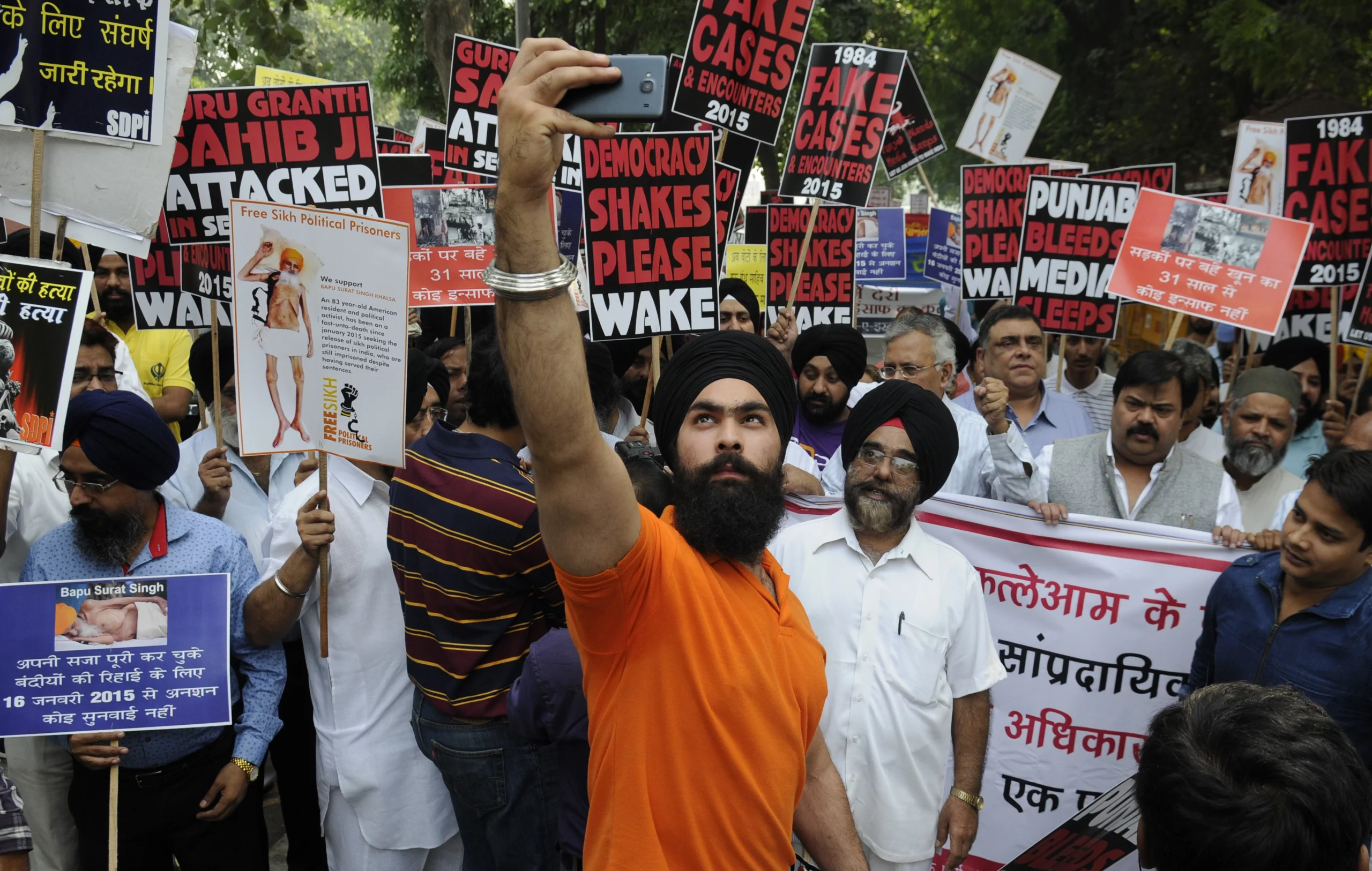
India’s ambassador to the US, Taranjit Singh Sandhu was conferred the ‘Sikh Hero Award’ along with other eminent Sikh Americans by Sikhs of America at an event organized in Washington DC on April 8, 2023.
Commenting on the honor, the seasoned bureaucrat expressed his gratitude and remembered the tenets of Sikhism. “Delighted to receive Hero Award from Sikhs of America. Spoke about important tenets of Sikhism: seva, brotherhood, equality, inclusion & honesty. Highlighted the strengthening of US-India partnership and tech and infra transformation taking place in India and huge opportunities for the youth,” he tweeted after the event.
Refering to the recent acts by Sikh separists, Sandhu said, “Khalsa, which was created on the Baisakhi day, by Guru Gobind Singh is a uniting and not a dividing force.”
The ambassador also highlighted the Sikh community’s valuable contribution in different sectors including the economy, health and entrepreneurship, according to a release. In his call to Punjab and the youth in Punjab to connect with the multi-dimensional revolution happening in India, he underlined,“The government, people and in particular the youth must take advantage of the expanding partnership with the US in various fields that Prime Minister Modi and President Biden are trying to put in place.”
In his opening statement, the chairman of Sikhs of America, Jasdip Singh Jassee shared the contributions of the recipients of the ‘Sikh Hero Award’ in their respective fields and said that violence has no place in society.
Former New Jersey Attorney General Gurbir Singh Grewal, entrepreneur and philanthropist Darshan Singh Dhaliwal, former Hoboken Mayor Ravi Singh Bhalla, and entrepreneur Manraj Singh Kahlon were earlier awarded the ‘Sikh Hero Award.’ Late Sikh police officer Sandeep Dhaliwal was also presented the award posthumously.
Singer Dhvani Bhanushali, who is known for her tracks like ‘Vaaste’, ‘Ishare Tere’ and ‘Leja Re’, has clocked 1.5 billion views for her song ‘Vaaste’ on YouTube.
Among the Indian songs that have crossed the 1 billion milestone are the devotional song ‘Hanuman Chalisa’ topping the list followed by regional songs like the Punjabi song ‘Lehanga’ and a Haryanvi song ’52 Gaj Ka Daman’ making Dhvani’s song the fourth most viewed song nationwide.
This has made Dhvani the youngest Indian musician to achieve the milestone. ‘Vaaste’ has been composed by Tanishk Bagchi and written by Arafat Mehmood, with Nikhil D’Souza featuring as the co-singer, the music video is directed by Radhika Rao and Vinay Sapru.
Expressing her gratitude, Dhvani said: “‘Vaaste’ is like that magical thing that happened in my life. I’ll always be grateful to all the people who have watched it more than a billion times on YouTube. It was the team of Tanishk, Arafat, Nikhil, Radhika Ma’am, Vinay Sir and Siddharth that we could break so many records back then and even today. Most importantly it’s all the love and support by the audiences; it only inspires me to work harder and create more magic. I want to thank everyone who was involved in making this beautiful song with me, our mark will live on forever.”
Dhvani made her debut in the pop world with ‘Ishare Tere’ and followed it up with another hit, ‘Leja Re’. However, it was ‘Vaaste’ that catapulted her to the A-list of Indian musicians.
The song became a massive hit and was also listed among the top 10 most-liked music videos globally, with Dhvani featuring as the only Indian music artist in YouTube Rewind 2019. The song was released under the label of T-Series. (IANS)
US pharmaceutical giant Johnson & Johnson has proposed to pay almost $9 billion to resolve tens of thousands of lawsuits the company faces in North America over claims that its baby powder and other talc-based products cause cancer, the media reported.
The healthcare giant said it still believed the claims were “specious” but was hoping the new settlement offer would help conclude its legal battle, the BBC reported.
The figure marks a big boost over the $2 billion it had proposed previously. The new offer has significant support from people tied to the case, it said.
The company is facing more than 40,000 lawsuits from former customers who say using its talc-based baby powder caused cancer, including some who allege the product contained cancer-causing asbestos.
It stopped US sales of its talc-based baby powder in 2020, citing “misinformation” that had sapped demand for the product, applied to prevent nappy rash and for other cosmetic uses, including dry shampoo.
Last year, it announced plans to end sales globally. Before that decision, the company had sold the baby powder for almost 130 years. It continues to sell a version of the product that contains cornstarch.
The company has been trying to resolve the lawsuits in bankruptcy court since 2021, after creating a subsidiary responsible for the claims.
But its efforts ran into trouble after an earlier bankruptcy court ruling found the subsidiary was not in financial distress and could not use the bankruptcy system to resolve the lawsuits.
“The company continues to believe that these claims are specious and lack scientific merit,” said Erik Haas, worldwide vice president of litigation for Johnson & Johnson.
“Resolving this matter through the proposed reorganisation plan is both more equitable and more efficient, allows claimants to be compensated in a timely manner, and enables the company to remain focused on our commitment to profoundly and positively impact health for humanity.”
Johnson & Johnson said it had won a majority of the talc lawsuits against it. But it has been stuck with some significant losses, including one decision in which 22 women were awarded a judgement of more than $2 billion.
The company said it had commitments from about 60,000 current claimants to support the new settlement terms. (IANS)
Following the immense success of Pathaan, Yash Raj Films (YRF) will be producing a film starring Bollywood heavyweights Shah Rukh Khan and Salman Khan. The news was shared by Bollywood trade analyst, Taran Adarsh on Twitter, who revealed that the film will be directed by Pathaan director Siddharth Anand.
Touted to be the biggest Bollywood film till date, Tiger VS Pathaan is expected to go on floors in 2024. According to media reports, the film is part of the YRF Spy Universe, which is centered on a series of spy action-thriller films, featuring various fictional RAW agents duch as Tiger (Salman Khan) in Ek Tha Tiger, Kabir (Hrithik Roshan) in WAR and Pathaan(SRK) in Pathaan.
The upcoming movie will mark the onscreen return of Shah Rukh Khan and Salman Khan in USAlead roles after their last performance together in the 1995 film Karan Arjun. Since then, the duo collaborated on and off on movies, making special appearances in each other’s films, including their latest Tiger, Pathaan, Zero, Kuch Kuch Hota Hai, and Hum Tumhare Hai Sanam. According to the media, Shah Rukh is said to be appearing in a cameo in Salman and Katrina Kaif’s third instalment of the Tiger franchise. Salman Khan’s Tiger 3 will feature Emraan Hashmi playing the role of an antagonist. The film will hit the theatres on November 10.
The Huanan seafood and wildlife market in China has been a focal point in the search for the origin of the coronavirus that has impacted the world as none other in the past three years. People around the world have been seeking to identify the origin of the deadly virus.
Now a research team in China has published analysis of samples taken more than three years ago from the market linked to the outbreak of Covid-19. This is the first peer-reviewed study of biological evidence gathered from the market back in 2020.
By linking the virus with animals sold in the market, it could open new lines of inquiry into how the outbreak began. The research reveals swabs that tested positive for the virus also contained genetic material from wild animals.
Some scientists say this is further evidence that the disease was initially transmitted from an infected animal to a human. But others have urged caution in interpreting the findings and it remains unclear why it took three years for the genetic content of the samples to be made public.
The Chinese research team posted an early version of their study online back in February 2022, but they did not publish the full genetic information that was contained in the samples gathered from the market.
This new analysis, which has been validated by other scientists before being published in the journal Nature, includes more important detail about the content of those samples, which were collected from stalls, surfaces, cages and machinery inside the market. Before the 2020 outbreak, scientists took photos of animals, including racoon dogs, being sold in the Huanan market
The Chinese research team’s paper showed that some samples – collected from areas where wildlife was being sold – had tested positive for the virus. Their analysis also showed that animals now known to be susceptible to the virus, particularly raccoon dogs, were being sold alive in those locations.
But the Chinese researchers have pointed out that their discoveries fall short of definitive proof of how the outbreak started. “These environmental samples cannot prove that the animals were infected,” the paper explains. The possibility remains, it adds, that the virus was brought into the market by an infected person, rather than an animal.
Prof David Robertson, from the University of Glasgow, is a virologist who has been involved in the genetic investigation into the origin of SARS-CoV-2 since it emerged in 2020. He told BBC News: “The most important thing is that this very important dataset is now published and available for others to work on.”
But he added that the contents of the samples were “compelling evidence that animals there were probably infected with the virus. It’s the whole body of evidence that’s important,” he said. “When you bring this together with the fact that the early Covid-19 cases in Wuhan are linked to the market, it’s strong evidence that this is where a spillover from an animal in the market occurred.”
According to BBC, the published findings come amid signs that the lab leak theory is gaining ground among authorities in the US. The Chinese government has strenuously denied suggestions that the virus originated in a scientific facility, but the FBI said it now believes that scenario is the “most likely”, as does the US Department of Energy.
Various US departments and agencies have investigated the mystery and produced differing conclusions, but on March 1st, the FBI’s director accused Beijing of “doing its best to try to thwart and obfuscate”, and disclosed the bureau had been convinced of the lab leak theory “for quite some time now”.
The FBI has not made their findings public, which has frustrated some scientists. The lead researcher of the new report, from the Chinese Center for Disease Control and Prevention (China CDC) in Beijing, has been contacted by the BBC for comment.
Robert F Kennedy Jr, 69-year-old son of assassinated Senator Robert F Kennedy and nephew of President John F Kennedy has filed election paperwork to run for US president in 2024 as a Democrat.
The environmental lawyer’s campaign treasurer, John E Sullivan, confirmed the filing on April 5thm 2023. Kennedy is an outspoken anti-vaccine campaigner. Instagram removed his account in 2021 for “repeatedly sharing debunked claims”, the company said.
Both Democratic and Republican parties hold their own contests – called primaries – to find their presidential nominee. Kennedy will be a rank outsider for the Democratic nomination.
President Joe Biden has indicated he will run for re-election, though he has not yet formally declared his candidacy. He was previously expected to launch his campaign in early April, but aides say his timeline has shifted. CBS News, the BBC’s US partner, has reported that he is expected to formally announce a run in early summer. Last month, another Democrat, Marianne Williamson, joined the presidential race.
On the Republican side, Donald Trump was first to declare his candidacy and he has been joined by others including former US ambassador to the United Nations, Nikki Haley.
In March, Kennedy said on Twitter he was considering a run for president At the time, he said: “If I run, my top priority will be to end the corrupt merger between state and corporate power that has ruined our economy, shattered the middle class, polluted our landscapes and waters, poisoned our children, and robbed us of our values and freedoms.” Kennedy told a New Hampshire crowd in March that he had “passed the biggest hurdle” – his wife greenlighting the run.
As the co-founder of an environmental law firm, Kennedy won plaudits for campaigning on issues such as clean water, including working to clean up the Hudson River in New York. But his anti-vaccine views go back years and have provoked a strong backlash, including from his own family. In 2021 his sister, Kerry Kennedy, called him “very dangerous” on the issue.
In 2019, three other family members penned an op-ed in the news outlet Politico, denouncing Kennedy’s anti-vaccine views. His sister Kathleen Kennedy Townsend, brother Joseph P Kennedy II and niece Maeve Kennedy McKean said his views were “tragically wrong” and have “deadly consequences”.
In 2022, Facebook and Instagram removed accounts for an anti-vaccine group founded by Mr Kennedy, Children’s Health Defense, for “repeatedly” violating company policies on medical misinformation.
Although Kennedy’s vaccine scepticism long predates Covid, he found a new audience during the pandemic, when revenues to Children’s Health Defense doubled to $6.8m (£5.5m). Kennedy also published a book, The Real Anthony Fauci, in which he accused the former US infectious disease chief of “a historic coup d’etat against Western democracy”.
He also invoked Nazi Germany during an anti-vaccine speech in Washington, DC last year. Kennedy has a voice disorder, spasmodic dysphonia, which affects the muscles in his voice box. He married actress Cheryl Hines in 2014 and lives in Los Angeles, California. (Courtesy: BBC)
Long-time Mideast rivals Iran and Saudi Arabia took another significant step toward reconciliation last week, formally restoring diplomatic ties after a seven-year rift, affirming the need for regional stability and agreeing to pursue economic cooperation.
The agreement was reached in Beijing during a meeting between the Iranian and Saudi foreign ministers, a month after China had brokered an initial reconciliation agreement between the two regional powerhouses.
Picture : TOI
The latest understanding further lowers the chance of armed conflict between the rivals, both directly and in proxy conflicts around the region. It could bolster efforts by diplomats to end a long war in Yemen, a conflict in which both Iran and Saudi Arabia are deeply entrenched.
The announcement also represents another diplomatic victory for the Chinese as Gulf Arab states perceive the United States slowly withdrawing from the wider region.
But it remains to be seen how far the reconciliation efforts will progress. The rivalry dates back to the 1979 revolution that toppled Iran’s Western-backed monarchy, and in recent years the two countries have backed rival armed groups and political factions across the region.
Iranian Foreign Minister Hossein Amirabdollahian laid out details of the agreement in a tweet, after his talks with Saudi counterpart Prince Faisal bin Farhan Al Saud. The minister wrote that Thursday marked the beginning of “official diplomatic relations … economic and commercial cooperation, the reopening of embassies and consulates general, and the emphasis on stability, stable security and development of the region.” Amirabdollahian said that the issues are “agreed upon and on the common agenda.”
The official Iranian news agency, IRNA, said that in addition to reopening embassies in the two capitals, diplomatic missions would start operating in two other major cities — Mashhad in Iran and Jeddah in Saudi Arabia. The report said both sides also agreed to study the prospects of resuming flights and official and private visits between the two nations, in addition to how to facilitate the visa process for their people.
China’s Foreign Ministry last month reported that both sides had agreed to reopen their embassies and missions within two months. Chinese Foreign Ministry spokesperson Mao Ning said the two foreign ministers signed a joint statement and expressed their determination to improve ties in line with their talks in Beijing last month.
The state-run Saudi Press Agency carried a brief news item on the meeting, saying “discussions were held on joint relations and ways to enhance cooperation in many fields,” with both sides aiming to “enhance the security, stability, and prosperity of the two countries and peoples.”
Thursday’s talks in Beijing marked the first formal meeting of senior diplomats from the two nations since 2016, when the kingdom broke ties with Iran after protesters invaded Saudi diplomatic posts there. Saudi Arabia had executed a prominent Shiite cleric with 46 others days earlier, triggering the demonstrations.
The warming of ties shows that “regional countries have the will and ability to take the lead” in maintaining peace, Mao said at the briefing. She said China is ready to support both sides in fostering good relations, urging the international community to help the Middle Eastern countries resolve their differences. “The colonial hegemonic tactics of stirring up contradictions, creating estrangement and division should be rejected by the people all over the world,” she said.
The United States has welcomed diplomatic progress between Saudi Arabia, with which it has a close but complicated alliance, and Iran, which it considers a regional menace. But U.S. officials have also expressed skepticism about whether Iran will change its behavior.
“If this dialogue leads to concrete actions by Iran to curb its destabilizing activities in the region, including the proliferation of dangerous weapons, then of course, we would welcome that,” said Vedant Patel, the principal deputy State Department spokesman.
While the reopening of embassies would mark a major step forward, the extent of the rapprochement could depend on peace efforts in Yemen, where Saudi Arabia has been at war with the Iran-backed Houthi rebels since 2015, following the rebels’ capture of the capital and much of northern Yemen.
Saudi Arabia is also deeply suspicious of Iran’s nuclear program, which has advanced significantly since the U.S. unilaterally withdrew from a 2015 agreement with world powers to curb Iran’s atomic activities in exchange for sanctions relief.
“I know from my conversations with the Saudis, they are going to be watching the Yemen space,” Tim Lenderking, the Biden administration’s envoy for Yemen, told a think-tank audience in Washington earlier this week.
“If the Iranians want to show that they’re really turning a corner on the conflict, then there won’t be smuggling of weapons to the Houthis anymore in violation of U.N. Security Council resolutions.” He pointed to alleged Iranian involvement in smuggling narcotics as well.
Lenderking cited Iran’s support for an ongoing truce there as a recent positive sign, and called on Iran to support political efforts for a lasting peace agreement.
U.N. Secretary-General Antonio Guterres said the restoration of relations between Saudi Arabia and Iran is “a very important development” to increase stability in the region, spokesman Stephane Dujarric said Thursday.
Five Indian Americans are in Barron’s fourth annual list of the 100 Most Influential Women in US Finance for achieving positions of prominence in the financial-services industry and are helping to shape its future.
The list includes Anu Aiyengar of JP Morgan, Rupal J. Bhansali of Ariel Investments, Meena Lakdawala-Flynn of Goldman Sachs Group, Sonal Desai from Franklin Templeton and Savita Subramanian of BofA Securities.
Aiyengar is the global head of Mergers and Acquisitions at JP Morgan — a role she assumed in January after serving as co-head of the division since 2020. She offers clients equal measures of expertise and steadiness when navigating challenging markets.
According to Barron’s, she “has long credited her love of number crunching, legal contracts, and building client relationships for bringing her to the mergers-and-acquisitions sphere”.
Bhansali, 55, chief investment officer and portfolio manager of Ariel Investments’ global equity strategies, sees the current state of the market as a time when investors should reposition their portfolios, because what worked in the past is “unlikely to work in the next decade”.
She believes that managing money is what she was born to do, and is passionate about encouraging women to work in finance.
Desai, 58, became the first woman chief investment officer in Franklin Templeton’s history in 2018. She oversees $137 billion in assets. She joined the firm in 2009 after working for the International Monetary Fund, Dresdner Kleinwort Wasserstein, and Thames River Capital.
Lakdawala-Flynn, Co-Head, Global Private Wealth Management, Goldman Sachs Group, wears several hats, including co-chairing the global inclusion and diversity committee. She did an internship at Friedman, Billings, Ramsey Group, working on the institutional equity sales desk.
According to Barron’s, her career in finance began soon after a sports injury. A zealous gymnast who at one point wanted to compete in the Olympics, Lakdawala-Flynn had to stay at George Washington University one summer to rehabilitate her knee.
Subramanian is head of US equity and quantitative strategy at Bank of America Securities. She is responsible for recommending US sector allocations for equities and determining forecasts for the S&P 500 and other major US indices, as well as developing and marketing the firm’s quantitative equity strategy to institutional and individual clients.
Barron’s is a leading source of financial news, providing in-depth analysis and commentary on stocks, investments and how markets are moving across the world.
The Water Bank Foundation (WBF) Trust, a non-profit, held five events at the United Nations World Water Day conference which falls annually on March 22.
The WBF Trust introduced 100 top innovations from India around World Water Day, related to water conservation, according to an April 3, 2023, press release from the organization.
The events included the global launch of next generation drinking water purifier, kick-starting tech enabled mission BarterWATER for sustainability, as well as virtual events to boost the role of social institutions like Academia & Panchayat for water action.
Picture : American Bazaar
The webinars in conjunction with the UN 2023 Water Conference, “allowed almost 250 experts to brainstorm to align to boost UN’s recognized Sustainable Development Goals (SDGs) via India’s local self-governance model – Panchayat,” the press release said.
More than 30 academics, politicians, world leaders, and industry professionals took part in the March 24 sessions in New York, highlighting the “benefits of Healing Water Meditation, to highlight the importance of water within us, and around us.”
The global launch of OáS Well Drinking Water Purifier, a leap in clean-water technology, part of the Top 100 innovations in India, topped the list of innovations in WASH (Global Water, Sanitation and Hygiene). The day ended with the introduction of Water Bank Foundation’s flagship mission, BarterWATER for sustainability, “to make water the basis of a local-sustainable economy, and to use drinking water as the basis to boost the UN Sustainable Development Goals.
At the live event, Rajat Gupta, chairman of WHEELS Global Foundation and Ruyintan (Ron) Mehta, president of WIN Foundation, signed an MOU with VAS Bros. Enterprises Pvt. Ltd., (Organic Aqua Solutions) in an effort to pilot a sustainable model for Arsenic-mitigation, in one panchayat (a cluster of Arsenic-poisoned villages) in Bihar.
“Apart from providing a sustainable solution to avail arsenic-free, pure, safe, and healthy drinking water to the villagers, we aim to demonstrate a robust rural WASH model using bartering water for the behavior change in sanitation,” Saket Kumar, president and managing trustee of Water Bank Foundation Trust, is quoted saying in the press release.
Founded by Indian Institute of Technology (IIT) alumni, WGF focuses on their six pillars; water, health, education, energy, livelihood, and sustainability while WIN Foundation supports and facilitates innovation in the areas of Water and Sanitation (WatSan) and Maternal and Child Health (MCH), primarily in India and apply it in empowering and improving the lives of underprivileged sections in a sustainable manner.
The final UN event hosted by Water Bank Foundation focused on highlighting the role of academia to boost sustainable technology development, an event in which more than a dozen water action agenda commitments were taken by WBF, and its partner organizations.
The Committee for Yoga/Meditation Stamp has been campaigning with US Postal Service since 2016, when I and a few friends joined to establish the organization. We have yet to see concrete results of that campaign. However, last year in a response dated May 26, 2022, the USPS informed the Committee that this topic remains under consideration as a possible future postage stamp. This topic will remain under consideration until the Citizen’s Stamp Advisory Committee (CSAC) assigns it to a program year.
We must press ahead to expand our lobbying for this ancient Indian practice, make it a household name, even though by now it is more popular in America than ever before.
Yoga is time-tested, scientifically embraced and globally accepted. Additionally, it has wide support and is of national interest. American physicians’ organizations like the American Medical Association, and Fortune 500 companies have advised and allowed its practice to their patients and employees for better physical and emotional well-being.
Many experienced people have made Yoga instruction their career. Higher educational institutions from Harvard, to Toronto and around the world have verified and approved the practice of Yoga.
Currently, 20-25% of the U.S. population with mental health issues can benefit from Yoga.
According to my estimate from research, 40 million Americans practice Yoga regularly, and an overwhelming number of Caucasian women are in that group.
I am a Doctor. I practice Yoga every day and I see the benefits of it. And the need for Yoga was heightened during the pandemic, during which I believe more people have used it and found it beneficial. And correctly so.
Our Committee has an ongoing online petition campaign on Change.org, and so far close to 500 people have sent petitions to USPS through that. And through snail-mail, we have received thousands of letters in support, and have forwarded them periodically to USPS.
We want to keep the pressure on. We have tried to make it so simple to sign on to the petition by just going on Google with the words – ‘Yoga stamp petition’
I also periodically attach articles from newspapers, magazines, etc., that speak of the benefits of Yoga, to the USPS.
Our Committee has also approached lawmakers, including the so-called ‘Samosa Caucus,’ of Indian-American elected leaders in Congress.
We need to do more. That is why I decided to write this appeal to our Indian-American and South Asian community – to join the campaign and approach your lawmakers and other influencers become part of the petition drive to the USPS, about issuing a Yoga stamp.
Yoga is an ascetic discipline, a part of which, rendering breath control, simple meditation and adoption of specific bodily posture, is widely practiced for health, relaxation, well-being and tranquility. It also leads to a life of self-discipline useful for holistic health of individuals and the world.
The committee requests all those in support of this campaign to write to the CSAC (Citizen’s Stamp Advisory Committee), 475 L’Enfant Plaza SW # 3300 Washington, DC 20260-3501, or find us easily on Change.org to sign the petition. For further information, please call (301) 477-2990. (Dr. Shailendra Kumar, Chairman of the Committee for Yoga/Meditation Stamp.)
Ahead of the global debut of the streaming spy series ‘Citadel’, Priyanka Chopra Jonas is getting into business with Amazon Studios again, this time with John Cena and Idris Elba in ‘Heads of State’. The movie’s cameras roll in May.
‘Nobody’ filmmaker Ilya Naishuller is directing off a script by Josh Appelbaum and Andre Nemec, with an initial draft by Harrison Query based on Query’s original idea, reports Deadline.
Plot details are being kept under wraps, but the film, which we first told you about, is being described as Air Force One meets Midnight Run. Producers are the Safran Company’s Peter Safran and John Rickard. EPs are Cena, Elba and Marcus Viscidi.
As per ‘Deadline’, in February 2021, Priyanka became a New York Times bestselling author with her memoir ‘Unfinished’. She’ll be starring with Richard Madden in Prime Video’s ‘Citadel’, set to begin streaming on April 28.
On the film side, she will next star in Sony’s ‘Love Again’ and most recently starred in Netflix’s Oscar-nominated feature ‘The White Tiger’, which she also executive produced.
Chopra Jonas’ production banner Purple Pebble Pictures is currently under a first-look film and TV deal with Amazon Studios and has also partnered with Paramount Global to create original content focused on diversity and inclusion for its entertainment and youth channels.
The who’s who of the arts and entertainment world, both Indian and international, gathered for the grand inauguration of the Nita Mukesh Ambani Cultural Centre (NMACC) at the Jio World Gardens, Bandra-Kurla Complex, Mumbai, on Friday evening.
The Ambani family was in full attendance at the opening of Nita Ambani’s dream cultural project — Mukesh Ambani arrived with his daughter Esha and her father-in-law, Dilip Piramal, Akash Ambani came with wife Shloka Mehta, and Anant Ambani with fiancee Radhika Merchant.
Picture : India Forums
Topping the list of A-list attendees were ‘Euphoria’ star Zendaya in a flowing sultry deep blue sari with a playful floral border and gold-embellished blouse and supermodel Gigi Hadid, who exuded in the words of ‘Vogue’, “a modern Devdas look with an ivory and gold sari”, with a gold bangle stack and jewelled blouse to complete the look. Zendaya’s significant other, ‘Spider-Man’ Tom Holland, stuck to a black suit and bow tie.
The red carpet saw a procession of celebrities, from ‘Citadel’ star Priyanka Chopra and her husband Nick Jonas, who had landed in Mumbai on Friday afternoon, along with their daughter Malti Marie, and cricket legend Sachin Tendulkar (with wife Anjali and daughter Sara), to Bollywood’s Great Khans — Shah Rukh (with wife Gauri, Aaryan and Suhana), Salman, Aamir (dressed down in casual kurta and blue jeans, and with his many children).
The A-plus list included ‘Thalaivar’ Rajinikanth, who came in tees, jeans and sandals, Uddhav, Rashmi and Aditya Thackeray, celebrated sculptor Jeff Coons, Aishwarya Rai Bachchan and daughter Aaradhya, ‘Never Have I Ever’ star Poorna Jagannathan, and the American supermodel Gigi Hadid.
Giving them competition in getting paparazzi attention were Saif Ali Khan and Kareena (striking in red), Ranveer Singh and Deepika (looking lovingly into each other’s eyes for the cameras), Alia Bhatt (with Mahesh Bhatt and Soni Razdan), Shahid Kapoor and Mira Rajput, Sidharth Malhotra and Kiara Advani, Ektaa Kapoor with father Jeetendra and brother Tusshar, Varun Dhawan, Kriti Sanon and Sonam Kapoor.
The centre opens with an exhibition titled ‘Sangam/Confluence’, which features the works of artists Bharti Kher, Bhupen Khakhar, Ranjani Shettar, Ratheesh T., and Shantibai, and international trend-setters such as Anselm Kiefer, Cecily Brown, Francesco Clemente, Lynda Benglis, and Raqib Shaw.
The second opening exhibition is centred around the world of fashion and history. Curated by Hamish Bowles, global editor-at-large, ‘Vogue’, and designed by Patrick Kinmonth and Rooshad Shroff, the exhibition will showcase Western couture inspired by India.
The Centre’s opening will also feature the expansive musical, ‘Civilization to Nation: The Journey of Our Nation’. Playwright and director Feroz Abbas Khan has put up this kaleidoscopic narration of Indian history and culture told through the Natya Shastra, the ancient Sanskrit treatise on the performing arts. This performance boasts over 700 performers and will feature dance, music, and puppetry.
The United States of America (USA) and United Arab Emirates (UAE) have qualified for the ICC Men’s Cricket World Cup Qualifier after finishing in the top two places of the six-team ICC Mens Cricket World Cup Qualifier Play-off in Namibia.
USA finished on top of the table with four wins from five matches, ahead of the UAE on head-to-head, who scored a final-day win over Jersey to level with the USA on points. Hosts Namibia and Canada put in some strong performances but fell just short of progressing with three wins each from their five games.
“It’s a great feeling to be able to progress to the Qualifiers in Zimbabwe, even though we see this as a big accomplishment for USA Cricket, we the players also know that it’s going to require lots of improvements for us to compete with the bigger teams.
The players and support staff has worked tirelessly prior and during this event, and the hard work paid off. As I said prior to the play-offs, we have an opportunity to play in two World Cups in less than twelve months, and this group continues to believe and work towards that goal,” USA captain Monank Patel was quoted as saying by the ICC.
The USA and UAE will now be vying with eight other teams during the qualifier tournament in Zimbabwe for two places in the ICC Men’s Cricket World Cup to be held in India in October-November.
In the qualifying tournament, the three automatic qualifiers from ICC CWC League 2 — Scotland, Oman and Nepal will be present in addition to the bottom five-placed teams in the ICC ODI Super League.
Currently, Netherlands, Zimbabwe, Sri Lanka, West Indies are confirmed to feature at the Qualifier in Zimbabwe, while Ireland must beat Bangladesh 3-0 in their upcoming Super League series to leapfrog South Africa and gain direct entry to the World Cup.
“We are absolutely delighted to confirm our spot for the qualifiers in Zimbabwe. Heading into the tournament in Namibia, we had a clear objective of delivering our best and playing positive and fearless cricket. I want to thank the players and our entire support staff for their untiring efforts that have resulted in our success.
Our batters have been exceptional for us recently and the bowlers and fielders have backed them up really well. The entire team needs to perform at the same level and display the same commitment and passion for us to excel in Zimbabwe,” said Mohammad Waseem, UAE captain.
Namibia’s Gerhard Erasmus was named Player of the Tournament in the qualifier play-off, with 279 runs in five games at an average of 69.75. USA’s Ali Khan topped the wicket charts with 16 wickets at an average of 12.37. (IANS)
The global economy is heading for the weakest period of growth since 1990 as higher interest rates set by the world’s top central banks drive up borrowing costs for households and businesses, the head of the International Monetary Fund has warned, a media outlet reported.
Kristalina Georgieva, the IMF’s managing director, said that a sharp slowdown in the world economy last year after the aftershocks of the Covid pandemic and the Russian invasion of Ukraine would continue in 2023, and risked persisting for the next five years, The Guardian reported.
In a curtain raiser speech before the fund’s spring meetings in Washington DC next week, she said that the global growth would remain about 3 per cent over the next five years – its lowest medium-term growth forecast since 1990.
“This makes it even harder to reduce poverty, heal the economic scars of the Covid crisis and provide new and better opportunities for all,” Georgieva said.
In a downbeat assessment as the world grapples with the worst inflation shock in decades, she said economic activity was slowing across advanced economies in particular. While there was some momentum from developing nations – including China and India – low-income countries were also suffering from higher borrowing costs and falling demand for their exports, the media outlet reported.
Ahead of the IMF publishing revised economic forecasts next week, Georgieva said global growth in 2022 had collapsed by almost half since the initial rebound from the Covid pandemic in 2021, sliding from 6.1 per cent to 3.4 per cent. With high inflation, rising borrowing costs and mounting geopolitical tensions, she said global growth was on track to drop below 3 per cent in 2023 and remain weak for years to come.
As many as 90 per cent of advanced economies would experience a decline in their growth rate this year, she warned, with activity in the US and the eurozone hit by higher interest rates, it added.
Comparing the challenge to “climbing one ‘great hill’ after another”, Georgieva said there were still more problems to overcome: “First was Covid, then Russia’s invasion of Ukraine, inflation and a cost of living crisis that hit everyone.”
“So far, we have proven to be resilient climbers. But the path ahead – and especially the path back to robust growth – is rough and foggy, and the ropes that hold us together may be weaker now than they were just a few years ago,” she was quoted as saying by the media outlet. (IANS)
Your phone rings and it’s someone claiming to be from the Internal Revenue Service. Ominously, they say the police will be knocking on your door in minutes if you don’t pay your taxes right then and there.
Don’t fall for it. It’s not the IRS getting in touch with you.
Since 2018, more than 75,000 victims have lost $28 million to scammers impersonating the IRS over the phone, email, texts and more.
That’s according to data from the Federal Trade Commission, which enforces consumer protection laws, including those against fraud. The true number is almost certainly even higher, including reports to other agencies and victims who don’t make reports. And there are other types of tax scams altogether, like phony tax preparers and tax identity theft.
“Email and text scams are relentless, and scammers frequently use tax season as a way of tricking people,” IRS Commissioner Danny Werfel said in a news release last month.
As Tax Day approaches, here’s how the IRS actually contacts taxpayers and how you can spot imposters.
How the IRS will really contact you
“If the IRS contacts you, they’re never going to contact you first via email or telephone — they’re going to contact you in writing a letter,” says Christopher Brown, an attorney at the FTC.
A call or a visit usually only happens after several letters, the IRS says — so unless you’ve ignored a bunch of letters about your unpaid taxes, that caller claiming to be from the IRS is probably lying.
The IRS won’t threaten to have the police arrest you or demand that you make an immediate payment with a specific payment type, like a prepaid debit card. “That’s a sure sign that it’s a scam,” Brown says.
Taxpayers can always question or appeal what they owe, according to the IRS. Caller ID can be faked, so don’t think it’s real just because the caller ID says IRS, Brown says.
If you think a caller claiming to be from the IRS might be real, the IRS says you should ask them for their name, badge number and callback number, which you can verify with the Treasury Inspector General for Tax Administration by calling 1-800-366-4484. Then, you can either call the IRS back or report the scammer here.
What scams often look like
Aggressive and threatening scam phone calls impersonating the IRS have been a problem for years. Callers demand immediate payment, often via a specific payment method, and threaten arrest, driver’s license revocation and even deportation if you fail to pay up or provide sensitive personal information.
There isn’t data on the most common contact methods specifically for IRS imposter scams, but for government imposter scams overall, phone calls are the most common, Brown says.
These scams spread into emails and texts. Known as phishing and smishing scams, respectively, they were featured on this year’s “Dirty Dozen” list, an IRS campaign to raise awareness about tax scams.
“People should be incredibly wary about unexpected messages like this that can be a trap, especially during filing season,” Werfel, the IRS commissioner, said.
People get texts or emails that say “Your account has been put on hold” or “Unusual Activity Report” with a fake link to solve the problem. Clicking on links in scam emails or texts can lead to identity theft or ransomware getting installed on your phone or computer.
But scammers are always evolving. “Initially what we saw more was the threat with a demand that you make a payment, but then there was that new twist, which is, ‘Let’s not threaten, let’s sort of entice,’ ” Brown says.
That newer tactic of luring people with promises of a tax refund or rebate is more often employed over email or text as a phishing or smishing scam, Brown says. But both the threatening and enticing tactics are still prevalent, and they can be employed through any method of contact.
Regardless of the specifics, here’s a good rule of thumb from the FTC for spotting scams: “The government doesn’t call people out of the blue with threats or promises of money.” (NPR)
Chief Justice John Roberts’s stated mission to preserve the integrity of the Supreme Court suffered another setback this week when it was revealed that Justice Clarence Thomas had, for years, failed to disclose the acceptance of lavish gifts from a wealthy conservative donor.
A story published by ProPublica on the unreported gifts Thomas accepted — which included multiple trips on private jets and yachts owned by Texas billionaire and conservative donor Harlan Crow as well as stays at the mogul’s luxury retreat — put new pressure on Roberts to establish a binding ethical code of conduct for the nation’s highest court, experts said.
“Something needs to be done, and as long as Chief Justice Roberts sits on his hands he is baiting Congress to do something, and meanwhile undermining himself and the court,” Donald Sherman, deputy director of Citizens for Responsibility and Ethics in Washington, told Yahoo News.
Since being confirmed to the court in 2005, Roberts has led internal discussions about whether to establish a code of conduct for the justices. In 2019, Justice Elena Kagan said the court was studying the issue. But so far nothing has come of it.
Picture : CoStar
Roberts has said the justices are encouraged to consult the Code of Conduct for United States Judges, which governs the behavior of most federal judges, but they are not bound by it. Still, the 1978 Ethics in Government Act requires judges to disclose most gifts over $415, and Thomas may have violated that statute by not disclosing the gifts from Crow, experts told ProPublica.
Sen. Sheldon Whitehouse, D-R.I., has tried to tighten the requirements of the 1978 law so it applies to the Supreme Court. But in the wake of the Thomas story this week, even Whitehouse acknowledged that in order for binding changes to be put in place, they would have to be agreed upon by the justices themselves.
In other words, until undisclosed gifts like the vacations and travel received by Thomas are deemed by the people receiving them to be violations of a code of conduct, they will continue. “At the end of the day, there are no consequences for [Thomas’s] actions,” Sherman, who has testified multiple times before Congress on the subject of judicial ethics, said in an interview. “These facts continue to highlight the need for the court to have a binding code of conduct, a process for discipline — separate and apart from impeachment — and a transparent and independent process for recusals.”
Numerous legal experts have joined the growing calls for the court to voluntarily impose some accountability. “At a time when public institutions are redoubling their efforts to improve the public’s trust, we maintain that a formal, written Code, offering a uniform set of principles that justices and the public alike would look to for guidance, would benefit the Court and the nation,” a group of legal scholars wrote to Roberts last year.
Van Hollen, who chairs the appropriations subcommittee that has jurisdiction over the Supreme Court, told the Washington Post this week that he is considering using the power of the purse to extract a concession on this issue from the court. That could come in the form of legislation that would tie the court’s $200 million budget for fiscal year 2024 to the implementation of a code of conduct.
Meanwhile, amid rising political polarization in the U.S., and acrimony over the court’s decision to overturn Roe v. Wade and the leak of that opinion, public trust in the Supreme Court hit a historic low last summer. The Thomas story is only the latest blow for the court and may finally provide Roberts with the impetus to push the other justices to work together on a code of conduct.
Virginia Canter, a former government ethics lawyer who served under Democratic and Republican administrations alike, told BBC News there was no indication Justice Thomas sought a formal opinion on the matter. “There’s no accountability for the court… each justice seems to decide for themselves who they’re going to go for advice and what rules apply,” the lawyer, who spoke with ProPublica for its report, added.
Mr Crow, a leading donor to Republican and conservative political causes in the US, told ProPublica that the trips with him and his wife Ginni Thomas were “no different from the hospitality that we have extended to many other dear friends”.
Several Democratic lawmakers are now calling for an investigation and for a stricter code of conduct for Supreme Court Justices. The process of impeaching a Supreme Court judge is the same as that used to impeach other officials, and begins with the House of Representatives Sciencedrafting articles of impeachment. While only a narrow majority is needed to impeach a federal judge in the House, a conviction in the Senate would require a two-thirds majority.
Justice Thomas is one of six conservative-leaning justices of the nine-member Supreme Court. The recent report is not the first time that Justice Thomas’ private trips have come under scrutiny.
“As long as 9 justices are exempt from any process for enforcing basic ethics, public faith in SCOTUS will continue to decline, and dark money and special interests will maintain their relentless grip on our democracy,” Whitehouse tweeted.
“Nothing like it has ever been seen before, but it was captured accidentally by NASA’s Hubble Space Telescope,” NASA said.
American space agency NASA has warned that there is an “invisible monster on the loose”, in the form of a “runaway” black hole. According to a press release, the supermassive black hole is barrelling through the universe so quickly that if it were in our solar system, it could travel from Earth to the moon in just 14 minutes. It weighs as much as 12 million Suns and has left a never-before-seen trail of stars, measuring 200,000 light years, which is twice the diameter of the Milky Way.
“There’s an invisible monster on the loose, barreling through intergalactic space so fast that if it were in our solar system, it could travel from Earth to the Moon in 14 minutes,” NASA said in its press note.
“This supermassive black hole, weighing as much as 20 million Suns, has left behind a never-before-seen 200,000-light-year-long “contrail” of newborn stars, twice the diameter of our Milky Way galaxy. It’s likely the result of a rare, bizarre game of galactic billiards among three massive black holes,” the space agency added.
Picture : NDTV
NASA explained that the black hole is pushing into gas in front of it to create the new star formation in a narrow corridor rather than eating up the stars ahead of it. It is assumed that the trail created a lot of new stars since it is almost half as bright as its host galaxy. “Nothing like it has ever been seen before, but it was captured accidentally by NASA’s Hubble Space Telescope,” the space agency said.
The “invisible monster” is located at the end of the column of its parent galaxy, with a “remarkably bright knot” of ionised oxygen at the outermost tip. NASA scientists believe that either gas is being shocked and heated from the motion of the black hole or an accretion disk around the black hole is causing radiation.
“Gas in front of it gets shocked because of this supersonic, very high-velocity impact of the black hole moving through the gas. How it works exactly is not really known,” said Pieter van Dokkum of Yale University, as per the press note. “This is pure serendipity that we stumbled across it,” he added.
Mr Dokkum said that he was actually looking for globular star clusters in a nearby dwarf galaxy when he spotted the black hole. He described the trail of stars as “quite astonishing, very, very bright and very unusual”.
In order to figure out exactly what this bizarre image they were seeing was, Mr Dokkum and his team did a follow-up spectroscopy with the W. M. Keck Observatories in Hawaii, where they ultimately concluded they were seeing the aftermath of a black hole speeding through the galaxy.
According to NASA astronomers, the black hole was set free after two galaxies merged about 50 million years ago – which brought together two supermassive black holes at their centres. Then a third galaxy came with its one supermassive black hole, and three combined to form a “chaotic and unstable configuration”.
Researchers believe one of the black holes gained momentum from the other two and escaped out of its host galaxy, while the other two took off in the opposite direction.
Post a comment Now, scientists said that the next step is to confirm the explanation behind the black hole using the James Webb Space Telescope and the Chandra X-ray Observatory for follow-up observations.
Northwestern University researchers have discovered a previously unknown mechanism that drives aging. In a new study, researchers used artificial intelligence to analyze data from a wide variety of tissues, collected from humans, mice, rats, and killifish. They discovered that the length of genes can explain most molecular-level changes that occur during aging.
All cells must balance the activity of long and short genes. The researchers found that longer genes are linked to longer lifespans, and shorter genes are linked to shorter lifespans. They also found that aging genes change their activity according to length. More specifically, aging is accompanied by a shift in activity toward short genes. This causes the gene activity in cells to become unbalanced.
Surprisingly, this finding was near universal. The researchers uncovered this pattern across several animals, including humans, and across many tissues (blood, muscle, bone, and organs, including liver, heart, intestines, brain, and lungs) analyzed in the study.
The new finding potentially could lead to interventions designed to slow the pace of — or even reverse — aging. The study was published December 9 in the journal Nature Aging.
“The changes in the activity of genes are very, very small, and these small changes involve thousands of genes,” said Northwestern’s Thomas Stoeger, who led the study. “We found this change was consistent across different tissues and in different animals. We found it almost everywhere. I find it very elegant that a single, relatively concise principle seems to account for nearly all of the changes in activity of genes that happen in animals as they age.”
“The imbalance of genes causes aging because cells and organisms work to remain balanced — what physicians denote as homeostasis,” said Northwestern Engineering’s Luís A.N. Amaral, a senior author of the study. “Imagine a waiter carrying a big tray. That tray needs to have everything balanced. If the tray is not balanced, then the waiter needs to put in extra effort to fight the imbalance. If the balance in the activity of short and long genes shifts in an organism, the same thing happens. It’s like aging is this subtle imbalance, away from equilibrium. Small changes in genes do not seem like a big deal, but these subtle changes are bearing down on you, requiring more effort.”
An expert in complex systems, Amaral is the Erastus Otis Haven Professor of Chemical and Biological Engineering at the McCormick School of Engineering. Stoeger is a postdoctoral scholar in Amaral’s laboratory.
Looking across ages
To conduct the study, the researchers used various large datasets, including the Genotype-Tissue Expression Project, a National Institutes of Health-funded tissue bank that archives samples from human donors for research purposes.
The research team first analyzed tissue samples from mice — aged 4 months, 9 months, 12 months, 18 months, and 24 months. They noticed the median length of genes shifted between the ages of 4 months and 9 months, a finding that hinted at a process with an early onset. Then, the team analyzed samples from rats, aged 6 months to 24 months, and killifish, aged 5 weeks to 39 weeks.
It seems that, at a young age, our cells are able to counter perturbations that would lead to an imbalance in gene activity. Then, suddenly, our cells are no longer able to counter it. Thomas Stoeger Postdoctoral Scholar, Northwestern University
“There already seems to be something happening early in life, but it becomes more pronounced with age,” Stoeger said. “It seems that, at a young age, our cells are able to counter perturbations that would lead to an imbalance in gene activity. Then, suddenly, our cells are no longer able to counter it.”
After completing this research, the researchers turned their attention to humans. They looked at changes in human genes from ages 30 to 49, 50 to 69 and then 70 and older. Measurable changes in gene activity according to gene length already occurred by the time humans reached middle age.
“The result for humans is very strong because we have more samples for humans than for other animals,” Amaral said. “It was also interesting because all the mice we studied are genetically identical, the same gender and raised in the same laboratory conditions, but the humans are all different. They all died from different causes and at different ages. We analyzed samples from men and women separately and found the same pattern.”
‘Systems-level’ changes
In all animals, the researchers noticed subtle changes to thousands of different genes across samples. This means that not just a small subset of genes that contributes to aging. Aging, instead, is characterized by systems-level changes.
This view differs from prevailing biological approaches that study the effects of single genes. Since the onset of modern genetics in the early 20th century, many researchers expected to be able to attribute many complex biological phenomena to single genes. And while some diseases, such as hemophilia, do result from single gene mutations, the narrow approach to studying single genes has yet to lead to explanations for the myriad changes that occur in neurodegenerative diseases and aging.
“We have been primarily focusing on a small number of genes, thinking that a few genes would explain disease,” Amaral said. “So, maybe we were not focused on the right thing before. Now that we have this new understanding, it’s like having a new instrument. It’s like Galileo with a telescope, looking at space. Looking at gene activity through this new lens will enable us to see biological phenomena differently.”
Lengthy insights
After compiling the large datasets, many of which were used in other studies by researchers at Northwestern University Feinberg School of Medicine and in studies outside Northwestern, Stoeger brainstormed an idea to examine genes, based on their length.
The length of a gene is based on the number of nucleotides within it. Each string of nucleotides translates to an amino acid, which then forms a protein. A very long gene, therefore, yields a large protein. And a short gene yields a small protein. According to Stoeger and Amaral, a cell needs to have a balanced number of small and large proteins to achieve homeostasis. Problems occur when that balance gets out of whack.
Although the researchers did find that long genes are associated with increased lifespans, short genes also play important roles in the body. For example, short genes are called upon to help fight off pathogens.
“Some short genes could have a short-term advantage on survival at the expense of ultimate lifespan,” Stoeger said. “Thus, outside of a research laboratory, these short genes might help survival under harsh conditions at the expense of shortening the animal’s ultimate lifespan.”
Suspected ties to long COVID-19
This finding also may help explain why bodies take longer to heal from illnesses as they age. Even with a simple injury like a paper cut, an older person’s skin takes a longer time to recover. Because of the imbalance, cells have fewer reserves to counteract the injury.
“Instead of just dealing with the cut, the body also has to deal with this activity imbalance,” Amaral hypothesized. “It could explain why, over time with aging, we don’t handle environmental challenges as well as when we were younger.”
And because thousands of genes change at the system-level, it doesn’t matter where the illness starts. This could potentially explain illnesses like long COVID-19. Although a patient might recover from the initial virus, the body experiences damage elsewhere.
“We know cases where infections — predominantly viral infections — lead to other problems later in life,” Amaral said. “Some viral infections can lead to cancer. Damage moves away from the infected site and affects other areas of our body, which then is less able to fight environmental challenges.”
Hope for medical interventions
The researchers believe their findings could open new venues for the development of therapeutics, designed to reverse or slow aging. Current therapeutics to treat illness, the researchers argue, are merely targeting the symptoms of aging rather than aging itself. Amaral and Stoeger compare it to using Tylenol to reduce a fever instead of treating the illness that caused the fever.
“Fevers can occur for many, many reasons,” Amaral said. “It could be caused by an infection, which requires antibiotics to cure, or caused by appendicitis, which requires surgery. Here, it’s the same thing. The issue is the gene activity imbalance. If you can help correct the imbalance, then you can address the downstream consequences.”
Other Northwestern co-senior authors include Richard Morimoto, a professor of molecular biosciences in the Weinberg College of Arts and Sciences; Alexander Misharin, an associate professor of medicine at Feinberg; and G.R. Scott Budinger, the Ernest S. Bazley Professor of Airway Diseases at Feinberg and chief of pulmonary and critical care at Northwestern Medicine.
The period of slower economic activity will be prolonged, with the next five years witnessing less than 3 per cent growth.
The IMF chief on Thursday said that the world economy is expected to grow at less than 3 per cent this year, with India and China expected to account for half of global growth in 2023.
International Monetary Fund (IMF) managing director Kristalina Georgieva warned that a sharp slowdown in the world economy last year following the raging pandemic and Russia’s military invasion of Ukraine would continue this year.
The period of slower economic activity will be prolonged, with the next five years witnessing less than 3 per cent growth, “our lowest medium-term growth forecast since 1990, and well below the average of 3.8 per cent from the past two decades,” she said.
“Some momentum comes from emerging economies — Asia especially is a bright spot. India and China are expected to account for half of global growth in 2023. But others face a steeper climb,” she explained.
“After a strong recovery in 2021 came the severe shock of Russia’s war in Ukraine and its wide-ranging consequences — global growth in 2022 dropped by almost half, from 6.1 to 3.4 per cent,” Georgieva said.
Georgieva said slower growth would be a “severe blow,” making it even harder for low-income nations to catch up.
“Poverty and hunger could further increase, a dangerous trend that was started by the COVID crisis,” she explained.
Her comments come ahead of next week’s spring meetings of the IMF and the World Bank, where policy-makers will convene to discuss the global economy’s most pressing issues.
The annual gathering will take place as central banks around the world continue to raise interest rates to tame galloping inflation rates.
About 90 per cent of advanced economies are projected to see a decline in their growth rates this year, she said.
For low-income countries, higher borrowing costs come at a time of weakening demand for their exports, she said.
Georgieva added that while the global banking system had “come a long way” since the 2008 financial crisis, “concerns remain about vulnerabilities that may be hidden, not just at banks but also non-banks. “Now is not the time for complacency.”
Indian-American Shaleen Sheth of Lynnfield, MA is among the six honorees chosen to be honored by the Massachusetts AAPI Commission at its inaugural award ceremony for AAPI Unsung Heroes during the 15th Annual Unity Gala on May 6, 2023.
The Massachusetts Asian American and Pacific Islanders Commission, known as AAPI, is the only permanent statewide body dedicated to advocating for Asian Americans and Pacific Islanders. Unsung Hero Awards will be given to Connie Wong, Deputy Commissioner for Labor Relations, Boston Fire Department; Shaleen Sheth, Youth Activist; Master Nam and Sarah, Business people; Shaina Lu, Artist; Rev Dr. Ko Ko Lay, a pastor of Burmese Christian Church; and Maria Isabela Campos, Youth Activist.
“The AAPI Commission has created an AAPI Unsung Heroes Award, which will be presented annually to an individual or group who has worked tirelessly to support and uplift all communities but has not received the recognition they deserve,” said AAPI Commission Executive Director Yasmin Padamsee Forbes. “It is critical for us to recognize people who the community knows is the person who has assisted them in times of need, doing important and impactful work year after year.”
The Massachusetts AAPI Commission will be at the Edward M. Kennedy Institute in Boston. Tickets can be purchased through Eventbrite. The event will feature keynote speakers, to be announced at a later time. One of the highlights of the Unity Dinner is the granting of awards to community leaders and organizations.
Shaleen Sheth is a socially conscious young professional based in Boston who has been actively involved in community service since 12. She graduated with honors from Babson College, majoring in business and finance. She co-founded Women Who Win, a non-profit organization that amplifies women’s voices worldwide through story-telling, skill-sharing, mentorship, and networking. As a Co-CEO, she scaled the organization to over 20k members in 80 countries, with support from institutions such as Bank of America, Linkedin, and Akshaya Patra USA. She is an Advisory Council Member for Saheli Boston, supporting South Asian domestic violence survivors, and was appointed to the Young Professionals Leadership Council for Akshaya Patra in 2022. Shaleen received a citation from the Massachusetts State Government for her leadership in women’s empowerment. Her mission is to use media and technology to uplift the voices of women and minorities globally.
More than 500 people, many in their cultural attire, attended the April 1, 2023, Ugadi festival in New York at the Ganesh Temple auditorium in Flushing, hosted by the Telugu Literary and Cultural Association (TLCA), under the leadership of President of TLCA Nehru Kataru. Among the high-profile attendees was NYC Mayor Eric Adams, and his Deputy Commissioner Dilip Chauhan. The Sreeramanavami festival was also celebrated alongside Ugadi on the same day.
Picture : TheUNN
Others who attended the event included Vice President Kiran Parvatala, and the Secretary Sumanth Ramsetty. Also attending were the TLCA Board of Trustees Chairman Dr. Prasad Ankineedu, Secretary Nagendra Gupta, Treasurer Rao Voleti, Past Chairman’s Krishna Maddipatla, Venkatesh Mutyala, Dr. Purna Atluri, and many life trustees.
Ugadi is a Spring festival celebrating the start of the Telugu New Year. Each Telugu year is given a name and the year 2023-24 is named Shubhakruth.
The TLCA is one of the oldest Telugu associations in North America and has been promoting Telugu literature and culture in the New York Tristate region for the past 52 years, organizers said.
A strong contingent of 140 plus children and adults presented songs, dance, and drama items showcasing Telugu culture, mythology and history before a captivated the audience.
“It is the goal of TLCA to nurture and pass on the rich Telugu culture to the generations and every year Gurus and parents from this region strive to train the children for the programs,” the press release noted.
Picture : TheUNN
The mythological drama, Maya Joodam, a snippet from the epic Mahabharata, a dance-drama based on the theme of Ugadi, poetry recitals, classical dances and popular numbers from Telugu movies were the prime attractions. Guests enjoyed authentic festival food and delicacies bought from India, organizers said.
This was the first time in the history of the TLCA, that a Mayor was the Chief Guest of the day. “It was the most exciting experience for the community as this is the first ever visit by a Mayor of the City to the TLCA celebrations,” the press release noted.
Deputy Commissioner for Trade, Investment and Innovation Dilip Chauhan, introduced the Mayor and explained the initiatives of the Mayor for bettering the lives of every New Yorkers.
In his speech Mayor Adam congratulated TLCA’s President Kataru for the wonderful show put up by his team. Adams said it is always in his agenda to promote diversity and encourage the communities to come together and work for the overall progress of the region. He said the Telugu community is blessed with highly qualified professionals such as doctors, engineers, and software professionals, contributing to the economic development of the region. He assured full support from his Office for any requests from TLCA.
Deputy commissioner Chauhan said he has been associated with the Telugu community in New York City and Long Island for decades. He said the community is very humble, peaceful and lives in harmony.
The Special guest of the evening, actress, Laya, honored the Mayor and the Deputy Commissioner with traditional shawls and bouquets.
President Kataru thanked the Mayor for attending and delivering an inspiring speech, as well as his assurance of support. He thanked Chauhan for his efforts to bring the Mayor to the event. Mr. Kataru said, the community treats Mr. Dilip Chauhan as part of the family for his continued encouragement for decades.
President Kataru said the Executive Committee under the guidance of the Chairman Ankineed Prasad Napaneni and the Board of Trustees, worked hard to mark the beginning of the Telugu New Year which is auspicious for all the Telugus in the community. He praised the parents of the budding young generation for their devotion to Telugu culture and for nurturing it in the children. He noted that the poetry recital was a new feature introduced this year and promised many more during his tenure to encourage the youth. He expressed great appreciation for the donors without whose support these events would not have been possible.
Chairman Nannapaneni explained the efforts of TLCA for over 5 decades to preserve and promote Telugu culture and pass it on to the next generation. The organization provides a popular platform to showcase young talent. TLCA encourages artists, art forms, and literature by bringing eminent artists from all over the world, he noted. Secretary Ramisetty presented vote of thanks for the overwhelming support from the community.
The James Beard Foundation announced March 29, 2023, that Madhur Jaffrey, “legendary cookbook author, writer, teacher, and actress” is its choice as the 2023 Lifetime Achievement Award honoree. Jaffrey will be recognized at the Restaurant and Chef Awards ceremony on Monday, June 5 at the Lyric Opera of Chicago.
The Lifetime Achievement Award is given to an individual whose lifetime body of work has had a positive and long-lasting impact on the way we eat, cook, and/or think about food in America, the JBF press release noted.
Her first cookbook, An Invitation to Indian Cooking, was published in 1973, and was inducted into the James Beard Foundation’s Cookbook Hall of Fame in 2006.
Since then, Jaffrey has released more than 30 award-winning cookbooks, “cementing her status as the “Godmother of Indian Cooking,” JBG noted.
A Padma Bhushan recipient from the Indian government in 2022, Jaffrey is credited with bringing mainstream attention to Indian cuisine, both in the U.S. and the U.K.
In 2019, she received the Lifetime Achievement Award from the U.K. Guild of Food Writers. She becomes a nine-time James Beard Award winner with this latest Lifetime Achievement Award. “It’s a wonderful pinnacle to my career and I’m overjoyed,” Jaffrey is quoted saying in the press release about the JBF award.
The JBF announced a slew of award nominees in categories like Chef Award, Leadership Award winners, and Humanitarian of the Year and Lifetime Achievement honorees, in advance of the James Beard Awards® ceremonies in June. The nominees were announced March 29, during a live ceremony at the Musicians Hall of Fame & Museum in Nashville, TN.
“The James Beard Awards celebrate outstanding achievement and exceptional culinary talent, as well as all those doing incredible work on behalf of our communities and wider food system. This year’s nominees, winners, and honorees are inspiring exemplars of that,” said Clare Reichenbach, CEO of James Beard Foundation. “We congratulate all those recognized today and look forward to celebrating them at another exciting Awards Weekend in Chicago this June.”
The James Beard Awards, considered among the most prestigious in the country, “recognize exceptional talent in the culinary and food media industries, as well as a demonstrated commitment to racial and gender equity, community, sustainability, and a culture where all can thrive,” the Foundation said.
More than 500 people, many in their cultural attire, attended the April 1, 2023, Ugadi festival in New York at the Ganesh Temple auditorium in Flushing, hosted by the Telugu Literary and Cultural Association (TLCA), under the leadership of President of TLCA Nehru Kataru. Among the high-profile attendees was NYC Mayor Eric Adams, and his Deputy Commissioner Dilip Chauhan. The Sreeramanavami festival was also celebrated alongside Ugadi on the same day.
Others who attended the event included Vice President Kiran Parvatala, and the Secretary Sumanth Ramsetty. Also attending were the TLCA Board of Trustees Chairman Dr. Prasad Ankineedu, Secretary Nagendra Gupta, Treasurer Rao Voleti, Past Chairman’s Krishna Maddipatla, Venkatesh Mutyala, Dr. Purna Atluri, and many life trustees.
Ugadi is a Spring festival celebrating the start of the Telugu New Year. Each Telugu year is given a name and the year 2023-24 is named Shubhakruth.
The TLCA is one of the oldest Telugu associations in North America and has been promoting Telugu literature and culture in the New York Tristate region for the past 52 years, organizers said.
A strong contingent of 140 plus children and adults presented songs, dance, and drama items showcasing Telugu culture, mythology and history before a captivated the audience.
“It is the goal of TLCA to nurture and pass on the rich Telugu culture to the generations and every year Gurus and parents from this region strive to train the children for the programs,” the press release noted.
The mythological drama, Maya Joodam, a snippet from the epic Mahabharata, a dance-drama based on the theme of Ugadi, poetry recitals, classical dances and popular numbers from Telugu movies were the prime attractions. Guests enjoyed authentic festival food and delicacies bought from India, organizers said.
This was the first time in the history of the TLCA, that a Mayor was the Chief Guest of the day. “It was the most exciting experience for the community as this is the first ever visit by a Mayor of the City to the TLCA celebrations,” the press release noted.
Deputy Commissioner for Trade, Investment and Innovation Dilip Chauhan, introduced the Mayor and explained the initiatives of the Mayor for bettering the lives of every New Yorkers.
In his speech Mayor Adam congratulated TLCA’s President Kataru for the wonderful show put up by his team. Adams said it is always in his agenda to promote diversity and encourage the communities to come together and work for the overall progress of the region. He said the Telugu community is blessed with highly qualified professionals such as doctors, engineers, and software professionals, contributing to the economic development of the region. He assured full support from his Office for any requests from TLCA.
Deputy commissioner Chauhan said he has been associated with the Telugu community in New York City and Long Island for decades. He said the community is very humble, peaceful and lives in harmony.
The Special guest of the evening, actress, Laya, honored the Mayor and the Deputy Commissioner with traditional shawls and bouquets.
President Kataru thanked the Mayor for attending and delivering an inspiring speech, as well as his assurance of support. He thanked Chauhan for his efforts to bring the Mayor to the event. Mr. Kataru said, the community treats Mr. Dilip Chauhan as part of the family for his continued encouragement for decades.
President Kataru said the Executive Committee under the guidance of the Chairman Ankineed Prasad Napaneni and the Board of Trustees, worked hard to mark the beginning of the Telugu New Year which is auspicious for all the Telugus in the community. He praised the parents of the budding young generation for their devotion to Telugu culture and for nurturing it in the children. He noted that the poetry recital was a new feature introduced this year and promised many more during his tenure to encourage the youth. He expressed great appreciation for the donors without whose support these events would not have been possible.
Chairman Nannapaneni explained the efforts of TLCA for over 5 decades to preserve and promote Telugu culture and pass it on to the next generation. The organization provides a popular platform to showcase young talent. TLCA encourages artists, art forms, and literature by bringing eminent artists from all over the world, he noted. Secretary Ramisetty presented vote of thanks for the overwhelming support from the community.
US President Joe Biden announced that the United States had placed the nomination of Ajay Banga to be the next head of the World Bank, established in 1944. There will be no other official candidates for this job since—by convention—the US nominee is automatically selected for the post. This has been the case for the 13 previous presidents of the World Bank—the one exception was the acting president Kristalina Georgieva of Bulgaria, who held the post for two months in 2019. Georgieva is currently the managing director of the IMF.
In the official history of the International Monetary Fund (IMF), J. Keith Horsefield wrote that US authorities “considered that the Bank would have to be headed by a US citizen in order to win the confidence of the banking community, and that it would be impracticable to appoint US citizens to head both the Bank and the Fund.” By an undemocratic convention, therefore, the World Bank head was to be a US citizen and the head of the IMF was to be a European national . Therefore, Biden’s nomination of Banga guarantees his ascension to the post.
A month later, the New Development Bank’s Board of Governors—which includes representatives from Brazil, China, India, Russia, and South Africa (the BRICS countries) as well as one person to represent Bangladesh, Egypt, and the United Arab Emirates—elected Brazil’s former president Dilma Rousseff to head the NDB, popularly known as the BRICS Bank.
The BRICS Bank, which was first discussed in 2012, began to operate in 2016 when it issued its first green financial bonds. There have only been three managing directors of the BRICS Bank—the first from India (K.V. Kamath) and then the next two from Brazil (Marcos Prado Troyjo and now Rousseff to finish Troyjo’s term). The president of the BRICS Bank will be elected from its members, not from just one country.
Banga comes to the World Bank, whose office is in Washington, D.C., from the world of international corporations. He spent his entire career in these multinational corporations, from his early days in India at Nestlé to his later international career at Citigroup and Mastercard. Most recently, Banga was the head of the International Chamber of Commerce, an “executive” of multinational corporations that was founded in 1919 and is based in Paris, France.
As Banga says, during his time at Citigroup, he ran its microfinance division, and, during his time at Mastercard, he made various pledges regarding the environment. Nonetheless, he has no experience in the world of development finance and investment. He told the Financial Times that he would turn to the private sector for funds and ideas. His resume is not unlike that of most US appointees to head the World Bank.
The first president of the World Bank was Eugene Meyer, who built the chemical multinational Allied Chemical and Dye Corporation (later Honeywell) and who owned the Washington Post. He too had no direct experience working on eradicating poverty or building public infrastructure. It was through the World Bank that the United States pushed an agenda to privatize public institutions. Men such as Banga have been integral to the fulfillment of that agenda.
Dilma Rousseff, meanwhile, comes to the BRICS Bank with a different resume. Her political career began in the democratic fight against the 21-year military dictatorship (1964-1985) that was inflicted on Brazil by the United States and its allies. During Lula da Silva’s two terms as president (2003-2011), Dilma Rousseff was a cabinet minister and his chief of staff.
She took charge of the Programa de Aceleração do Crescimento (Growth Acceleration Program) or PAC, which organized the anti-poverty work of the government. Because of her work in poverty eradication, Dilma became known popularly as the “mãe do PAC” (mother of PAC). A World Bank study from 2015 showed that Brazil had “succeeded in significantly reducing poverty in the last decade”; extreme poverty fell from 10 percent in 2001 to 4 percent in 2013. “[A]pproximately 25 million Brazilians escaped extreme or moderate poverty,” the report said.
This poverty reduction was not a result of privatization, but of two government schemes developed and established by Lula and Dilma: Bolsa Família (the family allowance scheme) and Brasil sem Misería (the Brazil Without Extreme Poverty plan, which helped families with employment and built infrastructure such as schools, running water, and sewer systems in low-income areas). Dilma Rousseff brings her experience in these programs, the benefits of which were reversed under her successors (Michel Temer and Jair Bolsonaro).
Banga, who comes from the international capital markets, will manage the World Bank’s net investment portfolio of $82.1 billion as of June 2022. There will be considerable attention to the work of the World Bank, whose power is leveraged by Washington’s authority and by its work with the International Monetary Fund’s debt-austerity lending practices.
In response to the debt-austerity practices of the IMF and the World Bank, the BRICS Health/Sciencecountries—when Dilma was president of Brazil (2011-2016)—set up institutions such as the Contingent Reserve Arrangement (as an alternative to the IMF with a $100 billion corpus) and the New Development Bank (as an alternative to the World Bank, with another $100 billion as its initial authorized capital).
These new institutions seek to provide development finance through a new development policy that does not enforce austerity on the poorer nations but is driven by the principle of poverty eradication. The BRICS Bank is a young institution compared to the World Bank, but it has considerable financial resources and will need to be innovative in providing assistance that does not lead to endemic debt. Whether the new BRICS Think Tank Network for Finance will be able to break with the IMF’s orthodoxy is yet to be seen.
The Finance Minister of India arrived in the US Capital this week embarking on an official visit from April 10 to 16, accompanied by officials of her ministry and the Reserve Bank of India. Nirmala Sitharaman will attend key meetings of the World Bank, the International Monetary Fund and the G20 Finance Ministers and Central Bank Governors (FMCBG) starting Monday, the finance ministry said.
The US Chamber of Commerce’s US-India Business Council (USIBC) co-hosted India’s Minister of Finance and Corporate Affairs Nirmala Sitharaman for an exclusive member roundtable at US Chamber headquarters in Washington DC, Monday, April 11, 2023 in partnership with the Confederation of Indian Industry (CII).
The round table focused on how the US and India could strengthen trade and investment ties amidst a dynamic macroeconomic environment, and India’s increasingly important role as a destination for global investment.
In addition to Finance Minister Sitharaman, the roundtable was attended by Ambassador Taranjit Singh Sandhu, Indian Ambassador to the United States, Ajay Seth, Secretary, Department of Economic Affairs, Rajat Kumar Mishra, Additional Secretary, Department of Economic Affairs, V Ananth Nageswaran, Chief Economic Advisor to the Government of India, USIBC Board Chair Edward Knight, members of the USIBC Global Board of Directors, and representatives from companies across key sectors.
In her remarks, Minister Sitharaman emphasized that policy consistency and pursuit of reforms despite the pandemic have been a hallmark of the government’s approach. The Minister highlighted the impact of digitization and economic formalization at length, stating that India meets the requirements of a fair transparent economy due to its achievements in transitioning to digital payments and integrating the informal sector. In the end, she invited the investor community to participate in and make the most of the opportunities that India has to offer, now and going forward.
The Indian Ambassador to the United States, Taranjit Singh Sandhu, also addressed the roundtable attendees and highlighted that as the President of G20, India is committed to multi-stakeholder engagement.
During her visit, Sitharaman will interact with investors, economists and think tanks; participate in bilateral engagements, including a meeting with US treasury secretary Janet Yellen, and discuss key issues such as strengthening of multilateral development banks, digital public infrastructure and crypto assets, the ministry said in a statement. Sitharaman and India’s central bank governor Shaktikanta Das will jointly chair the second G20 FMCBG meeting on April 12-13, 2023.
Key engagements of the minister include spring meetings of IMF-WB, the Second G20 FMCBG meeting under India’s presidency, other G20-related side events, World Bank Development Committee and IMF Committee plenaries, bilateral engagements with countries and international organisations, interaction with global business leaders and investors in roundtables and engagement with the Indian diaspora, it said.
The FMCBG meeting is expected to be attended by about 350 delegates from G20 countries, 13 invitee nations and various international and regional organizations. The meeting will take stock of the progress made on outcomes envisaged under India’s G20 Finance Track agenda, the ministry said.
On the sidelines of the spring annual meetings of the World Bank, Sitharaman will have bilateral engagements with counterparts from G20 countries and heads of other delegations, including international organizations, to discuss issues and areas of mutual interest and cooperation under India’s G20 presidency.
On April 11, the finance minister will meet US treasury secretary Janet Yellen to discuss issues of mutual interest. On April 14, she will attend a seminar to review the financial implications of crypto assets and discuss policies to leverage benefits and contain risks.
The U.S. dollar has dominated global trade and capital flows over many decades. However, many nations are looking for alternatives to the greenback to reduce their dependence on the United States.
This graphic catalogs the rise of the U.S. dollar as the dominant international reserve currency, and the recent efforts by various nations to de-dollarize and reduce their dependence on the U.S. financial system.
The global de-dollarization campaign is gaining momentum, as countries around the world seek alternatives to the hegemony of the US dollar.
The global de-dollarization campaign is gaining momentum, as countries around the world seek alternatives to the hegemony of the US dollar. China, Russia, Brazil, India, ASEAN nations, Kenya, Saudi Arabia, and the UAE are now using local currencies in trade.
The Dollar Dominance
The United States became, almost overnight, the leading financial power after World War I. The country entered the war only in 1917 and emerged far stronger than its European counterparts.
As a result, the dollar began to displace the pound sterling as the international reserve currency and the U.S. also became a significant recipient of wartime gold inflows.
The dollar then gained a greater role in 1944, when 44 countries signed the Bretton Woods Agreement, creating a collective international currency exchange regime pegged to the U.S. dollar which was, in turn, pegged to the price of gold.
Picture : Elements of visual capitalist
By the late 1960s, European and Japanese exports became more competitive with U.S. exports. There was a large supply of dollars around the world, making it difficult to back dollars with gold. President Nixon ceased the direct convertibility of U.S. dollars to gold in 1971. This ended both the gold standard and the limit on the amount of currency that could be printed.
Although it has remained the international reserve currency, the U.S. dollar has increasingly lost its purchasing power since then.
Russia and China’s Steps Towards De-Dollarization
Concerned about America’s dominance over the global financial system and the country’s ability to ‘weaponize’ it, other nations have been testing alternatives to reduce the dollar’s hegemony.
As the United States and other Western nations imposed economic sanctions against Russia in response to its invasion of Ukraine, Moscow and the Chinese government have been teaming up to reduce reliance on the dollar and to establish cooperation between their financial systems.
Since the invasion in 2022, the ruble-yuan trade has increased eighty-fold. Russia and Iran are also working together to launch a cryptocurrency backed by gold, according to Russian news agency Vedmosti. In addition, central banks (especially Russia’s and China’s) have bought gold at the fastest pace since 1967 as countries move to diversify their reserves away from the dollar.
How Other Countries are Reducing Dollar Dependence
De-dollarization it’s a theme in other parts of the world as well. In recent months, Brazil and Argentina have discussed the creation of a common currency for the two largest economies in South America.
In a conference in Singapore in January, multiple former Southeast Asian officials spoke about de-dollarization efforts underway. The UAE and India are in talks to use Rupees to trade non-oil commodities in a shift away from the dollar, according to Reuters.
For the first time in 48 years, Saudi Arabia said that the oil-rich nation is open to trading in currencies besides the U.S. dollar. Despite these movements, few expect to see the end of the dollar’s global sovereign status anytime soon. Currently, central banks still hold about 60% of their foreign exchange reserves in dollars.
Since the 1990s, large numbers of Americans have left Christianity to join the growing ranks of U.S. adults who describe their religious identity as atheist, agnostic or “nothing in particular.” This accelerating trend is reshaping the U.S. religious landscape, leading many people to wonder what the future of religion in America might look like.
For years, church leaders and commentators have warned that Christianity is dying in America. They say the American church is poised to follow the path of churches in Western Europe: soaring Gothic cathedrals with empty pews, shuttered church buildings converted into skate parts and nightclubs, and a secularized society where one theologian said Christianity as a norm is “probably gone for good — or at least for the next 100 years.”
About 64% of Americans call themselves Christian today. That might sound like a lot, but 50 years ago that number was 90%, according to a 2020 Pew Research Center study. That same survey said the Christian majority in the US may disappear by 2070.
People who are religiously unaffiliated, sometimes called religious “nones,” accounted for 30% of the U.S. population. Adherents of all other religions – including Jews, Muslims, Hindus and Buddhists – totaled about 6%.
Picture : Wikipedia
Depending on whether religious switching continues at recent rates, speeds up or stops entirely, the projections show Christians of all ages shrinking from 64% to between a little more than half (54%) and just above one-third (35%) of all Americans by 2070. Over that same period, “nones” would rise from the current 30% to somewhere between 34% and 52% of the U.S. population.
As millions of Americans celebrated the holiest day in the Christian calendar on Sunday, a prediction about the future of Christianity in the US has come as a pleasant surprise. CNN asked some of the nation’s top religion scholars and historians recently about the future of Christianity in the US, they had a different message.
They said the American church is poised to find new life for one major reason: Waves of Christians are migrating to the US. And they said the biggest challenge to Christianity’s future in America is not declining numbers, but the church’s ability to adapt to this migration.
Joseph P. Slaughter, a historian and assistant professor of religion at Wesleyan University in Connecticut, says people have been predicting the extinction of Christianity in the US for over two centuries, and it hasn’t happened yet.
He pointed to Thomas Jefferson, one of the nation’s founding fathers, who predicted in the 1820s that Christianity would be replaced in the US by a more enlightened form of religion that rejected Jesus’ divinity and belief in miracles.
Instead, Jefferson’s prophecy was followed by a series of revivals, including the Second Great Awakening, which swept across America and reasserted Christianity as a dominant force in American life. “I’d never bet against American Christianity — particularly evangelicalism,” Slaughter says, “and its ability to adapt and remain a significant shaper of the American society.”
What’s happening in Europe is the church’s nightmare scenario
If one only looks at the numbers, Slaughter’s optimism seems misguided. Virtually every recent poll about Christianity in America has been brutal for its followers. The Covid-19 pandemic also hurt the church in America. Church attendance has rebounded recently but remains slightly below pre-pandemic levels. A 2021 Gallup poll revealed another grim number for Christians: church membership in the US has fallen below 50% for the first time.
In addition, a cascade of headlines in recent years have stained the church’s reputation, including sex abuse scandals in the Roman Catholic Church and the Southern Baptist Convention; the spread of White Christian nationalism; and the perception that the church oppresses marginalized groups such as LGBTQ people.
Church leaders in the US also have fretted about the rise of “nones.” These are people who describe themselves as atheists, agnostics or “nothing in particular” when asked their religious identity.
The ascent of nones will transform the country’s religious and political landscape, says Tina Wray, a professor of religious and theological studies at Salve Regina University in Rhode Island. About 30% of Americans now call themselves nones.
“The interest of the nones will soon outweigh those of the religious right in just a matter of years,” Wray says. “Nones are going to vote as a bloc and they’re going to be pretty powerful. White evangelicals will eventually be eclipsed by the unaffiliated.”
Wray says those who are optimistic about the future of the American church underestimate how quickly Christianity can lose its influence even in a place where it once thrived. She cites what’s happened in the Republic of Ireland, an overwhelmingly Catholic country.
The Catholic Church prohibits divorce and was once so powerful in Ireland that the country wouldn’t legally grant its citizens the legal right to a divorce until 1995, says Wray, author of “What the Bible Really Tells Us: The Essential Guide to Biblical Literacy.” But Wray adds that she recently traveled to Ireland and discovered many of its citizens have left the religion. Churches are being closed and turned into apartment buildings, she says.
“People who went to mass everyday stopped going,” she says. “There’s this cultural Catholic identity, but as far as practicing their faith, it’s just disappearing. So within a generation, that’s all it took. It’s just shocking.”
Why the American church’s future may be different than Europe’s
Most of the religious scholars CNN spoke to said the American church may find salvation in another demographic trend: the booming of Christianity in what is called the “Global South,” the regions encompassing Latin America, Africa and Asia.
The world’s largest megachurch, for example, is not in the US. It’s in South Korea. The Yoido Full Gospel Church has a weekly attendance of about 600,000 members.
Perry Hamalis spent time as a Fulbright Scholar in South Korea, where he personally witnessed the vitality of the Christian church in the Global South. He says the church is not perceived in South Korea as an instrument of oppression, but one of liberation. When South Korea was colonized by the Japanese in the early 20th century, the church aligned with Koreans to protest.
“Christianity was looked at not as a religion of empire and of the colonizers, but as the religion of the anti-colonial movement and of pro-democracy,” says Hamalis, a religion professor at North Central College in Illinois.
The US has more immigrants than any other country. People from Latin America and Asia now make up the overwhelming majority of immigrants to the US, and many are bringing their religious fervor with them.
This migration is known as the “Browning of America,” a phrase describing a demographic shift that is expected to make White people the minority in the US by 2045. Those who predict that the church in America will collapse often overlook how the migration of Global South Christians to America will revitalize the country’s religious landscape, scholars say. Christianity could rebound in America if White Christians embrace this one change, they say.
Tish Harrison Warren, a New York Times columnist, pointed out recently that Latino evangelicals are now the fastest-growing group of evangelicals in the US. “We cannot assume that America will become more secular so long as the future of America is less white,” Warren wrote.
The influx of Black and brown Christians from places like Latin America and Asia collides with another trend: a burgeoning White Christian nationalist movement that insists, incorrectly, that the US was founded as a White, Christian nation. It is hostile to non-White immigrants.
“Many congregations don’t realize how much of their Christian identity is wrapped up with a kind of (Christian) nationalist narrative,” Hamalis says. “There’s nothing wrong with loving one’s country, but from a Christian perspective that ought to always be secondary to the mission of building the body of Christ and witnessing to the Gospel in the world.”
How Christianity could re-establish its dominance
There are other factors hiding in plain sight that point to the continued vitality of Christianity, others say. For one, declining church membership doesn’t automatically translate into declining influence.
Consider some recent landmark events. White evangelicals played a critical role in getting former President Trump elected. Conservative Christian groups played a crucial role in the recent passage of state laws limiting LGBTQ rights. And the Supreme Court’s decision last year to overturn Roe vs. Wade was a massive victory for many conservative Christians.
And atheism remains a taboo in American politics. American voters still prefer candidates – including presidents Barack Obama, Donald Trump and Joe Biden – who profess or evoke Christian beliefs. “Christianity still holds a lot of capital in this country,” says Lee M. Jefferson, an associate professor of religion at Centre College in Kentucky.
“There has always been a popular notion that a religious community’s strength or influence is connected to numbers and attendance,” Jefferson says. “Even if there is ample space in cathedrals, Christianity will still hold some strong relevance in different landscapes in the US.”
Even the rise of the “nones,” the growing number of Americans who say they don’t care about religion, is not as much of a threat to the church as initial reports suggest, scholars say.
A growing number of Americans may no longer identify as Christian, but many still care about spirituality, says Hans Gustafson, author of “Everyday Wisdom: Interreligious Studies for a Pluralistic World.”
“Just because more Americans are disaffiliating with institutionalized religion — most notably Christian traditions — this does not always mean that people are becoming less religious,” says Gustafson, director of the Jay Phillips Center for Interreligious Studies at the University of St. Thomas in Minnesota.
“Many still practice spirituality: prayer, meditation… and sometimes even regularly attend religious houses of worship,” he says. Among Americans with no religious affiliation, some still pray daily and say religion is very important in their lives, Gustafson says.
He cites a surprising finding from a 2018 Pew Research Center study of religion in Western Europe. The study found that nones in the US are “much more likely” to pray and believe in God than their European counterparts, said Neha Sahgal, a vice president of research at Pew.
“In fact, by some of these standard measures of religious commitment, American ‘nones’ are as religious as — or even more religious than — Christians in several European countries, including France, Germany and the UK,” Sahgal wrote.
Why the Easter message offers a note of hope
Despite the optimism of many religious scholars, the future of Christianity in America still seems uncertain. Poll numbers about the decline of religiousness in the US cannot be ignored, along with something more intangible: the frailties of human nature.
What if the US enters another xenophobic period and limits migration from non-White Christians?
What if progressive Christians prove unwilling to align with non-White immigrants who tend to be more conservative on issues of sexuality and gender?
And what if some Christians still cling to the belief that America is supposed to be a White Christian nation, even if that assumption causes them to close their church doors to non-White immigrants who could be their salvation?
If that happens, an Easter morning symbol in American churches won’t just be an empty tomb, but empty pews.
But Hamalis, the religion professor who saw Christianity boom in South Korea, says Christians who fear that kind of future can take solace in the Easter message.
“From a Christian perspective, there’s nothing to fear because even death has been conquered,” Hamalis says. “When we are liberated from that fear, we can embrace the person who’s different from us, who speaks a different language or comes from a different culture. We can put ourselves out there in a way that we can’t if we’re just afraid.”
He and other scholars envision a vibrant future for Christianity in the US that’s shared by Warren, the New York Times columnist:
“The future of American Christianity is neither white evangelicalism nor white progressivism,” Warren wrote. “The future of American Christianity now appears to be a multiethnic community that is largely led by immigrants of the children of immigrants.”
If the American church can embrace this future and reverse its shrinking membership, it will have experienced its own resurrection. (Courtesy: CNN)
The Consulate General of India in New York in cooperation with GOPIO Manhattan organized the ‘Meet and Greet Students from India’ studying in the Northeast to connect them to the community and providing mentoring opportunities as well as to raise awareness of Consular services to students from the Consulate. Students from many universities across the Northeast participated in person and via Facebook Live at the event hosted by the Indian Consulate on march 31st, 2023.
The program started with a welcome by Dr. Varun Jeph, Deputy Consul General with his welcome to the 135+ students in attendance and many more online. He summarized the event introducing the speakers and the topics that will be discussed by them and informed the services offered by the Consulate to the Students. He invited the students Consul General of India at New York Mr. Randhir Kumar Jaiswal to begin the evening’s proceedings.
The host for the evening, Ambassador Randhir Kumar Jaiswal, commented, “Namaste to all Young friends. A very warm welcome to the Consulate, your Home and my office.”
He further highlighted there are two sets of students we deal with, one that are here and the others that come here from India. This Student Meet & Greet is an effort in the direction of you connecting with each other and being there as you grow in this new land of opportunities. We are the fifth largest economy and climbing to become the third largest economy. He added that there are 1 million students among the 34 million diaspora are going to play a very important role in that and be the real champions.”
Photo-01: Consul General Randhir Kumar Jaiswal and GOPIO Chairman Dr. Thomas Abraham addressing the students
Consulate official Ms. Satpadi Tagore invited GOPIO International Chairman Dr. Thomas Abraham for his remarks. Dr. Abraham serves as an advisor to GOPIO-Manhattan and started with “Namaskar and addressed the students by reflecting on his journey fifty years ago with an example that a simple phone call back home would cost around $3/minute. There was a concept of host families. With the advancement of technologies and ease of communication and growth in students, there is no more such need of host families. Starting in 2021 and following session in Oct 2022, and today, we are hosting these sessions to connect you with the community, professional achievers and the Consulate for help with issues or in case of emergency. He noted the number of students across Columbia, NYU, Pace, SUNY Bufallo, Touro College, UPenn, NJIT and other universities represented in the room.”
Photo 02: Deputy Consul General Dr. Varun Jeph, speaker Dr. Bernadine Waller, Bhavya Gupta and Siddharth Jain
GOPIO Manhattan Co Secretary and Chair for the event and emcee Ms. Bhavya Gupta then introduced and invited the panelists for the evening Mr. Akshat Tewary, an immigration attorney, Ms. Sanjyot Dunung, CEO & Founder of Atma Global, Moderator Prof Srikant Jagabathula from NYU, Mr. Anthony Irudhyanathan, President Zillion Technologies and Prof. Rajashekar Vangapaty.
Photo-03: Top, L to R: Mr. Akshat Tewary esq., Ms. Sanjyot Dunung, Prof. Srikant Jagabathula and Mr. Anthony Irudhyanathan, Prof. Rajashekar Vangapaty engaging in a Panel Discussion with students
Mr. Srikanth Jagabathula, Robert Stansky Research Faculty Fellow and Associate Professor of Tech, Ops, and Stats at the NYU Stern School of Business, moderated the panel starting with giving each speaker a min to talk about their background. He channeled the conversations across the topics of immigration to job search to internships, teaching assistantships etc. with the fellow speakers and engaged the audience. He shared his experiences with the students and said, “Wear different hats, multi-task, go out of your comfort zone, explore and discover.”
GOPIO-Manhattan Executive Vice President Professor Rajasekhar Vangapaty spoke about the importance of on-campus job and securing the teaching assistant role while at campus and its importance in job search. He added that “every skill-set you learn in your life will definitely benefit you somewhere in your lifetime. Never get discouraged, if you get hurdles.” He emphasized on the fact that “do not guess the answers. If you don’t know, ask. Whether you’re given or not that’s a different story.”
Ms. Sanjyot Dunung, CEO & Founder of Atma Global, shared her experiences with the students about her journey from India to England to Chicago as she experienced the culture shifts. She added that it doesn’t necessarily matter at what age you move to a new country. The concept of culture shock, learning new values, attitudes, understanding how people do things, can be startling at the very beginning. She bridged the two cultures with every summer trip to India to retain and touch that Indian cultural experience. She indulged the panel to assist students in formulating their choices of major and career path.
Mr. Anthony Irudhyanathan, President Zillion Technologies shared his journey as an Entrepreneur in the technology sector, started with $400. He reflected on his journey and cited his motivation to be here was based on the fact that the Students from India have the chance to be a Game Changer and that he invests in the ideas from Students, a support not available when he started his journey in 1998. This platform of Meet & Greet is a good opportunity for Students to excel in being a game changer as 60% of top 100 companies have Indians as CIO/CTOs today. He added “students should immerse within the system, learn and connect with the people.”
Mr. Akshat Tewary, an immigration attorney added “reflected on his journey to the USA in Jan 1986 highlighting the sense of expectation, optimism, growth etc. as the cultural differences between homeland and USA.”
Photo-04: Speakers and organizers at the ‘Students Meet & Greet’.
1st Row l. to r.: Speaker Akshat Tewary, GOPIO Manhattan EVP & Speaker Professor Rajasekhar Vangapaty, Speaker Srikanth Jagabathula, Speaker Sanjyot Dunung, Ambassador Randhir Kumar Jaiswal, Speaker Dr. Bernadine Waller and Dy. Consul General Dr. Varun Jeph.
2nd Row l. to r.: Raj Punjabi, GOPIO Manhattan Board Member Siddharth (Sid) Jain, GOPIO Manhattan Board Member Chitranjan Belwariar, GOPIO Chairman Dr. Thomas Abraham, GOPIO Manhattan VP Dr. Vimal Goyle, GOPIO Manhattan Board Member & Program Coordinator Bhavya Gupta, GOPIO Manhattan Treasurer Braj Aggarwal &GOPIO Manhattan Member Tara Shajan.
Dr. Bernadine Waller, Columbia University “reflected on the mental health issues ranging from anxiety to depression and all in between. She highlighted the various reasons the stresses that are faced by Students such as job search, internship search, competitiveness, loneliness etc. The optimal way to deal with it is “One Bite At A Time.” She further added that we encourage the students to think of the career, plan for the present, think about the future, but come back to the present.
Mr. Shivender Sofat, President GOPIO-Manhattan, who joined virtually told the importance of mentoring to the students, discussed chapter activities and motivated everyone to volunteer and become members at future events held by GOPIO Manhattan.
Mr. Siddharth Jain, GOPIO Manhattan Board Member concluded with a quote from Rumi: “It’s your road, and yours alone, others may walk it with you, but no one can walk it for you.”
Mr. Jain followed the quote with the vote of thanks to Host Ambassador Shri Randhir Kumar Jaiswal, Dy. Consul Shri Varun Jeph, Dr. Thomas Abraham, Distinguished Panelists, Ms. Satabdi Tagore and the Consulate staff. Other GOPIO-Manhattan officials present at the meeting included President Shivender Sofat (attended virtually), EVP Professor Rajasekhar Vangapaty, Treasurer Braj Aggarwal, VP Vimal Goyle, Board Member & Program Coordinator Bhavya Gupta, Board Member Chitranjan Belwariar, Members Raj Punjabi, & Tara Shajan.
“The students had an excellent time networking with students from different universities as well as with speakers and the Consulate and GOPIO officials and we plan to do a much bigger event next year,’ Dr. Abraham added.
Photo Students from different universities and colleges with Consulate and GOPIO officials and speakers
In accordance with its mission to serve the larger society and those in need, GOPIO-Manhattan Chapter has taken several initiatives in the recent past. A Community Feeding is organized by the Chapter providing vegan or avegetarian lunch for the homeless and needy at Tomkins Square Park in Manhattan on the last Monday of every month. The chapter appeals to the community to support the initiative by being a volunteer and/or a sponsor.
Xavier University School of Medicine has announced the opening of Xavier University School of Veterinary Medicine. Xavier University School of Veterinary Medicine will begin with the inaugural class in Fall 2023.
The Xavier University School of Veterinary Medicine program is a four-year program for students who will receive their Doctor of Veterinary Medicine (DVM) degree. The program is divided into two phases – for the first three years (nine semesters), students will be located in Aruba completing their preclinical semesters. During the student’s final year (three semesters) in the program, they will attend clinical training at one of our internationally approved training facilities and complete the NAVLE exam to be eligible to practice in the USA.
“We are excited to announce the opening of Xavier University School of Veterinary Medicine in September 2023,” said Ravishankar Bhooplapur, President of Xavier University School of Medicine. “The mission of Xavier University School of Veterinary Medicine is to prepare veterinary physicians to practice veterinary medicine of the highest standard, and the opening of our new veterinary school will provide students with a quality veterinary education at an affordable price.”
“The curriculum for Xavier’s DVM program is an integrative approach that enables students to understand the science, gain experience in practice, and receive clinical skills instruction beginning from their first semester,” added Dr. Arun Dubey, Chief Academic Officer. “We are thrilled to welcome our first set of veterinary students in the fall!”
Students will be able to live at Xavier’s new academic campus in Aruba. This all-inclusive housing option ensures that students have a safe and supportive environment during their medical school journey.
In addition, construction is in progress for a new $70-million academic campus in Aruba that is set to open in Fall 2024. This new academic area of campus will include a theater-style auditorium, state-of-the-art classrooms and labs, research facilities, seminar rooms, a new library, study areas for individuals, small groups, and large groups, student lounges, and a walk-in clinic. Inaugural class of September 2023 will receive 50% tuition scholarships.
Three major religious holidays coincide this week. As the Islamic holy month of Ramadan reaches its halfway point, Jews begin celebrating Passover at sundown tonight, and Sunday marks Easter for many Christians around the world.
A religious knowledge survey conducted in 2019 also found that most U.S. adults overall know that Easter commemorates the resurrection of Jesus (81%) and that Ramadan is an Islamic holy month (60%).
Picture : Christianity Today
On Friday, Jewish people celebrate Passover to mark the exodus of Israelites from enslavement in Egypt. On the same day, Christians observe Good Friday to commemorate the crucifixion of Jesus before celebrating Easter Sunday when he rose from the dead. Over the weekend, Muslims will continue observing Ramadan, a month of prayers and fasting to memorialize the transmission of the Koran.
The overlap of the three observances occurs about every 33 years, according to Lees McCrae College. Religious groups and others use the rare occasion to call for harmony between the traditions.
The coincidence is so uncommon because the three observances are based on different calendars and factors that determine when the holidays occur. Easter is celebrated on the first Sunday following the full moon that occurs on or after the spring equinox. Good Friday marks the crucifixion of Jesus, God’s messiah, under the Roman governor of Judea to atone for humanity’s sins.
Passover occurs in the middle of Nisan, a month in the Hebrew calendar, on the first full moon, putting it in proximity to Easter. The holiday begins at sundown and includes seder, a special meal meant to remind Jewish people of the hardship they endured in Egypt.
Ramadan is Islam’s holiest month using the lunar calendar. Because the calendar follows the cycles of the moon, unlike the Gregorian calendar commonly used in the West, Ramadan falls on different times each year.
During Ramadan, Muslims believe God revealed the sacred text of the Quran to the Prophet Muhammad, the first verses of which were passed down on “The Night of Power” (Laylat al-Qadr in Arabic). Muslims abstain from food or drink from dawn to sunset for the entire month and are encouraged to contemplate their relationship with God.
On the sidelines of the March 22, 2023, United Nation’s World Water Day commemoration, Dr. Rajendra Singh, referred to popularly as the “Water Man” of India, was hosted by Save Indian Farmers, a non-profit in the U.S., and the Gandhian Society in collaboration with Parikh Worldwide Media in Edison, New Jersey.
Dr. Singh also visited the offices of Parikh Worldwide Media, where he was felicitated, and gave an interview to PWM’s 24/7 television channel ITV Gold.
As part of the occasion, Mayor of Edison, N.J., Sam Joshi, issued a proclamation declaring March 23 as Rajendra Singh Day, in recognition of the Indian environmental activist’s lasting contributions to society. The proclamation was read out at the reception.
Picture : TheUNN
Dr. Sudhir Parikh, chairman of PWM, who presented an award to Dr. Singh, spoke at the event praising the water conservation specialist for his commitment and hard work. Dr. Parikh also affirmed his own commitment to humanitarian and philanthropic work after he turned 60 years old. Currently, Dr. Parikh is 76 years old, and his goal is to empower the younger generation of Indians “to love Mother India,” as much as he did. Not only does PWM publish 4 newspapers, it also runs the 24/7 ITV Gold station which partners with Door Darshan India.
“That is all philanthropic work. It is my passion. And for the last 12 years I am running these at my own expense,” Dr. Parikh said. However, he emphasized, nothing compares to the philanthropic work Dr. Singh had been doing, and how he had met villagers and convinced them to bring about change. “And I saw the result. It was so impressive,” he said, and offered his support.
Dr. Singh, in his speech, talked about the world being in a water crisis, and how the World Water Day at the UN was spent discussing ways in which planet earth could “free from that.” The phenomenon of floods and droughts happening around the world, needed to be controlled. “If we don’t find ways to save ourselves from these then our planet earth and humanity, both will face grave danger,” Dr. Singh said. “We are here for this work.”
Bhadra Butala, founder of Gandhian Society, noted the “big function” being held in Edison to honor Dr. Singh. And he praised Dr. Parikh for presenting an award to Dr. Singh. The Gandhian Society does humanitarian work around the world, particularly to familiarize youth with Gandhian principles.
Tejoo Bambulkar, vice president of Save Indian Farmers which was started in Arkansas by a few friends, described how the board members went beyond just funding various organizations in India.
Dr. Hemant Joshi, founding member and secretary of Save Indian Farmers said that the organization has more than 80 volunteers, some 25 active program directors, and about 20 ongoing projects.
In an interview with ITV Gold, Dr. Rajendra Singh outlined the discussions at the UN, and how the water crisis had become worse over the years since WW Day was declared.
“Our planet is sick,” he said noting that when it rains, the water dissipated instead of being controlled, cutting through the land and rivers which flood towns and cities.
“We had begun Word Water Day so that the world would learn the importance of water. But it seems that where we were standing before … we have regressed. Where the world could have worked for our health and planet’s health, we have polluted our water … amrit became poison.”
He also contended that, “Ancient Indian knowledge about water has been lost. … We appear to have forgotten the relationship to water. Even the UN seems to have forgotten.”
Dr. Rajendra Singh, famous for his water conservation work, seen here being interviewed by ITV Gold host Nidhi Kathuria, at the Parikh Worldwide Media offices in Edison, N.J., during his recent visit to the U.S., on the sidelines of United Nations World Water Day which falls on March 22, 2023. Photo: videograb from ITV Gold video on YouTube
Dr. Singh gave an account of his own journey from working in the government to stepping out and working at the grassroots. “Go to the people who have lost everything.” He chose Alwar Jila to help people. There, when he was just 26 years old, he met an old man who inspired him to make the world his canvas.
Dr. Singh proceeded to educate himself about various environmental sciences and engineering. “And I never looked back, and have never felt despair,” he said, despite all odds including some 377 lawsuits which “were put against me whenever I worked to get water to the people.”. (Courtesy: ITV Gold)
Right now, many U.S. travelers have the same worry on their minds: Why are passports taking so long? If you’re hoping to renew a U.S. passport in time for an international trip this summer, or receive your first-ever document, you’ll likely have a bureaucratic headache ahead of you, as wait times for passports are once again on the rise.
The State Department is facing “unprecedented demand” for passports, Secretary of State Anthony Blinken said in a Congressional budget hearing on March 23. As such, routine processing will take 10 to 13 weeks, while expedited processing—available for an extra $60 fee—is taking seven to nine weeks. And those estimates don’t include the time it takes to mail your passport to and from the processing center.
Officials say that it’s normal for passport demand to see upticks during certain times of the year, like in the lead-up to the peak summer travel season. However, this year’s demand is record-shattering, and it’s currently 30 to 40 percent higher than 2022’s surge in applications. Last year, the department issued its highest-ever number of passports—a whopping 22 million—and Blinken said the record is on-track to be broken.
“We’ve had an unprecedented demand for renewed travel, which is a good thing,” Blinken said in the hearing. “Historically the demand’s been cyclical. The busy season is March to late summer. Basically it’s full time now. We’re getting 500,000 applications a week for passports.” The department is hiring more customer service agents to help address the new and growing backlog of applications, Blinken added.
So what should travelers do if they need a passport fast? For dire situations—like an international flight that departs within two weeks or emergency travel for a life-or-death reason—you can try to snag an in-person appointment at one of the 26 Regional Passport Agencies. If your situation fits within the stipulations, which also includes needing to obtain a foreign visa within four weeks, you can call for an appointment at your nearest agency. You’ll need to provide evidence that you have flights booked and proof of a qualified emergency, if applicable.
From one-week turnarounds to renewals in as little as one day. Of course, aside from using the expedited service from the government, there are other strategies to getting a passport fast. But they’ll cost you. Third-party expediter companies, like GenVisa or RushMyPassport, offer services like handling appointment requests at the passport agencies or passport renewal turnarounds as quick as one week. But these services can cost anywhere from $150 to $799 and above—on top of the government’s fees and postage costs.
If you have an international flight booked that departs within 48 hours, you can try to get a same-day appointment at one of the agencies for the fastest passport processing. But, as the appointments at the regional agencies need to be in person, they might not be a convenient option for those who don’t live nearby one of the locations. (Depending on your situation, it might be worth flying to one of the agencies with an open timeslot—a feat that is hardly unheard of these days.)
In the future, officials want to simplify the process by offering online renewal options on a large scale. “This is something I have great hope for,” Blinken said of online processing. The State Department ran a pilot project last year to test how online submission would work. “We have 500,000 renewal requests submitted through this pilot project,” Blinken said. “We’ve now halted it to make sure we can fine tune it and improve it before we roll it out in a bigger way. But here’s the bottom line: We expect that 65 percent of renewal customers for passports will be able to do so online once this program is fully up and running.”
Individual happiness is subjective, but some factors contribute to a happy society no matter where you are, according to the UN Sustainable Development Solutions Network. For the past 11 years, the nongovernmental organization has ranked more than 150 countries based on their citizens’ self-evaluations of their quality of life, including social support, income, health, freedom, generosity, and lack of corruption.
Picture : CNN
And while the big winners continue to be the Nordic countries of Finland, Denmark, and Iceland, the report also points out that despite multiple world crises, including the war in Ukraine, global life satisfaction is “just as high as in the pre-pandemic years.”
“The overall goal is a happier society,” professor Richard Layard, co-director of the Wellbeing Programme at the London School of Economics and editor of the report, said in a press release. “But we only get there if people make each other happy (and not just themselves). It’s an inspiring goal for us as individuals. And it includes the happiness of future generations — and our own mental health.”
Now, check out the top 10 countries that seem to have figured out the formula for a happy society.
Finland
This Nordic nation has been crowned the happiest in the world for a record sixth time. While its final score (7.804) is slightly lower than last year’s (7.821), Finland is still considerably ahead of other countries. And it’s not keeping its secret to happiness to itself. The country recently announced that it’s holding a “Masterclass of Happiness” to help people “find their ‘inner Finn’ and master the Finnish state of mind.” On the agenda? Professional coaches will help participants connect with nature among the peaceful scenery of Kuru Resort in the Lakeland region, known for its stunning landscapes and lakes.
Denmark
With a total score of 7.586, Denmark maintains its status as a runner-up this year, too. The country where hygge is a way of life is also proof that high taxes don’t necessarily mean an unhappy nation. While Danish people pay the highest personal income tax in Europe (almost 56 percent), its citizens benefit from a comprehensive social welfare system, including free education and health care that seems to leave them pretty content.
Iceland
Not only is the Land of Fire and Ice one of the happiest in the world, it’s also the safest. The country tops the World Economic Forum’s 2022 Global Gender Gap Report, having closed more than 90 percent of its gender gap. What else makes Icelandic people happy? A high income, a stable economy, a lack of corruption, generosity, free education, and a strong sense of community, to name a few. And we’re certain that having access to some of the most stunning natural landscapes in the world helps, too.
Israel
The most significant change in this year’s ranking is Israel, which jumped five spots to number four — its highest since the report’s launch in 2012. Experts explain this with the country’s fast recovery post-COVID (the economy expanded by 6.5 percent and GDP per capita increased 4.4 percent). Additionally, Israelis have strong social connections and high life expectancy, according to data from the Organisation for Economic Co-operation and Development (OECD).
Netherlands
The Netherlands comes in fifth with a score of 7.403, mirroring last year’s ranking. Aside from its endless tulip fields (which makes us happy), the country’s economy was recently praised for its resilience and robust recovery compared to the rest of the EU in the latest report by the International Monetary Fund. Plus, affordable higher education, an excellent job market, a strong sense of community, and high civic engagement all reinstate a sense of happiness in Dutch society.
Sweden
Sweden moved up one spot to sixth this year. Despite recording more deaths from COVID-19 than other Nordic nations, the country’s score was slightly higher than last year’s. Air and environmental pollution in Sweden are the second lowest after Finland, resulting in better life expectancy, according to data from OECD. A high employment rate and gender equality (more than 80 percent) also lead to better life satisfaction in Sweden.
Norway
It’s easy to see why Norwegians consider themselves a happy nation. With tuition-free education, a high income rate, low levels of corruption, and a robust social support network, Norway has been a fixture on the top 10 happiest countries ranking, and it even topped it in 2017. With an abundance of natural attractions such as fjords, mountains, lush forests, lakes, and regular northern lights sightings, people don’t have to travel far to find a quiet spot to unwind and recharge.
Switzerland
While Switzerland fell four spots since last year, the country is still home to some of the happiest (and healthiest) people in the world, thanks to low crime rates, a high GDP per capita, and beautiful mountain scenery that welcome year-round recreation. According to the World Happiness Report, Swiss people also relate positive life satisfaction with “prosociality,” like volunteering and charitable donations.
Luxembourg
Luxembourg made its debut among the top 10 happiest countries last year under number six, but it fell to number nine in 2023 with a score of 7.228. While it’s one of the smallest and least populous nations in Europe (it’s slightly smaller than Rhode Island), Luxembourg is actually one of the wealthiest countries in the world when it comes to GDP per capita. Safety, high public trust, and diversity all contribute to a greater sense of happiness in locals here (half of which have a foreign nationality).
New Zealand
Similar to last year, New Zealand occupies the tenth spot on the list of world’s happiest countries. After the nation opened post-COVID in April 2022, it has seen a steady stream of visitors helping it recover and, in some industries, even beat pre-pandemic levels.
Amusement and pleasant surprises — and the laughter they can trigger — add texture to the fabric of daily life. Those giggles and guffaws can seem like just silly throwaways. But laughter, in response to funny events, actually takes a lot of work, because it activates many areas of the brain: ones that control motor, emotional, cognitive and social processing.
People begin laughing in infancy, when it helps develop muscles and upper body strength. Laughter is not just breathing. It relies on complex combinations of facial muscles, often involving movement of the eyes, head and shoulders.
Laughter — doing it or observing it — activates multiple regions of the brain: the motor cortex, which controls muscles; the frontal lobe, which helps you understand context; and the limbic system, which modulates positive emotions. Turning all these circuits on strengthens neural connections and helps a healthy brain coordinate its activity.
Laughing with others helps to create social bonds and can increase intimacy.
By activating the neural pathways of emotions such as joy and mirth, laughter can improve your mood and make your physical and emotional response to stress less intense. For example, laughing may help control brain levels of the neurotransmitter serotonin, similar to what antidepressants do. By minimizing your brain’s responses to threats, it limits the release of neurotransmitters and hormones such as cortisol that can wear down your cardiovascular, metabolic and immune systems over time. Laughter’s kind of like an antidote to stress, which weakens these systems and increases vulnerability to diseases.
Laughter’s cognitive power
A good sense of humor and the laughter that follows depend on an ample measure of social intelligence and working memory resources.
Laughter, like humor, typically sparks from recognizing the incongruities or absurdities of a situation. You need to mentally resolve the surprising behavior or event — otherwise you won’t laugh; you might just be confused instead. Inferring the intentions of others and taking their perspective can enhance the intensity of the laughter and amusement you feel.
To “get” a joke or humorous situation, you need to be able to see the lighter side of things. You must believe that other possibilities besides the literal exist — think about being amused by comic strips with talking animals, such as those found in “The Far Side.”
Laughter’s social power
Many cognitive and social skills work together to help you monitor when and why laughter occurs during conversations. You don’t even need to hear a laugh to be able to laugh. Deaf signers punctuate their signed sentences with laughter, much like emoticons in written text.
Laughter creates bonds and increases intimacy with others. Linguist Don Nilsen points out that chuckles and belly laughs seldom happen when alone, supporting their strong social role. Beginning early in life, infants’ laughter is an external sign of pleasure that helps strengthen bonds with caregivers.
Later, it’s an external sign of sharing an appreciation of the situation. For example, public speakers and comedians try to get a laugh to make audiences feel psychologically closer to them, to create intimacy.
By practicing a little laughter each day, you can enhance social skills that may not come naturally to you. When you laugh in response to humor, you share your feelings with others and learn from risks that your response will be accepted/shared/enjoyed by others and not be rejected/ignored/disliked.
In studies, psychologists have found that men with Type A personality characteristics, including competitiveness and time urgency, tend to laugh more, while women with those traits laugh less. Both sexes laugh more with others than when alone.
Laughter’s mental power
Positive psychology researchers study how people can live meaningful lives and thrive. Laughter produces positive emotions that lead to this kind of flourishing. These feelings — such as amusement, happiness, mirth and joy — build resiliency and increase creative thinking. They increase subjective well-being and life satisfaction. Researchers find that these positive emotions experienced with humor and laughter correlate with appreciating the meaning of life and help older adults hold a benign view of difficulties they’ve faced over a lifetime.
Laughter in response to amusement is a healthy coping mechanism. When you laugh, you take yourself or the situation less seriously and may feel empowered to problem-solve. For example, psychologists measured the frequency and intensity of 41 people’s laughter over two weeks, along with their ratings of physical and mental stress. They found that the more laughter experienced, the lower the reported stress. Whether the instances of laughter were strong, medium or weak in intensity didn’t matter.
Maybe you want to grab some of these benefits for yourself — can you force laughter to work for you?
A growing number of therapists advocate using humor and laughter to help clients build trust and improve work environments; a review of five different studies found that measures of well-being did increase after laughter interventions. Sometimes called homeplay instead of homework, these interventions take the form of daily humor activities — surrounding yourself with funny people, watching a comedy that makes you laugh or writing down three funny things that happened today.
You can practice laughing even when alone. Intentionally take a perspective that appreciates the funny side of events. Laughing yoga is a technique of using breathing muscles to achieve the positive physical responses of natural laughing with forced laughter (ha ha hee hee ho ho).
Researchers today certainly aren’t laughing off its value, but a good deal of the research on laughter’s influence on mental and physical health is based on self-report measures. More psychological experimentation around laughter or the contexts in which it occurs will likely support the importance of laughing throughout your day, and maybe even suggest more ways to intentionally harness its benefits. (Courtesy: https://www.cnn.com/2023/04/01/health/laughter-mind-body-wellness-partner/index.html)
In an immigration-friendly move, a judge has ruled that spouses of highly-skilled H-1B visa holders in tech sector can now work in the US, thus upholding an Obama-era rule under which partners were issued H-4 visas.
US District Judge Tanya Chutkan on Tuesday dismissed arguments by Save Jobs USA, who claimed that the Congress never granted the Department of Homeland Security (DHS) authority to allow foreign nationals, like H-4 visa-holders, to work during their stay in the US.
“That contention runs headlong into the text of the (Immigration and Nationality Act), decades of executive-branch practice, and both explicit and implicit congressional ratification of that practice,” Chutkan wrote in her ruling.
She further said that the DHS has authorised employment not just for students, but also for their spouses and dependents.
The lawsuit was also opposed by big tech firms like Amazon, Apple, Google, and Microsoft. H4 visas are issued to dependent spouses and children who accompany H-1B, H-2A, H-2B, and H-3 visa holders to the US.
The spouses of H-1B visa holders tend to be highly educated, many of them in STEM fields, and previously had careers of their own or worked to support their families.
In 2021, Google filed a legal brief with over 40 companies to protect the work authorisation program that allows the spouses of H-1B visa holders to work in the US.
As part of his anti-immigration policy, former President Donald Trump had proposed to end the issuing of work authorization (H-4 EAD) for certain spouses of high-skilled talent who came to the US on H-1B visas .
According to a National Foundation for American Policy (NFAP) analysis, 90 per cent of the spouses of H-1B visa holders are female, two-thirds are from India and 6 per cent from China.
“The US can reap significant economic benefits, ease labor shortages, and attract more workers in the global competition for talent if it expanded current rules on work eligibility for the spouses of H-1B visa holders,” the 2022 study by NFAP said. (IANS)
Indian-origin software and robotics engineer, Amit Kshatriya has been appointed as first head of NASA’s new Moon to Mars Program Office at the agency’s headquarters in Washington. The new office aims to carry out NASA’s human exploration activities at the Moon and Mars for the benefit of humanity.
“The Moon to Mars Program Office will help prepare NASA to carry out our bold missions to the Moon and land the first humans on Mars,” said NASA Administrator Bill Nelson, in a statement. “The golden age of exploration is happening right now, and this new office will help ensure that NASA successfully establishes a long-term lunar presence needed to prepare for humanity’s next giant leap to the Red Planet.”
As directed by the 2022 NASA Authorization Act, the Moon to Mars Programme Office focuses on hardware development, mission integration, and risk management functions for programmes critical to the agency’s exploration approach that uses Artemis missions at the Moon to open a new era of scientific discovery and prepare for human missions to Mars.
This includes the Space Launch System rocket, Orion spacecraft, supporting ground systems, human landing systems, spacesuits, Gateway, and more related to deep space exploration.
The new office will also lead planning and analysis for long-lead developments to support human Mars missions. The office resides within the Exploration Systems Development Mission Directorate (ESDMD), and Kshatriya, appointed as deputy associate administrator, will report to its Associate Administrator Jim Free.
Kshatriya previously served as acting deputy associate administrator for Common Exploration Systems Development, providing leadership and integration across several of the programmes that now fall within the new office.
In the new role, Kshatriya is responsible for programme planning and implementation for human missions to the Moon and Mars. He will direct and lead the programmes to ensure Artemis and Mars planning, development, and operations are consistent with ESDMD requirements, and will serve as the single point of focus for risk management.
Kshatriya began his career in the space program in 2003, working as a software engineer, robotics engineer, and spacecraft operator primarily focused on the robotic assembly of the International Space Station.
From 2014 to 2017, he served as a space station flight director, where he led global teams in the operations and execution of the space station during all phases of flight. From 2017 to 2021, he became deputy, and then acting manager, of the ISS Vehicle Office, where he was responsible for sustaining engineering, logistics, and hardware programme management.
In 2021, he was assigned to NASA Headquarters in the Exploration Systems Development Mission Directorate as an assistant deputy associate administrator, where he was an integral part of the team that returned a spacecraft designed to carry humans to the Moon during the Artemis I mission.
Son of first-generation Indian immigrants to the US, Kshatriya holds a Bachelor of Science in Mathematics from the California Institute of Technology in Pasadena, California, and a Master of Arts in Mathematics from The University of Texas at Austin.
He has also been decorated with the NASA Outstanding Leadership Medal for actions as the lead flight director for the 50th expedition to the space station, as well as the Silver Snoopy — an award that astronauts bestow for outstanding performance contributing to flight safety — for his actions as lead robotics officer for the Commercial Orbital Transportation Services Dragon demonstration mission to the orbiting laboratory. (IANS)
India, which has the third-most billionaires, with 169, had a more mixed year. Indian billionaires as a group – worth $675 billion – are $75 billion poorer than in 2022, as per the Forbes World’s Billionaires List 2023.
As per the list, Mukesh Ambani, Chairman and Managing Director, Reliance Industries Ltd (RIL) is the richest India with a net worth of $63.4 billion. Ambani is the 9th richest in the world as per the list.
The Us still boasts the most billionaires, with 735 list members worth a collective $4.5 trillion. China (including Hong Kong and Macau) remains second, with 562 billionaires worth $2 trillion, followed by India, with 169 billionaires worth $675 billion.
Nearly half of all billionaires are poorer than they were a year ago, as per the Forbes World’s Billionaires List 2023.
Falling stocks, wounded unicorns, and rising interest rates translated into a down year for the world’s wealthiest people.
Globally, the list counted 2,640 ten-figure fortunes, down from 2,668 last year. Altogether, the planet’s billionaires are now worth $12.2 trillion, a drop of $500 billion from $12.7 trillion in March 2022.
Nearly half the list is poorer than a year ago, including Elon Musk, who falls from No. 1 to No. 2 after his pricey acquisition of Twitter helped sink Tesla shares.
Bernard Arnault, head of luxury goods giant LVMH, takes his place as the world’s richest person, marking the first time a citizen of France leads the ranking.
Despite a down year in the markets, rising inflation and war in Eastern Europe, more than 1,000 billionaires are actually richer than they were on Forbes’ 2022 list – some by tens of billions of dollars.
Luxury goods tycoon Arnault has had the best run. His net worth surged by $53 billion since last year, a bigger gain than anyone on the planet. Shares of his LVMH, which owns brands like Louis Vuitton, Christian Dior and Tiffany & Co, rose by 18 per cent on the back of strong demand. Now worth $211 billion, Arnault has taken the top spot on the World’s Billionaires ranking. It’s his first time at No 1 – and the first time a citizen of France has led the list.
Michael Bloomberg is ranked 7th on the list with a net worth of $ 84.5 billion. (IANS)
The US Supreme Court is set to consider in two pending cases whether the country’s colleges may continue to use race as a factor in student admissions.
The decision may change the future of affirmative action policy, introduced to redress historic discrimination, in higher education, reports Xinhua news agency.
A study released on March 28 by Georgetown University Center on Education and the Workforce warns that racial and ethnic diversity on university campuses could decline even if the institutions give more weight to factors, such as the socio-economic class of applicants.
“Without race-conscious admissions, the role selective colleges play in creating equal opportunity in our society is likely to diminish,” said Zack Mabel, co-author of the study.
Picture : Nebraska Examiner
According to the study titled “Race-Conscious Affirmative Action: What’s Next”, colleges would have to “fundamentally alter their admissions practices” to achieve diversity, particularly among Blacks, Hispanics and Indigenous students, if the Supreme Court bans affirmative action in college admissions.
According to the study, an alternative admissions process that includes socio-economic status would achieve a high level of racial and ethnic diversity if colleges eliminate preferences for legacy applicants, student athletes, those with ties to donors and other such factors that mostly benefit White, affluent applicants.
About 60 per cent of top US colleges consider race as a factor in admissions, according to 2015 estimates.
In addition, schools would have to expand their recruitment of high school students from disadvantaged backgrounds for a class-based alternative to produce a similar outcome to race-conscious admissions, the study found.
In 2022, the court heard two cases that had arguments challenging affirmative action admission policies at Harvard University and the University of North Carolina that use race and ethnicity among other factors.
In the case at Harvard University, the group named Students for Fair Admissions accused the school of holding Asian-American students to a higher educational standard than it did African-American or Hispanic students.
According to experts, if the Supreme Court rules against the colleges, the landscape of college admissions would change drastically, and many schools fear losing what they have gained in diversity over the years. (IANS)
Indian-American physician and community activist, Dr. Sampat Shivangi of Mississippi, participated in an event at the Parliament of the United Kingdom held at the House of Lords in British Parliament on March 7-8, 2023, to honor the Indian diaspora. The event was attended by Indians from European countries, United States, and diaspora elsewhere, Dr. Shivangi said.
House of Lords member Swaraj Paul was instrumental in organizing the event along with Lord Karan Bilimoria, and Lord Rami Ranger a business tycoon. “It was such a wonderful experience and opportunity to meet these British Indian billionaires who have made their strides in UK,” Dr. Shivangi said in his note about the visit.
Dr. Shivangi was also invited to the home of Lord Paul, who is in his 90s and “still very active and much involved in Indian diplomacy and Indian diaspora,” Shivangi said, adding, “He mentioned to me that London Zoo will be named after his family in recognition of his services to Britain.” Lord Paul also scheduled a visit to the House of Lords March 8, for Dr. Shivangi.
A conservative lifelong member of the Republican Party, Dr. Shivangi is the founding member of the Republican Indian Council and the Republican Indian National Council. Dr. Shivangi is the National President of Indian American Forum for Political Education, one of the oldest Indian American Associations. Over the past three decades, he has lobbied for several Bills in the US Congress on behalf of India through his enormous contacts with US Senators and Congressmen.
A close friend to the Bush family, he was instrumental in lobbying for the first Diwali celebration in the White House and for President George W. Bush to make his trip to India. He had accompanied President Bill Clinton during his historic visit to India.
Dr. Shivangi is a champion of women’s health and mental health whose work has been recognized nationwide. Dr. Shivangi has worked enthusiastically in promoting India Civil Nuclear Treaty and recently the US India Defense Treaty that was passed in US Congress and signed by President Obama.
Dr. Shivangi is a member of the U.S. National Advisory Council for Substance Abuse and Mental Health SAMHSA, Center for National Mental Health Services, in Washington, D.C.
Indian Overseas Congress, USA, an advocacy organization for democracy and freedom in India, held a meeting in Long Island, N.Y., April 1, 2023, where it appointed new leadership and restructured the organization. It also held a protest against the disqualification of Rahul Gandhi from Lok Sabha following his conviction in a defamation case. The supporters held placards that said ‘save democracy, save India,’ ‘Modi-Adani Bhai Bhai,’ ‘Adani & 20,000 Crores Rs’, and ‘Rahul Gandhi Zindabad’ and shouted the slogans.
Picture : TheUNN
Delegates from ten states were present—over one-hundred-chapter delegates of IOCUSA attended, the organization said in a press release. The keynote address was delivered by Sam Pitroda, chairman of the Indian Overseas Congress, who challenged the conviction of Rahul Gandhi as an overreach, and expansion of control over various institutions in India. “We are in a situation where the 2024 election becomes very important for the country. It is the idea of India we are fighting.”
Pitroda also emphasized the importance of “recalibrating collaborative efforts to canvass, educate, and respond to the electorate in India on what they are looking for from their elected representatives,” the press release said.
Picture : TheUNN
Pitroda appointed five regional new working presidents to cover the five zones that he had delineated of the USA for this purpose: Working President, North-East Zone – Pradeep Samala; Working President, South-East Zone – Dr. Sajan Kurian; Working President, South-West Zone – Srivatsa Ramanathan; Working President, Mid-West Zone – Kulraj S. Grewal; Working President, West Coast Zone. –Devenderpal S. Bhullar.
Other Changes/Appointments: Vice President, Community Liaison – Rajendar Dichpally; Chairman, Disciplinary Committee -Gurmit Gill; Chairman, Membership Committee -Nikhil Thagadur; Chairman, Social Media Committee- Avinash Dandiya; General Secretary -Sandeep Vangala; General Secretary -Balinder Singh Kundu.
Picture : TheUNN
Several individuals spoke at the meeting criticizing the developing political scene in India and discussing the upcoming 2024 elections. Among them were Secretary General Mohinder Singh Gilzian, George Abraham, vice-chairman, Minhaj Khan, Gurmit Singh Gill, Pradeep Samala, John Joseph, Rajendar Dichpally, Balinder Singh Kundu, Dr. Dayan Naik, Sabu Sakaria, Pavan Darsi, Gurinderpal Singh, Gurpreet Singh, Amel Singh, Gulshan Singh Ghotra, Sharath Chandra, Gourishankar Ranganagoudra, Dr.Jayesh Patel, Devindarpal Bhullar, Kulraj Grewal, Srivatsa Ramanathan, Sharod Chandra, Johnson Myalil, Sukhy Dho, Verghese Pothanikadu, Zinda Singh and Pappy Badosh.
Krishna Sree Gandham and Sharath Chandra Vemuganti sang the Indian National Anthem, Secretary Secretary-General Harbachan Singh, Master of Ceremony, declared the event open. Pitroda bestowed “The Chairman’s” award upon Secretary General Harbachan Singh Esq., for his “untiring efforts and outstanding performances.”
Indian-origin CEO Rajesh Subramaniam was conferred with the prestigious 2023 Horatio Alger Award along with twelve other distinguished business leaders for embodying the ”power of the American Dream.” The award was given to exceptional business, civic and cultural leaders from across North America at the 76th Horatio Alger Award Induction Ceremonies in Washington, D.C. on April 1, 2023.
Each year, the Horatio Alger Association of Distinguished Americans, Inc., a nonprofit educational organization, honors present outstanding leaders who have displayed extraordinary perseverance in overcoming challenges with the Award.
In his congratulatory message to Subramaniam, Indian Ambassador to the US, Taranjit Singh Sandhu tweeted, “Happy to see the journey of a young man from Thiruvananthapuram to Tennessee, which also underlines the potential of India-U.S.partnership, felicitated at the iconic event.”
Picture : TheUNN
The Horatio Alger Association of Distinguished Americans annually confers the award to esteemed individuals who have succeeded despite facing adversities and have remained committed to education and charitable efforts in their communities, a press release by the organisation said.
Subramaniam, who grew up in Thiruvananthapuram, was selected in 2022 to serve as president and CEO of FedEx, the USD 94 billion transportation company. He graduated from the Indian Institute of Technology in Mumbai and after winning a scholarship immigrated to America to attend Syracuse University, where he earned a master’s degree in chemical engineering.
In 1991, he graduated from The University of Texas at Austin with an MBA and joined FedEx as an associate analyst. According to the press release, over the next 30 years, Subramaniam served in various executive-level positions and became known as a strategic leader who confidently saw the company through a period of tremendous growth.
“Mr Subramaniam embodies the power of the American Dream,” the executive director of the Horatio Alger Association, Terrence J. Giroux, said. “His commitment to education and building a better life for himself is admirable, and he will undoubtedly serve as an inspiration for our scholars,” he said.
Subramaniam serves on the board of directors of FedEx Corporation, the Procter & Gamble Company, the US Chamber of Commerce’s China Center Advisory Board, FIRST, the US-India Strategic Partnership Forum, and the US-China Business Council. He is also a member of the US-India CEO Forum. For 76 years, the Horatio Alger Award has been conferred annually, and the association inducts the awardees as lifetime members. According to the press release, members support promising young people with the resources and confidence needed to overcome adversity in pursuing their dreams through higher education.
An IIT alumnus, the CEO earned a master’s degree in chemical engineering from Syracuse University and a master’s degree in business administration from The University of Texas at Austin.
“I strongly believe that through hard work and perseverance, one can overcome adversity to achieve success,” the press release quoted 55-year-old Subramaniam as saying. “It is a privilege to accept membership into the Horatio Alger Association, an organization whose mission reflects this ideal. I’m honored to join an incomparable list of Members and look forward to meeting the Scholars and supporting them through their college years and beyond.”
Indian wellness brand and leader in organic premium teas retailer VAHDAM® India has launched spices exclusively in the United States. To celebrate the launch, the company has appointed world-renowned Michelin star Chef, restaurateur, and host of MasterChef India, Vikas Khanna as a brand ambassador for VAHDAM® Spices.
Commenting on the product, Khanna said, “The farmers in India take pride in the spices they grow, which elevates VAHDAM® India’s spices and their taste above what’s currently available on the market. VAHDAM® India’s Spices can help anyone take their cooking up a notch and it will bring more flavor into all of our lives.”
According to the company, the single origin spices are sourced from Indian regions and states, packaged at state-of-the-art facility in India and shipped directly to consumers. The brand has expanded its partnership with farmers and cooperatives to bring high quality and authentic Indian spices to the consumers.
Aimed at creating fresher products for an increasingly health-conscious world, VAHDAM® India has expanded its partnership with Indian farmers and cooperatives to bring high quality and authentic Indian spices to consumers to help them achieve their wellness goals.
VAHDAM® India has also welcomed world-renowned, Michelin star Chef, restaurateur, and host of MasterChef India, Vikas Khanna as a brand ambassador to celebrate the launch of VAHDAM® Spices with a variety of new recipes.
With VAHDAM® Spices, the brand is introducing a collection of India’s finest spices, all sourced garden-fresh, packaged at VAHDAM® India’s BRC Certified facility state-of-the-art facility in India & shipped directly to consumers.
All of the spices are single-origin from states and regions known for high quality products. Each batch of spices is tested for purity in accredited labs in Europe to ensure VAHDAM® brings only the healing benefits of Indian spices.
According to a press release, VAHDAM® Spices have zero adulterants, pesticides, color, or toxins. Because VAHDAM® Spices are grown at the top farms, sealed fresh at the source, and brought directly to consumers’ households, they achieve a higher product potency and nutritional value.
“India is a magical ‘land of spices’ and provides the world with the largest variety of delicious spices. However, there is an absence of a home-grown brand, and the broken supply chain ensures that consumers don’t get a fresh product, while farmers do not get the right price for their produce. Additionally, spices are globally grown by spraying copious amounts of pesticides, Moneyinsecticides & toxins to increase farm yield, which causes a serious health risk to consumers,” said Bala Sarda, CEO & Founder of VAHDAM® India.
“We wanted to solve this problem and have spent the last two years building a supply chain of India’s finest organic spice farms with our partners. We made a conscious decision to bring sustainable, clean, and fresh spices to consumers around the world for all their cooking, wellness, and beauty needs.”
The average price for a new vehicle hit $49,500 at the end of last year, compared to $38,948 just three years earlier. Skyrocketing interest rates pushed the average monthly car payment on a five-year loan to $723 in March.
New vehicles priced under $25,000, a range that the average American might deem affordable, now account for less than 5 percent of all sales.
Customers who walk onto a dealer’s lot expecting such enticements as zero-APR financing and thousand-dollar rebates are in for a surprise: For the first time in recent memory, the automobile industry is a seller’s market.
“It is no longer a $25,000, $30,000 transaction. It is a $50,000, $60,000 transaction,” said Patrick Rosenberg, director of automotive finance intelligence at J.D. Power, the car-consumer company. “It is a greater financial commitment than it has ever been.”
The car-and-truck marketplace went haywire during the COVID-19 pandemic, along with much of the American economy. A global shortage in semiconductors, the chips that control everything from airbags to windshield wipers, seeded massive production delays. Toss in pandemic shutdowns and other supply-chain kinks, and the conveyor belt of new cars slowed to a crawl.
At that point, simple economics kicked in. Demand overwhelmed supply. The customer-friendly, let’s-make-a-deal milieu of the typical new-car dealership vanished as quickly as that new-car smell. It hasn’t returned.
Generations of automotive customers have come to expect deep discounts, four-figure rebates and zero-interest financing. In a new-car negotiation, the sticker price was a mere starting point. No longer.
“Most people don’t expect to pay sticker price. People are paying sticker price,” said Jessica Caldwell, executive director of insights at Edmunds, the automotive information-services company. “Vehicles are coming off the truck, and they’re being sold immediately.”
The semiconductor crisis has eased, the supply chain has loosened, and vehicle production has resumed. But most of the cars and trucks rolling off the assembly lines are luxury items.
Between December 2017 and December 2022, the share of all new auto sales priced above $60,000 more than tripled, from 8 percent to 25 percent, according to research by Cox Automotive.
In the same five years, the share of sales under $25,000, a standard cutoff for economy vehicles, shrank from 13 percent to 4 percent.
“The manufacturers have been steering the market toward more expensive products,” said Charlie Chesbrough, senior economist at Cox. “All those bells and whistles, nav-screens, cruise control, all those fantastic and lifesaving technologies cost money.”
More than 90 vehicle models now fetch $60,000 or more, Cox reports. Meanwhile, in five years, the number of models priced under $25,000 has dwindled from 36 to 10.
U.S. automakers have walked away from economy-priced sedans because of thin profit margins and because consumers don’t seem to want them.
“Ford Focus, Ford Fusion, Chevy Malibu, Chevy Cavalier: There’s a long history of the Detroit three making passenger cars,” Chesbrough said. “But they decided, seven, eight years ago, that the margins just weren’t there for them.”
As a result, actual cars now make up only about one-fifth of the Detroit auto market, an industry dominated by high-priced pickups and SUVs. (The Hill)
Elon Musk has officially been dethroned from the top of Forbes’ annual “World’s Billionaire’s List.” The Tesla and Twitter chief is now the second-richest billionaire, worth an estimated $180 billion, which is $39 billion less than the previous year. The top spot has been awarded to Bernard Arnault, the chairman of French luxury goods giant LVMH. His net worth increased more than $50 billion in the past year to $211 billion.
However, Tuesday’s list tracks his wealth annually. Forbes explained that Musk’s wealth had fallen because his $44 billion Twitter purchase, funded by Tesla shares, scared investors and sent Tesla stock sinking sharply last year. Tesla gained much of those losses back this year but is still significantly lower than before Musk bought Twitter.
Picture : Bussiness Insider
Forbes said that “Musk has mostly tweeted himself out of the top spot on the ranks” because Tesla shares are down 50% since his Twitter takeover a year ago. SpaceX is a bright spot for the billionaire, the magazine notes, since its valuation has increased $13 billion to $140 billion over the past year.
Amazon founder Jeff Bezos lost the most amount of money of any billionaire on the list ($57 billion), knocking him down from second position to third. The loss can be attributed to Amazon shares losing nearly 40% of their value last year.
As for Arnault, Forbes said the Frenchman had a “banner year” in 2022 because of record-high profits at the luxury conglomerate, which comprises Louis Vuitton, Christian Dior and Tiffany & Co. Shares of LVMH have climbed 25% over the past year and the patriarch has recently unveiled succession plans to his children.
Forbes said that the total number of billionaires on this year’s list fell to 2,640 (down from 2,668), marking the second-straight year of decline.
“It’s been another rare down year for the planet’s richest people,” said Chase Peterson-Withorn, Forbes senior editor of wealth, in a release. “Nearly half the list is poorer than they were 12 months ago, but a lucky few are billions — or even tens of billions — of dollars richer.”
With roots dating back to the 1800s, April is Sikh Heritage Month — a time to celebrate and honour the rich history and culture of Canada’s Sikh community.
“With 800,000 Sikhs calling Canada home, we have the largest Sikh diaspora, with roots of the first Sikh in Canada dating back to the 1800s,” said Punjab-origin Member of Parliament (MP) from Brampton West, Kamal Khera.
At 26, Khera was the youngest to have won in the elections in Canada in 2015. She represents Canada’s ruling Liberal party.
“As a Sikh, I am proud of the contributions and achievements of our community!” she tweeted.
In one of her visits to Punjab, she said: “My counterpart in India is always with heavy security, I move freely.”
Proud of vibrant Sikh community, Sonia Sidhu, MP from Brampton South, tweeted, “April 1 marks the beginning of Sikh Heritage Month in Canada and as Canadians, we are proud of our country’s strong and vibrant Sikh community.”
“This month, let’s continue to learn about Sikh Heritage in Canada.”
Mayor of Brampton, Patrick Brown, said this year “we celebrate 10 years of Sikh Heritage Month in Ontario”.
Among many of the events listed, he said he would also be hosting a special event to award Gurbax Singh Malhi the key to the Brampton city on April 18.
Picture : Daily Hire
As a mark of respect for Canada making it the second largest Sikh population in the world, the Mississauga Civic Centre clock tower was lighted with orange, part of the city’s Community Recognition Programme.
Learning the faith of the Sikhs, another MP Francesco Sorbara said, “During this month we recognise the contributions to our country by the more than 800,000 Canadians of Sikh heritage, learn about their faith and rich history.”
Randeep Sarai, Member of Parliament for Surrey Centre, said, “This month, I encourage you all to take this opportunity to learn more about the Sikh faith!”
India-origin Minister of National Defence, Anita Anand, said Sikh Heritage Month “is a time to recognise the many contributions of the Sikh community across Canada. Today, I joined members of the Oakville and Halton Sikh community at the flag raising at Oakville Town Hall”.
“This is an opportunity for Ontarians to come together to learn more about the Sikh faith and celebrate the many ways Sikh Ontarians help build a stronger and better Ontario,” said Ontario’s Minister of Citizenship and Multiculturalism, Michael Ford.
MP for Vancouver South, Harjit Sajjan, said, “Learn about how the Sikh values of equality and ‘seva’ (selfless service) are reflected in what we as Canadians strive toward.”
Another Punjab-origin Aman Singh, MLA for Richmond-Queensborough, added, “On behalf of our British Columbia New Democratic Party government, our caucus and colleagues at your opening gala for Sikh Heritage Month. I know there are many events planned throughout the month.”
According to Sikh Heritage British Columbia, its philosophy is providing a space where the Sikh community can connect with each other and with neighbouring communities to help each other prosper, learn and grow.
Its promise is, “Create a space where Sikhs and non-Sikhs can come together to create connections and relationships for prosperity.” (IANS)
While overindulgence could dig you an early grave, a daily alcoholic drink may neither be harmful nor offer any health benefits, according to a new study of 4.8 million people.
The benefits and drawbacks of alcohol have been much debated. While some studies claim that even a small portion can lead to death, others say it has health benefits.
Researchers from the universities of Victoria and Portsmouth in Canada and UK respectively, conducted a systematic review and meta-analysis of 107 studies published between 1980 and 2021.
The findings showed that low and moderate drinkers have similar mortality rates to those who abstain entirely. On the other hand, women who enjoy more than one standard drink per day are at least 20 per cent likely to die prematurely.
“In this updated systematic review and meta-analysis, daily low or moderate alcohol intake was not significantly associated with all-cause mortality risk,” the researchers wrote in the paper, published on the JAMA Open Network.
However, “increased risk was evident at higher consumption levels, starting at lower levels for women than men,” they added.
The study also found no significant protective associations of occasional or low-volume drinking (moderate drinking) with all-cause mortality.
But it showed an increased risk of all-cause mortality for drinkers who drank 25 g or more and a significantly increased risk when drinking 45 g or more per day.
When they looked at previous studies that suggest people who drink a little are less likely to die early or from heart disease than people who don’t drink at all, they found the evidence was skewed by systematic bias.
“For example, light and moderate drinkers are systematically healthier than current abstainers on a range of health indicators unlikely to be associated with alcohol use, (like) dental hygiene, exercise routines, diet, weight (and) income,” they wrote. (IANS)
Donald Trump became the first former American president to be indicted. He was accused by Alvin Bragg, the Manhattan district attorney of orchestrating a hush-money scheme to help him win the presidency and then covering it up once he was in the White House.
“There is no crime and it should never have been brought” former US President Donald Trump raged in his first public address after being charged with dozens of offenses. Trump was pictured in court on Tuesday, April 4th in a historic first as the former President pleaded not guilty to 34 charges.
In the Manhattan Court, Trump looked defiant as he left Trump Tower and again a few minutes later, when he arrived at court. He raised a pumped fist and stared straight at the waiting cameras, then minutes later waved outside the court.
Picture : NBC
Wearing a grim expression, Trump was arrested and pleaded not guilty in New York City to 34 felony counts of falsifying his business records “to conceal criminal conduct that hid damaging information from the voting public during the 2016 presidential election,” according to a somewhat novel indictment disclosed after the former president’s history-making arraignment. He denied any wrongdoing.
Trump was only seen briefly outside the district attorney’s office, where he surrendered to authorities and was booked and fingerprinted behind closed doors. His mugshot was not taken, according to two law enforcement officials who could not publicly discuss details of the process and spoke on condition of anonymity.
In an unprecedented case, Trump faces charges including at least one felony offense related to hush money payments to women during his 2016 presidential campaign, to cover allegations he had an extramarital affair with porn star Stormy Daniels. Trump pleaded not guilty to “34 counts of falsifying business records and conspiracy for his alleged role in hush money payments to two women toward the end of his 2016 presidential campaign.” Charges also include conspiracy and involve two women.
The indictment charges Trump with 34 separate counts of falsifying business records in the first degree, a felony. A separate document laying out the factual basis for Bragg’s allegations against Trump points to a complicated web of arrangements between Trump, his former lawyer Michael Cohen (who is identified as “Lawyer A”), and David Pecker, the CEO of American Media, the company that publishes the National Enquirer.
Bragg alleges that these three men worked together to identify two women who allegedly had sex with Trump, and to pay them to remain silent. The women are identified as “Woman 1” and “Woman 2” by Bragg, but the first woman appears to be former Playboy model Karen McDougal, and the second appears to be porn actress Stormy Daniels.
The actual felony counts arise out of allegedly false entries that Trump made in various business records in order to make the payment to Daniels appear to be ordinary legal expenses paid to Cohen.
Trump “repeatedly and fraudulently falsified New York business records to conceal criminal conduct that hid damaging information from the voting public during the 2016 presidential election,” according to the charging documents. The 13-page “statement of facts” detailed in plain language how Trump allegedly committed crimes to help him get elected to the White House in 2016.
“From August 2015 to December 2017, the Defendant orchestrated a scheme with others to influence the 2016 presidential election by identifying and purchasing negative information about him to suppress its publication and benefit the Defendant’s electoral prospects,” the statement of facts says. Prosecutors described a “catch and kill scheme” to suppress negative stories about Trump – “in furtherance of his candidacy for President.”
Pornstar Stormy Daniels poked fun at former President Donald Trump on the day he was arraigned in court. She released a graphic tweet which cannot be published in full. She added later in the tweet: “It’s definitely more fun being under my sexy man instead of under arrest.”
Trump’s lawyer Todd Blanche said during the hearing that Trump is “absolutely frustrated, upset and believes that there is a great injustice happening” in the courtroom.
Legal analysts vary in their assessments of the strength of Manhattan District Attorney Alvin Bragg’s charges against Trump. Doubts allow some Republican officials to criticize Bragg’s case without defending the former president’s ties to a porn star or any of the other misadventures or falsehoods Trump has accumulated in private or political life.
Sen. Mitt Romney (R-Utah), who twice voted for Trump’s impeachment and says Trump is unfit for office, said in a statement that Bragg “stretched to reach felony criminal charges in order to fit a political agenda.” Speaker Kevin McCarthy (R-Calif.) accused Bragg of “attempting to interfere” with the democratic process with “politicized charges.”
The next in-person hearing is scheduled for December 4th, though Trump’s attorneys have vowed to do all they can to stop the case beforehand.
During his speech, he said: “I never thought that anything like this could happen in America. The only crime that I have committed is to fearlessly defend our nation from those who seek to destroy it.” He said, “Our country is going to hell” and launched attacks on the judge in the case.
Trump was defiant in his speech, ranting about – among other things – his two impeachment trials during his presidency. He went on to call the New York indictment the latest in an “onslaught of fraudulent investigations. This fake case was brought only to interfere with the upcoming 2024 election and it should be dropped immediately,” Trump said.
In a social media post from his plane on his flight home from New York, former President Donald Trump said that Tuesday’s court hearing “was shocking to many in that they had no ‘surprises,’ and therefore, no case. Virtually every legal pundit has said that there is no case here. There was nothing done illegally!”
Finland officially became the 31st member of the North Atlantic Treaty Organization (NATO) on Tuesday, April 4th, 2023 marking a major shift in the security landscape in northeastern Europe that adds some 1,300 kilometers (830 miles) to the NATO Alliance’s frontier with Russia.
The Nordic nation’s accession was sealed during a formal ceremony at the NATO headquarters in Brussels on Tuesday. US Secretary of State Antony Blinken and NATO Secretary General Jens Stoltenberg were on hand as the Minister for Foreign Affairs, Pekka Haavisto, established Finland’s accession.
“Finland has today become a member of the defense alliance NATO. The era of military non-alignment in our history has come to an end. A new era begins,” the Finnish presidency said in a statement.
“Each country maximizes its own security. So does Finland. At the same time, NATO membership strengthens our international position and room for maneuver. As a partner, we have long actively participated in NATO activities. In the future, Finland will make a contribution to NATO’s collective deterrence and defense,” it added.
Reports say, Finland’s acceptance into the US-led security alliance presents a blow to Russian President Vladimir Putin, who has long sought to undermine NATO, and before invading Ukraine, demanded the bloc refrain from further expansion.
The invasion instead drove non-aligned Finland and Sweden to abandon their neutrality and seek protection within NATO, though Sweden’s attempt to join the bloc has been stalled by alliance members Turkey and Hungary.
On the eve of induction ceremony, NATO Secretary General Jens Stoltenberg heralded the raising of the Finnish flag for the first time at the alliance’s headquarters in Belgium, saying “it will be a good day for Finland’s security, for Nordic security, and for NATO as a whole.”
But Russia has warned that further NATO expansion will not bring more stability to Europe, and on Monday said it would scale up forces near Finland if the alliance sent any troops or equipment to the new member country.
“We will strengthen our military capabilities in the west and northwest if NATO members deploy forces and equipment on Finnish territory,” Russia’s Deputy Foreign Minister Alexander Grushko told Russian state news agency RIA Novosti.
Kremlin spokesperson Dmitry Peskov reiterated that Finland’s accession will force Moscow to “take counter-measures to ensure our own security, both tactically and strategically.”
Prior to Tuesday, Russia shared about 1,215 kilometers (755 miles) of land border with five NATO members. Finland’s accession more than doubles NATO’s land border with Russia.
Stoltenberg said Putin had “failed” in his attempt to “slam NATO’s door shut. Today, we show the world that he failed, that aggression and intimidation do not work. Instead of less NATO, he has achieved the opposite – more NATO – and our door remains firmly open,” he added.
“Joining NATO is good for Finland. It is good for Nordic security and it’s good for NATO as a whole. Finland brings substantial and highly capable forces expertise on national resilience and years of experience working side by side with NATO allies.”
What it means for Finland and the alliance
Finland’s NATO membership guarantees the northern European nation access to the resources of the entire alliance in the event of attack.
It includes the protection offered by NATO’s Article 5 principle, which states that an attack on one member of NATO is an attack on all members. It’s been a cornerstone of the 30-member alliance since it was founded in 1949 as a counterweight to the Soviet Union.
NATO membership also better integrates Finnish forces in training and planning with NATO allies.
The country is no stranger to working with NATO, with its troops regularly participating in NATO exercises under a partner status.
The Finnish Defense Force also operate some of the same weapons systems as other NATO members, including US-made F/A-18 fighters, German-designed Leopard main battle tanks and K9 Howitzers used by Norway and Estonia among others.
Helsinki has also signed on the F-35 stealth fighter program, which will allow its air force to work smoothly with NATO members including the US, UK, Norway, Italy, Canada, Poland, Denmark and the Netherlands.
A November report from the Washington-based Wilson Center lists three key areas where Finland benefits NATO: reserve forces, technology access and artillery forces.
“Finland’s artillery forces are the largest and best-equipped in western Europe,” the report said.
“With some 1,500 artillery weapons, including 700 Howitzer guns, 700 heavy mortar, and 100 rocket launcher systems, the Finnish artillery has more artillery firepower than the combined militaries of Poland, Germany, Norway, and Sweden can currently muster,” it said.
The Wilson Center report also noted Finland’s strong cyber security record, pointing out the country is home to Nokia, “a major provider of 5G infrastructure,” and one of three major providers of 5G infrastructure in the world, along with Sweden’s Ericsson and China’s Huawei.
And it said Finland can muster 900,000 reserves who have been trained as conscripts in its armed forces. The wartime strength of Finnish forces is 280,000 troops, it says.
Sweden still waiting
Finland’s accession comes days after Turkey’s parliament voted to ratify the country’s membership, clearing the final hurdle for the country to join NATO and putting an end to months of delays.
Finnish and Swedish public support for joining NATO surged following the invasion of Ukraine. “Everything changed when Russia invaded Ukraine,” outgoing Finnish Prime Minister Sanna Marin said last April. “People’s mindset in Finland, also in Sweden, changed and shifted very dramatically.”
NATO has an open-door policy, meaning that any country can be invited to join if it expresses an interest, as long as it is able and willing to uphold the principles of the alliance’s founding treaty. However, under the accession rules, any member state can veto a new country from joining.
An overwhelming majority of NATO members welcomed Finland and Sweden’s applications, but two countries – Turkey and Hungary – began to stall the process. Turkey and Hungary later softened their stance on Finland’s accession, opening the door to its membership in March, while continuing to block Sweden’s membership application.
There is hope for Sweden’s bid, however. Stoltenberg said Finland’s accession is “in itself something we should celebrate” but that it was also good for Sweden. “It makes Sweden more integrated into NATO and makes Sweden even more safer,” Stoltenberg said. “At the same time we celebrate and enjoy that Finland is now a full-fledged member, we should continue work to finalize the Swedish accession process.”
Finland’s fold into the alliance also reignited calls from Ukraine to join.
“Finland’s accession is a clear message that the time to revise old strategies and old perceptions has come and there is no better solution to ensuring Euro-Atlantic security as a whole than eventual membership of Ukraine in NATO,” Ukrainian Foreign Minister Dmytro Kuleba said as he was welcomed to the NATO headquarters by Stoltenberg on Tuesday.
World leaders welcome Finland’s accession
A chorus of NATO members congratulated Finland as it joined the alliance on Tuesday. “Finland, welcome to NATO,” Britain’s Prime Minister Rishi Sunak tweeted. “This is a historic day for you and for our alliance. It’s a step that makes every one of us safer. All NATO members now need to take the necessary steps to admit Sweden, so we stand together as one to defend freedom in Europe and across the world.” He also called on Turkey and Hungary to ratify Sweden’s bid for NATO membership.
German Chancellor Olaf Scholz also hailed Finland’s accession to NATO. “Finland is now a member of #NATO – this is good news and a victory for transatlantic security. With #Finland, our defense alliance has gained a strong friend,” he tweeted. Scholz also gave his backing to Sweden’s bid to join the military alliance.
Josep Borrell, the European Union’s foreign policy chief, tweeted: “I warmly welcome the accession of #Finland to @NATO. This historic step will strengthen the Alliance, reinforce European & Transatlantic security and contribute to further fostering our #EU-NATO strategic partnership.”
The US Senate has confirmed Indian-American lawyer, diplomat and executive Richard Verma as the Deputy Secretary of State, Management and Resources, a position which is normally seen as the CEO of the powerful State Department in the US government. Verma, 54, was confirmed by a vote of 67-26 on March 3oth, 2023.
In his new role, Verma will be responsible for directing, coordinating, and supervising State Department operations such as foreign assistance and civilian response programs. Verma previously served as US Ambassador to India (2015-17) during the Obama Administration, becoming the first person of Indian descent to hold that position.
He is presently the Chief Legal Officer and Head of Global Public Policy at Mastercard. He also served as the Assistant Secretary of State for Legislative Affairs, where he led the State Department’s efforts on Capitol Hill.
He served as the US ambassador to India from January 16, 2015, to January 20, 2017, and is currently the chief legal officer and the head of global public policy at Mastercard. A US Air Force veteran, Verma served on active duty as a Judge Advocate. His military decorations include the Meritorious Service Medal and Air Force Commendation Medal.
During the previous Obama administration, Verma served as the Assistant Secretary of State for Legislative Affairs. Earlier in his career, he was National Security Advisor to United States Senator Harry Reid and was Democratic Whip, Minority Leader and then Majority Leader of the United States Senate.
Picture : MSN
Richard Verma has served as Vice Chairman of The Asia Group, Partner and Senior Counsellor at Steptoe and Johnson LLP, and Senior Counsellor at the Albright Stonebridge Group. Verma was appointed to the President’s Intelligence Advisory Board and is a former member of the Weapons of Mass Destruction and Terrorism Commission. He serves as a trustee of The Ford Foundation and is on numerous other boards, including that of the National Endowment for Democracy and Lehigh University.
Verma is the recipient of the State Department’s Distinguished Service Award, the Council on Foreign Relations International Affairs Fellowship, and was ranked by India Abroad as one of the 50 most influential Indian Americans.
Verma, who was born in 1968 to an Indian immigrant, grew up in Pennsylvania. He attended a private college on a US Air Force scholarship. He earned a B.S at Lehigh University, a J.D. cum laude at American University, an LLM with distinction at Georgetown University Law Center, and a PhD at Georgetown University.
A new model has predicted that Earth’s population is likely to decrease in all scenarios across the next century and will peak nowhere near the 11 billion previously forecast.
Population growth could grind to a halt by 2050, before decreasing to as little as 6 billion humans on Earth in 2100, a new analysis of birth trends has revealed.
The study, commissioned by the nonprofit organization The Club of Rome, predicts that if current trends continue, the world’s population, which is currently 7.96 billion (opens in new tab), will peak at 8.6 billion in the middle of the century before declining by nearly 2 billion before the century’s end.
The forecast is both good and bad news for humanity: A plummeting human population will slightly alleviate Earth’s environmental problems, but it is far from being the most important factor in solving them.
And falling populations will make humanity older as a whole and lower the proportion of working-age people, placing an even greater burden on the young to finance health care and pensions. The researchers — members of the Earth4All collective (opens in new tab), which is made up of environmental scientists and economists — published their findings March 27 in a working paper (opens in new tab).
“We know rapid economic development in low-income countries has a huge impact on fertility rates,” Per Espen Stoknes (opens in new tab), director of the Centre for Sustainability at Norwegian Business School and the project lead of Earth4All, said in a statement (opens in new tab). “Fertility rates fall as girls get access to education and women are economically empowered and have access to better healthcare.”
The study is a follow-up to The Club of Rome’s 1972 Limits to Growth study, which warned the world of an imminent “population bomb.” The new result diverges from other recent population forecasts. For instance, in 2022, the United Nations estimated (opens in new tab) that the world population would reach 9.7 billion by 2050 and rise to 10.4 billion by 2100. U.N. estimates from a decade ago suggested the population would reach 11 billion (opens in new tab).
Other models forecast population growth based on factors that affect women’s social independence and bodily autonomy, such as access to education and contraception. Earth4All’s model is slightly more complex, integrating variables connected to the environment and the economy. These include energy abundance, inequality, food production, income levels and the impacts of future global warming.
The model predicted two possible outcomes for the future human population. The first, “business-as-usual” case — in which governments continue on their current trajectories of inaction, creating ecologically fragile communities vulnerable to regional collapses — would see populations rise to 9 billion people by 2050 and decline to 7.3 billion in 2100. The second, more optimistic scenario — in which governments invest in education, improved equality and green transitions — would result in 8.5 billion people on the planet by the century’s halfway point and 6 billion by 2100.
The team also investigated the connection between population sizes and the planet’s ability to sustain human populations. They found that, contrary to popular Malthusian narratives, population size is not the key factor driving climate change. Instead, they pinned the blame on high levels of consumption by the world’s richest individuals, which they say must be reduced.
“Humanity’s main problem is luxury carbon and biosphere consumption, not population,” Jorgen Randers (opens in new tab), one of the modelers at the Norwegian School of Business and a member of Earth4All, said in the statement. “The places where population is rising fastest have extremely small environmental footprints per person compared with the places that reached peak population many decades ago.”
A media outlet cannot be muzzled just because it criticizes the government, India’s Supreme Court said on April 5th, as it lifted curbs on a Malayalam news channel, ordered by the centre on “national security” grounds. “National security can’t be raised to deny people their rights… it was raised by the Home Ministry in a cavalier manner in this case,” the Supreme Court said.
The court said that the channel MediaOne’s criticism of the government’s policies and actions cannot be construed as anti-national or anti-establishment, and that an independent press is essential for a vibrant democracy.
Scrapping an order by the Ministry of Information and Broadcasting that refused to renew the channel’s broadcast license for want of security clearance, the Supreme Court pulled up the Home Ministry for raising national security claims out of “thin air”.
“National security can’t be raised to deny people their rights… it was raised by the Home Ministry in a cavalier manner in this case,” the court led by Chief Justice DY Chandrachud said, overruling the Kerala High Court which had upheld the centre’s decision.
The judges said the center had failed to show any material facts or evidence to justify its decision to impose the broadcast ban on MediaOne, which was one of the few channels that reported extensively on the anti-Citizenship Amendment Act protests in 2020 and the riots in Delhi that it spawned.
“There is nothing to show terrorist links. National security claims cannot be made on the basis of thin air. It is seen that none of the material is against national security or threatens public order,” the court said.
The court observed that the government cannot be allowed to have a stand that the press must support the government. It said criticism of the government cannot be a ground to revoke the license of a TV channel.
Coming down heavily on the center’s attempt to keep its rationale under wraps, and file them under “sealed cover”, the court said, “Sealed cover proceedings cannot be adopted to avoid the harm caused by public immunity proceedings. We are of the opinion that public immunity proceedings are a less restrictive means to safeguard the public interest.”
“There cannot be a blanket immunity to the government for disclosure of information to the other parties in a proceeding before the court… All investigation reports cannot be termed secret as these affect the rights and liberty of the citizens,” the Supreme Court said.
MediaOne, which had several run-ins with the BJP-led government at the centre, had gone off the air last year on January 31 after its name was removed from the list of permitted channels by the Ministry of Information and Broadcasting. On March 15 last year, the Supreme Court had put the Kerala High Court order, which had backed the center’s decision, on hold.
Dr. Nitya Abraham, an Associate Professor at Albert Einstein College of Medicine and Program Director for the Montefiore Urology residency program has been honored with the Young Urologist Award this week.
“I’m grateful to my mentors over the years, my chair at Montefiore Medical Center, and of course, my parents and supportive husband, for molding and equipping me to win this award. At a time when rates of physician burnout are increasing, it is wonderful that the American Urological Association and its leaders are recognizing the hard work of many young urologists across the country,” said Dr. Nitay Abraham, the daughter of Dr. Thomas Abraham, Chairman of GOPIO International.
A communique issued by the organizers of the award said, Dr. Nitya Abraham has been chosen from the New York Region for her accomplishments and contributions.
Dr. Nitya Abraham has mentored countless students, residents, fellows and junior faculty both at her institution and others in the New York region. She serves as the Chair of the Executive Curriculum Committee for Albert Einstein College of Medicine.
Dr. Abraham has served the AUA as an Oral Board Review Course faculty member and QIPS/MEP member. She is a member of the Society for Urodynamics, Female Pelvic Medicine, and Urogenital Reconstruction (SUFU) Young Urologists Committee and social media committee.
Describing her as a prolific researcher with a clinical research focus on the impact of social determinants of health on pelvic floor health, the awards committee has noted that, Dr. Nitya Abraham has received funding from the US Department of Defense for urinary diagnostic markers of interstitial cystitis, and is also a co-author of the AUA White Paper on Rationale and Strategies for Reducing Urologic Post-Operative Opioid Prescribing.
A graduate of UConn, Dr. Nitya Abraham completed Medicine at New York University Langone Medical Center and the Urology residency at the same place. She did a fellowship at Cleveland Clinic, following which she joined the Montefiore Medical Center in the Bronx. She lives with her husband Terrence and two daughters in Stamford, CT.
Along with Dr. Abraham, others who were chosen for the award included: Rena Malik, MD from Mid-Atlantic Section at the University of Maryland; Jesse D. Sammon, DO from New England Section at Maine Medical Partners Urology; Sarah Vij, MD from North Central Section at Cleveland Clinic; Alexander J. Ernest from MD, Society of Government Service Urologists at Brooke Army Medical Center; Kerri Thurmon, MD from South Central Section at the Denver Health and the University of Colorado School of Medicine; Zachary Klaassen, MD from Southeastern Section at the Medical College of Georgia; and, Yahir Santiago- Lastra, MD from the Western Section at the UC San Diego Health.
Established by the 2012-2013 AUA Young Urologists Committee (YUC) Chair, Dr. Michael C. Ost, the Young Urologist of the Year Award is presented annually to select early-career AUA members in recognition of their efforts and commitment to advancing the development of fellow young urologists. The following members were selected by their colleagues who serve on the Young Urologists Committee and endorsed by their respective Section/Society to receive this special honor for 2023.
The annual report is compiled by a bureau within the State Department and is mandated by the US Congress where the records of all countries are inspected.
The US State Department released a report on human rights practices in India highlighting the country’s challenges to freedom of expression, cases of arbitrary arrests and detentions, extrajudicial killings, confiscation and destruction of property without due process, discrimination against minority groups among others.
Picture : Tribune India
On freedom of expression, the report said, “The government generally respected freedom of expression, but there were instances in which the government or actors considered close to the government allegedly pressurised or harassed media outlets critical of the government, including through online trolling.”
The department in its report also flagged the use of the Unlawful Activities Prevention Act (UAPA), claiming that civil society organizations have “expressed concern that the central government sometimes used UAPA to detain human rights activists and journalists”.
Erin M Barclay, acting assistant secretary of the bureau of democracy, human rights and labour, said that the US and India regularly consult “at the highest levels on democracy and human rights.”
“We have and we will continue to strongly urge India to uphold its human rights obligations and commitments. Not surprisingly, we also regularly meet with civil society both in the US and in India to hear their perspectives and learn from their experiences, and we encourage the Government of India to consult with them as well,” Barclay said at a State Department briefing in Washington DC on March 20.
It also flagged reports from civil society organizations alleging that both state and Union government intimidated media “through physical harassment and attacks, pressuring owners, targeting sponsors, encouraging frivolous lawsuits, and in some areas blocking communication services, such as mobile telephones and the internet, and constraining freedom of movement”.
The case of Kashmiri human rights defender Khurram Parvez whose “pretrial detention has been extended at least five times by the NIA Special Court in New Delhi” was highlighted along with the arrest of Umar Khalid “for making a speech during protests against the Citizenship Amendment Act, 2019.” It also mentioned the denial of bail to the majority of the 16 activists “incarcerated on conspiracy charges related to the Elgaar Parishad Bhima Koregaon protests.”
Mentioning discrimination and violence, the report highlighted forced religious conversion for the purpose of marriage and instances of killings, both of Hindus and Muslims, during episodes of communal violence.
(APP): The erosion of the rights of human rights defenders and religious minorities, use of repressive laws including counter-terrorism and money laundering to silence dissent, prolonged detentions, and killings feature today’s India as exposed by Amnesty International in its latest report.
The report “The State of the World’s Human Rights 2022/23” said the Indian government “selectively and viciously cracked down on religious minorities, and explicit advocacy of hatred by political leaders and public officials towards them was commonplace and went unpunished.”
It said that during the said period, the punitive demolitions of Muslim family homes and businesses were carried out with impunity.
Picture : Fortune
“Peaceful protesters defending minority rights were presented and treated as a threat to public order. Repressive laws including counter-terrorism legislation were used rampantly to silence dissent. Authorities intimidated human rights defenders using digital technologies, including unlawful surveillance,” the report said.
Amnesty highlighted that Adivasis and marginalized communities including Dalits continued to face violence and entrenched discrimination.
It said that in a continuing pattern of harassment and intimidation, unlawful and politically motivated restrictions were placed on civil society organizations and human rights defenders including activists, journalists, students and academics.
On 14 July, the lower house of parliament banned a number of ordinary words from being spoken during parliamentary debates including, among others, “corrupt”, “sexual harassment”, “criminal”, “eyewash”, “incompetent” and “hypocrisy” to police the speeches of opposition members of parliament.”
In September last, mass raids were carried out against the NGO Popular Front of India (PFI) and its affiliates across India which was later declared an “unlawful association” under counterterrorism law, for its alleged involvement in the “funding of terrorism and terrorist activities”, despite no such charges and trials and against those arrested.
The Indian Supreme Court had upheld provisions of the Prevention of Money Laundering Act (2002) relating to the powers
of arrest, confiscation of property. These powers have been repeatedly abused to repress civil society and limit dissent.
Throughout the year, the authorities routinely used international travel bans to stifle independent voices including the human
rights activist and former head of Amnesty International India, Aakar Patel, journalist Rana Ayyub and at least two Kashmiri
journalists who were scheduled to speak abroad on India’s human rights situation.
The government cracked down on critics by resorting to arbitrary arrests, including without following due process, under
draconian and repressive laws.
On June 28, Mohammed Zubair, co-founder of the independent fact-checking website ALT News, was arrested by police in New Delhi, for denouncing discrimination against minorities and criticizing increased censorship.
Eleven human rights activists continued to be detained without trial in Maharashtra state under the UAPA. They were academics Shoma Sen and Hany Babu; tribal rights activist Mahesh Raut; poet Sudhir Dhawale; lawyer Surendra Gadling; civil rights activists Rona Wilson, Arun Ferreira and Vernon Gonsalves; and three members of the cultural group Kabir Kala Manch – Ramesh Gaichor, Jyoti Jagtap and Sagar Gorkhe.
Journalist Siddique Kappan and three others remained detained under laws on sedition and the UAPA. The authorities imposed new restrictions on freedom of expression and peaceful assembly. The High Court of Karnataka upheld a state order restricting all protests to a designated area in the state capital, Bengaluru. The Gujarat state police detained human rights activist Sandeep Pandey along with seven others who were due to participate in a march demanding a public apology to gang-rape survivor Bilkis Bano as the convicts been released from prison by the Gujarat government.
The Indian government used criminal laws disproportionately against religious minorities, particularly Muslims as the police routinely arrested Muslims for acts including offering prayers, conducting legitimate business transactions, and eating beef.
In the states of Haryana, Uttar Pradesh, Madhya Pradesh, Kerala and Gujarat, public calls were made by some Hindu groups for the economic boycott of Muslim businesses.
Hate crimes including violence against Dalits and Adivasis were committed with impunity. More than 50,000 suspected crimes against members of Scheduled Castes and more than 9,000 crimes against Adivasi people were reported in 2021.
Several Kashmiri journalists were arrested, including Fahad Shah, Aasif Sultan and Sajad Gul. After being granted bail by local courts, they were re-arrested almost immediately under the UAPA. Journalists Aakash Hassan and Sanna Irshad Mattoo were prevented from travelling abroad by the immigration authorities without a court order, warrant or even a written explanation.
According to official data, Jammu and Kashmir accounted for the highest proportion of deaths involving the police in India between April 2020 and March 2022.
As per the report, the perpetrators continued to commit sexual and domestic violence with impunity. The government of the state of Karnataka imposed a ban on women and girls wearing headscarves (hijab) in public schools which also led to harassment of Muslim women and girls.
Laid-off H1-B visa holders breathed a sigh of relief when the United States Citizenship and Immigration Services (USCIS) confirmed that business or tourist visa holders can apply for new jobs and even appear for interviews. However, the visa status must be changed to an employment based visa before starting the job and must get their visa status changed.
“Many people have asked if they can look for a new job while in B-1 or B-2 status. The answer is, yes. Searching for employment and interviewing for a position are permissible B-1 or B-2 activities,” the US Citizenship and Immigration Services said in a series of tweets.
USCIS issued the confirmation on Twitter comes after many laid-off H1-B visa holders, majority of whom are Indians, feared they they will have to leave the country within 60 days of their termination from their previous job. The new information gives the terminated employees more time to stay in the country and look for new jobs.
B-1 and B-2 visas are the most common types of visa issued for a wide range of uses in the United States. The B-1 visa is issued mainly for short-term business trips, while the B-2 visa is issued mainly travelling for tourism purposes.
The USCIS explained that nonimmigrant workers are not aware of the rules and often assume that if they lose their job in the US then they have to leave the country within 60 days.
President Joe Biden, on March 21, 2023, presented the 2021 National Humanities Medal to Indian American actress and producer Vera Mindy Chokalingam, popularly known as Mindy Kaling, during a White House ceremony.
The National Medal of Arts and Humanities is the highest award the government confers upon individuals who have made significant contributions to arts and humanities.
“Mindy Kaling’s work across television, film, and books inspires and delights—capturing and uplifting the experiences of women and girls across the nation,” Kaling’s award citation issued by the White House read.
Picture : TheUNN
Presenting the award to Kaling, Biden said that she is the first woman of color to create, write and star in a primetime sitcom. “She is hardworking and an adoring mom, just like her own mom was. And, Mindy, we know your mom is always with you in your spirit. We know that” the President added.
Kaling, 43, is a daughter of Indian immigrants and was born in Cambridge, Massachusetts, in 1979. She was earlier nominated for the prestigious Emmy Award recognizing her work in the NBC sitcom The Office.
The 12 recipients of the 2021 National Humanities Award include; Richard Blanco, Johnnetta Betsch Cole, Walter Isaacson, Walter Isaacson, Henrietta Mann, Ann Patchett, and Amy Tan.
Three children and three staff members were fatally shot at the Covenant School in Nashville, which one expert describes as part of an “astronomical increase” in violence on school campuses in recent years.
There is no universal definition of a school shooting, explains Jillian Peterson, an associate professor of criminology and the president of the Violence Project, a non-profit research center.
“In my research, we focus on school mass shootings, which is a really narrow definition where somebody comes, is heavily armed, fires indiscriminately, and kills four or more people,” she said.
The White House is blaming Republicans in Congress for the lack of action on guns, turning up the heat on the GOP to address rampant gun violence while appealing to voters fed up with America’s epidemic of mass shootings.
President Biden is focusing his anger over the elementary school shooting in Nashville this week squarely on Republicans, calling for lawmakers to show courage and warning that Congress will have to answer to families that have lost loved ones through gun violence.
“The Congress has to act. The majority of the American people think having assault weapons is bizarre, it’s a crazy idea. They’re against that,” Biden said on Tuesday. “I can’t do anything except plead with Congress to act reasonably.”
The federal government currently does not track the specifics of shootings that occur in schools. And while Peterson says they have been relatively rare over the past few years, there has been an increase in frequency in overall violence on school campuses that is undeniable, regardless of the methodology involved in data collection.
“I used to say mass shootings are rare, school shootings are rare,” Peterson said. “But it’s hard to keep saying that, you know, even though statistically they are, it’s getting harder to convince parents of that.”
By the Post’s measure, the total for 2022 was 46 — but that is only during school hours.
If the parameters are widened to incidents after school, over the weekend, when a gun is brandished, fired, or when a bullet hits school property, that number leaps to 303 in 2022, according to the K-12 School Shooting Database, an independent research project.
The K-12 database definition also includes gang shootings, suicides, and accidents.
“This information is recorded to document the full scope of gun violence on school campuses,” its website reads.
Peterson says that the database, which works in partnership with the Violence Project, demonstrates how community violence is bleeding into schools.
“That includes things motivated by interpersonal conflicts, domestic violence, retaliation, all of those things, fights that escalate because people are armed,” she said.
In 2023, the K-12 database has recorded 89 gun-related incidents at a school so far, nearly one for every day this year.
It finds that, including the deaths in Nashville this week, there have been 74 people killed or injured this year alone, not including the shooters. That includes 18 people fatally shot, and 56 more who were injured.
According to the Gun Violence Archive, there have been 130 mass shootings in the U.S. in 2023. That definition includes four or more people shot or killed, not including the shooter.
Another category that Peterson says has seen a surge in frequency are threats of violence made, online or in person, which can be difficult for schools to track and manage.
Peterson, who is the parent of three elementary school-aged children says that community engagement can be vital in managing those threats, and preventing more tragedies.
“One thing we do know is that the most likely perpetrator of a school shooting is a child in that school. It is a classmate,” she said. “It’s somebody that is getting seen every day. And so they are likely to tell their classmates that they’re planning on it. They give out warning signs.”
Part of Peterson’s research includes studying the life histories and pathways to violence for the perpetrators. And in many cases, they follow the same steps, including telling others about their plans, a term called “leakage.”
Because of this, Peterson says giving students a clear pathway to sharing any suspicions of these warning signs is crucial.
“The best thing we can do is actually just have really good relationships with our kids, making sure that they feel comfortable reporting,” she said.
She also says schools need to take steps to have crisis intervention teams, suicide prevention teams, school based mental health, and anonymous reporting systems to give at-risk students resources, in addition to campaigning for improved gun safety among parents that are firearms owners.
“I think pushing for safe storage campaigns [is key] because the majority of school shooters are taking guns from home. So the more we can help parents who own firearms make sure those are secured, that’s helpful,” she added.
The White House is blaming Republicans in Congress for the lack of action on guns, turning up the heat on the GOP to address rampant gun violence while appealing to voters fed up with America’s epidemic of mass shootings.
President Biden is focusing his anger over the elementary school shooting in Nashville this week squarely on Republicans, calling for lawmakers to show courage and warning that Congress will have to answer to families that have lost loved ones through gun violence.
“The Congress has to act. The majority of the American people think having assault weapons is bizarre, it’s a crazy idea. They’re against that,” Biden said on Tuesday. “I can’t do anything except plead with Congress to act reasonably.”
The president’s broadsides came one day after the deadly shooting at a private Christian elementary school in an upscale Nashville neighborhood. The 28-year-old suspect was armed with three guns, two of which were assault-type weapons, according to local authorities. The shooter killed three children and three adults before being killed by police.
While calling for an assault weapons ban on Tuesday, Biden said people ask him why he keeps urging reforms that Republicans repeatedly reject.
“Because I want you to know who isn’t doing it, who isn’t helping. Put pressure on them,” he said, adding that there’s “a moral price to pay for inaction.”
Picture : Politico
Monday’s tragedy has revived the on-again, off-again debate over gun violence on Capitol Hill, where the parties have vastly different ideas about how to address the epidemic. Democrats have, for decades, pushed tougher gun laws designed to keep firearms out of the hands of violent people, and they’re joining the White House in accusing Republicans of sitting on their hands while kids are killed.
“Every time one of these tragedies happens it’s a reminder of just how pathetic this institution is at addressing this,” said Rep. Jared Huffman (D-Calif.).
Republicans have defended their position, arguing that tighter gun restrictions would do little more than erode liberties guaranteed under the Second Amendment. The more effective strategy, they say, would be to focus on efforts to treat mental illness and fortify schools.
“We’ve talked about things that we can do, and it just seems like on the other side, all they want to do is take guns away from law-abiding citizens,” House Majority Leader Steve Scalise (R-La.), who was severely injured in a shooting in 2017, told reporters Tuesday.
In an effort to move new reform legislation, some House Democrats are eyeing a procedural move, known as a discharge petition, to compel floor votes even over the opposition of GOP leaders. Rep. Abigail Spanberger (D), a Virginia moderate, floated that idea at a closed-door meeting in the Capitol Tuesday morning. The strategy has little chance of bearing fruit, but Democrats hope it will draw a clear distinction between the parties when it comes to gun violence prevention.
“We should not assume that the House — or the Senate, for that matter — are impervious to public opinion,” said Rep. Joe Neguse (Colo.), who heads the Democrats’ messaging arm.
The White House’s strategy to blame Republicans has been fueled by recent comments from GOP lawmakers, some of whom say gun violence is simply an unavoidable fact of life.
“My daddy fought in the Second World War, fought in the Pacific, fought the Japanese, and he told me … ‘Buddy, if somebody wants to take you out and doesn’t mind losing their life, there’s not a whole heck of a lot you can do about it,’” he added.
Nonetheless, the White House maintains that an assault weapons ban, among other reforms, would help to stop the uptick of mass shootings. Biden was in the Senate when the last assault weapons ban, which expired after 10 years, passed under former President Clinton in 1994.
“The reality is, we need Republicans in Congress to get on board with an assault weapons ban, to get on board with universal background checks, to get on board with requiring safe storage … These are policies that work — it’s not rocket science here,” White House principal deputy press secretary Olivia Dalton said on Tuesday.
“I think the president will do everything in his power to continue to urge them to act,” she added. “All we can do is continue to fight.”
From the White House, Biden argues that he has done his part, between issuing executive orders on gun safety and signing the most comprehensive gun safety legislation in decades, which passed last year.
Just two weeks ago, Biden signed an executive order that aims to increase the number of background checks conducted before gun sales. The order builds on the bipartisan gun legislation that Biden signed into law in June.
“This president has been extremely forward-leaning and aggressive in trying to tackle this issue of gun safety,” Dalton said. “There’s a limit to his executive power, and there’s a need for Congress to do more in this moment.”
The debate comes ahead of the president officially announcing that he will run for reelection next year. Gun violence could play a factor in the next election, and the president is expected to tout his own gun safety agenda while highlighting the GOP’s inaction.
Sen. John Cornyn (Texas), who was a lead GOP negotiator on last year’s bipartisan gun reforms, said Monday that he doesn’t think the Senate will take further steps before next year’s elections. And other Republicans are already pushing back against Biden’s finger-pointing in the wake of the Nashville shooting.
“It doesn’t get much lower than blaming Republicans in Congress for a transgender killer who targeted a Christian school. Shameful,” Sen. Tom Cotton (R-Ark.) wrote on Twitter. The suspect in the Nashville shooting identified as transgender.
Meanwhile, Democrats argue it’s a good strategy for the White House to keep up the blame on Republicans lawmakers ahead of 2024 in the face of tragedies like Monday’s school shooting.
“If Republicans think that running on increasing access to guns is a winning argument, the White House should make them own every bit of the destruction and despair that they are creating,” said Democratic strategist Michael Starr Hopkins. “Most Democrats aren’t anti-gun, they’re anti dangerous people getting their hands on guns. I expect the president to hammer that message home.”
Another Democratic strategist, Antjuan Seawright, said the White House framing the gun debate as an issue for Republicans to come around on is the right move because people are frustrated and looking to Washington for solutions every time they hear of another mass shooting.
“I think the president is doing the right thing by saying look, it’s not that he’s not willing, it’s not that the Democrats are not willing, it’s not even that some Republicans are not willing,” he said. “It’s the majority of the Republicans who are not willing, so it’s the Republican Party.”
Argentina captain Lionel Messi passed 100 international goals as he scored his seventh international hat-trick in a friendly win at home to Curacao.
The 35-year-old forward reached the landmark when he opened the scoring on 20 minutes in Santiago del Estero.
He added two more before the break to complete a quickfire treble.
Chelsea midfielder Enzo Fernandez also scored, before Argentina paraded the World Cup trophy in front of more than 42,000 supporters.
It was Argentina’s second match on home soil since beating France in Qatar on penalties in December to win the World Cup.
Picture : Arab News
Messi scored his 800th career goal – and 99th for Argentina – in a 2-0 win over Panama in Buenos Aires last week as part of the team’s World Cup homecoming tour.
The Paris St-Germain striker reached three figures for his country when he took a pass from Villarreal’s on-loan Tottenham Hotspur midfielder Giovani lo Celso and fired a low shot into the bottom corner.
Three minutes later Nicolas Gonzalez outjumped goalkeeper Eloy Room to head home from four yards before the Fiorentina winger set up Messi for his second of the night.
Fernandez made it 4-0 with a shot from distance before Lo Celso released Messi to notch his third in just the 37th minute.
Angel di Maria and Gonzalo Montiel rounded off the scoring in the second half but the night belonged to Messi, who extended his record as Argentina’s all-time record scorer – Gabriel Batistuta is a distant second on 56.
He remains third on the men’s all-time international scoring list behind Portugal’s Cristiano Ronaldo (122) and Iran’s Ali Daei (109).
A new study of human intelligence posits a narrative that may surprise the general public: American IQs rose dramatically over the past century, and now they seem to be falling.
Cognitive abilities declined between 2006 and 2018 across three of four broad domains of intelligence, the study found. Researchers tracked falling scores in logic, vocabulary, visual and mathematical problem-solving and analogies, the latter category familiar to anyone who took the old SAT.
In the 12-year span, IQ scores dipped up to 2 points in the three areas of declining performance. Scores declined across age groups, education levels and genders, with the steepest drops among younger and less-educated test-takers.
IQ scores rose in just one area, spatial reasoning — a set of problems that measure the mind’s ability to analyze three-dimensional objects.
The study, authored by researchers at Northwestern University and the University of Oregon, appears in the May-June issue of the journal Intelligence.
Researchers across the globe have been tracking an apparent decline in human IQs, starting around the turn of the millennium. Theories abound as to why scores are dropping, but the smart money says our cognitive skills may have plateaued, teetering into an era of intellectual lethargy.
If you want to ascribe blame, look no further than this screen.
Cognitive researchers hypothesize that smartphones and smart speakers, autocomplete and artificial intelligence, Wi-Fi and runaway social media have conspired to supplant the higher functions of the human brain. In its quest for labor-saving tech, the world may be dumbing itself down.
“We’re all getting super lazy in our cognition because it’s getting super easy to do everything,” said Ruth Karpinski, a California psychologist who studies IQ. “We’re using Waze and Google Maps to get where we need to go. We’re losing our whole sense of compass.”
The new study joins a growing body of research on something called the Flynn effect. James Flynn, a New Zealand intelligence researcher, tracked a dramatic rise in IQ scores across the 20th century.
How dramatic? If you gave an early-1900s IQ test to a person of average intelligence in 2000, the test-taker would rate in the top 5 percent of the Teddy Roosevelt-era population in cognitive ability.
“IQs rose all over the world, over the course of the century, about 30 points,” said Robert Sternberg, a psychology professor at Cornell who studies intelligence. “To give you a sense of what 30 points means, the average is 100. Usually, gifted would start around 130. So, we’re talking about the difference between an average IQ and a gifted one.”
Until recently, IQ scores had been rising for nearly as long as we had IQ tests. The first tests emerged around 1905, tailored for struggling schoolchildren in France.
Intelligence testing in the United States “took off after World War I” as a selection tool in the military, said Stefan Dombrowski, a psychology professor at Rider University who studies IQ. “We needed some means to distinguish the cannon fodder from officer material.” Army IQ tests evolved into the SAT, which became the dominant college entrance exam, a rite of passage for the upwardly mobile.
Flynn’s research found that IQ scores rose by 3 to 5 points per decade, a finding that implied humans were getting gradually smarter. Cognitive researchers spent decades debating the reasons for the Great Smartening.
“Some people thought it was nutrition, some thought it was schooling, some thought it was better parenting,” Sternberg said. Over the course of the 20th century, Americans generally ate better, stayed in school longer and refined brutalist parenting techniques.
Flynn himself believed rising IQs reflected the growing complexity of human affairs. As farms gave way to factories, horses to cars, typewriters to computers, “it became more complicated to live in the world,” Sternberg said. “And so, IQs went up.”
To some researchers, the Flynn effect undermines the credibility of the IQ. Human intelligence is supposed to be largely innate, inherited, fixed. How, then, to explain the 30-point rise, an arc that seems to have transformed the average American into Wile E. Coyote?
“The level of gain makes it absurd to continue to believe that the tests are measuring some innate, supremely important, fixed quantity that is central to human existence,” Sternberg said.
The Flynn effect suggests that humans can, indeed, learn the skills measured on IQ tests.
“Children, I believe, have gotten better at taking tests,” said Donna Ford, distinguished professor of education and human ecology at the Ohio State University. “They’ve gotten wiser at taking tests because they’re so used to taking tests.”
Test-taking skills suffused American culture well before the No Child Left Behind Act of 2001, perhaps the high-water mark of high-stakes testing in American schools.
Another perennial concern with intelligence testing is racial and socioeconomic bias. Some historians argue that the testing movement is rooted in sustaining white privilege.
“When these tests are made,” Ford said, “the items favor white, middle-class populations.”
She cites an old IQ test item that asked children to explain the saying, “One swallow does not make a summer.” Children from low-income urban homes often thought the question alluded to human digestion.
Whatever its flaws, the IQ test remains a fixture in American culture, used in various forms to document cognitive decline in Alzheimer’s and Parkinson’s patients, to flag children for special-education instruction and to spare mentally disabled inmates from execution.
“IQ is the most researched construct in all of psychology,” Dombrowski said. Innumerable studies have linked higher or lower IQ scores to better or worse life outcomes, from academic attainment to career success. Colleges and employers often select candidates with high scores on ersatz IQ tests, whereupon the benefits of a high IQ become a self-fulfilling prophecy.
And now, with IQ scores appearing to fall, researchers are embracing the notion that the Flynn effect may have run its course.
“The line can’t go up forever,” said Elizabeth Dworak, lead author of the new study. “It’s called the ceiling effect. You eventually hit that threshold.” Dworak is a research assistant professor of medical social sciences at Northwestern’s Feinberg School of Medicine.
Previous research hinted that IQ scores may have plateaued around the turn of the millennium. One Finnish study found IQ scores had dipped by 2 points between 1997 and 2009. A French study found a 4-point drop from 1999 to 2009.
Perhaps human society has reached a cognitive peak. Computers and smartphones are more complex than ever, but human routines are oddly simpler. Generations ago, dishwashers and clothes dryers eased physical labors in daily life. Today, iPhones and the Amazon Echo eliminate mental labors.
“When you can just say, ‘Alexa, do this,’ or, ‘Siri, do that,’ as software becomes more and more sophisticated, there’s less that the human mind has to do,” Sternberg said.
The research design was far from perfect. The test-takers were somewhat better-educated than the overall U.S. population. The test wasn’t delivered in a controlled setting. Test subjects “might have been sitting on the bus,” Dworak said.
A 2018 write-up in the Washington Post sent a flood of readers to the test-taking website. “The sample started skewing older,” Dworak said.
If cognitive ability has indeed plateaued, then the next logical question is: When? Dworak would like to analyze scores by birth year.
One day, perhaps, researchers will identify a specific moment — the launch of Wi-Fi, or the rollout of the first smart speaker — when American intelligence turned south.
Dr. Ravi Kolli, President of the American Association of the Physicians of Indian Origin (AAPI), the largest ethnic medical organization in the United States was invited to be part of the 13th-anniversary celebrations of the Affordable Care Act on March 13th, 2023, at the White House in Washington, DC.
“It was such a privilege and an honor to be at the White House representing AAPI, to commemorate 13th anniversary of the Affordable Care Act. It was a memorable day to cherish,” Dr. Kolli described his experience joining with several other healthcare leaders at the White House to commemorate the Affordable Care Act signed into law by President Barack Obama. Other AAPI team members attending the White House ceremony included, Drs. Rupak Parikh, Roshan Shah, Sameer Gupta and Jay Bhat
Surrounded by several healthcare professionals, industry leaders, and heads of federal agencies, President Joe Biden along with Vice President Kamala Harris, Speaker Emerita Nancy Pelosi marked the 13th anniversary of the passage of the Affordable Care Act in the same room where his predecessor, Obama signed into law the historic Act benefitting millions.
Picture : TheUNN
The landmark Affordable Care Act also known as Obamacare was signed into law in 2010. The act aimed to provide affordable health insurance coverage for all Americans. The ACA was also designed to protect consumers from insurance company tactics that might drive up patient costs or restrict care. Millions of Americans have benefitted by receiving insurance coverage through the ACA. Many of these people were unemployed or had low-paying jobs. Some couldn’t work because of a disability or family obligations. Others could not get decent health insurance because of a preexisting medical condition, such as a chronic disease.
“Many of you joined us that day after fighting for decades to make it happen, and I remember three words I used at the time, I thought it was –” Biden said, smiling to invited guests in the White House East Room. “I thought it was a big deal. And I stand by the fact, it was a big deal.”
The president touted the progress his administration has made to advance health care policy through legislation, the Affordable Care Act. “Folks, look, we’re making health care more affordable in many other ways as well.” Biden also highlighted recent moves by several pharmaceutical companies to cap the price of insulin. “Well, I value everyone having a decent shot. It is about fairness. It is about dignity. My budget continues to build on the progress we made in the Affordable Care Act.”
Calling it historic, Dr. Kolli praised the current administration for the efforts to insure millions, providing them with affordable health benefits. Quoting statistics, Dr. Kolli pointed out, “During 2023 open enrollment a record high 16.4 million people signed up, with 4.4 million more people enrolled for health insurance since 2021. A new HHS report shows more than 40 million people are currently enrolled in Marketplace or Medicaid expansion coverage related to provisions of the Affordable Care Act — the highest total on record.”
Dr. Kolli thanked the Biden administration for the Open Enrollment outreach that was tailored to reach audiences that experience lower access to health care through cultural marketing experts to connect more people to resources including Asian American and Pacific Islander communities, African Americans, Spanish and English-speaking Latinos, and in multiple languages.
HHS released a report from the Office of the Assistant Secretary for Planning and Evaluation (ASPE) that shows more than 40 million people are currently enrolled in Marketplace or Medicaid expansion coverage related to provisions of the ACA — the highest total on record.
Referring to studies, Dr. Kolli said, ACA has helped a total of 40.2 million Americans gain coverage related based on 2022 and early 2023 enrollment data, the highest total on record. This represents 9.3 million more people enrolled than in 2021 (a 30% increase) and 27.6 million more people enrolled than in 2014 (a 219% increase, or more than triple). Survey results indicate that all 50 states and the District of Columbia have experienced substantial reductions in the uninsured rate since 2013, the last year before the implementation of the ACA.
Among the many benefits, Dr. Kolli pointed out that ACA covers many screenings and preventive services, which has been a theme advocated by AAPI: Focus on Preventive Care. “These usually have low copays or deductibles. The hope is that if you are proactive in your healthcare, you can avoid or delay major health problems later. This will benefit healthier consumers having to pay lower costs over time. For example, a diabetes screening and early treatment may help prevent costly and debilitating treatment later,” he pointed out.
Serving 1 in every 7 patients in the US, AAPI members care for millions of patients every day, while several of them have risen to hold high-flying jobs, shaping the policies and programs, and inventions that shape the landscape of healthcare in the US and around the world. For more details, please visit: www.appiusa,org
Mayor Eric L. Johnson announced last week he has appointed Arun Agarwal to serve as Chair of the Community Bond Task Force (CBTF) Committee as part of the 2024 Capital Bond Program development process.
Agarwal currently serves as the President of the Dallas Park and Recreation Board, the CEO of Dallas-based textile company Nextt, and the Vice Chair of the Texas Economic Development Board, in addition to his other civic and business endeavors.
The CBTF is a 15-member group that will assist the Dallas City Council and city staff in reviewing and selecting projects for possible inclusion in the 2024 Capital Bond Program. Agarwal and his colleagues on the task force will assess the city’s $13.5 billion needs inventory and recommend to the Dallas City Council a $1 billion package of priorities. The City Council will ultimately make the final decisions on ballot propositions and whether to call a bond election.
Picture : ET
Mayor Johnson said that he wants the city’s next bond program to focus primarily on improving the “Three P’s” — public safety, potholes, and parks. “We are working every day to make Dallas a safer, stronger, and more vibrant city — and we are making substantial, measurable progress,” Mayor Johnson said. “The upcoming bond program will provide us with a critical opportunity to build for our future by investing in public safety, in infrastructure, and in our most significant needs. Arun Agarwal has proven to be an effective and engaged leader in our city, and I am confident he will advocate for the right priorities for the people of Dallas.”
Bond programs, which must receive voter approval, are meant to pay for the city’s capital needs. That means the authorized funds cannot legally pay for salaries, benefits, and other ongoing programmatic costs.
Mayor Johnson said Agarwal’s appointment underscores his administration’s commitment to ensuring that parks are treated as a top priority in the bond program.
“While Dallas has many needs to address through our bond program, I believe parks, trails, playgrounds, and recreation centers are critical infrastructure in a modern city,” Mayor Johnson said. “When I was growing up in West Dallas and Oak Cliff, families like mine — folks who didn’t have access to private swimming pools, gym memberships, or country club memberships — depended on our city’s parks, trails, and recreation centers. Parks are a great equalizer for our communities, as well as an excellent driver of economic development. And I am confident that Arun Agarwal will be a strong advocate for our green spaces.”
Agarwal said he is “honored to be appointed as chair of this community-focused group that will help guide critical discussions about our city’s future.”
“I am particularly excited to help make major investments in parks, trails, and recreational facilities,” Agarwal said. “Mayor Johnson has been a true champion for our city’s parks and for the efforts to build a safer and more vibrant city. I look forward to working with Mayor Johnson, my colleagues on the task force, and the residents of Dallas as we prioritize our city’s most pressing needs.”
Even as the brouhaha over the incident of the tricolour being pulled down at the Indian High Commission building in London had barely died down, videos of a mob attacking the Indian consulate in the US city of San Francisco have surfaced.
As per reports, with loud music playing in the background, a large mob is seen in the video, attacking the Indian consulate, spray-painting a huge graffiti on its outer wall, saying “Free Amritpal”.
In fact, according to reports, several videos, apparently filmed by the miscreants themselves, showed men breaking glass doors and windows of the consulate building with butts of poles with Khalistani flags.
Employees of the consulate were later seen removing the flags in the videos, when suddenly a mob can seen breaking through a barricade from behind which they were shouting slogans. The employees can be seen running inside the building with the protestors trying to follow them.
Videos further showed that after doors of the consulate were slammed shut on their faces, the protestors starting hitting them with flags, while one of them smashed the windows of the building with a sword. (IANS)
(RNS) — In 2012, Erika Menendez shoved Sunando Sen, 46, onto the New York City subway tracks in front of an oncoming train. A new exhibit at the Museum of the City of New York suggests the city can’t be understood without religion.
“I pushed a Muslim off the train tracks because I hate Hindus and Muslims ever since 2001 when they put down the twin towers I’ve been beating them up,” she is quoted as having told police shortly after the fatal crime. Sen was born in India and raised Hindu.
In popular culture, New York City is often portrayed as distinctly secular. But “City of Faith: Religion, Activism, and Urban Space,” a new exhibit at the Museum of the City of New York, suggests that the city — and the public spaces, scents, acts of solidarity and, yes, the hate crimes therein — can’t be understood without religion.
“I think religion is a subtext in the various spaces and conversations where we imagined it to be absent,” the exhibition’s curator, Azra Dawood, told Religion News Service in a recent interview at the museum. “And I’m really hoping that the exhibition surfaces some of the ways in which religion is actually a part of the city.”
Curator Azra Dawood with the “City of Faith: Religion, Activism, and Urban Space” exhibit at the Museum of the City of New York. RNS photo by Kathryn Post
Picture : RNS
With a collection of original portraits, maps and interactive installations (featuring curated scents and soundtracks), Dawood challenges New York’s nonreligious reputation, arguing that the city’s perceived secularism is really covert Protestantism. Against this backdrop — in which Protestantism dominates (via land, money and politics) and Catholic and Jewish communities have made inroads — South Asian communities can become both indistinguishable and hypervisible.
As a Muslim and South Asian woman, Dawood is personally familiar with this dynamic, and as an architectural historian, she often considers how religion shows up in concrete and visible ways.
“(Religion) is not siloed off in explicitly religious institutions, such as churches, synagogues, temples, mosques,” Dawood observed. “You find it in the city’s shared public spaces, on streets and sidewalks and waterways, foodways.”
Dawood pointed to Johannes Eisele’s photo of a man praying next to a halal food cart in midtown Manhattan as an example of unexpected religion featured in the exhibit.
“The halal food carts began as a way of providing cheap halal food to Muslim communities working in different kinds of businesses,” she said. “Now it’s a gastronomic delight for all New Yorkers.”
Photographs displayed throughout the exhibit highlight how minority religious communities refuse to be boxed in by stereotypes. Photographed portraits by MIPSTERZ, a Muslim arts and culture collective, show Muslims grinning and striking poses in New York’s public landscape to reclaim the space. Portraits of New York-based Sikhs by Amit Amin and Naroop Jhooti celebrate people such as former NYC subway operator Sat Hari Singh. Singh, who saved 800 lives by reversing his train during 9/11, also successfully sued the Metropolitan Transportation Authority after it required employees to brand their religious headgear with MTA logos. These images provide a counterpoint to reductionist narratives.
While majority religions have the luxury of blending into a cultural landscape, the exhibit suggests Sikh, Hindu and Muslim groups don’t have that privilege. The flattening and racialized profiling of these communities is captured in the installation “CURB,” a sprawling book of poems encased in glass and placed in the center of one of the exhibit’s two rooms.
The poems — shown here as part of a limited-edition illustrated book that expands several feet when opened — explore violence against South Asian Americans in U.S. public spaces and are presented alongside two short films inspired by the poems.
Poet Divya Victor, who was also an adviser on the exhibition, describes her poems as emerging from “the long wake of the Patriot Act,” the era of the Muslim registry and the Trump administration’s anti-immigrant policies.
“I knew that poets and writers would need to begin paying special attention to surveillance, spectatorship, supremacist vigilance, and monetized public confession,” she told RNS. “I also knew that I needed to document the fear that my family members began to experience in public spaces with the rise of anti-immigrant and specifically anti-Asian acts.”
“City of Faith: Religion, Activism, and Urban Space” is now open at the Museum of the City of New York. RNS photo by Kathryn Post
Victor added that the poems, which are available in paperback, also reflect the resistance to “both white and Hindu supremacist forces” taking root in South Asian communities.
Though the exhibit largely focuses on moments of beauty and solidarity among South Asian communities, it doesn’t shy away from grappling with the fraught realities of anti-Blackness and the legacy of the caste system. South Asian artist Utsa Hazarika’s “Pilgrims/This Is Not That Dawn,” for instance, is a commissioned multimedia piece that explores the complex relationship between Black and South Asian communities in America.
Beneath a large, stylized image of a stamp from India depicting Martin Luther King Jr., museumgoers are invited to put on headphones and hear the soundtrack Hazarika designed. Listeners overhear Martin Luther King Jr. reflect on his encounter with the caste system during his 1959 trip to India and are reminded by comedian Hasan Minhaj of how the civil rights movement paved the way for the growth of South Asian communities in the U.S.
“The only reason so many of us are here is because of the Immigration Act of ’65. That law rode the wave of the Civil Rights Act of ’64,” Minhaj says in the soundtrack. A Love Supreme (2022)” is a scent installation commissioned from perfumer and author Tanaïs, on display at the Museum of the City of New York. The piece is made of hand-braided Nepali lokta paper dipped in fragrant oils and filled with powdered incense. It is inspired by speculation that John Coltrane’s album “A Love Supreme” refers to the phrase “Allah Supreme.” RNS photo by Kathryn Post
“The exchanges between American civil rights activists and the anti-colonial movement in South Asia mark a period of internationalism that has largely fallen away from mainstream consciousness,” Hazarika told RNS in an email. “In the United States specifically, the potential of these movements has been obscured by both a loss of this internationalist history, and the racial structure within which South Asians have often tended towards a proximity to whiteness, rather than embracing their anti-colonial histories to oppose racialized violence.”
Other installations — such as the bold-colored portraits of South Asian American feminist activists by artist and South Asian Women’s Creative Collective founder Jaishri Abichandani — also uplift examples of South Asian activism both within and beyond cultural and religious circles.
Though New York is filled with the art, architecture, collective action and history of South Asian communities, this is the first exhibit at the century-old Museum of the City of New York to focus on them, according to Dawood. She hopes this exhibit, which closes in October, will prompt people to recognize the vibrant religious expressions of South Asian groups and to observe the subtle ways religion operates in the world around them.
“It is often really difficult to talk about religion. … I hope the exhibition shows how multilayered the conversation about religion is, and how much it’s a part of our landscape.”
(RNS) — With no time even to wash her clothes as the Russians approached Mariupol a year ago, in southern Ukraine, Kalakeli Devi Dasi fled her native city with only a small suitcase filled with her dirty laundry. She also took with her a letter she was unable to deliver to her mother before Kalakeli and her friends joined a large convoy of cars heading southwest to the city of Berdyansk.
“It was very scary and we did not know what to expect,” said Kalakeli of the escape. “We saw much destruction. I saw burnt and torn bodies. It was a terrible and frightening sight. … We kept chanting the holy names of the Lord the whole way.”
Picture : RNS
Kalakeli is one of an estimated 15,000 Hare Krishnas who call Ukraine home, many of whom have continued their daily practice and serve their neighbors, even as several of their roughly 30 ISKCON temples have been damaged or destroyed and their communities scattered.
The Hare Krishna movement, whose formal name is the International Society of Krishna Consciousness, or ISKCON, has been active in Eastern Europe since 1971, when ISKCON’s founder, A.C. Bhaktivedanta Swami Prabhupada, traveled to the Soviet Union in the company of Shyamsundar Das, a close friend of Beatle George Harrison.
Prabhupada arrived in New York in 1965 from Calcutta to spread in the West faith in the Hindu deity Lord Krishna. Related to the nearly 500-year-old Krishna consciousness movement in India, ISKCON is a monotheistic tradition within Hinduism whose main spiritual text is the Bhagavad Gita. Its adherents practice vegetarianism and meditation, Bhakti yoga and public chanting of Krishna’s names, and in the U.S. it is best known for its groups of saffron-clad devotees chanting mantras in public spaces or passing out literature on the street.
Having planted the seeds of ISKCON in the U.S., Prabhupada went to the Soviet Union in 1971 to teach the faith. From there, the theology spread underground by word of mouth, despite the Communist Party’s anti-religious agenda, eventually finding its way to Ukraine.
Other Hare Krishnas from abroad followed Prabhupada to continue to nurture the movement in the former Soviet Union. One of them, Niranjana Swami, a convert to ISKCON from Massachusetts, entered the U.S.S.R. under the guise of a tourist in the late 1980s but broke away from his tour at night to lecture in small, packed apartments, teaching as many as 100 people on an evening.
“I felt these people were so sincerely looking for God, because it had been suppressed in their lives for so long by the regime, that I felt the regime actually did much to expand God consciousness,” said Niranjana Swami. “Anything beyond the party line was, to them, seen as a potential message from the divine.”
He was in Russia when the Soviet Union collapsed. “I happened to be in Moscow when Yeltsin was standing on the tanks around the parliament building.”
Now 70 and a governing body commissioner for ISKCON, Niranjana Swami oversees communities in Moldova, Belarus, Lithuania and Ukraine, traveling widely and visiting Ukraine when he can.
When the war broke out in Ukraine in 2022, local devotees turned to Niranjana Swami for support and guidance, and he began lecturing via Zoom. His collection of lectures about the war were recently compiled and published in a book titled, “Krishna Protects His Devotees.”
Niranjana Swami also helped mobilize the worldwide ISKCON community to raise thousands of dollars for those suffering from the effects of the war. Share Your Care, based in Kyiv, aims to help Hare Krishnas and their families relocate from conflict zones, supplement their loss of income and distribute food. Since the war began, an estimated 2 million plates of food have been distributed by ISKCON to Ukrainians in need.
The war has claimed the lives of at least five Hare Krishna devotees, and devastation in Kramatorsk and Bakhmut has cost the local communities its temples. In the face of this violence, deities have been relocated while larger temple rooms have been closed and their basements converted into bomb shelters.
Temple services and programs have resumed in cities in safer locales, while on the streets of Kyiv and other cities west of there, public chanting and book distribution have also resumed.
Much of this activity is overseen by Acyuta Priya, ISKCON’s zonal supervisor for Ukraine. Born to a staunchly Communist family when Ukraine was still a Soviet state, he joined the underground movement in 1980. “Of course I hated the Communist regime, because it wasn’t allowing me to dedicate my life to God,” he said.
The war has ended his normally itinerant existence; he is currently staying in a contact’s basement sauna in Chernivtsi, though he travels to various cities when possible. According to Acyuta Priya, 71 of the nearly 100 Hare Krishna community groups are still operating, serving Hare Krishnas and their neighbors. He said they continue to see new people joining the movement.
“People just come, they want to help and they have this volunteer spirit,” said Acyuta Priya. “I will tell you honestly, I am native Ukrainian, here from my birth, and I have never seen people be so united. It was unexpected for me.”
He attributes the Hare Krishnas’ resilience to their faith. “You have to understand that the Lord controls everything, and we need to see this war as an opportunity to raise up and to grow, and to grow mostly by giving and not just be in survival mode… There is a need to dedicate yourself to a higher cause, and it should be practical, not just theoretical,” said Acyuta Priya.
But some, like Kalakeli, have found homes outside the country. She moved frequently during the early weeks of the invasion, moving from Berdyansk to Zaporizhia, then to Dnipro, before finally leaving Ukraine and finding shelter with a community of fellow devotees in Denmark.
For nearly two months, Kalakeli was unable to contact or locate her mother, sister and nephews back in Mariupol.
“My life became just an existence. Only ‘kirtan’ (devotional singing) dulled my pain for a while,” said Kalakeli. “Totally desperate, I began to have thoughts of going back and looking for my family.”
In April of last year, she was finally able to connect with her family via phone. They had all managed to stay safe back in Mariupol, but their home was destroyed in the war. They recently joined Kalakeli in Copenhagen.
“The war taught us a lot,” said Kalakeli. “The main thing I have learned is that no one can take God away from me. In such difficult situations, there was nothing else we could do but trust in Krishna. Love for God will end all wars.”
Treasury Secretary Janet Yellen on Wednesday pushed back against a GOP congressman who voiced skepticism about the threat of climate change, suggesting the issue was being used by the Biden administration to secure funding and was not a serious concern.
“Can you provide to me, or do you know any research on your own to justify this drastic climate change that we have to do today or the next four or five years this world’s going to come to an end?” Rep Jerry Carl (R-Ala.) asked Yellen at a hearing on the banking system.
When Yellen pointed to an “enormous amount of research” summarized by a United Nations group about the threat of climate change, Carl claimed that the global organization “makes a lot of money off the climate change scenario.”
“There is a strong scientific consensus and enormous body of research,” Yellen responded.
Picture : YouTube
Carl, who is a member of the House Committee on Natural Resources, downplayed the significance of the changing climate by pointing to the environment in his home state of Alabama. Carl noted one could go 300 feet above sea level and find oyster shells in an embankment, then travel 40 feet below sea level and find a petrified forest under water.
Carl said he believes the literal definition of climate change, but questioned the idea that it is a grave threat to the planet. He argued that the issue of climate change was being used by the Biden administration so it could secure funding for its various priorities.
“The way it’s being used now is like a Trojan horse. Everything you want to use it for to get into the conversation is climate change related,” Carl said.
“We’re seeing enormous increases in concentration of carbon dioxide in the atmosphere,” Yellen said. “Where in America are we seeing that?” Carl asked.
“It’s a global phenomenon; it’s not just in the United States,” Yellen replied, noting that an increase in the intensity of hurricanes is another cause of concern.
“Climate change, I believe, is an existential threat, and we will leave a world to our grandchildren and great grandchildren that will become uninhabitable if we don’t address climate change,” Yellen continued. “We have let decades pass in which we have understood that this was a problem and not taken meaningful action.”
Rep. Mario Diaz-Balart (R-Fla.) said he believed there is general skepticism among critics of the Biden administration that the billions of dollars being spent on the environment will meaningfully change the temperature of the planet.
Yellen has made fighting climate change a key part of her work as Treasury secretary, arguing that the U.S. economy will suffer if the planet continues to warm. The department previously created a climate hub, a division meant to drive investments toward projects to reduce carbon emissions and insulate the economy from extreme weather and other risks.
The Inflation Reduction Act, the administration’s signature piece of legislation passed last year, contains $27 billion in funding for green banks, credit unions, housing finance agencies and projects to cut pollution and energy costs.
Are tech companies moving too fast in rolling out powerful artificial intelligence technology that could one day outsmart humans?
That’s the conclusion of a group of prominent computer scientists and other tech industry notables such as Elon Musk and Apple co-founder Steve Wozniak who are calling for a 6-month pause to consider the risks.
Their petition published Wednesday is a response to San Francisco startup OpenAI’s recent release of GPT-4, a more advanced successor to its widely-used AI chatbot ChatGPT that helped spark a race among tech giants Microsoft and Google to unveil similar applications.
WHAT DO THEY SAY?
The letter warns that AI systems with “human-competitive intelligence can pose profound risks to society and humanity” — from flooding the internet with disinformation and automating away jobs to more catastrophic future risks out of the realms of science fiction.
It says “recent months have seen AI labs locked in an out-of-control race to develop and deploy ever more powerful digital minds that no one – not even their creators – can understand, predict, or reliably control.”
Picture : Fox
“We call on all AI labs to immediately pause for at least 6 months the training of AI systems more powerful than GPT-4,” the letter says. “This pause should be public and verifiable, and include all key actors. If such a pause cannot be enacted quickly, governments should step in and institute a moratorium.”
A number of governments are already working to regulate high-risk AI tools. The United Kingdom released a paper Wednesday outlining its approach, which it said “will avoid heavy-handed legislation which could stifle innovation.” Lawmakers in the 27-nation European Union have been negotiating passage of sweeping AI rules.
WHO SIGNED IT?
The petition was organized by the nonprofit Future of Life Institute, which says confirmed signatories include the Turing Award-winning AI pioneer Yoshua Bengio and other leading AI researchers such as Stuart Russell and Gary Marcus. Others who joined include Wozniak, former U.S. presidential candidate Andrew Yang and Rachel Bronson, president of the Bulletin of the Atomic Scientists, a science-oriented advocacy group known for its warnings against humanity-ending nuclear war.
Musk, who runs Tesla, Twitter and SpaceX and was an OpenAI co-founder and early investor, has long expressed concerns about AI’s existential risks. A more surprising inclusion is Emad Mostaque, CEO of Stability AI, maker of the AI image generator Stable Diffusion that partners with Amazon and competes with OpenAI’s similar generator known as DALL-E.
WHAT’S THE RESPONSE?
OpenAI, Microsoft and Google didn’t respond to requests for comment Wednesday, but the letter already has plenty of skeptics.
“A pause is a good idea, but the letter is vague and doesn’t take the regulatory problems seriously,” says James Grimmelmann, a Cornell University professor of digital and information law. “It is also deeply hypocritical for Elon Musk to sign on given how hard Tesla has fought against accountability for the defective AI in its self-driving cars.”
IS THIS AI HYSTERIA?
While the letter raises the specter of nefarious AI far more intelligent than what actually exists, it’s not “superhuman” AI that some who signed on are worried about. While impressive, a tool such as ChatGPT is simply a text generator that makes predictions about what words would answer the prompt it was given based on what it’s learned from ingesting huge troves of written works.
Gary Marcus, a New York University professor emeritus who signed the letter, said in a blog post that he disagrees with others who are worried about the near-term prospect of intelligent machines so smart they can self-improve themselves beyond humanity’s control. What he’s more worried about is “mediocre AI” that’s widely deployed, including by criminals or terrorists to trick people or spread dangerous misinformation.
“Current technology already poses enormous risks that we are ill-prepared for,” Marcus wrote. “With future technology, things could well get worse.”
Did you know that 71 percent of the Earth’s surface is covered in water? Okay, maybe that one was too easy. But try this one on for size: Did you know that there’s an absolutely massive supply of water hidden underneath the Earth’s crust that’s three times bigger than the oceans that sit on the surface?
Back in 2014 scientists discovered that we essentially have a reservoir of water hidden beneath our feet – though it might not look that way at first.
This huge supply of water is buried a whopping 400 miles underground, so it’s not exactly accessible. Plus, it’s contained inside a blue rock known as ‘ringwoodite’ in the Earth’s mantel, which acts as a sort of sponge for that huge body of H2O.
Picture :UNILAD
So it’s not a liquid, solid, or gas, but a fourth molecular structure of water contained inside the mantle rock. “The ringwoodite is like a sponge, soaking up water, there is something very special about the crystal structure of ringwoodite that allows it to attract hydrogen and trap water,” said geophysicist Steve Jacobsen, who was part of the monumental discovery. “This mineral can contain a lot of water under conditions of the deep mantle.”
The watery rock was discovered by scientists from Northwestern University in Illinois using seismometers to measure the waves being generated by earthquakes across the US.
In their research, they found that the waves weren’t limited to the Earth’s surface, but moving throughout the planet’s core.
By measuring the speed and depth of those waves, researchers were able to work out what sort of rocks the water was being contained in – landing on ringwoodite in the end. Research has found that ringwoodite can contain up to 1.5 percent water.
If the ringwoodite under the surface has just 1 percent water in its molecular build-up, it would mean that it holds three times more water than all of the oceans on the Earth’s surface.
It’s also contained inside a rock called ringwoodite – so good luck getting to it. Credit: Pixabay
This discovery could help scientists determine how Earth was formed, furthering the theory that the Earth’s water ‘came from within’, rather than from asteroids and comets.
Jacobsen explained at the time: “I think we are finally seeing evidence for a whole-Earth water cycle, which may help explain the vast amount of liquid water on the surface of our habitable planet.
The watery rock was discovered by scientists from Northwestern University in Illinois using seismometers to measure the waves being generated by earthquakes across the US.
In their research, they found that the waves weren’t limited to the Earth’s surface, but moving throughout the planet’s core.
By measuring the speed and depth of those waves, researchers were able to work out what sort of rocks the water was being contained in – landing on ringwoodite in the end.
Research has found that ringwoodite can contain up to 1.5 percent water.
This discovery could help scientists determine how Earth was formed, furthering the theory that the Earth’s water ‘came from within’, rather than from asteroids and comets.
Jacobsen explained at the time: “I think we are finally seeing evidence for a whole-Earth water cycle, which may help explain the vast amount of liquid water on the surface of our habitable planet.
For now, researchers have only found evidence of the ringwoodite rock beneath the surface of the US. Now, Jacobsen and his team want to determine whether or not this layer wraps around the entire planet Earth.
As artificial intelligence products like ChatGPT aim to become a part of our everyday lives and we learn more about how powerful they can be, there’s one thing on everyone’s mind: how AI could impact jobs.
“Significant disruption” could be on the horizon for the labor market, a new Goldman Sachs report dated Sunday said. The bank’s analysis of jobs in the U.S. and Europe shows that two-thirds of jobs could be automated at least to some degree.
In the U.S., “of those occupations which are exposed, most have a significant — but partial — share of their workload (25-50%) that can be replaced,” Goldman Sachs analysts said in the resarch paper.
Around the world, as many as 300 million jobs could be affected, the report says. Changes to labor markets are therefore likely – although historically, technological progress doesn’t just make jobs redundant, it also creates new ones.
The use of AI technology could also boost labor productivity growth and boost global GDP by as much as 7% over time, Goldman Sachs’ report noted.
The jobs most and least affected by A.I. automation
Certain jobs will be more impacted than others, the report explains. Jobs that require a lot of physical work are, for example, less likely to be significantly affected.
In the U.S., office and administrative support jobs have the highest proportion of tasks that could be automated with 46%, followed by 44% for legal work and 37% for tasks within architecture and engineering.
The life, physical and social sciences sector follows closely with 36%, and business and financial operations round out the top five with 35%.
On the other end of the scale, just 1% of tasks in the building and ground cleanings and maintenance sector are vulnerable to automation. Installation, maintenance, and repair work is the second least affected industry with 4% of work potentially being affected, and construction and extraction comes third from the bottom with 6%.
Data for Europe is slightly broader, but paints a similar picture with clerical support roles being most affected as 45% of their work could be automated, and just 4% of work in the crafts and related trades sector being vulnerable.
Overall, 24% of work in Europe could be automated — just below the 25% average in the U.S.
The countries most affected
These figures shift when looking at automation through AI on a global scale. “Our estimates intuitively suggest that fewer jobs in EMs [emerging markets] are exposed to automation than in DMs [developed markets], but that 18% of work globally could be automated by AI on an employment-weighted basis,” the Goldman Sachs report said.
According to the bank’s analysis, Hong Kong, Israel, Japan, Sweden and the U.S. are likely to be the top five most affected countries. Meanwhile, employees in mainland China, Nigeria, Vietnam, Kenya and, in last place, India, are the least likely to see their work being taken over by AI technology.
But while the data shows that AI will undoubtedly impact the labor market, it’s not yet clear how disruptive it will really be, the report concludes.
“The impact of AI will ultimately depend on its capability and adoption timeline,” it says, adding that two key factors will be how powerful AI technology really becomes and how much it is used in practice.
First, the weakness: I can be a little impatient, maybe even a little bit lazy. I’ll follow through on my word, but sometimes my more complicated plans wind up abandoned.
But the powerful strength? It’s that I’ve developed radar for simple things you can do to improve your life.
Truly, the simpler the better, because I’ve learned that otherwise I’m not likely to do them.
Picture : Science of People
I think that’s part of why I’ve been so drawn to the concept of emotional intelligence, and especially to the idea that there are very simple things you can change about your behavior — as simple as memorizing a few basic words and concepts — to leverage emotions and increase the odds that you’ll achieve your goals.
For example, people with high emotional intelligence keep five simple words in mind when they hope to persuade someone else of something, because remembering them guides their verbal behavior.
It will all make more sense if we simply list the words and explain what they’re meant to symbolize, one by one.
They’re alliterative — starting with p, just like persuasion: prefacing, prioritizing, pausing, politeness, and phrasing. Here’s why they matter:
Prefacing
Emotionally intelligent people become more persuasive by using a smart preface to whatever else they have to say.
If you want to persuade someone of anything — that they should buy your product, or go out with you on a date, or join your side of the jury and vote not guilty — you’re often best off starting out by being up front about what you’re going to say next.
Sometimes, you can be very direct: “I need you to show more interest at work, or I’m afraid you’ll risk losing your job. Here’s why … ”
But sometimes, you want to be more subtle:
“I have an idea I’d like to ask you to consider.”
“I noticed something about your performance today. Do you mind if I offer some advice?”
“I want to tell you a story; I hope you’re going to find it interesting — maybe even instructive.”
I’m sure you can appreciate the differences. The point is that you signal to the other person in a conversation that you’d like them to pay attention to what comes next, but you also work to signal that what you have to say is both useful and nonthreatening.
Prioritizing
Emotionally intelligent people become more persuasive by organizing their arguments so that their most important points don’t get lost.
There’s an old saying that if you don’t know where you’re going, any route will take you there. People with high emotional intelligence basically try to do the opposite of that.
In short (and, “short” is usually a good thing in this context), if you can’t quickly explain the pillars of whatever position you want to advocate, you probably haven’t thought it through well enough. And the easiest and most tried and true method to prioritize is probably to use the Rule of 3.
We’re hardwired to look at things in groups of three: everything from the Christian Trinity, to children’s stories like the “Three Little Pigs,” to the three bullet-pointed quotes in the previous section of this article.
Sometimes you’ll want to announce the road map of your argument to the person you’re talking to; sometimes you won’t. But you’ll always want to have it mapped out in your head, so that you satisfy the other person’s hardwired emotional desire for conversational geometry.
Pausing
Emotionally intelligent people become more persuasive by using pauses in conversation as a tool to trigger desired responses.
A decade ago, a Dutch psychologist named Namkje Koudenburg of the University of Groningen wrote about an experiment she’d done in which she calculated what happens when people pause for about four seconds in their conversations.
In short, that’s the point at which people start to feel emotional responses including, sometimes, fear and anxiety. So people with high emotional intelligence learn to leverage that knowledge.
Want to offer relief and comfort? Pause two seconds or less in your discussion.
Want to raise the possibility that the other person will feel more compelled to respond or engage to what you have to say — maybe sometimes even concede? Have the discipline to wait as many as four full seconds after making a point.
Politeness
Emotionally intelligent people default toward politeness, and leverage it to avoid creating resistance where it doesn’t need to exist.
There’s a bagel shop within walking distance of my house. The bagels are good, the price isn’t too high, and my daughter used to like to go there with me when she was little. But just one time, the owner of the place was rude to me.
A few weeks later, I realized that while I hadn’t made a conscious decision to avoid the place, I simply hadn’t gone back. None of the practical reasons why it was a good place to buy bagels mattered anymore; the fact that I hadn’t been treated politely trumped everything.
Another example: A few years back, researchers published a study in MIS Quarterly showing that even when the substance of answers was identical, people responded better to answers that were also polite.
The point is that we all have these emotional reactions; emotionally intelligent people understand that you should only be impolite when you have a good, strategic reason for doing so. But the default is politeness.
Phrasing
Emotionally intelligent people tend toward specific phrases that they’ve thought through so that they don’t accidentally trigger unintended emotions.
Truly, this is the simplest habit — symbolized by a single word. Think through the phrases you plan to use at different points in conversation ahead of time.
For example, imagine a situation in which you think someone else is just flat-out mistaken and stubborn. You plan that if this happens, you’ll want to respond with one of the following three phrases, depending on the reaction you hope to prompt:
“You’re flat out wrong.”
“I can’t understand how you could possibly think that.”
“Can you help me think this through and understand your position better?”
I can (and have) written entire articles about specific phrases and how they can spur positive or negative reactions. But before we move on, let’s talk about one other specific type of phrase.
These are the ones to have thought through for situations in which you realize that no matter how many tricks of emotional intelligence you try, you’re unlikely to persuade the other side. I’m thinking of responsive phrases like:
“Lots to think about here. Let’s pick it up at the next meeting.”
“Please, don’t make a decision now. Let me get the answers to the questions you posed.”
“It seems like we have a few issues to resolve. Why don’t I write up a draft on what we’ve agreed on, and we can go from there?”
Sometimes — not always, but sometimes — if you can’t seem to win, you might be better off making sure that the game hasn’t actually ended.
Look, as I write in my free e-book 9 Smart Habits of People With Very High Emotional Intelligence, increasing your emotional intelligence is a lot easier when you focus on things that are simple. Bonus points if helps you overcome a personal weakness like my impatience.
Indian-origin Sikh Manmeet Colon has been sworn in as first assistant police chief of Connecticut’s New Haven city, becoming the department’s first Indian-American and second female assistant chief of color to rise to the top position.
The Board of Police Commissioners in New Haven unanimously approved the appointment of Colon, 37, who was previously a lieutenant in the internal affairs office, The New Haven Independent reported.
Mumbai-born Colon moved with her family to Queens when she was 11, and studied criminal justice at the University of New Haven.
Picture : Daily Pioneer
Colon hoped that her status as the department’s first Indian-American assistant chief inspires others from similar backgrounds to pursue careers in law enforcement.
“I come from a Sikh family. I speak Punjabi. I’m very proud of my heritage,” Colon was quoted as saying in The New Haven Independent.
“More important is the mission and the values of the department. To me, it’s all about being fair and impartial. My background, my morals, my family values and traditions a I feel like I bring a lot to the table. I’m glad there’s a space for me at the table,” she added.
Colon’s daughter pinned the new assistant chief badge on her mother’s uniform, as Mayor Justin Elicker then administered the oath of office earlier this month.
“A trailblazer, AC Colon is the 2nd woman of colour & the 1st of Indian descent to serve in the position in the history of the NHPD – and I’m confident she will continue to serve our city w/honor & distinction in this new role,” Elicker tweeted.
In her tenure with the New Haven Police Department (NHPD), Colon has worked in patrol, as a detective in the special victims unit, as a sergeant supervising the robbery and burglary unit, as a lieutenant and district manager for Newhallville and Dixwell, and most recently as the head of the Internal Affairs division.
Police Chief Karl Jacobson, who had recommended Colon, hoped that the Indian-American’s appointment will inspire more women to join the New Haven Police Department, which is currently 17 per cent female.
“This is a great day for the City of New Haven, and also for the Indian community and women of colour in the city and state; another glass ceiling has been broken,” Police Commission Chair Evelise Ribeiro said. (IANS)
Tibetan spiritual leader the Dalai Lama has named an eight-year-old US-born Mongolian boy as the reincarnation of a spiritual leader.
He has been recognised as the reincarnation of the third most important leader in Tibetan Buddhism as the 10th Khalkha Jetsun Dhampa Rinpoche.
The elderly spiritual leader was pictured with the boy during a ceremony recognising him as the 10th Khalkha Jetsun Dhampa Rinpoche. The ceremony took place earlier this month in Dharamsala, where the Dalai Lama (87) lives in exile.
“We have the reincarnation of Khalkha Jetsun Dhampa Rinpoche of Mongolia with us today,” the Dalai Lama said during the ceremony which was attended by 5,000 monks and nuns, 600 Mongolians and other members.
Picture : Republic World
Pointing to the small boy sitting to his left, the Dalai Lama told the gathering, “We have the reincarnation of Khalkha Jetsun Dhampa Rinpoche of Mongolia with us today. His predecessors had a close association with the Krishnacharya lineage of Chakrasamvara. One of them established a monastery in Mongolia dedicated to its practice. So, his being here today is quite auspicious.”
As the session came to a close on that day, the Dalai Lama met briefly with a significant contingent of Mongolians who are the patrons of this teaching.
“Tantra spread widely in Tibet. With regard to Chakrasamvara, the Ghantapada and Luipa traditions were popular, but this Krishnacharya lineage was quite rare. I received it from Tagdrag Rinpoche and have long felt a close affinity for the practice.
“Chakrasamvara is classified as a mother tantra. It belongs to the highest yoga tantras. While Guhyasamaja emphasises the illusory body, Chakrasamvara focuses on the clear light. However, if you make the illusory body your primary practice, the clear light also arises.
“As I said, I feel a close affinity to the Krishnacharya tradition. I have received the empowerment and undertaken the requisite retreat. This may seem somewhat boastful, but I also feel I have some connection with the great Mahasiddha Krishnacharya.
“This empowerment requires the preliminary practices that we’ll do today. I’ve done the self-generation and visualised myself as Chakrasamvara.”
The crowd dispersed and the view in every direction was filled with the upstanding stems of kusha grass the initiates held in their hands, said a post on the official website of the Dalai Lama. (IANS)
(AP) — Bending to a wave of mass protests, Israeli Prime Minister Benjamin Netanyahu delayed his contentious judicial overhaul plan Monday and said he wanted “to avoid civil war” by making time to seek a compromise with political opponents.
The announcement appeared to calm some of the tensions that have fueled three tumultuous months of unrest. But it failed to address the underlying issues that have polarized the nation, and the anti-government protest movement vowed to intensify its efforts.
In his prime-time address, Netanyahu, who had previously rejected calls to delay the legislation, took a more conciliatory tone than in recent speeches. He acknowledged the deep divisions in the country and said he was hitting the pause button “to prevent a rift in the nation.”
“When there’s an opportunity to avoid civil war through dialogue, I, as prime minister, am taking a timeout for dialogue,” he said. He vowed to reach a “broad consensus” during the summer session of parliament, which begins on April 30.
He spoke after tens of thousands of Israelis demonstrated outside parliament, and the country’s largest labor union launched a nationwide strike in a dramatic escalation of the mass protest movement against his plan.
Netanyahu and his religious and ultranationalist allies presented the overhaul in January just days after forming their government, the most right-wing in Israel’s history.
The proposal has plunged Israel into its worst domestic crisis in decades. Business leaders, top economists and former security chiefs have all come out against the plan, saying it is pushing the country toward an autocracy. Fighter pilots and military reservists have threatened not to report for duty, and the country’s currency, the shekel, has tumbled in value.
The plan would give Netanyahu, who is on trial on corruption charges, and his allies the final say in appointing the nation’s judges. It would also give parliament, which is controlled by his allies, authority to overturn Supreme Court decisions and limit the court’s ability to review laws.
Netanyahu has argued that the overhaul is needed to rein in a liberal and overly interventionist court of unelected judges. But his opponents say the package would damage the country’s system of checks and balances by concentrating power in the hands of Netanyahu’s allies. They also say that he has a conflict of interest as a criminal defendant.
Tens of thousands of people, largely secular, middle-class Israelis, have regularly joined mass protests against the plan.
Those demonstrations ramped up Sunday night after Netanyahu abruptly fired Defense Minister Yoav Gallant, who had urged the prime minister to put his plan on hold, citing concerns about damage to the Israeli military.
The firing sparked a spontaneous outburst of anger, with tens of thousands of people taking to the streets in just one hour.
Chanting “the country is on fire,” they lit bonfires on Tel Aviv’s main highway, closing the thoroughfare and many others throughout the country for hours.
Demonstrators continued Monday outside the Knesset, or parliament, turning the streets surrounding the building and the Supreme Court into a roiling sea of blue-and-white Israeli flags dotted with rainbow Pride banners.
“This is the last chance to stop this move into a dictatorship,” said Matityahu Sperber, 68, who joined a stream of people headed to the protest outside the Knesset. “I’m here for the fight to the end.”
Israel’s main trade union, the histadrut, declared a general strike in what it said was the first time it has carried out such an action over a political issue.
The chaos shut down much of the country and threatened to paralyze the economy. Departing flights from the main international airport were grounded, stranding tens of thousands of travelers.
Large mall chains and universities closed their doors, and the union called for its 800,000 members to stop work in health care, transit, banking and other fields.
Diplomats walked off the job at foreign missions, and local governments were expected to close preschools and cut other services. The main doctors union announced that its members would also strike.
In a sign of easing tensions, the union said late Monday that it was halting the strike in response to Netanyahu’s delay.
The announcement appeared to buy the embattled Netanyahu several weeks of quiet. But it was far from clear whether the disputes could be resolved.
The country’s figurehead president, Isaac Herzog, said pausing the legislative blitz was “the right thing.”
“This is the time for frank, serious and responsible discussion that will lead urgently to calming spirits and lowering the flames,” he said.
Opposition leader Yair Lapid said he was willing to hold a “genuine dialogue” under Herzog’s sponsorship.
National Security Minister Itamar Ben-Gvir, an ultranationalist who has pushed for quick passage of the package, said he would respect the delay but showed few signs of compromise.
“The reform will pass,” he tweeted. “No one will scare us.”
The first of a series of laws — giving the coalition control over judicial appointments — had been scheduled to pass this week.
Before Netanyahu’s speech, some 20,000 right-wing Israelis attended a counter demonstration in support of the prime minister. That demonstration also took place near parliament and passed without violence.
“They won’t steal the election from us,” read a flyer for event, organized by Religious Zionist party. Netanyahu said he was “moved” by the show of support.
Shikma Bressler, one of the leaders of the anti-government protest movement, said the campaign would continue until the legislation is canceled.
“This is just an attempt to weaken the protests in order to enact Netanyahu’s dictatorship,” she said. “Now is not the time to reduce the pressure, but to increase it.”
Dozens of protesters from rival sides faced off late Monday in central Tel Aviv. The sides, kept apart by police, exchanged insults, but there was no violence. Police used a water cannon to disperse anti-government protesters.
Israel’s Palestinian citizens have largely sat out the protests. Many say Israel’s democracy is tarnished by its military rule over their brethren in the West Bank and the discrimination they themselves face.
The Biden administration, which has been uneasy with Netanyahu and the far-right elements of his government, welcomed the announcement as “an opportunity to create additional time and space for compromise,” White House press secretary Karine Jean-Pierre told reporters.
Newswise — Physicists at Delft University of Technology have built a new technology on a microchip by combining two Nobel Prize-winning techniques for the first time. This microchip could measure distances in materials at high precision, for example underwater or for medical imaging. Because the technology uses sound vibrations instead of light, it is useful for high-precision position measurements in opaque materials. The instrument could lead to new techniques to monitor the Earth’s climate and human health. The work is now published in Nature Communications.
Simple and low-power technology
The microchip mainly consists of a thin ceramic sheet that is shaped like a trampoline. This trampoline is patterned with holes to enhance its interaction with lasers and has a thickness about 1000 times smaller than the thickness of a hair. As a former PhD candidate in Richard Norte’s lab, Matthijs de Jong studied the small trampolines to figure out what would happen if they pointed a simple laser beam at them. The trampoline’s surface started vibrating intensely. By measuring the reflected laser light from the vibrating surface, the team noticed a pattern of vibrations in the shape of a comb that they hadn’t seen before. They realised that the trampoline’s comb-like signature functions as a ruler for precision measurements of distance.
This new technology could be used to measure positions in materials using sound waves. What makes it special is that it doesn’t need any precision hardware and is therefore easy to produce. “It only requires inserting a laser, and nothing else. There’s no need for complex feedback loops or for tuning certain parameters to get our tech to operate properly. This makes it a very simple and low-power technology, that is much easier to miniaturise on a microchip”, Norte says. “Once this happens, we could really put these microchip sensors anywhere, given their small size.”
Unique combination
The new technology is based on two unrelated Nobel Prize-winning techniques, called optical trapping and frequency combs. Norte: “The interesting thing is that both of these concepts are typically related to light, but these fields do not have any real overlap. We have uniquely combined them to create an easy-to-use microchip technology based on sound waves. This ease of use could have significant implications for how we measure the world around us.”
Overtones
When the researchers pointed a laser beam at the tiny trampoline, they realised that the forces that the laser exerted on it were creating overtone vibrations in the trampoline membranes. “These forces are called an optical trap, because they can trap particles in one spot using light. This technique won the Nobel Prize in 2018 and it allows us to manipulate even the smallest particles with extreme precision”, Norte explains. “You can compare the overtones in the trampoline to particular notes of a violin. The note or frequency that the violin produces depends on where you place your finger on the string. If you touch the string only very lightly and play it with a bow, you can create overtones; a series of notes at higher frequencies. In our case, the laser acts as both the soft touch and the bow to induce overtone vibrations in the trampoline membrane.”
Bridging two breakthrough fields
“Optical frequency combs are used in labs around the world for very precise measurements of time, and to measure distances”, Norte says. “They are so important to measurements in general that their invention was given a Nobel Prize in 2005. We have made an acoustic version of a frequency comb, made out of sound vibrations in the membrane instead of light. Acoustic frequency combs could for instance make position measurements in opaque materials, through which vibrations can propagate better than light waves. This technology could for example be used for precision measurements underwater to monitor the Earth’s climate, for medical imaging and for applications in quantum technologies.”
I am fighting for India’s voice, ready to pay any price: Rahul Gandhi
Hours after being expelled from the Parliament following his conviction in a criminal defamation case, senior Congress leader Rahul Gandhi said on Friday that he is ready to pay any price for expressing the voice of India.
Rahul Gandhi was suspended from the Lok Sabha following his conviction in a criminal defamation case last week. The Lok Sabha Secretariat also declared his constituency in Kerala’s Wayanad as vacant.
According to the Representation of the People Act, a lawmaker sentenced to imprisonment for two years or more shall be disqualified “from the date of such conviction” and remain disqualified for another six years after serving prison time.
Last week, a court in Surat found Rahul Gandhi guilty and sentenced him to two years in prison in a 2019 criminal defamation case over his remarks about Prime Minister Narendra Modi’s surname. The Congress leader, however, was granted bail and his sentence was suspended for 30 days to allow him to appeal the Surat court verdict.
The case was filed against Rahul Gandhi by BJP MLA and ex-Gujarat minister Purnesh Modi for saying “how come all thieves have the common surname Modi” while campaigning in Karnataka ahead of the 2019 Lok Sabha elections. (IANS)
It was the culmination of an arduous tournament in which she had to overcome as many as six challengers owing to her unseeded status.
Teary eyes and a roar towards the camera — Nikhat Zareen went through the full wringer of emotions after a closely-fought gold-medal match that saw her emerging as World Champion for the second straight year. It was the culmination of an arduous tournament in which she had to overcome as many as six challengers owing to her unseeded status.
Winning back-to-back golds at the IBA Women’s World Boxing Championships was a feat achieved only by the legendary Mary Kom. At just 26 years, Nikhat is slowly filling those giant shoes. The crowd-favourite beat Vietnam’s Nguyen Thi Tam 5-0 at a packed KD Jadhav Indoor Hall in New Delhi on Sunday. But the unanimous decision was no reflection of how close the bout was.
“It’s a special day, a second World Championship gold, that too in a new weight category. Today’s bout was my toughest so far, facing an Asian champion. The next target is the Asian Games, so to win against her, in the first big championships since changing categories… The strategy was to use all the energy I had left, despite a tough tournament, and I threw everything at it,” said Nikhat after the match.
Shortly after Nikhat’s bout, Lovlina Borgohain won a contentious 5-2 decision against Australia’s Caitlin Parker to claim her first ever Women’s World Boxing Championship gold medal. The middleweight Assam boxer was awarded the fight 3-2 in a split decision. She then got two points from the evaluator and the observer under IBA’s new bout review system.
These two wins capped a dream weekend for Indian boxing after the two gold medals on Saturday.
It was a change in weight category, from 52 kg to 50 kg, that had left Nikhat unseeded at these World Championships. In her six gruelling, physically taxing bouts, she spent a cumulative 45 minutes ducking, weaving and charting a path over the roughest of seas to get her second World Championship gold.
In all these bouts, Nikhat was rarely allowed to play her natural game. She needed to think on her feet, change strategy and innovate. A mid-range boxer, she has the ability to stay just beyond the reach of her opponent, while being close enough to avoid an attack and then land a punch of her own. It’s that unique ability, mastered over years of practice with multiple international coaches, that has resulted in her becoming one of India’s top boxers.
“I think it’s because she’s got so much confidence in her own abilities. She actually enjoys boxing. She actually enjoys the challenge of having that combat,” said John Warburton, the boxing head of Inspire Institute of Sport and one of the international coaches who worked with Nikhat recently. “The way she’s fighting, she’s making a statement. ‘I can beat you in any way I want to beat you. I can beat you at long range, I can brawl with you and beat you’, and that’s her mindset,” he told The Indian Express.
Nikhat’s boxing journey came into prominence when she won the gold medal at the 2011 Youth World Boxing Championships. The Nizamabad native has now added the World Championship medals as well as the 2022 Commonwealth gold to that initial spark. Her next stop: the Asian Games in Hangzhou. And if the same performances continue: the 2024 Olympics in Paris.
It is a target that has been part of her life since the day she won her Youth World Championship medal. Early in her career, Nikhat had been under the towering shadow of Mary Kom. She has had her own fair share of battles against the celebrated Manipuri boxer, most notably before the last Olympics where she demanded a trial and lost. With Mary Kom’s age ruling her out of the next Olympics, Nikhat has positioned herself to finally take over that weight category.
While still bitter about missing out previously, her father Mohammad Jameel Ahmed feels that it was just a matter of time: “She has missed out on two Olympics at the peak of her career. Not just as a father, as a mentor and as someone who plans her career, it was disappointing for me to see things go this way. But there was nothing we could do except focus on the next target. Upar wala likhega, toh bilkul aayega. Hum toh chhodne wale nahi hai (If god wills, our time will come. But we won’t stop trying),” he said.
Sunday’s bout was among the toughest Nikhat faced at this competition. Her Vietnamese opponent, taller and longer in range, won the second round and almost seemed to have taken the third. But the judges scored all rounds in favour of the Indian.
Warburton thinks her abilities are special, and now with an Olympic weight category solely hers, she just has to continue boxing in the same vein as she has been doing over the last couple of years.
“She’s going to be World Champion two years running. She will likely be the Asian Champion. She will qualify for the Olympics, and in my opinion, she will win gold. I’ve worked with lots of people who have won Olympic medals, gold medallists, silvers, bronzes and World medallists. She has all the same characteristics that they have. The attitude, the willpower, and the technical and tactical abilities — she’s got the lot,” said Warburton.
As for Lovlina, luck may have played its part in her bout. The judges scored the contest in her favor and so did the evaluator and observer, despite a shaky performance and an especially poor third round.
She recently made the move to the 75-kg weight category as her previous weight was not a part of the 2024 Paris Olympics boxing programme. Before this win, her trophy cabinet was adorned with two World Championship bronze medals and an Olympic bronze, all in the 69-kg category.
Speaking about her gold later, she said: “I was a little stressed before the final. I tried to play how the coaches asked me to play. It wasn’t a complete success but I thought it was 90 per cent successful. It feels very good to win a gold medal and become a champion.”
Innocent, a versatile film actor and former member of the Indian Parliament, who also served as the president of A.M.M.A for 15 years, passed away on Sunday, march 26th, 2023, ending a long career as an actor who has touched millions of lives through his brilliance and ability to make people laugh though his innovative natural talents. The iconic actor will be cherished for his flawless ability to elicit laughter, both on and off-screen.
Innocent breathed his last on Sunday at the age of 75 after battling cancer several times over the last 10 years. The former Lok Sabha member, who also served as the president of the Association of Malayalam Movie Artists (A.M.M.A) from 2003 to 2018, was taken to the VPS Lakeshore Hospital in Kochi on March 3 due to breathing issues and uneasiness.
Cancer Wardile Chiri (Laughter in the Cancer Ward) was the title Innocent gave to his memoir which detailed his battle with cancer, and it was a fitting one. “Innocent is the cure to cancer. His comedic approach to the illness proved to be more successful than the medical care he had, I can attest,” cancer specialist Dr VP Gangadharan, under whom the actor began the treatment in 2012, said commenting on the book.
An actor par excellence, Innocent was, for many decades, the epitome of comedy for Malayalam film audiences. In his illustrious career spanning over 50 years, which started with AB Raj’s Nrithasala (1972), Innocent has acted in 750+ films.
Though Innocent started his journey in the early 1970s, his acting career didn’t really take off until 1981. That year, he donned the hat of a producer for the first time and, along with David Kachappilli, brought to life the film Vida Parayum Munpe which was directed by Mohan and scripted by John Paul.
Picture : Indian Express
Innocent, the actor, too turned a lot of heads when the movie debuted to widespread critical acclaim. With Bharathan’s Ormakkayi (1982) and K G George’s Panchavadi Palam (1984), he continued the run. Although Innocent received only three to four films a year till 1984, the tide turned in 1985 and the actor starred in at least 17 films that year. The number increased further in 1986 when he appeared in over 30 movies, becoming a staple of Malayalam cinema, and Innocent was never forced to look back.
The most appealing aspect of Innocent was his ability to effortlessly adopt any persona and reveal all of its nuances. Some of the characteristics that made Innocent an unrivalled talent included his facial expressions, gestures, diction, and how naturally he used his body. This was demonstrated by his roles in movies like Akkare Ninnoru Maran (1985), Gandhinagar 2nd Street (1986), Unnikale Oru Kadha Parayam (1987), Nadodikkattu (1987), and Vadakkunokkiyantram (1989). He rarely dropped any stones while performing comedic scenes. Because of the pair’s no-holds-barred performances, people still chuckle at Innocent and actor Jagathi Sreekumar’s superb combination scenes in Priyadarshan’s Mukunthetta Sumitra Vilikkunnu (1988).
Innocent’s career, however, peaked in 1989 with Siddique-Lal’s debut film, Ramji Rao Speaking, in which he played a character named Mannar Mathai, the owner of a theatre troupe. Much attention was drawn to his comedic timing and the subtleties he added to the character. To put it into other words, for non-Malayalis to understand how great his performance was, it was based on this character (and the movie) that Priyadarshan later developed the character Baburao Ganpatrao Apte aka Babu Bhaiya (and the 2000 film Hera Pheri). Due to the abundance of humour the director duo Siddique and Lal, who also penned the story, managed to include in the film, the part offered Paresh Rawal one of his biggest career hits and did the same for Innocent. Since Ramji Rao Speaking was a slapstick comedy, the character Mannar Mathai had various scenes that were exaggerated versions of actual events. But Innocent demonstrated his mastery of comedy by never going overboard and staying in line at all times while making sure the exaggerated components persisted.
Further, his performances in Peruvannapurathe Visheshangal and Mazhavil Kavadi (1989), Thoovalsparsham, Gajakesariyogam and Dr Pasupathy, No.20 Madras Mail, and Kottayam Kunjachan (1990) awed spectators.
The year 1991 witnessed a never-seen-before Innocent as he played a wide range of characters that appeared to be outside of his comfort zone, but in reality, never were. While his portrayals of Kittunni in Kilukkam and Yashwant Sahai, a politician from north India, in Sandesham brought about laughter, the actor’s performances as Lazer, the crooked antagonist, in Bharathan’s Keli and Sheshadri Iyer, a corrupt police officer in Priyadarshan’s Adhwaytham, made it clear that he could play any role and that he was underutilised. Innocent replicated the feat in 1993 as well with his outstanding performances in Siddique-Lal’s Kabooliwala and Vietnam Colony, and IV Sasi’s Devaasuram. Warrier in Devaasuram is considered one of the best performances of the veteran actor.
Even while associating with filmmakers who predominantly made comedy movies, Innocent was always one of the favourites of parallel cinema makers too. He also worked in the films of master directors like K G George, G Aravindan, Padmarajan, Bharathan and Lenin Rajendran, among others. In addition to Vida Parayum Munpe, the actor produced three movies at the beginning of his career: Ilakkangal, Ormakkayi, and Lekhayude Maranam Oru Flashback; and, needless to say, all of them were unconventional works that later gained a cult status. Lekhayude Maranam Oru Flashback by K G George, said to be based on the tragic life of yesteryear actor Shoba, is now regarded as a seminal work in Malayalam cinema. The actor also penned stories for two films – Pavam IA Ivachan (1994) and Keerthanam (1995).
For Malayali moviegoers, his collaborations with actors Mohanlal, KPAC Lalitha, Jagathi Sreekumar, Thilakan, Kalpana, Urvashi, Jagadish, Mukesh, and Nedumudi Venu are still highly memorable.
Yet with all of this, the most potent weapon in his arsenal was his capacity to make people laugh, both on and off-screen. Even when his battle with cancer was at its worst Innocent never missed an opportunity to make people laugh, including those who were taking care of him at the hospitals and his colleagues within the film industry and political circles.
Speaking to Mumbai Mirror in 2015, Kerala Minister M B Rajesh dearly recalled Innocent’s humour sense while the two were members of the Lok Sabha. “In the middle of a heated debate, when tempers are high, Innocent will creep up behind you and slowly whisper, ‘Shall I jump into the well? I am not scared of anyone.’” According to the Mumbai-based newspaper, stories about him were legends in the Central Hall of Parliament. He, apparently, once asked businessman and then Rajya Sabha MP Vijay Mallya to get him three cups of coffee, confusing the latter for a Coffee Board waiter.
At the same time, the actor’s bravery in his fight against cancer and the way he used to talk about it without inhibitions have been praised numerous times by people, including his coworkers. He was also one of the first Malayalam celebrities to openly discuss his battle with cancer, an illness that still carries a lot of taboos. In one of the episodes of Kairali TV’s JB Junction, a Malayalam chat show hosted by CPI(M) Rajya Sabha MP and the channel’s managing director John Brittas, Innocent spoke candidly about this and stated: “I think a lot of people gained from that (him addressing his disease). Fear ebbed away for them. There is a lot of false information floating around regarding cancer. There are a lot of fake doctors who offer bogus medical care around us.”
But the one time Malayalis witnessed an entirely broken Innocent was when his wife Alice was diagnosed with breast cancer. Even then, the two did not concede defeat and both of them emerged victorious yet again. The three-time recipient of the Kerala State Film Awards shared a close with his family, especially his grandkids Anna and Innocent Jr.
Even after being diagnosed with cancer, Innocent never left the silver screen. Even while receiving treatment, he balanced acting with his duties at the A.M.M.A. Since 1980, the only year in which Innocent did not appear in any movies was 2020, as he was undergoing treatment. But he returned to the world of motion pictures in 2020 and did five more movies. The actor was last seen in Shaji Kailas’ Kaduva (2022). Nonetheless, thousands of moviegoers will have the opportunity to bid farewell to the legend as his final movie, Paachuvum Albhuthavilakkum by Akhil Sathyan, will be released posthumously on April 28.
As India overtakes China as the world’s most populous nation, there is a crisis of population in parts of the country where fertility has fallen below replacement levels and migration has left behind ghost towns inhabited by the elderly. The BBC’s Soutik Biswas travels to Kumbanad, a town in Kerala state which is grappling with the consequences of an ageing society.
For years, schools in a drowsy town in Kerala have been facing an unusual problem: students are scarce and teachers have to go out looking for them. They also have to pay from their pockets to bring students to the school.
A 150-year-old government upper primary school – which educates students up to the age of 14 – in Kumbanad has 50 students on its rolls, down from about 700 until the late 1980s. Most of them are from poor and underprivileged families who live at the edge of the town. With only seven students, grade seven is the largest class. In 2016, the class had only one student.
Picture : BBC
Getting enough students to the school is a challenge. Each of its eight teachers fork out 2,800 rupees ($34; £28) every month to pay for auto rickshaws (tuk-tuks) ferrying students from home to school and back. They also go door-to-door looking for pupils. Even the few private schools in the area are sending out teachers to look for students – the biggest one has barely 70 students.
On a muggy afternoon recently at the upper primary school, you could barely hear the hum of lessons and hubbub of squeals that form the soundscape of a busy schoolhouse. Instead, teachers taught a few children in dark, quiet classrooms. Outside, in the sun-baked courtyard ringing the building, a few students wandered around desultorily.
Some 15% of the homes are locked up because residents have migrated or are staying with their children abroad. “What can we do? There are no children in this town. I mean, there are barely any people living here,” said Jayadevi R, the principal, wryly.
She is right. Kumbanad lies at the heart of Kerala’s Pathanamthitta district where the population is declining and ageing. This in a country where 47% of people are below the age of 25; and two-thirds were born after India liberalised its economy in the early 1990s.
Kumbanad and half-a-dozen verdant villages around it are home to some 25,000 people. Some 15% of the 11,118 homes here are locked up because the owners have migrated or live with their children abroad, says Asha CJ, the local village council chief. There are 20 schools, but very few students.
One hospital, a state-run clinic, more than 30 diagnostic centres and three old-age homes are pointers to its greying population. More than two dozen banks – including eight branches within less than half a kilometre – vie for remittances from townspeople who live and work all over the world. Around 10% of the $100bn in remittances that India mopped up from Indians living abroad last year came to Kerala.
Kerala – along with neighbouring Tamil Nadu – is some sort of an outlier in teeming India: the decadal rise in population here between 2001 and 2011 – when the last census was conducted – was lowest (4.9%) among states. A new-born in Kerala can expect to live for 75 years against the national average of 69.
Fertility rates in the state have dipped below replacement levels – 1.7 to 1.9 births per woman – for at least 30 years now. Smaller families ensure that children are educated well. This leads to the young migrating quickly within and outside the country for opportunities, leaving their parents at home.
“Education makes children aspire for better jobs and lives, and they migrate,” said Prof KS James of the Mumbai-based International Institute for Population Sciences.
“Their native places are then populated by their elderly parents, many of them living alone.” Behind the tall metal security gates of her two-storey red tiled home in Kumbaud, Annamma Jacob, 74, has been living alone for as long as she can remember.
Her husband, a mechanical engineer with a state-owned oil company, passed away in the early 1980s. Her 50-year-old son has been living and working in Abu Dhabi for more than two decades. A daughter lives a few miles away, but her husband has been working as a software engineer in Dubai for three decades.
Her next-door neighbours are absent: one locked up her house and took her parents to Bahrain, where she worked as a nurse; the other moved to Dubai and rented their place to an elderly couple.
The neighbourhood is a picture of desolation. Amidst a lush landscape of tapioca, banana, and teak trees, handsome houses with expansive yards stand vacant, their driveways scattered with dried leaves and cars covered in dust. CCTV cameras have taken the place of guard dogs.
In vivid contrast to the cacophony of India’s chaotic and bustling towns, swathes of Kumbanad are surreally deserted and half-frozen in time. It is a town abandoned by many of its inhabitants but it is not languishing in ruins. The deserted houses are painted regularly, almost like they expect people any day. Except, they hardly come. “It is a very lonely life. I am also not keeping good health,” Ms Jacob said.
Despite her heart disease and arthritis, Ms Jacob has travelled abroad to spend time with her son and grandchildren, and has vacationed in Jordan, Abu Dhabi, Dubai and Israel with her children.
The things strewn around in her carpeted living room tell you something about her links with the world: imported paracetamol tablets, pistachios and cashew nuts, yellow paper flowers stuffed in China-made vases; and a bottle of imported body wash.
I asked her why she built a sprawling 12-room house only to live alone. “Everyone builds big houses here,” she smiled. “It’s about status.”
She spends a lot of time in her backyard farm where she grows tapioca, bananas, ginger, yam and jackfruit. At other times, she meditates and reads newspapers. She has a dog called Diana in a kennel outside. “Some days, I only talk to Diana. She understands me.”
At her age and with her failing health, it is exhausting to work on the farm. Ms Jacob said she cannot afford a farm hand. A shortage of labour has meant steep work wages for the few who look for work. A daily labourer charges a thousand rupees for a six-hour day looking after the farm. Even Ms Asha’s village council is not able to find and afford people to digitise its records.
A few lanes away, Chacko Mammen, who suffers from heart disease and diabetes, works in his little farm for four hours every day, growing bananas. The 64-year-old worked in Oman for three decades as a salesperson before returning home. He shut a small business after six years because he did not find enough people to work for him. Now, after a lot of effort, he grows and sells about 10kg of bananas every day from his farm. “I just cannot afford a worker,” he said.
Shoring up the work force in an ageing society is always difficult. Even migration of workers from other states doesn’t always work, sometimes because of a distrust of outsiders. Ms Jacob said she did not prefer hiring a migrant. “I live alone. What if they kill me?” she said.
In this mellow town of elderly people and shuttered homes, there is very little crime. The police said thefts are rare because people don’t keep much money and valuables at home. They don’t remember the last time a murder took place here.
“It’s all very peaceful. We only get complaints about cheating. Old people being cheated by their relatives or domestic helps who forge their signatures and withdraw their money from banks,” said Sajeesh Kumar V, the chief inspector of the local police station.
A year ago, a relative of an elderly resident embezzled nearly 10m rupees by faking her signature. Last year the police arrested four promoters of a private financial firm which set up shop in the town and promised steep returns on deposits. When it began to default in what looked like a ponzi scheme, some 500 local depositors went to the police.
“That was a big crime for this area,” said Mr Kumar. “Otherwise we are mainly dealing with minor fights among residents – about some noise, or rubbish being dumped outside their home, someone’s wild tree branch encroaching on a neighbour’s farm. Those sort of things.”
The lack of crime means that the police spends most of its time looking after the old. They regularly check in on 160 single and ailing people; and have given away mobile alarms in some of their homes so they can alert neighbours during emergencies. In 2020, the police broke down the door of a house when no one answered the doorbell and found the resident, an elderly woman, lying on the floor.
“We took her to the hospital, where she recovered, One of our jobs is also moving residents to old-age homes. We check on old people, we take them to doctors,” said Mr Kumar.
“Old age is the only problem here,” said Father Thomas John, who runs a geriatric centre in Kumbanad.
The town has three wheelchair accessible old-age homes with open spaces, wide doorways and hallways. The Alexander Marthoma Memorial Geriatric Centre, a five-storey building alongside a 150-bed hospital, takes care of more than 100 locals, aged between 85 and 101. Almost all are bedridden, and their families pay 50,000 rupees every month for their care. Sometimes the children come and stay with them at the 16-year-old centre.
“Most of the children live abroad and have no option but to move the very old parents to old-age homes,” said Father John.
Not far away, the 75-year-old Dharmagiri Old Age Home houses 60 locals, all above 60 years of age. Last year there were 31 new admissions. There are separate buildings for men and women. The waiting list is growing: a new 30-room building that can accommodate 60 elders is coming up.
“Most of the women who stay with us are victims of cheating. Some of them have been abandoned by their families,” said Father KS Mathews, who runs the home.
The ailing elderly, old-age homes, labour shortages, migration of the young, declining population, ghost towns.
“This is a story of any demographic change. This will be the story of the whole of India, finally,” said Prof James.
BBC News India is now on YouTube. Click here to subscribe and watch our documentaries, explainers and features. (Courtesy: BBC.com)
In addition to being home to the most expensive city to live in worldwide, New York is the least affordable U.S. state to retire in.
That’s according to WalletHub’s “2023 Best States to Retire,” which compared all 50 states across three main categories: affordability, quality of life and health care.
Picture : Money Talks News
For the affordability metric, WalletHub used data from various agencies such as the U.S. Census Bureau and the Council for Community and Economic Research. The ranking looked at adjusted cost of living, general tax-friendliness and annual cost of in-home services, as well as other factors.
While New York ranked 10th in the quality-of-life category and 16th in health care, it came in 50th for affordability. That’s likely due to having the second-highest adjusted cost of living, behind Alaska, and the third-highest tax rate, according to WalletHub.
Even $1 million in retirement savings would cover your living costs for only about 14 years, a fraction of the 25 years or more retirement typically lasts.
Don’t expect to find affordability across the Hudson River either: New Jersey ranks as the second most expensive state to retire in.
Here are the top 10 most expensive states to retire in, according to WalletHub:
New York
New Jersey
Vermont
Massachusetts
Maryland
Washington
Connecticut
Maine
Illinois
Oregon
Retirement will look different to everyone, and there are several factors to consider.
While a state’s cost of living is often important, retirees may also think about how close they’ll be to family and how easily they’ll be able to access health care and engage in social activities, Alan Castel, a professor at the University of California, Los Angeles, and author of “Better with Age: The Psychology of Successful Aging,” said in WalletHub’s report.
If you’ll be living on a fixed income in retirement, it’s important to regularly review your budget and future financial commitments, said Castel.
“Sometimes our spending habits need to be re-evaluated, and many senior discounts can be utilized to lower bills,” he said. “It may also be useful to consider downsizing or minimizing certain costs that are no longer needed.”
Get CNBC’s free Warren Buffett Guide to Investing, which distills the billionaire’s No. 1 best piece of advice for regular investors, do’s and don’ts, and three key investing principles into a clear and simple guidebook.
New York Telangana Telugu Association (NYTTA) held Maha Shivratri and Women’s Day celebration March 4, 2023, at the Hindu Temple Auditorium in Flushing, NY.
NYTTA founder Srivinas Guduru told Desi Talk that Shiv Ratri is celebrated in Telangana with fasting during the day and keeping a ‘jaagran’ at night, singing devotional songs. Shiv Ratri is also the day when the mother goddess Parvati was married to Shiva, Guduru said. “We thought it would be apt to celebrate Women’s Day offering prayers to Parvathi on Maha Shivratri,’ he said.
Attended by more than 600 devotees and special guests from New York, Long Island, New Jersey and Connecticut, the 8-hour long celebrations included dance and music performances by children and adults, and by visiting artists from India. A highlight of the celebration was a dinner with special Telangana items, some of which were specially brought from India, Guduru said.
Congratulating the gathering, Chief guest Dilip Chauhan, Deputy Commissioner for Trade, Investment and Innovation at the Mayor’s Office for International Affairs, said it was heartening to see that Telugu families were promoting their culture in their children in the U.S. Chauhan said the Telugu community has emphasized professional education and had been contributing to the local economy.
Founder Guduru spoke about the goals of NYTTA. Chairman, Dr. Rajender Jinna, and President Mr. Sunil Reddy Gaddam, spoke about the upcoming events and the social work by the organization in India.
The Bihar Foundation of USA (East Coast) hosted the “Bihar Diwas Celebration” on Tuesday, March 21, 2023, evoking memories of home for the Indian-origin community living abroad.
On the occasion, Bihar Chief Minister Nitish Kumar sent a special congratulatory message, lauding the efforts of Bihar Foundation USA in promoting the state’s heritage and traditions in America and for supporting a wide range of voluntary and philanthropic activities.
Consul General of India in New York Randhir Jaiswal appreciated the contributions of the diaspora from the state in the U.S., and also noted their philanthropic activities. He said through their determination and eagerness to work for the betterment of their home state, the aim of Bihar 2.0 will be achieved and fulfilled in 2023.
Picture : TheUNN
“From the famous ‘Litti Chokha’ to the popular ‘Jhijhiya’ song and dance, traditional dialects, and textiles, the celebration was seeped in colors and vibrant traditions of Bihar and invoked among those present memories of their homes and childhood,” organizers said in a press release March 26.
Bihar Foundation of US (East Coast Chapter) Chairman and former President of the Federation of Indian Associations (FIA) Alok Kumar said the foundation aims to act as a bridge to support and guide members of the diaspora who wish to take up development and social projects in their state. It also seeks to offer assistance to those coming from Bihar, including students, as they navigate in the U.S.
Vice Chairman Ranjeet Kumar congratulated and thanked the team, Secretary Chandan Trivedi, Treasurer Alok Kashyap, and Joint Treasurer Anand Gupta for their efforts in making the event successful.
Trivedi thanked executive committee members Santa Mishra, Rajnish Ojha, and Manish Kumar who drove from the neighboring states to participate in the events. He conveyed special thanks to Sanjeev Jha and Pramod Kumar who drove all the way from Boston.
Three individuals hailing from the state were honored with the ‘Bihar Vishwa Gaurav’ award for their achievements and contributions. They included Padma Bhushan awardee, renowned sociologist and social entrepreneur, founder of Sulabh International Dr. Bindeshwar Pathak; entrepreneur Ajay Singh who leads the Pokhrama Foundation and is the founder and CEO of Slayback Pharma, and Washington-based journalist and member of the White House Press Lalit Jha. In a special video message for the occasion, Super 30 founder Anand Kumar congratulated the honorees.
Hindu University of America (HUA) in association with Hindus of Greater Houston (HGH) hosted a Friends of HUA Gala evening on 26 March 2023, at VPSS Haveli, Houston. The gala, which was attended by about 500 community members, honored Kiran and Ramesh Bhutada and their family for their generous gift of one million dollars to HUA. Ramesh Bhutada, CEO of Star Pipe Products, is a successful Houston-based businessman and philanthropist.
The Gala opened with the auspicious lighting of the lamp followed by a scintillating music performance by HUA faculty Dr Kanniks Kannikeswaran. His ensemble of Hindu classical singers accompanied by western music instrumentalists set the tone for the evening. He engaged the audience by having them hum along as well as sing some of the lyrics. His performance received a standing ovation.
This was followed by a short video on HUA’s courses and programs, as well as the experiences of students and faculty. Chairman of the HUA Board and Padma Bhushan awardee Ved Nanda and HUA President Kalyan Viswanathan spoke about the rejuvenation of HUA, its current state, and future roadmap. Houston-based faculty members Dr. Raj Vedam and Chandra Raghu shared their thoughts as well.
Picture : TheUNN
The evening’s highlight was Ramesh Bhutada’s address where he shared why he chose to support HUA. Despite being born and raised in a traditional Hindu family and a member of several prominent Hindu organizations and traditions, he stated that he “did not really understand the essence of Hindu Dharma.” It took him 60 years to recognize the silver spoon that he was born with, that is, to understand the true essence of Hindu Dharma “which teaches us how to live in harmony within ourselves, with our family, friends, colleagues, and with the entire world. Other universities may impart knowledge for students to earn a livelihood. Only an institution like HUA can impart Hindu knowledge that teaches a student how to live their life.”
Stressing the fact that he did not want the next generation of Hindus to take as long as he did, Ramesh Bhutada urged the attendees to support HUA so that the youth of today and tomorrow can gain the knowledge and understanding of Hinduism much earlier in life, enabling them to live happy, productive lives for themselves and for the benefit of the entire world.
Drawing on his personal experiences as well as narratives from the Hindu American community, Ramesh Bhutada noted that the traditional Hindu upbringing and teachings about Hinduism within the family and home environment alone is not sufficient. Knowledge, he underlined, imparted by established educational institutions in the modern academic setting is critical to ensure the younger generations understand and apply Hinduism in their lives.
HUA President Kalyan Viswanathan also called on all the attendees to “come together to build a Hindu university that lasts a 1000 years just like the Brihadeeswara Temple in Thanjavur which has stood strong for over 1000 years, or like the Nalanda University that was a beacon to the world for 1700 years before it was destroyed.” He further shared that “over the next five years, HUA aspired to become self-sustaining, and establish itself as a shared platform for all Hindu traditions and organizations to offer their teachings.”
Proclaiming that the institution belongs to the entire Hindu community, HUA Chairman Ved Nanda stated that HUA “will seek to become an authoritative voice in the academic domain for all matters pertaining to Hindu Dharma, not only in the United States, but also globally.” He invited friends and well-wishers from all Hindu-American organizations, community leaders and members to support HUA’s efforts in becoming a leading hub for Hindu knowledge and learning.
Other remarks included well known Houston-based Physicist and Yoga Instructor Robert Boustany who stated that the “awareness dinner of HUA highlighted the necessity of all our seva in developing an educational system true to the deepest history of India in order to preserve that wisdom and value for our children and grandchildren” Chairman of HGH Board of Advisors Rasesh Dalal said, “Hindus can work wonders when they work diligently with unity. The success of the HUA event is a live example!” Emcee Ahimsa Yukta, a freshman at University of Texas, Dallas, said that HUA’s motto – “That is knowledge which liberates”, was so inspiring that he was motivated to take a course at the university. Volunteer support was provided by members of Hindu Swayamsevak Sangh, Houston.
As per an assessment, India may need an additional 1,000 pilots every year over the next five years. India’s civil aviation regulatory body, Directorate General of Civil Aviation (DGCA)’s which released statistics on the country’s pilot strength informed that fifteen per cent of the pilots in the country are women, which is three times the global average of five per cent.
As per the data released from various Indian scheduled airlines, a total of 244 pilots have been recruited in 2021. And, data estimates that India may need an additional 1,000 pilots every year over the next five years.
However, currently, there is no special programme in the government to encourage pilot training for women and backward classes including SCs/STs, the regulatory body said. As of now, India has 67 foreign pilots working with different air operators, it said.
According to the release, there are 35 DGCA-approved Flight Training Organisations (FTOs) in the country, operating at 53 bases.
The International Society of Women Airline Pilots’ report on gender equality in the aviation sector in 2021 underlined that at 12.4 per cent India ranked top in gender equality at the flight deck in 2021, followed by Ireland, South Africa, Australia, Canada, Germany, USA, UK, and New Zealand.
There will be two shows in Hindi with English subtitles on April 21 and 22, and two shows in English with Mandarin subtitles on April 22 and 23.
India’s leading live theatre producer AGP World, along with Arte Compass and Zee TV APAC, inspired by Sarat Chandra Chattopadhyay’s classic novel, brings Ashvin Gidwani’s ‘Devdas – The Musical for the world’ premiere in Singapore on April 21, 2023, at the Esplanade Theatre. The news release said that the 100-minute multi-starrer explores the saga of star-crossed lovers Devdas and Paro, torn apart by unfortunate circumstances.
Picture : TheUNN
This multifaceted production features performances from popular Bollywood actors such as Sunil Kumar Palwal, Aanchal Chauhan, Bhavna Pani, Jayesh Thakkar and Smita Jaykar, who play key roles in the musical. Actor Arif Zakaria w plays Sarat Chandra Chattopadhyay, the writer of the classic tale. The musical also features songs from the Bollywood movie Devdas such as Woh Zindagi Hi Kya, Shyam Tore Rang Me, and Toota Re Manwa, sung by prominent singers, including Shaan, Kailash Kher, Alka Yagnik, Suresh Wadkar, Shail Hada, Bhoomi Trivedi and Antara Mitra.
Ashvin Gidwani, Producer & MD, AGP World, expressed delight to bring this classic on stage and showcase the first World Premiere in Singapore. The press statement said that there will be two shows in Hindi with English subtitles on April 21 and 22, and two shows in English with Mandarin subtitles on April 22 and 23. British theatre director, writer, actor, and teacher Toby Gough is the creative director for the grand musical which is co-directed by Indian director Ranga Godbole. The team also includes technical director and production designer Tom Kitney.
“Devdas has witnessed several renditions in the Indian cinema, yet there is something about the epic that connects with the audience. A saga of love presented by multiple onstage and offstage talents; Devdas promises to be a production never seen before on the Indian Stage,” Gidwani said.
Sanmesh Thakur, EVP – APAC, Zee Entertainment Enterprises Ltd, said, “Zee in Singapore has been known to support and co-produce high-quality productions. We are extremely proud and excited to be associated with Devdas, one of the most highly awaited shows of 2023!”
Featured speakers at the two-day, cultural pop-up included industry professionals from business, tech, film, TV, theater, music, and fashion. SAH also hosted a networking event with happy hour each day, as well as live music and a DJ set each night. Local Bollywood dance company Sway With Pray organized flash mobs around the city, and to conclude the weekend, Tasveer presented a Red Carpet Awards Ceremony and a live Oscar Viewing Party on Sunday, March 12. Several South Asian nominees and celebrities were cheered on by the House during the Academy Awards.
The inaugural event opened with welcome remarks from the co-founders of the South Asian House and from SXSW’s Director of Sales, Neil Minocha, followed by a fireside chai & chat moderated by Ms. Media CEO and SAH co-founder Monika Samtani and featured movie producer Rishi Rajani (CEO, Hillman Grad Productions), actor Reema Sampat (Orange is the New Black), and journalist/entrepreneur Snigdha Sur (Founder & CEO, The Juggernaut). The fireside was sponsored by Catalyst Media and Lalit Vadlamani & Shubha Iyengar. SAH’s programming also included two noteworthy panels on film and television Saturday. Warm SriLankan Chai was provided by Kola Goodies.
The first, “Creating South Asian Content for a Global Audience,” was an hour-long discussion with actor Rizwan Manji (“Schitt’s Creek,” “Peacemaker”), Executive Producer of VICE TV, Falguni Adams, and Apoorva Bakshi, Emmy award-winning producer of the hit TV series “Delhi Crime,” moderated by CEO of Jingo Media and co-founder of SAH, Jitin Hingorani.
The second panel, “Investing in the Future of Our South Asian Stories,” was an important conversation that included CEO and Co-founder of URL Media S. Mitra Kalita, actor Kausar Mohammed (“4400,” “The Flash”), and Atit Shah, CEO of Create Entertainment, moderated by co-founder of Box Office Guru Media Gitesh Pandya.
Women in Film and Television, Austin presented the Pilot reading hour of Rehana Lew Mirza’s script ‘Don’t Hate’ with a full slate of talent cast by Ashley Guaragna Casting with this pilot to be produced by SAH co-founder Rohi Mirza Pandya under the sisters joint production company banner. EarlierThe Leadership Program took a deep dive into the successful leadership mindset followed by one-on-one mentorship sessions with industry leaders Pooja Kumar (Actress/Producer & former Miss India USA), Milan Chakraborty (Head of Film at Marginal MediaWorks), Sid Shah (Founder of Trackmind), and James A. Mathew (CEO of The Outer Voice Company). The Leadership Program was facilitated by SAH co-founders, Rohi Mirza Pandya and Monika Samtani, as well as their production company Catalyst Media+ sponsors Lalit Vadlamani & Shubha Iyengar.
South Asian House attendees enjoyed Happy Hours hosted by our partners Brown Girl Magazine and Austin’s very own Indie Meme Film Festival.
The Auntie Network, a Texas dating and marriage website for South Asian singles, presented The StoryLounge Variety Show, hosted by Vick Krishna and Samrat Chakrabarti, and included comics Proma Khosla, Tanveer Arora, and Aizzah Fatima, with musical guest on the table, Mayookh Bhaumik. The evening’s entertainment concluded with live music by Chloe Choudhury with SUNNN, Meetu Chilana, Aditya Rao, and DJ Anupi. The world renowned percussionist Drums Sivamani surprised all guests with an impromptu performance.
Fashion brand One Minute Saree presented Sunday’s Desi Drag Brunch, featuring New York drag queen Tara Ryst and local drag queens Darshan and Jayan, who draped the sarees on stage during their live Bollywood performances. The event was supported by Austin’s South Asian LBGTQ+ organization, Khush Texas.
The afternoon included a series of shorts content, curated by Jitin Hingorani, Founder and Festival Director of DFW South Asian Film Festival, which culminated with the launch of the title track music video from an upcoming Austin based AAPI project WHERE THE STARS ARE, a Banskota Productions feature film co-directed by Kirtana Banskota and Andy Yang. Oscar Sunday evening kicked off with a red carpet and the Uniquely South Asian awards ceremony presented by Tasveer’s Founder Rita Meher. Awardees included all the afore-mentioned panelists and other thought leaders who are uplifting the Diaspora through their unique contributions to the community at large. The Oscar Watch Party was followed by live sets from Kiss Nuka Live (Mumbai & Goa) and Austin’s DJ Anup USA.
“And that’s a wrap!” exclaimed producers Mirza Pandya, Hingorani, Samtani, and Banskota. “We are just thrilled at the reception we’ve received from the South Asian community at SXSW, and we can’t wait to come back bigger and stronger next year. A huge shoutout to all our volunteers without whom this event would not be possible.”
About South Asian House: An initiative that aims to connect a thriving community of thought leaders from various sectors in the business, tech, film, television, fashion, music, ad theater idustries from seven different South Asian countries including Bangladesh, Bhutan, India, Pakistan, Maldives, Nepal, and Sri Lanka. The initiative was created by veteran producers, curators, and programmers Rohi Mirza Pandya (Box Office Guru Media), Jitin Hingorani (Jingo Media), Monika Samtani (Ms. Media), and Kirtana Banskota (Banskota Productions). For more information on SXSW’s first ever South Asian House please visit HERE.
Members of the Asian American Hotel Owners Association testified in support of New Jersey Assembly Bill 1958, which advances several key components of AAHOA’s 12 Points of Fair Franchising to sustain a mutually beneficial relationship between Franchisors and Franchisees.
The Assembly Commerce and Economic Development Committee reported the bill out of Committee with amendments. Six members voted yes, zero members voted no, and three members abstained. About 30 AAHOA Members attended the hearing and several offered testimony.
AAHOA, the largest hotel owners association in the world, has been at the forefront of advocating for fair franchising standards that protect hotel owners’ investments, safeguard a mutually beneficial relationship with hotel brands, and promote the hospitality industry and top-notch guest experiences. AAHOA Members own 45.4% of New Jersey hotels, representing 46,124 rooms.
“As the largest hotel owners association, representing the exclusive interests of America’s hotel owners, AAHOA showed up in New Jersey to testify in support of amendments to the legislation to improve the franchise model,” said AAHOA Chairman Nishant (Neal) Patel. “I’m heartened by the strong show of support by AAHOA Members who came to Trenton to speak on behalf of our industry.”
“Multiple major hotel franchises are helping to pave the way for fair franchising that is both fair and free – free from arbitrary and undisclosed fees, free from one-sided terms and conditions, and free from anti-competitive procurement rules,” said AAHOA President and CEO Laura Lee Blake. “As a state that is home to thousands of hard-working entrepreneurs, including immigrants from around the world, New Jersey can be an example to the rest of the country in supporting franchising practices that allow hotel owners to achieve the American dream.”
“Yesterday, there was a strong showing of testimony and support from our local members concerning the most important principles of this bill, which we have been underscoring from the beginning,” said Bharat Patel, AAHOA Vice Chairman. “The Committee heard us and voted to pass this bill with the changes we had identified. We thank the New Jersey Assembly Members for understanding our concerns, and we look forward to continuing to work together to address these important issues.”
Assembly Bill 1958 has four key provisions that support fair franchising practices:
Franchisors and Hotel Brands should not require hotel owners to purchase goods and services only from mandated vendors if the same goods and services of comparable quality are available from other sources at competitive prices.
If a Franchisor or Hotel Brand receives commissions / rebates from a vendor based on purchases by the Franchisee hotel owners, then such commissions / rebates must be fully disclosed and returned to the Franchisee hotel owners for the betterment of the system.
New franchise fees should not be unilaterally added that were not previously disclosed in the Franchise Disclosure Document (FDD) without prior approval from the FACs or the Franchisee hotel owners.
AAHOA shall not support the Hotel Franchisors or Brands selling loyalty points for a profit without providing reasonable compensation for the hotel owners.
A grand jury has reportedly indicted Donald Trump on criminal charges stemming from his role in a hush-money payoff to the porn star Stormy Daniels. This historic event is a tragedy for the American republic not because of what it has revealed about Trump, but because of what it is revealing about us as voters and citizens.
Picture : Forbes
Donald Trump is said to have been charged with crimes in New York. This is a good day for America, because it shows, in the most direct way possible, that no one in this country is above the law. Trump’s status as a former president has not shielded him from answering for his alleged crimes.
The indictment itself is shot through with tension, because Trump is, in fact, a former president and a current leading presidential candidate—which underscores the ghastly reality that no matter how much we learn about this crass sociopath, millions of people voted for him twice and are still hoping that he will return to power in the White House.
The Manhattan DA’s office wanted Trump to surrender on Friday, but Trump’s lawyers “rebuffed the request, saying that the Secret Service, which provides security detail for the former president, needed more time to prepare”, Politico reports, citing an unnamed source but saying the exchange was confirmed by Trump lawyer Joe Tacopina.
A grand jury in Manhattan voted Thursday to indictDonald Trump — the first time a former U.S. president has faced criminal charges. The historic indictment comes in a case centered on $130,000 in payments to adult film star Stormy Daniels during the closing days of the 2016 presidential campaign. Daniels claimed she slept with the married Trump in 2006, a claim the former president has denied. Trump had classified his reimbursement of the payout as a legal expense.
A spokesperson for the DA’s office confirmed the indictment in a statement Thursday night. “This evening we contacted Mr. Trump’s attorney to coordinate his surrender to the Manhattan D.A.’s Office for arraignment on a [New York] Supreme Court indictment, which remains under seal,” the spokesperson said. “Guidance will be provided when the arraignment date is selected.”
Trump attorney Susan Necheles told NBC News that the former president, who lives in Florida, is expected to be arraigned on Tuesday. He is expected to surrender to the Manhattan district attorney’s office, Trump attorney Joe Tacopina said earlier Thursday.
“President Trump has been indicted. He did not commit any crime. We will vigorously fight this political prosecution in Court,” Necheles and Tacopina said in a joint statement.
The tentative plan is for Trump to appear before acting Justice Juan Merchan after 2:15 p.m. on Tuesday for his felony arraignment, two officials familiar with the matter said. Merchan presided over the DA’s successful tax fraud prosecution of Trump’s company last year.
Trump blasted the news in a statement Thursday evening. “This is Political Persecution and Election Interference at the highest level in history,” Trump said in a statement. “The Democrats have lied, cheated and stolen in their obsession with trying to ‘Get Trump,’ but now they’ve done the unthinkable — indicting a completely innocent person in an act of blatant Election Interference.”
Trump has repeatedly denied any wrongdoing related to the probe and called the investigation by Democratic Manhattan DA Alvin Bragg’s office a continuation of the partisan “witch hunt” against him. He’s also accused Bragg, who’s Black, of being a “racist.”
The decision is sure to send shockwaves across the country, pushing the American political system – which has never seen one of its ex-leaders confronted with criminal charges, let alone while running again for president – into uncharted waters.
The polls do not bear well for President Joe Biden if he chooses to stand for reelection in 2024. Biden is locked in close hypothetical races with the two leading candidates for the Republican Party’s 2024 presidential nomination, according to a new poll.
A Quinnipiac University poll released this week found Biden leading former President Trump in a hypothetical 2024 rematch, with Biden receiving 48 percent support and Trump getting 46 percent among registered voters.
In a hypothetical election between Biden and Florida Gov. Ron DeSantis (R), the other front-runner at the moment for the GOP nomination, Biden trails 46 percent to DeSantis’s 48 percent.
Picture : NBC
The poll found Trump leading DeSantis in a head-to-head Republican primary matchup, with the former president earning 52 percent support to DeSantis’s 42 percent.
Biden, Trump, and DeSantis all had similar favorability ratings among registered voters, as well. For Biden, 37 percent of respondents said they had a favorable view of the president, compared to 56 percent who had an unfavorable view.
Meanwhile for Trump, 36 percent had a favorable view, and 58 percent had an unfavorable view. And 36 percent had a favorable view of DeSantis, while 39 percent had an unfavorable view, and 24 percent said they did not know enough about the governor.
The poll surveyed 1,600 registered voters from March 23-27. It has a margin of error of 2.5 percentage points.
The results reflect that Biden may be vulnerable in a reelection bid, with voters consistently concerned about his handling of the economy in particular. But it also underscores a persistent concern among Republicans, that Trump may be the one candidate who would lose to Biden in 2024.
Trump has already declared his candidacy for 2024, as has former Ambassador to the United Nations Nikki Haley. DeSantis is widely expected to enter the race in the coming months, but he has not yet formally launched a bid.
And while Biden’s intention to run for a second term does not seem to be in significant doubt, the president thus far has only reiterated his “intention” to run for the White House again.
(NPR) The economy continues to dominate as the most important issue facing the country, followed by preserving democracy, according to the latest NPR/PBS NewsHour/Marist poll.
Democrats face vulnerabilities when it comes to the economy, crime and whether to ban TikTok, while Republicans risk overstepping on transgender rights and business practices, the survey found.
“The image of the Republican Party has gotten even more extreme than it was” before the 2020 election, said Lee Miringoff, director of the Marist Institute for Public Opinion, which conducted the survey. “If winning the election in 2024 is predicated on picking up some swing voters in the middle, they’re moving in the opposite direction.
“For the Democrats, as much as the progressive wing is allowing President Biden some freedom to move toward the middle, you look at the issues on the economy and crime, and he is not where he wants to be in tying down the middle, either.”
The survey of 1,327 adults, including 1,226 registered voters, was conducted March 20 through Thursday, March 23 via live telephone callers to cellphones and landlines, through online research panels and via text message in English and in Spanish. It has a margin of error of +/- 3.5 percentage points, meaning results have a range of about 4 points lower or higher than the number reported.
The top issues facing the country
With inflation stubbornly high and interest rates increasing, there is plenty of economic uncertainty at the moment, and it remains the top issue for respondents in the survey — 31% said so, followed by preserving democracy (20%).
No other issue broke double-digits. Health care was third at 9%, then immigration and climate change at 8%. Crime, gun policy, abortion and education rounded out the topics people were asked about.
The policy priorities, as expected, are different by party — with Republicans and independents more focused on the economy and Democrats saying preserving democracy is tops, followed by the economy, health care and climate change.
Immigration and preserving democracy followed the economy for Republicans.
Biden struggles on the economy and crime
When it comes to the economy, Biden continues to get poor marks.
Just 38% approve of how he’s handling it, including just 28% of independents. The White House and Democratic strategists know Biden, who is expected to run for reelection, has to improve in how Americans view him on the economy in the next year and a half before the 2024 election.
Overall, Biden gets a 42% job approval rating. That’s about where it had been before his State of the Union address in February. An NPR survey that month, taken after Biden’s address, showed him getting a slight bounce. That appears to have receded.
On crime, Biden is particularly vulnerable. Just 35% approve of how he’s handling it, including just 27% of independents. There is a lack of approval across some key Democratic coalition groups, too, like nonwhites (37%) and people under 45 (34%).
Even though crime continues to not register as a top issue in polling, most people, by a 68%-to-31% margin, said it is a real threat to most communities and not an issue blown out of proportion by politicians as a way to win voters.
That includes 58% of Democrats and 7 in 10 independents. Notably, nonwhites, who are a pillar Democratic group, are among the most likely to say it’s a real threat. That’s in line with several core groups vital to former President Donald Trump’s political fortunes — whites without college degrees, white evangelical Christians and people who live in small towns.
Republicans have focused on increases in crime and brazen acts like smash-and-grabs and carjackings in big cities across the country.
Republicans vulnerable on transgender rights and business practices
Republican governors, legislatures and candidates across the country have focused on gender identity issues, something they see as a political wedge issue.
There is some evidence for that — 50% in the 2022 midterm exit polls, for example, said society’s values on gender identity and sexual orientation are changing for the worse.
And there has been an increase in support for criminalizing gender transition-related medical care for minors, from 28% in April of 2021 to 43% now. Almost two-thirds of Republicans support it.
But Republicans risk going too far. A majority, 54%, still oppose criminalizing this type of medical care, including 56% of independents.
There is also a big split between parents of children who are under 18 and those without kids — 59% of parents support criminalizing the practice, while 59% of people who aren’t parents are opposed.
What’s more, a majority of respondents said they oppose laws that would restrict drag shows or performances in their states. Earlier this month, Tennessee passed a bill to do just that, while in more than a dozen other states, there are GOP efforts afoot to do the same.
But the majority is not on their side — 58% oppose such laws. Republicans, on yet another issue, stand out against the majority, as 61% support these laws. Just a quarter of Democrats and fewer than 4 in 10 independents do.
It’s a similar story when it comes to socially conscious business practices.
Three-quarters said it would be more important to invest their money with companies that make money, but are also mindful of their business practices and impact on the environment and society, as opposed to investing in companies that make the most money regardless.
Even 63% of Republicans said they would rather invest with companies mindful of their impact on the environment and society. Many in the GOP have made ESG (Environmental, Social and Governance) and DEI (Diversity, Equity and Inclusion) practices in companies bogey men.
Some Republicans blamed the recent collapse of Silicon Valley Bank, for example, on these practices, when, in reality, the bank’s collapse was the result of bad investments, increased interest rates and depositors asking for their money back.
Younger people, in particular, believe in universal health care
Despite the patchwork health care system in this country, 83% said they believe that all Americans have a basic right to health care coverage. That includes 7 in 10 Republicans.
The disagreement comes in the intensity of that belief — and with who provides it.
Three-quarters of Democrats and 61% of independents strongly agree that health care is a basic right, while just a quarter of Republicans feel that way.
When asked if people think it’s the responsibility of the federal government to make sure all Americans have health care coverage, almost two-thirds say yes. That includes 9 in 10 Democrats, a majority (57%) of independents, but just a third of Republicans.
While “government” continues to be the brightest of dividing lines in this country, what also stands out on this question is the generational divide. Three-quarters of members of the Gen Z and Millennial generations say it’s the government’s responsibility, but just 60% of Gen Xers do, followed by 56% of Baby Boomers and 49% of the Silent/Greatest generation.
The finding is yet another example of younger Americans being more likely to want the government to step in on pocketbook issues, like raising taxes on the wealthy to help close the national debt and raising the minimum wage to $15 an hour.
The clock is ticking on TikTok, but there’s a risk for Biden
A majority of Americans support a ban on the popular social media app TikTok — 57% said so.
Three quarters said TikTok represents either a major or minor threat to national security. And it’s bipartisan — 7 in 10 Democrats and 8 in 10 Republicans see it the same way, though Republicans are more likely to see TikTok as a major threat.
Nearly two-and-a-half years after the Trump administration threatened to ban TikTok in the United States if it didn’t divest from its Chinese owners, the Biden administration is now doing the same.
The new directive comes from the multiagency Committee on Foreign Investment in the United States (CFIUS), following years of negotiations between TikTok and the government body. (CFIUS is the same group that previously forced a sale of LGBTQ dating app Grindr from Chinese ownership back in 2019.)
There’s a generational divide here, which is to be expected, considering younger Americans are more likely to use the app. Gen Z and Millennials, though they are split, are less likely to support a ban, and they are far less likely to see it as a national security threat.
Fifty-one percent of Gen Z/Millennials oppose banning TikTok, the most of any group, and just 27% see it as a major threat, the least of any group.
Biden has a precarious decision to make on TikTok. Ahead of his expected run for reelection, he has to balance whether to ban something the intelligence community clearly sees as a potential national security risk — or to finesse something less than a ban to stem the potential loss of support among a key voting demographic group that lives online.
Some in Washington have expressed concerns that the app could be infiltrated by the Chinese government to essentially spy on American users or gain access to US user data. Others have raised alarms over the possibility that the Chinese government could use the app to spread propaganda to a US audience. At the heart of both is an underlying concern that any company doing business in China ultimately falls under Chinese Communist Party laws.
Other concerns raised are not unique to TikTok, but more broadly about the potential for social media platforms to lead younger users down harmful rabbit holes.
Wait, didn’t all of this happen before?
If this latest development is giving you déjà vu, that’s because it echoes the saga TikTok already went through in the United States that kicked off in 2020, when the Trump administration first threatened it with a ban via executive order if it didn’t sell itself to a US-based company.
Oracle and Walmart were suggested as buyers, social media creators were in a frenzy, and TikTok kicked off a lengthy legal battle against the US government. Some critics at the time blasted then-president Donald Trump’s crusade against the app as political theater rooted in xenophobia, calling out Trump’s unusual suggestion that the United States should get a “cut” of any deal if it forced the app’s sale to an American firm.
Describing India as the mother of democracy, Prime Minister Narendra Modi on March 29th, 2023 said the India has become the fastest-growing major economy despite many global challenges and this proves that democracy can deliver. In a virtual address to the Summit for Democracy 2023, Modi said every initiative of his government is powered by collective efforts of the citizens of India.
“India is a democracy because we believe in saamanjasya (harmony)….. We are often told that India is the largest democracy. I would like countrymen to remember that we are not just the largest; India is the mother of all democracies,” Modi said.
“Democracy is not just a structure; it is also a spirit. It is based on the belief that the needs and aspirations of every human being are equally important. That is why, in India, our guiding philosophy is “Sabka Sath, Sabka Vikas”, meaning ‘’striving together for inclusive growth‘’, he went on to say.
The US State Department has said that respect for the rule of law and judicial independence is the cornerstone of any democracy and that Washington was watching Rahul Gandhi’s court case that resulted in his disqualification from the Lok Sabha. The US reaction came in the wake of large-scale protests by the Congress inside and outside Parliament over the issue.
The second Summit for Democracy is being co-hosted by US President Joe Biden, Costa Rica President Rodrigo Chaves Robles, Zambia President Hakainde Hichilema, the Netherlands Prime Minister Mark Rutte and South Korea President Yoon Suk Yeol.
In his address, Modi said the idea of elected leaders was a common feature in ancient India long before the rest of the world — “Our epic Mahabharata describes the first duty of citizens as choosing their own leader. Our sacred Vedas speak of political power being exercised by broad-based consultative bodies. There is also historical evidence of republic states in ancient India where rulers were not hereditary.”
“There are also many historical references to republic states in ancient India where the rulers were not hereditary. India is, indeed, the mother of democracy,” Modi said.
Modi had earlier referred to India as the “mother of democracy” in his speech at the United Nations General Assembly (UNGA) in September 2021, countering the generally held perception that the Athenian city-state, founded in Greece in the 6th century BCE, which gave the terms ‘Demos’ and ‘Kratos’ to mean people’s rule, preceded it.
India was among about 120 countries invited to the second edition of the virtually held Summit for Democracy. In a repeat of the first edition in 2021 the U.S. decided to invite India, Nepal and Maldives, while not including Bhutan, Bangladesh and Sri Lanka to the event.
A major theme of this week’s summit is to working to ensure technology is used to benefit democracy. Biden on Monday signed an executive order prohibiting the use of commercial spyware that poses a security risk to the U.S. government or risks improper use by foreigners.
A senior administration official said the summit is intended to highlight “a critical issue of our time. As President Biden has said, we’re currently at an inflection point when it comes to the future of democracy both within the United States and globally,” the official said. “When the president came into office, he said that a defining question of this moment is whether democracies will deliver for their people.”
The Biden administration hosted the first edition of the summit in late 2021 as part of the president’s broader efforts to strengthen democracies globally and combat the influence of authoritarian nations like Russia and China.
Russian President Vladimir Putin and Chinese President Xi Jinping earlier this month held talks amid concerns from the U.S. that China could provide support to Russia in its war effort.
This week’s summit is also taking place as concerns play out over whether some U.S. allies are backsliding with moves to weaken democratic institutions.
Biden administration officials have raised alarm over a proposal by Israeli Prime Minister Benjamin Netanyahu to give lawmakers more control over the country’s top court. Netanyahu agreed to pause the judicial reforms in the face of widespread protests this week.
Mexico in February passed a law that critics said weakened the agency that helps administer and oversee the country’s elections.
And Brazil in January saw supporters of former President Jair Bolsonaro storm federal government buildings after he was defeated in the country’s elections last year in images that evoked the chaos of Jan. 6, 2021, at the U.S. Capitol.
Opening the first session on Wednesday, UN Secretary-General Antonio Guterres made a special mention of attacks against democratic principles and freedom of the media worldwide.
“Freedom of expression is in freefall, dissenting voices are silenced. Human Rights Defenders face persecution, while prosecutors fighting corruption face reprisals, journalists confront censorship, detention and violence. The number of media workers killed across the world last year rose by a horrific 50%,” Mr. Guterres said, referring to a rise in the “siren songs of enlightened despotism”, which isn’t very “enlightened”, worldwide.
Speaking during the same session on “Democracy Delivering Growth and Shared Prosperity”, several leaders, particularly from the EU, referred in their speeches to the war in Ukraine, casting Russia, which was not invited, as carrying out an “attack on a democratic country”.
US-based consumer tech conglomerate Honeywell has announced that Vimal Kapur, President and Chief Operating Officer, will succeed Darius Adamczyk as CEO on June 1.
Having graduated from the Thapar Institute of Engineering in Punjab’s Patiala as electronics engineer with a specialization in instrumentation, Kapur was also appointed to the company’s board of directors, effective March 13.
Adamczyk will continue to serve as Executive Chairman of Honeywell, said the company, adding that these moves ensure a seamless leadership transition and position Honeywell for continued outperformance versus peers.
“Kapur brings 34 years of deep knowledge about our businesses, end markets and customer needs. His ability to drive our key sustainability and digitalisation strategic initiatives, along with his advancement of our world class operating system – Honeywell Accelerator – throughout the organization, gives him an outstanding platform to drive continued outperformance for our shareowners,” said Adamczyk.
Kapur, 57, was named President and COO in July 2022, and has been leading the creation of new solutions to help customers drive their sustainability transformations and accelerate their digital transformation journeys.
As COO, Kapur has also overseen the continued integration of Honeywell Accelerator across the organization and furthering its adoption as an operational system for everything that Honeywell does.
Prior to his role as COO, he served as President and CEO of Performance Materials and Technologies (PMT), an $11 billion global leader in the development of high-performance products and solutions.
Kapur said that it has been a privilege to work in a variety of businesses and functions over his three decades with Honeywell. “Honeywell is playing a major role in making the world a better place, and I am both proud and humbled to take on the CEO role of this great company,” he said.
Prior to leading PMT, Kapur served as President and CEO of HBT, a $6 billion global leader in building technology offerings. Adamczyk, 57, was named COO in 2016, CEO in 2017 and Chairman and CEO in 2018, and has led Honeywell to significantly and consistently outperform peer companies. Under his leadership, Honeywell’s market capitalisation grew from $88 billion to $145 billion. (IANS)
People get happy as they earn more, according to a new study which overturns the dominant thinking that money cannot buy happiness.
The study published in Proceedings of the National Academy of Sciences paper, shows that, on average, larger incomes are associated with ever-increasing levels of happiness.
Two prominent researchers, Daniel Kahneman from Princeton University and Matthew Killingsworth from the University of Pennsylvania, surveyed 33,391 adults aged between 18 and 65 who live in the US, are employed and report a household income of at least $10,000 a year.
For the least happy group, happiness rose with income until $100,000, then showed no further increase as income grew. For those in the middle range of emotional well-being, happiness increases linearly with income, and for the happiest group the association actually accelerates above $100,000.
“In the simplest terms, this suggests that for most people larger incomes are associated with greater happiness,” said lead author Killingsworth.
“The exception is people who are financially well-off but unhappy. For instance, if you’re rich and miserable, more money won’t help. For everyone else, more money was associated with higher happiness to somewhat varying degrees,” he added.
The researchers said that the study shows both a happy majority and an unhappy minority exist.
For the former, happiness keeps rising as more money comes in; the latter’s happiness improves as income rises but only up to a certain income threshold, after which it progresses no further.
These findings also have real-world implications, according to Killingsworth.
For one, they could inform thinking about tax rates or how to compensate employees. And, of course, they matter to individuals as they navigate career choices or weigh a larger income against other priorities in life, Killingsworth said.
However, he adds that for emotional well-being money isn’t all. “Money is just one of the many determinants of happiness,” he says. “Money is not the secret to happiness, but it can probably help a bit.” (IANS)
The Swiss firm IQAir in its ‘World Air Quality Report’ released last week ranked India the world’s eighth most polluted country in 2022, dropping from fifth place the previous year. In the list of most polluted cities in the world, out of the 50 cities, 39 are in India.
Chad, Iraq, Pakistan, Bahrain, Bangladesh, Burkina Faso, Kuwait, India, Egypt and Tajikistan were the top 10 most polluted countries while Australia, Estonia, Finland, Grenada, Iceland, and New Zealand met the World Health Organization (WHO) PM2.5 guideline (annual average of 5 Aug/m3 or less).
The data from 131 countries was taken from over 30,000 ground-based monitors, either government or non-government operated.
As per the report, In India, the transportation sector causes 20-35 per cent of the PM2.5 pollution while other sources of pollution are industrial units, coal-fired power plants and biomass burning.
After the two top most-polluted cities, Lahore in Pakistan and Hotan in China, Rajasthan’s Bhiwadi is in third place and Delhi ranked fourth.
Delhi’s PM2.5 level is almost 20 times the safe limit, the report stated.
Delhi has so far been the most polluted capital in the world and the report made a distinction between ‘greater’ Delhi and New Delhi the capital. Both are in the top 10 and the infamous distinction of being the world’s most polluted capital goes to Chad’s N’Djamena.
National Capital’s peripherals– Noida, Ghaziabad, Gurugram and Faridabad have seen a decline in pollution levels. The report said that there is a 34 per cent decline in Gurugram to 21 per cent in Faridabad if compared to the average PM2.5 levels reported in previous years.
Delhi has seen a decline of eight per cent.
The report said that worldwide, poor air quality accounts for 93 billion days lived with illness and over six million deaths each year.
“The total economic cost equates to over $8 trillion dollars, surpassing 6.1 per cent of the global annual GDP. Exposure to air pollution causes and aggravates several health conditions which include, but are not limited to, asthma, cancer, lung illnesses, heart disease, and premature mortality,” the report said.
According to the report, 31 cities including 10 cities in Uttar Pradesh and seven in Haryana, have seen a steep percentage decline in pollution levels.
“A total of 38 cities and towns have seen a rise in pollution compared to an average of previous years,” stated the report.
As per the report, among the six metro cities, Kolkata was ranked the most polluted after Delhi. However, Chennai was stated to be the cleanest with pollution ‘just’ 5x the WHO’s safe level. The metro cities — Hyderabad and Bengalurua — saw pollution levels uptick over the average since 2017. (IANS)
India secured a 2-1 series win over Australia after the fourth Test petered out into a draw last week in Ahmedabad, India. The tourists batted throughout day five in Ahmedabad and declared on 175-2 with a lead of 84 before the teams shook hands.
India’s place in the World Test Championship final against Australia is locked in after New Zealand ended Sri Lanka’s slim hopes of reaching the decider.
Sri Lanka needed to win their series in New Zealand 2-0 and rely on India not winning their fourth and final Test against Australia in Ahmedabad.But a classic knock of 121 not out from Black Caps star Kane Williamson steered New Zealand to a thrilling two-wicket win against Sri Lanka on the final ball of the match in Christchurch.
Australia started the day trailing by 91 runs on first innings after India amassed 571, with Virat Kohli scoring a majestic 186. But Australia’s batters defied India on a flat wicket as Marnus Labuschagne finished unbeaten with a gritty 63 from 213 balls.
Earlier, opener Travis Head made 90 from 163 balls in a partnership of 139 for the second wicket with Labuschagne. Nightwatchman Matthew Kuhnemann was the first wicket to fall for six to Ravichandran Ashwin, with spinners bowling the majority of the overs in batter-friendly conditions.
With India avoiding defeat, it means Sri Lanka can no longer qualify even if they beat New Zealand in the second Test of their series, which starts on Friday.
The draw also ensured India won the Border-Gavaskar trophy for the fourth successive time. India will next face Australia in three one-day internationals, with the first on Friday. India and Australia will meet in the second WTC final at The Oval in London, starting on 7 June.
Meta, the parent firm of Facebook and Instagram, is working on a standalone, text-based social network app. It could rival both Twitter and its decentralized competitor, Mastodon.
A spokesperson told the BBC: “We’re exploring a standalone decentralized social network for sharing text updates. “We believe there’s an opportunity for a separate space where creators and public figures can share timely updates about their interests.”
“We’re exploring a standalone decentralized social network for sharing text updates. We believe there’s an opportunity for a separate space where creators and public figures can share timely updates about their interests,” a Meta spokesperson told Reuters in an emailed statement.
A Twitter-like app would allow Meta to take advantage of the current chaos at the Elon Musk-led company, where cost-cutting has been rampant. Twitter has been struggling to hold on to its advertising base since Mr Musk’s takeover of the platform late last year.
Companies have pulled back spending following Twitter’s move to restore suspended accounts and release a paid account verification which resulted in scammers impersonating firms. According to MoneyControl, the new app is codenamed P92, and will allow users to log in through their existing Instagram credentials.
Meta’s app will be based on a similar framework to the one that powers Mastodon, a Twitter-like service which was launched in 2016. The new app would be decentralized – it cannot be run at the whim of a single entity, bought or sold.
Meta’s plans come at a time when its biggest platform, Facebook, is struggling to attract the attention of a younger audience. It has also heavily invested in the metaverse, a virtual world where users interact and work – which has yet to come to fruition.
Its video-sharing app, Instagram, is also facing stiff competition as content makers or hit influencers abandon the platform for TikTok. It was not immediately clear when Meta would roll out the new app.
It was not immediately clear when Meta would roll out the new app. “The history of Meta is that they are much better acquirers than they are innovators or developers … as far as copying Twitter, this is just a defensive move,” said Thomas Hayes, chairman and managing member of New York-based Great Hill Capital.
“They’re just trying everything… at least with a mini blogging site like Twitter, there’s some expectation that it could start to make money out of much quicker timeline than the metaverse investment.” Meta’s investments in the metaverse will not drive revenue growth until 2030, analysts have said.
Meta shares were marginally higher at $181.7 in early trade on Friday. They have gained about 51% so far this year.
Saudi oil giant Aramco has announced a record profit of $161.1bn (£134bn) for 2022, helped by soaring energy prices and bigger volumes. It represents a 46.5% rise for the state-owned company, compared with last year.
It is the latest energy firm to report record profits, after energy prices spiked following Russia’s full-scale invasion of Ukraine in February 2022.
America’s ExxonMobil made $55.7bn, and Britain’s Shell reported $39.9bn. Aramco also declared a dividend of $19.5bn for the October to December quarter of 2022, to be paid in the first quarter of this year.
Most of that will go to the Saudi government, which owns nearly 95% of the shares in the company. Brent crude oil, the benchmark oil price, now trades at around $82 a barrel – though prices exceeded $120 a barrel last March, after Russia’s invasion, and June.
“Aramco rode the wave of high energy prices in 2022,” said Robert Mogielnicki of the Arab Gulf States Institute in Washington. “It would have been difficult for Aramco not to perform strongly in 2022.”
In a statement on Sunday, Aramco said the company results were “underpinned by stronger crude oil prices, higher volumes sold and improved margins for refined products”.
Aramco’s president and CEO Amin Nasser said: “Given that we anticipate oil and gas will remain essential for the foreseeable future, the risks of underinvestment in our industry are real – including contributing to higher energy prices.”
To address those challenges, he said, the company would not only focus on expanding oil, gas and chemicals production – but also invest in new lower-carbon technologies.
Aramco – the world’s second-most valuable company only behind America’s Apple – is a major emitter of greenhouse gas emissions that contribute to climate change.
Responding to Aramco’s announcement, Amnesty International’s secretary general Agnès Callamard said: “It is shocking for a company to make a profit of more than $161bn in a single year through the sale of fossil fuel – the single largest driver of the climate crisis.”
She added: “It is all the more shocking because this surplus was amassed during a global cost-of-living crisis and aided by the increase in energy prices resulting from Russia’s war of aggression against Ukraine.”
Saudi Arabia is the largest producer in the oil cartel OPEC (Organization of the Petroleum Exporting Countries). The Gulf kingdom has been condemned for a range of human rights abuses: its involvement in the conflict in neighboring Yemen, the murder in 2018 of journalist Jamal Khashoggi, for jailing dissidents, and for the widespread use of capital punishment.
In a separate development on Sunday, Iran said its oil exports had reached their highest level since the re-imposition of US sanctions in 2018. Oil Minister Javad Owji said exports increased by 83 million barrels in 2022 compared with the previous 12 months. In Iran, a new year starts in March.
Analysts say the rise is due to greater shipments to Iranian allies China and Venezuela. Tehran’s export revenues took a significant hit after then-US President Donald Trump pulled out of a landmark nuclear deal five years ago.
The US sanctions, coupled with economic mismanagement and corruption, have meant that the Iranian economy has not had any substantive growth in the past decade. And by some measures, it is still 4-8% smaller than it was back in 2010.


 Commenting on the honor, the seasoned bureaucrat expressed his gratitude and remembered the tenets of Sikhism. “Delighted to receive Hero Award from Sikhs of America. Spoke about important tenets of Sikhism: seva, brotherhood, equality, inclusion & honesty. Highlighted the strengthening of US-India partnership and tech and infra transformation taking place in India and huge opportunities for the youth,” he tweeted after the event.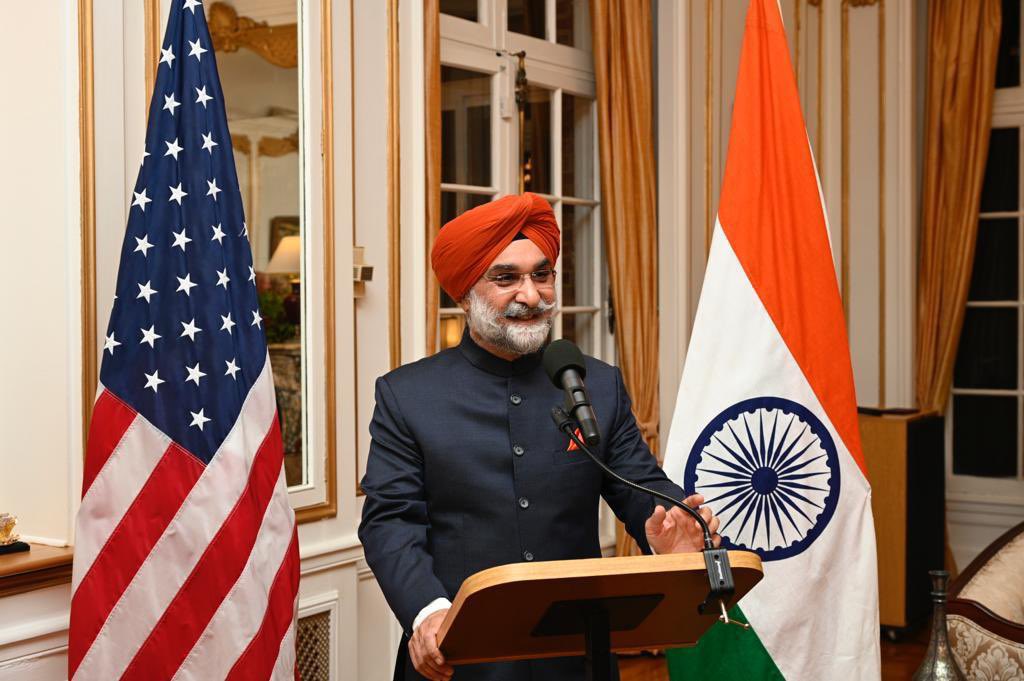

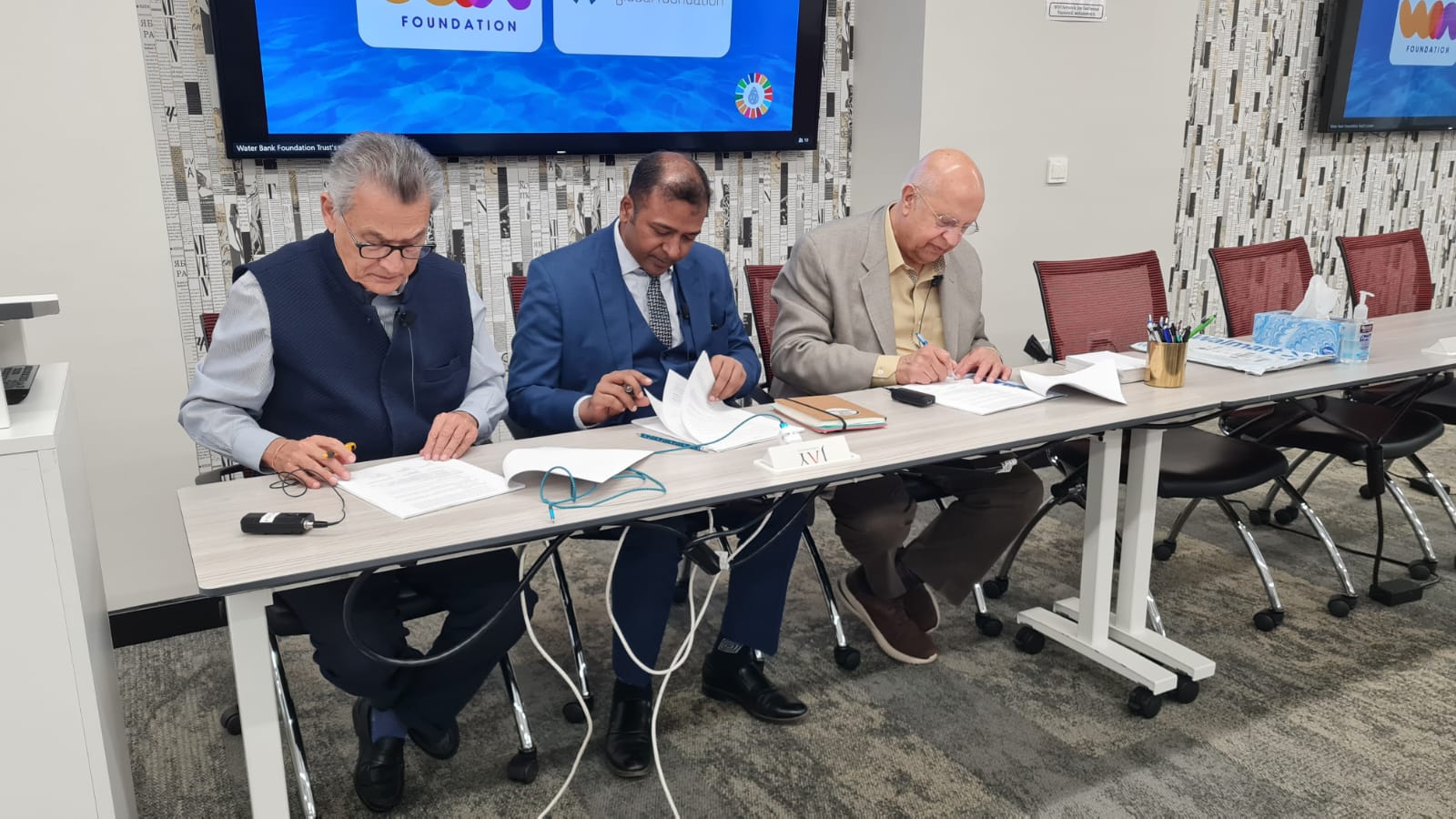





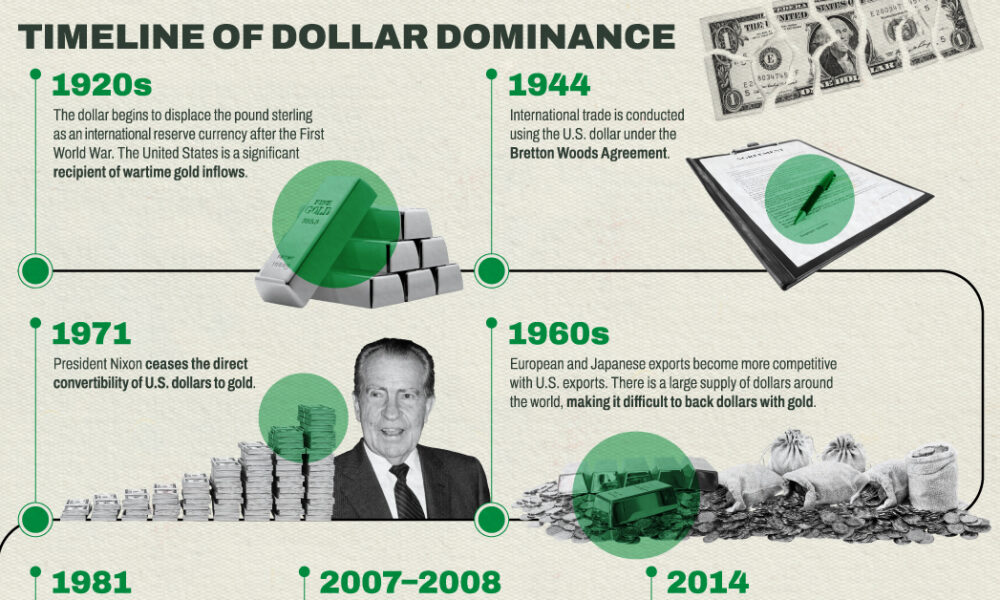



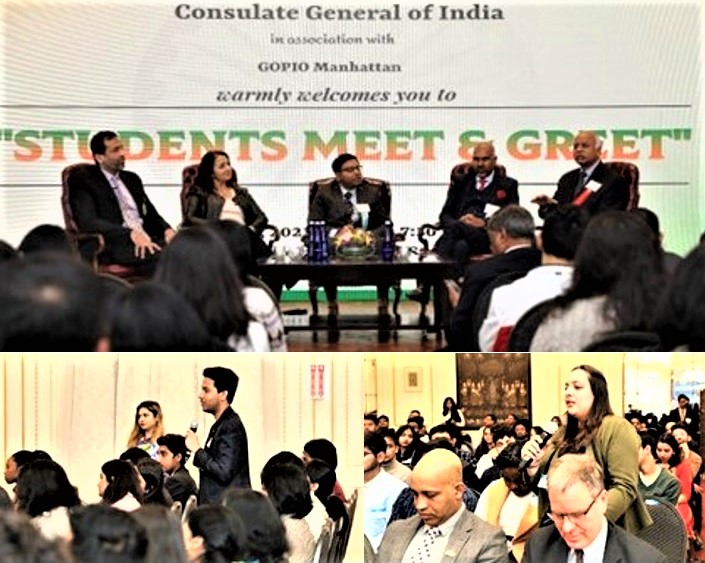

 “We are excited to announce the opening of Xavier University School of Veterinary Medicine in September 2023,” said Ravishankar Bhooplapur, President of Xavier University School of Medicine. “The mission of Xavier University School of Veterinary Medicine is to prepare veterinary physicians to practice veterinary medicine of the highest standard, and the opening of our new veterinary school will provide students with a quality veterinary education at an affordable price.”






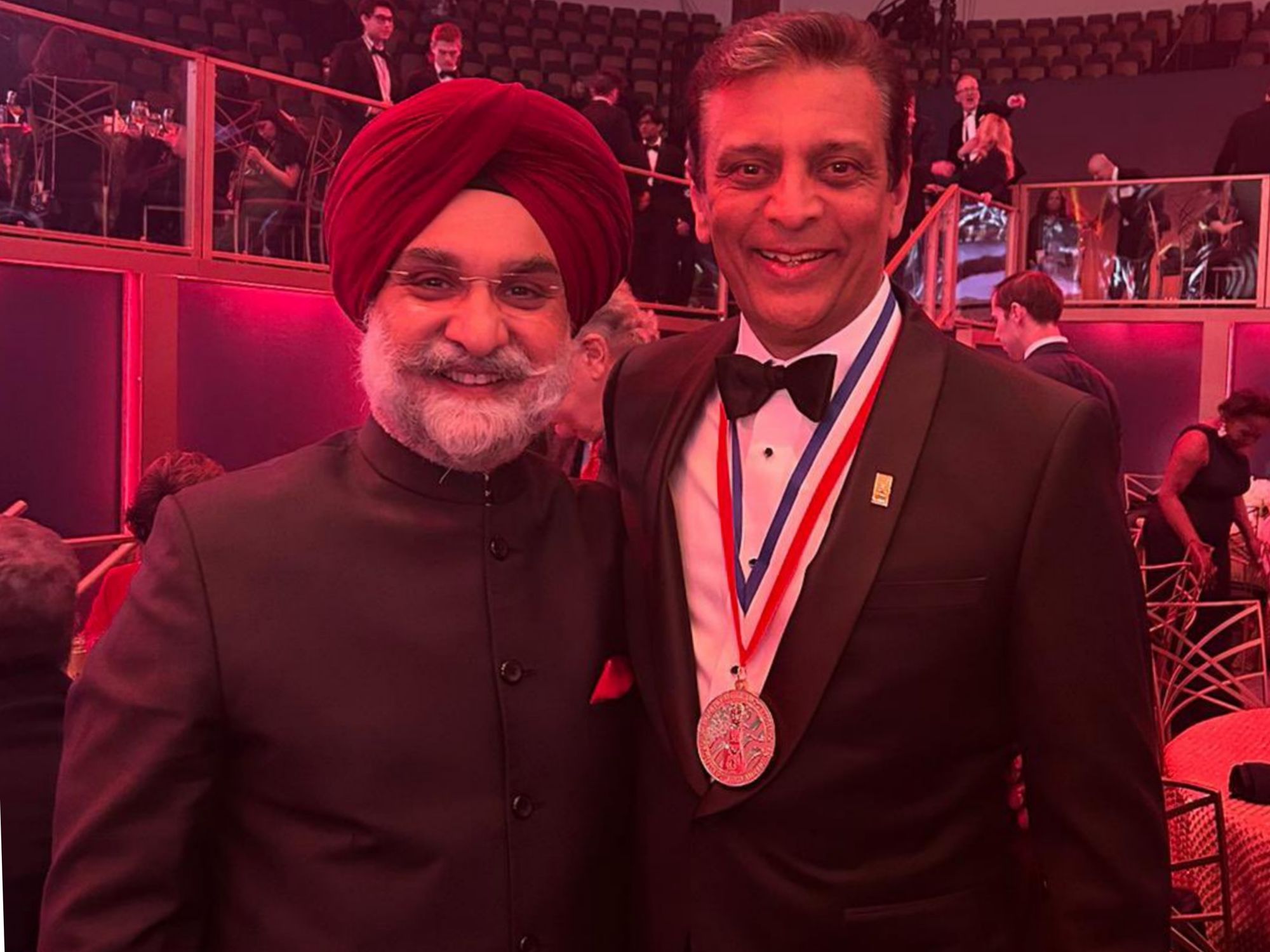
 According to the company, the single origin spices are sourced from Indian regions and states, packaged at state-of-the-art facility in India and shipped directly to consumers. The brand has expanded its partnership with farmers and cooperatives to bring high quality and authentic Indian spices to the consumers.