Dr. Sudha Parikh receives award for philanthropic work

Dr. Sudha S. Parikh, an anesthesiologist in tri-state area, was awarded the  Nari Udyami Award for her philanthropic work at a ceremony in India on Jan. 23. On the concluding day of the 15th Pravasi Bharatiya Divas in Varanasi, at an event entitled “She The Change: Nari Udyami Award” several pravasi Indians were recognized for their work relating to women’s empowerment.

Dr. Sudha Parikh received the award for her work with girl’s education and women’s empowerment through various non-profits like Akshay Patra, Share and Care, and Project Life. Dr. Sudha Parikh is the wife of Padma Shri Dr. Sudhir Parikh, founder and chairman of Parikh Worldwide Media and ITV Gold.

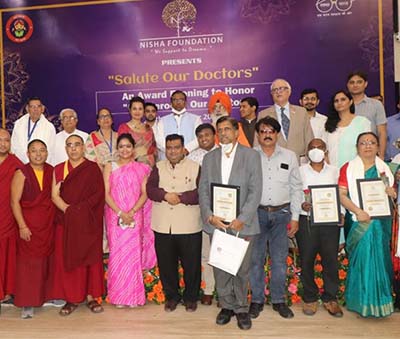
Dr. Sudha Parikh, philanthropist and vice chairperson of ITV Gold, 9th from left in back row, holding the award along with other’s recognized during the “She The Change: Nari Udyami Award 2019” event in Varanasi, Jan. 23, organized by the Beti & Shiksha Foundation. The event was held on the last day of the Pravasi Bhartiya Divas.

“I feel great and humble to get this award … along with very accomplished women. I thank the BS Foundation (Beti Shiksha Foundation) for recognizing my work and inspiring me to do more work helpful to the community,” Dr. Sudha Parikh said in an interview to ITV Gold. “Women’s education is the most important because if one woman is educated in the family, she will educate a whole family and she can uplift a whole family,” she said.

Dr. Sudha Parikh, who is also the vice chairperson of ITV Gold, urged other social workers and those interested in philanthropy to join in helping to empower women and children through education and with other needs such as health services, and training in skills so that they can earn a living.

“I am connected with a few organizations like Share and Care and Akshay Patra,” which raise funds to help with children and women’s empowerment, and hot school lunches that keep kids in school, she noted.

Padma Shri Dr. Sudhir Parikh, founder and chairman of Parikh Worldwide Media and ITV Gold, seen at the Pravasi Bharatiya Divas Jan. 23, in Varanasi, with Tara Gandhi Bhattacharjee, the daughter of the youngest son of Mahatma Gandhi, Devadas, and daughter-in-law, Lakshmi Gandhi. She has been dedicated to the Gandhi Smriti and Darshan Samiti, and also works for rural women and children with the Kasturba Gandhi National Memorial Trust established by Mahatma Gandhi.

Dr. Sudhir Parikh praised the Beti & Shiksha Foundation for its work and said he felt “very humble and very grateful” for the recognition accorded to Dr. Sudha Parikh. “Because this kind of recognition encourages us to work harder for women’s empowerment , women’s education, and women’s health.”

These kinds of recognition, “is like an adrenalin for us to keep working in our senior age. We are both in our 70s, but we are working relentlessly on these kinds of philanthropic work,” Dr. Sudhir Parikh said.

He reiterated his belief that “The more you give the more you become,” and that giving to society was a “double pleasure.”

A performance by Deepak Maharaj, son of Birju Maharaj, at the ‘SheThe Change: Nari Udyami Award” ceremony Jan. 23, in Prayagraj (Varanasi) on the last day of the Pravasi Bharatiya Divas.

“When you are giving, it is a pleasure for you, and when you look at the person receiving it, look at his smile and satisfaction, that gives us another pleasure,” he said.

“I would encourage people to support female members of the family to go out and help the poorest of the poor and children in society because it lifts the whole family,” Dr. Sudhir Parikh said.

The B & S Foundation was founded in 2008, because of the “persistent gender inequalities in India and the sheer need of finding non-traditional, high-return livelihood options for poor women,” in urban and rural areas, according to the website. The organization operates in Delhi, as well as in Jammu & Kashmir and North-Eastern states in India. “Our aim is to level the employment field for disadvantaged women by providing livelihoods options that enhance women’s economic status, dignity, and decision-making within their families.” It does this through its WE-SHAKTI program aimed at empowering women with minimal economic and social capital to become professional commercial drivers.

Renu Gupta received the She The Change – Nari Udhyami Sanman 2019

Renu Gupta received the She The Change – Nari Udhyami Sanman 2019 for her lifelong efforts in bringing about a positive change in the lives of people in India and the US. The award, conferred by the Beti & Shiksha Foundation in Varanasi, India was presented by Tara Gandhi, granddaughter of Mahatma Gandhi and Baby Rani Maurya, Governor of Uttarkhand. While happy at the honor, Renu downplays her achievements and says there are many people who are doing as much work as she is and she just “happened to be lucky” that she was recognized.

This is typical of the friendly no nonsense awardee who doesn’t believe in doing “anything that doesn’t make sense to her,” but will do whatever it takes to help someone in need.

Renu, 61, spent her growing years in Rajasthan where she completed her studies in Sanskrit and English. Marriage to Dr. Arun Gupta, a scientist, brought her to the US where she plunged into a job, studies and community activities.

She credits two strong influences in her life. Her maternal grandmother who instilled the values of Hindu dharma and her paternal grandfather from whom she absorbed the spirit of selfless service. The appeal of Hindu Dharma, observes Renu, is its “universality, logic and its step by step direction for self-realization.” She is “very comfortable being a Hindu in the US” and accepts other religious traditions with the same openness.

A member of the Vishwa Hindu Parishad America for the last 36 years and now serving as VP of Seva in VHPA, Renu spearheaded a group of 15 likeminded women for “Seva, Shakti and Sadhana.” All activities are geared towards this mission such as organizing spiritual retreats, workshops and serving the community. In 2008, she received a call from a Catholic Service coordinator who asked for help in rehabilitating 50 refugee Bhutanese and Nepali families.  Over the course of 10 years, the VHPA group worked with the refugees to set up their homes, taught them to clean houses and drive so they could find employment, file taxes and helped their children enroll in school.

Five years ago she took up the “Support A Child” project – a VHPA initiative that was languishing for want of attention. The initiative raises funds for the education and boarding of under privileged children in India and her efforts helped the support grow from 700 children to 2500 children. Renu makes it a point to visit the Ekal schools and the SAC hostels every year to supervise its operations personally. Plans for the future include increasing the number of children in the program from 2500 to 5000.

One of the original volunteers of Ekal Vidyalaya Foundation of USA, Renu was elected as the first woman to become the chairperson of the Board. Renu’s husband Dr. Arun Gupta, is equally engaged in Ekal and serves as a Board Director.

Renu also spends time teaching Hindi and Hindu culture to children in Cincinnati, Ohio where she is based. Role models, for our children, she inserts, must be characters like Mirabai, Shivaji, Maharana Pratap and Laxmi Bai. Playing on the word “Hindi medium” she enjoins Indian American parents to “raise their children through the Hindu medium and teach them values of Hindu dharma.”

Growing up, Renu was often buried in books thanks to a friend’s father who owned a bookstore.  Writing came naturally and she has several books to her credit. Her experiences and observations in America served as fodder for her books. Close to her heart is “Mrityorma Ma Amritam Gamay” and deals with a friend’s battle with cancer while her latest book “Sansari Sanyasi” is a biography of Hanuman Prasad Poddar, a saintly personality who played a key role in her spiritual journey.

Renu, along with her husband and son is also actively engaged in running the dozen franchisees of Great Clips – the hair salon chain they own.

Indian-Americans celebrate Republic Day across US with pledges to uphold the Constitution and combat hate

The Indian American Muslim Council (IAMC), an advocacy group dedicated to safeguarding India’s pluralist and tolerant ethos, marked India’s 70th Republic Day on Saturday January 26, 2019, with celebrations at chapters across the United States.

This year’s Republic Day celebrations continue in a tradition IAMC has established over the last 17 years of celebrating the adoption of India’s Constitution and its fundamental emphasis on pluralism and equality before the law for people of all faiths.

At the chapter event in South Brunswick., NJ, board member Mr. Jawad Mohammed remarked, “The Constitution of India was shaped by the diverse nature of India; its diversity of languages, religions, and ethnic communities. Thus, with its adoption, India became a sovereign, secular, democratic Republic and its foundations of liberty, justice and equality became integrated into the fabric of the nation. It is truly an extraordinary document.”

Mohammed also drew attention to the fact that the Constitution of India was under a sustained attack on account of the shrinking space for religious freedom of minorities and human rights violations of minorities, “lower castes” and women.

The commemoration in Dallas was held at Fun Asia in Richardson, TX. IAMC-Dallas President Rahmath Baig said “We hold the constitutions of both the United States and India  in high regard as Indian-Americans, and have a duty to preserve  the ideals of both.” Richardson, TX, Mayor Mark Soloman, and City Councilman Bob Doobay were also in attendance. Councilman Doobay expressed his felicitations on the 70th Republic Day celebrations as well as his appreciation for the Indian American Muslim Council promoting peace, equality and a commitment to uphold civil liberties.

 IAMC-Dallas member Arshad Qawi noted, “We are extremely proud of our Indian heritage. India is blessed to have a constitution which protects basic civil liberties and secular principles. Unfortunately the socio-political environment in India today is marked by an unprecedented level of intolerance and religious bigotry. It’s imperative upon all of us as responsible members of the diaspora, to get involved and make a concerted effort to promote peace and social justice for all.”

The events included fun activities for children including a Drawing Competition, as well as Fancy Dress and Spot Quiz Contests based on Indian themes. The US national anthem was followed by the national anthem of India.

Speaking on the theme for the occasion “Strength in diversity,” IAMC Vice President, Syed Afzal Ali, said “we gather today to recommit ourselves to the founding principles of the Constitution of liberty, equality and justice for all. We want to leave the world better for our children and that requires us to push back against the tide of hate and destruction and continue to build bridge of unity and hope. As Indian Americans dedicated to pluralism and human rights, we have a double reason to celebrate the founding of the Indian Republic. IAMC’s Republic Day celebrations are an expression of profound appreciation for the ideals of justice, pluralism and democracy – the shared values of India and the United States.”

Indian American Muslim Council is the largest advocacy organization of Indian Muslims in the United States with chapters across the nation. For more information, please visit our website at: www.iamc.com

Moody’s warns of Indian economy slipping due to pre-poll policies, promises

Pre-election measures and promises made by the Narendra Modi government to support farmers, small enterprises and low-income households will derail the country’s fiscal consolidation roadmap, a global rating agency said on Friday.

Moody’s Investors Service, which has already forecast a slippage in fiscal deficit to 3.4 per cent in the current fiscal against the budgeted target of 3.3 per cent, warns of further slippage in the fiscal consolidation roadmap that the country has planned.

Over the past month, the Indian government has announced a range of policies to support the incomes of small enterprises and low-income households, and it is also considering additional steps to support farmers facing financial distress, Moody’s said.

“In the absence of new revenue boosting measures, the policies will collectively make it harder for the government to achieve its fiscal consolidation objectives.

“If implemented, the proposed measures will cause further slippage from India’s fiscal consolidation roadmap, which targets reducing the central government’s deficit to 3.1 per cent and 3.0 per cent of GDP in fiscal 2019-20 and fiscal 2020-21, respectively,” Moody’s said in its report.

Besides, the effort to meet the short-term fiscal objectives through one-off sources of revenue and cuts in capital expenditure would denote low fiscal policy effectiveness, it said and added that the permanent measures would have a long-lasting impact on public finances.

Despite lower-than-planned expenditure, weakening revenue has resulted in the government already exceeding its full year deficit target for fiscal 2018-19, reaching 114 per cent of the budgeted amount from April to November 2018.

It also said the relief and tax cuts in the Goods and Services Tax (GST) will erode the revenue base near term. In January, the GST Council doubled the income tax exemption limit for firms to Rs 40 lakh in annual revenue and adjusted turnover limits under the concessionary GST composition scheme.

“The latest changes are due to take effect in April 2019 and follow several cuts to GST rates since their initial implementation in July 2017,” it said.

In December 2018, the government additionally cut sales tax on more than 20 items. The authorities are also considering reducing personal income tax and corporate tax rates to boost incomes and support growth.

“Doing so would further undermine the Central government’s revenue generation capacity,” the rating agency said.

Besides, income from divestment of government assets has been weaker than budgeted in the current fiscal. From April to December 2018, proceeds from divestment only amounted to 42.7 per cent of the Rs 80,000 crore that the government planned to raise, highlighting the challenges in relying on divestment as a sustained source of revenue.

Moody’s warned that while the government could accelerate stake sales in public sector banks and seek special one-off dividend payments or deferments of subsidy payments to government-related entities, including the Reserve Bank of India, to bridge budget shortfalls, the positive impact on India’s government finances would be short lived.

“Achieving deficit reduction through such unpredictable revenue sources denotes weaker fiscal policy effectiveness than if consolidation were achieved through more durable and predictable revenue sources, such as tax revenue,” it added.

Finally, the global credit rating agency said that the proposals to support farmers’ income, who are facing financial difficulties due to low crop prices, will increase government expenditure.

The government is considering a slew of measures to support farmers, including introduction of a new direct income support scheme, a revamped crop insurance scheme and agriculture crop loans at zero interest rates.

Without other expenditure rationalisation, higher subsidy spending on the agricultural sector will increase future fiscal deficits, the report noted.

78% Americans support high-skilled immigrants to US: Survey

A new survey shows that majority of Americans support high-skilled immigration contrary to a perception that high-skilled immigrants are displacing Americans as argued by the Trump administration to overhaul the H-1B programme, a major route for foreign professionals.

A new survey shows that majority of Americans support high-skilled immigration contrary to a perception that high-skilled immigrants are displacing Americans as argued by the Trump administration to overhaul the H-1B programme, a major route for foreign professionals.

Roughly eight in ten adult Americans — 78% — support encouraging highly skilled people to immigrate and work in the US, a report by Pew based on a survey of 12 countries said on Tuesday.

The support was around the same as in other advanced countries, but lower than in Sweden (88%) , the United Kingdom (85%), Canada (84%), Germany (81%) and Australia (79%).

The finding for the United States runs contrary to negative perception of the H-1B visa programme, which is a major route for high-skilled immigrants, among critics who say it has been misused to displace Americans with cheaper workers provided by outsourcing companies.

Supporters of the programme have argued it helps American companies make up for the shortage of locally available hands.

Siding with the critics, the Trump administration is in the midst of overhauling the system by raising the bar to qualify as highly skilled, and tightening rules for entry of foreigners in US schools and colleges, which industry sources say, have made the process cumbersome, unpredictable and expensive.

Asked about this gap between the opposition and public support, Pew senior researcher Phillip Connor, who also co-authored the report, said, “Those in the US who have more education are more likely to support the immigration of highly skilled people. Similarly, those in the US with a higher income are more likely to support the immigration of highly skilled people.”

Thousands of foreign professionals enter the US workforce every year through optional practical training (OPT) for students and H-1B. A large number of them stay on, if sponsored, by their employers to join the queue for citizenship, going first through acquiring permanent residency (Green Card).

There is a long waiting period for Indian applicants for Green Card, with one estimate putting over 100 years, because of backlog that piles up higher every year, because of a system that places a country-cap, a limit on the number of Green Cards given to people from any one country. And efforts are on to find a solution, legislatively, as the debate continues on the advantages and disadvantages of high skilled immigration.

PRATHAM AND J-PAL AWARDED CO-IMPACT GRANT FOR AFRICA INITIATIVE

Teaching at the Right Level (TaRL) Africa, a joint venture between Pratham and MIT’s Abdul Latif Jameel Poverty Action Lab (J-PAL), has been named one of five recipients of an $80 million commitment from the global philanthropic collaborative Co-Impact. Selected from a pool of more than 250 projects, the grant was awarded to change-makers with proven strategies in education, health and economic opportunity.

Despite progress worldwide in school enrollment, millions of children are not acquiring basic foundational skills. Pioneered by Pratham, the TaRL methodology significantly raises children’s basic learning levels in a short period of time. The approach uses a simple tool to assess children’s ability to read and do arithmetic, grouping them by level rather than grade and advancing them to the next learning group as they progress and continue to grow.

Six randomized control trials conducted in India by J-PAL-affiliated researchers over the past two decades have shown that the approach, whether delivered by Pratham staff or trained teachers in government-run schools, has led to some of the largest, most cost-effective learning gains of any primary education program evaluated.

“Using Teaching at the Right Level,” explains Dr. Rukmini Banerji, CEO of Pratham, “we have helped millions of children to read and to do basic math in India. Together with J-PAL, we are excited to have the opportunity to work in Africa with many partners. Foundational skills can transform a child’s life and unlock their potential to do so much more in education and in life. We are grateful for Co-Impact’s support for this partnership.”

The multi-year grant from Co-Impact will support Pratham and J-PAL in building the capacity of governments and other partners in multiple countries across Africa, including Ivory Coast, Nigeria, and Zambia, to design and scale TaRL-like approaches that will help three million primary school children learn to read and do basic arithmetic.

“This grant is a true validation of Pratham’s efforts in pioneering innovative, cost-effective learning solutions,” asserts Pratham USA Chairman Deepak Raj. “While our focus remains on addressing India’s education crisis, we are proud to see Pratham’s methodology replicated in other countries, where it will have a lasting impact on millions of children.”

Shifting the focus from school enrollment to learning outcomes in Africa will require critical support at all levels. This includes adjusting the approach to local contexts, training and assisting on-site mentors and continually assessing progress while empowering government officials and teachers to act on the evidence generated.

According to Iqbal Dhaliwal, Executive Director of J-PAL, “This grant represents the critical importance of using evidence from rigorous impact evaluations to drive decision-making. Our partnership with Pratham is based on innovation, learning, and a unifying vision—shared with Co-Impact—of creating systems-level change. Through investing in rigorous research and evidence-backed approaches, we can disrupt the status quo and transform lives. We have a lot of work ahead of us and are putting together an outstanding team to lead and execute this exciting initiative.”

Co-Impact, the global philanthropic collaborative formed in 2017 by Olivia Leland with commitments from Richard Chandler, Bill and Melinda Gates, Jeff Skoll, The Rockefeller Foundation, and Rohini and Nandan Nilekani, aims to drive social change through investment in proven solutions that are ready to be scaled even further. “We know that investing in the lives of the poorest families and children around the world is probably the highest return on investment we can make,” says Rockefeller Foundation President Rajiv Shah. “We’ve designed a project where as philanthropists, we’re standing on each others’ shoulders to scale the hardest and highest walls in philanthropy.”

Pratham is an innovative learning organization. Set up almost 25 years ago, Pratham believes that every child should be in school and learning well. Pratham means ‘first’ or “primary” in Sanskrit. As one of the largest non-governmental organizations in the country, Pratham facilitates India’s well-known Annual Status of Education Report (ASER) exercise, which has been providing estimates of reading and arithmetic skills every year for every rural district in India since 2005. For more information, visit prathamusa.org.

The Abdul Latif Jameel Poverty Action Lab (J-PAL) is a global research center based at the Massachusetts Institute of Technology (MIT) working to reduce poverty by ensuring that policy is informed by scientific e

SAKHI holds 2019 Women’s March

On Saturday, January 19, 2019, leading NYC-based immigrant women’s advocacy organization, Sakhi for South Asian Women (Sakhi), commenced their 30th Anniversary with their participation in the 2019 Women’s March on both New York City and Washington, D.C.

As an official partner of the March on NYC and a Steering Committee member of the March on D.C., Sakhi convened 35 supporters and allies to advocate for progressive local and national discourse around equity and inclusivity. “It is a privilege to be able to march with my community”, says Sarika Patel, a member of Sakhi’s contingent. “The negative news we see and hear everywhere makes it so easy to feel discouraged. But, the sheer quantity of people who came out to march today is testament to the fact that there is never a shortage of like-minded individuals committed to change.”

Sakhi exists as the second-oldest South Asian women’s organization in the United States and recognizes that systemic impact demands the power of a collective. “This is an immensely critical time for women’s empowerment and gender justice,” says Executive Director, Kavita Mehra. “This administration’s continuous abuse of power must be met with accountability and we will continue mobilizing with our allies and supporters. The Women’s March provided us with the opportunity to advance a meaningful agenda that protects our communities from attacks on our dignity and self determination.”

Since its inception, Sakhi has responded to more than 10,000 survivors of violence and consistently mobilized New York City’s South Asian immigrant community to take a stand against abuse. Throughout 2019, the organization will highlight their 30 years with celebratory events across the city.

EK LADKI KO DEKHA TOH AISA LAGA Release on February 1

Directed by Shelly Chopra Dhar, Produced by Vidhu Vinod Chopra, and with popular Bollywood stars, Sonam Kapoor, Anil Kapoor, Rajkummar Rao, and Juhi Chawla, the much anticipated EK LADKI KO DEKHA TOH AISA LAGA will release in US theaters on February 1st, 2019.

Some love stories are not simple, Sweety’s is one such story. She has to contend with her over-enthusiastic family that wants to get her married, a young writer who is completely smitten by her, a secret that she harbours close to her heart and ultimately the truth that her true love might not find acceptance in her family and society. Resolving these issues proves hilarious, touching & life changing. Welcome to the most unexpected romance of the year!

 Visit: FB: https://www.facebook.com/foxstarhindi/. Trailer: https://www.youtube.com/watch?v=pKcamCgBvMo

TOTAL DHAMAAL to Release on February 22

Directed by Indra Kumar and acted by Ajay Devgn, Madhuri Dixit, Anil Kapoor, Sanjay Mishra, Javed Jaffrey, Arshad Warsi, Riteish Deshmukh, Esha Gupta, Boman Irani, and Johnny Lever, the hilarious TOTAL DHAMAAL will release on Feb. 22nd.
 
 And the madness & the craziness of the biggest franchise of laughter continues. Total Dhamaal is a mad adventure comedy about money. Guddu (Ajay Devgn), a small time crook gets double-crossed by his own colleague, Pintu (Manoj Pahwa), after they have managed to get their hands on an illegal booty. Guddu & his sidekick Johnny (Sanjay Misra) manage to trace his colleague but only after Pintu has given the information of the booty to 3 other groups i.e. Avinash (Anil Kapoor) & Bindu (Madhuri Dixit Nene) – a bickering couple about to be divorced; Lallan (Riteish Deshmukh) & Jhingur (Pitobash Tripathy) – Fire Officers turned offenders & two weird siblings Aditya (Arshad Warsi) & Manav (Javed Jaffrey).
 
All of them refuse Guddu’s offer to distribute the money and the race to reach the booty first begins. Finally after many ups & downs all reach the designated place. But it’s not as easy as it seems. Is there any truth about the hidden booty? Or all of them are being fooled? After a day full of life changing, near death experiences, will the adventure ever end or another one begin? Find out how the story concludes and if they are able to get the booty or not!
 

Prime Minister to inaugurate 15th Pravasi Bharatiya Diwas Convention in Varanasi on 22 January, 2019

The Prime Minister, Shri Narendra Modi will inaugurate the 15th Pravasi Bharatiya Diwas Convention at Varanasi, Uttar Pradesh tomorrow on 22 January, 2019. 
For the first time, the three day long convention is being organized in Varanasi from 21-23 January, 2019. The theme of PBD Convention 2019 is “Role of Indian Diaspora in building New India”. 
In reverence to the sentiments of the larger diaspora to participate in Kumbh Mela and Republic Day celebrations, the 15th PBD Convention is being organised from 21 to 23 January 2019 instead of 9th January. After the Convention, participants will visit Prayagraj for Kumbh Mela on 24th January. They will then proceed to Delhi on 25th January and witness the Republic Day Parade at New Delhi on 26th January 2019. 
Prime Minister of Mauritius Mr. Pravind Jugnauth will be the chief guest of the PBD convention. Mr. Himanshu Gulati, Member of Parliament of Norway, will be the Special Guest while Mr. Kanwaljit Singh Bakshi, Member of Parliament of New Zealand will be the Guest of Honor at the 15th edition of PBD. 
Key events of this edition include- 
21 January, 2019- Youth Pravasi Bharatiya Diwas. The event will provide opportunities for the young Diaspora to engage with New India. 
22 January 2019 – Inauguration of PBD convention by Prime Minister in presence of Prime Minister of Mauritius, Pravind Jugnauth.
23 January 2019 – Valedictory Session & Pravasi Bharatiya Samman Awards by the President of India. 
Various plenary sessions are also scheduled during the event. The evenings are marked with cultural programs. 
The decision to celebrate Pravasi Bharatiya Diwas (PBD) was taken by the former Indian Prime Minister, late Shri Atal Bihari Vajpayee.
The 1st PBD was celebrated on 9th January, 2003 in New Delhi. January 9 was chosen as the day to celebrate PBD as it was on this day in 1915 that Mahatma Gandhi, had returned to India from South Africa.
PBD now celebrated once in every two years, provides a platform to the overseas Indian community to engage with the government and reconnect with their roots.  During the Convention, Pravasi Bharatiya Samman is conferred on the selected overseas Indians for their significant contributions to various fields both in India and abroad. 
14th PBD held during 7–9 January 2017 at Bengaluru, Karnataka was inaugurated by Prime Minister Narendra Modi. The theme for the 14th PBD was “Redefining engagement with the Indian diaspora”.  In his address, Mr. Modi had said that Indian diaspora represents the best of Indian culture, ethos and values and are respected for their contributions. He underlined the importance of a continuous engagement with the overseas Indian community as a key area of priority for the Government.

The longest ever US Government Shutdown

The partial US government shutdown has passed full one month, which makes it the longest gap in American government funding ever. That beats the previous record, under President Bill Clinton in 1995, of 21 days.

In total, there have been 21 gaps in government funding since 1976, though the level of shutdown has varied. The current federal shutdown is a partial one, as many agencies were already funded through this fiscal year, which ends in September.

The roots of today’s dysfunction date back to some critical decisions starting in the 1970s. Here’s a look at why the American government has lurched into crisis over the budget so often since then.

Before the 1970s, the federal government would in some cases spend money without prior congressional approval, said Jim Broussard, the director of the Center for Political History at Lebanon Valley College in Annville, Pa

A 1974 law reorganized the budgeting process, shifting power from the executive branch to Congress. Tense disagreements quickly emerged.

In 1977, the House of Representatives and the Senate fought over whether Medicaid should be used to pay for abortions. That led to three separate instances in which the government could not provide funding for the Departments of Labor and Health, Education and Welfare. The shutdowns added up to a total of 28 days that year.

Another gap in funding the following year, when President Jimmy Carter took issue with a costly public works bill and defense spending, lasted 17 days.

Two legal opinions issued by the United States attorney general, Benjamin R. Civiletti, in 1980 and 1981, made shutdowns much more severe.

Until that point, most agencies could continue to operate even if funding bills hadn’t been passed, with the understanding that money would eventually be approved. But Mr. Civiletti argued that it was illegal for the government to spend money without congressional appropriations. The few exceptions included work by federal employees to protect life and property, he wrote.

That, in turn, prompted an increased frequency of small shutdowns as politicians struggled with deadlines, said Roy T. Meyers, a political science professor at the University of Maryland, Baltimore County, who has written about the history of shutdowns.

In November 1981, President Ronald Reagan, in a fight with Congress over $8.5 billion in budget cuts he wanted, ordered the furlough of 241,000 government employees. It was the first time a shutdown of that size was ordered.

congressional subcommittee estimated that the two-day shutdown cost taxpayers between $80 million and $90 million, including administrative costs, such as figuring out who could and couldn’t work and paying workers who didn’t work.

Shutdowns that included furloughs in 1984, 1986 and 1990 cost taxpayers at least $128 million, according to government estimates. The longest previous shutdown came in 1995. At issue was a long-term budget backed by Republicans, who won control of both the House and the Senate halfway through Mr. Clinton’s first term.

Their plan limited spending for Medicare and turned Medicaid and most other welfare programs over to the states. House Republicans, in particular, were keen on using a shutdown to get Mr. Clinton to sign their bill.

A five-day shutdown in November was followed by the record-breaker — 21 days — starting in mid-December. That conflagration helped pave the way for the 2013 shutdown over President Barack Obama’s health care law.

The 2013 shutdown lasted for 16 days and ended amid dire warnings from the Treasury Department that it was about to run out of money. Having failed in their bid to defund Obamacare, Republicans leaders eventually worked with their Democratic counterparts on a plan to reopen the government and raise the debt ceiling. “We’ve got to get out of the habit of governing by crisis,” Mr. Obama said at the time.

Indra Nooyi being considered to lead World Bank

Indra Nooyi, the former CEO of global beverage giant PepsiCo, is being considered by the White House for the new World Bank president, according to a leading American daily. Nooyi, 63, stepped down as PepsiCo’s chief last August after leading the company for 12 years.

The Indian born business leader “has been courted as an administration ally by Ivanka Trump, the President’s eldest daughter who is playing a role in the selection of a nominee,” The New York Times said.

The report, which cited several people familiar with the process, said the decision-making process for the top post at the World Bank is “fluid and in its initial stages and early front-runners and candidates often fall off the radar, or withdraw from consideration, before the president [Donald Trump] makes his ultimate pick”.

It is unclear whether Ms. Nooyi would accept the nomination if chosen by the Trump administration. The first daughter, who has tweeted that she views Ms. Nooyi as a “mentor + inspiration”, has floated her name as a potential successor.

World Bank’s current president Jim Yong-kim had earlier this month announced that he would step down from his post in February to join a private infrastructure investment firm. His unexpected departure came nearly three years before the end of his term.

The NYT report said that the process of choosing Mr. Kim’s successor is being overseen by Treasury Secretary Steven Mnuchin, acting chief of staff Mick Mulvaney and Ms. Ivanka, whose role in the process was announced by the White House last week.

Ivanka’s “role in the process drew some criticism from ethics watchdogs on Monday, which said it could pose a conflict of interest for the President’s daughter to be involved in international economic matters when she has not completely divested from her assets,” the report said.

The group was expected to begin the interview process on Tuesday, in order to present President Trump with recommendations for a nominee.

Nooyi joined Mr. Trump’s business council, which was disbanded after many chief executives quit following the President’s comments blaming “many sides” for white supremacist violence in Charlottesville, in August 2017.

The report, however, added that negative comments made by Ms. Nooyi after the 2016 election, during which she did not publicly endorse any candidate, are seen as a potential roadblock to her nomination.

Following Mr. Trump’s win, she said at The NYT’s DealBook conference in 2016 that “Our employees are all crying. And the question that they’re asking, especially those who are not white: ‘Are we safe?’ Women are asking: ‘Are we safe?’ LGBT people are asking: ‘Are we safe?’ I never thought I’d have had to answer those questions”.

A spokesman for PepsiCo had told Fortune magazine that “Ms. Nooyi misspoke. She was referring to the reaction of a group of employees she spoke to who were apprehensive about the outcome of the election. She never intended to imply that all employees feel the same way”.

Other candidates

Other candidates being considered for the position of World Bank head are under secretary of the Treasury for International Affairs David Malpass and president of the Overseas Private Investment Corporation Ray Washburne.

The U.S. President cannot install the World Bank leader, who must be approved by the bank’s board, but has traditionally placed his nominee in the job. Trump has already faced harsh criticism for appointing his daughter as a senior White House adviser.

Ivanka is a successful businesswoman, fashion designer, author and reality television personality. She has her own line of fashion items, including clothes, handbags, shoes, accessories which are available in all major U.S. departmental stores.

India likely to surpass UK in world’s largest economy rankings

India is likely to surpass the United Kingdom in the world’s largest economy rankings in 2019, according to a report by global consultancy firm Pricewater Cooper (PwC). As per the report, while the UK and France have regularly switched places owing to similar levels of development and roughly equal populations, India’s climb up the rankings is likely to be permanent.

PwC’s Global Economy Watch report projects real GDP growth of 1.6 % for the UK, 1.7 per cent for France and 7.6 per cent for India in 2019. “India and France are likely to surpass the UK in the world’s largest economy rankings in 2019, knocking it from fifth to seventh place in the global table,” the report said.

According to World Bank data, India became the world’s sixth largest economy in 2017 surpassing France and was likely to go past the UK which stood at the fifth position. PwC’s Global Economy Watch is a short publication that looks at the trends and issues affecting the global economy and details its latest projections for the world’s leading economies.

“India should return to a healthy growth rate of 7.6 % in 2019-20, if there are no major headwinds in the global economy such as enhanced trade tensions or supply side shocks in oil.

“The growth will be supported through further realisation of efficiency gains from the newly adopted GST and policy impetus expected in the first year of a new government,” said Ranen Banerjee, Partner and Leader – Public Finance and Economics, PwC India.

Mike Jakeman, senior economist at PwC, said India is the fastest growing large economy in the world, with an enormous population, favourable demographics and high catch-up potential due to low initial GDP per head.

“The UK and France have regularly alternated in having the larger economy, but subdued growth in the UK in 2018 and again in 2019 is likely to tip the balance in France’s favour. The relative strength of the euro against the pound is an important factor here,” Jakeman said. The global economy as a whole is expected to slow in 2019 as G7 countries return to long-run average growth rates, the PwC report said.

PwC expects that the pick-up in growth of most major economies seen between the end of 2016 and the beginning of 2018 is now over. As per the World Bank data, in 2017, India became the sixth largest economy with a GDP of USD 2.59 trillion, relegating France to the seventh position. The GDP of France stood at USD 2.58 trillion.

The UK, which is facing Brexit blues, had a GDP of USD 2.62 trillion, which is about USD 25 billion more than that of India, the data showed. The US was the world’s largest economy with a size of USD 19.39 trillion, followed by China (USD 12.23 trillion) at the second place in 2017.

Japan (USD 4.87 trillion) and Germany (USD 3.67 trillion) were at the third and fourth places, respectively.

Did Modi come to power by hacking EVMs in 2014?

Syed Shuja of Hyderabad, claiming to be a cyber expert and a former employee of the Electronic Corporation of India Ltd on Monday made a series of unsubstantiated allegations about the vulnerability of electronic voting machines used in India, including in the 2014 general election.

Syed Shuja appeared at a news conference through Skype. He said he was based in the United States, where he got political asylum after fleeing India due to threats to his life and allegedly in a serious medical condition in 2014.

According to Shuja, who said he also went by other names, 200 seats in the 2014 elections that would have been won by the Congress had been rigged in favour of the Bharatiya Janata Party by manipulating data transmission through what he called ‘military-grade modulators’ installed in various parts of the country.

The event, organized by the Indian Journalists Association and the Foreign Press Association, was supposed to witness a live demonstration of EVMs being hacked, but Shuja claimed he had been attacked recently, which explained his absence in London, and individuals who were to bring the EVMs from India had been bought off.

Shuja went on to allege that senior BJP leader and former Union minister Gopinath Munde had been murdered because he was about to expose the malpractice when he did not get what he wanted when the Narendra Modi government was formed. He also alleged that journalist Gauri Lankesh was killed because she was about to publish details of the EVMs being hacked.

The brunt of Shuja’s allegations was pointed at the BJP, but he claimed that he had been approached by various parties, including the Congress, Aam Aadmi Party, Samajwadi Party and regional parties had approached him to help hack EVMs during elections.

Present at the press conference was senior Congress leader Kapil Sibal, but he refused to comment on the claims made. IJA president Ashis Ray said he had invited leaders of all parties to attend the event, but only Sibal had turned up.

According to Shuja, he and his team prevented EVMs being hacked during the 2015 elections to the Delhi assembly, when AAP won a landslide majority. The recent elections in Madhya Pradesh, Rajasthan, Chhattisgarh and Telangana were also rigged through the EVMs, he alleged.

In Shuja’s perception, he and his team of unnamed individuals in India were trying to save democracy by intercepting transmissions and preventing EVMs being hacked. The team, he added, did not have money or resources, but were doing their best for the country.

Shuja further alleged that the Election Commission had been ‘100 per cent involved’ in the malpractice over the years. When the possibility of EVMs being hacked is raised, he said the commission invariably presents 14 prototypes that he and his team had built at ECIL. Those specific EVMs, he said, cannot be hacked by bluetooth or wi-fi.

Shuja’s status of being granted political asylum in the US could not be verified from the US embassy in London due to Monday being a holiday on Martin Luther King Day, as well as employees not being at work due to the government shutdown.

Responding to the allegations, the Election Commission in New Delhi rejected the “motivated slugfest” and warned of legal action. “It has come to the notice of Election Commission of India that an event claiming to demonstrate EVMs used by ECI can be tampered with, has been organised in London. Whereas, ECI has been wary of becoming a party to this motivated slugfest, ECI firmly stands by the empirical facts about fool proof nature of ECI EVMs deployed in elections in India,” the poll panel said in a statement.

Holding that these EVMs are manufactured in Bharat Electronics Limited and Electronics Corporation of India Limited “under very strict supervisory and security conditions and there are rigorous Standard Operating Procedures meticulously observed at all stages under the supervision of a Committee of eminent technical experts constituted way back in 2010,” it said that it was “being separately examined as to what legal action can and should be taken in the matter”.

Donald Trump nominates three Indian-Americans to key administration post

U.S. President Donald Trump has nominated three Indian-Americans to key administration positions, as per the latest list of senior nominations sent by the White House to the Senate.

Rita Baranwal has been nominated for the post of Assistant Secretary of Energy (Nuclear Energy), Aditya Bamzai for Member of the Privacy and Civil Liberties Oversight Board, and Bimal Patel as the Assistant Secretary of Treasury.

The intent to nominate Ms. Baranwal, Mr. Bamzai and Mr. Patel was announced by Mr. Trump earlier, but the nomination was sent to the Senate last week. So far, Mr. Trump has nominated or appointed more than three dozen Indian Americans in key positions.

Nikki Haley, the first Cabinet-ranking Indian-American and Raj Shah, the first Indian-American deputy Press Secretary have left the Trump administration. Ms. Baranwal holds the post of Director, Gateway for Accelerated Innovation in Nuclear (GAIN) initiative.

If confirmed by the Senate, as Assistant Secretary of Energy Ms. Baranwal will be heading the powerful Office of Nuclear Energy. She will also be responsible for the department’s nuclear technology research and the development and management of the department’s nuclear technology infrastructure.

Ms. Baranwal previously, she served as director of the Technology Development and Application at Westinghouse and was a manager in Materials Technology at Bechtel Bettis, where she led research and development in nuclear fuel materials for U.S. naval reactors.

A Yale graduate, Mr. Bamzai teaches and writes about civil procedure, administrative law, federal courts, national security law and computer crime. He has earlier served as a law clerk to Justice Antonin Scalia of the U.S. Supreme Court and to Judge Jeffrey Sutton of the U.S. Court of Appeals for the Sixth Circuit.

Before entering the academy, Mr. Bamzai served as an attorney-adviser in the Office of legal counsel of the U.S. Department of Justice, and as an appellate attorney in both private practice and for the National Security Division of the justice department.

Patel currently serves as deputy assistant secretary of the Treasury for the Financial Stability Oversight Council. Prior to joining the United States Department of the Treasury, Mr. Patel was a partner and head of the Financial Advisory and Regulation practice in Washington, DC, office of O’Melveny & Myers LLP, the White House said.

Mr. Patel previously served as senior advisor to Director Jeremiah O Norton on the Board of Directors of the Federal Deposit Insurance Corporation. He also served as an adjunct associate professor at Stanford University, teaching an undergraduate course on banking regulation.

Rep. Raja Krishnamoorthi named to key Congressional panel

Democratic lawmaker Raja Krishnamoorthi has been appointed as a member of a Congressional committee on intelligence, becoming the first South Asian to serve in the powerful body tasked to strengthen U.S.’s national security.

Krishnamoorthi, 45, who represents Illinois’s 8th Congressional District in the House, was chosen along with Congresswoman Val Demings of Florida, Sean Patrick Maloney of New York and Peter Welch of Vermont as the four new Democratic members of the House Permanent Select Committee on Intelligence (HPSCI) for the 116th Congress. The HPSCI is tasked with overseeing the activities and budget of the 17 intelligence agencies of the U.S.

Speaker of the House of Representatives Nancy Pelosi appointed Mr. Krishnamoorthi on Wednesday. Ms. Pelosi said: “Our new members of the Intelligence Committee bring exceptional judgment, expertise and determination to our mission to honour that oath and, guided by the strong, principled leadership of Chairman Adam Schiff, will restore the long tradition of bipartisanship and integrity of this critical committee.”

‘Very humbling’

Mr. Krishnamoorthi, after Ms. Pelosi announced his appointment, said: “It is very humbling to be chosen to serve on the Intelligence Committee in this Congress, and I am ready to join with my colleagues in preserving the safety and security of our nation“. “The intelligence challenges and international threats facing our country today are vast, ranging from terrorism to cyberwarfare to investigating Russia’s previous and continuing attempts to sabotage our democracy. Mr. Krishnamoorthi, whose family moved to New York when he was three months old, has attended Princeton University, where he earned a Bachelor’s degree in Mechanical Engineering. He also attended Harvard Law School. Early this week, Ms. Pelosi appointed Indian-American Congresswoman Pramila Jayapal to the House Education and Labour Committee.

The Akshaya Patra Foundation Awarded the Prestigious Gandhi Peace Prize

On January 16, 2019 the esteemed Gandhi Peace Prize was conferred upon Akshaya Patra for their contribution in providing mid-day meals to millions of school children in India. The International Gandhi Peace Prize, named after Mahatma Gandhi, is awarded by the Government of India to individuals and institutions for their contribution towards social, political and economic transformation through non-violence and other Gandhian methods.

The jury under the Chairmanship of Prime Minister Shri Narendra Modi and comprising of Justice Ranjan Gogoi, the Chief Justice of India; Smt Sumitra Mahajan, Speaker of Lok Sabha; Shri Mallikarjuna Kharge, Leader of the single largest Opposition Party in Lok Sabha; Shri L.K. Advani, Member of Parliament unitedly announced the award.

Prime Minister Modi applauded the dedicated work of Akshaya Patra in saying, “The Akshaya Patra Foundation’s determined efforts ensure nutritious meals for many. Their outstanding work has also ensured more children go to school. I congratulate them for the Gandhi Peace Prize, 2016.” The award is an annual prize but no winner had been conferred the honor since 2014.

The announcement of the award on January 16th encompassed 2015-2018. The award was instituted in 1995 during the commemoration of the 125th birth anniversary of Mahatma Gandhi. It carries an award of Rs one crore along with a citation and plaque. Previous winners of the Gandhi Peace Prize include Nelson Mandela, Desmond Tutu, Vaclav Havel, Ramakrishna Mission and other venerable individuals and organizations.

Extending humble gratitude, Shri Madhu Pandit Dasa, Chairman of The Akshaya Patra Foundation said, “Thank you Prime Minister Modiji for the Gandhi Peace Prize. Your constant patronage for Akshaya Patra’s mission from beginning days as Chief Minister of Gujarat and as Prime Minister has been a big strength.” ABOUT THE AKSHAYA PATRA FOUNDATION Akshaya Patra means the unlimited bowl of abundance and sustenance. Started in 2000, the pilot program served 1500 children daily in 5 schools. Today the organization feeds 1.76 million school children daily in 14,702 schools across 12 states. The state of the art kitchens provide fresh, nutritious hot meals to counter the issues of malnutrition and support the right to an education for children from socio-economically deprived backgrounds. To learn more about The Akshaya Patra Foundation, please visit www.FoodForEducation.org

Yet Another Reason to Visit India in 2019

It just got a lot easier—and more exciting—to visit India in 2019. The government just updated its e-Visa policies, reports The Points Guy, doubling the coverage time from 30 to 60 days. Furthermore, tourists and business travelers will be allowed double entry on a single visa, while people with medical e-Visas can re-enter the country up to three times. In other words? Start planning the best two-month vacation of your life.

First implemented in late 2014, India’s e-Visa system replaced an otherwise bureaucratic nightmare, allowing travelers to apply online for a visa instead of going through the consulate. Needless to say, the system has seen tremendous growth over the past four years. Today, the e-Visa facility issues online visas (within 72 hours) to citizens from 166 countries around the world. It is even estimated that 40 percent of all visas are obtained online—and that number is expected to cross the 50 percent mark soon, according to a recent statement from India’s Press Information Bureau.

To join the e-Visa club, simply visit the Ministry of Home Affairs’s official website and follow the four-step process: Apply online; pay the fee online (ranging from $25 to $100, with a 2.5 percent banking fee); wait for the visa to be emailed to your inbox; then hop on a flight. The complete process takes about 72 hours from application to delivery, meaning you could be landing in Mumbai by this weekend. (Just make sure to check the site for passport and vaccination requirements first.)

India was already a great place to visit in 2019, with a bevy of hot new hotels and the return of Delta’s nonstop flights between New York and Mumbai. But the ability to explore India for a whopping two months throws the doors of possibility wide open—it’s a massive country, after all. By all means, explore the famous “Golden Triangle” of Northern India: The tourist-friendly route connects Delhi, Agra, and Jaipur, allowing you to see sites like the Taj Mahal and stay somewhere like the 230-year-old warrior fort turned boutique hotel, Alila Fort Bishangarh.

After that, use your cushion of time to go farther afield. Southern India, in particular, quietly draws travelers with its dynamic towns and dreamy coasts. Visit the colonial-era city of Chennai for stunning 17th-century temples, or Puducherry (formerly Pondicherry) for sleepy streets and delicious breakfasts. Hampi, “the erstwhile seat of the Vijayanagara Empire in the Southern Indian state of Karnataka” is full of stone temples and monolithic landscapes and is blissfully low on tourists—for now, Sarah Khan recently wrote in Traveler. If that doesn’t sound like your type of scene, then pick another direction: Head north to The Oberoi Sukhvilas Resort & Spa in the Himalayan foothills, west to the famed beaches of Goa, or east to the unexpected foodie city of Calcutta. You have 60 days now, so everything is on the table.

Indian court allows NRIs Doctors to practice Medicine in India

New Delhi judge sets precedent by saying Indian-American doctor’s work at hospital not a breach of law. Delhi High Court recently quashed an order to deport a Christian doctor, India-born U.S. citizen Christo Thomas Philip, by ruling he has the right to practice his faith and offer his services for free, even if that involves propagating his faith.

Christian leaders and activities have hailed the Jan. 8 order as a landmark decision at a time when hard-line Hindu groups are trying to project Christian missionary services as a violation of the law and contrary to the national interest.

The Protestant doctor has “a right to practice his faith, and his rendering medical services, even if it is for the furtherance of his religion, cannot be denied,” the court said in its ruling.

The deportation order for the doctor was issued “on the assumption that such (missionary) activities are against the law of the land” but such assumptions “are fundamentally flawed,” the court said.

Philip was ordered to leave the country back in April 2016 after authorities decided that the services he was providing at a hospital in eastern Bihar state amounted to “evangelical and subversive activities.”

Philip, 36, completed his medical degree specializing in emergency medicine in the United States and was granted U.S. citizenship 2012.

That same year, Delhi granted him the immigration status of Overseas Citizen of India, permitting him to live and work in India indefinitely with a de facto visa for life.

Philip moved to India with his family in 2013 and began working at the hospital in Raxaul, a busy town on the India-Nepal border in Bihar.

Things proceeded smoothly until he was detained in the wake of an overseas conference in April 2016, after which he was deported.

The government counsel told the court his visa had been cancelled by the Consulate General of India in Houston, Texas, because the doctor was found to have been indulging in “evangelical and subversive activities.”

Anti-conversion laws are now actively enforced in at least seven of majority-Hindu India’s 29 states. Uttarakhand became the seventh state to follow suit in May 2018 when state governor Krishna Kant Paul signed the bill into law on April 18.

Penalties for those who breach the law range from fines of up to 50,000 rupees (US$735) to a maximum prison sentence of three years.

These laws make conversions a criminal offense if they are done through “forcible” or “fraudulent” means, or by “allurement” or “inducement.” Christian leaders say their services rendered in education and health care cannot be construed as a violation of these laws.

In Philip’s case, the consulate also recommended that his Overseas Citizen of India status be revoked.

Yet the court dismissed those contentions, arguing that Indian law does not forbid people from practicing their faith.

“The (government) has not produced any law that proscribes missionary activities” in India, it ruled.

“It has perhaps escaped their attention that India is a secular country. All persons in this country have a right to practice their faith in the manner they consider fit, so long as it does not offend any other person,” the judgment said.

“If the petitioner’s faith motivates them to volunteer for medical services at a hospital, there is no law (certainly not of this land) that proscribes him from doing so,” the court observed.

“This is a landmark judgment,” said Tehmina Arora, director of Alliance Defending Freedom (ADF)-India, which has taken on Philip’s case.

The judgment “protects the rights of foreign nationals working in Christian organizations to freely live out their faith in India,” Arora told ucanews.com.

The court held that the Ministry of Home Affairs “had acted without any complaints of law and order problems,” said A. C. Michael, a Christian leader based in New Delhi.

The ministry falls under the sway of Prime Minister Narendra Modi’s government. Modi’s pro-Hindu Bharatiya Janata Party (BJP) has been accused of tacitly supporting Hindu groups that oppose missionary activities in several Indian states in a bid to further Hinduize the nation.

The latest judgment has set an important precedent by establishing the right to practice one’s Christian faith by offering voluntary service, said Bishop Theodore Mascarenhas, secretary-general of the Indian bishops’ conference.

The charter guarantees Indian citizens the right to profess, practice and propagate any faith of their choice, he said.

“If one’s faith motivates one to volunteer for social service, one is free to do so. There is no law in India that stops people from doing so,” he said. Phillip is now living and practising medicine in Texas, U.S.

Indian Bishops start office for ecology The newly established Commission aims to “embark on a new path to care and protect the environment.”

India’s Catholic bishops have decided to establish a new office for ecological concerns in line with the universal Church’s efforts to pay attention to the works of environmental protection.

The new Commission for Ecology was one of the two officers that Conference of Catholic Bishops of India (CCBI) decided to establish during their Jan. 4-14 annual meet near Chennai.

The Commission for Small Christian Communities (SCC) was the other new office the bishops started.

The office for Ecology comes as a response Pope Francis’s 2015 Encyclical “Laudato Si”. The Papal letter appeals to the entire Church “to take care of our universe,” said a press note from the conference.

The proposal to establish a Commission for Ecology was discussed at the bishop’s Executive Committee in May 2018, stressing the importance and urgency to respond to the environmental challenges in India.

The new Commission was part of the Church’s attempt to “embark on a new path to care and protect the environment,” the note said.

A Commission for Small Christian Communities was also started to promote the Gospel values at the grass root level and prepare all faithful to witness the compassionate ministry of the Church in their local life situations.

Bishop Alwyn D’Silva, Auxiliary Bishop of Bombay was appointed chairman for the Commission for Ecology, while Bishop Ignatius Mascarenhas of Simla-Chandigarh was appointed chairman for the Commission for Small Christian Communities.

Newly elected heads of commissions

Archbishop Neri Ferrão- Commission for Boundary

Bishop Antonysamy Peter Abir–Commission for Bible

Archbishop Thomas Macwan-Commission for Catechetics

Bishop Derek Fernandes-Commission for Canon Law and Other Legislative Texts

Bishop Francis Serrao of Shimoga–Commission for Ecumenism

Co-adjutor Archbishop Sebastian Kallupura of Patna–Commission for Family

Bishop Eugene Joseph of Varanasi–Commission for Laity

Archbishop Dominic Jala of Shillong–Commission for Liturgy

Archbishop Victor Henry Thakur of Raipur–Commission for Migrants

Bishop Raphy Manjaly of Allahabad–Commission for Proclamation

Archbishop Felix Toppo of Ranchi–Commission for Theology and Doctrine

Bishop Udumala Bala of Warangal–Commission for Vocations

Bishop Francis Kalist of Meerut–Commission for Women

Bishop Nazarene Soosai of Kottar–Commission for Youth.

Climate Change’s Giant Impact on the Economy: 4 Key Issues

Many of the big economic questions in coming decades will come down to just how extreme the weather will be, and how to value the future versus the present. By now, it’s clear that climate change poses environmental risks beyond anything seen in the modern age. But we’re only starting to come to grips with the potential economic effects.

Using increasingly sophisticated modeling, researchers are calculating how each tenth of a degree of global warming is likely to play out in economic terms. Their projections carry large bands of uncertainty, because of the vagaries of human behavior and the remaining questions about how quickly the planet will respond to the buildup of greenhouse gases.

A government report in November raised the prospect that a warmer planet could mean a big hit to G.D.P. in the coming decades.

of the world’s most influential economists called for a tax on carbon emissions in the United States, saying climate change demands “immediate national action.” The last four people to lead the Federal Reserve, 15 former leaders of the White House Council of Economic Advisers, and 27 Nobel laureates signed a letter endorsing a gradually rising carbon tax whose proceeds would be distributed to consumers as “carbon dividends.”

The Trump administration has long rejected prescriptions like a carbon tax. But policy debates aside, many of the central economic questions of the decades ahead are, at their core, going to be climate questions. These are some of the big ones.

How permanent will the costs be?

When we think about the economic damage from a hotter planet, it’s important to remember that not all costs are equivalent, even when the dollar values are similar. There is a big difference between costs that are high but manageable versus those that might come with catastrophic events like food shortages and mass refugee crises.

The farmland’s yield decline is a permanent loss of the economy’s productive capacity — society is that much poorer, for the indefinite future. It’s worse than what happens in a typical economic downturn. Usually when factories sit idle during a recession, there is a reasonable expectation that they will start cranking again once the economy returns to health.

The road rebuilding might be expensive, but at least that money is going to pay people and businesses to do their work. The cost for society over all is that the resources that go to rebuilding the road are not available for something else that might be more valuable. That’s a setback, but it’s not a permanent reduction in economic potential like the less fertile farmland. And in a recession, it might even be a net positive, under the same logic that fiscal stimulus can be beneficial in a downturn.

By contrast, new investment in the power grid could yield long-term benefits in energy efficiency and greater reliability.

There’s some parallel with military spending. In the 1950s and ’60s, during the Cold War, the United States spent more than 10 percent of G.D.P. on national defense (it’s now below 4 percent).

Most of that spending crowded out other forms of economic activity; many houses and cars and washing machines weren’t made because of the resources that instead went to making tanks, bombs and fighter jets. But some of that spending also created long-term benefits for society, like the innovations that led to the internet and to reliable commercial jet aircraft travel.

Certain types of efforts to reduce carbon emissions or adapt to climate impacts are likely to generate similar benefits, says Nicholas Stern, chair of the Grantham Research Institute on

Climate Change and the Environment at the London School of Economics.

“You couldn’t provide sea defenses at large scale without very heavy investment, but it’s not investment of the kind that you get from the things that breed technological progress,” Mr. Stern said. “The defensive adaptations don’t carry anything like the dynamism that comes from different ways of doing things.”

There is more fertile ground in areas like transportation and infrastructure, he said. Electric cars, instead of those with internal combustion engines, would mean less air pollution in cities, for example.

How should we value the future compared with the present?

Seeking a baseline to devise environmental regulations, the Obama administration set out to calculate a “social cost of carbon,” the amount of harm each new ton of carbon emissions will cause in decades ahead.

At the core of the project were sophisticated efforts to model how a hotter earth will affect thousands of different places. That’s necessary because a low-lying region that already has many hot days a year is likely to face bigger problems, sooner, than a higher-altitude location that currently has a temperate climate.

Michael Greenstone, who is now director of the Becker Friedman Institute at the University of Chicago and of the Energy Policy Institute there, as well as a contributor to The Upshot, was part of those efforts.

“We’ve divided the world into 25,000 regions and married that with very precise geographic predictions on how the local climate will change,” Mr. Greenstone said. “Just having the raw computing power to be able to analyze this at a more disaggregated level is a big part of it.”

But even once you have an estimate of the cost of a hotter climate in future decades, some seemingly small assumptions can drastically alter the social cost of carbon today.

Finance uses something called the discount rate to compare future value with present value. What would the promise of a $1,000 payment 10 years from now be worth to you today? Certainly something less than $1,000 — but how much less would depend on what rate you use.

Likewise, the cost of carbon emissions varies greatly depending on how you value the well-being of people in future decades — many not born yet, and who may benefit from technologies and wealth we cannot imagine — versus our well-being today.

The magic of compounding means that the exact rate matters a great deal when looking at things far in the future. It’s essentially the inverse of observing that a $1,000 investment that compounds at 3 percent a year will be worth about $4,400 in 50 years, whereas one that grows 7 percent per year will be worth more than $29,000.

In the Obama administration’s analysis, using a 5 percent discount rate — which would put comparatively little weight on the well-being of future generations — would imply a social cost of $12 (in 2007 dollars) for emitting one metric ton of carbon dioxide. A metric ton is about what would be released as a car burns 113 gallons of gasoline. A 2.5 percent rate would imply a cost of $62, which adds up to hundreds of billions of dollars a year in society-wide costs at recent rates of emissions.

The Obama administration settled on a 3 percent discount rate that put the social cost of carbon at $42 per metric ton. The Trump administration has subsequently revised that estimate to between one dollar and seven dollars.

That sharp decrease was achieved in part by measuring only the future economic costs to the United States, not factoring in the rest of the world. And the Trump administration analyzed a discount rate of up to 7 percent — a rate at which even costs far into the future become trivial.

Mr. Greenstone favors substantially lower discount rates, based on evidence that financial markets also place high value on investments that protect against risk.

Understood this way, spending today to reduce carbon emissions tomorrow is like insurance against some of the most costly effects of a hotter planet — and part of the debate is over how much that insurance is really worth, given that the biggest benefits are far in the future.

Fires devastated Paradise, Calif., in November. Climate change increases the odds of such wildfires in the state.CreditNoah Berger/Associated Press

Fires devastated Paradise, Calif., in November. Climate change increases the odds of such wildfires in the state.

How might climate change fuel inequality?

When a government report raises the possibility of a 10 percent hit to G.D.P. as a result of a warming climate, it can be easy to picture everyone’s incomes being reduced by a tenth.

In reality there is likely to be enormous variance in the economic impact, depending on where people live and what kind of jobs they have.

Low-lying, flood-prone areas are at particularly high risk of becoming unlivable — or at least uninsurable. Certain industries in certain places will be dealt a huge blow, or cease to exist; many ski slopes will turn out to be too warm for regular snow, and the map of global agriculture will shift.

Adaptation will probably be easier for the affluent than for the poor. Those who can afford to move to an area with more favorable impacts from a warmer climate presumably will.

So the economic implications of climate change include huge shifts in geography, demographics and technology, with each affecting the other.

“To look at things in terms of G.D.P. doesn’t really capture what this means to people’s lives,” said William Nordhaus, a Yale economist who pioneered the models on which modern climate economics is based and who won a Nobel for that work. “If you just look at an average of all the things we experience, some in the marketplace and some not in the marketplace, it’s insufficient. The impact is going to be highly diverse.”

Can we adapt to a warmer climate?

Despite all these risks, it’s important to remember that humanity tends to be remarkably adaptable. A century ago, most people lived without an automobile, a refrigerator, or the possibility of traveling by airplane. A couple of decades before that, almost no one had indoor plumbing.

Changes in how people live, and the technology they use, could both mitigate the impact of climate change and ensure that the costs are less about a pure economic loss and more about rewiring the way civilization works.

Most capital investments last only a decade or two to begin with; people are constantly rebuilding roads, buildings and other infrastructure. And a warmer climate could, if it plays out slowly enough, merely shift where that reinvestment happens.

But a big risk is that the change happens too quickly. Adaptation that might be manageable over a generation could be impossible — and cause mass suffering or death — if it happens over a few years.

Imagine major staple food crops being wiped out for a few consecutive years by drought or other extreme weather. Or a large coastal city wiped out in a single extreme storm.

“Whether it’s jobs, consumption patterns or residential patterns, if things are changing so fast that we can’t adapt to them, that will be very, very costly,” Mr. Nordhaus said. “We know we can adapt to slow changes. Rapid changes are the ones that would be most damaging and painful.”

It’s clear that climate change and its ripple effects are likely to be a defining challenge of the 21st-century economy. But there are wide ranges of possible results that vary based on countless assumptions. We should also recognize that the economic backdrop of society is always changing. Projecting what that will mean for ordinary people is not simply a matter of dollars.

“I’ve spent the last 20 years trying to communicate it and it’s not easy to process,” Joseph Aldy, who teaches at Harvard’s Kennedy School for Public Policy, said of the connection between climate change and the economy. “It’s really hard to convey something that is long term and gradual until it’s not.”

Black Panther, Bohemian Rhapsody get Best Picture nominations at Oscar

The Academy of Motion Pictures Arts and Sciences has announced its list of nominees for the 91st Academy Awards. Television stars Kumail Nanjiani and Tracee Ellie Ross announced the Oscar nominations at a press conference at Samuel Goldwyn theatre in Hollywood, California on Tuesday.

Alfonso Cuaron’s Roma and Yorgos Lanthimos’ The Favourite have led all films with 10 nominations each heading to the 91st Academy Awards. With Roma, Netflix has scored its first best picture nomination, something the streaming giant has dearly sought. Marvel, too, joined the club with Black Panther, the first superhero movie ever nominated for best picture. Spike Lee has been nominated for his first directing Oscar 40 years after a writing nod for 1989’s Do the Right Thing.

The lead-up to the nominations has been rocky for both the Academy and some of the movies in contention. Lady Gaga and Bradley Cooper’s A Star Is Born was snubbed in major categories at the Golden Globes and since then, its chances of scoring big at the Oscars also seem low.

Also read: Is it going to be Marvel’s year at the Oscars? Shortlist in 9 categories announced

The Oscars ceremony has also not finalised a host yet.Kevin Hart was forced to withdraw over years-old homophobic tweets that the comedian eventually apologized for. That has left the Oscars, one month before its February 24 ceremony, without an emcee, and likely to stay that way.

Here are the nominees in all categories.

Best Picture

Black Panther

BlacKkKlansman

Bohemian Rhapsody

The Favourite

Green Book

Roma

A Star Is Born

Vice

Actress in a Leading Role

Yalitza Aparicio, Roman

Glenn Close, The Wife

Olivia Colman, The Favourite

Lady Gaga, A Star Is Born

Melissa McCarthy, Can You Ever Forgive Me?

Actor in a Leading Role

Christian Bale, Vice

Bradley Cooper, A Star Is Born

Willem Dafoe, At Eternity’s Gate

Rami Malek, Bohemian Rhapsody

Viggo Mortensen, Green Book

Directing

Spike Lee, BlacKkKlansman

Pawel Pawlikowski, Cold War

Yorgos Lanthimos, The Favourite

Alfonso Cuaron, Roma

Adam McKay, Vice

Actor in a Supporting Role

Mahershala Ali, Green Book

Adam Driver, BlacKkKlansman

Sam Elliott, A Star Is Born

Richard E. Grant, Can You Ever Forgive Me?

Sam Rockwell, Vice

Actress in a Supporting Role

Amy Adams, Vice

Marina de Tavira, Roma

Regina King, If Beale Street Could Talk

Emma Stone, The Favourite

Rachel Weisz, The Favourite

Adapted Screenplay

The Ballad Of Buster Scruggs

BlacKkKlansman

Can You Ever Forgive Me?

If Beale Street Could Talk

A Star Is Born

Original Screenplay

The Favourite

First Reformed

Green Book

Roma

Vice

Cinematography

Cold War

The Favourite

Never Look Away

Roma

A Star Is Born

Production Design

Black Panther

The Favourite

First Man

Mary Poppins Returns

Roma

Costume Design

The Ballad Of Buster Scruggs

Black Panther

The Favourite

Mary Poppins Returns

Mary Queen Of Scots

Film Editing

BlacKkKlansman

Bohemian Rhapsody

The Favourite

Green Book

Vice

Foreign Language Film

Capernaum

Cold War

Never Look Away

Roma

Shoplifters

Documentary Feature

Free Solo

Hale County

Minding the Gap

Of Fathers and Sons

RBG

Documentary Short Subject

Black Sheep

End Game

Lifeboat

A Night at the Garden

Period. End Of Sentence

Animated Feature Film

Incredibles 2

Isle Of Dogs

Mirai

Ralph Breaks the Internet

Spider-Man: Into the Spider-Verse

Animated Short Film

Animal Behavior

Bao

Late Afternoon

One Small Step

Weekends

Live Action Short Film

Detainment

Fauve

Marguerite

Mother

Skin

Original Score

Black Panther

BlacKkKlansman

If Beale Street Could Talk

Isle Of Dogs

Mary Poppins Returns

Original Song

All The Stars, Black Panther

I’ll Fight, RBG

The Place Where Lost Things Go, MPR

Shallow

When A Cowboy Trades His Spurs for Wings, Buster Scruggs

Visual Effects

Avengers: Infinity War

Christopher Robin

First Man

Ready Player One

Solo: A Star Wars Story

Makeup and Hairstyling

Border

Mary Queen of Scots

Vice

Sound Editing

Black Panther

Bohemian Rhapsody

First Man

A Quiet Place

Roma

Sound Mixing

Black Panther

Bohemian Rhapsody

First Man

Roma

A Star Is Born

Catriona Elisa Gray from Philippines crowned Miss Universe 2018

Catriona Elisa Gray from Philippines was croened Miss Universe when she beat 93 contestants from around the world to emerge the winner — as chosen by an all-women jury.

India’s Nehal Chudasama failed to make it to the Top 20 of the Miss Universe 2018 pageant. India had pinned high hopes on Nehal, 22, to end a long drought for the country at the pageant as Lara Dutta had last brought back the crown in 2000.

But South Africa’s Tamaryn Green, a medical student, and Venezuela’s Sthefany Guterrez, studying to be a lawyer, secured the first runner-up and second runner-up spots at the gala ceremony, where Spain’s Angela Ponce made history as the first transgender woman to contend for the title of Miss Universe.

Hosted by Emmy Award-winning Steve Harvey, the show here on Sunday saw Gray taking an ecstatic first walk as Miss Universe in a dazzling red gown with a thigh-high slit. She was crowned by Miss Universe 2017 Demi Leigh Nel-Peters, who comes from South Africa.

Gray holds a Master Certificate in Music Theory. An adventure junkie, she is an HIV/AIDS advocate and volunteers as a Teacher’s Assistant to the students at an NGO according to the official Miss Universe website.

In the final question round, Gray was asked about the most important lesson she has learnt in life and how would she apply it in her time as Miss Universe.

She said: “I work a lot in the slums of Manila and life there is very poor and sad. I have always taught myself to look for the beauty in it, to look for the beauty in the faces of the children, and I would bring this aspect as a Miss Universe to see situations with a silver lining and to asses where I could give something and provide something.

“And if I could also teach people to be grateful, we could have an amazing world where negativity would not brew and foster, and children would have a smile on their face.”

Earlier in the competition, Gray was asked about her views on legalisation of marijuana. She said: “I am all for it being used in medical use but not so much for recreational use, because I think if people were to argue what about cigarettes and alcohol… Well, everything is good, but in moderation.”

The competition began with the Top 20, with five semi-finalists being chosen from each region — The Americas, Europe, Africa and Asia Pacific, as well as a Wild Card category.

In a newly formed segment, the contestants were made to make an ‘Opening Statement’, giving out a message for the world.

Then, the contestants were narrowed down to the Top 10, leading to the swimsuit and evening gown rounds. They were further streamlined to the Top 5 and were asked interesting questions ranging from issues like MeToo to immigration.

Singer Ne-Yo lent a musical touch and Ponce took a proud walk down the ramp, winning a standing ovation for representing diversity and inclusion in its true sense.

Will US Defense Secretary James Mattis’ departure affect Indo-US relations?

US secretary of defense James Mattis, a towering American icon and unparalleled supporter of ties with India, resigned on Thursday, day after the Trump administration abruptly announced the withdrawal of American troops from Syria, and told the president in a resignation letter he deserved someone at the Pentagon “whose views are better aligned with yours”.

Mattis has been the most enthusiastic and influential supporter of ties with India in the Trump administration, according to several Indian and US officials who spoke to Hindustan Times off the record over the past many months.

“His departure is a loss, we lost a champion,” said an Indian official.  “This is through and through a Greek tragedy,” wrote Ashley Tellis, an Asia expert with think tank Carnegie, in an email response to a request for comments. “His departure is a big loss for the country: He was a towering center of sanity and the source of reassurance for America’s friends and allies. With him goes the last great champion of strong US-India ties in this administration.”

Mattis, like many other Trump aides and advisers, had opposed the pullout and tried one last time to persuade the president to reverse his decision at a meeting at the White House in the afternoon. But he failed, as the president was not only in no mood to relent but had dug in and was punching back even at close allies who were opposing him on the pullout.

Mattis had emerged as the strongest supporter of relations with India, specially after he urged lawmakers at a congressional hearing to amend a US law to grant India a waiver from sanctions targeting buyers of significant volumes of Russian military hardware.

The lawmakers agreed and changed the law — Countering America’s Adversaries Through Sanctions Act, better known by acronyms CAATSA — but a decision is still awaited. Not for Secretary Mattis though. It was settled issue for him. “We’ll sort out all those issues here today, and in the days ahead,” he told reporters during defense minister Nirmala Sitharaman’s visit recently and added, later, “We’ll work everything out, trust me.”

Later that day, Secretary Mattis hosted Minister Sitharaman at Smithsonian’s Freer Gallery of Asian Art for dinner that officials said was marked by personal touches from him that bore “testimony to his belief” in the relationship.

It was on Mattis’s watch that the Pacific Command of the US military was rechristened Indo-Pacific Command in a nod to growing ties with India and an acknowledgement of the increasing significance of India on the world stage and in America’s world view, with China as a shared challenge.

Benjamin Schwartz, a former Pentagon official who dealt with ties with India, cautioned, however, against overestimating the impact of Mattis’s exit on ties with India. “Mattis was a strong backer for sure, but the geopolitics of Asia incline most US officials responsible for national security to see India as an important partner,” he wrote in an email response.

“One core belief I have always held is that our strength as a nation is inextricably linked to the strength of our unique and comprehensive system of alliances and partnerships,” Mattis wrote in a letter addressed to Trump. “Because you have the right to have a Secretary of Defense whose views are better aligned with yours on these and other subjects, I believe it is right for me to step down from my position.” That’s a resignation, and over differences.

Gospel speaker Sister Divya Vani (Tollywood Actress) inspiring reverence at UTCC Carols by Candle Light Celebration

Chicago IL: Songs, skits, music and moves emitted in the upbeat soul of Christmas at the ‘Carols by Candlelight’ occasion facilitated by the United Telugu Christian Community of Chicago [UTCC] on Saturday December 8, 2018 at Croatian Cultural Center in Chicago which drew the participation of a large group of Telugu Christians meeting in celebratory intensity remembering the moving toward celebration of Christmas. This over streaming occasion with believers from s nearby Indian Telugu houses of worship supplemented by the nearness of chapel ministers and Telugu people group pioneers uplifted the night’s happy soul.

The Carols night commenced with the lighting of the approach flame lights together by Bishop J.J. Agepog, Rev. Samuel Vallabdas, Rev. VidhyaSagar, Rev. Rajamani Gonu, Rev Shadrach Katari, Rev. Peter Periera, Rev. Markus Konda, Rev. Omega Varma, Rev. Swaraj Perumala, Rev. Thomas Polepaka, Rev. Paul Gorre, Bro. Walter Benzamin Rev Shadrach Katari, Mrs. Subadra Viparthi, Mrs. G. John with the night immersed with singing, moves, music and dramatization – every introduction welcomed with grateful acclaim.

The included gospel speaker of the night Sister Divya Vani (Tollywood Actress) – approach message inspiring adulation while reviewing the awesome encounters living in the province of Andhra Pradesh. Sister Divya Vani portrayed her exceptional voyage and how her life taken her through the villages and towns of Andhra Pradesh Sister Divya Vani said ‘India is my nation and Chicago is my homeland; She deplored the expanding commercialization of Christmas which is driving industrialism than penetrating the genuine significance of Christmas. She asked the devotes to recognize and hold onto Christ as the best endowment of humankind and finished up encouraging believers to be set up to give the reason of would like to the general population and disclose to them why you are idealistic and confident.

Vijender Doma honored India Council Mr. D.B. Bhatti with Indian tradition shawl and Shethal Panchel with flowers. Raju Pasumarthi introduced Guest speaker Sister Divya Vani Honored by Joyce Doma, Rani Goneh and Sarita Pasumarthi With shawl and flowers.

The features of the flame light occasion were move introductions by Mrs Gauri (Indian Dance School) who performed all around arranged solo move exhibitions with mind blowing beauty and balance. The performance play introduction of Bible mission Church gravity as the demonstration dispersed the more profound importance of life.

The primary component of the night was the singing of the delightful tunes driven by with a large group of vocalists from all the churches and the melodic backups were given by James Mitra, Michael Konda, Joel Chettipalli, Justin Katari, Cecil Maddela, Vijay Munagala and other youth. Vocalist Shirley Kalvakota displayed a cheery tune; while Ramesh Goneh introduced a slide demonstrate exhibiting the occasions facilitated by the United Telugu Church people group of Chicago.

The program’s host advisory group UTCC coordinators Participants: Vijender Doma, Ramesh Goneh, Prem Mitra, Edward Maddela, Raju Pasumarthi, Roop Charles, Edward Jenner, Myrtle Agepog, Sunita Christina, Shirley Kalvakota, gotten acclaim for facilitating the occasion Multi Ethnic Christian Coalition:

Bro. Issac Johnson (Tamil Representative), Bro. Mark Emmanuel (Kanidga Representative), Mr. Babu Varma (Indian Christian Federation of Midwest- Gujrath), Mr. Sajji (Maliali Representative) Dr. Vijay Prabhakar (Founder President of Multi-Ethnic Task Force-Chicago) gave the special greetings at the event. Ministers from a few houses of worship who took an interest in the program included Rev. Dr. David Vidyasagar, Rev. Rajamani Gonu,   Rev.Paul Gorre, and Rev. Omega Varma

The occasion finished up by Vijender Doma gave UTCC-Report-Vision and Edward Maddela gave the vote of thanks. Gave personal thanks to Alex Perumala and Emmanuel Kummari for their hard work behind the stage.

And Christmas greetings given earlier from Illinois State Senator Ram Villivalam. Later in the program Mrs. Raees Yawer (Commissioner of Streamwood Park District) also gave the Chrismas greetings. From FIA trusties Mr. Ajay Agnihotri, Mr. Ajeeth Singh, MEATF group Rani Y, Shree Goswami, and Dr. Sonty were present long after the association supper with singing by the adolescent gathering proceeding late into the night which included tunes and dances.

H1-B Visa regulations bring ‘good news’ for Indian students

The US should select the “very best” among the applicants under the H-1B visas, the Trump administration told lawmakers Thursday, asserting that it was determined to ensure that the temporary work permits, most sought by Indian IT companies, do not harm domestic workers.

The H1B visa, popular among Indian IT companies and professionals, is a non-immigrant visa that allows US companies to employ foreign workers in speciality occupations that require theoretical or technical expertise.

The technology companies depend on it to hire tens of thousands of employees each year from countries like India and China.

Perhaps no other visa category has received as much attention in recent years as the H-1B, as reports of abuse of the program have caused outrage among the public, Homeland Secretary Kirstjen Nielsen told members of the powerful Senate Judiciary Committee during a Congressional hearing.

“No qualified hardworking American should be forced to train their H-1B replacement, and then let go,” she said.

“The number of H-1B petitions routinely exceeds the statutory cap, and among that pool of petitions, we should endeavour to select the very best for the privilege of coming to the United States for work,” Nielsen said.

The Department of Homeland Security seeks to ensure that American workers are not pushed aside for the promise of cheaper, foreign labour, and the employers, recruiters or any of their agents do not exploit foreign workers, she said.

The Trump administration has stepped up its measures to detect employment-based visa fraud and abuse, but certain nonimmigrant visa programs need reform in order to protect American workers better, she said.

“While current law only requires it for certain employers, which are few in number and can easily meet the wage and degree exemption, all employers should be required to certify that they have made a good faith effort to recruit US workers before filing an H-1B petition, and have offered jobs to qualified and available American applicants,” Nielsen said.

Although current law prohibits some H-1B employers from displacing US workers, there are loopholes that must close, she told the members of the Senate Judiciary Committee.

“We have to make sure the H-1B programme does not harm American workers who may be as qualified and willing to do jobs that foreign workers are imported to fill,” she said.

As per US President Donald Trump’s ‘Buy American, Hire American Executive Order, the Department of Homeland Security is reviewing current guidance and regulation for opportunities to protect American workers while also providing good faith employers the opportunity to recruit H-1B workers where needed.

“This balance is consistent with the statute and President Trump’s priorities. We also seek to work with Congress to make legislative changes that would provide more protections to the United States workforce,” Nielsen said.

Chinmaya Mission Chicago’s Annual Fund Raising Banquet 2018

The Annual Fundraising Banquet for Chinmaya Mission Chicago (CMC) harmoniously blended inspirational thoughts, spirited fundraising, sumptuous food, and artistic music performance by Eclipse Nirvana into a memorable evening. The event took place at Waterford Banquet and Conference Center in Elmhurst, IL on December 1, 2018.  The goal was to raise funds for the existing and upcoming special projects offered by the three Chinmaya Mission centers in the Chicago area—Badri Center in Willowbrook, IL,  Yamunotri Center in Grayslake, IL, and Gangotri Center in downtown Chicago area on Grand avenue.

With over seven hundred people in attendance and more than two hundred thousand dollars raised, the event was an overwhelming show of support for the spiritual and service-oriented work being done by Chinmaya Mission, both at the local and global level. Over five hundred thousand dollars were pledged toward interest free loans.

Chinmaya Mission was founded in the 1950s by the devotees of one of the greatest Vedantic Masters of twentieth century, Pujya Gurudev Swami Chinmayananda.. Its purpose as stated in the words of Pujya Gurudev Swami Chinmayananda is, “To provide to individuals from any background the wisdom of Vedanta and the practical means for spiritual growth and happiness, enabling them to become positive contributors to society.”

The evening began ceremoniously by welcoming the revered guests, invited dignitaries and supporters including special guest and speaker acharya Shri Gaurang Nanavaty, head of the Chinmaya Mission Houston center. Gaurang Uncle’s inspirational message about the value of pursuing Higher Ideals and shifting our focus to Selfless Service moved everyone to aspire toward keeping the Timeless Values and traditions alive and well through the Bala Vihar and study group grassroots activities offered by the local mission centers.

Chinmaya Mission Chicago’s beloved resident Swami, Swami Sharanananda gave his love and blessings.  Posted to CMC by Pujya Guruji Swami Tejomayananda, Respected Shri Jetindra Nayar, Smt Swapna Nayar, Shri Dhiren Khatri also graced the occasion.

Shri Shanker Pillai, president of Chinmaya Mission Chicago outlined the goals, activities, expansion plans, and the need for funds to continue in meeting the growing needs of the community.  Dr. Ashok Dholakia, vice-president of CMC elaborated on the existing Badri building complex expansion plan which is currently in the final planning/bidding stage and is expected to be completed within 2 years.

Shri Shanker Pillai elaborated on the building of well-planned retirement/senior homes adjacent to the Badri Center, to support the physical and spiritual needs of senior citizens. This is unique ‘no cost’ concept is designed so as not to incur costs to the occupants other than living and maintenance.  One, two and three bedroom units ranging in cost of $150,00to $300,000 based on the unit selected, to be refunded to the occupant or family member upon change of occupancy.  The anticipated timeline is 2 years for the completion of this project. Preliminary zoning and other work has already begun. There is a lot of interest in this project and interested people are requested to sign up by contacting Sri Shanker Pillai at 630-886-6442.

The entertainment for the evening was provided by the musical group Eclipse Nirvana, a group specializing in devotional music.

High school youth provided service throughout the evening by babysitting children of banquet attendees and helping with collecting donation envelopes.

The event came to a conclusion with the chanting of Bhagavad Gita chapter XV, followed by a delicious meal served by India House restaurant. Shri Arun Mehrotra, secretary of CMC gave the thank you address. A complementary souvenir book featuring inspiring articles, information about classes offered at Chinmaya Mission Chicago, class pictures, and advertisements from local supporting companies was given to each family as a token of appreciation for attending the banquet. Special mention of Smt. Smriti Mehta and Shri Suresh Kumar for the extra effort directed toward the successful production of this booklet.

Bala Vihar is an integral part of Chinmaya Mission and was started by Pujya Gurudev Swami Chinmayananda to instill good values right from childhood and inspire kids to live a nobler life. In his own words, “Children are not vessels to be filled, but lamps to be lit.”

For over 39 years, Chinmaya Mission has been serving the Chicagoland area by conducting weekly Bala Vihar classes & adult study groups, summer youth camps, and spiritual retreats. Please contact Shri Shanker Pillai (630-886-6442) for details regarding activities at Badri Center (11S080 Rte. 83, Willowbrook, IL 60527/www.mychinmaya.org) center, Mrs. Rajul Bhalala (847-302-2383) for details regarding Yamunotri Center activities (30877 N Fairfield Rd, Grayslake, IL 60030/ www.chinmaya-yamunotri.org). Mr. Nitish Kanabar (347-829-9099) for Chicago City Center- Gangotri, 955 W Grand Ave, Chicago IL 60642

Economic Reforms and Fresh Strides in US-India Relations

The US India Chamber of Commerce, Midwest organized its “2018 Annual Gala Dinner” on December 07, 2018 at Ashyana Banquets, Downers Grove, Illinois. The theme of the event was “The New India-Recent Economic Reforms and Fresh Strides in US India Relations”.

The event was graced by Ms. Neeta Bhushan, Consul General of India, Ms. Nicki Anderson, President/CEO, Naperville Area Chamber of Commerce, Mr. Amit Jhingran, CEO, State Bank of India, Chicago, Commissioner Frank Avila, Commissioner, MWRD. The event was also attended by distinguished guests Pastor Larry Bullock, CEO,US Minority Contractors Association, Ms. Malini Vaidyanathan, Manager Midwest, Air India and Dr. Bharat Barai a prominent Physician and Indian Community Leader from Indiana and many other industry leaders, entrepreneurs, business owners and professionals

Porus Dadabhoy made the initial welcome and invited the gathering to take their seats and invited Dr. Ajit Pant, President of the Chamber to address the gathering.

In his address Dr. Ajit Pant gave a brief description of the activities of the Chamber and explained the “Future Vision of the Chamber”. He also discussed the chosen theme and mentioned that the recent far reaching economic changes made in India as well as the latest progress in US India relations needed to be discussed so as to create positive awareness among the Indo American Community.

Consul General of India Ms Neeta Bhushan spoke on the topic Transforming India. She mentioned that over the last 4 and half years the Government of Prime Minister Modi had accelerated the reform process and brought a number of changes which had resulted in world class infrastructure, introduction of bullet trains, up gradation of urban as well as rural connectivity, ports, airports etc. The make in India policy had led to increased jobs for the youth. The policies of startup India, Mudra scheme had spurred greater entrepreneurial spirit as well as economic activity in the country. IMF had described India as an Elephant that has started to run. The growth rate of 7.2 percent was amongst the highest in the world.

The rating agency Moody has enhanced its rating from Stable to positive. In terms of Ease of doing business India  ranked 77 and could soon be in the top 50. Reforms such as Goods and services tax, Bankruptcy and Insolvency code had been welcomed by the companies in a big way. It was easier for companies to get construction permits pay taxes and trade across borders. Access to sanitation has increased to over 90 percent.

Ayushmann bharat or the Pradhan Mantri arogya yojna launched in sept 2018 has already seen a large number of beneficiaries. Atal pension Yojana. Which is directed at the unorganized sector has seen substantial benefit for 10 millilnpeoplein the unorganized sector.

Ms. Nicki Anderson President and CEO of the Naperville Area Chamber of Commerce shared her ideas about the value of partnership between our Chambers and the Business Community and mentioned how working together would be a big positive for both Chambers.

Mr. Amit Jhingran CEO of SBI Chicago gave an overview of the Indian Banking System and role of State Bank of India, Chicago Branch in US.

Commissioner Frank Avila and Dr Prakasam Tata briefed about the Water and Waste Reclamation Training Conference that is being organized in Hyderabad, India with their expertise and technical knowhow.

The talks were followed by an interesting Question Answer Session which was taken by Dr. Pant

Dr. Prakasam Tata, thanked all the attendees with his own personal and philosophical touch.

The event was attended by Chamber Board members Dr.Ajit Pant (President), Dr. Prakasam Tata,  Kanapathy M, Harsh Muthal, Porus Dadabhoy and Rajeev Jain.

The event was partly sponsored by SBI Chicago and ended with more networking, cocktails and a gala dinner

Indian Overseas Congress, USA, New Jersey Chapter, celebrates Congress victory in States.

As the results of the state elections in India poured in, the New Jersey Chapter of the Indian Overseas Congress Party sprung into its victory celebration at the Royal Albert Palace on Friday Dec.14, 2018.Mr. Harbachan Singh, Secretary-General of Indian Overseas Congress, USA hailed the crowd of over 100 celebrants and cheered on the Congress Party  leader Shri Rahul Gandhi ji and paid a glowing tribute to the Chairman of the Overseas Congress Department of AICC Mr. Sam Pitroda, the Secretary of Indian Overseas Department,  Himanshu Viyas ji as well as Madhu Yaskhiji, Ex.MP.for their great leadership.  He thanked everyone for their phenomenal work which had yielded the positive results.

George Abraham, Vice Chairman of IOC, USA congratulated everyone and thanked them for their efforts and especially the ones who have gone to India and campaigned for the party.  He urged everyone to keep up their good work and encouraged them to work harder for the forthcoming Lok Sabha elections.  He drew attention to the fact that the thin margin of victory in two states called for even greater vigilance and renewed double efforts.

Viru Patel, a prominent local elected official and Mr. Rajeshwar Reddy, a local leader, both of whom are also staunch Congress party leaders, also expressed their sincere appreciation to all the supporters.   They complimented the hard work of all the voters who by their positive vote has been able to address the growing dissatisfaction of the people.  Mr. Harkesh Thakur conveyed the regards of Mr. Ram Gadula who could not be present due to unavoidable circumstances. He and several other leaders who spoke,added that people were now convinced more than ever that only the Congress party under the leadership of Shri Rahul Gandhi ji can lead Congress to victory and save India’s democracy in the upcoming election. The celebration was attended by other prominent leaders Mahesh Patel, Bharath Pij Patel, Dr. Jay Patel, Anil Patel, Ramakant Patel. Bharat Rana and  many others. Thanks to media TV Asia H.R Shah, coverage by cameraman Madan.

AAHOA President and CEO Chip Rogers to Step Down

The Asian American Hotel Owners Association (AAHOA) announced today that Chip Rogers will step down as President and CEO to pursue an opportunity as President and CEO of the American Hotel and Lodging Association (AHLA). Rogers will work with AAHOA’s leadership through early 2019 to ensure an effective transition and the success of ongoing projects and relationships.

“We thank Chip for his remarkable service to AAHOA and to our members,” said AAHOA Chairman, Hitesh (HP) Patel. “For more than a decade, hoteliers have known Chip, first as a state legislator who stood up for small business owners, then as the architect of AAHOA’s government affairs department, and for the last five years, as our President and CEO.  Under Chip’s leadership, AAHOA achieved extraordinary success by all measures. Our membership numbers, business relationships, industry reputation, and advocacy presence grew exponentially because of Chip’s efforts,” said Patel.

“Although Chip is leaving AAHOA, he will continue to serve as a distinguished leader in our industry. AAHOA is proud of our relationship with AHLA, and we look forward to working with Chip and his new team to continue to lead the lodging industry together,” said Patel.

“AAHOA will celebrate our 30th Anniversary in 2019, and our association is at its strongest point in our history. We eclipsed 18,500 members earlier this year, our revenues continue to grow, and our position in the industry has never been stronger. We have begun a comprehensive search process to find our next CEO who will build on this tremendous foundation,” concluded Patel.

AAHOA is the largest hotel owners association in the world. The over 18,500 AAHOA members own almost one in every two hotels in the United States. With billions of dollars in property assets and hundreds of thousands of employees, AAHOA members are core economic contributors in virtually every community. AAHOA is a proud defender of free enterprise and the foremost current-day example of realizing the American dream.

Reprisal Killings of Journalists Surged This Year

Reprisal killings of journalists because of their work nearly doubled in 2018, bringing the total number of journalists killed on the job to the highest point in three years, a press advocacy group reported on Wednesday.

The October killing of the Washington Post columnist Jamal Khashoggi by a Saudi hit squad in Turkey may have been the most prominent case, but journalists were targeted for death all over the world this year — including in the United States, where a gunman killed five people in a Maryland newsroom.

At least 53 journalists were killed worldwide, according to a database compiled by the Committee to Protect Journalists, a New York-based organization that keeps detailed records of deaths and imprisonments in the news profession.

Of those journalists, the database showed that at least 34 had been killed because of their work, compared with 18 in 2017. The database covered killings between Jan. 1 and Dec. 14.

More journalists were killed than in any year since 2015, when the total was 73, the database showed. At least 50 journalists were killed in 2016 and 47 in 2017.

The Committee to Protect Journalists monitors three categories of journalist deaths on the job: reprisal killings, deaths in combat or crossfire, and deaths on other hazardous assignments, such as riots.

The latest findings reinforced what press advocates have described as an increasingly dangerous and repressive climate for journalists nearly everywhere.

The deadliest country for journalists in 2018 was Afghanistan, where 13 were killed. That is the most in any year for Afghanistan since the Committee to Protect Journalists began keeping detailed track of journalist deaths globally in 1992.

The findings were released a week after the group issued an annual tally of jailed journalists that showed at least 250 were behind bars in 2018 for the third consecutive year. The group said the jailings reflected an authoritarian response to critical news coverage that represented “the new normal.”

The increase in killings this year after two years of decline, combined with the data on jailings, amounts to “a profound global crisis in press freedom,” the Committee to Protect Journalists said in a statement.

The group blamed the crisis partly on what it called a “lack of international leadership on journalists’ rights and safety,” pointing to the killing of Mr. Khashoggi as a prime example.

Mr. Khashoggi, a Saudi who lived in self-imposed exile in the United States, was a prominent critic of Saudi Arabia’s crown prince, Mohammed bin Salman, the de facto leader of the kingdom, who has little or no tolerance for dissent.

The Central Intelligence Agency has concluded that the crown prince directed the Saudi operatives who killed and dismembered Mr. Khashoggi at the Saudi consulate in Istanbul. But the victim’s most ardent defender, President Recep Tayyip Erdogan of Turkey, is no supporter of a free press — his government has imprisoned more journalists than any other.

And while the United States historically has been a strong defender of press freedom, President Trump has not only disputed the C.I.A.’s conclusions blaming Prince Mohammed but has suggested that America’s strategic alliance with Saudi Arabia takes priority regardless.

“Essentially, Trump signaled that countries that do enough business with the United States are free to murder journalists without consequence,” the Committee to Protect Journalists said.

Press advocates have repeatedly criticized Mr. Trump for his denunciations of coverage he does not like as “fake news” and for his description of news organizations as the “enemy of the people.” A number of prominent news executives, including from The New York Times, have said that the president’s words put the physical safety of journalists at risk.

(Courtesy: The New York Times)

Roivant Sciences and Daiichi Sankyo Enter into Broad Pipeline Partnership

Roivant Sciences announced that it has entered into a collaboration with Daiichi Sankyo Company, Limited (hereafter, Daiichi Sankyo) to facilitate the out-licensing of investigational medicines. Under the terms of the agreement, Roivant will have the option to obtain exclusive licenses for certain development programs from Daiichi Sankyo on prespecified terms contingent on phase of development.

Daiichi Sankyo has a wide range of compounds in development. Medicines that Roivant opts to license will be developed by new subsidiary companies within the Roivant family.

“It has been an honor and a pleasure for us to work with the entire Daiichi Sankyo team in the course of creating this partnership. I hope this can be a model for platform collaborations between Roivant and other innovative biopharmaceutical companies in the future,” said Dr. Mayukh Sukhatme, President of Roivant Pharma. “We look forward to accelerating the development of promising medicines from the impressive R&D engine at Daiichi Sankyo in the months and years ahead.”

Roivant aims to improve health by rapidly delivering innovative medicines and technologies to patients. We do this by building Vants – nimble, entrepreneurial biotech and healthcare technology companies with a unique approach to sourcing talent, aligning incentives, and deploying technology to drive greater efficiency in R&D and commercialization.

Daiichi Sankyo Group is dedicated to the creation and supply of innovative pharmaceutical products to address diversified, unmet medical needs of patients in both mature and emerging markets. With over 100 years of scientific expertise and a presence in more than 20 countries, Daiichi Sankyo and its 15,000 employees around the world draw upon a rich legacy of innovation and a robust pipeline of promising new medicines to help people. In addition to a strong portfolio of medicines for hypertension and thrombotic disorders, under the Group’s 2025 Vision to become a “Global Pharma Innovator with Competitive Advantage in Oncology,” Daiichi Sankyo research and development is primarily focused on bringing forth novel therapies in oncology, including immuno-oncology, with additional focus on new horizon areas, such as pain management, neurodegenerative diseases, heart and kidney diseases, and other rare diseases.

Mindy Kaling-Emma Thompson’s Film, ‘Late Night’ to Premiere at 2019 Sundance Festival

Indian American actress Mindy Kaling’s new film with Hollywood star Emma Thompson, “Late Night,” is set to have its world premiere at the 2019 Sundance Film Festival to be held Jan. 24-Feb. 3 in Park City, Utah.

Helmed by Indian American filmmaker Nisha Ganatra, in “Late Night,” a legendary late-night talk show host’s (Thompson) world is turned upside down when she hires her only female staff writer (Kaling). Originally intended to smooth over diversity concerns, her decision, according to the Sundance Festival website, has unexpectedly hilarious consequences as the two women separated by culture and generation are united by their love of a biting punchline.

For the 2019 festival, 112 feature-length films have been selected, representing 33 countries and 45 first-time filmmakers.

Among the other films that will see their world premieres at the festival include British Indian filmmaker Gurinder Chadha’s “Blinded by the Light,” and Indian filmmaker Ritesh Batra’s “Photograph.”

Starring Viveik Kalra, Hayley Atwell, Rob Brydon, and Kulvinder Ghir, among others, “Blinded by the Light” showcases how in 1987 during the austere days of Margaret Thatcher’s Britain, a teenager learns to live life, understand his family and find his own voice through the music of Bruce Springsteen.

In “Photograph,” starring Nawazuddin Siddiqui and Sanya Malhotra, a struggling street photographer, pressured to marry by his grandmother, convinces a shy stranger to pose as his fiancée. The pair develops a connection that transforms them in ways that they could not expect.

Pakistani American director Minhal Baig’s film starring Indo-Australian actress Geraldine Viswanathan, “Hala,” is also among the films having their world premieres at the festival. In the film, a Muslim teenager Hala copes with the unraveling of her family as she comes into her own.

Sundance Institute spotlights work at the dynamic crossroads of film, art and technology with the New Frontier selections. The 2019 Sundance Film Festival New Frontier slate includes “Taking The Horse To Eat Jalebis” by Indian director Anamika Haksar. In the film, “the waft of kebabs blends with the memories of an Indo-Islamic culture, fusing and playing with the dreams and subconscious landscapes of a modern migrant community laboring hard with dignity and humor,” according to the fest.

The House of Abu Jani – Sandeep Khosla Invites Fashionistas to two NYC Trunk Shows

The past year has seen its fair share of Indian celebrity weddings – from Anushka to Sonam to Deepika to Priyanka to Isha – and the House of Abu Jani – Sandeep Khosla has been there every step of the way to dress some of the most glamorous brides on their most memorable occasions.

Mirai, a brand-new fashion house bringing curated South Asian designer experiences exclusively to New York City, is proud to host this dynamic duo for TWO trunks shows at the Taj Pierre Hotel (2 E 61st St. & 5th Avenue) on January 18th and 19th from 11 a.m. to 6 p.m., showcasing the following Couture, luxury and pret collections for women AND men:

ABU JANI SANDEEP KHOSLA – best known for their ability to infuse Indian craftsmanship and textile heritage with a European tailored silhouette. Their signature is to combine traditional aesthetics with modern design. This is their Couture and Bespoke line.

KHOSLA JANI – luxury womenswear line that specializes in Couture, Ready To Wear and Bridal, where stunning designs meet flawless execution as a myriad of processes combine to fuse Couture fashion with timeless and elegant style. This is the duo’s Western line.

ASAL BY ABU SANDEEP – the label carries forth the design philosophy of its parent, Couture, but is reworked in meticulous machine embroideries, accented with handmade craftsmanship to create a range of style for women and men who want fine clothing which is both current and timeless.

GULABO BY ABU SANDEEP – a luscious expression of natural fabrics, fluid silhouettes and deliciously easy style. The collection includes dresses, tunics, kaftans, kurtas and dhotis that break the style meter without breaking the bank and put the “luxe” into ready-to-wear.

The events are FREE and open to the public, but participants MUST RSVP to info@mirainy.com to save their spots. The designers will be available for private appointments with brides and serious buyers ONLY. To book a private appointment with Abu Jani or Sandeep Khosla, please email Sindhu Rao at sindhu.rao@mirainy.com.

The media is invited to a special meet-and-greet with the designers on Friday, January 18th from 10 a.m. to noon at the Taj Pierre Hotel. Please RSVP to info@jingomedia.com. One-on-one interviews will be made available by request.

Abu Jani and Sandeep Khosla met in August 1986. They formed an instant rapport and decided to combine their creative energies. Their original joint company, Abu Jani – Sandeep Khosla was formed in 1992. Best known for their ability to infuse Indian craftsmanship and textile heritage with a European tailored silhouette. Their signature is to combine traditional aesthetics with modern design.

The Abu Jani Sandeep Khosla label is internationally feted for its cutting edge quality and classically elegant style. Each ensemble is a delicate mélange. The richness of India’s heritage suffused with divine design makes every AJSK garment a modern masterpiece. The last three decades have seen them establish an enviable reputation as pioneers in resurrecting the best of the past and fashioning it for the future.

The label stands for excellence. The finest fabrics combine with the most exquisite embroideries and intricate embellishments to create unparalleled quality and aesthetic appeal. The emphasis is on timeless style rather than transient trends. It is this concentration on uncompromising quality and eternal elegance that result in clients wearing outfits purchased a decade ago to important events today. An AJSK ensemble is considered a wise investment, due to its repeat value.

In the words of a devoted client: “Yes, they are expensive! But like art or jewels, they are an investment. An Abu Jani Sandeep Khosla outfit will be as stylish and look as brand new ten years from now as it does today.”

Bollywood delegation meets Modi in Mumbai

A delegation representing the Indian film and entertainment industry met Prime Minister Narendra Modi here on Monday, and pitched for lower and uniform rates of GST for the fraternity.

Actors Akshay Kumar and Ajay Devgn, filmmakers Karan Johar and Rakesh Roshan, Censor Board chief Prasoon Joshi and Producers Guild of India President Siddharth Roy Kapur were a part of the delegation that met Modi.

According to a PIB statement, the delegation gave Modi an overview of the vast growth potential of the media and entertainment industry in India, and said that this sector is poised to contribute in a significant way towards the Prime Minister’s vision for making India a five trillion dollar economy in the near future.

The film fraternity members even pitched for lower, and uniform rates of GST, for the entertainment industry in India, apart from calling for the development of Mumbai as the global entertainment capital, through various initiatives and proactive approaches.

Modi said the Indian entertainment industry enjoys immense popularity across the world. It is one of the key elements of India’s rising soft power status, globally, he added.

He assured the delegation that the Union Government is supportive of the media and entertainment industry, and would consider the suggestions positively. This is the second such meeting in the year after a delegation met Modi in Delhi in October.

Kapur, who was a part of the past meeting, had told IANS in a recent conversation: “The main agenda to discuss with the PM was what the entertainment industry in India can contribute as a soft power of the nation around the world and how it would be wonderful if the government could encourage this industry in very tangible ways to be able to grow and thrive.”

He said issues like low screen density in the country need to be taken care of. “We are a very underscreened country. The taxation levels in the country are extremely high (they are in the top bracket when it comes to GST), there is double taxation on the film industry because the local bodies have a right to impose their own tax on the industry. So, if all these impediments to the growth of the film and TV industry can be removed, we see a boom in the quality of content being created and in the reach of that content and in our ability for us to take the India story around the world.

“The PM was very open and forthcoming. He did say he believed that this was the case. So, we are very hopeful about this,” Kapur had told IANS on the sidelines of the International Film Festival of India last month. (IANS)

Rajesh Subramaniam appointed president and CEO of Fedex

FedEx Corp., has announced that Indian-American Rajesh Subramaniam will take over of the company from its president and CEO David L. Cunningham.

Kerala-born Subramaniam is currently executive vice president, chief marketing and communications officer of FedEx Corporation, and will succeed Cunningham effective January 1, 2019, according to a Dec. 7 press release.

Subramaniam has been with FedEx for more than 27 years and has held various executive level positions in several of its operating companies and international regions, according to his bio. He began his career in Memphis, then moved to Hong Kong to oversee marketing and customer service for the Asia Pacific region. He took over as president of FedEx Express in Canada before moving back to the U.S. as senior vice president of international marketing. He was then promoted to executive vice president of marketing in 2013 at FedEx Services, prior to being named executive vice president and chief marketing and communications officer at FedEx Corporation in 2017.

“Raj’s global vision and broad experience make him uniquely qualified to lead our largest operating company,” David J. Bronczek, president and chief operating officer, is quoted saying in the press release, “We look forward to the continued growth of FedEx Express within our global portfolio as Raj takes on this critical role,” Bronczek added.

Subramaniam is credited with several landmark developments at FedEx, including the continuing digital transformation of FedEx® services, the first-ever global brand campaign, and a significant expansion of the company’s global product portfolio. “Under his leadership, FedEx retains an enviable position as one of Fortune magazine’s World’s Most Admired Companies,” the company says.

Born in Trivandrum, India, Subramaniam is a graduate in chemical engineering from the Indian Institute of Technology (IIT). He followed that up with two post-graduate degrees: a Master of Science in Chemical Engineering from Syracuse University and an MBA from the University of Texas at Austin. He was honored with the IIT Bombay Distinguished Alumnus Award for his outstanding achievements in the corporate world. He was also inducted into the Hall of Fame at Fogelman College of Business and Economics at the University of Memphis and named a Distinguished Friend of the university in 2016.

Subramaniam serves on the Board of Directors for First Horizon National Corporation. He holds membership in a number of business leadership organizations, including World 50 and the U.S.-India Strategic Partnership Forum.

CricRealty proposes cricket stadiums in 8 cities in the US

The CricRealty Company, based in Dallas, Texas, has announced that the town of Allen, TX, has been selected as one of eight proposed sites for professional cricket stadiums. The multi-use facility will serve the growing need of pro-cricket while bringing urbanization and development to the area.

The two phased project has a 35-acre stadium facility that plans to house an International Cricket Council (ICC) certified cricket ground, training facilities and club house and a 25-acre parcel which will have a multi-use facility of offices, residences, commercial, entertainment centers and hotels, according to a press release.

The CricRealty Company has been working with strategic partners, including Donnie Nelson and Thakkar Developers to develop the proposed cricket stadiums and the multi-use facility.

The CricRealty company has also been working with JLL since 2016, to identify and develop cutting edge cricket infrastructure in the United States. The group is developing similar stadiums in other markets, including Atlanta, Chicago, Orlando, Washington DC, New Jersey, New York and California.

The group is looking to position itself as the key player in developing cricket infrastructure in the United States.

“Our vision is to identify strategic locations to build such complexes and thus provide hi-end, easy access venues across the country to facilitate the game”, said Steven V Maksin, of Moonbeam Capital, a key member of The CricRealty Company, in a statement.

“My goal is to make America fall in love with cricket,” said Jay Pandya, Chairman of The CricRealty Company, in a statement. “Cricket is the second most popular sport in the world. There are an estimated 20 million cricket fans in the United States. Plus, the growing Indian-American population in North Texas makes this project a perfect location for professional cricket.”

The launch of a professional league in the United States will require stadiums where games are played and practiced during off season, said the press release. An existing infrastructure will help the eventual league save infrastructure costs and focus on developing the sport in the US.

“As we began planning this project, we identified an unmet need in North Texas for a stadium designed for global sports such as cricket,” Sam Thakkar, CEO of the Perfect Group of Business, which includes Thakkar Developers, said in a statement. “We connected with The CricRealty Company and learnt about their plans to bring the first professional cricket stadium to Texas.”

“We’re thrilled to enter into this private-public partnership with The CricRealty Company, Dallas and Thakkar Developers to bring this unique project to Allen,” said Allen Mayor Stephen Terrell. “With a new international visitor base, we look forward to a big boost in tourism spending—which benefits businesses and residents alike.”

In addition to professional cricket, the stadium will also be suitable for other sports, like rugby, lacrosse and soccer. Construction on the site is expected to begin in 2019, with the first phase, including the stadium, expected to be completed in 2021.

God’s Stoop and Stretch

God can meet us in the most unexpected of places and times. The man who opened his stable for the couple looking for shelter and the shepherds in the field experienced this on that first Christmas.

Thereafter God continues to meet us unexpectedly at odd times and places daily. I, now uncomfortably,though with gratitude, realize that God tried to meet me often in my life, through good and not so good people, in joyful and painful moments, only to perhaps feel, “He came to His own and His own received Him not”.I was often like Pilate who having His Master in his presence did not recognize him; or like the Pharisees and the Scribes who chose to close their eyes and ears to God’s Love.

In the last over three years spent in Austria, where, as I then told my friends, that I was going for my ‘Desert Experience’, I have now begun to recognize the sparks of His Real Presence in my life. The kind of Presence that the stable owner; the shepherds in the field; the apostles; or the likes of Bartimaeus; the Samaritan or Syrophoencian woman; the lepers; the possessed man; and many others experienced.

The Baby in the manger gives us a glimpse into how far Love actually stoops and how wide its reach seeing Him stretching His arms on the Cross. Christmas reminds me that God never gets tired of trying to meet me in the most unexpected of places and times. For, “not that we loved God, but that he loved us”!

Despite the challenge of German language, the punishing winter, bland food and stents in heart, I continue to write my fortnightly columns on Christian spirituality, read by at least a million, if not more, people. It completes its nine years now. That makes for my more than a thousand articles in newspapers and magazines. I do miss India but the ‘Desert Experience’, offers its own delight.

While celebrating Christmas and New Year, I wish that you may continue to meet Him at unexpected of places and Times.

Merry Christmas and a fulfilling 2019!

‘Hand yourself over to human justice’: Pope Francis tells priests guilty of abuse the church won’t shield them

Pope Francis used one of his major annual Christmas speeches to offer some of his strongest words about this year’s heightened sexual abuse crisis in the Catholic church, telling guilty priests the church will not protect them and they should turn themselves in.

“To those who abuse minors I would say this: convert and hand yourself over to human justice, and prepare for divine justice,” Francis said in a speech at the Vatican on Friday.

Speaking to the Roman Curia — the central governing leadership of the Vatican — Francis described at length the sinfulness of priests who prey on children. “Often behind their boundless amiability, impeccable activity and angelic faces, they shamelessly conceal a vicious wolf ready to devour innocent souls,” he said, in remarks that drew often on the example of the sinful biblical King David. “Let it be clear that before these abominations the Church will spare no effort to do all that is necessary to bring to justice whosoever has committed such crimes. The church will never seek to hush up or not take seriously any case.”

Survivor advocates slammed Francis for focusing on priest-abusers rather than the leaders and system that protect them, while other Vatican observers praised his comments as a dramatic acknowledgment of the scope of the problem.

Francis’s call for abusers to turn themselves in “is silly. To command psychologically sick people to do the right thing? It’s also deceptive,” said Anne Barrett Doyle, co-director of Bishop Accountability, which documents abuse. “This speech represents a regression to the defense we heard from John Paul II, that the problem was with the perpetrators. We now know the more fundamental problem is with the complicit and deceptive hierarchy.”

Other church-watchers saw Francis’s comments as groundbreaking for implying a role for civil officials, not just the church, to hold priests accountable. “Francis has sought to drive a stake through the heart of a clericalist mentality in the Church that protected abusers,” wrote Christopher Lamb, an analyst for The Tablet, a progressive Catholic news site. Francis, he wrote Friday, is “ending an ‘in house’ approach to handling abuse.”

Francis acknowledged in his address the church has in the past “treated many cases without the seriousness and promptness that was due. That must never happen again. This is the choice and the decision of the whole church.”

He was speaking Friday morning to global leaders of a church that has seen abuse scandals break out on nearly every continent in recent years, from Australia to Chile to Ireland to the United States, plunging the church into fresh crisis. The Vatican has called a first-of-its-kind global meeting in February to address clergy sex abuse, and the U.S. Conference of Catholic Bishops will soon hold a week-long spiritual retreatto address the topic.

In the U.S., two developments drew new attention the problem this summer: a major Pennsylvania grand jury report, which documented allegations of crimes by more than 300 priests involving about 1,000 children and inspired similar criminal and civil investigations in more than a dozen states; and the removal of ex-cardinal Theodore McCarrick, a longtime leader in the church who was publicly accused this year of sexual misconduct toward minors and adults.

The U.S. bishops all convened in November for a meeting where they pledged to draft new policies for preventing abuse, but then they received a letter from the Vatican in the hours before the meeting began, telling them not to take any action. The bishops were stunned by the Vatican’s directive that they wait for a global meeting of bishops on the abuse crisis in February.

That February meeting, Francis promised in his Christmas speech, will make progress on the issue. He said the meeting will include experts on preventing child abuse. “An effort will be made to make past mistakes opportunities for eliminating this scourge,” he said. Advocates for victims, who have long criticized Francis’s handling of the issue, were skeptical.

“While refusing to reveal the name of one cleric who committed or concealed child sex crimes, Francis gives yet another promise about ending cover ups,” David Clohessy, the former director of the victims’ group SNAP, wrote in an email to reporters. “Just this week, in one US state alone, Illinois, we learned there are 500 accused priests whose identities are being protected by bishops. Across the globe, there must be tens of thousands . . . If he’s serious, Francis could show it by suspending all Illinois bishops until they ‘come clean’ or the attorney general’s investigation clears them of wrongdoing. The pope could end this reckless secrecy but just continues pontificating.”

Scholar Robert Alter’s 25 years of work results in a New Hebrew Bible to Rival the King James

Literary critic and translator Robert Alter, 83, has worked for over two and a half decades on this project. His new Hebrew Bible — from Genesis to Chronicles — which, at more than 3,000 pages, has been published this month.

As a translator, Alter has tracked verse by verse through the Hebrew Bible to make the hidden and unknown structures visible in English, in some cases for the first time. Over the course of his career, he has also helped establish the University of California, Berkeley, where he has been a professor since the 1960s, as one of the world’s premier centers of Hebrew literary study.

Selections of his Bible translation, which have been published every few years since the 1990s, have sold robustly and received praise from literary critics like James Wood, who wrote that Alter’s 2004 volume, “The Five Books of Moses,” “greatly refreshes, sometimes productively estranges, words that may now be too familiar to those who grew up with the King James Bible.” Now we finally have the complete translation.

His decision to reject one of the oldest traditions in English translation and remove the word “soul” from the text. That word, which translates the Hebrew word nefesh, has been a favorite in English-language Bibles since the 1611 King James Version. But consider the Book of Jonah 2:6 in which Jonah, caught in the depths of a giant fish’s gut, sings about the terror of near-death by water. According to the King James Version, Jonah says that the Mediterranean waters “compassed me about, even to the soul” — or nefesh. The problem with this “soul,” for Alter, is its Christian connotations of an incorporeal and immortal being, the dualism of the soul apart from the body. Nefesh, to the contrary, suggests the material, mortal parts, the things that make us alive on this earth. The body.

“Well,” Alter said, speaking in the unrushed, amused tone of a veteran footnoter. “That Hebrew word, nefesh, can mean many things. It can be ‘breath’ or ‘life-breath.’ It can mean ‘throat’ or ‘neck’ or ‘gullet.’ Sometimes it can suggest ‘blood.’ It can mean ‘person’ or even a ‘dead person,’ ‘corpse.’ Or it can be ‘appetite’ or something more general: ‘life’ or even ‘the essential self.’ But it’s not quite ‘soul.’ ”

Tracing these kinds of formal structures in the ancient Hebrew text, exploring their significance and arguing for their relevance has been Alter’s lifelong mission as a literary critic.

 “It’s the language,” Alter reportedly said. “The artistry of the Hebrew Bible, whose full colors and intricate patterns and designs we can never see in full, especially as they have faded under the accumulations of theological and historical readings. And the task of restoring those original colors and shadings — their nuances — is, I believe, still incomplete.”

No book has been retranslated as often as the Bible, because no book has been as widely republished. The Bible isn’t just the all-time best seller, it’s consistently so, especially in the United States, where in a typical year about half a billion dollars’ worth are sold. Legions of Bible readers hunger endlessly for new versions.

Most translations, however, are more standardized. Of today’s popular versions, most have been commissioned by religious authorities and executed by committee, designed for the utilitarian needs of their congregants — or more likely of their leaders. They make little effort to represent the artistry of either the Hebrew or the English languages, much less of both at once, as Alter tries to do. But religious authority and great art aren’t necessarily at odds: The pious 17th-century translators of the King James Version, who themselves worked in committees, were, as Alter puts it, “masters of English style.” In fact, Alter sees the King James Version’s continued influence, despite the steep competition, as evidence that readers seek art as much as doctrine in their bibles.

And though academic critics have argued with Alter’s approach, they have never been able to ignore it. His growing commitment to translation since the 1990s can be seen as a move toward an increased investment on his part in the general reader, over and against institutional gatekeepers of the text, both in academia and in the religious world.

Climate Negotiators Reach an Overtime Deal to Keep Paris Pact Alive

Diplomats from nearly 200 countries reached a deal on Saturday, December 15th, 2018  to keep the Paris climate agreement alive by adopting a detailed set of rules to implement the pact. The deal, struck after an all-night bargaining session, will ultimately require every country in the world to follow a uniform set of standards for measuring their planet-warming emissions and tracking their climate policies. And it calls on countries to step up their plans to cut emissions ahead of another round of talks in 2020.

It also calls on richer countries to be clearer about the aid they intend to offer to help poorer nations install more clean energy or build resilience against natural disasters. And it builds a process in which countries that are struggling to meet their emissions goals can get help in getting back on track.

The United States agreed to the deal despite President Trump’s vow to abandon the Paris Agreement. Diplomats and climate change activists said they hoped that fact would make it easier for the administration to change its mind and stay in the Paris Agreement, or for a future president to embrace the accord once again. The United States cannot formally withdraw from the agreement until late 2020.

Observers said United States negotiators worked constructively behind the scenes with China on transparency rules. The two countries had long been at odds because China had insisted on different reporting rules for developing countries, while the United States favoured consistent emissions-accounting rules and wanted all countries to be subject to the same outside scrutiny.

“The U.S. got a clear methodology to make sure that China and India are meeting their targets,” said Jake Schmidt, international policy director at the Natural Resources Defense Council. “That creates the level playing field they have been asking for.”

Many of the attendees at this year’s United Nations climate talks — known as COP24, shorthand for their formal name — expressed disappointment at what they saw as half measures to deal with a mounting climate crisis. Greenhouse gas emissions are still rising around the world, and millions of people are facing increased risks from severe droughts, floods and wildfires.

But supporters of the deal reached Saturday said that they hoped the new rules would help build a virtuous cycle of trust and cooperation among countries, at a time when global politics seems increasingly fractured.

“Particularly given the broader geopolitical context, this is a pretty solid outcome,” said Elliot Diringer, executive vice president of the Center for Climate and Energy Solutions. “It delivers what we need to get the Paris Agreement off the ground.’’

Most delegates at the talks had wanted to formally endorse a major report issued in October by the United Nations scientific panel on climate change, which said that fossil-fuel emissions would have to fall roughly in half within 12 years to avoid severe climate disruptions.

But the United States and three other big oil producers — Saudi Arabia, Kuwait and Russia — tried to weaken the statement’s language, enraging delegates from some of the most at-risk nations. By Friday, negotiators had crafted compromise language that expressed “appreciation and gratitude” for the report.

Then, on Friday, Brazil’s delegation held up the talks all through the night because it was fiercely opposed to proposed changes in rules around carbon trading markets. Negotiators eventually agreed to table the issue until next year.

With a diplomatic framework still alive and rules of the road in place, analysts said it was now up to individual countries to come back before the 2020 talks with concrete pledges to cut emissions more deeply. A few countries, including Chile, Vietnam and Norway, have already said they will start that review process.

When world leaders signed the Paris agreement in 2015, they said they would try to limit the rise in global temperatures to roughly 1.5 degrees Celsius, or 2.7 degrees Fahrenheit, above preindustrial levels to avoid climate-related disasters like widespread food shortages and mass coral die-offs.

But with global fossil-fuel emissions still rising each year, the planet is now quite likely to cross that temperature threshold within 35 years.

“The real test is what happens when countries go home,” said Alden Meyer, director of policy and strategy at the Union of Concerned Scientists. “All the decision text in the world doesn’t cut a molecule of carbon. You need action on the ground.” In some countries, political obstacles to climate action are mounting.

Some experts at the talks argued that the march of cheaper, cleaner energy technologies would do far more to break the deadlock around climate policy than any complicated treaties could.

“Look at countries like China and India that are going ahead with renewables for their own reasons,” said Saleemul Huq, director of Bangladesh’s International Center for Climate Change and Development. “That’s what we need: for countries to move in that direction because it makes sense to them, not because they signed up for an agreement and they’re supposed to.”

 “Of course it’s important to have these rules, but a lot of the real action is happening by entrepreneurs; it’s happening by business people; it’s happening by the finance sector; by the money flowing; it’s happening at the city and state level,” said Catherine McKenna, Canada’s environment minister. “Climate change is a complicated problem,” she said, “and it’s not going to be solved by national governments alone.”

Anurima Bhargava appointed to U.S. Commission on International Religious Freedom

A veteran Indian American civil rights attorney Anurima Bhargava has been appointed to the U.S. Commission on International Religious Freedom by Speaker-Elect, California’s Congresswoman, Nancy Pelosi.

In a statement announcing the appointment, USCIRF chair Tenzin Dorjee said, “I commend Leader Pelosi for this superb appointment. With an impressive background and a demonstrated commitment to advocating for members of minority communities in the United States and abroad, Anurima Bhargava brings an important new perspective that will enhance the work of the Commission, especially on democratic India, with whom the United States has a long and proud relationship.”

“I very much look forward to working with her to advance the fundamental right of all people to exercise their freedom of religion or belief,” said Dorjee, who was also appointed to the Commission in 2016 by Pelosi, and re-appointed in May.

Bhargava is the founder and president of the Anthem of Us, an organization which aims to highlight civil rights issues in underserved communities through legal advocacy, and documentary films.

The Harvard alumnus, who earned her law degree at Columbia University, formerly served as the chief of the Educational Opportunities Section of the Civil Rights Division at the U.S. Department of Justice during the Obama Administration. During her six-year tenure there, Bhargava led ant-discrimination efforts on school campuses including school segregation; school discipline and the school to prison pipeline; harassment and bullying; sexual assault; and protecting educational access and services for English Learner, LGBT and undocumented students.

She has served on numerous task forces and working groups, including the White House Task Force to Prevent Campus Sexual Assault and the Supportive School Discipline Initiative.

Bhargava has been an ardent opponent of Education Secretary Betsy DeVos’s attempts to roll back provisions protecting victims of rape on college campuses. DeVos has also issued a new set of proposed rules on Title IX regarding the responsibilities of primary and secondary schools, as well as universities, to address sexual assault and harassment.

Prior to joining the Justice Department, Bhargava served as the director of the Education Practice at the NAACP Legal Defense Fund, where she was actively engaged in litigation and advocacy to expand educational access and opportunities for students of color, according to her Harvard profile. She previously worked at the New York City Department of Education and clerked in the Southern District of New York.

Bhargava has served as a fellow at the Open Society Foundations and at Harvard University. Before attending law school, Bhargava worked in India assisting women elected to local government. She has been a member of the Truman National Security Project and the Council on Foreign Relations.She was born and raised on the south side of Chicago.

Earlier this year, Sen. Charles Schumer, D-New York, appointed Indian American businessman Andy Khawaja to the commission. Khawaja is the founder and chief executive officer of Allied Wallet. In 2016, a diplomatic kerfuffle occurred when India refused to issue visas to two USCIRF commissioners.

USCIRF is an independent, bipartisan federal government entity established by the U.S. Congress to monitor, analyze and report on threats to religious freedom abroad. USCIRF makes foreign policy recommendations to the president, the secretary of state, and Congress intended to deter religious persecution and promote freedom of religion and belief.

‘I Am Hindu American’ Campaign launched

The Hindu American Foundation has launched a new campaign, “I Am Hindu American,” in a bid to improve awareness of the Hindu religion and Hindu Americans. The multi-platform initiative includes a social-media campaign, a 30-second public service announcement, and a companion website to provide resources about Hinduism and Hindu Indian Americans.

In collaboration with more than 300 community partners around the country, the PSA is being distributed through social media networks nationwide to boost awareness and clarify common stereotypes and misunderstandings about Hinduism, the organization stated in a press release.

The platform will be interactive, encouraging Hindu Americans to upload a photo of themselves and share how Hinduism inspires them in their everyday lives.

“There are many Hindu contributions to our daily lives: from yoga and meditation to the decimal system as well as an understanding of the law of cause and effect known as karma,” said the organization.

“The goal of the ‘I Am Hindu American’ campaign is to drive online conversation by putting a face on the Hindu American community. Despite the fact that Hindus are one of the most successful minority communities, knowledge about Hindus and Hinduism is very low among the US general public,” said Suhag Shukla, executive director and co-founder of HAF. “Our own data shows that one in three Hindu-American students report being bullied for their religious beliefs. Most of this is based on misperceptions about Hindus and we want to change that narrative.”

Pointing out to the statistics released earlier this month by the FBI, saying hate crime incidents reported to the FBI increased by about 17 percent in 2017 as compared to 2016, another goal of the “I Am Hindu American” campaign, said HAF, is to “educate about Hinduism during a period where the country has seen a rise in religious intolerance.”

Amid speculation that Congresswoman Tulsi Gabbard (D-Hawaii) will declare her presidential bid for 2020, HAF said, it is an “important time” for Hindus in America, adding that Gabbard would be the first Hindu candidate ever from a major political party to enter the race for the White House.

“I am grateful to be a part of this initiative featuring the stories of Americans across the country who are sharing how their Hindu faith inspires them in their everyday lives,” stated Gabbard.

HAF adds that Congress currently has four Hindu members: Gabbard, Raja Krishnamoorthi (D-Ill.), Pramila Jayapal (D-Wash.), and Ro Khanna (D-Calif.).

“Hinduism is the world’s oldest living religion, a global and universal religion with adherents living on every continent and are a part of the American fabric. Hinduism is no longer confined to Indians, and like Buddhism has been embraced by people from many cultures,” said Dena Merriam, a leader in the interfaith movement. To learn more about “I Am Hindu American,” visit www.IAmHinduAmerican.org.

Hillary Clinton and John Kerry boogie to Bollywood music at Isha Ambani’s wedding

When high-energy Bollywood songs like “Tune Mari Entriyaan” and “Abhi Toh Party Shuru Hui Hai” are playing in the background and Bollywood superstar Shah Rukh Khan is the one inviting you for a dance, it doesn’t matter who you are, or where you are from, you just dance. And that’s what two former U.S. Secretaries of State, Hillary Clinton and John Kerry, did at the big, fat wedding of Isha Ambani and Anand Piramal, the children of two Indian billionaires.

Ambani’s father, Mukesh Ambani, is considered the richest man in India, with Forbes estimating his value more at than $40 billion.

Hillary Clinton and John Kerry were spotted dancing to Bollywood music at a party celebrating the wedding of Isha Ambani and Anand Piramal. Ms Clinton and Mr Kerry, both former US secretaries of state, are just two of the big names who have jetted in for the wedding of the daughter of India’s richest man. Various clips of the dance are now circulating online, and for obvious reasons, have gone viral.

Joining Clinton and Kerry on the stage were the hosts, Mukesh and Nita Ambani, and a bunch of other celebrities. When Clinton was not shaking a leg with Khan, she was dancing, hand-in-hand, with Nita Ambani. The clip also shows Khan shaking Clinton’s hand and whispering something into her ear – our best guess is: ‘Abhi Toh Party Shuru Hui Hai’ – which evokes laughter from her. But for the most part, her dancing partner was Kerry.

The wedding of all weddings, where Beyoncé – dressed in an India-inspired outfit crafted by Abu Jani-Sandeep Khosla – performed to numbers like “Perfect” and “Crazy in Love,” was attended by political heavyweights, celebrities from the world of sports, Bollywood’s biggest stars, including Priyanka Chopra who came with husband Nick Jonas; international guests like publisher Ariana Huffington, and business tycoons like steel magnate Lakshmi Mittal. Clinton’s aide Huma Abedin was there, too. Though the actual wedding was held Dec. 12 in Mumbai at the Ambani’s 27-story home Antilla, the grand wedding festivities began days ago in Udaipur amid high security.

Indian Ambassador Navtej Sarna given warm farewell

Indian Ambassador to the United States Navtej Sarna was given a warm send off on December 13th, as diplomats from both the countries praised the Trump administration and the state of bilateral relations. Sarna, who took over as Ambassador November 2016, ends an illustrious 38-year foreign service career with his posting in Washington.

In an extraordinary move and to showcase the strength of the ties that bind the two countries, the farewell was hosted by the State Department at Blair House, opposite the White House, a residence reserved for heads of state during visits to this country.

Principal Deputy Assistant Secretary of State for South and Central Asia, Alice Wells told the gathering President Trump calls India a “true friend,” and pointed to the two years during which the “Indo-Pacific” region was renamed, And Secretary of State Mike Pompeo “has characterized the U.S.-India bilateral relationship as one deeply bound by our shared values,” Wells is quoted saying in news reports, at the event attended by top White House and State Department officials.

Both Wells and Sarna dwelt on the accomplishments of the past two years, the highlight of which was the state visit of Prime Minister Narendra Modi; as well as the inauguration of the new 2+2 Dialogue on security and strategic priorities

“Under your leadership in our countries have negotiated and finalized a landmark communications compatibility and security agreement, which makes our military cooperation more profound and advanced. We have also taken significant steps to build on India’s status as a US major defence partner, including elevating India to strategic trade authorization, tier one status,” Wells is quoted saying in a Financial Express news report. She also praised Sarna for engaging the 3-million strong Indian-American community in the U.S., to strengthen relations.

Sarna noted that the “personal chemistry” between Modi and President Donald Trump “were so strong” and “so, so evident,” resulting in the joint statement which would set the chart for bilateral relations in coming months

“We have found a huge amount of understanding for our political space, for our strategic autonomy, for the needs of our economy, for our role, for our taking into account our art history and our regional position vis a vis several other countries,” Sarna is quoted saying, adding that the two countries had found ways to serve their own national interests and still grow the relationship.

Chandrika Tandon to receive Horatio Alger Award

Indian American business leader Chandrika Tandon will be receiving the 2019 Horatio Alger Award, among 12 others, from the Horatio Alger Association of Distinguished Americans, Inc., a nonprofit educational organization honoring the achievements of outstanding individuals and encouraging youth to pursue their dreams through higher education.

Horatio Alger Association of Distinguished Americans, Inc., a nonprofit educational organization honoring the achievements of outstanding individuals and encouraging youth to pursue their dreams through higher education, has announced that Chandrika K. Tandon, Chair and Founder of Tandon Capital Associates, Soul Chants Music, and the Krishnamurthy Tandon Foundation has been selected for membership in this prestigious organization.

For more than 70 years, the Horatio Alger Award has been annually bestowed upon esteemed individuals who have succeeded despite adversity, and who have remained committed to higher education and charitable endeavors throughout their lives.

Ms. Tandon was born the first daughter of a traditional family in Chennai, India. Raised from an early age to make a good wife, her only exposure to the world at large was through music and the poetry and literature her grandfather shared with her. Though she dreamt of making music her life’s work, she was discouraged, as it was not considered a respectable profession at the time. Ms. Tandon instead pursued business, not knowing that music would find her again later in life. Fighting for her dreams against the narrow future her family envisioned, she went on hunger strikes to be allowed to leave home for college and business school. In 1973, Ms. Tandon graduated with a bachelor’s degree in commerce from Madras Christian College, and went on to attend the prestigious Indian Institute of Management in Ahmedabad for her MBA. Immediately thereafter, she began her career for Citibank, starting in war-torn Beirut.

At age 24, Ms. Tandon immigrated to the United States to work for McKinsey and Company, becoming the first Indian woman hired, and all without an American education. She found herself advising CEOs on their biggest problems even though she didn’t own a business suit, didn’t know how to drive, and was totally new to American culture. With a dogged determination to create impact for businesses and clients, coupled with a fearsome work ethic, she made partner at the firm within a few years. In 1990, she risked her life savings to found Tandon Capital Associates, a financial advisory company, restructuring preeminent financial institutions worldwide, and creating billions of dollars of market cap. This decision quickly catapulted her to a new echelon.

At the pinnacle of her career, despite all the trappings of success, Ms. Tandon became increasingly tormented by life’s bigger questions. She was compelled to reevaluate her definitions of success, and self-reflection led her to remember that the happiest moments of her childhood were tied to music. Ms. Tandon decided to pursue singing as an extension of her professional life, often leaving home at 4:00 a.m. for lessons on Saturdays so that she could learn from artists she idolized. Her dedication to the craft has since gained admiration around the world, allowing her to perform for millions, release four albums, and in 2011, garnering her a Grammy nomination for her album, Soul Call.

“Chandrika is a visionary who took control of her future at a young age,” said Matthew Rose, president, Horatio Alger Association and 2013 Horatio Alger Award recipient. “Despite barriers, she never lost sight of her goals, and fought for the life she wanted and deserved. We are delighted to welcome Chandrika as a lifetime Member, and I look forward to sharing her story of triumph and accomplishment with our Scholars.”

In the past 20 years, Ms. Tandon has used her business skills and resources pro bono to better humanity and commit to a life of public service. Through the Krishnamurthy Tandon Foundation, she strategically directs resources to create pathways to economic, social, emotional, and spiritual well-being for all. As one of the largest Indian-American donors to American higher education, Ms. Tandon and her husband have given $100 million to the New York University (NYU) Polytechnic School of Engineering, renamed the NYU Tandon School of Engineering. She serves as Vice Chair of the NYU Board of Trustees and sits on the boards of the NYU Langone Health System, the NYU Stern School of Business and the Lincoln Center for the Performing Arts. From 2002 to 2008, she served as NYU Stern’s Distinguished Executive in Residence, where she lectured about business transformation and leadership, and earned the Walter Nichols Medal in 2009. In 2016, she received the university’s highest honor, the Gallatin Medal.

“I spent my life working hard to create impact for businesses and society,” said Ms. Tandon. “But I know I would not be where I am today without the teachers and supporters I’ve had – especially my grandfather. My love for music has been an important outlet for me in finding myself, and for that, I am forever grateful. I hope I can help to advocate for our young Horatio Alger Scholars as they fight for their professional and personal passions, just as I did.”

Through its Members, Horatio Alger Association aims to educate young people about the limitless opportunities afforded to them by the free-enterprise system. To further this mission, the organization awards scholarships to outstanding high school students who are committed to pursuing higher education and giving back to their communities. Like Association Members, Horatio Alger Scholars have faced significant adversities, but have also displayed unmatched resilience in overcoming their challenges. Since the scholarship program was established in 1984, Horatio Alger Association has provided more than $159 million to students in need, all of which has been funded solely through the generosity of Association Members and friends.

“Ms. Tandon defines tenacity and boldness – characteristics that many of our Scholars also embody,” said Terrence J. Giroux, executive director, Horatio Alger Association. “Her business acumen, dedication to service and passion for education will serve our Association well. I’m certain she will be a tremendous role model for the young men and women we support.”

Ms. Tandon and the Member Class of 2019 will be formally inducted into the Association on April 4-6, 2019, during the Association’s 72nd Horatio Alger Award Induction Ceremonies in Washington, D.C. The annual three-day event honors the achievements of both Members and National Scholars, affording both groups the opportunity to meet and interact as well as exchange stories of hardships and triumphs.

For more information about Horatio Alger Association and its Member Class of 2019, please visitwww.horatioalger.org 

James Koodal to lead Houston Chapter of IAPC

A new leadership team for IAPC Houston Chapter was elected in the meeting last week presided over by Indo American Press Club founder Chairman Ginsmon Zacharia; held at Stanford, Houston, TX.

James Koodal was elected Chapter President, while Suresh Ramakrishnan is the new Vice-President, Andrew Jacob is the General Secretary, Reny Kavalayil is the Joint Secretary, and, Simon Valacherry is the Treasurer for the calendar year 2019.

Easo Jacob will serve as the Chapter Advisory Board Chair and Dr. Chandra Mittal, Joseph Ponnoli, Joji Joseph, and C. G. Daniel are others elected as Chapter Advisoy Board Members.

James Koodal is one of the prominent socio-cultural media fraternity entrepreneurs based in Houston, TX. For over 35 years, he has contributed generously to the diaspora. He being the producer of ‘Vision Arabia’ broadcasted on Jaihind channel in Bahrain, Koodal is a noted creative contributor on multiple media platforms. It’s noteworthy that Koodal, is the American Region President of The World Malayali Council as well. He is the Managing Director of the Houston based M.S.J. Business Group.

Elected Vice President Suresh Ramakrishnan is the Managing Director of Houston based leading publication ‘Nerkaazhcha’. He has served as the Greater Houston Malayali Association in the capacity of General Secretary.

Andrew Jacob, the General Secretary, is the serving Cultural committee Chairman of the World Malayali Council and he is a Board Member at The Houston Malayali Association.

Joint Secretary Reny Kavalayil, is a noted media professional of Indian diaspora and socially he serves on the board of the Houston Malayali Association. Simon Valachery, the elected chapter Treasurer is the Managing Editor of the publication ‘Nerkaazhcha’ as well he is a recognized promising leader of the diaspora.

The new leadership was complimented and congratulated by the IAPC National Secretary Jacob Kudassanad, noted media associates Sangeeta Dua, Roy Thomas,  Babu Chacko, Saji Dominic together with the Houston Chapter members.

IAPC was formed with the lofty goal of realizing a long-felt need to bring together the media groups and the Indian American media persons across the United States under one umbrella to work together and support one another, and thus giving them a powerful voice in the media world and the larger society. IAPC members are dedicated to fulfill the vision of enhancing their own journalistic skills while striving to help fellow journalists and future generations to work towards the common cause of enhancing the well being and efficiency of all peoples of the world.For more information, please visit: https://www.indoamericanpressclub.com/

Amar Sawhney honoured with TiE Boston’s Lifetime Achievement Award

TiE-Boston’s Lifetime Achievement Award was conferred on entrepreneur and philanthropist Dr. Amar Sawhney, during the annual gala on December 13th  at the annual black-tie gala which was attended by its founding charter members, past presidents and over 250 guests.

TiE Boston, one of the region’s largest business organizations supporting the Massachusetts entrepreneurial ecosystem, said in a statement that the highest honor by TiE-Boston was bestowed on Sawhney, who has founded numerous companies and is credited with creating thousands of jobs and over millions in value for shareholders.

Dr. Amar Sawhney, has founded six companies, including Confluent Surgical (acquired by Covidien), Ocular Therapeutix, Incept LLC and Augmenix, which was recently acquired by Boston Scientific. He has been honored with numerous business and technology awards, including being named one of the “White House’s Champions of Change” by President Obama, the MIT Global Indus Technovator award and the E&Y Regional Entrepreneur of the Year award.

Sawhney is one of the foremost innovators and entrepreneurs in medical technology. He currently serves as the Chairman of Ocular Therapeutix, Inc. and of Instylla, Inc. Previously, he served as Chairman of Augmenix, Inc., which was acquired by Boston Scientific in September 2018 for $600 million. Prior to that, Mr. Sawhney founded Confluent Surgical (acquired by Covidien), Focal Inc. (acquired by Genzyme), and Access Closure, Inc. (acquired by Cardinal Health). His innovations are the subject of over 120 issued and pending patents in biomaterials and bio-surgery.

“We are pleased to honor Dr. Sawhney and the other awardees at this year’s Gala,” said Nilanjana Bhowmik, President of TiE Boston. “Each of these awardees embodies our organization’s values — they have built, innovated and given back to their communities. Each has also assumed a responsibility to create something important — not just companies, but relationships and communities to support innovation and entrepreneurialism on an ongoing basis.”

TiE Boston also recognized its charter members, as well as individuals across numerous categories who exemplified TiE’s values by supporting entrepreneurship with an eye towards giving back to the community.

The colorful event at the Four Seasons Boston highlight the achievements of innovators and entrepreneurs across categories such as venture capital, digital health, B2B & B2C technology and robotics & automation.

These awards highlight the achievements of innovators and entrepreneurs across categories such as venture capital, digital health, B2B & B2C technology and robotics and automation, TiE Boston said in a statement.

The nominating committee selected individuals who have created or shaped a category through a significant contribution in their field of work, deemed “mission-critical” to the innovation economy, and have contributed to the well-being of the community through time, money, mentoring, guidance, etc.

Nilanjana Bhowmick announced the set-up of the TiE Boston Foundation to support and grow the activities of THe Young Entrepreneur (TyE) program with an initial endowment of $500K with nearly $350K already raised. Entertainment for the evening was provided by Avanti Nagral and her band from Harvard University and Berklee School of Music.

The TiE-Boston Board awards the Lifetime Achievement Award when an individual has made a lasting impact in the business community, and a significant contribution to the success of TiE-Boston.

Sawhney, an IIT-Delhi graduate, is always trying to solve unmet needs in medical technology, and in the process has founded numerous successful medical device companies. His inventions include several “first of a kind” surgical sealants to be approved by the United States Food and Drug Administration, including DuraSeal for neurosurgery, FocalSeal for lung surgery, and Mynx for femoral puncture sealing.

“I don’t profess to be a perfectionist, but I am persistent,” says Mr. Sawhney. “When I take on a mission, I ensure that it reaches a logical conclusion, with not only the best possible financial outcome, but also the best outcome for patients and the team.”

His mantra for success is simple. “In my area of focus, which is medical innovation and entrepreneurship, I employ a value system. At the apex is identifying a genuine unmet need, or a worthwhile cause to focus on,” says Mr. Sawhney. “Next comes the right people to onboard for the journey, with the right values.  And finally, we need to be good stewards of capital, to generate value for our shareholders.”

Sawhney grew up in India and came to the United States for higher studies. “My father was in the Indian Air Force, so I grew up in a number of different cities, Pune, Shillong, Allahabad, and Gandhinagar. As a family we were middle class. We never had a lack of what we felt we needed, but we never had much excess either,” recalled Mr. Sawhney. “My father believed in getting us the best education and he did everything within his power to ensure we had every opportunity in this regard.”

His mother was a teacher and she was always very friendly and concerned about the people around her – friends, family, neighbours and her students. “There were always people around us, who supported us, and looked up to my parents. This had a lasting impression on me, that it is not money that matters, but character, compassion, and concern for others,” shares Mr. Sawhney. “These principles are important in my personal life but are equally applicable in my professional life too. I make it a point that the teams we assemble feel like they belong to a family that is engaged in a mission that is greater than any one of us individually. It keeps us grounded, excited, and motivated.”

GOPIO-CT ELECTS OFFICIALS FOR THE YEAR 2019, RAISE FUINDS FOR AMERICAN CHARITY TEACH FOR AMERICA

GOPIO CT elected new Executive Committee Members for the term 2019; President – Anita Bhat, Executive Vice President – Santosh Gannu, Vice President – Bhavna Juneja, Secretary – Prasad Chintalapudi, Joint Secretary – Gayatri Mahesh, Immediate Past President – Shelly Nichani, Trustees: Srinivas Akarapu and Shailesh Naik. The Annual General Body Meeting was held on Friday, December 14th at the Hampton Inn and Suites in Stamford.
All were elected unanimously. The nominations and elections were conducted by a committee headed by Dr. Thomas Abraham along with Varghese Ninan and Meera Banta. Dr. Thomas Abraham, Neelam Narang, Sanjay Santhanam and Varghese Ninan will continue as Trustees.
At the General Body meeting, President Anita Bhat gave report of the activities in 2018. Bhat said that the chapter’s signature event was its Annual Awards Banquet at which those Indian Americans from Connecticut who have achieved in various fields were recognized. GOPIO-CT gave scholarship to three graduating high school students and one student joining Norwalk community College. GOPIO-CT sponsored five soup kitchens at the New Covenant House in Stamford where GOPIO-CT volunteers also cooked and served the food. GOPIO-CT also participated in the cancer walk to raise funds for Stamford Hospital’s Bennet Cancer Center. A series of Meet and Greet sessions with First Selectmen of the following towns were held in 2018, in Westport, New Canaan, Trumbull, Greenwich and Darien at which members of Indian American community could interact with the First Selectmen.
 
Following the election, GOPIO-CT had its Annual Holiday Party which also served as fundraiser for Teach For America, whose Executive Director from New Haven Nate Snow spoke at the event on the organization’s mission to “enlist, develop, and mobilize as many as possible of our nation’s most promising future leaders to grow and strengthen the movement for educational equity and excellence.” Snow called upon Indian-American community to participate in Teach For America programs.
Two of Connecticut’s newly elected assemblymen Raghib Allie-Brennan and Matt Blumenthal were honored guests who committed to closely work with community groups such GOPIO-CT for the welfare Connecticut’s residents as well as the society at large.

20 years of Dalit Human Rights

National Campaign on Dalit Human Rights (NCDHR) is celebrating their 20 years of championing Dalit rights in India. Prior to 1998, Dalit rights was considered a social evil and discriminatory practices, while not given due recognition from the human rights perspective. NCDHR emerged as a platform which initiated a Pan India perspective of Dalit rights during its initiation of recognition within the Human Rights paradigm. In 1998, 25 lakh signatures were collected from the community including community leaders and academia, demanding effective implementation of constitutional safeguards for the protection and promotion of the Dalit Rights and total elimination of untouchability.

“Over the past 20 years, NCDHR has emerged as a formidable resistance movement, defending the rights of our community. It is an incredible moment in history for our partners and associates to reflect on the journey thus far and innovate new strategies to combat the divisive and casteist forces” said Mr. Paul Divakar, co-founder of NCDHR.

In 2001, when there was not sufficient response and effort by the government, the issue was raised in the global level at World Conference Against Racism in Durban, South Africa. Over 200 delegates from different streams of life, including Dalit Rights activist, Human Rights activist, parliamentarians, academia, artists, solidarity groups among others participated in the conference to highlight the issue of Dalits. The three main outcomes of the conference were guiding the countries to report on the specific themes of African American Issue, Palestine Issue and Dalit Issue in South Asia.

During the last 20 years, NCDHR has worked towards deepening the structures of Dalit Rights. NCDHR was involved in training over 2000 Dalit Human Rights Defenders in the usage of SC/ST (PoA) Act 1989, building capacities of Dalit organizations and advocates; sensitizing the Judges through National Judicial Academy.

Prof. Vimal Thorat, co-founder of NCDHR unanimously reiterate the relevance and importance of locating the leadership, articulations, and demands of Dalit women within the larger anti-caste movement. “We feel NCDHR placed this in context several years ago by launching AIDMAM to ensure Dalit women remain in the center of all the interventions ”

NCDHR has prioritized the importance of Gender rights through All India Dalit Mahila Adhikar Manch [AIDMAM] and Economic rights through Dalit Arthik Adhikar Andolan [DAAA] including land rights with Civil and Political rights through National Dalit Movement for Justice [NDMJ] for ensuring overall approach for rights and entitlements. In 2004, NCDHR has initiated National Dalit Watch [NDW] for mapping the inclusion of Dalits in disaster risk reduction.

NCDHR facilitated the state partners to come together and advocate for the amendment in the SC/ST (PoA) Act, which was finally adopted in 2015. With its partners in 22 states, NCDHR has worked towards better implementation of the SCC/STC for rights and development of the SC/ST communities. As a result of our interventions, the government to release Rs. 4596.08 crores for scholarships for Dalit students in higher education.

Both Mr. Henri Tiphagne and Mr. Martin Macwan, co-founders of NCDHR felt that in the current challenges political climate, NCDHR has played a crucial role in protecting the rights of Dalit Human Rights Defenders. “ In celebrating the 20 years of its existence, NCDHR must innovate and build on the experiences towards enabling strategic actions”, they said.

Dalit Rights has seldom got any support or recognition from the wider society at large in the country, where over 201 million people are discriminated on the basis of their caste, even today.

NCDHR stands relevant in today’s environment as there is an absence of anti-discriminatory law, which has resulted in constant targeting of violence and discrimination against Dalits. In education, Dalits children face discrimination from teachers and other children as well as lack of access and availability of scholarships and hostels. In employment, where jobs are been outsourced to the private sector, there is a significant gap in availing jobs for these communities. In housing, Dalits are still segregated not only in villages but even in cities. Violence against Dalit women are steadily on the increase, with over 25 thousand cases were registered in 2016-17 alone, while over 40 thousand cases were registered under SC/ST (PoA) Act. In Budgets, there is a gap of INR 86796 crores in 2018-2019, for ensuring the development of the communities.

Ms. Asha Kowtal, General Secretary of AIDMAM and Dr. Rameshnathan V. A., General Secretary of NDMJ added their views on current relevance of NCDHR on Dalit Rights. “NCDHR has evolved in addressing the contemporary issues of young Dalit women leadership, discrimination in primary and higher education and other issues as we go along!”

Internationally, the caste issue comes under the terminology of Discrimination based on Work and Descent (DWD). In India and South Asia, Dalits are considered as the major groups under DWD, but globally there are many groups in Africa, Asia, Latin America, and Europe; who face similar forms of exclusion and structural discrimination. NCDHR with its global interventions is trying to bring these communities together towards addressing the issue of DWD globally.

A NASA Probe Launched in 1977 Just Entered Interstellar Space

NASA’s Voyager 2 probe has become the second-ever manmade spacecraft to enter interstellar space, the agency said last week.

The probe, launched in 1977 to study the planets farthest from Earth, crossed the outermost edge of what’s called the heliosphere — a protective bubble created by our sun — on Nov. 5. It is now more than 11 billion miles from Earth, according to NASA. The sun is a mere 91 to 94.5 million miles from Earth.

Like its sister spacecraft Voyager 1, which crossed this boundary in 2012, Voyager 2 is now traveling in the space between stars.

Voyager 1 may have beaten Voyager 2 into interstellar space, but the latter spacecraft has an advantage. An instrument called the Plasma Science Experiment (PLS), which stopped working on Voyager 1 well before leaving the heliosphere, continues to operate on Voyager 2 – making it easier for scientists to learn about the spacecraft’s surroundings. Researchers are furthermore hopeful that data transmitted from Voyager 2 will make it possible to learn about the sun’s influence at so far a distance from the center of our solar system.

“Working on Voyager makes me feel like an explorer, because everything we’re seeing is new,” John Richardson, principal investigator for the PLS instrument and a principal research scientist at the Massachusetts Institute of Technology in Cambridge, said in a NASA statement. “Even though Voyager 1 crossed the heliopause in 2012, it did so at a different place and a different time, and without the PLS data. So we’re still seeing things that no one has seen before.”

The Voyager spacecraft, launched as five-year missions, have now been operating for over four decades and continue to transmit valuable data back to Earth, and have even been remotely upgraded along the way.

The history of South India is relatively unknown: Rajmohan Gandhi

Billed as “a masterpiece in every sense of the word”, Rajmohan Gandhi’s upcoming book “Modern South India” is promoted by its publisher Aleph as an authoritative and magnificent work of history about South India that will be read and reflected upon for years to come.

“The sounds and flavours of the land south of the Vindhyas — temple bells, coffee and jasmine, coconut and tamarind, delicious dosais and appams — are familiar to many, but its history is relatively unknown,” Gandhi writes in the 500-page book that traces the history of South India from the 17th century to current times.

But why this historical amnesia? “For one thing, the South is a large area, where, dauntingly, a great deal happened during the 400 years covered in my study. Secondly, while the story of each powerful culture within the South has been studied in depth, few in either the South or the North have attempted an integrated view of the South as a whole. Thirdly, India’s political power has resided in the North, influencing the focus of academia, not merely the media,” the grandson of Mahatma Gandhi, who has taught political science and history at two IITs, Michigan State University and the University of Illinois, where he currently serves a research professor, told IANS in an email interview.

But South India is not the only major region suffering from neglect, Gandhi maintained, and asked: “Do we have many histories of western or eastern India?”

He pointed out that the Maratha history is rich, so is the history of Bengal, and likewise the histories of Assam, Odisha and Gujarat, but there is a case for broader histories of western and eastern India.

“Yet the expression ‘South Indian’ conjures up images hardly matched by phrases like ‘East Indian’ or ‘West Indian’, which Indians never use. In places in the US, an ‘East Indian’ is an Indian from India, different from a native American, while ‘West Indian’ suggests the West Indies,” he said.

In the book, Gandhi tells the story of four powerful cultures — Kannada, Malayalam, Tamil and Telugu — as well as the cultures Kodava, Konkani, Marathi, Oriya, Tulu and indigenous that have influenced them. Asked if there was a common thread that binds them all together, he pointed to three elements.

“One geographical and the other linguistic, have given the South Indian peninsula its unity and distinctiveness. Because of the Arabian Sea and the Bay of Bengal, European countries like Portugal, Holland, England and France impacted the South in ways not experienced by northern and central India. Secondly, the South’s major languages have Dravidian rather than Sanskritic roots, even though their vocabularies have been enriched by borrowings from Sanskrit and elsewhere. Thirdly, the Dravidian/Aryan question resonates, not necessarily divisively, in many southern minds,” he shared.

The 83-year-old public intellectual said that while some may fear “a chasm” between “cultural” and “national” identities, others may celebrate the Indian scene’s variety and richness.

“Fascination with the history of one’s neighbourhood can harmonise with interest in the national story,” maintained Gandhi, who has also written books such as “Why Gandhi Still Matters: An Appraisal of the Mahatma’s Legacy” and “Understanding the Founding Fathers: An Enquiry Into the Indian Republic’s Beginnings”.

One particular portion of the book that arouses interest is related to Tipu Sultan, who has been subject of much controversy in recent times.

He writes: “The eighteenth century saw the growth of the kingdom of Mysore, first under Haidar Ali, a military leader who had briefly served the Nawab of Arcot, and then under his son Tipu Sultan, who annexed parts of present-day Tamil Nadu and Kerala. By now the European presence was growing strong and assertive. And with the fall of Tipu in the Fourth Anglo-Mysore War at the end of the eighteenth century, the British East India Company (now the sole European power in South India) consolidated its holdings in the South.”

Asked about his findings on Tipu Sultan and his take on the controversies, Gandhi said that Tipu had to feature prominently in his account.

“Not because of current controversies around his rule — today’s headlines did not guide my journey into the past. Tipu and his father Haidar were central to the 18th century’s second half. Between them they provided a stable 38-year-rule that not only brought economic progress to a large portion of southern India, it almost foiled Britain’s conquest. Tipu had serious failings. Like most rulers of his time he was tyrannical. His personality included bigotry, which however was mitigated by his remarkable support to the Sringeri Sankaracharya,” he said.

The historian-biographer contended that Tipu’s fall in 1799 changed South India’s story.

“Though the following 10 years saw a string of impassioned rebellions across the South, including the Vellore Mutiny of 1806 and revolts in Kerala spearheaded by Pazhassi Raja (killed in 1805) and Velu Thampi (who killed himself in 1809), the East India Company had conquered the South when it defeated Tipu.

“Historical characters like Tipu, Pazhassi Raja and Velu Thampi deserve a frank study of their lives in their times, not labels handy for squabbles in our times,” he suggested.

“Modern South India: A History From the 17th Century to Our Times” is priced at Rs 799 and is available both online and at bookstores. (IANS)

Americans unhappy with family, social or financial life are more likely to say they feel lonely

One-in-ten Americans say they feel lonely or isolated from those around them all or most of the time, according to a Pew Research Center survey conducted earlier this year. While this is a small share of U.S. adults overall, the share rises significantly for some groups, including those who feel weak ties to the communities they live in and those who are financially stressed.

Perhaps unsurprisingly, frequent loneliness is linked to dissatisfaction with one’s family, social and community life, the survey found. About three-in-ten (28%) of those dissatisfied with their family life feel lonely all or most of the time, compared with just 7% of those satisfied with their family life. Satisfaction with one’s social life follows a similar pattern: 26% of those dissatisfied with their social life are frequently lonely, compared with just 5% of those who are satisfied with their social life. It’s unclear whether dissatisfaction with particular areas of life leads to feelings of loneliness or vice versa – or whether something else entirely is driving reported feelings of loneliness and isolation.

One-in-five Americans who say they are not satisfied with the quality of life in their local community feel frequent loneliness, roughly triple the 7% of Americans who are satisfied with the quality of life in their community.

Frequent loneliness is also associated with lower community attachment and knowing fewer neighbors. Those who feel not too or not at all attached to their local community (16%) are more likely than those who are somewhat or very attached (6%) to say they feel lonely or isolated frequently. And one-in-five Americans who say they don’t know any of their neighbors report feeling lonely or isolated all or most of the time. This is double the share among those who know only some of their neighbors (10%). Just 6% of those who know most or all of their neighbors say they feel frequent loneliness or isolation.

Those who show interest in leaving their current community also report higher levels of loneliness. Respondents were asked whether, if they could, they would want to move to a different community. Those who would want to move (17%) are more likely than those who wouldn’t (6%) or weren’t sure (8%) to say they feel lonely all or most of the time.

Personal finances also relate to feelings of loneliness. People who say they are somewhat or very dissatisfied with their personal financial situation are significantly more likely to express feeling frequent loneliness than those who are satisfied with their finances (17% vs. 5%). Similarly, 14% of those who say they don’t have enough income to lead the kind of life they want report feeling lonely or isolated frequently, compared with just 5% of those with enough income to lead their ideal life.

A similar pattern emerges when looking at annual income: 16% of those with an annual family income less than $30,000 say they feel lonely all or most of the time, compared with 9% of middle-income adults and 6% of higher-income adults.

While loneliness is more common among some groups than others, the share of people who feel this way is fairly consistent across most major demographic groups. Roughly one-in-ten Americans say they feel lonely all or most of the time across gender, racial and ethnic, and age groups. There are few differences by community type or party affiliation. In addition, even parental status and the number of years spent living in a community aren’t strongly correlated with feelings of loneliness or isolation.

Marital status is, however. Those who are divorced or have never been married (17% each) are more than twice as likely to feel frequent loneliness than those who are married (6%).

Was Jesus a Buddhist Monk, who lived in India & Tibet?

The life story of the most famous person who has ever lived is, in fact, filled with a mysterious gaping hole. Bible speaks about the disappearance and finding of Jesus at The Jerusalem Temple at age 12, and reconnects us with him at age 30 when he began his ministry with the Baptism by John the Baptist. From the age of 13 to 29 there is no Biblical, Western, or Middle Eastern record of Jesus‘s whereabouts or activities in Palestine.
There is talk of the missing years of Jesus, unmentioned in the gospels, when he was between the ages of 12 and 30. Some say he was in India, picking up Buddhist ideas. These aren’t notions that have entirely died out. Known as “The Lost Years,” this gaping hole remained a mystery until one explorer’s remarkable discovery in 1887.
In the late 19th century a Russian doctor named Nicolas Notovitch traveled extensively throughout India, Tibet, and Afghanistan. He chronicled his experiences and discoveries in his 1894 book The Unknown Life of Christ. At one point during his voyage, Notovitch broke his leg in 1887 and recuperated at the Tibetan Buddhist Monastery of Hemis in the city of Leh, at the very top of India. It was here where monks showed Notovitch two large yellowed volumes of a document written in Tibetan, entitled The Life of Saint Issa.
During his time at the monastery, Notovitch translated the document which tells the true story of a child named Jesus (i.e. Issa = “son of God”) born in the first century to a poor family in Israel. Jesus was referred to as “the son of God” by the Vedic scholars who tutored him in the sacred Buddhist texts from the age of 13 to 29. Notovitch translated 200 of the 224 verses from the document.
During his time at the monastery in 1887, one lama explained to Notovitch the full scope and extreme level of enlightenment that Jesus had reached. “Issa [Jesus] is a great prophet, one of the first after the twenty-two Buddhas,” the lama tells Notovitch. “He is greater than any one of all the Dalai Lamas, for he constitutes part of the spirituality of our Lord. It is he who has enlightened you, who has brought back within the pale of religion the souls of the frivolous, and who has allowed each human being to distinguish between good and evil. His name and his acts are recorded in our sacred writings. And in reading of his wondrous existence, passed in the midst of an erring and wayward people, we weep at the horrible sin of the pagans who, after having tortured him, put him to death.”
The discovery of Jesus’s time in India lines up perfectly with The Lost Years of Jesus, as well as with the degree of significance of his birth in the Middle East. When a great Buddhist, or Holy Man (i.e. Lama), dies, wise men consult the stars and other omens and set off — often on extraordinarily long journeys — to find the infant who is the reincarnation of the Lama. When the child is old enough he is taken away from his parents and educated in the Buddhist faith. Experts speculate that this is the foundational origin of the story of the Three Wise Men, and it is now believed Jesus was taken to India at 13 and taught as a Buddhist. At the time, Buddhism was already a 500-year-old religion and Christianity, of course, had not even begun.
“Jesus is said to have visited our land and Kashmir to study Buddhism. He was inspired by the laws and wisdom of Buddha,” a senior lama of the Hemis monastery told the IANS news agency. The head of the Drukpa Buddhist sect, Gwalyang Drukpa, who heads the Hemis monastery, is reported to have confirmed this narrative.
The 224 verses have since been documented by others, including Russian philosopher and scientist, Nicholas Roerich, who in 1952 recorded accounts of Jesus’s time at the monastery. “Jesus passed his time in several ancient cities of India such as Benares or Varanasi. Everyone loved him because Issa dwelt in peace with the Vaishyas and Shudras whom he instructed and helped,” writes Roerich.
Jesus spent some time teaching in the ancient holy cities of Jagannath (Puri), Benares (in Uttar Pradesh), and Rajagriha (in Bihar), which provoked the Brahmins to excommunicate him which forced him to flee to the Himalayas where he spent another six years studying Buddhism.
German scholar, Holger Kersten, also writes of the early years of Jesus in India in the book Jesus Lived In India. “The lad arrives in a region of the Sindh (along the river Indus) in the company of merchants,” writes Kersten. “He settled among the Aryans with the intention of perfecting himself and learning from the laws of the great Buddha. He travelled extensively through the land of the five rivers (Punjab), stayed briefly with the Jains before proceeding to Jagannath.”
And in the BBC documentary, Jesus Was A Buddhist Monk, experts theorize that Jesus escaped his crucifixion, and in his mid-late 30s he returned to the land he loved so much. He not only escaped death, but he also visited with the Jewish settlers in Afghanistan who had escaped similar tyranny of the Jewish emperor Nebuchadnezzar. Locals confirm that Jesus spent the next several years in the Kashmir Valley where he lived happily until his death at 80-years-old. With sixteen years of his youth spent in the region, as well as approximately his last 45, that means Jesus spent a total of roughy 61 to 65 years of his life in India, Tibet, and the neighboring area. Locals believe he is buried at the RozaBal shrine at Srinagar in India-controlled Kashmir.
Sam Miller, a BBC writer, who travelled to Srinagar, reports of having identified this tomb, reported and believed by some to be that of Jesus. Jesus is reputed to be buried in this run-down Rozabul shrine in the Kashmir capital. “The shrine, on a street corner, is a modest stone building with a traditional Kashmiri multi-tiered sloping roof,” Miller writes. “A watchman led me in and encouraged me to inspect the smaller wooden chamber within, with its trellis-like, perforated screen. Through the gaps I could see a gravestone covered with a green cloth.”
Miller writes, according to an eclectic combination of New Age Christians, unorthodox Muslims and fans of the Da Vinci Code, the grave contains the mortal remains of a candidate for the most important visitor of all time to India. Officially, the tomb is the burial site of Youza Asaph, a medieval Muslim preacher – but a growing number of people believe that it is in fact the tomb of Jesus of Nazareth. They believe that Jesus survived the crucifixion almost 2,000 Easters ago, and went to live out his days in Kashmir.
As per local beliefs, Jesus was among the religious leaders who attended a famous Buddhist meeting here in AD80. “The stories of Jesus in India are not just aimed at gullible tourists – they date back to the 19th Century,” Miller writes.
They were part of attempts to explain the striking similarities between Christianity and Buddhism, a matter of great concern to 19th Century scholars – and also a desire among some Christians to root the story of Jesus in Indian soil.
The US-based Christian sect, known as the Church Universal and Triumphant, is the best-known modern supporter of the belief that Jesus lived in Kashmir, though they don’t believe he died there.
Many years of research by theologian, Holger Kersten, in his book, “Jesus Lived in India: His Unknown Life Before and After the Crucifixion” presents irrefutable evidence that Jesus did indeed live in India, dying there in old age. Kersten’s book takes the reader to all the historical sites connected with Jesus in Israel, the Middle East, Afghanistan and India. Kersten concludes: In his youth Jesus followed the ancient Silk Road to India. While there he studied Buddhism, adopting its tenets and becoming a spiritual master. Jesus survived the crucifixion. After the resurrection Jesus returned to India to die in old age. Jesus was buried in Srinagar, the capital of Jammu and Kashmir, where he continues to be revered as a saintly man. The tomb of Jesus still exists in Kashmir.
And in Islam, in which Jesus is the penultimate prophet, there is also a minority tradition adopted by the controversial Ahmadiyya sect, that Rozabal does contain the grave of Jesus.
Professional historians tend to laugh out loud when you mention the notion that Jesus might have lived in Kashmir – but his tomb is now firmly on the tourist trail – and a growing number of credulous visitors believe that he was buried in the Rozabal shrine.

AAPI to launch a 9-City Jai Ho Musical Dhamaka by Bollywood singer Sukhwinder Singh in May 2019

After mesmerizing musical lovers all across the world with his enchanting voice, Sukhwinder Singh, the top Bollywood singer is now on AAPI’s Nine-City Jai Ho Musical Dhamaka next Spring, performing in thirteen cities around the United States. Organized by the American Association of Physicians of Indian origin (AAPI), the spectacular musical program combined with educational and networking opportunities for AAPI members, supporters and sponsors, is being organized with the objective of bringing CME and non-CME sponsored medical lectures, exhibits, Gala Dinner, community outreach talks and lively musical nite in each of the 9 cities across the country.
“Following the past successes of multi-city musical tours organized by AAPI, I am inspired by the concept and how such events have helped in strengthening the relationship between the AAPI Chapters and national office, in addition to help raise funds for the many noble programs for AAPI and the local Chapters” says Dr. Naresh Parikh, President of AAPI.
“The concept of this program to bring together various local Chapters closer has been in my mind for several months. National coordinators of the program, Drs. Narendra Kumar. Hemant Dhingra, Raj Bhayani. Amit Chkrabarty, Anjana Samadder, and Gautam Samaddar, as well as the entire AAPI team and leadership enthusiastically received this idea and the net result of our collaboration and dialogue is the 9-city grand mega concert.” Dr. Dhingra, who has close relationship with the Entertainment Industry, worked with Neha and her team to present an evening of cultural entertainment in each of these thirteen cities.
Senior leadership and several past Presidents and leaders of AAPI have extended their whole-hearted support in organizing this mega event across the nation, Dr. Parikh says. “I am sincerely grateful to Dr. Narendra Kumar, Dr. Vinod Shah, Dr. Ravi Jahagirdar, Dr. Ajay Lodha, Dr. Jayesh Shah, and Dr. Vinod Koli, all past Presidents of AAPI,  for their senior advisory role in making this meg event a grand success.”
The Cities where the mega shows planned to be held include: Atlanta, San Francisco; Los Angeles; New Jersey, Columbus, OH, Pittsburgh, Chicago, Boston, Washington, DC, Orlando, Charlotte, Dallas, and Houston.
Sukhwinder Singh, an internationally recognized Bollywood playback artist, best known for singing “Chaiyya Chaiyya,” for which he won the Best Male Playback Award at the 1999 Filmfare Awards, in association with composer A.R. Rahman has resulted in numerous hit songs. The list includes Chaiyya Chaiyya from Dil Se, Ramta Jogi, Ni Main Samajh Gayee, Taal Se Taal Mila and Nahin Samne from Taal, Ruth Aa Gayee Re, Raat Ki Daldal Hain and Yeh Jo Zindagi Hain from Earth, Jaane Tu Mera Kya Hai from Jaane Tu… Ya Jaane Na, Aayo Re Sakhi, Bhangari Morori and Piya Ho from Water, Chinnamma Chilakkamma from Meenaxi, Thok De Killi from Raavan and the most popular Jai Ho from Slumdog Millionaire.
The song “Jai Ho”, sung by Singh, composed by A.R. Rahman and written by Gulzar, was nominated as a Critics’ Choice Award for Best Song and won an Oscar Academy Award for Best Original Song. It also won the Grammy Award for Best Song Written for a Motion Picture, Television or Other Visual Media in 2010.
Dr. Hemant Dhingra, Entertainment Chair of AAPI provided a detailed description of the planned 9-City Tour by popular Bollywood star, Sukhvinder, which is  a way to raise funds for AAPI and its many local Chapters. The event will have its finale with Sonu Nigam joining the 60 member live artists in Atlanta, GA.
“Entertainment was only just one component of the entire program,” Dr. Parikh adds. The idea is to put together mini seminars, networking and strengthening the relationship between members and the national office. “Due to popular demand from several physicians on the need for enhancing scientific component at AAPI meetings and allowing greater number of members to participate, AAPI is now organizing the 13-city programs to make it easy for physicians to participate locally avoiding extensive travel and time away from practice,” he explains.
“Many of our industry partners liked this concept where they could get prime time with a few hundred doctors for product promotion/theater, non CME lectures, exhibits, booths,” Dr. Raj Bhayani, national coordinator of the event, says. “These multi-city mini-seminars are a novel concept for education and recreation that will raise funds for the local chapters of AAPI, the national AAPI and the AAPI Charitable Foundation.”
Describing the process leading to the Tour, Dr. Suresh Reddy, President-Elect of AAPI, recalls, “Realizing that it takes a lot of coordination and tremendous effort, we were successful in involving dozens of AAPI office-bearers of various Chapters and Executive Committee members. Each of them is committed to work hard, coordinate with the local leadership, while committing to have the funds raised would be given to AAPI, the local Chapters, and the many philanthropic endeavors organized by AAPI and its Charitable Foundation.”
AAPI has established itself as the most successful and premiere ethnic medical organization in the United States. AAPI-Charitable Foundation, the crest jewel of AAPI, is committed to serve the poorest of the poor in remote areas of India and USA.
Since 1992, the Foundation has been providing an infrastructure support system for needy patients in India with two main goals: enabling AAPI members to commit their time and resources to support the clinics for the indigent; and to monitor effectively the clinics’ progress and be accountable for the overall success of the project.
The Seminars and workshops will be led by accomplished faculty of leading Cardiologists, Cardiovascular Surgeons and Psychiatrists.  Each of the nine medical educational programs is expected to have an audience of 250-400 Physicians, which will be followed by annual gala event and entertainment with an expected 2,500+ audience at each location.
Dr. Parikh promises to “make this event both transparent and successful, and we hope it becomes an annual event. Many of our industry partners have also shown great interest in this concept, where they can receive prime time with a few hundred doctors for product promotion, theater, non-CME lectures, exhibits and booths. Because of this, we hope to have a significant number of national sponsors for this program.”
This extensive Musical/Educational Tour program put together by Dr. Parikh and his Team is a step towards reaching the message of AAPI across the globe and help AAPI realize its noble mission. For more details on the Musical Tour and for sponsorship opportunities, please visit: http://www.aapiusa.org

Social media affects all in unique ways

A generation ago, the likes of Walter Cronkite, Peter Jennings and Diane Sawyer were the heroes of television news in the United States. Now the biggest stars are arguably Sean Hannity and Rachel Maddow. Notice the difference? Cronkite, Jennings and Sawyer reported the news. Hannity and Maddow talk about the news, and occasionally make it. But you never doubt how they feel about it.
Evening newscasts on ABC, CBS and NBC gave straightforward accounts of the day’s events, and morning shows told you what happened while you slept. Newspapers flourished, with sections clearly marked for news and editorial pages for opinion. The one cable network, in its infancy, followed the play-it-straight rules of the big broadcasters. There was no Internet, no social media feed, no smartphone with headlines flashing.
Today, many newspapers are diminished. People are as likely to find articles through links on social media posted by friends and celebrities. Three TV news channels, two with firmly established points of view, air an endless loop of politically laced talk. There’s no easy escape from a 24-hour-a-day news culture.
The internet’s emergence has made the media far more democratic — for good and ill. There are many more voices to hear. Exposure to different content and ideas on social media and TV affects each and every one of us differently. It helps every one of us form ideas, change our attitudes, beliefs and actions in so unique ways.
There are some positive aspects to social media. It’s important to remember that teens are hardwired for socialization, and social media makes socializing easy and immediate. Teens who struggle with social skills, social anxiety, or who don’t have easy access to face-to-face socializing with other teens might benefit from connecting with other teens through social media.
A recent study found that individual-based social networking is said to have grown at the expense of more traditional personal relationships. The research found this in some instances, but more commonly found social media being used to actually reinforce traditional groups, such as family, castes, and tribes, and to repair the ruptures created by migration and mobility.
Having been connected to social media also helps change our broader views on the world and the happenings. According to a study by Pew Research Center, 14% of the people surveyed stated that they have changed their views about a political or social issue in the past year because of something they saw on social media.
Certain groups, particularly young men, are more likely than others to say they’ve modified their views because of social media. Around three-in-ten men ages 18 to 29 (29%) say their views on a political or social issue changed in the past year due to social media. This is roughly twice the share saying this among all Americans and more than double the shares among men and women ages 30 and older (12% and 11%, respectively).
There are also differences by race and ethnicity, according to the new survey. Around one-in-five black (19%) and Hispanic (22%) Americans say their views changed due to social media, compared with 11% of whites.
In 2016, the Center asked social media users whether they had “ever modified” their views about a political or social issue because of something they saw on social media. Two-in-ten said yes and 79% said no, with more Democrats and Democratic leaners than Republicans and Republican leaners saying they had modified views.
Although most people have not changed their views on a political or social issue in the past year because of social media, those who have also tend to place a high level of personal importance on social media as a tool for personal political engagement and activism.
Just over half whose views changed (56%) say social media is personally important in providing a venue to express their political opinions, compared with a third of social media users who have not changed a view in the past year (33%).
While Americans who haven’t changed their views put less personal importance in social media, majorities see these platforms as helping give a voice to underrepresented groups; highlighting important issues that might otherwise go unnoticed; or helping hold powerful people accountable for their actions.
As President Donald Trump rewrites the rules of engagement to knock the media off stride, he’s found a receptive audience among his supporters for complaints about “fake news” and journalists who are “enemies of the people.”
 “We don’t have a communications and public sphere that can discern between fact and opinion, between serious journalists and phonies,” says Stephen J.A. Ward, author of 10 books on the media, including the upcoming “Ethical Journalism in a Populist Age.”
In an ideal world, Ward says, people would have an opportunity to learn media literacy. And he’d have fewer uneasy cocktail party encounters after he meets someone new and announces that he’s an expert in journalism ethics. “After they laugh, they talk about some person spouting off on Fox or something,” he says. He has to explain: That may be some people’s idea of journalism, but it’s not news reporting.

Where Americans Find Meaning in Life

What makes life meaningful? Answering such a big question might be challenging for many people. Even among researchers, there is little consensus about the best way to measure what brings human beings satisfaction and fulfillment. Traditional survey questions – with a pre-specified set of response options – may not capture important sources of meaning.
To tackle this topic, Pew Research Center conducted two separate surveys in late 2017. The first included an open-ended question asking Americans to describe in their own words what makes their lives feel meaningful, fulfilling or satisfying. This approach gives respondents an opportunity to describe the myriad things they find meaningful, from careers, faith and family, to hobbies, pets, travel, music and being outdoors.
The second survey included a set of closed-ended (also known as forced-choice) questions asking Americans to rate how much meaning and fulfillment they draw from each of 15 possible sources identified by the research team. It also included a question asking which of these sources gives respondents the most meaning and fulfillment. This approach offers a limited series of options but provides a measure of the relative importance Americans place on various sources of meaning in their lives.
Across both surveys, the most popular answer is clear and consistent: Americans are most likely to mention family when asked what makes life meaningful in the open-ended question, and they are most likely to report that they find “a great deal” of meaning in spending time with family in the closed-ended question.
But after family, Americans mention a plethora of sources (in the open-ended question) from which they derive meaning and satisfaction: One-third bring up their career or job, nearly a quarter mention finances or money, and one-in-five cite their religious faith, friendships, or various hobbies and activities. Additional topics that are commonly mentioned include being in good health, living in a nice place, creative activities and learning or education. Many other topics also arose in the open-ended question, such as doing good and belonging to a group or community, but these were not as common.
In the closed-ended question, the most commonly cited sources that provide Americans with “a great deal” of meaning and fulfillment (after family) include being outdoors, spending time with friends, caring for pets and listening to music. By this measure, religious faith ranks lower, on par with reading and careers. But among those who do find a great deal of meaning in their religious faith, more than half say it is the single most important source of meaning in their lives. Overall, 20% of Americans say religion is the most meaningful aspect of their lives, second only to the share who say this about family (40%).
Seven-in-ten Americans mention their family as a source of meaning and fulfillment, and a similar share say in the closed-ended question that family provides “a great deal” of meaning in their lives. While substantial shares in all major subgroups of Americans mention family, people who are married are more likely than are those who are not married to cite family as a key source of meaning.
A quarter of Americans who earn at least $75,000 a year mention their friends when asked to describe, in their own words, what makes life meaningful, compared with 14% of Americans who earn less than $30,000 each year. Similarly, 23% of higher-income U.S. adults mention being in good health, compared with 10% of lower-income Americans. And among those with a college degree, 11% mention travel and a sense of security as things that make their lives fulfilling, compared with 3% and 2%, respectively, who name these sources of meaning among those with a high school degree or less.
Spirituality and religious faith are particularly meaningful for evangelical Protestants, 43% of whom mention religion-related topics in the open-ended question. Among members of the historically black Protestant tradition, 32% mention faith and spirituality, as do 18% of mainline Protestants and 16% of Catholics. Politically conservative Americans are more likely than liberals to find meaning in religion, while liberals find more meaning in creativity and causes than do conservatives. Spirituality and faith are commonly mentioned by very conservative Americans as imbuing their lives with meaning and fulfillment.

Want to live upto 150 years for the price of coffee?

For humans, death in old age has always been life’s great punchline. It takes 70 or 80 years to get really good at the whole business of being alive, and no sooner does that happen than mortality begins looking your way, tapping its watch and discreetly reminding you that there’s a line waiting for your table, a report by TIME magazine has said.
It’s the job of aging—and the multiple diseases that accompany it—to make sure we eventually get out of the way, an unhappy fact humans have been battling practically as long as we’ve been around. But some experts argue that aggressively treating the age-related diseases—heart disease, cancer, diabetes, dementia—instead of aging itself has been a mistake.
Creaking knees, wrinkles, and a step closer to death every day – age is no friend of the human body. Even if not reversed, an extraordinary new anti-ageing technique promises to slow down the process – it can see humans live to 150-years-old and allow them to regrow their organs by 2020.
A  new technique involves the molecule Nicotinamide Adenine Dinucleotide (NAD), which is believed to be capable of generating energy in the human body and enabling you to live longer.
Harvard Professor David Sinclair and researchers from the University of New South Wales developed a new process to slow down ageing. The technique, which involves reprogramming cells, can not only allow people to regenerate their organs but also allow paralysis sufferers to move again, with human trials due within two years.
It was found in the same research that the lifespan of mice could be increased by ten percent by giving them a vitamin B derivative pill. In what is both good news and groundbreaking, it also observed that the pill led to a reduction in age-related hair loss.
The science behind the new technique involves the molecule Nicotinamide Adenine Dinucleotide (NAD), which is believed to be capable of generating energy in the human body. The chemical is already used as a supplement for treating Parkinson’s disease and fighting jet lag.
Professor Sinclair, who is using his own molecule to reduce the ageing process, said that his biological age has reduced by 24 years after taking the pill. His father, 79, has taken to adventure sports such as white water rafting and backpacking after he started using the molecule a year-and-a-half back. In case you are not convinced of this age-defying miracle yet, his sister-in-law gained her fertility back after taking the treatment, despite having started to transition into menopause in her 40s, according to Professor Sinclair.
Regarding the availability of the pill to the general public and its cost, it is expected to be available to the public within five years and cost the same each day as a cup of coffee.
However, Dr. Sinclair warned people not to try to reverse the aging process before the research paper has been published or peer-reviewed.

Exquisite Jewelry Exhibition opens at the Met Museum

What is jewelry? Why do we wear it? What meanings does it convey? At the Metropolitan Museum of Art in New York City, an exhibition, “Jewelry: The Body Transformed,” traversing time and space to explore how jewelry acts upon and activates the body it adorns, opened On November 12th.
The exhibition emphasizes the universality of jewelry, including from India—precious objects made for the body, a singular and glorious setting for the display of art. Great jewelry from around the world are presented in a radiant display that groups these ornaments according to the part of the body they adorn: head and hair; nose, lips, and ears; neck and chest; arms and hands; and waist, ankles, and feet.
This global conversation about one of the most personal and universal of art forms brings together some 230 objects drawn almost exclusively from The Met collection. A dazzling array of headdresses and ear ornaments, brooches and belts, necklaces and rings created between 2600 B.C.E. and the present day are shown along with sculptures, paintings, prints, and photographs that will enrich and amplify the many stories of transformation that jewelry tells.
“Jewelry is one of the oldest modes of creative expression—predating even cave painting by tens of thousands of years—and the urge to adorn ourselves is now nearly universal,” commented Max Hollein, Director of The Met. “This exhibition will examine the practice of creating and wearing jewelry through The Met’s global collection, revealing the many layers of significance imbued in this deeply meaningful form of art.”
If the body is a stage, jewelry is one of its most dazzling performers.  Throughout history and across cultures, jewelry has served as an extension and amplification of the body, accentuating it, enhancing it, distorting it, and ultimately transforming it. Jewelry is an essential feature in the acts that make us human, be they rituals of marriage or death, celebrations or battles. At every turn, it expresses some of our highest aspirations.
“To fully understand the power of jewelry, it is not enough to look at it as miniature sculpture,” stated Melanie Holcomb, Curator, Department of Medieval Art and The Cloisters. “While jewelry is ubiquitous, the cultures of the world differ widely regarding where on the body it should be worn. By focusing on jewelry’s interaction with—and agency upon—the human body, this exhibition brings in a key element that has been missing in previous studies of the subject.”
The exhibition is being shown along with sculptures, paintings, prints, and photographs that will enrich and amplify the many stories of transformation that jewelry tells; how it served as an extension and amplification of the body, accentuating it, enhancing it, distorting it, and ultimately transforming it.
There is also a riveting Jasmine Bud Necklace (Malligai Arumbu Malai), a marriage necklace made of gold, from the late 19th century, with its origin in Tamil Nadu. Elaborate necklaces of this type were presented by the groom’s family during wedding celebrations of the Chetiar community, a Shaivite mercantile caste, and formed part of the bride’s wealth (stridhan) thereafter.
The necklace was initially part of a dowry given to the bride by the groom at a climactic moment in the ceremony, the three knots ritual. This form of necklace is known as a Kali-Tiru; the elaborate Thali type generally includes a central Shiva and Parvati on a medallion. The four fingers of the central pendant are understood as denoting the four Vedas. There is another Jasmine Bud Necklace, from Tamil Nadu and Kerala. The ornament is inset with ruby and with tapering extensions. A pair of gold royal earrings from India, from the 1st century B.C. are in exhibit.
While splendid jewelry adorns the regal and divine figures represented on early stone sculptures and terracotta plaques, few actual ornaments still exist. It is thought that jewelry was not kept and reused but instead was melted down possibly to avoid transmitting the karma of the former owner.
In addition to clusters and rows of beads, each earring is decorated with a winged lion, and elephant and two vases filled with vegetation. Put on by slipping through a distended earlobe from the back, they are worn with the lion facing the wearer’s cheek and the elephant on the outside.
The place of these earrings in the history of Indian art is assured, not only for their intrinsic beauty, but also because of the light they shed on the superb quality of early gold-smithing in this region.
Early Indian statues of both male and female figures were usually portrayed with elaborate jewelry that sometimes seemed fanciful, since very little comparable jewelry from that period survived. The discovery of this pair of earrings provided the first tangible evidence that the jewelry depicted by the sculptors was in fact based on real exemplars, for a very similar pair is shown on a first century B.C. relief portrait of a Universal Ruler, the Chakravartin, from Jaggayapeta.
These earrings, judging from their material worth, the excellence of craftsmanship, and the use of royal emblems (a winged lion and an elephant) as part of their design, were most probably made as royal commissions. Each earring is composed of two rectangular, budlike forms, growing outward from a central, double-stemmed tendril. The elephant and the lion of repoussé gold are consummately detailed, using granules, snipets of wire and sheet, and individually forged and hammered pieces of gold.
The two pieces are not exactly identical: On the underside they are both decorated with a classical early Indian design of a vase containing three palmettes, but the patterning of the fronds differentiates the two earrings. They are so large and heavy that they must have distended the earlobes and rested on the shoulders of the wearer, like the pair worn by the Chakravartin.
An exquisite collection of jewelry over the ages from cultures globally, including some from India, is the focus of the exhibition ‘Jewelry: The Body Transformed’, which will be on exhibition through February 24, 2019.

Dads, Please Exercise Before Conception, To Have Healthier Babies

Recent studies have linked development of type 2 diabetes and impaired metabolic health individuals to their parents’ poor diet, and there is increasing evidence that fathers play an important role in obesity and metabolic programming of their offspring.
In a new study published in the journal Diabetes, researchers at Joslin Diabetes Center have shown that paternal exercise has a significant impact on the metabolic health of their offspring well into adulthood.
The study was led by Laurie Goodyear, PhD, senior investigator and head of the Section on Integrative Physiology and Metabolism at Joslin and professor of medicine at Harvard Medical School. The study was co-led by Kristin Stanford, PhD, a physiology and cell biology researcher who is now with The Ohio State University College of Medicine at the Wexner Medical Center.
Goodyear and Stanford investigated how a father’s exercise regimen would affect his offspring’s metabolic health. Using a mouse model, they fed male mice either a normal diet or a high-fat diet for three weeks. Some mice from each diet group were sedentary and some exercised freely. After three weeks, the mice bred and their offspring ate a normal diet under sedentary conditions for a year.
The researchers report that adult offspring from sires who exercised had improved glucose metabolism, decreased body weight and a decreased fat mass.
“It really shows how important it is for men to exercise prior to conceiving because it will have lifelong effects on the health of their offspring. When we put the males on a high-fat diet, it had a terrible effect on the offspring; but what was surprising was that situation was completely reversed when the male added in exercise. So translated to humans, even if dad isn’t eating really well, he can still affect his offspring positively by exercising,” said  Goodyear. “This also will dramatically decrease the risk of developing type 2 diabetes for the offspring,” added Goodyear.
The team also found that exercise caused changes in the genetic expression of the father’s sperm that suppress poor dietary effects and transfer to the offspring.
“We saw a strong change in their small-RNA profile. Now we want to see exactly which small-RNAs are responsible for these metabolic improvements, where it’s happening in the offspring and why,” Stanford said.
The researchers believe the results support the hypothesis that small RNAs in sperm could help transmit paternal environmental information to the next generation. This research was support by funding from the National Institutes of Health.

Why is India’s Rupee continuing to fall?

The rupee, which has fallen for six straight months in the longest stretch since 2002, is seen sliding to Rs. 75 per dollar by year-end, according to median of 10 analysts surveyed by Bloomberg.
The worst run of rupee losses in 16 years is set to extend. Only this time, the declines might not be triggered by oil but by the surprise move by India’s central bank to hold rates despite the currency’s free fall.
At present, the value of India’s currency “rupee” is continuously falling and its value has declined by 12% between January – September 2018. Among the BRICS nations; after the Russian Ruble, the Indian rupee depreciated the most in this period.
Reserve Bank of India governor Urjit Patel’s comments that the rupee’s drop is moderate in comparison to emerging market peers and that the central bank doesn’t have any target in mind unnerved investors who were expecting the authority to boost its defense of Asia’s worst-performing major currency.
“Governor Patel has effectively left the rupee out in the cold and insinuated that it is not his job to determine the appropriate level for the currency,” said Charlie Lay, an analyst at Commerzbank AG in Singapore. “RBI has seemingly opened the floodgates for further rupee weakness.”
The rupee fell past the 74 to a dollar mark for the first time soon after the RBI’s decision, and analysts, whose year-end estimates have been obliterated by the meltdown, cut their targets further. Skandinaviska Enskilda Banken AB said the rupee could test 75 in the near term while ING Bank NV said the bank’s recent downgrade to 75 wasn’t enough.
To be sure, the RBI has for long maintained that it steps in only to curb undue volatility and doesn’t target any currency level. That stance places the authority behind counterparts in Indonesia and the Philippines, which have been actively supporting their currencies, Madhavi Arora, an economist at Edelweiss Securities Ltd., wrote last month. “We expect the weakness to persist, with the rupee heading toward 75-plus levels against the dollar, unless some additional assertive policy steps come through,” she said.
Devaluation Meaning:  When the external value of the domestic currency depreciates while the internal value remains the same, such situation is known as the devaluation of the domestic currency.
The basic difference between the devaluation and depreciation is that, the devaluation is done by the government of the country deliberately while the depreciation take place because of market forces i.e. demand and supply.
At the time of independence; India adopted the Par Value System of International Monetary Fund (IMF). On the August 15, 1947; the exchange rate between the Indian rupee and US Dollar was 1USD = 1 INR. Indeed, in 1948, you would have been able to buy a US Dollar for less than Rs. 4. but in the past 71 years, it has seen an over 21-fold depreciation.
At the time of Independence in 1947, there were no foreign borrowings on India’s balance sheet. To finance welfare and development activities, especially with the introduction of the Five-Year Plan in 1951, the government started external borrowings. Back then the rupee was still pegged to the pound, so when the latter lost ground, so did the local currency. “Consequent to the devaluation of Pound Sterling, Rupee was automatically devalued to the same extent (as the Pound Sterling) on 18 September 1949,” the RBI stated.
Over the next 25 years, the rupee continued to slowly depreciate against the dollar – its link to the pound sterling was severed in 1971 and it was directly linked to the dollar. This was on account of a host of factors such as political instability, lack of robust growth of the Indian economy held back by numerous scams and global factors like the 1973 Arab oil embargo, which widened India’s trade deficit. And a high deficit means the country has to sell rupees and buy dollars to pay its bills, which further reduces the value of the rupee. In the bargain, the rupee sank to a fresh low of Rs 12.34 to a dollar in 1985, and was barrelling towards its third devaluation.
The rupee touched a high of Rs 39 to the dollar in 2007 but the global economic crisis of 2008 put a stop to the rally. By end 2008, the currency had hit a fresh low of Rs 51. Then, in 2012, the government’s budget conditions worsened due to spill-over effects of the Greece-Spain sovereign debt crisis, and the rupee fell further to Rs 56.
Factors ranging from volatile oil prices to vacillating foreign inflows, from global economic concerns to domestic issues like rising inflation have continuously rained on the rupee’s parade ever since.
 When the Modi led BJP government came to power in May 2014, the exchange rate stood at 58.66. In simpler words, 1 Dollar= Rs. 58.66. in less than five years, however, the Rupee has undergone continuous changes, with the latest one being the all time low value of Rs. 74.07 (as on October 5th, 2018), although bouncing back to Rs. 70 in November end, 2018.

Blooms once in 12 years & treasures the unknown: Kerala’s pride, ‘Neelakurinji’

Once every 12 years, the Hills of Munnar in the southern state of Kerala in India, turn blue. People flock in great numbers to view the blooming of the Neelakurinji. Biologists and nature lovers alike mark their calendars for this great event happening now in 2018. It is easily among the most magnificent sights in the world.

From August to October every 12 years, these areas are primed for viewing this natural wonder. 1600 meters above sea level, Munnar is one of the most beautiful locations in Kerala and the world. Its tea plantations, hill ranges, plantation bungalows and a vast variety of rare flora and fauna have enthralled people for centuries.
In a way, the rare flowering marks the blooming of hope for the tourism industry which is the doldrums, following the floods earlier this year. The Hills of Munnar have adorned hues of romantic blue as Neelakurinji (Strobilanthes kunthianus), the once in a 12-year wonder. Though the heavy Monsoons, delayed the flowering season, the meandering valleys and mist clad hills of Munnar have started to amaze one and all with its stunning purple.
The last bloom of Neelakurinji was in 2006. And after a long 12 years the flower is blooming this year and this is why Munnar has been added in the list of ‘Top Places to Visit in Asia in 2018’ by the ‘Lonely Planet.’
Neelakurinji is a rare purple-blue colored flower which only blossoms once in 12 years in the lush hills of Munnar, Kerala. The season starts in July and lasts till October. This year the blooming has started from the first week of September and is expected to extend for a few months.
For people who don’t know, Munnar is a beautiful hill station situated in the Western Ghats mountain range in Kerala. Once in a lifetime, everyone should experience the charm of Munnar, the chill of its hills, the abundant green valleys, the silvery rivers, the cascading waterfalls, fascinating plantations, and every other bit of this place.
There are 250 different types of Kurinji and 46 varieties of Neelakurinji in India, which also includes red and maroon flowers but Neelakurinji is the most famous.
The Muthuvan tribes, who are the original inhabitants of Munnar, determine their age in relation to the number of Neelakurinji blooms they have observed. The Paliyans of Tamil Nadu also use the blooming cycle of Neelakurinji flowers to calculate their age. At the time of blooming season, honey bees gather nectar from the Neelakurinji flowers and this honey is considered to be tastier and healthier than the regular honey we use.
Since these unique flowers bloom only once in every 12 years, they bring a huge number of tourists to the south Indian state. The next flowering season will be in 2030 and that is really a long wait. So if you want to witness the majestic beauty of the Neelakurinji, make your way to Munnar this year.
Munnar is also home to the endangered Nilgiri Tahr whose population is currently being conserved at the Eravikulam National Park. One can even visit the Anamudi Peak, the tallest in South India, which has some of best trekking trails in the country.

People love the view at Top Station, the highest point on the Munnar-Kodaikanal Route. Other places of interest in the area include Marayoor, Echo Point, Anayirankal and Valara Waterfalls. If kurinji is what gets you to Munnar, stay back and let this paradise on Earth take over your senses. It has never disappointed anyone who made the journey.

Why a Leading AI Expert Is So Optimistic About Humanity’s Future

Who’s afraid of artificial intelligence? A lot of people, it turns out. The late Stephen Hawking predicted in 2015 that man-made machines would, within a century, become more capable than people, making one wonder whether they’ll tolerate our presence on earth. Silicon Valley entrepreneur Elon Musk — not one normally given to technological doom and gloom — is only slightly less pessimistic when he claims that AI poses a greater threat to humanity than North Korea’s nuclear weapons.
Even those who don’t believe machines pose an existential crisis for humanity agree that AI represents a hugely disruptive force for the global economy. Autonomous vehicles are likely to render professions like long-haul truck driving and taxi driving obsolete. Robots could replace humans who clean homes and wash dishes for a living. High schoolers from the mid-21st century may receive extra help from machine-based, not human, tutors.
These changes will present governments around the world with an acute problem: what to do about the millions of people whose jobs will disappear and never come back. According to Kai-Fu Lee, a longtime expert on AI, job-displacing artificial intelligence will force people to look beyond work in order to define who they are.
“We were all brainwashed by the Industrial Revolution-era value that our work equals the meaning of our life,” he said in a recent talk at Asia Society in New York. “Perhaps AI is a wakeup call, for us to realize that there’s something else. That there’s love, compassion, empathy, and human-to-human relations.”
That Lee himself is saying this is something of a surprise. The Taiwan-born venture capitalist and entrepreneur is known for his Herculean work ethic: When he served as president of Google China, Lee would wake up at 2 a.m. and again at 5 in order to check and send emails. “I did that so my American colleagues knew I was responsive,” he said. “And to set an example for my Chinese employees.” And in 1991, while his wife was in labor with their first child, Lee made plans to leave her bedside in order to finish work on a presentation — only to be spared this decision when his daughter arrived earlier than expected.
Lee’s perspective changed in 2013 when he was diagnosed with lymphoma, which has since gone in remission. “I realized my priorities were upside down,” he said. “Whatever remaining days I had, continuing to work was no longer something I wanted to do. Much more important was loving the people I wanted to love, and giving back to the people who loved me. [I wanted to pursue] things I was passionate about.”
One of these subjects is artificial intelligence — a field that Lee has studied since his graduate school days at Carnegie Mellon University in the 1980s. In his new book AI Superpowers, he sketches a vision of the near future in which artificial intelligence transforms key economic sectors like transportation, health care, and personal finance. The typical office worker of 2040 — or perhaps even sooner — will travel to work via a public, self-autonomous vehicle that will not get stuck in traffic, cause accidents, or need to park anywhere. A patient displaying troubling symptoms will receive an accurate, instant diagnosis from a machine more knowledgeable than any human doctor. And a bank officer reviewing a loan application will consider more than just an applicant’s income and credit score: variables like one’s propensity to let a cell phone battery die, for instance, will matter, too.
In his talk at Asia Society, Lee said that the rise of machines in the workforce will allow humans to devote themselves to professions which depend on innate human characteristics like compassion and empathy. Far fewer people in the middle of this century will be employed as factory workers, for instance — but more will be needed in elderly care, a job that Lee believes cannot be performed by robots. “Elderly people don’t want a robot,” he said. “They want other people.” And while doctors will no longer dispense diagnoses, they’ll be repurposed as workers whose interpersonal skills matter more than medical knowledge — a medical therapist, if you will.
Managing this transition will require government intervention on a scale that is difficult to fathom. Policymakers in places like Finland have experimented with universal basic income (UBI), a program that provides no-strings-attached payments to everyone, regardless of their employment situation. Lee is skeptical that such an approach will be suitable everywhere and instead prefers government subsidies for modestly-compensated professions, like teaching, that will need to attract more workers. Either solution will require political cooperation that does not seem feasible in today’s hyperpolarized climate. But Lee is adamant that for all its potential for trouble, artificial intelligence will allow humans to transcend our current paradigm that one’s work is one’s life.
“I can imagine our maker is very frustrated with us,” he said. “After thousands of years of evolution, we’re stuck here, like rats on a wheel, doing the same routine jobs every day, and not spending time on what we’re passionate about and with people we love. …  Maybe our maker is so frustrated that he threw AI at us to take away all of the routine jobs, so we have time to think, and to love.”

Hindus are fourth-largest population in US

Fueled by immigration, America’s Hindu population has reached 2.23 million, an increase of about one million or 85.8 percent since 2007, making Hinduism the fourth-largest faith, according to estimates based on wide-ranging study of religions in the nation.
The proportion of Hindus in the US population rose from 0.4 percent in 2007 to 0.7 percent last year, according to the Pew Research Center’s “Religious Landscape Study” published on Tuesday last week.
The study only gave the percentage shares of Hindus in the population, rather than numbers, but calculations by media outlets using the population proportions in the report and census projections showed that the number of Hindus rose from 1.2 million in 2007 out of a total US population of 301.2 million that year to 2.23 million in 2014 in a population of 318.88 million. This amounts to an increase of 1.03 million or 85.8 percent in the Hindu population during the seven-year period.
Pew said that it may have underestimated the size of the Hindu population. An earlier report from Pew on the future of world religions in April said that by 2050, Hindus would make up 1.2 percent of the US population and number 4.78 million. This would make the US Hindu population the fifth largest in the world.
Looking at the socio-economic profile of Hindus, the new Pew report said they had the highest education and income levels of all religious groups in the US: 36 percent of the Hindus said their annual family income exceeded $100,000, compared with 19 percent of the overall population. And 77 percent of Hindus have a bachelor’s degree compared to 27 percent of all adults and 48 percent of the Hindus have a post-graduate degree.
The Christian population in the US fell by 7.8 percent during the seven-year period, from 78.4 percent in 2007 to 70.6 percent last year, the Pew study said. That works out to about 11 million fewer Christians. However, “Christians remain by far the largest religious group in the United States, but the Christian share of the population has declined markedly,” the report said.
Underlying the change, there was a marked increase in the number of people who say they have “no particular religion,” the study reported. About 23 percent of American adults fell into this category, up seven percent from the 16 percent in 2007. Included in this broad category are atheists who make up 3.1 percent of the total US population and agnostics, four percent.
Compared to Christianity, the others are miniscule despite the increases. The second largest religion is Judaism, which accounts for 1.9 percent of the population, with an increase of 0.2 percent, the study found. It is followed by Islam with a 0.9 percent share of the population, up by 0.5 percent. Buddhism ties for the fourth place with Hinduism at 0.7 percent.
The US census does not ask questions about religion. The Pew Research Center, an independent Washington-based organization, surveyed more than 35,000 people across the US to fill this gap and arrive at the statistics.
The rising trend of Hinduism in the US contrasts with that in India. The Pew report released in April said that the share of Hindus in the Indian population was expected to decline by 2.8 percent, from 79.5 percent in 2010 to 76.7 percent in 2050 even though their numbers were projected to grow to almost 1.3 billion by that year in a total Indian population of nearly 1.7 billion.
Only 10 percent of the Hindus are converts, with Catholics and unaffiliated each accounting for 3 percent. Hindus are least likely to convert to other religions, according to the report: Of all the America adults who said they were raised as Hindus, 80 percent continued to adhere to Hinduism. Of those born Hindu, who did not any longer identify themselves as Hindus, 18 percent said they had no religious affiliation (a category that includes atheists and agnostics), and only one percent joined Christian Protestant sects.
Rajan Zed, the Nevada-based president of the Universal Society of Hinduism, attributed the high retention rate of Hinduism to “the focus on inner search, exploring the vast wisdom of scriptures and making spirituality more attractive to youth and children.”
The Hindu community in America is continuing with the traditional values of hard work, higher morals, stress on education, and sanctity of marriage amidst so many distractions. These are the highlights of the Hindu community profile in the report:
* Hindus have the lowest divorce rate of only 5 percent.
* Hindus are least likely to marry outside their religion: 91 percent have a spouse or partner who is a fellow Hindu.
* The median age of Hindu adults is 33 years.
* Five percent of San Francisco’s population is Hindu and three percent of New York City’s.
* Most Hindus live in the West (38 percent) and the Northeast (33 percent).
An anomaly in the report is that 62 percent of Hindus are men and 38 percent women, a difference of 24 percent, which may be due to the pattern of immigration.

Nikki Haley, US Ambassador to United Nations, to leave office end of 2018

United States ambassador to the United Nations, Nikki R. Haley, said on October 9, 2018 that she would resign at the end of the year, marking a high-profile departure of one of the few women in the president’s cabinet.
Ms. Haley, a former governor of South Carolina, had been an early and frequent critic of Mr. Trump; when he named her to the United Nations job weeks after his election in November 2016, the appointment was seen as an olive branch. As ambassador, Ms. Haley has been an outspoken and often forceful envoy — someone whom foreign diplomats looked to for guidance from an administration known for haphazard and inconsistent policy positions.
“It was a blessing to go into the U.N. with body armor every day and defend America,” Ms. Haley, seated next to Mr. Trump in the Oval Office, told reporters. “I’ll never truly step aside from fighting for our country. But I will tell you that I think it’s time.”
“I think you have to be selfless enough to know when you step aside and allow someone else to do the job,” she added.
White House staffers were caught off guard by the announcement, which Ms. Haley and Mr. Trump had kept closely under wraps. But the president said Ms. Haley had informed him roughly six months ago that she wanted to take a break after finishing two years with the administration. He said he hoped Ms. Haley would return in a different role, and would name her successor within the next two or three weeks.
“She’s done a fantastic job and we’ve done a fantastic job together,” Mr. Trump said. “We’re all happy for you in one way, but we hate to lose you.”
Ms. Haley, the first cabinet-level United Nations ambassador for a Republican administration since the end of the Cold War, quickly made clear she saw the position as a steppingstone to a higher political office — a possibility that Mr. Trump may have resented. She became a far more visible face of American foreign policy than her first boss at the State Department, former Secretary of State Rex W. Tillerson. Mike Pompeo, Mr. Tillerson’s replacement, has recently reasserted the secretary of state’s traditional role.
Time magazine celebrated Ms. Haley’s ascendance by putting her on a cover as one of the women who are “changing the world.”
But Ms. Haley, who has long been seen as a potential presidential candidate, said on Tuesday she had no intention of running for president in 2020, as has been speculated. Instead, she said, she plans to campaign for Mr. Trump’s re-election.
Stepping away now could be a logical end point if Ms. Haley wants to preserve her own political future. But in the short term, people familiar with her thinking said that she is likely to work in the private sector and make some money.
For the moment, few Republican strategists believe that Ms. Haley is inclined to challenge Mr. Trump in 2020. But those who know her believe that she is likely to run, whether in 2024, or even in 2020 — should the president not run again.
”An open presidential race is a better chance to show off her incredible political skills, rather than some quixotic primary effort,” said Matt Moore, who was the Republican Party chair in South Carolina when Ms. Haley was governor there.
The daughter of immigrants from India, Ms. Haley favored free markets and global trade and earned international attention when she was governor for speaking out against the Confederate battle flag in the aftermath of the 2015 massacre at a black church in Charleston. During Mr. Trump’s presidential campaign, she sharply criticized his demeanor and warned what it might mean for American diplomacy — even suggesting that his tendency to lash out at critics could cause a world war.
As ambassador, Ms. Haley acknowledged her policy disagreements with the president in an op-ed in the Washington Post last month when she criticized an anonymous senior administration official who penned an opinion piece in The New York Times, describing a chaotic administration in which many of the president’s aides disagreed with their boss.
Possible successors include Dina Powell, a former deputy national security adviser to the president, and Richard A. Grenell. Mr. Grenell, the American ambassador to Germany, served as spokesman for John R. Bolton, the national security adviser, when he was ambassador to the United Nation under former President George W. Bush.

Dharmatma Saran: “India’s Cultural Ambassador to the World” Imbibing Indian values, traditions and culture among the youth of Indian origin through Miss India Worldwide Pageants

One of the few events I have always looked forward to attend with my family, ever since we moved to New York two decades ago, and would never want to miss, is the spectacular Miss India Pageants organized by India Festival Committee (IFC).
The annual pageants started in a basement in New York in 1980 with the first ever Miss India New York and Miss India USA, has evolved and expanded, now incorporating and having membership from over 40 countries, that promote Indian heritage and providing a platform for people of Indian origin to unite and showcase their talents, skills and beauty.
Dharmatma Saran, chairman and founder of the New York based India Cultural Festival (IFC) that organizes the trail blazing Miss India Worldwide, is a pioneer in entertainment, holding Indian pageants and fashion shows in the USA and worldwide.
In 1990, Dharmatma Saran, decided to take the pageant one step further to an international level and started The First Miss India Worldwide Pageant to identify and honor beauties of Indian origin the world over and the show graduated to become the top most international Indian pageant on the earth. “For the first time ever, Asian-Indian communities from all over the world came together in New York for this event,” says Saran with a sense of pride. “To the best of our knowledge, no other ethnic organi­zation has ever conducted a pageant of this magnitude on an international level.”
The pageant was an instant success and was acclaimed as “the most glamorous Indian function in the world.”
“When Miss India New York started in 1980, I had perhaps not even in my wildest dreams imagined that in less than twenty years, we would fledge out to be a mass movement with affiliates in over 40 countries, let alone that we would one day have a live internet webcast and broadcast our most prestigious function, the Miss India Worldwide, to an audience of over 300 million people!”
The pageants aim to honor achievement, to celebrate our culture in many ways, among them, the ability to meet people, make friends, to respect and be respected, to continually strive to improve standards, and to live a life as close to the laws of nature.
In line with other prestigious international pageants, IFC started staging Miss India Worldwide in various parts of the world. In 1997, the pageant was organized in Bombay to salute India on its 50th anniversary of Independence. In the year 1998, the pageant was organized, in associa­tion with UTV International, in the exotic and beautiful city of Singapore, South Afrcia, Malyasia, UAE, Surinam and several other states in the US.
The IFC selects distinguished local organizations in various parts of the world and authorizes them to conduct national pageants in their respective countries. The India Festival Committee, started in 1974 in a most humble way, has come a long way. While seeking to collaborate with internationally reputed groups, Saran joined hands with the Times of India group’s Femina that runs the beauty pageants in India until 1997.
The contestants in all the pageants are of Indian origin, between the ages of 18 and 28, and are citizens, residents, or born in the country which they represent. The pageant consists of four segments – Evening Gown, Ethnic Wear, Talent and Question-Answer. The winners of all the various national pageants from all over the world vie for the glamorous and prestigious title of the Miss India Worldwide.
Saran and the pageant are “very proud of the fact that we have been able to provide a common platform for the international Indian community through pageantry. We are equally proud of the fact that we have been able to imbibe Indian values, traditions and culture among the youth of Indian origin around the world. We have also been successful in promoting Indian performing arts in the world.”
In fact, motherland, culture and India are the words repeatedly invoked by most con­testants. Clearly, this pageant was also about roots and identity. “We will never permit vulgarity and bikini wearing in our competitions. We don’t believe in the axiom, shorter the dress, greater will be the chances of winning the prize. We are very conservative in that. We only showcase the best of Indian culture and not the skin. We strongly oppose exhibiting women in a cheap manner on the dais,” Saran said adding that his shows are always meant for the entire family.
In the year 2016, saran introduced, on popular demand, the First Ever Mrs. India Worldwide, which has been received with enthusiasm from around the world. This is a pageant that provides married Indian women around the world with a platform, where they would get an opportunity to “Make a difference in the world.”
Most of these women have set their sights on professions like medicine, public relations and the law. The con­test gave them a chance to take a de­tour and explore their Indian identities through colorful Indian attire and dance. Many of them have set their eyes on Bollywood and Hollywood, and participating in the pageants is a stepping stone for many to climb up the ladder in the world of fashion, silver screen, politics and charity.
Saran has become an internationally well-known leader in promoting pageantry around the world. Support came from most unexpected quarters. Noted actress, social worker, feminist and leader, Shabana Azmi, who is known to blast all beauty pageants, endorsed Saran’s show as noble as it helped funds for the deserving children.
 “The IFC motivates and guides its winners and contestants to take up charitable causes. Many of our past winners have raised substantial amount of money for various charities, especially for handicapped children,” says Saran.
IFC has used the title to raise funds for the poor and the needy. Saran has been successful in combining beauty with char­ity. It was Saran’s dream that beauty works for a good cause. Bela Bajaria, one of his highly successful beauty queens from Los Angeles, has collected $35,000 each year for the Hand and Heart for the Handicapped for many years to help disabled children in US and India. Another successful Miss India Hong Kong collected $100,000 in a charity ball to help the helpless people.
Saran credits the success of the pageantry to his family and a team of hard working people. “I don’t know how I would have fared but for the unstinted support of Air India. Also my friends former News India editor John Perry; President of Jackson Heights Merchants Association V.N. Prakash; TV Asia Chairman Padmashree H.R. Shah, Bombay Broadcasting’s Giri Raj; and all the successive Indian Consuls General have stood with me.” he recalls with gratitude.
 Saran is blessed with an understanding wife Neelam. She has been a source of great strength and support to him from the day one. His two daughters, Neema and Ankeeta have always been of great support and as­sistance.
Saran contributions to Indian culture has been appreciated and recognized by various organizations around the world and he has been acclaimed as “India’s cultural ambassador to the world.” He has traveled with his wife Neelam to various countries to start Indian pageant.
Recently he was awarded Bharat Gaurav Award held at the headquarters of United Nations in New York.
As Farook Khan, Chairman of Miss India-South Africa Corporation, says, “The Miss India-Worldwide Pageant has developed further into a grandiose platform of unity through culture over the few short years it has been in existence. It has become an event which is boundless and this has become a reality due to the foresight and vision of dedicated men and women who came to the United States of America to start a new life and to carry all that India has to and will continue to offer.”
To quote Khan, “At one time, the pageant was regarded as a beauty contest, it no longer suffers from this narrow reputation. It has fledged out to be a mass international movement which honors the perform­ing arts, develops finesse as a way of life and puts into communities a sense of compassion.”
Saran and his dedicated band of men and women have inspired people around the world to participate in a truly remarkable spectacle that enjoys the status of a truly bound­less Festival of good. The Miss India Worldwide is such a hallmark, it is not just a beauty pageant.

Former President George H.W. Bush laid to rest in Texas

Thousands waved and cheered along the route as funeral train 4141 — for the 41st president — carried George H.W. Bush’s remains toward their final resting place in Texas on Thursday, December 6, 2018, his last journey as a week of national remembrance took on a decidedly personal feel in an emotional home state farewell.

Some people laid coins along the tracks that wound through small town Texas so a 420,000-pound locomotive pulling the nation’s first funeral train in nearly half a century could crunch them into souvenirs. Others snapped pictures or crowded for views so close that police helicopters overhead had to warn them back.

Bush’s final resting place is alongside his wife, Barbara, and Robin Bush, the daughter they lost to leukemia at age 3.

The scenes reminiscent of a bygone era were a far cry from a serious and more somber tone at an earlier funeral service at a Houston church, where Bush’s former secretary of state and confidant for decades, James Baker, addressed him as “jefe,” Spanish for “boss.” At times choking back tears, Baker praised Bush as “a beautiful human being” who had “the courage of a warrior. But when the time came for prudence, he maintained the greater courage of a peacemaker.”

Former President George H.W. Bush laid to rest in TexasBaker also provided a contrast with today’s divisive political rhetoric, saying that Bush’s “wish for a kinder, gentler nation was not a cynical political slogan. It came honest and unguarded from his soul.”

“The world became a better place because George Bush occupied the White House for four years,” said Baker.

Bush’s remains were later loaded onto a special train in a car fitted with clear sides so people could catch a glimpse of the casket as it rumbled by. The train traveled about 70 miles in two-plus hours — the first presidential funeral train journey since Dwight D. Eisenhower’s remains went from Washington to his native Kansas 49 years ago — to the family plot on the presidential library grounds at Texas A&M University.

At the funeral service in St. Martin’s Episcopal Church, where Bush and his family regularly worshipped in Houston, the choir sang “This is My Country,” which was also sung at Bush’s presidential inauguration in 1989. Those gathered also heard a prayer stressing the importance of service and selflessness that the president himself offered for the country at the start of his term.

Grandson George P. Bush, the only member of the political dynasty still holding elected office, as Texas land commissioner, used a eulogy to praise the man the younger generations called “gampy.”

“He left a simple, yet profound legacy to his children, to his grandchildren and to his country: service,” George P. Bush said.

Earlier Wednesday, at Washington National Cathedral in the nation’s capital, there was high praise for the last of the presidents to have fought in World War II — and a hefty dose of humor about a man whose speaking delivery was once described as a cross between Mister Rogers and John Wayne. Three other former presidents and Donald Trump watched as George W. Bush eulogized his father as “the brightest of a thousand points of light.”

The cathedral service was a tribute to the patriarch of one of the nation’s most powerful political families — they occupied the White House for a dozen years — and to a faded political era that prized military service and public responsibility. Like Baker’s address Thursday, it included indirect comparisons to Trump but was not consumed by them, as speakers focused on Bush’s public life and character — with plenty of cracks about his goofy side, too.

“He was a man of such great humility,” said Alan Simpson, former Republican senator from Wyoming. Those who travel “the high road of humility in Washington, D.C.,” he added pointedly, “are not bothered by heavy traffic.”

Trump sat Wednesday with his wife, the trio of ex-presidents and their wives, several of them sharp critics of his presidency and one of them, Hillary Clinton, his 2016 Democratic foe. Apart from courteous nods and some handshakes, there was little interaction between Trump and the others.

George W. Bush broke down briefly at the end of his eulogy while invoking the daughter his parents lost in 1953 and his mother, who died in April. He took comfort in knowing “Dad is hugging Robin and holding Mom’s hand again.”

Bush’s death makes Carter, also 94 but more than 100 days younger, the oldest living ex-president.

At record high global carbon emissions, planet earth in peril

Global emissions of carbon dioxide have reached the highest levels on record, scientists projected last week, in the latest evidence of the chasm between international goals for combating climate change and what countries are doing.

Between 2014 and 2016, emissions remained largely flat, leading to hopes that the world was beginning to turn a corner. Those hopes have been dashed. In 2017, global emissions grew 1.6 percent. The rise in 2018 is projected to be 2.7 percent.

The expected increase, which would bring fossil fuel and industrial emissions to a record high of 37.1 billion tons of carbon dioxide per year, is being driven by nearly 5 percent emissions growth in China and more than 6 percent in India, researchers estimated, along with growth in many other nations throughout the world. Emissions by the United States grew 2.5 percent, while emissions by the European Union declined by just under 1 percent.

As nations are gathered for climate talks in Poland, this stark message is unambiguous: When it comes to promises to begin cutting the greenhouse gas emissions that fuel climate change, the world remains well off target.

“We are in trouble. We are in deep trouble with climate change,” United Nations Secretary General António Guterres said this week at the opening of the 24th annual U.N. climate conference, where countries will wrestle with the ambitious goals they need to meet to sharply reduce carbon emissions in coming years.

“It is hard to overstate the urgency of our situation,” he added. “Even as we witness devastating climate impacts causing havoc across the world, we are still not doing enough, nor moving fast enough, to prevent irreversible and catastrophic climate disruption.”

At record high global carbon emissions, planet earth in perilIn October, a top U.N.-backed scientific panel found that nations have barely a decade to take “unprecedented” actions and cut their emissions in half by 2030 to prevent the worst consequences of climate change. The panel’s report found “no documented historic precedent” for the rapid changes to the infrastructure of society that would be needed to hold warming to 1.5 degrees Celsius (2.7 degrees Fahrenheit) above preindustrial levels.

The day after Thanksgiving, the Trump administration released a nearly 1,700-page report co-written by hundreds of scientists finding that climate change is already causing increasing damage to the United States. That was soon followed by another report detailing the growing gap between the commitments made at earlier U.N. conferences and what is needed to steer the planet off its calamitous path.

Coupled with Wednesday’s findings, that drumbeat of daunting news has cast a considerable pall over the international climate talks in Poland, which began this week and are scheduled to run through Dec. 14.

Negotiators there face the difficult task of coming to terms with the gap between the promises they made in Paris in 2015 and what’s needed to control dangerous levels of warming — a first step, it is hoped, toward more aggressive climate action beginning in 2020. Leaders at the conference also are trying to put in place a process for how countries measure and report their greenhouse gas emissions to the rest of the world in the years ahead.

But while most of the world remains firmly committed to the notion of tackling climate change, many countries are not on pace to meet their relatively modest Paris pledges. The Trump administration has continued to roll back environmental regulations and to insist that it will exit the Paris agreement in 2020. Brazil, which has struggled to rein in deforestation, in the fall elected Jair Bolsonaro, who has pledged to roll back protections for the Amazon.

The continuing growth in global emissions is happening, researchers noted, even though renewable energy sources are growing. It’s just that they’re still far too small as energy sources.

“Solar and wind are doing great; they’re going quite well,” said Glen Peters, director of the Center for International Climate Research in Oslo and another of the Global Carbon Project authors. “But in China and India, the solar and wind are just filling new demand. You could say if you didn’t have solar or wind, emissions could be higher. But solar and wind are nowhere near big enough yet to replace fossil fuels.”

The biggest emissions story in 2018, though, appears to be China, the world’s single largest emitting country, which grew its output of planet-warming gases by nearly half a billion tons, researchers estimate. The country’s sudden, significant increase in carbon emissions could be linked to a wider slowdown in the economy, environmental analysts said.

“Under pressure of the current economic downturn, some local governments might have loosened supervision on air pollution and carbon emissions,” said Yang Fuqiang, an energy adviser to the Natural Resources Defense Council, a U.S. environmental organization.

The United States is the globe’s second-largest emitter. Scientists have said that annual carbon dioxide emissions need to plunge almost by half by the year 2030 if the world wants to hit the most stringent — and safest — climate change target. That would be either keeping the Earth’s warming below 1.5 degrees Celsius — when it is already at 1 degrees — or only briefly “overshooting” that temperature. But emissions are far too high to limit warming to such an extent. And instead of falling dramatically, they’re still rising.

“India is providing electricity and energy to hundreds of millions of people who don’t have it yet,” Jackson said. “That’s very different than in China, where they are ramping up coal use again in part because their economic growth has been slowing. They’re greenlighting coal-based projects that have been on hold.”

In the United States, emissions in 2018 are projected to have risen 2.5 percent, driven in part by a very warm summer that led to high air conditioning use and a very cold winter in the Northeast, but also by a continued use of oil driven by low gas prices and bigger cars. U.S. emissions had been on a downturn, as coal plants are replaced by natural gas plants and renewable energy, but that momentum ground to a halt this year, at least temporarily. In Europe, cars also have been a major driver of slower-than-expected emissions reductions.

Despite the overwhelming challenges, Patricia Espinosa, executive secretary of the U.N. Framework Convention on Climate Change, still holds high hopes for the talks in Poland.

“I’m an optimist because of human nature,” Espinosa said in an interview. She suspects the spate of ominous climate news might have prompted a tipping point, where societies begin demanding aggressive actions from their leaders to stave off the most disastrous effects of climate change.

“I think we have kind of reached the limit,” she said. “When we are facing the limit, I think we need to come up with something more creative, more ambitious, stronger and bolder.”

Climate change is a global phenomenon that requires global solutions. Fortunately, we already have platforms for multilateral action such as the United Nations and forums such as the G20.

World leaders are meeting at the Climate Conference (COP24) in Katowice, Poland, December 2-14th, to finalize the rulebook to implement the 2015 landmark Paris Agreement on climate change. In the agreement, countries committed to take action to limit global warming to well under 2°C this century. At the conference in Poland, the UN will invite people to voice their views and launch a campaign to encourage every day climate action.

Meanwhile, thanks to the media and to rapid communications, people are increasingly aware of what is happening in other parts of the world. They see how migration, trade and technology are making us more interdependent than ever before.

Although we do see a backlash against global integration in some parts of the world today, I am convinced that the sense of international solidarity will only grow in the years to come. An increasing awareness that we have a shared destiny on this fragile planet will help to strengthen inclusive multilateral action in the years to come.

200 nations gather in Poland to plan to prevent catastrophic climate change

With the direst warnings yet of impending environmental disaster still ringing in their ears, representatives from nearly 200 nations gathered Sunday in Poland to firm up their plan to prevent catastrophic climate change.

Representatives of almost all the countries on the planet are gathering in Katowice, Poland, for the 24th Conference of the Parties (COP24) of the UN Framework Convention on Climate Change (UNFCCC). They will set the course for action on climate change by discussing the implementation plan for the 2015 Paris Agreement which aims to coordinate international effort to halt warming at 1.5°C.

The UN climate summit comes at a crucial juncture in mankind’s response to planetary warming. The smaller, poorer nations that will bare its devastating brunt are pushing for richer states to make good on the promises they made in the 2015 Paris agreement.

In Paris three years ago, countries committed to limit global temperature rises to well below two degrees Celsius (3.6 degrees Fahrenheit), and to the safer cap of 1.5C if at all possible.

But with only a single degree Celsius of warming so far, the world has already seen a crescendo of deadly wildfires, heatwaves and hurricanes made more destructive by rising seas.

In a rare intervention, presidents of previous UN climate summits issued a joint statement as the talks got underway in the Polish mining city of Katowice, calling on states to take “decisive action… to tackle these urgent threats”.

“The impacts of climate change are increasingly hard to ignore,” said the statement, a copy of which was obtained by AFP. “We require deep transformations of our economies and societies.”

In Katowice, nations must agree to a rulebook palatable to all 183 states who have ratified the Paris deal. This is far from a given: the dust is still settling from US President Donald Trump’s decision to ditch the Paris accord.

G20 leaders on Saturday agreed a final communique after their summit in Buenos Aires, declaring that the Paris Agreement was “irreversible”.

But it said the US “reiterates its decision to withdraw” from the landmark accord.

Even solid progress in Katowice on the Paris goals may not be enough to prevent runaway global warming, as a series of major climate reports have outlined.

Just this week, the UN’s environment programme said the voluntary national contributions agreed in Paris would have to triple if the world was to cap global warming below 2C.

For 1.5C, they must increase fivefold. While the data are clear, a global political consensus over how to tackle climate change remains elusive.

“Katowice may show us if there will be any domino effect” following the US withdrawal, said Laurence Tubiana, CEO of the European Climate Foundation and a main architect of the Paris deal.

Brazil’s strongman president-elect Jair Bolsonaro, for one, has promised to follow the American lead during his campaign.

Even the most strident climate warnings — spiralling temperatures, global sea-level rises, mass crop failures — are something that many developed nations will only have to tackle in future.

But many other countries are already dealing with the droughts, higher seas and catastrophic storms climate change is exacerbating.

“A failure to act now risks pushing us beyond a point of no return with catastrophic consequences for life as we know it,” said Amjad Abdulla, chief negotiator for the Alliance of Small Island States, of the UN talks.

A key issue up for debate is how the fight against climate change is funded, with developed and developing nations still world’s apart in their demands.

Poorer nations argue that rich countries, which are responsible for the vast majority of historic carbon emissions, must help others to fund climate action.

But wealthy states, led by the US, have so far resisted calls to be more transparent in how their contributions are reported — something developing nations say is vital to form ambitious green energy plans.

“Developed nations led by the US will want to ignore their historic responsibilities and will say the world has changed,” said Meena Ramam, from the Third World Network advocacy group.

“The question really is: how do you ensure that ambitious actions are done in an equitable way?”

The first COP meetings held in the 1990s led to the creation of the Kyoto Protocol in 1997, which set binding emissions targets for developed countries over two “commitment periods” (2008-2012 and 2013-2020). However, the Kyoto agreement failed as the US did not ratify it and because several inconclusive conferences followed its implementation.

COP15 in Copenhagen in 2009 also failed to yield any agreement on binding commitments for the second commitment period. A few major countries agreed to a short accord recognising the need to limit global temperature rises to 2°C, but there were no substantial guidelines on how to do so.

Similarly, COP19 in Warsaw four years later did not finalise any binding treaty. It only recognised “a flexible ruling” on differentiated responsibilities and loss and damage. In Warsaw, the international community failed to take essential steps for the future. Some even think that the 2013 conference cast some doubt on the capacity of the Polish government to successfully lead COP24 in 2018.

Against this backdrop, COP21 in Paris in 2015 appeared to generate the most optimistic outcome in two decades of international climate negotiations. In Paris, the world leaders agreed on a general action plan that legally binds countries to have their progress tracked by technical experts.

The countries who signed up also agreed on a “global stocktake” – a process for reviewing collective progress towards achieving the long-term goals of the agreement. However, lots of details about the Paris Agreement still have to be nailed down. This is precisely what the international community seeks to do this December in Poland.

The major objective for COP24 is to agree upon the so-called Paris “rulebook” – the details of how nations should implement the Paris Agreement and report their progress. Three major areas of political discussion will receive most attention: finance, emission targets, and the role of “big” states.

In 2015, richer countries pledged US$100 billion a year by 2020 for poorer nations to mitigate the effects of climate change. However, the climate funding is still about US$20 billion short. COP24 delegates will need to discuss in more detail on when the rest of the money will be generated before committing to the rulebook.

Perhaps even more importantly, rules for where that money comes from, and particularly whether international loans are acceptable, still have to be agreed on. Because finance is closely linked to issues of justice and fairness in the international system, it is unlikely that this discussion will lead to more generous levels of climate aid – although there is space for improvement, and some past conferences have actually provided small but significant advances on this front.

COP24 also needs to set some form of flexible yet comparable rules that will govern the Paris Agreement. One groundbreaking feature of the Paris Agreement is that all parties agreed to commit to national contributions to climate action. In other words, the agreement is based on a bottom-up process in which countries largely determine their own contributions, and then act upon them.

This COP may settle on some basic strategies for verifying climate actions, but it is very unlikely that the international community will agree on any mechanisms for delivering sanctions to states that do not meet their targets, because of the high sensitivity towards financial costs for non-abatement.

Finally, while “small” countries will have an important role to play at the negotiations as usual, there are several question marks around the large countries that need to bear a lot of the efforts to curb greenhouse gas emissions.

It will not help that President Donald Trump, who intends to withdraw the US from the Paris Agreement, decided in 2017 to cancel climate funding for poor nations. The US position at COP24 will also affect China and India, which are likely to continue disagreeing with rich countries on some fundamental issues. Additionally, the domestic politics of Russia and Brazilpoint to more uncertainty for cooperation.

The urgency to reach key milestones in the Paris Agreement and deal with climate change puts a lot of high expectations on COP24. Unfortunately, many challenges stand ahead of international climate cooperation.

Approaching the negotiations with the right level of reason and determination will be critical to manage expectations and avoid any media “hysteria”, as media coverage can hurt the climate talks by shifting attention from the policy issues to unproductive discussions of whether climate change is influenced by humans.

For a credible and valid rulebook, we need frank conversations about energy transition and compensating the “losers” of climate policies, such as people working in high-emission sectors.

There might be the opportunity to do so in Katowice, an industrial hub and coal-mining city. We will see if this COP will highlight the necessary transition from fossil fuel industry to renewable solutions as the negotiations unravel.
History shows that when the human race decides to pursue a challenging goal, we can achieve great things. From ridding the world of smallpox to prohibiting slavery and other ancient abuses through the Universal Declaration of Human Rights, we have proven that by joining together we can create a better world.
There are many success stories in all regions and all sectors that demonstrate the enormous potential of climate action. To start with, a growing number of cities and regions have adopted targets to achieve zero net emissions between 2020 and 2050. These targets are often developed in collaboration.

Just one example: Nineteen city leaders from the C40 coalition signed the Net Zero Carbon Buildings Declaration to ensure that all new buildings operate with a neutral carbon footprint by 2030.

The rise of inclusive multilateralism, where not only national governments but local and regional governments as well as a diverse array of associations and organizations work closely together, is a powerful force for climate action.

Collaboration is also taking place among actors in particular economic sectors. Earlier this year, the global transport sector, which is responsible for some 14 per cent of global greenhouse gas emissions, created the Transport Decarbonisation Alliance.

We also see a growing list of individual corporations adopting emissions targets. Many have signed up to a Science Based Target to ensure that they are in line with the 1.5-2°C temperature limit enshrined under the Paris Climate Change Agreement.

To date, over 700 leading businesses around the world have made strategic climate commitments through the We Mean Business coalition’s Take Action campaign.

There are so many more inspiring examples from a wide range of actors. Their efforts, more than anything else, is what gives me hope that we can achieve the objectives of the Paris Agreement and minimize global climate change and its risks. Their stories should inspire all of us to contribute more energetically to climate action.

(Originally published by the SDG Media Compact which was launched by the United Nations in September 2018 in collaboration with over 30 founding media organizations)

India promises to play constructive, balanced role in UN climate summit

Indian Environment Minister Harsh Vardhan has said the high level of greenhouse gas emission was a major concern and reaffirmed that India would play a “positive, constructive and balanced role” in the UN climate summit.

“Our focus is on shifting to renewables,” Vardhan told reporters on the sidelines of the two-week-long UN climate negotiations, known as COP24, that saw governments and delegates from nearly 200 countries in this Polish city.

The talks officially began on Monday with the opening address of UN Secretary-General Antonio Guterres. Responding to a question on clean coal, the minister said: “We have an ambitious target of 175GW. We use super critical technology which has comparatively less emissions.

“We have also announced stringent emission standards and we are retrofitting existing coal plants with the latest technology. The ones that can’t be upgraded are being shutdown. Close to 52GW of old plants have been shutdown till date,” Vardhan said.

He added that India wanted to see the UN climate summit as a success. Ahead of India’s second Biennial update report, which was earlier scheduled to be released by Vardhan at the UN Framework Convention on Climate Change or COP24 on Monday, a projection on India’s progress by US-based The Institute for Energy Economics and Financial Analysis (IEEFA) said India was “on track to achieve the majority of its Paris agreement goals”.

The Paris agreement urged each country outline, update and communicate their post-2020 climate actions, known as nationally determined contributions (NDCs), reflecting the country’s ambition for reducing emissions, taking into account its domestic circumstances and capabilities.

India’s progress on two of its three Paris agreement commitments were to achieve 40 per cent of electric power installed capacity from non-fossil fuel by 2030 and to reduce the emissions intensity of its GDP by 33-35 per cent by 2030 from the 2005 level.

IEEFA found that India was likely to achieve these two goals 10 years before the 2030 deadline. For the first goal, IEEFA predicted that installed non-fossil fuel capacity in India will exceed 40 per cent by the end of 2019.

And at the current rate of two per cent reduction per year in emission intensity of its GDP, India is likely to achieve 33-35 per cent of emission intensity reduction targets a decade ahead of target.

To a question on the latest assessment on NDCs, Vardhan said: “We are much ahead on delivering our NDCs. We have already achieved 21 per cent emission intensity reduction, including emissions from agriculture, whereas our NDCs exclude agricultural emissions from its scope.”

“We believe we will achieve these goals much before 2022,” he said.

“We have set a target but are not waiting for the deadline… Our aim is to achieve targets fixed by the Prime Minister at the earliest. We are conscious of the targets but are even more concerned to achieve it ahead of time.”

On the forest cover, Vardhan admitted India was slow. “But you must have seen that the forest cover increased by about one per cent. New strategy has been formulated for afforestation and we will achieve this goal as well.”

Questioning developed countries’ commitments, he said: “Our sincerity should not be treated as weakness. All the pre-2020 and other commitments made by the developed countries need to be fulfilled.”

He said India wanted to see COP24 to be successful and added that New Delhi would play a “positive, constructive and balanced role” in the summit.

Earlier, Vardhan inaugurated an India pavilion along with the Indian delegation. It will have around 20 sessions, covering issues related to sectors important for climate change adaptation and mitigation.

“One World One Sun One Grid,” highlighted by Indian Prime Minister Narendra Modi during first assembly of International Solar Alliance on October 2, is the theme of India pavilion. (IANS)

Hospital in Gujarat built by Dr. Ashok Patel named after Dr. Kiran C. Patel

A large four-building hospital being built in the dang District in the Indian state of Gujrat by Dr. Ashok Patel, DMD, a dentist based in Nashua, NH, is being named after Indian-American philanthropist and donor, Dr. Kiran C. Patel.

“After Dr. Kiran Patel’s firm commitment to complete the remaining construction of the building and timely financial help, I have decided to name the facility after Kiranbhai’s approval as: Dr. Kiran C Patel Multi-Specialty Hospital,” said Dr. Ashok Patel. “The facility is just about to be completed…The usual norm in India is to name the facility after a principal donor.”

Dang district is a circular area of less accessible terrain that includes hilly jungles and dense forest wedged between Gujarat and Maharashtra. It has a population of about 4 lakhs including 50,000 school-aged children, with practically no or very limited health care services. We have identified very high incidence of sickle cell anemia, oral cancer, and severe eye related problems. The lack of coordinated healthcare has resulted in a high rate of infant deaths and poor health of pregnant women.

Dr. Kiran Patel, based in Fort Lauderdale, Florida, is a Zambia-born India-educated cardiologist, who has initiated and funded several noble projects in India, the US and Africa.

Dr. Ashok Patel said that there is another significant reason of naming the facility besides financial help and that is the role NSU has played in taking the project to newer heights.

Back in December 2014, first medical team from NSU came to Ahwa in the Dang district of Gujrat for a week long medical camp and noticed a facility being built keeping in mind medical and dental norms of USA. NSU has since then committed to send a team every year in December. NSU medical school is now renamed after Dr. Kiran Patel’s unprecedented financial gift, as Nova Southeastern University Dr. Kiran C Patel College of Osteopathic Medicine.

“It makes perfect sense to me to name the facility in Dang, India, after his name. It is very likely that the hospital in Dang will become a rotation site for interns and residents and researchers from NSU KCP COM,” said Dr. Patel. “Keeping in mind there are a large number of medical students, interns, residents, and faculty members in many University Medical schools of USA, there is always going to be sustained interest in participating in the welfare of poor tribal people using the world class facility in Dang. Not only it is a great learning experience but a great gratifying one and an eye-opening cultural experience also.”

Dr. Ashok Patel, founder of Nashua, NH-based Nashua Implant Reconstruction Center, started the project after one of his patients, Richard Condorell, had died and left a will, giving away his entire savings of $100,000 to Dr. Patel.

The hospital, is nearly complete and is scheduled open to the public in 2019. Located in Ahwa in the Dang district, the hospital aims to benefit thousands of underprivileged and poor people in the area.

Dr. Ashok Patel said that Dr. Kiran Patel committed the financial assistance that was needed to complete the remaining construction of all four buildings of the complex. “Accurate estimates were obtained from the Architect, engineer, contractors and dealers and were verified by a close friend in India. A time line to complete the remaining construction and accurate cost was presented to Kiranbhai. He has donated every month from February, 2018 to October, 2018, the required amount needed to take construction a step further,” said Dr. Ashok Patel. “Till to date his individual contribution for the project is a huge amount of $ 546,000. Without Kiranbhai’s timely generous help, it would have been very difficult to expedite remaining construction.”

He said the project is developed in a way to change the entire healthcare scenario of the impoverished and neglected tribal communities of Dang district and surrounding areas. The fully functional clinic and several camps along with village outreach programs have already started show tremendous amount of difference.

“It is our hope that the government of India will consider this as a model project and implement in other needy tribal areas of the country. The project certainly has the merit and support from USA as well as India to be considered as a national mandate for the benefit of millions of poor tribal people of India,” said Dr. Ashok Patel. “Our emphasis is on prevention and community based programs. The functional clinic next to the building, several medical camps, village outreach programs and school health program for 53,000 school children of Dang district have already started showing very positive and promising changes.”

It is our desire to provide very well coordinated and documented preventive, corrective, and long term healthcare to 50,000 school going children and other needy adults. The task is vast, demanding, and expensive, but sustainable through compensation from various government initiatives and programs for the betterment of the tribal population, as well as private donations from industrialists in India and from healthcare professionals in India and the USA alike.

The project will provide a tremendous opportunity to young, aspiring American students entering the healthcare field to do community work, retiring physicians/dentists to do unlimited amount of research activity, and active physicians and AAPI members to provide their services and expertise when visiting India. Dang is a very scenic region with unparalleled natural beauty. The only hill station of Gujarat is Saputara, which is some 35 kms from the project site and located at the southern tip of Dang.

The project has some philanthropic value as one of the goals is to use the facility to train 25-30 high school graduated tribal girls as Dental Assistants, Nursing Aides, X-ray Technicians, etc. and to find them employment opportunities at both the facility and other locations. There is a severe shortage of well trained auxiliary staff in hospitals, private clinics, and government establishments in deep tribal areas. Our efforts can bridge a gap between providing a talented tribal girl (who has otherwise no future) proper training and helping our healthcare friends/colleagues with a decent well trained auxiliary person. It may help the government reduce the financial burden and uplift the tribal area with renewed prospects of opportunities.

3 NRIs on Florida Governor-elect Ron DeSantis’ Transition Advisory Team

Prominent entrepreneur Danny Gaekwad and former Florida Department of Transportation secretary Ananth Prasad are among three Indian Americans named by Governor-elect Ron DeSantis to his Transition Advisory Committee on the Economy. The third Indian American on the committee is Kumar Allady, founder of the engineering and IT services firm Radise International.

“I am very pleased to be part of the committee,” said Gaekwad, founder & CEO of the Ocala, FL, -based NDS USA and Danny G Hospitality Management. “I thank the governor-elect for this great trust he has placed in me. I am confident that under his leadership, Florida will continue to be an economic engine of the nation.”

Other members of the transition committee include former House Speaker Allan Bense, JAX Chamber president Daniel Davis, Tampa Bay Buccaneers COO Brian Ford, JAXPORT CEO Eric Green, and Gulf Power executive and retired U.S. Navy Capt. Keith Hoskins, among others.

Gaekwad, an Ocala resident, an influential campaign contributor and Republican fundraiser, was named to the Board of Trustees of the University of Central Florida by Gov. Rick Scott earlier this year.

He is an executive board member of Visit Florida, the official tourism marketing corporation of the state, and a member of the board of director of the Florida Chamber of Commerce, a 100-year-old trade body that promotes a business friendly climate and jobs creations in the state.

Prasad, a 22-year Florida Department of Transportation veteran, served as its secretary from April 2011 to January 2015. He is scheduled to assume charge as the president of the Florida Transportation Builders’ Association early next year.

DeSantis will be sworn in as governor of Florida in January, after he won a hard-fought campaign based on his sterling biography and embrace of Trumpian populism. His victory signals the endurance of Donald Trump’s Republican party in the nation’s most populous swing state, dealing a punishing blow to liberals who were fired up around a potential rebuke of their state’s support of the president almost exactly two years ago. But it was not so.

DeSantis said Trump’s support made all the difference in his defeat of Tallahassee Mayor Andrew Gillum, who was hoping to be Florida’s first black governor and the first Democrat elected governor since 1994. “I’d like to thank our president for standing by me, for standing by me when it wasn’t necessarily the smart thing,” DeSantis said after the vote count gave him the edge. “Mr. President, I look forward to working with you to advance Florida’s priorities.”

Rep. Pramila Jayapal is Co-Chair; Rep. Ro Khanna is First-Vice Chair of Congressional Progressive Caucus

U.S. Representatives Pramila Jayapal and Ro Khanna, both Democrats representing Washington state and California respectively, who were recently re-elected to their second terms with thumping majorities, to leadership positions in the Congressional Progressive Caucus, the largest caucus within the House Democratic Caucus.

On November 29th, members of the Congressional Progressive Caucus (CPC) chose their leadership for the 116th Congress and re-elected Rep. Mark Pocan (WI-02) and elected Rep. Pramila Jayapal (WA-07) as Co-Chairs. Additionally, the CPC elected Rep. Ro Khanna (CA-17) as First-Vice Chair.

In the House, where the Democrats regained their majority with several new members elected, comprised a diverse group of left-of-center progressives, the CPC is expected to exercise significant influence within the Democratic Caucus.

The new CPC, established in 1991, with a mission to “reflect the diversity and strength,” of the U.S. and “to give voice to the needs and aspirations of all Americans” and to “build a more just and humane” society, will have more than 90 members in the new Congress.

Its four core principles are fighting for “economic justice and security for all; protecting and preserving civil rights and civil liberties, promoting global peace and security; and advancing environmental protection and energy independence.”

“I’m excited to welcome Rep. Jayapal as a Co-Chair of the Caucus and with progressives in Democratic leadership, we will continue to advance our ideas and shape policies that make a lasting and positive difference on the lives of the American people,” Pocan said in a press statement. He said that “the American people sent a Blue Wave powered by progressives to Capitol Hill and we fully intend to respect the electorate’s decision by presenting a bold, forward-looking agenda.

Jayapal, the first Indian American woman elected to the U.S. House of Representatives, declaring that she “is humbled and honored” to be elected co-chair, said she was “committed to ensuring our caucus is as bold and strategic as possible, and that our members have the resources and the ability to stand up for the chance for every American to have real opportunity, to take on the largest corporations and special interests who have corrupted our democracy and to bring real power to workers, women, immigrants and all of those most vulnerable and marginalized.”

Meanwhile, Khanna, who has worked closely with Jayapal in the last Congress on progressive issues, said, “I’m proud to be elected by colleagues today as the next CPC vice chair. I look forward to working with Co-Chairs Pocan, Jayapal and all my colleagues to advance a progressive agenda in Congress.”

In a recent interview, Khanna when asked how often he interacts with the rest of the ‘Samosa Caucus,’ as Rep. Raja Krishnamoorthi (D.-Ill.) affectionately refers to the four Indian American members in the House that also includes the senior-most Indian American Rep. Ami Bera (D.-Calif.), re-elected for a fourth term, said, “She’s the leader of the Progressive Caucus. I would say that she is one of the people in the Caucus I would call my closest friend and ally. We have a lot of similarities.”

‘Time to back PM Modi on trying to maintain peace’: US in message to Pak

In a sign of growing collaboration and partnership between India and the US, the US Defense Secretary Jim Mattis has said it is time for everyone to support the efforts of the UN, Prime Minister Narendra Modi and all those who are trying to maintain peace in South Asia.

In a strong message to Pakistan, US Defense Secretary Jim Mattis has said it is time for everyone to support the efforts of the UN, Prime Minister Narendra Modi and all those who are trying to maintain peace in South Asia. Pakistan must take on a substantive role in peace talks with the Taliban if the war in neighbouring Afghanistan is to be ended, he said.

Mattis was responding to a question from reporters about the letter written by President Donald Trump to Pakistan prime minister Imran Khan, seeking his support in the peace process in Afghanistan. In his letter, Trump has made it clear that Pakistan’s full support over the issue “is fundamental” to building an enduring US-Pakistan partnership.

“We’re looking for every responsible nation to support peace in the sub-continent and across this war in Afghanistan that’s gone on now for 40 years,” he told reporters at the Pentagon on Monday as he welcomed Union Defence Minister Nirmala Sitharaman for talks.

“It’s time for everyone to get on board, support the United Nations; support Prime Minister Modi’s, (Afghan) President (Ashraf) Ghani and all those who are trying to maintain peace and make for a better world here,” Mattis said. “We are on that track. It is diplomatically led as it should be, and we’ll do our best to protect the Afghan people,” he added.

Indian Defense Minister Nirmala Sitharaman was on an official visit to the United States  from 2-7 December 2018, at the invitation of US Secretary of Defence James N. Mattis.

In Washington DC on Monday, she had a meeting with Secretary Mattis, who also hosted a dinner in her honor. Prior to the meeting, on her arrival at the Pentagon, she was received by Secretary Mattis and was accorded the Armed Forces Enhanced Honours Cordon welcome.

During their meeting, discussions were held on the growing partnership between India and US in the defence sphere. Views were also exchanged on a broad range of bilateral and international issues of mutual interest. The Ministers reviewed ongoing initiatives to further strengthen bilateral defence cooperation, as a key pillar of the strategic partnership between India and USA.

Both sides agreed to further strengthen bilateral defence cooperation, building on the discussions and outcomes of the 2 plus 2 Dialogue held in September 2018. The Indian Minister highlighted the steps taken by Government of India to promote defence sector manufacturing, under Prime Minister Modi’s “Make in India” flag-ship programme.

Earlier in the day, RM visited the U.S. Department of State, where she signed condolence book for former U.S. President George H.W. Bush. She also paid respects at the ‘Tomb of the Unknown Soldier’ by placing a wreath at the Arlington National Cemetery Memorial.

Following her engagements in Washington DC, Sitharaman will be visiting Reno on 4 December, where she will hold interactions with select leaders of Indian community in the US. Later, she will visit San Francisco where she would address a roundtable meeting at Stanford. She will also visit the Defence Innovation Unit [DiU] of the US Department of Defence and interact with start-ups and venture capitalists associated with this Unit.

From 5-7 December, Sitharaman will visit Honolulu, which is the headquarters of the US Pacific Command (PACOM), recently renamed as INDO-PACOM. During the visit, she will hold meetings with Commander of INDO-PACOM, Admiral Philip S. Davidson. She will also visit Joint Base Pearl Harbour Hickam, where she would board a US Guided Missile Destroyer and will be briefed on INDO-PACOM activities.

NRIs to be impacted by Trump’s proposed ‘public charge’ rule

President Donald Trump’s proposed “public charge” rule will disproportionately impact the Indian and Bangladeshi communities, especially children, elderly, poor, those with limited English proficiency and those suffering from medical conditions/disabilities, from establishing legal permanent residency in the United States.

The Trump administration has published its proposed changes to the public charge rule, which would penalize immigrants seeking permanent status for using certain public benefits. The draft rule is undoubtedly serious: It discriminates against families, has accelerated a “chilling effect” already hindering program enrollment, and marks the next step in the president’s ongoing immigrant crackdown.

Officials of the Asian American Federation, at a press conference with the New York City’s Mayor’s Office of Immigrant Affairs and Human Resources Administration, on November 30th, in New York City, shared their concerns about the impact of the new policy by Trump.

The proposed rule will also restrict legal immigration from Asia, along with hurting those who are already living in the US and wish to adjust their status to permanent residency. The public charge rule will have a major impact on South Asian immigrant communities, as more than 10 percent of all green card applicants are from South Asia, as of the years 2016, officials said.

Officials pointed out that nearly 472,000 or 10% of the approximately five million South Asians in the US live in poverty. Among South Asian Americans, Pakistanis (15.8%), Nepali (23.9%), Bangladeshis (24.2%), and Bhutanese (33.3%) had the highest poverty rates. Bangladeshi and Nepali communities have the lowest median household incomes out of all Asian American groups, earning $49,800 and $43,500, respectively.

Nearly 61% of non-citizen Bangladeshi families receive public benefits for at least one of the four federal programs including TANF, SSI, SNAP, and Medicaid/CHIP; and 48% of non-citizen Pakistani families and 11% of non-citizen Indian families also receive public benefits.

On a citywide basis, the de Blasio Administration preliminary analysis has found that, if enacted, the proposal could result in an annual loss of $235 million in Supplemental Nutrition Assistance Program (SNAP, or “food stamps”), Cash Assistance, and Supplemental Security Income and the state supplement (SSI/SSP), if just 20% of the approximately 274,000 non-citizen New Yorkers currently receiving these benefits were to withdraw from participation.

It would also lead to an additional loss of $185 million in related economic activity, if the same group of New Yorkers were to withdraw from receiving these three named benefits.

The officials urged communities to note the fact that the proposed rule is not in effect and still has to go through a public process and public comments are being accepted for the Federal Register Notice up until Monday, December 10.

“Unique comments are highly recommended and must be submitted in English. We encourage those who need help translating their stories into English to reach out to their local community organizations. It’s important to tell individualized stories and arguments for how this affects you, your loved ones, and your community,” they said.

“This proposed rule from the Trump Administration is a direct attack on our City’s core values and the lifelines that millions of hard-working New Yorkers rely upon every day. We will not stand for it. We at DSS remain committed to connecting all New Yorkers in need to the benefits for which they are eligible, ensuring they can put food on the table and make ends meet, no matter where they’ve come from,” Department of Social Services Commissioner Steven Banks, said, in the press release.

A press release listed these websites, to help in writing comments before submission:

https://www.nyic.org/fight-changes-public-charge/

https://www1.nyc.gov/site/immigrants/help/legal-services/public-charge.page

https://aapiprogressiveaction.salsalabs.org/publiccharge-individual/index.html

IOC Leaders are in India and Campaigning!

New Delhi:  At separate meetings with Congress Party leaders, Mohinder Singh Gilzian, President of Indian Overseas Congress, USA debriefed some of the senior Congress Party Leaders in New Delhi on the IOC team effort on behalf of the Party candidates in their respective election bids in Rajasthan and Telangana.  He along with many IOC leaders from the United States has already spent weeks accompanying the Congress candidates in these election-bound states, conducting meetings, holding press conferences and meeting with individual voters on the ground.

Mohinder Singh Gilzian visited Anand Sharma, Chairman of the Foreign Affairs Department of the AICC, Ashok Gehlot, Ex-Chief Minister of Rajasthan and General Secretary of the AICC, Ahmed Patel, and Treasurer of the AICC  and gave an account on the work Overseas Congress members have done during the current campaign.  He informed them that the Congress party expectations of victory are very high and the party apparatus is very much in top gear throughout the campaign period.  He was very encouraged and pleased with the great response they received from the voters who recalled the significant advancement in education, employment, industries and infrastructure by Congress Party when they were in power.  Voters desperately wanted a change from the present regime, and they were pleased that the Congress Party offered better options dealing with pressing issues of the day.

The IOC delegation was guided and directed by Mr. Himanshu Vyas, AICC Secretary in charge of the Overseas Congress Department of AICC. The delegation included Rajeswar Gangasani Reddy (Chairman, NRI Telangana election committee Chair), Pradeep Samala (Co-Chair), Rajender Dichpally (General Secretary), Zameel Roydass and a number of others from various States in the U.S.

U.S. Groups Condemn PM Modi for Failure to Stop Attacks on Religious Minorities

Religious freedom activists from across the U.S. have criticized Prime Minister Narendra Modi for his failure to stop the violence carried out by Hindutva groups against religious minorities, including Muslims and Christians.

At an event titled “Religious Freedom in India: A Briefing on Capitol Hill”, organized by the Indian American Muslim Council (IAMC) on the Capitol Hill in Washington D.C., the activists urged the Indian prime minister to condemn such violence against religious minorities as well as take all necessary measures to curb the rise of Hindutva extremism and punish the Hindutva groups involved in violence.

“The failure of Prime Minister Modi to definitively condemn and to definitively distance himself from the extreme elements of his party has played a substantial and significant role in bringing about the situation that we see today,” said Dr. Katrina Lantos Swett, former Chair of the United States Commission on International Religious Freedom (USCIRF), an independent bipartisan federal commission tasked with defending religious freedom outside the U.S.

“Inflammatory rhetoric and a conception of India’s national identity increasingly based on religion have contributed to an atmosphere of intimidation, exclusion, and even violence directed at non-Hindus,” she added, saying Muslims and Christians are the “primary victims”.

Dr. Lantos Swett, who is the daughter of Tom Lantos, the only Holocaust survivor to have ever been elected to U.S. Congress and who founded the Congressional Human Rights Caucus, said India’s religious freedom violation had a “long-standing pattern of impunity and immunity”.

“We see it in the lack of accountability for large-scale communal violence such as the horrors we know took place in Uttar Pradesh and Gujarat, and in the more individualized crimes committed against members of minorities faiths,” she said.

The briefing was held in a Senate Building before an audience that also included Congressional staffs, officials from the Department of State and USCIRF, and civil society members.

Jeff King, President of International Christian Concern (ICC), quoted a survey saying 82% of Indian Christians were “very concerned” for their safety, 73% experienced discrimination “at least once” last year, 85% saw an “increase in aggression” by Hindu nationalists, and 84% said minorities were “less protected” under Modi.

“If the prime minister were to condemn acts of aggression and violence and push for prosecution, this [violence] would fairly quickly dry up,” King said. “But it’s not happening.” He asked Modi to “use the bully pulpit and condemn acts of aggression and violence.” King urged the Indian Government to allow a team of USCIRF to visit India on a fact-finding mission.

Matthew Bulger, Legislative Director of the American Humanist Association, a U.S. organization promoting theism and agnosticism since 1941, said that compared to global religious freedom standards, “India is failing”. Several Indian laws and policies “restrict religious freedom rights” and have led to arrests and prosecution of individuals, “which is just unacceptable”.

He criticized Section 295A of the Indian Penal Code as a “relic” of British colonial law and “essentially a blasphemy and anti-religious incitement law “inconsistent with the pluralistic and democratic values India publicly accepts. Laws which restrict religious freedom can serve as a catalyst for vigilante violence, such as that seen in India recently regarding the lynchings by Hindu nationalists of people, most often Muslims, suspected of smuggling or killing cows.”

Bulger noted that although Pehlu Khan, a Muslim dairy farmer murdered by cow vigilantes in April 2017, named six suspects in his “death-bed statement” criminal charges against them were dismissed. “Sadly, this is not an isolated case, as over a dozen similar murders have happened in the last two years alone.”

Rev. Sarah C. Anderson-Rajarigam, a Dalit Christian Lutheran church priest from Philadelphia, said the status of Dalits had worsened under the Modi government. “Modi’s government has deliberately and openly made violence against Dalits a non-issue by offering impunity.”

The perpetrators of violence against Dalits were not only free but “elevated to the status of a hero”, she said, adding: “The patter of violence continues unabated But there is no shame experienced either by the perpetrators or by Prime Minister Modi and other ministers.”

Pawan Singh, a Sikh representing the Organization for Minorities of India, said the “fascist ideology” of the RSS that “a small group of people are born superior to others needs to be checked.” He said: “There is the curtain of democracy that they use, and then go on with their business of killing individuals of dissenting opinion, or because they do not like them.”

Singh said the “pseudo institutions” connected with the RSS, such as the Hindu Swayamsevak Sangh, the Bajrang Dal and the Hindu American Foundation “were a threat to our freedom”.

Citing the World Hindu Congress organized in Chicago in September, Singh said the spread of Hindutva was “not just India’s problem any more That is what gives me the shivers: these rightwing saffron terrorists [are] roaming in the free world, threatening our free institutions.”

He criticized the U.S. government for giving a visa to RSS chief Mohan Bhagwat, who, he said, “should be tried for crimes against humanity”, and slammed Democratic Congressman Raja Krishnamurthy for speaking at the Hindu Congress. “These people are wearing facades, while they carry big knives to kill us, to kill the dissenting opinion, to kill anybody and everybody who will speak for equality, for justice and freedom for all.”

Sunita Viswanath, Co-founder of Sadhana: Coalition of Progressive Hindus, a New York-based nonprofit, said the “chilling repression of open debate and political expression” in India and the violence against Muslims and Christians was alarming. “This repression and violence is taking place in the name of Hinduism, one that we do not recognize and cannot accept,” she said.

Viswanath noted that the police had named the Sanatan Sanstha, an extremist right-wing Hindutva organization, for the September 2017 killing of Gauri Lankesh, a Bangalore-based activist and journalist. “The Sanatan Sanstha was also involved in the killing of other activists,” she said. “Despite this, it has not yet been banned or classified as a terrorist organization.”

Vishavjit Singh, a cartoonist and performance artist from New York, and a survivor of the mass violence against Sikhs in the aftermath of Prime Minister Indira Gandhi’s assassination in 1984, said that violence targeting Sikhs “set the stage for the powers to be – doesn’t matter, BJP, Congress, anybody else – to know [that] you can kill with impunity, as many people as you like, in a democracy, and get away with it.”

Indian American Muslim Council is the largest advocacy organization of Indian Muslims in the United States with chapters across the nation. For more information, please visit our website at: http://iamc.com/

Merit-Based Rule for More Effective and Efficient H-1B Visa Program

The Department of Homeland Security (DHS) has announced a notice of proposed rulemaking that would require petitioners seeking to file H-1B cap-subject petitions to first electronically register with U.S. Citizenship and Immigration Services (USCIS) during a designated registration period. Under the proposed rule, USCIS would also reverse the order by which USCIS selects H-1B petitions under the H-1B cap and the advanced degree exemption, likely increasing the number of beneficiaries with a master’s or higher degree from a U.S. institution of higher education to be selected for an H-1B cap number, and introducing a more meritorious selection of beneficiaries.

The H-1B program allows companies in the United States to temporarily employ foreign workers in specialty occupations that require the theoretical and practical application of a body of highly specialized knowledge and a bachelors or higher degree in the specific specialty, or its equivalent. When USCIS receives more than enough petitions to reach the congressionally mandated H-1B cap, a computer-generated random selection process, or lottery, is used to select the petitions that are counted towards the number of petitions projected as needed to reach the cap.

The proposed rule includes a provision that would enable USCIS to temporarily suspend the registration process during any fiscal year in which USCIS may experience technical challenges with the H-1B registration process and/or the new electronic system. The proposed temporary suspension provision would also allow USCIS to up-front delay the implementation of the H-1B registration process past the fiscal year (FY) 2020 cap season, if necessary to complete all requisite user testing and vetting of the new H-1B registration system and process. While USCIS has been actively working to develop and test the electronic registration system, if the rule is finalized as proposed, but there is insufficient time to implement the registration system for the FY 2020 cap selection process, USCIS would likely suspend the registration requirement for the FY 2020 cap season.

Currently, in years when the H-1B cap and the advanced degree exemption are both reached within the first five days that H-1B cap petitions may be filed, the advanced degree exemption is selected prior to the H-1B cap. The proposed rule would reverse the selection order and count all registrations or petitions towards the number projected as needed to reach the H-1B cap first. Once a sufficient number of registrations or petitions have been selected for the H-1B cap, USCIS would then select registrations or petitions towards the advanced degree exemption. This proposed change would increase the chances that beneficiaries with a master’s or higher degree from a U.S. institution of higher education would be selected under the H-1B cap and that H-1B visas would be awarded to the most-skilled and highest-paid beneficiaries. Importantly, the proposed process would result in an estimated increase of up to 16 percent (or 5,340 workers) in the number of selected H-1B beneficiaries with a master’s degree or higher from a U.S. institution of higher education.

USCIS expects that shifting to electronic registration would reduce overall costs for petitioners and create a more efficient and cost-effective H-1B cap petition process for USCIS. The proposed rule would help alleviate massive administrative burdens on USCIS since the agency would no longer need to physically receive and handle hundreds of thousands of H-1B petitions and supporting documentation before conducting the cap selection process. This would help reduce wait times for cap selection notifications. The proposed rule also limits the filing of H-1B cap-subject petitions to the beneficiary named on the original selected registration, which would protect the integrity of this registration system.

On April 18, 2017, President Trump issued the Buy American and Hire American Executive Order, instructing DHS to “propose new rules and issue new guidance, to supersede or revise previous rules and guidance if appropriate, to protect the interests of U.S. workers in the administration of our immigration system.” The EO specifically mentioned the H-1B program and directed DHS and other agencies to “suggest reforms to help ensure that H-1B visas are awarded to the most-skilled or highest-paid petition beneficiaries.”

Additional information on the proposed rule is available in the Federal Register. Public comments may be submitted starting Monday, December 3, when the proposed rule publishes in the Federal Register, and must be received on or before January 2, 2019.

India’s fastest Train 18 to be launched on Dec 25 between New Delhi-Varanasi

With the Train 18 speeding up to 180 kmph between Kota junction and Kurlasi station during a trial on Sunday, efforts are on to launch the first indigenously-built Trainset on December 25 between New Delhi and Varanasi.

“Christmas Day also happens to be the birthday of late Prime Minister Atal Bihari Vajpayee and it would be a tribute to the great statesman if we manage to launch the next-generation train on that day,” a senior railway official told IANS.

Since the input cost of the Rs 100-crore train is high, the fare structure will be also be higher than the normal fare.

However, the official added that the decision on its launch date and fare were yet to be taken as the trial was not yet complete.

According to the tentative plan, the train will start from New Delhi station at 6 a.m. and is expected to reach Varanasi, Prime Minister Narendra Modi’s parliamentary constituency, at 2 p.m.

For the return journey, the train will start at 2.30 p.m., from Varanasi and reach the national capital at 10.30 p.m.

It was a thrilling experience onboard Train 18 during the various trials on Sunday — including a speed run on a straight track, speed test on one degree curve at 150 kmph, and two degree curve at 140 and 150 kmph — on the 113 km stretch from Kota to Kurlasi under the watchful eyes senior railway officials as well as those from the national transporter’s Research Design and Standards Organisation.

Ladoos were distributed in the train when it clocked 180 kmph. The first sweets were offered to loco pilot Padam Singh Gurjar and his assistant Onkar Yadav.

“We are quite excited to be part of this great occasion,” Padam Singh told IANS after having the sweet. I feel proud to be part of this historic trial,” added Yadav.

It was a smooth ride for those inside — occupying rotating seats to match the direction of the train – as the Train 18 became the first train to touch such high speed on the Indian rail network.

The train started its trial run at 9.30 a.m., from Kota, and returned to the junction at 6 p.m., after negotiating several rivers, bridges and curves. The Trainset does not require a locomotive as it is a self-propelled on electric traction, like metro trains.

Now the Trainset has to undergo what is called a long confirmatory run and also test its emergency braking distance before it gets a clearance from the Commissioner, Railway Safety (CRS), for commercial operations to commence.

“We are expecting the trials to be over in a week and after that we will seek CRS clearance,” said the official.

Although the speed touched 180 kmph during Sunday’s trial run, the Train-18 will only be allowed to run at a maximum speed of 160 kmph in its commercial operations.

After the successful completion of 115 kmph test run on the Bareli-Moradabad section last week, the next-generation train — indigenously developed at Chennai’s Integral Coach Factory — is required to undergo the 180 kmph trial run here till December 4.

Equipped with world class facilities, the Rs 100 crore Trainset aims to take passenger-comfort to a new level with onboard WiFi, a GPS-based information system, touch-free bio-vacuum toilets, LED lighting, mobile charging points, and a climate control system that adjusts the temperature according to occupancy and weather.

The 16-coach train will have two executive compartments with 52 seats each, and trailer coaches will have 78 seats each. (IANS)

Sexual predators a growing menace for Indian children

Poverty, parental ignorance blamed for spike in cases of sexual violence against minors in New Delhi, other parts of nation

India is witnessing an unprecedented upsurge in sexual violence against minors and children’s rights activists says poverty, parental ignorance, and unsafe living conditions are the chiefly to blame.

In the latest reported case, a 2-year-old girl was kidnapped and raped near a railway track in New Delhi’s Kotwali area on Nov. 20.

The toddler, who had been sleeping with her parents on a footpath, was gagged and taken away by a 24-year-old man. She was later found lying unconscious, naked and bleeding near the tracks. Her condition reportedly stabilized after she was hospitalized.

Sexual crimes against minors are increasing, according to studies by the federal government’s child development department.

The most vulnerable group is aged 5-12 years. The surveys conducted across all 29 Indian states indicated that more than half of Indian children, or 53 percent, reported experiencing one or more forms of sexual abuse.

The study conducted under the federal Child Development Ministry this year said some “21.9 percent of child respondents reported facing severe forms of sexual abuse.”

In at least half of the cases, the abusers were persons “known to the child or in a position of trust and responsibility,” it added.

A lack of parental awareness and unsafe living conditions of children were cited as the prime reasons for the rising number of cases of violence against children, according to Dilip Malhotra, a children’s rights activist based in New Delhi.

Children under 18 comprise 44.4 percent of India’s 1.2 billion people, reveals a study by David K. Carson, Jennifer M. Foster and Aparajita Chowdhury entitled “Sexual abuse of children in India.”

The study, conducted in 2011, claims Indian children are prone to exploitation and abuse because of half of the population has no access to basic education, nutrition, shelter or healthcare.

An estimated 1.7 million Indians are homeless, living on the streets, sleeping on railway platforms, and seeking refuge in other public places.

Many children who suffer abuse have no means of reporting the crimes they are subjected to, Malhotra said.

“They mostly face these ordeals in private and suffer the consequences both physically and mentally,” he added.

There have been at least six reported cases of child rape in New Delhi in recent months.

On April 24, a 13-year-old girl was raped in forestland in the capital. On June 12, a 12-year-old girl was raped inside a car. And on July 16, a 6-year-old girl was kidnapped and raped.

On Aug. 24, a 16-year-old girl reported that four men kidnapped and raped her over a period of one week. On Sept. 18, a 22-year-old man raped a 7-year old girl at a park. And on Sept. 24, a 6-year-old girl was raped by one of her neighbors on the terrace of her home.

Malhotra said most child abuse crimes go unreported. For most parents from impoverished households, eking out a living is a more pressing concern than reporting sexual harassment to the police, which they see as futile given the low rate of convictions.

Even in reported cases, the conviction rate hovers around 28 percent. Psychologist Ajit Nanda said the majority of child rapists are known to their victims.

“They could be anyone — an uncle, their father’s friend, an elder brother’s classmate. The problem is that the child for a long time doesn’t even understand what is happening to them,” Nanda said.

Srinigar-based rights advocate Shuja ul Hassan said those who prey on children often get away with it due to a lack of evidence against them.

“A child who is barely four or 5 years old doesn’t know what rape means and therefore cannot really explain what happened to them. Due to the lack of evidence, the culprits usually get away scot-free,” he said.

Hassan, a practicing lawyer, said parents should more closely monitor who their children interact with, in order to safeguard them and stop them from coming to harm.

Education is the key to check violence against children, said Imtiyaz Ahmad Khan, a children’s rights activist who is based in the northern state of Uttar Pradesh.

Moral and sex education should be made compulsory in schools and college nationwide, and pornographic literature and films should be banned, he said.

“Separate tribunals should be set up specifically for cases of child sexual abuse,” he said.

Mass media should also be better utilized to create awareness about the risks children face because most parents do not always understand the danger they are potentially in, experts say.

Source: UCAN

India home to a third of world’s stunted children: Report

According to report India tops the list of countries, with 46.6 million stunted children, followed by Nigeria with 13.9 million and Pakistan with 10.7 million.

Stunting among children under five has fallen globally from 32.6 per cent in 2000 to 22.2 per cent in 2017, but India is home to almost a third of the world’s stunted children, according to Global Nutrition Report.

The report released on Thursday states that India tops the list of countries, with 46.6 million stunted children, followed by Nigeria with 13.9 million and Pakistan with 10.7 million.

For the study, the International Food Policy Research Institute (IFPRI) used district-level aggregate data from the 2015-2016 National and Family Health Survey (NFHS) covering 601,509 households in 604 districts in India to understand the causes of the spatial variation.

“India holds almost a third (31 per cent) of the world’s burden for stunting and because India is so diverse from state to state, it is important to understand how and why stunting prevalence differs. Researchers used mapping and descriptive analyses to understand spatial differences in distribution of stunting,” the report said.

The mapping showed that stunting varies greatly from district to district (12.4 per cent to 65.1 per cent), with 239 of the 604 districts having stunting levels above 40 per cent.

The three countries with the most children who are wasted are almost the same ones – India (25.5 million) and Nigeria (3.4 million) but also Indonesia (3.3 million), the report suggested.

Using regression decomposition models, the study compared districts with low (less than 20 per cent) versus high (more than 40 per cent) burdens of stunting and explained over 70 per cent of the difference between high and low-stunting districts.

The study found that factors such as women’s low Body Mass Index (BMI) accounted for 19 per cent of the difference between the low versus high-burden districts. Other influential gender-related factors included maternal education (accounted for 12 per cent), age at marriage (7 per cent) and antenatal care (6 per cent).

Children’s diets (9 per cent), assets (7 per cent), open defecation (7 per cent) and household size (5 per cent) were also important factors.

“India’s national nutrition strategy – which is focused on addressing district-specific factors – draws on analyses such as these along with district-specific nutrition profiles to enable diagnostic work and policy action to reduce inequalities and childhood stunting,” the report noted.

“The figures call for immediate action. Malnutrition is responsible for more ill-health than any other cause. The health consequences of overweight and obesity contribute to an estimated four million deaths, while undernutrition explains around 45 per cent of deaths among children under five,” said Corinna Hawkes, co-chair of the Report and Director of the Centre for Food Policy.

Why India’s Future Hinges on the Smartphone – by Michelle FlorCruz

In India, the smartphone is more than just a convenient way to check Facebook: It is a tool for evening the playing field and catching up with the rest of the world — a revolutionary idea in the world’s largest democracy.

“For most Indians, the internet is something that they are only discovering right now, and not through personal computers [the way that many in the West did]. Most Indians never have had PCs, and never will have PCs,” Ravi Agrawal, managing editor of Foreign Policy and Asia 21 Young Leader and author of India Connected: How the Smartphone is Transforming the World’s Largest Democracy, said last year.

“They’re discovering [the web] because of cheap smartphones and cheap mobile data.”

For many Indians, the phone is their first mobile device — and Agrawal stresses that it is much more than just a phone.

“For someone making two thousand dollars a year, it could be your first TV screen. It could be your first mp3 player or your first Walkman. In most cases your first camera, maybe even your first alarm clock, your first compass, your first map device, your first GPS enabled device.”

The numbers are hard to ignore. According to Agrawal, there are about 400 million Indians on the internet today. That number is expected to reach one billion as soon as 2025.

The existence of so many Indians online will have a ripple effect into various industries, potentially transforming the country’s interpersonal relationships, education system, economics, and politics.

For example, smartphones have given rise to India’s booming dating app industry. While the American apps Tinder (and soon Bumble) operate in the country, homegrown services like TrulyMadly and Woo have dominated market share.

“One of my friends says that you know the first kiss that most young Indians are now going to have is [thanks to] Tinder. It’s a little bit of an exaggeration, but you can actually imagine that happening,” Agrawal said.

But the uses of a smartphone can be even more profound. According to the country’s last census, India had about 270 million people classified as illiterate. The capabilities of the smartphone, with touchpads and voice recognition, suddenly provided access to a world that was once out of reach.

“I’ve been to villages in India where women who are illiterate can take a phone, press Google Talk, and just say, ‘show the Taj Mahal,’ and a video pops up and they can press play and see moving images of the Taj Mahal in a way that really wasn’t possible before. They can look at videos of how to cook different types of dishes and how to make new shalwar kameez’s to boost their stitching businesses. These are things that were just not imaginable even five or 10 years ago for vast parts of Indian society.”

As India prepares for general elections next spring, political parties are also taking notice of the power of a young, voting, digitally savvy generation. In fact, smartphones, social media platforms, and digital connectivity are already playing a significant role in the region’s politics. Agrawal mentions ongoing tensions in the state of Kashmir between India and Pakistan, where there have been intermittent internet outages initiated by the government and police fearful of the medium’s power to mobilize people for protests and disseminate information —  or, in some cases, misinformation. Shutdowns in India were more frequent in 2016 than they were in war-prone Syria and Iraq.

For Agrawal, this comes as no surprise. “That is exactly what the smartphone is for an entire generation of young Indians,” he said. “It is their literal and figurative mobility.”

‘2/3rd global population could be under stress due to water scarcity by 2025’

The 2011 Census says that 1.79 crore of rural and 1.41 crore of urban population is affected with high arsenic level in West Bengal. Around 1,800 million people would be living in countries or regions with absolute water scarcity by the year 2025, when two-thirds of the world population could be under stress, an expert said here on Tuesday.

In India, which is one of the major countries hit by the menace of arsenic contamination of groundwater, the government projects have suffered due to lack of people’s involvement, West Bengal government’s Arsenic Task Force Chairman K.J. Nath said at a workshop organised by the Sulabh International Social Service Organisation (SISSO).

“During 1970s and 80s, a large number of people in the Ganga-Brahmaputra plains (West Bengal, Jharkhand, Uttar Pradesh, Chhattisgarh, Assam) were affected by arsenic contaminated groundwater. It is acute in Bangladesh and China. The government programmes providing arsenic free water involves operational problem as people are not involved in it,” said Nath, former Director of All India Institute of Hygiene and Public Health.

He pointed out that in the 1930s and 40s, surface water was the primary source of drinking water. But due to epidemic of diarrhoea and cholera, the government shifted to deep tubewells and that brought the problem of arsenic.

Permissible amount of arsenic in drinking water is 0.05 mg/l in India as per Bureau of Indian Standards.

The 2011 Census says that 1.79 crore of rural and 1.41 crore of urban population is affected with high arsenic level in West Bengal.

Turning to the global scenario, Nath said the way water defies political boundaries and classification, the crisis is also beyond the scope of any individual country or sector and cannot be dealt with in isolation.

“By 2025, 1800 million people will be living in countries or regions with absolute water scarcity and two-thirds of the world population could be under stress condition,” he said.

SISSO, working to improve sanitation in the country, has taken up pilot projects in five places of West Bengal for providing treated surface water at a nominal price.

“Through our pilot projects in Madhusudankati (North 24 Parganas), Paschim Midnapur, Harisdaspur (Bongaon), we have been able to assist local NGOs and self-help groups to provide safe water by treating surface water,” SISSO Founder Bindeshwar Pathak said.

The plant in Madhusudankati provides almost 8,000 litres of water per day at Rs 1 per litre.
Pathak mentioned that there are similar projects where the plant is run by community people in Bihar and Delhi.

“We are also planning to set up a new plant in Madhusudankati and another one in Bengal that will treat groundwater and make it arsenic free. With a new technology from Denmark, there will be no problem of dealing with the disposal of the collected arsenic,” Pathak said.

State Panchayat and Rural Development, and Public Health Engineering Minister Subrata Mukherjee called for spreading more awareness.

“Around 83 blocks in West Bengal and some places in Kolkata have high arsenic level in ground water. We are working hard to provide safe water but the main issue is awareness. It is not just about arsenic but also about saving our depleting water resources,” Mukherjee said.

Nandita Das, Nawazuddin Siddiqui Awarded at Asia Pacific Screen Awards

Indian actor Nawazuddin Siddiqui and filmmaker Nandita Das have been awarded at the 12th Asia Pacific Screen Awards (APSA) here. Siddiqui was given the award for the Best Performance By An Actor for his film “Manto.” The actor said he is honored.

“Honored to have received Best Performance By An Actor Award by ASPA 2018 for my favorite film ‘Manto.’ This one is Special, winning for the 2nd Time. Thank you Asia Pacific Screen Award and thank you, Nandita Das, for believing in me,” he said.

Das received the FIAPF award for achievement in films in the Asia Pacific region.

“Honored to get the FIAPF APSA Award for the life and work choices I have made. Feeling encouraged to continue to tell the stories that needed to be told,” Das tweeted.

The filmmaker is known for her acting in the controversial film “Fire” (1996) and “Earth” (1998) and later in “Between the Lines,” about gender inequality in middle-class India. Her first film as director “Firaaq” appeared in 2008.

Her second feature, “Manto” premiered in UnCertain Regard in Cannes this year and has been picked up by festivals including Sydney, Toronto, and Busan.

“Manto” traces the life of writer Saadat Hasan Manto. Nawazuddin Siddiqui has brought the character to life. It also stars actress Rasika Dugal.

The Dirty Picture changed my life forever, says Vidya Balan

When size zero became a buzzword for Bollywood, actress Vidya Balan broke the stereotype around a conventional Bollywood heroine’s look by proudly flaunting her curvaceous figure in Milan Luthria’s directorial film “The Dirty Picture”.

As the film, which was based on the life of adult film star Silk Smitha, has completed seven years on Sunday, Vidya, who rose to a spectacular amount of fame for the role of Silk, became emotional and penned a heartfelt post on the Instagram saying, the film changed her life forever.

“On December 2, 2011, 7 years ago, ‘The Dirty Picture’ released and changed my life forever. But everytime someone asks me how I did it, I don’t know what to say? Perhaps because Milan made it so easy for me… He hand held me throughout and all I wanted was to do justice to ‘Silk’ and live upto the faith that had been placed in me by Ekta Kapoor (producer) and Milan,” the 39-year-old actress wrote.

Also featuring actors Tusshar Kapoor, Naseeruddin Shah and Emraan Hashmi, “The Dirty Picture” released in 2011. Vidya’s uninhibited portrayal as Silk Smitha won her a lot of praise and a National Award.

She thanked Luthria for making her “feel free as a bird” and thanked Ekta for giving her the 1990s hit sitcom “Hum Paanch” and a movie like “The Dirty Picture”.

“Milan, however tells me, his big concern was that he should not let me down. Of course, he did not and not just that, he lifted me so high that I felt free as a bird… For that and for believing in me, thank you my dearest Ekta for ‘Hum Paanch’, may be there would have been no ‘The Dirty Picture’ for me without ‘Hum Paanch’,” she added.

Along with the post, Vidya also posted a picture with Luthria — a capture from Ranveer Singh and Deepika Padukone’s wedding reception here on Saturday night. (IANS)

Aicon Gallery presents Timeless India — 19th century photography of India

Aicon Gallery presents Timeless India — 19th century photography of India, the first 19th century photography exhibition at Aicon Gallery that delineates how the camera shaped colonial India. These photographs mark the arrival of the photography in India and entail the early phases of photography in India in the 19th century.

The period between 1840-1911, was considered the “golden age” of photography of India, where the “professional’ reigned supreme, and the field was dominated by a few individual masters such as Captain Linnaeus Tripe.

These photographers focused on documenting and archiving everyday imageries of the natives’, the landmarks and monuments, and many scenic pastoral landscapes and heritage sites that quickly became the immediate subjects for such photographers and explorers. This exhibition features early documentations by photographers Captain Linnaeus Tripe, Baron Alexis De La Grange, Dr. John Murray and two unknown photographers.

Aicon Gallery presents Timeless India -- 19th century photography of IndiaThe exhibition at Aicon features early documentations by Baron Alexis De La Grange, Dr. John Murray and two unknown photographers, apart from works by Capt. Tripe. These photographers focused on documenting and archiving everyday imageries of the natives, landmarks and monuments, and many scenic pastoral landscapes and heritage sites.

Although this is the first such exhibition at Aicon, an expansive exhibition entitled ‘India through the Lens: Photography 1840-1911’, was held at the Smithsonian Institution, in Washington, DC, from December 3, 2000 – March 25, 2001.

At that exhibition, the Indian subcontinent was presented in 134 photographs shot between 1840 and 1911. The exhibition highlighted the art of the panoramic photograph; the British passion for architectural and ethnographic documentation; and works by photographers Felice Beato, Samuel Bourne, and Lala Deen Dayal.

The curator of the Smithsonian exhibition, Vidya Dehejia, had said: “the simple ability to produce a photograph was in itself a marvel . . . The early decades of the nineteenth century witnessed the pursuit of a dream, an obsession with cajoling nature into a miraculous reflection upon a surface where it could be captured and retained for all time.”

‘India through the Lens: Photography 1840-1911’, held at the Smithsonian Institution, in Washington, DC, from December 3, 2000 – March 25, 2001.

Dehejia explained that the “golden age of photography” on the Indian subcontinent started from its introduction in 1840—less than a year after the invention of the daguerreotype in Europe—until the Kodak camera became commonly available in South Asia, about 1911.

The exhibition was accompanied by a beautifully illustrated book, ‘India Through the Lens’, comprising of essays by among others, Vidya Dehejia, John Falconer, David Harris, Jane Ricketts, Gary D. Sampson, Charles Allen, and Michael Gray, with chapters that focused on the work of particular photographers or genres.

BookVerdict.com had noted that Lala Deen Dayal’s works of architecture and landscapes were “detailed albumen prints that are superior to anything done since”, and Samuel Bourne’s landscape views of isolated Indian villages were the earliest taken of those areas. Apart from delicately hand-colored portraits by Herzog and Higgins, included were also Felice Beato’s 1857-58 photographs of the Lucknow attack and the picturesque 1860s landscapes of Donald Horne Macfarlane, a talented amateur. Some of the maharajas themselves took up photography.

Deborah Hutton, writing in Carereviews.org, had noted of the exhibition at the Smithsonian that in nineteenth-century India, the new technology of photography was accepted as an art form, rather than viewed as a mere mode of documentation as it was in other parts of the world at that time. These artworks commonly were collected and viewed in large, handsome albums.

A chapter in the book on the photographer Samuel Bourne noted that he worked in India between 1863 and 1870, during which time he traveled throughout the subcontinent—with the assistance of thirty to forty porters to carry his bulky photographic equipment—and produced hundreds of images.

Bourne is probably best known for his beautiful depictions of the Himalayas. Yet, as essayist Sampson explains, it is important to recognize the role of colonialism in Bourne’s photos: “The idealism of the picturesque that generally inflected Bourne’s vision of India was complicit in the production of a deceptively benign representation of India as a relatively safe and exotically scenic land for favorable cultural and commercial exploit”.

Another book, ‘India: pioneering photographers: 1850-1900’, was written by John Falconer. It noted that in addition to the artistic achievements of international masters of photography like Dr. John Murray and Bourne, official encouragement of the medium as a documentary tool came from the East India Company.

By the mid-1850s a remarkable visual ‘archive’ had been created, which charted the architectural heritage and ethnic composition of the subcontinent, notes for Falconer’s book. The book traced the development of photography in India from 1850 to 1900, when the ascendency of the large format camera and print began to crumble in the face of the simplified amateur camera.

Drawn from the collections of the British Library, and Howard and Jane Ricketts, the book is illustrated with some of the finest photographs produced in India during the latter half of the nineteenth century, many never previously reproduced.

Grand Dulhan Expo attracts thousands to New Jersey

The 2018 Grand Dulhan Expo, held at the Meadowlands Exposition Center in Secaucus, New Jersey, on Sunday, December 2, and is touted as the “World’s Largest South Asian Bridal Show,” the annual Expo featured seven designer fashion shows and 11 performers, including Mickey Singh and Raxstar from London, among others.

Such performers are also willing to perform at weddings, according to organizer Sumit Arya, who said that Singh’s enthusiastic performance was so appreciated by the audience that he performed for 30 instead of 15 minutes as scheduled.

Between 4,000 and 5,000 people from 10 different states attended the Expo, where 265 booths were present, including six decorators, eight caterers, 9 hotels and banquets, 9 make-up artists, 10 DJs, 11 photographers and 45 fashion and jewelry booths.

While food stalls were set up like what you would find in a traditional wedding, tastings were served by Rasoi, Dimple’s Bombay Talk, Palace of Asia, Amiya, Shezan, Mantra and Bhog.

There was also free paan tasting from The Paanwaala; coffee tasting, a snow cone station, cake sampling, mehndi stations and photo booths.

The day long event is a one-stop shop wherebrides-to-be can get all of their wedding needs under one roof. “The Grand Dulhan Expo is a bride-to-be’s one-stop shop for all her wedding needs. At the expo, she is able to pick a well-suited make-up artist according to her budget and have a personal, one-on-one contact with them, something that she would not get by a simple phone call,” Arya said, adding that they have five other small Dulhan Expos throughout the year.

Raffles took place during the event, including one which was worth $15,000 for the brides-to-be, in which the lucky winner would get free services for her wedding, including DJ, mandap, make-up artist and more.

Although it is called the Grand Dulhan Expo, the event is not just for brides-to-be and wedding planning. “It is an event where people come to plan their own parties like birthdays and anniversaries,” Arya added.

NFIA Elects First Woman President in Four Decades of its Existence

A three-day convention was organized in metropolitan Washington DC during November 16, 2018 – November 18, 2018 weekend by the country’s one of the oldest associations of Indian American Associations – an umbrella group – the National Federation of Indian American Associations (NFIA). All delegates from different states gathered at Sheraton Tyson corner, under the presidency of Sudip Gorakshakar. The convention was organized by convener Pooja Thomre of San Diego who was assisted by four Co-conveners, Angela Anand, now elected first female president of NFIA from Nation’s Capital, Pat Patnaik from California, Yogendra Gupta from Maryland and Raz Razdan from Georgia.

The convention started with the White House briefing, organized by then Vice President, Angela Anand, on Friday afternoon at EEOB. Mr. Stephen Peter Munisteri, Deputy Assistant to the President and Principal Deputy Director of the Office of Public Liaison was contacted by Angela Anand to arrange the briefing and also to speak to the delegates along with his assistant Melissa Fwu. Mr. Munisteri is a retired attorney from Houston, Texas, who from 2010 to 2015, was chairman of the Republican Party of Texas. In 2016 he joined the Rand Paul for President campaign. In 2017 he was appointed to the White House staff to manage the office of the Public Liaison for the President Trump.

For more than one hour, all delegates assembled at the Diplomatic Reception room of the White House – Eisenhour Executive building and received briefing from the Political appointees inclusive of Raj Shah, who is the White House Principal Deputy Press Secretary and Deputy Assistant to President, along with Stephen Peter Munisteri, Deputy Assistant to the President and Principal Director of the Office of Public Liaison and Martha Fwu also of Public Liaison office along with Pranay Udutha, another appointee, who spoke on the Health Initiatives of the President. All speakers, one by one, and in the interactive session gave opportunity to delegates to ask questions. Delegates asked questions on health and drug issues and administration policies on pricing of drugs and long research and development process of drugs along with companies using prime time to advertise drugs on television, press and media messages of networks regarding administration’s policies, education, transportation, presidents’ economic and business policies.

The speakers stated that President Trump has good relations with India and he will visit India when time permits and not for Republic Day event as he has scheduling conflicts. It was also said that reaching out to the Indian community is very crucial but Indians as whole are not reaching out to the present administration due to some pros and cons. He has done well for the economy, pay rises for people and better benefits for all but the news is not reaching out correctly to everyone due to media bias. Pranay Udutha, who works with Kelly Ann Conway said the administration is training families to request doctors to give shorter time for the use of opioids for medical conditions rather than 90 days and stacking up the medicines. The session ended with a tour of some historical areas of the selected portions of the White House.

In the evening, all delegates were hosted by the Indian Embassy and the event was organized by Yogendera Gupta. All officials including DCM Mr. Santosh Jha, Community Minister Anurag Kumar, Visa section chief and press personnel of the Indian Ambassador to U.S. Navtej Sarna, greeted all the delegates warmly and provided opportunity for networking reception. At this meeting, Community Minister Kumar offered the NFIA officials to speak and also ask questions.

NFIA Elects First Woman President in Four Decades of its ExistenceThe morning of second day of the convention, seminars were held on the topics: health and fitness – diabetes, yoga, Ayurveda, philanthropy (NGO – Snehalya), business and entrepreneurship along with Technology 20-20 seminars were held. “Did we bite more than what we could chew” – Technology 20-20 had distinguished gentlemen and technologists, a token female– one on the softer side of technology, i.e. software training, Angela Anand was engaged in this seminar. The seminar was moderated by Nanotechnology expert and a well-known community personality, Dr. Thomas Abraham, NFIA Founder and currently serving as chairman of GOPIO, who owns a market research firm Innovative Research and Products in Stamford, Connecticut. Panelists were Digvijay “Danny” Gaekward, Founder and CEO of NDS USA Information Technology; Vijay Lakshman, a serial entrepreneur, video gamer, designer, author of books; who is in technology management at present and Dr. Satyam Priyadarshy, Chief Data Scientist at Halliburton, Founder of Reignite Strategy and an adjunct faculty of several educational institutions.

The awards banquet on Saturday evening started with a cocktail hour followed by the award ceremony starting with American and Indian national anthems followed by a cultural program. Students of Natya Marg Bharat Natyam dance school performed dance along with their artistic director Indrani Davaluri and a fellow dancer Sulochana on pots and plates carrying lighted lamps. Students of Nrityaki performed kathak dance and vocalist Kshama Garg entertained by her melodious voice old and new songs from Bollywood. A Fashion show organized by Indrani Davaluri delighted all in the audience and so did the music of Aloke Das Gupta on Sitar. He was gracious and has played for Beetles.

At the banquet, Dr. Michael Griffin, Under Secretary of Defense; Congressman Todd Rokita (Indiana – R), Dr. John Anderson, Curator, Air and Space Museum, along with Swami Deerananda Ji, from Chinmaya Mission, spoke to an audience of NFIA delegates from across the country and leaders of the community from the Nation’s Capital. Gerald Connolly, a Democratic member of the United States House of Representatives from Virginia’s 11th congressional district whose district the convention was held sent a congratulatory message as he was on nation’s business traveling out of the country.

The NFIA elections were held after the General Body meeting and was conducted by the Election Committee Chair Dr. Thomas Abraham along with members past NFIA President Radha Krishna and NFIA Executive Director Harihar Singh. The following were elected as new team for 2019.

President – Ms. Angela Anand; Exec Vice President – Ms. Lavanya Reddy; Vice Presidents – Dr. Yogendra Gupta, Mr. Ashok (Pat) Patnaik and Mr.  Subbarao Makam; Secretary – Ms. Rachel Verghese; Joint Secretary – Dr. Satish Misra; Treasurer – Mr. Ajoy Dube; Directors-at-Large – Ms. Pooja Thomre, Mr. Satheesan Nair, Dr. Om Sharma, Ms. Padma Gupta, Mr. Babu K Patel, Dr. Lalita Kaul and Ms. Aparna Hande;

Regional Vice Presidents – Mr. Kamlesh Munshi (Capital), Ms. Vasu Pawar (South Pacific), Ms. Raj Razdan (South East) and Mr. Amrik Kamoh (North Pacific).

The newly formed NFIA Board appointed the following for various positions; Chairman NFIA Foundation – Mr. Sudip Gorakshakar, Executive Director Admin – Dr. Hari Har Singh and Second Executive Director – Mr. Kewal Kanda.

Commenting on the election, NFIA Founder Dr. Thomas Abraham said, “Indian American women involved in the community activities have made history at the NFIA convention when all the positions for which elections have been conducted gone to women, which shows women power in our community.”

“We hope that the new team will reach out to all Indian American community and professional organizations and make a truly representative body for the whole 4.5 million community,” added Dr. Abraham.

Outgoing President Sudip Gorakshakar and NFIA Founder President Dr. Thomas Abraham complimented Convention Convener Pooja Thomre for taking the responsibility to organize a successful convention.

NFIA Elects First Woman President in Four Decades of its ExistenceNFIA awarded nine individuals, selected nationally for different categories and disciplines by a committee of five, chaired by NFIA Past President Inder Singh. The award ceremony was conducted by Dr. Thomas Abraham, who is chairman of GOPIO. The following were selected to receive the awards in person:

Dr. Ajay Kothari – Engineering, Digvijay “Danny” Gaekwad – Business & Entrepreneurship, Shweta Misra, Classical Dance Artform – Performing Arts, Dr. Aman Mann – Health Sciences, Umi Mukherjee – Service to Indian American Seniors, Koshy Thomas – Media, Arti Manek – Folk and Classical Dance Art Forms, Aloke Dasgupta – Performing Arts, Sitar​ playing in Classical​ Tradition and Nami Kaur – Service to Non-profit Institutions.

Dr. Ajay Kothari is President and Founder of Astrox Corporation. His PhD and MS in Aerospace Engineering are from University of Maryland. He has over 50 professional publications, has been interviewed on TV about Space more than 10 times and authored more than 20 articles in news outlets. He has managed more than 30 contracts from Air Force, NASA and DARPA. He was awarded National Merit Scholarship, was awarded the “Engineer of the Year” award by ASEI, was the president of ASEI National Capital Chapter from 2014-2015, and was on Board of WHEELS Charity Foundation in 2016-2018.

Digvijay “Danny” Gaekwad is the founder and CEO of NDS USA Information Technology. During the last three decades, Danny has built over a dozen small-and medium-sized companies, in diverse fields, such as convenience stores, real estate development, hospitality industry and information technology. His companies have created thousands of jobs in Florida and other parts of the United States, contributing millions of dollars to the economy. In 2016, Gov. Rick Scott recognized him with the “One Million Jobs” certificate of appreciation for his contribution “in helping Florida job creators add 1 million jobs between December 2010 and December 2015.”

Multi-talented Shweta Misra is a well-known Kathak dancer in the DC area and operates Nrityaki Dance Academy to teach Kathak dance artform. Her dance school is affiliated with a university in India – Prayag Sangeet Samiti, through which students can obtain Master’s degree in Kathak. She and her dance academy students have performed at prestigious locations such as White House, Kennedy Center, and Indo-American Galas. She has a MS Degree in Computer Science from Virginia Tech and works as a Senior Software Engineer. She became Mrs. India Virginia 2015 and is Mrs. India DC 2018.

Dr. Aman Mann is a Research Faculty at Sanford Burnham Prebys Medical Discovery Institute. Aman’s research expertise span different fields of neuroscience including neurotrauma (TBI) and neurodegenerative conditions (Multiple sclerosis and Alzheimer’s disease). His discoveries in the laboratory support the development of new disease-modifying drug candidates for brain injury and Alzheimer’s disease which are currently being developed at AivoCode. Aman is the founder and Chief Operating Officer of AivoCode Inc., in La Jolla, California. He completed his Bachelors in Bioengineering from Indian Institute of Technology, Delhi and received his PhD in Nanomedicine from University of Texas.

Umi Mukherjee – Service to Indian American Seniors, says, “About 27 years ago, I started a Seniors’ club in Southern California. I used to pick up and drop them off at their homes on Tuesday afternoons. After 5 months, I changed the venue to a more central place and the membership increased manifold. I paid for the rental of the hall, snacks & lunches for first 4-5 years. The membership has always been FREE and we have about 250 seniors at monthly meetings. For the last few years, I have been getting sponsors for monthly meetings. We take seniors to overnight trips also. For me, it is the biggest achievement of my life when I can make seniors happy.”

Koshy Thomas, publisher and CEO of Voice of Asia Group, the parent corporation for the weekly publication, Voice of Asia, which has served as the authoritative voice of the South Asian community in Texas for over 30 years. Mr. Thomas created Voice of Asia to nurture and promote the political, economic and cultural ambitions of the South Asian community in Texas. Mr. Thomas and his wife Moani have three daughters and three grandsons.

Arti Manek – Folk and Classical Dance Art Forms. Dancing, performing and teaching has been Arti’s passion since childhood. Arti learnt Indian Classical kathak dance from the renowned Guru, Abhay Shankar Mishra, in England culminating in the establishment of Shankara Dance Academy, now flourishing in Los Angeles. Legendary Pt. Birju Maharaj attended the first Rang Manch Pravesh of her student as the chief guest. Arti also achieved immense acclaim in folk dance, getting numerous awards in FOGANA competitions and productions of mega dance drama shows including Ramayana with Pujya Morari Bapu as chief guest.

Aloke Dasgupta – Performing Arts, Sitar​ playing in Classical​ Tradition. Aloke Dasgupta studied under the guidance of Ustad Ali Akbar Khan, and has performed with V.G. Jog, the LA Philharmonic and the Rolling Stones, Gwen Stefani, among others. He composed for movie “Out Source” and for “Ocean of Pearl” received award. He has performed extensively in India, Japan, the USA, and Europe. He played for Lincoln Center, Hollywood Bowl, Ford Theatre. Finally with “Cheap Trick” he performed 36 shows in Vegas “ Recreation of Sgt. Pepper by Beatles. He founded the Raga Ranjani School of Music in 1986 and has been teaching sitar ever since.

Nami Kaur – Service to Non-profit Institutions. Nami Kaur donates her time/skills to non-profit organizations, following a corporate career at IBM Corporation.  She serves as: Executive Board Member – Children’s Hope India (CHI); a New York based non-profit. At CHI, she led the development of its new website and manages outreach initiatives with dignitaries; Chair – GOPIO Media Council. Manages communication with the South Asian media and Editor – monthly Newsletter, GOPIO International; Board Director – Riveredge Coop; Her focus, has been to improve communications between the Board, Property Management and the Resident Shareholders and Volunteer – New York Botanical Garden. Nami holds MBA in Marketing and MS in Mathematics.

Kamala Harris is ‘Glamour Woman of the Year 2018’

When Kamala Harris took the stage at Glamour‘s 2018 Women of the Year Awards on Monday, November 12th in New York City, she stressed the importance of one thing: truth. In what’s proven to be a categorically challenging year for women in the U.S.

Senator Harris (D-Calif.) directed her acceptance speech at the women in the room, explaining the importance of speaking up in a nation that’s becoming increasingly divided in the face of political polarization. In her address, Harris pleaded with those watching to take their frustration to the polls, inspiring the room to take action and ultimately leaving the ball in the voters’ court.

“The truth and speaking it is a powerful thing. And speaking truth can often make people quite uncomfortable. But if we are going to be a country that engages in honest conversations with the point of getting beyond where we are and seeing what we can be unburdened by what we have been, we must speak truth—and speak the truth uncomfortable and difficult though it may be to hear,” Glamour quoted her as saying.

“You speak the truth, the honorees tonight, about the need for women—particularly women of color—to be seen and heard and for their stories to be told, from the Senate floor to movie sets to concert stages…You speak the truth about gun violence… (about what) tears our communities apart and takes away our children, from Parkland to Chicago to South Los Angeles…You speak the truth about America’s history—in all of its greatness and in all of its complexity.”

Harris said that this is an “inflection” moment in the history of America. “This is a moment where there are powerful forces trying to sew hate and division among us. And if we’re going to deal with where we are in this inflection moment, we must speak all these truths,” she said. “…And years from now, people are going to look in our eyes, each one of us, and they will ask us, ‘Where were you at that inflection moment?’ And what we’re all going to be able to say is we were here together and we were fighting for the best of who we are.”

According to Glamour magazine, these women, which include actress Viola Davis, 97-year-old National Park Service Ranger Betty Reid Soskin, model-author Chrissy Teigen, Judge Rosemarie Aquilina, young female activists of March for Our Lives, the women who took down Larry Nassar, Saudi Arabian women’s rights activist Manal al-Sharif, and singer-songwriter Janelle Monáe, “aren’t waiting for the world to change; they’re getting the job done themselves.”

US stands with India in its ‘quest for justice:’ Donald Trump

On the 10th anniversary of the Mumbai terrorist attack, President Donald Trump on Monday said that the United States stands with the people of India in their quest for justice. In the attack unleashed on November 26, 2008 by 10 LeT fedayeen, 166 people, six of whom were U.S. nationals, were killed.

“On the ten-year anniversary of the Mumbai terror attack, the U.S. stands with the people of India in their quest for justice. The attack killed 166 innocents, including six Americans. We will never let terrorists win, or even come close to winning!,” Trump tweeted.

Donald Trump did not name Pakistan in the tweet he posted last week, but the Secretary of State Mike Pompeo has in his statement earlier and Nathan Sales, the counterterrorism czar at the state department had, stressing the need for Pakistan to punish the guilty.

President Donald Trump added his voice to the outpouring of support for India and the condemnation of the terrorist attacks in Mumbai 10 years ago saying the US “stands with the people of India in their quest for justice”, which has meant prosecuting and punishing those who planned and executed it from Pakistan.

The president did not name Pakistan in the tweet he posted late Monday afternoon, but the Secretary of State Mike Pompeo has in his statement earlier and Nathan Sales, the counterterrorism czar at the state department had, stressing the need for Pakistan to punish the guilty.

President Trump, who has been tough on Pakistan, pointed in that direction. “On the ten-year anniversary of the Mumbai terror attack, the US stands with the people of India in their quest for justice,” he wrote on Twitter. “We will never let terrorists win, or even come close to winning!”

The president has suspended $1.66 billion in security aid to Pakistan in 2018 after accusing the one-time close ally of giving only “lies and deceit” in return for American assistance and steered it on watch-list of a world watchdog, the Financial Action Task Force, that combats money laundering and terrorist financing.

Just the previous week Trump fulminated in an interview to the news TV channel that Pakistan has “not done a damn thing” for the United State despite all the aid it has received.

On Monday, two Trump White House officials and Ambassador Sales attended an event hosted by Indian ambassador to the US Navtej Sarna at the Indian Embassy to observe the 10th anniversary of the attack. Sarna said, “bilateral cooperation between India and the US in the field of counter-terrorism has perhaps never been more intense and at a higher level that it is.”

Israel has asked Pakistan to “ensure full justice” to the 26/11 terror attack victims.

Michael Ronen, director, South & South East Asia Division at the ministry of foreign affairs of Israel said it was important for the international community, especially Pakistan, to ensure that the perpetrators of the attacks do not go scott free. “It is important to provide justice…,” he said, urging “all governments, including the Pakistan, to ensure that the perpetrators are brought to justice.”

Priyanka Chopra and Nick Jonas tie the knots

Just four months after hopping on the high-speed betrothal train with Gravidson (RIP) and the Biebers (plural), Priyanka Chopra, 36, and Nick Jonas, 26 are finally getting married, and their wedding festivities have already started. Their ceremonies are going on for multiple days, but they’re officially tying the knot this weekend at Taj Umaid Bhawan Palace in Jodhpur, India, where a number of major celebs will be in attendance.

Starts with Traditional Puja The wedding ceremony of actress Priyanka Chopra and her American singer beau Nick Jonas has officially started with a puja ceremony. Chopra and Jonas stepped outside to meet and greet the fans and media. The couple was seen waving at the fans and happily smiling for the camera crew.

Priyanka Chopra, who was seen wearing a heavily embellished aqua green suit, was spotted entering her mother Madhu Chopra’s home for the puja, while mingling with Jonas’ brother Joe Jonas and his fiance Sophie Turner.

The ‘Desi Girl’ was also sporting sunglasses, shoulder-grazing earrings and the wedding diamond ring, which Nick Jonas gave her during the proposal.

Jonas was also seen sporting traditional Indian outfit, an embroidered pink kurta paired with cream pajamas and sunglasses.

His brother Joe Jonas and his fiance Sophie Turner were also seen at the venue wearing traditional Indian Outfits.

The wedding of Priyanka Chopra and Nick Jonas will take place at Umaid Bhawan Palace in Jodhpur. The couple has hired few helicopters to take them straight to the venue from the airport.

There will be two different style weddings, one Hindu and second Christian. The ceremony and festivities will be a private affair with only the family and some close friends present at the palace.

The Mehendi and sangeet ceremony will be held on Nov. 29 at the Umaid Bhawan, where Jonas will perform a medley of his songs and Priyanka Chopra will be performing a few of her hit dance numbers.

The pre-wedding ceremonies will continue with a haldi ceremony on Nov. 30. A cocktail party has also been organized for the two families, relatives, and friends before the big day. The Royal Palace – Umaid Bhawan – will be shut down for tourists from Nov. 29 till Dec. 3 for “security reasons.”

Thomas Kurian appointed Head of Google’s Cloud Business

Former Oracle Corp. product chief Thomas Kurian has replaced Diane Greene as head of the cloud division at Alphabet Inc’s Google on November 26th, a report here stated. Kurian, who spent 22 years at Oracle and had been a close confidante of its founder Larry Ellison, resigned in September after struggling to expand its cloud business, according to reports.

“I’m looking forward to building on the success of recent years as it enters its next phase of growth,” the Indian American executive said in a statement of Google’s Cloud business, adding he is excited to join the team “at this important and promising time.”

Greene has served as chief executive of Google Cloud; Kurian will be senior vice president for Google Cloud, a company spokesman said, according to multiple reports.

Google announced in February that the cloud division, which sells computing services, online data storage and productivity software such as email and spreadsheet tools, was generating more than $1 billion in quarterly revenue.

It faced a setback months later when thousands of Google employees revolted against Greene’s unit supplying the U.S. military with artificial intelligence tools to aid in analyzing drone imagery. Greene responded by announcing the deal would not be renewed, the reports said.

The backlash over military work prompted an internal committee of top employees to issue companywide principles to govern the use of Google’s artificial intelligence systems, including a ban on using them to develop weaponry.

Google also bowed out from bidding for a $10 billion military cloud computing contract, citing its lack of certifications to handle sensitive data, reports said.

Closing and extending such deals would have given Google Cloud a major boost as it tries to catch up to rivals Amazon.com Inc. and Microsoft Corp. Oracle’s cloud business trails Google’s.

Steve Koenig, a financial analyst following Oracle for Wedbush Securities, said Kurian is better positioned at Google to drive business sales growth than at his former employer, the reports said.

“Like Diane Greene, Kurian has serious enterprise chops,” Koenig said in a statement. “Google clearly remains serious about scaling up its enterprise business.”

Greene said Kurian interviewed with her, Google CEO Sundar Pichai and long-time infrastructure chief Urs Hölzle and will join Google on Nov. 26.

“We’re really excited to welcome Thomas, whose product vision, customer focus and deep expertise will be a huge asset to our growing Cloud business,” Pichai said in a statement.

Peter Bheddah Honored with Bharat Samman Award in House of Lords, UK

New York-based well-known community leader and philanthropist Peter Bheddah received the prestigious Bharat Samman Award at the 30th annual NRI Pravasi Divas on October 26, 2018 for being a successful businessman turned outstanding humanitarian helping the needy in India and the United States. The award was conferred on Bheddah in the presence of Lord Swraj Paul, Lord Karan Bilimoria, Commissioner of Canada to India Mr. Nasir Patel, and many other dignitaries at the House of Lords in London, United Kingdom.

The Bharat Samman Award is bestowed upon a group of select People of Indian Origin living in India or abroad for their outstanding achievements in their respective fields.

The award is confirmed by the NRI Institute, a non-profit NGO that is a registered body of PIOs connecting the Indian diaspora since 1989 as a platform to honor exceptional overseas Indians. The recipient of the Bharat Samman Award demonstrates an understanding of a community’s needs through exemplary selfless volunteer service.

Sadhvi Bhagawati Saraswatiji calls for empowering women at the United Nations

Sadhvi Bhagawati Saraswati​, Secretary-General of Global Interfaith WASH Alliance & President of Divine Shakti Foundation, Parmarth Niketan, Rishikesh has been elected to be a Co-Chair of the Faith-Based Advisory Council to the United Nations. Approximately 40 faith leaders and leaders of international faith-based organizations have been nominated to serve on this Advisory Council.

Sadhvi Bhagawati Saraswatiji addressed the United Nations Alliance of Civilizations Global Summit, at the United Nations, in New York, on November 19-20. Her address, delivered before an audience from across the world, focused on the crucial importance of women’s leadership and sustainable development in a time of increasing global strife and insecurity as well as the importance of the role of religion and religious leaders in fostering peaceful and inclusive societies.

Saraswatiji’s panel on strengthening the visibility of women in the peace process, which was moderated by former UN Ambassador Louise Kanthrow, brought together renowned women leaders from acclaimed institutions, including Georgetown University and the Tutu Campaign.

In her address, Saraswatiji said, “It is crucial to uplift the women and girls of our world today, so that they may lead the way towards a more peaceful tomorrow. Now is the time to promote the building of skills so that women can especially play key roles at negotiation tables. We also must look for the causes of violence and insecurity in the first place, and call for unified actions towards a more sustainable world, including ensuring access to safe water and improved WASH.”

Her panel on Many Cultures, One Humanity: The Role and Responsibility of Religious Leaders and Faith-Based Organizations in Building Peaceful and Inclusive Societies, moderated by Dr. Azza Karam, Senior Advisor, Culture to the UNFPA, brought together renowned religious leaders from the Muslim, Christian, Jewish and Hindu faiths from across the world to speak to the crucial role played by religious leaders in peacebuilding.

Saraswatiji spoke on the importance of leadership and shared Mahatma Gandhiji’s famous quotation: “What is the point of that fast speed when we are moving in the wrong direction?” She emphasized, “Leadership is wonderful. Religious leadership is crucial. But we must ensure that along with elements of speed – technology, power, charisma – we also ensure that leaders are taking their followers in the right direction. … We can always find doctrines of separation, doctrines that permit us to exclude the other, but today as religious leaders we must find doctrines of togetherness. We must take back religion from being an agent to separation to being an agent of oneness.”

Sha added: “Lastly, without water, there can be no peace. Even if we can get people to stop killing each other over their religion, they will kill each other over lack of water, lack of food, lack of resources. People will be in dire straits fighting for ever diminishing resources. So if we are committed to building truly peaceful and inclusive societies we must ensure access to clean water.”

In the face of unsustainable practices and rising populations, climate change, coupled with the depletion of natural resources, are posing serious threats to global peace. It is predicted that the world will have half the water it needs by the year 2040, leading to increased possibilities of war, hunger and mass displacement.

Already, instances of conflict and discord are increasing, as is the impact of natural disasters. As a result, more people have been forced to flee their homes as refugees than in any time since World War II.

Sadhvi Bhagawati Saraswatiji (right), with other panelists and moderator at the the United Nations Alliance of Civilizations Global Summit, in New York, held on November 19-20.

Bhagawatiji said, “The Global Interfaith WASH Alliance is working hard to determine and implement solutions to combat these serious threats through sustainable development. It was predicted by the UN that the next war will likely be regarding water. Rather than let it lead to this point, GIWA is bringing together the faith leaders of the world to promote change.”

She continued, “Not only do we need to preserve our precious water resources, but we must also ensure they are kept clean. Today is World Toilet Day, so let us also not forget the importance of healthy sanitation for all, for cleaner waters and the safety of women everywhere.”

Other religious leaders on her panels included, Faisal Bin Abdulrahman Bin Muaammar, Secretary-General, King Abdullah Bin Abdul Aziz International Center for Interreligious and Intercultural Dialogue, Vienna, Austria; Rabbi Michael Melchior, President, Mosaica Religious Peace Initiative, Jerusalem, Israel; John Cardinal Onaiyekan, Archbishop of Abuja, Nigeria; Dr. Mohamed Elsanousi, Executive Director, Network for Religious and Traditional Peacemakers; and Rev. Victor H. Kazanjian Jr., Executive Director of URI (the United Religions Initiative).

The lack of toilets is a serious, yet often overlooked cause of violence against women, leading to instances of rape, violence and trauma. The point was taken up as a crucial one towards ensuring that both the safety and dignity of women and girls are facilitated. The Global Interfaith WASH Alliance (GIWA), through its many programmes, is widely promoting social change for improved sanitation through the inspiration of leading faith leaders.

Said GIWA Founder/Chair, Pujya Swami Chidanand Saraswatiji, said, in a statement, “The significance of this address being delivered on this World Toilet Day can’t be denied. Let us come together and stay together to inspire a clean, healthy and water secure world, where women may lead as torchbearers of hope, and healthy water and sanitation are accessible by all.”

The overarching theme of the 8th United Nations Alliance of Civilizations; Global Forum was “#Commit2Dialogue: Partnerships for Prevention and Sustaining Peace”.

UNAOC brought together over 1,000 participants to share knowledge and explore innovative ways of promoting inclusive approaches to conflict prevention as a pathway for sustaining peace.

The two-day event featured several high-level, renowned speakers from around the world, including, António Guterres, UN Secretary-General; Nassir Abdulaziz Al-Nasser, High Representative for UNAOC; María Fernanda Espinosa Garcés, President of the UN General Assembly 73rd Session; Carmen Calvo, Deputy Prime Minister of Spain; and Mevlüt Çavuşoğlu, Minister of Foreign Affairs of Turkey.

India streamlines passport delivery at its embassy and consulates in US

India’s Minister of State for External Affairs Gen. V.K. Singh launched the ‘Passport Seva Service’, a new initiative to streamline passport delivery services to Indian citizens living in the United States, with inaugurations in New York, Washington, D.C. and Atlanta, Georgia, last week. The program will be launched at Indian consulates in Houston, Chicago and San Francisco in the next two weeks.

The Ministry of External Affairs has over the years taken many significant steps to improve the delivery of passport related services. The ‘Passport Rules’ for one, has been simplified to a large extent. The passport services have also been taken closer to the doorsteps of citizens.

Padma Shri Dr. Sudhir Parikh, Founder and Chairman of Parikh Worldwide Media, presented a copy of the new issue of the magazine US-India Global Review, published by the New York-based Parikh Foundation for India’s Global Development, to India’s Minister of State for External Affairs Gen. V.K. Singh, at the launch of
the ‘Passport Seva Service’ at the Indian Consulate in New York, on November 21, 2018. (Gunjesh Desai/ nayaface.com)

In India, the Ministry of External Affairs together with the Department of Posts took the decision to start Passport Seva Kendras in Head Post Offices as well. As a result, 236 Post Office Passport Seva Kendras are in operation and many more are in the pipeline. This, when added to 36 Passport Offices and 93 erstwhile Passport Seva Kendras makes a total of 365 Passport Offices available for the public, according to a statement by the government.

The Passport Seva Program since its inception has brought huge transformation towards delivery of passport services in India. The ministry also initiated the integration of Passport Seva Program at all Indian embassies and consulates across the globe.

As part of this initiative, the ministry successfully initiated the pilot program at the High Commission of India, London, followed by the Consulate General of India in Birmingham and in Edinburgh. The Government of India plans to roll out the Global Passport Seva Program at all Embassies/ Consulates globally within the next three-to-four months, according to a press release.

Singh inaugurated the Passport Seva Service at the Consulate General of India in New York on November 21. Over the weekend, he launched it also at the Embassy of India in Washington, DC, and at the Consulate General of India in Atlanta.

Singh also attended a community reception for him at the TV Asia studios in Edison, New Jersey, where he talked about the new service. Present at the meet were several prominent community leaders, including Padma Shri Dr. Sudhir Parikh, the Founder and Chairman of Parikh Worldwide Media, Padma Shri H R Shah, the founder of TV Asia, and Ramesh Patel of the FIA-Tristate area.

An NRI receives their new passport from India’s Minister of State for External Affairs Gen. V.K. Singh, at the launch of the ‘Passport Seva Service’ at the Indian Consulate in New York, on November 21, 2018. (Photo by: Peter Ferreira)

Singh explained that apart from significant reduction in time to process a passport, there will be more efficient digital verification process. The service will also provide enhanced tracking facilities, apart from new security features.

In Washington, Singh handed over passports processed under the new project to five Indians, including two children, with the Indian Ambassador to the US Navtej Sarna looking on. He did the same to families in New York.

Addressing a gathering after launching the ‘Passport Seva’ project at the Indian Embassy in Washington on Saturday, Singh said the passport offices at Indian missions have been digitally linked with the data centers In India, which would speed up the process of issuing passport.

The Deputy Consul General of India in New York Shatrughna Sinha speaking at the launch of the ‘Passport Seva Service’ at the Indian Consulate in New York, on November 21, 2018. (Photo by: Peter Ferreira)

Earlier this week, the Indian mission at New York issued passports in less than 48 hours. “This is going to happen across the world,” Singh said, handing over passports issued under the new project to citizens abroad, reported PTI.

Asserting that in the coming days India will have the best passport services in the world, the minister said there has been a major simplification of rules and regulations for passport applicants and verification of a lot of information of the applicants would be done digitally.

“This is actually going to quantitatively and qualitatively improve our passport services immensely, both in the scope of the applications that can be handled and also in the way they will be handled and the way they will be integrated into the overall much better consular services,” said Sarna, speaking at the launch, in Washington, D.C.

Dr. Sudhir Parikh, speaking at a community reception for India’s Minister of State for External Affairs Gen. V.K. Singh, at the TV Asia studios, in Edison, New Jersey, on November 22, 2018. (Gunjesh Desai/ nayaface.com)

The minister said in the next few months, the Indian government will issue a new set of passports, the design of which has already been approved.

The new passports will have all kinds of security features and better printing and paper quality, Singh said. However, “there will be no change in the color of the Indian passport,” he clarified.

Speaking at the inauguration in New York, Singh said the “Passport Seva was in the government corridor for a long time and only the current government has let it happen.”
He added that Prime Minister Narendra Modi has got “a vision” and “big ideas”.

Padma Shri H R Shah, Founder of TV Asia, speaking at a community reception for India’s Minister of State for External Affairs Gen. V.K. Singh, at the TV Asia studios, in Edison, New Jersey, on November 22, 2018. (Gunjesh Desai/ nayaface.com)

“He has got the capability to take decisions and that is what has helped in bringing the idea of Digital India, and Passport Seva is a part of that. One of the things that the prime minister has emphasized is ‘maximum governance, minimum government’ and Passport Seva is that. We have decentralized it. We have taken it down right to the post offices, we have made things simpler and you do not see something like this in any other governmental department,” Singh said.

“The mission interpretation of the passport services with the Passport Seva Program was much needed. I myself have served as a passport officer and in many cases for people belonging to the Indian diaspora and living abroad for many years, whenever they used to apply for a passport, there would be ordinate delays sometimes because document verification would be delayed, sometimes police verification would be delayed and these delays would be eliminated,” Sinha said.

“Many people come here on a work visa and they stay here for a long time and after getting many visa extensions, the visas may be valid but the passports become invalid so they come to India for the renewal of their passports. With the Passport Seva Program, they don’t even have to do that anymore,” Sinha explained.

Rajesh Dogra, Project Director of the Passport Seva Program, explained that it is an iconic program. “It is a huge transformational program which has really changed the way passport services are delivered to the citizens of India and TCS is very proud to be associated with this path breaking project of the Government of India. We signed the contract in the year 2008, completed the roll out in 2012 and in the last four to five years we have seen a huge change in the way in which passport services have evolved primarily because of the government’s intention to be more citizen centric with changes in the process, as well as changes in the rules or easing out the rules so that a common person can just walk to the passport office and obtain a passport,” Dogra said.

“This program has helped to demystify the passport services in India and TCS has been partner of ministry right from Day 1. We have set up 77 Passport Seva kendras, along with a call center, the entire system application, which we have developed now, and also the changes in applying for a passport, including an app,” Dogra added. “The program gets a 99.5 percent excellent rating from all of the citizens who use it on a day to day basis in India.”

Indian Embassy commemorates 26/11 Mumbai Terror Attacks victims

The Embassy of India in Washington D.C. hosted a Solemn event called “in memory of the victims of the 26/11 Mumbai terror attacks,” which was attended by Ambassador-at-Large and Coordinator for Counter-terrorism in the U.S. State Department Ambassador Nathan A. Sales, Mr. Basant Sanghera and Ms. Jennifer Whethey, Director in the US National Security Council at the White House, Rabbi Levi Shemstov, Executive Vice President, American Friends of Lubavitch (Chabad).

According to a press release, remarks on the occasion were delivered by India’s Ambassador to the United States, Navtej Sarna, Ambassador Nathan Sales and Rabbi Levi Shemstov.

During his remarks, Ambassador Sarna paid tributes to the innocent lives that were lost during these attacks which included Indians and citizens from 14 other countries, including the United States.

He condemned terrorism in all its forms and manifestations and urged the international community to call on Pakistan to bring the perpetrators of this heinous terrorist attacks to justice.

He also thanked the U.S. State Department for instituting a “Rewards for Justice” program announcing a bounty for any information leading to arrest or conviction of any individual involved in planning or facilitating the 26/11 Mumbai terror attacks.

A moment of silence was observed for the victims of the 26/11 Mumbai Terror Attacks. To honor the memory of the victims, a moment of silence was observed by the attendees followed by the lighting of candles.

Extracts from an article written on this occasion were delivered by Kia Scherr, Co-founder of a charity ‘One Life Alliance’ and a family member of one of the American victims.

The event concluded with the screening of the HBO documentary on the 26/11 Mumbai attacks, titled ‘Terror in Mumbai.’

Commemoration ceremony in NYC on the occasion of 100th anniversary of HAIFA Day & 10th Anniversary of terrorist attacks in Mumbai

The Consulate General of India, New York in collaboration with Consulate General of Israel and The American India Public Affairs Committee (AIPAC) held a memorial service on Monday, November 26, 2018 to pay homage to Indian, American & Israeli victims of the barbaric Mumbai terror attacks. Mr. Sandeep Chakravorty, Consul General of India in New York led the memorial service in the presence of Indians, Americans and other nationalities who had also come to pay homage to the victims.

Given the solemnity of the occasion, the gathering stood for a minute of silence in honor of the victims of HAIFA Day and those who were lost in the terrorist attacks in Mumbai. Mr. Issac Blech then sang national anthems of U.S.A., Israel and India. Speaking on the occasion, the speakers of the evening – Mr. Dani Dayan, Consul General of Israel, Mr. Seth Siegel, bestselling author and Mr. Jagdish Sewhani, President of AIPAC were all united in their message that the world stands in solidarity & friendship with India to mourn & fight Terrorism together and condemned the impunity available to the masterminds in Pakistan & called for justice.

Consul General Chakravorty highlighted the significance of HAIFA battle in the history of India – Israel relations and remembered the tragic 26/11 terror attacks on Mumbai. He also read out the recent statement made by Government of India and Mr. Mike Pompeo, Secretary of State, in which Mr. Pompeo called upon all countries, particularly Pakistan, to uphold their UN Security Council obligations to implement sanctions against the terrorists responsible for this atrocity, including Lashkar-e-Tayyiba and its affiliates.

Garima Arora: India’s first woman with a Michelin star

Garima Arora became the first Indian woman to head Michelin-starred restaurant on November 14. “That day we celebrated, but the next, it was business as usual,” she says. The star is a push to innovate more, she adds, and to work on her dream to open a restaurant in India.

“The dream is still a distant one, given the complications, the bureaucratic maze and the corruption. Just getting a liquor licence is such a long and expensive process.” India doesn’t yet have a Michelin-star restaurant. But that’s because Michelin doesn’t yet have a guide to a city here, or the country.

These guides are a series of books first published around 1900 by the French tyre company Michelin. In a world of very few cars, they were initially meant to encourage people to drive, and so they included maps, tips on car care, listed where to stop for fuel.

By 1920, they began to list hotels and restaurants in Paris. As the guide became more popular, Michelin hired gourmands to visit restaurants in secret and rate them for the guide.

The first stars were award in 1926. Over nearly a century, they have come to be considered the final word on restaurant ratings.

And yet, until 2006, there were still only Michelin guides for Europe. Since then, the guide has expanded its scope to include cities in North America, South America, Japan, South Korea, China and parts of south-east Asia.

Indian chefs have headed Michelin-starred restaurants outside India (remember, a star is for an establishment, never a person), the first being Atul Kochhar’s Indian-cuisine restaurant Tamarind, and Vineet Bhatia’s Zaika, both in London, in 2001. After him came Vikas Khanna’s Junoon in New York, Kochhar’s Benares in London, Gaggan Anand’s Gaggan in Bangkok, among others.

But never to a restaurant headed by an Indian woman. Is that because the professional kitchen is not really conducive to women’s growth? “The kitchen in general is a challenging place,” says Arora, 32. “It was a tougher place to work for women some 15-20 years ago. Now, in general, efforts are made to make the atmosphere more cooperative and focus on the strengths of each person.”

Fish Khanom La at GAA. It’s inspired by a Thai pastry called khanom la. Arora says she wants to blend the Indian and Thai food cultures on her menu.

At GAA, Arora says she tries to blend the Indian and Thai food cultures, working with ingredients such as jackfruit and betel leaf, which are common to both.

“It’s been extremely difficult to carve out a niche for GAA,” she admits. “The flavours here are unique, so there is no reference point for diners to compare them with. While this can be a great experience, people are usually averse to trying something so new.”

The Michelin star rating, she believes, will help them accept her experiments more readily. Not all chefs have felt this way about the coveted star. In 2013, a Spanish chef ‘returned’ his Valencia restaurant’s Michelin star because he felt it restricted his freedom to experiment. In 2014, a Belgian chef did the same, saying he wanted to be able to serve fried chicken if he liked, without worrying that he was disappointing customers.

In 2011, an Australian chef heading a restaurant in London reportedly called the star a curse because of how it raised expectations among customers. And this year, for the first time, a three-starred restaurant in the running was left off the list on request, after Sébastien Bras, the French chef of Le Suquet, said he wanted to start a fresh chapter without the pressure of being judged all the time.

The secret judges responsible for Michelin ratings typically check for quality, craft, the personality of the chef reflected on the plate, value for money and consistency. They try not to be snooty — stars have been award to a dim sum chain in Hong Kong; a streetside noodle bar in Tokyo, a street food stall in Singapore.

But for chefs, a lot of the stress comes from fear of losing the star — celebrity chef Gordon Ramsay likened it to losing a girlfriend.

Arora, incidentally, worked with Ramsay, in Dubai. “It was my first experience in a professional kitchen and there was a lot that I learnt from it, the primary thing being that though a restaurant kitchen looks chaotic, its organised chaos fuelled by speed,” she says.

Indians get more UK visas as European Union citizens exit over Brexit

New figures released on Thursday show a rise in the number of visas granted to Indian professionals, visitors, students and family members, but also reflect the Brexit reality of more EU citizens leaving the United Kingdom.

Indians were granted the highest number of visitor visas during the year ending September 2018: up 41,224 (or 10%) to 4,68,923; Chinese and Indian nationals alone accounted for just under half (47%) of all visit visas granted.

The demand for Indian professionals continued during the year, with 55 per cent of all Tier 2 (skilled) visas granted to them, the figures released by the Office for National Statistics show.

The number of Indian students coming to study at UK universities also showed a 33 per cent rise, to 18,735. Chinese and Indian students accounted for almost half of all students visas granted during the year.

There was also an increase in the family-related visas for Indians (up 881 to 3,574). The number of EEA family permits given to Indians (members of families of EU citizens) was also up 4,245 to 8,360, official sources said.

Figures showing more EU citizens leaving than arriving in the UK prompted renewed concern over the impact of Brexit. The net migration from the EU to the UK slumped to a six-year low, while non-EU migration is the highest in more than a decade.

Madeleine Sumption, director of the Migration Observatory at the University of Oxford said: “EU migrants have been leaving in larger numbers since the referendum, and net inflows have greatly decreased”.

“The lower value of the pound is likely to have made the UK a less attractive place to live and work and economic conditions in several of the top countries of origin for EU migrants have improved”.

-+=